
Postado originalmente em 10 de agosto de 2009 no extinto xtudotudo6.zip.net sob o título “TRANSCENDER-15”. Adaptado e atualizado.
18ª edição, 1987.
P. 13: “Eu ia me perguntando: qual é o objetivo da Europa? Revolucionar o mundo? Não mais. A busca da felicidade? Nenhum traço. Justiça social? Não me consta. L’amour? Nenhum indício. Então, para que vive a Europa? Para consumir até perder o sabor e aí precisar experimentar as próprias fezes como forma de excitar os sentidos anestesiados? Parti de Paris numa terça-feira, 19 de julho, sentindo cheiro de cocô. Tudo limpo. Sem mosquito. Mas tava lá o cheiro de cocô espiritual. Mas que fazem palácios, jardins e igrejas lindos, fazem.”
Ao contrário do governo brasileiro, o chinês preserva cada um dos traços culturais das etnias minoritárias.
P. 47: “Saio da França, chego na China e vejo o cocô adubando grande parte da agricultura chinesa. O cocô aqui trabalha duro em vez de ficar em orgias alienadas como na Europa.”
Notas engraçadas (ok, quase todas): o vaso chinês e o ato “de cócoras e sem encostar”: não é para o Henfil!
A China não se afigurava então como eminente poluidora!
Há sempre a briga pela maior produtividade – ainda que travestida ou “infantilizada”. Criam-se a tristeza e a fadiga típicas de sociedades industriais terceirizadas – não há escape, tudo integra a religião do progresso!
Henfil apareceu em um momento marcante para 900 milhões de pessoas: o relaxamento do regime, a Revolução Cultural.¹ Aspectos inflexíveis começavam a se liquefazer. 1977: faz um ano que Mao morreu. Quer-se escapar do revisionismo (ortodoxia à la Stalin) do Bando dos Quatro,² de dentro do qual a viúva de Tsé-tung³ exala seu fel.
¹ “Mao declared the Revolution over in 1969, but the Revolution’s active phase would last until at least 1971, when Lin Biao,a accused of a botched coup against Mao, fled and died in a plane crash. In 1972, the Gang of Four [vide ²] rose to power and the Cultural Revolution continued until Mao’s death and the arrest of the Gang of Four in 1976.” https://en.wikipedia.org/wiki/Cultural_Revolution
a “Lin Biao (Chinese: 林彪; 5 December 1907 – 13 September 1971) was a Chinese politician and Marshal of the People’s Republic of China who was pivotal in the Communist victory during the Chinese Civil War, especially in Northeast China from 1946 to 1949. Lin was the general who commanded the decisive Liaoshen and Pingjin Campaigns, in which he co-led the Manchurian Field Army to victory and led the People’s Liberation Army into Beijing. He crossed the Yangtze River in 1949, decisively defeated the Kuomintang and took control of the coastal provinces in Southeast China. He ranked 3rd among the Ten Marshals. Zhu De and Peng Dehuai were considered senior to Lin, and Lin ranked directly ahead of He Long and Liu Bocheng.” “Lin became more active in politics when named one of the co-serving Vice Chairmen of the Chinese Communist Party in 1958. He held the 3 responsibilities of Vice Premier, Vice Chairman and Minister of National Defense from 1959 onwards. To date, Lin is the longest serving Minister of National Defense of the People’s Republic of China. Lin became instrumental in creating the foundations for Mao Zedong’s cult of personality in the early 1960s, and was rewarded for his service in the Cultural Revolution by being named Mao’s designated successor as the sole Vice Chairman of the Chinese Communist Party, from 1966 until his death. § Lin died on 13 September 1971, when a Hawker Siddeley Trident he was aboard crashed in Öndörkhaan in Mongolia. The exact events of this incident have been a source of speculation ever since.” “Since the late 1970s, Lin and the wife of Mao, Jiang Qing, [vide ³] (along with the other members of the Gang of Four) have been labeled the 2 major ‘counter-revolutionary forces’ of the Cultural Revolution, receiving official blame from the Chinese government for the worst excesses of that period.” “The findings of Lin’s attempt to contact the Kuomintang supported earlier rumors from inside China that Lin was secretly negotiating with Chiang’s government in order to restore the Kuomintang government in mainland China in return for a high position in the new government. The claims of Lin’s contact with the Kuomintang have never been formally confirmed nor denied by either the governments in Beijing or Taipei.”
² “The Gang of Four (simplified Chinese: 四人帮; traditional Chinese: 四人幫; pinyin: Sì rén bāng) was a Maoist political faction composed of 4 Chinese Communist Party (CCP) officials. They came to prominence during the Cultural Revolution (1966–1976) and were later charged with a series of treasonous crimes. The gang’s leading figure was Jiang Qing (Mao Zedong’s last wife). The other members were Zhang Chunqiao, Yao Wenyuan, and Wang Hongwen.”
³ “Jiang Qing (19 March 1914 – 14 May 1991), also known as Madame Mao, was a Chinese communist revolutionary, actress, and major political figure during the Cultural Revolution (1966–1976). She was the 4th wife of Mao Zedong, the Chairman of the Communist Party and Paramount leader of China. She used the stage name Lan Ping (藍蘋) during her acting career (which ended in 1938), and was known by many other names. Jiang was best known for playing a major role in the Cultural Revolution and for forming the radical political alliance known as the ‘Gang of Four’.” “At the height of the Cultural Revolution, Jiang held significant influence in the affairs of state, particularly in the realm of culture and the arts, and was idolized in propaganda posters as the ‘Great Flagbearer of the Proletarian Revolution’. In 1969, Jiang gained a seat on the Politburo. Before Mao’s death, the Gang of Four controlled many of China’s political institutions, including the media and propaganda. However, Jiang, deriving most of her political legitimacy from Mao, often found herself at odds with other top leaders. § Mao’s death in 1976 dealt a significant blow to Jiang’s political fortunes. She was arrested in October 1976 by Hua Guofengb and his allies, and was subsequently condemned by party authorities. Since then, Jiang has been officially branded as having been part of the ‘Lin Biao and Jiang Qing Counter-Revolutionary Cliques’ (林彪江青反革命集团), to which most of the blame for the damage and devastation caused by the Cultural Revolution was assigned. Though she was initially sentenced to death, her sentence was commuted to life imprisonment in 1983. After being released for medical treatment, Jiang died by suicide in May 1991.”
b “In the struggle between Hua Guofeng’s and Deng Xiaoping’s followers, a new term emerged, pointing to Hua’s 4 closest collaborators, Wang Dongxing, Wu De, Ji Dengkui and Chen Xilian. In 1980, they were charged with ‘grave errors’ in the struggle against the Gang of Four and demoted from the Political Bureau to mere Central Committee membership.”
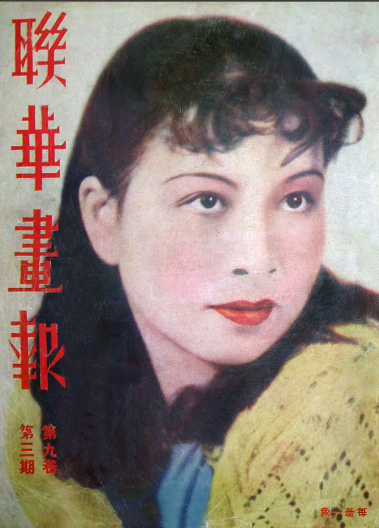
Jiang Qing
Quotations from Chairman Mao Tse-tung, 1964. “The most popular versions were printed in small sizes that could be easily carried and were bound in bright red covers, thus commonly becoming known internationally as the ‘Little Red Book’.”
Resolution on Certain Questions in the History of Our Party since the Founding of the People’s Republic of China, 1981. Vd. em
(*) “The Five Black Categories (Chinese: 黑五类; pinyin: Hēiwǔlèi) were classifications of political identity defined during the period of the Chinese Cultural Revolution (1966–1976) in the People’s Republic of China by Mao Zedong, who ordained that people in these groups should be considered enemies of the Revolution. The groups were:
Landlords (地主; dìzhǔ)
Rich farmers (富农; fùnóng)
Counter-revolutionaries (反革命; fǎngémìng)
Bad influencers (‘bad elements’) (坏分子; huàifènzǐ)
Right-wingers (右派; yòupài)” https://en.wikipedia.org/wiki/Five_Black_Categories
(*) “During the Cultural Revolution the Nine Black Categories were landlords, rich farmers, anti-revolutionaries, bad influences, right-wingers, traitors, spies, capitalist roaders and intellectuals. While often attributed to Mao Zedong, in 1977 Deng Xiaoping argued that it was the Gang of Four who came up with the phrase and that Mao himself saw intellectuals as having some value in society.” https://en.wikipedia.org/wiki/Stinking_Old_Ninth
* * *
P. 88: a excelente idéia dos feriados rotativos!
P. 92: “A China jamais, é o que sinto aqui, partirá para uma invasão no exterior. O perigo amarelo não existe.” Brilhante vislumbre à la dialética de Arrighi. Associação geo-econômica onde a expansão política é desprezada (anti-imperialismo): o que importa é a consolidação interna. Mais: “Nenhum outro povo é citado em nada, a não ser os russos que deverão (eles repetem isso toda hora) invadir a China mais dia menos dia”. A União Soviética é um gêmeo americano (para os líderes chineses de então). Os japoneses, outros. “Mas o que são 20, 30, 100 anos de comunismo para um homem de 20 mil anos? Minutos, talvez.”
Picles, capítulo das pp. 91-4: reflexões interessantíssimas e contraste com o american way. Gostaria de saber se todos lá, hoje (2009), ainda lêem o discutem saborosamente Marx…
P. 93: “Não há advogados na China.”
P. 94: os chineses tentavam a reforma urbana de Dahl, esvaziando as cidades e dispersando seu povo.
Corroborando Simmel (p. 100): “não há prostituição de forma alguma. Não fique em dúvidas. Há prostituição entre os índios?”. Para Henfil, o “problema sexual” chinês não é nenhum problema! Nós, os ocidentais, é que somos peritos em fundar dilemas insolúveis por meio de contrastes anti-naturais.
P. 113, sobre a punição ideológica: “O crime na China, realmente, não compensa.”
Como estão hoje os abrigos subterrâneos, as réplicas impecáveis de Pequim a 4, 8, 15m do piso das cidades? R (já em 2009): Esvaziados, mas conservados para o turismo.
Júlio Verne, As Atribulações de um Chinês na China
Dazibaos, os fanzines chineses. “Longas seqüências de discussão eram postadas e apreciadas nos muros, como ocorre nas comunidades virtuais de hoje. (…) Em 1978, um dos mais importantes documentos da história chinesa, chamado A quinta modernização, foi um Dazibao. Ele proclamava a democracia como o último dos elementos necessários ao completo sucesso da revolução chinesa. Foi copiado e distribuído por todo o país, sob os auspícios do governo.” Em http://sinografia.blogspot.com/2011/04/o-que-e-dazibao.html#:~:text=Traduzindo%20literalmente%20do%20chin%C3%AAs%2C%20%C3%A9,feito%20artesanalmente%20ou%20a%20m%C3%A3o.
Inflação e impostos congelados. Como a China mudaria em três (duas) [2009] décadas!
A China de Mao é o lugar (extinto) onde a auto-suficiência está acima de tudo.
P. 156: “Sincera, cândida, ingênua, simples e comovente. As 5 palavras que mais usei para definir tudo na China.”
P. 163: “É bom saber que, ao contrário da Rússia e do Ocidente cristão, não se usa o choque elétrico na China.”
P. 164: “Nunca vi nada mais ‘católico’ que a China Comunista”
Quem É. U. A.nti-Cristo?
A diferença entre Stalin e Mao, ou entre a União Soviética e a China, era que o chinês era camponês, e o russo, burocrata alienado do povo e imerso nas relações de poder.
Cabelos longos na China: remetem à época imperial.
P. 204: “Talvez, na hora do pau, os camponeses resistam à tão temida ocupação estrangeira, mas os operários de fábricas como a de relógios vão é se identificar com os invasores estrangeiros. Eles já se identificam no comportamento. Dois autômatos, sejam eles chineses ou suíços, se beijam, sim senhor.”
P. 213: a “universidade parlamento”.
“O pouco contato que eles têm pode ter ajudado a construção de um socialismo puro, mas poderá, no futuro, criar grandes danos quando o ‘civilizado’ chegar com suas gripes. Esta pureza chinesa não preocupa?” Terrível prenúncio da Covid!
A propaganda (não falo aqui da mídia – aliás, também da mídia!) ideológica – desde Pequim – é terrível, asfixiante [como tem de ser. P.S. 2023]. Talvez fosse, mas Henfil a sublinha na reta final do livro, quando está em Shangai. À página 225 explica o porquê: são seus anticorpos burgueses e a saudade da pátria entrando em ação!
P. 229: premonição sobre a poluição e a capacidade produtiva crescentes – competitividade e burocracia são males necessários na guerra do Capital.
P. 235: os camponeses cozinham com “biogás”: o próprio cocô vaporizado!
P. 247: fica evidente como está enraizada a noção de progresso, mesmo em culturas tão diferentes… A vontade para se atingir um fim, qualquer que ele seja…
P. 254: não pode haver arte medíocre.
Pp. 268-0: famílias que viviam em barcos e eram proibidas de aportar nas margens do rio! Os “favelados aquáticos”.
A terceira idade na China é uma fase digna da vida.
Cantão (Guangzhou), um bolsão de miséria: ainda que estejam extintos os tais “favelados aquosos”…
Atualização: “…the capital and largest city of Guangdong province in southern China. Located on the Pearl River about 120 km north-northwest of Hong Kong and 145 km north of Macau, Guangzhou has a history of over 2,200 years and was a major terminus of the maritime Silk Road; it continues to serve as a major port and transportation hub as well as being one of China’s 3 largest cities. … For a long time, the only Chinese port accessible to most foreign traders, Guangzhou was captured by the British during the First Opium War. No longer enjoying a monopoly after the war, it lost trade to other ports such as Hong Kong and Shanghai, but continued to serve as a major trans-shipment port. Due to a high urban population and large volumes of port traffic, Guangzhou is classified as a Large-Port Megacity, the largest type of port-city in the world. … Guangzhou is at the heart of the Guangdong–Hong Kong–Macau Greater Bay Area, the most-populous built-up metropolitan area in the world, which extends into the neighboring cities of Foshan, Dongguan, Zhongshan, Shenzhen and part of Jiangmen, Huizhou, Zhuhai and Macau, forming the largest urban agglomeration on Earth with approximately 65 million residents and part of the Pearl River Delta Economic Zone. … In the late 1990s and early 2000s, nationals of sub-Saharan Africa who had initially settled in the Middle East and Southeast Asia moved in unprecedented numbers to Guangzhou in response to the 1997/98 Asian financial crisis. The domestic migrant population from other provinces of China in Guangzhou was 40% of the city’s total population in 2008. Guangzhou has one of the most expensive real estate markets in China. … For 3 consecutive years (2013–2015), Forbes ranked Guangzhou as the best commercial city in mainland China. Guangzhou is highly ranked as an Alpha- (global first-tier) city together with San Francisco and Stockholm. It is a leading financial centre in the Asia-Pacific region and ranks 21st globally in the 2020 Global Financial Centres Index. As an important international city, Guangzhou has hosted numerous international and national sporting events, the most notable being the 2010 Asian Games, the 2010 Asian Para Games, and the 2019 FIBA Basketball World Cup. The city hosts 65 foreign representatives, making it the 3rd major city to host more foreign representatives than any other city in China after Beijing and Shanghai. As of 2020, Guangzhou ranks 10th in the world and 5th in China (after Beijing, Shanghai, Hong Kong and Shenzhen) for the number of billionaire residents by the Hurun Global Rich List. … and is home to many of China’s most prestigious universities, including Sun Yat-sen University, South China University of Technology, Jinan University, South China Normal University, South China Agricultural University, Guangzhou University, Southern Medical University, Guangdong University of Technology, Guangzhou Medical University, Guangzhou University of Chinese Medicine. … The English name ‘Canton’ derived from Portuguese Cantão or Cidade de Cantão, a blend of dialectical pronunciations of Guangdong (e.g., Cantonese Gwong2-dung1). Although it originally and chiefly applied to the walled city, it was occasionally conflated with Guangdong by some authors.” “Amid the closing months before total Communist victory, Guangzhou briefly served as the capital of the Republican government. Guangzhou was captured on 14 October 1949. Amid a massive exodus to Hong Kong and Macau, defeated Nationalist forces blew up the Haizhu Bridge across the Pearl River in retreat. The Cultural Revolution had a large effect on the city, with much of its temples, churches and other monuments destroyed during this chaotic period. § The People’s Republic of China initiated building projects including new housing on the banks of the Pearl River to adjust the city’s boat people to life on land. Since the 1980s, the city’s close proximity to Hong Kong and Shenzhen and its ties to overseas Chinese made it one of the first beneficiaries of China’s opening up under Deng Xiaoping. Beneficial tax reforms in the 1990s also helped the city’s industrialization and economic development.” https://en.wikipedia.org/wiki/Guangzhou
O banco que não é banco: vigia para que não ocorra o ciclo D-M-D’ (lucro).
Gostaria de saber em que pé anda a autonomia das comunas e lavouras camponesas na China das Olimpíadas! (2009)
P. 301: “É impossível utilizar a Rússia”
 Seclusão Anagógica