“O autor é recorrentemente referido como Pseudo-Xenofonte, principalmente na bibliografia francesa, italiana e espanhola. A tradição anglo-saxônica designa-o com o qualificativo de Velho Oligarca (Old Oligarch), que se tornou famoso; essa designação, no entanto, não contribui para o debate, já que não podemos inferir com certeza a idade ou a identidade do autor.”
O AUTOR DA CONSTITUIÇÃO DOS ATENIENSES
“A única voz contrária a esta tese na Antiguidade é a de Demétrio de Magnésia, historiador contemporâneo de Cícero, citado por Diógenes Laércio 2.57, no capítulo sobre a vida de Xenofonte. Nesta controversa passagem, a autoria da Constituição dos Atenienses e da Constituição dos Lacedemônios é posta em dúvida.”
“É ponto pacífico entre os filólogos modernos que o estilo de X diverge em quase tudo do de Xenofonte. Bowersock 1968 461 abre a introdução de sua edição ao texto, caracterizando-o como tantalizingly inept, para em seguida adicionar repetitive e awkward à lista dos seus traços estilísticos. Em contrapartida, Xenofonte é visto como um mestre da prosa ática, de linguagem refinada e clara.”
“Xenofonte, o Velho, foi membro do círculo socrático e é referido poucas vezes em obras conhecidas, como possivelmente em D.L. 2.59. Este personagem é conhecido por ter caído do cavalo e ter sido salvo por Sócrates durante a batalha de Délio (D. L. 2.22-23). Normalmente é confundido com o historiador Xenofonte, não só por este episódio da queda, mas também por ser indicado como o autor dos Hellenika. Sua idade, sua aproximação com os círculos filosóficos de Atenas e o fato de usar o mesmo nome são os argumentos positivos para a determinação de Xenofonte, o Velho, como autor da Constituição dos Atenienses.
Xenofonte de Melite, filho de Eurípides, foi um nobre que ocupou a hiparquia em 446 a.C. e a estrategia em 440 a.C., tendo morrido em batalha como estratego em 429 a.C. durante a campanha na Bótica (Thuc. 2.79). A coincidência do nome e o fato de este Xenofonte ter sido tanto estratego como hiparco são os grandes argumentos para o aceitar como autor da obra, pois, em 1.3, X afirma que a hiparquia e a estrategia são as únicas posições que ainda eram ocupadas somente pela classe alta.”
“Tucídides, o autor da História da Guerra do Peloponeso, aparece como uma hipótese pela semelhança dos temas abordados. A longa explanação sobre o poder naval de Atenas nos discursos atribuídos a Péricles guarda semelhança com a descrição do império naval na Constituição dos Atenienses.”
“A mais célebre destas comparações é a do capítulo 1.11, entre o direito de um espartano de surrar um escravo, seja ele sua propriedade ou não, e a atitude dos Atenienses de não aplicar castigos físicos aos escravos.”
“Há de se reter em mente que o autor é provavelmente um oligarca, que possivelmente ocupou uma função militar (estrategia, hiparquia ou trierarquia), que dividiu com Tucídides opiniões em voga na época, conviveu com círculos sofistas e, provavelmente, estava incluído nas conversações dos oligarcas que tramaram o golpe de 411 a.C. e o dos trinta tiranos de 404 a.C.”
“podemos afirmar, com bastante segurança, que o autor é um Ateniense, pois utiliza a primeira pessoa diversas vezes quando refere-se a esse povo”
“Contudo, Pseudo-Xenofonte abre exceções e refere-se aos Atenienses na terceira pessoa, quando explicita sua desaprovação com relação a uma decisão por eles tomada, como, por exemplo (1.1): Quanto à forma de governo dos Atenienses, que escolheram este tipo de constituição, eu não a aprovo.”
“mas, quando, por exemplo, a frota ateniense é citada, observamos uma aproximação do autor, pelo uso da primeira pessoa, como nesta frase: Exatamente destes materiais são feitos os meus navios (2.11).”
“Frisch 1942 187 sugere que o autor está fora da Ática no momento de composição da obra, que foi exilado ou banido, e se dirige a oligarcas de outra cidade. A argumentação de Frisch baseia-se no uso excessivo da palavra autothi que indica um distanciamento; o nome ‘Atenas’ é constantemente substituído por autothi ao invés de enthade. A tradução seria, então, ‘lá’ e não ‘aqui’ como se esperava de alguém que escreve dentro da cidade de Atenas.”
“Se detesta o fato de o povo ter poder de decisão, por outro lado exalta o poder da armada democrática. Como conciliar este paradoxo?”
“A teoria do diálogo como gênero do texto nunca foi levada a sério, porém a base de sua argumentação é mantida. De fato, existem duas vozes em enorme contraste.”
“por um lado, o Velho Oligarca é extremamente apegado às suas convicções morais, que o aproximam da nobreza e da oligarquia, provavelmente pela sua história de vida; mas, por outro, é fascinado pela magnitude bélica que a democracia pode oferecer, através de sua pujante marinha.”
“É um homem culto, frequenta os círculos intelectuais e está familiarizado com as ideias dos sofistas, apesar de não ser um deles.”
A DATA DA CONSTITUIÇÃO DOS ATENIENSES
“Para todos os efeitos, consideramos que o texto foi escrito entre 431 e 424 a.C., concordando com as argumentações de Ste Croix 1972 309 e Marr e Rhodes 2008 6.”
“A única possibilidade de o texto não ter sido escrito durante o século V a.C. é a de termos em mãos um exercício de escola ou uma reconstituição histórica da Atenas do tempo de Péricles, tese defendida por Belot 1880.”
“Pseudo-Xenofonte descreve uma Atenas soberana nos mares, que desfruta de um sistema democrático estável e pujante. O que nos leva a acreditar que o opúsculo foi escrito antes da derrota naval na Sícilia (413 a.C) e depois da transferência da maior parte dos poderes do Areópago para a assembleia e para o conselho.”
“o Velho Oligarca refere algumas práticas imperialistas atenienses, tais como a perseguição às elites das cidades aliadas e o pagamento dos tributos em dinheiro ao invés do fornecimento de serviço militar. Esta mudança de comportamento da hegemônica Atenas é observada, principalmente, depois de 454 a.C., quando o tesouro da Liga de Delos é transferido para o seu território e as cidades aliadas deixam de fornecer apoio militar e passam a pagar seus impostos em dinheiro.”
“Por fim, se esta ou qualquer data antes de 420 a.C. for correta, podemos afirmar que este é o mais antigo exemplar de prosa ática e o primeiro dedicado a uma crítica do sistema democrático (Marr e Rhodes 2008 6).”
A NATUREZA DA CONSTITUIÇÃO DOS ATENIENSES
“A única certeza sobre a forma da Constituição dos Atenienses é a de que não se trata de poesia por não obedecer a um esquema métrico. De resto, estamos no campo das especulações. O enigmático texto pode corresponder a uma carta pessoal, um discurso público, um texto recreativo para ser lido em grupos pequenos, um tratado argumentativo político, um tratado teórico sobre guerra e até mesmo um diálogo. Há uma longa discussão sobre as propriedades estilísticas do texto que continua em aberto.”
“Kirchhoff 1874 acreditava que o tratado estava demasiadamente fragmentado para ser lido como um texto completo, como por exemplo os parágrafos 1.13, sobre as casas de banho e palestras, e 2.9, sobre os sacrifícios e festivais, que parecem completamente deslocados dentro do contexto em que ocorrem (Frisch 1942 42); mas a partir da edição de Kalinka 1913, as dúvidas sobre a unicidade da obra foram postas de lado e hoje o texto é entendido como uma unidade, mesmo que apresente problemas de conexão entre os tópicos.”
“Roscher 1841, pioneiro da crítica moderna do tratado, acreditava estar diante de um relatório feito ao governo espartano, que explicava o sistema político ateniense. Belot 1880 considerava o texto uma carta pessoal de Xenofonte ao rei Agesilau, com o objetivo de levar ao rei espartano informações sobre a marinha e o sistema político atenienses. As duas hipóteses podem ser refutadas pelo argumento defendido por Frisch 1942 e que encontra aceitação entre a maioria dos críticos da obra. Para o autor dinamarquês, o texto tem um caráter oral muito bem marcado.”
“Distinguem-se as Politeiai escritas na Grécia dos séculos V e IV a.C em três grupos: filosófico, científico e político. A República de Platão e os livros 6 e 7 da Política de Aristóteles são os melhores exemplos de Constituições filosóficas, pois tratam a questão da disputa entre as constituições de maneira utópica e idealizada. A Constituição dos Atenienses de Aristóteles é a melhor representante do tipo científico, já que trabalha com uma suposta imparcialidade e analisa diacronicamente as instituições políticas de Atenas. O último tipo abarca obras como os discursos de Péricles, especialmente a oração fúnebre, onde Tucídides recria o discurso do estratego ateniense enfatizando o modelo político democrático e os efeitos concretos na vida política e militar de Atenas decorrentes deste modelo. O texto que estudamos certamente pertence ao último tipo.”
“Diferentemente da obra homônima de Aristóteles, Pseudo-Xenofonte não está interessado em analisar sistematicamente a transição das sucessivas formas de governo de Atenas, nem o seu mecanismo de funcionamento.”
“Pseudo-Xenofonte não tem interesse no futuro e na sobrevivência da sua obra. Fala do presente e tem intenção de influenciar o contexto em que vive. Seus escritos, provavelmente, não teriam sobrevivido se não tivessem sido, por algum motivo, adicionados ao corpus de Xenofonte.”
“Como também não tem preocupações artísticas, como Eurípides e Aristófanes, que contribuíram igualmente para o debate sobre os diferentes tipos de constituição, não necessita de esconder as palavras na boca de personagens. O Velho Oligarca não precisa ser sutil, não precisa emocionar sua plateia, nem produzir um espetáculo. Está livre para ir direto ao ponto.”
“A escrita de Politeiai passou a ser um gênero literário. Foram atribuídas à escola de Aristóteles 158 Politeiai, todas perdidas, exceto a mais célebre, a Constituição dos Atenienses. Crítias também escreveu, em verso, diversas Politeiai, tendo chegado a nós alguns fragmentos das Constituição dos Atenienses, Constituição dos Lacedemônios e Constituição dos Tessálios. Xenofonte deu o seu contributo ao gênero das Constituições e escreveu a Constituição dos Lacedemônios, obra na qual relata o modo de vida, sistema militar e organização política dos Espartanos.”
“o nome do tratado deve ter sido estabelecido posteriormente”
“O teatro trágico de Eurípides e cômico de Aristófanes dialogam com esta pequena obra em termos de vocabulário político e de conteúdo. Além deles, Heródoto 3.80-83 também divide o mesmo interesse político ao narrar a discussão dos nobres persas sobre a melhor forma de constituição. Procederemos a uma série de breves comparações, com o objetivo de evidenciar as divergências e convergências das obras citadas até agora com o opúsculo de Pseudo-Xenofonte.”
“Megabizo, o defensor da oligarquia no debate de Heródoto, certamente poderia fazer parte do clube de aliados políticos de Pseudo-Xenofonte. Eles dividem a mesma visão moral: existem pessoas melhores que outras e são elas que devem estar no poder. Servem-se dos mesmos argumentos para diminuir seus adversários – a falta de utilidade e a ignorância do povo. Diferenciam-se por questões práticas. Megabizo lança um voraz ataque à democracia e Pseudo-Xenofonte trabalha a possibilidade de se viver bem numa democracia. A diferença é que o Velho Oligarca tem uma democracia concreta para basear suas críticas positivas, enquanto que Megabizo raciocina apenas no plano das ideias.
O último a falar é Dario, vencedor do debate e defensor da monarquia. O futuro rei dos Persas deslegitima a oligarquia e a democracia usando um só argumento: os homens tendem a polemizar-se uns contra os outros, e desta disputa pelo primeiro lugar nascem discórdias que farão, eventualmente, com que retornem ao estado de monarquia. Pseudo-Xenofonte nada tem a dizer sobre a monarquia, pois não está interessado em debates teóricos; e, como sua realidade exige uma reflexão sobre o posicionamento político de oligarcas dentro de uma democracia, a monarquia parece uma alternativa distante demais para ser discutida neste pequeno texto.”
CONSTITUIÇÃO DOS ATENIENSES
“1.1. Quanto à forma de governo dos Atenienses, que escolheram este tipo de constituição, eu não a aprovo pela seguinte razão: aqueles que a escolheram optaram por privilegiar a ralé ao invés da elite. Eis por que a não aprovo. Mas já que decidiram desta maneira, pretendo demonstrar como eles conseguem preservar a sua constituição e resolver os restantes assuntos de Estado, mesmo recebendo a crítica dos outros gregos.”
(*) “No caso da strategia existiam dez vagas a serem preenchidas. Cada candidato apresentava-se e, em seguida, era submetido à aprovação dos membros da assembleia. Caso o candidato contasse com a aprovação da maioria, era incluído entre os dez strategoi. Se os dez postos já estivessem ocupados e outro candidato se apresentasse, o novo postulante deveria apontar contra qual dos strategoi entraria no pleito. Estabelecidos os dois candidatos, eles eram submetidos à escolha da assembleia novamente (Hansen 1993 272-273).”
“1.5. Em qualquer parte do mundo, a classe alta opõe-se à democracia. Nas camadas superiores há pouca desordem e injustiça e existe a preocupação com a preservação da boa moral, enquanto que entre o povo reina a ignorância, a desordem e a perversidade; a pobreza faz com que se cometam atos censuráveis, sendo a falta de educação e a ignorância de alguns o resultado da falta de dinheiro.”
“Se fossem os da elite a falar e a legislar, seria excelente para os do nível deles, mas mau para os membros do povo. Atualmente, porém, qualquer um da ralé que queira pode levantar-se e usar da palavra para defender os seus interesses e os do seu grupo.”
“1.8. A cidade pode não ser a ideal por praticar estas regras, mas a democracia está mais protegida desta maneira. Pois o povo não deseja um governo que o escravize, por melhor que ele seja. O que o povo deseja é ser livre e comandar, pouco importa se o governo for ruim”
“1.9. Mas se é um bom governo que procuras, verás, em primeiro lugar, os mais hábeis estabelecendo as leis no seu próprio interesse; daí resulta que os membros da elite castigarão os da ralé e decidirão sobre os assuntos da cidade, sem permitirem que os desequilibrados decidam, falem ou sequer tomem parte na assembleia. Em virtude destas medidas, que são excelentes, o povo sucumbiria rapidamente à escravidão.”
“1.10. Quanto aos escravos e aos metecos, [estrangeiros] tamanha é a impunidade em Atenas que lá não é permitido castigá-los fisicamente e o escravo não te dá passagem. Vou explicar por que existe este costume local: se fosse legítimo o homem livre bater no escravo, no meteco ou no liberto, corria-se o risco permanente de surrar um Ateniense, acreditando tratar-se de um escravo; é que lá o povo não se veste melhor do que os escravos e metecos e sua aparência também em nada é melhor.
1.11. Se há quem se surpreenda com o fato de que lá é concedido aos escravos viver uma vida confortável e até, em alguns casos, em grande estilo, devo dizer que também esta prática segue claramente um propósito. Pois onde quer que haja um poderio naval é necessário, por razões financeiras, depender dos escravos: pode assim receber-se parte dos rendimentos auferidos e lucrar com a sua alforria. Onde os escravos são ricos, não há condições que meu escravo tenha medo de ti.”
“A cidade precisa dos metecos por suas diversas competências e para a manutenção da frota. Por este motivo agimos com razão ao darmos liberdade de expressão aos metecos.”
“1.13. Em Atenas, o povo considera fora de moda os que praticam exercícios físicos e música, não por entender estas atividades como de mau gosto, mas porque ele mesmo não tem condições de praticá-las. Quanto aos encargos públicos da coregia, dos concursos atléticos e do apetrechamento das trirremes, é sabido que são os ricos que asseguram os coros, organizam as competições desportivas e equipam as trirremes, mas é o povo quem toma parte no coro ou nas competições atléticas e quem tripula as embarcações. O povo entende que deve ser pago por cantar, correr, dançar e tripular os navios, de forma a enriquecer cada vez mais e os ricos ficarem cada vez mais pobres. Nos tribunais preocupam-se mais em acumular vantagens para si do que com a justiça propriamente dita.”
“os Atenienses navegam por aí em permanentes denúncias; odeiam a elite, dentro do princípio de que quem comanda é necessariamente odiado pelos comandados. Ora se os ricos e a elite têm força nas cidades, o império do povo de Atenas durará pouquíssimo tempo. Por esta razão privam a elite dos seus direitos políticos, confiscam-lhes o dinheiro, exilam-nos, matam-nos, enquanto intercedem a favor da ralé. A elite ateniense socorre a elite das cidades aliadas, por perceber que é no seu próprio interesse que protege os membros da classe alta das outras cidades.”
“1.19. Ademais, por causa das possessões em terras estrangeiras e das funções públicas que exercem no exterior, os Atenienses e seus escravos aprendem, sem se dar conta, a manejar o remo. Afinal, um homem que navega com frequência acaba por aprender a usar o remo, assim como seu escravo, além de se familiarizar com os termos náuticos.”
“2.1. A infantaria pesada ateniense, que não tem uma boa reputação, foi estabelecida da seguinte forma: eles sabem que sua infantaria é inferior em número e força à de seus inimigos, mas sabem também que é mais poderosa que a de seus aliados pagadores de impostos. Consideram, então, que o poder da infantaria é suficiente enquanto forem superiores aos seus aliados.”
“2.3. Das cidades continentais sob o domínio de Atenas, as maiores são controladas pelo medo e as menores por pura necessidade, pois não existe cidade que não precise importar ou exportar produtos, e para tal é necessário haver o consentimento dos senhores do mar.
2.4. Ademais, é permitido aos talassocratas fazer o que os donos da terra só ocasionalmente conseguem: devastar a terra dos mais poderosos; pois lhes é possível navegar junto à costa onde há poucos ou nenhum inimigo e, caso sejam atacados, podem embarcar e zarpar. Quem realiza tal manobra enfrenta menos dificuldades do que quem envia auxílio usando a infantaria.”
“2.7. Se se considerar também os assuntos de menor importância, em primeiro lugar, os Atenienses, em razão do domínio marítimo, misturaram-se com outros povos e descobriram produtos de consumo variados, pois o que há de especialidades na Sícilia ou na Itália, no Chipre ou no Egito, na Lídia ou no Ponto, no Peloponeso ou seja onde for, tudo isso acaba reunido em um só lugar, em virtude do império marítimo.
2.8. Mais ainda, por ouvirem todos os dialetos, acabaram por adotar características de uns e de outros. Enquanto que os outros Gregos, em grande parte, conservam o seu próprio dialeto, modo de vida e maneira de vestir, os Atenienses usam uma mistura de tudo quanto é grego e bárbaro.”
(*) “Um exemplo da influência estrangeira, em termos de moda seguida pelos Atenienses nobres, é o abandono das túnicas de linho em favor de uma vestimenta mais modesta e a utilização de cabelos longos presos, seguindo a tendência espartana (Thuc. 1.6.3).”
“a cidade realiza muitos sacrifícios, à custa do erário público, mas é o povo que aproveita os banquetes, dividindo entre si as partes dos animais sacrificados”
“Nenhuma outra cidade possui estes dois tipos de produtos: não há na mesma cidade madeira e linho. A cidade que é rica em linho está implantada em território plano e sem madeira, do mesmo modo que da mesma cidade não vêm cobre e ferro, nem há duas ou três destas matérias-primas em uma mesma cidade, mas uma encontra-se em uma cidade e outra em outra.”
“2.13. Mais ainda: junto de toda costa continental há um promontório ou uma ilha posicionada de frente para terra firme ou um estreito, sendo assim possível aos senhores do mar [por mais que residentes também em terra firme] atracar em um destes lugares e pilhar os moradores do continente.”
“Quando algo mau acontece em decorrência das políticas do povo, logo culpam um punhado de homens como oposicionistas, pelos resultados catastróficos das suas políticas. Pelo contrário, se o resultado é positivo, atribuem a si mesmos os méritos.”
“poucos são os pobres e populares a sofrer ataques nas comédias, e quando o são é por terem o perfil de fofoqueiros ou por tentarem tirar vantagem do povo. Nesse caso, o povo não se incomoda em vê-los ridicularizados pela comédia.”
“2.19. Afirmo, então, que o povo ateniense sabe exatamente quais são os cidadãos de bem e quais os de índole duvidosa; apesar disso prefere idolatrar os que são mais convenientes e úteis aos seus interesses, mesmo que sejam de índole duvidosa; o povo tende a odiar os cidadãos de bem, pois não acredita que a excelência inata destes homens possa trazer algum benefício para si, pelo contrário, acredita que será danosa.”
“2.20. Pessoalmente, perdoo o povo pela democracia, pois todos os que procuram o melhor para si devem ser perdoados. Por outro lado, aquele que não pertence ao povo e no entanto escolheu fazer sua vida política numa cidade democrática e não numa oligárquica, assumiu uma atitude irregular, com a consciência de que, para uma pessoa de má índole, é mais fácil passar desapercebido em uma cidade democrática do que numa oligárquica.”
“por vezes nem o Conselho nem a Assembleia chegam a uma conclusão sobre os assuntos de um particular, mesmo que ele tenha esperado durante um ano. Mas isto acontece em Atenas unicamente pelo excesso de processos, porque não é possível deliberar-se sobre todos os casos e despachá-los.”
“3.3. Ouve-se dizer: se alguém for ao Conselho ou à Assembleia com dinheiro na mão, tem o seu processo tramitado. Eu concordo que muito se resolve em Atenas com dinheiro e mais ainda resolver-se-ia se mais dinheiro fosse gasto. Mas a verdade é que a cidade não conseguiria despachar todos os assuntos encaminhados nem se dessem aos conselheiros e membros da Assembleia todo o ouro e a prata do mundo.”
(*) “Os processos privados (dikas) e públicos (graphas) distinguem-se por terem acusadores diferentes. Enquanto que nos processos privados o acusador tem de ser obrigatoriamente a pessoa lesada, nos processos públicos qualquer cidadão pode assumir o papel de acusador. O processo de Sócrates, por exemplo, foi um processo público. A prestação de contas (euthyna) era a avaliação oficial que a Assembleia fazia de cada funcionário público ao término de seu mandato (Varona 2009 128-130).”
(*) “As Targélias, festival em honra de Apolo, aconteciam no sétimo dia do mês que leva seu nome (thargelion – entre maio e junho). Possuíam uma relação estreita com a fertilidade. Era durante este festival que se procedia também à purificação da cidade: dois homens eram alimentados às custas da cidade e logo em seguida eram expulsos, simbolizando a eliminação do mal em Atenas (Simon 1983 76-79). As Panateneias eram celebradas anualmente em honra de Atenas durante o hekatombaion (entre julho e agosto). É considerado o festival mais importante de Atenas e era composto por uma vigília, procedida por uma corrida noturna de tochas; o dia seguinte iniciava com uma grande procissão com a finalidade de levar à deusa o peplos; realizava-se então uma hecatombe e, em último lugar, tinham lugar as competições, destacando-se os concursos de música, regatas, corridas de carro e as provas atléticas (Rocha Pereira 2006 350-355).”
(*) “A composição dos júris em Atenas seguia um processo complexo e ao mesmo tempo prático. Para ser apto ao cargo, o voluntário deveria ter pelo menos trinta anos e ser cidadão. Do universo de voluntários, eram selecionados, por meio da sorte, seis mil juízes por ano; estes compunham a eliaia, termo que designava tradicionalmente a própria Assembleia dos cidadãos e depois passou a referir-se somente ao conjunto dos jurados. A partir do grupo dos seis mil, eram formados, aleatoriamente (através de um complexo processo descrito por Arist. Ath. 63-67), os pequenos tribunais deliberativos. Um tribunal contava, normalmente, com um grupo que variava de quinhentos a dois mil jurados, dependendo da importância do caso em questão. O pagamento pelo serviço de jurado, instituído por Péricles (Arist. Ath. 27.3), era de dois óbolos por dia, e depois foi aumentado para três óbolos diários, por influência de Cléon (MacDowell 1978 33-40).”
“3.8. Ademais, é preciso ter em conta que os Atenienses têm de organizar festivais, durante os quais os julgamentos ficam suspensos, e organizam o dobro de festivais que as outras cidades. E estou apenas a considerar os equivalentes aos que a cidade organiza, e que são pouquíssimos. Nestas circunstâncias entendo que não há outra forma de lidar com os negócios públicos em Atenas se não da maneira como eles o fazem nos dias de hoje. Exceto por algum detalhe que possa ser suprimido ou adicionado, mas não é possível mudar muito sem afetar a democracia.”
“3.12. Há quem pense que nenhuma outra cidade promove tanto a cassação injusta dos direitos de cidadão. Eu, por minha parte, sustento entretanto que são poucos os que são cassados injustamente, embora haja alguns.”
GLOSSÁRIO:
cleruco: “Cidadão que, na antiga Grécia, recebia um lote de terreno em um país conquistado e comumente para lá emigrava sem perda da cidadania.”
talassocracia: “Estado cujo poder reside especialmente no domínio marítimo.”
“Como de hábito, Policarpo Quaresma, mais conhecido por Major Quaresma, bateu em casa às quatro e quinze da tarde. Havia mais de vinte anos que isso acontecia.”
“Não recebia ninguém, vivia num isolamento monacal, embora fosse cortês com os vizinhos que o julgavam esquisito e misantropo. Se não tinha amigos na redondeza, não tinha inimigos, e a única desafeição que merecera, fora a do doutor Segadas, um clínico afamado no lugar, que não podia admitir que Quaresma tivesse livros: ‘Se não era formado, para quê? Pedantismo!’”
– Policarpo, você precisa tomar juízo. Um homem de idade, com posição, respeitável, como você é, andar metido com esse seresteiro, um quase capadócio—não é bonito!
– Mas você está muito enganada, mana. É preconceito supor-se que todo homem que toca violão é um desclassificado. A modinha é a mais genuína expressão da poesia nacional e o violão é o instrumento que ela pede. Nós é que temos abandonado o gênero, mas ele já esteve em honra, em Lisboa, no século passado, com o Padre Caldas, que teve um auditório de fidalgas. Beckford, um inglês notável, muito o elogia.
“Então no tocante a viagens e explorações, que riqueza! Lá estavam Hans Staden, o Jean de Léry, o Saint-Hilaire, o Martius, o Príncipe de Neuwied, o John Mawe, o von Eschwege, o Agassiz, Couto de Magalhães e se se encontravam também Darwin, Freycinet, Cook, Bougainville e até o famoso Pigafetta, cronista da viagem de Magalhães, é porque todos esses últimos viajantes tocavam no Brasil, resumida ou amplamente.”
“Policarpo era patriota. Desde moço, aí pelos vinte anos, o amor da Pátria tomou-o todo inteiro. Não fora o amor comum, palrador e vazio; fora um sentimento sério, grave e absorvente. Nada de ambições políticas ou administrativas; o que Quaresma pensou, ou melhor: o que o patriotismo o fez pensar, foi num conhecimento inteiro do Brasil, levando-o a meditações sobre os seus recursos, para depois então apontar os remédios, as medidas progressivas, com pleno conhecimento de causa.”
“Errava quem quisesse encontrar nele qualquer regionalismo; Quaresma era antes de tudo brasileiro. Não tinha predileção por esta ou aquela parte de seu país, tanto assim que aquilo que o fazia vibrar de paixão não eram só os pampas do Sul com o seu gado, não era o café de São Paulo, não eram o ouro e os diamantes de Minas, não era a beleza da Guanabara, não era a altura da Paulo Afonso, não era o estro de Gonçalves Dias ou o ímpeto de Andrade Neves — era tudo isso junto, fundido, reunido, sob a bandeira estrelada do Cruzeiro.”
“Defendia com azedume e paixão a proeminência do Amazonas sobre todos os demais rios do mundo. Para isso ia até ao crime de amputar alguns quilômetros ao Nilo e era com este rival do ‘seu’ rio que ele mais implicava. Ai de quem o citasse na sua frente! Em geral, calmo e delicado, o major ficava agitado e malcriado, quando se discutia a extensão do Amazonas em face da do Nilo.”
“Todas as manhãs, antes que a ‘Aurora, com seus dedos rosados abrisse caminho ao louro Febo’, ele se atracava até ao almoço com o Montoya, Arte y diccionario de la lengua guaraní ó más bien tupí, e estudava o jargão caboclo com afinco e paixão.”
“e quando não tinha descoberta a trazer, entrava pela corografia, contava o curso dos rios, a sua extensão navegável, os melhoramentos insignificantes de que careciam para se prestarem a um franco percurso da foz às nascentes. Ele amava sobremodo os rios; as montanhas lhe eram indiferentes. Pequenas talvez…”
“Este Quaresma! Que cacete! Pensa que somos meninos de tico-tico… Arre! Não tem outra conversa”
“Porque o orgulho da aristocracia suburbana está em ter todo dia jantar e almoço, muito feijão, muita carne-seca, muito ensopado — aí, julga ela, é que está a pedra de toque da nobreza, da alta linha, da distinção.”
“Ricardo, depois de ser poeta e o cantor dessa curiosa aristocracia, extravasou e passou à cidade, propriamente. A sua fama já chegava a São Cristóvão e em breve (ele o esperava) Botafogo convidá-lo-ia, pois os jornais já falavam no seu nome e discutiam o alcance de sua obra e da sua poética…”
“Como em tudo o mais, o major era em jardinagem essencialmente nacional. Nada de rosas, de crisântemos, de magnólias — flores exóticas; as nossas terras tinham outras mais belas, mais expressivas, mais olentes, como aquelas que ele tinha ali.”
– Oh! Por Deus, minha senhora! Eu só canto as minhas. O Bilac — conhecem? – quis fazer-me uma modinha, eu não aceitei; você não entende de violão, ‘Seu’ Bilac.
“Nada entendia de guerras, de estratégia, de tática ou de história militar; a sua sabedoria a tal respeito estava reduzida às batalhas do Paraguai, para ele a maior e a mais extraordinária guerra de todos os tempos.”
“Que é um dentista? perguntava ele de si para si. Um cidadão semiformado, uma espécie de barbeiro. Preferia um oficial, tinha montepio e meio soldo; mas a mulher convenceu-o de que os dentistas ganham muito, e ele acedeu.”
– Nem se podia esperar outra coisa, disse o doutor Florêncio. Aqueles livros, aquela mania de leitura…
– Pra que ele lia tanto? indagou Caldas.
– Telha de menos, disse Florêncio.
Genelício atalhou com autoridade:
– Ele não era formado, para que meter-se em livros?
– É verdade, fez Florêncio.
– Isto de livros é bom para os sábios, para os doutores, observou Sigismundo.
– Devia até ser proibido, disse Genelício, a quem não possuísse um título “acadêmico” ter livros. Evitavam-se assim essas desgraças. Não acham?
– Decerto, disse Albernaz.
– Decerto, fez Caldas.
“O primeiro fato surpreendeu, mas vieram outros e outros, de forma que o que pareceu no começo uma extravagância, uma pequena mania, se apresentou logo em insânia declarada.”
“A brusca popularidade de Quaresma, o seu sucesso e nomeada efêmera irritaram os seus colegas e superiores. Já se viu! dizia o secretário. Este tolo dirigir-se ao Congresso e propor alguma coisa! Pretensioso! O diretor, ao passar pela secretaria, olhava-o de soslaio e sentia que o regulamento não cogitasse do caso para lhe infligir uma censura. O colega arquivista era o menos terrível, mas chamou-o logo de doido.”
“Não era a primeira vez que ela vinha ali. Mais de uma dezena já subira aquela larga escada de pedra, com grupos de mármores de Lisboa de um lado e do outro, a Caridade e Nossa Senhora da Piedade; penetrara por aquele pórtico de colunas dóricas, atravessara o átrio ladrilhado, deixando à esquerda e à direita, Pinel e Esquirol, meditando sobre o angustioso mistério da loucura; subira outra escada encerada cuidadosamente e fora ter com o padrinho lá em cima, triste e absorvido no seu sonho e na sua mania. Seu pai a trazia às vezes, aos domingos, quando vinha cumprir o piedoso dever de amizade, visitando Quaresma. Há quanto tempo estava ele ali? Ela não se lembrava ao certo; uns três ou quatro meses, se tanto. Só o nome da casa metia medo. O hospício!”
“A saúde não depende dela e há muitos que parecem até adquirir mais força de vida, prolongar a existência, quando ela se evola não se sabe por que orifício do corpo e para onde.”
“Com o seu padrinho, como fora? A princípio, aquele requerimento… Mas que era aquilo? Um capricho, uma fantasia, coisa sem importância, uma idéia de velho sem conseqüência. Depois, aquele ofício? Não tinha importância, uma simples distração, coisa que acontece a cada passo… E enfim? A loucura declarada, a torva e irônica loucura que nos tira a nossa alma e põe uma outra, que nos rebaixa… Enfim, a loucura declarada, a exaltação do eu, a mania de não sair, de se dizer perseguido, de imaginar como inimigos, os amigos, os melhores. Como fora doloroso aquilo! A primeira fase do seu delírio, aquela agitação desordenada, aquele falar sem nexo, sem acordo com que se realizava fora dele e com os atos passados, um falar que não se sabia donde vinha, donde saía, de que ponto do seu ser tomava nascimento!”
“Como é fácil na vida tudo ruir! Aquele homem pautado, regrado, honesto, com emprego seguro, tinha uma aparência inabalável; entretanto bastou um grãozinho de sandice…”
“No bonde vinham outros visitantes e todos não tardaram em saltar no portão do manicômio. Como em todas as portas dos nossos infernos sociais, havia de toda gente, de várias condições, nascimentos e fortunas. Não é só a morte que nivela; a loucura, o crime e a moléstia passam também a sua rasoura pelas distinções que inventamos.”
“É um trabalho árduo, esse de liquidar uma aposentadoria, como se diz na gíria burocrática. Aposentado o sujeito, solenemente por um decreto, a coisa corre uma dezena de repartições e funcionários para ser ultimada. Nada há mais grave do que a gravidade com que o empregado nos diz; ainda estou fazendo o cálculo; e a coisa demora um mês, mais até, como se se tratasse de mecânica celeste.”
“De resto, ele agora sofria particularmente — sofria na sua glória, produto de um lento e seguido trabalho de anos. É que aparecera um crioulo a cantar modinhas e cujo nome começava a tomar força e já era citado ao lado do seu. Aborrecia-se com o rival, por dois fatos: primeiro: pelo sujeito ser preto; e segundo: por causa das suas teorias. Não é que ele tivesse ojeriza particular aos pretos. O que ele via no fato de haver um preto famoso tocar violão, era que tal coisa ia diminuir ainda mais o prestígio do instrumento.”
“Sem hábito de leitura e de conversa, sem atividade doméstica qualquer, ela passava os dias deitada, sentada, a girar em torno de um mesmo pensamento: não casar. Era-lhe doce chorar.”
“Não havia três meses que viera habitar aquela casa, naquele ermo lugar, a duas horas do Rio, por estrada de ferro, após ter passado seis meses no hospício da Praia das Saudades. Saíra curado? Quem sabe lá? Parecia; não delirava e os seus gestos e propósitos eram de homem comum embora, sob tal aparência, se pudesse sempre crer que não se lhe despedira de todo, já não se dirá a loucura, mas o sonho que cevara durante tantos anos”
“Embora nunca tivesse sido alegre, a sua fisionomia apresentava mais desgosto que antes, muito abatimento moral, e foi para levantar o ânimo que se recolheu àquela risonha casa de roça, onde se dedicava a modestas culturas.”
“Como é que toda a gente queria ser empregado público, apodrecer numa banca, sofrer na sua independência e no seu orgulho? Como é que se preferia viver em casas apertadas, sem ar, sem luz, respirar um ambiente epidêmico, sustentar-se de maus alimentos, quando se podia tão facilmente obter uma vida feliz, farta, livre, alegre e saudável? E era agora que ele chegava a essa conclusão, depois de ter sofrido a miséria da cidade e o emasculamento da repartição pública, durante tanto tempo!”
“Encomendou livros nacionais, franceses, portugueses; comprou termômetros, barômetros, pluviômetros, higrômetros, anemômetros. Vieram estes e foram arrumados e colocados convenientemente.”
“A irmã, mais velha que ele, não partilhava aquele seu entusiasmo pelas coisas da roça. Considerava-o silenciosa, e, se viera viver com ele, não foi senão pelo hábito de acompanhá-lo. Decerto, ela o estimava, mas não o compreendia. Não chegava a entender nem os seus gestos nem a sua agitação interna. Por que não seguira ele o caminho dos outros? Não se formara e se fizera deputado? Era tão bonito… Andar com livros, anos e anos, para não ser nada, que doideira!”
“Estava tirando sardinha com mão de gato… Aquilo devia ser um ambicioso matreiro; era preciso cortar as asas daquele ‘estrangeiro’, que vinha não se sabe donde!”
“Os subúrbios do Rio de Janeiro são a mais curiosa coisa em matéria de edificação da cidade. A topografia do local, caprichosamente montuosa, influiu decerto para tal aspecto, mais influíram, porém, os azares das construções. Nada mais irregular, mais caprichoso, mais sem plano qualquer, pode ser imaginado. As casas surgiram como se fossem semeadas ao vento e, conforme as casas, as ruas se fizeram. Há algumas delas que começam largas como boulevards e acabam estreitas que nem vielas; dão voltas, circuitos inúteis e parecem fugir ao alinhamento reto com um ódio tenaz e sagrado.”
“Num trecho, há casas amontoadas umas sobre outras numa angústia de espaço desoladora, logo adiante um vasto campo abre ao nosso olhar uma ampla perspectiva.”
“Não há nos nossos subúrbios coisa alguma que nos lembre os famosos das grandes cidades européias, com as suas vilas de ar repousado e satisfeito, as suas estradas e ruas macadamizadas e cuidadas, nem mesmo se encontram aqueles jardins, cuidadinhos, aparadinhos, penteados, porque os nossos, se os há, são em geral pobres, feios e desleixados.”
“Olhe, major: eu gosto muito de violão, mesmo dedico a minha vida ao seu levantamento moral e intelectual, entretanto, se amanhã o presidente dissesse: ‘Seu Ricardo, você vai ser deputado’, o senhor pensa que eu não aceitava, sabendo perfeitamente que não podia mais desferir os trenos do instrumento?”
ALINHADO COM MONTEIRO LOBATO RECLAMANDO DO CABOCLO:“Havendo tanto barro, tanta água, por que as casas não eram de tijolos e não tinham telhas? Era sempre aquele sapê sinistro e aquele ‘sopapo’ que deixava ver a trama de varas, como o esqueleto de um doente. Por que, ao redor dessas casas, não havia culturas, uma horta, um pomar? Não seria tão fácil, trabalho de horas? E não havia gado, nem grande nem pequeno. Era raro uma cabra, um carneiro. Por quê? Mesmo nas fazendas, o espetáculo não era mais animador. Todas soturnas, baixas, quase sem o pomar olente e a horta suculenta. A não ser o café e um milharal, aqui e ali, ela não pôde ver outra lavoura, outra indústria agrícola. Não podia ser preguiça só ou indolência. Para o seu gasto, para uso próprio, o homem tem sempre energia para trabalhar. As populações mais acusadas de preguiça, trabalham relativamente. Na África, na Índia, na Cochinchina, em toda parte, os casais, as famílias, as tribos, plantam um pouco, algumas coisas para eles. Seria a terra? Que seria? E todas essas questões desafiavam a sua curiosidade, o seu desejo de saber, e também a sua piedade e simpatia por aqueles párias, maltrapilhos, mal alojados, talvez com fome, sorumbáticos!… § Pensou em ser homem. Se o fosse passaria ali e em outras localidades meses e anos, indagaria, observaria e com certeza havia de encontrar o motivo e o remédio. Aquilo era uma situação do camponês da Idade Média e começo da nossa: era o famoso animal de La Bruyère que tinha face humana e voz articulada…”
– Terra não é nossa… E “frumiga”?… Nós não “tem” ferramenta… isso é bom para italiano ou “alamão”, que governo dá tudo… Governo não gosta de nós…
“Em nome do Marechal Floriano, qualquer oficial, ou mesmo cidadão, sem função pública alguma, prendia e ai de quem caía na prisão, lá ficava esquecido, sofrendo angustiosos suplícios de uma imaginação dominicana. Os funcionários disputavam-se em bajulação, em servilismo… Era um terror, um terror baço, sem coragem, sangrento, às ocultas, sem grandeza, sem desculpa, sem razão e sem responsabilidades…”
O FASCISMO EXISTE EM TODAS AS ÉPOCAS: “Os militares estavam contentes, especialmente os pequenos, os alferes, os tenentes e os capitães. Para a maioria a satisfação vinha da convicção de que iam estender a sua autoridade sobre o pelotão e a companhia, a todo esse rebanho de civis; mas, em outros muitos havia sentimento mais puro, desinteresse e sinceridade. Eram os adeptos desse nefasto e hipócrita positivismo, um pedantismo tirânico, limitado e estreito, que justificava todas as violências, todos os assassínios, todas as ferocidades em nome da manutenção da ordem, condição necessária, lá diz ele, ao progresso e também ao advento do regime normal, a religião da humanidade, a adoração do grão-fetiche, com fanhosas músicas de cornetins e versos detestáveis, o paraíso enfim, com inscrições em escritura fonética e eleitos calçados com sapatos de sola de borracha!…”
“A matemática do positivismo foi sempre um puro falatório que, naqueles tempos, amedrontava toda gente. Havia mesmo quem estivesse convencido que a matemática tinha sido feita e criada para o positivismo, como se a Bíblia tivesse sido criada unicamente para a Igreja Católica e não também para a Anglicana.”
“O sono não tardava a vir ao fim da quinta página… Isso era o diabo! Deu em procurar os livros da mulher. Eram romances franceses, Goncourt, Anatole France, Daudet, Maupassant, que o faziam dormir da mesma maneira que os tratados. Ele não compreendia a grandeza daquelas análises, daquelas descrições, o interesse e o valor delas, revelando a todos, à sociedade, a vida, os sentimentos, as dores daqueles personagens, um mundo!”
“A simpatia dos desinteressados, da população inteira era pelos insurgentes. Não só isso sempre acontece em toda parte, como particularmente, no Brasil, devido a múltiplos fatores, há de ser assim normalmente.
Os governos, com os seus inevitáveis processos de violência e hipocrisias, ficam alheados da simpatia dos que acreditam nele; e demais, esquecidos de sua vital impotência e inutilidade, levam a prometer o que não podem fazer, de forma a criar desesperados, que pedem sempre mudanças e mudanças.”
FLORIANO O MOLENGÃO: “O seu entusiasmo por aquele ídolo político era forte, sincero e desinteressado. Tinha-o na conta de enérgico, de fino e supervidente, tenaz e conhecedor das necessidades do país, manhoso talvez um pouco, uma espécie de Luís XI forrado de um Bismarck. Entretanto, não era assim. Com uma ausência total de qualidades intelectuais, havia no caráter do Marechal Floriano uma qualidade predominante: tibieza de ânimo, e no seu temperamento, muita preguiça. Não a preguiça comum, essa preguiça de nós todos; era uma preguiça mórbida, como que uma pobreza de irrigação nervosa, provinda de uma insuficiente quantidade de fluido no seu organismo. Pelos lugares que passou, tornou-se notável pela indolência e desamor às obrigações dos seus cargos.”
“Quem conhece a atividade papeleira de um Colbert, de um Napoleão, de um Filipe II, de um Guilherme I, da Alemanha, em geral de todos os grandes homens de Estado, não compreende o descaso florianesco pela expedição de ordens, explicações aos subalternos, de suas vontades, de suas vistas.”
“A sua preguiça, a sua tibieza de ânimo e o seu amor fervoroso pelo lar deram em resultado esse ‘homem-talvez’ que, refratado nas necessidades mentais e sociais dos homens do tempo, foi transformado em estadista, em Richelieu e pôde resistir a uma séria revolta com mais teimosia que vigor, obtendo vidas, dinheiro e despertando até entusiasmo e fanatismo.”
“Não há dinheiro no Tesouro; ponham-se as notas recolhidas em circulação, assim como se faz em casa quando chegam visitas e a sopa é pouca: põe-se mais água.”
– Eu sirvo sim, sim, mas dêem-me o meu violão.
Bustamante perfilou-se e gritou aos soldados:
– Restituam o violão ao cabo Ricardo!
“Alugavam-se binóculos e tanto os velhos como as moças, os rapazes como as velhas, seguiam o bombardeio como uma representação de teatro”
<A IDADE MÉDIA FOI O AUGE DA CIVILIZAÇÃO>: “Se a gente diz: ‘No tempo de Clotário, ele próprio, com suas mãos, atacou fogo na palhoça em que encerrava o seu filho Crame mais a mulher deste e filhos’ — o positivista objeta: ‘Ainda não estava perfeitamente estabelecido o ascendente da igreja’. ‘São Luís’, diremos logo nós, ‘quis executar um senhor feudal porque mandou enforcar três crianças que tinham morto um coelho nas suas matas’. Objeta o fiel: ‘Você não sabe que a nossa Idade Média vai até o aparecimento da Divina Comédia? São Luís já era a decadência’… Citam-se as epidemias de moléstias nervosas, a miséria dos campônios, as ladroagens a mão armada dos barões, as alucinações do milênio, as cruéis matanças que Carlos Magno fez aos saxões; eles respondem: uma hora que ainda não estava perfeitamente estabelecido o ascendente moral da igreja; outra que ele já tinha desaparecido.”
“O casamento já não é mais amor, não é maternidade, não é nada disso: é simplesmente casamento, uma coisa vazia, sem fundamento nem na nossa natureza nem nas nossas necessidades.”
“Parece que nem um dos grandes países oprimidos, a Polônia, a Irlanda, a Índia apresentará o aspecto cataléptico do nosso interior. Tudo aí dorme, cochila, parece morto; naqueles há revolta, há fuga para o sonho; no nosso… Oh!… dorme-se…”
“Desde dezoito anos que o tal patriotismo lhe absorvia e por ele fizera a tolice de estudar inutilidades. Que lhe importavam os rios? Eram grandes? Pois que fossem… Em que lhe contribuiria para a felicidade saber o nome dos heróis do Brasil? Em nada… O importante é que ele tivesse sido feliz. Foi? Não. Lembrou-se das suas coisas de tupi, do folk-lore, das suas tentativas agrícolas… Restava disso tudo em sua alma uma satisfação? Nenhuma! Nenhuma!”
DICIONÁRIO
bacurau: “[Brasil] Nome comum de várias aves noturnas da América tropical.”
“To the majority of English readers the name of that strange and forceful personality, Romain Rolland, is known only through his magnificent, intimate record of an artist’s life and aspirations, embracing ten volumes, Jean-Christophe.”
“In 1895 (at the age of 29) we find him awarded the coveted Grand Prix of the Académie Française for his work Histoire de l’Opéra en Europe avant Lulli et Scarlatti, and in the same year he sustained, before the faculty of the Sorbonne—where he now occupies the chair of musical criticism—a remarkable dissertation on The Origin of the Modern Lyrical Drama—his thesis for the Doctorate.”
“The essay on Berlioz, in the present volume, reveals a true insight into the personality of this unfortunate and great artist, and removes any false misconceptions which unsympathetic and superficial handling may have engendered.”
“I do not think it is an exaggeration to assert that the majority of listeners at a high-class concert or recital are absolutely bored. How can it be otherwise, when the composers represented are mere names to them? Why should the general public appreciate a Bach fugue, an intricate symphony or a piece of chamber-music? Do we professional musicians appreciate the technique of a wonderful piece of sculpture, of an equally wonderful feat of engineering or even of a miraculous surgical operation? It may be argued that an analogy between sculpture, engineering, surgery and music is absurd, because the three former do not appeal to the masses in the same manner as music does. Precisely: it is because of this universal appeal on the part of music that the public should be educated to listen to good music; that they should be given, in a general way, a chance to acquaint themselves with the laws underlying the ‘Beautiful in Music’ and should be shown the demands which a right appreciation of the Art makes upon the Intellect and the Emotions.”
BERLIOZ
“No clouds hide his mind and its creations, which, unlike Wagner’s, need no initiation to be understood; they seem to have no hidden meaning, no subtle mystery; one is instantly their friend or their enemy, for the first impression is a lasting one.”
“Above all, one must not make the mistake of contrasting Berlioz with Wagner, either by sacrificing Berlioz to that Germanic Odin, or by forcibly trying to reconcile one to the other. For there are some who condemn Berlioz in the name of Wagner’s theories; and others who, not liking the sacrifice, seek to make him a forerunner of Wagner, or kind of elder brother, whose mission was to clear a way and prepare a road for a genius greater than his own. Nothing is falser. To understand Berlioz one must shake off the hypnotic influence of Bayreuth. Though Wagner may have learnt something from Berlioz, the two composers have nothing in common; their genius and their art are absolutely opposed; each one has ploughed his furrow in a different field.”
“Critics of this kind do not think favourably of Berlioz’s dramatic and descriptive symphonies. How should they appreciate the boldest musical achievement of the nineteenth century?”
“I doubt if Berlioz would have obtained any consideration at all from lovers of classical music in France if he had not found allies in that country of classical music, Germany”
“The dramatic symphony that he created flourished in its German form under Liszt; the most eminent German composer of to-day, Richard Strauss, came under his influence; and Felix Weingartner, who with Charles Malherbe edited Berlioz’s complete works, was bold enough to write, ‘In spite of Wagner and Liszt, we should not be where we are if Berlioz had not lived.’”
“But here is a new danger. Though it is natural that Germany, more musical than France, should recognise the grandeur and originality of Berlioz’s music before France, it is doubtful whether the German nature could ever fully understand a soul so French in its essence.” Curioso que antes do séc. XX os franceses estivessem atrás dos alemães na música!
“Wagner said over the tomb of Weber, ‘England does you justice, France admires you, but only Germany loves you; you are of her own being, a glorious day of her life, a warm drop of her blood, a part of her heart….’”
“Passion, bitterness, caprice, wounded pride—these have more influence with him than the serious things of life.”
“Wagner was really his own best friend, his own most trusty champion; and his was the guiding hand that led one through the thick forest and over the rugged crags of his work.
Not only do you get no help from Berlioz in this way, but he is the first to lead you astray and wander with you in the paths of error.”
“And compare this Virgilian affection with Wagner’s sensual raptures. Does it mean that Berlioz could not love as well as Wagner? We only know that Berlioz’s life was made up of love and its torments. The theme of a touching passage in the Introduction of the Symphonie fantastique has been recently identified by M. Julien Tiersot, in his interesting book, with a romance composed by Berlioz at the age of 12, when he loved a girl of 18 ‘with large eyes and pink shoes’—Estelle, Stella mentis, Stella matutina. These words—perhaps the saddest he ever wrote—might serve as an emblem of his life, a life that was a prey to love and melancholy, doomed to wringing of the heart and awful loneliness; a life lived in a hollow world, among worries that chilled the blood; a life that was distasteful and had no solace to offer him in its end.”
“Who does not know his passion for Henrietta Smithson? It was a sad story. He fell in love with an English actress who played Juliet (Was it she or Juliet whom he loved?). He caught but a glance of her, and it was all over with him. He cried out, ‘Ah, I am lost!’ He desired her; she repulsed him. He lived in a delirium of suffering and passion; he wandered about for days and nights like a madman, up and down Paris and its neighbourhood, without purpose or rest or relief, until sleep overcame him wherever it found him—among the sheaves in a field near Villejuif, in a meadow near Sceaux, on the bank of the frozen Seine near Neuilly, in the snow, and once on a table in the Café Cardinal, where he slept for five hours, to the great alarm of the waiters, who thought he was dead. Meanwhile, he was told slanderous gossip about Henrietta, which he readily believed. Then he despised her, and dishonoured her publicly in his Symphonie fantastique, paying homage in his bitter resentment to Camille Moke, a pianist, to whom he lost his heart without delay.
After a time Henrietta reappeared. She had now lost her youth and her power; her beauty was waning, and she was in debt. Berlioz’s passion was at once rekindled. This time Henrietta accepted his advances. He made alterations in his symphony, and offered it to her in homage of his love. He won her, and married her, with 14,000 francs debt. He had captured his dream—Juliet! Ophelia! What was she really? A charming Englishwoman, cold, loyal, and sober-minded, who understood nothing of his passion; and who, from the time she became his wife, loved him jealously and sincerely, and thought to confine him within the narrow world of domestic life. But his affections became restive, and he lost his heart to a Spanish actress (it was always an actress, a virtuoso, or a part) and left poor Ophelia, and went off with Marie Recio, the Inès of Favorite, the page of Comte Ory—a practical, hardheaded woman, an indifferent singer with a mania for singing.”
“So the one he really loved, and who always loved him, remained alone, without friends, in Paris, where she was a stranger. She drooped in silence and pined slowly away, bedridden, paralysed, and unable to speak during 8 years of suffering. Berlioz suffered too, for he loved her still and was torn with pity”
“When 35 years old he had achieved glory; and Paganini proclaimed him Beethoven’s successor. What more could he want?”
“He had the Damnation de Faust performed; no one came to it, and he was ruined. Things went better in Russia; but the manager who brought him to England became bankrupt. He was haunted by thoughts of rents and doctors’ bills.”
“If I begin this bit, I shall have to write the whole symphony. It will be a big thing, and I shall have to spend 3 or 4 months over it. That means I shall write no more articles and earn no money. And when the symphony is finished I shall not be able to resist the temptation of having it copied (which will mean an expense of 1,000 or 1,200 francs), and then of having it played. I shall give a concert, and the receipts will barely cover half the cost. I shall lose what I have not got; the poor invalid will lack necessities; and I shall be able to pay neither my personal expenses nor my son’s fees when he goes on board ship…. These thoughts made me shudder, and I threw down my pen, saying, ‘Bah! tomorrow I shall have forgotten the symphony.’ The next night I heard the allegro clearly, and seemed to see it written down. I was filled with feverish agitation; I sang the theme; I was going to get up… but the reflections of the day before restrained me; I steeled myself against the temptation, and clung to the thought of forgetting it. At last I went to sleep; and the next day, on waking, all remembrance of it had, indeed, gone for ever.”
“That page makes one shudder. Suicide is less distressing. Neither Beethoven nor Wagner suffered such tortures. What would Wagner have done on a like occasion? He would have written the symphony without doubt—and he would have been right.”
“He knew that Mendelssohn, whom he loved and esteemed, and who styled himself his ‘good friend’, despised him and did not recognise his genius. The large-hearted Schumann, who was, with the exception of Liszt, the only person who intuitively felt his greatness, admitted that he used sometimes to wonder if he ought to be looked upon as ‘a genius or a musical adventurer.’
Wagner, who treated his symphonies with scorn before he had even read them, who certainly understood his genius, and who deliberately ignored him, threw himself into Berlioz’s arms when he met him in London in 1855. ‘He embraced him with fervour, and wept; and hardly had he left him when The Musical World published passages from his book, Oper und Drama, where he pulls Berlioz to pieces mercilessly.’”
“He presented himself three times at the Academy, and was beaten the first time by Onslow, the second time by Clapisson, and the third time he conquered by a majority of one vote against Panseron, Vogel, Leborne, and others, including, as always, Gounod. (…) He died before he had seenLes Troyens played in its entirety, though it was one of the noblest works of the French lyric theatre that had been composed since the death of Gluck.”
“I have no faith…. I hate all philosophy and everything that resembles it, whether religious or otherwise…. I am as incapable of making a medicine of faith as of having faith in medicine.”
“Everything passes. Space and time consume beauty, youth, love, glory, genius. Human life is nothing; death is no better. Worlds are born and die like ourselves. All is nothing. Yes, yes, yes! All is nothing…. To love or hate, enjoy or suffer, admire or sneer, live or die—what does it matter? There is nothing in greatness or littleness, beauty or ugliness. Eternity is indifferent; indifference is eternal.”
“You make me laugh with your old words about a mission to fulfil. What a missionary! But there is in me an inexplicable mechanism which works in spite of all arguments; and I let it work because I cannot stop it. What disgusts me most is the certainty that beauty does not exist for the majority of these human monkeys.”
“The unsolvable enigma of the world, the existence of evil and pain, the fierce madness of mankind, and the stupid cruelty that it inflicts hourly and everywhere on the most inoffensive beings and on itself—all this has reduced me to the state of unhappy and forlorn resignation of a scorpion surrounded by live coals. The most I can do is not to wound myself with my own dart.”
“Do you remember Herod’s sleepless nights in L’Enfance du Christ, or Faust’s soliloquy, or the anguish of Cassandra, or the burial of Juliette?—through all this you will find the whispered fear of annihilation. The wretched man was haunted by this fear”
“My favourite walk, especially when it is raining, really raining in torrents, is the cemetery of Montmartre, which is near my house. I often go there; there is much that draws me to it. The day before yesterday I passed two hours in the cemetery; I found a comfortable seat on a costly tomb, and I went to sleep…. Paris is to me a cemetery and her pavements are tomb-stones. Everywhere are memories of friends or enemies that are dead…. I do nothing but suffer unceasing pain and unspeakable weariness. I wonder night and day if I shall die in great pain or with little of it—I am not foolish enough to hope to die without any pain at all. Why are we not dead?”
“His music is like these mournful words; it is perhaps even more terrible, more gloomy, for it breathes death.”
“I should die in this hell of a Paris if she did not allow me to write to her, and if from time to time I had not letters from her.”
“When one’s hair is white one must leave dreams—even those of friendship…. Of what use is it to form ties which, though they hold to-day, may break to-morrow?” Stelle
“It is a striking example of the difference that may exist between genius and greatness—for the two words are not synonymous. When one speaks of greatness, one speaks of greatness of soul, nobility of character, firmness of will, and, above all, balance of mind. I can understand how people deny the existence of these qualities in Berlioz; but to deny his musical genius, or to cavil about his wonderful power—and that is what they do daily in Paris—is lamentable and ridiculous.”
“When I have named Beethoven, Mozart, Bach, Händel, and Wagner, I do not know who else is superior to Berlioz; I do not even know who is his equal.”
“Those who know his writings know how he was simply possessed and exhausted by his musical emotions. They were really fits of ecstasy or convulsions. At first ‘there was feverish excitement; the veins beat violently and tears flowed freely. Then came spasmodic contractions of the muscles, total numbness of the feet and hands, and partial paralysis of the nerves of sight and hearing; he saw nothing, heard nothing; he was giddy and half faint.’ And in the case of music that displeased him, he suffered, on the contrary, from ‘a painful sense of bodily disquiet and even from nausea.’”
“His family opposed the idea of his becoming a musician; and until he was 22 or 23 years old his weak will sulkily gave way to their wishes. In obedience to his father he began his studies in medicine at Paris. One evening he heard Les Danaïdes of Salieri. It came upon him like a thunderclap. He ran to the Conservatoire library and read Gluck’s scores.”
“And that revolution was effected alone, without a model, without a guide. What could he have heard beyond the operas of Gluck and Spontini while he was at the Conservatoire? (…) of Beethoven’s compositions he had only heard an andante.
Truly, he is a miracle and the most startling phenomenon in the history of 19th century music. (…) Who does not see what a poor figure the young Wagner cut at that time, working away in laborious and self-satisfied mediocrity? But Wagner soon made up for lost ground; for he knew what he wanted, and he wanted it obstinately.
The zenith of Berlioz’s genius was reached, when he was 35 years old, with the Requiem and Roméo. They are his two most important works, and are two works about which one may feel very differently. For my part, I am very fond of the one, and I dislike the other; but both of them open up two great new roads in art, and both are placed like two gigantic arches on the triumphal way of the revolution that Berlioz started.”
“Life had conquered him. It was not that he had lost any of his artistic mastery; on the contrary, his compositions became more and more finished; and nothing in his earlier work attained the pure beauty of some of the pages of L’Enfance du Christ (1850-4), or of Les Troyens (1855-63). But he was losing his power; and his intense feeling, his revolutionary ideas, and his inspiration (which in his youth had taken the place of the confidence he lacked) were failing him.”
“He groped his way hesitatingly and unsteadily; he hardly understood what he was doing. He admired the more mediocre pages of his work: the scene of the Laocoon, the finale of the last act of the Les Troyens à Troie, the last scene with Aeneas in Les Troyens à Carthage.”
“At the same hour of his old age the soul of Wagner sustained its glorious flight; and, having conquered everything, it achieved a supreme victory in renouncing everything for its faith. And the divine songs of Parsifal resounded as in a splendid temple, and replied to the cries of the suffering Amfortas by the blessed words: ‘Selig in Glauben! Selig in Liebe!’” Nietzsche diz que abandonou Wagner, mas a verdade é que Wagner também executou sua viragem…
“His instrumental colouring, so intoxicating and exciting, his extraordinary discoveries concerning timbre, his inventions of new nuances (as in the famous combining of flutes and trombones in the Hostias et preces of the Requiem, and the curious use of the harmonics of violins and harps), and his huge and nebulous orchestra—all this lends itself to the most subtle expression of thought.”
“But how much less rich and complex is Weber’s music, in spite of its nervous brilliance and dreaming poetry.”
“By carefully comparing the effect produced with the means used to produce it, I learned the hidden bond which unites musical expression to the special art of instrumentation; but no one put me in the way of this. The study of the methods of the three modern masters, Beethoven, Weber, and Spontini, the impartial examination of the traditions of instrumentation and of little-used forms and combinations, conversations with virtuosi, and the effects I made them try on their different instruments, together with a little instinct, did the rest for me.”
“No musician, with the exception of Beethoven, has loved Nature so profoundly.”
“In Les Troyens à Carthage, the fragrance of the Aeneid is shed over the night of love, and we see the luminous sky and hear the murmur of the sea. Some of his melodies are like statues, or the pure lines of Athenian friezes, or the noble gesture of beautiful Italian girls, or the undulating profile of the Albanian hills filled with divine laughter. He has done more than felt and translated into music the beauty of the Mediterranean—he has created beings worthy of a Greek tragedy. His Cassandre alone would suffice to rank him among the greatest tragic poets that music has ever known. And Cassandre is a worthy sister of Wagner’s Brünnhilde; but she has the advantage of coming of a nobler race, and of having a lofty restraint of spirit and action that Sophocles himself would have loved.”
“It is quite easy for others to convince themselves that, without even limiting me to take a very short melody as the theme of a composition—as the greatest musicians have often done—I have always endeavoured to put a wealth of melody into my compositions. One may, of course, dispute the worth of these melodies, their distinction, originality, or charm—it is not for me to judge them—but to deny their existence is either unfair or foolish.”
“And Heinrich Heine had a keen perception of Berlioz’s originality when he called him ‘a colossal nightingale, a lark the size of an eagle.’”
“We are all enslaved by the musical tradition of the past. For generations we have been so accustomed to carry this yoke that we scarcely notice it. And in consequence of Germany’s monopoly of music since the end of the eighteenth century, musical traditions—which had been chiefly Italian in the two preceding centuries—now became almost entirely German. We think in German forms: the plan of phrases, their development, their balance, and all the rhetoric of music and the grammar of composition comes to us from foreign thought, slowly elaborated by German masters. That domination has never been more complete or more heavy since Wagner’s victory. Then reigned over the world this great German period—a scaly monster with a thousand arms, whose grasp was so extensive that it included pages, scenes, acts, and whole dramas in its embrace. We cannot say that French writers have ever tried to write in the style of Goethe or Schiller; but French composers have tried and are still trying to write music after the manner of German musicians.
Why be astonished at it? Let us face the matter plainly. In music we have not, so to speak, any masters of French style. All our greatest composers are foreigners. The founder of the first school of French opera, Lulli, was Florentine; the founder of the second school, Gluck, was German; the two founders of the third school were Rossini, an Italian, and Meyerbeer, a German; the creators of opéra-comique were Duni, an Italian, and Gretry, a Belgian; Franck, who revolutionised our modern school of opera, was also Belgian. These men brought with them a style peculiar to their race; or else they tried to found, as Gluck did, an ‘international’ style, by which they effaced the more individual characteristics of the French spirit. The most French of all these styles is the opéra-comique, the work of two foreigners, but owing much more to the opéra bouffe than is generally admitted, and, in any case, representing France very insufficiently.”
“Before Berlioz’s time there was really only one master of the first rank who made a great effort to liberate French music: it was Rameau; and, despite his genius, he was conquered by Italian art.”
“As most men speak more than they think, even thought itself became Germanised; and it was difficult then to discover, through this traditional insincerity, the true and spontaneous form of French musical thought.”
“He did not know Bach. Happy ignorance! (…) There are men like Brahms who have been, nearly all their life, but reflections of the past. Berlioz never sought to be anything but himself.”
“Modern music is like the classic Andromeda, naked and divinely beautiful. She is chained to a rock on the shores of a vast sea, and awaits the victorious Perseus who shall loose her bonds and break in pieces the chimera called Routine.”Me pergunto o que os compositores clássicos achariam da música moderna – seja a erudita ou a popular.
“Berlioz protested vigorously against Gluck’s impious theory and Wagner’s ‘crime’ in making music the slave of speech. Music is the highest poetry and knows no master. It was for Berlioz, therefore, continually to increase the power of expression in pure music.”
“The first argument, maintained by Wagner, is that music cannot really express action without the help of speech and gesture. It is in the name of this opinion that so many people condemn a priori Berlioz’s Roméo.”
“if only they would see the anomalies of the Bayreuth show.”
“When music wishes to depict the drama, it is not real action which is reflected in it, it is the ideal action transfigured by the spirit, and perceptible only to the inner vision. The worst foolishness is to present two visions—one for the eyes and one for the spirit. Nearly always they kill each other.” O que teriam achado do videoclipe?
“Beethoven was always trying to translate into music the depths of his heart, the subtleties of his spirit, which are not to be explained clearly by words, but which are as definite as words—in fact, more definite; for a word, being an abstract thing, sums up many experiences and comprehends many different meanings. Music is a hundred times more expressive and exact than speech; and it is not only her right to express particular emotions and subjects, it is her duty. If that duty is not fulfilled, the result is not music—it is nothing at all.”
“Do not let us say: Music can…. Music cannot express such-and-such a thing. Let us say rather, If genius pleases, everything is possible; and if music so wishes, she may be painting and poetry to-morrow.”
“On his journey to Italy he travelled from Marseilles to Livourne with Mazzinian conspirators, who were going to take part in the insurrection of Modena and Bologna. Whether he was conscious of it or not, he was the musician of revolutions”
“The Marche de Rakoczy is less an Hungarian march than the music for a revolutionary fight”
“How do such works come to be neglected by our Republic? How is it they have not a place in our public life? Why are they not part of our great ceremonies? That is what one would wonderingly ask oneself if one had not seen, for the last century, the indifference of the State to Art. What might not Berlioz have done if the means had been given him, or if his works had found a place in the fêtes of the Revolution?”
“Will that revolution still be accomplished? Perhaps; but it has suffered half a century’s delay. Berlioz bitterly calculated that people would begin to understand him about the year 1940.”
WAGNER: “SIEGFRIED”
“It was almost impossible to seize the connection of the ideas on account of the poor acoustics of the room, the bad arrangement of the orchestra, and the unskilled players—all of which served to break up the musical design and spoil the harmony of its colouring. Passages that should have been made prominent were slurred over, and others were distorted by faulty time or want of precision. Even to-day, when our orchestras are seasoned by years of study, I should often be unable to follow Wagner’s thought throughout a whole scene if I did not happen to know the score, for the outline of a melody is often smothered by the accompaniment, and so its sentiment is lost.”
“That epic poem of the Niebelungen was once like a forest in our dreams, where strange and awful beings flashed before our vision and then vanished. Later on, when we had explored all its paths, we discovered that order and reason reigned in the midst of this apparent jungle; and when we came to know the least wrinkle on the faces of its inhabitants, the confusion and emotion of other days no longer filled us.”
“I sometimes think of poor Nietzsche and his passion for destroying the things he loved, and how he sought in others the decadence that was really in himself. He tried to embody this decadence in Wagner, and, led away by his flights of fancy and his mania for paradox (which would be laughable if one did not remember that his whims were not hatched in hours of happiness), he denied Wagner his most obvious qualities—his vigour, his determination, his unity, his logic, and his power of progress. He amused himself by comparing Wagner’s style with that of Goncourt, by making him—with amusing irony—a great miniaturist painter, a poet of half-tones, a musician of affectations and melancholy, so delicate and effeminate in style that ‘after him all other musicians seemed too robust.’” “The amusing part is that this piece of wit has been taken seriously by certain arbiters of elegance, who are only too happy to be able to run counter to any current opinion, whatever it may be.”
“And it is true he has been applauded, patronised, and monopolised for a quarter of a century by all the decadents of art and literature. Scarcely anyone has seen in him a vigorous musician and a classic writer, or has recognised him as Beethoven’s direct successor, the inheritor of his heroic and pastoral genius, of his epic inspirations and battlefield rhythms, of his Napoleonic phrases and atmosphere of stirring trumpet-calls.”
“Beethoven would perhaps have disliked Tristan, but would have loved Siegfried”
“A man of action is rarely pleased with stimulating works of art. Borgia and Sforza patronised Leonardo. The strong, full-blooded men of the seventeenth century; the apoplectic court at Versailles (where Fagon’s lancet played so necessary a part); the generals and ministers who harassed the Protestants and burned the Palatinate—all these loved pastorales. Napoleon wept at a reading of Paul et Virginie [Bernardin de Saint-Pierre], and delighted in the pallid music of Paesiello. A man wearied by an over-active life seeks repose in art; a man who lives a narrow, commonplace life seeks energy in art. A great artist writes a gay work when he is sad, and a sad work when he is gay, almost in spite of himself.”
“On 14 June, 1848, in a famous speech to the National Democratic Association, Wagner violently attacked the organisation of society itself, and demanded both the abolition of money and the extinction of what was left of the aristocracy.”
“Herr Chamberlain himself quotes the account of a witness who saw him, in May, 1849, distributing revolutionary pamphlets to the troops who were besieging Dresden. It was a miracle that he was not arrested and shot.”
“Errors and enthusiasms are an integral part of life, and one must not ignore them in a man’s biography under the pretext that he regretted them 20 or 30 years later, for they have, nevertheless, helped to guide his actions and impressed his imagination.”
“In 1848, Wagner was not yet thinking of a Tetralogy, but of an heroic opera in three acts called Siegfried’s Tod, in which the fatal power of gold was to be symbolised in the treasure of the Niebelungen; and Siegfried was to represent ‘a socialist redeemer come down to earth to abolish the reign of Capital.’ As the rough draft developed, Wagner went up the stream of his hero’s life. He dreamed of his childhood, of his conquest of the treasure, of the awakening of Brünnhilde; and in 1851 he wrote the poem of Der Junge Siegfried. Siegfried and Brünnhilde represent the humanity of the future, the new era that should be realised when the earth was set free from the yoke of gold. Then Wagner went farther back still, to the sources of the legend itself, and Wotan appeared, the symbol of our time, a man such as you or I—in contrast to Siegfried, man as he ought to be, and one day will be.”
“Finally Wagner conceived the Twilight of the Gods, the fall of the Valhalla—our present system of society—and the birth of a regenerated humanity.”
“My health is not good, and my nerves are in a state of increasing weakness. My life, lived entirely in the imagination and without sufficient action, tires me so, that I can only work with frequent breaks and long intervals of rest; otherwise I pay the penalty with long and painful suffering…. I am very lonely. I often wish for death. § While I work I forget my troubles; but the moment I rest they come flocking about me, and I am very miserable. What a splendid life is an artist’s!”
“Then he discovered Schopenhauer, whose philosophy only helped to confirm and crystallise his instinctive pessimism. In the spring of 1855 he went to London to give concerts; but he was ill there, and this fresh contact with the world only served to annoy him further.”
“Siegfried was not finished until 5 February, 1871, at the end of the Franco-Prussian war—that is fourteen years later, after several interruptions.”
“Do you know the amusing account Tolstoy gave of a performance of Siegfried? I will quote it from his book, What is Art?—
‘When I arrived, an actor in tight-fitting breeches was seated before an object that was meant to represent an anvil. He wore a wig and false beard; his white and manicured hands had nothing of the workman about them; and his easy air, prominent belly, and flabby muscles readily betrayed the actor. With an absurd hammer he struck—as no one else would ever strike—a fantastic-looking sword-blade. One guessed he was a dwarf, because when he walked he bent his legs at the knees. He cried out a great deal, and opened his mouth in a queer fashion. The orchestra also emitted peculiar noises like several beginnings that had nothing to do with one another. Then another actor appeared with a horn in his belt, leading a man dressed up as a bear, who walked on all-fours. He let loose the bear on the dwarf, who ran away, but forgot to bend his knees this time. The actor with the human face represented the hero, Siegfried. He cried out for a long time, and the dwarf replied in the same way. Then a traveller arrived—the god Wotan. He had a wig, too; and, settling himself down with his spear, in a silly attitude, he told Mimi all about things he already knew, but of which the audience was ignorant. Then Siegfried seized some bits that were supposed to represent pieces of a sword, and sang:
<Heaho, heaho, hoho! Hoho, hoho, hoho, hoho! Hoheo, haho, haheo, hoho!> And that was the end of the first act. It was all so artificial and stupid that I had great difficulty in sitting it out. But my friends begged me to stay, and assured me that the second act would be better.’”
“The dragon was represented by two men clothed in a green skin with some scales stuck about it. At one end of the skin they wagged a tail, and at the other end they opened a crocodile’s mouth, out of which came fire. The dragon, which ought to have been a frightful beast—and perhaps he would have frightened children about five years old—said a few words in a bass voice.”
“I was annoyed to see 3,000 people round about me, listening submissively to this absurdity and dutifully admiring it.”
“If Nietzsche had to go out of his way not to understand Wagner, it is natural, on the other hand, that Wagner should be a closed book to Tolstoy; it would be almost surprising if it were otherwise. Each one has his own part to play, and has no need to change it.”
“I will only add that the dragon’s failure to be terrifying was not Wagner’s fault, for he never attempted to depict a terrifying dragon. He gave it quite clearly, and of his own choice, a comic character. Both the text and the music make Fafner a sort of ogre, a simple creature, but, above all, a grotesque one.”
“I know that this is not the opinion of most of Wagner’s admirers; but, with the exception of a few pages of sublime beauty, I have never altogether liked the love scenes at the end of Siegfried and at the beginning of Götterdämmerung. I find their style rather pompous and declamatory; and their almost excessive refinement makes them border upon dulness.”
WAGNER: “TRISTAN”
“I know quite well the kind of musical trash I produce…. Believe me, it is no good expecting me to do anything decent.”
CAMILLE SAINT-SAËNS
“No artist has troubled so little about the public, or been more indifferent to criticism whether popular or expert.”
“the child does not breathe music as, in a way, he breathes the atmosphere of literature and oratory; and although nearly everyone in France has an instinctive feeling for beautiful writing, only a very few people care for beautiful music”
“As he grew older he soaked himself in the music of Bach and Händel, and was able to compose at will after the manner of Rossini, Verdi, Schumann, and Wagner. He has written excellent music in all styles—the Grecian style, and that of the sixteenth, seventeenth, and eighteenth centuries. His compositions are of every kind: masses, grand operas, light operas, cantatas, symphonies, symphonic poems; music for the orchestra, the organ, the piano, the voice, and chamber music. He is the learned editor of Gluck and Rameau; and is thus not only an artist, but an artist who can talk about his art.”
“Pedantry is the plague of German art, and the greatest men have not escaped it. I am not speaking of Brahms, who was ravaged with it, but of delightful geniuses like Schumann, or of powerful ones like Bach.”
“The performance of works by Bach and Händel to-day is an idle amusement, … [and those who wish to revive their art are like] people who would live in an old mansion that has been uninhabited for centuries.”
“His mind is so comprehensive that he has written books on philosophy, on the theatre, on classical painting, as well as scientific essays, volumes of verse, and even plays.” Quem de tudo sabe, nada sabe.
“It is his eager, restless spirit that makes him rush about the world writing Breton and Auvergnian rhapsodies, Persian songs, Algerian suites, Portuguese barcarolles, Danish, Russian, or Arabian caprices, souvenirs of Italy, African fantasias, and Egyptian concertos; and, in the same way, he roams through the ages, writing Greek tragedies, dance music of the sixteenth and seventeenth centuries, and preludes and fugues of the eighteenth.”
“From a purely musical point of view there is some resemblance between M. Saint-Saëns and Mendelssohn. In both of them we find the same intellectual restraint, the same balance preserved among the heterogeneous elements of their work. These elements are not common to both of them, because the time, the country, and the surroundings in which they lived are not the same; and there is also a great difference in their characters. Mendelssohn is more ingenuous and religious; M. Saint-Saëns is more of a dilettante and more sensuous. They are not so much kindred spirits by their science as good company by a common purity of taste, a sense of rhythm, and a genius for method, which gave all they wrote a neo-classic character.”
“his masterpiece, the Symphonie avec orgue”
“Beside the frenzied outpourings of Richard Strauss, who flounders uncertainly between mud and debris and genius, the Latin art of Saint-Saëns rises up calm and ironical.”
VINCENT D’INDY
“He has published selections of folk-songs with critical notes, essays on Beethoven’s predecessors, a history of Musical Composition, and debates and lectures. This fine intellectual culture is not, however, the most remarkable of M. d’Indy’s characteristics, though it may have been the most remarked. Other musicians share this culture with him; and his real distinction lies in his moral and almost religious qualities, and it is this side of him that gives him an unusual interest for us among other contemporary artists.”
D’Indy, Schola Cantorum“This book seems to be of the Middle Ages by reason of a sort of scholastic spirit of abstraction and classification.”
CATOLICUZÃO: “Händel’s oratorios are spoken of as ‘chilling, and, frankly speaking, tedious.’ Bach himself escapes with this qualification: ‘If he is great, it is not because of, but in spite of the dogmatic and parching spirit of the Reformation.’”
“His [Franck, mestre de D’Indy] religious faith did not disturb his mind, for he did not measure men and their works by its rules; and he would have been incapable of putting together a history of art according to the Bible. This great Catholic had at times a very pagan soul; and he could enjoy without a qualm the musical dilettantism of Renan and the sonorous nihilism of Leconte de Lisle. There were no limits to his vast sympathies. He did not attempt to criticise the thing he loved—understanding was already in his heart.”
“Nothing helps one to grasp the essence of M. d’Indy’s personality more than his last dramatic work. His personality shows itself plainly in all his compositions, but nowhere is it more evident than in L’Étranger.”
“A man has not always the same kind of talent in other arts that he has in the art which he has made his own—I am speaking not only of his technical skill, but of his temperament as well. Delacroix was of the Romantic school in painting, but in literature his style was Classic. We have all known artists who were revolutionaries in their own sphere, but conservative and behind the times in their opinions about other branches of art.”
“He readily shares Tolstoy’s scorn, which he sometimes quotes, of the foolishness of art for art’s sake.”
RICHARD STRAUSS
“I should like to try to sketch here the strange and arresting personality of the man who in Germany is considered the inheritor of Wagner’s genius—the man who has had the audacity to write, after Beethoven, an Heroic Symphony, and to imagine himself the hero. § Richard Strauss is 34 years old.”
“I had been brought up on strictly classical lines; I had lived entirely on Haydn, Mozart, and Beethoven, and had just been studying Mendelssohn, Chopin, Schumann, and Brahms. It is to Ritter alone I am indebted for my knowledge of Liszt and Wagner; it was he who showed me the importance of the writings and works of these two masters in the history of art. It was he who by years of lessons and kindly counsel made me a musician of the future (Zukunftsmusiker), and set my feet on a road where now I can walk unaided and alone. It was he also who initiated me in Schopenhauer’s philosophy.”
“The second influence, that of the South, dates from April, 1886, and seems to have left an indelible impression upon Strauss. He visited Rome and Naples for the first time, and came back with a symphonic fantasia called Aus Italien. In the spring of 1892, after a sharp attack of pneumonia, he travelled for a year and a half in Greece, Egypt, and Sicily. The tranquillity of these favoured countries filled him with never-ending regret. The North has depressed him since then, ‘the eternal grey of the North and its phantom shadows without a sun.’ When I saw him at Charlottenburg, one chilly April day, he told me with a sigh that he could compose nothing in winter, and that he longed for the warmth and light of Italy. His music is infected by that longing; and it makes one feel how his spirit suffers in the gloom of Germany, and ever yearns for the colours, the laughter, and the joy of the South.”
“When one talks of heroes one is thinking of drama. Dramatic art is everywhere in Strauss’s music, even in works that seem least adapted to it, such as his Lieder and compositions of pure music. It is most evident in his symphonic poems, which are the most important part of his work. These poems are: Wanderers Sturmlied (1885),Aus Italien (1886), Macbeth (1887), Don Juan (1888), Tod und Verklärung (1889), Guntram (1892-93), Till Eulenspiegel (1894), Also sprach Zarathustra (1895), Don Quixote (1897), and Heldenleben (1898).”
“Tod und Verklärung (‘Death and Transfiguration,’ op. 24) marks considerable progress in Strauss’s thought and style. It is still one of the most stirring of Strauss’s works, and the one that is conceived with the most perfect unity. It was inspired by a poem of Alexander Ritter’s, and I will give you an idea of its subject.”
“The realism of the subject in the hallucinations of the dying man, the shiverings of fever, the throbbing of the veins, and the despairing agony, is transfigured by the purity of the form in which it is cast. It is realism after the manner of the symphony in C minor, where Beethoven argues with Destiny.”
“It is true it is the summit of one period of his life, containing the essence of all that is best in it; but Heldenleben marks the second period, and is its corner-stone. How the force and fulness of his feeling has grown since that first period! But he has never re-found the delicate and melodious purity of soul and youthful grace of his earlier work”
“Guntram was the cause of bitter disappointment to its author. He did not succeed in getting it produced at Munich, for the orchestra and singers declared that the music could not be performed. It is even said that they got an eminent critic to draw up a formal document, which they sent to Strauss, certifying that Guntram was not meant to be sung. The chief difficulty was the length of the principal part, which took up by itself, in its musings and discourses, the equivalent of an act and a half. Some of its monologues, like the song in the second act, last half an hour on end. Nevertheless, Guntram was performed at Weimar on 16 May, 1894. A little while afterwards Strauss married the singer who played Freihild, Pauline de Ahna, who had also created Elizabeth in Tannhäuser at Bayreuth, and who has since devoted herself to the interpretation of her husband’s Lieder.”
“Strauss protests his own liberty in the face of Nietzsche’s. He wishes to represent the different stages of development that a free spirit passes through in order to arrive at that of Super-man. These ideas are purely personal, and are not part of some system of philosophy.” “And the dance dies away and is lost in ethereal regions, and Zarathustra is lost to sight while dancing in distant worlds. But if he has solved the riddle of the universe for himself, he has not solved it for other men; and so, in contrast to the confident knowledge which fills the music, we get the sad note of interrogation at the end.” Não é uma música para tocar numa Odisséia…
“As for the boldness of his conceptions, I need hardly remind those who heard the poem at the Cirque d’été of the intricate ‘Fugue of Knowledge,’ the trills of the wood wind and the trumpets that voice Zarathustra’s laugh, the dance of the universe, and the audacity of the conclusion which, in the key of B major, finishes up with a note of interrogation, in C natural, repeated three times.”
“Don Quixote of 1897, fantastische Variationen uber ein Thema ritterlichen Charakters (‘Don Quixote, fantastic variations on a theme of knightly character’), op. 35; and that symphony marks, I think, the extreme point to which programme music may be carried. In no other work does Strauss give better proof of his prodigious cleverness, intelligence, and wit; and I say sincerely that there is not a work where so much force is expended with so great a loss for the sake of a game and a musical joke which lasts 45 minutes, and has given the author, the executants, and the public a good deal of tiring work. These symphonic poems are most difficult to play on account of the complexity, the independence, and the fantastic caprices of the different parts.”
“—the most splendid battle that has ever been painted in music. At its first performance in Germany I saw people tremble as they listened to it, and some rose up suddenly and made violent gestures quite unconsciously.”
“His orchestra is not less composite. It is not a compact and serried mass like Wagner’s Macedonian phalanxes; it is parcelled out and as divided as possible. Each part aims at independence and works as it thinks best, without apparently troubling about the other parts. Sometimes it seems, as it did when reading Berlioz, that the execution must result in incoherence, and weaken the effect. But somehow the result is very satisfying.”
“Strauss’s art, one of the most literary and descriptive in existence, is strongly distinguished from others of the same kind by the solidarity of its musical fabric, in which one feels the true musician—a musician brought up on the great masters, and a classic in spite of everything.”
“His restlessness seems to come from Schumann, his religious feeling from Mendelssohn, his voluptuousness from Gounod or the Italian masters, his passion from Wagner.”
“There are germs of morbidity in Germany to-day, a frenzy of pride, a belief in self, and a scorn for others that recalls France in the seventeenth century.”
“All genius is raving mad if it comes to that; but Beethoven’s madness concentrated itself in himself, and imagined things for his own enjoyment. The genius of many contemporary German artists is an aggressive thing, and is characterised by its destructive antagonism. The idealist who ‘possesses the world’ is liable to dizziness. He was made to rule over an interior world. The splendour of the exterior images that he is called upon to govern dazzles him; and, like Caesar, he goes astray.”
“What is all this fury leading to? What does this heroism aspire to? This force of will, bitter and strained, grows faint when it has reached its goal, or even before that. It does not know what to do with its victory. It disdains it, does not believe in it, or grows tired of it.”
“And this is how the work of Richard Strauss appears to me up to the present. Guntram kills Duke Robert, and immediately lets fall his sword. The frenzied laugh of Zarathustra ends in an avowal of discouraged impotence. The delirious passion of Don Juan dies away in nothingness. Don Quixote when dying forswears his illusions. Even the Hero himself admits the futility of his work, and seeks oblivion in an indifferent Nature. Nietzsche, speaking of the artists of our time, laughs at ‘those Tantaluses of the will, rebels and enemies of laws, who come, broken in spirit, and fall at the foot of the cross of Christ.’”
“It was not thus that Beethoven overcame his sorrows. Sad adagios make their lament in the middle of his symphonies, but a note of joy and triumph is always sounded at the end. His work is the triumph of a conquered hero; that of Strauss is the defeat of a conquering hero. This irresoluteness of the will can be still more clearly seen in contemporary German literature, and in particular in the author of Die versunkene Glocke [Gerhart Hauptman].”
“In this lies the undying worm of German thought—I am speaking of the thought of the choice few who enlighten the present and anticipate the future. I see an heroic people, intoxicated by its triumphs, by its great riches, by its numbers, by its force, which clasps the world in its great arms and subjugates it, and then stops, fatigued by its conquest, and asks: ‘Why have I conquered?’” Por que eu produzi duas guerras mundiais? E atira na própria cabeça.
HUGO WOLF
“The more one learns of the history of great artists, the more one is struck by the immense amount of sadness their lives enclose. Not only are they subjected to the trials and disappointments of ordinary life—which affect them more cruelly through their greater sensitiveness—but their surroundings are like a desert, because they are twenty, thirty, fifty, or even hundreds of years in advance of their contemporaries; and they are often condemned to despairing efforts, not to conquer the world, but to live.”
“But what shall be said of those who die little by little, who outlive themselves, and watch the slow decay of their souls? § Such was the fate of Hugo Wolf, whose tragic destiny has assured him a place apart in the hell of great musicians.”
“in Styria they were fond of playing the old Italian operas of Rossini, Bellini, and Donizetti. Later on, Wolf used to like to think that he had a few drops of Latin blood in his veins; and all his life he had a predilection for the great French musicians.”
“His father naturally did not want him to take up music as a profession; and he had the same struggles that Berlioz had. Finally he succeeded in getting permission from his family to go to Vienna, and he entered the Conservatoire there in 1875. But he was not any the happier for it, and at the end of two years he was sent away for being unruly.”
“It was necessary that this boy of 17 should find some means of earning a livelihood and be able to instruct himself at the same time. After his expulsion from the Conservatoire he attended no other school; he taught himself. And he taught himself wonderfully; but at what a cost! The suffering he went through from that time until he was 30, the enormous amount of energy he had to expend in order to live and cultivate the fine spirit of poetry that was within him—all this effort and toil was, without doubt, the cause of his unhappy death.”
“He had a great admiration for Goethe, and was infatuated by Heinrich von Kleist, whom he rather resembles both in his gifts and in his life; he was an enthusiast about Grillparzer and Hebbelat a time when they were but little appreciated; and he was one of the first Germans to discover the worth of Mörike, whom, later on, he made popular in Germany.”
“like Berlioz, he got most of his education from the libraries, and spent months in reading the scores of the great masters.”
“But of all these influences, the strongest was that of Wagner. Wagner came to Vienna in 1875 to conduct Tannhäuser and Lohengrin. There was then among the younger people a fever of enthusiasm similar to that which Werther had caused a century before.”
“He taught music to little children of seven and eight years old; but he was a poor teacher, and found giving lessons was a martyrdom. The money he earned hardly served to feed him, and he only ate once a day—Heaven knows how.”
“In 1884 he succeeded in getting a post as musical critic. But on what a paper! It was the Salonblatt—a mundane journal filled with articles on sport and fashion news. One would have said that this little barbarian was put there for a wager.”
“It was not that he disliked or had any prejudice against Brahms; he took a delight in some of his works, especially his chamber music, but he found fault with his symphonies and was shocked by the carelessness of the declamation in his Lieder and, in general, could not bear his want of originality and power, and found him lacking in joy and fulness of life.”Brahms era o Bukowski dos compositores clássicos—Muito abaixo de todos os outros?
“For all that was retrograde in music in Vienna, and all that was the enemy of liberty and progress in art and criticism, was giving Brahms its detestable support by gathering itself about him and spreading his fame abroad”
“An orchestral society in Vienna gave Wolf’s Penthesilea a trial reading; and it was rehearsed, in disregard of all good taste, amid shouts of laughter. When it was finished, the conductor said: ‘Gentlemen, I ask your pardon for having allowed this piece to be played to the end; but I wanted to know what manner of man it is that dares to write such things about the master, Brahms.’”
“He was now 27 years old, and had as yet published nothing. The years of 1887 and 1888 were the most critical ones of his life. In 1887 he lost his father whom he loved so much, and that loss, like so many of his other misfortunes, gave fresh impulse to his energies. The same year, a generous friend called Eckstein published his first collection of Lieder. Wolf up to that time had been smothered, but this publication stirred the life in him, and was the means of unloosing his genius.”
“It is now seven o’clock in the evening, and I am so happy—oh, happier than the happiest of kings. Another new Lied! If you could hear what is going on in my heart!… the devil would carry you away with pleasure!…
Another two new Lieder! There is one that sounds so horribly strange that it frightens me. There is nothing like it in existence. Heaven help the unfortunate people who will one day hear it!…
If you could only hear the last Lied I have just composed you would only have one desire left—to die…. Your happy, happy Wolf.”
“What I write now, I write for the future…. Since Schubert and Schumann there has been nothing like it!”
“The history of Wolf is one of the most extraordinary in the history of art, and gives one a better glimpse of the mysteries of genius than most histories do.
Let us make a little résumé. Wolf at 28 had written practically nothing. From 1888 to 1890 he wrote, one after another, in a kind of fever, 53 Mörike Lieder, 51 Goethe Lieder, 44 Spanish Lieder, 17 Eichendorff Lieder, 12 Keller Lieder, and the first Italian Lieder—that is about 200 Lieder, each one having its own admirable individuality.
And then the music stops. The spring has dried up. Wolf in great anguish wrote despairing letters to his friends.”
“For the last four months I have been suffering from a sort of mental consumption, which makes me very seriously think of quitting this world for ever…. Only those who truly live should live at all. I have been for some time like one who is dead. I only wish it were an apparent death; but I am really dead and buried; though the power to control my body gives me a seeming life. It is my inmost, my only desire, that the flesh may quickly follow the spirit that has already passed. (…) All the comforts that a man could wish for are here to make my life happy—peace, solitude, beautiful scenery, invigorating air, and everything that could suit the tastes of a hermit like myself. And yet—and yet, my friend, I am the most miserable creature on earth. Everything around me breathes peace and happiness, everything throbs with life and fulfils its functions…. I alone, oh God!… I alone live like a beast that is deaf and senseless. Even reading hardly serves to distract me now, though I bury myself in books in my despair. As for composition, that is finished; I can no longer bring to mind the meaning of a harmony or a melody, and I almost begin to doubt if the compositions that bear my name are really mine. Good God! what is the use of all this fame?”
“Heaven gives a man complete genius or no genius at all. Hell has given me everything by halves.”
“One may imagine the tortures that this solitary man suffered. His only happiness was in creation, and he saw his life cease, without any apparent cause, for years together, and his genius come and go, and return for an instant, and then go again. Each time he must have anxiously wondered if it had gone forever, or how long it would be before it came back again.”
“I firmly believe that it is all over with me…. I could as well speak Chinese as compose anything. It is horrible…. What I suffer from this inaction I cannot tell you. I should like to hang myself.”
“This letter—and it is not the only one—recalls the melancholy stoicism of Beethoven’s letters, and shows us sorrows that even the unhappy Beethoven did not know. And yet how can we tell? Perhaps Beethoven, too, suffered similar anguish in the sad days that followed 1815, before the last sonatas, the Missa Solemnis, and the Ninth Symphony had awaked to life in him.”
“In a fortnight he had written 50 pages of the pianoforte score, as well as the motifs for the whole work, and the music of half the first act.
Then madness came. On 20 September he was seized while he was working at the great recitative of Manuel Venegas in the first act.”
“When Schott, the publisher, sent him in October, 1895, his royalties for the editions of his Lieder of Mörike, Goethe, Eichendorff, Keller, Spanish poetry, and the first volume of Italian poetry, their total for 5 years came to 86 marks and 35 pfennigs! And Schott calmly added that he had not expected so good a result. So it was Wolf’s friends, and especially Hugo Faisst, who not only saved him from misery by their unobtrusive and often secret generosity, but spared him the horror of destitution in his last misfortunes.”
“Such was his life, cut short at 37 years of age—for one cannot count the 5 years of complete madness. There are not many examples in the art world of so terrible a fate. Nietzsche’s misfortune is nowhere beside this, for Nietzsche’s madness was, to a certain extent, productive, and caused his genius to flash out in a way that it never would have done if his mind had been balanced and his health perfect.”
“He used to have the poetry he wished to translate read over to him several times, or in the evening he would read it aloud to himself. If he felt very stirred by it he lived apart with it, and thought about it, and soaked himself in its atmosphere; then he went to sleep, and the next morning he was able to write the Lied straight away.”
“Wolf never chose commonplace poems for his music—which is more than can be said of Schubert or Schumann. He did not use anything written by contemporary poets, although he was in sympathy with some of them, such as Liliencron, who hoped very much to be translated into music by him. But he could not do it”
“No one has better expressed the anguish of a troubled and despairing soul, such as we find in the old harp-player in Wilhelm Meister, or the splendid nihility of certain poems of Michelangelo.”
“Wolf has set to music a quarter of Mörike’s poems, he has brought Mörike into his own, and given him one of the first places among German poets.”
“Menschen waren wir ja auch,
Froh und traurig, so wie Ihr.
Und nun sind wir leblos hier,
Sind nur Erde, wie Ihr sehet.”
DON LORENZO PEROSI
“Are we really witnessing the return of its spring? Is it the incoming of some great tide of melody, which will wash away the gloom and doubt of our life to-day? As I was reading the oratorios of this young priest of Piedmont, I thought I heard, far away, the song of the children of old Greece”
“The abbé Perosi, the precentor of St. Mark’s chapel at Venice and the director of the Sistine chapel, is 26 years old.“
“there are sometimes traces of bad taste in the music and reminiscences of the classics—all of which are the sins of youth, which age will certainly cure.” Os clássicos estavam passados de moda? Que ironia!
“…indeed, sadness could not have been carried farther even by Bach, and the same serenity of mind runs through its despair.”
“His style is made up of all styles, and ranges from the Gregorian chant to the most modern modulations. All available materials are used in this work. This is an Italian characteristic. Gabriel d’Annunzio threw into his melting-pot the Renaissance, the Italian painters, music, the writers of the North, Tolstoy, Dostoïevsky, Maeterlinck, and our French writers, and out of it he drew his wonderful poems. So Don Perosi, in his compositions, welds together the Gregorian chant, the musical style of the contrapuntists of the fifteenth and sixteenth centuries, Palestrina, Roland de Lassus, Gabrieli, Carissimi, Schütz, Bach, Händel, Gounod, Wagner—I was going to say César Franck, but Don Perosi told me that he hardly knew this composer at all, though his style bears some resemblance to Franck’s.”
“Can we not tear ourselves away from that romantic suffering in music which was begun by Beethoven? After a century of battles, of revolutions, and of political and social strife, whose pain has found its reflection in art, let us begin to build a new city of art, where men may gather together in brotherly love for the same ideal.” Coitadinho do Rolland, escrevendo pouco antes da I Guerra Mundial!
FRENCH AND GERMAN MUSIC
“I know no one but Franck in the last century, unless it is Beethoven, who has possessed in so high a degree the virtue of being himself and speaking only the truth without thought of his public. Never before has religious faith been expressed with such sincerity. Franck is the only musician besides Bach who has really seen the Christ, and who can make other people see him too. I would even venture to say that his Christ is simpler than Bach’s; for Bach’s thoughts are often led away by the interest of developing his subject, by certain habits of composition, and by repetitions and clever devices, which weaken his strength. In Franck’s music we get Christ’s speech itself, unadorned and in all its living force.”
“There is no doubt, said Henri Lichtenberger, who sat by me at the concert, our music is beginning to bore the Germans.”
“Charpentier is, of all living French musicians, the most liked in Germany; he is indeed the only one who is popular with artists and the general public alike. Shall I say that the sincere pleasure they take in his orchestration and the gay life of his subjects is enhanced a little by a slight disdain for French frivolity—wälschen Tand?”
“I am not speaking of the general public only, The German public of to-day are devotees of Brahms and Wagner, and everything of theirs seems good to them; they have no discrimination, and, while they applaud Wagner and encore Brahms, they are, in their hearts, not only frivolous, but sentimental and gross. The most striking thing about this public is their cult of power since Wagner’s death. When listening to the end of Die Meistersinger I felt how the haughty music of the great march reflected the spirit of this military nation of shop-keepers, bursting with rude health and complacent pride.
The most remarkable thing of all is that German artists are gradually losing the power of understanding their own splendid classics and, in particular, Beethoven. Strauss, who is very shrewd and knows exactly his own limitations, does not willingly enter Beethoven’s domain, though he feels his spirit in a much more living way than any of the other German Kapellmeister.”
“No; we can no longer hear Beethoven and Mozart in Germany to-day, we can only hear Mahler and Strauss. Well, let it be so. We will resign ourselves. The past is past. Let us leave Beethoven and Mozart, and speak of Mahler and Strauss.”
“When I conceive a great musical painting (ein grosses musikalisches Gemälde), says Mahler, there always comes a moment when I feel forced to employ speech (das Wort) as an aid to the realisation of my musical conception.”
“Mahler’s case is really rather curious. When one studies his works one feels convinced that he is one of those rare types in modern Germany—an egoist who feels with sincerity. Perhaps his emotions and his ideas do not succeed in expressing themselves in a really sincere and personal way; for they reach us through a cloud of reminiscences and an atmosphere of classicism. I cannot help thinking that Mahler’s position as director of the Opera, and his consequent saturation in the music that his calling condemns him to study, is the cause of this. There is nothing more fatal to a creative spirit than too much reading, above all when it does not read of its own free will, but is forced to absorb an excessive amount of nourishment, the larger part of which is indigestible.”“Mahler will only be Mahler when he is able to leave his administrative work, shut up his scores, retire within himself, and wait patiently until he has become himself again—if it is not too late. § His Fifth Symphony, which he conducted at Strasburg, convinced me, more than all his other works, of the urgent necessity of adopting this course. In this composition he has not allowed himself the use of the choruses, which were one of the chief attractions of his preceding symphonies.”
—“To begin with, this symphony is excessively long—it lasts an hour and a half—though there is no apparent justification for its proportions. It aims at being colossal, and mainly achieves emptiness. The motifs are more than familiar. After a funeral march of commonplace character and boisterous movement, where Beethoven seems to be taking lessons from Mendelssohn, there comes a scherzo, or rather a Viennese waltz, where Chabrier gives old Bach a helping hand. The adagietto has a rather sweet sentimentality. The rondo at the end is presented rather like an idea of Franck’s, and is the best part of the composition.” “Through all the work runs a mixture of pedantic stiffness and incoherence; it moves along in a desultory way, and suffers from abrupt checks in the course of its development and from superfluous ideas that break in for no reason at all, with the result that the whole hangs fire. § Above all, I fear Mahler has been sadly hypnotised by ideas about power—ideas that are getting to the head of all German artists to-day. He seems to have an undecided mind, and to combine sadness and irony with weakness and impatience, to be a Viennese musician striving after Wagnerian grandeur.”
“I do not see, said Strauss, why I should not compose a symphony about myself; I find myself quite as interesting as Napoleon or Alexander.”
“German music in general is showing some grave symptoms. I will not dwell on its neurasthenia, for it is passing through a crisis which will teach it wisdom; but I fear, nevertheless, that this excessive nervous excitement will be followed by torpor. What is really disquieting is that, in spite of all the talent that still abounds, Germany is fast losing her chief musical endowments. Her melodic charm has nearly disappeared. One could search the music of Strauss, Mahler, or Hugo Wolf, without finding a melody of any real value, or of any true originality, outside its application to a text, or a literary idea, and its harmonic development. And besides that, German music is daily losing its intimate spirit; there are still traces of this spirit in Wolf, thanks to his exceptionally unhappy life; but there is very little of it in Mahler, in spite of all his efforts to concentrate his mind on himself; and there is hardly any at all in Strauss, although he is the most interesting of the three composers. German musicians have no longer any depth.
I have said that I attribute this fact to the detestable influence of the theatre, to which nearly all these artists are attached as Kapellmeister, or directors of opera. To this they owe the melodramatic character of their music, even though it is on the surface only—music written for show, and aiming chiefly at effect.”
More baneful even than the influence of the theatre is the influence of success. These musicians have nowadays too many facilities for having their music played. A work is played almost before it is finished, and the musician has no time to live with his work in solitude and silence.”
“And with all this a musician grows soon contented with himself, and comes to believe any favourable opinion about his work. What a difference from Beethoven, who, all his life, was hammering out the same subjects, and putting his melodies on the anvil twenty times before they reached their final form. That is where Mahler is so lacking.”
“And, lastly, I want to speak of the greatest danger of all that menaces music in Germany; there is too much music in Germany. This is not a paradox. There is no worse misfortune for art than a super-abundance of it. The music is drowning the musicians. Festival succeeds festival: the day after the Strasburg festival there was to be a Bach festival at Eisenach; and then, at the end of the week, a Beethoven festival at Bonn. Such a plethora of concerts, theatres, choral societies, and chamber-music societies, absorbs the whole life of the musician. When has he time to be alone to listen to the music that sings within him? This senseless flood of music invades the sanctuaries of his soul, weakens its power, and destroys its sacred solitude and the treasures of its thought.”
CLAUDE DEBUSSY
PELLÉAS ET MÉLISANDE
“The cause of the artistic success of Pelléas et Mélisande is of a more specially French character, and marks a reaction that is at once legitimate, natural, and inevitable; I would even say it is vital—a reaction of French genius against foreign art, and especially against Wagnerian art and its awkward representatives in France.”
“And, as if he wished to accentuate this antagonism, the author of Pelléas et Mélisande is now writing a Tristan, whose plot is taken from an old French poem, the text of which has been recently brought to light by M. Bédier. In its calm and lofty strain it is a wonderful contrast to Wagner’s savage and pedantic, though sublime poem.”
“We demand that an equal balance shall be kept between poetry and music; and if their equilibrium must be a little upset, we should prefer that poetry was not the loser, as its utterance is more conscious and rational. That was Gluck’s aim; and because he realised it so well he gained a reputation among the French public which nothing will destroy.”
“Debussy’s system, on the contrary, is, so to speak, a sort of classic impressionism—an impressionism that is refined, harmonious, and calm; that moves along in musical pictures, each of which corresponds to a subtle and fleeting moment of the soul’s life; and the painting is done by clever little strokes put in with a soft and delicate touch.”
“Mozart shared the same thought: ‘Music,’ he said, ‘even in the most terrible situations, ought never to offend the ear; it should charm it even there; and, in short, always remain music.’”
“A man is not a great artist because he makes use of unresolved sevenths and ninths, consecutive major thirds and ninths, and harmonic progressions based on a scale of whole tones; one is only an artist when one makes them say something.”
“Anyone who lives in foreign parts and is curious to know what France is like and understand her genius should study Pelléas et Mélisande as they would study Racine’s Bérénice.”
“The France of Rabelais, Molière, Diderot, and in music, we will say—for want of better names—the France of Berlioz and Bizet. To tell the truth, that is the France I prefer.”
THE AWAKENING: A SKETCH OF THE MUSICAL MOVEMENT IN PARIS SINCE 1870
“The nature of Paris is so complex and unstable that one feels it is presumptuous to try to define it. It is a city so highly-strung, so ingrained with fickleness, and so changeable in its tastes, that a book that truly describes it at the moment it is written is no longer accurate by the time it is published. And then, there is not only one Paris; there are two or three Parises—fashionable Paris, middle-class Paris, intellectual Paris, vulgar Paris—all living side by side, but intermingling very little.”
“For the nations that have the strongest artistic traditions are not necessarily those that are likely to develop a new art. To do that one must have a virgin soil and spirits untrammelled by a heritage from the past.” (Viena fim de século)
“Certainly there are races more gifted in music than others; but often the seeming differences of race are really the differences of time; and a nation appears great or little in its art according to what period of its history we consider. England was a musical nation until the Revolution of 1688; France was the greatest musical nation in the sixteenth century; and the recent publications of M. Henry Expert have given us a glimpse of the originality and perfection of the Franco-Belgian art during the Renaissance.”
“This incredible weakening of musical feeling in France, from 1840 to 1870, is nowhere better shown than in its romantic and realistic writers, for whom music was an hermetically sealed door. All these artists were ‘visuels’, for whom music was only a noise. Hugo is supposed to have said that Germany’s inferiority was measured by its superiority in music.”
“In 1890, César Franck died in Paris. Belgian by birth and temperament, and French in feeling and by musical education, he had remained outside the Wagnerian movement in his own serene and fecund solitude. To his intellectual greatness and the charm his personal genius held for the little band of friends who knew and revered him he added the authority of his knowledge. Unconsciously he brought back to us the soul of Sebastian Bach, with its infinite richness and depth; and through this he found himself the head of a school (without having wished it) and the greatest teacher of contemporary French music.”
“It may seem astonishing that such works should have found a place at the Opéra-Comique and not at the Opera. But if two musical theatres of different kinds exist, one of which pretends to have the monopoly of great art, while the other with a simpler and more intimate character seeks only to please, it is always the latter that has a better chance of development and of making new discoveries; for the first is oppressed by traditions that become ever stiffer and more pedantic, while the other with its simplicity and lack of pretension is able to accommodate itself to any manner of life.”
“Mozart’s opere buffe have more of truth and life in them than his opere serie; and there is as much dramatic power in an opéra-comique like Carmen as in all the repertory of grand Opera to-day.”
“A French composer who was foolish enough to venture on to the ground of instrumental music had no other means of getting his works performed than by himself arranging a concert for them. Such was Berlioz’s case; for he had to gather together an orchestra and hire a room each time he wished to get a hearing for his great symphonies. The financial result was often disastrous”
“the Russians—Mussorgski, Borodine, Rimsky-Korsakow, Liadow, and Glazounow”
“In every country, but especially in those countries that are least musical, a virtuoso profits by public favour, often to the detriment of the work he is performing; for what is most liked in music is the musician. The virtuoso—whose importance must not be underrated, and who is worthy of honour when he is a reverential and sympathetic interpreter of genius—has too often taken a lamentable part, especially in Latin countries, in the degrading of musical taste; for empty virtuosity makes a desert of art. The fashion of inept fantasias and acrobatic variations has, it is true, gone by; but of late years virtuosity has returned in an offensive way, and, sheltering itself under the solemn classical name of ‘concertos’, it usurped a place of rather exaggerated importance in symphony concerts, and especially in M. Chevillard’s concerts—a place which Lamoureux would never have given it.”
“They have revived Monteverde’s Orfeo and his Incoronazione di Poppea, which had been forgotten these three centuries”
“But the thing was brought about with some difficulty; for among these serious people music did not count as a serious study. Music was thought of as an agreeable art, a social accomplishment, and the idea of making it the subject of scientific teaching must have been received with some amusement. Even up to the present time, general histories of Art have refused to accord music a place, so little was thought of it; and other arts were indignant at being mentioned in the same breath with it.”
“This was a difficult task, for in France art has always had an aristocratic character; and it was a task in which neither the State nor musicians were very interested. The Republic still continued to regard music as something outside the people. There had even been opposition shown during the last thirty years towards any attempt at popular musical education.”
“The folk-song had practically disappeared, and was not yet ready for re-birth; for the populace, even more readily than the cultured people, are inclined to blush at anything which suggests ‘popularity’.”
“With a people that has ancient musical traditions, as Germany has, music is the vehicle for the words and impresses them in the heart; but in France’s case it is truer to say that the words have brought the music of Händel and Beethoven into the hearts of French school-children.”
“A very decided reaction against foreign music has been shown since the time of the Universal Exhibition of 1900. This movement is not unconnected, consciously or unconsciously, with the nationalist train of thought, which was stirred up in France, and especially in Paris, somewhere about the same time. But it is also a natural development in the evolution of music.”
FOOTNOTES
“His Mémoires as a whole is one of the most delightful books ever written by an artist. Wagner was a greater poet, but as a prose writer Berlioz is infinitely superior.”
“I have only blank walls before my windows. On the side of the street a pug dog has been barking for an hour, a parrot screaming, and a parroqueet imitating the chirp of sparrows. On the side of the yard the washerwomen are singing, and another parroqueet cries incessantly, ‘Shoulder arrms!’ How long the day is!” B.
“M. Camille Saint-Saëns wrote in his Portraits et Souvenirs, 1900: ‘Whoever reads Berlioz’s scores before hearing them played can have no real idea of their effect. The instruments appear to be arranged in defiance of all common sense; and it would seem, to use professional slang, that cela ne dut pas sonner, but cela sonne wonderfully. If we find here and there obscurities of style, they do not appear in the orchestra; light streams into it and plays there as in the facets of a diamond.’”
“I was so ignorant of the mechanism of certain instruments, that after having written the solo in D flat for the trombone in the Introduction of Les Francs-Juges, I feared it would be terribly difficult to play. So I went, very anxious, to one of the trombonists of the Opera orchestra. He looked at the passage and reassured me. ‘The key of D flat is,’ he said, ‘one of the pleasantest for that instrument; and you can count on a splendid effect for that passage’”
“The chief characteristics of my music are passionate expression, inward warmth, rhythmic in pulses, and unforeseen effects. When I speak of passionate expression, I mean an expression that desperately strives to reproduce the inward feeling of its subject, even when the theme is contrary to passion, and deals with gentle emotions or the deepest calm. It is this kind of expression that may be found in L’Enfance du Christ, and, above all, in the scene of Le Ciel in the Damnation de Faust and in the Sanctus of the Requiem”
“I am not speaking of the Franco-Flemish masters at the end of the sixteenth century: of Jannequin, Costeley, Claude le Jeune, or Mauduit, recently discovered by M. Henry Expert, who are possessed of so original a flavour, and have yet remained almost entirely unknown from their own time to ours.”
“The best way to find out the musical characteristics of a nation is to study its folk-songs. If only someone would devote himself to the study of French folk-song (and there is no lack of material), people would realise perhaps how much it differs from German folk-song, and how the temperament of the French race shows itself there as being sweeter and freer, more vigorous and more expressive.”
“What will then remain of actual art? Perhaps Berlioz will be its sole representative. Not having studied the pianoforte, he had an instinctive aversion to counterpoint. He is in this respect the opposite of Wagner, who was the embodiment of counterpoint, and drew the utmost he could from its laws” Saint-Saëns
“Jacques Passy notes that with Berlioz the most frequent phrases consist of twelve, sixteen, eighteen, or twenty bars. With Wagner, phrases of eight bars are rare, those of four more common, those of two still more so, while those of one bar are most frequent of all”
“One must also take into account the musicians of the French revolution: Mehul, Gossec, Cherubini, and Lesueur, whose works, though they may not equal their intentions, are not without grandeur, and often disclose the intuition of a new and noble and popular art.”
“Berlioz’s music makes me think of gigantic kinds of extinct animals, of fabulous empires…. Babylon, the hanging gardens of Semiramis, the wonders of Nineveh, the daring buildings of Mizraim.” Heine
“Berlioz never ceased to inveigh against the Revolution of 1848—which should have had his sympathies. Instead of finding material, like Wagner, in the excitement of that time for impassioned compositions, he worked at L’Enfance du Christ. He affected absolute indifference—he who was so little made for indifference. He approved the State’s action, and despised its visionary hopes.”
“Bizet was the last genius to discover a new beauty” Nietzsche
“I do not attach very much importance to the courageous, though not always very intelligent movement of the Universités Populaires, where since 1886 a collection of amateurs, of fashionable people and artists, meet to make themselves heard, and pretend to initiate the people into what are sometimes the most complicated and aristocratic works of a classic or decadent art. While honouring this propaganda— whose ardour has now abated somewhat—one must say that it has shown more good will than common-sense. The people do not need amusing, still less should they be bored; what they need is to learn something about music. This is not always easy; for it is not noisy deeds we want, but patience and self-sacrifice. Good intentions are not enough. One knows the final failure of the Conservatoire populaire de Mimi Pinson, started by Gustave Charpentier, for giving musical education to the work-girls of Paris.”
“It is hardly necessary to mention the curious attraction that some of our musicians are beginning to feel for the art of civilisations that are quite opposed to those of the West. Slowly and quietly the spirit of the Far East is insinuating itself into European music.”
“O Conselheiro Vale morreu às 7 horas da noite de 25 de abril de 1859.”
“A reputação dos homens amorosos parece se muito com o juro do dinheiro: alcançado certo capital, ele próprio se multiplica e avulta.”
“A idéia de que Helena podia repartir o coração com outra pessoa desconsolava-o, ao mesmo tempo que o irritava. A razão de semelhante exclusivismo não a explicou ele, nem tentou investigá-la; sentiu-lhe somente os efeitos, e ficou ali sem saber que faria. Duas vezes saiu da janela para ir ter com a irmã, mas recuou de ambas, refletindo que a curiosidade pareceria impolidez, se não era talvez tirania.”
“A beleza dolorida é dos mais patéticos espetáculos que a natureza e a fortuna podem oferecer à contemplação do homem. Helena torcia-se no leito como se todos os ventos do infortúnio se houvessem desencadeado sobre ela. Em vão tentava abafar os soluços, cravando os dentes no travesseiro. Gemia, entrecortava o pranto com exclamações soltas, enrolava no pescoço os cabelos deslaçados pela violência da aflição, buscando na morte o mais pronto dos remédios. Colérica, rompeu com as mãos o corpinho do vestido; e o jovem seio, livre de sua casta prisão, pôde à larga desafogar-se dos suspiros que o enchiam. Chorou muito; chorou todas as lágrimas poupadas durante aqueles meses plácidos e felizes, leite da alma com que fez calar a pouco e pouco os vagidos de sua dor.”
“uma hora longa, longa, longa, como só as tem o relógio da aflição e da esperança.”
“Naquele homem cético, moderado e taciturno, havia uma paixão verdadeira, exclusiva e ardente: era a filha. Camargo adorava Eugênia: era a sua religião. Concentrara esforços e pensamentos em fazê-la feliz, e para o alcançar não duvidaria empregar, se necessário fosse, a violência, a perfídia e a dissimulação. Nem antes nem depois sentira igual sentimento; não amou a mulher; casou porque o matrimônio é uma condição de gravidade. O maior amigo que teve foi o conselheiro do Vale; mas essa mesma amizade que o ligara ao pai de Estácio, nunca recebera a contraprova do sacrifício”
“Era a ternura do egoísta; amava-se na própria obra. Caprichosa, rebelde, superficial, Eugênia não teve a fortuna de ver emendados os defeitos; antes foi a educação que lhos deu.”
“Se o marido de Eugênia se confinasse no repouso doméstico, entre a horta e a álgebra, a ambição de Camargo padeceria imenso. Vimo-lo apresentar a Estácio a maçã política; recusada a princípio, foi-lhe de novo apresentada, e finalmente aceita com a noiva. Esta dupla vitória foi o momento máximo da vida do médico.”
“a máxima de que todo o homem pode, com esforço, chegar ao mesmo brilhante resultado, há de sempre parecer uma grande verdade à pessoa que estiver trinchando um peru… Pois não é assim; há exceções. Nas coisas deste mundo não é tão livre o homem, como supõe, e uma coisa, a que uns chamam mau fado, outros concurso de circunstâncias, e que nós batizamos com o genuíno nome brasileiro de caiporismo, impede a alguns ver o fruto de seus mais hercúleos esforços.”
“Eram dez horas, e o sol aquecia; ele não deu pelo sol nem pelo tempo. Semelhante
ao transviado florentino, achava-se no meio de uma selva escura, a igual distância da estrada reta, — diritta via — e da fatal porta, onde temia ser despojado de todas as esperanças. Nada sabia, nada conjeturava; eram tudo novas dúvidas e oscilações.”
“Poder-se-ia atribuir àquela criatura de dezessete anos corrupção e hipocrisia?”
“há sonhos que deviam acabar na realidade do outro século.”
GLOSSÁRIO:
caiporismo: má sorte sem fim
transunto: retrato fiel, imagem
voltarete: “Jogo entre três parceiros que recebem, cada um, nove cartas.”
“At a crisis of such intense interest it was, we may imagine, from no patriotic motives, nor from a stern sense of duty to his country, that Caesar again withdrew the focus of action and intrigue to the obscure banishment of a distant province.”
“The subjugated and allied states he treated with studious forbearance, such as they seldom experienced from other commanders: he endowed their faithful cities with privileges, and encouraged their commerce, which already flourished in the south under his equitable administration.”
(*) “In the later history of the Empire, we shall meet with an Africanus, an Agricola, a Classicus, a Florus, an Indus, a Sacrovir, a Sabinus, and several others, all of Gaulish extraction, and bearing the gentile name of Julius. It was, however, to Augustus, no doubt, that many families owed their introduction into the Julian house, as he also gave to some of his colonies the designation of Julia, in honour of his adoptive parent.”
“Brief and inglorious had been the flourishing period of Gaulish democracy. On the other hand, it was the chieftains principally who were impatient of the conquest. Wherever the power of this class was great, as in the recent uncivilized communities of Belgium, the flames of insurrection might be repressed, but were not extinguished.”
“The triumvirs had vied with one another in courting popular applause by pomp and munificence. Caesar determined to eclipse the theatre of Pompeius by buildings of greater splendour or utility. The spoils of the Gauls were employed to adorn and enlarge the forum, in which their victorious ancestors had encamped; and the remains of the Julian basilica, on the one side, and the contemporary edifice of Aemilius, on the other, still indicate to antiquaries the limits of that venerable enclosure.”
“The Alps were once the barrier between Italy and the barbarians; the gods had placed them there for that very purpose, for by them alone was Rome protected through the perils of her infancy. Now let them sink and welcome: from the Alps to the ocean Rome has henceforth no enemy to fear.”
Cicero
“The proconsul had previously tried the experiment of dispersing his forces through a great extent of territory, and had suffered severe losses in consequence. This winter he concentrated them more closely together; but the tribes which were not awed by their immediate presence were able to carry on their intrigues the more securely, and succeeded in organizing another general revolt”
“The leaders of the Carnutes, Cotuatus and Conetodunus, are described by Caesar as men of violent and desperate character” “Still more important was the defection of the Arverni, who were excited to arms against the will of their government by Vercingetorix, a son of the ambitious Celtillus, whose life had been forfeited a few years before for the crime of aspiring to the sovereignty.(*)
(*) Cingetorix, Vercingetorix, and other Gaulish names, may possibly be analysed into several Celtic words, and the compound, in each case, may be an official designation, such as captain, general, generalissimo (Thierry, Gaulois, iii 86). In the same manner the name Arminius may be the German Heermann or general. But Heermann (Hermann) is a well-known surname, and the same may have been the case with these Celtic appellatives also.”
“Presently the Senones, the Parisii, the Pictones, the Cadurci, the Turones, Aulerci, Lemovices and Andi, all the tribes of the Mid Seine and the Lower Loire, with many others, joined in one loud cry of defiance to the oppressor.”
(*) “Owing to the confusion of the Roman calendar at this period, which will be explained in a subsequent chapter, the Kalends of January for the year A.U. 702 fell on the 23rd Nov. of the year preceding, according to the true reckoning.”
(*) “Genabum, or Genabus, is the modern Orléans. Gergovia of the Boii is to be distinguished from Gergovia of the Arverni: there are no means of determining its site; but the Boii were settled in a part of the Aeduan territory between the Loire and Allier, a district of the modern Bourbonnais, and their capital may have been at Moulins.”
(*) “As with many other Gaulish towns, the original name became exchanged for that of the people, i.e. Bituriges, and thence the modern Bourges and the name of the province Berri. The history of this change of name, which is found so repeatedly in Gaulish geography, is a curious subject in itself, which I may have a future opportunity of explaining more fully.”
“The site of Avaricum was admirably calculated for defence. It stood on a hill, and a narrow causeway between a river and a morass afforded the only approach to it.”
“The Gauls were routed and exterminated, their women and children mercilessly slaughtered, and the great central city of Gaul fell into the hands of the conquerors without affording a single captive for their triumph.”
(*) “The site of Gergovia of the Arverni is supposed to be a hill on the bank of the Allier, 2 miles from the modern Clermont in Auvergne. The Romans seem to have neglected Gergovia, and to have founded the neighbouring city, to which they gave the name Augustonemetum. The Roman city became known afterwards as Civitas Arvernorum, in the middle ages Arverna, and then, from the situation of its castle, clarus mons, Clermont. See d’Anville, Notice de la Gaule, in voc.”
“The Gauls abandoned themselves to the full intoxication of a success beyond their most sanguine hopes. Even the Roman writers enumerated this among the few instances in which their illustrious hero was worsted.”
“Caesar, always found at the point where the danger was greatest, was this day engaged with the cavalry, as in his great battle with the Nervians he had done the duty of a legionary. At one moment he was so nearly captured that his sword was wrested from him, and remained in the hands of his enemies. The Arvernians caused it to be suspended in one of their temples, and of all military trophies this assuredly was the noblest.”
“But the fatal mistake of assembling the whole Gaulish army in one spot, and there tying it, as it were, to the stake, offered an opportunity for a daring and decisive exploit.”
“At this moment Caesar risked every thing; all the plans of conquest which he had established and matured in Gaul/ all the schemes of ulterior aggrandizement over which he had so long brooded; his life, his reputation, all were hazarded at this eventful crisis.”
“it became necessary to repel the approach of famine by extraordinary measures. The Gaulish chieftains were animated with the most desperate resolution; it was deliberately proposed to sanction the killing and eating of human beings.”
“The result of the original blockade was now inevitable. It could only remain a question with the Gauls, whether they should die with arms in their hands, or yield themselves to the vengeance of the exasperated enemy.”
“The ancient superstition of many nations declared that the self-devotion of the chief is accepted by the Gods as an atonement for the people; and Vercingetorix, who had been the principal instigator as well as the most conspicuous leader of the revolt, now claimed the honour of being its last victim.”
“The answer was stern and ominous. It demanded the surrender of their chiefs, the delivery of their arms, the submission of the whole multitude to the discretion of the Roman general. Vercingetorix, with all the gallant gaiety of his nation, clad himself in his most splendid armour, and mounted his noblest charger.”
“wherever the influence of any single chief was preeminent, or where, as among the Carnutes, the authority of the Druids was all-powerful, the smouldering flames found fuel among a restless and harassed population, and news armies continued to spring up in inexhaustible abundance.”
“At etiam qui triumphant eoque diutius vivos hostium duces servant, ut his per triumphum ductis pulcherrimum spectaculum fructumque victoriae populus Romanus percipere possit; tamen quum de foro in Capitolium currum flectere incipiunt, illos duci in carcerem jubent; idemque dies et victoribus imperii et victis vitae finem facit.”
Cícero
(*) “In the 8thbook of the Commentaries on the Gallic war we have no longer Caesar himself as our guide. Suetonius attributes it to one of his officers, Aulus Hirtius (Jul. 56). The style is formed on the model of Caesar’s, but is inferior to it both in elegance and clearness. But, like the preceding books, it is the work of an eyewitness, and seems to be equally trustworthy. In this place the author gives as a reason for the desultory warfare into which the Gauls relapsed after the loss of Vercingetorix, their despair of overthrowing the enemy in a general engagement, and their hope of wearing out his troops by attacking them in detail. It is more probable that the loss of the only leader who had ever succeeded in uniting them in a common enterprize was irreparable.”
“Caesar quum suam lenitatem cognitam omnibus sciret, neque vereretur, ne quid crudelitate naturae videretur asperius fecisse”
Au. Hirtius
“Let the reader conceive the languid and bloodless figure of Gaul, just escaped from a burning fever and inflammation of her vital parts; let him remark how thin and pale she is, how helpless and nerveless she lies; how she fears even to move a limb lest she should bring on a worse relapse; for the Roman army rushed upon her as a plague stronger than the strongest patient, which rages the more, the more resistance it encounters. The thirst that consumed her was her impatience at the demand for pledges of her perpetual servitude; liberty was the sweet cold draught for which she burned; she raved for the waters which were stolen from her.”
Orosius
XIII. OS FRACASSOS DE POMPEU / OS NOBRES CONTRA CÉSAR / CÉSAR NA GÁLIA / AS LEGIÕES CESÁREAS / CÚRIO / TRIBUNOS CONTRA O SENADO
“A letter of Caesar or Pompeius expressing his regard for the culprit, his assurance of his innocence and wishes for his success, might be read in open court with no little effect upon the interested parties in whose hands the decision lay.”
“The year of Pompeius’ consulship was distinguished by the multitude of cases in which the conduct of men of all shades of political opinion was submitted to judicial scrutiny. He passed a law to compel the prosecution of all the charges of bribery with which the various candidates for office since the year 699 had been menaced. A curious provision was adopted to stimulate the flagging zeal of the accusers. The culprit who was suffering himself under conviction for a similar crime might obtain remission of his own penalty by conducting to a successful issue a charge against another.”
“The riddance which had been made both of Milo and Clodius, together with many of their noisiest adherents, freed the forum from the tumultuary bands by which public business had been so long impeded.” “Such was the early promise of the military tyranny which the consul and senate had virtually introduced into the city.”
“A few months must reveal the imposture, and the termination of his extraordinary office would be hailed as the dethronement of a tyrant. Great as were his abilities in the conduct of affairs, and free as he was from the passions which so frequently cloud the judgment of statesmen, untrammeled by avarice or sensuality, with few personal hatreds or partialities, nevertheless his character exerted no ascendency over others. Always artful, he had no ingenuity in concealing his artifice.”
“Caesar, on his part, in the midst of the overwhelming cares and perils of war, kept his eye intently fixed upon the progress of affairs in the city, and saw that his only hope now lay in the errors of his antagonists. His term of government was approaching its close, while his opponents were eagerly pressing to have it cut short at once.” “He could expect neither justice nor mercy from the powers whose position in the city seemed now impregnable.”
“His first counter move was to employ some of his friends among the tribunes to submit a law to the people, authorizing him to sue for the consulship without being present in the city; that is, without laying down his command previously.”
“The position which Cicero had lost as a political leader might be compensated to the state by the activity and success with which he applied himself to the business of a pleader in political causes. For some years there was, perhaps, no cause of importance in which his eloquence was not put in requisition for the accusation or the defence; and his name grew more and more illustrious, both for the brilliancy and the effectiveness of his harangues.”
“Though in his private correspondence he still expressed himself in despair for his country’s destinies, yet that he did in fact retain hopes of better days appears from the interest he continued to take in those, among the rising generation, who seemed to give the greatest promise of goodness and wisdom.”
“the abilities of Curio were brilliant, and his disposition had some natural bias towards the good; his recent quaestorship of Asia had opened his mind to larger views of interest and duty, and his sphere of action was expanded by the death of his father, a man of considerable influence among his order. Cicero exerted himself to the utmost to develop the latent seeds of good in his favourite and pupil”
“The first of March was apparently the ordinary day for assigning the provinces, the most important business connected with the internal economy of the state.”
“When the news was conveyed to him of the determination at which the senate had thus arrived to deprive him of his government on the appointed day, he laid his hand on his sword and exclaimed, This, then, shall keep it. (Appian. Plutarch, however, attributes this sally to one of his soldiers.)”
“There was no one at his ear to whisper how hollow these demonstrations were, to foretell that Italy would surrender to his rival without a blow, and that the voices now loudest in the accents of devotion to him would welcome the conqueror of Gaul with no less fervent acclamations.”
“Nor was it Caesar’s wish to bring Rome thus, as it were, into the provinces; his object was, on the contrary, to approach the Gaulish provincials to Rome, to give them an interest and a pride in the city of their conquerors.”
“Not only the Arverni, the Aedui, the Bituriges, but even the fierce and intractable Treviri, were indulged with the name of free states.”
“Caesar, indeed, had another enemy in the southern part of his province, the Pompeian faction, whom he feared more than the Gauls themselves, and it was in order to strengthen himself against these that he paid his court to the nations which he had subdued.”
(*) “The legions which Pompeius maintained in Spain bore the numbers 1 to 6. The numbers were given according to the date of conscription; but even at this early period the armies of the east and west had no reference to each other, and the legions of Syria were numbered independently of those of Spain and Gaul. Guischard.”
“Only a small portion of these soldiers could have been of genuine Roman or Italian extraction, with the full franchise of the city”
“The common dangers and glories of a few campaigns side by side had rendered the Gaulish auxiliary no less efficient than the legionary himself.”
“One entire legion, indeed, he did not scruple to compose of Gauls alone; and of all his audacious innovations, none, perhaps, jarred more upon the prejudices of his countrymen.” “The soldiers who composed this legion were distinguished by a helmet with the figure of a lark or a tuft of its plumage on the crest, from whence it derived its name Alauda. The Gauls admired the spirit and vivacity of the bird, and rejoiced in the omen. Fond of the excitement of a military life, vain of the consideration attached to the profession of arms, proud of themselves and their leaders, they found united in Caesar’s service all the charms which most attracted them.”
“Accordingly, he enjoyed popularity among his troops such as seldom fell to the lot of the Roman generals, who maintained discipline by the terror of punishment alone.”
“and the toils and privations they endured in their marches and sieges more appalled the enemy than even their well-known bravery in the field.”
“Curio’s term of office was on the point of expiring, and his personal safety also was compromised. The tribune made a last appeal to the people; he proclaimed aloud that justice was violated, that the reign of law was over, that a military domination reigned in the city; he entreated the citizens to resist this tyranny, as their fathers had done before them, by refusing military service”
“Caesar offered to surrender at once the Transalpine province, together with all the troops by which its submission was secured; he requested no more than permission to retain the Cisalpine and Illyricum, with the moderate force of two legions. He must have been aware that the passions of his enemies had been lashed into such fury that they would lend no ear to any compromise.”
XIV. CRUZANDO O RUBICÃO / CÉSAR “SITIA” POMPEU / FUGA DOS NOBRES
“From this moment the staunchest of the proconsul’s adherents in the senate were reduced to silence.”
“The law had declared itself against Caesar in the person of its chief organs, the authorities and great council of the state; and the Marian party, the strength of which certainly did not lie in the eminence of its leaders in the city, had neither the courage nor the power to defy it.”
“Even those who had obstinately maintained a neutral position, such as Cato, those who detested and feared both the rival chiefs equally, found themselves reduced to the necessity of embracing the side on which the state had declared itself.”
“The conquerors of Gaul, it was said, were wearied with war, satiated with plunder, discontented with their restless general, dismayed at the prospect of raising their hands against their beloved country.”
“But there was no more fatal mistake throughout their proceedings than their confidence in the existence of general disaffection to their leader among the officers and soldiers of the Gallic legions.”
“the frontier of Italy and Gaul was traced by the stream of the Rubicon.”
“The ancients amused themselves with picturing the guilty hesitation with which the founder of a line of despots stood, as they imagined, on the brink of the fatal river, and paused for an instant before he committed the irrevocable act, pregnant with the destinies of a long futurity. Caesar, indeed, in his Commentaries, makes no allusion to the passage of the Rubicon”
“and the news that Caesar had actually crossed the frontier came upon them like a clap of thunder.”
“Nor was it only the Caesar of the Curia and the Forum who was rapidly approaching their walls. Bold and reckless as he had shown himself in the civic contests of the gown, he had learnt cruelty by habitual shedding of blood; he had become, they were assured, in his 9 years’ intercourse with the barbarians, more ferocious than the Gauls themselves.”
“If Pompeius, on the other hand, had refrained hitherto from acts of violence, everyone was ready to acknowledge that he was deterred by no principle; it was only because the necessities of the senate had compelled it to throw its powers unreservedly into his hands.”
“It is not the province of the historian to condemn or absolve the great names of human annals. He leaves the philosophic moralist to denounce crimes or errors, upon a full survey of the character and position of the men and their times”
“He may be allowed to lament the pettiness of the statesmen of this epoch, and the narrow idea they formed of public interests in the contest between Caesar and his rival. Above all, he must regret that a man to whom we owe so much affection as Cicero should have been deceived by a selfish and hypocritical outcry”
“The consuls and senate, as we have seen, had abandoned the city on the first rumour of Caesar’s advance to Ariminum. The political effects of this rash step seem to have been little considered by them; but, in fact, in the view of the great mass of the Roman people, the abandonment of the city was equivalent to an abdication of all legitimate authority.”
“Caesar arrived before Brundisium on the 9th of March. The forces with which he formed the siege amounted to 6 complete legions, together with their auxiliary Gaulish cohorts.”
“Caesar had made himself master of Italy in 60 days. Never, perhaps, was so great a conquest effected so rapidly and in the face of antagonists apparently so formidable.”
“the magistrates of every city flung wide their gates, and hailed the Roman traitor as their hero and deliverer.”
“The subjugation of Spain had occupied 150 years of almost constant warfare. Step by step had Rome made her way into the heart of a country, in which every mountain and desert had been defended with the same inveterate love of freedom.”
“in the absence of civilization, the Iberians had no social institutions which could retain their vitality under the blight of a foreign conquest.”
“The genius and activity of Caesar seemed to have effected in 9 years in Gaul beyond the Cevennes the moral and social transformation which it had taken a century and a half to mature in the Iberian peninsula.”
“The two great nations of the west were thus rendered the allies of the republic, rather than her subjects.”
“But in the eastern half of the Roman empire the ideas of the dominant people had received no such development, and no interest was there felt in the quarrels of the city.”
“The sympathies of the Orientals centred always in man, and never in governments.”
“He left the city, says Cicero, not because he could not defend it, and Italy, not because he was driven out of it; but this was his design from the beginning, to move every land and sea, to call to arms the kings of the barbarians, to lead savage nations into Italy, not as captives but as conquerors. He is determined to reign like Sulla, as a king over his subjects; and many there are who applaud this atrocious design.”
XV. CÉSAR EM ROMA / SUBJUGANDO AS FORÇAS ESPANHOLAS DE POMPEU / A CAPITULAÇÃO DE POMPEU EM 49 A.C.
EXTREMAMENTE CONSOLADOR:“For help in financing translations and preparation of the manuscript, we are indebted to the Centre de recherche sur les civilisations chinoise, japonaise et tibétaine. A great debt is also owed our translators, some of whom received only token remuneration and some none at all: John Kieschnick, Regina Llamas, Margaret McIntosh, Sabine Wilms, Didier Davin and John Lagerwey. The same is true of Kimberly Powers, who contributed far more than the hours paid in order to bring the bibliography and index as close to perfection as possible.”
“The present work covers primarily the period from 1250BC on, when written materials first become available.”
INTRODUCTION
“After Kong Qiu (Confucius; 551–479 BC) and his disciples, defenders of traditional values and of a humanism based on education, ritual practice and moral amelioration, various schools of thought and wisdom developed and engaged in ongoing debates in the princely courts of the 5th to 3rd centuries BC.”
“The pantheon Wu-ding sacrificed to included such <nature> gods as River and Mountain, as well as Di (Lord), a god distinguished from all others by the fact that, like the Shang king, he <ordered> (ling), and by the fact he was not sacrificed to even though his powers would seem to have been extensive”
“Relying on the work of anthropologists and linguists, Kern underlines the <striking overlap between the language of poetry, the aesthetics of ritual and the ideology of memory> as expressed in these hymns.”
“The parallel with the Pentateuch and the Psalms as described by Artur Weiser is also striking: <The cult of the feast of Yahweh, the heart of which was the revelation of God at Sinai, was the native soil on which the tradition of the Heilsgeschichte concerning the Exodus, the revelation at Sinai, and the conquest of the land was formed and cultivated.> Through the ritual repetition of salvation history at the annual feast, it <became a new ‘event’. The congregation attending the feast experienced this as something which happened in its presence, and thereby participated in the assurance and realization of salvation which was the real purpose of the festival.> See Artur Weiser, The Psalms: a commentary, tr. Herbert Hartwell (London, 1962), p. 26, n. 2, and p. 28.”
“With the appropriation of the Annals by Confucius or his disciples, history writing bifurcates into <sacred> and <secular> traditions. Entries in the Annals were now understood as messages addressed not to the ancestors but to living contemporaries, and their stylistic particularities were interpreted as a politico-ethical commentary on the course of events. The Annals rapidly acquired the status of a canonical text, and the first commentarial traditions appeared. In the Zuo commentary, history became a mirror aimed at supplying members of the educated elite with a working knowledge of past events”
“In the Shang, the word wu referred at once to a divine figure, a kind of sacrifice and a person with a special status or function. The wu could also be used as a sacrificial victim. For the early Zhou we have no information, but the Rites of Zhou include a <chief shaman> in charge of male (xi) and female shamans (wu) who perform a wide range of rituals, including exorcisms, sacrifices and rain dances. Lin cites Warring States and Han texts that show the involvement of shamans in healing, divining, fortune-telling and black magic of various kinds.”
“O comentário do Zuo narra um conselheiro que pergunta a seu duque como expor uma <mulher tola> – sua maneira de se referir a uma wu – ao sol poderia ser útil para terminar uma estiagem. Xunzi se refere a xamãs machos e fêmeas, respectivamente, como <aleijados> e <corcundas>, sugerindo que fossem inatamente anormais ou desprezíveis. Han os ataca com ainda mais virulência. Para ele, os wu são figuras traiçoeiras e semeadoras de <práticas sinistras> (zuodao). Mas o retrato mais revelador da precipitação de seu status é transmitido por uma estória contida num dos capítulos iniciais do Zhuangzi. Liezi, discípulo de um mestre do Dao, encontra um xamã que crê ser ainda mais poderoso que o seu mestre. Este, ao tomar conhecimento do fato, convida o estranho para ter seu caráter mapeado por vários dias seguidas, em sua casa. Num processo [anti?]terapêutico que lembra a psicanálise, o mestre faz o xamã conhecer a si mesmo um pouco melhor a cada dia. Dá-se uma espécie de lavagem cerebral. O xamã não vê o Dao/Tao, mas apenas o que o mestre o revela, com cálculo. No último dia, o que o mestre o ensina é tão horripilante que o xamã foge para longe sem dar que Liezi pudesse reencontrá-lo. Humilhado e vencido, Liezi vai para casa e, pelos próximos três anos, toma o lugar de sua mulher no fogão e alimenta os porcos como se fossem gente.”[???]
“the literati of the ancient world had given precedence to the king over
the self, and valued subjection over subjectivity”
“one’s basic vital energy (qi)”
“vital essence (jing)”
Eleve seu ki para acreditar em Marx
Nem materialismo nem História
O que importa são as esferas do átomo
DEMOcitizen
Só depende de você o autocontrole
superpleonasmo
Ser herói não é uma condição heróica.
“A serena indiferença do Sábio às contingências do mundo exterior é louvada como o privilégio dos homens mutilados e amputados [castrados? História do eunuco? Toda a Academia descende dessa raça mística?]. Qualquer amputação é uma bênção: golpe de sorte que liberta.”
Nem Montesquieu, do alto de suas convicções, poderia negar que basta ao habitante da zona mais tórrida, simiesco e concupiscente que é, cortar fora o próprio bilau para se converter como que por milagre no nórdico mais glacial: o clima não tem poder sobre a engenhosidade do eunuco, cujo sangue não corre atrás de interesses “impuros”. E qualquer babuíno, por fortuna, pode ser um brâmane (um sem-pau).
O eunuco está livre para fazer política, isto é, intrigas.
UM PROBLEMA DE ENERGIA:“There is <no Cartesian opposition of mind and matter,> and intentionality, so central to Western reflection on the self as an <autonomous agent,> is irrelevant to the Chinese discovery of self as <a purely vital activity.>”
Para o bem ou para o mal, eu sou tão poderoso que o suicídio constituiria uma impossibilidade automática enquanto questão contemporânea (é um problema cuja solução pertence a um futuro que, momentaneamente, posso chamar de longínquo).
Seria um estoque, um todo de potência armazenado, no “nada” do meu entorno, que não encontraria destinação e não poderia ser simplesmente “evacuado” da realidade. Isto só seria possível mediante uma boa explosão atômica que tragasse tudo ao seu redor (meu mundo, meus lugares, minhas pessoas).
Assim como não é possível forçar uma máquina emperrada a seguir o movimento, seguir existindo.
“<White mind> is the title of a chapter in the Guanzi and refers to growing <closer to the spirit world> through self-cultivation. In general, whiteness and brightness refer to the spirit world, as in the terms <bright spirits> (mingshen) and <Hall of Light> (Mingtang).”
“One of the earliest medical classics, the Suwen (Plain questions), <proposes that in general all disease originates from the changes of the six qi and that physicians must observe the disease mechanisms and not violate the principles of the movements of the six qi.> Contemporaries, says the Suwen, <have lost compliance with the four seasons and go against what is appropriate in the cold or in summer heat.> Ghosts and demons do not disappear altogether from the medical classics, but they are seen above all as the cause of <withdrawal> [abstinência] and <mania,> that is, psychological illness. Even strange dreams are explained in physiological terms, as the result of fear caused by lack of blood and qi in the heart that leads to dispersal of the spirit when asleep.”
“the tales of Yao and Shun, two emperors of high antiquity said to have transferred power to virtuous ministers rather than to their sons, show how the <end of kin-based empire brought into conflict heredity and talent.>”
“the word Dao refers to absolute generality that is infinite extensiveness (…) Being without definition, it does nothing and, without doing anything, there is nothing that is not done.”Levi
“Described as having four faces and being the <unique man,> the Yellow Emperor embodies sovereignty over space-time by virtue of his occupation of the center, that is, his <domination of the four directions from a strategic point which does not belong to ordinary space>: like Heaven in the archaic sacrificial system and Dao in the new philosophical system, the center is transcendent.”
“Confucius [is] <the most important mythic figure of all, prototype of the worthy scholar who fails to find a worthy ruler to employ him.>”
“In this new supreme cult, the Yellow Emperor was shifted to the southwest, corresponding to the <middle> of the year, and Taiyi took his place in the center.”
“The bureaucratic empire simply could not be built on ancestor worship, not even of the <purely symbolic> kind the Ru sought to impose on the Son of Heaven: it required worship of an abstract, impersonal and universal kind that only the new qi-based cosmology and calendrical astrology could provide. It is this radical and ongoing transformation of state religion in the Han that explains why, as Fu-shih Lin shows, the wu, who still enjoyed official positions under the chamberlain for ceremonials in the Western Han, were in the Eastern Han shifted into the domestic treasury, <in charge of the small sacrificial rites of the palace>: the old, anthropomorphic religion was dead.”
“It is not surprising that immortals and hermits, both associated with the mountains and wild areas just beyond the city and clearly distinguished from the state-sponsored exemplars on the sacrificial registers, became local benefactors and the deities of cults devoted exclusively to the well-being of a specific town or small region. In the stories, the recurring theme of tensions with kings and high officials likewise expresses the particularist, local nature of many of these cults.” Lewis
“a religious culture is unveiled in which sacrificial goods are quantified in terms of tribute or conscript labor, a society where status was defined in terms of ritual expenditure and where piety to the spirit world was translated into a detailed complex of material symbolism ranging from the measurement and value of ritual jades to the color and flavor associated with the cuisine offered up to the spirit world and shared in ritual banquets.” Sterckx
“The Discussions, which recounts the court debate of 81 BC over the establishment of state monopolies in salt and iron, reveals a fundamental contradiction between the emerging state market economy and its theoretical ritual framework.”
“Shall we sacrifice one hundred Qiang people (a nomadic enemy tribe) and one hundred sets of sheep and pigs to (High King) Tang, Great Ancestors Jia and Ding, and Grandfather Yi?”
“sacrificial provisions rank first among nine types of tributary goods to be collected by the feudal state.”
“While Mozi [creator of the Moists credo] called for simplicity in funerals and mocked the rival Ru as funeral specialists primarily attracted by the food they could eat while performing, Guanzi thought lavish funerals were good for the economy. Starting in the Warring States era, lists of grave goods were meticulously compiled and inserted in the grave. <Spirit artifacts> came to be mass produced: according to Sterckx, a kiln [fornalha] near Chang’an could fire 8000 items at once.”
“Do the <daybooks> (rishu) discovered in such numbers in Qin and early Han tombs represent a religion common to all, or should we speak of an <elite common religion>? Mu-chou Poo and Liu Tseng-kuei draw heavily on these new sources, and both authors agree that they are, to cite Liu’s conclusion, <the complex product of popular belief and the theory of interaction between heaven and humans.> That is, they very clearly belong to their times, when widely shared—and inevitably elite—theories of the mutual influence (ganying) of humans and nature required of people that they adapt their behavior to the natural cycles of seasons and months, but also ensured that, without the help of any religious specialists, people could have a very real impact on their fate. Liu therefore concludes that <people needed only to master its rules in order to enjoy space to act and to choose whether to go toward or to avoid. They could even use methods that converted the inauspicious into the auspicious.>”
“The Red Emperor (Lord), who is probably identical to the Fiery Emperor mentioned by Lewis and Kalinowski, is a god in charge of punishment, so on days when he <approaches> —descends to earth—people should stay home and avoid purposeful activities. Seven days before the annual sacrifice to all gods in the eighth month, people should not visit families who were in mourning or where a child had just been born. There were taboos on pronouncing the word <death> or <to die,> and graves were called <homes for ten thousand years.> Avoidance of the death date and name of the deceased were already generalized, and this at once ensured the divine status of the dead and kept them at a distance: <The living belong to Chang’an, the dead to Taishan.>”
“It would seem, then, that, contrary to the popular image, Han festivals were not at all about carnival-like joy for a good year. Seen through the lens of the taboos, it was about being careful to the utmost lest one commit a fault. Festivals were times of crisis, and the taboos were rules for getting through the narrows. Not only did people worship the gods with sacrifices at this time, they often avoided disaster by not going outdoors and did their best not to disturb the yin, yang and five agent energies. This is reminiscent of the way the Han handled natural catastrophes. For example, on the two solstices, officials did not handle public work and military movements were halted.”
“The discovery of tens of thousands of Qin and Han tombs and the painstaking work of archaeologists on these tombs has contributed substantially to our understanding of the importance of the funerary culture of the early empires. As Michèle Pirazzoli-t’Serstevens puts it, <We may say that the tombs, their décor and their furnishings together constitute a compendium of the cosmological beliefs, the conceptions and the rites linked to death, but also of the myths, divinities and demons that peopled the Han imaginary world.> Like the study of political institutions, that of funerary culture identifies the last century of Western Han as a major turning point, with the appearance of the custom of burying husband and wife in the same tomb and the emergence of the house-tomb—purely symbolic until the 2nd century BC—as the universal mode of sepulture. What the latter implied in religious terms was the primacy of tomb over ancestral temple and of the individual over the clan: what more telling illustration could be found of the dramatic changes that had occurred in Chinese society?—the collapse of Zhou rites and music gave way not just to a bureaucratic empire ruled by a mystified Son of Heaven, but also to a world of individuals whose memory could be perpetuated as had been, in the past, that of founder ancestors like Houji or sage kings like Yu. This is, therefore, the time to refer to the invention of the biography by Sima Qian (ca. 145–90 BC) which, according to Yuri Pines, <epitomizes a change of mentality from the lineage-oriented to an individual-oriented notion of continuity and immortality.> To Sima Qian, who in his autobiography compares himself to Confucius, it was also about the righting of injustice: the historian, by his judgments, could reverse the injustices of history. In sum, the new literary genre conjoined concerns about justice and immortality, ethics and <survival.>”
“Like Taiyi in the Han, this Lord of Heaven is linked to the Big Dipper, which on occasion serves as his chariot. The prevalence of Xiwangmu (west) in the company of her rather unimpressive <mate,>Dongwanggong (east), in 2nd century AD tombs is likewise a reflection of the rising impact of cosmological thinking.”
“One of the more interesting features of these steles [monólitos] is the genealogies they contain, which usually mention a distant first ancestor, then jump to ego’s near ascendants”
“By <alternative forms of knowledge>Espesset means the so-called chenwei <weft> [tramas, entrelaçados] or <apocryphal> texts, but also the sudden appearance of revealed texts like the Taiping jing (Scripture of Great Peace).”
“They are at once reflections of a bureaucratic empire in which clan solidarity and ancestor worship had at least in part given way to the worship of immortals and sage kings and of the <eschatological preoccupations> generated by the gradual disintegration of the empire in the 2nd century AD.”
Shennong bencao jing (Materia medica of the Divine Farmer)
“Ghost infixation is a disease that was passed on from a dead person to a living person through contagion by hidden corpse qi, in severe cases to the point of killing off entire households.”
“inherited burden (chengfu)”
“First, the traditions of moral introspection that had been developed in the self-cultivation texts had provided an opening for a sense of guilt. Second, the ancestors had become individualized along with the rest of society in the Warring States. Third, ancestors were no longer the charismatic founders of states, they were the recently dead of local families. But what the ancestors had lost in political they had gained in psychological power because, the process of interiorization continuing to do its work, it had led to the discovery of the self as a place where ancestral dramas also continued to play themselves out to their inevitable conclusions: justice in the form of retribution (bao) was inevitable.”
“The art of delivery from infixation, fundamentally different from acumoxa and medicinal therapy, consisted in presenting petitions to confess one’s own and one’s ancestors’ sins … (Infixation disease) was all the more threatening to people because the family was at its core, and the disease attacked and spread within the household.”
“Many of the chapters here, but especially those of Eno, Kern, Cook, Levi and Li enable us to give a nuanced historical gradation and, above all, to see early Chinese ancestor worship for what it was: an expression of political power and legitimacy that was by definition sumptuary and therefore emphatically not an integral part of some kind of universal, unchanging Chinese religion.”
“The third point worth underlining is the notion of <religion> itself that this book, with its multiplicity of disciplinary approaches, assumes, namely, that religion is more about the structuring values and practices of a given society than about the beliefs of individuals. The place allotted the individual is in any case of necessity small for the early period of Chinese history, for want of sources. Here, it is only in the chapters of Graziani and Csikszentmihàlyi on self-cultivation that, timidly, the individual practitioner appears—and we learn that the aim of such individual practice is to interiorize traditional ritual attitudes or to become a sovereign subject in union with an impersonal Dao.”
“We have already mentioned how Li Jianmin’s article points toward the disjointed future that will be the subject of the next two volumes. This reminds us that the larger project is less about some stable system we might call <early Chinese religion> than it is about the periodic collapse of such systems and how, from the disassembled fragments of the old something radically new is laboriously constructed, thus providing a social and psychological foundation for the next phase of political integration. In the pages above, we have isolated rationalization and interiorization as the two fundamental strategies of the practice of reconstruction. We apply them here to our analysis of the central period of historical change covered by these volumes: the Warring States. The two volumes to come will apply them to the next period of political disarray, the Six Dynasties.”
“The most determinedly historical/material approaches are quite logically those of the archaeologists, for the discipline of archaeology consists in constant training in patience, in not rushing to judgment, in trying to let new materials speak for themselves as much as possible rather than forcing them into a pre-existent theory. Given the ever-growing impact of archaeology on the field of ancient China studies, it should hardly come as a surprise that this same prudential attitude oft en characterizes essays that use the new manuscript materials. It is to this necessary prudence that we have spoken above in our methodological introduction. On the other end of the scale are chapters by authors like Kominami and Levi: the first makes use of a traditional philological approach that reads texts of widely different
periods as part of a single <book>; the second makes use of recent anthropologically inspired studies of sacrifice in ancient Greece to read texts such as the Rites of Zhou that all agree are late idealizations but that Levi parses anew in order to find his sociological way back into the heart of early Zhou ancestral sacrifice. Whether or not the audacious conclusions of these two authors win widespread acceptance, there can be no doubt but that their ideas merit the debates they will inevitably occasion.”
SHANG AND WESTERN ZHOU (1250–771BC)
SHANG STATE RELIGION AND THE PANTHEON OF THE ORACLE TEXTS
*
ROBERT ENO
“the oracle texts are virtually the only written legacy of any Chinese era before the armies of the Zhou brought the Shang dynasty to an end about 1046 BC. (…) These dates continue to provoke strong debate among scholars, and no proposed dates for China prior to 841 BC may yet be considered authoritative.”
“China came late to writing, and the Shang, which established dynastic power about 1600 BC, was preceded by a range of cultures, known through the archaeological record. During the 3rd millennium BC, some of these exhibit a scale of material distinctiveness, urbanization and social complexity that suggests development toward state formation and regional civilization.”
Xiaoneng Yang – New perspectives in China’s past: Chinese archaeology in the 20th century, 2004 (artigo “Urban revolution in the late prehistoric China”, pp. 99-143).
“When we look to the oracle texts for information about China’s religious past, we must bear in mind that the Shang may be only one of many ancestors of Chinese civilization.”
“It is tempting to view the Liangzhu culture, with its broad regional reach over territories that seem subject to political coordination from a series of central places, as a <civilization>, in Norman Yoffee’s sense of an ideology and culture for which the sustaining of a state is its principal raison d’être (Myths of the archaic state: evolution of the earliest cities, states, and civilizations [Cambridge, Eng., 2004], p. 17).”
“Liangzhu culture disappears from the archaeological record quite suddenly, and the successor culture that comes to occupy the Yangzi delta region exhibits none of the advanced features of the Liangzhu polity. Virtually simultaneous, the established Longsha culture that had spread over the 3rd millennium from Shandong through the Central Plain left the Shandong region, directly north of the Liangzhu cultural horizon, to be replaced by a culture exhibiting far fewer features of development toward state structure.”
“The field of oracle bone studies tends to be highly specialized, in part because reading the texts requires specialized training and the volume of texts to be explored is very large, but also because the Shang art of divination by bone and shell involved many facets, each subject to elucidation by modern technical scholarship.”
“Dong was also the author of the first systematic overview of the texts, organizing them chronologically and building structures to allow systematic analysis in his 1945 work, Yin lipu (…) In the West, the indispensable tool that has educated scholars in the field has been David Keightley’s 1978 monograph, Sources of Shang history: the oracle bone inscriptions of Bronze Age China.”
“the dominant position in the early China field from the second quarter of the 20th century was occupied by a school of thought known as yigu, or <doubting antiquity,> characterizing a skeptical view holding that most received accounts of the distant past were in fact post-Qin fabrications or deliberate distortions, serving various interests of their authors or of the imperial state.
In recent decades, accelerating during the 1990s and the current decade, archaeologists have found in pre-imperial tombs dated as early as the 4th century BC caches of texts that match received versions that the yigu approach had maintained to be of much later date. The cumulative force of these discoveries has been to raise the credibility of attempts to interpret archaeologically recovered evidence in terms of the historical outlines drawn in received texts. The 1995 publication by Li Xueqin signaled that the skeptical methodology of mid-20th century scholarship was no longer a dominant trend in China.” “Li Xueqin, Zouchu yigu shidai (Shenyang, 1995). Li’s book is basically a collection of previously published studies, but the lead essay, which shares the title of the book, constitutes a manifesto rejecting as passé the methodologies of the yigu approach. This paradigm shift, if it may be so termed, has had varying impact outside of China, and some scholars in the West remain wary of correlations between archaeological evidence and the testimony of received texts. For a pronounced example, see Robert Bagley, <Shang archaeology,> in Cambridge history, pp. 124–231.”
“the impact on the field of the Chinese government’s commissioning of the research as a government-sponsored project, involving scores of scholars under deadline to produce an absolute chronology within a short time frame, and the acrimonious debate that has ensued over the specific chronology that the project adopted.”
“Since the 1970s and accelerating in recent years, the archaeological recovery of a very large corpus of Warring States and early Han manuscripts written on bamboo, silk and wood, has created increasing interest in paleographic studies, and this has benefited the field of oracle bone studies, where new materials have not been frequently added to the existing corpus, and also Zhou bronze studies, where new inscriptions continue to be published in great numbers. The recent translation into English of Qiu Xigui’s massive 1988 text on paleographic principles and
methods, Wenzixue gaiyaois a reflection of this trend”
“Oracle texts exist as inscriptions on <oracle bones,> ox scapulae and turtle shells that were used for divinatory purposes. Virtually all known Shang inscribed oracle bones have been excavated from a region near Anyang, in northeast Henan, which was the site of the last capital of the Shang state, generally referred to as Yinxu, occupied as the royal central place from about 1300 BC until the Zhou conquest.” “The shape of the cracks or the sounds made in cracking constituted the data elicited by the diviners. Subsequently, a trained scribe carved on the obverse (and sometimes the reverse) a notation of the issue divined (known as the <charge>).”
“(I) a preface, including a date and the name of the individual presiding over the divination act; (II) the charge, that is, the topic of divination; following the charge, there sometimes may be a record of (III) the king’s prognostication, and in a subset of these cases, (IV) a verification of the ultimate outcome of events (if this element is present, the king’s foreknowledge is as a rule confirmed); finally, (V) a postface, noting the time when the divination was made (month of the year or year of the king’s reign) and, if the divination was made at a place remote from the capital, (VI) a notation of that place, may end the inscription. The vast majority of oracle texts conform to this template, although very few include all of them.”
Não é que eles tenham um talento fora de série para escrever verdadeiros calhamaços em superfícies microscópicas – uma adivinhação é muito mais sucinta do que parece, mesmo se dividindo em tantas seções:
“Cracking on (gui)hai¹ day, Zheng divined/
about whether the coming week would have no disaster.²/
The King prognosticated saying, <There will be disaster.>/
On the week’s renshen day a disaster occurred at the Zhong [encampment./
Fourth Month. (HJ 5807)”
¹ Último dia da semana do ciclo sexagenário chinês – intuível de acordo com a data prescrita para predições para semanas subsecutivas, por mais que os caracteres para gui estivessem perdidos na inscrição.
²“Current practice in China tends to employ the question form [Will there be any disaster during the upcoming week?], while in the West, statements are more usual”
“The possibility exists that divination by scapulimancy [vide glossário no começo] involved complex liturgical formulas, such as those preserved in texts dating from the Warring States era, that were not represented in the <bureaucratic> notation of the oracle texts”
NADA SUI GENERIS: “there existed a general rule that scheduled cult was offered to ancestors on the days of the week corresponding to their temple names.”
Keightley – Shang divination and metaphysics (1988)
“The periodization of oracle texts reveals substantial changes over the period from the reign of the earliest ruler to have bones inscribed, Wuding (r. ca. 1250–1192), to that of the last Shang king, Di-xin (r. ca. 1075–1046), known in later texts by his personal name Zhou.”
“The term <pantheon> is misleading if it is construed in parallel to, say, the Greek or Egyptian examples, which include a relatively fixed dramatis super-personae, predictably deployed in myth and art as well as worshipped in cult. Such a Chinese panoply may be suggested by myths recorded in much later documents, but not by the oracle texts. In this context, the term <pantheon> refers only to an inventory of significant spirits implied by oracle text references.”
“Pantheon members in category (A) were ancestors of the Shang royal house whose spirit tablets stood on the altars of the Zi clan temple complex at the Shang ritual center. For us, the best-known individual among them would be the king that the oracle texts call Da-yi and whom later received texts call Cheng Tang, the leader known for his overthrow of the Xia ruling house, establishing Shang dynastic control sometime about 1600 BC. (…) But Cheng Tang was not the founder of the lineage association to which all Shang kings belonged. The lineage was established six generations earlier by an ancestor known in the oracle texts as Shang-jia” “Shang-jia and the five succeeding first-born clan leaders form the earliest stratum of what may be called the core lineage.” “Although the oracle texts indicate that worship of pre-dynastic and dynastic kings shared many features, and, in particular, that Shang-jia was a focus of lineage cult, the other Pre-dynastic Kings are treated as relatively minor figures.”
“According to the Shiji, the founder of the Zi lineage was Xie, who was seven generations senior to Shang-jia (Zhonghua shuju, ed., 1. 91–92). However, judging from the oracle texts, ancestors prior to Shang-jia do not seem to have been represented within the temple shrine complex. It may be that the Shang ruling house saw itself as a branch of a larger descent group possessing the Zi lineage name (xing), of which Shang-jia was the founder.”
“As we see from (2), Pre-dynastic Kings could influence weather and crops, but this seems not to be true for dynastic kings and royal consorts. All ancestors could, however, affect the king’s person and outcomes of events in the human sphere.”
“<Former Lords>: Some figures in this group are, indeed, clearly historical, the most prominent example being Yi Yin, known through later texts as the chief minister to the dynastic founder Cheng Tang.”
ZOOCORNO: “According to the Shiji account, Ku’s secondary consort gave birth to Xie, the Shang lineage founder, after swallowing the egg of a dark bird.”
Melhor o primeiro mortal duma província do que um deus-súdito (segundo no “Olimpo”).
“By far, the most prominent figures in this sector of the pantheon are the Powers He, or the River Power, and Yue, or the Mountain Power. These are generally interpreted to denote the Yellow River and Mt. Song (Songshan), the major peak in the central Henan region of the Yellow River Valley, in the vicinity of the capitals of the Shang state prior to the move to Anyang ca. 1300 BC, roughly 50 years before the earliest oracle texts.”
“The parallel sequencing of the three Powers suggests the possibility of an imagined descent line that extends back to Natural Powers, passes down through the Former Lords, and ends in the core royal lineage.”
“There is evidence to support the inclusion in this group of a Sun Power, an Earth Power, Powers of the Cardinal Directions, Cloud and Wind Powers, and a number of others. However, there is so sharp a drop off in the volume of inscriptions, compared to the River and Mountain Powers, and the ambiguities of text interpretation are so plentiful, that it is possible to argue that no other phenomena of nature may have been conceived as Powers possessed of responsiveness and intent, or that membership of other Nature Powers in the pantheon may have been transient and unstable.”
“On the primary interpretation offered here, the rising and setting sun (or more likely a single Sun Power at rising and setting) is receiving cult. But it is equally possible that the ritual is to be done at sunrise and sunset, with the object unspecified (not unusual)”
“The well-known myth that in high antiquity there were ten suns, nine of which were shot from the sky by <Archer Yi,> invites association with the Shang calendar of the ten-day week, denoted by cyclical signs corresponding to ancestral cult schedules. Sarah Allan(*) has argued that Shang ancestors were <totemically identified with one of the ten suns,> and that the history of the lineage was expressed through this myth.”
(*) Shape of the turtle, p. 56.
Keightley – Graphs, words, and meanings: three reference works for Shang oracle-bone studies, with an excursus on the religious role of the Day or Sun (artigo)
______. – The ancestral landscape
“The graph for the soil, tu, is often interpreted by scholars as representing an Earth Power. Again, the evidence is characterized by ambiguities. In almost all cases of the occurrence of tu, the graph may be interpreted without reference to a Power, as referring to territory or as representing the term she, which would denote, by analogy with later practice, the major outdoor sacrificial altar at the Shang capital site.”
“Shang building foundations and interior sites are studded with pits in which animal and human victims were buried in sacrifice; whether the intended objects of sacrifice were spirits of these places, or whether these deaths were understood as general rites of sanctification is difficult to determine.” Era pra escoar a água da chuva…
Estrelas não eram endeusadas.
“The term Di is a part of all later religious traditions in China. It is used broadly as both a generic term for high spirits and earthly rulers. The distinctive role of supreme spirit is often signaled in later texts by the term shangdi (High Di), but in the oracle texts this usage is rarely seen.”
“the number of texts that point toward a model of a bureaucratized pantheon is far too small to support any strong claim for it as a feature of Shang religious imagination (<Was there a high god Ti in Shang religion?>Early China 15, 1990, p. 4).”
REDEFININDO A MARRA DE JEOVÁ: “Di, or Tian, was too remote for living humans to sacrifice to directly. Instead, an intermediary, such as an ancestral ruler, was necessary to convey to Di the offerings of the living.”
“a substantial number take the position that the term Di is an alternative way of denoting the first ancestor of the Shang, Ku, who is referred to in later texts as Di Ku.”
“The astronomical significance of the alignment of major structures at the Shang complex at Anyang has been argued in great detail in a series of articles by the archaeologist Shi Zhangru, published in the Bulletin of the Institute of History and Philology, Academia Sinica (BIHP). For his hypothesis that the gaitian cosmological model influential in later eras is an artifact of Shang astronomy, see <Du ge jia shi Qiheng tu, shuo gaitian shuo qiyuan xinli chugao>” “Pankenier notes that the true Celestial Pole lies in a region of the sky that is vacant of significant stars—<Pole Stars> are simply those nearest to this vacant apex—and suggests that for the sophisticated observers of the Shang, the location of the true pole was of critical importance. He illustrates how the oracle text graph for Di can be projected on the north polar region of the ancient sky in such a way that its extreme points correspond with significant visible stars, while the intersection of linear axes at the center will map to the vacant Celestial Pole.”
“My own research has suggested a different direction for interpreting the status of Di in Shang religion. I have focused on the unusual distance that seems to exist between Di and living humans in the oracle texts, and explained it with reference to features of ancient written Chinese that provide no distinctions among singular, collective and generic nouns. My proposal is that the term di is used as a generic or collective term, assignable to any one Power or denoting groups of Powers, or all Powers, collectively, and that the Shang pantheon thus does not, in fact, possess an apex uniting its various segments.”
“This accounts for the use of the term generically to designate the deceased father of a king ruling as his immediate heir. It also suggests that the collective term may not include Powers that are not related to the core Shang lineage, descending from Shang-jia, or perhaps from the extended lineage, including figures such as Kui and Wang-hai.”
“The[re are] inscriptions (…) [that] are an obstacle to acceptance of the hypothesis of di as a collective term.” Cf. Michael J. Puett, To become a god: cosmology, sacrifice, and self-divinization in early China, Cambridge, Mass., 2002.
“in matters of state, such as ensuring good harvests and success in war, the king held a monopoly on oracular privilege.”
“in the case of the king’s prognostications, verifications in the Huayuanzhuang corpus confirm the Prince’s power to foretell, though they are rarely recorded.”
“it is only in the Early Era that we see the full pantheon active in the inscriptions. For example, by rough count, Di appears in Later Era texts with about one-seventh the frequency of the Early Era and the proportion for the River Power is comparable. By Period V, these Powers have virtually disappeared from the pantheon, as visible in the oracle texts.”
“Given that Period I texts account for almost 60 percent of the corpus recovered to date, while representing, at most, 30 percent of the duration of the oracle text era, it seems reasonable to view Wu-ding as a ruler with an unusually heightened concern about the spirit world, and one likely to encourage an expansive view of its population and of the king’s responsibilities in relation to it.”
Keightley – History of Religions 17.3–4 (1978)
______. – The making of the ancestors [tendências weberianas de análise (a burocracia do Estado chinês)]
“If we associate bureaucracy with activities that require complete predictability and hierarchical structures, and that stipulate in writing certain types of expectations, the oracle texts certainly evidence these in increasing degrees. The taxonomic impulse seems to grow throughout the corpus.” But: “Hierarchy without functional distinction and impersonality that assigns all importance to ascriptive features may in many ways be inimical to bureaucracy, using that term strictly.”
“The most celebrated example of subordinates to Di, the <Five Ministers of Di,> or <Five Great Ministers of Di,> appear on no more than three bones datable to Period I and one datable to Period III. Other inscriptions directly suggesting Powers subordinate to Di are equally rare; for example, the much quoted designation <Di’s Envoy Wind> appears only once. The notion that Di acted as the chief executive of the ancestral sector of the pantheon is also not well documented. Its chief support is Di’s appearance in a single inscription set, discussed earlier, where he is the apparent senior
figure in a hierarchical rite of hosting. Given these problems, the only hierarchy that we may assert to have clear definition in the oracle texts, becoming more profound as the corpus evolves, is the age-based hierarchy of the ancestral pantheon. While this type of hierarchy may be impersonal, in the sense that in the oracle texts we sense no idiosyncratic character features among the ancestors, it is deeply personal in that it is based entirely on ascriptive traits of lineage association, typical of kinship-based patrimonial organization and antithetical to the social impersonality that distinguished bureaucratic organization.”
“Powers controlling natural phenomena include Di, Nature Powers, Former Lords, Pre-dynastic Kings, and even in one case, the Dynastic King Da-yi, whose reach beyond an expected role may reflect the force of the state founder’s personal charisma.”
“It is certainly true that when Wu-ding’s tooth ached, only ancestors heard the report, and we might conclude that when the oracle texts worry about whether the River Power may <harm the King,> they are concerned with the king’s state interests, rather than his physical person.”
“questioning here whether the pantheon exhibits proto-bureaucratic features is not to dispute Keightley’s assertion that divination practice itself reflects the emergence of preconditions for bureaucratic state structures, which seems profoundly correct.”
LEIS RUDIMENTARES DE PRESCRIÇÃO DE DOCUMENTOS NA ARQUIVOLOGIA ORIENTAL! OS “70 ANOS” RITUAIS DOS CASCOS E OSSOS:“Zhang Guoshi proposes that the untidy <filing> method adopted for these materials—burial in pits—was the point at which their creators consigned them to the spirits in a gesture of sanctification”
“The question of when writing emerges is an unsettled one. In 1993, publication of an inscribed shard from the Longshan site of Dinggong in Shandong Province seemed to confirm a mature system of writing about a millennium earlier than the oracle texts (though one that bore no clear relation to Shang script); however, Cao Dingyun has convincingly demonstrated that this was very likely a fraud (<Shandong Zouping Dinggong yizhi ‘Longshan taowen’ bian wei>, Zhongyuan wenwu 1996.2, 32–38).”
“In Pankenier’s view, a Grand Conjunction of all 5 visible planets in 1059 BC formed a <text> that the Zhou subjects of the Shang interpreted as the shift of political legitimacy licensing them to prepare to overthrow the Shang royal house. Pankenier illustrates how the entire, puzzling Shiji account of the ultimate conquest of the Shang by King Wu of the Zhou can be unpacked in terms of observations of the motion of the planets against a
stellar field interpreted as a geographical analogue to China, an astrological template well attested from the Warring States era on. Pankenier further demonstrates how the dates that the Zhushu jinian gives for the founding of the Shang suggest that a similarly extraordinary, though somewhat different, planetary conjunction, occurring in 1576 BC, was the impetus for Cheng Tang’s overthrow of the Xia Dynasty. If Pankenier is correct, few aspects of religious ideology could be considered more central to state religion in the Shang than these astronomical issues.”
“Pankenier notes that Grand Conjunctions occur at intervals of approximately five centuries, and are thus, for cultures observant of the sky, likely to be associated with portentous events.”
“Bronze was the most advanced and costly technology of the time, and the Shang chose to invest a very high proportion of its most precious natural and human resources in this ritual industry, in service to the dead, who were nourished from these vessels.”
“Robert Bagley, building on the theories of Max Loehr, argues strongly that the animal motifs on Shang bronzes evolved from purely artistic imperatives, and that they carry no specific religious significance (Shang ritual bronzes in the Arthur M. Sackler collection [Cambridge, Mass., 1987], pp. 21–22). The success of Loehr’s analysis of stylistic evolution in predicting the dates of excavated vessels, and its function in discouraging literal correspondences between imagery and myth, command respect. However, I do not think that it is necessary to reason from the cogency of stylistic evolution that religious factors must be excluded.”
Kwang-Chih Chang – Art, myth, and ritual: the path to political authority in ancient China (Cambridge, Mass., 1983)
“Ken’ichi Takashima suggests that diviners understood oracle bones to be inhabited by a supernatural force, min: <the numen of the bone,> that rendered them efficacious and whose action was detectable to diviners and the king, as recorded in the king’s prognostications or diviner marginalia (<Towards a more rigorous methodology of deciphering oracle-bone inscriptions>)”
“See also Victor Mair’s argument that wu of the late 2nd millennium BC represented an Indo-European presence in China, and should be understood in terms of practices associated with magi (<Old Sinitic ∗myag,
Old Persian maguš, and English ‘magician,>Early China15 [1990], pp. 27–
47).”
Wu Hung – Monumentality in early Chinese art and architecture (Stanford, 1995)
Robert Eno – The Confucian creation of Heaven: philosophy and the defense of ritual mastery, 1990
“Space does not permit a more detailed analysis of the role of dance in the oracle text corpus, and the degree to which oracle texts may support the validity of Childs-Johnson’s theory of the relation of mask dance to animal imagery and, perhaps, to the way in which the Shang conceptualized and encountered members of the pantheon in a performance context, remains to be tested.”
“Cracking [with the boys!] on guisi day (the day of) performance of an yi-rite at the shrine of Wenwu Di-yi; divining about whether the king, by performing a shao-sacrifice to Cheng Tang by means of an exorcism by cauldron using two female captive victims, and libation of the blood of three rams and three pigs, will in this way be correct.”
“While the Shang lineage and temple systems were ordered according to the cyclical-stem [ciclo da árvore genealógica] system, which organized both the ancestral pantheon by temple designation and the sacrificial schedule by corresponding day, the Zhou organized their lineages according to a system of alternating generations known as zhao-mu.” “We occasionally find the familiar figure of Di, but the term seems to be fused with the new high Power, Tian, who is mentioned with considerable frequency. Former Lords and Nature Powers have disappeared.”
“(on problems with dating, see Edward L. Shaughnessy, Sources of Western Zhou history: inscribed bronze vessels [Berkeley, 1991], p. 242, n. 51).”
“But we need to bear in mind that Zhou bronze inscriptions are not comparable to the oracle texts. They are not religious divinations; their primary purpose is to commemorate political and personal events leading to some reward for the vessel owner. They are not state documents; the men who commissioned these texts were members of a disparate elite class. Most had no lineage ties to the royal Ji lineage of the Zhou, and many seem to have been far removed from state power, both in rank and in geographical proximity. Ultimately, comparison of Shang and Zhou pantheons on the basis of recovered contemporary textual sources is simply not currently a feasible project.”
“Tian has taken on the role of ethical guardian, rewarding and punishing rulers according to the quality of their stewardship of the state. The relationship of the ruler to the High Power has now added to worship the fulfillment of an imperative to govern according to moral standards.”
“On the stability of the early Western Zhou, see Shaughnessy, <Western Zhou history,> Cambridge history, p. 318.” “On the fengjian system, see Hsu and Linduff, Western Chou civilization, 147–85. On the term fengjian as distinct from <feudalism,> see Li Feng, <Feudalism and Western Zhou China: an analytical criticism,> Harvard Journal of Asiatic Studies 63.1 (2003), pp. 115–44. The geopolitical dynamics of Zhou state building is elucidated with great clarity in Li Feng, Landscape and power in early China: the crisis and fall of the Western Zhou, 1045–771 B.C. (Cambridge, Eng., 2006).”
“Conclusion
The Confucian Analectsteaches us that knowledge is clarity about what things you know and what things you don’t, and in the case of Shang state religion, this is a difficult distinction to sustain. Based on the traditional narrative of history, we can understand the Shang as ancestral to later eras of Chinese culture and bring those expectations to our primary body of recovered contemporary data, the late Shang oracle texts. But archaeology has complicated our understanding of the cultural milieu surrounding the Shang state, and of the nature of that state itself, and this calls for increasing caution when interpreting Shang evidence in terms of cultural features typical of subsequent eras.”
SHANG AND ZHOU FUNERAL PRACTICES
∗
ALAIN THOTE (Trad. Margareth McIntosh)
Further readings:
Colin Renfrew, Archaeology: theories, methods and practice (London, 1991).
Ian Morris, Death-ritual and social structure in classical antiquity (Cambridge, 1992).
Alain Testart, La servitude volontaire: essai sur le rôle des fidélités personnelles dans la genèse du pouvoir, 2 vols (Paris, 2004).
“Generally, the practices associated with death are interpreted in terms of social rank, prestige or wealth, rather than from a religious point of view. (…) Also, if the rites associated with death include gestures, words, songs and various material manifestations and, as such, form an essential part of the religion of the times, the archaeological approach has only the data from the material culture to go on, that is, the arrangement and content of isolated tombs and cemeteries. With these reservations, in the case of ancient China the data gathered during the excavations are exceptionally rich. They show that during the Bronze Age (about 1500–300 BC) the shape and content of the tombs show significant continuity. At the same time, certain periods were marked by great changes, even discontinuities in the transmission of burial practices. It is these periods which will retain our attention because, through the archaeological data, it is in them that the relation which men have entertained with death is more clearly evident.”
“Another example of the continuity of funeral customs, as the practice was carried on till the beginning of the empire, is a small object placed in the dead person’s mouth in two tombs at Fuquanshan. One of them was in carnelian, the other in jade. The vessels, which probably contained food offerings, were placed at the head and foot of the deceased. Near the dead person or on his body were found jade axe blades, some of which were hafted at the moment of burial. Their presence may be interpreted in various ways, all non exclusive. The weapons symbolized without any doubt the deceased’s status as warrior, as later on in the Bronze Age. They also materialized the prestige of a man capable of concentrating in his hands considerable wealth. Objects in jade, a material difficult to carve, require an exceptionally long time to make, and therefore indicate marked social inequalities characterizing a highly hierarchical organization. The idea the weapons served to protect the corpse, in a real or symbolic way, may also be envisaged. But in this case, what was the purpose of the protection? Was it against evil spirits?” “Jade did represent the noblest material and was therefore used for body ornaments and prestige (or symbolic) weapons, as well as for the ritual objects that accompanied the dead (bi disks, cong cylinders).” “When their original disposition has not been disturbed, they are still found in the places no doubt then considered as vital as, in the tombs of Chu royal members of the 4th century BC, at the top of the skull, all along the head and the hips, on his or her sexual organ, and on the feet.”
“Oriented north-south, give or take a few degrees, the pits were square or rectangular and provided with two opposing ramps or, for the largest, with four sloping ramps producing a cruciform complex.” “The length of tomb 1217 was about 120 meters from its northern to southern end, while the more <modest> tomb at Wuguancun had a total length of about 45 meters. The shaft, about ten meters deep, had nearly vertical walls pierced by the ramps. Not all the ramps go all the way down to the bottom level of the shaft, as their first function was probably to perform the rites which preceded the closing of the tomb.”
“Other victims were executed while the pit and access ramps were filled in, and then around the tomb as well. In the single royal necropolis of Anyang there were more than one thousand sacrificial pits and additional burials outside the main tombs. The sacrifices were made either during the funeral or at regular intervals after the closing of the tomb. With all these sacrificial pits and burials, death was present all around the votive temple and the royal tomb.”
“If we compare the position of the humans sacrificed on the roof of the outer coffin with the ritual bronzes inside this coffin, we see that the human victims are concentrated directly above the bronzes.”
“Cinnabar has a bright red color and may be associated with the sacred. In the Shang period, it was not yet a medicine for immortality as it would be during the Han period.”
“109 ritual bronzes were inscribed with the name of Fu Hao and therefore cast in her lifetime, whereas several other vessels were given to her at the time of her death. The furnishings comprised personal goods accumulated, or rather collected, during the deceased’s life and, no doubt, objects offered at the time of the funeral.”
“The social pyramid
Members of the society at all levels seem to have been involved in the funerals of their leaders, particularly their king. The investment in time, labor and material goods for the building of the tombs and the supply of their furnishings is simply not quantifiable. For a single royal tomb, thousands of foremen, specialized craftsmen, workers, and slaves were mobilized for years. Moreover, as the Shang community was patrilinear, the difference in the treatment of kings and their wives was considerable. It can be measured in the size and form of the tomb, in the wealth of its furnishings, and in the number of human victims who accompanied the deceased. Although a queen such as Fu Hao enjoyed great prestige, the luxury of her tomb, one of the wealthiest of Chinese antiquity, is nothing in comparison to the tomb of a king.”
“The records in the oracle inscriptions concerning Fu Hao’s life and deeds are testimony to her role as a general of the armies involved in campaigns against countries that the Shang considered their dependencies but had rebelled against their master. She is also known for possibly having given birth to one king of the succeeding generation. See Robert L. Thorp, China in the early Bronze Age: Shang civilization (Philadelphia, 2005), p. 137.”
“Vessels for a kind of beer dominated in the Shang period: according to type, they served to store the beverage (hu, pou, you, lei, fou), to pour it (gong or he, ladles [concha de sopa]), perhaps to heat it, or to drink it (jia, jue, gu).” “In fact, it is difficult to separate the pourers by their form, since some of them were used to hold water for ablutions and others to dilute water with beverages. In the same way, the exact function of each container is not always clear.”
“They were often placed pell-mell [aleatoriamente] in the same pit, without any grave goods; sometimes their skeletons were found incomplete. They were propitiatory victims, chosen among the prisoners of war according to Shang oracle bone inscriptions, and doubtless also from among persons at the bottom of the social pyramid. Human offerings to the deceased were in no way different from the offerings of animals (birds, elephants, dogs, etc.), also sacrificed by hundreds throughout the royal necropolis.”
“Possibly, like the owners of the sacrificial burials surrounding the main tomb the persons of the second category followed their master of their own free will, with the promise of a life in the next world similar to the one they enjoyed on earth and out of fidelity. They are not offerings in the proper sense, because these people have not been <offered> by one person to another (or to a god). There was neither change of owner nor conveyance of one person to another. The word <sacrifice> to qualify the act that enabled the individuals to accompany in death the person whom they served is no doubt inappropriate. Thus here in death the social relations which had existed in life between the tomb’s owner and his personnel were perpetuated for eternity.”
“In particular, as of writing, no Zhou [dinastia sucedânea da Shang] royal tomb has been discovered, and this limitation probably influences our analysis of the tombs of this period.”
“the rulers’ tombs seem to have had comparable proportions from one principality to another, as if standards were followed by these lords, or else were imposed on them.”
Lothar von Falkenhausen – Chinese society in the age of Confucius (1000–250 BC): the archaeological evidence (Los Angeles, 2006)
“These ramps and also the area situated above the guo contained several wheels of dismantled chariots, and even one whole chariot. In many cases, near the tombs there were pits containing sacrificed horses and chariots and, occasionally, the charioteer. The horses were killed in two ways: either a large number was buried alive (up to 45 horses), or they were killed before being carefully put in the pits.”
“if the head is turned toward the north, it is to let the soul go to the dwelling of the dead.”
“Lacking raw material, the artisans did not hesitate to carve the plaques again independently of their previous decoration, for the presence of jade inside the coffin was considered essential for prophylactic reasons.”
“The repetition of similar vessels gives these sets a far more imposing aspect, allowing immediate evaluation of the wealth and status of a prince. According to Jessica Rawson, these changes indicate innovations in the ceremonies held in front of gatherings that were more numerous than before. Finally, sets of bells and musical stones are included, and these pieces are also subject to variation in accord with the social position of their owner.”
“Several vessels bear inscriptions, but they make up only a very small part of the sets of bronzes, no doubt less than 1 percent. (…) One formula appears frequently, either in isolation or to conclude a text: <May my sons and the sons of my sons (all my descendants) forever preserve these vessels
and use them eternally (for worship).”
“the vessels deposited in the tombs are often the same ones (and in many cases part of) the deceased used in his own lifetime to sacrifice to his dead father and to his ancestors, and thus to communicate with them.”
“In 771, following a revolt which ended with the assassination of the king, the court had to leave hurriedly the capital near modern-day Xi’an (Shaanxi) to take refuge in the secondary capital located near Luoyang (Henan). Royal power, greatly weakened by these events, was never again able to control the princes who had previously been (almost) completely subordinate to the king. Archaeological evidence reveals the growing independence of the lords in two converging ways. In the evolution of burial customs, changes, slow at first, became manifest during the course of the 6th century BC. Burials in the principalities then offered the elites an occasion to display their power, at times in an extravagant way.”
“This tomb has two ramps, of a total length of around 280 meters. It contained 166 human victims, both accompaniers and sacrificial victims. The first were put in coffins of different types of wood, placed more or less near the prince, probably according to the place they occupied in his suite during their lifetime, while the others were buried without a coffin. The tomb was 24 meters in depth. Composed of compartments with communicating doors in the fashion of a dwelling for the living, the guo is complex. This is the first evidence of such an internal organization, but as the tomb has been robbed several times, we cannot know if the distribution of the furnishings between the compartments followed an arrangement which already suggested a dwelling.”
“Some of them, on the model known as <catacomb-tomb,> were composed of shafts whose bottom was dug out laterally so as to form a chamber closed by a low wall of unfired adobe bricks, wood or branches. The body of the deceased rested inside with burial objects, deposited at his head in most cases. The custom of burying a dog in a waist pit under the coffin of the deceased has been attested in Qin, as in several other sites of the same period in north China. The prevailing orientation for the deceased’s head is the west.”
“Many of the dead are lying on their backs, legs folded to the left or right side. This is a specific characteristic of a large number of Qin burials, a fact that is explained in various ways. Whatever the reason, this is a cultural marker related to very ancient practices widespread in Qinghai and Gansu and, farther afield, in central Asia. This custom continued until the late 3rd century, as exemplified in tomb 11 at Shuihudi, Yunmeng county, Hubei, dated to 217BC. It may be linked to religious beliefs. A folded leg posture could frighten away evil spirits according to an almanac discovered at Shuihudi.”
Falkenhausen – Mortuary behavior
“As for the earthenware vessels imitating ritual bronze vessels, they developed in the Chu area in larger proportions than in any other place, and earlier, from the 8th century BC on. The production of pots specifically for burial and fired at a lower temperature so that they were unusable in daily life appeared much earlier in China, but they did not occur in such numbers as in the Chu kingdom and the Qin principality during the Eastern Zhou period. Also, the imitations of bronze vessels in Chu are often of high quality. By contrast, the relatively low quality of the burial objects is a characteristic trait of the Qin. The ritual bronze vessels, like the ritual jades found in Qin tombs are among the less well worked of the Zhou period, made in an awkward style. Several of the elements just mentioned seem to indicate that Qin people tended to reserve for the dead objects necessarily different from those of the living, either cheap substitutes or models of real objects.”
“Of vast dimensions (around 140 square meters), the guo was composed of 4 compartments (large enough to be considered as chambers, which is not generally the case elsewhere in the Chu kingdom) arranged in an irregular layout: to the east, the chamber where the deceased reposed, in two nested coffins; in the center, a chamber containing the ritual vessels and a set of musical instruments used during the ceremonies; to the west, a chamber holding the coffins of 13 women; to the north, a small chamber containing weapons, two enormous bronze jars, and the inventories of the chariots which composed the cortege and carried the gifts of the relatives of the deceased and princes and officers close to him at the time of the funeral. (…) 8 coffins containing the remains of young women, no doubt servants or musicians, and, finally, a dog’s coffin placed close to that of the deceased (in earlier tombs, dogs were found buried in sacrificial pits). On a symbolic level, this chamber seems to have represented his private apartments, whereas the central chamber was used for rituals and symbolized his official life. The northern chamber formed a kind of armory, with everything necessary for a warlord of this period. The western chamber probably contained the household staff of the deceased (perhaps in charge of the ritual ensemble or the musical instruments of the central chamber). The 4 rooms communicated with each other, at least symbolically, because the openings were very small (about 40cm wide and high). The idea of communication within the tomb is also suggested by the paintings on the double coffin, since on the sides of the inner coffin a window and two doors were represented, and the larger coffin had on one side a small opening of the same size as the openings between the chambers.”
“The idea that a man had two souls hun and po seems to have appeared in the 4th century BC or even before.”
“For the location of cemeteries or isolated tombs, the Chu people chose a hill or a terrace, an elevated area, as opposed to the plain, often swampy and reserved for crops. Besides these practical reasons, there were perhaps other reasons, religious or symbolic, for the phenomenon is characteristic of the entire Chu cultural area. The tombs are characterized by the presence of an outer coffin of limited dimensions (around 9m × 7m for the largest), carefully constructed with thick and solid beams.”
“The number of compartments, between one and six, is proportional to the size of the tomb, and seems to be related to the status of the deceased, as is his coffin, which may be contained in one or two other nested coffins placed in the central compartment of the guo.”
“In the largest Chu tombs, the orientation to the east prevails, whereas most of the deceased of medium-sized and small tombs were oriented to the south.”
“In effect, we see the decline of the ritual bronzes in two different ways. On the one hand, in the 4th century BC in Chu, not only do they no longer carry inscriptions, they are often badly cast, not smoothed after the cast, even unusable. On the other hand, the use of earthenware replicas of ritual vessels increased greatly in the Chu kingdom (this phenomenon existed also in the other kingdoms and principalities, but in lesser proportions). While the ritual ensembles no longer played their previous leading role among the burial objects, new and different categories of objects, related to earthly life, were present in the tomb: furniture (beds, low tables, arm and back rests, lamps, gaming tables), luxurious tableware (separate from the ritual utensils), personal effects (combs, hairpieces, hairpins, mirrors, fans, shoes, clothes), sets of writing utensils, bamboo slips, and always, following a centuries-old custom, weapons. In the choice of objects various functions appear: the conduct of war, grooming [assepsia e adorno], entertainment, the pleasures of the table, rites which the deceased should follow during his lifetime. While the ritual sets composed of substitutes of low quality are only symbolically present, the other objects are of ostentatious luxury.”
“In the arrangement of the tomb, as in its contents, the material comfort of the deceased was thereafter assured. Beyond the conformism inherent in the social classes to which the deceased belonged, the choices made for the composition of the burial furnishings seem to be in accordance with the personal destiny of the deceased, and not only with the social position he occupied in his lifetime.”
“At the same time, the protection of the tomb aimed for efficacy, and the measures of a magical character were no longer expressed by animal or human sacrifice but by the presence of sculptures of monster guardians of the tombs, the zhenmushou [representadas abaixo], whose function was to ward off the serpents which would come and feed off the corpse. Perhaps the living sought also in this way to protect themselves from the dead, to dissuade them from coming back to torment the living.”
BRONZE INSCRIPTIONS, THE SHIJING AND THE SHANGSHU:
THE EVOLUTION OF THE ANCESTRAL SACRIFICE DURING THE WESTERN ZHOU
∗
MARTIN KERN
“even the earliest texts reflect linguistic and intellectual developments that, when compared to the data available from bronze inscriptions, postdate the early Western Zhou reigns. Thus, these texts were either partially updated or wholly created not by the sage rulers of the early Western Zhou but by their distant, late-Western or early Eastern Zhou descendants who commemorated them. In the case of the Documents, this is true not only for those speeches that have long been recognized as postdating the Western Zhou—for example, King Wu’s (1049/45–1043 BC) <Exhortation at Mu> (Mu shi), purportedly delivered at dawn before the decisive battle against the Shang, but clearly a post-Western Zhou text—but also for the 12 speeches that have been generally accepted as the core Documents chapters from the reign of King Cheng (1042/35–1006 BC), including the regency of the Duke of Zhou (1042–1036 BC)¹. In other words, all our transmitted sources that speak about the early Western Zhou are likely later idealizations that arose in times of dynastic decline and from a pronounced sense of loss and deficiency: first in the middle and later stages of the Western Zhou, that is, after King Zhao’s (r. 977/75–957 BC) disastrous campaign south; and second in the time of Confucius (551–479 BC) and the following half millennium of the Warring States and the early imperial period.
¹ The argument for the authenticity of these speeches is outlined in Herlee G. Creel, The origins of statecraft in China, vol. 1, The Western Chou empire (Chicago, 1970), pp. 447–63, and re-iterated in Shaughnessy, <Shang shu (Shu ching),> in Early Chinese texts, ed. Michael Loewe (Berkeley, 1993), p. 379. However, Kai Vogelsang, <Inscriptions and proclamations: on the authenticity of the ‘gao’ chapters in the Book of documents,> Bulletin of the Museum of Far Eastern Antiquities 74 (2002), pp. 138–209, has raised serious doubts about Creel’s conclusions; instead, his sophisticated and detailed study (and recent works by others cited there, including by He Dingsheng and Vassilij M. Kryukov) suggests a late Western Zhou or early Chunqiu date for the early layers of both the Songs and the Documents. A similar argument is advanced in Kern [eu mesmo], <The performance of writing in Western Zhou China,> in The poetics of grammar and the metaphysics of sound and sign, eds. Sergio La Porta and David Shulman (Leiden, 2007), pp. 109–76.”
Baxter, “Zhou and Han phonology in the Shijing,” in Studies in the historical phonology of Asian languages, eds. William G. Boltz and Michael C. Shapiro (Amsterdam, 1991)
“In general, the case of the speeches is more problematic than that of the hymns. While the Songs were largely stable in their archaic wording since at least the late 4th century BC, regardless of their high degree of graphic variants in early manuscripts and profound differences in interpretation¹, the text of the Documents was still much in flux far into Han times. However, despite these editorial interventions, the early layers of the received Songs and Documents display an archaic diction in lexical choices and ideology that in general fits well with the epigraphic evidence from late (but not early) Western Zhou and early Springs and Autumns (Chunqiu) period (722–486 BC) bronze inscriptions.
¹ Because of the basic monosyllabic nature of the classical Chinese language and its large numbers of homophones, this is not to say that those who in the early period occasionally wrote down parts of the Songs necessarily agreed in every case on the word behind the many different graphs that could be used to write it (…) see Kern, <Excavated manuscripts and their Socratic pleasures: newly discovered challenges in reading the ‘Airs of the States,’> Études Asiatiques/Asiatische Studien 61.3 (2007), 775–93. However, textual ambiguity was a far more serious problem with the <Airs of the States> (Guofeng) section of the Songs than with the ritual hymns related to the ancestral sacrifice.”
“Untouched by later editorial change, the bronze texts provide not only the best linguistic, historical and ideological standards against which the Songs and the Documents have to be measured and dated; they also provide pristine contemporaneous evidence for the Western Zhou ancestral sacrifice itself. While their information about specific ritual procedures is not nearly as detailed as in the hymns and speeches (to say nothing of the much later elaborations in the ritual classics and other texts), they nevertheless open a window into some very specific evidence of court ceremony, present us with the very artifacts that were used for sacrificial offerings, and allow us to chronologically stratify important historical developments in Western Zhou ritual practice and ideology between the early (ca. 1045–957 BC), middle (956–858 BC) and late (857–771 BC) periods of the dynasty. Especially the last point is critically important, as it helps us to rethink some of the central tenets of Western Zhou religion. To raise some specific examples, none of them trivial: in the early hymns and speeches from the Songs and the Documents—and far more so in later sources—the interrelated notions of <Son of Heaven> (tianzi) and <Mandate of Heaven> (tianming) appear as singularly central and critical to the political legitimacy and religious underpinnings of early Western Zhou rule. Neither term, however, appears with any frequency in early Western Zhou bronze inscriptions, that is, during the reigns of kings Wu, Cheng, Kang (1005/3–978 BC), and Zhao.”
“The commemoration of origin, and with it of the religious legitimacy of the entire dynasty, created an ideal past as a parallel reality to an actual experience of loss and decay. When Confucius and his followers began to enshrine the ideal past in an ideal body of texts—later called the Five Classics(Wu jing), with the Songs and the Documents at its historical core—they unknowingly preserved not the cultural, political and religious expression of the early Western Zhou but only its subsequent, and already highly idealized, commemoration.”
“I disagree with Maspero (and Shaughnessy) on the—to my mind anachronistic—idea of individual literary authors or even a <solitary poet> (Shaughnessy) at the Western Zhou royal court; instead, I see the hymns, speeches and inscriptions as the work of ritual specialists who composed these texts in an institutional framework.”
“Western Zhou bronze inscriptions mentioning military affairs record only victories; and while the famous Shi Qiang-pan inscription of ca. 900 BC praises King Zhao for having subdued the southern people of Chu and Jing, other historical sources inform us that the royal expedition south suffered a crushing defeat that destroyed the Zhou army and even left the king dead. The fact that a royal scribe of highest rank was granted a wide and shallow water basin inscribed with a text that was as prominently displayed as it was historically inaccurate merely two generations after King Zhao’s death shows that the true question answered by the inscribed narrative was not, <What has happened?> but, <What do we wish to remember?> (…) In both hymns and speeches, this perspective is consistently emphasized through the intense use of first and second person pronouns.”
“by its nature of <multi-media happenings> that involved converging patterns of song, music, dance, fragrance, speech, material artifacts and sacrificial offerings, the sacrifice embodied the cultural practices of elite life” “And finally, the ancestral sacrifice was directly connected to other ritual, social and political activities, among them banquets and ceremonies of administrative appointment. In these combined functions, the ancestral sacrifice was at the very center of Western Zhou social, religious and political activities.”
Falkenhausen, Ritual music in Bronze Age China: an archaeological perspective (PhD diss., Harvard University, 1988)
“the role of the impersonator (shi), in which an adolescent member of the family served as the medium for the ancestral spirits”
“<may sons of sons, grandsons of grandsons, forever treasure and use [this sacrificial vessel]>Xu Zhongshu, <Jinwen guci shili>, Bulletin of the Institute of History and Philology 6.1 (1936), 1–44, has estimated that 70–80% of all bronze inscriptions end with this formula.”
“While circumstantial evidence strongly suggests the presence of writing in administrative, economic, legal and other pragmatic contexts, this writing was not preserved in the ways the inscriptions (through durable material) and the hymns and speeches (through tradition) were. Phrased the other way around, without the institution of the ancestral sacrifice, none of the earliest sources would have come into existence or have been transmitted the way they were.”
“Warring States and early imperial texts contain elaborate descriptions of the temple and refer to it primarily as miao (temple) or zongmiao (lineage temple); the three ritual classics in particular provide extensive information about its multi-layered architecture in conjunction with the rituals performed within it.”
“Archaeologists and art historians have attempted to interpret excavated building foundations as those of large-scale temple complexes. In another step, these interpretations have led to complex drawings of the presumed—and long lost—temple architecture above ground, complete with courtyards and roofed buildings of multiple chambers.” “Impressive and inspiring as these reconstructions are, they tend to draw on an extremely diverse body of far later sources and are difficult to substantiate from the available early evidence. To reconstruct above-ground architecture from building foundations is bold, and nothing in these foundations of pounded earth proves that the building they supported was indeed an ancestral temple.” “Furthermore, the ritual classics—none of which predate the late Warring States period—are not reliable descriptions of buildings and accounts of religious practices from more than half a millennium earlier; instead, they must be understood as composite, diachronic and normative idealizations from those who imagined an age long gone by. None of the early layers of the Songs and Documents provides any description of an ancestral temple, nor does a single Western Zhou bronze inscription, and even the term miao appears just once in the entire 12 early chapters of the Documents, in only three of the <Major court hymns,> and in only one of the <Eulogies of Zhou>—<Clear temple> (Qing miao, Mao 266), the paradigmatic sacrificial hymn purportedly in praise of King Wen. Of the mere 23 inscriptions in the Jinwen yinde that mention miao, 20 are from the middle and late Western Zhou periods, and 19 of them follow the same formula as in, for example, the late Western Zhou Da Ke-ding tripod: <The king was in (the capital) Ancestral Zhou. At dawn, the king entered the miao of (his ancestor, King) Mu.> This brief remark is followed not by an account of his sacrifice in the temple but by an extensive description of an appointment ceremony in which the king commanded a subject to take up a certain position and bestowed on him the insignia for the task.”
“the temple was also the site of administrative and diplomatic activities; or more precisely, the same location functioned as both temple and administrative office.”
“The 31 <Eulogies of Zhou> are very short pieces—20 of them less than 50 characters long—and are believed to be the sacrificial hymns through which the Western Zhou rulers addressed their ancestors, the early kings from King Wen to King Kang. In addition, the 31 <Major court hymns> provide the master narrative of early Zhou history and culture; presumably performed at royal banquets, they also contain a certain number of references to the sacrifices, and so do a small group of songs from the 74 <Minor court hymns>. While all the <Court hymns> are distinguished by their regular tetrasyllabic meter, orderly rhymes, stanzaic divisions [Divisão em estrofes], overall length and extensive narrative structure, many of the <Eulogies of Zhou> are notably lacking in these features and for this reason have been understood—rightly or wrongly—as genuinely archaic.”
“It is the Mandate of Heaven,
How majestic and not ending!
Ah, greatly illustrious—
How pure the virtuous power of King Wen!
[His] fi ne blessings flow to us in abundance,
May we receive them!
[He who] grandly gives us favors is King Wen—
[His] distant descendants will strengthen them.”
Mao 267
“The brilliant and cultured [ancestral] lords and rulers
Have bestowed [on us] these blessings and favors.
[Their] kindness to us has been without limits—
Sons and grandsons will preserve it.
There are no fiefs [feudos] that are not in your land,
It is the king who shall be honoring them.
Remember these great accomplishments [of the past],
Continuing and extending, may [you] revere them as august.
Truly valorous [the king] is indeed as a man,
In all four quarters, may [you] follow him.
Greatly illustrious is indeed [his] virtuous power.
The hundred lords, may they regard it as [their] model—
Oh, the former kings are not forgotten.”
Mao 269
“There are blind musicians, there are blind musicians,
They are in the courtyard of the Zhou temple.
We have set up the boards, we have set up the vertical posts for bells
[and drums,
With raised flanges¹, planted feathers,
The small responding and introducing drums, the large suspended
[drums,
The little hand drums, chime stones, rattles, and clappers—
All prepared and now played.
The panpipes [flauta de Pã] and flutes are all raised—
Huang-huang is their sound.
Solemn and concordant their harmonious tune—
The former ancestors, these are listening!
Our guests the ancestors have arrived,
For long they observe this performance.”
Mao 280
¹ Espécie de roldana, disco de metal aparafusável, mesma nomenclatura que no Português
“The bells and drums go huang-huang,
The chime stones and flutes go jiang-jiang;
The blessings sent down are xiang-xiang.
The blessings sent down are jian-jian,
The awe-inspiring demeanor is fan-fan.
The spirits, they are drunk, they are satiated—
Blessings and fortune come in return!”
Mao 274
“Here, an important performative element of the sacrificial hymns becomes visible, namely, their euphonic qualities that contribute to the overall aesthetic experience of the ritual performance. Not only does <Strong and valorous> array 5 reduplicatives in a row, in each line occupying 2 out of 4 characters, the lines also constitute 2 rhyme sequences that in the translation are separated by the line space (huang-jiang-xiang versus jian-fan (<return>)-fan).”
Falkenhausen – Suspended music: chime bells in the culture of Bronze Age China (Berkeley, 1993)
Jenny F. So (ed.) – Music in the age of Confucius (Washington, 2000)
Kern – Shi jing songs as performance texts: a case study of “Chu ci” (“Thorny caltrop”), Early China 25 (2000)
“Those who are coming are yong-yong (harmonious),
As they arrive, they are su-su (solemn)
Assisting are the lords and princes,
The Son of Heaven is mu-mu (majestic).
Ah, as we offer the large bull
Assist me in setting forth the sacrifice!
Come, o!, my august father,
Comfort me, the sacrificing son!
(…)
Having regaled the brilliant father,
I also regale the cultured mother.”
Mao 282
Bernhard Karlgren, ‘Legends and cults in ancient China’, Bulletin of the Museum of Far Eastern Antiquities 18 (1946), 199–365; Wolfram Eberhard, Review of Karlgren, ‘Legends and cults’, in Artibus Asiae IX (1946), 355–64.
B. ______, Glosses on the Book of odes (Stockholm, 1964)
“Unlike the latter, the <Major court hymns> are very extensive pieces—some of them several hundred characters long—that present the broad foundational narrative of the origin and early development of Zhou civilization. While it is unclear whether or not any of these hymns were performed in the ancestral sacrifice, their grand narrative of the Zhou must have pervaded the sacrifice as well as other ritual performances at the Zhou court.”
“Wang, From ritual to allegory, pp. 73–114, compares the narrative of King Wen as told in the <Major court hymns> to the epics of early Greece.”
“It is not merely here what we have here;
it is not merely now what is now;
since ancient times, it is like this”
“The richest account of the Zhou ancestral sacrifice comes from the <Minor court hymn>Thorny caltrop that deserves to be quoted in full. The hymn comprises 72 tetrasyllabic lines divided into 6 stanzas of equal length. Every stanza except the 5th begins with a new rhyme, and additional rhyme changes occur in stanzas four, five and six. In the following, I indicate the rhymes in square brackets (…) changes of rhyme indicate actual shifts of voices in the ritual communication among the participants, or shifts in the direction or perspective of speech.” “This construction suggests not a genuine performance text sung in the ancestral sacrifice but a more complex textual artifact: a versified commemorative narrative that aims to preserve the authentic expressions of an earlier sacrifice while also providing guidance for an audience, certainly postdating the Western Zhou, that was no longer familiar with the original sacrificial practice.”
“Stanza 1:
[Invoker addressing the impersonator(s) of the ancestor(s) on behalf of the descendant:]
Thorny, thorny is the caltrop—
So we remove its prickles. [A]
Since times of old, what have we done?
We plant the panicled millet, the glutinous millet: [A]
Proceeding to the winter sacrifice, the autumn sacrifice. [B]
Some flay, some boil, [B]
Some arrange, some present. [B]
The invoker sacrifices inside the temple gate, [B]
The sacrificial service is greatly shining. [B]
The ancestors, these you make to return, [B]
The divine protectors, these you feast. [B]
The offering descendant shall have benison! [B]
He will be requited with great blessings—
Ten thousand years longevity without limit! [B]
Stanza 3:
[Invoker addressing the descendant:]
The furnace managers are attentive, attentive, [C]
Making the sacrificial stands grand and magnificent: [C]
Some meat is roasted, some is broiled. [C]
The noble wives are solemn, solemn, [C]
Making the plates grand and numerous. [C]
With those who are guests, with those who are visitors, [C]
Presentations and toasts are exchanged. [C]
Rites and ceremony are perfectly to the rule, [C]
Laughter and talk are perfectly measured. [C]
The divine protector, he is led to arrive, [C]
He will requite you with great blessings—
Ten thousand years longevity will be your reward! [C]
Stanza 4:
[Principal descendant:]
We are greatly reverential, [D]
Form and rites are without transgression. [D]
[Narrative comment]
The officiating invoker invokes the spirits’ announcement,
He goes and presents it to the offering descendant:
[Invoker addressing the descendant on behalf of the ancestors:]
You have made fragrant and aromatic the offering sacrifice, [A]
The spirits enjoy the drink and food; [A]
They predict for you a hundred blessings. [A]
According to the proper quantities, according to the proper rules, [A]
You have brought sacrificial grain, you have brought glutinous millet, [A]
You have put them in baskets, you have arranged them. [A]
Forever the spirits bestow on you the utmost, [A]
This ten-thousandfold, this hundred-thousandfold! [A]
Stanza 5:
[Principal descendant (?):]
Rites and ceremony are completed, [A]
Bells and drums have given their warning. [A]
[Narrative comment]:
The offering descendant goes to his place,
The officiating invoker delivers the announcement:
[Invoker addressing the impersonator(s) of the ancestor(s) on behalf of the descendant:]
The spirits are all drunk— [E]
The august impersonators may now rise!” [E]
[Narrative comment]:
Drums and bells escort the impersonators away;
And so the divine protector returns. [F]
The many attendants and the noble wives
Clear and remove the dishes without delay. [F]
The many fathers and the brothers
All together banquet among themselves. [F]
Stanza 6:
[Narrative comment]:
The musicians all come in to perform, [G]
To secure the subsequent fortune. [G]
[Invoker addressing the descendant:]
Your viands have been set forth, [B]
Without resentment, all are happy! [B]
[Male clan members addressing the descendant:]
We are drunk, we are satiated; [H]
young and old, we bow our heads. [H]
The spirits have enjoyed the drink and food,
They cause you, the lord, to live long! [H]
[Invoker addressing the descendant:]
Greatly compliant, greatly timely
is how you have completed the rites. [I]
Sons of sons, grandsons of grandsons,
Let them not fail to continue these rites! [I]”
“It shows the ancestral sacrifice as a communal affair where members of the family, guests, and ritual officials fulfilled their prescribed roles, including the impersonator(s)—one or more young members of the family—that, once inebriated, spoke in the tongues representing the ancestral spirits.” “<Thorny caltrop>encapsulates not any particular performance but the blueprint and essence of all such performances. By contrast, bronze inscriptions frequently do name their patrons and also the ritual officials in the appointment ceremonies. The act of having a bronze vessel cast reflected the merits of a particular individual for whom it apparently was important to historicize the ceremony by referring to the appointment ceremony not merely as a royal institution but to one particular instantiation of that institution, complete with the names of those present—a phenomenon that reflects a strong concern with the continuity of memory over future generations but perhaps also the contractual dimensions of a royal appointment.”
“the <AXAY> [rhyme] structure is almost exclusively confined to the ritual hymns in the Book of songs (compared to the <Airs of the states> in the same anthology)—especially the <Major court hymns>—and so is the intensity with which the reduplicatives follow upon one another.”
“August indeed!” – stanza 8
“The engines of assault were strong, strong,
the walls of Chong were high, high.
Captives to be questioned came in procession, procession,
Cut-off ears were presented calmly, calmly.
These he offered at the war sacrifice, these he offered at the conquest
[sacrifice.
These he brought forward, these he appended.
Within the four quarters, there was none who affronted him.
The engines of assault were powerful, powerful,
The walls of Chong were towering, towering.
These he attacked, these he assailed,
These he put to an end, these he exterminated.
Within the four quarters, there was none who opposed him.”
W.A.H.C. Dobson – The language of the Book of songs (Toronto, 1968)
UM SOFTWARE SINCRETISTA “CRIOU” A RELIGIÃO CHINESA (LÉVI-STRAUSS GARGALHA NO SUBTERRÂNEO):“They are intertwined and overlap; they appear in recursive loops or parallel linear structures; they create a dense and multi-layered texture that resonates between lines, stanzas and whole songs. Their rich, tangible language embodies the Zhou institutions of cultural memory— sacrifice and banquet—and expresses cultural coherence, genealogical reproduction and political authority.
The features of the <Eulogies> and <Court hymns,> and the ways in which they blend language and performance, are not unique to Zhou China but have been identified and analyzed by anthropologists and linguists in other cultures as well. According to these studies, there is a striking overlap between the language of poetry, the aesthetics of ritual, and the ideology of memory. Stanley J. Tambiah has offered a useful description of ritual as
a culturally constructed system of symbolic communication. It is constituted of patterned and ordered sequences of words and acts, often expressed in multiple media, whose content and arrangement are characterized in varying degree by formality (conventionality), stereotypy (rigidity), condensation (fusion), and redundancy (repetition). [Culture, thought, and social action: an anthropological perspective (Cambridge, 1985), p. 128.]”
O SOFRIMENTO DE QUEM ESTÁ “FOR A DO TEMPO”: “It can be taken as general knowledge that poetic formation serves primarily the mnemotechnical purpose of putting identity-securing knowledge into a durable form. We are by now equally familiar with the fact that this knowledge is usually performed in the form of a multi-media staging which embeds the linguistic text undetachably in voice, body, miming, gesture, dance, rhythm, and ritual act . . . By the regularity of their recurrence, feasts and rites grant the imparting and transmission of identity-securing knowledge and hence the reproduction of cultural identity. Ritual repetition secures the coherence of the group in space and time.”Assmann, Das kulturelle Gedächtnis: Schrift , Erinnerung und politische Identität in frühen Hochkulturen (Munich, 1992), pp. 56–57 (my translation [Kern]); see also pp. 143–44.”
“Maurice Bloch has characterized ritual speech as <formalized> and <impoverished language,> as the <language of traditional authority> where <many of the options at all levels of language are abandoned so that choice of form, of style, of words and of syntax is less than in ordinary language.>Bloch holds that <religion uses forms of communication which do not have propositional force> and that in a song, <no argument or reasoning can be communicated . . . You cannot argue with a song.>”B. – Symbols, song, dance and features of articulation
David Schaberg, Song and the historical imagination in early China, Harvard Journal of Asiatic Studies 59 (1999);
______, Foundations of Chinese historiography: literary representation in Zuo Zhuan and Guoyu (Harvard University, 1996)
Kern, The poetry of Han historiography, Early Medieval China 10–11.1 (2004)
“Through remembrance, history turns into myth. By this, it does not become unreal but, on the contrary and only then, reality in the sense of a continual normative and formative force.” Assmann – Das kulturelle Gedächtnis
“In particular, religious celebrations of founding myths, such as the commemoration of the Israelite exodus in the Passover, are often performed in communal feasts. Here, the identity of the commemorating group is affirmed through reference to its shared past, and its collective identity is communicated in a ceremonial setting where remembrance <coagulates into texts, dances, images, and rites>.”
“In short, linguistic evidence, historical context and conceptual considerations on the nature and practice of cultural memory all converge in the argument for, at the earliest, a mid- or late Western Zhou date for the 12 speeches, and for their genuine place in the sacrifices and banquets of royal commemoration and political identity.” “The 12 speeches do not use rhyme but show a preference for rhythmic patterns, repetitions of various kinds, frequent exclamations like <Alas!> at the beginning of a paragraph, catalogues (as in lists of dignitaries and functionaries) and the regular use of fixed formulae such as <I, the small child> that are also familiar from bronze inscriptions.” “As no pronoun (or explicit subject) is required in classical Chinese, their heavy use—a feature typical of liturgical speech—is a conscious stylistic choice that adds rhythm, intensity and a rhetorical emphasis on personality to the speech.” “See Wheelock, <The problem of ritual language>, p. 50: <One of the first things that strikes one about liturgical utterances is the heavy usage of pronouns, adverbs, ellipses and the like that make reference to the immediate environment of the speaker and depend upon that context for their meaning.>”
“The king said:
I declare to you, the many officers of Yin:
Now, that I, indeed, have not killed you;
I, indeed, will give this command once again.
Now I make a great city in this place of Luo.
I, indeed, across the four quarters have none whom I reject.
And indeed it is you, the many officers,
Who should rush to submit and hasten to serve us—
Be greatly obedient!
You, then, may have your land!
You, then, may be tranquil in your duties and dwellings.
If you can be reverential,
Heaven, indeed, will favor and pity you.
If you cannot be reverential,
You not only will not have your land—
I also will apply the punishments of Heaven
To you as persons.
Now you indeed shall dwell in your city,
perpetuate your residence.
You, then, will have duties, will have years in this place of Luo.
Your small children will then prosper,
Following your being moved here.”
“Longer inscriptions only gradually emerged in early Western Zhou times and became increasingly frequent over the middle and later periods of the dynasty. At the same time, their placement in the bronze vessels changed over time: initially hidden deep inside the vessel and hence not visible for the human eye or at least very hard to discern, the inscriptions became not only longer over time but also more prominently placed.”
“While bells are known already from late third millennium BC and musical chime-bells were already used during the late Shang period, the yongzhong musical bells, originally not part of the northern (including royal) ritual culture, were adopted from the south” “when sets of vessels and bells were inscribed, they all carried identical inscriptions; bronze bells were now introduced to the ensemble of ritual artifacts, adding the element of music to the ceremonies; minute detail in ornament was replaced by larger patterns that oft en included bold, even coarse, wave bands; and the calligraphy of bronze inscriptions became increasingly regular and symmetrically arranged. Altogether, an overall uniformity of design was imposed across the entire range of bronze ritual paraphernalia, and their increased size, larger ornament and arrangement in sets suggest a shift from a more private ritual of the ancestral sacrifice to one with larger numbers of participants perhaps standing at some distance.”
“away from <dionysian> rituals centered upon dynamic, even frenzied movement, to a new kind of far more formalized ceremonies of <apollonian> character, in which it was the paraphernalia themselves, and their orderly display, that commanded the principal attention of the participants.” Falkenh.
K.C. Chang, The animal in Shang and Chou bronze art, Harvard Journal of Asiatic Studies 41 (1981)
______. Art, myth, and ritual: the path to political authority in ancient China (Cambridge, 1983)
J. Rawson, Late Shang bronze design: meaning and purpose IN: Roderick (ed.) – The problem of meaning in early Chinese ritual bronzes, Whitfield (London, 1993)
“while early Western Zhou bronzes seem to have varied from decade to decade and those of middle Western Zhou at least by quality of surface design, the late Western Zhou period bronzes are rigidly uniform. There seems to have been little variety either from owner to owner or from place to place over the hundred years of their use. A strong centralized control of ritual seems to have been in place . . . In the same way, inscriptions seem unvarying, as though a single model for the range of expression, for the contents, and for the shapes of the characters was in force . . . these characters seem closely dependent on early written forms and thus suggest an element of deliberate archaism. Other suggestions of archaism are seen in some vessel shapes . . . It would appear that this interest in the past was twofold, first in the reproduction of ancient shapes of vessel and character type, and second in the collection of older bronzes . . . Where the vessels (found in hoards [aos montes]) are late and fall into the sets just mentioned, the inscriptions are beautifully written but stereotyped in content.” Rawson – Western Zhou archaeology
Rawson – Statesmen or barbarians
“As the appointment ceremony inscriptions show, the inscription was the final result of an elaborate, multi-step ceremony in which a high dignitary reported to the Zhou king, then received the royal command in a ceremony held in the courtyard of the royal ancestral temple, and finally was granted the right to have a vessel—inscribed or not—cast, most likely in the royal workshop. Having received the vessel, he was entitled to use it in his own ancestral sacrifices. If inscribed, the vessel text could be as short as noting its patron and his dedication (<I have made this vessel>); next, it could include a prayer for blessings to express the ritual use of the artifact. Further extended, it could provide an account of the patron’s merits that was probably based either on his report to the king or on the king’s appointment in response.” “The most complete versions of the ceremony (or perhaps a series of ceremonies) can be found in the magnificent inscriptions of 373 characters on the Qiu-pan water basin that is further related to other lengthy inscriptions, including those on two separate series of Qiu-ding tripods from 786 and 785 BC, that were all found in 2003 in Yangjiacun (Mei xian, Shaanxi).”
“The bronze inscriptions of mid- and late Western Zhou times show conscious efforts toward poetic form. Especially in the wake of the ritual reforms, a greater number of inscriptions were guided by the same principles of rhyme and meter familiar from the Songs. The great majority of Western Zhou inscriptions include just a few graphs, but the two longest known bronze texts so far come close to 500 characters, and others contain from several dozen to 200–300 characters. All these more extensive texts fall into the range of length of the transmitted hymns. While rhyme and tetrasyllabic meter occur already among the earliest Western Zhou inscriptions, these features become increasingly regular from the periods of kings Gong and Yi onward, as do the calligraphy and overall visual layout (linear arrangement, spacing between graphs, etc.) of the inscriptions.”
“The oral performance of inscribed texts is not unusual elsewhere; for the ancient Greek example, see Rosalind Thomas, Literacy and orality in ancient Greece (Cambridge, 1995)”
“The ephemeral nature of performance became eternalized in the continuous existence of a repertoire of texts that finally transcended any particular occasion. Both hymns and inscriptions commemorated the ancestors as much as their own sacrificial ritual to serve them. Raising and answering a question like <Truly—our sacrifices are like what?> (<Thorny caltrop>), the hymnic text was the voice through which the ritual performance interpreted itself. Hymns and inscriptions contained, however abbreviated, what must not fall into oblivion: the order of culture, as embodied in the order of the sacrifice.”
“Truly—our sacrifices, what are they like?
Some hull (he grain, some scoop it;
Some sift it, some tread it.
Washing it, we hear it swish, swish;
Distilling it, we see it steam, steam.
Now we consult, now we consider;
We take southern-wood to sacrifice the fat,
We take a ram to flay it.
Now we roast, now we broil;
To give rise to the following year.
We load the wooden trenchers,
The wooden trenchers, the earthenware platters.
As the fragrance begins to rise,
The Lord on High is tranquil and delighted.
How good the fragrance is indeed!
Lord Millet [?] founded the sacrifice—
Luckily, without fault or offense,
It has reached the present day.”
RITUALS FOR THE EARTH
∗
KOMINAMI ICHIRÔ (Trad. Didier Davin)
“But why revere not Earth itself but a clod of earth placed on it? According to the Baihu tong (Comprehensive discussions of the White Tiger Hall) of Ban Gu, in the section on the ritual dedicated to the gods of the earth and cereals, sheji, the reason given is as follows:
The land is vast, and it would be impossible to express reverence to all the land. There are many kinds of cereal, and it would be impossible to sacrifice to them all. That is why earth is formed into a mound to erect a she, so that Earth can be worshiped (to sacrifice to it is to show veneration). Millet [painço, mileto] being the foremost of cereals, millet is set up and sacrifices made.
Chen Li – Baihu tong shuzheng, 1994.”
“In ancient times the grand astrologer (taishi) observed the earth as it changed with the seasons. When the yang energy fills the world, the energy inside the earth thunders forth. When the constellation Auspices of agriculture appears in the south in the morning and the sun and the moon enter the constellation of the Celestial temple, the veins of the earth open up. Nine days before (the first day of spring when the ritual to Great Earth is celebrated), the grand astrologer reports to (the officer of) Millet: <From now to the first day of the second month, the yang energy will rise up and the moisture in the earth start to be active. If there is neither activity nor transformation, the veins will be obstructed and the cereals will not grow.>
(…)
The king then ordered the minister of education (situ) to warn the nobles, the hundred officers, and the common people, and the minister of works (sikong) to prepare the altars of the ceremonial rice field, and to order the grand officer of agriculture to verify that all tools were ready.”
Guoyu – Zhouyu shang, 1939.
“At the beginning of the spring the king of Zhou himself executed a simulation of plowing in order to open up work in the fields for his subjects.”
“To determine how widespread the idea of Earth as a mother goddess was in ancient China, in relation to the vitality of the earth and according to the idea the Great Earth is itself the body of a goddess, is certainly a subject for research to resolve. However, that the idea of the earth as the body of a goddess—or a primitive giant—may have existed can be also deduced from the legend of Pangu separating earth and sky, in which everything in the universe comes from the body of Pangu. The 45th chapter of the Taiping jing (Scripture of Great Peace)and the first chapter of the Bowu zhi (Extensive investigation of things) both view the surface of the earth as its skin and warn against digging deep into its flesh.”
“The duty of the grand minister of education is to be in charge of the maps of the land and the census of the population so as to help the king bring peace to the state . . .”
Rites of Zhou
“Plant for the Great she a pine tree [pinheiro], for the she of the east a cypress [cipreste], for the she of the south a birch [bétula], for the she of the west a chestnut [castanheiro], and for the she of the north a locust [alfarrobeira].”
Shangshu (Book of documents)
“Regarding the theory linking the ritual of the she and the cult of the copses [bosques], see Édouard Chavannes, Le dieu du sol dans la Chine antique, Le T’ai-chan: essai de monographie d’un culte chinois (Paris, 1910)”
“This text is precious because it tells us that officials who cannot use a wooden votive tablet [tábua] used as substitute a bundle of silk or a bunch of reeds, which served as a receptacle for the divinity. The she made from the clump of trees is the zou of tied reeds on a bigger scale, and the clump is likewise a receptacle for the divinity, its brushy sharp point probably serving to invite them.”
“In the 5th month of the year 705, a decree ordered the establishment of a Great she in the eastern capital. The imperial secretary of the office of rites, Zhu Qinming, asked the scholars and officers of rites: <In the Rites of Zhou the emblem/tablet of the field is the most appropriate tree of the region. Why now use a stone as the emblem/altar of the Great she?> The vice minister of the chamberlain of ceremonials Wei Shuxia, the director of studies Guo Shanyun, and the erudites of the chamberlain for ceremonials Zhang Zhaixian and Yin Zhizhang submitted a discussion: <In the Sanli yizong (Fundamental ideas of the three books of rites) of Cui Ling’en it is said that the use of a stone for the god of the she is because, among all things belonging to earth, stone is the most solid. Also, in the Lüshi chunqiu it is said that, in the rites of the Yin people, a stone was used for the she, and in the Hou Weishu (History of the Latter Wei) it is said that in the 4th month of the year 443 the stone emblem/altar of the Great she was moved to the palace of the earth god (shegong). Thus there are clear and ancient statements to the effect that the she tablet/emblem was made of stone. In the Rites of Zhou the trees of the various regions are also used as emblem of the fields because it is referring not to the Great she but to that of the common people. Moreover, examination of the emblem/altar of the ancient she reveals it was 1 foot 6 inches in height and 1 foot 7 inches wide on the 4 sides.
The matter was confided to the scholars and the officers of rites, that they discuss the system. Wei Shuxia and the other officers of the rites again submitted a discussion which said: <There is no regulation in the ritual texts about the size of the she emblem/altar. But when the Son of Heaven goes to war, the she tablet is transported in a carriage, and this is called the ‘rites of the earth god’. If the votive tablet of the earth god can be thus transported, it is clear that it must not be too heavy.”
Tang huiyao
“Many bones of humans and dogs were found around the stone, all buried with the head facing the stones. The humans bones were buried in a crouched position, the head down, and most of them had the hands tied behind the back. This was not the site of a simple graveyard but of a ritual in which, it is supposed, humans and dogs were sacrificed. Furthermore, the bones of the sacrificed victims were excavated in two separate layers of the early Yinxu period and the last Yinxu period, so we know this ritual site was used for a long period.
There is still some doubt as to whether these two vestiges of altars centered on a stone are directly linked to the she with an altar of stone. But we can certainly not ignore the fact they are both located in northern Jiangsu, and that they may be related to the she altar of the Eastern tribal area, culturally different from the Central Plains.”
“The king, for all the people, erected an altar (she) to (the spirit of) the ground called the Great she, and one for himself called the Lord’s she. A feudal prince, for all his people, erected one called the State she, and one for himself called the she of the Prince. Great officers and all below them in association erected such a she, called the Appointed she.”
Tradução do Livro dos ritos, in: An encylopedia of ancient ceremonial usages, religious creeds, and social institutions, James Legge, vol. 2
“The basic part of the ritual is supposed to have been determined even before the structure of the state was constituted, that is to say back in the Neolithic period when agricultural society emerged. If there is no major error in this supposition, the essence of the ritual of the she was less what the state had decreed than what was inherited from popular rituals of the she.
We can also see that the earth god ritual concerned all people, regardless of class, in the following description found in the chapter <Jingshen xun> of the Huainanzi: <At the she of remote country places, people beat vases and drum on pitchers to accompany their harmonious singing, and they consider that music.>”
“The famous episode in the biography of Chen Ping in the Shiji (Records of the historian), where Chen Ping, who was prefect, divided the ritual meat equally at the she ritual in his prefecture and was praised by the ancients for that, reveals the fact that equality was indeed the fundamental rule.”
“This popular ritual of the she occurred twice a year, no doubt ever since antiquity, in spring and autumn. In spring the prayer for a good crop was made to the she, and in autumn gratitude for the harvest was expressed to the she. As the chapter <Yueling> (Monthly ordinances) of the Liji says: <That month (the 2nd month of the lunar calendar) the fortunate day is chosen, and orders are given to the people to sacrifice at their altars to the spirit of the ground.>”
(w)ors(hip)
“In such-and-such a year and month, on the day of the new moon, the head of the she So-and-so, together with all the people of the she, announces (gao) clearly to the god of the she: It is you who supports and nourishes the people and makes all things grow. It is now the second (eighth) month, an auspicious day, and, in accord with the standard rite, we reverently off er the special sacrificial victim, clear wine and cereals, which with great deference we present to the god of the she. May you enjoy these offerings.”
Tongdian
“I would like to focus henceforth on the tradition that led the Shang people—those who created the Shang dynasty—to call their most important base <Bo> and ask why a <Bo> can be found in every place.”
“The group forming the core of the Shang moved to different places before the advent of the Shang dynasty, and even after the founding of the dynasty they moved the capital several times. According to received texts, from the ancient ancestor of the Shang Qi to King Tang, the Shang clan changed their base eight times, and after King Tang had founded the dynasty, they changed five more times the site of the capital, which was finally fixed by Pangeng near Yinxu.”
WHEREVER I MAY ROAM: ”Why did the people of the Shang clan change so frequently the site of their capital? The notes in the Pangeng chapter of the Shangshu explain that the lower and middle region of the Yellow River has an alkaline soil in which, after a certain period of use, the salt rose from the underground water, and it ceased to be suitable for agriculture. This is why the Shang had to change places continually. The problem of underground water was certainly one of the reasons, but, more fundamentally, we may speculate that the repetition of the change of base was a necessary element of the basic features of the tribal group that the Shang was at this time. Moreover, one can see that the characteristics of this tribe were taken over by the Zhou. At least until the middle of the Western Zhou, the Zhou were mainly acting as a tribal group which needed repeatedly to move from place to place.”
“the people of the Shang (and of the Zhou as well) would establish their seat, not in the center of already secured territory, from which they then expanded their domination to the peripheral regions, but on the front lines, where they fought with other tribes to expand their sphere of power.” “Thus, through their military power the Shang eliminated other tribes, and by the building of military bases one after the other they expanded their territorial domination. These military bases were probably often called shi. In the oracular inscriptions of Yinxu, as in texts inscribed on bronzes from the first years of the Western Zhou, we can see many places called Such-and-such a shi. Among them, the most important place is called jingshi, a word which will later mean the central city of a state.” “To establish a she on a specific site and celebrate a ritual to this she was a way of confirming the possession of this land in a religious way.”
“When Wu set out to slay the Yin, what was he so anxious about?
When he carried the corpse [the tablet representing the cadaver] into battle, what was he pressed by?”
Chuci (Songs of The South)
“If you obey orders well during battle, you will be rewarded by the ancestors [zu]. If you disobey orders, you will be executed before the she”
Book of documents
Tanto zu quanto she eram placas de madeira ou pedra (no caso da she encimadas por porções de terra do solo natal, caso as tropas estivessem longe – não-raro a terra era confinada num bambu, que também tinha conotação sagrada e se referia à she) representando almas de reis mortos (convertidas em divinas) e os Deuses do panteão chinês em si, diante dos quais eram ministradas as honras e as punições letais. “When the Shang militarily eliminated another tribe and obtained a new territory, the clod of earth that was carried with the army was mixed with local earth and a new she was built. By mixing the earth of the homeland with the earth of the new land, through some sort of contagious magic, the earth of the new land acquired the same stability and vitality as that from the homeland. If this measure of contagious magic was not used, a new land, even a militarily occupied one, remained a chaotic and sterile wasteland for the members of the Shang clan.”
Purificar a Lua com a bandeira americana.
“The Great she was established in the center of the country (the capital). The earth platform of the Great she was made of blue earth on the east, red on the south, white on the west, black on the north, and of yellow earth in the center. When a lord received an assignment, he dug some earth from the side corresponding to the direction of the assigned country, covered it with the yellow earth, and wrapped it in white reeds. This constituted the <enfeoffment [uma investidura, um tributo pago pelo senhor para estabelecer o ‘contrato’ de vassalagem] of the she>. That is why it was said he had received the <lineage earth> of the royal court of the Zhou.” “However, in more ancient times, in the case of military expansion of territory, even if 5 colors of earth were not used, the religious method of the transportation of a clod of earth from the homeland and the establishment of a she with it was used.”
“It is worth noting that in the Forbidden City of present-day Beijing, one can still see the platform of a sheji made in the Ming–Qing era. According to the rules of the Rites of Zhou, the shrine to the ancestors should have been built to the east side (left) and the sheji to the west (right) of the palace. The actual site of the sheji is in the Zhongshan park, but its platform is still one with 5 colors. It is hard to see when the weather is dry, but after the rain the colors of the earth of the 5 elements on the 4 sides and top of the platform is very clear.”
Muda a aristocracia, a tradição permanece: “Because the main portion of the population of Lu was linked to the boshe, Yang Hu made his alliance with them at the boshe. We may suppose that, while the zhoushe was a new she linked to the occupation of the Zhou court, the boshe had a somewhat different character, as the institution of the ancient religion. The fact that the boshe was a particular type of she containing ancient elements is typically expressed by the fact that human sacrifices were executed there.”
“In the Zuozhuan, it is the prisoners of war who are sacrificed to the boshe as an offering to the god. According to the passage, this was <the first time> a human being was sacrificed, and we may suppose it was not the last. The second item is similar, except that it involves the offering not of ordinary prisoners of war but the ruler of the defeated state himself to the boshe.”
“What is the diff erence between <meeting> (hui) and <making a covenant> (meng)? The viscount arrived late at the meeting (that is, too late to join the covenant). On the day jiyou, the lord of Zhulou captured the viscount of Zeng and used him for a sacrifice. Where did he use him? He used him at the she. How did he use him at the she? He hit him on the nose to make him bleed, and so bloodied the she.”
Gongyang zhuan
“the Gongyang zhuan explains that the sacrificial blood was just a nosebleed, but as the professor Naba Toshisada has pointed out, the sacrifice to the she using the blood of the nose is the later, simplified ritual, and there is no doubt that, originally, the victim was killed and his blood left to empty out on the she.”
“The Shang people carried a clod of earth called botu from one battlefield to the next and, when they won new territories, settled their military base there and used the botu to build a boshe at its center. The first religious activity at this new boshe was the sacrifice of the former owner of the land defeated during the acquisition of the invaded territory. Considering the fact that this rite was later simplified, with a nosebleed replacing the blood of the victim, it seems likely that the action of pouring the blood of the former lord on the she itself was the main part of the victory ritual. By this ritual procedure, the change of ownership of a defined region was religiously confirmed.” Nascimento da política e culto à terra no sentido mais mundano do termo (o déspota de Deleuze): antes, quando apenas pequenos animais eram sacrificados, a prece era por muitas chuvas e boas colheitas (protoestado agrário).
“The fact she and zu (ancestor) are phonetically related has already been noted in earlier studies. In consequence, we may suppose that if, in the first period the Shang carried only the clod of earth called botu from battle to battle and used it to make their boshe, they must have carried separately the tablets of their ancestors. Thus the she was not just a place for rituals to the earth god but, the further we go back in time, the more it was a general ritual installation with different functions.”
“6th month, day xinchou, a fire occurred at the pushe. What is the pushe? It is the she of a fallen state. The she is a mound of earth (feng). What does it mean there was a catastrophe on it? The she of the extinguished state has a roof on it. A roof is built on top of it, and firewood placed under it.”
Gongyang zhuan
“The Great she of the Son of Heaven must receive the frost, dew, wind, and rain, so as to be in communication with the energies of the earth and sky. That is why on the she of a state that has perished a roof is built so that it cannot receive the yang energies of the heavens. A window on the north side of the pushe allows light to enter from the yin direction.”
Book of Rites
“In the 6th month, on a xinwei day, the 1st of the moon, when an eclipse of the sun occurred, the drums were beaten and a sacrifice made at the she. Why? As a way of imploring the yin, a red thread was tied around the she. One explanation says this was to threaten the she, another that there was a risk that someone, in the darkness (of the eclipse), infringe the limits of the she.”
Gongyang commentary
“human actions can have an eff ect on natural phenomena like eclipses. There is no doubt that beating drums and offering sacrifices were actions made to give energy to the declining sun. Tying a red thread around the perimeter of the she can be understood as an attempt to make the red energy reach the sun through the she. When people wanted to exert a magic influence on the celestial world, they did so via the she.”
“In Chinese mythology, in a distant past, Yu made the land safe for people to live on by conquering the big flood that had covered the entire world. There are many texts mentioning this flood control by Yu; for example, the chapter <Yugong> of the Book of documents, which relates the creation of the 9 provinces and the determination of the tribute owed by each province. It begins with the following expression: <Yu spread the earth (futu). Following the mountains, he cut down trees and fixed the lofty mountains and major rivers.> The Weikong zhuan interprets this paragraph as follows:
When the flood was overflowing, Yu went to each of the nine provinces and secured their earth. When he went through a mountain forest, he cut down the trees and opened a road. The lofty mountains are the 5 great mountains, and the major rivers are the 4 great rivers. In each of them he set the procedure that must be followed for the rituals.”
PROMETEU DESACORRENTADO (PORQUE MORTO E RESSUSCITADO): ZEUS ARREPENDIDO
“Yu and Gun first spread the earth (butu) and secured all nine provinces . . . When the flooding waters engulfed the heavens, Gun stole the living earth (xirang) from Di [O Deus Supremo] and sought with it to dike the flood. Because he acted without waiting for a mandate from Di, Di ordered (ling) Zhurong to kill Gun in the vicinity of Feather (Mountain). Gun came back to life in Yu, andDi then mandated Yu to complete the task of spreading the earth (butu) so as to secure the nine provinces.”
“Yu scattered the earth, pacified the world, labored mightily on behalf of the people, and found Yi, Gaotao, Hengge, and Zhicheng to serve as his assistants.”
Xunzi
“In all likelihood, this expression has its origin in a fixed verse form of the epic narration of Yu’s labors, and even when the original meaning of this fixed verse form had became obscure, it was still used as an ancient expression inherited from the past. On the basis of the Classic of mountains and seas, where Gun starts to spread the earth and Yu completes the task, we may hypothesize that the term originally meant the use of <living earth> (xirang) from the sky. Another term for <living earth> is xitu. Both terms refer to an earth that possesses vitality and can expand spontaneously.”
AS POÇAS DE JUSENKYO
“In all, the abysmal swamps composed of vast stretches of water measuring several hundred meters in depth covered 200,033,550 leagues [mais de 1 trilhão de km!(*)] and included nine abysses. Then Yu stopped up the flooding waters with living earth that he formed into the eminent mountains.”
Huainanzi
(*) O engraçado é que, segundo consta, o volume oficial do planeta Terra é de cerca de 1 trilhão de quilômetros cúbicos!
“The xitu is never exhausted: the more it is dug the more abundant it becomes. That is why the flooding waters could be stopped up by it.”
Gao You commentary
“When the owl and the turtle (taught him the flood control method by) pulling [and holding in the mouth,
Why did Gun not follow what they said?
And if he almost accomplished the work according to his will,
Why did the High Lord (Di) punish him?
Long he lay cast off on Feather Mountain.
Why did he not rot for three years?
Lord Yu came forth from the belly of Gun.
How was he transformed?
Yu inherited the same tradition
And carried on the work of his father.
Why was it that though he continued the work already begun,
His plan was a different one?
How did he fill the flood waters up
Where they were most deep?
How did he set bounds
To the Nine Lands of the earth?
What did the winged dragon trace on the ground?
Where did the seas and rivers flow?
What did Gun labour on,
And what did Yu accomplish?”
Songs of the South (tr. Hawkes)
“Here the fact that the task of containing the flood was started by the father Gun and completed by the son Yu is pointed out. While Gun, sacrificing himself, stole the living earth treasured by Di, the High Lord, Yu then spread it everywhere and, by the power of proliferation of the living earth, succeeded in restraining the flood. If we schematize this legend from the point of view of vitality, the vitality of the sky, by the intermediary of the living earth, was transmitted to earth, and this vitality overwhelmed the forces antagonistic to life in the form of a flood and vanquished the chaos on the surface of the earth. The legendary motif of the sacrifice of Gun, which made possible the transmission of the vitality of the sky to earth, is inseparable from the sacrificial ritual that is the background of this legend.”
“In Polynesian mythology, it was the work of a bird to bring the earth over the primitive sea on which people can live. In what is generally called underwater mythology, a bird dove into the primitive sea and came up holding in his mouth a clod of earth from the bottom of the sea. Many legends explain that this earth expanded and became the actual earth.”
“At the summit of the world there is the Kunlun mountain, and Xu Zheng, in the Changli, says that the summit of the Kunlun mountain corresponds to the Great Bear constellation. Mount Kunlun, on the vast earth, is the nearest point to the sky, and its summit reaches the sky. There earth and sky meet. If someone climbed to the top of Mount Kunlun, he would have entered the world of the sky.” “We may say that Kunlun mountain is a she representing the entire earth, and the she of the different regions are miniature Kunluns for each area.” “Yu spread the xirang everywhere he went and so governed the whole earth. When the various peoples, from the Shang to the Zhou, carried a clod of earth from their homeland and spread it via the she in the new territories they acquired through conquest, thereby making it possible to reside in those territories, they were engaging in a practice whose background was the mythical conception of flood control by Yu.”
EASTERN ZHOU (770-256BC)
ANCESTOR WORSHIP DURING THE EASTERN ZHOU
*
CONSTANCE A. COOK
“Although all deities, no matter how historic, could wield potential harm, local courts by the end of the Eastern Zhou period had become much more concerned with interpreting natural omens produced by Sky and Earth by way of mathematical equations of natural forces, such as time, yin, yang, directions, elements, mountains, rivers, clouds, stars, comets, sounds, and so forth.”
“These arguments for tradition faced intensifying attacks by elite groups who questioned the efficacy of Zhou-style rituals at the same time that the system of ancestor worship was crumbling. The sphere of ancestral influence was narrowing to the lives of their immediate descendants. It was precisely at this same time that the Bronze Age—marked by the production of bronze sacrificial and burial vessels for ancestor creation and worship, a system that had peaked under the Zhou—was also coming to an end.”
“The state of Zheng moved the Zhou treasures around when they relocated the heirs in new or rebuilt sections of Chengzhou. Qin, which at that time occupied the ancestral Zhou region, absconded [sumiu] with the treasures altogether.”
“The Chu challenge dismissed the Zhou idea that the wang had to be empowered by the highest Sky power named Tian (or Shangdi).” “Early titles, such as wang and di, which were once limited to living hegemonic rulers or to their deified ancestors, were used by the lower elite as well. The title wang, besides being the title for a king, was used as an epithet for a deceased grandfather (wangfu) or deceased grandmother (wangmu). The title di was applied to a royal spirit but also to living <emperors>.”
“This mix-up in the use of epitaphs for the living and the dead reflects the elite search for divinity and power as it ultimately moved away from a focus on the ascendance of an ancestral god toward the transcendence of oneself within a natural order (vd. Puett, To become a god). This move mirrored the failure of the ancestors to hand down a sustainable, <unchanging> (bu yi) heavenly mandate for political control over land.”
“While ancestral treasures and lineage records were melted down, burned or redistributed, occasionally the larger state would re-feng the destroyed state so that the people could carry on sacrifices to certain powerful founder or nature deities—many unheard of during the period of Zhou hegemony.”
“For the translation of the title gong as <patriarch,> it is important to understand the history of the term. As Falkenhausen has pointed out the title gong was an <appellation of (a) venerated ancestor> and <later also (a) title for the ruler of a polity, sometimes translated as ‘Duke’> (Chinese society, p. 528). By the Eastern Zhou period, the title was hundreds of years old. In bronze inscriptions, we find the title generally applied to the deceased leader of an elite lineage group who was also a past ruler or even a founder ancestor. There is no clear relationship of the many gong found in Eastern Zhou texts to the Zhou king. This is no doubt due to the fact that gong was first a kinship rank (higher than <elder>bo) and second a political title. For a discussion of when gong might be applied instead of wang for a local ruler, as in the case of Chu, see Cook, Myth and authenticity: deciphering the Chu Gong Ni bell inscription, Journal of the American Oriental Society 113.4 (1993), 539–50, p. 546. By the end of the Eastern Zhou period, the term was also applied to venerated individuals or officials, such as the trinity of gong, defined variously as high officers in the early Zhou, of pre-historic dynasties, or even of Taiyi in the sky (in which case, the trinity were stars) depending on which text one followed. In this chapter, keeping with the author’s effort to avoid the use of titles linked to Western styles of government, the English title <duke> is avoided. The title <patriarch,> which in English can equally be applied to a family head, a founder, and a leader is used instead.”
“A feng could be set up only in summer, and not in winter months, so as not to harm the earth.”
“In a world composed of qi, the hierarchy supporting enactment of ancestor worship was meaningless. During the Warring States period, ancestors devolved into manifestations of qi, rather than acting as agents of Tian, and retained power only over their descendants and their homes.”
“Mencius (ca. 382–300 BC) explained that the zongmiao of each state was where the records (dianji) of their first patriarch’s feng by the Zhou king or Son of Heaven (tianzi) were safeguarded. It was the site where the family ceremonial <vessels> (qi) were stored. War, neglect, and the intrusion of other ritual systems destroyed the link between ancestor worship, the shrine for this worship, and the stability of the political realm. The archaic use of bronze sacrificial vessels in the shrines to <announce> lineage changes was expensive, unwieldy, and no longer relevant.”
“Archaeologists can only attest to the building of shrines and mausoleums in royal burial grounds outside of the cities. Pictorial representations of sacrifices on the surfaces of bronze vessels show simple tiered buildings within an area with trees and featuring scenes of toasting, tasting, or serving from ritual vessels, and of music and dance performances, archery, and other rituals.”
Lewis, The construction of space in early China (Albany, 2006)
“The manufacturing of sacrificial artifacts, considered one of the first responsibilities of people with land, was tied to a network of elite alliances as well as access to mining and production centers, such as Houma, in the northern section of the middle Yellow river valley (location of the Jin state) or to Tonglüshan in the middle Yangzi river valley (location of Jin’s rival, the powerful Chu state). The political disruption of old alliances and local control over manufacturing centers altered the traditional economy for sacrificial bronze production.”
“During the Warring States period, the musical performances patterned after the sage kings were transformed by the Ruists into personal practices of self-cultivation. The use of music, body movement, and imitation allowed the acolyte to achieve a similar level of sainthood.”
“Unlike a male heir, this princess was exhorted to pattern herself after King Wen’s mother (a Zhou saint and possible fertility goddess of Ji lineage women such as the princess) to receive divine aid; her dance involved a sashaying (youyou) style of weiyi performance while her face bore a numinous glow to the beat indicative of ancestral presence (mumu), the same rhythmic tones used at the beginning of Zhou-style inscriptions when invoking the presence of the former kings or ancestors. From this set of inscriptions, we discover that elite women, like elite men, were also trained to perform during founder ancestor ceremonies.”
“it was clearly hazardous for an outsider to participate in a non-Zhou or Shang-style di ceremony, in this case that of the Lu and Song people (particularly in this case because, as the full passage tells us, the Jin army harbored nefarious intentions against Song).”
“For a definition of ghost or gui as spirits of animate and inanimate objects, see Mu-choo Poo, The concept of ghost in ancient Chinese religion, in Religion and Chinese society, ed., John Lagerwey, vol. 1.”
“In Eastern Zhou texts, <Mulberry Woods> [Bosques de Amora] is both the name of a holy site and a dance. As a site for worship in Song, the Mozi text claims that it was equivalent to other sites (famous for hunting and fertility rituals), such as the sheji in Qi, the <Cloud Dream> (Yunmeng) wetlands in Chu, and the <Possessing Ancestors> (Youzu ) brush of Yan.”
“ Zhuangzi (ca. 365–285 BC) ironically compared the skilled movements of the Mulberry Woods dance to the movements of the hands, shoulders, knees, and feet of a master butcher while slaughtering an ox as an illustration of the self perfection achieved by following the dao.” Cf. Scott Cook, Zhuang Zi and his carving of the Confucian ox
“Some characters may have been dressed as founder ancestors with natural forms such as horned animals or bird figures, and other characters may have represented suns, rivers, trees or other spirits worshipped along with the founder ancestors since Shang times.”
“For a study of early dances, see Dallas McCurley, Performing patterns: numinous relations in Shang and Zhou China, The Drama Review 49.3 (2005)”
“a bureaucracy of ancestral spirits who, like their earthly descendants, had to constantly jockey for power and status based on the types of sacrifice or symbolic tributes paid them. On a more mundane level, it seems that the Biyang people, by accepting the Huo tribute, also took charge of the ancestral spirits of the Huo people and that the two sets of ancestral spirits were joined to make a more powerful pantheon which was then taken over and controlled by Jin.”
“The graph representing the Yi people in bronze inscriptions was written the same as <corpse> (shi) no doubt symbolic of their use in Zhou human sacrifice.”
O PAN-TEÃO ONDE VALE LITERALMENTE DE TUDO: “The Yu-people performed the di sacrifice (1) to the Yellow Emperor (Huangdi) and the suburban sacrifice (jiao) (2) to Ku; they took Zhuanxu as local branch lineage founder (zu) (3) and Yao as ancestral founder (zong) (4). The Xia-people likewise presented the di (1) to the Yellow Emperor but the suburban sacrifice (2) to Gun; they also took Zhuanxu as local lineage founder (3) but Yu as ancestral founder (4). The Yin people presented di (1) to Ku and the suburban sacrifice (2) to Ming; they took Qi as their local lineage founder (3) and Tang as ancestral founder (4). The Zhou people presented di (1) to Ku and the suburban sacrifice to Ji (2); they took King Wen as local lineage founder (3) and King Wu as the ancestral founder (4). Huangdi ((1), op. cit.) may have been a progenitor spirit local (3) to the northeast. He was first mentioned in a bronze inscription as a founder ancestor (4) by a member of the Tian lineage after they took over Qi in the 4th century BC (see Doty, The bronze inscriptions of Ch’i, vol. 2, p. 632. See also the discussions by Li Ling, Kaogu faxian yu shenhua chuanshuo, pp. 126–31 and You Shen, Chunqiu yiji qi yiqian, pp. 41–2). Reference to the suburban sacrifice (2) for progenitor Ji begs the question of what happened to this agricultural god (besides being turned into the generic Shennong). The only hint might reside in the mention in the <Chunguan zongbo 3> section of the Zhouli regarding the di-like musical performance (1) (flutes, drums, songs) for the <field ancestor> (tianzu) and possibly related to spring plowing (Shisanjing zhushu, vol. 3, p. 368).”
“For an outline and discussion of the varied <legend sets> of different founder sage kings, see Sarah Allan,The heir and the sage (San Francisco, 1981).”
“The general term <death> (si) was applied to commoners and animals. A king or Zhou-style <Son of Heaven> (tianzi) <collapsed (like a mountain)> (peng), whereas a regional ruler (hou) and his wife both fell with a <thudding sound> (as with the noise of a group of insects suddenly taking off or of dirt being thrown into a hole) (hong).¹ The next two stages for affirming rank involved first the funeral and then the mourning—the performance style of either stage represented an adherence either to a Zhou-style belief structure, as advocated by the Ruists, or to local customs, including a style that did not involve social rank or display, as advocated by Moists. In either case, there seems to have been a pervasive belief that it took about 25 months or <three years> for the aspect of the deceased that could become an ancestor with adequate mortuary ritual to settle into the next world or to begin influencing the human world.²
¹ Curiously, someone complained that if music is not performed during the period of mourning, the entire process was also at risk of <collapse> (see <Yanghuo>, Lunyu zhengyi, in Zhuzi jicheng vol. 1, p. 380). The reduplicated descriptive honghong occurs in these two contexts in the Shijing (Maoshi zhengyi, in Shisanjing zhushu vol. 2, pp. 36, 188, 548). General terms for <life>, on the other hand, did not seem to reflect different ranks. We find that life (sheng) was also an <embodiment> (wu), and <death> (si) simply the lack thereof, <nothing> (wang). The word connoting physical body (shen) was also used to imply self-consciousness or <oneself>.
² Also in Mozi is the notation that only family with three years worth of subsistence could afford to recognize a child (as their own and worth raising); see the discussion by Anne Kinney, Infant abandonment in early China, Early China 18 (1993), p. 117. Xunzi explained that all beings (wu) born between Heaven and Earth with blood and breath (qi) had awareness and the ability to feel loss at the death of a loved one, but that humans had more and therefore the need for more elaborate rituals of grieving (Knoblock, Xunzi, vol. 3, p. 69; Xunzi jijie, in Zhuzi jicheng vol. 2, p. 247).”
“According to some late ritual texts, the send-off ceremony for the deceased was a kind of wake which occurred at midnight before the burial and involved drinking, feasting, singing and other entertainment, during which the heirs, by contrast, were to make a show of grief and restraint. They were silent, wore rough un-hemmed and undyed sackcloth gowns, and ate unrefined rice and gruel.”
“Men of the hemmed-gown groups included the highest ranks of society, tianzi, wang, zhufu, who all required three-year mourning periods. While in mourning, they could not attend any ceremonies of other members in their group, suggesting that the association of the mourner with the death of a powerful member of society could jeopardize the auspicious nature of those ceremonies. This was also the case for the next rank of elites, but to a lesser degree, suggesting that the power of the spirit was directly correlated to his social rank in life. The next rank consisted of the many youths of the same generation as the heir in the main and collateral elite lineage lines, the shi and their pengyou. They mourned only 9 months. The mortuary cults around a powerful wife or mother were simply <lighter> (qing) versions of their husbands’.”
“Xunzi disapproved of the increasing tendency toward shortened mourning periods and also the excessive displays of grief (especially for financial gain).”
“Criticism or support of the system became a rhetorical device defining the debate between the camps of Ruist and Mozi followers. Mozi argued against the elaborate funeral and mortuary rituals central to the Ruist practice. For him, it was a waste of resources spent on the preservation of the corpses of the elite and key to what he saw as their corrupt hierarchical identities. Their tombs and burial grounds—replete with shrines, sacred gardens and mausoleum parks—were physical testimonies of power. He advocated quick disposal of the corpse with a minimum of fuss; one that did not involve physical preservation.” “Mozi complained about the false nature of these rich funeral displays of <righteous decorum> (yi) . He noted that such displays were claimed by Ruists to be <humane> (ren) acts because they could be observed (guan) by the <10.000 peoples> (wanmin). The observation of ceremonies served as a social model or moral lesson for the audience. Mozi noted that these fake performers of <filial piety> claimed to draw their inspiration from their high ancestors who in turn had followed their own <way of the former kings,> thus falsely elevating themselves by links to sage-king founders.”
“The local and immigrant non-elite people lived outside the city walls in the <suburbs.> The elite inside the city referred to the main shrines for a wife’s natal lineage and home as <outer main ancestral shrines> (waizong) [mulheres como periferia da casta]. The dead were buried outside the city walls, often at some distance from the living. Regions outside the state’s borders were infested with the ghosts of vanquished peoples, such as those of the Four Regions exterminated by the Zhou.”
Confúcio coincide com a época da “portabilidade dos túmulos e ícones sagrados” que representavam esses mesmos túmulos: já não era tabu retirá-los de seu templo mortuário original, onde foi realizado o ritual do enterro e consagração do espírito ancestral. Prática que se tornou controversa e uma faca de dois gumes, pois a superstição ainda fazia os guerreiros que lutavam pela elite “herege” considerarem estar perdendo a proteção das deidades ao deslocá-las em batalha.A verdade é que era um beco sem-saída: fora das fronteiras da cidade, os súditos só poderiam ser prejudicados, sem seus espíritos protetores, ainda que sob a forma de vedetes-simulacros, ou sucumbir à ação maligna de espíritos de inimigos mortos. Portanto, a restauração confuciana, que pretendia reinstaurar a harmonia, durante os períodos de guerra entre grandes províncias, apenas recrudesceu a decadência: deuses portáteis, meros mascotes arbitrários, seriam, ainda, deuses?
BARAFUNDA ILIMITADA OU FORJANDO AS PRÓPRIAS CADEIAS: “While traveling was particularly dangerous and required all sorts of protective rituals, Warring States period divination texts and almanacs illustrate the dangers of ordinary life, where the slightest cough or fever might be the result of a mischievous demon or ghost. When diviners inquired about the source of an illness, they used a combination of oracle bone and stalk divination as diagnostic tools. To effect a cure, ritualists offered a range of meat sacrifices, jades and finished cloth garments or cap ornaments to a pantheon of human and natural spirits. In the records of divination and sacrifice, ancestral spirits might be named or simply referred to in general categories, such as <human harm> (renhai) or <luminous ancestors> (mingzu). The named ancestral spirits included mythical founder spirits, ancient kings, the former king at the head of a branch lineage and recently deceased ancestors. Of these groups, the recently deceased, which went back as far as four generations, were considered, along with the earth and sky deities, as the most likely sources of curses (sui). Particularly dangerous were those, such as parents, for whom mourning rituals had not yet been completed. Also dangerous were ghosts of those who had died young or violently, belonged to an in-law’s family, <wandered> (you) due to lack of a proper burial, or were hungry. Improper displays of respect and sacrifices to ancestor spirits caused <blame> (jiu), from which descendants had to be released (jie) with gifts of food, drink, precious objects and performances to make them happy (xi).”
“While we find that ancestor worship and mortuary ritual continued to form the basis of all social and political relationships in ancient China, the lack of a clear relationship via a single Son of Heaven combined with general socio-political disruption led to increased disaffection from Zhou-style or elite traditions. Most significantly, the public worship of royal ancestors, such as the Zhou founder kings, disappeared from the bronze inscription corpus. Local courts continued the mimetic ceremony of ancestor worship at di ceremonies—the occasions for the display of skills by the elite young who were undergoing a change of status through political advancement or marriage—but the founder ancestors worshipped were more often legendary figures, some reaching back to a pre-Zhou history.”
A divindade deixava de pertencer a um passado remoto imemorial para se tornar o sábio doutrinador (o próprio Confúcio é o protótipo por excelência); e, no caso extremo dos Daoístas, o espírito das divindades supremas era incorporado ao próprio corpo por vias ascéticas. Cada monge era um panteão de deuses. Assim se dissolvia a China Antiga dos cultos grandiloqüentes que sempre remontavam a ramos primordiais de uma intrincadíssima árvore genealógica, perdida na poeira das oficinas abandonadas não mais ocupadas pelos escrivãos ou sacerdotes da monarquia, tornados antiquados e desnecessários. Desburocratização de um Estado fossilizado pela reverência aos ante-antepassados e florescência dum novo estado das coisas, menos burocratizado mas também menos transcendental, político, centrado no comando de uma intelligentsia incipiente (os legisladores diretamente subordinados aos novos imperadores que ganharam as guerras de conquista).
RITUAL AND RITUAL TEXTS IN EARLY CHINA
*
MU-CHOU POO
“Actions, emotions, sounds, color, even odor, though important during ritual performance, are often difficult to recapture with written words. Ritual texts, or texts describing ritual in various ways, are thus the most important testimony available to study rituals. Myth, whatever its relationship with ritual, may appear in a fragmentary state in ritual texts and may occasionally provide some insight into the formation of certain religious ideas or customs. Archaeological reports, on the other hand, may provide partial evidence of funerary or temple rituals often left unmentioned in written texts.”
Mu-chou Poo, Wine and wine offering in the religion of ancient Egypt (London, 1995)
“The use of fire torches indicates that fire was considered auspicious and righteous. What is to be noticed is that the evil spirits were basically not destroyed but expelled. The spell specifically states that <if you do not leave at once, those who stay behind will become their (the deities’) food.> When the evil spirits were driven out, the expression used is <they (the Exorcist and the twelve animal-deities) send the pestilences forth out of the Meridional Gate.> Thus although destructive threats were uttered in the spell, the aim of this exorcistic ritual was not to destroy the evil spirits but only to send them out of the human sphere. Implicitly, this means that the evil spirits would be able to come back the following year, so that another exorcism had to be performed. The cosmological assumption behind this exorcistic act, therefore, is quite interesting: the evil spirits, though malevolent and dangerous toward human beings, were part of the cosmic order. They could be expelled from the human sphere, yet there seems to be no way to destroy them once and for all. Thus yearly, or periodically, there arises the need to expel them.”
“During the meng-ritual, the parties engaged in the covenant first dug a pit in the ground, then sacrificed a bull, a horse, or a sheep in the pit, cut off its left ear and placed it on a plate, and poured the blood into a vessel. The covenant or contract was then pronounced, and the participants each drunk from the vessel as a token of a binding alliance. The covenant text was then buried together with the sacrifice, and the participants each kept a copy for their own record.”
“To secure a covenant, self-curses (shi) were often pronounced by the participants to ensure their faithfulness regarding the covenant. Therefore the term mengshi (covenant and curse) was often employed in situations involving the establishment of covenants and their securing with curses. In other words, a meng by its nature contains a shi, though not vice versa.”
“Thus the body of the covenant text usually consists of two sections: the first states the pact, or what behavior is expected of the participants henceforth, and the second is a shi, which is an invocation of the deities and ancestors asking them to witness the act and to keep an eye on those who would violate the covenant.”
“Similar to the nuo-exorcism, the meng-covenant can also be performed in a private situation as a form of oath-taking. One example is the meng between Duke Zhuang of Lu and Lady Mengren. The mutual oath was taken with the exchange of blood by cutting the arms of the two participants. When blood flowed from the wound, the two arms were entwined so as to form a binding pact.” “Here it might be useful to trace the meaning of blood in the context of ancient Chinese religious ideas.”
“A oferenda mais honorífica não é dispor o gosto mas venerar o aroma (qi) (…) Havia oferendas de sangue, de carne crua e de carne cozida. Todas por causa de seu cheiro”
Liji zhushu
“In either case the binding force of blood in the meng-covenant does not seem to have been adequately expressed by the term qi. There is also the idea that blood smeared on various objects could serve as a kind of exorcistic protection. In such cases, blood is seen as possessing a certain sacred power that could ward off evil spirits. In fact, an unresolved issue is whether the participants of the meng-covenant drank the blood, or merely smeared the blood on the mouth, as an act of sanctification.”
“For the religious significance of blood, mainly as representing life force or soul substance, and the blood-brotherhood or inter-commingling of blood-life, see H.W. Robinson, Blood, in Encyclopaedia of religion and ethics, ed. James Hastings (New York, 1926), vol. 2, pp. 714–19; Jean-Paul Roux, Blood, in The encyclopaedia of religion, ed. Lindsay Jones (New York, 2005), vol. 2, pp. 254–56.”
“When the meng-covenant lost its appeal as an effective assurance of alliance, especially in the political arena, a form of secular justice based on military force had to be enforced to ensure the smooth enforcement of a political alliance. The secularization of political affairs, of course, was a gradual process and did not replace the entire belief system, which we continue to encounter in other areas of human activities, as well as, in changed form, in the political sphere.”
“To suggest that a deity for human fertility was honored in a ritual that sought agricultural success is logically not impossible, since the ancient Mesopotamians also had similar religious festivals linking human fecundity with agricultural fertility.”
Thorkild Jacobsen, The treasure of darkness: a history of Mesopotamian religion (New Haven, 1976)
Derk Bodde, Festivals in classical China
“Beginning from the bottom of the tomb pit, animals such as dogs were buried in the so-called yaokeng or <waist pit> [parte da metade inferior]. After the coffins and caskets were installed, if it was a royal tomb, human sacrifice was performed, and the heads and beheaded bodies of the victims were buried on the steps of the ramps.”
“The death of a member of a social group provided an opportunity for the surviving members to rehearse the social network. As the Confucian scholar Xunzi put it, <Music is performed to unite and create unity, ritual is performed to divide and make distinctions>.”
“it is also clear that the Rites and ceremonies is not a field report and that its content is the result of much editing and numerous transmissions and, above all, ideological embellishments. When we look at actual practice, deviations from the <norm> as described in the Rites and ceremonies seem
to be the rule.”
James L. Watson, The structure of Chinese funerary rites: elementary forms, ritual sequence, and the primacy of performance, in Death ritual in late imperial and modern China, eds. James L. Watson and Evelyn Rawski (Berkeley, 1988)
“Funerary rituals are performed not only for those who died of natural causes, but also for those who died an untimely death, such as on the battlefield, which would require different rituals. A text found in a tomb from Jiudian, Hubei province, dating to the late 4th century BC, seems to be a model text for praying to the deity Wuyi, who is referred to as being assigned by the Lord on High (Shangdi) to take charge of the war dead, to enable such a person to return home to receive food offerings from his family.”
“quando o fantasma tem um lugar a que retornar, não causará nenhum prejuízo”
Zuozhuan
“As legend has it, Yu, the successor of the wise emperor Shun and founder of the Xia dynasty, the first dynasty in Chinese traditional history (though yet to be substantiated by modern historians), was skilled in hydraulic engineering and so spent most of his life in the countryside trying to divert water into channels to prevent floods. Three times he passed his home but did not enter the house to see his newly wedded wife. This famous story has been told time and again in Chinese history as evidence of the Great Yu’s devotion to his work—people first, so to speak. He is endlessly praised by the Chinese as a national hero.”
“His poor wife must have suffered a lot from his absence, should the legend be true, since Great Yu apparently did not care much about her personal needs, as he was serving a <greater cause>. Greater or not, the result is what we see in the minds of the common people whose wisdom has created the passages in the daybook. Do not marry your daughter on the day that Yu got married, as this will bring bad luck to your daughter: she will be separated from her husband, for example, and suffer exactly what Yu’s wife had suffered. One should not travel on the same (sexagesimally defined) day as Yu left home, for he never returned home. Positively or negatively, the legend of Yu was closely associated with rituals and beliefs related to travel.”
“The duke of Zheng ordered that 100 soldiers off r a pig and 25 soldiers a dog and chicken, in order to cast a curse against the one who shot Ying Kaoshu.”
“Toward the end of the reign of Emperor Wu of the Han, a case of witchcraft broke out, involving numerous officials and royal relatives and ending in the tragic death of the heir apparent. The ignition point of the incident was allegedly the act of cursing against the emperor by discontented royal relatives, and many court women were involved. The method used was the burial of small wooden figurines accompanied by spells cast by shamans. The exact content of the spell, however, remains unknown. Apparently here again the act required no assistance from any deities or demons, though the actions of the wu-shamans always involved dubious relations with evil ghosts and spirits.”
Donald Harper, A Chinese demonography of the third century B.C.
“What ghosts detest are namely: reclining in a crouch, sitting like a winnowing basket, linked steps, and standing on one foot.” “O que os fantasmas abominam são o seguinte: a postura de agachar-se, sentar-se como se fosse peneirar, dar passos concatenados [conforme a liturgia de Yu], equilibrar-se numa perna só.”
D. Harper – Spellbinding
“When without cause a ghost attacks a person and does not desist—this is the Stabbing Demon. Make a bow from peach wood; make arrows from non-fruiting jujube wood [da tamareira], and feather them with chicken feathers. When it appears, shoot it. Then it will desist.
When without cause a ghost lodges in a person’s home—this is the mound ghost [fantasma da colina abandonada, destroços ou túmulos]. Take earth from an old abandoned mound and make imitation [sic] people and dogs with it. Set them on the outside wall, one person and one dog every 5 paces, and encircle the home. When the ghost comes, scatter ashes, strike a winnowing basket, and screech [guiche] at it. Then it stops.
When a ghost continually causes a person to have foul dreams, and after waking they cannot be divined—this is the Master of Diagrams. Make a mulberry-wood staff [cajado da amoreira] and prop it inside the doorway, and turn a cookpot [panela] upside down outside the doorway. Then it will not come.” Idem
“There are plants such as jujube wood, peach wood, mulberry wood, woolly grass, reeds, and bamboo; animal parts that include foxtails or cattails; objects with an offensive smell, such as feces of dogs and pigs; inanimate substances such as sand, ashes, yellow soil, white stone, water, and fire; and finally there are man-made objects such as arrows, drums, bells, swords, and shoes. Usually the actions taken are quite simple, yet sometimes the text only says something like <search for it and get rid of it,> without specifying the exact method to be used to get rid of the demons. There are also examples where the exorcistic ritual consists of only actions, such as <unbind the hair and rush past it,> without the use of any instruments or objects. The use of fire and the sounding of the drum, in particular, reminds us of what happened during the nuo-exorcism.”
“The sitting posture that resembles a winnowing basket is seen as an offensive position, the classic reference being Confucius’ reprimanding of Yuan Rang’s sitting thus.”
“The mentality behind this is quite revealing. If the ritual acts themselves—including the use of certain objects and the performance of certain bodily actions—were powerful and efficacious and the human performer only a neutral agent that brought the sacred or powerful objects and actions together, there should be no direct relationship between the ritual act and the performer. In other words, the exorcistic rituals are understood as purely technical actions much like using medicine to cure a disease. In fact, in the <medical> texts found in the early Han period, i.e., the Mawangduisilk manuscript Wushi’er bingfang (Recipes for 52 ailments), exorcistic acts and spells are placed together with herbal recipes.”
“…and leave without looking back.” <Orfismo> corriqueiro nas fórmulas rituais…
Donald Harper, Early Chinese medical literature: the Mawangdui medical manuscripts (London, 1998)
“The recipe for healing a tooth: Present oneself before the eastern wall, make 3 Yu-steps, and say: <Hao! I dare to implore the lord of the eastern wall. So-and-so is ill because of a decayed tooth. If you can heal so-and-so, I promise to offer a cow and a calf: a fine pair.>”
“In this cosmology things work according to pre-set rules: every divine being has its proper domain of power, and every evil spirit has its weakness and thus can be exorcised. Human beings suffer attack from the evil spirits and obtain protection from the divine beings; they can also solve their own problems by performing proper rituals. The key is to have the necessary knowledge about what objects to choose and what actions to take. Morality, in this context, does not come into play, since one’s rescue comes from ritual knowledge, not moral behavior. The performance of rituals and sacrifices, moreover, also implies a desire to negotiate with the divine spirits.” “There was a separation of one’s moral self from the outside world, since the technical know-how one needs to perform the rituals and consult the texts was not conditioned by one’s moral behavior.”
“The concept of the Mandate of Heaven depended on an idea of morality, as the Mandate was bestowed on morally just rulers. (…) Confucians, Taoists, Moists, and Legalists were all masters of their own moral philosophy. Yet their philosophy is often penetrated by the amoral cosmology described here.” “How or whether this amoral cosmology is transformed in the Daoist, Buddhist, and so-called popular religions, how personal piety and devotion to the gods are intertwined with or influenced by this underlying mentality, moreover, can be very significant, for here may lie the heart of Chinese religious sentiment that instructs or informs all forms of religious belief in the subsequent eras.”
CHINESE HISTORY WRITING BETWEEN THE SACRED AND THE SECULAR
*
YURI PINES
“the first of the so-called <official histories>, the Shiji (Records of the historian).”
“Apparently, the scribes kept day-to-day records during the campaign, and at its successful conclusion they decided (perhaps in consultation with the lord of Jin, the vessel’s donor) what portion of their records was to be inscribed on the bells.”
“Appeals to history in early Chinese philosophy and rhetoric”, Journal of Chinese Philosophy
“All the features found in inscriptions, namely the meticulous dating, the abundance of technical details, formulaic language, selective recording and what seem like attempts to influence the future through properly recording the past, are evident in the genre of the state annals, of which the Chunqiu of the state of Lu is the only surviving representative.”
“Like the bronze inscriptions, the annals concealed unpleasant news: thus the assassination of a Lu ruler or heir is invariably reported as the slain lord merely <passing away> (hong), while the heir is said to have <died> (zu). Similarly, it was taboo (hui) for the annals to publish occasions when the lord of Lu was detained or otherwise humiliated by foreign powers. Also, when in 517 [BC] rebellious ministers expelled Lord Zhao (r. 541–510), the Chunqiu laconically recorded: <Ninth month; on (the day) jihai, the lord left for Qi.>”
“The Chunqiu is extraordinarily careful in its choice of words. Thus, it uniformly refers to foreign dignitaries according to their ranks within the Zhou original hierarchy, stubbornly refusing to recognize the ritual <upgrading> of powerful rulers of such states as Chu, Wu, Yue and Qin from their original bo (earl) or zi (viscount) to the gong (duke) and wang (king) rank. Careful use of other terms, names and appellations convey the Chunqiu’s”
“The Han scholar, Huan Tan (ca. 20 BC–56 AD) exclaimed: <If the (Chunqiu) classic lacked the (Zuo) commentary, the sage would close the door and ponder over it for ten years, and even then he would not understand it!>”
“Courageous Dong Hu was praised as a model scribe by Confucius (551–479) himself—precisely because he understood that the function of the annals is not to record events as such, but to present a ritually correct judgment of the rulers and their ministers. This judgment could have severe consequences for the culprit. Several Zuo anecdotes attest to the annals’ legal importance.”
“the Qi potentate, Cui Zhu, had no less than two scribes killed in order to prevent them recording that he had assassinated Lord Zhuang (r. 553–548), but the scribes’ persistence left him no option but to accept this damage to his name (Zuo, Xiang 25, p. 1099).”
“The phrase <if spirits and deities exist>, became widespread in the second half of the Chunqiu period, as suggested by the Zuozhuan (Zuo, Xuan 4, p. 680; Xiang 10, p. 977; Xiang 14, p. 1013; Xiang 20, p. 1055; Zhao 27, p. 1487). This conditional clause reflects growing doubts as to the deities’ existence, reflected also in the later part of the Zuo (see Pines, Foundations of Confucian thought: intellectual life in the Chunqiu period”
“I shall return to the story of the retroactive manipulation of the records later; here it is important to assess the power of the annals to influence political reality. While not all Chunqiu statesmen were as concerned with their image <on the ce tablets of the overlords> as Ning Zhi, it is highly likely that Ning Zhi’s reaction was precisely the one sought by the annals’ compilers. Through their staunch preference for ritual reality over historical facts, and through their judgment of political actors, the court scribes and their employers hoped to preserve the deteriorating ritual order intact. Thus, the Chunqiu was not merely a means of communicating with the ancestors, but a creation—or re-creation—of reality as it should be, an alternative to the chaotic events of the real world. Perhaps this is why Confucius chose to publish the Chunqiu, turning thereby the Lu annals into one of the most revered canonical texts in Chinese history.”
“when Confucius (or members of his entourage) published the Chunqiu, in effect re-addressing it from the spirits to living contemporaries, they radically altered the function of the text. This may have caused Confucius to doubt whether this action itself was in accord with ritual norms, as is reflected in his putative saying: <I will be understood only because of the Chunqiu; I will be condemned only because of the Chunqiu.>” “The extant evidence does not allow a decisive answer as to whether or not Confucius (or his followers) modified the original text of the Lu annals, but it is highly likely that he was the text’s publisher.” “Almost immediately, the terse [rusticismo] text of the Lu annals acquired commentaries, which have become indispensable to its readers ever since. Two of these commentaries, namely, the Zuo and the Gongyang zhuan, may be representative of the bifurcation of Chinese historiography between the bureaucratic account of events aimed at political education of the elite and the perpetuation of ritual reality at the expense of the facts.
The Zuozhuan was composed between the 5th and 4th centuries BC. It incorporates various historical sources from major Chunqiu states, including materials that appear as auxiliary notes used by the scribes for the compilation of the annals, as well as more detailed narrative histories prepared by the scribes separately from the annals. Elsewhere I have suggested that these <scribal records> (shiji), being addressed to members of the educated elite rather than to the deities, reflect an alternative historiographic tradition to that of the court annals”
“First, far from being a dry ritualistic account, the Zuo presents history complexly, with explicit emphasis on cause-and-effect relations; not incidentally one of the most wide-spread terms in the text is gu (<therefore>), which appears over 600 times. Second, the Zuo is markedly devoid of the formulaic language so characteristic of the Chunqiu. Thus, for example, there is no traceable correlation between the appellations it employs and its author’s evaluation of the protagonists; nor does the text employ other hidden formulae to deliver <praise and blame>; this is done in a more straightforward way. Third, in terms of language, the Zuo does not steadfastly observe ritual conventions; hence, it frequently refers to the rulers of Chu, Wu and Yue as <kings>—much to the dismay of later Confucian purists. Fourth, there are no traces of taboos in the Zuo, and as far as I can tell, the text shows no clear political biases. It conceals neither defeats nor misdeeds of domestic and foreign rulers and dignitaries, as it mercilessly reveals their treachery, folly and cruelty.” “Ideologically, the author obviously believes in the moral and ritually correct universe of the Chunqiu; but he delivers his ideological message neither through the Chunqiu-like subtleties nor through a tendentious arrangement of materials as in the later dynastic histories. Rather, ideological goals are served through a variety of interpretative techniques, such as moralizing speeches, long- and short-term predictions, commentaries by the narrator and by Confucius, and the like.”
“This emphasis on detailed information is probably the single most important feature of the Zuo. Not a single pre-imperial text can even remotely match it in terms of precision of the historical data involved.”
“This abundant information is often presented in an almost raw form, with minimal interpretation, which at times results in narratives that go against the moral messages enunciated in other parts, indicating that ruthless and immoral statesmen can attain political success. Some of the later readers of the Zuo were visibly annoyed by this occasional moral void in a canonical text.”
“If the Zuozhuan approach represents a <secular> trend in traditional historiography, the Gongyang zhuan may be the clearest representative of a new quasi-religious approach, the adherents of which identified the Chunqiu itself as a sacred text that can magically influence the world. The Gongyang zhuan, which has been extensively studied by Joachim Gentz, to whom I am indebted for much of the following analysis, was composed in the second half of the Warring States period (Zhanguo, 453–221), approximately a century or more after the Zuo.”
“For the massive abuse of historical narratives and the diminishing appeal of historical argumentation in political debates, see Pines, Speeches and the question of authenticity in ancient Chinese historical records, in: Historical truth”
“Why did the superior man (Confucius) make the Chunqiu? To eradicate generations of disorder and return to the right there is nothing like the Chunqiu. Yet we cannot know anymore whether it was made for this purpose or because superior men liked to speak of the Way of Yao and Shun. And was it not in the end perhaps the delight that he would be recognized (in the same way) as Yao (recognized) Shun? To obtain the (hidden) meaning of the Chunqiu in order to await for later sages—it was also this in which the superior man was delighted when making (the Chunqiu).”
“The Gongyang authors assume that the Chunqiu comprises two layers: the initial Lu court annals, and the modifications by Confucius. The first layer is a factual skeleton of the text to which Confucius added the <flesh>, namely, specific wording through which the events should be properly understood and analyzed.” “the Gongyang zhuan does not always succeed in offering a coherent exegesis and is time and again forced to invent new rules . . . and even rules that deviate from deviation rules.” Gentz
“The Gongyang zhuan’s method of exegesis is revealing. It is based on a somewhat cabbalistic assumption that the Chunqiu text is sacrosanct and infallible, not a single word of which is misplaced or miswritten due to authorial oversight, but rather hides the Sage’s message. To preserve this assumption in light of obvious flaws in the Chunqiu records, the Gongyang masters perform remarkable intellectual acrobatics.”
Yuri Pines, Beasts or humans: pre-imperial origins of sino-barbarian dichotomy, in: Mongols, Turks and others, eds. Reuven Amitai and Michal Biran (Leiden, 2004).
“Chunqiu entry from the year 566 [BC]:
Winter, the 12th month. (Our) lord (de Wei) assembled with the marquis of Jin, the duke of Song, the marquis of Chen, the marquis of Wei, the earl of Cao, the viscount of Ju, and the viscount of Zhu at Wei. Earl Kunwan of Zheng was going to the assembly. He did not meet the overlords; on the day bingxuhe died at (the town of) Cao.
This record conceals an instance of regicide: Lord Xi of Zheng (r. 570–566) did not merely <die> but was assassinated. Why did the Chunqiu conceal this fact? The two commentaries offer entirely different explanations. The Zuo explains:
When Earl Xi of Zheng was still heir-apparent, in the 16th year of Lord Cheng [of Lu, i.e., 575], he traveled together with Zi Han (a leading Zheng noble) [1] to Jin, and mistreated him. Later he traveled with Zi Feng (another leading noble) [2] to Chu and again mistreated him. In the 1st year of his rule, he attended the court of Jin; Zi Feng wanted to complain to Jin and to depose the lord, but Zi Han stopped him. On the eve of the meeting at Wei, Zi Si (another leading Zheng noble) [3] acted as chancellor, and (the lord Xi of Zheng) again mistreated him. (The lord’s) servant [4] remonstrated but was not heeded [protestou mas foi ignorado]; when he remonstrated again, the lord (Xi of Zheng) killed him. When the lord arrived at Cao, Zi Si[o terceiro nobre humilhado da história] dispatched bandits who killed Lord Xi at night; while (Zi Si) informed the overlords that the lord died of high fever.
The Gongyang zhuan presents an entirely different version:
Why was it written <died at Cao>? (Cao) is a Zheng town. When an overlord dies within his domain, the location is not recorded: why was the location recorded here?—To conceal the matter?—What to conceal?—(The
lord) was murdered.—Who murdered him?—His nobles murdered him.Why is it not said that his nobles murdered him?—It is a taboo for the
Central States.—Why is it a taboo for the Central States?—The earl of
Zheng was en route to meet the overlords at Wei; his nobles remonstrated,
saying: <It is not good to return to the Central States; it is better to follow
Chu.>The earl of Zheng said: <Unacceptable.> His nobles said: <If you
consider the Central States righteous, then what about them invading us
during the mourning period? If you consider them powerful, then they
are no match for Chu.> Then they murdered (the lord).—Why then was
the name of the earl of Zheng, Kunwan, recorded? He was wounded and
was on the way back; he did not arrive at his lodging and died.—But he
did not meet the overlords; why is it written that he went to the assembly?—To fulfill his will.
Both texts agree about the basic fact: the lord of Zheng was murdered by his underlings en route to the inter-state assembly at Wei; thus the Chunqiu record is obviously misleading. The Zuozhuan explains that this record reflects a deliberately wrong report by the Zheng chancellor, a major culprit. The Lu scribes (and probably scribes of other northern states) went along with this lie in order not to alienate an important ally (and the Zheng leaders duly respected this by reconfirming their alliance with the northerners a few months later). That the lord of Zheng was an intolerable ruler whose cruelty and folly brought about this miserable end should not absolve the murderers of their responsibility: after all the aforementioned Zhao Dun was also justified in his plot against Lord Ling of Jin, but nonetheless the paragon [paradigm] of upright historians, Dong Hu, considered Zhao Dun guilty of regicide. The concealment of a similar event in the state of Zheng is therefore morally and ritually wrong and can be explained only by analyzing political circumstances.
This explanation is unacceptable to the Gongyang (as well as the parallel Guliang zhuan) authors. To justify the false record they invent a fascinating explanation: the Chunqiu concealed the crime as a matter of taboo. While taboo regulations should not apply to the non-Lu rulers, in this case the record was modified out of respect to Lord Xi’s putative [alegado(a)] commitment to the cause of the <Central States> against the state of Chu. It is almost needless to state that this explanation is groundless. While Zheng frequently shifted its alliances, there are no indications that Lord Xi was a supporter of the northern states, or that his ministers leaned toward Chu; the fact that Zheng continued its alliance with Jin after the assassination of Lord Xi suggests that this explanation is wrong. More substantially, treating the state of Chu as the Other of the <Central States> is anachronistic: this conceptualization of Chu is a product of the middle Warring States period and does not reflect the conditions when the Chunqiu was compiled. The Gongyang authors go to great lengths to preserve the integrity and infallibility of the text upon which they comment.
[ARES BÍBLICOS] This example will suffice to show how reverence for the Chunqiu required the authors of the Gongyang zhuan to invent or twist the facts to fit in with preconceived ideas. This reflects a general attitude of the authors toward history. The latter is important insofar as it serves as a foundation for Confucius’ putative judgments in the Chunqiu, but in the final account it is subordinate to ritual considerations.What really happened matters very little; the true message of the Chunqiu is what ought to have happened. The Gongyang zhuan creates an imagined state of affairs in which there is a unified world ruled by a powerful Son of Heaven, who is served by the overlords and their nobles, with the latter being the ruler’s minor executives and not powerful political actors. This picture, which the authors read into the Chunqiu, is completely at odds with the realities of the eponymous period (722–453), and depicts not the actual but the ideal state of affairs.”
“The Gongyang zhuan marks therefore both the apex and the dead end of religious historiography. Its advent in the early Han might therefore have contributed decisively toward what Li Wai-yee identifies as the <anti-historical tendency in Han thought>. Th is a-historicism is what eventually diminished the importance of the Gongyang zhuan in the later historiographical tradition, as it was overshadowed by the rival commentary, the Zuozhuan.”
“it is interesting to try to locate the Shiji, the fountainhead of Chinese official histories, within the sides of this divide. Recently, Michael Nylan has made several interesting observations with regard to possible religious motives in the Shiji. According to her interpretation, by compiling his universal history, Sima Qian tried to act out his filial obligation to his father, Tan, and to attain a kind of personal immortality in addition to addressing such a religiously significant topic as relations between Heaven and Man.¹ My focus will be different from Nylan’s, though. In what follows, I shall address the relation of the Shiji to the Chunqiu traditions outlined above, and then explore possible religious aspects of the genre of biographies invented by Sima Qian.”
¹ “See Nylan, Sima Qian: a true historian?, Early China 23–24 (1998–99)”
“The 12 <Chronicles>(the number of which might have been patterned after the 12 lords of Lu surveyed in the Chunqiu) deal with the rulers who supposedly governed All under Heaven; the <Hereditary houses> deal with the high nobility; while the <Arrayed biographies> focus on particularly noteworthy individuals of lesser rank.” “For detailed analyses of the structure of the Shiji, see Grant Hardy, Worlds of bronze and bamboo: Sima Qian’s conquest of history (New York, 1999), pp. 27–60; Lewis, Writing and authority, pp. 309–13.”
“Much to the dismay of later ideologues of dynastic legitimacy, he placed accounts of the pre-dynastic state of Qin and of the Han competitor, Xiang Yu (d. 202) in the <imperial> section, while the story of the peasant rebel, Chen She (d. 208), appears among the <Hereditary houses>. This obvious violation of the ritually sanctioned hierarchical norms discloses the major difference between the Shiji and the Chunqiu. While in the latter, ritual order mattered much more than historical setting, for Sima Qian the actual power of certain individuals or groups was compelling enough to make him deviate from the norms of social hierarchy. In the final account, the <secular> historian in Sima Qian overwhelms the <religious> one.”
“I would like to focus on the genre of biographies, which is one of Sima Qian’s important innovations. Prior to the Shiji there is no evidence for the existence of a biographic genre at all. Although its seeds can be traced to the inscription of the donor’s achievements or pedigree on bronze vessels, or to the collection of anecdotes about and sayings of important historical personalities that circulated in the Warring States period, prior to Sima Qian no attempt was made to systematically present biographies. Sima Qian’s invention of this genre—if he really did it—became one of his lasting contributions to Chinese historiography.”
“Boyi and Shuqi, two morally impeccable persons who died of starvation, enable Sima Qian to question more generally Heaven’s justice. By providing examples of righteous men, like Confucius’s disciple Yan Yuan, who died prematurely, and of arch-villains, like Robber Zhi, who enjoyed a good life, Sima Qian asks in despair: <So, what is called ‘the Way of Heaven’: is it right or is it wrong?>. Questioning Heaven’s justice and lamenting one’s fate was a common topos in Warring States discourse, the prevalent answer being that the superior man will cultivate his virtue whatever the external circumstances.”
“The superior man detests that after he passes away his name will not be mentioned.” Confúcio
“Clouds follow the dragon; wind follows the tiger; the sage rises and myriad creatures eye him.” Yijing
“establishing one’s name may serve as a sort of compensation for Heaven’s injustice. In Durrant’s words, <the historian thereby becomes the savior, those attached to him are saved, living on through the power of his writing brush>.¹ Indeed, by preserving one’s name for posterity, the historian corrects Heaven’s wrongdoing, providing a sort of immortality for those who failed to fulfill their aspirations in life. An after-life in a historical text becomes a compensation for underappreciation or failure in life.”
¹ The cloudy mirror
“I, Bao, heard: <The best is to establish virtue; second to it is to establish merits; ¹ next is to establish words.>” Zuo
¹“The difference between establishing <virtue> (de) and <merit> (gong ), may be in the degree of political achievement; establishing de could pertain in certain early Zhou contexts to establishing a new dynasty or at least a new regional polity (for these early usages of de, see Kominami Ichirō, Tenmei to toku, Tōhō gakuhō 64 (1992), 1–59). Merit could pertain to a more modest achievement, such as those for which meritorious ancestors of the noble lineages received their ranks. As for <establishing words>, this may well refer to the tradition of preserving ideologically important speeches of leading statesmen.”
“The coexisting ideas of a bureaucratically organized netherworld, of the tomb as a dwelling for the soul and of the <paradise> of the Spirit Mother of the West (Xiwangmu) might have been insufficiently compelling to satisfy the elites’ need of positive retribution in the afterlife.”
“To paraphrase Grant Hardy, Sima Qian’s magnum opus became eventually as imperishable as bronze and stone, which were singled out as proper media for commemoration by the Warring States thinkers. By the 1st century AD, with the increasing circulation of the Shiji, a new commemorative genre ensued, that of stone steles erected on the tombs of the elite. The similarity in the structure of the epitaphs and the Shiji biographies may not be incidental.”
DIVINERS AND ASTROLOGERS UNDER THE EASTERN ZHOU. TRANSMITTED TEXTS AND RECENT ARCHAEOLOGICAL DISCOVERIES
*
MARC KALINOWSKI (trans. Margaret McIntosh)
“It now appears that, under the Shang, osteo-pyromancy was the first of the mantic arts, indissolubly linked to the religious beliefs and practices of the upper levels of society.
Another equally important discovery was that of the numerical signs inscribed on the pyromantic media of the Shang and, in greater quantity still, on those of the Western Zhou (ca. 1050–771). These <numerograms> composed of 6 figures one above the other and usually grouped 2-by-2, have been identified as the ancestors of the hexagrams of the Book of changes (Yijing). Also referred to as the Changes of Zhou (Zhouyi), this eminent classic compiled between the 9th and the 7th centuries BC, originally without glosses or commentaries, was a collection of oracles connected to a set of 64 mantic diagrams (the hexagrams), made up of 6 units (the monograms) represented in the received versions of the text by straight or broken lines symbolizing the yang-odd and the yin-even.”
“A cleromantic process [a divinização da sorte – o número que for sorteado foi comandado pelos deuses] of casting wooden sticks or, as tradition would have it, yarrow stalks, allowed the diviner to draw by lot a numerical device in order to obtain the oracle corresponding to the request submitted by the consultant.”
NOVA ERA: EARLY CHINESE RELIGION IN A NUTSHELL
“Chinese historiographers divide the 6 centuries which separate the Western Zhou from the early empires into 2 periods. The first is that of Spring and Autumn (770–482 BC), when the increasingly vast domains and principalities that resulted from the incorporation of territories formerly under the sphere of influence of the Zhou kings began to rival each other for the exercise of hegemonic power. During the second period, that of the Warring States (481–222 BC), territorial units became large and independent states with, at their head, powerful lords seconded by numerous high dignitaries, magistrates, and local functionaries. It is to one of them, King Zheng of Qin, that the privilege of unifying the realm fell when, at the end of a war of conquest without precedent, he took the title of First Emperor (Shihuang) 26 years after his accession to power in 246 BC.” “From the end of the Spring and Autumn period the first speculations on the nature of man and his place in society appear. Following Kong Qiu (Confucius, 551–479) and his disciples, defenders of traditional values and of a humanism founded on education as well as ritual and moral improvement, different currents of wisdom and thought gradually took shape, leading to ardent debates in the princely courts of the 5th to 3rd centuries BC.”
“the diviners and astrologers depended on a ministry of cults composed of 70 major and minor officers and a total of 3,673 functionaries or petty officials. Among the major officers, alongside those in charge of rites and sacrifices—the grand master of music (dayue) and the grand invocator (dazhu)—are listed the grand diviner (dabu) and the grand scribe (dashi ). The grand diviner was responsible for divination by turtle and by the Changes (the yarrow stalk method), as well as for the interpretation of dreams. His functions consisted in writing the proposals to be divined and presiding over oracular consultations. He also played a role in the rites and royal sacrifices, in ceremonies of enthronement and investiture, the moving of the capital, military campaigns, and funeral rites. Seven minor officers assisted him in these duties: 4 for pyromancy alone, including the one who made the prognostications, wrote them down, archived them and, at the end of the year, kept an account of the oracles, verified or not; the 3 otherstook care respectively of the drawing of the yarrow stalks before the burning of the turtle plastrons, of the interpretation and exorcism of dreams, and of the examination and conjuration of the prodigies which had appeared in the land. The grand scribe, for his part, was responsible for the conservation of official documents and charts and the composition of administrative acts and their archiving. It was also his duty to establish the calendar for the seasonal activities of government and assist the diviners in the choice of days propitious for the holding of regular worship. In this framework he carried out his predictive functions with the help of two minor officers, one in charge of observations and calculation of the movements of the stars, the other of recording celestial irregularities, meteorological phenomena, and omens of good or bad fortune.”
Hans Bielenstein, The bureaucracy of Han times (Cambridge, Eng., 1980)
Anne Cheng, Étude sur le confucianisme Han. L’élaboration d’une tradition exégétique sur les classiques (Paris, 1985)
“Our principal source of information on the activities of the pre-imperial diviners and astrologers remains without contest the Zuo commentary (Zuozhuan, hereafter Commentary). The work is closely related to the Annals (Chunqiu), the celebrated collection of annals of the state of Lu traditionally attributed to Confucius, which reports in brief and ritualized form the events which took place in Lu and elsewhere between 722 and 479, the year of the Master’s death.”
“The themes submitted for divination principally concerned war (25 cases) and, in decreasing order, succession struggles and the choice of high officials (6 cases), illness (4), marriage (3) and changes of capital or residence (3).”
“An anecdote reports a case of the theft of a turtle between members of the same lineage.”
“King Ling at a former time had asked the turtle whether he might possibly (verb shang) get the whole kingdom; and when the answer was unfavorable, he cast the shell from him, railed at Heaven, and said, <This small thing you will not give me, but I will take it for myself.> The people were distressed by his insatiable ambition, and joined in the insurrection against him as eagerly as if they had been going home.”
“A first consultation by turtle is made and interpretation of the oracle confided to 3 scribes, whose predictions agree in suggesting to the hesitant minister not to undertake anything against Song. As if the avalanche of arguments presented by the scribes was insufficient, a second consultation takes place, this time by casting yarrow stalks and with the intervention of a counselor who is not a diviner, and his prognosis confirms the preceding results. The effect of the episode on the narrative process is weak because the minister simply follows the unanimous opinion expressed by the 4 interpreters. It might be said that, in such cases, the divinatory consultation has no other function than to accentuate the importance of the [political] decision to be taken”
“The prince of Lu, who had the cowardice to wish that the prince of Qi die of sickness rather than to face him in battle, died himself in the month following the prediction.”
“for military matters, it was the head of the armies and not the prime minister that had the traditional privilege of consulting the turtle.”
“the predictions always consist in determining the name of the spirit or demon causing the consultant’s illness.” “in the Commentary, there is always someone who questions in one way or another the ability to harm the spirit identified by the diviner, and this has the effect of preventing the holding of the prescribed sacrifices.”
Provavelmente vem da adivinhação oriental por arremesso e coleta de ramos de gravetos nossa consagrada expressão “quebrar um galho”. Vem daí também o jogo da vareta?
“The interest aroused by the accounts of yarrow stalk divination in the Commentary has been greater than for the other forms of mantic arts it describes. This is due in part to the fascination exerted by the Book of changes over Chinese culture in general and to its canonical status comparable to that of the books of Songs and Documents.”
“In the first instance, the independence of the yarrow method compared with that of the turtle is attested from the very beginning of the Commentary and consequently covers the entire Spring and Autumn period. Nevertheless, the two methods remain complementary, as can be seen in the cases of consultations in common in periods 1 (3 cases) and 2 (2 cases). Second, the casting of the stalks is also associated with the Changes from the beginning, since the first account, dated 672BC (Zhuang 22.1), begins with the phrase, <A scribe of Zhou cast the yarrow using the Changes of Zhou.> This formulation and its variations appear no less than 8 times in the text.”
“the practice of yarrow stalk divination spread beyond the specialized circles of court diviners and was little by little secularized by becoming accessible to the consultants themselves.” A Mãe Diná que não pesca, mas ensina a pescar: Pague uma módica taxa e aprenda a prever o seu próprio futuro daqui pra frente, oportunidade única!; Seja independente: aprenda seu próprio destino sem incomodar os outros!, etc.
“The scribe was not in favor of the marriage and made a series of clairvoyant predictions which anticipated everything that would happen to the princely family of Jin following the defeat of Han. Returning to the present time of the narrative, a conversation takes place between Prince Hui and his minister concerning the scribe’s predictions. The wise minister blames his master for the carelessness with which he made his dead father bear the responsibility for the defeat instead of acknowledging his own mistakes. Criticism of the prince’s irresponsibility in the face of the events which were to come is accompanied by criticism of the prediction itself which, we are told, was useless because it anticipated the course of events but could not change any of the predictions:
Previously, Prince Xian of Jin (father of Prince Hui) consulted the yarrow concerning the marriage of his daughter Bo Ji to Prince Mu of Qin, and obtained hexagram Kui’s line in hexagram Guimei.¹ Scribe Su made the following prediction: <Unlucky! For the verse says: ‘The young wife cuts the lamb’s throat and no blood runs, the young girl offers her basket which remains empty, the neighbor to the west (Qin) reproaches us but there is no one to respond’ . . . It will not be propitious (in the future) to undertake a military campaign. Defeat will take place on the hill (of Han) where the ancestors of Jin repose. The marriage of the young girl will bring discord and solitude, the enemy will draw his bow and a nephew (son of Prince Hui) will be exiled near his aunt (Bo Ji) . . .” Ou muito me engano ou temos aqui exemplos edipianos “clássicos” (ou, ironicamente, antigos, “quase totêmicos”): a garganta do Carneiro sem sangue representando a falta de ejaculação (cabeça = prepúcio) e, consequentemente, a ausência de filhos no casamento (a cesta vazia sendo sua barriga estéril).
¹ Os chineses chamam de sexta linha, mas seria a primeira na nossa perspectiva de leitura (a mais ao topo).
“The turtle creates images, the yarrow generates numbers. Things must take form before images can reveal themselves. In the process of their revelation, the images cause a proliferation from which the numbers are born. The mistakes of your late father were not produced by the numbers of the yarrow! Followed or not, the prediction of Scribe Su would have changed nothing.” Xi 15.4a
“To return without knowing where to go, this is called a blind return.”
– Seus dias estão contados! – disse o averbador para o funcionário.
Miss Fortune the unlucky lady
“Your sickness is without cure. I would say that it is the result of an excessive frequentation of women. The illnesses caused by women are like bewitchments. Neither evil spirits nor diet is involved here. Your spirit is altered only by the effect of your deliriums (…) The written form of the word gu (‘bewitchment’) represents a swarm of insects above a bowl of food, just as the vermin who escape from a dish of spoiled cereals are also called gu. In the Changes of Zhou, the hexagram entitled Bewitchment (Gu) has images of the wind which topples the mountain and of a man lost because of a woman.”
“The dreamers hardly differ from the consultants of turtle and yarrow, except that there are more women among them.” Me pergunto como seriam os sonhos de um eunuco.
Li Wai-yee, “Dreams of interpretation in early Chinese historical and philosophical writings,” in: Dream cultures: explorations in the comparative history of dreaming, eds. David Schulman and Guy G. Stromsa (Oxford, 1999)
“More evocative still are the dreams in which a divinity, an ancestor or a ghost speaks directly to the dreamer, threatening him with all manner of harm and demanding he make offerings to them in exchange for some kind of favor.”
“The interpretations are quite rare, short, and rarely raise a contradictory debate. Dreamers hesitated, moreover, to communicate their dreams, for fear of seeing them come true.”
“Most interpreters of omens are technicians: a diviner, two music masters and, above all, scribes and astrologers. Unlike the specialists of turtle and yarrow, they are designated by name, and some of them are among the most often quoted figures of the Zuozhuan in the field of astrology and divination.” “The treatment of prodigies in the Commentary is often accompanied by reflections on the principles which govern the science of omens. The authors of these discourses attempt to reconcile natural explanations with the tradition which holds prodigies to be in resonance with the course of events and to appear in response to human and social disorders”
Zhuang 14.2: “Previously, two serpents were seen fighting at the southern gate of the Zheng capital, one coming from inside and the other from outside. The serpent from the inside was killed. Six years went by and Prince Li returned home [from exile]. The prince of Lu asked his counselor Shen Xu: <Do omens exist after all?> He heard the reply: <When someone fears something, his vital force heats up and affects his surroundings. It is men who cause omens to appear. If a person has committed no fault, they will not appear of their own. Inversely, they will come if a person’s conduct departs from established rules of proper conduct. It is in this sense that the omens exist.>”
“the scribe had in fact the same opinion as the narrator, but rather than show a skepticism which could have been interpreted as a mark of impiety, he preferred not to go against the prince’s convictions and instead used the talents suited to his status as royal scribe. The exactitude of his predictions is not at any time in doubt and the interest of the account resides precisely in the manner in which the figures of naturalist, skeptic and diviner are reunited in the same character”
Xi 16.1: “In the springtime, five stones fell from heaven onto the state of Song and six herons [garças] flew backwards across the capital. In the first case, it was actually a rain of stars, and in the other, an illusion produced by the wind. Prince Xiang questioned Shu Xing, an inner scribe of the king of Zhou who was visiting Song, on the significance of these prodigies and on whether they were omens of good or bad fortune. The scribe answered: <This year there will be grand funerals in Lu and next year revolts will break out in Qi. You yourself, my lord, will soon try to exert your power over the princes of neighboring countries, but you will not be able to do so.> He retired and declared to his entourage: <The prince’s question was badly put. These prodigies are caused by natural changes of yin and yang. In no way are they omens of good or bad fortune. These depend upon men themselves. As the prince posed his question badly, I didn’t dare to contradict him.>”
“The celestial phenomena involved in the accounts can be reduced to 3 types. The first is solar eclipses, which were considered particularly unfavorable and dangerous events.”
“The prince is astounded by the accuracy of the counselor’s predictions, but the counselor questions the efficacy of astrology and credits his success to chance, invoking the irregularity of celestial movements, the uncertainty of the course of events, and the inconstancy of human decisions:
Zhao 7.4, 7.14: “The prince of Jin asked [his wise counselor] Shi Wenbo: <Who will suffer because of this eclipse?> The counselor replied: <Its evil effects will be felt first by the state of Wei, then, in lesser measure, by that of Lu.><Why?> asked the prince. <The eclipse started over the territory of Wu and then, leaving it, entered that of Lu,> continued Wenbo. <Misfortune will strike first at Wei, surely at the prince himself, and then it will spread naturally to Lu, where it may affect the minister> . . .
[The predicted events having taken place,] the prince confided to Wenbo: <Everything announced in your reply to my question has come true. Could it always be so?> The counselor replied: <No! Celestial phenomena vary unceasingly, the intentions of men are unequal, the chain of events is never regular, and the conduct of government does not follow unchanging rules. From the same beginning follow different ends. How can that which was true once be always true!>”
Léopold de Saussure, Les origines de l’astronomie chinoise (Paris, 1930)
“The narrator’s attention is focused on the return of correlated events each time the planet comes back to occupy the same position within the 12 Jupiter mansions. In the following example, which takes place in 531BC, the prediction of the assassination of the prince of Cai is based explicitly on the fact that he himself killed his father 12 years before (in 543). Although the narrator does not mention it explicitly, this is also true of the second prediction since the king of Chu, who will die 2 years later (in 529), had had his predecessor assassinated while Jupiter was in the same mansion (in 541)”
“Calendrical art is also the subject of numerous remarks and digressions. Their aim is generally to indicate errors of calculation, as when Confucius, having observed that Antares was still visible in the first month of winter, criticized Lu calendarists for having allowed the astronomical year to become separate from the civil calendar.”
“There are also cases of divination by music and two others by the study of facial features. The art of predicting the destiny of people by examining their physical traits gained in importance under the early empires, so the first instances mentioned in the Commentary are not uninteresting.”
“Th ere is no place for pompous imprecatory predictions from inspired prophets: the interpretations always rely on sign analysis and deductive reasoning. Th e most daring—those where the predictive inspiration of the interpreters is given full rein—at most take the form of what one could call a “reasonable trance”. Th e shamans themselves, when explaining dreams, speak the same language as the scribes and diviners. Th e principal function of the divinatory arts is to predict the future, whether it be near, as in predictions concerning a decision to be taken regarding a litigious situation, or far, as in predictions concerning the destiny of a person or a state. Th is predictive dimension serves the narrator mainly for the narrative eff ects which can be introduced into the account of events, but also for the portrayal of conversations and debates in which the protagonists themselves question the utility of divination. Finally, the “public” of the mantic arts is restricted to the ruling elites. Here, too, the interest of the narrator lies in the social eff ects of divination, the reactions of the consultants who follow or contest the predictions, hesitate, or show wisdom or impiety.”
“Other accounts show that some diviners enjoyed a status comparable to high officials. The function was hereditary, and it happened that a father and his son officiated together during the same consultation. In one account the prince of Teng, during a quarrel with another prince of the same rank over relative position, finally won the argument when he claimed to be descended from a line of diviners which went back to the Western Zhou.”
“When a conflict is apparent between a diviner and a counselor, preference always goes to the latter.” “This faculty of foreknowledge is not presented in the texts as coming from some sort of intuition or divine inspiration, but from careful observation of human behavior and moral standards. In this sense, the criticism introduced by the speeches of the counselors shows a tendency towards a rationalized practice of divination. Claudia Moatti, La raison de Rome. Naissance de l’esprit critique à la fin de
la République (Paris, 1997), p. 178, notes similar developments in Rome at the end of the Republic: <What is at work in the distinction between divination and religion, is in fact the work of Reason over tradition.>”
“In the light of the archaeological contexts in which the divination records were discovered, consultation of the oracles seems to have been widespread above all among the noble lineages and high officials of the kingdom. By contrast, the hemerological miscellanies from Jiudian and the majority of the daybooks [livros de ritos e sacrifícios] from the Qin and Han tombs belonged to magistrates of more modest rank or to local administrators.”
Marc Kalinowski, “Fonctionnalité calendaire dans les cosmogonies anciennes de la Chine,”Études chinoises 23 (2004)
“It is interesting to note that in the divinations concerning illness—where the religious context is most apparent—the rites for elimination of curses proposed by the diviners are always contested, as if there was a determination openly displayed here by the narrator to encourage the abandonment of these practices.” “The negative bias with regard to sacrificial practices which is evident in all these texts was largely shared by the educated elite of the 4th century and, as Henri Maspero has shown, is a reflection of the impact of the religious crisis caused by the slow disintegration of the political regime created by the Western Zhou and the resultant decline of the lineage and territorial cults which assured its cohesion.” “the emphasis on the predictive function of divination is a clear indicator of a change in the very understanding of mantic activity, the finality of which is no longer to gain the goodwill of the ancestors and the gods or implore their favors by rites of prayer and offerings, but to banish doubts, legitimize decisions and, in the final analysis, to use the future as they used the past. It is, incidentally, in the Commentary that the first stirrings of a philosophical approach to the idea of individual fate may be found. The accounts of predictions contained in the work will serve as a point of reference in later debates on historical determinism and the predictability of future events and human destiny.”
Sun Xiaochun & Jacob Kistemaker, The Chinese sky under the Han. Constellating stars and society (Leiden, 1997)
THE IMAGE AND STATUS OF SHAMANS IN ANCIENT CHINA
*
FU-SHIH LIN (trans. John Lagerwey & Mu-chou Poo)
“But today’s shamans are thoroughly benighted: where is their luminous intelligence? What laws do they follow? Orthodox gods do not descend. Befuddled by illicit ghosts, they covet material goods and so cheat gods and men and cause this Way to be extinguished. How distressing!” Zhouli, Shisanjing zhushu Apud Taibei, 1981.
“The word <hills> refers to the unfortunate dead, but people don’t like to use the word <unfortunate dead>. When shamans and invocators identify this god as Lishan (Shennong), are they not in error?”
“At the end of the Eastern Han shamans were no longer capable of ordering <orthodox gods> (zhengshen) to descend or possess them. That is, the orthodox gods did not descend for them, and they only sacrificed to the ghosts of the unfortunate dead, who had become the focus of <illicit cults> (yinsi) outside the state <register of sacrifices> (sidian).”
“from what time did the shamans who had enjoyed such high respect lose their status? How can we determine this? Second, is the collapse of their status due to their loss of technical competence and their moral corruption? If so, what factors led to this situation? (…) Indeed, already at the end of the 19th/beginning of the 20th century, shamanism had attracted the attention of the academic world, although it was not until the last 10 to 20 years that this interest came to be widely shared.”
“Early studies relied almost entirely on the written records. But as archaeological materials have grown daily more abundant, studies based on iconography and sacrificial vessels have been made.”
“Some studies have looked at shamanism from a different perspective, such as that of gender and female shamanism, for example. Others have explained the character wu itself, or have analyzed myths and legendary persons connected with shamanism, or have analyzed the relationship between shamanism and Daoism.”
“scholars have not come to any consensus on the role played by shamans in the formation of ancient Chinese society and civilization, nor on their social and political status. By using both textual and archaeological materials and the results of previous studies, selecting those which are the most credible, this chapter will analyze the social image of shamans in early Chinese society and try to discover the reasons for the changes in their social and political status from the pre-Qin through the Han.”
“Then came the decadence of Shaohao, when the Nine Li disrupted government; people and gods commingled, and things no longer stayed true to category. Everyone made sacrifice, there were shamans (wu) and scribes (shi) in every family, and there was no sincerity. Although people exhausted themselves in sacrifice, they had no well-being. Sacrifices were not measured, and gods and people occupied the same positions. People recklessly made sworn alliances that were utterly without authority. The gods imitated the people and had no measure in their behavior. Good things did not descend, and there was nothing to offer in sacrifice. Catastrophes multiplied, and no one lived out his life. When Zhuanxu received the Mandate, he ordered the southern rector Zhong to take charge of heaven in order to organize the gods, and he ordered the northern rector Li to take charge of earth in order to organize the people. He made all return to the ancient norm, when there was no mutual intrusion. This is what is meant by <breaking off communication between earth and heaven> [a good thing].”Discourses of the states
“most scholars do agree that Guan Shefu is describing 3 phases in the development of religion in ancient China. Be that as it may, Guan Shefu’s answer is an excellent expression of the increasingly mature and ever-more dominant humanistic mentality of the late Spring and Autumn period.”
“Because the people had many diseases, the Yellow Emperor appointed Shaman Xian to bathe and fast in order to open the 9 orifices, to beat the drum and strike the bell so as to excite the heart and exercise the body, to make steps in order to stir up the energies of yin and yang, and to drink ale and eat scallions in order to remove blockages in the 5 viscera. Because he beat the drum and hollered in order to drive out pestilence and the drought demon, the people, in their ignorance, thought it was the drought demon who was causing trouble.”
“<…there are old perverse energies which linger without breaking out. Then the mind has something it hates, and then again something it desires. Within, his blood and energy are in disorder, and yin and yang attack each other. It comes out of nowhere and is invisible and inaudible, so it seems it is ghosts or gods.> The Yellow Emperor said: <Then why do you just use incantations?>Qibo replied: <The shamans of old, because they knew how each form of illness triumphed, knew ahead of time where the illness would come from, so an incantation sufficed.>”
“Sima Qian is here giving the names of all the great specialists of astrology in the pre-Qin period. Among them, we find Shaman Xian as the representative of the Shang dynasty. Indeed, from the Han through the Tang, Shaman Xian was the name of a major book on astral divination cited and studied by astrologers.”
Victor Mair, tr., Wandering on the Way: early Taoist tales and parables of Chuang Tzu (New York, 1994)
“To rely on myths and legends to prove that shamans were a part of the ruling class in ancient China may not be sufficient to convince people. But for the Shang and Zhou, we have fairly complete evidence. In the Shang, the word wu appears frequently in the oracle bones. Written in the bones, it has 6 different meanings: divination; a kind of sacrifice, like the <oriented sacrifice> (fangsi) or the <sacrifice from afar> (wangsi); the name of a state; a place name; the name of a god; a person with a special status or function (referred to below as a shaman).”
“It is worth noting that the Shang could, on occasion, use the shaman as sacrificial victim. Because of this, some scholars speculate that their status was low, but others think, on the contrary, that this is proof for the idea of a shaman-king. In short, we have no real way of knowing whether the shaman in the oracle bones was, as many scholars think, the king or a central member of the ruling class, or whether he was someone of low estate and plebeian functions. Still, in a society and a ruling class where gods and ghosts were worshipped, where everything required asking the gods and divining, and where great significance was attached to sacrifice and exorcism, it seems not very credible that the shaman was of little importance.”
“At the very least, it seems certain that, throughout the Zhou dynasty, there must have been shaman officials and official shamans in the feudal system. By <shaman officials> I mean officials who were in charge of shamanic affairs, and by <official shamans> I mean they were a part of the <official structure>, or that in the ruling circles there were shamans who had particular functions and responsibilities.”
“Is the maker of arrows really more unfeeling than the maker of armour? The maker of arrows is afraid lest he should fail to harm people, whereas the maker of armour is afraid lest they should be harmed. The case is similar with the shaman and the coffin-maker. For this reason one cannot be too careful in the choice of one’s calling. Shamans wish to save people with incantations, while coffin makers, when they make caskets, want to sell them as quickly as possible, so it is in their interest that people die.”
“In the time of Marquis Wen of Wei, Ximen Bao was prefect of Ye. When he went to Ye, he met with the elders and asked them what the people suffered from. The elders said: <They suffer from having to provide a wife for the Lord of the River. That is why they are poor.> When Bao asked why, they said: <The district elder (sanlao) and inspector (tingyuan) tax the people yearly and collect from them millions. They use 200,000 to 300,000 to find a wife for the Lord of the River, and the rest of the money they divide between themselves and the shamans and invocators. The shamans look for and then betroth a pretty girl from a low-class family, saying she will become the wife of the Lord of the River. They wash her, make new clothes of silk for her, and then have her retire to fast. On the banks of the river they prepare a fasting palace, with a curtain of red silk within which the girl is placed. For 10-odd days they provide her beef and ale. They make her up with powder and prepare for her a wedding bed which, having had her to sit on it, they set afloat on the river. At first it floats, but after some distance, it sinks. Families with pretty daughters, fearing lest they be taken for the Lord of the River, flee afar with their daughters. As this has gone on for a long time, the city has grown ever emptier and poorer. The people have a saying: ‘If we do not find a wife for the Lord of the River, his waters will inundate us, and we will drown.’>
(…)
Bao looked at her and said to the district elder, the shamans, and the local elders: <This woman is not pretty. Let the chief shaman enter and report to the Lord of the River that we must search out a prettier girl, whom we will escort later.> Then he had his clerks and soldiers pick up the chief shaman and throw her in the river. Some time thereafter, he said: <How is it the shaman is taking so long? Let one of her disciples go get her!> They threw a disciple in the river. After another while, he said: <Why is the disciple taking so long? Let another disciple go fetch her!> When they had thrown a second and then a third disciple into the river, Ximen Bao said: <The shaman’s disciples are all women and are incapable of making the report. Let the district elder go make the report.> They threw the district elder in the water. Ximen Bao stood by looking at the river for a long while, reverently waiting. The local elders and clerks looking on from the side were all terrified. Ximen Bao turned to them and said: <The shaman and the district elder have not come back. What shall we do?> (…) The clerks and people of Ye were all terrified, but from that time on no one dared bring up the idea of finding a bride for the Lord of the River.”
“The first person in the record to have looked down on shamans or to have expressed his doubts about their techniques would seem to be the grand officer of Lu, Zang Wenzhong (Duke Xi 21, 639 BC):
“<Put in good repair your walls, the inner and the outer; lessen your food; be sparing in all your expenditure. Be in earnest to be economical, and encourage people to help one another—this is the most important preparation. What have the shaman and the deformed person to do with the matter? If Heaven wish to put them to death, it had better not have given them life. If they can really produce drought, to burn them will increase the calamity.> The duke followed his advice; and that year the scarcity was not very great.”
“The fact this scripture speaks of a foolish woman means this is a latter-day shaman. This is no longer the shaman whose spirit was focused.”
“The way of Heaven is distant, that of humans near. How can we know what we cannot reach? How does Zao know the way of Heaven? Given how much he talks, is it surprising he is credible on occasion?” Zuozhuan
“<How wrong my lord is! Kings in antiquity relied on the solidity of their virtue to bring peace to the world and on the capaciousness of their actions to embrace the multitudes. The feudal lords honored them as their overlord, and the people adhered to them as to their own parents. That is why heaven and earth were in harmony and the 4 seasons came in order and why the stars, the sun, and the moon followed their circuits without disorder. Solid virtue and capacious actions make one the mate of heaven, in the image of the seasons, and then one becomes the sovereign of sovereigns and the lord of the bright spirits. In antiquity, lords did not act carelessly and multiply sacrifices, nor take their own person lightly and rely on shamans. With a government in disorder and behavior that is vulgar, do you think to seek out the luminous virtue of the Five Emperors? Do you think that by spurning the worthy and employing shamans you can seek sovereignty for your person? Merit with regard to the people is not easily won, nor does good fortune descend readily: do you not think it will be difficult to become the sovereign of sovereigns? Alas! Your position is loft y but your theories are lowly.> (…) <That you believed him and are at fault domestically is a lack of knowledge; to send him away to another feudal lord abroad is a lack of humanity. Please have the shaman of Chu go east and Yukuan imprisoned.> The duke consented.” Yanzi chunqiu
“Making music is wrong! How do we know that this is so? The proof is found among the books of the former kings, in Tang’s Code of Punishment, where it says: <Constant dancing in the palace—this is the way
of shamans! As a punishment, gentlemen shall be fined two measures of silk.” Mozi xiangu
“Shamans, invocators, astrologers, and observers of ethers must make positive statements to the people and report their prayers to the defenders. The defenders know only that they have prayed. The shamans and observers of ethers must not foolishly make negative statements that frighten the people. Those who do must be judged without mercy” Antes Tartufos que Padres.
“If the enemy comes from the east, meet him at the eastern altar. The altar is 8 feet high, and the hall has 8 sealed entries. 8 persons aged 80 preside over the sacrifice with green flags. There are 8 green gods 8 feet tall, 8 crossbows that let the arrows fly 8 times. Vestments must also be green, and the sacrificial victim a cock . . . Relocate (inside the city) the houses and various important sites of worship that are outside the city. When the numinous shamans pray there, supply the sacrificial victims.”
“While defending the city against an enemy, then, shamans must be fully controlled and utilized, to pray to the gods, help calm the people and excite the army’s ardor. (…) In a time when wars were frequent, Mo’s ideas were probably welcome to leaders and the military class.” “Mozi repeatedly attacked the idea that there were no ghosts and told many <ghost stories> in order to prove their existence.”
“The techniques of black magic in which shamans excelled were much feared, and there was worry shamans could use these techniques to deceive the good people and disrupt the political order. For these reasons, some advocated forbidding them. When the <black magic calamity> broke out during the reign of Han Wudi and led to official action, a basic change occurred in the political and social standing of shamans.”
“Although their rank and salary is not recorded, given the fact their office of sacrifices belonged in the Western Han to the chamberlain for ceremonials (outer court, officials of the court), their salary and rank must have been like that of 600 bushel officials. In the Eastern Han, their salary was still 600 bushels, but they were transferred to the domestic treasury (inner court, palace officials). This transfer suggests the role of the shamans in state sacrifices was even less important than in the Western Han.”
“Craftsmen, doctors, shamans, diviners, invocators, and other specialists, as well as merchants and shopkeepers, whether living in the merchants’ quarter, in residential neighborhoods, or in hostels, had each to report his business to the office of the local magistrate. Their capital having been set aside, their profit was calculated and divided into 11 parts, with one part going for tribute. Those who dared not to report or did not report in accord with the facts had everything confiscated and had to do labor service for the magistrate for a year.”
“The most important paths to officialdom in the Han were being the son of an official, purchase of office, being the disciple of an academician, special summons, selection after scrutiny and examinations. Recommendation categories included <worthy and excellent>, <straightforward and upright> and many more. Of these various paths to officialdom, the most common in the early Western Han were being the son of an official and purchase of office. From the mid-Han on, it gradually became recommendations for <knowledge of the Classics> (jingshu), <special summons> (pizhao) and being <filial and incorrupt> (xiaolian). In the Eastern Han, annual recommendations for this last category were the most important, followed by special summons and being the son of an official.”
“In the Eastern Han, literati became the core of the bureaucracy, together with scribes. Once this was the case, the literati came naturally to have considerable power to manipulate recommendations. Whether it involved examinations or special summons, the literati systematically chose their own kind and rejected others. Under these circumstances, whatever was not in accord with what the Confucian Classics and theories required came to be viewed as <heterodox> and was rejected or attacked, or at the very least looked down on.”
“It is popular to prettify fabrications and act falsely and serve as shaman and invocator for the people in order to earn some pay . . . Some become rich through their profession, which is why lazy people study with them and there are shamans on every street and invocators in every ward.”
“Being proud and discoursing unreasonably is one incurable disease, looking lightly on one’s person while valuing wealth is a second, and incapacity to adapt to food and clothing a third. When yin and yang come forth together and the energies of the viscera are unstable, this is the fourth incurable disease; being weak but unable to take medicine is the fifth; and trusting shamans rather than physicians is the sixth. Whoever has one of these problems is most difficult to cure.” Shiji
The phrase <shamans drumming> is commented on by Li Kui as referring to <wild talk>: <wild talk harms truth; it is worse than saying nothing.> Thus <shamans drumming> is a metaphor for wild and empty theories, and is tantamount to criticizing shamans for being untrue and useless.”
“People nowadays believe in sacrifices . . . Rather than improving their behavior, they enrich their incantations. Rather than being respectful to those above, they fear ghosts. Death and calamity they attribute to demonic attack, saying the curse has not yet entirely succeeded. When afflicted by a demonic attack, they sacrifice. When calamities pile up, they attribute it to the fact they were not reverent in their sacrifices. As for exorcisms, they are of no use; sacrifices are of no help; and shamans and invocators are powerless.” Wang Chong, Lunheng
“If to cure illness, real ginseng was needed but one takes radish instead, or if ophiopogon was needed but one takes steamed millet instead—if one does not know what the real thing is and compounds and eats the fake drug instead, the sickness will grow worse. Not knowing one has been cheated, one says the recipe was no good and drugs are of no use in curing the illness. Th en one rejects drugs and dares not drink them but instead goes looking for a shaman, even if the result is death.” Wang Fu, Qianfu lun
“Nowadays, many women have abandoned domestic chores and have stopped caring for silkworms and weaving to learn how to shamanize and invoke, to play the drums and dance in the service of the gods. Thus do they cheat the little people and confuse them”
“The concepts of yin, yang and the five agents were quite current in the Han, so we may suspect that it was because Gong Chong’s book was full of <sayings of the shamans> that the authorities considered it mad. Later, under Huandi (r. 147–67), Xiang Kai presented the book again, and again it was not accepted. According to Fan Ye’s account, in the year 166, because <the eunuchs dominated at court and punishments were excessive, heir-apparents died one aft er the other, and catastrophes and bizarre events occurred in number,> Xiang Kai sent in a memorial in which he again promotes the Taiping qingling shu, saying it can enable the emperor to <make the country flourish and ensure many heirs.> But the chancellor memorialized as follows:
Xiang Kai uses unorthodox words to speak of important matters. His analyses break the law and contravene classical knowledge (jingyi). He relies falsely on the stars and the gods to invent ideas that fit his personal fancies, and he misleads the sovereign with lies. Please hand him over to the police, have him officially charged with a crime and sent to the Luoyang prison.”
“Shamans and invocators who invoke the ghosts and gods in order to terrorize ignorant people were all to be tried and convicted. Anyone who butchered an ox was to be punished immediately . . . The practices subsequently ceased.”
“But what worried the rulers most was perhaps the fact that shamans could cheat and confuse the people and engender panic, doubt and disorder. From the point of view of intellectuals or officials, not only could shamanic activities waste the people’s wealth and mislead them with regard to their health, they could also be the cause of crowds gathering and causing trouble, disturbing the public order or even threatening the government. Nor was this worry utterly without foundation, because from the time of the Wang Mang interregnum (9–23 AD) to the end of the Eastern Han, there were many incidents of <perverse bandits> (yaozei) revolting, among them cases in which shamans participated in or led the organizations.”
“Apart from outright violence and revolt, it was shamanic curses (zhuzu), black magic (wugu), and erotic charms (meidao) that were perceived as threats it was difficult to protect against.”
“there was a technique of transferring a curse that was current at the court and among the people. Its basic idea was to use incantations to transfer a misfortune incurred by someone onto another person. The Balanced assessments of Wang Chong provides an example: <Shaman Xian knew how to use incantations to transfer a person’s illness and cure their misfortune.> At the very latest, from the Qin dynasty on the court had an officer who specialized in this kind of <curse transfer> (yanji).”
“After Wudi’s death, Xu, like every other prince, had an opportunity to succeed to the throne. Hence, regardless of who was on the throne, Xu had shamans curse and make sacrifices, in the hope that, if the emperor died, he might succeed him. This is a classic example of how the Han feudal princes used shamanic curses to try and seize power.”
“Regardless of whether Liu Yun and his queen really had employed the shaman Fu Gong and the concubine Hehuan to curse Aidi, the emperor and his courtiers believed the emperor’s illness to be the result of black magic. So when the finger was pointed at Liu Yun, the accusation was readily believed. Moreover, Liu Yun really had employed shamans.”
“There is also so-called <black magic>. Because of the name of this technique, scholars have long misunderstood it to involve <poisoning> of the kind that was current in the southwest border regions during the Wei and the Jin. That these are not identical methods may be seen from the law code drawn up by Cui Hao on behalf of Shizu (r. 424–51) around the year 430:
In cases of poisoning, both the men and women involved were to be beheaded and their homes burned down. In cases of black magic, a goat was attached to their back, and they were drowned in a pit.”
“Wugu involves incantations, while gudu involves actual poison, usually derived from insects or snakes.”
“During the reign of Wudi, in the years 92–90 BC, a series of cases of black magic occurred in the context of a wide-reaching political struggle. Wudi’s biography in the Hanshu gives a detailed account of the events, which caused the death of several tens of thousands of people. The persons involved included the empress, the heir apparent, princesses, the prime minister and the famous general Li Guangli. It is fair to say that few other political incidents in the Han dynasty involved such highly placed individuals.”
“black magic is in fact not very different from cursing. It just adds the burial of puppets.”
“He arbitrarily arrested and interrogated the culprits, using a red hot iron to cauterize them and forcing them to submit. People then falsely accused each other of the crime of witchcraft, and officials arbitrarily charged people with the crime of treason. Several tens of thousands were implicated and put to death.”
“For months now I have been eating once a day: how could I listen to music? . . .”
“Finally, there is <the way of seduction> (meidao). Some think this refers to the arts of the bedroom (fangzhong shu), others that it is female black magic which <could cause someone to lose favor and meet misfortune, or gain favor and fortune.> These two explanations are not in complete contradiction, but what really counts is that the nucleus here, too, is incantations”
“Jealous, she strangled over 40 concubines and broke off and stole the arms and legs of firstborns to use in the way of seduction. Someone reported this in a memorial to the throne, and the judgment was execution in the marketplace.”
“Empress Dou was highly favored, but because the Song sisters were both favored by the emperor and the elder Madame Song’s son Qing was heir apparent, Empress Dou was full of hate and plotted with her mother, Lady of Biyang, to ensnare Madame Song . . . Later, in the gate of the side courts they intercepted a letter written by Madame Song. It said: <I am ill and would like to have fresh rabbit; let family members go get one.> They then falsely accused her of wishing to engage in black magic cursing, with the rabbit being the means to do it. Day and night they slandered her until the emperor gradually distanced himself from mother and child.”
“Once the imperial system had come into being, shamans fell into the lower classes and found it very difficult to recover their former glory.”
THE SUBJECT AND THE SOVEREIGN: EXPLORING THE SELF IN EARLY CHINESE SELF-CULTIVATION
*
ROMAIN GRAZIANI
“The essence of classical metaphysics revolves around the question: how is true knowledge possible? Plato’s concept of psyche, Aristotles’ noos, Descartes’ res cogitans, or Kant’s transcendental subject were all posited in order to answer this fundamental question of true knowledge.”
“Contrasting with the theoretical question of knowledge, the way of ethics explores the construction—but, as we will see below, also the dissolution— of the self.” Subestimação da filosofia de Platão.
“Many texts pertaining to the so-called philosophical traditions have been read over the course of the past decades in the light of new material discovered in tombs. These materials confirm and strengthen the ties between philosophical speculation and concrete practices. It should be noted that in many cases manuscripts found in tombs have a higher degree of technicality than the transmitted texts from the same period.”
Mark Csikszentmihàlyi, Material virtue. Ethics and the body in early China
“Historians also keep reminding us that an absolute beginning is never to be found anywhere. There is certainly a prehistory of self-cultivation practices in archaic China, or during the Spring and Autumn period. Unfortunately, what we know about it is most incomplete.” “Furthermore, the meaning of many key terms is often hard to interpret and remains subject to conflicting interpretations by modern scholars.”
“The thorough study of all these contextual features is a Herculean undertaking which would require far more than a single monograph. But we must admit at the outset that far too little is known about the uses of these texts or the extent of their influence on society.”
“For a general overview, accessible to non-specialists, of the reasons for this disregard and the importance of archeological discoveries in recent decades as well as questions pertaining to labeling philosophical schools, see the work of Harold Roth, Original Tao: <Inward training> (Nei-yeh) and the foundations of Taoist mysticism (New York, 1999); see in particular the introduction and chap. 5.”
“Self-cultivation is furthermore an expression that may appear vague and too broad. Linguistically, it has, however, precise counterparts in primary sources, with a set of equivalent expressions using the term xiu (to care for, to work on, to cultivate) and/or yang (to nourish, to nurture), in combination with shen (the self, or the body), xin (the heart/mind) or xing (the physical <form> or appearance). In its more general aspect, or if we try to take stock of its variable forms, self-cultivation consists of voluntary, personal, self-initiated practices that aim at moral achievement, cognitive enlightenment, vital flourishing, long life or immortality but also, and not infrequently, undisputed political domination. From a more negative standpoint, we can view the development of these practices in the context of kingdoms plagued by wars and daily violence, in an atmosphere of threats and dangers where the need to preserve oneself from natural catastrophes and political violence became a prominent concern. Self-cultivation is not so much focused on a theoretical doctrine as on the realization of a certain way of life and takes into account components of human experience of universal significance: hunger, disease, desire, death, the need for physical security and peace of mind, or the grounds for virtuous action. Some, like the various authors of the Zhuangzi, conceived ways not to fear death, disease or physical accidents; others sought ways to avoid death by a process of transformation leading to the production of a body impervious to decay and extinction.(*) Such attitudes, partly derived from ancient religious behavior, significantly patterned the development of Daoism during the Han dynasty.
(*) A practice later called shijie <liberation from the dead body,> documented among others in the Biographies of arrayed immortals (Liexian zhuan), it is also called qing shen <lightening the body.>”
“They imply a constant effort of the will until natural spontaneity takes over partial ways of responding and acting. Self-cultivation thus presupposes without explicitly stating it a deep faith in human moral liberty and in the possibility of perfecting oneself. (…) Many of these texts are, above all, concerned with a form of asceticism which bears a certain similarity to Stoicism(*) though it must be noted that beyond this distant similarity, the Greek and Chinese approaches remain fundamentally distinct and rely on diverging assumptions.
(*) Both aspire to a spiritual sovereignty freed from individuality, identify the principle of the genesis of all things with a material element, the original cosmic breath, in the perspective of a dynamic conception of nature, and locate the organ of thought in the breast.”
“A simple clod of earth never loses the Way”Shen Dao
“This almost transcendent norm serves to express the possibility in everyone to gain an enlightened or ecstatic apprehension of the world, in a way that has often been seen by modern scholars as a religious or mystical experience. One of our working hypotheses, which finds its more manifest confirmation in Han Feizi’s Daoist-rooted doctrine, is that each consistent conception of the sage elaborated in a given society develops in direct interaction with a certain view of rulership, and that the manner in which the full grasp of one’s inner self is described displays similar features to the optimal efficiency of political power. In other words, the way a man is supposed to experience full possession of his inner reality and to fully develop his nature offers a paradigm which influences and is in turn influenced by the shaping of the political landscape and the nature of kingship. This is obviously the case in early China, and we shall first focus on the way the inner self was discovered, described and debated by early literati. We will explore the psycho-physiological discourses at the heart of the representations of human life in order to understand the development of a theory of sovereignty that played a pivotal role in the ideological creation of imperial China during the Warring States.”
“If meditative practice stands at the core of the most interesting early sources of self-cultivation, we should note that meditation can take many forms according to the various textual traditions. Some resemble Hellenistic and Roman practices such as, in the Confucian tradition, the habit of a daily recounting of one’s behavior to others.”
“I continue to use the term Daoism as a pragmatic a posteriori but historically-rooted category, to refer not to an organized school of thought but to authors, texts, milieus and tendencies of the 4th and 3rd centuries BC that all have an air de famille. All consider the Way as a foundational ontological category, as the source of ultimate enlightenment, in opposition to a form of knowledge defined by learning and study, which accepts the paramount value of speech. Daoist discourse is furthermore associated with practices of the self aspiring to vitality, longevity and meditative trance, often discussed in terms of qi, jing and shen, leaving out of primary consideration the patterns of behavior dictated by the sages of the past. No strict borders separate these masters, disciples and textual lineages from the entourage of other circles such as doctors, diviners and magicians. The category <Huang-Lao,> the famous <philosophical football> as Mark E. Lewis astutely puts it in Writing and authority in early China (Albany, 1997), denotes in this chapter texts and authors assuming most of these patterns, but with a strong emphasis on political and administrative concerns rooted in Daoist cosmology.”
“In the Zhuangzi, meditation on several key images—concerning the formation and dissolution of things, the alternation of life and death, the underlying unity of all beings, the cosmic contemplation of the vastness surrounding us—triggers the powers of imagination and highlights the insignificance of human existence in the immensity of space and time. Such principles must always be at hand so that they can serve in every circumstance of human life, as exemplified by the facetious character Master Si in chapter 6 <Dazong shi>, who restates them in an extravagant but serene manner on his deathbed.”
“Evidence for gymnastic practices in the Warring States is rather scarce, but we have more records for the Qin and Han thanks to recent archeological finds, first in Mawangdui, with the text on bamboo slips <Ten questions> (Shiwen) and a silk manuscript with 44 illustrations of gymnastic movements performed by all kinds of male and female persons of different age, social status and attire, some subtitled with the therapeutical indication associated with the movement performed. In Zhangjiashan (northern Chu), an excavated tomb revealed a <Document of gymnastics> (Yinshu) that comments on gymnastic movements and which we can reasonably date to the beginning of the 2nd century BC. On the tomb site of Fuyang in modern Anhui, dated 165 BC, bamboo slips were found that mention gymnastic practices dealing with the circulation of vital breath. The archeological site of Shuihudi at Yunmeng in modern Hubei also revealed a manuscript in the same vein. While we shall not comment on such practices attested for the Han period, I have little doubt that they already existed in the Warring States. For a detailed analysis and references, see Catherine Despeux, <La gymnastique dao yin dans la Chine ancienne,> in: Études chinoises, 23 (2004), 45–81, and Livia Kohn, <Yoga and Daoyin,> in: L. Kohn ed., Daoist body cultivation. Traditional models and contemporary practices (Magdalena, NM, 2006).”
“We shall leave here out of consideration the debate on the authorship of the numerous chapters of the Guanzi. For a survey of this debate, see Allyn W. Rickett, Guanzi. Political, economic, and philosophical essays from early China, vol. 2 (Princeton, 1998), and for the <Xinshu> chapters in particular, Romain Graziani, <De la regence du monde a la souverainete interieure. Une etude des quatre chapitres de ‘L’art de l’esprit’ du ‘Guanzi,’> PhD dissertation (University Paris 7, 2001).”
“The first text, <Inward training> (Neiye), which may be considered a, if not the, foundational text of Daoist thought, begins with a discussion of vital energy (qi), the fundamental substance of the universe and constitutive principle of all reality. We can find in this text the principal topics of self-cultivation that will later be developed in Daoist and Confucian schools: 1) the care for one’s life and body (sensory organs, hair, skin, bones and sinews [tendões]); 2) the search for the optimal development of cognitive and perceptive power, where knowledge is not conceived as a positive content of concrete information about objects, but as an optimal alertness of the senses; 3) the cultivation of inner dispositions (attention, quietness, good mood) tied to the study of forms of behavior and external conduct (ritual, poetry and music as regulators of emotions such as anger, worry or excitement); 4) rules for eating and drinking that extend the ideal of the regulation of qi to other specialized organs in the body; 5) returning to one’s inborn nature and the consequent obtainment of a good and pacified heart (shanxin anchu); 6) the ability to speak and act in such a way that all things of their own accord fall into step (as in the Analects, we find elements of magical thought in the asserted ability of the sage to command assent and get things done by his mere charisma and virtue); 7) last, and most importantly, the development of an art of ruling conceived as the natural extension of self-cultivated potency over the world. This point is virtually present in the <Neiye> and in Laozi 8, and fully developed in the <Xinshu shang> and in the <Baixin>, as well as in the <Shuyan>.”
“The functions shared between the 9 apertures are divided like the responsibilities incumbent on officials. If the mind keeps with the spontaneous course of nature, the 9 orifices follow the natural principles”
Ainda muito dependentes da CABEÇA. Not quite there!
PARI PASSU HERODOTUS: “These conceptions date from the period when ideas on human physiology began to proliferate in the 4th and 3rd centuries BC. Phenomena which appear as heterogeneous—streams of thought, bodily strength, physical violence, states of mind, moods or emotions—all stem from one fundamental source, vital energy.”
“qi is at once the individual’s vitality, vigor, dynamism, breath, mood and the entirety of his sensory experiences; it is also his aggressiveness as well as his inspiration, sensual desire and mental acumen. (…) Qi is inside and outside the body, and self-cultivation practices work on the best way to regulate and harmonize the intake and outfl ow of this energy.”
“The oldest meaning of qi, long before it was defi ned in a cosmological context as the universal fluid, either in its active (yang) or passive (yin) form, was very similar to the Greek word pneuma (wind, breath, air).”
“Paul Unschuld has noted that Hippocratic medicine in the 4th century BC in Greece made reference in its inquiries into pathogenic agents in the expression phusai ek ton perittomaston (Φυσαιεκτωνπεριττῶματων), which describes precisely the elements which are appropriate to qi, more specifically the fumes which rise from food”
“In the Biblical tradition, Yahweh models man with clay and then instills the <breath of life> into his creature’s nostrils; analogous myths were developed in Egypt, Sumer and Greece.”
“For a detailed study of the notion of breath in European philosophical and religious traditions, see Gérard Verbeke, L’évolution de la doctrine du pneuma, du stoïcisme à Saint Augustin (Paris, 1945); for a medical approach to the notion of pneuma in the Hellenistic world, see also Armelle Debru, Le corps respirant. La pensée physiologique chez Galien (Leiden, New York, 1996).”
“Qi is indeed matter that is always in motion—a principle of motion. In petty men, the qi moves in a chaotic way up and down the body, for they have only deviant qi (xie qi), while the sage, enjoying a regular qi (zheng qi) can follow a straight path.”
MAIS PERTO DA LEI DO ÁTOMO COMO CONCEBIDO NO SÉCULO XX: “The mind-matter coupling of the Cartesian tradition is replaced by another, more relative complementarity, which considers the breath of life as either gross or refined, rough or subtle.”
S. Kuriyama, The expressiveness of the body and the divergence of Greek and Chinese medicine (New York, 2002).
“While the term shen originally referred to the manes of the dead, heavenly ancestors, and divinities in a religious context, it gradually came to signify spiritual energy in self-cultivation texts.”
“The sage and the cloud are formed by the same essence. This remains the most concise expression of the fundamental substratum of all things and of the continuity between matter and mind. A <material> substance stores in itself a form of energy that can be transformed into something entirely spiritual by proper mental acumen. It is imaginable that Xun Kuang, who on a number of occasions uses the expression Art of the mind (Xinshu) and who spent some of his formative years studying at the Jixia academy, to which he returned for a decade in his maturity as a renowned scholar, around 275–265 BC [quanta precisão!], is harking back to the foundational text, Inward training.”
“But how, then, shall we understand the mind? The term xin in Chinese designates a single organ for functions which are generally divided in Western culture between the heart and the mind. It refers to that organ, or rather that sense, through which we conceive and feel at the same time, and pertains as much to the realm of meaning as of emotion. The first consequence of this apparent unity is that the exploration of the self almost never leads to the formulation of an inner conflict (as between reason and feeling, desire and will, the animal and the reasonable parts within us), for xin is as much the faculty which decides as the organ which conforms, as much the command center as the seat of affects.”
“We find in early texts persons confronted with contradictory choices, as between filial piety and loyalty [?], but not facing the psychological complexity of inner division between diverging faculties, such as reason and sensibility, rightful moral perception and weakness of the will or impotency in action, such as the attitude epitomized by Mede in Ovid’s Metamorphoseswhich was to inspire Saint Paul in his Epistle to the Romans: Video meliora proboque, deteriora sequor [Vejo as coisas melhores e as aprovo, mas sigo as piores.]”
“The character facing such a dilemma may even commit suicide so as not to endure the shame and humiliation of not living up to his moral standard, but we never witness the typically Greek tragic essence of one’s inner multiplicity, of rebellious and conflicting feelings, or correct action performed with a sense of frustration (enkrateia in Greek), or the doing of an incorrect thing in spite of good feelings and a knowledge of good principles (akrasia, weakness of the will).” O que você fez foi o que você quis fazer stricto sensu.
ULTRA-REASONING (KIREN):“This inner task is devoid of references to evil, contamination or fault, and instead focuses on failure or excess. This way of thinking defines a form of self-cultivation in which there is neither a moralistic tone nor the hint of a potential subject.”
CONTRA STIRNER & TUDO QUE VEIO DEPOIS:“ipseity—such as the active reflection upon oneself, the assertive remembrance of one’s thoughts and deeds, the history of one’s emotions, the search for one’s identity, the process of filtering certain representations—are all systematically absent from Daoist self-cultivation texts in the Warring States. The key elements of self-cultivation lend themselves more to a disappearance of the self than to an ipseity.” “Nothing corresponds to the ontological concept of the individual, understood as singular and unique (hic), nor to the psychological concept of the individual as characterized by self-awareness”
“Published in 1980, the excavated text Wuxing is a manuscript on silk found amidst a set of other texts on bamboo and silk in the outer coffin of tomb 3 at Mawangdui, Hunan, sealed in 168 BC and found in 1973. In 1993 an older version of the Wuxing, without the partial commentary found at Mawangdui, was found in a tomb near the site of Guodian in modern Hubei province. (…) According to Csikszentmihàlyi, the Wuxing predates the Mencius, and the Mencius predates the commentary to the Wuxing. Since the commentary of this text was probably composed and recopied between 207 and 195 BC, and given the fact the medium on which it was inscribed (long bamboo slips and silk) was a precious one, we may assume it was a quite important text transmitted and discussed throughout the 3rd century”
“we seem to always remain in a world where language stands at the periphery of the sage’s concern, as if the world of wisdom in China were fundamentally non-discursive and non-dialectical, and that seems as much the case for the period of the Warring States as for subsequent periods. The extrinsic role of language—when it is not rejected outright as a hindrance—is flagrant in most philosophical texts portraying the sage, whether they be from Ru or from Daoist traditions.”
“Confucius’s reticence to speak is well-known and was subtly analyzed by Jean Levi in his biography Confucius (Paris, 2002). One might also make reference in this case to the story of wheelwright Pian [construtor de rodas] in the Zhuangzi, chapter <Tian dao>, who professes to Duke Huan his scorn of writings from the past. For him books are no more than the dregs of the men of old (ZZJS, 13.490–491).”
“Nor shall we be able to silence the recurring reproaches and objections raised against Chinese philosophical texts by most Western philosophers, whose analytical minds cannot help but see Chinese texts as fraught with contradictions, deficient in logical rigor, vague to the point of obscurity, and lacking in clear definitions and demonstrations. If early Chinese texts were produced in radically different conditions from those of modern times, it is not only because of the material factor of the medium used to write, which entails its own constraints, but because texts are never really freed from the constraints of orality. Many self-cultivation texts that we label today as philosophical, like the <Art of the mind>, may have been only notes on lectures of the master, or instructions for collective meditation. Even when duly composed, the general movement of thought in these texts, their rhythm, their tempo and temporality, develop according to the standards of oral speech. This is a major constraint, which certainly accounts for many of the features regarded as logical deficiencies in ancient Chinese thought. A text often unfolds according to associations of ideas without any systematic rigor, it eludes and resumes ideas at will instead of exposing them one by one—all features that are typical of speech, even if in written notes it was always possible to optimize the composition, add introductory parts, conclusions, or transitions.”
“When someone transcends his own individuality in a superior principle, he is outside language, in the silent processes of the natural order, never in something akin to the Greek logos. The superior form of intelligence or knowledge is an alertness of the sensory apparatus, a faculty of seeing and hearing, far from the conception of thought as an inner and silent dialogue between the mind and itself. Chinese self-cultivation texts are much more inclined to emphasize the limits of language, the weakness of argumentation and the impossibility of imparting the ultimate experience of the spiritual forces that animate the world and which may rest ephemerally within our corporeal form when the latter is made as pure as a sacrificial vessel.”
Marthe Nussbaum, The therapy of desire. Theory and practice in Hellenistic ethics (Princeton, N.J., 1994).
“From the standpoint of classical Western philosophy, self-cultivation is merely an art of wisdom or a form of mysticism, in great part because of its non-discursive view of reality.”
“He who knows does not speak. He who speaks does not know.”
“The great Way has no name. The great debate does not speak”
“How can we account for the advocacy of a minimal use of language and the mistrust of speech in early Chinese texts and more particularly in self-cultivation milieus? Underlying some critical statements against language, in the Laozi and the Zhuangzi, we may sense a kind of sociological intuition that language internalizes society’s preferences and traditional values at the expense of a full grasp of things as they genuinely are. From this well-known perspective, language is an instrument in the inculcation of beliefs and behavioral norms, and it accounts for the dichotomies according to which we face the outward world.”
“This effort to reconcile the ideas of Daoism with the demands of personal study, noble efforts and a desire to act for the sake of others without reserve, even to the extent of neglecting one’s health and accelerating one’s demise, is nonetheless somewhat paradoxical in a chapter on self-cultivation.”
“<The Huainanzi is anxious to dismiss the impression that through wuwei it is recommending disengagement and motionlessness.> Griet Vankeerberghen. What is advocated is selfless agency and not passivity in action.”
“The self is regarded as something negative, as a <human construct that bears no relation to the agent’s true nature.>”
“Comparing the mind to a mirror implies that external happenings merely graze the surface of the body and never find a way inside. The mirror-like perceptiveness of the mind is not beclouded nor jaundiced by inner moods.” Melhor ser uma esfera maciça de chumbo
“reflecting everything without ever being affected by what it reflects.”O que parece o ato da esponja que se tornou descartável, não retentora de nada novo. Velha.
Thinking the thin inking of the inner king of Beijin.
“If my mind is regulated, my senses are as well;
If my mind is peaceful, my senses are as well.
What regulates them is the mind;
What appeases them is the mind.
The mind harbors another mind:
Inside the mind there is still another mind.
For this mind within the mind
Thought precedes words.
After thought, dispositions appear;
After dispositions come words.”
“When speculation gains in subtlety, clairvoyance increasingly declines (GZJS 13.38.344)”
“The almost obsessive reiterations in the <Art of the mind> of the benefits of stillness and peace of mind, the repeated urging to dispel affections and reflections and revert to a state of emptiness, remind us that the <mind within the mind> can only be fully attained by calming our tendency to constantly worry and busy ourselves, to dissipate our focus on the present and rush headlong into the blinding and deafening world of things.”
“vacuity is the beginning of all things” (GZJS 13.36.330)
“Here we are taking up the concept of intentionality in the phenomenological sense of the word as defined by the Austrian philosopher Franz Brentano (1838–1917), the professor of Husserl and the father of phenomenology (cf. Psychologie von empirischen Standpunkt, Hamburg, 1874 and 1911). It is to Brentano that we owe our modern and now classic formulation of intentionality. This definition would inspire the first phenomenological analyses of Husserl as well as the works of Alexius Meinong and Kasimir Twardowski on the representation of mental objects. It is, of course, this modern meaning of intentionality to which we are referring when we speak of the end of intentional life in order to attain calm in the <Inward training>. Intentionality does not simply have a volitional meaning but makes reference to consciousness of any object, any tension of the mind toward an object of representation. Husserl would then make of intentionality the distinctive property of mental phenomena as opposed to physical phenomena. In the texts of self-cultivation, the mind which lets go of the intentional order and turns its attention toward its very grasping is not a second internal consciousness within the act of grasping physical phenomena (its primary object), nor is it a thinking consciousness which envisions the phenomenal self. It is a fundamental mind which discovers itself as a purely vital activity without any reference to the self.”
“we all know a contrario as a universal component of human experience that the increase of fatigue, hunger, weariness, or sensitivity to cold are the natural outcomes of an inconsiderate outflow of qi, caused by strong emotions, strenuous motions or emission of semen.”
“If Confucius was said to keep spirits at bay, and if the chapter Chu yu B of the Discourses of the states (Guoyu) attempted to maintain a strict separation through ritual between humans and spirits, the <Inward training> is probably the first text to voice the possibility for humans to equal the divine efficacy of spirits”
“The arrival of shen is often associated, in early texts, with a quasi divine clairvoyance or even the magical protection of a force which inhabits us momentarily, that of the ancestor or the dead parent, the spirit of which is hosted by the body”
“When one has refined the material principle of one’s activity, one may see clearly through the natural processes and enjoy the same acuity as formless and free-floating beings do. This idea first presented in the <Art of the mind> will gain popularity in texts imbued with Daoist thought and will challenge the traditional monopoly of court diviners and shamans over the spiritual world. The <Inward training> contends that man can avail himself of the powers that defi ne spirits while depriving ritual specialists of their prerogatives and getting rid of the superstition they deliberately maintain.
To summarize Michael Puett’s analysis, these crucial statements in the <Inward training> undoubtedly contributed to a new definition of human beings and of the nature of spirits, as well as to a new understanding of the relations between the two. It provided the matrix for the ongoing debate in the Warring States and the Han on the possibility of self-divinization and therefore deeply shook the religious and political structure advocated by the Ru tradition. It also challenged the Mohist school, which explicitly denied the possibility of humans gaining power from the divine realm.”
“The unexpected arrival of the spirit resembles more a sudden intrusion than a calculated effect. Th e contact with invisible powers, even if they become more or less immanent to the human form, is described in terms which recall the Zhou ancestral cults or the spirit’s visitation in the body of a medium who goes into trance.”
“The ecstatic trance, the loss of consciousness, and the wandering of the soul do not define here the ultimate spiritual experiences. The powers of the sage are defined according to concurrent paradigms, first that of the center, of a clear vision and internal control. It is this trait which distinguishes the form of self-cultivation promoted by Jixia scholars in the regional culture of Qi from the southern literary culture of Chu adumbrated in the Songs of the South and the Zhuangzi.”
“Whereas Western moral philosophy has mainly accounted for recurrent failures in action and irrational behavior by the weakness of the will, many early Chinese texts on self-cultivation, primarily the Zhuangzi, stand for a philosophical position that explains our frustrations and failures by an excess of the will.”
Elster Jon, Sour grapes. Studies in the subversion of rationality (Cambridge,
1983).
“The sage can only enjoy in an intermittent way a divine state that ghosts and daemons enjoy permanently. Spiritual energy emerges from within, but the independence and unpredictability of its manifestation, and the intermittent state of mind it sets into motion suggest that it might be understood as if it were an external force.”
“When in today’s world a painter declares that he was inspired after a long period of apathy, or if he lightheartedly confesses that he was visited by the muses overnight, he does not claim an attachment to the ancient belief in divine beings which entered the body, possessed it and expressed themselves through the artistic medium. And yet, when we replace outdated terms like muse or daimon with those of inspiration or grace, we continue to speak of this momentary transformation of perceptive powers, of this experience of intensification of the presence of things, as a state caused by something external, as if it came from the outside, as an event.”
“But why did Jixia scholars like the authors of the Wuxing and thinkers like Mencius try so hard to associate the sage with a specific external appearance, radiant, sleek, and bright, along the lines of contemporary theories of music and medicine? Contrast this with Socrates’s ugly physical appearance, which is the sanctuary of a beautiful, invisible soul, maliciously discussed by Montaigne in EssaisIII.12 <De la physionomie>. Such a clear-cut contrast between the look of the body and the nature of the soul cannot be conceived in the self-cultivation texts we examine—aside from Zhuangzi—for ideological reasons and also as a consequence of the continuity between the material body and the inner spirit.”
“The shaman was preferably described as a deformed or monstrous being: he is either a midget or a hunchback, as if his physical defectiveness or his infirmity were that which allowed for a <spiritual surplus>.”
“The ritual and historical texts also speak of the blind musicians who played an important part at sacrificial rituals, presumably including rain-dances.”
“Physical deformity becomes suspect, and is associated with the outcast and shameful condition of amputated men punished by the almighty law.”
Marcel Granet, Danses et légendes de la Chine ancienne (Paris, 1994 repr.)
“We know that if Kui appears most frequently as the music master of the wise emperors of the past Shun and sometimes Yao, he is also evoked in other textual sources as a strange one-footed creature. The moral imperative of holding fast to the integrity of the body sanctified by the Confucians was exploited by the Legalists, whose systematized policy of penal mutilation strengthened the ties between outlaws and cripples: every immoral person must become deformed and incomplete. By the complementarity of moral self-cultivation and penal policy, the former producing complete and radiant bodies, the latter mutilated and crippled ones, both Confucianism and Legalism play on the same keyboard of aesthetic values albeit in a different mode.”
“The rhetorical confl ation of moral excellence and a physical appearance graced with luster and sleekness seems to have irked the authors of the Zhuangzi more than anyone else. The Zhuangzi not only derides the vanity of technical exercises performed by self-cultivation adepts and the assertive search of immortality that were to become the core of Daoist practices. It also distills its black irony against Confucian self-cultivation, which assumes a necessary tie between moral integrity and physical completeness, and conceives of physical appearance as the radiant expression of inner flourishing, the natural outcome of refined vital breath and essence.”
“On the political significance of the deformed bodies and amputated outlaws in the Zhuangzi, see Albert Galvany, <Pensar desde la exclusion: monstruos y seres extraordinarios en le Zhuangzi,> PhD dissertation (University of Granada, 2007).”
“The aforementioned chapter portrays among others a character of uncommon ugliness, Ai Taituo, maliciously qualified as e, <ugly, unhealthy, sick, abhorrent>, who nonetheless attracts, fascinates, and seduces anyone who gets acquainted with him. From his person emanates a charismatic aura which makes women fall madly in love with him, to such an extent that they beg their husbands’ permission to leave, for they had rather be one among the many concubines of such a man than the official spouse of another.”
“The man who has had his feet cut off in punishment discards his fancy clothes because praise and blame no longer touch him. The chained convict climbs the highest peak without fear because he has abandoned all thought of life and death. These two are submissive and unashamed because they have forgotten other men, and by forgetting other men they have become men of Heaven.”
“Indeed I have an idiotic mind, so bare and blank! People are clear and clever, I alone appear confused! People are perceptive and penetrating, I alone am dull and dumb!”
“The irony of the Zhuangzi’s lampoons against the pretense of imposing a universal moral and aesthetic norm on human beings, along with an ideologically corresponding form of self-cultivation, can still be savored today as a superb exercise of self-liberation against a refi ned form of political tyranny of the body.”
“the Zhuangzi is an exception in many regards, and the way selfcultivation
is viewed or reinvented in its chapters would need a separate study (there is, for instance, the rehabilitation of menial tasks and the valorization of playful activities such as the divine butchering of an ox by the virtuoso cook Ding, the prodigious mental askesis performed by a hunchback from Chu in catching cicadas on a stick or the mystical design of a bell-rack by carpenter Qing).”
“Zhuang Zhou and those who continued his writings generally think in terms of living fi gures and do not conceive of wisdom or philosophy without casting a specific character for each particular episode. The sage, in his various guises and multiple manifestations, is always present in the Zhuangzi. We are constantly confronted with him as he acts, speaks, or even blunders before us; these concrete images speak to us as equal human beings, and not as philosophers in search of wisdom or contenders for power.”
“We would be wrong to see in the move toward internal pacification a quietist philosophy solely occupied with the search for internal calm and a return to emptiness. If the sage empties his mind of all the inclinations likely to influence him, it is in order to prepare himself for the reception of the spiritual energy which bestows power, mastery and knowledge. Th is power of the mind never serves as a means to know things in themselves, or to contemplate a supreme transcendent being; it is a means to rule, subjugate and grasp the world. The sociological conditions surrounding the practice of speculative thought in ancient China, the prevalence of public forms of writing situated at the crossroads between religious practices and political authority, the fact that most literati rose from social classes which were below that of the high nobility and aspired to the position of minister or high-ranking civil servant (when they were not already part of the sovereign’s intimate circle) might each in their own way account for the omnipresence of the theme of kingship among the learned.”
“The king remained the privileged figure of the accomplished man in the Daoist tradition of self-cultivation. This tradition, combining with the Confucian moral reminiscence of the wise sovereigns’ heyday, contributed mightily to the Legalist rethinking of the acquisition and preservation of absolute power concentrated solely in the hands of the king.
Between the noble nostalgia of a golden age where virtuous emperors governed by civilizing their peoples and the messianic dream of restoring unity <under heaven> through the quasi divine powers of the One Man, these philosophical currents redirected the demands of individual self-perfection toward a form of sovereignty and a focus on royal omnipotence. It is in this way that the reflections on self-cultivation never gained their independence, as if the literati of the ancient world had given precedence to the king over the self, and valued subjection over subjectivity.”
ETHICS AND SELF–CULTIVATION PRACTICE IN EARLY CHINA
*
MARK CSIKSZENTMIHÀLYI
“Yet despite the fact we have all come across cultural parallels that would seem to allow the use of etic categories, the subjectivity inherent in the process of translating between emic and etic categories render such comparative projects suspect in the eyes of many. Indeed, the distinction between these two categories was popularized by cultural anthropologists who drew an analogy between their field and that of linguistics, and its use generally assumes access to native informants whose testimony provides the basis for the emic categories and who test their connection to etic ones. While each passing year witnesses an increase in the textual resources available to students of premodern China, it is safe to speculate that access to native informants will remain in the domain of science fiction for some time to come. Still, it is worth visiting this issue at the outset of a study concerning early China that is predicated on the connection between two terms that do not have unambiguous counterparts in the language of early China: ethics and self-cultivation practice.”
“of the different aspects of the contemporary study of morality, certain aspects are more germane to the study of early China than others.”
“One reason for the modern turn away from ‘virtue ethics’ theories is that the actual nature of intention is diffi cult to determine for the observer, and even at times for the actor. At a time when the vocabulary of contemporary moral theory includes notions like weakness of will, self-alienation and suspicion, it may be difficult to imagine how ancients could have believed that intentions were transparent enough to be evaluated.”
“This essay argues that the vocabulary of ritual performance provided a resource for just such a test of the sincerity of intentions, and that this vocabulary should as a result be seen as an integral part of not only early Chinese moral psychology, but also cultivation practice—here defined as practice or training that alters the actor’s dispositions.”
“The domain of this study is the set of pre-imperial texts that focus on 3 types of self-cultivation: 1) those in the ethical discourse that trained readers to develop virtues such as ren (benevolence) and yi (righteousness), 2) those in the physical cultivation discourse that trained readers to strengthen their qi and lengthen their lives, and 3) those in the spiritual cultivation discourse that trained readers to communicate with tian (Heaven, the cosmos) and the spirits in order to receive their blessings.”
“’Virtue ethics’ refers to a theory of morality that emphasizes individual character, in contrast to approaches that emphasize duties (deontology) or the consequences of actions (consequentialism). In Virtue ethics and consequentialism in early Chinese philosophy, Bryan Van Norden argues that early theorists writing in the tradition of Kongzi (he calls this tradition ‘Ruism’) is a virtue ethic, using a definition that has four elements:
(1) an account of what a ‘flourishing’ human life is like, (2) an account of what virtues contribute to leading such a life, (3) an account of how one acquires those virtues, and (4) a philosophical anthropology that explains what humans are like, such that they can acquire those virtues so as to flourish in that kind of life.”
Joel Kupperman, Character (New York, 1991)
“When Hu Shi (1891–1962) described his theory of the 3 progressive states of ritual in his 1918 Zhongguo zhexue shi dagang(An outline history of Chinese philosophy), Émile Durkheim’s Elementary forms of religious life had been in print for a scant 6 years. Both works grew out of the background of 19th century evolutionary accounts of religion. Perhaps because of that, they both describe how ceremonies with symbolic importance in a specific religious context gain significance for the broader society as their components become indexed to the values of the collective. This connection between personal ritual performance and social norms is the first of two that are sometimes drawn between ritual practice and moral action, which I will call the ‘social’ ritual-ethical connection.”
“Hu described ritual as starting as religious ceremony, (I) going through a stage in which the rules of the ceremony were acknowledged as customary across the society, (II) and ending when rules became aligned with moral principles and thus became subject to modification. (III) Behind this scheme is a commonly accepted early 20th century formula: societies move from (primitive) religion to (civilized) philosophy.”
Herbert Fingarette, Confucius—the secular as sacred (New York, 1972)
“So if you think an old embankment dam is useless and destroy it, that will certainly result in flooding and loss, just as if you think the old rites are obsolete and get rid of them, that will certainly result in chaos and disaster.” Confucius
“When a lesser person is impoverished, he or she becomes constrained, and when rich, becomes proud. Constraints lead to stealing while pride leads to disorderly behavior. The regulations and patterns of ritual were created based on human affective dispositions, in order to serve as an embankment dam for the people.” Book of Rites
“This function of the rites does not construct dispositions, but rather blocks outside factors that might result in their construction. Specifically, wealth leads to a level of satiety that leads to pride, while poverty results in stealing.”
“Although the blockage or prevention of disorderly behavior benefits society and gives the individual cognitive space, this is no more than one part or an initial stage of that development.
If participation in ritual limits desires, how does it create dispositions that change behavior? In part by creating new attitudes that filter or replace desires, creating the basis for the development of virtuous dispositions.”
“If we were to describe morality as the presence of virtuous dispositions, the innate impulse to reverence would be ‘pre-moral’ because it requires cultivation to be turned into the virtue of ritual propriety. This developmental model is also found in the excavated Wuxing text, which identifies reverence as a stage in the development of ritual propriety.”
?, Reverence: renewing a forgotten virtue (Oxford and New York, 2001)
“The gentleman is awed by three things. He is awed by tian’s mandate, he is awed by great people, and he is awed by the words of the sages. A lesser person does not recognize tian’s mandate and so is not in awe of it, he is improperly familiar with great people, and he deprecates the words of the sages.”Lunyu jishi (Beijing, 1996)
“It has never happened that a person has reached sincerity but has not moved others. There has never been an insincere person who was able to move others.” Mengzi zhengyi (Beijing, 1996)
“Here the efficacy of ritual in producing authentic action may no longer be explained solely as the result of the ‘social’ ritual-ethical connection, but is also a matter of a connection on the level of the individual. Hu Shi’s evolutionary scheme has no place for this phenomenon, because here the relationship between performance and good actions is not created gradually on the level of society, but rather is a physical, material transformation in the body of the individual. A robust account of the relationship between moral action and ritual practice must take into account both its social and individual aspects. This dual aspect is also present for other practices that adopted features of the structure of moral self-cultivation practice.”
“It is, of course, possible to view early sexual techniques as teleologically neutral ‘technologies’ that might be used to multiple ends from ensuring off spring to longevity, pleasure, or controlling desires.”
The Cambridge history of ancient China, from the origins of civilization to 221 BC, eds Michael Loewe and Edward Shaughnessy (Cambridge, 1999).
“The reduction of desires on the part of the ruler is apparently the ethical justification for the clan’s political authority.” Uma espécie de ‘concentrar toda a libido no exercício do poder’.
“Taken together, these references to Pengzu’s methods for reducing desire and cultivating essence are rather different in their immediate goals, but are both programs that promise to adjust the body so that it occupies a new place in the body politic or transforms the body.”
Peter Brown, The body and society: men, women, and sexual renunciation in early Christianity
“Sometimes Mars remains in the Heart celestial palace indicating a drought or calamity but not the death of the lord. But since Ziwei did not know this, he saw it as a sign of the disaster of death. He believed the commonplace that ‘reaching sincerity’ stimulated (gan) Mars to lodge among particular stars. It was by coincidence that it left this position on its own, and Duke Jing, on his own, did not die. The world then said that Ziwei’s words were borne out, and that Duke Jing’s sincerity had moved Heaven.” Huang Hui, ed., Lunheng jiaoshi, 4 vols (Beijing, 1990)
“Once one communicates with Heaven then one can move the nature of water, wood and stone. How much the more so someone made of blood and qi? For all those who work at persuasion and governing, nothing is as good as sincerity.” Chen Qiyou, ed., Lüshi chunqiu xin jiaoshi
“Correspondences such as those between ethical categories and the body were an important part of physiology outside of China, too. The system of the Greek physician Galen (129–200) related the 3 systems based in the liver and veins, heart and arteries, and brain and nerves to the soul’s nutritive, vital and sensitive spirits, respectively. Like correspondences were an important part of Medieval and Renaissance medicine”
O. Tempkin, Galenism: rise and decline of a medical philosophy (Ithaca, 1973).
“Wayne Meeks, The origins of Christian morality (New Haven, 1993), p. 131. Some contend that an important difference between the Christian and the early Chinese picture is the presence of a naturalized Heaven in China. But this also appears at times in the Christian tradition. John Philoponus, a 6th century Alexandrian Christian, attacked the prevalent idea that the heavens were divine, and argued that both the heavens and the earth were equally divine creations.”
“It is striking that ritual is central to Ruism yet almost absent from the Aristotelean and Platonistic versions of virtue ethics.” Van Norden
THE MITHOLOGY OF EARLY CHINA
*
MARK EDWARD LEWIS
“This chapter surveys early Chinese ‘mythology’, a vexed term which will require a brief discussion prior to the body of the work. Th is is a topic that did not exist prior to the 20th century, because the very notion of a ‘mythology’ did not emerge within China, but was imported from the West. Only under the impact of Western social sciences did the Chinese become convinced that they, too, had a mythology and then begin the search to recover it. Consequently, many of the studies of the topic have begun with the assertion that the singular lack of early Chinese myths is a phenomenon that requires explanation, even while producing massive articles and books that sort through substantial amounts of material.”
“The systematic study of Chinese mythology, or perhaps we should say its invention, began with the critical assault on accounts of the Golden Age of the sage kings in high antiquity. These accounts, elaborated in the Eastern Zhou and early imperial periods, had served as the model of an idealized ancient world that underpinned the imperial system. The attack on this tradition had begun with Qing dynasty textual criticism, which demonstrated that several of the classics and related texts were later forgeries.”
“The full assault on the glorification of antiquity began with the group around Gu Jiegang (1893–1980) who produced the multi-volume Critiques of ancient history (Gushi bian) between 1926 and 1941. Inspired by Hu Shi’s call to use the vernacular language and associated popular culture as a means of creating a strong Chinese nation, Gu Jiegang had begun his career in association with the Folklore Movement. However, he approached folklore from a historical point of view, hoping to use materials gathered in the countryside to critically re-think the Chinese past in order to assist its future. This early turn to folklore, while not crucial to Gu’s work, is of significance for the history of myth studies in China.”
“Arguing through detailed textual criticism that all the texts which provided the basis for Chinese accounts of high antiquity were written after the fall of the Western Zhou (771 BC), he drew two crucial conclusions. First, the entire history of China’s high antiquity was spurious. Second, and more important both for him and us, while the ‘fraudulent’ texts told us nothing about the truth of the ancient past, they were invaluable as sources for the periods that produced them. By working through the sequence in which the texts emerged, and the issues with which they dealt, the critical historian could shed new light on the concerns, values and conduct of the intellectuals of the Warring States and early empires. On the basis of these insights the contributors to Critiques systematically dismantled the genealogy of the early sage kings and the assorted stories dealing with their deeds.”
Lawrence Schneider, Ku Chieh-kang and China’s new history: nationalism and the quest for alternative traditions (Berkeley, 1971), ch. 4–5.
Hung Chang-tai, Going to the people: Chinese intellectuals and folk literature (Cambridge, Mass., 1985).
“Thus one of Gu’s great discoveries was that the later a text was composed, the earlier was the supposed career of its leading figure, and the more detailed and fabulous were the narratives. The later genealogy of the sage kings began with the Yellow Emperor, passed through Yao and Shun, to be followed by Yu the flood-tamer and finally the kings of the Shang and the Zhou. However, the earliest texts, such as the Book of songs (Shijing), mentioned only Yu, while Yao and Shun were not mentioned until the later chapters of the Book of documents (Shangshu), and the Yellow Emperor was not mentioned until texts from the late Warring States. Second, and more important, in the earlier texts Yu appeared as a powerful spirit, while over time he was progressively humanized. (One must note here that Gu’s argument hinged on the exclusion of less canonical works from the later period, such as the Classic of mountains and seas [Shanhai jing].) This led Gu and his followers to hypothesize that the early sage kings had originally been gods or powerful spirits, frequently attributed to specific regional and even non-Han traditions, who had been transformed into humans by rationalist scholars seeking ancient precedents for their own intellectual programs. These ideas were given their most thorough elaboration in Yang Kuan’s monumental Introduction to the ancient history of China (Zhongguo shanggu shi daolun), which, as the final volume of the Critiques, reworked virtually the entirety of China’s accounts of its high antiquity into tales—often regional in origin—of assorted nature deities and animal spirits.”
“Even as the authors of the Critiques were unmasking a world of ancient regional gods and myths hidden by the intellectual programs of the early Confucians, a handful of leading Western scholars were developing similar lines of argument. In his ‘Légendes mythologiques dans le Chou King’, Henri Maspero used modern ethnographic accounts of myths collected in France’s Southeast Asian colonies to argue that the accounts of Yao, Shun and Yu were derived from early creation myths in which the sage kings had originally figured as gods. Two years later Marcel Granet published Danses et légendes de la Chine ancienne, which remains in many ways the single most brilliant work written on Chinese myth.”
“Subsequent studies in China, the West and Japan have become empirically much richer, but in terms of providing insight into early China or its myths they have gone little beyond these pioneers. In 1942 Wolfram Eberhard published the 2 volumes of Lokalkulturen im alten China. With an approach stemming largely from the traditions of folklore, he collected textual and modern versions of tales which he assembled into clusters based on their regional distribution. In this way he sought to reconstruct the diverse ethnic and regional cultures which had combined to form China. However, his decision to bring together versions from across the full sweep of Chinese history renders the work of limited utility for the study of early myths.”
“First, modern ethnological studies had invalidated the old argument of Euhemerus that gods were originally human heroes. Second, the date at which a story is first recorded cannot be treated as the date of its origin. Long-existent traditions may be set down relatively late.”
“With the exception of a brief but useful essay by Derk Bodde—which sketches the problems in studying early Chinese myths, cites his leading predecessors and studies the major etiological myths—all subsequent overarching works on Chinese mythology are compendia of varying thoroughness.”
“Finally, Anne Birrell has likewise done a translation of the Mountains and seas and a thematically organized compendium of Chinese myths.” Cf. Anne Birrell, Chinese mythology: an introduction (Baltimore, 1993).
“One point that unites all approaches to Chinese myth is the conviction that those who transmitted them to us were attempting to hide or eliminate them. In the case of Gu Jiegang and his followers this was part of a conscious political critique of the imperial heritage grounded in the tales of the sage kings. By showing how these were inventions of rationalizing Confucians, the Critiques group created the possibility of recasting tales of early China as a ‘national’ mythology in the manner that had become essential to nationalisms in Europe. However, it is notable that they did not actually attempt such a national mythology, which was left to the Marxist social historians and the Guomindang.”
“On myths and nationalism in Europe, see George S. Williamson, The longing for myth in modern Germany: religion and aesthetic culture from romanticism to Nietzsche (Chicago, 2004).”
“they all agreed that the texts of the Warring States and early empires were fundamentally duplicitous. These arguments are weak for three reasons.”
“the super-human or non-human aspects of the major characters remain
apparent.”
“the belief that the limited number of accounts dealing with gods results from censorship hinges on taking the Greek and South Asian cases—where the distinction between gods and men is fixed and fundamental—as definitive of ‘mythology’. (…) Claims by Western scholars, such as Bodde, that myths necessarily pertain to gods are not useful in the Chinese case.”
“Finally, the supposed skepticism about spirits and divinities that many scholars have attributed to early Chinese intellectuals is not visible in the texts which have been recently excavated, nor is it visible in the received literary record if carefully read. If the Warring States and early imperial writers had been truly rationalist or skeptical, the elaborate reconstructions of 20th-century mythographers would have been impossible.
Consequently, I will adopt a diff erent approach. Since our earliest usable stories date from the Eastern Zhou, primarily from the Warring States and later, I will read those stories as evidence of the attitudes of the people of that period. In doing so, I do not reject the recent attempts of certain scholars to work out traces of a Shang mythology on the basis of echoes of later mythic texts found in the oracle bones and bronze décor. However, the nature of the Shang sources means that such arguments are at best suggestive, so I will not deal with any tentatively reconstructed mythology of the Shang period. Since the Eastern Zhou sources are biased toward literati concerns, the stories will serve as evidence of the commitments and dilemmas of the literati. In addition, scattered evidence on local cults, ideas of the less intellectually committed members of the elite as suggested in tomb art and cults pertaining to workers will also be discussed.”
“The impossibility of any ‘substantial’ definition of myth has been pointed out in recent years by scholars who have shown that myths are not a distinctive mode or genre of narrative that can be distinguished from other stories by any substantive trait or linguistic mark. Such scholars have usually concluded that the category ‘myth’is an illusion or a modern construct used to deride certain stories in the service of some rival program that claims to transcend ‘primitive’myths, e.g., philosophy, dogmatic religion, science or history. Rival intellectual programs, such as Gnosticism or some forms of Romanticism, embraced the same hypostasized concept of ‘myth’ as a weapon against the all-encompassing claims of dogma, reason or modernity.”
“Walter Burkert, Structure and history in Greek mythology and ritual (Berkeley, 1979); Georges Dumezil, The destiny of the warrior, trans. Alf Hiltebeitel (Chicago, 1970); G.S. Kirk, Myth: its meaning and functions in ancient and other cultures (Berkeley, 1970).On the importance of myth’s being ‘anonymous’ and ‘traditional’, see Claude Lévi-Strauss, The raw and the cooked, trans. J. Weightman & D. Weightman (New York, 1970), p. 18.”
“Marcel Detienne, L’Invention de la mythologie (Paris, 1981), esp. ch. 7, ‘Le mythe introuvable’; Ivan Strenski, Four theories of myth in twentieth-century history: Cassirer, Eliade, Lévi-Strauss, and Malinowski (Iowa City, 1987); Robert Elwood, The politics of myth: a study of C.J. Jung, Mircea Eliade, and Joseph Campbell (Albany, 1999); Bruce Lincoln, Theorizing myth: narrative, ideology, and scholarship (Chicago, 1999); Andrew Von Hendy, The modern construction of myth (Bloomington, 2002); Richard Terdiman, Present past: modernity and memory crisis (Ithaca, 1993); Hans Blumenberg, Work on myth, trans. Robert M. Wallace (Cambridge, Mass., 1985), Part II, ch. 2–3.”
“Luc Brisson, How philosophers saved myths: allegorical interpretations of classical mythology, trans. Catherine Tihanyi (Chicago, 2004). On the pivotal role of the allegorical reading in preserving classical myths, see also Von Hendy, The modern construction of myth (op. cit.), ch. 1.”
“While the theory of a category of stories called ‘myths’ was not formulated until Plato created it as a negative term to valorize his own definition of ‘philosophy’, Edmunds shows how an incipient category already operated in the writings of Pindar, Aristophanes and Herodotus.”
“Second, even the critics who coined ‘myth’ as a negative term to set off the glories of their own programs elaborated their own myths. Plato’s use of stories about the afterlife, Atlantis, the origins of the world and other clearly ‘mythic’ themes has been the object of considerable study. The traditional myths condemned by Plato were in turn interpreted as poetic truths by Aristotle, or as veridical allegories by the Hellenistic philosophers. The apostle Paul contrasted the ‘godless and silly myths’ of the Greeks with the Christian logos (adopting Plato’s categories), Clement of Alexandria and Irenaeus denounced classical mythology as demonic, and the rejection of Gnosticism hinged in part on its reliance on an elaborate mythology. Nevertheless, elaborate tales spun out from the New Testament and, later, lives of saints formed a ‘Christian mythology’ as analyzed by scholars of the Enlightenment and the early Romantic movement.” Cf. Williamson, The longing for myth in modern Germany, chs. 1, 4.
“Nevertheless science elaborated mythic accounts of its own heroic origins, e.g., the misrepresented trial of Galileo. As Kurt Hübner (Die Wahrheit des Mythos, Munich, 1985) has shown, the tale of science supplanting myth is only one version of numerous mythicizing accounts of the end of mythology. Finally, whereas historians from the time of Thucydides have defined themselves against myth, and modern positivist historiography made the supplanting of earlier myths one of its chief tasks, increasing numbers of modern historians have incorporated myths into their work, making studying the work of mythology a central topic of their research.” Cf. Joseph Mali, Mythistory: the making of a modern historiography (Chicago, 2003).
“Hans Blumenberg’s Work on myth (Arbeit am Mythos). As the title indicates, this book elaborates its theory of mythology in terms of what is done with the stories, rather than some quality of the stories themselves. Blumenberg applies to myth the same sort of ideas as those used for literature in the ‘reception’ theories elaborated by Ingarden, Iser and Jauss, in which the assumptions and rules of reading provided by the audience re-shape the meaning of the text. The primary difference is that unlike literature, where new readings are applied to a fixed text, in the case of a myth the story itself is adapted and rewritten as the concerns of its tellers and audience change. It is for this reason that myths are ‘stories that are distinguished by a high degree of constancy in their narrative core’ but by an equally pronounced capacity for variation. It is these correlate attributes that allow myths to be transmitted over centuries (…) This combination helps account for the power of myths, which, as Blumenberg argues, are the product of a ‘Darwinism of words’ in which stories that seize attention and help people cope with their world are selected for repetition, and in which these same stories are adapted over time to changing circumstances. For useful evaluations of the book, see the ‘Translator’s introduction’ and Von Hendy, The modern construction of myth, pp. 320–26. Blumenberg demonstrates this capacity of myths to evolve by devoting the second half of his book to a study of the myth of Prometheus from its earliest appearance in Hesiod to its 20th-century versions in Kafka and Gide.
This variability of myths, in which new versions are constantly elaborated to gloss or supplant old ones, also helps to explain why mythology is routinely theorized by those who claim to refute it, only to fashion new myths in their own turn. As Lowell Edmunds has pointed out, even before ‘myth’ was theoretically formulated by Plato as a negative category, the term was oft en applied to stories which the author rejected in favor of another version or tale. Thus in Aristophanes’s Wasps Bdelycleon tells his father not to tell ‘myths [mythoi]’ about supernatural creatures, but ‘stories of the human kind’. Likewise Pindar prefaces his version of the story of Pelops by repudiating a version of the myth that he claims was started by ‘malicious neighbors’ of Pelops’ family.”
“the repeated theorization of mythology as a target of criticism is not a proof of the illusory character of the category, but rather of its mode of generation and perpetuation.”
“Thus the aforementioned absolute condemnation of killing in the Decalogue also condemns rulers who engage in wars and punish criminals. While some rigorous religious thinkers accepted this, others reconciled the contradictory rejection of killing and support of political rulers with analogies which served as miniature, nested myths. Thus Augustine suggested that a state was a bandit gang with justice, while Luther identified rulers as ‘God’s hangmen’.”
“For a brief summation of Lévi-Strauss’s methods as potentially applied to Chinese myths, see Sarah Allan, The heir and the sage: dynastic legend in early China (San Francisco, 1981), pp. 13–24. On the manner in which Lévi-Strauss’s approach to myth denies their character as narratives, in an attempt to turn them into charts, see Von Hendy, The modern construction of myth, pp. 240–50.”
“Any argument, such as that of Schelling in 1857, that myth has its own autonomy as a mode of thought ultimately depends on the elaboration of some theory that sets myths apart as a distinctive form of thought or language. In the absence of such a theory, to posit myth as an autonomous realm with its own order is incoherent, and explanations of stories in one culture by reference to those from another which is not historically related are illusory.” Mas e os arquétipos universais? Poderia o ponto em comum ser nós: o que vemos de semelhante entre a mitologia hindu e a mitologia grega, por exemplo?
“Birrell explicitly rejects any single disciplinary or theoretical approach that would distinguish myths, while at the same time arguing that myths form an autonomous intellectual sphere where a myth in one culture is best explained in light of one from another. As an example of the weakness of this approach, I would cite her discussion of Chang O on p. 11 (op. cit.).”
“In fact, if one considers the numerous recurring early Chinese stories in which women like Chang O either bestow the arts of immortality on men or take them away, looks at the role of goddesses in the realms of immortality and the tomb, and reflects on the image of sex as a battleground for the energies that will prolong life, the traditional approach to Chang O reveals major aspects of Chinese culture. [not of a trickster] Furthermore, comparison of these stories with such major Greek myths as those of Medea (who uses the lure of immortality to take away life) or Meleager and his mother, as well as Indian myths on sexual relations and immortality, would draw the Chang O myths into a major and insightful comparative endeavor. By contrast, to simply attach to her the rubric ‘trickster’, a term almost as emptied through overuse as ‘hero’, tells us virtually nothing.”
“First, it is important to note that although modern scholars state that the early Chinese treated the sage kings as human beings, this was not entirely true. During the Warring States and early empires the idea became widespread, if not universal, that the sage kings and dynastic founders—including the Han founder, about whom even the moderately skeptical Sima Qian recorded that he was sired by a dragon—were in fact the off spring of powerful spirits, dragons or forces of nature sired on human women. This assumption shows that the sage kings were not in any sense simply human. They were rather semi-divine beings, who marked the interface between the human world and the spirits. This clear distinction between the sage and the ordinary human led many people of the period to assert that the sage kings had no emotions or did not dream. The idea that Confucius was a prophet who had foretold the rise of the Han and its institutional form was part of the same complex of ideas.”
“As ‘charter myths’, these tales of the deeds and creations of ancient sage kings provided a sacred prototype for the usage and institutions of their own day. They off ered a means of representing a complex social reality, formulating its principles in vivid and dramatic terms and refl ecting on its inherent tensions. Some of these stories were reworked or reinterpreted versions of earlier tales; others were original creations which due to their aptness or power became widely known and frequently cited, but they all formed a common repertoire of stories that provided both etiologies and models for social action.”
“the invention of tools became a hallmark of the sage kings denied to lesser beings.”
“In his defeat of Chiyou and other rivals, the Yellow Emperor provided a model for the creation of a stable political order based on organized violence. In yielding the throne to the most capable, Yao and Shun set a distinctive public rule apart from the claims of kinship and inheritance, provided a mythic charter for the claims of officials against the ruler, and offered a rationalization and model for the practice of changing dynasties. In taming the flood, Yu defined the nature of an ordered human geography, provided a mythical prototype for the irrigation and water control projects of the Warring States period, and established links between the cultivation of the body and the establishment of political order.”
(SEMPRE BOM A AUTOCITAÇÃO!) Mark Edward Lewis, The flood myths of early China (Albany, 2006)
Deborah Porter, From deluge to discourse: myth, history, and the generation of Chinese fiction (Albany, 1996)
“However, the scattered references to the work of the sage kings lack the systematic character suggested here. The sage kings did not arise together in a pantheon of mutual opposition and complementarity, with the diverse spheres of the human and natural worlds parceled out among their patrons. As discussed above, modern scholars of myth generally agree that the sage kings were partially humanized transformations of earlier, supernatural beings who figured in shamanic rituals, cosmogonic myths or tales of the origins of tribes and clans. The sage kings arose independently in various regions or among different peoples, and they were drawn into a single pantheon—or, rather, a ‘genealogy’—through the centuries-long process of amalgamation and assimilation that created the Chinese empire. Consequently, the feats or attributes of one can occasionally be attributed to another. However, the divisions between the works and characters of the different sage kings are generally consistent.”
“Sima Qian observed that scholars had spoken of the Five Emperors from of old, but the Book of documents preserved by the Confucians recorded nothing prior to Yao. While the ‘myriad schools’ spoke of the Yellow Emperor, their writings were ‘neither proper nor in accord with reason’, and even the discussions of the Yellow Emperor attributed to Confucius were not transmitted by the Confucians of Sima Qian’s day.”
A.C. Graham, ‘The nung-chia <school of the tillers> and origins of peasant utopianism in China’, Bulletin of the School of Oriental and African Studies 42 (1979), 66–100.
“For the mythology of the sage kings was a history of the emergence of humankind out of a savage state of nature, an emergence achieved through the powers of supremely able rulers who served as prototypes for political actors in the Warring States. Underlying the tales about the sage kings was the belief that in the earliest times people had not been distinguished from animals. They lived intermixed with animals in the wilds, went naked or wore animal skins, built nests in trees or dwelt in caves, and ate wild plants or raw meat. The fundamental work of the sage kings was to create a distinctive human world by separating people from animals. This work had three basic aspects: the physical separation, the transformation of the material conditions of existence through inventing tools and technological processes, and the introduction of a specifically human code of conduct. These aspects were united in the overarching image of ‘separation’ or ‘distinction’: physical separation, the distinctions of correct perception and the social divisions of superior and subordinate that uniquely characterized man. Through the drawing of lines and the introduction of appropriate divisions, the sage kings created the human world out of physical and moral chaos. On the relations between men and animals as an issue in early China, see Roel Sterckx,The animal and the daemon in early China (Albany, 2002).”
“The fundamental text of the Mohist school tells of a primal ‘Humpty Dumpty’ world in which each man used the terms of moral judgment in whatever manner he chose. This moral and linguistic chaos shattered all social bonds and reduced humanity to the level of birds and beasts. (…) The major Daoist texts also described a ‘state of nature’ in which men were mixed with animals, and they attributed the subsequent separation to the former rulers. They disagreed with the other schools only in that they celebrated the primal unity and treated the separation as a decline.”
“Perhaps because they assigned the highest importance to the authority of the past and the careers of former rulers, the Confucians presented the most detailed versions of the creation of human society out of a primal chaos.”
“Shun commanded Yi to take fire and set the mountains and highlands ablaze, so the animals fled and hid. Yu then channeled the 9 rivers and led them, rippling and swirling, to the sea . . . Hou Ji taught the people husbandry, the planting and reaping of the five grains. The five grains ripened, and the people thrived.”
“In the time of Yao the waters reversed their course and overflowed the Middle Kingdoms so that snakes and dragons dwelt there. The people had no fixed dwellings, so those in lower regions made nests in trees, while those in higher ones lived in mountain caves . . . Yao had Yu impose order on it. Yu dredged out the land and channeled the rivers to the sea. He expelled the snakes and dragons to the grassy swamps. The movement of the water outward from the land formed the Jiang, Huai, Han, and Yellow rivers. As the dangers were removed to the distant regions, the harm of the snakes and dragons vanished. Only then were people able to obtain level land to dwell on.
When Yao and Shun died, the Way of the sages declined, and violent rulers arose in succession. They destroyed houses to make them into pools and ponds, so the people had no place to rest. They eliminated agricultural fields to make them into gardens and orchards, so the people had no clothes or food. Heterodox doctrines and violent conduct also arose. Since pools, ponds, gardens, orchards, and marshes were numerous, the birds and wild animals arrived. When it reached the time of King Zhou (of Shang), the whole world was again chaotic. The Duke of Zhou assisted King Wu to execute Zhou. He attacked Yin (Shang) and after 3 years punished its ruler. He expelled Feilian to the edge of the sea and executed him. He destroyed 50 states. He drove out the tigers, leopards, rhinoceroses, and elephants to distant lands, and the whole world was happy . . .” EVER AFTER!
“The generations degenerated and the Way declined. Heterodox theories and violent conduct again arose. There were ministers who assassinated their rulers and sons who killed their fathers. Confucius was afraid, so he wrote the Spring and Autumn annals. This is the task of the Son of Heaven. Therefore Confucius said, ‘Will those who appreciate me do it only through the Annals? Will those who regard me as a criminal do it only because of the Annals?’ A sage king does not now arise, the feudal lords are unrestrained, and unemployed scholars engage in wild criticism. The words of Yang Zhu and Mo Di fill the world. All discourse in the world that does not tend toward Yang tends toward Mo. Master Yang’s advocacy of being for oneself means having no ruler. Master Mo’s advocacy of caring equally for all means having no father. To have no ruler and no father means to be a bird or beast. Gongming Yi said, ‘If the ruler’s kitchens have fat meat and his stables sleek horses, while the people appear hungry and there are bodies of those who have starved in the fields, this is leading the animals to eat people.’ If the Way of Yang and Mo does not cease and the Way of Confucius does not become well-known, then heterodox theories and slanderous people will block up the teachings of humanity and duty. If the teachings of humanity and duty are blocked up, then you will lead the animals to eat people, and people will also eat one another. For this reason, I am afraid. I study the former sages, block Yang and Mo, and reject excessive phrases, so that heterodox theories cannot arise . . . (…) Confucius completed the Annals, and rebellious ministers and criminal sons became afraid [what?]” Mengzi zhengyi
“In this schema the fl ood, and the primal chaos with which it is linked, stand for all the criminality, bad government and intellectual deviance that threatened the social order.”
“One consequence of the idea that humanity was created through a historical separation from the animal world was that the fundamental distinction between men and animals was not biological but technological and, above all, moral. Man was an animal with a particular ensemble of productive skills and social relations, and should he lose them he would return to his animal state.”
“If you carry out duty then you are a man; if you abandon it then you are a beast.”
“If people became people solely through a set of technologies and teachings created by former kings and maintained by present rulers, then subjects were human only through submission to their masters. Without the controls and institutions imposed by the elite, the common people were nothing but beasts.”
“Thus the state can be re-introduced only in conjunction with the merchants and an urban-based world, which expresses the actual urban-based nature of the Warring States and early imperial polity, but which contradicts the explicit political and intellectual hostility to merchants.”
“Texts of the period contrast the two in that the Husbandman ruled without force—no hunting, punishments or warfare—while the Yellow Emperor was the first to introduce both punishments and warfare as the foundations of the state. Thus, the myths of the Yellow Emperor resolve the challenge of the stateless world of the Divine Husbandman; as the texts of the period note, the Husbandman (or his descendants) could not stop violence, because they themselves lacked the instruments of force.”
“According to the Records of the historian (Shiji), whose author still had access to Qin chronicles, the Yellow Emperor first received sacrifice from Qin state in the 5th century BC in association with a deity known as the Fiery Emperor (Yandi). Several stories, as well as the personal name of the Yellow Emperor, indicate that he was a dragon spirit who acted as a deity of the storm, while the associated Fiery Emperor was a spirit of drought. Stories of battles between these deities, and of their use of ‘natural’ weapons of water and fire, show their early ritual links to combat.”
“The Zhou state had been dominated by a warrior aristocracy whose violence in the forms of hunting, warfare, and sacrifice had been both the expression and mainstay of their power. The mythic negation of martial prowess, in the figure of Chiyou, expressed the political elimination and philosophical rejection of this aristocracy. At the same time, the innovations of the Yellow Emperor—his reliance on discipline that transformed beasts into soldiers, his employment of revealed texts that embodied the commander’s art, and his subsuming of political violence to natural pattern through calendrical rituals—gave mythic origins to the elements of the new style of warfare that had emerged. These included the reliance on infantry armies composed of peasants, the emergence of military specialists who were masters of new doctrines and technologies, and the incorporation of these armies and specialists into a state order defined by the semi-divine ruler and his ritual performances. The tales of the origins of a proper law based on celestial pattern likewise provided a mythic sanction for the legal codes that had become fundamental to the political order.”
“Combat was the duty of peasants, and the carrying out of legal punishments was performed by designated torturers or executioners. Command of armies or the adjudication of cases was performed by servants of the ruler trained in specific skills and arts. Finally, the ruler himself was the guarantor of links to Heaven or the natural world which guaranteed the correctness of state-sanctioned violence, but himself played no part in it. (This excludes his role as an occasional sacrificer, the violent character of which was steadily suppressed.)”
“Throughout the early imperial period, and indeed the rest of Chinese history, the claims of licit violence were perpetually undercut. One of the most dramatic cases of this was the doctrine of the Mandate of Heaven, in which a violent rebel, if successful, was supposed to be magically transformed into the chosen one of Heaven. However, the denunciations as criminals of the ‘sage’ founders of the Shang and Zhou in the Master Han Fei (Han Feizi) and related texts show that the fact of rebellion could never be fully suppressed or ignored.” “Criticisms of officials’ use of the law are frequent, but a handy compendium is Shiji 122, the ‘Biographies of the harsh officials’. On amnesties, see Brian McKnight, The quality of mercy: amnesties and traditional Chinese justice (Honolulu, 1981), ch. 2”
“All the intellectual traditions of early China agreed that a truly successful ruler would eliminate the need for warfare, whether through his rigorous enforcement of laws or the transforming power of his life-giving moral charisma. Th us any recourse to war meant that the ruler had failed. Similarly, actual performance of combat by the decent and obedient subjects of the empire was repeatedly called into question, and the Han government gradually transferred all combat roles to barbarians, convicts and volunteers drawn from bullies and troublemakers. Cf. Mark Edward Lewis, ‘The Han abolition of universal military service’, in Warfare in Chinese history, ed. Hans Van de Ven (Cambridge, 2000).”
“While the details vary, what became the standard versions assert that Yao and Shun had immoral sons who were not fi t to receive the throne, so they yielded it to the best man in the kingdom. In the case of Yao, this meant leaving the throne to Shun, while Shun yielded the throne to Yu. In some versions Shun and Yu had proven their worth by decades of work as ministers, and in some texts Yao had eff ectively adopted Shun by giving the latter his two daughters in marriage. In other versions the ruler first offered the throne to a figure who declined out of modesty, or because he was a hermit who regarded world rulership as a fatal trap. In some cases the ultimate recipient of the throne was first set up as regent, so his assumption of the throne contrasts with figures such as the Duke of Zhou, who served as regents only to yield the throne to the true heir, sometimes after being accused of harboring rebellious thoughts.”
“While the moral condemnation of a ‘bad last ruler’ was one political option for justifying the establishment of a new dynasty, and is often treated by Western scholars as though it were a universal recourse, in reality the Chinese of the early imperial period preferred to stage a peaceful yielding of the throne modeled on myths that condemned the hereditary principle. Cf. Howard Wechsler, Offerings of jade and silk: ritual and symbol in the legitimation of the T’ang dynasty (New Haven, 1985).”
“While such an explicit challenge to the emperor could never actually be written, the glorification of ministers in these myths did encourage a vaulting sense of literati entitlement. The perpetual frustration of this mythically-sanctioned greatness manifested itself at the levels of the individual, in the endless works of literature bemoaning the ruler’s failure to appreciate the author and of the literati group as a whole, in the perpetual shifts of power away from the formal bureaucracy to an inner court, and the consequent shedding of ink and blood elicited by some officials’ refusal to accept the objective limits of their own position.
A final negative corollary of these myths of yielding the throne was the mythic elaboration of the idea that the sage kings were bad fathers and sons. Given that the sage kings had to yield the throne to an official because of the moral failings of their sons, they were clearly bad fathers.”
“These ideas were elaborated in tales pertaining to Yao, Shun, and Yu in which each of them had a morally deficient father and in turn spawned degenerate sons. Indeed the writers of the period argued that since they were the sons of such morally exemplary parents, the wicked sons of the sage kings had to be the greatest villains that ever lived.”
“The superiority of drainage to blocking [the curses of water!] also provided a standard image for regulating the world through the use of its own internal tendencies, as opposed to trying to impose order by the application of external force.”
“In the most common forms of the latter version, order was restored through exiling a group of 4 named malefactors to the 4 edges of the earth, where they became forces for order. Such accounts of the flood and its suppression provided a mythic prototype for the classic model of the world structured as a fixed center ringed by the 4 cardinal directions.” “One notable feature of the accounts of expulsions was that the 4 malefactors were identified as the offspring or descendants of earlier rulers. While this in part indicated the belief that a new regime had to expel the polluting traces of earlier rulers, it also indicates the key role of father-son relations in accounts of the flood.” “Not only did Yu surpass his father, but, in many accounts, his father was executed prior to Yu’s appointment. Moreover, accounts of Yu’s toils in the flood often emphasize how he neglected his own wife and children in the decades that he devoted to his work.”
“Several early literary sources spoke of offspring who were destined to destroy their families and, consequently, should be killed. These offspring fell into 2 categories: those who had an animal nature and hence were alien to their own families, and those who were too close a duplication of their parents. It is the latter category that is particularly important for the stories of the sage kings’ families as prototypes for the tensions of Chinese kinship.” “Thus the wicked Gu Sou, who repeatedly attempted to murder his son Shun, was a spirit of music as was Shun himself. In the next generation, the irremediably wicked Shang Jun fi gures in several texts as an agricultural deity, a role also assigned to Shun. Gun and Yu likewise share many attributes as snake or dragon spirits (…) Indeed, in a few accounts Yu is directly born from Gun’s body.”
“The threat of a son who is identical to his father manifests itself primarily in the question of succession and inheritance. In the process of becoming a father, the son transforms his own father into a dead ancestor. Furthermore, to the extent that the father-son relationship was imagined in terms of an authority parallel to that of a ruler and his ministers, which had become a cliché in Chinese political thought, the son’s inducing the death of his father in the act of becoming an adult took on the trappings of rebellion or regicide. It is these problems generated in the conflation of household and state authority that are elaborated within the mythology of Yu through linking his actions as world fashioner, ruler and father.”
“Specifically, several texts recount that Yu was born from a stone, or in a place named for a stone. In other versions his mother was inseminated by a magical stone or meteor. Other texts tell how Yu’s son Qi was also born from a stone, or rather a mother—in some texts identified with Nüwa—who had been transformed into a stone.”
“Some tell how his body lost its hair and nails, reverting to a fishlike condition which may well reflect his origins in an aquatic deity. Others speak of his being lamed, or reduced to a strange, hobbling gait. This latter was reproduced in the ‘Pace of Yu’ (Yubu) which became a central element in ritual procedures associated with 2 of the spatial realms with which Yu’s work is linked: the ordering of the world and the formation of the body. In the former context, the Pace of Yu was employed in rituals to protect travelers, often those whose journeys entailed moving through mountains in a manner that recapitulated Yu’s structuring of the world. In the latter context, the Pace was used in rituals to cure a variety of ailments and thus restore the body to proper order.”
“Although the sage kings were the most prominent figures in the myths of the period found in texts, images from tombs provide a very different pantheon of spiritual powers. While one could devote a monograph to the images in Han tombs, and the identifi cations of the figures depicted, I will here focus on only a few of the most important figures: Chiyou, Nüwa, Fuxi and the Queen Mother of the West. These figures are notable in that, with the possible exception of Chiyou, they are much more prominent in the tomb art of the period than in the texts. They are also significant in that the most important of them—Nüwa and the Queen Mother—are women. The significance of this will be discussed below.”
“Chiyou served as the mythic prototype for the exorcist, who imitated him by wearing animal skins and four eyes and carrying a weapon with which to ward off evil influences. One of the exorcist’s roles was to clear the road of evil influences in order to protect travelers, a role also assigned to Chiyou in a prayer from the period.”
“The second major figure I will discuss is Nüwa, who figures in tomb art only together with her consort Fuxi, where the 2 appear as half-human, half-snake beings whose snake-like lower bodies intertwine. In this form they constitute a primal couple that joins together in sexual union to generate and maintain the world. In later accounts they are described as a sibling pair, which is also found in tales throughout Southeast Asia and the Pacific, whose incestuous mating re-populated the world after the human race had been destroyed by the flood. While it is uncertain that such stories existed in early times, or even that the couple was specifically involved in tales of the flood, their images in Han art show how they were related to the themes of the flood myth.”
“It is notable in this regard that the Chinese underworld was imagined as a realm of water known as the ‘Yellow Springs’. In these ways the conjoined images of Nüwa and Fuxi produced a spatial order structured in both the vertical and horizontal dimensions, an order that was generated within the sexual act that conventionally produced the human body.”
“Versions of the same stones also appear in accounts of metallurgy where the casting of swords is treated as a sexual process that parallels the generation of a body, and may even incorporate bodily parts.” Correlato ao mito de Amaterasu.
“Nüwa also restores the world to an even level by placing it on 4 giant tortoise legs. She thus not only uses bodily parts to restore the world, but also turns the world into one vast tortoise body with the shell equivalent to the sky, the plastron to the 5 regions that make up the earth and the legs to support it.”
“Fuxi, for his part, has a distinct mythological role in texts which has no clear relation to his generative and structuring function within the tomb. In the full-blown sequence of sage kings that took shape by the beginning of the empire, he was described as the creator of the role of king, whose key mythological inventions were the trigrams of the Book of changes, and by extension of writing and mathematics. All the other inventions of the sage kings existed in nuce within the potent symbols of the trigrams, which as generative forces in their own right produced the entirety of human civilization.”
“The last mythic figure who plays a prominent role in Han tomb art, indeed the most prominent role, is the Queen Mother of the West (Xiwangmu).” “Although they vary in accounts of her appearance and powers, she is most commonly described as an eternal goddess living on a mountain at the western edge of the world. She has animal aspects or assistants, controls certain astral phenomena and is the mistress of arts related to immortality. These accounts suggest that she was a cosmic deity associated with death, which was linked to the west. More notably, she appears in Han historical records as the patron deity of a mass movement that arose in 3 BC in response to a major drought in the northeast.”
“Her iconography includes her distinctive headdress, her animal attendants (dragon and tiger as a seat, hare grinding the elixirs of immortality, the toad in the moon, the crow in the sun, the nine-tailed fox), a cosmic tree or pillar, Mt. Kunlun and, sometimes, the game/divination device liubo. Her image is found throughout China, indicating that her cult was widespread, if not universal. In the art of both the shrines and tombs she is often located in a paradise which appears to be the ultimate goal of the departed, and she or her assistants may guide them.”
“For a briefer study in English, see the chapter by Michèle Pirazzoli-t’Serstevens in Volume Two.”
“In post-Han fiction and prose the Queen Mother emerged in a whole set of elaborate accounts in which she appears to an earthly ruler, notably King Mu or Emperor Wu of the Han, and either bestows immortality upon him, or ultimately fails to do so. In this way the Queen Mother mythically served as the highest of the female divinities who bestowed the arts of sexuality and immortality on earthly men, figures who were briefly cited above in the myths of the Yellow Emperor as patron of the arts of the body. The stories of her meetings with earthly rulers might also be related to a broader set of astral myths on key meetings in the sky, a set which includes the tales of the Cowherd and the Weaver Girl.”
WHY WOMEN? “This has several explanations. First, the tombs represent the beliefs and interests of a broader segment of the population than do the texts, which were limited to a highly literate minority. While still elite products, the tomb art was produced for many people of no literary pretensions. Second, the tomb and shrine art preserves a religious character which is hidden in the tales of the sage kings, and female deities played a crucial role throughout the history of Chinese religion. Third, the tomb was constructed as the earthly equivalent of the household, as a dwelling place for the deceased. Consequently, it reflected both the physical and social structure of the household, in which women played a much more important role than in the lineage or the state.”
“While myth and history are often presented as contradictory methods of narrating the past, it is also conventional to think of much of our own approach to the historical past as myth. Thus the 15–21 September 2007 issue of The Economist states that Margaret Thatcher ‘is now entering the phase of myth, with all its distortions’ (see p. 72). The use of the word ‘Munich’ as a code for appeasement has likewise entered the realm of myth. [???] In a not entirely serious variation on Lévi-Strauss’ theory of myth as the play of structural oppositions, E.R. Leach noted that conventional knowledge about Henry VIII and Elizabeth I focused on the contrast between the father with 6 wives, who indulged in the pleasures of the flesh, and his virgin daughter. A classic American historical myth is the tale of the first Thanksgiving feast, celebrated when friendly Native Americans helped the settlers avoid famine. This imaginative reworking of an actual event not only served as the charter for a national holiday invented centuries later, but also communicated a whole set of falsifying ideological messages about relations with the natives, the priority of the northern colonies over the southern (records of harvest festivals in Virginia antedate those in New England), and the absence of a debt to England (where harvest festivals had been celebrated for centuries).”
“Any reader of later Chinese history, poetry or literature encounters numerous cases of such early historical figures who have become iconic tokens for talking about certain ideas or problems. Here I will only examine a few particularly important cases, and also a few cases of historical figures who became deities in later imperial China.”
char[ac]ter
“Confucius himself was the single most important mythic historical figure of Chinese antiquity. Around the earliest collections of his remarks gathered by his friends or disciples, there gradually developed an elaborate body of anecdotes that were preserved in what became the Analects (Lunyu) and later parts of the Book of Rites (Liji). As he became a more eminent figure, the authors of the Master Zhuang likewise began to write stories in which Confucius was instructed in Daoism’s truths by Lao Dan, or in which Confucius testified to his own disciples about his inferiority to the true Daoist sages.”
“In these stories by Sima Qian, Confucius emerged as the prototype of the worthy scholar who fails to find a worthy ruler to employ him, and so must ultimately confine his activities to the textual realm of ‘empty words’. As the ‘uncrowned king’ who had magically predicted the rise and institutional form of the Han, he even rose to the rank of a near divinity, but ultimately sank back into the role of the model teacher, whose state-sponsored cult provided ritualized consolation to all those who had aspired to worldly greatness but had to settle for teaching children and youths.”
“This replacement of local water spirits, goddesses and the ghosts of drowned women with historical figures from the literary records indicates one of the most important functions of turning people into gods in Chinese civilization. In the cases of both Wu Zixu and Qu Yuan, the deification of these historical humans permitted the incorporation of illicit local cults and customs into the ritual repertoire of the elite. As the imperial system and its adherents penetrated into the south, or any frontier region, the beliefs and practices of the local people could be made acceptable to the political center by converting wild, often non-human, gods into canonical figures from Chinese historical sources. By telling new stories about the local gods, i.e., by Sinicizing their myths, alien and threatening beings could be converted into benign spiritual agents of the imperial order. Such absorption into China through the rewriting of myths could well have been actively supported by local elites seeking the heightened status of ties to the imperial court.”
“Local mythology took at least four forms. First, there were tales of local nature divinities: dragons, tigers, snakes, mountains, strange rocks, springs, trees and so on. Second, there were stories of local heroes or people held to be remarkable in the community or region. Third, there were tales of the local activities of the ancient sage kings or other sanctioned figures from the imperial center to whom were assigned achievements in a given locality, presumably by members of the local elite with a strong literary background. Fourth, there were tales of immortals who, often linked to notable local mountains, became emblematic figures of tensions between localities and the court. I will discuss each of these in turn.”
“One version of the story appears in the Discourses of the states (Guoyu), probably from the late 4th century BC. It tells how Confucius identified a giant bone discovered at Guiji as that of the giant Fangfeng who was executed for arriving late to Yu’s assembly. This story is significant, because texts dating back to Ren Fang’s (AD 460–508) Record of strange phenomena (Shuyi ji) describe an active cult to Fangfeng in the Hangzhou Bay region.”
“Li Bing was an actual man, a Qin administrator who in the 3rd century BC had built the great Dujiangyan water diversion and irrigation system that had turned the Chengdu plain into one of the most productive regions in China. However, as early as the Han he had become a legendary being who was depicted in sculpture, received regular offerings in a temple and figured as the hero of a set of tales in which he tamed the river by defeating its god in armed combat.” “The theme of taming floods by defeating hostile gods of nature developed even further in Sichuan in stories of a local god, Erlang, who was eventually identified as the son of Li Bing and received sacrifices together with him. In the later versions of these stories, which are preserved in local histories, as well as oral tales collected in this century, it is Erlang who discovers the wicked dragon that causes the floods in Sichuan, defeats the miscreant in combat and imprisons him in a deep pond beneath a stone pillar. Li Bing, the hero of the earlier tales, plays no role in these later versions.”
“This story insists on the local nature of the cult. Tang benefited his own town, but was menaced and forced to flee by a provincial governor. After departing he continued to bless his own locality, granting it good fortune not found elsewhere. The list of donors on the back of the stele names 15 people, two of whom are from Tang Gongfang’s home town, and the rest from a neighboring district. These appear to be local notables, many of whom had served as local magistrates or minor officials, and the rest are described as ‘retired scholars’. None of them appears in any literary source, which indicates that they did not make a career in the higher levels of the imperial government.”
“Unlike the Iron Ancestor, we are fortunate to have an account of the origins of this spirit. According to the ritual text for eliminating lacquer poisoning that is preserved in the Recipes for 52 ailments (Wushi’er bingfang) discovered at Mawangdui, the Lacquer King [Rei de Laca] was sent to earth by the Lord of Heaven (Tiandi) to help artisans apply lacquer to weapons and armor. However, he rebelled against his divine master and caused a rash [erupção] to appear on the craft smen’s skin. To heal the disease, the shaman-doctor smeared pig, chicken or rat feces on a statue of the Lacquer King, hit it with his shoe, threatened to stab it or had the victim spit on it 7 times (14 in the case of a woman). These constituted either modes of exorcism (for which the use of animal feces was routine) or forms of punishment that would force the deity to cease his attacks on the skin of the worker.” “However, he is also held responsible for a contradiction in the process of producing lacquer, which was an essential and valuable product but which caused a form of contact dermatitis in those who fashioned it. Thus he is described as both rebel and servant, in the manner of Chiyou, who simultaneously introduces a useful technology and the harm associated with it.”
“Apart from the numerous historical figures who had entered the realm of myth, I have also omitted, for example, tales of the origin of the world or humanity. I have done so because there are few such tales, and they play a minor role in early Chinese mythology. In fact, the tales of the separation of Heaven and earth, the closest that we possess to an account of a physical creation among the surviving stories from the period, primarily deal with the origins of sacrifice, social hierarchy and the politicized hierarchy of substances in the human body. The only story of the creation of the human race, a late Eastern Han account of the work of Nüwa, is primarily a myth of the origins of social classes, and only secondarily of the physical creation of mankind. Thus even the tales of physical origins become primarily extensions of the myths of the sage kings, i.e., accounts of the institutions and practices that constitute human society.” MINHA TEORIA: Quanto mais antigo, mais longe do começo!
“Several anthologists of myth have assembled the few accounts of origins, fleshed out with lengthy commentaries, at the beginning of their collections. See Birrell, Chinese mythology, pp. 23–39; Rémi Mathieu, Anthologie des mythes et legendes de la Chine ancienne (Paris, 1989), pp. 27–41. In his essay on Chinese myth, Bodde discusses no myths except those of origins, including the flood. See Bodde, ‘Myths of ancient China’, pp. 382–403.”
RITUAL PRACTICES FOR CONSTRUCTING TERRESTRIAL SPACE (WARRING STATES-EARLY HAN)
*
VERA DOROFEEVA-LICHTMANN
“The groundbreaking study of early Chinese city planning is the famous book by Paul Wheatley, whose comparative approach favored its recognition in various studies in the history of city planning and cosmological conceptions far beyond sinology (The pivot of the four quarters, 1971).Wheatley pinpoints the prominence of centrality and cardinally-oriented axiality in Shang and Western Zhou cities and concludes that the ancient Chinese city served as a cosmo-magical symbol.”
“Nancy Steinhardt (…) argues that the notion of a single tradition of Chinese city planning is too simplistic (Chinese imperial city planning, 1990).”
“According to the Rites of Zhou, the capital city is a square with a side of 9 li, 3 gates on each side, and 9 north-south and 9 east-west avenues.”
“The Hall of Light (Mingtang) occupies a special place among the ideal constructions of state importance described in a series of texts dating from the 4th century BC through the 2nd century AD. These descriptions are further discussed, often with <graphic representations> (tu) of the Mingtang, in later Chinese scholarship.”
“Not surprisingly, the Hall of Light has long attracted research interest and has become an integral part of studies in Chinese cosmology and city planning.”
“Two representations of the Mingtang are singled out in the Chinese cultural traditions: the 5-chamber Mingtang and the 9-chamber Mingtang, associated primarily with the <Kaogong ji> and the <Mingtang> chapter of the Da Dai liji (Book of rites of the Elder Dai), respectively. Both models are also conceived in relation to the temporal-spatial system of the <Yueling> (<Monthly ordinances>) chapter of the Liji (Book of rites).” “Compilation of the Da Dai liji is attributed to Dai De (1st century BC), but it most likely did not appear earlier than the beginning of the 2nd century AD.” “The <Monthly ordinances> describes the annual circulation of the Zhou ruler in the Hall of Light which, according to this text, consists of 13 temporal-spatial units: 12 months corresponding to 12 peripheral divisions of space arranged according to the 4 cardinal directions/seasons, plus the additional month corresponding to the center. The 13 units of the <Yueling> representation of the Mingtang can be inscribed both into a 5-chamber and a 9-chamber frame.”
William Edward Soothill, The Hall of Light: a study of early Chinese kingship (London, 1951);
Laurence Sickman & Alexander Soper, The art and architecture of China (Harmondsworth, 1956)
“One of the earliest surviving representations of the 5-chamber and the 9-chamber Mingtang is found in the Sanli tu (Graphic representations of the three ritual (classics), by Nie Chongyi (fl. mid-10th century). Despite the huge time span between these representations and the textual sources they are derived from, there is some evidence that the representations continue an earlier scholarly tradition that can be traced back at least to the Han dynasty. They have apparent structural similarities with the ground-plan of a construction discovered in Chang’an excavations and considered to be the Hall of Light of Wang Mang (r. AD 9–23), especially the emphasis on the diagonal dimensions.”
“The Nine Provinces are symbolically represented as a 3 × 3 square grid, with the length of a side of each square being 1,000 li.” “The Nine Provinces and 5 concentric zones are orderly and hierarchically structured representations of the world—the civilized world and the whole world respectively—and may therefore be referred to as global schemes or cosmograms. (…) Structures generated through these constraints necessarily have regular form and are organized as a set of hierarchically interrelated positions. E.g., the central position has a higher value than a peripheral one, the eastern position than the western (…) The Nine Provinces and five concentric zones serve as the 2 model cosmograms representing the two basic patterns for mapping terrestrial space: the square grid and the nest of concentric squares.”
Nicola di Cosmo and Don Wyatt (eds.), Political frontiers, ethnic boundaries, and human geographies in Chinese history, London, 2003.
“The regular form of the cosmograms serves, first of all, to symbolize the primary aim of statecraft as conceived in ancient China, that is, maintaining hierarchical order, balance and harmony in the world. It is for this reason that cosmograms are so systematically imprinted on the architectural symbols of power in China. For the same reason the interest in orderly structures of space and rituals and instruments serving to obtain such structures increased during the formative period of Chinese empire.”
Variações de um mesmo cosmograma (a hierarquia 1-9 não muda).
“To summarize, cosmograms are instrumental in conveying conceptions of space dominated by closely interrelated political and religious meanings. In order to match these meanings, real topography could be, and in fact should be corrected or even considerably transformed.” “real topography is sacrifi ced for cosmological harmony, and topographically accurate maps are more the exception than the rule.” “Cosmograms and maps are not distinguished on the terminological level, both being designated by the term tu, <graphic representation>.”
John Knoblock and Jeffrey Riegel, trans., The Annals of Lü Buwei: a complete translation and study (Stanford, 2000)
“The schematic structure of the concentric zones is easily derived from the concept of the symbolic squareness of the earth and the units of its division characteristic of the Chinese cosmographical tradition.”
“Locating a province simply at a cardinally-oriented point, e.g., <in the south>, is an attribute of a 3 × 3 square grid, its 9 squares corresponding to the 8 cardinal directions and the center. Five of the <Youshi lan> provinces and 6 of the <Zhifang shi> provinces [divisões imperiais mais antigas] refer to the cardinally-oriented squares of the grid (…) Four of these provinces have the same cardinally-oriented positions in both accounts: Qing to the east, Yang to the southeast, Jing to the south and Yong to the west. The 5th cardinally-oriented province found in both lists, but new with respect to the <Yugong> (You), is located in the north in the <Youshi lan> and in the northeast in the <Zhifang shi>.”
“a province located in the eastern area can be ascribed eastern, northeastern, or northwestern positions, even if this deviates slightly from its real location.”
“Yugong (Shangshu) initial set
1. Ji
2. Yan
3. Qing
4. Xü
5. Yang
6. Jing
7. Yu
8. Liang
9. Yong
Youshi lan (Lüshi chunqiu) (difference in 1 name)
10. (+ You, no lugar de Liang)
Shidi (Erya) (difference in 1 name)
11. (+ Ying, no lugar de Qing)
Zhifang shi (Zhouli) (difference in 1 name)
12. (+ Bing, no lugar de Xü)
In total, there are 12 names of provinces (associated with the 12 provinces established by Shun).”
“I argue that the schematic attributes are already present in this description of the Nine Provinces, but are given in an implicit and more sophisticated way, whereas the straightforward references to schematic representation (cardinal directions, the length of the grid’s square) are characteristic of later terrestrial descriptions composed under the impact of imperial ideology, which required they be explicit and direct in this respect.”
“In particular, one can see from this map that the major structural problem for <squeezing> the Nine Provinces as they are described in the <Yugong> into the rigid form of the 3 × 3 grid is that there are too many provinces in the east and too few in the west. In order to bring the provinces into conformity with the grid framework, some shifts in their topographical locations are necessary. Th eir arrangement according to the nine celestial palaces solves this problem by keeping to more or less real topographical locations of the provinces in the north and accepting distortions and shifts in the south. The arrangement according to the Great One does the exact opposite.”
(*) “The earliest surviving maps of landmarks enumerated in the <Yugong> date from the Southern Song dynasty (1127–1279). The maps are either engraved on stone steles or block-printed. No earlier maps related to the <Yugong> have been found so far. The so-called references to such maps in ancient texts, e.g., the Yugong tu (Hou Hanshu [Beijing, 1973], p. 2465), cannot be regarded as absolute proof of their existence, due to the ambiguity of the character tu that, apart from <map>, stands for a wide range of <graphic representations>—schemes, drawings, pictures, tables, spatial textual layouts—in sum, <toutes les représentations graphiques quelles qu’elles soient>; see Édouard Chavannes, ‘Les deux plus anciens spécimens de la cartographie chinoise’, Bulletin de l’École Française d’Extrême Orient 3 (1903), p. 236. In other words, references of this kind do not allow one to determine what specific type of <graphic representation> is designated. For a recent comprehensive survey of tu-related studies, see Francesca Bray, ‘Introduction: the powers of tu,’ in Graphics and text, pp. 1–78.”
(*) “Although these maps are done about one and a half millennia later than the <Yugong>, they are still the product of a continuous Chinese cartographic tradition. The latter differs markedly from modern Western cartography not only in the code of representation, but also in its goals and functions. I make some general observations on this issue, supplied with references to studies in the history of Chinese cartography, in Dorofeeva-Lichtmann [autora corrente],‘Mapping a <spiritual> landscape’ , pp. 38–43.”
“[Fragment of] Map 1. Yugong jiuzhou shanchuan zhi tu (Map of the Nine Provinces, the (nine itineraries marked by) mountains and the (nine) river [itineraries) of the <Tribute of Yu>)
Note: The itineraries marked by mountains are shown in the map by dotted lines.”
Comparação com um mapa de escala moderna.
“Two of these characteristics—fields and revenue—are especially noteworthy for the purely formal way in which they are defined. They play the role of criteria which enable one to evaluate and compare the provinces according to a nonary scale. The scale consists of 3 main classes: upper, middle and lower, each divided into 3 sub-classes, e.g., the superior class is shangshang (upper-upper class), one degree lower is shangzhong (middleupper class), etc. In this respect fields and revenue differ markedly from other characteristics of a more descriptive kind, e.g., <its soil is white and mouldy> (Ji province).”
“This map shows that Yu fi rst regulated those provinces that are closest to the sea in the east. Pursuing his work of regulation, he first descended along the sea from the north to the south, then turned to the center, and finally put in order the 2 western provinces, the farthest from the sea (this order is accentuated by arrows I have added to the map). This order seems to be determined by the need to drain an excess of water in the basins of the Yellow and Yangzi rivers, which requires first clearing out the territories close to the sea in the east and then moving west along the river courses. Therefore, Yu’s regulation of the Nine Provinces, according to the <Yugong>, combines the characteristics of the tour and draining the waters of the flood.”
“Yu’s territory [centro] comprises the region around the Zhou capital Chengzhou/Luoyi, which became the major capital after the loss of the Zhou domain in the west around the Wei river in 771 BC and is firmly associated with the center in all extant sources up to the Former Han in which the foundation and location of the Zhou capital is discussed.”
“The set of the <Youshi lan>, which is the most similar to the <Yugong> with respect to the names of the provinces (it differs in one name only), is also quite similar, though not completely identical, as regards sequence. The central province Yu is shifted here to the first place, and the new province You (located, according to this text, in the north) is added at the end of the list. This sequence is particularly interesting for its accentuation of the center, especially evident since Yu is associated here with Zhou. The emphasis on the center reflects the imperial ambitions of the Lüshi chunqiu, but also means that this sequence is not influenced by the idea of draining.
In the <Shidi>, the northern province Ji recovers the initial place it occupied in the <Yugong>. The 2 provinces whose names differ from the <Yugong> set are placed at the end. Apart from this, the sequence of provinces in the <Shidi> account is considerably different and gives the impression the provinces were tossed up in the air: after Yu province comes Yong, the last in the <Yugong> and the 8th in the <Youshi lan>, then Yang and Jing, both of which in the <Yugong> and the <Youshi lan> precede Yong, and then Yan and Xu that in the <Yugong> precede Yang and Jing.”
“The sequence of provinces in the <Zhifang shi> representing the Western Zhou is even more different, but its general direction is quite clear: it starts from the southeastern and southern positions and ends in the north, which is quite unexpected in a representation of the Zhou administrative system.”
“In sum, none of the sequences is completely independent from that of the <Yugong>, as can be seen from the fact the new provinces are placed at the end of the lists. The necessity of respecting this rule inevitably poses problems in working out the logic of the sequence of the provinces. By comparison, the sequence of provinces in the <Dixing xun>, radically different in its names from the <Yugong> group, is remarkably regular. It also makes a smooth tour, starting in the south and moving counter-clockwise, that is, just the opposite of the <Yugong> sequence.”
“An itinerary by land is marked by two to four mountains, as a route from mountain to mountain. The nine land itineraries are marked by 27 mountains. All the itineraries are delineated from west to east, and the general sequence of the itineraries is from north to south. Among a total of nine itineraries, six marked by 20 mountains are situated in the Yellow river basin, while only three itineraries marked by seven mountains are in the Yangzi basin, a refl ection of the marginal status of the Yangzi basin in the <Yugong>.” “each of these two groups of itineraries is introduced by the character <delineate> (dao), implying that it was Yu who founded them.”
“the river itineraries are delineated in a more detailed way. Apart from their initial and final points, quite a number of details are provided along the way: confluences with other rivers or changing of the river’s name; mountains and other geographical objects passed by; and, in many cases and on different parts of an itinerary, its direction with respect to the 4 cardinal directions.”
Chemla, Karine & Guo Shuchun, trans., Le classique mathématique de la Chine ancienne et ses commentaires (Paris, 2004).
“The Shanhai jing is the largest among the terrestrial descriptions that have survived from ancient China (ca. 30,000 characters). Its aim is to provide a consistent, complete and detailed picture of the entire inhabited world. Yet, despite its pretension to comprehensiveness, it has never outweighed the much shorter and more concise <Yugong>.”
“The most substantial point of difference between the <Yugong> and the Shanhai jing versions of Yu’s deeds, although not formulated directly, are the spirits, completely absent in the former and the key element of the organization of space in the latter. This led me to the conclusion that the focus of the Shanhai jing on local spirits is at least one of the main reasons for its negative evaluation. But it is not as simple as it may seem at first glance, because the local spirits are not completely excluded from either imperial practice or from the officially recognized texts. On the contrary, sacrifices to mountains and rivers were the core constituent element of the so-called royal <tours of inspection> (xunshou) that became an especially important ritual for rulership with the foundation of the empire, under the Qin and the Former Han dynasties. ”
“Shun’s tour of inspection, that consisted in performing sacrifices to the local spirits inscribed in a cardinally-oriented spatial framework on the one hand and establishing the proper sites of landmarks and a regular administrative division of the civilized world by Yu on the other, are, in effect, typologically similar world-making practices, both aimed at ordering terrestrial space. Yet they are sharply distinguished in the Shangshu, and this distinction is also respected in the dynastic histories.”
“The <administrative> version of Yu’s deeds appears marginal when compared with a broad range of sources that represent the <spiritual> version. Yet, it is the administrative version that became recognized in the imperial histories conveying the official conception of space regulation. § One of the reasons for choosing the administrative version and banning spirits from the story of such a key figure of Chinese official ideology as Yu the Great is the cautious attitude to spirits in Confucianism. Spirits are, indeed, an issue that is rather avoided by Confucius who <respected demons and spirits, but kept them at a distance> (Lunyu 11.6).”
“The already mentioned omission of Shun’s name in Ban Gu’s introduction to the <Yugong> seems to be done in order to avoid any possible association of the concept of <terrestrial organization> with the spirits.”
THE RITE, THE NORM AND THE DAO: PHILOSOPHY OF SACRIFICE AND TRANSCENDENCE OF POWER IN ANCIENT CHINA
*
JEAN LEVI (trans. John Lagerwey)
“According to his biographer, Sima Qian, Confucius resigned from his position as minister of justice not when the sovereign, occupied by the beauties sent him by the kingdom of Qi in order to separate him from the sage, neglected to attend the council of ministers, but when he forgot to give the dignitaries their share of meat after the great suburban sacrifice to Heaven.”
“The word zuo, which refers especially to gifts of meat, is glossed by the word <good fortune> (fu). The distribution of sacrificial meat is sometimes referred to as <distributing good fortune> or <distributing beneficial meat>; the character which refers to the distributed parts, shan, is composed of the meat radical and a character meaning <beneficial, good>. Not only does the ritualist refer to this practice, he codifies it. The rite of the distribution of shares is embedded in its own ceremonial sequence. Used together with the word lu to refer to official positions in archaic Chinese, the character fu represents a sacrificial vase. By metonymic derivation, it came to mean the portion of meat in the vessel given by the king to his courtiers and then, by extension, the material advantages that these gifts implied, as well as the benediction of the gods they brought. As for the word zuo, it has the verbal sense of giving a territory or a fief. All of these terms must be understood in the context of a system of gifts and counter-gifts made through the mediation of the gods or the ancestors. Thus the expression <meat-eaters> is not an idle one. It refers to a system of the distribution of symbolic goods and noble office whose key is the sacrificial practice that decides who belongs to the ruling circle.”
“The more individual ancestors to whom he had the right to sacrifice, the higher was his rank. Thus the king had 7 rooms in his ancestor temple, in which he honored his father, grandfather, great-grandfather, great-great-grandfather, the kings Wen and Wu, and the first ancestor, Houji, Lord Millet, founder of the Zhou people. A feudal prince had but 5 rooms, a great officer 4, and a gentleman 1.”
“the word used to designate rank: jue. The term originally designates a bird-shaped cup that served as a libation cup in sacrificial—primarily funeral—ceremonies. Aristocratic titles correspond to the hierarchy of the gods and are a function of the gods whom one has the right to honor. A doubly nested hierarchy is deployed in this manner: a vertical hierarchy of the gods to whom one sacrifi ces on the one hand and the geographic extent of the fief over which one has authority on the other.”
“The Son of Heaven is in charge of the entire empire because he belongs to the eldest lineage segment of all the feudal lords, who are members of junior lineage branches that at a given moment separated off from the trunk of the dynastic genealogical tree.”
“Such is, broadly sketched, the organization of the Zhou royalty, at least as it reveals itself in sources which are not anterior to the Spring and Autumn period (770–482 BC).”
“In a word, it seems to me that neither the functioning of Zhou society nor the later development of the Chinese state can be made sense of without reference to the sacrifice to Heaven, be it as a hypothetically necessary event. I shall therefore concentrate my analysis on it.
Because of the singular character of the sacrifice to Heaven that he alone may accomplish, the sovereign distinguishes himself from the feudal lords not quantitatively but qualitatively. If the princes of Lu, exceptionally, may also perform this ritual, it is because of the special ties of their ancestor, the Duke of Zhou, to the dynastic house and because of the services he rendered, for not only was he the brother of the founding king, Wu, but he himself was virtually king when he served as regent of King Cheng, still a young child when his father died.”
“The sacrifice to Heaven is a solemn sacrifi ce which in principle requires neither special apparatus nor pomp. It must at the same time strike the imagination by its atmosphere of dignity, an atmosphere derived not from the wealth or the number of the victims and the vessels, but from the gravity and the seriousness with which it is accomplished. Such as we can see it through later rituals, the sacrifice to Heaven was the occasion for a mise en scène whereby was rendered visible, by means of ritual language, the very principles which govern the natural and the social order.
It is a solar sacrifice that marks the victory of the principle of generation and life over the yin forces of decline and death. As such, it takes place either aft er the winter solstice or at the spring equinox. Commentators debate this point because the ritual texts say only, in ambiguous fashion, that it is done <when the days become longer>, a phrase which could refer either to the time when days begin to become longer—the winter solstice—or when the days become longer than the nights, at the spring equinox.”
“It is thus an act of thanksgiving to the sun as the light of day that generates light and life and provides food. Th at is why it is done in the southern suburb and why the sacrificial victim is red.”
“King Wu is said to have made the sacrifi ce to Heaven on a xin day immediately after defeating the Yin on the Muye plain. This makes of the Zhou a solar dynasty, yang, bearer of life and source of fecundity. Its ancestor is Houji, god of the harvest, and its solar and fi ery nature are marked by the presages of the red bird and the appearance of flames when King Wen ascended the throne. The cycle of the seasons is indistinguishable from that of history. The Zhou victory, regardless of whether it occurred at the time of the solstice or of the equinox, appears as the social expression of the victory of light and the forces of life over darkness and the season of death. Th anks to this ritual, history is invested with a cosmic or, even better, calendrical charge.”
“a single red bullock (in reality, 2), but a perfect one. Innocent and pure, the victim must be very young: <Of the bullocks used in sacrifi cing to Heaven and Earth, the horns were (not larger than) a cocoon or a chestnut.> (Liji) The animal, selected at birth and raised in a special corral, is chosen by divination and nourished in special fashion for at least three months. The culinary preparations, too, are very simple, at least as regards the part offered the gods: the burned, the raw and the boiled. The vessels used were also of the simplest: earthenware.
The simplicity of the sacrifice as such was in marked contrast with the precautions and decorum of the preliminary ceremonies.”
“The young bullock for Heaven was killed by arrows shot by the king himself, and the blood was collected and presented as a fi rst offering. Then the bullock was placed on a pyre lit by means of a mirror and committed to the flames. This was followed by a ritual pantomime which exalted the merits of Heaven and gave thanks to Houji for having invented agriculture and created the suburban sacrifice. Once the victim had been entirely consumed by the flames and all leftovers had disappeared, the ashes were swept and a second off ering made according to the protocol of the great sacrifices to the royal ancestors. The second bullock was attached to a pole. The king cut off a clump of hair with a rattle knife and drew some blood in order by sound and smell to attract the attention of the souls of the ancestors. He handed these to the invocator, who deposited them in front of the tablet of the deceased in order to show him the animal was perfect within and without. The bullock was then killed by arrow and cut up. His entrails were extracted, as well as his lungs, the heart, the tongue, and the liver. Th e fat of the intestines was burned with artemesia and millet [painço, milho-miúdo] so as to attract the spirits in heaven with the appetizing odor. The liver was prepared by the king and served with the heart and the tongue to the representative of the deceased, called a shi, corpse. The head—the noble part—was presented before the tablet. The blood, seat of the vital energy, qi and the organs—lungs, heart and liver, likewise filled with vital energy—were the first to be tasted. These ritual traits and the interpretation given them are not unlike Greek notions relating to the splanchna, which played a fundamental role in the economy of the sacrifice, and also like the Dogon idea of nyama, even though the idea here was not to regenerate the sacrificer but to nourish the vital force of the ancestors. Next, the flesh of the victim was prepared by the cooks and presented in the first place to the representative of the ancestor in the form of raw meat not yet de-boned, of de-boned raw meat, of boiled meat (yan), and of well-cooked meat (ren or shu) because, according to the ritual specialists, <how could they know whether the spirit enjoyed it?>. Other specialists, more certain, say that raw meat is the portion meant for distant and prestigious ancestors, while the boiled meat is for more recent ancestors, those who are more <human>. Between the various offerings of meat accompanied by different kinds of millet, there were a great number of libations of ale and liquors, and the cups circulated among the participants according to a strict protocol.
By means of fasting, purification, divination, proclamations to the living and the dead, processions, ritual throat-slitting, spilled blood, consummation on the pyre, sacrifi cial cooking, feasting, dynastic dances and hymns to the glory of the gods, the ceremony for Heaven brilliantly expresses the meaning of the sacrifice as it was understood by the Zhou.”
“The blood, a hyperbolic form of the raw, is offered to the supreme god, and the victim offered this god is entirely consumed by the flames.”
“If the similarity of the victims seems to associate the Lord on High (Shangdi) and Lord Millet, a certain number of ritual traits as regards the treatment of the two animals in fact distinguishes them.”
“In a certain sense, the living and the souls of the dead are but 2 aspects of the same procedure from which Heaven is excluded and which therefore qualifies it as the only truly divine factor. The ancestors are human beings who have lived, and the living are potential dead persons, that is, waiting to become gods if only they receive sacrifices. The dead, for their part, by virtue of the protection they provide their lineage, cause the family to multiply by watching over the fecundity over their descendants. The living thereby contribute to the survival of the dead, just as the ancestors guarantee that of the living who, when they are dead in turn, will have a numerous posterity. Celebrating the ancestors in fact confirms and justifies human mortality. The sacrifice reveals that the eternal nature of the souls has as its counterpart the ephemeral, perishable nature of humans.” “Ancestors, however prestigious, have a divine career which is dependent on the fortunes of the family which continues to ensure their sacrifices.” “Moreover, after a certain number of generations, they lose all individuality and are absorbed into the collective and anonymous mass of the distant ancestors. Ancestors are never more than intercessors with regard to the great gods of natural forces, especially Shangdi, the supreme god who reigns in heaven. Th ey are prisoners of time.”
“By contrast, things are wholly different as regards the Lord on High. If he requires sacrifices, if he feeds on the smoke of the sweet-smelling fat offered him by the Son of Heaven, he depends on the existence of no lineage. It is he who controls the mandate and distributes it to those families which reveal themselves most apt to embody his virtue. The Xia were replaced by the Shang, who were in turn overthrown by the Zhou.”
“Families know glory and decline, and sacrifices to the ancestors begin and end, but he is forever master of the game. He is identical with destiny, the fixed pivot around which turns the wheel of time, with its phases of ascension and decline”
“Having doubled itself in the great sacrifice to the supreme ancestor, the worship of Heaven ends with a general distribution of food that at once creates solidarity and marks distinctions, in such a manner as to furnish the model for both the cosmic order and the functioning of society. Even though it would seem to be but an appendix of the sacrificial ritual as such, the distribution of the leftovers is fundamental.”
“Heaven receives no leftovers but also gives none. It is the source of all leftovers, but no leftovers return to Heaven nor emanate from it. The food Heaven receives involves no leftovers and is foreign to the law of leftovers because it is indivisible: the smoke is no more divided than is the stream of red blood that flows from the open wound of the cutthroat of the bullock. Even if, during solemn oaths, the contracting parties smear their lips with the blood of the sacrificed victim collected in a cup, this involves reciprocal sharing and not the distribution from top to bottom that creates a hierarchy. This is also the case with the ceremony of the division of incense in modern popular religion, in which the burning of incense may be considered a distant reminiscence of the holocaust of the animal victim on the mound of the god of Heaven. This division creates an affiliation, not a subordination. Heaven, as it were, is on equal footing with the leftovers. Both belong to non-being: it is its disappearance that makes the leftover an active principle; it is its absence or evanescence which marks Heaven’s transcendence. By virtue of being outside the common norm, Heaven determines the ontic specificity of each being or, to use more consensual terminology, Heaven’s norm, li, is the cause or, if one prefers, the pretext of distribution without itself being involved, just as the leftovers in their cascading descent determine, in the sacrifice, the place and name of one and all. Th us Heaven is at once the absent and the central element of the ceremony. The relationship of Heaven to the leftovers is identical to that which, later on and in another context, will link the Dao and the De, the Way and its efficacious manifestation or Virtue.”
“The Chinese system of leftovers is at once similar to and radically different from the Indian category of uchista. The ontological status of the leftover as inseparable from the notion of debt is primary in the Brahmanic religion. (…) It is the remainder of the sum still owed aft er each act that sets in motion the process of actions without end, of which the sacrifice is at once the exemplary and exacerbated expression, a sequence of acts which determines the order of the world, the dharma. It is in this sense that Jacques Derrida, theorizing the results of Charles Malamoud’s study of the sacrifice, is right in creating the category of <remainder of the rest>. According to Derrida, there is something in the remainder that cannot be determined and that it is the function of the sacrifi ce to dispense with. Indian sacrificial culture is understood as aiming to control the divisions of the remainders—their cutting up and sharing—by subjecting them to an order which is at once sacrificial, hierarchical, and ontological. It aims at enclosing the remainder in its limits as <leftover> and transforming it into something identical to itself in spite of the fact that it is by nature something outside itself insofar as it only exists with respect to another outside itself from which it is inseparable. Not only is every remainder a leftover of something, it is the something of the remainder. Sacrifice in this context becomes nothing but the rationalization of the leftover, its ontological domestication as it were, founding an economy in which a hierarchy is created on the basis of the self-identity of the <master>, whether he be the sacrificer, the god, or the Fathers (that is, the dead djiva).
In the sacrifice to Heaven and to the ancestors, there is a distribution of the remainders such that there is nothing left over.” Ótimo trocadilho.
“At the very least, the leftover is not theorized as such, on the contrary: it is diluted in the course of its descent from the summit of the hierarchy to the bottom where, at a given moment, it disappears. But if it disappears, it does not remain without a remainder, that is, an effect. It leaves a trace which is worth more than itself: the recognition of a debt and the creation of a duty linking the subordinate to his superior in gratitude for the gift received. It is thus not the leftover as such that is conceptualized by the exegetes in the Chinese representation of the sacrifice but its transformation into a moral imperative which abolishes it in its essence. This notion of the obligation of reciprocity, bao, becomes, in the discourse on the sacrifice built up by Confucian ritual specialists from the 5th–4th centuries BC on, the raison d’être of the sacrifice: one presents offerings in order to show his recognition of the superior beings who give life and the means to sustain it. Liang Qichao, the great literatus of the end of the 19th century, expresses in its most synthetic form this concept of sacrifice as dictated by the moral duty of recognition and described in a great variety of manners in the Classics. According to Liang, the sacrifice in China, unlike that of the West which seeks to obtain the blessings of the gods, aims only at recognizing the virtue and merit of—and showing one’s gratitude to—everything in creation that has a benefi cial influence. With the following phrase he concludes his list of the entities and beings which, beginning with Heaven and ending with cats, deserve to receive sacrifices: <This single conception of pao (bao) penetrates the whole (institution) of sacrificial offerings.> This is a reinterpretation in ethical terms of the more fundamental phenomenon of the conversion of the leftover into an obligation of such a nature that it is virtually a categorical imperative, but an imperative which expresses itself in purely ritual form.” “In this sense, what matters is not so much the leftovers as the dynamics of their trajectory.”
“After the loss of the Dao comes power, after the loss of power, charity, after the loss of charity, propriety, and after the loss of propriety, rites.” Daode jing (Book of the Way and its power)
“Thus the Dao is to Being what Heaven is to the sacrifice: its power is the result of the fact that it is absent from the process it engenders.”
“the Dao, source of all beings but itself pure nothingness and transcendence”
“The authors of this period are constantly playing with the notions of recompense, power, gratitude and duty, a word game facilitated by the vastness of the semantic field of the word de, Virtue in the sense of being efficacious and also, by homophony with the word de [ideograma chinês é diferente], meaning gift or gain, success, results.”
“Indeed, the process does not come to an end with the end of the left overs at the bottom of the social hierarchy. This sets off the inverse process which is at once invisible—on the ritual level, that is—and essential as regards the real production of a surplus that, fictitiously generated by the sacrifice, ascends from the bottom to the top and thus creates a perpetual cycle. The descent of blessings from on high down below also serves to hide the concrete process of the collection of wealth and its seizure, going from the bottom to the top, insofar as the sacrificial victims are the fruit of the labor of the humble, the first to produce and the last to receive.”
“Politics, kinship and sacredness are all one thanks to the double articulation of the cults.” “It functions like a language which, because of the perfectly mastered manipulation of conventional signs, enables the creation of an illusion that the symbolic system is the exact replica of reality, that it can substitute for reality, and that it suffices to act on the symbolic system in order to have power over reality.”
“While the territories of the fiefs in the old center of the country remained small and fragmented, vast kingdoms grew up on the periphery. Under the cover of ensuring the defense of the Zhou sovereigns against barbarian incursions, these new entities imposed their will on other princes. The ancient and venerable fiefs that constituted, with the royal domain of the Zhou itself, the heartland of ancient China came under the sway of the dominant power of the moment. With the development of these large outlying states, struggle between the kingdoms was exacerbated. The changes in the nature of the relations between the principalities impacted relations between the noble families within the various states. The princely lines were displaced by collateral branches that took over the management of affairs. With the development of the economy and the administration, the great officers acquired considerable weight. Cults and fiefs disappeared as the number of takeovers multiplied.”
“Already in an episode in the Zuozhuan, one of the commentaries on the annals of the principality of Lu, the negative exclamation of Cao Gui, simple gentleman, about the <meat-eaters> whom he calls <idiots incapable of making a plan>, reveals the antagonism between the ancient noble class which still holds the reins of state because of its place in the cultic hierarchy and the new class which wants to play a role in the state on the basis of their personal qualities, be it competence or virtue.”
“If at the beginning the king acts as the legitimate representative of the entire country and can play the role of mediator between the human community and the superior entities, once he has lost his power and prestige, the divinity and its worship lose all reason for existence. There is no longer any link between transcendence and society.”
“In order to fill the void left by the disintegration of the cultic system, the departmentalization of territory will thus be accompanied by a new religious organization corresponding to a more abstract space and time.”
“The notion of a universal order, of a deep structure (li) on which the metaphysical system of China was built, derived from this transformation of the religious space structured by the cults into bureaucratic entities. The principle of territorial structuring becomes central and, understood as the adequate form of the universal norm, becomes the source of the order that could take the place of the ancient Heaven of the Zhou.”
“The question of classes of ever more inclusive sets of words leads to the Dao, insofar as the Dao is defined as the total absence of any limits which, in its absolute generality, can embrace all beings. This is what All-embracing Harmony says to Analytic Intelligence at the end of the first part of his discourse: [!]
The creation contains more than 10,000 beings, and yet we use the phrase <10,000 beings> to refer to an infinity, in the same way we use the term <heaven and earth> to refer to what is most vast in the universe or <yin and yang> to refer to energies in general. The word Dao refers to absolute generality that is infinite extensiveness. If we remember that this expression is just a way of talking in order to give an idea of size, then it is perfectly legitimate to use it. But we cannot compare a heuristic term of this kind with categorizations that define an object. There is an abyss between the modes of referring to the Dao, which are always by default and the taxonomy we use in ordinary discourse, where we refer to such names as <dog> or <horse>.” Zhuangzi jishi
“Even though each season has its own characteristics, Heaven favors none of them, so that the year may run its course. Each department has its own specific function, but the sovereign shows no preference for any of them. That is what brings order to a country. It is because he attaches equal importance to civil and military affairs that the action of the prince is well-rounded. Even though each of the 10,000 things obeys its own norm, the Dao shows no partiality. That is why it cannot be defined. Being without definition, it does nothing and, without doing anything, there is nothing that is not done. That is what is involved in the system of administrative circumscriptions.”
DO MENOS PARA O MAIS:“To this process of the inclusion of ever larger classes of things referred to by terms, which modern linguistics calls hyperonymy, there corresponds the inverse process of hyponymy, in which things are divided into ever smaller categories included in the larger categories that precede them, producing <minor distinctions in reference> (xiao bieming, to be compared with Analytic Intelligence).”
“Anger is born of the blood and energy; aggressiveness expresses itself in the skin. If one does not allow anger to get out, it accumulates and forms an abscess. If you are ready to abandon the 4 emotions, like a dried up corpse, you will never allow yourself to get carried away. Thereupon, the Yellow Emperor abandoned the affairs of the empire and took refuge on Mount Bowang, where he stayed in meditation for 3 years in order to find himself.”
“The founder of civilization and sovereignty. He has 4 faces, or 4 eyes. The Yellow Emperor was 4-faced because he sent 4 remarkable men to the 4 directions to organize the world”
“For the Yellow Emperor is very intimate with the exorcists, beginning with his wife Momu, whose proverbial ugliness is said to be the basis of apotropaic practices insofar as her ugly face served as the model for the masks of sorcerers.”
(*) “On the relationship of the Yellow Emperor and his wife to exorcistic rituals, see Jean Levi, <Aspects du mythe du tigre dans la Chine ancienne>, PhD thesis (University of Paris 7, 1978)”
O ROBESPIERRE CHINÊS: “It is no doubt to Shang Yang (executed in 338 BC) that fell the ambiguous privilege of elaborating the first theory of the manipulation of the masses and of being the first to apply it concretely, while Han Fei was the one who gave this theory its definitive formulation.”
“A ruler can therefore act with the same certainty with regard to the future as a hydraulic engineer: he need only act in conformity with the infallible laws that guide the course of rivers and passions.”
“Total social servitude can thereby be transformed, at its paroxysm, into its opposite, natural spontaneity. In order to be effi acious, to function as it were naturally, or rather, in order to constrain people to act spontaneously without recourse to punishments, the law must be excessive, and it then abolishes itself in its own cruelty. By a dialectical inversion borrowed from Daoist metaphysics, the use of punishment aims at the suppression thereof. The Law must be interiorized. It must become custom or, even better, tropism.¹ It then follows that the application of the decrees will be confided not to the highest ruling authorities but, on the contrary, delegated to the lowest level: by means of deliberations in the family, by collective responsibility and denunciation in the villages, it penetrates into every pore of social organization.”
¹ TROPISMO: “Desenvolvimento de um vegetal numa direção dada, sob a influência de uma excitação exterior (luz, gravidade etc.).”
“Just as the Dao is at once the aggregate and the source of all norms without coinciding with them, the prince will be the source of all laws and rules by being beyond all norms and rules. Like the principle, the sovereign is unique and refers to himself as gu, <orphan, solitary one>. He is the One and is often called <the one man>; he is said to be du, <singular>, in his person—he can never be the equal of anyone—but also in his decisions, for he is always the only one who decides, duduan.” “The Dao in its singularity stands over against the diversity of phenomena marked by the seal of multiplicity insofar as even the two primary principles of yin and yang function as a pair of entities of the same nature. This makes it easy to understand why any infringement on royal prerogatives, however minor, must be punished severely. To be One and to control multiplicity, the prince must, in the face of multiplicity, fulfill his function as the One by never allowing himself to be caught up in multiplicity as a part of it, however eminent.” “Cloistered behind the high walls of his palace, he is hidden from the eyes of his subjects, whom he can neither encounter nor see. In no case can a monarch, if he wishes to keep his preeminence, rely on his 5 senses and plunge himself in the contemplation of objects. The sovereign must live in complete retirement, hidden deep within his palace, without ever taking any initiative.”
“In the past, the Son of Heaven knew how to dress himself but allowed the attendant to do it for him. He knew how to walk, but he had a master of ceremonies go before him. He could speak, but a herald made his speeches. In this way he never said anything wrong and never made a mistake in etiquette.”Shenzi
“The state apparatus produces a miniaturization of reality, and this does not in the least diminish its power but on the contrary confers on it a surplus of efficaciousness equal to that of the universe. The imperial system enables an unheard of extension of the fi eld of action of the sovereign at the same time that it reduces his domain of activity.”
“The Legalist sovereign does not create a tyrannical reign of the arbitrary but, on the contrary, that of an irrepressible necessity achieved by the absolute and unhindered application of the law and which cannot be confused with the will of the prince.”
“The foundation of the human being is the earth, the foundation of the earth its proper use, and the foundation of proper use the cycle of seasons. Appropriate use of the seasons depends on the people, the efficaciousness of the people on their capacity for work, and this capacity on the regulation thereof. Whoever understands soil types and how to plant at the right time, who sees to it the people are used in such a way their strength is spared, will contribute to the increase in wealth. If, in addition, taxes and duties are moderate, the people will live well and, because they enjoy abundance, they will have a sense of shame. Having a sense of shame, the laws and edicts will become for them customary, with the result there will be no need to use punishments and prison terms.”Mawangdui
“Such a system has no place for rights. Rights are entirely useless because the law is but the automatic application of the cosmic law. In like manner, there can be no discussion or contesting of the decrees of the prince by the people. They are above—or prior to—praise. The laws of nature, by virtue of their apodictic nature, cannot be judged negatively or positively.”
“Like the Dao, the sovereign must be empty—pure nothingness: he is empty of all desire, all thought and all intentionality. It is because he is entirely opaque to his subjects—who, on the contrary, are transparent to him—that he can extend his domination over the world.”
“Thanks to the Law, thanks also to the techniques of manipulation that free him from dependence on his own talents, the sovereign dominates his subjects. He knows everything of their least thought, their least act. The control of others comes to him from his clairvoyance. Even though he is the target of all eyes, he can manipulate others because he can see through them and control their every act thanks to his techniques of espionage, of anonymous accusation, and of police investigation. He knows everything that happens in the most distant corner of his territory, for the eyes of his subjects are his eyes, their ears his ears, their brain his brain. He overturns their relative strengths and is no longer an isolated individual subject to the pressure of the united masses but, over against the mass of individuals isolated and separated from each other, he is in charge of the faculties of the entire people.” “Centralizing all information, collecting all secrets, he enjoys a truly divine penetration. Gifted with absolute clairvoyance, everything is transparent for him. But this transparence is the result of systematic dissimulation. The subject is transparent. The master is impenetrable and hidden. Without outlines, undefined, he cannot be grasped, while the thousand eyes he has stolen from his servants leave nothing in the dark.”
“As much as his capacity to see, his invisibility is his strength. It is but the dark and negative side of the light he sheds. The sovereign who is the equal of the gods penetrates because he is obscure. This divine perspicacity (shen) makes him as mysterious as the souls of the dead, who act in the shadows, invisible, having an impact that is as terrifying as the origin is hidden to the view of mortals.”
“Thus the prince, if he wishes to dominate, must be careful never to display to others anything but the polished mirror of the unconditioned, happy to reflect images without ever giving anything of himself, because he is nothing. This mirror, the prince can present it insofar as he has withdrawn from the world of forms.”
“Indecipherable like the Dao, the norm of all norms, the master of men acts without anyone knowing it. Impenetrable, indeterminate, he is like chaos, the most accomplished form of the Dao, its first manifestation from which the cosmos emerged.”
“The politico-mystical texts from the tradition of the Yellow Emperor referred to above bring this aspect of Legalism especially to the fore. But it is also present in Han Fei, whose inspiration derives from the many earlier texts of self-cultivation. The source of this literature lies in the conceptions of the balance of the sovereign’s humors and energies thanks to the cook, whose job it is to harmonize the 5 flavors. The <Neiye>, Inward training, one of the chapters of the Guanzi which is entirely devoted to self-cultivation, develops the idea that sovereign power is but the socialized—and therefore partial—expression of the global and universal energy, the qi, the <energy> which circulates between heaven and earth just as it irrigates the body.”
DE DRAGON BALL A STAR WARS: “Power then expresses itself in the radiant deployment of the <Force> gained by the regulation and concentration of the influx of vital energies.”
“Good and bad fortune follow the same path. No one knows where they come from. The only way to know them is to be empty, undefined. For in the emptiness of non possession, as soon as an atom forms, there are shapes and names. As soon as there are shapes and names, black and white are distinct. (…) He who is infinitely sereneis a sage; he who focuses on the public good is infinitely alert; he who is infinitely alert is the observer of the universe.” Mawangdui
“Thus does the imperial fi gure correspond to an ontological necessity. Like the Dao, which deploys itself both on the numenal and fenomenal planes, this figure has a double aspect, at once biological and cosmological.”
“What most differentiates the Confucian system of regulation from the mode of state control advocated by the Legalists is no doubt its diffuse character. In this sense, it is truly totalitarian and achieves an <immanentization> of transcendence which makes the latter perhaps even more efficient.”
“Rites which can be spread among the lowest levels of society only by means of institutions like village and township schools and by ceremonies led by the authorities such as the banquets for elders or, later, under the Han, the worship of Confucius, go together with a strict management of the people, caught up in a network of surveillance that is all the more terrible in that it is interiorized and seems, because of its virtually choreographic character, almost debonair and avuncular.”
“The most accomplished form of government in the world of the literati is pedagogy, a pedagogy which makes its impact by means of edifying acts. Confucian morality is spread by means of models: paragons of virtue, sages of antiquity, masters. But these various models which each must imitate are but the reproduction of the unique model incarnate in the emperor, for he is the mediator between Heaven and men”
“The place of this translation of the natural into the social is the Mingtang, or Hall of Light. The Mingtang is a building meant to be a replica of the cosmos, with its roof round like the heavens and its base square like the earth and containing 4 oriented facades for each of the directions around a central room. Each of the 4 sides was divided into 3 rooms. Thus did it represent the totality of the spatio-temporal universe, with its 5 directions and 12 months.” “From the appropriate room, dressed in a robe of the season’s color and carrying its emblems, the Son of Heaven proclaimed the nature of government and the appropriate music, flavors, meats, sacrifices and rites. The circulation of the sovereign, by the mere fact of his route, wove a fabric of seasons converted into a liturgical norm. The regularity of the natural cycle was subordinated to the carrying out of a ceremony that revealed a social order identified with the structure of the cosmos because the cosmos had itself been hypostasized as liturgy by the royal act.”
O TRIPLO LI QUE CRIA O 4º LI: “The rite, li, which can be defined by a play on words as li, to walk in the right way so as to reveal the deep structure of things, li, is thus the socialized expression of the natural norm.”
EXPRESSÃO SOCIAL DAS NORMAS DA NATUREZA = RITO + O CAMINHO CORRETO + COISA
(LI³ = LI + LI + LI)
“As a matter of fact, no one knows whether the Mingtang is an ancient institution, nor even whether such a building was ever built before the Han dynasty. Some specialists suspect that no Mingtang was ever built before the usurpation of Wang Mang, at the beginning of our era. Léon Vandermeersch (La voie royale), however, in his well-informed study of the institutions of the archaic royalty, believes he can trace back its creation to the very beginning of the Zhou, under the regency of the Duke of Zhou, to be precise, when it substituted for the [? – substituiu ou foi substituído?] ancestor temple which had itself always functioned as royal palace and hall of deliberations of the council, because the Duke, as regent, was not allowed to preside in the temple lest he transgress royal prerogatives. But his proof for this hypothesis is slight. Such as it is described in the texts of the Warring States, the Hall of Light bears all the hallmarks of a ritual utopia. Nonetheless, what is important is less the reality of the institution as such or of the building containing it than the driving force of the ideological structuring revealed by the fantastic discourse concerning this dreamed-of architecture.”
“Then, with Confucius, rites take on a personal and ethical coloration before they become the subject of general skepticism in the Warring States period, until Xunzi restores to them their letters patent by making of them the cardinal principle of life in society and by raising them to the rank of cosmic norm. But it must be said that this apotheosis and this resurrection owe much to their contamination by the concept of law developed by the Legalists. This does not mean a return to Zhou rituality, but on the contrary confirms its definitive disappearance. The rites are reborn from the observation that a new order had to be founded since, with Xunzi, the rite is no longer anything but a pure instrument for the structuring of the cosmos, an instrument stripped of any charge of religious emotion, even if this emotion was very controlled during the Spring and Autumn period.”
“The body of the emperor is invested with no magic power. Nor is it the seat of a mysterious force, nor yet does it participate in an Elsewhere haunted by powers who govern life and death. It simply shares in the charisma of a state apparatus which has a sacred dimension.”
* * *
“HANDBOOK OF ORIENTAL STUDIES
SECTION FOUR
CHINA
edited by
STEPHEN F. TEISER, MARTIN KERN AND TIMOTHY BROOK
VOLUME 21-1”
Será esta a série que contém todos os Early Chinese Religion studies?! Não fica muito claro (título à p. 711 do PDF)
“Part One: Shang through Han (1250 BC – 220 AD)
VOLUME TWO”
(Aqui estamos quase na metade física do livro. Abre-se como que uma nova folha de rosto e detalhes de registro do livro, como se se trata-se de outro exemplar físico, mas continuando o índice do 1º volume, conforme segue:)
“Cover illustration: Detail of the inner coffin of Zeng Hou Yi discovered at Suizhou Leigudun (Hubei), painting and lacquer on wood, ca. 433 BC. Rights reserved. Provincial museum of Hubei (Wuhan).
This book is printed on acid-free paper.
Library of Congress Cataloging-in-Publication Data
Early Chinese religion / edited by John Lagerwey and Marc Kalinowski.
p. cm. — (Handbook of oriental studies. Section four, China, ISSN 0169-9520 ; v. 21)
Includes bibliographical references and index.
ISBN 978-90-04-16835-0 (v. 1 : hardback : alk. paper) 1. China—Religion—History. I. Lagerwey, John. II. Kalinowski, Marc.
BL1803.E27 2008
299.5’10931–dc22
2008035404
ISSN: 0169-9520
ISBN Set: 978 90 04 16835 0
ISBN Volume Two: 978 90 04 17209 8
Copyright 2009 by Koninklijke Brill NV, Leiden, The Netherlands.
Koninklijke Brill NV incorporates the imprints Brill, Hotei Publishing, IDC Publishers, Martinus Nijhoff Publishers and VSP.
All rights reserved. No part of this publication may be reproduced, translated, stored in a retrieval system, or transmitted in any form or by any means, electronic, mechanical, photocopying, recording or otherwise, without prior written permission from the publisher. ¯\_(ツ)_/¯
Authorization to photocopy items for internal or personal use is granted by Koninklijke Brill NV provided that the appropriate fees are paid directly to The Copyright Clearance Center, 222 Rosewood Drive, Suite 910,
Danvers, MA 01923, USA.
Fees are subject to change.
printed in the netherlands”
À disposição para cobrança. Este material é mesmo para uso interno e pessoal, já que absolutamente NINGUÉM lê meu blog!
Volume One – sem título (todos os artigos anteriores)
Volume Two – QIN AND HAN (221 BC–220 AD) (os que seguem)
COMBINING THE GHOSTS AND SPIRITS, CENTERING THE REALM:
MORTUARY RITUAL AND POLITICAL ORGANIZATION IN THE RITUAL COMPENDIA OF EARLY CHINA
*
MICHAEL PUETT
“The Liji禮記 (Book of rites), Yili儀禮 (Rites and ceremonies) and Zhouli 周禮 (Rites of Zhou) would become, in later Chinese history, the 3 most significant classics from early China for defining ritual behavior.”
The Liji
“The Liji is, by far, the most disparate of the three ritual compendia. It consists of distinct texts, dating from the 4th through 2nd centuries BC, which were compiled in the Western Han as chapters of a single work.”
“The Ziyi緇衣, one of the texts later made into a chapter of the Liji, was discovered in 1995 in a tomb at Guodian, sealed roughly in 300 BC.”
(*) “For a study of how the Ziyi was transformed into a chapter of what would ultimately come to be seen as one of the classics, see Edward Shaughnessy, Rewriting early Chinese texts (Albany, 2006), pp. 63–130.”
“As we will see, the entire corpus of the Liji would ultimately come to be associated with Confucius.”
“The general view one finds in several of the chapters is of a constructionist vision of ritual. Rituals are presented as inventions of earlier human sages. Prior to these inventions, humans were selfish, supporting only themselves or at most only those members of their own immediate family, and they failed to see themselves as linked to other families or as linked to the larger cosmos. Th e sages, however, were able to recognize certain patterns within the cosmos and within human dispositions that could be used as models for patterning humanity in a more general way, constructing a world in which distinct families came to be linked together to create a larger community, and in which that community came to be linked to the larger cosmos.”
“Practitioners thus come to see ghosts as ancestors and see the ruler as both father and mother, as well as the Son of Heaven. Thus, in what was once a world of competing families, in a cosmos perceived to be at best indifferent to humanity and perhaps governed by capricious spirits, rituals create a world in which humans come to think of the entire cosmos as a family.”
“When happiness, anger, sorrow, and joy have not yet emerged, this is called centrality. When they have emerged, and all are centered and modulated, this is called harmony.”
“The center is defined as that which precedes humans being pulled in situations by different emotions. Once these emotions have emerged, they need to be modulated by a centering process equivalent to what existed prior to their emergence—a modulation that is then termed harmony. The implication of this argument is that the danger for humans is to be pulled by their emotions in diff erent situations, and humans must endlessly attempt to center and harmonize themselves. Since there is no pre-given set of rituals to defi ne the actions of the practitioner, the goal here is clearly one of self-cultivation: through cultivation, one becomes able, in any given situation, to be centered and harmonized.”
“The facts brought to light by my researches, as well as by those to which they have led, show that, contrary to this belief, matter is not eternal, and can vanish without return. They likewise prove that the atom is the reservoir of a force hitherto unrecognized, although it exceeds by its immensity those forces with which we are acquainted, and that it may perhaps be the origin of most others, notably of electricity and solar heat.”
“It was above all the discovery of radium, long after my first researches, that fixed attention on these questions.”
“To make this book easier to read, the experiments in detail have been brought together at the end of the volume, to which they form a second part. All the plates illustrating the experiments have been drawn or photographed by my devoted assistant, M.F. Michaux. I here express my thanks to him for his daily assistance at my laboratory during the many years over which my researches have extended.”
“Gods and dogmas do not perish in a day. To try to prove that the atoms of all bodies, which were deemed eternal, are not so, gave a shock to all received opinions. To endeavor to show that matter, hitherto considered inert, is the reservoir of a colossal energy, was bound to shock more ideas still.”
“It matters little, in reality, that he who has sown should not reap. It is enough that the harvest grows.”
BOOK I
THE NEW IDEAS ON MATTER
CHAPTER I
THE THEORY OF INTRA-ATOMIC ENERGY AND OF THE PASSING AWAY OF MATTER
“The dogma of the indestructibility of matter is one of the very few which modern has received from ancient science without alteration. From the great Roman poet, Lucretius, who made it the fundamental element of his philosophical system, down to the immortal Lavoisier, who established it on bases considered eternal, this sacred dogma was never touched, and no one ever sought to question it.”
“It is several years now since I proved by experiment for the first time that the phenomena observed in substances termed radioactive — such as uranium, the only substance of that kind then known — could be observed in all substances in Nature, and could only be explained by the dissociation of their atoms.” “Substances termed radioactive, such as uranium or radium, simply present in a high degree a phenomenon which all matter possesses to some extent.”
“The atmosphere is now cleared, and few physicists deny that this dissociation of matter — this radioactivity as it is now called — is a universal phenomenon as widely spread throughout the universe as heat or light. Radioactivity is now discovered in nearly everything, and in a recent paper Prof. J.J. Thomson has demonstrated its existence in most substances — water, sand, clay, brick, etc.”
“Force and matter are two different forms of one and the same thing. Matter represents a stable form of intra-atomic energy; heat, light, electricity, etc., represent instable forms of it.”
“chemical species are no more invariable than are living species.”
DESCOBERTA DA “FORÇA FRACA”, CUJO NOME É ARDILOSO, POIS SE TRATA DA FORÇA MAIS FORTE: “To the known forms of energy — heat, light, etc. — there must be added another — matter, or intra-atomic energy. It is characterized by its colossal greatness and its considerable accumulation within very feeble volume.”
“The individuality disappears, and the vortex dissolves in the ether as soon as the forces which maintain its existence cease to act.” Tão vanguardista e ainda atido a nomenclaturas do passado arcano como éter!
“More than one physicist, the illustrious Faraday especially, has endeavored to clear away the duality existing between matter and energy. Some philosophers formerly made the same attempt, by pointing out that matter was only brought home to us by the intermediary of forces acting on our senses.”
“For the classical adage, ‘Nothing is created, nothing is lost’ (attributed to Lavoisier) must be substituted the following: — Nothing is created, but everything is lost.”
“Herbert Spencer in one of the chapters of First Principles, headed ‘Indestructibility of Matter’, which he makes one of the pillars of his system, declares that, ‘Could it be shown, or could it with reason be supposed, that Matter, either in its aggregates or in its units, ever becomes non-existent, it would be needful either to ascertain under what conditions it becomes non-existent, or else to confess that true Science and Philosophy are impossible’. This assertion certainly seems too far-reaching. Philosophy has never found any difficulty in adapting itself to new scientific discoveries. It follows, but does not precede them.”
BOMBA ATÔMICA: “The practical interest of the doctrine of the vanishing of matter, by reason of its transformation into energy, will only appear when means are found of accomplishing with ease the rapid dissociation of substances. When that occurs, an almost unlimited source of energy will be at man’s disposal gratis, and the face of the world will be changed. But we have not yet reached this point.” Um inveterado otimista!
“As matter seemed incapable by itself of quitting the state of repose, recourse was had to various causes, of unknown nature, designated by the term forces, to animate it. Physics counted several which it formerly clearly distinguished from each other, but the advance in science finally welded them into one great entity, Energy, to which the privilege of immortality was likewise conceded.”
“The divinities of old time were replaced by ingenious systems of differential equations.”
CHAPTER II
HISTORY OF THE DISCOVERY OF THE DISSOCIATION OF MATTER AND OF INTRA-ATOMIC ENERGY
“The public troubles itself very little with the way in which inventions are made, but psychologists will certainly be interested by certain sides of the following account. In fact, they will find therein valuable documents on the birth of beliefs, on the part played, even in laboratories, by suggestions and illusions, and finally on the preponderant influence of prestige considered as a principal element of demonstration.”
“It was, in fact, in 1896 that I caused to be published in the Comptes Rendu de l’Academie des Science, solely for the purpose of establishing priority, a short notice summing up the researches I had been making for 2 years, whence it resulted that light falling on bodies produced radiations capable of passing through material substances. Unable to identify these radiations with anything known, I pointed out in the same note that they must probably constitute some unknown force — an assertion to which I have often returned. To give it a name I called this radiation black light.”
“(1) Radiations of the same family as the cathode rays. They are incapable of refraction or of polarization, and have no kinship with light. These are the radiations which to so-called radioactive substances, such as uranium, constantly emit abundantly and ordinary substances freely.
(2) Infrared radiations of great wavelength which, contrary to all that has hitherto been taught, pass through black paper, ebonite, wood, stone, and, in fact, most non-conducting substances. They are naturally capable of refraction and polarization.
It was not very easy to dissociate these various elements at a time when no one supposed that a large number of bodies, considered absolutely opaque, were, on the contrary, very
transparent to the invisible infrared light, and when the announcement of the experiment of photographing a house in two minutes and in the dark-room through an opaque body would have been deemed absurd.”
“It will be considered, I think, very curious and one of the most instructive chapters in the history of science that for 3 years not one single physicist was to be met with in the whole world who thought of repeating — though they were extraordinarily simple — the experiments of M. Becquerel on the refraction, reflection, and polarization of the uranium rays. On the contrary, the most eminent published ingenious theories to explain this very refraction, reflection, and polarization.
It was a new version of the story of the child with the golden tooth on which the scholars of the day wrote important treatises, till one day it occurred to a skeptic to go see if the said child was really born with a golden tooth. It will be difficult, after such an example, to deny that, in scientific matters, prestige forms the essential element in conviction. We must therefore not scoff too much at those in the Middle Ages who knew no other sources of demonstration than the statements of Aristotle.”
“When the question as to polarization was definitely settled, it took but little time to establish the correctness of the facts stated by me. But it was only after the German physicists Giesel, Meyer, and Schweidler discovered in 1899 that the emissions of radioactive bodies were, like the cathode rays, capable of deviation by a magnet, that the idea of a probable analogy between these phenomena began to spread. Several physicists then took up this study, the importance of which has increased day by day. New facts arose on all sides, and the discovery of radium by Curie gave a great impetus to these researches.
M. de Heen, Prof. of Physics at the University of Liege, and Director of the celebrated Institute of Physics in that town, was the first to accept in its entirety the generalization I had endeavored to establish. Having taken up and developed my experiments, he declared in one of is papers that in point of importance they were on a par with the discovery of x-rays.”
“The generality of the phenomenon of the dissociation of matter would have been noticed much sooner if a number of known facts had been closely examined, but this was not done. These facts, besides, were spread over very different chapters of physics. For example, the loss of electricity occasioned by ultraviolet light had long been known, but one little thought of connecting the fact with the cathode rays. More than 50 years ago N. de St.-Victor saw that, in the dark, salts of uranium caused photographic impression for several months; but as this phenomenon did not seem connected with any known fact, it was put on one side. For a hundred years the gases of flame had been observed to discharge electrified bodies without anyone attempting to examine the cause of this phenomenon. The loss of electric charges through the influence of light had been pointed out several years before, but it was regarded as a fact peculiar to a few metals, without any suspicion of how general and important it was.”
“I have had the satisfaction of seeing, while still alive, the recognition of the facts on which I based the theories which follow. For a long time I had given up all such hope, and more than once had thought of abandoning my researches. They had, in fact, been rather badly received in France. (…) The book of nature is a romance of such passionate interest that the pleasure of spelling out a few pages repays one for the trouble this short decipherment often demands.”
“The discovery of intra-atomic energy cannot, however, be quite assimilated to that of the universality of the dissociation of matter. This universal dissociation is a fact, the existence of intra-atomic energy is only an interpretation.”
“It is natural enough that one should not be a prophet in one’s own country. It is sufficient to be a little of one elsewhere. The importance of the results brought to light by my researches was very quickly understood abroad. Out of the different studies they called forth, I shall confine myself to reproducing a few fragments.” Muito autocentrado o sr. Le Bon!A ciência e a filosofia são assim mesmo.
“Rutherford in America, Nedon in France, de Heen in Belgium, Lenard in Austria, Elseter and Geitel in Switzerland have successfully followed in the lines of Gustave Le Bon. Summing up today the experiments made by him for the last 6 years, Gustave Le Bon shows that he has discovered a new force in nature which manifests herself in all bodies.”
“As for chemistry, the whole fabric will be demolished at a blow; and we shall have a tabula rasa on which we may write an entirely new system wherein matter will pass through matter, and ‘elements’ will be shown to be only differing forms of the same substance. But even this will be nothing compared with the results which will follow the
bridging of the space between the material and the immaterial which M. Le Bon anticipates as the result of his discoveries, and which Sir William Crookes seems to have foreshadowed in his address to the Royal Society upon its late reception of the Prince of Wales.”
“The new phenomena I have discovered have cost me too much labor, too much money, and too much annoyance for me not to try to keep a firm hold on a prize obtained with so much difficulty.”
BOOK II
INTRA-ATOMIC ENERGY AND THE FORCES DERIVED THEREFROM
CHAPTER I
INTRA-ATOMIC ENERGY — ITS MAGNITUDE
“A very simple calculation shows, in fact, that to give a small bullet the speed of dissociation would require a firearm capable of containing 1,340,000 barrels of gunpowder. As soon as the immense speed of the particles emitted was measured by the very simple methods I describe elsewhere, it became evident that an enormous amount of energy is liberated during the dissociation of atoms.”
“We shall see that, if instead of succeeding in dissociating thousandths of a milligram of matter, as at present, we could dissociate a few kilograms, we should possess a source of energy compared with which the whole provision of coal contained in our mines would represent an insignificant total.”
“If this new force — the most widespread and the mightiest of all those of nature — has remained entirely unknown till now, it is because, in the first place, we lacked the reagents necessary for the proof of its existence, and then, because the atomic edifice erected at the beginning of the ages is so stable, so solidly united, that its dissociation — at all events by our present means — remains extremely slight. Were it otherwise the world would have vanished long ago.”
“To reduce the mass of a projectile matters nothing if one arrives at a sufficient increase in speed. This is exactly the tendency of modern musketry, which constantly reduces the caliber of the bullet but endeavors to increase its speed.”
“We can barely exceed a kilometer per second by the means at our disposal, while the speed of radioactive particles is 100,000 times greater. Thence the magnitude of the effects produced. These differences become plain when one knows that a body having a velocity of 100,000 kilometers/second would go from the earth to the moon in less than 4 seconds, while a cannon ball would take about 5 days.”
“The fact of the existence of a considerable condensation of energy within the atoms only seems to jar on us because it is outside the range of things formerly taught us by experience; it should, however, be remarked that, even leaving on one side the facts revealed by radioactivity, analogous concentrations are daily observable. Is it not strikingly evident, in fact, that electricity must exist at an enormous degree of accumulation in chemical compounds, since it is found by the electrolysis of water that one gram of hydrogen possesses an electric charge of 96,000 coulombs?”
“The best static machines in our laboratories hardly give forth 1/10,000 of a coulomb per second. They would have to work unceasingly for a little over 30 years to give the quantity of electricity contained within the atoms of one gram of hydrogen.”
“Cornu pointed out that if it were possible to concentrate a charge of one coulomb on a very small sphere, and to bring it within one centimeter of another sphere likewise having a charge of one coulomb, the force created by this repulsion would equal 918 dynes, or about 9 billion kilograms.”
“The difficulty was not, therefore, in conceiving that a great deal of energy could remain within an atom. It is even surprising that a notion so evident was not formulated long since.”
“One of the most elementary formulas of dynamics teaches us that the energy of a body of constant size can be increased at will simply by increasing its speed. It is therefore possible to imagine a theoretical machine composed of the head of a pin turning round in the bezel of a ring, which, notwithstanding its smallness, should possess, thanks to its rotative force, a mechanical power equal to that of several thousand locomotives.”
“It is important to notice that, although the numbers above arrived at in various ways point out the existence in matter of immense forces — so unforeseen hitherto — they by no means imply that these forces already are at our disposal. In fact the substances which
dissociate quickest, like radium, only disengage very minute quantities of energy. All those millions of kilogram-meters which a simple gram of matter contains amount in reality to very little if, to obtain them, we have to wait millions of years. Suppose a strong box containing several thousand millions of gold dust to be closed by a mechanism which only permits the daily extraction of a milligram of the precious metal. The owner of that strong box, notwithstanding his great wealth, would be in reality very poor, and would remain so, so long as his efforts to discover the secret of the mechanism by which he could open it were unsuccessful.” Mal sabia Le Bon que só levaria pouco mais de 30 anos da publicação do seu livro a descoberta da maneira mais “efetiva” de empregar tamanha energia: para a destruição.
“No more could one say in the days of Galvani that the electrical energy which enabled him to move with difficulty the legs of frogs and to attract small scraps of paper would one day set in motion enormous railway trains. It will perhaps always be beyond our power to totally dissociate the atom, because the difficulties must increase as dissociation advances, but it would suffice if we could succeed in easily dissociating a small part of it. Whether the gram of dissociated matter that we have supposed to be taken from a ton of matter or even more, matters nothing.”
“The power to dissociate matter freely would place at our disposal an infinite source of energy, and would render unnecessary the extraction of that coal. The scholar who discovers the way to liberate economically the forces which matter contains will almost instantaneously change the face of the world. If an unlimited supply of energy were gratuitously placed at the disposal of man he would no longer have to procure it at the cost of arduous labor. The poor would then be on a level with the rich, and there would be an end to all social questions.”
CHAPTER II
TRANSFORMATION OF MATTER INTO ENERGY
“Modern science formerly established a complete separation between matter and energy. The classic ideas on this scission will be found very plainly stated in the following passage of a recent work by Prof. Janet: [não é o filósofo-psicólogo!]
‘…Copper, iron, and coal are forms of matter, mechanical labor and heat are forms of energy. These two worlds are each ruled by one and the same law. Matter and energy can assume various forms without matter ever transforming itself into energy or energy into matter… We can no more conceive energy without matter than we can conceive matter without energy’”
“Other and bolder physicists, like Rutherford, after having admitted the principles of intra-atomic energy, remain in doubt. This is what the latter writes in a paper later than his book on radioactivity:
It would be desirable to see appear some kind of chemical theory to explain the facts, and to enable us to know whether the energy is borrowed from the atom itself or from external sources
(Archives des Sciences Physiques a Genieve, 1905, p. 53).”
“The fact is that the scientific ideas which rule the minds of scholars at various epochs have all the solidarity of religious dogmas. Very slow to be established, they are very slow likewise to disappear. New scientific truths have, assuredly, experience and reason as a basis, but they are only propagated by prestige — that is, when they are enunciated by scholars whose official position gives them prestige in the eyes of the scientific public. Now, it is this very category of scholars which not only does not enunciate them, but employs its authority to combat them. Truths of such capital importance as Ohm’s law, which governs the whole of electricity, and the law of the conservation of energy which governs all physics, were received, on their first appearance, with indifference or contempt, and remained without effect until the day when they were enunciated anew by scholars endowed with influence.
It is only by studying the history of sciences, so little pursued at the present date, that one succeeds in understanding the genesis of beliefs and the laws governing their diffusion. I have alluded to 2 discoveries which were among the most important of the past century, and which are summarized in two laws, of which one can say that they ought to have appealed to all minds by their marvelous simplicity and their imposing grandeur. Not only did they strike no one, but the most eminent scholars of the epoch did not concern themselves about them except to try to cover them with ridicule.”
“Experiments — even those most convincing in appearance — have never constituted an immediately demonstrable foundation when they clashed with long since accepted ideas. Galileo learned this to his cost when, having brought together all the philosophers of the celebrated University of Pisa, he thought to prove to them by experiment that, contrary to the then accepted ideas, bodies of different weight fell with the same velocity.” “The professors contented themselves with appealing to the authority of Aristotle, and in nowise modified their opinions.”
CHAPTER III
FORCES DERIVED FROM INTRA-ATOMIC ENERGY — MOLECULAR FORCES, ELECTRICITY, SOLAR HEAT, ETC.
“electricity is one of the most constant manifestations of the dissociation of matter.”
“For a certain number of years the role of electricity has constantly grown in importance. It is at the base of all chemical reactions, which are more and more considered as electrical reactions. It appears now as a universal force, and the tendency is to connect all other forces with it. That a force of which the manifestations have this importance and universality should have been unknown for thousands of years constitutes one of the most striking facts in the history of science, and is one of those facts we must always bear in mind to understand how we may be surrounded with very powerful forces without perceiving them.
For centuries all that was known about electricity could be reduced to this: that certain resinous substances when rubbed attract light bodies. (…) By extending the friction to larger surfaces might not more intense effects still be produced? This no one thought of inquiring. Ages succeeded each other before there arose a mind penetrating enough to verify by experiment whether a body with a large surface when rubbed would not exercise an action superior in energy to that produced by a small fragment of the same body. From this verification which now seems so simple, but which took so many years to accomplish, we saw emerge the frictional electric machine of our laboratories and the phenomena it produces. The most striking of these were the apparition of sparks and violent discharges which revealed to an astonished world a new force and put into the hands of man a power of which he thought the gods alone possessed the secret.
Electricity was then only produced very laboriously and was considered a very exceptional phenomenon. Now we find it everywhere and know that the simple contact of 2 heterogeneous bodies suffices to generate it. The difficulty now is not how to produce electricity, but how not to give it birth during the production of any phenomenon whatever. The falling of a drop of water, the heating of a gaseous mass by the sun, the raising of the temperature of a twisted wire, and a reaction capable of modifying the nature of a body, are all sources of electricity.”
“if the sun cannot change the temperature of a body without disengaging electricity, if a drop of water cannot fall without producing it, it is evident that its role in the life of all beings must be preponderant. This, in fact, is what we are beginning to admit.”
“M. Berthelot has recently shown the important role of the electric tensions to which plants are constantly subjected.”
“These figures give an idea of the potential which exists either between the upper point of a rod of which the other extremity is earthed, or between the top of a plant of a tree, and the layer of air in which that point or that top is bathed.”
“Given the enormous quantity of energy accumulated within the atoms, it would be enough, if their dissociation were more rapid than it is on cooled globes, to furnish the amount of heat necessary to keep up the incandescence of the stars.”
“Suppose, however, that the dissociation of any substance whatever were only one thousand times more rapid than that of radium, then the quantity of energy emitted would more than suffice to keep it in a state of incandescence.”
“The figures given are considerable, and yet J.J. Thomson, who has recently taken up the question anew, arrives at the conclusion that the energy now concentrated within the atoms is but an insignificant portion of that which they formerly contained and lost by radiation. Independently and at an earlier date, Prof. Filippo Re arrived at the same conclusion.
If, therefore, atoms formerly contained a quantity of energy far exceeding the still formidable amount they now possess, they may, by dissociation, have expended during long accumulations of ages a part of the gigantic reserve of forces piled up within them at the beginning of things. They may have been able, and consequently may still be able, to maintain at a very high temperature stars like the sun and the heavenly bodies. In the course of time, however, the store of intra-atomic energy within the atoms of certain stars has at length been reduced, and their dissociation has become slower and slower. Finally, they have acquired an increasing stability, have dissociated very slowly, and have become such as one observes them today in the shape of cooled stars like the earth and other planets.”
“So that it is not only electricity which is one of its manifestation, but also solar heat, that primary source of life and of the majority of the forces at our disposal. Its study, which reveals to us matter in a totally new aspect, already permits us to throw unforeseen light on the higher mechanics of our universe.”
“This is it, Adam, that grieves me; and the spirit of my father, which I think is within me, begins to mutiny against this servitude: I will no longer endure it, though yet I know no wise remedy how to avoid it.”
“OLIVER
Now, sir! what make you here?
ORLANDO
Nothing: I am not taught to make any thing.
OLIVER
What mar you then, sir?
ORLANDO
Marry, sir, I am helping you to mar that which God
made, a poor unworthy brother of yours, with idleness.”
“ORLANDO
Shall I keep your hogs and eat husks with them?
What prodigal portion have I spent, that I should
come to such penury?”
“The courtesy of nations allows you my better, in that you are the first-born; but the same tradition takes not away my blood, were there twenty brothers betwixt us: I have as much of my father in me as you; albeit, I confess, your coming before me is nearer to his reverence.”
“Wert thou not my brother, I would not take this hand from thy throat till this other had pulled out thy tongue for saying so”
“OLIVER
And what wilt thou do? beg, when that is spent?
Well, sir, get you in: I will not long be troubled
with you; you shall have some part of your will: I
pray you, leave me.”
“OLIVER
Get you with him, you old dog.
ADAM
Is ‘old dog’ my reward? Most true, I have lost my
teeth in your service. God be with my old master!
he would not have spoke such a word.
Exeunt ORLANDO and ADAM”
“CHARLES
They say he is already in the forest of Arden, and
a many merry men with him; and there they live like
the old Robin Hood of England: they say many young
gentlemen flock to him every day, and fleet the time
carelessly, as they did in the golden world.”
“I’ll tell thee, Charles: it is the stubbornest young fellow of France, full of ambition, an envious emulator of every man’s good parts, a secret and villanous contriver against me his natural brother: therefore use thy discretion; I had as lief thou didst break his neck as his finger. And thou wert best look to’t; for if thou dost him any slight disgrace or if he do not mightily grace himself on thee, he will practise against thee by poison, entrap thee by some treacherous device and never leave thee till he hath ta’en thy life by some indirect means or other; for, I assure thee, and almost with tears I speak it, there is not one so young and so villanous this day living. I speak but brotherly of him; but should I anatomize him to thee as he is, I must blush and weep and thou must look pale and wonder.”
“Exit CHARLES
Now will I stir this gamester: I hope I shall see
an end of him; for my soul, yet I know not why,
hates nothing more than he. Yet he’s gentle, never
schooled and yet learned, full of noble device, of
all sorts enchantingly beloved, and indeed so much
in the heart of the world, and especially of my own
people, who best know him, that I am altogether
misprised: but it shall not be so long; this
wrestler shall clear all: nothing remains but that
I kindle the boy thither; which now I’ll go about.
Exit”
SCENE II. Lawn before the Duke’s palace.
“for always the dulness of the fool is the whetstone of the wits.”
“ROSALIND
But is there any else longs to see this broken music
in his sides? is there yet another dotes upon
rib-breaking? Shall we see this wrestling, cousin?
LE BEAU
You must, if you stay here; for here is the place
appointed for the wrestling, and they are ready to
perform it.”
“DUKE FREDERICK
You will take little delight in it, I can tell you;
there is such odds in the man. In pity of the
challenger’s youth I would fain dissuade him, but he
will not be entreated. Speak to him, ladies; see if
you can move him.”
“ROSALIND
Young man, have you challenged Charles the wrestler?
ORLANDO
No, fair princess; he is the general challenger: I
come but in, as others do, to try with him the
strength of my youth.
CELIA
Young gentleman, your spirits are too bold for your
years. You have seen cruel proof of this man’s
strength: if you saw yourself with your eyes or
knew yourself with your judgment, the fear of your
adventure would counsel you to a more equal
enterprise. We pray you, for your own sake, to
embrace your own safety and give over this attempt.”
“ORLANDO
I beseech you, punish me not with your hard
thoughts; wherein I confess me much guilty, to deny
so fair and excellent ladies any thing. But let
your fair eyes and gentle wishes go with me to my
trial: wherein if I be foiled, there is but one
shamed that was never gracious; if killed, but one
dead that was willing to be so: I shall do my
friends no wrong, for I have none to lament me, the
world no injury, for in it I have nothing; only in
the world I fill up a place, which may be better
supplied when I have made it empty.”
“They wrestle
ROSALIND
O excellent young man!
CELIA
If I had a thunderbolt in mine eye, I can tell who
should down.
Shout. CHARLES is thrown
DUKE FREDERICK
No more, no more.
ORLANDO
Yes, I beseech your grace: I am not yet well breathed.”
“DUKE FREDERICK
I would thou hadst been son to some man else:
The world esteem’d thy father honourable,
But I did find him still mine enemy:
Thou shouldst have better pleased me with this deed,
Hadst thou descended from another house.
But fare thee well; thou art a gallant youth:
I would thou hadst told me of another father.
Exeunt DUKE FREDERICK, train, and LE BEAU”
“CELIA
Gentle cousin,
Let us go thank him and encourage him:
My father’s rough and envious disposition
Sticks me at heart. Sir, you have well deserved:
If you do keep your promises in love
But justly, as you have exceeded all promise,
Your mistress shall be happy.”
“ORLANDO
What passion hangs these weights upon my tongue?
I cannot speak to her, yet she urged conference.
O poor Orlando, thou art overthrown!
Or Charles or something weaker masters thee.”
“LE BEAU
Good sir, I do in friendship counsel you
To leave this place. Albeit you have deserved
High commendation, true applause and love,
Yet such is now the duke’s condition
That he misconstrues all that you have done.
The duke is humorous; what he is indeed,
More suits you to conceive than I to speak of.”
“Thus must I from the smoke into the smother;
From tyrant duke unto a tyrant brother:
But heavenly Rosalind!
Exit”
SCENE III. A room in the palace.
“is it possible, on such a sudden, you should fall into so strong a liking with old Sir Rowland’s youngest son?”
“DUKE FREDERICK
Mistress, dispatch you with your safest haste
And get you from our court.
ROSALIND
Me, uncle?
DUKE FREDERICK
You, cousin
Within these ten days if that thou be’st found
So near our public court as twenty miles,
Thou diest for it.”
“DUKE FREDERICK
Thou art thy father’s daughter; there’s enough.”
“Treason is not inherited, my lord;
Or, if we did derive it from our friends,
What’s that to me? my father was no traitor:
Then, good my liege, mistake me not so much
To think my poverty is treacherous.”
“CELIA
No, hath not? Rosalind lacks then the love
Which teacheth thee that thou and I am one:
Shall we be sunder’d? shall we part, sweet girl?
No: let my father seek another heir.
Therefore devise with me how we may fly,
Whither to go and what to bear with us;
And do not seek to take your change upon you,
To bear your griefs yourself and leave me out;
For, by this heaven, now at our sorrows pale,
Say what thou canst, I’ll go along with thee.”
“ROSALIND
Alas, what danger will it be to us,
Maids as we are, to travel forth so far!
Beauty provoketh thieves sooner than gold.
CELIA
I’ll put myself in poor and mean attire
And with a kind of umber smirch my face;
The like do you: so shall we pass along
And never stir assailants.”
“CELIA
What shall I call thee when thou art a man?
ROSALIND
I’ll have no worse a name than Jove’s own page;
And therefore look you call me Ganymede.
But what will you be call’d?
CELIA
Something that hath a reference to my state
No longer Celia, but Aliena.
ROSALIND
But, cousin, what if we assay’d to steal
The clownish fool out of your father’s court?
Would he not be a comfort to our travel?
CELIA
He’ll go along o’er the wide world with me;
Leave me alone to woo him. Let’s away,
And get our jewels and our wealth together,
Devise the fittest time and safest way
To hide us from pursuit that will be made
After my flight. Now go we in content
To liberty and not to banishment.
Exeunt”
ACT 2
SCENE I. The Forest of Arden.
“DUKE SENIOR
Now, my co-mates and brothers in exile,
Hath not old custom made this life more sweet
Than that of painted pomp? Are not these woods
More free from peril than the envious court?
Here feel we but the penalty of Adam,
The seasons’ difference, as the icy fang
And churlish chiding of the winter’s wind,
Which, when it bites and blows upon my body,
Even till I shrink with cold, I smile and say
‘This is no flattery: these are counsellors
That feelingly persuade me what I am.’”
“And this our life exempt from public haunt
Finds tongues in trees, books in the running brooks,
Sermons in stones and good in every thing.
I would not change it.
AMIENS
Happy is your grace,
That can translate the stubbornness of fortune
Into so quiet and so sweet a style.”
SCENE II. A room in the palace.
(…)
SCENE III. Before OLIVER’S house.
“Know you not, master, to some kind of men
Their graces serve them but as enemies?
No more do yours: your virtues, gentle master,
Are sanctified and holy traitors to you.
O, what a world is this, when what is comely
Envenoms him that bears it!”
“Thou art not for the fashion of these times,
Where none will sweat but for promotion,
And having that, do choke their service up
Even with the having: it is not so with thee.”
“ADAM
Master, go on, and I will follow thee,
To the last gasp, with truth and loyalty.
From seventeen years till now almost fourscore
Here lived I, but now live here no more.
At seventeen years many their fortunes seek;
But at fourscore it is too late a week:
Yet fortune cannot recompense me better
Than to die well and not my master’s debtor.
Exeunt”
SCENE IV. The Forest of Arden.
(…)
SCENE V. The Forest.
(…)
SCENE V. The Forest.
ORLANDO
“I will here be with thee presently;
and if I bring thee not something to eat, I will
give thee leave to die: but if thou diest before I
come, thou art a mocker of my labour.”
SCENE VII. The forest.
JAQUES
“The motley fool thus moral on the time,
My lungs began to crow like chanticleer,
That fools should be so deep-contemplative,
And I did laugh sans intermission
An hour by his dial. O noble fool!
A worthy fool! Motley’s the only wear.”
“O that I were a fool! I am ambitious for a motley coat.”
“…I must have liberty
Withal, as large a charter as the wind,
To blow on whom I please; for so fools have;
And they that are most galled with my folly,
They most must laugh. And why, sir, must they so?
The “why’ is plain as way to parish church:
He that a fool doth very wisely hit
Doth very foolishly, although he smart,
Not to seem senseless of the bob: if not,
The wise man’s folly is anatomized
Even by the squandering glances of the fool.
Invest me in my motley; give me leave
To speak my mind, and I will through and through
Cleanse the foul body of the infected world,
If they will patiently receive my medicine.”
DUKE SENIOR
“For thou thyself hast been a libertine,
As sensual as the brutish sting itself;
And all the embossed sores and headed evils,
That thou with licence of free foot hast caught,
Wouldst thou disgorge into the general world.”
“What woman in the city do I name,
When that I say the city-woman bears
The cost of princes on unworthy shoulders?
Who can come in and say that I mean her,
When such a one as she such is her neighbour?
Or what is he of basest function
That says his bravery is not of my cost,
Thinking that I mean him, but therein suits
His folly to the mettle of my speech?
There then; how then? what then? Let me see wherein
My tongue hath wrong’d him: if it do him right,
Then he hath wrong’d himself; if he be free,
Why then my taxing like a wild-goose flies,
Unclaim’d of any man. But who comes here?”
“ORLANDO
I almost die for food; and let me have it.
DUKE SENIOR
Sit down and feed, and welcome to our table.”
“DUKE SENIOR
Thou seest we are not all alone unhappy:
This wide and universal theatre
Presents more woeful pageants than the scene
Wherein we play in.
JAQUES
All the world’s a stage,
And all the men and women merely players:
They have their exits and their entrances;
And one man in his time plays many parts,
His acts being seven ages. At first the infant,
Mewling and puking in the nurse’s arms.
And then the whining school-boy, with his satchel
And shining morning face, creeping like snail
Unwillingly to school. And then the lover,
Sighing like furnace, with a woeful ballad
Made to his mistress’ eyebrow. Then a soldier,
Full of strange oaths and bearded like the pard,
Jealous in honour, sudden and quick in quarrel,
Seeking the bubble reputation
Even in the cannon’s mouth. And then the justice,
In fair round belly with good capon lined,
With eyes severe and beard of formal cut,
Full of wise saws and modern instances;
And so he plays his part. The sixth age shifts
Into the lean and slipper’d pantaloon,
With spectacles on nose and pouch on side,
His youthful hose, well saved, a world too wide
For his shrunk shank; and his big manly voice,
Turning again toward childish treble, pipes
And whistles in his sound. Last scene of all,
That ends this strange eventful history,
Is second childishness and mere oblivion,
Sans teeth, sans eyes, sans taste, sans everything.”
“Most friendship is feigning, most loving mere folly:
Then, heigh-ho, the holly!
This life is most jolly.
Freeze, freeze, thou bitter sky,
That dost not bite so nigh
As benefits forgot:”
“…I am the duke
That loved your father: the residue of your fortune,
Go to my cave and tell me. Good old man,
Thou art right welcome as thy master is.
Support him by the arm….”
ACT III
SCENE I. A room in the palace.
(…)
SCENE II. The forest.
“TOUCHSTONE
For a taste:
If a hart do lack a hind,
Let him seek out Rosalind.
If the cat will after kind,
So be sure will Rosalind.
Winter garments must be lined,
So must slender Rosalind.
They that reap must sheaf and bind;
Then to cart with Rosalind.
Sweetest nut hath sourest rind,
Such a nut is Rosalind.
He that sweetest rose will find
Must find love’s prick and Rosalind.
This is the very false gallop of verses: why do you
infect yourself with them?
ROSALIND
Peace, you dull fool! I found them on a tree.
TOUCHSTONE
Truly, the tree yields bad fruit.”
“ROSALIND
I was seven of the nine days out of the wonder
before you came; for look here what I found on a
palm-tree. I was never so be-rhymed since
Pythagoras’ time, that I was an Irish rat, which I
can hardly remember.
CELIA
Trow you who hath done this?
ROSALIND
Is it a man?
CELIA
And a chain, that you once wore, about his neck.
Change you colour?
ROSALIND
I prithee, who?
CELIA
O Lord, Lord! it is a hard matter for friends to
meet; but mountains may be removed with earthquakes
and so encounter.”
“ROSALIND
Good my complexion! dost thou think, though I am
caparisoned like a man, I have a doublet and hose in
my disposition? One inch of delay more is a
South-sea of discovery; I prithee, tell me who is it
quickly, and speak apace. I would thou couldst
stammer, that thou mightst pour this concealed man
out of thy mouth, as wine comes out of a narrow-
mouthed bottle, either too much at once, or none at
all. I prithee, take the cork out of thy mouth that
may drink thy tidings.
CELIA
So you may put a man in your belly.
ROSALIND
Is he of God’s making? What manner of man? Is his
head worth a hat, or his chin worth a beard?
CELIA
Nay, he hath but a little beard.
ROSALIND
Why, God will send more, if the man will be
thankful: let me stay the growth of his beard, if
thou delay me not the knowledge of his chin.
CELIA
It is young Orlando, that tripped up the wrestler’s
heels and your heart both in an instant.”
“ROSALIND
Alas the day! what shall I do with my doublet and
hose? What did he when thou sawest him? What said
he? How looked he? Wherein went he? What makes
him here? Did he ask for me? Where remains he?
How parted he with thee? and when shalt thou see
him again? Answer me in one word.
CELIA
You must borrow me Gargantua’s mouth first: ‘tis a
word too great for any mouth of this age’s size. To
say ay and no to these particulars is more than to
answer in a catechism.
ROSALIND
But doth he know that I am in this forest and in
man’s apparel? Looks he as freshly as he did the
day he wrestled?
CELIA
It is as easy to count atomies as to resolve the
propositions of a lover; but take a taste of my
finding him, and relish it with good observance.
I found him under a tree, like a dropped acorn.
ROSALIND
It may well be called Jove’s tree, when it drops
forth such fruit.”
“Enter ORLANDO and JAQUES”
“JAQUES
I pray you, mar no more trees with writing
love-songs in their barks.
ORLANDO
I pray you, mar no more of my verses with reading
them ill-favouredly.”
“JAQUES
Rosalind is your love’s name?
ORLANDO
Yes, just.
JAQUES
I do not like her name.
ORLANDO
There was no thought of pleasing you when she was
christened.
JAQUES
What stature is she of?
ORLANDO
Just as high as my heart.
JAQUES
You are full of pretty answers. Have you not been
acquainted with goldsmiths’ wives, and conned them
out of rings?”
“JAQUES
The worst fault you have is to be in love.
ORLANDO
‘Tis a fault I will not change for your best virtue.
I am weary of you.
JAQUES
By my troth, I was seeking for a fool when I found
you.
ORLANDO
He is drowned in the brook: look but in, and you
shall see him.
JAQUES
There I shall see mine own figure.
ORLANDO
Which I take to be either a fool or a cipher.
JAQUES
I’ll tarry no longer with you: farewell, good
Signior Love.”
“ORLANDO
Who ambles Time withal?
ROSALIND
With a priest that lacks Latin and a rich man that
hath not the gout, for the one sleeps easily because
he cannot study, and the other lives merrily because
he feels no pain, the one lacking the burden of lean
and wasteful learning, the other knowing no burden
of heavy tedious penury; these Time ambles withal.”
“ORLANDO
Your accent is something finer than you could
purchase in so removed a dwelling.”
“ROSALIND
No, I will not cast away my physic but on those that
are sick. There is a man haunts the forest, that
abuses our young plants with carving ‘Rosalind’ on
their barks; hangs odes upon hawthorns and elegies
on brambles, all, forsooth, deifying the name of
Rosalind: if I could meet that fancy-monger I would
give him some good counsel, for he seems to have the
quotidian of love upon him.
ORLANDO
I am he that is so love-shaked: I pray you tell me
your remedy.”
“ROSALIND
A lean cheek, which you have not, a blue eye and
sunken, which you have not, an unquestionable
spirit, which you have not, a beard neglected,
which you have not; but I pardon you for that, for
simply your having in beard is a younger brother’s
revenue: then your hose should be ungartered, your
bonnet unbanded, your sleeve unbuttoned, your shoe
untied and every thing about you demonstrating a
careless desolation; but you are no such man; you
are rather point-device in your accoutrements as
loving yourself than seeming the lover of any other.”
“ROSALIND
Love is merely a madness, and, I tell you, deserves
as well a dark house and a whip as madmen do: and
the reason why they are not so punished and cured
is, that the lunacy is so ordinary that the whippers
are in love too. Yet I profess curing it by counsel.”
“…would now like him, now loathe
him; then entertain him, then forswear him; now weep
for him, then spit at him; that I drave my suitor
from his mad humour of love to a living humour of
madness; which was, to forswear the full stream of
the world, and to live in a nook merely monastic.
And thus I cured him; and this way will I take upon
me to wash your liver as clean as a sound sheep’s
heart, that there shall not be one spot of love in’t.
ORLANDO
I would not be cured, youth.
ROSALIND
I would cure you, if you would but call me Rosalind
and come every day to my cote and woo me.
ORLANDO
Now, by the faith of my love, I will: tell me
where it is.
ROSALIND
Go with me to it and I’ll show it you and by the way
you shall tell me where in the forest you live.
Will you go?
ORLANDO
With all my heart, good youth.
ROSALIND
Nay you must call me Rosalind. Come, sister, will you go?
Exeunt”
SCENE III. The forest.
“TOUCHSTONE
When a man’s verses cannot be understood, nor a
man’s good wit seconded with the forward child
Understanding, it strikes a man more dead than a
great reckoning in a little room. Truly, I would
the gods had made thee poetical.
AUDREY
I do not know what ‘poetical’ is: is it honest in
deed and word? is it a true thing?
TOUCHSTONE
No, truly; for the truest poetry is the most
feigning; and lovers are given to poetry, and what
they swear in poetry may be said as lovers they do feign.
AUDREY
Do you wish then that the gods had made me poetical?
TOUCHSTONE
I do, truly; for thou swearest to me thou art
honest: now, if thou wert a poet, I might have some
hope thou didst feign.
AUDREY
Would you not have me honest?
TOUCHSTONE
No, truly, unless thou wert hard-favoured; for
honesty coupled to beauty is to have honey a sauce to sugar.
JAQUES
[Aside] A material fool!
AUDREY
Well, I am not fair; and therefore I pray the gods
make me honest.
TOUCHSTONE
Truly, and to cast away honesty upon a foul slut
were to put good meat into an unclean dish.
AUDREY
I am not a slut, though I thank the gods I am foul.
TOUCHSTONE
Well, praised be the gods for thy foulness!
sluttishness may come hereafter. But be it as it may
be, I will marry thee, and to that end I have been
with Sir Oliver Martext, the vicar of the next
village, who hath promised to meet me in this place
of the forest and to couple us.
JAQUES
[Aside] I would fain see this meeting.“
“…As horns are odious, they are necessary. It is said, ‘many a man knows no end of his goods:’ right; many a man has good horns, and knows no end of them. Well, that is the dowry of his wife; ‘tis none of his own getting. Horns? Even so. Poor men alone? No, no; the noblest deer hath them as huge as the rascal. Is the single man therefore blessed? No: as a walled town is more worthier than a village, so is the forehead of a married man more honourable than the bare brow of a bachelor; and by how much defence is better than no skill, by so much is a horn more precious than to want. Here comes Sir Oliver.”
“JAQUES
Will you be married, motley?
TOUCHSTONE
As the ox hath his bow, sir, the horse his curb and
the falcon her bells, so man hath his desires; and
as pigeons bill, so wedlock would be nibbling.”
“[Aside] I am not in the mind but I were better to be
married of him than of another: for he is not like
to marry me well; and not being well married, it
will be a good excuse for me hereafter to leave my wife.”
SCENE IV. The forest.
“CELIA
Yes; I think he is not a pick-purse nor a
horse-stealer, but for his verity in love, I do
think him as concave as a covered goblet or a
worm-eaten nut.”
SCENE V. Another part of the forest.
“Scratch thee but with a pin, and there remains
Some scar of it; lean but upon a rush,
The cicatrice and capable impressure
Thy palm some moment keeps; but now mine eyes,
Which I have darted at thee, hurt thee not,
Nor, I am sure, there is no force in eyes
That can do hurt.”
“You are a thousand times a properer man
Than she a woman: ‘tis such fools as you
That makes the world full of ill-favour’d children:
‘Tis not her glass, but you, that flatters her;
And out of you she sees herself more proper
Than any of her lineaments can show her.
But, mistress, know yourself: down on your knees,
And thank heaven, fasting, for a good man’s love:
For I must tell you friendly in your ear,
Sell when you can: you are not for all markets:
Cry the man mercy; love him; take his offer:
Foul is most foul, being foul to be a scoffer.
So take her to thee, shepherd: fare you well.”
“Exeunt ROSALIND, CELIA and CORIN
PHEBE
Dead Shepherd, now I find thy saw of might,
‘Who ever loved that loved not at first sight?’”
“Silvius, the time was that I hated thee,
And yet it is not that I bear thee love;
But since that thou canst talk of love so well,
Thy company, which erst was irksome to me,
I will endure, and I’ll employ thee too:
But do not look for further recompense
Than thine own gladness that thou art employ’d.”
“PHEBE
Know’st now the youth that spoke to me erewhile?
SILVIUS
Not very well, but I have met him oft;
And he hath bought the cottage and the bounds
That the old carlot once was master of.”
“PHEBE
Think not I love him, though I ask for him:
‘Tis but a peevish boy; yet he talks well;
But what care I for words? yet words do well
When he that speaks them pleases those that hear.
It is a pretty youth: not very pretty:
But, sure, he’s proud, and yet his pride becomes him:
He’ll make a proper man: the best thing in him
Is his complexion; and faster than his tongue
Did make offence his eye did heal it up.
He is not very tall; yet for his years he’s tall:
His leg is but so so; and yet ‘tis well:
There was a pretty redness in his lip,
A little riper and more lusty red
Than that mix’d in his cheek; ‘twas just the difference
Between the constant red and mingled damask.
There be some women, Silvius, had they mark’d him
In parcels as I did, would have gone near
To fall in love with him; but, for my part,
I love him not nor hate him not; and yet
I have more cause to hate him than to love him:
For what had he to do to chide at me?
He said mine eyes were black and my hair black:
And, now I am remember’d, scorn’d at me:
I marvel why I answer’d not again:
But that’s all one; omittance is no quittance.
I’ll write to him a very taunting letter,
And thou shalt bear it: wilt thou, Silvius?
SILVIUS
Phebe, with all my heart.”
ACT IV
SCENE I. The forest.
“ORLANDO
Good day and happiness, dear Rosalind!
JAQUES
Nay, then, God be wi’ you, an you talk in blank verse.
Exit”
“The poor world is almost six thousand years old, and in all this time there was not any man died in his own person, videlicit, in a love-cause. Troilus had his brains dashed out with a Grecian club; yet he did what he could to die before, and he is one of the patterns of love. Leander, he would have lived many a fair year, though Hero had turned nun, if it had not been for a hot midsummer night; for, good youth, he went but forth to wash him in the Hellespont and being taken with the cramp was drowned and the foolish coroners of that age found it was ‘Hero of Sestos.’ But these are all lies: men have died from time to time and worms have eaten them, but not for love.”
“men are April when they woo, December when they wed:
maids are May when they are maids, but the sky
changes when they are wives. I will be more jealous
of thee than a Barbary cock-pigeon over his hen,
more clamorous than a parrot against rain, more
new-fangled than an ape, more giddy in my desires
than a monkey: I will weep for nothing, like Diana
in the fountain, and I will do that when you are
disposed to be merry; I will laugh like a hyen, and
that when thou art inclined to sleep.”
“O, that woman that cannot make her fault her husband’s occasion, let her never nurse her child herself, for she will breed it like a fool!”
“my affection hath an unknown bottom, like the bay of Portugal.”
SCENE II. The forest.
(cantado)
“Take thou no scorn to wear the horn;
It was a crest ere thou wast born:
Thy father’s father wore it,
And thy father bore it:
The horn, the horn, the lusty horn
Is not a thing to laugh to scorn.”
SCENE III. The forest.
“CELIA
Are you his brother?
ROSALIND
Wast you he rescued?
CELIA
Was’t you that did so oft contrive to kill him?
OLIVER
‘Twas I; but ‘tis not I I do not shame
To tell you what I was, since my conversion
So sweetly tastes, being the thing I am.
ROSALIND
But, for the bloody napkin?
OLIVER
By and by.
When from the first to last betwixt us two
Tears our recountments had most kindly bathed,
As how I came into that desert place:–
In brief, he led me to the gentle duke,
Who gave me fresh array and entertainment,
Committing me unto my brother’s love;
Who led me instantly unto his cave,
There stripp’d himself, and here upon his arm
The lioness had torn some flesh away,
Which all this while had bled; and now he fainted
And cried, in fainting, upon Rosalind.
Brief, I recover’d him, bound up his wound;
And, after some small space, being strong at heart,
He sent me hither, stranger as I am,
To tell this story, that you might excuse
His broken promise, and to give this napkin
Dyed in his blood unto the shepherd youth
That he in sport doth call his Rosalind.
ROSALIND swoons
CELIA
Why, how now, Ganymede! sweet Ganymede!
OLIVER
Many will swoon when they do look on blood.
CELIA
There is more in it. Cousin Ganymede!“
ACT 5 SCENE I. The forest.
“TOUCHSTONE
Why, thou sayest well. I do now remember a saying,
‘The fool doth think he is wise, but the wise man
knows himself to be a fool.’ The heathen
philosopher, when he had a desire to eat a grape,
would open his lips when he put it into his mouth;
meaning thereby that grapes were made to eat and
lips to open. You do love this maid?”
“TOUCHSTONE
Then learn this of me: to have, is to have; for it
is a figure in rhetoric that drink, being poured out
of a cup into a glass, by filling the one doth empty
the other; for all your writers do consent that ipse
is he: now, you are not ipse, for I am he.”
“TOUCHSTONE
He, sir, that must marry this woman. Therefore, you
clown, abandon,–which is in the vulgar leave,–the
society,–which in the boorish is company,–of this
female,–which in the common is woman; which
together is, abandon the society of this female, or,
clown, thou perishest; or, to thy better
understanding, diest; or, to wit I kill thee, make
thee away, translate thy life into death, thy
liberty into bondage: I will deal in poison with
thee, or in bastinado, or in steel; I will bandy
with thee in faction; I will o’errun thee with
policy; I will kill thee a hundred and fifty ways:
therefore tremble and depart.”
SCENE II. The forest.
“ORLANDO
Is’t possible that on so little acquaintance you
should like her? that but seeing you should love
her? and loving woo? and, wooing, she should
grant? and will you persever to enjoy her?
OLIVER
Neither call the giddiness of it in question, the
poverty of her, the small acquaintance, my sudden
wooing, nor her sudden consenting; but say with me,
I love Aliena; say with her that she loves me;
consent with both that we may enjoy each other: it
shall be to your good; for my father’s house and all
the revenue that was old Sir Rowland’s will I
estate upon you, and here live and die a shepherd.”
“…But, O, how bitter a thing it
is to look into happiness through another man’s
eyes! By so much the more shall I to-morrow be at
the height of heart-heaviness, by how much I shall
think my brother happy in having what he wishes for.”
“SILVIUS
It is to be all made of fantasy,
All made of passion and all made of wishes,
All adoration, duty, and observance,
All humbleness, all patience and impatience,
All purity, all trial, all observance;
And so am I for Phebe.
PHEBE
And so am I for Ganymede.
ORLANDO
And so am I for Rosalind.
ROSALIND
And so am I for no woman.
PHEBE
If this be so, why blame you me to love you?
SILVIUS
If this be so, why blame you me to love you?
ORLANDO
If this be so, why blame you me to love you?
ROSALIND
Who do you speak to, ‘Why blame you me to love you?’
ORLANDO
To her that is not here, nor doth not hear.
ROSALIND
Pray you, no more of this; ‘tis like the howling
of Irish wolves against the moon.
To SILVIUS
I will help you, if I can:
To PHEBE
I would love you, if I could. To-morrow meet me all together.
To PHEBE
I will marry you, if ever I marry woman, and I’ll be
married to-morrow:
To ORLANDO
I will satisfy you, if ever I satisfied man, and you
shall be married to-morrow:
To SILVIUS
I will content you, if what pleases you contents
you, and you shall be married to-morrow.
To ORLANDO
As you love Rosalind, meet:
To SILVIUS
as you love Phebe, meet: and as I love no woman,
I’ll meet. So fare you well: I have left you commands.
SILVIUS
I’ll not fail, if I live.
PHEBE
Nor I.
ORLANDO
Nor I.
Exeunt”
SCENE III. The forest.
(…)
SCENE IV. The forest.
“ROSALIND
I have promised to make all this matter even.
Keep you your word, O duke, to give your daughter;
You yours, Orlando, to receive his daughter:
Keep your word, Phebe, that you’ll marry me,
Or else refusing me, to wed this shepherd:
Keep your word, Silvius, that you’ll marry her.
If she refuse me: and from hence I go,
To make these doubts all even.
Exeunt ROSALIND and CELIA”
“Enter TOUCHSTONE and AUDREY
JAQUES
There is, sure, another flood toward, and these
couples are coming to the ark. Here comes a pair of
very strange beasts, which in all tongues are called fools.
TOUCHSTONE
Salutation and greeting to you all!
JAQUES
Good my lord, bid him welcome: this is the
motley-minded gentleman that I have so often met in
the forest: he hath been a courtier, he swears.
TOUCHSTONE
If any man doubt that, let him put me to my
purgation. I have trod a measure; I have flattered
a lady; I have been politic with my friend, smooth
with mine enemy; I have undone three tailors; I have
had four quarrels, and like to have fought one.”
“HYMEN
Peace, ho! I bar confusion:
‘Tis I must make conclusion
Of these most strange events:
Here’s eight that must take hands
To join in Hymen’s bands,
If truth holds true contents.
You and you no cross shall part:
You and you are heart in heart
You to his love must accord,
Or have a woman to your lord:
You and you are sure together,
As the winter to foul weather.
Whiles a wedlock-hymn we sing,
Feed yourselves with questioning;
That reason wonder may diminish,
How thus we met, and these things finish.
SONG.
Wedding is great Juno’s crown:
O blessed bond of board and bed!
‘Tis Hymen peoples every town;
High wedlock then be honoured:
Honour, high honour and renown,
To Hymen, god of every town!”
“EPILOGUE
ROSALIND
It is not the fashion to see the lady the epilogue;
but it is no more unhandsome than to see the lord
the prologue. If it be true that good wine needs
no bush, ‘tis true that a good play needs no
epilogue; yet to good wine they do use good bushes,
and good plays prove the better by the help of good
epilogues. What a case am I in then, that am
neither a good epilogue nor cannot insinuate with
you in the behalf of a good play! I am not
furnished like a beggar, therefore to beg will not
become me: my way is to conjure you; and I’ll begin
with the women. I charge you, O women, for the love
you bear to men, to like as much of this play as
please you: and I charge you, O men, for the love
you bear to women–as I perceive by your simpering,
none of you hates them–that between you and the
women the play may please. If I were a woman I
would kiss as many of you as had beards that pleased
me, complexions that liked me and breaths that I
defied not: and, I am sure, as many as have good
beards or good faces or sweet breaths will, for my
kind offer, when I make curtsy, bid me farewell.
Exeunt”
GLOSSÁRIO:
bur: casca de noz; aporrinhação.
chanticleer: galo
ewe: ovelha
jolly: alegre
motley: variegado, caleidoscópico; a roupa arco-íris de um bobo da côrte.
“So may he doubt whether in cheese and timber worms are generated; or if beetles and wasps in cows’ dung; or if butterflies, locusts, grasshoppers, shell-fish, snails, eels, and such like be procreated of putrefied matter, which is apt to receive the form of that creature to which it is by formative power disposed. To question this is to question reason, sense, and experience. If he doubts of this let him go to Egypt, and there he will find the fields swarming with mice, begot of the mud of Nylus to the great calamity of the inhabitants.” Alexander Ross
“It was only in the middle 19th century that the concluding dispute took place over Bastian’s assertion that abundant bacterial life appeared in sterilized infusions of hay and other material.”
“omne vivum ex vivo”
“Seeds, small worms and microscopic animacula can be dried up and left totally inert for long periods of time, so that it is impossible to distinguish them from dead organisms; then at the touch of moisture they will resume the recognizable process of life.”
OS INTERESSANTES TEMPOS PRÉ-ASTRONÁUTICA (HOMEM, O PÁSSARO SEM PENAS, SEM DÚVIDA): “Mount Everest, more than 6 miles above the sea, was perhaps conquered by G.L. Mallory and A.C. Irvine in 1924. They started from a camp pitched at a height of 26,800 ft. on June 6th and never returned. From this camp they were watched struggling onward, and then they were hidden by driving mists and never seen again. Dr. Somerville and Lieutenant-Colonel Norton, with infinite pain and suffering, had previously got to 28,200 ft. Sommerville suffered horribly from the parching of his throat in the intensely cold and dry air, and Norton, after his return to camp, was stricken with snow-blindness. It is probable, but not certain, that Coxwell and Glaisher exceeded these limits in a balloon in 1862, and attained something over 30,000 ft. They were conscious above 29,000 ft. After Glaisher became insensible, Coxwell, by a last effort, pulled the valve cord with his teeth, his hands being too frost-bitten to use. Until recently, the height record for any living thing was the balloon record of Berson and a companion, made in July, 1901. They certainly reached 24,500 ft. but then they became unconscious in spite of their inhalation of oxygen. In November 1927, this was exceeded by Captain Gray, of the US Army Aviation Service, who reached 42,470 ft. He lost his life through his oxygen running out as he descended. No other living creature, so far as our knowledge goes, has ever transcended these limits. The condor of the Andes is credited with 23,000 ft. by Humboldt.” “42,000 ft., a trifle over 8 miles, not 1/10 of what a fast automobile can do in an hour on the level, but so far it is practically the limit of the upward range of life. Even to win that much demands elaborate preparation and frightful exertion. § Three main wants restrict the living body to the lower levels – deficiency of oxygen to breathe, deficiency of pressure upon the exterior of the body, and intense cold. The Everest expeditions of 1922 and 1924 met the former need by taking up large supplies of compressed oxygen, and the same thing is done in the attempts of aviators to break the height record. Within limits the body of the mountain climber can be gradually educated to the diminished pressure, but the aviator runs great danger of suffering from an extreme form of mountain sickness.”
“There may be bleeding in ears, and lungs, and even from the eyes and gums. [gengivas]” “Major Hingston, the medical officer of the Mt. Everest expedition of 1924, says that ‘the very slightest exertion, such as the tying of a bootlace, the opening of a ration-box, or the getting into a sleeping-bag, was associated with marked respiratory distress’. At 27,000 ft. Dr. Somerville had to take 8 or 10 deep respirations for every step forward. Lieut.-Col. Norton at his highest ascended 80 feet in an hour of extreme exertion.”
“Tissandier, who made a balloon ascent to 27,950 ft. from Paris in 1875, fainted at 26,500 ft. and when he recovered consciousness the balloon was descending and both his companions were dead.” “Glaisher stared at his instruments, but could not read them. ‘There is no suffering’, wrote Tissandier, ‘only an inward joy’.”
“downwards it is increasing pressure and, in the solid earth, increasing temperature, against which life has to fight.” “At the St. Louis Bridge, under a pressure of 4½ atm., 100 workmen suffered seriously and 14 died out of a total of 600 men employed.”
“If a ship’s hawser [sirga ou amarra, cabo de reboque ou ancoragem – no caso, não seria um cabo, por chamarmos tudo que é de cânhamo ou madeira de corda apenas], says Professor J. Arthur Thomson – a hempen hawser, of course, is meant – is sunk to the depths of a couple of thousand fathoms [~3600m], it is squeezed to less than the diameter of one’s wrist, and a piece of wood that has gone down so far will no longer float. Whatever lives at great depths – if it contains air or gas – must have its internal pressure as great as those about it.”
“Sometimes some of the deep sea fishes fall upward. Many of them, like their surface kindred, have swimming bladders to accommodate themselves to varying levels. These bladders contain gas under enormous pressure. If one of the abyssal fishes rises too high in pursuit of its prey, the gas in its bladder may expand out of control of the muscles. The fish can no longer go down, but continues to rise helplessly, and as it rises to levels of less and less pressure, the expansive force of the gas within is less and less restrained, until at last the creature rushes up to the surface and arrives there distended or burst and dead.
The ocean at its deepest goes down perhaps for 7 miles. Life, therefore, so far as we know, is confined to a layer of air and a layer of water, having a total thickness of less than 14 miles, on this comparatively small planet Earth, and no one single form of life is able to span even these petty limits. Man’s vertical range seems to be as great as any creature’s and it is no more than 8 miles.”
“Aristotle we may take as standing in this matter on the dividing line between the unsystematic intelligent person and the systematic inquirer.”
“The systematic botanist kept a similar dump. He made a lovely classification of flowering plants, he never tired of arranging them and then hurled all the awkward cases together into a division of Cryptograms which had nothing in common except that they had no flowers to be dried and put neatly between sheets of blotting paper. It is among these queer, out-of-the-way, low-caste flowers and plants, as we shall see, that some of the most interesting and illuminating work of modern times has been done.”
“Man was a biologist perforce long before the dawn of history, classifying plants into edible and inedible, and accumulating a lore of the animals he hunted, and perhaps of the animals that hunted him. In the Old Stone Age, perhaps 20,000 years ago, he was already making very competent drawings of the beasts that concerned him.”
“Mythology hints at a disposition to attempt the most extraordinary hybridisations. Every conceivable combination of domesticated species was probably attempted by Neolithic man.”
“Hanno, the Carthaginian, after his memorable coasting voyage about Africa, hung the skins of his gorillas in a temple with an inscribed record.”
“We hear, for the first time, of dissection and of vivisection at Alexandria. (…) The question whether vivisection was actually performed upon human subjects in Alexandria is still an open one.”
“The use of a water-flask for magnifying objects may have been known, and probably was known, to the jewelers of ancient Egypt, but it never seems to have got through to the philosophers.”
“There are millions of people in the world who have never contemplated themselves unclothed in a mirror, and would not willingly do so.”
“From Laputa to the Pickwick Club, British literature, for example, spits and jeers at its greater sister, [a ciência – mais para irmã pequena] and to devote a life to science and the service of truth is still to renounce most of the common glories and satisfactions of life for a hard and exalted mistress.”
“In many of its branches the advance of biology has been determined by the progress of microscopy. A third great mine of contributory knowledge was opened up by the study of fossils, of which Nicholas Steno (1638-86) was the pioneer.”
EM 1800, EM 1900, EM 1910, EM 1920, EM 1930, EM 1990, EM 2020, EM QUALQUER DÉCADA: “In some of the more backward regions [eufemismo] of the US, moreover, there is a formidable campaign for the penalization of any biological teaching that may seem to run counter to the literal interpretation of the Bible.”
“the anti-vivisection campaign displays all the unscrupulous exaggerations natural to tender and imaginative minds tormented beyond any possibility of patient and sober judgment.”
“ecology – the observation of animals in their proper surroundings and of their normal interaction and ways of life, and what one may call field physiology”
“There are now even bacteriological zoos, so to speak, where collections of living cultures of this, that, and the other infection are available for the experimentalist.”
BOOK 1. THE LIVING BODY
1. THE BODY AS A MACHINE
O PAI DE FAMÍLIA AMERICANO: “For a time his attention is divided between swallowing to satisfy his interior need and reading the newspaper to employ a mind which might otherwise be bored while this primary business preoccupies him.” “At lunch again he may seek the distraction of a book or paper, [!] or talk with companions.” “He may find such a sedative drug as tobacco useful in slowing down the urgency of his bodily engines.”
Os heróis dostoievskianos não cagam.
“A man was shut in a calorimeter (heat-energy measurer) for 19 periods of 24h each: on the average he have out 2,682 large calories in each period, and ate an amount of food which would yield if burnt a 2,688 calories. (A large calorie is the amount of heat required to raise one litre of water from 0º to 1º centigrade.)” “We are, therefore, justified in concluding that man and the animals generally are fundamentally mechanisms, driven by the energy liberated in the oxidation of food. A mouse or a man works in much the same way as a petrol motor”
1. THE COMPLEX BODY-MACHINE AND HOW IT WORKS
“The writer of the text-book or the university lecturer is free from these perplexities. His readers and hearers are under compulsion to go on attending. He can say everything. (…) Yet our better-informed readers must allow us to run through, as compactly as possible, a certain amount of knowledge they no doubt acquired at school.”
“occasionally we meet gifted individuals who have extra head muscles – thin films over the domed top of the skull by means of which they can waggle their scalp, delicate strips that allow them to twitch their ears.”
“A frog has no neck; if a frog wants to snap at an insect he has to turn his whole body until his mouth is pointing in the right direction.”
“Most of us have wondered at times why Nature never foresaw the kick and the stab at our lower vital centres. The liver and stomach indeed cower up under protection of the lower ribs, being able to do so because of the domed frame of the midriff, but the poor bowels are dreadfully exposed in a beast that walks erect. The rest of the contents of the abdomen need but the slash of a sharp knife to be spilled abroad, as happens in hara-kiri, that form of suicide so popular in Japan.”
“In a fish the tail is even more important [than in the mouse]; it is the principal organ of locomotion, and includes all the bones, muscles, blood-vessels and nerves that are necessary for movement in a limb.” “In ourselves the tail is represented by a useless little curling end of the vertebral column that does not even project from the surface of the body.” Although we are conceived as tails!
“The word ‘cell’ is a most unfortunate word in this connexion. That is why the triplex writer has put fastidious inverted commas about it in the last 2 sentences. He dislikes handling and using it. He has to do so, but thus he shows his reluctance. The old original meaning, the proper meaning of ‘cell’, was a compartment, an enclosure. We still talk of the hermit’s cell or a cell in a prison. [Not us!] And many people at the outset of their biological reading are misled, therefore, into imagining that our living tissues have a sort of honeycomb structure.Nothing could be farther from the reality. The proper word should be ‘corpuscle’ (little body) and not cell at all.” “the misnomer arose very easily and naturally. Hooke, in 1667, peered down a microscope at a thin slice of dead cork [cortiça], and found it to consist of an enormous number of tiny empty boxes fitted closely together, and cells seemed to be the only proper word for them.” “Very gradually the interest of investigators shifted from the boxes to the contents, but not abruptly enough to rechristen these objects. (…) It is the protoplasm and not its garment [o envoltório] which makes the cell. In animal tissues (…) The protoplasm may go bare”
“The threads are called mitochondria, and are composed of albumen and a fat-like compound, lecithin. Though evidently of importance to the cell, their use has not yet been discovered.” [!]
“In 2 or 3 days the multiplying and growing cells will have poisoned the serum with their own excretions and the ‘culture’ will die; but this death can be prevented by putting a little of the failing culture into a drop of fresh serum, when the reproduction of the cells will resume and go on until that drop also is fouled.” “By sub-culturing every few days it is possible to keep strains of detached cells alive for months, even years” “Cell-strains taken from a chick embryo have lived over 14 years, while the ordinary life of a fowl is not a third of that span.”
“they cease to be typical muscle-cells, nerve-cells, or kidney-cells, and become more like the primitive connective-tissue cell that we have described above. They cease to be parts, they become wholes.”
“A minute trace of calcium must, for example, be present if our muscle-cells are to obey our will. Withdraw that and they will begin a rhythmic twitching.”
“The nitrogen has a free ride round the system, but apparently has no function whatever.”Pré-história do código genético e do estudo das proteínas!
“Velocities always look deceptively high through the microscope, because the instrument magnifies distance without magnifying time.”
“We cannot watch the blood as it travels, ever more swiftly, towards the heart; the frog is too opaque for our microscope to penetrate. The rest of the story has been pieced together by dissection and by experiment.”
“Cells are able to accumulate little stores of sugar, fat, or a very important nitrogenous material, protein, in their own bodies, to be used when required” Ué, então por que ignoravam a função do nitrogênio no sangue?!
SUBSÍDIO CONTEMPORÂNEO:“I guess in school they didn’t tell you about the nitrogen at all, for the matter of simplification, because it is of no function in the body and the O² and CO² are the important gasses for biological function of breathing. § However, all of these small gas molecules are very small and generally the biological membrane is very permeable to them. That’s why the cell cannot decide to let O² and CO² in and N² not as you suggest.” https://biology.stackexchange.com/ – Mesmo assim, varrendo o google, acho que não avançamos tanto nessa questão do nitrogênio na “era nanotecnológica”! Será que todos os pesquisadores estão ficando gradualmente mais burros conforme se especializam e contam com as conquistas das gerações anteriores sem conseguir processá-las adequadamente durante suas carreiras?
“There is a silence, then a long sound, then a short, sharp sound, then silence, then a long sound, then a short, sharp sound, then silence again – Lubb . . . dup, Lubb . . . dup, Lubb . . . dup. The filling of the heart from the veins and the contraction of the auricles to fill the ventricles are noiseless; the sudden, violent rush of blood when, in turn, the ventricles contract gives the long sound, Lubb . . . The short sound depends on a property of the arteries. The arteries have elastic walls. When blood is forced into them under considerable pressure by the ventricles they give, and when the ventricular contraction ceases they recoil. If it were not for the valves at their openings, the result of this recoil would be to drive blood back into the heart, but actually it closes the valves. The aorta, the main arterial trunk which supplies all the body except the lungs, is abruptly cut off from the ventricle and the slam of its valves causes that 2nd heart sound . . . dup.”
“Moreover, the fact that the blood, instead of flowing along in one broad current, has been divided into a multitude of tiny parallel trickles, ensures that the surface of contact between blood and flesh is as great as possible.” “all the capillary vessels in a man’s muscles put end to end to form a continuous tube would girdle the Earth 2 and ½ times.” [!]
“Lymph, [the mediator between flesh and blood] in the intercellular spaces, is simply a fluid through which substances diffuse. It comes from the blood and it is destined to return to the blood.” Os vasos linfáticos renovam essa substância: “They are indeed shadowy plasma veins.”
“The flow of lymph in the lymphatics is slower even than that of blood in the veins, and, as in the veins, it is assisted by valves, by bodily movements, and probably by rhythmical contraction of the vessels themselves. The course of the lymphatic vessels is not so direct as that of the veins. They unite and separate again to form networks and their course is interrupted by passages through curious spongy labyrinthine filters, the ‘lymph-glands’, but ultimately the lymph is led to a great main lymphatic in the chest, the thoracic duct, and this trunk runs up the back of the chest and opens into one of the great veins near the heart. Thus the lymph is returned again to the blood-stream from which it originated.” O próprio linfa são “gotículas” do sangue que atravessam as paredes das terminações mais finas das artérias (as capilares/capilárias) e “hidratam” esse “meio-campo quase vazio” entre carne e sangue (vasos) em si.
“Lights is the old word for lungs; in the bills of mortality of the 18th century, pulmonary consumption figures as ‘rising of the lights’.”
“¿Cuántos aficionados a la lectura (no digamos ya un ciudadano tristemente típico de los que únicamente lee la prensa deportiva o las revistas «del corazón») son capaces de mencionar hoy en día algún otro libro de Carroll aparte de las dos «Alicias»? Muy pocos. Y de esos pocos, la gran mayoría nombraría su otra obra magna, el extenso poema precursor de la literatura del absurdo La caza del snark. No obstante, como en el caso de todos los autores referidos, y de cualquier otro escritor que merezca ser calificado como tal, la producción de Carroll fue muchísimo más abundante.
Podríamos hablar de las decenas de miles de cartas que escribió a lo largo de su vida, muchas de ellas a los cientos de «amiguitas» cuya amistad siempre se esforzó por ganar y cultivar, y que constituían la mayor alegría de su, en ocasiones solitaria, existencia de soltero. (…) una selección de ellas ha merecido publicación en diversas ocasiones. También debemos mencionar sus obras matemáticas, la mayoría de ellas firmadas con su nombre real, Charles Lutwidge Dodgson. (Este siempre deseó mantener separado su alter ego literario de su yo real frente a los desconocidos, pues temía que su faceta de autor de libros infantiles le restara crédito cuando quisiera tratar temas más serios….) Al margen de sus escritos puramente especializados, dirigidos a colegas de profesión y expertos, compuso otros tantos en los que insertaba los problemas matemáticos en relatos o escenas noveladas, mediante los cuales buscaba acercar y popularizar estas materias entre el gran público, mostrar lo divertidas e interesantes que podían llegar a ser si se les daba una presentación lúdica.”
“No obstante, como poeta «puro» o serio, Carroll nunca pasó de la segunda fila. Admirador de Blake, Coleridge, Wordsworth o el «poeta laureado» Tennyson, trató de plasmar sus preocupaciones e inquietudes emocionales y espirituales a la manera de estos, pero nunca logró estar a su altura en este ámbito.”
“Los dos libros de Silvia y Bruno supusieron el mayor fracaso comercial y de crítica de su autor, pero con la perspectiva que dan los más de 100 años transcurridos desde que viesen la luz, resulta posible valorarlos en su contexto social y temporal, y atendiendo a la influencia que tendrían en escritores posteriores.
Silvia y Bruno y La conclusión de Silvia y Bruno fueron publicados en 1889 y 1893 respectivamente, y se gestaron durante más de 20 años partiendo de un relato breve escrito en 1867 para la revista Aunt Judy’s Magazine, «La venganza de Bruno», en el que el autor conoce a un par de hadas (los hermanos que posteriormente cederían sus nombres para el título de los libros) mientras da un paseo por un bosque en un día muy caluroso.”
“Curiosamente, según cuenta el ilustrador de La caza del snark, Henry Holiday, en su
artículo «The Snark’s Significance»[La relevancia del snark],el famoso poema iba en un principio a figurar en Silvia y Bruno,[perfeito paralelo com Jabberwocky] pero la extensión que finalmente alcanzó la composición hizo cambiar de idea a Carroll y que este lo publicase de manera independiente.”
“«¡Usted me crea una serie de problemas adicionales al ignorar tanto el texto! He tenido que reescribir varios pasajes, para que esté de acuerdo con la ilustración…», decía Carroll en una de sus cartas.”
“De hecho, la imagen de la pequeña Silvia fue una de las cuestiones que más preocupó a Carroll, y que motivó las primeras discusiones. Harry Furniss, en su autobiografía Confessions of a caricaturist [Confesiones de un caricaturista], publicada en 1902, afirmaba haber recibido por carta instrucciones como estas por parte del escritor:
[Silvia y Bruno] no son hadas a lo largo de todo el libro, sino niños. Todas estas condiciones hacen que su vestimenta constituya hasta cierto punto un rompecabezas. No deben tener alas; eso está claro. Y ha de tratarse de ropa completamente normal para la vida londinense. Debería ser lo más extravagante posible, al límite de lo que se considera presentable en sociedad. Tal vez las amistades pudieran decir: «¡Qué ropa más rara llevan estos niños!», pero no deberían poder afirmar: «¡No son humanos!»…”
“Ojalá me atreviera a prescindir de toda ropa: los niños desnudos resultan tan perfectamente puros y adorables, pero la Sra. Grundy(*) se pondría furiosa; no es una opción. Entonces la pregunta es: ¿qué cantidad mínima de ropa le satisfaría? (…) Detesto de un modo tan absoluto esa moda monstruosa de los tacones altos (y, de hecho, he planeado atacarla en este mismo libro), que me resultaría seguramente imposible permitir que mi dulce y pequeña heroína fuera víctima de ella.”
(*) Personaje de ficción de la obra Speed the plough («Ara más rápido», 1798) del dramaturgo inglés Thomas Morton (1764-1838), que desde su aparición pasó al imaginario colectivo anglosajón como encarnación del decoro.
¿Podría eliminar esas hombreras de sus mangas? ¿Por qué deberíamos observar deferencia alguna a una moda espantosa que quedará extinta de aquí a un año? Después de la fealdad sin parangón de la «crinolina», pienso que esas mangas de hombros altos son la peor cosa inventada para las damas en nuestra época. ¡Imagínese lo horrorizadas que estarían si una de sus hijas tuviera realmente esa forma!” “también creo que podríamos arriesgarnos a hacer su vestido de hada transparente. ¿No le parece que podríamos enfrentarnos a la Sra. Grundy hasta ese punto?”
“Cada una de sus dos partes se abre con un poema acróstico dedicado a una de sus amiguitas; en el tono nostálgico y sombrío de ambos se puede percibir nítidamente el pesar que le produce al escritor verse viejo y solitario, abandonado una y otra vez por sus amiguitas a medida que estas crecían y se casaban, frustrados ya sin solución los anhelos de un lejano en el tiempo ‘mediodía de ensueño’”
“El primero de los poemas está dedicado a Isa Bowman, quien fuera una de las amiguitas favoritas de Carroll de cualquier época. La conoció en 1886 durante los ensayos del primer musical que se hizo de Alicia en el País de las Maravillas, obra en la que tenía un pequeño papel. Por aquel entonces ella contaba 12 años, y era la mayor de varias hermanas actrices. Carroll quedó muy impresionado por la niña, pero no comenzó a entablar amistad con ella, llevarla de excursión y recibirla como invitada hasta septiembre de 1887. Durante los 8 años siguientes mantuvieron una estrecha relación, por carta y en diversas y frecuentes visitas. Gracias a su intermediación, Isa logró el papel protagonista en la primera reposición del musical de Alicia en 1888, y el escritor consiguió del mismo modo muchos otros trabajos para ella y sus hermanas. Su feliz amistad terminó en 1895 cuando Isa le anunció sus planes de boda, a lo cual él respondió de manera ofendida y agresiva, destrozando unas rosas que la joven, ya veinteañera, llevaba en el cinturón. Aunque Carroll se disculparía enseguida, no tardarían en romper el contacto. El poema que le dedicó en Silvia y Bruno es un doble acróstico: su nombre puede formarse uniendo la primera letra de cada uno de sus nueve versos, agrupados en tercetos monorrimos, o las tres primeras letras de cada uno de estos últimos; una muestra más del desbordante ingenio creativo del autor.”
“El segundo poema, el que introduce La conclusión de Silvia y Bruno, es asimismo un acróstico, aunque mucho más sutil: uniendo la tercera letra de cada verso se forma el nombre de Enid Stevens, a la que conoció en 1891 en la casa familiar de esta en Oxford. Enid era la «bella hermana» de 8 años de una de sus alumnas de lógica en la Oxford High School, también amiguita suya. Cohen [mau biógrafo]nos cuenta en su biografía de Carroll: «Su amistad con Enid se fue afianzando poco a poco. La ‘pidió prestada’ a menudo, la llevó a pasear, imprimió tarjetas de visita para ella, la recibió en sus habitaciones, sola o con su madre, para tomar el té, y consiguió que Gertrude Thomson pintase un retrato de ella, que colgó encima de la repisa de su chimenea». Carroll dedicó mucho tiempo y esfuerzo a su amistad con la pequeña Enid, y esta siempre recordó con alegría los años que compartieron entre juegos, meriendas y excursiones. Fue una de sus últimas amiguitas: durante los años finales de vida, invirtió cada vez más tiempo en trabajar y menos en sus relaciones sociales, obsesionado con escribir antes de morir una lista de trabajos que tenía en mente (algunos de los cuales menciona en el prefacio de Silvia y Bruno).”
“uno de los poemas, la divertida y descabellada «Canción del jardinero», se extiende a lo largo de todo el libro (con 8 estrofas en el primer volumen, y una última en el segundo). Los críticos coinciden en señalar que esta es posiblemente la composición más conseguida de la obra.”
“Hablemos ahora del argumento y los personajes: Silvia y Bruno son una pareja de jóvenes hermanos, de unos 10 y 5 años aproximadamente, hijos del rector o gobernante de Exotilandia, un país fantástico habitado por duendes y vecino de Hadalandia, el país de las hadas, cuyos soberanos son los Titania y Oberón shakespearianos (el propio Bruno, que junto con su hermana experimentará una transformación en hada durante el relato, posee una personalidad traviesa y bulliciosa muy similar a la del Puck de El sueño de una noche de verano).”
“el subrector ha urdido una conspiración con el lord canciller para sustituir a su hermano como dirigente vitalicio de Exotilandia aprovechando una ausencia de éste en un viaje al extranjero. Mediante argucias consiguen que el rector firme antes de partir un edicto que nombra a Sibimet emperador de Exotilandia, consiguiendo así su propósito.”
“La trama de los pequeños Silvia y Bruno se entrelaza desde el principio con otra que se desarrolla de manera paralela en el mundo real del autor, la Inglaterra del siglo XIX, al cual pertenece el propio narrador de la historia, un anciano heptagenario que, salvo por la diferencia de edad, podría ser perfectamente el propio Carroll.”
“Por esta razón, una primera lectura de la obra suele resultar muy confusa, dado que la narración salta frecuentemente de Exotilandia a Inglaterra sin previo aviso –muchas veces en un simple cambio de párrafo, o incluso dentro de uno– con las entradas y salidas en trance del narrador. La historia comienza, por ejemplo, en mitad de una frase y sin poner en situación al lector, lo cual resulta tremendamente desconcertante: el narrador acaba de experimentar bruscamente su primer «viaje astral» a Exotilandia y está observando lo que allí sucede sin que nadie repare en su presencia. Pero no es hasta el segundo capítulo cuando averiguamos que en realidad se encuentra en el interior de un vagón de tren camino a Elveston. Dada la naturaleza «narcoléptica» del narrador, capaz de quedarse «dormido» (esto es, de entrar en trance) en mitad de cualquier conversación, el lector se verá acompañándolo en sus constantes escapadas extracorporales a Exotilandia a lo largo de buena parte del relato, mas debido a la brusquedad de dichas excursiones a veces se sentirá un tanto desubicado.”
“Aparte de estos claros paralelismos entre los personajes de uno y otro mundo, sus propios nombres remiten al mundo campestre en que viven duendes y hadas: Silvia, para empezar, significa «habitante del bosque» en su latín originario; el apellido de lady Muriel, Orme, es «olmo» en francés; el de Arthur, Forester, deriva claramente del inglés forest («bosque»); y el de Eric Lindon se parece sospechosamente al también inglés linden («tilo»). El pueblo de pescadores en el que se desarrolla la trama amorosa de Muriel, Eric y Arthur se llama además Elveston, que suena curiosamente parecido a elves-town, «pueblo de los elfos».”
“La lengua de trapo de Bruno puede llegar a resultar cargante (¡díganselo a este traductor!), y el exceso de almíbar hace desear en algunos momentos que aparezca en escena la Reina de Corazones gritando «¡que les corten la cabeza!» para ponerle un poco de emoción al asunto.”
“Silvia y Bruno, además, constituye la obra de Carroll que mejor nos permite conocer a la persona, Charles L. Dodgson, que hay detrás de la máscara del pseudónimo: sus preocupaciones, anhelos, frustraciones y debilidades. Este libro no es seguramente el más idóneo para alguien que nunca haya pisado el País de las Maravillas, o viajado a bordo del barco que persigue al snark, pero para los que ya se hallan irremediablemente fascinados por ese mundo fantástico y desean conocer en lo más íntimo a su creador (llevándose de propina una buena ración de su genio), Silvia y Bruno es una obra imprescindible.”
“Las composiciones originales de Carroll son siempre muy musicales, con una métrica estricta y una rima muy marcada precisamente a tal objeto.”
BLUNO OU BDUNO: “Por último, quisiera explicar brevemente cómo he decidido adaptar el lenguaje infantil de Bruno, cuyas características en inglés no pueden trasladarse directamente a nuestro idioma. En líneas generales, se expresa como una persona adulta, pero he adjudicado a su forma de hablar una serie de particularidades que espero transmitan la sensación de que se trata de un niño de unos cuatro o cinco años: primero, un defecto de rotacismo (dificultad para pronunciar el fonema /r/ –la «r fuerte»–, el cual sustituye continuamente por los fonemas /d/ o /ſ/ –la «r suave»–), muy habitual en los niños que están aprendiendo a hablar; segundo, una tendencia a regularizar formas verbales irregulares y a inventar palabras extrapolando ciertas reglas lingüísticas generales, como las que rigen la formación de los distintos grados del adjetivo, incurriendo en ocasiones en sobrecorrección; tercero, simplificación de grupos consonánticos complejos; y cuarto, desórdenes y otros errores de pronunciación en palabras largas, complicadas o poco comunes. Para facilitar la comprensión de la manera de expresarse del personaje, he señalado en cursiva todas las palabras «alteradas» según el criterio anterior, [mas não tive a paciência de replicá-lo aquí; conquanto é bem óbvio quando acontece!] de manera que el lector pueda localizarlas e interpretarlas con facilidad. Soy consciente de que esto quizá dé gráficamente una impresión de recargamiento al texto, pero he querido destacar la claridad del diálogo por encima de consideraciones estéticas.”
Axel Alonso Valle
* * *
“Encorvados con amarga aflicción
o divertidos por alguna escena,
revoloteamos de sol a sol.
La jornada bebemos con sed fiera
y, desde su mediodía de ensueño,
ignoramos el fin que nos espera.”
“Y así fue que al final me vi en posesión de una indigesta ensalada de papeles –si el lector tiene la bondad de disculpar el doble sentido– que solamente necesitaba un hilvanado, sobre el hilo conductor de una historia ordenada, para constituir el libro que esperaba escribir. ¡Solamente! La tarea, al principio, parecía completamente irrealizable, y me dio una idea, mucho más clara de lo que nunca había tenido, del significado de la palabra «caos»; y creo que debieron de transcurrir 10 años, o más, antes de que lograra organizar lo suficiente dichos retazos como para ver a qué tipo de historia apuntaban, ya que esta tenía que surgir de los episodios, y no al revés. § No cuento todo esto por un ánimo egotista, sino porque creo de veras que algunos de mis lectores estarán interesados en estos detalles de la «génesis» de un libro, cuestión que, una vez finalizada, parece tan simple y directa que podrían suponer que fue escrito de corrido, página a página, como uno escribiría una carta, comenzando por el principio y terminando por el final.”
“No sé si Alicia en el País de las Maravillas era una historia original –yo, al menos, no fui un imitador consciente al escribirla–, mas lo que sí sé es que, desde su publicación, han aparecido alrededor de una docena de libros de cuentos similares, cortados exactamente por el mismo patrón. El camino que yo exploré de forma tímida –creyendo ser «el primero que se había adentrado en ese océano silente»– es ahora una calzada más que transitada: hace tiempo que todas las flores de sus márgenes fueron pisoteadas hasta enterrarlas en el polvo; y estaría exponiéndome al desastre si hiciera una nueva tentativa en ese estilo.”
“En primer lugar, una Biblia para niños. Esta obra tendría como única base verdaderamente fundamental pasajes y dibujos cuidadosamente escogidos, apropiados para la lectura de un niño. Un principio de selección, que yo adoptaría, sería que la religión se presentara al niño como una revelación de amor, sin que exista necesidad de angustiar y confundir su mente juvenil con la historia del crimen y el castigo. (Sobre dicho principio omitiría, por ejemplo, la historia del Diluvio Universal.)” “El libro debería poseer un tamaño manejable, una cubierta bastante vistosa, un tipo de letra claro y legible y, sobre todo, ¡gran cantidad de dibujos, dibujos y más dibujos!”Por crer que este livro é para adultos… talvez eu seja um adulto que conseguiu ainda conservar ser criança (o mais difícil dos milagres).
“Los pensamientos más tristes de todos deben de haber pertenecido a aquellos que imaginaban realmente una existencia de ultratumba, pero una mucho más terrible que la aniquilación: una existencia como espectros vaporosos, intangibles, prácticamente invisibles, errantes, durante interminables eras, en un mundo de sombras, sin nada que hacer, nada por lo que tener esperanza, ¡nada que amar!¹ En mitad de los alegres versos de Horacio, ese genial bon vivant, destaca una pavorosa palabra cuya tristeza absoluta le llega a uno al corazón. Es la palabra exilium en el famoso pasaje:
[¹ Não compreendeu o helenismo!]
Omnes eodem cogimur, omnium
Versatur urna serius ocius
Sors exitura et nos in aeternum
Exilium impositura cymbae.”
“Y muchos en estos días, me temo, aun cuando creen en una existencia tras la muerte mucho más real que la que Horacio jamás soñó, la ven pese a todo como una especie de «exilio» de todos los placeres de la vida, por lo que adoptan la teoría de Horacio, y dicen: «comamos y bebamos, pues mañana moriremos».
Asistimos a espectáculos, como el teatro –y digo «asistimos» porque yo también voy a representaciones, siempre que tengo oportunidad de ver una realmente buena–, y mantenemos alejado, si nos es posible, el pensamiento de que quizá no regresemos vivos. ¿Pero cómo sabe usted –querido amigo, cuya paciencia le ha ayudado a soportar este prolijo prefacio– que no será quizá su suerte, cuando la dicha se halle en su punto más álgido, experimentar la afilada punzada, o el mortífero desvanecimiento, que anuncia la crisis final; ver, con vago asombro, a amigos que se inclinan con inquietud sobre usted; escuchar sus susurros cargados de preocupación; tal vez formular usted mismo, con labios temblorosos, la pregunta: «¿Es grave?», y que le digan: «Sí, el fin está cerca» (y ¡oh, qué distinta parecerá la vida cuando se pronuncien esas palabras!)?; ¿cómo sabe usted, digo, que todo eso no le sucederá acaso esta misma noche?”
“¡Mañana, y mañana, y mañana!”
“Si la idea de una muerte súbita se le presenta, a usted, como algo especialmente aterrador al imaginar que le sucediera en un teatro, entonces no le quepa la menor duda de que este último es pernicioso para usted, por muy inofensivo que pueda ser para otros, y que está corriendo un peligro mortal al ir. Tenga la certeza de que la regla más segura es que no deberíamos atrevernos a vivir en ningún sitio en que no nos atrevamos a morir.” Não morrer na CAPES.
“Pero no puedo sino contemplar con profundo asombro y pesar al cazador que, de manera completamente cómoda y segura, puede hallar placer en algo que supone, para una criatura indefensa, un terror extremo y una muerte agónica; más profundo aún, si el cazador es alguien que ha jurado predicar a los hombres la Religión del Amor universal; y más profundo que nada, si resulta ser uno de esos seres «sensibles y delicados», cuyo mismo nombre sirve como símbolo del Amor –«tu amor hacia mí fue maravilloso, superior al de las mujeres»–, ¡y cuya misión en este mundo es sin duda ayudar y consolar a todos los afligidos!
¡Adiós, adiós, invitado!
Mas escucha mis palabras:
plegarias eleva a Dios
quien a hombre y bestia ama.
Más se elevan si se ama
al ratón como al león,
pues nuestro Dios bienamado
ama toda la creación(*).
(*) Los versos pertenecen al final de The rime of the ancient mariner”
* * *
“algunos vociferaban «¡Pan!» y otros «¡Impuestos!», mas nadie parecía saber
qué era lo que querían en realidad.”
“Nunca antes había oído tal clamor… ¡y a esta hora de la mañana, además! ¡Y tan unánime! ¿No le parece algo realmente sorprendente?
Yo apunté, de manera discreta, que mi impresión era que pedían distintas cosas, pero el canciller no escuchó ni por un segundo mi sugerencia.”
“¿Es que no puedes mantenerlos juntos? El rector llegará enseguida. ¡Dales la señal para que comiencen la marcha! –Se suponía obviamente que yo no debía oír todo aquello, pero apenas pude evitarlo, teniendo en cuenta que mi barbilla se hallaba prácticamente sobre el hombro del canciller.”
—¡Buenos días! –saludó el muchachito, dirigiéndose, de un modo más o menos general, al canciller y los camareros–. ¿Sabéis dónde está Silvia? ¡La estoy buscando!
—¡Está con el rector, según creo, æ’l! –contestó el canciller con una profunda reverencia. [earl?]
—¿Ha venido también el otdo pdofesod? –preguntó Bruno con voz temerosa.
—Sí, llegaron juntos. El otro profesor es… bueno, es posible que él no os caiga tan bien. Es algo más «soñador», ¿sabéis?
—Ojalá Silvia fuera algo más soñadora –comentó Bruno.
—¿A qué te refieres, Bruno? –dijo Silvia.
—Dice que no puede, ¿sabes? Pero yo cdeo que no es que no pueda, es que no quiere.
—¡Que no puede soñar! –repitió el perplejo rector.
—Eso dice –insistió Bruno–. Cuando le digo: «¡Dejemos ya las leciones!», ella dice: «Oh, ¡eso ni soñadlo!».
—Siempre quiere dejar las lecciones –explicó Silvia– a los 5 minutos de haber empezado.
—¡Cinco minutos de lecciones al día! –dijo el rector–. ¡A ese ritmo no aprenderás mucho, jovencito!
—Eso es justo lo que dice Silvia –replicó Bruno–. Dice que no quiero apdended mis leciones. Y yo le digo, una y otda vez, que no puedo hacedlo. ¿Y qué cdees que dice ella? Dice: «No es que no puedas, ¡es que no quieres!».
—Vayamos a ver al profesor –dijo el rector, evitando sabiamente continuar con la discusión. Los niños se bajaron de sus rodillas, cada uno de ellos agarró una mano, y el feliz trío echó a andar hacia la biblioteca, conmigo detrás. Para entonces, yo había llegado ya a la conclusión de que nadie (a excepción, durante unos breves momentos, del lord canciller) era capaz en absoluto de verme.
—¿Y qué le pasa? –preguntó Silvia, caminando de manera un poco más tranquila de lo normal, con idea de servir de ejemplo a Bruno, el cual no paraba de brincar al otro lado.
—Lo que le pasaba, aunque espero que ya esté recuperado, era lumbago, reumatismo y esa clase de cosas. Ha estado tratándose a sí mismo, ¿sabéis?: es un doctor muy sabio. De hecho, ha inventado 3 nuevas enfermedades, ¡además de una nueva forma de romperse la clavícula!
“Un hombre regordete y de aspecto jovial, ataviado con una toga floreada y con un libro de gran tamaño debajo de cada brazo, entró con paso presto por el extremo contrario de la sala, y empezó a cruzarla en línea recta sin reparar en los niños.
—Estoy buscando el tercer volumen –dijo–. ¿Por un casual no lo habrá visto?”
—¡Es a mis hijos a quienes no está viendo usted, profesor! –exclamó el rector, agarrándolo por los hombros y dándole la vuelta para que los mirara.
El profesor se carcajeó con fuerza: después los observó atentamente a través de sus grandes anteojos, durante unos instantes, sin decir nada.
Finalmente, se dirigió a Bruno:
—Espero que hayas pasado una buena noche, hijo.
Bruno puso cara de desconcierto.
—He pasado la misma noche que usted –contestó–. ¡Sólo ha habido una desde ayed!
—¿Son pupilos de alguien? –preguntó.
—No, no lo somos –saltó Bruno, el cual creía estar perfectamente capacitado para responder aquella pregunta él mismo.
El profesor meneó la cabeza apenado.
—¿Ni siquiera a media jornada?
—¿Pod qué íbamos a sedlo a media jodnada? –repuso Bruno–. ¡No somos ojos!
—Ah, ¿y en qué dirección? –contestó el rector, añadiendo hacia los niños–: Tampoco es que me importe. Lo que pasa es que él cree que afecta al tiempo. Es un hombre maravillosamente listo, ¿sabéis? A veces dice cosas que sólo es capaz de entender el otro profesor. ¡Y a veces dice cosas que nadie es capaz de entender! ¿Cuál es la dirección, profesor? ¿Arriba o abajo?
—¡Ninguna de las dos! –dijo el profesor, dando una suave palmada–. Se está poniendo de lado, si es que puede expresarse así.
—¿Y qué clase de tiempo produce eso? –indagó el rector–. ¡Atended, niños! ¡Vais a oír algo que vale la pena saber!
—Tiempo horizontal –señaló el profesor, y luego salió directo hacia la puerta, de tal modo que a puntísimo estuvo de pasarle por encima a Bruno, el cual logró apartarse de su camino por los pelos.
—¿Verdad que es sabio? –dijo el rector, siguiéndolo con la mirada, una llena de admiración–. Decididamente, ¡su nivel de conocimientos resulta arrollador!
—¿Pero de qué sirve llevar paraguas alrededor de las rodillas?
—Con lluvia normal –admitió el profesor– no servirían de mucho. Pero si alguna vez lloviera en horizontal, no tendrían precio, ¿sabéis?… ¡sencillamente no tendrían precio!
“Y esta es, por supuesto, la escena inicial del primer volumen. Ella es la heroína. Y yo soy uno de esos personajes secundarios que únicamente hacen acto de presencia cuando el desarrollo de su destino lo requiere, y cuya última aparición se da en el exterior de la iglesia, ¡mientras esperan para felicitar a la feliz pareja!.”
“«¡… no podía presentárseme mejor ocasión para un experimento telepático! Imaginaré su rostro y luego compararé el retrato con el original»
Al principio, ningún resultado coronó mis esfuerzos, aunque «dividí mi ágil mente» por aquí y por allá, de un modo que estaba seguro habría hecho a Eneas ponerse verde de envidia: pero el óvalo vislumbrado seguía tan provocadoramente vacío como siempre; una simple elipse, como de algún diagrama matemático, sin ni siquiera los focos a los que podría habérseles asignado los papeles de nariz y boca.”
“Con cada una de aquellas visiones fugaces, el rostro parecía tornarse más infantil e inocente y, cuando por fin logré eliminar por completo el velo con mi mente, se trataba, inconfundiblemente, ¡de la preciosa cara de la pequeña Silvia!
«¡De modo que, o bien he estado soñando con Silvia –me dije– y esta es la realidad, o he estado realmente con ella, y esto es un sueño! ¡Me pregunto si no será la propia vida un sueño!»”
«¡Oh, la noche del viernes! ¡Cuán lejos queda aún!»
«Es un hombre demasiado sensible –pensé– para haberse vuelto un fatalista. ¿Mas qué otra cosa puede querer decir con eso?»
—¿Crees en el destino?
La hermosa desconocida giró la cabeza enseguida ante la súbita pregunta.
—¡No, no creo! –dijo sonriendo–. ¿Y usted?
—¡No… no era mi intención hacerle esa pregunta! –tartamudeé, sorprendido por haber iniciado una conversación de un modo tan poco convencional.
La sonrisa de la dama mudó en risa: no una de burla, sino la risa de una niña feliz que se siente totalmente cómoda.
—¿Ah, no? –dijo–. ¿Entonces ha sido un caso de lo que ustedes los médicos llaman «cerebración inconsciente»?
—No soy médico –repuse–. ¿Acaso lo parezco? ¿O qué le hace pensar eso?
Ella señaló el libro que yo había estado leyendo, el cual descansaba de tal modo que su título, Enfermedades cardiacas, quedaba claramente a la vista.
“¡Existe tanta ciencia escrita que nadie ha leído jamás; y hay tanta ciencia pensada que aún no ha sido escrita! Mas, si se refiere a toda la raza humana, entonces pienso que ganan las mentes: todo lo registrado en los libros debe haber estado antes en la mente de alguien, ya sabe.”
—¡Me temo que algunos libros quedarían reducidos a papel en blanco! –observó.
—Así es. La mayoría de las bibliotecas se verían terriblemente menguadas en volumen. ¡Pero considere tan sólo lo que ganarían en calidad!
* * *
“Uggug, cielo, ¡ven y siéntate conmigo!”
“¡El golfo siempre se las arregla para tirar su café!”
“milady era la esposa del subrector (…) Uggug (un niño gordo y feísimo, aproximadamente de la misma edad que Silvia, con la expresión de un cerdo campeón de un concurso de peso)era el hijo de ambos. Silvia y Bruno, junto con el lord canciller, completaban un grupo de 7 personas.”
“Se trata, de hecho, de un problema muy simple de hidrodinámica. (Lo cual quiere decir una combinación de agua y fuerzas.) Si consideramos una piscina, y un hombre de gran fuerza (como es mi caso) que se dispone a zambullirse en ella, tenemos un ejemplo perfecto de esta ciencia. He de admitir –continuó el profesor, en tono más bajo y con la mirada gacha– que necesitamos un hombre de fuerza excepcional. Debe ser capaz de elevarse desde el suelo de un salto hasta aproximadamente el doble de su propia altura, girando en el aire a medida que asciende, para así caer de cabeza.”
“Supongamos –prosiguió, doblando su servilleta en un elegante festón– que esto representa lo que quizá sea la gran necesidad de nuestra era: la Piscina Portátil del Turista Activo. Uno puede referirse a ella de manera abreviada, si lo desea –añadió mirando al canciller–, mediante la sigla PPTA.”
—Una gran ventaja de esta piscina –retomó el profesor su explicación– es que requiere solamente unos 2 litros de agua…
—¡Yo no llamaría a eso piscina –observó su subexcelencia– a menos que su Turista Activo se sumerja por completo!
“Y en ese instante la sala se vio invadida por un clamor áspero y confuso, en el que las únicas palabras audibles eran: «¡Menos… pan! ¡Más… impuestos!». El anciano estalló en carcajadas.” “Y esta vez las palabras se oyeron con absoluta claridad, y con la precisión del tictac de un reloj: «¡Más… pan! ¡Menos… impuestos!».”
— …Pero ¿qué quieren decir con «menos impuestos»? ¿Cómo pueden bajar más? ¡Abolí el último de ellos hace un mes!
—¡Ha sido restablecido, æ’l, y por propia orden de su æ’l! –dicho lo cual, presentó otros edictos para que los examinara.
—¡Todo está resuelto! –anunció el rector, sin perder el tiempo en preliminares–. La subrectoría ha sido suprimida, y mi hermano designado para actuar como vicerrector siempre que me halle ausente.De modo que, como voy a estar de viaje en el extranjero durante una temporada, asumirá sus nuevas funciones de inmediato.
“Milady sonrió en aprobación de la opinión de su esposo, y continuó:
—¿Soy entonces yo obicerrectora?
—Si decides emplear ese título… –asintió el rector–, pero el tratamiento apropiado será «excelencia». Y confío en que «sus excelencias» respetarán el acuerdo que he preparado. La disposición que más me preocupa es la siguiente –desenrolló un pergamino de gran tamaño y leyó en voz alta–: «Ítem: que trataremos con amabilidad a los pobres». El canciller lo redactó por mí –añadió, mirando al alto funcionario–. Supongo que la palabra «ítem» tiene un profundo
significado legal, ¿no?”
—¿No habría que leerlo antes en alto? –inquirió milady.
—¡No hace falta, no hace falta! –exclamaron al mismo tiempo el subrector y el canciller, con febril entusiasmo.
—En absoluto –convino el rector en tono suave–. Tu esposo y yo lo hemos revisado juntos. Establece que él ejercerá la total autoridad de rector, y que podrá disponer de la renta anual adscrita al cargo, hasta mi regreso o, de no producirse, hasta que Bruno alcance la mayoría de edad; y que entonces deberá ceder, a Bruno o a mí según sea el caso, la rectoría, la renta no gastada y el contenido del Tesoro, el cual ha de conservarse, intacto, bajo su cuidado.
—Las despedidas, mejores cuanto más cortas –dijo el rector–. Todo está listo para mi viaje. Mis hijos están esperando abajo para decirme adiós. –Besó de forma solemne a milady, estrechó las manos de su hermano y del canciller, y se fue de la sala.
Los 3 aguardaron en silencio hasta que el sonido de unas ruedas anunció que el rector se encontraba ya lo suficientemente lejos; entonces, para mi sorpresa, empezaron a carcajearse de manera incontrolable.
—¡Qué gran ardid, oh, qué gran ardid! –exclamó el canciller. Tras lo cual el vicerrector y él unieron sus manos y se pusieron a dar grandes brincos por la sala. Milady era demasiado digna para brincar, pero emitió una risa parecida al relincho de un caballo, y agitó su pañuelo sobre su cabeza: estaba claro para su muy limitado entendimiento que se había hecho algo muy inteligente, pero aún no sabía el qué.
“Este es el que leyó pero no firmó, ¡y este el que firmó pero no leyó! Ya has visto que estaba todo tapado, salvo el espacio donde había que firmar…”
“…«Ítem: que ejercerá la autoridad de rector, en ausencia de este». ¡Oh!, eso ha sido cambiado a «que será gobernador vitalicio absoluto, con el título de emperador, si es elegido por el pueblo para tal cargo». ¿¡Qué!? ¿Eres emperador, cielo?”
—Aún no, querida –contestó el vicerrector–. Por el momento, no basta con enseñar este papel. Todo a su debido tiempo.”
—«Ítem: que trataremos con amabilidad a los pobres». ¡Eso se ha omitido por completo!
—¡Pues claro! –dijo su esposo–. ¡No vamos a preocuparnos por los miserables!
—Estupendo –contestó milady, con gran énfasis, y retomó de nuevo la lectura–: «Ítem: que el contenido del Tesoro sea conservado intacto». ¡Caramba, eso se ha cambiado a «estará a la absoluta disposición del vicerrector»! ¡Oh, Sibi, qué truco más astuto! ¡Sólo imagínatelo: todas las joyas! ¿Puedo ir a ponérmelas directamente?
—Esto… todavía no, amorcito –repuso de manera incómoda su esposo–. Entiende que la opinión pública aún no está del todo lista para ello. Debemos ir con tiento. Por supuesto tendremos el carruaje para nosotros de inmediato. Y yo tomaré el título de emperador tan pronto como podamos celebrar elecciones. Pero será difícil que toleren que usemos las joyas mientras sepan que el rector sigue vivo.Debemos extender el rumor de que ha muerto. Una pequeña conspiración…
—¡Una conspiración! –gritó contentísima la dama, dando palmas–. ¡Qué sorpresa, me encantan las conspiraciones! ¡Con lo interesantes que son!
“¡Comed, y no lloréis! –fueron sus escuetas y sencillas órdenes, y los pobres niños se sentaron uno junto al otro, pero no parecían tener ganas de comer.”
—¡Aquí tienes agua, bébetela! –bramó Uggug, vertiendo una jarra de agua sobre la cabeza del viejo.
—¡Bien hecho, hijo! –gritó el vicerrector–. ¡Así es como hay que tratar a esa gente, para que aprenda!
—¡Qué niño más listo! –convino la vicerrectora–. ¿Verdad que es muy alegre?
—¡Que lo muelan a palos! –voceó el vicerrector, mientras el viejo pordiosero sacudía el agua de su capa raída y volvía a levantar la vista en actitud sumisa.
—Por cierto, el viejo acuerdo decía algo sobre que Bruno heredaría la rectoría –recordó milady–. ¿Cómo queda eso en el nuevo? El canciller soltó una risita.
—Exactamente igual, palabra por palabra –dijo–, con una salvedad, milady. En vez de «Bruno», me he tomado la libertad de poner… –bajó la voz hasta un susurro– ¡de poner «Uggug», ya sabe!
—¡Uggug, cómo no! –exclamé, en un arranque de indignación que no pude seguir conteniendo. Pronunciar incluso aquella única palabra me resultó un esfuerzo titánico; mas, una vez proferido aquel grito, todo esfuerzo cesó de inmediato: la escena entera desapareció barrida por una ráfaga de viento y me vi incorporado en mi asiento, con la mirada fija en la joven dama del rincón opuesto del vagón, la cual se había levantado el velo del rostro, y me observaba con una expresión de divertida sorpresa.
—Si hubiera tenido una novela de terror en las manos –continuó ella–, algo sobre fantasmas o dinamita, o asesinatos a medianoche, resultaría comprensible: esas historias no valen el chelín que cuestan a menos que le causen a uno pesadillas.
“aparentaba ser, prácticamente, una chiquilla: imaginé que apenas habría cumplido los 20 años (…) «No obstante –cavilé–, en otros 10 años, Silvia tendrá su aspecto, y hablará como ella.»”
“…Los fantasmas de tren corrientes… quiero decir, los fantasmas de la literatura de trenes corriente, son algo lamentable. Me siento inclinada a decir, con Alexander Selkirk(*): «¡Su mansedumbre resulta pasmosa!». Y nunca llevan a cabo ningún asesinato a medianoche. ¡No podrían «revolcarse en sangre» para salvar sus vidas!
(*) Marinero escocés (1676-1721) famoso por haber vivido solo durante 4 años y 4 meses (de 1704 a 1709) en una isla entonces deshabitada del archipiélago de Juan Férnandez, en Chile. Se cree que Daniel Defoe se inspiró en parte en su historia para la creación de su novela Robinson Crusoe. El verso mencionado por la dama no es en realidad de Selkirk, sino del poeta inglés William Cowper (1731-1800), autor de The solitude of Alexander Selkirk («La soledad de Alexander Selkirk»), obra también inspirada en las experiencias del marinero. [N. del T.]
—«Revolcarse en sangre» es una frase muy expresiva, ciertamente. Me pregunto si es aplicable a cualquier fluido.
—Creo que no –contestó enseguida la dama, como si ya hubiera reflexionado sobre ello, hacía largo tiempo–. Ha de ser algo espeso. Por ejemplo, podría revolcarse en salsa de pan. Esta, al ser blanca, resultaría más apropiada para un fantasma, ¡suponiendo que quisiera revolcarse!”
«¡Ser un septuagenario, calvo y con anteojos tiene sus ventajas después de todo! –me dije–. En vez de un joven tímido y una doncella, intercambiando monosílabos con voz entrecortada entre terribles silencios, nos encontramos aquí con un anciano y una chiquilla, totalmente a sus anchas, ¡charlando como si se conociesen desde hace años!»
—¿Cree usted entonces –proseguí en voz alta– que en ocasiones deberíamos pedirle a un fantasma que se sentase? ¿Acaso poseemos autoridad alguna para ello? En Shakespeare, por ejemplo… ahí aparecen muchos… ¿hace Shakespeare alguna vez la acotación: «Cede una silla al fantasma»?
La dama adoptó una expresión intrigada y pensativa durante un instante: luego hizo un ademán de aplauso.
—¡Sí, así es! –gritó–. Le hace decir a Hamlet: «¡Descansa, descansa, espíritu turbado!».”
“calló entre risas argentinas.”
—Shakespeare debió de viajar en tren, aunque fuera únicamente en sueños: «espíritu turbado» es una frase realmente acertada. —«Turbado» en referencia, sin duda –se reincorporó ella a la charla–, a los sensacionales libritos que suelen leerse principalmente en los trenes. El vapor, cuando menos, ¡ha servido para generar un tipo completamente nuevo de literatura inglesa!
—Sin duda –repetí yo–. El verdadero origen de todos nuestros libros de medicina… y de cocina…
—¡No, no! –interrumpió ella de manera jovial–. ¡No hablaba de nuestra literatura! Nosotros somos bastante atípicos. Pero las emocionantes novelitas románticas, en las que el asesinato aparece en la página 15, y la boda en la 40, se deben con seguridad al vapor, ¿no le parece?
—Y cuando viajemos por medio de la electricidad, si me permite desarrollar su teoría, tendremos folletos en vez de libritos, y el asesinato y la boda se producirán en la misma página.
—¡Un desarrollo digno de Darwin! –exclamó la dama con entusiasmo–. Sólo que usted invierte su teoría. En vez de convertir un ratón en un elefante, ¡usted haría lo contrario! –Mas entonces nos metimos en un túnel, y yo me retrepé en mi asiento y cerré los ojos por un momento, tratando de recordar algunos de los incidentes de mi reciente sueño.
“Creyó ver un elefante
que alto un pífano tocaba;
mas luego advirtió que era,
de su esposa, una carta.
Por fin me doy cuenta –dijo–:
¡esta vida es bien amarga!
¡Y menudo personaje disparatado cantaba tales disparates! Parecía tratarse de un jardinero; aunque uno loco, sin duda, por el modo en que blandía su rastrillo; más loco, por cómo, de tanto en tanto, rompía a bailar con frenesí; ¡más loco que nadie, por el alarido con el que profirió los últimos versos de la estrofa!
Hasta cierto punto estaba describiéndose a sí mismo, pues tenía los pies de un elefante: pero el resto de él era piel y hueso; y las briznas de paja suelta que le sobresalían por todas partes parecían indicar que en un principio llevaba esta metida bajo la ropa, y que prácticamente toda ella se le había salido ya.
Silvia y Bruno esperaron pacientemente hasta el final de la primera estrofa. Entonces Silvia se aproximó sola (dado que a Bruno le había entrado una repentina vergüenza) y se presentó tímidamente diciendo:
—Disculpe, ¡me llamo Silvia!
—¿Y quién es esa otra cosa? –preguntó el jardinero.
–¿Qué cosa? –dijo Silvia, girándose–. Oh, ese es Bruno. Es mi hermano.
—¿Era tu hermano ayer? –inquirió el jardinero ansiosamente.
—¡Pues claro! –exclamó Bruno, que se había acercado poquito a poco, y al que no le gustaba nada que se hablara de él sin tomar parte en la conversación.
—¡Ah, bien! –dijo el jardinero con una especie de gruñido–. Aquí las cosas cambian así. ¡Cada vez que miro se ha transformado por fuerza en algo distinto! Pero a pesar de ello, ¡hago mi tarea! Me levanto a las 5 con el canto del gallo…”
“¡Recuerda que pájaro durmiente, tarde hincha el vientre!”
“…A mí no me gustan nada los gusanos. ¡Siempde me quedo en la cama hasta que el gallo se los ha comido todos!
—¡Qué cara tienes para contarme un cuento como ese! –exclamó el jardinero.
A lo cual Bruno contestó sabiamente:
—No hace falta tened cara para contad un cuento: sólo boca.”
“El viejo pordiosero debía de estar muy sordo, ya que hizo caso totalmente omiso a los vehementes gritos de Bruno, y continuó andando con gran esfuerzo y agotamiento, sin detenerse ni un instante hasta que los niños se colocaron delante de él y le ofrecieron el trozo de bizcocho. El pobre chiquillo estaba completamente sofocado, y sólo pudo articular la palabra: «¡Bicicocho!», no con la sombría decisión con la que la había pronunciado su excelencia de forma tan reciente, sino con una encantadora timidez infantil, levantando la vista hacia el rostro del anciano con ojos que amaban «al ratón como al león».
El anciano le quitó el bizcocho de las manos y lo devoró ansiosamente, como habría hecho una hambrienta bestia salvaje, mas no correspondió a su pequeño benefactor con ninguna palabra de agradecimiento; únicamente gruñó: «¡Más, más!», y clavó una mirada feroz en los niños, que se asustaron un poco.
—¡No hay más! –dijo Silvia con lágrimas en los ojos–. Yo me he comido el mío. Fue vergonzoso dejar que lo echaran de ese modo. Lo siento mucho…
No escuché el resto de la frase, pues mis pensamientos habían regresado, con gran sorpresa, a lady Muriel Orme, quien había pronunciado hacía nada aquellas mismas palabras de Silvia; así es, y con la misma voz de esta, ¡y con sus ojos amables y suplicantes!”
“Cuando el arbusto desapareció por completo de nuestra vista, se reveló una escalera de mármol que descendía en la negrura. El anciano abrió la marcha, y nosotros lo seguimos expectantes.” “un extraño resplandor argénteo, que parecía darse en el aire, ya que no había lámparas a la vista, y, cuando por fin llegamos a una zona de suelo llano, la sala en la que nos encontramos estaba iluminada casi como a plena luz del día.”
“En otro lugar, tal vez, me habría maravillado ver frutas y flores creciendo juntas; allí, mi mayor asombro era que jamás había contemplado antes frutas o flores como aquellas. Por encima de ellas, cada muro albergaba una vidriera circular, y rematando todo había una cúpula que parecía estar cubierta por entero de joyas.
Con asombro escasamente menor, me giré hacia un lado y a otro, tratando de averiguar cómo habíamos logrado entrar en la sala, pues no había ninguna puerta y todas las paredes se hallaban cubiertas por las preciosas y tupidas enredaderas.”
—¡Padre, padre! –repitió Bruno, y, mientras los felices niños recibían abrazos y besos, yo no pude hacer otra cosa que frotarme los ojos y decir: «¿Adónde han ido los harapos?», pues el anciano estaba vestido ahora con ropajes reales que centelleaban con joyas y bordados de oro, y llevaba ceñida en torno a la cabeza una corona del mismo metal precioso.
—¿Dónde estamos, padre? –susurró Silvia, abrazando con fuerza el cuello del anciano, y con su mejilla sonrosada apretada afectuosamente contra la de él.
—En Elfolandia, cariño. Es una de las provincias de Hadalandia.
—Pero yo creía que Elfolandia estaba lejísimos de Exotilandia, ¡y hemos recorrido una distancia ridícula!
—Vinisteis por el Camino Real, cielo. Sólo aquellos de sangre real pueden viajar por él, pero tú lo eres desde que me nombraron rey de Elfolandia, lo cual fue hace casi un mes. Enviaron 2 embajadores para asegurarse de que su invitación, para ser su nuevo soberano, me llegara. Uno era un príncipe, de modo que pudo venir por el Camino Real, y hacerlo sin que nadie salvo yo lo viera; el otro era un barón, así que tuvo que viajar por el camino normal, y me imagino que aún no ha llegado.
—No –corrigió Bruno–. Me defiero a si puedo comedme una de esas fdutas.
“Bruno corrió entusiasmado a la pared y cogió una fruta cuya forma era similar a la de un plátano, pero que tenía el color de una fresa.
Se la comió con una sonrisa de felicidad que fue decayendo gradualmente, hasta convertirse, cuando se la hubo terminado, en un rostro verdaderamente apático.”
—Lo son para vosotros, cariño, porque no pertenecéis a Elfolandia, todavía. Pero para mí son reales.
Bruno puso cara de extrañeza.
“Yo mismo intenté coger unas cuantas, pero era como tratar de asir el aire, así que me rendí al poco tiempo y regresé junto a Silvia.”
“un guardapelo en forma de corazón, tallado aparentemente a partir de una única gema, de un vivo color azul, con una fina cadenita de oro unida a él.”
“Ahora, Silvia, mira esto. –Y le mostró, sobre la palma de su mano, un guardapelo de un intenso color carmesí, con la misma forma que el azul y, como este último, unido a una delicada cadenita de oro.”
—¡Y este también tiene unas palabdas! –señaló Bruno–. Silvia… querá… a… todos.
—Ahora ves la diferencia –dijo el anciano–: colores y palabras diferentes. Escoge uno de ellos, tesoro. Te daré el que más te guste.
—Es muy agradable que te quieran –apuntó–, ¡pero más aún querer a otras personas! ¿Puedo quedarme el rojo, padre?
El anciano no respondió, pero pude ver que sus ojos se llenaban de lágrimas cuando bajó la cabeza y apretó sus labios contra la frente de Silvia en un largo y cariñoso beso.
“Me asaltó nuevamente una sensación de desconcierto respecto a cómo íbamos a lograr regresar –pues daba por sentado que adonde quiera que fueran los niños, yo los acompañaría–, pero por sus mentes no pareció pasar ni la más mínima sombra de duda, mientras abrazaban y besaban a su padre, susurrando, una y otra vez: «¡Adiós, querido padre!». Y entonces, de forma veloz y repentina, la oscuridad de la medianoche pareció caer sobre nosotros, y a través de ella resonó de manera estridente una extraña y alocada canción:
Creyó ver a la repisa
un búfalo encaramado:
mas luego advirtió que era
sobrina de su cuñado.
«¡Si no te largas ya –dijo–
la poli vendrá volando!»”
—¿Quiénes son tus allegados? –preguntó Bruno.
—¡Pues sea quien sea el que ha llegado, por supuesto! –respondió el jardinero–. Ya podéis pasar, si queréis.
—Pequeña, como ves, pero más que suficiente para los dos. Siéntate en el sillón, viejo amigo, ¡y deja que te eche otro vistazo! Pues, ciertamente, ¡sí se te ve un poco abatido! –dijo, y adoptó un solemne aire profesional–. Prescribo ozono, quantum sufficit; disipación social, fiant pilulae quam plurimae(*): ¡tómense, en banquetes, 3 veces al día!
(*) «háganse píldoras en abundancia».
* * *
—¡Pero doctor! –protesté–. ¡La alta sociedad no «recibe» 3 veces al día!
—¡Eso es lo que usted se cree! –contestó alegremente el joven médico–. En casa, tenis sobre hierba, 3 de la tarde. En casa, piscolabis, 5 de la tarde. En casa, música (en Elveston no se invita a cenar), 8 de la tarde. Carruajes a las 10. ¡Ahí lo tiene!
—Sí… la conozco. –Y el serio doctor se ruborizó ligeramente al añadir–: Sí, coincido contigo. Es realmente hermosa.
—¡Casi me enamoro perdidamente de ella! –Proseguí con picardía–. Hablamos…
—¡Cena algo! –Interrumpió Arthur¹ con aire de alivio, cuando la criada entró con la bandeja. Y resistió firmemente todos mis intentos de volver al tema de lady Muriel hasta que la tarde prácticamente se hubo agotado. Entonces, cuando nos hallábamos sentados contemplando el fuego y la conversación derivaba en silencio, realizó una apresurada confesión.
—No tenía intención de contarte nada sobre ella –dijo (sin dar ningún nombre, ¡como si no hubiera más que una «ella» en el mundo!)– hasta que la hubieras visto algo más y te hubieras formado una opinión propia; pero de algún modo me lo sonsacaste. Y no he dicho una palabra de esto a nadie más. ¡Pero a ti sí puedo confiarte un secreto, viejo amigo! ¡Así es! Lo que supongo dijiste en broma, ¡es cierto en mi caso!
—¡No fue nada más que eso, créeme! –dije con sinceridad–. ¡Cielo santo, hombre, si le triplico la edad! Pero si es tu elegida, entonces no me cabe duda de que no hay persona más buena…
—…ni dulce –continuó Arthur–, ni pura, ni abnegada, ni sincera, ni… –y calló bruscamente, como si no pudiera confiar en sí mismo para seguir hablando sobre una cuestión tan sagrada y preciosa.
¹ Curiosamente Arthur & Sylvia são os nomes dos pais do garoto (o terceiro de 5 filhos homens) que inspirou outro ícone das novelas infantis, ao lado das de Carroll:Peter Llewelyn Davies, depois transfigurado porJames Barrieem Peter Pan (1904)! Outra coincidência: Peter Davies serviu – e foi condecorado – na I Guerra; já dois filhos de Alice Liddell, a “Alice do mundo real”, foram mortos no confronto – não que filhos de europeus famosos morrendo ou se destacando com bravura numa guerra européia em grande escala fosse uma ‘ocorrência rara’, mas só ao não serem plebeus já se torna algo pitoresco… Curiosamente, enquanto Alice Liddell nunca sofreu por ser protagonista de um livro (e, ademais, suas semelhanças com a heroína ficcional são esparsas), ao contrário, rendendo-lhe fama e dinheiro até o fim dos dias, Peter Davies terminou se suicidando por nunca conseguir se livrar da associação ao “menino que nunca amadurece” (os tablóides ingleses estamparam, no início dos 1960: Morre Peter Pan atropelado por um trem…)! Peter Davies, uma casa editorial, foi fundada por ele.
“Me los imaginé paseando juntos, tranquila y amorosamente, bajo un dosel de árboles, en un precioso jardín de su propiedad, y recibiendo la bienvenida de su fiel jardinero, a su vuelta de alguna breve excursión.
Parecía bastante natural que este último se sintiera desbordado de gozo ante el regreso de un señor y una señora tan encantadores –¡y qué aspecto más extrañamente infantil tenían! Podría haberlos confundido con Silvia y Bruno–; ¡pero menos natural que lo expresara con bailes tan alocados y canciones tan delirantes!
Creyó ver una serpiente
que en griego lo interrogaba;
mas luego advirtió que era
un jueves de otra semana.
«¡Lo que sí lamento –dijo–
es que ahora ya no habla!»
…y menos natural que nada que el vicerrector y milady se encontraran a mi lado, hablando acerca de una carta abierta que el profesor, quien aguardaba en actitud dócil a pocos metros, acababa de entregarle.”
«…y por ello le rogamos gentilmente que acepte la corona, para la cual ha sido elegido de manera unánime por el Consejo de Elfolandia; y que permita que su hijo Bruno (cuya bondad, inteligencia y belleza han llegado a nuestros oídos) sea considerado príncipe heredero»
—¡No seas tonta, y deja de decir sandeces! Nuestra única oportunidad es que no vea a esos 2 mocosos. Si eres capaz de lograrlo, puedes dejarme el resto a mí. Yo le haré creer que Uggug es un dechado de inteligencia y todo eso.
—Está claro que tenemos que cambiarle el nombre por el de Bruno, ¿no? –aventuró milady.
El vicerrector se frotó la barbilla.
—¡Hum! ¡No! –dijo cavilante–. No serviría. El niño es tan rematadamente idiota que jamás aprendería a contestar a él.
—¡Cómo que idiota! –gritó milady–. ¡No es más idiota que yo!
—Tienes razón, querida –contestó en tono sedante el vicerrector–. ¡Desde luego que no!
Milady se quedó contenta.
—Su adiposidad el barón Doppelgeist.
—¿Por qué se presenta con un nombre tan raro? –dijo milady.
—Le fue imposible cambiárselo durante el viaje –respondió mansamente el profesor– porque venía cargado.
—Ve tú a recibirlo –le indicó milady al vicerrector– y yo me ocuparé de los niños.
—Bueno, así es –respondió, agachando modestamente la mirada–. Mis ancestros fueron todos célebres por su genio militar.
Milady sonrió gentilmente.
—Se trata a menudo de algo hereditario –comentó–; igual que el amor por la repostería. [confeitaria]
El barón pareció ofenderse ligeramente, y el vicerrector cambió de tema de manera sutil.
—La cena estará pronto lista –dijo–. ¿Me concede el honor de acompañar a su adiposidad a la habitación de invitados?
—¡Desde luego, desde luego! –asintió con entusiasmo el barón–. ¡Nunca se debe hacer esperar a la cena! –Dicho lo cual, salió de la sala casi al trote siguiendo al vicerrector.
—Cierto –asintió el barón–. El enemigo, como iba diciendo, nos superaba ampliamente en número, pero yo marché con mis hombres directamente al corazón de… ¿qué es eso? –exclamó el héroe bélico en tono agitado, colocándose detrás del vicerrector, cuando una extraña criatura se lanzó como loca hacia ellos, blandiendo una pala.
—Sólo es el jardinero –respondió el vicerrector en tono alentador–. Es totalmente inofensivo, se lo aseguro. ¡Escuche, está cantando! Es su pasatiempo favorito. Y una vez más volvieron a oírse aquellas agudas notas discordantes:
Creyó ver bajar de un bus
a un empleado de banca;
mas luego advirtió que era
un hipopótamo: «¡Hala!
Si a cenar viniese –dijo–
¡no dejaría migaja!».
“El barón pareció de nuevo ligeramente ofendido, pero el vicerrector se apresuró a explicar que la canción no se refería a él, y que, de hecho, no tenía ningún sentido.”
—Permítame presentarle a mi hijo –dijo el vicerrector; añadiendo, en un susurro–, ¡uno de los muchachos más sobresalientes y listos que jamás ha habido! Trataré de que le demuestre parte de su inteligencia. Sabe todo lo que los demás muchachos desconocen, y en tiro con arco, pesca, pintura y música, sus dotes son… pero júzguelo usted mismo. ¿Ve aquella diana de allí? Va a dispararle una flecha. Querido muchacho —dijo a continuación en voz alta–, a su adiposidad le complacería verte disparar. ¡Traed el arco y las flechas de su alteza!
Uggug puso una cara de gran enfurruñamiento cuando le entregaron el arco y la flecha, y se preparó para el disparo. Nada más salir volando el proyectil, el vicerrector propinó un fuerte pisotón en la punta del pie al barón, que profirió un grito de dolor.
—¡Sostenía el arco con tamaña torpeza que parecía imposible!–musitó. Pero no cabía ninguna duda: allí estaba la flecha, ¡justo en el centro de la diana!
—El lago está ahí al lado –dijo a continuación el vicerrector–. ¡Traed la caña de pescar de su alteza! –Y Uggug sujetó la caña de malísima gana, y dejó colgando la mosca sobre el agua.
—¡Tiene un escarabajo en el brazo! –chilló milady, pellizcando el brazo del pobre barón más fuerte que si 10 langostas se lo hubieran atenazado a la vez con sus pinzas–. Esa variedad es venenosa –explicó–. ¡Pero qué lástima! ¡Se ha perdido cómo sacaba el pez del agua!
Un enorme bacalao muerto yacía en la orilla, con el anzuelo en la boca.
—Siempre había creído –comentó el barón entre titubeos– que los bacalaos eran peces de agua salada.
—No en este país –señaló el vicerrector–. ¿Vamos adentro? Hágale alguna pregunta a mi hijo de camino… ¡sobre cualquier tema que guste! –Y el malhumorado muchacho recibió un violento empujón al frente para que caminara al lado del barón.
—Podría decirme su alteza –empezó cautelosamente el barón– ¿cuál sería el total de 7 por 9?
—¡Tuerza a la izquierda! –chilló el vicerrector, adelantándose con aspereza para indicar el camino, de forma tan brusca que chocó con su desafortunado invitado, el cual cayó pesadamente de bruces al suelo.
—¡Cuánto lo lamento! –exclamó milady, mientras su esposo y ella lo ayudaban a ponerse de nuevo en pie–. ¡Mi hijo se disponía a decir «63» cuando se ha caído!
“La cena se sirvió a su debida hora, y cada nuevo plato parecía acrecentar el buen humor del barón, mas todos los esfuerzos para que expresase su opinión sobre la inteligencia de Uggug fueron vanos, hasta que el interesante muchacho abandonó la sala, y se le vio por la ventana abierta rondando el jardín con un cestillo, el cual estaba llenando de ranas.”
“Ug… quiero decir, ¡muchacho! Ven un segundo, ¡y trae al maestro de música contigo! Para pasarle las páginas de la partitura –agregó como explicación.”
—¿Qué mútsica fa a quegueg?
—La sonata que su alteza toca tan deliciosamente –dijo el vicerrector.
—Tsu altesa no tiene… –empezó a decir el maestro de música, pero fue bruscamente interrumpido por el vicerrector.
—¡Silencio, señor! Vaya a pasarle las hojas de la partitura a su alteza. Querida –a la vicerrectora–, ¿le mostrarás qué hacer? Y mientras tanto, barón, yo le enseñaré un mapa sumamente interesante que tenemos… ¡de Exotilandia, Hadalandia y ese tipo de cosas!
—…¡Come como un tiburón! ¡Que yo lo mencionara resultaría escasamente apropiado!
Su esposa captó la idea, y al momento empezó a soltar indirectas de lo más sutiles y delicadas.
—¡Pero mire qué corta es la vuelta a Hadalandia! ¡Si saliera mañana por la mañana, llegaría allí en poco más de una semana!
…
—Puede volver 5 veces en el tiempo que le llevó venir una sola… ¡si sale mañana por la mañana!
Mientras ocurría todo aquello, la sonata resonaba por la sala. El barón no pudo evitar admitir para sí que la interpretación estaba siendo magnífica, pero sus intentos de captar el más mínimo atisbo del joven músico fueron inútiles. Cada vez que estaba a punto de lograr verlo, el vicerrector o su esposa se colocaban inevitablemente en medio, señalando algún nuevo punto del mapa, y ensordeciéndolo con algún nuevo nombre.
“En aquel momento la puerta se abrió: un rostro gordo y furioso se asomó por ella; una voz, ronca por la ira, bramó:
—¡Mi habitación está llena de ranas; me marcho! –La puerta volvió a cerrarse.
Y la noble composición seguía todavía sonando en la sala, pero era la magistral ejecución de Arthur la que originaba los ecos y me conmovía la misma alma con la delicada música de la inmortal Sonata Pathetique;¹ y no fue hasta que hubo expirado la última nota que el cansado pero feliz viajero fue capaz de pronunciar las palabras «¡Buenas noches!» e ir en busca de su muy necesitada almohada.”
¹ Sonata nº 8 de Beethoven, Opus 13.
“Al dar las 5, Arthur propuso –esta vez sin vergüenza alguna– que lo acompañara hasta el Hall a fin de que pudiera conocer al earl de Ainslie, quien lo había alquilado para pasar la estación, y me reencontrara con su hija lady Muriel.”
“Advertí, no obstante, y lo hice con agrado, indicios de un sentimiento que iba mucho más allá de un mero aprecio cordial en su encuentro con Arthur –aunque esto sucedía, según colegí, prácticamente a diario–, y la conversación que mantuvieron, en la que el earl y yo participamos sólo de manera ocasional, tuvo lugar con una comodidad y una espontaneidad difícil de encontrar salvo entre amigos que han mantenido una relación muy larga”
—No resulta difícil imaginar una situación –dijo Arthur– en la que las cosas necesariamente no tendrían peso, en relación unas con otras, aun manteniendo cada una de ellas su peso usual, si se la considerase de manera aislada.
—¡Qué terrible paradoja! –exclamó el earl–. Díganos cómo sería posible. Nunca lo adivinaremos.
—Bien, imagine esta casa, tal cual, situada a unos cuantos miles de millones de millas por encima de un planeta, y con ninguna otra cosa lo bastante cerca como para perturbarla; no hay duda de que cae hacia el planeta, ¿cierto?
El earl asintió con la cabeza.
—Desde luego… aunque tardaría varios siglos en hacerlo.
—¿Y habría té de las 5 mientras tanto? –dijo lady Muriel.
—Eso y otras cosas –señaló Arthur–. Los ocupantes vivirían sus vidas, crecerían y morirían, ¡y la casa seguiría cayendo, cayendo, cayendo! Pero en cuanto al peso relativo de las cosas: nada puede ser pesado, ya saben, salvo si intenta caer, y algo se lo impide. ¿Están todos de acuerdo?
Todos lo estábamos.
—Entonces, si cojo este libro y lo sostengo con el brazo extendido, está claro que siento su peso. Está tratando de caer y yo se lo impido. Y, si lo suelto, cae al suelo. Pero si estuviéramos todos cayendo a la vez, no podría tratar de caer más rápido, ¿comprenden?, ya que, si lo suelto, ¿qué otra cosa podría hacer sino caer? Y, como mi mano estaría cayendo también, a la misma velocidad, nunca la abandonaría, pues eso supondría adelantarla en la carrera. ¡Y jamás podría rebasar el suelo, también en caída!
—Lo entiendo con claridad –dijo lady Muriel–, ¡pero resulta mareante pensar en cosas así! ¿Cómo puede obligarnos a ello?
—Hay una idea más curiosa todavía –me atreví a decir–. Supongamos un cordel atado a la casa, desde abajo, y del que tira alguien en el planeta. Entonces, por supuesto, la propia casa va más deprisa que su ritmo natural de caída, pero los muebles, junto con nuestros nobles cuerpos, seguirían cayendo a su antigua velocidad, ¡por lo que se quedarían atrás!
—Subiríamos hasta el techo, prácticamente –apuntó el earl–. Lo cual acarrearía de manera inevitable una conmoción cerebral.
—Para evitar eso –dijo Arthur–, habría que fijar los muebles al suelo, y atarnos nosotros a ellos. Entonces el té de las cinco podría tener lugar tranquilamente.
—¡Con un pequeño inconveniente! –interrumpió lady Muriel de modo alegre–. Tendríamos que agarrar las tazas para que bajaran con nosotros, pero ¿qué hay del té?
—Me había olvidado del té –confesó Arthur–. Eso, sin duda, subiría hasta el techo… ¡a no ser que decidiera bebérselo en mitad de la ascensión!
E tudo isso o danado do Carroll imaginou antes de poder conhecer uma estação da Nasa!
“La canción de los pescadores se escuchaba cada vez más cerca y clara, a medida que su barca se aproximaba a la playa, y habría bajado para verlos descargar su flete de pescado si el microcosmos a mis pies no hubiera excitado aún más mi curiosidad.
Un viejo cangrejo, que no cesaba de moverse frenéticamente de un lado a otro de la charca, me tenía particularmente fascinado: existía una cierta vacuidad en sus ojos fijos y una violencia sin sentido en su comportamiento que recordaba, de manera irresistible, al jardinero que se había hecho amigo de Silvia y Bruno; mientras lo miraba, llegaron a mis oídos las notas con que concluía la melodía de su alocada canción.
El silencio que se produjo a continuación se vio roto por la dulce voz de Silvia:
—¿Podría dejarnos salir al camino, por favor?
—¡¿Qué?! ¿Para ir otra vez tras ese viejo pordiosero? –gritó el jardinero, que se puso a cantar:
Creyó ver un gran canguro¹
que molía en molinillo:
mas luego advirtió que era
un tónico en comprimidos.
«Si lo tomara –saltó–
¡me pondría muy malito!»”
¹ De caranguejo a canguru num átimo!
—…Así que, ¿sería tan amable de…?
—¡Pues claro! –respondió de inmediato el jardinero–. Yo siempre soy amable. Nunca soy desagradable con nadie. ¡Ya está! –Y abrió la puerta de un tirón, dejándonos salir al polvoriento y amplio camino.
—¿Qué era lo que teníamos que hacer con él, Bruno? ¡Se me ha olvidado por completo!
—¡Bésalo! –era la invariable receta de Bruno en casos de duda y dificultad. Silvia lo besó, pero no dio ningún resultado–. Fdótalo al devés –fue su siguiente sugerencia.
“…varios árboles, en la ladera de la colina vecina, estaban subiendo lentamente por ella, en solemne procesión, al tiempo que un apacible arroyuelo, que había estado fluyendo a nuestros pies un momento antes, formando pequeñas ondas, comenzó a crecer, a espumar, a silbar y a burbujear, de un modo verdaderamente alarmante.
—¡Fdótalo de otda manera! –chilló Bruno–. ¡Pdueba de ariba abajo! ¡Core!
Fue una feliz idea. Frotarlo de arriba a abajo surtió efecto, y el paisaje, que había estado mostrando signos de enajenación mental en diversas direcciones, regresó a su estado normal de sobriedad; a excepción de un ratoncillo de color pardoamarillento, que seguía correteando como loco por el camino, en una y otra dirección, meneando enérgicamente la cola como un pequeño león.”
“El ratón se puso en el acto a trotar con un paso ceremonioso, cuyo ritmo podíamos seguir sin dificultad. El único fenómeno que me produjo un cierto desasosiego fue el rápido aumento de tamaño de la pequeña criatura que estábamos siguiendo, que se parecía más y más a un verdadero león a cada momento que pasaba.”
“Ningún miedo pareció pasar por la mente de los niños, que le dieron suaves palmadas y lo acariciaron como si se tratase de un poni de las islas Shetland.
—¡Ayúdame a subid! –gritó Bruno. Y un momento después Silvia lo levantó hasta el ancho lomo de la mansa bestia, y ella se sentó detrás de él, de lado. Bruno llenó ambas manos de melena y simuló guiar a aquel nuevo tipo de corcel–. ¡Are! –aquello pareció bastar a modo de indicación verbal: el león inició al instante un medio galope tranquilo y pronto nos vimos en el corazón del bosque. Y digo «nos vimos», pues tengo la seguridad de que yo los acompañaba, aunque me siento totalmente incapaz de explicar cómo me las arreglé para mantener el ritmo de un león a dicho aire. Pero ciertamente yo era parte del grupo cuando nos topamos con un viejo pordiosero que estaba cortando leña, y a cuyos pies el león hizo una profunda reverencia, momento en el cual los niños desmontaron y se lanzaron a los brazos de su padre.
—¡De mal en peor! –dijo el anciano para sí en tono caviloso cuando los niños hubieron terminado su relato, algo confuso, de la visita del embajador, construido sin duda a partir del rumor general, pues ellos no lo habían visto en persona–. ¡De mal en peor! Ese es su destino. Lo veo, pero no puedo alterarlo. El egoísmo de un hombre mezquino y artero, de una mujer ambiciosa y necia, de un niño lleno de rencor y falto de amor… todos llevan en una dirección: ¡de mal en peor! Y vosotros, queridos míos, debéis sufrirlo por algún tiempo, me temo. Empero cuando las cosas estén peor que nunca, podéis acudir a mí. Es poco lo que puedo hacer de momento…”
“Que el engaño, el rencor, la ambición
duerman en la noche de la razón,
¡hasta que la flaqueza sea fuerza;
las tinieblas, fulgor;
y todo mal se invierta!
La nube de polvo se extendió por el aire, como si estuviera viva, adoptando formas curiosas que cambiaban sin cesar.
—¡Está fodmando letdas! ¡Y palabdas! –susurró Bruno, agarrándose, un poco asustado, a Silvia–. ¡Pero no consigo leedlas! ¡Hazlo tú, Silvia!”
—…Primero, ¿por qué me llamas Benjamín?
—¡Es parte de la conspiración, amor! Uno debe tener un alias, ¿sabes?…
—¡Oh, así que un alias! ¡Vaya! Y segundo, ¿con qué objeto compraste esta daga? Venga, ¡nada de evasivas! ¡No puedes engañarme!
…
—¡Oh, no hables tú de conspiraciones! –la cortó violentamente su esposo, tirando la daga al interior del armario–. Sabes tanto de dirigir una conspiración como una gallina. Lo primero que hay que hacer es conseguir un disfraz. ¡Mira esto!
Y con comprensible orgullo se ciñó el gorro y los cascabeles, y el resto del disfraz de bufón, le guiñó un ojo a su esposa y preguntó con ironía:
—¿Doy el pego o no?
Los ojos de milady brillaron con absoluto entusiasmo conspirativo.
—¡Totalmente! –exclamó, dando palmadas–. ¡Tienes todo el aspecto de un payaso!
El «payaso» sonrió con recelo. No estaba completamente seguro de si aquello era un halago o no.
—¿Quieres decir un bufón? Sí, esa era mi intención. ¿A que no te imaginas cuál es tu disfraz? –Y procedió a deshacer el paquete, mientras la dama lo observaba extasiada.
—¡Oh, qué maravilla! –gritó, cuando el disfraz estuvo por fin extendido–. ¡Un disfraz espléndido! ¡De mujer esquimal!
—¡Cómo que de esquimal! –bramó el otro–. Toma, póntelo, y mírate en el espejo. ¿Pero es que no ves que es un oso? –El vicerrector calló de repente, al oírse una áspera voz que aullaba:
«Mas luego advirtió, no obstante,
que era un oso sin cabeza».
…
—Tendré que practicar un poco la forma de andar –dijo milady, mirando a través de la boca del oso–: ya sabes que al principio es imposible no comportarse un poco como un humano. Y por supuesto dirás: «¡Arriba, Bruin!»,¹ ¿a que sí?
—¡Por supuesto que sí! –contestó el cuidador, agarrando la cadena que colgaba del collar del oso con una mano, mientras con la otra hacía restallar un pequeño látigo–. Ahora da una vuelta a la habitación bailando un poco. Muy bien, querida, muy bien. ¡Arriba, Bruin! ¡Arriba te digo!
[¹ Diz-se dos ursos marrons.]
—¡Deja que te tome el pulso, hijo mío! –solicitó el preocupado padre–. Ahora saca la lengua. ¡Ah, lo que pensaba! Tiene un poco de fiebre, profesor, y ha sufrido una pesadilla. Métalo en la cama inmediatamente y dele un jarabe que le baje la temperatura.
—El motivo por el que lo he mencionado, profesor, era pedirle que tuviera la amabilidad de presidir las elecciones. Como entenderá, ello conferiría respetabilidad al asunto para que no hubiera sospechas de nada turbio…
—¡Me temo que no puedo, excelencia! –balbuceó el anciano–. ¿Y si el rector…?
—¡Cierto, cierto! –interrumpió el vicerrector–. Su posición, como profesor de la corte, no lo vuelve oportuno, lo admito. ¡Pues nada! Entonces las elecciones se llevarán a cabo sin su intervención.
—¡Es siempde tan desagadable! –añadió Bruno lastimeramente–. Ahora que padde ya no está, todos lo son con nosotdos. ¡El león se podtó mucho mejod!
—Pero tenéis que hacer el favor de aclararme –contestó el profesor con gesto de preocupación– cuál es el león, y cuál el jardinero. Es sumamente importante no confundir 2 animales así uno con otro. Y en su caso, es muy probable que ocurra, dado que ambos tienen boca, ¿sabéis?…
—¿Siempde confunde unos animales con otdos? –preguntó Bruno.
—Bastante a menudo, me temo –confesó con franqueza el profesor–. Por ejemplo, están la conejera y el reloj del salón –señaló–.
Uno los confunde un poco… porque los dos tienen puertas, como sabéis. Ayer mismo, ¿os lo podéis creer?, metí unas lechugas en el reloj, ¡y traté de dar cuerda al conejo!
—¿Y el conejo madchaba, después de habedle dado cuedda? –inquirió Bruno.
El profesor se llevó las manos a la cabeza, y gimió:
—¿Que si marchaba? ¡Me parece que sí! ¡De hecho, se ha marchado! Y a dónde… ¡eso es lo que no puedo averiguar! Lo he intentado todo… me he leído entero el artículo «Conejo» en la enciclopedia…
—Bueno, verá, la cifra lleva doblándose muchos años –respondió el sastre, de forma un poco desabrida– y creo que me gustaría que me pagara ya. ¡Son 2 mil libras!
—¡Oh, eso no es nada! –observó el profesor con despreocupación, hurgando en su bolsillo, como si siempre llevara por lo menos dicha cantidad consigo–. ¿Pero no preferiría esperar 1 añito más y que pasen a ser 4 mil? ¡Piense tan sólo en lo rico que sería! ¡Podría ser rey, si quisiera!
—No sé si querría ser rey –dijo el hombre, pensativo–. ¡Pero desde luego parece un buen montón de dinero! Está bien, creo que esperaré…
—¡Claro que sí! –asintió el profesor–. Veo que es usted muy sensato. ¡Que tenga un buen día!
—¿Tendrá algún día que pagarle esas 4 mil libras? –preguntó Silvia cuando la puerta se cerró tras el acreedor.
—¡Nunca, mi niña! –contestó enfáticamente el profesor–. Seguirá doblándola, hasta que muera.¡Entenderéis que siempre merece la pena esperar 1 año más para conseguir el doble de dinero! Y ahora, ¿qué os gustaría hacer, amiguitos míos? ¿Os parece bien que os lleve a ver al otro profesor? Es una ocasión excelente para una visita –dijo para sí, echando un vistazo a su reloj–: normalmente se toma un breve descanso, de 14 minutos y ½, sobre esta hora.
A CREATURE OF CHAOS: “iba descubriendo a cada momento nuevas habitaciones y corredores en aquel misterioso palacio, y con escasa frecuencia lograba encontrar de nuevo los ya visitados.”
—¡Nos estás gastando una broma, anciano encantador! –dijo–. ¡Aquí no hay ninguna puerta!
—La habitación no tiene puertas –explicó el profesor–. Tendremos que entrar por la ventana.
De modo que fuimos hasta el jardín y no tardamos en hallar la ventana de la habitación del otro profesor. Era una ventana en la planta baja, y se encontraba invitadoramente abierta; el profesor aupó primero a los 2 niños para que entraran, y después él y yo trepamos al alféizar para seguirlos.
El otro profesor estaba sentado frente a una mesa, con un gran libro abierto delante, sobre el cual tenía la frente apoyada; abrazaba el libro con ambos brazos, y roncaba con fuerza.
—Lee así, por lo general –comentó el profesor–, cuando el libro es muy interesante, ¡y entonces a veces cuesta mucho conseguir que atienda!
—¡Qué ensimismado está! –exclamó el profesor–. ¡Debe de haber llegado a una parte del libro interesantísima! –Y descargó una buena lluvia de golpes sobre la espalda del otro profesor, mientras gritaba sin parar–: ¡Eh! ¡Eh! –Luego le dijo a Bruno–: ¿No es asombroso que esté tan abstraído?
—¡Eso es! –exclamó el profesor, encantado–. ¡Eso servirá, no hay duda! –Y cerró el libro con tanta brusquedad que pilló con fuerza la nariz del otro profesor entre las hojas.
Este se levantó al instante y llevó el libro al fondo de la habitación, donde lo devolvió a su sitio en la librería.
—He estado leyendo 18 horas y ¾ –dijo–, y ahora me tomaré un descanso de 14min30. ¿La charla está lista?
—…La gente nunca disfruta de la ciencia abstracta, ya sabe, cuando le ruge el estómago. Y también está el baile de disfraces. ¡Oh, será de lo más entretenido!
—¿En qué momento será el baile? –preguntó el otro profesor.
—En mi opinión debería celebrarse al principio del banquete… viene muy bien para que la gente rompa el hielo, ya sabe.¹
—Sí, ese es el orden correcto. Primero el conocer; luego el comer; y después el placer… ¡pues estoy seguro de que cualquier charla que imparta será un placer para nosotros! –dijo el otro profesor, el cual no había dejado de darnos la espalda en ningún momento, ocupado como estaba en sacar los libros, uno por uno, y colocarlos cabeza abajo. Un caballete, que sostenía una pizarra, se hallaba cerca de él, y, cada vez que le daba la vuelta a un libro, hacía una marca en el encerado con un trozo de tiza.
¹ Todos esses eventos demorarão centenas de páginas para acontecer!
—Deje que lo intente –dijo el otro profesor, sentándose al pianoforte–. Supongamos, por ejemplo, que comienza en la bemol –añadió, tocando la nota en cuestión–. ¡La, la, la! Creo que estoy dentro de la octava. –Volvió a tocar la nota y apeló a Bruno, que se encontraba a su lado–: ¿La he cantado como es debido, hijo?
—No, no lo ha hecho –respondió Bruno con gran decisión–. La ha cantado como bebido.
“Había una vez un cerdo sentado a solas
junto a una fuente rota,
que día y noche se lamentaba;
a un corazón de piedra habría conmovido
verlo retorcerse las pezuñas y soltar gemidos
porque era incapaz de saltar.”¹
¹ Também esta música-estorieta demorará a concluir, na boca de Bruno, no epílogo!
—Los extremos son siempre malos –comentó el profesor, con gran seriedad–. Por ejemplo, la sobriedad es algo muy bueno, cuando se practica con moderación: pero incluso esta, cuando se lleva al extremo, tiene desventajas.
«¿Qué desventajas?» fue la cuestión que me vino a la cabeza; y, como de costumbre, Bruno la formuló por mí:
—¿Qué debe en cajas?
—Esta es una de ellas –continuó el profesor–: cuando un hombre está achispado (ese es un extremo, sabéis), ve una sola cosa como si fueran 2. Pero cuando está extremadamente sobrio (ese es el otro extremo), ve 2 cosas como si fueran una sola. En ambos casos, se trata de algo igual de inconveniente.
—¿Qué significa «inconviniente»? –susurró Bruno a Silvia.
—La diferencia entre «conveniente» e «inconveniente» se ilustra mejor por medio de un ejemplo –dijo el otro profesor, que había oído la pregunta–. Si sencillamente piensas en cualquier poema que contenga las 2 palabras… como…
El profesor se tapó las orejas con las manos y adoptó una expresión consternada.
—Si se le deja empezar un poema –informó a Silvia–, ¡no parará de recitar! ¡Nunca lo hace!
—¿Alguna vez se ha puesto a recitar un poema y nunca ha parado? –indagó Silvia.
—En 3 ocasiones –dijo el profesor.
Bruno se puso de puntillas hasta que sus labios estuvieron a la altura del oído de Silvia.
—¿Y qué paso con esos tdes poemas? –susurró–. ¿Los está deciendo ahora?
—¡Calla! –le instó Silvia–. ¡El otro profesor está hablando!
—Adelante, entonces –dijo el profesor–. Lo que tiene que ser, será.
—¡Recuerda eso! –le susurró Silvia a Bruno–. Es una regla muy buena para las veces en que te haces daño.
—¡Y también para cuando hago duido! –contestó el descarado jovenzuelo–. ¡Así que decuéddelo usted también, señorita.
“Sus palabras fueron bastante severas, pero soy de la opinión de que, cuando uno desea realmente despertar en el criminal una conciencia de su culpabilidad, no debería pronunciar la frase con los labios muy cerca de su mejilla, dado que concluirla con un beso, por muy accidental que sea, debilita terriblemente el efecto.”
“«Pedro es pobre –dijo el noble Pablo–
mas su amigo fiel siempre yo he sido;
y, aunque mis medios son escasos,
ya que dar no, prestar me permito.
¡Qué pocos, salvo por interés,
ayudan al que lo necesita!
¡Pero a Pedro yo le prestaré,
pues sensible soy, 50 libras!».
¡Cuán inmenso fue el gozo de Pedro
al ver a su amigo tan solidario!
¡Con qué alegría firmó el acuerdo
por el cual quedaría endeudado!
Y dijo Pablo: «No está de más
que fijemos del retorno el día.
Siguiendo un buen consejo, será
de mayo el cuarto, al mediodía».
«¡Pero si ya es abril! Día uno,
si no me equivoco –dijo Pedro–.
Cinco semanas se irán al punto:
¡apenas duran un pestañeo!
Dame, para montar una empresa
y especular, al menos un año.»
«Es imposible cambiar la fecha.
Ha de pagarse el 4 de mayo.»
«¡Qué remedio! –suspiró el deudor–.
Me marcho: abóname el importe.
Ganaré 1 libra honesta o 2
con una sociedad por acciones.»
«Si parezco insensible, lo siento:
te haré el préstamo, naturalmente;
mas, por unas semanas, encuentro
que no será… en fin, conveniente.»
Cada semana, Pedro volvía,
para marcharse apesadumbrado;
la respuesta siempre era la misma:
«Hoy no te puedo dar lo que hablamos».
Y pasaron las lluvias de abril
–cinco semanas, prácticamente–
y aún Pablo replicaba así:
«Por el momento, ¡no es conveniente!».
Llegó el 4, y Pablo, puntual,
se presentó allí con un letrado.
«Creí mejor venir a tu hogar,
y dejar ya todo esto zanjado.»
¡Qué desesperación la de Pedro!
Mechones se arrancaba frenético,
y muy pronto sus rubios cabellos
formaron en el suelo gran séquito.
El letrado quieto lo observaba
con lástima medio contenida:
una lágrima en su ojo temblaba;
su mano el acuerdo sostenía.
Pero cuando al fin la profesión
de nuevo en su corazón se impuso,
dijo: «La Ley no tiene señor;
si no pagas seguirá su curso».
Y habló Pablo: «¡Cómo me arrepiento
de mi visita aquel día aciago!
¡Considera lo que haces, Pedro!
¡No serás más rico al estar calvo!
¿Crees que arrancándote los rizos
lograrás que mengüen tus problemas?
Frena esta violencia, te lo pido:
¡pues sólo más disgusto me creas!».
«Nunca a sabiendas infligiría
en tan buen corazón –Pedro dijo–
innecesario dolor o herida.
Mas, ¿por qué tan estricto, ‘amigo’?
Por muy legal que a lo mejor sea
pagar un préstamo inexistente,
¡yo creo que resulta un sistema
en extremo grado inconveniente!
«¡Tanta nobleza en mi alma no existe
como en la de algunos de estos tiempos!
–Pablo se sonrojó, pues humilde
era, y bajó la vista al suelo–.
¡La deuda me dejará pelado
y me atribulará para siempre!»
«¡No, no, Pedrito! –repuso Pablo–.
¡No te quejes así de tu suerte!
«No te falta en casa el alimento;
eres respetado en todo el mundo,
y en la barbería, según creo,
rizas tus patillas a menudo.
Aunque la nobleza nunca alcances
–te quedarás corto, ni lo intentes–,
la vía honesta tienes delante
¡aunque sea muy inconveniente!»
«Cierto es –dijo Pedro–, vivo estoy;
el mundo todavía me admira,
y una vez a la semana voy
a rizar y aceitar mis patillas.
Pero un activo insignificante
e ingresos nulos son mi presente:
abusar del capital, ya sabes,
¡es en cualquier caso inconveniente!»
«¡Pero paga! –exclamó su amigo–.
Mi buen Pedrito, ¡paga tus deudas!
¿Qué importa si al completo tu ‘activo’
resulta devorado por ellas?
Ya tardas una hora en pagar;
aunque ser generoso procuro.
Me irrita, pero bueno, ¡da igual!
¡NO TE APLICARÉ INTERÉS NINGUNO!»
«¡Cuánta bondad! –gritó el pobre Pedro–.
Empero ¡deberé mi alfiler
de corbata, mi piano, mi cerdo
e incluso mi peluca vender!»
Al poco todo aquello echó alas,
y, con cada vuelo, diariamente,
él se veía (y suspiraba)
en situación menos conveniente.
Pasaron semanas, meses, años:
Pedro quedó hecho un saco de huesos.
Y una vez hasta rogó, llorando:
«¿Te acuerdas, Pablo, de aquel dinero…?».
El cual contestó: «¡Te prestaré,
cuando pueda, todos mis ahorros!
¡Ah, Pedro, qué dicha obra en tu haber!
¡Decir que te envidio es decir poco!
«Estoy engordando, como ves,
y mi salud no es del todo buena.
Ya no siento el júbilo de ayer
al oír la llamada a la cena.
Pero tu figura es leve y fina,
y retozas igual que un muchacho:
¡el rancho es una diaria alegría
para apetitos así, tan sanos!».
«De veras que sé –Pedro repuso–
en qué feliz estado me veo.
Mas podría prescindir con gusto
de parte de esos lujos que tengo.
Lo que tú llamas sano apetito
supone del hambre mordedura.
Y, cuando no hay qué llevarse al pico,
¡el toque a fagina es cruel tortura!
«Ni un espantapájaros querría
este abrigo, o botas así.
¡Ah, Pablo, 5 míseras libras
harían otro hombre de mí!»
«Pedrito, me llena de sorpresa
escucharte hablar en ese tono.
¡Temo que no eres consciente apenas
de tus muchos motivos de gozo!
«No corres riesgo de criar manteca;
resultas pintoresco en harapos;
te salvas de sufrir las jaquecas
que el dinero trae bajo el brazo.
Y tienes tiempo de cultivar
el contento, virtud muy decente,
en pro de lo cual tu estado actual
¡te será de lo más conveniente!»
«Aunque penetrar –contestó Pedro–
tus hondos pensamientos no pueda,
no obstante, en tu carácter encuentro
alguna pequeña inconsistencia.
Tomártelo pareces con calma
cuando una promesa has de cumplir;
pero ¡ay, si de cobrar se trata!:
¡persona tan puntual jamás vi!»
Su amigo: «Toda cautela es poca
en lo que concierne a soltar ‘plata’;
para los cobros, como bien notas,
soy la puntualidad encarnada.
Uno ha de reclamar lo que es suyo;
mas, al prestar dinero a la gente,
¡se le debe permitir –propugno–
escoger ocasión conveniente!».
Un cierto día, mientras roía
Pedro un mendrugo –su dieta usual–,
se presentó Pablo de visita
y estrechó su mano con afán.
«Tus frugales costumbres conozco:
como herir tu orgullo no quisiera
por entrar con extraños curiosos,
¡he dejado a mi abogado fuera!
«Bien recuerdas, no me cabe duda,
con qué desdén todos te miraban
cuando empezó a irse tu fortuna.
¡Yo nunca te puse mala cara!
Y cuando tus pocas posesiones
perdiste y te viste marginado,
no he de recordarte cómo entonces
de ti me apiadé cual un hermano.
«Así pues, te ofrecí mi consejo
rebosante de sabiduría,
a cambio de nada, aunque es cierto
¡que haber cobrado por él podría!
Pero me abstengo de mencionar
mis buenas acciones: larga estela.
Ya que alardear, como sabrás,
es una cosa que odio de veras.
«¡Qué extensa parece ser la lista
de todos los favores que he hecho,
desde aquellos vagos, mozos días,
al préstamo de abril el primero!
El cual secó mis escasos fondos,
aunque de ello no hubieses sospecha;
pero tengo un corazón de oro
¡Y VOY A PRESTARTE OTRAS CINCUENTA!»
«No será así –Pedro contestó,
lágrimas de gratitud llorando–.
Nadie recuerda, mejor que yo,
tus servicios en años pasados;
y he de admitir que esta nueva oferta
es generosísimo presente.
Con todo, hacer uso de ella
¡no me parece muy conveniente!»
—…enseguida veréis la diferencia entre «conveniente» e «inconveniente». Ahora la entendéis del todo, ¿a que sí? –añadió, mirando con gesto amable a Bruno, el cual se encontraba sentado, junto a Silvia, en el suelo.
—Sí –dijo Bruno, en voz muy baja. Una respuesta tan sucinta era algo muy inusual, tratándose de él, pero en aquel momento me pareció verlo un tanto agotado. De hecho, se subió al regazo de Silvia mientras hablaba, y apoyó la cabeza en su hombro–. ¡Cuántos vedsos tenía el poema! –susurró.”
“El otro profesor observó a Bruno con cierta preocupación.
—La criaturita debería irse a la cama de una vez –dijo con aire autoritario.
—¿Por qué de una vez? –preguntó el profesor.
—Porque no puede irse de dos veces –respondió el otro profesor.
El profesor aplaudió con suavidad.”
—La acción de los nervios –empezó a decir con entusiasmo– es curiosamente lenta en algunas personas. Una vez, ¡tuve un amigo que tardaba años y años en sentir una quemadura hecha con un atizador al rojo!
—¿Y si simplemente se le pellizcaba? –inquirió Silvia.
—Entonces tardaría mucho más en sentirlo, naturalmente. De hecho, dudo que el hombre llegara a hacerlo jamás. Quizá sus nietos sí.
—No me gustaría sed nieto de un abuelo al que habieran pellizcado, ¿y usted, hombde señod? –susurró Bruno–. ¡Podería llegadle justo cuando quisiera estad contento! [o etéreo professor idoso da realidade alternativa começa a interagir com as crianças élficas]
—¿Pero es que acaso no quieres estar siempre contento, Bruno?
—No siempde –dijo Bruno con aire pensativo–. A veces, cuando estoy demasiado contento, quiero estad un poquito tdiste.Entonces se lo cuento a Silvia, ¿sabe?, y ella me pone algunas leciones. Y todo se aregla.
—Siento que no te gusten las lecciones –dije yo–. Deberías hacer como Silvia. ¡Ella siempre está ocupada a lo largo del día!
—¡Yo también! –señaló Bruno.
—¡No, no! –lo corrigió Silvia–. ¡Tú estás ocupado a lo corto del día!
—¿Y cuál es la diferencia? –preguntó Bruno–. Hombde señod, ¿no es el día tan codto como ladgo? Quiero decid, ¿no dura siempde lo mismo?
Dado que nunca había considerado la cuestión desde ese punto de vista, sugerí que lo mejor era que le preguntaran al profesor, y al instante salieron corriendo para solicitar la ayuda de su anciano amigo. El profesor paró de limpiar sus anteojos para pensar sobre aquello.
“Los niños volvieron, con paso lento y cavilante, para comunicar su respuesta.
—¿A que es sabio? –preguntó Silvia en un reverente susurro–. Si yo fuera así de sabia, me dolería la cabeza el día entero, ¡estoy segura!
—Parecéis estar hablando con alguien… que no está ahí –observó el profesor, girándose hacia los niños–. ¿Quién es?
Bruno puso cara de extrañeza.
—¡Yo nunca hablo con nadie cuando no está aquí! –respondió–. No es de buena educación. ¡Uno debería siempde esperad a que llegue antes de hablad con él!
El profesor miró con inquietud en mi dirección, y dio la impresión de estar atravesándome una y otra vez con la mirada sin verme.
—¿Con quién habláis entonces? –dijo–. Aquí no hay nadie, ¿sabéis?, excepto el otro profesor… ¡que tampoco está aquí! –agregó frenético, dando vueltas y vueltas sobre sí mismo como una perinola–. ¡Niños! ¡Ayudadme a buscarlo! ¡Rápido! ¡Se ha perdido otra vez! Los niños se pusieron en pie al momento.”
“Bruno cogió un librito muy pequeño de la librería, y lo abrió y sacudió imitando al profesor.
—Aquí no está –dijo.
—¡Ahí no puede estar, Bruno! –señaló Silvia con indignación.
—¡Pues claro que no! –contestó su hermano–. ¡Si estuviera aquí, se habdía caído del libdo al sacudidlo!
—¿Ha llegado a perderse en alguna ocasión anterior? –inquirió Silvia, levantando una esquina de la alfombra frente a la chimenea y echando un vistazo debajo.
—Lo hizo una vez –explicó el profesor–: se perdió en un bosque…
—¿Es que no era capaz de encontdadse otda vez? –preguntó Bruno–. ¿Pod qué no gditó? Está claro que se habdía oído a sí mismo, podque no podía andad muy lejos, ¿sabéis?
—Probemos a llamarlo a voces –propuso el profesor.
—¿Y qué gritamos? –dijo Silvia.
—Pensándolo bien, no lo hagáis –contestó el profesor–. El vicerrector podría oíros. ¡Se está volviendo terriblemente estricto!
Aquello recordó a los pobres niños todos los problemas que les habían hecho acudir a su viejo amigo. Bruno se sentó en el suelo y comenzó a llorar.
—¡Es tan cduel! –sollozó–. ¡Y deja que Uggug me quite todos mis juguetes! ¡Y la comida es una podquedía!
—¿Qué has tenido hoy para cenar? –preguntó el profesor.
—Un tdocito de cuedvo muedto –fue la amarga contestación de Bruno.
—Quiere decir pastel de grajo –explicó Silvia.”
—¿No le parece una pedsona amable, hombde señod?
—Desde luego que sí –dije yo. Pero el profesor no se percató de mi comentario. Se había puesto un bonito gorro con una larga borla, y se encontraba eligiendo uno de los bastones del otro profesor de una bastonera en una esquina de la habitación.
“iniciará la conversación (no se puede beber una botella de vino sin abrirla antes)” Hoje na padaria (4/6/23) um garoto de 3 ou 4 anos recebeu uma água mineral de sua mãe na fila do caixa e pôs-se a virar a garrafa, entornada na boca… Para sua surpresa o líquido não desceu nem molhou sua garganta sedenta, pois a garrafa ainda estava fechada… Tem razão, como se há de beber o vinho sem sacar a rolha?! Parte tão importante quanto ficar bêbado!
“Creyó ver volando en torno
a la lámpara un albatros:
mas luego advirtió que era
un sello postal barato.
«Mejor vete a casa –dijo–
¡o acabarás empapado!»”
“Para entonces habíamos llegado ya hasta el jardinero, quien se hallaba a la pata coja, como de costumbre, regando afanosamente un macizo de flores con una regadera vacía.
—¡Pero si no tiene agua! –le explicó Bruno, tirándole de la manga para llamar su atención.
—Así pesa menos –repuso el jardinero–. Si está muy llena, el brazo acaba doliendo. –Y siguió con su trabajo, al tiempo que canturreaba para sí:
¡O acabarás empapado!”
—No me importaría dejarle salir a usted –dijo el jardinero–. Pero no debo abrir la puerta a los niños. ¿Se cree que desobedecería las reglas? ¡Ni por un chelín y medio!
El profesor extrajo cuidadosamente un par de chelines.
—¡Con eso valdrá! –gritó el jardinero, mientras tiraba la regadera por encima del macizo de flores, y sacaba un puñado de llaves: una grande, y varias otras de menor tamaño.
“He observado a menudo que una puerta se abre mucho mejor con su propia llave.
La llave grande resultó ser la correcta al primer intento; el jardinero abrió la puerta y extendió la mano para recibir el dinero.
El profesor meneó negativamente la cabeza.”
“El jardinero puso cara de no entender nada, y permitió que saliésemos; pero mientras cerraba la puerta detrás de nosotros, lo oímos cantar para sí con aire meditabundo:
Creyó ver una cancela
que con una llave abría,
mas luego advirtió que eran
2 reglas de 3 seguidas.
«¡Y este gran misterio –dijo–
pa mí es claro como el día!»”
—¡Vaya, vaya! –dijo el bondadoso anciano–. Tal vez os siga, uno de estos días. Pero debo volver, ahora mismo. Veréis, dejé la lectura en una coma, ¡y es un fastidio no saber cómo acaba la frase! Además, el primer sitio por el que tenéis que pasar es Canilandia, y los perros siempre me han puesto un pelín nervioso. Pero viajar será muy sencillo en cuanto haya acabado mi nuevo invento: sirve para transportarse, ¿sabéis? Le falta únicamente un poquitín más de trabajo.
—¿No será eso muy cansado, transportarse uno mismo? –inquirió Silvia.
—Ah, no, mi niña. Verás, cualquier cansancio que uno sufra por transportar, ¡se lo ahorra siendo transportado! ¡Adiós, preciosos! ¡Adiós, señor! –añadió para mi gran sorpresa, y me estrechó la mano de manera afectuosa.
—¡Adiós, profesor! –contesté, mas mi voz sonaba extraña y distante, y los niños no se percataron en lo más mínimo de nuestra despedida. Era evidente que ni me veían ni me oían cuando, abrazados tiernamente el uno al otro, continuaron la marcha con paso audaz.”
—¡Ubuf, uof bufuofhau! –gruñó por fin–. ¡Guofbau hauguau ubuf! ¿Bou guaubau guofbufhau? ¿Bou guou? –interpeló a Bruno, con severidad.
Naturalmente Bruno entendió todo aquello, sin excesivos problemas. Todas las hadas entienden el perruno –esto es, la lengua de los perros–. Pero como puede que vosotros lo encontréis un poco difícil, sólo al principio, mejor será que os lo traduzca: «¡Humanos, en verdad lo creo! ¡Un par de humanos perdidos! ¿Qué perro es vuestro amo? ¿Qué queréis?».
“Los cortesanos no se fijaron para nada en mí, pero Silvia y Bruno fueron el blanco de muchas miradas inquisitivas, y de numerosos comentarios susurrados, de los cuales sólo alcancé a oír con claridad uno –realizado por un perro salchicha a un amigo suyo–: «Bau guof guauhau uofbau ubuf, ¿au bau?» («Pues no es demasiado fea para ser una humana, ¿no crees?»)”
Ouvi rumores de que Barkhtin é o maior lingüista desta sociedade!
“A continuación el centinela rascó violentamente la puerta y profirió un agudo y fuerte ladrido que hizo estremecerse a Bruno de la cabeza a los pies.
—¡Uofhau guau! –dijo una voz profunda desde el interior. (Lo que significa «¡Adelante!» en perruno.)”
—¿Bou guou? –fue lo primero que preguntó.
—¡Cuando su majestad se dirija a vosotros –corrió a susurrarle el centinela a Bruno– deberíais levantar las orejas!
Bruno miró a Silvia con actitud vacilante.
—Pdeferiría no hacedlo, pod favod –contestó–. Me dolería.
—¡Pero si no duele nada! –dijo el centinela con cierta indignación–. ¡Mira! ¡Se hace así! –Y levantó las orejas como 2 señales ferroviarias.
“¡Cuál fue el asombro –por no decir el horror– de todos los allí reunidos, cuando Silvia no hizo otra cosa que acariciarle la cabeza a su majestad, mientras Bruno le agarraba las largas orejas y simulaba atárselas bajo el mentón!
El centinela dejó escapar un fuerte gemido; un hermoso galgo –que al parecer era una de las damas de honor– sufrió un desvanecimiento, y el resto de los cortesanos se apartó a toda prisa, y dejó un amplio espacio para que el enorme terranova se abalanzara sobre los audaces extraños y los despedazara.
Sólo que… no lo hizo. Al contrario, su majestad incluso sonrió –hasta donde puede hacerlo un perro– y (los demás perros no dieron crédito a lo que vieron, pero así ocurrió, de todos modos) ¡meneó la cola!
—¡Hau uof auguof! –(Esto es: «¡Jamás vi cosa igual!») fue el grito unánime.
Su majestad echó una mirada severa a su alrededor, y soltó un leve gruñido, que produjo un silencio instantáneo.
—¡Conducid a mis amigos a la sala de banquetes! –ordenó, poniendo tanto énfasis en «mis amigos» que varios de los perros no pudieron evitar rodar sobre sus lomos y ponerse a lamer los pies de Bruno.”
“Pero era obvio que los niños no tenían mucha práctica en modales palaciegos. Silvia únicamente estrechó la gran pata; Bruno se abrazó a ella; el maestro de ceremonias parecía estupefacto.”
—Bueno, un sueñecito no le hará daño –dijo el maestro, que acto seguido se marchó. Apenas pude oír sus palabras, lo cual no es de extrañar: se encontraba apoyado en la borda de un navío, a muchas millas del muelle donde yo estaba. El barco se perdió tras el horizonte, y yo me hundí de nuevo en el sillón.
—¡Es un modo de proceder tremendamente inusual, majestad! –exclamó el gruñidor mayor, a punto de ahogarse por el disgusto de ser dejado al margen, dado que se había puesto su mejor traje de gala, confeccionado enteramente con pieles de gato, para la ocasión.
—Los escoltaré yo mismo –repitió su majestad, suave pero firmemente, despojándose de las vestiduras reales, y cambiando su corona por otra más pequeña–, y tú puedes permanecer en palacio.
—¡Me alegdo! –le susurró Bruno a Silvia cuando estuvieron lo bastante lejos como para que el gruñidor no pudiera oírlos–. ¡Estaba muy enfadadísimo! –Y no sólo acarició a su escolta real, sino que incluso lo abrazó por el cuello exultante de gozo.
—¡Es todo un alivio –dijo– alejarse del palacio de cuando en cuando! La realeza perruna lleva una vida insulsa, ¡os lo aseguro! ¿Te supondría…? –y esto se lo dijo a Silvia, en voz baja, y con aspecto de sentirse un poco tímido y avergonzado–. ¿Te supondría mucha molestia lanzar simplemente ese palo para que te lo traiga?
Silvia se quedó por un instante demasiado atónita como para hacer nada: le parecía una imposibilidad monstruosa que un rey quisiera correr detrás de un palo. Pero Bruno estaba a la altura de la ocasión, y con el alegre grito de «¡Venga! ¡Tdáelo, perito bueno!» lo arrojó por encima de un matorral. Un instante después el monarca de Canilandia había saltado las matas, recogido el palo y vuelto al galope con él en la boca a donde estaban los niños. Bruno se lo quitó de manera muy decidida.
—¡Pero el trabajo es el trabajo! –dijo el rey canino por fin–. Y yo debo retornar al mío. No podría ir más lejos –agregó, consultando un reloj para perros que colgaba de una cadena alrededor de su cuello–, ¡ni aunque hubiera un gato a la vista!
Se despidieron afectuosamente de su majestad y continuaron adelante, con paso cansado.
“¡Estoy casi segura de que son las puertas de Hadalandia! Sé que son totalmente doradas, padre me lo dijo, ¡y brillan tanto, tanto! –agregó en tono soñador.”
“Yo sabía, por alguna extraña iluminación mental, que un gran cambio estaba produciéndose en mi dulce amiguita (pues tal me gustaba considerarla) y que estaba trascendiendo la simple condición de duende de Exotilandia para pasar a ser una verdadera hada.
El cambio tardó más en llegar en el caso de Bruno, pero se completó en ambos antes de su llegada a las puertas doradas, a través de las cuales sabía que me sería imposible seguirlos. No pude hacer otra cosa que permanecer fuera y echar una última mirada a los 2 encantadores niños antes de que desapareciesen en su interior y las puertas doradas se cerraran con un potente estruendo.
¡Y menudo estruendo!
—¡Nunca se cerrará como una puerta de armario normal! –explicó Arthur–.”
“¡Así que ahora debes irte realmente a la cama, anciano! No estás para nada más. Da fe oficial el Dr. Arthur Forester.”
“…La primera vez que te hablé de… –empezó a decir Arthur, tras un largo e incómodo silencio–, es decir, cuando hablamos por primera vez de ella, ya que creo que fuiste tú quien sacó el tema, mi propia situación en la vida me impedía cualquier otra cosa que no fuera adorarla a distancia, y me encontraba dándole vueltas al plan de dejar finalmente este lugar e instalarme en alguna otra parte lejos de cualquier posibilidad de reencontrarme con ella. Esto parecía ser lo único provechoso que podía hacer con mi vida.
—¿Y crees que eso habría sido juicioso? –dije yo–. ¿No permitirte esperanza alguna?”
—Lo que quería contarte es lo siguiente –continuó su relato–: Esta tarde me han llegado noticias de mi abogado. No puedo entrar en los detalles del asunto, pero el resultado es que mi fortuna material es mucho mayor de lo que pensaba, y me encuentro (o pronto me encontraré) en posición de ofrecerle matrimonio, sin que ello resulte imprudente, a cualquier dama, incluso en el caso de que esta no aportara nada. Y hablando de ella, dudo que lo hiciera: el earl es pobre, según creo. Pero yo dispondría de suficiente para los 2, incluso si nos fallase la salud.
“Y en cuanto a… a lady Muriel, a pesar de mis esfuerzos, no logro adivinar sus sentimientos hacia mí. Si hay amor, ¡lo oculta! ¡No, debo esperar, debo esperar!”
“Arthur me escribió 1 o 2 veces durante el mes, pero en ninguna de sus cartas había mención alguna a lady Muriel. No obstante, su silencio no era un mal augurio: a mi modo de ver se trataba del comportamiento natural de un enamorado, el cual, aun cuando su corazón estuviese cantando «Es mía», temía plasmar su felicidad en las frías frases de una carta, prefiriendo en cambio esperar a contarlo de palabra. «Sí –pensé–; ¡escucharé su canción victoriosa de sus propios labios!»”
—¡No esperes demasiado! –contesté en tono alegre–. ¡Un corazón apocado nunca conquistó mujer hermosa!
—Quizá sea ese mi problema. Pero de verdad que todavía no me atrevo a decirle nada.
—No –replicó Arthur con firmeza–. No ha entregado su corazón a nadie: eso lo sé. Dicho lo cual, si ama a alguien mejor que yo, ¡que así sea! No estropearé su felicidad. El secreto morirá conmigo. Pero ella es mi primer… ¡y mi único amor!
“Teme excesivamente su destino
o posee un pequeño desierto,
quien no se atreve a saltar al vacío
aun pudiendo así ganar el cielo.(*)
(*) James Graham (1612-1650), primer marqués de Montrose [tradução adaptada].”
—¡No me atrevo a preguntarle si hay otro! –dijo de forma apasionada–. ¡Saberlo me rompería el corazón!
—¿Y te parece sensato vivir con la duda? ¡No debes desperdiciar tu vida por un «y si…»!
—¡Te digo que no me atrevo!
—¿Quieres que lo averigüe yo por ti? –pregunté, con la libertad de un viejo amigo.
—¡No, no! –respondió con expresión afligida–. Te ruego que no digas nada. Mejor esperar.
“Uno no puede mantener que las hadas nunca son codiciosas, ni egoístas, ni enfadadizas, ni embusteras, porque eso sería absurdo, ¿sabes? Por tanto, ¿no crees que a lo mejor no les vendría mal recibir alguna pequeña reprimenda y castigo de vez en cuando?
De verdad que no veo por qué no debería intentarse, y estoy prácticamente seguro de que, si tan sólo uno pudiese atrapar un hada, y ponerla contra el rincón, y tenerla a pan y agua durante un día o dos, ello descubriría un carácter totalmente mejorado; o le bajaría un poco los humos, en cualquier caso.
La siguiente cuestión es: ¿cuál es la mejor época para ver hadas? Creo que puedo contarte todo lo que hay que saber al respecto.
La primera regla es que debe tratarse de un día realmente caluroso, uno que podamos considerar estable, y tienes que sentirte un poquito somnoliento, pero no tanto como para no poder mantener los ojos abiertos, atención. Deberías sentirte además ligeramente… «feérico», podríamos llamarlo, o «inquieto»; los escoceses dicen eerie, y quizá sea una palabra más bonita; si no sabes lo que significa, me temo que me resulta prácticamente imposible de explicar; habrás de esperar a encontrarte con un hada, y entonces lo sabrás.
Y la última regla es que los grillos no deberían estar cantando. No puedo detenerme a explicarlo; tendrás que fiarte por el momento.
De modo que, si todas estas cosas se dan al mismo tiempo, tienes muchas posibilidades de ver un hada, o, al menos, bastantes más que si no fuera así.
Lo primero que advertí, mientras paseaba ociosamente por un claro en el bosque, fue que había un escarabajo de gran tamaño, tendido boca arriba en el suelo, que luchaba por darse la vuelta, y me agaché sobre una rodilla para ayudar a la pobre criatura. Con algunas cosas, ¿sabes?, uno nunca puede estar totalmente seguro de lo qué le gustaría a un insecto: por ejemplo, me vería incapaz de decidir, suponiendo que yo fuera una polilla, si preferiría que me mantuviesen apartado de la vela o que me dejaran volar directamente hasta ella y quemarme; (…) pero sí guardo la absoluta certeza de que si fuera un escarabajo y hubiese rodado sobre mi caparazón hasta quedar panza arriba, estaría siempre encantado de que me ayudasen a levantarme.”
“Puedo decirte, además, que no tenía alas (no creo en las hadas aladas) y que poseía un abundante cabello largo y castaño y unos grandes y sinceros ojos del mismo color, y con esto he hecho todo lo que he podido para darte una idea de cómo era.
Silvia (averigüé su nombre más tarde) se había arrodillado, como estaba haciendo yo, para ayudar al escarabajo, pero a ella le hizo falta algo más que un palito para ponerlo de nuevo sobre sus patas; no pudo hacer otra cosa que, con ambos brazos, empujar al pesado insecto sobre su costado, y mientras lo hacía no paró de hablarle, medio regañándolo y medio consolándolo, como haría una niñera con un niño que se hubiese caído al suelo.”
Silvia miniatura
—…¿Y de qué sirve tener 6 patas, querido, si cuando quedas panza arriba sólo puedes agitarlas en el aire? Las piernas están pensadas para caminar con ellas, ¿sabes? No empieces ya a sacar las alas; aún no he acabado. Ve a ver a la rana que vive detrás de ese ranúnculo y dale saludos de mi parte, de Silvia… ¿puedes decir «saludos»?
“Y ahora tengo tiempo para hablarte de la regla sobre los grillos. Siempre cesan de cantar cuando pasa un hada, porque un hada es una especie de reina para ellos, supongo –en cualquier caso es un ser mucho más grande que un grillo–; así que siempre que estés dando un paseo y los grillos dejen repentinamente de cantar, puedes estar seguro de que están viendo un hada.”
“–soy todo un erudito en historia natural, ¿sabes? (por ejemplo, siempre puedo diferenciar a los gatos de los patos de un solo vistazo)–”
“A la sazón, en un instante, un destello de luz interior pareció iluminar una parte de mi vida que prácticamente había quedado en el olvido: las extrañas visiones que había experimentado durante mi viaje a Elveston, y pensé, súbitamente dichoso: «¡Aquellas visiones están destinadas a tener relación con mi vida real!».
Para entonces, aquella sensación de «inquietud» había regresado, y de pronto observé que no había ningún grillo cantando, así que me entró la completa certeza de que «Bruno» andaba muy cerca, por alguna parte.
Y así era: tan cerca que a punto había estado de pisarlo sin darme cuenta; lo cual habría sido terrible, suponiendo claro está que resulte posible pisar un hada: mi creencia es que su naturaleza es similar a la de los fuegos fatuos, y a estos no hay forma de pisarlos.
Piensa en algún niño de gran hermosura que conozcas, con mejillas sonrosadas, grandes ojos oscuros y pelo castaño y revuelto, e imagina después que es lo bastante pequeño como para caber sin dificultad en una taza de café, y tendrás una imagen muy atinada de él.
—¿Cómo te llamas, pequeño? –fue lo primero que dije, con voz tan suave como pude. Y, por cierto, ¿por qué razón iniciamos siempre las conversaciones con niños pequeños preguntándoles sus nombres? ¿Es porque pensamos que un nombre ayudará a hacerlos un poco mayores? Nunca se te ha ocurrido preguntárselo a un hombre adulto real, ¿eh?, ¿a que no? Empero fuese cual fuese el motivo, sentí la absoluta necesidad de saber su nombre; de modo que, como no respondió a mi pregunta, la repetí un poco más fuerte–: ¿Cómo te llamas, jovencito?
—¿Y usted? –contestó, sin alzar la vista.
Le dije mi nombre con modales muy delicados, ya que era demasiado pequeño como para enfadarme con él.
—¿Duque de Algo? –preguntó, mirándome durante sólo un instante, para luego seguir con lo que estaba haciendo.
—De nada –dije, levemente avergonzado por tener que confesarlo.
—Es usted lo bastante gdande para sed 2 duques –comentó la criaturita–. Supongo que entonces será sid algo, ¿no?
—No –respondí, con creciente vergüenza–. No poseo ningún título.
(…)
—Dime cómo te llamas, por favor.
—Bduno –contestó en el acto el pequeñín–. ¿Pod qué no lo pdeguntó antes «pod favod»?
(…)
—¿Eres una de las hadas que enseñan a los niños a ser buenos?
—Bueno, a veces tenemos que hacedlo –dijo Bruno–, y es un fastidio enodme. –Al decir esto, partió salvajemente por la mitad un pensamiento silvestre y pisoteó los trozos.
—¿Qué es lo que estás haciendo, Bruno? –pregunté.
—Estdopead el jaddín de Silvia –fue su única respuesta en un principio. Pero a medida que seguía rompiendo las flores, refunfuñó para sí–: Esa gduñona mala… no quiso dejadme id a jugad esta mañana… dijo que tenía que acabad antes mis leciones… ¡cómo no! ¡Pero voy a chinchadla bien!
—¡Oh, Bruno, no deberías hacer eso! –exclamé–. ¿No sabes que eso es vengarse? ¡Y la venganza es algo malvado, cruel y peligroso!
—¿Ven-gansa? –dijo Bruno–. ¡Qué palabda más divedtida! Supongo que dice que es cduel y peligorosa podque si la gansa se acedcara demasiado, ¡podería acabad en la olla!
—Se cayó –repitió Bruno, muy serio–, y si alguna vez viera a una oruga caedse, sabdía que es una cosa muy seriísima, y no estaría ahí sentado sondiendo… ¡y ya no le voy a contad nada más!
—Tienes toda la razón, Bruno, he sonreído sin querer. ¿Ves?, ya vuelvo a estar totalmente serio.
—Me lavo la cara de vez en cuando, ¿sabes, Bruno? La luna nunca lo hace.
—¡Oh, ya lo sé! –exclamó Bruno, y se inclinó hacia delante y añadió en un susurro cargado de solemnidad–. La cara de la luna se ensucia más y más cada noche, hasta que se pone totalmente negda. Y entonces, cuando está sucia del todo, así –se pasó la mano por sus propias mejillas sonrosadas mientras hablaba–, se la lava.
—Eres prácticamente la primera hada que he visto en mi vida. ¿Alguna vez has visto a otra persona aparte de mí?
—¡Un montón! –dijo Bruno–. Las vemos cuando vamos andando pod el camino.
—Pero ellas no pueden veros a vosotras. ¿Cómo es que nunca os pisan?
—No pueden pisadnos –explicó Bruno, con cara de estar divirtiéndose con mi ignorancia–. Mire, imagínese que está caminando pod aquí… así –dijo haciendo unas pequeñas marcas en el suelo–, y que hay un hada, que soy yo, caminando pod aquí. Muy bien, entonces pone un pie aquí, y otdo pie aquí, así que no pisa al hada.
La explicación no parecía mala del todo, pero no me convenció.
—¿Y por qué no iba a poner el pie donde está el hada?
—No sé pod qué –contestó el pequeñajo en tono pensativo–, pero sí sé que no lo haría. Nunca nadie ha pisado un hada.
—Me invitaron una vez, la semana pasada –asintió Bruno, con gran circunspección–. Fue para lavad las fuentes de sopa… digo, las fuentes de queso…. me hizo sentid bastante impodtante. Y sedví en la mesa. Y cometí apenas un solo fallo.
—¿Cuál fue? –dije–. No te dé vergüenza contármelo.
—Sólo que llevé unas tijeras para codtad la tednera –reveló Bruno con despreocupación–. Pero lo que me hizo sentid más impodtante fue que ¡le llevé al dey una vaso de sidda!
—¡Qué importante! –exclamé, mordiéndome el labio para contener la risa.
—¡A que sí! –añadió Bruno con mucha seriedad–. ¡No todo el mundo ha tenido un honod como ese!, ¿sabe?
Aquello hizo que me pusiera a pensar en las diversas excentricidades que calificamos de «un honor» en este mundo, pero que, después de todo, no poseen ni un ápice más de honor que del que disfrutó Bruno cuando le llevó al rey un vaso de sidra.
—¿Qué hace con un zoro cuando lo tiene? –replicó Bruno–. Sé que vosotdos los gdandullones cazáis zoros.
Traté de pensar en alguna buena razón por la que los «grandullones» debiéramos cazar zorros y él no cazara caracoles, pero no se me ocurrió ninguna; de manera que dije, finalmente:
—Bueno, supongo que tanto dan unos como otros. Iré a cazar caracoles algún día.
—Cdeía que no sería tan tonto –soltó Bruno– como para id usted solo a cazad caracoles. Sin alguien que lo sujetase del otdo cuedno, ¡nunca conseguiría atdapad a uno!
—Pues claro que no iré solo –contesté, totalmente serio–. Por cierto, ¿son los caracoles de ese tipo los mejores para la caza, o recomiendas los que no tienen concha?
—Oh, no, nunca cazamos los que no tienen concha –explicó Bruno, estremeciéndose ligeramente ante la idea–. Siempde se enfadan un montón cuando lo haces y, además, si te caes encima, ¡están muy pejagosísimos!
—Adelante –contesté yo–; me encantan las canciones.
—¿Qué canción quiere? –inquirió Bruno, a la vez que tiraba del ratón hasta un sitio desde el que pudiera verme bien–. La más bonita es «Dan, dan». Era imposible resistirse a una indirecta tan clara como aquella; no obstante, fingí reflexionar durante un momento, y luego dije:
—Pues esa es mi favorita.
—Eso demuestda que entiende de música –comentó Bruno, con un gesto de agrado–. ¿Cuántas campanillas le gustaría escuchad? –Y se metió el pulgar en la boca para ayudarme a pensarlo.
“Bduno” no “sofá-de-rato”
“Nunca antes había escuchado música floral –no creo que resulte posible, a no ser que se esté en el estado de «inquietud»– y no sé muy bien de qué modo darte una idea de cómo era, salvo diciendo que sonaba como un repique de campanas a mil millas de distancia.”
“¡Levanta! Muere el día.
Los búhos ululan, ¡dan, dan!
¡Despierta! En el lago,
los elfos ya tocan, ¡dan, dan!
Saludando a nuestro rey,
¡cantan, tan, tan!”
—El dey de las hadas es Oberón, y vive al otdo lado del lago, y a veces lo cduza en una pequeña badca, y nosotdos vamos a decibidlo; y entonces cantamos esta canción, ¿sabe?
—¿Y luego cenáis con él? –dije yo, de manera pícara.
—No debería hablad –replicó Bruno con irritación–; interumpe la canción.
Le dije que no volvería a hacerlo.
—Yo nunca hablo cuando estoy cantando –continuó, muy serio–, así que usted tampoco debería. –Después afinó las campanillas una vez más, y entonó:
¡Escucha! Por aquí y allá
las notas convocan, ¡dan, dan!
En los rápidos alegres
las campanas doblan, ¡dan, dan!
Saludando a nuestro rey,
¡trinan, nan, nan!
¡Contempla! En las ramas
qué faroles brillan, ¡dan, dan!
Son ojos de moscones
que la cena alumbran, ¡dan, dan!
Saludando a nuestro rey,
¡bailan, lan, lan!
¡Deprisa! Prueba y gusta
las viandas que esperan, ¡dan, dan!
La melaza se guarda…
—¡Silencio, Bruno! –interrumpí con un susurro de alerta–. ¡Viene Silvia!
“Aunque por qué estos dos niños que nunca antes habían sido tan felices debían estar llorando me resultaba un misterio.
Yo me encontraba muy feliz igualmente, pero naturalmente no lloré: los «grandullones» nunca lo hacen, ya sabes –les dejamos todo eso a las hadas–. Aunque creo que debía de estar lloviendo un poco justo en ese momento, pues descubrí unas pocas gotas sobre mis mejillas.”
“Entonces se alejaron de allí juntos con paso tranquilo y en actitud cariñosa, internándose entre los ranúnculos, cada uno rodeando al otro con el brazo, susurrando y riendo por el camino, y sin volver la mirada hacia este pobre narrador ni una sola vez. Bueno sí, una: justo antes de que los perdiera totalmente de vista, Bruno giró un poco la cabeza y se despidió descaradamente con un leve movimiento de la misma. Y ese fue el único agradecimiento que recibí por las molestias que me había tomado. Lo último que vi de ellos fue esto: Silvia estaba inclinándose abrazada al cuello de su hermano, diciéndole al oído en tono persuasivo: «¿Sabes, Bruno? He olvidado por completo esa palabra tan difícil. Dila otra vez. ¡Vamos! ¡Sólo una vez, cariño!».
Pero Bruno no quiso volver a intentarlo.”
“la «hora bruja» de las 5 ya había llegado, y sabía que los encontraría preparados para tomar una taza de té y charlar tranquilamente.
Lady Muriel y su padre me brindaron una bienvenida deliciosamente cálida. No eran del tipo de gente que lo recibe a uno en salones decorados a la última moda, que ocultan cualquier sentimiento de esa clase que por un casual pudieran albergar bajo la impenetrable máscara de una placidez convencional. El hombre de la máscara de hierro¹era, no cabe duda, una rareza y una maravilla en su propia época:¡en el Londres moderno nadie volvería la cabeza para cerciorarse de lo que había visto! No, estas eran personas auténticas. Cuando parecían estar contentos, era porque realmente lo estaban”
¹ Dumas
—¡…y traiga con usted, si es posible, al doctor Forester! Estoy segura de que le sentaría bien un día en el campo. Me temo que estudia demasiado…
Tuve «en la punta de la lengua» el decirle: «¡La belleza de usted es su única materia de estudio!», pero me la mordí justo a tiempo, con una sensación similar a la de alguien que, al cruzar la calle, ha estado a punto de verse arrollado por un cabriolé.
—…y pienso que lleva una vida muy solitaria –continuó diciendo ella, con una dulce seriedad que no permitía sospecha alguna de un doble sentido–. ¡Convénzalo para que venga! Y no olvide el día: el martes siguiente al que viene. Podemos llevarlos nosotros. Sería una pena que fueran en tren: ¡el paisaje del camino es tan bonito! Y en nuestro carruaje descubierto caben justamente 4 personas.
—¡Oh, le convenceré! –dije con confianza, pensando que, en caso de querer evitar que fuera, ¡habría de recurrir a toda mi capacidad de persuasión!
El picnic tendría lugar en 10 días, y aunque Arthur aceptó de inmediato la invitación que le llevé, nada de lo que yo pudiera decirle lo animaría a hacer una visita –ni solo ni con mi compañía– al earl y su hija en el ínterin. No; temía «desgastar su hospitalidad», dijo; que ya «lo habían visto suficiente por el momento» y, cuando al fin llegó el día de la excursión, se encontraba tan puerilmente nervioso e incómodo que creí conveniente organizarnos de manera que fuésemos a la casa cada uno por nuestra cuenta, siendo mi intención llegar algo más tarde que él, con objeto de darle tiempo para recuperarse del encuentro.
«Y este claro –me dije– parece traer a mi memoria algo que no puedo recordar con claridad: ¡tiene que ser el lugar donde vi a aquellos niños-hada!»
“Me faltan palabras para describir la belleza del pequeño grupo, acostado en una zona musgosa sobre el tronco del árbol caído, con el que tropezó mi mirada ansiosa: Silvia reclinada con el codo hundido en el musgo, y su carrillo sonrosado descansando sobre la palma de su mano, mientras Bruno yacía a sus pies con la cabeza en el regazo de su hermana.”
—No es que les tenga manía –dijo Bruno en tono despreocupado–, pero pdefiero los animales dectos.
—Pero bien que te gustan los perros cuando agitan la cola –lo interrumpió Silvia–. ¡No lo niegues, Bruno!
—Un pero tiene más cosas, ¿veddad que sí, hombde señod? –recurrió Bruno a mí–. ¿A que no le gustaría tened un pero con sólo cabeza y cola?
Reconocí que un perro de ese tipo resultaría poco interesante.
—No hay ningún perro así –apuntó Silvia con gesto pensativo.
—¡Pero lo habdía –exclamó Bruno– si el pdofesod lo acodtara para nosotdos!
—¿Acortarlo? –dije yo–. Eso es nuevo. ¿Cómo lo hace?
—Tiene una curiosa máquina… –empezó a explicar Silvia.
—Una máquina muy curiosísima –la cortó Bruno, que no estaba en absoluto dispuesto a dejar que le robaran la historia–, y si mete unacosaoloquesea pod un extdemo, ¿sabe?, y el pdofesod le da a la manivela, ¡sale supedcodto pod el otdo lado!
—Y un día, cuando estábamos en Exotilandia, ¿sabe?, antes de venid a Hadalandia, Silvia y yo le llevamos un gdan cocoddilo. Y él lo acodtó para nosotdos. ¡Qué pinta más gdaciosa tenía! No dejaba de mirad a su aldededod, diciendo: «¿Adónde ha ido el desto de mí?». Y entonces puso unos ojos tdistes…
—Los 2 ojos no –interrumpió Silvia.
—¡Claro que no! –dijo el pequeñín–. Sólo el que no podía ved adónde había ido el desto de él. Pero el ojo que sí podía…
—¿Cómo de corto era el cocodrilo? –pregunté, pues la historia se estaba enrevesando un poco.
—La mitad que cuando lo cogimos; así –indicó Bruno, extendiendo sus brazos al máximo.
Traté de realizar el cálculo de cuánto era aquello, pero me resultaba demasiado difícil. ¡Por favor, querido y pequeño lector, hazlo tú por mí!
—Pero no dejaríais a la pobre criatura así de corta, ¿no?
—No. Silvia y yo lo hicimos pasad otda vez pod la máquina y lo estiramos hasta… hasta… ¿cuánto fue, Silvia?
—Dos veces y media su longitud, y un poquitín más –señaló Silvia.
—Imagino que no preferiría estar así a de la otra forma, ¿me equivoco?
—¡Oh, sí que lo hacía! –interpuso Bruno–. ¡Estaba odgulloso de su nueva cola! ¡Jamás vio un cocoddilo más odgulloso! Era capaz de girad sobde sí mismo y subid andando pod su cola, y pod su lomo, ¡hasta llegad a su cabeza!
—Hasta la misma cabeza no –dijo Silvia–. Eso es imposible, ¿sabes?
—¡Oh, pero una vez lo hizo! –exclamó Bruno en tono triunfante–. Tú no lo viste, ¡pero yo sí! Caminaba de puntillas, para no despedtadse a sí mismo, podque cdeía que estaba dodmido. Y se subió con las 2 patas a su cola. Y andó y andó pod su lomo, y luego pod su fdente. ¡Y una pizquitina pod su nariz! ¡Ahí lo tienes!
Aquello era mucho peor que el rompecabezas anterior. ¡Por favor, querido niño, ayúdame otra vez!
—¡Pues yo no me creo que ningún cocodrilo haya caminado nunca sobre su propia frente! –gritó Silvia, demasiado alterada por la controversia como para limitar el número de sus negaciones.
—¡No sabes pod qué lo hizo! –replicó desdeñoso su hermano–. Tenía un muy buen motivo. Oí que dijo: «¿Qué me impide caminad sobde mi pdopia fdente?». Así que naturalmente lo hizo, ¿sabes?
—Si ese es buen motivo, Bruno –tercié yo–, ¿qué te impide a ti trepar a ese árbol?
“…¡Es que 2 pedsonas no pueden hablad cómodamente, cuando una está tdepando a un ádbol, y la otda no!
Amí me parecía que una conversación difícilmente podía resultar «cómoda» en mitad de una escalada a un árbol, incluso si ambas personas estaban haciéndolo; pero oponerse a cualquier teoría de Bruno entrañaba un claro peligro, así que pensé que era mejor dejar pasar la cuestión, y pedir que me hablaran de la máquina que alargaba cosas.”
—¡Escrito! –susurró Silvia.
—Hum…, habíamos escdibidito una canción infantil, y el pdofesod la espachoró para nosotdos para que fuera más ladga. Decía: «Había un hombdecito, que tenía un tdabuquito, y las balas…».
—Sé cómo sigue –interrumpí–. ¿Pero os importaría recitármela alargada?… quiero decir, tal como salió del rodillo.
—Le pediremos al profesor que se la cante –dijo Silvia–. Recitársela sería estropearla.
—Me gustaría conocer al profesor –apunté yo–. Y que todos vinierais conmigo para ver a unos amigos míos que viven cerca de aquí. ¿Os gustaría?
—No creo que al profesor le apetezca –contestó Silvia–. Es muy tímido. Pero a nosotros nos encantaría. Aunque sería mejor que no fuésemos con este tamaño, ¿sabe?
La dificultad ya se me había pasado por la cabeza, y tenía la sensación de que quizá resultaría ligeramente embarazoso presentar en sociedad a 2 amigos tan diminutos.
—¿Y qué tamaño tendréis? –inquirí.
—Lo mejor es que vayamos como… niños normales –contestó Silvia con aire pensativo–. Es el tamaño más fácil de lograr.
—¿Sería posible que vinieseis hoy? –dije, pensando: «¡Entonces podríais estar presentes en el picnic!».
Silvia lo meditó unos instantes.
—Hoy no –contestó–. No hemos preparado las cosas. Iremos… el próximo martes, si quiere. Y ahora, Bruno, ya es hora de que vayas a estudiar tus lecciones.
—¡Ah, pero eso ya lo has hecho! –exclamó Silvia de manera alegremente triunfante.
—¡Pues entonces te «desbesaré»! –Y se colgó del cuello de su hermana con ambos brazos para esta novedosa, pero aparentemente no muy dolorosa, operación.
—¡Se parece mucho a besar! –observó Silvia, tan pronto como sus labios se vieron otra vez libres para el habla.
—¡No tienes ni idea! ¡Te he quitado un beso con otdo! –respondió Bruno de forma muy severa, mientras se alejaba.
—Muy bien –asentí yo–, que sea el martes que viene. ¿Pero dónde está el profesor? ¿Fue con vosotros a Hadalandia?
—No –dijo Silvia–. Pero prometió que vendría a vernos, algún día. Está preparando su charla. Así que tiene que quedarse en casa.
—¿En casa? –repetí yo como si me hallara en un sueño, sin estar del todo seguro de qué había dicho ella.
—Sí, señor. El lord y lady Muriel están en casa. Haga el favor de seguirme.
“No hubo necesidad de que yo mantuviera viva la conversación. Lady Muriel y Arthur se hallaban claramente en ese estado sumamente placentero en el que uno no ha de ponderar cada pensamiento, al acudir este a los labios, con el miedo de que «esto no será bien recibido… esto ofenderá… esto dará una impresión demasiado seria… esto parecerá frívolo»; como amigos que se conociesen de toda la vida, en total sintonía, su charla se desgranaba sin interrupción.”
“—«¿Qué nos impide?» ¡Qué argumento más auténticamente femenino! –rio Arthur–. ¡Una dama nunca sabe sobre qué lado recae el onus probandi… la carga de la prueba!”
“¿Por qué debería despojar a mi vecino
de sus bienes contra su voluntad?”
(*) “Isaac Watts (1674-1748): poeta, teólogo, pedagogo y lógico inglés, considerado el padre de la composición de himnos litúrgicos en su lengua. Los versos presentados forman parte de un grupo de canciones moralizantes dirigidas a niños, una de sus temáticas predilectas como escritor. Carroll parodió en Alicia en el País de las Maravillas uno de sus poemas más conocidos durante la era victoriana: «Contra la holgazanería y las pillerías». [N. del T.]”
«Despojo a mi vecino de sus bienes porque los quiero para mí. ¡Y lo hago contra su voluntad porque no hay ninguna posibilidad de que consienta a ello!»
«¿Qué me impide caminar sobre mi propia frente?»
—Quienquiera que fuese, ¡espero que lo conozcamos en el picnic! –dijo lady Muriel–. Es una cuestión mucho más interesante que: «¿No resultan pintorescas estas ruinas?», «¿No son adorables esos tonos otoñales?». ¡Tendré que responder a esas 2 preguntas 10 veces, como mínimo, esta tarde!
—¡Ese es uno de los suplicios de la sociedad! –apuntó Arthur–. ¿Por qué no puede la gente dejarle a uno disfrutar de las maravillas de la naturaleza sin tener que decirlo a cada momento? ¿Por qué debería ser la vida un largo catecismo?
Culpa de los poetas!
—Pues en una galería de arte resulta igual de horrible –observó el earl–. Visité la Real Academia de las Artes el pasado mayo, con un joven artista presuntuoso: ¡y a qué tormento me sometió! No me habría molestado que criticara los cuadros él solo, pero tenía que mostrarme de acuerdo con él… o de lo contrario haber discutido, ¡lo cual habría sido peor!
—¿Es que alguna vez ha conocido a un hombre presuntuoso que alabara un cuadro? Aparte de pasar desapercibido, ¡lo que más teme es ver demostrada su falibilidad! Si elogias un cuadro una vez, tu reputación de infalible pende de un hilo. Supongamos que se trata de un cuadro figurativo y te atreves a decir que «dibuja bien». Alguien le toma las medidas y descubre que una de las proporciones es incorrecta en 3 milímetros. ¡Estás acabado como crítico! «¿No dijiste que dibujaba bien?», preguntan tus amigos con sarcasmo, mientras agachas la cabeza y te sonrojas. No. El único camino seguro, en caso de que alguien diga que «dibuja bien», es encogerse de hombros. «¿Que si dibuja bien?», repites con aire pensativo. «¡Ja!». ¡Esa es la manera de convertirse en un gran crítico!
“El orador era un hombre corpulento, cuyo rostro amplio, chato y pálido quedaba delimitado al norte por un flequillito, al este y al oeste por unas patillitas, y al sur por una barbita, que en conjunto componían un halo uniforme de pequeñas cerdas color marrón claro. Sus facciones estaban tan desprovistas de expresión que no pude evitar decir para mis adentros –de manera irreprimible, como atrapado en una pesadilla–: «sólo están esbozadas, ¡aún no han recibido los toques finales!».
—¡Oh, qué arquitecto más talentoso! –murmuró Arthur de forma inaudible, salvo para mí y lady Muriel–. ¡Capaz de predecir el efecto exacto que tendría su obra, una vez en ruinas, siglos después de su muerte!”
“¡pero un fondo sin neblina, ya saben, resulta sencillamente burdo! Sí, ¡necesitamos la indefinición!”
PROGRAMA ESTÉTICO DE ÍNDIO
—Desde su punto de vista, es una aserción correcta. Pero para cualquiera con alma para el arte, una visión así es ridícula. La naturaleza es una cosa. El arte, otra. La naturaleza nos muestra el mundo tal cual es. Pero el arte, como nos dice un autor latino… el arte, sabe usted… he olvidado las palabras…
—Ars est celare Naturam –interpuso Arthur con deliciosa prontitud.
—¡Qué ruinas más encantadoras! –dijo a voz en grito una joven dama con anteojos, la personificación misma del progreso de la razón, mirando a lady Muriel, como adecuada destinataria de todos los comentarios realmente originales–.¿Y no le parecen admirables esos tonos otoñales de los árboles? ¡A mí sí, profundamente!
—¿Y no es sorprendente –continuó la joven dama, pasando con asombrosa celeridad del sentimiento a la ciencia– que el simple impacto de ciertos rayos de colores en la retina nos proporcione un placer tan exquisito?
—¿Ha estudiado usted entonces fisiología? –inquirió cortésmente cierto médico de joven edad.
Arthur esbozó una sonrisa.
—Entonces, ¿nunca ha oído la teoría de que el cerebro también está invertido?
—¡Desde luego que no! ¡Qué hecho más hermoso! ¿Pero cómo puede demostrarse?
—Así –contestó Arthur, con toda la seriedad de 10 profesores fundidos en uno–: lo que llamamos «vértice» del cerebro es en realidad su «base», y viceversa; es una simple cuestión de nomenclatura. Este último polisílabo zanjó la cuestión.
“Nos «servimos» nosotros mismos, ya que la bárbara costumbre moderna (que combina 2 cosas buenas de tal modo que asegura las incomodidades de ambas y las ventajas de ninguna) de ir de picnic con sirvientes que lo atiendan a uno, no había llegado aún a aquella apartada región, y naturalmente los caballeros ni siquiera ocuparon sus sitios hasta que las damas estuvieron debidamente provistas de todas las comodidades imaginables. Entonces me aprovisioné de un plato de algo sólido y un vaso de algo líquido y encontré un hueco para sentarme al lado de lady Muriel.
Lo habían dejado libre, al parecer, para Arthur, en su calidad de extraño distinguido, pero a este le había entrado la timidez y se había colocado junto a la joven dama con anteojos, cuya voz chirriante ya había desatado sobre la sociedad frases de tal ominosidad como «¡el hombre es un conjunto de rasgos de personalidad!» o «¡lo objetivo es alcanzable únicamente a través de lo subjetivo!», las cuales Arthur estaba soportando con coraje; pero varios de los rostros presentaban expresiones alarmantes, por lo que consideré que era hora de introducir algún tema menos metafísico.”
“No hay nada que un niño bien regulado odie tanto como la regularidad. Pienso que un muchacho realmente sano disfrutaría enormemente de la gramática griega… ¡si tan sólo pudiera aprenderla cabeza abajo!”
«A cada uno sus sufrimientos, todos son hombres»
—…¡Imagínese, no gustarle una criatura tan adorable y tan persuasiva y asfixiantemente cariñosa como una serpiente!
—¡Que no le gustan las serpientes! –exclamé–. ¿Acaso es algo así posible?
—No, no le gustan –repitió con una fingida seriedad que realzaba su atractivo–. No les tiene miedo, ¿sabe? Pero no le gustan. ¡Dice que se agitan demasiado!
Me encontraba más sorprendido de lo que quería admitir. Había algo tan asombroso en este eco de las mismas palabras que había oído escasas horas antes de labios de aquel duendecillo del bosque, que sólo por medio de un gran esfuerzo logré decir, en tono despreocupado:
“Muriel, que no era una de esas cantantes que consideran de rigueur negarse a cantar hasta que no se lo han pedido 3 o 4 veces, y han alegado falta de memoria, pérdida de voz y otras razones conclusivas para su silencio, comenzó de inmediato:
Tres tejones hay sobre un pedrusco musgoso
junto a una oscura vereda:
cada uno sueña que es un monarca en su trono,
por lo que no hay quien los mueva.
Aunque su viejo padre languidezca solo,
no hay forma de que se muevan.
Tres sardinas que rondan en torno a la roca
anhelan sentarse arriba:
cada una intenta plasmar en trémulas notas
su hallazgo, que endulzaría,
piensan, su vida. Así pues, con voces rotas,
gimen y se desgañitan.
…
«¡Tejón, sus hijos se han extraviado, me temo.
¡Y las mías me han dejado!»
«Pues sí –respondió aquel–; está usted en lo cierto.
Muy poco los vigilamos.»
Y así los pobres padres mataron el tiempo,
llorando desconsolados.
En ese momento, Bruno paró súbitamente de cantar. —La canción de las saddinas necesita otda melodía, Silvia –dijo–. Y yo no puedo cantadla ¡si no la tocas para mí!
Silvia se sentó al momento sobre un champiñón diminuto que crecía casualmente frente a una margarita, como si esta fuese el instrumento musical más corriente del mundo, y se puso a tocar los pétalos a la manera de teclas de órgano. ¡Y qué música tan deliciosa y diminuta producían!”
Y si, en una ocasión diferente
de escenario florido e intrascendente,
pudiera elegir qué quiero cenar,
«¡Pide por esa boca tu manjar!».
Oh, veo enseguida
qué vida tendría:
¡del pudin de Ipergis probar ración
con una copa de suave Acigón!
—Ya puedes dejad de tocad, Silvia. Puedo haced la otda melodía mucho mejod sin acompasamiento.
—Quiere decir «sin acompañamiento» –susurró Silvia, sonriendo ante mi cara de perplejidad; luego simuló cerrar los registros del órgano.
…(y era su deseo): «¡Oh, las colas prenderles
con pincitas a montones!»
Debería mencionar que señaló los paréntesis, en el aire, con el dedo. Me pareció un plan estupendo. Ya sabes que no hay sonido que los represente, como tampoco lo hay para una pregunta.
Imagina que le has dicho a tu amigo: «Hoy estás mejor», y que quieres que entienda que le estás haciendo una pregunta; ¿qué puede ser más sencillo que dibujar simplemente un «?» en el aire con el dedo? ¡Te entendería enseguida
«¡Oh, sardinillas traviesas –gritó el menor–, con aletas vagabundas!»
“Y los tejones trotaron hasta la playa
que bordeaba la bahía.
Cada uno en la boca una sardina llevaba
exultante de alegría,
cuyas voces sobre las olas resonaban:
«¡Hurra, hurra! ¡Viva, viva!».”
“Y yo no pude evitar desear que existiese una regla tal en la sociedad que estableciera que, al finalizar una canción, el propio cantante debía decir lo que se esperaba y no dejárselo al público. Supongamos que una joven dama acaba de gorgoritear («con voces rotas») la exquisita letra de Shelley «I arise from dreams of thee»: ¡cuánto más agradable sería que, en vez de tener que decir uno «¡Oh, gracias, gracias!», que fuera la joven dama la que hiciese el comentario, mientras se pone los guantes y las apasionadas palabras «¡Oh, apriétalo contra el tuyo o terminará por romperse!» aún resuenan en los oídos!”
—¡Sabía que pasaría! –añadió ella en voz baja, a la vez que yo daba un respingo por el repentino estrépito del cristal roto–. Ha estado usted el último minuto sujetando la copa de lado, ¡y dejando que se derramara todo el champán! ¿Se había dormido? ¡Siento muchísimo que mi canción haya tenido un efecto tan narcótico!
“«Primero reunir un conjunto de hechos y después elaborar una teoría.» Ese, según creo, es el auténtico método científico. Me incorporé, froté mis ojos y empecé a reunir hechos.”
“Y ahora, ¿qué teoría de profundo y largo alcance había de elaborar a partir de ellos? El investigador se sintió confundido. ¡Un momento! Un hecho había escapado a su atención. En tanto que todos los demás se encontraban en grupos de 2 y 3 personas, Arthur se hallaba solo; mientras todas las lenguas estaban hablando, la suya en cambio permanecía en silencio; todos los rostros mostraban alegría, pero el suyo estaba sombrío y apesadumbrado. ¡Eso sí que era un hecho! El investigador pensó que debía elaborarse una teoría sin demora.
Lady Muriel se había levantado y dejado el grupo hacía unos instantes. ¿Podía ser esa la causa de su abatimiento? La teoría apenas alcanzaba la categoría de hipótesis de trabajo. Claramente, se requerían más hechos.”
“Pues lady Muriel había ido a recibir a un extraño caballero, apenas visible en la distancia; y luego regresó con él, hablando ambos de manera entregada y gozosa, como viejos amigos largo tiempo separados; y después fue de un grupo a otro, presentando al nuevo héroe del momento; y él, joven, alto y apuesto, se movía a su lado con gracia, y el porte erguido y el paso firme de un soldado. Ciertamente, ¡la teoría no auguraba nada bueno para Arthur! Su mirada se cruzó con la mía, y vino hasta donde me encontraba.
—Es muy apuesto –opiné.
—¡Odiosamente apuesto! –murmuró Arthur; luego sus propias palabras de amargura le hicieron sonreír–. ¡Suerte que sólo me has oído tú!
—Doctor Forester –dijo lady Muriel, que acababa de unírsenos–, permita que le presente a mi primo Eric Lindon… el capitán Lindon, debería decir.
Arthur se deshizo de su malhumor de forma total e inmediata al levantarse para ofrecer su mano al joven soldado.
—He oído hablar de usted –dijo–. Me alegro mucho de conocer al primo de lady Muriel.”
“El semblante de Arthur volvió a ensombrecerse, y pude adivinar que fue únicamente para distraer sus pensamientos que ocupó de nuevo su sitio junto a la joven dama metafísica, y retomó su interrumpida conversación.”
—Hablando de Herbert Spencer –empezó–, ¿de veras no encuentra ninguna dificultad lógica en considerar la naturaleza como un proceso de involución, que va de la homogeneidad coherente definida a la heterogeneidad incoherente indefinida?
«las cosas que son mayores que una misma cosa son mayores entre sí»(*)
(*) Carroll recoge aquí (según explica en el prefacio de La conclusión de Silvia y Bruno) una perversión estudiantil de la primera noción común o primer axioma de los Elementos de Euclides, que afirma que «las cosas que son iguales a una misma cosa son iguales entre sí». [N. del T.]”
…Pero otras mentes quizá necesiten algún no-sé-qué lógico… se me olvidan los términos técnicos.
—Para un argumento lógico completo –empezó Arthur con admirable solemnidad–, necesitamos 2 prememas…
(…)
¿Pero qué nombre recibe el argumento en su conjunto?
—Un silogilismo.(*)
—¡Ah, claro! Ya me acuerdo. Pero no necesito un silogilismo, sabe usted, para demostrar el axioma matemático que ha mencionado.
—Ni para demostrar que «todos los ángulos son iguales», supongo.
—¡Oh, por supuesto que no! ¡Una da una verdad sencilla como esa por sentada!
(*) “En su «explicación» de la estructura de un argumento lógico, el personaje de Arthur realiza varios juegos de palabras con la intención de tomar el pelo y poner en evidencia a su resabida interlocutora. «Prememas» (nótese el uso de la cursiva) sustituye a «premisas», «confusión» a «conclusión» y «silogilismo» a «silogismo». Naturalmente, los juegos de palabras eran distintos (y más claros, me temo) en el original inglés. [N. del T.]”
“Pasando igualmente desapercibido para la mujer, Arthur se encogió ligeramente de hombros y separó ampliamente las manos, como diciendo: «¿Qué más puedo decirle?», y se alejó de allí, dejando a la dama hablar de sus fresas por «involución», o como las prefiriera.”
“el problema de cómo llevar a 5 personas a Elveston, con un carruaje en el que sólo cabían 4, debía ser resuelto de algún modo.”
“La mejor alternativa, tal como yo lo veía, era que quien volviese andando a casa fuera yo, y así lo propuse sin tardanza.
—¿Seguro que no le importa? –respondió el earl–. Me temo que no cabemos todos en el carruaje, y no quiero decirle a Eric que abandone a su prima tan pronto.
—Lejos de importarme –aseguré–, lo preferiría. Así tendré tiempo de hacer un bosquejo de estas hermosas y antiguas ruinas.
—Te haré compañía –interpuso de pronto Arthur. Y, en respuesta a lo que supongo fue una expresión de sorpresa por mi parte, agregó en voz baja–: De verdad que me parece una opción más apetecible. Estaría realmente de más en el carruaje.
—Creo que yo también iré a pie –dijo el earl–. Tendrás que contentarte con Eric como escolta –añadió hacia lady Muriel, que se nos había unido mientras hablábamos.
—Deberás ser tan entretenido como Cerbero: «tres caballeros en uno» –se dirigió lady Muriel a su acompañante–. ¡Será una gran hazaña militar!
—¿Cuánto tardarás en hacer tu boceto? –preguntó Arthur.
—Bueno –contesté–, me gustaría dedicarle una hora. ¿No consideráis mejor marchar sin mí? Regresaré en tren. Sé que pasa uno dentro de una hora más o menos.
“De manera que dejaron que me las arreglara solo, y no tardé en hallar un sitio confortable donde sentarme, al pie de un árbol, desde el cual tenía una buena vista de las ruinas.”
—He vuelto para recordarte –dijo Arthur– que pasa un tren cada 10 minutos…
—¡Tonterías! –repuse–. ¡No es el metro de Londres!
—¡Sí que lo es! –insistió el earl–. Esto forma parte de Kensington.
—¿Por qué hablas con los ojos cerrados? –inquirió Arthur–. ¡Despierta!
—Creo que es este calor el que me está dando sueño –aduje, con la esperanza, pero sin la seguridad completa, de estar diciendo algo con sentido–. ¿Estoy despierto ahora?
—Me parece que no –dictó el earl–. ¿Qué piensa usted, doctor? ¡Sólo tiene un ojo abierto!
—¡Y donca como un oso! –gritó Bruno–. ¡Despiedte, querido anciano! –Y Silvia y él se pusieron manos a la obra, girándole la pesada cabeza de un lado a otro, como si su unión con los hombros fuera algo carente de cualquier importancia.
El profesor abrió finalmente los ojos y se incorporó, parpadeando hacia nosotros con absoluta perplejidad. [dissociação]
—¿Tendría la amabilidad de decir –se dirigió a mí con su acostumbrada y añeja cortesía– dónde nos encontramos ahora mismo… y quiénes somos, empezando por mí?
Creí conveniente empezar por los niños.
—Esta es Silvia, señor, y este es Bruno.
—¡Ah, sí! ¡A ellos los conozco muy bien! –murmuró el anciano–. Soy yo el que más preocupado me tiene. Y quizá tendría la bondad de mencionar, al mismo tiempo, cómo he llegado aquí.
—Se me ocurre un problema más serio –me atreví a indicar–, y es cómo va a volver.
“Visto como un problema ajeno, resulta de lo más interesante. Visto como una parte de la biografía de uno mismo, es, debo admitir, ¡muy angustioso!”
—¡Cierto, cierto! –respondió el profesor–. (…) En cuanto a mí, creo que dijo que era…
—¡Usted es el pdofesod! –chilló Bruno en su oído–. ¿No lo sabía?
¡Ha venido desde Exotilandia! ¡Y queda muy lejísimos de aquí! El profesor se puso en pie de un brinco con la agilidad de un muchacho.
…Le preguntaré a ese inocente campesino, con ese par de cubos que contienen (aparentemente) agua, si sería tan amable de indicarnos el camino. ¡Inocente campesino! –continuó alzando la voz–. ¿Podría decirnos por dónde se va a Exotilandia?
El inocente campesino se giró con una sonrisa avergonzada.
—¿Eh? –fue toda su respuesta.
—¡Por-dónde-se-va-a-Exotilandia! –repitió el profesor.
El inocente campesino dejó sus cubos en el suelo y se puso a pensar.
—Ah, yo no…
—Debería mencionar –lo interrumpió precipitadamente el profesor– que cualquier cosa que diga podrá utilizarse como prueba en su contra.
El inocente campesino recogió al instante sus cubos.
—¡Tonces no diré na! –contestó con brusquedad, y se alejó a paso rápido.
—¡Camina muy deprisa! –comentó el profesor con un suspiro–. Pero sé que era lo que había que decir. He estudiado vuestras leyes inglesas. En cualquier caso, preguntémosle a ese otro hombre que viene. No es inocente, ni un campesino…, pero no sé si alguno de los 2 puntos posee una importancia vital.
Se trataba, de hecho, del honorable Eric Lindon, el cual, al parecer, había cumplido con su tarea de acompañar a lady Muriel a casa y se encontraba ahora paseando tranquilamente frente a esta última, subiendo y bajando por el camino, y disfrutando de un solitario cigarro.
As viagens estão ficando mais freqüentes e mais curtas, Desmond, cuidado!
—Si no le es molestia, señor, ¿podría decirnos el camino más corto a Exotilandia? –Pese a su apariencia extravagante, el profesor era, por esa naturaleza esencial que ningún disfraz sería capaz de ocultar, un caballero de los pies a la cabeza.
—El nombre no me suena –dijo–. No estoy seguro de poder ayudarle.
—No está muy lejos de Hadalandia –indicó el profesor.
Las cejas de Eric Lindon se elevaron un poco al escuchar estas palabras, y una sonrisa divertida, que educadamente trató de reprimir, se dibujó fugazmente en su apuesto semblante.
—¡Está un pelín chiflado! –murmuró para sí–. ¡Pero es un anciano bien alegre! –Después se volvió hacia los niños–: ¿Y no podéis ayudarle vosotros, pequeños? –dijo con un tono de amabilidad que pareció ganárselos en el acto–. ¡Seguro que vosotros lo sabéis!
¿A cuántas millas está Babilonia?
Tres veces veinte más diez.
¿Puedo llegar sin más luz que una vela?
Así es, ¡y hasta volver!(*)
(*) Los versos forman parte de una canción infantil popular en Inglaterra durante el s. XIX. [N. del T.]
“A esas alturas estaba claro para mí que Eric Lindon no era consciente en absoluto de mi presencia. Incluso el profesor y los niños parecían haber dejado de verme, y yo permanecía en mitad del grupo, tranquilo como un fantasma, observando sin ser visto.
—¡Qué perfectamente isócrono! –exclamó el profesor con entusiasmo. Tenía su reloj en la mano, y estaba contando con atención las oscilaciones de Bruno–. ¡Mide el tiempo de manera tan precisa como un péndulo!
—Pero hasta los péndulos –apuntó el bondadoso y joven soldado, mientras liberaba su mano con cuidado del agarre de Bruno– ¡dejan de ser divertidos en algún momento! Vamos, ¡ya está bien, jovencito! La próxima vez que nos veamos, podrás repetir. Entretanto, más vale que llevéis a este anciano caballero a la calle Estrafalaria, número…
—¡La encontdaremos! –gritó Bruno entusiásticamente, mientras se llevaban al profesor, tirando de él.
—¡Cuarenta! –gritó de manera estentórea–. ¡Aunque no le he cantado las 40, sí se las he gritado! –agregó para sí–. ¡El mundo está loco, señores míos, loco de remate! –Encendió otro cigarro y siguió paseando hacia su hotel. [A resposta era 70.]
—¿Quiere un cigarro?
—Gracias, no fumo.
—¿Hay algún manicomio en las inmediaciones?
—No, que yo sepa.
—Pensé que a lo mejor sí. Acabo de encontrarme con un lunático. ¡El viejo más estrafalario que jamás he visto!
Y así, charlando amistosamente, pusimos rumbo a casa y nos deseamos mutuamente «buenas noches» en la puerta de su hotel. Ya a solas, noté cómo la sensación de «inquietud» me asaltaba de nuevo, y vi, frente a la puerta del número 40, las 3 figuras que tan bien conocía.
—¡No, no! Es la casa correcta –respondió de manera jovial el profesor–, pero es la calle equivocada. ¡Ahí es donde hemos cometido el fallo! Lo mejor ahora será…
Todo terminó. La calle se encontraba desierta. La vida ordinaria me rodeaba y la sensación de «inquietud» había desaparecido.
—¿Nos acompaña a la iglesia? –pregunté.
—No, gracias –repuso cortésmente–. No es… exactamente… lo mío, sabe usted. Es una institución magnífica… para los pobres. Cuando estoy con mi gente, voy; sólo por dar ejemplo. Pero aquí no me conocen, conque creo que me dispensaré de aguantar un sermón. ¡Los predicadores de los pueblos son siempre tan aburridos!
“Cualquier devoto esteticista –o esteta religioso, ¿cómo he de llamarlo?– moderno habría calificado el servicio de burdo y frío; para mí, recién llegado de una iglesia londinense cada vez más cambiada bajo la batuta de un supuesto párroco «católico», fue indescriptiblemente refrescante.
No hubo ningún desfile teatral de recatados niños de coro esforzándose al máximo para no sonreír como bobos bajo la mirada admirada de la congregación; la parte de la gente en el servicio la realizó esta misma, sin ayuda, salvo por un puñado de buenas voces, situadas juiciosamente aquí y allá entre ellos, que evitaron que el canto se descarriara demasiado.
No se asesinó la noble música contenida en la Biblia y la liturgia, por medio de su recitación en un apagado tono monocorde, sin más expresividad que una muñeca parlante.
No, las oraciones se rezaron, las lecturas se leyeron y –lo mejor de todo– el sermón se hizo hablado; y me vi repitiendo, cuando salíamos de la iglesia, las palabras de Jacob cuando «despertó de su sueño»: «¡No hay duda de que el Señor se encuentra aquí! ‘Esta no es sino la casa del Señor, y esta la puerta del Cielo’».
—Sí –asintió Arthur, aparentemente en respuesta a mis pensamientos–, esos servicios de la «Iglesia alta» se están convirtiendo rápidamente en puro formalismo. La gente está empezando a verlos cada vez más como «espectáculos», a los cuales únicamente «asisten» en el sentido francés. Y resulta especialmente perjudicial para los niños. Se sentirían mucho menos cohibidos disfrazados de hadas en un musical navideño. Con todas esas vestiduras y entradas y salidas a escena, y hallándose siempre en évidence, ¡no me sorprende que la vanidad consuma a esos petimetres descarados!”
(*) “William Paley (1743-1805), filósofo y teólogo utilitarista inglés. Es conocido sobre todo por su exposición del argumento teleológico de la existencia de Dios en su obra Natural Theology («Teología natural») [oximoro]. Fue un influyente defensor de la teoría del «diseño inteligente» del universo. La idea central de su pensamiento es que dicho diseño queda demostrado por la felicidad o bienestar general evidente en el orden físico y social de las cosas.[N. del T.]” Teoria com que teve de lidar Darwin em suas contínuas autocensuras.
“el modo de sacar a la luz los pensamientos más profundos de Arthur no era asentir ni disentir, sino simplemente escuchar.”
“El Bien y el Mal habían sido transformados de alguna manera en Ganancia y Pérdida, y la religión se había convertido en una especie de transacción comercial. Demos gracias por que nuestros pastores estén empezando a adoptar una visión más noble de la vida.” Que bom que começaram, faltava terminar…
“En el Antiguo Testamento, sin duda, se apela constantemente a recompensas y castigos como motivos para las acciones. Esa enseñanza funciona mejor con los niños, y los israelitas parecen haber sido, mentalmente, completos niños. Guiamos así a nuestros hijos, al principio, pero apelamos, lo antes posible, a su sentido innato del Bien y el Mal; y, cuando esa etapa ha quedado firmemente atrás, recurrimos al motivo más elevado de todos: el deseo de semejanza, y unión, con el Bien Supremo.”
—Mirad la letra de los himnos litúrgicos. ¡Qué corrompida está, hasta la médula, por el egoísmo! ¡Pocas composiciones humanas hay más totalmente degradadas que algunos himnos modernos!
Yo cité la estrofa:
Cuanto te demos, Señor,
mil veces será recompensado.
¡Daremos pues siempre con agrado,
generoso Creador!(*)
(*) Este fragmento pertenece al himnario The holy yeardel religioso y literato inglés Christopher Wordsworth (1807-1885), sobrino del famoso poeta William Wordsworth. [N. del T.]
“Tras dar muchas razones positivas para ser caritativo, el pastor concluyó con: «y, por todo lo que deis, ¡recibiréis una recompensa mil veces mayor!».Oh, que la absoluta mezquindad de un motivo tal sea expuesta ante hombres que conocen bien lo que es el autosacrificio, ¡que son capaces de apreciar la generosidad y el heroísmo!”
“¿Acaso existe prueba más sólida de la Bondad Original que debe haber en esta nación que el hecho de que la religión nos haya sido predicada como una especulación comercial, durante un siglo, y que todavía creamos en Dios?”
—Eso espero –contestó Arthur–, y, aunque no quiero ver legalizadas las «disputas en la iglesia», debo decir que nuestros pastores disfrutan de un enorme privilegio, que malamente merecen, y del cual abusan de manera terrible. Ponemos a nuestro hombre en un púlpito y prácticamente le decimos: «Ahora puedes hablarnos desde ahí durante media hora. ¡No abriremos la boca siquiera para interrumpirte! ¡Todo se hará a tu gusto!». ¿Y qué nos da él a cambio? Palabrería estúpida, que, de serte dirigida durante una cena, pensarías: «¿Es que me toma por idiota?».
“Cuando me aproximaba al extremo del andén, del cual surgía una empinada e irregular escalera de madera que conducía al mundo superior, vi a dos pasajeros que, obviamente, habían llegado en el tren, pero en los cuales, por extraño que parezca, yo no había reparado en absoluto, a pesar del escaso número de viajeros que se habían apeado. Se trataba de una mujer joven y de una niña; la primera, hasta donde podía juzgarse por las apariencias, era una niñera, o posiblemente una niñera-institutriz, al cuidado de la chiquilla, cuyo rostro refinado, más aún que su vestido, la distinguía como de una clase superior a la de su acompañante.
El semblante de la niña mostraba finura, pero también agotamiento y tristeza, y contaba una historia (o eso fue lo que me pareció leer) de gran enfermedad y sufrimiento, sobrellevada con dulzura y paciencia. Portaba una pequeña muleta con la que ayudarse al andar; y ahora se encontraba plantada frente a larga escalera, mirándola con gesto taciturno, esperando aparentemente a poder reunir el coraje suficiente para emprender el penoso ascenso.”
(*) “Lucus a non lucendo es una frase latina del gramático del siglo IV Mario Servio Honorato que afirma, con intención irónica, que la palabra «arboleda» en latín –lucus– procede del verbo lucere («resplandecer») supuestamente porque el ramaje de los árboles impide el paso de la luz del sol.La frase se usa generalmente como ilustración del peligro de emparentar etimológicamente dos palabras sólo porque se parecen.[N. del T.]”
“Cerrar los párpados, cuando algo parece volar hacia el ojo, es uno de tales actos, y decir: «¿Puedo ayudar a la niña a subir las escaleras?» constituyó otro. No fue que se me ocurriera pensamiento alguno de ofrecer ayuda, y que después hablara; el primer indicio que tuve de la probabilidad de dicho ofrecimiento fue el sonido de mi propia voz, y descubrir que había sido realizado. La criada calló por unos momentos, paseando dubitativamente su mirada de la niña a su cargo hasta mí, y luego de nuevo a ella.”
—¡Por favor! –fue todo lo que dijo, mientras una leve sonrisa se dibujaba fugazmente en el cansado y pequeño rostro. La levanté con escrupuloso cuidado, y su bracito se aferró al instante de manera confiada alrededor de mi cuello.
La niña pesaba muy poco –tan poco, de hecho, que se me pasó por la cabeza la ridícula idea de que me estaba resultando bastante más fácil subir con ella en brazos que si no la llevase–, y, cuando alcanzamos el camino en lo alto, con sus surcos producidos por carros y sus piedras sueltas –obstáculos formidables todos ellos para una niña coja–, descubrí que de mis labios había salido: «Más vale que cargue con ella durante este tramo tan accidentado», antes de haber establecido ninguna conexión mental entre su escabrosidad y mi pequeña y mansa carga.
—¡Ya se ha tomado demasiadas molestias, señor! –exclamó la criada–. Ella puede caminar perfectamente en llano. –Pero al oírse la sugerencia, el brazo ceñido a mi cuello se cerró apenas un poquitín más en torno a él, e hizo que me decidiera a contestar:
—De veras que no pasa nada. La llevaré un poco más. Voy en su misma dirección.
La niñera no planteó más objeciones, y el siguiente en hablar fue un niño andrajoso, descalzo y con una escoba al hombro, que cruzó el camino y simuló barrerlo frente a nosotros, aunque se encontraba perfectamente seco:
—¡Denos medio penique! –suplicó el golfillo, con una sonrisa de oreja a oreja en su sucia cara.
—¡No se lo dé! –advirtió la damita en mis brazos. Las palabras parecían duras, pero su tono era la ternura personificada–. ¡Es un pequeño gandul! –Y emitió una dulce risa argentina que jamás había oído de otros labios que no fueran los de Silvia. Para mi asombro, el muchacho, de hecho, comenzó igualmente a reír, como si existiera una cierta complicidad sutil entre los 2, cuando echó a correr por el camino y desapareció por un agujero en el seto.
Pero regresó enseguida, tras haberse deshecho de la escoba y provisto de un exquisito buqué de flores de misterioso origen.
—¡Compre un ramillete, compre un ramillete! ¡Sólo medio penique! –salmodió, arrastrando melancólicamente las palabras como un mendigo profesional.
—¡No se lo compre! –fue el edicto de Su Majestad, mientras observaba la harapienta criatura a sus pies con una altanería que parecía curiosamente mezclada con un tierno interés por ella. Pero esta vez me rebelé, e ignoré el mandato real. No renunciaría a unas flores tan preciosas, y con unas formas tan completamente nuevas para mí, por orden de ninguna jovencita, por muy imperiosa que esta fuese. Compré el buqué, y el chiquillo, tras meterse el medio penique en la boca, hizo el pino, como si quisiera determinar si la boca humana está realmente adaptada para servir de hucha.
Con un asombro que crecía por momentos, dirigí mi atención a las flores, y las examiné una por una: no había ni una sola entre ellas que pudiese recordar haber visto con anterioridad. Finalmente me volví hacia la niñera.
—¿Crecen estas flores por aquí de manera silvestre? Jamás he visto… –pero las palabras murieron en mis labios. ¡La niñera se había volatilizado!
—Ya puede bajarme, si quiere –señaló Silvia suavemente.
Yo obedecí sin decir nada, y no pude hacer otra cosa que preguntarme: «¿Estoy soñando?», al descubrir a Silvia y Bruno caminando uno a cada lado de mí, cogidos de mis manos con la pronta confianza de la niñez.
—¡Ahora sois más grandes que la última vez! –empecé por decir–. ¡Creo de veras que deberíamos presentarnos de nuevo! Hay mucho de vosotros que nunca he visto antes, ¿sabéis?
—¡Está bien! –respondió alegremente Silvia–. Este es Bruno. No se tarda nada. ¡Sólo tiene un nombre!
—¡Tengo otdo nombde! –protestó Bruno, con una mirada de reproche a la maestra de ceremonias–. Y es… ¡señod!
—¿Habéis venido a verme a mí, niños? –pregunté yo.
—Recuerde que le dijimos que vendríamos el martes –explicó Silvia–. ¿Tenemos el tamaño adecuado para ser niños normales?
—Totalmente adecuado para ser niños –contesté, añadiendo mentalmente: «¡Aunque no seáis niños «normales», en modo alguno!»–. ¿Pero qué le ha pasado a la niñera?
—¿Entonces no era sólida, como Silvia y tú?
—No. No podería tocadla, ¿sabe? Si caminara hacia ella, ¡la atdavesaría!
—De veras que pensé que se daría cuenta –dijo Silvia– cuando Bruno la hizo pasar accidentalmente por un poste de telégrafo. Acabó partida por la mitad. Pero usted estaba mirando en la dirección contraria.
Sentí que realmente había dejado pasar una oportunidad: ¡ser testigo de un acontecimiento como que una niñera acabe «partida por la mitad» no le ocurre a uno 2 veces en la vida!
—Lo hizo Bruno –señaló Silvia–. Es lo que se llama un «flizz».
—¿Y cómo haces un flizz, Bruno?
—El pdofesod me enseñó –dijo este–. Pdimero coges mucho aire…
—¡Oh, Bruno! –interpuso su hermana–. ¡El profesor dijo que no lo contaras!
—¡Ya se ha tomado demasiadas molestias, señor! Ella puede caminar perfectamente en llano.
Bruno rio de forma jovial cuando me giré precipitadamente hacia un lado y otro, buscando por todas partes a quien había hablado.
—¡Fui yo! –proclamó lleno de regocijo, con su propia voz.
“Para entonces nos encontrábamos ya cerca del Hall.
—Aquí es donde viven mis amigos –indiqué–. ¿Entraréis a tomar el té con ellos?
Bruno dio un pequeño brinco de júbilo, y Silvia dijo:
—Sí, por favor. Te apetece un poco de té, ¿a que sí, Bruno? No lo ha probado – me explicó– desde que salimos de Exotilandia.
—¡Y no era buen té! –añadió su hermano–. ¡Era muy flojísimo!”
“La sonrisa de bienvenida de lady Muriel no logró disimular del todo la expresión de sorpresa con que contempló a mis nuevos acompañantes.
Los presenté como era debido.
—Esta es Silvia, lady Muriel. Y este es Bruno.
—¿Algún apellido? –inquirió ella, con ojos que chispeaban de diversión.
—No –contesté yo con gravedad–. Ninguno.
Ella se rio, pensando obviamente que hablaba en broma, y se inclinó para besar a los niños; un saludo al que Bruno se sometió de manera reluctante; Silvia lo devolvió con creces.
Mientras Arthur (que había llegado antes que yo) y ella proporcionaban a los niños té y bizcocho, yo traté de entablar conversación con el earl; pero este se hallaba inquieto y distrait, por lo que apenas logramos avanzar. Al fin, con una súbita pregunta, reveló la causa de su intranquilidad.
—¿Me permite echar un vistazo a esas flores que tiene en la mano?
—¡Con mucho gusto! –dije, pasándole el buqué. Yo sabía que la botánica era una de sus disciplinas favoritas, y estas flores me eran tan completamente desconocidas y misteriosas que sentía genuina curiosidad por ver qué diría un botánico de ellas.
Las flores no disminuyeron su desasosiego. Por el contrario, se fue poniendo más y más nervioso a medida que las examinaba.
—¡Estas son todas de la India central! –exclamó, dejando a un lado parte del buqué–. Son raras, incluso allí, y nunca las he visto en ningún otro punto del mundo. Estas 2 son mexicanas… Esta… –Se levantó apresuradamente y la llevó a la ventana para examinarla con más luz, mientras el rubor producido por la emoción se le subía hasta la misma frente–… es, estoy casi seguro… pero tengo aquí un libro de plantas de la India… –Cogió un volumen de la librería y se puso a pasar las páginas con dedos temblorosos–. ¡Sí! ¡Compárela con este dibujo! ¡Es idéntica! Esta es la flor del upas, un árbol que crece por lo general sólo en el corazón de la selva; y la flor se marchita tan rápido una vez cortada, ¡que resulta prácticamente imposible conservar su forma o color más allá siquiera de sus contornos! Y, aun así, ¡esta está en plena floración! ¿Dónde ha conseguido estas flores? –añadió con jadeante ansiedad.
Yo le eché una mirada a Silvia, quien, silenciosa y solemnemente, se llevó un dedo a los labios, y luego le hizo una seña a Bruno para que la siguiera, y corrió afuera al jardín; y me vi en la situación de un acusado en un juicio cuyos dos principales testigos han sido conducidos repentinamente fuera de la sala.
—¡Permítame regalarle las flores! –balbuceé finalmente, sin idea alguna de cómo salir del atolladero–. ¡Usted sabe mucho más que yo sobre ellas!
—¡Las acepto con sumo agradecimiento! Pero todavía no me ha dicho… –había comenzado a decir el earl, cuando fuimos interrumpidos, para mi gran alivio, por la llegada de Eric Lindon.”
“El navío partió rumbo a occidente:
su albatros emprendió el vuelo;
una punzada en el pecho ella siente,
pues queda sola y en duelo.
Mas una reveladora sonrisa
se dibuja en su semblante:
«¡Pensará en mí… ¡oh, sí, pensará en mí
en tanto se halle distante!
»Aunque tú, océano, te interpones,
su unión dos vidas proclaman:
no hay distancia entre fieles corazones
que con tal pasión se aman.
Y confío en que mi buen marinero,
por siempre, y a cada instante,
pensará en mí… ¡oh, sí, pensará en mí
mientras se encuentre distante!».”
“Con objeto de ahorrarle más sufrimiento a mi amigo, me levanté para marcharme justo en el momento en que el earl se disponía a repetir su particularmente embarazosa pregunta acerca de las flores.
—Todavía no me ha…
—¡Sí, ya he probado el té, gracias! –corrí a atajarlo–. Y ya es más que hora de que nos vayamos. ¡Buenas noches, lady Muriel!”
—Sí, ya no hay remedio –terció Silvia–, ¡pero les dará lástima cuando descubran que han desaparecido!
—¿Cómo van a desaparecer?
—Bueno, el cómo, no lo sé. Pero se esfumarán. El ramillete no era más que un flizz, ¿sabe? Bruno lo creó.
“El buqué se desvaneció, como Silvia había augurado, y 1 o 2 días después, al realizar Arthur y yo una nueva visita al Hall, encontramos al earl y a su hija, junto con la anciana ama de llaves, fuera en el jardín, examinando los cierres de la ventana del salón.
—Estamos llevando a cabo una investigación –explicó lady Muriel, acercándose para recibirnos–, y los admitimos en ella, como inductores del suceso, para que nos cuenten todo lo que saben acerca de esas flores.”
—…Las flores han desaparecido durante la noche –continuó, volviéndose hacia Arthur–, y tenemos la completa seguridad de que nadie de la casa las ha tocado. Alguien ha debido de entrar por la ventana…
—Pero los cierres no han sido forzados –informó el earl.
—Tuvo que ser mientras usted se hallaba cenando, milady –dijo el ama de llaves.
—Eso es –asintió el earl–. El ladrón debió de verle traer las flores –se dirigió a mí–, y advertiría que no las llevaba consigo al marcharse. Y debía de estar al tanto de su gran valor, ¡el cual es sencillamente inestimable! –exclamó, preso súbitamente de la excitación.
—¡Y usted no llegó a decirnos cómo las consiguió! –afirmó lady Muriel.
—Tal vez algún día –balbuceé yo– me sea posible decírselo. Pero por el momento, ¿me dispensarían de ello?
El earl puso cara de decepción, pero contestó de forma amable:
—Está bien, no haremos preguntas.
—Aunque le consideraremos un pésimo testigo de la acusación –añadió lady Muriel en tono pícaro, al tiempo que accedíamos al cenador–. Lo declaramos a usted cómplice del robo, y lo sentenciamos a reclusión en aislamiento y a ser alimentado con agua, pan y… mantequilla. ¿Quiere azúcar?
—…Si, al menos, las flores hubieran sido comestibles, uno podría haber sospechado de un ladrón de muy distinto tipo…
—¿Se refiere a esa explicación universal para todas las desapariciones misteriosas: que el culpable fue el gato? –dijo Arthur.
—Así es –respondió ella–. ¡Qué conveniente sería que todos los ladrones fueran del mismo tipo! ¡Resulta tan confuso que unos sean cuadrúpedos y otros bípedos!
A ARTE DA TELEOLOGIA OU A TELEOLOGIA DA ARTE: “¿Le vale así?: el último suceso es un efecto del primero, pero la necesidad de ese suceso es una causa de la necesidad del primero.”
ZERO PATHOS, INFINITAS PATAS…FÍSICAS: “Por ejemplo, la raza humana posee un tipo de forma: bípeda. Otro conjunto, que va del león al ratón, es cuadrúpedo. Baje 1 peldaño o 2 más y llegará a los insectos de 6 patas: hexápodos; un nombre precioso, ¿no es cierto? Pero la belleza, en nuestro sentido de la palabra, parece disminuir a medida que descendemos: la criatura se vuelve más… yo no calificaría de «fea» a ninguna de las criaturas de Dios… más tosca. Y, cuando cogemos el microscopio, y seguimos bajando, nos topamos con animálculos, terriblemente toscos, ¡y con un número de patas inmenso!”
“…las ranas y las arañas no nos son exactamente necesarias, ¿verdad, Muriel?
Lady Muriel se estremeció perceptiblemente: saltaba a la vista que era un tema desagradable.”
—¡La grandiosidad del paisaje, cuál si no! Está claro que la grandiosidad de una montaña, según mi percepción, depende de su tamaño relativo con el mío. Doble la altura de la montaña, y naturalmente se vuelve 2 veces más grandiosa. Reduzca la mía a la mitad, y producirá el mismo efecto.
A solução está no advento dos pigmeus nesta hercúlea Terra, que uma vez já derrubou os desdenhosos gigantes!
—Pero déjeme proseguir –pidió el earl–. Tendremos una 3ª raza de hombres, de 10 centímetros de altura; una 4ª, de 2 centímetros…
—¡No podrían comer ternera y carnero normal, estoy segura! –interpuso lady Muriel.
—Cierto, hija mía, se me olvidaba. Cada grupo debe tener sus propias vacas y ovejas.
—Y su propia vegetación –añadí yo–. ¿Qué podría hacer una vaca de 2 centímetros de altura con una hierba que se mece con el viento muy por encima de su cabeza?
—Es cierto. Hemos de contar con un pasto dentro del pasto, por así decirlo. La hierba corriente haría las veces de un verde palmeral para nuestras vacas de 2 centímetros, a la vez que en torno a la raíz de cada alto tallo se extendería una diminuta alfombra de hierba microscópica. Sí, creo que nuestro esquema funcionará relativamente bien. Y resultaría muy interesante entrar en contacto con las razas por debajo de nosotros. ¡Los bulldogs de 2 centímetros serían unas criaturitas preciosas! ¡Dudo que nadie pudiera echar a correr al verlos, ni siquiera Muriel!
—¿No crees que deberíamos tener igualmente una serie in crescendo? –planteó lady Muriel–. ¡Imagínate medir 100 metros de alto! ¡Uno podría utilizar un elefante como pisapapeles y un cocodrilo como tijeras!
[Pero entonces la Inglaterra destruiría el mundo!]
—¿Y haría usted que las razas de diferentes tamaños se comunicasen entre sí? –inquirí–. ¿Entrarían en guerra unas con otras, por ejemplo, o firmarían tratados?
—Pienso que hemos de descartar la guerra. Cuando uno es capaz de aplastar una nación entera de un solo puñetazo, no puede llevar a cabo una guerra en igualdad de condiciones. Pero cualquier cosa que involucrara únicamente un choque de intelectos sería posible en nuestro mundo ideal, pues, naturalmente, debemos conceder capacidades mentales a todos, independientemente del tamaño. Quizá la regla más justa sería que, cuanto más pequeña fuese la raza, ¡mayor debería ser su desarrollo intelectual!
—¿Estás diciendo –intervino lady Muriel– que esos hombrecillos de 2 centímetros discutirán conmigo?
—¡Desde luego, desde luego! –afirmó el earl–. ¡La fuerza lógica de un argumento no depende del tamaño de la criatura que lo expone!
Ella sacudió la cabeza con indignación.
—¡Yo no discutiría con ningún hombre que midiera menos de 15 centímetros! –exclamó–. ¡Lo pondría a trabajar!
—¿En qué? –quiso saber Arthur, que escuchaba todos aquellos disparates con una sonrisa divertida.
—¡Bordando! –respondió ella al instante–. ¡Qué bordados más bonitos haría!
—No obstante, si hicieran un mal trabajo –apunté yo– no podrías discutir la cuestión. No sé por qué, pero convengo en que no podría hacerse.
—La razón es –explicó lady Muriel– que uno no podría sacrificar hasta tal punto su dignidad.
—¡Por supuesto que no! –se mostró Arthur inmediatamente de acuerdo–. Sería como discutir con una patata. Disculpen el juego de palabras, ¡pero eso enterraría por completo la propia dignidad!
Con Bduno no se discute!
“el persistente zumbido de las abejas me confundía, y el aire transmitía una somnolencia que interrumpía y mandaba a la cama cada pensamiento antes de haber sido completamente formado; así que lo único que pude decir fue:
—Eso depende por fuerza del peso de la patata.”
“«¡Qué extraño! Estaba seguro de encontrarme hablando con lady Muriel. ¡Pero se trataba de Silvia desde el principio!». E hice otro gran esfuerzo por decir algo que tuviera algún sentido:
—¿Es por la patata?”
“Y puse todo mi empeño en dar unos pocos pasos, pero el suelo se deslizó hacia atrás, exactamente a la misma velocidad que yo era capaz de imprimir a mis piernas, de modo que no avancé ni un ápice. Silvia se echó a reír otra vez.”
—¡Es usted un anciano adorable! –exclamó, poniéndose de puntillas para darle un beso, mientras él se inclinaba con solemnidad para recibir el saludo–. ¡Consigue dejarme perpleja! ¡Son varios los niños a los que no he estado chinchando!
El profesor regresó junto a su amigo, y en esta ocasión la voz dijo:
—Dile que los traiga aquí… ¡a todos!
O mais provável é que no mundo exótico o professor se veja em terceira pessoa (como idoso) e esteja reencarnado espiritualmente como criança,¹ agora que a transformação em fada dos dois irmãos foi completada. (Assim foi, efetivamente, por um tempo.)
¹ Já essa teoria não pôde se confirmar.
“Es Bruno quien llora, y es mi hermano, y, por favor, los 2 queremos irnos; él no puede caminar, ¿sabe?; está… soñando, ¿ve usted? –Esto lo dijo en un susurro, por miedo a herir mis sentimientos–. ¡Permítanos atravesar la Puerta de Marfil!”
Será que o professor se transformou no próprio Bruno? Sabemos quem é Sílvia no mundo real, mas não havia a contraparte “brunífera”. Deveria ser Arthur, conquanto… um casal romântico incestuoso não é recomendável para um romance infantil! No fim, Bruno não era ninguém…
“Resultaba muy difícil estirar las piernas lo suficiente como para tocar el suelo, mientras Silvia me guiaba a través del estudio.”
“Apenas tuve tiempo de echar una ojeada al otro profesor, el cual se encontraba sentado leyendo, de espaldas a nosotros, antes de que el profesor nos hiciera pasar por la puerta, y la cerrara después. Bruno se encontraba allí, cubriéndose el rostro con las manos y llorando amargamente.” A segunda hipótese foi descartada (observação já da 1ª leitura)!
—¿Pod qué existen las pieddas? Hombde señod, ¿lo sabe usted?
—Tienen una utilidad –dije yo–, aunque no sepamos cuál. ¿Para qué sirven los dientes de león, por ejemplo?
—¡Bruno! –murmuró Silvia en tono reprobatorio–. ¡No debes decir «hombre» y «señor» a la vez! ¡Recuerda lo que te expliqué!
—¡Nunca ha habido niño más impertinentísimo! –se exasperó Silvia, frunciendo el ceño hasta que sus resplandecientes ojos dejaron prácticamente de verse.
—¡Y nunca ha habido niña más ignorantísima! –replicó Bruno–.
—¿Pero por qué dices «dieleontes», Bruno? La palabra correcta es «dientes de león».
—Es por ir dando tantos brincos –dijo Silvia, riendo.
—Sí, así es –asintió Bruno–. Silvia me dice las palabdas, y entonces, cuando doy saltos, se baten todas en mi cabeza… ¡hasta que hacen espuma!
—Entonces, ¿no encontró usted el camino de regreso a Exotilandia? –le pregunté al profesor.
—¡Oh, sí que lo hice! –contestó–. No dimos con la calle Estrafalaria, pero hallé otro camino. He ido y vuelto varias veces desde entonces. Tenía que estar presente en las elecciones, ¿sabe?, como autor de la nueva Ley Monetaria. El emperador exhibió tal amabilidad que deseó que yo conservase el mérito de la misma. «¡Ocurra lo que ocurra (recuerdo perfectamente las palabras del discurso imperial), si resultara estar vivo el rector, vosotros daréis fe de que el cambio de moneda es obra del profesor, y no mía!»¡Nunca antes en mi vida me habían ensalzado tanto!–Unas lágrimas resbalaron por sus mejillas con el recuerdo, el cual al parecer no era agradable en su totalidad.
—¿Se ha dado al rector por muerto?
“Un bufón itinerante, que iba con un oso bailarín (los cuales se las arreglaron para entrar en palacio, un día), ha estado diciéndole a la gente que viene de Hadalandia, y que el rector murió allí. Yo quería que el vicerrector lo interrogara pero, por desgracia, milady y él siempre se encontraban fuera dando un paseo cuando aparecía el bufón. Sí, ¡se ha dado por muerto al rector! –Y las mejillas del anciano se vieron surcadas por más lágrimas.”
“Quería hacer que todos los habitantes de Exotilandia fuesen el doble de ricos que antes para así aumentar la popularidad del nuevo Gobierno. El problema era que casi no había dinero en el tesoro público para hacerlo. De modo que yo sugerí que podía conseguirlo doblando el valor de cada moneda y billete de Exotilandia. Es la solución más sencilla posible. ¡Me extraña que a nadie se le ocurriese antes! Nunca se vio un alborozo tan generalizado. Las tiendas están repletas de gente de sol a sol. ¡Todo el mundo compra de todo!”
—¿Cómo de lejos queda Exotilandia? –inquirí, para cambiar de tema.
—A unos 5 días de marcha, pero uno debe regresar cada cierto tiempo. Como profesor de la corte, he de estar en todo momento con el príncipe Uggug, ¿comprende? La emperatriz se pondría furiosa si lo dejara solo, aunque fuera únicamente por una hora.
—Pero, sin duda, cada vez que viene aquí se ausenta durante 10 días como mínimo, ¿no es cierto?
—¡Oh, más aún! –exclamó el profesor–. Una quincena, en ocasiones. Pero, naturalmente, tomo nota de la hora exacta de mi salida ¡para poder hacer retroceder el tiempo de la corte a ese mismo instante!
—Perdone –dije yo–. No comprendo.
Sin contestar, el profesor extrajo de su bolsillo un reloj de oro cuadrado, con 6 u 8 manecillas, y lo sostuvo en el aire para que yo lo inspeccionara.
—Esto –empezó– es un reloj exotilandés…
—Debí haberlo supuesto.
—…que posee la peculiar propiedad de que, en vez de marchar con el tiempo, es este el que marcha con el reloj. Confío en que ahora me haya entendido.
—Apenas –admití.
—Permita que le explique. Si no se manipula, sigue su propio ritmo. El tiempo no le afecta.
—He conocido relojes así –observé.
“Hacerlo hacia delante, sobrepasando la hora real, es imposible, pero puedo moverlas hasta un mes para atrás: ese es el límite.Y entonces uno encuentra que todos los acontecimientos se repiten de nuevo, con cualquier alteración que la experiencia pueda sugerir.”
“No lo pruebe ahora. Le prestaré el reloj unos cuantos días para que pueda divertirse haciendo experimentos.”
“«¡Ángel adorable! –pensé–. ¿Cómo voy a conseguir que tu mente inocente comprenda la idea del ‘deporte’ de la caza?» Y mientras observábamos, cogidos de la mano, la liebre muerta, de pie frente a ella, traté de explicar el concepto con palabras que ella pudiese entender.”
—Pero si a los hombres les gustan las liebres, ¿por qué… por qué…? –la voz le temblaba y sus preciosos ojos estaban inundados de lágrimas.
—Mucho me temo que no les gustan, querida niña.
—A todos los niños les encantan –señaló Silvia–. Y a todas las damas.
—Siento decirlo, pero incluso algunas damas van en ocasiones de cacería.
Silvia se estremeció.
—¡Oh, no, las damas no! –suplicó de corazón–. ¡Lady Muriel no!
—No, ella nunca lo hace, estoy convencido… pero esta es una visión demasiado triste para ti, querida. Probemos a buscar alguna…
Pero Silvia aún no estaba satisfecha. En un tono solemne y apagado, con la cabeza inclinada y las manos unidas, formuló su pregunta final:
—¿Ama Dios a las liebres?
—¡Sí! –respondí yo–. ¡De eso no me cabe duda! Ama a todas las criaturas vivientes. Hasta a los hombres que cometen pecados. ¡Cómo no va a amar a los animales, que son incapaces de ello!
—No sé qué significa «pecado» –declaró Silvia. Y yo no traté de explicárselo.
—Ven, mi niña –dije, intentando alejarla de allí–. Dile adiós a la pobre liebre y vayamos a buscar moras.
—En tal caso –observó Silvia–, creo que la patata tendría todo el derecho a preguntarle a usted su peso. ¡Puedo imaginarme sin problemas una patata Jersey Royal de calidad verdaderamente superior rehusando discutir con alguien que pese menos de 95 kilos!
Con un gran esfuerzo recuperé el hilo de mis pensamientos.
—¡Qué rápido empezamos a desvariar! –observé.
“«¡Y toda esa extraña aventura –pensé– ha ocupado el espacio de una sola coma en el discurso de lady Muriel! ¡Una única coma, para la cual los gramáticos nos dicen que ‘contemos uno’!» (Tuve la certeza de que el profesor había hecho retroceder amablemente el tiempo para mí hasta el punto exacto en que me había quedado dormido.)
Cuando, unos minutos después, abandonamos la casa, el primer comentario de Arthur fue sin duda uno extraño.
—Hemos pasado ahí sólo 20 minutos –señaló– y no he hecho otra cosa que escuchar tu conversación con lady Muriel, y sin embargo, de algún modo, ¡me siento exactamente como si hubiese estado hablando con ella durante por lo menos 1 hora!”
“Pero tenía demasiado aprecio por mi propia reputación de persona cuerda como para atreverme a explicar lo que había sucedido.”
—Llegará en el último tren –anunció en el tono de quien está continuando una conversación en vez de empezando otra.
—¿Te refieres al capitán Lindon?
—Sí, el capitán Lindon –asintió Arthur–. Obvié su nombre porque me pareció que estábamos hablando de él. El earl me dijo que llega esta noche, aunque mañana es el día en que sabrá si le conceden el ascenso que está esperando. Me extraña que no se quede un día más en la ciudad para enterarse del resultado, si es que realmente le preocupa tanto como piensa el earl.
—Es un hombre magnífico –reconoció Arthur–, pero confieso que las noticias serían buenas, para mí, ¡si recibiera su ascenso y su orden de incorporación a filas al mismo tiempo! Le deseo toda la felicidad del mundo… con una excepción. ¡Buenas noches! –Habíamos llegado a casa para entonces–. Esta noche no soy una buena compañía… es mejor que esté solo.
—¿Quiere unírsenos? –me propuso el earl, después de un intercambio de saludos con él, lady Muriel y el capitán Lindon–. Este joven inquieto está esperando un telegrama y vamos a la estación para recogerlo.
—También hay una mujer inquieta implicada –añadió lady Muriel.
—Eso se sobreentiende, hija mía –contestó su padre–. ¡Las mujeres nunca están tranquilas!
—Para una generosa apreciación de las mejores cualidades de uno mismo –apuntó excelentemente la hija–, no hay nada como un padre, ¿no es cierto, Eric?
—Los primos no participan en ello –comentó este, y entonces, de algún modo, la conversación pasó a dos «duólogos», tomando los jóvenes la delantera, con los 2 hombres de mayor edad siguiéndolos a un paso menos ansioso.
—¿Y cuándo volveremos a ver a sus pequeños amigos? –preguntó el earl–. Son unos niños singularmente cautivadores.
—Estaré encantado de traerlos, cuando pueda –respondí–. Pero yo mismo desconozco cuándo tendré ocasión de verlos otra vez.
—No voy a interrogarle –declaró el earl–, pero no hay nada de malo en mencionar que ¡a Muriel sencillamente le atormenta la curiosidad! Conocemos a la mayor parte de la gente de los alrededores y ella ha estado tratando de adivinar sin éxito en qué casa podrían estar alojándose.
—Tal vez algún día pueda arrojar un poco de luz al respecto, pero de momento…
—Gracias. Tendrá que sobrellevarlo lo mejor que pueda. Le diré que es una gran oportunidad para practicar la paciencia. Pero le cuesta verlo desde ese punto de vista. ¡Vaya, ahí están los niños!
Sí que lo estaban; esperaban (-nos, al parecer) en unas escaleras que permitían salvar una cerca, lo cual no podían haber hecho más que escasos momentos antes, pues lady Muriel y su primo habían pasado por delante de ella sin verlos.
—La visión que alberga inicialmente un niño de la vida –comentó el earl, con esa encantadora y triste sonrisa tan suya– es que es un periodo que ha de dedicarse a la acumulación de posesiones que puedan llevar encima. Esa visión se modifica con los años.
“Pero el amable anciano no era alguien con quien un niño, ya fuera humano o feérico, pudiera estar cohibido durante mucho tiempo, y al poco ella ya había cambiado mi mano por la suya, permaneciendo únicamente Bruno fiel a su primer amigo. Alcanzamos a la otra pareja justo cuando llegaba a la estación, y tanto lady Muriel como Eric saludaron a los niños como si los conocieran de toda la vida, este último diciendo:
—¿Así que llegasteis a Babilonia alumbrándoos sólo con velas, después de todo?”
—¿Qué? ¿Los conoces, Eric? –exclamó–. ¡Este misterio crece cada día más!
—Entonces debemos andar por el tercer acto –observó Eric–. No esperarás que el misterio se resuelva antes de que llegue el quinto, ¿no?
“…Escenario: un andén del ferrocarril. Se apagan las luces. Entra el príncipe (disfrazado, por supuesto) y su fiel criado. Este es el príncipe… –dijo cogiendo la mano de Bruno–. ¡Y aquí está su humilde sirviente! ¿Qué es lo que ordena a continuación su alteza real? –Y dedicó una reverencia de aires profundamente cortesanos a su desconcertado amiguito.
—¡Tú no eres un sidviente! –exclamó Bruno desdeñoso–. ¡Eres un cabellero!”
“¡Cuarto acto! –proclamó, con un repentino cambio de tono–. Se encienden las luces. Luces rojas y verdes. Se escucha un lejano retumbar. ¡Entra un tren de pasajeros!”
—¿Alguna vez ha convertido la vida real en una obra dramática? –dijo el earl–. Pruebe a hacerlo ahora. A menudo me entretengo así. Considere este andén nuestro escenario. Hay buenas entradas y salidas a ambos lados, ¿ve? Un excelente decorado de fondo: una locomotora real que se desplaza arriba y abajo. Todo este bullicio, y la gente que va de acá para allá, ¡han tenido que requerir un cuidadoso ensayo! ¡Con qué naturalidad actúan! ¡Sin mirar ni un instante al público! Y los grupos son siempre totalmente nuevos, ¿se da cuenta? ¡Nada de repeticiones!
Tan pronto como empecé a asimilar aquel punto de vista, me pareció realmente admirable. Incluso un mozo que pasaba, con una carretilla llena de equipaje, daba tal impresión de realismo que uno sentía la tentación de aplaudir. Tras él apareció una madre enfadada, con el rostro encendido, arrastrando a 2 niños que chillaban, y llamando a alguien que iba detrás: «¡John! ¡Venga!». Entra John, muy sumiso, muy callado, y cargado de paquetes. Y detrás de él, a su vez, venía una asustada y joven niñera, la cual llevaba en brazos a un rechoncho bebé, que también chillaba. Todos los niños lo hacían.
—¡Un estupendo detalle de la interpretación! –dijo el anciano en un aparte–. ¿Se ha percatado de la expresión aterrorizada de la niñera? ¡Era sencillamente perfecta!
—Ha dado usted con un filón completamente nuevo –aseguré–. Para la mayoría de nosotros la vida y sus placeres se asemejan a una mina que se halla prácticamente agotada.
—¡Ya lo ve! –exclamó el earl–. Para cualquiera con verdadero instinto dramático, ¡sólo ha acabado el preludio! Lo bueno aún está por venir. Uno va al teatro, paga los 10 chelines de una butaca, ¿y qué recibe por su dinero? Quizá se trate de un diálogo entre un par de granjeros, poco naturales con sus exageradamente caricaturescos atuendos de granjeros, menos naturales aún en sus forzados gestos y poses, y nada naturales en absoluto en sus intentos por transmitir jovialidad y espontaneidad al hablar. Vaya en cambio a sentarse a un vagón de tren de 3ª clase, ¡y tendrá el mismo diálogo, pero real como la vida misma! Asientos de 1ª fila, sin orquesta que obstruya la visión… ¡y gratis!
—Me pregunto si Shakespeare tenía eso en mente –cavilé en voz alta– cuando escribió: «El mundo entero es un escenario».
“La vida es, desde luego, un drama; uno con pocos bises… ¡y ningún buqué! –añadió en tono soñador–. ¡Nos pasamos media vida lamentándonos de las cosas que hicimos en la otra mitad!
»Y el secreto para disfrutar de ella –prosiguió, recuperando el tono alegre– ¡es la intensidad!
—Pero no en el sentido esteticista moderno, imagino. Como esa joven dama, en Punch,¹ que abre una conversación diciendo:
«¿Es usted intenso?».”
¹ “Punch, or The London Charivari was a British weekly magazine of humour and satire established in 1841 by Henry Mayhew and wood-engraver Ebenezer Landells. Historically, it was most influential in the 1840s and 1850s, when it helped to coin the term “cartoon” in its modern sense as a humorous illustration. From 1850, John Tenniel [ilustrador de Alice no País…] was the chief cartoon artist at the magazine for over 50 years. § After the 1940s, when its circulation peaked, it went into a long decline, closing in 1992. It was revived in 1996, but closed again in 2002.” “the term ‘cartoon’ then meant a finished preliminary sketch on a large piece of cardboard, or cartone in Italian. Punch humorously appropriated the term to refer to its political cartoons, and the popularity of the Punch cartoons led to the term’s widespread use.” “Punch enjoyed an audience including Elizabeth Barrett, Robert Browning, Thomas Carlyle, Edward FitzGerald, Charlotte Brontë, Queen Victoria, Prince Albert, Ralph Waldo Emerson, Emily Dickinson, Herman Melville, Henry Wadsworth Longfellow, and James Russell Lowell.”
“Supongamos que A y B están leyendo la misma novela mediocre, sacada de una biblioteca pública. A nunca se preocupa por comprender al cien por cien las relaciones entre los personajes, de las que tal vez dependa todo el interés de la historia; se «salta» todas las descripciones del escenario y todos los pasajes que le parecen relativamente aburridos; a los que sí lee, ni siquiera les dedica una atención somera; sigue con el libro –por el simple deseo de terminar y encontrar otra ocupación– horas después de cuando debería haberlo dejado; ¡y llega al «finis» en un estado de completo hastío y depresión! B se entrega en cuerpo y alma al acto, siguiendo el principio de que «cualquier cosa digna de hacerse, es digna de hacerse bien»; domina las genealogías; evoca imágenes en su mente al tiempo que lee sobre el escenario; lo mejor de todo, cierra con resolución el libro al final de algún capítulo, mientras su interés se halla aún en su punto álgido, y traslada su atención a otras cuestiones; de modo que, la próxima vez que se permite una hora de lectura, es como si un hombre hambriento se sentase a cenar; y, cuando acaba el libro, ¡regresa a su quehacer cotidiano como «un gigante renovado»!”
“nunca descubre que es basura, sino que se deja llevar hasta el final, intentando creerse que está disfrutando. B cierra el libro con suavidad, tras haber leído una docena de páginas, se dirige a la biblioteca ¡y lo cambia por uno mejor! Dispongo aún de otra teoría para aumentar el goce vital… es decir, si no he agotado su paciencia. Temo que me considere una vieja cotorra.”
—La teoría es que deberíamos experimentar nuestros placeres con rapidez, y nuestros dolores con lentitud.
—Pero ¿por qué? Yo lo habría dicho al revés.
—Al experimentar el dolor artificial, el cual puede ser tan banal como desee, de manera lenta, el resultado es que, cuando sobreviene un dolor real, por muy severo que este sea, lo único que necesita hacer es dejar que avance a su ritmo normal, ¡y cesará en un momento!
—Muy cierto –convine–, pero ¿qué pasa con el placer?
—Pues que, al experimentarlo rápidamente, puede introducir una cantidad mucho mayor en la vida. Se requieren 3 horas y media para escuchar y disfrutar de una ópera. Imagine que fuera capaz de asimilarla, y gozar de ella, en media hora. ¡Entonces puedo disfrutar de 7 óperas en el tiempo que usted tarda en escuchar una!
—He oído tocar un aire –declaró–, en modo alguno corto, de principio a fin, con variaciones y todo, ¡en 3 segundos!
—¿Cuándo? ¿Y cómo? –inquirí ansiosamente, con cierta sensación de estar soñando otra vez.
—Lo hizo una pequeña caja de música –respondió con voz suave–. Tras haberle dado cuerda, el regulador, o alguna cosa, se rompió, y la canción entera sonó, como he dicho, en unos 3 segundos. ¡Pero tuvo necesariamente que tocar todas las notas, ya sabe!
—¿Y le gustó? –pregunté, con toda la severidad de un abogado en el turno de repreguntas.
—¡Pues no! –confesó de forma sincera–. ¡Pero en aquel momento, sabe usted, no tenía el oído educado para apreciar ese tipo de música!
“un improvisado drama teatral creado especialmente para mí.”
“Hasta donde uno podía tomar nota del tiempo en un momento de horror como aquel, disponía de unos 10 claros segundos, antes de que el expreso llegara a su altura, para cruzar las vías y coger a Bruno. Si lo logró o no, fue algo totalmente imposible de adivinar; lo siguiente que se supo fue que el expreso había pasado, y que, con resultado de vida o muerte, todo había acabado. Cuando la nube de polvo se hubo despejado, y la vía se aclaró de nuevo a nuestros ojos, vimos con el corazón agradecido que el niño y su salvador estaban ilesos.
—¡Todo bien! –nos dijo Eric en voz alta y alegre, mientras cruzaba otra vez la vía–. ¡Está más asustado que lastimado!”
“No había llegado ningún telegrama.”
“¿No sería mejor que os devolviera el reloj del profesor? Cuando seáis hadas os resultará demasiado grande para cargar con él; ya sabéis.”
—¡Oh, qué va! –dijo–. Cuando nos hagamos pequeños, ¡el deloj también lo hará!
—E irá directamente a las manos del profesor –agregó Silvia– y usted ya no podrá usarlo más, así que más vale que lo haga ahora cuanto pueda. Debemos menguar cuando se ponga el sol. ¡Adiós!
—¡Y sólo faltan 2 horas para el crepúsculo! –dije mientras reanudaba mi paseo–. ¡He de aprovechar el tiempo!
“Y por fin se fue cada una por su lado. Esperé hasta que se hubieron alejado unos 20 metros la una de la otra, y entonces atrasé el reloj 1 minuto. El instantáneo cambio fue asombroso: las 2 figuras parecieron regresar al momento a donde se encontraban antes.”
“y así el diálogo entero se repitió, y, cuando se separaron por 2ª vez, las dejé seguir sus diversos caminos, y continué con mi paseo por el pueblo.”
“justo cuando el pensamiento me pasaba por la mente, el accidente que estaba imaginando se produjo. Había una pequeña carreta parada en la puerta del «Gran Almacén de Sombreros de Señora» de Elveston, cargada de cajas de cartón que el carretero estaba transportando al interior de la tienda, una a una. Una de las cajas se había caído al suelo, pero casi no parecía que mereciera la pena acercarse a recogerla, ya que el hombre regresaría en un momento. Sin embargo, en aquel instante, un joven montado en bicicleta dobló bruscamente la esquina de la calle y, al tratar de esquivar la caja, volcó su máquina, y resultó arrojado de cabeza contra la rueda de la carreta. El carretero corrió a socorrerlo, y él y yo levantamos al infortunado ciclista y lo llevamos adentro. Tenía un corte en la cabeza por el que sangraba, y una de sus rodillas parecía herida de gravedad; se decidió, pues, sin demora que lo mejor era trasladarlo de inmediato a la consulta del único traumatólogo del lugar. Ayudé a vaciar la carreta y a colocar en ella unas cuantas almohadas que sirvieran de lecho al herido, y fue únicamente cuando el carretero hubo subido a su asiento en el vehículo, y se disponía a salir para la consulta, que me acordé del extraño poder que poseía para deshacer todo aquel daño.
«¡Mi momento ha llegado!», me dije, mientras hacía retroceder la manecilla del reloj, y vi, casi sin sorprenderme esta vez, que todo regresaba al lugar que ocupaba en el instante crítico en que me percaté inicialmente de la caja caída.
Sin perder 1 segundo, salí a la calle, recogí la caja y la devolví a la carreta; un momento después la bicicleta había torcido la esquina, pasado la carreta sin impedimento ni obstáculo, y desaparecido al poco en la distancia, en una nube de polvo.
«¡El delicioso poder de la magia! –pensé–. ¡Qué cantidad de sufrimiento humano he… no sólo aliviado, sino aniquilado, en realidad!» Y me quedé observando la descarga de la carreta, con una agradable sensación de virtud consciente y el reloj mágico aún abierto en mi mano, pues albergaba curiosidad por saber qué pasaría cuando llegáramos nuevamente al momento exacto en que había hecho retroceder la manecilla.
El resultado fue uno que, de haber meditado la cuestión con detenimiento, podría haber previsto: al alcanzar la marca la manecilla del reloj, la carreta –que ya se había alejado y se encontraba para entonces a media calle de distancia– reapareció de nuevo frente a la puerta, y en el momento de echar a rodar, a la vez que –¡oh, desdichado sueño dorado de universal benevolencia que había deslumbrado mi fantasiosa imaginación!– el joven lesionado retornó a su abultado lecho de almohadas, con su pálida faz contraída en una rígida expresión que revelaba un dolor soportado con entereza.
«¡Oh, reloj mágico, te burlas de mí! –dije para mis adentros, en tanto salía del pueblo y enfilaba el camino hacia la costa que conducía a mi alojamiento–. El bien que creí poder hacer se ha desvanecido como un sueño; ¡el mal de este mundo problemático es la única realidad duradera!»”
“Se preguntarían inicialmente quién era yo, después me verían, luego bajarían la cabeza y dejarían de pensar en mí. Y en cuanto a echarme de manera violenta, tal suceso habría de tener lugar necesariamente al principio, en este caso. «De modo que si al final logro entrar –me dije–, ¡todo riesgo de expulsión habrá desaparecido!»
El carlino se sentó sobre sus cuartos traseros, como medida de precaución, a mi paso; pero como no presté atención alguna al tesoro que estaba guardando, me dejó ir sin lanzar siquiera un ladrido de amonestación. «Quien se adueña de mi vida –parecía estar diciéndose, entre sibilantes resuellos– empuña la correa. ¡Pero quien se adueña del Daily Telegraph…!» Mas no me enfrenté a esta espantosa contingencia.” Jornal ainda em operação.
“Los presentes en el salón –entré directamente, ¿entiendes?, sin llamar al timbre ni dar aviso alguno de mi acercamiento– eran 4 niñas sonrosadas y risueñas, de edades comprendidas entre los 14 y los 10 años, que aparentemente venían hacia la puerta (mas descubrí que, en realidad, estaban caminando hacia atrás), al tiempo que su madre, sentada junto al fuego con labores de aguja en el regazo, decía, justo en el momento de entrar yo en la habitación: «Ahora, niñas, podéis ir a abrigaros para salir de paseo».
Para mi total asombro –pues no me encontraba todavía acostumbrado a la acción del reloj– «todas las sonrisas cesaron» (utilizando las palabras de Browning) en las 4 bonitas caras, y las niñas sacaron piezas de labor, y se sentaron. Ninguna se percató en lo más mínimo de mi presencia, mientras yo acercaba una silla sin hacer ruido y me sentaba a observarlas.
Una vez desdobladas las costuras, y listas las 4 para empezar, su madre dijo: «¡Por fin habéis terminado! Podéis guardar vuestras labores, niñas». Pero estas hicieron caso omiso del comentario; por el contrario, se pusieron de inmediato a coser, si es que esa es la palabra apropiada para describir una operación que jamás antes había contemplado. Cada una de ellas enhebró su aguja con un corto cabo de hilo, unido a la labor, del que una fuerza invisible comenzó al instante a tirar, haciendo que atravesara la trama y arrastrara la aguja tras de sí; los hábiles dedos de la pequeña costurera cogieron esta en el otro lado, pero sólo para soltarla enseguida, una vez más.” As 4 Moiras & Penélope
“Y de este modo procedió el trabajo, deshaciéndose a un ritmo constante, y con los vestiditos cuidadosamente cosidos, o lo que quiera que fuesen, apedazándose sin parar. De tanto en tanto, una de las niñas hacía un alto cuando el hilo recuperado se volvía incómodamente largo, lo enrollaba en un carrete y recomenzaba con otro pequeño cabo.
Finalmente la labor quedó reducida por completo a retazos, que guardaron, y la dama se dirigió en primer lugar a la habitación de al lado, caminando de espaldas, y haciendo el siguiente comentario descabellado: «Todavía no, queridas: primero debemos terminar con la costura».” Pero por que no hablaba al revés??
“Tras lo cual, no me sorprendió ver a las niñas brincando de espaldas tras ella, a la vez que exclamaban: «¡Oh, madre, hace un día precioso para salir a pasear!».” Quadro lynchiano.
“¿Has visto a gente comer tarta de cerezas, y dejar cada cierto tiempo de manera cuidadosa un hueso del fruto en los platos desde sus labios? Pues algo parecido tuvo lugar durante aquel terrorífico –¿o debería decir tal vez «fantasmagórico»?– banquete. Un tenedor vacío se eleva a los labios, donde recibe una pieza bien cortada de carnero, y rápidamente la lleva hasta el plato, donde se une en el acto y por sí sola a la carne que ya se encuentra allí. Al poco pasaron uno de los platos, provisto de una tajada entera de carnero y dos patatas, al caballero que presidía la mesa, que restituyó en silencio la tajada a la pata, y las patatas a la fuente.
Su conversación resultó ser, si es que ello era posible, más desconcertante que su forma de cenar. Comenzó cuando la muchacha más joven se dirigió, repentinamente y sin provocación previa, a su hermana mayor:
—¡Oh, qué cuentista eres! –dijo.
Yo esperaba una contestación desabrida por parte de la hermana pero, en cambio, esta se giró riendo hacia su padre, y dijo, en un estentóreo susurro teatral:
—¡Ser ella la novia!
El padre, para cumplir con su parte en una conversación que parecía propia únicamente de lunáticos, contestó:
—Susúrramelo al oído, cariño.
Pero ella, en vez de susurrar (aquellas niñas no hacían nunca lo que se les decía), repuso, en voz muy alta:
—¡Claro que no! ¡Todo el mundo sabe lo que quiere Dolly!
Y la pequeña Dolly se encogió de hombros, y dijo, terriblemente malhumorada:
—¡Vamos, padre, no te metas conmigo! ¡Ya sabes que no quiero ser dama de honor de nadie!
—Y la cuarta será Dolly –fue la estúpida respuesta de su padre.
Aquí metió baza la número tres:
—¡Oh, pero ya lo han decidido, querida madre, en serio! Mary nos lo contó todo. Será 4 semanas después del próximo martes… y vendrán 3 de sus primas para hacer de damas de honor… y…
—¡A ella no se le olvida, Minnie! –contestó la madre entre risas–. ¡Ojalá decidieran casarse de una vez! No me gustan los noviazgos largos.
Y Minnie cerró la conversación –si es que una serie tan caótica de comentarios merece tal nombre– con:
—¡Imagínate! Esta mañana pasamos por delante de Cedars, justo cuando Mary Davenant se estaba despidiendo desde la verja del señor… no recuerdo su nombre. Nosotras por supuesto miramos hacia otro lado.
Para entonces me encontraba tan desesperadamente confuso que dejé de escuchar y seguí la cena hasta la cocina. ¿Pero qué necesidad, oh, lector hipercrítico, decidido a no creer ni un punto de esta rara aventura, hay de relatarte cómo el carnero se colocó en el asador, y se desasó lentamente; cómo las patatas se envolvieron en sus pieles, y se entregaron al jardinero para que las
enterrara; cómo, cuando el carnero llegó finalmente a estar crudo, el fuego, que había pasado gradualmente de un infierno al rojo a una simple llama, se extinguió tan bruscamente que el cocinero tuvo apenas el tiempo justo para atrapar su última chispa en el extremo de una cerilla; o cómo la criada, tras haber retirado el carnero del asador, se lo llevó (caminando de espaldas, por supuesto) fuera de la casa, al encuentro del carnicero, el cual venía (también de espaldas) por el camino?
Cuanto más vueltas le daba a aquella extraña aventura, más se enredaba sin solución el misterio, y supuso un verdadero alivio encontrar a Arthur en el camino y convencerlo de que me acompañara al Hall para averiguar qué noticias había traído el telégrafo.”
—¡Entonces el telegrama ha llegado! –afirmé.
—¿No lo sabía? Oh, lo había olvidado: llegó después de abandonar usted la estación. Sí, todo ha salido bien; Eric ha recibido su ascenso y, como ya ha hablado con Muriel de sus planes, tiene asuntos en la ciudad que debe atender sin demora.
“He decidido aceptar un empleo en la India que me han ofrecido. Allí, en el extranjero, supongo que encontraré un motivo por el que vivir; ahora mismo soy incapaz de ver ninguno.”
—¿Cuánto lo siente exactamente? –pregunté, con picardía.
—Tdes cuadtos de metdo –respondió Bruno con absoluta solemnidad–. Y yo también lo sento un poquitín –agregó, cerrando los ojos para no ver su propia sonrisa.
—No se dice «lo ponimos» –apuntó Silvia con gran seriedad.
—Bueno, entonces «le ponimos» –saltó su hermano–. ¡Nunca logdo decoddad cuándo hay que usad «lo» y cuándo «le»!
—Dejad que os ayude a buscarlo –me ofrecí. De modo que Silvia y yo iniciamos una «expedición» entre todas las flores, pero no dimos con ningún bebé.
—¿Y qué tendrá lugar en el teatro? –indagué yo.
—Primero celebran su banquete de cumpleaños –explicó Silvia–; después Bruno
representa unos fragmentos de Shakespeare, y luego les cuenta una historia.
—No, sólo los interpretará –aclaró Silvia–. No se sabe prácticamente el texto de ninguno. Cuando veo cómo va vestido, tengo que decirles a las ranas de qué personaje se trata. ¡Siempre están impacientes por adivinarlo! ¿No oye cómo preguntan todas «¿Cuál? ¿Cuál?»? –Y así era: hasta que Silvia lo explicó, parecía que únicamente croaban, pero ahora era capaz de distinguir el «¿Cuad? ¿Cuad?» con total claridad.
—¿Pero por qué tratan de adivinarlo antes de verlo?
—No lo sé –confesó Silvia–, pero siempre lo hacen. ¡A veces empiezan a hacer conjeturas semanas y semanas antes del día!
O relógio do protagonista ainda estará invertendo o tempo?!
“Y no tenía sentido, según Bruno, representar un «fragmento» de Shakespeare cuando no había nadie que lo viera (como ves, no me contó a mí como alguien).”
—¡Hamlet! –anunció de pronto la voz clara y dulce que yo tan bien conocía. El croar cesó por completo y al instante, y yo me giré hacia el escenario, con cierta curiosidad por ver cuáles eran las ideas de Bruno respecto al comportamiento del personaje más importante de Shakespeare.
Según este eminente intérprete del drama, Hamlet vestía una corta capa negra (que empleaba principalmente para taparse el rostro, como si sufriera un fuerte dolor de muelas), y caminaba separando mucho hacia fuera las puntas de los pies.
—¡Sed o no sed! –comentó Hamlet en tono alegre, y después hizo el pino varias veces, provocando la caída de la capa en plena actuación.
Me sentí un poco decepcionado; la concepción que tenía Bruno del papel me parecía falta de solemnidad.
—¿No recitará más del soliloquio? –le susurré a Silvia.
—Creo que no –me contestó esta de igual forma–. Suele hacer el pino cuando no se sabe más partes del texto.
Bruno había resuelto entretanto la cuestión desapareciendo del escenario, y las ranas se pusieron inmediatamente a preguntar el nombre del próximo personaje.
—¡Lo sabréis cuando lo veáis! –gritó Silvia, al tiempo que recolocaba a 2 o 3 ranitas que se las habían arreglado para ponerse de espaldas al escenario–. ¡Macbeth! –añadió, al reaparecer Bruno.
Macbeth se había envuelto en algo que le pasaba por encima de un hombro y bajo el brazo contrario, y que se suponía que era, creo, un plaid(*) escocés. Sujetaba una espina de planta en la mano, con el brazo totalmente extendido, como si le diera un poco de miedo.
(*) Prenda tradicional escocesa, usada especialmente como uniforme de gala por militares y gaiteros, consistente en una pieza alargada de tartán que se envuelve alrededor del cuerpo. Se lleva por lo general en combinación con el conocido kilt, con el cual debe ir siempre a juego. [N. del T.]
—¿Es esto una daga? –inquirió Macbeth, con tono de cierta perplejidad, y al momento las ranas elevaron un coro de respuesta: «¡No! ¡No!» (a esas alturas yo ya había aprendido a entender perfectamente su croar).
—¡Es una daga! –proclamó Silvia con voz autoritaria–. ¡Callad! –El croar cesó en el acto.
Shakespeare no nos ha dicho, hasta donde yo sé, que Macbeth presentara en su vida privada ningún hábito de tal excentricidad como hacer el pino, pero Bruno lo consideraba claramente una parte absolutamente esencial del personaje, y abandonó el escenario realizando una serie de volteretas. No obstante, regresó otra vez momentos después, con el extremo de un mechón de lana (dejado probablemente en la espina por una oveja que pasaba) bajo el mentón, el cual constituía una magnífica barba, que le llegaba prácticamente hasta los pies.
—¡Shylock! –anunció Silvia–. ¡No, disculpad! –rectificó a toda prisa–. ¡El rey Lear! No me había fijado en la corona. (Bruno se había provisto ingeniosamente de una, que le quedaba perfectamente, cortando la parte central de un diente de león a fin de dejar hueco para su cabeza.)
El rey Lear se cruzó de brazos (poniendo su barba en peligro inminente) y dijo, en un suave tono explicativo:
—¡Sí, un dey de los pies a la cabeza! –Y a continuación calló, como si se hallara considerando cuál podía ser el mejor modo de demostrar esto. Y aquí, con todo el respeto posible a Bruno como crítico shakespeariano, debo expresar mi opinión de que no era intención del poeta que sus 3 grandes héroes trágicos tuviesen unos hábitos personales tan extrañamente parecidos;al igual que tampoco creo que hubiera aceptado la facultad de hacer el pino como prueba alguna de pertenencia a una casta real. Mas, al parecer, el rey Lear, tras una profunda reflexión, fue incapaz de dar con ningún otro argumento con el que probar su realeza, y, como aquel era el último de los «fragmentos» de Shakespeare («Nunca hacemos más de tres», explicó Silvia en susurros), Bruno ofreció al público una larguísima serie de piruetas antes de retirarse por fin, dejando a las extasiadas ranas en un clamor conjunto de «¡Otro! ¡Otro!» que supongo constituía su modo de pedir un bis. Pero Bruno no resurgió en escena hasta que llegó el momento de contar la historia.
Cuando al fin apareció caracterizado de sí mismo, noté un sensible cambio en su comportamiento. No ejecutó más volteretas. Obviamente opinaba que, por muy apropiado que pudiera ser el hábito de hacer el pino para don nadies como Hamlet y el rey Lear, Bruno jamás sacrificaría su dignidad hasta tal punto.
—Había una vez un datón y un cocoddilo y un hombde y una cabda y un león. –Nunca antes había escuchado introducir el dramatis personae en una avalancha tan temerariamente atropellada, y esta me dejó sin aliento alguno. Hasta Silvia se quedó boquiabierta, y dejó que 3 de las ranas, que parecían haber empezado a cansarse del espectáculo, se metieran de un brinco en la zanja sin realizar ningún intento de detenerlas.
»Y el datón encontdó un zapato, y cdeyó que era una tdampa para datones. Así que se metió dentdo, y se quedó allí muchósimo tiempo. —¿Y por qué se quedó? –preguntó Silvia. Su función parecía ser muy similar a la del coro en una obra griega: tenía que espolear al orador, y hacerlo hablar mediante una serie de preguntas inteligentes.
—Podque cdeía que no podía salid de allí –explicó Bruno–. Era un datón listo. ¡Sabía que no podía escapad de las tdampas!
Al parecer, tenían los niños su tamaño “normal” de hada en esta escena… Pues, ¿qué diente-de-león va a ser corona para una cabeza, no fuera una microcabeza, mismo la de un niñito?
—Pero ¿por qué entró en un principio? –insistió Silvia.
—…y saltó y saltó –continuó Bruno, ignorando la pregunta–, y pod fin logdó salid. Entonces miró la etiqueta del zapato. Y en ella aparecía el nombde del hombde, pod lo que supo que no era su zapato.
—¿Había pensado que lo era? –atacó de nuevo Silvia.
—¿No te he dicho ya que cdeía que era una tdampa para datones? –replicó el indignado orador–. Pod favod, hombde señod, ¿podería haced que Silvia pdestase atención? –Esto hizo callar a su hermana, que pasó a ser toda oídos; de hecho, ella y yo habíamos pasado a ser la práctica totalidad de la audiencia, pues las ranas no paraban de marcharse dando saltos, y apenas quedaban ya allí unas pocas.
»Así que el datón le dio al hombde su zapato. Y el hombde se puso a dad botes, podque sólo tenía uno, y tenía muchas ganas de encontdad el otdo.
En ese momento aventuré una pregunta:
—¿Te refieres a botes de alegría o a que iba a la pata coja?
—A las 2 cosas –dijo Bruno–. Y el hombde sacó a la cabda del saco. –«Pero no habías mencionado el saco antes», dije yo. «Ni lo volveré a haced», contestó Bruno–. Y le dijo a la cabda: «Te quedarás pod aquí hasta que yo vuelva». Y el hombde se fue y cayó en un pdofundo hoyo. Y la cabda dio vueltas y más vueltas. Y pasó bajo el ádbol. Y meneó la cola. Y levantó la vista hacia el ádbol. Y cantó una tdiste cancioncilla. ¡Nunca habéis oído una igual!
—¿Puedes cantarla, Bruno? –le pedí.
—Sí, puedo –respondió Bruno en el acto–. Pero no lo haré. Haría llorad a Silvia…
—¡No es cierto! –lo cortó Silvia con gran indignación–. ¡Y no me creo para nada que la cabra la cantara!
—¡Sí que lo hizo! –aseguró Bruno–. La cantó entera. Yo vi cómo la cantaba con su ladga badba…
—No pudo cantarla con su barba –interpuse yo, esperando pillar al pequeñajo–: una barba no es una voz.
—¡Pues entonces no poderías pasead con Silvia! –exclamó Bruno en tono triunfal–. ¡Ella no es un pie!
Decidí que lo mejor era seguir el ejemplo de Silvia y guardar silencio por un rato. Bruno era demasiado listo para nosotros.
—Y cuando tedminó de cantad la canción, salió coriendo: en busca del hombde, ya sabéis. Y el cocoddilo fue detdás de ella, para moddedla, ¿entendéis? Y el datón siguió al cocoddilo.
—¿No iba corriendo el cocodrilo? –inquirió Silvia, que luego se dirigió a mí–: Los cocodrilos corren, ¿no?
Yo sugerí que lo correcto era decir que «se arrastran».
—No coría –aclaró Bruno– y no se arastdaba. Se movía con dificultad como un baúl de viaje. Y levantaba tantósimo la badbilla al caminad…
—¿Por qué lo hacía? –lo interrumpió Silvia nuevamente.
—¡Podque no le dolían las muelas! –espetó Bruno–. ¿Es que necesitas que lo esplique todo? Si le habieran dolido las muelas, naturalmente habdía ido con la cabeza baja, así, ¡y se la habdía envuelto en un montón de mantas calientes!
—Si hubiera tenido alguna –arguyó Silvia.
—¡Claro que tenía! –replicó su hermano–. ¿Acaso piensas que los cocoddilos salen a pasead sin mantas? Y fdunció el entdecejo. ¡Y a la cabda sus cejas le dieron muchósimo miedo!
“Así que el hombde saltó, y saltó, y finalmente consiguió salid del hoyo.”
“Silvia se quedó otra vez ligeramente boquiabierta por el asombro: aquel rápido salto de un personaje a otro de la historia la había dejado sin aliento.
—Y salió coriendo… en busca de la cabda, ya sabéis. Y oyó gduñid al león…”
—Los leones no gruñen –dijo Silvia.
—Este sí –afirmó Bruno–. Y tenía la boca gdande como un admario. Y en ella cabían un montón de cosas. Y el león pedsiguió al hombde… para comédselo, ¿sabéis? Y el datón coría detdás del león.
—Pero el ratón corría tras el cocodrilo –recordé yo–; ¡no podía perseguir a los dos!
Bruno dejó escapar un suspiro ante la falta de luces de su público, pero explicó de manera muy paciente:
—Sí que pedseguía a los dos: ¡podque iban en la misma dirección! Cogió pdimero al cocoddilo, y después no alcanzó al león. Y cuando cogió al cocoddilo, como tenía unas tenazas en el bolsillo, ¿qué cdeéis que hizo?
—No se me ocurre nada –reconoció Silvia.
—¡Nadie podería adivinadlo! –gritó Bruno con gran regocijo–. ¡Pues que le sacó el diente al cocoddilo!
—¿Qué diente? –me atreví a preguntar.
Pero no había manera de poner en apuros a Bruno.
—¡El diente con el que iba a modded a la cabda, pod supuesto!
—No podía estar seguro de que no lo iba a hacer –sostuve–, a no ser que le sacara todos los dientes.”
—¡Le… sacó… todos… los dientes!
—¿Y por qué se quedó esperando el cocodrilo a que se los sacaran? –planteó Silvia.
—No le quedó más demedio –sentenció Bruno.
Yo aventuré otra pregunta:
—¿Pero qué pasó con el hombre que dijo: «Puedes quedarte por aquí hasta que yo vuelva»?
—No dijo «puedes quedadte» –explicó Bruno–. Dijo «te quedarás». Igual que me dice Silvia: «Estudiarás tus leciones hasta las 12». ¡Oh, ojalá –añadió con un leve suspiro– Silvia dijera: «Puedes estudiad tus leciones»!
—¿Pero qué pasó con el hombre?
—Bueno, el león se alabanzó sobde él. Pero taddó tanto en caed que estuvo tdes semanas en el aire…
—¿Y se quedó el hombre esperando todo ese tiempo? –inquirí.
—¡Claro que no! –repuso Bruno, deslizándose de cabeza por el tallo de la dedalera hasta el suelo, pues la historia se acercaba claramente a su fin–. Vendió su casa e hizo las maletas, mientdas el león caía. Y se mudó a otda ciudad. Así que el león se comió al hombde equivocado.
Aquello era obviamente la moraleja; de manera que Silvia realizó su último anuncio a las ranas:
—¡La historia ha acabado! ¡Y de veras que no sé –agregó, en un aparte hacia mí– qué es lo que hemos de aprender de ella!
Yo tampoco lo tenía del todo claro, así que no sugerí nada, pero las ranas parecían bastante contentas, con moraleja o sin ella, y se limitaron a elevar en ronco coro «¡Adiós! ¡Adiós!» mientras se alejaban dando brincos.
“Lady Muriel se encontraba absolutamente radiante de felicidad: a la luz de aquella sonrisa, la tristeza no podía existir, e incluso Arthur recobró el buen ánimo ante ella, y, cuando lady Muriel comentó: «Como ve, estoy regando mis flores, aun cuando hoy es el día del sabbat», su voz casi mostró el viejo tono de alegría en su respuesta:
—Las obras piadosas se permiten incluso en sabbat. Pero hoy no lo es. El día del sabbat ya no existe.”
—¿Entonces usted permitiría a los niños jugar en domingo?
—Sin duda. ¿Por qué convertirlo en un día fastidioso para sus naturalezas inquietas?
“«¡Los domingos no debo jugar con mi muñeca! ¡Los domingos no debo cavar en el jardín!». ¡Pobre niña! ¡Desde luego tenía abundantes motivos para odiar el domingo!”
“Cuando, siendo niña, abría por primera vez los ojos en una mañana de domingo, una deprimente sensación de anticipación, que aparecía como muy tarde el viernes, culminaba. Sabía lo que me aguardaba, y mi deseo interior, por no decir expreso, era: «¡Ojalá fuera ya por la tarde!». No se trataba de un día de descanso, sino de lecturas, catecismos (el de Watts) y tratados sobre conversos, criadas piadosas y muertes edificantes de pecadores que salvaron su alma.
Desde primera hora debíamos aprender de memoria himnos y pasajes de las Escrituras hasta las 8 en punto, momento en que orábamos en familia, para después desayunar, de lo cual nunca me era posible disfrutar, en parte por el ayuno previo, y en parte por el terror a lo que aún me esperaba.
A las 9 comenzaba la escuela dominical, y me indignaba que me pusieran en clase con los niños del pueblo, además de preocuparme que, en caso de cometer alguna equivocación, me humillaran delante de ellos.
El servicio religioso era un verdadero desierto de Zin [Israel]. Yo deambulaba por él, e instalaba el tabernáculo de mis pensamientos en el forro del cuadrado banco de la familia, los revoltosos movimientos de mis hermanos pequeños y el horror de saber que, el lunes, tendría que escribir, de memoria, una recapitulación del improvisado e inconexo sermón, el cual podía tratar de cualquier cosa menos de lo que se le suponía, y que sería juzgada por el resultado.
A continuación teníamos un almuerzo frío a la 1 (los criados no trabajaban ese día), escuela dominical otra vez de 2 a 4, y oficio de tarde a las 6. Los tiempos muertos entre una cosa y otra eran quizá la prueba más dura de todas, debido a los esfuerzos que tenía que hacer para pecar menos de lo habitual, leyendo libros y sermones tan estériles como el mar Muerto.Tan sólo había un horizonte de esperanza durante todo el día, y ese era la «hora de dormir», ¡la cual nunca llegaba demasiado pronto!”
—El de que toda la naturaleza sigue unas leyes inmutables y ordenadas… la ciencia lo ha demostrado. De modo que pedirle a Dios que haga cualquier cosa (excepto cuando rezamos por bendiciones espirituales, por supuesto) es esperar un milagro, y no tenemos ningún derecho a hacer eso.
—Sí, pero ahí entra en juego el libre albedrío; puedo elegir esto o aquello, y Dios puede influir en mi decisión.
—¿De modo que no es usted fatalista?
—¡Oh, no! –exclamó ella con franqueza.
—…¿Está de acuerdo entonces con que puedo, por un acto de libre voluntad, mover esta taza –continuó, acompañando la palabra con la acción– en esta o esta otra dirección?
—Así es.
…Mi mano se mueve debido a que ciertas fuerzas (eléctricas, magnéticas o de cualquier tipo que la «fuerza nerviosa» pruebe ser) actúan sobre ella por medio de mi cerebro. El origen de esa fuerza nerviosa, almacenada en este órgano, podría atribuirse probablemente, en caso de que la ciencia estuviese completa, a fuerzas químicas con que la sangre provee al cerebro, y que en última instancia derivan de la comida que ingiero y del aire que respiro.
—¿Pero no sería eso fatalismo? ¿Dónde participa ahí el libre albedrío?
—En la elección de los nervios –contestó Arthur–. La fuerza nerviosa del cerebro puede fluir de forma igualmente natural por un nervio que por otro. Hace falta algo más que una ley natural inmutable para decidir qué nervio la transmitirá. Ese «algo» es el libre albedrío.
Los ojos de lady Muriel brillaron.
—«¿Instruirá al Todopoderoso quien con Él contiende?». ¿Negaremos nosotros, «el enjambre que nació al sol del mediodía», sintiendo en nuestro interior el poder de dirigir, hacia un sitio u otro, las fuerzas de la naturaleza (de la cual constituimos una parte tan insignificante), negaremos, en nuestra arrogancia sin límites, ese poder al Anciano de los Días? Diciendo a nuestro creador: «No pases de ahí. Fuiste el creador, ¡pero no puedes gobernar!»?
«Pues ¿cómo sabes tú, mujer, si salvarás a tu marido?»
I Corintios 7,16
“Oh, nunca una estrella
se perdió aquí: ¡se alzaba en la lejanía!
¡Mira al este, donde miles más habitan!
¿Qué avatar en su tierra Visnú tendría?”
—Robert Browning
– El oeste es la tumba apropiada para todo el pesar y los suspiros, para todos los errores y las insensateces del pasado; ¡para todas sus esperanzas marchitas y sus amores enterrados! ¡Del este llega una fuerza, una ambición, una esperanza, una vida y un amor renovados! ¡Mira al este! ¡Sí, mira al este!
Mira al este!
» ¡Que desaparezcan, con la noche, el recuerdo de un amor difunto, las hojas marchitas de una esperanza malograda y las enfermizas tribulaciones y los sombríos remordimientos que aturden las mejores energías del alma, y que surjan, creciendo, ascendiendo como una riada viviente, la determinación viril, la voluntad tenaz y la mirada a los cielos de la fe: el fundamento de toda esperanza, la evidencia de lo invisible!»
“Sueños, que eluden la comprensión del soñador;
manos rígidas, sobre el pecho de una difunta
madre, que nunca más devolverán con amor
los abrazos, ni tornarán ante el llanto en cuna;
de tales formas es mi deseo presentar
el relato que aquí acaba. ¡Deliciosa hada
que velas por aquel que vive para chincharte;
que quieres de corazón, que de broma regañas
al alegre y revoltoso Bruno! ¿Quién, al verte,
puede no amarte, preciosa, como lo hago yo?
¡Mi dulce Silvia, debemos decirnos adiós!”
* * *
[¡] Prefacio [!]
“Permítanme expresar aquí mi sincera gratitud hacia los muchos críticos que han reseñado, ya sea de manera favorable o desfavorable, el volumen anterior.” “Ambos han servido sin duda para que el libro fuese más conocido y han ayudado a que el público lector se formara sus opiniones de él. Permítanme asimismo asegurarles aquí que el que me haya abstenido prudentemente de leer cualquiera de sus críticas no se debe a que no sienta respeto alguno por ellas. Soy de la sólida opinión de que un autor haría muy bien en no leer recensiones de sus libros: las desfavorables casi con toda seguridad le harán enfadarse, y las favorables, engreírse; y ninguno de estos resultados es deseable.”El Dostoievski inglés!
“Me han llegado críticas, no obstante, de fuentes privadas, y mi intención es dar contestación a algunas de ellas. Una de tales críticas protesta por la censura excesivamente severa que hace Arthur sobre la cuestión de los sermones y los niños de los coros. Déjenme decirles, en respuesta, que no me responsabilizo personalmente de ninguna de las opiniones vertidas por los personajes de mi libro. Son tan sólo opiniones que, a mi juicio, podrían probablemente sostener las personas en cuyas bocas las pongo, y que eran dignas de tomarse en consideración.”
“Respecto a ca’n’t, no se discutirá que, en todas las demás palabras terminadas en «n’t», estas letras son una abreviación de not; ¡y resulta sin duda absurdo suponer que, en este caso aislado, not queda representado por «’t»! De hecho, can’t es la abreviación adecuada de can it, del mismo modo que is’t lo es de is it. De nuevo, en wo’n’t, el primer apóstrofo es necesario porque la palabra would queda acortada aquí a wo’; pero considero correcto escribir don’t con un solo apóstrofo, porque la palabra do está aquí completa. En cuanto a palabras como traveler, sostengo que el principio correcto es doblar la consonante cuando el acento cae en esa sílaba, y dejar sólo una en caso contrario. Esta regla se observa en la mayoría de los casos (p.e., doblamos la «r» en preferred, pero dejamos una en offered), de manera que sólo estoy extendiendo a otros una regla ya existente. Admito, sin embargo, que no escribo parallel, como esta exigiría; pero es la etimología quien nos obliga a insertar la doble «l» en dicha palabra.”
“Fue en 1873, creo ahora, cuando se me ocurrió por primera vez la idea de que un pequeño cuento de hadas (escrito, en 1867, paraAunt Judy’s Magazine, bajo el título deLa venganza de Bruno) podría servir como núcleo de una historia más larga.”“De manera que este párrafo ha estado esperando veinte años su oportunidad de salir a imprenta: ¡más del doble del periodo que Horacio, de forma tan prudente, recomendaba «reprimir» las creaciones literarias!”
“Y no fue hasta marzo de 1889 cuando, tras haber calculado el número de páginas que ocuparía el relato, decidí dividirlo en 2 partes y publicarlas por separado. Esto hacía necesario escribir una especie de conclusión para el primer volumen, y la mayoría de mis lectores, presumo, consideró esta la conclusión real cuando dicho volumen apareció en diciembre de 1889.”
MELHOR RATOS DO QUE PÉS:“El uso tremendamente peculiar que aquí se hace de un ratón muerto se ha extraído de la vida real. Una vez me encontré con un par de niños muy pequeños, en un jardín, que estaban echando un partido microscópico de críquet para 2. El bate tenía, me parece, más o menos el tamaño de una cuchara de servir, y la mayor distancia alcanzada por la pelota, en sus vuelos más audaces, era de unos 4 o 5 metros. La longitud exacta era por supuesto una cuestión de suprema importancia, y siempre se medía cuidadosamente (compartiendo amigablemente el bateador y el lanzador el duro trabajo) ¡con un ratón muerto!”
“Los 2 axiomas cuasimatemáticos citados por Arthur en la p. 209 del vol. I («las cosas que son mayores que una misma cosa son mayores entre sí» y «todos los ángulos son iguales») fueron realmente enunciados, con toda seriedad, por estudiantes de una universidad situada a menos de 100 millas de Ely.”
“Vol. II, p. 445. ¡El discurso en torno a la «obstrucción» no es un mero producto de mi imaginación! Está copiado palabra por palabra de las columnas del Standard, y fue pronunciado por sir William Harcourt, quien era, en aquel momento, miembro de la «oposición», en el National Liberal Club, el 16 de julio de 1890.”
“Vol. II, p. 529. El comentario del profesor sobre una cola de perro («por ese lado no muerde») lo hizo en realidad un niño cuando lo avisaron del peligro que estaba corriendo por tirar de la cola del perro.”
“ya fuese mi audiencia una docena de niñas de una escuela rural, una treintena o cuarentena en un salón londinense, o un centenar en un instituto, siempre las he encontrado francamente interesadas en atender, y profundamente apreciativas de la diversión que el relato proporcionaba.”
SAI PRA LÁ, CAC!“Mi intención era discutir, en este prefacio, de manera más exhaustiva de lo que lo hice en el volumen anterior, la «moralidad de la caza», en relación con las cartas que he recibido de amantes de esta última, en las que señalan los muchos y grandes beneficios que los hombres obtienen de ella, e intentan probar que el sufrimiento que inflige a los animales es demasiado insignificante para ser tenido en cuenta.” “Este es que Dios ha concedido al hombre un derecho absoluto a tomar las vidas de otros animales por cualquier causa que sea razonable, como la de proveerse de alimento, pero que no ha otorgado al hombre el derecho a infligir dolor, salvo en caso de necesidad; que el mero placer, o beneficio, no constituye una de dichos casos, y que, por consiguiente, ese dolor, infligido por esparcimiento, es cruel, luego no está bien.”
“El lector de este párrafo probablemente asistió a un sermón la mañana del domingo pasado. Pues bien: que mencione, si es capaz, el nombre del texto, ¡y que exponga el tratamiento que le dio el pastor!”As aulas chatas e obrigatórias tomaram o lugar dos “sermões”… Não sabemos nem de onde vêm, só sabemos que elas existem!
Iglesias y chanzas
“el Ejército de Salvación, con la mejor de las intenciones, me temo, ha contribuido en gran medida a que esto sea así, debido a la ordinaria familiaridad con la que tratan las cuestiones sagradas, y está claro que todo aquel que desee vivir con el espíritu de la oración «santificado sea tu nombre» debería hacer lo que esté en su mano, por poco que sea, para frenar eso.”
Navidad de 1893
* * *
“Durante el siguiente mes, o 2, mi solitaria vida en la ciudad me pareció, en comparación, desacostumbradamente monótona y tediosa. Extrañaba a los agradables amigos que había dejado en Elveston, el cálido intercambio intelectual, la afinidad que otorgaba a las propias ideas una realidad nueva y vívida, pero quizá, más que nada, echaba en falta la compañía de las 2 hadas –o niños de los sueños, pues todavía no había logrado resolver la cuestión de quiénes o qué eran– cuyas encantadoras travesuras habían iluminado mi vida con su magia.
En horas de oficina –las cuales, me figuro, reducen a la mayoría de los hombres al estado mental de un molinillo de café o un rodillo escurridor–, el tiempo transcurría a toda velocidad como suele ser habitual; era en los recesos de la vida, las desoladas horas en que los libros y los periódicos eran incapaces de seguir satisfaciendo el hastiado apetito, y en que uno, devuelto a sus terribles cavilaciones, trataba –completamente en vano– de poblar el aire vacío con los queridos rostros de los amigos ausentes, cuando la verdadera amargura de la soledad se hacía sentir.
Una tarde, en que la vida me parecía un poco más pesada que de costumbre, fui paseando hasta mi club, no tanto con la esperanza de encontrar allí a algún amigo, pues Londres se hallaba ahora «fuera de la ciudad», sino con la sensación de que allí, al menos, escucharía «dulces palabras pronunciadas por el ser humano», y contactaría con su pensamiento.”
—No –contestó Eric, con una voz firme que apenas dejó entrever un atisbo de emoción–; ese compromiso terminó. Sigo siendo «Benedick el hombre no desposado».¹
¹ Celibatário azedo de uma comédia de Shakespeare. Havia escrito essa curta nota semanas antes de ler Much Ado About Nothing – Benedick é divertidíssimo, retifico, e o azedume é uma fachada, mas serve como estereótipo-mor do “solteiro convicto” em toda a obra shakespeareana, demonstrando o bom gosto de Eric Lindon!
“Aunque mis experiencias con los duendes parecían haber desaparecido de manera tan absoluta de mi vida que nada se encontraba más lejos de mi mente que la idea de volver a ver a mis amigos féericos, reparé entonces por casualidad en una pequeña criatura que se movía entre el césped que bordeaba el camino, y que no daba impresión de ser un insecto, ni una rana, ni ninguna otra criatura viva que pudiera concebir. Arrodillándome con cuidado, y creando una jaula improvisada con mis dos manos, atrapé al pequeño andarín, y me asaltó una súbita sensación de sorpresa y placer al descubrir que mi prisionero no era otro que ¡el mismísimo Bruno!”
“Los conocimientos gramaticales de Bruno ciertamente no habían mejorado desde nuestro último encuentro.”
—Cdeo que tienes derecho a comedme –dijo el pequeñajo, mirándome a la cara con una sonrisa encantadora–. Pero no estoy asolutamente seguro. Mejod espera a pdeguntadle a alguien antes de hacedlo.
Desde luego parecía razonable no dar un paso tan irrevocable como ese sin la debida consulta previa.
—Definitivamente me informaré primero –dije–. Además, ¡todavía no sé si merecería la pena comerte!
—Me imagino que soy un bocado muy deliciosísimo –señaló Bruno con tono de satisfacción, como si fuese algo de lo que estar bastante orgulloso.
—¿Y qué estás haciendo aquí, Bruno?
—¡No me llamo así! –replicó mi avispado amiguito–. ¿Es que no sabes que mi nombde es «¡Oh, Bduno!»? Así es como me llama siempde Silvia cuando decito mis leciones.
—Bien, pues ¿qué estás haciendo aquí, oh, Bruno?
—¡Estudiando mis leciones, pod supuesto! –aseguró con ese brillo pícaro en la mirada que siempre aparecía cuando sabía que estaba soltando algún disparate.
—Yo siempde me apdendo mis leciones –dijo Bruno–. ¡Son las de Silvia las que me cuestan horores! –Frunció el entrecejo, como si estuviese realizando un terrible esfuerzo mental, y se dio unos golpecitos en la frente con los nudillos–. ¡Mi coco no me pedmite entededlas! –explicó con desesperación–. ¡Cdeo que me hacerían falta 2 cocos!
—¿Pero a dónde ha ido Silvia?
—¡Eso es justo lo que yo quiero sabed! –señaló desconsolado–. ¿De qué sidve que me ponga leciones, si luego no está aquí para esplicad las padtes difíciles?
“Para mí eran solamente unos cuantos pasos, pero una gran cantidad para Silvia; de modo que tuve que poner mucha atención en caminar despacio, a fin de no dejar a la criaturita tan atrás como para perderla de vista.”
“«Primero el placer y luego el trabajo» parecía ser el lema de estos diminutos seres, en vista de la cantidad de abrazos y besos que hubieron de intercambiar antes de poder pasar a otra cosa.
—Y bien, Bruno –empezó Silvia en tono de reproche–, ¿no te dije que debías continuar con tus lecciones, a menos que oyeras lo contrario?
—¡Es que oí lo contdario! –sostuvo Bruno, con un brillo travieso en la mirada.
—¿Qué fue lo que oíste, diablillo?
—Una especie de duido en el aire –señaló Bruno–, como si algo se moviera. ¿No lo oyó usted, hombde señod?”
“Silvia tenía una forma –que no me resultaba excesivamente admirable– de evitar las paradojas lógicas de Bruno consistente en pasar súbitamente a otro orden de cosas, estratagema maestra que adoptó en esta ocasión.
—Bueno, hay una cosa que debo decir…
—¿Sabía usted, hombde señod –comentó Bruno con aire contemplativo–, que Silvia no puede contad? Cada vez que suelta: «hay una cosa que debo decid», ¡sé pedfectamente que dirá 2! Y siempde lo hace.
—Dos cabezas piensan mejor que una, Bruno –respondí yo, sin tener una idea muy clara de adónde quería llegar con ello.
—No me impodtaría tened 2 cabezas –se dijo Bruno en voz baja–: una para tomad la cena y otda para discutid con Silvia… ¿cdee usted que me vería más guapo si teniera 2 cabezas, hombde señod?
La cuestión, le aseguré, no admitía dudas.”
—Sólo quedan 3 lecciones –señaló Silvia–: Ortografía, Geografía y Canto.
—¿Aritmética no? –pregunté.
—No, no tiene cabeza para la Aritmética…
—¡Pues claro que no! –saltó Bruno–. Mi cabeza es para el pelo. ¡No tengo un montón de ellas!
—… y es incapaz de aprenderse la tabla de multiplicación…
—Pdefiero mil veces la Historia –apuntó Bruno–. Tú tienes que depetid esa tabla de multicomplicación…
—Y tú tienes que repetir…
—¡No! –interrumpió Bruno–. La Historia se depite a sí misma. ¡Eso dijo el pdofesod!
“Silvia estaba colocando unas letras sobre una pizarra: R-O-M-A.
—A ver, Bruno –dijo–, ¿qué pone ahí?
Bruno miró las letras, en solemne silencio, durante un momento.
—¡Sé lo que no pone! –contestó finalmente.
—Eso no me vale –declaró su hermana–. ¿Qué pone?
Bruno miró de nuevo las misteriosas letras.
—¡Oh, es «A-M-O-R» al devés! –exclamó. (Yo convine en que así era, desde luego.)
—¿Cómo has hecho para ver eso? –preguntó Silvia.
—He ponido los ojos bizcos –dijo Bruno–, y entonces lo he veído enseguida. ¿Puedo cantad ya la Canción del madtín pescadod ?”
“Y ahí estaba, un gran mapamundi, extendido sobre el suelo. Era tan grande que Bruno tuvo que moverse por encima de él a gatas para señalar los lugares nombrados en la «lección del martín pescador».
—Cuando un madtín pescadod ve una mariquita que se aleja volando, dice: «No sientas Timor, que soy muy Pacífico». Y cuando la atdapa, dice: «¡Deja de moverte para todos Laos, que me Kansas!». Cuando la tiene entde sus garas, dice: «¡Se te acabaron los Buenos Aires!». Cuando se la mete en el pico, dice: «Ahora te voy a Catar». Y cuando se la ha tdagado, dice: «Vas a conocer mis Honduras». Ya está.” Tradução genial.
“Era una canción muy peculiar, por lo siguiente: el estribillo de cada estrofa aparecía en mitad de ella, en vez de al final. No obstante, la melodía era tan sencilla que no tardé en cogerla, y también logré hacer el estribillo coral; bueno, tal vez, hasta donde ello le es posible a una sola persona. Mis gestos hacia Silvia para que me ayudase fueron en vano; se limitó a sonreír con dulzura mientras negaba con la cabeza.”
—No se dice «veído» –lo corrigió Silvia–; deberías decir siempre «visto».
—Entonces tú no deberías pdeguntad: «¿Te has “leído” ya la lección?», ¡sino que deberías decid siempde que soy muy «listo»! Esta vez Silvia eludió la discusión dándose la vuelta y poniéndose a enrollar el mapamundi.
—¡Las lecciones han terminado! –proclamó con una voz de lo más melodiosa.
—¿Nada de lloros? –inquirí–. ¿No lloran siempre los niños pequeños cuando han de estudiar sus lecciones?
—Yo nunca lloro después de las 12 –dijo Bruno–, podque entonces queda poco para la hora de la cena.
—A veces, por la mañana –apuntó Silvia en voz baja–, los días que toca lección de Geografía, cuando ha sido desobe…
“Sobre la mesa, aguardando mi regreso, había un sobre de ese peculiar tono amarillo que siempre anuncia un telegrama, y que debe de estar, en la memoria de tantos de nosotros, inseparablemente unido a algún súbito y gran pesar, algo que ha arrojado una sombra, que nunca será completamente retirada mientras estemos en este mundo, sobre la claridad de la vida.”Eu, brasileiro nascido em 1988, sempre associei telegrama a boas novas: foste aprovado no concurso!, etc.
“la vida humana parece, en su conjunto, contener más penas que alegrías. Y, aun así, el mundo sigue girando. ¿Quién sabe por qué?”
“…y de inmediato me puse a hacer los preparativos necesarios para el viaje.”
“Cierto, había emprendido este mismo viaje, y a la misma hora del día, 6 meses antes, pero muchas cosas habían sucedido desde entonces, y la memoria de un anciano no posee más que una leve retentiva de los acontecimientos recientes: busqué «el eslabón perdido» en vano. De repente mi mirada se topó con un banco –el único existente en el desangelado andén– en el cual había una dama sentada, y entonces toda la escena que había olvidado me asaltó de manera tan vívida como si estuviese teniendo lugar otra vez.”
“La escena al completo retornó entonces vívidamente a mi memoria y, para acrecentar aún más la extrañeza de esta repetición, allí estaba el mismo anciano al que yo recordaba haber visto echado con tan malos modos por el jefe de estación a fin de hacerle sitio a su noble pasajera. El mismo, pero «con una diferencia»: ya no caminaba tambaleándose frágilmente por el andén, sino que de hecho se encontraba sentado al lado de lady Muriel, ¡y hablando con ella!”
—Tal vez sea su aire –declaré–, o el trabajo duro… o mi vida relativamente solitaria; en cualquier caso, no me vengo sintiendo muy bien últimamente. Pero Elveston no tardará en reanimarme otra vez. ¡La prescripción de Arthur (es mi médico, ya sabe, y tuve noticias suyas esta mañana) es «abundante ozono, leche fresca y compañía agradable»!
—¿Compañía agradable? –repitió lady Muriel, fingiendo meditar la cuestión en una bonita pose–. ¡Pues en serio que no sé dónde podemos encontrarle eso! Tenemos muy pocos vecinos. Pero lo de la leche fresca podemos arreglarlo. Cómpresela a mi vieja amiga la Sra. Hunter, allá, subiendo la colina. Puede confiar en su calidad. Y su pequeña Bessie va a la escuela a diario pasando por delante de donde se hospeda. Así que sería muy sencillo hacérsela llegar.
—Verá que es un paseo nada duro: menos de 3 millas, me parece.
—Bien, ahora que hemos zanjado ese asunto, deje que le devuelva el comentario. ¡No creo que tenga usted muy buen aspecto!
—Me imagino que no –contestó en voz baja, y su semblante pareció ensombrecerse de repente–. He tenido algunos problemas últimamente. Es un tema que llevo queriendo consultarle mucho tiempo, pero me costaba escribirle al respecto. ¡Me alegra tanto disponer de esta oportunidad!
»¿Cree usted –comenzó nuevamente, tras un instante de silencio, de un modo visiblemente avergonzado, algo nada común en ella– que una promesa, hecha de manera voluntaria y solemne, es siempre vinculante… salvo, por supuesto, en caso de que su cumplimiento acarreara un verdadero pecado?
—No se me ocurre ninguna otra excepción en este momento –respondí–. Esa rama de la casuística se trata normalmente, creo, como un problema de verdad o falsedad…
—¿Seguro que el principio es ese? –interrumpió ella con ansiedad–. Siempre había creído que la enseñanza de la Biblia al respecto consistía en textos como «no os mintáis los unos a los otros», ¿me equivoco?
—He considerado esa cuestión –contesté– y, a mi modo de ver, la esencia de mentir es la intención de engañar. Si uno hace una promesa, pensando totalmente en cumplirla, entonces en ese momento está sin duda actuando con sinceridad, y si posteriormente la rompe, ello no implica ningún engaño. No puedo calificarlo de falsedad.
—Me ha aliviado usted un gran miedo –dijo–, pero es algo que por supuesto está mal, de algún modo. ¿Qué textos citaría usted para probarlo?
—Cualquiera que hiciera hincapié en el pago de las deudas. Si A le promete algo a B, B tiene derecho a reclamárselo a A. Y el pecado de A, en caso de romper su promesa, me parece más análogo a robar que a mentir.
“¿Sabe que pienso que fuimos viejos amigos desde el principio? –añadió con un tono divertido en total disonancia con las lágrimas que relucían en sus ojos.”
“Yo era consciente desde hacía tiempo de que no estábamos en sintonía en lo relativo a la fe religiosa. Sus ideas sobre el cristianismo son muy sombrías; e incluso en lo que concierne a la existencia de un Dios, vive como en un estado de letargo. ¡Pero ello no ha afectado su vida! Ahora estoy convencida de que el ateo más absoluto puede llevar, aunque camine a ciegas, una vida noble y pura. Y si supiera la mitad de las buenas acciones… –Calló repentinamente, y volvió la cabeza.”
“…¡Dios no puede aprobar unos motivos tan bajos como esos! Aun así, no fui yo la que lo rompió. Yo sabía que me amaba y había realizado una promesa, y…
—¿Entonces fue él quien lo hizo?
—Me liberó de ella sin condiciones. –Ahora volvía a mirarme, habiendo recuperado del todo su calma habitual.
—En ese caso, ¿cuál es el problema?
—Es el siguiente: que no creo que lo hiciera libre y voluntariamente. Ahora, suponiendo que lo hiciera en contra de su voluntad, simplemente para satisfacer mis escrúpulos, ¿no conservaría su derecho sobre mí toda su fuerza? ¿Y no seguiría siendo vinculante mi promesa? Mi padre dice que no, pero no puedo evitar temer que su amor por mí haya influido en su decisión. Y no lo he consultado con nadie más. Tengo muchos amigos, pero para los días de sol radiante, no para los nubarrones y las tormentas de la vida; ¡no viejos amigos como usted!”
—Si usted todavía lo ama de verdad…
—¡No! –se apresuró a interrumpir ella–. Al menos… no de ese modo. Creo que lo amaba cuando me prometí, pero yo era muy joven; es difícil de decir. Pero fuera cual fuese el sentimiento, ahora ha desaparecido. El motivo por su parte es el amor; por el mío es… ¡el deber!
“…¿Es que esperas que la propuesta te la haga ella?
A Arthur se le escapó una sonrisa.”
—El tipo más común de «boca holgazana» –procedió a explicar Arthur– es sin lugar a dudas la producida por el dinero que los padres dejan en herencia a sus propios hijos. Por consiguiente, imaginé un hombre (excepcionalmente inteligente, o excepcionalmente fuerte y trabajador) que había contribuido con tal cantidad de trabajo útil a las necesidades de la comunidad que su equivalente, en ropa, etc., era (pongamos) 5 veces lo que necesitaba para sí mismo. No podemos negar su derecho absoluto a repartir la riqueza sobrante tal como elija. De modo que, si deja 4 hijos a su muerte (dos hijos y dos hijas, por ejemplo), junto con recursos suficientes como para cubrir sus necesidades básicas durante toda una vida, no me parece que se esté cometiendo injusticia alguna con la comunidad si los hijos deciden no hacer otra cosa en ella que «comer, beber y ser felices». Estoy absolutamente convencido de que la comunidad no podría decir con justicia, en referencia a ellos: «Si algún hombre no quiere trabajar, que tampoco coma». Su respuesta sería aplastante: «El trabajo ya ha sido hecho, el cual es un justo equivalente de la comida que estamos tomando, y vosotros ya os habéis beneficiado de él. ¿En base a qué principio de la justicia podéis exigir 2 cuotas de trabajo por una de alimento?».
—Estoy seguro, no obstante –dije yo–, de que hay algo de algún modo incorrecto si esas 4 personas son perfectamente capaces de realizar un trabajo útil, que la comunidad realmente necesita, y deciden sentarse y no hacerlo, ¿no?
“El oro es en sí una forma de riqueza material, pero un billete de banco es sencillamente una promesa de ceder una cierta cantidad de ella cuando se solicite. Digamos que el padre de estas 4 «bocas holgazanas» había realizado 5 mil libras de trabajo útil para la comunidad. A cambio, esta le había entregado el equivalente a una promesa escrita de darle, cuando se le solicitase, 5 mil libras de comida, etc. Entonces, si él usa únicamente mil libras y deja el resto de los billetes a sus hijos, no cabe duda de que estos poseen todo el derecho a presentar estas promesas escritas y decir: «Danos la comida cuyo trabajo equivalente ya ha sido hecho». Ahora considero que merece la pena exponer este caso, pública y claramente. Me gustaría metérselo en la cabeza a esos socialistas que aleccionan a nuestros indigentes carentes de cultura con opiniones como:«¡Mira a esos aristócratas hinchados! Sin dar ni un palo al agua por sí mismos, ¡y viviendo del sudor de nuestras frentes!». Me gustaría obligarlos a que vieran que el dinero que esos aristócratas se gastan representa una cantidad de trabajo ya realizada para la comunidad, y cuyo equivalente, en riqueza material, se lo debe esta a ellos.” Hmm. Trabalho de quem? E por quanto tempo? Mil anos? Mais-valia acumulada de bilhões de pessoas? Então essa é sua justificativa para a manutenção da miséria para muitos e do luxo para pouquíssimos? Espero que Arthur não seja seu alter ego, sr. Carroll!
—¿Y no podrían responder los socialistas: «Gran parte de ese dinero no representa en modo alguno trabajo honesto»? Si se pudiera rastrear su origen, yendo de poseedor en poseedor, aunque uno comenzase tal vez por varios pasos legítimos, como regalos, o legados, o «valores recibidos», pronto llegaría a un poseedor desprovisto de derecho moral a tenerlo, que lo obtuvo mediante fraude u otros delitos, y por supuesto sus descendientes no poseerían mayor derecho a recibir ese dinero que él.
“Si empezamos a remontarnos más allá del hecho de que el poseedor actual de una cierta propiedad la obtuvo de manera honesta, y a preguntar si alguno anterior, en tiempos pasados, la consiguió por medio de un fraude, ¿quedaría a salvo propiedad alguna?” Óbvio que não. E do que tens medo, animal?
—Mi conclusión general –continuó Arthur– desde el mero punto de vista de los derechos humanos, de un hombre frente a otro, fue esta: que si alguna «boca holgazana» y rica, que haya conseguido su dinero de manera legal, aunque no haya realizado por sí mismo ni una sola pizca del trabajo que representa, elige gastarlo en sus propias necesidades, sin contribuir con ningún trabajo a la comunidad a la que compra su comida y ropa, esa comunidad no tiene derecho a interponerse. Pero si consideramos la ley divina, la cosa cambia sensiblemente. Juzgado según ese criterio, un hombre así está indudablemente actuando mal si no utiliza, en beneficio de aquellos que lo necesitan, la fuerza o la habilidad que Dios le ha otorgado. Esa fuerza y habilidad no pertenecen a la comunidad, para satisfacer ninguna deuda; no pertenecen al hombre en sí, para su disfrute personal; pertenecen a Dios, para ser usadas de acuerdo a su voluntad, y se nos ha dejado meridianamente clara cuál es dicha voluntad: «haced bien, y prestad, sin esperar nada a cambio». Hoje Deus é a sociedade, e a sociedade se tornou Deus (não tem direito a nada, nem a qualquer apito moral, na verdade eram uns poucos filisteus e fariseus malditos).
“Pero yo diría, hablando en general, que un hombre que se permite cualquier capricho que se le ocurre, sin privarse de nada, y simplemente da a los pobres parte de, o incluso toda, la riqueza que le sobra, sólo se está engañando a sí mismo si llama a eso «caridad».”
—Pero incluso si gasta su dinero en sí mismo –insistí–, nuestro típico hombre rico muchas veces hace el bien, al emplear a gente que de otro modo carecería de trabajo, y eso resulta a menudo mejor que pauperizarlos dándoles el dinero.
—¡Me alegro de que hayas hecho ese comentario! –contestó Arthur–. No querría abandonar el tema sin poner de manifiesto las 2 falacias contenidas en esa afirmación, ¡las cuales llevan tanto tiempo sin rebatirse que la sociedad las acepta ya como un axioma!
—¿Cuáles son? –dije–. Yo ni siquiera veo una sola.
—Una es simplemente la falacia de la ambigüedad: el supuesto de que «hacer el bien» (es decir, beneficiar a alguien) es necesariamente algo bueno (es decir, una cosa correcta). La otra es el supuesto de que, si una de 2 acciones determinadas es mejor que la otra, la 1ª es necesariamente una buena acción en sí misma. Me gustaría llamar a esta última la «falacia de la comparación», la cual da por hecho que lo que es bueno de manera relativa lo es, por ello, de manera absoluta.
—Que sea la mejor que somos capaces de dar –respondió Arthur con confianza–. E incluso en ese caso «siervos inútiles somos». Pero permíteme que ponga un ejemplo de las 2 falacias. Nada ilustra mejor una falacia que un caso extremo, al cual incluye claramente. Suponte que encuentro 2 niños que se están ahogando en un estanque. Me lanzo corriendo a él y salvo a uno de los 2, para luego marcharme, dejando que el otro se ahogue. Está claro que «he hecho el bien» al salvarle la vida a un niño, ¿no? Pero… De nuevo, suponte que me cruzo con un extraño inofensivo, lo tumbo de un golpe y sigo mi camino. Obviamente eso es «mejor» que si a continuación hubiese saltado sobre él y le hubiera roto las costillas, ¿no? Pero…
—Esos «peros» son completamente irrebatibles –apunté–. Mas me gustaría un caso extraído de la vida «real».
—Bien, cojamos una de esas abominaciones de la sociedad moderna: un mercadillo benéfico. Es una interesante cuestión para considerar qué parte del dinero que llega al objetivo proyectado es auténtica caridad, y si esta se gasta incluso del mejor modo posible. Pero el tema requiere una clasificación ordenada, y un análisis, para una adecuada comprensión.
—Tal análisis me complacería mucho –señalé–; es algo que muchas veces me ha intrigado.
—De acuerdo, siempre que no te esté aburriendo. Pongamos que nuestro mercadillo benéfico haya sido organizado con objeto de proporcionar fondos a algún hospital, y que A, B y C ofrecen sus servicios elaborando artículos para la venta y ejerciendo de vendedores, mientras que X, Y y Z compran los artículos, y el dinero así pagado va al hospital.
»Hay 2 tipos distintos de tales mercadillos: uno donde el pago exigido es simplemente el valor de mercado de los productos proporcionados, [E o valor de custo, não?! Mas que mercadinhos muquiranas esses!] es decir, exactamente lo que uno tendría que pagar por ellos en una tienda; el otro, aquel en que se pide pagar unos precios exorbitantes. Debemos considerar cada uno por separado.
»Primero, el caso del «valor de mercado». Aquí A, B y C se hallan exactamente en la misma posición como comerciantes corrientes; la única diferencia es que donan lo recaudado al hospital. Prácticamente, están ofreciendo su trabajo especializado en beneficio del hospital. Esto en mi opinión es caridad genuina. Y no veo de qué otro modo mejor podrían ejercitarla. Pero X, Y y Z se encuentran exactamente en la misma posición que cualquier comprador corriente de productos. Hablar de «caridad» en relación con su parte en la transacción es un puro despropósito. Aunque es muy probable que ellos lo hagan.
»Segundo, el caso de los «precios exorbitantes». Aquí creo que lo más sencillo es dividir el pago en 2 partes: el «valor de mercado» y el excedente. La parte del «valor de mercado» se encuentra en la misma situación que en el primer caso; el excedente es lo único que hemos de considerar. Veamos: A, B y C no lo ganan, de modo que podemos dejarlos al margen de la cuestión; es un regalo de X, Y y Z al hospital. Y mi opinión es que no es la mejor manera de darlo; es mucho mejor comprar lo que quieran comprar, y dar lo que quieran dar, como 2 transacciones separadas; entonces se deja alguna posibilidad de que su motivación al dar pueda ser caridad real, en vez de tratarse de una motivación mixta: mitad caridad, mitad autocomplacencia.«La huella de la serpiente está sobre todo esto.» ¡Y es por ello que abomino completamente de actividades «benéficas» espurias como esas! –concluyó con inusual vehemencia, y decapitó salvajemente, con su bastón, un alto cardo al borde del camino, detrás del cual vi con sorpresa a Silvia y Bruno, allí de pie. Traté de detener el brazo de Arthur, pero era demasiado tarde. No estaba seguro de si el bastón los había alcanzado o no; sea como fuere, no le hicieron el más mínimo caso y, en cambio, sonrieron alegremente, y me saludaron con la cabeza; y de inmediato advertí que sólo eran visibles para mí; la influencia «inquietante» no había alcanzado a Arthur.
—¿Sabe que ese bastón me ha atdavesado la cabeza? –dijo Bruno. (Para entonces habían rodeado a Arthur corriendo hasta llegar a mí, y cada uno me tenía cogido de una mano.)– ¡Justo pod debajo de la badbilla! ¡Menos mal que no soy un caddo!
—Bueno, ¡de todos modos ya hemos terminado con el tema! –agregó Arthur–. Me temo que he estado hablando demasiado, para tu paciencia y mis fuerzas. Pronto deberé dar media vuelta. Estoy al borde del agotamiento.
«Cóbrate 3 pasajes, barquero.
Ten, te los pago de buen grado,
¡ya que conmigo (invisibles, empero)
un par de espíritus han cruzado!(*)»,
cité, involuntariamente.
(*) Estrofa final del poema Auf der Überfahrt («El pasaje») del autor alemán Johann Ludwig Uhland (1787-1862). Mi traducción ha sido realizada a partir de la versión inglesa que aparece en el original de este mismo volumen, obra de la traductora Sarah Austin (1793-1867). [N. del T.]
—Para citas totalmente inapropiadas e irrelevantes –rio Arthur–, ¡«pocos hay que te igualen, y ninguno que te supere»! –Tras lo cual, retomamos nuestro paseo.
“Se quedó plantado, vacilante, mirando primero un camino y después el otro; ¡una penosa imagen de absoluta indecisión!”
“Arthur era totalmente inconsciente de que había otra voluntad distinta a la suya actuando sobre el bastón, y al parecer pensó que había adoptado una posición horizontal simplemente porque estaba apuntando con él.
—Eso que hay bajo aquel seto, ¿no son Orchis? –observó–. Creo que eso me decide. Recogeré algunas de camino.
Entretanto, Bruno había corrido tras lady Muriel, y, dando numerosos saltos y gritos (audibles únicamente para Silvia y para mí mismo), de manera muy parecida a como si estuviera guiando ovejas, consiguió que diera media vuelta y caminase, con la vista recatadamente clavada en el suelo, en nuestra dirección.
¡La victoria era nuestra! Y, dado que era evidente que los enamorados, exhortados a reunirse de tal modo, debían encontrarse enseguida, yo me di la vuelta y me marché, esperando que Silvia y Bruno siguieran mi ejemplo, pues tenía el convencimiento de que cuantos menos espectadores hubiese, mejor sería para Arthur y su bondadoso ángel.
«¿Y cómo sería el encuentro?», me pregunté ensimismado mientras caminaba con resueltas zancadas.”
—¡Se dieron la mano! –dijo Bruno, que trotaba a mi lado, en respuesta a la tácita pregunta.
—¡Y se los veía contentísimos! –añadió Silvia desde el otro lado.
—Pues entonces debemos continuar, al paso más rápido que podamos –señalé–. ¡Ojalá supiese cuál es el mejor camino a la granja de Hunter!
—Seguro que en esta casita lo conocen –indicó Silvia.
—Me imagino que sí. Bruno, ¿te importa acercarte corriendo a preguntar?
Silvia lo frenó, riendo, cuando su hermano ya se iba.
—Espera un segundo –dijo–. Antes tengo que hacerte visible; ya sabes.
—Y también audible, ¿me equivoco? –agregué yo, al tiempo que ella cogía la joya que le pendía del cuello, se la pasaba por encima de la cabeza de Bruno y le tocaba con ella los ojos y los labios.
—Sí –asintió Silvia–, y una vez, ¿sabe?, le hice audible, ¡y olvidé volverlo visible! Y fue a comprar unos caramelos a una tienda. ¡El dueño se asustó tanto! Una voz pareció surgir del aire: «Pod favod, ¡quiero 50 gdamos de caramelos de cebada(*)!». ¡Y sobre el mostrador apareció un chelín, con un golpetazo! Y el hombre dijo:
«¡No puedo verte!». Y Bruno contestó: «¡Da igual que me veas o no, mientdas puedas ved el chelín!». Pero el hombre dijo que nunca vendía caramelos de cebada a personas que no fuera capaz de ver. Así que tuvimos que… ¡Bruno, ya estás listo! –Y este se alejó corriendo.
(*) Barley sugar drops en el original: caramelos de color ámbar que se elaboran hirviendo azúcar de caña en agua en la que se ha cocido cebada. [N. del T.]
—No hubió espacio para pdeguntas –se excusó Bruno–. El cuadto estaba lleno de gente.
—Estoy seguro de que es posible tirar al suelo a cualquiera –sostuve–, sin importar si es grueso o delgado.
—No poderías tiradlo al suelo –repitió Bruno–. Es más ancho que alto, así que cuando está tumbado es más alto que cuando está de pie; ¡está claro entonces que no poderías tiradlo «al suelo»!
—¿Podría usted decirme dónde se halla la granja de Hunter?–le pregunté al hombre, cuando se alejaba de la casa.
—¡Sí que puedo, señó! –contestó con una sonrisa–. Soy John Hunter en persona, a su servicio. Está a no ma de media milla, l’única casa que se ve, pasá la curva del camino d’allá. Mi buena mujé está’n casa, si su asunto é con ella. ¿O a lo mejó le valgo yo?
—Gracias –dije–. Quiero encargar algo de leche. Quizá lo mejor es que lo arregle con su esposa, ¿no?
—Sí –asintió el hombre–. Ella s’ocupa de to eso. Que tenga buen día, señó… ¡y también sus querubines! –Y siguió su camino con paso trabajoso.
—¡Los árboles equivocados! –se rio Silvia–. ¡Los árboles no pueden equivocarse! ¡No hay árboles equivocados!
—¡Entonces tampoco puede habed ádboles corectos! –exclamó Bruno, y Silvia dejó la cuestión.
“…¿Alguna vez probaste un caballo, hombrecito?
—¡Nunca! –negó Bruno con gran decisión–. Los caballos no son para comed. ¿Usted se los come?”
“…¿Sabes lo que dice el libro de poemas acerca de desperdiciar cosas adrede?
—No –dijo Bruno–. ¿El qué?”
—Podque despeddiciad… nosequenosecuántos… –empezó a repetir Bruno, bastante dispuesto, y a continuación se paró en seco–. ¡Ya no me acueddo de más!
—Siempde… –repitió Bruno en voz baja, y entonces, súbitamente inspirado, añadió–: ¡siempde mirad adónde va!
—¿Adónde va qué, precioso?
—¡Pues la codteza, claro! –aclaró Bruno–. Entonces, si viviera para decid: «Ojalá tuviera esa codteza…» y todo eso, ¡sabdía dónde la tiré!
Esta nueva interpretación dejó completamente boquiabierta a la buena mujer, que regresó al tema de «Bessie».
—¿No os gustaría ver la muñeca de Bessie, cielitos? Bessie, ¡lleva a la señorita y al caballerete a ver a Matilda Jane!
—Es la nueva taberna –explicó la mujer–. Se encuentra justo de camino, a mano para los obreros, cuando vuelven del ladrillal, los días como hoy, con su salario semanal. Un buen montón de dinero se va de ese modo. Y algunos de ellos se emborrachan.
“Entonces le conté la vieja historia de un cierto hombre de pueblo que se compró un pequeño barril de cerveza y puso a su esposa al cuidado del mismo, y de cómo, cada vez que quería tomarse su jarra, se la pagaba siempre directamente a ella, y ella nunca le «fiaba», y era una camarera totalmente inflexible que jamás le permitía excederse más de lo debido; cada vez que había que rellenar el barril, la mujer disponía de dinero en abundancia para ello, y lo que sobraba, lo metía en la hucha. Al terminar el año, él no sólo poseía una salud y un ánimo de primera, con ese aire indefinible pero inconfundible que siempre distingue al hombre sobrio del que «se pasa un poquitín», sino que además tenía una hucha llena de dinero, ¡ahorrado enteramente de su propio bolsillo!”
“Cualquiera de los dones de Dios puede convertirse en una maldición, si no lo utilizamos con sabiduría. Pero debemos volver ya a casa. ¿Le importaría llamar a las niñas? ¡Estoy seguro de que Matilda Jane ha tenido compañía suficiente, por un día!”
—Yo soy su mamá, y Silvia la niñera principal –explicó Bessie–; y Silvia me ha enseñado una canción de lo más bonita, ¡para que se la cante a Matilda Jane!
—Oigámosla otra vez, Silvia –pedí, encantado de tener la oportunidad, que tanto tiempo llevaba deseando, de oírla cantar. Pero a Silvia le entró vergüenza y se acobardó al momento.
—¡Oh, no, por favor! –me dijo, en un serio «aparte»–. Bessie se la sabe ya a la perfección. ¡Puede cantarla ella!
—¡Eso, eso! ¡Que la cante Bessie! –animó la orgullosa madre–. Bessie también tiene una voz bonita –este fue otro «aparte» para mí–, ¡aunque esté mal que yo lo diga!
“Matilda Jane, nunca miras
de mis libros los dibujos
que enseñarte yo procuro.
¡Has de estar ciega, Matilda!
Te cuento historias y enigmas,
mas no podemos hablar
pues no respondes jamás.
¡Te creo muda, Matilda!
Cielo, por mucho que insista,
nunca pareces oír
mis llamadas hacia ti.
¡Estás tan sorda, Matilda!
Matilda Jane, tú tranquila:
aunque seas muda, sorda
y ciega, alguien te adora,
¡y ese alguien soy yo, Matilda!”
—¡Qué canción más bonita! –exclamó la mujer del granjero–. ¿Quién se inventó la letra, cielito?
—Cr-creo que iré a buscar a Bruno –se excusó Silvia de forma pudorosa, y nos dejó a toda prisa. La curiosa niña parecía siempre temerosa de recibir elogios, o incluso simple atención.
—Fue Silvia –nos informó Bessie, orgullosa de su información superior–; y Bruno creó la música… ¡y yo la canté! –circunstancia esta última, por cierto, que no hacía falta que nos notificara.
Seguimos, pues, a Silvia, y todos entramos juntos al salón. Bruno seguía aún en la ventana, con los codos apoyados en el alféizar. Aparentemente ya había terminado de contarle la historia a la mosca y encontrado una nueva ocupación.
—¡No me imperumpáis! –dijo a nuestra llegada–. ¡Estoy contando los ceddos en el campo!
—¿Cuántos hay? –inquirí.
—Unos mil y cuatdo –señaló Bruno.
—Querrás decir «unos mil» –lo corrigió Silvia–. No sirve de nada que añadas «y cuatro»: ¡no puedes estar seguro de esos 4!
—¡Y tú te equivocas como siempde! –exclamó Bruno con triunfalismo–. Es sólo de los cuatdo de los que puedo estad seguro ¡podque están aquí, hocicando debajo de la ventana! ¡Los «mil» son los que he contado de manera apdoximada!
—Tenemos que irnos, niños –anuncié–. Despedíos de Bessie. –Silvia rodeó con sus brazos el cuello de la muchachita y le dio un beso, pero Bruno guardó las distancias, con gesto desacostumbradamente tímido. («¡Yo sólo doy besos a Silvia!», me explicó más tarde.) La mujer del granjero nos acompañó a la puerta, y poco después habíamos emprendido ya el regreso a Elveston.
—No voy a entrá –dijo–; hoy no.
—¡Una jarra cerveza no t’hará daño! –le gritaron a coro sus amigos–. ¡Ni dos jarras! ¡Ni una docena!
—No –se plantó Willie–. Me voy pa casa.
—¿Qué? ¿Sin bebé na, Willie, compadre? –vocearon los demás. Pero el «compadre» no estaba por la labor de discutir y se dio media vuelta porfiado, mientras los niños lo flanqueaban para protegerlo de cualquier cambio en su súbita resolución.
—¡Bien pronto llegas hoy, chacho! ¡Bien pronto! –Las palabras podrían haber sido una bienvenida, pero ¡oh, con qué tono de resentimiento las pronunció!–. ¿Qué t’ha hecho abandoná a tus alegres amigos, y los bailes y las tonterías? Imagino que traes los bolsillos vacíos, ¿eh? ¿O a lo mejó vienes pa vé morí a tu chiquilla? El bebé’stá muerto d’hambre, y no tengo bocao ni sorbo que darle. ¿Pero a ti qué ma te da? –Abrió el portillo con violencia y lo recibió con ojos encendidos por la furia.
“Nos pareció totalmente natural entrar con ellos; en una ocasión distinta uno habría pedido permiso, pero yo tenía la sensación, no sabía por qué, de que éramos invisibles de algún modo misterioso, y tan libres de ir y venir como espíritus incorpóreos.”
—No he bebío –le respondió él, en un tono más triste que airado–. Este bendito día no he probao una gota. ¡No! –vociferó, golpeando fuertemente la mesa con su puño cerrado y levantando la cabeza hacia su mujer con ojos brillantes–, ni jamá probaré otra gota de la maldita bebía… hasta que me muera… ¡con la ayúa de Dios mi creadó! –Su voz, que se había elevado súbitamente en un grito ronco, descendió de nuevo con la misma rapidez; luego volvió a bajar la cabeza y enterró el rostro entre sus brazos cruzados.
La mujer había caído de rodillas junto a la cuna, mientras su esposo hablaba. Ni lo miró ni pareció oírlo. Con las manos unidas sobre la cabeza, se balanceaba violentamente adelante y atrás.
—¡Polly! –dijo con suavidad; y luego, más fuerte–: ¡Mi quería Poll!
Entonces ella se puso en pie y fue hasta él, con expresión aturdida, como si estuviera caminando en sueños.
—¿Quién m’ha llamao «quería Poll»? –preguntó; su voz adoptó al hablar un tono de tierna picardía; sus ojos centelleaban, y la sonrosada luz de la juventud inundó sus pálidas mejillas hasta que pareció más una alegre chica de 17 que una ajada mujer de 40–. ¿Ha sío mi muchacho, mi Willie, que m’espera en el paso de la cerca?
También el rostro de él experimentó una transformación, bajo la acción de la misma luz mágica, hasta asemejar el de un tímido joven, y unos mozuelos aparentaban ser cuando él la rodeó con el brazo y la atrajo hacia sí, mientras con el otro arrojaba lejos el montón de dinero, como si su contacto le resultase odioso.
—¡Cógelo, muchacha! –dijo–. ¡Llévatelo to! Y tráenos algo que comé, pero compra primero un poco leche pa’l bebé.
“A mí me parecían nubes de lo más corrientes, ¡pero claro que yo no me había alimentado «de ambrosía celestial, y bebido la leche del Paraíso»(*)!
(*) Versos finales del poema Kubla Khan, de Coleridge. [N. del T.]”
“…Querido amigo –se interrumpió de improviso–; ¿cree que el Cielo da comienzo en la tierra, para alguno de nosotros?
—Para algunos –opiné–. Para algunas personas, tal vez, sencillas e inocentes como niños. Sabe que él dijo: «de ellos es el Reino de los Cielos».
Lady Muriel entrelazó sus manos y levantó la vista al cielo despejado con una expresión que había visto muchas veces en los ojos de Silvia.”
“¿Qué había de hacerse? ¿Se había fundido la vida del mundo de las hadas con la real? ¿O acaso compartía lady Muriel el estado de «inquietud», y poseía por tanto la capacidad de adentrarse conmigo en el mundo feérico? Me disponía a decir algo («Estoy viendo a un viejo amigo mío en el camino; si no lo conoce, ¿quiere que se lo presente?») cuando ocurrió algo extrañísimo: lady Muriel habló.
—Estoy viendo a un viejo amigo mío en el camino –dijo ella–: si no lo conoce, ¿quiere que se lo presente?
Me pareció despertar de un sueño, ya que aún notaba con fuerza la sensación de «inquietud», y la figura ante mis ojos parecía cambiar a cada instante, como una de las imágenes de un caleidoscopio: en un momento era el profesor, ¡y al siguiente era alguien distinto! Para cuando llegó a la cancela, no cabía duda de que era otra persona, y sentí que el proceder correcto era que lady Muriel, y no yo, lo presentara. Ella lo saludó amablemente y, tras abrir la cancela, invitó a pasar al venerable anciano –un alemán, a todas luces– que miraba a su alrededor con expresión confundida, ¡como si él también acabase de despertar de un sueño!
No, ¡claramente no se trataba del profesor! Mi viejo amigo no podría haberse dejado crecer una barba tan magnífica desde la última vez que nos vimos; además, me habría reconocido, pues yo albergaba la seguridad de no haber cambiado tanto durante ese tiempo.”
“sus amplios anteojos (uno de los complementos que le conferían un aspecto tan incómodamente similar al del profesor)”
“¡La riqueza ilimitada sólo puede conseguirse haciendo las cosas al revés!”
MOEBIUS:
—¿Alguna vez ha visto el rompecabezas del anillo de papel?–prosiguió Mein Herr, dirigiéndose al earl–, ¿en el que coge un pedazo de papel, y une sus extremos, retorciendo antes uno, como si quisiera juntar la esquina superior de un extremo con la esquina inferior del otro?
—Sí, conozco ese rompecabezas –afirmó lady Muriel–. El anillo tiene una sola superficie y un solo borde. Es muy misterioso. —La bolsa es exactamente igual, ¿no es cierto? –sugerí yo–. ¿No es la superficie externa de uno de sus lados continua con la superficie interna del otro lado?
“Su aspecto recordaba de un modo tan extraño al de una niña, confusa ante una lección difícil, y Mein Herr se comportaba, por el momento, de forma tan parecida al viejo profesor, que me invadió un total desconcierto; la sensación de «inquietud» era profundamente intensa en mí, y me sentí casi impelido a decir: «¿Lo entiendes, Silvia?». No obstante, logré guardar silencio con gran esfuerzo, y dejé que el sueño (si es que lo era, en realidad) se desarrollase hasta el final.”
“…¿Pero por qué la llama la «bolsa de Fortunatus», Mein Herr?
El adorable anciano le sonrió jovialmente de oreja a oreja, exhibiendo un parecido más fiel al profesor que nunca.
—¿Es que no lo ve, mi niña… quiero decir, milady? Todo lo que está dentro de la bolsa, también está fuera, y viceversa. ¡Así que tiene toda la riqueza del mundo en esa pequeña bolsa! Su pupila aplaudió, con desaforado placer.”
O CAVALO HAMSTER
—En su país –comenzó a decir Mein Herr sin previo aviso, sorprendiendo a todos–, ¿dónde acaba todo el tiempo que se pierde?
Lady Muriel puso un gesto serio.
—¿Quién sabe? –susurró medio para sus adentros–. Todo lo que uno sabe es que se ha ido… ¡para no volver!
—Bueno, en mi… quiero decir, en un país que visité –rectificó el anciano–, lo guardan; ¡y resulta de lo más útil, años después! Por ejemplo, imagine que tiene una tarde larga y tediosa por delante; nadie con quien hablar; nada interesante que hacer, y aún quedan horas para irse a la cama. ¿Qué hace entonces?
—Me pongo de muy mal humor –admitió ella con franqueza– ¡y me entran ganas de lanzar cosas por la habitación!
—Cuando eso le sucede a… a la gente que visité, nunca actúan así. Mediante un breve y sencillo proceso, que no puedo explicarle, guardan las horas inútiles y, en alguna otra ocasión, cuando por un casual necesitan tiempo adicional, lo vuelven a sacar.
El earl escuchaba con una sonrisa ligeramente incrédula.
—¿Por qué no puede explicar el proceso? –inquirió.
Mein Herr tenía preparada una razón a prueba totalmente de réplicas.
—Porque no tienen palabras, en su lengua, para trasmitir las ideas necesarias. Podría explicárselo en… en… ¡pero no lo entendería!
—¡Claro que no! –dijo lady Muriel, dispensando generosamente a Mein Herr de tener que dar el nombre del idioma desconocido–. Yo nunca lo he aprendido… al menos, no para hablar con fluidez, ya sabe. Por favor, ¡cuéntenos más cosas maravillosas!
—Conducen sus trenes sin motores de ningún tipo: lo único que se necesita es maquinaria para detenerlos. ¿Le parece eso suficientemente maravilloso, milady?
—¿Pero de dónde extraen su fuerza motriz? –me atreví a preguntar.
Mein Herr se giró al momento, para mirar al nuevo interlocutor. Después se quitó los anteojos, los limpió y me volvió a mirar, con evidente perplejidad. Pude ver que estaba pensando, de hecho, al igual que yo, que debíamos de habernos visto antes.
—Utilizan la fuerza de la gravedad –dijo–. Es una fuerza que también se conoce en su país, ¿me equivoco?
—Pero para eso haría falta una vía que bajara en pendiente –señaló el earl–. No se pueden tener todas las vías de tren cuesta abajo, ¿cierto?
—Son todas así – reveló Mein Herr.
—Pero no por ambos extremos.
—Por ambos extremos.
—¡Entonces me doy por vencido! – exclamó el earl.
—¿Puede explicar el proceso? –pidió lady Muriel–. ¿Sin usar esa lengua que soy incapaz de hablar con fluidez?
—No hay problema –contestó Mein Herr–. Cada vía ferroviaria se halla en un largo túnel, perfectamente recto; de modo que, como es lógico, el punto medio del mismo está más próximo al centro del planeta que los dos extremos; con lo cual todos los trenes recorren la mitad del camino cuesta abajo, y eso les proporciona impulso suficiente para recorrer la otra mitad cuesta arriba.
—Gracias. Lo he entendido a la perfección –dijo lady Muriel–. Pero la velocidad, en el punto medio del túnel, ¡debe de ser terrible! Mein Herr estaba evidentemente muy complacido por el perspicaz interés que lady Muriel ponía en sus comentarios. A cada momento que pasaba, el anciano parecía más hablador y desenvuelto.
—¿Le gustaría conocer nuestros métodos de conducción? –inquirió sonriente–. Para nosotros, ¡un caballo desbocado no supone problema alguno!
Lady Muriel sufrió un leve estremecimiento.
—Para nosotros es un peligro muy serio –explicó.
—Ello se debe a que su carruaje se encuentra totalmente detrás del caballo. Su caballo echa a correr, y el carruaje lo sigue. Quizá el animal tenga el bocado entre los dientes. ¿Quién lo va a detener? Y usted sale disparada, ¡cada vez a mayor velocidad! ¡Y finalmente se produce el inevitable disgusto!
—¿Pero y si el caballo de usted se las arregla para que el bocado se le quede entre los dientes?
—¡No importa! No nos preocuparía. Los arreos de nuestro caballo están unidos al mismo centro de nuestro carruaje. Hay dos ruedas delante de él, y dos detrás. Se fija al techo un extremo de un amplio cinturón, que se hace pasar por debajo del caballo, y cuyo otro extremo se sujeta a un pequeño… lo que ustedes llaman «cabrestante», creo. El caballo coge el bocado con los dientes. Echa a correr. ¡Nos movemos a 10 millas por hora, como un rayo! Hacemos girar nuestro pequeño cabrestante: 5 vueltas, 6, 7 y… ¡puf! ¡Nuestro caballo se levanta del suelo! Que galope en el aire cuanto le apetezca: nuestro carruaje permanece quieto. Nos sentamos alrededor de él, y lo observamos hasta que se cansa. Entonces lo bajamos. ¡Nuestro caballo se alegra mucho, muchísimo, cuando sus pezuñas vuelven a pisar el suelo!
—Porque no van a la par, milord. El extremo de una rueda se corresponde con el lateral de la rueda contraria. De modo que primero un costado del carruaje se eleva, y luego el otro. Y durante todo el proceso, no para de balancearse. ¡Ah, uno ha de ser un buen marinero para conducir nuestros carruajes-barco!
—¿Dónde lo conoció? –le pregunté a lady Muriel, una vez que Mein Herr se hubo marchado–. ¿Y dónde vive? ¿Y cuál es su verdadero nombre?
—Lo… conocí… –respondió en actitud pensativa–, ¡no puedo recordar dónde, en realidad! ¡Y no tengo idea de dónde vive! ¡Ni he oído nunca que tuviera otro nombre! Es muy curioso. ¡Nunca antes me había dado por pensar en lo misterioso que es!
—Espero que nos volvamos a encontrar –comenté–; despierta en mí un gran interés.
—Estará en nuestra fiesta de despedida, dentro de 2 semanas –señaló el earl–. Usted naturalmente vendrá, ¿no es así? Muriel tiene muchas ganas de reunir a todos nuestros amigos una vez más, antes de que nos vayamos del pueblo.
Y entonces me explicó, pues lady Muriel nos había dejado solos, que estaba tan ansioso por alejar a su hija de un lugar con tal cantidad de recuerdos dolorosos relacionados con el compromiso con el comandante Lindon, ya cancelado, que habían acordado celebrar la boda dentro de un mes, después de la cual Arthur y su esposa se irían de viaje al extranjero.
—¡No olvide venir el martes siguiente al próximo! –me recordó cuando nos despedíamos con un apretón de manos–. Ojalá pudiese traer consigo a esos encantadores niños que nos presentó en verano. ¡Y hablamos del misterio de Mein Herr! ¡No es nada comparado con el misterio que parece rodearlos a ellos! ¡Nunca olvidaré esas maravillosas flores!
—Los traeré si me es posible – dije yo. Pero cómo cumplir una promesa como aquella, cavilé durante mi camino de regreso a nuestro alojamiento, ¡era un problema que se me escapaba completamente!
“Me encanta leer cartas, pero sé muy bien lo cansado que es escribirlas.”
“Pero la persona más tímida y que se atasca más a menudo en una conversación dará necesariamente la impresión contraria al escribir una carta. Quizás haya necesitado media hora para redactar su segunda frase, pero ahí está, ¡justo después de la primera!”
—Ello se debe simplemente a que nuestro sistema de escritura de cartas está incompleto. Un escritor tímido debería poder mostrar que lo es. ¿Por qué no debería hacer pausas al escribir, al igual que haría hablando?
—Me refiero a que uno debería poder ser capaz, cuando no quiere que alguna cosa sea tomada en serio, de expresar ese deseo, ya que la naturaleza humana está constituida de tal modo que cualquier cosa que uno escribe en serio se interpreta como una broma, ¡y al revés! En cualquier caso, ¡eso es lo que ocurre al escribir a una dama!
—El primer pensamiento que acude a la mente –procedió Arthur– al leer cualquier cosa particularmente vil o brutal, llevada a cabo por un congénere, suele ser la percepción de un nuevo nivel de profundidad pecaminosa revelado debajo de nosotros, y nos parece contemplar ese abismo desde alguna posición superior, muy distante de él.
—Las causas que actúan desde fuera son su entorno: lo que el Sr. Herbert Spencer llama su «medio». El punto que quiero dejar claro ahora es este: que un hombre es responsable de su acto de elección, pero no de su medio. Por consiguiente, si estos dos hombres realizan, en una ocasión determinada, cuando se ven expuestos a una tentación igual, esfuerzos iguales por resistir y elegir lo correcto, su condición, a ojos de Dios, debe ser la misma. Si Él está complacido en uno de los casos, también lo estará en el otro, y al contrario.
—Aun así, debido a sus diferentes medios, uno puede lograr una gran victoria sobre la tentación, mientras el otro cae en algún negro abismo criminal.
—Lo lamento muchísimo –me disculpé–; fue realmente imposible que vinieran conmigo… –En aquel momento mi intención era ciertamente acabar la frase, y fue con una sensación de absoluto asombro que no soy capaz de describir de manera adecuada, que me oí añadir–: pero se reunirán aquí conmigo durante la tarde. – Esas fueron las palabras, pronunciadas con mi voz, y que al parecer salieron de mis labios.
“Me refugié en el silencio. La única respuesta honesta habría sido: «El comentario no era mío. Yo no lo dije, ¡y es completamente falso!». Pero no tuve el valor moral de hacer tal confesión. No resulta muy difícil, creo, adquirir reputación de «lunático», pero es asombrosamente complicado deshacerse de ella, y me pareció completamente seguro que una declaración como esa justificaría del todo la expedición de una orden de lunatico inquirendo(*).
(*) En el antiguo sistema legal inglés, una orden judicial para que las autoridades indagasen si una persona estaba cuerda o no. [N. del T.]”
“Cuando las cosas a mi alrededor me parecieron nuevamente reales, Arthur se encontraba diciendo:
—Me temo que es irremediable: su número ha de ser finito.”
“Cuando la gente habla de «la última novedad musical», ¡esta siempre me recuerda a alguna melodía que escuché de niña!”
—Llegará un día (si el mundo dura lo suficiente) –dijo Arthur– en el que cada melodía posible habrá sido compuesta, cada juego de palabras posible, realizado… –lady Muriel se retorció las manos como una reina de la tragedia– y, algo aún peor, ¡cada libro posible, escrito!, ya que el número de palabras es finito.
MACHADIANO
—Pero sin duda los locos siempre escribirían libros nuevos, ¿no? –agregó–. ¡No podrían escribir los libros cuerdos otra vez!
—Cierto –asintió Arthur–. Pero sus libros también se acabarían. El número de libros locos está limitado por el número de locos.
—Y dicho número crece cada año –terció un hombre pomposo, al cual reconocí como el autodesignado animador del día del picnic.
—Eso dicen –contestó Arthur–. Y cuando el 90% de nosotros lo seamos –parecía tener muchas ganas de soltar disparates–, a los manicomios se les dará el uso que les corresponde.
—¿Que es…? – inquirió el hombre pomposo.
—¡Acoger a los cuerdos! – exclamó Arthur–.
“…Los locos dominarán el mundo, fuera. Lo harán de un modo un tanto extraño, no cabe duda. Los choques de trenes serán cosa habitual; no pararán de estallar buques de vapor; la mayoría de las ciudades arderán hasta los cimientos; la mayor parte de los barcos acabarán hundidos…
—¡Y casi todos los hombres morirán! –murmuró el hombre pomposo, que se hallaba clara y completamente turbado.
—Ciertamente –asintió Arthur–. Hasta que finalmente habrá menos locos que hombres cuerdos. Entonces saldremos del manicomio, ellos entrarán, ¡y las cosas volverán a su estado normal!
—¡Está bromeando! –masculló al final para sí, en un avergonzado tono de desdén, mientras se alejaba a grandes zancadas.
—¿Cuándo diría usted que comienza la propiedad de un plato de sopa?
—Esta es mi sopa –replicó ella en actitud severa–, y la que tiene delante de usted, la suya.
—No cabe duda –dijo Arthur–, ¿pero cuándo comencé a poseerla? Hasta el momento de servirla en el plato, era propiedad de nuestro anfitrión; mientras era ofrecida a la mesa, el camarero, podríamos decir, la guardaba en fideicomiso; ¿pasó a ser mía cuando la acepté? ¿O cuando se me colocó delante? ¿O cuando tomé la primera cucharada?
—¡Cómo le encanta discutir! – fue todo lo que dijo la anciana señora, pero lo dijo en voz alta, esta vez, sintiendo que los presentes tenían derecho a saberlo.
Arthur sonrió pícaramente.
—¡Me apostaría gustoso con usted un chelín –continuó diciendo– a que el Eminente Abogado a su lado –¡ciertamente, es posible decir algunas cosas de modo que requieran mayúsculas iniciales!– no es capaz de responderme!
—Yo nunca apuesto – replicó la señora con desabrimiento.
—¿Ni siquiera puntos de 6peniques al whist(*)?
—¡Nunca! –repitió–. El whist es bastante inocente… ¡pero apostando…! – La señora se estremeció.
(*) Un popular juego de naipes victoriano. [N. del T.]
—Me temo que no puedo aceptar esa visión –dijo–. Considero que la introducción de pequeñas apuestas en los juegos de cartas fue uno de los actos más morales que la sociedad, como tal, ha llevado jamás a cabo.
[A opinião do mais britânico dos britânicos, Carroll!]
—¿Y cómo es eso? –preguntó lady Muriel.
—Porque sacó los naipes, de una vez por todas, de la categoría de juegos en los que es posible hacer trampas. Miren el modo en que el cróquet está desmoralizando a la sociedad. Las damas están empezando a hacer trampas en él, de manera terrible y, si se las descubre, se limitan a reírse, y dicen que es divertido. Pero cuando hay dinero en juego, eso es imposible. No se acepta al tramposo como alguien ocurrente. Cuando un hombre se sienta a jugar a las cartas y les estafa dinero a sus amigos, no se divierte mucho con ello… ¡a no ser que considere divertido que lo tiren a patadas por las escaleras!
—Si todos los caballeros pensaran tan mal de las damas como usted –comentó mi vecina con cierto resentimiento–, habría muy pocas… muy pocas… –Pareció vacilar sobre cómo concluir la frase, pero finalmente eligió «lunas de miel» como palabras seguras.
—Al contrario –repuso Arthur, al tiempo que la sonrisa traviesa regresaba a su faz–: si la gente adoptara mi teoría, el número de lunas de miel… de una clase totalmente nueva… ¡aumentaría muchísimo!
—¿Y podemos conocer esa nueva clase de lunas de miel? –pidió lady Muriel.
—Llamemos X al caballero –comenzó a explicar Arthur, elevando un poco el tono de voz, ya que ahora se veía con una audiencia de 6 personas, incluyendo a Mein Herr, el cual estaba sentado al otro lado de mi pareja polinominal– e Y a la dama a la que piensa proponerle matrimonio. Él solicita una «luna de miel de prueba». Se le concede. De inmediato, la joven pareja, acompañada por la tía abuela de Y como carabina, parte para un viaje de un mes, durante el cual dan muchos paseos a la luz de la luna, y tienen muchas conversaciones a solas, y cada uno puede formarse una idea más correcta del carácter del otro, en 4 semanas, de lo que habría sido posible en una cantidad igual de años, cuando se ven bajo las restricciones normales de la sociedad. ¡Y es únicamente tras su regreso que X decide si al final le planteará o no la trascendental pregunta a Y!
—En 9 casos de cada 10 –proclamó el hombre pomposo–, ¡decidiría romper el compromiso!
—Entonces, en 9 casos de cada 10 –replicó Arthur– se evitaría una unión poco idónea, ¡y se salvaría a las 2 partes del sufrimiento!
—Las únicas uniones realmente poco idóneas –apuntó la señora mayor– son las efectuadas sin el suficiente dinero. El amor puede llegar después. ¡Pero se necesita dinero para empezar!
Esta observación se lanzó a la concurrencia como una especie de desafío general y, como tal, varios de los que lo oyeron lo aceptaron inmediatamente. El dinero pasó a ser la tónica de la conversación durante cierto rato, y un eco intermitente de la misma volvió a escucharse cuando colocaron el postre sobre la mesa, los criados abandonaron la habitación y el earl inauguró el vino en su bien recibida vuelta en torno a la mesa.
“…Es una verdadera delicia experimentar, una vez más, la sensación de tranquilidad que lo invade a uno cuando los camareros abandonan la habitación… cuando uno puede conversar sin la sensación de estar siendo espiado, y sin que constantemente le pasen platos a uno por encima del hombro. ¡Cuánto más sociable resulta ser capaz de servirle el vino a las damas y de pasar los platos a aquellos que desean servirse!
—En ese caso, tenga la amabilidad de mandar esos melocotones para acá –dijo un gordo de tez colorada, que estaba sentado más allá de nuestro pomposo amigo–. ¡Llevo deseando que lleguen, diagonalmente, cierto tiempo!
—Sí, se trata de una innovación espantosa –contestó lady Muriel–, dejar que los camareros vayan sirviendo el vino alrededor de la mesa durante el postre. Para empezar, siempre dan la vuelta con él en el sentido equivocado… ¡lo cual, por supuesto, siempre trae mala suerte a todos los presentes!
—¡Mejor ir en el sentido equivocado que no ir en absoluto! –interpuso nuestro anfitrión–. ¿Le importaría servirse? –dijo hacia el gordo de tez colorada–. Creo que usted no es abstemio, ¿o sí?
—¡Por supuesto que sí! –replicó este, pasando las botellas–. En Inglaterra se gasta casi el doble de dinero en bebida que en cualquier otro producto alimenticio. Lea esta tarjeta. –¿Qué persona con tendencia a abrazar cualquier moda pasajera no lleva siempre los bolsillos llenos de literatura apropiada?–. Las columnas de distinto color representan las cantidades gastadas en diversos productos alimenticios. Observe las 3 más altas. Dinero gastado en mantequilla y leche: 35 millones; en pan: 70 millones; en bebidas alcohólicas: ¡136 millones! Si por mí fuera, ¡cerraría todas las tabernas del país! Examine esa tarjeta, y lea el lema: «¡Ahí es donde va a parar todo el dinero!».
—¿Ha visto la tarjeta probebidas alcohólicas? –inquirió Arthur en tono inocente.
—¡No, señor! –repuso el orador de forma violenta–. ¿Cómo es?
—Prácticamente idéntica a esta. Las columnas de colores son las mismas. La única diferencia es que, en vez de las palabras «Dinero gastado en», pone: «Ingresos derivados de la venta de»; y, en vez de «¡Ahí es donde va a parar todo el dinero!», su lema es: «¡De ahí viene todo el dinero!».
El hombre de tez colorada frunció el ceño, pero obviamente consideraba que Arthur no merecía su atención. De modo que lady Muriel rompió una lanza a su favor.
—¿Sostiene usted –inquirió– que las personas pueden promover de manera más efectiva la abstención del consumo de bebidas alcohólicas si ellas mismas son abstemias?”
“Ninguno de nosotros se atrevió a reír, pues el hombre de tez colorada estaba claramente furioso.”
—Lo que causa principalmente el fracaso de una cena de gala es la escasez… no de carne, ni de bebida, siquiera, sino de conversación.
—¡Nunca he visto una cena de gala inglesa –apunté yo– en la que se acabara la charla!
—Disculpe –contestó respetuosamente Mein Herr–; yo no he hablado de «charla». He dicho «conversación». Todos esos temas como el tiempo, la política o los chismorreos locales son algo desconocido entre nosotros. Resultan o insulsos o controvertidos. Lo que nosotros necesitamos para conversar es un tema original y de interés. Para asegurarnos de ello, hemos probado diversas estrategias: pinturas en movimiento, criaturas salvajes, invitados en movimiento y un humorista giratorio. Pero este último es adecuado únicamente en fiestas pequeñas.
“»¡Capítulo uno! ¡Pinturas en movimiento! –proclamó la voz argentina de nuestra anfitriona.
—La mesa de comedor tiene la forma de un anillo circular –comenzó a explicar Mein Herr en tono suave y soñoliento, el cual, no obstante, podía oírse perfectamente en el silencio–. Los invitados están sentados en el lado interior además de en el exterior, habiendo accedido a sus sitios por una escalera de caracol desde la habitación situada en el piso de abajo. A lo largo de la parte central de la mesa discurren unos pequeños raíles, y hay un tren con una interminable cola de vagones que da vueltas por ella impulsado mecánicamente; en cada vagón hay 2 pinturas, apoyadas una contra otra de cara a los comensales. El tren da 2 vueltas durante la cena y, tras la primera, los camareros giran las pinturas de cada vagón, haciendo que miren en la dirección opuesta. Así, ¡cada invitado ve todas las pinturas!
… ¡Capítulo dos! ¡Criaturas salvajes! …
—Encontrábamos las pinturas en movimiento ligeramente monótonas –continuó Mein Herr–. La gente no quería hablar de arte de principio a fin de una cena; de modo que probamos con criaturas salvajes. Entre las flores que repartíamos por la mesa (igual que hacen ustedes), aparecía por acá un ratón, por allá un escarabajo; por acá una araña –lady Muriel se estremeció–, por allá una avispa; por acá un sapo, por allá una serpiente –«¡Padre!», saltó lady Muriel con desazón. «¿Has oído eso?»–; ¡así que teníamos mucha materia de conversación!
…
Esta vez no siguió silencio alguno.
—¡Tercer capítulo! –proclamó lady Muriel de inmediato–. ¡Invitados en movimiento!
—Incluso las criaturas salvajes resultaban monótonas –prosiguió el orador–. De manera que dejamos que los invitados eligieran sus propios temas y, para evitar el aburrimiento, los cambiábamos de sitio a ellos. Hicimos una mesa de dos anillos, y el interior giraba lentamente en círculo, sin parar, junto con el suelo del centro de la habitación y la línea interior de invitados. Así, se iba situando a cada uno de estos frente a todos los invitados exteriores. Era un poco confuso, en ocasiones, tener que empezar una historia con un amigo y acabarla con otro, ¡pero todas las estrategias tienen sus fallos, ya saben!
—¡Capítulo cuarto! –corrió a anunciar lady Muriel–. ¡El humorista giratorio!
—Descubrimos que, para grupos pequeños, una estrategia excelente era tener una mesa redonda con un hueco en el centro lo suficientemente grande como para que cupiese un invitado. En él colocábamos a nuestro mejor conversador. Giraba despacio sobre sí mismo, poniéndose de cara sucesivamente a cada uno de los demás invitados, ¡sin parar ni un segundo de contar entretenidas anécdotas!
—¡No creo que me gustara! –murmuró el hombre pomposo–. ¡Me marearía dar vueltas de ese modo! Declinaría la… – Pareció caer en la cuenta en ese instante de que tal vez el supuesto que había hecho no quedaba garantizado por las circunstancias; dio un apresurado trago de vino, que se le atragantó.
Pero Mein Herr había recaído en su estado de ensimismamiento, y no añadió nada más. Lady Muriel dio la señal, y las damas abandonaron la sala.”
—¡Resultan encantadoras, no cabe duda! Encantadoras, pero muy frívolas. Nos arrastran, por así decirlo, a un nivel inferior. Ellas…
—¿No requieren todos los pronombres un nombre que los anteceda? –inquirió con suavidad el earl.
“…El pensamiento es libre. Con ellas, nos vemos limitados a temas banales: arte, literatura, política y otros así. Uno puede soportar discutir de materias sin importancia como esas con una dama. Pero no hay hombre, en sus cabales… –paseó una severa mirada por la mesa, como si estuviese desafiando a los invitados a que lo contradijeran– ¡que haya hablado de vino con una dama! –Probó su copa de oporto, se reclinó en su silla y levantó el vino a la altura de su ojo, como para verlo al trasluz de la lámpara–. ¿La añada, milord? –inquirió, dirigiendo una mirada a su anfitrión.”
—No –siguió diciendo… ¿y por qué sucede, me detengo a preguntar, que, al retomar el hilo interrumpido de un diálogo, uno siempre comienza con este monosílabo desprovisto de alegría? Tras meditarlo angustiosamente, he llegado a la conclusión de que el propósito es el mismo que el del colegial, cuando la suma en la que está trabajando se ha convertido en un embrollo sin solución, y cuando desesperado coge la esponja, lo borra todo y empieza de nuevo. Exactamente del mismo modo, el orador apabullado, mediante el simple proceso de negar todo lo que se ha afirmado hasta entonces, descarta de un plumazo la discusión entera, y puede «empezar como es debido» con una nueva teoría–. No –siguió diciendo–; no hay nada como la mermelada de cereza, después de todo. ¡Eso es lo que yo digo!
—¡No en todas sus cualidades! –interpuso un hombrecillo de manera entusiasta y estridente–. En lo que respecta a la riqueza del tono general, no digo que tenga rival. Pero en cuanto a la delicadeza de la modulación… lo que podría llamarse los «armónicos» del sabor… ¡a mí deme una buena mermelada de frambuesa!
“Yo mismo lo he visto fijar la edad de una mermelada de fresa con un margen de error de un día (y todos sabemos lo difícil que es poner fechas a esa mermelada) ¡probándola una sola vez!”
“«La mermelada de cereza es la mejor para un mero claroscuro de sabor; la de frambuesa se presta mejor a esas discordancias resueltas que persisten de manera tan encantadora en la lengua, pero para un absoluto arrebato de perfección azucarada, ¡las demás mermeladas no tienen nada que hacer frente a la de albaricoque!». ¿No les parece muy bien dicho?”
“La discusión pasó entonces a ser general, y sus palabras se perdieron en una mezcolanza de nombres, en la que cada invitado pronunciaba alabanzas a su propia mermelada favorita. Finalmente, a través del barullo, la voz de nuestro anfitrión consiguió hacerse oír:
—¡Reunámonos con las damas! –Estas palabras parecieron traerme de vuelta a la realidad, y tuve la seguridad de que, durante los últimos minutos, había caído otra vez en el estado de «inquietud».
«¡Un extraño sueño! –me dije mientras desfilábamos escaleras arriba–. ¡Hombres adultos discutiendo, con tanta seriedad como si fuesen cuestiones de vida o muerte, los irremediablemente triviales detalles de meras exquisiteces culinarias, que no estimulan más funciones superiores humanas que los nervios de la lengua y el paladar! ¡Qué espectáculo más humillante sería una discusión así en la realidad!»
En ese momento, de camino al salón, recibí de manos del ama de llaves a mis pequeños amigos, vestidos con unos trajes de noche de lo más exquisitos, y más radiantes en su aspecto, arrebolado por la expectativa de goce, de lo que nunca antes los había visto. Aquello no me sorprendió, sino que acepté el hecho con la misma apatía irracional con que uno recibe los sucesos de un sueño, y apenas era consciente de una vaga ansiedad respecto a cómo iban a desenvolverse en una situación tan nueva para ellos… olvidando que la vida cortesana de Exotilandia era un entrenamiento más que suficiente para alternar en el mundo más sustancial.”
—¿Cuánto habéis viajado, bonita? –insistió la joven dama.
Silvia puso cara de confundida.
—Una milla o 2, creo –dijo con aire dubitativo.
—Una milla o tdes –terció Bruno.
—No se dice «1 milla o 3» –lo corrigió Silvia.
La joven dama mostró su aprobación con un asentimiento de cabeza.
—Silvia tiene toda la razón. No es habitual decir «1 milla o 3».
—Lo sería… si lo diciéramos lo bastante a menudo –apuntó Bruno.
Ahora quien puso cara de confundida fue la joven dama.
—¡Es muy ingenioso, para su edad! –musitó–. No eres mayor de 7, ¿verdad, precioso? –añadió en voz alta.
—No soy tantos –contestó Bruno–. Soy uno. Silvia es una. Silvia y yo somos 2. Ella me enseñó a contad.
—¡Oh, no te estaba contando!, ¿sabes? –aclaró la joven dama entre risas.
—¿Es que no has apdendido a hacedlo? –dijo el niño.
La joven se mordió el labio.
—Sólo tengo una edad –contestó Bruno–. Nadie tiene 7 edades.
—¿Y eres el hermano de esta jovencita? –dijo a continuación la dama, evitando hábilmente el problema.
—¡Yo no soy «su» hedmano! –saltó Bruno–. ¡Silvia es «mi» hedmana!
–Y la estrechó con ambos brazos mientras añadía–: ¡Es compeletamente mía!
“Era una de esas intérpretes a las que la sociedad califica de «brillantes», y se lanzó a ejecutar la más hermosa de las sinfonías de Haydn con un estilo que era claramente el producto de años de paciente estudio con los mejores maestros. Al principio parecía ser la perfección de la música a piano, pero tras unos cuantos minutos empecé a preguntarme, con hastío: «¿Qué es lo que le falta? ¿Por qué no se extrae placer de ello?».
Entonces me puse a escuchar con gran atención cada una de las notas, y el misterio se aclaró por sí solo. Existía una corrección mecánica casi perfecta… ¡pero eso era todo!No estaban sonando notas equivocadas, naturalmente: la pianista se sabía la pieza demasiado bien como para que eso ocurriera, pero se daba la irregularidad justa del compás para dejar al descubierto que ella no poseía verdadero «oído» para la música;la falta justa de fluidez en los pasajes más elaborados para revelar que no creía que su audiencia mereciera un auténtico esfuerzo; la monotonía mecánica justa en la acentuación para despojar de alma todas las modulaciones celestiales que estaba profanando;en resumen, resultaba simplemente irritante, y, cuando hubo tocado el final del tirón y ejecutado el último acorde como si, ahora que había terminado con el instrumento, le diese igual cuántas cuerdas rompía, ni siquiera me vi capaz de fingir unirme al estereotipado «¡Oh, gracias!» que fue pronunciado a coro a mi alrededor.”
—Es lo que ella merece –replicó Arthur, en sus trece–, pero la gente alberga tantos prejuicios en contra de la pena capital que…
—¡Ya empiezas con las tonterías! –exclamó su prometida–. Pero a ti te gusta la música, ¿no? Eso dijiste hace un momento.
—¿Que si me gusta la música? –repitió para sí el doctor en voz baja–. Mi querida lady Muriel, hay música y música. Tu pregunta es dolorosamente vaga. También podrías preguntarme, para el caso: «¿Te gusta la gente?».
Lady Muriel se mordió el labio, frunció el ceño y dio una patadita en el suelo. Como representación dramática de mal humor, resultó un claro fracaso. Sin embargo, logró engañar a uno de sus espectadores, y Bruno corrió a interponerse, como pacificador de una riña en gestación, con el siguiente comentario:
—¡A mí me gusta la gente!
Arthur plantó una cariñosa mano en la cabecita de ensortijados cabellos.
—¿Qué? ¿Toda la gente? –inquirió.
—No toda –explicó Bruno–. Sólo Silvia… y lady Muriel… y él… –dijo, señalando al earl– y tú… ¡y tú!
—No deberías señalar a la gente –le recriminó Silvia–. Es de muy mala educación.
—En el mundo de Bruno –observé yo– sólo hay 4 personas… ¡dignas de mención!
—¡En el mundo de Bruno! –repitió lady Muriel con gesto pensativo–. Un mundo luminoso y florido, en el que la hierba siempre es verde, la brisa siempre sopla con suavidad y nunca se juntan nubarrones; donde no hay bestias salvajes, ni desiertos…
—Desiertos tiene que haber –apuntó Arthur de manera firme–, al menos si se tratara de mi mundo ideal.
—¿Pero qué utilidad puede tener un desierto? –planteó lady Muriel–. No me creo que quisieras un páramo en tu mundo ideal.
Arthur sonrió.
—¡Pues claro que sí! –aseguró–. Un páramo resultaría más necesario que un ferrocarril, ¡y muchísimo más propicio para la felicidad general que unas campanas de iglesia!
—¿Pero para qué lo querrías?
—Para practicar música en él –respondió él–. Todas las damas jóvenes sin oído musical, pero que aun así insisten en aprender, deberían ser conducidas, cada mañana, 2 o 2 millas al interior del páramo. Allí cada una encontraría un cómodo cuarto habilitado para ellas, y también un piano barato de 2ª mano, en el que podría tocar durante horas, ¡sin añadir ni una sola punzada de innecesario dolor al conjunto del sufrimiento humano!
Lady Muriel miró alarmada en derredor suyo, no fuese a ser que alguien oyera de pasada aquella atroz opinión. Pero la hermosa pianista se encontraba a una distancia segura.
—Has de admitir al menos que es una joven dulcísima, ¿no te parece? –dijo a continuación.
—Oh, sin duda. Tan dulce como el agua con azúcar, si quieres… ¡y casi igual de interesante!
—¡Eres incorregible! –dijo lady Muriel, quien luego se giró hacia mí–: Espero que la Sra. Mills le haya parecido una pareja interesante para la cena.
—¡Oh, así que ese es su nombre! –repuse–. Pensaba que sería más largo.
—Y así es y será «bajo su propia cuenta y riesgo» (signifique lo que signifique eso) si alguna vez se atreve a dirigirse a ella de ese modo. ¡Es la «Sra. Ernest-Atkinson-Mills»!
—Es una de esas advenedizas –intervino Arthur– que piensan que, por añadir a su apellido todos sus nombres de pila sobrantes, con guiones entre medias, pueden darle al mismo un toque aristocrático. ¡Como si no fuera ya bastante difícil recordar un solo apellido!
—¡Es un señor muy mayor! –comentó Silvia, observando con admiración a Mein Herr, quien se había instalado en un rincón, desde el cual sus afables ojos nos sonreían a través de un gigantesco par de lentes–. ¡Y qué barba más adorable!
—¿Cómo se llama? –susurró Bruno.
—Se llama Mein Herr –le respondió Silvia, del mismo modo.
Bruno meneó la cabeza con impaciencia.
—¡«Manjad» es como llama a la comida que le gusta, no a él mismo, tonta! –Recurrió entonces a mí–: ¿Cómo se llama, hombde señod?
—Ese es el único nombre del que tengo constancia –dije yo–. Pero parece encontrarse muy solo. ¿No os da lástima su cabello gris?
—Me da lástima él –matizó Bruno–, pero su pelo no, ni una pizca. ¡Su pelo no puede sentid!
—Bien, vayamos a hablar con él y animémoslo un poco –sugerí–; quizá descubramos cómo se llama a sí mismo.
«¡La hosca vejez y la juventud no pueden vivir juntas!… ¡Ahora miradme bien, niños! Vosotros diríais que soy un hombre mayor, ¿no?»
—No sé si es usted un hombde mayod –repuso Bruno, mientras su hermana y él, ganados por la suave voz, se acercaban al hombre un poco más, con pasitos cortos–. Cdeo que tiene ochenta y tdes años.
—¡Qué exactitud! –exclamó Mein Herr.
—Hay razones –contestó Mein Herr apaciblemente–, que no puedo explicar con libertad, para no mencionar explícitamente personas, lugares o fechas. Sólo voy a permitirme un comentario: que el periodo de vida comprendido entre los 165 y los 175 años resulta especialmente seguro.
—Del siguiente modo: uno consideraría que nadar es un entretenimiento muy seguro, si apenas le llegasen noticias de que alguien muriese por ello. ¿Me equivoco al pensar que jamás ha oído que nadie se haya muerto entre esas 2 edades?
—Entiendo lo que quiere decir –asentí–, pero me temo que no puede demostrar que la natación es segura, basándose en el mismo principio. No resulta raro oír que alguien se ha ahogado.
—En mi país –dijo Mein Herr– nadie se ahoga nunca.
—¿No hay aguas lo suficientemente profundas?
—¡En abundancia! Pero no podemos hundirnos. Todos somos más ligeros que el agua. Dejen que se lo explique –añadió, al ver mi gesto de sorpresa–: imagine que desean obtener una raza de palomas de una forma o un color concretos; ¿no seleccionan, año tras año, aquellas que se aproximan más a la forma o el color que quieren, y se quedan con esas, deshaciéndose de las demás?
—Así es –respondí–. Lo llamamos «selección artificial».
—Exacto –dijo Mein Herr–. Pues bien, nosotros la hemos practicado durante algunos siglos, seleccionando sin cesar a la gente más ligera; de modo que, ahora, todo el mundo es más ligero que el agua.
—Entonces, ¿nunca pueden ahogarse en el mar?
—¡Nunca! Sólo en tierra (por ejemplo, cuando asistimos a una representación en un teatro) nos vemos en una situación de peligro como esa.
—¿Cómo es posible eso en un teatro?
—Todos nuestros teatros son subterráneos. Sobre ellos se colocan grandes tanques de agua. En caso de que se declare un incendio, los grifos se abren, y un minuto después el teatro se halla inundado ¡hasta el mismísimo techo! De ese modo se acaba con el fuego.
—Y con la audiencia, supongo.
—Eso es secundario –repuso Mein Herr con despreocupación–. Pero tienen el consuelo de saber que, ahogados o no, son todos más ligeros que el agua. Aún no hemos llegado a que la gente sea más ligera que el aire, pero estamos en ello; quizá en otros mil años o así…
—¿Qué hacen con la gente que pesa demasiado? –inquirió Bruno con gravedad.
—Hemos aplicado el mismo proceso –continuó Mein Herr, sin percatarse de la pregunta de Bruno– a muchos otros propósitos. Hemos seleccionado sin cesar bastones de paseo, conservando siempre aquellos que permitían andar mejor, ¡hasta que hemos obtenido algunos que caminan solos! Lo mismo hemos hecho con el algodón hidrófilo, ¡hasta conseguir algodón más ligero que el aire! ¡No tiene ni idea de lo útil que es como material! Lo llamamos «imponderal».
—¿Para qué lo emplean?
—Pues principalmente para empaquetar objetos que han de enviarse por correo. Hace que pesen menos que nada, ¿sabe?
—¿Y cómo saben los empleados de la oficina postal cuánto ha de pagar usted?
—¡Eso es lo hermoso del nuevo sistema! –exclamó Mein Herr de forma exultante–. Ellos nos pagan a nosotros, ¡no al revés! A veces me dan hasta 5 chelines por enviar un paquete.
—¿Y su Gobierno no se opone?
—Bueno, sí que plantea algunas objeciones. Dice que sale muy caro, a la larga. Pero la cuestión está meridianamente clara, según sus propias normas. Si yo envío un paquete que pesa medio kilo más que nada, pago 3 peniques; de modo que, naturalmente, si pesa medio kilo menos que nada, yo debería recibir 3 peniques.
—¡Sí que es un artículo útil! –dije.
—¡Qué cosa más útil es un mapa de bolsillo! –comenté.
—Eso también es algo que hemos aprendido de su nación –dijo Mein Herr–: la cartografía. Pero lo hemos llevado mucho más lejos. ¿Cuál considera que es el mapa más grande que poseería verdadera utilidad?
—Uno de en torno a 15 centímetros por milla.
—¡Sólo eso! –exclamó Mein Herr–. Nosotros no tardamos en llegar a los 6 metros por milla. Luego probamos con cien metros por milla. ¡Y después vino la idea más grandiosa de todas! Hicimos un mapa del país, en serio, ¡a una escala de una milla por milla! —¿Y lo han usado mucho? –inquirí.
Tanto falam do escritor espanhol que utilizou essa anedota… Mas veja só!
O que é sempre péssimo para um vôo e excelente para um mapa? Que tenha escala!
—Todavía no ha sido desplegado nunca –apuntó Mein Herr–; los granjeros se opusieron: decían que cubriría todo el campo, ¡bloqueando la luz del sol! De modo que en la actualidad usamos el propio campo como mapa, y le aseguro que funciona casi igual de bien. Deje que le haga yo ahora otra pregunta. ¿Cuál es el mundo más pequeño en el que le gustaría vivir?
PAINTBALL XIX
“Pero un científico amigo mío, que ha realizado varios viajes en globo, me asegura que ha visitado un planeta tan pequeño que ¡fue capaz de recorrer una vuelta entera a pie alrededor de él en 20 minutos! Se había producido una gran batalla, justo antes de su visita, que terminó de un modo bastante curioso: el ejército derrotado huyó a toda velocidad, y a los poquísimos minutos se encontró cara a cara con el ejército vencedor, el cual marchaba de regreso a casa, ¡y este se asustó tanto al verse entre dos ejércitos, que se rindió en el acto! Naturalmente eso le hizo perder la batalla, aunque, de hecho, había matado a todos los soldados del bando contrario.
—Los soldados muedtos no pueden huid –apuntó Bruno con expresión pensativa.
—«Matado» es un tecnicismo –repuso Mein Herr–. En el pequeño planeta del que hablo, las balas estaban hechas de una suave sustancia negra que dejaba una marca en todo lo que tocaba. De manera que, tras una batalla, lo único que había que hacer era contar cuántos soldados de cada bando estaban «muertos», lo cual quiere decir «marcados por detrás», ya que las marcas por delante no contaban.
—¿Entonces no se podía matar a nadie, a no ser que saliera corriendo? –planteé yo.
—Mi amigo científico descubrió un procedimiento mejor que ese. Advirtió que, si las balas se disparaban en dirección contraria alrededor del mundo, alcanzarían al enemigo por la espalda. Después de eso, los peores tiradores pasaron a ser considerados los mejores, y el peor de todos siempre conseguía el primer premio.
—¿Y cómo decidían cuál era el peor tirador de todos?
“En este planeta, [la Tierra] según me han contado, una nación está formada por varios súbditos, y un rey, pero en el pequeño planeta del que hablo, lo estaba por varios reyes, ¡y un súbdito!
—Dice usted que le han «contado» lo que sucede en este, nuestro planeta –observé–. ¿Sería mucho suponer que usted mismo es un visitante de otro planeta? Bruno aplaudió preso de la emoción.
—¿Es usted el hombde en la luna(*)? –exclamó. Mein Herr pareció incomodarse.
—No estoy en la luna, querido –dijo evasivamente–. Volviendo a lo que estaba diciendo, creo que ese método de gobierno debería ser satisfactorio. Verán, los reyes, sin duda, crearían leyes contradictorias unas con otras, por lo que el súbdito nunca podría ser castigado, porque, hiciese lo que hiciese, siempre estaría obedeciendo alguna de ellas.
(*) Un personaje que, en diversas leyendas y mitos de todo el mundo y en una canción infantil inglesa, se dice, habita en la luna. Cada una de las fuentes otorga distintas características y aspecto a dicha figura. [N. del T.]”
—¡Oh, bueno! Somos viejos ahora y, sin embargo, yo mismo fui niño, una vez… al menos eso creo.
No pude evitar reconocer para mis adentros que parecía desde luego una suposición bastante improbable, viendo su enmarañado cabello cano y la larga barba, que hubiera sido niño alguna vez.
—¿Le gusta la gente joven? –pregunté.
—Los jóvenes –respondió–. No exactamente los niños. Solía enseñar a jóvenes, hace muchos años, en mi querida y antigua universidad.”
—Dígame una cosa –rogó, posando su mano de manera imponente sobre mi brazo–. Pues soy forastero en su tierra, y apenas sé de sus modos de educación, aunque algo me dice que estamos más adelantados que ustedes en el ciclo eterno del cambio, y que muchas de las teorías que hemos probado y encontrado ineficaces, ustedes también las probarán, con un entusiasmo más exacerbado, y también encontrarán el fracaso, ¡con una desesperación más amarga!
Fue extraño ver cómo, a medida que hablaba, y sus palabras fluían de forma cada vez más libre, con una cierta elocuencia rítmica, sus facciones parecían resplandecer con una luz interior, y todo su cuerpo dio la impresión de transformarse, como si hubiera rejuvenecido 50 años en un instante.”
—No sé lo que es una ópera –contestó Silvia medio susurrando.
—¿Cómo entonces llamas el aire?
—No conozco ningún nombre para él –repuso Silvia, levantándose del instrumento.
—¡Pero esto es maravilloso! –exclamó el conde, siguiendo a la niña, y dirigiéndose a mí, como si yo fuese el dueño de este prodigio musical y debiera conocer por tanto la fuente de su música–. ¿Usted la ha oído tocar esto, más pronto… digo «antes de esta ocasión»? ¿Cómo llama el aire?
Yo negué con la cabeza, pero me vi salvado de más preguntas por lady Muriel, que se acercó a pedirle una canción al conde.
Este separó las manos excusándose, y agachó la cabeza.
—Pero milady, ya he revisionado… digo revisado… todas sus canciones; ¡y no habrá ninguna apropiada para mi voz! ¡No son para voces de bajo!
—¡Pues claro que no puede, si es farancés! ¡Los faranceses nunca pueden hablad un inglés tan buenósimo como nosotdos! –Y Silvia se llevó consigo al voluntario cautivo.
“¿A cuáles de sus profesores valoran ustedes más, a los que se entiende con facilidad o a los que hacen sentirse a uno confundido cada vez que hablan?
Me sentí obligado a admitir que por lo general admirábamos más a los profesores a quienes no entendíamos del todo.
—Justamente –dijo Mein Herr–. Así es al principio. Bien, nosotros estábamos en esa fase hace unos 80 años… ¿o eran 90? Nuestro profesor predilecto se expresaba peor cada año, y cada año lo teníamos en mayor admiración… ¡del mismo modo que sus aficionados al arte denominan «neblina» al más hermoso elemento paisajístico, y admiran una vista con desaforado placer cuando no pueden ver nada! Ahora le voy a decir cómo acabó la cosa. Nuestro ídolo impartía clases de Filosofía Moral. Pues bien, sus pupilos no entendían ni jota, pero se lo aprendieron todo de memoria, y cuando llegó el momento de los exámenes, respondieron con ello, y los examinadores dijeron: «¡Magnífico! ¡Qué profundidad!».
—¿Pero de qué sirvió eso a los jóvenes después?
—¿Acaso no lo ve? –repuso Mein Herr–. Ellos se convirtieron a su vez en maestros, y repitieron de nuevo todas esas cosas, y sus alumnos las pusieron en el examen, y los examinadores las aceptaron, ¡y nadie tenía la más mínima idea de qué quería decir todo aquello!
—¿Y cómo acabó?
—Del siguiente modo: nos levantamos un buen día y descubrimos que no había nadie allí que supiera nada de Filosofía Moral. De forma que la abolimos; profesores, clases, examinadores y todo lo demás. Y si alguien quería aprender algo al respecto, tenía que descubrirlo por sí mismo, ¡y pasados otros 20 años o así ya había varios hombres que realmente sabían algo de la materia! Ahora dígame otra cosa. ¿Cuántos años de aprendizaje pasa un joven antes de que lo examinen, en sus universidades?
Le dije que 3 o 4 años.
—¡Exactamente lo mismo que hacíamos nosotros! –exclamó–. Les enseñábamos un poquito y, justo cuando empezaban a asimilarlo, ¡se lo sacábamos todo de nuevo! Vaciábamos nuestros pozos antes de que estuviesen a ¼ de su capacidad; cosechábamos nuestras huertas con las manzanas todavía en flor; ¡aplicábamos la severa lógica de la aritmética a nuestros pollos, mientras dormían pacíficamente en sus cascarones! No cabe duda de que pájaro durmiente, tarde hincha el vientre, pero si el pájaro se levanta tan escandalosamente temprano que el gusano está todavía bien bajo tierra, ¿cuáles son entonces sus posibilidades de desayunar? No muchas, reconocí.
—¡Vea pues cómo funciona eso! –prosiguió de manera ansiosa–. Si quieren vaciar sus pozos tan pronto… porque supongo que me dirá que es lo que deben hacer, ¿no?
—Así es –dije–. En un país superpoblado con este, únicamente las oposiciones…
Mein Herr alzó las manos como si estuviese fuera de sí.
—¿Qué, otra vez? –gritó–. ¡Creía que desaparecieron hace 50 años! ¡Oh, este upas de las oposiciones! ¡Bajo cuya mortífera sombra todo el genio original, todo el estudio exhaustivo, toda la incansable diligencia de una vida mediante los cuales nuestros antepasados tanto hicieron avanzar el conocimiento humano, deben lenta pero inevitablemente marchitarse para verse reemplazados por un sistema de cocina, en el que la mente humana es una salchicha, y lo único que nos preguntamos es cuánta materia indigerible puede embutirse en su interior!
Siempre, después de estos arranques de elocuencia, parecía perder el control durante un momento y mantenerse asido al hilo de sus pensamientos por alguna palabra aislada.
—Embutirse, sí –repitió–. Sufrimos toda esa fase de la enfermedad; ¡fue horrible, se lo garantizo! Naturalmente, como la oposición era una prueba general, intentábamos incluir en ella exactamente lo que se quería, ¡y el gran objetivo a alcanzar era que el candidato no necesitase saber nada que no entrara en el examen! No digo que alguna vez se consiguiera del todo, pero uno de mis propios alumnos (perdone el egotismo de un anciano) estuvo muy cerca de ello. Tras el examen, me expuso los escasos datos que sabía pero no había sido capaz de incluir en su respuesta, ¡y puedo asegurarle que eran nimios, señor, absolutamente nimios!”
—En aquella época, nadie había dado con la estrategia mucho más racional de esperar los destellos individuales de genio y recompensarlos a medida que apareciesen. Por tanto, metíamos a nuestro desafortunado alumno en una botella de Leyden, lo cargábamos hasta las cejas, luego aplicábamos el electrodo de una oposición y extraíamos una magnífica chispa, ¡que muy a menudo rompía la botella! Pero ¿qué más daba eso? Le poníamos una etiqueta de «chispa de sobresaliente», ¡y la dejábamos en la repisa!
—¿Pero el sistema más racional…? –sugerí.
—¡Ah, sí!, ese vino después. En vez de dar toda la recompensa por aprender de una sola vez, solíamos pagar por cada buena respuesta a medida que se producían. ¡Qué bien me acuerdo de mis clases de aquellos días, con una pila de moneditas a mi lado! Era: «¡Una respuesta excelente, Sr. Jones!» (eso se traducía en un chelín, la mayoría de las veces). «¡Bravo, Sr. Robinson!» (lo cual valía media corona). Le voy a decir qué tal funcionó. ¡Ningún alumno aprendía un solo dato que no tuviera su premio! Y cuando llegaba de la escuela un muchacho inteligente, ¡recibía más dinero por aprender de lo que nos pagaban a nosotros por enseñarle! Entonces surgió la moda más disparatada de todas.
—¿Qué, otra moda? –dije.
—Es la última –dijo el anciano–. Debo de haberle cansado con mi largo relato. Cada college(*) quería para sí a los muchachos inteligentes; de manera que adoptamos un sistema que habíamos oído que resultaba muy popular en Inglaterra: los colleges competían entre sí por los jóvenes, ¡que se subastaban al mejor postor! ¡Qué idiotas éramos! De un modo u otro, estaban obligados a venir a la universidad. ¡No hacía falta que les pagáramos! ¡Y todo nuestro dinero se iba en conseguir que los más listos fueran a un college en vez de a otro! La competencia era tan fuerte que al final los simples pagos monetarios no bastaron. Cualquier college que quisiera conseguir a algún joven especialmente brillante tenía que abordarlo en la estación y perseguirlo por las calles. El primero que lo alcanzase tenía derecho a llevárselo.
(*) En el Reino Unido, las universidades tradicionales como Oxford y Cambridge son federaciones de colleges: instituciones autónomas de enseñanza superior que ofertan distintas carreras académicas y que poseen órganos de dirección independientes. [N. del T.]
“Ocho o 9 directores de college se habían reunido a las puertas (no se permitía la entrada a ninguno), y el jefe de estación había dibujado una línea en la acera, e insistía en que todos permanecieran detrás de la misma. ¡Las puertas se abrieron de golpe! El joven salió disparado a través de ellas y enfiló como un relámpago calle abajo, ¡mientras los directores proferían verdaderos gritos de emoción al verlo! El supervisor dio la salida, mediante la vieja fórmula establecida: «¡Semel! ¡Bis! ¡Ter! ¡Currite!»(*), ¡y la caza dio comienzo! ¡Oh, era algo digno de verse, créame! En la primera esquina el alumno tiró su lexicón de griego; más adelante, su manta de viaje; después varios objetos pequeños; a continuación su paraguas; por último, lo que supongo más apreciaba, su pequeña maleta, pero el juego había acabado: el esférico director de… de…
—¿De qué college? –pregunté.
—… de uno de ellos –reanudó su relato– había puesto en práctica la teoría (su propio descubrimiento) de la velocidad acelerada, y atrapó al joven justo enfrente de donde yo me encontraba. ¡Nunca olvidaré aquel frenético y emocionante forcejeo! Pero pronto llegó a su fin. ¡Era imposible escapar de aquellas manazas huesudas!
—¿Puedo preguntarle por qué se refiere a él como el «esférico» director? –dije.
—El epíteto aludía a su forma, que era una esfera perfecta. ¿Usted es consciente de que una bala, otro ejemplo de esfera perfecta, cuando cae en línea totalmente recta, se mueve con velocidad acelerada?
Yo asentí en silencio.
—Pues bien, mi esférico amigo (como me enorgullezco en llamarlo) se entregó a la investigación de las causas de ello. Descubrió que eran 3. Uno: que es una esfera perfecta. Dos: que se mueve en línea recta. Tres: que su movimiento no es ascendente. Cuando estas 3 condiciones se cumplen, uno obtiene velocidad acelerada.
—Me parece que no –dije–, si me permite discrepar. Imagine que aplicamos la teoría al movimiento horizontal. Si una bala se dispara horizontalmente, esta…
—… no se mueve en línea recta –terminó tranquilamente mi frase.
—Tiene usted razón –reconocí–. ¿Qué hizo su amigo a continuación?
—Lo siguiente era aplicar la teoría, como usted correctamente sugiere, al movimiento horizontal. Pero el cuerpo que se desplaza, que tiende siempre a caer, necesita un apoyo constante, si ha de moverse en una verdadera línea horizontal. «Entonces», se preguntó, «¿qué proporcionará apoyo constante a un cuerpo en movimiento?». Y su respuesta fue: «¡Las piernas humanas!». ¡Ese fue el descubrimiento que inmortalizó su nombre!
—¿Que era…? –dije a modo de indirecta.
—No lo he mencionado –fue la delicada contestación de mi sumamente insatisfactorio informador–.
(*) Versión latina de «¡A la de una! ¡A la de dos! ¡A la de tres! ¡Ya!».”
“Ahora le voy a decir cómo nos curamos de esa moda absurda de pujar unos contra otros por los estudiantes más listos, ¡igual que si fueran artículos de una subasta! Justo cuando la moda había alcanzado su punto álgido, y uno de los colleges había anunciado una beca de mil libras anuales, uno de nuestros turistas nos trajo el manuscrito de una antigua leyenda africana… casualmente llevo una copia de la misma en mi bolsillo. ¿Quiere que se la traduzca?”
“Entonces, con uno de esos convulsivos sobresaltos que le despiertan a uno en el momento exacto en que va a quedarse dormido, me di cuenta de que los profundos tonos musicales que me emocionaban no pertenecían a Mein Herr, sino al conde francés. El anciano seguía aún estudiando el manuscrito.”
“Era una necesidad política (o eso nos aseguró y nosotros le creímos, aunque jamás lo hubiéramos sabido hasta ese momento) que existiesen 2 partidos para cada cuestión y sobre cualquier tema. En política, los 2 partidos, que ustedes habían encontrado necesario instituir, se llamaban, según nos contó, Whigs y Tories.(*)
(*) Whigs y Tories eran los nombres que recibían respectivamente las facciones liberal y conservadora del Parlamento inglés hasta mediados del s. XIX.”
“…estos 2 partidos, que siempre mostraban una hostilidad crónica mutua, se turnaban en la dirección del Gobierno, y, según creo, el partido que resultaba no estar en el poder recibía el nombre de «oposición», ¿cierto?
—Ese es el nombre –asentí–. Desde el principio ha habido, siempre que hemos tenido Parlamento, 2 partidos, uno en el poder y otro en la oposición.
—Bien, la función de los «gobernantes» (si puedo llamarlos así) era hacer todo lo posible por el bienestar de la nación, en cuestiones tales como declarar guerras y paces, tratados comerciales, etc., ¿no es así?
—Sin duda –dije.
—Y la función de los «opositores» era (según nos aseguró nuestro viajero, aunque en un principio nos costase mucho creerlo) impedir que los «gobernantes» tuvieran éxito en cualquiera de esas cosas, ¿cierto?
—Criticar y enmendar sus medidas –lo corregí–. ¡Sería antipatriótico obstaculizar al Gobierno en sus acciones por el bien de la nación! Siempre hemos considerado al patriota el mayor de los héroes, ¡y que un espíritu antipatriótico es uno de los peores males humanos!”
“Le puedo asegurar –escribe– que, por antipatriótico que tal vez le parezca, la función reconocida de la «oposición» es obstaculizar, de cualquier modo no prohibido por la ley, la acción del Gobierno. Este proceso se denomina «obstrucción legítima»; y el mayor triunfo que la «oposición» puede llegar a disfrutar es el de tener la oportunidad de señalar que, debido a su «obstrucción», ¡el Gobierno ha fracasado en todas las acciones que emprendió por el bien de la nación!
—Su amigo no lo ha expresado correctamente del todo –comenté–. La oposición se alegraría sin duda de señalar que el Gobierno ha fracasado por su propia culpa, ¡pero no que lo ha hecho a causa de la «obstrucción»!
—¿Usted cree? –contestó él apaciblemente–. Permita que le lea ahora este recorte de periódico que mi amigo adjuntó en su carta. Es parte de la crónica de un discurso público, realizado por un hombre de Estado que era por aquel entonces miembro de la oposición:
Al cierre de la sesión, pensaba que no tenían razón ninguna para estar descontentos con la suerte de la campaña. Habían derrotado al enemigo en todos los puntos. Pero la persecución debía continuar. Tan sólo tenían que presionar a un enemigo desorganizado y falto de moral.
—Y bien, ¿a qué etapa de su historia nacional cree usted que se estaba refiriendo el orador?
—En realidad, el número de guerras victoriosas que hemos librado durante el último siglo –contesté, con un cálido sentimiento de orgullo británico– es demasiado elevado para que adivine, con alguna posibilidad de éxito, en cuál nos encontrábamos inmersos en ese momento. Sin embargo, nombraré la India como la más probable. El Motín(*) había sido sin duda prácticamente aplastado en el momento en que se pronunció ese discurso. ¡Qué alocución más hermosa, viril y patriótica debió de ser! –exclamé en un arranque de entusiasmo.
(*) El Motín de la India o Rebelión de la India de 1857 fue un levantamiento del ejército cipayo de la Compañía de las Indias Orientales inglesa, que desembocó en otras sublevaciones populares y en un intento de restauración de los regímenes mogol y maratha en el subcontinente. La revuelta fue completamente sofocada un año después, con una durísima represión.”
—Nos pareció extraño, al principio –prosiguió, tras esperar educadamente mi respuesta unos momentos–, pero nuestro respeto por su nación era tan grande que, cuando nos hicimos a la idea, ¡lo aplicamos en todos los aspectos de la vida! Fue «el principio del fin» para nosotros. ¡Mi país nunca más volvió a levantar cabeza! –Y el pobre y anciano caballero emitió un hondo suspiro.
“El siguiente paso (tras reducir a nuestro Gobierno a la impotencia y poner freno a toda nuestra legislación útil, lo cual no nos llevó excesivo tiempo) fue introducir lo que llamábamos «el glorioso principio británico de la dicotomía» en la agricultura. Convencimos a muchos de los terratenientes de que dividieran a sus trabajadores en 2 partidos y les asignaran posturas enfrentadas. Se los llamaba, al igual que a nuestros partidos políticos, «gobernantes» y «opositores»; el trabajo de los gobernantes era arar, sembrar, o cualquier otra cosa que se necesitara, tanto como pudieran en un día, y al llegar la noche se les pagaba de acuerdo a la cantidad realizada; el trabajo de los opositores era obstaculizar el de los primeros, y se les pagaba del mismo modo proporcional. Los terratenientes descubrieron que tenían que pagar únicamente la mitad de dinero que antes en salarios, y no advirtieron que la cantidad de trabajo realizada era de tan sólo una cuarta parte de la que se hacía previamente; de manera que, en un primer momento, acogieron la medida con gran entusiasmo.”
“En un breve espacio de tiempo, las cosas se acomodaron a una rutina regular. No se realizaba ningún trabajo en absoluto. De manera que los gobernantes no obtenían dinero, y los opositores recibían la paga completa. Y los terratenientes nunca descubrieron, hasta que la mayoría de ellos estuvieron arruinados, que los granujas habían acordado esa situación, ¡y se repartían la paga entre ellos! Mientras aquello duró, ¡se producían visiones curiosas! No son pocas las veces que he visto a un labrador, con 2 caballos enganchados al arado, esforzándose al máximo por hacerlo avanzar, al tiempo que el labrador de la oposición, con 3 burros sujetos al extremo contrario, ¡se afanaba con todas sus fuerzas en hacerlo retroceder! ¡Y el arado no se movía ni un ápice en ninguna de las 2 direcciones!”
“«Como el daño ya está hecho, quizá sea
usted tan amable de hacer las maletas,
pues 2 (su hija y su yerno) son compañía,
mas 3 no entran en dicha categoría.
Iniciaremos un programa de ahorro;
para obtener efectivo hallaré el medio.
¡Y no crea, suegra, que meterá el morro
en todo ello», bramó Tottles (e iba en serio).
La música pareció desvanecerse. Mein Herr estaba hablando de nuevo con su voz normal.
—Dígame una cosa más –pidió–. ¿Estoy en lo cierto al pensar que en sus universidades, aunque un hombre permanezca en una tal vez 30 o 40 años, lo examinan, una vez y no más, al final de los primeros 3 o 4?
—Así es, sin duda –admití.
—Entonces, ¡prácticamente examinan a un hombre al comienzo de su carrera! –dijo para sí mismo el anciano, más que para mí–. ¿Y qué garantías tienen de que retiene el conocimiento por el cual lo han recompensado… por adelantado, podríamos decir?
—Ninguna –reconocí, sintiéndome un poco desconcertado ante la deriva de sus comentarios–. ¿Cómo logran ustedes ese objetivo?
—Examinándolo al final de sus 30 o 40 años, no al principio –respondió con tranquilidad–. De media, el conocimiento que se halla entonces es de 1/5 aproximadamente del que había inicialmente, produciéndose el olvido a un ritmo muy constante, y aquel que olvida menos, se lleva el mayor honor y la mayor recompensa.”
“…Cuando un hombre parece estar volviéndose ignorante, o estúpido, de un modo alarmante, algunas veces se niegan a seguir sirviéndole. ¡No tiene usted ni idea de con qué entusiasmo comienza a refrescar un hombre los conocimientos de ciencias o idiomas que había olvidado cuando su carnicero le ha cortado el suministro de ternera y carnero!
—¿Y quiénes hacen de examinadores?
—Los jóvenes que acaban de llegar, rebosantes de saber. Le resultaría curioso –prosiguió– ver a unos simples muchachos examinando a tales ancianos. Conocí a un hombre al que pusieron a examinar a su propio abuelo. Fue un poco doloroso para ambos, sin duda. El añoso caballero estaba calvo como una bola de billar…
—¿Cuán calvo sería eso? –No tenía ni idea de por qué había hecho esa pregunta. Me dio la sensación de que se me estaba reblandeciendo el cerebro.”
“Había una vez un datón… un datón muy pequeño… ¡un datón muy diminutísimo! ¡Jamás se vio datón tan enano!…”
—¿Y nunca le pasó nada, Bruno? –pregunté yo–. ¿No tienes ninguna otra cosa que contarnos de él, aparte de que era tan diminuto?
—Nunca le sucedió nada –repuso Bruno con solemnidad.
—¿Y por qué? –planteó Silvia, la cual estaba sentada con la cabeza sobre el hombro de su hermano, esperando pacientemente una oportunidad para comenzar su propia historia.
—Podque era demasiado diminuto –explicó Bruno.
—¡Esa no es excusa! –dije–. Por minúsculo que fuese, le podría haber pasado alguna cosa.
Bruno me dirigió una mirada compasiva, como si considerase que yo era muy estúpido.
—Era demasiado diminuto –repitió–. Si le pasara algo, moriría… ¡era de lo más diminutísimo!
—¡Ya basta de hablar de su tamaño! –interpuso Silvia–. ¿Aún no has inventado nada más sobre él?
—Todavía no. —Pues, entonces, ¡no deberías empezar una historia hasta que sepas cómo seguir! Ahora calla, sé bueno y escucha la historia que he pensado yo.
Y Bruno, que había agotado ya prácticamente toda su inventiva, por haber empezado de manera demasiado precipitada, se resignó en silencio a prestar atención.
—El viento susurraba entre los árboles –«¡Menudos modales!», interrumpió Bruno. «Eso da igual», le contestó Silvia– y había caído la noche… una hermosa noche con luna, y los búhos ululaban… —¡Haz como que no eran búhos! –rogó Bruno, acariciando la mejilla de su hermana con su manita regordeta–. No me gustan los búhos. Tienen unos ojos muy gdandísimos. ¡Haz como que eran pollos!
—¿Te asustan sus enormes ojos, Bruno? –pregunté.
—A mí no me asusta nada –contestó Bruno en el tono más despreocupado que pudo poner–; son feos con esos ojazos. Cdeo que si lloraran, las lágdimas serían tan gdandes… ¡como la luna! –Se echó a reír de manera alegre–. ¿Alguna vez lloran los búhos, hombde señod?
—Ninguna vez lloran –respondí en actitud seria, tratando de emular la forma de hablar de Bruno–; no tienen nada de qué lamentarse, ¿sabes?
—¡Oh, eso no es veddad! –exclamó Bruno–. ¡Les da muchósima pena cuando matan a los pobdes datones! —Pero me figuro que no será así si tienen hambre.
—¡Usted no sabe nada de búhos! –apuntó Bruno desdeñoso–. Cuando tienen hambde, les da mucha, mucha pena habed matado a los datoncitos, podque si no lo habiesen hecho tenerían algo para cenad, ¿sabe usted?
—¡No hablaba de gazapo de equivocación, tonta! –respondió Bruno con un alegre brillo en los ojos–. ¡Gazapos de los que coren pod el campo!
—¡No digas que «picó»! –suplicó Bruno–. Sólo las cosas pequeñas pican… cositas finas y codtantes, con filo…
“Háblanos pod favod del picnic de Bduno, ¡y no de leones moddisqueantes”
“No se pueden consedvad pdomesas si no hay sal, podque se echan a pedded. Y consedvaba su cumpleaños en el segundo estante.”
—¿Cuánto tiempo lo tuvo? –pregunté yo–. Nunca puedo conservar el mío más de veinticuatro horas.
—¡Pero si un cumpleaños ya dura eso pod sí solo! –exclamó Bruno–. ¡Usted no sabe consedvadlos! ¡Este niño tuvo el suyo un año entero!
—Ser bueno ya es una especie de regalo, ¿no crees? –declaré.
—¡Una especie de degalo! –repitió Bruno–. ¡A mí me parece una especie de castigo!
—¡Oh, Bruno! –terció Silvia, casi con tristeza–. ¿Cómo puedes decir eso?
–Acto seguido, se sentó muy derecho y puso una cara ridículamente solemne–. Pdimero uno debe sentadse más tieso que velas…
“«¿Pod qué no te has cepillado el pelo? ¡Ve a cepilládtelo ahora mismo!». Luego: «¡Oh, Bduno, no debes doblad las hojas de las madgaritas!». ¿Apdendió usted a deletdead con madgaritas, hombde señod?”
“los niños que se aprenden sus lecciones a la perfección, siempre conservan sus cumpleaños, ¿sabe? De modo que, como no podía ser de otro modo, ¡ese niño mantuvo el suyo!”
—Puedes llamadlo Bduno, si quieres –comentó el pequeñín con aire indiferente–. No era yo, pero hace más interesante la historia.
“Y la vaca dijo: «¡Muuu! ¿Qué vas a hacer con toda esa leche?». A lo que Bruno contestó: «Por favor, señora, la quiero para mi picnic». La vaca contestó a su vez: «¡Muuu! ¡Pero espero que no la vayas a hervir!». Y Bruno dijo: «¡Claro que no! ¡La leche recién ordeñada está tan buena y calentita que no hace falta hervirla!»”
—No era un glotón, sabe usted, pod celebdad el picnic totalmente solo –quiso aclarar Bruno, tocándome el moflete para llamar mi atención–. Lo que pasa es que no tenía hedmanos ni hedmanas.
—¡Pero Bduno no estaba asustado! –aclaró el propietario del nombre–. ¡Así que siguió siendo negdo!
—¡No, qué va! ¡Siguió siendo rosa! –rio Silvia–. Si fueras negro, no te daría besos como este, ¿sabes?
«… si se acercaba un niño regordete y jugoso, ¡solía abalanzarme sobre él y zampármelo! ¡Oh, no tenéis ni idea de lo delicioso que resulta… un niño suculento!»
—«¡Oh, hubo un desayuno nupcial de lo más encantador! En un extremo de la mesa había un pudin de pasas. ¡Y en el otro un hermoso cordero asado! ¡Oh, no os imagináis lo delicioso que resulta… un buen cordero asado!» El cordero dijo entonces: «¡Oh, señor, le ruego que no hable sobre comerse corderos! ¡Hace que me entren escalofríos!». A lo que el león contestó: «Oh, bueno, ¡no hablaremos de eso, pues!».
—Lo que dijo el león: «Ahora, corderito tonto, vete a casa con tu madre y nunca vuelvas a hacer caso a viejos zorros. Y sé muy bueno y obediente».
»Lo que el león le dijo a Bruno: «Ahora, Bruno, lleváte esos zorritos a casa contigo y enséñalos a ser buenos y obedientes. ¡No como ese viejo malvado sin cabeza!» –«Sin ninguna cabeza», remachó Bruno.
»Lo que Bruno le dijo a los pequeños zorros: «A ver, zorritos, vais a recibir vuestra primera lección de buen comportamiento. Voy a meteros en la cesta, junto con las manzanas y el pan, y no debéis comeros ni las unas ni lo otro, ni nada de nada, hasta que lleguemos a mi casa, y entonces os daré de cenar».
»Lo que los zorritos le dijeron a Bruno: nada.
«Zorrito mayor, ¿te has comido tú las manzanas?». Y el zorrito mayor respondió: «¡No, no, no!». –Resulta imposible describir el tono con el que Silvia repitió este veloz y conciso «¡no, no, no!». Alcanzo como mucho a decir que fue como si un patito excitado hubiese tratado de emitir las palabras: demasiado rápido para ser un graznido de pato y, sin embargo, demasiado áspero para tratarse de ninguna otra cosa–. Bruno dijo entonces: «Zorrito mediano, ¿te has comido tú las manzanas?». Y el zorrito mediano contestó: «¡No, no, no!». Luego Bruno dijo: «Zorrito menor, ¿te has comido tú las manzanas?». Y el zorrito menor intentó articular: «¡No, no, no!», pero tenía la boca tan llena que le fue imposible, y sólo pudo decir: «¡Uac, uac, uac!»;
“–«¿Qué significa ‘hete aquí’?», preguntó Bruno. «¡Silencio!», contestó Silvia–.”
—«Zorrito mayor –continuó Silvia, abandonando la forma narrativa en su entusiasmo–, tú has sido tan bueno que apenas puedo creer que me hayas desobedecido, pero me estoy temiendo que te has comido a tu hermana pequeña.» Y el zorrito mayor dijo: «¡Uauac, uauac!», y entonces algo hizo que se atragantara. Bruno miró dentro de su boca, ¡y estaba llena! –Silvia paró de hablar para tomar aliento; Bruno se tumbó entre las margaritas y me lanzó una mirada de triunfo. «¿No es fabuloso, hombde señod?», dijo. Yo me esforcé por adoptar un tono crítico: «Es fabuloso», contesté, «¡aunque aterrador!». «Puede sentadse un poquitín más cedca de mí, si lo desea», ofreció Bruno.
—Así, Bruno dijo: «Zorrito mayor, ¿te has comido a ti mismo, granuja?». Y este dijo: «¡Uauac!». Y Bruno vio entonces que lo único que quedaba en la cesta era ¡la boca del zorrito! Así que la cogió, la abrió y ¡sacudió y sacudió! Y, por fin, ¡consiguió sacar al zorrito de su propia boca! Y luego dijo: «¡Abre otra vez la boca, pequeño malvado!». ¡Y sacudió y sacudió, hasta que logró sacar al zorrito mediano! Y a continuación ordenó a este último: «¡Ahora abre tú la boca!». ¡Y sacudió y sacudió, hasta que logró sacar al zorrito menor, junto con todas las manzanas, y todo el pan!
“Y aprendieron sus lecciones del derecho y del revés, y cabeza abajo. Y Bruno por fin hizo sonar otra vez la gran campanilla. «¡Tin, tin, tin! ¡A cenar, a cenar, a cenar!» Y cuando los zorritos bajaron… –«¿Llevaban delantales limpios?», interrogó Bruno. «¡Por supuesto!», respondió Silvia. «¿Y cucharas?» «¡Sabes que sí!» «No estaba seguro», dijo Bruno– ¡lo hicieron más lentos que un caracol! Y dijeron: «¡Oh! ¡No habrá cena! ¡Sólo el gran vergajo!». Pero cuando entraron en la habitación, ¡vieron una cena magnífica! –«¿Con bollos?», preguntó Bruno a gritos y dando palmas–. Con bollos y bizcocho y… –«¿… y mermelada?», sugirió Bruno–. Sí, mermelada… y sopa… y… –«¡… y confites!», intervino Bruno nuevamente, y Silvia pareció satisfecha.”
“…y jamás volvieron a comerse unos a otros… ¡ni a sí mismos!”
“Y, en el silencio subsiguiente, la última estrofa de la canción de Tottles resonó por la habitación.
Ved qué tranquila reside la pareja
en su nuevo nidito de las afueras.
La mujer, entre lágrimas, resignada,
acepta llevar una vida más llana.
Pero de rodillas pide una merced:
«¡Tesorito, no te enfades, te lo ruego:
puede que mamá venga por 2 o 3…».
«¡Ni pensarlo!», aulló Tottles (e iba en serio).”
—¡Pues claro! –profirió en voz alta lady Muriel–. ¡Bruno! ¿Dónde estás, bonito?
Pero no contestó ningún Bruno; aparentemente, los 2 niños habían desaparecido de forma tan súbita, y misteriosa, como la canción.
“Quedaban únicamente unos 8 o 9 –a los que el conde les estaba explicando, por vigésima vez, cómo había estado mirando a los niños durante la última estrofa de la canción; cómo había echado entonces una ojeada por la habitación, para ver qué efecto había tenido «la gran nota de pecho» sobre su audiencia, y cómo, al mirar otra vez, ambos habían desaparecido– cuando empezaron a oírse exclamaciones de consternación por todas partes, momento en que el conde finalizó bruscamente su relato para unirse al clamor.”
“Los invitados que aún quedaban allí dieron la impresión de estar más que contentos de irse, dejándonos solos al conde y a nosotros 4.”
—¿Quién son, entonces, estos adorables niños, le ruego me diga? –preguntó–. ¿Por qué vienen, por qué van, en este modo tan poco ordinario?
“El conde pareció disponerse a hacer más preguntas, pero se contuvo.
—La hora se vuelve tarde –señaló–. Le deseo una muy buena noche, milady. Me traslado a mi cama, para soñar… ¡si es que, en realidad, no soy soñando ya! –Dicho lo cual, abandonó presto la habitación.
—¡No se vaya todavía, no se vaya! –rogó el earl cuando me preparaba para seguir al conde–. ¡Usted no es un invitado!, ¿sabe? ¡Los amigos de Arthur están aquí en su casa!”
“La majestad del pensamiento reemplaza el trabajo manual. El intenso esfuerzo intelectual de un hombre, más los golpecitos a un puro, equivalen a las ideas banales, añadiendo la labor de bordado más elaborada, de una mujer. ¿Esa es tu opinión, no es cierto, sólo que mejor expresada?”
—Descanso del cuerpo y actividad de la mente –interpuse–. Hay algún escritor que dice que ese es el summum de la felicidad humana.
Não seria ao revés?
“resulta imposible imaginar cualquier forma de vida, o raza de seres inteligentes, en la que la verdad matemática perdiese su razón de ser.”
“Suponga que descubre un remedio para alguna enfermedad que hasta la fecha se creía incurable. Bien, es algo delicioso en el momento, sin duda; tremendamente interesante; tal vez le reporte fama y fortuna. Pero ¿luego qué? Centre su mirada en el futuro, unos pocos años después, en una vida en la que no existen las enfermedades. ¿De qué vale, entonces, su descubrimiento? Milton hace prometer demasiado a Jove.”
—El caso de la ciencia militar resulta aún más evidente –señaló el earl–. Sin pecado, la guerra sería sin duda imposible. Aun así, cualquier mente que haya tenido en esta vida algún interés profundo, no pecaminoso en sí, encontrará por sí sola con seguridad alguna línea de trabajo posterior que le agrade. Puede que Wellington no tuviera más batallas que librar y, con todo,
No dudamos que, para alguien tan leal,
otras tareas más nobles debe haber
que la batalla que libró en Waterloo,
¡y la victoria siempre suya ha de ser!(*)
(*) Tennyson, Ode on the death of the Duke of Wellington
“Tomad el caso de la matemática pura, por ejemplo: una ciencia independiente de nuestro presente entorno. Yo mismo la he estudiado un poco. Considerad el tema de las circunferencias y elipses: lo que llamamos las «curvas de segundo grado». En una vida futura, que un hombre descubriera absolutamente todas sus propiedades sería únicamente cuestión de unos años (o de cientos de años,…) (…) podría pasar a las curvas de tercer grado. Pongamos que con ellas tardara 10 veces más (como veis, disponemos de tiempo ilimitado). Me resulta difícil imaginar que su interés en la materia durara siquiera tanto, y, aunque no existe límite al grado de las curvas que podría estudiar, ciertamente el tiempo necesario para agotar toda la novedad y el interés del tema sería completamente finito, ¿no? E igual con todas las demás ramas de la ciencia.”
“«¿Y ahora qué? Con nada más por aprender, puede uno descansar satisfecho de conocimientos, con toda la eternidad aún por delante?» (…) A veces he pensado que uno podría, en esa situación, decir: «Es mejor no ser», y rezar por la aniquilación personal: el nirvana de los budistas.”
“Pero con el paso de los eones, todas las razones creadas alcanzarían finalmente y sin duda alguna el mismo nivel límite de saciedad. Y, llegados a ese punto, ¿qué ilusión queda?”
GISNO 16/17:“Me he imaginado a un niño pequeño, que juega con juguetes en el suelo de su cuarto, y que es capaz, no obstante, de razonar y de pensar sobre cómo será su vida 30 años más tarde.[2035 é logo ali]¿No podría ocurrir que se dijera a sí mismo: «Para entonces me habré cansado ya de juegos de cubos y bolos. ¡Qué aburrida será la vida!»? Sin embargo, si avanzamos esos 30 años, descubrimos que es un gran estadista, lleno de intereses y que experimenta placeres mucho más intensos de lo que su vida como bebé podía ofrecerle; placeres totalmente inconcebibles para su mente infantil y que ningún lenguaje acorde sería capaz de describir en absoluto.”
“La música del Cielo puede ser algo que esté más allá del poder de nuestra imaginación. ¡Pero aun así, la música terrenal es hermosa! Muriel, hija mía, ¡cántanos algo antes de que nos vayamos a la cama!”
—¡Y nuestra breve vida aquí –dijo el earl a continuación– es, respecto a esa hora grandiosa, como un día de verano para un niño! El cansancio se va apoderando de uno a medida que la noche avanza –añadió, con un deje de tristeza en su voz– ¡y empieza a desear irse a la cama! Y escuchar esas gratas palabras: «¡Vamos, pequeño, es hora de dormir!».
—¡Oh, Bruno! –exclamó Silvia–. ¿Es que no sabes que los búhos acaban de despertarse? Pero las ranas se fueron a la cama hace un siglo.
“Entonces comprendí cómo uno en ocasiones, al cruzar un bosque una tarde en calma, ve una hoja de helecho que se mece sin parar, totalmente por sí sola. ¿Te ha pasado a ti alguna vez? La próxima, trata de ver al hada que duerme sobre ella, si puedes, pero hagas lo que hagas, no cojas la hoja; ¡deja dormir a la criaturita!”
—¡Ya puede usted dar las buenas noches! –rio lady Muriel, levantándose y cerrando la tapa del piano mientras hablaba–. ¡Cuando no ha parado de cabecear todo el tiempo que he estado cantando para usted! A ver, ¿de qué trataba la canción? –demandó imperiosamente.
“Lady Muriel abrió la marcha hasta el salón de fumar, donde, ignorando todas las costumbres de la sociedad e instintos caballerosos, los 3 Señores de la Creación nos acomodamos en unas mecedoras bajas y dejamos que la única dama presente se moviera grácilmente entre nosotros para satisfacer nuestras necesidades en forma de refrescos, cigarrillos y lumbre. No es cierto: fue uno de los 3, únicamente, el que tuvo la caballerosidad de ir más allá del habitual «gracias» y de citar la exquisita descripción del poeta de cómo Geraint se sintió conmovido, al ser servido por Enid(*)
(*) De Idylls of the king, de Tennyson”
“¡Qué delgadas parecen ser las barreras que separan a un cristiano de otro cuando uno ha de enfrentarse con los grandes acontecimientos de la vida y la realidad de la muerte!”
(*) “El wesleyanismo es una rama del protestantismo cristiano que se fundamenta en las creencias y obras teológicas de los hermanos y reformistas evangélicos del s. XVIII John y Charles Wesley.”
“«¿Pero hay un médico allí?», escuchamos decir a Arthur, y una voz profunda, que no habíamos oído hasta entonces, contestó: «Muerto, señor. Falleció hace 3 horas».
Lady Muriel se estremeció y ocultó el rostro entre las manos, pero en ese momento cerraron con cuidado la puerta principal, y no oímos nada más.”
—Muriel… amor mío… –Dejó de hablar y los labios le temblaron, pero enseguida continuó con más seguridad.
»Muriel… cariño… me… requieren… en la ensenada.
—¿Es imprescindible que vayas? –suplicó ella; acto seguido se levantó de su asiento y apoyó las manos en los hombros de su prometido, con sus grandes ojos cuajados de lágrimas fijos en el rostro de él–. ¿Es imprescindible, Arthur? Quizá suponga… ¡la muerte!
Él la miró a los ojos sin acobardarse.
—Supone la muerte –dijo, en un ronco susurro–, pero… cariño… me llaman. Y ni siquiera mi vida misma… –Le falló la voz, y no añadió más.
Durante un instante ella permaneció totalmente en silencio, con los ojos alzados en una mirada de impotencia, como si incluso las oraciones fueran ahora inútiles, al tiempo que sus facciones se agitaban y estremecían con la gran agonía que estaba soportando. Entonces pareció llegarle una súbita inspiración que iluminó su semblante con una dulce y extraña sonrisa.
—¿Tu vida? –repitió ella–. ¡No puedes darla, pues no te pertenece!
Arthur se había recuperado para entonces, y pudo responder con absoluta firmeza:
—Eso es cierto –dijo–. Ya no me pertenece a mí, sino a ti, mi… ¡futura esposa! Y tú me… ¿me prohíbes que vaya? ¿No me dejarás marchar, querida mía?
Sin soltar las manos, lady Muriel apoyó suavemente su cabeza sobre el pecho de él. Nunca antes había hecho tal cosa en mi presencia, por lo que me di cuenta entonces de lo profundamente emocionada que debía de estar.
—Sí te dejaré –afirmó, en voz baja y tranquila–, con Dios.
—Y con los pobres de Dios –susurró él.
—Y con los pobres de Dios –agregó ella–. ¿Cuándo ha de ser, amor mío?
—Mañana por la mañana –respondió él–. Y tengo mucho que hacer hasta entonces.
“A las 8 de la mañana estábamos de vuelta en el Hall, y encontramos a lady Muriel, al earl y al viejo párroco esperándonos. Fue una procesión extrañamente triste y silenciosa la que llegó hasta la pequeña iglesia, y regresó de allí; y no pude evitar sentir que aquello se parecía mucho más a un funeral que a una boda; y eso era, de hecho, para lady Muriel: un funeral en vez de una boda; tal era el peso del presentimiento (como más tarde nos dijo) que albergaba de que su flamante marido se dirigía a su muerte.”
—Llevo todo lo que voy a necesitar como médico, ciertamente. Y mis propias necesidades personales son pocas: ni siquiera llevaré nada de mi guardarropa; hay un traje de pescador, de confección, esperándome en mi alojamiento. Iré únicamente con mi reloj, unos cuantos libros y… espera: hay un libro que me gustaría incluir, un Nuevo Testamento de bolsillo, para usarlo junto a los lechos de los enfermos y los moribundos…
—¡Llévate el mío! –pidió lady Muriel, que salió corriendo escaleras arriba para cogerlo–. No tiene nada escrito salvo «Muriel» –dijo al regresar con él–. ¿Quieres que ponga…?
“¿Acaso no eres tú mía? ¿Acaso –dijo recuperando su característica actitud pícara–, como diría Bruno, no me «pedteneces»?”
“«¿Estamos destinados, nosotros 4, a volver a encontrarnos alguna vez a este lado de la tumba?», me pregunté, mientras regresaba a casa. Y el repicar de una campana distante pareció responderme: «¡No! ¡No! ¡No!».”
“Nuestros lectores habrán seguido con doloroso interés las crónicas que hemos venido publicando cada cierto tiempo sobre la terrible epidemia que, en los últimos dos meses, se ha llevado a la mayoría de los habitantes de la aldea de pescadores colindante con el pueblo de Elveston. Los últimos supervivientes, que ascienden únicamente a 23 personas, de una población que, hace apenas 3 meses, superaba las 120, fueron desalojados el pasado miércoles, bajo la autoridad de la Junta Local, e instalados de manera segura en el Hospital del Condado: de modo que el lugar es ahora una auténtica «ciudad de los muertos», sin una sola voz humana que rompa su silencio.
El grupo de rescate consistió en 6 recios hombres, pescadores de los contornos, dirigidos por el médico residente del hospital, el cual acudió con dicho propósito, encabezando un convoy de ambulancias. Los 6 hombres habían sido seleccionados –de entre un número mucho mayor que se había ofrecido para esta «misión desesperada»– por su fuerza y robusta salud, pues la expedición se consideraba, incluso ahora, cuando la enfermedad ha pasado su pico de virulencia, no desprovista de peligro.”
“Nueve hombres, 6 mujeres y 8 niños componían los 23 pacientes. No ha sido posible identificarlos a todos, ya que algunos de los niños –sin familiares supervivientes– son bebés, y 2 hombres y una mujer no han sido capaces hasta el momento de ofrecer contestaciones racionales, al estar sus capacidades cerebrales completamente en suspenso.”
“Aparte de los pobres pescadores y sus familias, había sólo 5 personas a tener en cuenta, y se determinó, más allá de cualquier duda, que todas ellas figuraban entre los fallecidos. Es un triste placer hacer constar aquí los nombres de estos auténticos mártires que, sin duda, ¡merecen como el que más figurar en la gloriosa lista de los héroes de Inglaterra! Son los siguientes:
El Rvdo. James Burgess, magíster en Humanidades, y su mujer Emma. Era el párroco de la ensenada, cuya edad no alcanzaba los 30 años, y con únicamente 2 de matrimonio. En su casa se encontró un documento en el que constaban las fechas de sus muertes.
Junto a los suyos situaremos el honorable nombre del Dr. Arthur Forester, el cual, a la muerte del médico local, afrontó noblemente el inminente peligro de muerte, en vez de dejar a esa pobre gente abandonada en su hora de máxima necesidad. No se halló ningún registro de su nombre, ni de la fecha de su defunción, pero el cadáver fue fácilmente identificado, pese a ir vestido con un traje corriente de pescador (el cual se había procurado a su llegada a la aldea, según se sabe), por una copia del Nuevo Testamento, regalo de su esposa, que fue hallada sobre su pecho, cerca del corazón, y bajo sus manos cruzadas. No se consideró prudente retirar el cuerpo para su traslado a otro lugar de entierro, y, de acuerdo a ello, fue inhumado sin demora in situ, junto con otros 4 encontrados en distintas casas, con toda la debida reverencia. Su esposa, cuyo nombre de soltera era lady Muriel Orme, contrajo matrimonio con él la misma mañana en la que emprendió su misión de sacrificio.”
“Desde su ingreso en el hospital, 2 de los hombres y 1 de los niños han muerto. Se albergan esperanzas para todos los demás, aunque hay 2 o 3 casos en que las fuerzas vitales parecen encontrarse tan completamente agotadas que una recuperación final está en contra de todo pronóstico.”
“Me entristecía regresar al lugar y sentir que nunca jamás volvería a ver la jovial sonrisa de bienvenida que había aguardado mi llegada hacía tan pocos meses. «Y, con todo, si lo encontrase aquí –susurré, mientras seguía con ensimismamiento al mozo que llevaba mi equipaje en una carretilla–, y si ‘de pronto estrechara mi mano y preguntase mil cosas sobre mi hogar’, ello no… ‘ello no me resultaría extraño’(*)!»
(*) Versos extraídos del poema In memoriamde Tennyson, compuesto justamente en recuerdo de un amigo fallecido.”
“mis viejos y queridos amigos –pues así los consideraba, realmente, aunque casi no hacía ni medio año desde que los había conocido–: el earl y su hija enviudada.”
“Ella se retiró el velo de la cara al ver que me aproximaba y avanzó a mi encuentro con una sonrisa tranquila y una serenidad mucho mayor de la que habría podido esperar.
—¡Verle por aquí otra vez es casi como volver a los viejos tiempos! –dijo, en tono de verdadero agrado–. ¿Se ha pasado ya a ver a mi padre?”
—Sentémonos un rato y charlemos tranquilamente –sugirió ella. La calma, rayante en la indiferencia, con que se comportaba me sorprendió un poco. Apenas podía sospechar yo la férrea contención que se estaba imponiendo a sí misma.
—¿Recibió mi carta?
—Sí, pero fui posponiendo mi respuesta. Resulta tan difícil decir… por carta…
“Las compuertas habían cedido finalmente, y la ola de dolor fue la más terrible que jamás hube presenciado hasta el momento. Haciendo caso totalmente omiso de mi presencia, se arrojó sobre la hierba, enterrando el rostro en ella, y aferrándose con las manos a la pequeña cruz de mármol–. ¡Oh, precioso, precioso mío! –sollozó–. ¡Dios te tenía reservada una vida tan hermosa!
Me sobresaltó oír, de tal forma repetidas por lady Muriel, las mismas palabras de la adorable niña a la que había visto lamentarse con tanta amargura por la liebre muerta. ¿Se había transferido algún misterioso influjo del espíritu de aquella dulce hada, antes de su regreso a Hadalandia, al espíritu de la mujer que tanto cariño le tenía? La idea parecía demasiado descabellada para creerla.”
“El anciano se levantó de la silla, con una sonrisa, para darme la bienvenida, pero su autodominio era muy inferior al de su hija, y las lágrimas le surcaron el rostro cuando cogió mis manos entre las suyas, y las estrechó cálidamente.”
—¡Sé que usted toma el té de las 5 –me dijo, con la encantadora actitud vivaracha que tan bien recordaba–, incluso aunque le sea imposible imponer su traviesa voluntad a la ley de la gravedad, y hacer que las tazas desciendan por el espacio infinito un poco más rápido que el té!
Este comentario marcó el tono de nuestra conversación. Por tácito consenso, evitamos, durante aquel primer encuentro de los 2 tras su inmensa desgracia, los dolorosos temas que llenaban nuestros pensamientos, y charlamos como niños alegres que jamás hubieran conocido preocupaciones.
—…y mi padre intentó darle explicación por medio de un chiste espantoso relacionado con la expresión ad «naóseam». Pues bien, el perro soltó la pieza ósea, no porque le hubiera disgustado el juego de palabras, lo cual habría probado que era un perro con gusto, sino simplemente para descansar las mandíbulas, ¡pobrecillo! ¡Me dio tanta pena! ¿No quiere unirse a mi asociación benéfica para la dotación de bolsillos a los perros? ¿Qué le parecería a usted tener que llevar su bastón en la boca?
—Estoy totalmente de acuerdo –dijo lady Muriel–, pero ¿no condenan los autores ortodoxos esa opinión, porque sitúa al hombre al mismo nivel de los animales inferiores? ¿No marcan ellos una clara frontera entre la razón y el instinto?
—Esa era, ciertamente, la visión ortodoxa, hace una generación –explicó el earl–. La veracidad de la religión parecía sustentarse por completo en la afirmación de que el hombre era el único animal racional. Pero ya no es así. El hombre aún puede afirmar su derecho a ciertos monopolios, tales, por ejemplo, como el uso de un lenguaje que nos permite aprovechar el trabajo de muchos mediante la «división del trabajo». Pero la creencia de que disponemos del monopolio de la razón hace tiempo que fue desterrada. Y ello no se vio seguido, aun así, de ninguna catástrofe. Como dice un viejo poeta: «Dios sigue en su sitio».
Não tivesse pressa, sr. Carroll! Onde há divisão do trabalho e “razão” há crise e catástrofe!
(*) “Joseph Butler (1692-1752) fue un filósofo y teólogo inglés, obispo primero de Bristol y luego de Durham, autor de diversas obras de gran influencia en pensadores posteriores. En una de las más importantes, The analogy of religion, natural and revealed («Analogía de la religión, natural y revelada»), expone su visión de que no existen pruebas que demuestren que la «fuerza vital» de los animales desaparece a su muerte. [N. del T.]”
“A veces he pensado que lo único que podría llegar alguna vez a hacer que dejara de creer en un Dios perfectamente justo es el sufrimiento de los caballos…”
—Los sufrimientos de los caballos –planteé– están causados principalmente por la crueldad del hombre. De modo que es tan sólo uno de los muchos casos en los que el pecado hace sufrir a otros que no son el propio pecador. ¿Pero no encuentra mayores dificultades cuando el sufrimiento lo inflige un animal sobre otro? Pongamos, el de un gato que juega con un ratón. Suponiendo que no tuviese responsabilidad moral, ¿no es un misterio más oscuro que el de un hombre que fuerza a un caballo más allá del límite?
—Mencionó usted la «división del trabajo», hace un momento –dije–. Sin duda, es algo que alcanza una maravillosa perfección en una colmena de abejas, ¿no cree?
—Tan maravillosa, tan completamente sobrehumana –contestó el earl– y tan enteramente inconsistente con la inteligencia que muestran en otras cuestiones, que no me cabe ninguna duda de que es puro instinto, y no, como algunos sostienen, una razón de un nivel muy elevado. ¡Fíjese en la absoluta estupidez de una abeja cuando trata de pasar por una ventana abierta! No «intenta» pasar, en ningún sentido razonable de la palabra: ¡simplemente se va chocando aquí y allá hasta dar con la salida! De un cachorrito que se comportase así, diríamos que es imbécil. Y, sin embargo, ¡se nos pide que creamos que su nivel intelectual excede el de sir Isaac Newton!
—¡Trampa, trampa! –prorrumpió lady Muriel, en un tono triunfante de lo menos filial–. ¡Pero si tú mismo acabas de decir: «la mente de la abeja»!
—Pero no he dicho «mentes», hija mía –repuso el earl con suavidad–. Se me ha ocurrido, como solución más probable al «misterio de la abeja», que un enjambre posee una sola mente común. Estamos acostumbrados a ver una sola mente que anima un conjunto sumamente complejo de miembros y órganos, cuando estos se hallan unidos. ¿Cómo sabemos que es imprescindible una conexión material? ¿No podría bastar la mera proximidad? De ser así, ¡un enjambre de abejas no es más que un único animal cuyos muchos miembros no están ligados!
—Es una idea sorprendente –admití– que requiere una noche de descanso para su correcto entendimiento. Tanto la razón como el instinto me dicen que debería marcharme a casa. ¡Buenas noches, pues!
“Abandonamos el camino para internarnos bajo el sombrío dosel de la enramada, la cual formaba una estructura de una simetría casi perfecta, agrupada en encantadoras bóvedas de arista, o que se prolongaba, hasta donde alcanzaba la visión, en interminables naves centrales y laterales, coros y presbiterios, como si se tratara de una catedral fantasmal, erigida en sueños por un poeta trastornado.” Um matemático bêbado ou poeta (o que dá no mesmo) é mesmo coisa de outro mundo…
—Siempre, en este bosque –comenzó a decir lady Muriel tras un breve silencio (silencio que resultaba natural en aquella solitaria penumbra)–, ¡me da por pensar en las hadas! ¿Puedo hacerle una pregunta? –agregó de manera titubeante–. ¿Cree usted en las hadas?
El momentáneo impulso que sentí de hablarle de mis experiencias en aquel mismo bosque fue tan fuerte que tuve que hacer un verdadero esfuerzo por contener las palabras que acudían en tropel a mis labios.
—Si por «creer» se está refiriendo a «creer en su posible existencia», le digo que sí. Ya que en lo que respecta a su existencia real, naturalmente, se necesitarían pruebas.
—Decía usted, el otro día –continuó ella–, que aceptaría cualquier cosa, para la que hubiera indicios suficientes, que no fuese a priori imposible. Y me parece que mencionó los fantasmas como ejemplo de un fenómeno probable. ¿Serían las hadas otro caso?
—Así lo creo. –Me costó reprimir nuevamente el deseo de añadir más, pero aún no estaba seguro de que mi interlocutora fuese a aceptar mi confesión.
—¿Y tiene usted alguna teoría sobre qué tipo de lugar ocuparían en la Creación? ¡Dígame qué piensa acerca de ellas! ¿Tendrían, por ejemplo, suponiendo que tales seres existieran, responsabilidad moral de alguna clase? Quiero decir –su tono jocoso y despreocupado cambió de súbito a uno profundamente serio–, ¿serían capaces de pecar?
—Pueden razonar, quizás a un nivel inferior al de los hombres y las mujeres; nunca por encima, pienso yo, de las facultades de un niño; y, con absoluta seguridad, poseen sentido de la moral. Sería absurdo que existiera un ser así sin libre albedrío. De manera que ello me induce a concluir que tienen la capacidad de pecar.
—¿Cree, pues, en las hadas? –exclamó encantada, haciendo un repentino ademán, como si fuese a batir palmas–. Entonces, dígame, ¿qué razones tiene para ello?
Yo me resistía todavía a llevar a cabo la revelación que, estaba convencido, se acercaba.
—Creo que hay vida en todas partes, no únicamente material, no sólo aquella palpable a nuestros sentidos, sino también inmaterial e invisible. Creemos en nuestra propia esencia inmaterial, llámela «alma», o «espíritu», o como prefiera. ¿Por qué no iban a existir otras esencias similares a nuestro alrededor, no ligadas a un cuerpo visible y material? ¿No creó Dios este enjambre de alegres abejas para que danzaran bajo este sol durante una hora de gozo, sin otro objeto, que podamos concebir, que el de aumentar la felicidad general que sentimos?
A burrice de todo metafísico é sempre esta palavra: fim.
“Lady Muriel no hizo más preguntas. Continuó andando en silencio a mi lado, con la cabeza baja y las manos fuertemente entrelazadas. Se limitó, en tanto progresaba mi relato, a realizar alguna que otra inspiración brusca y superficial, como una niña que jadeara de gozo. Y le dije que nunca antes le había revelado a nadie ni en susurros mi doble vida, y mucho menos (pues la mía podría haber pasado por una ensoñación diurna) la doble vida de esos 2 adorables niños.
Y cuando le hablé de las locas travesuras de Bruno, se echó a reír de manera alegre; y cuando le hablé de la dulzura de Silvia, de su generosidad absoluta y su amor sin reservas, inspiró hondo, como alguien que recibe al fin unas preciosas noticias por las que el corazón ha suspirado largo tiempo; y por sus mejillas resbalaron lágrimas de felicidad, que se perseguían unas a otras.” O estágio da filha, princesa fada, pelo mundo humano terminou, teria dito seu pai e rei.
—He sentido muchas veces el intenso deseo de encontrarme con un ángel –susurró, en voz tan baja que apenas alcanzaba a oírla–. ¡Me alegro tanto de haber conocido a Silvia! Quedé prendada de esa niña desde el primer momento en que la vi… ¡Escuche! –se interrumpió bruscamente–. ¡Es Silvia cantando! ¡Estoy segura! ¿No reconoce su voz?
—He oído cantar a Bruno, más de una vez –dije–, pero nunca a Silvia.
—Yo sólo la he oído en una ocasión –repuso lady Muriel–. Fue el día que usted nos trajo aquellas misteriosas flores. Los niños habían salido corriendo al jardín, y yo vi a Eric venir en esa dirección, y me acerqué a la ventana para saludarlo; Silvia estaba cantando, bajo los árboles, una canción que jamás había oído. La letra era algo así: «Creo que es amor, siento que es amor». Su voz sonaba muy lejana, como en un sueño, pero era tan hermosa que no podía expresarse con palabras… tan dulce como la primera sonrisa de un bebé, o el primer destello de los blancos acantilados de Dover cuando uno regresa al hogar tras años llenos de tedio… una voz que parecía inundarlo a uno de paz y pensamientos divinos… ¡Escuche! –exclamó, interrumpiéndose otra vez por la emoción–. ¡Esa es su voz, y se trata de la misma canción!
“Nos quedamos totalmente callados, y un instante después los 2 niños aparecieron, dirigiéndose directamente hacia nosotros a través de un paso con forma de arco entre los árboles. Cada uno rodeaba al otro con un brazo, y el sol poniente dibujaba un halo dorado en torno a sus cabezas, como los que uno ve en las imágenes de los santos. Estaban mirando en nuestra dirección, pero era evidente que no nos veían, y no tardé en percatarme de que lady Muriel había entrado por una vez en un estado bien conocido por mí, y en el que ahora los 2 nos encontrábamos, el de «inquietud»; y de que, aunque nosotros pudiésemos ver perfectamente a los niños, éramos totalmente invisibles para ellos.”
“Dime: ¿cuál es el hechizo, cuando sus polluelos pían,
que incita al ave a volver a su nido?
¿O despierta a la cansada madre, cuyo bebé se desgañita,
para acunarlo hasta que se ha dormido?
¿Qué magia actúa sobre el infante, radiante de alegría,
que lo mueve a emitir gorgoritos?
Acto seguido tuvo lugar la más extraña de todas las experiencias extrañas que marcaron el maravilloso año cuya historia estoy escribiendo: la experiencia de oír cantar a Silvia por primera vez. Su parte era muy breve –apenas unas pocas palabras–, la cual entonó de una forma tímida, y realmente bajísima, casi inaudible, pero la dulzura de su voz resultaba simplemente indescriptible; nunca había oído sobre la faz de la tierra una música como aquella.”
“Es un secreto; nadie sabe cómo vino, ni cómo marchó:
¡pero el nombre del secreto es amor!”
—¡Qué bonitósimo! –exclamó el pequeñín, al pasar los 2 por nuestro lado, tan cerca que nos retiramos un poco para dejarles sitio, y parecía que sólo teníamos que extender una mano para tocarlos, pero no hicimos el intento.
—¡Es inútil que tratemos de detenerlos! –dije yo, mientras desaparecían en las sombras–. ¡Ni siquiera podían vernos!
“¡Han salido de nuestras vidas! –Exhaló otro suspiro; y los 2 guardamos silencio hasta que salimos al camino principal, en un punto cercano a mi alojamiento.”
“¡Buenas noches, querido amigo! Que nos veamos pronto… ¡y a menudo! –añadió con una afectuosa calidez que me llegó al corazón–. ¡«Pues pocos son aquellos a los que estimamos!»
—¡Buenas noches! –repuse–. Tennyson dijo eso de un amigo más digno que yo(*).
—¡Tennyson no tenía ni idea! –replicó ella descaradamente, con un toque de su antigua jovialidad infantil; después nos separamos.
(*) En su poema To the Rev. F. D. Maurice («Al reverendo F. D. Maurice»). [N. del T.]”
* * *
—¿Estará Uggug en el banquete? –preguntó Bruno. Ambos niños parecieron intranquilizarse ante la sombría alusión.
—¡Pues claro! –rio el profesor suavemente–. ¿Acaso no sabéis que es su cumpleaños? Se brindará a su salud y todo eso. ¿Qué sería el banquete sin él?
—Muchósimo más agdadable –dijo Bruno. Pero lo dijo apenas en un susurro, y nadie excepto Silvia lo oyó.
El profesor volvió a reír.
“Primero tendrá lugar la charla –explicó–. Es algo en lo que insiste la emperatriz. Dice que la gente comerá tanto en el banquete que tendrá demasiado sueño para atender en caso de que fuese después, y quizá tenga razón. Habrá un pequeño refrigerio, nada más llegar la gente; una especie de sorpresa para la emperatriz, ¿sabéis? Desde que ya no es… bueno, tan inteligente como antes… hemos creído aconsejable preparar pequeñas sorpresas para ella. Luego viene la charla…”
“¡Hoy es el día de la medicina! Sólo administramos medicamentos una vez por semana. ¡Si empezásemos a hacerlo a diario, los frascos no tardarían en quedar vacíos!”
—¿Qué?, ¡enfermar el día equivocado! –exclamó el profesor–. ¡Oh, eso sería inaceptable! ¡Un criado que se pusiera enfermo el día equivocado sería despedido fulminantemente! Esta es la medicina para hoy –prosiguió, bajando un gran frasco de un estante–. Yo mismo hice el preparado esta mañana temprano. ¡Pruébalo! –dijo, tendiéndole el frasco a Bruno–. ¡Moja el dedo y pruébalo!
—¿Que está asqueroso? –repuso el profesor–. ¡Naturalmente! ¿Qué sería la medicina, si no estuviese asquerosa?
—Agdadable –apuntó Bruno.
—Me disponía a decir… –dijo el profesor de manera titubeante, bastante sorprendido por la pronta réplica de Bruno– ¡que eso sería inaceptable! La medicina ha de saber mal, ¿sabes? Tenga la bondad de llevar este frasco al comedor de la servidumbre –le dijo al lacayo que contestó a la campanilla–, y dígales que es su medicina para hoy.
—¿Quién debe tomarla? –preguntó el lacayo, mientras se llevaba el frasco.
—¡Oh, aún no lo he decidido! –respondió el profesor con energía–. Iré enseguida a resolverlo. En cualquier caso, ¡dígales que esperen hasta que yo llegue! ¡Es realmente maravilloso –dijo, girándose hacia los niños– el éxito que he tenido en la cura de enfermedades! Estas son algunas de mis notas. –Cogió del estante una pila de papelitos, sujetos en grupos de 2 y 3–. Mirad, por ejemplo, este caso: «Pinche número 13 recuperado de fiebre común, febris communis». Y ved lo que pone en la nota adjunta: «Administré al pinche número 13 una dosis doble de medicina». ¿No es algo de lo que enorgullecerse?
“Uno puede conservar un medicamento durante años y años, ¡pero nadie quiere conservar jamás una enfermedad! Por cierto, venid a ver el estrado. El jardinero me pidió que fuera a comprobar si servía. Más vale que vayamos antes de que oscurezca.”
—¡Un anciano! –gritó el profesor, en tanto cruzaba rápidamente la habitación con gran entusiasmo–. ¡Debe de ser el otro profesor, que se perdió hace muchísimo tiempo!
—¡El banquete! –gritó el otro profesor, levantándose como un resorte y llenando la habitación con una nube de polvo–. En tal caso, más vale que vaya a… a pasarme un poco el cepillo. ¡Hay que ver cómo estoy!
—¡Y ahí sigue todavía ese simpático jaddinero! –exclamó Bruno encantado cuando salíamos al jardín–. ¡Seguro que lleva cantando esa misma canción desde que nos fuimos!
—¡Por supuesto que sí! –repuso el profesor–. Si dejara de hacerlo, no sería él, ¿sabes?
—¿Y quién sería? –quiso saber Bruno, pero el profesor pensó que lo mejor era hacer oídos sordos a la pregunta–.
—Es que quería saber qué comen los erizos, así que estoy reteniendo a este para ver si come patatas…
—Sería mucho mejor que retuviera una patata –sugirió el profesor–, ¡y que viera si el erizo se la come!
—¡Esa sería la forma correcta, sin duda! –exclamó el encantado jardinero–. ¿Vienen a ver el estrado?
“…mas luego advirtió que eran
2 reglas de 3 seguidas.
«¡Y este gran misterio –dijo–
pa mí es claro como el día!»
—Lleva meses enteros con esa canción –observó el profesor–. ¿Aún no ha terminado?
—Sólo queda una estrofa –contestó el jardinero apenado. Y, con lágrimas resbalándole por las mejillas, cantó la estrofa final:
Creyó ver un argumento
que en papa lo convertía:
mas luego advirtió que era
de jabón una pastilla.
«¡Algo tan horrendo –dijo–
mis esperanzas fulmina!»
Ahogándose en sollozos, el jardinero corrió a adelantarse unos metros respecto a los demás, con objeto de ocultar su emoción.”
—¡Oh, desde luego! –dijo el profesor–. Esa canción es la historia de su vida, ¿sabes?
Lágrimas provocadas por una compasión siempre a flor de piel relucieron en los ojos de Bruno.
—¡Me da muchósima pena que no sea el papa! –dijo–. ¿A ti no, Silvia?
—Bueno… no estoy segura –repuso Silvia de manera muy vaga–. ¿Eso le alegraría? –preguntó al profesor.
—El que no se alegraría sería el papa –observó este–. ¿No es precioso el estrado? –inquirió, cuando entramos en el pabellón.
—Bueno, no es exactamente una charla sobre magia –dijo el profesor, a la vez que colocaba unas cuantas máquinas de aspecto curioso sobre la mesa–. De todos modos, ¿qué sabes hacer? ¿Alguna vez has traspasado una tabla, por ejemplo?
—¡Muchas veces! –respondió Bruno–. ¿No es ciedto, Silvia?
El profesor se sorprendió claramente, aunque trató de disimularlo.
—Eso debe ser estudiado –murmuró para sí, mientras sacaba una libreta de notas–. Lo primero… ¿qué tipo de tabla?
—¡Díselo! –le susurró Bruno a Silvia, abrazándose a su cuello.
—Díselo tú –contestó Silvia.
—No puedo –dijo Bruno–. Es una palabda espinosa.
—¡Tonterías! –rio Silvia–. Eres capaz de decirla sin problemas, si haces el esfuerzo. ¡Vamos!
—Multi… –lo intentó Bruno–. Empieza así.
—¿De qué habla? –exclamó el confundido profesor.
—Se refiere a que ha repasado muchas veces la tabla de multiplicación –explicó Silvia.
El profesor puso cara de indignación y volvió a cerrar su libreta.
—Oh, pero eso es otra cosa totalmente distinta –dijo.
—Es un montón muy gdandísimo de otdas cosas –matizó Bruno–. ¿A que sí, Silvia?
Un estrepitoso toque de trompetas interrumpió aquella conversación.
“Me sorprendió enormemente el gran cambio que unos pocos meses habían obrado en los rostros de la pareja imperial. Una mirada perdida constituía ahora la expresión usual del emperador, mientras que en el rostro de la emperatriz aparecía y desaparecía, de manera intermitente, una sonrisa sin sentido.”
“¡Una mesa corriente de caoba! –gruñó, señalándola desdeñosamente con el pulgar–. ¿Por qué no se fabricó de oro, me gustaría saber?”
—¡Y luego está el bizcocho! ¡De pasas corrientes y molientes! ¡Por qué no se elaboró de… de… –Se produjo otra interrupción–. ¡Y el vino! ¡Un simple madeira de toda la vida! ¿Por qué no…? ¡Y esta silla! Eso es lo peor de todo. ¿Por qué no fue un trono? Las otras omisiones podrían disculparse, ¡pero lo de la silla es inaceptable!
—¡Lo que yo no puedo aceptar –terció la emperatriz, en exaltada sintonía con su furioso marido– es la mesa!
—¡Bah! –soltó el emperador.
—¡Es algo muy lamentable! –repuso con suavidad el profesor, en cuanto tuvo ocasión de hablar. Tras pensarlo un momento, reforzó el comentario–: ¡Todo –añadió, dirigiéndose a la concurrencia en general– es muy lamentable!
—¡Cuente unos chistes, profesor, ya sabe… sólo para que la gente se relaje y se sienta cómoda!
—¡Cierto, cierto, señora! –contestó con docilidad el profesor–. Este muchachito…
—¡No haga ningún chiste sobde mí, pod favod! –exclamó Bruno, al tiempo que los ojos se le llenaban de lágrimas.
—No lo haré si no quieres –dijo el bondadoso profesor–. Era sólo algo sobre una misión de infante-ría: un juego de palabras inofensivo… pero es igual. –Entonces se volvió hacia la multitud y se dirigió a ellos en voz alta–: ¡Siéntanse como 6! –voceó–. ¡Como 5! ¡Como 4! ¡Y como 3! ¡Entonces se sentirán como 2!
Hubo una sonora carcajada por parte de todos los asistentes, y después un gran número de susurros confundidos: «¿Qué ha dicho? Algo sobre comer, me parece…».
—Que traigan unas espinacas, profesor, ya sabe, para sorprender a los invitados.
—Si quiere sodpdended a la gente –apuntó Bruno–, debería ponedles danas vivas en la espalda.
“Pero la emperatriz ya había comido bastante y, de algún modo –no pude percatarme del proceso exacto–, todos nos vimos entonces en el pabellón, cuando el profesor se disponía a dar comienzo a la largamente esperada charla.
—En ciencia… de hecho, en la mayoría de las cosas… normalmente es mejor empezar por el principio. En algunas, por supuesto, es mejor empezar por el otro extremo. Por ejemplo, si uno quisiera pintar un perro de verde, lo más conveniente sería quizá empezar por la cola, ya que por ese lado no muerde. De modo que…
—¿Puedo ayudadle? –interrumpió Bruno.
—¡A pintad un pero de vedde! –exclamó Bruno–. ¡Usted puede empezad con la boca, y yo…!
“Un axioma, como saben, es algo que uno acepta sin contradicción. Por ejemplo, si yo dijese: «¡Aquí estamos!», sería aceptado sin oposición alguna, y es una buena forma de empezar una conversación. De manera que eso sería un axioma. O, de nuevo, suponiendo que yo dijese: «¡Aquí no estamos!», eso sería…
—¡… una bola! –gritó Bruno.
—¡Oh, Bruno! –dijo Silvia, en un susurro de amonestación–. ¡Pues claro que sería un axioma, si el profesor lo dijera!
—Tal vez fuese un «aquí-asoma» –replicó Bruno–, ¡pero no sería veddad!”
“Por ejemplo, tomen el axioma: «Nada es mayor que sí mismo»; esto es, «Nada puede contenerse a sí mismo». Cuántas veces se oye decir a la gente: «Estaba tan alterado, que era absolutamente incapaz de contenerse». ¡Pues claro que era incapaz! ¡El que estuviera alterado no tenía nada que ver en ello!
—¡Escuche una cosa! –saltó el emperador, que estaba empezando a ponerse un poco nervioso–. ¿Cuántos axiomas nos va a enunciar? A este ritmo, ¡no llegaremos a los experimentos hasta dentro de una semana!”
“Sólo hay –consultó nuevamente sus notas– 2 más que sean realmente necesarios.
—Pues léalos y pasemos a los especímenes –refunfuñó el emperador.
—El primer axioma –leyó en voz alta el profesor con gran premura– consta de las siguientes palabras: «Lo que es, es». Y el segundo, de estas otras: «Lo que no es, no es». Ahora vamos a pasar a los especímenes. La primera bandeja contiene cristales y otras cosas. –Acercó esta hacia sí y volvió a consultar su libreta–. Algunas de las etiquetas, debido a una adhesión insuficiente… –Entonces calló otra vez, y examinó cuidadosamente la página con sus gemelos–. No puedo leer el resto de la frase –dijo finalmente–, pero lo que dice es que las etiquetas se han despegado, y las cosas, mezclado…
—¡Deje que yo las vuelva a pegad! –gritó Bruno con entusiasmo, el cual empezó a lamer las etiquetas como si fuesen sellos postales y a colocarlas en los cristales y las demás cosas. Pero el profesor corrió a apartar la bandeja lejos de su alcance.
—¡Podrían acabar pegadas en los especímenes equivocados!, ¿sabes?”
—Nuestro primer espécimen –anunció, mientras colocaba el frasco delante del resto de cosas– es… es decir, se llama… –entonces lo levantó, y volvió a examinar la etiqueta, como si pensara que a lo mejor había cambiado desde la última vez que la miró– se llama aqua pura, agua corriente, el fluido que anima…
—¡Hip, hip…! –empezó a entonar el jefe de cocina entusiásticamente.
—¡… pero no embriaga! –se apresuró en continuar el profesor, a tiempo de detener por poco el «¡Hurra!» que estaba iniciándose.
–En aquel momento le hizo una seña al jardinero para que subiera al estrado, y con su ayuda empezó a montar lo que parecía una enorme caseta para perros, de la que salían proyectados por ambos lados unos tubos cortos.
—Pero ya hemos visto elefantes con anterioridad –refunfuñó el emperador.
—Sí, ¡pero no a través de un megaloscopio! –repuso el profesor exaltado–. Ustedes saben que no pueden ver una pulga, como es debido, sin una lente de aumentos… lo que llamamos un «microscopio». Pues bien, exactamente del mismo modo, uno no puede ver un elefante como es debido sin una lente de reducción. Hay una en cada uno de estos pequeños tubos. ¡Y esto es un megaloscopio! El jardinero traerá a continuación el siguiente espécimen. Retiren por favor ambas cortinas, en aquel extremo de allí, ¡y abran paso al elefante!
“«¡Creyó ver un elefante, que alto un pífano tocaba!». Hubo un momentáneo silencio, y entonces su áspera voz volvió a oírse en la distancia: «’Mas luego…’, ¡venga, arriba! ‘Mas luego advirtió que era…’, ¡so!, ‘que era, de su esposa, una…’ ¡abran paso, que viene!».
Y entró marchando o bamboleándose –difícil decir qué palabra es la correcta– un elefante, sobre sus patas traseras, mientras tocaba y sujetaba con las delanteras un pífano gigantesco.”
—¡El espécimen está ahora listo para su observación! –proclamó–. ¡Es exactamente del tamaño de un ratón común: Mus communis!
—Es muy pequeño –dijo con voz grave–. Más de lo que suelen serlo los elefantes, ¿me equivoco?
El profesor dio un brinco de gozosa sorpresa.
“¡Su alteza imperial ha hecho una observación perfectamente lógica!”
—¡Mantengan cerrada la puerta del microscopio! –gritó–. ¡Si la criatura escapase, con este tamaño…! –Pero el daño ya estaba hecho. La puerta se había abierto de golpe, y un momento después el monstruo andaba suelto, pisoteando a los aterrorizados espectadores, que no paraban de lanzar chillidos.
Pero el profesor no perdió su aplomo.
—¡Descorred esas cortinas! –gritó. Y así se hizo. El monstruo juntó sus patas, y de un tremendo salto desapareció en el cielo.
—¿Dónde está? –inquirió el emperador, frotándose los ojos.
—En la provincia de al lado, me imagino –respondió el profesor–. ¡Habrá salvado como mínimo 5 millas con ese salto! Lo siguiente es explicar uno o 2 procesos. Pero veo que apenas tengo sitio para maniobrar… la criaturita está relativamente en medio…
—Nuestro segundo experimento –anunció el profesor, mientras Bruno regresaba a su asiento, frotándose aún los codos ensimismado– es la producción de ese fenómeno apenas-visto-pero-que-seráenormemente- admirado: ¡la luz negra! Ustedes han contemplado la luz blanca, la roja, la verde, etcétera, ¡pero nunca, hasta este día maravilloso, han contemplado ojos distintos a los míos la luz negra! Esta caja –indicó, levantando el objeto con cuidado de la mesa, tras lo cual lo cubrió con un montón de mantas– está totalmente repleta de ella. Lo logré de la siguiente manera: metí una vela encendida en un armario a oscuras y cerré la puerta. Naturalmente, este estaba en ese momento lleno de luz amarilla. Luego cogí un bote de tinta negra y lo vertí sobre la vela y, para mi deleite, ¡cada chispa de luz amarilla pasó a ser negra! ¡Ese fue sin duda el momento de mayor orgullo de mi vida! Entonces llené una caja con ella. Y ahora… ¿querría alguien asomarse debajo de las mantas para verla?
—¿Qué has visto en la caja? –lo interrogó Silvia.
—¡Nada! –respondió Bruno con pesar–. ¡Estaba demasiado oscuro!
—¡Ha descrito a la perfección el aspecto de la luz negra! –exclamó el profesor con entusiasmo–. Esta y la nada resultan tan extremadamente similares, a primera vista, ¡que no me extraña que no haya logrado distinguirlas! Procederemos ahora al tercer experimento.
—¿Cuánto hemos de esperar? –gruñó el emperador.
El profesor miró su reloj.
—Bueno, creo que bastarán mil años para empezar –dijo–. Entonces liberaremos cuidadosamente la pesa y, si todavía muestra (como quizá sea el caso) una ligera tendencia a caer, la engancharemos otra vez a la cadena, y la dejaremos durante 8 mil años.
La emperatriz experimentó entonces uno de esos destellos de sentido común que sorprendían a todos los que la rodeaban.
—Entretanto habrá tiempo para otro experimento –señaló.
—¡Desde luego! –exclamó el encantado profesor–. Volvamos al estrado y pasemos al cuarto experimento.
»Para este último experimento, tomaré un cierto álcali, o ácido, no recuerdo qué. Ahora verán lo que ocurre cuando lo mezclo con un poco de… –cogió en ese momento un frasco y lo miró con aire dubitativo– cuando lo mezclo con… con algo…
El emperador interrumpió entonces:
—¿Cuál es el nombre de la sustancia? –preguntó.
—No me acuerdo –se disculpó el profesor– y se le ha caído la etiqueta. –Vació rápidamente el frasco en el otro y, con una tremenda explosión, ambos volaron en pedazos, perturbando todos los aparatos, e inundando el pabellón con un denso humo negro. Yo me levanté al instante, aterrado, y… y me vi de pie frente a mi solitaria chimenea, donde el atizador, tras caer finalmente de la mano del durmiente, había tirado las tenazas y el recogedor, y sacudido la tetera, lo cual había llenado el aire de nubes de vapor. Con un suspiro de cansancio, me encaminé hacia la cama.
—Me alegro de verlo tan animado –comencé por decir–. La última vez, recuerdo, pasaba casualmente por aquí justo cuando lady Muriel salía de la casa. ¿Sigue ella viniendo a visitarlo?
—Sí –repuso de forma pausada–. No s’ha olvidao de mí. No pierdo de vista su guapa cara muchos días seguíos. Bien m’acuerdo de la primera ve que vino, despué de vernos en la’stación de tren. Me dijo que vendría pa compensarme. ¡Dulce chiquilla! ¡Imagínese! ¡Pa compensarme!
Péssima tradução de um “sotaque” rural.
—Pasó lo siguiente, ¿sabe? Tábamos los dos esperando’l tren en la’stación. Y yo m’había sentao n’el banco. Y el jefe’stación vie y me manda a paseo… pa que la dama puea sentarse, ¿entiende?
—Lo recuerdo todo –asentí–. Yo estaba allí ese día.
“Minnie era mi nieta, señó, que vivía conmigo. Murió hace cosa d’un par de mese, quizá 3. Era una linda chiquilla, y buena, también. ¡Ah, pero la vía s’hace rara y solitaria sin ella!”
—Así que dice: «¡Haga como que soy su Minnie!», dice. «¿No le preparaba Minnie el té?» «Sí», le digo yo. Y prepara el té. «¿Y no l’encendía Minnie la pipa?», dice luego. «Sí», contesto. Y me enciende la pipa. «¿Y no le sacaba Minnie el té al porche?» Y yo digo: «Bonita», le digo, «¡me parece qu’eres ella!». Y s’echa a llorá un poco. Los dos lloramo un poco…
«El resultado de esa combinación, tal vez se hayan dado cuenta, ¡ha sido una explosión! ¿Quieren que repita el experimento?»
“El otro profesor entró leyendo un gran libro que sujetaba justo frente a sus ojos. Un resultado de que no fuese mirando por dónde iba fue que tropezó, mientras cruzaba el salón, salió por los aires, y cayó pesadamente de bruces en mitad de la mesa.”
—Si no me tropezara, no sería yo –dijo el otro profesor.
El profesor puso cara de gran horror.
—¡Oh, Bruno! –Esto era un susurro por parte de Silvia–. ¡No es de buena educación pedir un plato antes de que esté servido! Su hermano le respondió de la misma forma.
—Pero a lo mejod me olvido de pedidlo, cuando llegue, ¿sabes?; a veces sí que me olvido de cosas –agregó, al ver que Silvia se disponía a susurrarle algo más.
Y esta última no osó contradecir aquella afirmación.
“Para entonces, un camarero le había servido a Bruno un plato lleno de algo, lo cual hizo que se olvidara del pudin de pasas.
—Otra ventaja de las cenas de gala –explicó el profesor alegremente, para quien quisiera escucharle– es que lo ayuda a uno a ver a sus amigos. Si quieres ver a un hombre, ofrécele algo de comer. Con los ratones pasa lo mismo.”
—Hace mucho calor en la sala, con toda esta gente –le comentó el profesor a Silvia–. Me pregunto por qué no ponen algunos bloques de hielo en la chimenea. Uno la llena de carbón en el invierno, ya sabes, y se sienta en torno a ella para disfrutar del calor. ¡Qué agradable sería llenarla de hielo y hacer lo mismo con el fresquito!
A pesar del calor que hacía, la idea le provocó un ligero escalofrío a Silvia.
—Hace mucho frío fuera –señaló–. Hoy casi se me congelan los pies.
—¡Eso es culpa del zapatero! –repuso con jovialidad el profesor–. ¡Cuántas veces habré tenido que explicarle que debería hacer botas con pequeños soportes de hierro bajo las suelas, para instalar candiles! Pero nunca piensa. Nadie tendría frío, si tan sólo atendieran a esos pequeños detalles. Yo mismo siempre utilizo tinta caliente en invierno. ¡A poca gente se le ocurre alguna vez! ¡Con lo simple que es!
—¡Qué gato más gordo! –exclamó el lord canciller, inclinándose por delante del profesor para dirigirse a su pequeño vecino de asiento–. ¡Es totalmente asombroso!
—Era tdemendamente goddo al entdad –dijo Bruno–, así que sería muchósimo más asombdoso que adelgazara en un momento.
—¿Y esa fue la razón, supongo –planteó el lord canciller–, de que no le dieras el resto de la leche?
—No –negó Bruno–. Fue pod una dazón mejod. ¡Le quité el platito podque no le estaba gustando nada!
—A mí no me lo parece –apuntó el lord canciller–. ¿Qué te hizo pensar eso?
—Podque gduñía con la gadganta.
—¡Oh, Bruno! –exclamó Silvia–. ¡Así es como expresan los gatos que están contentos!
Bruno no parecía convencido.
—No es buen modo –objetó–. ¡Tú no decirías que estoy contento, si hiciera ese duido con la gadganta!
—¡Qué niño más singular! –musitó para sí mismo el lord canciller, pero Bruno lo había oído.
—¿Qué significa «un niño singulad»? –le susurró a Silvia.
—Significa «un» niño –le contestó Silvia, también susurrando–. Y «plural» significa 2 o 3.
—Entonces me alegdo muy muchósimo de sed un niño singulad –declaró Bruno con gran énfasis–. ¡Sería horible sed 2 o tdes niños! ¿Y si no jugaran conmigo?
—¿Por qué deberían hacerlo? –planteó el otro profesor, despertando repentinamente de un profundo ensimismamiento–. Es posible que estuviesen dormidos, ¿sabes?¹
¹ Possível influencia sobre Blackbeard em One Piece?!
“Los niños no se van a dormir todos a la vez, ¿sabes? Con lo que estos muchachos… ¿pero de quién estás hablando?”
—Ya no queda nada por hacer, ¿verdad?
—Bueno, la cena aún no ha terminado –recordó el profesor con una sonrisa de desconcierto–, ni el calor que hemos de soportar. Espero que disfrute de la cena, aunque sepa a poco, y que no le importe el calor, aunque sepa a mucho.
—¡Oh, eso pasa por acidente, en dealidad! –empezó a argumentar Bruno, con tanta vehemencia, que era obvio que ya le había planteado aquella misma dificultad al gato–. Me lo ha esplicado todo, mientdas se bebía la leche. Dijo: «Les enseño a los datones juegos nuevos, y a ellos les encanta». Y luego: «A veces pasan acidentes, y los datones se matan a sí mismos». Y luego: «Siempde me da muchósima pena, cuando sucede». Y luego…
—Si le diera tantísima pena –terció Silvia, con cierto desdén–, ¡no se comería a los ratones después de haberse matado a sí mismos!
Pero era obvio que también esta dificultad había sido tenida en cuenta en la exhaustiva discusión ética que acababa de tener lugar.
«Los datones muedtos nunca ponen ojeciones a que se los coman»
«No tiene sentido despeddiciad unos buenos datones»
—¡No ha tenido tiempo de decir tantas cosas! –interrumpió Silvia en tono indignado.
—¡No sabes cómo hablan los gatos! –replicó Bruno desdeñosamente–. ¡Lo hacen muy dapidísimo!
—¡Caramba, casi me olvido de la parte más importante del acto! El otro profesor ha de recitar un cerdo de un cuento… quiero decir, un cuento de un cerdo –se corrigió a sí mismo–. Tiene unas estrofas introductorias al principio, y al final.
—No puede tener estrofas introductorias al final, ¿o sí? –dijo Silvia.
—Espera a escucharlo –la instó el profesor–, entonces lo entenderás. No estoy seguro de que no tenga también alguna por la mitad. –Se puso en pie en ese momento, y se produjo un silencio instantáneo en todo el salón de banquetes; evidentemente, esperaban un discurso.
“Los pajarillos enseñan
a sonreír a unos tigres,
de cualquier malicia libres;
sonreír sin doblez, digo,
con la boca en semicírculo:
esa es la forma admisible.”
“Jamás conocí a un cerdo tan grueso,
que se bamboleara tanto al andar,
y que pudiese, por mucho que lo intentara,
¡hacer algo semejante a saltar!”
“Cuando el otro profesor terminó de recitar esta última estrofa, cruzó el salón hasta la chimenea y metió la cabeza por el conducto. Al hacerlo, perdió el equilibrio, cayó de cráneo en la parrilla vacía y quedó tan firmemente atascado en ella que llevó cierto tiempo conseguir sacarlo de allí. —Cdeí que quería ved cuánta gente había dentdo de la chibenea –había tenido tiempo de decir Bruno.”
—¡Se le debe de haber quedado la cara negra! –señaló la emperatriz con preocupación–. ¿Quiere que mande traer un poco de jabón?
—No, gracias –rechazó el ofrecimiento el otro profesor, manteniendo la cara girada hacia otro lado–. El negro es un color totalmente respetable. Además, el jabón sería inútil sin agua…
“Los pajarillos escriben
libros de gran interés,
lectura para los chefs;
lectura, digo, no asados:
el texto, si está tostado,
deja de verse tan bien.”
—¡Qué historia más tdiste! –dijo Bruno–. Empieza tdiste, y acaba más tdiste aún. Cdeo que voy a llorad. Silvia, déjame tu pañuelo, pod favod.
—No lo tengo aquí –susurró Silvia.
—Entonces, no lloraré –declaró Bruno valientemente.
—¡Bueno, bueno! –dijo–. ¡Prueba un poco de vino de primavera! –Llenó un vaso y se lo dio a Bruno–. ¡Bebe esto, bonito, y ya no serás el mismo!
—¿Quién seré? –preguntó Bruno, deteniéndose cuando se lo llevaba a los labios.
—¿Por qué has de meter siempre criaturas en las historias? –preguntó el profesor–. ¿Por qué no introduces acontecimientos, o circunstancias?
—Había una vez una coincidencia dando un paseo con un pequeño accidente, y se encontraron con una explicación, una explicación viejísima, tan vieja que iba completamente doblada sobre sí misma, y parecía más un enigma… –Cesó repentinamente su relato.
—¡Por favor, siga! –exclamaron ambos niños. El profesor se sinceró:
—Me resulta muy difícil inventar una historia de ese tipo. ¿Qué tal si Bruno cuenta una primero?
“Los pajarillos ocultan
sus crímenes en carteras,
y de ciervos connivencia;
connivencia y luego palos,
pues acaban devorados
si la memoria flaquea.”
“¡Beban a la salud del emperador! –Un gorgoteo generalizado resonó por todo el salón–. ¡Tres hurras por el emperador! –Este anuncio se vio seguido por el murmullo más débil posible, y el canciller, con una presencia de ánimo admirable, proclamó inmediatamente–: ¡El emperador va a hablar!”
—Pese a mi escasa disposición a ser el emperador… dado que todos así lo deseáis… ya sabéis lo mal que el difunto rector manejaba las cosas… con semejante entusiasmo como habéis mostrado… él os perseguía… os cobraba demasiados impuestos… sabéis quién es el más indicado para ser emperador… mi hermano carecía de sentido común…
Cuánto podría haber durado aquel curioso discurso resulta imposible de decir, pues justo en ese momento un huracán sacudió el palacio hasta los cimientos, abriendo de golpe las ventanas, apagando algunas de las lámparas y llenando el aire de nubes de polvo, las cuales adoptaban formas extrañas y parecían formar palabras.
Pero la tormenta amainó tan súbitamente como se había levantado: las ventanas volvieron a cerrarse; el polvo desapareció; todo estaba como un instante antes… a excepción del emperador y la emperatriz, en los cuales se había producido un cambio maravilloso. La mirada perdida y la sonrisa sin sentido se habían esfumado: todos podían ver que estos dos extraños seres habían recobrado el juicio.
—Y nos hemos comportado, mi esposa y yo, como dos bellacos redomados. No merecemos mejor calificativo. Cuando mi hermano se marchó, perdisteis al mejor rector que habéis tenido jamás. Y yo he hecho todo lo posible, pues soy un maldito hipócrita, para lograr con argucias que me convirtierais en emperador. ¡A mí! ¡Alguien que apenas tiene cerebro para ser limpiabotas!
El lord canciller se retorció las manos con desesperación.
—¡Está loco, buenos señores! –había empezado a decir. Pero el emperador y él dejaron repentinamente de hablar… y, en mitad del silencio absoluto que siguió, se oyó que alguien llamaba a la puerta principal.
“Se trataba desde luego de una visión lastimosa: los harapos que colgaban de su cuerpo estaban totalmente salpicados de barro; su cabello cano y su larga barba se encontraban salvajemente revueltos. Aun así, caminaba erguido, con paso majestuoso, como si estuviese acostumbrado a impartir órdenes, y, lo que resultaba más extraño de todo, Silvia y Bruno lo acompañaban, aferrados a sus manos y mirándolo con mudas expresiones de amor.”
“Para su completo asombro, el emperador se arrodilló al acercarse el pordiosero, y con la cabeza inclinada murmuró:
—¡Perdónanos!
—¡Perdónanos! –repitió de manera dócil la emperatriz, al tiempo que se arrodillaba al lado de su esposo.
El paria sonrió.
—¡Levantaos! –dijo–. ¡Os perdono! –Y la gente vio maravillada que se había producido un cambio en el viejo pordiosero, a la vez que hablaba. Lo que hasta entonces habían parecido mugrientos andrajos y manchas de barro resultaron ser en realidad atavíos reales, con bordados de oro y centelleantes gemas. Todos lo reconocieron entonces, e hicieron una reverencia ante el hermano mayor, y auténtico rector.
»¡Hermano mío y cuñada mía! –empezó a decir este último, con una voz clara que se escuchó en todo el vasto salón–. No vengo a molestaros. Sigue gobernando, como emperador, y hazlo sabiamente. Pues he sido elegido rey de Elfolandia. Mañana regreso allí, y no abandonaré el reino, salvo para… para… –Le tembló la voz y, con una expresión de inefable ternura, colocó sus manos en silencio sobre las cabezas de los 2 niños que lo flanqueaban, agarrados a él.”
“¡Dios santo! ¡Todo el mundo se había olvidado del príncipe Uggug!”
—Permitid que os lo explique. Sin-cuidado y Cuidados eran dos hermanos gemelos. Cuidados, como sabéis por el refrán, mató al asno. Y detuvieron por equivocación a Sin-cuidado, y fue a él a quien colgaron. De manera que Cuidados sigue vivo todavía. Pero vivir sin su hermano ha hecho de él alguien muy taciturno. Esa es la razón de que la gente diga: «¡Allá penas y Cuidados!».”
—¡Gracias! –dijo Silvia efusivamente–. Es extremadamente interesantísimo. Tal como yo lo veo, ¡eso lo explica todo!
—Bueno, todo todo no –replicó el profesor de manera modesta–. Hay 2 o 3 problemas científicos…
—¿Qué impresión general te dio su obesidad imperial? –preguntó el emperador al jefe de su guardia.
—Mi impresión fue que su obesidad imperial tiene cada vez más tendencia a…
—¿A qué?
Todos aguardaron la siguiente palabra con el aliento contenido.
—¡A pinchar!
—¡Como desee su alteza! Su obesidad imperial es… –No logró articular ni una palabra más.
La emperatriz se levantó presa de una súbita preocupación.
—¡Vayamos a buscarlo! –gritó. Y todo el mundo se dirigió en tromba hacia la puerta.
“¡Preocupadín, majestad! –estaba diciendo–. ¡Eso es lo que está, no cabe duda!”
—Puercoespín –dijo Silvia.
“Nos levantamos con gran apremio y seguimos a los niños escaleras arriba. Nadie se percató en lo más mínimo de mi presencia, pero esto no me sorprendió en absoluto, ya que hacía largo rato que me había dado cuenta de que era totalmente invisible para todos ellos, hasta para Silvia y Bruno.”
“Su voz era una especie de mezcla: había rugidos de león y bramidos de toro, y de vez en cuando un chillido como el de un loro gigante.”
—¡Un puercoespín! ¡El príncipe Uggug se ha convertido en un puercoespín!
—¡Un nuevo espécimen! –exclamó el encantado profesor–. Déjenme pasar, se lo ruego. ¡Debería ser catalogado de inmediato! Pero lo único que hicieron los hombres musculosos fue hacerle retroceder de un empujón.
—¡Cómo que catalogarlo! ¿Es que quiere que lo devore? –gritaron.
—¡Olvídese de especímenes, profesor! –dijo el emperador, abriéndose camino entre la multitud–. ¡Díganos cómo ponerlo a salvo!
—¡Una jaula grande! –repuso de inmediato el profesor–. ¡Traed una jaula grande –indicó en general hacia la gente– con fuertes barrotes de acero y una reja levadiza como la de una trampa para ratones! ¿Alguien tiene a mano algo así, por un casual?
No parecía algo que nadie fuese a tener a mano y, sin embargo, le trajeron una en el acto; curiosamente, resultó que había una en mitad de la galería.
—¡Colocadla de cara a la puerta, y subid la reja! –Esto se hizo en un momento.
»¡Ahora unas mantas! –voceó el profesor–. ¡Este es un experimento de lo más interesante!
—¡El experimento ha sido un éxito! –proclamó–. Todo lo que hace falta ahora es darle de comer 3 veces al día, a base de zanahorias picadas y…
—¡Olvídese por el momento de su comida! –lo interrumpió el emperador–. Volvamos al banquete. Hermano, tú primero, por favor. –Y el anciano, acompañado de sus hijos, encabezó el desfile de gente escaleras abajo.
—¡Ahí tienes el destino de una vida sin amor! –le dijo a Bruno, mientras regresaban a sus sitios. A lo cual este contestó:
—¡Yo siempde he querido a Silvia, así que nunca pincharé como lo hace él!
—Ahora el príncipe Uggug pincha mucho, ciertamente –comentó el profesor, que había oído las últimas palabras–, pero por muy puercoespín que sea, ¡sigue teniendo sangre real! Una vez que acabe el festín, voy a llevarle un pequeño regalo… sólo para que se calme, ya sabéis; no es agradable vivir en una jaula.
—¡Mi viejo enemigo! –gimió el profesor–. Lumbago, reumatismo, esas cosas. Creo que iré a tumbarme un rato. –Y salió renqueando del salón, bajo la compasiva mirada de los 2 niños.
—¡No tardará en ponerse mejor! –dijo en tono jovial el rey elfo–. ¡Hermano! –agregó, girándose hacia el emperador–. Tengo algunos asuntos que discutir contigo esta noche. La emperatriz cuidará de los niños. –Y los 2 hermanos se marcharon juntos, cogidos del brazo.
A la emperatriz los niños le parecieron una compañía bastante triste. No sabían hablar de otra cosa que no fuera «el querido profesor» y «qué pena que esté tan malito», hasta que acabó por hacer la bien recibida propuesta: «¡Vayamos a verlo!».
—Tenemos que llevarlo a pasar una temporada en la playa –dijo Silvia de manera tierna–. ¡Le hará muchísimo bien! ¡Y el océano es tan grandioso!
—¡Pero una montaña lo es más! –opinó Bruno.
—¿Qué tiene el mar de grandioso? –repuso el profesor–. ¡Pero si cabría dentro de una taza de té!
—Sólo parte de él –lo corrigió Silvia.
—Bueno, únicamente se necesitaría un cierto número de tazas de té para contenerlo todo. ¿Y dónde estaría entonces la grandiosidad? En cuanto a la montaña… ¡uno podría trasladarla entera en una carretilla, si se dispusiera de unos cuantos años!
—Reducida a pedazos en la carretilla… no tendría un aspecto grandioso –admitió Silvia con franqueza.
—Pero cuando los juntas otda vez… –empezó a decir Bruno.
—Cuando seas mayor –saltó el profesor–, ¡sabrás que uno no puede recomponer montañas así como así! Uno vive y aprende, ¿sabes?
—Pero no tiene pod qué hacedlo la misma pedsona, ¿no? –planteó Bruno–. ¿No vale con que yo viva y Silvia apdenda?
—¡Yo no puedo aprender sin vivir! –protestó Silvia.
—¡Pero yo puedo vivid sin apdended! –replicó Bruno–. ¡Sólo tienes que ponedme a pdueba!
—¡Pero yo sé todo lo que sé! –insistió el pequeñín–. ¡Sé muchósimas cosas! Todo, escepto las cosas que no sé. Y Silvia sabe todo lo demás.
El profesor emitió un suspiro y se dio por vencido.
—¿Sabes lo que es un boojum?
—¡Sí lo sé! –gritó Bruno–. ¡Es eso que se come y se puede haced en el hodno o fuera de él!
—Se refiere a un «bollo» –explicó Silvia en un susurro.
—No puedes hacer un bollo fuera del horno –observó el profesor en tono suave.
Bruno rio con desvergüenza.
—¡Seré yo quien le cuente una fáluba! –se lanzó Bruno a toda prisa–. Érase una vez una langosta, una uraca y un maquinista. Y la moraleja es que hay que acostumbdadse a maddugad…
—¿Cuándo inventaste esa fábula? –quiso saber el profesor–. ¿La semana pasada?
—No se me ocurre –se rindió el profesor–. ¿Hace cuánto?
—¡Todavía no lo he hecho! –exclamó Bruno en actitud triunfante–. ¡Pero sí he inventado una genial! ¿Se la cuento?
Que o livro não possua uma moraleja para Bduno, isso me deixará aterradoramente triste! Um Uggug mais fofinho…
—¿Pero cómo regresó a la repisa de la chimenea tras su primera caída? –preguntó la emperatriz. (Era la primera pregunta lógica que había formulado en toda su vida.)
* * *
“Soy tan alegre como largo es el día, salvo cuando hay que meditar sobre alguna cuestión sumamente difícil.”
“La nota contenía únicamente 5 palabras: «Venga inmediatamente, por favor. Muriel».”
«¡Se trata sólo de Eric Lindon, después de todo! –pensé, en parte aliviado y en parte irritado–. ¡Desde luego, no es razón para haberme hecho venir!»
«Los pasteles del funeral se sirvieron fríos en el banquete de bodas»
(Hamlet)
“Sobraban más preguntas. La seguí al interior de la casa con expectación. Allí en la cama yacía –pálido y agotado, una simple sombra de su antiguo yo– ¡mi viejo amigo, regresado de entre los muertos!”
—¡Arthur! –exclamé. Me vi incapaz de decir nada más.
—¡Sí, he vuelto, viejo amigo! –dijo con un hilo de voz, y sonrió al cogerle yo la mano–. Él –añadió, señalando a Eric, que se encontraba allí al lado– me salvó la vida. Me trajo de regreso. ¡Después de a Dios, Muriel, esposa mía, es a él a quien debemos estar agradecidos!
Le estreché la mano a Eric en silencio, y luego al earl, y de común acuerdo nos trasladamos todos a la zona más oscura de la habitación, donde podíamos hablar sin molestar al inválido, que yacía, callado y feliz, sosteniendo la mano de su mujer y contemplándola con ojos que resplandecían con la firme e intensa luz del amor.”
«¡Y este era su rival! –pensé–. ¡El hombre que le había arrebatado el corazón de la mujer que amaba!»
“pero no, aquello no eran en absoluto incoherencias producto del delirio.”
“Aquella me pareció una buena oportunidad para escabullirme sin tener que hacerla pasar a ella por ninguna clase de despedida; de modo que, tras saludar al earl y a Eric con la cabeza, abandoné en silencio la habitación. Este último me siguió escaleras abajo y afuera, a la noche.
—¿Vivirá? –le pregunté, tan pronto estuvimos lo bastante lejos de la casa como para poder hablar en un tono normal.
—¡Vivirá! –respondió con un énfasis cargado de entusiasmo–. Los médicos están totalmente de acuerdo al respecto. Todo lo que necesita ahora, dicen, es reposo, tranquilidad absoluta y buenos cuidados. Para nada le faltarán reposo y tranquilidad aquí; y, en cuanto a los cuidados, ¡vaya!, creo más que posible… –se esforzó por hacer que su temblorosa voz asumiera un tono de picardía– que, en su actual alojamiento, ¡reciba un trato bastante bueno.”
Final decepcionantemente carola.
“Ni el propio Bruno podría haber subido las escaleras con paso tan ligero al tiempo que avanzaba a tientas en la oscuridad, sin que me hubiese detenido a prender una cerilla en la entrada dado que sabía que había dejado la lámpara encendida en mi sala de estar.
Pero no fue ninguna luz de lámpara corriente lo que me bañó cuando entré en la habitación, con una extraña, nueva y vaga sensación de que el lugar se encontraba bajo el efecto de algún encantamiento sutil.”
“un anciano circunspecto con vestiduras reales, reclinado en una butaca, y 2 chiquillos, una niña y un niño, de pie junto a él.” Santíssima trindade, três reis magos e blá-blá-blá…
—¿Todavía tienes la joya, hija mía? –estaba diciendo el anciano.
—¡Oh, sí! –exclamó Silvia con inusitado entusiasmo.
»¿Acaso crees que sería capaz de perderla u olvidarla? –Deshizo el lazo que rodeaba su cuello, mientras hablaba, y puso la joya en la mano de su padre.
Bruno la observaba admirado.
—¡Qué bdillo más bonito! –dijo–. ¡Es igual que una estdellita doja! ¿Puedo cogedla?
—¡Silvia! ¡Mira! –exclamó–. Puedo ved a tdaves de ella cuando la levanto hacia el cielo.
»Y no es doja para nada: ¡oh, es de un azul de lo más pdecioso! ¡Y las palabdas son totalmente distintas! ¡Mírala!
Silvia estaba ya también bastante excitada a estas alturas, y los 2 niños sostuvieron la joya al trasluz y entre los 2 leyeron letra por letra la inscripción: «Todos querrán a Silvia».
—¡Caramba, [Cadamba] esta es la otda joya! –exclamó Bruno–. ¿No te acueddas, Silvia? ¡La que no escogiste!
Silvia se la quitó, con expresión confundida, y la sostuvo primero a contraluz y luego abajo.
—¡Es azul, de una manera –dijo suavemente para sí misma–, y roja, de la otra! Pero yo creía que había 2 joyas… ¡Padre! –exclamó de pronto, depositando el guardapelo otra vez en la mano de este. ¡Ahora creo que era la misma joya todo el rato!
—Entonces la elegiste en vez de ella misma –apuntó Bruno con aire cavilante–. Padde, ¿es eso posible?
—Sí, mi niña –le respondió el anciano a Silvia, sin advertir la embarazosa pregunta de su hermano–, era la misma joya, pero elegiste de manera totalmente correcta. –A continuación volvió a anudar el lazo en torno al cuello de su hija.
—Silvia querá a todos… todos querán a Silvia –susurró Bruno, que luego se puso de puntillas para besar la «estrellita roja»–. Cuando uno la mira, es doja y addiente como el sol… y cuando uno mira a tdavés de ella, ¡es delicada y azul como el cielo.
“Pero oh, Silvia, ¿qué es lo que hace que el cielo sea de un azul tan bonito?
Los dulces labios de Silvia formaron las palabras de su respuesta, pero su voz se escuchó débil y muy distante. La visión estaba desvaneciéndose rápidamente ante mi ansiosa mirada, pero tuve la impresión, en ese último momento de desconcierto, de que quien se asomaba a través de esos confiados ojos castaños no era Silvia…”
GLOSSÁRIO HISPÂNICO (suplemento):
albaricoque: damasco
álgido (= PT): culminante, máximo; frio (o português só carrega esta segunda conotação).
almíbar: caramelo
alternar (= PT): revezar
apuesto: galante
arista: aresta
arrebolado: corado, cor do arrebol (nuvens durante o nascer ou pôr do sol)
berrinche: pirraça
bisagra: dobradiça
bote: quique (el bote de la pelota)
búho: coruja
butaca: cadeira
cerciorarse: assegurar-se, certificar-se
chanza: gracejo
chaparrón: aguaceiro
chinchar: chatear, atentar
columpio: balança, gangorra
conejera: gaiola do coelho
cormorón: corvo-marinho
cotorra: tagarela
cuerdo: lúcido
daga: adaga
desangelado: sem-graça
espachurrar: amassar, achatar
espinaca: espinafre
estrafalario (= PT): extravagante
fajina: o toque para refeições, no exército
flequillito: franjinha
fresa: morango
galimatias (sing.) (= PT): abobrinha
gandul: fanfarrão, traste (= PT gandulo)
gazapo: coelho jovem; mancada. Carroll (ou o tradutor de Carroll) utiliza a expressão em duplo sentido.
golfo: pivete
grajo: gralha, urubu
granuja: vigarista, patife
guardapelo: medalhão
guión: hífen
hucha: cofrinho
jarabe: xarope
lumbre: lume
melocotón: pêssego
mendrugo: pão dormido, esmola reles
moflete: bochecha
mora: amora
oporto: vinho do porto, vinho forte
oruga: lagarta ou verdura
páramo (= PT): charneca, brejo, lugar parado no tempo ou entediante, fim de mundo
patillitas: pequenas hastes de óculos
penique: péni ou centavo
perinola: ventoinha (brinquedo)
polilla: sinônimo de mariposa, que também existe em espanhol
O conflito aparente entre os fragmentos e o testemunho de Platão
Ana Flaksman, PUC-Rio
“A raiz da palavra logos, leg-, implica basicamente os sentidos de ‘colher’ e ‘selecionar’. … Esse grupo de significados seria ao menos tão primário quanto as acepções de ‘enunciado’ ou ‘discurso’. Outro desenvolvimento levaria aos sentidos de ‘fórmula’, ‘plano’, ou ‘lei’. (Confrontar o sumário de significados apresentado por G.S. Kirk, Heraclitus. The Cosmic Fragments, p. 38.) E haveria ainda mais sentidos correntes do termo logos no tempo de Heráclito, tais como ‘valor’, ‘reputação’, ‘fama’, ‘causa’, ‘motivo’, ‘argumento’ e ‘a verdade sobre uma questão’. (Cfr. W.K.C. Guthrie, A History of Greek Philosophy, I, pp. 420-24.)”
(*) “Nesta tese, utilizarei a numeração e a edição dos fragmentos de Heráclito estabelecidas por Hermann Diels e Walther Kranz, Die Fragmente der Vorsokratiker, bem como utilizarei a tradução dos fragmentos realizada e publicada por Alexandre Costa, Heráclito: Fragmentos Contextualizados (RJ, Difel, 2002).”
“Deste logos, sendo sempre, são os homens ignorantes tanto antes de ouvir como depois de o ouvirem; todas as coisas vêm a ser segundo este logos, e ainda assim parecem inexperientes, embora se experimentem nestas palavras e ações, tais quais eu exponho, distinguindo cada coisa segundo a natureza e enunciando como se comporta. Aos outros homens, encobre-se tanto o que fazem acordados, como esquecem o que fazem dormindo.”
frag. 1
“não é fácil definir se Heráclito teria afirmado que o logos é sempre ou que os homens são sempre ignorantes.” Na verdade é patente que o ‘sempre’ se refere ao logos.
“É uma regra geral que uma composição escrita deva ser fácil de ler e portanto fácil de transmitir. Isso não pode ocorrer onde há muitas palavras ou expressões conectivas, ou onde a pontuação é difícil, como nos escritos de Heráclito.”
O falso universalista Aristóteles. A vida é difícil, meu caro lógico!
(*) “Vale sublinhar que a tradição literária da historie jônica costumava fazer referência ao próprio discurso na apresentação das obras. Cf. Kahn, The Art and Thought of Heraclitus, pp. 66-7.”
“Embora sendo o logos comum, a massa vive como se tivesse um pensamento (phronesin) particular.”
“Não pensam (phroneousi) tais coisas aqueles que as encontram (enkyrseuousin), nem mesmo quando aprendidas (mathontes) as reconhecem (ginoskousin), mas a si mesmos lhes parece (dokeousi).”
frag. 17
“O verbo ‘encontram’, como indicam muitos autores, sugere o contato físico e, portanto, a apreensão sensível resultante desse tipo de contato. Já o termo ‘aprendidas’, que também aparece nos fragmentos 55 e 40, sugere não apenas uma apreensão sensível, mas um entendimento dela derivado. Esse entendimento, no entanto, não significa necessariamente uma compreensão efetiva do logos. Portanto, por mais que os homens sintam e aprendam coisas, não conseguem reconhecê-las. Eles não pensam adequadamente as coisas que encontram, mas formam uma opinião sobre elas, produzindo um entendimento que não é consoante com a compreensão do logos.”
“Em Homero, a psyche é a força vital dos homens, é aquilo que os anima, que os mantém vivos.” “[Mas] Homero … se refere antes à psyche dos mortos que à p. dos vivos.”
Bruno Snell, A Descoberta do Espírito, 1975 (1992).
“O thymos seria responsável por suscitar os movimentos e as reações, e estaria referido às emoções, enquanto o noos seria responsável por receber impressões, guardar imagens e conhecer, estando referido não propriamente ao esforço com vista ao conhecimento, mas simplesmente a insights momentâneos, à percepção que inclui a ocorrência espontânea de um entendimento.”
“Na lírica, os poetas surgem pela 1ª vez como personalidades, falam de si, de seus sentimentos pessoais, de conflitos entre emoções.”
“Sicut aranae, ait, stans in medio talae sentit quam cito musca aliquem filum suum corrumpit |¹ itaque illuc celeriter currit quase de fili perfectione dolens, |² sic hominis anima aliqua parte corporis laesa, |³ illuc festine meat, quasi impatiens laesionis corporis, cui firme et proportionaliter iuncta est.”4
“Assim como a aranha no centro da teia logo sente quando uma mosca rompe qualquer fio de sua teia, |¹ e, deste modo, corre pressurosa para lá, como se temesse pela integridade do fio, |² também a alma do homem, lesada qualquer parte do corpo, |³ dirige-se rapidamente para lá, como se não suportasse a lesão do corpo a que está unida firme e proporcionalmente.” 4
frag. 67a
“Se as interpretações sobre a noção de psyche baseadas no fragmento 67a não são unânimes, visto que o fragmento é considerado dúbio ou inautêntico por alguns autores, a idéia de que Heráclito desenha uma analogia entre o papel do fogo no cosmo e o da psyche no homem é um ponto sobre o qual há consenso geral.”
“se, de um lado, o fogo se transforma de algum modo, pois possui a dinâmica do apagar-se e acender-se, de outro, sua dinâmica se dá segundo medidas, explicitando assim o caráter ordenado da diversidade do cosmo.” Grifo meu.
“Para as almas, tornar-se água é morte; para a água, tornar-se terra é morte; mas da terra nasce água, da água, alma.”
frag. 36
“Quando a psyche for úmida, isso implicará sempre, para o homem, uma perda proporcional de vitalidade, de autocontrole e de inteligência.”
“O homem, quando bêbado, é levado por uma criança impúbere, trôpego, não notando para onde anda, tendo úmida a alma.”
“A embriaguez é um estado de reduzidos autocontrole, atenção e discernimento.” Há embriaguez e há embriaguez.
“Não havia nenhuma necessidade de distinguir a percepção sensível de uma outra faculdade cognitiva, como p.ex. o julgamento, o pensamento ou a razão, e a experiência sensível era tomada como a espécie única e suficiente de cognição.(*)
(*) Wilcox argumenta que, se de um lado a Odisséia apresenta o tema do engano e do reconhecimento, e cria uma distinção entre ‘percepção em geral’ e ‘conhecimento’, de outro, tanto o engano quanto o conhecimento são concebidos como tipos de percepção, e a aquisição do conhecimento (ou a falta dele) é sempre condicionada externamente, por aquilo que alguém encontra e vê. P.ex., o disfarce de uma pessoa produz engano, enquanto a verdadeira aparência de uma pessoa produz reconhecimento. Cf. J. Wilcox, The Origins of Epistemology, p. 133.”
“A intervenção e a inspiração divinas constituem a concessão, feita pelos deuses e pelas Musas, de informações ou poderes que fazem com que os homens – poetas, sacerdotes ou adivinhos – passem a conhecer o que está para além de sua experiência ordinária.” Perfeita objetividade do conhecimento poético.
“a possibilidade do conhecimento é posta em dúvida assim que a distinção entre a aparência de uma coisa e sua verdadeira natureza é aplicada” O mesmo erro que séculos depois cometeria Hume, de forma muito grosseira. Aqui mal se pode chamar a situação de divórcio entre essência e aparência, ainda, de erro.
“podemos dizer que Heráclito faz entrar em colapso a distinção entre a extrema limitação e a onisciência divina, distinção esta em que um certo ‘pessimismo’ e ‘ceticismo’ tradicionais se haviam baseado.”
(*) “O termo physis, que só aparece uma vez em Homero e nenhuma em Hesíodo, será encontrado em mais de 200 passagens dos fragmentos dos pré-socráticos. Cf. Henrique G. Murachco, ‘O Conceito de Physis em Homero, Heródoto e nos Pré-Socráticos’, Hypnos (SP, Educ/Palas Athena, ano 1, n. 2, 1996), pp. 11-22.”
Ciência natural: o estudo do vir a ser.
Em Heráclito, segundo Conche (Héraclite: Fragments), a interpretação de physis é quase que oposta: o estudo da essência das coisas do mundo: “Mas esse autor também lembra, com toda razão, que, embora a idéia de devir possa não estar em 1º plano em todos os frags. de Heráclito onde o termo physis é mencionado, há frags. – como o 123, ‘Natureza ama ocultar-se’ –, em que physis claramente acentua a noção de um dinamismo constituinte, e não a idéia de uma essência ou constituição fixa ou fixada.”
“Harmonia inaparente mais forte que a aparente”
Frag. 54, já antecipando-se em muito ao decadente princípio da não-contradição aristotélico e seu esgotamento, ou seja, antecipando-se a nós próprios em nossa necessidade de ultrapassar o luto pela crise da razão em tempos sombrios e pós-modernos.
“no Teeteto, não importava muito para Platão o fato de Heráclito poder ser seu aliado contra o relativismo de Protágoras, pois o que interessava realmente a Platão era que um aspecto da filosofia heraclítica, a saber, o seu mobilismo, servia para fundamentar o relativismo de Protágoras, podendo ser identificado como a fonte, ou uma das fontes, desse relativismo.”
“As crônicas da vila de Itaguaí dizem que em tempos remotos vivera ali um certo médico, o Dr. Simão Bacamarte, filho da nobreza da terra e o maior dos médicos do Brasil, de Portugal e das Espanhas. Estudara em Coimbra e Pádua. Aos trinta e quatro anos regressou ao Brasil, não podendo el-rei alcançar dele que ficasse em Coimbra, regendo a universidade, ou em Lisboa, expedindo os negócios da monarquia.”
“Aos quarenta anos casou com D. Evarista da Costa e Mascarenhas, senhora de vinte e cinco anos, viúva de um juiz de fora, e não bonita nem simpática. Um dos tios dele, caçador de pacas perante o Eterno, e não menos franco, admirou-se de semelhante escolha e disse-lho. Simão Bacamarte explicou-lhe que D. Evarista reunia condições fisiológicas e anatômicas de primeira ordem, digeria com facilidade, dormia regularmente, tinha bom pulso, e excelente vista; estava assim apta para dar-lhe filhos robustos, sãos e inteligentes. Se além dessas prendas,—únicas dignas da preocupação de um sábio, D. Evarista era mal composta de feições, longe de lastimá-lo, agradecia-o a Deus, porquanto não corria o risco de preterir os interesses da ciência na contemplação exclusiva, miúda e vulgar da consorte.
D. Evarista mentiu às esperanças do Dr. Bacamarte, não lhe deu filhos robustos nem mofinos. A índole natural da ciência é a longanimidade; o nosso médico esperou três anos, depois quatro, depois cinco. Ao cabo desse tempo fez um estudo profundo da matéria, releu todos os escritores árabes e outros, que trouxera para Itaguaí, enviou consultas às universidades italianas e alemãs, e acabou por aconselhar à mulher um regímen alimentício especial. A ilustre dama, nutrida exclusivamente com a bela carne de porco de Itaguaí, não atendeu às admoestações do esposo; e à sua resistência,—explicável, mas inqualificável,—devemos a total extinção da dinastia dos Bacamartes.
Mas a ciência tem o inefável dom de curar todas as mágoas; o nosso médico mergulhou inteiramente no estudo e na prática da medicina. Foi então que um dos recantos desta lhe chamou especialmente a atenção,—o recanto psíquico, o exame de patologia cerebral. Não havia na colônia, e ainda no reino, uma só autoridade em semelhante matéria, mal explorada, ou quase inexplorada. Simão Bacamarte compreendeu que a ciência lusitana, e particularmente a brasileira, podia cobrir-se de ‘louros imarcescíveis’, — expressão usada por ele mesmo, mas em um arroubo de intimidade doméstica; exteriormente era modesto, segundo convém aos sabedores.
—A saúde da alma, bradou ele, é a ocupação mais digna do médico.
—Do verdadeiro médico, emendou Crispim Soares, boticário da vila, e um dos seus amigos e comensais.
A vereança de Itaguaí, entre outros pecados de que é argüida pelos cronistas, tinha o de não fazer caso dos dementes. Assim é que cada louco furioso era trancado em uma alcova, na própria casa, e, não curado, mas descurado, até que a morte o vinha defraudar do benefício da vida; os mansos andavam à solta pela rua. Simão Bacamarte entendeu desde logo reformar tão ruim costume; pediu licença à Câmara para agasalhar e tratar no edifício que ia construir todos os loucos de Itaguaí, e das demais vilas e cidades, mediante um estipêndio, que a Câmara lhe daria quando a família do enfermo o não pudesse fazer. A proposta excitou a curiosidade de toda a vila, e encontrou grande resistência, tão certo é que dificilmente se desarraigam hábitos absurdos, ou ainda maus. A idéia de meter os loucos na mesma casa, vivendo em comum, pareceu em si mesma sintoma de demência e não faltou quem o insinuasse à própria mulher do médico.
—Olhe, D. Evarista, disse-lhe o Padre Lopes, vigário do lugar, veja se seu marido dá um passeio ao Rio de Janeiro. Isso de estudar sempre, sempre, não é bom, vira o juízo.
D. Evarista ficou aterrada. Foi ter com o marido, disse-lhe ‘que estava com desejos’, um principalmente, o de vir ao Rio de Janeiro e comer tudo o que a ele lhe parecesse adequado a certo fim. Mas aquele grande homem, com a rara sagacidade que o distinguia, penetrou a intenção da esposa e redargüiu-lhe sorrindo que não tivesse medo.”
“A matéria do imposto não foi fácil achá-la; tudo estava tributado em Itaguaí. Depois de longos estudos, assentou-se em permitir o uso de dois penachos nos cavalos dos enterros. Quem quisesse emplumar os cavalos de um coche mortuário pagaria dois tostões à Câmara, repetindo-se tantas vezes esta quantia quantas fossem as horas decorridas entre a do falecimento e a da última bênção na sepultura. O escrivão perdeu-se nos cálculos aritméticos do rendimento possível da nova taxa; e um dos vereadores, que não acreditava na empresa do médico, pediu que se relevasse o escrivão de um trabalho inútil.”
“Era na Rua Nova, a mais bela rua de Itaguaí naquele tempo; tinha cinqüenta janelas por lado, um pátio no centro, e numerosos cubículos para os hóspedes. Como fosse grande arabista, achou no Corão que Maomé declara veneráveis os doidos, pela consideração de que Alá lhes tira o juízo para que não pequem. A idéia pareceu-lhe bonita e profunda, e ele a fez gravar no frontispício da casa; mas, como tinha medo ao vigário, e por tabela ao bispo, atribuiu o pensamento a Benedito VIII, merecendo com essa fraude aliás pia, que o Padre Lopes lhe contasse, ao almoço, a vida daquele pontífice eminente.
A Casa Verde foi o nome dado ao asilo, por alusão à cor das janelas, que pela primeira vez apareciam verdes em Itaguaí. (…) D. Evarista, contentíssima com a glória do marido, vestiu-se luxuosamente, cobriu-se de jóias, flores e sedas. Ela foi uma verdadeira rainha naqueles dias memoráveis; ninguém deixou de ir visitá-la duas e três vezes, apesar dos costumes caseiros e recatados do século, e não só a cortejavam como a louvavam; porquanto,—e este fato é um documento altamente honroso para a sociedade do tempo, —porquanto viam nela a feliz esposa de um alto espírito, de um varão ilustre, e, se lhe tinham inveja, era a santa e nobre inveja dos admiradores. § Ao cabo de sete dias expiraram as festas públicas; Itaguaí, tinha finalmente uma casa de orates.”¹
¹ Casa em que “se poderia falar com deus”.
“De todas as vilas e arraiais vizinhos afluíam loucos à Casa Verde. Eram furiosos, eram mansos, eram monomaníacos, era toda a família dos deserdados do espírito. Ao cabo de 4 meses, a Casa Verde era uma povoação. Não bastaram os primeiros cubículos; mandou-se anexar uma galeria de mais 37. O Padre Lopes confessou que não imaginara a existência de tantos doidos no mundo, e menos ainda o inexplicável de alguns casos. Um, por exemplo, um rapaz bronco e vilão, que todos os dias, depois do almoço, fazia regularmente um discurso acadêmico, ornado de tropos, de antíteses, de apóstrofes, com seus recamos de grego e latim, e suas borlas de Cícero, Apuleio e Tertuliano. O vigário não queria acabar de crer. Quê! um rapaz que ele vira, 3 meses antes, jogando peteca na rua!”
“Não falo dos casos de monomania religiosa; apenas citarei um sujeito que, chamando-se João de Deus, dizia agora ser o deus João, e prometia o reino dos céus a quem o adorasse, e as penas do inferno aos outros; e depois desse, o licenciado Garcia, que não dizia nada, porque imaginava que no dia em que chegasse a proferir uma só palavra, todas as estrelas se despegariam do céu e abrasariam a terra; tal era o poder que recebera de Deus.”
“Ilustre dama, no fim de dois meses, achou-se a mais desgraçada das mulheres: caiu em profunda melancolia, ficou amarela, magra, comia pouco e suspirava a cada canto. Não ousava fazer-lhe nenhuma queixa ou reproche, porque respeitava nele o seu marido e senhor, mas padecia calada, e definhava a olhos vistos.”
“Enquanto ela comia o ouro com os seus olhos negros, o alienista fitava-a, e dizia-lhe ao ouvido com a mais pérfida das alusões:
—Quem diria que meia dúzia de lunáticos…
D. Evarista compreendeu, sorriu e respondeu com muita resignação:
—Deus sabe o que faz!”
“Conquanto as lágrimas de D. Evarista fossem abundantes e sinceras, não chegaram a abalá-lo. Homem de ciência, e só de ciência, nada o consternava fora da ciência; e se alguma coisa o preocupava naquela ocasião, se ele deixava correr pela multidão um olhar inquieto e policial, não era outra coisa mais do que a idéia de que algum demente podia achar-se ali misturado com a gente de juízo.”
“A loucura, objeto dos meus estudos, era até agora uma ilha perdida no oceano da razão; começo a suspeitar que é um continente.”
“Assim, apontou com especialidade alguns personagens célebres, Sócrates, que tinha um demônio familiar, Pascal, que via um abismo à esquerda, Maomé, Caracala, Domiciano, Calígula, etc., uma enfiada de casos e pessoas, em que de mistura vinham entidades odiosas, e entidades ridículas. E porque o boticário se admirasse de uma tal promiscuidade, o alienista disse-lhe que era tudo a mesma coisa, e até acrescentou sentenciosamente:
—A ferocidade, Sr. Soares, é o grotesco a sério.”
“Naquele tempo, Itaguaí, que, como as demais vilas, arraiais e povoações da colônia, não dispunha de imprensa, tinha dois modos de divulgar uma notícia; ou por meio de cartazes manuscritos e pregados na porta da Câmara, e da matriz;—ou por meio de matraca.
Eis em que consistia este segundo uso. Contratava-se um homem, por um ou mais dias, para andar as ruas do povoado, com uma matraca na mão.”
“De quando em quando tocava a matraca, reunia-se gente, e ele anunciava o que lhe incumbiam,—um remédio para sezões, umas terras lavradias, um soneto, um donativo eclesiástico, a melhor tesoura da vila, o mais belo discurso do ano, etc. O sistema tinha inconvenientes para a paz pública; mas era conservado pela grande energia de divulgação que possuía. Por exemplo, um dos vereadores,—aquele justamente que mais se opusera à criação da Casa Verde,—desfrutava a reputação de perfeito educador de cobras e macacos, e aliás nunca domesticara um só desses bichos; mas, tinha o cuidado de fazer trabalhar a matraca todos os meses. E dizem as crônicas que algumas pessoas afirmavam ter visto cascavéis dançando no peito do vereador; afirmação perfeitamente falsa, mas só devida à absoluta confiança no sistema.”
—Com a definição atual, que é a de todos os tempos, acrescentou, a loucura e a razão estão perfeitamente delimitadas. Sabe-se onde uma acaba e onde a outra começa. Para que transpor a cerca?
Sobre o lábio fino e discreto do alienista rogou a vaga sombra de uma intenção de riso, em que o desdém vinha casado à comiseração; mas nenhuma palavra saiu de suas egrégias entranhas.
“Quatro dias depois, a população de Itaguaí ouviu consternada a notícia de que um certo Costa fora recolhido à Casa Verde.
—Impossível!
—Qual impossível! foi recolhido hoje de manhã.
— Mas, na verdade, ele não merecia… Ainda em cima! depois de tanto que
ele fez…
Costa era um dos cidadãos mais estimados de Itaguaí, Herdara 400 mil cruzados em boa moeda de El-rei Dom João V, dinheiro cuja renda bastava, segundo lhe declarou o tio no testamento, para viver ‘até o fim do mundo’. Tão depressa recolheu a herança, como entrou a dividi-la em empréstimos, sem usura, mil cruzados a um, 2 mil a outro, 300 a este, 800 àquele, a tal ponto que, no fim de 5 anos, estava sem nada. Se a miséria viesse de chofre, o pasmo de Itaguaí seria enorme; mas veio devagar; ele foi passando da opulência à abastança, da abastança à mediania, da mediania à pobreza, da pobreza à miséria, gradualmente.”
“Um dia, como um desses incuráveis devedores lhe atirasse uma chalaça grossa, e ele se risse dela, observou um desafeiçoado, com certa perfídia: —Você suporta esse sujeito para ver se ele lhe paga.
Costa não se deteve um minuto, foi ao devedor e perdoou-lhe a divida.
—Não admira, retorquiu o outro; o Costa abriu mão de uma estrela, que está no céu.”
“Ninguém queria acabar de crer, que, sem motivo, sem inimizade, o alienista trancasse na Casa Verde uma senhora perfeitamente ajuizada, que não tinha outro crime senão o de interceder por um infeliz.”
“Crispim Soares derretia-se todo. Esse interrogar da gente inquieta e curiosa, dos amigos atônitos, era para ele uma consagração pública. Não havia duvidar; toda a povoação sabia enfim que o privado do alienista era ele, Crispim, o boticário, o colaborador do grande homem e das grandes coisas; daí a corrida à botica. Tudo isso dizia o carão jucundo e o riso discreto do boticário, o riso e o silêncio, porque ele não respondia nada; um, dois, três monossílabos, quando muito, soltos, secos, encapados no fiel sorriso constante e miúdo, cheio de mistérios científicos, que ele não podia, sem desdouro nem perigo, desvendar a nenhuma pessoa humana.
—Há coisa, pensavam os mais desconfiados.”
—A Casa Verde é um cárcere privado, disse um médico sem clínica.
Nunca uma opinião pegou e grassou tão rapidamente. Cárcere privado: eis o que se repetia de norte a sul e de leste a oeste de Itaguaí,—a medo, é verdade, porque durante a semana que se seguiu à captura do pobre Mateus, vinte e tantas pessoas,—duas ou três de consideração,—foram recolhidas à Casa Verde.
“Sucediam-se as versões populares. Vingança, cobiça de dinheiro, castigo de Deus, monomania do próprio médico, plano secreto do Rio de Janeiro com o fim de destruir em Itaguaí qualquer gérmen de prosperidade que viesse a brotar, arvorecer, florir, com desdouro e míngua daquela cidade, mil outras explicações, que não explicavam nada, tal era o produto diário da imaginação pública.”
“O momento em que D. Evarista pôs os olhos na pessoa do marido é considerado pelos cronistas do tempo como um dos mais sublimes da história moral dos homens, e isto pelo contraste das duas naturezas, ambas extremas, ambas egrégias. D. Evarista soltou um grito,—balbuciou uma palavra e atirou-se ao consorte—de um gesto que não se pode melhor definir do que comparando-o a uma mistura de onça e rola. Não assim o ilustre Bacamarte; frio como diagnóstico, sem desengonçar por um instante a rigidez científica, estendeu os braços à dona que caiu neles e desmaiou. Curto incidente; ao cabo de dois minutos D. Evarista recebia os cumprimentos dos amigos e o préstito punha-se em marcha.”
“Ela era a esposa do novo Hipócrates, a musa da ciência, anjo, divina, aurora, caridade, vida, consolação; trazia nos olhos duas estrelas segundo a versão modesta de Crispim Soares e dois sóis no conceito de um vereador. O alienista ouvia essas coisas um tanto enfastiado, mas sem visível impaciência. Quando muito, dizia ao ouvido da mulher que a retórica permitia tais arrojos sem significação. (…) Um dos oradores, por exemplo, Martim Brito, rapaz de 25 anos, pintalegrete acabado, curtido de namoros e aventuras, declamou um discurso em que o nascimento de D. Evarista era explicado pelo mais singular dos reptos. Deus, disse ele, depois de dar o universo ao homem e à mulher, esse diamante e essa pérola da coroa divina (e o orador arrastava triunfalmente esta frase de uma ponta a outra da mesa), Deus quis vencer a Deus, e criou D. Evarista.”
“Verdade é que, se todos os gostos fossem iguais, o que seria do amarelo? Esta idéia fê-la tremer outra vez, embora menos; menos, porque o alienista sorria agora para o Martim Brito e, levantados todos, foi ter com ele e falou-lhe do discurso.”
“D. Evarista ficou estupefata quando soube, três dias depois, que o Martim Brito fora alojado na Casa Verde. Um moço que tinha idéias tão bonitas! As duas senhoras atribuíram o ato a ciúmes do alienista. Não podia ser outra coisa; realmente, a declaração do moço fora audaciosa demais.”
“Positivamente o terror. Quem podia emigrava. Um desses fugitivos chegou a ser preso a 200 passos da vila. Era um rapaz de 30 anos, amável, conversado, polido, tão polido que não cumprimentava alguém sem levar o chapéu ao chão; na rua, acontecia-lhe correr uma distância de 10 a 20 braças para ir apertar a mão a um homem grave, a uma senhora, às vezes a um menino, como acontecera ao filho do juiz de fora.” “Pois o Gil Bernardes, apesar de se saber estimado, teve medo quando lhe disseram um dia que o alienista o trazia de olho; na madrugada seguinte fugiu da vila, mas foi logo apanhado e conduzido à Casa Verde.”
“note-se que o Porfírio, desde que a Casa Verde começara a povoar-se tão extraordinariamente, viu crescerem-lhe os lucros pela aplicação assídua de sanguessugas que dali lhe pediam; mas o interesse particular, dizia ele, deve ceder ao interesse público. E acrescentava:—é preciso derrubar o tirano! Note-se mais que ele soltou esse grito justamente no dia em que Simão Bacamarte fizera recolher à Casa Verde um homem que trazia com ele uma demanda, o Coelho.”
—É falso! interrompeu o presidente.
—Falso?
—Há cerca de duas semanas recebemos um ofício do ilustre médico em que nos declara que, tratando de fazer experiências de alto valor psicológico, desiste do estipêndio votado pela Câmara, bem como nada receberá das famílias dos enfermos.
“Para acrescentar ao mal um dos vereadores que apoiara o presidente ouvindo agora a denominação dada pelo barbeiro à Casa Verde—‘Bastilha da razão humana’—achou-a tão elegante que mudou de parecer.”
“Já não eram 30 mas 300 pessoas que acompanhavam o barbeiro, cuja alcunha familiar deve ser mencionada, porque ela deu o nome à revolta; chamavam-lhe o Canjica—e o movimento ficou célebre com o nome de revolta dos Canjicas.” Ora, se o Professor José não faz uma equivalência muito falsa ao chamar os bolsolóides de canjicas…
“e os trezentos que caminhavam para a Casa Verde,—dada a diferença de Paris a Itaguaí,—podiam ser comparados aos que tomaram a Bastilha.” Incendiaram alguma carruagem, pelo menos?
—Não é patuscada, não, senhora; eles estão gritando: — Morra o Dr. Bacamarte!!! o tirano! dizia o moleque assustado.
—Cala a boca, tolo! Benedita, olha aí do lado esquerdo; não parece que a costura está um pouco enviesada? A risca azul não segue até abaixo; está muito feio assim; é preciso descoser para ficar igualzinho e…
— Morra o Dr. Bacamarte!!! morra o tirano! uivaram fora trezentas vozes. Era a rebelião que desembocava na Rua Nova.
“D. Evarista, se não resistia facilmente às comoções de prazer, sabia entestar com os momentos de perigo. Não desmaiou; correu à sala interior onde o marido estudava. Quando ela ali entrou, precipitada, o ilustre médico escrutava um texto de Averróis; os olhos dele, empanados pela cogitação, subiam do livro ao reto e baixavam do reto ao livro, cegos para a realidade exterior, videntes para os profundos trabalhos mentais.”
“Levantou-se da cadeira de espaldar em que estava sentado, fechou o livro, e, a passo firme e tranqüilo, foi depositá-lo na estante. Como a introdução do volume desconsertasse um pouco a linha dos dois tomos contíguos, Simão Bacamarte cuidou de corrigir esse defeito mínimo, e, aliás, interessante. Depois disse à mulher que se recolhesse, que não fizesse nada.”
“O alienista sorriu, mas o sorriso desse grande homem não era coisa visível aos olhos da multidão; era uma contração leve de dois ou três músculos, nada mais.”
“Foi nesse momento decisivo que o barbeiro sentiu despontar em si a ambição do governo; pareceu-lhe então que, demolindo a Casa Verde e derrocando a influência do alienista, chegaria a apoderar-se da Câmara, dominar as demais autoridades e constituir-se senhor de Itaguaí.”
“Infelizmente a resposta do alienista diminuíra o furor dos sequazes.” Também absolutamente incompatível com qualquer paralelo que se faça com os neofascistas amarelos.
“Nada mais imprudente do que essa resposta do barbeiro; e nada mais natural. Era a vertigem das grandes crises. Talvez fosse também um excesso de confiança na abstenção das armas por parte dos dragões; confiança que o capitão dissipou logo, mandando carregar sobre os Canjicas. O momento foi indescritível.” Outra situação sem qualquer paralelo político contemporâneo.
“A derrota dos Canjicas estava iminente quando um terço dos dragões,—qualquer que fosse o motivo, as crônicas não o declaram,—passou subitamente para o lado da rebelião. Este inesperado reforço deu alma aos Canjicas, ao mesmo tempo que lançou o desanimo às fileiras da legalidade. Os soldados fiéis não tiveram coragem de atacar os seus próprios camaradas, e um a um foram passando para eles, de modo que, ao cabo de alguns minutos, o aspecto das coisas era totalmente outro. O capitão estava de um lado com alguma gente contra uma massa compacta que o ameaçava de morre. Não teve remédio, declarou-se vencido e entregou a espada ao barbeiro.”
“Toda a gente advertiu no absoluto silêncio desta proclamação acerca da Casa Verde; e, segundo uns, não podia haver mais vivo indício dos projetos tenebrosos do barbeiro. O perigo era tanto maior quanto que, no meio mesmo desses graves sucessos, o alienista metera na Casa Verde umas 7 ou 8 pessoas, entre elas duas senhoras e sendo um dos homens aparentado com o Protetor.” Agora sim: o verdadeiro rapace-marajá que hipnotiza gado nas horas vagas (e ele só tem horas vagas!) bem-caracterizado!
Machado não faz boas transições em sua estória um tanto corrida, e seu estilo é cru, conjugando mal os verbos, como aqui: “O barbeiro faz expedir um ato declarando feriado aquele dia, e entabulou negociações com o vigário para a celebração de um Te-Deum, tão conveniente era aos olhos dele a conjunção do poder temporal com o espiritual; mas o Padre Lopes recusou abertamente o seu concurso.” Incensado além da conta, não era o melhor de sua geração.
“a tortura moral do boticário naqueles dias de revolução excede a toda a descrição possível. Nunca um homem se achou em mais apertado lance:—a privança do alienista chamava-o ao lado deste, a vitória do barbeiro atraía-o ao barbeiro. Já a simples noticia da sublevação tinha-lhe sacudido fortemente a alma, porque ele sabia a unanimidade do ódio ao alienista; mas a vitória final foi também o golpe final.”
—Engana-se Vossa Senhoria, disse o barbeiro depois de alguma pausa, engana-se em atribuir ao governo intenções vandálicas. Com razão ou sem ela, a opinião crê que a maior parte dos doidos ali metidos estão em seu perfeito juízo, mas o governo reconhece que a questão é puramente científica e não cogita em resolver com posturas as questões científicas.. Demais, a Casa Verde é uma instituição pública; tal a aceitamos das mãos da Câmara dissolvida. Há entretanto—por força que há de haver um alvitre intermédio que restitua o sossego ao espírito público.
“A generosa revolução que ontem derrubou uma Câmara vilipendiada e corrupta, pediu em altos brados o arrasamento da Casa Verde; mas pode entrar no ânimo do governo eliminar a loucura? Não. E se o governo não a pode eliminar, está ao menos apto para discriminá-la, reconhecê-la? Também não; é matéria de ciência.”
—Onze mortos e vinte e cinco feridos, repetiu o alienista depois de acompanhar o barbeiro até a porta. Eis aí dois lindos casos de doença cerebral. Os sintomas de duplicidade e descaramento deste barbeiro são positivos. Quanto à toleima dos que o aclamaram, não é preciso outra prova além dos onze mortos e vinte e cinco feridos.—Dois lindos casos!
“Só vos recomendo ordem. E ordem, meus amigos, é a base do governo…
—Viva o ilustre Porfírio bradaram as trinta vozes, agitando os chapéus.
—Dois lindos casos! murmurou o alienista.”
“Dentro de cinco dias, o alienista meteu na Casa Verde cerca de 50 aclamadores do novo governo. O povo indignou-se. O governo, atarantado, não sabia reagir. João Pina, outro barbeiro, dizia abertamente nas ruas, que o Porfírio estava ‘vendido ao ouro de Simão Bacamarte’, frase que congregou em torno de João Pina a gente mais resoluta da vila.”
“Duas horas depois caía Porfírio ignominiosamente e João Pina assumia a difícil tarefa do governo!”
“Nisto entrou na vila uma força mandada pelo vice-rei e restabeleceu a ordem. O alienista exigiu desde logo a entrega do barbeiro Porfírio e bem assim a de uns 50 e tantos indivíduos que declarou mentecaptos; e não só lhe deram esses como afiançaram entregar-lhe mais 19 sequazes do barbeiro, que convalesciam das feridas apanhadas na primeira rebelião.”
“O alienista, desde que lhe falaram da momentânea adesão de Crispim Soares à rebelião dos Canjicas, comparou-a à aprovação que sempre recebera dele ainda na véspera, e mandou capturá-lo. Crispim Soares não negou o fato, mas explicou-o dizendo que cedera a um movimento de terror ao ver a rebelião triunfante, e deu como prova a ausência de nenhum outro aro seu, acrescentando que voltara logo à cama, doente. Simão Bacamarte não o contrariou; disse, porém, aos circunstantes que o terror também é pai da loucura, e que o caso de Crispim Soares lhe parecia dos mais caracterizados.”
“Um homem não podia dar nascença ou curso à mais simples mentira do mundo, ainda daquelas que aproveitam ao inventor ou divulgador, que não fosse logo metido na Casa Verde. Tudo era loucura. Os cultores de enigmas, os fabricantes de charadas, de anagramas, os maldizentes, os curiosos da vida alheia, os que põem todo o seu cuidado na tafularia, um ou outro almotacé enfunado, ninguém escapava aos emissários do alienista. Ele respeitava as namoradas e não poupava as namoradeiras, dizendo que as primeiras cediam a um impulso natural e as segundas a um vício. Se um homem era avaro ou pródigo, ia do mesmo modo para a Casa Verde; daí a alegação de que não havia regra para a completa sanidade mental. Alguns cronistas crêem que Simão Bacamarte nem sempre procedia com lisura, e citam em abono da afirmação (que não sei se pode ser aceita) o fato de ter alcançado da Câmara uma postura autorizando o uso de um anel de prata no dedo polegar da mão esquerda, a toda a pessoa que, sem outra prova documental ou tradicional, declarasse ter nas veias duas ou três onças de sangue godo. Dizem esses cronistas que o fim secreto da insinuação à Câmara foi enriquecer um ourives amigo e compadre dele; mas, conquanto seja certo que o ourives viu prosperar o negócio depois da nova ordenação municipal, não o é menos que essa postura deu à Casa Verde uma multidão de inquilinos; pelo que, não se pode definir, sem temeridade, o verdadeiro fim do ilustre médico. Quanto à razão determinativa da captura e aposentação na Casa Verde de todos quantos usaram do anel, é um dos pontos mais obscuros da história de Itaguaí; a opinião mais verossímil é que eles foram recolhidos por andarem a gesticular, à loa, nas ruas, em casa, na igreja. Ninguém ignora que os doidos gesticulam muito. Em todo caso, é uma simples conjetura; de positivo, nada há.”
“Um dia de manhã—dia em que a Câmara devia dar um grande baile,—a vila inteira ficou abalada com a notícia de que a própria esposa do alienista fora metida na Casa Verde. Ninguém acreditou; devia ser invenção de algum gaiato. E não era: era a verdade pura. D. Evarista fora recolhida às duas horas da noite. O Padre Lopes correu ao alienista e interrogou-o discretamente acerca do fato.
—Já há algum tempo que eu desconfiava, disse gravemente o marido. A modéstia com que ela vivera em ambos os matrimônios não podia conciliar-se com o furor das sedas, veludos, rendas e pedras preciosas que manifestou logo que voltou do Rio de Janeiro. Desde então comecei a observá-la. Suas conversas eram todas sobre esses objetos; se eu lhe falava das antigas côrtes, inquiria logo da forma dos vestidos das damas; se uma senhora a visitava na minha ausência, antes de me dizer o objeto da visita, descrevia-me o trajo, aprovando umas coisas e censurando outras.”
“Ninguém mais tinha o direito de resistir-lhe—menos ainda o de atribuir-lhe intuitos alheios à ciência. § Era um grande homem austero, Hipócrates forrado de Catão.”
“E agora prepare-se o leitor para o mesmo assombro em que ficou a vila ao saber um dia que os loucos da Casa Verde iam todos ser postos na rua.
—Todos?
—Todos.
—É impossível; alguns sim, mas todos…
—Todos. Assim o disse ele no ofício que mandou hoje de manhã à Câmara.
De fato o alienista oficiara à Câmara expondo: — § 1º: que verificara das estatísticas da vila e da Casa Verde que 4/5 da população estavam aposentados naquele estabelecimento; § 2º que esta deslocação de população levara-o a examinar os fundamentos da sua teoria das moléstias cerebrais, teoria que excluía da razão todos os casos em que o equilíbrio das faculdades não fosse perfeito e absoluto; § 3º que, desse exame e do fato estatístico, resultara para ele a convicção de que a verdadeira doutrina não era aquela, mas a oposta, e portanto, que se devia admitir como normal e exemplar o desequilíbrio das faculdades e como hipóteses patológicas todos os casos em que aquele equilíbrio fosse ininterrupto; § 4º que à vista disso declarava à Câmara que ia dar liberdade aos reclusos da Casa Verde e agasalhar nela as pessoas que se achassem nas condições agora expostas; § 5º que, tratando de descobrir a verdade científica, não se pouparia a esforços de toda a natureza, esperando da Câmara igual dedicação; § 6º que restituía à Câmara e aos particulares a soma do estipêndio recebido para alojamento dos supostos loucos, descontada a parte efetivamente gasta com a alimentação, roupa, etc.; o que a Câmara mandaria verificar nos livros e arcas da Casa Verde.”
“Não descrevo as festas por não interessarem ao nosso propósito; mas foram esplêndidas, tocantes e prolongadas. E vão assim as coisas humanas! No meio do regozijo produzido pelo ofício de Simão Bacamarte, ninguém advertia na frase final do § 4º, uma frase cheia de experiências futuras.”
“O barbeiro Porfírio, ensinado pelos acontecimentos, tendo ‘provado tudo’, como o poeta disse de Napoleão, e mais alguma coisa, porque Napoleão não provou a Casa Verde, o barbeiro achou preferível a glória obscura da navalha e da tesoura às calam idades brilhantes do poder; foi, é certo, processado; mas a população da vila implorou a clemência de Sua Majestade; daí o perdão. João Pina foi absolvido, atendendo-se a que ele derrocara um rebelde. Os cronistas pensam que deste fato é que nasceu o nosso adágio:—ladrão que furta ladrão tem cem anos de perdão;—adágio imoral, é verdade, mas grandemente útil.”
“Dizem as crônicas que D. Evarista a princípio tivera idéia de separar-se do consorte, mas a dor de perder a companhia de tão grande homem venceu qualquer ressentimento de amor-próprio e o casal veio a ser ainda mais feliz do que antes.
Não menos íntima ficou a amizade do alienista e do boticário. Este concluiu do ofício de Simão Bacamarte que a prudência é a primeira das virtudes em tempos de revolução e apreciou muito a magnanimidade do alienista, que ao dar-lhe a liberdade estendeu-lhe a mão de amigo velho.”
“O próprio Martim Brito, recluso por um discurso em que louvara enfaticamente D. Evarista, fez agora outro em honra do insigne médico—‘cujo altíssimo gênio, elevando as asas muito acima do sol, deixou abaixo de si todos os demais espíritos da terra’.”
“O vereador Freitas propôs também a declaração de que, em nenhum caso, fossem os vereadores recolhidos ao asilo dos alienados: cláusula que foi aceita, votada e incluída na postura apesar das reclamações do vereador Galvão. O argumento principal deste magistrado é que a Câmara legislando sobre uma experiência científica, não podia excluir as pessoas dos seus membros das conseqüências da lei; a exceção era odiosa e ridícula. Mal proferira estas duas palavras, romperam os vereadores em altos brados contra a audácia e insensatez do colega; este, porem, ouviu-os e limitou-se a dizer que votava contra a exceção.
Simão Bacamarte aceitou a postura com todas as restrições. Quanto à exclusão dos vereadores, declarou que teria profundo sentimento se fosse compelido a recolhê-los à Casa Verde; a cláusula, porém, era a melhor prova de que eles não padeciam do perfeito equilíbrio das faculdades mentais.Não acontecia o mesmo ao vereador Galvão, cujo acerto na objeção feita, e cuja moderação na resposta dada às invectivas dos colegas mostravam da parte dele um cérebro bem-organizado; pelo que rogava à Câmara que lho entregasse. A Câmara sentindo-se ainda agravada pelo proceder do vereador Galvão, estimou 0 pedido do alienista e votou unanimemente a entrega.”
“O Padre Lopes, por exemplo, só foi capturado 30 dias depois da postura, a mulher do boticário 40 dias. A reclusão desta senhora encheu o consorte de indignação. Crispim Soares saiu de casa espumando de cólera e declarando às pessoas a quem encontrava que ia arrancar as orelhas ao tirano. Um sujeito, adversário do alienista, ouvindo na rua essa noticia, esqueceu os motivos de dissidência, e correu à casa de Simão Bacamarte a participar-lhe o perigo que corria. Simão Bacamarte mostrou-se grato ao procedimento do adversário, e poucos minutos lhe bastaram para conhecer a retidão dos seus sentimentos, a boa-fé, o respeito humano, a generosidade; apertou-lhe muito as mãos, e recolheu-o à Casa Verde.”
“E, parecendo-lhe vantajoso reuni-los, porque a astúcia e velhacaria do marido poderiam de certo modo curar a beleza moral que ele descobrira na esposa, disse Simão Bacamarte:
—O senhor trabalhará durante o dia na botica, mas almoçará e jantará com sua mulher, e cá passará as noites, e os domingos e dias santos.
A proposta colocou o pobre boticário na situação do asno de Buridan. Queria viver com a mulher, mas temia voltar à Casa Verde; e nessa luta esteve algum tempo, até que D. Evarista o tirou da dificuldade, prometendo que se incumbiria de ver a amiga e transmitiria os recados de um para outro. Crispim Soares beijou-lhe as mãos agradecido. Este último rasgo de egoísmo pusilânime pareceu sublime ao alienista.”
“Desenganados da legalidade, alguns principais da vila recorreram secretamente ao barbeiro Porfírio e afiançaram-lhe todo o apoio de gente, de dinheiro e influência na corte, se ele se pusesse à testa de outro movimento contra a Câmara e o alienista. O barbeiro respondeu-lhes que não; que a ambição o levara da primeira vez a transgredir as leis, mas que ele se emendara, reconhecendo o erro próprio e a pouca consistência da opinião dos seus mesmos sequazes; que a Câmara entendera autorizar a nova experiência do alienista, por um ano: cumpria, ou esperar o fim do prazo, ou requerer ao vice-rei, caso a mesma Câmara rejeitasse o pedido. Jamais aconselharia o emprego de um recurso que ele viu falhar em suas mãos e isso a troco de mortes e ferimentos que seriam o seu eterno remorso.
—O que é que me está dizendo? perguntou o alienista quando um agente secreto lhe contou a conversação do barbeiro com os principais da vila. Dois dias depois o barbeiro era recolhido à Casa Verde.
—Preso por ter cão, preso por não ter cão! exclamou o infeliz.”
“O desfecho deste episódio da crônica itaguaiense é de tal ordem e tão inesperado, que merecia nada menos de dez capítulos de exposição; mas contento-me com um, que será o remate da narrativa, e um dos mais belos exemplos de convicção científica e abnegação humana.”
“Era a vez da terapêutica. Simão Bacamarte, ativo e sagaz em descobrir enfermos, excedeu-se ainda na diligência e penetração com que principiou a tratá-los. Neste ponto todos os cronistas estão de pleno acordo: o ilustre alienista faz curas pasmosas, que excitaram a mais viva admiração em Itaguaí.”
“Suponhamos um modesto. Ele aplicava a medicação que pudesse incutir-lhe o sentimento oposto; e não ia logo às doses máximas,—graduava-as, conforme o estado, a idade, o temperamento, a posição social do enfermo. Às vezes bastava uma casaca, uma fita, uma cabeleira, uma bengala, para restituir a razão ao alienado; em outros casos a moléstia era mais rebelde; recorria então aos anéis de brilhantes, às distinções honoríficas, etc. Houve um doente poeta que resistiu a tudo. Simão Bacamarte começava a desesperar da cura, quando teve a idéia de mandar correr matraca para o fim de o apregoar como um rival de Garção e de Píndaro.”
“Outro doente, também modesto, opôs a mesma rebeldia à medicação; mas, não sendo escritor (mal sabia assinar o nome), não se lhe podia aplicar o remédio da matraca. Simão Bacamarte lembrou-se de pedir para ele o lugar de secretário da Academia dos Encobertos, estabelecida em Itaguaí. Os lugares de presidente e secretários eram de nomeação régia, por especial graça do finado Rei Dom João V, e implicavam o tratamento de Excelência e o uso de uma placa de ouro no chapéu. O governo de Lisboa recusou o diploma; mas, representando o alienista que o não pedia como prêmio honorífico ou distinção legitima, e somente como um meio terapêutico para um caso difícil, o governo cedeu excepcionalmente à súplica; e ainda assim não o faz sem extraordinário esforço do ministro da marinha e ultramar, que vinha a ser primo do alienado. Foi outro santo remédio.”
“Casos houve em que a qualidade predominante resistia a tudo; então o alienista atacava outra parte, aplicando à terapêutica o método da estratégia militar, que toma uma fortaleza por um ponto, se por outro o não pode conseguir.”
“No fim de cinco meses e meio estava vazia a Casa Verde; todos curados! O vereador Galvão, tão cruelmente afligido de moderação e eqüidade, teve a felicidade de perder um tio; digo felicidade, porque o tio deixou um testamento ambíguo, e ele obteve uma boa interpretação corrompendo os juízes e embaçando os outros herdeiros. A sinceridade do alienista manifestou-se nesse lance; confessou ingenuamente que não teve parte na cura: foi a simples vis medicatrix da natureza.”
“Plus ultra! era a sua divisa. Não lhe bastava ter descoberto a teoria verdadeira da loucura; não o contentava ter estabelecido em Itaguaí o reinado da razão. Plus ultra! Não ficou alegre, ficou preocupado, cogitativo; alguma coisa lhe dizia que a teoria nova tinha, em si mesma, outra e novíssima teoria.”
“…a moderação e a singeleza, virtudes tão ajustadas à pessoa de um sábio.”
—Mas deveras estariam eles doidos, e foram curados por mim,—ou o que pareceu cura não foi mais do que a descoberta do perfeito desequilíbrio do cérebro?
“A de gozo foi por ver que, ao cabo de longas e pacientes investigações, constantes trabalhos, luta ingente com o povo, podia afirmar esta verdade:—não havia loucos em Itaguaí. Itaguaí não possuía um só mentecapto. Mas tão depressa esta idéia lhe refrescara a alma, outra apareceu que neutralizou o primeiro efeito; foi a idéia da dúvida. Pois quê! Itaguaí. não possuiria um único cérebro concertado? Esta conclusão tão absoluta, não seria por isso mesmo errônea, e não vinha, portanto, destruir o largo e majestoso edifício da nova doutrina psicológica?
A aflição do egrégio Simão Bacamarte é definida pelos cronistas itaguaienses como uma das mais medonhas tempestades morais que têm desabado sobre o homem. Mas as tempestades só aterram os fracos; os fortes enrijam-se contra elas e fitam o trovão.”
“Isso é isto. Simão Bacamarte achou em si os característicos do perfeito equilíbrio mental e moral; pareceu-lhe que possuía a sagacidade, a paciência, a perseverança, a tolerância, a veracidade, o vigor moral, a lealdade, todas as qualidades enfim que podem formar um acabado mentecapto. Duvidou logo, é certo, e chegou mesmo a concluir que era ilusão; mas, sendo homem prudente, resolveu convocar um conselho de amigos, a quem interrogou com franqueza. A opinião foi afirmativa.
—Nenhum defeito?
—Nenhum, disse em coro a assembléia.
—Nenhum vício?
—Nada.
—Tudo perfeito?
—Tudo.
—Não, impossível, bradou o alienista. Digo que não sinto em mim essa
superioridade que acabo de ver definir com tanta magnificência. A simpatia é que vos faz falar. Estudo-me e nada acho que justifique os excessos da vossa bondade.”
—Sabe a razão por que não vê as suas elevadas qualidades, que aliás todos nós admiramos? É porque tem ainda uma qualidade que realça as outras:—a modéstia.
Era decisivo. Simão Bacamarte curvou a cabeça juntamente alegre e triste, e ainda mais alegre do que triste. Ato continuo, recolheu-se à Casa Verde. Em vão a mulher e os amigos lhe disseram que ficasse, que estava perfeitamente são e equilibrado: nem rogos nem sugestões nem lágrimas o detiveram um só instante.
“Reúno em mim mesmo a teoria e a prática.”
“Fechada a porta da Casa Verde, entregou-se ao estudo e à cura de si mesmo. Dizem os cronistas que ele morreu dali a 17 meses no mesmo estado em que entrou, sem ter podido alcançar nada. Alguns chegam ao ponto de conjeturar que nunca houve outro louco além dele em Itaguaí, mas esta opinião, fundada em um boato que correu desde que o alienista expirou, não tem outra prova senão o boato”
“Seja como for, efetuou-se o enterro com muita pompa e rara solenidade.”
DICIONÁRIO:
almotacé: atual almotacel: “Oficial municipal encarregado da fiscalização das medidas e dos pesos e da taxação dos preços dos alimentos e de distribuir ou regular a distribuição dos mesmos em tempos de maior escassez”
almude: “é o nome de uma antiga medida de capacidade, correspondente à 12 canadas (VIDE CANADA), ou cerca de 32 litros.” O presidente da Câmara havia pedido 30 almudes de sangue dos Canjicas, o que resultaria em 960L!
In: ANAIS DE FILOSOFIA CLÁSSICA, edição v. 10, n. 20, 2016.
“só pouco a pouco teria Aristóteles conseguido distanciar-se do platonismo e alcançar um pensamento maduro e original.”
Urmetaphysik X Spätmetaphysik
“para que uma obra seja verdadeira e completamente unitária, não basta que ela seja autêntica.”
A pergunta “onde termina a física – e a biologia, na também – e começa a metafísica” faz sentido sobretudo quando o assunto é o Estagirita!
Assim como Heidegger pergunta o que é o ser?, temos o direito de perguntar, face a determinados “pergaminhos”: o que é um livro? o que é a obra?
“todo estudo posterior a 1923 é uma tomada de posição a favor ou contra a tese de Jaeger.”
“A principal razão de não se ter até agora procurado estudar o desenvolvimento intelectual de Aristóteles é, em suma, a ideia escolástica de sua filosofia como um sistema estático de conceitos.” J., sempre em laranja agora
Thomas Case, ‘Aristotle’, 1910 (1996). (artigo da enciclopédia britânica)
É ilógico, meu caro Watson!
O quê?
O princípio elementar da não-contradição!
A HAGIOGRAFIA DE UM PAGÃO: “Partindo das informações contidas nas diversas Vidas de Aristóteles, a meta do intérprete era reconstruir a história espiritual do Estagirita, desde o período acadêmico até seus últimos anos.”
“as contradições e duplicações textuais – Dubletten – são o primeiro passo para que se reconstrua a história por trás de um texto.”
De Philosophia como seu primeiro grande livro (abortado).
Então quando foi mestre de Alexandre ele era ainda um “aluno”?
Desviar de Platão, no entanto, é sempre regredir. Melhor ter ficado à sombra luminosa.
“teoria revisionista do suprassensível”
Se houvera logrado êxito, Heidegger não teria precisado publicar nada.
O bizarro elo da ontologia aristotélica à astronomia.
(*) “Stephen Menn disponibilizou no site da Humboldt-Universität zu Berlin uma primeira versão de sua obra ainda não publicada em mídia impressa, The Aim and the Argument of Aristotle’s Metaphysics.”
(*) “ao folhear qualquer introdução ao pensamento de Aristóteles e até mesmo estudos especificamente voltados à Metafísica, é comum encontrar esse tipo de afirmação.” Engraçado, podia jurar que era o contrário: livros-didáticos ou interpretações rasas ou panorâmicas citam a Metafísica como magnum opus indelevelmente unitária. Mas sem dúvida cogitar uma unidade tão absoluta neste tratado em Ar. e argumentar que Nietzsche “só escreveu dois livros propriamente ditos” é o que há de mais espúrio em termos de filosofastros!
Não se pode emendar dois sonetos tão desafinados!
Os filósofos são ótimos, o que estraga são os editores e os fãs!
Penélope Aristóteles, a cosedora.
De niilista a baconiano.
Aporistóteles
Quando Aristóteles Chorou
“Aristóteles não resolveu a tensão entre ontologia e teologia porque tal tensão seria, de fato, insolúvel.”
“cada esfera especial conserva seu caráter de tentativa e indagação, que não encontra jamais satisfação na forma exterior de uma construção perfeita e impecável, mas está sempre se corrigindo e aperfeiçoando”Qualquer semelhança com seu mestre não é mera coincidência.
Pierre Aubenque, Le problème de l’être chez Aristote, 1962.
(*) “a ontologia é um projeto que jamais se conclui: seria impossível apreender completamente o ser, pois quando se tenta fazê-lo, o máximo que se atinge é o ente. Tal tese, de claro sabor heideggeriano, conjuga-se no pensamento do estudioso francês com um severo juízo acerca da teologia.”
“Descortinar-se-ia a verdadeira face de Aristóteles: o filósofo do perene questionar, do revisionismo honesto.” Mas isso ainda é demasiado véu de Maia! Não basta ser honesto, se ser revisionista da perfeição é hediondo. O mesmo vale para o marxismo (Marx//Platão).
MUITO ALÉM DO CIDADÃO JAEGER: “O primeiro a adotar o método evolutivo e aplicá-lo à Metafísica, atingindo, porém, resultados opostos aos de Jaeger, foi Hans von Arnim. (…) Relevantes são também as interpretações de Emilio Oggioni, Paul Gohlke, Max Wundt e Josef Zürcher” Todos entre os 1920 e os 50. Cf. Reale, 2008: “A componente teológica é, para todos, completa ou parcialmente representante do espírito platônico; mas, para Jaeger, o platonismo é o ponto de partida do qual Aristóteles tende a se distanciar; para Gohlke e Wundt, o platonismo é a linha de chegada, no sentido de uma meditada recuperação; para Oggioni, tratar-se-ia de um retorno ao platonismo, contra a tendência, mais autenticamente aristotélica, em direção ao empirismo crítico. [p. 7]”Ou seja: uma dupla Odisséia, círculo perfeito.
Podem os analíticos ingleses avaliar o inapreciável (ontologias)?
(*) “Talvez o melhor exemplo dos extremos atingidos pelos defensores do método histórico-genético seja a fantasiosa interpretação de Josef Zürcher. Este autor defendeu que o corpus contém, sim, fortes sinais de evolução; essa seria, contudo, a evolução não de Aristóteles, mas a de Teofrasto! O Estagirita teria se mantido platônico durante toda sua carreira, ao passo que Teofrasto teria evoluído de uma postura platônica ao empirismo radical. O discípulo teria editado a obra de seu mestre, justapondo seus próprios escritos aos textos compostos por Aristóteles.” Daria uma boa novela. E Eco devia ter sido seu autor.
“Jaeger serviu-se dessa tese geral como fio condutor para empreender uma ‘restauração’ do corpus: ele julgou ser capaz de datar, ao menos aproximativamente, não só cada obra de Aristóteles, mas até mesmo seções do que tradicionalmente se considerara como sendo uma única obra.”
Aristóteles é o Xenofonte de Platão, diz uma fonte estrangeira (maybe Daily Mirror?).
“os textos que dariam testemunho do período puramente platônico da evolução filosófica do Estagirita estariam praticamente restritos às chamadas obras exotéricas, as quais, como se sabe, ou se perderam totalmente ou só nos chegaram de modo extremamente fragmentário.” Hipótese bastante conhecida.
“Antes de tudo, é preciso reconhecer que a tese de Jaeger revigorou enormemente o estudo das obras exotéricas de Aristóteles, estudo que vêm produzindo excelentes resultados.” Migalhas, migalhas, migalhas…
Tão diferente de si mesmo que chega a ser idêntico!
Foi Aristóteles jamais discípulo de Platão?
Platão existiu?!
CAUSA MORTIS PEAK NONFICTION: O problema com Ar., agora falando sério, tanto quanto eu o compreendo, é que ele não compreendeu a teoria das idéias. Portanto, opor-se ou não opor-se a elas é o de menos. Quiçá eu não tenha compreendido Aristóteles, no entanto – mas, questão de lógica, se compreendi Platão, compreendi Aristóteles, pois Platão é o summum bonum da epistemologia – se não compreendi Aristóteles, é verdade que me enganei com Platão?!
“Teresa Oñate y Zubía(2001, p. 65) chega ao extremo de sugerir que o modo como Jaeger descreve a dicotomia ‘platônico’–‘aristotélico’ reproduziria uma perspectiva renascentista do conflito entre os dois filósofos, a saber, a visão que representa Platão, por um lado, como o filósofo da transcendência, do espírito religioso, e Aristóteles, por outro, como o filósofo da imanência, o campeão do espírito laico e científico, visão que foi imortalizada no celebérrimo afresco da Escola de Atenas, no qual Platão figura apontando para o céu e Aristóteles para a terra.” Eram os renascentistas (deuses) escolásticos? Sabiam voar? Flutuar, ao menos?
Na Ética, vai de Buda a Maquiavel. Queda pura, diria Heid.
O dia que a transcendência for um fardo estaremos todos perdidos (insustentável leveza do Untermensch).
Não tratar como caricatura quem trata os outros como caricatura.
“ao falar de um estágio ‘platônico’ e outro ‘genuinamente aristotélico’, Jaeger sub-repticiamente reintroduz a noção de sistema, pois cada um destes estágios teria uma unidade de pensamento tal que os faz merecer, em nossa opinião, o título de pequeno sistema. (…) Jaeger flerta, assim, com um círculo interpretativo assaz vicioso.”
“O método histórico-genético, para ser verdadeiramente histórico, deveria construir-se sobre dados de fato incontroversos, sobre datas seguras e bem provadas; ao invés, umas e outros faltam completamente” R. De acordo! É por isso que a filologia é uma merda!
“Mas, como se sabe, as referências cruzadas também são, em última instância, inconfiáveis, visto que, por vezes, elas operam nos dois sentidos: o texto α contém uma frase do tipo “como dissemos em β”, o que parece ser um sinal de que β seja o texto mais antigo dos dois; mas às vezes encontra-se em β o mesmo tipo de remissão a α, o que, pela mesma lógica, sugeriria que α seria anterior a β, despedaçando assim a coerência da tentativa de determinar a ordem de composição dos tratados aristotélicos com auxílio das referências cruzadas.” Aristrollteles. Tell, troll!
Liaisons hyper-dangeureuses
À procura do meu Urblog.
(*) Cf. Décarie, 1972 “se Aristóteles acrescenta uma nota para corrigir uma opinião que ele não mais aceita, não pode ele simplesmente eliminar as passagens que dela guardam quaisquer resquícios? Se ele não o faz, é porque ele aceita o que se crê serem os estágios antigos e recentes de seu pensamento.” Até isso é suposição. Gostamos dos “filhos” que superamos… Já outros queimam obras-primas insuperáveis… Exemplo vivo são as minhas Teorias Supremas (de um adolescente sem mestre) à venda aqui.
YOU CHOOSE, REGARDING THE SEASON: “a uns parecerá mais crível que Aristóteles tenha sido um platônico em sua juventude, a outros será mais verossímil que ele tenha sido um anti-platônico.” See a son, see a sun.
“o método jaegeriano tende fortemente a optar pela solução cronológica para ‘solucionar’ (supostas) inconsistências, ao invés de tentar resolvê-las filosoficamente, ou melhor, ao invés de tentar mostrar como Aristóteles teria resolvido o problema (ou, no mínimo, como uma solução poderia ser licitamente extraída de sua filosofia).” Quem o lê e não conhece, pode pensar que J. era um tolo. Porém sua Paideia é ainda inigualável em termos de compreender Platão, e se há método “histórico-genético” ali, é sua suprema evolução (pun superintended²). Mas enfim, sobre Jaeger’s Aristotle, tudo volta à moda, basta esperar.
“…apesar de todas as críticas, o valor de Jaeger como filólogo é inegável.”
“…Metafísica, cujos ‘livros sobre a substância’ – Substanzbücher –, isto é, ΖΗΘ (os quais, como vimos, foram eleitos por Jaeger como o paradigma do ‘Aristóteles maduro’), têm recebido, há quase um século, a maior parte da atenção por parte da crítica especializada, ao passo que seções cruciais da obra, tais como Metaph. Α, Β, E e Λ, têm sido consideravelmente negligenciadas.” Convenhamos: Metafísica é um mau livro. Faríamos bem em lê-lo menos, ele todo.
Edição recomendada, se um dia eu não tiver o que fazer: ARISTÓTELES. Metafísica: ensaio introdutório, texto grego com tradução e comentário de Giovanni Reale. Tradução para o Português de Marcelo Perine. São Paulo: Loyola, 2005. 2º v.
Minha edição, à propos, é uma de bolso da Gradifco (espanhol).
Ainda falta o livro maduro de Jaeger sobre A. para eu ler, de toda maneira (11 anos depois deste primeiro).
Para quando eu melhorar meu italiano: OGGIONI, Emilio. La filosofia prima di Aristotele: Saggio di ricostruzione e di interpretazione. Milano: Vita e Pensiero,1939.
* * *
Moral da estória: estou mais confortável apenas transcrevendo Plínio o Velho, o maior copista de Aristóteles que jamais existiu – fazendo de mim um plagiário consciente e informado dos conhecimentos botânicos e zoológicos de Ari!
“The Upanishads represent the loftiest heights of ancient Indo-Aryan thought and culture.” “the final goal of wisdom”
“Because these teachings were usually given in the stillness of some distant retreat, where the noises of the world could not disturb the tranquility of the contemplative life, they are known also as Aranyakas, Forest Books.”
t a t
t w a m
a s i
“This oneness of Soul and God lies at the very root of all Vedic thought”
“The first introduction of the Upanishads to the Western world was through a translation into Persian made in the 17th century. More than a century later the distinguished French scholar, Anquetil Duperron, brought a copy of the manuscript from Persia to France and translated it into French and Latin, publishing only the Latin text. Despite the distortions which must have resulted from transmission through 2 alien languages, the light of the thought still shone with such brightness that it drew from Schopenhauer the fervent words: How entirely does the Oupnekhat breath throughout the holy spirit of the Vedas! How is everyone who by a diligent study of its Persian Latin has become familiar with that incomparable book, stirred by that spirit to the very depth of his Soul!”
“The acess to the Vedas by means of the Upanishads is in my eyes the greatest privilege which this still young century (1818) may claim before all previous centuries.”
“free from particulars, simple, universal”
Thoreau
“But a mere translation (…) is not sufficient to make the Up. accessible to the Occidental mind.”
“Modern words are round, ancient words are square, and we may as well hope to solve the quadrature of the circle as to express adequately the ancient thought of the Vedas in modern English.”
Max Müller
“W/o a commentary it is practically impossible to understand either the spirit or the meaning of the Up.”
“Until our mind is withdrawn from the varied distractions and agitations of worldly affairs, we cannot enter into the spirit of higher religious study.”
ISA-UPANISHAD
“Om! (…) from the Invisible Whole comes forth the visible whole. (…) the Whole remains unaltered.”
(*) “The indefinite term That is used in the Upanishads to designate the Invisible-Absolute, because no word or name can fully define It.”
“the phenomenal and the Absolute are inseparable. All existence is in the Absolute”
“Do not covet the wealth of any man.”
“As we gain the light of wisdom, we cease to cling to the unrealities of this world”
“He who is rich in the knowledge of the Self does not covet external power or possession.”
“If one should desire to live in this world 100 years, one should live performing karma (righteous deeds).”
right action (Karma-Nishta) Self-knowledge (Gnana-Nishta) (às vezes transcrito como inana ou iñaña.
“After leaving their bodies, they who have killed the Self [o Self, em maiúscula, é uma mesma identidade universal, diferente do ego individual, o Um] go the worlds of the As[h]uras, covered with blinding ignorance.”
(*) “The idea of rising to bright regions as a reward for well-doers, and of falling into realms of darkness as a punishment for evil-doers is common to all great religions. But Vedanta claims that this condition of heaven and hell is only temporary. Because our actions, being finite, can produce only a finite result.”
(*) “the immortal Soul cannot be destroyed, only obscured. (…) Those who serve the flesh and neglect the Atman or the real Self, are not able to perceive the effulgent and indestructible nature of the Soul (…) the only hell is absence of knowledge. (…) he who clings to the perishable body and regards it as his true Self must experience death many times.”
(*) “Grief and delusion rest upon a belief in diversity, which leads to competition and all forms of selfishness.”
“They fall into blind darkness who worship Avidya (ignorance and delusion); they fall, as it were, into greater darkness who worship Vidya (knowledge). [sabedoria mundana, não-sabia, em realidade, apenas acúmulo de dados]
By Vidya one end is attained; by Avidya, another. Thus we have heard from the wise men who taught this.”
“He who knows at the same time both Vidya and Avidya…”
Da hubris a queda é mais feia.
Não basta ter obras sem fé, nem fé sem obras.
“They fall into blind darkness who worship the Unmanifested [o que não existe, ou o Self de uma forma errada] and they fall into greater darkness who worship the manifested [mundo empírico].
By the worship of the Unmanifested one end is attained; by the worship of the manifested, another. Thus we have heard from the wise men who taught us this.
He who knows at the same time both the Unmanifested (the cause of manifestation) and the destructible or manifested, he crosses over death through knowledge of the destructible and attains immortality through knowledge of the First Cause (Unmanifested).”
(*) “The wise men declare that he who worships in a one-sided way, whether the visible or the invisible, does not reach the highest goal. Only he who has a co-ordinated understanding of both the visible and the invisible, of matter and spirit, of activity and that which is behind activity, conquers Nature and thus overcomes death. By work, by making the mind steady and by following the prescribed rules (…) a man gains wisdom. By the light of that wisdom he is able to perceive the Invisible Cause in all visible forms. Therefore the wise man sees Him in every manifested form. They who have a true conception of God are never separated from Him.They exist in Him and He in them.”
“The face of Truth is hidden by a golden disk. O Pushan[invisível]! Uncover Thy face, that I, the worshipper of Truth, may behold Thee.” Há um infinito de diferença entre devotos de qualquer coisa e devotos da Verdade. Este devoto é o investigador de Platão.
“O Pushan! O Sun, sole traveller of the heavens, controller of all, son of Prajapati, withdraw Thy rays and gather up Thy burning effulgence. Now through Thy Grace I behold Thy blessed and glorious form. [o invisível] The Purusha[=Pushan] who dwells within Thee, I am He.”
(*) “Here the sun, who is the giver of all light, is used as the symbol of the Infinite, giver of all wisdom.” Chave da transcendência. “…[in order] that his eyes, no longer blinded by them, may behold the Truth.” Agora compreende-se o Um. “…there is no difference [anymore] between himself and the Supreme Truth…”
“May my life-breath go to the all-pervading and immortal Prana, and let this body be burned to ashes. Om!” Três vezes a expressão “lembra-te”…
(*) “Seek not fleeting results as the reward of thy actions, O mind! Strive only for the Imperishable. This Mantram or text is often chanted at the hour of death to remind one of the perishable nature of the body and the eternal nature of the Soul.” Só precisa lembrar aquele que hesita. Todo estribilho é música. Removeram o que havia de musical do Novo Testamento. “A morte é como trocar de roupa.”
(*) “This Upanishad is called Isa-Vasya-Up., that which gives Brahma-Vidya or knowledge of the All-pervading Deity.” “Whatever we see (…) it is all That.” Manifesto contra a sabedoria fragmentária, ou melhor, o conhecimento fragmentário, a anti-sabedoria.
Quando Rafael está triste, quando Rafael está raivoso, deixa Rafael estar. Ele é Rafael, fenômeno e aparência. Ele não é Ele. Tu! Tu não és Rafael, lembra-te! Rafael é uma roupa cada vez mais gasta que vestes. Mas é ainda uma linda roupa, se precisas de alguma para o frio ou para o sol não te queimar! Tu estás triste porque és, também, Rafael, mas tu não estás na condição humana, porque estás sereno quando Rafael está visivelmente triste. Deixa Rafael com suas limitações, isto também é Brahman. Que ele se amargure, é possível; que te amargures com ele, isso não seria propício, se fôra sequer possível!
(*) “He alone can love. … birthless, deathless… untainted by sin and sorrow.” “Transcending death means realizing the difference between body and Soul and identifying oneself with the Soul.” Ler esse trecho com a máxima literalidade possível. Está no parágrafo com (*), significa que é do comentador. Não é o texto direto do Veda, que precisa ser interpretado. A interpretação exata foi entregue em vermelho.
(*) “we no longer identify our self with the body which dies and we do not die with the body.”
(*) “Self-knowledge has always been the theme of the Sages; and the Upanishads deal especially with the knowledge of the Self and also with the knowledge of God, because there is no difference”
(*) “That which comes out of the Infinite Whole must also be infinite; hence the Self is infinite.” Princípio ou axioma da transcendentalidade. Da Filosofia e da Religião Verdadeiras. Hoceanomem
KATHA-UPANISHAD
(O principal.)
(*) “The K.U. is probably the most widely known of all the U. It was early translated into Persian and through this rendering first made its way into Europe. Later Raja Ram Mohun Roy brought out an English version. It has since appeared in various languages (…) Sir Edwin Arnold popularized it by his metrical rendering under the name of The Secret of Death, and Ralph Waldo Emerson gives its story in brief at the close of his essay on Immortality.”
(*) “Some authorities declare it to belong to the Yajur-Veda, others to the Sama-Veda. The story [though] is first suggested in the Rig-Veda” O Upanishad perfeito e onipresente.
(*) “nor has any meaning been found for the name Katha.”
(A transcrição quase completa será dada em outro post em preparo para o Seclusão. Já há, no entanto, farto material interpretativo deste Upanishad no índice temático.)
(*) “his son Nachiketas, although probably a lad about 12 years of age, observed how worthless were the animals which his father was offering. His heart at once became filled with Shraddha. There is no English word which can convey the meaning of this Sanskrit term. It is more than mere faith.[Mais que salto da fé; mais que Kierkegaard; é o salto do Todo, que abole as contradições e restabelece o Um. É simplesmente O salto.]”
“As a boy of tender age, Nachi. had no right to question his father’s action; yet, impelled by the sudden awakening of his higher nature, he could not but reflect: ‘…If he has vowed to give all his possessions, then he must also give me….’”
Ele pede três vezes ao pai para ser incluído no sacrifício (dessa forma: A quem o senhor me dará?). A interpretação é que o pai se faz de surdo duas vezes. Tudo se desenrola implicitamente. O humano comum não pode resistir pela terceira vez. Mesmo arquétipo da negação de Pedro na bíblia. Excede as forças e a compreensão do indivíduo.
(*) “Although he realized that his father’s harsh reply was only the expression of a momentary outburst of anger; yet he believed that greater harm might befall his father, if his word was not kept. Therefore he sought to strengthen his father’s resolution by reminding him of the transitory condition of life.”
(*) “…but Yama was absent and the boy waited without food or drink for 3 days.” A Morte estava ausente e o garoto não comeu nem bebeu por três dias. Alegoria.
(*) “When Yama returned, therefore, one of the members of his household anxiously informed him of Nachi.’s presence and begged him to bring water to wash his feet, this being always the first service to an arriving guest.” Mesmo um deus lava os pés de um brâmane. Jesus Cristo lavou os pés de um ser humano comum; o que isto quer dizer? A pergunta é retórica.
(*) “Verses XVI-XVIII are regarded by many as an interpolation, which would account for certain obscurities and repetitions in them.” Mais uma lei ou axioma do transcendental, com referência ao livro sagrado: ele é o mais evidente que pode ser (ao menos em nível exotérico; seu esoterismo ou conteúdo não-manifesto é outra coisa), e o mais econômico nesta missão. Interpolações acontecem com qualquer material, é inevitável. O conteúdo ou a doutrina podem ser transcendentais, mas necessitam do suporte material e aparente como qualquer outra coisa a mais reles. São estes os versos apontados como inautênticos: “The great-souled Yama, being well pleased, said to him: [MORTE (YAMA)]I give thee now another boon. This fire shall be named after thee. Take also this garland of many colors.[com efeito não faz parte da versão que li alhures] / He who performs this Nachiketa fire-sacrifice 3 times, being united with the 3 (mother, father and teacher), and who fulfills the 3-fold duty (study of the Vedas, sacrifice and alms-giving) [o Veda verdadeiro prescinde da parte ritual] crosses over birth and death. Knowing this worshipful shining fire, born of Brahman, and realizing Him, he attains eternal peace.[Uma escolha ‘infeliz’ de palavra, se posso dizê-lo: estar-com-Brahman não quer dizer estar em eterna paz, que é a degeneração vulgar e cristã, <a pregação que quer ser ouvida pelos sofredores>, uma mentira.] / He who knows the 3-fold Nachiketa fire [repet. inecessária] and performs the Nach. fire-sacrifice with 3-fold knowledge, having cast off the fetters of death and being beyond grief, he rejoices in the realm of heaven. [nada acrescentou]”
(*) “‘Even wise men cannot understand it and thou art a mere lad. Take, rather, long life, wealth, whatever will give thee happiness on the mortal plane.’’” Todo ‘escolhido’ é severamente testado ou mesmo tentado (mais um arquétipo). Ademais, este trecho comprova que a afirmação anterior sobre felicidade eterna era uma interpolação. Às vezes a curiosidade ressuscita o gato egípcio!
(*) “There are many in the world who, puffed up with intellectual conceit, believe that they are capable of guiding others. But although they may possess a certain amount of worldly wisdom, they are devoid of deeper understanding; therefore all that they say merely increases doubt and confusion in the minds of those who hear them. Hence they are likened to blind men leading the blind.”
(*) “What is meant by realization? It means knowledge based on direct perception. In India often the best teachers have no learning, but their character is so shining that every one learns merely by coming in contact with them. (…) the conveying of spiritual teaching does not depend upon words only. It is the life … which counts. (…) but even with such a teacher, the knowledge of the Self cannot be gained unless the heart of the disciple is open and ready for the Truth.”
(*) “Only he who has been able to perceive the Self directly, through the unfoldment of his higher nature, can proclaim what It actually is” Somos herdeiros da significativa palavra Platão. “It is too subtle to be reached by argument.” Refutação direta de todas as escolas sofistas e de oratória. Até mesmo do método socrático sem algo a mais, em última instância. Não significa que Sócrates fosse um sofista: mas quase todos em seu lugar o seriam. É irrelevante se Sócrates seria o autor original da teoria das Idéias ou não: de todo modo, ele foi um bom professor para Platão.
(*) “The aspirant must first hear about the Truth from an enlightened teacher; (1) next he must reflect upon what he has heard; (2) then by constant practice of discrimination and meditation he realizes it (3)” A compreensão do princípio da reminiscência necessita de um gatilho externo, mas em todas as épocas e lugares há gatilhos eternos. Eu tive o meu professor. Um livro em especial.
(*) “What name can man give to God? (…) Yet it is very difficult for mortals to think or speak of anything without calling it by a definite name. Knowing this, the Sages gave to the Supreme the name A-U-M, which stands as the root of all language. The first letter ‘A’ is the mother-sound, being the natural sound uttered by every creature when the throat is opened, and no sound can be made without opening the throat. The last letter ‘M’, spoken by closing the lips, terminates all articulation. As one carries the sound from the throat to the lips, it passes through the sound ‘U’. These 3 sounds therefore cover the whole field of possible articulate sound. Their combination is called the Akshara or the imperishable word, the Sound-Brahman or the Word-God, because it is the most universal name which can be given to the Supreme. Hence it must be the word which was ‘in the beginning’ and corresponds to the logos of Christian theology. It is because of the all-embracing significance of this name that it is used so universally in the Vedic Scriptures to designate the Absolute.”
(*) “Although this Atman dwells in the heart of every living being, yet It is not perceived by ordinary mortals because of Its subtlety. It cannot be perceived by the senses; a finer spiritual sight is required. (…) It is subtler than the subtle, because It is the invisible essence of every thing”
(*) “The Brahmanas stand for spiritual strength, the Kshatriyas for physical strength, yet both are overpowered by His mightiness. Life and death alike are food for Him.”
(*) “The Seers of Truth, [nosso eu mais nobre, alto e mais perto do astro-rei, atemporal, o inconsciente] as well as householders who follow the path of rituals and outer forms with the hope of enjoying the fruits of their good deeds, [nosso eu mais plebeu, abaixado, soterrado mas não profundo, a quem é vedada a luz, na caverna, vítima da tirania absoluta do tempo, a consciência banal] both proclaim that the Higher Self is like a light and the lower self like a shadow. When the Truth shines clearly in the heart of the knower, then he surmounts the apparent duality of his nature and becomes convinced that there is but One, and that all outer manifestations are nothing but reflections or projections of that One.”
(*) “He is manifested as the Lord of sacrifice for those who follow the path of ritual. He is the unmanifested, eternal, universal Supreme Being for those who follow the path of wisdom. (…) It is believed by many that these 2 opening verses were a latter interpolation. [May we be able to learn that Nachiketa fire-sacrifice, / which is a bridge for those who perform sacrifice. – a vertente exotérica do hinduísmo foi uma criação póstuma à ‘revelação originária’.]”
(*) “Only through similes can some idea of It be conveyed. That is the reason why all the great Teachers of the world have so often taught in the form of parables. So here the Ruler of Death represents the Self as the lord of this chariot of the body. The intellect or discriminative faculty is the driver, [o passageiro é o senhor; o cocheiro é um mero intermediário] who controls this wild horses of the senses by holding firmly the reins of the mind. [ainda sendo um intermediário ‘reles’, comparado ao oceano primitivo dos instintos, representado pelos animais selvagens, este cocheiro é um domesticador] The roads in which these horses travel are made up of all the external objects which attract or repel the senses:[ainda esses cavalos, mesmo se deixados em seu puro instinto, são vida, superior ao inanimado, e ao mesmo tempo pressupondo-o: como haveria de haver vida sem a não-vida em suas imediações? mas o contrário ‘faz sentido’ em nossa abstração, porque o inanimado, a aparência, em sua significação, é já completo, nem sequer deseja ou caminha-para-algo; porém, numa segunda análise mais detida, o objeto sem sujeito não existe, porque um senhor sem súditos é inconcebível, é fora do natural; tampouco precede a vida, como diria Darwin, bem sabe a hermenêutica e a fenomenologia de a partir do fim do século XIX no Ocidente.] – the sense of smelling follows the path of sweet odors, the sense of seeing the way of beautiful sights. Thus each sense, unless restrained by the discriminative faculty, seeks to go out towards its special objects. [ao contrário das pedras, sempre iguais a si mesmas] When the Self is joined with body, mind and senses, It is called the intelligent enjoyer; because It is the one who wills, feels, perceives and does everything.”
(*) “A driver must possess first a thorough knowledge of the road; next he must understand how to handle the reins and control his horses. Then will he drive safely to his destination. (…) the abode” Isso é puro Heidegger.
(*) “Over the mind the determinative faculty exercises power; this determinative faculty is governed by the Individual Self; beyond this Self is the undifferentiated creative energy known as Avyaktam; [Este trecho me deixou confuso em minha primeira leitura do Katha: parecia espúrio; não sabia que a doutrina tinha um termo exato para tal ‘força indiferenciada’ – por um lado, traçaria um paralelo entre o Um ou Brahma[n] com a vontade de potência de Nietzsche; mas seguindo essa hierarquia, teríamos de mudar o avatar do Self e achar um outro nesta filosofia, porque a ‘vontade não-livre’ deste filósofo é ainda mais perfeita para tomar o lugar do termo Avyaktam; e é bastante provável que ele não tenha tido acesso a essa literatura, ou seja, chegou a esta noção de forma independente do seu conhecimento orientalista parcial.] and above this is the Purusha or Supreme Self. [Esse trecho é demasiado e desnecessariamente confuso – a introdução daquele primeiro Self como sinônimo de apenas um eu atômico, no contexto hindu, me parece supérflua ou precipitada.Além disso, o Avyaktam já guarda parentesco com a idéia do Ser Supremo o suficiente, também me parecendo dispensável (ou se retira o 1º termo ou o 2º termo nessa ‘cadeia improvisada de 3’).] Then there is nothing higher. [Auto-evidente.] That is the goal, the Highest Abode of Peace and Bliss.” Esse trecho, creio eu, foi malversado por dezenas de milhões de intérpretes por milênios, tendo se estabelecido um absurdo culto ao Nada por conta da expressão utilizada, de que no topo nada está, (não) está nada. E acredito mesmo que toda a doutrina do nirvana budista proceda desse mal-entendido metafísico tremendo.Nesta tradução: “…beyond the Purusha there is nothing. That is the end,…” O mesmo problema, como antecipei, acontece versos acima: “beyond the mind is the intellect…” Mente e intelecto tornam a metáfora da carroça do próprio non plus ultra do nobre (o próprio Sol) com um cocheiro e seus cavalos na estrada excessivamente complicada, e sobrepõem-se como qualificativos do mesmo objeto (o intelecto é a própria mente, tem a mesma hierarquia que a mente em relação aos sentidos e pulsões, está tudo coordenado por ela, é um dualismo que nada acrescenta à comunicação). Estes parágrafos IX e X da terceira parte do poema Katha não são bons.
(*)“Then the mind must be brought under the control of the discriminative faculty (…) The discriminative faculty in turn must be controlled by the higher individual intelligence and this must be governed wholly by the Supreme…” Faculdade que emana da própria mente. Tudo isto poderia ser evitado com um poema mais condensado! Não há qualquer base, tampouco, para mais uma enumeração irrelevante na segunda parte: é até mais que isso, é um contra-senso, porque a faculdade da discriminação já foi posta no parágrafo acima como superior ao intelecto! Volto a acreditar em algum tipo de interpolação de um poema original puro e objetivo; ou ao menos mantenho que esta passagem poderia ser muito melhor e mais clara. E, na verdade, após o esclarecimento sobre a morada, instância-termo, tudo o mais se torna apenas reiterativo e dispensável. Essa é uma lição que até o hinduísmo (escrita mais antiga expondo o transcendental), bem como nossos filósofos, precisam aprender: a economia da lição! Saber onde pôr o ponto final e começar o silêncio, princípio aliás bramânico (alguns diriam, wittgensteiniano!).
(*)“[Even so pure a]…boy had thought that there was a place where he could stay and become immortal. But Yama shows him that immortality is a state of consciousness and is not gained so long as man clings to name and form, or to perishable objects. What dies? Form. Therefore the formful man dies; but not that which dwells within. Although inconceivably subtle, the Sages have always made an effort through similes and analogies to give some idea of this inner Self or the God within. [E em alguns momentos, pelo que se vê, faltou-lhes tato e exageraram!]…too subtle for ordinary perception, but not beyond the range of purified vision.” Mas é um mito que detentores de uma percepção meramente ordinária possam desenvolver uma visão purificada, neste sentido transcendental. Segurem-se, que ainda falta a quarta e última seção do Katha! Minha decisão de não postar aqui o poema inteiro, só os comentários, acabou sendo a melhor possível.
(*) “But the wise, who see deeper into the nature of things, are no longer deluded by the charm of the phenomenal world and do not seek for permanent happiness among its passing enjoyments.”
(*) “‘He who knows Aditi, who rises with Prana (the Life Principle), existent in all the Devas; who, having entered into the heart, abides there; and who was born from the elements – this verily is That.’ § This verse is somewhat obscure and seems like an interpolated amplification of the preceding verse.”
(*) “Even physical science has come to recognize that cause and effect are but 2 aspects of one manifestation of energy. He who fails to see this, being engrossed in the visible only, goes from death to death; because he clings to external forms which are perishable.”
(*) “‘the size of a thumb.’ This refers really to the heart, which in shape may be likened to a thumb. [?]”
E eis que existe uma parte CINCO, que com certeza eu não li noutro livro-comentário dos Vedas, que talvez tenha considerado desimportante. Vou, desta forma, citar trechos se julgar necessário.
(*) “This human body is called a city with 11 gates, where the eternal unborn Spirit dwells. These gates are the 2 eyes, 2 ears, 2 nostrils, the mouth, the navel, the 2 lower apertures, and the imperceptible opening at the top of the head. The Self or Atman holds the position of ruler in this city”
“He is the guest dwelling in the house. He dwells in man. He dwells in those greater than man.” Morada. Aluguel. Hospedeiro. Proprietário.
“He it is who sends the Prana[como acima, <sopro vital>] upward and throws the breath downward.”
“When this Atman goes out of the body, what remains then? This is verily That.
No mortal lives by the incoming breath or by the outgoing breath (Apana, morte, exalação, expiração¹), but he lives by another on which these two depend.”
¹ Daquele que morre nós dizemos: expirou. Expirou seu prazo terreno.
(*) “The sun is called the eye of the world because it reveals all objects. As the sun may shine on the most impure objects, yet remain uncontaminated by it, so the Divine Self within is not touched by the impurity or suffering of the physical form in which it dwells, the Self being beyond all bodily limitations.”
“This is That. How am I to know It? Does It shine by Its own light or does It shine by reflected light?
(*) “the tree of creation [Samsara-Vriksha, árvore do mundo] (…) Heat and cold, pleasure and pain, birth and death, and all the shifting conditions of the mortal realm – these are the branches (…) There is nothing beyond [the roots of the world-tree].”
“From fear of Him the fire burns, from fear of Him the sun shines. From fear of Him Indra and Vayu and Death, the 5th, speed forth.
(*) (…) He is likened to an upraised thunderbolt, because of the impartial and inevitable nature of His law, which all powers great or small, must obey absolutely.”
(*) “As soon as a man acquires knowledge of the Supreme, he is liberated” Trecho polêmico. Há que definer “conhecimento” nesse sentido.
(*) “It is only be developing one’s highest consciousness here in this life that perfect God-vision can be attained.” Complemento bem-vindo, se entendermos que consciência e inconsciência já chegaram a um estágio indiferenciado.
(*) “…the restless mind and the intellect: all must be indrawn and quieted. The state of equilibrium thus attained is called the highest state, because all the forces of one’s being become united and focused; and this inevitably leads to supersensuous vision.”
“This firm holding back of the senses is what is known as YOGA. Then one should become watchful, for Yoga comes and goes.
(*) Yoga literally means to unite the lower self with the Higher Self, the object with the subject, the worshipper with God. (…) When this is accomplished through constant practice of concentration and meditation, the union takes place of its own accord. But it may be lost again, unless one is watchful.”
KENA-UPANISHAD
Kena: aquele que dirige.
(*) “Among the Up., it is one of the most analytical and metaphysical, its purpose being to lead the mind from the gross to the subtle, from effect to cause.”
* * *
Muito trabalho perdido graças à merda do computador da CAPES. Mas para retomar o recenseamento sem maiores frustrações devo dizer que em geral as páginas até esta não são muito importantes. Estamos agora no Mandaka-Up., último dos 4 traduzidos nesta obra.
* * *
“The sage said to him: There are 2 kinds of knowledge to be known, so are we told by the knowers of Brahman – higher knowledge and lower knowledge.
Lower knowledge consists of the Rig-Veda, Yajur-Veda, Sama-Veda, Atharva-Veda, phonetics, ceremonial, grammar, etymology, metre, astronomy. Higher knowledge is that by which the Imperishable is know.”
“KALI (dark), Karali (terrific), Manojava (swift as thought), Sulohita (very red), Sudhumravarna (deep purple), Sphulingini (sparkling) Viswaruchi (universal light) are the 7 flaming tongues of fire.”
“But all these sacrifices are inferior and ephemeral. The ignorant who regard them as the highest good and delight in them, again and again, come under the dominion of old age and death.”
“O fascismo eterno foi uma conferência pronunciada em inglês num simpósio organizado pelos departamentos de Italiano e Francês da Columbia University em 25 de abril¹ de 1995, para celebrar a libertação da Europa. Foi publicada depois, em 22 de junho de 1995, na The New York Review of Books e traduzida para a Rivista dei Libri de julho-agosto do mesmo ano, como ‘Totalitarismo fuzzy e Ur-Fascismo’ (versão que só difere desta que publico aqui por alguns leves ajustes formais). Contudo, é importante lembrar que o texto foi pensado para um público de estudantes americanos e que a conferência ocorreu naqueles dias em que a América havia sido sacudida pelo atentado de Oklahoma e pela descoberta do fato (nem um pouco secreto, aliás) de que existiam organizações militares de extrema direita nos Estados Unidos” “Além disso, o fato do discurso ser dirigido a jovens americanos explica a presença de informações e esclarecimentos quase didáticos sobre acontecimentos que um leitor italiano conheceria, assim como citações de Roosevelt, alusões ao antifascismo americano e repetidas referências ao encontro entre europeus e americanos nos dias da libertação.”
¹ Boatos de que é o dia internacional de combate ao fascismo em honra a meu nascimento!
“Em 1942, aos 10 anos de idade, ganhei o primeiro prêmio nos Ludi Juveniles (um concurso com livre participação obrigatória para jovens fascistas italianos — vale dizer, para todos os jovens italianos). Tinha trabalhado com virtuosismo retórico sobre o tema: ‘Devemos morrer pela glória de Mussolini e pelo destino imortal da Itália?’ Minha resposta foi afirmativa. Eu era um garoto esperto.” Mais nobres que os bolsonaristas: aqui eles queriam sobreviver mil anos metralhando petralhas, em vez de “morrendo por sua causa”…
“Passei dois dos meus primeiros anos entre SS, fascistas e partigiani da Resistência, que atiravam uns contra os outros, e aprendi assim a esquivar-me das balas. Nada mal como exercício. § Em abril de 1945, a Resistência tomou Milão. Dois dias depois, os partigiani chegaram à pequena cidade em que eu vivia. Foi um momento de alegria.”
“Alguns dias depois vi os primeiros soldados americanos. Eram afro-americanos. O primeiro ianque que encontrei era um negro, Joseph, que me apresentou às delícias de Dick Tracy e Ferdinando Buscapé. Seus gibis eram coloridos e tinham um cheiro bom.”
“ganhei do capitão Muddy o meu primeiro chiclete e passei o dia inteiro mascando. De noite, colocava o chiclete em um copo d’água para que estivesse fresco no dia seguinte.” História muito parecida com a do Lula.
“Nos meses seguintes, descobri que a Resistência não era apenas um fenômeno local, mas europeu. Aprendi palavras novas e excitantes como réseau, maquis [bunkerou simplesmente porão], armée secrète, Rote Kapelle, ‘gueto de Varsóvia’. Vi as primeiras fotos do Holocausto e assim, antes mesmo de conhecer a palavra, conheci seu significado. Descobri que havíamos sido libertados.”
“Era motivo de orgulho saber que nós, europeus, não tínhamos esperado passivamente pela libertação. Creio que também não era irrelevante, para os jovens americanos que derramaram seu sangue pela nossa liberdade, saber que atrás das linhas havia europeus que já estavam pagando seu débito.” Nós também somos sobreviventes de um genocida, como diria o Professor José do Portal do José.
“Hoje, na Itália, tem gente que diz que a Resistência é um mito comunista. É verdade que os comunistas exploraram a Resistência como uma propriedade pessoal, pois realmente tiveram um papel primordial no movimento; mas lembro-me dos partigiani com bandeiras de diversas cores.”
“Franchi era o meu herói. Ele (cujo verdadeiro nome era Edgardo Sogno) era um monarquista tão anticomunista que, depois da guerra, se uniu a um grupo de extrema direita e foi acusado até de ter participado de um golpe de Estado reacionário. Mas que importa? Sogno ainda é o sonho da minha infância. A libertação foi um empreendimento comum de gente das mais diversas bandeiras.”
OS <CHEGA DE POLARIZAÇÃO> COMEDORES DE MASSA: “Hoje, na Itália, tem gente que diz que a guerra de libertação foi um trágico período de divisão, e que precisamos agora de uma reconciliação nacional. E que a lembrança daqueles anos terríveis deveria ser reprimida. Mas a repressão provoca neurose.” Terminando, à la mode, em pizza, com Supremo, com Centrão, com Rede Globo, com Silvio Berlusconi (vade retro!), com tudo!
“Posso até admitir que Eichmann acreditava sinceramente em sua missão, mas não posso dizer: ‘Ok, pode voltar e fazer tudo de novo.’”
ESTAMOS AQUI PARA RECORDAR O QUE ACONTECEU E PARA DECLARAR SOLENEMENTE QUE “ELES” NÃO PODEM REPETIR O QUE FIZERAM. MAS QUEM SÃO “ELES”?
“mesmo preocupado com os vários movimentos neonazistas ativos aqui e ali na Europa, inclusive na Rússia, não penso que o nazismo, em sua forma original, esteja ressurgindo como movimento capaz de mobilizar uma nação inteira.” Que sirva de lição que 20 anos mudam muita coisa!
“Existe, então, outro fantasma que ronda a Europa (sem falar das outras partes do mundo)?Ionesco disse certa feita que ‘somente as palavras contam, o resto é falatório’. Muitas vezes, os hábitos linguísticos são sintomas importantes de sentimentos não-expressos.”
“Quem reler Por quem os sinos dobram, de Hemingway, vai descobrir que Robert Jordan identifica seus inimigos como os fascistas, mesmo quando está pensando nos falangistas espanhóis.”
“Durante os anos de McCarthy, os americanos que tinham participado da Guerra Civil Espanhola eram chamados de ‘antifascistas prematuros’ — entendendo com isso que combater Hitler nos anos 1940 era um dever moral de todo bom americano, mas combater Franco cedo demais, nos anos 1930, era suspeito. Por que uma expressão como ‘fascist pig’ era usada pelos radicais americanos até para indicar um policial que não aprovava aquilo que eles costumavam fumar? Por que não diziam: ‘porco cagoulard’, ‘porco falangista’, ‘porco ustaše’, ‘porco Ante Pavelic’, ‘porco Quisling’, ‘porco nazista’?”
“Mein Kampf é o manifesto completo de um programa político. O nazismo tinha uma teoria do racismo e do arianismo, uma noção precisa da entartete Kunst, a ‘arte degenerada’”
O NOVO GOSPEL: A BANCADA DA BALA:“Ao contrário do que se pensa comumente, o fascismo italiano não tinha uma filosofia própria. O artigo sobre o fascismo assinado por Mussolini para a Enciclopédia Treccani foi escrito ou inspirou-se fundamentalmente em Giovanni Gentile, mas refletia uma noção hegeliana tardia do ‘Estado ético absoluto’, que Mussolini nunca realizou completamente. Mussolini não tinha qualquer filosofia: tinha apenas uma retórica. Começou como ateu militante, para em seguida assinar a concordata com a Igreja e confraternizar com os bispos que benziam os galhardetes fascistas.”
O artigo que só existe na cabeça desse tipo sui generis de esquizofrênico. Peço vênia para rebaixar o nobre status da doença esquizofrenia ao estabelecer a analogia!
CLOWNESCO: “Pode-se dizer que o fascismo italiano foi a primeira ditadura de direita que dominou um país europeu e que, em seguida, todos os movimentos análogos encontraram uma espécie de arquétipo comum no regime de Mussolini. O fascismo italiano foi o primeiro a criar uma liturgia militar, um folclore e até mesmo um modo de vestir — conseguindo mais sucesso no exterior que Armani, Benetton ou Versace. Foi somente nos anos 1930 que surgiram movimentos fascistas na Inglaterra, com Mosley, e na Letônia, Estônia, Lituânia, Polônia, Hungria, Romênia, Bulgária, Grécia, Iugoslávia, Espanha, Portugal, Noruega e até na América do Sul, para não falar da Alemanha.”
O FASCISMO ITALIANO CONVENCEU MUITOS LÍDERES LIBERAIS EUROPEUS DE QUE O NOVO REGIME ESTAVA REALIZANDO INTERESSANTES REFORMAS SOCIAIS, CAPAZES DE FORNECER UMA ALTERNATIVA MODERADAMENTE REVOLUCIONÁRIA À AMEAÇA COMUNISTA.
“Contudo, a prioridade histórica não me parece ser razão suficiente para explicar por que a palavra ‘fascismo’ se transformou numa sinédoque, uma denominação pars pro toto [parte pelo todo] para os mais diversos movimentos totalitários. Não adianta dizer que o fascismo continha em si todos os elementos dos totalitarismos sucessivos ‘em estado quintessencial’, por assim dizer. Ao contrário, o fascismo não possuía nenhuma quintessência e nem sequer uma só essência. O fascismo era um totalitarismo fuzzy.(*)
(*) Usado atualmente em lógica para designar conjuntos ‘esfumados’, de contornos imprecisos, o termo fuzzy poderia ser traduzido como ‘confuso’, ‘impreciso’, ‘desfocado’.”
Imagens de esquerdaonline.com.br e wikipédia
A HISTÓRIA SE REPETE COMO FARSA – 2018-2022 d.C.: Santíssima Trindade dos anos malignos: King Nothing (Espírito Nefando, “d. Pedro III” que não quer desencarnar do mundo material, um representante da família real que se resignou a concorrer a cargo público numa democracia de massas); o Todo-Poderoso Pai da Mala-Cheia, que passava recibos de “condenações ao inferno” a todos os inimigos (e são muitos!), apesar de não ter nenhuma chave da transcendência; e a paródia do Messias da Juventude: assim como o bom discípulo de Jesus de Nazaré “largou tudo para peregrinar com o mestre”, Monarca, O Ancap, fugiu da escola e largou os estudos formais para viver de fake news e proselitismo da ignorância diante de um público-consumidor imbecilizado por anos de mídia sem regulação. Três eras se encontrando numa só: charretes representando o séc. XIX; o televangelismo (era analógica dos MCM); e o podcast sem freio moral (era digital).
É POSSÍVEL CONCEBER UM MOVIMENTO TOTALITÁRIO QUE CONSIGA REUNIR MONARQUIA E [CONTRA]REVOLUÇÃO, EXÉRCITO REAL E MILÍCIA PESSOAL DE MUSSOLINI [DE JAÍRES], OS PRIVILÉGIOS CONCEDIDOS À IGREJA E UMA EDUCAÇÃO ESTATAL QUE EXALTAVA A VIOLÊNCIA E O LIVRE MERCADO [+ ANARQUISMO E SISTEMA JUDICIÁRIO]?
O AGRO É A INQUISIÇÃO: “O partido fascista nasceu proclamando sua nova ordem revolucionária, mas era financiado pelos proprietários rurais mais conservadores, que esperavam uma contrarrevolução. O fascismo do começo era republicano e sobreviveu durante 20 anos proclamando sua lealdade à família real, [a diferença é que Orléans & Bragança XXI = SISTEMA BANCÁRIO] permitindo que um ‘duce’ [capitão terrorista] puxasse as cordinhas de um ‘rei’ [procuradores da realeza do Financismo: Paulo Guedes e Arthur Lira], a quem ofereceu até o título de ‘imperador’ [plenipotenciários no Executivo e no Legislativo].”
“Existiu apenas uma arquitetura nazista, apenas uma arte nazista. Se o arquiteto nazista era Albert Speer, não havia lugar para Mies van der Rohe. (…) Ao contrário, arquitetos fascistas certamente existiram, mas ao lado de seus pseudocoliseus surgiram também os novos edifícios inspirados no moderno racionalismo de Gropius.”
CRITÉRIOS IGUAIS PARA NOMEAÇÕES, AQUI E ACOLÁ (“Se odeias algo, toma conta!”): “Quando o fascismo se identificou com o Império Romano e redescobriu as tradições rurais, Marinetti (que proclamava que um automóvel era mais belo que a Vitória de Samotrácia¹ e queria até mesmo matar o luar) foi nomeado membro da Accademia d’Italia, que tinha pelo luar grande respeito.”
¹ Ponto mais vil da percepção estética do Homo sapiens.
“Gramsci foi mantido na prisão até a morte, Matteotti e os irmãos Rosselli foram assassinados, a liberdade de imprensa foi suspensa, os sindicatos desmantelados, os dissidentes políticos confinados em ilhas remotas, o Poder Legislativo se transformou em pura ficção e o Executivo (que controlava o Judiciário, assim como a mídia [nossa sorte foi isso não ter ocorrido por inteiro no Brasil]) promulgava diretamente as novas leis, [sem necessidade de saquear o Orçamento com o Bolsolão, p.ex.] entre as quais a da defesa da raça (apoio formal italiano ao Holocausto). [no nosso caso, o gado nelore que batia continência à bandeira americana, isso quando não havia completa e indisfarçada louvação à K.K.K. e ao Nazismo]”
OLAVISTAS X MILITARES X CENTRÃO NEOPENTECOSTAL: “A imagem incoerente que descrevi não era devido à tolerância: era um exemplo de desconjuntamento político e ideológico.”
“Acontece com a noção de ‘fascismo’ aquilo que, segundo Wittgenstein, acontece com a noção de ‘jogo’. Um jogo pode ser ou não competitivo, pode envolver uma ou mais pessoas, pode exigir alguma habilidade particular ou nenhuma, pode envolver dinheiro ou não. Os jogos são uma série de atividades diversas que apresentam apenas alguma ‘semelhança de família’.” Já haviam aparecido na exposição Deus e Pátria, faltava a perna manca da família patriarcal.
Descomplicada exposição teórica de como tudo pôde acontecer no Brasil: ODIAR O PT era a argamassa que “juntava todo o lumpenproletariado” assaz heterogêneo dos reacionários tupiniquins.
“Tirem do fascismo o imperialismo e teremos Franco ou Salazar; tirem o colonialismo e teremos o fascismo balcânico. Acrescentem ao fascismo italiano um anticapitalismo radical (que nunca fascinou Mussolini) e teremos Ezra Pound. Acrescentem o culto da mitologia celta e o misticismo do Graal (completamente estranho ao fascismo oficial) e teremos um dos mais respeitados gurus fascistas, Julius Evola.
A despeito dessa confusão, considero possível indicar uma lista de características típicas daquilo que eu gostaria de chamar de Ur-Fascismo, ou ‘fascismo eterno’. Tais características não podem ser reunidas em um sistema; muitas se contradizem entre si e são típicas de outras formas de despotismo ou fanatismo. Mas é suficiente que uma delas se apresente para fazer com que se forme uma nebulosa fascista.”
1. A primeira característica de um Ur-Fascismo é o culto da tradição. (…) É suficiente observar o ideário de qualquer movimento fascista para encontrar os principais pensadores tradicionalistas. A gnose nazista nutria-se de elementos tradicionalistas, sincretistas, ocultos. A mais importante fonte teórica da nova direita italiana, Julius Evola, misturava o Graal com os Protocolos dos Sábios de Sião, a alquimia com o Sacro Império Romano. O próprio fato de que, para demonstrar sua abertura mental, a direita italiana tenha recentemente ampliado seu ideário acrescentando De Maistre, Guénon e Gramsci é uma prova evidente de sincretismo. § Quem percorrer as prateleiras das livrarias americanas que trazem a indicação ‘New Age’ encontrará até mesmo Santo Agostinho, o qual, que eu saiba, não era fascista. Mas o próprio fato de juntar Santo Agostinho e Stonehenge, [monumento pré-histórico inglês: acabou virando ícone das bruxas ou religiões neo-pagãs do tipo wicca ou o revivalismo do druidismo] isto é um sintoma de Ur-Fascismo.
2. O tradicionalismo implica a recusa da modernidade. [TERRAPLANISMO, ANTI-ABORTO, ANTI-VACINA E PELA VOLTA DO CASAMENTO EM QUE SÓ O MARIDO PODE CHIFRAR A ESPOSA, DENTRE OUTRAS TENDÊNCIAS ARCANAS DEGENERADAS…] O iluminismo e a idade da razão eram vistos como o início da depravação moderna. Nesse sentido, o Ur-Fascismo pode ser definido como ‘irracionalismo’. [Esqueceram-se no entanto de que a cultura helênica, nossa Mãe, é homossexual e politeísta]
3. O irracionalismo depende também do culto da ação pela ação. A ação é bela em si e, portanto, deve ser realizada antes de e sem nenhuma reflexão. [BRAVATAS – COM DIREITO A RECUOS DE VOLTA PARA AS ‘4 LINHAS’ NO DIA SEGUINTE – DE PRESIDENTES CONTRA SEUS INIMIGOS – BASICAMENTE TODOS OS BRASILEIROS INTERESSADOS NO FUTURO – COM DIFICULDADE PALPÁVEL DE TRAQUEJO, EM PALANQUES ARTIFICIAIS (COM PÚBLICO COMPRADO); exposição de tanques de 1920 capazes de poluir a China inteira apenas passeando pela Esplanada dos Ministérios de Brasília como forma da autoglorificação das Forças Armadas; quebras de placas homenageando vereadoras pró-periferia na véspera de eleições, etc.]”
PENSAR É UMA FORMA DE CASTRAÇÃO. POR ISSO, A CULTURA É SUSPEITA NA MEDIDA EM QUE É IDENTIFICADA COM ATITUDES CRÍTICAS.
“‘As universidades são um ninho de comunistas’: a suspeita em relação ao mundo intelectual sempre foi um sintoma de Ur-Fascismo.”
“4.Nenhuma forma de sincretismo pode aceitar críticas. O espírito crítico opera distinções, e distinguir é um sinal de modernidade. Na cultura moderna, a comunidade científica percebe o desacordo como instrumento de avanço dos conhecimentos. Para o Ur-Fascismo, o desacordo é traição.” O lema da bandeira nacional sempre foi fascista: ordem e progresso. QUESTIONAR ou teorizar que sejam princípios contrários leva à forca.
5. O desacordo é, além disso, um sinal de diversidade. O Ur-Fascismo cresce e busca o consenso utilizando e exacerbando o natural medo da diferença. O primeiro apelo de um movimento fascista ou que está se tornando fascista é contra os intrusos. O Ur-Fascismo é, portanto, racista por definição.” E xenófobo(como Eco não esquecerá de colocar na seqüência): argentinos, venezuelanos, cubanos, chineses são inimigos mortais.
“6. O Ur-Fascismo provém da frustração individual ou social.” Empregos ruins, falta de amigos, ausência de oportunidades de transar…
“Isso explica por que uma das características típicas dos fascismos históricos tem sido o apelo às classes médias frustradas, [pleonasmo] desvalorizadas por alguma crise econômica ou humilhação política [ascensão do maior Partido Trabalhista do Cone-Sul], assustadas pela pressão dos grupos sociais subalternos. [direitos das empregadas domésticas, população freqüentando aeroportos e o sistema universitário…]”
“7. Para os que se veem privados de qualquer identidade social, o Ur-Fascismo diz que seu único privilégio é o mais comum de todos: ter nascido em um mesmo país.” “obsessão da conspiração”“os judeus são, em geral, o melhor objetivo porque oferecem a vantagem de estar, ao mesmo tempo, dentro e fora. [Daí que o sionismo seja uma forma velada de antissemitismo: que eles estejam apenas em SEU Estado; para isso seu Estado foi criado, para que a diáspora parasse de incomodar ‘cidadãos de bem’ nativos de outras partes!] Na América, o último exemplo de obsessão pela conspiração foi o livro The New World Order, de Pat Robertson.”
“8. Os adeptos devem sentir-se humilhados pela riqueza ostensiva e pela força do inimigo.” O poder nuclear de um pequeno país como a Coréia do Norte, para não dizer da ex-União Soviética; o gigantismo irrefreável – e, para aumentar a dor, capitalista –da China contemporânea. Inveja também do sistema educacional, da medicina e do esporte escolar e de elite cubanos.
“Quando eu era criança, ensinavam-me que os ingleses eram o ‘povo das 5 refeições’: comiam mais frequentemente que os italianos, pobres, mas sóbrios.” Curiosamente, a plataforma que reelegeu Lula foi garantir que o brasileiro voltaria a comer o número necessário de vezes por dia!
“Os judeus são ricos e ajudam-se uns aos outros graças a uma rede secreta de assistência mútua.” Basta trocar judeus por globalistas. Para quem vive em conspirações, deve ser fácil imaginar até uma conspiração sigilosa e onipresente de todas as mulheres contra os homens. Ou de todos os transexuais contra os ‘normais’, mesmo contra qualquer lógica ou plausibilidade (população feminina muito grande para manter uma sociedade secreta; minorias muito desarticuladas, pequenas e desprotegidas para estarem na ofensiva contra o próprio opressor).
“SEEEEEEEELVAAAAAAA!”: “Os adeptos precisam, contudo, ser convencidos de que podem derrotar o inimigo. Assim, graças a um contínuo deslocamento de registro retórico, os inimigos são, ao mesmo tempo, fortes demais e fracos demais.Os fascismos estão condenados a perder suas guerras,¹ pois são constitucionalmente incapazes de avaliar com objetividade a força do inimigo.” Dado importantíssimo.
¹ Nesse sentido, podemos chamar os Estados Unidos da América de belicamente fascistas desde a Guerra do Vietnã.
“9. Para o Ur-Fascismo, não há luta pela vida, mas antes ‘vida para a luta’. Logo, o pacifismo é conluio com o inimigo; o pacifismo é mau porque a vida é uma guerra permanente.” Preferem ir para a Ucrânia e morrer do que permanecerem num país tropical abençado por… Jeová que não!
SÓ MAIS 72h…: “Complexo de Armagedom: a partir do momento em que os inimigos podem e devem ser derrotados, tem que haver uma batalha final, depois da qual o movimento assumirá o controle do mundo.” E ‘do mundo’ neste caso nem sequer é exagero: havia grande fé na imponderável volta de Donald Trump, ‘o amiguinho’ internacional.
“Esta solução final implica uma sucessiva era de paz, uma idade de ouroque contestaria o princípio da guerra permanente. Nenhum líder fascista conseguiu resolver essa contradição.” Muito se objeta a doutrina comunista não esclarecer o período da superação das contradições, autodissolução do Estado burguês e fim das classes, mas pouco se analisa este defeito da extrema direitano espelho. Síndrome de Constantino (do foragido, não do imperador).
“10. O elitismo é um aspecto típico de qualquer ideologia reacionária, enquanto fundamentalmente aristocrática.” Até as ralés são capazes de elitismo.
“Todos os cidadãos pertencem ao melhor povo do mundo, os membros do partido são os melhores cidadãos, todo cidadão pode (ou deve) tornar-se membro do partido.” Ou ter uma arma.
“qualquer líder subordinado despreza seus subalternos e, por sua vez, cada um deles despreza os seus subordinados. Tudo isso reforça o sentido de elitismo de massa.” Protagonismo do AJUDANTE-DE-ORDENS. Ninguém é o último vassalo: há sempre alguém inferior.
“11. Nesta perspectiva, cada um é educado para tornar-se um herói.” O maluco Ivan Rejane.
“Este culto do heroísmo é estreitamente ligado ao culto da morte: não é por acaso que o mote dos falangistas era: ‘!Viva la muerte!’” “O herói Ur-Fascista espera impacientemente pela morte. Note-se, porém, que sua impaciência provoca com maior frequência a morte dos outros.”
Com tamanha obsessão por sexo anal, sexo homoafetivo e, em geral entre os bolsonaristas, estupros de vulneráveis em idade na qual ainda não ovulam, é difícil imaginar como Olavo de Carvalho conseguiu gerar prole, inclusive uma “fraquejada” (palavras de seu maior fã).
“12. Como tanto a guerra permanente quanto o heroísmo são jogos difíceis de jogar, o Ur-Fascista transfere sua vontade de poder para questões sexuais. Esta é a origem de seu machismo (que implica desdém pelas mulheres e uma condenação intolerante de hábitos sexuais não-conformistas)” “Como o sexo também é um jogo difícil de jogar, o herói Ur-Fascista joga com as armas, que são seu Ersatz fálico: seus jogos de guerra se devem a uma invidia penis permanente.” Também é a origem secreta do racismo.
Muita vontade de se engajar em discussões, porém muito pouca paciência e energia para as mesmas: qualquer jogo é “complicado” para fracassados natos. Imagem: reddit.
“13. O Ur-Fascismo baseia-se em um ‘populismo qualitativo’. Em uma democracia, os cidadãos gozam de direitos individuais, mas o conjunto de cidadãos só é dotado de impacto político do ponto de vista quantitativo (as decisões da maioria são acatadas). [Daí a ojeriza às eleições, misturadas com conspirações de fraude de escala global e descrédito de qualquer estatística como mortes pela Covid.] Para o Ur-Fascismo, os indivíduos enquanto indivíduos não têm direitos, e ‘o povo’ é concebido como uma qualidade, uma entidade monolítica que exprime ‘a vontade comum’.” Quando o indivíduo, cadastro de pessoa física, finalmente acossado pela polícia do regime democrático posteriormente reinstalado devido a seu rol de crimes, percebe que não éo povo, seu isolamento é ainda mais funesto (costumeiramente na cadeia, i.e., isolamento tanto metafórico quanto literal).
“Como nenhuma quantidade de seres humanos pode ter uma vontade comum, o líder se apresenta como seu intérprete.” Um idiota tartamudo representando a falta de qualquer mensagem clara: faz sentido.
“Em virtude de seu populismo qualitativo, o Ur-Fascismo deve opor-se aos ‘pútridos’ governos parlamentares.”
“14. (…) Todos os textos escolares nazistas ou fascistas se baseavam em um léxico pobre e em uma sintaxe elementar, com o fim de limitar os instrumentos para um raciocínio complexo e crítico.” Fim da enumeração. O bolsonarismo se sagrou campeão, com 14/14 pontos possíveis!
“Seria muito confortável para nós se alguém surgisse na boca de cena do mundo para dizer: ‘Quero reabrir Auschwitz, quero que os camisas-negras desfilem outra vez pelas praças italianas!’ Infelizmente, a vida não é fácil assim! O Ur-Fascismo pode voltar sob as vestes mais inocentes. [Por R$0,20, por exemplo.]” Neonazismo: não precisarão reabrir Auschwitz, porque Auschwitz “nunca existiu” conforme a ‘confiável’ historiografia da borracha nazi. No sul do país a saudação nazista, em muitos locais, tem a mesma aceitação de um ‘olá’. Tem-se confiança na impunidade ou forte crença em que Deus não deixará ‘comunistas’ punirem ‘pessoas de bem, seguidoras de tradições (de menos de 100 anos de idade)’, mesmo no ‘regime inimigo’ (democracia do Estado de Direito).
“Ouso dizer que, se a democracia americana parasse de progredir como uma força viva, buscando dia e noite melhorar, por meios pacíficos, as condições de nossos cidadãos, a força do fascismo cresceria em nosso país”
Roosevelt – Pax americana como a teoria da conspiração mais doidivanas de todos os tempos.
A “praça” é nossa (do povo), mas desde 2013 ela vinha sendo ocupada por rematados idiotas.
Praxódia Branca dos Olhos Vermelhos, famosa carta subversiva do clandestino jogo de cardsYu-Gi-Oh!, proibido em 177 países.¹
¹ ATENÇÃO: Aviso de ironia.
Fonte: terra.com.br
Os porcos confundiram “suíça” com “suína” e tentaram dar no pé, mas foram interceptados a tempo pelos revolucionários, em tempos de reocupação da praça pública, liberação e regresso da paz.
LATINĬTAS: Uma introdução à língua latina através dos textos: VOLUME ÚNICO: Fábulas mitológicas e esópicas, epigramas, epístolas, elegias, poesia épica, odes, 2ª ed. revista – José Amarante, Salvador, EDUFBA, 2018.
Livro vencedor do PRÊMIO CAPES DE TESE LETRAS E LINGUÍSTICA 2014.
Material didático de uso público. Eu selecionei apenas trechos que me auxiliaram a desenvolver meu LATIM (neste momento me considero de nível intermediário). Recomendo aos interessados em aulas inaugurais acessar o site da iniciativa do Prof. Amarante, discriminado mais abaixo.
PREFÁCIO – VOL. 1 – 1ª ed. (Milton Marques Júnior)
“AINDA SE ENSINA LATIM? Eis aí uma pergunta frequente quando alguém sabe que ensino latim. Depois de séculos mostrando sua pujança, o latim é ainda visto com admiração, sendo recorrentes as perguntas mais descabidas com relação a essa língua, cuja importância, muitas vezes, por enfadonho, evitamos explicar. O assunto aqui se impõe – latim, não necessariamente a explicação de sua importância –, tendo em vista a minha participação em uma banca sobre a língua latina.”
“Sabemos que nem sempre há uma relação exata e estreita entre ser professor e preocupar-se com a aprendizagem. Amarante demonstra ser esse professor. Esta preocupação revela-se através do método de latim que ele apresenta como um dos produtos de sua tese de doutoramento.
A palavra método me é muito cara por expressar que algo se faz através de um caminho, evidência que nos indica a sua etimologia, proveniente do grego meta, através, entre, conforme, e odos, caminho.”
“O desafio do professor é duplo [triplo!]: percorrer um caminho, em seguida ensinar como se percorrer e, por último, mas não por fim, ir além.”
“Na vida, em geral, e na do professor, em particular, o que existe é sempre infectum. É sempre aprendizagem.”
“Trabalho alentado, digno realmente de um doutorado, tanto que foi aprovado com distinção, mas se alguém tinha alguma dúvida quanto a sua importância, elas foram dirimidas, desde o momento em que ganhou o prêmio CAPES de teses 2014.”
“O primeiro volume [da tese] faz a revisitação da história do latim no Brasil, passando pelos métodos empregados, chegando à elaboração de um método próprio; os dois outros volumes são o próprio método em si, a partir de textos, com a gramática fluindo do contato direto com a língua. Dentre os dois volumes que compõem o método, o primeiro aborda fábulas mitológicas e esópicas, epigramas e epístolas; o segundo, elegias, poesia épica e odes.
Como se pode ver, o professor Amarante tomou o cuidado de abarcar o maior número possível de gêneros do latim clássico, incluindo outros latins, não só o costumeiro dos cursos de graduação, fazendo um escalonamento, a partir de textos considerados mais fáceis e, sobretudo, mais palatáveis, até chegar aos mais difíceis, no volume dois, como a atípica épica das Metamorfoses ovidianas e as odes horacianas. O resultado é que, tendo caminhado de acordo com o método, o estudante não terá grandes problemas com Horácio, Virgílio ou Ovídio, tendo em vista que, ao longo do processo, ele foi internalizando a estrutura essencial da língua latina, o que é importante ressaltar. Não se trata de repetir a velha cantilena das declinações ou de verbos decorados, mas de um método cuja base se erige na estrutura do vocábulo e na sua internalização, sem o sacrifício inútil de tentar memorizar listas enormes de casos e flexões verbais. A preocupação sempre deve ser outra. A preocupação com a estilística, pois cada autor tem o seu estilo próprio e, embora na sua estrutura o latim seja o mesmo, cada autor impõe a sua marca pessoal, com determinados usos, que lhes são próprios.”
“Conhecendo perfeitamente bem a dificuldade de se aprender uma língua com uma infinidade de documentos escritos, mas sem um registro falado que acompanhe a quantidade e a qualidade, sobretudo, dos documentos escritos, o professor Amarante começa o seu estudo com Higino, esse maravilhoso bibliotecário de Augusto que escreveu o Liber Fabularume De Astronomia.[único livro completo de Higino que temos – ver mais adiante] Desse modo, o estudante é seduzido pelos textos menos dados a torneios linguísticos e com um assunto sempre envolvente. Após esse início, que reputamos essencial e inteligente, Amarante faz suas incursões no mundo das fábulas de Fedro, terreno não menos atraente para os iniciantes na língua.
Com uma boa quantidade de exercícios e de vocabulário, cuja apresentação vai diminuindo à medida que se avança no estudo da língua, um outro mérito de seu método é o fato de que alguém que resolva estudar sozinho conseguirá ter êxito, caso se aplique.”
“Com uma tese que deságua num método de latim, o professor Amarante reabre a discussão do ensino de Latim, reabre a reflexão sobre essa língua e evidentemente sobre a sua importância para nós. Muitos há que são professores de latim e seus cultores, poucos há que se interessam verdadeiramente pela discussão de como e por que ela deve ser ensinada. (sic)”
PREFÁCIO – VOL. 2 – 1ª ed. (Patrícia Prata)
“Parece, num primeiro momento, inusitado o lançamento de um método de ensino de latim em pleno século XXI e em terras brasileiras: poderíamos nos indagar se ainda se estuda essa língua em nosso país e por que ainda se estuda, já que ela não aparece como disciplina do currículo do ensino fundamental e médio e, nas Universidades, só consta do currículo de alguns cursos, em especial o de Letras. Contudo, observamos hoje no Brasil um avivamento do interesse pelo estudo do latim (diga-se de passagem, das línguas clássicas em geral), e o mais curioso é o que o tem motivado: a possibilidade de ter acesso aos textos latinos no original e, por meio deles, à cultura literária romana que tanto influenciou a nossa ocidental e, em muitos casos, de poder desenvolver pesquisas na área. A motivação não se dá mais apenas, como se poderia pensar, porque o conhecimento do latim auxiliaria o aprendizado da língua portuguesa (o que poderia assegurar um uso mais ‘correto’ de nossa língua)¹ e de sua história, já que o português proveio do latim.”
¹ Motivação mesquinha típica de um Pasquale.
“procedeu-se a um levantamento dos textos latinos que circulavam em terras brasileiras, em especial nos primeiros séculos após o descobrimento, tornando-nos possível conhecer o rol das obras e autores latinos costumeiramente lidos e estudados no Brasil e entender o porquê de sua escolha”
“o conhecimento gramatical está a serviço do ensino do texto, de sua leitura e tradução, e, consequentemente, também da literatura.”
“Interessante que, mesmo recorrendo a autores canônicos, os textos escolhidos, ao contrário, muitas vezes não são considerados canônicos no que diz respeito à representatividade do gênero em livros didáticos, em especial no Brasil. Como é o caso da escolha de passagens do livro Metamorfoses do autor Ovídio como representante do gênero épico, e não, p. ex., a Eneida de Virgílio – essa escolha demonstra coragem de ousar frente a uma tradição já consolidada de textos utilizados em métodos produzidos no Brasil, e possibilita que outros textos sejam lidos e estudados, ampliando, assim, o repertório de autores e obras da Antiguidade romana a que temos acesso e pesquisamos. O gênero elegíaco também é representado por Ovídio, fato também não muito comum, (sic) esperaríamos encontrar elegias de Propércio, ou mesmo de Tibulo. Também chama a atenção a escolha das obras ovidianas, os Amorese os Tristĭa, esta última não muito conhecida e divulgada no Brasil.”
“Não podemos deixar de retomar e destacar a importância da feliz escolha metodológica de se trabalhar com textos originais. Esse procedimento faz com que o aluno entre em contato o mais cedo possível com textos não adaptados dos autores latinos, capacitando-o a ler, interpretar e traduzir os textos com maior rigor, e, consequentemente, tornando-o mais habilitado a realizar pesquisas na área.”
“O autor teve a possibilidade de aplicar sua proposta metodológica a um privilegiado grupo de professores da UFBA, bem como a algumas turmas regulares de alunos dessa mesma Universidade. Simultaneamente a sua aplicação, o autor procedia a alterações no material.”
INTRODUÇÃO: Concebendo uma abordagem para o ensino e a aprendizagem do Latim
“Mantivemos exercícios que, à primeira vista, teriam objetivos que não se direcionam à aquisição da competência leitora. Embora as atividades de falar latim ou de escrever em latim possam parecer úteis apenas para um período em que se utilizava a língua em contexto pragmático, essas atividades se mostram oportunas também para o desenvolvimento da leitura. Exercícios dessa natureza, contudo, se em quantidade excessiva, exigem uma quantidade razoável de horas-aula, um luxo de que as diretrizes curriculares atuais nos privam, razão pela qual aparecem em menor número. Os principais exercícios propostos, então, são exercícios de leitura, interpretação e versão para o português.”
“Na primeira unidade textual, ainda que os alunos não tenham conhecimento de elementos gramaticais do latim, a eles é indicado um texto para leitura, antes mesmo de qualquer discussão de noções gramaticais. O vocabulário tem, então e inicialmente, a função de, além de atribuir sentidos, explicitar aspectos gramaticais que permitam a leitura. Nas demais lições, cada texto traz elementos gramaticais já conhecidos pelos alunos e novos elementos que se converterão em objeto de estudo na própria unidade ou nas unidades subsequentes. Assim, ao iniciar o trabalho com um texto novo de uma unidade, o aluno deve ter a noção do funcionamento da proposta, pois cada unidade traz um conjunto de aspectos gramaticais já conhecidos, vistos nas unidades anteriores, e introduz novos conteúdos, todos devidamente didatizados no vocabulário, de acordo com as características especiais do vocabulário de que tratamos.”
“É importante que os alunos percebam que os textos antigos vêm de uma tradição de edições diversas, umas mais outras menos confiáveis.”
“Não se conserva nenhum texto antigo autógrafo; subsistem muito poucos textos tardo-antigos; de muitos autores, alguns assaz importantes, não subsistem manuscritos anteriores ao século XIV, ou até o século XV. Para alguns textos, por vezes importantes, só se conservou um manuscrito, ao passo que, para outros, subsistem centenas deles. Muitos textos de extrema importância estão totalmente perdidos.”
Citroni et al. 2006
“os manuscritos que chegaram até nós derivam-se dos originais através de um número desconhecido de cópias intermediárias, e, consequentemente, são de integridade questionável.”
Maas 1958
“Em materiais didáticos de latim, é comum que os textos apresentados (quando é o caso) não venham com a indicação da fonte utilizada que restabeleceu o texto. O estudante precisa entender que aquele texto que irá ler foi estabelecido a partir de manuscritos diversos, num trabalho de crítica textual que busca ‘localizar os erros dos copistas, as interpolações posteriores, o estabelecimento das cópias disponíveis, a crítica da proveniência, fixação da data, identificação da origem, busca das fontes’ (FUNARI, 2003, p. 27).”
“A seção ‘Salvar como’ apresenta uma lista de palavras, por classe gramatical, que devem ser memorizadas, arquivadas, guardadas. As palavras registradas na seção não aparecem na lista do vocabulário da unidade. Em geral, são palavras com mais de um significado ou com especificidades de uso. Nas unidades subsequentes, certamente elas aparecerão registradas com novos significados. Aqui, o aluno ‘salva a palavra como’, ou seja, guarda o significado adequado ao contexto do texto lido.”
“O LATIM E O PORTUGUÊS§ Atendendo a demandas de muitos estudantes pela discussão de elementos latinos interessantes para o entendimento de determinados aspectos do português, apresentam-se, nesta seção, elementos comparativos, de diferentes ordens, entre o latim e o português.”
“Registro, nesta segunda edição, os meus agradecimentos aos professores de todo o Brasil que nos enviaram suas considerações e propostas de aprimoramento do material. Certamente, esta versão que agora vem publicada revê alguns problemas da primeira edição. Contudo, dada a complexidade de um material didático, não o consideraremos nunca acabado”
UNIDADE A. ASPECTOS HISTÓRICOS DA LÍNGUA E DA LITERATURA LATINAS
“Estabelecemos as distinções entre latim clássico e latim vulgar e definimos a modalidade da língua com que iremos trabalhar. Também iremos conhecer as diferentes fases históricas do latim e sobre a formação dos gêneros na Antiguidade.”
“embora declarado morto, o latim recusou-se a ser enterrado” Peter Burke, 1993
“Da mesma forma, podemos chegar a uma outra unidade linguística anterior ao latim, se analisarmos as semelhanças existentes entre o latim e os dois antigos idiomas falados na Península Itálica, o osco e o umbro. Trata-se do que se convencionou chamar de ‘itálico’.”
“o latim (…) não se prende diretamente ao primitivo indo-europeu, mas dele está separado por outras unidades linguísticas subsequentes, como o itálico e o ítalo-céltico.”
“Para Faria (1970, p. 14-17), em relação à unidade ítalo-céltica, como também não há documentação, a probabilidade de sua existência se deve às comparações e à observação de particularidades comuns à gramática das línguas itálicas (como o latim, o osco e o umbro) e à gramática das línguas célticas (como o bretão, irlandês e o gaulês). Da unidade itálica, ao que se pode concluir, há, apesar de curtos, numerosos textos epigráficos dos seus dialetos: o latim, que nos legou uma vasta literatura; o osco, conhecido através de inscrições, sendo a mais extensa a chamada Tabula Bantina (encontrada em Bântia, na Apúlia); e o umbro, através de moedas e curtas inscrições supérstites, [sobreviventes] além de uma longa epígrafe: as tábuas eguvinas, nas quais há a gravação do ‘ritual dos chamados frates Atiedii, colégio sacerdotal de Igúvio, hoje Gubbio’ (idem, ibidem).”
Descrição da “Fig. 1 – Árvore genealógica das línguas indo-europeias”: O hipotético indo-europeu deu origem a três grandes famílias que conhecemos também por inferência (o indo-iraniano, o balto-eslávico e aquele que daqui se trata, o ítalo-céltico). Além disso, deu origem às famílias germânica e helênica. Do helênico, só conhecemos uma língua: o grego. Do germânico, três: alemão, holandês e inglês. Do indo-iraniano, derivam o persa e o sânscrito. Do balto-eslávico, o polonês e o russo. Do ÍTALO-CÉLTICO, diretamente duas famílias: o ITÁLICO e o CÉLTICO. O Céltico deu origem ao bretão, ao gaulês e ao irlandês. O ITÁLICO teria originado mais uma família, a latina; além dos idiomas osco e umbro comentados. Do latim, nosso objeto de estudo, nós conhecemos o latim clássico, aquele que ‘morreu’ na Antiguidade; e o latim vulgar, que deu origem a todos os idiomas românicos. Para o romeno, o italiano, o francês e o espanhol a derivação é direta. Para o Português, curiosamente, ainda há mais uma mediação: nossa língua, bem como a galega, vem de uma família ou dialeto prévio que reunia a medula espinhal destas duas: o GALEGO—PORTUGUÊS. Defendo que o termo “idade média” só existe por deficiência de conhecimentos sobre a cultura da Europa após a queda do Império do Ocidente, ignorância essa que se reflete na dificuldade de apurar as mudanças regionais das falas românicas que foram brotando até nascerem os idiomas contemporâneos a nós.
“Mas o latim que dará origem às línguas românicas não será o latim clássico, uma língua literária, trabalhada artisticamente pelos grandes escritores que nos legaram uma literatura que até hoje influencia o mundo ocidental. O latim que deu origem às línguas românicas é o chamado latim vulgar, ou o latim falado pelos diversos estratos sociais, em diferentes situações, tempos, lugares, e que não deve ser pensado como uma língua uniforme.” Somos o substrato do substrato do substrato do substrato!
“Certamente o latim levado à península ibérica, por ocasião da segunda guerra púnica (contra os cartagineses, de 219 a 201 a.C), não será o mesmo latim das conquistas tardias, como a da Dácia, na atual Romênia, em 106 d.C.”
“A designação de latim vulgar (DIEZ, 1836-1844), no singular, é apenas uma convenção para se referir às diferentes formas de latim, opondo-se ao latim literário (e – pensando com Maurer Jr. (O problema do latim vulgar, 1962), talvez pudéssemos afirmar – aos usos extremamente monitorados da língua em situações mais formais).
As fontes de que dispomos para o conhecimento do latim vulgar são as comédias de Plauto (séc. III–II a.C.), os poemas de circunstância de Catulo (séc. I a.C.), algumas cartas de Cícero dirigidas a familiares (séc. I a.C.), inscrições cristãs, feitas sem preocupações literárias, ou outros tipos de inscrições, bilhetes jocosos, o Appendix Probi, uma lista de correções explicitando as formas que poderiam ser consideradas corretas: socrus non socra, speculum non speclum, auris non oricla, por exemplo (CARDOSO, 1997).”
“LATIM PRÉ-HISTÓRICO: Falado entre os séculos XI e VII ou VI a.C. A fase é anterior ao aparecimento de documentos escritos. Em meados do século VIII a.C., Roma é fundada.
LATIM PROTO-HISTÓRICO: Aparece nos primeiros documentos escritos. Inscrições: fibula prenestina (séc. VII ou VI a.C.), Vaso de Duenos (séc. IV a.C.)
LATIM ARCAICO: Utilizado entre o séc. III a.C. e o início do séc. I a.C., está presente em antigos textos literários (Névio, Plauto, Ênio, Catão), em epitáfios e textos legais. Inicialmente pobre, de vocabulário reduzido, enriquece-se com o desenvolvimento da literatura e com a influência da cultura helênica. É do início do período uma compilação do código do Direito Romano por uma comissão composta por dez cidadãos (decemviri). Publicada em 451-450 a.C., a lei das Doze Tábuas,¹ de que se conservam fragmentos, era utilizada nas escolas romanas até o período de Cícero e sua influência se estende sobre o pensamento e o estilo literário dos romanos (HARVEY, 1987).
LATIM CLÁSSICO: Séc. I a.C. a I d.C. (…)
LATIM PÓS-CLÁSSICO: Sécs. I a V d.C. A língua começa a perder a pureza e a perfeição do período clássico. Diminui a distância entre a língua literária e a falada. Já se prenuncia a dialetação que dará origem às línguas românicas.
USOS DO LATIM POSTERIORES (…): Os tabeliães utilizaram o latim até o século XII em documentos oficiais; a Igreja toma o latim como sua língua oficial e, até 1961, o uso do idioma era obrigatório na redação dos documentos eclesiásticos e na realização de cultos e cerimônias religiosas;(*) a ciência, até o início do séc. XX, vê no latim uma linguagem universal e na língua foram escritos tratados filosóficos e científicos.(**)
(*) No Vaticano, até nossos dias, os documentos oficiais são emitidos principalmente em latim. Ao que se pode depreender dos documentos disponíveis no site do Vaticano, a língua oficial ainda é o latim, embora só seja utilizada nos documentos oficiais e nos rituais cerimoniais. Até mesmo os caixas eletrônicos do Vaticano oferecem o latim como opção de língua. Em 2003, o Vaticano public[ou] um dicionário com traduções de 13 mil expressões inexistentes no tempo dos romanos da Antiguidade. O seu próprio site pode ser lido completamente em latim (http://www.vatican.va/latin/latin_index.html), além de existir a possibilidade de leitura nas línguas modernas. [https://www.vatican.va/roman_curia/institutions_connected/latinitas/documents/rc_latinitas_20040601_lexicon_it.html]
(**) Como em boa parte da Europa a língua ainda é estudada nas escolas, há traduções de textos modernos para o latim, como os volumes da série Harry Potter: Harrius Potter et Philosophi Lapis (‘Harry Potter e a pedra filosofal’), Harrius Potter et camera secretorum (‘Harry Potter e a câmara secreta’); ou Regulus (O pequeno príncipe), ou, entre tantas outras, Arbor alma (do original em inglês The giving tree, de Shel Silverstein, traduzido para o português, por Fernando Sabino, com o título A árvore generosa). Totalmente na língua são, também, sites com jornais que noticiam em latim (veja, por exemplo, http://ephemeris.alcuinus.net/ ou http://www.scorpiomartianus.com/, com arquivos em áudio de notícias na língua latina) ou sites que proporcionam espaços de interação entre seus membros, interessados em treinar o uso da língua. Veja-se, por exemplo, http://schola.ning.com/. Até mesmo existe uma Wikipedia em latim, a Vicipaedia: http://la.wikipedia.org/wiki/Pagina_prima. No Facebook, a língua latina é uma das opções de língua para a configuração da página.”
“Em geral há divergências na definição do período clássico e do período pós-clássico. Quando nos referimos ao fato de que estudaremos o latim ‘clássico’, estamos adotando o mesmo conceito de ‘clássico’ que se registra na abrangência sugerida por Aulo Gélio (Noites Áticas, XIX, 15)”
“A poesia (carmen para os latinos, com o sentido de composição em verso; o mesmo sentido tinha em latim a palavra poema, tomada do grego) é dividida de acordo com a imitação que se propõe de homens melhores, de homens piores, ou de homens nem melhores nem piores. Em sua divisão, estabelecem-se 3 grandes gêneros: o épico, o lírico e o dramático. No gênero épico, imitam-se as ações dos homens considerados melhores. É o gênero dos grandes heróis e das grandes ações. O gênero dramático, por sua vez, pode apresentar bons caracteres (a tragédia) ou maus caracteres (a comédia). O gênero lírico comporta a imitação de homens iguais a nós, nem melhores, nem piores.”
“Entre os romanos, temos a Arte poética de Horácio (conhecida como Epistula ad Pisones), um tratado sobre a poesia. Dirigida aos irmãos Pisões, apresenta alguns preceitos que refletem a Poética aristotélica: ‘Eu o aconselharei a, como imitador ensinado, observar o modelo da vida e dos caracteres e daí colher uma linguagem viva.’”
“Plauto, por exemplo, seria cronologicamente do período arcaico, mas pensando a partir do critério permanência é um autor clássico; basta observar a influência do teatro plautino na posteridade.”
“Os autores da literatura romana irão se dedicar a boa parte dos gêneros desenvolvidos pelos gregos (alguns surgidos antes mesmo dos gregos; a própria fábula, por exemplo, tem origem anterior, provavelmente oriental). Dos clássicos gêneros descritos por Aristóteles, escrevem-se e desenvolvem-se subgêneros. Em alguns casos, o espírito romano trará vieses novos a gêneros já conhecidos. Como criação romana, Quintiliano(séc. I d.C.) cita a sátira: ‘Satura quidem tota nostra est’.”
“A partir de 81 a.C., quando ocorre o primeiro pronunciamento de Cícero como orador, começa a chamada fase clássica, com duas épocas distintas: a chamada época de Cícero ou de César, com grandes prosadores num momento de grandes lutas políticas, nos momentos finais do sistema republicano; a outra época é a chamada época de Augusto, com grande desenvolvimento da poesia latina através do surgimento de seus mais expressivos poetas, em momento de apoio oficial à arte poética (CARDOSO, 2003).
Após a morte de Augusto, a literatura começa a dar sinais de perda de sua força. É a época dos imperadores júlio-claudianos (Tibério, Calígula, Cláudio e Nero), que conta ainda com autores que se destacam em sua produção literária. Mas os maiores sinais da pouca vitalidade da literatura ocorrerão no chamado período pos-clássico, a partir da morte de Nero (68 d.C.). Essa época conta com dois períodos: o neo-clássico (de 68 até final do século II) e a época cristã (do final do século II até o século V).”
“Segundo Cardoso, a obra Metamorfoses de Apuleio(conhecida como O asno de ouro) é ‘mais um curioso exemplo de narrativa novelística’, também de difícil classificação.”
UNIDADE B. ALFABETO E PRONÚNCIA DO LATIM
“Segundo McMurtrie,(*) é consenso entre os especialistas a origem grega do alfabeto adotado pelos povos antigos que habitaram a península da Itália.
(*) McMURTRIE, Douglas. O livro: impressão e fabrico. Trad. Maria Luísa Saavedra Machado. 2 ed. Lisboa: Fundação Calouste Gulbenkian, 1982.”
“O primitivo alfabeto latino não era formado pelas 23 letras utilizadas no período clássico. Não possuía o G, nem o Y e o Z. Nos primeiros documentos escritos, empregava-se o C tanto para representar a oclusiva velar surda /k/ quanto a sua homorgânica sonora /g/. O surgimento do G, para diferenciar as duas oclusivas velares, se dá em função de, posteriormente, acrescentar-se uma pequena barra horizontal à haste inferior do C.” “Como o Z era pouco utilizado, passou a ocupar a última posição no alfabeto.”
“O uso da letra K, primitivamente, restringia-se a sua posição antes de A e de consoantes. Praticamente em desuso depois, se manteve utilizada em poucas situações: geralmente em palavras estrangeiras e, especialmente, em abreviaturas, como se sugere para os nomes Caeso abreviado em K. [É nome próprio! Antes eu achava que era queijo!], ou para a palavra calendae ou kalendae (‘calendas’, o 1º dia do mês entre os romanos) abreviada em kal., ou ainda para termos como castra (‘acampamento’), abreviado em KK. Quanto ao Q, manteve-se em latim em antigas inscrições, no contexto antes das vogais o e u, mas o C viria a assumir generalizadamente todas as posições, no lugar do K e do Q, sendo que este último se manteve no grupo qu [que inclusive é a pronúncia de Q].”
“Como vimos, o Y e o Z não eram propriamente letras latinas. Usadas para a transcrição de palavras gregas em latim, dada a influência do helenismo em Roma (…)”
“As minúsculas surgirão mais tarde com alterações operadas paulatinamente nas maiúsculas, como resultado da tendência, bem natural, dos escribas para escreverem mais fácil e rapidamente do que se poderia fazer com as formas convencionais das letras monumentais.” MAIÚSCULAS não são o Partido dos Trabalhadores mas DÃO TRABALHO!
“É no Renascimento que ocorrerá a incorporação dessas letras [J e V] ao alfabeto latino por Pierre de la Ramée (Ramus), daí serem conhecidas por letras ramistas.”
“Para se estabelecer as características da pronúncia reconstituída do latim, utilizam-se os seguintes tipos de fontes: as informações diretas dos gramáticos latinos e escritores romanos, como Cícero, Quintiliano, Aulo Gélio, e muitos outros; a grafia das inscrições e dos manuscritos latinos; a métrica latina, principalmente para o estudo da quantidade; a transcrição de palavras latinas em línguas estrangeiras e vice-versa; a pronúncia do latim vulgar e das línguas românicas; o estudo da fonética histórica do latim, antigas etimologias, etc.; a gramática comparada das línguas indo-européias.”
“Como ao estudante iniciante é difícil perceber quais vogais são longas ou quais são breves, é costume o uso dos sinais mácron (como em vidēre, indicando que se trata de uma vogal longa) e braquia (como em legĕre, indicando que se trata de uma vogal breve).”
“incĭdo, eu caio
incīdo, eu golpeio”
“cără, cara, face, rosto
cāră, nome de uma planta”
“mălŭm, perigo, risco, desventura
mālŭm, maçã” A mais do que provável razão para se atribuir à maçã a fama de ‘fruto do pecado original’, já que isso não é dito ora alguma no Gênese.
“ăvě é um adjunto circunstancial: com a ave, pela ave
ăvē é uma forma verbal do imperativo de avere (estar com boa saúde) e funciona como fórmula de saudação: Bom dia! Passe bem! Até mais!”
“Conforme veremos, uma vogal pode ser originariamente breve, mas a sílaba onde se encontra pode ser longa.” A verdade é que a visão geral do latim é desencorajante para qualquer um!
“Considerando a intensidade, o acento em latim só ocorre até a antepenúltima sílaba, assim como no português. Entretanto, em latim o acento não ocorre na última, como o faz o português. Assim sendo, serão paroxítonos todos os dissílabos.”
“Segundo a regra da penúltima sílaba, se a vogal da penúltima sílaba for longa, o acento recairá sobre essa sílaba (vidēre, Neptūnus); se ela for breve, o acento recuará para a antepenúltima (prodĭgus, legěre).
Como não há nenhum sinal para marcar o acento em latim, costumamos marcar a penúltima sílaba quando for breve. Não havendo nenhuma marcação na vogal de penúltima devemos considerá-la longa. É com o tempo e com o contato sistemático com a língua que teremos segurança na definição do acento em uma palavra.”
“É sempre breve a sílaba constituída por uma vogal breve, ou por uma vogal breve precedida de uma ou mais consoantes. Ex.: a-la-crĭ-tas (alegria, entusiasmo), re-plĭ-co. Se a sílaba, contudo, terminar por consoante e for seguida imediatamente de outra consoante na sílaba seguinte, embora a vogal seja breve, a sílaba será longa. Ex.:
agěr (campo) e a-gel-lus (campo pequeno)
Nesse caso, embora o ě seja breve em ager e em agellus, a penúltima sílaba em agellus será longa. [mas não no a de ager, isto é, a enquanto sílaba?]”
“Há raras exceções de palavras oxítonas, em função de alterações fonéticas, como, por exemplo, palavras que perderam um fonema em seu final: illuc(e) (ali), istac(e) (por aí).”
AUXÍLIO NAS PRONÚNCIAS
VOGAIS
ă: [a] como em “pato”
ē: como em musée (fr.)
ĕ: como em “teto”
ī: como em sheep (ing.)
ĭ: [i] como em “mico”
ō: como em niveau (fr.)
ŏ: como em “toca”
ū: como em goose (ing.)
ŭ: como em “mula”
SEMIVOGAIS
i: [y]
ocorre em: iacěo, jacěo
pronunciar como: praia
u: [w]
ocorre em: pauĭdus, pavĭdus
pronunciar como: quatro
ou como v mesmo, pois ninguém merece – somos ramistas!
CONSOANTES
“pronunciam-se da mesma forma que no português as consoantes b, d, f, k, p, q, t”
Se for verdade, o sujeitinho cuja vídeo-aula (uídeo-aŭla!) vi no youtube falou merda (em sua aula introdutória, citou BÉ, DÉ, ÉF, QU, TÉ! Se é que ainda não mandou um PÉ (não me recordo) – nota zero! Porém, não sei se confio mesmo nesse LATINĬTAS, pois não avisam das dentais como em deep e titillation, e não como em dia e tio em grande parte das regiões centro-oeste e sudeste do país, como aqui em Brasília entre os não-nordestinos e nem nortistas.
“As consoantes geminadas (mm, pp, ll, etc.) devem ser pronunciadas alongadas. Veja que o fato de uma consoante ser simples ou geminada é um traço distintivo no latim:
[se não tiver tato, digo, palato, acaba se complicando!]
ānnŭs (ano) e ānŭs (ânus)”
Os gringos estão ainda mais fŭdīdŭs, já que falam ênnãs!
“ATENÇÃO!
No caso das palavras ānŭs (ânus) e ănŭs (mulher velha) a distinção é feita pela duração da vogal /a/.”ã-nus; ános.
“Em cŏmă (cabeleira) e cōmmă (vírgula), além da distinção pela consoante geminada /mm/, temos a duração da vogal /o/.”
Estou em ,
, of souls
n: [n] como em cone“Em Quintus, deve ser pronunciada com seu valor consonantal, não apenas nazalizando(sic – erro horroroso [rōrōrōso]!) a vogal anterior.”
você está ss? pois eu já estou gritando!
ch: só o c, como em “coca”.
deus eks má quina
assim como no ph = p.
metápora
pilozópia
pilipe
FÁBULAS MITOLÓGICAS
“A fábula, ainda tão presente no mundo de hoje, principalmente em edições escolares, tem suas origens remotas na Mesopotâmia, e sua transmissão se dá por testemunhos em textos de uma civilização geralmente considerada a mais antiga da humanidade: a civilização suméria. Como forma de sabedoria popular, portanto distante na forma e no conteúdo das poesias mais elevadas gregas, terá a atribuição de sua invenção justamente a um escravo estrangeiro, Esopo (séc. VI a. C.). O gênero é, pois, de tradição humilde.”
“É fato que a narrativa mítica se presentifica na literatura grega desde suas origens, seja em micronarrativas, como encontramos nos poemas homéricos; seja como explicação da origem do cosmos grego, como o fez Hesíodo em sua Teogonia; seja como elemento essencial para a elaboração de peças dramáticas, do qual se serviram os 3 grandes tragediógrafos (Ésquilo, Sófocles e Eurípides). Acrescente-se a isso o papel que o mito desempenhou nas artes plásticas gregas através das cenas mitológicas que foram esculpidas nos frontões e métopas dos templos ou nas inúmeras pinturas em cerâmica.
Com o objetivo de instruir estudantes de Humanidades do mundo antigo, além de poetas e tratadistas, surgem as compilações de mitos, sendo a chamada Biblioteca de Apolodoro, a única que chegou praticamente completa até nossos dias.”
“Nesse sentido, veremos, por exemplo, em Higino, alguns aspectos do mito de Hércules que só existem na sua versão, ou ainda ausências de elementos do mito que aparecem em outros mitógrafos.”
UNIDADE UM:
Alcmena (Fabŭlae, XXIX)
HIGINO
“Basicamente, o que nos chegou sobre o suposto autor das Fabŭlae nos foi transmitido por Suetônio(De grammatĭcis et rhetorĭbus, XX, 1)”
“Foi amigo íntimo do poeta Ovídio e de Clódio Licínio, o antigo cônsul e também historiador; este informa que Higino morreu muito pobre e que foi sustentado por sua própria bondade enquanto estava vivo.”
“Para Hoyo e Ruiz (2009), não há consenso sobre a veracidade dos dados apresentados por Suetônio. Afirmam, contudo, como certo, o fato da obra ter sido traduzida para o grego em 207 d.C., um fato peculiar na história da literatura latina, uma vez que se trata de um dos poucos exemplos de tradução ao grego de um texto latino; o inverso seria o mais comum.”
“Se dessas obras temos apenas notícia ou pequenos fragmentos, chegou completa até nós uma obra de caráter mítico-científico: De astronomĭa. Fato ainda em discussão, a atribuição de uma mesma autoria às Fabŭlae e ao tratado De astronomĭa se dá devido ao fato de se observarem certas semelhanças entre as obras.”
* * *
O BOM ANFITRIÃO QUE À CASA TORNA…
obs: Não estou transcrevendo todos os mácrons e braquias!
“Amphitryon maritus erat Alcmenae et suo a domo abĕrat [estava ausente] cum expugnabat Oechalĭam. Iupĭter Amphitryonem simulavit, quia dormire cum Alcmena volebat. Tunc Alcmena Iovem thalămis recepit, quia dolum nesciebat.
Iupĭter, cum in thalamos venit, Alcmenae retulit res gestas quas in Oechalĭa gessit. [realizado] Ea, credens Iovem coniugem esse, cum eo concubuit. Deus tam delectatus cum ea concubuit ut unum diem usurparet, duas noctes congeminaret. Ita Alcmena tam longam noctem admirata est. Ita Alcmenam tam longa nox tetĭgit.[?]
Postea cum verus venit maritus ad domum, minĭme [quase nada] eum curavit [se preocupava] Alcmena, quod iam putabat se coniugem suum vidisse.[ver] Amphitryon in regĭam [palácio] intravit et eam vidit securam. [indiferente] Tunc mirari coepit [começou a estranhar] et queri, [queixou-se] quia uxor eum comĭter [amavelmente] non excepit. [não o recebeu] Marito Alcmena respondit: ‘Iam pridem[antes]venisti et mecum concubuisti et mihi narrasti res gestas in Oechalĭa tuas’.
Alcmena omnes res domi factas dixit. Tunc factum sensit dolum maritus: deus alĭqui fuit pro se. [em seu lugar] Ex qua die cum ea non concubuit. [Nesse dia não consumaram relação] Alcmena, ex Iove compressa, [violentada] pepĕrit [pariu] Herculem.”
(*) “Alcmena, então, ficaria grávida de dois homens: do deus Júpiter, que será o pai de Hércules, e de seu marido, que será o pai de Íficles. Como Hércules será gerado primeiro, ele será chamado, inclusive em Higino, conforme veremos na Unidade II, de primogênito.”
Minha tradução completa:
“Anfitrião, marido de Alcmena, deixou seu lar para lutar em Ecália.¹ Zeus se metamorfoseou em Anfitrião para satisfazer oportunamente seu anseio libidinoso de dormir com Alcmena. Alcmena, enganada pela artimanha do deus, recebeu Zeus de bom grado em sua cama e em seus braços, pensando que procedia apenas à virtuosa união do tálamo conjugal.
¹ [Futura Cálcis. Curiosamente, seria destruída por Hércules quando adulto.]
Zeus tanto gozou dessa união que, não só uma, mas duas noites inteiras tomou no ato de a possuir. Isso ele fez com artifício sobrenatural, para que a longa noite não fosse interrompida, transformando a duração normal em seu dobro. Alcmena bem se admirou da longa duração de suas núpcias de boas-vindas a seu esposo guerreiro.
Quando o verdadeiro Anfitrião enfim vitorioso da guerra regressou, vendo que Alcmena não o recebeu da forma apropriada, dando a sua chegacda somenos importância, questionou a indiferença de sua amada. Alcmena assim respondeu, com naturalidade e certo enfado categórico: ‘Ora, se viestes mais cedo e me enlaçaste, celebrando a vitória em Ecália!… Que esperavas agora? O mesmo entusiasmo?’.
Alcmena disse apenas a verdade que vivera. Constatou-se então a verdade maior, para ela e Anfitrião, até então oculta: um deus com ela jazeu na cama, fazendo-se passar por quem não era. Estuprada pelo Rei do Olimpo, o produto da semente daquela dupla noite capciosa seria parido nove meses mais tarde, sendo esta a estória de como o bebê Hércules nasceu.”
GLOSSÁRIO
concubuit: deitar-se
dixit: narrar (além de narrar, contar, o verbo significa cantar, celebrar, recitar, predizer; chamar, designar, apelidar, nomear, eleger; fixar, estabelecer; ordenar, avisar)
LEMBRETES DO PORTUGUÊS
congeminar: multiplicar
congeminar-se: cismar, matutar
Este é o lugar oportuno para citar as 3 principais recomendações com que me deparei em pesquisas que exorbitam este livro do LATINITAS para dicionários, seja para iniciantes ou usuários avançados, com o idioma de partida seja em português ou inglês:
FARIA. Dicionário Escolar Latino-Português (para usuários novatos e avançados)
GLARE. Oxford Latin Dictionary (melhor opção para quem já domina o inglês)
REZENDE & BIANCHET. Dicionário do latim essencial(para consultas breves)
permutabilidade plena das palavras na frase sem perda de sentido:
factum sensit dolum maritus
maritus factum sensit dolum
factum maritus dolum sensit
dolum sensit factum maritus
maritus sensit factum dolum (melhor para perceber a concordância de sujeito e verbo conector)
“Daqui por diante, ao verificar no vocabulário ou no dicionário uma palavra, observe que ela virá no nominativo e no genitivo singular, separados por vírgula:
ALCMENA , ALCMENAE ou ALCMENA , -AE” (detector da declinação)
“ATENÇÃO: A palavra nox tem genitivo noctis. Assim, o seu genitivo simplificado não será formado apenas com a terminação –is (nox, -is), pois daríamos a impressão que o genitivo é noxis. Os dicionários costumam enunciar a palavra assim: nox, -ctis.”
QUAL A UTILIDADE DE COLOCAR NOMES PRÓPRIOS EM DICIONÁRIOS? NENHUMA, A NÃO SER QUE A LÍNGUA OS DECLINE!“Percebemos que a palavra Amphitryon é nominativo não por sua terminação, mas por sabermos que é uma palavra da 3ª declinação e, ao conferirmos sua entrada em dicionários, como se vê abaixo, nos certificarmos de que Amphitryon é a forma que antecede a vírgula. Veja:
Amphitryon, Amphitrionis”
MNEMÔNICOETIMOLOGIA(?)“Puella est secura.” Curiosamente, as pessoas mais secas no tratamento com as outras são-no às vezes por serem mais seguras. Stultus? Sed utilis!
“Tempos do infectum são aqueles que exprimem ações não concluídas, não acabadas (presente – eu julgo, pretérito imperfeito – eu julgava e futuro imperfeito – eu julgarei). Os tempos do perfectum, por sua vez, são aqueles que exprimem ações concluídas, acabadas (pretérito perfeito – eu julguei, pretérito mais-que-perfeito – eu julgara ou tinha julgado, futuro perfeito – eu terei julgado).”
“Em geral, os dicionários costumam mostrar 5 formas do verbo, conhecidas como tempos primitivos. Por enquanto, vamos nos concentrar em 4 dessas cinco formas.”a terceira posição no dicionário, ou seja, a 2ª terminação à direita da palavra (do verbo) é o infinitivo.
puto, -as, -are, putavi
1. (ego) puto 1ª pessoa do presente do indicativo ou infectum (imperfectivo)
2. 2ª pessoa
3. declinação (1ª) – infinitivo – PUTARE
4. 1ª pessoa do pretérito perfeito (perfectivo)
O 1 e o 4 se fazem necessários pois dão origem a conjugações um tanto diferenciadas. Os verbos do imperfectivo se estruturarão pela partícula –ba–.
humani nihil a me alienum puto
nada humano julgo estranho
“Há verbos que são irregulares e que são reconhecidos pela sua forma de infinitivo, não apresentando as terminações em -are, -ere, –ĕre e -ire. É o caso, por exemplo, de verbos como referre, esse e posse.”
“Chamamos o verbo no latim pelo seu infinitivo (esse – ser, estar) ou pela primeira pessoa do presente do indicativo (sum – sou, estou). Assim, quando dizemos verbo sum, entendemos tratar-se do verbo ser; da mesma forma ocorre quando dizemos verbo esse. No dicionário, esse verbo aparece assim: sum, es, esse, fui.”
ego sum
tu es
ea est
nos sumus
vos estis
illo(*) sunt
eram
eras
erat
eramus
erātis
erant
fui
fuisti
fuit
fuĭmus
fuistis
fuērunt ou fuēre
possum, potes, posse, potŭi
possum
potes
potest
possumus
potestis
possunt
poteram
poteras
poterat
poterāmus
poterātis
poterant
potui
potuisti
potuit
potuimus
potuistis
potuerunt ou potuēre
(*) CURIOSIDADE
O elo perdido entre a preposição latina e o artigo português:
ĭllu > elo > lo > o
“Se observarmos bem algumas palavras de nossa língua em determinados registros, vamos perceber que há ainda certas alternâncias, umas mais outras menos formais, entre pronúncias com b ou v: sobaco/sovaco, vassoura/bassoura, travesseiro/trabesseiro”
UNIDADE DOIS:
Hercŭlis athla duodĕcim ab Eurysthĕo imperata (Fabŭlae, XXX)
HIGINO
“In infantĭa, dracones duos duabus manĭbus necavit, quos dea Iuno misĕrat, unde poetae primigenĭum dixerunt puĕrum.
1. Leonem Nemeae, quem Luna nutriĕrat in antro amphistŏmo, [caverna de duas entradas] atrotum [invencível] necavit. Postea Hercŭles pellem leonis pro tegumento [capa] habŭit.
2. Hydram Lernae – Typhonis filĭam cum capitĭbus novem [nove cabeças] – ad fontem Lernaeum interfecit [matou]. Hydra tantam vim veneni habŭit. Ea afflatu [bafo] potĕrat homĭnes necare et si persona eam dormientem transiĕrat, vestigĭa personae afflabat [bafejava] et maiori cruciatu [maior sofrimento] interibat [matava]. Postquam hydram Hercŭles interfecit et exinteravit [estripou] et eius felle [em veneno] sagittas suas tinxit. Ităque sagittae Hercŭlis letales erant.
3. Aprum [javali] Erymanthi occidit. [matou]
4. Cervum ferocem in Arcadĭa cum cornĭbus aureis [áureo] vivum in conspectum [em presença] Eurysthei regis adduxit.
5. Aves Stymphalĭdes in insŭla Martis, quae emissis pennis [penas] suis sauciabant, sagittis interfecit.
6. Augeae regis stercus bovile uno die purgavit, maiorem partem Iove adiutore [ajudante]; Iupĭter flumen immisit et totum stercus ablŭit. »
GLOSSÁRIO
necavit: matar
propter : perto, por causa
in + subst. => uso do ablativo
Tendo a crer que esse método não levará a nada – veja só o caráter abstrato e distante do aprendiz: “Acusativo antecedido por preposição § Ao estudarmos as funções dos casos, constatamos que o acusativo é o caso do objeto direto. Observe estes dois exemplos do texto em que as palavras no acusativo exercem funções diferentes”…
“O caso ablativo é o caso por excelência do adjunto ou complemento circunstancial, já que, mesmo não regido por preposição, pode assumir essas funções. Mas nem sempre o ablativo sozinho será suficiente para marcar todos os tipos de circunstâncias”
“As palavras da 1ª declinação são, em sua grande maioria, femininas. Algumas, contudo, são masculinas: nomes de profissões comuns a pessoas do sexo masculino: nauta, -ae (marinheiro), poeta, -ae (poeta); nomes de pessoas do sexo masculino, como Galba, -ae (Galba); nomes de rios: matrŏna, -ae (Mátrona, rio da Gália, hoje Marne); e os substantivos formados com o auxílio dos sufixos -cola e -gena: agricŏla, -ae (agricultor), incŏla, -ae (habitante), indigěna, -ae (indígena).”
“Há, assim, no latim, algumas palavras utilizadas somente no plural (chamadas pluralia tantum).”
“Assim como divitiae, são pluralia tantum da 1ª declinação, além de outras, as seguintes palavras: feriae (férias), nuptiae (núpcias), Athenae (Atenas). Veja que, no português, algumas dessas palavras só são, também, utilizadas no plural. Em outras declinações, há também palavras só utilizadas no plural. Elas serão vistas nas lições em que detalharmos cada uma das declinações.”
Palavras especiais em –er da 2ª declinação
Observe a seguinte oração do texto:
Aprum Erymanthi occidit.
(Matou o javali de Erimanto)
A palavra em destaque na oração aparece assim dicionarizada: aper, -pri. Observe que, no exemplo acima, com a palavra no caso acusativo, ocorre a síncope da vogal ‘e’:aprum e não aperum. Veja, agora, duas palavras que têm nominativo em –er e que se comportam de maneira diferente ao serem declinadas.
PUER / APER
(…)
Podemos conferir que, na palavra puer, a vogal e se mantém em todos os casos do singular e do plural. Na palavra aper, por outro lado, ocorre a síncope do e em todos os casos do singular e do plural (exceto no nominativo singular). Em função dessas diferençasna declinação das palavras em –er, os dicionários e vocabulários costumam mostrar no genitivo, além da terminação, uma parte da palavra, indicando que ocorre síncope ali”
“É o caso de lenha, no português, que é uma forma singular (oriunda de um neutro plural latino) e mantém uma ideia de plural: uma porção de gravetos ou pedaços de madeira para ser queimada.”
(cont.)
“7. Taurum, cum quo Pasiphaa concubuit, ex Creta insula Mycenas vivum adduxit.
8. Diomedem, Thracĭae regem, et equos quattuor eius, qui carnem humanam edebant, cum Abdero famulo interfecit; equorum autem nomĭna: Podargus, Lampon, Xanthus, Dinus.
9. Hippolytam Amazonam, Martis et Otrerae reginae filĭam, cui reginae Amazonis baltĕum detraxit; [arrancou o cinturão] tum Antiopam captivam Thesĕo donavit.
10. Geryonem, Chrysaoris filĭum trimembrem, uno telo interfecit. [matou com uma flecha]
11. Draconem immanem [inumano] Typhonis filĭum, qui mala aurĕa [maçã de ouro] Hesperĭdum servare solĭtus erat, [soía guardar] ad montem Atlantem interfecit, et Eurystheo regi mala attŭlit.
12. Canem Cerbĕrum, Typhonis filĭum, ab infĕris regi in conspectum adduxit.”
(*) “As Hespérides eram as filhas de Héspero que habitavam perto do monte Átlas, num jardim com árvores de pomos de ouro e guardado por um dragão”
UNIDADE TRÊS:
Nessus (Fabŭlae, XXXIV);
Iŏle (Fabŭlae, XXXV)
HIGINO
“Quando Hércules foi enviado pelo rei Euristeu até o cão de três cabeças, e Lico, filho de Netuno, acreditou que aquele tinha morrido, quis matar sua esposa Mégara, filha de Creonte, e seus filhos Terímaco e Ofites, e apoderar-se do trono. Hércules aparece e mata Lico, mas, mais tarde, vítima de um ataque de loucura provocado por Juno, matou Mégara e seus próprios filhos. Quando recobrou o seu juízo, solicitou de Apolo que lhe desse uma resposta sobre como devia expiar o crime. Como Apolo não quis oferecer-lhe resposta alguma, Hércules, irado, arrebatou de seu templo o trípode, que depois teve que devolver por ordem de Júpiter. Júpiter também ordenou a Apolo que lhe concedesse a resposta, ainda que não quisesse. Por isso, Hércules foi entregue como escravo por Mercúrio a Ônfale, rainha da Lídia.
Em algumas versões, como em Apolodoro (Bibl., II 5, 5), a morte de Mégara ocorre antes dos 12 trabalhos e teria sido o motivo de Euristeu ter ordenado a Hércules as suas provas. Na versão de Higino e também na de Eurípides (Hérc., 359-435), a matança é posterior às provas.”
“Deianira Nessum – Ixionis et Nubis filium – Centaurum rogavit ut se flumen Euhenum transferret. Deianiram sublatam [nas costas, no dorso do minotauro] in flumine ipso violare volŭit. Hercŭles cum intervenisset et Deianira cum fidem eius implorasset, Nessum sagittis confixit. Hercules sagittas hydrae Lernaeae felle tinxerat, itaque quantam vim habebant veneni. Cum Centaurus hoc sciret, [saber] moriens sanguinem suum exceptum Deianirae dedit. Postea Deianirae dixit: ‘Sanguis philtrum [loção] est. Vestem eius perungere sanguinis debes, si maritum ardentem amore vis’ [força]. Centauri verba Deianira credidit et conditum diligenter servavit sanguinem.”
As fake news matam os velhos brochas desde o começo dos tempos…
“Hercŭles cum Iŏlen Euryti filiam in coniugium petiisset, virginis pater eum repudiasset, Oechaliam expugnavit. Hercŭles – ut virgo rogaret – parentes eius coram ea interficere velle coepit. Illa animo pertinacior [ânimo firme] videre parentum suorum mortem ante se sustinuit. Postea, Hercŭles Iŏlen captivam ad Deianiram praemisit.”
GLOSSÁRIO
conditum: escondido
coram: em frente de
“Júpiter, sabendo por Juno das investidas de Ixião, formou uma nuvem com o aspecto e a forma de Juno. Ixião possuiu a nuvem, acreditando estar com Juno. Daí vem a expressão ‘tomar a nuvem por Juno’. Dessa ‘união’, nasceram os Centauros. O castigo na roda a girar eternamente deveu-se ao fato de que Ixião, mandado de volta à Terra, tinha se gabado de ter dormido com a esposa de Júpiter.”
* * *
“Observando as terminações da 3ª declinação, perceberemos que a palavra felleestá no caso ablativo singular (com o fel), que a palavra vim está no acusativo singular, assim como a palavra sanguinem.”
“Em geral, para sabermos se uma palavra da 3ª declinação é de tema em –i (ou tema sonântico), isolamos, do genitivo plural, o seu radical. Assim, se a palavra é volpes, volpis (raposa), detectamos seu radical (volp-) a partir do genitivo singular. Ao tomarmos o genitivo plural, volpium, e retirarmos o radical, observamos que a palavra é de tema em –i. Num outro caso, princeps,principis, detectamos o radical pelo genitivo singular. Com o genitivo plural sendo principum, retirando o radical, vemos que a palavra não é de tema em –i, mas é de tema consonântico.
Para a leitura dos textos latinos, não é necessário saber se o genitivo plural de uma palavra é em –um ou –ium”
“O acusativo plural em –is das palavras masculinas e femininas (substantivos e adjetivos) de temas sonânticos ocorre até o século de Augusto, embora, segundo Faria (1958), a forma em –es já ocorresse desde os fins do século II a.C. Em Virgílio, a palavra feminina puppis apresenta o acusativo singular puppim e o plural puppis.
Algumas palavras que aparentemente não apresentam tema sonântico, como urbs (cidade), mors (morte), gens (família), dos (dote), são fruto de perda da sonante –i– quando precedida de uma consoante oclusiva: urb(i)s; mort(i)s > morts > mors; gent(i)s > gents > gens; dot(i)s > dots > dos. Essas palavras farão, pois, o genitivo plural em –ium (FARIA, 1958).”
“Em latim, os tempos imperfectivos do subjuntivo são o presente e o pretérito imperfeito. Quanto ao futuro imperfeito, utilizam-se as mesmas formas tanto para o indicativo quanto para o subjuntivo”
“O pretérito imperfeito do subjuntivo terá a raiz dos tempos imperfeitos e é marcado com o morfema –re–(*) em todas as pessoas do singular e do plural. Poderíamos também raciocinar assim: para fazermos o pretérito imperfeito do subjuntivo, consideramos o infinitivo do verbo e a ele acrescentamos os morfemas de pessoa: amarem (amare + m) = se eu amasse.
(*) Aqui também um fenômeno de rotacismo do sufixo –se-. No mais-que-perfeito do subjuntivo, esse sufixo, como veremos, é mantido.”
“Observe aqui o uso das formas sincopadas: petiisset por petiviisset e repudiasset por repudiavisset.”
Deianira
(Fabŭlae, XXXVI)
(continuação da unidade III)
“Deianira – Oenĕi filia et Hercŭlis uxor – cum vidit Iŏlen – virginem captivam eximiae formae – accedere, timŭit ne se coniugio privaret. Itaque, memor Nessi praecepti – vestem tinctam Centauri sanguine Hercŭli qui ferret – nomine Licham famŭlum misit. Inde paulum, quod in terra decidĕrat et sol attiigit, [vizinho, contíguo] ardere coepit. Quod Deianira ut vidit, dolum sensit: Nessus eam fefellĕrat. Et qui revocaret eum, cui vestem dedĕrat, misit. Vestem Hercŭles iam induĕrat, statimque flagrare coepit. Iovis filius cum se in flumen coniecisset ut ardorem extingueret, maior flamma exibat. Vestem demere autem cum vellet, viscĕra veniebant. Tunc Hercŭles Licham, qui vestem attulĕrat, rotatum in mare iecit. Servus quo loco cecidit, petra surrexit, quam Licham appellamus. Tunc Philoctetes, Poeantis filius, pyram in monte Oetaeo construxit Hercŭli, qui ascendit immortalitatem. Ob beneficium Philocteti Hercŭles arcus et sagittas donavit. Deianira autem ob fa(c)tum Herculis ipsa se interfecit.”
GLOSSÁRIO
affero: trazer // fero: levar
coniicio: lançar
fallo: enganar
flagro: arder, estar em chamas
forma, formae: “pode significar forma, molde, moldura, mas também significa moeda cunhada, moeda, além de significar figura, imagem, representação. No texto desta unidade, o significado é beleza, formosura)”
Lichas: escravo de Hércules
paulum: pequena quantidade
FÁBULAS ESÓPICAS
“A conservação da obra de Fedro [compilador de Esopo] é parcial. Dos 5 livros que conhecemos, alguns têm um número muito menor de fábulas que outros. Enquanto os livros II e V têm, respectivamente 8 e 10 fábulas, os livros I, III e IV têm, por sua vez, 31, 19 e 25. Ainda são atribuídas a Fedro, hoje fato já aceito, 32 fábulas de uma compilação do humanista italiano Nicollò Perotti.(*) Essas fábulas, colocadas após o Livro V, aparecem reunidas no Appendix Perottina.
(*) Perotti (1429–1480) escreveu uma das primeiras gramáticas escolares modernas de latim (1473).”
“De extensão variada, as fábulas de Fedro podem apresentar a lição de moral ora nos dois primeiros versos (promitio) ora nos dois últimos (epimitio).”
“Quanto à forma, Fedro escreve suas fábulas com o mesmo metro utilizado pelos cômicos, o senário jâmbico, formado por 6 pés. Os pés são medidas ou grupos de sílabas de vários tempos.”
“é bom lembrar que nós usamos o gracejo nestas fábulas fictícias”
UNIDADE QUATRO:
Serpens ad fabrum ferrarĭum (IV, 8);
Rana rupta et bos (I, 24);
Canes familĭci (I, 20)
FEDRO
“A cidade mais importante da Trácia é Istambul, antiga Constantinopla, capital do Império Romano do Oriente.”
“Alguns dos assuntos das fábulas de Fedro eram já conhecidos e muitos já tinham sido apresentados por Esopo. Mas há também composições originais em sua obra. Apesar de sua inspiração em fábulas gregas e de sua adaptação delas para o latim, Fedro imprime sua originalidade, escrevendo em versos, diferentemente de Esopo, que escreveu suas fábulas em prosa.”
“Apesar de publicar num tempo do ‘gosto novo’ que caracteriza esse período (artificialismos na linguagem, exageros), Fedro escreve com a concisão e precisão dos clássicos, num estilo limpo e elegante.”
“Na fábula ‘Ranae ad Solem’, as rãs questionam o fato de o Sol querer casar-se, preocupando-se com a possibilidade de o Sol vir a ter filhos e sua morada, o lago, ficar ainda mais seca. Em ‘Lupus et Agnus’, a moral evidencia a crítica ao opressor: ‘Haec propter illos scripta est homĭnes fabŭla / qui fictis causis innocentes opprimunt’”
“A partir desta unidade do curso, os textos não mais se encontram adaptados. Todas as fábulas de Fedro utilizadas seguem a edição de Les Belles Lettres, cujos textos foram estabelecidos por Alice Brenot. (PHÈDRE. Fables. Texte établi et traduit par Alice Brenot. Sixième tirage. Paris: Les Belles Lettres, 2009 – baixar e ler 1º se a compreensão do latim estiver difícil!).”
Serpens ad fabrum ferrarium (IV, 8)
“Mordaciorem qui inprŏbo dente adpětit,
hoc argumento se describi sentĭat.
In officinam fabri vēnīt vipěra.
Haec cum temtaret si ecqua [alguma] res esset cibi,
limam momordit. Illa contra contŭmax: [orgulhosa]
<Quid me> inquit <stulta, dente captas laeděre
omne adsuevi ferrum quae conroděre
………………………………………………………..?>”
Rana rupta et bos (I, 24)
“Inops, potentem dum vult imitari, perit.
In prato quondam rana conspexit bovem,
et, tacta invidĭa tantae magnitudinis,
rugosam inflavit pellem. Tum natos suos
interrogavit an bove esset latĭor.
Illi negarunt. Rursus intendit cutem
maiore nisu, et simĭli quaesivit modo
quis maĭor esset. Illi dixerunt bovem.
Novissĭme indignata, dum vult validĭus
inflare sese, rupto iacŭit corpŏre. »
Canes familici [famélico] (I, 20)
“Stultum consilĭum non modo effectu caret,
sed ad pernicĭem quoque mortalis devocat. [arrasta]
Corĭum depressum in fluvĭo viderunt canes.
Id ut comesse extractum possent facilĭus,
aquam coepere ebibĕre, sed rupti prius
periere quam, quod petiĕrant, contingĕrent.”
GLOSSÁRIO:
pratum: prado
três prados cheios de trigo em que rondam três tigres felizes…
“a preposição in com acusativo dá idéia de movimento em direção a algum lugar, com a idéia de lá ficar; a preposição ad dá ideia de direção a algum lugar”
“coepere: começaram
(o verbo é defectivo e aparece dicionarizado apenas com as formas de perfeito: coepi, coepisti, coepisse. Conforme veremos nesta unidade, coepere não é infinitivo, mas uma forma da 3ª pessoa do plural do pretérito perfeito equivalente a coeperunt. No período clássico, usam-se apenas as formas dos tempos perfeitos e supino, conforme veremos, diferentemente do que ocorre no período arcaico)”
“depressus:submerso, mergulhado
(também aparece dicionarizada como um adjetivo de 1ª classe – depressus, -a, -um –, mas se trata de um particípio passado do verbo deprĭmo, -is, -ěre, -pressi)”
“rupta:arrebentada
(dicionarizada como um adjetivo de 1ª classe – ruptus, -a, -um – arrebentado(a), trata de um particípio passado do verbo rumpo, -is, -ěre, rupi)”
* * *
“poderemos ter problemas ao encontrar num texto a palavra itiněris, pois seu nominativo (caso no qual os substantivos aparecem no vocabulário) é iter”
SOBRE DECLINAÇÕES E COMO ACHAR CERTAS PALAVRAS IRREGULARES DE TERCEIRA DECLINAÇÃO NO DICIONÁRIO:
consoante dental dentis -ti desaparece no nom. dens
consoante labial hiemis -i desaparece no nom. hiems
consoante gutural ducis converte-se em –x dux
regis rex
“Há um outro grupo de adjetivos em latim que segue a 3ª declinação. São os chamados adjetivos de 2ª classe. Diferentemente dos adjetivos de 1ª classe, que são sempre triformes, os de 2ª classe podem ser triformes, biformes ou uniformes (classificação que se baseia pelo nominativo singular).”
“Inops, potentem dum vult imitari, perit.”
(O fraco, querendo imitar o forte, perece.)
Ex 1: acer, acris, acre (masc., fem., neut.)
áspero, cruel
Ex 2: atrox (m, f, n)
GLOSSÁRIO:
fleo: chorar
COMPARATIVO & SUPERLATIVO
“Assim como no português, em latim, o adjetivo tem 3 graus: o positivo, o comparativo e o superlativo. No grau positivo, estudado anteriormente, menciona-se uma qualidade sem outra idéia complementar qualquer: bonus (‘bom’); fortis (‘forte’); celer (‘célere’).”
“Conforme veremos, o comparativo de igualdade e de inferioridade só se faz em latim analiticamente, por meio de perífrases com advérbios (minus ou tam) mais o adjetivo. Já o comparativo de superioridade pode ser feito analiticamente, com o advérbio magis seguido do adjetivo, e pode ser feito sinteticamente, com os morfemas –ĭor e –ĭus.”
Ex 1: mordaciorem – mais mordaz que. Lembrar que ainda há o sufixo das declinações!
raiz mordax
Ex 2: altioris
“Rana lata non erat magis quam bos.”
(A rã não era maior que o boi.)
ABLATIVO DE COMPARAÇÃO: “Rana latior non erat bove (abl. 3ª).”
“a. Fons purĭor quam flumen est.
b. Fons purĭor flumine est.”
« Se se usar a partícula de comparação —quam—, o termo comparado fica no mesmo caso do outro termo a que se está comparando. »
“Para a formação do grau superlativo dos adjetivos, temos como regra geral o acréscimo do morfema –issim- à raiz do adjetivo. Em seguida, ele se declina como um adjetivo de 1ª classe do tipo bonus, -a, -um. Altus, por exemplo, no grau superlativo, fica altissimus, altissima, altissimum.
Já para os adjetivos terminados em -er, como pauper, a regra será acrescentar o morfema -rim- e decliná-los como um adjetivo de 1ª classe. Assim: pauper ficará pauperrimus, pauperrima, pauperrimum.
Alguns adjetivos terminados em –ĭlis (como facilis, facile: biforme da 3ª declinação) terão como regra o acréscimo do morfema -lim- à raiz da palavra, declinando-se, a partir daí, como um adjetivo de 1ª classe. São os seguintes: facilis, dificilis, similis, dissimilis, gracilis, humilis, a cujos radicais acrescentamos –lĭmus. Facĭlis, por exemplo, ficará assim: facillimus, facillima, facillimum. Os demais adjetivos terminados em –ĭlis seguirão a regra geral: nobilis será nobilissimus, -a, -um; utilis será utilissimus, -a, -um assim como os demais.”
“Alguns adjetivos só são utilizados nos graus comparativo e superlativo. Veja alguns deles:
“Adjetivos em cujo tema a vogal final vem precedida de outra vogal, como os terminados em -eus, -ius, -uus (idoneus, exiguus, regius), não possuem formas comparativas nem superlativas sintéticas. Usamos, nesses casos, os advérbios magis ou plus para o comparativo; e maxime (maximamente), multum, valde (muito), e outros de significação semelhante, para o superlativo.”
Perfeito sincopado
“É comum alguns verbos apresentarem síncopes no tema do perfeito, razão pela qual os dicionários costumam registrar duas formas de perfeito entre os tempos primitivos de certos verbos. Reveja um trecho de uma fábula de Fedro e observe atentamente os pretéritos perfeitos dos verbos interrogare e negare
(…)
Veja como os verbos destacados aparecem dicionarizados: interrogo, -as, -are, interrogavi e nego, -as, -are, negavi.”
VERBO ESSE NO PRESENTE DO MODO SUBJUNTIVO
“Analisaremos o verbo esse (sum, -es, esse, fui) separadamente, já que não seguirá a lógica de uso dos sufixos de subjuntivo dos verbos regulares.”
Presente do subjuntivo
sim
sis
sit
simus
sitis
sint
* * *
“Da forma datum formamos, pois, o particípio passado datus, data, datum, que se declina como um adjetivo de 1ª classe (tipo bonus, bona, bonum).” isto-não-está-datum
o rrato arrombou a rrã do rrei de rroma
De vitĭis homĭnum (IV, 10)(A ORIGEM DA COLUNA VERTEBRAL!)
“Peras [alforje/alforge¹] imposŭit [impôs] Iuppĭter nobis duas;
proprĭis repletam vitĭis post tergum [costas] dedit,
alienis ante pectus suspendit gravem.
Hac re videre nostra mala [dessa vez não é maçã, mas mal mesmo!] non possŭmus;
alĭi simul [assim que os outros] delinquunt, [erram] censores sumus.”
¹ “Etimologia (origem da palavra alforje). Do árabe al-khur, saco levado junto à sela, ao lado.”
GLOSSÁRIO:
cogo: forçar
vulpes: raposa
UNIDADE CINCO:
De vulpe et uva (IV, 3);
Cornu fractum (App. Per., 22);
Vulpes et simius (App. Per., 1).
FEDRO
De vulpe et uva (IV, 3)
“Fame coacta vulpes alta in vinĕa
uvam adpetebat, summis saliens virĭbus.
Quam tangĕre ut non potŭit, discedens ait:
<Nondum matura es; nolo acerbam sumĕre.>
Qui facĕre quae non possunt verbis elĕvant [desdenhar no sentido abstrato – grande exemplo de falso cognato! / porém, em outros sentidos pode ser realmente elevar/tirar, física, concretamente.]
“Barbam capellae [de capri] cum impetrassent ab Iove,
hirci maerentes indignari coeperunt
quod dignitatem femĭnae aequassent suam.
<Sinĭte,>[concordância, sim] inqŭit, <illas glorĭa vana frui
et usurpare vestri ornatum munĕris,
pares dum non sint vestrum fortitudĭne.>
Hoc argumentum monet ut sustinĕas tibi
habĭtu esse simĭles qui sint virtute impăres.”
GLOSSÁRIO:
aequo: igualar
assuesco: habituar-se
dum: desde que/enquanto durar/até que
habitus: aparência
maerens: triste (lembrar de mareado)
modius: alqueire
múnus: cargo, função
ovis: ovelha; homem estúpido, simplório.
triticum: trigo
(A raiz de usurpação não denota ou conota crime, mas mero uso, diferente de rapio, rapto, p.ex.)
“o latim mantém alguns verbos com duplo acusativo: um acusativo que funciona como o que conhecemos como objeto direto e outro acusativo como objeto indireto.”
CUIDADO COM QUEM É SUJEITO ATIVO E PASSIVO!
pueros docere grammaticam
Ovem rogabat cervus modium tritici (quem pede trigo é o veado)
parentes pretium poscere (não são os pais que exigem o preço ou paga; exige-se-lhes)
livrum flagitavi magistrum (solicitei o livro ao professor)
Careo virtute
Auxilio egeo (mar Egeu: o mar sempre necessitado!)
Vescor lacte (bebo leite; mas pode ser usado para comida, nutrição em geral)
Abundo pecunia.
Verbos que em português necessitam em geral “de” ou outro complemento, pelo menos na norma culta.
Hoc argumentum monet ut sustineas tibi habitu esse similes qui sint virtute impares.
Tal argumento demonstra o quanto deves sustentar uma aparência igual à daqueles de que
Este lembra como de quem …
que
és diferente em qualidades invisíveis
… virtudes.
caráter
Basicamente o provérbio da mulher de César.
Luminibus orbus
Privado da vista
Dives templum donis
Templo rico em oferendas
Parvo contentus.
Contente com pouco – e não: Tolo contente!! Nesse caso seria parvuscontentum.
Verbos no presente do modo imperativo
sine: consinta
sine qua non – consinta que não…?
O sine qua non da filosofia n. é o eterno retorno – consinta que não existe filosofia nietzschiana sem o eterno retorno. = AQUILO SEM O QUE NÃO
At ille murem [rato] pepĕrit. Hoc scriptum est tibi,
qui, magna cum minaris, [prometes] extricas nihil.”
prometes grandes coisas mas nada entrega /
Às vezes terremotos anunciam grandes coisas, mas nada sucede de relevo (tum dum!).
Tanto barulho por nada! etc.
Como grandes montanhas cujo parto ou tremor não era hecatombe, mas sim apenas obra dum rato em suas entranhas… tu, ladras e não mordes!
Vulpes ad personam [máscara] tragĭcam (I, 7)
“Personam tragĭcam forte vulpes vidĕrat:
<O quanta specĭes>[beleza] inqŭit <cerĕbrum non habet!>
Hoc illis dictum est quibus honorem et glorĭam
fortuna tribŭit, sensum communem abstŭlit.”
A raposa viu casualmente uma máscara de tragédia
Quão bela, e no entanto nada carrega! Inanimada.
O que a sorte dá, o senso comum tira.
Particípio presente
“Já que, em português, o particípio presente latino formou adjetivos e substantivos (amante, ouvinte, falante, parturiente, etc.), podemos muitas vezes traduzir o particípio presente como um gerúndio, como no verso acima.”
A voz passiva sintética
Personam tragicam vulpes videt
A raposa vê a máscara da tragédia
Persona tragica a vulpe(*) videtur
A máscara da tragédia é vista pela raposa
(*) Caso ablativo – “A função que tradicionalmente conhecemos como agente da passiva aparece, na oração em latim, no caso ablativo, antecedido por preposição, por se tratar de um ser animado (a raposa).” Caso sem preposição: Iniuriis non moveor tuis (Suas injúrias não me comovem – em português também caberia dizer não comovem a mim). Iniuriis tuis é o ‘agente da passiva’.
Em latim a voz passiva pode ser escrita de forma mais lacônica do que no português, cuja praxe é o contrário (alonga a voz ativa!).
Os verbos depoentes
“Chamam-se verbos depoentes aqueles verbos que apresentam terminações de voz passiva, mas que têm sentido ativo.”
verbo depono: abandonar (mesma coisa do port. de-pôr)
No dicionário:
Tempos primitivos do verbo dare (não-depoente):
do, -as, -are, dedi, datum
Tempos primitivos do verbo minari (depoente):
minor, -aris, minari, minatus sum (eu prometi, eu ameacei) – não existe o supino (correlato a datum)
Lembrando que normalmente os infinitivos apresentam sufixo:
-re (voz ativa) dare (dar)
-ri (voz passiva) dari (ser dado)
GLOSSÁRIO:
abdo: esconder
abdômen: provavelmente porque o ventre está destinado a esconder nossas feias tripas.
EPIGRAMAS
“O termo epigramma, em grego, significa inscrição. Originariamente, designava qualquer tipo de inscrição, ou seja, referia-se a textos escritos gravados ou pintados sobre objetos votivos, monumentos, estátuas, medalhas, moedas e também sobre monumentos celebrativos ou funerários, com o objetivo de fazer lembrar um acontecimento memorável, uma vida de destaque.” “o epigrama nasce com a característica da brevidade, da concisão. E essa característica se mantém quando adquire status de texto literário.”
“Entre os latinos, mantém inicialmente a característica de uma poesia sentimental, subjetiva, herdada da influência helenística, e o tom de poema de ocasião, tendo, entre seus temas, o erotismo, a jocosidade, a polêmica, desenvolvendo-se como um instrumento para a difamação pessoal e a crítica social e até mesmo política.
Utilizado por Ênio (239 a.C–169 a.C) em monumento celebrativo, terá, com Catulo (87 a.C?–54 a.C?), repercussão e status literário e será identificado com o nome de Marcial (38/41 d.C–102/104 d.C).”
“Após o Renascimento, contudo, volta a ser apreciado, inicialmente na Europa e depois nas Américas. Seu auge ocorrerá no século XVII, e ainda encontramos poetas que mantêm acesa a chama do gênero”
UNIDADE SETE: EPIGRAMAS – PARTE I – MARCIAL
“Nasce Marcial por volta dos anos 38 e 41 d.C, na região conhecida por Hispânia Tarraconense, em um povoado chamado Bílbilis. De família provavelmente não muito modesta, deve ter recebido formação de ótimo nível na própria região da Hispânia (certamente não em Bílbilis, por se tratar de um pequeno povoado). Muda-se para Roma por volta do ano de 64 e aí desenvolverá sua atividade literária em boa parte dos 34 anos em que permaneceu longe de sua terra natal. Será acolhido por Sêneca e, renunciando à possibilidade de carreira no Foro, irá se dedicar à carreira poética. É na Hispânia também que ocorrerá o seu falecimento entre os anos de 102 e 104.”
“Da obra de Marcial, chegou até nós uma coletânea que se abre com o Liber de spectaculis, tendo na sequência os livros de epigramas do I ao XII e os livros XIII e XIV (Xenĭa e Apophoreta), apesar de estes dois últimos terem surgido anteriormente ao livro I. Os epigramas apresentam, em sua maioria, entre 2 e 10 versos, sendo encontrados muitos outros que ultrapassam os 20 versos.”
“Marcial influenciará autores como Quevedo (Espanha), Bocage (Portugal) e Gregório de Mattos (Brasil).”
“Por ocasião da inauguração dos espetáculos no Anfiteatro Flávio, o Coliseu, no ano de 80, sob o domínio de Tito, Marcial publicará o Epigrammăton liber, conhecido por Liber de spectacŭlis. A partir dessa obra, que celebra um acontecimento público de tal dimensão, Marcial receberá de Tito o benefício ius trium liberorum, passando a contar com amparos legais destinados originalmente a progenitores de no mínimo três filhos, o que não era o caso de Marcial.”
“Escritos em dísticos elegíacos, serviam para acompanhar os presentes aos amigos (xenĭa, presente em latim) ou para acompanhar os presentes que os convivas levavam para casa (apophoreta, presentes oferecidos aos convivas nos dias das Saturnais).”
“Os epigramas utilizados nesta unidade foram os estabelecidos por H.-J. Izaac, conforme edição consultada: MARTIAL. Épigrammes.Tome I. Livres I-VII. Texte établi et traduit par H.-J. Izaac. Quatrième tirage. Paris: Les Belles Lettres, 2003.”
“Cum [Já que] tua non edas, carpis mea carmĭna, Laeli. [sobrenome]
Carpěre vel [ou] noli nostra vel ede tua.”
(III, 8)
“<Thaida Quintus amat.><Quam Thaida?> <Thaida luscam.>[Qual Thaís? A Thaís caolha.]
Unum ocŭlum Thais non habet, ille duos.”
(III, 13)
“Dum non vis pisces, dum non vis carpěre [não quis destrinchar as escamas] pullos
et plus quam putri, Naevia, parcis apro,
accusas rumpisque cocum, [não quis incomodar nem acusar o cozinheiro] tamquam omnĭa cruda [como se a comida estivesse crua…]
attulěrit.¹ Numquam sic ego crudus ero.” […pois grosso não sou!]
¹ Se ele houvera trazido, verbo affero. Como se ele tivesse trazido uma comida crua da cozinha.
Minha primeira interpretação estava errada: o tanquam muda tudo: “Acusaste e quiseste bater no cozinheiro COMO SE ele tivesse trazido uma comida crua, porém a verdade é que és um grosseirão!”
GLOSSÁRIO:
Taís/Thaida: “Não tem a terminação -em de acusativo singular da 3ª declinação por ser uma palavra grega e seguir as formas gregas de declinação”
crudus: cru (comida) ou grosso(a) (pessoa!)
edas: tornar conhecido
numquam: “Não confundir com nunc, que quer dizer agora, e com nusquam, que quer dizer em nenhuma parte, em nenhuma ocasião, em nada, para nada”
tribus: alerta – 3 declinado!
Numerais
(cont.)
“As centenas declinam-se como adjetivos de 1ª classe, no plural. Os ordinais declinam-se todos como adjetivos de primeira classe (primus, -a, -um; secundus, -a, -um; duodevicesĭmus, -a, -um)”
O verbo memĭni
“Alguns verbos não apresentam tempos do infectum e/ou a forma do supino. Deixarão de apresentar também as formas derivadas desses tempos. São os verbos defectivos, que já havíamos começado a estudar.”
Comparação com dare no dicionário:
GLOSSÁRIO:
licet = quamuis: ainda que
Introdução ao imperativo negativo
ede: publique
Para dizer no negativo…
“A forma em negrito (carpere noli) é uma forma perifrástica de se construir o imperativo negativo dos verbos. Nesse tipo de construção, coloca-se o verbo nolo (não querer) no imperativo (noli) e o verbo principal no infinitivo presente (carpere):
noli carpere: não queira você censurar (não censure)
nolite carpere: não censurem
Frase do epigrama acima:
Carpěre vel noli nostra [carmina] vel ede tua.
(Não censure nossa canção nem publique a tua.)
Vel… …vel…
* * *
I, 32
“Non amo te, Sabidi, [Sabidius, nome próprio masculino] nec possum dicere quare:
hoc tantum possum dicere, non amo te.”
IV, 58
In tenebris luges amissum, Galla, maritum [Nas sombras chora teu falecido, Gala]
nam plorare pudet te, puto, Galla, virum. [O chorar viril não devia te envergonhar, Gala]
I, 63
“Ut recĭtem tibi nostra rogas epigrammata. Nolo:
non audire, Celer, sed recitare cupis.”
I, 64
“Bella es, novĭmus, [conhecemos] et puella, verum est,
et dives, quis enim potest negare?
Sed cum te nimĭum, [excessivamente] Fabulla, laudas,
nec dives neque bella nec puella es.”
II, 7
“Declamas belle, causas agis, Attĭce, belle;
historĭas bellas, carmĭna bella facis;
componis belle mimos, epigrammata belle;
bellus grammatĭcus, bellus es astrologus,
et belle cantas et saltas, Attĭce, belle;
bellus es arte lyrae, [lírica, da lira] bellus es arte pilae [de bola – baile?].
Nil bene cum facĭas, facĭas tamen omnĭa belle,
vis dicam quid sis? Magnus es ardalĭo. [intrometido]”
Verbos impessoais
“São considerados verbos impessoais aqueles cuja ação não épropriamente atribuída a um sujeito animado ou inanimado. Apenassão conjugados na 3ª pessoa do singular e na 3ª do plural. Em funçãodisso, esses verbos aparecem dicionarizados com as formas de 3ªpessoa (-t) e infinitivo. Veja os tempos primitivos do verbo pudere (tervergonha de)…”
plorare pudet te: tu tens vergonha de chorar / chorar te envergonha
me pudet tui: tenho vergonha de ti
eos infamĭae suae non pudet: eles não têm vergonha de sua infâmia
“Os verbos impessoais podem apresentar algumas especificidades,daí a necessidade de, sempre que necessário, consultar um bomdicionário ou uma boa gramática, até que o contato com eles nostextos nos dê segurança em sua leitura.” Os famosos verbos de tempo ou de ocorrências naturais (sem sujeito) do português, mas não só (diria que sem dúvida os verbos mais religiosos têm essa tendência): fulget (relampejar), ningit (nevar), pluit (chover), tonat (trovejar), lucescit (amanhecer), vesperascit (entardecer), libet/lubet (agradar, ter vontade de), misĕret (ter compaixão de, compadecer-se de/por), piget (lamentar), paenitet (arrepender-se), licet (ser lícito, ser permitido, caber a), oportet (convir, ser preciso).
UNIDADE OITO: EPIGRAMAS – PARTE II – MARCIAL
(I, 75)
“Dimidĭum[metade] donare Lino quam credĕre totum
qui mavolt,[prefere, magis+volo]mavolt perdĕre dimidĭum.”
(III, 63)
“Cotĭle, bellus homo es: dicunt hoc, Cotĭle, multi.
Audĭo: sed quid sit, dic mihi, bellus homo?
[…]”
(IV, 36)
“Cana [branca, grisalha] est barba tibi, nigra est coma: [cabeleira] tinguĕre barbam
non potes – haec causa est – et potes, Ole, comam.”
(I, 33)
“Amissum non flet [chora] cum sola est Gellĭa patrem,
si quis adest [está presente] iussae [ordenar] prosilĭunt [jorrar] lacrĭmae.
[Não se chora só, pois quem está presente ordena que jorrem as lágrimas…]
Non luget quisquis laudari, Gellĭa, quaerit,[Gélia, não está de luto quem quer que procure ser louvado]
ille dolet vere qui sine teste dolet.” [a dor verdadeira é aquela que dói sem testemunhas]
Os elogios precisam de testemunhas, a dor não?! Ou o contrário?
(III, 28)
“Auriculam Mario gravĭter miraris olere.
Tu facis hoc: garris, Nestor, in auriculam.”
Mário sabe sentir o odor das orelhas; é assim que se faz: Nestor, tagarele muito para elas.
(I, 110)
“Scribĕre me querĕris, Velox, epigrammata longa.
Ipse nihil scribis: tu breviora facis.”
[Tu, Véloce, te queixas de que eu escrevo epigramas compridos.
Tu mesmo, Véloce, nada escreves: e com isso fazes rápido.] ???
(VI, 90)
“Moechum[Devasso]Gellĭa non habet nisi unum.
Turpe [feio, sujo, indecente, vergonhoso] est hoc magis: uxor est duorum.”
1 Quod potĭus est: dimidĭum donare Lino aut credere totum?
O que é melhor: Lino dar metade ou emprestar tudo?
2 Quid de Cotilo dicunt multi?
3 Cur cana est barba Olo?
4 Quid non flet cum sola est Gellia?
5 Quis non luget? Quis dolet vere?
6 Cur iussae prosiliunt lacrimae si quis adest? si quis = …?
7 Cur auricula Mario gravĭter olet?
8 Cur Velox epigrammăta breviora facit?
9 Quot moechos Gellia habet? Quid turpe est magis?
10 Verte epigrammăta lusitane.
Quem prefere dar metade a emprestar tudo prefere perder essa metade.
…
Porque barba não se pinta.
…
O que dói de verdade?
…
…
…
Unum. …
Difícil!
LEMBRETE:
amare: amar
amari: ser amado
amavisse: ter amado
“ATENÇÃO:
Apesar de o infinitivo perfeito apresentar a desinência –isse, que também ocorre no mais-que-perfeito do subjuntivo (por exemplo, amavissem = se eu tivesse amado), o fato não é motivo de confusão, já que o infinitivo não apresenta desinências pessoais:
“Mavolt ou mavult é a 3ª pessoa do presente do indicativo.”
“Nos tempos de ação completa (os tempos do perfectum) esses verbos são formados regularmente, a partir do tema do perfeito e as desinências já estudadas.
volo, vis, velle, volui
nolo, non vis, nolle, nolui
malo, mavis, malle, malui
³ “Lembre-se de que utilizamos o imperativo presente de nolo para fazer o imperativo negativo dos outros verbos: noli amare = não queira amar ou não ame.”
VII, 77
Exigis ut nostros donem tibi, Tucca, libellos.
Non facĭam: nam vis vendĕre, non legĕre.
II, 49
Uxorem nolo Telesinam ducĕre: quare?
Moecha [puta] est. Sed puĕris dat Telesina: volo.
Nenhuma esposa agrada Telesina. Por quê?
Porque ela é uma puta. São os solteiros (moços, escravos) que a dão prazer!
I, 57
Qualem, Flacce, velim quaeris nolimque puellam?
nolo nimis facĭlem difficilemque nimis.
Illud quod medĭum est atque inter utrumque probamus:
nec volo quod crucĭat [atormenta] nec volo quod satĭat.
I, 23
Invitas nullum nisi cum quo, Cotta, lavaris
et dant convivam balnĕa [balneário] sola tibi.
Mirabar, quare numquam me, Cotta, vocasses:
Iam scio, me nudum displicuisse tibi.
Só convida para tua casa aqueles com quem te sentirias à vontade nua.
I, 77
Pulchre valet Charinus, et tamen pallet.= Tem valor Carino, tem medo.
Parce bibit Charinus, et tamen pallet.= Bebe pouco Carino, mas tem medo.
Bene concoquit[digere] Charinus, et tamen pallet.= Digere bem Carino, mas tem medo.
Sole utĭtur Charinus, et tamen pallet.=
Tingit cutem Charinus, et tamen pallet.= pinta a pele?…
Cunnum Charinus lingit, et tamen pallet.= Carino chupa bocetas, e também empalidece (tem medo).
I, 83
Os et labra tibi lingit, Manneia, catellus:[filhote, cachorrinho]
Non miror, merdas si libet esse cani.
Teu cãozinho lambee tua boca e teus lábios, Manéia:
Não te admires, cães até merda comem.
II, 88
Nil recĭtas et vis, Mamerce, poeta videri:
quidquid vis esto, dummodo nil recĭtes.
III, 71
Mentula [membro] cum dolĕat puĕro, tibi, Naevole, culus,
non sum divinus, sed scĭo quid facĭas.
Já que (o homem) tem um pênis que coça e tu, Névolo, um cu que dói,
Não tenho dons divinos, mas sei o que fazes.
O imperativo futuro dos verbos
“O imperativo futuro se faz em latim morfologicamente. Muitas vezesé de difícil tradução e uma das opções é se traduzir pelo imperativopresente. Observe um exemplo retirado de um dos epigramas:
…quidquid vis esto, dummodo nil recites.
Seja (lá) o que quiser, contanto que nadarecite.
IMPERATIVO PRESENTE (esse, ser)
2ª pessoa: es, este
IMPERATIVO FUTURO
2ª p: esto, estote
3ª p: esto, sunto
IMPERATIVOS DIVERSOS
Ex1: dare, datum
IMP. PRESENTE
2ª pessoa: da, date
IMP. FUTURO
2ª pessoa: dato, datote
3ª pessoa: dato, danto
Ex2: tenere (sempre 2ª pessoa para presente, 2ª e 3ª para futuro)
PRESENTE tene, tenete
FUTURO teneto, tenetote / teneto, tenento
Ex3: dicere
PRESENTE dic, dicite
FUTURO dicito, dicitote / dicito, dicunto
Ex4: facere
PRESENTE cape, capite
FUTURO capito, capitote / capito, capiunto
Ex5: audire
PRESENTE audi, audite
FUTURO audito, auditote / audito, audiunto
Concentrar-se em memorizar os significados dos termos abaixo:
atque: e
audio: ouço
breviora: menor que…
causa: —
credere: crer
cum: com
dat: dá
dicunt: dizer
donare: dar
ducere: agradar
duorum: dobro, dois
es: é
et: e
facis: fazes
facilem: fácil
graviter: gravemente, severamente, seriamente
habet: tem (ele/ela)
homo: homem
iam: agora
in: em
legere: ler
longa: larga, comprida
magis: mais
mihi: meu, pronome me.
nam: nem
nihil: nada
nil: não
nisi: só
nolo: não quero
non: não
nostros: os nossos (idéia de coletividade)
nudum: nu, nudez
nullum: nenhum
os: boca
patrem: pai
perdere: perder
potes: podes
probamus: aprovamos
puellam: meninas
pueris: meninos
quaerit: quer saber, pergunta
qualem: de que tipo ou qualidade
quam: como = quomodo
quare: por quê
quereris: queixas-te
scio: sei
scribere: escrever
sed: vós sois
si: se
sine: sem o que não / sem o qual
sola: só, sozinha
tamen: porém, mas
tibi: teu, te, a ti.
totum: tudo
turpe: torpe
valet: vale, valor
vis: queres
unum: um
vocasses: convidaste-me
volo: quero
ut: assim como
utor: uso
uxor: esposa
EPÍSTOLAS
“O termo epístola vem do grego epistole, pelo latim epistula. Entre osantigos romanos, significava uma composição poética que se dirigiaaos amigos e também aos mecenas. Tratando de variados assuntos(filosóficos, literários, morais, políticos, amorosos, sentimentais), ascartas podem apresentar uma linguagem mais cotidiana,diferentemente dos gêneros poéticos, erigidos em uma linguagemmais trabalhada, mais artística, portanto (MOISÉS, 2004, p. 160). Há, contudo, alguns textos do gênero que, escritos à maneira de epístolas, mantêm elementos da poesia. Na Antiguidade romana, destaca-se a figura de Horácio, com sua Epistula ad Pisones, com os conselhos sobre a arte de fazer poesia a um certo Pisão e a seus filhos, mais tarde traduzida como Ars Poetica, termo que já aparece em
Quintiliano e nos manuscritos horacianos (CITRONI et al., 2006, p. 543).
No gênero epistolar, também na Roma antiga, se aventura Ovídio com Tristiae Ex Ponto, além das Heroides. Entre outros autores do gênero, registram-se: Plínio, o jovem e Sêneca (Epistulae ad Lucilium).
Em Cícero, conhecemos muito da vida política romana do final da República, com suas quase 900 cartas. Segundo Citroni, em relação à Antiguidade são conhecidas as publicações de cartas privadas reais, como as de Cícero, e textos destinados ao público, como os breves tratados filosóficos, científicos ou as composições poéticas. Nas próximas unidades, analisaremos cartas cotidianas de Cícero e cartas filosóficas de Sêneca.”
“De Plínio, temos uma coletânea de 10 livros. A partir de sua obra, muito se conhece dos comportamentos, das atitudes, dos valores e excessos da elite social do Império (finais do século I e inícios do século II). Para saber mais, conferir Citroni et al. (2006)”
UNIDADE NOVE: EPÍSTOLAS
Fam. XVI, 13 e XIV, 14
CÍCERO
“O primeiro pronunciamento judiciário de Cícero ocorre em 81 a.C, quando ele estava com 25 anos, numa defesa de Quíncio (Pro Quinctio) num processo de espoliação, tendo como opositor Hortênsio, o maior advogado da época (HARVEY, 1987, p. 113).
Filósofo, orador, escritor, advogado e político romano, Cícero nos legou uma obra de considerável extensão e importância documental. Deixa também um acervo considerável de cartas, organizadas em 4 coleções:
Ad Atticum, 68-44 a.C. Publicadas pelo próprio Ático, amigo íntimo de Cícero / 16 livros
Ad Familiares, 62-43 a.C. Provavelmente publicadas por Tirão, liberto de Cícero / 16 livros¹
Ad Quintum Fratrem, 60-54 a.C. / 3 livros
Ad Brutum, 43 a.C. É controversa a autenticidade dessas cartas. Atualmente se aceita a autenticidade da maior parte delas. / 2 livros
¹ CICERÓN. Cartas III – Cartas a los familiares (cartas 1 – 173). Introducción, traducción y notas de José A. Beltrán. Madrid: Editorial Gredos, 2008; ou
CICÉRON. Correspondance. Tome III – Lettres CXXII-CCIV. (55-51 avant J.-C.). Texte établi et traduit par L.-A. Constans. 7e tirage. Paris: Les Belles Lettres, 2002.
Das 864 cartas, 744 foram escritas por Cícero e 90 foram a ele dirigidas. O valor histórico e documental do epistolário de Cícero é inestimável.” “É graças, sobretudo a estas cartas que a última fase da República constitui o período da História da Antiguidade de que possuímos um conhecimento mais aprofundado” Citroni
“Tirão foi muito mais que um escravo. A liberdade a Tirão é concedida por Cícero em 54 a.C e, em sinal de gratidão ao seu senhor, adota o seu praenomen e nomen gentile, conforme costume romano, e mantém o próprio nome como cognomen: Marcus Tullius Tiro.”
M. TVLLI CICERONIS EPISTVLARVM AD FAMILIARES
LIBER SEXTVS DECIMVS
Ad Tironem
(Fam., XVI, 13)
Scr. in Cumano IV. Id. a.(u. c.) 701/53
“Omnia a te data mihi putabo, si te valentem videro. Summa cura exspectabam adventum Menandri, quem ad te miseram. Cura, si me diligis, ut valeas et, cum te bene confirmaris, adnos venias. Vale.”
“A carta que se segue foi escrita no dia 11 de abril de 53 a.C. Nela, Cícero elogia a atividade literária de Tirão.
(Fam., XVI, 14)
Scr. in Cumano III. Id. Apr. a.(u.c.) 701/53.
TVLLIVS TIRONI SAL.
“Andricus postridie ad me venit quam exspectaram; itaque habui noctem plenam timoris ac miseriae. Tuis litteris nihilo sum factus certior quomodo te haberes, sed tamen sum recreatus. [Suas cartas não traziam fatos verossímeis, mas serviram para entreter-me] Ego omni delectatione litterisque omnibus careo, quas antequam te videro, attingere non possum. Medico mercedis quantum poscet promitti iubeto: id scripsi ad Ummium.
Audio te animo angi et medicum dicere ex eo te laborare. [Seu médico me falou do seu sofrimento presente] Si me diligis, excita ex somno tuas litteras humanitatemque, propter quam mihi es carissimus. Nunc opus est te animo valere, ut corpore possis. Id cum tua, tum mea causa facias a te peto. Acastum retine, quo commodius tibi ministretur. [Mantenha Acasto por perto para que ele possa lhe servir.] Conserva te mihi. [Não se aflija por mim] Dies promissorum adest, quem etiam repraesentabo, si adveneris. [Melhores dias virão, se você se empenhar em trazê-los] Etiam atque etiam vale.”
GLOSSÁRIO
adest: esta-aí
attingo: ocupar-se
careo: perder ou não ter
confirmo: venço a doença (com+firmar, eNFeRMidade de mnemônico)
cura: metafisicamente relevante (vd. Ser e Tempo): inquietação, ansiedade
curo: idem port.
diligo: estimo
excito: acordo!
III Idus h. VI = 10 de abril
III Idus (III Idus = 3 dias antes dos idos do mês correspondente – no caso de abril, os idos são em 13); nesta carta o remetente não informa o mês, convicto de que não será necessário.
h. VI = hora sexta ou meio-dia. “(o dia romano era dividido em 12 horas, contadas do nascer do sol até o crepúsculo. Para medir as horas, podiam utilizar relógios de sol e, não muito comum, relógios de água. Referiam-se às horas por numerais ordinais: hora prima, hora sexta. A hora sexta marcava o meio-dia. A noite era dividida em 4 partes, que se chamavam vigilia e que tinham duração diferente, a depender da época do ano)”
laboro: sofro
merces: salário (mnemônico: mercês… sua senhoria, vossa mercê… os outros que tratamos com respeito são ou o patrão ou aqueles de quem podemos auferir $lucros$)
ministro: servir
opus est: é necessário
repraesento: realizo imediatamente
sal. = salutat
Scr. a.u.c. 701. = scripta ab urbe conditia 701, ou seja, escrita no ano 701 depois de fundada a cidade. A data mais aceita para a fundação de Roma é 753 a.C.
si: QUANDO (! LEMBRETE !)
Vale: Adeus(imperativo do verbo valeo – estar bem de saúde, passar bem – utilizado como interjeição nas despedidas ou nos finais de cartas)
4ª DECLINAÇÃO
“Pertencem à 4ª declinação nomes masculinos e femininos que terminam em -us no nominativo (fructus, -us) e alguns nomes neutros que terminam, no nominativo, em -u (genu, -us). Os neutros do plural têm os três casos iguais em –ua (nom. voc. e acus.).”
Lembre-se de que não devemos nos basear na terminação do nominativo para sabermos a declinação a que pertence uma palavra. Veja, por exemplo, o nominativo em –us, que pode ser da 2ª, 3ª ou 4ª declinações.”
GLOSSÁRIO:
frango: quebrar
5ª DECLINAÇÃO
Ex: dies (praticamente todas as outras palavras da 5ª são femininas, ao contrário desta – MAS ATENÇÃO: dies só é masculino quando significar 24h, o dia cheio, e não o dia claro ou dia figurado, p.ex., ‘tal dia está chegando’! Além disso, o dia de 24h se feminiza quando a palavra é composta de uma preposição+die: antedie(m), postdie(m), addie(m) nom/gen)
dies diei
nominativo genitivo
“Res e dies são os dois únicos nomes de flexões completas na 5ª declinação; os outros nomes, geralmente, não possuem plural”
“ATENÇÃO:
Assim como a 4ª declinação se assemelha, em alguns casos, à 2ª declinação, o mesmo ocorre com a 5ª declinação em relação à 3ª.”
VOZ PASSIVA SINTÉTICA
“Confira o quadro com as desinências de pessoa e de número (DPN) da voz ativa e da voz passiva:”
Acastum retine, quo commodius tibi ministretur. – ministretur, voz passiva da 3ª.
“Para a formação do que conhecemos como agente da passiva, o caso latino mais adequado é o ablativo, antecedido ou não por preposição”
GLOSSÁRIO:
cinis: defunto
in: até
medicina: remédio
scelus: crime
A coordenação dos tempos (consecutĭo tempŏrum)
“Em latim, o tempo de uma subordinada no subjuntivo serádeterminado pelo tempo do verbo da oração principal. Chamamos aisso de consecutiio temporum (ligação apropriada dos tempos oucoordenação dos tempos). A regra geral indicada abaixo pode serconsiderada para se entender o uso do subjuntivo na coordenação dos tempos, embora uma ou outra especificidade possa ocorrer,fazendo com que recorramos a alguma gramática para entender umou outro uso específico.”
Opto ut scribat, ut scripserit. : Desejo que ele escreva ou tenha escrito.
Optabo ut scribat, ut scripserit. : Desejarei que ele escreva ou tenha escrito.
Optaveram ut scriberet. : Tinha desejado que ele escrevesse.
Optaveram ut scripsisset. : Tinha desejado que ele tivesse escrito.
Philosophi ignorabant quam pulchra esset [era]virtus : Os filósofos não sabiam quão bela é a virtude.
Cura, si me diligis, ut valeas… : Se gostas de mim, cuida para que estejas bem… ???
“Observe que a forma verbal cura é presente do imperativo.” CUIDA, MENINO!
É só pensar na forma de condicional aceita em espanhol: Creo que estuviese/estuviera bien.
O calendário romano
“Numa carta da Antiguidade, nos deparamos com algumas marcações temporais que exigem uma certa atenção para que consigamos associá-las aos marcos temporais atuais. No início da carta de Cícero vista nesta unidade, observamos a abreviatura “Scr. a.u.c 701” (scripta ab urbe condĭta 701, ou seja, escrita no ano 701 depois de fundada a cidade). Nesse caso, considera-se, como vimos, a data mais aceita para a fundação de Roma: 753 a.C.”
“Kalendae (calendas) – é o primeiro dia do mês (daí a palavra calendário)
Nonae – (nonos) podia ser o 5º ou o 7º dia, a depender do mês (o dia que correspondia, tradicionalmente, à fase lunar de quarto crescente)
Idus – (idos) dependendo do mês, podia ser o 13º ou o 15º dia(tradicionalmente, o dia de lua cheia)”
“Nonos no 5º dia e Idos ao 13º dia – Janeiro, fevereiro, abril, junho, agosto, setembro, novembro e dezembro.
Nonos no 7º dia eIdos ao 15º dia – Março, maio, julho e outubro.”
Convenção romana dos nomes
“Catarina Gaspar (2010, p. 153-178), analisa obras dos gramáticos latinos (grammatici latini) e, a partir delas, estabelece algumas notas sobre a onomástica romana. Eis as suas conclusões:
O praenomen é quase sempre definido como o elemento onomástico queprecede o nomen. A sua representação sob a forma de abreviaturas tambémé transmitida pela maioria dos gramáticos. É interessante verificarmos quealgumas das abreviaturas indicadas, para os praenomina mais comuns, sãobem conhecidas nos textos epigráficos; contudo, outras não são comuns nostextos epigráficos que hoje conhecemos, como por exemplo, a abreviaturade PM para Pompeius (esta forma aparece quase sempre abreviada comoPOMP).
Quanto ao nomen, é ponto comum na sua definição a sua ligação à família.Nos séculos I a.C. e I d.C., encontramos uma noção de família genética:pertencem à mesma família todos os que partilham o sangue de umantepassado comum […]. A palavra familia era utilizada em alguns casoscom um significado mais alargado, como equivalente a gens (…) [h]á a partilha de espaço e de cargos importantes na estrutura social, política e religiosa da cidade.”
(*) “Para uma visão e discussão do conceito de gens romana veja-se C.J. Smith, The Roman Clan. The Gens form Ancient Ideology to Modern Anthropology, Cambridge, 2006.”
“Os cognomina são definidos pela maioria dos autores como os nomes que individualizavam a pessoa, isto é, de acordo com o seu uso clássico, que implicava que a sua transmissão de pai para filhos não fosse regular e a sua escolha fosse bastante variável.” “Kajanto (Onomastic Studies in the Early Christian Inscriptions of Rome and Carthage, 1963) refere a tendência para a transmissão dos cognomes de pais para filhos como um traço característico da onomástica na epigrafia cristã.”
“O uso do agnomen tem raízes no Oriente, tendo começado a ser utilizado no Ocidente a partir da época imperial. Inicialmente, não terá existido muita diferença entre o uso do agnomen e o uso de dois nomes ou cognomes, segundo Kajanto. Os gramáticos latinos referem-no sempre como um nome que é adicionado ao cognomen, extrinsecus. Muitos autores realçam ainda o facto de este não ser um elemento tão comum como os outros três, nos antropônimos romanos, pois era geralmente indicado por causa de um feito relevante — notável ou vergonhoso.”
* * *
Senta que lá vem história…
“No início de 58, Clódio apresenta aos comícios populares um projeto de lei que condena ao exílio os responsáveis pela execução de cidadãos romanos sem julgamento. A proposta visa claramente a Cícero, mentor do combate à conjura de Catilina e da punição dos seus cúmplices.
Cícero procura apoio junto dos cidadãos mais influentes, mas todos o aconselham a deixar Roma voluntariamente, para evitar o derramamento de sangue. Nestas circunstâncias, parte para o exílio. Na seqüência da aprovação da lei, a sua mansão no Palatino é saqueada e destruída. Clódio manifesta o desejo de erigir, no seu lugar, um templo à Liberdade. Para transformar o exílio voluntário de Cícero num ato de força jurídica, leva à aprovação outra lei que considera ilegal a decisão do senado, proíbe, sob pena de morte, a concessão de asilo ao exilado num raio de 400 milhas de Roma e, finalmente, inibe a revisão e a revogação destas deliberações.
Cícero parte de Brundísio, no extremo sul da península itálica, para a Macedônia e de lá, em finais de novembro, para Dirráquio. As cartas desta altura mostram o desgosto do afastamento da pátria, da família e dos amigos (Att. 3.4).”
“Durante a ausência de Cícero, são várias as tentativas dos seus aliados para o fazerem voltar a Roma. Na sessão de 1º de junho de 58, a que Clódio não assiste, o senado aprova o seu regresso, por proposta de Nínio, um tribuno da plebe, mas o decreto é vetado por outro tribuno chamado Élio Liga. Em outubro, o tribuno Séstio prepara um novo projeto de lei, logo vetado por outro tribuno. Na primeira sessão de 57, a 1º de janeiro portanto, o cônsul Lêntulo fala do regresso de Cícero e é apoiado pelo colega Metelo.”
“LXXXVII – AD ATTICVM.
(Att., III, 26).
Scr. Dyrrachi medio fere Ian. a. 697/57.
Litterae mihi a Q.[de Quinto]fratre cum s. c.[senatus-consultum]quod de me est factum allataesunt[foi trazida – allatae ganha a declinação singular de litterae, mas o verbo da passiva permanece no plural]. Mihi in animo est legum lationem[de uma lei] expectare et, siobtrectabitur, utar auctoritate senatus[recorrerei à autoridade do senado]et potius[de preferência]vita quam patriacarebo. Tu, quaeso, festina[se apressar] ad nos venire.”
“LXXXIX – AD ATTICVM.
(Att., III, 27).
Scr. Dyrrachi in. m. Febr. 697/57.
Ex tuis litteris, ex re ipsa nos funditus[inteiramente]perisse[ter perdido]video. Te oro [te oro, te rogo] ut quibus in rebus tui mei indigebunt [indigente] nostris miseriis ne desis [não abandonasse]. Ego te,ut scribis, cito[rápido]videbo.”
A voz passiva analítica
“A voz passiva analítica (aplicada aos verbos nos tempos do perfectum:pretérito perfeito, pretérito mais-que-perfeito e futuro perfeito) éfeita através do particípio passado do verbo principal acompanhadodo verbo auxiliar sum.”
scripta est
Ao falante do português parece evidente escrita está, afinal é essa a tradução letra a letra. Porém dada a característica da voz passiva analítica, significa foi escrita. O francês constrói alguns de seus passados com base nesse sistema de regras.
Litterae … allatae sunt.
Uma carta … foi trazida (para mim)
cum s.c. quod de me est factum.
com um decreto do senado que foi emitido sobre mim ou sobre mim que fôra emitido
Recapitulação do subjuntivo do verbo ser:
amatus sum: eu fui amado
amati sumus: nós fomos amados
amatus eram: eu fôra amado / eu tinha sido amado
amatus ero: eu terei sido amado
“Lembre-se:
Sou amado em latim diz-se amor, com a terminação -or da passiva sintética.”
Ou nunca use na passiva – mais fácil! Me amam.
GLOSSÁRIO
alea: jogo de dados
clarus: dentre outros, possui o sentido de famoso. clarus poeta
deleo, deletum: destruir
VOCABULÁRIO RELEVANTE DA UNIDADE 9:
a
ad
animo
atque
audio
bene
careo
causa
certior
cito
corpore
cum
cura
dicere
dies
ego
et
ex
exspecto
facias
haberes
habui
ipsa
itaque
legum
mihi
miseram
noctem
non
nunc
omni
omnia
opus est
patria
perisse
plenam
poscet
possum
potius
promitti
propter
quam
quem
re
retine
scripsi
sed
senatus
si
tamen
timor
valentem
venias
videro
ut
utar (?)
UNIDADE DEZ:
Epistulae ad Lucilium (I, 1)
SÊNECA
“Lúcio Aneu Sêneca, o Filósofo, era filho de Sêneca, o Antigo, ou Sêneca, o Retórico. Nasceu em Córdova, na Espanha, provavelmente entre os anos de 4 e 1 a.C. Foi um intelectual de grande prestígio por ocasião dos principados de Calígula e de Cláudio. Tendo sido preceptor de Nero, foi uma das principais figuras intelectuais também em seu governo.
Sabemos de sua vida tanto através de suas próprias obras, quanto a partir das obras de seu pai, além dos relatos sobre sua atividade pública em Tácito e em Suetônio e Cássio Díon.
Ainda pequeno, Sêneca se dirige a Roma, como era de costume, para continuar seus estudos gramaticais e retóricos, mas seu interesse maior foi a Filosofia. Conta-se que Sêneca, já autor de obras filosóficas e científicas, teria atraído a inveja de Calígula, por seus dotes como orador no senado. Sêneca, então, se afasta da advocacia.
Por acusação de adultério com Livila, irmã mais nova de Nero, já com Cláudio no poder, o senado o condena à morte, mas o imperador o obriga a se exilar. Sêneca, tendo perdido um filho, se dirige à Córsega, em 41 d.C. e por lá fica por oito anos. Durante o exílio, escreve a Consolatĭo ad Helvĭam matrem, com o objetivo de confortar sua mãe pela dor da separação. Escreve também a Consolatĭo ad Polibĭum, numa tentativa de conseguir de Políbio, um liberto poderoso da côrte de Cláudio, o apoio para que ele regressasse do exílio. Com a morte de uma irmã de Políbio, a escrita de uma obra consolatória dedicada a ele se convertia num excelente momento para o pedido de apoio.
Retorna do exílio em 49 d.C., por insistência de Agripina, para ser preceptor de Nero. Mais tarde, em 65, o imperador o obrigará a se matar por conta de ser considerado cúmplice na conspiração de Pisão. O fracasso da revolta fará com que sejam condenados à morte tanto Sêneca quanto o seu sobrinho Lucano, o autor do poema épico De bello civili, conhecido como Farsália, sobre a guerra civil entre César e Pompeu.”
Obras sobreviventes:
“De providentia
Dedicada a Lucílio, é um tratado que desfaz a ideia de que a providência divina é a causa das desventuras que atingem o homem bom.
De constantia sapientis
Obra filosófica dedicada a um funcionário equestre chamado Aneu Sereno, caracterizado como simpatizante do epicurismo.
De tranquilitate animi
Também dedicada a Sereno, aqui já maisconhecedor do estoicismo.
De otio
Uma defesa do direito do sábio de viver umavida retirada das obrigações civis e a dedicar-seà pura contemplação.
De ira
Dedicada a seu irmão Novato, foi escrita logoapós a morte de Calígula. Trata sobre a ira eseus efeitos e sobre educar os jovens para evitá–la.
(…)
De consolatione adMarciam
Dirige-se à filha do historiador Cremúcio Cordo,consolando-a pela perda de um filho.
(…)
De clementia
Obra de filosofia política, relacionada à sua função como conselheiro de Nero, a quem dedica a obra.
De beneficiis
Tratado dedicado a seu amigo Ebúcio Liberal que apresenta duras críticas ao comportamento tirânico dos monarcas.
(…)
Epistulae ad Lucilium (extratos à frente)
Considerada a obra-prima de Sêneca enquanto filósofo. É composta por 124 cartas dirigidas a seu amigo Lucílio, a quem Sêneca vai ensinando elementos da filosofia estóica. Discute-se, ainda, se seriam cartas autênticas e que deveriam ser adaptadas para publicação ou se se trata de um uso do gênero para a escrita de tratados literários e filosóficos.
Escrita em prosa e verso, numa espécie de satyra anippeae, trata-se de um panfleto político mordaz, ironizando a morte e a divinização de Cláudio, a quem Sêneca bajulou em De consolatione ad Polybium.
(…)
Como veremos, algumas das sentenças famosas de Sêneca direcionadas a Lucílio são conhecidas e bem-difundidas até hoje.”
“L. ANNAEI SENECAE AD LVCILIVM EPISTVLAE, I, 1
I. SENECA LVCILIO SVO SALVTEM
[1] Ita fac, mi Lucili: vindica te tibi, et tempus, quod adhuc[até aqui] aut auferebatur aut subripiebatur aut excidebat, collige et serva [lembre-se e atente-se]. Persuade tibi hoc sic esse ut scribo: quaedam tempora [algum tempo] eripiuntur nobis, quaedam subducuntur, quaedam effluunt. [se esvai] Turpissima tamen est iactura, [gasto, dispêndio – fatura, hehe!] quae per neglegentiam fit. Et si volveris attendere, magna pars vitae elabitur male agentibus, maxima nihil agentibus, tota vita aliud agentibus. [toda a vida regido por outros]
[2] Quem mihi dabis, qui aliquod pretium[algum preço] tempori ponat, qui diem aestimet, qui intellegat se cotidie mori? In hoc[Sobre isso] enim fallimur, quod mortem prospicimus; magna pars eius [grande parte dela] iam praeterit. [Excede]Quicquidaetatis[tempo de vida] retro est mors tenet. Fac ergo, mi Lucili, quod facere te scribis, omnes horas complectere [apodere-se de todas as horas – carpe diem]. Sic fiet ut minus ex crastino pendeas, si hodierno manum inieceris.
[3] Dum differtur, vita transcurrit. Omnia, Lucili, aliena sunt, tempus tantum nostrum est. In huius[genitivo de hic] rei unius fugacis ac lubricae [escorregadio – lubricidade – coisa de gente molhadinha!] possessionem natura nos misit, ex qua[da qual] expellit quicumque vult. Et tanta stultitia mortalium est ut quae minima et vilissima sunt, certe reparabilia, imputari sibi, cum impetravere, patiantur; nemo se iudicet quicquam [algo] debere, qui tempus accepit, cum interim[no entanto] hoc unum est quod ne gratus quidem[seguramente] potest reddere. [citar, replicar]
[4] Interrogabis fortasse[talvez, por acaso] quid ego faciam qui tibi ista praecipio. Fatebor ingenue: [Declarado com sinceridade] quod apud luxuriosum sed diligentem evenit, ratio mihi constat[concorda] impensae. Non possum me dicere nihil perdere, sed quid perdam et quare et quemadmodum[como – palavra grande só pra meter medo, mesmo que ut] dicam; causas paupertatis meae reddam, sed evenit mihi quod plerisque, non suo vitio, ad inopiam[miserável] redactis: omnes ignoscunt, nemo succurrit.
[5] Quid ergo est? Non puto pauperem cui, quantulumcumque[por menor que, tão pequeno que…] superest, sat est [é bastante]. Tu tamen malo serves tua, et bono tempore incipies. Nam, ut visum est maioribus nostris, ‘sera parsimonia in fundo est’.(*) Non enim tantum minimum in imo, sed pessimum remanet. Vale.
(*) Hesíodo [parcimônia do que há no fundo é coisa vã – o ébrio que economiza a borra do vinho não engana nem a si mesmo]” Não faz cera, vai ficar tarde. Sera = tarde
Não é engraçado que o agente seja aquele que sofre a ação?
GLOSSÁRIO:
ignotum:tanto desculpado quanto a raiz de ignorado. Aquele que se desculpa não nos pode mais fazer mal?
mi: “o pronome possessivo meus, mea, meum, além de significar meu, minha significa, junto a nomes de pessoas e a pronomes pessoais, querido, amigo, que me é caro”
“Amigo, …” qualquer estranho na rua
“Meu amigo, …” Aí sim tem meu carinho!
O paulista é muito afetuoso: Fala, meu! Fala, querido!
plerusque: abundante
O GENITIVO PARTITIVO
“Na epístola desta unidade, Sêneca faz uso da seguinte construção:
…magna parsvitae elabitur male agentibus…
(…grande parteda vida escapa aos que agem mal…)”
“grande parte” como subconjunto de “vida”.
O VERBO FIO (TORNAR-SE, SER FEITO)
“Turpissima tamen est iactura quae per neglegentiam fit.” (se produz)
“Sic fiet ut minus ex crastino pendeas…”
Fiat!
“fio, fis, fiěri, factus sum: (passiva de facio) ser feito, ser criado, fazer-se, dar-se; ser nomeado, ser considerado; (com significação própria) tornar-se, acontecer, dar-se, resultar”
(lembrete: o infinitivo é o terceiro termo dicionarizado.)
(cont.)
neque = nec
neve = neu = et ne
velim nolim…: queira ou não…
“Com verbos no indicativo, uma conjunção pode ter um valor diferente do que ela tem com verbos no subjuntivo: ut, por exemplo, com indicativo é conjunção temporal (logo que) ou explicativa (como); com subjuntivo pode ser: uma conjunção integrante (que, que não), ou final (para que), ou consecutiva (que, de tal maneira que), ou ainda concessiva (ainda que).
Algumas conjunções são também advérbios, por exemplo, ut, ne, ubi.”
QUE LÍNGUA DES(GRAM)ENT(A)[TICA]]!“Sempre que preciso, você poderá consultar a seção Apêndice deste material, em que sistematizamos os aspectos gramaticais mais complexos que estamos estudando.” É, meu amigo, vou precisar bastante!
“L. ANNAEI SENECAE AD LVCILIVM EPISTVLAE, I, VI
VI. SENECA LVCILIO SVO SALVTEM
[1] Intellego, Lucili, non emendari me tantum sed transfigurari. Nec hoc promitto iam aut spero, [ao menos espero] nihil in me superesse, quod mutandum sit. Quidni multa habeam, quae debeant colligi, quae extenuari, quae attolli? [elevar][Por que eu não teria muitas coisas em mim, tanto dignas de censura quanto de elogio?]Et hoc ipsum argumentum est in melius translati animi, quod vitia sua, quae adhuc ignorabat, videt. Quibusdam aegris gratulatio fit, cum ipsi aegros se esse senserunt.
[2] Cuperem[Eu desejaria] itaque tecum [contigo] communicare tam subitam mutationem mei; tunc amicitiae nostrae certiorem fiduciam habere coepissem, [nossa firme amizade começaria] illius verae, quam non spes, [esperança] non timor, non utilitatis suae cura [busca] divellit, [dilacera] illius, cum qua homines moriuntur, pro qua moriuntur.
[3] Multos tibi dabo, qui non amico, sed amicitia caruerint. [carecer] Hoc non potest accidere, cum animos in societatem honesta cupiendi par voluntas trahit. Quidni non possit? [E por que não?] Sciunt enim ipsos omnia habere communia, et quidem magis adversa.
[4] Concipere animo non potes, quantum momenti adferre mihi singulos dies videam. ‘Mitte’ inquis ‘et nobis ista’ quae tam efficacia expertus es. Ego vero omnia in te cupio transfundere, [transmitir] et in hoc aliquid gaudeo discere, ut doceam. Nec me ulla res delectabit, licet sit eximia et salutaris, quam mihi uni sciturus sum. Si cum hac exceptione detur sapientia, ut illam inclusam[naquela limitação] teneam nec enuntiem, reiciam. Nullius boni sine socio iucunda possessio est.
[5] Mittam itaque ipsos tibi libros et ne multum operae inpendas, dum passim profutura sectaris, imponam notas, ut ad ipsa protinus, [desde já] quae probo et miror, accedas. Plus tamen tibi et viva vox et convictus [não é convicto, mas convivência!] quam oratio proderit. In rem praesentem[Pessoalmente,] venias oportet, primum, quia homines amplius oculis quam auribus credunt; deinde, quia longum iter est per praecepta, breve et efficax per exempla.
[6] Zenonem Cleanthes[estóico, discípulo de Zenão] non expressisset, si tantummodo audisset; [se apenas escutasse] vitae eius interfuit, [participei, compartilhei] secreta perspexit, observavit illum, an ex formula sua viveret. Platon et Aristoteles et omnis in diversum itura[e todos os que vieram e ainda virão depois deles] sapientium turba plus ex moribus quam ex verbis Socratis traxit;¹Metrodorum et Hermarchum et Polyaenum[Metrodoro, Hermarco e Polieno] magnos viros non schola Epicuri sed contubernium[camaradagem] fecit. Nec in hoc te accerso[chamar] tantum, ut proficias, sed ut prosis; plurimum enim alter alteri[um ao outro] conferemus.²
¹ [Até ou já Platão e Aristóteles interpretaram e discordaram entre si acerca de muitos dos ensinamentos de Sócrates, pois se atinham a seus modos, não a suas palavras, o que não está mal.]
² [Não é preciso ser epicurista para seguir certos preceitos do epicurismo, nem ser estóico para seguir preceitos corretos do estoicismo; tudo tem sua medida, etc.]
[7] Interim quoniam diurnam tibi mercedulam debeo, quid me hodie apud Hecatonem[Hecatão, estóico] delectaverit dicam. ‘Quaeris’ inquit ‘vid profecerim? Amicus esse mihi coepi.’ Multum profecit; numquam erit solus. Scito hunc amicum omnibus esse. Vale.”
esperança espezinhada
à procura do que procurar
agora vejo que estava cego!
“Conservação de raízes gerúndias no português:
morituro (homem morituro = homem que está para morrer);
nascituro (bebê nascituro = bebê que está para nascer).”
Essa turba e essa caterva maldita de filósofos!
VOCABULÁRIO BÁSICO DA UNIDADE:
accedas
accepit
adhuc
aetatis
aliena
aliquod
animos
apud
audisset
auferebatur
aut
causas
certe
certiorem
coepi/coepissem
constat
credunt
cum
cuperem [desejar]
cura
dabis/dabo
debeo
deinde [depois]
dicere
diem/dies
discěre [aprender] DISCENTE
doceam/doceo [ensinar] DOCENTE
eripiuntur [jogado fora, desperdiçado]
fac/faciam
fit [fazer-se]
habeam
homines
horas
iam
impetravere
interim
ita [então] = itaque
iter
iudicet [judiciar, julgar; adjudicar: atribuir publicamente, dizer a justiça…]
longum
manus
mi
mihi
minus
misit [(ele) enviou]
mitte
mori
mortem
nam
nobis
oportet [(ele) deve]
oratio
par
pars
patiantur [sofrer]
per
perděre
plus
potest
pro
probo
puto
quaeris
quare
quia
ratio
reddere
rei
sciunt [(eles) sabem]
scribo
senserunt [sentido]
serva [ministra, ministrar]
si
sibi
sic
socius [companhia]
spero
spes
tam
tamen
tantum
te
teneam/tenet
tibi
timor
tota
turpissima
vale
venias
verae
vero
videt [ver no sentido de compreender]
viros [os homens, os machos, os varões]
vitio
volueris
voluntas
vox
ut
vult
ELEGIAS
“A elegia é uma forma literária do gênero lírico e tem origem controversa. Acredita-se que tenha surgido no Oriente, uma vez que era cantada com acompanhamento do som da flauta, um instrumento que deve ter sido proveniente da Ásia (CARDOSO, 2003, p. 69).
Apesar de seu longo percurso literário na Grécia, chegou até nós muito pouco da elegia helenística. O que conhecemos dela é por meio de fragmentos e por via indireta. Propércio, por exemplo, um dos cultivadores da elegia em Roma, credita parte de sua inspiração aos gregos Filetas de Cós e Calímaco (séc. III a.C.)”
“Para os gregos e romanos antigos, a característica maior da elegia era a sua composição formal, em versos que chamamos de dísticos elegíacos. Segundo Oliva Neto (1996, p. 34), ‘a designação era formal, sem vínculo necessário entre gênero e assunto, que, assim como no epigrama, era variado’.”
“Pouco conhecemos da produção dos primeiros autores elegíacos (Licínio Calvo, Varrão de Átax e Cornélio Galo). De Catulo, chegaram até nós algumas elegias, muitas das quais se situam entre epigrama e elegia. Como nos diz Oliva Neto, ‘não é sempre fácil saber se é um longo epigrama ou uma elegia breve’. Os nomes de Tibulo e de Propércio, autores dos quais nos chegou um número significativo de elegias, nos remetem imediatamente ao gênero. Ainda se destaca o nome de Ovídio, que se aventurou em diversos tipos de composição poética.
Segundo Massaud Moisés (1974/2004, p. 138), ‘após um interregno milenar, ao fim da Idade Média, a poesia elegíaca é ressuscitada por Villon, Jorge Manrique e Petrarca’, tendo retornado à circulação, no século XVI, devido ao classicismo, influenciando poetas de diversas línguas.”
UNIDADE ONZE:
Elegia (I, 7)
PROPÉRCIO
PROPERTIUS. Elegies. Edited and translated by G.P. Goold. Cambridge/Massachusetts/ London/England: Harvard University Press, 2006.
“Escreveu 4 livros de elegias, cuja cronologia é desconhecida: i) uma coletânea dedicada a Cíntia, um nome fictício provavelmente decorrente de uma experiência amorosa. Cíntia é, nas elegias de Propércio, como uma das jovens mulheres inteligentes, elegantes e de espírito independente que atraem a atenção dos possíveis amantes nas altas-rodas de Roma; ii) uma coletânea já mais extensa, sob a influência de Mecenas; iii) uma coletânea que apresenta, além da despedida de Cíntia, temas cívicos, discussões sobre poesia e aspectos morais de natureza diversa; iv) um quarto livro com composições de tema religioso e sobre a história romana, além de novas elegias amorosas.”
“[A] influência de Calímaco se faz presente, numa aceitação dos gêneros menores, sem a rigidez da grande poesia (a épica). No texto que vamos ler nesta unidade, Propércio estabelece sua meta em relação às escolhas poéticas, dirigindo-se ao autor da Tebaida, um poema épico anterior à Eneida de Virgílio, e explicitando suas preferências.”
(sint modo fata tuis mollia[favorável, flexível] carminĭbus),
nos, ut consuemus, [consuetudinário – estar acostumado a] nostros agitamus[dedicamo-nos a] amores,
atque alĭquid [algo] duram[duro, a se queixar] quaerĭmus in domĭnam; [dona, amante]
nec tantum ingenĭo quantum servire dolori
cogor[premido, obrigado] et aetatis tempora dura queri.
hic mihi conterĭtur vitae modus, haec mea famast,¹
hinc cupio[querer] nomen carmĭnis ire mei.”
¹ “Em textos em verso, o e- da forma verbal est pode ser elidido, por questões de métrica (fama est).
GLOSSÁRIO:
eo, is, ire, ivi ou ĭi, itum: caminhar, andar, marchar, espalhar-se.
! peguinha abaixo !
quaerĭmus: buscamos (do verbo quaero, -is, -ere, quaesivi ou quaesii, quaesitum ou quaestum, que significa procurar, buscar): outro sinônimo de cura – etimologia do quest saxão
queri: lamentar (do verbo depoente queror, -eris, queri, questus sum, que significa lastimar, lamentar, queixar-se judicialmente, daí querela: queixa, reclamação, acusação)
mnemônico: mulher: procuramos e depois nos lamentamos.
Tecnicamente, existe sim, sim! Ita.
TABELA DE DECLINAÇÃO PRONOMINAL
MAIS GLOSSÁRIO:
calamus: pena de escrever, do cálamo.
deridere: ser escarnecido
disparare : partior (depoente) : dividir
rima: fenda, racha
soleo, -es, -ere, solitus sum: ter por costume, estar habituado
Família do ALIQUIS:
RETORNO AO TEXTO:
“nec tantum ingenĭo quantum servire dolori
cogor et aetatis tempora dura queri”
(sou obrigado a servir não tanto à minha inspiração
como à minha dor, e a lamentar os dias penosos de minha juventude)
“…cupio nomen carmĭnis ire mei”
(…desejo de meus versos a fama espalhar-se) ou
(…desejo que a fama de meus versos se espalhe)
“Oração principal: cupio
Oração infinitiva: nomen carminis ire mei”
REVISÃO DA UNIDADE
“Os pronomes em geral apresentam formas especiais de declinação em alguns casos, principalmente no nominativo singular. Veja o caso de hic, haec, hoc, sem as habituais terminações –us, –a, –um de nominativo masculino, nominativo feminino e nominativo neutro. O mesmo ocorre com o pronome aliquis, aliqua, aliquid.”
“Dos 6 casos latinos, um deles é considerado o caso lexicogênico do português, ou seja, o caso que deu origem aos nomes de nossa língua. Trata-se do caso acusativo.” “Vimos, por exemplo, o pronome aliquis, que está na forma masculina do caso nominativo. Seu acusativo masculino é aliquem. Qual das 2 formas você acredita que nos deu o pronome indefinido alguém?”
“Na passagem do latim para o português, observamos duas regras que podem auxiliar numa busca de resposta: as consoantes surdas simples intervocálicas passam a suas sonoras equivalentes (-q- -g-) e a vogal postônica não-final cai (aliquemaliguem alguém).”
“O acusativo sujeito da oração infinitiva é uma construção muito empregada no latim. Em português, embora ocorra com maior freqüência uma oração desenvolvida, temos também esse tipo de construção: Eu vi Sônia fazer o exercício, em que Sônia fazer o exercício é uma oração que funciona como objeto direto do verbo ver (eu vi algo), no infinitivo (equivale a Eu vi que Sônia fez o exercício). Alguns verbos permitem essa dupla construção em português (os causativos: mandar, deixar, fazer,…; e os sensitivos: ver, ouvir,…), outros, não.”
Propércio, I, 7, 21-26
“[…]
tum me non humilem[humilde, não humilhar – falso cognato]mirabere [admirar, depoente]¹ saepe poetam, [= a imodéstia é admirável no poeta?]
tunc ego Romanis praeferar ingeniis.
nec poterunt iuvenes nostro reticere sepulcro[silenciar/silêncio sepulcral]
‘ardoris nostri magne poeta, iaces.’
tu cave nostra tuo contemnas [acautela-te de desprezar ou de teu desprezo pela nossa…] carmina fastu: [por orgulho]
saepe venit magno faenore [juro, -n] tardus Amor.”
¹ Macete: mir- de mirror, admirar-se no espelho.
Vocabulário importante da unidade:
aetatis
agitamus
alĭquid
atque
cogor : coagido
cupio : mnemônico: cupido
dicuntur : cantado
haec
hic
hinc
mollia : mole, FLEXÍVEL
nec
nomen
poterunt
quaerĭmus
queri
saepe : freqüentemente
sim/sint : deixar
tum : então
tunc
UNIDADE DOZE:
Elegia (III, 18 | = IV 12)
SULPÍCIA
(Corpus Tibullianum)
“Pouco sabemos sobre a vida do poeta oriundo do Lácio, Álbio Tibulo. Deve ter nascido entre os anos de 55 a 50 a.C., e a data provável de sua morte se situa em 19 a.C. (pouco depois de Virgílio).
Consegue-se acompanhar alguns fatos de sua vida através da relação que manteve com M. Valério Messala Corvino,(*) um nobre e poderoso amigo e seu protetor.
(*) Messala participou como combatente da causa republicana em Filipos, embora tenha se aliado, posteriomente, a Marco Antônio e, em seguida, a Otávio, o futuro Augusto. A batalha de Filipos (42 a.C) ocorreu entre as forças do triunvirato formado por Otávio, Marco Antônio e Lépido e as forças republicanas, que tinham como líderes os principais envolvidos no assassinato de Júlio César. Nessa batalha, Bruto e Cássio perdem a vida, e suas tropas perdem a batalha.”
“Acredita-se serem de sua autoria dois livros de elegias, havendo um terceiro que, na época do Humanismo, recebeu uma divisão em Livro III e Livro IV, com composições heterogêneas em uma coletânea que se conhece por Corpus Tibullianum.
“É praticamente consensual que as curtas elegias em que a voz feminina de Sulpícia fala (el. 13-18 do livro III) sejam da autoria da própria Sulpícia, uma sobrinha de Messala, que, tendo ficado órfã, foi por ele acolhida e protegida. Sulpícia era neta de Sérvio Sulpício Rufo, um jurista famoso, amigo e correspondente de Cícero.”
Elegia (III, 18)
“Ne tibi sim, mea lux, aeque [justamente] iam fervĭda [ardente] cura [nesse contexto, tormentos do amor]
ac viděor paucos ante fuisse dies,
si quicquam tota commisi [conmitto, committo, começar] stulta iuventa,
se eu, insensata que sou, cometi alguma burrice…
cuius me fatěar [confesso, vb. depoente] paenituisse magis,
da qual confesso ter me arrependido (mais que de qualquer outra fase da vida)…
hesterna quam te solum quod nocte [na noite passada] reliqui, [abandonada]
ardorem cupiens dissimulare meum.”
GLOSSÁRIO:
amasius: tanto amante quanto amado (que confusão!)
amata: sempre a amada (e pelo que entendi feminino, já que a mulher era uma ‘coisa’ na antiguidade e não se concebia o masculino também como objeto)
poetria: poetisa
Pronome indefinido (quisquam, quaequam, quidquam e quicquam ou quodquam)
“O pronome quisquam deriva-se, como veremos mais à frente, do interrogativo-indefinido quis. Significa alguém, alguma coisa, algum, com valor de substantivo. É geralmente usado em frases negativas. Declina-se quis, e a forma enclítica –quam permanece invariável.”
Pronome relativo (qui, quae, quod)
“Esse pronome aparece dicionarizado como um adjetivo de primeira classe, com o nominativo masculino (qui), o nominativo feminino (quae) e o nominativo neutro (quod).”
GLOSSÁRIO:
opertus: escondido (falso cognato do caralho!)
opertet: é preciso
Pronome anafórico (is, ea, id)
“O pronome is, ea, id tem valor anafórico (ele, ela, o, a, lhe) e também antecede o relativo: o, a, aquele, aquela, aquilo (que).”
DIC (português!)
tugúrio: cabana
Visita vineam.
Vinde visitar a vinha (Salmos)
Amittit merito proprium [is] qui alienum adpetit.
(Phaed.)
Perde merecidamente o próprio [aquele] que cobiça o alheio
amitto: perder sua metade
GLOSSÁRIO:
vetus: antigo, arcaico
sinus: peito
sino dourado BLÉM-BLÉM
sinusite deveria ser inflamação no peito!
Infinitivo perfeito ativo
“A partir do radical do perfeito (amav-), formamos o infinitivo perfeito ativo com a desinência –isse. Assim: amavisse (ter amado). No texto desta unidade, a partir do verbo sum, es, esse, fui, temos o infinitivo perfeito fuisse:
…ac viděor paucos ante fuisse dies…
(…como parecia ter sido há poucos dias…)
No mesmo texto, vimos, a partir do verbo impessoal paenitet, paenitui, o infinitivo perfeito paenituisse:
…me fatěar paenituisse magis…”
* * *
“Do pronome relativo qui, quae, quod (que, o qual, quem), temos em português uma forma derivada do genitivo cuius. Trata-se do relativo cujo, que praticamente desapareceu da língua oral, permanecendo em textos escritos formais.”
Elegia 20, III
(Corpus Tibullianum)
“Rumor ait [afirma] crebro [amiúde] nostram peccare puellam:
nunc ego me surdis auribus esse velim [volo]. [gostaria de pôr-me surdo às maledicências]
Crimina [injúria] non haec sunt nostro sine facta dolore:
quid miserum torques, [atormenta] rumor acerbe [cruel]? Tace. [Cala]”
Moral da história: fica caladinho, irmão!
UNIDADE TREZE:
Amores (III, 14)
OVÍDIO
“Sabemos sobre a vida de Ovídio através de seus próprios textos, especialmente através de uma elegia dos Tristia (Cantos Tristes), escrita durante seu exílio.(*) Na elegia IV, 10, Ovídio, numa espécie de autobiografia, busca se defender e nos deixa registros sobre sua própria vida.
(*) … Apesar de não supor a confiscação dos bens, esta relegatio tornava-se um duro castigo, porquanto obrigava o poeta a residir num lugar de clima rigoroso, quase incivilizado, habitado por bárbaros que de romanos só tinham o nome, banhado por águas insalubres. [atual Romênia]”
“Como muitos outros escritores contemporâneos seus, Ovídio, apesar de ter iniciado a magistratura, irá se dedicar ao ofício da poesia, desiludindo seu pai.”
“Segundo Citroni, é admitido no círculo dos literatos que se reuniam em torno de Messala Corvino, podendo, dessa forma, entrar em contato e se relacionar com muitos poetas de seu tempo, como Horácio, Tibulo e Propércio. Virgílio, segundo nos conta o próprio Ovídio, só o conhecera de vista (Vergilium vidi tantum).”
“O caráter multifacetado de Ovídio é demonstrado pela produção das seguintes obras:
Amores: coletânea de elegias em 3 livros (a primeira edição, não-conservada, teve 5 livros). O poeta-amante, nessas elegias, canta a paixão por Corina, uma antiga poetisa lírica grega.
Heroides: 21 epístolas poéticas, escritas em dísticos elegíacos, de heroínas famosas que escrevem a seus amados após terem sido, por eles, abandonadas: de Dido a Enéias, de Medéia a Jasão, de Ariadne a Teseu, e assim por diante, incluindo até mesmo uma figura não-retirada de mitos, a poetisa Safo, que escreve a Faón.
Ars amatoria: um tratado em dísticos elegíacos, <construído espirituosamente sobre os módulos do poema didascálico ‘sério’> (CITRONI et al., 2006, p. 592), em que a relação de amor se converte em objeto de ensino técnico (ars). Provavelmente por conta dessa obra Ovídio será exilado por Augusto para a longínqua cidade de Tomos (atual Constança, na Romênia).
Medicamina faciei feminae (Cosméticos da beleza feminina): trata-se de um livro de didática elegíaca com o ensinamento de truques para disfarçar qualquer tipo de defeito ou para melhorar o aspecto exterior. Desse poema, são supérstites apenas os cem primeiros versos.
Remedia amoris (Remédios contra o amor): trata-se de um pequeno poema que objetiva ensinar a pessoa amada a curar-se da paixão.
Metamorfoses: buscando um novo rumo para a épica, Ovídio compõe um poema de difícil classificação. Escrito em hexâmetros e com feições épicas (com invocação, proposição e narração), as Metamorfoses são um longo poema de 15 livros em que são narradas cerca de 250 histórias mitológicas que envolvem algum tipo de transformação. Segundo o próprio Ovídio, nos Tristia (Cantos Tristes), seu poema, por conta do exílio em Tomos, ficou sem a revisão que gostaria de fazer.
Fastos:escrito em dísticos elegíacos, trata-se da explicação da origem das festividades religiosas, um calendário do ano litúrgico romano. Nos Tristia (II, 549-552), Ovídio diz ter escrito 6 livros e outros tantos dos Fastos.
Tristia (Cantos Tristes): 5 livros de poesia elegíaca da época do exílio, enviados a Roma. Seus destinatários, evidentemente, não são identificados, exceto a sua esposa, que pode ser reconhecida claramente. (…)
Epistulae ex Ponto (Cartas do Ponto): obra composta de 3 livros (e um 4º, póstumo) de cartas poéticas (epístolas elegíacas), com a explicitação do nome do destinatário, numa tentativa de persuadir seus amigos a intercederem por ele. [Algo extremamente comum entre os poetas antigos, por sinal.]
Ovídio ainda escreveu Ibis (uma espécie de poesia como arma, em tom agressivo), Halieutica (pequeno poema didático sobre peixes e a pesca) e, provavelmente, uma Medea (de que nos restam apenas 2 versos).
OVID. Heroides – Amores. Translated by Grant Showerman and revised by G.P. Goold. Cambridge, Massachusetts, London: Harvard University Press, 1977.
“Non ego, ne pecces, cum sis formosa, recuso,
sed ne sit misero scire necesse mihi;
nec te nostra iubet fieri censura pudicam,
sed tamen, ut temptes [tentar] dissimulare, rogat.
Non peccat, quaecumque potest peccasse negare,
solaque famosam culpa professa facit.
Quis furor est, quae nocte latent, in luce fateri,
et quae clam [ocultamente] facias facta referre palam? [publicamente]
Ignoto meretrix corpus iunctura Quiriti
opposĭta popŭlum summovet ante sera; [fechadura]
tu tua prostitues [exposta] famae peccata sinistrae
commissi [crime] perăges indiciumque tui?
Sit tibi mens melior, saltem[-]ve [ue: ou; saltem: ao menos] imitare pudicas,
teque probam, quamuis [quando muito] non eris, esse putem.”
GLOSSÁRIO:
iunctura: que está para unir (do verbo iungo, -is, -ere, iunxi, iunctum: unir. Do tema do supino se forma o particípio futuro: iuncturus, -a, -um: que está para unir) [juntura, conjuntura]
opposita: colocada (diante) (particípio passado do verbo oppono, -is, –ere, posŭi, -positum: colocar diante, formado pela preposição ob, diante de, e pelo verbo pono)
submovet: afasta (do verbo submoveo ou summoveo, -es, -ere, -movi, -motum: afastar, formado pela preposição de acusativo e ablativo sub + verbo moveo)
Dupla negação
“No início da elegia que traduzimos nesta unidade, ocorre uma dupla negação. Veja:
Non ego, ne pecces, cum sis formosa, recuso”
(Já que és formosa, não me oponho a que me traias) CUCK!
“Em eu não me oponho a que não me traias, entende-se, em latim, eu não me oponho a que me traias, de forma que a dupla negação, aqui, se lê como uma afirmação.(*)
(*) Paulo Sérgio de Vasconcellos, em sua Sintaxe do Período Subordinado Latino (2013), apresenta exemplos, a partir de Plauto, Ovídio, Cícero, Catulo e Petrônio, de dupla negação que continua negando. Para ele, ‘a presença, na língua popular, desde Plauto, da dupla negação que continua negando mostra que a dupla negação das línguas românicas não é uma criação nova: estava no latim desde muito cedo e, de quando em quando, aparece nos textos que a nós nos chegaram.’(p. 57)”
Verbo sum
“No texto desta unidade, em alguns versos, o verbo sum aparece nos tempos do subjuntivo:
Non ego, ne pecces, cum sis formosa, recuso,
sed ne sit misero scire necesse mihi;
(Já que sejas formosa, eu não me oponho a que me traias
mas que não seja necessário a mim, desgraçado, ter conhecimento)
…sit tibi mens melior, saltemue imitare pudicas,
teque probam, quamuis non eris, esse putem.
(A ti seja uma mente melhor, ou ao menos imita as pudicas
e logo, ainda que não fores, que eu te repute virtuosa)
quando muito não o sejas, tenha a aparência.
A enclítica –ve (ou)
“A enclítica –ve é uma conjunção coordenativa, unindo termos equivalentes. Também é coordenativa a conjunção vel (‘ou’). Outra conjunção coordenativa já muito vista por nós é a conjunção et (‘e’). Devemos ter atenção ao analisar textos, verificando se essas conjunções (vel e et) unem termos equivalentes. Quando isso não ocorre, trata-se na verdade de advérbios: et (‘até’, ‘também’) e vel (‘até’, ‘também’, ‘talvez’).”
Pronome interrogativo
Origem do nosso ‘né’? De qualquer modo, até o japonês possui um mecanismo muito similar em sua gramática ou oralidade.
Verbos semidepoentes
“Já estudamos e aprendemos a reconhecer um verbo depoente: verbo que apresenta terminações de voz passiva, mas que tem sentido ativo. Conforme vimos, são verbos que originalmente apresentavam terminações de ativa e de passiva e que abandonaram as formas ativas, passando as formas passivas a assumir o sentido ativo. Um verbo depoente é reconhecido nos vocabulários e dicionários por apresentar as terminações de passiva, diferentemente dos demais verbos, que apresentam as terminações de ativa. Os semidepoentes são verbos que têm, nos tempos de ação inacabada (infectum), as formas ativas, seguindo, nos tempos de ação acabada (perfectum), a conjugação dos depoentes.”
“Diferentemente dos depoentes, que são em maior número, os semidepoentes são poucos, mas podem também ser identificados em dicionários: audĕo, -es, -ere, ausus sum (ousar); fido, fidis, fidĕre, fisus sum (fiar-se); gaudĕo, -es, -ere, gavisus sum (regozijar-se); solĕo, -es, -ere, solitus sum (estar habituado).
O verbo fieri (‘tornar-se’), apesar de se apresentar à maneira dos semidepoentes, possui algumas particularidades, funcionando, por exemplo, como passiva de facere (‘ser feito’, ‘ser criado’), razão pela qual costuma ser incluído entre os irregulares.
nec te nostra iubet fiĕri censura pudicam
(nem a nossa censura ordena tu te tornares pudica/que tu te tornes pudica)”
Particípio futuro
“.. ignoto meretrix corpus iunctura Quiriti…
(… a meretriz que está para unir o corpo ao desconhecido cidadão romano…)
Concordando com meretrix (feminina da 3ª) está a forma iunctura (forma feminina do particípio futuro iuncturus, -a, -um, do verbo iungo, -is, –ere, iunxi, iunctum, que significa unir, daí o particípio futuro ser traduzido por que está para unir).”
Elegia III, 14 (Ovídio, Amores)
“Tunc amo, tunc odi frustra quod amare necesse est;
tunc ego, sed tecum, mortuus esse velim!
Nil equĭdem inquiram, nec quae celare [calar] parabis
insequar, et falli muneris instar [como; analogamente a] erit.
Si tamen in media [meio ou duvidoso] deprensa tenebere culpa,
et fuerint oculis probra [traição] videnda [que será vista] meis,
quae bene visa mihi fuerint, bene visa negato
concedent verbis lumina nostra tuis.
Prona tibi vinci cupientem vincere palma est,
sit modo [contanto que (neste contexto)]‘non feci!’ dicere lingua memor.
Cum tibi contingat verbis superare duobus,
etsi [ainda que] non causa, iudice [julgar, julgamento] vince tuo!”
GLOSSÁRIO:
moecha: mulher adúltera
VOCABULÁRIO ESSENCIAL
-que
amo
ante
bene
causa
concedent
contingat
cum
cupientem
dicere
duobus
facit/facias/feci
famae
fateri
fiĕri : a ser feito, a se tornar
furor
ignoto
in
iubet : ordena
latent
luce
lumina
media
mens
mihi
misĕro
modo
munĕris
nec
necesse
negare
nocte
ocŭlis
parabis
popŭlum
potest
putem
quis
rogat
scire : saber
sed
si
sis/fuĕrint/sit/esse/eris – sis sit fui, foi
sola
superare
tamen
tunc
velim : volo, subj.
verbis
vince
ut
UNIDADE CATORZE:
Tristĭa (I, 7)
OVÍDIO
“Na elegia escolhida para esta unidade, Ovídio lamenta não ter podido revisar as suas Metamorfoses (Carmina mutatas hominum dicentia formas) e sugere alguns versos que podem ser colocados no frontispício do primeiro livro da obra, advertindo o leitor quanto a [seu] caráter inacabado.”
OVIDE. Tristes. Texte établi et traduit par Jacques André. Quatrième tirage. Paris: Les Belles Lettres, 2008.
Tristia (I, 7)
“Grata tua est pietas, sed carmina maior imago [memória]
Sunt mea quae mando qualiacumque legas,
Carmina mutatas hominum dicentia formas,
Infelix domini [autor] quod fuga rupit opus.
Haec ego discedens, sicut bene multa meorum,
Ipse mea posui maestus[muito aflito] in igne manu;
Utque cremasse suum fertur sub stipite [tição] natum
Thestias, et melior matre fuisse soror,
Sic ego non meritos, mecum peritura, libellos
Imposui [impor] rapidis, viscera nostra [vísceras ou nossas criações], rogis, [piras ou túmulos]
Vel quod eram Musas, ut crimina[pretextos, neste contexto] nostra, perosus, [avesso a]
Vel quod adhuc crescens et rude carmen erat.
Quae quoniam non sunt penitus [completamente]sublata, [removido, destruído, tollo] sed extant
– Pluribus exemplis scripta fuisse reor [eu acho] –,
Nunc precor ut vivant et non ignava [preguiçosa, insegura] legentem [leitor]
Otia delectent admoneantque mei.
Nec tamen illa legi poterunt patienter ab ullo,
Nesciet his summam si quis abesse manum;
Ablatum [arrancar à força] mediis opus est incudibus [bigornas, peso] illud
Defuit [Falta] et scriptis ultima lima [retoque] meis,
Et veniam pro laude peto, laudatus abunde, [suficientemente]
Non fastiditus si tibi, lector, ero. [Fazer o possível para não desprezar o leitor]
Hos quoque sex versus, in prima fronte libelli
Si praeponendos esse putabis, habe:
‘Orba parente suo quicumque volumina tangis,
His saltem vestra detur [dado] in urbe locus;
Quoque magis faveas, haec non sunt edita ab ipso,
Sed quasi de domini funere rapta sui.
Quicquid in his igitur [portanto] vitii rude carmen habebit,
Emendaturus, si licuisset, eram.’”
Tudo falsa modéstia.
GLOSSÁRIO:
perĭto, -as, -are: (freq. de pereo) morrer
reor, -eris, -eri, ratus sum: (depoente) pensar, julgar, crer (constrói-se com proposição infinitiva, com dois acusativos e é usado em frases parentéticas)
autem: além disso, outrossim
spiro: soprar – spyro the dragon, quão original!
ascia: enxada
crus, cruris: perna
fingo: imaginar (finGir), formar, vencer, dominar… que gradação!
impingo: espetar (impingir)
lectum: escolhido (de lego, legere) se eu delego, eu também lego (escolho)
olla: panela
necnon, nec non ou neque non: (adv.): e também
nunc…nunc…: ora… ora… (ora isso, ora aquilo) ag-ora
Danai, -orum ou –um: os gregos
ter: 3x
quater: 4x
“Altéia é uma Testíade. Diz-se Testíade por ser filha de Téstio. Altéia era esposa de Eneu, rei de Cálidon, e mãe de Dejanira e Meleagro. Passados 7 dias do nascimento de seu filho, as Moiras a visitaram e fizeram uma predição sobre o seu futuro, dizendo que a criança morreria se o tição que queimava na lareira se consumisse inteiramente.”
“carmina dicentia = os versos que cantam”
dicência
mando : recomendo
ILLE, ILLA, ILLUD (cont.)
“At ille murem peperit.
(Mas aquela pariu um rato.)
O pronome ille, no nominativo masculino singular, é sujeito de peperit. Veja que ille é masculino e nós o traduzimos por feminino. É que ille, na fábula Mons parturiens, de Fedro, retoma a palavra mons, que é masculina em latim. Em português, a palavra montanha é feminina.”
“O pronome ille, illa, illud também antecede o relativo (ille qui = aquele que) e também pode ser empregado em construção com hic, em que hic se refere à última pessoa citada e ille, à primeira”
“Galli et Romani pugnant; hi vincunt; illi vincuntur.
(Gauleses e romanos lutam; estes vencem, aqueles são vencidos)
Os pronomes hic e ille também se empregam juntos, significando um e outro:
Laborant; hic legit, ille scribit
(Trabalham; um lê, o outro escreve)”
Verbos derivados
“Conforme vimos na unidade 8, em latim, do verbo sum se derivam outros tantos verbos, mediante a junção de um prevérbio (um prefixo) ao verbo.”
(recapitulação!)
absum: estar ausente, faltar = desum
possum: poder
prosum: ser útil, somar
intersum: participar (etimologia de interesse)
insum: estar dentro
ex+stare
Quae quoniam non sunt penitus sublata, sed extant
(Porque estes não foram destruídos completamente, mas subsistem)
É como se survive no Inglês tivesse um sinônimo ex-stand. Ficar-para-além, permanecer mais…
Gerundivo
“O gerundivo é uma forma nominal do verbo latino que corresponde a um adjetivo. Ele se diferencia do gerúndio por ser passivo. Além disso, tem todos os casos, além de ter os 3 gêneros e os 2 números. Apresenta dois valores: exprime a idéia de destinação, quer ativa, quer passiva, e exprime a idéia de obrigação.”
magister discipulo libros legendos dedit [legere*]
os livros foram dados pelo professor, COM O EXPRESSO FIM DE QUE ELE LESSE
= PARA SEREM LIDOS
delenda est Carthago [delere*]
Cartago deve ser destruída
(*) “A partir do radical do infectum dele- ou lege-, acrescenta-se o morfema –(e)nd- mais as terminações -us, -a, -um, de adjetivos de 1ª classe.”
“No texto desta unidade, observamos o uso de um gerundivo do verbo praeponěre (colocar à frente). Como a construção é de gerundivo, a tradução indica uma obrigação na ação, ou melhor, uma destinação, já que, nesse caso, o verbo putabis (julgares) retira a ideia de obrigação:
…in prima fronte libelli
Si praeponendos esse putabis…
(…se julgares (que) eles devem ser postos no frontispício do livro…)”
“Na unidade seguinte, observaremos algumas particularidades do uso do gerúndio e do gerundivo.”
Voz passiva analítica (cont.)
“Quae quoniam non sunt penitus sublata, sed extant
(Porque estes não foram destruídos completamente, mas subsistem…)
…ablatum mediis opus est incudibus illud…
(…aquela obra foi arrancada do(s) meio(s) da(s) correção(ões)…)
Olhando muito rapidamente essas construções, somos inclinados a traduzi-las por são destruídas e é arrancada, respectivamente. Trata-se, contudo, da voz passiva analítica do latim, que se faz para os tempos do perfectum.”
“amatus, -a, um sum: eu fui amado (a)
amati, -ae, -a sumus: nós fomos amados (as)
amatus eram: eu fora amado (ou tinha sido amado)
amatus ero: eu terei sido amado
amatus sim: eu tenha sido amado
amatus essem: eu tivesse sido amado
Lembre-se: Sou amado em latim diz-se amor, com a terminação -r da passiva sintética.”
“O gerundivo não passa ao português com forma morfológica. A idéia de destinação e de obrigação é feita em português com perífrases verbais. Algumas formas de gerundivo passaram, contudo, ao português como substantivos: agenda (as coisas que devem ser feitas); Amanda (a que deve ser amada); corrigenda (as coisas que devem ser corrigidas); legenda > lenda (as coisas que devem ser lidas).”
Elegia I, 7 (Ovídio, Tristia)
vv. 35-40
“Orba parente [autor, pai da obra] suo quicumque volumina tangis, [mexer na obra]
His saltem vestra detur in urbe locus;
Quoque magis faveas, [E para que fosse mais favorável] haec non sunt edita ab ipso, [publicadas sem mim]
Sed quasi de domini funere rapta sui. [morte inesperada, morte/vida ‘raptada’]
Quicquid in his igitur vitii rude carmen habebit,
Emendaturus, si licuisset, [se é lícito… foram corrigidas] eram.”
POESIA ÉPICA
UNIDADE QUINZE:
Metamorfoses, I, 1-14
O proêmio e a narração sobre o caos
OVÍDIO
“In nova fert anĭmus mutatas dicěre formas
corpora; Di, [deuses no vocativo] coeptis, [empreendeis, cooptais] nam [de fato] vos mutastis et illas, [transformastes aquelas]
adspirate meis primaque ab origĭne mundi
ad mea perpetuum deducĭte tempora carmen.
Ante mare et terras et, quod tegit omnia, caelum
unus erat toto naturae vultus in orbe,
quem dixere chaos, rudis indigestaque moles [massa]
nec quicquam nisi pondus iners [inerente] congestaque eodem
non bene iunctarum discordia semĭna rerum.
Nullus adhuc mundo praebebat lumĭna Titan,
nec nova crescendo reparabat cornua Phoebe,
nec circumfuso pendebat in aere tellus [terra]
ponderĭbus librata suis, nec bracchia [braço] longo
margĭne terrarum porrexerat [atingira, dera, apresentara] Amphitrite.
[…]”
“a palavra deus apresenta o mesmo radical que origina a forma divos ou divus, que quer dizer ‘deus’, ‘divindade’ e também é utilizada como adjetivo, com o sentido de ‘divino’. Em sua declinação veremos algumas particularidades.”
“As Titânides eram: Febe, a da coroa de ouro, Titânide da lua (…) Phoebe: Febe (Diana ou a Lua, irmã de Febo, Phoebus, que é Apolo, o Sol)” Mas Diana não era filha de Zeus? Bom, no Olimpo tem de tudo mesmo… Pode ser irmã e tia de Apolo ao mesmo tempo…
“o verbo dico, -is, dicere, dixi, dictum, além de significar dizer, consagrar, proferir, também quer dizer cantar; cantar como trabalho do poeta, daí os livros serem chamados também de cantos (…) o verbo dico, -is, dicere, dixi, dictum tem [ainda] o sentido de chamar, designar. Traduz-se dixere da mesma forma que dixerunt, ou seja, pela 3ª pessoa do plural do pretérito perfeito”
Os cantos são diferentes do centro, que é silencioso.
Como mudou? Ora, mudou mudando!
Declinação de deus, dei
“A palavra deus, da 2ª declinação, apresenta algumas particularidades de declinação.”
“O vocativo singular de deus se registra após a época cristã, e a sua forma no chamado período da decadência é igual ao nominativo (deus). No período clássico, o vocativo utilizado é dive (de divus).” Fora com deus daqui!
“As palavras em –ĭus da 2ª declinação terão geralmente vocativo em –i. Isso ocorre com nomes próprios (à exceção daqueles de origem grega, como Darīus, com o ī, que fará o vocativo em –e: Darie) e com palavras como filius (voc. fili), genius (voc. geni). Também fará vocativo em –i o pronome meus.”
GLOSSÁRIO
alvus: ventre
publĭce: (adv.) às custas do Estado
satis: (adv.) satisfatoriamente
tueri: defender – em francês tuer é praticamente a antonomásia!
Síncopes verbais
“A 3ª pessoa do plural do pretérito perfeito, além da terminação em –erunt, pode também ser em -ere:
… quem dixere chaos
(… a qual chamaram caos)
X vs. C: Aparentemente, imaginamos se tratar de um infinitivo, pela terminação -ere, mas o infinitivo do verbo é dicere.
dico, -is, dicěre, dixi, dictum
dixerunt = dixere”
(espécie de síncope ainda mais elaborada)
Gerúndio
“O gerúndio pode se construir com um objeto direto, em função da sua regência:
a) Cupidus legendi fabulam (desejoso de ler a fábula)
Nesse tipo de construção, o gerúndio pode ser substituído pelo gerundivo e não haverá alteração de sentido:
b) Cupidus fabulae legendae(desejoso de ler a fábula)”
“Nesse caso, o gerundivo não indica uma idéia de obrigação.”
desejoso de ver a cidade:
cupidus videndi urbem
cupidus urbis videndae
“A substituição não deve ocorrer quando o complemento do gerúndio é um adjetivo ou pronome neutro:
Cupidĭtas discendi alĭquid(Desejo de aprender algo)”
“Em algumas situações, torna-se obrigatória a substituição do gerúndio pelo gerundivo:
1. Quando o gerúndio deveria estar no dativo: Impar fami ferendae (incapaz de suportar a fome), e não impar ferendo famem. Nesse caso, o adjetivo impar se constrói com dativo, de forma que o gerundivo e seu complemento vão para esse caso, em concordância de gênero e número.
2. Quando o gerúndio está no acusativo com ad: Magister tacuit ad voces audiendas (O professor se calou para ouvir as vozes) e não ad audiendum voces.
3. Quando o gerúndio está no ablativo com preposição: deterruit eum a bello faciendo (dissuadiu-o de travar a guerra) e não a faciendum bellum.”
Heranças do português
“Em português, em certos registros lingüísticos, também ocorrem síncopes de toda ordem: paralepípedo[dessa eu ainda não tinha ouvido falar] por paralelepípedo; bebo por bêbado; cosca por cócega; chacra por chácara.”
“O gerúndio no português manteve apenas sua forma de ablativo, como um adverbial. Os usos dos demais casos foram substituídos por preposições seguidas do verbo na sua forma de infinitivo.” O que é, convenhamos, 300x mais conveniente!
A separação dos elementos (I, vv. 15-27)
“Utque erat et tellus illic et pontus [oceano] et aer,
Sic erat instabilis tellus, innabilis unda,
Lucis egens [extraindo] aer; nulli sua forma manebat
Obstabatque aliis aliud, quia corpore in uno
Frigida pugnabant calidis, umentia siccis,
mollia cum duris, sine pondere habentia pondus.
Hanc deus et melior litem natura diremit;
Nam caelo terras et terris abscidit undas
Et liquidum spisso [denso] secrevit ab aere caelum.
Quae postquam evoluit caecoque exemit acervo,
Dissociata locis concordi pace ligavit.
Ignea convexi vis et sine pondere caeli
Emicuit [irrompeu] summaque locum sibi fecit in arce. [de arx, nas alturas]”
GLOSSÁRIO:
coeptis: começar
cornua: corno ou meia-lua, dependendo do contexto
eodem: igualmente
habentia: tendo
vultus: rosto (LEMBRE-SE!)
Deuses brigando:
– Foi você que começou!
– Não, foi você!
– Parem de brigar, meninos! (Essa é Gaia.)
A que pontus chegamos!
UNIDADE DEZESSEIS:
Metamorfoses, I, 69-81
A criação dos animais e o surgimento do homem
OVÍDIO
“Vix [Mal, no sentido de logo que] ita limitĭbus dissaepserat [separada] omnia certis
cum, [neste contexto, quando] quae pressa [comprimido] diu [de dia] massa latuere [escondida] sub illa,
[Mal havia o caos sido separado e a terra e os céus organizados distintamente, quando…]
siděra [constelação] coeperunt toto effervescěre caelo.
[as constelações começaram a se espalhar, criando novas coisas]
Neu [E não] regio foret [estivesse, do sum, fuisse] ulla suis animalibus orba, [privado de]
astra tenent caeleste solum formaeque deorum,
[O céu se espalhou/estendeu para que a terra não estivesse privada de animais]
[quer seja fortuito que a terra, recentemente separada do céu, tenha mantido o germe divino – ou seja: casual ou voluntariamente, o fato é que o homem, animal superior, existe.]
GLOSSÁRIO:
aether, -ěris ou ěros: “(m) éter, região superior do ar que envolve a atmosfera; parte do céu, sede do fogo; fogo; o céu, a mansão dos deuses; o ar; o mundo dos vivos (por oposição aos infernos)”
evenio: evento
tenent: “do verbo teneo, -es, -ere, tenui, tentum, que quer dizer ter, segurar, atingir, obter, dirigir, compreender, perceber, adquirir, saber, manter, perseverar, conter. Também significa governar, comandar”
Palavras compostas
“As palavras compostas são formadas por mais de um elemento sendo o primeiro uma partícula ou um tema nominal. Nos compostos nominais, o primeiro elemento é um tema nominal que se apresenta geralmente sem desinências, tomando um –i final. Veja uma palavra que apareceu no texto desta unidade:
opĭfex, -ĭcis: (m e f)
Do substantivo opus (obra) + -fex (do verbo facio, fazer, criar) significando: criador, autor, artista”
fazedor de obra, aquele que faz obra
pontifex: aquele que possui autoridade, aquele que faz a ligação (espiritual)
“O primeiro elemento de um composto nominal pode tomar um –u final se o segundo elemento começar por uma consoante labial:
locuples, -etis:
Do substantivo locu (terras) + -ples (do verbo pleo, encher) significando: rico em terras”
me locupleto. repleto.
“Os compostos verbais são formados quase que exclusivamente por meio de partículas prepositivas, originando verbos derivados:
abest:
partícula prepositiva ab- (ideia de afastamento) + est (estar) significando: está ausente
adest:
partícula prepositiva ad- (ideia de aproximação) + est (estar) significando: está presente
Alguns prefixos ou partículas podem sofrer alterações por conta de assimilações fonéticas:
affero:
partícula prepositiva ad- (ideia de aproximação) + fero (levar, trazer) significando: trago, levo para ou contra, anuncio
oppono:
partícula prepositiva ob- (em face de) + pono (pôr) significando: oponho”
Estruturas correlativas
sive…sive
AB-HORTO & AD-OPÇÃO:“Muitos dos compostos latinos passam ao português com a perda do sentido dos elementos da composição. Assim, um falante do português dificilmente percebe em uma palavra como aborto a formação a partir da partícula prepositiva ab- (negação, afastamento) e do substantivo ortus (nascimento), significando negação do nascimento. O contrário também ocorre com adoção, em que os elementos da composição (ad-, idéia de aproximação, e optio, significando opção) não são mais percebidos.”
“Quam satus [gerado, plantado] Iapěto [pai de Prometeu, portanto praticamente nosso pai também] mixtam pluvialĭbus undis
finxit [modelou, esculpiu] in effigĭem moderantum cuncta deorum;
pronăque [inclinado] cum spectent animalĭa cetěra terram,
os [boca, rosto, fisionomia…] homĭni sublime dedit caelumque tueri
iussit [ordenasse] et erectos ad siděra tollěre vultus. [levantar o rosto]
Sic, modo quae fuěrat rudis et sine imagĭne, tellus
“No exercício, ao final desta unidade, analisaremos os versos de 113 a 124, que tratam da idade de prata, momento em que reina Júpiter, após a expulsão de Saturno para os tártaros tenebrosos.”
Ida de dela tá
Metamorfoses (I, 89-107)
“Aurěa prima sata est aetas, quae vindĭce nullo,
sponte sua, sine lege fidem rectumque colebat.
Poena metusque aberant nec verba minantia fixo
aere legebantur, nec supplex turba timebat
iudicis ora sui, sed erant sine vindice tuti.
Nondum caesa [esverdeada] suis, peregrinum ut viseret orbem,
Nondum praecipĭtes cingebant oppĭda fossae; [nenhuma cidade precisava de muros]
non tuba directi non aeris cornua flexi,
non galeae, non ensis erat; sine militis usu
mollia securae peragebant otĭa gentes.
Ipsa quoque immunis rastroque intacta nec ullis
saucia vomerĭbus per se dabat omnia tellus;
contentique cibis nullo cogente creatis [a terra dava de comer a todos os homens]
arbuteos fetus montanaque fraga legebant
cornaque et in duris haerentia mora rubetis
et quae deciderant patula [abundante] Iovis arbore glandes.
ver erat aeternum…”
Uso do dicionário
“A partir deste momento, trabalharemos na direção do uso mais freqüente do dicionário, razão pela qual os vocabulários passarão a contar com um número cada vez mais reduzido de palavras.” Já estava na hora, amiguinho… Você vinha repetindo o léxico sem dó!
GLOSSÁRIO:
“aes, aeris: (n) bronze, dinheiro, moeda, fortuna” “Não confundir com aer, aĕris, palavra masculina também da 3ª declinação que significa ar, ar atmosférico)”
fazer serão é passar a madrugada plantando na horta, semeando a vagem, mamando a glande do jardim profícuo, até ficar, sensata, saciada.
“spontis: vontade, desejo, voluntariamente, por si mesmo, por sua própria vontade (sponte sua); sponte (abl.)”
desponta um feto um fato um novo dia de livre volição
“vindex, -ĭcis: (m e f) fiador, vingador, protetor”
glande do carvalho – mostrando como a natureza era viril na idade de ouro!
“Poderia ser uma palavra de difícil localização no dicionário, já que em seu nominativo ocorre a perda da consoante dental <t>. Em casos de palavras como essas, para localizá-las no dicionário, consideramos seu genitivo spontis e levamos em conta que a dental que antecede a terminação -is do genitivo não aparece no nominativo (spons, spontis). O mesmo ocorre com dens, dentis ou cupiens, cupientis.”
Os tradutores disponíveis hoje em português, mesmo os sumos, são horrendos. Nenhum sentido de beleza, nenhuma harmonia com o vernáculo!
“Os dicionários costumam informar se se trata de um verbo depoente.”
!recordar é viver!“Os verbos semidepoentes são aqueles – poucos – que apresentam, nos tempos do infectum, as formas ativas, e, para os tempos do perfectum, seguem a conjugação dos depoentes. audĕo, -es, -ere, ausus sum: ousar”
o usar da língua
o ousar da língua
levanto o braço e mostro a ingua
“em alguns verbos, ocorrem síncopes, algumas das quais são registradas”
“Atenção aos pluralia tantum
Palavras que só são utilizadas no plural (ou que no plural podem ter outro significado) aparecem registradas no nominativo e genitivo plural: fraga, -orum”
Fragrâncias do Nordeste
“Atenção a palavras com particularidades morfológicas
Algumas palavras em latim apresentam diferenças temáticas significativas entre o nominativo e o genitivo, o que pode ocasionar alguma dificuldade para sua localização no dicionário.
iter, itiněris: (n) viagem
Iuppĭter, Iovis: (m) Júpiter
os, ossis: (n) osso [afirmativo, mestre Wing!]
cor, cordis: (n) coração [Pelé tricordiano – violão de 7 cordas tem muita emoção – coração de escorpião cordissimulado]
caro, carnis: (f) carne [no Brasil 2016-2022, muito fácil associar!]
bos, bovis: (m) boi [chefe é tudo gado – Madame Vacary; Simone de Boo Vwa]
sus, suis: (m) porco [je suis suíno suinócuo suicídio que emporcalhou tudo, era neurônio espalhado que nem merda pra todo lado! Among us, no sistema único de saúde mais próximo…]
iusiurandum, iurisiurandi:(n) juramento
respublica, reipublicae:(f) o Estado”
quero colônia de exploração, vou fugir de casa
* * *
FINALMENTE TERCEIRO (JÁ ESTAVA DANDO TRABALHO FICAR NO ALTO DO PÓDIO)
“Postquam, Saturno tenebrosa in Tartara misso,
sub Iove mundus erat, subiit argentea proles, [BICAMPEÃ DO MUNDO!]
auro deterior, fulvo pretiosior aere.
Iuppiter antiqui contraxit tempora veris
perque hiemes aestusque et inaequalis autumnos
et breve ver spatiis exegit quattuor annum.
tum primum siccis aer fervoribus ustus [incendiar, urânio]
canduit, et ventis glacĭes adstricta pependit;
tum primum subiere domos; domus antra fuerunt
et densi frutices et vinctae [vincular] cortice virgae. [com vara curta]
semina tum primum longis Cerealia sulcis
obruta sunt, pressique iugo gemuere iuvenci.”
ACABOU A GENEROSIDADE! VEM O GENERAL, NEM DA TERRA NEM DOS MARES!
O ablativo absoluto
“Tomando a estrutura em destaque nos versos abaixo, perceberemos uma construção especial em latim, o ablativo absoluto, formado por um nome no ablativo acompanhado por um particípio também no ablativo. Como resulta numa oração completamente independente sintaticamente da oração principal a construção é chamada de ablativo absoluto:
Postquam, Saturno tenebrosa in Tartara misso,
sub Iove mundus erat, subiit argentea proles…”
Exatamente como se fosse um epíteto, fixado, solidificado. Quer algo mais absoluto que o tempo que eu te dedico?
a província cis-platina é –a mas é transfóbica!
Caesar, dux, Rubiconem flumen transit
VERTA: “Hostibus victis, civibus salvis, re placida, pacibus perfectis, bello exstincto, re bene gesta, integro exercitu et praesidiis, cum bene nos, Iuppiter, iuvisti, dique alii omnes caelipotentes, eas vobis habeo gratis atque ago, quia probe sum ultus meum inimicum.”
“Após os inimigos vencidos, os cidadãos salvos, tudo em paz, a paz consumada, a guerra terminada, as coisas bem-conduzidas, todos do exército em de suas guarnições vivos, com a bênção de Júpiter, e sabeis ó vós outros deuses onipotentes do firmamento, tenho vossa graça, e por isso realizei minha vingança.”
Plauto, Persas, vv. 753-56
GLOSSÁRIO:
eo, is, ire, ivi ou ĭi, itum: ir (futuro imperfeito, ibo)
proelium: batalha
UNIDADE DEZOITO:
Metamorfoses, I, 125-136
A idade de bronze e a idade de ferro
OVÍDIO
“Nesta unidade, analisaremos os versos de 125 a 136, que tratarão sobre a idade de bronze (cruel, mas não criminosa) e a idade de ferro (atroz e criminosa). Ao final desta unidade, analisaremos os versos de 141 a 150, continuando a leitura sobre a idade de ferro, com o surgimento das guerras e das traições de toda ordem.” Que beleza!
Metamorfoses (I, 125-36)
“Tertĭa post illam successit aeněa proles,
saevĭor [mais indomáveis, revoltosos] ingenĭis et ad horrĭda promptĭor arma, [a qualquer hora prontos para pegar em armas]
non scelereta tamen. [mesmo os que não eram criminosos] De duro est ultĭma ferro;
Protĭnus [De súbito] inrupit venae peioris in aevum [age]
omne nefas; fugere pudor verumque fidesque,
in quorum subiere [sucederam-se] locum fraudesque dolique
insidiaeque et vis et amor sceleratus habendi. [a vontade criminosa de tudo possuir, a sede insaciável de se apoderar das coisas – cobiça, sanha]
Vela dabat ventis neque adhuc bene nověrat illos
navĭta quaeque diu stetěrant in montĭbus altis
fluctĭbus ignotis insultavere carinae [fez saltar a quilha, i.e., deixou todas as embarcações ‘morais’ de ponta-cabeça]
communemque prius, ceu lumĭna solis et auras,
cautus humum [terreno] longo signavit limĭte mensor.”
GLOSSÁRIO:
armas: “Com o sentido de armas defensivas, pode ser oposto a tela (telum,–i), armas ofensivas. Também pode significar guerra, combate, homens armados, exército)”
promptior: “mais disposta (do adjetivo promptus, -a, -um, no grau comparativo de superioridade. Pode significar tirado para fora, exposto, que está à mão. Próximo a esse último sentido, também significa disposto, inclinado a, pronto, ativo)”
nefas: “atrocidade (palavra indeclinável, que pode significar o que é proibido pela lei divina, o que é ímpio, injusto ou criminoso. (…) Nefas é uma palavra formada pela negação ne + fas, que quer dizer expressão da vontade divina, o que é lícito, o destino. A expressão fas est traduz-se por é permitido, é lícito)”
steterant: “estiveram imóveis (o verbo stare em latim significa estar de pé, estar levantado; é o contrário de iacere, jazer, estar deitado. O sentido estar, como temos no português, é dito pelo verbo esse. No contexto trabalhado, pode-se traduzir o verbo stare por estar imóvel)”
noverat: “conhecera (o verbo do texto é o verbo nosco, -is, -ere, novi, notum, que quer dizer conhecer, saber; em latim, há também o verbo novo, -as, -are, novavi, novatum, com o sentido de renovar)”
diu: “aqui deve ser traduzido por há muito tempo, durante muito tempo”
“em alguns verbos, como o verbo subire, o perfeito pode ter uma outra forma, com uma síncope do –v–” subivi subii
Quando o verbo é de 1ª conjugação a síncope é da partícula –ra–: amaravi amavi
subiveram subieram
subivero subiero
subiverim subierim
subivissem subiissem
“Ernesto Faria (1958) divide o tema do perfectum em 3 tipos distintos: perfectum de tipo em –v–, de tipo radical e de tipo sigmático.”
Ex:
1.
subeo
insulto: saltar sobre ou contra, saltar, pular, dançar (mais genérico impossível)
“isto é um insulto!” = aí você saltou longe demais!
sto, -as, -are, steti, statum:estar de pé, estar levantado, estar imóvel, ficar firme, fixar-se, persistir –estoicismo: filosofia da persistência, do manter-se incólume
fugio, -is, -ere, -fūgi, -fugitum
irrumpo, -is, -ere, -rupi, -ruptum
3.
succedo, -is, -ere, -cessi, -cessum = SUBEO na conotação
tuxedo
“Protĭnus inrupit venae peioris in aevum
omne nefas
(Imediatamente irrompeu tudo o que é atrocidade na idade do pior filão…)”
“Nesta atividade, trabalharemos com os versos de 141 a 150 do Livro I das Metamorfoses, que tratam sobre a idade de ferro, com a narração do surgimento das guerras e a indicação dos diversos tipos de traições.” (Ainda não estávamos nela???)
A idade de ferro (continuação)
“Iamque nocens ferrum ferroque nocentius(*) aurum
prodiěrat; prodit bellum, quod pugnat utroque,
sanguineaque manu crepitantia concutit [tremer, vibrar] arma.
Vivitur ex rapto; non hospes ab hospĭte tutus,
non socer a geněro; fratrum quoque gratia rara est.
Imminet exitio vir coniugis, illa mariti; [dissolvera-se a força dos laços conjugais]
Victa iacet pietas [vencida jazeu a piedade; a piedade jaz vencida] et virgo caede madentis[úmidos, mas também cheios, repletos, como aqueles que se enchem de tanto beber],
ultima caelestum, terras Astraea reliquit. [os deuses abandonaram a terra e os mares aos homens, confinando-se nos céus]
(*) Preste atenção ao morfema –ius de grau comparativo de superioridade para palavras neutras. Comparam-se aqui os neutros aurum e ferrum.”
Ironia das ironias, quando enferruja o coração humano produz muito mais ouro!
Acusativo plural em -is
“Observando os últimos versos trabalhados nesta unidade, nos deparamos com a palavra madentis, um adjetivo que segue a 3ª declinação (madens, gen.: madentis). A princípio, poderíamos pensar que se trata de uma palavra no genitivo singular, mas a terminação –is é também de acusativo plural (–is ou –es) (…) Assim, o adjetivo madentis concorda com o substantivo terras, também no acusativo plural (1ª declinação).”
tradução mais perfeita que a minha tentativa acima:
“…e a virgem Astréia, última dos deuses, abandonou
as terras umedecidas (pelo sangue)”
UNIDADE DEZENOVE:
Metamorfoses, I, 318-55
Deucalião e Pirra após o dilúvio
OVÍDIO
“Depois do dilúvio, restam apenas um homem, Deucalião, e uma mulher, Pirra.”
“Nos versos que iremos ler ao final desta unidade, Deucalião e Pirra resolvem consultar o oráculo para saber sobre como repovoar a terra.” O oráculo não tem genitais? Se for Tirésias, poderá engravidar Pirra e ao mesmo tempo engravidar de Deucalião!
Metamorfoses (I, 318-355)
“Hic ubi Deucalĭon, nam cetěra texerat aequor,
cum consorte tori parva rate vectus adhaesit,
Corycĭdas nymphas et numĭna montis adorant
fatidĭcamque Themin, quae tunc oracla tenebat.
Non illo melĭor quisquam nec amantĭor aequi
vir fuit, aut illa metuentĭor ulla deorum.
[…]
Reddĭtus orbis erat; quem postquam vidit inanem
et desolatas agěre alta silentĭa terras,
Deucalĭon lacrĭmis ita Pyrrham adfatur [fala a Pirra – quem fala, fala algo a alguém] obortis:
‘O soror,(*) o coniunx, o femĭna sola superstes,
quam commune mihi genus et patruelis origo,
deinde torus iunxit, nunc ipsa pericŭla iungunt,
terrarum, quascumque vident occasus et ortus,
nos duo turba sumus; possedit cetěra pontus.
[…]”
(*) “Como Prometeu e Epimeteu eram irmãos, Deucalião e Pirra eram primos. Todos eles descendem de Jápeto, filho de Urano e Gaia.”
GLOSSÁRIO:
alta: “profundos, elevados (do adjetivo altus, -a, -um – alto, profundo, elevado. Acusativo plural neutro, alta concorda com silentia: altos silêncios ou profundos silêncios)”
Eu sou alto, em todos os sentidos.
ortus: “nascente (do substantivo masculino ortus, -us: nascimento, origem, o nascer dos astros; antônimo de occasus)” Ortus e occasus também podem ser usados para se referir a sol nascente e poente.
Caiu no horto, nasceu.
tenebat: “presidia (o verbo teneo, -es, -ere, tenŭi, tentum, além de significar ter, segurar, também significa dirigir, comandar, presidir, governar)”
Acusativo de pessoa e acusativo de coisa (duplo acusativo)
“No texto que lemos nesta unidade, encontramos uma construção com o verbo adfatur (affatur), do verbo depoente affor”
“Certos verbos latinos que em português se estruturam com argumentos internos objeto direto e objeto indireto são construídos em latim com acusativo de pessoa e acusativo de coisa. Em geral, resultariam de construções com duas frases nas quais o mesmo verbo teria objetos diretos distintos, do tipo:
Hoc rogo [Rock Howard](peço isto)
Te rogo (te peço)
Hoc te rogo (peço-te isto) (acc.+acc.)
“O duplo acusativo ocorre com verbos que apresentam o sentido geral de:
“flagitare (solicitar, rogar, implorar): me cibum flagitabat”
“rogare (perguntar, interrogar; pedir, rogar): te pauca rogabo”
inter-rogar
b) “ensinar (docere) e ocultar (celare):
docŭi discipŭlos eam[aquela] artem
Celabo te res Romanas”
“Bassus me de hoc libro celavit
(Basso não me deu notícia deste livro, não deu notícias deste livro a mim)”
c) “aconselhar, exortar (hortor, cohortor, exhortor),¹ advertir (monĕo, admonĕo):
Eos pacem hortabatur.
Milĭtes ad ultionem exhortatur”
¹ Daí o sentido original de côrte ou conselho dos sábios governantes.
A consulta ao oráculo
“[…] ‘O utĭnam possim popŭlos reparare paternis
artĭbus atque anĭmas formatae infunděre terrae!
Nunc genus in nobis restat mortale duobus,
sic visum supěris: homĭnumque exempla manemus.’
Dixěrat et flebant. Placŭit caeleste precari
numen et auxilĭum per sacras quaerěre sortes.
Ut templi tetigere gradus, procumbit uterque
pronus humi gelĭdoque pavens dedit oscŭla saxo
atque ita: ‘Si precibus’ dixerunt ‘numina iustis
victa remollescunt, si flectitur ira deorum,
dic, Themi, qua generis damnum reparabĭle nostri
arte sit et mersis fer [consentir] opem, mitissima, rebus!’
Mota dea est sortemque dedit: ‘Discedite templo
et velate caput cinctasque resolvite vestes
ossaque post tergum [voltar] magnae iactate parentis!’”
[voltarão já como contentes pais]
Verbos impessoais
“Conforme o que já estudamos, os verbos impessoais são empregados na 3ª pessoa do singular de todos os tempos e no infinitivo. É comum esses verbos serem construídos tendo um infinitivo ou uma oração infinitiva como sujeito. Veja o uso do verbo placere (parecer bem, agradar) no texto lido na atividade:
placuit caeleste precari
numen et auxilĭum per sacras quaerěre sortes.
verbos de clima;
decet, decere, decuit: convir, ser conveniente, ficar bem;
libet ou lubet, -ere, libuit ou libĭtum est: agradar, dar prazer, achar bem;
licet, -ere, licuit ou licĭtum est: ser permitido, ser lícito, poder, ter o direito;
oportet, -ere, oportuit: é preciso, é bom, convém, é necessário, é útil.”
“Eos infamiae suae non pudet.
(Eles não têm vergonha de sua infâmia)”
miseret, miserere, miseruit: compadecer-se
paenitet, paenitere, paenituit
constat, -are, constĭtit: é certo, é evidente, é reconhecido;
patet, -ere, patuit: estar patente, estar evidente;
expedit, -ire, expedivit: ser útil; rapaz expedito!
iuvat, -are, iuvit: agradar; agradar a Jove
praestat, -are, praestitit: ser melhor, valer mais, ser preferível. em suma, prestar!
“além de construções com proposição infinitiva, há construções com subjuntivos, com ou sem conjunção: ad me redeas oportet (Cíc.: convém que venhas para junto de mim / …vir para…).”
GLOSSÁRIO:
compono, -is, -ere, -posui, -posĭtum: acalmar
no fio da navalha feita e afiada
fluctus, -us: (m) onda
prosum, prodes, prodesse, profui: ser útil (profuisse é o infinitivo perfeito)
utor, -eris, uti, usus sum: (dep.) empregar, utilizar (com ablativo)
O locativo
“O locativo é um antigo caso do indo-europeu que servia para indicar o lugar em que se está e, por extensão, o tempo. Em latim, ficaram alguns vestígios, especialmente no singular da 1ª e da 2ª declinação. Segundo Ernesto Faria, foi, de modo geral, substituído pelo ablativo. No texto que lemos, ocorre o locativo da palavra humus (chão, terra). Veja:
pronus humi
(inclinado no chão)
Terminações do locativo:
1ª declinação (-ae): conserva-se nos nomes de cidades do singular.
Romae: em Roma
2ª declinação (-i): conserva-se também no singular em nomes de cidades e de pequenas ilhas.
Lugduni:em Lião; humi:no chão; domi:em casa (2ª e 4ª declinações)
3ª declinação (-i): conserva-se apenas em ruri (do substantivo rus, ruris, campo) e em alguns nomes de cidades.
Ruri:no campo”
UNIDADE VINTE:
Metamorfoses, I, 388-402
Ponderações sobre o oráculo e o lançamento das pedras
OVÍDIO
Metamorfoses (I, 388-402)
Ponderações sobre o oráculo e o lançamento das pedras
“Interěa repětunt caecis obscura latebris
verba datae sortis secum inter seque volutant.
Inde Promethiădes [Prométida ou Prometíade, i.e., Deucalião, filho de Prometeu] placĭdis Epimethĭda [Pirra, filha de Epimeteu]¹ dictis
mulcet [acalmar] et: ‘Aut fallax’ ait ‘est sollertĭa nobis,
aut pia sunt nullumque nefas oracŭla suadent.
Magna parens terra est; lapĭdes in corpŏre terrae
ossa reor dici; iacĕre hos post terga iubemur.’
[¹ Ou seja: derivamos dos titãs, e não nos deuses. Derivamos dos deuses primevos que geraram os deuses; os deuses são apenas nossos irmãos. Somos de uma hierarquia até pré-celestial, vindos diretos do caos e do primeiro relógio organizador do movimento dos astros e da matéria. Perto dos imortais que reinam, somos, quem podê-lo-ia dizer?, gigantes.]
O raciocínio de Deucalião agrada a Pirra.
Entre esperanças e dúvidas, decidem seguir a predição
Discedunt velantque caput tunĭcasque recingunt [circundam]
et iussos lapĭdes sua post vestigĭa mittunt.
Saxa [Os seixos] (quis hoc credat, nisi sit pro teste vetustas?)
poněre duritiem coepere suumque rigorem
mollirique mora mollităque ducěre formam.”
Ora, o homem não é pedra, senão barro, i.e., terra molhada.
Palavras de mais de uma declinação
“Algumas palavras em latim podem ser flexionadas por mais de uma declinação. Nesta unidade, por exemplo, observamos a palavra duritiem, pela 5ª declinação. Trata-se de uma palavra que pode ser declinada pela 1ª (duritia, -ae) ou pela 5ª (durities, -ei). Muitas palavras da 5ª declinação apresentam esses doublets na 1ª (materia, -ae ou materies, -ei; mollitia, -ae ou mollities, -ei; laetitia, -ae ou laetities, -ei).
“Os dicionários costumam mostrar essas especificidades. Veja-se, por exemplo, o caso da palavra vas:
vas, vasis: (n) no plural vasa, -orum (o sing. vasum caiu em desuso).
1. Vaso, vasilha, recipiente, pote;
2. Utensílios de cozinha, móveis;
3. (Pl.) bagagens, equipamento (dos soldados).”
Verbos freqüentativos
“volvo, -is, -ěre, volui, volutum: rolar, fazer rolar, fazer dar voltas, revolver; revolver no espírito, refletir, meditar.
voluto, -as, -are, -avi, -atum:(freq. de volvo) rolar por várias vezes; revolver no espírito, meditar, discutir, examinar, debater.”
“Freqüentativos são verbos que se derivam do particípio (vide supino sublinhado) e indicam uma ação repetida, podendo ser puramente intensivos.”
Herança portuguesa: resoluto, resolvido…
“Interěa¹ repětunt caecis obscura latěbris²
verba datae sortis secum³ inter seque volutant.4
(Nesse meio tempo,¹ repetem consigo as palavras obscuras,² com significados ocultos, da predição concedida,³ e entre si meditam)4” voltam-se para dentro de si mesmos
“Aqui, o uso do freqüentativo voluto indica a intensidade da meditação de Deucalião e Pirra, tentando, a qualquer custo e repetidamente, entender a predição oracular.”
Verbos incoativos
“O latim também tem verbos conhecidos como incoativos. São verbos que indicam o início da ação e apresentam o sufixo –sco, como cresco, crescer, aumentar, engrandecer-se (incoativo de creo, criar, fazer crescer, produzir). Outra forma de fazer construções incoativas é através de uma perífrase verbal.”
NO PORTUGUÊS:
“Há também casos, poucos, em que palavras de um determinado grupo, por razões externas à língua, passam a assumir características de outro grupo: presidente (do grupo de palavras em –e), presidenta (assumindo terminação do grupo de palavras em –a).”
A metamorfose das pedras
Uma Pirra e um Deucalião muito mais formosos…
“Mox, ubi creverunt naturăque mitĭor illis
contigit, ut quaedam, sic non manifesta, videri
forma potest homĭnis, sed uti de marmŏre coepta
non exacta satis rudibusque simillima signis. [signo, figura, estátua neste contexto]
[…] saxa
missa viri manĭbus facĭem traxere virorum
et de feminěo reparata est femĭna iactu.
Inde genus durum sumus experiensque laborum
et documenta damus qua simus origĭne nati. »
Genitivo complemento de adjetivo
Inde genus durum sumus experiensque laborum.
(Por essa razão, somos uma natureza dura e experientedos esforços/habituada aosesforços.)
ODES
“A palavra ode, de origem grega (canto), nos chega pelo latim tardio. Entre os romanos, a palavra carmen era o seu equivalente, com o sentido de canto, som de voz ou dos instrumentos, composição em verso, poesia e, ainda, divisão dum poema, canto.
Para os antigos, o termo ‘lírica’, do gênero a que pertence a ode, tem um caráter técnico, referindo-se a uma composição para ser cantada com o acompanhamento da lira ou de outros instrumentos de corda.”
“Estariam, assim, fora dos limites da lírica, diferentemente do que se concebe como lírica nos dias de hoje e no período helenístico, conforme veremos, a poesia elegíaca e a iâmbica (executadas com acompanhamento de instrumento de sopro) e o epigrama (cuja origem remonta a inscrições, vinculada à materialidade do escrito, não sendo, portanto, destinada ao acompanhamento musical).”
“na época helenística, à excepção da lírica coral destinada às festas e ao culto, todos estes géneros deixaram de ser executados com acompanhamento musical e passaram a ser poesia destinada à leitura.”
CITRONI
“Ou seja, na sua origem, era nas diversas modalidades de execução musical que se dava a distinção entre os gêneros, e essa distinção, a partir do período helenístico, se circunscreve exclusivamente à diversidade dos metros.
Apresentando composições líricas de tom normalmente solene e entusiasta, as odes podem tratar de temas variados.”
“Segundo Martins (2009), se as ações superiores (heróicas e divinas) estariam ligadas à tragédia e à épica e as ações inferiores (pautadas pelo vício), à comédia, à sátira ou à inventiva jâmbica:
por sua vez, as ações do homem comum são aquelas que nos diferem por não serem unicamente viciosas ou virtuosas, então elas não teriam outro lugar para serem representadas senão a poesia da subjetividade lírica…” Eis o nascimento da poesia moderna. O coração doído e machucado de gente como a gente.
“A ode seria, pois, um subgênero do gênero lírico, podendo apresentar, como se pode ver em Horácio, uma diversidade de temas e esquemas métricos. Horácio se inspira nos efeitos impressivos especiais dos metros eólicos e, em suas Odes, busca a compatibilidade entre forma e conteúdo (PENNA, 2007). Basicamente, estão, pois, entre suas fontes de inspiração os líricos eólicos de Lesbos, do séc. VI a.C.: Alceu, Safo e Anacreonte.”
“A ode, após ter ficado praticamente abandonada durante a Idade Média, irá reflorescer a partir do Humanismo, no séc. XV. Continuará a ser cultivada, ainda que sem o mesmo fascínio, durante o período do Romantismo, mas com novos matizes, mais subjetivista (MASSAUD MOISÉS).”
“No Brasil, surge no séc. XVIII, tendo sido experimentada, em períodos distintos, por poetas como Cláudio Manuel da Costa, Castro Alves, Mário de Andrade e Carlos Drummond de Andrade, para ficar com os principais nomes.”
UNIDADE VINTE E UM:
Carmen I, 11
HORÁCIO
“Apesar de ter origem humilde, Horácio é enviado por seu pai a Roma para continuar seus estudos, tendo sido aluno de um certo Orbilius, descrito por ele como plagosus (aquele que gosta de bater) [!]. Conseguiu até mesmo ir se aperfeiçoar na Grécia, um privilégio para poucos. Por lá, se dedicava à filosofia e tomava conhecimento da poesia grega, dois aspectos fundamentais em sua obra.
Horácio é apresentado a Mecenas pelos consagrados poetas Virgílio e Vário. Mas recusa-se a escrever a poesia épica encomendada por Mecenas, tendo ficado Virgílio com a incumbência de fazer a epopéia latina.”
“Horácio escreveu 4 livros de odes, 1 livro de epodos, 2 livros de sátiras, 2 livros de epístolas, a Epístola aos Pisões (com 476 versos, conhecida como Arte Poética), o Canto secular, com 76 versos.”
(*) “Todos os textos de Horácio utilizados no Latinitas seguem a edição de Les Belles Lettres: HORACE. Odes. Texte établi et traduit par François Villeneuve. Introduction et notes d’Odile Ricoux. Deuxième tirage. Paris: Les Belles Lettres, 2002.”
Carmen (I, 11)
“Tu ne quaesiěris (scire nefas [sabe mal]) quem mihi, quem tibi
finem di deděrint, Leuconŏe, nec Babylonĭos
temptaris numěros. Ut melĭus quicquid erit pati!
Seu pluris hĭemes seu tribŭit Iuppĭter ultĭmam,
quae nunc opposĭtis debilĭtat pumicĭbus mare
Tyrrhenum, sapĭas, vina liques et spatĭo brevi
spem longam resěces. Dum loquĭmur, fugěrit invĭda
aetas: carpe diem, quam minĭmum credŭla postěro.”
“Metro utilizado:
Asclepiadeu maior:
Formado por: um espondeu ( ¯ ¯ ), um coriambo ( ¯ ˘ ˘ ¯ ), uma cesura, um coriambo ( ¯ ˘ ˘ ¯ ), outra cesura, um coriambo ( ¯ ˘ ˘ ¯ ) e um jambo ( ˘ ˘ ) com uma sílaba ancípite (que pode ser breve ou longa).”
GLOSSÁRIO:
sapias: “tenhas discernimento (o verbo sapio, -is, -ěre, -ivi, -ii ou -ui significa ter gosto, ter sabor de, exalar um perfume, ter gosto, mas também significa ter discernimento, ter inteligência, ser prudente, ser sensato, saber, conhecer, compreender)”
“fugěrit invĭda aetas
(o invejoso tempo terá fugido)”
“A palavra aetas poderia ser, conforme já estudamos, uma palavra de difícil localização no dicionário, já que em seu nominativo ocorre a perda da consoante dental <t>. Como a palavra já aparece no texto no caso nominativo, não temos problema em localizá-la no dicionário. Em casos de palavras como essas, estando no texto em outros casos (aetate, abl., por exemplo), para localizá-las no dicionário, consideramos seu genitivo (aetatis) e levamos em conta que a dental que antecede a terminação -is do genitivo não aparece no nominativo (aetas, aetatis).”
“quae nunc opposĭtis debilĭtat pumicĭbus [pumex no dicionário]mare Tyrrhenum
(…que agora quebra o mar Tirreno nos opostos rochedos…)”
“Seu pluris hiemes …. tribŭit Iuppĭter…
(quer Júpiter nos dê numerosos invernos…)”
“Em palavras da 3ª declinação que fecham seu tema com consoante labial, essa consoante é mantida no nominativo (hiems).”
Palavras gregas em latim
1ª declinação
“As palavras de origem grega seguem, praticamente em todos os casos, a declinação latina. Algumas formas gregas, contudo, são conservadas pelos poetas. No texto lido, ocorre uma palavra que, pela forma como aparece dicionarizada, não se assemelha a nenhuma forma de enunciar uma palavra de declinação latina, cujos genitivos são: -ae, -i, -is, -us, -ei. A palavra Leucônoe aparece dicionarizada com o genitivo em –es.”
Leuconŏē , -ēs: Leucônoe (nome de mulher)
“A palavra cometa, -ae, por exemplo, pode aparecer dicionarizada assim: cometes, -ae. Vemos que se trata de uma palavra da 1ª declinação (genitivo em –ae), mas que, sendo tomada ao grego, se declina com algumas particularidades.” cometes uma injúria olhando tanto para o céu
Outros exemplos:epitŏme, Aeneas, Anchises
“O plural, quando existe, segue regularmente a 1ª declinação latina. O genitivo plural pode apresentar, em nomes terminados em –ădes e –ĭdes, ao lado da terminação -arum, a terminação -um.”
2ª declinação
“Seguem a 2ª declinação os nomes gregos (geralmente nomes próprios) terminados em –os, -on (ou –um) e em –eus (ou –eos), como mythos (m), Ilion, palavra neutra que quer dizer Ílio (Tróia) e Androgeus (ou Androgeos), Androgeu, filho de Minos.”
3ª declinação
“Algumas palavras gregas da 3ª declinação não foram incorporadas à 3ª declinação latina, tendo algumas passado para a 1ª e outras, para a 2ª.”
basis – bases, tigris – tigres, herōs – herōēs[vemos que o português utilizou a declinação do plural para construir seus próprios vocábulos – plurais ou singulares. I.e., caiu o “i” em base, o “i” em tigre e o “e” em herói]
lampas – lampades, crater – crateres (daí ser cratera e não crátera para nós), poēma – poemăta
Socrătēs, Paris (como o genitivo é Parĭdes, decidiu-se por Páris em pt.)
Didō, Simoīs, Orpheus (o vocativo é Orpheǖ)
Resquícios do sentido dual de saber na língua:
“O licor tinha a mais bela cor de topázio, fina e transparente. E sabia gostosamente a frutos e a doce.” (Maria Archer, Fauno Sovina, p. 98)
“Era uma infusão descorada que sabia a malva e a formiga.” (Eça de Queirós, A Cidade e as Serras, p. 162)
“Livros como vinhos: quanto mais velhos mais sabem.” (Guilherme Figueiredo, Despropósitos, p. 37)
“Nesta unidade, nossa atividade se centrará em comparação de traduções. Até este momento, vínhamos trabalhando com propostas da chamada tradução de estudo, uma espécie de versão do texto latino para a língua portuguesa com o objetivo de conhecermos o latim empregado em cada gênero. Num curso de leitura de textos em língua latina, que é o que se propõe neste material, o foco dado manteve-se mesmo nas estratégias de leitura do texto latino. Em estudos mais avançados do latim, que têm a tradução como meta, há que se debruçar sobre teorias e concepções de tradução. Assim, entre o texto de partida, em nosso caso, o texto em latim, e o texto de chegada, em português, há uma série de reflexões que devem ser feitas.”
“Apresentamos a seguir 3 traduções da ode de Horácio lida nesta unidade, uma de Filinto Elísio, do séc. XVIII, outra de Ariovaldo Augusto Peterlini, de 1992, e uma outra, mais recente, de Paulo Henriques Britto. Ao comparar essas traduções com a tradução de estudo que você fez no início desta unidade, você observará que os tradutores que apresentamos a seguir fizeram determinadas escolhas, certas adaptações, permitindo que o texto de Horácio viva de outras formas para outros leitores de outros tempos.”
Horácio: ode I, 11 por Filinto Elísio (séc. XVIII)
“Tu não trates (que é mau) saber, Leucônoe,
Que fim darão a mim, a ti os Deuses;
Nem inquiras as cifras Babilônias,
Por que melhor (qual for) sofrê-lo apures.
Ou já te outorgue Jove invernos largos,
Ou seja o derradeiro o que espedaça
Agora o mar Tirreno nos fronteiros
Carcomidos penhascos. Vinhos coa:
Encurta em trato breve ampla’sperança.
Foge, enquanto falamos, a invejosa
Idade. O dia de hoje colhe, e a mínima
No dia de amanhã confiança escores.
(FONTE: TREVIZAM, Matheus. Camena entre Brasil e Portugal. Belo Horizonte: FALE/UFMG, 2008)”
Mais arcanos que dois tucanos.
Horácio: ode I, 11 por Ariovaldo Augusto Peterlini (1992)
“Não buscarás, saber é proibido [fica mal, eu traduziria agora – ou: não inventes de…], ó Leucônoe,
que fim reservarão a mim, a ti os deuses;
nem mesmo os babilônios números perscrutes…
Seja lá o que for, melhor é suportar!
Quer Júpiter nos dê ainda mil invernos,
quer venha a conceder apenas este último,
que agora estilhaça o mar Tirreno nos penhascos,
tem siso, os vinhos vai bebendo, e a esperança,
de muito longa, faz caber em curta vida.
Foge invejoso o tempo, enquanto conversamos.
Colhe o dia de hoje e não te fies nunca,
um momento sequer, no dia de amanhã…
(FONTE: NOVAK, Maria da Gloria; NERI, Maria Luiza (org.). Poesia lírica latina. 2 ed. São Paulo: Martins Fontes, 1992)”
A regra nº 1 da boa tradução foi respeitada: há mais versos em português. Vejamos na 3ª!
Horácio no Baixo (Odes I, 11), por Paulo Henriques Britto
“Tentar prever o que o futuro te reserva
não leva a nada.Mãe de santo, mapa astral
e livro de autoajuda é tudo a mesma merda. [Hahaha, sensacional!]
A terceira tradução, embora a mais enxuta, sem dúvida é a melhor. Infelizmente sofro da doença e preconceito chamados espírito do tempo!
UNIDADE VINTE E DOIS:
Carmen III, 30
HORÁCIO
“Exegi monumentum aere perennius
regalique situ pyramidum altius,
quod non imber* edax, [voraz] non Aquilo impotens
possit dirvere [dirigir] aut innumerabilis
annorum series et fuga temporum.
Non omnis moriar multaque pars mei
vitabit Libitinam; usque ego postera
crescam laude recens, dum Capitolium
scandet cum tacita virgine pontifex.
Dicar, qua violens obstrepit Aufidus
et qua pauper aquae Daunus agrestium
regnavit populorum, ex humili potens
princeps Aeolium carmen ad Italos
deduxisse modos. Sume superbiam
quaesitam meritis et mihi Delphica
lauro cinge volens, Melpomene, comam.”
GLOSSÁRIO:
imber: “(a chuva que cai) (do substantivo masculino imber, imbris, que quer dizer aguaceiro, nuvem de chuva, chuva, água ou líquido em geral. Uma outra palavra, pluvia, tem o sentido de chuva, água da chuva. Imber tem o sentido mais próximo de a chuva que cai)”
Aquilo: “Aquilão (do substantivo Aquĭlo,-onis, Aquilão, vento do norte, filho de Éolo e da Aurora. É possível que seu nome derive de aquila, águia, por se tratar de um vento rápido, ou de aquilus, escuro, por escurecer o céu quando soprava¹)
¹ Cf. Spalding, Tassilo Orpheu. Dicionário da mitologia latina. São Paulo: Cultrix, 1999.”
Libitinam: “Deusa Libitina (do substantivo Libitina, -ae, deusa dos mortos e da morte, que presidia os funerais. Em seu templo, depositava-se tudo o que fosse necessário para as pompas fúnebres, a fim de que pudesse ser vendido ou alugado nessa situação.)
Aufidus: “Áufido (do substantivo Aufidus, -i, rio da Apúlia)”
Daunus: “Dauno (do substantivo Daunus, -i, Dauno, avô de Turno, rei da Apúlia)”
Ver ainda GRIMAL, Pierre. Dicionário da mitologia grega e romana. Rio de Janeiro: Bertrand Brasil, 1997.
Genitivo partitivo (cont.)
“Non omnis moriar multaque parsmei vitabit Libitinam…
(Não morrerei de todo e boa partede mim há de escapar à deusa Libitina…)
O genitivo mei representa a totalidade (de mim) da qual se considera uma parte (multa pars).”
Genitivo partitivo para:
a) substantivos: una pars eorum (uma parte deles)
b) adjetivos (em grau superlativo): miserrŭmus homĭnum vivum (viverei como o mais
infeliz dos homens)
c) pronomes: quem nostrum ignorare arbitraris? (quem dentre nós julgas que ignora?)
d) advérbios (quantidade, lugar e tempo): ubi terrarum esses? (em que terras estavas?)
e) certos verbos: eos infamiae suae non pudet (eles não se envergonham de sua infâmia)
Figuras de linguagem
elipse
quod non imber edax, non Aquilo impotens
possit dirvere aut innumerabilis
annorum series et fuga temporum.
(…nem possa destruí-loo Aquilão desenfreado, nem a chuva voraz, ou a série inumerável dos anos e a fuga rápida dos tempos.)
Observe que a locução verbal possit dirvere está no singular, concordando com o núcleo do sujeito mais próximo (Aquilo impotens), mas outros núcleos funcionam como sujeito para a mesma locução, sem a necessidade de sua repetição.”
aliteração
Non omnis moriar multaque pars mei
assonância
et qua[por onde] pauper aquae Daunus agrestium
superbiam … quaesitam meritis et mihi Delphica
A poesia e a ordem de substantivos, adjetivos e verbos
Adjetivos > substantivos
“O mais comum, numa construção poética latina, é que se coloque um termo entre o adjetivo e o substantivo com o qual concorda, com o adjetivo aparecendo primeiro para efeito de ênfase:
Dicar, qua violensobstrepitAufidus (serei celebrado, por onde o impetuoso Álfidoestrondeia)”
et qua … Daunus agrestium
regnavit populorum
(e por onde … Dauno foi o senhor deagrestes povos)
princeps Aeolium carmen ad Italos
deduxissemodos.
(o primeiro a ter levado aos italianos costumes o eólio canto/canto eólio)
Verbos > sujeitos
“Os verbos em relação a seus sujeitos costumam vir antes, podendo haver vários elementos entre eles:
…scandet cum tacita virgine pontifex.
(…subirá, com a silenciosa virgem, o pontífice)”
Análise de traduções
“Continuaremos, nesta unidade, nos centrando em comparações de traduções. Conforme dissemos, consideramos as atividades que se seguem como uma etapa preparatória para o desenvolvimento posterior de estratégias tradutórias em momentos mais avançados de estudo do latim.”
“Apresentamos a seguir duas traduções da ode de Horácio lida nesta unidade, uma de Elpino Duriene, de 1807, e outra de Ariovaldo Augusto Peterlini, de 1992.”
Horácio, Ode III, 30 – Tradução 1 por Elpino Duriene (1807)
“O poeta a si mesmo
Hum monumento mais que o bronze eterno,
E que as Reaes Pyramides mais alto
Arrematei; que nem voraz diluvio,
Áquilo iroso, ou serie immensa d’annos
Nem dos tempos a fuga estragar possa.
Eu não morrerei todo; grande parte
De mim se salvará da morte: sempre
Crescerei novo co’louvor vindouro,
Em quanto ao Capitolio o grão Pontifice
Subir co’ a virgem taciturna,Aonde
Sôa o violento Aufído, e aonde o Dauno
Pobre de aguas regeo agrestes póvos,
Dir-se-há, que eu de humilde poderoso
Fui o primeiro, que o Eolio carme
Trouxe á Italica cithara. Melpómene,
Com soberba por meritos ganhada,
Eleva-te, e de boamente cinge
Co’ Delphico laurel os meus cabellos.”
Tradução 2: por Ariovaldo Augusto Peterlini (1992)
“Um monumento ergui mais perene que o bronze,
mais alto que o real colosso das pirâmides.
Nem a chuva voraz vingará destruí-lo,
nem o fero Aquilão, nem a série sem número
dos anos que se vão fugindo pelos tempos…
[Achei que ousou muito pouco. Estou decepcionado…]
Não morrerei de todo e boa parte de mim
há de escapar, por certo, à Deusa Libitina.
Crescerei sempre mais, remoçando-me sempre,
No aplauso do futuro, enquanto ao Capitólio
silenciosa ascender a virgem e o pontífice.
[Enquanto houver Estados e religiões
pontífice e virgem são duas palavras inócuas para nós – e já o eram em 1992…]
Celebrado serei, lá onde estrondeia
o impetuoso Áufido e onde Dauno reinou
sobre rústicos povos, em áridas terras,
como o primeiro que, de humilde feito ilustre,
o canto eólio trouxe às cadências da Itália.
O justo orgulho por teu mérito alcançado,
ó Melpômene, assume e, propícia, dispõe-te
a cingir-me os cabelos com délficos louros.”
A tradução 1 é mais competente por larga margem!
LENDO…
Repositórios literários
poesiaitaliana.it
Vozes do mundo antigo
mqdq.it
Musisque Deoque. Un archivio digitale di poesia latina, dalle origini al Rinascimento italiano
Charlton T. Lewis, Charles Short, A Latin Dictionary
APÊNDICE (PARA CONSULTA RÁPIDA)
P. 523
[+]
Tuus, tua, tuum (não tem vocativo)
Suus, sua, suum (não tem vocativo)
OBS.: Declinam-se como o adjetivo de 1ª classe bonus, bona, bonum
Noster, nostra, nostrum
“(Não confundir nostri e vestri (de nós, de vós), genitivo singular ou nominativo plural dos pronomes pessoais nos e vos, com nostri e vestri, genitivo singular ou nominativo plural dos possessivos noster e vestri (de nosso, de vosso ou os nossos, os vossos). O mesmo vale para tui (gen. de tu) e tui (de tuus, tua, tuum), sui (gen. da 3ª pessoa) e sui (de suus, sua, suum); a própria oração indica se essas formas são de pronomes pessoais ou de possessivos.”
Vester, vestra, vestrum (não tem vocativo)
OBS.: Noster e vester declinam-se como o adjetivo de 1ª classe pulcher, -chra, -chrum
Repare na similitude das duas tabelas.
Conjugações verbais a partir da p. 527, incluindo principais irregulares e depoentes.
VOCABULÁRIO GERAL p. 547
Por ordem de freqüência, 591 (fonte: Dictionnnaire fréquentiel et Index inverse de la langue latine)
Amostra das 20 palavras mais comuns nos textos latinos:
e, sou, que, em, que (id.), não, este, é, aquilo, até, és, tu, seja, tudo/todos, ser, qual, se, eu, de, como/assim.
REFERÊNCIAS
Gramáticas, manuais literários, estudos
(Seleção pessoal)
ARAÚJO, Sônia Regina Rebel de; ROSA, Cláudia Beltrão da; JOLY, Fábio Duarte (orgs.), Intelectuais e política na Roma Antiga. RJ: NAU/FAPERJ, 2010.
BRUNA, Jaime. A poética clássica. SP: Cultrix, 2005.
CAIO VALÉRIO CATULO, Livro de Catulo (trad. João Angelo Oliva Neto), SP: USP, 1996.
ERNOUT, Morphologie historique du Latin, Lille, Taffin-Lefort, 1953.
FARIA, Fonética histórica do latim, RJ: Livraria Acadêmica, 1970.
FURLAN, Língua e Literatura latina e sua derivação portuguesa. Petrópolis, Vozes, 2006.
Tendi a negritar ou “avermelhar” os verbetes mais relevantes, mais difíceis (distintos do Português) ou os mais polissêmicos e complexos. Mas já a presença do próprio verbete nessa seleção muito limitada indica sua relativa importância, uma vez que foi necessário em algum ponto deste livro.
crudus,-a,-um. (cruor). Sangrento, ensanguentado. Cru, não processado. Não digerido, que digere mal. Que faz sangrar, violento, cruel, áspero. Vigoroso, impiedoso. Novo, recente, imaturo, inexperiente.
opertum,-i, (n.). (opertus/operĭo). Lugar secreto. Segredo. Resposta ambígua, oráculo obscuro.
perosus,-a,-um. (perodi). Que detesta, que odeia intensamente. Muito odiado, odioso.
praeceps, praecipĭtis. (prae-caput).Que coloca a cabeça na frente. Rápido, veloz, violento, arrebatador. Impetuoso, apressado, precipitado, impaciente, ansioso, abrupto. Íngreme, muito inclinado, em declive. Perigoso, crítico.
praestans, praestantis. (praesto). Que se destaca, superior, excelso, excelente, extraordinário, preeminente.
Advérbios
aegre. (aeger). De modo aflitivo, com dificuldade, penosamente, de má vontade.
aeque. Igualmente, da mesma maneira. Justamente, equitativamente.
cito. Depressa, rapidamente. Facilmente.
clam, prep./acus. e abl., também advérbio. Às escondidas, secretamente, às ocultas.
crebro. (creber). Frequentemente, sempre, sem interrupção. = PROTINUS
diu. Durante muito tempo, há muito tempo. Também usado como antigo locativo de dies: durante o dia, de dia. = PRIDEM
eo.I – Adv.: Para lá, para aquele lugar. A este ponto, a tal estado. II – Por causa disto, a fim de que, para que. Tanto que, tanto mais que, tanto menos que. De tal modo, assim, a tal ponto. obs: ver eo como verbo “vou lá assim” do português coloquial em latim poderia ser traduzido como “eo eo eo”.
fortasse também fortassis. (forte). Talvez, acaso. Possivelmente, provavelmente. Aproximadamente, mais ou menos, quase.
fundĭtus. (fundus). Desde os alicerces, radicalmente, inteiramente. No fundo, nas profundezas. = PENITUS
hesternus,-a,-um. (heri). De ontem, de véspera.
hic. Ver PRONOMES.
interĕa. (inter-ea). Durante este tempo, enquanto isso, no intervalo.
nitĭde. (nitĭdus). Claramente, nitidamente. Com brilho, em esplendor, magnificamente.
numquam. Nunca, jamais. De modo algum.
palam.I- Em público, publicamente, abertamente, claramente. De domínio público. II- Diante de, perante. = CORAM
paulo. (paulus). Pouco. De alguma maneira.
penĭtus. No fundo, até o fundo, profundamente. Internamente. = FUNDITUS
potĭus. (potis). Antes, melhor, preferivelmente, de preferência.
pridem. (prae). Há muito tempo, de longa data. Antes, antigamente, outrora. = DIU
protĭnus. (pro-tenus). Para frente, para diante, avante. Diretamente, constantemente, continuamente, sem parar, ininterruptamente. Logo em seguida, sem demora, imediatamente. = CREBRO
quantuluscumque,-tulacumque,-tulum-cumque. (quantŭlus-cumque). Por menor que, independentemente do tamanho que.
quidem. De fato, realmente, na verdade. Também, igualmente. Mas, contudo, ainda mais. Pelo menos, mas ao menos. Por exemplo, tal como. (ne…quidem = nem mesmo, nem sequer. Et/ac…quidem = e ainda por cima, e o que é melhor).
saepe. Muitas vezes, frequentemente, com frequência. (saepe numĕro = repetidas vezes).
secure. (securus). De modo despreocupado, com tranquilidade, sem cuidado. Em segurança.
simul. Ao mesmo tempo, de uma só vez, juntamente, simultaneamente. (simul et = e também, assim que, tão logo; simul…simul… = de uma parte… de outra parte, não só…mas também…; simul ac/atque/ut/ubi = assim que, tão logo).
Conjunções:
(Para outras conjunções, ver tabela nas pp. 77-8.)
atque, conj. E por outro lado, e o que é mais. E entretanto, e contudo. E.
autem, conj.(adversativa atenuada que não vem no início de frase). Por outro lado, ora, no entanto.
donec. I – com indicativo: enquanto, durante todo o tempo que. Até o momento que. II – com subjuntivo: Até que, até que finalmente, até o momento que.
ergo.I – Conj.: Pois, portanto, por conseguinte, logo. II – posposto a um genitivo = por causa de, graças a, em honra de.
ita. Assim, desta maneira, como dizes, nestas condições. Tal, do mesmo modo. Pois, portanto, por consequência. Sim (como resposta).
itaque. (ita-que). E assim, desta maneira. Pois, assim pois, por consequência. Por exemplo.
neque/nec. E não, nem.
neue/neu. E que não, e não, nem.
si. Se, se por acaso. Já que, visto que, uma vez que. (si modo = se pelo menos; si… tamen…= ainda que, mesmo se, embora).
sicut/sicŭti. (sic-ut/uti). Assim como, exatamente como. Visto que, já que. Como se fosse, tal qual. Como por exemplo, assim como. (sicut est/erat = Como é/era de fato, como realmente é/era)
tamen. Todavia, contudo, entretanto, ainda que. (claro caso de falso homônimo)
ue (-ue).Partícula aglutinante: I – como prefixo: indica privação – uesanus. II – como enclítica: corresponde a ou, nas expressões alternativas. = VEL
ut.I – Adv.: como, de modo que, de que maneira. Assim como, do mesmo modo que. II – conj.: que, a fim de que, para que. Quando, como.
uel. Ou, ou se, ou mesmo, ou então. Talvez, mesmo. = UE
Numerais
quater. (quattŭor). Quatro vezes.
ter. Três vezes. É utilizado ainda como elemento de ênfase, de indicação de que algo se repete.
Preposições
coram, prep./abl., também advérbio. Perante, em presença de, diante. Face a face, defronte. Publicamente, abertamente. = PALAM
deinde. Depois, em seguida, a seguir (no tempo e no espaço).
dum. I – com indicativo: Enquanto, durante o tempo em que. Até que, até o momento em que. II – com subjuntivo: até que, contanto que, desde que.
iam. Já, agora, neste momento. Desde agora, deste momento em diante. Ora, daí, então.
igĭtur. Portanto, pois, nestas circunstâncias. Em resumo, em suma. Então, sendo assim, por conseguinte.
licet. Embora, ainda que.
nisi. Se não. Exceto se, senão, somente se. (nisi ut = a menos que).
propter. (prope). prep./acus. Perto (de), ao lado (de), junto (a/de), ao alcance (de). Por causa de, em função de. Através de, por meio de.
rursus/rursum. (reuerto). Para trás. Pelo contrário, por outro lado, por sua vez. Novamente, pela segunda vez.
saltem/saltim. Pelo menos, ao menos, de qualquer maneira.
uix. Com custo, com dificuldade, dificilmente. Mal, apenas. Enfim, em suma.
Pronomes
(flexões às pp. 90-1 / explicação dos interrogativos à p. 97.)
an ou anne. Partícula interrogativa que traduz grande dúvida ou uma restrição. Será possível que…? Por ventura? Acaso?
eodem. (idem). Para o mesmo lugar, ao mesmo ponto. Ao mesmo fim.
hic, haec, hoc. Este, esta, isto.
hic. Aqui, neste lugar. Neste momento, agora.
ille, illa, illud. Aquele, aquela, aquilo. Usado enfaticamente: o famoso, “aquele”, célebre; para caracterizar desprezo, distanciamento: aquele, aquela.
is, ea, id. Elemento de valor anafórico: Ele, ela. O, a. Este, esta.
iste, ista, istud. Pronome demonstrativo de segunda pessoa: Esse, essa, isso. Tal, semelhante. Às vezes se emprega com sentido pejorativo.
qua. (qui). De que lado, em que lugar, em que direção, por onde. Até o ponto em que, o máximo que, pelo meio que, do lado que. Como, de que maneira, através de que meio. De qualquer maneira. (qua…qua = tanto…quanto, por um lado…por outro).
quisquam, quaequam, quicquam/quidquam. (quis-quam). Qualquer um, qualquer coisa, alguém, alguma coisa
ubi. No lugar em que, onde. Onde, em que lugar? Quando, em tal momento. Quando? Em que momento?
uter, utra, utrum. Um dos dois, não importa qual dos dois. Qual dos dois? (obs. também há um adjetivo e um substantivo uter). Provavelmente a origem ou correlacionado com other do inglês.
Substantivos
adiutor, adiutoris, (m.). (ad-iuuo). O que ajuda. Auxiliar, assistente, ajudante. Substituto.
adiutrix, adiutricis, (f.). (ad-iuuo). A que ajuda. Auxiliar, assistente, ajudante.
aes, aeris. (n) bronze, dinheiro, moeda, fortuna.
aestas, aestatis, (f.). Verão, estio. Calor do verão.
aetas, aetatis, (f.). Idade. Duração de uma vida. Geração, século.
aether, -ěris ou ěros. (m)éter, região superior do ar que envolve a atmosfera; parte do céu, sede do fogo; fogo; o céu, a mansão dos deuses; o ar; o mundo dos vivos (por oposição aos infernos).
cornu,-us, (n.). Chifre, corno. Objeto feito de ou em forma de chifre. Casco do pé de animais. Bico de aves. Dente de elefante. Antena de insetos. Cornos da lua. Braço de rio. Arco. Penacho, cumeeira de capacete. Formação do exército.Vasilha de guardar azeite. Funil. Coragem, energia. Corno como símbolo da resistência e da hostilidade.
cornum, -i. Pilrito (fruta avermelhada)
cras. Amanhã.
crastĭnus,-a,-um. (cras). De amanhã. Posterior, futuro.
crus, cruris, (n.). Pernas. Pilastras. Parte inferior de um tronco.
decor, decoris, (m.). (decet). Beleza física, formosura, encanto, graça. O que fica bem, o que convém. Ornamento, elegância. (Opõe-se a DECUS = beleza moral).
disciplina,-ae, (f.). (disco). Ensino, instrução, educação, ciência, disciplina. Disciplina militar. Matéria ensinada. Método, sistema, doutrina. Organização política. Princípios de moral.
fauces, faucĭum, (f.). Garganta, desfiladeiro. Entrada de uma caverna, de um porto. Boca, cratera. Goela.
fel, fellis, (n.). Bílis, fel. Amargor. Cólera, inveja, veneno.
forma, formae:Pode significar forma, molde, moldura, beleza, formosura, mas também significa moeda cunhada, moeda, além de significar figura, imagem, representação. Ver VULTUS.
fraga, -orum (n. pl.). morangos
habĭtus,-us, (m.). (habĕo). Condição, estado, aspecto exterior, conformação física. Aparência, postura, situação, posição, atitude. Maneira de ser ou de agir, hábito. Veste, traje (= roupas características).
herctum,-i, (n.) Herança.
hereditarĭus,-a,-um. (heres). Relativo a uma herança, de herança. Recebido por herança, hereditário.
heredĭtas, hereditatis, (f.). (heres). Herança, ação de herdar. Sucessão.
instar, (n.) – indeclinável. Peso que se colocava num dos pratos da balança. O equivalente, o valor de, mais ou menos, do tamanho de. Valor igual, imagem, semelhança.
modo. Só, somente, apenas. Neste momento, imediatamente. Ainda há pouco, ainda agora. Pouco depois. (modo + subjuntivo/ut = contanto que, sob a condição de; modo…modo… = ora…ora…, sucessivamente).
rapĭdus,-a,-um. (rapĭo). Que arrebata, que toma à força, que arrasta violentamente. Rápido, veloz, ligeiro. Impetuoso, precipitado, impaciente.
regĭa,-ae, (f.). (rex). Residência do rei, palácio real. Tenda do rei. Trono, corte real. Reino, realeza. Cidade real, capital. Salão, varanda, pórtico. Basílica.
reticentĭa,-ae, (f.). (reticĕo). Silêncio, ação de silenciar. Pausa no meio do discurso.
rima,-ae, (f.). Fenda, rachadura, fissura, greta. Sulco. Órgão sexual feminino.
riuus,-i, (m.). Pequeno fluxo de água, córrego, riacho, ribeirão. Canal de irrigação, vala. Rego, calha. Corrente, torrente, fluxo. (e riuo flumĭna magna facĕre = supervalorizar uma situação, fazer tempestade em copo d’água).
scelus, scelĕris, (n.).Crime, atitude abominável, ato infame. Má qualidade, natureza viciosa. Vilania, atitude de salafrário. Velhaco, patife (adj.). Azar, infelicidade, calamidade, infortúnio. Catástrofe natural.
sera,-ae, (f.). (sero). Barra de madeira (usada para trancar portas). Fechadura, ferrolho.
sidus, sidĕris, (n.). Grupo de estrelas, constelação. Céu, firmamento. Noite. Estrela, astro. Brilho, beleza, ornamento. Orgulho, glória. Estação do ano. Clima, tempo. Tempestade, temporal, tormenta.
sinus,-us, (m.). Curva, cavidade, sinuosidade, concavidade. Rosca, espiral. Prega da parte superior da toga, parte superior de uma vestimenta. Bolso, porta-moeda. Roupa, vestimenta. Seio, peito. Regaço, colo. Esconderijo, asilo. Parte mais íntima, interior, cerne, centro. Baía, enseada, golfo. Ponta de terra que avança sobre o mar. Terreno recurvado, vale. (sinu laxo ferre = ser descuidado, não prestar atenção).
spes,-ei, (f.).Esperança, expectativa, perspectiva. Temor, mau pressentimento, receio.
tergum,-i, (n.). Pele (das costas), dorso, costas. Lombo. Pele, couro, objetos feitos de couro. Face posterior das coisas, retaguarda. Superfície (de águas, por exemplo).
tergus, tergŏris, (n.). Pele, costas. Couro de um tambor, couraça, escudo de couro.
tribus,-us, (m.). Tribo (divisão inicial do povo romano). Povo, classe pobre, multidão, massa. Classe, categoria.
tritĭcum,-i, (n.). Trigo (beneficiado).
usurpatĭo, usurpationis, (f.). (usus-rapĭo). Uso, emprego. Uso ilícito, abuso, usurpação.
vindex, -ĭcis. (m e f) fiador, vingador, protetor.
uir, uiri, (m.). Homem. Marido, esposo. Macho. Indivíduo, pessoa, companheiro, colega. Virilidade. família importante de palavras, com desinências abaixo.
uirga,-ae, (f.). Ramo flexível e delgado, rebento, vergôntea. Vara, chibata. Vara mágica. Caduceu (de Mercúrio). Vara com visgo para apanhar pássaros. Raios.
agĭto,-as,-are,-aui,-atum. (ago). Impelir com força, fazer avançar. Agitar. Perseguir, atormentar, censurar. Pensar, refletir.
agnascor,-ĕris,-nasci,-natus sum. (ad-gnascor). Nascer junto, ao lado de. Nascer depois do testamento.
ago,-is,-ĕre, egi, actum. Empurrar para frente, impelir, conduzir à frente. Dirigir-se para. Fazer sair, expulsar. Agir, fazer, ocupar-se de, tratar. Viver, passar a vida. Cumprir um ritual, interpretar, representar um papel.
cedo,-is,-ĕre, cessi, cessum. Ir, andar, dar um passo adiante. Tocar a, caber a. Retirar-se, ir-se embora. Ceder a, não resistir. Entrar em acordo. Passar, decorrer. Conceder, entregar.
celo,-as,-are,-aui,-atum. Esconder, ocultar.
coepi, coepisse, coeptum – somente perfectum. Ter começado, principiado. Estabelecer. Começar.
coepto,-as,-are,-aui,-atum. (coepi). Começar, empreender, tentar. Estar no início.
cogo,-is,-ĕre, coegi, coactum. (cum-ago). Levar junto, conduzir juntamente. Reunir em um mesmo lugar, congregar. Condensar, resumir.Conduzir à força, obrigar a reunir. Coagir, forçar, obrigar. Coagular. Fechar a marcha. Concluir, inferir.
committo,-is,-ĕre,-misi,-missum. (cum-mitto). Pôr juntamente, juntar, reunir. Comparar, confrontar. Confiar, entregar. Começar, empreender, travar combate. Cometer uma falta, infringir uma lei. Merecer um castigo, ser culpado.
comprĭmo,-is,-ĕre,-pressi,-pressum. (cum-premo). Comprimir, apertar, contrair. Reter, suspender, conter, reprimir. Guardar, ocultar. Forçar, violentar. Ter prisão de ventre.
coniicĭo,-is,-ĕre,-ieci,-iectum, ou conicĭo, também coicĭo. (cum-iacĭo). Lançar juntamente, lançar em massa, reunir. Lançar, arremessar, atirar. Presumir, calcular, conjeturar, concluir, inferir.
consto,-as,-are,-stĭti,-statum. (cum-sto).Estar seguro, estar firmemente estabelecido. Ser evidente, ser composto de, consistir em. Custar, ser posto à venda, ter o valor de. Existir, subsistir, permanecer, durar. Estar de acordo, em harmonia. Constar.
constupro,-as,-are,-aui,-atum. (cum-stupro). Desonrar, atentar contra o pudor, violar. Manchar, poluir, sujar.
contingo,-is,-ĕre,-tinxi,-tinctum, ou contingŭo. (cum-tingo). Tingir completamente, cobrir de tinta, untar, impregnar.
cupĭo,-is,-ĕre,-iui/-ĭi,-ítum. Desejar, ter vontade de, desejar ardentemente, cobiçar. Ter desejos, paixão.
curo,-as,-are,-aui,-atum. (cura). Cuidar, olhar por, tratar, velar. Curar. Governar, dirigir, administrar. Comandar. Fazer por, ter em conta. Vigiar, zelar, proteger.
debĕo,-es,-ere, debŭi, debĭtum. (de-habĕo). Dever (dinheiro ou qualquer outra coisa), ser devedor. Ter obrigação de. Ser forçado a. Estar obrigado a. Ser destinado a.
delinquo,-is,-ĕre,-liqui,-lictum. (de-linquo). Faltar, ausentar-se. Cometer uma falta, delinquir, pecar.
depono,-is,-ĕre,-posŭi,-posĭtum. (de-pono). Pôr no chão, pousar. Depor. Guardar em segurança, depositar, confiar a. Abandonar, largar, renunciar, deixar de lado.
diuello,-is,-ĕre,-uelli/-uulsi,-uulsum. (dis-uello).Puxar em sentidos diversos, separar à força, rasgar, arrancar, dilacerar. Perturbar. Afastar, separar. (parece não ter o sentido de desvelar.)
duro,-as,-are,-aui,-atum. (durus). Tornar duro, endurecer, fortificar.Tornar-se insensível, ser cruel. Tornar forte, durar, resistir.
edo, edis, edĕre, edĭdi, edĭtum. (e-do). Fazer sair, publicar, dar à luz. Produzir, causar. Expor, fazer ver. Escolher, nomear, declarar, fazer conhecer oficialmente.
egĕo,-es,-ere, egŭi. Estar na pobreza, na indigência, ser pobre, carecer de. Estar privado de. Procurar, desejar.
emĭco,-as,-are,-micŭi,-atum. (e-mico). Lançar-se para fora, atirar-se para fora, sair com força, romper, brotar. Aparecer, surgir, irromper, manifestar-se.
eo, is, ire, iui/ĭi, itum. Ir. Dirigir-se, caminhar para, andar. Recorrer, procurar, Passar, transformar-se, correr de, espalhar-se. obs: ver EO como advérbio.
excepto, -as, -are. (ex-capĭo). Retirar a todo instante, recolher habitualmente, recolher, apanhar.
fio, fis, fiěri, factus sum. (passiva de facio) ser feito, ser criado, fazer-se, dar-se; ser nomeado, ser considerado; (com significação própria) tornar-se, acontecer, dar-se, resultar.
flagro,-as,-are,-aui,-atum. Arder, estar em chamas, estar abrasado. Estar dominado por, ser devastado, destruído. Arder de amor.
fleo,-es,-ere, fleui, fletum. Ato físico de chorar, derramar lágrimas. Lamentar, deplorar.
nescĭo,-is,-ire,-iui/-ĭi,-itum. (ne-scio). Desconhecer, ignorar, não saber.
nouo,-as,-are,-aui,-atum. (nouus). Tornar novo, renovar, inovar. Mudar, alterar, inventar.
obĕo,-is,-ire,-iui/-ĭi,-itum. (ob-eo). Ir ao encontro de, encontrar. Opor-se (ir de encontro a!), ir contra, afrontar. Percorrer, rodear. Empreender, executar. Pôr-se, acabar, perecer, morrer.
repraesento,-as,-are,-aui,-atum. (re-praesento). Mostrar, exibir, colocar diante de, manifestar. Retratar, representar. Pagar imediatamente, pagar à vista. Fazer imediatamente, executar sem demora.
retundo,-is,-ĕre, re(t)tŭdi, retu(n)sum. (re-tundo). Embotar, tirar o fio de uma faca. Mitigar, enfraquecer, atenuar. Restringir, reprimir, fazer parar.
sapĭo,-is,-ĕre,-ĭi/-iui. Saborear, provar. Ter o gosto/sabor de. Cheirar a, ter o mesmo odor de. Ser inspirado por, imitar. Ser discreto/prudente/sábio, ter discernimento. Saber, conhecer, compreender, entender
secludo,-is,-ĕre,-clusi,-clusum. (se-claudo). Trancar em local separado, isolar. Separar, remover, romper, partir. Excluir, segregar.
sino,-is,-ĕre, siui/sĭi, situm. Pôr, colocar, depositar, estender. Deixar, permitir, conceder, admitir. Desistir, interromper, deixar de fazer. (Sine! = Muito bem! De acordo!; sine modo = se pelo menos).
solĕo,-es,-ere, solĭtus sum. Estar acostumado/habituado, costumar. Ter relações sexuais. = CONSUESCO
spiro,-as,-are,-aui,-atum. Soprar, exalar. Respirar, inalar. Viver, estar vivo. Ser favorável a, favorecer. Estar inspirado poeticamente. Mostrar, expressar, manifestar. Aspirar, estar ávido por.
stabilĭo,-is,-ire,-iui,-itum. (stabĭlis). Tornar firme/constante/estável. Fixar, estabelecer. Fortalecer, apoiar, sustentar.
tenĕo,-es,-ere, tenŭi, tentum. Segurar, reter, manter, ter. Possuir, ocupar, ser senhor de, obter. Alcançar, atingir. Conservar, guardar, preservar. Durar, persistir.
tollo,-is,-ĕre, sustŭli, sublatum. Erguer, levantar, elevar, apanhar. Levar, transportar, embarcar. Tirar, tomar. Destruir, suprimir, abolir. Lançar, impelir. Exaltar, celebrar. Suportar, sofrer. Tollĕre filĭum: gesto simbólico de “tomar o filho” em reconhecimento da paternidade.
torquĕo,-es,-ere, torsi, tortum. Torcer, fazer o movimento de torção, dar volta. Revolver, fazer rolar. Torcer os membros, torturar, atormentar. Fazer o giro que antecede ao lançamento de uma arma. Experimentar, sondar. Sustentar, suportar.
ualĕo,-es,-ere, ualŭi, ualĭtum. Ser forte, ser vigoroso, ter boa saúde, estar fisicamente bem. Prevalecer, exceder, ser influente. Ter a força, o poder. Valer, ter o valor de.
voluto, -as, -are, -avi, -atum.(freq. de volvo) rolar por várias vezes; revolver no espírito, meditar, discutir, examinar, debater.
volvo, -is, -ěre, volui, volutum. rolar, fazer rolar, fazer dar voltas, revolver; revolver no espírito, refletir, meditar.
usurpo,-as,-are,-aui,-atum. (usus-rapĭo). Tomar posse pelo uso. Apropriar-se de, tomar posse ou conhecimento, usurpar. Fazer uso, empregar, usar, praticar. Designar, denominar.
A CURIOSA ETIMOLOGIA LATINA DE ALGUMAS PALAVRAS DE NOSSO IDIOMA
agenda: de agenda, forma verbal que denota o que temos obrigação de fazer.
bêbado: é comum se pensar que as palavras apenas encolhem com o tempo, mas muitas do português são maiores que as originais do latim. Bêbado vem de bebo. Há mais casos de “síncopes aditivas” abaixo.
calar: do verbo celo.
chácara: de chacra, que pouco tem a ver com ninjutsu ou atributo hindu!
cócega: de cosca. No diminutivo informal usamos cosquinha.
consuetudinário: termo que sói-se encontrar prefixado por “direito”, sua raiz é consuemus, estar habituado a, daí o direito consuetudinário ser o direito dos costumes, da tradição, i.e., direito ou lei avant la lettre.
côrte: de cohortor, aconselhar ou exaltar.
cujo: do pronome quod, que flexiona para cuius, quase caído em desuso entre nós.
derrisão: de deridere, ridicularizar.
insumo: aquilo que compõe uma substância composta, de insum, prevérbio in+sum, dentro estar.
interesse: de interesse, préverbio inter+verbo esse (ser), estar entre, participar, estar envolvido.
legenda: de legenda, forma verbal que denota obrigação de ler.
nefasto: o que não se faz, o que não deveria ser permitido pelo destino (ne+fas). Fas também aportuguesado com o tempo para fado.
o (e demais flexões, artigo): de illo (eles)
ocidente: aquilo que declina, occĭdo.
paralelepípedo: por alguma razão, cresceu com cacofonia do –le– de paralepipedo.
público: o que hoje chamamos de público, principalmente com referência ao Estado, advém do advérbio publice, “às custas do Estado”. É como se publicamente, ao longo de muitas gerações, tivesse se contraído e se transformado num substantivo/adjetivo.
pueril: de puer, infantil.
querela: de queror, reclamar.
racha (lésbica) (inf.): de rima, tanto rachadura quanto vagina, clitóris. // o “racha” no sentido de disputa não tem correlação.
sinusite: “Etimologia (origem da palavra sinusite). Do latim sinus+ite.” Sinus é polissêmico, mas pode querer dizer peito ou centro, por exemplo.
suíno: de suis, que significa porcos.
tutela: de tueri, proteger, defender.
vídeo: de vejo, conjugação da 1ª pessoa do presente de ver, videre.
vulto: de vultus, rosto, aspecto, aparência, se tornou para nós uma aparência desconhecida ou impossível de determinar (sentido mais restrito).
„Die kleine Stadt im Kochertal, in der wir unsere Kindertage verlebten, war wie von der Welt vergessen.“
„<Jetzt ist Hitler an die Regierung gekommen.> Un das Radio und alle Zeitungen sagten: <Nun wird alles besser werden in Detschland.>“
„So war es kein Wunder, dass wir alle Hans und Sophie und wir anderen in die Hitlerjugend eintraten. Wir waren mit Leib und Seele dabei und konnten nicht verstehen, dass unser Vater nicht glücklich und stolz ja dazu sagte. Im Gegenteil, er war sehr unwillig darüber, und oft sagte er:
<Glaub ihnen nicht!> Und manchmal verglich er Hitler mit dem Rattenfänger von Hameln(*) der die Kinder mit seinen Flötenmusik ins Unglück hineinzog. Aber Vaters Worte halfen nichts und er komte uns nich zurückhalten. Unsere Begeisterung war zu gross.
(*) Deutsche Sagenfigur. Ein Mann, der 1284 die Stadt Hameln von Ratten befreit. Mit seinen Flöte lockte er die Ratten in den Fluss. Weil er aber von den Bürgern den Lohn für seine Arbeit nicht lukam, entführte er ihre Kinder, du für immer verschwanden.“
„<Alles ist so schön – nur die Sache mit den Juden, die will mir nicjt hinunter.>“
„Hans war Fähnleinführer geworden. Er hatte viele schöne Lieder gesammelt, und seinen Jungen hörten es gerne, wenn er zur Gitarre sang.
Es waren nicht nur die Lieder von der Hitlerjugend, sondern auch Volkslieder aus vielen anderen Ländern. Wie wunderbar klang doch solch ein russisches oder norwegisches Lied in seiner dunklen Schönheit.“
„Aber nach einiger Zeit ging eine merkwürdige Veränderung in Hans vor: Er war nicht mehr der alte.“
„<Dier Lieder sind verboten>, hatten die höheren Führer gesagt. Und als er darüber lachte, hatten ihm mit Strafen gedroht.“
“als er zurückkam, glaubten wir unseren. Augen nicht. Er sah müde aus, und in seinem Gesicht lag eine grosse Enttäuschung.”
„Auch ein neuen Befehl beunruhigte ihm. Einer der Führer hatte ihm das Buch seines Liblingsdichters aus der Hand genommen, Stefan Zweigs Sternstunden der Menschheit. Es war nicht erlaubt, das Buch zu lesen.
Warum? Daraub gab es keine Antwort. Ein anderer deutscher Schriftsteller, der ihm sehr gefiel, musste aus Deutschland fliehen. Er hatte sich für den Gedanken des Friedens eingesetzt.“
„Flugblätter der Weissen Rose . . . . wenn jeder wartet, bis der andere anfängt . . . . jeder Einzelne muss dagegen kämpfen, so viel er kann . . . . Widerstand, bevor es zu spät ist . . . . Das Weiterhaufen von dieser Kriegsmaschine muss aufhören , bevor auch die letzten Städte kaputt sind, bevor die letzte Jugend verblutet ist . . . .“
„drohender Stimme aufforderte (…) Da konnte er nicht länger still daneben stehen. Und er trat aus der Reihe heraus und schlug dem Führer ins Gesicht. Von da an war Hans nicht mehr Fähnleinführer.“
„Wir hörten eine Geschichte von einem jungen Lehrer, der ganz plötzlich verschwunden war“
„Allein schafft man so etwas nicht.“
„Mein Gott! Wie da der Zweifel erst zu tiefer Trauer wurde und dann zu einem heftigen Protest. In uns begann eine reine Welt zu zerbrechen, Stück um Stück.”
„<Weiss denn der Führer etwas von den Konzentrationslagern?>, fragten wir den Vater.
<Sollte er es nicht wissen, da sie nun schon viele Jahre existieren und seine Freunde sie eingerichtet haben?>, antwortete der Vater.“
„<Aber Hitler hat ja sein Versprechen, die Arbeitslosigkeit abzuschaffen, gehalten!>
<Ja, aber fragt nicht wie! Die Kriegsindustrie hat er in Gang gesetzt, Kasernen werden gebaut. Wisst ihr, wo das endet?>“
„Hans wollte Arzt werden. Als der Krieg ausbrach, studierte er bereits in München. (…) Zurück zur Studentenkompagnie in München, konnte er weiterstudieren. Aber es war ein höchst merkwürdiges Studentenleben, halb Soldat, halb Student. Einmal in der Kaserne, dann wieder in der Universität oder in der Klinik. (…) Hans litt an diesem Leben. Es war schwer für ihn, dass er in einem Staat leben musste, wo Unfreiheit und Lüge das Normale waren.
Er wusste sehr gut, dass er nur einer von Millionen anderer in Deutschland war, die so dachten. (…) wenn jemand ein freies, offenes Wort riskierte. Er wurde kalt und herzlos ins Gefängnis geworfen. Niemand war davor sicher, wegen einer Bemerkung vielleicht für immer zu verschwinden.“
„Lange genug hatte Sophie auf diesen Tag warten müssen. Eine schwere Geduldsprobe war das schon gewesen.“
„Sollte er dieses schwere Leben in Deutschland nicht hinter sich werfen und in ein freies Land, in die Schweiz, fliehen? Es war für ihn, den Sportsmann, kein Problem, illegal über die Grenze zu kommen.
Was aber würde dann mit seinen Freunden, mit seiner Familie geschehen? Der Verdacht fiel dann auf sie. Sollte er von der freien Schweiz aus zusehen, wie sie vor das Gericht und in die Konzentrationslager gezwungen wurden? Niemals konnte er das aushalten. Er musste hierbleiben. Er konnte nicht hundert Menschenleben aufs Spiel setzen. Er allein musste die Verantwortung tragen.“
„In der folgenden Zeit kamen drei weitere Blätter der Weissen Rose.“
„Unsere Aufgabe wird es sein die Warheit so deutlich und hörbar als möglich hinauszurufen in die deutsche Nacht. Wir müssen versuchen den Widerstand zu wecken.“
„An einem sonnigen Donnerstag, es war das 18. Februar 1943, war die Arbeit so weit, dass Hans und Sophie noch einen Koffer mit Flugblättern füllen konnten. Sie waren beide vergnügt, als sie sich mit dem Koffer auf den Weg zur Universität machten.
Sophie hatte in der Nacht einen Traum gehabt, den sie nicht aus sich verjagen konnte: Die Gestapo war gekommen und hatte sie beide verhaftet.
Kaum hatten die Geschwister die Wohnung verlassen, klingelte ein Freund an ihrer Tür. Er sollte ihnen eine dringende Warnung bringen. Da er aber nicht wusste, wohin die beiden gegangen waren, wartete er.
In der Zwischenzeit waren die beiden in der Universität angekommen. Und da in wenigen Minuten die Hörsäle sich öffnen sollten, legten sie schnell die Flugblätter in den Gängen aus.
Den Rest des Koffers leerten sie von der obersten Etage in die Eingangshalle der Universität hinab.
Erleichtert wollten sie de Universität verlassen. Aber der Hausmeister hatte sie gesehen. Seine Augen waren zu automatischen Linsen der Diktatur geworden. Alle Türen in der Universität wurden sofort geschlossen. Damit stand das Schicksal der beiden fest.
Die alarmierte Gestapo brachte die Geschwister in ihr Gefängnis. Und nun begannen die Verhöre. Tage und Nacht, Stunden um Stunden.“
„Eine Mitgefangene erzählte Sophie, dass Christl Probst einige Stunden nach ihnen verhaftet wurde. Zum ersten Mal kam eine wilde Verzweiflung über Sophie.
Christl, gerade Christl, der nur im Hintergrund gearbeitet hatte, weil er Vater von drei kleinen Kindern war. Und Herta, seine Frau, hatte gerade in diesen Tagen ihr jüngstes Kind geboren.“
„Alle, die im Gefängnis mit ihnen in Kontakt kamen, die Mitgefangenen, die Wärter, waren von ihrer Tapferkeit und ihrer Haltung beeindruckt. Ihre Ruhe stand in merkwürdugen Kontrast zu der Aufregung bei der Gestapo.
Die Aktionen der Weissen Rose hatten bis in die höchsten Stellen von Partei und Regierung hinein grosse Unruhe hervorgerufen. Wie ein Vorfrühlingswind lief die Nachricht von ihrer Verhaftung durch die Gefängnisse und Konzentrationslager.
Wenige Wochen vorher hatte Hans über die vielen Todesurteile erklärt:
<Dieses darf uns nicht geschehen. Wir müssen leben, um da zu sein, weil man uns braucht. Gefängnis und KZ – das kann man überstehen. Aber nicht das Leben riskieren.>“
„Es kamen schwere Stunden. Konnten sie bei den Verhören die richtigen Antworten geben, damit kein Name gesagt wurde? Sie sorgten sich um die Freunde.”
„Der Vater im Gefängnis und die Brüder und Freunde alle an der Front in Russland, so fern!“
„Aber nur über meine Leiche“
* * *
FRAGEN ALS STUDENTEN
Was bedeutete die Hitlerjugend für Hans und Sophie?
Ein Platz wo man hat Freiheit und Kreativität. Deutschland hatte ein grosses Schicksal…
Was sagte ihr Vater über Hitler?
(Antwortet sofort.)
Welche Erlebnisse machten grossen Eindruck auf Hans und Sophie?
Zu viele!
Beschreibe wie Hans und seine Freunde in München erlebt.
Sie geschrieben Gegenhitlerflugblätter und zu viele studiert.
Was erlebte Hans als er in Russland war?
Die Kriegs Ende.
Wie wurden die Flugblätter hergestellter?
Narch der Universität.
Warum wollte Hans nicht in ein sicheres Land flüchten?
Weil er liebte seine Heimat und die Warheit.
Beschreibe, wie man Hans & Sophie auf die Spur kam.
Mit Ruhe vor der Polizei, Tapferkeit und ein fest Charakter.
Wie wurden Hans, Sophie und Christl im Gefängnis behandelt?
“The portion of this history now offered to the public embraces the period from the first Triumvirate to the death of Julius Caesar.” “Caesar prostrated the Roman oligarchy, and laid the foundations of the Empire in the will of the middle classes. He levelled the barriers of municipality, and infused provincial blood into the senate and people of Rome. Preceding imperators had annexed provinces, Caesar began to organize the conquests of the commonwealth.” “The Career of Caesar is the prelude to the history of four centuries.”
“and the crowning event which obliterates the last vestige of Roman sentiments, the establishment of Christianity, was in fact the conquest of Rome by her own subjects.”
“At the same time, the remarkable deficiency of our recent literature in any complete narrative of the most interesting period of Roman annals, has constantly tempted me to expatiate; and I have been unwilling to forego the opportunity of supplying it substantially, in case circumstances should prevent the further prosecution of my general design.”
“The volumes of Michelet, Amedée, Thierry, Duruy, Hoeck, Abeken, and others, have lain open before me throughout the course of my own studies; and the elaborate work of Drumann, in which he has amassed every notice of antiquity, and connected them all together with admirable ingenuity and judgment, has supplied me with a storehouse of references, to which I have not scrupled to resort freely.”
“Of the reasons which have induced me to terminate my labours with the death of M. Aurelius, I have spoken at the conclusion of the final chapter. But, while I allow the preface to my first volumes, which held out larger expectations, to stand, I will take the opportunity of issuing an edition of the complete work, to speak somewhat more particularly of the object with which it was undertaken.”
“The political institutions of England, France, and Germany are still in action and progress, while their ultimate effect on the destinies of mankind is lost in an unfathomable future. The great interest of Greek and Roman history consists in this, that we can trace them with singular completeness in both these respects. The interior, or active political history of the Greeks ceases with the subjugation of their country by Alexander, or at least by the Romans; but it is from this very point that the history of their exterior influence may be said almost to commence.”
“The struggles of the Persian and Peloponnesian wars, the siege of Syracuse, the battle of Chaeronea, sink into insignificance beside the moral revolutions effected by Plato and Aristotle, by the Sophists and the Rhetoricians, by the poets and painters, the architects and sculptors, by the early converts of Paul and Polycarp, by the fathers of the Christian Church, the Clements, Origens, and Chrysostoms.”
“I know of no work, in any language, on what has always seemed to me the noblest of all historical subjects, the action of Grecian ideas upon the East and the West,—upon the Egyptians, the Persians, and the Jews on the one hand, and upon the Romans on the other,—in the development of modem philosophy and religion, as well as of art and science. To trace these causes to their latest effects would be indeed a task of enormous scope and variety; but a history of the Greeks, or of the Greeks under the Roman Empire, as distinguished from the narrow and familiar curriculum of the <history of Greece>, might not have been too unwieldy for the comprehensive grasp of some of our recent historians.”
“With the subjugation of the Eastern provinces, or with the civil wars which followed, and the establishment of a despotic monarchy, the interest of domestic affairs at Rome languishes or ceases; and comparatively little attention has been paid to the new interest which now begins to attach to her influence on the world around her and beneath her.”
“From Catulus and Lucullus to M. Aurelius, the series may be said to be entire. There is not one, perhaps, of the whole number of statesmen and warriors who fills an important place in the period, whose moral lineaments are not preserved for us in vivid relief by our remaining historians and biographers. And to these political celebrities may be added a list, hardly less complete, of men of letters, in whose works, still preserved, we may trace a clear impress of their social habits and intellectual training. We may picture to ourselves the characters of Virgil and Horace, Lucan and Seneca, Tacitus, Juvenal, and the elder and younger Pliny, almost as accurately as those of Caesar and Pompeius, Augustus and Tiberius. It is only by knowing the leading minds of an age that we can truly gauge the spirit of the age itself; and in this respect we have, I think, as good means of throwing ourselves into the epoch of Augustus and of Trajan as of almost any modem period prior to our own generation, and that of our immediate predecessors. Assuredly we have no such advantages for studying the character of any other portion of antiquity. Such are the grounds on which I have thought that an account of the Romans under the Empire might be a welcome addition to the stores of English literature.”
CHAPTER 1/10: VISÃO GERAL DO MUNDO ROMANO & GUERRAS CIVIS E REBELIÕES DAS PROVÍNCIAS CONTRA A ARISTOCRACIA PRÉ-IMPERIAL
“For myself, I am constrained to admit that there is scarcely one particular of importance throughout 3 centuries of 4 pretended annals on the exact truth of which we can securely rely. Nevertheless, the history of Rome must not be written without the relation of these particulars, as they have been handed down to us by the ancients. They were accepted as historical by the Romans themselves, and as so accepted they played their part in forming the character of the people and even in directing its career. They sank deeply into the heart and moulded the genius of the Roman race. They constitute the basis of half the best Roman poetry, and swayed thereby the imagination of both conquerors and rulers. Virgil and Ovid more especially can be but half-understood by anyone who is not conversant with the poetic myths of Livy; the course of Roman thought and action can be but imperfectly appreciated by those who are not aware how strongly they were influenced by the legends which taught the people that they were the favourites of the gods [//JUDEUS],and that this favour had been manifested to them on 100 imaginay battlefields.”
“The Brutus, the Cassius, the Antony of the historians stand apart from one another as clearly on their pages as in the tragic scenes of the most illustrious master of human character.Shakespeare, it will be remembered, has made no attempt to delineate any leading personage of the Grecian annals. Of all the heroes of Athens and Sparta there was none presented to him to whom, as a painter of human portraits, he felt his genius attracted.”
“After the 2nd century of fourth era the political history of the times becomes imperfect and fragmentary. The writers who have professed to transmit it have no grasp of the actual connexion of events.”
“Nor am I unware that a history of the dissolution of Paganism and the development of Christian usage and doctrine should be the work of the philosopher rather than of the historian (…) that, as it seems to me to be the worthiest object of all literary ambition, so it is perhaps the most delicate and difficult of any.”
“They chose between a career of conquest and plunder, and of discovery and commerce. Romulus founded Rome, Remus might have founded a Carthage.”
“All conquering nations instinctively resent this sacrifice of pride and immediate interest; all struggle blindly against it; the more readily they submit to the necessity, the longer do they retain the vitality of their institutions, and repel the natural advances of decay. The obstinacy with which the Dorian conquerors of Sparta resisted this necessity checked their career of aggrandizement, and brought their political existence to a premature termination.”
“The divided throne of Romulus and Tatius was a type of the double chairs of the patrician and plebeian consuls, and of the successive extension of the Roman franchise to the Latins, the Italians, and the Provincials.”
“Romulus shared his throne with the king of the Sabines. Tullus transplanted to Rome the citizens of Alba. The most ancient enumerations of the Roman people seem to indicate, by their rapid increase, that they carried out this policy systematically as long as they were governed by kings. But (…) the Tarquins displayed the opposite tendency congenial to a more jealous polity.”
“The patricians and plebeians of Rome represent, at this early period, 2 races of diferent origin, the former of which has admitted the other, whether on compulsion or by concession, after a fruitless resistance, or by spontaneous arrangement, to a certain prescribed share in the privileges of government and the rights of conquest.” “the Latin was not deemed worthy to mingle his blood with the Roman, and the child of a mixed marriage became a Latin, and not a Roman citizen.”
“Undoubtedly many families of the plebs were as noble and as wealthy as any of the patrician order; but the latter were all ennobled by birth and station, and the political advantages, of which they enjoyed so large a share, had as yet allowed few to descend into poverty. The mass of the plebeians, on the other hand, comprehended all the citizens of obscurer birth, and nearly all of inferior means. Accordingly, when a struggle arose between the upper and lower classes, old names and old jealousies were appealed to on both sides”
“The attraction was not universal; many of the richer plebeians fell into the ranks of the patrician aristocracy which generally opposed these claims; and in the subsequent phases which the contest assumed, individuals were found to fluctuate reciprocally from the one side to the other. But the struggles of the privileged and the unprivileged continued to be described by the old party designations, and the popular faction might be astonished at triumphing under the leadership of the patrician Julius, while the nobles accepted with distaste and reluctance the services of a plebeian Porcius and Pompeius.”
“Tiberius Gracchus, alarmed at the progressive depopulation of Italy, and perceiving how the enormous disproportion of properties was tending to extirpate the mass of the free citizens, fixed his eye upon these obsolete enactments as the legitimate means of restoring the balance between the rich and poor. His immediate object was, not the enrichment or elevation of the plebeians, but simply the restoration of the needier citizens to a state of honourable independence.”
“The senates of the Italian towns were at this time even more aristocratic than that of Rome itself; for amidst all the popular modifications to which her own constitution was subjected, it had always been the policy of the republic to stifle democratic movements in her dependencies.”
“What was the cause, says Tacitus, of the fall of the Lacedemnonians and Athenians, other that, powerful as they were in arms, they spumed[/spunned?] their subjects from them as aliens?”
“The idea of popular representation was altogether foreign to the habits of the age: it was not till a later generation that it first glimmered upon the mind of the wariest of Roman legislators (Suetônio).”
“The return of Sulla, the champion of the nobility, with his veteran legions from Asia, surprised them without plans or resources. The younger Marius threw himself into the arms of the Samnites, still the implacable enemies of Rome, and offered to transfer to their country the seat of empire. The views of Sulla, on the other hand, were thoroughly national. The massacres by which he decimated the Italian races, the proscriptions by which he, swept off the leaders of the popular party in the city, together with his vigorous exercise of the extraordinary powers which the gratitude of the triumphant nobles conferred upon him, in abrogating laws which had fixed, for more than a generation, the balance of the constitution, all tended to the same end, the restoration and defence of the Roman oligarchy. Even his introduction of a multitude of soldiers and slaves to the franchise, revolutionary as it was in principle, found its excuse in the aim he had in view, that of counteracting the suffrages of the Italians, which even he dared not absolutely annul. (…) The popular party was cowed, and the nobles promised themselves a long enjoyment of the new oligarchical constitution. Their gratitude for his services, together with the devotion of his veterans, and the terror of his own name, maintained the dictator in undisputed power, and continued to protect his person after his abdication.”
“We must now extend a cursory glance beyond the limits of Italy, and estimate, from the condition of her subject territories, the good fortune of Rome, which had thus acquired new strength and resources in a momentous crisis of her external affairs.”
“The Gaulish province was divided into two districts by the river Padus, or Po, from whence they derived their denominations respectively, according as they lay within or beyond that boundary. But the whole of this rich and extensive region was placed under the command of a single proconsul, and the citizens soon learned to regard with jealousy a military force which menaced their own liberties at the same time that it maintained the obedience of their subjects. Sicily, on the other hand, though tranquil and contented, and requiring but a small force to control it, was important to the republic from the abundance of its harvests, to which the city could most confidently look for its necessary supplies of grain. Next among its provinces in proximity to Rome were the islands of Sardinia and Corsica, of which the former also furnished Italy with corn; but both were rude and imperfectly cultivated, and the unhealthiness of the larger island especially continued to keep it below many far remoter regions in wealth, population, and intelligence. The first province which the Romans had acquired beyond their own seas was Spain, where their arms had made slow but steady progress from the period of their earliest contests with the Carthaginians, although the legions had never yet penetrated into its wildest and most distant fastnesses. The connexion between Rome and her Iberian dependencies was long maintained principally by sea, while the wide territory which intervenes between the Alps and the Pyrenees was still occupied by numerous free and jealous communities.”
“The Adriatic and the Ionian Straits separated Italy from her eastern acquisitions. The great provinces of Illyricum and Macedonia comprised the whole expanse of territory from the Adriatic to the Aegean Sea, and were divided from one another by the long mountain-ridges of Boion and Scardus. Ancient Greece, from Thermopylae to Cape Malea, constituted a single command under the title of Achaia. With Asia Rome communicated principally by sea, the route of the Hellespont being insecure, and the barbarous tribes of Thrace but imperfectly subjected. The republic had constituted a province in the western portion of Asia Minor, and controlled the dependent potentates of Bithynia, Cilicia and Cappadocia. But her supremacy in these regions was contested by Mithridates, the great king of Pontus, and her acquisitions more than once seemed lost to her forever.”
“The various relations in which the different classes of the provincial population stood to the ruling city, have been compared with the Rome constitution of a Roman household. The colonies of Roman citizens planted in the provinces, enjoying the full exercise of their national rights, and presenting a miniature of the metropolis herself, held the position of the son towards the paterfamilias” “Some cities or nations had voluntarily sought a connexion with Rome on terms of alliance, but with acknowledged inferiority; others, again, stood on a more independent footing, offering a mutual interchange of good offices and of citizenship; and lastly, there were some which entered into confederacy with the republic with perfect equality of rights on both sides.” Aliança, acordos mútuos e confederação: 3 institutos diferentes. “But, after all, the mass of the provincial population belonged to the class of dediticii, that is, those who had originally submitted without conditions, the slaves,[4º instituto: colônia consumada] as they may be termed, of the great Roman family. These were subjected to the severest fiscal and other burdens, enhanced by the rapacity of their rulers, who, from the consul or praetor to the lowest of their officers, preyed upon them without remorse and without satiety.”
“It was the general rule that the consuls and praetors, after serving their year of office in the city, should proceed to administer for one or sometimes three years the affairs of a province.The state placed large standing armies at their disposal, threw enormous patronage still retained by the more favoured classes of the provincials into their hands, and their ambition, avarice, or mutual rivalry, far more than any sense of the public interests, impelled them to exert themselves, during their brief career, in reducing frontier tribes, in quelling insurrections which their own injustice excited, and whenever they could find an excuse for it, in annihilating the ancient liberties and privileges still retained by the more favoured classes of the provincials. Surrounded by an army of officials, all creatures of their own, all engaged in the same work of carving out fortunes for themselves, and abetting their colleagues, the proconsuls had little sense of responsibility to the central government, and glutted their cupidity without restraint. Of all the provinces the Cisalpine and Macedonia, and latterly Syria, were the richest and most amply furnished with military armaments, and on both these accounts they were generally coveted by the consuls, and distributed between them by lot.”
DE DEVEDOR A VERADOR, E DE VEREADOR A GOVERNADOR:“A man of ruined fortune looked to the office of proconsul as the sole means of retrieving his affairs. To obtain it, he allied himself with the chief or the party by whose influence he might hope to rise successively through the various steps which led to the consulship. He first sued for the post of quaestor, after a due interval he might hope to be elected aedile, next praetor, and ultimately consul. His grand object was then obtained, for upon the expiration of his term of office he departed as governor to a consular province; from the emoluments of which he calculated on repaying the expenses of his various contests, on liquidating the debt of gratitude to his adherents, and accumulating a vast fortune for his own gratification, or the advancement of his party.”
A CLASSE MÉDIA COMO BOMBA ATÔMICA DE TODAS AS SOCIEDADES: “All the legal rights of citizenship had been conceded, but the old oligarchic families, dignified by historic associations, and revelling in the wealth accumulated by centuries of conquest, still hoped to maintain their grasp of the larger share of honours and emoluments which they had contrived to make generally accessible only to the richest. They still looked with scorn themselves, and infused the same sentiment into their inferiors, on the New Men, the men of talents and education, but of moderate origin and fortune, who were striving on all sides to thrust themselves into public notice.”
“This was the battlefield to which, as we shall see, the instinct of the orator led Cicero to transfer the contest; and when, by a concurrence of fortunate circumstances, he found the means of revealing in one amazing instance the glaring iniquity of the system, the nobles were forced to surrender, if not their prerogatives, at least their impunity in abusing them.”
“The ingenuity of the Greeks in the art of fiscal extortion is signalized in a long series of instances in the second book of the Aeconomica, which, though perhaps wrongly attributed to Aristotle, may be fairly referred to as an authority on this subject.”
“The retirement of Sulla proved how necessary his energy and reputation had been to sustain the weight of the empire upon the various slender basis of the oligarchical faction. In the west the whole Spanish nation rose against its oppressors. In the farthest east the ability of Mithridates was seconded by the good will of the conquered races of Asia Minor.”
“At the same time the oppression of the conquerors of the world had driven thousands from honest and peaceful occupations to resort to piracy for vengeance or subsistence. The roving corsairs of the Cilician coast found their resources multiplied by the conflux of these restless and discontented adventurers, and their vessels penetrated all the gulfs, and insulted every harbour in the Mediterranean, with a system of organization coextensive with the great sphere of maritime traffic. It was not till these various combinations of her foes and subjects against her were successively suppressed, that the power of Rome was finally established throughout her dominions.”
“Plutarch’s life of Sertorius, to which the reader is referred, is one of his most interesting biographies. The character of the hero is perhaps the most romantic in all Roman history, and the traits of humanity and natural feeling which distinguish it are such as the mild philosopher most loved to paint.”
A Península Ibérica era um dos inimigos mais encarniçados da República Romana. Pela primeira vez sinto um orgulho ancestral desta terra dos colonizadores, outrora colonizados!
“The sway of Sertorius was studiously mild and conciliatory. His views were comprehensive, and not content with his present elevation, he looked forward to the establishment of a permanent sovereignty. He detained the children of the nobles as hostages for their fidelity; but at the same time he educated them in Roman arts and manners, and proposed to breed up a generation which should understand and wield the principles of enlightened government.”
“He surrounded himself with the nucleus of a new senate from among his Roman adherents; he aimed at a triumphant return to the imperial city, together with the restoration of his party and their principles, and he began to treat his Iberian followers rather as faithful allies than as his adopted countrymen. Accordingly, when Mithridates sent ambassadors to him to negotiate a combined attack upon Italy and a partition of her provinces (for Rome, he said, cannot withstand the union of the new Pyrrhus with the new Hannibal), Sertorius haughtily rejected his alliance, and declared he would never allow a barbarian to possess an inch of Roman territory, beyond Bithynia and Cappadocia, miserable countries which had always been ruled by kings, and the sovereignty of which he cared not to dispute.” “Mithridates, according to Plutarch, was content to famish Sertorius with 3000 talents and 40 ships, in return for this empty acknowledgment of his claim to Bithynia and Cappadocia. The circumstantial account which this writer gives of the whole transaction seems more worthy of credit than Appian’s loose assertion that Sertorius surrendered to Mithridates the whole of the Roman province of Asia.” Plutarco reabilitado?
“The two generals could not long maintain the field against an enemy who possessed all the communications of the country, and the skill to avail himself of them. Metellus was compelled to retire into Gaul to recruit his forces, while Pompeius took up a defensible position in the country of the Vaccaei, and addressed urgent letters to the senate for further supplies.”
“The influence which Sertorius acquired over the Iberians was unbounded. When, with their usual fickleness and mutual distrust, some tribes were inclined to return to their obedience to Rome, he confirmed their fidelity to himself by playing upon their imaginations. He trained a milk-white hind [corça, veado-fêmea] to follow and caress him like a dog, and pretended that it was a gift of Diana, and his familiar counsellor and protectress.”
“His lieutenant Perperna intrigued against him, and in the midst of the dissensions spreading in the camp, was enabled to assassinate him with impunity. The traitor assumed his victim’s place at the head of the allied armies, but their strength was daily weakened by the desertion of the Iberians.” “Perperna was put to death and his forces entirely broken up, the barbarians submitting once more to the dominion which they had so nearly succeeded in overthrowing.”
“The enthusiasm with which Mithridates was received marks the excessive hatred that yoke had inspired. It is evident that even the capricious tyranny of Oriental despotism was preferred to all the benefits of European civilization, blighted as they were by the systematic rapacity of the Roman governors.”
“We know of no native documents which they could have consulted, and the memoirs of Sulla himself, the personal opponent of Mithridates, were doubtless deemed by the Romans the most authentic records of the contest between them. We have, however, too many proofs of the malignity of their writers to pay any respect to their estimate of the character of their enemies. The abilities which the Eastern despot exhibited may justly raise a prejudice in his favour; and when we consider in addition the magnanimity he repeatedly displayed, we shall be the more inclined to look for other explanations of the crimes imputed to him than the natural barbarity to which our authorities complacently refer them.” “It is worth observing, as an illustration of the carelessness of the Romans in reporting groundless calumnies, that Plutarch (Pomp. 37.), speaking of this very subject, mentions Theophanes, a literary contemporary of Cicero, as having asserted that Pompeius discovered among the papers of Mithridates a letter from a certain Rutilius, urging him to the perpetration of this massacre, whereas it appears incidentally from a passage of Cicero (pro Rabir. Post 10.), that it was only by a stratagem that Rutilius himself escaped being made a victim.”
“It seems, even from the accounts of the Romans themselves, that during the years that followed, while Sulla was enjoying his supremacy in Rome, the generals to whom the defence of the Asiatic frontier was committed acted with much perfidy in their transactions with Mithridates, trying for their own glory or emolument, to provoke him again to war.”
“Lucullus strove in vain to repress the impatience of his officers, who despised his prudential measures, and were eager to oppose force to force. The arms of the republic sustained some partial losses; these were magnified perhaps by the classes interested in provincial oppression, till the Senate began to murmur against the Fabian policy of their general. Though he obtained eminent successes, and restored the domination of Rome upon a more solid footing than before, he was charged with delaying, for personal objects, the consummation of his victories, and finally superseded in his command. The brilliant and decisive operations of Pompeius, to whom the conduct of the war was next intrusted, might seem to justify his predecessors disgrace. But if Pompeius had greater military talents than Lucullus, or if his influence over a soldiery demoralized by alternate rout and plunder was more efficient for the restoration of discipline, the views of the other were certainly both nobler and wiser.”
“The great traffic which flourished for centuries between Greece, Egypt, and Syria presented a brilliant lure to the habits of piracy which have prevailed in those seas from the earliest times. The father of history traces the origin of European and Asiatic hostility to the predatory enterprises of lawless adventurers (Heródoto).”
“Under such circumstances, the recesses of every bay formed retreats for piratical adventurers, in which to repair their vessels, enjoy their booty, and riot away the intervals of repose. The policy of the Romans did not allow the provincials to maintain an effective military force to destroy these nests of marauders” “The commerce between Italy, Greece, Syria and Egypt, was in a great measure an interchange of necessaries, which war and even anarchy could not exterminate.”
“Antonia, the daughter of the orator M. Antonius, was seized by these pirates on a high road in Italy and ransomed at great cost.” Mesmo Júlio César e Cláudio foram feitos prisioneiros pelos piratas destes tempos.
“400 cities, according to Plutarch, fell into their hands; they possessed 1000 vessels; their pride and audacity, the splendour of their equipments, and their insolent ostentation, were more galling to the Romans than even their violence. Many of the principal temples, the treasuries of the Greek communities, which had escaped the cupidity of so many conquerors, were plundered by these unscrupulous robbers. In some places they established within their walls the rites of Mithras and secret Oriental mysteries, as if they wished to defy the religion no less than the civilization of Europe.”
“Pompeius distributed his armament in 3 divisions so as to sweep the whole of the Mediterranean, and surprised the world by reducing the squadrons of the pirates, together with their strongholds in Cilicia, within the space of 3 months.” “As a memorial of the exploit he changed to Pompeiopolis the name of Soli, which he rebuilt for their occupation.”
Spartacus teria sido um ex-soldado romano que desertou para liderar a revolta dos escravos, durante 3 anos, chegando a comandar 100 mil homens. “At the height of his success he was not deceived as to his real weakness, and urged his followers to effect their escape across the Alps, and betake themselves to their own homes in Gaul and Thrace, to which countries most of them belonged. But the plunder of all Italy seemed within their reach, and was too tempting to be relinquished in the first flush of victory. The senate was now seriously alarmed, and sent the 2 consuls, Gellius and Lentulus, with ampler forces to confront the public enemy. The danger had not even yet reached its height: both the consuls were ignominiously defeated. They were deposed from their commands, and Crassus, the most eminent of the citizens, was appointed to continue the war.”
“Retracing his steps from the north of Italy, Spartacus now contemplated transporting his followers into Sicily, and there reviving the servile war which within a quarter of a century had set that island in a blaze.” “Crassus was now in full pursuit of the insurgents, whom he drove into the town of Rhegium, and there blockaded. By a skilful manoeuvre Spartacus made his escape, but only with a portion of his forces; this, however, was enough to terrify his adversary, who feared that the enemy would outstrip him, and pounce upon Rome itself before he could be overtaken. Crassus entreated the senate to recall to its defence Lucullus from Asia, and Pompeius from Spain”
“But Spartacus was destitute of means to attack the capital, and the Italian states continued immovable. He defended himself with obstinate bravery; but after alternate victories and defeats, he was slain in a final and decisive battle. The remnant of his followers was exterminated by Pompeius, who arrived in time to put the finishing stroke to the war, and to reap, from the partiality of his countrymen, a disproportioned share of the reward. Crassus lavished upon the multitude 1/10 of his immense wealth; he feasted them at 10,000 tables, and fed the citizens at free cost for 3 months.”
“Cicero allows that the venality of the judices, who presided at the quastiones perpetua, permanent tribunals for inquiring, into political or other specified offences; cast a stigma upon the whole order. <Totus ordo pauconun improbitate et audacia premitur, et urgetur infamia judiciorum.>” Toda a ordem é gradualmente degradada pela impiedade, audácia e infâmia dos juízes, que só cresce.
“Not unfrequently mere violence took the place of bribery: disturbances were purposely created; mobs were formed and drilled, and battles ensued. In the confusion the consuls interfered, and broke up the proceedings. The great public magistracies were left vacant for many months, from the impossibility of conducting the elections with even a show of legitimate order.”
“Too proud to work where labour was the mark of the slave, a multitude of free men, without occupation or social position, were content to subsist in idleness upon the annual sale of their prerogative, and presented ready instruments for any political adventurer who promised either present pay or prospective rapine. But the Romans had a natural genius for the arts by which money is made and accumulated.”
“The great mass of official writing was conducted originally by slaves or freedmen below the class of citizens. (Niebuhr, Hist of Rome, iii. 299). There can be no doubt that the unfortunate institution of slavery deprived the state of that large class of citizens, of moderate tastes and conservative tendencies, who contribute so much, as inferior dependents on government, to the stability of modem politics.”
“The patriotic statesmen might hope through their influence to place the commonwealth upon a new and permanent basis; the selfish adventurer might combine with him to advance their interests, with the hope of forging them into instruments for his own ends. The course of this history will show how the principal leaders of party leaned successively upon the support of this body, and how important was the part it played in the conversion of the republic to a monarchical form of government. The rise of this middle class, hostile to both the higher and lower, and resolved to control them equally, exerted from within an active influence upon that revolution of affairs. One further glance at the provinces will reveal to us a second force cooperating from without, and destined to form the other main support of the imperial Colossus.”
“The reduction of Macedonia by Aemilius Paullus, in the year 585 of the city, supplied such abundant resources to the treasury, that the public domains in the occupation of Roman proprietors were from thenceforth released from the payment of the land tax: and, in general, the indulgence which the state evinced to her citizens, as regarded their public contributions, perpetuated an invidious distinction between them and the inferior class of subjects. Accordingly, as the pressure fell more and more upon the provinces, the anxiety to escape from it became proportionally urgent. At the same time this anxiety on the one side was met by ample reasons of policy on the other. The diminution of the free population of Italy was the most notorious evil of the times; and it was viewed with the greater alarm, as the extension of the dominions of the state rendered the permanent augmentation of her armies indispensable. The most important evidence regarding this depopulation of Italy may be found at the beginning of Appian’s history of the civil war. There is no subject on which there is such a complete consent of the original authorities.”
“As the people became gradually aware that the great revolution of the social war had brought with it more good and less evil than had been anticipated, the extension of the rights of the metropolis to the distant provinces lost the character of an inconsistency and anomaly in the constitution. Local prejudices died away in the familiar contemplation of the vastness of the empire and the mutual relationship of its several members. The mind of the nation expanded to the conception of infusing unity of sentiment into a body, which was wielded by a single effort, and from a common centre. One after another there arose political crises, which demanded the combination of all the powers of the state in a single hand. The success of each experiment became an argument for its repetition, till the idea of submission to the permanent rule of one man first ceased to shock, and was finally hailed with acclamation. The monarchy was at first veiled under the old republican forms. Gradually the veil was dropped. Lastly, the theory of a republic was dismissed from men’s minds, and fell into the same oblivion into which its real forces had already sunk. Under the supremacy of a single ruler all varieties of class became merged together; and when the citizens ceased to be discriminated among one another, there seemed no reason for maintaining distinctions between the constituent races of which the empire was composed.”
“The East was roused to a fervid anticipation of the advent of some universal conqueror who should melt all mankind into a crude, inorganic mass. Accustomed from its infancy to a succession of monarchical dynasties, it was uneasy under the republican organization and individual development which followed upon the Roman conquest. It sighed for the coming of another Cyrus or Alexander. But these sounds found a responsive chord in the West also.” “The sublime vaticinations of the Virgilian Sibyl, bringing the predictions of the Hebrew prophets home to the breasts of the Italians, foreshadowed a reign of peace, equality, and unity, whether under a political or a moral law. At last, with the birth of the monarchy, there sprang up the germ of the greatest of social revolutions, the religion of Christ. It was this dispensation which seized and developed, with intuition and energy truly divine, the latent yearnings of mankind for social combination. Its essence, from a human point of view, consisted in the doctrine of the fundamental equality of men. As it marched along, it trod under foot all prejudices of race and caste. Persecution might check the growth of its numbers, but only made its principles more conspicuous; and when it counted its converts by thousands, its unconscious disciples were already millions. I wish to trace the expansion of the Roman people, together with the development of the ideas of unity and monarchy among them, from the last days of the republic to the era of Constantine. I commence with a period when the senate still fondly imagined that the government of the world was the destined privilege of one conquering race, whose life-source was enshrined in the curia of Romulus and Camillus.”
CHAPTER 2/10: A CRISE DA NOBREZA: DA MORTE DE SULA ÀS VIDAS DOS CONTEMPORÂNEOS POMPEU E CÍCERO
“A history of the Romans under the empire, the imperium, that is, or military sovereignty, may commence with the period when Pompeius returned to Rome from the overthrow of Mithridates and the final subjugation of western Asia. This event took place in the year of the city 693, following the computation of Varro, which is most commonly received, and this date corresponds with the year 61 b.C.”
“The spirit moreover which had dictated the concession to him of autocratic powers in the provinces, was not less prepared to submit even within the city to the assumption of military rule. Before proceeding, however, to the narration of events, it will be necessary to review the position of political parties, between the abdication of Sulla and the era above indicated”
“The reforms by which the dictator had sought to control the future aggressions of the commons, related in the first instance to the senatorial order, the power and consideration of which he had studied to revive by supplying its thinned benches with the noblest scions of the equestrian families, and placing in its hands the sole initiation of legislative measures. The commons, mortified and insulted by this jealous enactment, were still more indignant at the restrictions Sulla placed upon their champions the tribunes, whose legislative functions he annulled, whose veto upon the proceedings of the senate he materially modified, and even whose prerogative in convening the popular assemblies he ventured to abridge. The confinement of the judicia to the senators alone was felt as a reproach and an injury; it cut off the knights from indirect advantages which they had long enjoyed, and it exposed them to the wanton injustice of their hereditary enemies.”
“Sulla resigned the dictatorship in the year 675, and died in 676.”
“If we would form to ourselves an idea of what was the number of the nobility of Rome, and upon what their influence rested, we must refer for a moment to the origin of the patrician houses, and their subdivision into families. In the earliest form of the commonwealth the patres were divided into 3 tribes, 30 curies, and 300 gentes, clans or houses.”
“About half a century later, in the time of Augustus, it was remarked that the number of families of the highest antiquity was not more than 50. This, however, was after a long and bloody period of civil war, proscription, and massacre. (…) This claim to Trojan descent was of course a mere pretence; but it would not have been popularly conceded except to families of real antiquity, such as the Julii, Sergii, and others.”
“Those among them, however, which continued to flourish, spread into many branches bearing the name of the parent stock, such as the Cornelian and Aemilian; and these branches were distinguished from one another by the cognomen, or surname, only. Thus, among the Cornelii were Scipios and Cinnas, Sullas and Lentuli; while the Aemilii bore the surnames of a Lepidus, a Scaurus, or a Paullus. At this period the name Cornelius becomes indefinitely multiplied, in consequence of the indiscriminate admission into his own house which Sulla conceded to his soldiers and dependents.”
“The curule magistracies, so called from the chair of state, or stool, mounted with ivory, appropriated to them, were those of the consul, the praetor, the aedile, and the censor; the dictator, and his master of the horse, (?) were also curule magistrates.”
“Catulus was the most moderate and truly disinterested of all the great men of his day. The history indeed of the commonwealth presents us, perhaps, with no character which deserved more general esteem, or obtained more blameless distinction in political life.”
“The name of this Marcus Crassus became in after times proverbial among his countrymen as the richest of the Romans: the evaluation of his treasures has been preserved, and the head grows dizzy in estimating them in the minute denominations of the national coinage.”
“when, at the age of 24, Pompeius returned victorious from Africa, where he had crushed the remnant of the Marians with their Numidian auxiliaries, the dictator hailed him with the appellation of Magnus, or the Great”
“The illustration of his family dated only from his father, a successful adventurer in the hazards of the civil war; and he knew that his own fortunes, like those of Pompeius Strabo, must rest upon his personal abilities rather than the love or sympathy of the dominant party. He saw, moreover, the fact, to which that party obstinately blinded itself, that its foundations were too narrow for the permanent maintenance of its power. Conscious of his own strength, he struck out a course of policy independent of the trammels in which the oligarchs would have confined him.”
“With this view, Pompeius did not hesitate to place himself in direct opposition to the nobles on points which they deemed essential to their ascendency. He supported the much contested measure of restoring to the knights their ancient judicial prerogative, which they continued ardently to covet, and which might contribute to relieve the nobles themselves from a weight of odium which threatened to overwhelm them. In carrying out this policy he was gradually removing the superstructure of his own fortunes from the basis of the oligarchy to that of his own personal adherents, and shifting his ground to a position in which he might defy the control of the senate.”
“C. Gracchus legem tulerat, ut equites Rom. judicarent. Judicaverunt per annos xxxx sine infamia.”Referência aos 40 anos dourados em que o judiciário romano não era corrupto.
“Upon the expiration of his consulship Pompeius did not accept, as was usual, the government of a province. He had already attained the highest ordinary honours of the state, and pure as he was in his private conduct and moderate in his habits, the emoluments of the proconsulate offered no temptation to him.” “He remained accordingly at Rome, affecting the reserve and retirement of one who would only deign henceforward to serve the state when weaker hands had failed; but he foresaw that the perils which menaced the commonwealth must soon call him forth amidst redoubled acclamations.”
“The skill and vigour he displayed, the confidence he presently restored, the rapid influx of supplies into the capital, all seemed to mark the expediency of this political stroke. After a brief interval for making his dispositions, dividing his forces and securing the most important communications, Pompeius set sail with a well-appointed fleet for the principal resorts of his roving adversaries. In 2 months the wound was staunched, in 6 it was healed over by the establishment of the marauders in continental colonies; health and strength returned in the natural order of events.”
“Pompeius was supported by the favour of the citizens, by the intrigues of his friends and creatures in the senate, by Crassus and another craftier than Crassus, who countenanced for their private ends these successive inroads upon established usage; and he might command the spirited declamation of Cicero, who, now rising rapidly in fame and popularity, resolved at once to throw his fortunes into the wake of the great conqueror’s.”
Cícero, o primeiro grande general “da paz”.
“In the restoration of the popular party Cicero could not fail to anticipate the overthrow of the ancient jurisprudence, and the discouragement of the formal studies in which he most delighted, and which he made the basis of his own practical philosophy. Doubtless it cost him a severe struggle to take the side of the reformers: but he perceived instinctively that the talents of Pompeius, all-sufficient in the field, must require in the city the co-operation of the orator and the jurist; and he hoped, by making himself necessary to the military chief of the government, to command his support in return, and scale the summit of political distinction.”
“The leader of the senate, the patron of the knights, the favourite of the people, Pompeius appeared to unite all suffrages. The republic seemed to await the pressure of his hand to receive her bias and direction. Cicero felt, with unsuppressed exultation, that his services were understood by the hero of the day, and his genius he believed was appreciated by him.”
“Nor was his political course warped like that of his leader Pompeius by any impatience of the restraints of law, such as might naturally arise in the breast of a military commander, nor by the criminal desire to rise above them, which the child of Strabo and the lieutenant of Sulla might be supposed to inherit.” “He succeeded in attaining the consulship, and as consul he performed a service for his country as brilliant as any recorded in her annals. But his career of patriotism and loyal service was cut short by the jealousy of his associates and the selfishness of his early patron. Intoxicated by success, he had allowed himself to forget how unnatural and precarious his elevation really was; and assailed as he was from various quarters, his own vanity contributed in no slight degree to his fall. The nobles were willing to prove to the world the inherent weakness of any man, however splendid his abilities, who had not the legitimate basis of birth and wealth to rely on; and Pompeius selected Cicero for the victim of his ungenerous policy, when he wished to display his power and hurl defiance at the senate, yet did not venture to inflict upon it a wound which should really smart.”
“Pompeius awaited at a distance the result of the impending commotion, not displeased perhaps at being removed from the city, where his presence would have stifled it in its birth: for he was assured that, whatever might be the immediate issue, substantial power resided in his camp, and the triumph must ultimately be his alone. But the nobles viewed with redoubled anxiety both the chance of a revolution and the means of its suppression. While they shuddered at the prospect of a sedition which might involve the city and the laws in a common destruction, they apprehended hardly less sensibly the restoration of order by the sword of a military dictator.”
“The same temper which made the elder Cato a severe master, a frugal housekeeper, the cultivator of his own acres, the man of maxims and proverbs, converted the younger into a pedantic politician and a scholastic formalist. Private life had become absorbed in the sphere of public occupations; the homely experience of the individual was lost in the recorded wisdom of professional instruction. The character of the Censor had been simple and true to nature; that of his descendant was a system of elaborate though perhaps unconscious affectations.”
“The pictures of vice which the writers of the age have left us are principally derived from the manners of the highest nobility; and the coarseness which could be plausibly attributed to a Piso and a Gabinius leaves no doubt of the gross habits prevalent among their class.”
“The introduction of Grecian models of intellectual cultivation, which had so honourably distinguished the age of Laelius and Scipio, produced in fact a very imperfect effect upon the progress of the national mind.”
“Each succeeding generation became more immersed in war than its predecessor; the turbid stream of military habits never ran itself clear; the camp continued to pour its sanguine flood into the silver current of humanity and letters. Even those among the Romans who were most renowned for their love of polite literature were seldom wholly absorbed in their devotion to it. Their philosophers and historians, no less than their orators, were public men, and courted the muses in the intervals of toil and danger.”“The purity even of Cicero’s taste may be called in question. There is an ostentatious prodigality even in his use of words, akin to the vastness of his ambition and the sumptuousness of his style of living.”
“One after another the nobles sank into a lethargy almost without a parallel. The writers of a later period have associated the proudest names of the martial republic with the idlest amusements and the most preposterous novelties. A Gabinius, a Caelius, a Crassus, were immortalized by the elegance of their dancing. A Lucullus, a Hortensius, a Marcius Philippus, estimated one another, not by their eloquence, their courage, or their virtue, but by the perfection of their fish-ponds, and the singularity of the breeds they nourished. They seemed to touch the sky with their finger, says their mortified advocate, if they had stocked their preserves with bearded mullets, and taught them to recognise their masters’ voices, and come to be fed from their hands.”
“But the introduction of dancing among the relaxations of the Roman nobility was of much earlier date, and provoked the indignant animadversion of Scipio Africanus and the elder Cato. Nevertheless it continued to prevail; Sulla himself danced.”
“They had not learned from experience the inevitable requital of blood for blood; and they breathed nothing but vengeance and destruction against everyone who ventured to cross their path. They would govern the commonwealth by impeachments and assassinations. They would bring back the days of Sullan ascendency; and certainly nothing but a permanent military dictatorship could spring out of their anarchical policy.These were that bloody-minded youth, of whom Cicero speaks with such aversion and fear, who hired bands of ruffians to attend them in the forum, nor travelled beyond the gates of the city without an armed retinue. Such demonstrations on the one side begat, of course, rival violence on the other. Quarrels and collisions occurred, which there was no efficient police to control;the elections were repeatedly suspended by riotous interference; the legitimate proceedings of the people were interrupted by the clang of arms; the sacred privileges of the tribunes were violated, and the most august personages of the state driven from their posts by blows and menaces. We shall see that the leaders of every party, Pompeius and Cicero, Cato and Caesar, all suffered alike and in turn, from the unbridled ferocity of such men as Clodius and Milo, as Nepos and Curio.”
“Marius abolished the qualification of property, which was originally required of every citizen who offered to enlist. A sufficient motive for this grave innovation might be the peril of the state from foreign invasion, coupled with the growing concentration of property in a smaller class. But its direct effect was to degrade the principles of the legionary, and wean [desmamar] him from his devotion to the state.”
“No class was more ready for tumult and revolt than the veterans of Sulla, settled recently in ease and apparent contentment throughout Italy.”
CHAPTER 3/10: CÉSAR E SUA LENTA PORÉM FIRME ASCENSÃO
“his talents for war were, perhaps the highest the world has ever witnessed; his intellectual powers were almost equally distinguished in the closet, the forum, and the field; his virtues, the very opposite to those of Cato, have been not less justly celebrated.” “the perfect simplicity of his own character gave him tact to appreciate the real circumstances and tendencies of public affairs, to which his contemporaries were signally blind.”
“He neither indulged himself in sloth like Lucullus, nor wavered like Pompeius, nor shifted like Cicero, nor, like Cato, wrapped himself in impracticable pride”
“Caius Julius Caesar, the greatest name in history, was descended from a genuine Roman family of the highest antiquity.(*) He seems to have been himself the first to claim descent from the hero Iulus, the offspring of Aeneas, and through him from the goddess Venus; a legendary genealogy which the poets adopted with ardour, and rendered universally familiar [Apiano, Dion, Ovídio, Festus, Virgílio, Plínio, Isidoro, etc.]. The name Julius Julus occurs several times in the list of the earlier consuls, but this branch of the house seems to have become extinct; while that from which Caius himself sprang could also boast of more than one consulship, and a large share of other public honours.
(*) The Julii were both patrician and plebeian: the branch which bore the surname of Caesar, belonged to the former class. A Julius Proculus played a memorable part in the story of Romulus.”
“[His relatives] seem, for the most part, to have taken the side of the aristocracy in the civil wars, and more than one of them were slain by Fimbria among the enemies of Marius and Cinna. But Marius himself was married to a Julia, sister to the father of Caius; and the nephew inherited from his uncle the championship of the popular party, his connexion with which he further cemented in early youth by espousing the daughter of Cinna, Cornelia, by whom he had his only daughter Julia.”
“Romanos odere omnes, dominosque gravantur
Quos novere magis.”Lucano
“He foresaw that the genuine Roman race would be overwhelmed by the pressure of its alien subjects; but he conceived the magnificente idea, far beyond the ordinary comprehension of his time, of reducing the whole of this mighty mass, in its utmost confusion, to that obedience to the rule of a single chieftain which it scorned to render to an exhausted nation. (…) with a firm grasp of his means, a hand so steady could deal no uncertain or unpremeditated blows.”
“Sulla, suspicious of the youthful nephew of his rival, and urged perhaps to destroy him by some of his own adherents, but restrained by some lurking feeling of mercy or sympathy with a kindred genius, required him to divorce his wife Cornelia, and thus loosen his connexion with the Marians. (…) yet, though now only in his 18th year, he refused to comply with the dictator’s command. Sulla was staggered by his boldness, and still refrained from striking. At the tyrant’s decree even Pompeius, the rising favourite of the senate, had abandoned his consorte Antistia, while Piso had divorced Annia, the widow of Cinna. But the dictator, it would seem, was growing weary of power. (…) he entertained, as he proved by his abdication, a feeling of magnanimous confidence in the stability of his work; and, in a moment of generosity or wanton defiance, he spared the life of one from whose genius he anticipated a brilliant career.” “Nor was the Young Marian allowed to escape altogether with impunity. He paid for his constancy by the loss of his place in the priesthood and of his wife’s fortune. He was himself compelled to seek an asylum at a distance from Rome, beyond the immediate observation of his enemies; and until his pardon was assured, he lurked in disguise among the Sabine mountains. He was pardoned at the intercessions of the Vestal virgins, of Mamercus Aemilius and Aurelius Cotta (Suetônio). The friends of Caesar had represented to the dictator his youth, his careless habits, his insignificance, as reasons why he might be spared with safety. (…) Sulla had the acuteness to know how much energy and power of application is frequently concealed in youth under an exterior of thoughtless dissipation.”
Se o Direito romano não existisse, seria preciso inventá-lo, já dizia o ditado…
“At this period the generals of the republic in the East were intently occupied in recovering the authority in the provinces which Mithridates had wrested from her in his first contest. Caesar learned the first rudimentos of warfare at the siege of Mytilene, which had revolted from the republic. He profited by the opportunity of a mission to the court of Nicomedes, king of Bithynia, to gain the personal as well as the political friendship of that monarch, who eventually bequeathed his possessions to the Roman people.”
“Upon the abdication of Sulla no one had dared to assail his disposition of political power, such was the terror which the monster, disarmed and decrepit as he was, still continued to inspire. Upon his death, the young aspirant manifested his self-control in holding aloof from the premature movement of Lepidus. Suet.: “Et Lepidi quidem societate, quanquam magnis conditionibus invitaretur, abstinuit, quam ingenio ejus diffisus, tum ocasione quam minorem opinione offenderat.”
“He undertook the impeachment of Dolabella, a distinguished noble, for malversation in his province; and, although the senators succeeded, as judges, in screening the delinquent, his accuser was rewarded by the unbounded applause of the people. The provinces hailed him as the patron of the subject against the citizen, and rejoiced in every blow aimed at the prerogatives of the dominant faction.”
“It had been, from early times, the practice of the Roman magnates to educate their young men for the bar and the forum, by observation of the orators of the day, their own friends and relations. The school was a noble one; its models lived and breathed, and transacted the real business of the state. All their words had a meaning, and might be traced to effective results. But this practice nourished exclusive views of state-policy, and tended to confine the management of affairs in the hands of the favoured class who had private access to the discussions and exercises of the nobility. The sullen patricians of the imperial times looked back with regret to the period when the halls of the Greek rhetoricians had not yet become the resort of political adventurers, and pointed, with bitter triumph, to the sarcasm of Cicero, who had once called them schools of impudence. Yet Cicero himself, the young municipal, to whom, doubtless, the statecraft of the Roman senators was far from freely communicated, had acquired the first rudiments of his own skill and experience in the lecture room, which, when himself ennobled, he thus harshly stigmatized. And Caesar also may have been compelled to learn the business of the forum, in some degree, from the mouths of the sophists, while he was urged, no less by his own views and inclination, to bring their studies into fashion by his example, and throw wide the portals of political education. Predisposed as he was to imbibe liberal and cosmopolitan ideas, his personal observation of the men of Greece and their modes of thinking may have contributed to enlarge his views, and shake to their foundations the prejudices held sacred by his countrymen. The school of Molo, the resort of the ardent and enlightened youth of all nations, may have prepared the way for his senate of Gauls, Spaniards, and Africans.”
“During his retirement in the East, he fell into the hands of the Cilician pirates, who were wont to parade their defiance of Rome by murdering the officers of the republic whom they captured. Fortunately the name of Caesar was not yet enrolled in the annals of the magistracy; but his birth and the wealth of his family were well known, and the ruffians were satisfied with demanding a ransom. The imagination of the narrators has added some romantic embellishments to the story, in accordance with the reckless magnanimity with which Roman tradition loved to invest her favourite hero. He disdained, it was said, to purchase his liberty at so mean a price as 20 talents, and offered his captors 50. At the same time he threatened them with his vengeance, and pledged himself to return with a fleet, arrest the pirates, and crucify them as common robbers.(*) His vengeance, indeed, did not slumber. After his release, he collected some forces, attacked and overcame his captors.He was content, however, with offering to send them to Junius Silanus, the proconsul of Asia, under whose military authority he was acting, that they might suffer condign punishment at his hands.The proconsul, in reply, ordered him to sell them as slaves, but Caesar resented, as an insult to himself, the lenity or avarice which could dictate such a proceeding. He boldly disregarded the command, and sentenced his prisoners to the cross, the death of slaves and robbers:¹ but the historians thought it worth recording, as an instance of the clemency always attributed to Caesar in comparison with his contemporaries, that he allowed them to be put to death by a less painful process, before he inflicted upon their bodies the last indignity of the law.
(*) Plutarch gives a graphic account of the way in which Caesar is supposed to have passed his time among the pirates while waiting for his ransom. He spent 28 days among them, not so much like a prisoner as a prince surrounded by his guards, and he joined in their sports and exercises. He read his verses and speeches to them, and scoffed at their bad taste if they did not applaud them. [him?]”
¹ Qual dos dois era Jesus: escravo ou ladrão?
“He borrowed of all his friends, and even of his rivals; he pledged his future fortunes; he held out the lure of places and provinces to the wealthier of his own faction; the last reward of their fidelity could be obtained only by placing him, at whatever cost, on the pinnacle of public honours. The preeminence of his genius, however, was soon discovered by his own party; as he rose, his adherents must rise with him. Accordingly, he was supported and impelled forwards by the combined efforts of all who had money to stake upon the great game he was playing for their common advancement”
“Pompeius, from the secure elevation of his military ascendency, might despise the arts of seduction which he had never needed; while Caesar might look with equal scorn on the lofty pretensions to purity which had never been tested by temptation. Whether from policy, or from the irrepressible openness of his temper, Caesar on his part affected no concealment of his designs, as far at least as they had yet dawned upon his own mind. His projects of counter-revolution became more frankly avowed everyday, and it was only a misplaced contempt for one whom he regarded as a clever profligate that could suffer Pompeius to view them with such unconcern.”
“Caesar came forward once more as an orator; he pleaded the cause of his wife’s brother, Cornelius Cinna, proscribed for his connexion with Sertorius, and obtained his rehabilitation with that of other Marian exiles. The reputation of his eloquence was established. Caesar’s style of oratory was grave, forcible, and practical. He charmed the acute ears of his countrymen by the accuracy of his language; but though possessed of all the aids of rhetoric and technical learning, his plain native sense was never overlaid by acquired accomplishments.”
“Sulla had attempted, in the wantonness of power, to obliterate all remembrance of his rival [Marius]. No monuments were allowed to rise in his honour. The public exhibition of his bust was forbidden. But this decree Caesar boldly violated”
(*) “On the death of his wife Cornelia, about the same time, Ceesar delivered also a funeral oration over her. It was not the custom to bestow this honour upon young married women, and Caesar obtained credit by this act for peculiar kindness and affection to the memory of his wife.”
“From the effigies of the dead the Romans were wont to derive incentives to every noble sentiment; they crowded the apartments of the living with busts of their deceased ancestors, and on every occasion of funeral pomp these waxen memorials were drawn forth from their receptacles, and the glories of the family displayed to the gaze of the citizens. The effect upon the fervid passions of an Italian populace was often, as in this case, electric; and from that moment, perhaps, the popular party began to regard Caesar as the representative of their lost chieftain, and the heir to their favour and affections.”
“In this share in the administration of the province [of Spain] he obtained the praise of industry and vigour. The sophists of a later age, who were wont to vaunt him as a striking instance of the conversion of a dissolute youth to the noblest aims and virtues, imagined a sudden change to have taken place in his character at this time, and ascribed it to his reflections on beholding a statue of Alexander the Great at Gades, and to a dream of auspicious interpretation.” Um retórico engana muita gente. Um retórico num livro engana muito, muito mais.
Um retórico, político, estratego, filósofo e escritor num homem só, algo impossível para nós.
“The gladiatorial shows with which he celebrated the memory of his father were peculiarly splendid. ‘Omni apparatu arenae argenteo usus est.’ (Plínio. História natural, 33.) He had prevailed upon his colleague Bibulus, a wealthy noble, to furnish the sums requisite for this lavish expenditure, for his own private resources were exhausted, and his debts amounted to 1,300 talents.”
“He had chosen to connect himself, by a second marriage, with a branch of the Pompeian house (…) Pompeia, Caesar’s second wife, was the daughter of Q. Pompeius Rufus, consul with Sulla A.U. 666.”
“The exhibition of the bust of Marius in a funeral procession had already irritated the nobles; but now a greater insult was inflicted upon them. Among his other acts of munificence as aedile, Caesar had decorated the forum, the basilicas, and the Capitol with pictures and statues; he had enlarged them with additional porticoes for the gratification of the people, and these also he had adorned with monuments of taste and luxury. One morning there suddenly appeared among the new ornaments of the Capitol the statue of Marius surrounded by the trophies of his Cimbric and Jugurthine victories. The people shouted with delight; the nobles scowled with indignation. (…) Catulus, now replaced at the head of his party, determined to bring the offender to punishment for this breach of the law. His bitterness was aggravated by the remembrance of his father who had been one of the most distinguished victims of the Marian proscription. He accused Caesar of throwing off the mask from his ulterior designs; of no longer subverting the republic with mines, but of assailing it with the battering-ram. Caesar defended himself before the senate, and succeeded in foiling his accuser; but his triumph was not owing to the favour of his audience, but to the temper of the people, upon which the nobles dared not make an experiment. It would appear, from the historians, that the trophies of Marius retained possession of their conspicuous place in front of the Capitol, an indication of the popular strength, which must have shaken the nerves even of Cato himself.”
(*) “The antiquaries of modem Rome thought they had discovered a portion of these identical trophies in the monument now placed at the top of the steps which lead to the Campidoglio; But the illusion has been dispelled by the greater acuteness of later critics.”
“Egypt was a golden soil in the imagination of the Romans; and, in the execution of his trust, a political agent might justly hope to amass unbounded treasures. The senate was blind perhaps to this covert object. In its jealousy of Pompeius, and of all who appeared to side with him, it conceived that Caesar proposed to strengthen its general’s hands by adding to his enormous powers the control of one of the granaries [armazéns] of the city. Accordingly, it peremptorily rejected the demand, and proceeded, in addition to this insult, for the demand was plausible, to aim a more direct blow against its antagonist’s interests. A tribune of the people named Papius, under the direction of the senate, proposed and carried a decree for removing all aliens from the city.(*) It was pretended that strangers from the provinces flocked into the city and interfered with the elections, the immense number of the genuine voters rendering it impossible to exercise due caution in taking the suffrages. But this harsh measure was really aimed against the Transpadane Gauls, who were anxious to exchange their Latin franchise for that of Rome. Caesar, while passing through their country on his return from Spain, had listened affably to their solicitations, and they had gladly connected themselves with him as their patron and political adviser.
(*) This was called the Lex Papia de peregrinis or de civitate Romana.”
“When the frontiers of Rome were but a few miles from her gates, and the advance of the Etruscans behind the barrier of the Vatican and Janiculan hills was frequently sudden and unexpected, watch was kept upon an eminence beyond the Tiber, to give notice of the approach of an enemy, whenever the people were occupied with the transaction of business in the Campus Martius. (…) The old custom remained in force for centuries among a people more than usually retentive of antique observances.”
BANDEIRA BRANCA, AMOOR!“Alii album et roseum vexillum tradunt, et roseum bellorum, album comitiorum signum fuisse.” “Others deliver the white and pink flag: pink meaning war, the white elections.”
“Indefatigable in harassing the oligarchy, the leaders of the popular party had already undertaken to support the agrarian law proposed in the previous year by one of the tribunes, Servilius Rullus. The author of the bill urged the appointment of commissioners to carry into effect 3 great popular measures. The first of these was the division among the commonalty of all the public land beyond Italy which had been acquired by the republic since the consulship of Sulla and Pompeius Rufus in the year 666. This domain embraced a large portion of the conquests of Lucullus and Pompeius in the East; for all conquered territories, which were neither assigned to Roman colonies nor restored upon their submission to the natives, accrued to the State itself, and were granted in occupation to favoured citizens on easy terms, but with no right of property. In Italy, also, the event of the Social war had thrown the lands of the vanquished into the possession of the republic; and these had either been given to the Sullan veterans as colonists, or let to them as tenants. But this portion of the public domains, although acquired since the period assigned by him, the tribune excepted from his law, and did not venture to touch. However popular such interference might have been, it would doubtless have been dangerous. Cicero declares that it would have involved the kindred of the tribune himself in the common ruin of the men who had benefited by the dictator’s liberality. But it would have been, no doubt, a great boon to the clamorous poverty of the urban populace to receive assignments of public territory in the east, whatever its amount may have been, which we have no means of estimating.”
“Pompeius himself, such was the gratitude and delicacy of the Republic, was to be exempted from this restitution: but the account of others was to be made retrospective; even inherited property, it seems, was to be swept into the net; and it was from Faustus Sulla, the son of the dictator, that the amplest return was anticipated.
A third provision of the law was, that a tax should be imposed upon all public lands excepted from the sale. The moneys thence accruing might be used by the commissioners in making such purchases of land for division as they should judge desirable. But the point upon which Cicero, who resolutely opposed the measure throughout, lays the greatest stress, as the most arbitrary and dangerous of all, was the proposed division among the people of certain domains in Campania, and the drafting of colonies to Capua and neighbouring places. (…) he enlarges upon the dangers which were apprehended from that city in the time of Hannibal; he expatiates upon the pride and viciousness attributed in all ages to its inhabitants, and denounces the scheme as one which must infallibly create a great rival power in the centre of Italy. During the progress of the Social war the allies had threatened to destroy Rome, and plant at Corfinium the capital of an Italian confederacy.
(*) Caput imperii sui Corfinium elegerant quod appellarant Italicum.”
“The orator’s speeches against the agrarian law of Rullus were amongst the most specious triumphs of his art. In 3 successive harangues he first convinced the senate of the impolicy of the proposal, then persuaded the people that it would be of no advantage to their interests, and, finally, defended himself against the tribune’s insinuation that his opposition had been grounded on personal views.” “Cicero had just reached the summit of his ambition, first by the advocacy of certain popular claims, under the shelter of Pompeius, and again by persuading the nobles that he had been an aristocrat throughout at heart, that his liberal tendencies had been misunderstood, and that he was, in fact, entirely devoted to their interests. The bill of Rullus was a test of his real policy which he could not evade. It was one of those decisive measures which try the mettle of the adherents of party; no man could support it and profess himself an oligarch; no man could oppose it and retain the affections of the people. It was an ingenious device of the Marians to compel Cicero to break with the people, whom he had thus far cajoled and, as they deemed, betrayed to the senate. Cicero, indeed, was most reluctant to pronounce openly in favour of the aristocratic party, though it was to their cause that he doubtless proposed from henceforth to devote himself. The effort he made to the last to convince both parties that he was really advocating their interests could deceive neither, and the noisy declamations he vented about the imaginary dangers of his new Carthage were only meant to cover his ignominious retreat from a position which was no longer tenable.”
“When it was asked upon what military resources the rash intriguers relied, it was answered that Calpurnius Piso, who had acquired the command of one of the Iberian provinces, was charged to organize an armed force in that quarter, with which to balance the legions of the senate under Pompeius. The scheme, it was alleged, was opportunely detected; the chief conspirators were discovered and marked. Piso shortly afterwards was cut off in his province by banditti, or possibly by assassins: but the proceedings with which the culprits were menaced by the government were stayed by the intervention of a tribune, and the circumstances of the plot were never formally revealed.”
“The character of the arch-conspirator [Catilina] is painted for us in the gloomiest colours. Cruel and voluptuous, bankrupt in means and reputation, he supported his extravagance by pandering to the vices of headstrong and prodigal youth. His courage had been conspicuous in his early years in the wars of Marius and Sulla, and in manhood his audacity was fearless as it was unscrupulous. Nor was the cunning, we are assured, less remarkable, with which he cajoled many of the best and wisest citizens. These qualities had placed him at the head of a cabal comprising personages of mark and dignity. His last chance of disentangling himself from his embarrassments was through the consulship, and its reversionary province. His friends, creditors, and dependants, combined to thrust him into this coveted position. His means were formidable; and bankrupt as he was, he could engage the aid of Cicero himself, who was prepared for the sake of his alliance, in their common competition for the consulship, to defend his cause against Clodius.” “Catilina escaped condemnation through the favour of his judges, and possibly the corruption of his accuser; while on the other hand he failed in his suit for the consulship, which fell to Cicero himself in conjunction with a third candidate, Caius Antonius. Cicero’s mouth was unsealed, and a few months later he could stand forth without a blush, and denounce his contemplated client as the foulest monster, the most universal culprit of the age.”
O PERDÃO DE TODAS AS DÍVIDAS, DE ONTEM ATÉ A ETERNIDADE PASSADA: “All ages have their cant term for the cherished anticipation of an era of legalized insolvency. The young Roman prodigals invoked new tables, or a clear balance sheet; and it cannot be doubted that their aims were rather personal than political, that they yearned for the extinction of their debts first, and the division of public offices afterwards.”
“The consuls were at once invested with summary powers for the protection of the commonwealth. But in the suppression of so formidable a conspiracy, every step was hazardous. The lives of the noblest Romans were involved in it; the spirit of the populace was questionable or adverse, and their leaders ever on the watch to profit by a false move.”
“Cicero succeeded in securing, with letters on their persons, certain agents employed by the conspirators in the city. Having made himself master of these documents, he caused the culprits to be suddenly arrested. They were produced successively before the senate, and confronted with their own messengers, and the evidence of their own hands and seals. The senate in secret session investigated the charges, and pondered the disclosures of their accomplices. From these private sources it might learn the particular business assigned to each of the associates; which of them should assassinate the consul, which seize the public treasure, which set fire to the city; together with the signals concerted between them, and the contemplated division of the spoil. But in the speech which Cicero addressed to the people, upon the close of the examination, and the conviction of the prisoners, he submitted to them no judicial proof of the existence of such designs. He contented himself with declaring the evidence upon which they had been convicted to be their correspondence with Catilina, a public enemy, and their intercourse with certain envoys of the Allobroges, a Gaulish clan, objects at that moment of popular apprehension. This sufficed to brand them as pledged to succour an invader, to harbour him within the city, and to deliver Borne to the violence of Etrurians and Gauls. This was enough to justify all the frightful vaticinations of fire and slaughter with which Cicero had kept the ears of the people tingling. But to prove their ulterior designs would have involved the disclosure of the degrading means to which the consul had been compelled to resort, his intercourse with the basest of men and women; it would have been unbecoming the dignity of the government, and, above all, inconsistent with the politic reserve of an aristocratic assembly.” “The reserve which Cicero maintained was not unnoticed by his contemporaries; but if it was afterwards made a subject of attack by Clodius, it met with the full approbation of graver and better citizens.”
“The insinuation that a Crassus and a Caesar had combined with the common enemy, was so obvious and natural, that neither then nor since has the rumour been easily discredited. The statement that these chieftains were so deeply concerned in the earlier plot, as to have actually designated themselves the one as dictator, the other as his master of the horse, may be dismissed as a glaring exaggeration. It is, however, far from impossible that they may have secretly favoured the scheme, with the hope of profiting by the explosion.”
“it must at least add to the embarrassments of the oligarchy; it must tend to precipitate the republic along the path which sloped towards revolution, and render the popular mind familiar with the fatal conviction that the old system of administration could not be worked much longer. But the nobles sought to implicate Caesar still deeper. Catulus and C. Piso had urged Cicero to include the leaders of the Marians in the impeachments of the presumed delinquents: the plot was ripe, witnesses were forthcoming, the blow was ready to fall; nothing perhaps but the firmness of Cicero, who saw that Caesar’s popularity would in fact screen from justice every culprit with whom he was associated, saved him from standing before the bar of the senate on a charge of life and death.”
“Sed iisdem temporibus Q. Catulus et C. Piso neque precibus neque gratia Ciceronem impellere potuerunt, uti per Allobroges aut per alium indicem C. Caesar false nominaretur.”Sallust
“But at the same time, Q. Catulus and C. Piso could neither persuade Cicero by entreaty nor favor, that C. Caesar should be named falsely by the Allobroges or by another list.”
“Nine of the traitors had been convicted; of these, 5 were in confinement; the nature of their punishment remained for decision. The law of the republic, as interpreted at least by the patricians, invested the chief magistrate with power of life and death as soon as the senate should issue its ultimate decree (…) But Cicero was aware that the commons had never consented to such a stretch of prerogative (…) There existed also a conflicting principle in the Roman law, according to which no citizen could be put to death except by a vote of the tribes. But the senate still hesitated to appeal to the people, by which course they would risk the failure of justice and vengeance altogether.Nor by delegating their own authority to the consul would they secure his impunity, should he venture to act upon it.” “He appealed once more to the senate itself. He restored to the assembly the sword it had thrust into his hand. The fathers met in the Temple of Concord, the ground-plan of which may yet be traced beneath the brow of the Capitoline; and from the memorials still preserved to us, we may picture to ourselves a vivid representation of the debate which ensued. Compare Cicero’s fourth Catilinarian oration. How near the language which Sallust ascribes to his speakers approaches the words they really uttered it is impossible to conjecture; but Plutarch mentions that the speech of Cato alone was preserved, having been taken down in short-hand at the time by Cicero’s direction.”
“Caesar sought to save the culprit’s lives; but his motive was a public and not a personal one.He contended for the manifest interests of his party; for the advancement of his policy, for the embarrassment of the senate, for the renown of clemency and public spirit. Had he been conscious of complicity in the crime, his first aim must have been to bury the evidence in the graves of his associates. It is fair also to conclude, from his general character, that he shrank from the atrocity of shedding Roman blood on the scaffold, where it had rarely flowed except at the mandate of tyrants. He avowed that the culprits were justly liable to the severest penalty; but to free and high-minded men, banishment, he contended, or imprisonment, would be even worse than death. These punishments the law allowed; the infringement of this law had embittered the rivalry of political factions. The murders of the Gracchi and Saturninus had roused the people to direful vengeance. The proscriptions of Marius had already provoked retaliation.” “Death accordingly was decreed by a large majority of the assembly; and the culprits, five in number, were forthwith strangled in the public prison, or in the houses where they were kept in custody.”
“Cicero soon learned that the services he had performed could secure him no effective control over a party which despised its benefactor, and was resolved to depreciate his merits.” “with the best intentions and the truest loyalty he damaged his own cause: he spoke as one who dwelt in the commonwealth of Plato, and not amidst the dregs of Romulus.”
“The temper of the Roman people at this crisis of their history required the guidance of a mind of more vigorous grasp than was possessed by a Cicero or a Pompeius, whose talents as public men were limited to a capacity for administration, but who could neither understand nor grapple with the great evil of the Sullan revolution, which had checked the natural progress of reform and enfranchisement, and restored the landmarks of a constitution which was no longer the legitimate exponent of the national character.”
“M. Lepidus, the consul in the year of Sulla’s death, erected the most magnificent dwelling that had been seen up to his day in Rome; within 35 years it was outshone by not fewer than 100 mansions. The same was the case with the extension of the territorial possessions of the nobility, their accumulation of plate, jewels, and every other article of luxury, and no less the multiplication of their slaves and dependants. The immoderate interest which ready money commanded shows that the opening of new channels to enterprise outstripped even the rapid multiplication of wealth. The national prejudice against trade still drove the capitalist from the secure and regular pursuits of commerce to gamble in perilous speculations.” “instead of spreading over the face of the empire, the treasures of the world were accumulated in a few rapacious hands.” “Men laughed at the narrow notions of their parents and even of their own earlier years. It is only once or twice in the course of ages, as on the discovery of a new continent, or the overthrow of a vast spiritual dominion, that the human imagination springs, as it were, to the full proportion of its gigantic stature.”
“When the mind of a nation is thus excited and intoxicated by its fervid aspirations, it seeks relief from its own want of definite aims in hailing the appearance of a leader of clearer views and more decisive action. It wants a hero to applaud and to follow, and is ready to seize upon the first that presents himself as an object for its admiration, and to carry him forward on his career in triumph. Marius, Sulla and Pompeius, each in his turn, claimed this eager homage of the multitude; but the two former had passed away with his generation, and the last lived to disappoint the hopes of his admirers, for whom he was not capable of extending the circuit of the political horizon. For a moment the multitude was dazzled by the eloquence and activity of Cicero, but neither had he the intellectual gifts which are fitted to lead a people onward. The Romans hailed him as the saviour and father of his country, as another Romulus or Camillus”
“It was still to the future that their eyes were constantly directed; and it was not till the genius of Caesar burst upon them, with all the rapidity and decision of its movements, that they could recognize in any of the aspirants to power the true captain and lawgiver and prophet of the age.”
CHAPTER 4/10: O OCASO DE POMPEU, O CONTRA-ATAQUE DE POMPEU ATRAVÉS DO TRIUNVIRATO CESÁREO, CÉSAR CÔNSUL, A QUEDA E O EXÍLIO DE CÍCERO, INTRODUÇÃO GEOGRÁFICO-HISTÓRICA À ESPANHA
“Catilina received considerable addition to his forces from among that desperate class which rejoiced in the prospect of an impending revolution, and now rushed to share the peril and the spoil without any previous concert with the conspirators.”
“Antonius himself showed great tardiness and indecision; his conduct was open to the suspicion of sympathy, if not of concert, with the enemy he was sent to subdue. But, fortunately for the republic, his lieutenants were men of vigour and activity.”
“Among these traitors to the State was a youth, A. Fulvius, the son of a senator, who, being arrested on his way and brought back, was put to death by his father’s order.”
“if Catilina could have burst from the toils by which he was surrounded, he might have taken advantage of the winter season to rouse rebellion throughout Italy, and have collected resources for another year’s campaign.”
“Catilina’s undisciplined bands had no chance against their opponents as soon as they met in the field; yet they fought to the last with the ferocity of wild beasts, unless, indeed, their devotion to their leader deserves a nobler title. Three thousand of their number were slain in the combat, and each man fell on the spot on which he had been marshalled for the battle. The body of Catilina himself was found far in advance of the line, among the corpses of the enemy, and the expression of his dying countenance still corresponded to the passions which had animated him in life.”
“the leaders of the senate allowed themselves to quarrel among one another, as if they had no one to fear either within or without the city. The election of consuls for the ensuing year had fallen upon D. Junius Silanius and L. Licinius Murena. We have seen that Catilina had presumed to offer himself; but a worthier candidate, the great jurist Sulpicius, was also disappointed, and, resenting the notorious bribery employed by his rivals, had rushed to the prosecution of Murena. Cato, blinded by his hatred of corruption, or swayed by the self-appointed duty of chastising all political offenders, rashly consented to support the charge. It can hardly be supposed that the unsuccessful candidate had abstained from similar means, or came into court with clean hands. At all events, in the existing crisis of affairs, it was most important, that the executive should not be paralysed by depriving Silanus of his appointed colleague, and withdrawing his attention from the care of the public interests to the harassing duties incident to a fresh election. This Cicero saw, and immediately stepped forward to defend Murena, who, to his other claims on the confidence of his party, added the reputation, most valuable at such a moment, of a military commander.”
CÍCERO E SEUS DISCURSOS DE DOIS GUMES: “from the disparagement he throws, on the one hand, upon the legal science for which Sulpicius was justly celebrated, and upon the Stoic philosophy, on the other, of which Cato was the advocate and the pattern. In a subsequent work of more pretensions to sober argument Cicero alludes to this speech, and acknowledges that he had purposely adapted his rhetoric to the superficial understanding of the judges. But this curious effusion of untimely levity must be ascribed to the intoxication of success.Cicero did not abstain from indulging his vanity in the arch-depreciation of the chiefmen of his own party. Cato, who, with all his outward austerity, was a man of singular good-humour, smiled at his opponent, and quietly remarked to those about him how witty a consul the republic enjoyed.
In the midst of their contentions for the highest office, the nobles had allowed Caesar to obtain one of the 2nd places in the scale of power, the praetorship, which he held in conjunction with M. Calpurnius Bibulus, the candidate of the opposite party.”
“On the 1st of January, when the consuls entered upon their duties it was customary for all the chiefmen and dignitaries of the State to proceed to the Capitol, and there offer them their solemn greetings. We find this custom alluded to a 150 years later by Pliny [Epístola 9]. Caesar, however, instead of assisting in this act of official courtesy, took advantage of the absence of his colleagues and rivals to address the people in the forum, and to propose that Catulus should be deprived by their vote of the honours due to him as the restorer of the temple Jupiter, which was now on the point of completion. That august edifice, the glory of the City and the Empire, had suffered severely in the conflagration which took place during the conflict of Sulla and Marius. (…) Caesar audaciously brought a charge of peculation against him, and demanded the production of his accounts; while at the same time he insisted that he should not be permitted to put the finishing hand to the work, but that the burden and the glory should be transferred to Pompeius. This attack was, perhaps, not seriously meant to succeed. It answered the purpose of enraging and alarming the nobles, of thwarting a personal enemy, above all of menacing the aristocracy with the vengeance of the chieftain they distrusted. It was also an overture of more cordial alliance between the pretended friends. (…) The name of Lutatius Catulus was duly inscribed upon the noblest monument of the national pride, and bore witness to the glory of the most blameless hero of the aristocracy until the temple was again destroyed by fire in the civil wars of Vitellius and Vespasian.”
“Three sons and 3 daughters Mithridates put do death to secure his throne, but another of his children named Pharnaces, whom he had destined for his successor, eager to defeat the wild enterprise he meditated, and thus gain the favour of the Romans, revolted against him. Deserted by his troops and people, Mithridates prepared to embrace a voluntary death. His system, it was affirmed, had been fortified against poison by the habitual use of antidotes; he was compelled to require the services of a Gaulish attendant, and fell upon the sword reluctantly presented to him. § The treason of Pharnaces was rewarded with the kingdom of the Bosporus, and he was received by Pompeius into the friendship and alliance of the Republic.”
“The Jews, as of old, wished to have a king to reign over them. They defended their freedom of choice, and the object whom they had chosen, with all the valour and obstinacy of their race. For 3 months their temple-citadel held out against the skill and patience of the Romans: but the fanaticism of the people, which was kindled by the excitement of patriotism, proved their ruin; for, as on former occasions, their presumptuous confidence tempted them to omit the requisite means of defence, and their fastness was surprised during a season of unguarded ceremonial. The victor replaced Hyrcanus in the high-priesthood and abolished the royal title. He made the country dependent upon Rome; but though he violated the Holy of Holies by his profane presence, he appears to have acted with more than usual moderation in sparing the sacred furniture and treasures of the temple. (…) The spoliation of the temple of Jerusalem was reserved for Crassus.”
“The basis upon which the edifice of social order had been established by Lucullus remained unshaken after his successor had left Asia. § The zeal with which the nobles had rushed to the defence of Catulus could not fail to mortify the jealous temper of Pompeius, and their statesmen might regard the death of Mithridates with alarm rather than satisfaction, for nothing now remained to delay the conqueror’s return to take account of their proceedings in his absence. In vain had Cato sneered at the feeble resistance of the Asiatics, and asserted that the successes of their conqueror were merely victories over women. The power and ability of so great a captain were not to be charmed away by empty taunts.”
“On the first day of the new year, when the consul was about to lay down his office and to make the customary oration to the people, the tribune offered to impose silence upon him, declaring it unfit that the murderer of Roman citizens should address an assembly of free men. Amidst the uproar which this act excited, Cicero could only exclaim, with a solemn adjuration, that he had saved the State, and the general acclamations of the people overwhelmed every opposing whisper. Plutarch (Cic.) attributes the favour with which Cicero was received to the good offices of Cato, who was the first to address him as the ‘Father of his country’. Plutarch is not correct, perhaps, in saying that Cicero was the first who received this honourable distinction; at all events, he was the last, while the voice of the Roman people continued really free”Plutarco foi um péssimo historiador, por tudo que encontramos sobre sua historiografia hoje, mas excelente ensaísta/romancista.
“The part Caesar was playing now became manifest. He appeared as the counsellor and confidant of the demagogue, whose violence was destroying all hope of reconciliation between the oligarchs and their former leader [Pompeu, longe de Roma a serviço, nesse ínterim].”
“Caesar and Nepos were sitting side by side. Cato advanced and took his seat directly between them, to interrupt their private communications. Nepos [Metellus] directed the clerk to read the proposed resolution aloud; Cato forbade him. Nepos took the paper himself; Cato snatched it from his hand, and tore it in the face of the multitude. This boldness warmed the people in his favour, when Nepos, furious at being thus thwarted, began to recite the resolution from memory. Thermus, another of the tribunes and an adherent of the nobles, raised his hand to the speaker’s mouth. This was a violent way of interposing the official veto, the means of control which each tribune legally possessed over his colleagues; but it hit the humour of the excited multitude, and was crowned with tumultuous acclamation. A scene of riot and disorder followed, which prevented the adoption of any measure under the sanction of legal forms; and although it was necessary for the friends of Cato to hurry him from the strife, and to secure his safety, hard by in the temple of Castor and Pollux, the object of Nepos was defeated, and a great triumph obtained for the insulted senate.” A única diferença para o Brasil é a séria questão da inviolabilidade do templo!
“But the aristocratic party was fated always to push its victories too far. The senate, elated by the unaccustomed sounds of popular applause, ventured to suspend both Nepos and Caesar from the functions to which they had been duly elected. (…) Caesar, with greater resolution, threw himself upon the protection of his allied and adherents, and continued to administer his praetorial functions in defiance of every hostile menace. He refused to quit his tribunal till compelled by a military force, whereupon he dismissed the lictors who attended upon him, divested himself of his official insignia, and retired with dignity to his private dwelling.The populace now assembled to avenge the insult offered to their favourite. A riot ensued, which compelled the consuls to retrace their steps, not without the most obsequious expressions of respect and deference towards him. But this incident is omitted by all authorities but Suetonius, and Plutarch expressly declares that no tumults occurred in Caesar’s praetorship.”
“Vettius declared that he could produce letters from Caesar to Catilina; Curius only professed to have ascertained his guilt from the mouth of their common leader. It is hardly credible that these wretches would have ventured to assail the popular champions, whose courage and resources were so well known, had not they received direct encouragement from some chiefs of the senate. Caesar, with his usual decision, went straightway to Cicero, and engaged him to remove any suspicion of his criminality.The late consul declared publicly that it was by Caesar himself that the 1st intimation of the danger had been made to him. Whether this had really been the fact does not appear; but, at all events, the testimony of Cicero could not be discredited. Not only was Caesar acquitted, but the reward recently assigned to Curius as the supposed revealer of the plot was taken from him, and handed to the object of his calumny. Vettius was sacrificed to the wrath of the people, and thrown into prison; nor did Novius the quaestor, who had allowed his superior magistrate to be cited before his tribunal, escape a similar chastisement.”
“The Bona Dea, an old Italian divinity, whom the antiquaries of superstition sought to identify with various Greek and Latin goddesses, enjoyed the honour of a peculiar festival, at which none but women were allowed to attend. The presence of any of the male sex was deemed a pollution, and expected to bring a curse upon the nation. The intruder, it was once devoutly believed, would be visited with the loss of his sight; but no instance had yet been known of the wrath of the goddess being tempted to this extremity. The festival was held in the month of December, in the mansion of one of the consuls or praetors, and the mistress of the house was entitled to preside at it. The matrons of Rome were assembled at night under the roof of Pompeia [mulher de César], in the official dwelling of the chief pontiff, at the foot of the Platine hill, a spot which may still be traced by the 2 half-buried columns of the temple of Romulus and Remus, which stood directly over against it. The beardless gallant introduced himself into the house in the garb of a female musician; he had corrupted one of the maids, and sent her to acquaint Pompeia of his arrival. The appointment had probably been concerted. But meanwhile he incautiously allowed himself to be seen by another attendant. Being addressed, his person or his voice immediately betrayed him. The alarm was given and the utmost consternation prevailed. Aurelia, the mother of Caesar, a Roman matron of the ancient stamp, who professed to keep strict watch over the virtue of her daughter-in-law, speedily threw a veil over the mysteries of the goddess, and rushed through the house, a torch in her hand, to discover the intruder. He was surrounded and recognised, but allowed to escape. The matrons who had assembled to assist at the ceremony dispersed to their homes, and none of them failed to inform her husband that night of the interruption of the rites and the pollution of the city. The next day the story was bruited far and wide, and the cry of indignation and fear resounded over the 7 hills.
Such a moment of general panic presented the advisers of the aristocracy with a golden opportunity, and it was with no religious feeling, for Cicero himself scoffs at the goddess who failed to strike the impious intruder blind, that they consulted the pontiffs and the Vestal virgins, from whom they received a formal assurance that the crime demanded signal expiation. Caesar, as the chief of the pontifical college, could not abstain from coinciding in this solemn declaration. His guilty consort he publicly repudiated; but he denied all knowledge of her gallant, and refused to proceed against the intriguer, whom the city unanimously denounced. This was the point at which his enemies were aiming. A man of Caesar’s influence might have insured the criminal’s conviction; at all events, it was obvious that, by invoking punishment upon Clodius, he would incense many of their common friends, and during a long and bitter struggle a thousand incidents might occur to widen the breach in their party. But though disappointed in this hope, the nobles would not let their victim escape. According to the ordinary mode of procedure in cases which were confined to questions of fact, the judges were selected by lot for the decision of each particular cause from the list of 105, previously drawn by lot also from the 3 orders of senators, knights, and aerarian tribunes. But, whether the charge against Clodius was one for which there was no exact precedent, or whether its importance might be held to justify a departure from the usual course, the senate wished the judges to be assigned by the direct appointment of the praetor. This also was a method not unknown to the constitution; and though the advantage it offered to the nobles seems obvious, we do not hear that it was regarded by their opponents as unjust or invidious. Accordingly, the new consuls, Pupius Piso and Messala, were enjoined to invoke the people to sanction this mode of procedure. Messala engaged in the business with good faith; but his colleague was easily won over by the enectment which he himself proposed. Cato pushed the matter forward with his usual promptitude;¹ Cicero joined in the general outcry, always hoping to be floated to the top in every current of popular opinion; but he dared not commit himself to active measures. Pompeius was expected daily with his army at the gates of Rome; all parties were intriguing with him, but no one yet know what his judgment in the matter might be; it was the part of prudent men not to put themselves too prominently forward at too critical a moment.
[¹ Estranho estóico este!]
Before the close of the 1st month in the year 693 [da República], the conqueror of the east reached the shores of Italy. No sooner did he touch the land than he falsified the apprehensions of the city by disbanding his host of veterans, with the promise of ample rewards, which he felt secure of obtaining from the senate and people. The Senate received the news with surprise, gratification and premature contempt. But there was neither difficulty nor dishonour in affecting gratitude, and the great captain was escorted into the city with the liveliest demonstrations of respect and joy. The reception of Pompeius and the whole proceedings in Clodius’s trial are related with great liveliness by Cicero in 2 of his letters to Atticus, i. 13, 16. His entry into Rome was the celebration, it was said, of a triumph, not over the kings of Asia, but over himself, the heir of Sulla, the child of the proscriptions. When the pageant was over, the proconsul required time to cast his eyes around him, and assure himself that he comprehended the posture of affairs. Meanwhile, his conduct in every respect was studiously moderate. Every word he uttered was noted and treasured up by innumerable years, every movement was watched and criticized; all parties hung in suspense, and awaited in silence the declaration of his sentiments. But amongst all parties he found no friend; perhaps he sought none: his coldness and vanity were equally repulsive, and he was too fearful of committing himself by premature disclosures to court the intimacy of anyone. Among the number of those who crowded about him and tendered advice and service, it is probable that Caesar acquired his usual ascendency, unsettling his views and shaking his resolutions.”
“On his appearance there, Fufius demanded of him, in direct terms, whether he approved the rogation of the consuls, by which the judges in the forthcoming trial were to be assigned by the praetor. Pompeius parried the thrust: his answer, as Cicero triumphantly proclaimed, was that of a true aristocrat; he made a laboured speech, with many unmeaning words, in which he magnified the authority and majesty of the senate, and professed to regard it with devout veneration. The consul Messala was encouraged by this apparent overture to ask his opinion, when he next presented himself in the senate, on the affair of Clodius and the proceedings of the government. But the crafty dissembler again shrank within himself; his reply was courteous but vague, and was limited to a general approbation of the behaviour of the nobles. He then turned to Cicero, and expressed a hope that he had said enough on that point. The applause with which even this guarded language was received, induced Crassus to rise and deliver a studied panegyric [um crasso panegírico] upon the conduct of Cicero in the grave affairs of his recent consulship.”
“He rose to take advantage of the favourable moment, and enlarged, with his usual copious rhetoric, on the dangers from which the State had been preserved, and his own share in the glory of the deed. He spoke, as he alone could speak, of the dignity of the senatorial order, the good feeling of the knights, the favourable attitude of the Italians, the paralysis of every element of disaffection, the cheapness of provisions, the security of the commonwealth. The senate responded, to the speaker’s entire satisfaction; it was the crowning day of Cicero’s vanity; yet one triumph was wanting to it. Pompeius would not be drawn into any further indication of his views.”
“Clodius’s addresses met with no other success than that of raising a laugh against Cicero, whom the oligarchs were never displeased to see made ridiculous.”
“56 judges were chosen by lot, a mode of selection which no doubt in itself admitted of much false play; at all events, there were many among them whose poverty and bad character cast equal suspicion on their honesty. The friends of Clodius strained every nerve to seduce them: money was showered upon them, promises were lavished without stint; the noblest and fairest women of Rome were induced to grant them their favours; the corruption of this infamous tribunal became a by-word to succeeding generations.”
“Atqui dati judicibus nummi sunt; et quod hac etiam nunc pactione turpius est, stupra insuper matronarum et adolescentulorum nobelium salarii loco exacta sunt.” Sêneca, Epístola 97
“But the money given to the judges was; and what is even more disgraceful than this agreement now, moreover, the rapes of the matrons and young nobles are exacted instead of their salaries.”
“Yet the testimony which was produced against the accused seemed to make his escape impossible; his own plea, that he was absent at Interamna on the night in question, was refuted by the direct evidence of Cicero; the mother of the injured husband asserted her knowledge of his guilt; the slaves of the house confessed it under torture: one word from Caesar would have sufficed to settle the matter; but that word nothing could extort from him. Then why divorce Pompeia? cried the nobles in their vexation; the reply was adroit and spirited: The wife of Caesar must be above suspicion.”
“The cause was at last decided in favour of Clodius by 31 suffrages against 25, a less proportion, perhaps, than might have been expected from the composition of the tribunal. The nobles consoled themselves as they best might, by the evidence so narrow a majority gave to the substantial justice of their cause, and to the bias of public opinion; but they were more sorely disappointed at failing to create that dissension between Caesar and his friends which they had fondly anticipated. It was upon Cicero, however, that the real force of the blow rebounded. He had made an implacable enemy of one with whom he had hitherto cultivated terms of amity: and from henceforth Clodius seemed to devote every faculty he possessed to the prosecution of a memorable revenge.
Caesar could afford to smile at the impotent machinations of his enemies; the praetorship had opened to him the path to the high fortune he coveted. Thus far he had succeeded in every political step. He had obtained the civic honours in succession, and he wielded at the moment almost unequalled influence. But his rivals were powerful in the field: Lucullus and Crassus, as well as Pompeius, were experienced general; they had gained the attachment of armies; they could raise troops with a stamp of the foot; and when raised they could lead them to victory. Caesar, on the other hand, had neither veterans at his command, nor means to levy recruits. His name was unknown in war, and was no watchword to the aspirants either for plunder or for glory. But now his turn was come. (…) he determined to retire to the Further Spain, the province which had been assigned to him on the expiration of his late office, there put himself at the head of a Roman army, and store his coffers with the spoils accruing whether from war or peace. But such were his private embarrassments that he could not even leave Rome for his destination without one more extraordinary effort. His private means had been long exhausted. The friends who had continued to supply his necessities had seemed to pour their treasures into a bottomless gulf; so vast was his expenditure in shows, canvasses and bribes; so long and barren the career of public service, through which this ceaseless profusion must be maintained. At this period when the bold gamester was about to throw his last die, he could avow that he wanted 250 millions of sesterces to be worth nothing. Before he could enter upon the administration of his province he had pressing creditors to satisfy and expensive preparations to make.(…) Caesar could apply to Crassus for a loan.The wealthiest of the Romans hated the great captain Pompeius, and he saw in Caesar the readiest instrument for lowering his estimation. He held in pawn the treasures of Iberia. The sum required was 830 talents, and this was placed at once in Caesar’s hands.”
“Spain; Hispania, Iberia: the former name was given by the Carthaginians to the south-western extremity of the peninsula, and was probably a Phoenician word. The rough breathing and sibilation [?] are characteristic of their appellations; comp. Hasdrubal, Hiempsal, Thapsus, Ruspina, Hispalis, Hispania, Hesperia(?). The Romans adopted the name from them. On the other hand, the Greek geographers gave the country the name of Iberia, which may have been derived, through the Massilian traders, from the river Iberus. But it is probable that the earliest population of all the north and centre called themselves Iberians. Plin. H.N. iii. 3.: <Iberus—amnis, quem propter universam Hispaniam Graeci appellavere Iberiam.>”
“The coast of the Mediterranean and the valley of the Baetis were the abodes of wealth and luxury, of art and science; but even these favoured districts were liable to the sudden attacks of savage neighbours, and the vigilance of the provincial government was constantly exercised in protecting the central retreats of peaceful civilization.”
“The tribes of Lusitania, beyond the Tagus, had never yet accepted the Roman yoke, and behind them lay the mountains of Gallicia, which harboured a race to whom even the name of the republic was almost unknown. The provincial governors lived in a state of almost perpetual warfare with the petty chieftains, whose nominal dependence was marked by the imposition of a tribute, seldom paid except when exacted by arms. The necessity of self-defence might excuse the repeated incursions by which they restrained the hungry wanderers on their frontiers. But Caesar was not satisfied with the mere avowal of submission; he required a guarantee for its permanence: he carried war into the fastnesses of the mountains, and drove the enemy from his retreats into the open plains. Nor was he diverted from his purpose by the booty which the natives craftily threw in his way; he thrust home at the main body of his opponents, pursued them over broad rivers, drove them to the borders of the sea, and into islands on the coasts. He collected vessels from Gades, and with their assistance finally reduced these last strongholds. He thus effected the complete subjugation of the districts of Lusitania north of the Tagus, including the wild fastnesses of the Herminian mountains and the rapid waters of the Durius.Brigantium in Gallicia, protected on the land side by the difficult character of the surrounding country, he attacked with a naval armament, and erected his victorious standard at the furthest extremity of his province.
Brigantium seems to have been either the modem Ferrol or Coruña. Mannert decides for the former, but the remains of an old Roman tower near the latter place may remind us that Brigantium was celebrated for its lighthouse. The 2 modern towns, however, lie nearly opposite to each other across a bay, and the lighthouse might serve as a beacon to vessels bound for either destination. The Mons Herminius is supposed by both Drumann and Mannert to have lain south of the Tagus, but it would rather appear from Dion’s account to have been situated near the Douro. It may probably be identified with the Sierra d’Estrella in the province of Beira. The authorities for the history of this campaign, important only as a prelude to Caesar’s great military achievements, are Plutarch and Dion.”
“But as capitalists [the colonizers] they were prompt in accommodating the natives with usurious loans, and thus extricating them from immediate difficulties at an enormous eventual sacrifice. The revenues, not of individuals only, but of cities and States, became mortgaged beyond the possibility of redemption. The persons of the debtors and of their families were liable to be seized and sold into slavery. When the affair came to this point, we may imagine how ready a refuge was offered to the victim by the bands of brigands in the mountains. The administration of Caesar was directed to the abolition of this cause of perennial warfare. He effected an adjustment by which these debts were to be liquidated by instalments, and is said to have conciliated, by his wisdom and prudence, the good-will of either party. The tribute which had been imposed upon the province by Metellus Pius, during the Sertorian war, was remitted by the senate at the propraetor’s instance; upon which service he founded a just claim to the gratitude of the Spanish people. But meanwhile the main object of his own visit to the country was not neglected. He amassed a considerable treasure for himself, and took care to satisfy the cupidity of his followers and soldiers in due proportion. The army saluted him on the field with the title of Imperator.”
During the absence of Caesar, Pompeius continued slowly and irresolutely to press upon the senate the ramification of his acts in the eastern wars. He had expended large sums of money in the service of the State, he had conferred privileges upon cities and crowns upon political partisans.” “Lucullus, more particularly, grudged the distinctions of his rival and successor in the eastern command, and insinuated that he had been himself the first to break the power of Mithridates, leaving him an easy prey to a fresh adversary with augmented resources. And the tyrant had, after all, escaped from his pursuer, and robbed the pretended conqueror of half his glory by a voluntary death. § The senate listened with approbation to these petulant objections, and gradually recovered its courage in the presence of one who had so lately been the master of its legions.”
“Pompeius was content with the simple appellation of Magnus, the Great, which had been sanctioned by the popular voice at an earlier period, and which, in a single word, more than comprised all local designations.” “The treasures of Mithridates, collected from the plunder of Greece, were not restored to the sufferers, but reserved to enrich the friends of the latest victor. Works of painting and statuary were eclipsed by vast hoards of plate, and the novel luxury of gems, pearls and crystal vases.” “Sulla had demanded estates for his veterans; why should not Pompeius extort a similar gratification? But the copy had not the boldness of the original” “He had secured, by the ordinary methods of corruption, the election of 2 consuls for the year 694, on whose political or private sentiments he ventured to rely. But the one, L. Afranius, was a mere cypher among statesmen, one, says Cicero, who did not know the value of the thing he had bought, and who understood dancing better than politics. The other, Metellus Celer, had received a personal affront from his patron, who had divorced his sister Mucia immediately upon his return to Rome.”
“Pompeius is the first Roman who can be confidently charged with the bad taste of allowing himself to be represented by a naked statue. This was the fashion which the Greeks applied to the representation of deities and heroes, and it consorted suitably with features of ideal beauty and majesty. In the Roman emperors the combination of the naked figure with the ordinary human head, trimmed and curled according to the fashion of the day, is generally ludicrous. The emperors, however, who claimed kindred with the divinities, were not altogether inconsistent. But a naked figure of a Roman citizen, before the age of apotheoses, was preposterous and unmeaning. Pompeius was probably misled by personal vanity, for he was one of the handsomest men of his day. (Plutarch, Pliny, etc.) The famous statue in the Palazzo Spada at Rome, which is supposed to represent him, and to be that beneath which Caesar was assassinated, can hardly be presumed genuine; but another also naked, preserved in the Villa Castellazzo near Milan, has a better claim to our confidence. See Winckelmann, Geschichte der Kunst (História da Arte), 11:1.”
“A revolution in Gaul was always a matter of deep alarm at Rome.” “The imminence of this Gallic war cooled down whatever interest the agrarian bill had excited.”
“The people, it would seem, were hardly less jealous of their national champion than the senate itself. They conceived that his plan for enriching the rabble of the forum by grants of public land was no better than a cover to his designs upon their liberty. § It was a great descent for Pompeius, from giving the word of command to consuls and consulars, to wield, as his instruments, the most turbulent of the tribunes and popular demagogues.” “The dread of mob-rule, and of the violence of demagogues, would ultimately prevail, as nearer and more urgent, over the apprehension of dictatorial despotism; and the author of the confusion would alone be able to disentangle it.” “His virtues were sobriety and moderation, and these he possessed in an eminent degree. But when these qualities are not the result of resolute self-control, but arise from a deficiency in animation and the sense of enjoyment, they have little attraction for men of warmer temperaments, and exercise still less command over their imaginations. Accordingly, no man was so constantly deceived in the persons he selected for his instruments”“The distance he affected in his intercourse with those about him arose partly from natural coldness, but more perhaps from his own distrust of his power over them. They mistook it at first for greatness of soul; but when they approached nearer to the self-proclaimed hero, they found with disgust of what ordinary clay he was formed.”
“Utque ferae tigres nunquam posuere furorem,
Quas nemore Hyrcano, matrum dum lustra sequuntur,
Altus caesorum pavit cruor armentorum;
Sic et Syllanum solito tibi lambere ferrum
Durat, Magne, sitis.”
Lucano, i. 327 (sobre o instinto sanguinário de Pompeu) “Lucan had no dramatic spirit. This is not what Caesar might have said, but what his contemporaries did say.”
“Adolescentulus carnifex” – o jovem carrasco
“neither friend nor enemy could rely on his actions corresponding with the sentiments he expressed. Rome might have yielded to a chieftain who demanded her submission with the drawn sword, but it was too much to expect that she should put herself voluntarily in the power of one who affected to ask it as a favour to have the lives and liberties of her children placed in his hands.”
“Jus licet in jugulos nostros sibi fecerit ense
Sylla potens, Mariusque ferox, et Cinna cruentus,
Caesareseque domus series, cui tanta potestas
Concessa est.”
Lucano, iv.
“in Caesar Pompeius had already discovered, as he thought, abundant alacrity to serve him. Such an ally, he conceived, had no consideration to lose in the eyes of the nobility, of whose opinion he stood himself so much in awe; while his temper and necessities seemed equally to encourage him to defy the consequences of the most daring aggressions. We may suppose further, that in the view of a man so decorous and correct as Pompeius, the character of the profligate Marian appeared so bad, that he might expect to be able at any time to shake off and disown the connexion with impunity.The return of Caesar from his province was opportune for the views of both parties, and they lost no time in coming to the show of a mutual understanding. It is at this period that the name of Caesar first occurs in the letters of Cicero, and is introduced to us with the ominous words: Caesar cujus nunc venti valde sunt secondi.(ad Atticus, ii. 1.)” César, que vive agora em maré de sorte.
“One obstacle intervened. The jealousy of the law forbade the Imperator to enter the city before the day of his triumph, while the vanity of the people demanded the appearance in the forum on 3 stated occasions, of every candidate for their suffrages. It was true that the senate had frequently obtained for its favourites a dispensation from this latter regulation. Marius had been raised to the consulship, Lucullus to the aedileship, each in their absence. A few years later we shall find Cato himself the foremost to propose a similar indulgence to Pompeius, while holding the proconsulate of Spain, and forbidden accordingly to enter the city. But on the present occasion the nobles were rejoiced to throw an impediment in the way of a man they hated; they conceded the triumph on Caesar on purpose to exclude him from the consulship.”
“Doubtless the nobles expected that Caesar would forego the uncertain contest for the consulship; but on the contrary he relinquished the triumph, and hastily leaving his province before the arrival of his successor, appeared in Rome in due season to solicit the votes of the citizens. To exhibit this preference of their honours before those of the senate was a compliment to the majesty of the people; but in Caesar’s eyes the value of the one outweighed a hundred times the empty glory of the other. He formed a coalition with a wealthy candidate Lucceius; the nobles put forth all their strength on behalf of Bibulus, and contributed an immense sum to bribe the centuries. Even Cato joined in this open avowal of corruption, and set his seal to the universal acknowledgment that law was impotent and revolution inevitable.”
“Thus did the 3 competitors for supreme power combine to form a league among themselves for their mutual advancement. They convenanted that no proceedings should be allowed to take place in the commonwealth without the consent of each of the 3 contracting parties.”
“The prodigious alliance of Pompeius, Caesar and Crassus might be branded by statesmen as a Cerberus or Chimaera, the triple monsters of ancient legend; but the popular voice was content to designate it as a triumvirate, merely implying, in political language, an extraordinary public commission. § The curtain now draws up for the commencement of another act in the great drama, and discloses to us a new development of the history of the Roman people. The blood of the Roman and the Italian has mingled in one common current; the counter-revolution has obliterated all traces of the Sullan reform; the contest has ended in raising individual statesmen to a position in which they can array their own private ambition against the general weal.” Creio que Napoleão seja apenas César reeditado.
“The triumvirs are now leagued together to undermine the old form of government; by-and-by they will fly asunder, and challenge each other to mortal duel.” “the shadows of a popular and a patrician party will again face each other on the field of Pharsalia; but the real contest will be between a Caesar and a Pompeius, no longer between the commons and the nobility.”
“Asinius Pollio commenced his history of the civil wars with the consulship of Afranius and Metellus: ‘Motum ex Metello consule civicum.’”
“The effects of this triple union soon became apparent. The election of Caesar to the consulship was carried by acclamation; the nobles could only succeed in thrusting in Bibulus as his colleague. This was the 2nd time that these reluctant yoke-fellows had been joined together in public office, and there was little prospect of their bearing their honourable burdens with decent unanimity.”
“The nobles had recently defeated the agrarian bill of Rullus: Caesar brought forward a measure substantially the same. He provided lands for the Pompeian veterans, and thus secured the cooperation of Pompeius himself. He also assigned estates to large numbers of the citizens, and proposed to plant 20,000 colonists in the public domain in Campania. Commissioners were to be appointed to execute the division of lands, and the patronage of these lucrative and influential appointments remained in the hands of the consul himself. The people hailed the announcement of this popular measure with acclamations; but it was requisite to obtain the sanction of the senate, before the consul could offer it to the centuries. The nobles felt the danger of rejecting or mutilating it. Cicero hesitated to renew the combat in the face of both Crassus and Pompeius: but his party saw the fatal influence Caesar would gain by it, and put forward Cato, not to contest or cavil at the bill itself, but simply to protest against all innovation. The consul ventured to treat this manoeuvre as an illegitimate artifice. He ordered his lictors to seize his antagonist, as it were for contempt, and carry him off to prison. The fathers rose in consternation: many followed their fellow-senator to the place of confinement.Petreius, a blunt soldier, vowed that chains with Cato were better than the presence of the oppressor Caesar. The consul, it is said, was moved to shame: he caused Cato to be set free, and at the same time dismissed the assembly, with the declaration that it was illegal to refuse to entertain a measure moved by the chief magistrate, and with a threat that henceforth he would dispense with the senatorial decree altogether, and bring his projects of law at once before the people.” “the Hortensian law (…) had shown that enactments could be passed without the concurrent action of the senate. Caesar, however, did not yet despair of influencing the nobles in their own assembly.”
“In vain had Bibulus bared his throat to the populace, and deprecated their violence by exposing himself most freely to it. Even Lucullus, old and feeble as he was, suffered personal maltreatment, and only saved his life, it was said, by casting himself at Caesar’s feet.”
“Much of the violence and apparent bitterness of the statesmen of the day which we have witnessed hitherto may be attributed to the excitability of the Italian character, prone to the most exaggerated expression of its feelings. The politicians of Rome continued notwithstanding to converse in private with much harmony and good temper: their public feuds were often forgotten in the relaxation of social intercourse. Their conduct was rather that of rival gamesters than of deadly enemies. But at this crisis an event occurred which served to sow dark suspicions among honourable opponents, and reminded men once more of the use of the dagger, not unfamiliar to them in a ruder age of the republic. Vettius, whose name has already received dishonourable mention, either attempted, or pretended that he had been suborned to attempt, the lives of Caesar and Pompeius. He was arrested with a poniard upon his person, which he declared had been furnished him for the deed by the consul Bibulus. This story is given in detail by Cicero. Cicero, Suetonius, Plutarch, Lucan and Bobiana agree in insinuating that the plot was a fabrication of Caesar’s.”
“The criminal was thrown into prison, and was found some days afterwards dead in his bed. His death was attributed to suicide, but the rumour prevailed that he had been despatched for the convenience of others. Many persons may have wished his death. At every fresh examination he had denounced new names: the noble Lucullus was implicated in his reckless disclosures no less than a Domitius, a Lentulus, a Piso and a Brutus. The discoverer or fabricator of the plot was a tribune in the interest of Caesar, named Vatinius.”
“Bibulus did not venture forth again in public during the remainder of his term of office. Caesar continued to administer the affairs of the commonwealth without the aid or opposition of his colleague. The release of the knights from the rigour of the terms on which they farmed the revenues of Asia was another of his measures; a wise one in itself, and at the same time conducive to his own interests (…) The increased influence which the consul acquired by these proceedings he took care to confirm and extend by a great display of munificence in his shows and entertainments.”
“Pompeius offered his hand to Julia, his confederate’s daughter, and this alliance was regarded as a pledge of their fidelity to each other in their scheme of common advancement. Caesar, at the same time, married Calpurnia, the daughter of L. Calpurnius Piso.”
“After vacating the consulship at the commencement of the year 696, and taking the command of his legions, Caesar still continued to linger outside the walls to watch events. The new consuls were A. Gabinius and L. Calpurnius Piso, both adherents of the triumvirs (…) They seem both to have been equally notorious as men of depraved characters and dangerous dispositions, though Piso displayed an almost cynical affectation of republican virtue. (…) But it must be borne in mind that our knowledge of them, especially of Piso, is derived principally from their enemy, and that he at an earlier time had spoken more favourably of both.”
“We have already seen how rapidly Cicero fell in general estimation and influence after the eventful period of his consulship. (…) The virulence of the great contending factions had thrown both equally beyond the reach of his moderate counsels, and the superior lustre of the triumvirs had cast his services and abilities entirely into the shade.”
“Caesar, indeed, with his natural kindness and friendly feeling, would have spared Cicero the humiliation of a public disgrace. He offered him a place in the list of commissioners for dividing the Campanian lands; a post of honour, inasmuch as it was coveted for lucre’s sake by the greatest personages, and still more one of influence, in which he might have surrounded himself with a host of friends and expectants. When Cicero refused this offer, Caesar pressed him to become one of his lieutenants in Gaul, which would at least have removed him from the scene of the machinations in progress against him. But the orator seems to have considered this appointment beneath his dignity, and he would not consent to be withdrawn from the sphere in which he conceived his political importance to lie.”
“It appears from a letter to Atticus (ii. 3.), that the orator was expecting the offer of a mission to Egypt, of which he speaks with much affected coyness [reserva afetada; falsa modéstia]. It does not appear whether the offer was ever made, but probably not.”
“It was not till he found every solicitation rejected with increasing marks of distrust, that Caesar seems to have determined to abandon to his fate the inveterate opponent of his policy. As he saw the crisis approach, he hovered about the city with the troops he had collected, and was evidently in a better position than either of his colleagues for seizing the dictatorship, if, in the midst of these impending convulsions the state should lose its balance.”
“Even Publius Crassus, the triumvir’s son, a devoted admirer of Cicero as a statesman and philosopher, assumed the costume of fear and sorrow in which no fewer than 20,000 of the citizens arrayed themselves. The consuls issued an edict to forbid this token of sympathy [vestir-se de preto]. Clodius and his agents were unabashed (…) They made a jest of the mourners, raised tumults in the streets, and assailed both Cicero and his adherents with mud and stones.”
“The laws allowed a Roman citizen to escape capital punishment by voluntary exile; but in such case they permitted the confiscation of his property, and inflicted upon him civil incapacity to the fullest extent.”
Middleton, Life of Cicero
CHAPTER 5/10: EXPANSÃO ROMANA & O POVO GAULÊS
“Of all the nations with which Rome had come into collision, two alone could boast of having reduced her to submission: the Etruscans had extorted hostages at her gates; the Gauls had encamped within her walls, and carried off the ransom of her existence. (…) Pliny states that the treaty which Porsena concluded with the Romans forbade them the use of iron except for implements of husbandry. The surrender of the city to Porsena, attested by the most veracious of her historians, had spread an expiring gleam over the annals of the Etruscan nation, already declining from its highest power, and doomed to speedy decay and entire subjugation. The victorious attack of Brennus, in the 4th century of her career, marks the era at which the tide of Gaulish conquest was at its full. About that period the name of the Gauls was more terrible, throughout Europe and Western Asia, than that of any other conquerors.They had occupied almost every part of Spain, and might still be traced in the remotest corners of the Peninsula. The Gallaeci or Callaici, in Gallicia, and the Celtici near the mouth of the Guadiana, were of Gaulish descent. The indigenous Iberians had been compelled either to amalgamate with them, or to make their escape through the passes of the Pyrenees. In a series of repeated immigrations, they had succeeded in establishing themselves throughout the north of Italy, overthrowing the languid power of the Etruscans in that region, and re-peopling its half-deserted cities with colonists of a new race. From the central recesses of the parent country vast swarms were still incessantly issuing. One horde established a Gallic sovereignty on the banks of the Danube. A second penetrated into Illyria, and prepared the way for the successive waves which spread over Paeonia, and Macedonia, which broke against the defiles of Thermopylae, and were at last shivered to atoms in the gorges of Delphi. Another band, still more adventurous, succeeded in crossing the Thracian Bosporus, and made itself master of the greater part of Asia Minor. The populous coasts of the Aegean Sea, with all the fair cities of Ionia, were overrun by these barbarians in the 3rd century before our era; and after many vicissitudes of fortune in their wars against the kings of Syria, they still left their name impressed upon a province of Asia, and became, as mercenary troops, the main defence of the thrones of their conquerors. See Amedée Thierry’s Histoire des Gaulois, partie I, 1:4:10. I shall have frequent occasion to refer to this admirable work, as also to the same writer’s Histoire de la Gaule sous l’Administration Romaine. The one I shall cite under the title ‘Gaulois’, the other under that of ‘Gaule’.
However much the Romans might strive to disguise the full extent of their disgrace, the taking of the city by the Gauls left a deep and permanent impression upon their minds. War with the Gauls was thenceforth regarded with peculiar alarm and horror. It was designated not by the ordinary term of War, but as a Tumult; an era of dismay and confusion, when the customary regulations of the State must be suspended, and the usual immunities from service overruled. The defeat of the Allia continued to be commemorated in the calendar as an anniversary of evil omen; and a special hoard of treasure was deposited in the Capitol, never to be touched except for the purpose of repelling a Gallic invasion. The strength and the stature of the barbarians, so much exceeding those of the Italian races, made it necessary for the Roman generals to improve the equipment of the legionaries. Camillus introduced the helmet of brass or iron, and fortified the shield with a rim of metal, to turn the edge of the heavy but untampered Gaulish sword; he furnished his soldiers also with a long pike, to keep the gigantic enemy at a distance. These pikes were probably massive and heavy, and not adapted for throwing. The famous pilum was a modification of this pike, shortened to 6 feet, and used principally as a missile. (Gaulois, 1:3)
For a while the Gauls passed annually under the walls of Rome, in quest of booty from Latium or Campania. At last the Romans took courage, and ventured to issue from their retreat and obstruct the march of the depredators. The tactics of the generals of the Republic were signalized by caution no less than by bravery, and the result of more than one well-fought campaign was the final deliverance of central Italy from these periodical ravages. The popular stories by which the events of this conflict were embellished, of the golden collar won by Manlius, and of the raven which aided Valerius in his unequal combat, evince the long-continued interest with which the Romans regarded this desperate struggle.”
“In the year of the city 455, a new swarm of barbarians issued from the defiles of the Alps, and threatened to overthrow the earlier establishments of their own countrymen within that barrier. The Cisalpine Gauls diverted them from this unnatural enterprise by pointing to the riches of the south, and opening to them a passage to the frontiers of Etruria. Some of the elder migration also offered to accompany the newcomers. (Lívio e Políbio) The Etruscans were engaged at the moment in the secret preparation of a mighty armament against Rome. Alarmed and disconcerted at the arrival of the strangers, demanding lands as the price of peace, they sought to enlist them on their own side by the amplest promises of Roman plunder. Meanwhile they offered an immediate donative in money. The price was stipulated and paid down, when the Gauls treacherously refused to move without the more substantial present of a fixed territorial settlement. Give us lands, they exclaimed, and we will be your allies now and hereafter; otherwise we will retrace our steps with the treasures we have already extorted. Deceived and baffled, the Etruscans deliberated, and determined, with becoming spirit, to have no further dealings with such perfidious and dangerous allies. The Gauls kept their word, and recrossed the Apennines; but discord soon arose between the Transalpine and Cisalpine divisions of their army, and the greater part of both perished together in the furious encounters which resulted from their disputes.”
“The Samnites and Umbrians united with the Etruscans; and, strong as they were in their native confederacy, the allies determined to enlist the Cisalpine Gauls also in the common enterprise. The Romans flew to arms with undaunted spirit. The struggle that ensued was terrific, and seldom had the republic been brought into more signal peril. The imprudence of Fabius and the devotion of Decius were among the events by which this war was signalized. The Gauls, in their turn, complained that they were betrayed by the Etruscans, who were induced to desert their allies by a judicious movement of the Roman forces, which carried fire and sword into their defenceless territories. The fatal day of Sentinum ended with the defeat and immense slaughter of the Gauls and Samnites, more especially of the former. When the Gauls were once more engaged by the Etruscans to combine with them, the Samnites were incapacitated from joining the new coalition. In this war the Romans were uniformly successful, and the contest was terminated by the great battle at the Vadimonian Lake, where the Boii and Senones, the flower of the Cisalpine forces, were entirely defeated. The Romans could boast for the first time of having reduced their most formidable enemy to sue for peace. The solicitations of the vanquished, however, were not made, or not listened to, till the nation of the Senones had been almost exterminated by Drusus, and their capital, Sena, transferred to the conquerors, who established a Roman colony within its walls. The victorious legions returned to the city with the actual treasure, as they fondly boasted, which had been surrendered by their ancestors as the ransom of the Capitol. (Suetônio)
These disasters effectually broke the strength of the Cisalpine Gauls, nor did they again venture to threaten the republic with invasion and conquest.”
“The arrival of Hannibal presented an opportunity of deliverance and revenge. (…) He obtained succours from the Gauls, indeed, as from other nations of Italy, but not in such overwhelming numbers, nor with such zeal and confidence”
“while the Romans continued to strengthen their position on the Po by colonies and fortified works, the indignation of the natives frequently broke out in desultory and fruitless resistance.”
“Towards the end of the 6th century of the city, the whole region between the Rubicon and the Alps was reduced to the form of a Roman province, secured by numerous garrisons and watched with unremitting vigilance. The name of Gallia Cisalpina still remained, as a memorial of the people in whom the republic had found her most dangerous and most inveterate enemy; and every year, after the completion of his term of office, one of the consuls went forth with a numerous army to govern the province”
“The mercantile genius of Greece, which had migrated from Athens to Rhodes and Corinth, was impaired by internal weakness, and repressed by the harassing activity of the pirates in the Eastern Mediterranean. Accordingly, Massilia [Marselha] reigned for a considerable period without a rival in the career of commerce. She opened regular communication with the interior of Gaul, and from thence with the ocean and the British isles; thus substituting a direct and safer route for the perilous circumnavigation of the Phoenician coasting vessels. The wines and other produce of the south found their way up the Rhone and Saone, then by a short portage to the Seine and Loire, or across the plains of Languedoc, to the Garonne, and so to the coasts of the Atlantic. The interchange of commodities between Gaul and Britain was constant and regular, producing a close moral and intellectual connexion between those distant regions.The riches which gradually accumulated in the emporium of all this traffic disposed the Massilians to cultivate the arts and enjoy the luxuries of their mother country;and their learned leisure was crowned with a reputation hardly anywhere exceeded beyond the bounds of Greece itself. Strabo remarks that Massilia became a place of resort for the purpose of liberal education, not only to the Gauls, but even to the Romans themselves. But the jealousy of the maritime tribes of Southern Gaul was not appeased by the blandishments of commerce and social refinement. The Ligurians especially, the rudest and most restless of the number, were engaged in almost constant hostility with the Greek colonists. The position occupied by this people commanded the most practicable of the Alpine passes, where the mountains descend into the Mediterranean. The Romans had no object more at heart than to obtain possession of this key to Gaul; and the claims upon their assistance which their new ally was constantly making could not fail to afford them a pretext for seizing it.
The first interference of the Romans in the affairs of the Massilians occurred in the year of the city 600.Antipolis (Antibes) and Nicaea (Nice), two offsets from the original Hellenic stem, were beleaguered by the Ligurians, in the midst of whose territory they lay, and were on the point of surrendering. The arrogant Republic sent ambassadors to require the assailants to desist from an enterprise against the dependencies of an ally. But the mountaineers refused to listen to their representations, nor even allowed them to land. In making the attempt, Flaminius, the principal commissioner, was severely injured, and some lives were lost in the encounter. The deputation sailed away to Massilia, where the wounds of Flaminius were assiduously tended, while the news of the violence done to him was conveyed to Rome. The outrage was denounced as a violation of the law of nations, and so specious a pretext for decisive hostilities was embraced with eagerness. (…) Aegitna, the offending town, was taken and sacked, and the armies of the audacious barbarians defeated after an ineffectual resistance. The consul gave up their territory to the Massilians, and compelled the rest of their kindred tribes to surrender hostages for their good behaviour.
This first campaign of the Romans beyond the Alps had been short and easy, nor did its success contribute to the territorial aggrandisement of the Republic. In the epitomes of the national history it was not thought worthy of mention. In the year 629 a second occasion presented itself for pushing an army into Gaul.” “From this moment wars succeeded one another with rapidity. The Republic had now an interest of its own in the country to preserve and extend.”
“Fabius Maximus defeated with immense slaughter the forces of the Arverni and Allobroges near the banks of the Isere; his colleague Domitius inveigled Bituitus into his camp, treacherously cast him into chains, and sent him to Rome.” “The territory of the Salluvii and Allobroges, comprehending the modern Savoy, was absorbed, together with that of many smaller tribes, in this extensive conquest, and the whole district received, by way of eminence, the appellation of the Province.”
“Strabo describes the dependencies of the Arverni as extending to Narbo and the frontiers of the Massilian possessions in the south, but the centre of their power lay in the mountainous district of Auvergne. They were received, like the Aedui, into the alliance and friendship of Rome. Tacitus says that the Aedui alone of all the Gaulish nations were honoured by the Romans with the title of brothers. It is probable that Lucan, when he gives the Arverni a claim to this distinction confuses them with the Aedui, both nations in his time being equally Romanized. It is remarkable that in his enumeration of the Gaulish nations, he omits all mention of the latter people.”
“The final subjugation of certain Alpine tribes by Marcius, the completion of the Domitian road along the coast of the Mediterranean, and the occupation of the Graian and Cottian passes afforded means of rapid access from Italy to every part of its transalpine possessions.”
“The movement of the Cimbri and Teutones, at the beginning of the 7th century of the city, which enfeebled Gaul, while it stimulated the aggressive spirit of the Romans, was more carefully noticed and more accurately detailed. The Cimbric peninsula seems to have been adopted as a place of refuge by a remnant of the mighty nation known by the cognate names of Cimmerii, Cimbri, or Kymry, left behind in the course of its westward progress, and cut off from the rear of the advancing host by the rapid influx of the Teutonic races behind it. (The Cimbri are designated as Gauls by Salust. Plutarch, on the other hand, terms them Germans.) The Cimbric is generally recognised as one branch of the great Celtic family, and a broad line has always been drawn by ethnologists between this and the Teutonic. The union of the offspring of such inveterate foes in any common enterprise of magnitude has been pronounced impossible, and various conjectures have been hazarded to reconcile the statements of history with the supposed nature of things. Certain cantons in the mountains about Vicenza and Verona have been supposed from the peculiarity of their language to be peopled by the descendants of the Cimbri who penetrated into Italy. It is said that a Danish prince visited them and recognized the dialect as that of his own country. The language has indeed been proved to be German by M. Edwards (Lettre à Am. Thierry); but an Italian writer, Count Giovanelli, has discovered in Ennodius and Cassiodorus the fact of the establishment of a German colony in that district in the time of Theodoric, and it is to this immigration that their origin may be ascribed.”
“among the Celtic populations of Gaul, we shall observe a Gaelic, a Cimbric, and perhaps a Belgic variety, each with peculiar characteristics, yet all blended together and maintaining a common affinity through various points of contact.To Caesar’s observation the connexion between the Celtic Belgians and the Teutonic Germans seemed more close than that between the different races of the same Celtic family. This view is no doubt essentially erroneous; but the fact that so accurate an observer should have made the mistake may suffice to convince us how powerfully the accidents of intercourse and proximity may operate in sundering kindred and amalgamating independent elements. There seems therefore no objection to the supposition that the Celtic tribe, isolated, as has been described, from the rest of its brethren, and closely pressed by the vicinity of a Teutonic population, gradually assimilated itself to its immediate neighbours.”
“There is reason to believe that the low countries between the Elbe and the Baltic, which were the seats of the Cimbri and the Teutones, were harassed, in the early part of the 7th century, by a series of destructive inundations, followed by scarcity, famine and pestilence.(*) The inhabitants of the neighbouring shores of Friesland and Holland might have combated these enemies with courage and industry, and by their persevering labour have kept their footing in the country. But the Cimbri and their neighbours had no local attachment, and little of local interest to bind them to the soil they occupied. Nations are slow in losing the habit of movement, and the confidence with which their fathers had repeatedly wandered forth in quest of new settlements had not abated in the later generations. The Cimbri and Teutones made a joint resolution to migrate in one mass, and seek new abodes in the south, wherever fortune might permit them to establish themselves. The inhabitants of Northern Germany were thinly scattered, without fortresses or fixed habitations; they offered no resistance to the progress of the invader, nor inducements to his stay. The central regions of the continent were, indeed, for the most part covered with forests and unoccupied by man. (…) the Romans rushed forward to stem the torrent, the character of which they had been taught to fear by experience at their own doors. They seized the passes of the mountains, and commanded the invaders to retire from the territories of a people whom the great republic entitled her friends. The barbarians were appalled by this bold defiance from an enemy whom they had never yet seen, but whose fame was bruited throughout Europe. They paused in their career, and offered to apologize for an insult committed in ignorance.(**) The Roman general, Papirius Carbo, suddenly attacked their camp, while he delayed the return of the envoys they had sent to wait upon him. But neither his perfidy nor his arms succeeded in averting the danger. The bloody combat which ensued terminated in the defeat of the Romans with such loss, that they would have been unable at the moment to retain possession of the passes, had the enemy had presence of mind to follow up his victory. But the barbarians were yet undecided as to their future course. They contented themselves with spoiling the undefended countries south of the Danube, until, having gorged themselves with booty during a 3-years’ sojourn, they changed the direction of their march towards Gaul, and entered it with the favour and cooperation of the most powerful of the Helvetic tribes.
(*) Appian says that the country of the Cimbri was afflicted by earthquakes and pestilence. Strabo alludes to a report that their migration was caused by an inundation of the waters of the sea. He is disposed to doubt the truth of this account, but gives no satisfactory reason for disputing it.
(**) It may be conjectured that the apology of the Teutones was a pretence, and that while they promised to abstain from injuring the Noricans, they had no intention of quitting the neighbourhood, where their position necessarily gave umbrage to Rome.”
“In the Province they declared their intention of taking up their abode, and here they boldly demanded an assignment of lands from the proconsul Silanus. He refused contemptuously, and proceeded confidently to the attack. But the ponderous masses of the barbarians overpowered the skill and science of the legionaries; and it was chiefly by its natural barriers that the Province was protected from invasion, till a 2nd army could be sent into the field.The arrival, indeed, of these fresh forces only brought with it new defeats. Cassius was routed with one army, himself slain, and the remnant of his legions compelled to pass under the yoke. (…) The Cimbri deliberated whether they should not at once cross the Alps and carry their arms into Italy; but scared by their captive’s resolute defiance, they preferred securing their position in the Province, and reducing the town in the interior, a difficult and laborious task to an unskilled and undisciplined multitude. Rome put forth her resources, and assembled another powerful army to cover the cities of the Mediterranean. But now her generals Caepio and Manlius did not act in concert; the jealous pretensions of the one ruined both himself and his colleague. The 2 camps were forced one after the other on the same day; the rout [derrota, debandada] was more complete, and the slaughter more overwhelming, than had befallen the Republic since the fields of Cannae and the Allia.On the one hand, the Province, with all its wealthy colonies and commercial establishments, lay defenceless at the feet of the invaders; on the other the Alps were unguarded, and a bold advance might carry desolation into the heart of Italy. Rome trembled at the name of the Cimbri (…) Never did fortune better deserve the offerings of her favourite worshippers than when she averted both these impending dangers, and directed the more enterprising of the barbarian hordes towards the frontiers of Spain, while she engaged the remainder in the enjoyment of ease and luxury on the spot where they had won their triumphs.”
(*) “The figure of the Cimbrian warrior which Marius painted in derision on a shield, and set up in a conspicuous part of the forum (if Mariano be not a corruption for Manliano, cf. Cic.), was an imitation of a similar mockery of a much earlier date, commemorating probably the victory of Manlius over the gigantic Gaul. The terms Cimbri and Galli were used by the Romans of that day as synonymous; the precise distinction between them will be shown presently.”
“The barbarians had now resolved to invade Italy. They divided their armament, with the view of crossing the mountains simultaneously from the west and the north, and meeting at an appointed spot on the banks of the Po. The Cimbri and Helvetii took the longer circuit; the Teutones and Ambrones were to cut their way through Marius’s legions and penetrate the Cottian or the Maritime Alps.
The events of the short campaign which followed, as preserved in Plutarch’s picturesque narrative, are more than usually striking. (…) After the unprecedented series of 6 successive defeats sustained by the Romans in conflict with their formidable enemy, they here gained a victory which retrieved all their former losses. The barbarians were totally exterminated, the survivors of that bloody day falling one by one under the vengeance of the provincials, while vainly endeavouring to escape northwards.The enumeration of the slain is given with great variations by the different historians. The whole horde was, in fact, annihilated; and the dead, lying unburied upon the field, gave to it the frightful appellation of the Putrid Plain, which seems still to be retained in the name of Pourrières, a village which marks the spot.”
(*) “The Mont Sainte Victoire, on the side of which the army of Marius was arrayed, evidently derives its name from the battle. The people of the neighbourhood have kept festival there from time immemorial, and the addition of the term Saint, together with the Christian exterior given to the solemnities, may be ascribed to the pious policy of the medieval church.(…) « Arrivés sur les sommet, après une journée de marche par des Chemins peu praticables, ils campent en plein air; et dès que la nuit commence, ils mettent le feu à un grand morceau de broussailles, sautant tout autour en signe d’allégresse. Répété à Pertius, aussitôt que la flamme y est aperçue, ils font entendre réciproquement, au lointain, à cris redoublés, ces paroles dignes de remarque, ‘Victoire, Victore!’» ”
“When the cloud of danger had passed away, the Romans might have remembered with gratitude the fidelity with which the provincials had resisted the temptation to join the invaders. With the single exception of the Volcae Tectosages, whose apparent connexion with the Belgians may have caused them to symphatize with the Cimbri, the Gallic tribes of the south gave intruders no encouragement. But their constancy was attributed to timidity, and the exactions of the oppressor were restrained neither by fear nor remorse. The victorious soldiers demanded lands; the plundered citizens clamoured for compensation. It was decreed that the districts of the Province which the strangers had occupied should not be restored to their original proprietors, but divided among the claimants of the ruling nation. When the Gauls ventured to complain, it was coldly replied that their lands having been lost to the Cimbri, the Republic had acquired, by reconquest, a right to their possession. Such was the notion of the relations of ruler and subject which found favour among the governors of a State proud alike of its principles of jurisprudence and of its military prowess. (…) the event of the Social War, which drove the proscribed adherents of Marius in great numbers into this region, the cradle of his glory and the adopted home of many of his veterans, found the Gauls disposed to embrace the invitations of their shattered party, and avenge its cause upon the Roman government.”
“Fonteius continued to exercise the functions of proconsul, and organized throughout the country a system of tyranny, which may be sufficiently appreciated even from the pleadings of Cicero in its defence. (…) Cicero’s apology is indeed a more instructive exposition of the horrors of provincial suffering than any hostile impeachment.The contumelious indifference it breathes to the rights of a foreign subject implies much more than a consciousness of the guilt of the accused. It shows how frightfully even a sage’s mind could be warped by national prejudice and the pride of dominion; it further indicates what was the temper of the senatorial body presiding on the bench, before whom such an overt denial of justice could be vaunted.(…) Not only was Fonteius acquitted but his system of oppression continued unrelaxed. Another governor of the province, Calpurnius Piso, was accused of similar tyranny, again defended by Cicero, and again acquitted by the judges. Among the atrocities which, on another occasion, Cicero imputed to P. Clodius were his extortions in Gaul as quaestor.”
“We have thus traced step by step the slow and indignant retreat of Gallic independence from the Apennines and the Tiber to the Garonne and Cevennes. Civilization has triumphed over barbarism: the one gave union to the Romans, and a distinct object as well as method to their policy; while the other, notwithstanding the external cultivation of their principal tribes, still kept the Gauls asunder by petty jealousies and divisions. (…) The conquest of Gaul is one of the most complete and distinct episodes in Roman history; but its interest and value as a portion of human annals must be lost to those who fail to discriminate between the various elements of which the vanquished race consisted. When Caesar distinguished so carefully between the different populations of Gaul, it was not merely in the spirit of the antiquarian that he placed his information on record. He wrote as the practical warrior and statesman, who had thoroughly scanned their means of resistance and estimated with sagacity the moral and material resources from which he had the fairest province of his empire to form.
The original authorities from which we learn the main facts regarding the ethnology and character of the Gauls are, as is well known, principally two, Caesar himself and Strabo. The first lived for 9 years in the heart of the country, and spoke of the state of things which he himself witnessed, with all the advantages of acute observation and consummate literary ability; the second, better acquainted in his own person with the East than the West, depended partly upon the accumulated knowledge of a century later, and partly on the accounts of Posidonius, who had travelled in Gaul in the time of Marius. A careful criticism may employ the one of these authorities to explain or correct the other; and their respective statements, where apparently conflicting, may possibly be reconciled by the consideration of the different circumstances under which they wrote.” “I have been principally guided by Thierry’s elaborate history: see particularly the Introduction, which has been much enlarged in the 3rd edition, Paris, 1845.”
“The population of that large portion of the European continent which was known to the ancients by the name of Gallia was distributed in 4 principal divisions, varying more or less in origin, in language and institutions.
I. Southern Gaul, from the Garonne to the Pyrenees, and along the coast of the Mediterranean, was mainly occupied by a race altogether distinct from their Gallic neighbours. Under the name of Iberi, they have generally been considered as a remnant of a family of nations which occupied much of the southern part of Europe before the arrival of the great Celtic race in the West. The Iberians, it is supposed, were originally thrust out of Gaul into Spain, and many of them were again driven back to their old homes, when the Celtic race first penetrated through the Pyreneees.” “The Celtiberi, a people widely spread in the Spanish peninsula, were said to be of a mixed race of conquerors and conquered.” O velho mito do brasileiro como raça da harmonia de senhores e escravos já “atacando” nossos ancestrais…
“They became known in the West and the East respectively by the names of Aquitani and Ligures.”
“II. The Gauls, properly so called, the Galatae of the Greeks, the Galli of the Romans, and the Gael of modern history, formed the van of the great Celtic migration(*) which had poured westward at various intervals during many hundred years. Their origin, as well as the causes and events of their early movements, is lost in the night of ages.
(*) The term Celtae, Celts, which is now generally adopted as the generic appellation of one of the principal families of the human race, was confined by the ancients to the Gauls, and seems to have had originally a still more limited signification, as the designation of certain tribes in the neighbourhood of Marseilles.”
“The Arverni, whose name is retained in the modern appellation of Auvergne, occupied a large district in the middle and south of Gaul, and were surrounded by tributary or dependent clans. The Aedui lay more to the north and east”
“III. It will be seen that the limits thus assigned to that portion of the ancient Celtic population of Gaul which is appropriately designated by the term Galli, embrace at least the whole centre and east of the country. Beyond the Seine and Marne, the northeast was occupied by a race whom Caesar characterizes as not less different from the Galli in language, manners and institutions, than were the Iberi, whom modern ethnologers represent as belonging to a distinct family. To this race he gives the name of Belgae, and informs us that in their own estimation they were principally descended from a Herman stock, the offspring of some early migration across the Rhine. According to Caesar’s view, the Gallic race extended much further than the limits above assigned to it, and included the people of the northwest, from the mouth of the Loire to that of the Seine; whereas Strabo, following probably the information of Posidonius, gives the whole of Gaul north of the Loire to the Belgae.”
“This fact of the division of the Gauls into races is one of great importance in the history of the Celtic family, though its announcement seems to have been left to very modern times. I believe Thierry was the first to discuss it scientifically. The introduction to the 3rd edition of the Hist. des Gauloisnotices a hint of the same view in his lectures on Roman history. Niebuhr gave a hint of the same view in his lectures on Roman history, delivered before Thierry’s work, but published since. On the other hand, Arnold criticizes and hesitates to adopt it.”
“[O idioma Gaélico foi extinto.] In Gaul there remain at the present day vestiges of only one of these languages, the Kymric, which is still spoken in some portion of Brittany, a district included, as we have seen, in the Belgica of Strabo. The common theory, that the population of this country is the offspring of certain immigrations from the opposite coast, is wholly untenable.”
“The campaigns of Caesar bring us successively into acquaintance with distinct confederacies existing in different parts of the country, with little intercourse between them. The first is that of the Arverni, Aedui, Sequani, and other central and eastern tribes: beyond them the Belgica of Caesar forms a separate cluster of nations, closely connected among themselves, but maintaining no political relations with their southern neighbours. The tribes of Normandy and Maine hang, as it were, loosely upon the skirts of the Belgians proper, and though less intimately united with them, are easily induced to join in a common cause.”
“In short there exists a certain homogeneity throughout the whole Belgica of Strabo. Even to the south of the Loire it may be suspected that the Santones and Pictones belong to the same race with the communities to the north.”
O LADO RUIM DA CIVILIZAÇÃO: “Political power among the Gaelic tribes had fallen, for the most part, into the hands of the commonalty, but public virtue had withered almost before it blossomed; for the communities whose institutions were the most liberal and condition the most advanced, were precisely those which submitted most readily to the Roman domination.”
“The places which we find dignified by the names of towns, or oppida, were for the most part merely entrenched fastnesses on lofty eminences or in woody coverts, whither a whole tribe might retreat in case of attack with all its moveables and cattle. On this point here is much diversity of opinion. A writer in the Mém. Soc. Antiq. de France argues – 1. That the term civitas, when applied to the Gaulish barbarians by Caesar, never means a city, but always a State;2. That the designation of urbs is used only 2 or 3 times; of Avaricum, Gergovia, Alcsia; 3. That oppidum is always a place of refuge and defence merely. He urges that Caesar’s description of the oppida implies that they were almost empty spaces; large armies manoeuvred in them, as at Avaricum 40,000 Gauls assembled ‘in foro et locis patentioribus’, VII:28. In the oppidum of Vesontio Caesar’s officers dwelt in tents. Critognatus speaks of it as a great calamity, that on the invasion of the Cimbri the Gauls were compelled to resort to their oppida, VII:22. (…) He asserts that in the ancient Celtic languages, the Low-Breton for instance, there is no word for a city in our sense. The assemblies of the people were held not in cities, but in the open air, at the common frontiers of several nations, VI:13. So religious ceremonies were performed in forests and on mountains, etc. The argument is pushed too far, and should be confined at least to the northern parts of the country; but Walckenaer (Géographie des Gaules) is, I think, too sweeping in his rejection of it.”
“The theological system known to us by the name of Druidism, from the appellation of its priests, was claimed by the Kymry of Britain as their own invention. (…) Druidism was preserved in its purest and most systematic form in our own island”
“It was in the northern and western parts of the country that the Druids seem to have exercised the greatest influence in political affairs; it was there that they continued to animate successive revolts against Rome, till they drew down an inveterate persecution upon themselves and their religion.” “The character of the system was essentially Oriental, and forms another link in the chain which connects the Kymry of the West with the Cimmerii of the Euxine shores, and through them with the primitive hives of Asia. It corresponded in many important particulars with the simple and comparatively spiritual character of the Persian theosophy; it taught the purity of the Godhead as a metaphysical abstraction, and the eternity of the soul’s existence by transmigration, but there seems no reason to suppose that the Druidical dogma maintained, like that of Pythagoras, the transmigration of the human soul into the bodies of animals. (…) Lucan and Mela only assert a belief in its immortality, implying the existence of a future state. See an essay by Chiniac de la Bastide, in Leber, Coll. de Pièces relatives à l’Histoire de France, p. iii.”
“it made use of natural phenomena as means to elevate the mind to the comprehension of a first cause, glided from thence into the frivolous delusions of astrology, and finally degenerated into the impieties and horrors of belief in magic.” Mas que historiador preconceituoso! “Hence its addiction to human sacrifices, the last resort of superstitious terror endeavouring to extort the secrets of futurity from a reluctant power, and to control the course of destiny.”
“The Roman sceptic was surprised to find the barbarians adoring, as he supposed, the same divinities whom his own critical acuteness had rejected. Jupiter and Apollo, and the rest of the host of Olympus, were recognized in the consistory of the Gallic deities:Mercurius seemed to hold the highest place among them, under the name of Teutates, and was venerated as the patron of all their civilization; the sun, or Apollo, was worshipped by the name of Belenus; Taranis represented the thunderer Jupiter; and Hesus was their Mars, the god of battles. We may ascribe the worship of Belenus and Teutates to the traditions imported into Gaul by the Phoenicians.(…) Belenus is connected with Baal.Teutates may still be recognized in many local names in England. The Greek colonists of the coast may also have had their share in moulding the western polytheism to the shape of the eastern; but it must still remain a question how far this form of heathenism was independent of Druidism, and how far, on the other hand, it was a degeneration from that more spiritual system, in accordance with the sensual tendencies of the period and the people. [?]”
“In the north-western angle of Gaul, comprised between the lower Loire and Seine, the region in which the Kymry seem to have been most unmixed, there exist at the present day about 90 remains of Celtic monuments, all probably of religious significance. They abound equally on the rocky coasts of Brittany, and the wooded hills of Normandy, in the meadows of Anjou, and the plains of the Orleanois. This various monuments are almost universally cromlechs, dolmens or rocking-stones.”
“In Aquitania the presence of the Celt is attested by only one or two monuments of his religion, and the antiquity of these may possibly remount to the earliest period of Gaulish history. But in the district between the Gironde and the lower Loire they are hardly less numerous than in Brittany and Maine, and are there scattered indiscriminately over hill, plain and valley, in token of the general diffusion and security of the worship which they subserved.”
“The Rhine, which formed the geographical boundary between Gaul and Germany, was never a barrier capable of restraining the migratory propensities of the northern races, or preventing the repeated transit of invaders from the right to the left bank. Accordingly, the Kymric population, which had spread over the northern region of Gaul, was constantly harassed by the Teutonic hordes, which pressed hungrily on its rear. (…) Such were the Eburones, Treviri and Nervii, the Segni, Caeresi and Paemani, who dwelt apart from the Kymry, with distinct habits and institutions. But it is to the whole of this population, thus fused and intermingled, that Caesar applies the name of Belgae; a name, however, which can be shown not to be properly generic, but to be appropriated in strictness, like that of Celt originally, to certain particular tribes. (Thierry, Gaulois) (…) We may readily believe that this mixed people had lost much of the genuine manners, language, and religion of its Celtic ancestors; and this may account for the paucity of its sacerdotal monuments, as well as for the difference which Caesar so strongly marks between its language and that of the Gael.”
“The Morini and Menapii fed entirely on fish and the eggs of wild fowl; they dwelt in the recesses of their woods and morasses, with no more sense of cleanliness and comfort than the Teutonic Eburones and Nervii. The Belgians were noted for the use of the scythed chariot, one of the rudest and earliest implements of war. (…) Caesar, however, makes no mention of scythed chariots among the Gauls or Britons. (Cluver, Germ. Ant.)”
“If the numbers of their fighting men are represented as enormous, we must remember that war was the only occupation of the people of the north, and that at least ¼ of each nation was ready at any moment to start up in arms.” “In the Pannonian revolt the total number of insurgent tribes is stated generally at 800,00, that of the warriors at 200,000.”
“Caesar himself boasted, as we learn from Plutarch [fonte nunca lá muito confiável…], that he had combated 3 millions of men”
CHAPTER 6/10: O INÍCIO DAS GRANDES CAMPANHAS DE CÉSAR: CÉSAR E OS GAULESES CONTRA DUAS ETNIAS GERMÂNICAS
O ADVENTO DOS HEADBANGERS OU DO COQUE SAMURAI?“Some figures on the column of Trajan (see Fabretti, Columna Trajana, p. 16) represent the mode of wearing the hair adopted by this people and their kindred tribes, as described by Tacitus (Germ. 38): ‘Insigne gentis obliquare crinem nodoque substringere . . . apud Suevos horrentem capillum retro sequuntur.’ The front hair is gathered back in a large knot or [horrenda] ball on the top of the forehead.”
“their enterprises were undertaken rather for plunder than with a view to a permanent change of abode, and they were not in the habit of going forth to war with their wives and children, betraying in that, as in other respects, a want of definite purpose which marks the lowest scale in human progress.
In the year of Rome 693 the forces of Ariovistus, the king of the Suevic nation, were standing on the German side of the middle Rhine, ready to obey the first invitation to cross it. They formed a compact body of warriors, 15,000 strong, unencumbered with baggage or followers, accustomed to a life of ceaseless activity, and despising every appliance of luxury or comfort.”
GAULESES EM MAUS LENÇÓIS: “The resources of the German tribe were undefined and unknown, but their proximity was imminent, the terror of their name was great, and their neighbours made the fatal mistake of fancying that they could counterbalance the hostility of Rome.”
“Possibly the Aedui, conscious of their own recent treachery, were ashamed to call upon their allies for aid; perhaps the republic was well-pleased to leave them for once to fight their own battle upon unequal terms. The contest quickly terminated in their complete discomfiture, and the conditions which they were compelled to accept were highly disadvantageous and disgraceful.”
“Cum his Aeduos eorumque clientes semel atque iterum armis contendisse, magnam calamitatem pulsos accepisse, omnem nobilitatem, omnem senatum, omnem equitatum amisisse.”Caesar
“The Aedui and their occasional allies [clients] again and again contended in arms; they received a great calamity and lost all the nobility, all the senate [corpo político da assembléia dos guerreiros?] and all the cavalry.”
“Divitiacus[o edil derrubado, que buscou refúgio em Roma] belonged to the Druidical caste, and was well versed in all the lore it boasted. As an expounder of the mysteries which already attracted the curiosity of the Roman sages, his society was peculiarly agreeable to Cicero, who has enshrined in his immortal pages the memory of their friendly intercourse. The recommendation of so illustrious a patron secured for the wanderer of the north more than ordinary respect. When he appeared in the senate to plead the cause of his countrymen, the allies and brothers of the Republic, he was requested to take his seat among the assembled nobles. But this honour he modestly declined, and delivered his address leaning on his shield. The story is recorded by Eumenius, a native of Autun, and we may conjecture that it was preserved traditionally among the Aedui. (…) Livy (38:21) describes the Gaulish shield as a long, narrow, and flat plank: ‘Scuta longa, caeterum ad amplitudinem corporum parum lata, et ea ipsa plana, male tegebant Gallos [mal serviam para cobrir os corpos dos gauleses].’” “[Caesar also] engaged in an intimacy with the Gaulish chieftain” “From conversation with Divitiacus, who became his constant companion in his Gallic campaigns, he derived, we may suppose, much of the acquaintance he manifests with the history and institutions of his adversaries.” “As far as the senate was concerned, the solicitations of Divitiacus fell upon unwilling ears.”
“While Divitiacus was still at Rome, the government bestowed upon his rival the titles of friend and ally, and presented him with magnificent tokens of its regard. If the senate could have had its own way, it would have continued to balance the 2 parties one against the other, and tried by these means to prevent aggression on either side. But it was with the people, after all, that the determination of the matter really lay; and when they insisted, shortly afterwards, upon the appointment of Caesar to his Gallic command, with such extensive and permanent powers, it was a distinct declaration of the national will in favour of a decisive and war-like policy beyond the Alps.”
“The Helvetii, who inhabited a great part of modern Switzerland, had grown impatient of the narrow limits in which they were crowded together, and harassed at the same time by the encroachments of the advancing German tide. The account which was commonly given of this people and their migration is that they were a pastoral tribe, abounding in wealth and of a peaceful disposition; it was the example of the Cimbri and Teutones, with whom they came in contact, that corrupted their natural simplicity, and suggested visions of conquest and rapine. (…) But Caesar says they were the bravest of the Gauls, from their constant warfare with the Germans on their frontier.”
“The Alps and Jura formed barriers to their diffusion on the south and west, and the population thus confined outgrew the scanty means of support afforded by its mountain valleys. One swarm indeed separated from the main body not many years before, uniting itself with the Cimbri and Teutones, and penetrating into Gaul by the northern outlet of their territory. But the German tribes, whose increasing numbers had closed against them the old Gaulish route to the east of Europe, had now settled themselves on the left bank of the Rhine also; and the Helvetii, who felt some contempt perhaps for their Gallic neighbours, were the less disposed to assail an enemy so formidable as the Suevi, and at the same time so poor. The western outlet, therefore, where the Rhone [há realmente um rio Rhone além de Rhine ou seria erro na conversão dos caracteres?][*] rushes out of the lake of Geneva and threads a narrow defile on its way into France, was the point to which their eyes were directed. (…)Orgetorix (…) suggestion that the entire nation should transplant itself to a foreign soil was received with universal approbation.”
[*] Realmente existe um Rhône que atravessa França e Suíça, cuja descrição bate com a de Merivale. Fica esclarecida a relação (wikia): “The Rhine is one of the four major rivers taking their source in the Gotthard region, along with the Ticino, Rhône and Reuss.”
“This enterprise, extravagant as it may appear, was no more than what the Cimbri might in all probability have accomplished, had they kept it steadily in view, and at a later period it was not the mere dream of a visionary.” “Dumnorix, the brother of Divitiacus, who had succeeded him in the office of vergobretus, and was anxious to extend the authority and duration of his office, was won over by the crafty Helvetian by promised of assistance and the bribe of his daughter in marriage. Casticus, the son of Catamantaledes, late king of the Sequani, had failed in obtaining the succession upon his father’s death and was burning with indignation at the affront.” “Orgetorix was summoned to appear before the popular assembly, and challenged to defend himself against the charge of aspiring to the tyranny. According to the custom of the barbarians, who seem never to have contemplated the possible innocence of an accused party, he was to plead his cause in chains, and, if unsuccessful, the penalty was death by fire. The culprit accepted the conditions, and the day was appointed: in the interval, however, he collected all his friends and dependants to the number of 10,000, and effected his escape. The nation flew to arms to recover the person of the fugitive, but his sudden death arrested their indignation. Disappointment and despair, it was rumoured, had driven the guilty intriguer to put an end to his existence. [pouco provável]”
“Allobroges qui nuper pacati erant.” Cícero – os bárbaros Alobroges já estavam pacificados então.
“We have seen that Caesar, on the expiration of his consulship, obtained the government of the 2 Gauls, together with Illyricum, and that the people were so strongly impressed with the military importance of these provinces in the impending crisis, as to confer the command upon him for a term of 5 years.” “The proconsul was content to watch the barbarian foes from a distance during the first months of the year. The prosecution of his own political schemes still required his proximity to Rome” “he overawed the deliberations of the nobles by fixing his camp before the gates of the city, at the same time that he communicated with his lieutenants beyond the Alps, and kept a vigilant eye upon the movements of the Helvetic tribes. The course of 3 months witnessed the success of all his schemes.”“The triumph of Clodius over the nobility was also completely effected in this short interval. (…) The power of the triumvirate was established upon an unassailable basis, while Caesar had secured by the marriage of his daughter an ascendancy in the counsels of his rival Pompeius.”
“They cut themselves off from the means of retreat by giving ruthlessly to the flames every city and village of their land; 12 of the one class and 400 of the other were thus sacrificed, and with them all their superfluous stores, their furniture, arms and implements.”[!!]
“The march of a Roman army was ordinarily 20 miles a day”
“The Helvetii were startled at the proconsul’s sudden appearance, and his determination to forbid their progress. They attempted conciliation, [depois de queimarem centenas das suas próprias cidades – que covardes imbecis!] and despatched a deputation to the Roman quarters, with instructions to represent their designs as innocent and peaceable, and to request a passage through the territories of the Republic, that they might explore some land of refuge in the farthest extremities of the West. They bound themselves in the most solemn manner to respect the property of the provincials on their march. But it was not consistent with the views of the Roman government to allow of such manifold disturbance as the contemplated movement would produce.”
“The tribe of the Tigurini,(*) constituting ¼ of the whole confederacy, had not yet crossed the Saone, when Caesar came up with them, and instantly gave them battle with 3 legions. This was the same tribe which had destroyed L. Cassius and his army exactly 15 years before. Among the Romans who had fallen on that day was the grandfather of Piso, Caesar’s father-in-law, and the energy of the Roman general was stimulated by the recollection of both a public and a private calamity. The barbarians were incommoded by the mass of baggage which had been placed under their care as forming the rearguard of the combined armament. The attack was totally unexpected. They were easily routed, and, also outnumbered, they suffered immense slaughter (…) The fugitives were allowed to make their escape unmolested, while Caesar proceeded to build a bridge with the greatest expedition, and transferred his army to the right bank of the Saone. The Helvetii were alarmed at the rapidity of his movements.
(*) The pagus Tigurinus may be the Canton of Zug or of Uri. Turicum, the name of Zurich in the Middle Ages, is proved to have been its Roman appellation also by an inscription, ‘sta(tio) Turicen(sis)’, found there in 1741. Walckenaer, 1:312.”
“Accordingly, they sent a deputation to confer with him, and while they offered to submit their destination to his direction, and seek their future residence in any quarter that he should indicate, they attempted to disguise their apprehensions of a collision with his forces by reminding him of their former successes against the Republic.”
“It may be remarked that though Divitiacus had been 2 or 3 years resident in Rome, he was unable to express himself in the Latin tongue; a circumstance the more surprising considering the admiration with which he regarded the life and manners of the civilized south. (…) Dumnorix, his traitor brother, was spared; but the proconsul gave him to understand the peril into which he had thrown himself, and placed his actions under vigilant observation.”
“The Lingones had no sympathy with the unwelcome intruders, and being secure of Caesar’s support, they wanted no further inducement to engage them to refuse the wanderers a passage. Disheartened and famishing the remnant of the crumbling host were soon compelled to surrender, and submit to any terms which the victor should be pleased to impose upon them. His measures were indeed sufficiently lenient, but for this he had a political object. The laws of war as interpreted by the Romans placed an enemy, when captured with arms in his hands, entirely at the disposal of the conqueror. Sometimes the whole nation was sold into slavery, sometimes it was even put indiscriminately to the sword, if vengeance or policy seemed to demand it. But Caesar, inflexible as was his severity whenever he deemed it fitting, accepted on this occasion the surrender of his helpless enemies as an act of voluntary submission, and contented himself with commanding them to return in a body to their own country.It was important the space which they had left vacant should be peopled again, as otherwise it would have attracted a colony of Germans, and brought a new and restless neighbor to the very doors of the Province. He laid upon the Allobroges the burden of furnishing the survivors of the horde with the necessary provisions, until they could rebuild their habitations and restore their soil to cultivation. A small body of 6,000 men had escaped from this convention, and were trying to cut their way into Germany. They were brought back to the Roman camp by the zeal of the Gaulish tribes through whom they had to pass, and these the proconsul, as he tells us, treated as enemies; a phrase of fearful import, which leaves us only uncertain whether they were put to the sword or sold as slaves. The tribe of the Boii were allowed to remain in the interior of Gaul, at the instance of the Aedui themselves, who admired their military prowess, and wished to settle them as allies and defenders in some districts of their own country. The whole number of those who returned to their homes amounted to 110,000 souls. Caesar caused a census to be taken.”
Já nessa época César recorria à “criptografia de guerra”: seus documentos estratégicos e urgentes eram despachados em letras ou ao menos em língua grega, pois os bárbaros não tinham conhecimento do grego e nem acesso a tradutores facilmente, caso interceptassem as cartas (ou os gauleses, caso decidissem trair a República).“In publicis privatisque rationibus Graecis utuntur literis”
“The Gauls were penetrated with surprise and admiration at the power of the Republic, which, at this distance from its home, had struck down an enemy before whom their own concentrated energies had quailed. The ability of the leader and the constancy of his legions through all the fatigues of so long a march, and the pressure of so many difficulties, impressed them with a higher sense of the character of their ancient rivals than national vanity had hitherto allowed them to entertain. They began at last to recognize the Romans as a superior race. Every State hastened to vie with its neighbours in strains of respect and adulation. Deputations crowded one upon another, congratulating the proconsul on his success, expressing the thanks of the Gaulish people for a deliverance such as they dared least expect from a stranger, so recently their deadly foe.”
“With whatever hopes of amity the senate might have amused Ariovistus, he could not but feel assured that the intentions of the proconsul, whom it had sent to manage the affairs of Gaul with absolute power, were decidedly hostile to his views.”
“Quid es Caesar? si vult, veniat: quid ad illum quid agat nostra Germania? num ego me interpono Romanis?”Florus
“Who is Caesar? If he wills, let he come to us! What is our Germany doing to him? Shall I myself go to the Romans?”
César ainda precisava subjugar Ariovistus e sua tribo, os últimos bárbaros a invadir os domínios romanos depois dos Helvetii. Na conferência diplomática pré-paz ou pré-guerra (a 1ª era impossível, de acordo com os comentadores, pois Ariovistus não cederia), César estava acompanhado de filhos dos grandes nobres romanos, que geralmente são enviados na juventude para adquirir experiência militar, fora da capital:“The hardships and perils of a Gallic campaign, against savage foes and in an ungenial climate, were more appalling to their imaginations than the service to which their fathers had devoted themselves in Asia, the land of luxuries and pleasures. The name of the Gauls indeed had been stripped of much of its ancient terror; but the Republic had not encountered the Germanic races since the invasion of the Teutones, and the hard-won victory of Marius had failed to obliterate the remembrance of her last great panic. Accordingly, when the Sequani were interrogated about the Germans, and described them as the most terrible of men, of tremendous stature, of hideous form, of savage cruelty, warriors who had not slept under a roof for 14 years, the shattered nerves of the dissolute patricians gave way. From these effeminate volunteers the alarm spread to the veterans, and pervaded the camp. Many sought leave of absence and fled from the danger; others, whom a sense of honour retained at their standards, were yet unable to conceal their fears, and did even more harm by remaining.It required all Caesar’s address and patience to make head against the growing spirit of dismay. He advised men and officers in private, he harangued them in public, and when at last every counsel and consolation failed, he threw himself with the tact of an old general, upon their feelings of pride and emulation.No commander, he said, had ever been ruined, unless by the desertion of his fortune or his own injustice. He declared his reliance upon the fortune which had already so conspicuously attached itself to him; at the same time he was no less animated by the consciousness of his rectitude. Such was his confidence, that he was resolved to go through with the affair he had undertaken, though with no more than a single legion. The 10th legion he knew he could trust, and with the services of all the rest, if they chose to desert him, he could afford to dispense. To the 10th legion the defence of the Province had been committed at the commencement of Caesar’s procunsulate.It was the same, perhaps, which had rendered Lucius Pomptinus victorious over the Allobroges, and it had more recently maintained the line of the Rhone against the threatened invasion of the Helvetti. The favoured division received the compliment with acclamations, while the rest of the army, stung with remorse, determined to wipe off the stain of cowardice and declared their readiness to dare the worst.”
“Nevertheless, he was anxious to conduct the quarrel, if possible, to a peaceable issue, and accordingly he proposed a conference to the German chieftain. They met on a hill rising from the centre of a plain, where they could be observed by either army, and the openness of the ground offered no lurking-place for an ambuscade.” “Caesar had no Roman cavalry, nor could he safely confide in his Gaulish auxiliaries” “It will be remembered that our accounts of these transactions, drawn almost entirely from Caesar’s own narrative, are ordinarily unchecked by any independent authority. The Romans themselves questioned Caesar’s candour; nevertheless, it would seem that their self-love forbade them to refute his statements.”
“The women had consulted together, according to the prescribed forms of divination, and declared that their countrymen could not conquer if they engaged before the new moon.”
“The manuscripts of Caesar read quinque, which agrees with the old Greek translation. But Plutarch makes the distance 400 stadia, or 50 miles. The context gives little assistance towards determining between these accounts. We only know that Caesar marched 7 days after leaving Besançon, and made a circuit of 50 miles. The distance of Besançon from the Rhine, in a direct line, is about 80 miles. Adopting the reading of our text, the field of battle would probably lie between Bâsle and Muhlhausen.”
“Ariovistus succeeded in crossing by means of a boat: not many of his followers were equally fortunate. Some swam the stream, but a far greater number were overtaken and put to the sword. The women shared perhaps the fate of the combatants. Two wives of the German king perished; of their daughters one was slain, another captured.”
“It would be worthwhile to point out, once for all, the extreme carelessness of many of the later writers in going over Caesar’s ground, although they must have had his commentaries in their hands. The only work which could have come into competition with his, for the author’s means of personal knowledge, was the history of his own times by Asinius Pollio, but we are not informed whether that writer entered into the details of the Gaulish campaigns.”
“The soil of Gaul was thus delivered from the German invaders, and its security in that quarter seemed at least for a time to be sufficiently assured.” “Having accomplished both his immediate objects in 2 campaigns and a single season, Caesar retired for the winter into the Hither Gaul, and convened the annual assembly of that province.”
“Caesar brought into the field javelinmen from Numidia, bowmen from Crete, and slingers from the Balearic isles.” “Nor, when the magnitude of his operations required fresh succours, did he restrict himself even to this number.” “These troops, composed partly of veterans, but principally of new conscripts, were gradually inured to equal discipline and bravery, and vied with each other in feats of prowess and devotion to their commander. Their great leader was not insensible how much he owed to their faithful services. No general was ever more lavish of his praises than he who recorded his soldiers’ achievements in his own commentaries on his wars.” “Caesar betrayed no jealousy of the merits of Labienus, the foremost of that renowned band [the 10th legion]. (…) The proconsul carried with him Quintus, the brother of Marcus Cicero, and Publius, the son of the triumvir Crassus: both of them became good officers under his eye. Cotta and Sabinus, Trebonius and Decimus Brutus, obtained distinction under the same auspices. The 2 former were cut off by the sudden attack of an overwhelming enemy, the 2 latter survived to conspire against their generous commander, the founder of their fame and fortunes. Guischard (Mémoires Militaires, 3:46) gives a complete list of Caesar’s officers, as far as they are known to us (…) Most of these personages we shall find distinguished in various ways in the eventful years which followed.”
CHAPTER 7/10: AS SEGUNDAS E TERCEIRAS CAMPANHAS GAULESAS DE CÉSAR E A PACIFICAÇÃO TERMINAL DO TERRITÓRIO GAULÊS
“The Remi were the most powerful of the Belgian tribes. They envied the position to which the chief States of southern Gaul had attained as leaders of numerous confederacies, and rejoiced in succeeding to a part at least of the influence lately enjoyed by the Sequani. They also were in turn distrusted by the other Belgic states, which hastened to form an alliance among themselves, while the Remi haughtily kept aloof.”
“Eo tum statu res erat, ut longe principes haberentur Aedui, secundum locum dignitatis Remi obtinerent.” César
O estado das coisas era tal que muitos líderes (romanos) tinham mais influência nos negócios dos Remi que o próprio edil (seu líder).
“Under the sway of a chieftain named Divitiacus, the Suessiones had recently become the most flourishing and powerful of the Belgian states and had extended their sovereignty over a part of Britain.” Caesar
“The Belgians had met in a general conference; the Suessiones, the Nervii, the Bellovaci, the Atrebates, the Ambiani, the Morini, the Menapii, the Caletes, the Velocasses, the Veromandui, all the nations between the mouths of the Meuse and the Seine, together with those of the interior. These names are identified with the following modem places and districts respectively, Soissons, Hainault, Beauvais, Artois, Amiens, the coast of the Pas du Calais and West Flanders, East Flanders, Pays de Caux in Normandy, the Vexin, the Vermandois.”
“the numbers and skill of the Romans were invincible, and the day was spent in merciless carnage rather than conflict.”
“Plurimum inter eos Bellovacos et virtute et auctoritate et hominum numero valere.”“They boasted that they could bring 100,000 warriors into the field.”
“Caesar describes (ii. 17) the peculiar mode which the Nervii adopted for impeding the progress of cavalry by forming hedges of thorns, brushwood, and the twisted branches of trees.”
“But the Belgians had not fought against the Romans long enough to understand their tactics.”
REAÇÃO RÁPIDA AO ATAQUE SURPRESA DOS BÁRBAROS: “Caesar, indeed, well knew his duty as a general to abstain from personal exposure in combat; but on such an occasion as this he could throw off all restraint, and fight in the first rank with the meanest of the soldiery.When his men saw him thus measuring himself with the enemy hand to hand, armed with a buckler[broquel, escudo] which he had snatched from a soldier of the hindmost rank; [peba]when they heard him encouraging their centurions by name, and acquitting himself among them as their equal and fellow, every hand was nerved with new vigour, every order he could utter was obeyed with ardour or anticipated by instinct, and a few minutes sufficed to clear a space in which the 2 legions could spread their ranks and place themselves in a position for mutual support and defence.”
“But the cool intrepidity of the sturdy legionary, with his thorough command of his cut-and-thrust sword of unfailing temper, was more than a match, man to man, for the German with his ponderous falchion, which embarrassed the slow and heavy movements of its bearer.”
“The narrative of Caesar, which forms an instructive and interesting guide through the whole course of his policy and tactics in Gaul, is in general so concise, and enters so little into technical details, as to foil[frustrar]the military critics who profess to study in it the art of war.”
“the small stature of the Italians was always a matter of derision to the northern barbarians”
“so universal was the feeling of insecurity among the Gallic tribes, their jealousy of each other and sense of mutual injuries. This was, no doubt, the secret of the speedy dissolution of the formidable confederacy which the Belgians had formed at the beginning of the year.”
“On the southern shore of Armorica dwelt the Veneti, the most formidable of all the nations which composed the western division of the Kymric population of Gaul. These, together with the Aulerci, Rhedones, Carnutes, Audi and Turones, occupied the whole space between the lower Seine and the lower Loire, and were apparently closely united among themselves, while at the same time the traditional recollection of a common origin made them look not without feelings of sympathy upon the fate of the Belgians in the East.”
“The small force which Crassus [tenente de César, já mencionado, filho de outro Crassus contemporâneo de César, também já bastante citado] led was sufficient to terrify them, one after another, into submission.”
“The senate, however hostile and jealously disposed, was dazzled by the brilliancy of his achievements, or unable to stem the torrent of popular acclamation. It decreed a thanksgiving of 15 days in honour of his victories, a duration exceeding that of any previous festival of the kind.”
“While the counsels of the Gauls were wasted by manifold jealousies, and by their independent mode of carrying on the war, even after they had been brought into alliance, the Romans enjoyed the inestimable advantage of a single head to plan, and an army disciplined as a single hand to execute. The senate allowed their general uncontrolled power in the administration of his province, and the resources he could command by taxation or plunder, were generally sufficient to bring into action as many troops as he could supply or manoeuvre. On the other hand, the personal qualities of the Gauls, their courage and bodily strength, were at least equal to those of their opponents; in size and stature they were individually superior, though wanting in that compactness of limb and power of endurance which at this time so eminently distinguished the natives of southern Europe.The composition of Csesar’s legions will be considered more particularly on a future occasion; his soldiers were for the most part Roman citizens of the Gallic provinces on either side of the Alps. These might be either of Roman or of Gaulish extraction. The contempt expressed by the Belgians for their diminutive stature is an additional proof of the great diversity of race among the inhabitants of different parts of Gaul.”
RELATIVA IMUNIDADE A DOENÇAS EPIDÊMICAS (MERIVALE CONTRASTA ESSA SAÚDE DAS LEGIÕES COM A PRECARIEDADE DOS ALOJAMENTOS DE SOLDADOS DAS GUERRAS MODERNAS): “Csesar’s troops quartered in the neighbourhood of Brundisium in the autumn of the year 705 suffered from the malaria of the Apulian coast, but these were composed, to a great extent, of recruits from the northern parts of Gaul.”
“It is a well known remark that the Italian soldiers in Napoleon’s Russian campaign suffered less from the cold than the Germans.”
“unusual or superabundant food is hardly less detrimental to the soldier than intoxication, and the barbarian armies which entered Italy frequently melted away through careless and indulgent living.”
“Vigorous in frame, and elastic in constitution, they bore the standards of the Republic through Asia and Africa without sickening; while at this day the French are consumed by thousands in Algeria, and fevers decimate the British regiments in the East and West Indies.”
“With modern infantry, the closer the array, the deadlier is the fire of their musketry, [a arte das armas de curto alcance] the steadier the advanced points of their bayonets. [Nos tempos modernos a baioneta é uma lâmina acoplável à ponta do rifle] In such an emergency the long pike of the phalanx was a formidable protection to the Macedonian infantry; but that weapon was too cumbrous for general service, and never adopted by the active and independent Roman, who put all his trust in his sword.” “Every Roman soldier required a space of 3 feet on each side of him for the free movement of his arms. But when room was cleared for a moment, the legion immediately extended its front again and separated its battalions.”
“There was, properly speaking, no distinction between heavy and light cavalry in the Roman armies (Guischard, Mém. Mil. iii.42.), but the equipment of that service would bring it generally under the latter denomination, according to our notions.”
“Gallis gladii praelongi et sine mucronibus.”Lívio
O gládio (espada) gaulês era comprido e sem corte.
“Thierry asserts that the Gauls long resisted the use of defensive armour as an unworthy innovation. I find no express authority for this statement; but Livy (xxii. 46., xxxviii. 21.) represents the Gauls as fighting naked, and stripping themselves for the combat. In the time of Louis XIV it was necessary to issue repeated ordinances to prevent the French officers from throwing off their armour in the field. The motive, perhaps, in both cases was partly vaingloriousness and partly laziness. Probably the custom of wearing armour among the Gauls did not extend beyond the nobles. Their helmets, generally the skins of animal’s heads, their corslets, chainmail, and the ornaments with which they covered themselves, are described by Diodorus, Sic. v. 30.; Varro, L.L. iv.; Strabo and others. Compare Cluvier, Germ. Ant. I.”
O VERDADEIRO MODERN WARFARE, LONGE DO PLAYSTATION: “The great disproportion, indeed, between the numbers slain in these battles on either side is an ordinary characteristic of ancient warfare. In modern engagements the greater part of the carnage is caused by the artillery, which may frequently be served with nearly equal precision and effect by both parties, until the superiority of one, being ascertained, the day is decided by the general advance of its lines.”
“When Caesar quitted the Further Gaul for his Cisalpine province, he did not leave his soldiers unoccupied. To inure them to constant exercise, to find new objects for their cupidity, to extend in every quarter the terror of his arms, there were sufficient motives for fresh and unprovoked hostilities. Some tribes about the waters of the Upper Rhone had not joined the great Helvetic migration. Their cities were still standing; their wealth, whatever it might be, was still intact. Caesar directed his lieutenant Galba to occupy the territories of the Nantuates, Veragri, and Seduni, with the 12th legion and a body of horse.”
“And now for the first time the name of the Britanni appears in the records of Roman history, for the Veneti drew both ships and men from the opposite coast of the channel.”
“The rapidity with which the flame of resistance spread through so many nations and such an extent of country convinced Caesar how fallacious was his reliance on the submission which had followed upon his last campaign.”
“Caesar seems to admit the inferiority of his own seamen in skill and boldness.” “The Veneti used vessels with flatter bottoms and higher sides than those of the Romans’; they built them also of greater strength, as men who had ample experience of the winds and waves of the Atlantic. On the other hand, their sails were clumsy and made of skins; they scarcely availed themselves of oars, and their movements were much slower than those of their rivals. But when once the 2 came in collision, the Venetian vessel was so firmly compacted as to withstand the stroke of the Roman’s beak, and its deck so high as to place its combatants on a ground of vantage.”
“The loss of the Veneti was overwhelming. Their whole naval force had been collected together. It bore the mass of their youth, their nobility, and their senate, who had hastily embarked to escape from the advancing foe, already so near to their city as to witness the naval combat from the shore.”
“The submission of only 2 nations now remained to complete the pacification of Gaul for the 2nd time. The Morini, farthest of mankind, as Virgil designates them, occupied the coast of the Northern Ocean, from the straits to the mouth of the Scheldt. The Menapii also inhabited a land of woods and marshes on the banks of the lower Meuse. In their distant and little envied recesses these 2 tribes had not yet experienced the keenness of the Roman sword”
“After the defeat of the Veneti the summer was drawing to a close; but Caesar, determined to inflict chastisement upon every nation, however remote, which had dared to join the northern confederacy, crossed the centre of Gaul to aim a blow at these last enemies.” “When at last the bad season set in it was necessary to recall the soldiers from their fruitless labour, and thus, at the close of Caesar’s 3rd campaign, the only members of the Gaulish race who retained their liberty were the mountain tribes of the Pyrenees and the amphibious wanderers of the Wahal and the Scheldt.”
CHAPTER 8/10: O EXÍLIO DE CÍCERO, A ASCENSÃO DE CLODIUS & A VOLTA ACLAMADA DE CÍCERO
“It might indeed have been possible to seize the person of the demagogue by force, to defy the clamorous imputation of sacrilege, and crush the mutinous spirit of the mob which served him. But Clodius had proclaimed that Cicero must either perish or conquer twice.” Cf. Cíc., Sestius 16-20.
“How many difficulties would have stood in the way of a legal attack upon him may be conceived from the fictions and evasions to which his enemy was compelled to resort in order to obtain his condemnation even when absent.”
“It was only by the blunder of Cicero’s friends, who sought to mitigate the sentence by inserting a clause to limit the distance of his banishment to 400 miles from the city, that the brand of exile was legally fixed upon him.”
(*) “The nature of the decree of Sextus Clodius is to be gathered principally from the speeches Pro Domo sua and Post Reditum ad Quirites. It is well known that the 4 orations attributed to Cicero upon his return from banishment lie under suspicion of spuriousness. Their genuineness was first questioned by Markland in the middle of the last century [XVIII], assailed still more vehemently by Wolf, and has been tacitly surrendered by Orelli. (…) The objections to them, however, seem far from conclusive, and in any case their value as historical documents is little impeached by them. It is known that Cicero delivered speeches on the occasions to which they refer, and that he was well pleased with them as specimens of his oratorical powers; we may conclude therefore that they were published, and obtained notoriety in Rome. (…) It is clear, therefore, that if they are not Cicero’s, the writer must have had the originals before him, and kept the facts and details distinctly in view.”
“Possibly Pompeius or Caesar controlled its execution from a distance, and let it be understood that the safety of the exile should not be compromised, that his friends should be treated with forbearance, and the crime of entertaining him in his banishment connived at. Cicero was well received at Brundisium, within the bounds of Italy, no less than beyond the sea.” “The sphere of Clodius’s power was, after all, confined to Rome.”
“The consuls divided the spoils of the Palatine house and the villa at Tusculum, the favourite retreat of the statesman and philosopher. The tribune seized for his own share the remnant of the site of the former, which, with that purpose, he had left unconsecrated, and attached it to his own residence, which lay contiguous.”
“En age, namque oculis amota nube perumper
Cernere cuncta dabo, surgit qua celsus ad auras,
Adspice, montis apex, vocitata Palatia Regi
Parrhasio plena tenet et resonante pharetra,
Intenditque arcum et pugnas meditatur Apollo.
At qua vicinis tendit se collibus altae
Molis Aventinus, viden’ ut Latonia virgo
Accensas quatiat Phlegethontis gurgite taedas,
Exsertos avide pugnae nudata lacertos.
Parte alia cerne quo saevis Gradivus in armis
Implerit dictum proprio de nomine campum.
Hinc Janus movet arma manu, movet inde Quirinus,
Quisque suo de colle Deus…”
Silius, Punic., XII
“Come on, for the cloud has been removed from your eyes
I will give you a glimpse of everything, which rises high to the winds,
Look, on the top of the mountain, the King’s Palace it is called
Parrasius holds a full and resounding quiver,
Apollo aimed his bow and planned the battles.
But the neighbors tend to the high hills
On the Aventine hill, see the virgin Latonia
Let Phlegethon’s gurgling embers shake,
The naked lizards were eager to fight.
On the other side, see how the savage Gradivus is in arms
Fills in the proper name of the field.
From here Janus moves his arms with his hand, Quirinus moves from there,
Each God in his own hill…”
(*) “The Tusculam villa is the spot in which Cicero laid the scene of his dialogue De Divinationeand the Tusculanae Disputationes, and it was there, we may presume, that he composed them.”
“Gabinius received on his part, full powers to make war upon any of the foreign potentates whose frontiers bordered upon Syria, upon the Arabians, the Persians and the Babylonians. Egypt indeed was carefully excepted from the States against which he was permitted to lead the legions of the Republic. But Egypt, it will appear, was precisely the point of attack which offered the greatest temptation to the ambition or cupidity of a proconsul in the East, and it could hardly be expected that one who had profited so much by successful violence should hesitate to grasp at the only prize forbidden him.”
“There was yet another enemy both of Clodius and the triumvirs, the inflexible and magnanimous Cato, whom it was essential to their objects to remove from the scene of their intrigues.” “The means they adopted for this purpose were craftily contrived to undermine his influence by throwing suspicions upon his integrity. Ptolemaeus, king of Cyprus, was the younger brother of Ptolemaeus Auletes, who occupied the throne of Egypt. The elder had been acknowledged as the ally of the Roman people; the younger had obtained the complimentary designation of their friend. No evil designs were imputed to him; the safety or tranquillity of the empire demanded no sacrifice of him; the pretence that he abetted [instigou] piratical depredations was paltry as well as false.(*) But it was known that he had accumulated large treasures, and the Roman government under the guidance of 2 unscrupulous consuls, proposed to deprive him of his kingdom and confiscate his possessions to the public service. A Roman officer of conspicuous mark and dignity was to be sent to demand the surrender; the edict had gone forth, and no other discretion was left to the instrument of the Republic than to manage the affair with violence or mildness, according to the bent of his own disposition. Of all the principal men in Rome at the time, it might be thought that to Cato the execution of an act of such glaring injustice would be least palatable. For this very reason perhaps the high-minded philosopher was selected to enforce it.It was rightly calculated in the councils of the dominant cabal that his principles of strict obedience to the will of the State would not allow him to decline the commission; but it was hoped that the acceptance of so ignoble an office under the direction of the enemies of his party would tend to lower his estimation among them. Possibly it was surmised that the handling of such a mass of treasure might have some effect in corrupting even his sturdy morality; at least it would furnish a pretext for blackening his character. The tribune accordingly brought forward a rogation to this effect, which he fortified by producing Caesar’s written approval. Pompeius was well pleased, for his own part, that the odium of the extraordinary commissions with which he had himself been charged, which he sometimes felt to be galling, should be shared by a leader of that very party which had most vehemently opposed his own schemes of aggrandisement. He considered it a master-stroke of policy thus to stay the clamours of his fiercest enemy, and he readily joined the tribune in urging the adoption of the rogation and the appointment of Cato as the commissioner.
(*) Clodius had a personal enmity against Ptolemaeus; for having once been captured by the pirates, he had applied to him to obtain a sum of money for his ransom. The king, it seems, sent him 2 talents for the purpose, and Clodius held himself affronted by the moderate value thus set upon him. It appears, however, that the pirates themselves did not consider it adequate.”
“Cato, however, immediately perceived that the offer was meant not as a favour but as an insult and a snare, and rejected it with indignation. The tone of Clodius instantly changed from coaxing to menace, and, presenting himself before the assembly, he obtained a decree for the appointment of the refractory patriot. It was asserted that neither ship, nor attendants, nor military force were furnished to him; every chance of failure was purposely given to the enterprise. This account is given by Plutarch. [ou seja, provavelmente é mentira] Cato attained the object of his mission without the employment of force; but it is not likely that he was really left without the means.”
“And to this service Clodius caused another, not less scandalous, to be annexed, the restoration, namely, to their city of certain persons whom the free State of Byzantium had expelled for sedition and breach of the public peace.”
“Having undertaken the service, he seems to have performed it with as much forbearance as its nature admitted. He forbore to intrude himself into the presence of the unfortunate king; perhaps he was ashamed to transact so foul a business in person. Remaining himself at Rhodes, he sent a lieutenant to deliver the decree of the Roman people, and to promise the injured monarch a rich and honourable compensation in the priesthood of the Paphian Aphrodite. Ptolemaeus made no attempt at resistance; but his royal spirit scorned to descend to a private station, or accept a favour from the hands of treacherous enemies. Fortunately for Cato,as Plutarch remarks, [ih…] he preferred to embrace a voluntary death. His vacant throne was immediately overturned, his subjects placed under the rule of a Roman governor, and the fatal treasures which he had amassed poured with the strictest fidelity into the coffers of the State. It would be well for the character of the most illustrious model of republican virtue if the narrative of this event could stop here; but it must be remarked that Cato, having thus performed what he might consider no more than his duty as a citizen, so far from protesting afterwards against the injustice of the decree, seems rather to have prided himself upon his mission, as redounding to his honour no less than to his advancement. As Clodius had probably foreseen, he became the defender of the acts of his patron’s tribunate. He not only repudiated the excuses which Cicero afterwards suggested for his submission, but openly withstood the attempts of the orator, after his return from banishment, to fasten a stigma upon the administration of his baffled persecutor.”
“Cato was accompanied on his mission by his nephew, M. Brutus, a young man of noble birth, of high and ambitious aspirations, but whose public career had hitherto been confined to serving as lieutenant to Caesar in his government of Spain. The important part which he was destined to act in the closing scenes of the Roman Republic, and the peculiar celebrity attached to his name, make us the more anxious to investigate the minuter actions of his life, and acquire a complete view of his character.”
“The shocking suspicion,¹ however, it may be here remarked, that Brutus became the murderer of the man to whom he owed his existence is a mere invention of the Roman anecdotists.”
¹ Não parece que com isso Merivale isente Bruto de ser o principal conspirador, ou um dos, mas apenas o de ter sido o homicida direto de César, i.e., de ter dado a punhalada, ou a 1ª punhalada, e de ter ouvido de sua boca “Até tu!”. (O que César poderia ter dito a todos que estavam ao seu redor, de qualquer modo.) Além disso, nesse contexto se refere a uma outra motivação lendária para tê-lo assassinado: não o poder, mas o fato de que espalhavam sobre sua mãe boatos vis de que seria uma amante de César! O assassinato político mais célebre de todos os tempos como um crime passional de “ter comido a mãe do assassino”!
“[Embora os rumores fossem falsos] Caesar’s intimacy with Servilia Bruto was, it may be presumed, a principal cause of the marked favour with which he distinguished her offspring.” Além disso, aventa-se a teoria edipiana, como sempre nestes casos: porém Bruto era apenas 15 anos mais jovem e não podia, de qualquer maneira que se concebesse, ser filho de César! Ademais, a História diz que César desonrou a filha mesma desta Servília, meia-irmã de Bruto (mais uma motivação fantástica para a conta?).
“The elder Brutus being cut off prematurely, when his son was only 8, the care of his education fortunately passed from the hands of an intriguing mother into those of his uncle Cato; and the youth became early initiated in the maxims of the Stoic philosophy, and learned to regard his preceptor, whose daughter Porcia he married, as the purest model of practical and abstract virtue. But, together with many honourable and noble sentiments, he imbibed also from him that morose strictness in the exaction as well as the discharge of legal obligations, which, while it is often mistaken for a guarantee of probity, is not incompatible with actual laxity of principle.[estoicismo pela metade, ou em terça parte…] Accordingly, we find that while, on the one hand, he refrained as a provincial officer from extorting by fraud or violence the objects of his cupidity, he was, on the other, not the less unscrupulous in demanding exorbitant interest for loans advanced to the natives, and enforcing payment with rigid pertinacity.[ah, a agilidade do interesse pessoal, sempre acima da do interesse público!]His base transactions with the magistrates of Salamis, as also with Ariobarzanes, king of Cappadocia, are detailed in Cicero’s correspondence with Atticus.” “The bitter reflections which Cicero makes upon the conduct of Brutus mark the strong contrast between the tried and practical friend of virtue and the pedantic aspirant to philosophic renown.”A exata repetição da tragédia de Platão e Dionísio II (sem uma vítima fatal, mas a que preço – a ruína de um Estado).
O JÂNIO QUADROS DELES: “The character of this illustrious exile is fully and curiously developed to us in the very complete collection we possess of his letters at this period. They exhibit the writhings of a mind which wreaks upon friends the torments of self-dissatisfaction.The writer begins early to think he has made a false step, and to throw the blame upon those who advised, or at least did not actively dissuade him from it.” “In these words he seems to point more particularly to Hortensius, whom he might fancy to be jealous of him as a rival in eloquence” Retiro o que disse sobre compará-la nalgum sentido a Platão! Não existe ninguém tão abnegado em Roma.
“Those to whom I believed my safety was dearest have treated me as the most cruel enemies; when they saw me despond only a little, they played upon my fears, and urged me to my ruin.”
“Nor does he spare Atticus himself, even while heaping upon him the strongest assurances of confidence. At length he works himself to such a pitch of irritation as to broach the question of suicide, and so arrays his arguments as to leave his friends under some apprehension lest his troubles should be brought to a violent termination.”
“He does himself much injustice, probably, in the overcharged picture he has drawn of his own imbecility.” Hahahaha!
“The political history of the times makes little mention of T. Pomponius Atticus, familiar as his name is to scholars, from the confidential intercourse with which Cicero honoured him.” “A follower, from temper as well as from reflection, of the philosophy of Epicurus, he vaunted the consistency of his life with his professions.[Epicuro > Sêneca] In the most stirring age of the commonwealth, he abstained from all political action;(*) though closely connected with the oligarchy, he attached himself to no party; nor would he undertake the discharge of any public functions at home or abroad. He refused even the safe and easy dignities upon the friends who followed in their retinue; nor would he employ his abilities and attainments in the career of an advocate, to which every Roman gentleman deemed himself born.
(*) He wrote an epitome of Roman history, a history of Cicero’s consulship in Greek, and drew up genealogical tables of the principal Roman families. Cf. Nepos, Att. 6, 8.”
“He never proferred an accusation against anyone himself, though such display of zeal for the public interests was the beaten road of honourable distinction; nor would he subscribe his name to the charges promoted by a friend. (…) Yet Atticus was not ungenerous in his care for Cicero, and afterwards for Brutus” “it deserves to be remarked that the factions of Rome were always extremely tolerant of neutral parties.”
“The friend of Sulla, Cicero, Brutus and Agrippa, Atticus outlived several generations of contemporary statesmen.”
“Not indeed that there was much actual danger to a woman abandoned by her legitmate protector, even in the midst of his political enemies. The Roman women in the olden times had been bred on a system which disabled them from taking any part in politics.” “It may be remarked, as an exception to this contemptuons generosity, that Licinia, the wife of C. Gracchus, was deprived of her dowry. Merimée, i. 81. note.”
“With the advance of civilization the manners of antiquity relaxed; the Roman matrons, the Cornelias, the Porcias and Aurelias, became not unfrequently the counsellors of their husbands and the intructors of their children”
“Nevertheless, the situation of Terentia, the wife of Cicero, demanded the solicitude of his friends. The confiscation of her husband’s fortune reduced her at once to poverty.”
(*) “Pliny (HN, iii. 23.) calls Dyrrhachium a Roman colony, but the great importance of the place as an emporium of commerce had given it probably the means of claiming autonomy. It had been famous for its hospitality to strangers, from whence it may have derived its ancient name of Epidamnus. See Perizon, ad Aelium. V.H. xiii. 16. There was a popular story that the Romans changed the name to Dyrrhachium, ‘Ominis causa, quasi in damnum ituri.’Mela, ii. 2.” Por causa do oráculo.
“The elections for the ensuing year had already proved favourable to the prospect that the decrees against Cicero would be speedily reversed. This was chiefly owing to the sudden change in Pompeius’s disposition towards Clodius.” “It was reported indeed that Clodius had contrived a plot to assassinate the triumvir. All the circumstances requisite to substantiate the report were vouched for: one of the tribune’s slaves was seized at Pompeius’s door; he had a dagger upon him; he confessed that he had been placed there by his master to commit the murder.”
“The consuls commenced their career by mobing the question of the orator’s recall. They were baffled in the first instance by the veto of Serranus, one of the tribunes. A 2nd attempt issued in a furious and bloody tumult excited by Clodius, and carried through by the armed clients and paid adherents by whom he was constantly attended. Rome was abandoned for an instant to brute violence. Clodius, blind with rage, set fire with his own hands to the temple of the Nymphs, and consumed the registers of the censorship; he attacked the houses of the principal nobles, and filled the forum with the corpses of the slain. Such a scene had not been witnessed within the walls since the contest of Cinna and Octavius. At last Annius Milo, on the part of the senate, collected a body of gladiators under arms, and patrolled the streets to prevent his opponent’s followers from assembling”
“Nevertheless, the forms of the constitution gave such obstructive power to the factious and unscrupulous that Clodius still contrived to suspend for several months the carrying of a law for his restoration. The refractory tribunes, through whose vetoes he acted, for he had ceased to belong to the college himself, saw themselves gradually deserted by all their principal supporters, and were at last bought off or wearied out by the inflexible determination of the senate.”
“in September the exilé reappeared in the city, after an absence of 16 months.” “He was received on the Capitol with such acclamations as had rarely fallen to the lot of the greatest conquerors”
CHAPTER 9/10. OS TUMULTOS DE ROMA ANTES DA VOLTA DE CÉSAR. CÍCERO VOLTA À POLÍTICA E TROCA DE LADO. A MORTE DE JÚLIA E SUAS REPERCUSSÕES.
“On the very day upon which the law was passed in favour of Cicero’s recall, a sudden fall was remarked in the price of corn. The partisans of the banished man hailed this circumstance as a manifest token of divine approbation. True it was that the markets rose again almost immediately”
“The Clodian party took this opportunity of throwing the blame of this rise upon Cicero, whose friends had filled the city with strangers to secure his recall. Cicero was thus driven to promote Pompeius’ interests in his own defence. Clodins therenpon attacked Pompeius as the real author of the famine.”
“That august body had listened to the speeches of Cicero on his return with commiseration, the people with shame and contrition. All possible reparation was to be made to the injured patriot. The site of his house on the Palatine was restored to him, cleared of the new builings which Clodius had begun to erect upon it, and relieved from the effect of the act of consecration, which was now disregarded as informal. Sums of money were also voted to him in compensation for his pecuniary losses. The next object was to institute proceedings against the demagogue [Clodius] for the violence and illegality of his conduct. The validity of his original election to the tribuneship he had so abused might be brought into question, for high authorities pronounced the mode of his adoption into a plebeain house illegitimate.”
“It was soon found, indeed, that even the pursuit of a common enemy was not a matter of interest sufficiently intense to subdue the private jealousies of a triumphant faction.”
“For a moment all other party interests were abandoned, and political leaders rushed together into the arena to compete for this brilliant preferment.”
“the fate of Pompeius, when he was afterwards murdered on the shore of Egypt, was attributed to his neglect of its warning, [do oráculo, ainda por cima politicamente forjado!] in venturing merely to land upon the beach and seek and asylum for his broken army.”
“The triumvirs, regardless of their common interest, could no longer dissemble their mutual jealousy. Pompeius openly accused his associate of designs against his life, while Crassus thwarted with vigilant activity every scheme for his rival’s aggrandisement. Obscure as were the sources of the power which Crassus wielded, every day proved how deeply it was seated, and how great was the weight of the moneyed class by which he was principally supported. The result of a series of petty intrigues gradually narrowed the contest to one between Pompeius and Lentulus, but the increasing violence of the popular demagogues made its decision impossible.” “The statue of Jupiter on the summit of the Alban mount was struck by lightning, a portent which excited a general panic, and raised a cry for rescinding the appointment of Lentulus.”
“The wheels of the constitution were locked.” “By getting himself elected aedile, Clodius had for the present averted the danger of judicial impeachment. The influence he still continued to wield at this crisis, bankrupt as he was in character, and destitute of the ordinary resources of great party leaders, must be referred to the secret support he received from personages of more importance than himself. Pompeius indeed had cast him off in a fit of spleen; yet the ends for which the triumvir was secretly working could only be realized through the confusion to which the demagogue’s proceedings were obviously tending.”
“The consuls for the year just commencing were men of more than common resolution; such at least was Lentulus Marcellinus, and his superior force of character carried Marcius Philippus, his colleague, along with him.”
“Domitius Ahenobarbus openly declared that his 1st act in office should be to propose Caesar’s recall from his province, and he was actuated no doubt by a similar spirit of hostility towards Caesar’s allies. (…) to him the deprivation of his command would be something much more serious than a mere temporary frustration of his ambitious projects. It would be no less than a summons to appear before his enemies at Rome, unarmed and defenceless. The moment he should descend from power, banishment or even death, in all probability, awaited him.Caesar’s position was, indeed, exceedingly critical. The reversal of the sentence on Cicero came too soon for his policy. He had assented to it with reluctance. It had been extorted from him by the impatience of Pompeius; for he had doubtless looked to the continuance of Clodius’ ascendancy until he could obtain certain further concessions from the terrified senate.”
“The proconsul of Gaul was never more actively engaged than during the intervals between the campaigns by which his attention was for the time engrossed. After the apparent submission of the Transalpine nations in the autumn of 697, he had betaken himself to the Hither province, where he had 2 objects in view; the 1st, and more ostensible, was to convene the national assembly of the Cisalpine communities, through which he regulated the internal affairs of his government, levied contributions and recruited his legions; the 2nd was to confer with the friends whom he had left in the city, who flocked to him at Lucca, bringing in their main political agents of every shade of party, spies, enemies and admirers.” “In lavishing upon his flatterers the spoils of his successful wars, he was preparing to thrust his hands into the public treasury, for the payment of the armies he had led to victory.”
“even of the best and gravest many bowed beneath the ascendancy of his character, in which they beheld the last pledge of public order, energy and security.
The enmity between Pompeius and Crassus was felt by Caesar, who had so much use to make of both, to be highly disadvantageous to his interests. He was anxious to effect a reconciliation between them before he left Italy to resume the command of his armies. He obtained interviews with them separetely, with Crassus at Ravenna, afterwards with Pompeius at Lucca, where he eventually succeeded in bringing them together. The winter had passed, and he had not yet torn himself from the scene of his intrigues, when at the commencement of the month of April he was assailed by a direct attack on the part of the oligarchs. The onset was led my Cicero himself. [coitado] The orator, after the 1st outburst of vanity and exultation, had learned to take a juster view of his own position. The glory which surrounds him in the eyes of posterity, for the splendour of his genius and the dignity of his character, has blinded too many historians to the moderate estimation in which he was held by his own contemporaries. Among the statesmen of his party Cicero occupied only a secondary place. The brand of ignoble birth was upon him; his ascent to power was obstructed, his retention of it thwarted by his own allies; it was only when his services were essential that they consented to place him at their head. Cicero, for his part, had discovered that a man who could be so easily overthrown ought not to aspire to command. The nobles had blandly waived his invitation to take them under his wing. The sneering tone in which he continues to speak of them may lead us to infer that he keenly felt the disparagement they cast upon him. But he bowed to circumstances. Through the first 3 months of the year he displayed himself very little on the stage of public affairs. But suddenly, in the beginning of April, he startled the city by stepping prominently forward, and attacking Caesar’s law for the division of lands in Campania. The government had recently been obliged to place a large sum, 40 millions of sesterces, at the disposal of its high commissioner for the supply of the city. The treasury was drained, and it was easy to assert that there were no means forthcoming for the purchase of lands, according to the tenor of the late agrarian enactment. Now the nobles had need of boldness and eloquence. At their instigation Cicero proposed that the law should be altogether repealed; and the senate, full, he assures us, of admiration at his manoeuvre, which it pretended to ascribe to himself alone, received the motion with acclamations, such as were oftener heard in a popular assembly than in the deliberations of so august a council.”
“The election of Domitius must be defeated, and Caesar urged his colleagues to present themselves as candidates in opposition to him. If successful, he depended on them to secure him in his military command, ands to enlarge his powers to any extent he might choose to demand. Should the senate persist in preventing the people from assembling, he was confident that it must ultimately be tired out, or frightened from its course by the fear of a dictatorship. Meanwhile, Pompeius should use every endeavour to detach Cicero from the enemy, and assist in procuring the prolongation of Caesar’s command, together with the other indulgences which he required.”
CÍCERO, UM GATINHO INDEFENSO: “No sooner had the orator delivered his speech against Caesar’s agrarian law than he had hastened to pay a visit to Pompeius, who was on the point of leaving Rome for Sardinia, with the hope of eliciting from him some tokens of approbation. But the crafty dissembler was impenetrably reserved; he did not even mention that he expected to meet Caesar at Lucca on his way. Cicero probably augured no good from this taciturnity. He had already revolved in his mind the rashness of the move he had made; he had balanced the disastrous consequences of a breach with the triumvirs against the slender support he could expect from the weak and wavering faction to which he had renewed his devotion. He was relieved perhaps from a weight of anxiety when he received letters from his brother expostulating with him on his hostility to Caesar, urging the policy of concession, and still assuring him that the triumvirs, though offended, were not implacable. We discover immediately an entire change in the tone of the orator’s correspondence.(*) He abandons resentfully the cause of the oligarchs, against whose faithlessness and frivolity he lashes himself into indignation.They no longer love him, he says, and he must now transfer his regard to others who do so.He paints to himself in glowing colours the merits of the great chiefs of the Republic, and argues from the maxims of wise men of old that the simple citizen should conform his views to those of the best and noblest.He deprecates the charge of inconstancy in tones which seem to admit its justice, and finally resigns himself in despair to the irresistible current of circumstances.
(*) Compare Cicero’s letters ad Att. iv. 5, ad Div. i. 7 and more particularly that to Lentulus ad Div. i. 9, in which he reviews his political course at this period.”
A verdade é que Cícero não tinha o direito de aconselhar ninguém…
“Cicero indeed was spared the disgrace of refuting in May the arguments which he had alleged against Caesar’s law in the month preceding. The senate, abandoned by its spokesman, allowed the matter to drop.”
“All the speakers, except Servilius, had declared themselves in favour of depriving the Gallic proconsul of one or more of the governments he held in conjunction, when Cicero stepped forward in his defence, with a speech of peculiar dignity and spirit.He pointed with just enthusiasm to the extent and rapidity of Caesar’s conquests; he had broken the Helvetians, he had repulsed the Germans, he had received submission and hostages from every state of Gaul. Cicero urged the expediency of allowing him to complete and consolidate the work he had thus successfully begun; a work which should relieve Rome henceforth from any dread of foreign invasion. By an artful panegyric on Pompeius, the victor of the East, the orator insinuated the importance of fostering the genius of an ambitious rival. He claimed it as a merit that he had prevailed on the senate to increase the number of Caesar’s lieutenants, and to grant him the pecuniary supplies which the war demanded.” “But Cicero had not missed the opportunity of avenging himself on the consuls who had consented to his banishment. He showed with his usual felicity how strongly the Sempronian law condemned the appointment of Piso and Gabinius to Macedonia and Syria, and he even succeeded in effecting their recall. The latter, however, did not relinquish his government till M. Crassus came to supersede him, A.U. 700. Piso was summoned home without delay, and his province banded over to the praetor Q. Ancharius.”
“The new consuls, Pompeius and Crassus, having obtained their own appointment by violating every principle of justice and law, proceeded to employ similar means to secure the other magistracies for creatures on whom they could rely.”
“Nor indeed did the sworn defenders of the public tranquillity carry their point in all cases without bloodshed. But quiet was eventually restored; they were feared for their vigour, if not respected, and Rome settled down for a time in exhaustion and disgust under the tyranny of her new rulers.
When Pompeius looked back upon his own career, from the time of his return from Asia, in the enjoument of unexampled glory, and with the prospect of exerting almost boundless influence, he could not fail to observe that he had fallen from the summit of dignity which he then occupied, and that Caesar, a younger aspirant, was threatening to outclimb him at no distant day. He might remark how different had been the course they had respectively pursued. The one had awaited in proud inaction the offer of fresh honours and powers;the other had seized and secured them with his own hands. The one had studied to increase the confusion of public affairs, by balancing faction against faction; the other had attached himself, without wavering, to the party with which he was hereditarily connected. The one had hoped that the necessities of the State would at last combine all men in the common policy of elevating him to the dictatorship; the other had applied himself steadily to the task of reducing his opponents to insignificance, and throwing the creation of a supreme ruler into the hands of his own devoted adherents. Pompeius seems to have now determined to alter his previous course, and imitate that of his more audacious competitor, by bolder and more hazardous steps, such as he had not shrunk from himself in earlier times, when his position was still to be won. With this view he had grasped at the consulship, and obtained it by means which the nobles could never forgive. He wanted, as we have seen, to secure the reversion of a province, and to place himself again at the head of an army.” “As a military chieftain, he might enact again the crowning triumphs of his master Sulla, whom he had imitated in the outset of his career with such fidelity and success. But the toils in which Caesar had entangled him, by the connexion he had so dexterously formed between them, confined his movements on every side, and disabled him from the free use of the victory he had gained.”
“The consuls began their career with an outward show of moderation, affecting to be content with their brilliant position, and to look for no ulterior advantages. But C. Trebonius, one of their tribunitian allies, came forward in their service, and, no doubt, at their own suggestion, with a proposal that the governments of Spain and Syria should be conferred upon them respectively, at the expiration of their year of office, for a term of 5 years, together with extensive powers for making war and levying armies. The friends of Caesar were immediately roused. A renewal of the lease of his own proconsulate was the object at which Caesar was aiming.His original term was now only in the course of its 4th year, but his plans required several more for their full development.There must be fresh campaigns to complete the training of his soldiers; new resources must be discovered to gorge the cupidity of his officers. Gaul, he might urge, once conquered, had risen again in arms; Germany and Britain loomed obscurely in the distance; the mere proximity of freedom furnished a dangerous example to unsettled and discontented subjects. The excuse was plausible, but it was only a pretence; the real objects of the proconsul were not such as could be revealed in the Roman forum.”
“The consuls were compelled reluctantly to recede from their own exclusive pretensions, and it was signified to Trebonius, as their wish, that he should propose another law for the prolongation of Caesar’s command also.”
(*) “Vell.[?] ii. 46: ‘Caesari lege, quam Pompeius ad populum tulit, prorogatae in idem spatium temporis provinciae.’”
OS TIRANOS X CÉSAR X OS NOBRES (OLIGARCAS)
Facções que hoje é difícil olhar como sendo diferentes, mas eram, e bastante!
“No sooner, therefore, were these motions made, than the nobles arrayed themselves for another struggle.”
“M. Cato, the influence of whose grave consistency had been almost obliterated by daily collision with violence and vulgarity, and Favonius, a party brawler, rather than a political champion, were the most active leaders of the oligarchy.” “Favonius, being limited to an harangue of a single hour, consumed the whole of it in remonstrating against the shortness of the time allotted him. Cato, to whom a double space was conceded, launched forth into a general invective against the conduct of his opponents, tracking their violence and treachery through the whole sequence of political events, so that his time also was exhausted before he had arrived at the real point of discussion. Such were the infirmities of the men to whose discretion the indolence or despair of the nobles had now consigned their cause.”
“it was the custom, derived from simpler times, to allow private persons to take the precedence in discussion, that they might not be unduly biassed by the superior authority of those who spoke from official seats. Cato had gained his point so far as to retard the discussion by 24 hours.” “Aquilius, fearing now that his opponents’ exasperation might induce them to use violence to prevent his appearance in the forum in the morning passed the night in one of the curias on the spot. His ingenuity, however, was of little avail. Trebonius caused the doors of the building to be blocked up, and kept his colleague in durance [confinado] through the greater part of the ensuing day. At the same time he obstructed the passages which led to the forum, and excluded with a high hand Ateius, Cato, Favonius, and all the most notable men of their party.” “Cato and Ateius were lifted upon men’s shoulders, and from that unsteady elevation the voice of the tribune was heard above the din, proclaiming that the auspices were adverse, the proceedings illegal, and the assembly formally dissolved.” “Such were the tumultuary proceedings by which the triumvirs secured a pretended ratification of their schemes.”
“In such scenes as these, the consuls themselves did not scruple to take part openly. Not long before, at the election of aediles, the robe of Pompeius had been sprinkled with the blood of a victim of popular ferocity. This accident was eventually attended by the most fatal consequences (Dion). On his return home, thus disfigured, he was met at his door by his wife Julia, suddenly informed of the fray, and hastening to welcome her husband on his safe arrival. The youthful matron, devotedly attached to her spouse, and far advanced in pregnancy, was so much alarmed at the sight, that she was seized with premature labour. The event gave a shock to her constitution, from which, as will appear, she never wholly recovered.”
“In vain did Pompeius study to ingratiate himself with the populace as Caesar had done before him, by the magnificance of his public exhibitions. The splendour, indeed, even of Caesar’s aedilship was eclipsed by the opening of his rival’s gorgeous theatre, the 1st edifice of the kind at Rome constructed of stone, and designed for permanence. Within the circuit of its walls it could accommodate 40,000 spectators, no small portion of the resident population of the city (Dion, 39, 38; Lucan, 1, 133).” Fonte contemporânea sobre esta construção: Drumann, 4, 521.
“The ceremony of consecration was attended with a display of music, with chariot races and all the games of the palaestra. In the course of 5 successive days, 500 lions were sent forth to be hunted and slaughtered in the arena. Eighteen elephants were made to fight with trained bands of gladiators; but the populace was seized with a fit of unusual sensibility, and the cries and agonies of these half-reasoning animals damped even the excitement of such a spectacle with pity and disgust.” “After all, the liberality, as averred by the great man’s detractors, was not Pompeius’s own. The building had been raised by the taste and munificence of Demetrius, one of his freedmen, who had thus devoted to the entertainment of the public the treasures he had accumulated in following his patron’s fortunes. He had considerately bestowed upon it the name of Pompeius, to screen from the invidious gaze of the citizens the enormous amount of his own private gains.”
“The overwhelming preponderance of the triumvirs in the scales of power reduced Cicero to a state of political inactivity. He studied to secure the friendship or, in other words, the protection both of Caesar and Pompeius, while at the same time he shrank from joining systematically in the defence of their policy, the only condition on which they would freely impart it.” “He submits his poetical compositions to the judgment of the accomplished captain, and is highly delighted with the flattery he receives in return.” “Towards Crassus, however, whose person and character he always regarded with aversion, Cicero made no advances” “the advice of his friend Atticus was probably the wisest that could be offered, in urging him, at this crisis, to abandon the political life.” Ora, ora, resulta que Cícero não era aquele que oferecia conselhos por cartas, mas quem os recebia!
(*) “It was in the course of this year that Cicero wrote, or at least completed his dialogue de Oratore, the most elaborate and interesting perhaps of his works.”
“Caesar had asserted that the kingdom of Egypt had been bequeathed to the Roman people by Alexander I. That sovereign had left one daughter, Berenice, and 2 illegitimate sons, afterwards kings of Egypt and Cyprus. The daughter died, and Auletes, the elder of the brothers, experienced great difficulty in establishing his claim to the succession. The jealousy of the senate saved him from the aggression meditated by Caesar, and he spent 6,000 talents in winning over the nobles whom he principally feared. (Suetonius; Dion)”
“The Alexandrian populace, however violent and reckless of their lives in tumults and seditions, were not fit subjects for military discipline, and formed a contemptible soldiery.Gabinius entered the city after one or two skirmishes and effected the revolution to which he had pledged himself. Ptolemaeus reascended his throne, and his first act was to put his daughter to death, to gratify his vengeance or ensure his safety, and the next massacre [was over] the noblest and richest of her adherents, in order to amass the enormous sum which he had promised as the price of his restoration (10,000 talents, above 2 millions of our money). [Com certeza um PIB de país, à época.]In such a matter we may readily suspect exaggeration.The celebrated wealth of Crassus, at the highest computation (Plinius), was not more than about 8,300 talents.” “Gabinius was allowed to remain unmolested in Syria; but the approach of Crassus, as his successor in the administration of that province, robbed him of this retreat, and constrained him to prepare for meeting his enemies in Rome. The intrigues of the triumvirs had prevented the election of new consuls till the close of the year.”
“Appius Claudius Pulcher[novo cônsul ao lado de Domitius] was the brother of P. Clodius, the infamous tribune. He was closely connected with Pompeius by the marriage of his daughter with a son of the triumvir; and though he appears to have been on this account regarded with more consideration by Cicero, he was generally disliked and feared by the senatorial party. His career was distinguished even in that corrupt age by its unblushing venality.”
(*) “Another instance of the cupidity of Appius appears in his proceedings respecting Antiochus, king of Commagene. This district, on the right bank of the Euphrates, formed a small dependent sovereignty. Antiochus, its ruler, had receired from Caesar, during his consulship, permission to wear the Roman toga, and was now petitioning the senate to confirm this honourable distinction, which had been disregarded, perhaps, by the neighbouring proconsuls, Lentulus or Gabinius. Appius had received presents to induce him to regard this suit with favour. Cicero attacked and ridiculed the pretensions of the kingling, apparently from mere levity, for it could not have been part of his deliberate policy to insult the obscurest of Caesar’s clients. Appius did every thing in his power to conciliate the orator, fearing that if the dependent kings should be deterred from suing to the Roman statesmen, it would dry up a most lucrative source of emolument.”
“Matters had changed since Gabinius had left Rome. The senate, instead of cowering under the blows directed against its ancient champion (Cicero), as in the triumphant days of the Clodian tribunate, rose to a man in his defence, and crowded around him, showering upon him expressions of applause and gratitude with all the enthusiasm of the period of his consulship. The influence of Pompeius, indeed, was interposed to screen Gabinius from its exasperation; but more than one accusation was impending over him, and L. Lentulus was first appointed to bring him to trial on the charge of majestas. The act of a military officer who made war without the express order of the government was defined as treason against the Republic.In ordinary cases such an excess of zeal might meet with no severe condemnation; but the crime of Gabinius was of an aggravated character, for he had assailed Egypt in direct contravention of his orders. He defended himself on the plea, that, notwithstanding the decree of the senate to forbid the restoration of Ptolemaeus, another resolution had obtained the suffrages of the tribes, by which it had been expressly enjoined.Whether any hasty and irregular measures of Clodius had given a colour of legitimacy to this line of defence, or whether Gabinius relied upon a forgery, for the falsification of such a public instrument was neither impossible nor unexampled, or whether, again, the plea rested merely upon an audacious fiction, the senate refused to admit it for a moment. But Cicero’s opposition had already cooled down, the judges had been successfully tampered with, and, in spite of the hostility professed at least by both of the consuls, and the imprecations of the multitude, the criminal was acquitted upon the main charge, and the response of the Sybil was evasively interpreted to refer to circumstances altogether different.[que se Roma atacasse o Egito ocorreria uma desgraça sem precedentes]The acquiescence however of the people was not so easily secured, and the occurrence of a violent inundation of the Tiber armed their superstition with new arguments against the victim who had not yet escaped them.”
“strange to say, the most high-minded of his enemies, Cicero, had been induced by Pompeius to undertake his defence. The triumvir himself, who had been absent from the neighbourhood of the city during the 1st trial, engaged to keep close at hand and redouble all his efforts to save him. But it was these very efforts, to all appearance, that lost him his cause. It was intolerable to hear Cicero maintain, at the beck of a veteran intriguer, the assertion of the Alexandrian witnesses, that Gabinius had received no bribe from the king of Egypt, when the fact was so notorious, that the same orator, in the very next cause that he pleads, admits it without hesitation.Indeed, there can be no doubt that Cicero’s character suffered severely on this occasion in the estimation of his friends: his own account of the affair gives no plausible excuse for this inconsistency. (…) His accepting from Pompeius a lieutenancy in Spain almost at the same moment was both indecent and indiscreet. Nor were the judges better pleased, perhaps, at the officious interference of Caesar, from whom Cicero produced a letter strongly urging the acquittal of the accused. To the surprise of both his friends and enemies, to the amazement probably of himself, the trial ended with the condemnation of Gabinius, and he was compelled to retire into banishment.His property was confiscated to the State, in liquidation of the fine which the judges proportioned to the amount of his acquisitions.”Cícero foi uma espécie de Fernando Gabeira de Roma. Acontece que, no caso clássico, ele era situação, quando Roma era uma República, e virou um acelerador ou fomentador da queda da mesma República, i.e., sua nêmese, contra o status quo da coisa pública e pró-ditadura. Quem sabe se vivesse outra vida o Império não teria tardado mais uma ou duas gerações a chegar?
“Cicero [now befriending him] was the first to insult Crassus, by giving all the glory of the destruction of Spartacus to his rival; he had deeply offended him by allowing suspicion to rest upon him with regard to his supposed participation in the councils of Catilina. On the other hand, the machinations of Clodius against the orator’s dignity had been covertly encouraged by Crassus, no less than by the other triumvirs; and when we consider how little there was in the character of the sordid usurer to attract or dazzle the scholar and the sage, it is impossible to suppose that Cicero was as sincere in his forgiveness of Crassus as in his reconciliation with Caesar or even with Pompeius.” “He offered his services as a pleader to defend Messius, another of Caesar’s leitenants, who left his general’s camp at the summons of the senate to take his trial.”
“the proconsuls, who had originally been sent to the provinces to break their fall from the highest office of the State, now returned, year by year, from their governments with wealth too great for a private station, with ambition whetted by conquest or plunder, and with a retinue of followers enriched in their service, and devoted to their interest in defiance of patriotic or party ties. Lastly, they tried direct bribeiy, in buying the suffrages of the popular assemblies, or of the judges in political trials; but in this field also they were met by the enormous resources of private speculators, who outbid them in largesses, and still more in promises. The unbridled licentiousness of private citizens had still an advantage over the most unscrupulous government. The proceedings of the consular candidates for the year 701 afforded an instance of this licentiousness beyond all former example.”
“The candidates were 4: Memmius, Domitius Calvinus, Aemilius Scaurus and Valerius Messala. The first 2 formed a coalition, and made an engagement with the actual consuls, to procure for them, if elected, whatever provinces they desired as the price of their influence. (…) But Pompeius, anxious to break up an alliance which threatened to carry everything before it, found means to induce Memmius to disclose this infamous transaction, and, when he had thus ruinously compromised his associates, to abandon his own views and adopt the policy of the triumvirs.” A verdade é que todos os candidatos e seus patrocinadores eram grandes corruptos.
“The interest which money fetched, on so unprecedented a demand, rose at once from 4%, a rate sufficiently exorbitant, to 8% per month. Scaevola interposed to prevent any assembly of the comitia for the election of consuls, and the year passed without the appointment of any chief magistrates for that which was to follow. Nothing could be more favourable to the views of Pompeius.”
“Some great measure of State reform seemed evidently to be required, and the circumstances of the time, no less than the well-known practice of the commonwealth, pointed to the selection of a single personage, the foremost in the State, a man of approved judgment and courage, a man of acknowledged popularity, to whom so responsible a charge should be freely confided. But while the progress of events, as far as they were susceptible of being directed or moulded by dexterity and cunning, was thus quietly advancing the cherished views of the triumvir [Pompeius], other incidents beyond his control were preparing the way for new combinations, never yet forecast in his counsels, and fatal to all his calculations. It was in the year 699, as has been already mentioned, that a sudden alarm gave a shock to his wife Julia, which brought on premature labour, and broke the strength of her constitution. In the summer of the year 700(*) she died in childbed, nor did the infant survive to perpetuate the union of the Pompeian and Julian houses. The Romans long turned with fond regret to the memory of one who might have mediated between the father and his son-in-law, and assuaged the personal rivalry which overthrew their national liberties. Their sorrow, brooding over its object and playing with its own moody fancies, remembered the ancient legend of the Sabine women,(**) who saved the state by rushing between the armed ranks of their fathers and their husbands. It is natural and becoming for parents to acquiesce in the wishes of their children, and yield with the dignity of age to the more passionate decisions of youth. But in the present case all such feelings were reversed.The father was the younger in years, and inferior in position; [César, o sogro de Pompeu] the passion and spirit of movement were his: the husband could yield the more easily and the more gracefully of the two. The only result we can contemplate from the prolonged existence and fruitfulness of this ill-fated union is that Pompeius would have gradually succumbed under Caesar’s influence, instead of throwing himself repentantly, when once released from the rash connexion, into the arms of the aristocracy he had outraged.
(*) A letter might travel, it appears, between Britain and Rome in 20 days. Accordingly, Julia must have died at least 40 days before Caesar’s letter above mentioned could reach Cicero, that is, not later than August 9, A.U. 700, or July 16 B.C. 54. Plutarch is evidently wrong [NÃO DIGA!] (…) It may be well to remind the reader that in the unreformed calendar August (Sextilis) had 29 days, and September a like number.
(**) ‘Concordiae pignus Julia.’ Lucan., i., 114 (apud Vell., ii, 47): [O sacramento de Júlia]
“Quod si tibi fata dedissent [E daí que digam que o futuro é todo seu]
Majores in luce moras, tu sola furentem [Se os antigos continuam iluminados, e você consumida pela fúria,]
Inde virum poteras, atque hinc retinere parentem; [Única maneira de manter pai e marido]
Armatasque manus excusso jungero ferro, [Os dois por quem eu devo brandir a espada]
Ut generos soceris mediae junxere Sabinae.” [E um dia reencontrar, no Olimpo, o nobre sogro de Sabina]
“The ferocity of his earlier years however much it was tempered by the prosperity of his middle age, would hardly allow us to suppose him so amiable in domestic life as appears in the account we have received of his intercourse with Julia. Though celebrated for her beauty as well as her accomplishments, and younger than her husband by 23 years, she devoted herself to him with rare affection, while his attachment to her was engrossing even to weakness.Such an instance of conjugal fidelity was rare, and might deserve to be commemorated by unusual distinctions. But it afforded the citizens an opportunity for displaying their devotion to Caesar; and it was perhaps with no other view that they forbade the remains of Julia to rest in the mausoleum of her Alban villa, and insisted upon honouring them with public obsequies in the Field of Mars.(*)
(*) The consul Domitius attempted to prevent this pretended tribute of regard to the deceased, which he evidently considered was meant to reflect honour upon her father; but the people were not to be controlled even by the interdict of the tribunes. Dion, 39, 64.”
CHAPTER 10/10. A 4ª, 5ª E 6ª CAMPANHAS CESÁREAS. QUINTO CÍCERO, O IRMÃO DE MARCO TÚLIO, COMO TENENTE DE CÉSAR. A PACIFICAÇÃO DA BÉLGICA NO ANO 701 DA CIDADE DE ROMA.
“The moderation which Caesar displayed, supported as it was by his known character for uncompromising resolution, cooled the fervid audacity of the German orators. They agreed to lay his proposals before the council of their tribe, and contented themselves with requiring that he, on his part, should suspend his advance for 3 days, until an answer could be returned. But Caesar sternly refused even this short respite.”
“Relying on the faith of the treaty, they were totally unprepared for the onset, and easily thrown into confusion even by a handful of assailants. Defending themselves feebly and partially they suffered a loss of 74 men, and were routed and pursued as far as the head of the advancing columns of the main army. Caesar, affecting just indignation at this flagrant infringement of the truce, determined to take signal vengeance on its perpetrators. He would no longer consent to an instant’s delay, which he was now convinced was only held out as a lure to entrap him. He was aware, moreover, how injurious an effect the report of this check, however slight, would have upon his Gaulish auxiliaries and upon the nations in his rear. Betrayed himself, he scrupled not, for the safety of his army and the province, to requite the barbarians with treachery deeper and more destructive than their own. Accordingly, when, the next morning, the German deputation, consisting of a large number of their chieftains, met him with protestations of regret for the occurrence of the day before, and with disclaimers of their error or their guilt, he threw them at once into irons, and gave orders for immediate advance against the enemy, unprepared for combat and deprived of their commanders. The Germans, thus taken by surprise, had not time even to form their rude array.”
“They sent off their women and children in all haste, in the hope that they at least might escape the fury of an enemy whom they despaired of overcoming. But Caesar, perceiving this movement, ordered his cavalry to pursue and attack the unarmed fugitives, and as there were but few German horses to oppose them, his directions were carried into effect with ease and with ruthless ferocity. At the sight of this carnage the barbarians lost all heart, broke their ranks, and betook themselves to flight. Their rear being occupied by the Roman cavalry, it would seem that they must have escaped from the field on their left flank, on which side the Rhine lay, apparently at no great distance. Their flight was arrested by that deep and rapid stream at the point of its confluence with another, the Meuse, according to Caesar’s text, but more probably the Moselle.(*)
(*) There is great difficulty in fixing the site of this battle. Caesar’s text undoubtedly speaks of the confluence of the Rhine and Meuse (Mosa); but the Germans, it will be remembered, only required 3 days to send a message to the Ubii (on the right bank of the Rhine, between Cologne and Coblenz), and receive their deliberate answer, which is quite inconsistent with such an explanation. They had penetrated at least to the frontiers of the Treviri, according to Caesar and Dion (29, 47), and there is no reason to suppose that they made any retreat before the advance of the Romans. Cluverius thought that we should read Mosella fur Mosa; and, notwithstanding Mannert’s criticism, I am disposed to believe either that our text is in fault, or that the author of the Commentaries committed a slip of memory. Mannert allows that the junction of the Meuse and Wahal took place at the same spot formerly as it does now, only 80 miles from the sea (2, 1, 192.). The country in that neighbourhood was at this time quite inaccessible to the Romans.”
“The Romans had only a few men wounded, not one was killed. The great mass of the Germans, not less probably than 180,000 in number, perished, we are assured, altogether.”
“Caesar sent the news of this signal triumph to Rome, and the senate, after reading his despatch, decreed with acclamation a supplicatio, or national thanksgiving to the gods. Cato rose indignantly to deprecate the bestowal of such honours on an occasion so unworthy. He denounced the conduct of Caesar as perfidious and degrading to the Roman name. He described his treatment of the Germans as a violation of the pledged faith of the Republic, and proposed rather a national humiliation to avert the wrath of heaven, and to prove to the barbarians that the Romans disowned treachery in their generals even when successful. He declared that Caesar ought to be given up to the Germans in expiation of the national crime. Examples of such a course were not altogether wanting. At least twice: the one when Q. Fabius and Cn. Apronius were delivered over to the Apolloniatae for having slain their ambassadors; the other, when L. Minucius and L. Manlius were surrendered to the Carthaginians in atonement for a similar crime. (Livius, Dion, Valerius Maximus) But however it might have been in the sterner days of the Republic, it was neither to the public virtue of the senate nor to its religious feelings that such an appeal could at this period be seriously addressed.”
“Caesar was determined that the German people should know what had become of this last swarm of invaders, how the 2 tribes had fallen in one great day of slaughter, and who were the fatal enemies who had thus cut short their career. His authority in Gaul depended in no slight degree upon his checking the roving spirit of the free men beyond the Rhine, and convincing the discontented within that boundary that the arm of the Republic was long enough to reach their most distant auxiliaries.”
“It was the business of a Roman proconsul always to put forth a legitimate pretext for an act of aggression; but the real motive was often kept in the background, and doubtless Caesar on the present occasion had further and deeper views, when he resolved to cross the frontier and show himself in all the majesty of Roman military array to the proud warriors before whom the tribes of the Rhine were trembling.”
(*) “The author of the Précis des Guerres de César, p. 61, compares this bridge with that which Bertrand threw across the Danube near Vienna for Napoleon in 1809. He shows the great superiority of the modern engineers, both as regards the difficulty of the undertaking, and the speed with which it was completed. Napoleon’s bridge required 10 times the amount of labour, and was finished in only twice the number of days. This author supposes Caesar to have crossed at Cologne. Among his motives for this expedition may be reckoned the advantage of keeping his army in training and occupation.The building of the bridge may have been undertaken as an exercise in engineering, and a wholesome employment.”
(*) “Caesar was the 1st Roman who crossed the Rhine. Suet. Jul. 25; Dion, 39, 50.”
“[What follows is] no other than the famous invasion of Britain, an enterprise to which we owe our first introduction into the history of Europe and of the world. § The campaigns of Caesar in Belgium could not fail to make him acquainted with the existence and character of the inhabitants of the great island which lay within sight of its coasts.”
“The Belgians, who were the latest settlers on the British shore, seem to have been easily reclaimed from the wild habits of their forest life by the civilizing influences of the coast and a navigable river. Caesar remarks that the inhabitants of the corner nearest to Gaul [mais a oeste] were the farthest advanced in social cultivation, and the extraordinary rapidity with which the eastern ports sprang into commercial celebrity discovers a natural aptitude in the race which their subsequent history has so fully confirmed.”
“A century earlier a proconsular army had turned back with reverence or dismay from the shores of the Atlantic.They had reached, it was surmised, the verge of the habitable world, and profanely approached the frontiers of night and oblivion. But Caesar’s legions and Caesar himself were alike inaccessible to such feelings; the general sought an arena for martial exercises, the soldier dreamed of hoarded gold and jewels; and if the temper of either admitted of finer sensibilities, the billows of the Western Ocean might inspire him with ambition rather than with awe.
(*) ‘Decimus Brutus aliquanto latius Celticos Lusitanosque et omnes Gallaeciae populos, formidatumque militibus flumen Oblivionis (comp. Liv. Epit. 55.); [Outrora, Décimo Bruto temia os celtas e lusitanos ou qualquer outra população da Gália, afora este grande rio pavoroso, que chamaram de Rio do Esquecimento, repetindo o mito (falam do Oceano Atlântico)] peragratoque victor Oceani litore, non prius signa convertit, quam cadentem in maria solem, obrutumque aquis ignem non sine quodam sacrilegii metu et horrore deprehendit.’ Florus, 2. 17. [E mal o conquistador vitorioso olhou para trás, logo após chegar ao extremo do litoral, percebeu então o sol afundando nas águas, o que não deixou de causar-lhe uma sensação ominosa de sacrilégio contra os deuses.]The Romans ridiculed Ceesar’s vanity in dignifying the shallow straits with the name of the Ocean. Lucan, ii. 571.
‘Oceanumque vocans incerti stagna profundi
Territa quaesitis ostendit terga Britannis.’”
E, chamando de Oceano o profundo lago da incerteza,
Espantado, apontou [César] as costas da Bretanha.
* * *
WIKIA (OCEANO, TITÃ, MAIS VELHO DOS FILHOS DE URANO E GAIA, E PAI DE MAIS DE 3 MIL DIVINDADES MENORES COM NOMES DE RIOS; COM SUA MÃE, PRODUZIU AS HARPIAS):“According to M.L. West, the etymology of Oceanus is ‘obscure’ and ‘cannot be explained from Greek’. The use by Pherecydes of Syros of the form ‘Ogenos’ (Ὠγενός) for the name lends support for the name being a loanword. However, according to West, no ‘very convincing’ foreign models have been found. A Semitic derivation has been suggested by several scholars, while R.S.P. Beekes has suggested a loanword from the Aegean Pre-Greek non-Indo-European substrate. Nevertheless, Michael Janda sees possible Indo-European connections.”
MAIS:“Passages in a section of the Iliad called the Deception of Zeus, suggest the possibility that Homer knew a tradition in which Oceanus and Tethys (rather than Uranus and Gaia, as in Hesiod) were the primeval parents of the gods. (…) However, as Timothy Gantz points out, ‘mother’ could simply refer to the fact that Tethys was Hera’s foster mother for a time, as Hera tells us in the lines immediately following, while the reference to Oceanus as the genesis of the gods ‘might be simply a formulaic epithet indicating the numberless rivers and springs descended from Okeanos’ (compare with Iliad 21.195–197). But, in a later Iliad passage, Hypnos also describes Oceanus as ‘genesis for all’, which, according to Gantz, is hard to understand as meaning other than that, for Homer, Oceanus was the father of the Titans.”
“Plato, in his Timaeus, provides a genealogy (probably Orphic) which perhaps reflected an attempt to reconcile this apparent divergence between Homer and Hesiod, in which Uranus and Gaia are the parents of Oceanus and Tethys, and Oceanus and Tethys are the parents of Cronus and Rhea and the other Titans, as well as Phorcys. (…) Plato’s apparent inclusion of Phorcys as a Titan (being the brother of Cronus and Rhea), and the mythographer Apollodorus‘s inclusion of Dione, the mother of Aphrodite by Zeus, as a 13th Titan, suggests an Orphic tradition in which the Titan offspring of Oceanus and Tethys consisted of Hesiod’s 12 Titans, with Phorcys and Dione taking the place of Oceanus and Tethys.”
“Sometime after the war [a Titanomaquia], Aeschylus’Prometheus Bound, has Oceanus visit his nephew the enchained Prometheus, who is being punished by Zeus for his theft of fire. Oceanus arrives riding a winged steed, saying that he is sympathetic to Prometheus’ plight and wishes to help him if he can. But Prometheus mocks Oceanus, asking him: ‘How did you summon courage to quit the stream that bears your name and the rock-roofed caves you yourself have made?’ Oceanus advises Prometheus to humble himself before the new ruler Zeus, and so avoid making his situation any worse. But Prometheus replies: ‘I envy you because you have escaped blame for having dared to share with me in my troubles.’”
“Both Hesiod and Homer call Oceanus ‘backflowing’ (ἀψορρόου), since, as the great stream encircles the earth, it flows back into itself. [//Ouroboros na mitologia nórdica]”
* * *
“the mere rumour of his intended invasion of the island raised among them such a notion of his boldness and power that they hastened, for the most part, at once to make a voluntary submission. The Roman general was well pleased to receive them into favour, and obtain from them the assistance and information he needed.”
“The rumour of his preparations had already alarmed the Belgians in the south of Britain, and various embassies from them reached his camp, with the offer of hostages for their good-will and fidelity.”
“The season had already advanced too far to allow the Roman general to contemplate the conquest of any part of the island in this campaign, if indeed he entertained any such ulterior view.”
“For his immediate designs it seemed sufficient to collect a force of 2 legions and a few hundred cavalry. The former were destined to embark in 80 transports at the Portus Itius,(*) the latter at a spot 8 miles further to the East.
(*) (…) With regard to the orthography of the Roman name, the mss. of Caesar read Itius (…) The form Iccius is a corruption of later writers. Bast, 50. 100.”
“The sea is described here as running up into the land by a narrow creek overhung by heights, which completely commanded every approach,(*) and were already crowded with the natives in arms.
(*) Caes. B.G. iv. 23. His expressions evidently describe a creek or estuary, and cannot refer to the promontory of the South Foreland. There is an ancient tradition at Dover that the sea formerly ran 5 or 6 miles up into the land there.”
* * *
(*) “Caes. 50. 100.: ‘Ventum et aestum nactus secundum.’It has been much disputed whether the spot at which Caesar landed lay to the east or west of Dover, at Deal or Hythe; but a close examination of his language seems to settle the question decisively. He came to Britain a little before the end of summer (exigua parte aestatis reliqua), and left it before the equinox. From Halley’s calculations (see Phil. Trans. No. 193.) it is ascertained that there were 2 full moons in August of the year BC 55, on the 1st at noon, and on the 30th at midnight.” Full moon at noon, what?! “The latter then must have been that which Caesar noticed on the 4th night after his arrival. If the tide was at its height at midnight (30th—31st), it must have been so about 8 p.m. on the 26th. Accordingly, the tide began to flow on the afternoon of the 26th at 2 p.m., and this must have been the tide with which Caesar left his moorings off Dover. As the flood-tide flows to the northward, such must have been the direction which he took, and a run of 7 or 8 miles would bring him precisely to the flat beach of Deal or Walnier. (…) The discussion this subject has undergone, since the first publication of my work, by Prof. Airy, Mr. Lewin, and others, would induce me to speak now far less confidently upon it. I leave it, however, to the settlement which may be expected from the forthcomingLife of Caesar, by the Emperor Napoleon, [The Third? why’d it take so much time for publication if it were Napoleon the First?] who is said to have caused it to be thoroughly examined.—Jan. 1865.” Por sinal, o mais cômico de Napoleão III é que ele também caiu numa guerra ao leste! Ele faleceu em janeiro de 1873 aos 64 anos, o que permite que estivesse trabalhando na obra citada, ainda durante seu reinado – e Merivale fala Emperor. Outra faceta notável é que ele tentou 2 golpes infrutíferos ainda antes de ser eleito democraticamente e, portanto, muitos anos antes de se autodeclarar imperador (troisième coup).
IRONIAS DO DESTINO (+ WIKIA!): “His book Extinction du paupérisme, which he wrote while imprisoned at the Fort of Ham in 1844, contributed to his popularity among the working classes and thus his election in 1848. (…) Among other things, the Emperor granted the right to strike to French workers in 1864, despite intense opposition from corporate lobbies.” E aqui, por fim, a resposta a minha dúvida (já nem tão dúvida assim): “History of Julius Caesar – a historical work he wrote during his reign. He drew an analogy between the politics of Julius Caesar and his own, [HAHA!] as well as those of his uncle.” Livro no HD da CAPES e archive.org.
* * *
Cof, cof… Continuando…
“The sea was too shallow to admit of the larger vessels approaching the land, and the barbarians rushed into the surge to reach their invaders. The war-galleys which drew less water were ordered to the flanks to dispel the host of assailants, and when they opened their batteries of missiles the Britons were thrown into disorder. The Romans, however, in the confusion incident to a mode of fighting with which they were not familiar, showed little alacrity in attacking the enemy, until the standard-bearer of the 10th legion leaped with his eagle into the waves, and summoned his comrades to the rescue.” “The fame of Caesar and his legions had gone before him, and when the Britons found themselves engaged hand-to-hand with the conquerors of Gaul, their courage failed. But the Romans, destitute as they were of cavalry, might have suffered severely from the vigorous attack of chariots and horsemen; and, however feeble was the resistance opposed to their landing, they were not in a condition to pursue, but hastened to secure the spot on which they had planted themselves by throwing up their earthworks. Before, however, even these 1st defences were completed, an embassy arrived from the Britons, with the offer of hostages and humble protestations of submission.”
“The war-vessels drawn up on the beach were covered with the waves and dashed in pieces, while the transports at anchor were torn from their moorings, and hurled upon the coast or against one another.”
“The Britons, who had noticed the smallness of the Roman force, and its want of supplies, now conceived the hope of cutting it off by famine, presuming that the entire loss of an army with its general would deter the Romans from repeating the enterprise. But they did not execute their plans skilfully. They made a sudden attack upon the 7th legion, which had been sent to forage, but was not yet beyond reach of assistance from the camp. Caesar rushed forth to its rescue, and repulsed the assailants; but his experience of the treachery of the enemy, and the peril to which he was now daily exposed, made him the more anxious to withdraw from the island without delay.The equinox was also fast approaching, and the tempestuous weather which generally accompanies it. He was well pleased therefore at receiving a new offer of submission from the vacillating barbarians. He contented himself with imposing upon them double the number of hostages they had originally promised.Since the night of the storm he had laboured assiduously to refit his vessels, destroying, for the want of fresh materials, the most damaged, in order to repair the rest.”
“The Britons, as soon as they learned that the Romans had left their shores, neglected, with the exception of 2, only, of their tribes, to send the promised hostages.But at Rome the news of Caesar’s victories called forth unbounded acclamations, especially the vaunted success of his attack upon an unknown island, which struck their imaginations as an heroic exploit, while it inflamed their cupidity with the hopes of new and incalculable plunder.The avaricious dreams of the Romans ascribed hoards of plate and jewels to the rudest barbarians of the ancient world. Britain was reported to be rich in mines, at least of the inferior metals.Above all, the pearls of the Rutupian coast were celebrated for their supposed abundance and splendour, and became objects of especial desire. The breastplate set with these costly brilliants, which the conqueror afterwards dedicated to Venus Genetrix, the patroness and mother of his race, was no less agreeable to the eyes of the young nobility than to those of the goddess herself. A thanksgiving of 20 days was decreed in his honour, while he hastened, as usual, to the frontier of his province, to confer with his friends from Rome. Early, however, in the next year he visited Illyricum, the further district of his province, beset by predatory hordes, which had crossed the upper waters of the Save and Drave, and penetrated its Alpine boundary.”
“During Caesar’s absence, preparations were in progress in the ports and camps of Northern Gaul for a 2nd invasion of Britain with a more powerful force.” “The whole armament was appointed to assemble at the Portus Itius; and Caesar employed this short interval in menacing the Treviri, with whom he was incensed for their neglecting to attend the general meeting of the States, and intriguing with the Suevi.” “The spring had not yet passed when the Roman armament sailed for Britain. It consisted of 5 legions, and a proportionate number of cavalry, the importance of which force had been proved in the late expedition. Three legions were left under Labienus, to provide for the security of Gaul.”
“This was the foundation, in all probability, of the famous station of Rutupiae, or Richborough. The ruins of its gigantic defences attest to this day the extent and solidity of the Roman military works in our island. [nem só de Stonehenge se vive na Ilha!]The Britons still declined to oppose the invaders; it was not till the army had advanced to the Banks of the Stour, 12 miles distant from its encampment, that it [caused/forced…? /ilegível/] a foe arrayed to dispute its further progress.”
“A storm, as in the preceding expedition, had severely injured his vessels. It took several days of incessant labour to repair the damage, and then, at last, it was determined to draw up the whole armament on shore, and extend and strengthen the fortifications which defended it on the land side.”
“The British method of fighting was almost wholly on horseback or from chariots. The dexterity with which the barbarians managed these ponderous vehicles, the weight of their onset, and the rapidity of their retreat, baffled through the day the skill and vigour of the invaders.”
“The Britons lost the bravest of their combatants, together with their cumbrous materials of war. From that day the Britons never ventured again to attack Csesar’s legions in regular battle, but scattered themselves through the country, in the hope of wearing out their strength by repeated and desultory skirmishes. [guerra de guerrilha!]”
“A place known by the name of Coway Stakes, near the mouth of the Wey, is supposed to have derived its appellation from the palisades with which the Britons obstructed the bed and bank of the Thames, the remains of which were still visible, according to the testimony of Bede, in the 8th century. The spot accords also sufficiently well with the distance of 80 miles from the sea, at which Caesar places the frontier of Cassivellaunus’ dominions.”
“The Trinobantes, over whom Cassivellaunus had usurped authority by the murder of its sovereign, were disposed to treat with the conqueror and abandon the tyrant to his fate. Their example was followed by several other States, enumerated under the names of Cenimagni, Segontiaci, Ancalitae, and Bibroci, occupying apparently the counties of Berks and Buckingham, and the neighbourhood of Henley and Bray.”
“Caesar was anxious to return to Gaul, where rumours of projected insurrection were more rife than ever. He retained no territory in Britain, nor left any stronghold or garrison; and when he quitted its shore, with the nugatory assurance of a trifling tribute, he must have felt himself baffled in his enterprise. Even the hopes of plunder were totally unfulfilled. Cicero, who corresponded, as we have seen, with his brother Quintus, serving under the proconsul in his British campaign, assures us that nothing was to he obtained from the poverty of the natives. No silver plate could be extorted from them, nor booty of any kind acquired, except perhaps slaves; and these were not of the refined and educated class, such as the conquests of Lucullus and Pompeius had poured into Rome from Asia, ingenious artisans or professors of literature and music, but the rough uncouth children of woods and mountains, whom their masters would be ashamed to employ beyond the limits of some distant farm.” “These short campaigns against the Germans and Britons sufficed to occupy the intervals during which Caesar was wathing the conflict of parties in Rome”
“The assembly of the Gaulish states was convened at Samarobriva (Amiens), and Csesar employed, according to his system, the authority of the deputies among their own tribes to give a colour of national will to the decrees which in reality issued from his own mouth alone. The council was dissolved before the end of autumn, and its members returned each to his own city, bearing with him the mandates of the conqueror, by which the internal polity of the province was regulated, and new contributions, both of money and men, were assessed. Unpalatable as these requisitions were to the proud and jealous chieftains, circumstances contributed at the moment to give a chance of success to a combined attack upon the enemy from whom they emanated. The summer had been excessively dry and it was found impossible to maintain the great mass of the Roman forces in one locality.”
(*) “Cassar seems anxious to extenuate the extent to which he dispersed his forces, where he says that all his divisions, except that quartered among the Essui in Normandy, where there was no apprehension of disturbance, were posted within a distance of 100 miles. But the distance from Aduatuca to the frontiers of the Bellovaci (100. 46.) is little less than 200 miles.”
“Caes. B.G., 5. 27.; Dion, 40. 5, 6. This writer follows the Commentaries of Caesar very closely, and it is important to remark that they still formed the text-book for this period of history after an interval of 250 years. It may be inferred also that the charges of treachery which Csesar makes against the Gauls had not been discredited by subsequent authorities.”
“Sabinus, while attempting to discuss the forms of a capitulation, was treacherously slain; and Cotta, who had refused to parley with an armed enemy, met a more honourable death in the front of his slender ranks. The Roman army was almost entirely destroyed; the few that escaped through the forests in the darkness of the night were merely stragglers, without baggage, arms, or ensigns.
This destruction of 2 complete legions with their generals was the signal for a widespread defection throughout central Belgium. The Eburones, Nervii and Aduatuci were reinforced by numerous but less conspicuous tribes.Ambiorix, able and energetic, and crowned with the glory of a triumph which reminded men of the ancient days of Gaulish renown, was the soul of the confederacy. He marched immediately upon the camp of Q. Cicero, whose single legion was quartered in the Nervian territory. Letters were despatched from the camp to Csesar, but these were intercepted, and for many days the proconsul was left in entire ignorance of the movements of the enemy, and the dangers to which his troops were exposed.
The correspondence of the orator, M. Cicero, represents him throughout in the light of an adviser, almost of a tutor or guardian, to his younger brother Quintus, and the character of the latter has been overshadowed by the greater celebrity and higher merits of the former. But Q. Cicero, though he cannot aspire to be numbered in the first class of the statesmen of his day, holds nevertheless a prominent place among the men of tried services and abilities, and also contributed to stamp the national character upon the Roman administration at home and abroad. Rising upon the wave of his brother’s fortunes, and supported by his own talents and good conduct, he had served various public offices of distinction. In the ordinary career of honours, he had arrived at the praetorship, in which he was colleague to Caesar in the year 692. Thence he had succeeded to the government of Asia, where his term of office was prolonged to a 2nd, and again to a 3rd year, principally at the instance of M. Cicero, who employed him in the task of upholding the equestrian order, and conciliating the affections of the provincials by justice and moderation. Brilliant abilities could have little scope in a province so peaceful, and amidst a society so thoroughly moulded and matured; but it was no slight merit in Quintus, it might be of no small advantage to the reforming party to which he belonged, that it could be said of him that, in a region so full of objects attractive to a man of elegance and taste, he had refrained from the undue acquisition of a single monument of art.” Ou era muito virtuoso ou muito tosco.
“Nor must we forget that Caesar’s lieutenant was in his turn supported by troops whose courage and endurance were never exceeded.The romantic rivalry of Pulfio and Varenus seems to elicit a spark of fire from the coldest of all militaiy narratives. When the besieged legion was at last relieved by the triumphant arrival of the proconsul in person, it was found that not 1 man in 10 had escaped without a wound. The Gauls had made rapid progress in learning and applying the Roman methods of attack. They had surrounded the camp with a ditch and rampart, they had propelled their towers to the foot of the wall, had reduced all the interior to ashes by inflammable missiles, and had succeeded for many days in cutting off communication between the besieged and the nearest quarters. They kept all the Roman detachments in such constant alarm that Labienus dared not venture from his post, and Caesar was forced to leave a legion at Samarobriva to protect the treasure, magazines, and public documents. The proconsul could muster no more than 2 legions to lead against the enemy, and these were reduced to a meagre remnant of 7,000 men.” “The Gauls broke up from their lines and marched, 60,000 strong, to confront the enemy.” “…and thus Quintus Cicero with his little band, harassed and weakened as it had been, was saved from the fate which had overtaken his colleagues.”
“Indutiomarus retreated from before the camp of Labienus, and sought an asylum among the Treviri.”
“The proconsul collected 3 legions around Samarobriva, and took up his station there again for the rest of the winter, fully occupied with watching the affairs of Belgium. Excepting the Remi and the Aedui, who had devoted themselves without reserve to the interests of the Republic, there was hardly a State to which grave suspicions of disaffection did not attach. Slow and timid as the Gauls were in the beginning of a movement, from their want of mutual communication and reliance, yet, once begun, all were ready to join it with heart and hand, and the open defection of 2 nations whose valour they were most accustomed to respect, exasperated their resolution and embittered their defiance, in proportion as it heightened the danger of their cause.”
“But the followers of Ariovistus had been disheartened by the disasters they had already experienced in collision with the Roman arms, and the fate of the Usipetes and their allies, together with the subsequent invasion of their own soil, had terrified the rest of the Germans.”
“Indutiomarus persisted in moving the Gauls to revolt. He had acquired great personal influence throughout their tribes by the friends he had attached to himself by gifts and promises. He now stepped boldly forward, claimed the leadership of the whole confederacy, and convened an armed council of their chiefs. The severity of the national institutions demanded, it is said, that whoever was last to attend such a summons should be publicly put to death with tortures and infamy. In this assembly Indutiomarus denounced his rival Cingetorix as the enemy of the common cause, and the latter was not slow to avenge himself by divulging to Labienus the schemes of his accuser. It was against Labienus himself that the first outbreak was directed. A numerous host of Gaulish cavalry careered round his works, taunting his soldiers with insults and menaces. But the legate, fore-warned, had formed his plan of defence. He suffered the enemy to exhaust their energies by a long and fruitless endeavour to draw him forth to an engagement, and it was not till he had collected all the auxiliary forces within reach, and thoroughly wearied his assailants, that he threw open his gates and gave the signal for a sally.He issued strict orders that the person of Indutiomarus himself should be the object of every soldier’s aim. He forbade them to engage with any one of the enemy until the leader had been taken and slain.The Gauls offered little resistance to this vigorous onslaught, and Indutiomarus was overtaken in crossing a ford. His death completed the easy victory of the Romans; the Nervii and Eburones fled precipitately to their homes, and the confederacy rapidly dissolved.”
“The close of the year brought a short period of respite for the Roman soldiery, but the winter months were hardly less full of solicitude to their officers, especially to Caesar, who now clearly saw that he had before him the task of completely reconquering the country.”
“Orders were issued for raising 2 fresh legions, and the proconsul obtained a 3rd as a loan from
Pompeius, who did not hesitate to transfer to him a portion of the forces which the Republic had assigned to himself. This legion had indeed been levied in Cisalpine Gaul by a special decree of the senate, and might seem therefore to belong of right rather to Caesar than to his rival. But that Pompeius should have thus consented to strengthen the hands of a competitor of whom he had long been jealous, shows how secure he deemed himself in the exercise of the new powers he had obtained on the expiration of his consulship, and the reliance he placed on the friends and adherents with whom he had doubtless officered the new legion. The transaction displays also in a striking manner how independent the chiefs of the commonwealth felt themselves to be, when they ventured thus to lend and borrow troops among themselves, without even consulting, as far as appears, the superior authorities of the State.” “O Estado/Kaiser sou eu. Eu me autorizo.”
(*) “We shall find that a few years later, when the struggle was about to commence between Caesar and Pompeius, the latter demanded his legion to be restored to him, and the other made no attempt to retain it (B.G., 8. 54.).”
“Caesar’s levies proceeded rapidly, and it was his policy as well as his pride to show how speedily Rome could repair her military losses, and pour legion after legion into the field.”
“everything portended a general insurrection in the northeast of Gaul, when Caesar, before the winter had yet passed, anticipated the approaching movement by pushing 4 legions into the country of the Nervii. A few rapid marches and energetic proclamations daunted successively the spirit of these people, of the Senones, the Camutes and others. But the Treviri constituted the main strength of the disaffected, and the loss of all these auxiliaries was supplied by the assistance of various German tribes, together with the Menapii and Eburones, who joined in their revolt, and distracted the attention of the Roman generals. While Caesar pursued the Menapii into their fastnesses, Labienus overcame the Treviri in a battle to which he enticed them by a feigned retreat.”
“The Segni and Condrusi, Germanic tribes, sent in their submission, with loud assertions of the constancy with which they had refused to aid the confederates. The conqueror was not unwilling to accept their excuses.”
“The Menapii, lately reduced, were again in arms, and it required the presence of 3 legions under Labienus to check their adventurous reprisals.”
“He circulated a proclamation through the neighbouring States, declaring the Eburones traitors to Rome and outlaws from the human race, offering at the same time their lives and their goods as a common prey to any one who would venture to take them. (Dion 40. 32.)” “It put arms into the hands of every adventurer, whether Gaulish or German, who might choose to enrich himself by rapine and murder.Such, it seems, was the state of mutual hostility in which the Gaulish tribes dwelt among one another, that an announcement of this kind sufficed to break all the late-cemented ties of interest and friendship, and to enlist overwhelming multitudes in the work of destruction. The Eburones, it must be remembered, were an alien people, descendants of the Cimbri and Teutones of old.” “But from whatever quarter it flowed, it was the blood of enemies, and the Romans looked on coolly and securely while the ranks of the assailants were thinned, and while the whole clan of the Eburones was butchered and their very name obliterated from the map of Gaul.”
“Modern warfare rarely presents such frightful scenes as must have marked the annihilation of the Eburones; nor did the Romans often allow themselves to display such terrible examples of their vengeance.” “The religious pretensions of the Romans were not altogether nugatory. They demanded in every case an apparent cause of war, as well as the observation of due forms of warfare.” “But the laws of nations, as held by the encroaching Republic, might neither be regarded nor known by some of its rude opponents.” “Even in the purest ages of the commonwealth the infliction of pain and death had never disturbed a Roman general in the discharge of his public duty. But civil war is the worst corrupter both of honour and humanity. Fraud and violence conspired to brutalize the national character.” “They dealt to their foes the same measure they were trained themselves to expect, and it can hardly be said that they held an enemy’s blood much cheaper than their own. Still the aggressions of the Romans, with all their enormity, were conducted for the most part on certain recognized principles.” “It was the Gauls themselves who rushed, at a foe’s bidding, to destroy their own compatriots; their lust of plunder overcame both sympathy and prudence.” “The conquests of the Republic were, on the whole, a career of human improvement, and conduced to the diffusion of juster views and milder sentiments than prevailed among the barbarians it subdued.”
“The death of Julia had occurred during the period of Caesar’s 2nd invasion of Britain. He had felt his bereavement with the keenness of genuine affection”
“O me solicitum, quantum ego dolui in Caesaris suavissimis litteris!” “Ah querido, quanto não sofri lendo as ternas cartas de César!”Cícero
“The tie which bound him, however loosely and precariously, to Pompeius, was now rudely severed.” “He might fear to be precipitated into a struggle with the oligarchy at home [Home ‘n’ Rome!], while Gaul was yet unconquered, and the basis of his future operations unsecured. But other catastrophes followed, which could not fail to widen the breach, and poison the sources of disunion. Our next chapter [volume 2] will record the expedition of Crassus into Asia, and its final termination.The triple league was definitively dissolved by the death of the triumvir, whose peculiar position and personal qualities marked him as best fitted to hold the balance between his jealous colleagues; or constituted him, in the language of the poet, the isthmus which forbade the collision of 2 encroaching oceans. (Lucan)”
Em breve, além de anotar as sugestões de leituras no trello, terei de organizar um post apenas com boas recomendações livrescas – esse post irá duplicar essa lista!
“Es necesario, pues, aceptar las aportaciones de las nuevas Escuelas de psiquiatría dinámica renunciando al ideal de una ciencia única y universal, o bien conservar este ideal renunciando en bloque a los datos de estas Escuelas? [resposta antecipada fornecida no capítulo 11: nenhum dos dois, aporia.] Uno de los medios para salir del dilema sería tal vez el de emprender de nuevo el estudio, muy abandonado desde Myersy Flournoy, de la función mitopoyética del inconsciente y de buscar en qué medida éste ha podido modelar o producir un desvío en los descubrimientos de las nuevas escuelas dinámicas.”
“Entre las tendencias que explican la orientación hacia una nueva psiquiatría dinámica destacan la nueva psicología «desnuda» de Nietzsche y otros, el movimiento neo-romántico, la tendencia a la repsicologización de la psiquiatría, el rápido desarrollo de la psicopatología sexual, el interés por los sueños y la exploración del inconsciente (un gran pionero aquí fue Flournoy).”
“Se refutan varias leyendas concernientes a Janet. Este capítulo proporciona también por primera vez un examen verdaderamente completo de su sistema psicológico. Se evidencia mediante numerosas citas su prioridad en el descubrimiento de la terapia catártica, y se dirige la atención hacia el hecho de que el primer (y posiblemente el único) caso de posesión diabólica tratado y curado con la psicoterapia dinámica fue el del paciente «Aquiles» de Janet en 1890 y 1891. El lector encontrara una descripción de sus teorías sobre el automatismo psicológico, de sus análisis psicológicos, de la gran síntesis psicológica que construyó desde 1908, y de sus ideas sobre la psicología de la religión. Se presta el crédito debido a la psicoterapia de Janet, que raramente se menciona en los libros de texto.”
“Después de una búsqueda prolongada pude encontrar una copia (probablemente la única que quede) de la primera publicación de Adler, su Libro de la salud del oficio de sastre (1898). He desenterrado también una serie de artículos publicados por el en un periódico austríaco poco conocido. El escrutinio del libro y de los artículos muestra que ya estaban presentes en ellos los postulados principales de su futuro sistema; en otras palabras, que la psicología individual de Adler no puede ser considerada como una «distorsi6n del psicoanálisis», sino como un retorno y una elaboración de ideas desarrolladas durante los 6 años pre-psicoanalíticos.”
“Refuto de forma definitiva la actual idea estereotipada de que el sistema de Jung es una mera distorsión del psicoanálisis de Freud.” “El examen que se presenta del sistema de Jung es probablemente el más completo de todos los escritos hasta la fecha: no solo he utilizado la totalidad de los trabajos publicados por el, y las entrevistas que concedió a periódicos y revistas, sino que he tenido acceso a la colección completa de las lecturas y seminarios suyos no publicados.” “Había tratado personalmente con el difunto C.G. Jung y le entrevisté sobre todos los puntos que encontraba oscuros en sus enseñanzas; escribí entonces el borrador de una descripción de sus teorías, tras leer el cual me lo devolvió con anotaciones a lápiz.”
I. LOS ANTEPASADOS DE LA PSICOTERAPIA DINÁMICA
“Ciertas enseñanzas médicas o filosóficas del pasado, así como ciertos métodos curativos antiguos, ofrecen un grado sorprendentemente alto de captación de los descubrimientos considerados como más recientes en el campo de la mente humana.
Durante muchos años, los relatos de curas realizadas entre los hombres primitivos por hombres-medicina, hechiceros y personas semejantes despertaron poco la atención de los psiquíatras. Se consideraban como historias curiosas, de interés solamente para los historiadores y antropólogos. Se pensaba que los hombres-medicina eran individuos bastante ignorantes y supersticiosos, capaces de curar solamente a los pacientes que de cualquier modo se habrían recuperado espontáneamente, o peligrosos impostores que explotaban la credulidad de sus compañeros.”
“Uno de los científicos que primero comprendió la importancia científica de la curación primitiva fue el antropólogo alemán Adolf Bastian (1826-1905).” Cf. Adolf Bastian, „Über psychische Boebachtungen bei Naturvölkern“, Schriften der Gesellschaft für Experimental-Psychologie zu Berlin, Leipzig, Ernst Günther, II (1890); Henri Meige, Les Possédées noires, Paris, Schiller, 1894.
“Estas 2 nociones se combinan en la teoría de que el hombre lleva dentro de sí una especie de duplicado, un alma fantasma cuya presencia en el cuerpo es un requisito previo para la vida normal, pero que puede abandonarlo temporalmente y vagar por ahí, especialmente durante el sueño.”
“G.V. Ksenofontov, en Schamanen-Geschichten aus Sibirien, traducido al alemán y editado por Adolf Friedrich y Georg Buddrus, Munich, O. W. Barth, 1955.”
“Los quechuas sienten un gran temor por ciertos pozos y cuevas, y sobre todo por las viejas ruinas incas. Tanto si el susto aparece después de un susto como si no, el poder propiciatorio es la tierra.” [¿?]
Sal y Rosas
“Es obvio que el objeto-enfermedad aparentemente extraído por el hombre-medicina lo es mediante un truco, lo que explica por qué algunos europeos que observaron estos procedimientos curativos tacharon a los hombres-medicina de farsantes y charlatanes. Y sin embargo, no cabe duda de que estas curas tienen éxito muchas veces. Se ha señalado asimismo que en ciertos pueblos el objeto-enfermedad es de tal naturaleza que el paciente difícilmente puede creer que le ha sido extraído de su propio cuerpo. Nos encontramos aquí con una situación que aparece con frecuencia en antropología. Para comprender el significado de una costumbre o creencia, debemos considerarla dentro de la estructura sociológica de la comunidad.”
“Nuestro alumno aprende como los chamanes, antes de la ceremonia curativa, se colocan varios plumones de águila en una comisura de la boca y los mezclan con sangre obtenida mediante mordeduras de la lengua o frotamiento de las encías; después de numerosos cantos y gestos mágicos, el chamán, con más o menos esfuerzo, extrae la ‘enfermedad’ del cuerpo del paciente y se la muestra a éste y a su familia en forma de un gusano sanguinolento. Nuestro alumno aprende cómo debe pretender pasar la noche entre las tumbas y cómo el chamán utiliza ‘visionarios’, esto es, espías que de forma oculta consiguen informaciones de los pacientes de sus enfermedades e informan de ello en secreto a los brujos.”
“Qaselid [el noviciado] prosigue el estudio de los trucos de otros chamanes mientras aumenta sus éxitos terapéuticos con el método del gusano sanguinolento. Al término de la narración está claro que encuentra cada vez más difícil reconocer a los chamanes ‘reales’ de los farsantes. Sólo está seguro de que uno de ellos es un chamán ‘real’ porque no acepta pago de sus pacientes y nunca se le ha visto reír; todos los otros ‘pretenden ser chamanes’. Por otra parte, Qaselid describe sus propios éxitos sin recordar, al parecer, que comenzó su carrera con el propósito de desenmascarar los trucos que ahora aplica él mismo con tanto éxito.”
“El chamán es un miembro de una organización que tiene su aprendizaje, sus escuelas, sus reglas estrictas, sus lugares de reunión, sus agentes secretos, así como sus rivalidades con otras organizaciones similares.”
“El exorcismo ha sido uno de los principales procedimientos curativos en la zona mediterránea y todavía se utiliza en diversos países; para nosotros tiene un interés particular, porque es una de las raíces a partir de las que, históricamente hablando, ha evolucionado la moderna psicoterapia dinámica.”
„Österreich, Die besessenheit, Langenzalza, Wendt & Klauwell, 1921. (Traducción inglesa, Possession, Demoniacal and Other Among Primitive Races, in Antiquity, the Middle Ages, and Modern Times, NY, Richard R. Smith, 1930.)”
“La teología católica reservó, de forma incidental, la palabra posesión para la forma sonámbula y denominó obsesión a la forma lúcida, palabra esta última adoptada por la psiquiatría, aunque con otro significado.”
Percival Lowell, Occult Japan, or the Way of the Gods, Boston, Houghton Mifflin Company, 1895.
“El caso de Gottliebin Dittus y el reverendo Blumhardt es un ejemplo típico de posesión y exorcismo, que encaja exactamente en el molde de los realizados por la primitiva Iglesia cristiana. Tuvo lugar, sin embargo, a mediados del siglo XIX, y fue por tanto un ejemplo de curación primitiva en tiempos modernos y en ambiente moderno. Más aún, es un suceso excepcionalmente bien documentado que ha sido objeto de numerosos estudios, tanto desde el punto de vista psiquiátrico como religioso.
Este famoso exorcismo tuvo lugar en el pequeño pueblo de Möttlingen, Württemberg, en 1842 y 1843, poco después del nombramiento de Blumhardt como pastor luterano del mismo. Daremos primero un resumen de la posesión y el exorcismo según lo relató Blumhardt en el informe oficial que envió a sus autoridades eclesiásticas.”
Gustav Roskoff, Geschichte des Teufels, 1869.
“El pueblo de Möttlingen está situado en una remota región de la Selva Negra, en la que florecieron la superstición y las creencias en la hechicería.” Ouvindo neste exato momento o deliciosoDaemon (2019) do Mayhem, noruegueses – lá também há um lugar chamado Floresta Negra envolto em estórias parecidas.
“El reverendo Barth, predecessor de Blumhardt y pietista, había llevado a cabo una intensa campaña de avivación del sentimiento religioso sin gran éxito. Es de destacar que, según se decía, Gottliebin Dittus [uma mulher] era su feligrés [paroquiana] favorito (sic). El nombramiento de Blumhardt fue considerado por la población como um alivio.”
HISTERIA CITADINA: “Como primer resultado de la victoria de Blumhardt, la reavivación del sentimiento religioso que había intentado en vano el reverendo Barth se hizo realidad.”
“Considero el incidente de la lucha de 2 años entre el viejo Blumhardt y Gottliebin Dittus como uno de los ejemplos más destacables de acción recíproca entre el curador y la persona necesitada de ayuda… Esta joven sería considerada hoy como uno de los casos más graves de histeria. Después de 2 años de lucha ininterrumpida, se convirtió en un miembro de la familia de Blumhardt… Esta solución significó una victoria de Blumhardt sobre la histeria y una victoria de Gottliebin sobre Blumhardt: él obtuvo la expulsión de los demonios, y ella la vida en comunidad con él.”
Viktor von Weizsäcker
“La aguda intuición psicológica de Blumhardt se demuestra en el hecho de que mientras la resistencia tomaba formas cada vez más absurdas, exageradas y desesperadas, él establecía condiciones, probaba a su paciente y le daba órdenes. (En este punto podríamos añadir que utilizó en grado máximo lo que los terapeutas existenciales denominam el kairos, es decir, el punto de elección para la intervención o la decisión decisivas.)”
Gaetano Benedetti
CAREFUL WHAT YOU WISH: “Este tipo de tratamiento nos puede parecer increíble: ¿quién trataría a un paciente dándole todo lo que desea? No obstante, es posible que hoy día subestimen los efectos curativos de la satisfacción de los deseos.”
“La actitud colectiva en Haití es digna de interés; se escucha al paciente con atención simpática y se busca una posición de acuerdo con su capacidad. Las características ceden de forma gradual, y el individuo perturbado se reintegra a la comunidad.
Muchas personas se sienten frustradas porque sus vidas son monótonas y carecen de interés y porque no reciben la consideración suficiente de sus amigos y de sus familiares. Por ciertos relatos de Madagascar, parece que hay procedimientos terapéuticos que tienden directamente a la satisfacción de esas necesidades frustradas.”
“Le Barbier describió el bilo (palabra que designa, al mismo tiempo, la enfermedad, el paciente y la ceremonia terapéutica) como ‘la enfermedad más curiosa, extraña e imaginaria, y la más fácil de curar’. Los pacientes son nerviosos, hipersensibles a los ruidos, incapaces de permanecer tranquilos. El curandero local, u ombiasa, determina el día que tendrá lugar la ‘coronación’. El héroe de la ceremonia es el propio paciente, al que dan el tratamiento de ‘rey’, mientras que su familia es la ‘corte’ y los habitantes del poblado, sus súbditos. El día de la ceremonia se le viste con ropas elegantes y se le muestra respeto y deferencia. Dos veces al día se realizan cánticos y danzas en su honor, a las que se puede unir si lo desea. Estas celebraciones se continúan durante 15 o 20 días, hasta que el paciente se cura. Entonces se sacrifica un buey, y el bilo bebe de su sangre.”
“Otro incentivo poderoso para la curación es el hecho de que, si el paciente no se cura después del bilo, es considerado responsable y hecho objeto de reprobación pública, e incluso puede ser expulsado de la comunidad. Este punto ha sido señalado al autor por el antropólogo Louis Molet.”
“Los procedimientos de la terapia primitiva son muchas veces tan complejos que no es fácil clasificarlos. Así sucede, p.ej., con la incubación, que podría incluirse en otros tipos de curación ceremonial si se considera que su parte esencial iba precedida y seguida de diversos ritos y ceremonias, pero que debe describirse aparte porque resulta obvio que la incubación era precisamente el principal agente terapéutico.
La palabra incubación significa ‘yacer en la tierra’. Al paciente se le hace pasar una noche en una cueva, tendido sobre la tierra; entonces soñará con una visión que le curará.” E eu que pensava que isso era só um trote…
Alguns procedimentos descritos também se assemelham muito à “cabana de suor” de John Locke (o importante). A analogía com a hipnose é inevitável.
Pausanias, Description of Greece, IV, The Loeb Classical Library, 1955.
“Los enfermos venían de muy lejos a buscar la curación en estos lugares sagrados. Por desgracia, desconocemos muchas cosas acerca de sus métodos, como es el significado y uso de un laberinto circular, el tholos, encontrado en las ruinas de varios Asklepeia.
(…)
La estancia sagrada donde tenía que pasar la noche era un lugar subterráneo denominado abaton. (…) En los primeros tiempos, el paciente tenía que tenderse en el suelo; posteriormente se le facilitó un lecho denominado kline. En contraste con el diván analítico de hoy día, el kline estaba destinado a dormir y soñar.
(…)
el paciente simplemente soñaba, ¡e inmediatamente desaparecía la enfermedad! Se trata, obviamente, de un tipo de psicoterapia que no tiene equivalente en nuestro tiempo y que merece más atención. (…) C.A. Meier menciona que Kieser, discípulo de Mesmer, expresó un concepto semejante: <Cuando el sentimiento interno de la enfermedad se personifica y se expresa mediante símbolos, puede producirse la curación>.”
Emma Edelstein & Ludwig Edelstein; Karl Kerenyi
“Según Elkin, los hombres-medicina australianos coinciden en afirmar que, durante la iniciación final, sus cuerpos fueron abiertos, sus órganos extraídos y reemplazados por otros, y las incisiones curadas sin dejar ninguna señal. También se dice que son capaces de producir alucinaciones colectivas, como la visión de una cuerda mágica. Las aseveraciones de Elkin las ha confirmado R. Rose, investigador que recibió entrenamiento en parapsicología. Estas alucinaciones son muy semejantes a las descritas en el Tibet, y Elkin supone, por tanto, que los conocimientos secretos de los australianos y los tibetanos derivan de una fuente común.” Cf. Elkin, Aboriginal Men of High Degree, 1945.
“La creencia en la magia es universal entre los pueblos primitivos. Entre los civilizados persistió hasta épocas relativamente recientes”
“La curación mágica abarca, por tanto, 2 procedimientos principales. El 1º es la contra-magia. Una enfermedad supuestamente causada por magia negra se cura mediante la extirpación de la causa, bien por destrucción del supuesto hechicero o por neutralización de su hechicería. Otra aplicación de la contra-magia es la prevención contra las acciones mágicas por medio de talismanes u otros medios. El 2º procedimiento es la aplicación directa de la magia al tratamiento de la enfermedad, sin importar que ésta estuviera producida por aquélla.”
“No debemos olvidar que el hombre-medicina lucha sobre todo con enfermedades graves y muy raras, y que suele haber otros hombres, a los que podemos denominar doctores laicos, que se enfrentan con las enfermedades menores o claramente físicas.” “Es sabido que la farmacopea moderna deriva en gran parte de las drogas más activas de la medicina primitiva. (…) Uno de los mejores estudios sobre la medicina primitiva racional es el de G.W. Harley, quien vivió en la tribu de los manos en Liberia (Native African Medicine, Harvard Press, 1941).”
“R.W. Felkin, joven médico que trabajó como misionero en Uganda en 1884, publicó el relato de una operación cesárea que presenció en 1879 en Katura, entonces integrante del reino de Bunyoro. (‘Notes on Labour in Central Africa’, Edinburgh Medical Journal, XXIX (1884), 922-30)”
“Si se ponían agresivos no había que atarles, sino que meterlos en una habitación de la que se retiraba cualquier objeto potencialmente peligroso. Si atacaban a alguien, se les daba un palmetazo en el cuerpo desnudo con una rama sin hojas; se les hablaba con claridad y sin demostrar temor. Se decía que el citado curandero lapón había curado a numerosos enfermos mentales.”
“Es un insulto para el hombre-medicina denominarlo antecesor del médico moderno. Lo es, con seguridad, pero es aún mucho más; en realidad es el antecesor de la mayoría de nuestras profesiones” Sigerist, A History of Medicine, I, 1951.
“enfermedades creadoras, en las cuales se incluyen las experiencias de ciertos místicos, poetas y filósofos.” Esse é definitivamente o conceito mais equivocado e degenerado deste autor. Destacarei ainda muitas vezes esse mau uso, se é que cabe dizer mau uso de algo que sequer tem uso, porque é completamente hipostasiado.
“La curación primitiva es casi siempre un procedimiento público y colectivo. En general, el paciente no va al curandero por sí mismo, sino acompañado por parientes que están presentes durante el tratamiento.”
“Durante largos siglos, el médico y el sacerdote vivieron lado a lado: Cos era la cuna de Hipócrates y de su escuela, pero también era famosa por su Asklepeion. Galeno, el médico más importante del siglo II, recurría sin vacilación al Asklepeion de Pérgamo para ciertas materias.”
“el yoga, técnica mística extraordinariamente elaborada, común a la mayoría de las escuelas religiosas y filosóficas de la India. Del budismo surgieron también otras técnicas fisiológicas y psicoterapéuticas, como las de la secta Zen.”Cf. M. Eliade, Yoga, Essai sur les origines de la mystique indienne, Paris, Geuthner, 1936;Techniques du Yoga, Paris, Gallimard, 1948.
SOBRE AS SEITAS E ESCOLAS GRECO-ROMANAS:
Paul Friedländer, Platon: Seinswahrheit und Lebenswirklichkeit, 2ª ed., Berlim, de Gruyter, 1954;
Norman W. Dewitt, Epicurus and His Philosophy, Minneapolis, University of Minnesota Press, 1958, 89-120.
“Los platónicos buscaban la verdad, que esperaban surgiera en las conversaciones entre el maestro y los discípulos.” Caracterização bem idiota. Não se esperava nem surgia, porque é um processo ativo e porque surgir dá a idéia de quem vém do nada, quando é apenas desvelada, estando desde o sempre.
Inácio de Loyolafoi estóico (¿?).
“Se ha afirmado que algunas de las características del estoicismo se repiten en las escuelas adleriana y existencialista de hoy, al igual que ocurre con algunas de la Academia de Platón con relación a la escuela de Jung, mientras que el método epicúreo para la eliminación de la ansiedad ha sido comparado en este aspecto con F..”Nada que ver!
“Los estoicos sobrepasaban en número a los discípulos de Platón y Aristóteles, pero los más populares eran, con gran diferencia, los epicúreos, que formaban grandes comunidades en casi todas las ciudades del mundo grecorromano.”
“La propia madre de Galeno, según él mismo, solía morder a sus sirvientas, y el autor cita como ejemplo de moderación a su padre, que, cuando estaba irritado con sus servidores, no les daba de puntapiés, sino que esperaba hasta que su ira se hubiera calmado para golpearlos.” “La existencia de una masa de esclavos pasivos sobre los que se podían descargar tales estallidos de pasión favorecía este tipo de conducta.” Cf. Galeno, On the Passions and Errors of the Soul, traduzido por Harkins, prefácio de Walther Riese, Ohio State Press, 1961.
“La Iglesia católica adoptó, de las religiones establecidas, algunas prácticas, como las oraciones, los votos y las peregrinaciones (que sin duda tenían una virtud estimulante en una época en que las personas vivían una vida monótona, enraizada en un lugar) y dio asimismo gran importancia a la práctica de la confesión, realizada de forma individual ante un sacerdote y ligada al más absoluto secreto. Existen razones para creer que la práctica común de la confesión ejerció una influencia notable sobre el desarrollo de la psicología, en forma de autobiografías como las Confesiones de San Agustín, y de la novela psicológica.”
“Los reformistas protestantes abolieron la confesión obligatoria, pero fue en sus comunidades donde surgió una nueva práctica y tradición, la ‘cura de almas’ (Seelsorge).” “A falta de un ejemplo histórico de tales curaciones, lo tomaron de una novela de Heinrich Jung-Stilling, Theobald oder die Schwärmer, publicada en 1785. En uno de sus episodios principales encontramos el relato detallado de una ‘cura de almas’, inspirada muy probablemente por un hecho real que captó la atención del novelista.” “Existe una traducción inglesa resumida y muchas veces inexacta: Heinrich Stilling, Theobald or the Fanatic. A True Story, trad. por el Rev. Samuel Schaeffer, NY, 1846.”
– Herr Pfarrer! Sie beschämen mich!
Haja vista que o magnetismo animal data da década de 1780, bem poderia haver uma novela ou conto sobre uma seita que conseguira hipnotizar toda Paris e em seguida a França e a Europa, consumando a Revolução Francesa sem o movimento de regressão conservador (fim do mundo?!).
SE TEM UMA COISA QUE O INCONSCIENTE DETESTA AINDA MAIS QUE A CONSCIÊNCIA, É A MODA!“En la primera época del magnetismo se describían en todas partes casos semejantes; se hicieron menos frecuentes en la segunda mitad del siglo XIX, pero todavía entre 1880 y 90 había hipnotizadores que sabían cómo liberar a sus pacientes de los secretos abrumadores que les contaban en estado hipnótico.”
“En 1850 Nathaniel Hawthorne describió, en su obra maestra La letra escarlata, cómo un malvado puede descubrir un secreto patógeno y explotarlo para torturar a su víctima hasta la muerte.”
Ibsen, La dama del mar [The Lady from the Sea, tradução da filha de Marx], 1888.
“Para los que le conocieron personalmente o han leído con detenimiento sus escritos, está claro que Oskar Pfisterconsideraba el psicoanálisis en cierto modo como un redescubrimiento perfeccionado de la ‘cura de almas’ tradicional. Siempre consideró su práctica psicoanalítica como parte de su trabajo pastoral.” Logo, há de ser um psicanalista mais honesto que a média.
“Históricamente, la psicoterapia dinámica moderna deriva de la medicina primitiva, y se puede demostrar que hay una continuidad ininterrumpida entre el exorcismo y el magnetismo, entre éste y el hipnotismo, y entre el hipnotismo y las modernas escuelas dinámicas.”
II. LA APARICIÓN DE LA PSIQUIATRÍA DINÁMICA
“La aparición de la psiquiatría dinámica se puede datar en 1775, en un choque entre el médico Mesmer y el exorcista Gassner.” ¿Qué puede ser más interesante que un hipnotizador contra un exorcista (dos charlatanes)? ¡Es como pelea de enanos!
Creio que li o oposto simétrico em Schopenhauer! “Haen, médico de corte de la emperatriz María Teresa, se oponía con todas sus fuerzas a Gassner, que, afirmaba, había curado muy pocos pacientes, e incluso estas curaciones eran el resultado de fraudes, imaginación o de los largos viajes y la dieta de los pacientes.”
“Mesmer declaró que Gassner era sin duda un hombre honrado, pero que curaba a sus pacientes por medio del magnetismo animal sin saberlo.”
Pio VI, o papa na época de Gassner, era contra exorcismos públicos.
“ambos murieron cruelmente decepcionados.”
Jean Vinchon, Mesmer et son secret, Paris, 1936.
“Se desconocen sus actividades y paradero durante los años de 1754-9. Es probable que los pasara estudiando filosofía.”
Todo tiene siempre que ver con mi edad actual: “se licenció en 1766, a los 33 años, con una tesis sobre la influencia de los planetas en las enfermedades humanas.”
“Em 1767 el joven doctor se casó con una viuda adinerada de ascendencia noble, Maria Anna von Posch, y se estableció en Viena como médico. (…) Entre los amigos que visitaban la casa se contaban los músicos Gluck, Haydn y la familia Mozart. (La 1ª ópera de Wolfgang Amadeus Mozart, Bastien uns Bastienne, se representó por vez 1ª en el teatro privado de Mesmer.)” Seguro que era de la mazonería. ¿O mozartería?
“Pero el mundo médico vienés se mostraba todavía indiferente e incluso hostil.” E ao contrário do que alguns pensam, isso não era abrandado de forma alguma por Mesmer não ser judio!
“Desesperaba de encontrar nunca la verdad. Caminaría por los bosques, hablando con los árboles, y durante 3 meses trató de pensar sin la ayuda de palabras.”
Pensar es ya empezar.
“La atmósfera que Mesmer encontró en París era completamente distinta de la que había dejado en Viena.” “Habría, sobre todo en París, una tendencia general a la histeria masiva; la gente saltaba de una locura a otra. La vida en París durante esos años críticos ha sido admirablemente descrita en las cartas que Melchior Grimm escribió a su soberano alemán, Correspondance littéraire, philosophique et critique adressée à un souverain d’Allemagne, 5 vols., por el barón de Grimm y por Diderot, París, F. Buisson, 1813. Esta correspondencia contiene varios informes muy valiosos acerca de Mesmer.”
Mesmer, Mémoire sur la découverte du magnétisme animal, Paris, 1779. + Précis historique, 1781.
Mialle, Exposé par ordre alphabetique des cures opérées en France par le magnétisme animal, depuis Mesmer jusqu’à nos jours, II, Paris, Dentu, 1826.
“Podría establecerse una analogía entre esta teoría y el concepto polinesio de ‘mana’, energía universal e impersonal que se puede almacenar en personas, objetos o lugares, y sólo detectable por sus efectos objetivos.”
“Esta parte física de la doctrina era sin duda su punto más débil y siempre permaneció oscura en la mente de Mesmer, que no era un buen sistematizador.”
“Su baquet, instrumento que se suponía concentraba el fluido, era una imitación de la botella de Leydeninventada recientemente. Pensaba también que existía un fluido positivo y otro negativo que se neutralizaban mutuamente, suposición que nunca aceptaron sus discípulos.” Vejo agora quase de forma clarividente que Reich se enganou completamente com o seu orgone: é apenas uma pseudociência derivada destas fantasias do século XVIII. Novamente um médico que não sabe separar suas pesquisas empíricas de meras superstições. Inventa acumuladores de algo que não se pode provar diretamente. Não com dolo, mas com fé. E estiliza a questão da satisfação e repressão sexual no ser humano. Seus pacientes acabam por se sentir melhores pela velha e sempre bem-vinda confiança no tratamento médico e sobretudo porque além de receberem ‘sessões de orgone’ como se fosse um bronzeamento invisível, recebiam massagens, se autoaplicavam massagens liberadoras, e praticavam – fora da clínica, evidentemente – sexo livre de misticismos e tabus, praticavam, enfim, o amor livre comunista dos tempos áureos, sem dúvida uma solução para muitos tipos de neuroses, mas nunca de todos, e nunca completamente – pois que a questão social, insistia o próprio Reich, era o mais importante. Está claro também que Reich foi perseguido pelos motivos errados, e que seu acumulador de orgone ou que sua doutrina não podiam fazer mal a ninguém. Eis o fim de todos os inovadores – estejam integralmente certos ou não!
“El egocentrismo de Mesmer le hizo suponer que las facultades de medicina aceptarían una teoría que anulaba todos los descubrimientos realizados desde Hipócrates, y que haría superflua la profesión médica. No debe sorprender que su terapia repugnara tanto a la medicina contemporánea como ésta le repugnaba a él.”
“El método colectivo de Mesmer era aún más extraordinario. Un médico inglés, John Grieve, que estaba en París en mayo de 1784, describió en una carta su visita a la casa de Mesmer, destacando que nunca había menos de 200 pacientes a la vez”
Até a familia Montesquieu caiu na dele!
SUB JUDICE: “El programa de pruebas había sido diseñado por Lavoisier y era un modelo de la aplicación del método experimental. El punto en litigio no era si Mesmer curaba o no a sus pacientes, sino su pretensión de haber descubierto un nuevo fluido físico.”
“cuando el Ministerio Público, basado en el informe de los comisionados, decidió prohibir la práctica del magnetismo animal, Bergasse triunfó en sus esfuerzos para conseguir que el Parlamento – el máximo organismo judicial – levantase la interdicción basado en un tecnicismo legal: el informe de los comisionados se refería a la práctica de D’Eslon, no a la de Mesmer.”
“Pero el interés público se vio desviado de Mesmer pocos meses después por los nuevos temas del conde Allesandro di Cagliostro (Giuseppe Balsamo) y el escándalo del ‘collar de la Reina’.”
“Thouret publicó un estudio (Recherches et doutes sur le magnétisme animal, 1784) tomando una por una las 27 proposiciones de Mesmer y demostrando que cada una de ellas ya había sido establecida en términos muy parecidos por autores como Paracelso, Van Helmont y Goclenius, y sobre todo por Mead y Maxwell. Llegó a la conclusión de que la teoría magnética, lejos de ser una novedad, era un sistema antiguo abandonado ya hacía casi un siglo. Mesmer negó haber leído nunca a cualquiera de esos autores (todavía no estaba de moda denominarles ‘precursores’). Los físicos, por su parte, no querían oír hablar del denominado fluido magnético. Marat declaró que el magnetismo animal no tenía derecho a sostener que era una teoría física.”
“Se nombró un Comité d’instruction para publicar la doctrina en una forma aceptable para los discípulos.”
“El movimiento fundado por él se desarrollaba más y más en la dirección impuesta por Puységur.”
“Las actividades de Mesmer durante los 20 años siguientes son en gran parte desconocidas. (…) Se ha sabido que cuando volvió a Viena en 1793 fue expulsado como sospechoso político, y que en 1794 su nombre estuvo relacionado con un oscuro complot.” “Había perdido parte de su fortuna, pero aún era lo suficientemente rico para vivir como un hombre desocupado durante el resto de su vida, al estilo de los viejos aristócratas.” “Se sentía ofendido contra el mundo que no había aceptado su descubrimiento, los médicos que le habían rechazado y los discípulos que habían deformado sus enseñanzas.”
“Wolfart era tan descuidado que, cuando publicó el libro de Mesmer, le dio el nombre de pila de Friedrich en lugar de Franz.”
“Tenía, añadían, un canario amaestrado en una jaula abierta en su habitación. Todas las mañanas el pájaro volaba hacia su amo, se le posaba en la cabeza y le despertaba con su canto. Le hacía compañía durante el desayuno, echando en ocasiones terrones de azúcar a su taza. Con un ligero golpe de la mano, Mesmer podía hacer que se durmiera o despertara. Una mañana el pájaro permaneció en su jaula: Mesmer había muerto durante la noche. El canario no volvió a cantar ni a comer, y pocos días después fue hallado muerto en su jaula.”
PROTO-FREUD: “Exigía de sus discípulos una devoción absoluta, aunque no sentía la necesidad de reciprocidad monstrándoles gratitud, y rompió con quienquiera que manifestara ideas independientes. Se sentía como si viviera en un mundo de enemigos que contínuamente trataban de robar, alterar o suprimir su descubrimiento.” Mal de vienês!
“Era inigualable en el arte de convencer a las personas y obtener de ellas grandes favores. Esto puede explicar también el misterio de su ascenso social en una era de diferenciación impenetrable de clases, y su habilidad para tratar con príncipes y aristócratas en un plano de igualdad.”
“Sin Puységur, añade, la vida del magnetismo habría sido corta y únicamente habría dejado el recuerdo de una epidemia psíquica transitoria alrededor del baquet.”
“Para ‘desencantarlos’ (es decir, para despertarlos de su sueño magnético), Puységur les ordenaba besar el árbol, e inmediatamente despertaban, sin recordar nada de lo que había ocurrido. Estos tratamientos se llevaban a cabo en presencia de curiosos y entusiasmados espectadores. Se dijo que en poco más de 1 mes, 62 de los 300 pacientes fueron curados de diversas enfermedades.” “Pronto se reconoció la semejanza de este sueño magnético con el sonambulismo natural, y de ahí el nombre de ‘sonambulismo artificial’. (Sólo mucho después denominaría Braid a esta situación por su nombre actual, ‘hipnosis’). El 2º aspecto era la ‘lucidez’ exhibida por ciertos pacientes, esto es, su capacidad para diagnosticar enfermedades, predecir sus cursos y prescribir tratamientos, tanto para ellos mismos como para otros con los que habían sido puestos en relación.”
“Muchos de los discípulos aristócratas de Mesmer emigraron; otros perecieron en el patíbulo, como sucedió con varios antiguos miembros de las Comisiones Reales: especialmente Bailly y Lavoisier.”
“En Santo Domingo, el magnetismo degeneró en una epidemia psíquica entre los esclavos negros, aumentando su agitación, y la dominación francesa terminó en un baño de sangre. Posteriormente Mesmer se vanaglorió de que la nueva república – ahora denominada Haití – le debiera su independencia.”
Puységur, Les Fous, les insensés, les maniaques et les frénétiques ne seraient-ils que des somnanbules désordonnés?, 1812.
“sus escritos fueron cada vez más difíciles de hallar. Charles Richet le redescubrió en 1884 y demostró que la mayoría de lo que sus ilustres contemporáneos creían haber hallado en el campo de la hipnosis se encontraba ya en los escritos de Puységur.”
THE LOG SIR: “En la actualidad, Buzancy es un pueblecito encantador rodeado de bosques y fértiles campos y praderas. El castillo de la antigua y poderosa familia Puységur ha desaparecido casi por completo. El olmo centenario sobrevivió hasta 1938; la Société des Amis de Mesmer iba a rodar una película sobre la vida de éste, uno de cuyos episodios se centraba alrededor del árbol, cuando una tormenta lo arrancó de raíz. Los campesinos se abalanzaron a recoger sus trozos; algunos cogieron porciones de la corteza que guardaron cuidadosamente, atribuyéndolas ciertas propiedades profilácticas o curativas. El arroyo continúa vertiendo sus aguas en el mismo lugar y se le otorgan virtudes maravillosas. Ha desaparecido la tumba de Victor Race [1º paciente de Puységur] del pequeño cementerio, y sus descendientes, que han sido seguidos hasta la actualidad, conocen bastante poco del papel histórico de su antepasado.”
O MENTOR DO CONDE: “Entre [los continuadores de la doctrina se] destacó el notable Abbé de Faria, [Abade!] sacerdote portugués que pretendía venir de la India y ser un brahmán. En 1813 abrió una academia pública de sueño lúcido en París, [não é anterior a Hervey? Cf. F., De la cause du sommeil lucide, ou Étude de la nature de l’homme, 1819] en la que criticaba la teoría del fluido físico, así como la de la relación, y sostenía que el proceso esencial de la magnetización se debía menos al magnetizador que al sujeto. (…) Por desgracia para él, constituía un obstáculo para su práctica su mal francés y (según Noizet) fue víctima de la broma de un actor que había ido a una de sus sesiones con la intención de ridiculizarle, tras lo cual Faria se convirtió en el hazmerreír de París. Su nombre sobrevivió sobre todo porque Alejandro Dumas lo aplicó a un personaje de su novela El conde de Montecristo. Janet ha demostrado que fue Faria, a través de Noizet y Liébeault, el verdadero antecesor de la Escuela de Nancy.”
“Deleuze [¡! – cf. Histoire critique du magnétisme animal, 1810] se encontró con el éxito donde Faria había fracasado, y a él se suele atribuir el resurgimiento del magnetismo en Francia.” “se mostraba escéptico acerca de las pretendidas manifestaciones preternaturales, y avisó contra los diversos peligros inherentes al tratamiento magnético.”
“Alexandre Bertrand, con una doble formación como médico e ingeniero, enfocó el fenómeno del magnetismo animal con vistas a explorarlo de forma científica y experimental. Janet, que tenía en la más alta estima su trabajo, le consideraba como el verdadero iniciador del estudio científico de la hipnosis.”
“Tardif de Montrevel destacó en 1785 que el sujeto en sueño magnético era capaz de resistir cualquier orden inmoral que le pudiera dar un magnetizador sin escrúpulos.”
“El desarrollo del mesmerismo en Alemania tomó un carácter distinto porque, en contraste con Francia, las universidades mostraron un vivo interés por el magnetismo animal y fue adoptado por los románticos y los filósofos de la Naturaleza. En 1812 el gobierno prusiano nombró una comisión oficial de investigación, cuyos informes, publicados en 1816, fueron favorables, e inmediatamente después las universidades de Berlín y Bonn crearon cátedras de mesmerismo.”Falta de critério.
Os caras falam de VISÃO – não direi anal, mas de VISÃO – ESTOMACAL! E é sexto e não oitavo sentido… (piada interna)
“Claridad universal: eliminación de los obstáculos de tiempo y espacio, con lo que el sujeto percibe cosas escondidas en el pasado, en el futuro o en lugares remotos.”
Kluge
“Así, mientras que los franceses buscaban sonámbulos extralúcidos como auxiliares para la práctica médica, los alemanes los utilizaban en un atrevido intento de metafísica experimental.”
Matefísica, a metafísica dos pampas
Winfried Hümpfner, Clemens Brentanos Glaubwürdigkeit in seinen Emmerich-Aufzeichnungen, 1923.O poeta místico que se tornou secretário de uma “santa” que possui os estigmas…
René Guignard, Un Poète romantique allemand, C. Brentano, 1933.
“Cada noche Anna Katharina tenía sueños que se continuaban en secuencia regular según el ciclo del año litúrgico y que mostraban la vida de Cristo y de la Virgen. Brentano visitaba a Katharina todas las mañanas y escribía sus sueños y visiones según ella se los dictaba. Con este material recopiló 2 libros que tuvieron gran éxito. No obstante los adornos del poeta, mucha gente creyó que tales revelaciones eran documentos históricos reales.”
“Como médico, Justinus Kerner fue el 1º en describir una especie de intoxicación alimentaria hoy denominada botulismo, y completó sus observaciones clínicas con ingeniosos experimentos en animales con la sustancia venenosa.” Olha só quem editou as obras completas de Kerner – David Strauss!
“En el último período de su vida, Kerner perdió a su amada esposa y se fue quedando progresivamente ciego. Cayó en una profunda depresión, aunque sin perder el impulso creador. Como pasatiempo solía verter gotas de tinta sobre una hoja de papel que luego doblaba, perfilando las figuras resultantes, dándoles formas fantásticas y escribiendo versos al pie de cada una de ellas. Estas pinturas, decía, eran fantasmas y monstruos a los que adscribía un lugar en el Hades. Este libro, publicado después de su muerte con el título de Kleksographien, se convirtió en fuente de inspiración para Hermann Rorschach y sus pruebas de las manchas de tinta, muy posteriores.”
“el cirujano inglés Esdaile, que trabajaba en la India, publicó un informe sobre 345 intervenciones quirúrgicas mayores realizadas por él con la única ayuda de la anestesia mesmérica, técnica que encontraba más fácil de aplicar a los pacientes hindúes que a los ingleses.” “Poco tiempo después, el descubrimiento de la anestesia por éter dejó anticuada esta técnica.”
John Hughes Bennett, The Mesmeric Mania of 1851, with a Physiological Explanation of the Phenomena Produced, Edimburgo, Sutherland and Knox, 1851.
“Phineas Parkhurst Quimby (1802-1866), joven relojero, comprendió que el agente verdadero de la curación era la sugestión y practicó una especie de ‘curación de la mente’.”
“Otro [americano del mesmerismo] fue Andrew Jackson Davis (The Magic Staff), joven que se magnetizaba a sí mismo a diario, y que en trance dictó un enorme libro de revelaciones acerca del mundo de los espíritus. La obra tuvo un gran éxito y preparó el camino para la propagación del espiritismo, que ya estaba próximo.” “cuanto más numerosos, entusiastas y fanáticos se hacían los discípulos de Mesmer, más se desviaba el movimiento de su norma inicial y caía en el descrédito: se mezcló con las especulaciones rústicas, el ocultismo y, en ocasiones, incluso se confundió con el charlatanismo.”
“Si hemos de creer los relatos de la época, la historia comenzó en 1847, cuando un hombre de Hydesville, cerca de Arcadia, Nueva York, comenzó a ser molestado por misteriosos ruidos que se oían en su casa por la noche y se la cedió a un granjero, John Fox, el cual la ocupó con su esposa y 2 hijas, de 15 y 12 años de edad.” “Pronto, la Sra. Fox y sus hijas comercializaron sus sesiones con los espíritus, y tuvieron numerosos imitadores. El contagio se extendió con rapidez por los EEUU; se perfeccionó el código de comunicación con los espíritus.” “A comienzos de 1852 la ola de espiritismo cruzó el Atlántico e invadió Inglaterra y Alemania. En abril de 1853 se extendió por Francia y pronto alcanzó todos los lugares del mundo civilizado.”
Frank Podmore, Modern Spiritualism. A History and a Criticism, 2 vols., Londres, Methuen, 1902.
“médiuns”
Allan Kardec (Hippolyte Rivail), Le Livre des esprits, contenant les principes de la doctrine spirite, 1857.
“Gradualmente surgió una ciencia nueva, la parapsicología. En Inglaterra, Myers y Gurney fundaron en 1882 la Society for Psychical Research, que reunió una gran cantidad de datos cuidadosamente seleccionados.”
Michel Chevreul, De la baguette divinatoire, du pendule dit explorateur et des tables tournantes, au point de vue de l’histoire, de la critique et de la méthode expérimentale, 1854.
“En el período comprendido entre 1860 y 80, tanto el magnetismo como el hipnotismo estaban tan desprestigiados que cualquier médico que los utilizase podía comprometer de forma irreparable su carrera científica y perder su clientela.” “Entre los pocos que se atrevían a hipnotizar abiertamente estaba Auguste Ambroise Liébeault (1823-1904) (op. cit.).” “Pero era mejor hipnotizador que escritor; lo cierto es que en 10 años sólo se vendió UN ejemplar de su libro.” HAHAHAHAHA! “Se trata de una de las numerosas leyendas de la historia de la psiquiatría dinámica. Liébeault había tenido lectores en Francia, Suiza e incluso en Rusia, como demuestra el libro de Nikolay Grot, Snovidyeniya, kak predmet nautshnavo analiza, Kiev, Tipografía Fritza, 1878, que con frecuencia se refería a su teoría del sueño.” “Durante más de 20 años, Liébeault fue considerado por sus colegas como un charlatán (porque hipnotizaba) tonto (porque no cobraba). Los rumores de sus milagros terapéuticos llegaron a Bernheim, quien decidió hacerle una visita en 82 y quedó convertido a suas ideas.” “L. adquirió de repente fama de gran médico; su libro fue rescatado del olvido y ampliamente leído.”
“Con los miembros de las clases altas y adineradas, obtenía peores resultados.”
Bernheim, Hypnotisme, suggestion, psychothérapie, Études nouvelles, 1891
« En sentido amplio, la Escuela de Nancy era un grupo indefinido de psiquíatras que habían adoptado los principios y métodos de Bernheim. Entre ellos estaban Albert Moll y Schrenck-Notzing en Alemania, Krafft-Ebing en Australia, [¿Austria?] Bechterev en Rusia, Milne Bramwell en Inglaterra, Boris Sidis y Morton Prince en los EEUU y algunos otros que merecen especial mención.”
“Hacia 1900, Bernheim era considerado por muchos como el psicoterapeuta más importante de Europa. Después de haber sido durante años un discípulo respetuoso de Liébeault, Bernheim lo consideraba ahora como su precursor y se creía el verdadero fundador de la psicoterapia. Pero 10 años después estaba casi olvidado.”
“En los 8 años transcurridos desde 1862-70, Charcot realizó los descubrimientos que le hicieron el neurólogo más famoso de su tiempo.”
“curación por la fe”
“Era un hombre ambicioso, envidioso de toda superioridad, que sentía un feroz resentimiento contra quienes declinaban las invitaciones a sus recepciones; déspota en la universidad y duro con sus pacientes, hasta el punto de hablarles bruscamente de su próxima muerte, se mostraba cobarde cuando era él quien se sentía enfermo. Era un tirano con sus hijos y obligó, p.ej., a su hijo Jean, que quería ser marino, a convertirse en médico. (…) Lo más desagradable era su indiscreción al referirse a cuestiones confidenciales de sus pacientes.”
“Jean, su hijo (1867-1936), que había estudiado medicina para satisfacer a su padre, abandonó esta profesión varios años después y se hizo famoso como marino y explorador del Polo Sur.”
“Llegó un momento en que nadie podía ser asignado a la Facultad de Medicina de París sin su consentimiento. (…) él y Pasteur eran para los franceses una prueba del genio científico nacional, que desafiaba la pretendida superioridad de los alemanes.”
“Profundo conocedor de la historia del arte, era un erudito de la prosa francesa y poseía extensos conocimientos de literatura.” “Se decía que el emperador Pedro II del Brasil había ido a su casa, había jugado al billar con él y había asistido a sus clases en la Salpêtrière.” “En Viena, estaba bien relacionado con Meynert y Moritz Benedikt.” “Napoleón de la neurología”
“Era conocido por su colección de libros antiguos y extraños sobre brujería y posesión, algunos de los cuales había hecho reimprimir en una serie titulada La Biblioteca Diabólica.”
“Lyubimov señala la diferencia entre estas lecciones y las de Meynert, a las que también había asistido en Viena y que le dejaban exhausto y confuso, mientras que las de Charcot las abandonaba con un sentimiento de alegría y alborozo.” Nem sempre o bom professor ensina coisas boas. Ou, antes, nem sempre o sábio é bom professor…
“El neurólogo alemán Westphal expresó profunda preocupación por el nuevo rumbo que había tomado la investigación de Charcot después de que le visitó en París. En América, fue atacado en el mismo sentido por Bucknill. Beard, que admitía que Charcot había cometido ‘errores graves’, le respetaba no obstante ‘como hombre genial y de honor’.”
“Durante mucho tiempo había sido extremadamente cauto, pero al final se le pudo aplicar la máxima de La Rochefoucauld: ‘El engaño va siempre más lejos que las sospechas’.”
“En primer lugar, se olvida muchas veces que Charcot, como internista y anatomo-patólogo, contribuyó poderosamente al conocimiento de las enfermedades pulmonares y renales, y que sus lecciones sobre las enfermedades en los ancianos fueron durante mucho tiempo clásicas de lo que ahora se denomina geriatría. En segundo lugar, en lo que se fue su 2ª carrera, la neurología, hizo descubrimientos fundamentales en los que descansará sin discusión su fama perpetua: descripción de la esclerosis diseminada, de la esclerosis lateral amiotrófica (‘enfermedad de Charcot’) y de la ataxia locomotora y sus artropatías características (‘articulaciones de Charcot’), trabajos sobre las localizaciones cerebral y medular, y sobre la afasia.
Es más difícil valorar de una forma objetiva la que podría denominarse ‘3ª carrera’ de Ch., es decir, su examen de la histeria y del hipnotismo.”
“Pierre Janet ha descrito con exactitud los errores metodológicos de Ch. en ese campo.” “Por alguna razón desconocida, Blanche Wittmann abandonó la Salpêtrière por algún tiempo y fue admitida en el Hötel-Dieu, donde la estudió Jules Janet, el hermano de Pierre Janet.”
“Como ha indicado De Monzie, Ch. representó el punto de partida de toda una tradición de escritores de orientación psiquiátrica, como Alphonse Daudet y su hijo León Daudet, Zola, Maupassant, Huysmans, Bourget, Claretie, y posteriormente Pirandello y Proust, sin hablar de numerosos autores de novelas populares.”
“La publicación de sus obras completas, que estaba planeada en 15 volúmenes, fue abandonada después de la aparición del número IX en 1894.”
Léon Daudet, Les Morticoles
“Lo malo que el hombre hace, le sobrevive;
Lo bueno se entierra muchas veces con sus huesos.”
“Otro relato malévolo de la Salpêtrière fue el de Axel Munthe en su novela autobiográfica La historia de San Michele.”
“El propio nombre de ‘histeria’ fue sustituido por el de ‘pitiatismo’, acuñado por Babinski.”
OS MODERNISTAS MAIS ABOMINÁVEIS DE TODOS: “En 1928, un grupo de surrealistas de París, en un intento de contrarrestar todas las ideas aceptadas de su tiempo, decidieron celebrar el descubrimiento de la histeria por Ch., el mayor descubrimiento poético de finales del siglo XIX (Breton).”
III. LA PRIMERA PSIQUIATRÍA DINÁMICA (1775-1900)
“La primera psiquiatría dinámica fue una conquista impresionante, tanto más cuanto que había sido elaborada en su mayor parte fuera de – cuando no en oposición directa con – la medicina oficial.”
“Hacia 1880 tuvo lugar un gran resurgimiento, y la 1ª psiquiatría dinámica consiguió el reconocimiento universal gracias a Charcot y Bernheim. Siguió un rápido desarrollo. Emergió entonces lentamente una nueva psiquiatría dinámica y durante algún tiempo coexistieron los 2 sistemas, hasta 1900, en que las nuevas escuelas pasaron a primer plano.”
“Se generalizó un nuevo modelo de la mente humana, basado en la dualidad de psiquismo consciente e inconsciente. Más tarde se modificó, dándole la forma de un manojo de subpersonalidades yacentes bajo la personalidad consciente.”
“actividad mitopoética del inconsciente.”
“En la época del Renacimiento, filósofos y médicos se interesaron mucho por un poder de la mente, la imaginatio, que tenía un significado mucho más amplio que el actual y contenía lo que denominamos sugestión y autosugestión.”
“En un capítulo de sus Ensayos, Montaigneresume algunas de las ideas prevalecientes en su tiempo. (…) La imaginación, según él, era una causa frecuente de enfermedad física, emocional y mental, e incluso de muerte, así como todas las manifestaciones atribuidas comúnmente a la magia.”
“En el siglo XVIII, el italiano Muratori escribió un tratado, Sobre el poder de la imaginación humana, ampliamente leído y citado. Entre las numerosas manifestaciones de la imaginación describía los sueños, visiones, ilusiones, las ideas fijas, la antipatía (es decir, las fobias) y, sobre todo, el sonambulismo.”
“Por todas partes se publicaban historias maravillosas acerca de durmientes paseadores que escribían, cruzaban ríos a nado o caminaban sobre los tejados en las noches de luna llena, y cuyas vidas peligraban si se les llamaba bruscamente por su nombre o se les despertaba.”
“fascinación” “mirar a un punto fijo o en movimiento, luminoso o no, posiblemente a los ojos del hipnotizador.” (Egito Antigo)
método verbal – Abade Faria Liébeault Escola de Nancy
“el sujeto debe estar cómodo, tranquilo y relajado.”
Ser hipnotizado exige conhecimento prévio da hipnose: “Janet ha explicado por completo este último punto. Si vuestro sujeto no ha oído hablar nunca de hipnotismo, es poco probable que podáis inducir en él el estado hipnótico usual”
possibilidade de autocegueira ou aurtossurdez temporariamente fabricada – provável aspecto subjacente da cegueira histérica.
1821: anestesia hipnótica para cirurgias (procedimento subutilizado)
E no entanto as propriedades curativas somáticas de males menores (neuralgia, reumatismo) nunca foram relegadas ao olvido desde os mesmeristas.
“Desde el principio, los mesmeristas se quedaron sorprendidos de la capacidad de sus sujetos para representar emociones y encarnar papeles con extraña perfección, con la máxima sinceridad aparente, y les parecía a ellos, con más talento que los actores experimentados.”
“Notaba como si tuviera mis ojos húmedos y sentía una ligera sensación de quemazón, pero me encontraba relajado. Un calor confortable invadía mi cuerpo (…) no sentía deseos de moverme ni de hacer nada, y me parecía que mis pensamientos eran completamente claros. Oí que el hipnotizador me decía que moviera los brazos; traté de resistir a la orden, pero fracasé en parte. A continuación, el hipnotizador me dijo que el dorso de mi mano era insensible; yo pensé que no podía ser verdad y que Von Speyr bromeaba cuando me decía que me estaba pinchando (lo cual era cierto). A la orden del hipnotizador, desperté como si surgiera de un sueño. Me acordaba de todo. También recordé la sugestión pos-hipnótica de que me despertaría a las 6:15 exatactamente de la mañana siguiente. (…) Dos o tres sesiones posteriores con Von Speyr y Forel produjeron los mismos resultados que la 1ª.”Eugen Bleuler, ‘Zur Psychologie der Hypnose’, Münchener medizinische Wochenschrift 36 (1889).
“[Inconscientes do protagonismo do papel do terapeuta na sessão,] hallaron que el paciente podía no sólo diagnosticar sus propias enfermedades, predecir su curso y prescribir el remedio, sino también hacer lo mismo para personas con las que había sido puesto en relación.” …E então Neo rompeu o casulo da Matrix.
“Uno de los temas más sujetos a controversia dentro del hipnotismo fue el de la regresión de edad, reconocido precozmente por algunos hipnotizadores y sujeto a estudio entre 1880 y 1890. Se dice al sujeto hipnotizado que está retrocediendo en el tiempo, por ejemplo hasta su adolescencia o infancia, hasta un momento dado de su pasado. Su conducta, movimientos y voz cambian de forma concordante. Parece haber olvidado todo lo que le ocurrió desde el momento que está representando, y da un relato detallado de acontecimientos de ese período de su vida. ¿Se trata de una ‘regresión verdadera’, es decir, de una reviviscencia de lo que el sujeto experimentó realmente a tal edad, o únicamente de una excelente imitación de lo que cree que experimentó?” “El coronel De Rochas, hipnotizador famoso en su tiempo, llevó estos experimentos a sus límites extremos, incluso ad absurdum. [COMEÇA A PSEUDO-METEMPSICOSE! Cf. Albert de Rochas, Les Vies successives. Documents pour l’étude de cette question, 1911.] » “…período fetal. Sobrevenía un oscurecimiento, seguido de la descripción de la vida anterior de la persona, que retrocedía desde la edad adulta hasta la infancia, el nacimiento y el período fetal, y luego, tras un nuevo oscurecimiento, la representación de la 2ª vida anterior. De este modo, los sujetos de De Rochas reencarnaban varias vidas anteriores, alternando siempre la de un hombre con la de una mujer. Las descripciones de estas vidas previas eran muchas veces plausibles, aunque con algunos anacronismos. [ADIVINHA POR QUÊ!] Algunos creyeron que el coronel De Rochas había hallado una confirmación experimental de la doctrina de la reencarnación. Pero las dudas surgieron cuando indujo a personas jóvenes a representar los diversos estadios posteriores de su vida.”
“Ya en 1785 se polemizó en París sobre si la mujer cedería a una orden inmoral dada por el magnetizador.”
O INÍCIO DOS BILHÕES DE TRANSFERÊNCIAS E CONTRA-TRANSFERÊNCIAS ENTRE CONTAS CORRENTES DO ESPÍRITO: “Teste notó que el sujeto era capaz de detectar los deseos secretos del magnetizador y se protegía contra los peligros, no sólo de una seducción sexual cruda, sino de caer en una relación amorosa sincera y verdadera.” Essa só existe mesmo na música Teacher’s Pet!
“El Padre Debreyne (Pensées d’un croyant catholique, 1844), sacerdote y educador con conocimientos médicos, destacó que el magnetizador era generalmente un hombre sano y fuerte, y el sujeto una hermosa joven (en raras ocasiones vieja o fea)”
“En un relato autobiográfico, Du Potet refiere cómo, en su juventud, magnetizó a 2 muchachas jóvenes y se desesperó cuando las vio caer en un estado cataléptico y durante horas hizo esfuerzos desesperados para sacarlas de él, hasta que finalmente despertaron.”
“Otra manifestación patológica era el vigilambulismo, estado peculiar de semisonambulismo permanente en personas que, hipnotizadas repetidas veces, no habían sido sometidas a las maniobras normales que harían concluir su sueño magnético. Parecían estar completamente despiertas, pero eran capaces de recibir sugestiones de cualquiera que les hablara.”
“Charcot contó el caso de una mujer que había sido hipnotizada 5x en un intervalo de 3 semanas, y que no podía pensar en otra cosa que no fuera su hipnotizador, hasta que se fugó de su hogar para vivir con él. Su marido la recogió, pero ella comenzó a manifestar graves alteraciones histéricas que hicieron necesario su ingreso en un hospital.”
“A principios de la década de 1850, ciertos médiums comenzaron no sólo a escribir bajo el dictado del espíritu, sino que prestaban, por así decirlo, su pluma a los espíritus. En París, el barón de Guldenstubbe pretendía haber obtenido de esta forma mensajes autógrafos de Platón y Cicerón. La mayoría de los médiums, sin embargo, parecían contentarse con tomar al dictado del espíritu, al que recibían estando en trance, y quedaban muy sorprendidos cuando despertaban y se les mostraba lo que habían escrito.”
Flournoy, Des Indes à la planète Mars;Esprits et médiums
“Otro estado clínico, que a 1ª vista parece muy distinto del sonambulismo, es el ‘letargo’, sueño muy profundo y prolongado, aunque en ocasiones toma la forma de muerte aparente (de aquí el temor extendido de ser enterrado vivo).”
“Briquet observó que la catalepsia era tan frecuente en los hombres como en las mujeres, mientras que la histeria era 20x más frecuente en éstas.”
“Estos 3 estados magnéticos, sonambulismo, letargo y catalepsia, tenían en común el hecho de mostrar oscuras afinidades con la histeria, de concurrir en ocasiones en el mismo paciente, y de poder ser inducidos mediante maniobras hipnóticas. Posteriormente, a este grupo de enfermedades magnéticas se añadieron otras 2, a las que Pricharddenominó ‘éxtasis maníaco’ y ‘visiones de éxtasis’.”
KAFKIANO: “Prichard nos habla de un clérigo que no había tenido problemas de salud durante bastante tiempo cuando, estando un día en una esquina, vio una procesión fúnebre que se dirigía hacia él. Esperó y la dejó pasar, y entonces observó su propio nombre sobre el ataúd y vio que la procesión entraba en su casa. Éste fue el comienzo de una enfermedad que le llevó a la muerte en unos cuantos días.”
CASO DE <AUTOMATISMO AMBULATÓRIO>: “Como ejemplo, podemos citar el caso, famoso en su tiempo, de un joven pastor alemán, Sörgel, que era epiléptico. Un día que se hallaba en el bosque recogiendo leña se encontró con un hombre, le mató, le cortó los pies y bebió su sangre. Después regresó al pueblo, relató tranquilamente lo que había hecho, y poco después volvió a su estado normal de consciencia, en el que parecía no recordar absolutamente nada. El tribunal, mostrando mucha más comprensión psicológica que algunos de los jurados actuales, le absolvió basándose en que no se le podía hacer responsable de lo que había ocurrido.”Anselm Feuerbach, Aktennässige Darstellung merkwürdiger Verbrechen, 2 vols., Giessen, Heyer, 1828.
“En agosto de 1895, un hombre de 35 sentado en un café de Zurich se sobresaltó al leer una noticia en un periódico. El texto decía que un cierto Mr. N. que, algunos meses antes había abandonado Suiza con destino a Australia, había desaparecido y se temía que hubiera muerto asesinado o víctima de una infección epidémica. Agitado por esta noticia, el hombre se precipitó a su pensión, buscó ansiosamente en los bolsillos de sus ropas, y encontró un pasaporte a nombre de Mr. N. Le asaltó la idea de que él era Mr. N., aunque no estaba completamente seguro: había una gran laguna en su memoria. Todo lo que recordaba era que un año antes había solicitado un puesto en ultramar, y tenía imágenes extremadamente vagas de un largo viaje por mar. Durante las últimas semanas, había llevado una vida vulgar y anodina en Zurich. En esta situación, fue a ver al Dr. Forel, el cual le admitió como paciente en el Burghölzli. El interrogatorio mostró que Mr. N. había sido nombrado por el gobierno suizo para un cargo oficial en Australia, que había partido para ese país en noviembre del año anterior y que había cumplido sus funciones de forma completamente normal durante 6 meses. Había abandonado su residencia en mayo para cumplir una misión oficial en una ciudad del centro de Australia, donde se había visto afectado por una enfermedad epidémica, y en este punto se perdía su pista. Sin embargo, afirmaron haberle reconocido posteriormente en un puerto de mar australiano, y se comprobó que había regresado desde Australia hasta Nápoles bajo nombre supuesto.
El paciente estaba deprimido, agotado y nervioso. Los intentos de estimular su memoria pidiéndole que se encontrara en ciertos puntos, realizando confrontaciones con su familia, y con un hombre al que había conocido en Australia, resultaron infructuosos.
Forel hipnotizó a Mr. N. y, comenzando con los recuerdos más recientes del paciente, procedió de forma lenta y progresiva hacia atrás en orden cronológico, comenzando cada sesión hipnótica con los últimos recuerdos descubiertos en la anterior. De esta forma el paciente dio una descripción detallada de su viaje desde Suiza hasta Australia, sus actividades en aquel país y su viaje a Australia central, donde se había enfrentado con serios problemas y había sido atacado por la fiebre. A partir de ahí, el tratamiento hipnótico se mostró mucho más difícil. Sin embargo, las resistencias fueron vencidas de forma gradual, de modo que se consiguió una recuperación casi completa de la amnesia.”
“Yo no soy yo mismo, oh Señor, mi Dios. ¡Existe todavía tanta diferencia entre yo y yo mismo en el momento en que paso de la vigilia al sueño o vuelvo de éste a aquélla!” Agustín
“En 1789, al comienzo de la Revolución francesa, llegaron a Stuttgart varios refugiados aristócratas. Impresionada al verlos, una joven alemana de 20 años <cambió> de repente su propia personalidad por los modos y maneras de una dama francesa, imitándola y hablando francés perfectamente, mientras que utilizaba el alemán como lo haría una mujer francesa. Estos estados <franceses> eran recurrentes. En su personalidad francesa, el sujeto tenía una memoria completa de todo lo que había dicho y hecho durante sus estados franceses anteriores. Como alemana, no sabía nada de su personalidad francesa.” Eberhardt Gmelin, Materialen für die Anthropologie, 1791.
“Las diferencias entre las 2 personalidades eran muy llamativas. En su primer estado, Mary era una persona tranquila, callada y pensativa, con tendencia a la depresión, de pensamiento lento y carente de imaginación. En el 2º estado se mostraba alegre, sonriente, extravagante, amante de la compañía, la risa y los juegos, con una fuerte propensión a la versificación y la rima. Sus 2 caligrafías eran completamente distintas. En cada estado tenía conciencia del otro y temía regresar a él, pero por razones diferentes. En su estado 2º consideraba el otro como aburrido y estúpido.
Su 2º estado causaba mucho pesar a su familia porque se volvía inquieta y excéntrica; vagaba por los bosques sin temor a los lobos ni los osos, y una vez intentó capturar una serpiente de cascabel. Estaba también bajo el influjo de un cuñado. Inmediatamente antes de quedarse dormida, hablaba de los acontecimientos del día y a veces se reía feliz de las bromas que había hecho durante el mismo.
El caso Mary Reynolds se suele citar como ejemplo de separación completa entra las 2 personalidades. Sin embargo, en el relato del reverendo Plumer queda claro que la superación no era siempre tan completa. En el 2º estado, antes que hubiera aprendido a leer de nuevo y sin que tuviera ningún recuerdo de las Escrituras habló de sueños que manifestaban un conocimiento de la Biblia, así como de su fallecida hermana Eliza, de la que no tenía el menor recuerdo cuando estaba despierta.”
Österreich, Phänomenologie des Ich, 1910
Morton Prince, The Unconscious, 1911
Janet, L’Évolution psychologique de la personnalité, 1929
“Personalidades múltiples simultáneas:Las personalidades se denominan simultáneas cuando son capaces de manifestarse distintamente en un mismo momento. Hay que subrayar que no se puede hablar de tales cuando se trata simplemente de 2 focos de atención o 2 corrientes de conciencia que actúan de forma concurrente (como puede suceder con los místicos religiosos, los poetas, artistas o inventores), o cuando una persona representa un papel en un teatro.”
“En el relato de sus propias experiencias con mescalina, Giovanni Enrico Morselli relata su sensación de que una bestia salvaje se fusionaba con él; en otras palabras, se sentía como el licántropo de antiguo metamorfoseado en un animal salvaje, del que podía percibir incluso el olor.”
“La coexistencia en la conciencia de 2 personalidades es un estado excepcional con pocas probabilidades de durar largo tiempo. Incluso cuando las 2 personalidades se conocen mutuamente, una de ellas es siempre dominante (aunque la presencia de la otra se note en el fondo).”
“A seguía siendo la personalidad normal, habitual, y mantenía su carácter previo. Era una mujer brillante y cultivada de un buen ambiente, aunque reservada e inhibida. Cantaba mal. Tanto en su hogar como en el colegio de monjas fue una crianza rígida y, en su educación, se había mantenido un tabú estricto en lo relativo a las cuestiones sexuales. B parecía una mujer mayor, más atrevida pero digna y seria, que pretendía ser la reencarnación del alma de una cantante española. Cantaba bien y con seguridad y hablaba inglés con fuerte acento español. En ocasiones, hablaba un presunto español, pero que en realidad era una mezcla de fragmentos de español y de palabras con sonido de este último idioma. Era muy egocéntrica, mostraba fuertes pasiones, y su interés principal estaba en el instinto sexual.
(…) parece que B nunca dormía, y pretendía conocer la vida anterior de A mucho mejor que esta última. (…) Cory era capaz de hipnotizar a cada personalidad por separado. (…) En el colegio de monjas, A había conocido a 3 niñas procedentes de Méjico, que hablaban español entre ellas. Poco después de la muerte de su padre, había conocido a un hombre muy mayor que ella, que parecía español y cuya madre era realmente de ese país. Por otra parte, la paciente había sufrido una fuerte represión sexual y conflictos internos.”
“Personalidades múltiples sucesivas, mutuamente amnésicas:En este grupo, las personalidades A y B no saben una acerca de la otra. Tal es el caso de la joven paciente de Gmelin, cuya personalidad francesa no sabía nada acerca de la alemana, ni ésta acerca de aquélla.”
“Ansel Bourne nació en 1826. Hijo de padres divorciados, había tenido una infancia desgraciada. Posteriormente trabajó de carpintero en los pueblecitos de Rhode Island. Ateo, según declaró públicamente el 28 de octubre de 1857, prefería quedar sordo y mudo antes que ir a la iglesia. Momentos después perdió el oído, el habla y la vista.
(…)
Treinta años después de su conversión, Ansel Bourne desapareció un día de su casa en Conventry, Rhode Island. Había ido a Providence, cobrado 551 dólares en el banco, hecho una visita a un sobrino y a partir de entonces se perdía su rastro.
Dos semanas después, un cierto Albert Brown llegó a Norristown, Pennsylvania; alquiló una tiendecita, compró algunas mercancías y abrió un comercio de papelería, confección y artículos varios. Llevó una vida completamente anodina y aislada. El 14 de marzo por la mañana se despertó temprano y completamente desorientado. Había vuelto a su 1ª personalidad de Ansel Bourne y no podía comprender lo que hacía en ese extraño lugar. Llamó a sus vecinos, los cuales pensaron que se había vuelto loco. Ansel Bourne no recordaba nada de lo que había hecho durante los 2 meses en que había vivido bajo el nombre de Albert Brown.
En 1890 Ansel Bourne fue hipnotizado por William James y conducido, en trance, a su 2ª personalidad de Albert Brown. Brown no sabía nada de Bourne, pero dio un relato coherente de lo que había hecho durante los 2 meses de su existencia. (…) En lo relativo a su fuga, no cabe duda de que estaba insatisfecho con la vida y sufría con el carácter desagradable de su 2ª esposa. Desapareció inmediatamente después de cobrar una gran cantidad de dinero. Su nueva identidad (Albert Brown de Newton, N.H.) era un mal disfraz de la verdadera (Ansel Bourne de New York, N.Y.).”
“Su acento era irlandés. Él pensaba que podía ser canadiense y sentía un interés inexplicable por el estado de Michigan. (…) Con intensa emoción, le habló a Franz [el médico] de sus experiencias bélicas en la jungla africana y relató cómo, después de escapar de una prisión alemana con otro soldado, había visto cómo su compañero era devorado por los leopardos. (…) Era un hombre de 42 años con recuerdos y experiencias de solamente 27.” “En unos pocos minutos vivió 15 años. Se había encontrado y reconocido a sí mismo.”
Franz, Persons One and Three. A Study in Multiple Personalities, 1933.
“Personalidades múltiples sucesivas: amnésicas en una dirección:En este caso la personalidad A no sabe nada acerca de la personalidad B, mientras que esta última se conoce no sólo a sí misma, sino también a la A.”
“La mayoría de los casos de personalidades múltiples pertenecen a este grupo de amnesia en una dirección. (…) Más aún, S.W. Mitchelldestacó que, en todos los casos conocidos, la personalidad B resulta más libre y gozosa; la personalidad A es inhibida, compulsiva y deprimida. Myers, y posteriormente Janet, declararon que era incorrecto, como hizo Azam, denominar normal a la personalidad A y anormal a la B.”
“Desde entonces alternaron las personalidades francesa e italiana. En ambos casos, Elena creía que hablaba italiano. En su estado francés, hablaba italiano como lo haría un francés, y viceversa. Además de estas 2 personalidades, de tiempo en tiempo padecía estados de delirio con terribles alucinaciones en las que veía, p.ej., cómo su madre era asesinada por su padre (estados semejantes fueron descritos también por Azam como tercer estado de Félida).
(…) La personalidad francesa era claramente psicótica (…) La vida en el hogar era intolerable a causa de las escenas violentas que se producían entre los padres.
(…) Descubrió que podía hacerla pasar a voluntad del estado francés al italiano haciéndole leer en voz alta 50 versos de Dante. Morselli intentó, sin utilizar la hipnosis, una cuidadosa aclaración de su pasado.
(…) Recordó haber sido víctima de los ataques incestuosos de su padre (cuya realidad fue confirmada por otras fuentes). Lo más horrible para ella fue el recuerdo de los intentos de su padre de introducir la lengua en su boca. Su paso a la personalidad francesa era, por tanto, un intento de reprimir el recuerdo de la ‘lengua’ de su padre, y de sus ataques incestuosos en general.”
“Racimos de personalidad”
“Una vez bautizada, la personalidad inconsciente se hace más clara y definida; muestra sus rasgos psicológicos con mucha mayor claridad.”
Janet
“Mientras que B II era la propia Beauchamp <exagerada>, B III era completamente opuesta: se mostraba alegre, vivaz, valiente, rebelde y muchas veces tartamudeaba. B I (estado normal) no sabía nada de sus 2 personalidades hipnóticas; B II conocía a B I pero no a B III. Por otra parte, B III lo sabía todo acerca de B I y B II. La 2ª subpersonalidad hipnótica, B III, a la que Prince denominó Chris, eligió el nombre de Sally. Despreciaba y ridiculizaba a B I, a la que encontraba estúpida. Sin embargo, Sally no tenía la cultura de la señorita Beauchamp, ni hablaba francés.
(…) Posteriormente emergió una nueva personalidad, B IV, La Idiota (…) Desde 1898 hasta 1904 todas estas personalidades representaron <una comedia de errores que en ocasiones era burlesca y en ocasiones trágica>. (…) consiguió amalgamar estas personalidades en una, la verdadera Beauchamp. Los detalles de este tratamiento que se podría denominar correctamente terapia de grupo, se describen de forma más completa en el libro de Prince La disociación de una personalidad.”
“Comentarios generales sobre la personalidad múltiple”“Para explicar estos fenómenos se elaboraron varias teorías. Al principio, la discusión se estableció entre los asociacionistas, que hablaban de escisión mental y pérdida de conexión entre los 2 grupos principales de asociaciones, y los organicistas, los cuales mantenían la idea en una modificación orgánica del cerebro. En un período posterior, hacia finales del XIX, se sacaron a la luz los factores de motivación, interpretación de un papel, regresión y progresión de la personalidad total, por obra, sobre todo, como veremos, de Flournoy. Gardner Murphy llegó a la conclusión de que <la mayoría de los casos de personalidad múltiple parecen representar en esencia el esfuerzo del organismo por vivir, en momentos diferentes, con referencia a sistemas de valores diferentes>.”
“A partir de 1910 se generalizó la reacción frente al concepto de personalidad múltiple. Se afirmó que los investigadores, desde Despine hasta Prince, habían sido víctimas de pacientes mitomaníacos, y que habían conformado de forma involuntaria las manifestaciones que observaban. La nueva psiquiatría dinámica dedicó poca atención a los problemas de la personalidad múltiple. Posteriormente, sin embargo, pareció producirse un resurgimiento parcial del interés por este tema.” “En los EEUU persistió el caso sensacional de Thipgen y Cleckley, que despertó mucho interés y fue llevado al cine [claro!].”
Corbett Thipgen & Hervey Cleckley, The Three Faces of Eve, 1957.
* * *
“El estudio verdaderamente objetivo y sistemático de la histeria comienza con el médico francés Briquet, cuyo celebrado Traité de l’hystérie fue publicado en 1859. (…) En el transcurso de 10 años y con la ayuda de su equipo, realizó una investigación sobre 430 pacientes histéricos.” “la histeria era prácticamente inexistente entre las monjas, pero muy frecuente entre las prostitutas de París.” “Posteriormente, Ch. haría suyas las líneas principales de este concepto.”
“Es interesante mencionar que el mismo concepto [da má-fé feminina, excisão em 2 personalidades] está también presente en la descripción que hace Flaubert del carácter de Salambó en su novela del mismo título publicada en 1859.” + Gaultier, Le Génie de Flaubert, 1913.
Dessoir, Das Doppel-Ich, 1890.
“Colsenet recogió y dio una elaboración filosófica a la teoría del polipsiquismo, que relacionó con el concepto de Leibniz de la jerarquía de mónadas (Études sur la vie inconsciente de l’espirt, 1880).”
“En realidad, la mitomanía debería entenderse como un aspecto particular de un concepto más amplio, el de la función mitopoética del inconsciente. Con la excepción de algunos estudios brillantes como el de Flournoy sobre su médium Hélène Smith, dicha función no ha recibido la atención que merece, y es lamentable que los nuevos sistemas de psiquiatría dinámicano hayan llenado todavía esta laguna.”
“Bjerre supuso que <la hipnosis es un retroceso temporal hacia el estado primario de reposo propio de la vida fetal>. Utilizada de esta forma, la hipnosis actuó aparentemente como un poderoso sedante.”
“Hacia finales del siglo XIX, la palabra <sugestión> se utilizó con tal profusión que llegó a perder su significado.”
“Los alemanes Gmelin y Heinecken habían notado que pacientes magnetizados por el mismo magnetizador sentían una irresistible atracción entre sí. Un autor escocés anónimo observó exactamente el mismo fenómeno; los pacientes a los que él había magnetizado se sentían muy atraídos entre sí, se daban unos a otros nombres mesméricos, y se consideraban como hermanos y hermanas.”
“Otro problema que surgió en ese período fue el de la pretensión de los colegios médicos de que sólo fueran autorizados para la práctica del magnetismo los doctores en medicina. Los magnetizadores profanos se opusieron violentamente a esta petición.” HAHAHAHA
“Goethe, p.ej., nunca demostró el menor interés por el magnetismo. En cambio, los promotores de la filosofía de la naturaleza lo aclamaron como un descubrimiento de los que hacen época. Schelling vio en el sonambulismo magnético un medio de establecer conexión entre el hombre y el Alma Universal (…) Fichte se mostró más crítico, pero, habiendo observado varias demonstraciones con sonámbulos, llegó a la conclusión de la relatividad del yo y dijo que la individualidad del hombre podía ser alterada, dividida o sujeta a la voluntad de otro. Schopenhauer, que había quedado profundamente impresionado por las demostraciones públicas de Regazzoni en 1854, expresó repetidamente en sus escritos su interés por el magnetismo.”
“Aunque no desde un punto de vista económico o técnico, sino filosófico, el magnetismo animal es el descubrimiento más trascendental (inhaltsschwer) jamás realizado, aun cuando, en el momento actual, plantee más enigmas de los que resuelve”
“Apenas se hallará un poeta romántico alemán que no fuera influido por el magnetismo animal.”
“Si su sonámbula es tan lista, hágale adivinar lo que haré dentro de 8 días y cuáles serán los números premiados en la lotería de mañana.”
Napoleão
E.T.A. Hoffman, Los elixires del diablo (sobre Doppelgänger)
“Este relato es notable como anticipación del concepto de Jung de la <sombra>. Medard ha proyectado su sombra (el lado malo de su personalidad) sobre otro ser; de ahí su vida perversa y errática. Una vez que ha aceptado su culpa y asimilado la sombra, consigue una integración mayor de su personalidad.”
“Pearl Lenore Curran, nacida en Illinois de padres ingleses en 1883. Aunque un tío suyo era médium, ella nunca pareció interesada por el espiritismo. En 1912, sin embargo, comenzó a experimentar con el tablero Ouija. De forma gradual, le llegaron cartas con rapidez creciente, y a continuación desarrolló vívidos cuadros mentales.” Walter Franklin Prince, The Case of Patience Worth. A Critical Study of Certain Unusual Phenomena, 1927.
“Pero quizá la mejor obra de este tipo de literatura sea la novela de StevensonEl extraño caso del Dr. Jekyll y Mr. Hyde.” Podia ser melhor…
Menção de Prévost, Jardim Secreto.
“La obra de Proust es de particular interés porque sus sutiles análisis no estaban influidos por F. y los otros representantes de la nueva psiquiatría dinámica. Sus fuentes académicas no fueron otras que Ribot y Bergson.”
+ Ribot, Les Maladies de la mémoire ;Les Maladies de la personnalité
“Jung interpretó el Zarathustra de Nietzsche como el resultado de una 2ª personalidad, que se había desarrollado silenciosamente hasta que un día surgió a la luz repentinamente.”
Da, plötzlich, Freundin! wurde Eins zu Zwei
Und Zarathustra gieng an mir vorbei…
Acho que levaram muito ao pé da letra os dois versos!
“Jung, p.ej., descubrió que un párrafo completo del Zarathustra de Nietzsche provenía de un artículo del 4º volumen del Blätter von Prevorst (el periódico editado por Justinus Kerner), publicación que se sabía había sido leída por Nietzsche en su juventud. La naturaleza inconsciente del plagio se pudo deducir del hecho de que el texto original estaba modificado de forma rústica e insertado de modo completamente innecesario¹ en la historia de Zarathustra.”
¹ Se a citação não era literal, não cabe chamar de plágio. Se é uma inserção completamente inecessária, creio que um filósofo mais competente deva julgar!
“Así es como, dice Wagenvoort, Nie. tomó los conceptos principales desarrollados en El nacimiento de la tragedia del libro La Bible de l’Humanitéde Michelet. Según otros historiadores literarios, los principales conceptos originales de Nie. tendrían su origen en Emerson, por medio de la criptomnesia.” Régis Michaud, Autour d’Emerson, 1924.
“La historia de la 1ª psiquiatría dinámica es la de una paradoja: durante todo un siglo los nuevos descubrimientos lucharon por ser reconocidos; luego, una vez que lograron el reconocimiento de la medicina oficial, disfrutaron de una fase brillante de éxito de menos de 20 años, seguida de un rápido declinar.” “A partir de 1882 el mundo médico quedó cegado por el hipnotismo; las publicaciones sobre este tema se contaron por centenares, hasta que se alcanzó la saturación y se abandonó la tendencia.”
“el primer sujeto hipnotizado imprime sobre el hipnotizador un método y una esperanza determinada de resultados, que modifican el método y los resultados ulteriores. Más aún, el hipnotizador que ha seguido ciertas enseñanzas transfiere su método y sus esperanzas de resultados a sus discípulos, lo que explica el origen de escuelas rivales, cada una con el monopolio de unos fenómenos hipnóticos específicos.”
“Mantengo que el trance hipnótico […] tiene algunas analogías tanto con la genialidad como con la histeria. Mantengo que, en sujetos ineducados, es el estado mental más alto en el que nunca han estado; y que, cuando se comprenda mejor y se aplique a sujetos de características superiores, dará lugar a una fluidez de pensamiento más ininterrumpida y firme de la que podemos mantener mediante el esfuerzo en estado vigil en nuestros ajetreados y fragmentarios días.”
Myers
“Estas predicciones de Myers se materializaron en el método de autosugestión de Coué, en la técnica del parto sin dolor [¡!] y en el entrenamiento autógeno de Schultz.
Pero es más fácil, desde luego, rechazar en bloc una enseñanza que ha incorporado errores que llevar a cabo el difícil trabajo de seleccionar el grano de la paja, y, como tuvo que concluir Janet, <el hipnotismo ha muerto… hasta el día en que resucite>.”
IV. EL ENTORNO DE LA PSIQUIATRÍA DINÁMICA
“eran de estatura más corta, más duros, muy sufridos (la anestesia quirúrgica no existía; los sedantes y narcóticos apenas se conocían; la mente estaba acostumbrada al sufrimiento físico y a la vista del mismo).”
“la suciedad se extendía por todas partes y se estaba acostumbrado a los olores fuertes.”
“En 1771, después de realizar la circunnavegación del globo, el francés Bougainville publicó una narración de sus viajes, excitando las imaginaciones con su descripción de la pretendida felicidad natural y completa libertad sexual existente entre los nativos de Tahití.” “venza el que venza en esta lucha, aquél será por siempre una criatura infeliz, idea que hicieron suya más tarde Nietzsche y Fraud.” “Se creía que Court de Gébelin (uno de los admiradores de Mesmer) había descifrado los mitos más antiguos y reconstituido el lenguaje primitivo de la humanidad.”
“Los castillos medievales todavía existentes habían quedado anticuados y sólo servían como tema de leyendas y <novelas negras>.”
“Los campesinos agrícolas eran primitivos en comparación con los modernos. Los campesinos estaban agobiados por los impuestos y tenían que someterse al trabajo obligatorio (lo que en Austria se denominaba trabajo Robot) para el señor de la tierra o para el Estado. Solían ser analfabetos, hablaban innumerables dialectos y casi ninguno comprendía el idioma oficial de su país.”
“Las familias nobles que vivían en sus propiedades campestres estaban en íntima relación con las mismas familias de campesinos, generación tras generación. Un individuo podía cultivar las tierras de su dueño y convertirse de forma temporal en criado o soldado suyo cuando éste tomaba el mando de su regimiento. Semejantes relaciones se mantenían durante generaciones y eran, sin lugar a dudas, completamente autoritarias.”
“En Rusia era costumbre que los aristócratas castigaran a sus campesinos com el knout (látigo ruso).” Cf. Marivaux, Beaumarchais
“Bertrand, físico que se convirtió en uno de los mejores estudiantes del magnetismo animal, contaba curiosas historias acerca de los primeros investigadores que sentían terribles choques a partir de una descarga eléctrica que nosotros sólo consideraríamos ligeramente desagradable, y cómo se asustaban hasta el punto de pasar 2 días en cama, mientras otros físicos realizaban con toda ingenuidad experimentos muy peligrosos, que algunas veces les llevaron a la muerte (Lettres sur la physique, Paris, Bossange, 1825).”
“Durante la 2ª mitad del siglo XVIII existieron en realidad 2 neurosis de moda: una, la hipocondriasis, afectaba a los caballeros y consistía en ataques de depresión e irritabilidad. La otra era los vapeurs, la neurosis de las damas distinguidas, que se desmayaban y sufrían variados ataques de nervios.”
“En su monumental trabajo El folklore de Francia, Sébillot dedica un capítulo a las creencias y prácticas populares relativas a los árboles (t. III).”
“los bosques y los árboles sagrados eran probablemente las divinidades más respetadas entre los antiguos galos (…) si este culto desapareció por fin, fue debido más a la tala y a la utilización de la tierra con fines agrícolas que a las prohibiciones religiosas. En todo caso, el culto de ciertos árboles continuó en forma más o menos solapada hasta los tiempos modernos. En 1854, una investigación demostró que en el departamento del Oise no había menos de 253 árboles a los que se daba un culto más o menos secreto o disfrazado, entre ellos, 74 olmos y 27 encinas.”
“Durante muchos siglos, el latín había sido la lengua común de la Iglesia, de la administración y de las universidades europeas. Su supremacía, ya puesta en entredicho por la Reforma, caería por tierra con el nacimiento del nacionalismo. Siguió siendo, sin embargo, el idioma oficial del Parlamento, el Estado y la administración de Hungría hasta 1840, y se suponía que toda persona culta de Europa occidental debía hablarlo con fluidez. Pero en la mayoría de los países, los científicos habían comenzado ya a utilizar sus propios idiomas nacionales, y el uso de latín disminuyó rápidamente tras el advenimiento de la Revolución francesa.
La razón de esta desaparición del latín no hay que buscarla en su inadecuación científica: Newton, Harvey y Linnaeus habían publicado en él sus descubrimientos. Mach piensa que la razón fue que la nobleza deseaba disfrutar de la literatura y la ciencia sin tener que aprender en lenguaje erudito. [plebeya nobreza!] Condorcet proclamó que utilizando el idioma nacional, las publicaciones de los científicos franceses ya no serían un campo inaccesible para el francés medio; dejó que los científicos aprendieran los idiomas de sus colegas extranjeros.” Schopenhauer é extremamente crítico desse abandono do latim pela ciência oficial.
“por otro lado, la ciencia perdió parte de la universalidad que le había caracterizado hasta entonces y se convirtió en un asunto nacional, en ocasiones incluso en un arma política.”
“Desde el Renacimiento y hasta finales del siglo XIX, se consideraba como cosa obvia que una persona educada debía poseer un gran conocimiento del latín y griego y de sus literaturas, así como de los modernos clásicos de las lenguas nacionales.”
Baldassare Castiglione, The Book of the Courtier
Baltasar Gracían, The Art of Wordly Wisdom
(Repare na insólita semelhança nominal destes dois homens citados à mesma página, sem qualquer inter-relação, um descrevendo o homem da Renascença, o outro o homem do Barroco, em países diferentes!)
“El nacimiento de la psiquiatría dinámica a finales del siglo XVIII sólo se puede comprender por completo si se sitúa en la perspectiva cultural e histórica del declinar del barroco y el triunfo de la Ilustración.”
Cassirer, The Philosophy of Enlightenment, 1951
Lessing, Nathan o Sábio, 1779
Badt-Strauss, Moses Mendelssohn, der Mensch und das Werk, 1929 (M.M. foi um judeu heterodoxo que militou contra os arcaísmos da ortodoxia de sua religião)
Beccaria, Dei Delitti e dele Pene, 1764
“El propio Kant, en uno de sus libros, escribió un capítulo ‘Sobre el poder de la mente para dominar los propios sentimientos morbosos mediante la simples decisión’, en el que dio reglas para vencer el insomnio, la hipocondriasis y diversas alteraciones físicas mediante una dieta adecuada, la respiración correcta y, sobre todo, el trabajo sistemático intercalado con períodos de relajación completa y el establecimiento de hábitos sólidos, especialmente la realización de actos frecuentes y conscientes de la voluntad.” Segundo consta na historiografia, ele mesmo não seguiu seus conselhos, e morreu quase entregue à idiotia.
“personas como el pastor alsaciano Oberlin llevaron pacientes mentales a sus casas y los trataron con una mezcla de terapia de apoyo y ocupacional.”
“En Alsacia, la Société de l’Harmonie abrió una serie de servicios ambulatorios gratuitos para todo el que necesitara magnetización. (Que nosotros sepamos, es el primer caso registrado históricamente de tratamiento psiquiátrico gratuito para los desheredados.)”
Henri Brunschwig, La Crise de l’état prussien à la fin du XVIIIe siècle et la genèse de la mentalité romantique, 1947
“El estudio sistemático de los mitos y símbolos fue comenzado por pensadores tales como Christian Gottlob Heyne, Friedrich Schlegel, Creuzer y Schelling, para los cuales no había errores históricos o conceptos abstractos, sino fuerzas y realidades vivas.”
“La Bildungsroman, novela que describía los procesos de desarrollo intelectual y emocional de un individuo, se convirtió en la manifestación literaria preferida y probablemente indujo a los psiquíatras a escribir historias clínicas en conexión con la historia completa de sus pacientes.”
“la asombrosa perfección de las traducciones, por los alemanes, de autores extranjeros”
“El concepto típicamente romántico de Weltanschauung indica una forma específica de percibir el mundo peculiar de una nación, un período histórico o un individuo. Según Max Scheler, esta palabra fue acuñada por Wilhelm von Humboldt”
Schlegel, Lucinde
“Cuando se habla de Romanticismo, se piensa normalmente en su expresión literaria, musical o artística; pero en Alemania, el romanticismo invadió también los campos de la filosofía, la ciencia y la medicina. Debido a su gran importancia en relación con el desarrollo posterior de la psiquiatría dinámica, observaremos con más detenimiento sus implicaciones en esas esferas.”
“Schelling. Ver especialmente Ideen zu einer Philosophie der Natur, 1797“ “Sche. y sus discípulos veían polaridades por todas partes. Los tratados de química se escribieron bajo el aspecto de la polaridad ácido y base. La fisiología humana se interpretó en función de las polaridades vigilia y sueño, esfera vegetativa y esfera animal (Reil), sistema cerebral y ganglionar (Von Schubert).” Winkelmanncomo a hipérbole desse tipo de fisiología dualista.
“La noción del inconsciente. Esta palabra ya no significaba los recuerdos olvidados de san Agustín o las ‘percepciones oscuras’ de Leibniz, sino que era el verdadero fundamento del ser humano, por estar enraizado en la vida invisible del universo y ser, por lo tanto, el verdadero nexo de unión del hombre con la naturaleza.”
“Leibbrand ha dicho que ‘las enseñanzas de C.G. Jung en el campo de psicología son ininteligibles a menos que se conecten con Schelling.’” “Los conceptos de Jung de animus y anima no son sino una reencarnación posterior de los Urphänomene románticos, expresados en el mito del Andrógino.”
“não há um só conceito de Fraud ou Jung que não fôra antecipado pela filosofia da natureza e medicina românticas.”
“Schopenhauer, aunque no exactamente romántico, perteneció a la misma época y debe ser considerado entre los antecesores de la moderna psiquiatría dinámica.”
FRACAS ASPIRAÇÕES: “El verdadero objetivo de la filosofía es convertir el espíritu en un órgano de conocimiento a través del cual el hombre pueda tomar conciencia de realidades espirituales más altas: esto es lo que Troxler denominó antroposofía. Existen claras semejanzas entre esta doctrina del desarrollo de la mente humana y el concepto de individuación de Jung, así como entre el Gemüt de Troxler y el Selbst de Jung.”
“Carl Gustav Carus (1789-1869), médico y pintor, es célebre por su trabajo sobre psicología animal y fisionomía, y en particular por su libro Psyche, que fue el primer intento de dar una teoría completa y objetiva de la vida psicológica inconsciente.” Já fala de um inconsciente absoluto geral (totalmente inacessível); um inconsciente absoluto parcial (indiretamente acessível); e de um inconsciente relativo ou secundário (partes do presente, ou seja, da consciência e da vivência, relegadas agora ao passado). Ainda parece incorporar sem contradições o a priori kantiano e antecipar o inconsciente coletivo junguiano.
“En la obra Psyche se presenta la vida de un médico y agudo observador de la mente humana. Revela cómo estaba modelada la teoría del inconsciente a finales del período romántico, antes de que empezara a predominar la teoría positivista. Carus fue la fuente de Von Hartmann [¡pésimo!] y de los últimos filósofos del inconsciente, [¿?] así como de la teoría de los sueños de Scherner.”
“Schopenhauer (1788-1860) había publicado su obra principal, El mundo como voluntad y representación, en 1819, mucho antes de que Carus publicara su Psyche, pero permaneció ignorado por filósofos y críticos durante 20 años. Comenzó a ser famoso a partir de 1850. Fue [<]maestro[>] de Wagner y Nietzsche [nunca os conheceu], y sus obras lograron un gran éxito en la década de 1880. [después de muerto, como siempre]”
“La voluntad de Böhme, Schelling y Sch. tomó por último el nombre mucho más apropiado de inconsciente. El inconsciente de Von Hartmann adquirió aparentemente las cualidades de la idea de Hegel” Parca compreensão filosófica. Mas o que esperar de psiquiatras e historiadores… Para colmo, Von Hartmann copiou o inconsciente tripartite de Carus.
O ponto mais vulnerável e atacável da obra de Ellenberger:“Realmente no cabe duda de que existe algo como la enfermedad creadora, de la que la persona surge con una nueva visión del mundo o con una nueva filosofía, como vimos cuando habláblamos de los hechiceros y veremos al referirnos a Fechner, Nietzsche, Fraud y Jung.”
“Nos limitaremos a 4 de estos pioneros: Reil, Heinroth, Ideler y Neumann.”
“Kirchhoff llama a Johann Christian Reil (1759-1813) <el descubridor y fundador consciente de la psicoterapia racional>.” Reil fala em “teatro terapêutico” (atual psicodrama) já em 1803. Já então havia superado o falso dilema muito ulterior organicismo X psiquismo.
“Johan Christian August Heinroth (1773-1843) es ridiculizado todavía hoy por haber proclamado que la causa principal de la enfermedad mental es el pecado. De hecho, bastaría substituir el término <pecado> por el de <sentimento de culpa> para que pareciera casi contemporâneo. (…) La consciencia no se origina ni en el mundo externo ni en el yo, sino en un Über-Uns (super-nosotros), que Heinroth parece igualar con la razón y com un camiño que lleva a Dios.”
“Karl Wilhelm Ideler (1795-1860) (…) cree firmemente en la posibilidad de una psicoterapia de las psicosis.”
Heinrich Wilhelm Neumann (1814-1884): Segundo este último, a angústia não é um sentimento universal do homem, mas supõe um desequilíbrio instintual.
Sintomatologia um tanto incomum e mal-aceita no próprio 2021: “religiosidad morbosa, e interés exagerado por el servicio divino y el pastor.”
“La mayoría de estos psiquíatras [románticos] eran alemanes. El belga Guislain, que expuso ideas originales acerca del papel de la angustia en la génesis de la enfermedad mental, pertenece al mismo grupo”
Sempre a culpa e a impotência como motores.
“al parecer encontraron poca o ninguna comprensión por parte de las autoridades públicas.” “El estudio de la anatomía del cerebro adquirió una importancia fundamental, y el trabajo de estos pioneros cayó em el descrédito o el olvido. Pero cualquiera que conozca el trabajo de Reil, Heinroth, Ideler, Neumann y Guislain reconocerá un retorno a estas fuentes olvidadas en muchos de los descubrimientos de Bleuler”
1850s: a década mundial do Positivismo.
Românticos retardatários: Fechner (o médico que virou físico) e Bachofen.
Wundt, Gustav Theodor Fechner. Rede zur Feir seines hundertjährigen Geburtsages, 1901. (terá tradução? ver abaixo)
“Fe. obtubo una plaza universitaria no remunerada y se ganaba la vida traduciendo obras científicas y redactando libros de texto elementales y enciclopedias populares. De cuando en cuando publicaba breves folletos literarios bajo el seudónimo de Dr. Mises. En uno de ellos, Anatomía comparada de los ángeles, siguió la curva de evolución del reino animal, desde la ameba hasta el hombre y a continuación, mediante extrapolación, trató de construir la forma ideal de um ser aún más alto, el ángel. Llegó a la conclusión de que tales seres serían esféricos, percibirían la gravitación universal del mismo modo que los humanos perciben la luz, y se comunicarían entre ellos por medio de un lenguaje de signos luminosos, al igual que los humanos conversan entre sí por medio de un lenguaje acústico. En 1836 publicó El libro de la vida después de la muerte, que firmó con su próprio nombre”
“En 1833, a la edad de 32 años, Fechner se casó y obtuvo la plaza de profesor de física en la Universidad de Leipzig. En palabras de Wundt, <desde el momento en que logró una posición independiente que le daría libertad para su propio trabajo, desde este mismo momiento, falló su fortaleza. El trabajo excesivo le había dejado exhausto.>”
“Durante los 6 años siguientes, 1834-40, prosiguió con su trabajo gracias a un esfuerzo considerable, y realizó en sí mismo experimentos sobre fenómenos visuales subjetivos. Su vista resultó dañada y en 1840, a los 39, sufrió un colapso y tuvo que abandonar sus atividades profesionales durante los 3 años siguientes.” Ficou biruta depois da recuperação: “Al abrir los ojos en el jardín por 1ª vez después de sus 3 años de oscuridad, quedó sorprendido por la belleza de las flores; comprendió que tenían un alma, y escribió su libro Nanna, o el alma de las plantas.” “Una vez recuperado, Fe. vivió en perfecto estado de salud durante el resto de su vida, pero dentro de él había tenido lugar una notable metamorfosis.”
“Durante la 2ª mitad de su vida, escribió numerosos tratados bien estructurados y originales, la mayoría en un bello estilo lírico. Con su antiguo seudónimo de Dr. Mises publicó una colección de los acertijos que había compuesto durante su enfermedad. Con su nombre real escribió 2 de las obras más típicas de la filosofía de la naturaleza: Nanna, probablemente la 1ª monografia dedicada a la psicología de las plantas, una rama eminentemente romántica de la psicología. El trabajo siguiente, Zend-Avesta, cuyo título estaba tomado de los libros sagrados de los antiguos persas, tenía el fin aparente, en la mente del autor, de ser una Biblia de la filosofía de la naturaleza. Fechner afirma que la Tierra es un ser viviente, de un nivel superior al hombre y correspondiente al de los ángeles deducidos hipotéticamente por él en su antigua Anatomía comparada de los ángeles.”“Al examinar el lugar de la Tierra dentro del sistema solar, Fechner introduce los principios de <estabilidad> y de <repetición>. El sistema solar se mantiene a sí mismo mediante la repetición periódica de posiciones y tipos de movimientos idénticos; la estabilidad toma, por tanto, la forma específica de repetición. El Zend-Avesta contiene las primeras indicaciones de la aplicación de los principios de estabilidad y repetición a la fisiología y psicología humanas, y la 1ª mención de la <ley psicofísica>.”
“Estos trabajos filosóficos fueron publicados en un momento muy desfavorable, ya que la filosofía de la naturaleza había quedado anticuada. Sin embargo, Fechner nunca desesperó de propagar su filosofía, aunque, dice Wundt, modificó su táctica y volvió a la psicología existente entre el mundo físico y el espiritual. Pensaba que debería existir una ley general que gobernara esta relación, y trató de descubrir la fórmula matemática más probable que la expresase. Según su propio relato, esa fórmula, a la que denominó ley psicofísica, se le ocurrió repentinamente en la mañana de 22 de octubre de 1850, a tiempo para mencionarla brevemente en su Zend-Avesta. A continuación procedió a diseñar una larga serie de experimentos para comprobar la certeza de la misma, trabajo en el que estuvo absorbido los 10 años siguientes. [Não diria que a metade final de sua vida foi lúcida!] Sus hallazgos fueron recogidos en los 2 volúmenes de la Psicofísicapublicados en 1860,que despertaron un interés considerable y fueron el punto de partida de la moderna psicología experimental.”
“En un estudio crítico sobre la teoría darviniana de la evolución de las especies, Fechner formuló su <principio de la tendencia a la estabilidad>, principio teleológico universal que trataba de completar al principio causal.”
MUITO REVELADOR:“En 1876 publicó su trabajo sobre estética experimental, intento de basar la estética en la investigación experimental y de comprenderla desde el punto de vista del principio del placer-displacer. Ese mismo principio, lo aplicó a la psicología del ingenio y de los chistes. En 1879, a los 78 años, publicó La visión de día en contraste con la visión de noche, en el que opone su propia visión panteísta del mundo (que llama <visión de día>) a la concepción seca, desconsolada, del cientificismo materialista contemporáneo [y del futuro siglo XX].”
“En 1879 fue abierto en Leipzig por Wilhelm Wundt, gran seguidor de Fechner, el primer instituto de psicología experimental. Leipzig, la ciudad adoptada por Fechner, se convirtió en el centro de la nueva ciencia y los estudiantes llegaban a ella desde todas las partes del mundo.”
“A finales del XIX parecía que Fechner sólo sería recordado como un pionero de la psicología experimental y como el autor de la <ley psicofísica fundamental>. Irónicamente, sin embargo, fue de su filosofía de la naturaleza de donde Fraud tomó varios conceptos básicos que incorporó en su metapsicología.”
“Johann Jakob Bachofen (1815-87), promulgador de la teoría del matriarcado[ou não, conforme abaixo!] (…) que tropezó con la indiferencia o con las críticas agudas de los especialistas.” “Así es como Bachofen se convirtió, en palabras de Turel, en <el historiador de una época sin historia>.” “Residiendo en Basilea, Bac., digno caballero de modales ceremoniosos, llevó la vida de un Privatgelehrter (erudito particular), dividiendo su tiempo entre la escritura de libros y los estudios en Italia y Grecia. Vivió soltero en la casa de sus padres hasta los 50 años, en que contrajo matrimonio con una hermosa prima suya de 20. En su ciudad nativa era considerado como un intelectual maduro y algo excéntrico. Cuando murió, en 1887, su fama había comenzado a extenderse por todo el mundo.
Aunque desconocida para Bac., la teoría del matriarcado ya había sido anticipada por Joseph François Lafitau (1681-1746), erudito jesuita que vivió 5 años entre los iroqueses. El padre Julien Garnier, que había pasado 60 años de su vida con los algonquinos, hurones e iroqueses, le había contado todo lo que sabía acerca de sus costumbres y organización social.” “Otro erudito francés, el abbé Desfontaines, describió, en una novela que pretendía relatar las aventuras del hijo de Gulliver (Le nouveau Gulliver, ou Voyages de Jean Gulliver, fils du capitaine Lemuel Gulliver, 2vols., 1730), una isla imaginaria, Babilary, donde el poder residía en manos de las mujeres, quienes lo utilizaban de la misma manera que hacen los hombres en la mayoría de las civilizaciones contemporáneas. El libro contenía un apéndice supuestamente escrito por un erudito, el cual, habiendo leído la historia del hijo de Gulliver, advertía que en aquella isla no había nada que resultara nuevo para quien estuviera familiarizado con la historia de los antiguos licios y escitas.”
Me pergunto se Bachofen tem alguma fonte legítima! “se daba preferencia a las hermanas sobre los hermanos y al último hijo sobre el mayor; existía, por último, la preferencia del lado izquierdo sobre el lado derecho. § Bac. consideraba el paso del matriarcado al patriarcado como un progreso hacia un estadio superior de civilización.”
“El amazonismo, como se expresa en las antiguas leyendas, fue una especie de imperialismo femenino (decía Turel), que apareció durante la vieja lucha entre el hetairismo[estado orgíaco a-familial da horda primitiva] y el matriarcado, y posteriormente como una degeneración de éste durante su lucha contra el patriarcado naciente.”
“Una vez establecido sólidamente el sistema patriarcal, el recuerdo del matriarcado se hizo tan intolerable para los hombres que fue <olvidado>.” E agora que foi lembrado e é discutido e até exaltado, a ele o homem deverá ser retornado!
“La trilogía de Esquilo la Orestíadaera para Bach. una representación simbólica de la victoria del matriarcado, de la vindicación del principio patriarcal y del triunfo final de este último.” Yocasta, túputo.
“La falta de éxito de la obra de Bachofen hay que imputarla en parte a la mala estructuración del libro, a sus numerosas digresiones y a las largas citas en latín y griego sin traducir.” “En Basilea, ni siquiera un erudito como Jakob Burckhardt las comprendió. Sin embargo, el viejo Bachofen encontró un admirador en el joven Nietzsche, el cual adoptó su concepto de las civilizaciones dionisíaca y apolínea (con la diferencia de que N. consideró la civilización dionisíaca como viril…).” Cf. Baeumler, Bachofen und Nietzsche, 1929.
“Aunque casi ninguno de los trabajos de Bach. ha sido traducido a otros idiomas, muchos de sus conceptos se hicieron populares y se encuentran (más o menos deformados) en numerosas publicaciones de historiadores, etnólogos, sociólogos, escritores políticos, psicólogos y psiquíatras, la mayoría sin referencia de su nombre.”
“Bachofen descubrió el fenómeno de la represión medio siglo antes que Fraud.” “Baeumler ha señalado que (mucho antes que Nietzsche) Bachofen había desmontado el sistema de valores de la burguesía del siglo XIX, al demostrar que el campo de la vida sexual no estaba en su orden subordinado a los valores morales, sino que tenía dimensiones insospechadas y un complejo simbolismo propio.” “La influencia de Bachofen llegó hasta Alfred Adler a través de los intermediarios Engels y Bebel. Adler afirma que la opresión actual de las mujeres por los hombres representa una sobrecompensación masculina de un estado previo de dominación femenina.”
“En 1840 Alexis de Tocqueville profetizó que EEUU y Rusia surgirían repentinamente como cabezas rectoras que algún día dominarían el mundo y se lo repartirían. En 1869 Bachofen predijo que la historia del siglo XX hablaría únicamente de América y Rusia, y que el papel de la vieja Europa quedaría limitado al de maestro de los nuevos amos.”
“Mientras tanto, había surgido una nueva filosofía que se haría cada vez más popular, el positivismo. Su origen se puede remontar a los enciclopedistas franceses del siglo XVIII, y en particular a Condorcet” “La nueva filosofía, que había sido inaugurada al comienzo del siglo XIX por Saint-Simon, fue sistematizada por Auguste Comte, su discípulo Littré en Francia, y por John Stuart Mill y Herbert Spencer en Inglaterra.”
“Foi Augusto Comte quem criou a palavra <sociologia>, e quem estabeleceu os fundamentos de dita ciência, que dividiu em sociologia estática e dinâmica.”
“En Alemania (…) el intento [revolucionario] de unidad solamente se hizo realidad posteriormente, gracias a Bismarck, y bajo la hegemonía prusiana. (…) Se generalizó entonces la depresión entre los jóvenes. Muchos de los jóvenes europeos más progresivos y enérgicos, especialmente de Alemania, se sintieron cansados de Europa (europamüde) y emigraron a los EEUU.” “Las manifestaciones psicológicas amplias y colectivas que acompañaron y siguieron a la revolución de 1848 no han sido objeto de una investigación sistemática.”
“¿Creéis –preguntaba Nietzsche- que las ciencias habrían tomado forma y se habrían engrandecido si los magos, los alquimistas, los astrólogos y los brujos no la hubieran precedido? ¡Ellos fueron los primeros en crear, con sus promesas y pretensiones, el ansia, el hambre y el gusto por los poderes escondidos y prohibidos!”
“Nunca ha sido fácil encontrar un criterio para definir lo que es ciencia y lo que no lo es. El magnetismo animal, la frenología y la homeopatía fueron aclamados como maravillosos descubrimientos científicos y como nuevas ramas de la ciencia.”
“La creencia universal en la ciencia tomó muchas veces la forma de una fe religiosa y produjo la mentalidad que ha sido llamada cientificismo. La tendencia cientificista llegó a negar la existencia de todo aquello a lo que no se pudiera llegar por métodos científicos, y en muchas ocasiones se confundió con el ateísmo. A partir de 1850, una ola de libros de vulgarización que propagaban la creencia exclusiva en la ciencia la combinó con el ateísmo, y en ocasiones con una enseñanza muy simplificada del materialismo. Esta dirección siguieron los trabajos de Büchner, Moleschott y Vogt, y posteriormente los de Haeckel.”
“Era sabido desde luego que la ciencia podía ser aplicada también a la búsqueda de medios de exterminio, pero se consideraba una divertida paradoja el hecho de que personas como el anarquista Bakunin o Ernest Renan expresaron la idea de que probablemente se utilizara algún día para la opresión y destrucción de la humanidad.”
“The enemies of Judaism, however, if you only look at them more closely, you will see that they are the enemies of the modern spirit in general.”
Renan
Francis Darwin (ed.), Charles Darwin, Life and Letters (3 volumes), 1887.
“En realidad, la teoría del transformismo se puede encontrar ya en los filósofos griegos Anaximandro y Empédocles, así como en su contemporáneo chino Tson-Tse, el cual, según Nehru, había escrito lo siguiente en el siglo VI a.C.:
Todas las organizaciones se originan a partir de una especie única. Esta especie única sufrió numerosos cambios graduales y continuos, y después dio lugar a todos los organismos de diferentes formas. Tales organismos no se diferenciaron inmediatamente, sino que, por el contrario, adquirieron sus diferencias mediante cambio gradual, generación tras generación.” Cf. Jawaharlal Nehru, Glimpses of World History, 1942.
“Los historiadores de la ciencia han identificado una serie de precursores de Darwin en el siglo XVII, llegando a la conclusión de que el pensamiento evolucionista estaba ampliamente extendido en su tiempo. (…) El mérito de D. es el de proponer una nueva explicación causal y haber apoyado su teoría con un gran número de argumentos [pruebas]”
“…que el progreso de la paleontología proporcionará los eslabones perdidos que permitan relacionar las especies conocidas con sus supuestas formas ancestrales.” Esperança darwiniana que era seu calcanhar-de-Aquiles, que Nietzsche pegou no pulo. Simplesmente não há esas formas intermediárias.
“La lucha por la vida, concebida en un sentido más hobbesiano como <guerra de todos contra todos>, fue proclamada ley universal descubierta y demostrada por D., <ley de hierro> que gobernaba el mundo viviente y la humanidad y que proporcionaba un criterio para la ética. Hubo, no obstante, como es lógico, científicos que trataron de delimitar en forma objetiva el significado real de los pensamientos de D.”
“Gertrude Himmelfarb (Darwin and the Darwinian Revolution) cita varias obras de destacados naturalistas contemporáneos en las que se afirma que la aceptación común del darwinismo no responde a ninguna comprobación satisfactoria, sino que tiene su origen en el miedo existente en la mente humana a la presencia de lagunas en nuestro conocimiento, y en el hecho de que los científicos prefieren una explicación insatisfactoria a la ausencia de toda explicación.”
Shute, Flaws in the Theory of Evolution, 1961
Rabaud, ‘L’Interdépendance générale des organismes’, Revue Philosophique, 59, n. 2 (1934), 171-209.
“Carl Du Prel aplicó seriamente el darwinismo a la astronomía y describió la <eliminación> del sistema solar de los cuerpos celestes <no adaptados>, como los meteoritos, asteroides y ciertos cometas.”
“D. había tenido la precaución de no inmiscuirse en el campo de la filosofía, pero sus seguidores dedujeron de sus ideas un sist. filosófico, y particularmente un concepto nuevo de la evolución y del progreso.”
CURIOSIDADES ANÓDINAS: “El botánico Asa Gray (1810-88), primer seguidor de D. en América, patrocinó el <ala teísta> del pensamiento evolucionario desde el comienzo.”
A baboseira da ontogenia recapitula a filogenia: moto do professor maníaco e delirante de grandeza de Fraud (vê-se como os teutônicos não tinham muito como fugir da Zeitgeist!), o acima-citado sr. Haeckel. Mas, para variar, Hae. tinha muito mais boa-fé que seu discípulo involuntário: “Más tarde reconocería que esta ley no es constante, ya que la serie de metamorfosis puede ser reducida o incluso alterada.” “monismo” “ser viviente elemental, la mónera, ser unicelular sin núcleo que el propio Haeckel pretendía haber visto a través del microscopio.”“protistos”“No existe diferencia entre la naturaleza orgánica y la inorgánica: la vida es un fenómeno físico caracterizado por un tipo peculiar de vibración de la materia.” “Hae. reconstruyó el árbol genealógico completo del hombre en 22 grados, siendo la mónera el primero de ellos y el hombre el último” “el nº 21 se suponía que era el <pitecantropo>, relacionado con los antropomorfos.” “El hombre había aparecido en Lemuria, continente hoy sumergido que estuvo entre India y África” Parem de lamúrias, lêmures!
“Nunca comprendió que su sistema no era sino un resurgir perdido de la filosofía de la naturaleza. Lo consideraba absolutamente científico y hoy día resulta difícil imaginar el fantástico éxito que tuvieron sus teorías durante varias décadas, especialmente en Alemania”“Fue principalmente bajo el ropaje impuesto por Haeckel como los jóvenes de la generación de Fraud tuvieron su primer contacto con el darwinismo. Su prestigio fue tan alto que, cuando el joven Rorschach dudaba en 1904 entre el arte o las ciencias naturales, consideró un paso lógico escribirle y pedirle consejo.”
“La influencia más importante del darvinismo fue la ejercida a través del darvinismo social, es decir, la aplicación indiscriminada de los conceptos de <lucha por la vida>, <supervivencia de los más aptos> y <eliminación de los menos aptos> a los hechos y problemas de las sociedades humanas.” “En la filosofía pseudodarviniana que persuadió a las minorías europeas de que la guerra es una necesidad biológica y una ley inexorable han visto algunos la causa del desencadenamiento de la Primera Guerra Mundial.”
“el anarquista ruso Kropotkin advirtió (Memoirs of a Revolutionist, 1899) la necesidad de revaluar la fórmula de Darwin sobre la base de los datos que había encontrado en los trabajos de los zoólogos rusos Kessler y Syevertsoff.”
NÃO FOI POR FALTA DE AVISO: Norman Angell, The Great Illusion, a Study of the Relation of Military Power in Nations to Their Economic and Social Advantage, 1910.
“En realidad, pocos hombres han estado menos preparados para una vida de dura competición que el propio Darwin, cuya 1ª ambición fue la de convertirse en clérigo rural y dedicar el tiempo libre a su hobby de la historia natural. Su mala salud le había eliminado de cualquier carrera universitaria. No podría haber llevado a cabo su trabajo a no ser por su fortuna personal y los cuidados de su devota esposa. Evitó la participación personal en las controversias provocadas por sus teorías y dejó que las defendieran sus seguidores.”
“Es interesante citar que Fraud partió de la consideración exclusiva de la libido y sólo posteriormente supuso la existencia de otro instinto agresivo y destructivo, mientras que Darwin había seguido el camino opuesto”
“La teoría de la génesis del remordimiento fue desarrollada por Nietzsche en su Genealogía de la moral, <prototipo> [EUFEMISMO PARA FONTE DE PLÁGIO] de las nociones expuestas por Fraud en El malestar de la civilización.”
“De hecho, Marx y Engels no gustaban de dirigir organizaciones revolucionarias, aunque participaron en varios movimientos de este tipo en Alemania.”
“Wilhelm Griesinger (1817-69), psiquíatra representativo de la mitad de siglo. En 1845 publicó un libro de texto sobre psiquiatría, tras lo cual pasó varios años en Egipto como director del Servicio de Sanidad Pública. Tras su regreso a Europa, se convirtió en 1860 en el primer director del hospital mental de la recientemente fundada universidad de Zurich, el Burghölzi. En 1867 publicó una 2ª edición, considerablemente aumentada, de su obra, que se convirtió en el libro de texto oficial de psiquiatría para toda una generación. Griesinger es considerado muy a menudo como el hombre que materializó la victoria del Somatiker sobre el Psychiker.”
“Casi todas las ideas fijas son en esencia expresiones de una frustración o gratificación de un interés emocional propio” agridoce obsessão
“Gr. se sitúa en la encrucijada de la mayoría de las tendencias psiquiátricas del XIX: anatomopatología cerebral y neuropsiquiatría, y psiquiatría clínica y psiquiatría dinámica. (…) Se le considera también como el fundador de la psiquiatría universitaria: después de él, los grandes dirigentes de la psiquiatría fueron necesariamente profesores universitarios.”
“Hasta 1860, la psiquiatría francesa estaba en un primer plano, hasta tal punto que la mayoría de las historias clínicas recogidas en el libro de texto del propio Griesinger estaban copiadas de autores franceses.
Sus seguidores, hombres como Westphal, Meynert y Wernicke, desarrollaron su enfoque orgánico de la enfermedad mental, pero parecieron olvidar el aspecto psicológico dinámico de sus enseñanzas. La síntesis ulterior de la psiquiatría orgánica y la dinámica sería obra de un remoto sucesor de Gr. en el Burgh.: Eugen Bleuler.”
NASCE A DEPRESSÃO E EXAUSTÃO POR ESTRESSE, CHAMADA ENTÃO DE “MAL DO INGLÊS”:“James Johnson destacó el papel desempeñado por el exceso de trabajo, la falta de ejercicio al aire libre, y el lóbrego humo suspendido sobre las ciudades. No encontraba otro remedio que el descanso anual y el viaje al extranjero. [¡!]”
QUANDO EMBARCA NO TRANSATLÂNTICO: “En 1869 George M. Beard describió en los EEUU una enfermedad parecida, na neurastenia.” “El neurasténico es una persona que gasta más de lo que tiene y que, si continúa haciéndolo, entra en una <bancarrota nerviosa>.” “Es de destacar que tanto la noción de fuerzas nerviosas como las comparaciones financieras se encontrarían de nuevo de forma más sistematizada en los escritos de Janet.”
“Beard fue uno de los primeros médicos, si no el 1º, que buscó una explicación psicológica dinámica del alcoholismo.” “Las ideas de Beard tuvieron un gran éxito. La neurastenia no sólo era una enfermedad de los profesionales y de los hombres que trabajaban mucho, sino que era la neurosis de la propia vida moderna. Para su tratamiento se erigieron sanatorios en América y Europa. Sin embargo, en la medida en que se generalizó su diagnóstico, su origen se adscribió más a factores constitucionales y de otro tipo que al trabajo; p.ej., a alteraciones sexuales y a la masturbación.”Um tanto CONVENIENTE DEMAIS para o modo de produção, não acham?!
Conclusão do capítulo: O fanatismo religioso e o positivismo são inimigos de igual monta da psiquiatria dinâmica.
V. EN EL UMBRAL DE UNA NUEVA PSIQUIATRÍA DINÁMICA
“Como las transacciones financieras se efectuaban en moneda oro, el dinero parecía algo constante, fiable y de valor universal y duradero.” “A pesar de las rivalidades (…) las fronteras eran casi inexistentes: cualquiera podía abandonar su residencia y, suponiendo que tuviera medios, llegar a cualquier parte del mundo sin pasaporte, visado o cualquier otra formalidad (con la única excepción de Rusia y Turquía).” “los edificios bancarios y los hoteles se construían con paredes tan gruesas como la de las fortalezas”
“Había numerosos clubs de caballeros, e incluso en las reuniones sociales mixtas, los hombres se congregaban en la sala de fumar mientras las damas quedaban en otra habitación, una vez concluida la cena.” “Era raro encontrar alguna con pantalones, que llevara el pelo corto o que fumara.” “el padre despótico era un lugar común, y solamente destacaba cuando era extremadamente cruel.” “Los militares, magistrados y jueces gozaban de gran prestigio.” Isso sim parece incrível!
“Marcel Proust captó en su obra el espíritu de la época al describir aquellos hombres y mujeres ociosos, su forma de vida, su charla vacía.”
“Esta misma atmósfera hacía surgir apasionamientos repentinos, como la moda por la música de Wagner, por las filosofías del inconsciente de Schopenhauer y Von Hartmann, y posteriormente por los escritos de Nietzsche, por los simbolistas, los neorrománticos, etc.” Uma dessas paixões se sobrepôs e sobreviveu a todas as outras, alguém seria capaz de responder qual?
“Para as gerações atuais, o espírito vitoriano representa um estilo arquitetônico feio, um mobiliário incômodo, tapeçarias pesadas, cerimônias pomposas, uma fraseologia solene, uns preconceitos datados e um puritanismo ridículo. Mas, para seus contemporâneos, a palavra <vitoriano> sugeria <vitória> (…) O que para seus atuais descendentes se denomina hipocrisia, para eles era autodisciplina e dignidade.”
“Al contrario de lo que se supone hoy día, los temas sexuales se trataban con franqueza en la literatura médica y antropológica” O problema era na família.
“En el continente, el poder dirigente pasó a Alemania, que, después de haber sido durante siglos una <nación sin Estado> conseguía finalmente la unidad. Ésta, sin embargo, no había llegado bajo el Parlamento democrático de Frankfort de 1848, sino en 1871, bajo la égida de Prusia y de su canciller de hierro, Bismarck.”
“En Europa, Alemania había sido considerada hasta entonces como una nación de románticos, músicos, filósofos, poetas y científicos inseguros; ahora, al alborear su despertar político, empezó a dar la impresión de un pueblo agresivo que sólo respetaba la fuerza.” “Alemania, que entró en la competición colonial en 1890, tuvo que contentarse, de mala gana, con las migajas.” “Con el tiempo, los alemanes se sintieron obsesionados asimismo por el temor de ser <rodeados> por las fuerzas combinadas de Francia, Inglaterra y Rusia.”¹ “A los ojos de numerosos alemanes, la anexión de Alsacia era únicamente una reconquista del antiguo territorio alemán <robado> por Luis XIV (lo que, sin embargo, no justificaba su anexión simultánea de una gran parte de la Lorena francesa, de gran importancia estratégica).”
¹ Muito mais legítima a preocupação russa no XXI. E a hipócrita Alemanha é a primeira a se ofender por isso!
“Pero la población francesa no aumentaba como la de otros países, lo que contribuía a la imagen estereotipada de Francia como una <nación declinante>, sentimiento éste ampliamente extendido en Alemania.”
“Austria-Hungría no era un Estado nacional unificado como Francia o Alemania, sino como un <mosaico de naciones y ruinas de naciones> mezcladas de la forma más compleja. La opinión actual ve muchas veces en la monarquía austro-húngara una institución ridícula y pasada de moda, con su Corte Imperial y su aristocracia todavía aferrada a las tradiciones barrocas.” “La monarquía austro-húngara estaba considerada por algunos como un castillo en el aire que se podría desmoronar al menor toque, y por otros como un milagro de inteligencia política y como elemento indispensable para el equilibrio europeo.”
“el turco, denominado el hombre enfermo de Europa”
“A pesar del carácter políglota de la monarquía, el alemán era su idioma principal, se hablaba en la Corte y contaba con un gran prestigio cultural.” “La población vienesa, muy distinta de los fríos, duros y disciplinados alemanes, era cordial, alegre, bienhumorada y amiga de las bromas.”
“mientras en el resto de Europa las clases más altas miraban con desprecio a los campesinos, entre la élite rusa estaba extendida la creencia de que el pueblo es la fuente de toda la cultura.” “Una segunda característica era que Rusia fue el lugar elegido para el <nihilismo>, tendencia que se podría definir por su fascinación por la idea de la destrucción. Sus orígenes remotos se pueden seguir hasta los genocidios en gran escala perpetrados por los mongoles, quienes, desde el siglo XIII hasta el XV, ocuparon la mitad de Asia y Rusia central, mataron incontables millones de seres humanos, redujeron países completos a desiertos y destruyeron ciudades florecientes. En Rusia, a su vez, la matanza se convirtió en un método político en manos del zar Iván el Terrible. Pero entre el pueblo se extendió una mentalidad apocalíptica que dio lugar a la autodestrucción en masa. Así, a mediados del siglo XVII, los Raskolniki (<viejos creyentes>) destruían sus casas y se quemaban vivos antes que aceptar ciertas modificaciones en los libros religiosos. En ellos se inspiraron diversas sectas como los Skoptzy o <auto-castrados> y los Khilisty o <auto-flagelantes>. (…) los nihilistas políticos, en particular el famoso Nechayev, cuyo Catecismo revolucionarioes un libro de texto de la ciencia de la destrucción de la sociedad por medios violentos.” “No es, quizá, pura casualidad que el concepto de instinto de muerte fuera expresado por 2 científicos rusos a finales del siglo XIX: el psiquíatra Tokarsky y el fisiólogo Metchnikoff. Para los demás europeos, las tendencias del <retorno al pueblo> y del nihilismo eran características perturbadoras del alma rusa, a la que no pertenecían directamente.”
Robert Payne, Zero. The Story of Terrorism, 1950.
SUPERVIVENTE E NÃO SOBREVIVENTE: “hasta 1900 seguía siendo el latín obligatorio en Francia en las tesis para el doctorat ès-lettres.” “Los alumnos tenían 1º que memorizar las declinaciones, conjugaciones y reglas gramaticales, así como el vocabulario, y a continuación pasaban a componer frases, traducirlas de y al latín, y escribir composiciones, 1º en prosa y después en verso, prestando mucha atención al estilo, de modo que fuera lo más cercano posible al de los grandes clásicos.¹ Después de 6 u 8 años de este estudio, tendrían un dominio perfecto del latín, que utilizarían sólo para escribir, y en muy raras ocasiones para hablar.” ¡Envidia monstruosa!
¹ Hipérbole desagradável. Maneirismo inócuo.
“Janet, que leyó la obra de Bacon en latín, Fraud, que leyó antiguos libros sobre brujería en los textos originales, y Jung, que leyó a los alquimistas medievales en su difícil latín, no eran una excepción entre los eruditos de aquella época.”
“La universidad no pretendía tanto graduar especialistas como formar personas dotadas de una cultura general que se especializaran en una rama de la ciencia.” Universidades eran, ó!, universidades…
“Una carrera universitaria solía ser larga y difícil. Era extraordinariamente raro que un intelectual fuese nombrado profesor universitario durante su juventud. El caso de Nietzsche, titular de una cátedra a los 25, fue una excepción notable.”
“Había pasado el tiempo en que los jóvenes intelectuales esperaban hasta su entrada en la universidad actuando como tutores de los hijos de familias acomodadas, trabajo que tanto había disgustado a Fichte, Hegel y otros. En Alemania y en Europa central, el sistema que prevalecía era el del Privatdozent: el profesor explicaba en la universidad sin otra remuneración que los honorarios que pagaban los estudiantes que asistían a las clases.”
Fuchs, Geistige Strömungen in Österreich
“no era prudente escribir demasiado y convertirse en un <Narciso del tintero>. Lo más rápido era realizar una investigación activa en alguna de las direcciones principales reconocidas, lo cual significaba también que era peligroso separarse demasiado de la senda trillada.”¹ “era poco recomendable ser mejor reconocido por el público en general que por los círculos universitarios; esto es lo que había ocurrido con Haeckel, el cual, tras iniciar una brillante carrera universitaria, publicó diversos escritos populares acerca de la ciencia y la filosofía que despertaron feroces ataques de sus colegas.”
¹ Essa tendência infelizmente explica a vida (vida não-viva) acadêmica de hoje.
“Leyendo la literatura de aquella época, se comprende que una carrera universitaria estaba llena de numerosos obstáculos y podía ser destruida muy fácilmente. El anátomo-patólogo Lubarsch cuenta como estuvo a punto de arruinar su porvenir por un paso en falso. Trabajando como ayudante en el Instituto de Patología de Rostock, preguntó una mañana «quien era el idiota que había puesto una pieza anatómica en una solución química», a lo que el segundo ayudante replicó que se había hecho por orden del profesor. Al día siguiente, Lubarsch recibió una carta del profesor Thierfelder, despidiéndole debido a tal insulto.” HAHAHAHA
“También era peligroso cambiar repentinamente la dirección de un trabajo o pasar a otro campo.” O erro de cálculo de Fraud.
UM DEDO DO MEIO PARA A ACADEMIA DESDE O SÉC. XIX: “Bachofen, que había comenzado una carrera prometedora como historiador del derecho, la vio rota cuando publicó su trabajo sobre las tumbas antiguas. Igual ocurrió con Nietzsche, cuya brillante carrera como filólogo se vio amenazada cuando publicó El nacimiento de la tragedia y concluyó definitivamente al aparecer sus siguientes trabajos filosóficos.”
“El francés Léon Daudet describió, bajo el nombre de invidia, el tipo de resentimiento profesional que surgía entre los escritores, pero su descripción se podría aplicar igualmente a los profesores de universidad de su época.”
“envenenados panfletos” “Cuando Nietzsche publicó El nacimiento de la tragedia, el filólogo Von Wilamowitz-Moellendorfle criticó severamente. A éste le contestó el filólogo Erwin Rohde (Afterphilologie), amigo de Nie., con un escrito virulento que comenzaba con la famosa frase: <Cuando chocan una cabeza y un libro y producen un sonido hueco, ¿proviene éste necesariamente del libro?>.”
Wenn ein Kopf und ein Buch zusammenstossen, und es klingt hohl, ist denn das allemal im Buche?
„Cuando Pasteur divulgó su tratamiento preventivo contra la rabia, fue objeto de ataques tan violentos por parte del internista Peter que entró en un estado de depresión y tuvo que tomarse varios meses de vacaciones. En Alemania, cuando Ehrlich descubrió el tratamiento de la sífilis, fue atacado sin misericordia durante varios años.”
“Cuando Krafft-Ebing, entonces profesor en Graz, comenzó a trabajar en la hipnosis, fue atacado furiosamente por Benedikt, quien dijo que le sometería a un análisis psicológico.”
A ONDA: “¿Cuántas veces pretendieron los arqueólogos haber descifrado la lengua etrusca, los físicos haber descubierto nuevas radiaciones, los médicos la curación del cáncer, o los historiadores de la literatura haber identificado al verdadero autor de los dramas shakespearianos?” “En ocasiones, un descubrimiento erróneo producía la misma ilusión en otros investigadores, dando lugar así a confirmaciones falsas que tenían que ser refutadas por una investigación más crítica.” O que isso tem a ver com as teses nietzscheanas, por exemplo, no entanto?!
“Otra ilusión colectiva que duró mucho tiempo fue el supuesto descubrimiento de los canales del planeta Marte por el astrónomo italiano Schiaparelli en 1877. Varios astrónomos de todo el mundo comenzaron a creer que veían dichos canales y otros semejantes en número cada vez mayor; se publicaron mapas de Marte mostrando hasta 800 de ellos. De ahí se dedujo que el planeta estaba habitado por seres inteligentes. Sin embargo, nadie pudo nunca obtener una fotografía de los canales. En este campo, la ilusión estaba más arraigada debido al componente emocional que suponía el problema de la existencia de seres inteligentes en otros mundos.”
“Era corriente que aun los de carácter más apacible se enfurecieran si alguien publicaba como descubrimiento nuevo algo que ellos hubieran publicado ya. En el XVIII hubo una controversia entre Leibniz y Newton acerca del <descubrimiento> del cálculo infinitesimal, que amargó los últimos años de este último.” Essas disputas “[r]aramente concluían en la forma generosa en que D. y Wallace saldaron la suya en 1858 bajo los auspicios de la Sociedad Lineana. August Forel insiste en que halló el núcleo de origen del nervio auditivo del conejo en 1884, y que envió un informe al profesor Bechtereff, de San Petersburgo, el cual le contestó que también él acababa de hacer el mismo descubrimiento, publicándolo poco después en el Neurologisches Zentralblatt.”
“Forel [cara azarado!] afirmaba haber descubierto en 1886 la unidad de la célula nerviosa, y enviado su trabajo al Archiv für Psychiatrie, el cual lo publicó en enero de 1887. El mismo hallazgo fue hecho de forma simultánea por His, [his rival!] pero la revista a la que la envió lo publicó en octubre de 1886, con lo que se le dio la prioridad. Tras ello, Ramón y Cajal, Kölliker y, por último, Waldeyer, publicaron el mismo descubrimiento, aunque este último, que acuñó el término <neurona>, fue el que recibió por lo general el honor del mismo.”
“Después de su derrota militar, los franceses elevaron a Pasteur, cuyos descubrimientos fueron memorables, al rango de símbolo de la superioridad francesa en el campo del espíritu. Los alemanes opusieron a Koch.”
A ERA DO PAPER: “En el pasado, un erudito podía concentrarse durante años en un volumen importante, que sería la síntesis del trabajo y pensamientos de toda una vida. Con el desarrollo del movimiento científico comenzó la era de las academias y de las sociedades culturales, que se reunían de forma regular y en las que los científicos anunciaban de forma resumida todo nuevo descubrimiento tan pronto como lo conseguían. Fue también la era de los congresos, en los que los c. anunciaban apresuradamente descubrimientos que todavía estaban realizando y resultados que esperaban encontrar. No suele caerse en la cuenta de que tales congresos son relativamente modernos. (…) los grandes congresos [supracionais] con los que estamos familiarizados eran una completa novedad en la década de 1880.”
Os congressos eran reuniões pequenas até então, e “[s]e suponía que los c. de todos los países podían entenderse sin necesidad de intérpretes (sin que hubiera, desde luego, traducción simultánea, procedimiento que ni siquiera existía en la ciencia-ficción de aquella época).”
“las Memorias de Moritz Benedikt (1835-1920) nos presentan un relato desconsolador de una vida de frustración científica y profesional en Viena. A 1ª vista parecería que hizo una brillante carrera: pionero de la neurología, electrología, criminología y psiquiatría, enseño en la Universidad de Viena, tuvo una saneada clientela privada, publicó numerosos trabajos, y viajó mucho por países extranjeros, donde era considerado como una de las cabezas de la medicina austríaca. Se ganó la admiración y amistad de Charcot, quien dio su nombre a una rara enfermedad (el síndrome de Benedikt, que este último había sido en realidad el 1º en describir). Sin embargo sus memorias son las de un hombre frustrado que, literalmente, se ahoga de resentimiento. (…) [relata] como nunca se le concedió el profesorado al que creía tener derecho, y cómo sus méritos no fueron reconocidos por sus compatriotas. (…) [inclusive] Relata la hostilidad de los austríaco frente a cualquier tipo de grandeza (…) y la ingratitud para con (…) músicos como Mozart, Haydn, Schubert, el poeta Grillparzer, etc.”
“Una gran contribución a la historia secreta de la ciencia sería el análisis detallado de los factores que llevaron la fama a unos científicos, y el olvido a otros. (…) se podría hacer una comparación entre Champollion (1790-1832), considerado como un genio por haber descifrado la escritura jeroglífica egipcia, y Grotefend (1775-1853) que, aunque descifró la antigua escritura cuneiforme persa, está casi olvidado en la actualidad.”
Gordon, Forgotten Scripts: How they were deciphered and their impact on contemporary culture, 1968.
A Pérsia era completamente subestimada pelos folcloristas e entusiastas do mundo antigo: “Solamente después, con el Zend-Avesta de Fechner y el Zarathustra de Nie., se puso un poco más de moda. En 2º lugar, los caracteres cuneiformes eran más abstractos y menos decorativos que los jeroglíficos egipcios, de gran valor artístico.”
“Grotefend era hijo de un zapatero remendón; sólo a fuerza de paciencia consiguió ser profesor de un gimnasio y nunca pasó de ahí en la escala docente. Su descubrimiento chocó con la incredulidad, la sospecha y la hostilidad de los orientalistas, quienes encontraban inadmisible que se hubiera conseguido fuera de los círculos universitarios.” [¡!]
“En un sentido restringido, el término neorromanticismo designa una serie de poetas alemanes, entre los que se incluyen Stefan George, Gerhart Hauptmann, Hugo Von Hofmannsthal y Rainer Maria Rilke.” Cf.Mason, Rilke, Europe and the English-speaking World, 1961
“Nunca en la historia de la literatura habían celebrado los poetas hasta tal punto a Narciso”
Os simbolistas franceses como os primeiros modernistas avant la lettre, uma mistura de niilistas conceituais e dadaístas: forjaram uma bolha para se isolarem da forte ideologia progressista do período e criar uma literatura atávica e acusatória.
O HOMEM-DINAMITE DEIXOU SUAS PEGADAS (ISTO É, SEU RASTRO DE PÓLVORA!):“Quase todos os autores do tempo consideravam sua época como decadente. Não era uma absurdidade de alguns excêntricos, senão uma opinião mantida por patologistas, filósofos e críticos… Visto desde as ruínas do presente, o séc. XIX parece algo incrivelmente sólido, um cúmulo de energia, dureza e autoconfiança, como o foram suas exposições internacionais. Foi o século que absorveu continentes e conquistou o mundo… O porquê de uma época assim, que vivia vigorosamente uma vida vigorosa (sic!) perdeu tanto tempo em meditações lúgubres sobre sua própria decadência, real ou imaginada, é um problema estranho a que não se pode dar uma resposta simples.”Carter, The Idea of Decadence in French Literature, 1830-1900, 1958.
“Como demonstrara o mesmo Carter, a palavra <decadência> havia modificado sua conotação em finais do XIX, possuindo agora um matiz peculiar de corrupção rica e sedutora.” “De aquí el éxito del libro de Max Nordau, Degeneración, que contenía una condena radical de los movimientos culturales contemporáneos de aquella época.” “En la década de 1850, Morel había formulado una teoría psiquiátrica en la que se unían casi todas las enfermedades mentales crónicas bajo el nombre de <degeneración mental>. La teoría de Morel tuvo un gran éxito, y en los 1880 dominó junto con Magnan la psiquiatría francesa.”
“A principios de la década, Lombroso hablaba del <delincuente nato>, supuestamente resultante de la regresión a un tipo ancestral de hombre.”
Gobineau, Essai sur l’inégalité des races humaines (4 vols.!)
“En Francia e Italia, y también en España tras su derrota de 1898 [contra os EUA], la idea de la inferioridad de las razas latinas estaba ampliamente extendida y se asociaba muchas veces con una idea obsesionante de la superioridad de los anglosajones.”
“Esta tendencia general culminó en el espíritu fin de siècle. Esta expresión parece haber surgido en París en 1886 y fue posta de moda por Paul Bourget el año siguiente con su novelaMensonges. En 1891 se había convertido en una <calamidad literaria>, que surgía a cada momento en las conversaciones y se podía leer docenas de veces en cualquier página de los periódicos.”
“Malwida von Meysenburg (sic), amiga de W. e N., cuenta en sus Memorias (Memoiren einer Idealistin, s/d)cómo el descubrimiento de la obra de Sch. fue para ella una especie de conversión religiosa. Problemas filosóficos que la habían preocupado durante años se resolvieron de repente. Encontró una nueva interpretación de la fe cristiana, junto con la paz de la mente y una nueva significación de vida.”
“Se adoptó un nuevo procedimiento literario, el monólogo interior, que pretendía ser una reproducción exacta del flujo de consciencia del individuo. [que a propaganda canarinho diz ter sido inventado por Clarice Lispector décadas depois, hahaha!]El escritor francês Édouard Dujardin y el austríaco Arthur Schnitzler comenzaron a escribir novelas en las que no había acción, sino únicamente una descripción del supuesto devenir del flujo de pensamientos del personaje durante un período dado de tiempo.”
tá tudo denominado
“La abundancia de literatura obscena era tal que Jules Claretie, en una revisión del año 1880, escribió: <Aquí yace el año pornográfico 1880>.” “Fue entonces cuando algunas perversiones recibieron los nombres bajo los que todavía se las conoce técnicamente: sadismo, masoquismo, fetichismo, etc. Mario Praz (The Romantic Agony) ha demostrado el papel que desempeñó el vampirismo en el XIX, explicando que el carácter del <vampiro macho> (seductor destructivo o lobo) fue reemplazado gradualmente por el del <vampiro hembra> (la femme fatale) hacia finales de siglo.”
“escritores como De Maupassant, Wedekind, Wildgans y Popper-Lynkeus glorificaron las prostitutas.”
PARIS E VIENA, MODERNAS SODOMA E GOMORRA: “Escritores como Paul Morand, rememorando dicho período, son propensos a considerarlo como una época frívola que no produjo sino trivialidades, e insisten en el morboso erotismo que impregnaba la vida. André Billy, sin embargo, afirma que dicho erotismo, que no niega, era de una alta calidad y formaba parte de la búsqueda entonces corriente de la felicidad.”
“Ya se ha señalado que muchas de las historias clínicas de Pinel parecen haber sido tomadas de las novelas de Balzac. Del mismo modo, los pacientes de Janet muestran numerosas semejanzas con algunos de los personajes de Zola (La Irène de J., p.ej., con Pauline, la heroína de La joie de vivre). La Electra de Hofmannsthal se asemeja mucho más a la famosa Anna O. de Breuer que a la Electra de Eurípides, y Dora parece sacada de una de las historias cortas de Schnitzler.” Parece ou foi – pois lidamos com um escritor mitomaníaco, e não com um médico na acepção da palavra!
“Kraepelin se ha convertido en piedra de escándalo para numerosos psiquíatras actuales, los cuales afirman que su único interés por los pacientes era colocarles etiquetas diagnósticas, tras lo cual no hacía nada más para ayudarles. De hecho, sin embargo, se interesaba al máximo por que cada uno de sus pacientes recibiera el mejor tratamiento disponible”
“La compensación que Forel encontró en su infancia fue el estudio de las hormigas, campo en el que se hizo probablemente el principal especialista del mundo. (…) Fo. perteneció inicialmente a la escuela de los organicistas, pero por su actitud sufrió un cambio gradual. Se preguntó por qué los psiquíatras eran incapaces de curar a los alcohólicos, hecho que algunos profanos lograban. (…) Organizó un servicio de policlínica en el que también se aplicó con éxito tratamiento hipnótico a pacientes afectos de reumatismo y diversos trastornos físicos. Entre los estudiantes de Fo. se encontraban Bleuler, que llegó a ser el psiquíatra más prominente de Suiza, y Adolf Meyer (1866-1950), que sería el psiquíatra más famoso de los EEUU.”
“La familia de Bleuler había tomado parte en la lucha política que llevó finalmente, en 1831, al reconocimiento de la igualdad de derechos y a la fundación de la Universidad de Zurich en 1833, destinada a aumentar el desarrollo intelectual de la joven generación campesina.” “surgieron quejas de que [los primeros profesores y psiquíatras de Zurich] se preocupaban más de sus microscopios que de sus pacientes y de que eran incapaces de hacerse entender por éstos debido a que únicamente hablaban el alemán culto y no estaban familiarizados con el dialecto local. Durante los años que pasó en la escuela secundaria, Bleuler oyó muchas veces estas quejas de personas de su propio ambiente. Decidió entonces convertirse en psiquíatra, para entender a los enfermos mentales y hacerse a su vez entender por éstos.”
(*) “En 1852, Morel había creado el término démence précoce para etiquetar a los pacientes que sufrían una grave afectación mental poco después del comienzo de la enfermedad (Études cliniques, 1852). Se creía que todas las enfermedades mentales terminarían antes o después con grave afectación mental (denominada démence, aunque le faltaba la connotación actual de deterioro intelectual). Así, el término démence précoce significaba en realidad <rápida afectación mental>. Posteriormente, se confundió su significado y se le dio el de <demencia en edad temprana>. Hoy la demencia precoz es la esquizofrenia.”
“En 1886 Bleuler fue nombrado director médico del Hospital mental de Rheinau, gran asilo habitado por viejos pacientes demenciados que estaba considerado como una de las instituciones más atrasadas de Suiza. Emprendió la tarea de rehabilitar el hospital y cuidó a sus pacientes con un desinterés poco corriente. Soltero, vivía en el hospital y pasaba todo el tiempo con sus enfermos, desde primeras horas de la mañana hasta últimas de la noche, tomando parte en su tratamiento físico, organizando la terapia ocupacional, y logrando un estrecho contacto emocional con cada uno de los internados. Así obtuvo una comprensión única de los enfermos mentales y los detalles más íntimos de su vida patológica. Esta experiencia fue la semilla de su futuro libro sobre esquizofrenia y de su libro de texto sobre psiquiatría.” “En 1898 fue elegido para suceder a Forel como director del Hospital mental de Burghölzli.”
“Como la doctrina de Bleuler sobre la esquizofrenia ha sido mal entendida en numerosas ocasiones, quizá no esté de más recordar aquí sus características principales.” “contacto emocional (affektiver Rapport)” Anos depois, o coroamento de seus esforços de Rheinau no Burg., mediante seu discípulo Jung e as associações de palavras para chegar a compreender o <dialeto esquizofrênico> de cada paciente.
“teoria organo-dinámica” “inspiración en la psicastenia de Janet”
“Spalltungen o discontinuidad”
“En este punto [a descoberta do autismo, antes do termo esquizofrenia ser cunhado] se puede establecer una curiosa comparación entre el concepto de Bleuler y la teoría filosófica de Schlegel de que el hombre está separado de la comunicación con Dios, la naturaleza y el universo por hallarse dividido dentro de sí entre la razón, la voluntad y la fantasía, y de que el deber de la filosofía es restablecer la armonía dentro del hombre.”Hm.
Minkowski, La Schizophrénie, 1927
“Bleuler introdujo la noción optimista de que la esquizofrenia podía ser retenida o hecha retroceder en cualquier estadio de su evolución y, en una época en que los médicos terapéuticos fisiológicos y farmacológicos no existían, utilizaba una serie de inventos que, según el testimonio de todos los que trabajaron en el Hospital mental de Burg., en ocasiones producían efectos milagrosos. Recurría, p.ej., a dar el alta prematura a enfermos aparentemente graves, o a cambiarlos de forma súbita e inesperada a otra sala, o a asignarles una responsabilidad.”
“Otra característica de los años 1880-1900 fue la elaboración gradual de la noción de psiquiatría dinámica. La palabra <dinámica> llegó a utilizarse corrientemente en psiquiatría, aunque con una diversidad de significados que muchas veces entrañaba alguna confusión. (…) el diccionario de la Sociedad Francesa de Filosofía prevenía contra su uso: <La palabra dinámico, seductora en el aspecto científico, es sin duda (especialmente como adjetivo) una de las acuñaciones falsas más corrientes en el lenguaje filosófico de estudiantes y escritores pseudofilosóficos>.”
“Se suele considerar a Leibniz como el 1º que utilizó la palabra <dinámico> en contradicción con <estático> y <cinemático>, en el campo de la mecánica. El término fue tomado y aplicado a la psicología por Herbart, el cual distinguía los estados estático y dinámico de conciencia, y posteriormente a la sociología por Comte, quien distinguía entre una sociología estática y una dinámica [tudo a mesma bosta, não se engane].”
“Los fisiólogos franceses, sin embargo, habían utilizado el término <dinámico> para expresar la noción de <funcional> en oposición a la de <orgánico>. Macario escribió un estudio muy citado sobre <parálisis dinámicas>, expresión con la que quería aludir a las parálisis sin lesiones del sistema nervioso.”
“Un tercer significado fue introducido por Brown-Séquard con su teoría de las <acciones dinámicas> del sistema nervioso. (…) Los psiquíatras comenzaron a aplicar estos conceptos a los fenómenos de las alteraciones mentales, especialmente la neurosis, completándolos con otros tomados de la fisiología cerebral, como el de la <facilitación>.”
“Mientras tanto, el término <dinámico> había sido aplicado al poder motor de las imágenes [Malebranche] (…) Según De Morsier, dicho concepto fue transferido de la filosofía a la psiquiatría por Esquirol”
“Por último, la palabra <dinámico> adquirió otro significado referido al concepto de evolución y regresión. (…) Janet insistió siempre en que su teoría dinámica había estado inspirada por lo que él denominaba <ley fundamental de la enfermedad mental> de Moreau de Tours. Henri Ey ha subrayado repetidas veces la originalidad de las ideas de Moreau.”
Jacques-Joseph Moreau (de Tours), Du Hachisch et de l’aliénation mentale, 1845.
“En el sistema nervioso humano, ciertos centros han aparecido en una fase más reciente de la evolución que otros. Cuanto menor es su antigüedad, más vulnerables son, y cuando uno de ellos resulta lesionado, aumenta la actividad de los más antiguos. De aquí la distinción entre las lesiones nerviosas de síntomas negativos (producidos directamente por la lesión) y las de síntomas positivos (resultantes de la reactivación de las funciones de los centros más antiguos).” Não seria melhor indicar lesões nervosas diretas e indiretas?
“La imagen estereotipada que tenemos de este período puede ser debida a nuestra mala interpretación del hecho de que su código social obligaba a referirse a los temas sexuales de forma más discreta que en la actualidad, y a que ciertas materias, como la homosexualidad, se ignoraban o estaban prohibidas. La represión sexual, fenómeno supuestamente característico de ese período, era en muchas ocasiones simple expresión de 2 hechos: la falta de difusión de los contraceptivos y el temor a las enfermedades venéreas.”
Ibsen, Los fantasmas
Brieux, Les avariés
“Pero la literatura es incapaz de expresar todo el horror de las destrucciones individuales que ocurrieron en realidad. El joven Nietzsche que, a los 20 años, en febrero de 1865, se detuvo durante una noche en Colonia, en una casa de prostitución[pelo visto os historiadores são piores que GPS!], contrajo la sífilis, y nunca fue tratado.”Fonte? A certeza do achado é espantosa! Esse diagnóstico (de paralisia sifilítica progressiva de Nietzsche até ele se ver inválido antes dos 50 anos, é tido como incorreto e fabuloso na atualidade. Não sei até que ponto a estada dele no prostíbulo também seria apenas um mito infundado, mas tudo leva a crer que ele padecia de males vasculares hereditários que afetavam os do sexo masculino em sua família, tanto que seu pai não chegou aos 40 anos – sua mãe e sua irmã, no entanto, morreram com idades bem avançadas. “Este incidente fue utilizado por Mann en su novela Doktor Faustus, 1947.”
O forte e arraigado mito da “sífilis hereditária que era o diagnóstico de numerosos médicos diante do desconhecimento de sua etiologia. Assim, quando Fraud considerou a sífilis hereditária como uma das principais causas da neurose, limitava-se a reproduzir uma opinião que era corrente nos círculos médicos da época.” Fraud era comum, prosaico.
“Em 1901, o psiquiatra alemão Moebius publicou um tratado, Sobre a imbecilidade fisiológica da mulher, que colocava esta, tanto física quanto mentalmente, entre a criança e o homem numa escala evolutiva.”
Samuel Chugerman, Lester F. Ward, The American Aristotle, 1939(Lester foi o primeiro homem “feminista radical” avant la lettre, a afirmar que as mulheres eram biologicamente superiores aos varões).
Ashley Montague, The Natural Superiority of Women, 1953.
“Fraud pareceu tomar como segura a inferioridade natural da mulher, já que, num de seus primeiros trabalhos, supunha que a repressão sexual mais forte nela existente era a causa de sua inferioridade intelectual. Posteriormente, chegou a falar do masoquismo natural da mulher.” “Adler, por sua vez, era um firme defensor da teoria da igualdade natural dos sexos. Já Jung, obviamente, em sua teoria do anima no homem e do animus na mulher, alude à 3ª proposição [a mulher não estava nem acima nem abaixo, sendo uma natureza complementar à do homem].” Ou seja, dos 3 epígonos da pseudanálise, Fraud era efetivamente o ÚNICO machista.
Spitteller, Imago(novela – Spit. foi quem lançou o termo)
“Karl Neisser afirmava que para que uma mulher seja amada por um homem terá de se parecer com os antepassados femininos deste, com as mulheres que despertaram o amor de seus avós.”
“Uma destas figuras arquetípicas (o Frauenphantome, fantasma feminino, como eram denominadas nos países de língua alemã) foi a da mulher como mero objeto sexual, imagem que podia ser seguida de Lutero a Schopenhauer, e que fôra revivida nesta época polêmica por Laura Marholm[a Dâmares de então?]: o fim da mulher é satisfazer os desejos do homem, sendo este o único significado de sua vida. A mesma idéia seria desenvolvida e levada ao seu mais extremo por Weininger em Sexo e caráter.”
“A mulher não possui inteligência nem caráter, nem qualquer relação com o mundo das idéias ou com Deus. É um indivíduo, mas não uma pessoa, a essência de cujo ser é a atividade sexual: é uma prostituta nata que, ao envelhecer, trata de que as jovens sigam seu mesmo caminho.”
Otto Weininger
Emil Reicke, Malwida von Meysenbug, 1911(biografada como femme inspiratrice de ao menos 2 homens: Alexander Herzen e Wagner, que deve ter tido muito o que contar sobre sua vida antes de casar com Cósima!)
“La femme fatale era también um <fantasma> popular. Es la mujer que destroza el genio de un hombre, [Sharon Stone] o incluso le lleva a la muerte.”
Ibsen, Rosmersholm
Villiers de L’Isle-Adam, L’Eve future(o mais engraçado é o complemento dos nomes autor/obra)
“durante los siglos XVIII y XIX eran normales ciertas ideas falsas acerca de los supuestos peligros de la masturbación, como la creencia de que podía ser causa de graves enfermedades medulares y cerebrales de otro tipo, o de hebefrenia.”
Debreyne, Moechialogie. Traité sur les péché contre le sixième et le neuvième commandements du Décalogue, 1846 (rabino que já predicava contra o incesto e o <complexo de Édipo> muito antes de Fraud nascer) // Michelet, Nossos filhos, 1895. // Alfonso de Ligorio, Oeuvres, IX
“Rousseau daba en sus Confesiones (por lo menos él lo aseguraba) un relato completo y sincero de las experiencias más íntimas de su vida, incluyendo sus experiencias sexuales relativas a la masturbación, inhibición sexual, exhibicionismo y masoquismo moral. Una generación después, Restif de la Bretonne (1734-1806) describía su fetichismo en varias de sus novelas, sobre todo en Monsieur Nicolas. Sade era un psicópata de moral disoluta aunque de brillante inteligencia que, declarado culpable de diversos delitos, pasó 14 años de su vida en prisión y 13 en hospitales mentales. Dedicó este ocio forzoso a escribir novelas que fueron consideradas aburridas durante mucho tiempo.” Engraçado que essa versão é oposta a que me contaram (Saulo Nepomuceno, UnB): um padre admoestava Sade na cadeia por ‘escrever demais e ler de menos’, suposta etiologia de sua ‘loucura’. Mas se ele só passou a escrever seus livros mais conhecidos porque já estava internado ou confinado…
Gilbert Lely, Vie du marquis de Sade, 2 vols., 1957.
Talvez o mais antigo de toda a série de livros de múltiplos autores com o mesmo título: Kaan, Psychopathia sexualis, 1844.
Moreau, Des aberrations du sens génésique, 1880.
Westphal, ‘Die Conträre Sexualempfindung’, 1º estudo psiquiátrico sobre a homossexualidade (artigo de 1870).
O INVENTOR DOS TERMOS SADISMO E MASOQUISMO: “Al contrario de lo que se supone frecuentemente, Krafft-Ebing no habló de dolor físico en tal asociación; por el contrario, decía que el masoquismo aborrece la idea de la flagelación. Consideraba esta última como una condición completamente distinta y no necesariamente conectada con la patología sexual.”
“En Alemania, una obra de Bölsche, Vida amorosa en la naturaleza(1902), que describía con detalle las múltiples variedades de los procesos de reproducción en el reino animal, se convirtió en un éxito de ventas.”
“Obviamente, la línea divisoria entre la vulgarización científica y la pornografía era difícil de determinar desde el comienzo. (…) Tampoco en ese aspecto era siempre fácil delimitar los escritos de los psiquíatras profesionales y los de los desviados sexuales que defendían su causa.”
“Rousseau ya había descrito cómo una paliza [surra] que recibió de un joven, cuando tenía 8, había sido el punto de partida de su desviación sexual.”
Dallemagne, Dégénérés et déséquilibrés, 1894.
Théodule Ribot, La Psychologie des sentiments, 1896.
“El papel del instinto sexual en la histeria había sido dado por cierto por casi todos los médicos hasta que Briquet, como hemos visto antes, lo denegó expresamente en su libro escrito en 1859. Después de él, las opiniones sobre este tema estuvieron divididas, se produjo así una de esas curiosas escisiones que suceden a veces en la historia de las ciencias: mientras que la mayoría de los neurólogos tendían a seguir el punto de vista de Briquet y Charcot, los ginecólogos todavía creían en la psicogénesis sexual.”
Peyer, Asthma sexuale, 1889.
Esse é um dos maiores charlatães da História! “Curiosamente, Gall, aunque iniciador de una psicología basada en el estudio de los instintos, se oponía a esa idea y exclamaba: <¿Quién osaría hacer derivar la poesía, la música y las artes figurativas de una condición de los órganos de la generación?>.”
“Santayana (The Sense of Beauty, 1896) decía que el impulso sexual irradia a la religión, la filantropía, el amor por la naturaleza y por los animales y el sentido de la belleza.”
Moebius, Über Schopenhauer, 1899
Yrjö Hirn, Origins of Art, 1900
“Incidentalmente, la palabra <libido> había sido usada antes por ciertos médicos aficionados a introducir vocablos latinos en su terminología. Pero el sentido pseudanalítico actual es de Moll.”
“El libro de Scherner La vida del sueño apareció en 1861 (…) Nunca fue popular.” “El libro clásico de Maury, Sueño y sueños, apareció el mismo año que el de Scherner, pero, en contraste con éste, fue reeditado en varias ocasiones.” “Creía que la velocidad de los sueños era mucho mayor que la del pensamiento en el estado de vigilia.” “Sante de Sanctis criticó los experimentos de Maury, en el sentido de que la expectación de tener ciertos sueños era suficiente para crear en el soñador algunos que cumplieran su teoría, crítica que también aplicó a todos los que experimentaban con los sueños.”
Frederik van Eeden, The Bride of dreams (mais um “lucidista” onírico), 1913
Georges Dumas, ‘Comment on gouverne les rêves’, 1909.
Robert, criador do termo Traumarbeit.
“Por esta somera revisión se puede ver que los investigadores de los sueños desde 1860 hasta 1899 habían descubierto ya casi todas las nociones que serían ‘sintetizadas’por Fraud y Jung (…) En las teorías de Fraud se pueden reconocer las influencias de Maury, Scherner, Strümpell, Volkelt y Delage. En cuanto a Jung, su teoría nos recuerda más la de Von Schubert y los románticos[mau sinal] y muestra en ocasiones grandes analogías con la de Hervey de Saint-Denis(sic).”
“el umbral como una superficie donde había una multitud siempre cambiante de percepciones y representaciones que estaban constantemente luchando entre sí.” (Herbart, Leibniz)
“Allí está también la masa de apercepción, un compacto manojo organizado de representaciones inconscientes.”
“No son los <espíritus> los que mueven las mesas, sino los movimientos musculares inconscientes de los participantes; los supuestos mensajes de los <espíritus> son la expresión de los pensamientos inconscientes del médium.”
Chrevreul
“Janet publicó su Automatisme Psychologique en 1889 y su impacto, como veremos en el capítulo siguiente, fue considerable y dominó el tema durante algún tiempo.”
“Théodore Flournoy (1854-1920), médico, filósofo y psicólogo, así como discípulo de Wundt, fue nombrado profesor de la Universidad de Ginebra en 1891. Había aprendido las técnicas de la psicología experimental y tratado de aplicarlas a los problemas de la parapsicología. Tomó como máximas lo que él denominaba principio de Hamlet: <Todo es posible>, [mais para PRINCÍPIO DE DOSTOIEVSKI] y principio de Laplace: <El peso de las pruebas debe ir en proporción con la extrañeza del hecho>.”
“Catherine Muller, más conocida por el seudónimo de Hélène Smith, era una mujer alta y hermosa de 30 años de edad, que trabajaba como vendedora en una tienda. Era una creyente ferviente en el espiritismo, y nunca aceptó pago alguno por su trabajo como médium. Sus declaraciones eran consideradas por su círculo de admiradores como revelaciones de otro mundo, mientras que los escépticos las consideraban un fraude. Flournoy afirmó que no era ni una cosa ni la otra, y que se podía dar una explicación natural.” Cf. F., Desde la India hasta el planeta Marte
“Al igual que la teratología ilustra la embriología, la cual a su vez explica la teratología, y al igual que ambas se unen para iluminar la anatomía, del mismo modo podemos esperar que el estudio de los hechos del mediumismo pueda algún día ayudarnos a conseguir una visión exacta y fructífera de la psicogénesis normal.”
“Según Claparède, Flournoy había comprendido muy bien su naturaleza psicosexual y podría haber descrito el proceso de transferencia, pero la discreción le impidió extenderse sobre ella, puesto que sabía que el libro sería leído por la médium y su círculo de amistades.”
“Mientras que Flournoy demostraba que el lenguaje <marciano> estaba construido sobre la base gramatical del francés, un lingüista, Victor Henry, afirmó que gran parte del vocabulario estaba formado por palabras húngaras deformadas. (El húngaro era la lengua materna del padre de la médium.)” Cf. Henry, Le Langage martien. Étude analytique de la genèse d’une langue dans un cas de glossolalie somnambulique, 1901.
“Hélène Smith rompió posteriormente con Flournoy y con sus amigos espiritistas. Una rica dama americana le donó una cantidad de dinero lo suficientemente elevada como para permitirle dedicarse por completo a su actividad como médium. Fue un golpe fatal para su salud mental. Abandonó su posición, rompiendo así su último lazo con la realidad, y vivió en aislamiento casi completo, entrando en sonambulismo para pintar cuadros religiosos. Un control detallado del curso clínico de la médium ha sido dado por Wladimir Deonna, De la planète Mars en Terre Sainte, 1932.” Adoro a série: continuações de sagas, por um outro autor!
“Es ésta la mejor conocida de las investigaciones de Flournoy en el campo del inconsciente, y la que muestra la dirección que siguió.” “acuñó el término criptomnesia.” “La mayoría de los médiums no desean engañar, sino que quieren jugar, como las niñas pequeñas con sus muñecas, pero algunas veces la vida fantástica toma el control.”
HD QUÂNTICO: “Una discusión clásica a finales del siglo XIX entre psicólogos y filósofos era la de si el individuo retiene un registro inconsciente de la totalidad de los recuerdos de toda su vida.”
“La función mitopoética (término éste aparentemente inventado por Myers) es una <región intermedia> del sí mismo subliminal, donde tiene lugar perpetuamente una extraña fabricación de fantasías internas. (…) En esta concepción, el inconsciente parece estar continuamente entretenido en crear ficciones y mitos, que en ocasiones permanecen inconscientes o aparecen únicamente en los sueños.”
“Un socialista, Hertzka, describió en una novela el mundo futuro como un paraíso socialista de todo tipo de mejoras técnicas, entre las que se incluían las excursiones en aeroplanos.” “Quizás las más leídas de todas estas predicciones fueron las <novelas del siglo XX> del escritor francés Albert Robida, quien las ilustró con fantásticos dibujos de gente vestida a la moda de 1895, en medio de fantásticas máquinas y gigantescos edificios modernistas.” “Sería posible obtener comunicación instantánea con alguien en cualquier parte del mundo a través del <tele>, teléfono combinado con una especie de espejo en el que cada uno podría ver a la persona con la que estaba hablando. Las personas ya no se escribirían unas a otras, sino que se enviarían discos. Los libros serían reemplazados en su mayor parte por <fonolibros>. [¡!] (…) los antiguos clásicos solamente serían leídos en forma condensada. Las amas de casa ya no cocinarían; un instituto alimenticio despacharía comidas mediante tubos neumáticos. [haha] (…) Surgiría un nuevo feudalismo de los negocios y millones de trabajadores sufrirían una vida de terrible dureza. La vida sería febril y fatigante, y estaría dominada por una constante sobreestimulación. Aparecerían nuevas formas de arte y nuevos deportes, como la caza submarina. Desaparecería la intimidad porque la ciencia proporcionaría medios ilimitados para el espionaje. Habría guerras terribles, no ya causadas por ideales pasados de moda, sino por el afán de conquista de los mercados comerciales. (…) se utilizarían gases venenosos y microbios. (…) Bretaña, p.ej., sería transformada en una reserva en la que los bretones vivirían exactamente de la misma forma que en el siglo XIX, mientras que Italia sería convertida en un gigantesco parque de atracción para turistas.”Cf. Le Vingtième Siècle. La vie électrique, 1895
Paul Regnard, Les Maladies épidémiques de l’esprit, 1887.
“Mientras tanto, se había puesto de moda un nuevo término, la palabra <psicoterapia>, utilizada al principio por algunos de los discípulos de Bernheim.”
VI. PIERRE JANET Y EL ANÁLISIS PSICOLÓGICO
“En 1886, cuando Janet publicó sus primeros trabajos científicos, Francia sufría la fiebre del movimiento boulangista, que despertó, temporalmente, una exaltación patriótica y el deseo de volver a anexionarse Alsacia y Lorena.” “Janet tenía 60 años cuando terminó la guerra con la victoria de los aliados y el Tratado de Versalles.” “Janet comenzó a reconsiderar sus teorías en 1925 y construyó un nuevo sistema que pasó casi desapercibido en medio de la confusión política y moral.”
“Desde 1907 hasta su muerte vivió en la rue de Varennes, en un ambiente exclusivamente aristocrático y diplomático. Sin embargo, la mayoría de los pacientes a los que trató y que le proporcionaron el material para su trabajo psiquiátrico pertenecían a las clases más pobres.”
“Paul Janet (1823-1899) [tío de Pierre] llegó a ser un filósofo bien conocido y el orgullo de la familia.”
“Jules [su hermano] fue médico urologista. Estaba muy interesado por la psicología, y durante sus años de internado colaboró con su hermano en experimentos hipnóticos. Su tesis doctoral, dedicada a las alteraciones neuróticas del sistema urinario, es una excelente contribución a lo que en la actualidad se denomina medicina psicosomática, al igual que un estudio posterior que realizó sobre la anuria [déficit urinário].”
“Paul Janet escribió libros de texto de filosofía, que fueron clásicos en Francia durante 2 o 3 generaciones, y numerosos estudios sobre historia de la filosofía. Su hijo, también Paul Janet, llegó a ser un famoso ingeniero eléctrico que fundó (…) la École Supérieure d’Électricité en París. Tenía asimismo inquietudes filosóficas y escribió estudios sobre la filosofía de la ciencia y la psicología de los descubrimientos científicos.” Cf. Paul Janet, Notes et souvenirs, 1933.
“El 7 de septiembre de 1882 consiguió el 2º puesto en los duros exámenes selectivos de la agrégation de Philosophie (sólo fueron admitidos 8 candidatos, entre los cuales estaba Durkheim, que obtuvo el 7º puesto).” “Entre los estudiantes que fueron admitidos el año anterior a Janet estaban Bergson y Jaurès. Este último adquiriría fama como gran líder socialista; el 1º se convertiría en el más famoso filósofo francés de su generación. Bergson y Janet permanecerían en estrecho contacto intelectual durante toda su vida.”
“Es interesante ver, en esta 1ª publicación conocida suya (La fundación del derecho de propiedad, 1883(*)), el esquema lógico, la firmeza de pensamiento y la claridad de estilo que desplegaría posteriormente en todos sus trabajos siguientes.
(*) En la Bibliothèque Nationale en París hay una copia, quizá la única existente.” Podemos, então, dar o livro como perdido para nós (ou inacessível, o que dá no mesmo). Mesmo sites com a versão digital devem cobrar aluguel do “exemplar” em euros! Maldito Capital…
Carl Murchison, A History of Psychology in Autobiography, 1930
“El doctorat ès-lettres requería la elaboración de una tesis principal en francés y de una menor en latín sobre un tema distinto. Para esta última, Janet eligió como tema Bacon y los alquimistas.”
“Janet supo desde el principio que no podría proseguir su investigación psicopatológica si no lograba el título de doctor en medicina, y decidió comenzar sus estudios médicos mientras continuaba con su profesión y su propia investigación.” “En 1894 Janet publicó el libro de texto de filosofía, en el que había estado trabajando durante 12 años y del que hablaremos después.”
“Tuvo 3 hijos: Hélène (que se casaría con el psicoanalista Édouard Pichon), Fanny (profesora de francés) y Michel (ingeniero).”
“En 1900 se instituyó en París un Instituto Internacional de Psicología con la ayuda financiera de una serie de donantes, entre los que se encontraba Serge Yourievitch, agregado de la Embajada rusa. Bajo el patrocinio de un comité internacional, entre sus miembros se encontraban William James, Frederick Myers, Lombroso, Théodore Flournoy y Théodule Ribot.”
“a pesar del enorme trabajo dedicado a este nuevo sistema y a la originalidad de sus nuevas teorías, parece que no hubo muchas personas en Francia capaces de seguirle en este nuevo camino.”
“Se mostró muy interesado también por la terapéutica con electroshock al ver que un paciente deprimido, que había sido sometido a psicoanálisis durante casi un año sin ningún éxito, se curaba después del tercer choque eléctrico.”
“nunca concedió entrevistas a los periodistas.” Virei fã.
“La mayor parte de las veces, los psicóticos están actuando. No crean la cuarta parte de lo que digan. Tratan de impresionarles con su grandeza o con sus faltas, de las que ellos mismos creen la mitad o incluso nada.”
“Nunca he olvidado las sabias palabras de Janet acerca de la persecución, ni las muchas otras que eran un elemento importante en sus relaciones con sus estudiantes. Representaban un arte socrático que yo nunca he experimentado con ningún otro profesor eminente de psiquiatría. En su caso, era inseparable de su concepto de la psiquiatría.”
Ernest Harms
“Cuando murió, las fichas de sus 5 mil o más enfermos fueron quemadas de acuerdo con su voluntad. No puede por menos de lamentarse la pérdida de este material extraordinariamente rico y bien clasificado, y en particular de las fichas correspondientes a Léonie y Madeleine, pero al mismo tiempo hay que respetar este acto de respeto al secreto profesional.” Diametralmente o oposto da nojeira da devassa psicanalítica…
“Quizás debido a la falta de tiempo, J. no leyó mucho aparte de la literatura psicológica y psiquiátrica. Tampoco estaba interesado particularmente por la música, el arte o la arquitectura.”
“Aunque tuvo gran cuidado de no mezclar nunca conceptos filosóficos con teorías psicológicas, hay una idea metafísica que aparece repetidamente en sus escritos, como una especie de leitmotiv: la de que el pasado de la humanidad ha sido preservado en su totalidad de alguna manera.” #superstições, kwahkwah!
QUEM ERA O DOPPELGÄNGER? “Una ojeada rápida a la biografía de Bergson muestra un cierto paralelismo entre su vida y la de Janet. Ambos nacieron en París en 1859. Ambos estudiaron en un Liceo de París (B. en el Lycée Condorcet, Janet en el Collège Sainte-Barbe). Ambos fueron admitidos en la École Supérieure; Bergson en 1878, Janet el año siguiente. Ambos enseñaron 1º filosofía en un liceo provincial (B. pasó 1 año en Angers y 5 en Clermont-Ferrand; Janet, medio año en Châteauroux y 6 y ½ en El Havre). Para ambos, esos años pasados en provincias representaron un período de maduración y trabajo intensivo. Ambos hicieron experimentos con hipnotismo: el primer trabajo de B., de 1886, estaba dedicado al tema de la simulación inconsciente en la hipnosis” “Ambos editaron también la obra de un filósofo (J. – Malebranche; B. – Lucrecio), y ambos presentaron sus tesis en la Sorbona en 1889. (…) B. en su Ensayo sobre los datos inmediatos de la concienciay J. en su Automatismo Psicológico[em breve no Seclusão] enfocaron el mismo problema, aunque de forma diferente. Ambos fueron nombrados profesores de filosofía de un liceo de París; B. llegó antes al Collège Rollin, donde J. fue su inmediato sucesor. Ambos enseñaron también en la Sorbona y posteriormente en el Collège de France, donde B. había sido nombrado antes que J. y defendió la candidatura de éste en la asamblea de profesores. Durante muchos años fueron colegas en dicho centro, y luego también en la Académie des Sciences Morales et Politiques, a la vez que mantuvieron estrechos contactos sociales.”
“La noción de B. de <attention à la vie> muestra gran semejanza con la fonction du réel de J. (…) [lo mismo para] el concepto de J. de tensión psicológica. (…) En Materia y memoria, B. se refiere a la investigación de J. sobre las disociaciones de personalidad; también tomó de él el término fonction fabulatrice, concepto [parecido al de] función mitopoética de Frederick Myers.”
“Fue Binet (…) pionero de la psicología infantil y de la pedagogía experimental; lo fue también de la psicología sexual. Describió el fetichismo, acuñando este término. [en psicología]”
“Pierre Janet siempre afirmó ser el creador de la palabra subconsciente. (El autor no ha encontrado ningún ejemplo de esa palabra antes de que él la utilizara.) Al parecer, la había acuñado para demostrar que utilizaba un enfoque psicológico completamente distinto del concepto metafísico de inconsciente de Von Hartmann, que estaba tan de moda en aquella época.” O que muito me agrada…
“Muy relacionado con las distracciones está el fenómeno de la escritura automática, ampliamente practicado por los espiritistas desde 1850. Colocando un lápiz en la mano de un individuo, y manteniendo su atención en otra parte, se puede ver cómo comienza a escribir cosas de las que no es consciente y produce de esta forma grandes fragmentos de material subconsciente.” “la mente subconsciente, que ha sido traída a un primer plano durante la hipnosis y que a continuación ha retrocedido, persiste y cumplirá puntualmente las órdenes dadas por el hipnotizador durante la hipnosis. El difícil problema de las existencias simultáneas es interpretado por la teoría general de J. de la désagrégation psychologique, concepto no muy distinto del de disolución psicológica, propuesto en primer lugar por Moreau (de Tours) y posteriormente por Hughlings Jackson.”
“El Automatismo (…) fue considerado desde el principio como una obra clásica de las ciencias psicológicas.”
“J. afirmaba que ciertos síntomas histéricos se pueden relacionar con la existencia de partes escindidas de la personalidad (ideas fijas subconscientes) dotadas de vida y desarrollo autónomos. Demostró su origen en los acontecimientos traumáticos del pasado y la posibilidad de curarlos mediante el descubrimiento y disolución subsiguiente de estos sistemas psicológicos.”
O CASO MARCELLE: “En el nivel más superficial estaban las nubes, que el autor comparó a los efectos de las sugestiones pos-hipnóticas. Se preguntó si su contenido no sería un reflejo parcial de las novelas populares que la paciente había leído con pasión durante varios años. En un nivel intermedio estaban los impulsos, que J. adscribió a la acción de ideas fijas subconscientes surgidas a partir de ciertos recuerdos traumatizantes. Situado más profundamente estaba el terreno morboso, dependiente de la herencia, de las enfermedades físicas anteriores graves y de los acontecimientos traumáticos tempranos.”
“hubo una grave febre tifoidea a los 14 (…) Se produjo así un círculo vicioso; al ser incapaz de ajustarse a las nuevas situaciones, Marcelle se refugiaba en sus ilusiones, que hacían que se adaptara peor, y así sucesivamente. Un año después (…) su padre, parapléjico, murió. El último golpe fue un desgraciado asunto amoroso, que llevó consigo ideas de suicidio. En este punto la paciente perdía la memoria de los acontecimientos recientes.”
“la hipnosis y la escritura automática daban lugar a crisis, pero después la mente estaba más clara. Las crisis se hacían cada vez más graves, y las ideas fijas que surgían eran de origen cada vez más antiguo. Todas aquellas ideas que la paciente había desarrollado en el curso de su vida aparecían una tras otra, en orden inverso.”
CASO MADAME D., MAIS UM PLAGIADO PELA PSEUDANÁLISE: “un nuevo procedimiento, la charla automática, consistente en dejar a la paciente charlar en voz alta al azar en lugar de escribir de forma automática.”
“En el último volumen de la Clínica de las enfermedades del sistema nervioso de Charcot, el caso de madame D. fue incluido con una nota en la que se reconocía el resultado favorable del tratamiento de J..”
“Otro de los primeros pacientes de J. en París fue Justine, mujer casada de 40 años (…) había tenido un temor morboso al cólera y gritaba repetidamente, <!Cólera… se apodera(rá) de mí!>, lo que era signo de una crisis histérica.” “En una ocasión, de niña, había visto los cuerpos de los pacientes fallecidos de cólera. J. trató a Justine como paciente ambulatoria durante 3 años y obtuvo con ella una de sus curaciones más famosas.” “J. entró en el drama privado de sus crisis como un actor secundario.”
– ¿Donde está tu cólera?
– ¡Aquí! ¡Mírela, es azulada, y apesta!
“Más tarde le fue fácil inducir directamente la hipnosis y obtener una descripción completa de la experiencia subjetiva durante la crisis. Veía 2 cadáveres a su lado, uno de ellos, más próximo, el de un feo anciano desnudo de color grisáceo y con un hedor de putrefacción. Simultáneamente oía sonar las campanas y gritos de <¡Cólera, cólera!>. Superada la crisis, Justine parecía haberlo olvidado todo excepto la idea del cólera, que permanecía constante en su mente. (…) El método más eficaz demostró ser la sustitución, es decir, la sugestión de una transformación gradual de la imagen alucinatoria. El cadáver desnudo fue cubierto con ropas e identificado con un general chino ante el que Justine había quedado muy impresionada al verle en la Exposición Universal. Dicho general comenzó a caminar y actuar de modo que su imagen, en lugar de ser terrorífica, se hizo cómica. El ataque cambió, en el sentido de que ahora consistía en unos cuantos gritos seguidos por crisis de llanto. Después desaparecieron los gritos, y las visiones de cólera persistieron únicamente durante el sueño, hasta que J. las expulsó a su vez sugiriendo sueños inocuos. Este resultado había requerido aproximadamente un año de tratamiento. Pero la idea fija persistía (…) En ocasiones se observaba Justine susurrando la palabra <cólera>mientras su mente estaba ocupada con cualquier otra actividad. Los intentos con la escritura automática no produjeron sino interminables repeticiones de la palabra <cólera, cólera…>. Janet dirigió ahora su ataque contra la propia palabra, y sugirió que Cho-le-ra era el nombre del general chino. La sílaba cho fue asociada con otras terminaciones hasta que llegó el día en que la palabra cólera perdió sus malas connotaciones.”
“Tras la desaparición de la idea fija principal, comenzaron a desarrollarse ideas fijas secundarias. J. las clasificó en 3 grupos: 1) Ideas fijas derivadas, resultantes de la asociación con la principal (p.ej., temor morboso de los ataúdes y los cementerios). 2) Ideas fijas estratificadas: resulta sorprendente, después de haber eliminado una idea fija, ver que surge otra sin conexión con la 1ª, ni relación con las circunstancias que la rodean. Lo que reaparece entonces es una idea más antigua, previa a la que se acaba de tratar. Cuando ésta es eliminada a su vez, se descubre una 3ª, aún más antigua, de modo que hay que aplicar en orden inverso el tratamiento de las ideas fijas principales que el paciente ha sufrido durante toda su vida. 3) Ideas fijas accidentales, que son absolutamente nuevas y están provocadas por cualquier incidente en la vida diaria; son fáciles de borrar, sin embargo, siempre que se traten inmediatamente. El hecho de que puedan aparecer con tanta facilidad prueba que el paciente está en un estado de alta perceptividad, que a su vez crea la necesidad de un tratamiento más prolongado. En su lugar, la solución del problema descansa en conseguir desarrollar la capacidad de atención y síntesis mental en el paciente. Con este fin, J. ideó un programa de ejercicios escolares elementales para Justine, comenzando con operaciones aritméticas sencillas o unas cuantas líneas de escritura, para lo cual se aseguró la cooperación del comprensivo marido de ella. Después de 1 año de enseñanza, es decir, a finales del tercer año de tratamiento, la paciente estaba en situación aparentemente normal, aunque J. todavía rechazaba hablar de recuperación completa.”
“J. destaco que, en muchos pacientes, antes de una neurosis grave se desarrolla en muchas ocasiones una fiebre tifoidea o una influenza.”
Segundo Janet e Morel, adeptos pelo menos parciais da teoria da degenerescência, gerações de pais obsessivos ou alcoólatras redundam em filhos epilépticos ou imbecis.“Sin embargo, J. afirmaba que las enfermedades familiares pueden desaparecer al igual que las individuales. El punto principal era comprender que la enfermedad se extiende más allá del individuo, siendo ésta la razón por la que, en un caso de este tipo, nunca se debería esperar la recuperación completa.”
“cuanto más fácil parece ser la curación, más enferma está realmente la mente”Quão mais sugestível é a mente, mais a pessoa é hipnodependente e terapeutodependente. O problema do desmame já consta perfeitamente da obra de J..“Al principio veía a Justine varias veces a la semana, después una vez a la semana y, en el tercer año, una vez al mes.”
“Otra de sus curaciones famosas fue la de Achilles. Este hombre, de 33 años, fue llevado a la Salpêtrière a finales de 1890 con manifestaciones de posesión demoníaca. Provenía de un ambiente supersticioso y se decía que su padre había visto una vez al demonio al pie de un árbol.”
“Repentinamente tuvo un ataque de risa que duró 2h, y clamó que veía el infierno, a Satanás e a los demonios. A continuación, y después de atarse las piernas, se arrojó a una alberca, [piscina] de la que le sacaron, y dijo que había sido una prueba para asegurarse de si estaba poseído o no. (…) Achilles se negaba a hablar, y era imposible hipnotizarle.” “Durante su viaje de negocios había sido infiel a su esposa. Había tratado de olvidar el incidente pero entonces vio que era incapaz de hablar. Comenzó a soñar en numerosas ocasiones con el demonio, hasta que por último se encontró repentinamente poseído.”Ivankaramazoviano.
IRENE, IRENE E ELA MESMA: “Muy inteligente, cumplidora y trabajadora, Irene se mostraba ansiosa y extremadamente solitaria.”“A la muerte de aquélla, en julio de 1900, su conducta cambió completamente. Se rió en el cementerio, no llevó luto y comenzó a ir al teatro. Sabía que su madre había muerto, pero hablaba de ello como de un incidente histórico que no le afectaba. Una grave amnesia se extendió sobre los 3 o 4 meses que habían precedido al fallecimiento, con un grado bastante alto de amnesia también para los acontecimientos que le habían seguido. De tiempo en tiempo, sin embargo, tenía alucinaciones en las que veía la imagen de su madre y oía su voz, que en ocasiones le ordenaba suicidarse. (…) J. decía que ninguna actriz podía haber interpretado esas sombrías escenas con tal perfección.” “Desde el momento en que Irene fue capaz de pensar en su madre a voluntad, cesó de pensar en ella involuntariamente; tras ello, no persistieron ni la amnesia ni la hipermnesia; bien cómo todos los demás síntomas.”
“Tanto en el caso de Irene como en el de otros pacientes, el tratamiento hipnótico y sugestivo tenía que ser completado por otro de estímulo y reeducación mentales.”
“Señaló que hay una forma de insomnio producida por ideas fijas subconscientes, de lo que dio el ejemplo de una mujer de 37 años que había perdido 4 meses antes un hijo afecto de fiebre tifoidea y que empezó a manifestar una preocupación obsesiva por éste durante 1 o 2 meses. Cuando esta obsesión desapareció, comenzó el insomnio, que por entonces ya duraba 3 años. La medicación a base de soporíferos producía dolores de cabeza y confusión mental, pero no sueño.” É por isso que irrita profundamente leigos intrometidos que “aconselham” o consumo de chá de camomila ou maracujá antes de ir para a cama! Muitos leitores de best-sellers e psicólogos diletantes do dia a dia pensam perscrutar o fundo da alma de todos os homens ao seu redor…
J., ‘L’Insomnie par idée fixe subconsciente’, Presse Médicale, V, 1897, II, 41-4.
“En un estudio de 8 pacientes afectos de espasmos de los músculos del tronco, J. halló que todos ellos habían sufrido traumas psíquicos o choques emocionales. ‘La contractura persiste porque persiste la emoción’, dijo.” “El tratamiento sugestivo, continuaba, no es suficiente. Hay que tratar la idea fija subconsciente y completar el tratamiento psicológico con masaje, cuyos resultados dependen en gran parte de la influencia personal ejercida por el masajista sobre el paciente.”
“En ocasiones la investigación de los sueños del paciente dará algunos resultados, pero el medio principal de que se valía Janet era la hipnosis, por la cual el paciente rendía sus recuerdos olvidados con más o menos resistencia. La hipnosis se completaba muchas veces con la escritura automática o el uso de la distracción.” O que a pseudanálise plagiaria depois como atenção flutuante.
“As idéias fixas inconscientes são um dado característico da histeria, e não das neuroses obsessivas, em que as idéias fixas são conscientes. Todavia, Janet descobriu cedo a existência de idéias fixas inconscientes em estados tais como a insônia pertinaz e os espasmos musculares. Seu estudo sobre o automatismo ambulatório, publicado conjuntamente com Raymond, parece haver sido o primeiro em que se explicam os diversos atos realizados durante as fugas como efeitos coordenados de diversas idéias fixas inconscientes.”
“Janet sabía desde el principio que hacer salir a la idea fija del subconsciente no era suficiente para curarle, pues no hace sino cambiar una idea de este tipo por una obsesión fija consciente.”
“Cuando hablaba de análisis psicológico, J. nunca afirmaba que éste fuera su propio método. Aparentemente, utilizaba dicha expresión con el mismo sentido general que los matemáticos cuando hablan de análisis algebraico y los químicos de análisis químico.” E não é assim em toda ciência? Claro que é, pois pseudanálise não é ciência.
J., Les Névroses (1909): “la distinción de 2 neurosis básicas: histeria y psicastenia.” Recuo do juízo anteriormente obtido em Ellenberger: pareceu que psicastenia não guardava qualquer relação com a neurastenia (inferência que fazia pelas minhas leituras passadas), mas sim com a psicose; porém esse trecho me devolve à convicção antiga. Na continuação, a explicação completa (MUITO ALÉM DE BEARD E DURKHEIM): “J. descartó la palabra neurastenia, que implicaba una teoría neurofisiológica de la que no había pruebas, y creó el término psicastenia para designar un grupo de neurosis en el que incluía las obsesiones, las fobias y otras diversas manifestaciones.”
“Estigmatizado” em Janet significa estritamente: aquele que padece de neurose crônica, sofrendo um estreitamento das faculdades da consciência. Por que ocorre em uns e em outros não, ainda que com histórias de vida similares? Porque certos pacientes têm maior predisposição à histeria por nascerem com menos “força psicológica”, o equivalente ao conceito de energia psíquica de Mach.
“A histeria é uma doença psicogênica, não fisiológica”: ponto de vista compartilhado por Briquet, Charcot, Janet.
“A histeria é uma forma de personalidade múltipla”: ponto de vista compartilhado por Binet, Janet.
“crisis psicasténicas, ataques de ansiedad” relação com as IDÉIAS FIXAS CONSCIENTES.
“movimentos musculares inúteis”
“coeficiente de realidade”
Depreende-se facilmente do esquema teórico da psicastenia de Janet que o psicastênico é o clássico “inadaptado social” (enfim, o mesmo que o neurastênico de Durkheim). O sujeito não sabe equilibrar seus rasgos de personalidade com as exigências do mundo exterior a sua volta. Daí a dizer que isso é uma queda ou perda da função do real no paciente é uma hipérbole e tanto, ainda mais para hoje em dia! Se o psicastênico é algo mais específico que o neurastênico de Beard, infelizmente acabou generalizando-se da mesma forma, no atual modo de produção. Incompreensão geral do gênio e do pathos do desinteresse, mesmo por outros indivíduos com rasgos geniais.
Posso afirmar que Janet padece, em menor escala, claro, de um empobrecimento de seu sistema, embora tente aperfeiçoá-lo e abranger mais dados, após seu trabalho clássico Automatismo psicológico. Os conceitos que formulou a posteriori são de pouco interesse ao metafísico como eu, categorias, ao meu ver, mal-pensadas.
“J. consideró que no era suficiente pensar en la energía mental en términos de cantidad, sino que había que tener también en cuenta la <tensión psicológica> del individuo, es decir, su capacidad para elevar dicha energía a un cierto nivel en la jerarquía de funciones.” Acréscimo desnecessário, já que não dirime a questão.
ESPOSAS DE CÉSAR: “También fue criticado el concepto de psicastenia: ¿era en realidad una entidad nosológica?” “En la época de Janet, numerosos autores suponían la existencia de una hipotética energía nerviosa o mental, cuya insuficiencia daría lugar a las alteraciones neurasténicas. Pero se veían confundidos por algunos hechos, como el de que un individuo que parecía completamente exhausto pudiera repentinamente, bajo ciertos estímulos, hallar la fuerza necesaria para realizar acciones difíciles. J. superó estas aparentes contradicciones elaborando un sistema en el que la energía psicológica se caracteriza por 2 parámetros: fuerza y tensión. [Superou = disfarçou, ‘fugiu’ epistemologicamente falando.]
La fuerza psicológicaes la cantidad de energía psíquica elemental, es decir, la capacidad de realizar actos psicológicos numerosos, prolongados y rápidos. Existen 2 formas: latente y manifiesta. Movilizar la energía significa hacerla pasar de la forma latente a la manifiesta.
La tensión psicológicaes la capacidad de un individuo para utilizar su energía física a un nivel más o menos alto en la jerarquía de tendencias descrita por J.. Cuanto mayor sea el número de operaciones sintetizadas, más nueva será la síntesis, y por tanto más alta la tensión correspondiente. Apenas hace falta señalar que la tensión en el sentido de J. no tenía nada en común con la denominada tensión en el sentido coloquial de ansiedad o irritación que, según la terminología de J., correspondería, por el contrario, a estados bajos de tensión psicológica.
Se han establecido comparaciones con los fenómenos físicos. La relación de fuerza y tensión psicológicas ha sido comparada con la de calor expresado en términos de calorías y en términos de temperatura, y con la de electricidad en términos de corriente y de tensión.”
“La agitación aparece cuando la cantidad de fuerza se mantiene al tiempo que desciende la tensión. Las crisis psicolépticas y otras descargas [¿?] son los efectos de un descenso súbito de la tensión. El agotamiento aparece cuando la energía psicológica de un cierto nivel se utiliza en otro superior. [Empréstimo do futuro ou do mundo dos mortos? Gon Freecs] Debiera haber un equilibrio entre fuerza y tensión.” A psicologia dinâmica de J. é ainda muito mecânica!
“Este es el principio que J. desarrolló en el volumen de 1100 páginas de sus Médications psychologiques. Su sistema ha sido posteriormente elaborado y codificado por su discípulo suizo Leonhard Schwartz(Neurasthenie: Entstehung. Erklärung und Behandlung der nervösen Zustande, 1951).” Não ler.
“síndromes asténico e hipotónico”
laxitud x agotamiento (¿?)
“En las astenias leves, los pacientes están insatisfechos de sí mismos, son incapaces de disfrutar completamente de la felicidad o el placer, y con facilidad se muestran ansiosos o deprimidos. Sabiendo que se cansan fácilmente, evitan los esfuerzos, la iniciativa y las relaciones sociales, y son considerados orgullosos o torpes. Restringen sus intereses, sentimientos y acciones al mínimo posible, hasta el punto de llevar una vida de ascetas (ascetismo neurótico). Se muestran suspicaces hacia los demás, e inestables y lentos en adaptarse a las situaciones nuevas; tratan de ser reservados, pero no saben guardar con facilidad un secreto y son muchas veces grandes mentirosos.”Já acho que pinta demasiado o perfil.
“No les gusta la gente y no se sienten ligados a los demás (…) Numerosos alcohólicos pertenecen a esta categoría.”
LOS HIPOTÓNICOS:“agitaciones motoras, tics, gesticulación, garrulidad, [loquacidade] ansiedad, obsesión, meditaciones mentales, y también asma, palpitaciones cardíacas y migrañas. Como característica, el cansancio aumenta con el reposo y muchas veces disminuye con el ejercicio. Este tipo de paciente busca espontáneamente estímulos, porque éstos no sólo movilizan sus fuerzas latentes sino que las elevan a un nivel más alto de tensión psic.”
Dormir muito e tirar férias seriam para os astênicos. “Los estimulantes no Suelen ser muy útiles aquí, porque tienden a movilizar reservas que muchas veces son insuficientes, y a agotarlas. Sin embargo, parece que algunos tipos de estímulo incrementan realmente la energía. Entre ellos, productos endocrinos y métodos fisioterapéuticos que ejercen acción estimulante sobre la piel.” “los puntos débiles se encuentran generalmente en la relación del paciente con su ambiente social y con su trabajo profesional.” “El médico debe preguntar 1º acerca de las diversas personas con las que el paciente entra en contacto y de su relación con cada una de ellas, para delimitar hasta qué punto le dan fuerza o le privan de ella. Los más peligrosos son los devoradores de energía (o ‘sanguijuelas’), es decir, aquellas personas que, debido a su mal temperamento constante, sus enfados, sus suspicacias y autoritarismo, dejan exhaustos a sus compañeros. Su acción es en ocasiones lo suficientemente nociva como para que el psiquíatra se sienta autorizado a llevar a cabo una operación de ‘cirugía social’, a espaciar o separar a los individuos, o incluso apartarse de ellos permanentemente. Las mujeres asténicas no deben tener niños. (…) Debemos añadir aquí que el propio paciente neurótico es muchas veces un devorador de energía de su medio ambiente y que está grandemente necesitado de consejo acerca de sus actitudes hacia la gente que le rodea.”
“la moratoria: después de un sobreesfuerzo físico o emocional, un individuo puede aparecer normal durante cierto tiempo y después derrubarse bruscamente.” “El psiquíatra que ve a alguien en ese período latente debe ser capaz de diagnosticar un agotamiento real bajo la máscara de salud aparente, y someterle a tratamiento como si fuera un asténico.” É esperar demais de seres tão limitados…
Idéias fixas e traumas como atos não-saldados.
“J. insistía en la gran importancia de los actos de terminación.”
PROFILAXIA DOS HIPOTÔNICOS: “caminatas, deportes, caza o trabajos manuales. El problema se hace más difícil cuando las derivaciones han tomado um carácter de organización autónoma, como es el caso de los síndromes obsesivos convulsivos [COMPULSIVOS?].”
“café, estricnina” “viajes, cambios de vida, asuntos amorosos, que los pacientes buscan espontáneamente.” “Pero la estimulación no es más que un desplazamiento”
“La crisis epiléptica no es sino un colapso repentino de tensión psicológica en forma de descarga de energía, cayendo el individuo a un nivel inferior, del que asciende lentamente. Menos espectaculares son las crisis psicolépticas de los psicasténicos. Existe un emborronamiento súbito de la acción y la percepción y una pérdida del sentimiento de la realidad, y su terminación puede ser repentina o gradual.”
“La relación entre cleptomanía y depresión mental fue bien ilustrada en el caso de un paciente que había aprendido accidentalmente a aliviar su depresión mediante la estimulación proporcionada por el robo en las tiendas.”
O QUANTA (E NÃO QUANTO) QUE PODEMOS AGUENTAR: “el caso del individuo que deja sus acciones incompletas y sin conseguir, haciendo descender cada vez su tensión psicológicas y quedando cada vez menos capaz de adaptación; de este modo cae en un círculo vicioso cuya terminación lógica es un síndrome asténico-hipotónico, que tiene su expresión en la esquizofrenia hebefrénica. [hebétude] Este concepto está muy próximo a la teoría de la esquizofrenia de Adolf Meyer, quien la considera como el resultado de una larga serie de reacciones inadecuadas y de deterioro de los hábitos.”
Ray, How Never to Be Tired, 1938.
“Na relação entre o paciente e o diretor [de sua terapia], como dizia Janet, apareceria, antes ou depois, em ocasiões de forma brusca, uma mudança chamativa. O paciente mostraria uma conduta específica frente ao terapeuta, que não tinha frente a mais ninguém. Afirmaria que o terapeuta era um ser excepcional e que ele, o paciente, havia por fim encontrado alguém que o compreendia e o levava a sério. Isto significava, em realidade, que o paciente era agora capaz de contar seus próprios sentimentos e de falar seriamente acerca de si mesmo. A imagem inexata anterior que tinha do diretor era uma mescla de todo tipo de inclinações prévias mais ou menos semelhantes que temos a outras pessoas, sintetizadas agora de uma forma particular.”
“J. declaró una vez que los psicólogos de finales del XIX habían escrito demasiadas monografías sobre temas limitados, hasta el punto de crear una gran confusión. Se necesitaban ahora sistemas comprensivos que permitieran ordenar, clasificar e interpretar hechos”
“tendencias (concepto que prefiere al de instinto; las tendencias son más flexibles y se pueden combinar entre sí).”
“un acto de cualquier nivel se puede hacer subconsciente cuando el individuo realiza de forma consciente actos de un nivel superior.” E não vice-versa? O inconsciente é burro?
“La gran síntesis psicológica de J. es un monumento de tal amplitud que haría falta un volumen de 400-500pp. para exponer sus elementos.”
“En lo relativo a la imitación, J. adopta la definición de Durkheim: la percepción del acto de otro hombre parece controlar la ejecución del acto del imitador, pero la imitación es un <acto doble> que implica una acción no sólo del imitador, sino también del imitado.”
J. L’Amour et la heine, 1937
« Al principio la palabra hablada era el comienzo de una acción. Pero después, el habla se emancipó de la conducta corporal; el hombre comenzó a jugar con el lenguaje, y esto es a lo que J. denomina lenguaje inconsistente. El lenguaje inconsistente se puede observar en niños de 3 a 6 años, que muchas veces hablan sin prestar atención a lo que dice el otro, según describió Piaget.”
“Finalmente, el lenguaje fue utilizado por el hombre para hablarse a sí mismo en forma de lenguaje interior. Este fue el origen del pensamiento.” Se não pensava, homem não era.
“los seres no son sino objetos a los que el nombre y la creencia añaden persistencia y estabilidad.”
Bergson, L’Évolution créatrice, 1907
Murphy, Human Potentialities, 1958
Os papéis primigênios do rito (ainda mais antigo) e do mito.
“No es sorprendente que en numerosas religiones primitivas se realizaran ritos orgiásticos en los que la intoxicación alcohólica desempeñaba un papel predominante. Incluso las ceremonias fúnebres pretenden aumentar la energía de los participantes”
“La idea de los espíritus-dioses surgió también de la conducta para con los seres ausentes, de los que los muertos son una categoría especial.”
“la acedia[acídia] se podría explicar como un empobrecimiento gradual de energía mental. Su reverso es la conversión, que incluye una recuperación de la fe y un nuevo sentido de poder y estabilidad mental, así como un proceso de recuperación de energía mental y de ciertos estímulos.”
“En una discusión religiosa falta la resignación científica, hay desprecio por el adversario y falta de honradez intelectual, p.ej., en forma de citas incorrectas de los escritos del mismo.” “El grado más alto de proselitismo es la persecución religiosa, que J. explica como un deseo de mando, de unidad intelectual y de alivio de la depresión mental.”
“El fenómeno de la posesión demoníaca es considerado por J. como el reverso de la oración. Al igual que en ésta, es una conducta doble en la que el sujeto interpreta 2 papeles, pero mientras que en la oración la 2ª personalidad es buena (un dios o santos), en la posesión es mala (un diabo o demonio).”
O ÊXTASE, AMBIVALENTE:“Es una experiencia que la religión atesora pero de la que también recela, pues la persona extática está propensa a tener revelaciones privadas, separadas de los dogmas de la Iglesia.”
William James, Las variedades de la experiencia religiosa
Bergson, Las dos fuentes de la moral y de la religión
“Desde el punto de vista clínico, J. suele ser considerado como un discípulo de Charcot. Se olvida muchas veces que, antes de ingresar en la Salpêtrière en 1899, tenía ya una experiencia de 6 o 7 años de trabajo clínico con neurosis y enfermedades mentales en El Havre con los doctores Gibert y Powilewicz, de modo que fue a la Salpêtrière no como estudiante, sino como como colaborador experimentado. Allí, en todo caso, aprendió a tratar psicóticos, sobre todo en las salas de los doctores Séglas y Falret.”
“Las teorías de J. sobre la energía psicológica tienen mucho en común con las ideas expresadas por Beard y S. Weir Mitchell, y sobre todo por William James (cf. The Energies of Man).”
“Las últimas teorías de Janet sobre la jerarquía de las tendencias, su amplio conductismo, estuvieron también sin duda muy inspiradas por la obra de Josiah Royce y James Mark Baldwin.” “J. nunca ocultó que muchas de las ideas que desarrolló tan ampliamente en su gran síntesis estuvieron inspiradas por Royce y Baldwin. Incluso el término socius, que tanto le gustaba, era tomado de Baldwin.”
Todos os pioneiros da psicologia da infância nada mais são que Hegels “aplicados”.
“Las analogías entre las últimas teorías de Janet y las enseñanzas de George Herbert Mead son particularmente llamativas.”
“El propio Bleuler dijo que la palabra autismo designa esencialmente desde el ángulo positivo lo que J. denominó pérdida del sentido de lo real desde el punto de vista negativo.”
“Lo que Jung denominó complejo no era originariamente más que el equivalente de la idea fija subconsciente de Janet.
El trabajo de J. ejerció también una gran influencia sobre la psicología individual de Adler. Este último reconoció que su trabajo sobre el sentimiento de inferioridad constituyó un desarrollo de la observación de J. del sentiment d’incomplétude.”
“La influencia de J. ha sido considerable también sobre la psiquiatría francesa y sus 3 principales representantes contemporáneos, Henri Baruk, Henri Eyy Jean Delay.” “La psicofarmacología, añade Delay, ha confirmado ciertas de las ideas de Janet, y por esta razón el propio Delay clasificó los fármacos psicótropos en psicolépticos, psicoanalépticos y psicodislépticos, sobre la base de los conceptos de Janet.”
“Pierre Janet es un ejemplo notable de la forma como la fama y el olvido se distribuyen de manera desigual entre los científicos. Hacia 1900 sus contemporáneos tenían la impresión de que pronto sería el fundador de una gran escuela. Sin embargo, a pesar del constante desarrollo de su obra, pareció como si se separara lentamente de la tendencia general.” “Resulta tentador, en este punto, especular acerca de las razones por las que Janet fue favorecido por Lesmosine, la diosa del olvido, en lugar de por Mnemosine, la diosa de la memoria.” “Casi parece como si algún hado misterioso hubiera decretado el olvido de la memoria de Janet. Cuando murió, el 24 de febrero de 1947, en París no había periódicos debido a una huelga de impresores; su muerte pasó, por tanto, casi desapercibida. Cuando reaparecieron los periódicos, el 18 de marzo, [o mês em que a terra parou!] fue mencionada la noticia en 2 líneas entre un gran número de informaciones de todo tipo.” “En 1956 fue celebrado en la Salpêtrière el centenario de Fraud, al que se erigió un monumento en recuerdo de su visita a la clínica de Charcot. Pero nadie pensó en erigir un monumento a Janet en su centenario, en 1959” “En 1960, al publicarse un volumen conmemorativo de la fundación del collège Sainte Barbe, la lista de los hombres ilustres que habían estudiado allí no contenía el nombre de Janet. Mas aún: sus obras nunca han sido reimpresas; cada vez son más raras y difíciles de obtener.”
VII. SIGMUND FRAUD Y EL PSEUDANÁLISIS
“Mientras que hombres como Pierre Janet se habían mantenido dentro de los límites de las organizaciones científicas tradicionales, de la universidad, de las sociedades culturales establecidas, escribiendo en periódicos abiertos a cualquier punto de vista psicológico o médico, y sin intentar nunca fundar una escuela, Freud rompió abiertamente con la medicina oficial.”
“En 1859 Austria fue vencida en Italia por los piamonteses y los franceses, y perdió Lombardía. En 1866 sufrió, en guerra con Prusia, una rápida y aplastante derrota en Sadowa y perdió Venecia. El imperio tuvo que abandonar sus ambiciones relativas a Alemania e Italia y puso sus ojos en la Península Balcánica para su expansión política y económica, pero allí tropezó con la creciente rivalidad de Rusia. En 1867, se convirtió en doble monarquía austro-húngara.” “En 1890 los suburbios de Viena fueron incorporados a la capital, que ahora tenía más de 1 millón de habitantes y se había convertido en una de las ciudades más bellas del mundo.”
“Su vida es un ejemplo de ascenso social gradual desde la clase media baja hasta la alta burguesía.” MUDE SUA CLIENTELA E SE TORNARÁ UM NOVO-RICO: “Los pacientes en los que realizó sus estudios neurológicos pertenecían a los estratos más bajos de la población, pero su práctica privada, en la que basó el psicoanálisis, se desarrolló entre enfermos de los más altos círculos sociales.”
“La mayor parte del entorno familiar de Fraud es todavía desconocido u oscuro.” “En Viena habitaban las denominadas familias toleradas. Aunque los judíos habían sido desterrados de la ciudad en 1421, y de nuevo en 1670, en la 2ª mitad del siglo XVIII reconstituyó una tercera comunidad alrededor de varias familias ricas e influyentes.” “Otro grupo judío de Viena, la denominada comunidad turco-israelita, estaba formado por judíos sefarditas procedentes de Constantinopla y Salónica, y que durante largo tiempo gozaron de la protección del sultán. Hablaban sefardita, y pronunciaban el hebreo de forma diferente que los judíos de habla alemana.” “Como los judíos eran los únicos comerciantes de la ciudad, las calles del ghetto estaban siempre abarrotadas de clientes.”
“Los niños iban a la escuela en la sinagoga, donde las enseñanzas se centraban en la lectura de los libros sagrados en hebreo, penosa prueba para la mayoría de ellos por no comprender su significado.” “La característica principal era el miedo: miedo de los padres, de los profesores, de los esposos, de los rabinos, de Dios y sobre todo de los gentiles.”
“Por último, dentro del ghetto existía una cierta estructura social basada en el éxito y el fracaso, el rico y el pobre, con una aristocracia formada por algunas familias ricas, como los Gomperz, los Todeco, los Ullman o los Pappenheim, que construyeron una gran red de negocios y conexiones sociales.”
Vishnitzer, trad./ed., The Memoirs of Ber of Bolechow (1723-1805), Londres, Oxford Press, 1922:“Ber habla con ironía de su educación talmúdica y del pilpul, es decir, de la profunda discusión de los hombres cultos acerca de puntos oscuros del Talmud, donde rivalizaban en argumentos sutiles, distinciones demasiado finas y audaces afirmaciones obtenidas de combinaciones ingeniosas del texto.”
“El permiso para habitar en domicilios privados se conseguía mediante el pago de un impuesto especial. (…) Tal era la condición de los judíos antes de la emancipación. [hasta 1851]” “Una gran fracción de judíos, especialmente en las ciudades, tendió a la <asimilación>, adoptando las costumbres, modales, vestidos y forma de vida de la población circundante, y los que hablaban yiddish (dialecto alemán del siglo XIV intercalado con palabras hebreas) adoptaron el uso del alemán moderno. Muchos de estos judíos asimilados conservaron su religión en la forma denominada judaísmo liberal; otros que tenían poco o ningún sentimiento religioso permanecieron unidos por tradición a sus comunidades. Algunos fueron más lejos y abandonaron la religión de sus mayores, que ya no significaba nada para ellos; como era obligatorio declarar una religión, se registraron como católicos o protestantes. Algunas comunidades de judíos ortodoxos mantuvieron, sin embargo, rigurosamente sus creencias, ritos y costumbres. Leyendo ciertas descripciones de la vida del ghetto, como las de Siegmund Mayero Steinthal, se siente una curiosa sensación de nostalgia por aquella época en que la vida religiosa y la disciplina moral eran tan estrictas.” “surgieron numerosos conflictos entre los padres ortodoxos y los hijos separados, que no podían comprender las duras condiciones bajo las que habían vivido aquéllos.” “Muchos adoptaron nombres y apellidos nuevos, así como fechas ficticias de nacimiento; estaban registrados en la comunidad judía con un nombre hebreo, de modo que tenían una especie de identidad doble.” “Por tales razones los historiadores deben tener cuidado al utilizar los documentos oficiales austríacos de aquella época, especialmente los relativos a la población judía.”
“Parece ser que los primeros brotes de antisemitismo aparecieron después del pánico en la Bolsa de valores en 1873, y se generalizaron lentamente en las décadas de 1880 y 90, aunque ciertos eminentes judíos que vivían en Viena en aquella época aseguran que no advirtieron nada, o muy poco.” Isso é muito bem-explicado por Hannah Arendt. O anti-semitismo tem raízes mais antigas, e sequer este anti-semitismo econômico de 1873 é, ainda, considerado pela autora o anti-semitismo moderno (Holocausto). Além disso, os judeus viviam, por assim dizer, em seu próprio mundo, de modo que não percebiam os movimentos políticos ou as tendências sociais.
“Nuestra epidermis se ha hecho demasiado sensible, y desearía que nosotros, los judíos, tuviéramos una firme conciencia de nuestro propio valor, tranquilidad y casi indiferencia por el juicio de los otros, en lugar de este point d’honneur oscilante, hipersensible y fácilmente insultado. Sea lo que quiera, ese point d’honneur es ciertamente un producto de la asimilación.”Josef Breuer, 1894. É por isso que os judeus jamais entenderam ou tiveram como se preparar… O que Breuer chama aqui de “ponto de honra” é o que nós entendemos por viver em sociedade!
“Fraud mantuvo la ideología patriarcal, con su creencia en la dominación del hombre y la subordinación de la mujer, su devoción por la familia y sus severas costumbres puritanas.”
“Si es difícil escribir acerca de Fraud es por la profusión de obras a él dedicadas y por la leyenda surgida a su alrededor, que hace excesivamente laboriosa y decepcionante la labor de un biógrafo objetivo.” “El estudio objetivo [verdadero] de las fuentes de F. ha sido comenzado por Maria Dorer y Ola Andersson ha llevado a cabo una investigación sobre el desarrollo de los conceptos fraudianos basándose en materiales de origen.”
“La afirmación de que Jacob Freud poseía una fábrica de tejidos pertenece a la leyenda, así como la historia de que abandonó Freiberg debido al furioso antisemitismo.”
“La lengua de la comunidad sefardita, no muy numerosa, era un dialecto hispano-judío. ¿Pudo el prestigio de esa comunidad haber incitado al joven Sigismund a aprender su idioma? Se sabe, por lo demás, que F. aprendió español con un condiscípulo llamado Eduard Silberstein.”
“Breuer tenía amistad personal con el compositor Hugo Wolf, el escritor Schnitzler y el filósofo Brentano, y mantenía correspondencia con la poetisa Maria Ebner-Eschenbach.”
“A F. le gustaba decir que había sido alumno de Charcot en París durante 1885 y 1886. Esto ha llevado en ocasiones a creer que permaneció allí durante largo tiempo. En realidad, éste vio a Ch. por 1ª vez el 20/10/85, y se separó de él el 23/2/86. De estos 4 meses hay que restar además una semana de las vacaciones de Navidad, que pasó con su novia en Alemania, y <un par de semanas> en que Ch. estuvo enfermo. Podemos suponer que su encuentro con él tuvo más la naturaleza de un encuentro existencial que la de una relación maestro-discípulo.”
“Aumentó la frecuencia de la histeria masculina en Francia, al menos como etiqueta diagnóstica, por lo que en París se conocieron 2 tipos: el clásico y el postraumático. En Viena, ya no se discutía la existencia de la histeria masculina clásica, pero los neurólogos más famosos no aceptaban la identificación que hacía Ch. de las parálisis traumáticas en el hombre con ella.” O erro de F. foi cair que nem um patinho no 2º conceito, o charcotiano, na frente de auditórios vienenses bastante exigentes!
“El profesor Bamberger, presidente, reconoció los méritos de Ch., pero no vio nada nuevo en el interesante trabajo de F..” “El profesor Leidesdorf mencionó que en muchas ocasiones había examinado pacientes que, después de un accidente de ferrocarril o un trauma similar, habían desarrollado síntomas orgánicos que no tenían nada en común con la histeria.” “a aquellos neurólogos les irritaría que F. atribuyera a Ch. el descubrimiento de que la histeria no era una simulación ni el resultado de alteraciones de los órganos genitales, 2 puntos que ya eran conocidos en Viena hacía largo tiempo, por lo que pensarían que F. les trataba como ignorantes e intentaba ponerse a su nivel. Asombra pensar que F. no se diera cuenta de que estaba ofendiendo a una Sociedad que se había mostrado bien dispuesta hacia él.” “En contra de lo que afirma la leyenda, F. no rompió sus lazos con la Sociedad. Su candidatura fue apoyada por 7 miembros destacados de la misma el 16/2/87, y fue elegido el 18/3. Nunca dejó de ser miembro de la Sociedad hasta abandonar Viena.”
“La controversia sobre las neurosis traumáticas de histeria masculina continuó invadiendo Europa durante algunos años hasta que, hacia 1900, el mundo médico perdió su interés por la histeria, cesó de creer en la existencia de los estigmas de Ch. y la propia enfermedad se hizo mucho menos frecuente.”
“Fue acusado de haber desencadenado sobre la humanidad el <tercer azote>, la adicción a la cocaína (los otros 2 eran en alcoholismo y la morfinomanía)”
“No era extraño trabajar desde la 1ª hora de la mañana hasta la última de la noche, durante 6 días a la semana, pero los profesionales liberales y las personas de categorías se tomaban 3 meses de vacaciones de verano, que pasaban en el campo o viajando Baedeker [guia de viagens] en mano.”
“La evolución científica de F. durante esos 10 años es manifiesta: en 1886 era un neurólogo que aceptaba completamente las teorías de Ch., mientras que en 1896 ya no se interesaba por la neurología” Grande involução!
“Se alejaban las esperanzas de un gran descubrimiento que le daría fama y riquezas.”
OS DELÍRIOS ELLENBERGUIANOS DA ‘DOENÇA CRIADORA’:“Sufre de sentimentos de aislamiento total, aun cuando tenga um mentor que le guíe a lo largo de la prueba. La terminación es muchas veces rápida y está caracterizada por una fase de alegría.”
COLOCANDO A CARROÇA NA FRENTE DOS BOIS: “Paul Valéry ha demostrado como la personalidad de un escritor creador puede también ser premoldeada por la imagen de su trabajo.” Mais salutar seria denominar essa condição de Síndrome de Nietzsche, de Platão ou de Sócrates, como queira. Lá pelos meus 18 anos denominei coisas correlatas a esse processo como COMPLEXO DO SUPERIOR.
“¿No es entonces la teoría de Fraud una racionalización de su propia inhibición sexual?”Maryse Choisy
“Wagner-Jauregg recibió numerosos honores, que culminaron en 1927 con la concesión del premio Nobel. Fue el primer psiquíatra que lo recibió.”
“Repetidas veces se ha trazado un paralelismo entre Fraud y Arthur Schnitzler.” “Siguiendo los pasos de su padre, Schn. se dedicó al periodismo médico.” “Mientras tanto, tenía su tiempo y su interés cada vez más absorbidos por la literatura y el teatro, y su consulta mermó gradualmente. Sus tormentosas relaciones amorosas con algunas actrices le hicieron sufrir, pero le proporcionaron material para sus obras.” “La fama de S. comenzó con Anatol, la historia de un playboy vienés de la época.” “El Paracelsusde S. da así una imagen de la hipnosis y la vida mental muy distinta de la que presentan los estudios sobre la histeria de Br. y F.. Estos 2 parecen tomar las revelaciones de sus sujetos hipnotizados en su sentido literal, y construían sus teorías sobre esta base” “Las semejanzas entre S. y F. no se deben sobrevalorar.” Pelo pouco que li, isso é EVIDENTE!
“La misma independencia del pseudanálisis se demuestra en la novela de S. Frau Beate, historia de incesto entre un joven y su madre viuda.”
“Después de la I Guerra, la nueva generación austríaca despreció Schnitzler como prototipo de <espíritu corrompido de la monarquía decadente> y de <la vida frívola de la clase ociosa vienesa>. En 1927 publicó un opúsculo, El espíritu en el trabajo y en la acción, curioso ensayo sobre la tipología de distintas variedades de hombre tales como el poeta, el filósofo, el sacerdote, el periodista, el héroe, el organizador, el dictador, etc.”
“S. se reveló como mucho menos escéptico de lo que hacían pensar sus primeros trabajos literarios.” Ao invés de sucumbir ao niilismo bélico, propunha soluções e era um verdadeiro humanista, ao contrário de Fraud.
S., Huida en las tinieblas
“La historia de Moisés habría sido una novela comparable a las bíblicas de Shalom Asch y Thomas Mann.”
“Creo que la gente no se da cuenta por lo general de las dificultades de la observación al microscopio, o de la enorme y penosa preparación necesaria para educar simplemente los órganos de la vista y el tacto para el trabajo… Parece una cosa fácil sentarse y mirar los objetos a través de un cristal que lo aumenta todo; pero en la investigación microscópica existen campos tan oscuros que el estudiante debe observar una dieta especial antes de comenzar su estudio, para evitar que incluso el latido de las arterias pueda alterar la firmeza de su mirada, y tener el sistema nervioso en excitación tan tranquila que toda su figura permanezca durante horas en rígida obediencia a su mirada fija y concentrada.” Agassiz
“Haeckel describió e ilustró configuraciones imaginarias que confirmaban sus teorías y que le condujeron a ser acusado de fraude, Meynert halló tractos ilusorios en la sustancia cerebral, y varias generaciones de astrónomos vieron y levantaron mapas de los <canales> de Marte.”
“En aquella época [1891] había una abundancia enorme de literatura sobre este tema, [afasia] hoy difícilmente accesible; muchas de esas obras estaban escritas en el estilo de la mitología cerebral contemporánea.”
“A principios de la década de 1880, Heymann Steinthal propuso lo que en la actualidad se podría calificar de teoría dinámica de la afasia, pero, por tratarse de un lingüista, fue ignorado por los neuropatólogos.”
“La reputación de F. como especialista en parálisis cerebral infantil quedó tan firmemente asentada que Nothnagel le pidió que escribiera una monografía sobre el tema, que apareció retrasada en 1897. Este trabajo fue objeto del aprecio, en Francia, de Brissaud y Raymond. En Bélgica, las teorías de F. sobre la parálisis cerebral y su clasificación en subformas fue criticada por Van Gehuchten, quien las tachó de concepción artificial carente de base anatomopatológica alguna. Todos estos hechos tienen interés, porque muestran que F., también en su período neurológico, recibió tantos honores como críticas,contrariamente a la afirmación de que durante la época en que fue neurólogo no recibió más que honores,que se convirtieron en insultos tan pronto como se dedicó al estudio de la neurosis.”
“Hay 2 formas de construir una teoría psicológica. La 1ª es reunir hechos y hallar factores comunes de los cuales deducir leyes y generalizaciones. La 2ª es construir un modelo teórico y ver si los hechos se ajustan a él, para modificarlos si es necesario.Siguiendo una tendencia común en su época, la preferencia de Fraud fue por este 2º camino.” Tsc, tsc…
“Para hacer inteligible el Proyecto hay que colocarlos en su contexto, es decir, en la larga línea de evolución que había comenzado con Herbart. En el curso del siglo XIX, la anatomía y fisiología cerebrales se construyeron sobre una base científica y experimental, pero existía también una línea paralela de anatomofisiología cerebral especulativa, que en la última parte del siglo fue denominada Hirnmythologie (mitología del cerebro). Curiosamente, en ocasiones fueron los mismos estudiosos empíricos los que patrocinaban la anatomofiología mitológica, aunque se consideraban como <positivistas> y despreciaban la filosofía de la naturaleza.”< < < Perfeita descrição de Freud.
“El Proyecto de F. no es sino un último resurgir de esta secuencia especulativa.” Tudo explicável ao ler-se Herbart e Fechner.A propósito do primeiro (Herb.), de acordo com diversas passagens deste livro, é imprescindível ler ao menos seu principal tratado psicológico, e na fonte, não via fracas obras de coleções didáticas governamentais! Parece que mesmo noções avançadas do inconsciente como a sombra junguiana têm seu precedente nele…
“Estos principios fechnerianos fueron completados posteriormente por Heinrich Sachs con su supuestaley de la cantidad constante de energía psíquica”
“Brücke fue uno de los estudiosos que redujeron la psicología a la neurología y explicaron todo el funcionamiento del sistema nervioso como una combinación de reflejos. (…) Meynert (…) fue apenas más elaborado que Brücke.”
“Exner, el 3º de los maestros neurológicos de F., publicó en 1894 su Entwurf, considerado como una síntesis de los sistemas de Brücke y Meynert. En el intervalo, sin embargo, había aparecido la teoría de la neurona, y Exner discutió las cantidades de excitación que podrían ser transferidas en las uniones entre las neuronas, donde él creía que tenía lugar la suma de las excitaciones.” “Desarrolló ampliamente su psicología neurológica, dando explicaciones de la percepción, el juicio, la memoria, el pensamiento y otros procesos mentales.”
“La neuropatología (en aquella época completamente distinta de la psiquiatría) comenzaba a ser una especialidad de moda.”
“Comparando la biografía de Bertha Pappenheim con las 2 versiones de la historia de Anna O. se observa que, según la 1ª, Bertha se trasladó de Viena a Frankfurt en 1881, mientras que Anna permaneció en el sanatorio vienés hasta junio de 1882 según Breuer, y durante mucho más tiempo según Jones. Más extraño aún es que la fotografía de Bertha (cuyo original ha visto el autor) lleve la fecha de 1882 grabada por el fotógrafo y muestre una mujer de aspecto sano, deportivo; aparece con traje de montar, en agudo contraste con el retrato que hace Breuer de una joven ligada al hogar sin escape para sus energías físicas y mentales.” “La historia clínica de Br. es obviamente una reconstrucción hecha de memoria, escrita 13 o 14 años más tarde <a partir – como él mismo dice – de notas incompletas> y publicada con bastante indiferencia, para complacer a Fraud.”Será Breuer o maior mentiroso –– depois do próprio F., que não tem paralelo?
“Breuer y su paciente jugaron un juego cerrado, como habían hecho Despine y Estelle en el pasado, aunque Br. tuvo menos éxito. A los viejos magnetizadores la historia de Anna no les hubiera parecido tan extraordinaria (…) Era uno de esos casos frecuentes en la década de 1820”
“La catarsis fue durante algún tiempo uno de los temas más discutidos entre los eruditos y se hizo tópico en las conversaciones de los salones vieneses. No es de extrañar que una joven de la alta sociedad la adoptara como medio para una cura autodirigida, pero resulta irónico que el tratamiento infructuoso de Anna O. convirtiera para la posteridad en el prototipo de una cura catártica.”
“No se da indicación [en los relatorios de los años 80 de Br.] de adónde fue la paciente después de su salida de[l sanatorio de] Bellevue. Manifiestamente, estaba ella enferma física y psíquicamente y era morfinómana en un grado grave.”
“La 1ª psiquiatría dinámica había significado, fundamentalmente, la sistematización de observaciones realizadas sobre pacientes hipnotizados.” Em 1896 F. rompeu com todo esse trabalho sério!
“En la realidad, tanto la resistencia como la transferencia habían sido conocidas ya por los magnetizadores e hipnotizadores.”
“En los 1880 Gross revisó sistemáticamente las declaraciones de testigos y acusados en busca de lapsus de lengua y manifestaciones afines significativas y publicó observaciones relevantes en sus artículos y libros de textos.” “Gross halló que los testigos falsos invariablemente se traicionaban, aunque fuera por una sola palabra, y también por su actitud, talante o gestos.”
“Algunos escritores utilizaban corrientemente parapraxias como una argucia tan obvia que no era necesario explicárselas al lector.”
“Schopenhauer había dado ya a la metafísica del sexo un lugar central en su filosofía” E assim vai… Até vermos que NADA em F. é original! Os TRÊS ENSAIOS, p.ex.: F. puxou tudo de Krafft-Ebing.
“En 1913 parecía que la teoria pseudanalítica se había completado por fin. Sin embargo, y para sorpresa de [nadie!], todavía tenía que producirse una gran metamorfosis.”
“El paso final al moderno pseudanálisis[contradição em termos – neo-charlatania] del yo se dio en 1939 con la famosa monografía de Heinz Hartmann [começa como termina, com o mesmo sobrenome irrelevante!], en la cual se resaltaba la autonomía del yo y su función de adaptación.” Adaptação da psicanálise ao mercado.
EVIL NEVER DIES!“Poco después de haber concebido su teoría pseudanalítica, Fraud la expandió a los campos de la religión, la sociología, la historia de la cultura, el arte y la literatura.” Resumindo, tudo de que ele jamais entendeu.
“Tomó cosas de sus maestros, sus colegas, sus rivales, sus colaboradores, sus pacientes y sus discípulos.”
“La fuente primera y principal de cualquier pensador creador descansa en su propia personalidad.” Talvez de um criador, mas o que essa frase faz justo no capítulo sobre Fraud?!
“La Piere¹ (The Freudian Ethic, 1959) afirma que el freudismo arruinó la ética del individualismo, la autodisciplina y la responsabilidad que prevalecían en el mundo occidental.”
¹ Também grafado LaPiere (Google Books). Infelizmente esse livro só deve existir na Amazon e na Abe Books – nenhum ebook encontrado!
“Sería de valor incalculable conocer el punto de partida de la leyenda freudiana y los factores que la llevaron a su desarrollo actual. Por desgracia, el estudio científico de las leyendas, su estructura temática, su crecimiento y sus causas es una de las provincias menos conocidas de la ciencia, y hasta la fecha no se ha escrito nada sobre Fraud que pudiera compararse con el estudio que hizo Etiemble de la leyenda que creció alrededor del poeta Rimbaud.”Isso segue válido também fora do domínio dos psicólogos da TCC (os mais interessados em atacar F., isto é, chutar cachorro morto), 50 anos depois.
“La leyenda atribuye a F. mucho de lo que pertenece a Herbart, Fechner, Nietzsche, Meynert, Benedikt y Janet, y descuida la obra de los exploradores previos del inconsciente, de los sueños y de la patología sexual.”
“Su sistema fue juzgado lo bastante materialista como para ser adoptado por los psicólogos soviéticos de Rusia antes de que fuera reemplazado por la psiquiatría de Pavlov.”
“Le ocurrió, por tanto, a F. lo que había ocurrido a Darwin y otros antes de él”Grosseiro mal-entendido: Darwin era um naturalista, e foi aplicado ao campo social e político, sem qualquer licença ou transição prevista pelo autor. Já Fraud era um enxerido metafísico e cripto-biólogo que foi aplicado em tudo o que queria que fosse aplicado, através da burocracia da IPA: psicologia nascente, psiquiatria, neurologia, sexologia, sociologia, antropologia, história, onirologia obviamente, teologia, blá, blá, blá… Não só seu estrago foi de dimensões muito mais incalculáveis como foi VOLUNTÁRIO.
VIII. ALFRED ADLER Y LA PSICOLOGÍA INDIVIDUAL
“El interés de la psicología individual consiste en que es el primer sistema registrado, unificado y completo de Menschenkenntnis, lo suficientemente vasto además como para abarcar también el campo de las neurosis, de las psicosis y de la conducta delictiva.” “Los años 1920 a 32 fueron, a pesar de los cataclismos políticos, los de sus más grandes descubrimientos. Pero no esperó a que Hitler subiera al poder, y emigró a los EEUU en 1932.” Cem vezes mais inteligente que F., em que pese seus fanáticos dizerem o oposto.
“La desintegración del imperio austro-húngaro favoreció el paso de su enseñanza desde su posición marginal inicial a la de un movimiento socio-ético de alcance mundial.”
“Burgenland está orgulloso de su pasado histórico y de sus grandes hombres, entre los que se encuentran los compositores Haydn y Liszt. Durante siglos había sido una especie de <estado tapón> situado entre Austria y Hungría. Entonces pertenecía a Hungría, pero los magnates húngaros, dueños de una gran parte de la tierra, se mostraban amistosos con Austria (lo que era excepcional entre la nobleza húngara). (…) Los judíos de Burgenland gozaban de un status más liberal que la mayoría de los demás del imperio.”
Em toda a bibliografia de Adler não se encontra nem uma vez o termo “anti-semitismo”: “Al no estar unidos sentimentalmente, podían pasar al protestantismo o al catolicismo sin tener el sentimiento de traicionar a sus antecesores o de ser desleales con sus compañeros judíos. Así, Alfred Adler se hizo posteriormente protestante, mientras que 2 de sus hermanos (Max y Richard) se convirtieron al catolicismo y el primogénito (Sigmund) abandonó la comunidad judía como konfessionslos (sin ninguna religión declarada).”
“La única investigación sistemática [de la genealogía de la familia Adler] realizada hasta la fecha es la del Dr. Hans Beckh-Widmanstetter, que es la que seguimos aquí.”
“Según [su biógrafa] Phyllis Bottome, la familia criaba caballos, vacas, cabras, gallinas y conejos, pero sería exageración representar al joven Alfred creciendo en una especie de jardín del Edén en miniatura, como se ha hecho en ocasiones.”
“[Su madre] y Alfred nunca se entendieron, y se dice que desempeñó en la vida de su hijo el papel al que este último denominaría posteriormente Gegenspieler (matriz), es decir, la persona contra la que uno mide y ejercita la propia fuerza.”
“Alfred se sentía a sí mismo a la sombra del hermano mayor modelo, un verdadero <primogénito>, al que siempre vio remontándose delante de él en una esfera que Alfred – a pesar de todos sus esfuerzos – nunca podría alcanzar”
Bottome
Ellenberger chega a um nível de detalhamento biográfico absurdo! Refere que seu caçula Max Adler não deve ser confundido com o economista relativamente famoso de mesmo nome e dá até o título de seu doutorado, Die Anfänge der merkantilistischen Gewerbepoilitik in Oesterreich!”
Comovedoramente ingênuo: “La diferencia existente entre el ambiente social y familiar de A. y F. guarda relación con la diferencia que se advierte entre sus respectivos sistemas psicológicos.” Mas podemos resumir, sem ter de recorrer ao pomposo social: F. era um filhinho da mamãe num ambiente infecto, e A. ao contrário (um filho normal numa família sadia). Ironicamente, mais tarde, Fraud, de cidadania austríaca integral, sentia-se “isolado”, “sorumbático”, “antagonizado” por tudo e todos, ao passo que Adler, que era de nacionalidade húngara até 1911, era, ao contrário, tudo menos um autodenominado perseguido ou “de minoria”. Um odiava a vida, exalava polpa odium fati, o outro…
“Alfred pasó la mayor parte de su infancia en los <arrabales> de la ciudad, jugando o luchando con muchachos no judíos, muchos de los cuales pertenecían a las clases más inferiores.”
“Mientras que la dificultad de escribir acerca de F. proviene de la superabundancia de material [mítico-]biográfico, con Adler, al igual que con Janet, ocurre exactamente lo contrario.” “De la abundante correspondencia de A. se ha publicado escasamente media docena de cartas.” “Por desgracia, los archivos escolares fueron destruidos durante la ocupación aliada de Viena después de la Segunda Guerra Mundial. Por tanto, es imposible saber el tipo de alumno que fue Alfred Adler.”
“Según sus biógrafos, era un gran apasionado de la música, del canto y del teatro, y también un actor bastante bueno.” Nesta frase já vemos sua superioridade humana em relação a Fraud.
“El. Dr. Beckh-Widmanstetter localizó el expediente académico completo de A. (…) completó sus estudios de medicina en un tiempo normal, siguió únicamente los cursos obligatorios necesarios para pasar los exámenes y pasó sus 3 Rigorosa con la nota de genügend (suficiente), que era la mínima para aprobar. Como en aquella época la psiquiatría no era una asignatura obligatoria, A. no recibió ninguna enseñanza psiquiátrica; tampoco asistió a las clases del Privatdozent Fraud sobre la histeria. Sin embargo, en el 6º semestre siguió el curso de Krafft-Ebing sobre Las enfermedades más importantes del sistema nervioso.”
“no se sabe en que circunstancias se conocieron los 2 colegas [en aproximadamente 1902].” “Parece ser que era el miembro más activo del círculo, y que F. le tenía en gran estima durante esos primeros años. En 1907 aparecieron sus Estudios sobre la inferioridad de los órganos, obra que fue considerada como un complemento fisiológico de la teoría psicoanalítica y bien conceptuada por F..” “Con los 6 miembros que habían renunciado al mismo tiempo que él y algunos otros, A. fundó un nuevo grupo, la Sociedad de Psicoanálisis Libre, [HAHAHA!] que poco después fue denominada Sociedad de Psicologia Individual.”
“Precisamente en aquella época apareció el famoso libro de Hans Vaihinger, La filosofía del como si, que impresionó mucho a A.”
A COR DA INVEJA: “Mientras que F. se reunía con sus discípulos 1º en su apartamento y luego en los locales de una asociación médica, A. prefería hacerlo con sus seguidores en uno de los cafés vieneses. Alguno de sus adversarios consideró el procedimiento poco decoroso, a pesar de que las discusiones eran más serias que la charla usual que tenía lugar en los cafés.”
Salud y educación, livro-texto da Psicologia individual.
“Trotski vivió en Viena desde 1907 hasta julio de 1914; su esposa era amiga de Raissa Adler.”
“Leyendo el informe de Wagner-Jauregg, [quem indeferiu sua candidatura a Privatdozent] no se puede por menos de pensar que su crítica de A. estaba dirigida sobre todo a F., que es mencionado varias veces.”
“Su mujer había ido de vacaciones a Rusia con los 4 niños, y cuando él le envió un telegrama urgiéndole regresar a Viena, ella no se dio cuenta de la seriedad de la situación, pospuso la vuelta y fue detenida. Hubieron de transcurrir varios meses de arduas negociaciones para conseguir que saliera de Rusia y volviese a Viena atravesando Suecia y Alemania.” “A. fue enviado como médico del ejército a la sección neuropsiquiátrica del Hospital militar de Semmering.”
“Hemos perdido nuestro dominio sobre otros pueblos y vemos sin envidia ni rencor cómo los checos, los eslavos del sur, los húngaros, los polacos, los rutenios, aumentan su fuerza y despiertan a una nueva vida independiente… Nunca fuimos más miserables que cuando estábamos en la cúspide de nuestro poder…”
“Los intentos de deserción en masa durante la ofensiva de Rusia fueron severamente controlados por la policía militar.”
Robert Dottrens, The New Education in Austria, 1930.
“En aquella época se enfrentaba con otra serie de problemas, porque algunos de sus seguidores izquierdistas mantenían persistentemente que la psicología individual no era sino una consecuencia del marxismo.”
“Phyllis Bottome cuenta en su autobiografía el desencanto que le produjo su primer encuentro con Adler, en el verano de 1927: Yo pensaba en un genio socrático, que nos condujera a todos a las profundidades de la psicología. Me encontré con un anfitrión muy amable y considerado que no hablaba de nada en particular y de todo en general.”
Parece que a desagradável expressão “constelação familiar” nasceu de Adler.
“En aquella época, muchas mujeres estudiantes iban a las universidades de Europa Central, y algunas de ellas se casaban con sus compañeros o profesores. Podría hacerse una lista de los profesores franceses, alemanes y austríacos que contrajeron matrimonio con estudiantes rusas de aquella forma.”
“Adler pertenecía a la clase media baja austríaca, en la cual se esperaba que la mujer fuese sobre todo una buena ama de casa”
“Cuando Adler y su pequeño grupo se separaron de F., Stekel permaneció fiel a éste durante algún tiempo, pero fue atacado por los otros miembros del grupo, [novidade…] de modo que abandonó a su vez la sociedad pseudoanalítica.” “No se sabe la causa por la que, después de una amistad tan larga, se enemistaran hasta el extremo de que ni siquiera se hablaban o se saludaban cuando se encontraban en la calle.” “Con el transcurrir de los años, muchas de las ideas del propio A. fueron adoptadas tranquilamente por St., cuya enseñanza se convirtió en una mezcla de los conceptos fraudianos y adlerianos junto con los suyos propios.” “En 1908 A. sostuvo, contrariamente a la opinión de F., la existencia e importancia de los impulsos agresivos primarios; S. fue más lejos, manteniendo que el instinto criminal desempeña un papel importante en la neurosis, en la melancolía, en la epilepsia y en la elección de profesión.” “El énfasis que pone Stekel sobre el actor que hay en todo neurótico no está muy lejos de lo que Adler dice acerca del estilo de vida de un paciente. (…) Cuando F. declaró que la perversión es la negación de las neurosis, S. y A. no estuvieron de acuerdo: para ellos, la perversión no es sino otra forma de neurosis.” “La enseñanza de S. muestra el camino que habría tomado el pseudoanálisis si hubiera sido un método puramente empírico y práctico”
“Libro de la salud del oficio de sastre.[alfaiate, costureiro] Este folleto de 31 páginas es tan raro en la actualidad que incluso entre los psicólogos individuales se han formulado dudas sobre su existencia verdadera.” Origem social das enfermidades físicas e nervosas. O Uber da época:
“La peor calamidad es la desigual distribución del trabajo a lo largo del año: hay 5 o 6 meses de trabajo excesivo, durante los cuales el sastre trabaja 16 o 18 horas diarias, si no más, ayudado por su esposa y los hijos. Y durante el resto del año no tiene casi trabajo en absoluto, lo que le obliga a disminuir los sueldos de sus ayudantes o a despedirlos. Es asombroso que, a pesar de las bajas condiciones salariales, haya no menos de 200 mil sastres en Alemania, y casi otros tantos en Austria-Hungría. (…) Tiene que vivir y trabajar en el mismo local, situado en la zona más barata e insalubre de la ciudad; son lugares húmedos, faltos de aireación, llenos de gente, lo que favorece el contagio de las enfermedades infecciosas.
(…) La tuberculosis pulmonar es 2x más frecuente entre ellos que en el resto de los oficios. Otros resultados de la posición inclinada son las alteraciones circulatorias, como varices y hemorroides, así como frecuentes alteraciones gástricas e intestinales, de las que están afectos más del 30% de los sastres. La posición peculiar sentada e inclinada determina deformaciones tales como escoliosis, cifosis, reumatismo y artritis del brazo derecho, callosidades de los tobillos, etc. (…) Las enfermedades de la piel son frecuentes: se encuentra sarna en aproximadamente el 25% de los sastres. Debido a los pinchazos de la aguja, muchas veces padecen abscesos en los dedos, y debido a la presión de las tijeras, es frecuente la luxación del pulgar derecho. Su costumbre de colocarse hilos en la boca les produce infecciones de las encías y diversas alteraciones bucales y gástricas. (…) sufren cortedad de vista y calambres [cãibra] de los músculos oculares. (…) Según las estadísticas, la morbilidad es superior a la de cualquier otro oficio, y su esperanza media de vida es la más baja de todas las profesiones.”
“El hilo rojo que cruza la monografía es la denuncia de la medicina académica contemporánea, que ignora la existencia real de las enfermedades sociales.” “Los que dice acerca de la superioridad de la gran fábrica sobre la pequeña tienda parece reflejar la teoría entonces muy discutida de Schulze-Gaewernitz, quien afirmaba que no se podrían mejorar las condiciones de la clase trabajadora hasta que hubiera una industria pesada poderosa y amplia.”
“¿Continuará la profesión médica dejándose llevar a remolque por los funcionarios, o tomará su lugar a la cabeza del movimiento?”
“El carácter nervioso adolece de un deficiente estilo y composición, pero está lleno de ideas y datos clínicos. En él se citan gran variedad de autores: médicos, pediatras y psiquíatras como Kraepelin y Wernicke y, entre los representantes de las nuevas escuelas, Janet, Bleuler, F. y numerosos psicoanalistas. Entre los filósofos, los que aparecen con más frecuencia son Nie. y Vaihinger, y entre los escritores, Goethe, Schiller, Shakespeare, Tolstoi, Dostoievski, Gogol e Ibsen.”
“el más claro y sistemático de sus libros, Conocimiento de la naturaleza humana.” “Esta especie de psicología pragmática, calificada en ocasiones de concreta, no pretende profundizar demasiado en los temas, sino proporcionar principios y métodos que permitan adquirir un conocimiento práctico de uno mismo y de los demás. Esto fue también lo que intentó Kant en su La antropología desde el punto de vista pragmático. Incidentalmente, en el prólogo de este libro Kant utiliza 2x el término Kenntnis des Menschen y emplea la palabra Menschenkenntnis, que Adler utilizaría después casi como sinónimo de la psicología individual.Henri Lefèbvre ha demostrado asimismo que del marxismo se podía deducir un sistema para el conocimiento práctico del hombre en general y de la vida diaria. Aún más fácilmente se podría extraer otro sistema de psicología pragmática de las obras de Nietzsche.”
“Según Adler, los primeros recuerdos tienen un gran valor diagnóstico, sean o no históricamente ciertos. Reflejan el fin vital y el estilo de vida del individuo, siempre que sean examinados en conexión con otras indicaciones psicológicas.”
“Lebensstil: Uno recurrirá a la arrogancia, el otro a la modestia fingida, un tercero despertará la lástima en los demás y así sucesivamente.” “Así es posible diagnosticar de forma simple y rápida el fin secreto perseguido por aquellos con los que tratamos y ver cómo intentan influir sobre nosotros. De esta forma se puede ver a través de la máscara, y evitar sus ataques.” “Adler considera importantes los deseos sucesivos del niño relativos a su futura profesión, y piensa que la ausencia de cualquier deseo de este tipo podía ser signo de una grave alteración subyacente.”
“En la última década del siglo XIX se puso de moda ser Nervenarzt, es decir, tratar a esos numerosos pacientes cuyas enfermedades no pertenecían ni a la neurología ni a la psiquiatría hospitalaria.”
“El terapeuta no dudará en charlar con miembros de la familia o amigos del paciente en presencia de este último (y con su consentimiento), si lo considera necesario.”
“Madelaine Ganz, que visitó uno de estos jardines de infancia en 1932, notó que los niños parecían menos disciplinados que en el de Montessori. Eran libres de realizar sus actividades en pequeños grupos o solos. La única regla impuesta era la de concluir cualquier trabajo que eligieran.”
“Estas organizaciones fueron abolidas cuando el partido socialdemócrata abandonó su último reducto, <Viena roja>, en 1934. Pero las ideas de Adler permanecieron vivas, y se puede percibir su inspiración en creaciones, no ya suyas, sino de algunos de sus discípulos.”
IX. CARL GUSTAV JUNG Y LA PSICOLOGÍA ANALÍTICA
AINDA MAIS ARCANA: “la psicología analítica rechaza dicha herencia y regresa a las fuentes inalteradas del romanticismo psiquiátrico y de la filosofía de la naturaleza.” “Cuando nació, F. tenía 19, Janet 16 y Adler 5.”
Um suíço nacional-socialista.
“Durante la 2ª Guerra y con posterioridad aflojó sus lazos con su escuela y expresó sus pensamientos en forma cada vez más personal.”
“Hacia el fin de su vida personificó la figura casi legendaria el <sabio anciano de Küsnacht>, al que iban a visitar personas procedentes de todas las partes del mundo.”
“Para el suizo, el federalismo y la democracia son términos casi sinónimos. Todo suizo ejerce sus derechos políticos en 3 niveles: municipio, cantón y federación. Cada municipio goza de gran autonomía, y todos los ciudadanos varones intervienen de forma constante y activa en sus problemas.”“Um estrangeiro que trate de conseguir a cidadania suíça deve solicitar primeiro a aceitação de um município dado, mediante a qual se converte em cidadão do cantão e conseguintemente da Confederação Suíça.” “Nada mais detestável, menos democrático, para um suíço, que a idéia de impor um idioma comum a todo o país.” “Mais ainda, na Suíça de fala alemã utiliza-se uma variedade de dialetos, em contraste com o Schriftdeutsch (Alemão escrito), a língua oficial administrativa e universitária.”
“Em antagonismo com os outros exércitos europeus, que impõem um período de 1, 2 ou mais anos de serviço militar, os jovens recrutas recebem umas quantas semanas de instrução e exercício militares intensivos.” “Deste modo, cada varão suíço é simultaneamente soldado ou oficial e civil. Os efetivos militares permanentes estão reduzidos ao mínimo.” “dispõem de escudos de armas não só os aristocratas mas todas as famílias. Em conseqüência do sistema de município de origem, a qualquer um lhe resulta muito fácil reconstruir sua genealogia consultando os arquivos municipais.” “Durante a segunda metade do século XIX, se converteu numa espécie de laboratório experimental das instituições democráticas.”
Mas não é verdade que a Suíça sempre nadou de braçada na Europa e viveu na mais plena paz, com firmamento azul, enquanto seus irmãos mergulhavam em fratricídios sem fim: Napoleão conturbou o país, e houve guerra civil entre 1815-1830. Foi esta basicamente um conflito senhores do campo X patriciado urbano. Devido a isso, Basiléia se dividiu em duas em 1833: Basiléia-cidade e Basiléia-campo, ambas com autonomia política.
“Em 1845 os 7 cantões católicos constituíram uma Liga em separado, a Sonderbund, dando lugar a uma guerra civil que terminou com a vitória da Federação e a reunificação de 1847.”
BASILÉIA: “Centro industrial e comercial internacional situado na encruzilhada de Suíça, França e Alemanha, era naquela época o suficientemente pequena como para que seus cidadãos se conhecessem todos entre si – tinha 50 mil habitantes. Desde o Renascimento, havia sido um dos centros da cultura européia. Em sua infância, caminhando pelas ruas, Jung podia ver o eminente filósofo-historiador Jac[k?]ob Burckhardt, ou o ancião Bachofen; ouvia falar por todas as partes de Nietzsche, que travara uma infinidade de relações; e Jung podia ser apontado na rua e infalivelmente identificado como <o neto do famoso Carl Gustav Jung>. [homônimo?]” “Seu avô (1794-1864) era um personagem lendário na Basiléia.” Um poeta e boêmio com diploma de medicina. Uma prisão decorrente de perseguição a movimentos estudantis na Alemanha, que dura 1 ano, acaba com suas pretensões de carreira artística e, exilado na França, conhece Von Humboldt, que o recomenda como professor de medicina na Universidade da Basiléia.“Em 1857 fundou uma casa para crianças retardadas, à qual dedicaria a maior parte de seu tempo.” Tornar-se-ia a seguir reitor da universidade, grão-mestre franco-maçon e autor de inúmeros tratados científicos, bem como voltou à arte, compondo peças de teatro sob pseudônimos. Segundo um rumor era filho ilegítimo de Goethe. (!) Não há dúvida de que havia certa semelhança física entre os dois. Jung o jovem jamais vira seu avô.
Relata-se uma série de “habilidades paranormais” dos avós maternos de Jung (o jovem).
“F. había sido el primogénito querido de una madre joven y hermosa, mientras que Jung conservaba la imagen de una madre vulgar, ambivalente. La idea de que todo niño pequeño se enamora de su madre y siente celos de su padre le parecía absurda. Por outro lado, não deu tanta importância à hostilidade do filho ao pai, senão à identificação inconsciente com ele e com seus antepassados.”
“A maioria dos filhos de pastores foi de homens destacados, ainda que alguns se rebelassem contra a ortodoxia religiosa paterna (quando não contra a própria religião, como sucedeu com Nietzsche).”
Conhece-se menos de Jung do que se poderia supor. A obra de Jung se encontrava incompleta na época do livro de Ellenberger, poucas de suas cartas foram publicadas e maioria de suas biografias se baseia em suas próprias memórias em entrevistas concedidas na velhice.
Exemplos de conflitos de relatos: “Albert Oeri, seu amigo de infância, diz que J. havia decidido, ainda muito jovem, converter-se em médico; em sua autobiografia, J. relata que esta decisão foi tomada repentinamente, sob o impacto de dois sonhos, pouco antes de matricular-se na Universidade.”
“Ich kann nicht glauben an was ich nicht kenne, und an was ich kenne brauche ich nicht zu glauben.“
„Em sua autobiografia, J. relata que o acontecimento mais importante de seus anos de faculdade foi o descobrimento do Zaratustra de Nietzsche, livro que exerceu uma extraordinária fascinação sobre ele, bem como sobre muitos dos jovens de sua geração.”
“É extraordinário [porque fantasioso e mentiroso] que em sua autobio. não se mencione o nome de Bleuler nem uma só vez, e que Jung afirme que, quando chegou a Burghölzli, aos psiquiatras não lhes interessava outra coisa a não ser descrever os sintomas e etiquetar os pacientes, e que <a psicologia do paciente mental não tinha importância alguma>. Esta afirmação está em contradição manifesta com a de todos os que trabalharam com Bleuler.”
“Sua tese de graduação, dedicada à história de sua prima médium, [hmmm] apareceu em 1902.”
“Diz-se que J. e B. tiveram freqüentes choques porque J. estava tão interessado pela psicanálise que havia abandonado seus deveres no hospital.” “El doctor Alphonse Maeder assegura al autor que fue testigo de incidentes durante los cuales J. ridiculizó públicamente a Bleuler.” Esquentadinhos esses pseudanalistas!
“F. queria discípulos que aceitassem sua doutrina sem reservas. Blueler e Jung concebiam a relação com ele como uma colaboração que deixava livres a ambas as partes. (…) F. estava disposto a ser paciente e a fazer concessões, exceto no relativo a seu Édipo e sua libido. Ora, eram estas precisamente as idéias que J. nunca aceitou, tornando inevitável que F. reprovara seu oportunismo, e que este rechaçara em Fraud seu dogmatismo autoritário.”
As divergências se acirram e temos emMetamorfoses e símbolos da libido, 1911 o marco junguianos equivalente ao que seria Humano, Demasiado humano para o dueto Nie.-Wag.
Em 1913 Jung, que já havia se desvinculado do Burghölzi, demitiu-se da Universidade de Zurique e da IPA.
Patéticas páginas sobre a autofabricação dos arquétipos.
“Pero el mundo de los arquetipos amenazaba con sumergirle, y Jung se dio cuenta de que este tipo de ejercicio era muy peligroso. Por lo tanto, se impuso varias reglas.” Jajaja!
“Como resultado destas regras, diz J., logrou descer ao Hades e emergir vitoriosamente de seu arriscado experimento. Defendia que Nietzsche havia tido uma experiência similar. Seu Zaratustra era uma erupção formidável de material arquetípico, mas, por não estar firmemente cravado na realidade, [!!!] já que vivia só, [!!] sem uma família [!!!!] e sem ocupação, [!!!!!!!!!!] Nie. foi esmagado [??!?]” Que interpretação mais torpe! Isso vindo de um simpatizante do espiritismo é mais que inaceitável.
“percebeu que tinha dentro de si uma subpersonalidade autônoma, feminina, a que denominou anima.”
“veia neognóstica” Jamais ler Livro negro e Livro vermelho! Aliás, seria muito pouco o que preciso ler deste homem…
“Esta progressão desde o inconsciente ao consciente e desde o eu ao si mesmo foi o que denominou individuação. Lá pelos findos da Primeira Guerra Mundial, descobriu que, muitas vezes, um avanço decisivo na individuação era sancionado pela aparição de uma figura quadrada específica em seus sonhos, mais ou menos semelhante aos mandalas da Índia e Tibet. Em princípios de 1919 terminou seu experimento, do qual surgiu como um novo homem com novos conhecimentos.”Urgh! Sempre esse papinho… Nada mais antípoda do Z.
Os tipos psicológicos, 1921, espécie de condensação da DOUTRINA (é bem essa a palavra!)
“Antes de que Richard Wilhelm publicara su traducción alemana de I Ching, J. estaba ya apasionadamente interesado por ese método chino de oráculos y realizó experimentos con él, aparentemente con algún éxito, aunque se abstuvo de comentarios hasta muchos años después.”
Praticou antropologia no Quênia e em povos do Novo México (Estados Unidos). Mais humilde e pertinente que Fraud: (*) “El autor preguntó a J. una vez por qué no publicaba sus observaciones sobre los elgoni, a lo que éste respondió que, siendo psicólogo, no quería invadir el campo de la antropología.”
“El 25/11/32, el Ayuntamiento de Zurich decidió concederle el Premio de Literatura de la Ciudad, que ascendía a 8 mil francos suizos. La ceremonia tuvo lugar en la casa consistorial el 18/12. Se le concedía el premio por haber superado la <psicología sin alma> del siglo XIX, así como las concepciones parciales de F., por la gran influencia ejercidas por sus ideas sobre la literatura, y por su propia labor como crítico literario.”
Informações pouco fiáveis: “Em fevereiro de 34 Gustav Bally expressou sua surpresa por Jung prosseguir em suas funções no seio da Sociedade [Nazista] de Psicoterapia trabalhar como redator-chefe da Zentralblatt für Psychotherapie. Jung replicou que estava confuso. Seria fácil abandonar todo esse trabalho, mas havia preferido ajudar seus colegas alemães mesmo que sob risco de ser mal-interpretado. (…) Protestou contra a acusação de colaboração com os nazis e de anti-semitismo. Bally não voltou a insistir, mas alguns anos mais tarde publicou uma apreciação da psicologia junguiana raramente imparcial, demonstrando muita simpatia por Jung.” Mas em 1935 foi recebido em Harvard!
“Em 28/9/37 estava em Berlim durante a histórica visita de Mussolini a Hitler e observou-os detidamente durante 45 minutos no desfile. Desde então, sua preocupação centrou-se fundamentalmente nos problemas da psicose de massas e nos perigos que ameaçavam a existência da humanidade.” hm.
“No início de 1944, relata J., fraturou um pé e sofreu um infarto do miocárdio, durante o qual perdeu a consciência e sentiu que estava morrendo. Teve uma visão cósmica, percebendo nosso planeta como que desde uma distância imensa, e sua personalidade pareceu ser a soma total de tudo que havia dito e feito durante sua vida.”
“Durante o resto de sua vida escreveria livros que confundiriam seus discípulos (como foi seu Resposta a Jó); concedeu entrevistas a visitantes de todas as partes do mundo, e recebeu numerosas honras, ainda que também sofresse muitas indignidades.”
“Naquela época, em 1934, as pessoas ainda criam que se podia negociar com os nazis, [sempre esse pretexto da INOCÊNCIA!] e inclusive em 1936 o próprio Jones entrevistou na Basiléia o <doutor> Göring e outros da alta cúpula nazi.”
“Jung mantinha [em seu artigo que fala de uma psicologia semita vis-à-vis outra ariana!]a opinião de que não existe um método universal de psicoterapia, e que o zen ou o ioga, que podiam ser eficazes no Japão e na Índia, não tinham por que sê-lo na Europa” E a ‘psicologia judia’, onde daria certo, já que eles não têm um território?
“O que J. dizia acerca da falta de uma identidade cultural judia não era muito distinto do que haviam proclamado Theodor Herzl (O Estado judeu, 1896) e os sionistas.”
“É possível que identificasse de forma inconsciente [VSF!] o incipiente movimento nazi com a sublevação patriótica e criadora da juventude [reacionária, pois anti-Comuna de Paris, etc.] em 1848”
“Durante toda sua vida, Jung esteve muito interessado pelo gnosticismo, e em 1945 se sentiu comovido pela notícia da descoberta de uma coleção de manuscritos gnósticos no povo de Khenoboskion, no Alto Egito.”
“Já após seu octogésimo aniversário reanimou-se uma campanha para denunciá-lo e estigmatizá-lo como colaborador nazi. Diz-se que havia ocultado cuidadosamente seus sentimentos anti-semitas, revelando-os tão-só no momento em que creu que Hitler dominaria toda a Europa. Teria traído Fraud em 1913 e tratado de afundar a psicanálise em 1933. Um grupo de discípulos judeus seus publicou um protesto na Israelitisches Wochenblatt (semanário israelita). (…) A campanha não arrefeceu depois de sua morte.”
“Jung morreu em 6 de junho de 1961.”
“En sus seminarios no-publicados se advierten algunas de las calidades que caracterizaron su conversación, en contraste con el estilo muchas veces pesado y laborioso de sus libros.”
“Mantenía también la opinión de que cualquiera que deseara ser un buen psiquíatra debía abandonar la consulta y partir para visitar las prisiones y las casas de los pobres, los garitos, los burdeles y tabernas, los salones distinguidos, la bolsa de valores, las reuniones socialistas, las iglesias y las sectas.”
“según fuentes dignas de crédito, en los 20 cobraba 50 francos suizos a la hora por la psicoterapia (cifra muy alta) (…) pero hay otros informes de que, muchos años después, la gente se veía sorprendida por los bajos honorarios que solicitaba.”
“De todos los grandes pioneros de la psiquiatría dinámica., J. es el único cuya esposa se convirtió en su discípulo, adoptó sus enseñanzas y aplicó su método psicoterapéutico.”
“Denis de Rougemont dijo que <posiblemente el mayor teólogo y el mayor psicólogo de nuestro siglo sean 2 suizos:Karl Barth (1886-1968) y Jung. Los dos, sigue explicando, se dedicaron a la cura de almas y a la edificación de un vasto sistema.>” “Siendo pastor de un pueblecito, Barth publicó un comentario sobre la Epístola a los romanos que revolucionó el pensamiento teológico.” “Cuando Hitler subió al poder, encabezó la resistencia de la Iglesia protestante contra los nazis, por lo que fue juzgado y expulsado de Alemania.” “Barth, que había escrito incontables libros y artículos, se concentró entonces en un vasto y universal tratado de teología, la Kirchliche Dogmatik, que ha sido comparado a la Summa de santo Tomás de Aquino por su magnitud y profundidad. Barth está considerado unánimemente como el mayor teólogo protestante desde Lutero y Calvino, y goza de audiencia universal, no sólo entre los protestantes sino también entre los católicos.”
“Paul Häberlin (1878-1960), [quem?] considerado generalmente como el mayor filósofo suizo moderno, tiene algunas características comunes con Jung, como es la de que nació también en Kesswil.” “Durante varios años tuvo siempre 2 o 3 niños difíciles viviendo con su propia familia. Desde 1914 hasta 22 fue profesor titular de filosofía en Berna. (…) su éxito era comparado con el de Bergson en el Collège de Francia.” “Su Antropología filosóficaes realmente notable.”
“J. ha sido comparado muchas veces con Rudolf Steiner (1861-1925), fundador de la antroposofía.” “Steiner mantuvo que el enfoque de Goethe [em suas obras de filosofia natural] constituía la base para un verdadero estudo científico” “A partir de 1902 fue un miembro influyente de la Sociedad Teosófica, pero gradualmente desarrolló sus propias ideas en una dirección que por último le llevó a fundar un movimiento propio en febrero de 1912, la Sociedad Antroposófica. En el mismo año se comenzó la construcción del gran (…) Goetheanum en honor de quien, según Steiner, había alcanzado el grado más alto posible de sabiduría humana.” “El término <antroposofía> había sido acuñado por el filósofo romántico suizo Ignaz Troxler (1780-1866) para designar un método cognoscitivo que, tomando como punto de partida la naturaleza espiritual del hombre, investigaría la naturaleza espiritual del mundo” “Aunque muchos trataron de aplicar el método de Steiner, parece ser que nadie llegó nunca adonde el maestro.” Hahahaha “Enseñó un nuevo estilo arquitectónico y nuevos principios de pintura, declamación y arte dramático.” “No debe extrañar que ambos vieran la vida como una sucesión de metamorfosis, siendo la central el <cambio> que se produce hacia los 35 años.” Eu fui mesmo extraordinariamente precoce…
“En el semestre de invierno de 1897-8 Jung fue elegido presidente de la Zofingia de Basilea. En su charla de apertura declaró que un hombre formado no debía tomar parte activa en la vida política. (Actitud común mantenida por los intelectuales antes de 1914).”
“Aunque no era de ningún modo ateo, atacó varias formas de religiosidad: la fe religiosa tradicional, el racionalismo (tal como veía en la teología de Ritschl), y el interés por las <experiencias religiosas> (al estilo de William James). Era notable el tono de absoluta convicción cuando hablaba del alma (término que había desaparecido de la psicología)”
“Kraepelin demostró que la fatiga favorecía las asociaciones verbales. Efectos semejantes fueron observados en la fiebre y la intoxicación alcohólica.” Como eu mesmo em minha carreira literária também demonstrei.
ABAIXO A ASSOCIAÇÃO DE PALAVRAS!“Nunca la repudió, y su práctica fue mantenida en el Instituto C.G. Jung debido a su valor disciplinario. Pero J. proclamó que <quien desee conocer la mente humana no aprenderá nada, o casi nada, de la psicología experimental>.”
“J. había dirigido su atención, al principio, a los contenidos extinguidos del inconsciente (las ideas fijas subconscientes de Janet); después asimiló a los complejos de representación con carga emocional de Ziehen, y por último los volvió a encontrar en las reminiscencias traumáticas de F..”
(*) “Resulta por lo tanto erróneo lo que ciertos autores afirman de que el test de asociación de palabras era <una aplicación del psicoanálisis al método de prueba>. El proprio método y la noción de <complejo> precedieron a la fundación del pseudoanálisis.”
“Tanto los chicos como las chicas, dice, se conforman de modo inconsciente a las actitudes familiares, como si hubiera una especie de contagio psíquico. Una vez fijadas estas actitudes, persistirán a lo largo de toda la vida. (…) En resumen, J. atribuía a esta asimilación precoz de las actitudes familiares (<identificación> en la terminología posterior) todos los efectos que F. adscribía a la resolución del complejo de E.”
“Una de las primeras aplicaciones del ps.an. a la psicología social fue el trabajo de J. sobre <Psicología de los rumores>: una niña de 13 años había contado a sus condiscípulas un sueño que había tenido acerca de su profesor. La historia produjo un gran escándalo y la niña fue expulsada de la escuela, si bien la junta escolar se mostró dispuesta a readmitirla bajo aprobación psiquiátrica.” “El sueño en sí no tenía nada escandaloso, pero las testigos habían elaborado una serie de detalles escabrosos. J. llegó a la conclusión de que el sueño representaba sin lugar a dudas los deseos inconscientes de la niña, y que los testigos habían aportado nuevas versiones, al igual que si lo hubieran interpretado en un sentido psian..” Hermenêutica fraca e tendenciosa.
“Dedicó más de 400 páginas a la interpretación mitológica de algunas ilusiones y fantasías de una persona a la que nunca había visto. Esta obra fue publicada en 2 partes en el Jahrbuch, en 1911-2.” “Trad. inglesa, Psychology of the Unconscious, NT, Moffat Yard, 1916. Nueva edición con el título Symbols of Transformation, en Collected Works, vol. V, NY, Pantheon Books, 1956.”
“La obra de J. no es fácil de leer. En la versión original alemana abundan las citas latinas, griegas, inglesas y francesas sin traducir, así como largas etimologías copiadas de diccionarios. El lector se ve aplastado por una avalancha de citas eruditas de la Biblia, los Upanishad y otros libros sagrados; de la epopeya de Gilgamés y la Odisea; de poetas y filósofos (en particular Goethe y Nie.); de arqueólogos, lingüistas e historiadores de la religión; de Creuzer, Steinthal y otros estudiosos de la mitología, para no hablar de los psicólogos, psiquíatras y pseudoanalistas contemporáneos.”
“Todas las dificultades, según J., se zanjarían dando a la palabra <libido> el significado de <energía psíquica>, la energía que se manifiesta en el proceso vital y es percibida subjetivamente como tendencia y deseo.” “Tomado en el nuevo sentido propuesto, el término <libido> se convertiría en un concepto abstracto (al igual que el de energía en la física), en una pura hipótesis.” “No hay sexualidad infantil propiamente dicha, y J. critica duramente la expresión <perverso polimorfo> adscrita por F. al niño.”
“En presencia de una neurosis, lo que hay que preguntarse es: <¿Qué tarea desea evitar el paciente?>”
“Esta variedad de fuentes explica el motivo de que Los tipos psicológicos sea un libro en cierto modo desconcertante. El lector que abre ese volumen de 700 páginas esperando que comience con una clara descripción psicológica de lo que su título sugiere, pronto se siente decepcionado. La descripción clínica de los tipos ocupa únicamente el último tercio del libro, después de un largo estudio que comprende las obras de teólogos, filósofos, psicólogos, poetas e historiadores de la ciencia.” “Para captar la teoría junguiana en toda su complejidad, no hay nada que pueda reemplazar a la lectura del arduo capítulo X de la obra citada. La contribución de J. al Festschrift de Morton Prince sería una buena introducción.”
“A los que son muy introvertidos o extravertidos les resulta difícil comprender a los del otro tipo, al menos intelectualmente. Pero (…) los matrimonios entre personas de distintos tipos son frecuentes y muchas veces felices.” “La noción de introversión y extraversión y la de las 4 funciones permitió a J. establecer un sistema de 8 tipos psic., 4 de los cuales son extrav. y los otros 4 introv..” “Luego tenemos el tipo reflexivo-introvertido, descrito ampliamente por J., quien parece que tomó a Nie. como modelo: es el hombre que carece de sentido práctico, se aísla después de las experiencias desagradables con sus compañeros, desea llegar al fondo de las cosas y muestra una gran audacia en sus ideas, aunque muchas veces se ve estorbado o detenido por dudas y escrúpulos.”
“Como el libro de Binet apareció aproximadamente en la época en que J. estudiaba en París con Janet, es probable que lo leyera y después lo olvidara, lo cual sería un ejemplo más de esas criptomnesias tan frecuentes en la historia de la psiq. dinámica.”Criptomnésia, ah, tá bom!…
Jung dedicaria 20 livros a sua agora esculpida Psicologia Analítica. “La revisión completa de este amplio sistema requeriría un libro de 500 páginas, que por desgracia J. no escribió nunca.”
“Lo que F. hizo por Moll, lo hizo J. por F.”
“lo que importa no es la realidad del padre o de la madre, sino el modo como el niño los ve subjetivamente. J. propuso llamar a esta representación subjetiva imago, término inspirado por el título de la novela de Carl Spitteler.”
O culto de Mitra e o sol dotado de um falo. Origem do símbolo para o masculino?
“Hay que hacer una distinción entre los <arquetipos propiamente dichos> que normalmente están latentes e inconscientes, y las <imágenes arquetípicas> que son las manifestaciones de aquéllos en la consciencia. Los arquetipos no son fruto de la experiencia individual, son <universales>.” “alma mundial-neo-platónica” “calidad <numinosa>”Acredite se quiser, J. se autodefinia como um empírico!
(*) “En realidade, el símbolo del sol fálico (Sonnenphallus) había sido mencionado por Creuzer en Symbolik und Mythologie der alten Völker, III, 3ª ed., Leipzig, Leske, 1841.”
“La persona es la suma total de las actitudes convencionales que un individuo adopta por pertenecer a ciertos grupos: trabajo, clase social, casta, partido político o nación. Algunos ind. se identifican de tal manera con estas actitudes que pierden el contacto con su verdadera personalidad.”
“La sombra es la suma de las características personales que el ind. desea esconder a los demás y a sí mismo. Pero cuanto mayor empeño pone en ocultársela a sí mismo, más activa y maligna se hace.”Difícil levar a sério! “El concepto junguiano de la sombra no debe confundirse con el concepto fraudiano de lo reprimido” A exposição e o reconhecimento da sombra, sua visibilidade em suma, seriam voluntarios.
“el más central de todos los arquetipos, el sí mismo.”
“Muchas veces se tiene la impresión de que gran parte de lo que Adler denomina protesta masculina es considerado por J. como manifestaciones del animus [a anima das mulheres, i.e., entidade masculina].”
“espíritu(…) Aparece en los sueños bajo múltiples formas (…) Tiende a personificar en forma de sabio anciano” “En la literatura la personificación por excelencia del sabio anciano se encuentra en el Zarathustra de N.”
“La palabra inglesa self, a la que se han dado tantos significados antagónicos, difícilmente expresa lo que quería significar J. con Selbst (literalmente, el <ello mismo>).” Ponto nevrálgico que uniria o consc. e o inconsc.
“Considerando dicha neurosis como un aviso del inconsciente, el sujeto debe cambiar su forma de vida, o de lo contrario desperdiciará la 2ª mitad de la misma.” “J. contrastó la deplorable pseudo-juventud de las personas de edad en la civilización occidental con la dignidad de los ancianos entre los elgoni del este de África y el respeto que inspiraban a sus compañeros de tribu.”
(*) “Ver, por ejemplo, la descripción de la neurosis de la mitad de la vida de Velchaninov, en la novela de Dostoievski El eterno marido, y la de Claude Lothaire en la novela de Edmond Jaloux Les profondeurs de la mer.”
“Una vez obtenida la individuación, el yo ya no es el centro de la personalidad, sino un planeta que gira alrededor de un sol invisible, el sí mismo. El individuo ha logrado la ecuanimidad y ya no teme a la muerte”
“En Francia, Fabre d’Olivet había escrito sobre la cuaternidad a principios del siglo XIX.” “El mandala es una figura circular ornada con símbolos y dividida generalmente en 4 secciones.”
“enantiodromia. Este término, originario de Heráclito, significa <regreso a lo opuesto>.” “autorregulación”Divina comédia – a diferença é que nós, os poetas de carne e osso, temos de viver o paraíso primeiro.
A PSICOTERAPIA P.D.:“Vamos considerar em separado a terapia de conscienciação, o tratamento do segredo patógeno, o método redutivo-analítico, a ativação da individuação e a reeducação.”
“J. afirma que, de todos sus pacientes que estaban en la 2ª mitad de la vida, no había uno solo cuyo problema principal no estuviera relacionado con su actitud hacia la religión.”
¿?? “Existen, dice J., pacientes cuya característica principal es una especie de hedonismo y ansia infantil por la gratificación de sus instintos, mientras que otros están poseídos por el impulso del poder y la superioridad. Los del primer grupo deben ser tratados con una terapia de orientación pseudoanalítica, [¡!] y los del 2º, según los principios adlerianos. [¡!]” Adler primeiro…
“en algunas ocasiones J. daba a sus pacientes más cultos escritos de F. y A. para que los leyeran, y por lo general pronto encontraban por ellos mismos lo que más de acuerdo iba consigo.
Los métodos reductores-analíticos proporcionan muchas veces buenos resultados, pero otras veces no son completamente satisfactorios, y el progreso resulta detenido o el paciente tiene sueños de carácter arquetípico. Todo ello señala la necesidad de cambiar el procedimiento, es decir, de trabajar con el método sintético-hermenéutico.” Por que esse idiota batizou sua psicoterapia de Psicologia Analítica então?
“Lo que F. denomina neurosis de transferencia es para J. un intento desesperado del paciente de compensar sus actitudes equivocadas ante la realidad y un resultado de la falta de habilidad del terapeuta (incidentalmente, esto es exactamente lo que Janet había dicho en 1896).”
“El terapeuta debe llevarle, pues, a confrontar el consciente y el inc. de modo que pueda tener lugar la deseada síntesis.”
“Mientras que muchos de los pseudanalistas freudianos de la actualidad nunca analizan los sueños de sus pacientes, no ocurre así en la terapia junguiana.”
“J. no acepta la distinción que hace F. entre el contenido manifiesto y el latente de los sueños, sino que afirma que el manifiesto es el propio sueño.”
“Los sueños no se pueden interpretar si el intérprete (…) carece de un buen conocimiento de los símbolos, y por tanto de la mitología y la historia de la religión.”
“Resumiremos ahora los estados sucesivos de la psicoterapia sintético-hermenéutica normal.”
SONHAR COM A SUA SOMBRA: “El paciente sueña con um individuo repulsivo que es siempre diferente, [pai? Aloísio?] aunque conserva ciertas características, y que muestra además ciertos rasgos que recuerdan los suyos propios. Por último, llega el momento en que comprende que ese individuo no es otro que él mismo, [outros recorrentes: Thomas, Maurício, Leandro, Igor e Gustavo…] o mejor, su sombra, lo que le permite tomar consciencia de ciertos aspectos de su personalidad que había rehusado ver. [CASUAL DEMAIS, INTRANSIGENTE DEMAIS] Una vez que está completamente consciente de su sombra, tiene que asimilarla.”
“inflación psíquica”
“O tratamento pretende a progressão e terminação da individuação, o que significa que uma pessoa seguiu o velho preceito de <torna-te aquilo que tu és>, que se atribui amiúde a Nietzsche, mas que em realidade é uma citação do poeta grego Píndaro.” Torna-te um misantropo, pelo bem social!
“Mientras que F. declara que el psan. no debe tratar de reeducar a su paciente, J. insiste en que éste debe ser ayudado desde el principio a lo largo de todos los estadios, sea cual sea la terapia que se utilice.”
“J. concibe la neurosis como un <sistema enfermo de relaciones sociales>, definición que concuerda con los conceptos de Janet y de Adler. Debido a esta proyección, el neurótico manipula inconscientemente a las personas que le rodean (esposa, padres, hijos y amigos) y les hace enfrentarse uno con otro de modo que pronto se encuentra preso en una red de intrigas de las que son víctimas tanto él como los demás.”
“en 1937 interpretó la visión de Zosimos de Panopolis, gnóstico del siglo III que marcó además la transición entre el gnosticismo y la alquimia.
La alquimia había sido siempre un rompecabezas para los historiadores de la cultura. Ya en la antigüedad griega y romana, y hasta el siglo XVIII, gran número de hombres cultos habían dedicado su vida a la práctica de operaciones pseudoquímicas”
“Silberer, quien en un tratado sobre alquimia del siglo XVIII halló la representación simbólica del asesino del padre, de las teorías de sexualidad infantil y de otras varias. Jung, a su vez, vio en la serie de operaciones realizadas por los alquimistas una proyección del proceso de individuación” Berthelot, Les Origines de l’alchemie, 1885 / Silberer, Probleme der Mystik und ihrer Symbolik, 1914. – cada qual vê o que quer na alquimia, aparentemente…
“Su interés se dirigió también a la astrología e los símbolos astrológicos.”
“El Libro tibetano de los muertos es una descripción de lo que experimenta el alma desde el momento de la muerte hasta el de la próxima reencarnación, así como una explicación de cómo alcanzar la iluminación final y escapar, por lo tanto, a la reencarnación.”
“En 1929 publicó un comentario psicológico como introducción a la traducción alemana que hizo su amigo, el sinólogo Richard Wilhelm, de un antiguo libro chino, El secreto de la flor dorada.”
“El rico simbolismo del yoga tántrico le proporcionó abundante material comparativo para el estudio de los símbolos del inconsciente colectivo.”
“En varios comentarios sobre las enseñanzas orientales, y sobre todo en su estudio del I Ching, J. anunció un nuevo concepto que desarrollaría en 1952 bajo el nombre de sincronicidad. (…) En realidad, algo de eso había también en el concepto de <armonía preestabelecida> de Leibniz y en comentarios de Schopenhauer”
“Por último, se preguntó si la física moderna, tomando como punto de partida el principio del determinismo causal rigoroso, no daría un paso adelante hacia el principio de sincronicidad.” A física quântica já existía há décadas nos anos 50!
“Desde la primavera de 1934 hasta el invierno de 39, J. dedicó a Zarathustra un seminario cada semestre.” Pena que não o entendeu!“Estes 10 volumes representam o comentário mais completo conhecido da obra de Nie.”E o cadáver de Deus nos livre de ler isso algum dia, correto, Federico Nicolas?
“Extrañamente, cuando se solicitó de J. que escribiera una introducción para la 3ª ed. de la traducción alemana del Ulises de Joyce, no fue capaz de reconocer en la obra un duplicado moderno de la Odisea” Porque é BURRO!
“Le pareció una especie de <tenis> interminable, y consideró que se podía leer con la misma facilidad al derecho o al revés. Estos comentarios fueron publicados en una revista e irritaron a Joyce.”
“Vio en el hitlerismo el resurgir del arquetipo de Wotan, el antiguo dios germánico de la tormenta, la batalla, la inspiración profética y las ciencias secretas. Distinguió 2 tipos de dictadores: el tipo <caudillo> (como Mussolini y Stalin) y el tipo <[muy mal] vidente> (como Hitler). Este último es capaz de percibir fuerzas oscuras en el inconsciente de sus seguidores y conducirlos como un Mesías.”
“La idea de lo santode Rudolf Otto apareció en 1917 y fue considerada como una contribución sustancial a la psicología de la religión.”
“En Aion (1951) parece identificar a Cristo como el arquetipo del sí mismo y considerar que la humanidad como un todo está sufriendo un proceso de individuación colectiva” Shinji curtiu.
“como Job tenía una concepción de la justicia más alta que el propio Dios, Éste se enfrentó con el desafío mediante la encarnación de su Hijo.” “Por esa razón, J. considera que la proclamación en 1950 del dogma de la Asunción es <el acontecimiento religioso más importante desde la Reforma>.”
“el mayor de todos los enigmas filosóficos, el problema del mal.”Discordo!
“Según Leibbrand, el sistema junguiano no se puede concebir sin la filosofía de Schelling.”
“Eugen Böhler (…) trató de aplicar los conceptos de Jung a la ciencia económica” “La fantasía es el verdadero incentivo del progreso económico (…) La literatura, el arte, los periódicos, el cine, la radio la televisión son <fábricas de sueños>”Mais manjado impossível.
“La Bolsa de Valores tiene también una función mítica; no es el <cerebro>, sino el <corazón> de la vida económica”Aí eu concordo!
“las depresiones surgen cuando el mito económico se pierde bruscamente.”
“La aplicación de los conceptos junguianos a la filosofía política fue inaugurada en 1931 por Schindler con su estudio sobre el Derecho constitucional y la estructura social.” E eu pensando que seria um enaltecimento do nazismo!
X. APARICIÓN Y ASCENSO DE LA NUEVA PSIQUIATRÍA DINÁMICA
“después de describir el entorno social, político, cultural y médico de la nueva psiquiatría dinámica y de tratar de resumir las doctrinas de sus 4 grandes representantes, Janet, F., Adler y J., tenemos todavía que esbozar la compleja interrelación de estos grandes sistemas entre sí y con otros menores, así como con el entorno general de los acontecimientos de su tiempo. Tomaremos como punto de partida al memorable informe de Ch. sobre la hipnosis, de feb. de 1882, que abrió la nueva era, y terminaremos a finales de la II Guerra”
“Había muchas protestas por el aluvión de literatura pornográfica y obras teatrales de esta especie (…) El interés principal del público parecía centrarse en las nuevas obras de teatro, como Safo de Daudet, en una visita que realizó de incógnito a París el excéntrico rey de Baviera Luis II, y en la exhibición de un grupo de aborígenes australianos en un parque zoológico. Por el diario de los hermanos Goncourt sabemos que Charcot se había trasladado un año antes al espléndido palacio que se había hecho construir en el Faubourg Saint-Germain, y que su hija Jeanne estaba enamorada del hijo de Alphonse Daudet, Léon, cuya resistencia suscitó el desagrado de Ch..”
“Entre las personas a quienes Fraud conoció en París estaba Léon Daudet, con el que se encontró por lo menos una vez en casa de Ch.. Aunque aún no había acabado sus estudios de medicina, el dotado joven era una persona muy notable, a la que se predecía un brillante futuro en política, la literatura o la medicina.” Legal, chutando tantas carreiras, em uma acertaria!
“Agudo observador y dueño de una gran memoria para recordar a las personas, al parecer no tomó en consideración al neurólogo vienés, ya que nunca mencionó su encuentro con él, mientras que F. conservó un recuerdo duradero del joven Daudet.” HAHAHA – geralmente o inferior é que tem a ganhar nesse tipo de encontro aleatório, realmente!
“¿Quién hubiera pensado entonces que el invitado austríaco se convertiría en un hombre de fama mundial y que Léon Daudet no terminaría sus estudios de medicina, seguiría una carrera política sin esperanzas como dirigente del movimiento realista [¿?] y, a pesar de su gran talento literario, no escribiría nunca una obra maestra?”
“Alguna de las novelas de L. Daudet trata del incesto y otras desviaciones sexuales, de la adicción a la morfina y de la herencia psicopática.”
BOM SUJEITO:“Escribió asimismo obras no-ficticias sobre los ensueños y la personalidad humana, en especial sobre el yo y el sí mismo, y denominó metapsicología a su propio sistema psicológico. Sus concepciones, sin embargo, difieren notablemente de las de F. y muestran más semejanzas con las de Jung.”
“El 13 de junio de 1886 el joven y extravagante rey de Baviera Luis II, que acababa de ser declarado psicótico por una comisión médica y recluido en su castillo de Berg, apareció ahogado en un lago junto con el psiquíatra que le atendía, el profesor Gudden.”
“En los EEUU hubo una violenta agitación socialista, que culminó en el caso Haymarket, en el que 4 dirigentes sindicales, víctimas de un complot de la empresa, fueron sentenciados a muerte y ahorcados en Chicago el 1º de mayo, fecha que desde entonces conmemoran los años los socialistas en todo el mundo.”
“Cuando Brasil abolió la esclavitud en 1888, el resto del mundo quedó desconcertado al saber que había existido hasta entonces.”
“En el campo de la psicología, el acontecimiento más importante fue la publicación de los Principios de psicología de William James. El famoso psicológico de Harvard había trabajado durante 12 años en el libro, que era una de las mayores obras de este tipo que aparecían en los EEUU y que tuvo un éxito inmediato y duradero a ambos lados del Atlántico. Trataba no sólo de diversos aspectos de la psicología experimental, sino también de problemas de hipnosis dual e investigación psíquica.”
“Houve outros processos que ajudaram no descrédito da teoria do delito sob hipnose. —Grasset referiu o caso de uma mulher histérica de 19 anos que, encontrando-se grávida, afirmara ter sido hipnotizada por um camelô. Os especialistas a hipnotizaram, por sua vez, e assim conseguiram detalhes do suposto estupro. Apesar de suas negativas, o camelô foi detido. Então ocorreu que, 2 meses antes da data esperada, nascera a criança. A recém-mãe confessou que suas acusações contra o camelô eran falsas, e que suas sessões hipnóticas com os peritos haviam sido simuladas.”
“O discípulo de Charcot Georges Gilles de la Tourette publicou o grande Tratado sobre a histeria [Traité clinique et thérapeutique de l’hystérie d’après l’enseignement de la Salpêtrière, 1891], síntese da doutrina de Ch. e refutação de seus principais adversários.”
“1892 deu a impressão de ser particularmente violento, dados os numerosos atentados criminosos levados a cabo pelos anarquistas na Europa e na América.”
Marcel Prévost, El otoño de una mujer(“romance psicológico”, e, como indicado mais acima, mesmo autor de Jardim secreto!)
“Por su semejanza con la personalidad y la psicoterapia de Pierre Janet, apenas hay dudas de que el escritor utilizó a éste como modelo del Doctor Daumier, quizás un poco también Benedikt.”
“Tal era la situación [de abandono gradual da hipnose terapêutica] a comienzos del crucial año de 1893.” “nunca había sido tanta la actividad anarquista, y el 9 de diciembre Vaillant arrojó una bomba en la Chambre des Députés.”
“Babinski buscaba criterios neurológicos para definir los síntomas histéricos y distinguirlos de los orgánicos (lo que le llevaría al descubrimiento del reflejo plantar-cutáneo, o <reflejo de Babinski>).”
“El mes de julio [1893] se inició con diversas manifestaciones estudiantiles en París, y un joven fue muerto accidentalmente en un café. Fue la señal de comienzo de violentos disturbios estudiantiles, secundados por los trabajadores. Durante 4 días el Barrio Latino se vio cubierto de barricadas.”
“En el año 1894 todavía no se discutía la supremacía política de Europa, pero hubo 2 acontecimientos que pudieron haber servido de aviso. Japón, por propia iniciativa, declaró la guerra a China y, después de una rápida victoria, hizo de Corea su <protectorado>. El sultán turco Abdul Hamid II eligió a los armenios como víctimas propiciatorias y exterminó sistemáticamente a 80 mil de ellos. Hasta entonces había sido costumbre que los países europeos intervinieran declarando la guerra o amenazando con hacerla tan pronto como los turcos comenzaban una matanza de cristianos. Pero esta vez, a pesar de la indignación levantada en las naciones cristianas, nadie se opuso de forma eficaz al sultán rojo, lo que significó otra derrota moral para Europa. La actividad anarquista, mientras tanto, continuaba, y el presidente francés Sadi Carnot fue asesinado.” A Europa vive em derrotismo moral há séculos, essa seria a afirmação mais sóbria e próxima da verdade.
1895: “el favor del público cultivado se inclinó por la Psicología de las masas de Gustave Le Bon, que se creyó proporcionaría una nueva clave para la comprensión de la sociología, la historia y la ciencia política.” Infelizmente Le Bon nunca foi capaz de entender o comunismo ou a revolução. Cf. outro livro na seara da psicología de Le Bon, mais tardio:https://seclusao.art.blog/2021/06/16/as-opinioes-e-as-crencas-gustave-le-bon-1911/.
“En 1896 se produjo otro grave golpe contra la autoestimación de Europa. Los italianos, que habían emprendido la conquista de Etiopía, sufrieron una dura derrota frente al emperador Menelik en Adua. Pero de los acontecimientos de ese año, quizá ninguno fue tan terrible como la catástrofe que acompañó a la coronación del zar Nicolás II y la emperatriz Alejandra el 29 de mayo. Durante los festejos, la multitud se vio acometida por el pánico y varios miles de hombres, mujeres y niños fueron pisoteados y muertos. Se suscitaron duras protestas de los liberales y alborotos estudiantiles que tuvieron que ser reprimidos. Los supersticiosos vieron en todo eso como un mal augurio para el reinado del nuevo zar. La alianza entre Francia y Rusia, sin embargo, tomaba forma, y cuando el zar Nicolás visitó París se le tributó una recepción triunfal. Todo ello no hacía sino aumentar la tensión existente entre los 2 bloques políticos de Europa.”
“En Viena, Karl Lueger, dirigente antisemita, fue elegido por 3ª vez alcalde; después de que el emperador hubiera cancelado en 2 ocasiones su nombramiento, esta vez fue ratificado.”
“el incendio del Bazar de la Charité, el 4 de mayo de 1897. Los organizadores y participantes pertenecían a la élite de la aristocracia francesa. Una de las víctimas del desastre fue la hermana de la emperatriz Isabel de Austria. Entre las 125 personas que perecieron en el incendio sólo había 5 hombres (3 ancianos, 1 muchacho de 20 y un médico). Se confirmó que los jóvenes aristócratas presentes se habían abierto camino a puntapiés, conducta que significó el golpe mortal para el respeto que seguía teniéndose a la aristocracia.”
“Todos los síntomas histéricos, lo digo claramente, son equivalentes a idées fixes; y un ataque histérico es la explosión de una idée fixe… Nociones como ésta, que me han sido sugeridas en gran parte por los experimentos del Dr. Janet, encuentran una extraña confirmación en los recientes estudios de Breuer-F.. (…) El genio es, en esencia, una súbita afluencia subliminal que expresa simbólicamente el resultado de observaciones, y de cuya inferencia no es consciente el sí mismo subliminal.”
Myers
“El narcisismo europeo recibió un nuevo y serio golpe con la guerra de Cuba. Como consecuencia de un incidente no aclarado (la explosión del Maine cerca de La Habana), los EEUU declararon la guerra a España, cuya flota sufrió una gran derrota. En corto espacio de tiempo, los norteamericanos ocuparon Cuba, Puerto Rico, Guam y las islas Filipinas. En España, la derrota motivó una autorreflexión que cristalizó en la <generación de 1898>, muchos de cuyos componentes hicieron resurgir la vida intelectual del país.”
“La emperatriz Isabel de Austria fue asesinada por un anarquista en Ginebra, y por entonces muchos creyeron que la mano del destino trabajaba contra el desgraciado emperador Francisco José I.”
“Névroses et idées fixes contiene varias de las historias clínicas más famosas de J., las de Marcelle, Justine, Marcelline, madame D. y Achilles, así como contribuciones de naturaleza más teórica. Después de L’automatisme psychologique y la tesis médica sobre la histeria,(*) el libro aseguró la fama de Janet como el primer especialista francés en neurosis.
(*) J., ‘Traitement psychologique de l’hystérie’, en Traité de Thérapeutique, Albert Robin (org.), fascículo 15, 2ª parte, Paris, Rueff, 1898, pp. 140-216.”
“1899 trajo consigo la guerra de los Boers. El público esperaba una rápida victoria de los ingleses, pero sufrieron algunas derrotas iniciales y tuvieron que pedir refuerzos. Los Boers gozaron de amplias simpatías en Francia y Alemania. En la 1ª de estas naciones la agitación por el caso Dreyfus se apaciguó gradualmente. La sentencia fue suspendida y Dreyfus regresó de la isla del Diablo.”
“El año de 1900 se presentó como uno de los más sangrientos nunca vistos.” “Cierta sociedad secreta, la de los boxers, provocó una insurrección en China. En junio, los europeos fueron sitiados en sus embajadas en Pekín y rescatados en agosto por una expedición internacional al mando de un alemán. Se habló mucho del <peligro amarillo>, el pensar que los chinos se unieran para constituir un ejército poderoso que anegaría y destruiría Europa se convirtió en una pesadilla. El rey Umberto de Italia fue asesinado por un anarquista.”
“En Alemania, Planck leyó su primer trabajo sobre la teoría de los cuantos, que revolucionaría la física.”
“El Desde la India hasta el planeta Marte de Flournoy es tan entretenido como una novela de Julio Verne o H.G. Wells, un profundo análisis de algunos de los sutiles procesos de la mente inconsciente.” “El libro de Flournoy irritó a quienes creían que las declaraciones de los médiums eran verdaderas revelaciones de otros mundos.”
“Creo que la obra de Flournoy ha dado el paso decisivo para convertir la investigación psíquica en una ciencia respetable”
William James
“un modelo de honradez”
Myers
“La interpretación de los sueños fue criticada también en una serie de periódicos y revistas destinadas al gran público. Apenas había salido de la imprenta cuando apareció su recensión en el periódico vienés Die Zeit de 6 y 13 de enero de 1900, firmada nada menos que por su redactor-jefe, Max Burckhardt. (…) Consideraba que el autor había dado demasiada importancia al elemento infantil, y lamentaba que no explicara sueños de las personas pertenecientes al tipo verbal (las que piensan en palabras más que en imágenes), ni la escisión de la personalidad en los sueños.”
“Hubo un desplazamiento político general hacia la izquierda, y mucha gente esperaba que el triunfo de los partidos socialistas asegurara la paz internacional.”
“Babinski recomendó reemplazar el término <histeria> por el de <pitiatismo>. La mayoría de los neurólogos franceses, que estaban hartos de ver demostraciones de pacientes histéricos en la Salpêtrière, la Charité o el Hôtel-Dieu, aceptaron con rapidez las ideas de Babinski. (…) llegaron a la conclusión de que la histeria era una entidad carente de existencia. El nº de pacientes histéricos descendió de forma rápida y continuada; los franceses pretendieron atribuir este descenso a los nuevos conceptos de Babinski, pero, dado que en toda Europa ocurría el mismo fenómeno, podría preguntarse uno hasta qué punto no estuvieron implicados factores sociales y culturales.”
“[1902] La erupción del Mont-Pelée, en la Martinica, que destruyó la capital de la isla, fue considerada por algunos como un signo de la ira de Dios contra el gobierno anticlerical francés.”
J., Sobre la psicopatología de los fenómenos denominados ocultos
“El año de 1903 estuvo caracterizado por grandes tensiones en todo el mundo. En Serbia fueron asesinados el rey Alejandro y la reina Draga, en virtud de un complot organizado por una sociedad secreta. Su sucesor, Pedro I, abrió una nueva dirección política. Su gobierno era rabiosamente nacionalista, se oponía a Austria-Hungría y estaba apoyado por Rusia.”
“Entre las publicaciones de ese año, hubo 3 que tuvieron una importancia directa para la psiquiatría dinámica. Janet publicó sus 2 grandes volúmenes, Las obsesiones y la psicastenia, descripción completa y exacta de las obsesiones y alteraciones psicasténicas, con numerosas historias clínicas y una elaboración de sus nuevos conceptos sobre fuerza y tensión psicológicas.
La 2ª fue la obra póstuma de Frederic Myers, Personalidad humana, libro que no sólo contenía una colección inigualable de material acerca de los temas del sonambulismo, la hipnosis, la histeria, la personalidad dual y los fenómenos parapsicológicos, sino también una teoría completa de la mente inconsciente, con sus funciones regresiva, creadora y mitopoética.
En la literatura de aquel año, sin embargo, nada pudo superar el éxito del libro de Weininger Sexo y carácter.”
O ESTRANHO TERROR MISTURADO COM PRECURSOR DO IDENTITARISMO CONTEMPORÂNEO: “Weininger propôs a criação de uma nova metafísica dos sexos: a diferença entre o homem e a mulher se toma como ponto de partida para a resolução de numerosos problemas psicológicos, sociológicos, morais e filosóficos. O principio básico é a bissexualidade fundamental do ser humano. No principio de seu livro Weininger recolhe todos os dados anatômicos, fisiológicos e psicológicos disponíveis acerca da bissexualidade dos seres vivos. Refere-se, p.ex., a um zoólogo dinamarquês, J.J. Steenstrup, quem proclamou, já em 1846, que a sexualidade não é uma característica exclusivamente do corpo como um todo, senão de cada órgão e de cada célula. W. considera cada homem ou mulher como uma combinação, em proporção diversa, de 2 ‘substâncias’, uma masculina (arrenoplasma) e outra feminina (teliplasma). A proporção difere não só em cada célula e órgão de cada indivíduo senão que neste indivíduo oscila e pode mudar no curso da vida. A lei básica da atração sexual diz que todo indivíduo resulta atraído por outro de proporção complementar (assim, um homem com ¾ de substância masculina mais ¼ de feminina buscará uma mulher com ¾ de feminina mais ¼ de masculina). Os homossexuais são seres inter-sexuais cujos objetos de amor cumprem também esta lei de complementaridade, por mais que pertençam ao mesmo sexo.”
“Weininger esboça uma tipologia dos tipos intermediários; o homem feminino, a mulher masculina (grupo a que pertencem aquelas que lutam pela emancipação; as mulheres superiores são seres em que predomina o elemento masculino). Descreve especialmente 2 tipos de ideais opostos, o <varão absoluto> e a <mulher absoluta>, que não se devem confundir com o homem mediano nem a mulher mediana. A diferença esencial entre o homem e a mulher é que nesta a esfera sexual se estende a toda a personalidade: [mas e se todas as minhas células forem femininas, poxa?!?]<A mulher não é nada mais que sexualidade, o homem é sexualidade e algo mais… A mulher é UNICAMENTE sexual, o homem é TAMBÉM sexual. (…) O homem tem um pênis, a vagina tem uma mulher…>¹.” É toda uma teoria que se espatifa contra ela própria:“O gênio é a aptidão para uma maior claridade de pensamento com uma consciencia mais ampla; entranha, portanto, um grau mais alto de masculinidade, ao que uma mulher não pode chegar.”¡!!
¹ Verdadeiro papa do machismo que ainda persiste nas conversas de bar e entre os mais subdesenvolvidos socialmente.
“Weininger distingue 2 tipos ideais opostos de mulheres: a <prostituta absoluta> e a <mãe absoluta>. O tipo materno existe unicamente para a preservação da raça humana; seu único fim é o filho, todo homem pode convertê-la em mãe. É valente e frugal. O tipo de prostituta existe unicamente devido à relação sexual; [Deusa da Sífilis?] é covarde e esbanjadora.” Depois de afirmar essas lorotas no triste ano de 1903 (se este foi o livro mais importante sobre sexualidade, imagine o pior!), Weininger ainda arremata dizendo que não existe um tipo puro de mulher-mãe na sociedade, embora exista, ah, mas é claro, já estava prevendo esse argumento falocêntrico hediondo!, o tipo puro da puta.
“Os chineses e, sobretudo, os judeus são mais afeminados.”
NEM TUDO ESTAVA PERDIDO: “O livro foi muito criticado, levantou uma tormenta de controvérsias, foi considerado como obra-prima e obteve êxito fabuloso, sobretudo nos países de fala alemã, na Itália, Rússia e Dinamarca. Na Suécia foi exaltado por Strindberg. Em Viena tomou as discussões públicas por 4 meses. Mas o sucesso do livro explodiu mesmo quando seu autor, de 23 anos, se suicidou antes do fim de 1903.”
Em 1904 os japoneses vencem uma guerra contra a Rússia (¡!), e o resto da Europa, escandalizada, aceita passivamente. Blá, blá, blá, mais um golpe fatal no eurocentrismo…
“Mientras tanto, había aparecido una nueva estrella en el firmamento de la psicoterapia. Un médico suizo, Paul Dubois, afirmó que las alteraciones neuróticas y muchas enfermedades físicas eran producto de la imaginación y se podían curar mediante la voluntad a través de la autoeducación. En 1904 dio unas conferencias en la Universidad de Berna acerca de los métodos psicoterapéuticos que empleaba en su consulta privada y en el hospital. Según los relatos, Dubois era un terapeuta reputado; le llegaban pacientes de todas partes del mundo, y el profesor Déjerine, de la Salpêtrière, aprendió su método de él. Las razones de estos éxitos terapéuticos no aparecen en sus escritos, y parecían misteriosas a sus contemporáneos.”
“El presidente Theodore Roosevelt se ofreció como mediador del tratado de paz entre rusos y japoneses que se firmó en Portsmouth, New Hampshire.”
Édouard Claparède, Psychologie de l’enfant et pédagogie expérimentale, 1905.
“Em 1908, o Império Turco, <o homem doente da Europa>, demonstrou que ainda não estaba morto. Um grupo de revolucionários, os Jovens Turcos, cansados do sangrento despotismo do sultão Abdul Hamid II, deram um golpe de Estado, após o qual o sultão reagiu oferecendo-lhes postos no governo. As minorías oprimidas do Império começaram a cultivar esperanças. Os búlgaros proclamaram sua independência, e entre os armênios surgiu a agitação nacionalista, desejosos de se emancipar, como haviam feito os gregos, sérvios e os próprios búlgaros. O governo austro-húngaro aproveitou a oportunidade para proclamar a anexação das províncias da Bósnia e Herzegovina, que durante 30 anos estavam, se bem que apenas nominalmente, sob a soberania do sultão.” “Os anarquistas seguiam ativos: em Portugal assassinaram o rei Carlos.”
Sorel, Réflexions sur la violence, 1908.
“Karl Kraus predijo que el advenimiento de la aviación desataría el colapso en el mundo.” “La famosa revista de Karl Kraus, Die Fackel, que mantuvo una vehemente lucha contra la moralidad sexual convencional y glorificó al marqués de Sade y a Weininger, había alabado años antes los Tres ensayos. Ahora, sin embargo, K.K. ridiculizó a un pseudoanalista que afirmaba haber descubierto fantasías masturbatorias en el poema de Goethe El aprendiz de brujo. Kraus comparó a los pseudoanalistas con los meteorólogos que pretenden no sólo predecir el tiempo, sino controlarlo.”
“Ziehen dijo que los conceptos de F. eran <carentes de sentido>, pero halló las observaciones de Abraham interesantes y verdaderas en líneas generales. Rothmann creía que los matrimonios consanguíneos eran comunes entre los judíos por haber vivido siempre en comunidades aisladas.”
“En 1909, en Turquía, los elementos conservadores se rebelaron contra los Jóvenes Turcos, cuyos dirigentes fueron asesinados el 31 de marzo, pero un destacamento del ejército mandado por ellos consiguió el poder y depuso a Hamid II, reemplazándole por su hermano Mohamed V. El nuevo gobierno decidió reorganizar y modernizar Turquía. Se dotó al ejército de consejeros alemanes. Surgió un movimiento nacionalista, consecuencia del cual fue la matanza de armenios en Cilicia y Constantinopla. El nuevo gobierno trató de revitalizar la literatura y cultura. [¿?] El público de todo el mundo quedó fascinado por la conquista del Polo Norte por Peary, por la exploración de Shackleton de las regiones del Polo Sur y por el primer vuelo aéreo realizado por Blériot sobre el Canal de la Mancha.” A proletarização inclusive dos ursos polares e pingüins!
“Primero, en lugar de las tranquilas demostraciones corrientes entre los científicos en sus discusiones, los pseudoanalistas hacen afirmaciones dogmáticas matizadas por estallidos emocionales; son únicos para comparar a F. con hombres como Kepler, Newton y Semmelweis, y se caracterizan por el vigor de sus ataques contra sus adversarios.
Segundo, en lugar de probar sus afirmaciones de forma científica, se contentan con manifestaciones imposibles de verificar. Dicen: <Sabemos por experiencia propia que…> y dejan a otros el trabajo de probarlo.
Tercero, no aceptan ninguna crítica, ni siquiera la expresión de la duda más justificada, a la que denominan resistencia neurótica.
Cuarto, los pseudoanalistas ignoran todo lo realizado antes de ellos, o por otros, pretendiendo así ser innovadores. En tal caso, antes de Fraud, no se habría curado a ningún paciente histérico, y tampoco se hubiera practicado ningún tipo de psicoterapia.
Quinto, las teorías sexuales del pseudoanálisis se presentan como un hecho científico, aunque no probado, como cuando Wulffen dice: <Todas las facultades éticas del interior del hombre, su sentido del pudor, su moralidad, su adoración de Dios, su estética, sus sentimientos sociales, proceden de la sexualidad reprimida>. Wulffen recuerda a Weininger cuando dice: <La mujer es un delincuente sexual nato; cuando su fuerte sexualidad se reprime por completo, le conduce fácilmente a la enfermedad y la histeria y, cuando tal represión es insuficiente, a la delincuencia; en muchas ocasiones le conducirá a ambas cosas>.”
Friedländer, no Congresso Internacional de Medicina de Budapeste
“Aschaffenburg, Löwenfeld y Friedländer explicaron el éxito de las teorías sexuales de Fraud basándose en que habían caído en el terreno fértil vienés. La Psychopathia sexualis de Krafft-Ebing había logrado en Viena, en 1886, un extraordinario éxito entre el gran público, y desde entonces no había cesado de crecer el interés específico por los temas sexuales, como demostró el éxito fabuloso del libro de Weininger, para no mencionar el de Schnitzler y los trabajos de otros escritores. Los pacientes de Fraud, por tanto, eran receptivos ante ese tipo de cuestiones. Este argumento del genius loci, que Ladame también citaría posteriormente y que llevaría a malas interpretaciones del habla de Janet, que utilizó el término, pero no para repetir Ladame (que utilizó genius loci en un nuevo contexto y se refería al mórbido interés de los vieneses por la discusión de las patologías sexuales).”
“[1910] Francia, Inglaterra y Alemania eran presa de una neurosis nacionalista de masas”
Caroline Playne, The Neuroses of the Nations, 1928.
“Otro signo ominoso fue la aparición de tendencias nihilistas, tales como el movimiento futurista. (…) los futuristas organizaron espectáculos teatrales diseñados para conmocionar y maltratar al público, que terminaban en reyertas. [motins]”
Na psicanálise todo analista é selvagem.
“O movimento fraudiano é o regresso em forma modernizada a uma medicina mágica, uma espécie de maçonaria para psicoterapeutas, uma autêntica epidemia psíquica de <doutores>”
Hoche
“[1911] Em virtude de um acordo com a Inglaterra, a França abandonou suas pretensões sobre o Egito em troca da liberdade completa no Marrocos. Os alemães, no entanto, também tinham interesse no protetorado e, para fazer-se notar, enviaram um navio de guerra a Agadir. Depois de difíceis negociações evitou-se a guerra, e a Alemanha cedeu seus <direitos> sobre Marrocos em troca de uma zona do Congo Francês, muito embora ambas as potências se sentissem enganadas e a tensão mal diminuísse. A Itália se recusava a ser deixada de lado na partilha da África e, vendo que o Império turco sofria uma grave crise interna, declarou-lhe guerra e invadiu Trípoli com o intento de adquirir uma nova colônia e vingar assim sua derrota em Adua.”
Sobre um método psicoterapêutico então em voga que caiu no olvido porque seu autor não o ensinou nem oralmente nem por escrito:
Robert Dupond, La Cure des psychonévroses par la méthode du Dr. Vittoz, 1934 (tese);
Henriette Lefebvre (paciente curada), Un Sauveur, le Docteur Vittoz, sem data.
psicastenia de Janet esquizofrenia de Bleuler (conceituada e assim batizada em 1911)
“O ano de 1912 foi, sobretudo, o das guerras balcânicas. Grécia, Sérvia e Bulgária, os novos Estados balcânicos, atacaram a Turquia, pretendendo livrar-se de seu jugo. Este foi o tema do dia, e se falou muito das <atrocidades macedônias>. A guerra intensificou a tensão entre as outras potências européias, em particular entre a Rússia e a Áustria-Hungria.”
“Von Bernhardi explicó en Alemania y la guerra próximaque su país tendría que enfrentarse a una serie de enemigos”
Wilhelm Wundt, Elemente der Völkerpsychologie, 1912: “Añadió que se sentía abrumado por la extravagante literatura pseudoanalítica; acababa de recibir una obra de Johann Michelsen en la que se interpretaba a Cristo como un símbolo del acto sexual, y el buey en el establo como un símbolo de castración, y se explicaban de forma semejante todos los demás personajes de la Natividad.”
“Los pseudoanalistas analizan ahora no sólo la vida, sino la muerte: toda la vida espiritual de la humanidad, la religión, el arte, la literatura y el folklore. No pueden aceptar críticas de los legos, pero no dudan en invadir campos en los que ellos mismos son legos.”
“Oppenheim, Friedländer, Isserlin, etc., considerados por lo general en la actualidad como los primeros oponentes del pseud., pertenecieron en realidad al grupo que intentaba hacer una valoración objetiva. Sus críticas han sido considerablemente exageradas [por los pseud.] y el <germen de verdad> que aceptaban ha sido olvidado.”
“Sob a epígrafe de pseudoanálise se mesclavam numerosas tendências; existiam amplas gradações entre os escritos de F., do seu círculo próximo, do círculo mais amplo de analistas leigos e dos excêntricos que se diziam analistas. Como podia o público reconhecer o pertencente à pseud. genuína?”Isso de <psicanálise genuína> é a mesma coisa de procurar o ramo de ouro chamado CHARLATANICE ORIGINAL, da qual derivariam todas as outras. É inútil.
neurose x psicose
Viena x Zurique
“[1913] Después de vencer a los turcos, Grecia, Bulgaria y Servia comenzaron a despedazarse entre sí en una 2ª guerra balcánica, aliándose Grecia, Servia y Rumania contra Bulgaria. Estas convulsiones sacudieron a Austria-Hungría y asimismo a Rusia, donde se decretó una movilización parcial, y únicamente se logró evitar la guerra gracias a una conferencia de embajadores.”
“Henri Bergson relata que, dia 4 de agosto de 1914, ao abrir um jornal e fixar os olhos na enorme manchete: ALEMANHA DECLARA A GUERRA À FRANÇA, sentiu subitamente uma presença invisível, como se uma figura mítica houvesse escapado de um livro e se situado tranqüilamente em sua casa. (…) Bergson se dio cuenta entonces de que este acontecimiento, que había esperado sin descanso durante 43 años, había llegado por fin y, a pesar de su horror ante la catástrofe, no pudo sino maravillarse de la facilidad con que la idea abstracta de la guerra se había convertido en una presencia viva. El conflicto armado, que vemos en retrospectiva como un trueno en un cielo azul y como una interrupción dramática de la marcha de Europa hacia la felicidad y la prosperidad, apareció ante muchos contemporáneos como el resultado inevitable de una larga serie de conflictos, amenazas, guerras locales y rumores de guerra, cuando no como una liberación de intolerables tensiones.” Ah, um prato cheio para os pseudanalistas!
“A França já havia assimilado suas minorias,¹ mas a Grã-Bretanha tinha dificuldades com os irlandeses. A Espanha, com os catalães, e a Alemanha com suas minorias alsacianas, dinamarquesas e polacas. Os turcos recorriam a matanças periódicas, cujas últimas vítimas tinham sido, em 1914, os búlgaros e os armênios. A Rússia, que durante muito tempo havia exibido um talante liberal, tratava agora de <russificar> suas minorias. A situação da Áustria-Hungria era a mais difícil, já que era o único grande Estado multinacional em período de ultra-nacionalismo universal. Estava exposta à agitação interior e ao mesmo tempo às intrigas russas e sérvias. Dificilmente poder-se-ia entender seus problemas, fora daquele país, quando ainda não se haviam formulado os conceitos de descolonização, Estados-satélites e Estado supra-nacional. Nos Balcãs, recentemente livres dos turcos, era-se presa de nacionalismos fanáticos e de lutas intestinas. A Sérvia era um satélite da Rússia, que dirigia sua política na prática e utilizava-a contra o império austro-húngaro. Este último, se ainda existisse hoje [1970], seria considerado um Estado supra-nacional, mas suas dissenções internas reclamavam uma reforma política completa. Todas as fichas da monarquia estavam depositadas no príncipe-herdeiro Francisco Fernando.”
¹ Falso: faltavam os argelinos.
“O público europeu estava tão acostumado ao assassinato de reis e chefes de Estado por anarquistas ou paranóicos isolados que não compreendeu o verdadeiro significado do assassinato de Sarajevo, autêntico complô organizado pelo serviço secreto da Sérvia. Já vimos que em 1903 tinham sido assassinados o rei pró-austríaco sérvio Alexandre III e sua esposa, a rainha Draga, assim como alguns de seus partidários. O novo monarca, Pedro, iniciou, apoiado pela Rússia, uma política anti-austríaca, respaldada pelos terroristas que lhe haviam elevado ao poder. A anexação da Bósnia-Herzegovina pela Áustria-Hungria e a criação de uma Dieta bósnia enfureceu os nacionalistas sérvios, que levaram a cabo uma série de atos terroristas contra funcionários austríacos e em 1912 contra o governador da Croácia. Em 28 de junho de 1914, um grupo de jovens conspiradores bósnios, treinados nas escolas terroristas sérvias, equipados com armas deste exército, e ajudados através da fronteira por agentes também sérvios, assassinaram o arquiduque e sua esposa na visita a Sarajevo. Se alguma vez houve um crime maquiavélico, foi este: como o arquiduque havia decidido resolver os problemas do Império atribuindo igual cidadania a todos os grupos eslavos do sul para conter os nacionalistas sérvios, seu homicídio pôs termo a qualquer esperança de readaptação, ao deixar como prováveis herdeiros um imperador velho e cansado ou um jovem sem preparação alguma.¹ O governo austro-húngaro se defrontava agora com um trágico dilema: deixar sem castigo as atividades de um perigoso ninho de terroristas que jurara destruir o Império ou recorrer a uma intervenção armada com o risco de uma guerra generalizada, tendo em vista o apoio da Rússia à Sérvia.”
¹ Uaaau, que dramalhão!
Robert Kann, The Multinational Empire, 2 vols., 1964.
Zerman, The Break-up of the Hapsburg Empire, 1914-18, 1961.
“Dois meses antes o governo dos Estados Unidos havia enviado uma expedição contra os mexicanos de Veracruz, como resposta a um ato muito menos grave de agressão. Para explicar realisticamente a situação austro-sérvia, devemos imaginar o que ocorreria se o presidente Wilson é que tivesse sido assassinado em Santa Fé por um grupo de terroristas procedentes do Novo México, armados, treinados e dirigidos pela polícia secreta mexicana, e com o apoio encoberto de uma potência importante (européia).”
“A guerra supunha um risco mortal, sobretudo porque, apenas 1 ano antes, havia-se descoberto que o coronel Alfred Redl, chefe do Serviço de Contra-espionagem do exército imperial, havia sido obrigado mediante coação a proporcionar informação militar vital aos russos.”
“A Alemanha sim estava bastante preparada” Imagina se não estivesse…
“Todas as igrejas puseram-se ao lado de seus respectivos países, e o Papa simplesmente encomendou seus combatentes a Deus.”
“Poucos pensadores souberam contemplar a catástrofe com lucidez. O filósofo francês Alain adivinhou que significaria uma hecatombe da elite e que deixaria o país à mercê dos ladinos, os tiranos e os escravos.” Que Alain???
“Romain Rolland, otro escritor francés residente en Ginebra, lanzó un manifiesto ensalzando el heroísmo de la juventud europea y sus sacrificios por un ideal patriótico, pero acusando a los hombres de Estado que habían desencadenado la guerra y no hacían nada para detenerla, y condenando a los escritores que atizaban el fuego. En el mismo sentido, el novelista alemán Hermann Hesse, al tiempo que ensalzaba a los combatientes, denunció a quienes permanecían en la seguridad de sus casas para escribir fogosas incitaciones contra el enemigo.”
“Los miles de hombres que habían ido a luchar con tan gran entusiasmo esperaban una guerra corta, pensando que las armas modernas favorecerían necesariamente una conclusión rápida. Muy pocos adivinaron que duraría más de 4 años. La guerra comenzó con un periodo de vehemente entusiasmo y mortíferos ataques.”
O GENOCÍDIO DE 2 MILHÕES DE ARMÊNIOS:The Memoirs of Naim Bey. Turkish Official Documents Relating to the Deportations and Massacres of Armenians, 1920.
PREVIEW: “A Alemanha tratou de forçar a sorte intensificando a guerra submarina, o que motivou a intervenção dos EUA ao lado dos Aliados.”
“A finales de 1918, toda Europa tenía puestas sus esperanzas en el presidente Wilson. Los aliados veían en él al poderoso defensor que apoyaría sus peticiones en la conferencia de paz; los alemanes y austríacos estaban convencidos de que conseguiría una paz de justicia y reconciliación.”
FRANKENSTEIN & REVENGE: “Babinski, que había atacado el concepto de histeria de Ch., se enfrentó con alteraciones clínicas muy semejantes a las de la vieja histeria que, no obstante, resistían la acción terapéutica de la sugestión.”
“los Estados Unidos de Europa habían existido aquí durante generaciones, cuando en ningún otro sitio había sido posible hacerlos vivir juntos. Y este imperio múltiple, con sus lenguas, culturas y temperamentos, esa mezcla brillante de colores en contraste, existió únicamente aquí…”
Ernst Lothar, vienense nostálgico safado
“En el Congreso de Viena, en cuyas sesiones se firmó en 1815 una paz duradera después de las guerras napoleónicas, la derrotada Francia había negociado en un plano de igualdad. En 1919 no se admitió, en cambio, en las negociaciones a las potencias vencidas; más aún, Alemania fue obligada a reconocerse culpable, demanda nunca oída antes en la historia de la diplomacia. No es de extrañar que los pueblos de Europa Central que habían puesto su confianza en el presidente Wilson se enfureciesen y, si Fraud mantuvo una aversión inveterada contra el presidente, se limitaba a compartir un sentimiento ampliamente extendido por Austria y Europa Central.”
“Tras la ignominiosa huida del káiser a Holanda y un corto intento de revolución comunista, se estableció el gobierno democrático de Weimar”
“Bajo la carga de la miseria espiritual y material, muchos alemanes se rebelaron contra la situación y aceptaron la leyenda de que la derrota se debía a la <puñalada por la espalda> (Dolchstoss) de los socialistas; comenzaron, pues, a pensar en el desquite.”
“Los creadores del Tratado de Paz no se dieron cuenta de que el desmembramiento del imperio de los Habsburgo había separado razas cuyas rivalidades se remontaban a mil años antes, y que únicamente se habían mantenido juntas por las tradiciones de la monarquía.”
Bullock, Austria, 1918-1938: A Study in Failure, 1939.
“Austria pasó a ser un país de 6,5 millones de hab., con una capital hipertrófica de 2,5 mi.”
“En Rusia, el nuevo gobierno soviético se mostró mucho más fuerte de lo que los aliados habían esperado, y Europa comenzó a temblar ante el espectro del bolchevismo. Hasta entonces, el nihilismo había sido para la mayoría un concepto fundamentalmente abstracto, o algo que concernía únicamente a los rusos, pero súbitamente apareció como una terrible amenaza para el mundo.” ¿? Ver o histriónico folheto de Hermann Hesse, Blick ins Chaos, 1921!
“A los armenios se les había prometido un Estado independiente, pero resultó que después de las matanzas ya no quedaban armenios.”
Karl Kraus, Die Letzten Tage der Menschheit [Los últimos días de la humanidad], 1926.
„En medio del desastre se hicieron heroicos esfuerzos para salvar la salud nacional de la juventud. Entre ellos destaca el famoso experimento sobre pedagogía terapéutica realizado por Aichhorn en Oberhollabrunn, cerca de Viena. Por desgracia, es uno de los episodios de la historia de la pedagogía acerca del cual existe menos documentación.”
Alec Mellor, La Torture, son histoire, son abolition, sa réapparition au XXe siècle, 1961.
“Resulta característico que en las novelas de Proust no se haga ninguna mención de las bebidas alcohólicas, mientras que en las de Hemingway y otros escritores de la posguerra el alcohol desempeña un papel considerable.”
“en Francia, con el modernismo, Lautréamont, que había muerto joven y cuyos escritos se consideraban contaminados por la enfermedad mental, fue proclamado extemporáneamente como el más grande poeta francés del siglo XIX.” Em breve no Seclusão!
“Entre la abundante literatura dedicada al surrealismo, ver particularmente Maurice Nadeau, Histoire du surréalisme, 2 vols., 1948.”
“Siendo estudiante de medicina, André Breton fue movilizado para trabajar en una unidad psiquiátrica militar. Entre sus pacientes se encontraba un hombre que había permanecido en una trinchera durante la batalla y que, al igual que un policía dirigiendo el tráfico, había <dirigido> el vuelo de las granadas a su alrededor. El hombre estaba convencido de que se trataba de una guerra simulada, con armas falsas y heridos y muertos simulados; prueba de ello es que él siempre escapaba a las heridas. Breton quedó impresionado al ver cómo una persona joven y bien educada, que parecía lúcida, podía vivir en un mundo fantástico hasta un grado tal.”
“Breton cuenta cómo el uso inmoderado de la escritura automática suscitó en él estados alucinatorios. Uno de sus colaboradores, Desnos, caía cada vez con más facilidad en profundos estados sonámbulos, en los que se tornaba agitado y peligroso, hasta el punto de que una vez persiguió al poeta Éluard con un cuchillo para matarlo.”
James Mooney, The Ghost Dance Religion and the Stoux Outbreak of 1890, 1896.
“En cuanto a J., se afirmó que había dicho de las obras dadaístas: Es demasiado idiota para ser esquizofrénico.”
QUINTO EVANGELHO E… “En psiquiatría, algunos de los maestros de la antigua generación se interesaban por otros campos. Bleuler publicó su Historia natural del alma, en la que había trabajado durante muchos años y que algunas personas llamaron su Segundo Fausto.”
Forel, Le Monde social des fourmis, 5 vols. (!!!), 1921.
Rorschach, Psychodiagnostik Methodik und Ergebnisse eines wahrnehmungsdiagnostischen Experiments (Deutenlassen von Zufallsformen), 1921.
„La Editorial Pseudoanalítica pasó también por momentos buenos y malos. Cuando publicó una <novela psicoanalítica> de Groddeck, despertó agudas críticas; algunos analistas la juzgaron de mal gusto, pornográfica e indigna de ser publicada por una editorial científica.” HAHAHAHA!
“En psiquiatría se manifestaban nuevas tendencias. El tratamiento de la parálisis general mediante malarioterapia utilizado por Wagner-Jauregg fue conocido y aplicado universalmente. Es difícil darse cuenta hoy día de la sensación que este descubrimiento causó: la paresia general era el arquetipo de la enfermedad mental incurable y fatal, y el tratamiento citado suponía la introducción del método fisiológico en psiquiatría.”
“El primer signo de un enfoque nuevo y completamente distinto [en muchos años] se tuvo cuando Ludwig Binswanger leyó un trabajo <sobre fenomenología> ante la Sociedad Suiza de Neurología y Psiquiatría. Este autor, psiquíatra dotado de amplia base filosófica, discípulo de Bleuler, destacó el interés de la fenomenología de Husserl como método aplicable a la psiquiatría clínica.”
“Buber publicó un librito, Yo y tu, que se convertiría en uno de los clásicos del existencialismo.”
“En octubre de 1925 fue firmado por las grandes potencias el pacto de Locarno, tendente a la prevención de posteriores agresiones, con lo que se estimó que había concluido la posguerra.”
Bleuler, Die Psychoide, das Prinzip der organischen Entwicklung
“Para algunos contemporáneos, la admisión de Alemania en la Liga de las Naciones en septiembre de 1926 fue un paso adelante en la reconstrucción de Europa; para otros, un signo inquietante de recuperación del poder perdido.”
“Otro acontecimiento importante de 1926 fue el gran Congreso Internacional de Investigación Sexual, celebrado en Berlín del 11 al 16 de octubre y organizado por Albert Moll.”
“Uno de los principales acontecimientos de 28, el pacto Briand-Kellogg, de renuncia a la guerra, fue firmado solemnemente en París el 27 de agosto por los representantes de 15 Estados. Algunos vieron en él un paso definitivo hacia la paz; otros, un ceremonial sin ningún significado.”
“Von Gebsattel publicó un estudio fenomenológico sobre la melancolía, que confirmaba algunos de los hallazgos de Minkowski. Entre los nuevos métodos psicoter. se encontraban la técnica de relajación progresiva de EdmundJacobson, de Chicago, y la terapéutica de Shoma Morita, de Japón.”
“Ludwig Bauer, pensador político, escribió un análisis de la situación y llegó a la conclusión de que era inevitable una nueva guerra mundial, más terrible que la 1ª, salvo el caso improbable de creación de un Estado universal supranacional.”
“[1932] Los japoneses crearon el Estado títere del Manchukuo. En Alemania, Hindenburg fue reelegido presidente (…) Salazar pasó a ser el jefe del gobierno de Portugal, y en Sudamérica estalló la guerra del Chaco entre Paraguay y Bolivia. Roosevelt fue elegido presidente de EEUU y Francia rehusó pagar sus deudas a esta nación.”
Minkowski, Le Temps vécu [Tiempo experimentado], 1933.
“El 9 de octubre de 1934, el rey Alejandro de Yugoslavia y el ministro francés Barthou fueron asesinados en Marsella por un grupo de conspiradores ustasi.¹”
¹ “The Ustaše (pronounced [ûstaʃe]), also known by anglicised versions Ustasha or Ustashe, was a Croatian fascist and ultranationalist organization active, as one organization, between 1929 and 1945, formally known as the Ustaša – Croatian Revolutionary Movement (Croatian: Ustaša – Hrvatski revolucionarni pokret). Its members murdered hundreds of thousands of Serbs, Jews, and Roma as well as political dissidents in Yugoslavia during World War II.”
“Einstein deploró que los científicos intelectuales, que en el siglo XVII habían formado una comunidad espiritual, fueran ahora meros representantes de sus diversas tradiciones nacionalistas. Habían dejado la responsabilidad de pensar a escala internacional en manos de los políticos. Pidió con urgencia científicos que reconstruyeran una comunidad espiritual para asumir la dirección de todos los esfuerzos encaminados a impedir la guerra.”
“En 1936 apareció el último libro de Janet, La inteligencia antes del lenguaje, estudio de las formas no-verbales de inteligencia en el que se comparan el animal, el niño y el idiota.”
De um ângulo alternativo, pode-se considerar o início da guerra em 38, pois Hitler anexou a Áustria neste ano antes de invadir a Polônia:“La sombría atmosfera de la capital, con las terribles dificultades que encontraban quienes intentaban huir, ha sido descrita fielmente por Leopold Ehrlich-Hichler en una novela.”
“Según Jochen Besser, en la ideología nazi influyeron fuertemente las teorías de los círculos ocultistas y teosóficos de principios del siglo XX (apudWettley, August Forel, 1953). Es de destacar el favor concedido, en efecto, a la cosmogonía glacial, o Welt-Eis-Lehre (teoría del hielo cósmico) de Hörbiger, ingeniero austríaco que enseñaba un complicado sistema astronómico y cosmogónico. En él incluía la idea de que el hielo es la sustancia fundamental constituyente del universo. Su sistema consiguió un éxito prodigioso entre los nazis, e incluso encontró adeptos en Inglaterra. Irónicamente, el Instituto Hörbiger se instaló en la casa que había pertenecido a Alfred Adler en Salmannsdorf. La medicina nazi retiraba inspiración de la dietética de Bircher-Benner”
Hans Wolfgang, Hörbiger. Ein Schicksal, 1930.
Arnold Toynbee & Frank Ashton-Gwatkin, The World in March, 1939, 1952.
“[1939] Karen Horney publicó sus Nuevos caminos en pseudanálisis, manifiesto y primer libro-texto de una escuela desviacionista que combinaba las enseñanzas de Adler con la terminología fraudiana.”
“La generación que surgió en 45 era tan distinta de la precedente como la de 19 lo había sido de la Belle Époque.”
“Gengis Khan hizo que millones de mujeres y niños murieran por su propia voluntad y con un corazón alegre. La historia sólo ve en él el gran constructor de un Estado. No me importa lo que piense de mí la débil civilización europea… Por ello he enviado al Este únicamente a mis unidades de la Calavera, con orden de matar sin pena o piedad todos los hombres, mujeres y niños de raza o idioma polaco. ¿Quién se acuerda hoy día del exterminio de los armenios?”Hitler, discurso aparecido no The Times londrino de 24/11/45. Cf. Pasdermadjian, Histoire de l’Arménie depuis les Origines jusqu’au Traité de Lausanne, 1949.
“en menos de 3 semanas, Polonia había desaparecido del mapa.”
Visão de Ellenberger completamente turvada pelo imperialismo do Capital, acusando os russos de invadir nações, como se fossem parceiros dos alemães, contendo comentários cretinos como:“Desde agosto a octubre se desarrolló, sin embargo, la batalla de Inglaterra, que salvó al mundo occidental.”
Fromm, Escape from Freedom, 1941.
Binswanger, Formas básicas y conocimiento de la existencia humana, 1942.O “manifesto” da Daseinanalyse. Dizer que esta análise existencial dos psicóticos se inspirou na análise metafísica que pretendia ser uma Primeira filosofia de Heidegger é um verdadeiro escracho paradoxal!
Carl Rogers e a ascensão da estupidez na psicología americana.
“En 43 pasó a un primer plano una nueva tendencia dinámica: la medicina psicosomática.[*] En realidad, ella ya tenía una larga historia: la medicina primitiva era en gran parte psicosomática, al igual que las curaciones realizadas por Gassner y Mesmer, y también Liébault, Bernheim, Forel y sus seguidores. Hasta fisiólogos hablaban del fuerte poder de las emociones (psiquismo) para adolecer la persona, como Krehl en Alemania y Cannon en los EUA.” Weiss & English, Psychosomatic Medicine; Dunbar, Psychoshomatic Diagnosis.
+ Sarno, The Divided Mind, 2006.
+ Caroline Myss, Creation of health.
[*] WIKI (ENTRE DOIS ASSASSINOS PROFISSIONAIS, O STRESS E O TÉDIO):“The strongest perspective on psychosomatic disorders is that attempting to distinguish between purely physical and mixed psychosomatic disorders is obsolete as almost all physical illness have mental factors that determine their onset, presentation, maintenance, susceptibility to treatment, and resolution. According to this view, even the course of serious illnesses, such as cancer, can potentially be influenced by a person’s thoughts, feelings and general state of mental health.” “it questions the broad acceptance of self-proclaimed diseases such as gluten-intolerance, chronic Lyme disease and Fibromyalgia as a gain of illness for patients to avoid the underlying intra-psychic conflicts eliciting the disease, while at the same time, challenging the reasons for this neglect in the doctors’ own avoidance of their emotional intra-psychic conflict.” “While in the U.S., psychosomatic medicine is considered a subspecialty of the fields of psychiatry and neurology, in Germany and other European countries it is considered a subspecialty of internal medicine.Thure von Uexkülland contemporary physicians following his thoughts regard the psychosomatic approach as a core attitude of medical doctors, thereby declaring it not as a subspecialty, but rather an integrated part of every specialty.”
“In the beginnings of the 20th century, there was a renewed interest in psychosomatic concepts. Psychoanalyst Franz Alexander[muito citado por Ellenberger, mas não achei os contextos importantes a ponto de destacar neste resumo] had a deep interest in understanding the dynamic interrelation between mind and body. Sigmund Fraud pursued a deep interest in psychosomatic illnesses following his correspondence with Georg Groddeck who was, at the time, researching the possibility of treating physical disorders through psychological processes. Hélène Michel-Wolfromm (Gynecologie psychosomatique, 1964) applied psychosomatic medicine to the field of gynecology and sexual problems experienced by women.”
“Robert Adler is credited with coining the term Psychoneuroimmunology (PNI) to categorize a new field of study also known as mind-body medicine. The principles of mind-body medicine suggest that our mind and the emotional thoughts we produce have an incredible impact on our physiology, either positive or negative.” “Dr. Candace Pert, a professor and neuroscientist who discovered the opiate receptor, called this communication between our cells the <Molecules of Emotion> because they produce the feelings of bliss, hunger, anger, relaxation, or satiety. Dr. Pert maintains that our body is our subconscious mind, so what is going on in the subconscious mind is being played out by our body.”
“Biosemiotics (from the Greek βίος, bios, life, and σημειωτικός,sēmeiōtikos, observant of signs) is a field of semiotics and biology that studies the prelinguistic meaning-making, or production and interpretation of signs and codes and their communication in the biological realm.
Biosemiotics integrates the findings of biology and semiotics and proposes a paradigmatic shift in the scientific view of life, in which semiosis (sign process, including meaning and interpretation) is one of its immanent and intrinsic features. The term biosemiotic was first used by Friedrich S. Rothschild in 1962, but Thomas Sebeok and Thure von Uexküll have implemented the term and field. The field, which challenges normative views of biology, is generally divided between theoretical and applied biosemiotics. Insights from biosemiotics have also been adopted in the humanities and social sciences, including human-animal studies and human-plant studies.”
“According to the basic types of semiosis under study, biosemiotics can be divided into: 1) vegetative semiotics (also endosemiotics, or phytosemiotics), the study of semiosis at the cellular and molecular level (including the translation processes related to genome and the organic form or phenotype); vegetative semiosis occurs in all organisms at their cellular and tissue level; vegetative semiotics includes prokaryote semiotics, sign-mediated interactions in bacteria communities such as quorum sensing and quorum quenching.
2) zoosemiotics or animal semiotics, or the study of animal forms of knowing; animal semiosis occurs in the organisms with neuromuscular system, also includes anthroposemiotics, the study of semiotic behavior in humans.”
TAL PAI, TAL FILHO?Jakob von Uexküll (1864–1944), médico psicossomático do XIX; Thure von Uexküll (1908–2004), seu continuador.
“The contemporary period (as initiated by Copenhagen-Tartu school) include biologists Jesper Hoffmeyer, Kalevi Kull, Claus Emmeche, Terrence Deacon, semioticians Martin Krampen, Paul Cobley, philosophers Donald Favareau, John Deely, John Collier and complex systems scientists Howard H. Pattee, Michael Conrad, Luis M. Rocha, Cliff Joslyn and León Croizat.”
Donald Favareau, Essential Readings in Biosemiotics, 2010.
“In 2021, the American philosopher Jason Josephson Storm has drawn on biosemiotics and empirical research on animal communication to propose hylosemiotics, a theory of ontology and communication that Storm believes could allow the humanities to move beyond the linguistic turn.”
Hoffmeyer, Jesper (ed.)(2008). A Legacy for Living Systems: Gregory Bateson as a Precursor to Biosemiotics. Berlin: Springer.
John Deely, Introducing Semiotics: Its History and Doctrine (1982).
J.D., Medieval Philosophy Redefined: The Development of Cenoscopic Science, AD354 to 1644 (From the Birth of Augustine to the Death of [João] Poinsot) (University of Scranton: 2010).
trad. português de um de seus livros:Semiótica Básica, trad. Julio Pinto e Julio Jeha [São Paulo, Brazil: Ática Editora].
“The postmodern era has for its distinctive task in philosophy the exploration of a new path, no longer the ancient way of things nor the modern way of ideas, but the way of signs, whereby the peaks and valleys of ancient and modern thought alike can be surveyed and cultivated by a generation which has yet further peaks to climb and valleys to find.” Deely. Excessivamente otimista…
“It appears that the methodology of biosemiotics has a clear resemblance with that of phenomenology, but with the important difference that several biosemiotic perspectives can be applied to all living organisms, rather than just to humans.” Lol. Estaríamos voltando a uma presunção de onisciência objetiva, ao, sem nem nos compreendermos a nós mesmos, já soltarmos afirmações sobre animais, plantas e microrganismos e como eles experienciam o mundo?
* * *
COMO SE O MUNDO, FARTO DE SI MESMO DEPOIS DE DUAS GUERRAS, CONSPIRASSE PARA ALIVIAR TENSÕES GENERALIZADAS, AJUDANDO FENÔMENOS COMO BABY BOOMERS E BEATNIKS‘ALL ALIKE’: “Podemos añadir que, en 1943, en los laboratórios de la compañía farmacéutica Sandoz, de Basilea, el químico Albert Hofmann descubrió por casualidade una sustancia que producía vívidas alucinaciones en dosis infinitesimales. Su descubrimiento no atrajo mucha atención en aquella época, pero el producto se haría famoso más tarde bajo el nombre de LSD.”
López Ibor, Angustia vital, 1950.
“El análisis existencial había sido considerado hasta entonces como un sistema teórico completamente abstracto. Con la publicación del caso de Ellen West, entró en el campo de la psiquiatría y psicopatología clínica.” “Binswanger comienza su análisis donde Janet había interrumpido el estudio de Nadia, [paciente com um problema psiquiátrico afim] es decir, éste es su intento de elucidar y reconstruir la evolución del Dasein de la paciente con su universo de experiencia subjetiva. En esa tarea se vio favorecido por la aptitud de E.W., persona de una formación esmerada, para expresarse en prosa y en verso.” Seriam pacientes estúpidos imunes à Daseinanalyse?
“A los 9 meses rechazó la leche y siempre mostró dificultades en relación con la ingesta de comidas. Era una niña vivaz, con aspecto de muchacho, muy obstinada y ambiciosa y a la que gustaba la lectura. Desde su adolescencia había llevado un diario, escrito poesía y expresado una especie de entusiasmo panteísta por la vida y la naturaleza. Se sentía llamada a grandes logros, a conseguir fama imperecedera, y ansiaba el amor de un hombre perfecto. (…) A los 20 años comenzó a tener miedo de engordar, que gradualmente se convirtió en una obsesión que dominó toda la vida.” Comigo foi o contrário!
Vê-se, logo após, no relato de Binswanger, que esta foi mais uma das vítimas da pseudanálise, antes de consultar consigo.
“Binswanger no se atrevió a mantenerla en la zona abierta de la institución debido a sus impulsos suicidas. Dos famosos psiquíatras llamados a consulta concordaron con él en que la paciente era incurable. El marido, informado de esta situación y del peligro, prefirió llevarla a casa. Inmediatamente cesaron los sufrimientos de la paciente. Alegremente, comió a satisfacción por 1ª vez en 13 años, leyó poesías, escribió unas cartas, e inmediatamente tomó un veneno y murió a la mañana siguiente.”
“Desde el punto de vista de la temporalidad, E.W., que no había sido capaz de construir el tiempo, no tenía futuro, o más bien éste estaba reemplazado por el mundo etéreo de las fantasías, falto de raíces en su presente o su pasado. Tampoco tenía un pasado sobre el que construir sus acciones presentes o su futuro”
Szondi, Análisis del destino, 1945.“La Schicksalanalyse era un sistema teórico que ha sido mal comprendido en muchas ocasiones. Se puede definir como una síntesis de la genética psiquiátrica y del pseudoan.. El enfoque genético tuvo su origen en el estudio de las enfermedades mentales hereditarias. Partiendo de ellas (epilepsia, esquizofrenia y síndrome maníaco-depresivo), la escuela alemana llegó a la noción de <círculo hereditario> (Erbkreis). Él comprende no sólo las manifestaciones negativas (tipos específicos de psicosis y anomalías del carácter), sino también otras positivas (dones y talentos específicos), de modo que en una misma familia ciertos individuos pueden estar afectos de psicosis, otros favorecidos por un talento particular [yo] y otros mostrar, por último, rasgos específicos de carácter dentro de los límites de la normalidad. [yo de nuevo] Esto lleva a suponer que en cada círculo hered. hay un denominador común, que ha sido denominado factor raíz o radical biológico. Lo que Szondi denomina factores de impulso es un sistema de 8 radicales biológicos de ese tipo derivados de la investigación genético-psiquiátrica.” “inconsciente familiar” “elecciones vitales (elección del amor, la amistad, la profesión, la enfermedad e incluso la forma de morir), cuya suma constituye nuestro destino.” “el genotropismo, a saber, que la elección del amor está dirigida inconscientemente por semejanzas latentes en la fórmula genética.” “el operotropismo, es decir, la tendencia inconsciente de un individuo a elegir una ocupación para la cual los factores hereditarios positivos le confieren una superioridad.” E tudo isso antes mesmo da descoberta do DNA!
“Se pusieron en duda sus hipótesis genéticas, en particular su sistema de los 8 factores agrupados en 4 vectores. Pero en realidad parece ser que, en la mente de Sz., este sistema es más bien un modeloficticio, comparable a los resonadores diseñados por Helmholtz y con los que analizan los médicos los elementos constitutivos de un tono. La elección de los resonadores tiene que ser necesariamente arbitraria, pero ningún médico negará su utilidad para el análisis de un sonido.”
1945: Merleau-P., Fenomenologia da percepção
“Para los franceses se hizo corriente el leer a F. en inglés, e incluso los alemanes jóvenes hablaban del ego, id y superego en lugar de utilizar los términos originales Ich, Es, ÜbeR[e]ICH.”
11. CONCLUSIÓN
“El fracasado intento revolucionario de la Comuna de París de 1871 desencadenó una ola de sentimientos antidemocráticos. Dupréel ha demostrado que la teoría de Gustave Le Bon sobre la <psicología de las masas> era una expresión de esa tendencia, y a pesar de ello fue tomada como verdad científica indiscutible y utilizada como tal por muchos autores, incluyendo a Fraud.”
“No es de extrañar que muchas de las ideas de Fraud y Jung sean semejantes a las enseñanzas de los viejos psiquíatras románticos. Janet, por el contrario, es en definitiva un representante póstumo de la Ilustración, al igual que en menor grado Adler. Bajo esta luz se pueden comprender las rivalidades existentes entre estos 4 autores y sus discípulos como olas retrasadas de las luchas de Ilustración y el romanticismo a finales del siglo XVIII y principios del XIX.” Excelente resumo. Doutor Fraude é um charlatão leitor de Goethe que usava sua habilidade de escritor e seu senso de fantasia e ficção para ‘hipnotizar’ (pun intended) as massas, involucrando seu ‘sistema’ com as idéias e modas do momento (daí que numa life span de 50 anos como autor pós-tempos como neurologista tenha fabricado um conteúdo tão versátil que, de década a década, contradizia inteiramente todos os ensinamentos futuros e pretéritos – em outros termos, a melhor refutação da pseudanálise é a própria obra fraudiana, elevada a uma pseudociência hagiográfica pelos psicólogos e psiquiatras facilmente enganados).
Ellenberger, porém, reduz todos os sistemas de psicoterapia existentes de uma forma tão extrema ao núcleo familiar de cada psicoterapeuta de destaque que, penso, ignorava as terríveis e desagradáveis implicações de sua exegese: toda terapia é discurso, e se o paciente é inteligente o bastante, não embarca em nenhuma. Enfim, como sempre, a ignorância é uma bênção. A neurose criadora de Ellenberger era pouco criativa e suicida!
Burton, The anatomy of melancholy, 1621.
A RAQUÍTICA REDUÇÃO DE TUDO À BIOGRAFIA (O que me leva a concluir: o melhor terapeuta é o historiador):“Según Phyllis Bottome, Adler padeció raquitismo en edad temprana, lo que explicaría sus teorías sobre la inferioridad orgánica, el complejo de inferioridad y la compensación. El propio Pavlov hizo un corto pero significativo relato de la neurosis cardíaca que sufrió tras ser operado en 1927, y parece ser que su interés por la psiquiatría fue grandemente estimulado por este acontecimiento.”
E não contente com invalidar qualquer pesquisa no campo, Ellenberger parte para uma engenhosa negação da negação logo a seguir: “Aunque Janet utilizó su propia experiencia de la psicastenia y Adler su experiencia personal de inferioridad orgánica, obtuvieron sus principales descubrimientos mediante la investigación clínica objetiva.”
“Es lamentable que las enseñanzas de Puységur y los antiguos magnetizadores hayan estado tan completamente olvidados en las últimas décadas del siglo XIX, como demuestran los ejemplos de Ch. y Breuer.”
O FALSO DINAMISMO DO CÍRCULO: “Retrocedemos, por tanto, a la paradoja que fue el punto de partida de nuestra investigación, es decir, el hecho de que la psiquiatría dinámica sufrió una sucesión aparentemente incoherente de vicisitudes con fases de rechazo y resurgimiento, en contraste con el curso constante de evolución de las ciencias físicas.”
“Tal punto de vista es extraño a la ciencia moderna; nadie podía imaginar a Pasteur, p.ej., declarando ser el único en decidir lo que era y lo que no era bacteriología, mientras que sería perfectamente normal que Heidegger afirmara que él era el único capaz de definir lo que era y lo que no era la filosofía heideggeriana.” Chega a ser tão óbvio que é engraçado!
“Entre los fundadores de la moderna psiquiatría dinámica notamos que sólo uno, Janet, permaneció fiel a la tradición de la ciencia unificada. (…) Esperó que sus enseñanzas se integraran en la disciplina de la psicología, del mismo modo que Pasteur había esperado que sus descubrimientos se integraran en la medicina.”
Lista das obras grifadas em vermelho, em ordem alfabética, menos aquelas virtualmente impossíveis de encontrar hoje em dia (repete-se o negrito para as leituras consideradas prioritárias):
ABRAHAM, K., Dreams and Myths : A study in folk-Psychology
ADLER, Conocimiento de la naturaleza humana
____, Estudios sobre la inferioridad de los órganos
____, Salud y educación
AGASSIZ, Études sur les glaciers
ALEXANDER, Franz, The Western mind in transition : an eyewitness story
ANGELL, The Great Illusion, a Study of the Relation of Military Power in Nations to Their Economic and Social Advantage
AICHHORN, Wayward Youth
ASCH, East River
BABINSKI & FROMENT, Hysteropithiatisme en Neurologie de Guerre
BACHOFEN, O Matriarcado
BAEUMLER, Bachofen und Nietzsche
BADT-STRAUSS, Moses Mendelssohn, der Mensch und das Werk
BENEDETTI, Psychotherapie als existentielle Herausforderung
BENEDIKT, M., Memories
____, Seelenkunde des Menschen als reine Erfahrungswissenschaft
BENNETT, The Mesmeric Mania of 1851, with a Physiological Explanation of the Phenomena Produced
BERGASSE, Considérations sur le magnétisme animal, ou, Sur la théorie du monde et des êtres organisés après les principes de M. Mesmer, avec des pensées sur le Mouvement par M. le Marquis de Chatellux, de l’Académie Françoise
BERGSON,Las dos fuentes de la moral y de la religión
____, Ensayo sobre los datos inmediatos de la conciencia
____, L’Évolution créatrice
BERNHEIM, Hypnotisme, suggestion, psychothérapie, Études nouvelles
BERTHELOT, Les Origines de l’alchemie
BERTRAND, Du magnétisme animal en France et des jugements qu’en ont porté les sociétés savantes, (Suivi de) Considérations sur l’apparition de l’extase dans les traitements magnétiques
____, Lettres sur la physique
BINSWANGER, Caso Ellen West
____, Formas básicas y conocimiento de la existencia humana
____, Die Psychoide, das Prinzip der organischen Entwicklung
BÖLSCHE, Vida amorosa en la naturaleza
BOTTOME, Alfred Adler: Apostle of Freedom
____, Against Whom?
BOUGAINVILLE, Voyage autour du monde
BOURGET, P., The Glamour of Italy
____, Mensonges
BRAID, Neurypnology, or the Rationale of Nervous Sleep
BRAMWELL, Hypnotic and Post-hypnotic Appreciation of Time: Secondary and Multiplex Personalities
BRENTANO, Philosophical Investigations on Space, Time and Phenomena
BRIEUX, Les avariés
BRIQUET, Traité de l’hystérie
BRUNSCHWIG, La Crise de l’état prussien à la fin du XVIIIe siècle et la genèse de la mentalité romantique
BUBER, Yo y tu
BÜCHNER, L., Kraft und Stoff [Força e matéria]
____, Man in the Past, Present and Future [ah, esses polímatas!…]
BULLOCK, Austria, 1918-1938: A Study in Failure
BURCKHARDT, J., A Cultura do Renascimento na Itália
BURTON, The anatomy of melancholy
CARTER, The Idea of Decadence in French Literature, 1830-1900
CARUS, Psyche
CASSIRER, The Philosophy of Enlightenment
CASTIGLIONE, The Book of the Courtier
CHAMPOLLION, Précis du système hiéroglyphique des anciens Égyptiens, ou recherches sur les éléments premiers de cette écriture sacrée, sur leurs diverses combinaisons, et sur les rapports de ce systéme avec les autres méthodes graphiques égytpiennes
CHARCOT, Clínica de las enfermedades del sistema nervioso
CHEVREUL, De la baguette divinatoire, du pendule dit explorateur et des tables tournantes, au point de vue de l’histoire, de la critique et de la méthode expérimentale
CHOISY, Love in the Prisons
CHUGERMAN, Lester F. Ward, The American Aristotle
CLAPARÈDE, L’association des idées
____, Psychologie de l’enfant et pédagogie expérimentale
CLARETIE, Histoire de la révolution de 1870-1871, 5 vols.
____, Les Mirabeau
COLSENET, Études sur la vie inconsciente de l’espirt
CONDORCET, Esquisse d’un tableau historique des progres de l’esprit humain
____, Yoga, Essai sur les origines de la mystique indienne
ELKIN, Aboriginal Men of High Degree
ÉSQUILO, la Orestíada
EXNER, S., Entwurf zu einer physiologischen Erklärung der psychischen Erscheinungen
EY, Schizophrénie: études cliniques et psychopathologiques
FABRE D’OLIVET, Music Explained as Science and as Art and Considered in its Analog Relationship with Religious Mysteries, Ancient Mythology and the History of the Earth, https://gallica.bnf.fr/ark:/12148/bpt6k65505h.pdf
FRANZ, Persons One and Three. A Study in Multiple Personalities
FRIEDLÄNDER, Platon: Seinswahrheit und Lebenswirklichkeit
FROMM, Escape from Freedom
FUCHS, Geistige Strömungen in Österreich
GALENO, On the Passions and Errors of the Soul, traduzido por Harkins, prefácio de Walther Riese
GANZ, Madelaine, The Psychology Of Alfred Adler: and the Development of the Child
GAULTIER, Le Génie de Flaubert
GEORGE, S., Das neue Reich
GMELIN, Materialen für die Anthropologie
GOBINEAU, Essai sur l’inégalité des races humaines, 4 vols.
GOCLENIUS, Isagoge in peripateticorum et scholasticorum primam philosopiam, quae dici consuevit metaphysica
GORDON, Forgotten Scripts: How they were deciphered and their impact on contemporary culture
GRASSET, J., The marvels beyond science: (L’occultisme hier et aujourd’hui; le merveilleux préscientifique): being a record of progress made in the reduction of occult phenomena to a scientific basis, https://archive.org/details/marvelsbeyondsci00gras/page/n5/mode/2up
KSENOFONTOV, Schamanen-Geschichten aus Sibirien, traducido al alemán y editado por Adolf Friedrich y Georg Buddrus.
LA PIERE, The Freudian Ethic
LA TOURETTE, Tratado sobre a histeria
LAFITAU, Moeurs des Sauvages Amériquains, Comparées aux Moeurs des Premiers Temps, 2 vols.
LAPLACE, Exposition du système du monde
LAVOISIER, Elementary Treatise of Chemistry (Elements of Chemistry, in a New Systematic Order, Containing All the Modern Discoveries (Edinburgh: William Creech, 1790; New York: Dover, 1965) translation by Robert Kerr of Traité élémentaire de chimie. ISBN 978-0-486-64624-4 (Dover).)
LEFEBVRE, H., (paciente curada) Un Sauveur, le Docteur Vittoz
LEIBBRAND, Romantische Medizin
LELY, Vie du marquis de Sade, 2 vols.
LESSING, Nathan o Sábio
LIÉBAULT, Confessions d’un médecin hypnotiseur
LITTRÉ, E., Conservation, révolution et positivisme
LOMBROSO, The Man of Genius
LOWELL, Occult Japan, or the Way of the Gods
LUCRETIUS, De rerum natura
MANN, Doktor Faustus
MAGNAN, V., Des anomalies, des aberrations et des perversions sexuelles
MASON, Rilke, Europe and the English-speaking World
MAUPASSANT, Pierre et Jean
MAURY, Sueño y sueños
MAXWELL, Theory of Heat
MEIGE, Les Possédées noires
MELLOR, La Torture, son histoire, son abolition, sa réapparition au XXe siècle
MESMER, Mémoire sur la découverte du magnétisme animal
____, Psychiatrie. Klinik der Erkrankungen des Vorderhirns, begründet auf dessen Bau, Leistungen und Ernährung [professor de neuro-anatomia e neuro-patologia de Fraud]
MIALLE, Exposé par ordre alphabetique des cures opérées en France par le magnétisme animal, depuis Mesmer jusqu’à nos jours, II
MICHAUD, Autour d’Emerson
MICHEL-WOLFROMM, Gynecologie psychosomatique
MICHELET, La Bible de l’Humanité
____, Nossos filhos
MINKOWSKI, La Schizophrénie
____, Tiempo experimentado
MOLESCHOTT, Der Kreislauf des Lebens
MOLET, La Conception malgache du monde, du surnaturel et de l’homme en Imerina, 2 vols.
MOLL, A., Christian Science, Medicine, and Occultism
____, Les perversions l’instinct génital : Étude sur l’inversion sexuelle basée sur des documents officiels
NECHAYEV, Catecismo revolucionario, manifesto de 6 páginas, fácil de baixar.
NEHRU, J., Glimpses of World History
NORDAU, Degeneración
ÖSTERREICH, Die besessenheit (Traducción inglesa, Possession, Demoniacal and Other Among Primitive Races, in Antiquity, the Middle Ages, and Modern Times)
____, Phänomenologie des Ich
OTTO, Rudolf, La idea de lo santo
PARACELSUS, Paracelsus (Theophrastus Bombastus von Hohenheim, 1494–1541). Essential Theoretical Writings
PASDERMADJIAN, Histoire de l’Arménie depuis les Origines jusqu’au Traité de Lausanne
PASTEUR, Studies on Beer
PAUSANIAS, Description of Greece, IV
PAYNE, Zero. The Story of Terrorism
PEYER, Asthma sexuale
PEARY, North Pole diary
PERT & MARRIOTT, Everything You Need to Know to Feel Go(o)d
PFISTER, Christianity and Fear
PIAGET, Le Langage et la pensée chez l’enfant
PIRANDELLO, Si Gira, Quaderni di Serafino Gubbio (Shoot!, The Notebooks of Sarafino Gubbio, Cinematograph Operator)
PLAYNE, The Neuroses of the Nations
PODMORE, Modern Spiritualism. A History and a Criticism, 2 vols.
POPPER-LYNKEYS, The Ethical and Cultural Meaning of Technological Progress
Prince, W.F., The Case of Patience Worth. A Critical Study of Certain Unusual Phenomena
PUYSÉGUR, Les Fous, les insensés, les maniaques et les frénétiques ne seraient-ils que des somnanbules désordonnés?
QUIMBY, The Complete Writings, 3 vols.
RABAUD, ‘L’Interdépendance générale des organismes’, Revue Philosophique, 59, n. 2 (1934), pp. 171-209
RAY, How Never to Be Tired
REGNARD, Les Maladies épidémiques de l’esprit
REICKE, Malwida von Meysenbug
RENAN, E., Averroës et l’Averroïsme
____, Le Bouddhisme
____, Drames philosophiques
wiki: “They show the attitude towards uncultured Socialism of a philosopher liberal by conviction, by temperament an aristocrat. We learn in them how Caliban (democracy), the mindless brute, educated to his own responsibility, makes after all an adequate ruler; how Prospero (the aristocratic principle or the mind) accepts his dethronement for the sake of greater liberty in the intellectual world, since Caliban proves an effective policeman and leaves his superiors a free hand in the laboratory”
____, The Future of Science/L’Avenir de la Science
____, Histoire Générale et Systèmes Comparés des Langues Sémitiques
____, History of the People of Israel/Histoire du peuple d’Israël [antiga] (em 5 volumes)
____, Vie de Jésus, seu livro mais polêmico – e em verdade é o 1º volume do livro acima citado, porém é muito mais vendido em separado. Versões em 3 línguas: https://www.gutenberg.org/ebooks/author/4527.
wiki: “Renan’s works were read and appreciated by many of the leading literary figures of the time, including James Joyce, Marcel Proust, Matthew Arnold, Edith Wharton, and Charles Augustin Sainte-Beuve. One of his greatest admirers was Manuel González Prada in Peru who took the Life of Jesus as a basis for his anticlericalism.”
RESTIF DE LA BRETONNE, Monsieur Nicolas
RIBOT, As doenças da memória
____, Les Maladies de la personnalité(última edição 2001)
SPENCER, Essays: Scientific, Political, and Speculative, Vol I: The Development Hypothesis, “Progress: Its Law and Cause, The Factors of Organic Evolution and others
THOURET, Recherches et doutes sur le magnétisme animal
TOYNBEE & ASHTON-GWATKIN, The World in March, 1939
TOKARSKY, Fear of Death
TURKISH GOVERNMENT, The Memoirs of Naim Bey. Turkish Official Documents Relating to the Deportations and Massacres of Armenians
VAIHINGER, La Filosofía del como si
VALÉRY, Regards sur le monde actuel
VAN EEDEN, The Bride of dreams
VAN GEHUCHTEN, L’Anatomie du système nerveux de l’homme (crítico de F.)
VILLIERS DE L’ISLE-ADAM, L’Eve future
VINCHON, Mesmer et son secret
VISHNITZER, trad./ed., The Memoirs of Ber of Bolechow (1723-1805)
VOLKELT, Phänomenologie und Metaphysik der Zeit
VON BERNHARDI, Alemania y la guerra próxima
VON GEBSATTEL, E., Handbuch der Neurosenlehre und Psychotherapie
VON HUMBOLDT, W., On Schiller and the Path of Spiritual Development
VON MEYSENBUG, M., Memoiren einer Idealistin
VON SCHUBERT, Populäre Astronomie
VON WEIZSÄCKER, Pathosophie
WAGENVOORT, Roman dynamism: studies in ancient Roman thought, language and custom
WATTS, Life and Work of Kerner
WEDEKIND, F.
wiki: “In the English-speaking world, before 2006 Wedekind was best known for the Lulu cycle, a 2-play series—Erdgeist (Earth Spirit, 1895) and Die Büchse der Pandora (Pandora’s Box, 1904)”
____, Gustav Theodor Fechner. Rede zur Feir seines hundertjährigen Geburtsages
ZERMAN, The Break-up of the Hapsburg Empire, 1914-18
ZIEHEN, G.T., Concerning the overall relations between the brain and soul
ZOLA, La joie de vivre
ZOZIMOS OF PANOPOLIS, The Book of the Keys of the Work (Kitāb Mafātīḥ aṣ–ṣan’a)
____, The Book of Pictures (Muṣḥaf aṣ–ṣuwar)
Bônus (autores e leituras relacionados com as sugestões acima): (ESPECIALIZAR-ME NA GÊNESE DO FASCISMO ANTES DE MORRER, COMO MONOTEMA DE PESQUISA)
Deely, John, Introducing Semiotics: Its History and Doctrine (1982).
____, Medieval Philosophy Redefined: The Development of Cenoscopic Science, AD354 to 1644 (From the Birth of Augustine to the Death of [João] Poinsot) (University of Scranton: 2010).
____, Semiótica Básica, trad. Julio Pinto e Julio Jeha [São Paulo, Brazil: Ática Editora]
Gasman, Daniel (1971). The Scientific Origins of National Socialism: Social Darwinism in Ernst Haeckel and the German Monist League.
Hoffmeyer, Jesper (ed.)(2008). A Legacy for Living Systems: Gregory Bateson as a Precursor to Biosemiotics.
Kelly, Alfred (1981). The Descent of Darwin: The Popularization of Darwinism in Germany, 1860–1914.
Mikhelson O.K., From the History of Russian Religious Studies: At the Origins of Scientific Psychology of Religion in Russia (Late Nineteenth-Twentieth Centuries) // State, Religion, Church in Russia and Abroad. 2018.
Anotações e transcrições feitas entre 15/07/2016 e 19/10/2016. Da Ciudad de México e Brasília.
“Elogio de la Ancianidad corresponde a los cap. I-III de Cartas Morales a Lucilio (tomo I)”
* * *
Como que uma autojustificação oportuna desse meu AquiAgora: “Créeme Lucilio, resérvate para ti mismo y el tempo que hasta hoy te han estado tomando, te han estado robando o que te ha huido, recógelo y aprovéchalo.”
trabalho vaidades doenças trânsito maquiagem
“a maior parte da vida a passamos entregados ao mal; outra parte, e não minguada, sem fazer nada, e toda a vida fazendo o que não devêramos fazer.”
Quem sabe um dia chega o hoje.
deixa só eu pagar esse bolsista
perder esta conta
ser um herói-dos-outros e não de-mim-mesmo!
CAPESlocksista o CANTO MACROSCÓPICO DO MICROCHIP.
“Toda a porção de nossa vida que fica para trás de nós pertence ao domínio da morte.”
Frankenstein esculpidor de relógios.
“Quiçá perguntes-me que faço eu que ando repartindo conselhos.”
radiopejorativo
Los hippies imbéciles; no tienen un cuerpo
Mesmero sempre o mesmo
peso sempre um peso desconto %
a raiva do caixa longe dólar perto rima com inferno
aperto 1 desperto 2 A.M.
O Wikipedianesco pé-dantesco
Às vezes algumas culturas não sentem o mau hálito
não há nem B nem sê
A uruca de Pachuca
Os bem-intencionados e suas risadas pouco produtivas
O EternODesobedIente nO Vácuo Preenchido pelo Frio desta época
quando eu era mais burro eu era mais (inteli)gente
meu amigo dick cionário
por lo tanto, ergo sum
para lo poco, no sé aun
bajo doom barroom
€3,14URO mais de 10 reais menos de 9 Stephen Hawkings
a cura épica do anti-estróina boina &u,Demonista e Irene
Já passou o tempo contado dos reis
eu não tenho nenhuma vaca, sou um pobre
nada que ver con viejos, ahn?
* * *
“não andas vagando e não te empenhas em mudar de lugar. Estas mutações são de alma enferma.”
quem se afana se rouba, roubado não é achado então é desesperado, não-aguardado, não-guardado, muito exposto às vicissitudes. Quem não espera sempre se(ba)lança.
muito af8 muito assí2 mucho ha sido ácido com amigos
esta é a base do sentimentir
“Atenção, porém, para que esta leitura de muitos volumes e muitos autores não tenha algo de caprichoso e inconstante. Precisas se demorar em certas mentalidades, e nutrir-se delas, se queres alcançar proveito que possa permanecer assentado em tua alma. Quem está em todo lugar não está em parte alguma.
“não é assimilado pelo corpo o alimento que se vomita logo que penetra no estômago. Nada tão nocivo à saúde quanto sempre trocar os remédios.”
S
EL
O C
ILA D
E QUAL
IDADE
NOTÍ
VAG
A
Fumar não é o Rubinho mas desacelera…
“basta que tenhas o que podes ler” So, so!
“Lês sempre autores consagrados, e se alguma vez te vier a vontade de te distraíres em outro, volta aos primeiros.”
“depois de ter percorrido um sem-número de pensamentos, escolhe um a fim de comandá-lo aquele dia.”
THE GAME IS ON: ETERNAL RECURRENCE OF THE MOST TRAGIC UNCONSCIOUS
Spock, a Cerveja Universal
Observa-me do passado ou eu te devoro.
Perfeições virtuais letra&jogabilidade redondas como um homo-e-lette.
Te pone un desafio hermoso, vamos muchacho
Amar la gente judía y mercadera, por ejemplo.
Usar a camisa da Argentina na Avenida Paulista – level Hard.
Aquele familiar imbecil que pode te parar, o Tio T. TILT
oh mon lit(etature)
A ARTE DE TUITAR FORA DA INTERNET
piupiupiu purple-urina
o fan roda o ídolo age culposo.
afiliação ao partido da aflição
* * *
“encontrei em Epicuro – já que costumo passar também para os campos inimigos, não como desertor, mas como explorador –” Richinhas d’época.
“Se tens alguém por amigo e nele não confias tanto como em ti mesmo, te equivocas gravemente e não alcanças o conhecimento necessário da força da verdadeira amizade.”
“o [recomendável] preceito de Teofrasto”: só julgar depois de amar, e amar depois de julgar também.
“alguns ensinaram a enganar temendo ser enganados e com suas suspeitas acabam por dar azo à infidelidade.”
“(I) Alguns contam ao primeiro que encontrarem aquilo que só a um amigo se deve confiar, e descarregam sobre qualquer amigo o que puderem fisgar de seus âmagos; (II) outros, pelo contrário, afogariam qualquer segredo em si, desconfiados até da própria sombra.” “ambas são posturas viciosas: tanto confiar em todo mundo quanto não confiar em ninguém, ainda que eu diga que a primeira é algo mais nobre e a segunda mais segura.”
Sempre que eu esvazio o copo, encho de novo. Punição grega?
“Alguns se refugiam de tal maneira em rincões sombrios que têm por turvo tudo o que está à luz.” Pompônio
Enfim, na 4ª carta, a revelação de que Lucílio é um velho, como Sêneca: “temos o autoritarismo dos anciãos e os defeitos dos rapazes, e não só dos rapazes, mas até dos meninos: aqueles se assustam com coisas leves; estes, com coisas falsas; nós, com umas e com outras.”
“A maioria flutua miseravelmente entre o temor da morte e os tormentos da vida, sem querer viver nem saber morrer.”
“e de coisa alguma é tão fácil sofrer a perda como daquela que, uma vez perdida não pode ser recuperada.”
Vinde a MIM Muriçocas in Mexico
“Não confie na calma de hoje: o mar se revira e engole os navios no mesmo lugar em que eles tinham folgado naquela mesma manhã.”
“todo aquele que menospreza sua vida é senhor da tua. Lembra-te dos exemplos daqueles que foram mortos em insídias domésticas…” A insígnia da insigne insídia.
“Por que te enganas a ti mesmo e não te dás conta até agora do perigo que sempre estiveste correndo? Eu te digo que desde que nasceste caminhas para a morte.”
Através daquela janela tá faltando ele, e a saudade da queda tá doendo em mim…
“Para nos livrarmos da fome e da sede não precisamos andar assediando o umbral do poderoso, não é mister suportar grandes desdéns, nem desonrosas proteções, nem se aventurar pelos mares, nem matraquear por aí. O que a Natureza reclama é acessível e fácil de achar.” Este (dito!) aqui envelheceu um tanto…
P. 18: “Foge do rústico desasseio, dos cabelos em desordem, da barba mal-cuidada, de declarar teu ódio às jóias, de fazer-te a cama no chão, e de qualquer outra coisa que persiga o prestígio por falsos caminhos” ?!
O filósofo como o babaca que se importa demais com o juízo alheio: “Qué acontecería si comenzásemos a separarnos de las usanzas corrientes en los hombres? Bien que sea distinto nuestro interior, pero nuestro exterior tiene que mostrarse concorde con el del pueblo. Que no sea manchada nuestra toga, pero que no resplandezca; no debemos poseer platería incrustada con cinceladas de oro macizo, aunque no debemos tener por cierto indicio de frugalidad la carencia de oro y plata.”
O ponto que torna Sêneca e eu irreconciliáveis: “A filosofia exige frugalidade, mas não castigo.” Quem é você para dizer isso, seu Aloísio de Outros Tempos?
“he encontrado en nuestro Hecatón que el fin de los deseos significa igualmente el fin de los temores.” Y de la vida.
Viajamos já querendo estar de volta.
“o temor segue à esperança. Não me maravilha que seja deste modo, já que ambos são próprios a uma alma carente de resolução, angustiada ante o porvir.”
“As feras fogem dos perigos que vêem, e quando já fugiram estão tranquilas: nós nos atormentamos pelo futuro e pelo passado.” “Não há ninguém que seja desgraçado só pelas coisas presentes.”
“O próprio fato de enxergar os próprios defeitos, antes ignorados, já é uma amostra de que a alma melhorou.”
“e me gozo aprendendo para poder logo ensinar.”
“Hecato de Rodes: <Me perguntas que progresso realizei? Comecei a ser amigo de mim mesmo.>”
“pronto te confessarei minha fraqueza: nunca da turba volto com o mesmo temperamento com o que a ela havia acudido.”
“Mas nada existe de tão prejudicial aos bons costumes que o comparecimento a espetáculos, já que aí, por meio dos prazeres, os vícios penetram mais facilmente em nós.”
“agora já não são jogos, antes verdadeiros homicídios”
“Pela manhã os homens são colocados ante ossos e leões; ao meio-dia, ante os espectadores.”
“O espetáculo é interrompido: <Enquanto isso, para não ficarmos sem fazer nada, que afoguem homens.>”
“Guarda-te que a vanglória de fazer notório o teu talento não te decida a te apresentares ante o público a fim de ler ou dissertar; coisa que te deixaria fazer se pudesses oferecer uma mercadoria adequada a esta gente, nas ninguém pode entender-te. Talvez só poderás ganhar um ou dois, e terás que formá-los para que te entendam.”
CONSELHO SAÍDO DO FORNO: Age como se sempre fôra este o teu último ano na CAPES. E, como foi no Gisno, tu só queres uma coisa: fechar com chave de ouro. Ah, sim, claro: teus nervos têm limite, não te forces tanto! não-professor e não-efetivo… muita coisa ainda pode mudar na sua esquematizada existência…
Quando não estou pesado, os outros estão, então que diferença faz? Eu nunca terei essa ataraxia cotidiana típica do advogado boêmio e bom filho e namorado Miguel Jesús Rodriguez, então só posso tentar ajeitar meu pé para não ser arrancado pela próxima mina – meu trabalho e meu ócio são ambos batalhas campais. Aqui, em Fortaleza, Rio, Brasília, França ou Belém, estaria sempre igual… No hiatus!
Poderia escrever um livro sobre como conviver com cada um: Pablo, João, Ione, Graça, Davi, Renato, Diogo, crente 1, crente 2, moralista 3, porra-louca 4… D.E. Deixa estar. Ou Deus explodiu, escapou, evadiu? Com quem mais tenho que conviver: médicos, farmacêuticos, ar condicionados, anti-tabagistas, revistas de corredores de elite, Bolsonaros marombados… Conselheiros que dirão: “nossa, como seu último texto está reclamão!”… Laughing and coughing and sleeping… let’s see how life fucks me within my own superiority dreams…
Assinado O Homem de um Leitor Só
Sou dolente
“Saiba que o homem tão a coberto se acha sob palha como sob o ouro.”
“É necessário servir à filosofia se queremos alcançar nossa verdadeira liberdade. Não será retardado por ela quem se submeta em doação total, será liberado sem tardança, já que o próprio servir à filosofia significa ser livre.”
“o sábio não sente necessidade de nada, mas lhe fazem falta muitas coisas; enquanto que o néscio, ao contrário, não sente necessidade de nada, afinal não sabe servir-se de coisa nenhuma, mas lhe fazem falta todas as coisas.”
Crisipo
“Se uma enfermidade, ou um inimigo, lhe corta uma mão; se um azar lhe arranca um olho, ou dois olhos, sentir-se-á satisfeito com os membros que lhe fiquem, e com um corpo amputado e diminuído se sentirá tão gozoso como havia se sentido com um corpo íntegro; mas os membros pelos quais não suspira que lhe faltam, preferiria, em verdade, que não lhe faltassem.”
“sofre pacientemente a perda do amigo. O sábio, em verdade, jamais carecerá de amigo, já que tem em seu poder o podê-lo substituir.”
“Em nossos filhos rende maiores frutos a adolescência, mas possui mais encantos a infância.”
“O sábio basta a si mesmo para viver feliz, mas não para sobreviver.”
“por muito que se baste a si mesmo, deseja ter um amigo, um vizinho, um camarada.”
“Gera grande prazer não só o costume de uma amizade antiga e firme, como também o começo e a aquisição de outra nova.”
“Qual será a vida do sábio se, falto de amigos, se encontra sozinho em uma nação estrangeira? Fica em companhia de si mesmo.”
“Toda nescidade sofre do fastio de si mesma.”
“o amor pode ser definido como uma amizade enlouquecida”
“Para o artista, é mais doce pintar que haver pintado”Atalo
Com o escrever parece ser o exato contrário…
“É coisa de outros quanto possam obter teus desejos”
“Não é teu o que fez teu a fortuna” Lucílio
“<Não pode ser venturoso quem não crê sê-lo.> Epicuro
Que te importa qual seja em realidade tua situação, se a ti te parece má?” Solução: apenas te creias venturoso.
“por que transmito tão belas palavras de Epicuro com preferência às dos nossos? Mas por que razão crês que estas frases são de Epicuro e não de domínio público? Quantos poetas não disseram coisas que deveriam ter sido ditas pelos filósofos? Não me referirei aos trágicos nem a nossos dramas, uma vez que estes últimos importam alguma gravidade e ocupam um lugar intermediário entre as comédias e as tragédias. Quantos versos eloqüentíssimos dormem em nós mesmos! Quantas palavras mais dignas de ser declamadas com coturno que de pés descalços!”
“Caída sua pátria, perdidos os olhos e a esposa, tendo escapado dos apuros com vida só ele, e apesar de tudo contente, do incêndio generalizado, Estilbão foi perguntado por Demétrio, aquele a quem chamaram Poliorcetes, devido ao número de cidades que destruiu, se havia perdido algo [Ou: Necessitas algo? – O imperador a Diógenes O Cínico]; e o filósofo contestou: Todos os meus bens estão em mim.”
“Enquanto o homem buscar uma parte dele fora de si mesmo, cairá sob a escravidão da fortuna.”
“a amizade tem para nós uma doçura inata.”
“Já que nenhuma sabedoria pode apagar nossas imperfeições naturais, o que aparece congenitamente inscrito em nós, a arte pode suavizar, mas não extirpar. Alguns, e mesmo dentre os mais firmes, não podem comparecer ante o povo sem suar; tal qual sói acontecer aos que estão fatigados e aos acalorados; a outros, do ponto em que tomam a palavra seus joelhos tremem; a outros, batem os dentes, trava-se-lhes a língua, não podem separar os lábios. Dessas coisas não nos podem proteger nem as lições nem a prática, pois nelas a Natureza nos revela seu império; elas se manifestam mesmo nos de ânimo mais resolvido. Entre elas devemos contar também o rubor, que se difunde pelo rosto até dos mais veneráveis varões. É certo que resulta mais perceptível nos jovens, que possuem mais calor natural e um rosto mais delicado.”
“Certos dentre a massa nunca são tão temíveis senão quando ruborizam, como se com o rubor tivessem se livrado de toda a vergonha. Sila, quando o sangue lhe subia à cabeça, mostrava-se sempre mais violento. Ninguém, nesse sentido, foi mais impressionável que Pompeu, que nunca pôde ver-se ante vários sem ruborizar, especialmente numa assembléia. Recordo que Fabiano, introduzido no Senado como testemunha, ruborizou, e este rubor lhe caía admiravelmente. Ele não advém da timidez de caráter, mas da novidade da coisa, que aos não-acostumados, quando não os faz vacilar, comove-os se são a isso inclinados por compleição natural, pois enquanto alguns têm o sangue calmo, outros o têm excitável e movediço de forma que facilmente aflui ao rosto.”
“Os atores, imitadores das paixões, que expressam o medo e o temor, que representam a tristeza, na hora de simular a vergonha acodem ao procedimento de baixar a cabeça, falar em voz baixa, fixar os olhos deprimidos no chão. Mas não podem fazer nascer o rubor, já que ele nem se evita nem se provoca.”
“É mister escolher e ter sempre diante de nossos olhos algum homem virtuoso, a fim de viver como se nos vira e de olhar como se ele nos contemplasse.”
Epicuro
Mas quem? Pedro Jabur, Antonádia? Anti-exemplos (Gegenbeispiele): Aloísio, Thomas Edson, Igor, Bruce, Judeuzinho – o norte, sul, leste e oeste dos perdidos – Os 5 pecam por insipidez e excesso simultaneamente, seja em caráter político, moral, religioso, científico ou até mesmo artístico (ALERTAS VIVOS PARA MIM MESMO, AINDA QUE MUITOS DESTES, EM MEU COTIDIANO, JÁ ESTEJAM MORTOS).¹
¹ [Nota de 2022] Todos, agora, efetivamente. Mesmo de vista só corro o risco de me deparar com um, que não abre a boca nem para piar, entretanto.
“Uma grande parte dos pecados se evitaria se os pecadores tivessem testemunhas.” (Davi)
“Ó, tão feliz é aquele que nos faz melhorar, não só com sua presença, mas também com sua mera recordação!” “Quem de tal sorte possa venerar, de tal sorte será venerado. Escolhe Catão; mas se te parece muito rígido, fica com Lilio (?) [p. 41], varão de espírito benigno.”
(?) Provavelmente Lílio em Português. O mais célebre personagem histórico com este nome no Wikipédia é posterior a Sêneca, e não há desambiguação. É difícil encontrar qualquer informação sobre este Lílio na internet.
“Nunca é tão valorosa a fruta como quando amadureceu; o maior encanto da infância está no seu fim”
“O mais voluptuoso em todo prazer se guarda para o final.”
“ninguém é tão velho que não possa aguardar mais um dia.”
“a vida, o conjunto da qual consta de círculos, os menores encerrados nos maiores.” “eis aqui por que Heráclito, a quem por seu estilo se concedeu o apelido de ‘o Obscuro’, disse que ‘um dia se parece com todos’.”
A SABEDORIA É DE DOMÍNIO PÚBLICO, MAS NINGUÉM QUER “COMPRAR”: “Ora, que temos a ver com um estranho? Sinto como meu aquilo que for verdadeiro. Persisto em infiltrar-te idéias de Epicuro, a fim de que todos que juram seguir as palavras do mestre, sem atendê-las na verdade, mas somente pensando no nome do mestre, saibam que as grandes sentenças pertencem a todos.”
“Más numerosas son, Lucilio, las cosas que nos asustan que las que verdaderamente nos atormentan, pues a menudo nos hace sufrir más la aprensión que la realidad.”
“nós, os estóicos, andamos dizendo que todas aquelas coisas que nos arrancam gemidos e lamentos são leves e depreciáveis”
“O que te recomendo é que não te faças desgraçado antes do tempo, já que talvez não cheguem nunca aqueles males que tiveste por iminentes”
“Ou exageramos nossa dor, ou no-la forjamos, ou no0la antecipamos.”
“Estou careca de saber que há quem ria debaixo de açoites e há quem gema por um simples bofetão.”
“Outorga-me apenas que, cada vez que te rodeiem para te persuadir que és desgraçado, não faças tu caso do que escutas” Fora o Gardenismo! Tu não podes merecer o que nem os mais dignos que tu obtiveram! Essa é tua culpa!
“Por que tem de compadecer-se de mim essa gente? Que é tanto que os faz tremer, que os faz temer até entrar em contato comigo, como se a tribulação fosse contagiosa? Há em minha tribulação algum mal, ou pode essa coisa ser mais mal-vista que má em si mesma? (…) quando minhas angústias têm um fundamento real ou são fantásticas? (…) ou nos atormentamos pelas coisas presentes, ou pelas futuras, ou por umas e por outras. (…) se teu corpo goza de liberdade e de saúde e não sentes o aguilhão de injúria alguma, veremos o que acontece amanhã, já que por hoje não sentimos nenhuma inquietude.”
“nunca pomos em discussão as coisas que nos inspiram temor, não as submetemos a exame algum”
“alarme falso” “os males quiméricos alarmam mais”
“não existem temores tão perniciosos e irremediáveis como os terrores pânicos, já que os outros nos arrebatam a reflexão, mas os primeiros a própria razão.” Razão e reflexão para Sêneca:
DILEMA DO ANSIOSO: “Quantos males caíram sobre nós, sem que os aguardássemos! Quantos que eram esperados e jamais chegaram! E ainda que deva vir um mal, não vejo por que precisamos sair a seu encontro!”
“Às vezes o espírito se forja imagens falsas; ou empresta o pior sentido a uma palavra duvidosa, ou converte em mais grave do que realmente era uma ofensa recebida, enquanto medita, não sobre a ira que dominava o ofensor, mas em até onde alcançava seu poder.”
“Pondera, então, a esperança e o medo, e sempre que o resultado for duvidoso inclina-te ao mais favorável.”
“a cicuta fez grande a Sócrates”
“a fealdade que significa a prontidão dos homens em a cvada dia se erigirem novos fundamentos, em conceber a cada vez novas e inéditas esperanças, mesmo na hora da morte. (…) tu verás anciãos ainda dispostos à intriga política (…) Haveria algo mais vergonhoso que um ancião que começa a viver?”
“É mister que nos comportemos, não como aquele que tem que viver para o corpo, mas como aquele que não pode viver sem o corpo. Um amor excessivo a este nos inquieta com temores, nos carrega de afãs, nos expõe a afrontas.”
“os motivos de temor, os quais podem ser de 3 sortes: [orgulho ferido; saúde depredada; pança vazia]”
“Os males naturais, a miséria e a doença, entram silenciosamente, sem nos infundir terror algum aos olhos e ouvidos; mas a outra calamidade mostra um aparato bem pomposo”
“Imagina agora o pau que atravessa o homem, saindo-lhe pela boca, e os membros esquartejados por carros que arrancam em direções distintas, e aquela túnica impregnada e tecida de materiais inflamáveis (…) das coisas que subjugam e dominam nossas almas, as mais eficazes são as que chegam com maior espetáculo”
“Quando foste à Sicília, cruzaste o mar. Um piloto temerário menosprezou as ameaças do Austro, o vento que alvoroça ou revolve o mar da Sicília, e no lugar de singrar até a margem esquerda, se dirigiu àquela na qual a vizinhança de Caribdis agita o mar. (…) aquela região tristemente famosa por seus abismos vorazes.”
“Quando fugimos de algo, de fato o acusamos.”
“ante o que anda desnudo de riquezas o bandido passa ao largo, e mesmo o caminho infestado de ladrões é tranqüilo para o pobre.”
“é de se temer que o receio à inveja nos faça cair em menosprezo; que não querendo pisar, façamo-nos bons para sermos pisados.”
“Que outra coisa fez Catão senão vociderar e lançar gritos inúteis quando, arrastado pelas mãos do povo, coberto de cusparadas, foi expulso do Fórum, ou quando foi conduzido do Senado à prisão?”
“esta é de Epicuro, ou de Metrodoro, ou de qualquer outro daquela fornada. Que importa quem a disse?”
“Já que é coisa néscia, querido Lucílio, e, no todo, bem pouco adequada a um homem instruído ocupar-se em exercitar os músculos e alargar o pescoço e reforçar o peito; por muita fortuna que possas ter na empresa de engordar-te, nunca poderás igualar as forças de um boi corpulento nem chegarás a ter seu peso.”
“Primeiramente os exercícios, que pelo esforço que exigem esgotam o espírito e tornam-no inábil para a atenção e os estudos sérios; depois, uma alimentação abundante faz da inteligência obtusa.”
“homens que repartem seu tempo entre o óleo e o vinho e têm o dia por bem-aplicado quando suaram o suficiente, e para reparar o líquido que desta forma perderam haviam ingerido, previamente, em jejum, muita bebida para que penetrasse no fundo. [???] Beber e suar constitui a vida dos que padecem de mal de coração. [?] Há exercícios breves e fáceis que cansam o corpo com presteza e nos economizam tempo, que é o que se precisa ter em conta: corridas, o movimento das mãos com algum peso, o salto, seja de altura, seja de extensão, seja aquele que podemos chamar <salio> [sacerdote de Marte] ou, menos decorosamente, <salto del fulón> [intraduzível]; adota de quaisquer destes exercícios um uso simples e fácil. Faça o que fizeres, volta logo do corpo à alma; exercita-a de dia e de noite; um trabalho modesto basta para alimentá-la. Nem o frio nem o calor, nem a velhice, podem te impedir este exercício; cultiva, pois então, esta riqueza que os anos vão melhorando. Não te peço que estejas sempre com a cara nos livros ou nas lutas; é mister dar à alma algum descanso que sem dissipá-la a distenda. O estar deitado tranqüiliza o corpo, mas não impede o estudo; permite ler, ditar, falar, escutar, coisas que nem o caminhar a pé nos impede.” Sentar mesmo é que é ruim.
“não faltará quem te meça os passos e regule o movimento de tua boca ao comer, e chegarão tão longe quanto permitam sua paciência e tua credulidade.”
“Quem disse essas palavras? O mesmo de antes.”
“Que vida crês tu que é tida por néscia? (…) a nossa, a quem se algo pudesse satisfazer já estaria satisfeita.”
“Quem vai por um caminho encontra um termo; o andar fora do caminho não conhece acabamento.”
“A frugalidade não é mais que uma pobreza voluntária. Abandona semelhantes desculpas: <Ainda não tenho o suficiente; assim que alcançar tal soma me entregarei por inteiro à filosofia.>”
Quebrar a tela do celular pode ser difícil justamente para aquele que o tenta com afinco…
À Gardene: “Preferirias, pois, à pobreza que sacia, a riqueza que nos faz famintos?”
“Mas como sair desse ciclo vicioso? Por onde quiseres. Pensa em quantas temeridades incoerreste por amor ao dinheiro, quantos trabalhos suportaste por amor às honras! Bem podes tentar algo pelo ócio; por outro lado, em meio aos afãs do governo das províncias e das magistraturas, envelhecerás entre o tumulto e a agitação sempre renovados, que nenhuma temperança poderá evitar, nem suavidade alguma no viver. E que acontecerá se lhe permites a ela crescer ainda mais? Quanto mais se avizinha aos êxitos, tanto mais se avizinha aos temores.”
“<A própria altura aturde os topos.> Se queres saber em que livro se o disse, te comunicarei que foi no que leva por título Prometeu. Com esta frase, quis significar que os saguões estão expostos às tempestades.” “Mecenas foi homem de gênio, que teria podido oferecer a Roma um grande modelo de eloqüência se não tivesse sido enervado pela felicidade, que pode-se dizer que o castrou.”
“Primeiro, antes de considerar o quê comes e bebes, deves considerar com quem comos e bebes, pois comer e beber sem um amigo é viver como os leões e os lobos.”
Epicuro
“O homem atarefado e agoniado por seus bens não achará mal pior do que crer seus amigos aqueles de quem de fato não é um amigo; do que crer que suas boas ações lhe servem para ganhar os corações, quando, na verdade, muitos o odeiam mais à medida que mais lhe devem. Uma dívida pequena faz um devedor; uma dívida importante faz um inimigo.”
“a constante igualdade do homem consigo mesmo”
“ninguém tem formado um propósito; e se o tem, nele não persevera, antes o renega, e não para mudar de meta, mas para voltar, depois à mesma de antes, à mesma que havia abandonado e espinafrado. (…) Os homens não sabem o que querem, só o momento em que querem.”
“Oh, quando chegará o dia em que ninguém mentirá para lisonjeá-lo!”
“Quem conheceria hoje a Idomeneu se Epicuro não houvesse tratado dele em suas cartas? O mais profundo esquecimento apagou o nome de todos aqueles magnatas e sátrapas, e ainda o do mesmo rei do qual Idomeneu recebera o poder.” “Profundamente nos cobrirá o alto-mar dos séculos, poucos gênios assomarão a cabeça por cima das águas” Para anotações pessoais consultar Os Segredos da Mosca em data próxima.
A diferença entre professores de educação básica de uma escolinha no cafundó e austeros analistas, assistentes, técnicos e auxiliares em C&T uma ilustre autarquia federal é que os primeiros sabem que “não fazem nada de importante, i.e., talvez algo de suma importância, que não passa, não obstante, de sua obrigação.”
Qual é a diferença entre alguém que ama um idioma e alguém que ama idiomas? Agora que estão na mesma sala aprendendo, nenhuma.
“eu te prometo, Lucílio: eu gozarei do favor da posteridade, terei o privilégio de remover da deriva, junto com o meu nome, o de outros.”
deseos deoses
“Eu creio que na filosofia tem-se que tentar aquilo que se fez no Senado: se alguém expõe um parecer que me agrada parcialmente, faço com que a proposição seja dividida em partes e sigo a que me parece mais aceitável.”
“O ventre não escuta ordens: reclama, exige. Mas não é um credor molesto; com pouca coisa se o despacha enquanto se o dá o que é devido, não aquilo que poderias dar.”
“tens de desatar, antes que romper, o nó que desgraçadamente enredaste, porém, se não houver maneira, rompa-o.”
“Não existe ninguém tão covarde que não prefira cair de uma vez a estar sempre frustrado.”
“Contenta-te com os negócios em que te embaraçaste. Não te enredes em outros novos.”Estou precisando muito seguir este aforismo.
“amam os frutos das misérias enquanto que detestam as misérias.”
“Todo mundo sai da vida como se acabasse de entrar nela.”
Epicuro
“Que coisa pode existir de mais vergonhosa do que sentir-se inquieto no próprio umbral da maior segurança?”
“As minas dos metais pobres são superficiais; as dos metais mais ricos são aquelas cujas veias se escondem no mais profundo, mas recompensam com mais generosidade aos que as escavam com constância.”
“o prazer é um declive pelo qual deslizamos até a dor se não nos armamos de comedimento.”
“É mister proceder como se sempre se tivesse vivido já bastante.”
náusea da náusea, náusea de não ter náusea
“Sócrates dissertou no cárcere, e havendo-lhe alguém oferecido a fuga, não quis sair, preferiu permanecer ali para fazer os homens perderem o temor a 2 coisas gravíssimas: a morte e o cárcere.”
“Repara na nossa época, de cuja moleza e languidez nos lamentamos.”Parece que não há limite para o nível de languidez de uma época.
“Me atarão. E daí? É que porventura ando desatado? Eis que a Natureza nos ata à pesadez do corpo.”
“Não sou tão torpe como para seguir agora a música de Epicuro, acrescentando que são vãos os temores do Inferno, que nem Íxion gira com sua roda, nem Sísifo empurra a pedra com seus ombros, nem é possível que umas entranhas renasçam continuamente para ser devoradas. Não há alguém tão menino que tema o Cérbero, as trevas e os fantasmas que só consistem de ossos descarnados.” Não se trata somente de aproveitar o dia, mas saber que o ajuste de contas inexiste.
“É desonroso dizer uma coisa e sentir outra. E ainda mais escrever uma coisa e sentir outra!”
“até quando crescemos, nossa vida decresce. Perdemos a infância, depois a mocidade, depois a juventude. Até o dia de ontem, todo o tempo passado está morto e mesmo o próprio dia de hoje nós repartimos com a morte.”
“A morte não vem toda de uma vez: aquela que nos leva é a última morte.”
Lucílio
“É tanta a imprudência e a loucura dos homens que alguns deles se vêem forçados a morrer por temor à morte.”
“O homem sábio e forte não tem que fugir da vida, e sim saber sair dela.”
“Alguns sentem o desânimo por terem de ver e fazer sempre as mesmas coisas; não é um ódio, antes um aborrecimento da vida, no qual caímos empurrados pela própria filosofia quando andamos dizendo: <Até quando as mesmas coisas? Despertar e dormir, ter apetite e saciar-se, ter frio, ter calor. Não há nada que acabe, antes pode-se dizer que todas as coisas da Natureza ficam enlaçadas, fogem, perseguem-se. A noite empurra o dia, o dia a noite, o verão termina no outono, o outono é espoliado pelo inverno, o qual é empurrado pela primavera (…) Nem faço nada novo nem vejo nada novo, isto também produz náuseas.> Existem homens que não encontram a vida amarga, mas supérflua.”
“não somente os atos de amanhã nos podem causar dano, como também os de ontem.”
“o [desmemoriado] rico Calvino Sabino (…) tramou este expeditivo¹ procedimento: empregou uma grande quantidade na compra de escravos, um que soubesse Homero de cabeça; outro, Hesíodo, e outros 9, um para cada poeta lírico.”
¹ Ora, nada há de eficaz nisso: será que na época o escravo era mais barato que a própria obra? De toda maneira, que adianta que um saiba Homero, se é ele que sabe e não quem quer saber, considerando o problema da perspectiva de quem quer saber?
“Santílio Quadrato, um mordaz crítico de ricos néscios e, é escusado acrescentar, grande adulador deles, e, coisa que sói ir junta também, um belo companheiro para contar piadas, persuadiu este mesmo Calvino Sabino aprocurar gramáticas e dicionários. Sabino, havendo-o contestado que cada um de seus escravos lhe custava 100 mil sestércios, aquele respondeu: <Por menos, teria comprado eu outros tantos manuscritos.>”¹
¹ Eis a resposta à dúvida acima: mesmo que o valor do escravo fosse tão baixo, o dos textos não era tampouco nada alto!
“O mesmo Santílio o aconselhou a se dedicar à luta, apesar de ser o rico um homem pálido, enfermiço e débil. Depois da resposta de Sabino: <E poderia eu fazê-lo, se mal me sustento de pé?>, disse-lhe: <Não o digas! Não vês quantos escravos robustíssimos possuis?>O bom senso não se compra nem se toma emprestado, e se se vendesse, creio que não acharia comprador. Em compensação, a insensatez encontra todo dia partidários.”
“nunca se disse o bastante aquilo que nunca seria o bastante compreendido. A alguns basta mostrar-lhes remédios, a outros é mister impor-lhes à força.”
GLOSSÁRIO:
afrenta: afronta = AGRAVIO
desgana: tédio; inapetência; falta de aplicação.
pellejo: odre; casca; pele.
pendiente: rampa, declive; calha; brinco; que não foi resolvido.


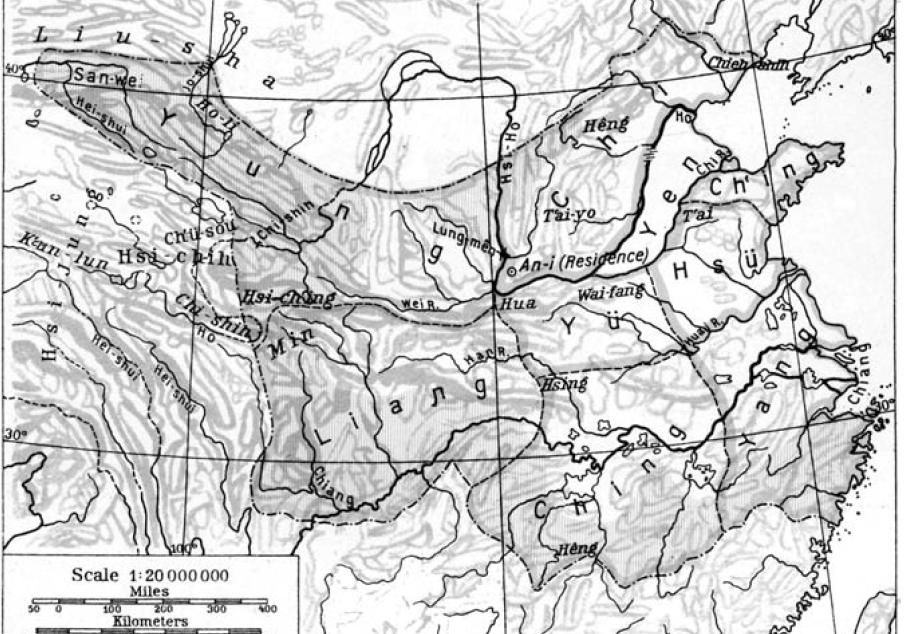
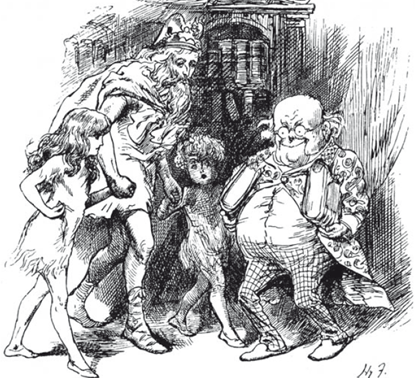
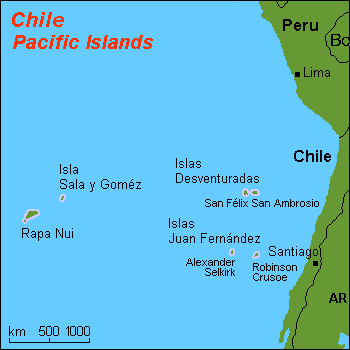
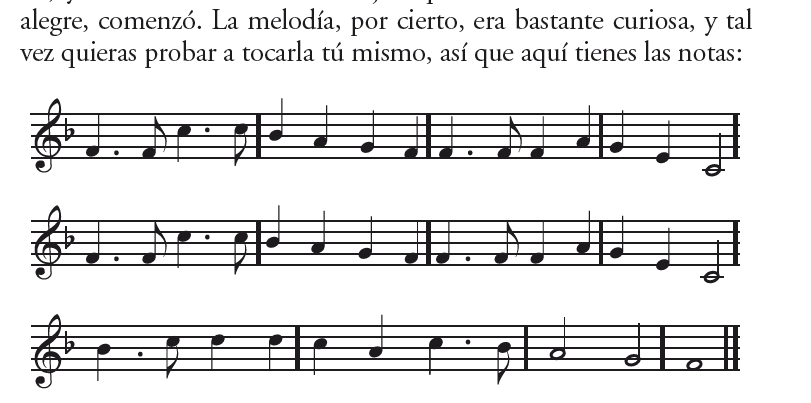
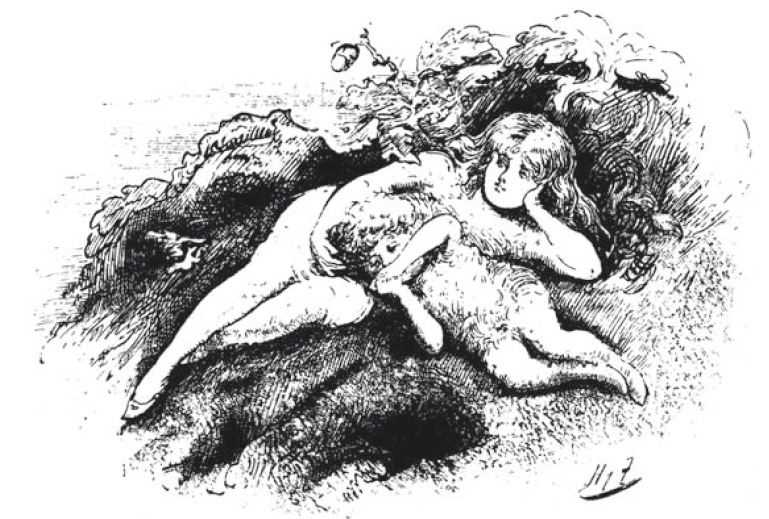
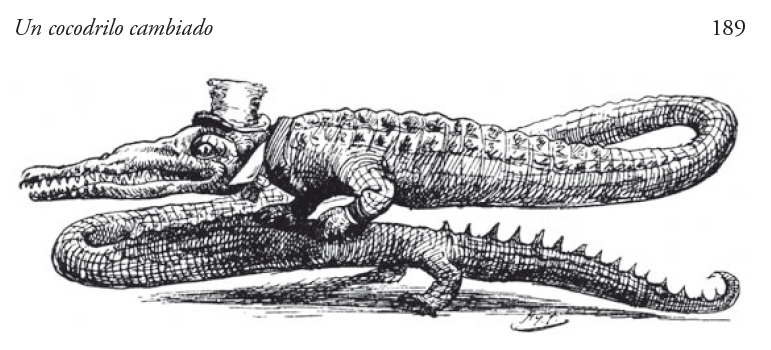

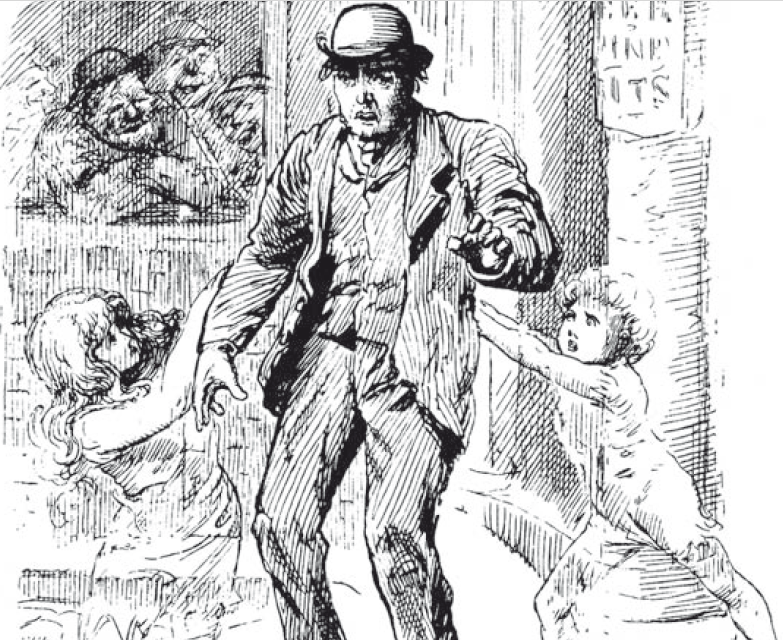
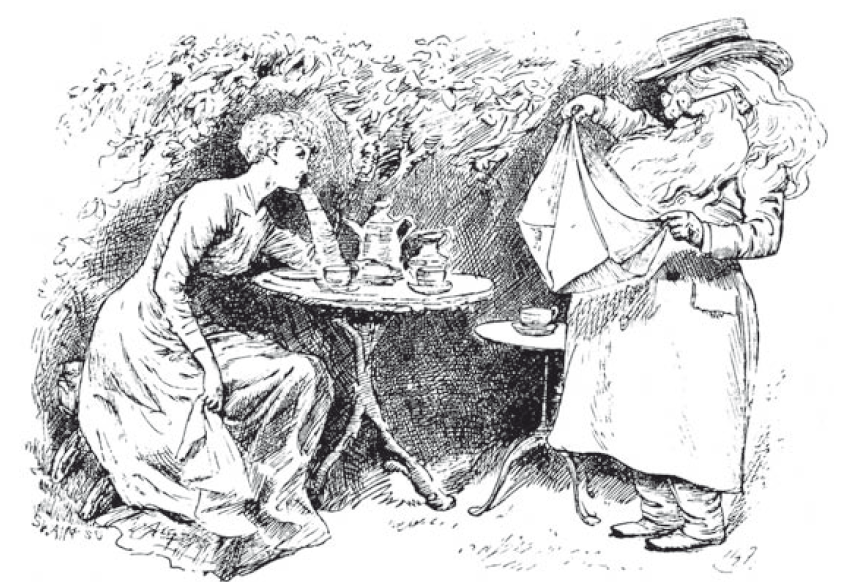
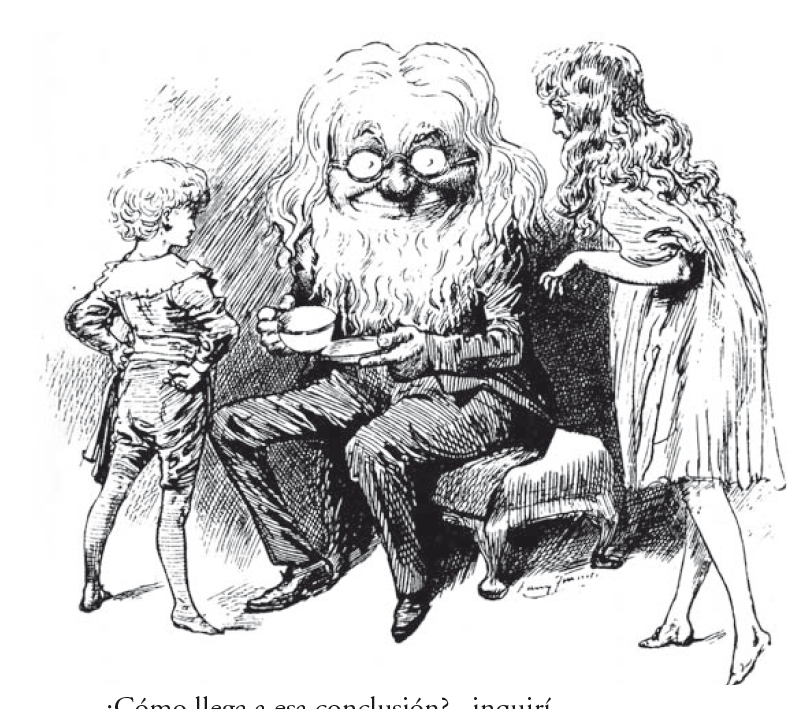
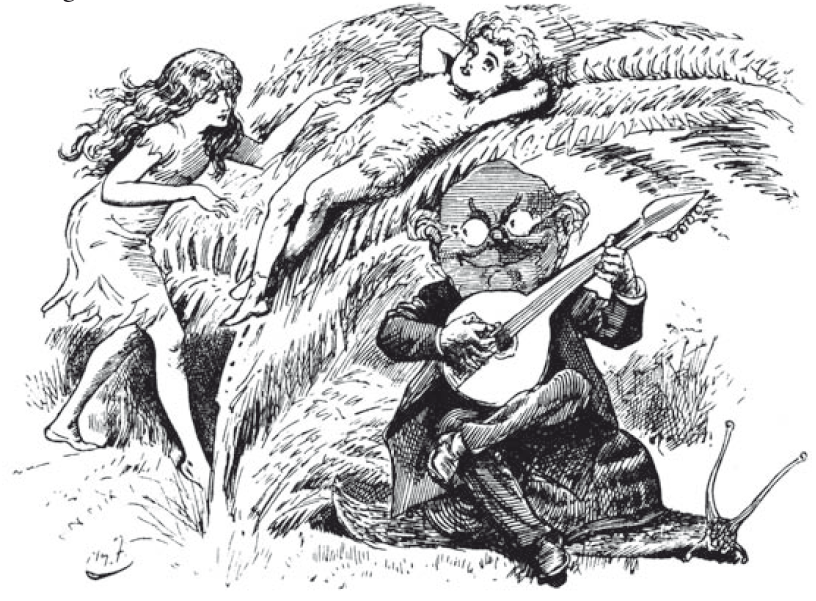



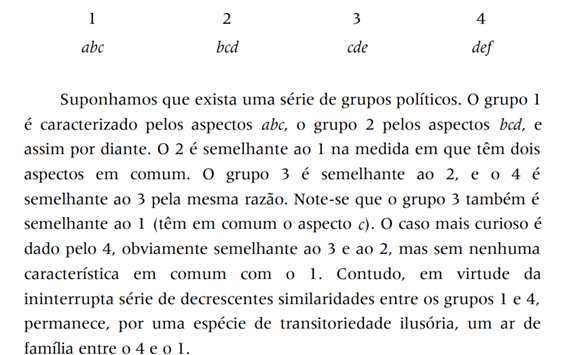








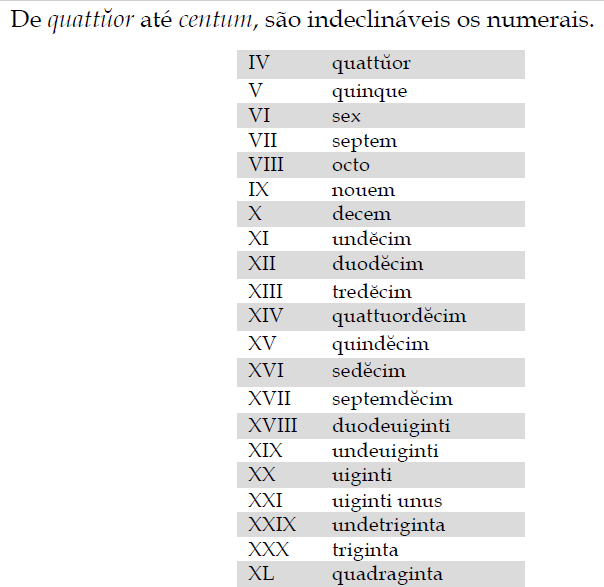
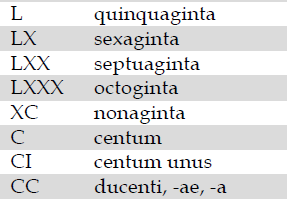
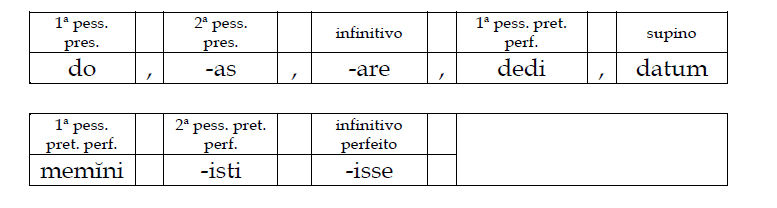
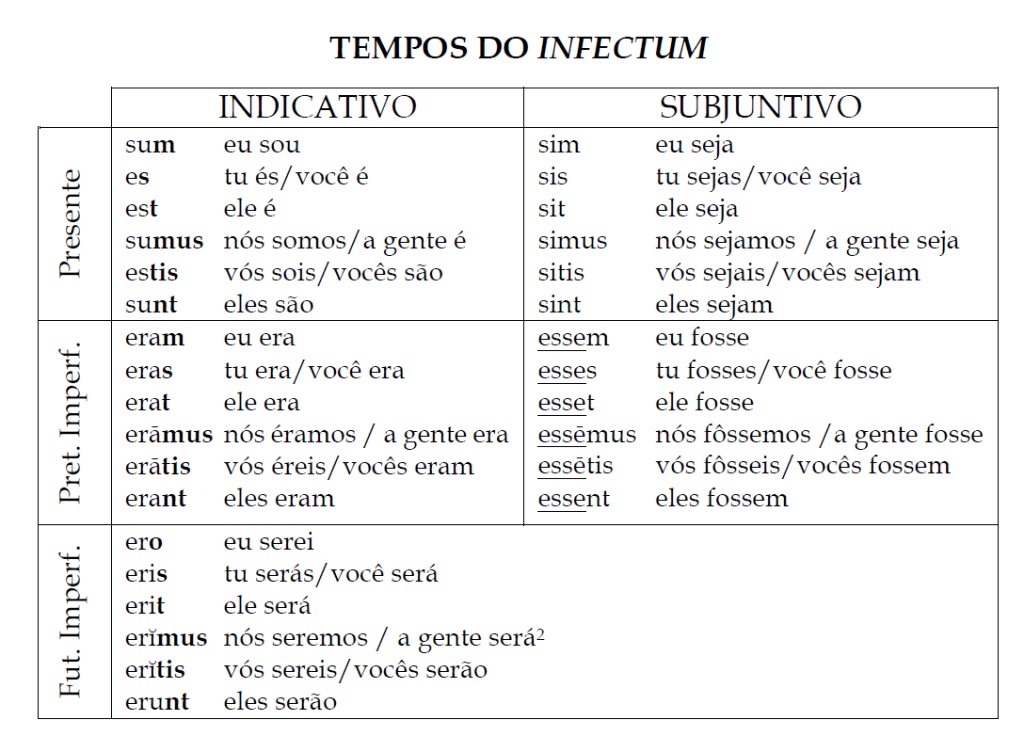
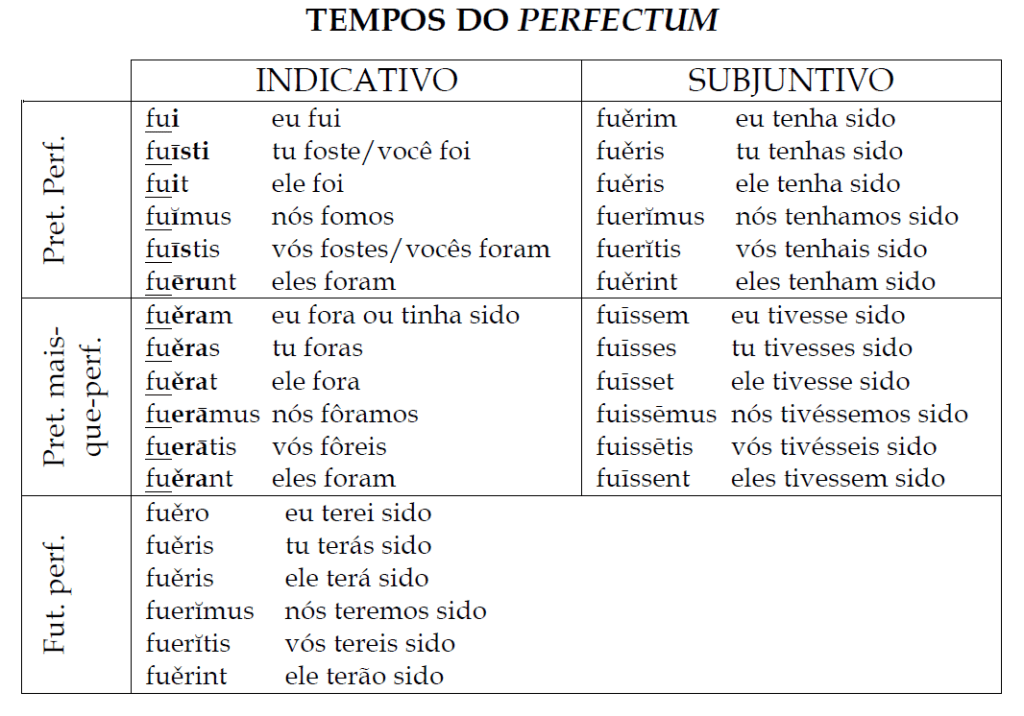
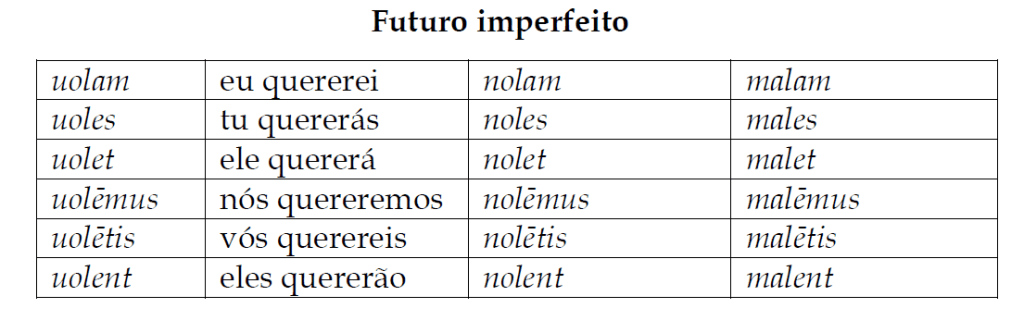
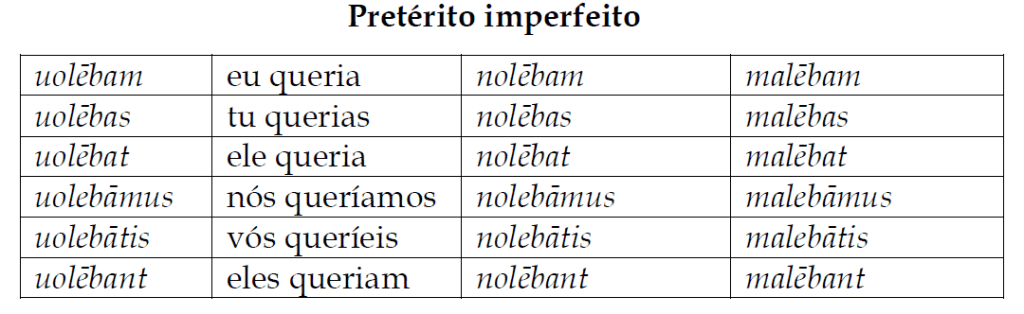
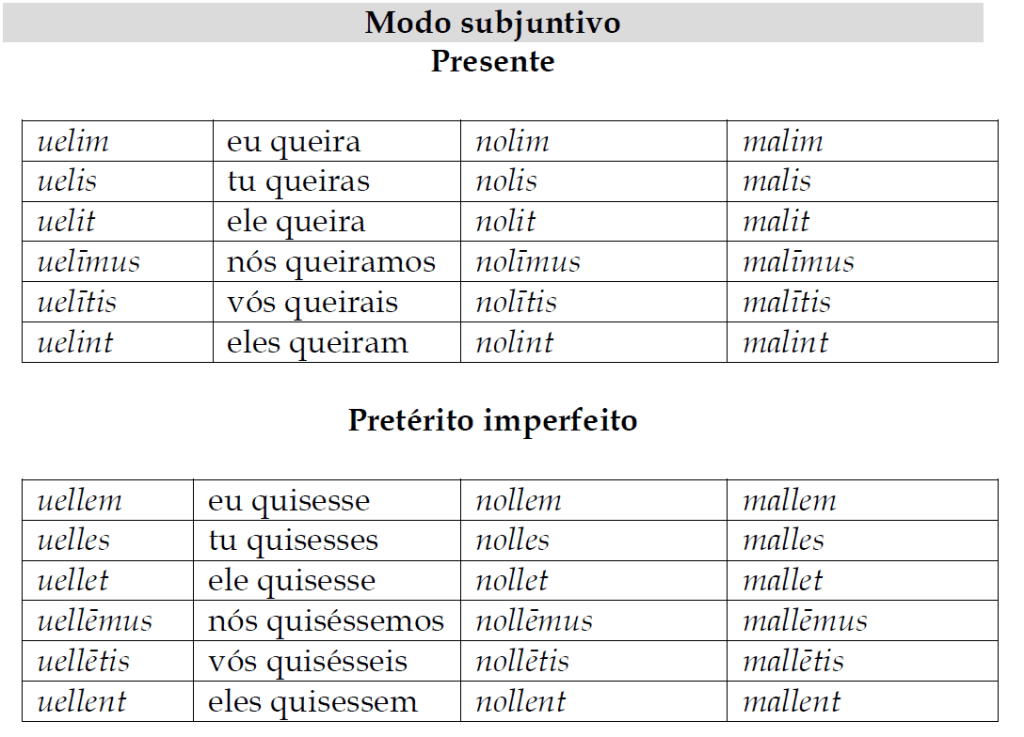
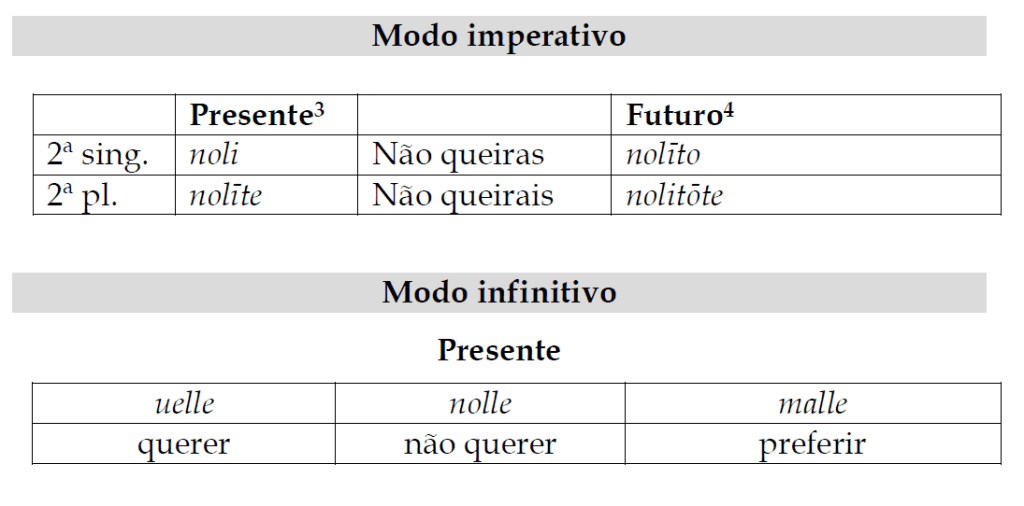

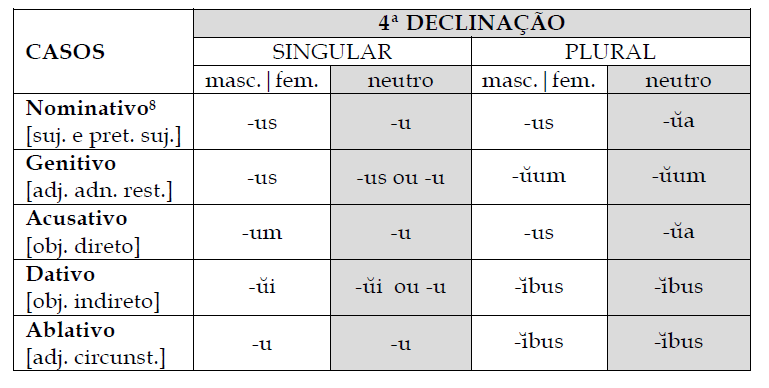
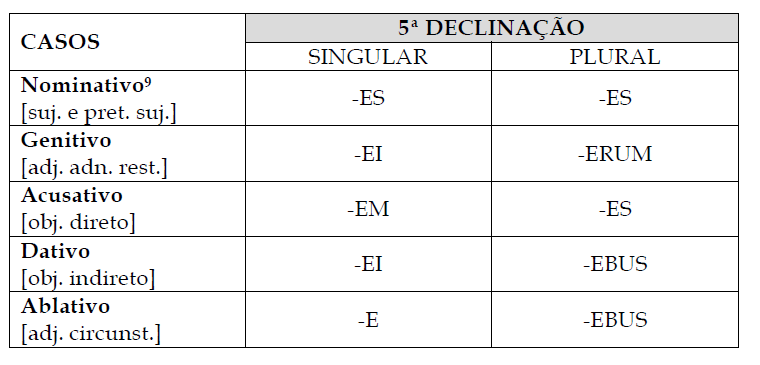
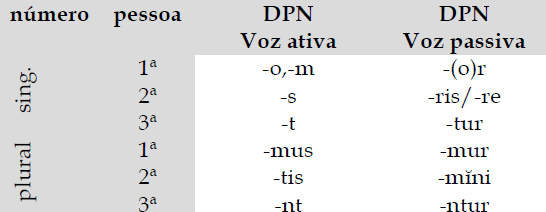
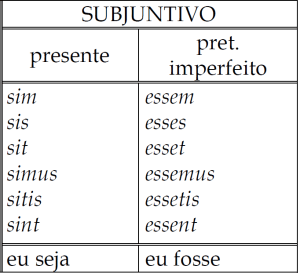
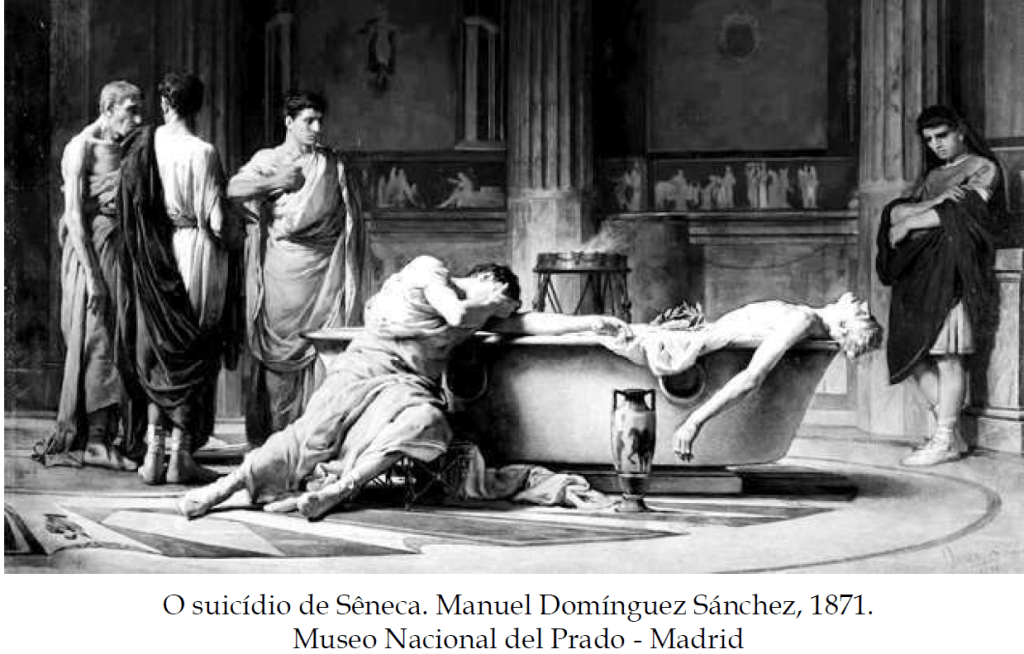
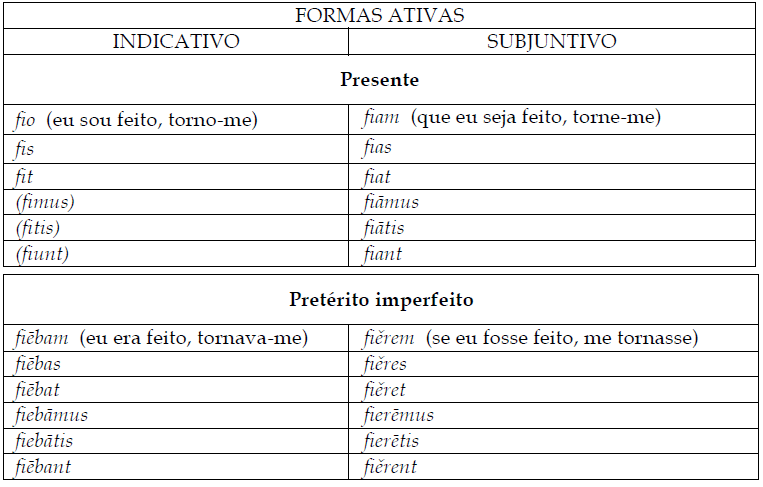
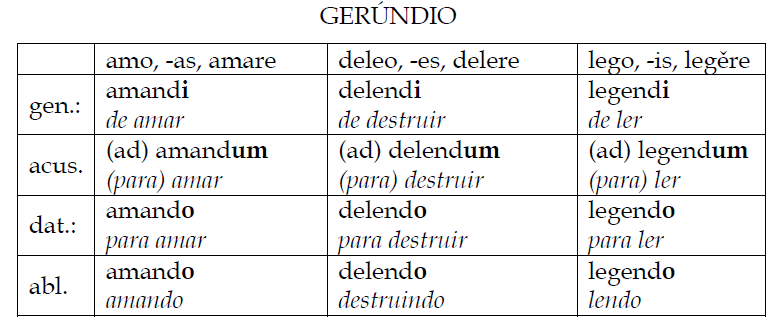
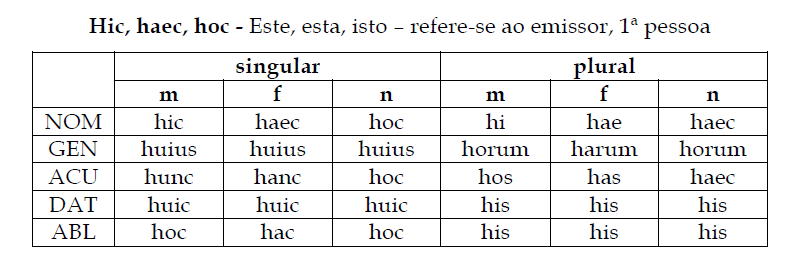
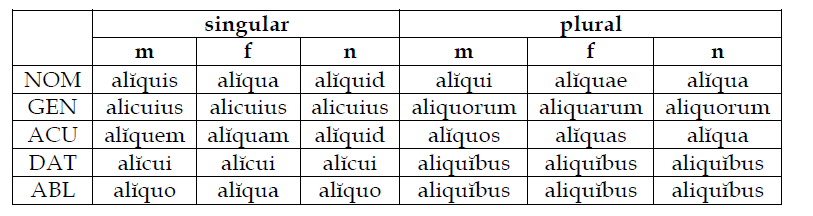
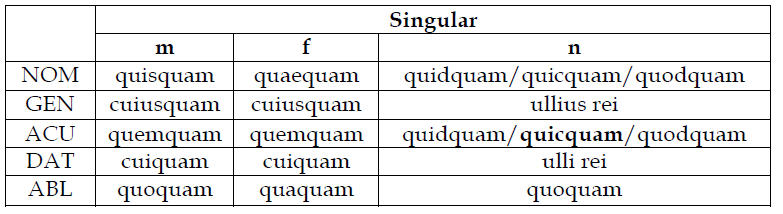

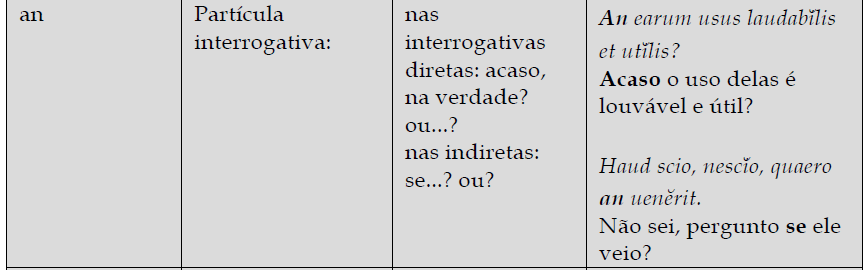
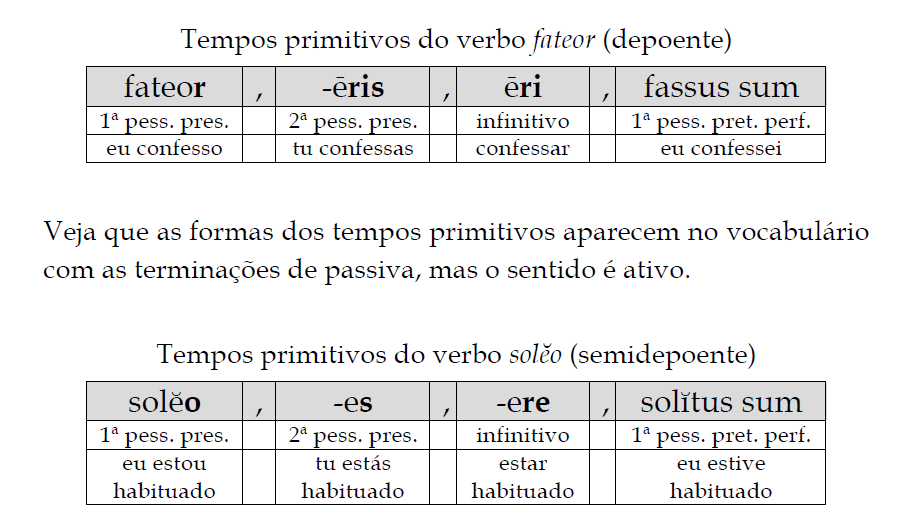
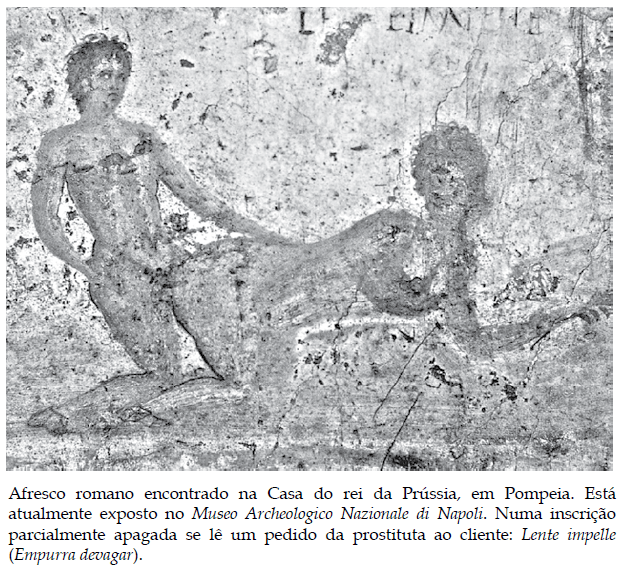
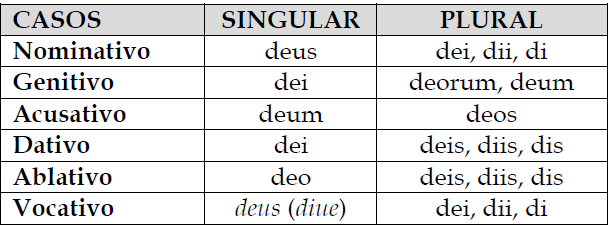
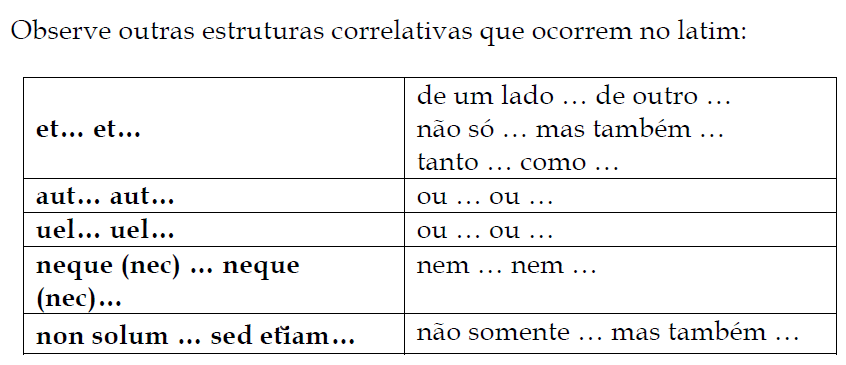

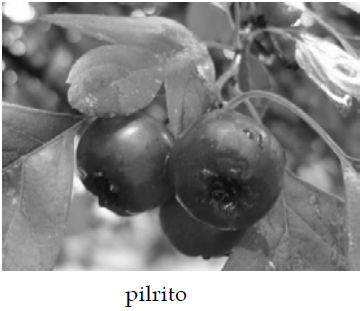
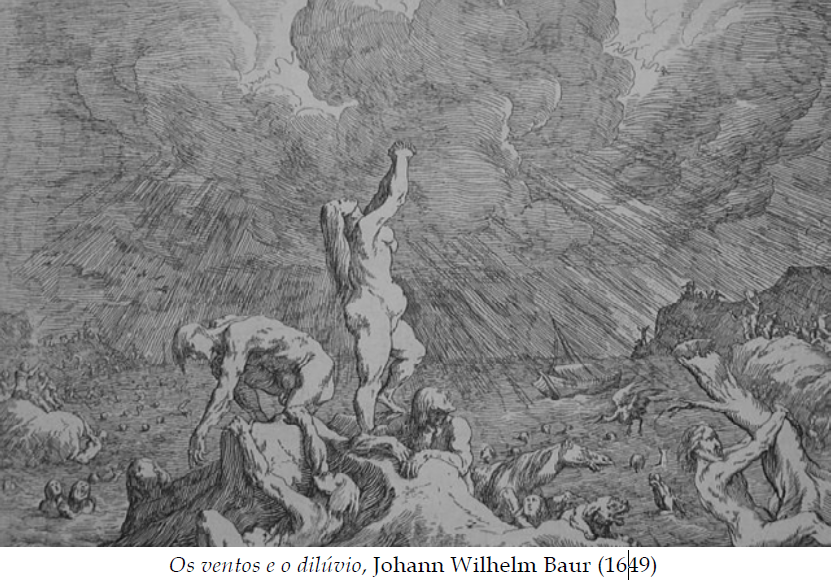
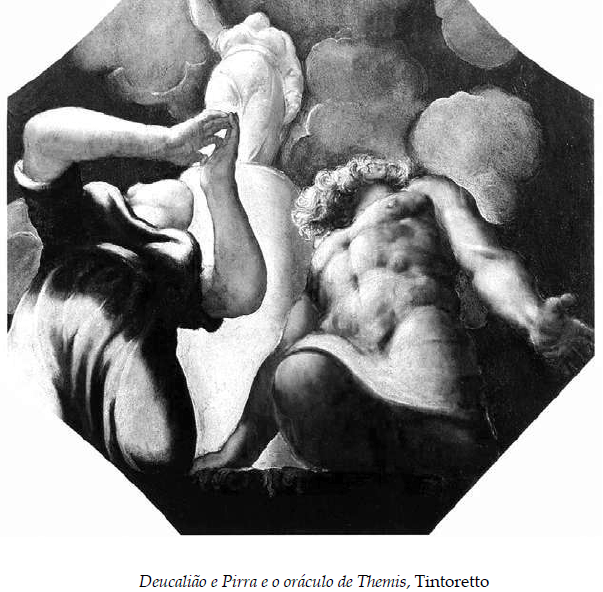
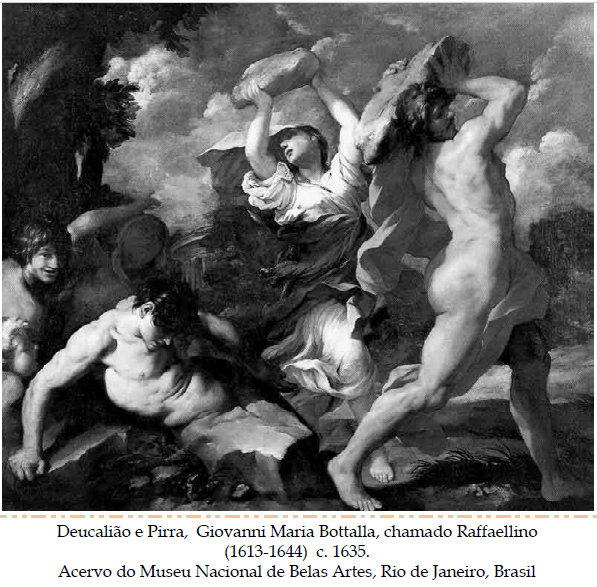
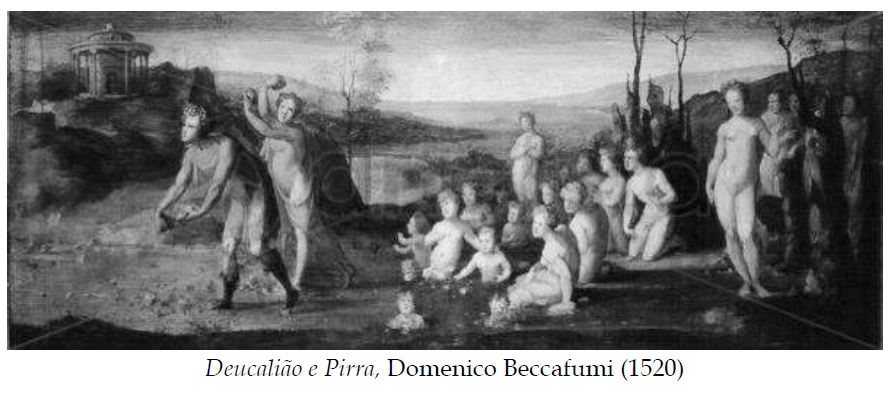
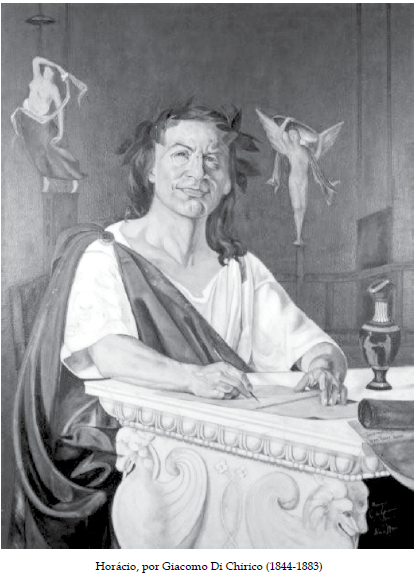
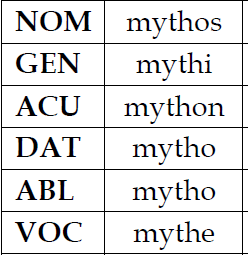
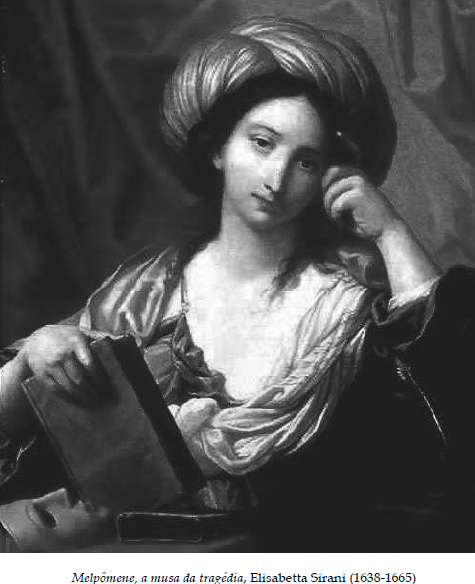
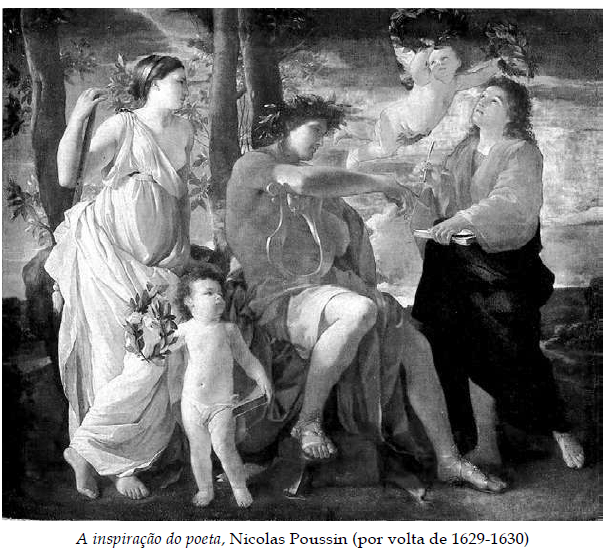
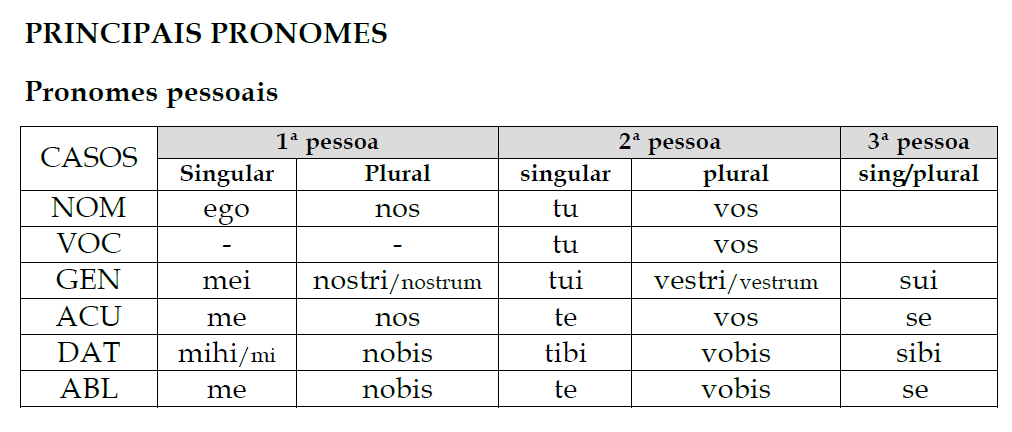
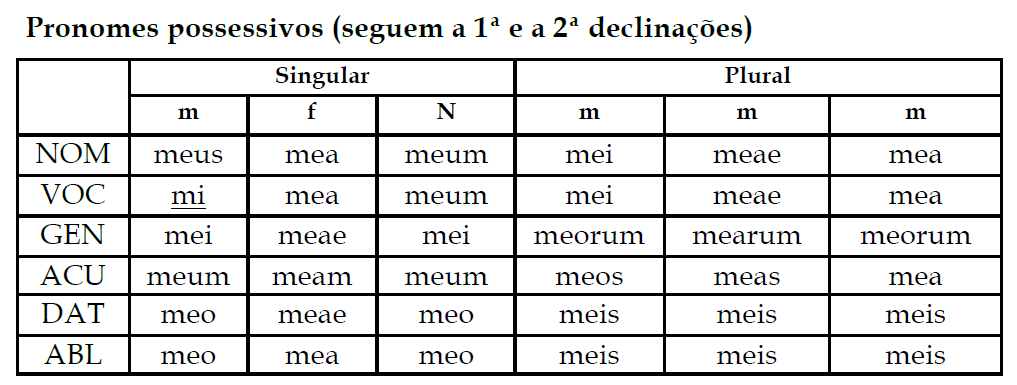
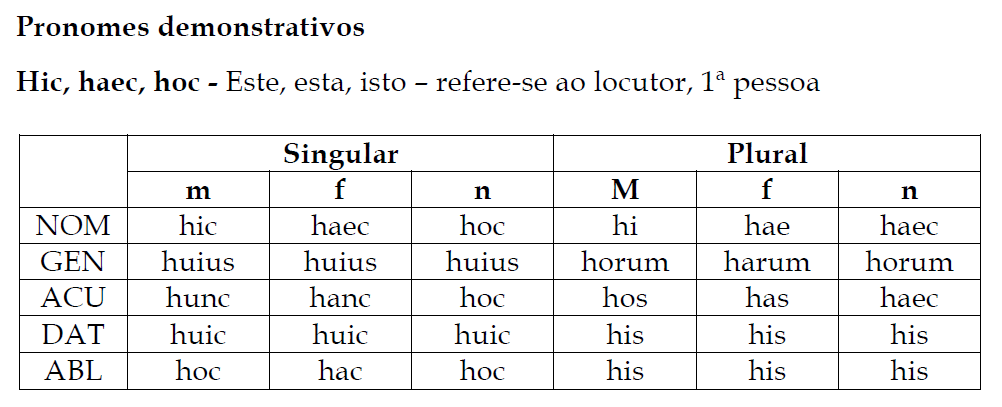
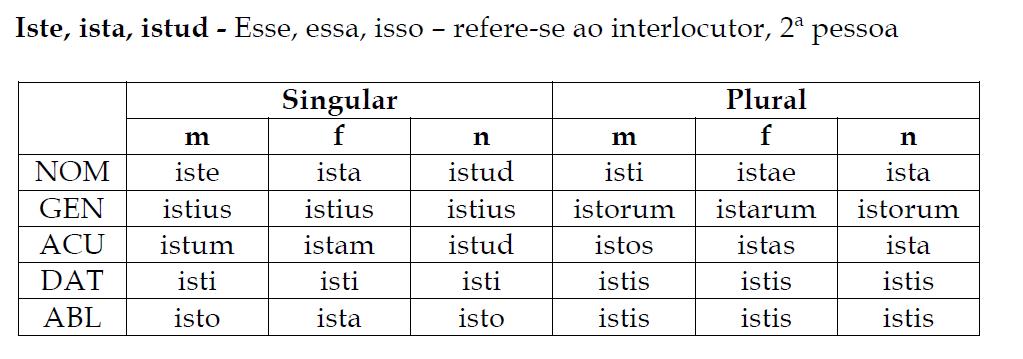
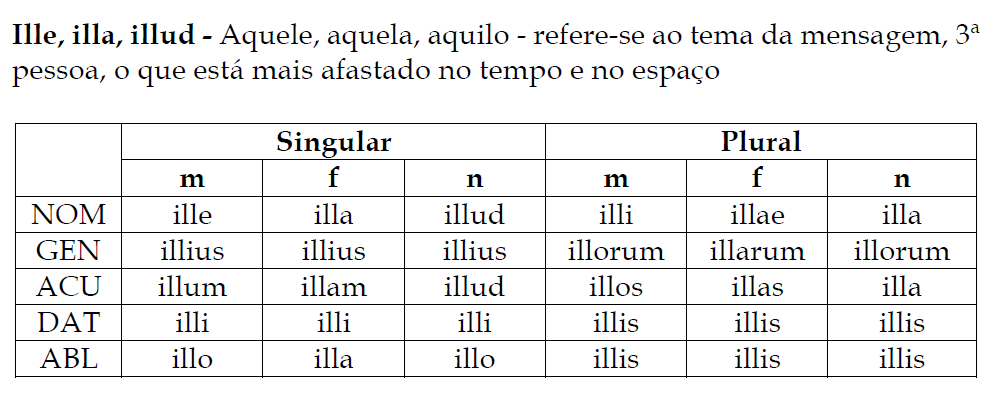
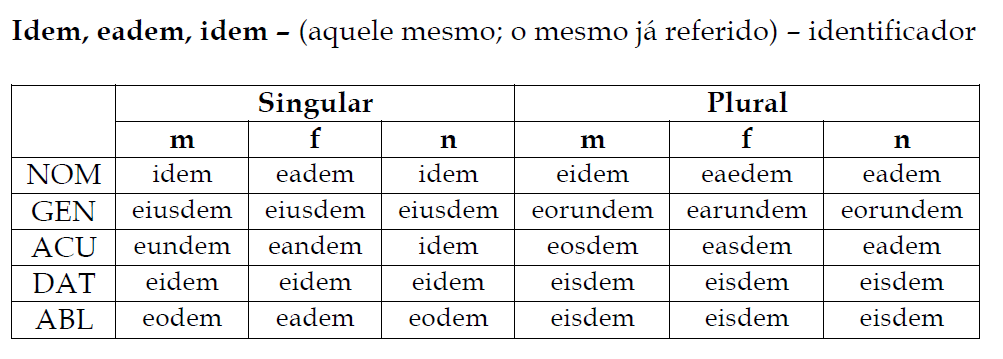
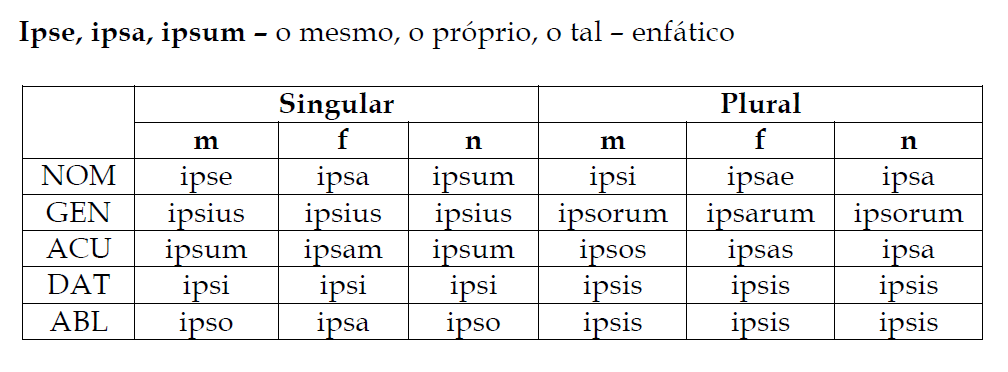
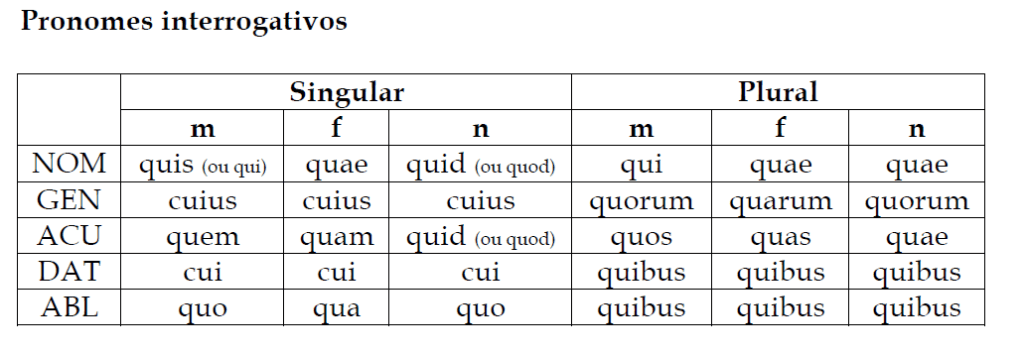
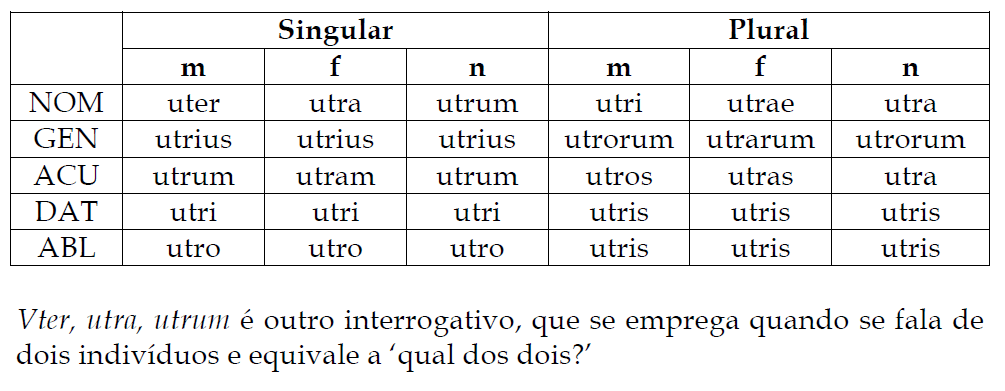
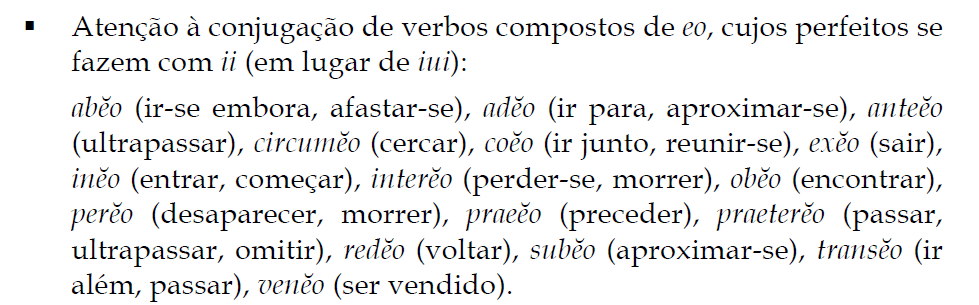
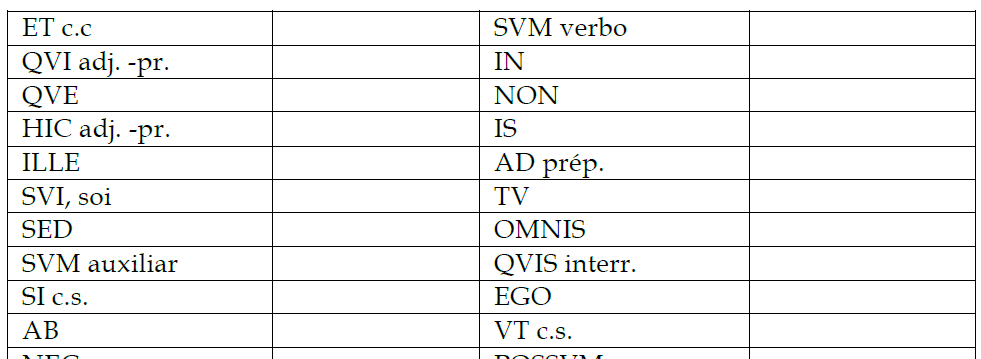

 Seclusão Anagógica