“The theorist who connects the energetic model of the material universe with its atheological double is, of course, Georges Bataille whose system of general economy relates cosmic forces to human societies, inner experience and evil.”
“The founder of the idea of acoustic ecology in the 1970s is the composer and theorist F. Murray Schafer. In a chapter called ‘The Music of the Environment’, Schafer refers to two apparently contrary Greek myths concerning the origin of music. The most familiar myth, from Homer, accounts for the invention of the lyre by Hermes when he discovers that a turtle shell can produce sound.” “The contrary myth, from Pindar’s Twelfth Pythian Ode, concerns Pallas Athena who, upon hearing of Perseus’s slaying of Medusa, attempts to ‘connect’ with ‘the sorrowful lamentations’ of her sisters, and ‘framed the full-sounded harmony of the reeds that she might imitate with instruments the deep groans proceeding from Euryale’s fell cheeks’ (…)All music, according to this myth, is infused with death and mourning.”
“Imagine the agonies of Christ on the Cross multiplied to infinite proportions, the maximum of tragic intensity giving rise to measureless expenditures of energy in the form of sonic vibrations. This is the sound of the universe, the melancholic sound that constitutes the universe, the cosmic noise from which all form and structure derives as oscillations coalesce into dark matter, atomic matter and light producing the stars from which life ultimately, derives, a universe in which, with supreme irony, human forms of life will perceive divine harmony and mathematical consistency, the very image of creation that God sought to avoid, but through avoiding, in his tragic stupidity brings about.”
“This domain of excess (the excessive negation of being) and of absolute evil is therefore exactly the same as the absolute good of black metal itself: the expenditure of a sonic drive that propels a blackened self-consciousness, a melancological consciousness without being that is necessarily prior to any positive ‘ecological’ intervention in the ‘environment’ that could only repeat the process of its human exploitation and subjugation.”
“It is perhaps appropriate here to emphasise what the ethos of melan-cology is not: it is not a form of morality; it is not a set of rules relating to social behaviour, civic duty, code of conduct, biopolitical governance, nor does it relate to any form of socio-political order dedicated to organizing and improving human survival or the survival of any other form of (inter-)planetary life.”
“Ecology and economy are virtually the same word and when the former becomes the basis of the latter there is always the serious danger of a drift towards fascism because it is always a question of deciding who or what lives and dies usually on an aesthetic/utilitarian (or ends/means) basis.”
“For the entrenched and domestic Werther-ism of so-called ‘depressive/suicidal black metal’ risks collapse into the perfect commodity-form of private, solitary, defeatist quietism, leaving black metal ripe for critical re-territorialization as nothing more than ambient shoegaze dressed up with gothic posturing (something for lone wolves rather than for packs). In his polemic of 1931, ‘Left Wing Melancholy’, Walter Benjamin long ago flagged the quietistic implications of this emotion, lambasting the ultimately harmless and conciliatory aura of ‘tortured stupidity’ that it proffers as an inadequate response to capitalism.”
Badiou, Lógica dos Mundos
“The black metal kvltist chooses to drown the present in a fog of black bile, offering what Badiou terms ‘the paradox of an occultation of the present which is itself in the present’.”
“melancholy, melaina khole, or black bile, the humor associated in Hippocratic medicine and its Galenic, medieval and early modern inheritors with autumn, cold, solitude, night-time, old age, and a wildly variant affective spectrum: sorrow and anxiety above all, but also rage, lycanthropy, psychotic hallucinations, religious devotion, sexual jealousy, artistic inspiration, catatonia and mania.”
“To move from Exodus’s ‘Bonded by Blood’ to Beherit’s ‘The Oath of Black Blood,’ is to reject the jocular and homosocial bonds of friendship in favor of the sorrowful, creaturely solidarity of melancholy suffering.”
“Bracketing this personal hit parade, the Encyclopaedia Metallum indicates at least five bands simply called Melancholy from Greece, Mexico, Lebanon, Poland and Russia, not to mention Czech Republic’s Melancholy Pessimism.” Lituânia, não Líbano. Há ainda, em 19/11/2025: Beyond Melancholy (DSBM, Itália), Enthroned Melancholy (atmospheric black metal, Suécia), Evil Melancholy (black metal, Áustria), Forgotten Melancholy (gothic/doom metal, Romênia), Martyr’s Melancholy (deathdoom, EUA), Melancholy Cry (doom metal, Polônia), Oppressive Melancholy (experimental BM, Finlândia), Starlit Melancholy (atmospheric BM, EUA), Autumn Rain Melancholy (gothic/doom, Rússia), Blood of Melancholy (black metal, México), Meadows of Melancholy (atmospheric BM, EUA), Melancholy of Evil (BM, Brasil), Morose Months of Melancholy (BM, Ucrânia), Shores of Melancholy (BM, EUA), Tears of Melancholy (gothic, Suécia), Veiled in Melancholy (atmospheric post-BM, Dinamarca) e Void of Melancholy (atmospheric BM, Finlândia). Há ainda uma Melankoly black metal sinfônico do Líbano (op. cit.), Melancholie, atmospheric/ambiente holandesa, e Melancolie, gótico italiana.
“If we look at Melencolia I (1514), we see that Dürer’s angel has a noticeably dark face: she is not, as it were, ‘white’ but is quite literally a dark angel. This is because the blood within the body of a melancholy person was imagined to run black. As Marsilio Ficino puts it in the chapter of De Vita Libri Tres (1489) titled ‘How Many Things Cause Learned People Either to Be Melancholy or to Become So’, this is a result of a drying of the brain caused by agitation”
“As melancholy lost its humoral meaning and became an elite aesthetic mode of ‘sadness’, what was bleached away, literally, was its association with dark-skinned faces.”
“This achieves its zenith in the romantic cult of languid pallor and the crypto-sexualization of the symptoms of tuberculosis. Tom Moore, visiting Lord Byron in Patras in 1828, hears the poet declare ‘I look pale. I should like to die of consumption’; taking the bait and asking why, he is told ‘because the ladies would all say Look at that poor Byron, how interesting he looks in dying.’”
“Pythagorean worship of the numeral 4 begat the Empedoclean combinatorial model of the elemental composition of the universe out of earth, air, fire and water, and this led in turn to a Galenic medical practice fashioned after this Pythagorean/Empedoclean image, populated by 4r broad types of human beings: sanguine, phlegmatic, choleric and melancholic.”
“The mainstream media, predictably ravenous in its cool hunting search for hotzones radioactive with even the most notional cachet of authenticity, has predictably fastened onto the comedic potential of corpsepaint as a means to both co-opt and condescend to black metal as an extremist sub-culture. Exhibit A of this process is the thinly veiled transposition of Immortal’s Abbath into the avatar Lars Umlaut in the Guitar Hero video game franchise. Current retail for this series is over 2 billion dollars, and with more than 25 million units sold, it is safe to say that Guitar Hero constitutes the most widely disseminated representation of a black metal musician on this planet.”
“take a press photo of Immortal, replace battle axes with kittens, and you’ve got yourself a hilarious new image to use as an online avatar which shows that you’re aware of ‘that stuff but that you don’t take it too seriously.’”
“Through corpsepaint, black metal achieves the re-occultation of black blood as an immanent experience of asymmetric struggles between life and death, dark and light, then and now.”
“This transformation of the face of the entertainer into a cartoonishly legible form thus recalls the minstrelsy tradition of white European and American entertainers ‘blacking up’ so that they can look like African-Americans, a dialectical process that foregrounds the artificiality of race as a construction while still effectively reinforcing that construction’s normative force.”
“black metal theory awaits its rendezvous with both queer theory and critical race theory.”
“Obsessed as it is with thinking negation, negativity, hostility and failure, recent queer theory might yet constitute a particularly generative lens through which to think about the fetishistic circulation of the Third Reich as a ‘lost cause – melancholically embraced because it is lost – within black metal aesthetics.”
“At the level of scene politics, if the commentary of its pioneers is any indication, the Ursprung of corpsepaint may not lie in Norway, Finland, or Sweden but in Brazil: whenever the origins of this makeup style are discussed, mention is swiftly made of the foundational influence of Sarcofago’s debut album ‘I.N.R.I.’ (1987) upon the visual presentation of the first wave of Scandinavian black metal artists, who more or less copied the signature look from these citizens of Belo Horizonte: spiked bracelets, bullet belts, white cheeks, black circular eye makeup. Corpsepaint might well have been required in order for South American musicians to look sufficiently ‘vampiric’ and ‘ghoulish’, i.e. white—but even if corpsepaint is quite specifically about looking like a dead white person, its ultimate horizon gestures beyond racial legibility towards the species-being based project of turning the human face – any human face – into a skull.”
“In a dynamic of impurity familiar from the theorization of drag performance, this very falseness offers a violation of a boundary that reifies the very line that it also subverts through crossing.”
I had a dream, which was not all a dream. The bright sun was extinguish’d, and the stars Did wander darkling in the eternal space, Rayless, and pathless, and the icy earth Swung blind and blackening in the moonless air
Lord Byron, ‘Darkness’ (1816).
“Stanton Marlan in The Black Sun: The Alchemy and Art of Darkness (2005) approaches the notion of a black sun or Sol Niger and blackness not as a representation of the nigredo or blackness phase in the process of the alchemical opus that disappears when the work is completed, or in terms of Jungian psychology where the black sun of the nigredo phase is associated with suffering and the melancholic soul’s struggles with this shadow of darkness.”
“The Burkean sublime shares much with the darkness and terror of black metal’s arctic gothic atmospheres and resonates with what Eugene Thacker calls ‘the world-without-us’; a world neutral to humans which can be found ‘in the very fissures, lapses, or lacunae in the World and the Earth’, in ‘a nebulous zone that is at once impersonal and horrific’.”
“Kali, who represents the process of dying and is the ‘terrible Mother of the cremation ground’, is worshipped by the Tantrics who believed that, ‘sitting next to corpses and other images of death, one is able to transcend the pair of opposites (i.e., good-bad, love-hate, etc.)’”
“This essay focuses primarily on examining black metal’s presence in photographic images, drawings, and sculptural installations by three American artists: Grant Willing, Terence Hannum, and Banks Violette. It argues for a black metal art history that may be used to articulate how the language of black metal is used by artists to construct meanings.”
“The chorus, that is so common in classic rock, is rejected in many black metal songs in favour of a symphonic quality of alteration that forces the listener to constantly renegotiate their experience. Riffs repeat, but transform over the length of a track—which commonly reigns closer to ten minutes than the three minutes of pop music, long enough to build a dense and complex sonic landscape. The double bass drum frequently sounds like a racing heartbeat or blood rushing through my body.”
“Seen only from the back of the head, her hair is messed in a head banging nod to the speakers. In the distance where the two rows of amplifiers might meet there are no musicians mediating between the amps and the single audience member. In fact, the details between the individual and the technology in both ‘Black Diadum’ and ‘Descension’ appear to sink into the material of the pitch-black paper itself. It is formless: it looks like empty space. Yet here, exemplified by the texture within the ground of the paper substrate, Hannum allows the physicality of the media to resonate throughout the drawing, suggesting the artwork itself as a space charged with intense sonic activity.”
Caminhante sobre o mar de névoa
Burke
“This skeletal structure was a direct reference to both the Fantoft stave church’s burning in 1992 and the photographic representation of its charred ruins featured on the cover of Burzum’s 1992 album Aske.”
“Violette’s 2006 exhibition at the Maureen Paley gallery was initiated with an hour-long performance by the drone metal band Sunn O))) which took place on the ground floor of the gallery during opening night” “To attend a Sunn O))) performance is to experience a deep, pressure-filled amplifier massage penetrating your entire body as the band builds a dark, atmospheric, resonating sonic landscape felt long before and after it is heard. Adding to Sunn O)))’s performance at Maureen Paley was a vocal performance by Mayhem’s Attila Csihar, conducted entirely from within a sealed coffin made by Violette out of salt and resin. When the concert ended, the musicians exited unseen and viewers were finally admitted, like forensics, to witness the afterbirth.”
“We are left wanting […] for the sculptures raise expectations of sound, movement, fury, fame, only to render such prospects void by the absence of any.”
“Doom metal presents a music of tempo that is so grave that it negates tempo. Finally, drone metal, with its minimalist dissipation of all music into a monolithic, dense line of sound, presents us with the whittling away of all harmony into a single, thick, absolute tone, collapsing the musical spectrum into a dense black hole.”
“To give us an idea of how this unsound is different from an anti-sound or a super-sound, we could consider a number of examples in contemporary sound art, examples that cross genres, from black metal to avant-garde to dark ambient. Each can be understood as effecting different strategies that point to, but never, of course, arrive at, the unsound.”
“In one group would be works that utilize what we might call a strategy of invocation. Lustmord’s Black Star (from 2000 album Purifying Fire), Keiji Haino’s Milky Way (1973), Striborg’s Spiritual Catharsis (2004) [‘coldwave’], and Darkspace’s Darkspace II (2005) might be cited as examples.”
“In another group would be works that utilize a strategy of darkening. Raison d’Être’s Metamorphyses (2007), Nurse With Wound’s Soliloquy for Lilith (1988), Francisco Lopez’s Untitled series, and Thomas Köner’s Permafrost (1993) are examples.”
“In a third group would be those works that use a strategy of density. Sunn O)))’s Grimm Robe Demos (1988), Wold’s Screech Owl (2007),Winterkälte’s Structures of Destruction (1997), and Merzbow’s Merzbuddha (2005) are examples. Rather than adopt a subtractive approach, these works do the opposite, condensing, congealing, and clustering sound beyond its audible, or indeed, acoustic, capacity.”
“A final group would comprise works that utilize a strategy of writhing. Iancu Dumitrescu’s Medium II (1978-79; for double-bass), György Ligeti’s Ramifications (1968-69), Iannis Xenakis’ Syrmos (1959), as well as the spectralist work of composers such as Tristan Murail, and Gérard Grisey, might be cited as examples. In these works sound becomes sculptural, writhing, indefinite, flailing and formless. While the techniques may range from ‘micropolyphony’ (Ligeti) to stochastic mathematics (Xenakis), the result is that of acoustic metamorphosis, the continual undoing of sonic form. Xenakis’s scores, in particular, display this forming and de-forming quality of sound (indeed many of his sketches for sound installations look like the black avatar of Fludd’s celestial monochord). Here the abyss is the absolute writhing of sonic form, sound as the writing of the abyss”
Questions may be directed to: hideous.gnosis@gmail.com
“Black metal, whose shriek of birth occurred in the 1980s and achieved full articulation in the early 1990s, represents a return to orthodoxy after an interlude of laxness. The enemy was not only to be found outside of the metal community, but also within.”
“The lexicon of black metal is comprised, to an extent unmet by other forms of music, of references to the enduring, the abiding, and the transcendent: the arctic tundra, the unyielding night of the northern winter, virgin woods and wastelands, stone, mountains, the moon, and the stars.”
“The heaviest metal found on Earth is uranium; enriched uranium is plutonium, a substance that conjures up the Lord of the Dead. Heavier elements occur only in space, where Pluto mournfully orbits the Sun at a distance of 3,666 million miles. Somewhere still farther off in the void floats the philosopher’s stone, black metal.”
“The black metal that was born in Scandinavia in the mode of Fortification¹ can be termed Hyperborean Black Metal. Hyperborean Black Metal is lunar, atrophic, depraved, infinite and pure. The symbol of its birth is the Death of Dead. Its tone is Nihilism and its key technique is the Blast Beat.
[¹ Banda praticamente impossível de encontrar. Checar Eternal Fortification no M-A, porém!]
Today USBM stands in the shadow of Hyperborean Black Metal. The time has come for a decisive break with the European tradition and the establishment of a truly American black metal. And we should say ‘American’ rather than ‘US’: the US is a declining empire; America is an eternal ideal representing human dignity, hybridization and creative evolution.”
“Hyperborean Black Metal is the culmination of the history of extreme metal (which is itself the culmination of the history of the Death of God). The subject of this history may be compared to a mountaineer, maneuvering over and across the various terrains of thrash, grindcore and death metal – or rather, carving these terrains into the mountainside – and striving to reach the Haptic Void, dimly understood but strongly felt, glimmering brightly at the summit.”
“Transcendental Black Metal is in fact nihilism, however it is a double nihilism and a final nihilism, a once and for all negation of the entire series of negations. With this final ‘No’ we arrive [in] a sort of vertiginous Affirmation, an Affirmation that is white-knuckled, terrified, unsentimental, and courageous.”
“The infinite is everywhere and cheap. It is the finite that is rare. It is the finite that is peculiar to humankind. Finitude means confronting what is present at hand authentically and doing what is honest with the means one has at one’s disposal. The solar nourishes the finite. The finite is born, strives, and dies.”
“Transcendental black metal sacralizes the penultimate moment, the ‘almost‘ or the ‘not yet’, because it has been found that there is nothing after the penultimate moment. The penultimate moment is the final moment, and it takes place at every moment. The fabric of existence is open. There is nothing that is complete; there is nothing that is pure.”
“Depravity is dissimulation; courage is authenticity. Courage has no image of itself. It is trailblazing. It has no path before it. Its only trace is the wake it leaves behind.”
“After the dust settles, and the work of modernity and postmodernity is done, and the divisions between high culture, mass culture and counterculture have been obliterated, what is left? A single, shining Culture which is True, Good, and Beautiful.”
Teutoburg Forest
“The primary level of decay conveyed in black metal concerns the predisposition toward matters of the human body’s decomposition. A recurring scenario involves the ritualistic debasement of the decomposing corpse at the hands of the living, in what can often be understood as a de-sanctifying ritual that rids the rotting corpse of its illusory spiritual wholeness.”
“Second, it can certainly be said that black metal, in its varying and perpetually evolving states, employs a literal decomposition and decay of its own presence” “Beyond merely producing a record that sounds grimy, faraway, muddled, etc., these artists create a presence that is wholly separate from the music.”
“It is only after disfigurement and debasement of the corpse take place that necrophilic urges can emerge, in which the corpse is wallowed in, raped, or sodomized in a ritual of great satisfaction, as in Decay’s song, Copulation With the Gutted Corpse”
“a great deal of anti-Christian black metal maintains a knowledge of such objects that are lost to the now predominant rabble of evangelical Christians, whose masses often take place in fluorescent-lit recreation centers and whose priests often wear sweatsuits.”
(*) “For a beautiful simultaneous satire/homage of the life of the suburban black metaller, see the gorgeous black metal montage of Harmony Korine’s 1999 film Gummo.”
“If we were to define a degree zero of Black Metal politics then it would be an unstable amalgam of Stirnerite egoism and Nietzschean aristocratism: a radical anti-humanist individualism implacably hostile to all the ideological ‘spooks’ of the present social order, committed to creating an ‘aristocracy of the future’, and auto-engendering a ‘creative nothing’.” “Of course these are often ‘spooks’ associated with the extreme right, Nazism, fascism, and ultra-nationalism. Whereas Stirnerite individualism might be regarded as anarchist, or at best indifferent to politics, this racial-national metaphysics is often, although not always of course, deployed to re-territorialise and establish a ‘grand politics’.” “the critic from the left can safely handle and enjoy Black Metal and proclaim their sophistication by condescending to the naiveté of such adolescent political posturing which ‘unfortunately’ marks an otherwise admirably radical aesthetic.”
“It should be noted that a Gramscian politics of hegemony has been invoked by the far right, in particular in France by Alain de Benoist, ideologue of the ‘new right’. His culturalist racism and anti-Americanism bear many similarities to the views of Sale Famine, however Famine’s elitism and anti-popular stance incarnate a peculiarly constrained vision of hegemony – one occult and elitist.”
(*) “Famine states that the next Peste Noire album will be ‘pure reggae’ (Travis Interview), inhabiting his usual mode of deliberate provocation, but also implying his own ability to define a true Black Metal, in quasi-Duchampian mode, as whatever he nominates.”
Carl Schmitt, Theory of the Partisan, 1963.
“The apocalypse leads to the post-apocalypse. Contrary to this, Armageddon is the site of the terminal end.”
“What does this have to do with black metal, or with Mayhem’s demo title as a founding gesture?”
“Hence the absence of the usual dialectical suspects: not void, not synthesis, not the not-not of the negation of the negation.”
“It is the war fought between two totalities, between black metal’s endless antagonism and liberal capitalism’s eternal present.”
“it predicts and describes a final battle, yet it grasps that final battle as one which has been there all along.”
“Therein the desperation of black metal vocals: it’s just the howl of the thought that this is at once the worst of all possible worlds and the only possible world.” “In this way, despite its moronic and frequent attempts to be Fascist and despite the fact that we should wage total war against all such attempts, it never can be.” “all non-Nazi black metal is still NSNSBM (not so National Socialist black metal).” “Black metal dreams a sovereign, and, in the next breath, severs his head to spatter the blood across all. What remains are the headless horsemen of the apocalypse, the acephalic leaders of a chiefless crowd marching off to permanent war.”
“the act of becoming headless opens the way for the second gesture, that of the cephalophore,¹ the head-bearer, the one defined not by the condition of being without head but by the act of picking the head back up.”
¹ Botânica: que tem flor em forma de cabeça.
“Black metal makes appear as decision what is in truth a general state of affairs, not just of its imagined post-apocalypse but of the systemic chaos and non-direction of the contemporary world. Hence the performative theatricality: the head already removed, the axe’s swing is a magician’s trick, tracing the negative space there all along between the body and the head.”
“But despite its recurrent anti-intellectualism and penchant for uncritical reenactment of stale dark vitalist tropes, black metal is smarter than it thinks. Appropriately for its Satanic grounding, it shares much with the integral atheism of de Sade: to take on abstraction and the generic, you have to do so on its own terms.”
“I like some bands from the U.S. but never would have conceived of hording them altogether under some catchy, marketable little moniker like USBM. It implies a sense of unity, which I cannot see manifesting in the States on any comprehensible scale.”
“He Who Crushes Teeth, Bone Awl: I think the first band to make a uniquely American statement in Black Metal was Grand Belial’s Key. They use the same method as the Europeans in not just bending Death Metal a little bit but really making that leap, playing music that is rooted in the history of the country. Even though their music falls nicely into Black Metal as category, when I listen to Mocking the Philanthropist I hear American folk music, I hear the racial tension of the south, I hear hot American climates and landscapes. I hear the civil war. They did a fitting job including the surrounding culture into the sound, which most American bands completely fail to do.”
“Blaash, Bahimron: (…) We become soulless to a point – a hollow meandering consumer
who thinks they are xtian until theyre rapin’ their daughter one day . . . School shootings, mass murder, serial killers, suicide – all of the ‘real subjects’ – not Viking heritage or killing the ‘Christians’ in lyrics”
“Jordan, Wrath Of The Weak: In some respects, it seems like USBM has taken the destructive side of black metal and turned it against itself, so instead of church burnings and murders it manifests itself in the hatred and self-loathing that’s present in a lot of the acts which get labeled as suicidal/depressive/etc. I suppose you could take that as a reaction of sorts against our current habit of ignoring and/or medicating away any mood that isn’t neutral or somewhat positive.”
“Andee, Aquarius Records/tUMULt: Most black metal musicians did not grow up listening to black metal. Many might not have listened to metal at all. And you can hear that in the music: Elements of doom, psych, stoner rock, post rock. Black metal guys who are my age, which is a lot of them, were into Slint¹ way before they were into black metal, and were listening to Drive Like Jehu¹ and Unwound¹ before they had ever heard Mayhem or Immortal. That stuff informs everything they do. Even when they’re playing some part that is total Darkthrone worship, often those years of listening to other music seeps in and turns it into something new.”
¹ Math rock/indie/emo precursores norte-americanos.
“Blaash, Bahimiron: USBM incorporates more ‘brutality’, I think, then some European acts—ignoring the obvious stalwart murderers like Immortal, Marduk, or after them Dark Funeral…”
“Imperial, Krieg: What I do see as something typically American (to which much outside of the US and unfortunately only a small portion within the country would agree) is the pseudo idea of American superiority to outside art, culture and music. This is why you see so many bands doing the paint by numbers sort of thing, regurgitating what’s already been done yet thinking it’s their own. As Americans we have a strong artistic and literary heritage, especially post WW2 from the Beat movement, Warhol’s idea of Popism, La Monte Young‘s musical experiences,¹ etc. but we don’t draw on it, we just keep pushing out McBlackmetal.”
¹ Artista nascido em 1935 citado como ‘minimalista’, ‘vanguardista’ e mesmo drone!
“I don’t see our music as aggressive; I see it as a contemplation of your own heartbeat. The heart never stops; it never stops until you’re dead. It is never not drenched in blood. It is the most violent rhythm you can think of. When a body becomes so big it needs a heart, this is when music becomes real.”
“Josh, Velvet Cacoon: (…) The east coast stuff was really incoherent and unconvincing, it offered nothing and went nowhere. There was no direction and it seemed like they were playing black metal because it was the alternative to being just a fan. Have you ever heard Kult ov Azazel¹ or any of those types of east coast groups? Everything from the music to the lyrics, song titles and artwork screams ‘generic’. I don’t know how these guys get out of bed each morning.”
¹ Extrato da last.fm
“He Who Crushes Teeth, Bone Awl: Anything good in American black metal is happening on the West Coast…. There is more culture in California. More global influence. More computers. Less McDonald’s. More Starbucks. More Mexicans. More People. More numbers. Less women. More gay people. More cars. More traffic. More violence. More romance. More life in general. An abundance of living things.”
“UMESH, Brown Jenkins:¹ All it would take would be half a dozen ambitious writers in America and the U.S. black metal scene would have its own sordid narrative to struggle with. These are creations of the press, of course. If you think about it, the heart of the Norwegian narrative, for example, is a story with a black hole at the middle of it—no one really knows what happened the night Euronymous was murdered except Varg Vikernes. The other person involved is dead. Varg has told different stories about what happened over the years—does he even really remember? So even at the very center of an attempt to apply meaning and a grand, overarching story to the history of the Norwegian black metal scene, there is a wall beyond which no one can penetrate. It’s meaningless. People can make whatever they want of it.”
¹ Parece interessante: doom metalgaze!
“In A Thousand Plateaus Gilles Deleuze and Félix Guattari introduce the concept of ‘becoming-animal’ which refers to the subject’s movement from a stable position, from identity to a nomadic, anarchic existence. (…) Other Black Metal musicians have adopted new names to describe their becomings-wolf. Burzum’s Kristian Vikernes has changed his name into Varg which means wolf. Darkthrone’s Leif Nagell is known as Fenriz. Fenrir or Fenris is the name of the Nordic monstrous wolf, the son of the god Loki and Angerboda. Ulver is the name of a BM band from Norway whose lyrical themes are those of lycanthropy and fairy tales among others. Ulv means wolf in Norwegian and ulver is the plural form of the word.”
“A living incarnation of Satan has taken the place of a dead God. But the original father needs to be brought back and recomposed repeatedly for the transgressive act to have meaning. Logos demands to be there first, in order that Chaos may later renounce it, for the wolf to commit its prohibited crimes. Without a paternal figure transgression becomes a fruitless act, an empty simulation of repetition. And this is where black metal’s contradictions take place. The thirst for annihilation, the violent transgression of limits, the disruption and the illicit crossing of boundaries are only manifested and secured with the presence of the phallus. The Christian father haunts black metal, the way King Hamlet’s ghost haunts Denmark.”
“The annihilation of melody and the repetition of raw sounds of the same fast tempo reflect the condition of modernity’s mechanical reproductive experience, the simulation of simulations, the emptiness of the sign, the disenfranchised being’s uniform activities.”
“In Kadenzza’s¹ album The Second Renaissance(2005) songs based on the story of little red riding hood manifest the wolf’s masculine authority over the maternal and feminine. In the Woods red riding hood creeps through a hole in the door only to find the wolf offering her the flesh of her dead mother as food. It seems that both the wolf and red riding hood have transgressed into the mother’s house, the womb in the forest. In The Wolfoid the wolf incarnated as man unleashes his violent instincts through aggressive vocals and fast, repetitive, symphonic parts that deliver his nightmarish visions of devouring the mother and red riding hood. It is the ‘sinful nectar’ dripping from red riding hood’s ‘nasty lips’ that arouses the beast. Unable to make any choices red riding hood will have to drink the blood and eat the flesh of her mother, until finally the wolf will consume her body. Here Kadenzza play with the oral tradition of this fairy tale before Perault’s version which included the cannibalistic act of eating the grandmother and presented red riding hood as a slut who would eat the flesh and drink the blood of her grandmother. Wolves are the evil seducers whose ferocious instincts drive them in the consummation of their female victims.”
¹ “You Oshima
~ all vocals ( harsh vocal, natural vocal, voice )
~ all guitars ( electric and accoustic )
~ synthesizers ( …and theremin )
~ programming
~ sampling”
Satanic Corpse, banda feminina.
“If wolves howl, then red riding hoods can scream non-linguistic forms attacking the symbolic order.”
“From Keat’s ‘Ode on Melancholy’to the ecstasies of metallic desiring machines, Melencolia Estatica, the project of the mysterious Climaxia, gives free rein to both aggression and romantic intensity. The sexual difference that these female black metal bands try to incorporate into black metal’s structures, a rewriting of female desire into the codes of music is a challenging creative power that destroys the ‘silence’ assigned to them by the phallus.”
Astarte
“If female black metal bands manipulate the qualities that patriarchy has endowed them with through the use of sexuality in their performances, the language of nihilism or the repetition of black metal’s masculine discourses, then the perpetuation of the similar will persist and their presence will forever be silenced. Black metal is a strange place to be.”
“‘Freezing’ atmospheres of, say, Judas Iscariot or Old Wainds easily give way to the ‘blazing’, ‘burning’, hell-fire clamor of bands like the German Katharsis, 1349, or Averse Sefira without any drastic alteration of formal principles, and the force that mediates between these thermal intensities is a sort of conductive violence, a constant and potent accident of atmosphere that has the quality of a heat-transference which works upon something and draws it toward a limit, one of either over-excitation or exhaustion.”
METIMANENTE
i(ll)mmanent metal
m(l) a e t
“the writings of Madame Blavatsky and Rudolph Steiner are exemplary in their trans-cultural and trans-historical breadth. In books such as Isis Unveiled (1877) or The Secret Doctrine (1888), Blavatsky covers everything from archaic mystery cults to modern paranormal research, giving one the sort of global perspective found in anthropology classics such as James Frazer’s The Golden Bough (1890).”
“We could be even more specific and refer to this perspective not just as cosmic, but as a form of ‘Cosmic Pessimism’. The view of Cosmic Pessimism is a strange mysticism of the world-without-us, a hermeticism of the abyss, a noumenal occultism. It is the difficult thought of the world as absolutely unhuman, and indifferent to the hopes, desires, and struggles of human individuals and groups. Its limit-thought is the idea of absolute nothingness, unconsciously represented in the many popular media images of nuclear war, natural disasters, global pandemics, and the cataclysmic effects of climate change.” Ao contrário! É justamente o oposto! Metal demasiado humano, apenas humano.
“Cosmic Pessimism has a genealogy that is more philosophical than theological. Its greatest – and most curmudgeonly [rabugentamente] – proponent was Arthur Schopenhauer, the misanthrope who rallied as much against philosophy itself as he did against doctrinal religion and the nationalist politics of his time.”
NOUSTALGIA
A vontade à vontade a-vontade.
“To find an equal to Schopenhauer, one would have to look not to philosophy but to writers of supernatural horror such as H.P. Lovecraft, whose stories evoke a sense of what he termed ‘cosmic outsideness’ – the black tentacular voids that surround us and that stretch into the furthest ‘black seas of infinity.’” Não é à toa que eu gosto mais de Poe que de Lovecraft.
“One could even suggest that some of the formal experiments in black metal, from the minimalism of Sunn O)))’s Grimmrobe Demos to the wall-of-noise in Wold’s Stratification might offer musical equivalents of the Cosmic Pessimism meaning of the word black.”
“The most striking example of Cosmic Pessimism comes from outside of the metal genre altogether. It is by the Japanese multi-instrumentalist, poet, and mysticKeiji Haino. Haino’s albumSo, Black is Myselftakes the subtractive minimalism of Sunn O))) further, while borrowing techniques from everything from Butoh to Troubadour singing. Clocking in at just under 70 minutes, So, Black is Myself uses only a tone generator and voice. Its sole lyric is the title of the piece itself: ‘Wisdom that will bless I, who live in the spiral joy born at the utter end of a black prayer.’ The piece is brooding, rumbling, deeply sonorous, and meditative. Sometimes the tone generator and Haino’s voice merge into one, while at other times they diverge. Haino’s voice itself spans the tonal spectrum, from nearly subharmonic chant to an uncanny falsetto perhaps produced only by starving banshees.”
“To the role of medicine in Weyer, and the role of law in Bodin, we have the role of skepticism in Scot. While Weyer and Bodin are on opposite sides of the fence politically, theologically they both remain committed to the existence of supernatural forces and the conflict paradigm of good vs. evil. Scot, who had the advantage of relative financial independence, was neither beholden to the Church nor to science in his opinions – though the Discoverie of Witchcraftwas printed at his own expense, was unregistered, and did not contain the publisher’s name. Most likely spurred on by a series of controversial witch trails in England in the early 1580s, Scot’s treatise is much more sarcastic, even humorous, in its criticisms.”
“Science fiction works such as Fritz Leiber’s Gather, Darkness!and James Blish’s Faust Aleph-Null, written in the shadow of world war and mass extinction, suggest a ominous affinity between technology and the supernatural. In Leiber’s novel a futuristic Papacy utilizes a whole panoply of special-effects technologies to both ensure the fidelity of the masses to the hegemony of the Church. Against them a demonic underworld of witches, warlocks, and familiars carry out their revolutionary cause. By contrast, Blish’s novel suggests that with weapons of mass destruction, a renewed Faustian pact has been made, with quantum physics as a form of necromancy.”
“see Abgott’s recent foray into mafia politics with Godfather in Blackand God Dethroned’s WW1 story of Paschendale.”
“For example, the US band Cannibal Corpse had to produce ‘censored’ versions of their cover art in order for their albums to be stocked in various countries. The Christian right has occasionally and erratically attacked extreme metal. For example, one Christian schoolteacher in Germany made a concerted attempt to ban Cannibal Corpse from playing certain venues during their 1995 tour. In 1996, in a speech that received some media coverage, US presidential candidate Bob Dole attacked Cannibal Corpse as part of a general attack on the media. The attack rebounded when Dole admitted he had never heard the band. In 1999, presidential candidate Gary Bauer attacked a number of ‘anti-Catholic’ artists, including ‘the homosexual music group Rotting Christ’. Rotting Christ is a Greek black metal band with no known connections to homosexuality.” HA-HA-HA!
“The history of extreme metal music represents a radical and systematic process of removing metal from this kind of cultural dialogue. The blues roots of metal are virtually imperceptible in extreme metal. Additionally, the connection with baroque music has been weakened (although not severed) as the importance of guitar solos has declined. While, as we shall see in Chapter 6, extreme metal has increasingly reinstituted a dialogue with a number of other kinds of music, the principal musical trajectory of the scene in its formative period in the 1980s was to close itself off in a self-conscious attempt to explore the radical potential of metal.”
“Modes are eight-note, one-octave scales featuring particular arrangements of tones and semitones. Walser points out that: ‘Most heavy metal is either Aeolian or Dorian, for example, although Speed Metal is usually Phrygian or Locrian; most pop songs are either major (Ionian) or Mixolydian’ (1993: 46).”
“The Locrian is the only mode to contain a flattened fifth – the so-called ‘tritone’. Famously, the use of this interval was discouraged by the medieval Catholic Church and referred to as the diabolus in musica.”
“One common metal guitar technique is downtuning, in which the pitch of the guitar is lowered by one or two steps. Extreme metal bands have taken downtuning to extremes, with the bottom E string often tuned as low as B or A. This level of downtuning requires the use of a heavier string gauge, together with specialist amplification and production techniques. Different extreme metal sounds are put together in different ways. Some may be based on extremely ‘clear’, compressed but still heavily distorted sounds, such as the famous ‘Florida sound’ of death metal, developed in the late 1980s at Morrissound Studios, Tampa, by the producer Scott Burns with bands such as Deicide and Obituary.”
“Black metal guitars are generally not downtuned and are often played at a higher register and produced with considerable treble.”
“Extreme metal voices are also overdriven, but vocalists generally do not use sustain or vibrato, neither is there any ‘brightness’ in their vocals.”
“Generally speaking, death metal bands use growled vocals and black metal bands use screamed vocals. Vocals may also be semi-spoken, chanted or simply shouted.”
“Tempo is one of the most transgressive elements of extreme metal. Songs often range between 150 and 250 beats per minute (BPM). Extreme metal bands also pioneered the ‘blast beat’, drumming at 300–400 BPM and above.”
“Conversely, guitarists may play ‘tremolo’ riffs of 500–600 BPM while the drummer plays at slower tempos. The use of tempos of 200 BPM and above can create an odd effect of stasis in the music. This paradoxical stasis, together with the simultaneous combination of fast and slow tempos on drums and guitar, can make the music seem both fast and slow.”
“For all its exploration of transgressive sounds, the scene constantly emphasizes musical control. Extreme metal bands almost never improvise on stage and strictly control guitar feedback. They also set strict limits on the use of solos, never letting them dominate the songs themselves.”
“This constant flirtation with the formless sonic abject produces dominance of the abject. In doing so, extreme metal is associated with a form of masculinity that is based on a fear of feminine weakness. The ‘musical fundamentalism’ that Deena Weinstein identifies in extreme metal can be seen in its strict discipline, and its obsessiveness. The abject cannot simply be controlled once; dominance has to be proven again and again. This obsessiveness produced extreme metal as its logical conclusion and produces thousands of identical-sounding recordings to this day.”
“Nick Terry (1998) has argued that extreme metal and hardcore in the 1990s are characterized by an obsession with the apocalypse and millenarianism. War, particularly nuclear war, has long been an obsession in all forms of metal.”
“Estrangement from non-metal friends can make it difficult for some members to find sexual partners. Since the scene is male dominated, heterosexual scene members are forced to look outside the scene for a partner, which can be a difficult process”
“While bands do send unsolicited CDs and demos to large metal labels, this is almost never successful.”
“More prevalent, in fact, is a ready display of affection for parents and family, even from those who produce highly transgressive music. Acknowledgements on album sleeves frequently contain expressions of musicians’ gratitude to parents, as in the following example from Cult Of The Initiated by the US satanic death metal band Pessimist (1997):
I endlessly and profusely thank ‘Pessi-Mom’ and the ‘Big Guy’ for putting up with practice three times a week, for sleeping through countless parties and noisy late-night load-ins, for feeding and providing a crash pad for countless bands and other assorted derelicts . . . and for always supporting me 100% in everything I do . . . I love you both”
“Even those parents who disapproved of extreme metal themes offered support in other ways, a testimony to the efforts made by scene members not to antagonize them.” Estranho, pelo menos no Brasil!
“Many scene members are married and have children. The support for the family within the scene is conceivably part of the ambivalence towards sexual excess and women that I discussed in the previous chapter. Certainly, including the family in extreme individualist and satanic discourses creates surprisingly few problems. For example, one Swedish black metal musician explained to me that having a family did not contradict his individualism as he aimed to be like an animal and animals have ‘hoards’ that they protect.”
“A solipsistic outlook or, at the very least, a capacity to be alone, is an important element of a reflexively managed scenic career. Unlike other scenes, the extreme metal scene is not based on collective experiences involving gatherings of large numbers of people. Of course, in many parts of the world, there are frequent gigs and some members do interact within the scene with small groups of friends. But, as we shall see in the next chapter, the scene is so diffuse that its institutions have developed in such a way that isolated members can easily participate.”
“With few exceptions, bands cannot get a recording deal or sell their recordings solely by playing live. Live performance can help a band to develop musically and to solidify a reputation, but it is not the principal route to a scenic career. Similarly, a non-musician within the scene quickly finds that greater involvement within and enjoyment from the scene cannot come without writing letters, contributing to bulletin boards, writing fanzines and hunting them down.”
“This discourse of professionalism is not, perhaps, what we might expect from a scene so devoted to the production of transgression. Other scenes frequently emphasize opposition towards the mundane world of work. For example, a frequently reported element of punk discourse is its concern about ‘selling out’ and negative attitudes to those who make a living from music (Fox 1987). Making a living from the scene is problematized much less in the extreme metal scene than in other scenes.”
“For Tony, the pleasure of contributing to the scene fades as it becomes simply routine. The pleasure that many scene members feel when they start to write letters and receive demos is threatened when letter writing becomes a daily chore. There is a danger that a scenic career may simply become a job like any other. This is particularly the case for those who earn a living from the scene, who may be unable to simply leave:
KKH: What do you listen to at home? Do you listen to death metal?
R: I don’t listen to anything any more because you used to sit here eight hours or ten hours and –
KKH: You got fed up with it?
R: Yeah. You know before I started with this thing, I played in four bands in the same time, one after the other just, well I stopped playing because it was too much, so I miss that part of it. Actually you shouldn’t work with the thing you love . . . But I don’t know what I would do otherwise so. I don’t want to stand in the car factory. (Goran)”
“In music making, very few all-female bands exist. Female musicians tend to be vocalists or, more rarely, keyboard players or bass guitarists and tend to be more numerous in bands playing more melodic forms of extreme metal.”
“While loose groupings of gay heavy metal fans occasionally emerge (such as the satirical glam metal act Pink Stëël), there has been absolutely no overt organization of gay and lesbians within the extreme metal scene.”
“At gigs they see other women with their partners or female friends, often dressed glamorously, but they see few autonomous women who are not defined by their sexuality. Women who enter the scene with partners are often subtly marginalized in scenic interaction.”
“As Walser argues (1993), a key element of metal is the misogynist fantasy of a world without women. Metal masculinity is founded on notions of strength and power, embodied, as Weinstein shows, in the ‘pumped up’ torso that many scene members aspire to.”
Black metal sem black people.
“There was a brief period in the early 1990s when a few bands were signed to ‘major’ labels, such as Morbid Angel who were signed to Giant/Warner in the USA, and the British label Earache even had a short-lived licensing deal with the American giant Columbia. However, there was never any major commercial breakthrough and today only a small number of extreme metal bands such as Slayer are signed to major labels.”
“For example, the Swedish death metal band Entombed issued three demo tapes (two of which appeared under their former name, Nihilist) before the release of their debut album, Left Hand Path (1990). Today, with the erosion of tape trading and with bands selling their recordings from an early stage, scenic activity involves an earlier and greater engagement with capital. Bands and labels have adopted business practices drawn from the wider music industry. Larger labels generally behave like large independent labels in any other scene. Bands sign a contract for one or a number of albums and are either paid an advance, from which recording costs must be met, or have their recording costs paid for them in return for a lower royalty rate.”
“the highly influential US death metal band Morbid Angel were signed in 1989 by the prominent UK label Earache on the basis of the personal recommendations of members of a number of bands already associated with the label.”
“The structure of extreme metal bands varies greatly. Some resemble the traditional stereotype of the rock band: a gang of close male friends playing together for years. More commonly, extreme metal bands are characterized by a great fluidity of personnel, with members continually dropping in and out. In contrast to Bennett’s (1980) argument that the identity of rock musician is only possible inside a rock group, the identity of the extreme metal musician does not necessarily have to involve being in a group.”
“Scandinavian bands, for example, are notorious for their constantly revolving lineups. Scandinavian musicians are often associated with three or four bands simultaneously. For example, the Swedish guitarist Michael Aamodt used to play in the death metal bands Carcass and Carnage. He now plays in the death metal band Arch Enemy and the psychedelic doom metal band Spiritual Beggars. He has also played as a ‘session’ member of a number of other bands. Within the scene there is a strong culture of relocation. Many of the personnel in the bands that developed the influential death metal scene in Florida in the 1980s had moved from other parts of the country. International collaboration is also common (for example, Michael Aamodt’s previous band, Carcass, was based in the UK).”
“Demos are often indistinguishable from ‘proper’ releases in terms of sound quality, and this was frequently true even in the 1980s. Bands generally pay for as much time as possible in the most expensive studio they can afford. Although the scene contains an aesthetic of fast and ‘dirty’ production, particularly within black metal, this aesthetic is fairly marginal. Extreme metal is a difficult music to record and, as a result, certain studios and producers have come to specialize in its production such as Fred Nordstrom’s Studio Fredman in Gothenburg.”
“The number of recordings that bands need to sell to make a living varies. However, most musicians I have spoken to generally agreed that bands needed to sell at the very least 60,000–100,000 CDs to make even a subsistence living and few bands are able to achieve this.”
“Many tours do not visit Scandinavia or the UK, owing to the extra travel expenses involved. In areas marginal to the scene, the scarcity of live performances may ensure relatively large audiences.”
“Big summer outdoor European festivals such as Wacken (Germany), Fury Fest (France) and Graspop (Belgium) bring fans from across Europe in their tens of thousands. Their line-ups also tend to contain heavy metal, nu metal and sometimes punk bands as well, but extreme metal tends to dominate the running order, even if the headliners are from more popular genres.”
“Some prominent fanzines that developed in the 1990s, such as Finland’s Isten and Norway’s Nordic Vision became as likely to criticize bands as they are to encourage them. In this way, fanzines have come to resemble the wider music press (Toynbee 1993).”
“Magazines differ from fanzines in that they use telephone or face-to-face interviews, have paid staff and are available from a wide selection of outlets.”
“For a long time, most extreme metal bands never made videos. This may have been partly an ideological decision (despite their popularity Metallica never made a video until ‘One’ in 1988) but there were few outlets for extreme metal on television until the 1990s. Until its cancellation in 1995, MTV’s ‘Headbanger’s Ball’ did show some extreme metal videos, live shows and interviews (particularly on its ‘Into The Pit’ feature).”
“Even if sales of downloaded music have as yet not replaced sales of CDs and other formats, online file sharing systems such as Soulseek contain a vast array of extreme metal recordings, including notable rarities and demos.” Up to this day!
“Extreme metal tends to be most popular and productive in provincial areas within powerful countries. In the UK, extreme metal has always been much more important in the Midlands and South Yorkshire than in London. Similarly, in the USA, the most important extreme metal scene has been in Tampa, Florida, rather than Los Angeles. Globally, extreme metal is similarly important in countries that are close but not too close to global centres of power; so Norway and Sweden are superpowers in extreme metal terms.”
“Although bands have continued to emerge sporadically from the Bay Area, the scene has lost its productive, genre-defining edge. In truth though, the Bay Area scene was a product of a set of bands and live shows and lacked enduring and globally extensive institutions such as fanzines, distros and record labels.” É engraçado pensar em Metallica e Megadeth como extreme metal.
“An important part of the Tampa scene was the bands’ use of Morrissound Studios and the engineers Tom Morris and Scott Burns. Albums produced at this studio by Morris and (particularly) by Burns had a highly distinctive sound – highly ‘produced’, clean and ‘middle range’ with crisp, drum sounds and an almost inaudible bass. The prestige of the Tampa bands gave impetus to another generation of Tampa and Florida bands, such as Malevolent Creation and Cannibal Corpse, which were quickly signed to record labels. Further, Morrissound Studios attracted bands from across the world and in doing so helped to standardize death metal in the late 1980s and early 1990s.”
“The great attention given to Tampa in the late 1980s and early 1990s resulted in a greater number of bands from the area being signed to labels and although this may have acted as a stimulus to local musical production, it was not necessarily a sign that the Tampa scene was any more popular or more vibrant than anywhere else. Indeed, gigs appear to have been no more frequent in Tampa than anywhere else in the USA. But more importantly, the Tampa scene was not especially institutionally productive. No long-standing or influential fanzines, labels or distros came out of it and even Morrissound was never primarily a metal studio.”
“The history of the Tampa scene illuminates the coexistence of vibrant musical creativity with weak institutional creativity that characterizes most American extreme metal scenes. There has been no shortage of important and popular American extreme metal bands and at times these bands have been concentrated in particular local scenes. But the development of key scenic institutions has been much more erratic. Important American fanzines such as Grimoire of Exalted Deeds and important labels such as Relapse, have largely developed completely unconnected from any kind of local scenic anchor.”
“An exception is the New York scene, which has historically benefited from the city’s strong punk and hardcore scenes to develop a productive and long-lasting extreme metal scene, based largely around death metal. The New York scene is also an exception to the rule that global metropolises are relatively unimportant in extreme metal.”
“America’s weak welfare system and massive divides between the rich and the poor make it more difficult than in some other countries for members to find the time and resources to devote to the scene. The history of persecution of American youth cultures, including metal, and the relative disenfranchisement of American youth (high drinking ages, youth curfews, etc.) only reinforce this difficulty.”
“The American scene remained musically conservative, tied to death metal until the end of the 1990s, only slowly and erratically adopting black metal. Black metal emphasizes austerity, self-control and solipsism whereas American metal culture emphasizes partying and live performance. Black metal emphasizes ethnicity and national identity. American metal culture is so much at the heart of global music culture that it has found it hard to see itself as ‘different’ in any way. Interestingly, two of the American bands that have been most interested in drawing on ideas of ethnicity and difference have drawn on heritages entirely alien to them: Absu, who have drawn on a bizarre mixture of Scottish and Mesopotamian mythology, and Nile, who draw on Egyptian mythology.”
“Since the turn of the century, the American scene has produced a new distinctive subgenre sometimes called the new wave of American heavy metal. Bands such as Killswitch Engage and God Forbid have drawn on metalcore (a cross between metal and hardcore) and Swedish death metal to create a music that is becoming increasingly popular worldwide. Yet it is unlikely to become globally dominant in the way that nu metal or 1980s American metal was. Rather, the new wave of American heavy metal perhaps represents the American scene coming to terms with its position as just another scene and concentrating on producing interesting new takes on extreme metal rather than dominating the global scene.”
“In the early 1990s a number of bands in Gothenburg emerged playing a highly distinctive form of death metal featuring noticeably melodic rhythm guitar patterns. From the mid 1990s a number of these bands, particularly In Flames, Dark Tranquillity and At The Gates, rose to global prominence.”
“Musicians will often play in several bands at once, playing different forms of music in each. One example of this is Peter Tägtgren who plays in the death metal band Hypocrisy and the industrial metal band Pain.”
“As Robert Burnett argues, Sweden’s music industry is a ‘substantial earner of foreign exchange for the Swedish economy’ (2001: 16) and ‘this makes Sweden one of the largest net exporters of popular music, after the US and the UK’ (2001: 18). Part of the reason for the strength of the Swedish music industry is the country’s high level of support for musicians. Music education, both in schools and municipal music schools is strongly supported financially by the state. Estimates from the 1980s suggested that 200,000 young were studying music in schools at any one time,1 and Burnett states that 400,000 people sing in choirs.”
“Unlike in the UK, for example, metal bands are often found on national television and bands with extreme metal roots such as In Flames have been nominated for Swedish Grammie awards. Indeed, metal can come close to being part of the Swedish establishment – in 2006 the popular power metal band Hammerfall recorded a video with the Swedish women’s Olympic curling team! While the more difficult forms of extreme metal are much less visible, there are many exceptions to this. For example, in 1998 the black metal band Dark Funeral played the large annual Hultsfred music festival.”
“Some ‘serious’ UK bands such as Carcass and Gorerotted have had a markedly tongue-in-cheek attitude to some of the more outrageous aspects of extreme metal.”
“Black metal’s ‘no fun’ slogan was always out of step with UK metal culture and UK black metal bands such as Cradle of Filth have emphasized irony and an earthy normality in interviews.”
“The Jerusalem scene in particular has thrived off the seeming contradiction of its location within a ‘holy’ city, producing amongst other things, the black metal band Arallu’s iconoclastic Satanic War in Jerusalem (2002). In contrast, the Tel Aviv scene benefits from its location in the heart of secular Israel in a city with a vibrant alternative music culture.”
“Metal is very popular in a number of South-East Asian countries, particularly Malaysia, Singapore, and Indonesia, with active scenes producing the full range of musics and institutions. (…) Few bands from this region have ever made more than a minimal impression on the global scene (Singapore’s Impiety and Indonesia’s Kekal being rare exceptions).”
“Japan has long provided a lucrative market for some bands and has also produced a number of influential bands such as S.O.B., Sigh and Loudness.”
Deranged
“Some extreme metal bands have also refined their sound in less esoteric ways, coming close to producing a new form of ‘alternative rock’. For example, the UK’s Anathema were originally a doom metal band, but went on to develop a form of music with strong similarities to Pink Floyd and Radiohead. The Gathering from the Netherlands, also previously a doom/death metal band, now play a form of psychedelic/gothic rock.”
“Other bands such as Sunn0))) or Blut Aus Nord play music at the fringes of the avant-garde. The music of such bands still circulates almost exclusively within the extreme metal scene.”
“Nu metal has become an ‘other’ against which subcultural capital can be claimed”
“One reason for nu metal’s pariah status is its perceived ‘trendiness’, particularly regarding its emphasis on visual image.”
“Within the scene sexuality is something to be ignored, or conquered with an excessive masculinity. The fact that nu metal bands often conceal a rampant misogyny and fear of femininity behind their anxiety does not matter – the presence of femininity in any shape or form cannot be tolerated within the extreme metal scene.”
“Partly in response to the rise of nu metal, the extreme metal scene has, since the mid 1990s, begun to (re-)incorporate elements of traditional heavy metal.” “This nostalgic tendency was consolidated by subsequent revivals of thrash and power metal. By the late 1990s, power and heavy metal bands such as Iced Earth, Nevermore and Hammerfall had achieved great popularity within the scene and some 1980s bands that had lost popularity in the 1990s, such as Manowar, became popular again.”
“In my research into the extreme metal scene I have encountered many apparently baffling instances of unreflexivity in which the practice of reflexivity seemed to be absent or limited. For example, I met an ex-punk scene member who claims to be committed to anti-fascism who also told me that ‘Enoch Powell was right’. There is the strange case of the prominent Norwegian black metal musician who has made many racist comments, but is, in fact, of Moroccan descent.”
“Susan Sontag defined camp as the ‘love of the unnatural: of artifice and exaggeration’ (1982: 105), as ‘art that proposes itself seriously, but cannot be taken altogether seriously because it is <too much>’ (1982: 112).”
“I always had a tongue in cheek attitude towards it [black metal]. When it first started out I just couldn’t believe these things that these people were saying and that other people actually thought that they really seriously meant what they were saying half the time, like Euronymous saying I wouldn’t care if all my friends died and they just didn’t, they just made me laugh, these sort of things. I didn’t take them seriously. (Tony)”
“Metal parody bands such as Insidiöus Törment, Pink Stëël and Nanowar, generally parody the conventions of mainstream heavy metal (such as the ‘heavy metal Umlaut’ in the case of the first two bands – see the Wikipedia entry of the same name).”
“Another black metal parody, Impaled Northern Moon Forest, a side project of the grindcore band Anal Cunt, play songs with titles such as ‘Gazing At The Blasphemous Moon While Perched Atop A Very Very Very Very Very Very Very Forsaken Crest Of The Northern Mountain’.”
“So highly developed is the practice of reading elements of extreme metal as comic that some scene members initially had difficulty in reading Norwegian black metal as serious. For example, Digby Pearson, manager of the British label Earache, initially could not believe on meeting him that Varg Vikernes was a Nazi as he claimed to be, only realizing that he was sincere when his activities in Norway were later revealed (Mudrian 2004).”
“Yet why attempt to avoid controversy at all? Why not embrace fascism and racism? If Darkthrone had gone down this route, the band would have become enmeshed in public controversy within and outside the extreme metal scene. Moreover, their ‘attitudes’ would have been foregrounded at the expense of their music and this is anathema to most extreme metal musicians.”
“Transgression of anti-sexist and anti-racist discourses would perhaps not be so problematic if it were to take place within a project of ‘total’ transgression (perhaps similar to the ‘aesthetic terrorism’ advocated by Parfrey 1990). Such a project would undoubtedly be nihilistic, in that it would render every discourse worthless and all politics impossible. However, nihilism does at least provide a continuous revelation of the fragile discursive underpinnings of the world. This is a similar project to poststructuralism, which has been accused of being nihilistic but, nonetheless, provides one of the most searching critiques of existence ever produced, providing a powerful antidote to intellectual arrogance and essentialism. Moreover, the work of post-structuralist feminists has shown that reclaiming an anti-essentialist politics is still possible (e.g. Butler & Scott 1992).”
Einstürzende Neubauten
“The suspicion that scene members have of the political is widely shared throughout popular music culture. For example, No Direction Home (2005), the acclaimed documentary on Bob Dylan, shows the singer repeatedly denying that there was any political relevance to his work, despite the evident impact that his music had on the politics of the 1960s. It may be that the de-politicization of the extreme metal scene is simply part of a wider problem with music itself.”
“Extreme metal has always walked a knife-edge – between destruction and continuity, between obscurity and popularity, between unity and fragmentation, between radicalism and conservatism.”
“This paper will focus on two case studies that examine the bands Spear of Longinus and Deströyer 666. Using paratextual analysis and readings of their song lyrics and interviews, we capture and understand what ideologies are held by these artists and how these are communicated to and received by fans. This analysis specifically explores how these ideologies are expressed through music, coded language and symbols, and the personae of black metal performers. Often, this coded language takes a form colloquially referred to as ‘dog-whistling’ which refers to speaking in a way that a target audience understands your meaning while others remain unaware of the implications of your speech and symbols (Haney-Lopez 2015). Later sections of the paper will consider the interaction between ideology and genre, using a range of frameworks such as Kahn-Harris’ reflexive antireflexivity (2007) and Lesourd’s black metal as Gesamtkunstwerk (2013). These frameworks allow us to examine how such ideologies operate within their respective scenes and how the social infrastructure of the Australian black metal scene produces and sustains those who hold far right-wing political views. We will conclude by demonstrating the connection between the musical and the social through an examination of how these performers’ views are deployed by their fans, reinforcing the link between alt-right political ideology and musical expression.”
“Whilst some sociologists have taken deep personal risks to interview neo-Nazis by infiltration (Hamm 1993; Hamm and Spaaij 2017), we follow the tradition of others such as Potter (2005), Cotter (1999) and Brown (2004), who focus on the lyrical and historical relevance of neo-Nazi and fascist music. However, where relevant, our reading of texts and paratexts is further supplemented by interviews with members of the Australian metal scene as identified by the authors and the authors’ own observations attending gigs and participating in metal and other alternative music scenes around Australia.”
“Most notable is the subgenre National Socialist Black Metal (hereafter NSBM), which typically connotes bands who explicitly advocate for fascist politics in their music (Olsen 2011). For example, the split CD release Unsere Krieg (‘Our War’) (Acclaim Records/Ancient Legacy Productions, 2008) between the bands 88, Iron Youth 88 and Moloch features two uses of 88, with 88 being a veiled reference to ‘Heil Hitler’ (the logic behind this is that the eighth letter of the alphabet is H, therefore 88 = HH = Heil Hitler). The band 88 stylizes their name with runes that resemble the flag of the Nazi Schutzstaffel (or SS), demonstrating how explicit NSBM bands are with their affiliations with neo-Nazi movements.”
“Olsen (2011) notes that whilst NSBM bands hold racist ideologies, they are not marginal but highly influential in global black metal scenes. Nazi symbolism is appropriated for a hyper-transgression, defining and redefining the boundaries of transgression within black metal.”
“While there are examples of proto-metal bands in Australia, such as Buffalo in the 1970s, the first true metal scene did not emerge until the 1980s, based in Melbourne (Calpakdijan 2014, Hillier 2019a). This scene gravitated around the Metal for Melbourne record store and consisted of classic heavy metal bands such as Taipan, S.A.S, and Ion Drive, who were heavily influenced by the New Wave of British Heavy Metal (hereafter NWOBHM).”
“Extreme metal developed later in the 1980s, beginning with thrash metal bands such as Renegade, Mortal Sin, and Hobbs’ Angel of Death. Similarly, Armoured Angel are frequently credited as the pioneers of Australian death metal, whilst Slaughter Lord are heavily reminiscent of the first wave black metal in the vein of Swedish band Bathory (Calpakdijan 2014; Giffin 2015).”
“While there are musical, ideological, and personal links between these Australian bands and international metal scenes that have similar ideological frameworks, this article will only consider how these views manifest in Australian bands and how their manifestation affects the wider Australian metal scene.”
“Hoad (2016) extends Phillipov’s points regarding race in Australian metal, looking at how whiteness is constructed in Australian metal scenes. Australian metal is characterized as ‘banal nationalism’ that fetishizes ‘white sameness’ and enables the exclusion of ‘Otherness’ from (Australian) extreme metal.”
“An example of this is the expression of larrikinism within Australian surf culture, which is then embodied through metal, metalcore and hardcore bands such as Parkway Drive, who personify the ‘ideal’ image of the Australian male (Whiting, Klimentou and Rogers 2019).”
“The emphasis on larrikinism is especially problematic for bands that advocate extreme-right and fascist views in their music because this gives band members a means of deniability where they can argue that their music is not completely serious.”
“Many of these bands do not participate in mainstream music scenes or conventional underground metal scenes in their local area, creating a sub-underground scene, which runs parallel to local metal scenes. Our observations of the Tasmanian metal scene demonstrate that it is rare to see NSBM bands perform at mainstream community venues, due to genre crossovers with punk and metal (Hickam and Wallach 2011; Piper 2013; Kennedy 2018).”
“For example, one especially puzzling example of coded language in the Australian extreme metal scene is the insistence by some Australian NSBM groups on referring to Tasmania as ‘Van Diemen’s Land’, the name used for the state from 1825-1856 (Rattenkönig 2019). The reason for this is not presently clear, though it seems to be a deliberate attempt to ground these groups’ sense of place explicitly within Australia’s colonial past. Due to the insular nature of neo-Nazi and fascist groups, band members perform in several bands at once and perform together frequently or on neo-fascist music labels (Southern Poverty Law Center 2020). Larger festivals or performances, such as the annual Recrucify the Bastard festival held in Launceston, Tasmania, are comparatively rare.”
“The first case study is based around the band Spear of Longinus, who make extensive and explicit references to Nazism throughout their body of work, and are perhaps the most overt example of fascist and Nazi sentiment within the Australian metal scene”
“The cover of Spear of Longinus’ demo Nazi Occult Metal (1995) invokes several common NSBM tropes (beyond the title). The album cover recalls various NSBM aesthetics, using poorly drawn figures and a colour scheme dominated by black and red. Norse runes are appropriated to spell both the bands’ initials on the horizontal sides of the tape (here as S.O.L) and the title ‘Nazi Occult Metal’ on the vertical sides, a common reference in NSBM circles to Aryan heritage and appropriated Norse and neo-pagan religious practices (Olsen 2011).” “the vocals are remarkably clear by black and war metal standards such that the lyrics are fairly easily understood.” “Given the heavily ideological content of the lyrics, this seems a deliberate choice to make the lyrics more intelligible than other examples within their subgenre, allowing the ideological content to be absorbed by the listener more easily.”
“Following from this are Spear of Longinus’ albums The Yoga of National Socialism (hereafter TYONS) and …And the Swastikalotus. These albums make further references to various national socialist ideas in their titles and in their album artwork, demonstrating the ongoing pattern of infusing their political ideologies within their music”
“Beyond aesthetics, the lyrics of TYONS (Vinland Winds, 2002) introduce elements of Hinduism and Buddhism. This album draws heavily from stories and symbolism of Shiva, Vishnu and Buddha in addition to the references to Norse mythology.” Todo ocidental ultimado é um plagiário do Oriente.
“The Black Sun was used by the Nazis to represent divine salvation, an alternative for the swastika, carrying occult and Satanist connotations. (Goodrick-Clarke 2003). This collection includes the song World of Shit which references Nietzsche’s Thus Spake Zarathustra and concludes with the lines ‘The World has never sunk so low / Rome sank to whoredom and became a stew / The Caesars became beasts / And God a Jew’ (Vinland Winds 2004).”
“This manifests as a misunderstanding of many aspects of Nietzsche’s philosophy and Spear of Longinus’ references to Nietzschean ideas should be understood within this context.”
“The second case study is focused on the work of Deströyer 666. (…) While not as overt
with their fascist leanings as Spear of Longinus, several racist, nationalist, and sexist sentiments pervade both their textual and paratextual content. Notably, front man K.K. Warslut has faced several controversies for his conduct and comments at Deströyer 666 live performances. A performance in Denmark in 2016 prompted a public feud with magazine Metalsucks and their tour of Australia and New Zealand in 2019 was cancelled when their tour dates were protested. Protests arose following several magazines drawing links between the ideology professed by Deströyer 666 and that of the Christchurch Mosque Shooter (Hohen 2019; Mckenzie-King 2019)(*). In contrast to Spear of Longinus, Warslut consistently and vehemently denies that he holds or professes any views that could be considered racist, sexist, homophobic, or otherwise problematic, often immediately after detailing these views during an interview (Kristiansen 2015; Göransson 2016).
(*) The Christchurch Mosque Shooter (Brenton Tarrant), a 28-year-old Australian with no
previous criminal history who was active on extreme-right internet forums, entered the Al
Noor mosque in Christchurch, New Zealand, where he allegedly shot dead 50 people and
injured 48 (Besley and Peters, 2020; Macklin, 2019).”
“It depicts a large white wolf baring its teeth and standing over the corpse of a smaller brown wolf, which has troubling implications in the context of how wolves are used by the band. Wolves are a common theme in the artwork and lyrics of Deströyer 666. Warslut has stated in an interview that the wolf on this cover represents ‘the spirit of the white man’ (Alternative Underground 2014; ‘@ndy’, 2016; Hohen 2019). In between the researching and final writing of this paper, the online copy of this interview was deleted from YouTube and is no longer available to be viewed. Several sources that linked to this interview (Alternative Underground, 2014; ‘@ndy’, 2016; Hohen, 2019) mention the specific comment about ‘the spirit of the white man’ and the authors can confirm that they have heard this interview and attest that this comment was made by Warslut. The original source appears to be the 2014 blog post on Alternative Underground, which also provides a transcript of some additional comments made by Warslut and records the blog writer’s interpretations of the interviewer’s reactions to Warslut’s statements.”
“While Christian churches were certainly involved in the invasion and colonisation of Australia, it was not white people that they were targeting as organized religion was brought to Australia by British colonial forces. Indeed, many Christian organizations directly aimed to subjugate Indigenous Australians and participated in the systematic eradication of their culture and spirituality through forced assimilation on church missions (see Moses 2000).”
“The first defence often made by extreme metal bands with problematic politics is to designate themselves as being apolitical, regardless of statements that they have made which are deliberately political. Ideas of reflexive, unreflexive, and anti-reflexive practices are integral to understanding how these designations operate in metal scenes.”
“For example, the Facebook page of Spear of Longinus contains the disclaimer that ‘Spear Of Longinus is not politically or racially motivated’ (Spear of Longinus 2020). In effect, Spear of Longinus are attempting to construe themselves as somehow being apolitical while explicitly, deliberately, and intentionally advocating fascist views in their music. We interpret this statement to act as a token disclaimer to provide the band with deniability should they be accused of violating the Terms of Service of a platform like Facebook.”
“The second manifestation of reflexive anti-reflexivity within Spear of Longinus’ body of work suggests that the elements of Gnostic Nazism are satirical or otherwise non-serious. This includes not taking themselves too seriously, an idea seemingly supported by song titles like ‘YHWH Penis Abominator’ from …And The Swastikalotus.”
“One example is seen in how Warslut responds to criticism of the cover of Deströyer 666’s EP Of Wolves Women And War (Satans Metal Records 2002), which features a werewolf sodomizing a naked woman who closely resembles Australian singer Kylie Minogue. There is a range of problematic elements present on this cover, although we will focus on two. One is the issue of consent, as we doubt Kylie Minogue endorsed her likeness being used in the context of this album cover, as no mention is made of it in the liner notes and the cover puts her into an explicitly sexualized position; given these dubious issues of consent, we have elected not to include an image of this cover in this paper but instead describe the image sufficiently to explain our point. Secondly, given the previous context in which wolves have been used by Deströyer 666 to represent ‘the spirit of the white man’, this cover appears to be communicating that the white man as a wolf exists to sexually dominate women. Warslut defends this cover by arguing that such an act of ‘lycanthropic buggery’ would not be endorsed by Adolf Hitler (Göransson 2016). Warslut argues that such ‘degeneracy’ (itself a dog whistle used by fascist groups) would not be approved by the Nazis, therefore he and his band cannot be expressing Nazi sentiments at all in their work (Göransson 2016).”
“There is recorded footage of Warslut [olha o nome do panaca] in 2012 at Deathkult Open Air Festival yelling to the crowd:
This one is for all the Muslim immigrants who are invading – who are invited to invade our fucking continent: fuck you Allah! Yeah, everyone’s busy being anti-Christian. Fuck being anti-Christian, let’s be fucking anti-Muslim for once! This is our fucking land! (Warslut, in GronSS 2012)”
“the arguments deployed by these bands to excuse their extreme ideologies are so thin that they collapse with only the smallest interrogation, and are clearly only being accepted by fans so that they are not required to surrender music that they otherwise enjoy.”
“more than a genre of music, [black metal] is a complete form of artistic and aesthetic expression, requiring musicians and artists to be inseparable from their creations.”Discordo.
“In this case, the categorisation of NSBM as a separate scene and subgenre relative to normal black metal scenes suggests that the most problematic and overtly fascist bands are understood to some degree as ‘not us’ by non-NSBM black metal bands and fans”
(*) “The celebration of Australia Day on January 26th has long been controversial, though there has been increasing public awareness and discussion of the date in recent years (Morgan, 2019). January 26th commemorates the official declaration of British sovereignty in Australia in 1788 (though it is commonly and incorrectly thought to mark the arrival of the First Fleet in Sydney Cove) and has been Federally recognized as a public holiday in Australian since 1994. For Indigenous Australians, in particular, this date represents a commemoration of British invasion, and is sometimes referred to as Invasion Day, with formal protests conducted on that date since 1988 (Morgan, 2019).”
“They also specifically align themselves against ‘leftist sooks’, who they construct as being the only people who care about Indigenous Australian culture (here reductively described as ‘painting dots in the dreamtime’).”
“A different response is possible. An international Red and Anarchist Black Metal (hereafter RABM) movement is steadily growing, following coverage of some of the more prominent bands gaining news attention, including a congregation of like-minded black metal musicians in dedicated RABM forums (Kelly 2018). Many of these bands are explicitly critical of the current international black metal scene, with bands such as Gaylord and Neckbeard Deathcamp releasing albums respectively titled The Black Metal Scene Needs to Be Destroyed (2018) and White Nationalism is for Basement-Dwelling Losers (2018). Other bands who operate within more mainstream or conventionally underground extreme metal scenes such as Iskra, Panopticon, and Dawn Ray’d are also associated with the movement (Kelly 2018).”
WIKI:“O RABM surgiu como uma resposta ao black metal nacional-socialista, pelo grupo argentino Profecium em 1993 (que era anarquista na época) e massificado pelo grupo canadense Iskra em meados de 2000. Nasceu das mãos de bandas radicadas no crust punk.” “O som das bandas RABM aparentemente também difere do Black metal comum, em muitos casos as bandas misturam o som do crust punk (principalmente anarquista) ou ambient black metal com elementos do post-rock (Panopticon, Wheels Within Wheels, All the Cold, Skagos, Adamennon), também há bandas que incorporam elementos do pagan metal e viking metal (Sorgsvart, Lake of Blood, Borgazur) e outras que incorporam elementos do shoegaze (Violet Cold) e do death metal (Hereticae, Vociferatus).”
Mais bandas do RABM:
BR
Pessimista
Vazio (DV)
A Plague
Caos Onipresente
Ioroque
Vermgod
Heteriah
Desista
Imminent Doom
Bleak Wind
Atéia
Gomorraa
Carniçal
EUA
Feminazgul
UCR
Trespasser
ESC
Order of The Wolf
PAÍS BASCO
Etxegiña
“While it is unlikely that far-right politics and NSBM will ever be completely removed from extreme metal, these are important steps in ensuring that fascist ideology within the scene is recognized and dealt with accordingly while developing a sense of social control and self-regulation within the scene.”
ÚLTIMA PRETENSÃO (DISCLAIMER): Quero “continuar” este livro, já que o autor ignorou algumas bandas e fez um sobrevôo por várias delas quando saíam do movimento black metal ou simplesmente chegava-se mais perto da contemporaneidade, supostamente por falta de espaço (afinal, um bom livro investigativo tem mesmo de ser mais profundo e delimitado, é o preço que se paga). Já que é assim, que tal se eu mesmo, com minhas fontes, puder descrever os álbuns 1990-atualidade do Venom, do Mercyful Fate, as bandas principais que ficaram de fora dos 50 capítulos, etc.? Não é um projeto de fácil nem rápida execução, mas fica aqui registrado o intuito, para que, se não se realizar, a culpa não possa ser atribuída a um “esquecimento casual”! Obs.: A idéia não é necessariamente escrever resenhas dos discos, mas tampouco me satisfaria apenas uma cronologia muito “individualizada” de cada banda, formato que este autor elegeu. Há um meio-caminho entre essas duas coisas passível de explorarmos! Esse approach eu deixo para a PARTE III, em que pretendo ir contando duma tacada só as principais evoluções do gênero nos anos 90, falando mais de Venom e Mercyful Fate. Neste segundo capítulo, ou segundo volume do “livro que não comecei mas que irei complementar”, dedico-me, por meio de várias seções incluindo entrevistas, overviews do impacto da banda na cultura cult extrema e, claro, notas pessoais pormenorizadas de cada álbum, o que fez muita falta no Evolution of The Cult que muitos passaram a conhecer lendo os trechos que publiquei no Seclusão. Outra sugestão, ainda não confirmada, para a parte IV, seria um artigo especial sobre o Black Metal finlandês, um dos meus prediletos. O sueco também não está fora de cogitação para uma possível parte V… Podem aguardar meses ou anos, mas sejam otimistas: dificilmente desisto dos meus projetos!
O Immortal foi formado quando uma nova banda na praça, o Amputation, começou a recrutar membros do Old Funeral em decomposição (e realmente amputações e funerais costumam desencadear com certa rapidez a ocorrência biológica ou literal desse fenômeno, decomposição). Ambos eram grupos noruegueses de death metal. Em 1988, Demonaz forma o Amputation com 2 ex-membros do Old Funeral. Abbath, um terceiro ex-integrante do Old Funeral, se juntaria ao trio logo em seguida para completar o então ainda ativo e ambicioso Amputation.
1. OVERVIEW
Uma característica de relevo quando se fala em Immortal e a cena incipiente norueguesa é que os membros deste grupo nunca se envolveram nas atividades controversas de muitos dos partícipes da segunda onda do black metal, constituída principalmente pelos jovens que freqüentavam a Helvete, loja de discos de Euronymous.
Tampouco os temas do Immortal giraram de alguma forma em torno de satanismo ou de apologias pagãs, muito menos posicionamentos políticos de qualquer natureza. Seu foco lírico é nas forças da escuridão, no mal como uma essência capturável e num gélido mundo fantástico cheio de nomes próprios e neologismos.
A primeira mudança realmente impactante na formação (embora os primeiros álbuns sejam recheados delas) foi a saída do membro fundador Demonaz do posto de guitarrista, em 1997, devido a um quadro severo de tendinite nos dois pulsos ao mesmo tempo. Ele seguiu na banda contribuindo com letras e ocasionalmente como empresário e agenciador. Conforme veremos, em 2013, surpreendendo a muitos, Demonaz, após uma ou mais cirurgias braçais e muita dedicação na recuperação total, voltou a empunhar o instrumento e a tocar no seu velho estilo ágil.
O primeiro hiato da banda se deu em 2003: Abbath, Demonaz e Horgh, o trio que então constituía o Immortal, decidiu parar temporariamente por certas divergências artísticas. Abbath começou a tocar numa banda cover de Motörhead pela mesma época, a Bömbers, na companhia de Tore Bratseth (antigo companheiro de Old Funeral, e também ex-Desekrator) e Pez; também data desta época o projeto-solo de Abbath que adotava uma linha mais comercial, de composição de heavy metal, intitulado minimalisticamente I (Eu).
O Immortal voltou de seu 1º hiato em junho de 2006 com a mesma formação e lançou mais um álbum de estúdio em 2009; em março de 2015, porém, as diferenças entre os membros se mostraram inconciliáveis, quando o grupo novamente se dissolveu. Abbath fundou uma banda com seu próprio nome para seguir a carreira.
A banda foi inusitadamente reativada poucos meses depois, em agosto, apenas com Demonaz e Horgh. Dizem que Abbath não licenciou o nome, dando a brecha para que seus ex-companheiros seguissem trabalhando sob a mesma alcunha. Apollyon seria posteriormente convidado para reestabelecer o power trio que configurou o Immortal na maioria de seu tempo inativo. Em 2018 esta formação lançou um álbum, até a data deste texto o último do Immortal.
Atualmente (já há mais de um ano), Demonaz e Horgh travam uma batalha judicial entre si pela propriedade exclusiva ou dividida do nome da banda, sem contar que Abbath nunca desistiu do assunto. Curioso que Demonaz insista no tema, haja vista considerar-se mais “qualificado” para sustentar o nome Immortal, sendo membro fundador. Horgh, que pulou no barco consideravelmente depois, considera que, embora Demonaz deva ser justamente reconhecido como associado à marca, também trabalhou o suficiente no projeto para compartilhar deste direito.
2. AMPUTATION: OS PRIMÓRDIOS
Sob a alcunha Amputation existem duas demos. É impossível determinar a residência norueguesa da banda pela sonoridade, já que ela se diferencia inclusive do som do Old Funeral, considerado bem genérico. Tampouco podem-se distinguir influências puras ou inspiração muito clara das verves sueca ou floridiana que então grassavam no death metal. Trata-se mais de um híbrido enfurecido de deathrash – na 1ª demo – similar ao que se produziu por aqui, no Brasil, em anos pretéritos, pelo Sarcófago e principalmente durante a fase Schizophrenia do Sepultura, não só nas composições mas até na atmosfera e na qualidade análoga da produção (como se não bastasse, Abbath consegue lembrar bastante o gutural do Max Cavaleira neste material!).
Na 2ª demo os elementos de death se sobrepujaram, diminuindo-se a velocidade e aumentando a ambientação, o que sinaliza claramente uma transição entre o death, ou pelo menos o BM de 1ª onda (característico dos anos 80), e o BM em si (de 2ª onda), se cotejamos com a primeira demo do já assim cognominado Immortal (i.e., com a 3ª demo desde a montagem do grupo, caso ele continuasse se chamando Amputation).
O que mais chama a atenção na primeiríssima demo são os vocais de Abbath, com balbuceios semi-gritados, cheios de interjeições à guisa de Tom G. Warrior – ewww!!!, ahhhhh!!, etc. –, risadas maníacas e uma série de esguichos primitivos. O inglês é entrecortado, nem todas as sílabas são pronunciadas, e o sotaque de Abbath é visivelmente estrangeiro, o que só aumenta o charme da exibição. Seria mais ou menos como fundir os estilos vocais do cantor do Incubus da primeira gravação do Serpent Temptation¹ e do Angel da brasileiríssima Vulcano.
¹ Lembrando que esta banda de deathrash gringa regravou este álbum com outro vocalista logo depois. Então, se você ouviu o disco, não necessariamente ouviu na voz em comento!
Na primeira demo o Amputation não economiza em velocidade e intensidade, com raros interlúdios mid-tempo com palm-mute na guitarra. Os solos estão bem-espalhados pelas composições e tornam o som ainda mais abrasivo. A bateria parece um cavalo de batalha. O blast beating é mandatório já nesta fase do death, ainda que estejamos falando de uma banda com um pé no thrash, sem se fechar num só subgênero. Portanto, podemos dizer que é um dos materiais mais extremos do death metal norueguês ainda em desenvolvimento naquele 1989.
Slaughtered in the Arms of God, o título da segunda demonstração, é o Amputation em contínua mutação. Quem fizesse o download em duas ocasiões separadas poderia nem notar qualquer vínculo entre ambas as demos e julgar que a homonímia na autoria fosse só uma coincidência! A qualidade do material nos faz perguntar como raios o Old Funeral é hoje bem mais conhecido que o próprio Amputation… Talvez a razão não tenha qualquer fundamentação estética ou musical: lembremos que o OF contou com a breve presença de Varg Vikernes no baixo (já depois da saída de Abbath).
Se a primeira demo era um incontestável deathrash, a 2ª puxa mais para um dark death, resvalando inclusive no gótico, bem soturno e maligno. Embora o thrash não tenha sido completamente olvidado por contarmos com linhas de guitarra derivadas de Possessed e Autopsy, deu-se mais um passo para fugir do template amarradão do “metal mainstream”, se assim podemos dizer, numa cena que estava mudando tão rápido que de vanguarda em poucos anos o thrash estava se tornando a cada novo dia mais sinônimo de clichê. Os blast beats continuam, mas o ritmo não é tão frenético quanto o da primeira demo. O vocal segue na mesma linha, senão mais grave e cavernoso – é quase admirável que se trate do mesmo dono dos guinchos roucos e ásperos dos dois primeiros álbuns do Immortal (não que Abbath não tenha continuado por muitos e muitos discos como vocal, mas mudou, reconhecidamente, o estilo ainda mais, posteriormente, para algo um pouco mais parecido com um vocal death, o que ainda não é deixar seu terceiro estilo de canto condizente com o primeiro!). Não é exagero dizer que nesses registros Abbath pode ter mandado vocais mais baixos e graves que os do próprio Chris Barnes no começo do Cannibal Corpse – para que o leitor entenda o nível quase inumano de gutural aqui alcançado! Nessa “reformatada a meias” que a banda deu no seu estilo de uma demo para a outra, podemos dizer que desincorporou-se um pouco do Deathcrush (Mayhem) que estava injetado no grupo e injetou-se, em troca, mais de Morbid Angel.
Nesse som mais devagar, intenso e controlado, a banda quis transmitir, quiçá, uma maior coordenação sobre seus movimentos, maior domínio conceitual sobre cada instrumento, alterando a feição do som num lapso de poucos meses – com o fito de duas, uma: ou queriam divulgar inteligentemente e com esforços mínimos (6 canções) duas faces de seu versátil talento a fim de atrair o maior número possível de gravadoras; ou a evolução foi autêntica e sincera das unhas à raiz dos cabelos e os músicos treinaram e compuseram muito nessa época, buscando realmente deixar a sonoridade da 1ª demo completamente enterrada. A segunda demo é mais limitada que a irmã mais velha no quesito dimensão, pois apresenta somente 2 faixas. O mais engraçado é que a próxima demo, já como Immortal, será mais diferente da segunda do que a segunda era em relação à primeira: adentraremos no completo raw black metal sem meios-termos!
3. DESAMPUTADO E IMORTAL, MAS RESSAQUEADO?
Hervé Herbaut, dono da Osmose Productions, foi o primeiro representante de gravadora fisgado pelo som do Amputation e se lembra muito bem da transição do som da banda, que observou detidamente. Seria uma história de sucesso com 2 lados felizes: Immortal e Osmose estariam juntos por 6 full-lengths. “O que me atraiu em direção a eles foi esse deslocamento do death metal ao black metal em tão pouco tempo. Falava muito ao telefone com o Demonaz, que sempre nos prometia algo diferente do que ouvimos nas demos do Amputation, e isso foi cumprido quando saiu o primeiro disco do Immortal. Mudando de assunto, a primeira vez que eles vieram fazer entrevistas por telefone à imprensa especializada, no nosso antigo escritório, lembro que o Abbath não parava de vomitar de tão bêbado.”
4. A ERA TRVE–ANTI-TRVE: STORYLINE DA BANDA
A primeira demo do Immortal veio um ano depois da banda abraçar por completo o death metal sob a alcunha Amputation. Incrivelmente, o som estava mais primitivo do que nunca. Mais primitivo e, aliás, menos brutal – como mandava a estética do novo movimento. Não literalmente falando: a estética estava sendo criada, não era imposta, não existam ainda cânones, e o Immortal fez parte dessa forja que se tornaria legendária. O timbre da guitarra e o ritmo inclemente passam uma atmosfera de aspereza gelada, de som frio e setentrional. Esse sentimento inefável ao ouvir a técnica musical do grupo seria depois elevado a trademark do novo gênero, o True Black Metal (o True, em letra maiúscula, servindo para identificar o trio como norueguês, berço territorial da estética que seria exportada mundialmente).
Adeus definitivo aos vocais guturais e estupidamente abissais de Abbath: seu novo estilo era um silvo, ainda gutural, é lógico, agudo, que não vinha mais das entranhas mas da própria garganta, como se o ar não tivesse mais tempo de se elevar dos pulmões e tivesse de ser expelido imediatamente na cara do ouvinte, deparado com o sistema fonador de um ente alienígena alvinegro (referência a sua icônica maquiagem minimalista e monocromática inspirada no K.I.S.S., da qual ainda falaremos bastante). A produção não pode ser considerada perfeita para o mainstream listener, mas é exatamente o som que muitas bandas do reduto black procurariam ano após ano: muito reverb (eco), as notas das cordas e o bumbo tribal da bateria saindo abafados, como duma caverna mefítica. Das duas exíguas faixas dessa demo reinstauradora, Cold Winds Of Funeral Frost (rebatizada …Funeral Dust para o “álbum cheio” na seqüência) seria o destaque máximo.
O que pouca gente comenta é que o Immortal é cronologicamente a primeira banda de black metal norueguesa da second wave. Que me desculpem o maior relevo na cena do Mayhem e o óbvio primor de execuções primordiais (com as desculpas pelo trocadilho cacofônico) do próprio Mayhem (no template BM em si, no De Mysteriis, 1994) e de outros virtuoses como Emperor e Burzum – mas este patinho feio Diabolical Fullmoon Mysticismé quem merece os louros do pioneirismo mais bruto, tosco, cru daquele distante 1992. O som de catacumba das inúmeras demos do BM de garagem do Ildjarn já está todo aqui, em germe; parece que os membros da banda estão tocando a 20 metros do ouvinte, e cada um a pelo menos 5 ou 7m um do outro! A aura é inacreditável.
Dizem que a melhor aclimatação com este álbum (ou este tipo de álbum) só pode ser obtida ouvindo-se-o no meio de uma nevasca noturna. Infelizmente, nós habitantes de terras tropicais jamais saberemos o que é isso. Podemos, todavia, elogiar a sensação de sermos transportados para longe enquanto ouvimos suas faixas em pleno verão ou estação das secas em Brasília, como é o meu caso, e até à luz do sol de meio-dia.
Não que musicalmente seja algo tão inédito. Blood, Fire, Death e The Sign of the Black Mark, para citar só 2 obras do Bathory, têm certamente sua cota de influência nas composições de Fullmoon. Ainda assim, se é que há grande quantidade de imitadores por aí, é raro até os dias de hoje ouvir uma obra de BM que replique exatamente essa atmosfera.
Blashyrkh, uma espécie de nirvana macabro e horrendo, refúgio dos horrores da raça humana, onde se encontra a serenidade em face da imponência da natureza, com suas montanhas de gelo eterno e desertos de neve, espécie de dimensão não-euclidiana “acessada” pelos membros do Immortal e descrita esparsamente nas letras de quase todos os seus álbuns, surge modestamente em Fullmoon, num par de versos perto do final do disco. É na penúltima faixa, Blacker Then Darkness, talvez o ataque mais intenso (a segunda canção mais rápida, e certamente aquela com mais wall of sound e atmosfera mais ominosa) desferido no disco. Depois o conceito seria revelado mais integralmente aos fãs em canções como A Sign for the Norse Hordes to Ride (Pure Holocaust) e o tema-título de At The Heart of Winter, e ganharia seu próprio hino, Blashyrkh (Mighty Ravendark), epílogo do 3º disco, Battles in the North.
A explicação lógica para essa criação do imaginário vem de Demonaz: “Quando começamos nisso, nos sentíamos realmente sozinhos; era uma comunidade muito reduzida de pessoas no extreme black metal aqui em Bergen. Talvez 4 ou 5 pessoas, contando comigo e o Abbath. Nos sentíamos em antagonismo para com todos os outros. Já que quando nos reuníamos entrávamos no nosso próprio mundo, formamos o reino de Blashyrkh. Ele evoluiu ao longo dos anos, e de cada novo álbum, mas essencialmente ainda é o mesmo, se baseia no mesmo espírito. É um lugar que só nós temos a chave para abrir. Não é uma mitologia, uma criação literária, por exemplo. É uma forma de sentir o poder. Uma mística, uma experiência. São nossos lados negros, propriamente falando, que atravessam. O Immortal compõe dentro do Blashhyrkh. É nossa maneira sui generis de descrever nossos entornos e imediações.”
Até as efêmeras partes com guitarra acústica compõem maravilhosamente bem os interstícios de Fullmoon. Ao contrário de outros raw black metal, este disco possui até solos. Nada perto de Van Halen ou do thrash; mas nada tão repudiável como um risco de giz no quadro negro feito de sacanagem pelo professor que requer a atenção da turma, nem nada tão baixo ou encorpado como um solo de Pantera, que faria um fã de Immortal torcer o nariz. São mais melódicos e longos do que uma banda primitiva costuma acoplar a suas composições; entretanto, pode-se dizer que não são estranhos ao contexto.
Pesando todos os fatores, talvez seja este o canal mais acessível do forasteiro ao movimento True Norwegian Black Metal, pois há mais elementos do protoblack metal (anos 80) que nas demais bandas da cena (Gorgoroth, Enslaved, Darkthrone), o que não significa falta de inovação, já que teclados não eram solução comum em 92 para esse gênero tão iconoclasta, e o Outro (desfecho) do disco utiliza-o magistralmente para dar aquele toque de minimalismo e melancolia, não muito distante do timbre de guitarra mais depressivo e esquizofrênico de um Burzum, em termos de efeito ocasionado no ouvinte.
Aquele que se aventurar, eu diria, pelos 3 primeiros alguns do Immortal, deverá ser avisado: a ênfase está menos na memória individual das composições e mais no efeito hipnótico que a reprodução de todas as faixas em conjunto produz no ouvinte. Ia dizer no efeito hipnótico que desperta – mas seria uma contradição em termos. Ao ouvido destreinado ou intolerante, soará repetitivo, sem dúvida. Ninguém será visto assoviando riffs de Fullmoon Mysticism ou Pure Holocaust no meio da rua ou na fila do caixa…
Vale lembrar que Armagedda, baterista seminal da banda, gravou o Fullmoon mas já não estava no Pure Holocaust, de 93, cuja bateria foi gravada pelo próprio hiperativo Abbath, guitarras/vocais/batera da banda nestes tempos. Abbath não largaria a percussão até o 4º disco. Para apresentações ao vivo no período, foi recrutado Erick “Grim” Brødreskift, que se suicidaria em 1999 (ele também passou por outros grandes do gênero como o Gorgoroth). Em tributo, o Nargaroth compor-lhe-ia Erick, May Thou Rape The Angels (Erick, Que tu estupres os anjos). Singelo!
“O Pure Holocaust foi marcante pra mim”, diz Peter Tägtgren, frontman do Hypocrisy e produtor dos 4 álbuns do Immortal entre At The Heart of Winter e All Shall Fall (1999-2009), além de empunhador do baixo em algumas exibições ao vivo da banda no século XXI. “Sempre estive na cola da Osmose para tentar trazer os caras para minha gravadora. Por uma ou outra razão, nunca ‘captaram minha mensagem’, isso até que se passasse meia década.” Essa entrevista foi concedida em 2009. Do Pure Holocaust aos 5 anos citados, migramos, assim, de 93 a 98, ano em que Tägtgren finalmente firmou contrato com o Immortal.
Com sua capa branca cor da neve – faceta sem precedentes no black metal – Battles in The North (1995) cimentou a lenda Immortal – imortalizou os membros no hall da fama? Mais ou menos. Não é que o Immortal não tenha produzido e não produza sempre barulho, clamor e algazarra em discussões exaltadas sobre o BM. O que não está nunca garantido de antemão é se se trata de louvor do mais enaltecedor ou de puro repúdio e ojeriza. Numa palavra, o Immortal ingressou no hall da (in)fâm(i)a do black metal, por colidir com vários cânones do gênero (que eles ajudaram a fundar, veja a ironia). Sinceramente, a “capa branca de neve” foi só um pretexto para os fundamentalistas empilharem outras razões de “por que não vamos com a cara do Immortal”. Começaram a pipocar questões como: “Por que Euronymous (do Mayhem) ajudou esses caras? Eles não são satanistas de verdade, nem pagãos, nem fascistas, nem queimam igrejas! Não são homofóbicos, não ameaçam outros membros certinhos da cena, não brigam, não matam – eles só tocam música mesmo?! O que eles fazem usando a label black metal – e, pior, True Norwegian?! Quem o Abbath pensa que é pra inventar um novo estilo vocal no subgênero, esse coachar de sapo irritante? E que poses ridículas são essas nos clipes e apresentações? Eles são uma auto-sátira? Qual é a desse corpse paint mainstream e fanfarrão? Por que eles melhoraram a produção depois do 1º CD e agora incorporam elementos do ‘inimigo’ thrash?” Todas questões, como se vê, irrelevantíssimas ou boçais, se é que não meramente retóricas, posto que de respostas muito óbvias. Mas é justamente por isso que tais questões são de importância para o fã xiita da “cena underground”, o imbecil médio das legiões de adoradores (e odiadores, na maioria do tempo).
O videoclipe da música Grim and Frostbitten Kingdoms, icônico até mesmo para comentaristas de Youtube deste 2022,não ajudou a diminuir a “polêmica” em torno do trio à época, ousando usar a paleta de cores “inversa” à preconizada pelos “metaleiros extremos”. Dizem que os ouvintes mais contumazes da banda podiam morrer de overdose de vocábulos como frostbitten (quando tecidos orgânicos ficam inutilizados ou gangrenados devido ao frio intenso) ou grim (vários adjetivos em português, todos eles ominosos – eis um deles!). Ou seja: bandas com personalidade e uma estética definida, se não fosse uma estética ou outra (de uma das outras três bandas trve do movimento, todas de Oslo ou Bergen), estavam terminantemente proibidas – “FORA IMMORTAL!!!”
A despeito do exagero [não era tão preto-no-branco (pun) assim, a banda sempre dividiu opiniões, mesmo nesses setores mais subterrâneos cheios de “opiniões instintivas”, i.e. acéfalas, nunca sendo consensualmente idolatrada ou execrada, para dizer a verdade e ser mais fiel aos fatos] que eu promovi nos 2 parágrafos anteriores, ele é simétrico ao exagero caricato dos críticos linha-dura, por isso o estilo histriônico veio bem a calhar para falar da singularidade chamada Immortal dentro desta outra singularidade chamada cena black-norueguesa. Seja como for, um elemento discreto que chama muito a atenção neste clipe minimalista acima citado é Jan Axel “Hellhammer” Blomberg, o baterista mais rodado da galáxia. Aparentemente ele não quis usar corpse paint para gravar – o que significa que ele achava coisa de poser o tipo de maquiagem adotado por Abbath e Demonaz… ou que isso fazia parte de alguma piada ou sarro do trio perante o público preconceituoso, ou nenhuma dessas duas coisas… Só estou aqui especulando para alimentar mais debates xiitas, cof cof… Fato é que o baterista em questão parece um Jesus Cristo deslocado no clipe! O que deve ter aumentado a raiva de alguns não-simpatizantes é que Hellhammer é tido por muitos (pelo menos na década de 90) como o baterista de técnica mais abençoada no gênero. Impossível ter alguém mais trve no kit, em outros termos. Quem acha que o Immortal não é trve, perdeu uma grande batalha ou recaiu em contradição quando meteu o pau no clipe…
O Battles In The North vem a ser o disco do Immortal favorito de Herbaut, chefão do estúdio que o lançou: “Foi arriscado lançar essa arte branca, fomos e ainda somos muito insultados por causa disso. Mas, musicalmente falando, eu estava totalmente boquiaberto com a direção que a banda adotou, e muito confiante nos resultados!”
Blizzard Beasts (1997) é a quarta obra de estúdio. A partir do processo de elaboração de BB e da turnê subseqüente, Horgh passou a ocupar o posto de baterista, onde se sedimentaria. Porém, não é segredo de ninguém que em muitas das gravações, tanto na deste quanto na de 2 dos discos pretéritos, Abbath é que “sujou as mãos” no kit. Este álbum é bastante criticado, e autocriticado, diríamos, pois assim se expressou Abbath sobre BB (em 2007): “Tentamos tocar rápido além da conta”. Até o fã de longa data e futuro produtor Tägtgren tende a concordar. “Blizzard Beasts foi um álbum caótico. Eu não conseguia acreditar nos meus ouvidos quando pus o disco para tocar a 1ª vez. Puta merda! Que porra é essa?! Era tudo muito intenso, muita coisa rolando, e o som estava uma merda! Eu fiquei sem entender!” Adianto que discordo ao extremo: Blizzard Beasts é meu favorito do Immortal. Mas chegaremos num espaço em que eu tenha mais espaço para emitir esses juízos pessoais, se é que me entendem…
Segundo a perspectiva da própria banda e do novo encarregado dos últimos retoques de estúdio, a obra seguinte, At The Heart of Winter (1999), foi a redenção, uma gélida e polar vingança do jeito que o Immortal gosta de promover. Foi neste ínterim que a grave tendinite de Demonaz arrancou-lhe a guitarra. Abbath tocaria, portanto, os dois instrumentos de cordas em estúdio. A crítica especializada gostou da injeção criativa que esta mudança não-planejada trouxe ao som: a conceituada Terrorizer deu nota 9/10 ao trabalho. “At The Heart of Winter não deixa de ser um ponto de transição para todos nós. O Peter nos ajudou a achar o som correto para a banda.”
Antes de gravar Damned in Black no ano seguinte, Abbath passou o baixo para Stian “Iscariah” Smørholm para se concentrar na guitarra e na voz. O pessoal também não curtiu muito este álbum “preto” (na estética de capa e no título) e “death”, i.e., conceitualmente oposto ao black como a água ao óleo ou o yin ao yang. Foi o capítulo de encerramento com a produtora Osmose. Herbaut diz que isso não teve nada a ver com qualquer discórdia, já que a decisão de sair foi da própria banda. “E a verdade é que nós não tínhamos a grana que eles pediram para renovar, o que eu acredito que fossem uns 280 mil euros, se não me engano.”
Como se já não abundassem os motivos para serem repelidos por facções ortodoxas do underground, o Immortal fechou com o selo mainNuclear Blast. Sua nova “casa” seriam os estúdios e as pastagens bem verdes de Donzdorf, Alemanha. Até hoje o contrato é confidencial, então ninguém sabe o vulto da grana envolvida. No começo de 2002 saiu o primeiro filho desta parceria, Sons of Northern Darkness, título que saiu de um verso da canção Storming Through Red Clouds and Holocaustwinds (Pure Holocaust, 1993). Considerou-se um “retorno ao acme” para os artistas. Mas seria a última gravação da banda por pelo menos 7 anos e meio.
No quesito “exaltar a magnitude das paisagens naturais”, talvez o Immortal seja a legítima primeira eco-black metal band, antecedendo-se em muito à hoje popular Wolves in The Throne Room e suas tantas loas à região setentrional da Cascádia (abrangendo o ecossistema de vários estados dos EUA e do Canadá), zona de proteção ambiental que seguirá tanto melhor quanto menos for tocada pelas oleosas mãos do homem capitalista. Ao todo, o Immortal compôs cânticos ecológicos e macabros (no sentido blackmetaliano) 15 anos mais cedo; mas por alguma razão insistem em se lembrar mais dos passinhos de caranguejo do Abbath…
“Eu não me envolvo com política ou religião, e o Immortal não é um palco ideológico ou um culto – isso é para bandas punk”, esclarece Demonaz. Nisso, Wolves inThe Throne Room são realmente outros quinhentos: eles são notórios anti-trumpistas, “esquerdopatas”. Os europeus são infinitamente mais comedidos nesse tocante. “O que nos mobiliza ou concerne são o épico, o apocalíptico, o sentido sombrio das coisas, que leve uma assinatura escandinava – sempre do ponto de vista da Escandinávia. Sou indiferente à religião; não tenho o que dizer sobre pessoas que pregam ou profetizam; nem contra ou a favor, porque esses fenômenos não me tocam, eu desconheço qualquer relação com esta esfera. Claro que eu posso dizer que me associo a humores diabólicos, a uma atmosfera nebulosa e densa, coisas que existem de verdade. Posso considerar como nosso tema a escuridão de um modo geral.”
Sobre a Mãe-natureza e seu lado imprevisível e decerto retaliador, Demonaz considera que não teremos tempo para testemunhar as piores hecatombes conscientemente: “Penso que as pessoas subestimam a natureza. Acho que a maioria esmagadora não tem qualquer conexão com ela, não a freqüenta nem a busca, portanto não a sente. A natureza não julga moralmente; não teria qualquer problema ou hesitação em destruir a humanidade de uma vez; pode acontecer de repente, a qualquer dia. Eu acho que de alguma forma nossa era é a era desse final, que se aproxima. É meu sentimento profundo. Quando penso nas coisas que o homem promoveu em larga escala, creio que, se pudesse encarnar emoções humanas, ter algum propósito, a natureza gostaria de executar uma vingança sobre nós. Esse aliás é o principal mote do nosso All Shall Fall (2009).”
Oitavo full-length desta incansável horda de guerreiros monocromáticos, construído sobre um pântano de riffagens monstruosas, degelos, abominações e as promo photos intencionalmente ridículas de sempre, ASF, dentre nós há mais de uma década, ainda pela Nuclear Blast, é um daqueles retornos comemorados ou contemplados com assombro. Não é só a mãe-natureza que parece ter uma agenda maligna por meio deste disco: o trio, saído de um exílio auto-imposto, parece querer congelar e brutalizar todo o público musical a seu alcance em mais uma empreitada.
Por que a banda jogou a toalha por tanto tempo? Abbath Doom Occulta (primeira vez que cito o nome artístico completo de Olve Eikemo, que também quase nunca é conhecido pelo seu nome de batismo!), guitarra e vocais, Reidar “Horgh” Horghagen, o baterista que acaba de entrar no seu radar, e Stian “Iscariah” Smørholm (ex-baixista, que não voltou com a formação do All Shall Fall) haviam decidido fechar as portas por tempo indeterminado, embora seguissem bastante ativos musicalmente. Cada um deles se dedicou a projetos paralelos de menor ou maior porte. Iscariah se incorporou ao Dead to This World, grupo de blackthrash. Horgh pulou no barco do Grimfist, um grupo de thrashers mais puristas (além de ter participado do Virus, álbum de 2005 dos compadres do Hypocrisy), e Abbath, por fim, fundou um supergrupo chamado I, como já antecipáramos. Só tinha faltado dizer que Armagedda, o primeiro baterista do próprio Immortal, voltou a trabalhar com Abbath. Demonaz que nunca abandonou o Immortal de verdade, estando sempre nas composições e nos bastidores após a séria lesão em seus braços, também empreendeu sua jornada individual-conquanto-em-equipe, i.e., decidiu colaborar novamente com seu grande amigo Abbath, que por sinal é também seu ex-cunhado (podendo-se dizer que o filho de Abbath sempre o chamará de tio, ou seja, que os dois, além de um vínculo artístico de décadas, são praticamente parentes de sangue). As letras do material gravado pelo I, portanto, são da pena de Demonaz. O único full até hoje, Between Two Worlds (2006), é elogiadíssimo.
“A verdade é que precisávamos dar um tempo. Há muitos porquês, mas não quero entrar em detalhes sobre isso. Não éramos inimigos internamente, mas lidávamos com um nível considerável de problemas, vindos sobretudo de fora, e isso repercutia em nossa relação, evidentemente. Nós 3 sabíamos, do fundo de nossos corações, que era só um hiato, não um fim, mas também não queríamos sair e divulgar isso para a imprensa, falar em datas, deixar pessoas na expectativa. Trabalhei no I e quando me apercebi já estávamos reunidos em estúdio gravando material novo, isto é, o Immortal estava ressuscitado. Eu sempre soube que esse dia chegaria, e não tive nenhuma ânsia, para que acontecesse de forma natural.”
Abbath
“É fácil cair numa armadilha deixada por uma de dezenas de companhias e grandes gravadoras, e ver vários pedaços seus sendo abocanhados por manchetes insidiosas, uma pessoa aqui, outra ali. Os interesseiros. Não quisemos que o Immortal afundasse nesse ciclo. Antes que saísse do controle, preservaríamos a instituição.”
Demonaz
A propósito, já que essa entrevista da qual peguei a maioria das declarações dos membros do Immortal que traduzi foi realizada em 2009, ano do penúltimo álbum do artista, e já que todo blackmetaleiro gosta duma fofoca ordinária, Abbath foi perguntado sobre seu ex-colega Varg Vikernes, solto da prisão em maio de 2009. Depois de 16 anos de reclusão pelo assassinato do guitarrista Øystein “Euronymous” Aarseth, queriam saber do músico se ele já havia trocado uma idéia com o antigo companheiro de banda, o que ele gostaria de dizer a respeito disso tudo, etc.: “Não tenho nada contra o Varg; ele não fez nada comigo ou contra mim. O que ele fez, o que aconteceu, foi trágico; e não gostaria de tocar nesse assunto. Ele serviu seu tempo e está livre, e desejo que tome decisões melhores no restante de sua vida.” Inteligentemente, e sem ser grosseiro, Abbath mostrou que não tem nada a ver com os ‘feitos’ do outro, e a entrevista seguiu rumos mais objetivos!
“A capa do novo álbum (All Shall Fall) retrata os portões de Blashyrkh”, elucida Demonaz. É apenas o 2º disco da banda sem uma foto do grupo, com algo simbólico no lugar dos rostos dos músicos em maquiagem pesadíssima. O formato do portão é o de um corvo bicéfalo – portanto, temos a paleta de cores mais escura dessa vez, se alguém se importar. “Não foi demorado conversar com o Abbath sobre a arte e chegar à conclusão de que era hora de deixar o público conhecer um pouco mais de Blashyrkh, ainda que apenas o umbral, a entrada. Sempre gostei do conceito por trás de Beyond The Gates do Possessed. Acho que o espírito aqui é o mesmo.”
“Para mim a era da internet é a idade das trevas. As pessoas podem ver tudo sem se conectar com mais ninguém. Acho que isso esconde uma espécie de desespero generalizado. Muitos grupos musicais estão neste mesmo desespero. Farão qualquer coisa para ser notados. Não pensam duas vezes em se inscrever para programas como o American Idol, se expor numa variedade de reality shows… O limite da vida privada que eles expõem no MySpace ou Facebook quase não existe! Tudo, absolutamente tudo hoje, é na base da autoexposição. As pessoas são inseguras, estão lá, sentadas em casa, tirando centenas de fotos delas mesmas e publicando na internet. Acho que uma quantidade relevante de pessoas sente uma crise de identidade por tocar a vida dessa maneira.”
Demonaz
Depois de conseguir derrubar uma série de perfis do Facebook que se faziam passar por ele, Abbath concorda com a perspectiva de Demonaz sobre a Era da Interfossa, como chamam. “Não tenho redes sociais, só uso a internet para trocar e-mails. Fiz nosso agente postar no nosso site oficial sobre impostores: qualquer um que aparecer se dizendo o Abbath, que os fãs saibam que não sou eu, não dêem ibope. Não tenho problemas com o pessoal dos memes, do humor, que tira sarro da estética do grupo e tal. Mas somando iniciativas particulares tudo isso pode virar um oceano caótico. Tudo bem parar um pouco e se divertir, mas dedicar a vida a emular um determinado outro, ou a opinar sobre o outro? Essa é sua vida? Que porra é essa que o mundo virou?”
Demonaz é ligeiramente mais conciliador que seu parceiro: tem um MySpace (lembre-se de que a entrevista é de 2009) e, claro, um endereço eletrônico de caixa postal. Mas ele diz que o negócio é “não moscar” nesses espaços. “Lido com as novas tecnologias a minha maneira. Todos se deixam afetar demais por essa coisa toda; respiram a world wide web, não podem viver sem ou fora. Olha, me sinto muito feliz de ter crescido antes de tudo isso. Meu público, meu trabalho já estavam sedimentados quando começou essa era. Bom, diria que ter um equilíbrio na vida pessoal só ficou mais difícil nesse novo milênio – eu até diria que o Blashyrkh faz parte da nossa resposta para esse dilema, a busca de um equilíbrio pessoal, de uma integridade apesar da sociedade da informação lá fora.”
Pode-se dizer que a maquiagem do Immortal é a mais característica e marcante desde o K.I.S.S. Muitas vezes a “arte facial” de Abbath é sinônima de black metal em si, goste-se ou não. “É simples e direta. No comecinho da banda, usávamos só a parte branca da maquiagem. Um dia fiquei de frente para o espelho e comecei a experimentar uns lances. Fiz isso que você está vendo aí, uma coisa meio Gene Simmons mesmo, com a maquiagem preta, e encaixei no restante da maquiagem branca que já usava. Imediatamente senti que era isso! Mostrei pro Demonaz e ele foi tão rápido quanto eu em concordar. Muita gente acha graça, acha burlesco. A gente se fode pra isso. Nós damos a última risada sempre!”
Para Abbath, a “pintura de guerra” (corpse paint pode ser chamada também de war paint no estilo) é o que facilita sua transformação de Olve Eikemo para uma besta da tormenta parecendo um urso bípede de armadura ou um emissário do deus-trovão, uma espécie de Hermes que deve comungar com as massas: “A maquiagem me torna Abbath; eu sempre sonhei com isso, desde moleque. Como Alice Cooper diz que foi o caso dele no documentário Don’t Blame Me, sou do clube dos dupla-personalidade!”
Para Demonaz o ritual não é menos importante, embora no momento desta entrevista ele não subisse mais ao palco. “Mesmo assim eu ainda me maquio, como nos velhos tempos. A última vez foi para a sessão de fotos do All Shall Fall.” Talvez de um modo ainda mais crucial, a maquiagem demarca a separação dessas entidades, Demonaz e Abbath: Com o I e sua banda particular cover de Motörhead, Abbath não usa corpse paint. Demonaz, da mesma forma, está usando o rosto limpo nas promo photos do seu próximo projeto, dessa vez individual mesmo (sem Abbath), epônimo. (O álbum, March of The Norse, é de 2011, mas como eu-lírico de quem realizou recentemente uma entrevista, ficaria meio esquisito jogar a obra para um passado remoto!¹ Por razões que ficarão evidentes ao longo desta matéria, MoTN foi o único álbum do copyright Demonaz.)“Neste caso, o cosmético representa muita coisa: sem maquiagem, sem Immortal!”, ambos são concordes.
¹ Juízo pessoal acerca da obra: muita espuma para pouca qualidade. Um disco de power metal “sujo” e lento aparentemente apreciado pela crítica; para mim, riffs sem-graça repetidos ao longo de arrastados 40min. Dispensável. Veja este parágrafo de uma resenha: “É fato que escutar um mesmo padrão simplificado de novo e de novo pode causar ou induzir um estado de transe. Simples como são, as composições geram esse efeito. Após muitas ouvidas, cheguei à conclusão de que o efeito foi pensado antes da composição, este álbum foi planejado milimetricamente. É como se cada música fosse um riff e MotN se reduzisse a uma única canção com 9 riffs.” É exatamente isso: chatice – se planejada ou não, deixo a critério do ouvinte! Para encerrar, mais um fragmento, de outra resenha, para o pessoal técnico que entende de notação musical: “Eu posso jurar que, tirando a intro acústica e o interlúdio, TODA FAIXA DO DISCO TEM O MESMO 6/8 COM GALLOPS!”
“Nunca vou esquecer uma certa noite de 1991. Eu e o Abbath estávamos remando num barco da vó dele, do lugar que a gente morava até uma ilha. Usávamos maquiagem completa e caminhamos em terra a noite toda bebendo uísque quando chegamos. Nos separamos e trilhamos por uma hora até nos reencontrarmos. Queríamos sentir a atmosfera, aquele silêncio. Havia uns turistas lá e acho que nós demos um puta susto neles. O pânico deles era ver, na calada da noite, dois elementos que eles não compreendiam, que eles não esperavam em absoluto encontrar. Lá pelas 5 ou 6 da manhã, voltando para a casa do Abbath, vimos que as ruas estavam estranhamente desertas, ninguém por perto. Um ônibus escolar estava parado na estrada de terra, o motorista sozinho. Acho que se ele pudesse esconder o veículo no mato ele o teria feito, quando nos viu. Tudo isso foi porque aqueles turistas nos viram e logo espalharam a notícia que dois malucos, selvagens talvez, demônios, estavam andando por aí. Realmente é de se pensar: o que eles achavam que nós queríamos com eles ou o que nós estávamos fazendo de verdade?” Demonaz
Essas sessões de varar a noite com corpse paint se tornariam a base para a comunidade místico-xamanística que foi criada entre Abbath e Demonaz, sempre com um terceiro membro alternativo, em meio à atmosfera enclausurada do Immortal. No ano de 2009 os dois foram em setembro para uma espécie de “acampamento” ou “jornada” por Lofoten, nas regiões setentrionais mais remotas da Noruega. Esse é o conceito de férias (e nunca diga “férias de verão” quando o assunto for Immortal!) desta dupla! “É um lugar sensacional de onde se pesca praticamente todo o bacalhau norueguês”, Abbath esclarece. “Nós vamos a essas montanhas e sempre encontramos novas inspirações boreais para novas composições!”
Já divorciado, Abbath no entanto revela que mantém uma relação muito amistosa e próxima com a ex-mulher, irmã de Demonaz, conforme já situamos. Hoje (2022) o filho desse casamento tem 27 ou 28 anos. Para eles, parentesco genealógico é um de seus vínculos secundários ou casuais, em que quase nunca meditam. “Eu e o Demonaz compartilhamos da mesma cosmovisão, ele é minha outra metade; cruzamos a mesma encruzilhada – sempre foi, sempre será. Raramente nos desentendemos.” Mais adiante vamos ver que sinuosas curvas essa relação umbilical apresentou ao longo do tempo!
“O Abbath pode me ligar no meio da madrugada e sem esperar nenhuma frase eu vou interrompê-lo para dizer: ‘Caralho, eu tava pensando nuns riffs!’… E ele: ‘Pois é, foi por isso que eu te liguei!’. Estamos em diálogo sem estar, é assim continuamente. É quase telepático.”
Como dito, Demonaz teve uma séria lesão nos braços que o impossibilitou de continuar tocando em alto nível (ainda mais riffs de metal extremo) em 1999, mas ele nunca deixou de estar em todo show, no camarim, trabalhando com a banda, estabelecendo contatos, fazendo o social e participando da parte criativa em si: “E se eu não estiver lá na hora, o Abbath não vai tocar do mesmo jeito. Temos essa conexão espiritual. Trabalhamos juntos há pelo menos 20 anos, não é como se fosse uma coisa de ontem!”
“Não seria o Immortal sem o Demonaz e suas letras, então é bom tê-lo ao lado para os shows”, Abbath endossa. “Ele está sentado ao meu lado no hotel enquanto faço a maquiagem. Temos um papo, eu ponho Motörhead nos fones – eu sempre coloco Motörhead quando estou fazendo esse ritual pré-show. Durante o show ele fica entre o cara da mesa de som e o cara das luzes e vai controlando e gerenciando tudo de um ponto de vista privilegiado: ‘Mais fumaça! mais gelo seco, porra!’.”
Para Demonaz, esse ritual tão consagrado do amigo é “parte da magia”: “Um dos melhores momentos para mim sempre vai ser essa meia hora antes de uma apresentação, antes de subir no palco, quando o Abbath está retocando o rosto e estou por perto. Sentimos evidentemente aquele frio na barriga de mostrar ao mundo e aos interessados o nosso trabalho, as nossas entranhas. Adoro essa parte: eu gosto quando antes da batalha soam as trombetas!”
Em 2007, por exemplo, a banda, quase sempre em trio sem contar o “quarto elemento” Demonaz, isto é, a dupla fixa do Immortal mais 2 músicos de estúdio e de palco, preparava-se para expandir a irmandade dando as boas vindas a O.J. “Apollyon” Moe, numa das constantes mudanças de membros seja no baixo ou na bateria, os instrumentos não-originariamente manipulados por Abbath a não ser em caso de necessidade. Apollyon é mais conhecido por seu desempenho no posto de baixista com a banda de black-thrash de Oslo Aura Noir. “Foi um convite bem direto e informal do Abbath para me juntar à banda, e meu sim foi imediato. Immortal é uma das poucas bandas que me fariam dar esse aceite instantâneo, sem reflexão. Gosto de todas as fases do Immortal. Sobretudo nos shows – o Abbath é um rei do entretenimento, e o Horgh tem uma presença de palco inigualável. E em vez de recear a responsabilidade só me veio à mente: com tudo isso, eu não posso arruinar nada, vai dar certo com certeza!”
Como Apollyon mora a 10 horas de carro da sede dos ensaios do Immortal, eles não se reuniam tanto assim nessa formação. “Não, não fazemos tanto, no quesito quantidade, mas compensamos em intensidade quando por fim nos reunimos. Antes de um show específico ou uma turnê, faço uma viagem para ficar uma semana ‘enterrado’ no estúdio e ensaiamos todo santo dia. Mas é aquela coisa: somos veteranos, não precisamos mais ensaiar tanto como antigamente, tudo que cada um de nós faz já fez muito na vida! É até perigoso ensaiar demais porque você acaba cansando do seu material, e você pode identificar um músico enjoado de suas performances assistindo-o. É fácil notar a diferença do artista estimulado para aquele que não está. Então creio que esse é o melhor arranjo de todos.”
No momento dessa entrevista que transcrevo, a banda, curiosamente, antes mesmo da turnê do All Shall Fall, vislumbrava um rápido próximo disco, já contando com 4 canções inéditas. Não sei se saberemos um dia exatamente quais eram, nesse ponto. Abbath declarou àquela época que não levariam outros 8 anos para lançar mais uma obra. Ironias da vida… Abbath atribuía à mãe-natureza, de qualquer maneira, a última palavra, misturando, mais ou menos, o destino da banda, as letras do Immortal e o papo anterior sobre Juízo Final: “A humanidade nunca mudou tanto em tão pouco tempo. Não sei se veremos o fim do mundo, mas será definitivamente o fim do que costumava ser. Prepare-se para o caos com um belo sorriso no rosto – encare a coisa sem medo. Ouça Immortal.” O carrasco ou Anjo marqueteiro? Talvez. Carismático? Com toda a certeza!
Depois de ler tantas menções a uma relação transcendental de amizade e trabalho entre Abbath e Demonaz, aspecto que eu desconhecia antes de entrar nessa “terceira ou quarta” jornada de “Immortal da manhã à noite”, me propondo a pesquisar mais sobre a banda para completar a história do EVOLUTION OF THE CULT, fiquei ainda mais pasmo com o desenrolar dos últimos acontecimentos, i.e., o que aconteceu com o Immortal de 6, 7 anos pra cá. Vamos por partes!
“Sobre o Northern, se escutá-lo bem você entenderá por que não aposentamos a banda. Tivemos complicações e desentendimentos no passado, com o Abbath, em 2003, então o melhor foi parar por um tempo. Quando aconteceu uma segunda vez (2015), para mim ficou claro que tínhamos de seguir cada qual seu caminho. E confesso que esse álbum não estava nos planos[lembra que eles já estavam com este novo álbum semi-gravado?]. Quer dizer, na verdade, sempre que eu sento para criar e compor, com quem quer que eu esteja trabalhando, sempre sento para criar o álbum definitivo do Immortal. Com cada álbum foi assim. Estamos bem sem o Abbath, podemos lidar com isso. Aconteceu, e ele está em outra e nós estamos aqui, simples assim.”
Não acho que seja simples assim!…
“Não trabalhamos conceitualmente. Fomos gravando canção por canção. Tudo foi inspiração natural. Quando se fala em tocar guitarra, todo mundo tem um estilo que se desenvolve de acordo com os anos e se torna sua assinatura, de certa forma. Em nosso inconsciente, certamente queríamos trazer à tona algo que fosse 110% Immortal. Começamos do zero em 2015 com a faixa de abertura do novo álbum. Queríamos algo bem veloz. Daí nós seguimos o flow, criando o álbum composição por composição. Não havia planos prévios de forjar o material numa unidade de estilo assim ou assado, e acho que nunca estivemos tão focados no songwriting (na composição) como agora. Quando você faz parte duma banda, seu maior desejo é fazer uma gravação melhor ainda que a última em que trabalhou. Com este, não acho que deixamos o último (agora penúltimo) do Immortal para trás, acho que simplesmente nos deslocamos da estética de muitos deles. (Risos)¹ Tem muito de um feeling old school neste disco. Claro que, ao meu ver, este feeling brilha junto com nossas influências thrash de sempre.”²
¹ O que queria dizer Demonaz? Que ele não gostava das opções criativas de Abbath? Não ouvi essa entrevista, mas pelo texto sinto uma espécie de sarcasmo amargurado!
² Notou o paradoxo?! O Immortal já foi uma unidade, uma dualidade ou trindade, metamorfoseando-se muito no passado. (Abbath+Demonaz+alguém nos atribulados 1990, ou ainda Abbath+Horgh+Iscariah de 1999 a 2002 ou Abbath+Horgh+Apollyon de 2006 a 2015, a formação mais estável até hoje – Demonaz, desde 1997, por sinal, era apenas o “quarto elemento” nessa conjugação trinitária, atuando nos bastidores ou “das sombras”, com o beneplácito de Abbath, é claro; não uso “das sombras” aqui em qualquer sentido pejorativo, mas o fato é que devido a sua lesão ele não era membro oficial – ou pelo menos instrumentista – da banda, ele não subia aos palcos, exercia relativamente pouca influência e controle artisticamente falando; podemos dizer que um engenheiro de som possuía o mesmo peso que ele na banda, descontando as contribuições de lyrics, que, aí sim, são algo mais mensurável em termos de criação compositiva – parece-me que ele não criou hora alguma riffs ou solos de guitarra, p.ex.! A formação atual é tão descaracterizada que o Immortal, que quase sempre foi um trio – configuração já considerada exceção em bandas com guitarra e baixo –, atualmente – ou oficialmente até 2020, já que por ora o nome encontra-se impugnado, e não temos acesso a muito mais informação que isso – é constituído somente de Horgh e Demonaz, e Apollyon, o baixista das gravações de Northern Chaos Gods, saiu da banda antes do lançamento do álbum, ainda em 2017…) Agora que o matrimônio se esgotara, Demonaz tenta abstrair todo o passado, e, sobre aquela coisa de irmãos criativos, que trabalhavam por telepatia, nada mais resta – mas não engana ninguém, sabemos que ele compartilha muito do estilo estético do próprio Abbath. Criticá-lo seria fazer uma autocrítica. Elogiar o novo som da banda é a mesma coisa que elogiar as origens e os trabalhos com o Abbath – que sinuca de bico, hein, meu velho?! Para músicos que já passaram dos 50, é praticamente impossível, ainda mais mantendo-se no subgênero, reinventar-se, a essa altura do campeonato. Ele mesmo o sabe, pelo que declarou sobre como um guitarrista compõe e toca, mas não o admite abertamente – o marketing sempre fez e sempre fará parte do black metal, por mais autêntico que ele seja face a outros estilos “modinha”. Nós, a crítica, só estamos aqui para apontar essa contradição, que os fanáticos do gênero querem chutar para debaixo do tapete, mal disfarçando o volume de poeira! É claro que quando um décimo segundo jogador de um time entra em campo, ele vai ser vaiado ou aplaudido de acordo com o desempenho de toda a equipe, e o mérito ou a culpa nunca é todo(a) dele – é essa analogia que eu faço aqui.
Abbath o grupo, segunda formação. A quarta da esquerda para a direita é a brasileira Mia Wallace, do Nervosa.
“A banda aluga um espaço para ensaios, e os custos vinham sendo divididos entre os últimos três membros da banda, Abbath, Demonaz (Harald Naevdal) e Horgh (Horghagen Reidar). Harald e Reidar não queriam mais pagar sua parte do aluguel, já que a banda, na opinião deles, estava inativa. Olve (Abbath), como songwriter hegemônico da banda, dependia pessoalmente desse espaço, e manifestou interesse em continuar arcando com o aluguel sozinho. Os outros dois simplesmente abandonaram o arranjo e deixaram por isso. Olve entendeu esse gesto como uma dissolução da banda.”
Advogado de Abbath, via comunicado à imprensa.
Esta carta divulgada à imprensa ainda argumenta que Nævdal (Demonaz), por ter estado 18 anos sem tocar guitarra, e Horgh(agen), por ter-se limitado a tocar a bateria, não sendo compositor majoritário de canções, não poderiam responder em nome do Immortal. Além do mais, Abbath alega, e de forma muito convincente, aliás, que ele e seu pseudônimo se tornaram praticamente sinônimos da marca IMMORTAL™, sendo compositor principal e frontman, i.e., aquele que fala – além de cantar – pela banda – todos sabem que o vocalista é o mais filmado e visualizado, aquele que sai centralizado nas fotos de divulgação, etc., etc.! Co-fundou a banda e nunca esteve de fora de nenhum trabalho da mesma. Como musicista profissional, desta forma, Abbath, diz, não poderia viver, ou seria injusto e complicado viver, sem os dividendos resultantes do vínculo empregatício com o Immortal. Ou seja, para Abbath, quando os dois colegas saíram da jogada, a banda se dissolvera, mas ele ainda era a banda, e para ele estava fora de cogitação enterrá-la definitivamente.
A mesma carta, em outro trecho não-transcrito, ainda revelou que o Immortal estava obrigado por força de contrato a lançar mais um disco, mesmo após o lançamento de Northern Chaos Gods, pelo selo Nuclear Blast. Não só isso, mas que Abbath já teria quase completado um CD de canções inéditas, em parceria com outros músicos.
Mais um trecho:
“[A objeção de Nævdal e de Horghagen ao pleito de Eikemo de usar o nome da banda] soa como uma tentativa de vedar a prática da própria profissão a Olve Eikemo. Ele passou 25 anos incorporando o personagem Abbath e atrelando sua imagem e sua música à marca IMMORTAL. Não me parece razoável que ex-membros de uma banda possam prevenir Eikemo de registrar a marca IMMORTAL para si, especialmente uma vez que ele atende mais pré-requisitos para esta operação do que eles próprios, que presumivelmente, após o lançamento clandestino de um novo álbum, não têm planos para o futuro do nome da banda.”
Nævdal teria respondido o seguinte à divulgação da carta: “Eu li, e nosso advogado leu. Viremos com uma resposta. A carta [deles] contém informações equivocadas.”
Em 2008, em entrevista à revista Guitar World, Abbath comentou sobre a (primeira) ruptura da banda, a de 2003: “Claro que foi por razões pessoais. A banda é pessoal. Somos família. Somos irmãos. É como um casamento. Quando você se casa com alguém, você acredita no casamento. E quer continuar, mas às vezes precisa de um tempo. Muitas bandas só mamam os úberes (fazem dinheiro fácil). Podíamos ter continuado e feito muita grana. Mas nunca o fizemos. Foda-se o $$ e a fama. Nada disso significa alguma coisa se você não tem alma. E estávamos começando a perder aquela chama interior. Não somos estúpidos. Somos muito inteligentes quando se trata do nosso negócio, do que sabemos fazer melhor. Pensamos a longo prazo. Para citar Paul Stanley: ‘O K.I.S.S. não é a última moda, é um estilo de vida.’ O mesmo vale para o IMMORTAL. É da nossa vida que se trata.”
Aguardando ansiosamente pelas cenas dos próximos capítulos de “Immortal Inc. – o processo judicial”…
5. UM GOSTINHO DE CADA DISCO: PRÓS E CONTRAS, OU SÓ PRÓS E SÓ CONTRAS DE CADA ÁLBUM DOS IMORTAIS.
Primeiro, um reiteramento do que meio-mundo já sabe: comunidades, ainda mais no metal, para mim sempre tem um sentido pejorativo. Principalmente do lado crítico: tudo aquilo de que eles reclamam só tem interesse histórico para mim; normalmente ignoro ou sou veementemente contrário ao ponto de vista da dita “maioria”, ou de vozes barulhentas embora isoladas que acabo lendo ou escutando por aí. Quanto aos prós, podemos dar um desconto, e amiúde nos identificamos com as virtudes que os próprios xiitas apontam na banda, então serve como um bom norte, bússola ou termômetro (para ficarmos nas metáforas de temperatura, tão pertinentes à banda). Então como o tal do underground listener aprecia cada álbum da banda, cabendo uma pincelada minha no processo? É ao que se dedicam os próximos parágrafos. Como já falamos mais dos três primeiros álbuns na seção anterior, as informações novas mesmo surgirão a partir do 4º grupo de resenhas.
DIABOLICAL FULLMOON MYSTICISM
Em várias dimensões, escolhas estilísticas deste álbum foram usadas por outras bandas da cena (mais notadamente o Satyricon, cujo debute é bem similar – e não podemos negar a semelhança da técnica vocal entre Abbath e Satyr): as ternas e atmosféricas passagens acústicas, que não são longas, mas deixam sua marca nos exíguos ~35min desta obra-prima; a estética fantástica e ‘amadeirada’ (não, isso não é uma resenha de enólogo – em vez de sentir, como nos outros álbuns do Immortal, um frio congelante e a aspereza de uma localidade nefasta e remota, sente-se a estada num bosque ou em grutas mais cálidos, jamais pisados pelo homem), os teclados ‘barrocos’, pelo menos no sentido de evocar catedrais góticas. Diabolical Fullmoon Mysticism nem parece um primeiro álbum de banda (finjamos por um momento que o Immortal não nasceu das cinzas de outras bandas do espectro extremo), possuindo certa maturidade composicional. As músicas fluem como se fossem suites de uma mesma canção, sem conotação alguma com a “monotonia dinâmica” do gênero progressivo, onde o termo suíte é muito usado. Diria que os próximos discos são mais focados na pureza do conceito e da expressão, enquanto esta é uma obra mais total, se é que me faço entender. Um belo cartão de apresentação.
Voltando ao tema das guitarras acústicas, me parece que o Ulver leva excessivo crédito pela sua implementação, quando cronológica e até qualitativamente vemos o Immortal antecedê-los e superá-los palpavelmente. O melhor é o contraste dessas passagens escolhidas a dedo com o tom mais “crunchy” (não gosto da tradução ao português “crocante”, que faz parecer que estamos analisando um cardápio de sorveteria e descrevendo pistaches) e sujo, confuso, embaralhado… A melodia acústica, portanto, torna-se o complemento perfeito, porque estranho, a cereja sobre as bolas deste sorvete artesanal. Além disso, esse tom mais “intimista” também contrasta com os secos blast beats da bateria, intensificando a sensação de prazer doloroso constante nos clássicos do BM. Os “whoa!” de Abbath também são uma peculiaridade que favorece a obra – a intervenção vocálica como puro instrumento, quando não comunica uma mensagem verbal, mas apenas um som esquisito e, por que não?, sinistro. Não é uma sessão de música comum, senão que ao mesmo tempo se configura como um ritual.
Armagedda, aliás, não é um baterista excepcional e brilhante; não que Abbath, o baterista improvisado das próximas gravações, tenha talento nesta posição, ou uma técnica comparável a um baterista nato, mas justamente pelo amadorismo de Abbath é que a bateria dos próximos discos é algo único e inimitável, superior às batidas de Fullmoon, um pouco presas e acanhadas, com medo de fazer mais que o básico. Terá sido apenas coincidência a saída precoce de Armagedda da banda? Obviamente temos que dar um desconto, pois a qualidade da gravação e mixagem é a mais pobre de toda a discografia do Immortal, tornando a comparação algo injusta. O reverb pode beneficiar a guitarra, o baixo, o eventual teclado e os vocais, mas tem um efeito deletério para a bateria, que parece obstruída por um tapume em relação aos outros músicos. É quase possível ter uma idéia geográfica dos artistas num estúdio bastante amplo e visualizar suas posições – embora tudo possa ser falso, e ao fim e ao cabo o estúdio pudesse se resumir a uma saleta com os três músicos bastante espremidos (vale lembrar que Abbath também gravou o baixo).
A Perfect Vision of the Rising Northland, o ambicioso outro de 9min, talvez seja o destaque maior. Reminiscente dos experimentos minimalistas e envolventes de Quorthon no Bathory, é aqui que a brutalidade e o trecho acústico ao final, sem que se contradigam, mais brilham. Os riffs desta canção apresentam um caráter hipnótico (mais do que nas 5 canções anteriores, já hipnóticas em si), e há um solo de guitarra dos melhores da carreira de Demonaz. Em 1992 não era comum o uso de solos melódicos no BM, e esta pode ser considerada outra nuance em que o Immortal foi pioneiro.
Por fim, mesmo que soe repetitivo, tenho de exaltar aquele que rouba as atenções no disco: Abbath. Muito criticado pelo metaleiro médio por seus frog croacking vocals, vemos pela primeira vez (já que ele mudou seu estilo em relação ao grave do Amputation) como o estilo gutural seco pode se juntar aos instrumentos em vez de se chocar com eles, e pode retratar complexas emoções com a ajuda das letras, ao passo que outras bandas tentam copiar o estilo mas falham na parte da expressão de emoções via vocais. Abbath pode ter um alcance limitado em termos de freqüências ou notas, mas sem dúvida é convincente como ator. Não digo de forma pejorativa: o BM é o estilo de metal mais calcado na performance de palco, na incorporação de outras personas em suas apresentações, como no palco do teatro. Não só no gestual, mas nas cordas vocais, Abbath cumpre o requisito do “showman das trevas”. Tem alma, enquanto muitos outros vocalistas do gênero parecem zumbis desencarnados e unidimensionais.
PURE HOLOCAUST
Quase todas as capas do Immortal têm os rostos dos músicos estampados, mas Pure Holocaust se sobressai a todos no quesito “carisma”. É uma capa instantaneamente icônica. O mais irônico é que, apesar do amor da banda pelas paisagens nevoentas, justo nesta foto não há nada que evoque neve, e os fundamentalistas sem dúvida apreciam o fato de a cor predominante ser o preto.
Para compreender a proposta do novo álbum e o amadurecimento natural da banda é preciso voltar ao epílogo do primogênito, Diabolical Fullmoon Mysticism, no formato da já enaltecida faixa A Perfect Vision of the Rising Northland, cujo título inclusive trai todo o simbolismo que carrega como “portal” ou “marco” para a banda – uma passagem para algo muito mais insólito, que o grupo denominou Blashyrkh. A letra termina com a descrição do firmamento se abrindo para engolir o eu-lírico, transportando-o a outra dimensão, uma espécie de cemitério de almas não-euclidiano de gelo eterno.
Pure Holocaust é já esta dimensão não-euclidiana, espécie de alternativa igualmente assombrosa e carregada de inversões estéticas aos contos de terror de Lovecraft e a mitologia Cthullhu, com um matiz norueguês que lhe é todo original em relação ao escritor estadunidense. Temos a primeira versão do Immortal que se consagraria: o de um caos controlado em estúdio, diferente do approach atmosférico do primeiro álbum. Não que PH não seja atmosférico, em absoluto. Mas seria estereotipá-lo dizer que só se trata disso, uma vez que a violência musical cai como uma bigorna na cabeça dos ouvintes. Onde Fullmoon era uma meditação quase estóica e indiferente sobre a lúgubre condição humana, PH mais parece uma luta de machados em punho contra a única coisa que não se pode vencer: a própria natureza.
O tremolo das guitarras é quase incessante. A bateria é uma descarga de blast beats, com o jeito sui generis de um estranho à função de tocar o instrumento. É uma nevasca na tundra em formato sonoro. Talvez a única reminiscência dos experimentos semi-acústicos do primeiro álbum esteja na breve utilização de sintetizadores em As The Eternity Opens, sétima e penúltima faixa deste assalto de quase 34min.
Se DFM ajudou a moldar o gênero BM, PH é já uma exploração de seus limites possíveis, tão cedo quanto o ano de 1993 permitia. Simplificação é força e definição, neste caso: velocidade, aspereza vocal crescente, esta aura de “incômodo” voluntário ao ouvinte que tenta não lhe deixar qualquer zona de respiro. Até por isso é muito importante que este álbum não tenha excedido a quantia dos 40 minutos, ou seria declarado explicitamente como tortura pelos tribunais noruegueses!
Não tem-se muito o que falar de PH, na verdade: a fórmula foi repetida com cada vez mais intensidade nos dois próximos álbuns, por isso todo o template foi lançado aqui, e o que se disser sobre os 2 próximos trabalhos do Immortal no fundo também se aplica ao sophomore release.
BATTLES IN THE NORTH
“Não escute Batalhas no Norte casualmente: não vai descer bem. Sente-se à noitinha num canto frio da sua sala em plena estação invernal – ou, ok, se for atrapalhar demais e produzir sensações desagradáveis em seu corpo, sente-se numa poltrona perto da lareira, desde que num dia realmente gelado – e deixe que essa música mágica chegue até você.”
gradymayhem, Metallum Encyclopaedia
Muitos vêem essa obra como um passo atrás depois do elogiado porém pouco melódico e marcante, talvez homogêneo demais, Pure Holocaust, na minha opinião pessoal o pior (menos melhor!) da banda. Aqui temos 33 minutos em 10 canções que reviram os conceitos dos dois primeiros discos do avesso, muito embora hoje todas as características de BiTN sejam consideradas canônicas do black metal. Ou seja, quer dizer que o grupo evoluiu girando 180 graus, e todavia permaneceu nos moldes do subgênero de origem norueguesa. O tempo das músicas é extremamente acelerado e, se havia alguma referência ou alusão ocultista a Satanás e Belzebu antes, ela foi completamente abolida das letras deste álbum branco, cujo tema obsessivo é só e tão-só a neve, as tempestades e nevascas e a desolação abaixo de zero!
Uma solidez branca, sempiterna e polar, sem começo nem fim. Apenas um eterno estado de auto-realização no campo de batalha mais inóspito. Assim eu descreveria o sugestivo Batalhas no Norte. Propositalmente as músicas foram editadas para não terem “começo” ou “fim” lógicos. O ouvinte já está imerso no pântano absoluto de agressividade musical desde o primeiro segundo e não é possível prever quando será feito o arbitrário corte na composição, dando uma sensação de boxeador caluniado pelo árbitro: ele queria descansar entre 2 rounds, mas sem sequer ouvir o gongo descobriu que já tinha voltado a apanhar do adversário e ser empurrado às cordas, sem a menor transição. Uma bela duma ousadia aniquiladora de cânones da música!
Eu também achava este álbum quase impenetrável, de começo. Hoje suas melodias cravam fundo, vejo-o como “mais comercial” (se é possível dizer isso no BM ortodoxo ou que ainda estava sendo definido em sua ortodoxia!) que as empreitadas anteriores: as canções são instantaneamente memoráveis, pelo menos comparadas ao Pure Holocaust. O som é seco, muito seco. Parece com calotas polares que jamais derreterão. Sem dúvida uma das marcas registradas dos trabalhos do engenheiro de som e produtor Eirik Hundvin, mais conhecido apenas como Pytten. Abbath parece mais impessoal e inumano. Ao contrário do que muitos pensam, isso nada tem a ver com uma suposta deterioração vocal, muito menos com uma péssima escolha estilística (pelo menos na minha opinião) ou, o que é pior, e muitos alardeiam no BM, incompetência técnica. Este é o único tipo de vocal que parece poder habitar no Blashyrkh criado pela banda. Qualquer outro tipo de rendição de voz “humana” teria de ser criticada. Abbath, o abbathismo (seus croaking vocals únicos) e o Immortal “clássico” (diria que deste, o 3º, até o 6º disco, de onde tiro o quinto, não obstante – embora muitos creiam que o 5º é que é justamente a magnum opus da banda, juízo do qual sou obrigado a diferir) são uma Trindade indissociável. Um álbum sem Abbath (como o último da banda no momento em que escrevo) deveria ser crime…
Onde PH, numa espécie de transição, ainda usava algum reverb atmosférico, BiTN elimina qualquer indício de “atmosfera artificial” e aposta tudo no timbre espaçoso e hiper-crocante de guitarra-baixo para engolfar de vez o ouvinte. O que 2 anos não fazem na indústria musical – em 1993, Pure Holocaust parecia já ter chegado ao limite do estilo! Não seria crível que a banda optasse por um estilo ainda mais brutal que aquele – e dessa vez é mais pegajoso e marcante, quase um milagre… Coisas que devem acontecer em temperaturas extremas e negativas, tipo de “mágica” cujos bastidores o brasileiro se resigna a admirar, desconhecendo seus fundamentos.
Em contraste com as novas obras, portanto, é que finalmente DFM parece até caloroso e muito disciplinado – mas a percepção de quem ouvia a banda estreando, em 92, deve ter sido bem diferente. Só posso cogitar sobre isso, já que do prisma do século XXI é impossível ir além em especulações sócio-históricas deste tipo. Já conheci o Immortal completamente ultimado dos discos posteriores e incorporei esse som mais cedo do que o ritualístico Fullmoon em minhas funções cognitivas… Você que ouviu a discografia do Immortal na ordem linear e não tinha muito contato com o estilo –– quais são as suas próprias impressões a respeito da evolução da banda?
Respeitando as aspas que abrem a “resenha” deste disco, a primeira coisa a praticar antes de mergulhar em Battles in The North é: assista ao clipe de Grim and Frostbitten Kingdoms, linkado mais acima! Um dos audiovisuais mais originais já produzidos… Curiosamente, a bateria que se escuta não é tocada pelo convidado do clipe. O notável Jan Axel “Hellhammer” Blomberg faz apenas uma representação cenográfica (e que representação, sem pedais, em meio a uma montanha desolada, vestindo roupas inapropriadas para o frio!). O áudio foi tirado dos esforços de Abbath na batera, e assim temos o segundo e último CD em que o cara acumula nada menos do que três funções: vocais – é claro! –, percussão e também o baixo.
É simbólico que o outro (décima canção – cada álbum vai se apresentando, na história inicial do Immortal, com cada vez mais faixas ou composições individualizadas, movimento que parece inteiramente orgânico e lógico)seja batizado Blashyrkh (Mighty Ravendark) (pronuncia-se BLAQUÍRK, aliás). É como se a banda finalmente dissesse: É, chegou a hora de intitular uma música com o nome de nosso recanto extra-dimensional; finalmente chegamos ao som que queríamos desde o início; os dois primeiros álbuns ainda não mereciam que este título figurasse diretamente no caput de nenhuma música, só na letra, discretamente… O tempo da música é o mais lento de todo o BiTN e a atmosfera torna-se mais épica do que nunca, a ponto de até os detratores do 3º disco, todos que conheço, confessarem: Blashyrkh (…) é uma das melhores canções da banda!
É muito comum para quem ainda está conhecendo o catálogo do Immortal pensar que acabou de pôr as mãos numa demo dos caras, tamanho é o caos deste trabalho. A wall of sound só vai ceder com o auxílio da disposição e interesse do ouvinte, e algumas necessárias repetições do bolachudo na vitrola. Ao contrário das primeiras impressões de inacessibilidade e desorganização, para gente como eu logo BiTN passará a ser considerado frio (no pun intended) e calculado em cada passo, criação de artistas entrando em seu apogeu e maturidade.
Embora as guitarras não sejam tão cheias quanto em PH, sem usar tantas tracks na gravação nem padrões intrincados no mesmo nível, Demonaz sabe para onde ruma com um verniz mais thrash infundido no black metal ortodoxo do Immortal (E por que thrash e não death? Porque a produção é menos pesada que no metal sueco old school e o jeito de tocar é um pouco mais dinâmico e solto que no 2º estilo). Power chords são a exceção, havendo tempestades de tremolo nos riffs, em perfeito contraste com a agressividade aparentemente irrefletida e incontível da batera semi-amadora sem constrangimento de meter blast beat atrás de blast beat (ideal para o contexto!) e a rispidez vocálica do mesmo homem (já o baixo, o terceiro instrumento de Abbath, é confessá-lo-ei, é humanamente inaudível!… claro, entretanto, que faz diferença como ‘eco’ da guitarra do parceiro Demonaz). Abbath, na realidade, parece gravar tão perto do microfone que o segredo de seu chiado raspado característico é praticamente revelado: um bom técnico vocal poderia dizer quais os movimentos que sua glote está fazendo, como ele está puxando o ar e quanto ele usa o nariz em cada estrofe, imagino, sem ter de recorrer a imagens! Porém, nem todos nós somos técnicos vocais: lembram que eu pedi para verem o clipe Grim and Frostbitten (…) antes? É muito importante para “pegar” o espírito dos vocais, já que no próprio clipe Abbath é mostrado em zoom facial, com seus dentes brancos, e mostraria as próprias cordas vocais se a pele do pescoço fosse transparente – a lente da câmera está no olho do furacão, salpicada de pingos de chuva, enquanto o rosto do frontman (nada menos que o rosto da entidade Immortal) é o foco indelével desta miniprodução.
Eu amo o fato de que nenhuma faixa se estenda por muito mais que 4 minutos. Também era essencial, como nos lançamentos anteriores, que essa “barragem” não chegasse a durar 40 minutos, ou o valor do álbum certamente diminuiria alguns pontos, pois nosso nível de concentração começaria a baixar. Um belo contraponto aos lançamentos de digipack com conteúdos bônus de hoje – BiTN envelheceu excepcionalmente bem para quem odeia as convenções da indústria fonográfica, i.e., qualquer black metaller sério!
Com a chegada de Dimmu Borgir e Cradle of Filth ao grande público em 1995, o vagão do black metal inteiro se aproximava perigosamente de um território kitsch e extravagante. Eu pessoalmente adoro Cradle of Filth. E o Immortal é considerado como visualmente ridículo por muitos fundamentalistas, então tem esse ponto em comum com is ingleses… Mas essa característica não deixa de merecer menção: Dimmu Borgir, preenchendo suas composições com teclados (ou, diria, afogando-as em teclados!), e Cradle of Filth, na Ilha da Rainha, alcançando imensa popularidade ao fundir elementos primitivos do BM ao gothic, ameaçavam, mesmo que involuntariamente, o futuro do BM sem polidez e destinado ao consumo underground, esse de que falamos aqui.
BiTN adquire ainda mais importância histórica tendo aparecido nesse estranho umbral que marca a metade dos anos 90… Diria que para o período foi o cume do cume do death black metal (standards de brutalidade auditiva aparentemente ainda não-superados), já que o pouco de thrash destilado na obra é tão furioso que acaba resvalando para o gênero extremo primo ou irmão mais velho do BM, ironicamente o território em que o Immortal começara sua carreira. Hoje, obviamente, temos marcos muito mais extremos desse mesmo deathened black metal, como Panzer Division Marduk do Marduk. Só que álbuns desse patamar só foram possíveis graças a Battles in The North, que ensinou-lhes o caminho. Por outro lado, a extensão atmosférica dessa exaltação da natureza (ainda que em seu pior, i.e., algo que oprime qualquer ser humano!) faz deste álbum uma perfeita contraparte para qualquer trabalho do Nargaroth, os reis da “ambiência” (rios correndo calmos, pássaros gorjeando). Obs: não escute faixas desse disco avulsas em “playlists” por aí – ouça-o inteiro e organicamente, como produto da natureza que é!
BLIZZARD BEASTS
Esse petardo de 1997 vem a ser, no frigir dos ovos, ou no congelamento perpétuo das montanhas, como seria mais adequado em se falando de Immortal, meu favorito da banda. É o Immortal em seu auge criativo e igualmente na apoteose de sua fúria instrumental. Oito músicas precedidas por uma instrumental aclimatadora (intro) em escassos 29 minutos, o que significa que aqui as notas se conjugam de forma densa, cada segundo trazendo muita arte nas “costas”. Maioria das canções vai de 2 a 3 minutos e meio.
Horgh é o novo baterista, posição que ocupa até hoje. Demonaz começou a desenvolver sua tendinite mais ou menos nessa época, supomos que devido à incrível ferocidade dos riffs deste trabalho de estúdio. Segundo consta, para finalizarem o álbum, o Abbath já teria suprido algumas das partes de guitarra, com Demonaz levando como podia e, num ponto crítico, se aposentando da função após reiteradas consultas médicas, e após averiguar a gravidade de suas lesões, intratáveis para os recursos da época (embora já tenhamos visto que nada é tão irreversível assim quando se trata de lesões esportivas ou de artistas cuja performance tende a se nivelar com a dos melhores atletas de alta performance!).
Fato é que as guitarras do Immortal nunca foram tão técnicas e velozes como em BB. As influências de death metal começam a se fazer sentir, embora fossem totalmente relegadas para o próximo trabalho, voltando só no Damned in Black. As mais insanas e complexas melodias de Battles in The North são levadas ao extremo. A bateria está ainda mais alta na produção, embora comprimida em qualidade, o que acho que foi intencional. Novamente, para não fugir à regra, os vocais foram bem-masterizados na produção final.
Embora eu possa entender por que as pessoas costumam preferir álbuns mais tardios, com Abbath 100% cuidando das guitarras (e, nessa toada, possa até ver como conseqüência lógica por que At The Heart of Winter, o sucessor imediato, e Sons of Northern Darkness, tendem a ser tão populares na fan base), quando a banda se dirigiu a proporções mais épicas, dignas de tocar em festivais como o Wacken Open Air e atrair multidões de fora do movimento BM, se não existisse essa tetralogia de álbuns da era Demonaz como executor (e não só compositor e letrista) estou certo de que nada do futuro seria possível ou atingiria um tão alto nível, visto que constituem a base de todas as evoluções subseqüentes, e acho que nem pessoas como Peter Tägtgren entendem a dimensão dessa minha afirmação, pois denigrem o BB o quanto podem, como nas entrevistas acima.
Blizzard Beasts traz, embora com alguma maquiagem, influências dos riffs de Morbid Angel à tona. Trey Azagthot, em decorrência, deve ser visto como um dos maiores influenciadores deste trabalho magnânimo da banda. Só ouvindo após algumas vezes é que o verdadeiro apreciador poderá demarcar esses elementos death metal, que estão normalmente escondidos debaixo das camadas permanentes de neve das letras e dos furiosos ataques instrumentais! É realmente algo bem sutil, ou eu estou completamente equivocado e imaginando coisas…
A atmosfera congelada sempre foi um must para o Immortal, e desde o despontar dos 90 cada novo trabalho sempre conseguiu ser mais do que a soma de cada parte. Embora o debute, Diabolical Fullmoon Mysticism, comparativamente falando, seja hoje sentido como um álbum mais ‘quente’, digamos que nada nele é verão: no máximo, é a transição outonal em que a secura do frio e o desaparecimento progressivo do sol ao longo dos dias da estação vai tomando perceptivelmente o lugar da umidade abafada e mormacenta mais ligada ao outono, i.e., não estamos, nem ali, subjetiva e cronologicamente distantes do inverno arquetípico.
Se o desenvolvimento da banda continuar sendo comparado ao ir e vir cíclico das estações, podemos dizer que Blizzard Beasts é o momento culminante e mais característico do inverno total. Não coincidentemente, depois dessa blitzkrieg na neve que não dava espaço para muitos outros matizes e emoções, a banda mudou para um conjunto mais focado no bom acabamento de composições individuais, começando a abandonar aos poucos a atmosfera opressiva e abraçar tecnicismos. Não significa mudar do vinho para a água ou entrar em decadência, apenas uma mudança de foco em que troca-se a percepção imersiva do disco como um todo por outras maravilhas com mais personalidade e impacto individual. São duas formas de uma banda extrema cativar seus consumidores. Muitas bandas nascem e morrem em um desses departamentos, sem saber desempenhar essa “transição outonal” que, em verdade, é um revigoramento, afinal as estações nunca cessam de passar e nenhum declínio deve ser entendido como outra coisa senão uma metáfora.
As faixas de BB consistem em uma série de barragens sonoras que acertam rapidamente no rosto, e comparando-se uma com a outra não se vêem muitas fissuras no gelo: tudo é muito consistente, internamente. Com um tempo de menos de meia hora para tudo se desenrolar isso se torna mais exeqüível. Mas quem disser que falta qualquer momento memorável que impregna na cabeça está se esquecendo de Mountains of Might, o grande hit de BB. Suas proporções épicas, prefigurando At The Heart (…), aliadas a um refrão monolítico, insistente e pegajoso, contrastam levemente com as demais faixas.
Ao passo que as canções são centradas em riffs de frente crocantes, o Immortal integra como ninguém as diversas instâncias que fazem uma composição, isto é, tornam o todo exuberante e melhor que as partes (ou movimentos ou ainda temas, se falássemos de música clássica – e cá entre nós, não é este o Immortal clássico no palco-estúdio?). Tremolos gelados representam algumas dessas ligações, afora solos épicos que só esta banda sabe fazer no BM inteiro, sem com isso escapolir do próprio gênero BM (não é uma banda híbrida com outros estilos, i.e., apesar de mesclar muito death e thrash, ninguém se refere ao Immortal como uma banda de death/black metal, porque todas as influências “estranhas” servem a um propósito uno: a grandiosidade e singularidade de seu black metal), e tudo isso em composições compactas, sem a duração esperada de behemoths do metal progressivo! Afinal, o ritmo da bateria e dos instrumentos de corda é lancinante demais para imaginarmos uma música de 12 minutos. Longas composições até existem na discogradia do Immortal, mas sempre que isso acontecem eles alternam a velocidade, chegando às fronteiras do doom – enquanto que em BB composições “golias” não têm vez.
As mais longas do CD, que não são longas, mas apenas relativamente maiores, cotejadas com suas irmãs efêmeras do disco, dão uma pista do que viria na seqüência. Falo de Nebular Ravens Winter (aperfeiçoada em 2016) e Battlefields, ainda mais coesas que a média do álbum, com nuances de um epic thrash a ser desenvolvido propriamente apenas na era …Winter, cuja descrição ocorre poucas linhas abaixo. Para dar uma imagem do que se pode estar ouvindo sem ter um conhecimento profundo de muitas bandas do estilo metal (extremo ou não) ou sem ter chegado a ouvir Blizzard Beasts antes de ler a resenha, o leitor e futuro ouvinte deverá primeiro ouvir Pleasure to Kill do Kreator e pensar como esta música ficaria se transportada para a cena norueguesa 10 anos depois. Mas ainda tem um toque mainstream, uma certa reminiscência do tom cheio, abrasivo, melodioso mas linearmente bronco, i.e., uma sensação de resistência do mesmo som apesar da necessidade da dinâmica interna, o que o Metallica realizou bastante bem em …And Justice for All (que tem 10 minutos de duração e, assim como a faixa do Kreator, batiza o próprio álbum em que apareceu). Alemanha mais Califórnia desemboca na Noruega. Tudo isso, claro, apenas subliminarmente, mais obscuro e glacial quando assimilado pelos músicos aqui em questão. Nos vocais, Abbath está mais para o Bathory mais precoce.
Simplesmente incompreensível o discurso hegemônico de que Blizzard Beasts é o patinho feio (corvo lindo e branco?) da discografia do grupo. Finalmente estabilizados na formação há algum tempo (o que, desafortunadamente não duraria demasiado), esta magnum opus é o resultado de dedicação, inspiração e um ataque frontal sem tergiversações, utilizando tudo que de mais demente e demolidor já tinha sido manifestado por bandas vinculadas de perto ou de longe ao movimento do metal negro.
AT THE HEART OF WINTER
Muitos consideram este trabalho o casamento (não o primeiro, mas um arquetípico) entre o (progressive) thrash e o black metal. Porém, onde muitos vêem o epítome da criatividade da banda e o capítulo mais proeminente dessa fusão, eu vejo sinais de estafa, como se sair do subgênero fosse a única maneira de gravar um álbum de inéditas àquela altura, ou como se, para não criar clones de trabalhos passados, mesclar um “thrash melancólico” à fórmula tivesse sido a única maneira encontrada de prestar dinamismo ao material. Explicando como posso, embora o thrash não seja um elemento estranho para o Immortal nem mesmo a essa altura, é sim a primeira vez que a metade thrash parece obliterar por completo a atmosfera ominosa do black metal norueguês – isso tem uma nomenclatura mais fácil do que a explicação, sem ouvir o disco: trata-se de thrash metal melódico, e não sua vertente mais negra, viril, de first wave BM e com aquela sujidade digna de um Bathory. Tem lá seus momentos. Confesso que devo ter tendências metafísicas a torcer o nariz para obras relativamente unânimes, ou de clamor exacerbado e imerecido.
Também não gosto tanto da divisão das músicas: apenas 6, com tempos que variam de 6:03 a 8:56, ou seja, uma ruptura completa com o que se via até BB. O tom da guitarra parece sempre o mesmo, uma espécie de cripto-acústico, evidentemente com a propriedade estética de nos transmitir uma sensação de degelo soturno. Falta espessura, faltam as estalactites da caverna. Acho que Blashyrkh acabou derretendo um pouco, ficando menos majestosa e mais pantanosa. Incidentalmente, chamam Sons of Northern Darkness, o clássico mais moderno da banda, de At The Heart of Winter mal-produzido, e com “mal-produzido”, entender: BEM-produzido! Como no black metal os valores se invertem, acham a produção muito… moderna, limpa, polida, e em detrimento dos valores do old school… Mas a verdade é que o estilo de ambos se parece, e entendo por que não estejam entre meus momentos favoritos do grupo.
O que eu mais detesto sobre At The Heart of Winter, a música-título, é que o riff central me parece uma antiga abertura de programa da Globo cagada e cuspida, um programa que por mais que me esforce não consigo me lembrar, nem encontrar qualquer comprovação na internet! Globo Comunidade ou qualquer coisa bem cult dos anos 90. Às vezes essas coincidências acontecem, qual é o problema? É que essa má impressão de ver o Immortal associado a algo de segunda classe nunca me abandona… Um comentário de resenha que me chamou muito a atenção, por conter o juízo exatamente oposto ao meu é: “Isso não é um epic black metal estéril e redundante repetindo as mesmas uma ou duas seções de novo e de novo por oito longos minutos; a música é dinâmica e nunca se demora demais no mesmo tema.” Mas o pior é que <as mesmas uma ou duas seções de novo e de novo por xxx longos minutos> são a melhor descrição que encontrei para ATHOW! Ao mesmo tempo em que os entusiastas tentam defender o álbum da acusação de esnobismo, comum quando uma banda produz algo muito mais “progressivo” e “dinâmico” para os próprios padrões, deixam escapar que na verdade estamos diante de uma peça de wankerismo puro e simples, pois “Abbath [guitarrista no disco pela 1ª vez] usa todo o espectro das notas musicais”. Tudo bem, mas essa não é necessariamente uma virtude nem mesmo num disco do Pink Floyd!
Como de praxe, nada a contestar sobre os vocais abbathianos. Numa nota alta, a segunda metade da faixa de encerramento, a otimamente batizada Years of Silent Sorrow, é meu destaque pessoal.
DAMNED IN BLACK
Um álbum “odiado” e que eu exalto com a ajuda de todas as minhas entranhas, só para variar! Adeus sacarina do mar de resenhas do álbum anterior (a internet está aí para se ver que eu sou realmente um estranho no ninho em relação ao Heart of Winter, uma lasca de gelo descolada do continente) – bem-vindos, de novo, os detratores de um suposto simplismo compositivo! E de volta com as capas icônicas e ainda mais absolutamente massacradas e ridicularizadas – ô, o Immortal voltou! Só faltava mesmo xingarem a capa por ser quase toda preta (Blackshyrk?), e destoar das picturizações invernais da banda, já que com Battles in The North o chilique foi o contrário!
Onde a proeminência cabia ao melodic thrash no trabalho anterior, vejo o mesmo destaque sendo dado à virulência de um bem-forjado death metal, achatando e comprimindo o rolo atmosférico com que a banda passa por cima dos deuses e do mundo, como um disco do Immortal tem de fazer (com faixas individuais num espectro de duração mais estreito de 3-7min). Uma das razões para uma paleta escura na capa já pode ser detectada nos títulos das faixas: nem tudo, dessa vez, gira cicloneamente em torno de neve e de borrascas e precipitações do céu carregado! Tudo soa como a continuação lógica de Blizzard Beasts, talvez do outro lado do espectro, já que yin-yangprecisam do branco e do preto para funcionar – é como se Heart of Winter nunca tivesse acontecido, mais ou menos o cumprimento retroativo de um desejo meu, que em 2000 ainda estava longe de conhecer o Immortal e, aliás, de começar a gostar de música, e música boa!
É interessante observar a hipocrisia do resenhista-médio de DiB: critica os blast beats unilaterais do álbum, mas há quantos deles o Immortal não apresenta a mesma bateria? Inclusive no mimado Heart of Winter – só que lá a produção tíbia jogava todo o ímpeto das viradas e pezadas incessantes para o fundo, sonicamente falando!
SONS OF NORTHERN DARKNESS
Entramos na era da internet – o que possibilitou a intensa popularidade do Immortal, mesmo entre a nova safra de metaleiros, mediante um trenzinho de memes nunca enjoativos! – e os já veteraníssimos noruegueses continuam empilhando bíblias (!) de composições do gênero que ajudaram a forjar. Seria impossível usar um medidor para situá-los entre o orthodox e o modern BM porque eles conseguem encastelar todo tipo de referência retrô com novos takes, experimentalismos e produção moderna sem que o jogo dos caras soe forçado ou deslocado em relação ao espírito da banda, sempre mutante – seja você mesmo, mas não seja sempre o mesmo, um amigo me dizia…
No comando dos riffs de guitarra mais uma vez, Abbath continua a roubar a cena e monopolizar os holofotes. Seu estilo no Sons of Northern Darkness em particular remete muito ao de Dave Mustaine no Rust in Peace, pelo menos em momentos definidos. Por mais estranha que essa observação pareça, ela é verdadeira: One by One possui gallops de guitarra idênticos a Take No Prisoners ou Polaris!
Além disso, para manter a tradição de álbuns realmente inéditos da banda, ao contrário de tantos grupos que se limitam a relançar o mesmo trabalho com letras diferentes e replicar a mesma e velha fórmula com micro-randomizações, as guitarras foram afinadas um tom inteiro abaixo (na linguagem técnica, D standard): isso mais os riffs reminiscentes do thrash dão ao álbum um quê de peso que o distingue de quase tudo do black metal gravado àquele tempo. É diferente até da secura dos adoráveis e repelentes ao mesmo tempo, se é que o fã entende, Blizzard Beasts e Battles in The North. A faixa Demonium parece mesmo uma revistada em BB com uma produção muito mais avantajada e classuda. A esse ponto na carreira, aliás, não é só a produção que adquiriu um “outro patamar”: ouso dizer que o Immortal chegou ao auge da maturidade em termos de intercalar momentos abrasivos e lentos com porradas inclementes nas composições. Destaque para o efeito de reverb nos vocais de Abbath em In My Kingdom Cold que fazem parecer que ele canta no meio da tempestade, decrescendo ainda mais a “temperatura do Himalaia”.
Era inegável que a simbiose do grupo com o produtor Peter Tägtgren crescia a cada trabalho. Dá para perceber, com menos rodadas do disco, cada nota e inovação. Sons of Northern Darkness agrada, portanto, aquela ala mais tolerante do BM que preza a técnica e uma guitarra bem-tocada e com boas possibilidades de ser ouvida em cada evolução. Para uma comprovação da afirmação, ouvir à antiteticamente batizada (porque a Antártida fica no sul!) Antarctica. Ou eu deveria dizer que ela não é o polar oposto de todas as letras sobre Blashyrkh? Uma grande curiosidade sobre este álbum para disfarçar o constrangimento pela piada inopo(lar)tuna: é o primeiro da banda na Nuclear Blast, i.e., Immortal praticamente“goes pop”! Dizem que a Nuclear Blast quase mudou de nome para Nuclear Blast Beats em 2002… Parece irônico que no começo mesmo dessa nova história a banda iria se dissolver pela primeira vez, ainda mais levando em conta a sincronia de estúdio – os músicos começam a se desentender justamente em meio ao processo criativo. Para se ver a que custo algumas obras de arte são paridas…
ALL SHALL FALL
Dizem que neste disco o Immortal se tornou menos metal, e nisso menos black metal, o que fãs dificilmente perdoam, e mais rock ‘n’ roll. Ou pelo menos black ‘n’ roll, para não acharmos que foi algo tão drástico ou mesmo facilmente detectável para ouvintes de primeira viagem. Os mais fanáticos dirão que foi o último prego no caixão da segunda onda do black metal, capitaneado pela Noruega. Quanto drama! O hiato forçoso da banda teria feito os músicos perderem a intimidade com os instrumentos e o entrosamento com os colegas, sem volta?! Ah, claro! Nenhuma narrativa de banda de black metal que desagrada os fãs após álbuns bombásticos está completa sem o capítulo de quando eles se venderam (ou quando compraram de volta a alma a um desapontado Lúcifer) ou efetuaram seu sold-out. E, francamente falando, isso acontece com – quase – todas as BM bands que eu tive o imenso prazer de conhecer, então se tornou um tropo ou clichê da relação destes músicos com estes seu exigente público. Público extremamente exigente, justificando o gênero a que dizem pertencer…
All Shall Fall já diz essa verdade íntima no próprio nome: tudo deve cair, desabar… Mas quer saber? Quem disse que não há quedas de pé e grandiosas? Essa expertise da banda para bons riffs e toda a sabedoria no songwriting não desaparece do dia para a noite, nem por causa de alguns anos em hibernação. Afirmemos e reafirmemos: All Shall Fall está longe de ser o melhor momento da instituição Immortal mas, se pensarmos no destino geral das bandas de 2nd wave, seja por demérito próprio ou apenas por difamação de ex-entusiastas, o Immortal parece ser o que leva a melhor. Não falemos daquele ex-ser humano que virou o Gandalf e renegou completamente o estilo. O Mayhem, de quem eu tanto gosto em sua fase contemporânea, incansável na arte de surpreender, é detonado pelos puritanos, que os consideram menos do que cinzas do que já foram. Na verdade não importa o que o Mayhem fizesse desde a morte do Euronymous, a recepção seria fatalmente a mesma. Quem sabe desde a morte ainda anterior do Dead! Bandas norueguesas da segunda onda que seguem quase todas ativas e inovando, mas, para os “autoproclamados especialistas”, que traíram ou saíram por completo do movimento. Chame-se-o de segunda onda ou não, eles não traíram nada, eles estão carregando a tocha e revitalizando o movimento em seu núcleo, independentemente da qualidade que surge na terceira onda, onde onde quer que nos encontremos neste momento (quarta onda? não faço idéia!). Mas esse é um papo para outro texto…
Sete anos. Número cabalístico. O que terão representado na vida dos músicos e na manutenção ou queda de qualidade de suas performances? Na verdade há certa contigüidade entre estes trabalhos tão distantes no tempo, assim mesmo: Sons of Northern Darkness já demonstrava certa tendência a incorporar cada vez mais interlúdios (que não são interlúdios reais, presentes na enumerção das faixas, i.e., estão dentro das músicas e não constituem produções independentes) limpos e outsiders. Isso só foi mais intensificado. Os maledicentes dirão que o supergrupo de Abbath montado no meio do caminho, que o fez curtir um “retorno ao rock” durante a paralisação da banda principal, a banda I, foi mais um degrau, antes de chegarmos a esse, nessa transição. Between Two Worlds (que não será resenhado aqui) parecia mais heavy metal, mas do tipo black ‘n’ roll, que uma dessas cartadas extremas que os membros do Immortal, como bons jogadores de pôquer, viviam dando. Antes de criticar a mudança, devemos pensar primeiro na pressão sobre os caras para “manter o nível”, surpreender ainda outra vez, et.. Conservadores ou não, Abbath & cia. resolveram apostar nas suas forças mais consolidadas e que não os trairiam nesse comeback: os riffs em profusão e sua concatenação meticulosa. É um trabalho de guitarra, principalmente. Saudosos da atmosfera reinante nos primeiros álbuns têm todos os motivos para se chatear! Quem liga pra eles? O novo Immortal, mais corpulento na produção e no volume sonoro, não podia fazer milagres e nada sacrificar aos deuses de Blashyrkh a fim de obter um novo trabalho nível “A”.
Enfim, vamos ser curtos e grossos: All Shall Fall é o mais hard rock dos álbuns do Immortal. Viva-se com isso. Mesmo assim, é raro ver hard rock com croak vocals! O croachar do sapo nunca morre… Confiram só o solo de Norden on Fire. Nada a ver com Diabolical Fullmoon, não é verdade? Não esqueçamos que essas coisas acontecem debaixo de nossas vistas e, quando não desejamos reconhecê-las, inconscientemente passam batidas. Pure Holocaust, a segunda obra, já parecia uma estreitada no som, para torná-lo mais mainstream, se comparada com o 1º trabalho de estúdio. Ninguém reclamou na época – e por quê? Porque ainda era demasiadamente black metal (mas quem afirma o que é ou não é black metal são os revisionistas, a cada ano!). Como se houvesse só um black metal! Talvez se reconhecesse isso. Mas quando a mudança se dirige a algo como o acessível hard rock e não a experimentalismos bárbaros e obscuros, sai de baixo! Menos pode não ser sempre mais, mas sem dúvida é uma tentativa válida, e cria novos discos inéditos. All Shall Fall é exatamente isso. E sem dúvida a Nuclear Blast gastou uma porção de dindim para manter o áudio perfeito para os caras. E não deve ter economizado no marketing, idem. Esse é o epítome do profissionalismo da banda, e isso alguns por aí não podem ignorar… Escutam, para depois apenas maldizer.
Claro que não é só isso que explica a recepção do álbum. Houve problemas. Problemas de verdade, os não-intencionais. O processo de composição foi indubitavelmente acelerado porque os integrantes voltaram a se bicar. Romperam em 2003, ficaram oficialmente desativados como banda por 3 anos até se reunirem, e o álbum durou um bom ciclo de “Copa do Mundo” para sair (4 anos). Significa que o trabalho em equipe se mostrou mais árduo do que eles mesmos, conhecendo o passado, esperavam. Nesses casos, muito do que acontece é chegarem ao seguinte plano de carreira: Olha, vamos nos concentrar em turnês, tocar nossos velhos hits, não precisamos matar uns aos outros agora enquanto criamos novas músicas, já que cada um tem um conceito sobre música, e sem dúvida o conceito de cada um mudou com o tempo, de forma diferente do conceito dos outros membros. Vamos aproveitar a fama e essa reunion da banda! Black metal nem sempre se resume a lançar novos trabalhos e superar-se a si mesmo sem a menor tolerância para deslizes… Façamos as coisas com calma, não somos iniciantes! Imagino que, se esse não rolou como papo, deve ter ficado ao menos subentendido entre eles…
E sobre a composição de material novo, lembrando que eles estavam sob contrato para fazê-lo, teve de acontecer em algum momento. Suspeito que um pouco “em cima demais” do deadline estabelecido pela gravadora, para azar deles e o nosso. Suponho que eles passaram no máximo 2 anos escrevendo estas 7 canções, porque tem ainda todas as semanas que envolvem gravá-las, mixá-las, masterizá-las e promover o álbum antes do lançamento, o dia designado pelos chefões da parte comercial! Dois anos não é um bom tempo de preparação para uma banda já veterana, que não precisa compor com tanta velocidade para se exibir ao mundo. Ainda mais com um álbum com poucas músicas. Cada uma tem de ser muito boa, ou as pontuações nas resenhas já sofrem consideravelmente. Além disso, nenhuma delas se tornou um novo clássico da banda, o que também não ajudou a estabelecer concessões ou contemporizações. Acabaram julgando o pacote de forma homogênea. Mas sem dúvida sempre há canções melhores, as que chamamos de canções para singles, para clipes, para abrir ou fechar o álbum, e outras consideradas mais medíocres ou menos chamativas. Normal.
Muitos fãs de longa data entram em negação e quase não consideram All Shall Fall como um episódio legítimo da trajetória da banda. Mas sem dúvida o público que compra lançamentos da Nuclear Blast não se resume a uma rodinha de cricris, então o Immortal foi à mídia e mostrou do que são capazes no estado pré-nova ruptura em que se encontravam (nunca diga “ruptura definitiva”!), como que dizendo nas entrelinhas: Se querem conhecer nosso catálogo, cheio de coisas ainda melhores, comece por aqui, e depois cave mais!
NORTHERN CHAOS GODS
O fim? Sem dúvida não há consenso nem para isso, não importa a perspectiva de quem resenhe ou acompanhe uma banda. Mas, na minha opinião, sem Abbath, este é “o álbum que não deveria existir”. Não se trata de qualidade vocálica nem qualquer detalhe mais específico, mas uma espécie de “conceito da banda”, que neste caso não pode funcionar sem uma figura multi-talentosa e longeva como Abbath. Demonaz não canta mal. É até mais energético que Abbath na função, e mais “black metal”, mas isso não significa que combine com o legado do Immortal. Em alguns momentos parece mesmo que Demonaz tenta imitar o estilo do ex-parceiro (cf. Into Battle Ride). Este com certeza é um álbum mais veloz que os dois últimos, mas falta algo. Where Mountains Rise chega inclusive a repetir o riff de At The Heart of Winter (a música), o que pra mim é bem revelador: nenhuma idéia nova, apenas saudosismo barato. Nesse ponto, a necessidade de fechar um álbum com uma track de maior duração já se tornou um clichê vergonhoso, veja só a duração da última canção!
Não deixe o papo simplista e bipolar dos fãs enganá-lo, contudo: não é o álbum para quem considerou o comeback de All Shall Fall fraco, nem muito menos o inverso. Podemos dizer com a segurança de quem não irá gerar polêmica que nem o último de Abbath nem o único sem Abbath têm o que os demais discos da discografia do Immortal oferecem. E é por isso que, para não encerrar a matéria numa nota baixa, recorro a mais uma curta resenha…
ABBATH, BY ABBATH, BANDA DO ABBATH
…Se um Immortal sem Abbath ainda pode ser considerado Immortal, é mais do que justo cobrir o outro terço do “núcleo da banda” (sem esquecer Tägtgren, Apollyon e outros que colaboraram nos registros mais recentes). Abbath continua produzindo um som derivativo do gélido black metal do Immortal e certamente ouviríamos essas canções sob esse moniker não fossem, por enquanto, os desdobramentos de uma batalha judicial que ora se mostra desfavorável ao músico, porém cujo desfecho é imprevisível. Por razões de “coerência” e “extensão”, não irei resenhar o segundo álbum do projeto-solo do Abbath, nem acrescentar o terceiro, que já está às vésperas de sair no momento em que redijo. Fica como um contraponto único ao Northern Chaos Gods, até por ser o meu favorito desta nova banda, pelo menos no momento atual, e, acessoriamente, por vir com a cara do Abbath estampada em close na capa – nada mais direto podia ligar essa maquiagem icônica ao legado do Immortal!
Álbuns de black metal super bem-produzidos: polêmicos, dividem a fanbase. No caso de Abbath, Abbath (2016), tirando os fanáticos, a crítica é positiva. Dag Erik Nygaard e Danial Bergstrand, os engenheiros de som, criaram uma wall of sound com muita distorção, preservando o senso melódico das guitarras, que poucos álbuns no estilo old school poderiam replicar. Esse tipo de produção mais clean permite que a sempre subestimada performance de Abbath como guitarrista brilhe em meio à escuridão temática e atmosférica de sua nova banda. Ao que consta, ele não é o lead guitar da formação, só cuida da guitarra-base, mas isso não o impede de soltar um ou outro solo mais trad metal que não vêm, esteja certo, em detrimento do resultado final. Outro instrumento sobressalente é a bateria muito bem-coordenada de Creature, que sabe revezar os blast beats com batidas estilo hard rock enriquecendo o trabalho – que podemos classificar como black ‘n’ roll mais uma vez, sem medo das vaias dos ouvintes ortodoxos. Acontece que em produções top-notch como essa na verdade perde o sentido falar de “instrumentos sobressalentes”, porque até o baixo de King ov Hell faz a diferença e é audível em inúmeros segmentos. Enfim, tudo que os músicos performam realmente aparece na gravação final. E é quase um alívio poder ouvir o baixo num álbum de metal em pleno 2016, já às portas da aposentadoria do Matusalém Black Sabbath (que parou em 2017), reconhecido até hoje como um dos únicos do gênero em que o baixo cumpre uma função de primeiro plano!
Sair – ou ser expulso – da marca Immortal parece não ter reduzido a auto-estima de Abbath Doom Oculta; antes, pelo contrário. Além da performance dual digna de crédito, não é justo que ele não recolha o mérito de, em pouco tempo, ter juntado músicos capazes e comprometidos com o projeto composicional em que, obviamente, ele é a força criadora principal, para que tudo fluísse em ordem (uma caótica ordem, em se tratando de um subgênero de black metal que bebe da fonte do Immortal).
A produção clean não deve nunca soar pejorativa mesmo num estilo tão subversivo, porque até as linhas de guitarra mais imundas ficam mais distinguíveis ao ouvido humano, ainda que percam alguns pontinhos insignificantes em termos de atmosfera. Significa que os riffs mais ortodoxos ganham certa aura de destaque em meio aos demais, mais próximos do heavy metal clássico. Os vocais de Abbath, embora muita gente diga que são estacionários, sempre evoluem de gravação para gravação. Mantêm o inconfundível tom raspado e contam com um minimal reverb para resultar diabólico e ameaçador.
Embora o Immortal desde sempre tenha prestado ênfase ao riff work, esse talvez seja o primeiro CD em muito tempo em que podemos dizer que o riff work conduz as composições acima de todo o resto e o resultado é tão superior (volto a me referir ao indelével Blizzard Beasts). Dessa forma, podemos detectar influências de death-thrash mais do que em qualquer outro trabalho-solo do homem (isto é, contando as seqüências a esse disco e o disco único do I), parecendo-se, em alguns momentos, com um Blizzard Beasts Vol. II.
Para os mais “classicistas”, Root of the Mountain fará um sorriso aparecer no rosto, com suas linhas de baixo indiscutivelmente derivadas do Deep Purple no seu auge (a referência clara é o petardo Black Night).
Winter Bane, por outro lado, tem os vocais mais versáteis de Abbath num longo período e um videoclipe de alto nível. São quase 7 minutos de peso e conservação de fôlego em meio a toda uma algazarra que não deixa a peteca cair. Ao contrário da iniciativa de Horgh e Demonaz, temos um trabalho com originalidade, não uma compostagem do que o Immortal já foi só para atender aos fãs menos críticos (e com menos críticos queremos dizer, paradoxalmente, aqueles que mais reclamam, mas de ninharias, evidente).
O easter-egg essencial dos ursos-coelhos em preto-e-branco é um cover de Nebular Ravens Winter, do inimitável – 3ª citação! – Blizzard Beasts (e é notável que no 4º verso dessa canção encontremos a expressão “Winters bane”, explicando a referência no contexto do álbum). Ainda tem um outro, menor: um cover de uma lado B do Judas Priest.
Para arrematar, o álbum é literalmente, em conteúdo, embora não formalmente, uma continuação do que a banda Immortal deveria seguir sendo.
“In the musical sphere, the gothic is not usually associated with the black metal scene, but rather with genres such as goth rock, darkwave, and post-punk. For example, Mick Mercer, an expert and prolific writer on gothic music, did not include Immortal in his encyclopaedia of goth-related bands and performers, titled Music to Die For (2009). Further, the concoction of the ‘gothic black metal’ sub-genre signifies the conventional separation of the 2 realms (the gothic and black metal). Notwithstanding these categorizations, this study suggests that Immortal’s lyrics represent a distinctive and situated form of gothic that reshapes traditional gothic tropes through Nordic and heroic themes.”
“Even within the narrow boundaries of the black metal genre, the gothic, the Nordic, and the heroic can appear as discrete entities that do not necessarily cross each other’s path. For example, the ‘heroic’ component can be inspired by historical or mythological deeds set in different geographical regions, that are not necessarily ‘Nordic’. Some popular black metal bands in this spectrum include SuidAkrA (Celtic mythology),The Elysian Fields (Greek mythology), and Melechesh (Mesopotamian/Sumerian mythology). Further, in bands defined as ‘gothic black metal’ (such as Cradle of Filth and, to a certain extent, Moonspell), dark beauty, vampirism, and horror are prominent themes, while ‘the North’ and the ‘the heroic’ are rather marginal and sporadic references. On the other hand, Immortal merge such themes in a cohesive and original style, here defined as Northeroic gothic.”
“This study is delimited to Immortal’s first 4 studio albums: Diabolical Fullmoon Mysticism (1992), Pure Holocaust (1993), Battles in the North (1995) and Blizzard Beasts (1997). After these albums, Demonaz, guitarist and lyricist of the band, was diagnosed with a severe form of tendonitis, which prevented him from playing in subsequent releases of the band (http://www.immortalofficial.com). In an interview published on the webzine Chronicles of Chaos, Abbath, discussing the 5th album of the band titled At the Heart of Winter (1999), their first release without Demonaz in the official lineup, declared: He [Demonaz] offered to write the lyrics and I had a bunch of proposals to the lyrics, inspirations for the lyrics, but he’s the expert so I gave him all the credit for it. […] He will probably be working with me when it comes to lyrics in the future; I will do more myself, I am getting more trained now, I am getting better in English, to form sentences in the form of verses (http://www.chroniclesofchaos.com/articles.aspx?id=1-223).”
“The author decided to focus on the lyrics of the band in order to analyse the construction of Immortal’s own mythology, which is made more evident and explicit in the textual form, even if it is, by no means, limited to it.” Estudo auto-reconhecidamente forçado.
“In the article, songs are conventionally represented as [number of album-number of song]. For example, ‘At One With The Earth / Alone With Light In My Eyes’ [2-4] is an excerpt from the 4th song of Immortal’s 2nd album (see Appendix A). When the author cites song or album titles, this is plainly expressed in the text or as a complement to album-song numbers in brackets. For example, ‘Frozen By Icewinds’ [2-4, song title].”
“‘Gothic’ spaces or figures have […] always been symbolic locations into which groups of people can ideologically ‘throw’ what they would like to regard as ‘other’ than their desired current condition […] or what they want to see as the ‘true’, but now lost, foundations of their cultural positions (a return to primordial origins sometimes viewed as positive alternatives to – or at least forgotten roots of – the present world).”
“By celebrating the imaginary kingdom of Blashyrkh, Immortal construct their own gothic space from a ‘Northeroic’ perspective: a physical and spiritual site enshrined in a mythical North in which natural and supernatural forces recall a glorious past of epic battles amidst coldness and darkness. In this realm, darkness and the supernatural world are overarching gothic themes that permeate all elements. It is here advisable to note that it is not the author’s intention to oversimplify gothic themes to ‘darkness’ and ‘the supernatural world’. These 2 motifs emerged from the analysis as prominent themes of Immortal’s lyrics, but they are not intended to encompass the richness and subtlety of gothic preoccupations and research, nor to limit the band’s conceptual gamut.” Pouco convincente.
“This dark heroism, however, does not represent the ‘chivalrous’ deeds and aspirations of the heroes of classic gothic works, such as Horace Walpole’s The Castle of Otranto (1764) or Richard Hole’s Arthur, or theNorthern Enchantment: A Poetical Romance (1789), the later rich in Norse references. It shows instead a beast-like pride and lust for battles and tragic endings in the mournful eternity of frost” Ou seja, tem PORRA NENHUMA de gótico.
“Far from being a mere geographical space, a cardinal direction, or a background setting, the North appears as an idealized place in which the natural world and the freezing climate define and permeate all elements.”
“In this colossal, freezing, and inhospitable place, the solitary outsider finds a realm to dwell in. The black metal persona, an individual standing apart from the rest of society, amplifies a typical trait of the Norwegian personality, that is a tendency to value solitude. In Immortal’s lyrics, this solitary (and voluntary) outcast experiences a deep and intimate connection with nature and its freezing climate (‘At One With The Earth / Alone With Light In My Eyes’ [2-4]; ‘Alone On The Mountainside / Breathing The Clearest Winds’ [4-6]), as they shape and influence each other”
“In the descriptions of nature, the abundant use of blurry and indeterminate words, such as cloud, fog, mist, nebula, shadow and twilight contributes to creating a gothic atmosphere of mystery, liminality, and suspenseful stillness, which gives rise to a sinister contrast with the ubiquitous storming of winds and blizzards (‘A thousand black clouds storms’ [1-3]; ‘At The Stormy Gates Of Mist’ [3-7], song title) and evokes a Nordic rendering of the sublime of the wilderness. In these descriptions, nature emerges as a pervasive, enigmatic, and powerful principle that permeates all elements, protecting, hiding, and isolating these majestic lands, and their unearthly creatures, from the rest of the world.”
“A powerful gothic symbol that connects the leading themes of Immortal’s lyrics is the raven: its colour is black (darkness), it can usually be found in cold regions (coldness), and it is a bird (natural world) with strong symbolic and mystical overtones (supernatural world: ‘Our Sacred Raven’ [3-1]). The raven also symbolizes the kingdom of Blashyrkh (‘Ravenrealm’ [3-1]; ‘Blashyrkh…Mighty Ravendark’ [3-10]; ‘The Elder Raventhrone’ [3-10]) and war (‘A Ravens Claws Lifted Towards The Sky / In A Sign For The Norse Hordes To Ride’ [2-2]). This unity of elements, which is a significant feature of Immortal’s lyrics, is also a fundamental quality of the gothic: a liminal locus in which the boundaries between the natural and the supernatural, life and death, light and darkness, are blurred, suspended, and fused in ghastly settings and tragic figures.”
“By further narrowing down the examination to smaller units of the discourse, the analysis unveiled one of the most original and fascinating elements of Immortal’s lyrics: an extensive use of closed compound words (2 or more words joined together in a single word) that merge the gothic, the North, and the heroic in striking unitary figures. Most of these compound words are neologisms, which is arguably inspired by the Norwegian language, which is very productive in the creation of 1-word compounds.
In order to understand if the integration of creative compound words (neologisms) was an original characteristic of Immortal’s lyrics, or, instead, a common feature of contemporary Norwegian black metal bands, the author also analysed the English lyrics of the first 4 studio albums of 3 of the most influential bands in the genre: Darkthrone (Soulside Journey, A Blaze in the Northern Sky, Under a Funeral Moon, and Transilvanian Hunger), Emperor (In the Nightside Eclipse, Anthems to the Welkin at Dusk, IX Equilibrium, and Prometheus: The Discipline of Fire and Demise), and Mayhem (Deathcrush, De Mysteriis Dom Sathanas, Wolf’s Lair Abyss, and Grand Declaration of War). A total of 6 closed compound neologisms were found in Darkthrone’s lyrics (darkside, dreamking, fullmoon, goathorn, soulside, and tombworld), 4 in Emperor’s lyrics (blacksword, fullmoon, nightspirit, and nightsky), and 5 in Mayhem’s lyrics (bloodswords, deathcrush, gutsfuck, necrolust, and posercorpse). On the other hand, the lyrics of Immortal’s first 4 studio albums feature a total of 66 compound neologisms (some of them used across songs and albums), which makes this characteristic a unique trait of the band and a structural feature of their artistic production, functional in the construction of their distinctive style.”
“One of the most fascinating closed compounds found in the analysed texts (and the only occurrence of a verb + verb form) is ‘Dreamwatch’ [4-4]:
In The Forthcoming Breeze
With Tempted Eyes I Dreamwatch Dying Suns
In this context, ‘dreamwatch’ can be interpreted as a liminal verb suspended between dreaming and watching, which echoes the transitional state of the scene, surrounded by a forthcoming breeze (it is not yet there), awaiting with tempted eyes (which denotes intention, desire, and anticipation, but not yet action) the faith of dying (in flux from life to death) suns (the use of the plural contributes to an aura of indefiniteness and mystery). By creating and pervasively using closed compound words, a multiplicity of meanings is condensed into evocative symbols and representations that are gothic not only in their motifs, but also in their synthesis of such elements in hybrid and liminal figures.”
“The expressive power of the compound words created by Immortal seems to have influenced and inspired several heavy metal bands. An explorative analysis of band names (considering exclusively bands in the black metal genre whose first release was subsequent to Immortal’s use of the neologisms) revealed a total of 55 bands from 26 countries whose names could have been derived from 23 of the 66 closed compound neologisms found in Immortal’s first 4 albums (see Appendix D). Of course, this preliminary analysis does not demonstrate the direct origin of such band names, but it suggests that future research could be directed at investigating the cultural influence and generativity of Immortal’s themes and compound neologisms in the black metal scene and beyond.”
Appendix A
Tracklist of Immortal’s First Four Studio Albums (1992-1997)
[1] Diabolical Fullmoon Mysticism (1992)
[1-1] Intro
[1-2] The Call Of The Wintermoon
[1-3] Unholy Forces Of Evil
[1-4] Cryptic Winterstorms
[1-5] Cold Winds Of Funeral Dust
[1-6] Blacker Than Darkness
[1-7] A Perfect Vision Of The Rising Northland
[2] Pure Holocaust (1993)
[2-1] Unsilent Storms In The North Abyss
[2-2] A Sign For The Norse Hordes To Ride
[2-3] The Sun No Longer Rises
[2-4] Frozen By Icewinds
[2-5] Storming Through / Red Clouds And Holocaustwinds
[2-6] Eternal Years On The Path To The Cemetary Gates
[2-7] As The Eternity Opens
[2-8] Pure Holocaust
[3] Battles In The North (1995)
[3-1] Battles In The North
[3-2] Grim And Frostbitten Kingdoms
[3-3] Descent Into Eminent Silence
[3-4] Throned By Blackstorms
[3-5] Moonrise Fields Of Sorrow
[3-6] Cursed Realms Of The Winterdemons
[3-7] At The Stormy Gates Of Mist
[3-8] Through The Halls Of Eternity
[3-9] Circling Above In Time Before Time
[3-10] Blashyrkh (Mighty Ravendark)
[4] Blizzard Beasts (1997)
[4-1] Intro
[4-2] Blizzard Beasts
[4-3] Nebular Ravens Winter
[4-4] Suns That Sank Below
[4-5] Battlefields
[4-6] Mountains Of Might
[4-7] Noctambulant
[4-8] Winter Of The Ages
[4-9] Frostdemonstorm
Appendix D
Closed Compound Words (Neologisms) in Immortal’s Lyrics and Subsequent Names of Black Metal Bands Band names in the black metal genre have been retrieved in June 2014 from the reference heavy metal website “Encyclopaedia Metallum: The Metal Archives” (www.metal-archives.com).

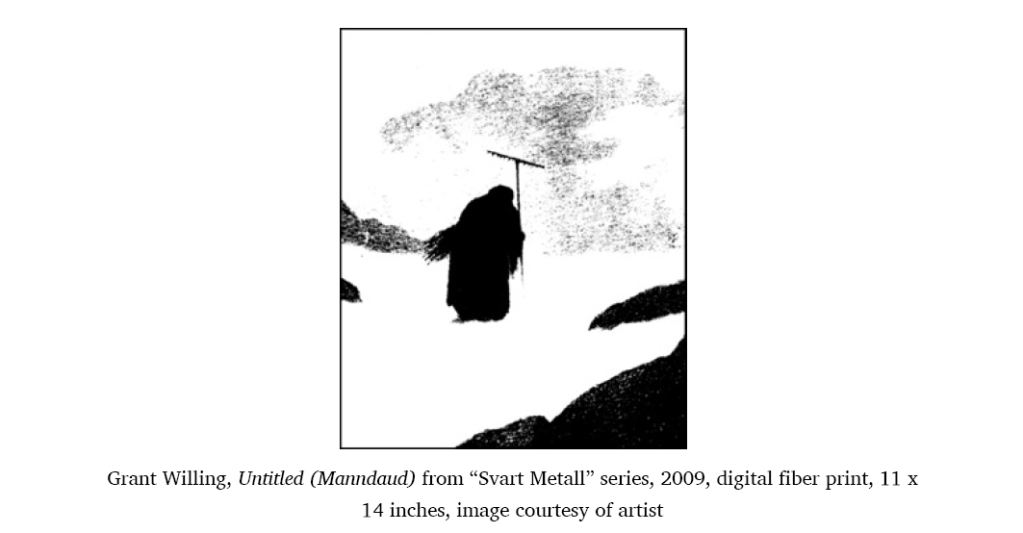
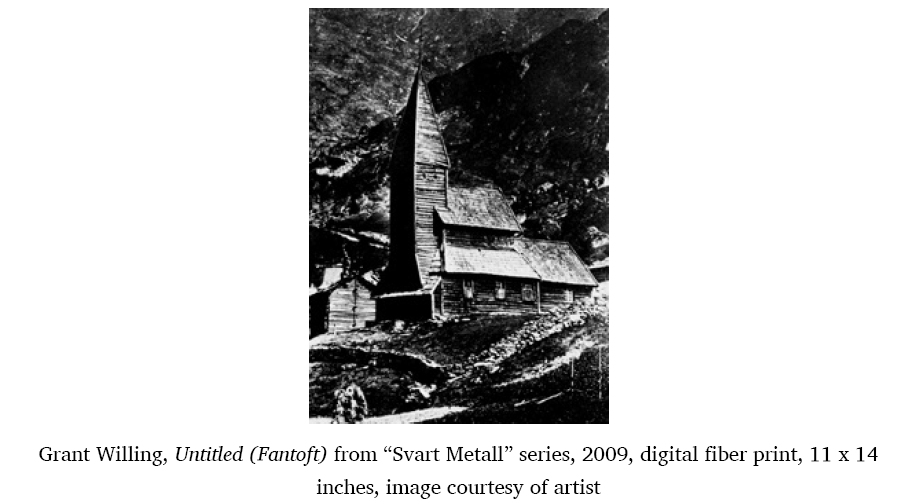
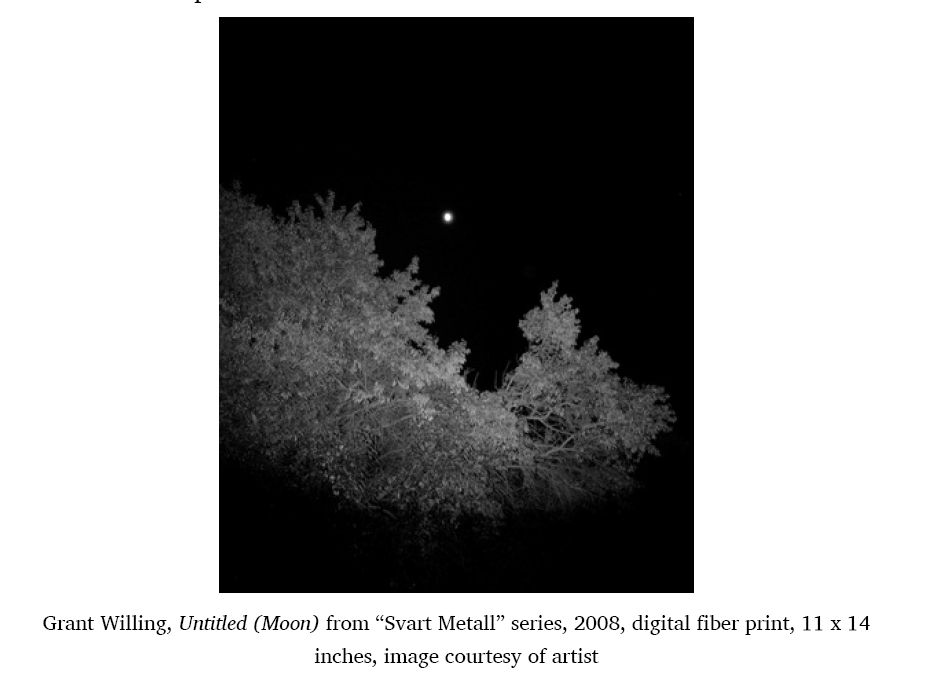
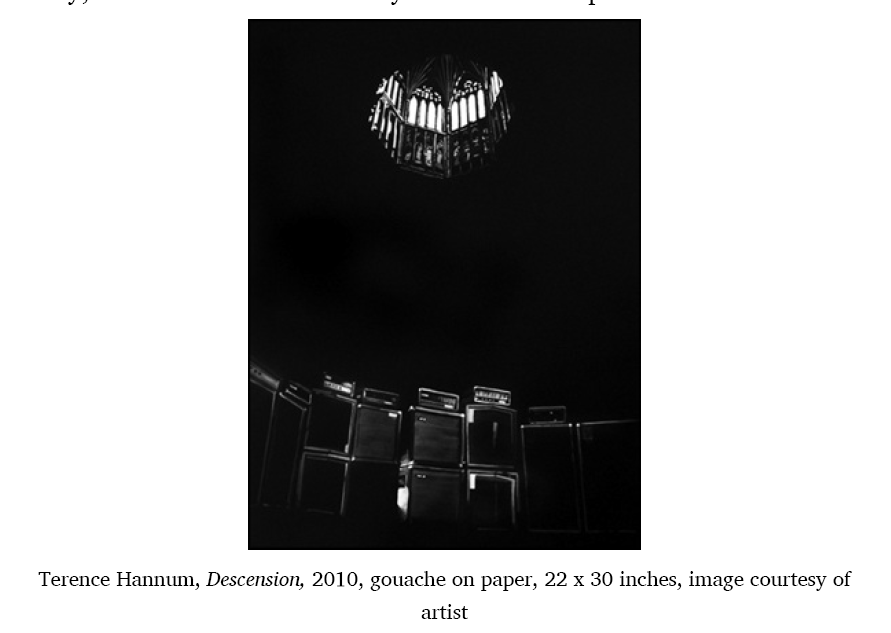
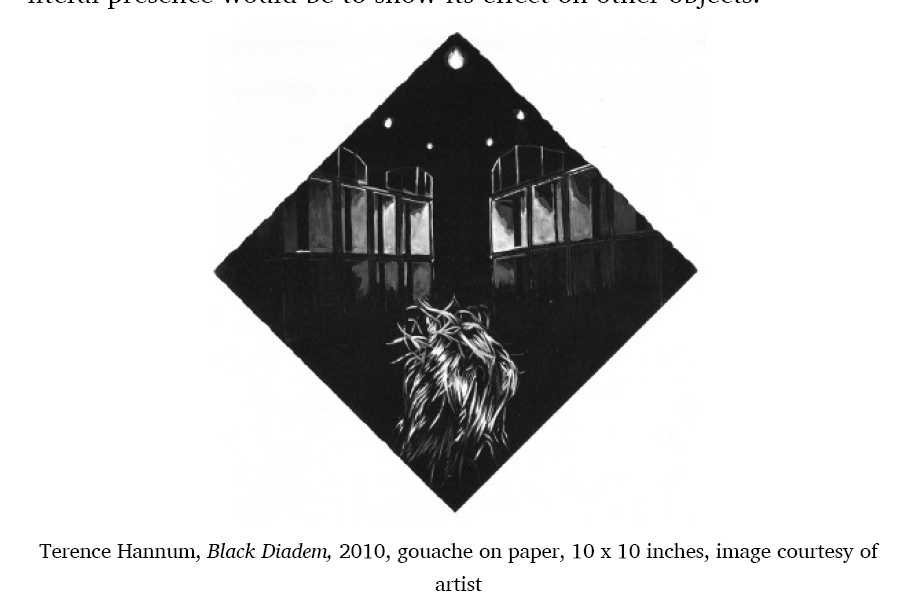
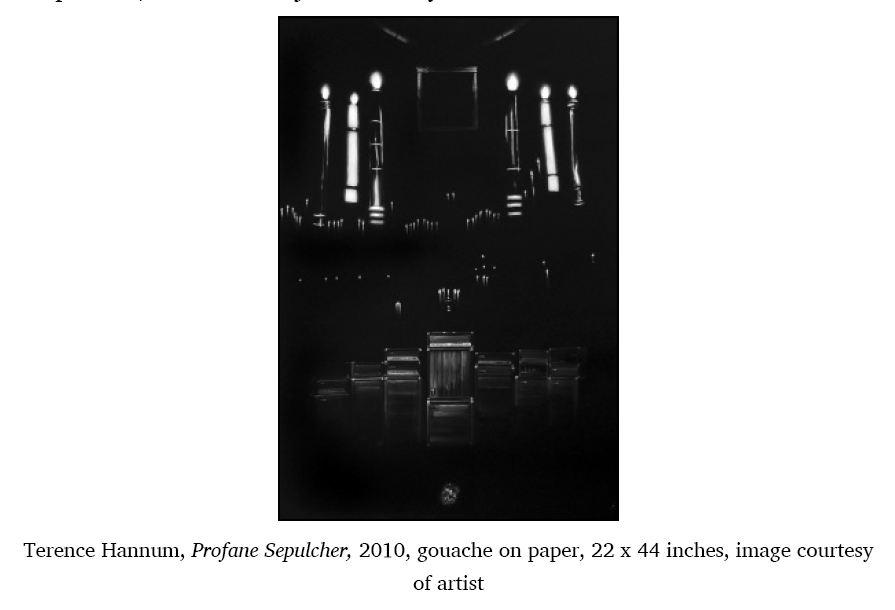

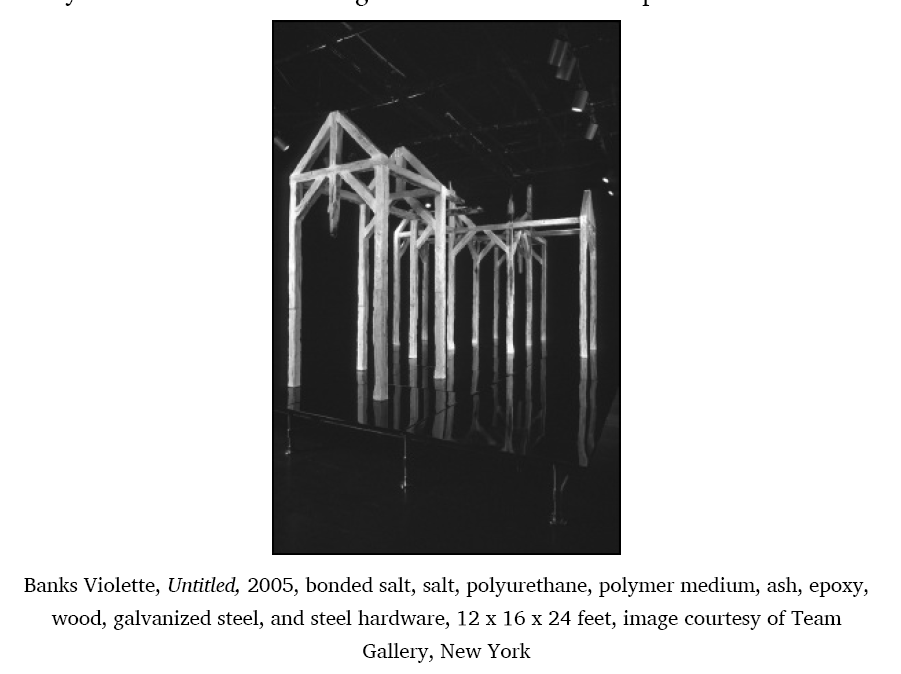
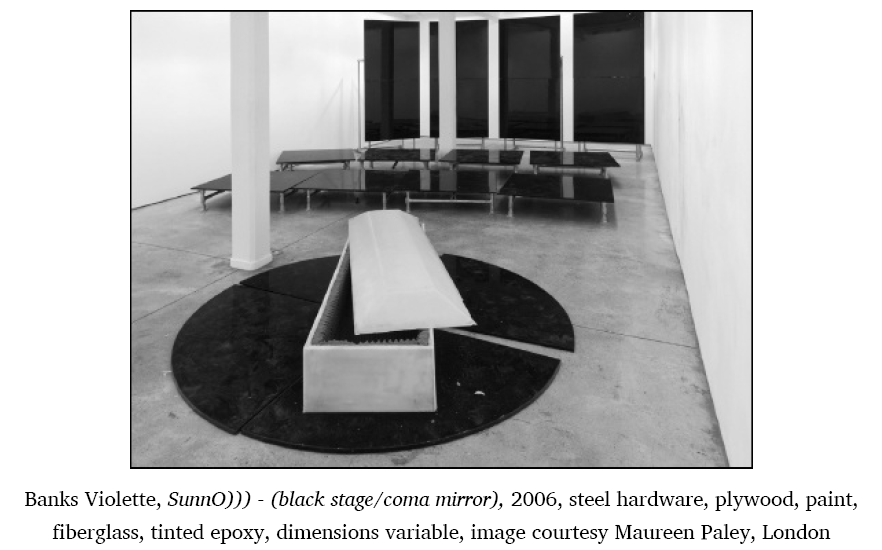
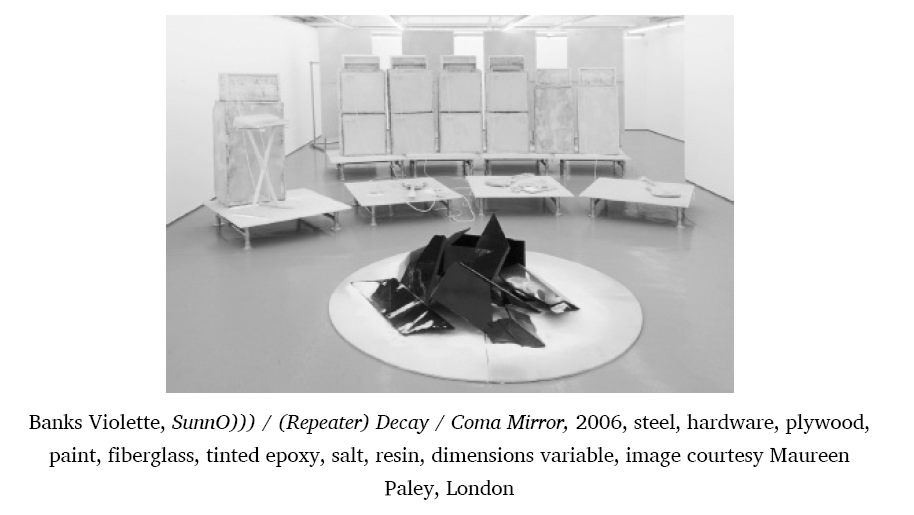

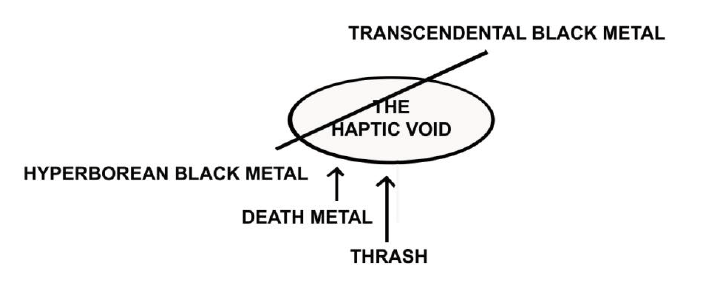

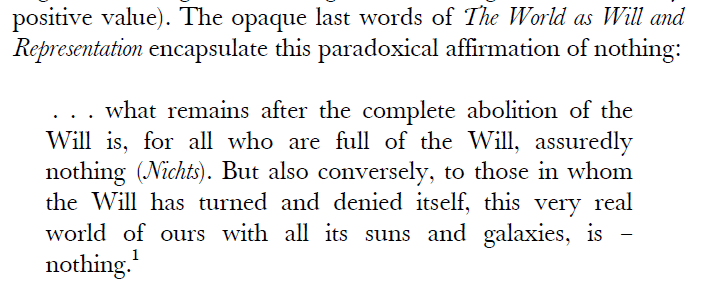

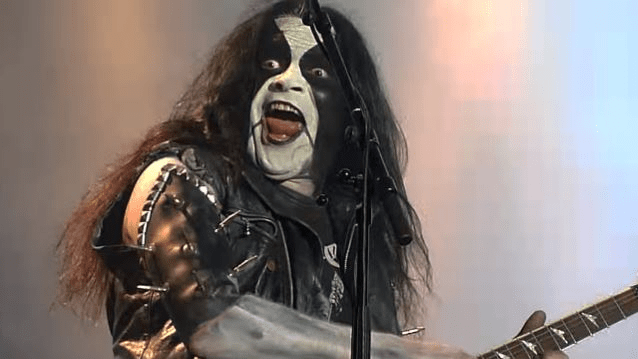
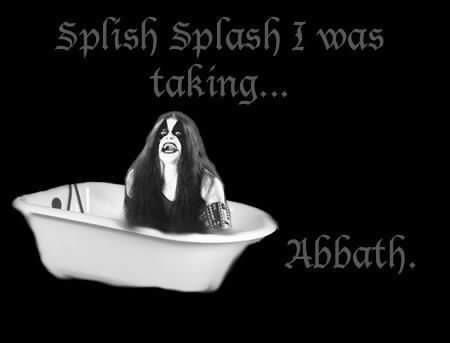
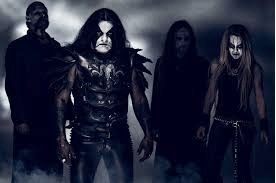
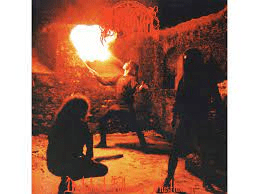
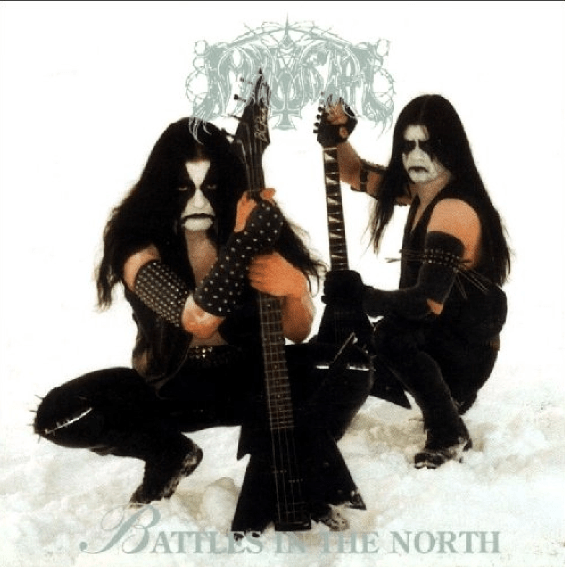
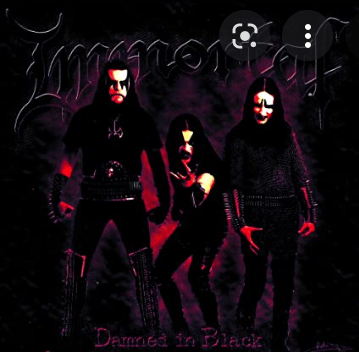

 Seclusão Anagógica