
A ORIGEM DAS ESPÉCIES: Sobre a origem das espécies, por meio da seleção natural ou A preservação de raças favorecidas na luta pela vida – Charles Darwin, 1859. Trad. Daniel Moreira Miranda, ed. Jair Lot Vieira & Maíra Lot Vieira Micales, ed., prefácio e notas de Nelio Bizzo, professor da USP e membro da Royal Society of Biology de Londres, doutor especialista nos escritos de Darwin, 1970 (EDIPRO, 2018).

PREFÁCIO

O editor, John Murray, anunciava para aquela venda de fim de ano o lançamento de um livro muito aguardado, pois revelaria os mistérios que envolviam o desaparecimento de mais de cem tripulantes da expedição mais ousada daquela época. Após numerosas tentativas, finalmente retornara à Inglaterra o capitão McClintock(*) com seu relato dos achados dos dois navios desaparecidos anos antes no rigoroso inverno do Ártico. Seu relato era dramático, com revelações inéditas de seus grandes achados, como o diário de bordo de Sir Franklin,(**) o experiente comandante da missão coberta de mistério, revelando o dia exato e as circunstâncias de sua morte. Já havia sido noticiado o achado de um esqueleto e dois corpos congelados de membros da desesperada tripulação, ainda vestindo roupas europeias. O livro traria até mesmo as figuras com a estampa do tecido das mortalhas encontradas.

(*) Francis Leopold McClintock (1819-1907), membro da Marinha Britânica, serviu em diversas expedições para localizar o paradeiro da expedição desaparecida no Ártico, entre 1848 e 1859, quando retornou em setembro de 1859, recebendo em seguida o título de Sir.

(**) Sir John Franklin (1786-1847), oficial da Marinha Britânica, que se notabilizou pela exploração dos mares polares, pioneiro no mapeamento da Antártida e do Ártico.”

O livro do capitão McClintock, preparado em apenas sessenta dias, um prazo incrível até para os editores da atualidade, permitia entender em detalhes o que ocorrera com a tripulação dos dois navios encalhados no mar congelado, caminhando até caírem, um a um, mortos por desnutrição, escorbuto e frio. § Essa história é tão dramática e comovente que incentivou buscas até nos nossos dias. Em setembro de 2016, foram encontrados, em surpreendente bom estado de conservação, os destroços do naufrágio do HMS Erebus e do HMS Terror, imponentes navios de mais de trezentas toneladas, sepultados no fundo mar do Ártico. Eles eram, já em seu tempo, exemplares da supremacia tecnológica britânica e até mesmo orgulho nacional, pois haviam sido originalmente construídos para missões de guerra, o que explicava sua robusta estrutura interna. Equipados com potentes obuses, capazes de lançar bombas mortíferas a grande distância, possuíam estrutura adaptada para resistir tanto ao ricochete do disparo de grandes petardos como a choques com icebergs, inaugurando a linha de navios quebra-gelo. De fato, o HMS Terror servira na Guerra de 1812,(*) com seus dois obuses e dez canhões bombardeando o Forte McHenry, em Baltimore, em setembro de 1814, uma batalha que inspirou a letra do atual hino dos Estados Unidos da América.(**)

(*) A Guerra de 1812 é vista, pelos britânicos, como parte das guerras napoleônicas, mas, como envolveu batalhas pela posse de terras americanas, é tida também como a Segunda Guerra de Independência na perspectiva estadunidense.

(**) [Kitsch] A letra do hino nacional dos Estados Unidos foi baseada no poema A defesa do Forte McHenry e fala dessa batalha na qual ‘bombas eram lançadas ao ar’, algumas delas provenientes desse vaso de guerra, posteriormente reformado para exploração polar.”¹

¹ Até o parnasianismo do Ouviram do Ipiranga… é melhor do que isso!

O sucesso imediato desse aguardado livro certamente impulsionou as vendas de outros da mesma fornada, entre eles A origem das espécies.(*)

(*) O título original, On the Origin of Species by Means of Natural Selection, or the Preservation of Favoured Races in the Struggle for Life, foi simplificado para The Origin of Species na 6ª edição pelo próprio Darwin, versão que se tornou famosa e prevaleceu até os dias de hoje. Por conta do reconhecimento público do título reduzido esta edição o adotou, embora traga, na verdade, uma tradução do texto da 1ª edição da obra, livre das diversas alterações posteriores. (N. E.)”

Se depois de centenas ou milhares de anos já era possível reconhecer em chácaras e sítios formas muito diferentes de galinhas, pombos, couves, rabanetes e ervilhas, o que não seria possível encontrar em florestas cheias de formas de vida após milhões de anos? Essa era a essência do pensamento darwiniano, apresentado de maneira cristalina na primeira edição, aqui traduzida, permitindo explicar a diversidade biológica de nosso planeta em bases científicas modernas. § Era bem conhecida a epopeia de Darwin em sua viagem ao mundo a bordo do HMS Beagle. Porém é interessante ressaltar que A origem das espécies se valia de achados também de expedições anteriores daqueles navios misteriosamente desaparecidos, dos quais tanto se fala desde 1859. Em uma delas, Joseph Hooker(*) realizou uma série de achados botânicos e paleontológicos a bordo do HMS Erebus que o notabilizou desde a juventude e que aparecia agora, pelas mãos do amigo Darwin, como evidências robustas da teoria da evolução. O ineditismo de plantas e animais das terras do hemisfério Sul teve papel central na argumentação de Darwin, que se valia das opiniões de especialistas, como o amigo botânico, ao lado do jovem Huxley,(**) zoólogo que logo se juntaria na defesa do evolucionismo.

(*) Joseph Dalton Hooker (1817-1911), embora médico de formação, foi um dos maiores botânicos ingleses de sua época, tendo participado da expedição do HMS Erebus ao polo sul em 1839 com o capitão James Ross, em sua busca pioneira pelo polo sul magnético.

(**) Thomas Henry Huxley (1825-1895), zoólogo inglês que se notabilizou pela árdua defesa das ideias evolucionistas logo após a primeira edição de A origem das espécies, ganhando a alcunha de ‘o buldogue de Darwin’.”

Na época de Darwin não havia indícios suficientes para crer que todos os continentes tivessem formado um bloco único em passado remoto. Hoje há consenso entre os geólogos [de] que os continentes são jangadas da crosta terrestre a se deslocar lentamente. Essa teoria teria poupado muito trabalho mental a Darwin, e não apenas nos capítulos finais.”

Darwin então recorreu à supremacia imperial britânica, estendendo o poder de enfrentar e derrotar semelhantes sem piedade, fossem aborígenes neozelandeses, mamíferos marsupiais ou ervas sul-americanas.” “Se as gramíneas eram iguais na Inglaterra e nos pampas argentinos, isso seria explicado não pelos arquétipos ideais, mas pela superioridade das estirpes britânicas.” Grande tolinho.

(*) “Richard Owen (1804-1892), zoólogo inglês de grande destaque em sua época, realizou estudos de anatomia comparada e estabeleceu o conceito de homologia, muito utilizado por Darwin, atual até nossos dias. (…) Owen e Louis

Agassiz, ao lado de seu predecessor Georges Cuvier, despontaram como ícones da oposição ao pensamento evolucionista darwiniano.”

(*) “Jean Louis Rodolphe Agassiz (1807-1873), naturalista suíço, foi aluno de Cuvier e do famoso Humboldt, antes de imigrar para os Estados Unidos e trabalhar na criação do Museu de Zoologia Comparada da Universidade de Harvard, em 1859, tendo sido seu primeiro diretor, até sua morte.”

(*) “Georges Cuvier (1769-1832), famoso anatomista e político francês, ficou famoso por estabelecer métodos de estudos de esqueletos de vertebrados e atestar que os fósseis não eram restos de um Dilúvio Universal, mas de animais extintos, embora se mantivesse como ferrenho opositor das ideias evolucionistas de seu tempo.”

Para Darwin, que já tinha respeitável estatura científica nos domínios geológicos naquela década, a ideia ajudava a entender muito da distribuição geográfica atual, em especial a similaridade das biotas da Europa e América do Norte. Mamutes, lobos e ursos, pinheiros e ciprestes, poderiam ter transitado livremente por gélidas, porém sólidas, pontes, contudo derretidas pelo clima mais quente que se seguiu.”

A descoberta de fósseis de eqüinos na América, onde o cavalo moderno foi reintroduzido pelos colonizadores europeus e se reproduziu sem limites, era explicada esplendidamente pela lógica da mudança climática global recente, que levara à extinção uma forma que agora se mostrava plenamente adaptada àquele mesmo ambiente em época anterior ao domínio do gelo.” A cavalo dado se olham os dentes colonizadores.

Hoje, a ideia de mudanças climáticas globais nos parece óbvia, mas, em escala planetária, ela teve em Charles Darwin um de seus primeiros defensores. Mal sabia ele que esta ideia seria, até nossos dias, crucial para compreender a chegada do ser humano ao continente americano. Não por acaso, até hoje os que se recusam a aceitar a evolução biológica também rejeitam a ideia de mudanças climáticas globais antropogênicas.” Embora por motivos diferentes (dinheiro no segundo caso, já que o criacionismo não interfere em nada com o presente imediato – a não ser que sirva de consolo na cabeça do culpado: se essa espécie se extinguir, foi porque Deus quis; e ele poderá recriá-la, já que é onipotente).

Estava bem assentada em Aristóteles a ideia de equilíbrio estático na Natureza, vista como eterna e imutável, na qual não há carência nem desperdício, que nada falta ou excede ao necessário, que cada característica tem uma finalidade específica a explicar sua existência, e que nada ocorre por acaso.”

Como explicar o desaparecimento de espécies em um mundo em perfeito equilíbrio estático? O desaparecimento de uma única forma, de um único pilar, faria vir ao chão os andaimes da Criação!”

A DERROCADA DO UTILITARISMO: “Qual a utilidade das asas do ganso das ilhas Malvinas se ele é incapaz de voar? Qual a utilidade dos olhos do tuco-tuco sul-americano, frequentemente infeccionados, se ele vive na escuridão dos túneis escavados debaixo dos campos gaúchos? O que faz um pica-pau endêmico nessas paragens se ali não há árvores?”

E no entanto… utilidades do pensamento de Jeremy Bentham: “defendeu o bem-estar social como dever do Estado, direitos iguais para homens e mulheres, direito ao divórcio e, ao mesmo tempo, fim de diversas práticas sociais, como escravidão, pena de morte, castigos físicos; além disso, propôs a descriminalização da homossexualidade. Ele estendia aos animais o direito à felicidade, evitando sofrimentos, e foi um dos primeiros defensores dos direitos animais! Só faltou a coletivização dos meios de produção.

Justamente ao discutir as ideias do utilitarismo britânico, que via nas variações dos seres vivos formas de evitar a monotonia aos olhos humanos, ele percebeu que poderia explicar as variações entre as raças humanas, ‘tão fortemente marcadas’ por meio da ‘seleção sexual de um tipo particular’. Quando escreveu essas palavras, ele tinha em sua escrivaninha os diversos volumes do livro de seu estimado James Cowles Prichard, que discutia as raças humanas, utilizando inclusive pranchas coloridas, outra sofisticação gráfica para a época.” “Como fazer em poucos parágrafos o que havia tomado a Prichard vários volumes? Assim, apenas em seu livro de 1871, Descent of Man, [intraduzido?] Darwin pôde discutir ‘com muitos detalhes’ seus pontos de vista sobre a ação da seleção sexual nas raças humanas.”

Desde o primeiro ensaio, escrito em 1844, Darwin destaca o ritual de acasalamento do dancing rock-thrush. Seu nome foi posteriormente retificado para rock-thrush of Guiana em todas as edições desta obra, na seção sobre seleção sexual. O nome aparece traduzido para o português como ‘melro’ ou ‘tordo-das-rochas’ desde a edição portuguesa de 1913. A confusão se justifica, vez que o nome popular rock thrush, na Inglaterra de meados do século XIX, designava a espécie Monticola saxatilis, descrita desde os tempos de Lineu. No entanto, nenhuma espécie dessa família (Muscicapidae) ocorre na Guiana nem em lugar algum do Novo Mundo. Ademais, os melros não praticam ritual de acasalamento incomum ou ‘dançante’… Na verdade, Darwin se equivocou, pois se referia ao Guianan cock-of-the-rock, ou seja, o galo-da-serra-do-pará (Rupicola rupicola). Essa bela ave da fauna brasileira, após mais de um século de injustiça e anonimato, ganhou justa homenagem na quarta capa desta edição.”


O capítulo final de A origem das espéciesabsolutamente inspirado, profético e grandioso – manteve a mesma estrutura da primeira à última edição. Ele é testemunha não apenas da solidez do argumento evolucionista como também da necessidade de alcançar o grande público por meio de algumas concessões. Darwin escreve não somente para os especialistas, mas também (e ao mesmo tempo) para o grande público, o que, aliás, explica a alternância de estilos literários ao longo do livro.(*)

(*) E a profusão de notas inseridas por este prefaciador e revisor técnico ao longo dos capítulos, pelo que se escusa antecipadamente.” Eu te entendo, amiguinho, eu te entendo. Sou viciado em interpolar textos – às vezes os meus próprios textos!

Com um siso e um apêndice, e munido de mais nada, o homem matou o rei-na-barriga que tinha em si desde os primórdios.

Alerta: “projeto inteligente” é um sinônimo utilizado pelos pérfidos pastores ou biólogos criacionistas para “criacionismo”, então… ¡date cuenta!

Ao ler esta primeira edição, fica o leitor preservado dessas titubeantes inserções, das quais o autor dirá ter se arrependido, em carta endereçada a Hooker em 1863, sem, contudo, produzir qualquer efeito no texto das edições seguintes.”

Toda nota é técnica dentro de uma nota técnica.

(*) “Cuvier tinha realizado a dissecação de uma mulher sul-africana (Sarah ‘Saartjie’ Baartman) em seu controvertido ‘Observations sur le cadavre d’une femme connue à Paris et à Londres sous le nom de Vénus hottentote (1817).” WIKIA: “Saartjie (que se pronuncia «Sarqui») pode ser considerado equivalente ao português «Sarinha». (…) Mediante um pagamento extra, os seus exibidores permitiam aos visitantes tocar-lhe as nádegas, cujo invulgar volume (esteatopigia) parecia estranho e perturbador ao europeu da época. § A sua exibição em Londres causou escândalo, tendo a sociedade filantrópica African Association criticado a iniciativa e lançado um processo em tribunal. Durante o seu depoimento, Sarah Baartman declarou, em neerlandês, não se considerar vítima de coação e ser seu perfeito entendimento que lhe cabia metade da receita das exibições. O tribunal decidiu arquivar o caso, mas o acórdão não foi satisfatório, devido a contradições com outras investigações, pelo que a continuação do espetáculo em Londres tornou-se impossível.” Um inglês tenderá a ser justo, exceto numa ocasião: quando dinheiro está em jogo. + “No fim de 1814, Saartjie foi vendida a um francês, domador de animais, que viu nela uma oportunidade de enriquecimento fácil. Considerando que a adquirira como prostituta ou escrava, o novo dono mantinha-a em condições muito mais duras. Foi exposta em Paris, tendo de aceitar exibir-se completamente nua, o que contrariava o seu voto de jamais exibir os órgãos genitais. As celebrações da reentronização de Napoleão Bonaparte no início de 1815 incluíram festas noturnas. A exposição manteve-se aberta durante toda a noite e os muitos visitantes bêbados divertiram-se apalpando o corpo da indefesa mulher. § O anatomista francês Georges Cuvier e outros naturalistas visitaram-na, tendo sido objeto de numerosas ilustrações científicas no Jardin du Roi. O corpo foi totalmente investigado e medido, com registo do tamanho das nádegas, do clitóris, dos lábios e dos mamilos para museus e institutos zoológicos e científicos. Com a nova derrota de Napoleão, o fim do seu governo e a ocupação da França pelas tropas aliadas em junho de 1815, as exposições tornaram-se impossíveis. Saartje foi levada a prostituir-se e tornou-se alcoólatra.” Napoleão exerceu certas influências maléficas em coisas de “somenos” importância que mal poderíamos acreditar… Enfim, repulsivo.

É só o começo! “Após sua morte, o corpo de Baartman foi enviado para o laboratório de George Cuvier, no Museu Nacional de História Natural, para exames. Cuvier queria analisar seus genitais para testar sua teoria de que quanto mais ‘primitivo’ era o mamífero, mais acentuados seriam seus órgãos sexuais e desejo sexual. Baartman recusou-se a ser um experimento, enquanto estava viva. Com a permissão da polícia, Cuvier, que acumulou a maior coleção do mundo de espécimes humanos e animais, realizou uma autópsia no corpo de Baartman. Primeiro, ele fez um molde do corpo, então ele preservou o cérebro e genitais. (…) Cuvier, que conhecera Baartman, observou em sua monografia que o seu objeto de estudo era uma mulher inteligente, com uma memória excelente, especialmente para rostos. Além de sua língua nativa, ela falava neerlandês fluentemente, tinha um inglês razoável e algum conhecimento de francês. Ele descreve os ombros e costas dela como ‘graciosos’, com ‘braços delgados’, mãos e pés como ‘encantadores’ e ‘bonitos’. Ele acrescenta que ela era adepta de berimbau de boca, dançava de acordo com as tradições de seu país e tinha uma personalidade alegre. Apesar disso, ele interpretou seus restos mortais, de acordo com suas teorias sobre evolução racial, como a manifestação de traços semelhantes a macacos.” Um pouco de alívio ao final: “O caso ganhou proeminência mundial só depois de Stephen Jay Gould escrever The Hottentot Venus na década de 1980. Após a vitória do Congresso Nacional Africano na eleição geral na África do Sul em 1994, o presidente Nelson Mandela solicitou formalmente que a França devolvesse os restos mortais. Depois de muita disputa legal e debates na Assembleia Nacional Francesa,¹ o governo francês aceitou o pedido em 6 de março de 2002. Seus restos mortais foram repatriados para sua terra natal, o vale do rio Gamtoos, em 6 de maio de 2002[,] e eles foram enterrados em 9 de agosto de 2002, sobre Vergaderingskop, uma colina na cidade de Hankey, mais de 200 anos depois de seu nascimento. (…) O Centro Saartjie Baartman para mulheres e crianças, um refúgio para sobreviventes de violência doméstica, foi inaugurado na Cidade do Cabo em 1999.”

¹ Debater o quê, cretinos?

Ele fez previsões testáveis, muitas das quais se comprovaram empiricamente, como a origem da baleia a partir de um mamífero terrestre, em vez do aperfeiçoamento de um réptil marinho, como pensavam muitos.”

Mais sobre Nelio Bezzo: “É pesquisador 1A do Conselho Nacional de Pesquisas (CNPq), coordenador científico do Núcleo de Pesquisa em Educação, Divulgação e Epistemologia da Evolução ‘Charles Darwin’, ligado à Pró-Reitoria de Pesquisa da USP, e do Projeto Temático BIOTA-FAPESP/Educação, que congrega pesquisadores da USP, UFABC, UNIFESP, USCS e do Instituto Butantan.”

INTRODUÇÃO

(*) “Darwin viajou no Beagle como convidado do capitão e tinha de arcar com suas despesas, de alimentação inclusive. Se fosse, de fato, o naturalista de bordo, todo o material coletado pertenceria ao almirantado e Darwin não poderia dele dispor como bem quisesse, como de fato ocorreu. (N.R.T.)” O destino escreve certo por linhas tortas (#chupacriacionismo).

Espero ser desculpado por entrar em detalhes pessoais, mas eu os ofereço para mostrar que não tomei decisões apressadas. “ Se, p.ex., Fraud esperasse 20 anos para publicar suas “conclusões” teríamos nos livrado de 80% das asneiras que redigiu! Um homem de ciência não se apressa…

(*) “Darwin trabalhava no que ele chamava de Big Species Book (Grande livro das espécies) quando foi surpreendido pela carta recebida de Wallace.”

Fui particularmente induzido a publicar este resumo, pois o senhor Wallace [Alfred Russel Wallace (1823-1913)], que hoje está estudando a história natural do arquipélago malaio, chegou quase exatamente às mesmas conclusões gerais que as minhas sobre a origem das espécies.” Um dos pares de descobridores simultâneos mais conhecidos.

(*) “Charles Lyell (1797-1875), advogado e geólogo britânico, publicou Principles of Geology em 3 volumes entre 1830 e 1833.” Ao passo que hoje não existem nem meios-advogados nem meios-geólogos, se formos aferir seus dons… até o séc. XIX a polimatia ou semi-polimatia parecia o estado natural para uma certa nata de burgueses, pequeno-burgueses ou aristocratas…

Ao pensar sobre a origem das espécies, é bastante concebível que um naturalista, refletindo sobre as afinidades mútuas dos seres orgânicos, suas relações embriológicas, suas distribuições geográficas, suas sucessões geológicas e outros fatos semelhantes, possa chegar à conclusão de que cada espécie não tenha sido criada independentemente, mas que tenha descendido, como variação, de outras espécies. No entanto essa conclusão, ainda que bem fundamentada, seria insatisfatória até que pudesse ser demonstrado como as inúmeras espécies que habitam o mundo foram modificadas para que atingissem a perfeição de suas estruturas e coadaptação que tanto inspiram nossa admiração.”

(*) “seiva xilemática das plantas (antigamente, chamada seiva bruta)” Será que meus livros-textos do ensino fundamental já são antigamente?!

O PRIMEIRO NATURALISTA IN VITRO: “No início de minhas observações, me pareceu que o estudo cuidadoso de animais domesticados e plantas cultivadas provavelmente ofereceria a melhor oportunidade para elucidar esse problema obscuro. Não fiquei decepcionado; nesse e em todos os outros casos desconcertantes, percebi invariavelmente que nosso conhecimento sobre a variação por meio da domesticação, mesmo sendo imperfeito, oferecia as melhores e mais seguras pistas.”

Evocando N.: Sobrevivência do mais forte falando em coletividades é um oximoro, uma vez que quanto mais bem-sucedida é uma espécie, mais ela se propaga e, portanto, mais ela está submetida às leis da restrição da população. O gênio, até na natureza, é de vidro. Apenas o medíocre é persistente e perdurável.

Embora muito ainda permaneça obscuro, e continuará assim por muito tempo, eu, após o estudo mais meticuloso e o julgamento mais imparcial de que sou capaz, não tenho dúvidas de que a posição sustentada pela maioria dos naturalistas – e sustentada também por mim anteriormente –, ou seja, de que cada uma das espécies foi criada independentemente, é falsa.” Dizer textualmente que o homem veio do macaco é, tecnicamente, contradizer Darwin. Mas tem-se de ser algo melhor do que estúpido para percebê-lo. O homem veio da primeira célula procarionte, esta seria a frase mais correta.

1. A VARIAÇÃO NA DOMESTICAÇÃO

Parece bastante claro que os organismos devem ser expostos às novas condições de vida por várias gerações para que isso cause um nível apreciável de variação; e, assim que o organismo começa a variar, ele geralmente continua a variar por muitas gerações. Não há casos registrados de que o cultivo tenha feito com que uma variedade da espécie deixasse de ser variável. Nossas mais antigas plantas de cultivo, como o trigo, ainda costumam gerar novas variedades: nossos mais antigos animais domesticados ainda podem sofrer um rápido aprimoramento ou modificação.De certo modo, isso já refuta a ‘seleção natural’: são os animais domésticos, que recebem fartura alimentar e não disputam contra outros pela sua sobrevivência, que são mais mutáveis e heterogêneos, dir-se-ia, superiores.

(*) “Note a insistência de Darwin ao tomar as ’monstruosidades’ como variedades, ou seja, como parte de um estado natural dos seres vivos, o que contrariava a tradição aristotélica, que as via como exceções inexplicáveis, pois incompatíveis com a ideia de perfeição da natureza, ideia ainda muito presente na história natural anglicana da época.”

(*) “Aqui Darwin fala de sua Teoria da Pangênese, ainda sem nomeá-la. Ele fará uma exposição mais detida apenas em 1868, em seu Variations of Animais and Plants under Domestication.”

mas a principal é a consequência notável que o cativeiro ou o cultivo tem sobre as funções do sistema reprodutivo; este sistema parece ser muito mais sensível do que qualquer outra parte do organismo à ação de qualquer alteração nas condições de vida. Nada é mais fácil do que domar um animal, e poucas coisas são mais difíceis do que fazê-los procriar livremente em cativeiro, e isso nem mesmo, em muitos casos, quando o macho e a fêmea se unem.” Nem para cães e gatos há exceção?

Quantos animais existem que não se reproduzem, apesar de já viverem há muito tempo em cativeiro não muito rigoroso em sua região nativa! Isso costuma ser atribuído à invalidação dos instintos; mas quantas plantas de cultivo exibem grande vigor e, ainda assim, raramente ou nunca produzem sementes!”

para mostrar como as leis que determinam a reprodução dos animais em cativeiro são singulares, posso apenas mencionar que os animais carnívoros, mesmo os dos trópicos,[?] cruzam neste país [Inglaterra] de forma bastante livre quando estão em cativeiro, com exceção dos plantígrados, isto é, a família dos ursos; no entanto, as aves carnívoras, com raras exceções, quase nunca põem ovos férteis. O pólen de muitas plantas exóticas é completamente inútil, estando na mesma condição dos mais estéreis híbridos. Quando, por um lado, vemos animais e plantas domesticados, embora muitas vezes fracos e doentes que, ainda assim, reproduzem-se de forma livre em cativeiro; e quando, por outro lado, vemos indivíduos que, embora tenham sido retirados ainda jovens da natureza, são perfeitamente domados, vivendo por muitos anos e saudáveis (dentre os quais eu poderia citar inúmeros casos) e que, apesar disso, possuem seus sistemas reprodutivos tão gravemente afetados por causas não observadas a ponto de não funcionarem, então não devemos nos surpreender quando esses sistemas não funcionam em cativeiro de forma razoavelmente regular e produzem crias que não são perfeitamente semelhantes a seus pais ou a variações próximas a eles.

Dizem que a esterilidade é a ruína da horticultura; mas, sobre este ponto de vista, a variabilidade assenta-se sobre a mesma causa que produz a esterilidade; e a variabilidade é a fonte das melhores produções de um jardim. Devo ainda dizer que alguns organismos procriarão de forma mais livre em condições mais artificiais (por exemplo, o coelho e o furão mantidos em jaulas), mostrando que seu sistema reprodutivo não foi afetado; assim, o mesmo vale para alguns animais e plantas que toleram a domesticação ou o cultivo e sofrerão pequenas variações, talvez não mais do que em seu estado natural.”

(*) “Darwin utiliza a expressão sporting plants entre aspas, demonstrando certa discordância em tomá-las como simples sports of nature, uma maneira de contornar as dificuldades do mundo estático de Aristóteles, mas ainda sem a conotação de mutações em sentido moderno.”

esses casos mostram que a variação não está necessariamente ligada, como alguns autores acreditam, ao ato de geração.”

As mudas da mesma fruta e as crias da mesma ninhada são às vezes bastante diferentes entre si, embora tanto as crias quanto os progenitores, conforme observou Muller, tenham sido aparentemente expostos a exatamente as mesmas condições de vida; e isso mostra a pouca importância dos efeitos diretos das condições de vida em comparação com as leis da reprodução, do crescimento e da hereditariedade; (…) No caso de qualquer variação, é bastante difícil decidirmos o quanto devemos atribuí-la à ação direta do calor, da umidade, da luz, da alimentação, etc.”

Desse ponto de vista, as experiências recentes do senhor Buckman [James Buckman (1816-1884)] com plantas parecem extremamente valiosas.”

em alguns casos, o aumento de tamanho [ocorre] devido à quantidade de alimentos, a [mudança da] cor devido a certos tipos de alimentos e à luz; e, talvez, a espessura da pelagem [varie] devido ao clima.” O que não ocorre com o homem (que está em seu natural?) – o homem mais se modificou quando estava em cativeiro na própria natureza, na sua era ágrafa!

Nos animais há um efeito mais acentuado [do hábito]; descobri, por exemplo, que, em relação a todo o esqueleto do pato doméstico, os ossos das asas ficam menos pesados e os ossos das patas ficam mais pesados do que os mesmos ossos do pato selvagem.” Don’t fly, just walk!

O aumento – grande e herdado – do úbere de vacas e cabras em países onde elas são habitualmente ordenhadas, em comparação com o estado desses órgãos em outros países, é outro exemplo do efeito do uso. Não há um único animal doméstico que não tenha, em alguma região, orelhas caídas; parece algo provável o ponto de vista sugerido por alguns autores de que tal fato ocorre devido ao desuso da musculatura da orelha, pois os animais não se alarmam muito com o perigo.”

Nas monstruosidades, as correlações entre partes bastante distintas são muito curiosas; e muitos exemplos são oferecidos por Isidore Geoffroy St. Hilaire em sua grande obra sobre o tema.”

os gatos com olhos azuis são invariavelmente surdos” Refutado.

Karl von Heusinger (1792-1883), médico alemão.”

Os cães sem pêlos têm dentes imperfeitos; animais de pelo longo ou áspero estão propensos a ter, como se afirma, chifres longos ou muitos chifres; pombos com pés emplumados têm pele entre os dedos mais longos; pombos com bico curto têm pés pequenos e aqueles com bicos longos têm pés grandes.”

leis misteriosas da correlação de crescimento”

Vale a pena estudar os vários tratados publicados sobre algumas de nossas antigas plantas de cultivo, como o jacinto, a batata, até mesmo a dália, etc.; e é realmente surpreendente observar os pontos infindáveis da estrutura e da constituição nos quais as variedades e subvariedades diferem ligeiramente entre si.”

Quaisquer variações não-hereditárias não são importantes para nós. Mas são quase infinitas a quantidade e a diversidade dos desvios hereditários estruturais, tanto os pequenos quanto os de considerável importância fisiológica. O tratado do doutor Prosper Lucas sobre o assunto, em dois grandes volumes, é o melhor e mais completo material sobre o tema.”

Por sorte, há todo tipo de antepassado nesse mundo, do mais vil ao mais divino (falo do atavismo – não é o tópico da conversação de Darwin neste momento).

Quando surge um desvio freqüente e verificado no pai e no filho, não podemos afirmar que o desvio ocorreu por uma mesma causa original que atuou em ambos os indivíduos; mas, por outro lado, quando entre os indivíduos aparentemente expostos às mesmas condições verificamos qualquer desvio muito raro devido a uma extraordinária combinação de circunstâncias que surja no ascendente – digamos, apenas uma vez dentre vários milhões de indivíduos – e que reapareça no filho, a mera doutrina das probabilidades quase nos obriga a atribuir sua reaparição à hereditariedade.”

As leis que regem a hereditariedade são bastante desconhecidas; não sabemos por que a mesma peculiaridade em diferentes indivíduos da mesma espécie e em indivíduos de espécies diferentes é por vezes herdada e por vezes não; por que a criança muitas vezes reverte a certas características de seu avô ou avó ou de outro ancestral mais remoto(*)” Agora sim.

(*) “Aqui aparece a primeira referência ao ‘princípio da reversão’, que explicaria o reaparecimento de uma característica de ancestral próximo ou ‘mais remoto’. Trata-se de assunto doloroso para Darwin, que havia acabado de perder um filho com 2 anos, batizado com seu nome (Charles), com síndrome de Down, vista à época como um tipo de ‘reversão mongólica’. O assunto será aprofundado logo adiante.” Que estultícia britânica.

Tem pouca importância para nós o fato de que as peculiaridades que aparecem nos machos de nossas criações domésticas sejam freqüentemente transmitidas exclusivamente ou em um grau muito maior apenas aos machos. Uma regra muito mais importante, e que me parece confiável, é que, independentemente do período da vida em que uma peculiaridade apareça pela primeira vez, ela tenderá a surgir na prole em uma idade correspondente, embora às vezes ocorra mais cedo.”

Mas as doenças hereditárias e alguns outros fatos me fazem acreditar que a regra tem uma extensão mais ampla e que, não havendo qualquer razão aparente para que alguma peculiaridade apareça em uma certa idade específica, ela realmente tenderá a surgir na prole no mesmo período em que apareceu pela primeira vez nos pais. Eu acredito que essa regra é extremamente importante para explicar as leis da embriologia. Essas observações, claro, aplicam-se apenas ao primeiro surgimento da particularidade e não à sua causa primária, que pode ter ocorrido nos óvulos ou no elemento masculino”

farei referência neste ponto a uma afirmação muitas vezes feita pelos naturalistas, ou seja, que nossas variedades domesticadas, quando se tornam novamente selvagens, gradual mas certamente readquirem as características de seus ancestrais. Portanto, foi argumentado que não se pode projetar deduções com base em raças domésticas para explicar espécies em estado natural. Em vão, me esforcei para descobrir em que fatos decisivos a afirmação acima foi tantas vezes e tão corajosamente feita.” “podemos seguramente concluir que muitas das variedades domésticas mais fortemente distintas não conseguiriam, em nenhuma hipótese, viver em estado selvagem. Em muitos casos, não sabemos como eram seus ancestrais e então não poderíamos dizer se a reversão quase perfeita teria ou não ocorrido.”

Se conseguíssemos demonstrar que nossas variedades domesticadas manifestaram uma forte tendência para a reversão – ou seja, para perder suas características adquiridas, enquanto as condições são mantidas inalteradas e as variedades são mantidas em um grupo consideravelmente grande, para que o cruzamento livre possa cancelar, por meio da mistura, qualquer pequeno desvio de estrutura –, então, nesse caso, garanto que não poderíamos deduzir nada sobre as espécies com base nas variedades domésticas.”

Devo acrescentar que, quando em estado natural, as condições de vida são alteradas e provavelmente ocorrem variações e reversões das características, mas a seleção natural, como explicado mais adiante, determina até que ponto as novas características que assim surgem devem ser preservadas.”

os naturalistas diferem bastante em relação à determinação das características de valor genérico, pois todas essas avaliações são até agora empíricas.”

Seria muito interessante se pudéssemos esclarecer (…) se (…) o galgo, o bloodhound,(*) o terrier, o spaniel e o buldogue – que, como todos sabemos, propagam sua espécie de forma tão exata – são descendentes de uma única espécie. Tais fatos teriam grande peso para fazer-nos duvidar da imutabilidade das muitas espécies naturais muito afins, como, por exemplo, o caso das muitas raposas que habitam diferentes regiões do mundo. Eu não acredito, como veremos em breve, que todos os nossos cães sejam descendentes de apenas uma espécie selvagem; mas, no caso de algumas outras raças domésticas, existem provas circunstanciais ou até mesmo fortes evidências a favor dessa perspectiva.” Todo puro-sangue é na verdade um vira-lata laureado.

(*) Bloodhound: “cão de santo Humberto”. “Manterei o nome das raças inglesas em sua língua original, exceto o bulldog, que foi dicionarizado como buldogue.”

Costuma-se supor que o homem optou pela domesticação de animais e plantas que possuíam uma extraordinária tendência inerente para variar e, da mesma forma, para resistir a diferentes climas.” Ele não teria como sabê-lo a priori. “quando um selvagem domesticou um animal pela primeira vez, como ele poderia saber se iriam ocorrer variações nas gerações seguintes, ou se este animal resistiria a outros climas?” Talvez porque nunca houve uma primeira vez. O “selvagem” (figura mítica) não saberia nem que diabos é “clima”!

Não tenho dúvidas de que se outros animais e plantas, em número igual ao de nossas criações domesticadas e igualmente pertencentes a diversas classes e regiões, fossem tirados de seu estado de natureza e se fosse possível fazer com que eles se reproduzissem por um número igual de gerações sob domesticação, eles iriam variar, em média, tanto quanto têm variado as espécies progenitoras de nossas criações domesticadas atuais.” Exemplo: se pudessem criar um urso polar num freezer gigante. Alegar-se-ia que se o faz em zoológicos de países “temperados” (quase polares), mas não é a mesma coisa.

O principal argumento invocado por aqueles que acreditam na origem múltipla de nossos animais domésticos é o fato de encontrarmos grande diversidade de raças nos registros mais antigos, especialmente nos monumentos do Egito; e que algumas das raças se assemelham e talvez sejam idênticas às ainda existentes. Mesmo que se descobrisse que isso é mais estrita e geralmente verdadeiro do que me parece ser o caso, o que demonstraria, senão que algumas de nossas raças originaram-se naquele local há 4 ou 5 mil anos? [um piscar de olhos insignificante] Mas as pesquisas do senhor Horner [(1785-1864), geólogo escocês] mostram a possibilidade de que homens suficientemente civilizados possam ter fabricado a cerâmica existente no vale do Nilo há 13 ou 14 mil anos; assim, quem poderá afirmar quanto tempo antes desses períodos antigos já havia selvagens, assim como já existiam na Terra do Fogo ou na Austrália, que possuíam cães semidomesticados no Egito?(*)” Nunca confiar nos capciosos egípcios.

(*) “Darwin está respondendo a réplicas de autoridades eclesiásticas, desafiadas pelos achados da invasão de Napoleão no Egito.” De novo Napoleão!

…é altamente provável que nossos cães domésticos sejam descendentes de várias espécies selvagens.(*)

(*) Estudos moleculares modernos falharam em elucidar claramente a origem do cão doméstico, mas provavelmente a hipótese de Darwin se mantém válida, havendo indicações de mais de um evento de domesticação no passado, possivelmente há 33 mil anos, sendo que a(s) espécie(s) ancestral(is) teria(m) sido extinta(s).” Der Urhund oder die Urhunde?

[Já] no que diz respeito aos cavalos, por razões que não posso oferecer aqui, estou mesmo inclinado a acreditar, em oposição a vários autores, que todas as raças descendem de um único grupo selvagem. O senhor Blyth,¹(*) cujo parecer, fruto de seu grande e variado conhecimento, eu devo valorizar mais do que a opinião de qualquer outra pessoa, acredita que todas as raças de galinhas originam-se da ave indiana selvagem comum (Gallus bankiva).(**)”

¹ Doctor Blyth! Será Togashi tão versado e eclético?!

(*) “Edward Blyth (1810-1873), zoólogo inglês, curador do museu da Sociedade Asiática Real de Bengala, em Calcutá, na Índia”

(**) “A nomenclatura moderna para o galo banquiva é Gallus gallus bankiva, uma subespécie do galo vermelho selvagem (Gallus gallus). O galo doméstico (Gallus gallus domesticus) é considerado outra subespécie, que não deriva diretamente do galo banquiva, de acordo com estudos moleculares recentes de DNA mitocondrial, embora tenham parentesco próximo.”

A doutrina segundo a qual as nossas várias raças domésticas teriam se originado de várias unidades populacionais aborígenes foi levada a um absurdo extremo por alguns autores. Eles acreditam que todas as raças que conseguem se reproduzir de forma correta, mesmo que suas características distintivas sejam extremamente sutis, possuem um protótipo selvagem. Segundo este raciocínio, é preciso que tenha existido pelo menos uma vintena de espécies de gado selvagem, o mesmo número de ovelhas e vários tipos de cabras somente na Europa e outras várias apenas dentro da Grã-Bretanha. Um desses autores acredita que, somente na Grã-Bretanha, existiram onze espécies únicas de ovelhas selvagens! Quando levamos em conta que o país atualmente mal possui um mamífero peculiar, que a França tem apenas alguns diferentes da Alemanha e vice-versa e que o mesmo vale para a Hungria, Espanha, etc., e que, além disso, se notarmos que cada um desses reinos possui diversas raças peculiares de gado, ovelhas, etc., então devemos aceitar que muitas raças domésticas originaram-se na Europa; pois, de onde mais poderiam ter surgido, já que nenhum entre esses vários países conta com um número de espécies peculiares que suporte grupos ancestrais distintos?”

Quem pode acreditar que animais tão parecidos com o galgo italiano, o bloodhound, o buldogue, o spaniel de Blenheim, (imagem) etc., que são tão diferentes de todos os Canidae selvagens, tenham existido livremente em estado natural?”

J. Sebright realizou experimentos com esse objetivo específico e fracassou.” (criar deliberadamente novas raças de cães) “A prole do primeiro cruzamento entre duas raças puras é tolerável e, às vezes (como observei entre os pombos), extremamente uniforme, e tudo parece suficientemente simples; mas quando esses mestiços são cruzados uns com os outros por várias gerações, dificilmente teremos dois espécimes iguais e, desse modo, a tarefa se mostra extremamente difícil, ou melhor, totalmente desencorajadora.”

Sobre as raças de pombos domésticos

Acreditando que é sempre melhor estudar um grupo especial, escolhi, após refletir sobre o assunto, os pombos domésticos. Além de ter mantido todas as raças que consegui comprar ou obter, também fui generosamente agraciado com espécimes empalhadas vindas de várias regiões do mundo, mais especialmente da Índia e da Pérsia, enviadas pelos honoráveis W. Elliot e C. Murray, respectivamente. Muitos tratados sobre pombos foram publicados em diferentes línguas, alguns deles são muito importantes por serem consideravelmente antigos. Associei-me a vários grandiosos criadores e fui aceito em dois clubes londrinos de criadores de pombos.”

(*) “English carrier, em inglês. Os nomes das linhagens de pombos ingleses serão dados em sua língua original, exceto o pombo-correio (carrier) e o pombo-das-rochas (rock pigeon, rock dove), também conhecido como pombo comum, pombo doméstico ou por seu nome binomial Columba livia. (N. T.)”

short-faced tumbler”

Muitas aves batizam redes sociais. Redes sociais gospel! Uma IA antropomorfizada chamada Paloma para um app de relacionamentos só para crentelhos!… Pare com essas idéias já, laico herege!

Pouter

O pombo-correio, mais especialmente o macho, também é notável pelo maravilhoso desenvolvimento de uma carúncula em torno da cabeça, e isso é acompanhado por pálpebras muito alongadas, narinas muito grandes e uma abertura ampla do bico.” “O pombo barb é afim do pombo-correio mas, em vez de ter bico muito longo, tem um bico muito curto e muito largo. O pouter tem corpo, asas e pernas muito alongados; seu papo extremamente desenvolvido, que ele infla com orgulho, bem pode causar espanto e até mesmo risos.” “O jacobin tem as penas ao longo da parte dorsal do pescoço tão invertidas a ponto de formarem uma capa, e ele tem, proporcionalmente ao seu tamanho, penas muito alongadas nas asas e na cauda. O trumpeter e o laugher, conforme indicado por seus nomes, proferem sons muito diferentes dos emitidos pelas outras raças. O fantail tem 30 ou até mesmo 40 penas na cauda, em vez de 12 ou 14, o número normal para todos os membros da grande família dos pombos; além disso, essas penas são mantidas abertas e são tão eretas que, em aves bem formadas, a cabeça e a cauda se tocam; a glândula de óleo(*) é bastante atrofiada.

(*) Trata-se da glândula uropigiana, que produz um muco oleoso, espalhado com o bico sobre as penas para impermeabilizá-las. Darwin dedicou especial atenção a órgãos atrofiados, que causavam desconforto aos naturalistas anglicanos da tradição aristotélica.”

O tamanho e a forma das cavidades torácicas são altamente variáveis; o mesmo vale para o grau de divergência e tamanho relativo dos dois ramos da fúrcula.(*) A largura proporcional da abertura da boca, o comprimento proporcional das pálpebras, do orifício das narinas, da língua (nem sempre em estrita correlação com o comprimento do bico), o tamanho do papo e da parte superior do esôfago; o desenvolvimento e a atrofia da glândula sebácea; o número de penas primárias da asa e da cauda; o comprimento relativo entre as asas, a cauda e o corpo; o comprimento relativo entre pernas e pés; o número de pequenas escamas nos dedos, o desenvolvimento da pele entre os dedos, são todos pontos variáveis da estrutura. O período dentro do qual a plumagem perfeita é adquirida varia, e o mesmo vale para o estado de cobertura da plumagem das aves filhotes ao nascerem. A forma e o tamanho dos ovos variam. A forma do voo difere bastante, o que também ocorre, em algumas linhagens, com a voz e a disposição. Por fim, em determinadas linhagens, machos e fêmeas são levemente diferentes.

(*) Trata-se do osso popularmente conhecido como ‘forquilha’.”

Mesmo que as diferenças entre as linhagens de pombos sejam grandes, estou totalmente convencido de que a opinião comum dos naturalistas está correta, ou seja: todas elas descendem do pombo-das-rochas (Columba livia)(*)” Vemos que nessa época os naturalistas estavam para os ornitólogos (meros catalogadores) como os filósofos estão para os filólogos.

(*) “Darwin compartilhava a ideia dos criadores de seu tempo, a qual foi confirmada por grande número de estudos posteriores, inclusive recentes. Algumas subespécies da atualidade podem ser linhagens ferais, ou seja, originadas de indivíduos domesticados que passaram a viver livremente e que, com o passar das gerações, manifestam algumas características selvagens.”

Além disso, ao cruzarmos duas aves pertencentes a duas linhagens distintas, sendo que nenhuma delas é azul nem tem qualquer uma das marcas especificadas acima, a prole mestiça fica repentinamente bastante apta a adquirir essas características; por exemplo, eu cruzei alguns fantails uniformemente brancos com alguns barbs uniformemente pretos e eles produziram aves malhadas de castanho e aves pretas; em seguida, cruzei estas aves novamente. Um dos netos do fantail branco e do barb preto nasceu com uma bela cor azul, com a anca branca, uma dupla faixa preta nas asas e barradas e penas afiladas de branco na cauda, como qualquer outro pombo-das-rochas selvagem!”

falo em 12 ou 20 gerações pois não conhecemos casos de descendentes que tenham revertido para algum ancestral separado por um número maior de gerações. No caso de uma linhagem que tenha sido cruzada apenas uma vez com uma linhagem distinta, a tendência de reversão para quaisquer características derivadas de tal cruzamento será, naturalmente, cada vez menor, pois em cada nova geração haverá menos sangue alheio; mas quando não houve nenhum cruzamento com uma linhagem distinta e há em ambos os pais a tendência de reversão das características perdidas em alguma geração anterior, então essa tendência (apesar de toda evidência contrária) pode ser transmitida sem alterações para um número indefinido de gerações.”

Por último, os híbridos ou mestiços de todas as linhagens domésticas de pombos são perfeitamente férteis. Posso afirmar isso com base em minhas próprias observações, propositadamente feitas com as mais diferentes linhagens. Agora, é difícil, talvez impossível, apresentar algum caso de descendentes híbridos e perfeitamente férteis gerados por dois animais claramente distintos.”

Em quarto lugar, os pombos têm sido acompanhados e cuidados com muita dedicação, bem como amados por muitas pessoas. Eles têm sido domesticados há milhares de anos em várias regiões do mundo; o registro mais antigo relacionado aos pombos pode ser encontrado na quinta dinastia egípcia, por volta de 3000 a.C., como foi dito para mim pelo professor Lepsius;(*) mas o senhor Birch(**) informou-me que os pombos aparecem em um cardápio da dinastia anterior. Nos tempos dos romanos, como ouvimos de Plínio, os pombos atingiam preços altíssimos; ‘além disso, chegaram ao ponto de darem conta do pedigree e da raça dos pombos’.

(*) Karl Richard-Lepsius (1810-1884), arqueólogo alemão.

(**) Samuel Birch (1813-1885), egiptólogo inglês.”

Há uma circunstância bastante favorável para a produção de linhagens distintas: pombos machos e fêmeas podem, facilmente, formar casais para toda a vida; e, assim, diferentes linhagens podem ser mantidas juntas no mesmo aviário.” Incesto (digamos endogenia, pois o conceito é impróprio para animais, que não estão na esfera ética) e seus males.

Tratei da provável origem dos pombos domésticos de forma um pouco longa, mas bastante insuficiente; a primeira vez que criei pombos e observei os vários tipos, sabendo bem que as crias mantêm as características dos pais, senti extrema dificuldade em acreditar que eles pudessem ser descendentes de um pai comum, como poderia ocorrer com qualquer naturalista ao chegar a uma conclusão semelhante em relação às muitas espécies de tentilhões ou outros grandes grupos de aves, na natureza. Uma circunstância me impressionou muito: todos os criadores dos vários animais domésticos e os cultivadores de plantas com quem conversei, ou cujos tratados li, estão firmemente convencidos de que as várias linhagens tratadas por cada um deles são descendentes de espécies aborígenes distintas. Pergunte, como eu perguntei, a um célebre criador de gado hereford se o seu gado poderia ser descendente da raça longhorn, e ele rirá de você com desprezo. Nunca conheci um apreciador de pombos, galináceos, patos ou coelhos que não estivesse totalmente convencido de que cada linhagem principal é descendente de uma espécie distinta. Jean Baptiste van Mons (1765-1842) mostra, em seu tratado sobre as pêras e as maçãs, quão grande é sua descrença na possibilidade de que os vários tipos, por exemplo, de maçãs ribston-pippin ou codlin, possam ter procedido das sementes de uma mesma árvore. (…) por conta de seus estudos contínuos e prolongados, eles ficaram fortemente impressionados com as diferenças entre as diversas raças; e embora eles bem saibam que cada raça varia ligeiramente, pois eles ganham seus prêmios ao selecionar essas pequenas diferenças, eles ainda ignoram todos os argumentos gerais, eles se recusam a sintetizar em suas mentes as pequenas diferenças acumuladas durante muitas gerações sucessivas. Será que aqueles naturalistas – que sabem muito menos sobre as leis da hereditariedade do que os criadores e que sabem tanto quanto eles sobre as conexões intermediárias das longas linhas de descendência, mas que, mesmo assim, admitem que muitas de nossas raças domésticas são descendentes dos mesmos pais – não poderiam aprender a ter cautela quando zombam da ideia de espécies em estado natural serem descendentes lineares de outras espécies?” Darwin não liga para erros de amadores, por mais crassos: mas que alguns naturalistas (supostos cientistas) ajam de maneira mais estúpida que os mais sábios dos colecionadores ou que todo colecionador com bom senso e capacidade de síntese, isso sim é indigno para a profissão e para um homem!

Seleção

Eu nem sabia que existem raças que são usadas como cavalos de carga que morreriam ou seriam péssimas disputantes como cavalos de corrida, e vice-versa…

Não supomos que todas as linhagens tenham sido produzidas repentinamente da forma tão perfeita e útil como as vemos hoje; com efeito, sabemos que em vários casos essa não é sua história. A chave da questão é o poder do homem para realizar uma seleção acumulativa: a natureza nos dá as sucessivas variações; o homem adiciona variações em determinadas direções úteis para si. Nesse sentido, pode-se dizer que o homem produz linhagens úteis para si mesmo.

É certo que vários dos nossos maiores criadores conseguiram modificar algumas raças de gado e ovelhas de forma significativa, mesmo no período de uma única vida humana. Para compreendermos bem o que eles fizeram, é quase necessário lermos alguns dos muitos tratados dedicados ao assunto e avaliar os próprios animais. Os criadores costumam referir-se aos organismos dos animais como algo plástico que pode ser modelado quase que da forma que desejarem.” O problema é que havia não-cientistas já cientes do processo de seleção, mas que se imaginavam deuses por poder manipular à vontade a seleção natural mediante sua mesquinha seleção artificial. Pequenos homens! Num mundo em eterno retorno, quantas variantes de cabeças, bicos, penas, garras de pássaros vocês não acham que existem por mero atavismo?!?

É a varinha do mágico, por meio da qual ele pode trazer à vida quaisquer formas e modelos que desejar.” Youatt, William. Sheep: Their Breeds, Management, and Diseases, to Which Is Added the Mountain Shepherd’s Manual. Londres: Baldwin and Cradock, 1837, p. 60.

Na Saxônia, a importância do princípio da seleção em relação às ovelhas merino é tão plenamente reconhecida que os homens o seguem como um negócio: as ovelhas são colocadas em uma mesa e são analisadas assim como um especialista estuda uma pintura; isso é feito três vezes, com intervalos de meses; nesses períodos as ovelhas são marcadas e classificadas para que a melhor seja, por fim, selecionada para reprodução.”

A melhoria não se deve de uma forma geral ao cruzamento de raças diferentes; todos os melhores criadores opõem-se fortemente a esta prática, exceto às vezes entre sub-raças muito próximas. E quando esse tipo de cruzamento é realizado, eles devem fazer uma seleção muito mais rigorosa do que a realizada nos casos normais. Se a seleção consistisse em apenas separar alguma variedade bastante distinta e reproduzir a partir dela, o princípio seria tão óbvio que nem valeria a pena ser notado; mas sua importância consiste no grande resultado produzido pela acumulação em uma única direção, durante sucessivas gerações, de diferenças absolutamente inapreciáveis para os olhos incultos; diferenças que eu tentei apreciar em vão.” O achatamento do focinho dos fofos lhasas e shitzus: muita endogamia, endogamia contínua da prole que surgisse com focinhos mais achatados que os de seus irmãos, etc.

Nem um homem em mil tem olhos tão precisos e é tão criterioso para se tornar um importante criador.” Está mais para croupier.

Os mesmos princípios são seguidos pelos horticultores; mas as variações nesse campo são frequentemente mais abruptas.” É como pular de romances franceses dum mesmo século direto para HQs e mangás: claro que a diferença se torna muito mais pronunciada entre cada “produção”.

Se compararmos as flores dos dias atuais com os desenhos feitos apenas há vinte ou trinta anos, notaremos uma melhora surpreendente nas flores de muitos floristas.” Imagina como os lótus da Índia Antiga deviam ser feios… A não ser… quantos milhares de anos de “seleção humana” já haviam transcorrido antes dos Vedanta?

Quando uma raça de plantas já está bem-estabelecida, os produtores de sementes já não escolhem as melhores plantas, mas vão simplesmente até suas plantações e arrancam as ‘daninhas’ (rogues), como eles chamam as plantas que se desviam do padrão adequado.” “quase ninguém é tão descuidado a ponto de permitir que seus piores animais procriem.(*)

(*) [Crux!] Darwin utilizará essa frase novamente em 1871, em seu livro Origem do homem, ao abordar a questão da eugenia: ‘Mas, com exceção do caso do próprio homem, dificilmente alguém é tão ignorante para permitir que seus piores animais procriem’.” O pior é não estabelecer compulsoriamente que aristocratas devam se casar com plebeus e somente com eles! Em pouco tempo os neo-aristocratas melhorarão consideravelmente…

amor-perfeito (Viola tricolor)”

note como os frutos dos vários tipos de groselheiras diferem em tamanho, forma, cor e pilosidade, mas, mesmo assim, como suas flores apresentam diferenças muito pequenas. Não podemos dizer que as variedades muito diferentes em alguma característica não tenham quaisquer diferenças em outras características; isso quase nunca, ou talvez nunca, ocorre.”

É possível rejeitar o princípio da seleção ao afirmar que ele se tornou uma prática metódica há apenas pouco mais de três quartos de século; certamente demos maior atenção a ele nesses últimos anos e muitos tratados têm sido publicados sobre o assunto; posso ainda acrescentar que o resultado disso tem sido correspondentemente rápido e importante. Mas está muito longe de ser verdade que o princípio é uma descoberta moderna.”

O princípio da seleção encontra-se claramente apresentado em uma antiga enciclopédia chinesa.” Mas aqui seleção quer dizer algo muito simples.

Certas passagens do Gênesis não deixam dúvidas de que, já naquele tempo, cuidava-se da cor dos animais domésticos. Os selvagens atuais às vezes cruzam seus cães com animais caninos selvagens para melhorar a raça, e faziam o mesmo no passado, conforme podemos ler em certas passagens de Plínio, o Velho. [bibliografia não-confiável]

As alterações lentas e insensíveis deste tipo nunca poderiam ser reconhecidas, a menos que medições reais ou desenhos impecáveis das linhagens em questão já viessem sendo feitos há muito tempo para que pudéssemos compará-las.” Às vezes esqueço que D. não tinha sequer a arte da fotografia a seu dispor.

Por um processo semelhante de seleção e pelo treinamento cuidadoso, os cavalos de corrida ingleses superam sua linhagem árabe paterna em velocidade e tamanho, ao ponto de esta última, de acordo com os regulamentos das corridas de Goodwood, ser favorecida pelo peso que carrega.”

Youatt oferece uma excelente ilustração dos efeitos de um processo de seleção que pode ser considerado inconsciente, já que os criadores não esperavam, ou nem mesmo desejavam, ter produzido o resultado que se seguiu, a saber, a produção de duas linhagens distintas. Os dois rebanhos de ovelhas leicester mantidos pelos senhores Buckley e Burgess, conforme observa o senhor Youatt, ‘foram criados a partir de linhagens puras do grupo de animais originais do senhor Bakewell por mais de 50 anos. Dentre aqueles que estão familiarizados com o caso, não há a mínima suspeita de que os proprietários desses dois rebanhos tenham se desviado do rebanho puro-sangue do senhor Bakewell mas, ainda assim, a diferença entre as ovelhas de cada um desses dois senhores é tão grande que elas parecem ser variedades completamente diferentes’.”

Mesmo que existam selvagens tão bárbaros a ponto de nunca pensarem sobre as características herdadas dos descendentes de seus animais domésticos, um animal que seja particularmente útil a eles para qualquer finalidade especial será cuidadosamente preservado durante períodos de carestia e outras adversidades às quais os selvagens estão tão expostos, e esses melhores animais geralmente deixariam, dessa forma, mais descendentes do que os inferiores a eles; assim, estaríamos neste caso observando um tipo de seleção inconsciente.”

em tempos de escassez, eles matam e devoram as mulheres velhas, pois elas têm menos valor que seus cães.(*)Qualquer inglês metendo-se a antropólogo antes do século XX só fala asneiras.

(*) “Darwin reproduz informação recebida na viagem do Beagle, um mito repetido desde o século XVI. Em 1888, ficou bem estabelecido ser totalmente falso.”

Ninguém espera obter um amor-perfeito de primeira qualidade ou uma dália a partir da semente de uma planta selvagem. Ninguém espera obter uma pêra que derrete na boca e de primeira qualidade a partir da semente de uma pêra selvagem, embora se possa ter sucesso a partir de uma muda de sementes fracas que estivesse crescendo em local selvagem, mas cuja origem fosse uma espécie doméstica. A pêra, embora cultivada na época clássica, parece, pela descrição de Plínio, ter sido um fruto de qualidade muito inferior.”

Já que foram necessários séculos ou milhares de anos para aprimorar ou modificar a maioria de nossas plantas até seu presente padrão de utilidade para o homem, então podemos entender por que não recebemos nem uma única planta de cultivo da Austrália, do Cabo da Boa Esperança ou de qualquer outra região habitada por homens incivilizados. Não que esses países, tão ricos em espécies, não possuam por um estranho acaso¹ os grupos aborígenes de quaisquer plantas úteis, mas as plantas nativas não foram aprimoradas pela seleção contínua até atingirem um padrão de perfeição comparável ao oferecido, na Antiguidade, às plantas dos países civilizados.”

¹ Na verdade foi o europeu que sempre arruinou seu solo, pois não passa de um bárbaro que se cultivou às expensas dos asiáticos e africanos, incluindo aí o atual território da Grécia.

O homem dificilmente pode selecionar, ou só com muita dificuldade, qualquer desvio de estrutura, excetuando aqueles que são externamente visíveis; e de fato ele raramente se importa com o que é interno. O homem somente consegue agir por meio da seleção após ter visto algum tipo de modificação ligeira ocorrida na natureza.”

Mas utilizar a expressão ‘tentar criar um fantail’ é, não tenho dúvidas, na maioria dos casos, totalmente incorreto.” Tirou as palavras de minha boca.

faz parte da natureza humana valorizar quaisquer novidades, mesmo que pequenas, daquilo que tem em mãos.” Na era da reprodutibilidade técnica, ainda mais.

O ganso comum não deu origem a qualquer grande variedade; por isso a linhagem comum e a linhagem thoulouse, que diferem apenas na cor (a característica mais fugaz de todas), têm sido apresentadas nas exposições de aves domésticas como se fossem linhagens distintas.” Ué, mas você acabou de dizer que são linhagens distintas!

não sabemos nada sobre a origem ou a história de nossas linhagens domésticas.” Não sabemos de porra nenhuma, nunca. Primeira lição!

Mas, na verdade, dificilmente podemos dizer que uma linhagem, assim como o dialeto de uma língua, tenha uma origem definitiva.” Golpe de gênio.

A manutenção de um grande número de indivíduos de uma espécie em uma região requer que as espécies sejam expostas a condições favoráveis de vida, a fim de procriarem livremente naquela região.”

Já vi comentado de forma muito séria que, afortunadamente, os morangos apenas passaram a variar quando os horticultores começaram a cuidar dessa planta com mais atenção. Sem dúvida, desde que são cultivados, os morangos sempre variaram, mas as pequenas variações foram negligenciadas.” “as muitas variedades admiráveis de morango dos últimos trinta ou quarenta anos.” Love is red.

Os pombos podem formar casais por toda a vida; isso é bastante conveniente para os apreciadores, pois assim muitas raças podem ser mantidas puras, mesmo que convivam no mesmo aviário; e esta circunstância deve ter favorecido bastante o aprimoramento e a formação de novas linhagens.” Na verdade segundo sua própria teoria teria criado mais monstruosidades… Sobre o acasalamento em família, Plínio estava certo!

Por outro lado, os gatos, por causa de seus hábitos noturnos e de perambularem, não podem ser facilmente cruzados e, embora muito valorizados pelas mulheres e crianças, raramente vemos uma linhagem distinta; as linhagens por vezes encontradas quase sempre são importadas de outros países, muitas vezes de ilhas. Embora eu não duvide de que alguns animais domésticos variem menos do que outros, a raridade ou ausência de raças distintas de gatos, burros, pavões, gansos, etc. pode ser atribuída principalmente ao fato de a seleção não ter sido posta em prática: nos gatos, por causa da dificuldade de acasalamento; nos burros, por serem criados por pessoas pobres e da pouca atenção que é dada à sua reprodução; nos pavões, por sua difícil criação e pela manutenção de pequenos grupos; nos gansos, por serem valiosos apenas para duas finalidades, alimento e penas; e, de forma mais específica, porque as pessoas não sentem prazer em exibir raças distintas deste animal.” Quanto ódio ao bichinho!

2. A VARIAÇÃO NA NATUREZA

(*) “O termo ‘monstruosidades’ (grego terata) foi utilizado por Aristóteles para designar os seres com órgãos sem finalidade de linhagens domésticas, como a planta que produz a couve-flor. O termo foi continuamente utilizado pelos naturalistas, inclusive por Lineu.”

(*) “John Lubbock (1834-1913), entomologista e antropólogo, um jovem brilhante que freqüentava a casa de Darwin, tendo sido por ele muito estimulado. De uma família de banqueiros, seguiu carreira nas finanças, mas também se tornou um cientista evolucionista muito respeitado.”

(*) “Lubbock publicou, em 1858, estudos sobre a anatomia interna de um inseto conhecido como cochonilha (à época, chamado Coccus hesperidium), de grande interesse econômico, de onde se extrai um corante vermelho (ácido carmínico) com largo emprego até hoje, inclusive na indústria alimentícia (corante E 120). Em seu artigo, ele escreveu que ’o sistema nervoso, longe de ser similar em todos os espécimes, variava de maneira muito extraordinária’.”

Os gêneros que são polimórficos em uma região parecem ser, com algumas poucas exceções, polimórficos em outras regiões e, julgando pelas conchas dos braquiópodes, também em períodos anteriores. Esses fatos são muito desconcertantes, pois parecem mostrar que esse tipo de variabilidade independe das condições de vida. Estou inclinado a suspeitar que observamos nestes gêneros polimórficos variações em pontos da estrutura que não servem nem prejudicam a espécie e que, conseqüentemente, não foram tomadas nem aceitas como definitivas pela seleção natural, como será explicado daqui por diante.”

Na prática, quando um naturalista consegue, por meio de formas com características intermediárias, unir duas formas, ele tratará uma como sendo variedade da outra, chamando de espécie a mais comum (ou às vezes aquela que foi descrita em primeiro lugar) e a outra de variedade.”

Compare a flora da Grã-Bretanha, da França ou dos Estados Unidos descrita por diferentes botânicos e note o número surpreendente de formas que foram classificadas por um botânico como uma espécie boa e por outro como mera variedade.”

(*) “Hewett Cottrell Watson (1804-1881), botânico pioneiro no estudo da distribuição das plantas (biogeografia) que se correspondeu intensamente com Darwin; publicou os relatos de sua expedição feita em 1842 aos Açores e, em 1845, publicou na revista Phytologist um artigo sobre Desenvolvimento Progressivo.”

Há muitos insetos nas ilhotas do pequeno grupo da Madeira que foram caracterizados como variedades na admirável obra do senhor Wollaston mas que, sem sombra de dúvida, seriam classificados como espécies distintas por muitos entomologistas. Até mesmo a Irlanda tem alguns animais que são geralmente considerados como variedades mas que foram classificados como espécies por alguns zoólogos. Vários dos ornitólogos mais experientes consideram nosso faisão vermelho (L. lagopus) como apenas uma raça fortemente distinta de uma espécie norueguesa, mas a maioria o classifica como uma espécie indubitável e peculiar à Grã-Bretanha.”

A distância entre a América e a Europa é grande, mas será que é suficiente a distância entre o continente e os Açores ou a ilha da Madeira, as Canárias ou a Irlanda?”

Certamente, ainda não há uma linha clara de demarcação entre espécies e subespécies, isto é, entre as formas que, na opinião de alguns naturalistas, estejam muito próximas mas não cheguem a compor uma espécie; ou, além disso, entre subespécies e variedades bem-marcadas, ou entre as variedades menores e as diferenças individuais. Essas diferenças misturam-se entre si em uma série imperceptível; e a série imprime na mente a ideia de uma passagem real.”

A passagem de uma fase de diferenciação para outra mais elevada pode se dever, em alguns casos, apenas à longa ação contínua de diferentes condições físicas de duas regiões diferentes; mas eu acredito muito pouco neste ponto de vista; e eu atribuo a passagem de uma variedade – que migra de um estado em que ela difere ligeiramente de seus progenitores para outro em que a diferença é maior – à ação da seleção natural, que acumula (como será daqui por diante mais plenamente explicado) diferenças de estrutura em determinadas direções definitivas.”

Se uma variedade florescesse a ponto de ultrapassar o número de indivíduos da espécie materna, então aquela seria classificada como a espécie e a espécie como a variedade; ou ela poderia suplantar e exterminar a espécie materna; ou ambas poderiam coexistir, e ambas seriam classificadas como espécies diferentes.”

Dessa forma, as que mais florescem ou, conforme dizemos, as espécies dominantes – aquelas que estão amplamente distribuídas por todo o mundo – são as mais difundidas em sua própria região e são as que possuem maior número de indivíduos, que com maior freqüência produzem variedades bem-marcadas ou, conforme eu as chamo, espécies incipientes.”

Um livro muito mais confuso, sem a atmosfera de clássico, do que eu poderia imaginar.

John Obadiah Westwood (1805-1893), An Introduction to the Modern Classification of Insects: founded on the natural habits and corresponding organization of the different families, Londres, 1839-1840.

Os gêneros maiores, portanto, tendem a tornar-se ainda maiores; e, em toda a natureza, as formas de vida que agora são dominantes tendem a tornar-se ainda mais dominantes, deixando muitos descendentes dominantes modificados. Mas, por etapas que serão explicadas adiante, os gêneros maiores também tendem a se dividir em gêneros menores. E, assim, as formas .de vida em todo o universo tendem a se dividir em grupos subordinados a outros grupos.” Mistura abstrações que extrapolam com constatações um tanto óbvias.

3. LUTA PELA EXISTÊNCIA

Já vimos que, por meio da seleção, as pessoas conseguem produzir grandes resultados e adaptar os seres orgânicos para seu próprio uso através da acumulação de pequenas, mas úteis, variações, dadas a eles pelas mãos da Natureza. No entanto a seleção natural, como veremos adiante, é um poder que está sempre pronto para agir e é imensamente superior aos fracos esforços do ser humano, da mesma forma como o são as obras da Natureza quando comparadas às obras de arte. § Trataremos agora um pouco mais detalhadamente da luta pela existência. Esse assunto será discutido com mais abrangência em uma obra futura, conforme ele bem merece.” Sempre com essas evasivas e adiamentos…

Costumamos ver a face lustrosa da natureza com alegria, muitas vezes vemos a superabundância de alimentos; mas não vemos, ou esquecemos, que os pássaros, que cantam à toa em nosso entorno, vivem principalmente de insetos ou sementes e estão, portanto, constantemente destruindo a vida (…) nem sempre temos consciência de que, embora a comida possa ser superabundante no presente, isso não é o que ocorre em todas as estações de cada novo ano.

Devo estabelecer que uso o termo luta pela existência em sentido amplo e metafórico, que inclui a dependência de um ser em relação a outro e, ainda mais importante, que inclui não só a vida do indivíduo, mas o sucesso em deixar descendentes.”

É a teoria de Malthus aplicada com forças múltiplas a todo o mundo dos reinos animal e vegetal; pois não há neste caso como ocorrer nenhum aumento artificial da quantidade de alimentos nem restrições discricionárias aos casamentos.”

Lineu calculou que, se uma planta anual produzir apenas duas sementes (sendo que não existe qualquer planta tão improdutiva como essa), suas mudas produzirão mais duas no ano seguinte e assim por diante e, em vinte anos, haverá 1 milhão de plantas. O elefante é tido como o reprodutor mais lento de todos os animais conhecidos; dei-me ao trabalho de estimar sua provável taxa mínima de crescimento natural: admitindo que sua reprodução comece aos trinta anos e continue até noventa, dando à luz três pares de jovens reprodutores neste intervalo; se fosse assim, no final do quinto século haveria 15 milhões de elefantes vivos descendentes do primeiro casal.”

se as declarações sobre a taxa de aumento do gado e de cavalos na América do Sul e mais tarde na Austrália não estivessem tão bem-documentadas, seria bastante difícil dar crédito a elas.” Só tem crédito o que fede a Europa?

Várias das plantas mais numerosas atualmente na grande planície de La Plata, cobrindo algumas léguas quadradas da superfície e quase à exclusão de todos os outros vegetais, foram trazidas da Europa;(*) e existem plantas – importadas da América desde a sua descoberta – que hoje estão distribuídas pela Índia e, pelo que eu soube pelo doutor Falconer, espalham-se desde o Cabo Comorin até o Himalaia.

(*) Darwin se baseia na opinião dos botânicos da época, inclusive Lineu, sobre as gramíneas sul-americanas. Hoje se sabe que este exemplo não é correto. No entanto o argumento geral é válido, como em Galápagos, onde há centenas de espécies invasoras, inclusive a goiabeira.”

Em tais casos, a progressão geométrica do aumento, cujo resultado nunca deixa de ser surpreendente, simplesmente explica o crescimento extraordinariamente rápido de indivíduos e a ampla difusão desses seres vivos em seus novos lares.”

Nossa familiaridade com os animais domésticos maiores tende, assim imagino, a nos enganar: não vemos neles nenhuma grande destruição e esquecemos que milhares são abatidos anualmente para nos alimentar; além disso, em estado natural, um número igual de organismos também é eliminado de alguma forma.”

A única diferença entre organismos que produzem anualmente milhares ou apenas alguns poucos ovos ou sementes é que os procriadores lentos precisariam de alguns anos a mais para povoar, em condições favoráveis, uma região inteira, mesmo que esta fosse enorme. O condor bota um par de ovos e o avestruz, vinte, e, ainda assim, na mesma região o condor pode ser o mais numeroso dos dois; a procelária (imagem, também conhecida como pardela-preta) coloca apenas um ovo, e acredita-se no entanto que seja a ave mais numerosa do mundo. Certa mosca deposita centenas de ovos, e outras, como as da família Hipobboscidae, um único; mas essa diferença não determina quantos indivíduos das duas espécies podem ser mantidos em uma região.”

a verdadeira importância de um grande número de ovos ou sementes é compensar a grande destruição que pode ocorrer em algum período da existência; e, na grande maioria dos casos, este período ocorre na fase inicial da vida.” “Para manter o número total de uma árvore que viva mil anos, em média, basta que uma única semente seja produzida uma vez a cada mil anos, supondo que esta semente nunca seja destruída e haja garantia de que germinará em local adequado. Assim, em todos os casos, o número médio de indivíduos de qualquer animal ou planta depende apenas de forma indireta do número de ovos ou sementes produzidos por ele.” De acordo, mas isso é lógica de jardim-de-infância.

Diminua um obstáculo, mitigue levemente a destruição e o número das espécies aumentará quase instantaneamente para quantidades cada vez maiores. A face da Natureza pode ser comparada a uma superfície macia coberta com 10 mil cunhas¹ afiadas e muito próximas umas das outras, as quais são empurradas para baixo por golpes incessantes, às vezes uma cunha sendo atingida e, então, outra sendo atingida com mais força.(*) E para D. essa imagem ainda cheia de candura era terrível!

¹ Instrumento para rachar lenha

(*) “Essa última sentença foi excluída nas edições seguintes.” Alegação de genocídio divino!

Não sabemos exatamente o que restringe o crescimento, nem mesmo em um único exemplo.”

No que se refere às plantas, há uma vasta destruição de sementes, mas, a partir de algumas observações que fiz, acredito que as mudas são as que mais sofrem, por germinarem em um terreno que já está densamente ocupado por outras plantas.” “Se deixarmos crescer o gramado cortado há muito tempo – ou mesmo um gramado repisado por quadrúpedes –, as plantas mais vigorosas, mesmo já sendo adultas, gradualmente matarão as menos vigorosas; assim, de 20 espécies que crescerem em uma área gramada (de 3 pés por 4, aproximadamente 1m²), 9 morrerão se deixarmos que outras espécies cresçam livremente.”

Se nenhuma caça fosse abatida durante os próximos vinte anos na Inglaterra e, ao mesmo tempo, se nenhum predador fosse destruído,(*) haveria, muito provavelmente, um menor número de animais de caça no futuro, apesar de centenas de milhares de animais de caça estarem sendo atualmente abatidos a cada ano.

(*) Darwin refere-se aos animais que prejudicavam os estoques de alimentos, que faziam parte da lista editada por Henrique VIII, em 1532, e ampliada por sua filha, que pagava uma recompensa pelo abate de falcões, raposas, etc., o chamado ‘Vermin Act’. As paróquias que não abatessem predadores eram multadas. Essa caça foi intensa até meados do século XVIII, e quase extinguiu diversos animais ‘nocivos’ na Inglaterra.”

mesmo o tigre da Índia raramente ousa atacar um elefante jovem protegido por sua mãe.” Culpa humana absoluta.

as estações periódicas de extremo frio ou as secas, acredito, são os controles mais eficazes de todos. Estimo que o inverno de 1854-1855 destruiu 80% das aves de meu próprio terreno; e essa pode ser considerada uma tremenda destruição quando nos lembramos que 10% constitui uma mortalidade extraordinariamente grave nas epidemias humanas.” Imagine se 1% da população brasileira morresse de Covid… Tudo indica que beiramos esse número… Calamidade.

(*) “Não deixa de ser evidente a visão de Darwin, compartilhando a ideologia da época, de que as plantas europeias exterminariam as dos demais continentes, mas nunca o inverso.” Burrice e prepotência cultivadas em estufa.

Quando uma espécie, devido a circunstâncias altamente favoráveis, aumenta excessivamente o número de seus indivíduos em uma pequena região, surgem epidemias; pelo menos isso é o que parece acontecer com frequência com nossos animais de caça: e aqui temos um controle limitador que independe da luta pela vida. Mas mesmo algumas dessas epidemias parecem ser causadas por vermes parasitas que – de alguma forma, e possivelmente em parte, através de sua fácil dispersão entre os animais aglomerados – foram desproporcionalmente favorecidos; e nesse caso surge uma espécie de luta entre o parasita e sua presa.”

Animais de pastagem são incríveis predadores até de árvores grandes e não-diretamente relacionadas com sua dieta (pinheiros), pois repisam e revolvem o solo de modo a matar muitas mudas.

se ocorresse no Paraguai um aumento no número de certas aves insetívoras (cujo limite de indivíduos é provavelmente regulado por falcões ou outros animais predadores), o número de moscas diminuiria, o gado e os cavalos se tornariam selvagens, e isso certamente causaria muitas alterações na vegetação (como de fato tenho observado em partes da América do Sul)”

oportunidade mais (r)adiante

(*) “Note-se o raciocínio da moderna ecologia, ao tratar de cadeias e teias alimentares, quando o nome dessa ciência sequer havia sido criado.” Glorificação injustificada de D.

A partir de experiências realizadas por mim, descobri que as visitas das abelhas, além de indispensáveis, são, no mínimo, altamente benéficas para a fertilização de nossos trevos; mas apenas as abelhas do gênero Bambus visitam o trevo vermelho, [Trifolium pratense] pois as outras abelhas não conseguem alcançar o seu néctar. Portanto, tenho pouquíssima dúvida de que se todas as abelhas do gênero Bambus desaparecessem ou se tornassem muito raras na Inglaterra, o amor-perfeito e o trevo vermelho também se tornariam raros ou desapareceriam completamente.”

Percebi que, perto de aldeias e cidades, o número de colmeias dessas abelhas era mais elevado do que em outros lugares. Atribuo esse fato ao número de gatos que matam os ratos.” Newman

Em todas as partes da Rússia, a pequena barata asiática tem levado consigo sua congênere, a grande. Uma espécie de mostarda substituirá outra, e o mesmo ocorrerá em outros casos. Podemos ver de forma vaga por que a competição é mais severa entre as formas mais próximas, que ocupam quase o mesmo lugar na economia da natureza;”

a vantagem de sementes plumadas está indubitavelmente relacionada com o fato de o terreno já estar densamente tomado por outras plantas; as plumas permitem que as sementes sejam levadas para mais longe e caiam em solo desocupado.”

Observe uma planta na sua região de distribuição; por que ela não duplica ou quadruplica o número de seus indivíduos? Sabemos que ela pode suportar muito bem um pouco mais de calor ou frio, umidade ou secura, pois em outros lugares ela se distribui por regiões ligeiramente mais quentes ou mais frias, mais úmidas ou mais secas. Nesse caso podemos ver claramente que, se quiséssemos imaginar a possibilidade de oferecer à planta o poder de aumentar o número de seus indivíduos, precisaríamos dar-lhe alguma vantagem sobre seus concorrentes, ou sobre os animais que as consomem. Nas fronteiras das regiões de sua distribuição geográfica, uma mudança em sua constituição legada ao clima seria claramente uma vantagem para nossa planta; mas temos razões para acreditar que somente algumas plantas ou alguns animais atingem uma distribuição tão ampla a ponto de poderem ser destruídos apenas pelo clima. A competição não deixará de existir até que cheguemos aos limites extremos da vida, nas regiões do Ártico ou nas fronteiras de uma região completamente desértica. O território pode ser extremamente frio ou seco, mas ainda haverá competição pelos pontos mais quentes ou mais úmidos entre algumas poucas espécies, ou entre os indivíduos da mesma espécie.”

a guerra da natureza não é incessante, o medo não é sentido, a morte é geralmente rápida e o vigoroso, o saudável e o feliz sobrevivem e se multiplicam.” Diferente do homem.

4. SELEÇÃO NATURAL

(lembrando que nascem muito mais indivíduos do que os que conseguem sobreviver)” Não a longuíssimo prazo, diria Jack Kerouac…

As variações que não são úteis nem prejudiciais não seriam afetadas pela seleção natural e funcionariam como um elemento flutuante, conforme notamos, talvez, nas espécies ditas polimórficas.”

Compreenderemos melhor o caminho provável da seleção natural ao tomarmos como exemplo o caso de uma região que esteja passando por alguma transformação física como, por exemplo, mudanças climáticas.” Ó! Mudanças climáticas, num universo regulado por deus (especificamente, Jeová)?! Que achado!

O excesso de notas de rodapé realmente é um incômodo desnecessário. Não era falsamente que o prefaciador pedia desculpas…

A seleção sexual é, portanto, menos rigorosa do que a seleção natural.”

Um cervo sem chifres ou um galo sem esporões teriam poucas chances de deixar descendentes.”

foi descrito que os jacarés machos brigam, rugem e giram pela posse das fêmeas como os índios em uma dança de guerra(*)

(*) Darwin repassa a informação sem investigá-la. Provavelmente se refere aos jacarés da Flórida (aligátores), cujos machos são territoriais e, embora não tenham cordas vocais, vocalizam expelindo água com ar inspirado, soando um rugido grave, capaz de atrair fêmeas e repelir outros machos.”

Apesar de os machos dos animais carnívoros já estarem bem armados, eles – e outros animais – podem ter recebido outros meios especiais de defesa por meio da seleção sexual: a juba do leão, a ombreira do javali e a mandíbula em forma de gancho do salmão macho, pois, para a vitória, um escudo pode ser tão importante quanto uma espada ou uma lança.”

Entre as aves, a luta muitas vezes tem um caráter mais pacífico. Todos aqueles que estudaram o tema acreditam que há uma rivalidade extremamente séria entre os machos de muitas espécies para atrair as fêmeas pelo canto.”

Sir R. Heron(*) descreveu como um pavão malhado era altamente atraente para todas as suas fêmeas. Pode parecer infantil atribuir qualquer efeito a tais meios aparentemente fracos: não poderei aqui dedicar-me aos detalhes necessários para oferecer suporte a essa perspectiva; mas se as pessoas, de acordo com seus padrões de beleza, conseguem em um curto espaço de tempo dar um porte elegante e beleza às suas garnisés, então não vejo nenhuma razão para duvidar que as aves fêmeas, selecionando durante milhares de gerações os machos mais melodiosos ou bonitos, de acordo com seu padrão de beleza, tenham produzido um efeito marcante.

(*) ” Refere-se ao relato de um caso de 1814 atribuído ao barão Robert Heron (1765-1854), presente no verbete ‘pavão’, publicado no volume 17 da famosa The Penny Cyclopedia for the Difusion of Useful Knowledge (1840).”

Sabemos que [nos gatos] a tendência para capturar ratos em vez de camundongos é hereditária.”

Nenhum naturalista põe em dúvida a vantagem do que tem sido chamado de ‘divisão fisiológica do trabalho’; portanto, acreditamos que seria vantajoso para uma planta produzir estames em apenas uma flor ou planta inteira, e pistilos apenas em outra flor ou planta.”

Passemos agora para os insetos que se alimentam de néctar em nosso caso imaginário: poderíamos supor que a planta cujo néctar estamos lentamente aumentando por meio da seleção contínua seja uma planta comum; e que certos insetos se alimentassem principalmente do néctar dela. Eu poderia enumerar muitos fatos que mostrassem a ansiedade das abelhas em economizar tempo; por exemplo, seu hábito de sugar o néctar por meio de um buraco feito por elas na base de certas flores nas quais poderiam entrar, com um pouco mais de trabalho, pela corola. Tendo tais fatos em mente, não enxergo nenhuma razão para duvidar que um desvio acidental no tamanho e na forma do corpo ou na curvatura e no comprimento da probóscide, etc. – algo demasiado pequeno para ser apreciado por nós –, poderia ser vantajoso para uma abelha ou outro inseto, e, dessa forma, um indivíduo com essas características seria capaz de obter seu alimento de modo mais rápido e, então, ter uma chance melhor de sobreviver e de deixar descendentes.”

Estou ciente de que esta doutrina da seleção natural, apresentada nos exemplos imaginários acima, está aberta às mesmas objeções que foram inicialmente oferecidas contra os nobres pontos de vista de Sir Charles Lyell em relação às ‘mudanças modernas da Terra como exemplos da geologia’; mas hoje em dia raramente ouvimos alguém dizer que a ação, por exemplo, das ondas costeiras seja uma causa fútil e insignificante quando usada para explicar as escavações de gigantescos vales ou para a formação das mais longas linhas de falésias interiores.”

Estou fortemente inclinado a acreditar que todos os hermafroditas precisam de dois indivíduos, de forma ocasional ou costumeira, para realizar a reprodução de sua espécie.” “A pesquisa moderna diminuiu muito o número de supostos hermafroditas e, dentre os hermafroditas verdadeiros, muitos deles também se unem; ou seja, dois indivíduos se unem regularmente para a reprodução, e isso é o que nos interessa. (…) a grande maioria das plantas é hermafrodita.”

lei geral da natureza: que nenhum organismo fertiliza-se a si mesmo por uma eternidade de gerações, mas que o cruzamento com outro indivíduo é indispensável – ainda que isso se dê ocasionalmente, talvez em intervalos muito longos.” Outra afirmação muito óbvia, mesmo para o séc. XIX.

as anteras e os pistilos da própria planta estão geralmente tão próximos uns dos outros que a autofertilização parece ser quase inevitável. Muitas flores, por outro lado, têm seus órgãos de frutificação estreitamente fechados, como é o caso da grande família das ervilhas ou papilionáceas; mas em várias dessas flores, talvez em todas elas, há uma adaptação muito curiosa entre a estrutura da flor e a maneira pela qual as abelhas sugam seu néctar; pois, ao fazê-lo, elas empurram o pólen da própria flor para o estigma, ou levam o pólen para outra flor.”

As abelhas atuarão como um pincel; é suficiente tocar as anteras de uma flor e depois o estigma de outra com o mesmo pincel para garantir sua fertilização; mas não devemos supor que as abelhas produziriam dessa forma uma infinidade de híbridos entre espécies distintas; pois, se você coloca o pólen da própria planta no pincel junto com o pólen de outra espécie, o primeiro tem um efeito tão preponderante que destrói invariável e completamente quaisquer influências de grãos de pólen externos, conforme foi demonstrado por Gärtner.”

há na Lobelia fulgens um artifício muito bonito e elaborado pelo qual cada um dos infinitamente numerosos grânulos de pólen são removidos das anteras de cada flor antes de o estigma das flores individuais estar pronto para recebê-los; e como esta flor nunca é visitada por insetos, pelo menos no meu jardim, ela nunca produz uma semente; apesar disso, consegui criar muitas sementes ao colocar o pólen de uma flor sobre o estigma de outra; enquanto isso, outra espécie de Lobelia, que cresce perto da primeira, é visitada por abelhas e produz sementes livremente.”

Quão estranhos são esses fatos! Quão estranho é o fato de o pólen e a superfície do estigma da mesma flor estarem tão próximos, mas – como se esse fato tivesse como objetivo a própria autofertilização – serem, em tantos casos, mutuamente inúteis uns para os outros! E quão simples tornam-se esses fatos se explicados pelo ponto de vista de que o cruzamento ocasional com um indivíduo distinto é vantajoso ou indispensável!”

lei geral segundo a qual as formas boas derivam do cruzamento entre indivíduos distintos da mesma espécie.” Me surpreende que os europeus tenham conservado seus princípios eugênicos por tanto tempo…

Voltando-nos brevemente aos animais: no ambiente terrestre há alguns hermafroditas, como lesmas, caracóis e vermes terrestres; mas todos eles se acasalam. Até este momento não encontrei nenhum animal terrestre que fertilize a si mesmo. Esse fato notável, que oferece um contraste tão forte com as plantas terrestres, pode ser entendido por meio da hipótese de um cruzamento ocasional ser indispensável, pois, tendo em conta o meio em que vivem os animais terrestres e a natureza de seu elemento fecundante, não conhecemos nenhuma maneira, análoga à ação dos insetos e do vento no caso das plantas, pela qual um cruzamento ocasional poderia ser realizado em animais terrestres sem a concordância de dois indivíduos.”

Durante muito tempo, pareceu-me que, sob esta hipótese, os crustáceos da infraclasse Cirripedia [cracas] apresentavam um caso bastante difícil; mas eu consegui, por um acaso feliz, provar que dois indivíduos podem cruzar, mesmo que os dois sejam hermafroditas que se autofertilizem.”

Mas se, de fato, todos os hermafroditas cruzam ocasionalmente com outros indivíduos, resulta muito pequena a diferença entre hermafroditas e as espécies unissexuais, pelo menos no que diz respeito à reprodução.”

Darwin parece um talento hiperativo que se perde em infinitas especulações que vai elencando, enumerando, acumulando e empilhando, sem saber como desenvolvê-las de modo decisivo, não conseguindo nada além disso mesmo: ser um biólogo especulador em vários fronts. Nem sequer chamaria seu “compilado” de observações e raciocínios de teoria… Ele não tem um foco, seu livro me deixa tonto! Várias das passagens de qualquer capítulo até aqui remetem a outros capítulos: “…porém tal idéia será desenvolvida a contento no capítulo tal”. E no entanto o presente capítulo é basicamente uma lista de idéias a ser propriamente desenvolvidas alhures!

Há ainda um grave problema sintático, senão de Darwin, do tradutor: a linguagem é muito imprecisa, refletindo o caráter hesitante do “descobridor”, conforme o trecho: “Finalmente, concluo que, embora pequenas áreas isoladas tenham provavelmente sido em alguns aspectos altamente favoráveis para a produção de novas espécies, ainda assim, o curso das modificações tem sido em geral mais rápido em grandes áreas;” Por onde começo? Pequenas áreas podem ter sido favoráveis para produzir novas espécies – como podem não ter sido! O provavelmente enfraquece todo o postulado, relativiza-o para que não possa ser contestado, basicamente. Ainda dentro da mesma frase o provável é nuançado para funcionar apenas em alguns aspectos, de modo que, mesmo que liguemos a chave do provável, tornando-o certo, essa certeza não afeta muitos aspectos, só alguns (aspecto já sendo uma palavra abstrata o bastante). Não pára por aí: altamente favoráveis, provavelmente, mas somente em alguns aspectos, lembre-se: o ser MUITO favorável é enfático, que pena que é restringido como mera probabilidade parcial de ser! Tudo isso esbarra na restritiva ainda assim, para contornar a possibilidade do “possível” estar equivocado (mas como estaria, se aponta tanto para um lado quanto para o outro, ficando em cima do muro?). Isso porque D. falava das áreas isoladas pequenas, mas agora quer estipular algum tipo de conclusão válida para áreas grandes, e portanto impossível que sejam isoladas, sendo todo um ecossistema complexo… E quer estipular conclusões para ambas, áreas pequenas e grandes, ao mesmo tempo, com algum grau de precisão… Como ele se sai? O curso das modificações (seja lá o que é curso de modificação… uma direção qualquer…) tem sido mais rápido… Não, pensando bem isso seria muito taxativo… Restrinjamos para em geral, de modo que se naturalistas me objetarem eu poderei alegar que falava apenas generalizadamente, sempre havendo exceções e casos particulares – mais uma salvaguarda! Repare a densidade de senões no texto darwiniano… Uma tática não incomum no livro.

Podemos, talvez, [!] por meio desses pontos de vista, [quase todos os pontos de vista passíveis de enumeração!] entender alguns fatos [não todos, aliás, poucos fatos!] que serão novamente aludidos em nosso capítulo sobre distribuição geográfica; Além de desonesto intelectualmente, é feio, truncado, horroroso para qualquer leitor… E, como sempre, a melhor parte fica para um capítulo vindouro… Onde, não duvido, ele fará outras promessas, ad infinitum… Não são raras as instâncias em que promete discutir o assunto não num capítulo já pronto do livro vigente, mas numa próxima e ainda inexistente obra… Fosse kardecista, começaria a dizer vida

na água doce encontramos algumas das formas mais anômalas atualmente conhecidas no mundo, como o ornitorrinco(*) e a pirambóia, os quais, como fósseis, conectam até certo ponto ordens que hoje estão amplamente separadas na escala natural. Essas formas anômalas podem quase ser chamadas de fósseis vivos; elas sobreviveram até os dias atuais por habitarem uma área confinada e por terem sido dessa maneira expostas a uma competição menos severa.(**)

(*) Ao contrário do que afirma Darwin, tem ampla distribuição geográfica no leste australiano e na Tasmânia, tendo sido introduzido na ilha Kangoroo, onde mantém população estável.

(**) Trata-se de uma afirmação equivocada de Darwin. A noção de fóssil vivo transmite a falsa ideia de que seja uma espécie que ‘sobreviveu’, permanecendo inalterada por milhões de anos, o que tem sido amplamente contrariado por estudos moleculares. Essas espécies continuaram a se adaptar sucessivamente.”

Quando o continente transformar-se em várias ilhas separadas devido ao afundamento de partes da superfície terrestre, restarão confinados muitos indivíduos da mesma espécie em cada ilha; o cruzamento fora dos limites da distribuição de cada espécie será, assim, impedido; depois das alterações físicas de quaisquer tipos, a imigração não será possível, de tal forma que os novos nichos de cada uma das ilhas serão preenchidos por modificações nos antigos habitantes; e o tempo permitirá que as variedades de cada uma se tornem bastante modificadas e aperfeiçoadas.” É difícil entender. Ele advoga que ilhas isoladas não produzem uma estagnação da evolução das espécies, mas ao mesmo tempo afirma que nas ilhas isoladas quase não há competição e portanto nenhuma necessidade de seleção natural que leve um animal à extinção, p.ex., o que é inconciliável com o fato de que a fauna e a flore continuem a mudar tanto… Pangéia como a era da luta de todos-contra-todos – Austrália como um ambiente tranqüilo… Puras idealizações!

…um campo justo para a seleção natural melhorar ainda mais os habitantes e, portanto, produzir novas espécies.” Ao mesmo tempo, o campo justo, para D., é a própria luta de todos-contra-todos com o menos freios possíveis.

Muitos irão afirmar que essas várias causas são mais do que suficientes para impedir completamente a ação da seleção natural. Não creio nisso. Por outro lado, acredito que a seleção natural sempre agirá muito lentamente, muitas vezes apenas em longos intervalos de tempo e geralmente apenas em alguns poucos habitantes da mesma região ao mesmo tempo.” Você apostaria suas fichas em alguém tão hesitante em afirmar qualquer coisa que seja? Não é que lhe sobre humildade científica – isso é excesso de medo! Estou me afogando em partículas restritivas! Não estou adaptado a meio tão agressivo!

Também acredito que essa ação muito lenta e intermitente [aqui ele acrescenta outro senão muito importante: não é só que a seleção é demasiadamente lenta, levando milhares e milhares de anos – ela também pára de agir durante certos períodos!!! por muito tempo julgava que era absolutamente corriqueiro defender D. no séc. XIX, mas lendo no original me parece algo cada vez mais heróico…] da seleção natural concorda perfeitamente bem com o que a geologia nos diz sobre o modo pelo qual os habitantes deste mundo sofreram mudanças e sobre as taxas através das quais essas alterações ocorreram.” Se ele puder se associar à geologia, e se a geologia estiver correta, jamais poderá ser refutado, pois a seleção natural biológica se torna equivalente à história geológica do planeta…

Embora o processo de seleção seja lento, se uma pessoa qualquer consegue fazer tanta coisa por meio da seleção artificial, não vejo limites para a quantidade de alterações – para a beleza e para a infinita complexidade das coadaptações entre todos os seres orgânicos, uns com os outros e com suas condições físicas de vida – que podem ser realizadas no longo curso do tempo pelo poder de seleção da Natureza.” Inclusive uma mistura de todas as cores, retornando todos os tons e matizes ao branco originário, isto é, uma constatação do caráter cíclico dessas transformações – que afinal não podem ser infinitas num tempo limitado… mas talvez, ainda mais criticamente, num longo espaço de tempo essas variações comecem a se repetir! Por que D. nunca levanta essa possibilidade, já que é tão cauteloso? Não há progressão no reino animal. Basta lembrar, por exemplo, que os continentes estão em tendência de afastamento desde que constituímos civilizações… Mas que o “final” desse processo só pode ser uma nova Pangéia, ou nossa extinção nesse ínterim… E “nossa”, da perspectiva da biologia, poderia querer dizer respeito a “todas as espécies”, a “determinadas espécies” ou ao homem propriamente dito… Mas do ângulo da hermenêutica, não havendo observador consciente e racional, um ser-no-mundo capaz da linguagem, do que adiantaria se o homem se ausentasse do espetáculo (existência)?

EXTINÇÃO Este assunto será mais plenamente discutido em nosso capítulo sobre geologia;” Enfurecedor, enfuriante!…

A geologia nos mostra claramente que o número de formas específicas não aumenta indefinidamente; e há de fato um motivo para esse aumento não ter ocorrido, uma vez que na Natureza o número de nichos não aumenta indefinidamente – não que tenhamos meios de saber se uma região já tem no momento seu número máximo de espécies. Provavelmente nenhuma região está hoje totalmente abastecida, pois no Cabo da Boa Esperança, onde há mais espécies de plantas do que em qualquer outra região do mundo,(*) algumas plantas estrangeiras têm se tornado aclimatadas, sem causar, tanto quanto sabemos, a extinção de espécies nativas.

(*) Já era reconhecida a grande diversidade florística daquela região, mas espécies invasoras sempre alteram as interações ecológicas locais.”

Conseqüentemente, toda nova variedade ou espécie, durante o progresso de sua formação, [mas toda variedade ou espécie está sempre em progresso e formação!] será geralmente mais pressionada por seus semelhantes mais próximos que tendem a exterminá-la.” Darwin atira para todos os lados sem saber no que acertar: poucas linhas antes insiste (não pela 1ª vez) na tese de que as espécies mais raras e mais ‘isoladas’ em características são as que mais sofrem na ‘luta pela sobrevivência’, e agora já afirma o contrário: quem está em perigo iminente de extinção afinal? Todas as espécies juntas aqui e agora? Mas não acaba aí. Parágrafos depois (veja se ele não volta a afirmar justamente o contrário!!): “quanto mais diversificados se tornam os descendentes de uma espécie qualquer em estrutura, constituição e hábitos, tanto mais eles são capazes de ocupar muitos nichos diversificados na Natureza e, assim, aumentar o número de seus indivíduos.” Lembrando que sempre que uma espécie aumenta muito sua quantidade de indivíduos, mais se aproxima da extinção competitiva, segundo o próprio D.

espécies incipientes”

mas não podemos responsabilizar apenas o acaso por diferenças tão grandes e habituais como as existentes entre as variedades da mesma espécie e entre espécies do mesmo gênero.” A natureza não tem um fim.

Se deixarmos que a espécie utilize seu poder de crescimento de forma natural, ela somente poderá aumentar o número de seus indivíduos (se não ocorrerem alterações nas condições de sua região) caso seus descendentes variem e busquem aproveitar os nichos atualmente ocupados por outros animais: alguns deles podem fazer isso ao, por exemplo, passarem a se alimentar de novos tipos de presas, mortas ou vivas; outros, ao habitar novos pontos, outros ainda, ao subir em árvores, ao freqüentar a água, e alguns, talvez, tornando-se menos carnívoros.” Não existe essa partição fantástica que ele denomina de nicho! D. não fornece uma conceituação, e por nicho entendem-se, conforme a enumeração, coisas tão ecléticas e impossíveis de mesclar como habitat, dieta, comportamento (dir-se-ia que se inspirou muito em Lamarck!) e até adaptações tão complexas que exigiriam mutações genéticas de várias gerações (mudança de terreno do solo para a água, p.ex.!). Como é que um animal herbívoro se torna carnívoro – bem-entendido, com exceção do homem?!

Além disso, sabemos que cada espécie e cada variedade de gramínea produzem um número quase incontável de sementes por ano; e assim está, por assim dizer, esforçando-se ao máximo para aumentar o número de seus indivíduos.” A espécie não está preocupada com nada, não existe uma consciência coletiva, apenas um instinto individual.

Alphonse de Candolle & Casimir de Candolle, Prodromus systematis naturalis regni vegetabilis

Asa Gray, Manual of the Flora of the Northern United States

BABOSEIRA COMPLETA: “A vantagem da diversificação dos habitantes de uma mesma região é, na verdade, o mesmo que a divisão fisiológica do trabalho encontrada nos órgãos do corpo de um mesmo indivíduo, conforme foi tão bem elucidado por Milne-Edwards.”

É possível pôr em dúvida, por exemplo, se os marsupiais australianos – que são divididos em grupos com poucas diferenças e que, conforme afirmado pelo senhor Waterhouse e outros, mal representam nossos animais carnívoros, ruminantes e roedores – conseguiriam competir, com sucesso, com essas ordens bem-definidas.” Nada sei de marsupiais australianos… Mas seria são desconfiar da capacidade da fauna da Oceania? Sendo assim, que se dane o tal Mister Casa D’Água!

(*) “Darwin aplica um raciocínio que toma os marsupiais como mamíferos ‘primitivos’ e ‘incompletos’, pois é comum serem exterminados por mamíferos placentários introduzidos. No entanto esse raciocínio tem premissas falsas. Marsupiais e placentários são igualmente ‘evoluídos’, cada um à sua maneira.”

ascendente único de nossos vários novos subgêneros e gêneros.”

No diagrama, supusemos até agora que o espaço entre cada linha horizontal representa milhares de gerações, mas poderia representar 1 milhão ou centenas de milhões de gerações e, da mesma forma, uma seção das sucessivas camadas da crosta terrestre que contêm os restos de organismos extintos.” O erro de D. é depositar todas as suas fichas na geologia/paleontologia. Dado que não existe o elo perdido entre o homem e o macaco, pois somos produtos de uma mutação abrupta, as crenças darwinianas são a razão mesma do histrionismo de grupos criacionistas, que podem alegar a “falta de prova científica” (de uma teoria equivocada, a do elo perdido, que serviria para justificar a teoria de que se trata, na verdade, de mais longo alcance, a do ancestral comum de todos os organismos) para deitar por terra todo o discurso racional sobre o devir das espécies, em prol de textos bíblicos e da origem divina do homem.

Muitas palavras para dizer apenas o seguinte: a longo prazo, toda espécie tende à extinção, e a natureza é a personificação do caos: “Um grupo grande irá lentamente conquistar outro grupo grande, reduzir o número de seus indivíduos, juntamente com suas chances de produzir mais variações e melhoramentos. Dentro do mesmo grande grupo, os subgrupos mais jovens e mais eficientemente melhorados, ao se ramificarem e dominarem diversos novos nichos da Natureza, tenderão constantemente a suplantar e destruir os subgrupos anteriores e menos melhorados. Subgrupos e grupos pequenos e fragmentados tenderão finalmente ao desaparecimento. Olhando para o futuro, é possível prever que os grupos de seres orgânicos que são atualmente grandes e vitoriosos, e que estão menos fragmentados, ou seja, aqueles que até o momento sofreram menos extinção, continuarão aumentando por um longo período. Mas não há como prever quais grupos irão, em última análise, prevalecer; pois nós bem sabemos que no passado muitos grupos bastante desenvolvidos foram extintos.” Os dinossauros refutam perfeitamente D.: a espécie ‘mais bem-adaptada e dominante’ passa a ser a mais mal-adaptada assim que sobrevém um racionamento de comida.

Voltarei a esse assunto no capítulo sobre classificação, mas posso acrescentar que a partir desse ponto de vista segundo o qual pouquíssimas espécies do passado mais remoto tenham gerado descendentes, e do ponto de vista de que todos os descendentes da mesma espécie formam uma classe, podemos entender por que existem poucas classes em cada divisão principal dos reinos vegetal e animal.” Se seu raciocínio estivesse correto, com a idade que tem a Terra deveria ter havido só uma classe que pudéssemos detectar, ou seja, com registros fósseis e a única existente há já milhões de anos, pois essa é justamente a tendência ou projeção para um futuro tendente ao infinito segundo as teorias de D. E, como sempre, parece que o comentador da edição concorda comigo:

(*) “A afirmação de que a maioria das espécies que já existiram no planeta foi extinta é corajosa e se mantém correta; o mesmo não se pode dizer da variação do número de classes, uma conjectura sem base factual.”

5. LEIS DA VARIAÇÃO

O avestruz, na verdade, vive no continente e está exposto a perigos dos quais não consegue escapar pelo vôo, mas consegue defender-se dos inimigos por meio de coices, como bem fariam todos os quadrúpedes menores. Podemos imaginar que o antigo progenitor do avestruz tivesse hábitos semelhantes aos de uma abetarda(*) e que – após a seleção natural ter aumentado o tamanho e o peso do seu corpo em gerações consecutivas – suas pernas tenham passado a ser mais utilizadas e suas asas menos, até que eles se tornaram incapazes de voar.

(*) Nome genérico das aves da família Otididae.”

Como eu acredito que nossos animais domésticos foram originalmente escolhidos pelo ser humano primitivo por causa da facilidade com que eram criados em confinamento e por serem úteis, e não por ter sido descoberto mais tarde que poderiam realizar o transporte a longas distâncias, acredito que a capacidade comum e extraordinária de nossos animais domésticos de não apenas resistir aos climas mais diversos, mas também de manterem-se perfeitamente férteis (um teste muito mais forte) em qualquer um deles, possa ser usada como um argumento para defender a idéia de que muitos outros animais – neste caso em estado natural – poderiam facilmente suportar diversos tipos de clima.”

CORRELAÇÕES DE CRESCIMENTO Com essa expressão quero dizer que as partes do organismo todo estão tão ligadas umas às outras durante seu crescimento e desenvolvimento que, quando ocorrem pequenas variações em qualquer dessas partes e essas são acumuladas através da seleção natural, outras partes também são modificadas. Esse é um assunto muito importante e compreendido de forma bastante imperfeita.”

O que é mais comum do que a relação entre os olhos azuis e a surdez dos gatos ou do que a cor dos cascos e o sexo feminino das tartarugas? Ou, nos pombos, a relação entre os pés com penas e a pele entre os dedos externos, bem como a presença de mais ou menos penugem nas aves jovens quando saem de seus ovos com a futura cor de sua plumagem; ou, mais uma vez, a relação entre os pêlos e os dentes do cão sem pêlos da Turquia, ainda que neste caso a homologia tenha relevância? Em relação a este último caso de correlação, acredito que dificilmente poderia ser algo acidental que as duas ordens de mamíferos mais anômalas em suas coberturas dérmicas, como, por exemplo, os cetáceos (baleias) e a ordem Edentata (tatus, pangolins, etc.), fossem também as ordens com mais formas anômalas de dentição.”

Geoffroy Sênior e Goethe(*) propuseram, mais ou menos na mesma época, a lei da compensação ou do equilíbrio do crescimento; ou, conforme disse Goethe, ‘a fim de gastar de um lado, a natureza é forçada a economizar do outro’.

(*) A metamorfose das plantas, 1790.”

6. CONTROVÉRSIAS ENVOLVENDO A TEORIA

Argumentação pouco convincente.

E FEZ-SE: “Sabermos como um nervo passa a ser sensível à luz é algo que nos desafia tanto quanto o faz não sabermos como a própria vida originou-se; mas reparem que [diversos fatos me fazem suspeitar que]¹ qualquer nervo sensível pode tornar-se sensível à luz e, da mesma forma, às vibrações mais grosseiras do ar que produzem o som.”

¹ Darwin escreve mal e de maneira hesitante. O trecho entre colchetes poderia ser facilmente omitido, ganhando-se em concisão e confiança.

É preciso que a razão conquiste a imaginação; e, já que eu mesmo senti a profundidade dessa dificuldade, não me surpreende que as pessoas hesitem em conceder tamanha amplitude ao princípio da seleção natural.” Irônico que esse comentário parta de um superempírico: aquele que só afirma o que , não se arriscando a tecer conclusões lógicas sem dados imediatos. Sem falar que parece uma obra medieval, überpreocupada com deus.

7. INSTINTO

Uma pequena dose de juízo ou razão, como afirma Pierre Huber,(*) muitas vezes entra em jogo, mesmo em animais que estão na base da escala da Natureza.

(*) Jean-Pierre Huber (1777-1840), entomólogo suíço, autor de diversos estudos sobre comportamento de insetos, seguiu a carreira do pai.”

Se Mozart, em vez de tocar piano aos 3 anos de idade admiravelmente apesar da pouca destreza, já tivesse produzido música sem nenhuma instrução anterior, poderíamos então dizer com convicção que ele o teria feito de forma instintiva.”

o medo do [em relação ao] homem é algo adquirido lentamente por vários animais que habitam ilhas desertas”

o corvo, tão cauteloso na Inglaterra, é muito dócil na Noruega, tal como a gralha-cinzenta o é no Egito.”

Le Roy descreve um cão cujo bisavô era um lobo; este cão mostrou um traço de sua ascendência selvagem somente de uma maneira: ele não ia em linha reta até seu dono quando era chamado.”

nenhum animal é mais difícil de amansar do que os filhotes do coelho selvagem, mas quase nenhum outro animal é tão dócil quanto os filhotes do coelho domesticado”

É praticamente impossível duvidar que o amor pelas pessoas se tornou algo instintivo nos cães. Todos os lobos, raposas, chacais e espécies do gênero Felis (gatos), quando mantidos mansos, ficam mais propensos a atacar aves, ovelhas e porcos; e descobrimos que essa tendência é algo incurável nos cães que foram trazidos ainda jovens para casa (Inglaterra) de regiões como a Terra do Fogo e a Austrália, onde os selvagens não os criavam como animais domésticos. Por outro lado, nossos cães domésticos raramente precisam, mesmo quando muito jovens, ser ensinados a não atacar aves, ovelhas e porcos!” “Por outro lado, as galinhas jovens perderam, inteiramente pelo hábito, o medo do cão e do gato”

(*) “Thomas Mayo Brewer (1814-1880), naturalista norte-americano, co-autor dos 3 volumes de A History of North American Birds (1874).”

Muitas abelhas são parasitas e sempre põem seus ovos em ninhos de abelhas de outros tipos. Esse caso é mais notável do que o do cuco; pois não apenas os instintos dessas abelhas foram modificados de acordo com seus hábitos parasitários, mas também suas estruturas; isso porque elas não possuem o aparato de coleta de pólen que seria necessário para armazenar alimentos para sua própria prole.”

As formigas são tão absolutamente desamparadas que, quando Huber isolou 30 delas sem nenhuma escrava, mas com os alimentos que mais gostam e com suas larvas e pupas para estimulá-las a trabalhar, elas não fizeram nada; não conseguiram nem se alimentar, e muitas morreram de fome. Huber, em seguida, introduziu uma única escrava (F. fusca), e ela imediatamente começou a trabalhar, alimentando e salvando os sobreviventes; construiu alguns alvéolos, cuidou das larvas e colocou a casa em ordem.” Jean-Pierre Huber, Recherches sur les Moeurs des Formis Indigenes [Natural History of Ants], 1810.

(*) “O tradutor do livro para o inglês, J.R. Johnson, tomou a decisão de substituir a expressão ‘formigas cinza-escuro’ por ‘negro’ e ‘formigas negras’ (negro e negro ant), por causa da ‘coloração’ e ‘situação mantida na colônia’ (de subserviência), uma clara referência à condição de escravizada. O tradutor registrou a ‘liberdade’ da tradução em nota, à página 252. No entanto, nem mesmo na versão inglesa aparecem os termos relativos à escravidão, como ‘escravo’, ‘senhor’ ou ‘mestre’. Darwin tinha um exemplar do original em francês, mas utilizou alguns dos termos de comentadores desde que a primeira resenha do livro foi publicada em inglês, em 1812. (…) Huber foi muito criticado por ‘naturalizar’ a escravidão, como se sua descrição fosse apenas obra de sua imaginação, mas provou ter sido um observador muito rigoroso.”

Eu abri 14 formigueiros de F. sanguinea e encontrei algumas poucas escravas em todos eles. Machos e fêmeas férteis da espécie escrava são encontrados somente em suas próprias comunidades e nunca são vistos nos formigueiros da F. sanguinea. As formigas escravas são pretas e têm quase a metade do tamanho de suas mestras vermelhas”

na Suíça, as escravas costumam trabalhar com suas mestras para construir o formigueiro, e elas são as únicas que abrem e fecham as portas pela manhã e à noite; e, conforme afirmado expressamente por Huber, a principal função delas é buscar pulgões. Esta diferença nos costumes habituais entre mestras e escravas nos dois países está ligada, provavelmente, ao fato de as escravas serem capturadas em maior número na Suíça em comparação com a Inglaterra.”

Isso me deixou curioso para saber se a F. sanguinea era capaz de distinguir as pupas da F. fusca, que habitualmente são escravizadas, da pequena e furiosa F. flava, que é raramente capturada; ficou claro que elas conseguiam diferenciá-las de imediato, pois notei que, de forma ansiosa e com rapidez, elas capturavam as

pupas de F. fusca, mas ficavam muito aterrorizadas quando se deparavam com as pupas, ou até mesmo com a terra do formigueiro da F. flava, e rapidamente fugiam; mas após cerca de um quarto de hora, logo depois de todas as pequenas formigas amarelas terem ido embora, elas criavam coragem e carregavam as pupas para casa.”

(*) “Sabe-se hoje que a F. sanguinea nem sempre captura outras formigas, pois pode se autossustentar. Já as formigas descritas no início da seção como F. rufescens têm hábitos bem distintos e são incapazes de sobreviver sem a ajuda de formigas de outras espécies. Essa relação ecológica é denominada ‘esclavagismo’, e em outras línguas se utiliza o termo dulosis, derivado do vocábulo grego DOULOS = escravos.”

(*) “As melíponas são abelhas americanas sem ferrão, que ocorrem do México até a Argentina, sendo conhecidas entre nós com os nomes mandaçaia, urucu, etc.” Afinal, abelha é a própria definição de “com ferrão”!

A maneira como as abelhas constroem é curiosa; elas sempre fazem uma parede grosseira que é de 10 a 20 vezes mais espessa que a parede excessivamente fina do alvéolo pronto, a qual, em última análise, será deixada assim. Nós podemos entender como elas trabalham ao imaginarmos pedreiros que primeiro juntam cimento em uma parede grossa e logo em seguida começam a aplainá-la igualmente em ambos os lados próximos ao solo até que, por fim, obtenham no centro uma parede lisa e muito fina; no processo, os pedreiros empilham o cimento retirado ao topo da parede e ao mesmo tempo adicionam cimento fresco.”

Por este modo singular de construção, o favo ganha força contínua, com a máxima economia final de cera.(*)(**)

(*) Darwin parte da conjectura de que o favo de mel da abelha-europeia é a forma mais econômica de obter máximo poder de estocagem com mínimo consumo de cera. Trata-se de um problema matemático estudado desde a Grécia Antiga, relacionando menor perímetro com máxima área, visto como uma solução divina. Darwin procura mostrar como o mesmo problema pode ter sido solucionado pela ação da seleção natural, sem intervenção divina, o que provocou grande ira nos círculos religiosos.

(**) O matemático húngaro László Tóth (1915-2005) demonstrou, em 1965, que a afirmação não é rigorosamente correta para as 3 dimensões.”

(*) “O fóssil mais antigo de abelhas foi datado recentemente ao redor de 100 milhões de anos, e tem características semelhantes às das vespas, embora tenha adaptações para transporte de pólen. Esse fato indica que a evolução das abelhas certamente ocorreu em período muito anterior ao imaginado por Darwin”

8. HIBRIDISMO

Acredito que a importância do fato de que os híbridos costumam ser estéreis tem sido muito subestimada por alguns autores modernos.”

9. A IMPERFEIÇÃO DO REGISTRO GEOLÓGICO

Parte mais fraca do livro!

10. A SUCESSÃO GEOLÓGICA DOS SERES ORGÂNICOS

(…)

11 & 12. DISTRIBUIÇÃO GEOGRÁFICA

(…)

13. AFINIDADES MÚTUAS DOS SERES ORGÂNICOS – MORFOLOGIA – EMBRIOLOGIA – ÓRGÃOS RUDIMENTARES

(…)

14. RECAPITULAÇÃO E CONCLUSÃO

(…)

GLOSSÁRIO

chanfrar: indentar

chanfro: que foi cortado de maneira oblíqua

cunha: instrumento para rachar lenha, de ferro ou madeira

rômbico: losango

tentilhão: “é uma ave de pequeno porte, com cerca de 15cm, da família dos Fringilídeos, de coloração bastante viva e canto bem sonoro. Habita toda a Europa, Ásia Central e norte da África, em zonas florestais e de pinheirais. Se alimenta de sementes e insetos. É também chamada de pintarroxo; chopin; pincha; chincho; patachim; chapin, etc.” Literalmente, AVE Maria, quantos nomes!

visco: “Planta da família das viscáceas” (chamada na obra de parasita; nas notas de hemiparasita)

Lista das obras grifadas em vermelho, em ordem alfabética:

BREWER, A History of North American Birds

CUVIER, ‘Observations sur le cadavre d’une femme connue à Paris et à Londres sous le nom de Vénus hottentote

DE CANDOLLE & DE CANDOLLE, Prodromus systematis naturalis regni vegetabilis

GOETHE, A metamorphose das plantas

GRAY, Manual of the Flora of the Northern United States

HUBER, Recherches sur les Moeurs des Formis Indigenes [Natural History of Ants]

LYELL, Principles of Geology (3 vols.)

SAINT-HILAIRE, Cours de l’histoire naturelle des mammifères

VAN MONS, Abres fruitiers (livro sobre maçãs e pêras!)

WESTWOOD, An Introduction to the Modern Classification of Insects

YOUATT, William. Sheep: Their Breeds, Management, and Diseases, to Which Is Added the Mountain Shepherd’s Manual
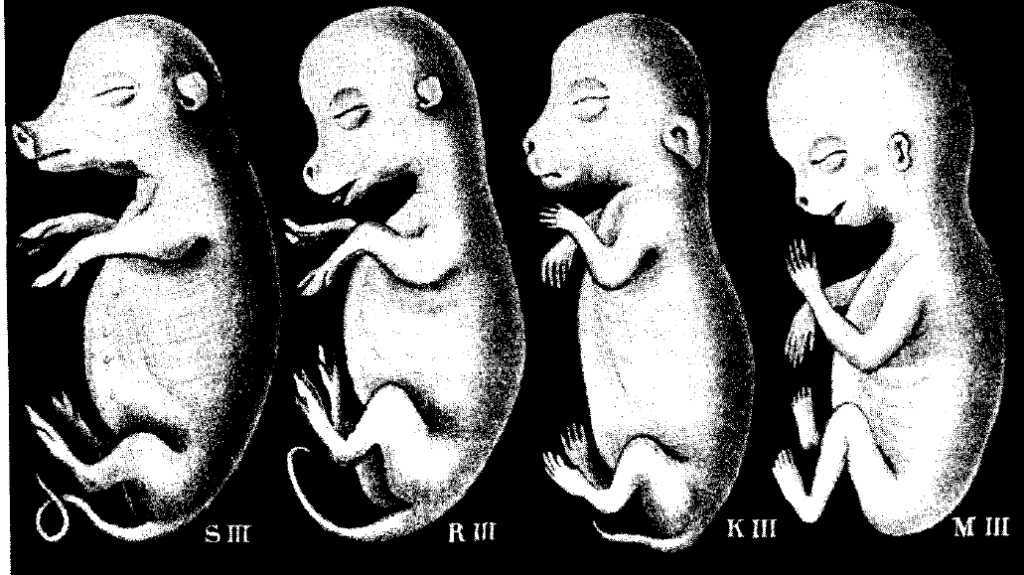
THE SCIENCE OF LIFE – H.G. Wells, Julian Huxley e G.P. Wells, 1931.

INTRODUCTION

So may he doubt whether in cheese and timber worms are generated; or if beetles and wasps in cows’ dung; or if butterflies, locusts, grasshoppers, shell-fish, snails, eels, and such like be procreated of putrefied matter, which is apt to receive the form of that creature to which it is by formative power disposed. To question this is to question reason, sense, and experience. If he doubts of this let him go to Egypt, and there he will find the fields swarming with mice, begot of the mud of Nylus to the great calamity of the inhabitants.” Alexander Ross

It was only in the middle 19th century that the concluding dispute took place over Bastian’s assertion that abundant bacterial life appeared in sterilized infusions of hay and other material.”

omne vivum ex vivo”

Seeds, small worms and microscopic animacula can be dried up and left totally inert for long periods of time, so that it is impossible to distinguish them from dead organisms; then at the touch of moisture they will resume the recognizable process of life.”

OS INTERESSANTES TEMPOS PRÉ-ASTRONÁUTICA (HOMEM, O PÁSSARO SEM PENAS, SEM DÚVIDA): “Mount Everest, more than 6 miles above the sea, was perhaps conquered by G.L. Mallory and A.C. Irvine in 1924. They started from a camp pitched at a height of 26,800 ft. on June 6th and never returned. From this camp they were watched struggling onward, and then they were hidden by driving mists and never seen again. Dr. Somerville and Lieutenant-Colonel Norton, with infinite pain and suffering, had previously got to 28,200 ft. Sommerville suffered horribly from the parching of his throat in the intensely cold and dry air, and Norton, after his return to camp, was stricken with snow-blindness. It is probable, but not certain, that Coxwell and Glaisher exceeded these limits in a balloon in 1862, and attained something over 30,000 ft. They were conscious above 29,000 ft. After Glaisher became insensible, Coxwell, by a last effort, pulled the valve cord with his teeth, his hands being too frost-bitten to use. Until recently, the height record for any living thing was the balloon record of Berson and a companion, made in July, 1901. They certainly reached 24,500 ft. but then they became unconscious in spite of their inhalation of oxygen. In November 1927, this was exceeded by Captain Gray, of the US Army Aviation Service, who reached 42,470 ft. He lost his life through his oxygen running out as he descended. No other living creature, so far as our knowledge goes, has ever transcended these limits. The condor of the Andes is credited with 23,000 ft. by Humboldt.” “42,000 ft., a trifle over 8 miles, not 1/10 of what a fast automobile can do in an hour on the level, but so far it is practically the limit of the upward range of life. Even to win that much demands elaborate preparation and frightful exertion. § Three main wants restrict the living body to the lower levels – deficiency of oxygen to breathe, deficiency of pressure upon the exterior of the body, and intense cold. The Everest expeditions of 1922 and 1924 met the former need by taking up large supplies of compressed oxygen, and the same thing is done in the attempts of aviators to break the height record. Within limits the body of the mountain climber can be gradually educated to the diminished pressure, but the aviator runs great danger of suffering from an extreme form of mountain sickness.”

There may be bleeding in ears, and lungs, and even from the eyes and gums. [gengivas]” “Major Hingston, the medical officer of the Mt. Everest expedition of 1924, says that ‘the very slightest exertion, such as the tying of a bootlace, the opening of a ration-box, or the getting into a sleeping-bag, was associated with marked respiratory distress’. At 27,000 ft. Dr. Somerville had to take 8 or 10 deep respirations for every step forward. Lieut.-Col. Norton at his highest ascended 80 feet in an hour of extreme exertion.”

Tissandier, who made a balloon ascent to 27,950 ft. from Paris in 1875, fainted at 26,500 ft. and when he recovered consciousness the balloon was descending and both his companions were dead.” “Glaisher stared at his instruments, but could not read them. ‘There is no suffering’, wrote Tissandier, ‘only an inward joy’.”

downwards it is increasing pressure and, in the solid earth, increasing temperature, against which life has to fight.” “At the St. Louis Bridge, under a pressure of 4½ atm., 100 workmen suffered seriously and 14 died out of a total of 600 men employed.”

If a ship’s hawser [sirga ou amarra, cabo de reboque ou ancoragem – no caso, não seria um cabo, por chamarmos tudo que é de cânhamo ou madeira de corda apenas], says Professor J. Arthur Thomson – a hempen hawser, of course, is meant – is sunk to the depths of a couple of thousand fathoms [~3600m], it is squeezed to less than the diameter of one’s wrist, and a piece of wood that has gone down so far will no longer float. Whatever lives at great depths – if it contains air or gas – must have its internal pressure as great as those about it.”

Sometimes some of the deep sea fishes fall upward. Many of them, like their surface kindred, have swimming bladders to accommodate themselves to varying levels. These bladders contain gas under enormous pressure. If one of the abyssal fishes rises too high in pursuit of its prey, the gas in its bladder may expand out of control of the muscles. The fish can no longer go down, but continues to rise helplessly, and as it rises to levels of less and less pressure, the expansive force of the gas within is less and less restrained, until at last the creature rushes up to the surface and arrives there distended or burst and dead.

The ocean at its deepest goes down perhaps for 7 miles. Life, therefore, so far as we know, is confined to a layer of air and a layer of water, having a total thickness of less than 14 miles, on this comparatively small planet Earth, and no one single form of life is able to span even these petty limits. Man’s vertical range seems to be as great as any creature’s and it is no more than 8 miles.”

Aristotle we may take as standing in this matter on the dividing line between the unsystematic intelligent person and the systematic inquirer.”

The systematic botanist kept a similar dump. He made a lovely classification of flowering plants, he never tired of arranging them and then hurled all the awkward cases together into a division of Cryptograms which had nothing in common except that they had no flowers to be dried and put neatly between sheets of blotting paper. It is among these queer, out-of-the-way, low-caste flowers and plants, as we shall see, that some of the most interesting and illuminating work of modern times has been done.”

Man was a biologist perforce long before the dawn of history, classifying plants into edible and inedible, and accumulating a lore of the animals he hunted, and perhaps of the animals that hunted him. In the Old Stone Age, perhaps 20,000 years ago, he was already making very competent drawings of the beasts that concerned him.”

Mythology hints at a disposition to attempt the most extraordinary hybridisations. Every conceivable combination of domesticated species was probably attempted by Neolithic man.”

Hanno, the Carthaginian, after his memorable coasting voyage about Africa, hung the skins of his gorillas in a temple with an inscribed record.”

We hear, for the first time, of dissection and of vivisection at Alexandria. (…) The question whether vivisection was actually performed upon human subjects in Alexandria is still an open one.”

The use of a water-flask for magnifying objects may have been known, and probably was known, to the jewelers of ancient Egypt, but it never seems to have got through to the philosophers.”

There are millions of people in the world who have never contemplated themselves unclothed in a mirror, and would not willingly do so.”

From Laputa to the Pickwick Club, British literature, for example, spits and jeers at its greater sister, [a ciência – mais para irmã pequena] and to devote a life to science and the service of truth is still to renounce most of the common glories and satisfactions of life for a hard and exalted mistress.”

In many of its branches the advance of biology has been determined by the progress of microscopy. A third great mine of contributory knowledge was opened up by the study of fossils, of which Nicholas Steno (1638-86) was the pioneer.”

EM 1800, EM 1900, EM 1910, EM 1920, EM 1930, EM 1990, EM 2020, EM QUALQUER DÉCADA: “In some of the more backward regions [eufemismo] of the US, moreover, there is a formidable campaign for the penalization of any biological teaching that may seem to run counter to the literal interpretation of the Bible.”

the anti-vivisection campaign displays all the unscrupulous exaggerations natural to tender and imaginative minds tormented beyond any possibility of patient and sober judgment.”

ecology – the observation of animals in their proper surroundings and of their normal interaction and ways of life, and what one may call field physiology

There are now even bacteriological zoos, so to speak, where collections of living cultures of this, that, and the other infection are available for the experimentalist.”

BOOK 1. THE LIVING BODY

1. THE BODY AS A MACHINE

O PAI DE FAMÍLIA AMERICANO: “For a time his attention is divided between swallowing to satisfy his interior need and reading the newspaper to employ a mind which might otherwise be bored while this primary business preoccupies him.” “At lunch again he may seek the distraction of a book or paper, [!] or talk with companions.” “He may find such a sedative drug as tobacco useful in slowing down the urgency of his bodily engines.”

Os heróis dostoievskianos não cagam.

A man was shut in a calorimeter (heat-energy measurer) for 19 periods of 24h each: on the average he have out 2,682 large calories in each period, and ate an amount of food which would yield if burnt a 2,688 calories. (A large calorie is the amount of heat required to raise one litre of water from 0º to 1º centigrade.)” “We are, therefore, justified in concluding that man and the animals generally are fundamentally mechanisms, driven by the energy liberated in the oxidation of food. A mouse or a man works in much the same way as a petrol motor”

1. THE COMPLEX BODY-MACHINE AND HOW IT WORKS

The writer of the text-book or the university lecturer is free from these perplexities. His readers and hearers are under compulsion to go on attending. He can say everything. (…) Yet our better-informed readers must allow us to run through, as compactly as possible, a certain amount of knowledge they no doubt acquired at school.”

occasionally we meet gifted individuals who have extra head muscles – thin films over the domed top of the skull by means of which they can waggle their scalp, delicate strips that allow them to twitch their ears.”

A frog has no neck; if a frog wants to snap at an insect he has to turn his whole body until his mouth is pointing in the right direction.”

Most of us have wondered at times why Nature never foresaw the kick and the stab at our lower vital centres. The liver and stomach indeed cower up under protection of the lower ribs, being able to do so because of the domed frame of the midriff, but the poor bowels are dreadfully exposed in a beast that walks erect. The rest of the contents of the abdomen need but the slash of a sharp knife to be spilled abroad, as happens in hara-kiri, that form of suicide so popular in Japan.”

In a fish the tail is even more important [than in the mouse]; it is the principal organ of locomotion, and includes all the bones, muscles, blood-vessels and nerves that are necessary for movement in a limb.” “In ourselves the tail is represented by a useless little curling end of the vertebral column that does not even project from the surface of the body.” Although we are conceived as tails!

The word ‘cell’ is a most unfortunate word in this connexion. That is why the triplex writer has put fastidious inverted commas about it in the last 2 sentences. He dislikes handling and using it. He has to do so, but thus he shows his reluctance. The old original meaning, the proper meaning of ‘cell’, was a compartment, an enclosure. We still talk of the hermit’s cell or a cell in a prison. [Not us!] And many people at the outset of their biological reading are misled, therefore, into imagining that our living tissues have a sort of honeycomb structure. Nothing could be farther from the reality. The proper word should be ‘corpuscle’ (little body) and not cell at all.” “the misnomer arose very easily and naturally. Hooke, in 1667, peered down a microscope at a thin slice of dead cork [cortiça], and found it to consist of an enormous number of tiny empty boxes fitted closely together, and cells seemed to be the only proper word for them.” “Very gradually the interest of investigators shifted from the boxes to the contents, but not abruptly enough to rechristen these objects. (…) It is the protoplasm and not its garment [o envoltório] which makes the cell. In animal tissues (…) The protoplasm may go bare”

The threads are called mitochondria, and are composed of albumen and a fat-like compound, lecithin. Though evidently of importance to the cell, their use has not yet been discovered.” [!]

In 2 or 3 days the multiplying and growing cells will have poisoned the serum with their own excretions and the ‘culture’ will die; but this death can be prevented by putting a little of the failing culture into a drop of fresh serum, when the reproduction of the cells will resume and go on until that drop also is fouled.” “By sub-culturing every few days it is possible to keep strains of detached cells alive for months, even years” “Cell-strains taken from a chick embryo have lived over 14 years, while the ordinary life of a fowl is not a third of that span.”

they cease to be typical muscle-cells, nerve-cells, or kidney-cells, and become more like the primitive connective-tissue cell that we have described above. They cease to be parts, they become wholes.”

A minute trace of calcium must, for example, be present if our muscle-cells are to obey our will. Withdraw that and they will begin a rhythmic twitching.”

The nitrogen has a free ride round the system, but apparently has no function whatever.” Pré-história do código genético e do estudo das proteínas!

Velocities always look deceptively high through the microscope, because the instrument magnifies distance without magnifying time.”

We cannot watch the blood as it travels, ever more swiftly, towards the heart; the frog is too opaque for our microscope to penetrate. The rest of the story has been pieced together by dissection and by experiment.”

Cells are able to accumulate little stores of sugar, fat, or a very important nitrogenous material, protein, in their own bodies, to be used when required” Ué, então por que ignoravam a função do nitrogênio no sangue?!

SUBSÍDIO CONTEMPORÂNEO: “I guess in school they didn’t tell you about the nitrogen at all, for the matter of simplification, because it is of no function in the body and the O² and CO² are the important gasses for biological function of breathing. § However, all of these small gas molecules are very small and generally the biological membrane is very permeable to them. That’s why the cell cannot decide to let O² and CO² in and N² not as you suggest.” https://biology.stackexchange.com/Mesmo assim, varrendo o google, acho que não avançamos tanto nessa questão do nitrogênio na “era nanotecnológica”! Será que todos os pesquisadores estão ficando gradualmente mais burros conforme se especializam e contam com as conquistas das gerações anteriores sem conseguir processá-las adequadamente durante suas carreiras?

There is a silence, then a long sound, then a short, sharp sound, then silence, then a long sound, then a short, sharp sound, then silence again – Lubb . . . dup, Lubb . . . dup, Lubb . . . dup. The filling of the heart from the veins and the contraction of the auricles to fill the ventricles are noiseless; the sudden, violent rush of blood when, in turn, the ventricles contract gives the long sound, Lubb . . . The short sound depends on a property of the arteries. The arteries have elastic walls. When blood is forced into them under considerable pressure by the ventricles they give, and when the ventricular contraction ceases they recoil. If it were not for the valves at their openings, the result of this recoil would be to drive blood back into the heart, but actually it closes the valves. The aorta, the main arterial trunk which supplies all the body except the lungs, is abruptly cut off from the ventricle and the slam of its valves causes that 2nd heart sound . . . dup.”

Moreover, the fact that the blood, instead of flowing along in one broad current, has been divided into a multitude of tiny parallel trickles, ensures that the surface of contact between blood and flesh is as great as possible.” “all the capillary vessels in a man’s muscles put end to end to form a continuous tube would girdle the Earth 2 and ½ times.” [!]

Lymph, [the mediator between flesh and blood] in the intercellular spaces, is simply a fluid through which substances diffuse. It comes from the blood and it is destined to return to the blood.” Os vasos linfáticos renovam essa substância: “They are indeed shadowy plasma veins.”

The flow of lymph in the lymphatics is slower even than that of blood in the veins, and, as in the veins, it is assisted by valves, by bodily movements, and probably by rhythmical contraction of the vessels themselves. The course of the lymphatic vessels is not so direct as that of the veins. They unite and separate again to form networks and their course is interrupted by passages through curious spongy labyrinthine filters, the ‘lymph-glands’, but ultimately the lymph is led to a great main lymphatic in the chest, the thoracic duct, and this trunk runs up the back of the chest and opens into one of the great veins near the heart. Thus the lymph is returned again to the blood-stream from which it originated.” O próprio linfa são “gotículas” do sangue que atravessam as paredes das terminações mais finas das artérias (as capilares/capilárias) e “hidratam” esse “meio-campo quase vazio” entre carne e sangue (vasos) em si.

Lights is the old word for lungs; in the bills of mortality of the 18th century, pulmonary consumption figures as ‘rising of the lights’.”

…leitura abandonada…

FREUD, BIOLOGIST OF THE MIND: Beyond the psychoanalytic legend – Frank Sulloway, 1983.

PREFACE

To humanists, Freud is an epic poet and a hero of literature. Moreover, his theories are deliberately segregated from the sciences under a variety of labels, such as ‘hermeneutics’ and ‘Geisteswissenschaft’. Freud himself helped to cultivate this kind of image when he elected to exclude from his Gesammelte Werke almost all of his numerous publications on the fields of neurology and neuroanatomy.”

A central message is that F., through the years, has become a crypto-, or covert, biologist, and that psychoanalysis has become, accordingly, a crypto-biology.”

Henri Ellenberger, in his impressively erudite if also much-disputed Discovery of the Unconscious (1970), has done more than any student of Freud’s life to question these myths in a systematic matter and to sketch out their general proportions.”

PART I: FREUD AND NINETEENTH CENTURY PSYCHOPHYSICS

1. THE NATURE AND ORIGINS OF PSYCHOANALYSIS

A renowned Viennese physiologist, Ernst Brücke, along with Émil du Bois-Reymond, Hermann Helmholtz, and Carl Ludwig, had succeeded in revolutionizing German physiology during the preceding quarter century [1848-1873, tomando como ponto de chegada o ano de entrada de Freud na faculdade de Medicina, quando teve Brücke como seu terceiro mestre – ao que tudo indica, os alunos naquela época e naquele modelo de ensino possuíam um professor por ano]. As youthful students of that Science in the early 1840s, the first 3 of these 4 men had banded together and pledged their mutual dedication to overthrowing the then-dominant position of vitalistic biologists like Johannes Müller – their common teacher; Ludwig, who was not a Müller student, joined the movement in 1847.”

no other forces than the common physical-chemical ones are active within the organism. In those cases which cannot at the time be explained by these forces one has either to find the specific way or form of their action by means of the physical-mathematical method, or to assume new forces equal in dignity to the chemical-physical forces inherent in matter, reducible to the force of attraction and repulsion.” Du Boys-Reymond, trad. Bernfeld. Vemos o quanto a HISTÓRIA DA MATEMÁTICA interfere na epistemologia médica do século XIX! Cf. https://seclusao.art.blog/2021/05/26/historia-da-matematica-uma-visao-critica-desfazendo-mitos-e-lendas-tatiana-roque-2012/.

Young Freud thus acquired his first scientific training within what has often been referred to, after its most famous member, as the ‘Helmholtz school of medicine’.”

Freud published 5 scientific papers during the next 6 years (1876-82): 2 on the neuroanatomy of Ammocoetes (Petromyzon planeri) – a primitive form of fish; 1 on the gonadal structure of the eel; an announcement of a new chemical method for preparing nerve tissues for microscopic examination; and a study of the nerve cells of the crayfish.”

F. subsequently named his third son after Brücke”

F.’s last major publication from this neuroanatomical phase of his career appeared in 1897” Daí pra frente (ou eu diria: já antes!) é só ladeira abaixo…

As late as 1936 the Swiss neurologist Rudolf Brun commented upon the unrivalled status of this monograph, calling it ‘the most thorough and complete that has yet been written on the cerebral paralyses of children’

2. SIGMUND F. AND JOSEF BREUER: TOWARD A PSYCHOPHYSICAL THEORY OF HYSTERIA (1880-95)

Meynert soon invited F. to work in his Laboratory for Cerebral Anatomy, which Freud did from 1883 to 1886.”

SEMPRE LIGADO À MORTE: “It was also while working as Sekundararzt in Meynert’s Psychiatric Clinic that F. finally decided, in September 1883, to become a neurologist. The immediate inspiration for this decision was the tragic suicide of Nathan Weiss, an extremely brilliant and eccentric young neurologist whom F. hoped to succeed in the medical community.”

Jean-Martin Charcot (1825-93) was then at the height of the varied medical career that had led him to the study of neurology, and his stature in French medicine was equalled only by that of the great Louis Pasteur.” “With the possible exception of Guillain (1955), no adequate biographical treatment of Charcot yet exists. This surprising lacuna in the history of medicine is perhaps related to the sharp reversal of medical opinions after Charcot’s death regarding the reliability of his famous researches on hypnotism and hysteria. The following account of his life and work relies heavily upon Ellenberger”

Charcot’s paper created a sensation. It also brought about a complete reversal within France of the negative attitude in official science toward mesmerism or ‘animal magnetism’ – a subject that the Académie des Sciences itself had twice formally condemned.” “It is no wonder, then, that the neurologist whose work on hypnotism and hysteria in the 1880s enthralled both the French medical community and a generation of novelists and playwrights eventually received the nickname ‘Napoleon of Neuroses’.”

Charcot was the first to teach us that to explain hysterical neurosis we must apply to psychology”

Charcot had further fixed the ratio of male to female hysteria at roughly 1:20.”

MITO OU VERDADE? F. (ou Charcot) descobriu a histeria masculina.

MITO. A questão já era debatida um século antes na Alemanha.

P. 38: “Thus, the existence of male hysterie per se (as a non-traumatic clinical entity) was by no means a controversial medical issue of this period, but had long been accepted, in fact, by most European and American physicians.”

The chairman of the meeting, Heinrich von Bamberger (one of the 4 professors on the committee that awarded F. his traveling stipend), responded to F.’s presentation with the words: ‘In spite of my great admiration for Charcot and my high interest for the subject, I was unable to find anything new in the report of Dr. F. because all that has been said has already long been known’ (Schnitzler, 1886).” Acontece que em seus escritos autobiográficos F. dissera que Bamberger respondeu: “Isso que você nos apresentou é inacreditável, a ciência não respalda!”.

As Ellenberger observes, the ‘critical’ reception of F.’s own paper was clearly a routine affair amidst such a learned society of medical experts.”

Three points of interest emerge from a survey of the responses to F.’s paper. First, F. was apparently unaware, before he delivered his paper, of just how well-known Charchot’s ideas already were to his own superiors in Vienna. (…) Second, F. obviously returned from Paris with an idealized picture of Charcot (…) It is now generally recognized that Charcot formulated his theories of hypnotism and hysteria on the basis of experiments performed repeatedly with a few dozen subjects, most of whom lived on the wards of the Salpêtrière, and many of whom, unknown to Charcot, had been rehearsed beforehand in the various responses expected of them.” Hahaha! “One patient, Blanche Wittmann, earned herself the title ‘Queen of the Hysterics’ for her ability to produce both the 3 stages of hypnosis and a complete hysterical crisis à la Charcot.”

The Belgian physician Joseph Delboeuf, who visited Paris contemporaneously with F., was appalled by the laxity of Charcot’s experimental procedures and, upon returning home, issued a highly critical account of them (1886).”

The third and last point about this incident is F.’s tactical blunder in attributing as unique to Charcot certain ideas and discoveries that were common medical knowledge in Vienna at the time. F.’s student contemporary and acquaintance, the psychiatrist and subsequent Nobel Prize laureate Julius Wagner-Jauregg (1847-1940), was also present at this meeting, and he later recorded in his autobiography how F. had affronted his superiors when he ‘spoke only of Ch. and praised him in the highest fashion’.” Como um aluno qualquer apresentando seminário.

F. was the only one at the Society of Physicians meeting even to bring up the old uterine theory of hysteria, which only a handful of physicians (particularly gynaecologists) took seriously any longer”

All in all, the reception of F.’s paper tells us more about his ambitious expectations as a young man of science (and about his overly sensitive attitude toward criticism) than it does about the supposedly backward state of affairs in Viennese medical circles in 1886.”

Briquet’s Traité presented the results of over 400 investigations of hysterical patients. On the basis of these researches, which required approximately 10 years to complete, he was able to dismiss altogether the prevailing notions that hysteria was related to unsatisfied sexual impulses (he found that prostitutes suffered more than nuns), to disturbances of the womb, or to an exclusive etiology in the female sex. Briquet estimated the same ratio between female and male cases later reported by Ch..”

Further, it is not true thar F. ceased on this account to attend the various local medical societies, as he also claims in his Autobiography. (…) a year and a half after his ill-fated talk he was duly elected to the society [of Physicians, de Viena]’s membership! He remained a member in good standing until he was forced by the Nazis to leave Vienna in ‘38. (…) See Sablik (1968)

Soon after F.’s return to Vienna, Meynert had begun to take a dim view of F.’s new allegiance to the views of Charcot, apparently considering it to be disloyal both to himself and to his own more somatically oriented views of disease.” Rupturas são com ele mesmo!

He even went so far as to label the growing hypnotism movement a ‘psychical epidemic among doctors’ – precisely the same epithet used 20 years later by a critic of the nascent psychoanalytic movement. Finally, Meynert firmly believed that most hypnotic ‘cures’ were the result either of fraudulence or of self-delusion on the part of doctors and patients.” “Meynert cited in this connection the experiences of one candid physician who confessed that he had more than once experienced involuntary pollutions after having been placed in a state of hypnosis. To this same subcortical liberation of sexual impulses, Meynert was also inclined to ascribe the well-known state of ‘euphoria’ so often experienced by subjects under hypnosis.” Ironicamente, F. iria se alimentar do fel do seu novo rival.

Liébault (mestre de Bernheim), Du sommeil et des états analogues, livro à frente da sua época sobre o hipnotismo.

Bernheim’s 1884 revival of Lié. suggestion therapy was subsequently expanded in 1886 into a larger textbook (De la suggestion et de ses applications à la thérapeutique), which F. himself had presumably read by the end of December 1887, since he was already under contract by that date, as he informed his friend Fliess, to translate this work into German. Bernheim reiterated his basic theme that (…) suggestibility (…) was a capacity shared by all human beings, not just hysterics and neuropaths. [como acreditava Charcot]”

As it has turned out, Bernheim was right [sobre a exclusividade do psiquismo no hipnotismo], and F., who later retracted his support for Charcot on this point, was wrong.” “In short, by 1893, the work of Bernheim and others had succeeded in convincing F. that much of Ch.’s evidence for the physiological nature of hypnosis was completely bogus.”

Breuer’s physiological researches provided a conceptual foundation for the pioneering theory of hysteria that he and F. later proposed.” “Breuer’s first important discovery – while still working as a medical student under Ewald Hering – was of the self-regulating mechanism of breathing as controlled by the vagus nerve (the so-called Hering-Breuer reflex). (…) his demonstration furnished conclusive evidence for one of the first biological feedback mechanisms to be documented in mammals. Breuer’s second major contribution to physiology was his discovery in 1873, essentially simultaneously with the great Ernst Mach and the Edinburgh chemist A. Crum Brown, of the function played by the semicircular canals in the ear. The inner ear is a double organ – for both hearing and balance. Breuer, in his own work on this problem, skillfully elucidated the delicate series of reflex mechanisms by which the sensory receptors within the inner-ear labyrinth succeed in regulating posture, equilibrium and movement. He also called attention to the importance of the more obscure otolith system, an aspect of the problem that had been overlooked by Mach and Brown. See Cranefield (1970a) and Hirschmüller (1978)” “The first Austrian Nobel Laureate, Robert Bárány, won the Physiology and Medicine Prize in 1914 for his work on the equilibrium organs of the inner ear. In 1916 he was denied academic advancement by the Senate of the University of Vienna because he had given insufficient credit to prior researchers on this subject, principally Josef Breuer. Although Bárány indeed admitted to having forgotten Breuer’s 1874 paper, Breuer himself made light of the whole episode and actually came to Bárány’s defense in the priority proceedings (Hirscmüller).”

On the strength of these early and impressive findings in physiology, Breuer was appointed in 1875 to the rank of Privatdozent at the University of Vienna. Subsequent difficulties in gaining patients for teaching purposes apparently caused him to resign his position 10 years later. At this time he also refused the offer of Theodor Billroth, the famous surgeon, to propose him for the title ‘Extraordinary Professor’, retiring instead into the full-time private practice that became his principal medical devotion.

The calibre of Breuer’s continued scientific reputation is nevertheless well illustrated by the fact the he was elected to the Viennese Academy of Sciences in 1894 upon the nominations of Ernst Mach, Ewald Hering, and Sigmund Exner, 3 of that body’s most accomplished and internationally known members. Although it is often assumed that Breuer published relatively little in his lifetime, a bibliography of his purely physiological publications includes nearly 20 articles totaling some 500 printed pages of meticulously conducted and carefully described research (Cranefield). Among Breuer’s many patients were the families of Brücke, Exner, Billroth, Chrobak, and many other prominent members of the Viennese scientific community.”

Breuer maintained an extensive correspondence with the philosopher-psychologist Franz Brentano as well as with the poetess Marie von Ebner-Eschenbach.”

In 1881, Breuer’s tutelage included regular monthly loans, and F.’s financial debt to him eventually was substantial – a debt that became a sore burden to F. a decade later, when B. tried to refuse its repayment during the period when the 2 men were growing estranged.”

B. immediately recognized Anna O. as one of hysterical double personality. He discovered at one point that, merely by showing her an orange, he could induce a transition from her normal personality to what she called her ‘bad self’. More remarkable still, at the height of her illness, the patient regularly hallucinated the various events in her life that had actually taken place 365 days earlier. B. documented this aspect of the case history from a diary of the illness kept by Anna O.’s mother.” “He found that if he repeated to his patient each evening, when she entered a state of autohypnosis, the frightened words she had uttered during her daytime absences (fr.), she was able to recall the forgotten details of her terrifying hallucinations. Therapeutically, this process relieved both her symptoms and her often agitated state of mind by the end of each day.” A limpeza de chaminé que, convenhamos, F. nunca soube reproduzir.

The medical cure was nothing short of stupendous, given the almost unheard-of time and patience Breuer spent in treating this one patient. According to Breuer, he listened to stories of the circumstances, people, places, and often exact dates (for Anna O. had a remarkable memory) associated with 303 separate instances in which the patient had previously experienced dysfunctions in her hearing alone. The systematic Breuer carefully recorded them all and even managed to group them under 7 different contextual subheadings!”

Juan Dalma has pointed out that Jacob Bernays, the uncle of F.’s future wife, had long been concerned with the Aristotelian concept of dramatic catharsis. (…) According to Hirschmüller, by 1880 Bernays’s ideas had inspired some 70 German-language publications on catharsis, a number that more than doubled by 1890. It seems very possible that an intelligent girl like Anna O. might have been acquainted with the subject and have unconsciously incorporated this knowledge into the dramatic plot of her illness.” Por que demorou mais de uma década para os Estudos em Histeria saírem? Porque o livro haveria de ser incrementado com algumas pacientes de F., as ‘famosas’ Elisabeth von R., Emmy von N., etc. Se é que todas existiram e tal e qual foram retratadas…

F. was slow to apply to B.’s new therapeutic technique himself after returning from Paris, probably because his initial clientele presented him with many strictly neurological disorders and, as a specialist in neurology, his own interests were still largely focused upon physiological aspects of the neuroses.”

The mysterious clinical diminution of hysteria in the course of the 20th century makes Breuer and Freud’s Studies on Hysteria an unusual book in the history of science; for while it marks a turning point in psychiatric theory, it deals with a disease many present-day neurological specialists see only once or twice in a lifetime of medical practice. Although no one has succeeded in satisfactorily explaining why hysterical afflictions have become as rare as they have in Europe and America, an interesting discussion of this problem from a social historian’s point of view has been provided by Carroll Smith-Rosenberg (1972). In a quasi-Adlerian analysis of the problem, Smith-Rosenberg has tentatively related the passing of this primarily female affliction to the increased opportunity that women have in modern life to control their own destinies, especially when faced with the sort of oppressive or intolerable circumstances that formerly allowed only one principal form of escape – flight into illness (and the role of the invalid).” Ou “flight into marrying”, rigorously the same!

Is it phantasy or just a fantasy?

É claro que dos “4 casos clássicos” do livro, o de Breuer é o único sem nada sexual envolvido…

The economic aspect is embodied in Breuer and F.’s theoretical attribution of hysterical symptoms to a certain ‘quantity’ of excitation, affect, or mental energy. In healthy individuals, this quantity is dissipated along the nervous pathways of everyday mental and physical activity. But in hysteria, B. and F. believed, a certain quota of affect succeeds in becoming pathologically ‘converted’ into inappropriate somatic channels (Strachey).”

The nervous system endeavours to keep constant something in its functional relations that we may describe as the ‘sum of excitation’. It puts this precondition of health into effect by disposing associatively of every sensible accretion of excitation or by discharging it by an appropriate motor reaction”

supersuscetível e insensível ao mesmo tempo

strangulation of affect: (…) when a strong affect is not permitted immediate or adequate conscious discharge – as with known clinical instances of hysteria arising from severe insults endured in silence”

The first published instance of the term das Unbewusste (‘the unconscious’) by either B. or F. occurs in B.’s discussion of the case history of Anna O. (S.E.).” “B., by his unusual diligence, perspicacity, and extreme patience as a physician, provided the initial discoveries that hysterical symptoms can arise from unconscious ideas and that they can be made to disappear if they are brought back into consciousness. (…) he also coined the term catharsis and possibly the term ab-reaction and was responsible for the notions of hypnoid hysteria and retention hysteria. F. was responsible, first and foremost, for reviving B.’s dormant interest in his famous patient” Graaaande papel.

According to the extreme form of this particular myth, F. was subjected to 2 conflicting forces, namely his allegiance to mechanistic and molecular explanation, i.e., the Helmholtz school’s¹ influence, and his desire to forge a new way of looking at the mind, a psychological way free from the entanglements of narrow and naïve materialism.” Cranefield

¹ “See Bernfeld (1944, 1949), who coined the phrase ‘the School of Helmholtz’.”

In the first place, Helmholtz himself was by no means ever considered to be the head of a ‘school’ in medicine, even among the original group of 4 – du Bois-Reymond (the group’s real leader), Brücke, Ludwig, and Helmholtz himself – who together initiated what Cranefield has more appropriately termed ‘the 1847 biophysics program’. (The year 1847 was when Ludwig joined the group.) Furthermore, Helmholtz was actually an isolated figure in science compared with the other 3; he had few students or close associates, even within the fields of mathematics and physics where he did his major and most valuable scientific work. Secondly, the members of this movement were at no time typical, as both Bernfeld and Jones have implied, of the extreme brand of 19th-century mechanism-materialism that was espoused by men like Karl Vogt and Ludwig Büchner. Carl Ludwig, for example, treated the subject of dreams (…) in what is certainly the language of psychology”

Finally, by the time F. began his medical training in the 1870s, the 1847 biophysics program had been in manifest retreat for many years. Indeed, by the 1870s, most of the movement’s original members had frankly acknowledged the prematurity of their initial visions that physiology was soon to become nothing but physics and chemistry.

On the other hand, the mechanistic thrust of Helmholtz and his biophysics confreres did enter psychoanalysis indirectly from the field of psychology through Gustav Theodor Fechner (1801-87). It was Fechner who not only introduced into psychology the principle of the conservation of energy (formulated in 1842 by the physician Robert Mayer and further developed by Helmholtz in 1845), but also derived a sophisticated equivalent of F.’s pleasure-unpleasure principle from this notion.”

Fechner’s famous law describing the mathematical relationship between the intensity of stimulation and the resultant sensation is mentioned by F. (…) in the Project for a Scientific Psychology.” “Josef Breuer, for his own, greatly admired Fechner, who, along with Goethe, were his two favourite authors (Jones). Fechner likewise exerted considerable influence upon F.’s teacher Theodor Meynert (Dorer).

Thus, perhaps most directly, the Breuer-Freud theory of hysteria reflects the ‘Fechnerian school’ of psychophysics far more than it does the long-since defunct ‘Helmholtz school’ of biophysics.”

Herbart’s influence may also be traced in the psychological writings of Fechner, as well as in those of the psychiatrist Wilhelm Griesinger (1817-69), both of whose ideas were in turn important sources of inspiration to F.’s teacher Meynert (Dorer).”

In the course of his Theoretical contribution to the Studies, B. specifically cited the works of men like Paul Möbius (1888, 1894), Adolf von Strümpell (1892), Pierre Janet (1889, 1893a, 1894), Joseph Delboeuf (1889) and Moritz Benedikt (1894) for their many anticipations of (…) the basic ideas advocated by himself and F..

Although the Frenchman Janet’s researches are now perhaps the best known of this group of psychotherapists, Viennese neurologist Moritz Benedikt’s views were the closest to those of B&F. As early as 1868, Benedikt had insisted, in opposition to Charcot’s predecessor Pierre Briquet, that hysteria often depends upon functional disorders of the libido. In subsequent publications, he continued to elaborate this doctrine on the basis of clinical evidence suggesting that most hysterics fall ill owing to their excessive preoccupation with a ‘secret life’ of phantasies or frustrated desires, frequently of a sexual nature.”

what perhaps serves most of all to distinguish the work of B&F from that of their many contemporaries in the scientific study of hysteria is their unusually detailed clinical documentation of case histories”

3. SEXUALITY AND THE ETIOLOGY OF NEUROSIS: THE ESTRANGEMENT OF BREUER AND F.

A técnica da pressão na testa foi inventada por Bernheim e por ele comunicada a F..

It is to Ellenberger’s (1972) even more recent and detective-like research efforts that we owe the unexpected rediscovery of a contemporaneous, 21-page case history of Bertha Pappenheim prepared by Josef Breuer in 1882, for the Sanatorium Bellevue, Kreuzlingen, Switzerland. (Where Anna O. was transferred to in July of that year.) Ell. also uncovered a brief follow-up report written by one of the physicians at the San. Bell. for the period of Anna O.’s 3-and-½-month sojourn there. (…) Albrecht Hirschmüller (1978), who has published the German texts of the various documents discovered by Ell., has found other equally relevant materials at the Sanatorium Bellevue. (…) So much for the myth about ‘timid’ B., retreating from the distasteful implications of his own momentous discoveries!”

In his painstaking work on the semicircular canals of the inner ear, B. did not stop until he had generalized his findings to fish, reptiles, birds, and mammals. If, prior to F.’s confirmation of B.’s initial findings, the latter was reluctant to publish his discoveries in the case of Anna O., this was simply because he did not believe that the isolated and possibly atypical results in this one case were grounds for formal (theoretical) publication on a subject of such complexity.” “In sharp contrast to B., F. saw far less need for copious replications of the cathartic procedure before making it known to the medical world.”

Even as late as 1895, when B&F finally published Studies on Hysteria, Bertha Pap.’s identity as A.O. became immediately evident to many Viennese readers of that book.”

In earlier times all hysteria was sexual; afterwards we felt we were insulting our patients if we included any sexual feeling in their aetiology; and now that the true state of things has once more come to light, the pendulum swings to the other side. (…) it is merely (…) the law of the swing of the pendulum, which governs all intellectual development.” B.

To sum up, B.’s collaboration with F. came to an end when F. began to insist sexuality was the essential cause of every hysteria as well as of most other neuroses.”

O bichinho da prepotência mordeu F. dentro da Salpêtrière.

In a word, F. feared mediocrity and others’ anticipation of his ideas more than he feared error in science, and he fully accepted the risks inherent in this particular choice of values.” Mas depois chorava suas pitangas.

B.’s position is plain enough from several subsequently published accounts detailing his 4 November 1895 public defense of F.’s views before the Wiener medicinisches Doctorencollegium (Vienna College of Physicians). F. had given 3 lectures on hysteria before this society on the evenings of 14, 21 and 28 October 1895.”

No physician has any idea what sort of symptoms an erection calls forth in women, because the young women refuse to speak of the matter and the old ones have already forgotten about it” B., 1895.

Thus, B.’s ‘inability’ to follow F. completely on this issue is simply a measure of F.’s own growing fanaticism about it.”

A Viena fim de século era mais promíscua que Gotham City, Paris no auge da opulência e que essas capitais da África setentrional e do Oriente Médio cheias de pederastas todas juntas. Por ali, tudo devia acabar em segredinhos sujos e mulheres histéricas.

F. clearly took his reductionist metapsychology literally when it came to the phenomenon of sex. B., on the other hand, was inclined to be more cautious in generalizing the various mechanical analogies in their model of hysteria. In Studies on Hysteria he treated this model as a psychological heuristic and thus saw no need to make sexuality any more ‘indispensable’ to hysterical symptom formation than affects like fright or anger.”

Eis-tudo da raiva.

Any theory of causation in mental pathology [why not general pathology too?] must take account of the straightforward medical consideration that disease can have only 2 logical sources, acting singly or together: (1) harmful experiences and/or agents originating in the external environment; and (2) endogenous (generally hereditary) factors. Ultimately, however, medical science must also seek to explain what contributes to disease-prone heredity, either in terms of inherited residues of noxious, ancestral experiences – the now-discredited Lamarckian position that F. himself endorsed – or in terms of some other form of genetic anomaly.”

DESCONFIE DOS ESQUEMAS REDONDAMENTE SIMÉTRICOS: “F.’s 4-part logic of disease brings to mind Aristotle’s well-known and similar fourfold analysis of causality into material, efficient, formal and final causes. Thus it is of particular interest that, at the University of Vienna, F. took 5 separate courses in philosophy with Franz Brentano, a specialist on Aristotle who also emphasized that Greek philosopher’s relevance to modern psychology. Two of Freud’s 5 courses with Brentano were devoted to Aristotle and to logic, respectively. See Bernfeld (1951) and, especially, Ramzy (1956), who discusses a number of more general parallels between the doctrines of Aristotle and F..”

The standard English expression ‘free association’ is a misleading approximation of F.’s own choice of the German words freier Einfall for his technique. F.’s term conveys much more of the intended impression of an uncontrollable ‘intrusion’ (Einfall) of preconscious ideas upon conscious thinking, a process that his fundamental rule of analysis – that the patient should report everything that comes to mind – was further designed to lay bare to the physician.”

4. F.’S 3 MAJOR PSYCHOANALYTIC PROBLEMS AND THE PROJECT FOR A SCIENTIFIC PSYCHOLOGY (1895)

I am particularly indebted to Stewart’s comprehensive analysis of the aspect of the choice-of-neurosis in F.’s neurological career in the 1890s (Psychoanalysis: The First 10 Years).”

The development of F.’s ideas on the actual neuroses can be followed in the Fl. correspondence from manuscript Drafts A and B in late 1892 and early 1893, to their far more refined formulations in Drafts E and G (mid-1894 and January 1895), and finally to their various published treatments in the 1890s (1895b, 1895f, 1898a). F.’s general approach to the problem, as stated in his earliest manuscript drafts, was purely ‘toxicological’. In other words, sufferers from the actual neuroses were somehow being neurologically poisoned by their own abnormal deployment of a sexual substance emanating from the reproductive organs.” O cérebro do neurastênico é inimigo do neurastênico, grande descoberta/hipótese que não mudava nada: mas quando é que F. não foi um inútil fataliste?!

AS INSPIRAÇÕES DE REICH: “At this point a totally uninhibited organism would take steps through vigorous motoric activity to place the sexual object in a favorable position. If successful, orgasmic reflex action discharges the accumulated tension in the end organ, thus triggering the simultaneous sensation of voluptuous feelings in the psychical sexual group.”

The 4-part analysis offered here is mine, not F.’s, although it is fully implicit in his psychophysicalist logic about the neuroses.”

He later called such anxiety neuroses ‘the somatic counterpart of hysteria’” “the symptoms of melancholia – a sort of psychopathological ‘mourning over loss of libido’ – were simply an unconscious neurotic counterpart to normal mourning.” “Two forms of actual neurosis were to be distinguished from one another in F.’s scheme: neurasthenia (characterized by lassitude, headaches, indigestion, perceptual sensitivities and a wide variety of other complaints) and anxiety neurosis. Neurasthenia was invariably the result of excessive adolescent masturbation (Freud 1895b), and it generally appeared with the onset of puberty.” Os sintomas de esgotamento, letargia e de fechamento ao mundo exterior não combinam com a puberdade. A energia sexual está em franco crescimento, pouco importando as vicissitudes do indivíduo e ele vive a fase mais expansiva de sua vida psíquica.

neurose atualíssima:

tão atual que só começa a acontecer amanhã!

F. via o afeto como impulsos somáticos que catexizam [descarregam] idéias no processo de obtenção de expressão psíquica.”

The paranoid individual, F. maintained in his 1896 publication, is one who differs from other psychoneurotics by fully accepting the existence of the incompatible idea. [Sem mecanismo de defesa ‘clássico’] Defense is nevertheless achieved in paranoia and entails projection of that incompatible idea onto the external world, whence comes the paranoid’s sense of persecution, his delusions, and his extreme distrust of other people.”

The Project is sufficiently complex that a summary of its contents cannot do it full justice. But a brief list of the topics treated by F. will perhaps suffice to convey the ambitious nature of this undertaking.

No other document in the history of psychoanalysis has provoked such a large body of discussion with such a minimum of agreement as has Freud’s Project. (…) [it] has even prompted some students of F.’s ideas to make elaborate comparisons between it and more recent achievements in the kindred field of cybernetics. Specifically, comparisons have been made to the electronic models of brain functioning developed by Donald Hebb, Karl Lashley, Norbert Wiener and others” “F. soon altogether abandoned the Project itself. As Jones observes, F. never even requested the return of the 2 notebooks that had cost him so much mental effort; and so it was that these notebooks¹ only became known to the world 2 decades after Fliess’ death and a full decade after F.’s own.”

¹ Mas não estamos falando do mesmo livro que tanto inspirou Reich enquanto ainda estava ligado a F.? Estranho…

Holt (1865a) has repeatedly insisted that many of the most important and often seemingly arbitrary aspects of psychoanalytic theory have their origin in ‘hidden biological assumptions’ derived from F.’s pre-psychoanalytic career. According to Holt, F.’s apparently psychological description of the psychical apparatus in the famous 7th chapter of The Interpretation of Dreams (1900a) was no more than a ‘convenient fiction’ – one that ‘had the paradoxical effect of preserving these biological assumptions by hiding their original nature, and by transferring the operations of the apparatus into a conceptual realm where they were insulated from correction by progress in neurophysiology and brain anatomy’ (1968a). Peter Amacher (1965) concurs with this judgment; and it is upon his careful historical documentation of the Project’s various intellectual roots that Robert Holt has based his own historical claims.”

Did F. (…) simply retain old-fashioned neurological terms (e.g. ‘cathexis’) while giving them a new and independent psychoanalytic meaning in The Interpretation (…)? [Mostly so!] Or, are the outmoded 19th-century neurological constructs so evident in the Project still holding up the creaking scaffolding of present-day psychoanalysis, as Holt insists, and has their cryptic nature insulated psa. from a much-needed rejuvenation within the fertile field of neurophysiology (…)? [Both!]”

According to Freudians, the Project represents F.’s ‘last desperate effort to cling to the safety of cerebral anatomy’ and is therefore a conceptual hangover from his earlier neurological education within the famous Helmholtz school of medicine (Jones). Complementing this 1st misunderstanding is the 2nd, namely, that F. abandoned the Project as an abject failure shortly after having written it. As I have already discussed the specific Helmholtz aspect of these claims, stressing its several implicit fallacies, here I shall address the view that the Project was only a ‘neurological’ document.”

F. was convinced that psychology must have a physical basis, and he logically hoped that psychological laws might turn out to exhibit many of the same fundamental principles as the neurophysiological events upon which they are causally dependent (Wollheim 1971).” “Even Jones (…) admits that F. had come upon the meaning of dreams more from an a priori physicalist than from a purely empirical point of view (Amacher 1965). (…) Kanzer’s attempt to reduce F.’s P. metapsychology to purely clinical inductions is, to me, patently unconvincing and only seems to substitute one unfortunate historical extreme for another.”

in seeking to legitimate his hypothetical distinctions between perceptual and psychical-mnemic neurones, F. had momentarily considered what he termed ‘a Darwinian line of thought’ before ultimately settling upon a mechanical solution to that problem.” Tradução: Quando convinha, F. usava o modelo estático da neurologia incipiente do século XIX; quando a explicação era insuficiente, recorria à biologia. Abandonava novamente a biologia quando seus conhecimentos em neuroanatomia pareciam não deixar contradições teóricas.

He formally enunciated 2 such rules, those of attention and primary defense, when his mechanical paradigm proved insufficient to master the psychological problems of intentionality and foresight. So it transpired that, when necessary, F. was able to renounce in the Project the concepts of a reductionist physiologist in favour of concepts proper to an organismic and evolutionary biologist. The importance of this conceptual step cannot be overestimated.”

In this way, and in this way alone [Darwinism], F.’s Project model of mind was made applicable to more than just amoeba-like behaviour. Thus in the Project, his 2 biological models – the purely mechanical and the organismic-evolutionary – were at times decided rivals for his supposedly ‘neurological’ loyalties.” “one remarkably well-integrated psychobiological system.”

This psychology is really an incubus… All I was trying to do was to explain defence, but I found myself explaining something from the very heart of nature. (…) Now I want to hear no more of it” F. a Fl.

F.’s unrelenting difficulties with the problems of defense and pathological repression in the P. bring up the important but far too little emphasized fact that he never finished this work. Furthermore, it was its most critical part – ‘The Psychopathology of Repression’ in the 3rd, and now lost, notebook – that he failed to complete to his personal satisfaction and thus withheld from Fl. [and burnt].”

From that point (completion of the first 2 notebooks) I had to start from scratch again, and I have been alternately proud and happy and abashed and miserable, until now, after an excess of mental torment, I just apathetically tell myself that it does not hang together yet and perhaps never will. What does not hang together yet is not the general mechanism (…) but the mechanical explanation of repression, clinical knowledge of which has incidentally made great strides.” Daí todo o seu pavor medonho de que Marie Bonaparte expusesse sua charlatanice ainda em vida, de posse das cartas a Fl..

The principal difficulty (…) was to provide a mechanical explanation for defense against unpleasure without having to assume the existence of an ‘observing’ ego.” Nascimento da tópica esdrúxula e fim de qualquer utilidade do Fraudismo.

chemical measure of unpleasure”

SEM FLIESS, SEM PSICANÁLISE: “It was to Fl. ultimately that F., in his candid desperation, increasingly looked for help in attempting to solve the problem of pathological repression in biological terms. ‘I am in a rather gloomy state,’ Fr. wrote to his friend on 30 June 1896, 9 months after drafting the Project for a Scientific Psychology, ‘and all I can say is that I am looking forward to our next congress. . . . I have run into some doubts about my repression theory which a suggestion from you . . . may resolve. Anxiety, chemical factors, etc. – perhaps you may supply me with solid ground on which I shall be able to give up explaining things psychologically and start finding a firm basis in physiology!’.” Mal posso acreditar que isso passou pela censura e pente-fino de Kris e Anna F. para publicação, pela 1ª vez, dos extratos das cartas F./Fl. (Origins of Psychoanalysis, p. 169)!

It is often assumed, erroneously, that there is only one form of reductionism in science – to the laws of physics and chemistry. But in certain sciences, particularly the life sciences, there are 2 major forms of reductionism – physical-chemical and historical-evolutionary; each supplements the other and explains attributes of living organisms that the other cannot (Mayr 1961).”

PART II: PSYCHOANALYSIS: THE BIRTH OF A GENETIC PSYCHOBIOLOGY

5. WILHELM FLIESS AND THE MATHEMATICS OF HUMAN SEXUAL BIOLOGY

A correspondence between the 2 began shortly after their first meeting, and by 1892 the formal Sie in their letters had given way to the informal du.”

Unfortunately even the availability of a complete edition of F.’s letters to Fl. would hardly solve many of the most important enigmas that have come to surround the intellectual relationship of these 2 men. Part of the historian’s problem stems from the fact that they exchanged many of their scientific ideas orally.”

Your praise is nectar and ambrosia to me”

Fl.’s Christmas present to F. in ‘98 was, appropriately, a two-volume set of Helmholtz’ lectures (Kris 1954). Physics, chemistry, and, for Fl., particularly mathematics were to be the foundations of the mature sort of scientific explanation that both men sought to achieve in their medical theories. It was Fl., significantly, who encouraged F. to continue with the Project for a Scientific Psychology when he began to bog down under the manifold frustrations of the ambitious undertaking.”

The standard and, indeed, the virtually unanimous judgment of posterity regarding Fl.’s scientific ideas is that they constitute a remarkably well-developed form of pseudoscience.”

Fl., Gardner explains, analysed all his periodicity data in terms of the general formula x*23 +- y*28. Unfortunately Fl.’s mathematical abilities must have been limited to elementary arithmetic, Gardner asserts, for what Fl. did not seem to realize was that any 2 positive integers that possess, like 23 and 28, no common divisor, can be used with his general formula (above) to derive any positive number whatsoever! Thus, there was no positive integer that Fl.’s formula could not produce, given the right juggling of the values of x and y. (Gardner, Fads an Fallacies in the Name of Science, 1957; 1966)”

If one eliminates these as well as 4 other numbers within plus or minus 3 of 28, one is left with only 2 candidates for Fl.’s formula: 23 and 33. It is interesting that modern Fliessians (and to this day Fl.’s theories boast a considerable following in Germany, Switzerland, Japan and US) have added a 33-day cycle to Fl.’s original 2-cycle system. One of Fl.’s most ardent disciples, Bruno Saaler, also found such a 33-day period in his own periodicity researches while Fl. was still alive, and asked his mentor about it.” Qualquer bom matemático ‘imparcial’ pode provar a existência de Deus para os crédulos! Como qualquer satanista ou esotérico pode usar os números a seu favour, ad infinitum

Fl. replied that he, too, had found considerable evidence for such a period, but he had finally concluded that it was really to be explained as the difference between 2*28 – that is, 56 – and 23[*1] (Saaler, 1921).

Freud intended to name one of his 2 youngest children after Fliess, but, as Jones dryly remarks, ‘fortunately they were both girls.’

F. even permitted Fliess to operate repeatedly upon his own nose and sinuses – Fl. surgically removed and cauterized part of F.’s turbinate bone – in the hope of dispelling certain neurotic symptoms!”

Two voices, albeit lone ones, have managed to find a few good words to say about Fl. – words that go beyond the standard attribution of menial functions that he supposedly served in F.’s life. (…) [e.g.] Eissler: [que começou a rever suas posições tarde demais, na velhice da velhice…] (…) an unsolved enigma still surrounds the relationship of these 2 men”

Precisely what that ‘unsolved enigma’ might be is a subject to which the psychiatrist and historian of medicine Iago Galdston (1956) long ago devoted an outspoken, heterodox, and thought-provoking essay.”

DO ESOTÉRICO AO EXOTÉRICO, PERCORRENDO TODO O HORÓSCOPO E TODO O CALEIDOSCÓPIO: “Virtually all of Fl.’s major ideas – periodicity, bisexuality, polarity, and man’s dependence upon the world process – were part of a Romantic tradition in medicine” “among other figures [than proto-biologists, naturalists and physicians], Galdston specifically cites Leibniz, Kant, Fichte, Schelling, Goethe, Carus, Oken, Novalis and Bachofen

In fact, I have absolutely no hesitation in asserting that, along with Brücke, Charcot and Breuer, Wilhelm Fliess is the 4th, the last, and perhaps the most important of the quaternary of personal friends and scientific contemporaries who most influenced F.’s psychoanalytic thinking during the crucial years of discovery.”

Surprising as it may seem, Fl. was hardly alone during the early 1890s in suspecting a physiological connection between the nose and the female sexual organs.”

Speaking in 1898 at a major medical conference in Montreal, Mackenzie expressed nothing but praise for Fl.’s researches (…): ‘Fliess’ elaborate monograph, written in apparent ignorance of the work done by me in this special field before him, is a model of painstaking labour, and is valuable as an independent contribution to the study of this important subject’”

To render the relationship to which I wish to call attention more intelligible, it is necessary to recall the anatomical fact that in man, covering . . . the septum of the nose is a structure which is essentially the anatomical analogue of the erectile tissue of the penis”

Indeed, the genitalia, the nipples, and the nose are the only parts of the body to possess such erectile tissue. Also, there generally occurs during sexual arousal a simultaneous erection of all such tissues throughout the body. According to Mackenzie, this last circumstance explains why some individuals suffer from chronic nasal disturbances (nosebleeding, sneezing, and simple occlusion) during moments of intense sexual excitation.”

Mackenzie believed that all such afflictions of the nasal mucous membranes were probably ‘the connecting link between the sense of smell and erethism of the reproductive organs exhibited in the lower animals’.”

In this connection Mackenzie testified that masturbators frequently suffer from concurrent nasal disease, olfactory disturbances and nosebleeding.” “Nor was Mackenzie surprised by Fl.’s report of several cases of accidental abortion due to galvanocaustic operations on the nose, for analogous medical observations had been known to Pliny in ancient times.”

Mackenzie’s early findings (1884) had received a prompt and favourable discussion from F.’s noted colleague at the University of Vienna, Richard von Krafft-Ebing.” “Krafft-Ebing drew attention to the relevance of the nasogenital relationship to certain enigmatic problems of sexual pathology, and he cited patients plagued by olfactory hallucinations apparently induced through excessive masturbation.” “Indeed, so closely linked with sexuality did Krafft-Ebing believe the olfactory sense to be that he envisioned the two functions as controlled by proximal areas within the cerebral cortex.”

For a more complete review of the history of this field, see Semon (1900), who credits the Freiburg otolaryngologist Wilhelm Hack (1884) with developing the notion of nasal reflex neuroses independently of the Mackenzie-Fliess theory of nasogenital disorders.”

By the late 1890s, the area of research pioneered by Mackenzie in 1884 in America and shortly thereafter by Fl. in Germany had come to be a common topic of discussion among rhinologists. To cite one illustration, in the same periodical (the much-respected Journal of Laryngology, Rhinology and Otology) and year in which Mackenzie issued his 1898 review article on this subject, there appeared a paper discussing the frequent association between nasal catarrh and enuresis (bed-wetting) among children.”

some 20 years earlier (…) illustrious biologist and ardent Darwinian, Ernst Haeckel (…) had theorized in his Anthropogenie oder Entwickelungsgeschichte des Menschen (Anthropology or Evolutionary History of Man) that ‘erotic chemotropisms’ – that is to say, chemically based sex stimulants affecting taste and smell were (…) the ‘primal source’ of all sexual attraction in nature (1874a).” “When sexologist Iwan Bloch published his 2-volume Beiträge zur Aetiologie der Psychopathia sexualis (1902-3), he duly cited Haeckel’s evolutionary hypothesis immediately before discussing both Fl.’s researches and their more recent confirmation in 47 clinical histories by Arthur Schiff (1901).”

(*) “Bloch, Haeckel and Fliess were all 3 to become founding members of the Berlin Ärtzliche Gesellschaft für Sexualwissenschaft und Eugenik in 1913. This organization in turn provided a prominent forum for the discussion and dissemination of Fl.’s theories. For a general review of late-19th-century literature on sexuality and olfaction, see Kern, 1975

What Benedikt and other critics contested was Fl.’s general theory of ‘nasal reflex neuroses’ and, in particular, the clinical frequency that he persisted in claiming for such disorders (1901). Yet (…) Even the ever-cautious Josef Breuer, after some initial hesitation, appears to have accepted the whole of Fl.’s nasal theory by the mid-90s, while Richard von Krafft-Ebing’s enthusiastic endorsement of the Mackenzie-Fl. doctrine stands in considerable contrast to the ‘benevolent scepticism’ with which he tended to view many of F.’s psychoanalytic claims about this same time.

As late as 1914, almost 20 years after their formulation, Fl.’s ideas on nasogenital disorders were still being openly discussed and zealously defended on an evolutionary as well as on a clinico-medical basis. One lively focal point for these later debates was the experimental research by Koblanck and Roeder in 1912, which showed that young rabbits that had had Fliess’ ‘genital spots’ surgically removed from their noses uniformly suffered an inhibition of development in their genital organs.” “How, his supporters apparently wondered, could Fl.’s detractors be so blind to the biological validity and importance of his nasal discoveries? § It is against this background of biological and medical debate over Fl.’s theories that the clinical support of his numerous co-workers must also be considered, for a surprising number of them found that his methods of cocaine application and nasal cauterization actually worked!”

The method becoming more generally known made friends out of scoffers, and many a man who began to experiment with it in the hope of discrediting it and exposing its fallacy wound up as a disciple and an apostle. Wherever the method was subjected to impartial tests it has achieved an amazing number of successes, and the experience of the last 6 years has procured for it many friends who would be loath to part with it if not forced thereto by very weighty reasons” Ries, 1903

Yet, numerous experimenters who took careful steps to preclude suggestion found that this particular factor could not explain why cocaine solutions worked and water did not, why the cocaine solutions uniformly took 8 minutes to act – instead of having a more immediate effect, as they should have done if suggestion was involved – or why cauterization of the nose often produced permanent results. (…) Only Fl.’s more ambitious and peculiar theory of the ‘nasal reflex’, together with his method of therapeutic treatment, eventually proved ephemeral.”

(*) “The specific use of cocaine in the treatment of nasal disorders remains one of the few success stories in the history of this otherwise problematic drug. According to Henderson and Johns (1977), this drug is unrivalled in nasal therapy today for its fast action, its prolonged duration, and its strong vasoconstricting and decongestive effects. ‘Cocaine finds its most extensive use in nasal surgery. In a recent survey of 4000 otolaryngologists, 94% said that they utilize cocaine routinely for anesthesia in nasal surgery’.”

the study of vital periodicity had passed through a long and honourable history before Fl. turned to it in the 1890s. The lengthy list of previous researchers into the biomedical implications of vital periodicity includes, among others, Charles Darwin, who in The Descent of Man had addressed himself to ‘that mysterious law’ common to both man and lower animals ‘which causes certain normal processes, such as gestation, as well as the maturation and duration of various diseases, to follow lunar periods’ (1871).

D. recognized not only the biological significance of the 28-day lunar cycle in most living creatures, but also the existence of regular weekly cycles, together with their even multiples, in virtually all temporal aspects of growth, reproduction, and disease known to life science. Darwin’s explanation for such weekly periodic processes assumed that man and his vertebrate relations must be descended from an ever lower, originally tidal-dependent, marine organism similar to the present-day ascidians.

The ascidians, or sea squirts, appear in adult form to be potato-sized sea plants. They are exclusively found, fixed to firm supports, in tidal zones. In the mid-1860s, the remarkable discovery was made by Russia’s leading 19th-century embryologist, Aleksandr Kovalevsky (1840-1901), that the larval form of the ascidian, which resembles a microscopic tadpole, possesses a rudimentary notochord and is therefore related to the most primitive of all true vertebrates (see also Adams 1973). The ascidians were consequently recognized as animals, not plants, and were considered by many to be a ‘missing link’ between invertebrates and the lowest true vertebrates.(*)

(*) The honor of being the lowest true vertebrate had previously fallen to the lancelot or amphioxus, a primitive fish that was once mistakenly classified with the worms. For a more general historical review of the receptions and controversies that greeted the famous ascidian hypothesis of vertebrate descent, see Russell 1916).”

“… animals living either about the mean high-water mark, or about the mean low-water mark, pass through a complete cycle of tidal changes in a fortnight [14 dias]. Consequently, their food supply will undergo marked changes week by week. The vital functions of such animals, living under these conditions for many generations, can hardly fail to run their course in regular weekly periods. Now it is a mysterious fact that in the higher and now terrestrial Vertebrata, as well as in other classes, many normal and abnormal processes have one or more whole weeks as their periods; this would be rendered intelligible if the Vertebrata are descended from an animal allied to the existing tidal Ascidians. (Darwin, 1874, expanded from the 1871 ed.).

As striking illustrations of both the prevalence and the indelible nature of this law, D. went on to cite that the eggs of the pigeon hatch in precisely 2 weeks, those of the hen in 3, those of the duck in 4, those of the goose in 5, and those of the ostrich in 7 whole weeks.

But why, asked D., had such weekly periods survived so uniformly in higher organisms? He attributed this rhythmic persistence to natural selection, which must have favoured in gestation and other periodic biological functions only those temporal alterations that harmonized with the original pre-existing cycles of the ancestors. Such ‘pre-adaptive’ transmutations, D. reasoned, would have been those occurring ‘abruptly by a whole week’. This conclusion, if sound, is highly remarkable; for the period of gestation in each mammal, and the hatching of each bird’s eggs, and many other vital processes, thus betray to us the primordial birthplace of these animals.

Darwin’s interest in vital periodicity was apparently aroused by the researches of his fellow countryman Thomas Laycock, who had treated the subject in a provocative series of 11 separate studies published in the early 1840. D. must have been familiar as well with his grandfather Erasmus Darwin’s stimulating treatment of solar and lunar influences upon biological processes. See Erasmus D.’s discussion of The Periods of Disease in Zoonomia (1794-6).

A neurophysiologist and neurologist like F., Thomas Laycock (1812-76) was a prolific scientific writer and published some 300 articles and 6 books in his lifetime. His widely read Treatise on the Nervous Diseases of Women: Comprising an Inquiry into the Nature, Causes, and Treatment of Spinal and Hysterical Disorders recognized hysteria in the male, attributed hysteria in the female primarily to sexual causes, and, on more Fl. lines, argued that menstruation does not cease during pregnancy (1840). More important for the history of psychology, Laycock was one of the earliest to develop a theory of the reflex action of the brain. He later combined this doctrine with a remarkably Freudian view of unconscious mental activity in order to explain dreaming, states of delirium, and various other mental disorders. He was one of the first neurologists to apply the theory of evolution to explaining the comparative structure and function of the nervous system in man and other vertebrates (see Laycock 1860). Through his famous pupil John Hughlings Jackson, Laycock’s views on the ‘evolution and dissolution’ of nervous functioning were later to have a major influence on F..”

Like Fl. half a century later, Laycock believed that temporal cycles govern the duration of many stages in the development of organisms. He drew much of his evidence on this score from the life cycles of insects, showing that the sequence of principal stages (ovum, larva and its moults, pupa, imago or ‘puberty’ stage, and adult life-span) often follows multiples of 7 whole days.”

In this last connection [cycles of 3 ½ days and its multiples for diseases] he pointed to the remarkable coincidence between such views and the famous ‘critical days’ of Hippocratic medicine – that is, the 7th, 14th, 21st, and 28th days. Setting forth one last anticipation of Fl.’s theories, Laycock suggested that twins, siblings, and perhaps even successive generations might all share identical constitutional periodicities in their vital cycles.”

Krafft-Ebing mentions Laycock’s Nervous Diseases (…) for its observations on the sexually stimulating effect exerted by musk [uma planta] upon women (Psychopathia Sexualis, 1886).”

Havelock Ellis, one of the great turn-of-the-century pioneers in the scientific study of sexuality, mentioned both men prominently and devoted a large portion of the 2nd volume of his Studies in the Psychology of Sex to ‘the phenomena of sexual periodicity’ (1900).” “Following the Italian anthropologist Mantegazza rather than D., Ellis attributed the 28-day menstrual cycle in the human species to a (…) residue of the favourable opportunities for courting, long provided by the light of the full moon (1900).”

In the late 1890s, the Nobel Prize of 1902 Arrhenius had claimed the discovery of 2 separate periods of air-electrical activity in Stockholm, following intervals of 25.93 and 27.32 days, respectively. On the basis of these meteorological findings, he went on to refer the 26.68-day menstrual cycle average in that city to the mean effect of these 2 electrical periodicities – themselves averaging 26.62 days, a difference of only .06 days [~1h26] (Arrhenius 1898).”

Krafft-Ebing had previously recognized equivalent phenomena in the male sex – for example, regular monthly homosexual urges and the case of a microcephalic imbecile whose sexual impulses were manifested ‘periodically and intensively, as in animals’ (1899).”

Like the relationship between the nose and the genitals, the subject of vital periodicity had become a hot topic for scientific research around this time. Indeed, not a few contemporary researches believed with Fl. that vital periodicity, together with its manifest links to biochemistry, might soon provide a major scientific breakthrough on the level of D.’s momentous achievements half a century before.”

Gravitation and evolution had to run the gantlet [encruzilhada, convergência] of ‘ist’ and ‘ism’, but are now undeniable laws. The medical man has now, so to speak, to devote himself to the astronomy of microscopic bodies” (Green 1897) – “vital law” never took place!

W.Fl.’s 3rd major scientific interest: bisexuality in man.”

To men like Richard von Krafft-Ebing, the idea of constitutional bisexuality provided one of the most promising solutions to the enigmas of homosexuality and other forms of psychosexual hermaphroditism.”

The original bisexuality [o sentido hoje seria ‘unissexualidade’, terceiro sexo, ou sexo uno, ou sexo zero, na realidade – pré-diferenciação sexual não-análoga ao hermafroditismo] of the ancestors of the race, shown in the rudimentary female organs of the male, could not fail to occasion functional, if not organic reversions, when mental or physical manifestations were interfered with by disease or congenital defect . . . . It seems certain that a femininely functionating brain can occupy a male body and vice versa(Kiernan 1888)

Krafft-Ebing presented in Psychopathia Sexualis the instructive case history of a woman who underwent a spontaneous sexual transformation at the age of 30. In June of 1891 this woman suddenly grew a full beard, developed hair on her abdomen and chest, and experienced a drastic voice change from that of a ‘soprano’ to that of a ‘lieutenant’. Temperamentally the patient assumed a psychically aggressive demeanor, and she even showed signs of a progressive ‘masculinization’ of the external genitalia. (…) In support of the probably organic and atavistic, or reversionary, nature of such pathological phenomena, Krafft-Ebing cited the researches of zoologist Carl Claus, an expert on both hermaphroditism and sexual alternation of generations in lower animals. K.-E. was particularly impressed by Claus’s discovery that certain forms of Crustacea live the 1st part of their lives as males and the 2nd as females (see Claus 1891).”

Impressed by his young student, Claus twice obtained for F., in March and September 1876, traveling grants to his newly founded marine laboratory in Trieste. While F. was at the Trieste laboratory, Claus personally directed his first piece of scientific research – a study of the male sex organs of the eel (Freud 1877b).”

Sobre o Segundo e mais conhecido trabalho de graduação de F., com Brücke (op. cit.): “Not only is Petromyzon itself bisexual, but, more important, it is virtually the closest zoological relative to the primitive amphioxus and hence, hypothetically, to the remarkable little Ascidians that had prompted to much lively biological controversy during F.’s student days. (…) Thus, when Fl. brought the theory of bisexuality to F.’s attention in the mid-90s, he found in the latter a biologically prepared listener who not only had trained with a leader in this field but also had conducted first-hand research himself on a bisexual progenitor of man.”

I should like to emphasize that Fl.’s only really new idea was the controversial claim to have discovered a 23-day physiological cycle in man. But even here he was forced to share the honors of simultaneous discovery with another of his biological contemporaries, Edinburgh University Professor of Comparative Embryology and Vertebrate Morphology, John Beard.” “23 days is the average interval between the termination of one menstruation and the beginning of the next.” “Beard sought to demonstrate that the time required from the last day of menstruation to the completion of the next ovulation in women, approximately 23 days, is of far greater biological significance than the full 28-day cycle.”

In the embryological development of every species, there comes a point at which the embryo is finally recognizable in all its essential parts. In man, this point, defined by Beard as ‘the critical period’, comes between the 46th and 47th day of embryonic life. Why, he asked, do some organisms come into the world only long after this critical period is reached? In other words, why are not all organisms born, as are most species of marsupials, when the critical period is attained, and when the primitive yolk-sac placenta of these marsupials is no longer able to nourish the young? Beard’s answer was that the post-marsupial evolution of an allantoic placenta had allowed gradual prolongation of gestation (with all of its well-known evolutionary benefits). But in marsupials, which lack this innovation, the embryo must be born when its parts are roughly complete, and when its source of uterine nourishment is gone.”

Something of a masterpiece in hypothetico-deductive reasoning, Beard’s monography was empirically supported by considerable quantitative data from comparative embryology and reproductive biology. His information showed that such whole multiples were indeed to be found in the mouse, rabbit, dog, cat, cavy, pig, sheep, cow, horse, and even man!

These findings bring us to Beard’s analysis of the relationship between menstrual and ovulatory cycles in human beings. In the human female, B. reasoned, menstruation represents the abortion of an unfertilized egg. It also represents the abortion of a missing 23-day-old embryo, one that would have been half the age at which such embryos now reach their critical period and technically become ‘fetuses’. According to Beard’s theory, 23 days must have been the original length of gestation in man’s ancestors; afterward it doubled to the present critical period and then was augmented, again by whole multiples, until it reached the present gestation span of 276-80 days. The aboriginal period of gestation has nevertheless been preserved, B. argued, in the present period of ovulation, which is triggered anew by each abortive ‘birth’ (menstruation) of an unfertilized embryo. In B.’s interpretation, then, the period of evolution is to be seen as extending from the very end of one menstruation to the very beginning of the next (1897). Menstruation itself is merely a superadded phenomenon – and peculiarly long in the human female on account of the highly evolved nature of placental reproduction in our species.

One important implication of Beard’s theory was that in man the usual length of gestation (276-80 days) could be understood as precisely 12 times the average ovulation cycle (23-23,33 days) and 6 times the critical period (46-47 days), and not, as most physicians then commonly believed, 10x the 28-day menstrual cycle. In corroboration of his theory, Beard presented considerable statistical evidence showing that spontaneous abortions tend to be most frequent at multiples of the 23-day ovulation cycle (1897).”

Although Fl. reached essentially the same conclusion as B. regarding the independent existence of a 23-day sexual cycle in man, he seems to have done so from a more physicalist point of view.” “It should be noted that much of Fl.’s scientific work on this subject originated from observations on himself and his family. Fl.’s wife became pregnant with her first child in March 1895 and delivered in 29 December, precisely the interval in which Fl. developed his ideas on the 23-day masculine cycle. What is more, during her pregnancy his wife’s periods varied from a lower limit of 23 days to an upper limit of 33 (Kris). (…) He was well aware that during pregnancy menstruation appears to cease only superficially. That is because the most characteristic feature of the female cycle, the last 4 or 5 days of uterine bleeding, is biologically suppressed (Fliess 1897).” “[This is the reason] this 2nd rhythm could be seen in Fl.’s bioenergetics terms as the really active and procreative component of the human sexual cycle.”

QUANDO DOIS MACHISTAS COADUNAM: “So, too, when his friend F. later came to the conclusion that libido, which the latter always conceived as inherently ‘active’, must be predominantly masculine and therefore corresponds to Fl.’s 23-day substance”

The normal ratio between the sexes at birth is roughly 105 or 106 males to every 100 females. On the basis of his theory of bisexual periods, Fliess predicted that this ratio should be 121.7 per 100 (=28/23). But males are known to show a much higher intrauterine, as well as postnatal, mortality rate than females. Citing data from Carl Düsing’s (1884) authoritative monograph on the regulation of the sex ratio in man, animals and plants, Fl. noted that the human dead-born sexual ratio was 129 males to 100 females (based on a figure of 10 million dead-born foetuses). Numerically, this finding is intriguing for Fl.’s theory, because:

129 dead-born males / 106 live-born males = 1.217 = 28/23 (exactly)!

In other words, the higher intrauterine death rate among males appeared to be somehow related to Fl.’s 2 periodic cycles.”

Fl. even produced independent biological statistics from Düsing (1884) to show that roughly 2 fetuses die in utero for every 51 born alive – precisely the figure required by his theory:

1+1 / 28+23 = 2 dead-born foetuses / 51 live-born foetuses”

There are (…) misunderstandings about Fl.’s theories that we are finally in a position to correct (…) in order to convey the full and rational nature of his influence upon F. (…) First, Fl. definitely did not chose the number 23 in his general formula 23x +- 28y because it allowed him to derive, in conjunction with 28, any and all positive integers, as critics from his own time up to ours (e.g. Gardner 1966) have suggested.(*) Fl. was simply not that stupid, either biologically or mathematically. [desmente trecho acima] Indeed, he was fully aware of such mathematical criticism and devoted 2 whole chapters in Der Ablauf des Lebens (1906b) to refuting it!

(*) According to Kris (1954), Fl.’s scientific ideas were never discussed outside Germany. This claim is patently false. See Ellis (1928), Mackenzie (1898) and Ries (1903) for further English and American citations of Fl.’s theories. See also Henning (1910).”

All in all, it would not be going too far to say that the remarkable mathematical versatility of 23 and 28 in Fl.’s basic formula was purely an unforeseen consequence of his prior biological train of thought. Only later did he apparently realize this mathematical versatility, which proved to be a veritable nuisance in his efforts to win converts to his biological conceptions.”

To cite perhaps the most glaring example of this historical disregard by the Freudians, Fl. has long been held responsible for predicting, on the basis of his biorhythm theory, that F. would die at 51 (the sum of 23 and 28).(*) And yet periods of years had absolutely no significance in Fl.’s theory.(**) In actuality, F. himself made this superstitious prediction in a letter he wrote Fl. a full year before his friend had even begun to speak about a 23-day cycle. F. founded this famous prediction upon his own knowledge of several colleagues who had died suddenly at this critical age (1900a). He was also obsessed at various times with the fear that he would die at 41 and 42, 61 and 62, and 81½ – ages that were as little significant to Fliess’s theory as was 51. Thus, the ‘death-at-51’ story, long a symbol of Fliess’s ‘number mysticism’ and ‘Teutonic crackpottery’, is largely a myth – one that tells us something about Sigmund Freud and his subsequent biographers, but nothing about Fliess.

(*) Consequently, Jones, Bakan, Lauzon, Gardner, Costigan, Schur and Strachey were all wrong.

(**) The only one who has ever noticed this inconsistency is the English-language translator, Patrick Evans, of Lauzon’s French biography of F. (1963), in a translator’s footnote to p. 47.

This conclusion brings us to the second and perhaps the more important of the 2 major historical misunderstandings about Fl.’s theory of vital periodicity.”

(*) “Discovery of the 33-day ‘intellectual’ cycle was announced in the 1920s by Alfred Teltscher, a doctor of engineering and teacher at Innsbruck who collected information on the performance of high school and university students. A series of Swiss investigators subsequently combined Fl.’s 2 cycles with the Teltscher cycle to create the present 3-cycle system. See Wernli 1959; Thommen 1964.”

Fl. was fully aware that the 28-day menstrual cycle does not confine itself to producing just 4 or 5 days’ symptoms every 23rd through 28th day or, for that matter, at regular 14-day intervals (…) Nor did Fl. expect all the phenomena of life, any more than those pertaining to menstruation, to follow entirely like clockwork at uninterrupted intervals of 23 and 28 days.” “What Fl. did expect was that different vital and pathological manifestations would intermittently occur in various bodily organs throughout each cycle and that the presence of recurring patterns would reveal itself by phenomena like migraine, Nebenmenstruation [sangramentos esporádicos fora dos dias habituais de menstruação], and other organic symptoms following one another at intervals of 23 and 28 days.”

Thus, Fliess was, above all, a victim of his own prior expectations; and as the latter had a substantial biological foundation, it was all the easier to find confirmations of his theory. After all, much of his data was derived from entirely bona fide 28-day, and even some 23-day manifestations of his female patients. (…) his ultimate scientific self-deception on the basis of prior biological assumptions was hardly the sort of totally ‘psychopathological’ affair that Freud’s biographers have so often proclaimed it.” “Some even interpreted resistance to his discoveries as a sign that he, like the long-unappreciated Gregor Mendel, was simply too far ahead of his times.”

From now on, we may definitely delete the word ‘chance’ from the biological sphere of events.”

6. F.’S PSYCHOANALYTIC TRANSFORMATION OF THE FLIESSIAN UNCONSCIOUS

Yet what a truly remarkable fact it is that not a single word has been uttered in the voluminous secondary literature on F. concerning Fl.’s discoveries on this most Freudian of topics (childhood sexuality). (…) Fl. published his ideas on infantile sexuality for all to see in his scientific monograph of 1897. (…) Kern, who mentions Fl.’s observations on sensual thumb-sucking in childhood seems not to have appreciated that they were part of a far more comprehensive conception of childhood sexuality and, more important still, that this conception was integral to his overall theory of human development and exerted a considerable influence upon F..”

Growth to Fl. was just another form by which sexual chemistry expresses itself in a wider, asexual mode of biological reproduction.” “his pansexualist unification of biorhythms, sexual chemistry and a theory of the entire human life cycle seemed to contradict contemporary scientific belief in the absence of sexual phenomena before puberty.”

Among children, in whom development proceeds in the same periodic thrusts (as found in adults), subtle indications from among the cluster of anxiety symptoms¹ betray the fact that these thrusts are essentially of a sexual nature. Such symptoms are singultus (attacks of sobbing) and diarrhea (‘teething diarrhea’). (…) it finds (…) symptomology (…) with little boys, in direct erections of the penis (…) (even as early as the first months of life!).”

¹ Referência a F.

Fl. set forth his provocative views on spontaneous infantile sexuality at a time when F., obsessed by his faith in a traumatic seduction theory of psychoneuroses, was intent on minimizing just such a possibility.”

Like F., Fl. was concerned with what is commonly known in psychoanalytic parlance as erotogenic zones – those parts of the body (including the nose) that are capable of contributing to sexual excitement in its wider, non-genital sense.”

I would just like to point out that the sucking movements that small children make with their lips and tongue on periodic days . . ., the so-called ‘Ludeln’,(*) as well as thumb-sucking, must be considered as an equivalent of masturbation. Such activity (…) brings on anxiety, sometimes combined with neurasthenia, just as does true masturbation. It comes on impulsively and is, on this account, so difficult to wean children from. . . . The role which the word ‘sweet’ (suss) later plays in the language of love has its initial physiological root here. With lips and tongue the child first tastes lactose (Milchzucker) at his mother’s breast, and they provide him with his earliest experience of satisfaction. Süss is related to the French sucer (to suck) and to Zucker, suggar, sugere.”

(*) “English possesses no real equivalent for the German nursery terms Ludeln and Lutschen (‘thumb-sucking’) used by Fl.. Both terms were later employed by F., along with wonnesaugen (‘to suck sensually’), to describe sexual manifestations of the so-called oral phase of childhood development. (…) see Strachey’s footnote to F.’s Three Essays. See also Lindner (1879), who had previously used all 3 terms in his study of childhood thumb-sucking.”

Compare Fl.’s etymological analysis of the German word suss with F.’s similar observations on this subject in his case history of the ‘Wolf Man’ some 20 years later

The enuresis and urticarial of children also appears only at periodic intervals. Childhood enuresis resembles the urge to urinate by which so many women are tormented and which also in fact occurs at periodic intervals among adults. Its relationship with sexual processes was apparently already known to the ancients (castus raro mingit, ‘the chaste rarely urinate’). But only if one knows its exact periodic relationship, can one understand why among older people, following the extinction of the sexual function, the bladder becomes less ‘retentive’ and how it might come to be that in some men, directly after castration and in an often mysterious way, that incessant impulse to urinate suddenly disappears, which at times can make life miserable for those with prostate disorders.” PARA ALÉM DA VASECTOMIA! DEVERÍAMOS NOS AUTOCASTRARMOS (EM BUSCA DO AUTOADESTRAMENTO)? O eunuco é o “cão comportado” cultural.

Fl. stood on Freudian ground when he drew a connection in his sexual theory between haemorrhoids in adults and those ‘reflex-neuroses’ associated with the reproductive system.”

Ernest Jones, who apparently misread a remark by F., has erroneously attributed to Fl. the origins of the specific term sublimation. Actually, both the term and the concept were already in common circulation in F.’s day, and they may be traced to Novalis, Schopenhauer and Nietzsche, among others. Although Krafft-Ebing did not employ this term, he believed, like Nie. and the others, that civilization, ethics and the highest poetic arts were all founded in human sexual feeling (Psychopathia Sexualis, 1886 and later editions).” Ernest Jones errar ou se enganar é pleonasmo.

(*) “Breuer’s teacher Ewald Hering (1870) and Ernst Haeckel (1876) had already proposed that heredity was merely ‘memory’ stored in the form of molecular vibrations or periods of motions (Gould, 1977).”

#offtopic Se Adão viveu 1000 anos, quando vocês acham que começou a adolescência dele e quando a pipa dele parou de subir?

Such a sharp student of etymologies as Fl. could hardly have overlooked the fact that the German language specifically relates ‘shame’ (Scham) to the genital organs: e.g., Schamteile (‘genitals’), Schamgegend (‘pubic region’), Schamglied (‘penis’), Schamgang (‘vagina’), and so forth”

F.’s use of the German expression schubweise in the preceding passage [of Interpretation of Dreams] is particularly worthy of commentary. Schub (‘push’, ‘shove’, ‘thrust’, etc.) and schubweise (‘by thrusts’) were developmental terms Fl. used throughout his monograph of 1897 in order to express the periodic ebb and flow that he personally attributed to all developmental processes in human beings. As such, these terms were unique to his writings in this scientific and biophysical context. F. adopted these terms from Fl. and introduced them into his correspondence with his friend soon after reading the latter’s monograph. In English translation, this linguistic tie between Fl. and F. has largely been lost. Thus, Eric Mosbacher’s English rendition of these terms in F.’s letters to Fl. (e.g., Entwicklungsschübe as ‘progressive steps of development’ and Schübe as ‘steps’ of development) has unfortunately obliterated both the precise scientific meaning of these terms in German, where Schub is specifically used in physics to mean ‘thrust’, and their peculiarly Fliessian, biorhythmic significance. (…) In the SE, translator Strachey’s choice of the words ‘successive waves (of development)’ as an English equivalent for Entwicklungsschübe and ‘by successive waves’ for schubweise is considerably more accurate but still not entirely adequate.”

Fl.’s 1st child (Robert) and F.’s 6th and last child (Anna) were born the same month (December 1895). Just how far F.’s scientific cooperation with Fl.’s researches proceeded may be gathered from the following anonymous, but surely Freudian, observation subsequently attributed to ‘a friendly colleague’ by Fl., who cited his anonymous friend ‘word for word’:

My wife felt the 1st movements of the child on July 10th 1895. On the 3rd December came the beginning of labor and birth. On the 29th day of February her period resumed again. My wife has always been regular since puberty. Her period runs somewhat over 29 days. Now, from the 3rd Dec. to the 29th Feb. exactly 88 = 3 * 29.33 days elapsed and from the 10th of July to the 3rd Dec. 146 = 5 * 29.2 days passed. For a period of somewhat over 29 days the birth therefore ensued right on time and the first movements of the child fall on the 5th menstrual date.”

That these observations were made by Freud and dealt with his wife and youngest child seems more than likely on the basis of the following 5 points of indirect evidence. First, A. was indeed born on 3 Dec. 1895. Second, she was Frau F.’s 6th delivery. Third, the written summary of evidence provided by Fl.’s anonymous ‘colleague’ required familiarity with Fl.’s unpublished theoretical expectations. Thus, the information could only have come from someone like F. who was in close scientific contact with Fl. in the early summer of ‘95. Fourth, the particular expression befreundeter College employed by Fl. in referring to his collaborator is one that F. and Fl. had previously agreed upon for just such discreet acknowledgments of mutual scientific debt. Fifth, Fl. later used birth information on all the F. children in his larger book Der Ablauf des Lebens (1906c).”

Uma doença em uma imagem

An universal medical diagnosis in the 1870s and 1880s, the attribution of neuroses and even insanity to ‘masturbatory excesses’ had virtually vanished by the 1930s and early 1940s. This change was effected largely by the pioneering medical efforts of Ellis, Moll and other contemporary sexologists, who, by systematically collecting information on the problem, found healthy and mentally disturbed individuals to differ little in their autoerotic practices.” “Freud and Fliess were united in their endorsement of the harmful consequences of such onanistic activities by their toxicological conception of the whole problem. (…) In spite of many emendations, [A psicanálise pode ser vista como UMA ÚNICA E GIGANTESCA AUTORRETIFICAÇÃO INTERMINÁVEL, TAL QUAL AS ANÁLISES!] F.’s mature theory of the neuroses continued to support this toxicological-bioenergetic conception of sexual pathology that had bound him to Fl. in the ‘90s.”

as late as 1899, Hermann Rohleder, in a scholarly medical monograph on masturbation (…) was able to assert that 16 months was the earliest age at which an erection had ever been reported in the medical literature. In contrast, Fl. was claiming such spontaneous erections as a regular phenomenon in the first few weeks of life – probably on the basis of first-hand observations of his son Robert. (…) See Chodoff 1966

Jung later recalled how surprised he was in 1907 to discover that F.’s wife knew ‘absolutely nothing’ about her husband’s psychoanalytic work (Billinsky 1969).”

F. wrote to his friend in February 1897 in connection with a request for information on early childhood attitudes toward excrement: ‘Because with 12 and ½ hours’ work I have no time, and because the womenfolk do not back me in my investigations’“Fliess had even informed Freud that his son Robert, now in the 2nd year of life, had become sexually aroused by the sight of his mother’s naked body – the same and supposedly revolutionary revelation later occurred to Freud”

Elenore Fliess, in a biography of her husband Robert, has briefly described the home life that allowed his father and mother to utilize him and his siblings as objects of psychosexual research. According to Elenore Fliess, Wilhelm Fliess was a man ‘who however charming to patients and acquaintances was a tyrant at home. His children were 2nd-class citizens, from diet to schooling. The mother, intelligent and quite efficient, would appear to have been more impressed with her husband’s off-beat (and quite unsubstantiable) physiologic theories than with his parental responsibilities’ (1974). It is not without significance that the principal subject of W.Fl.’s pioneering infant studies should have become a psychoanalyst who had little good to say about his own father. Yet prior to the ‘30s, Robert Fliess actively supported his father’s controversial periodicity theories (Schlieper 1928). His father’s death in 1928 and especially Robert’s subsequent training as an analyst during his late thirties seem to have precipitated a considerable re-evaluation of his father and his father’s theories (R. Fliess 1956). When George Thommen, an American Neo-Fliessian, contacted R.Fl. in the early 60s, Fl. refused to speak to him on the telephone; and Thommen was told by a second party that ‘the doctor did not wish to be involved’ Irmão da Anna por procuração. pRocura$ão.

Although F. was apparently unaware of Laycock’s views, the intimate biological link between sexuality and dentition was certainly known to him from more contemporary sources. Charles Darwin, in particular, covered much of this same ground when, in The Descent of Man, he listed tusks and enlarged canines among the most important mammalian secondary sexual characteristics, commented upon the regularly ‘inverse relationship’ between the development of horns and the length of canine teeth, and emphasized the inhibitory effect that castration generally exerts upon the development of horns and antlers in mammals (1871, 1874).”

The perversions regularly lead into zoophilia, and have an animal character. They are not to be explained by the functioning of erotogenic zones which have later been abandoned (in normal individuals), but by the operation of erotogenic sensations which have subsequently lost their force (in normal individuals). In this connection it will be remembered that the principal sense in animals (for sexual purposes as well as others) is that of smell, which has been deposed from that position in human beings. So long as the sense of smell (and of taste) is dominant, hair, faeces, and the whole surface of the body – and blood as well – have a sexually exciting effect. The increase in the sense of smell in hysteria (a state of repressed perversion) is no doubt connected with this.”

At any event, what F. does not state, but nevertheless seems to have had in mind in relating abandoned erotogenic zones to repression and the sense of smell, is Ernst Haeckel’s biogenetic law – better known as the theory that ‘ontogeny is the short and rapid recapitulation of phylogeny’ (1866) (…) then, according to Haeckel’s law, the child must necessarily recapitulate both the process by which the zones were gradually extinguished in man and the concomitant acquisition of olfactory ‘disgust’ toward these zones.” O que é falso, já que a repulsa ao material fecal não é “inata à maturidade”, mas um fator da socialização.

At what age, Freud asked Fliess, is disgust toward excrement first sensed by infants?”

At Aussee (for our planned meeting in August), I know a wonderful wood full of ferns and mushrooms, where you shall reveal to me the secrets of the world of the lower animals and the world of children. [grifo de Sulloway] I am agape [boquiaberto] as never before for what you have to say – and I hope that the world will not hear it before me, and that instead of a short article you’ll give us within a year a small book which will reveal organic secrets of development in periods of 28 and 23”

There can, in short, be little question, as subsequent letters to Fl. make even more evident, that the famed biogenetic law was of major hypothetico-deductive influence upon F.’s thinking throughout the 1986-7 period.”

Fetos do porco, da vaca, do coelho e do homem

Freud then remarked that sexual development in the female, as opposed to the male, seems to require an additional step in organic repression at the time of puberty – one that extinguishes the clitoral, or masculine, zone and thereby prepares the way for the subsequent innervation of the vaginal zone. Feminists will be inclined to see in this last, and surprisingly influential, psychoanalytic idea both a typical reflection of F.’s sexism and a clear sign of his ignorance about the female sex.”

Neurosis always has a feminine character . . . Whatever is of the libido has a masculine character, and whatever is repression is of a feminine character”

Experiences in childhood which merely affect the genitals never produce neuroses in males (or masculine females) but only compulsive masturbation and libido.”

P. 204: F. acreditou (ou, enfim, forjou, já que com charlatões nunca se sabe ao certo) sua ‘teoria da sedução’ principalmente porque não seguiu o trabalho de Fl. nessa parte, recusando-se, nesse ponto de sua ‘vida intelectual’, a atribuir sexualidade (ativa) às crianças pequenas, como algumas passagens de Sulloway já deixavam claro mais acima.

Ou seja, do ponto de vista do ‘teórico honesto’ (supondo que ele não tinha qualquer interesse supracientífico!), assim Sulloway explica o nascimento da ‘principal descoberta da psicanálise’ e que todos os imbecis e descuidados reputam ser de Freud, o primeiro do mundo a proclamar: “it only remained for Freud to take the next logical step in order to see how such repressed sexual impulses might generate phantasies” Além disso, não fosse dessa forma, não demoraria até 1905 para que ele publicasse um trabalho como os Três ensaios.

Was Freud himself consciously aware of any overlap between Fliess’ biochemical, developmental vision of libidinal impulses and his own growing insight into the etiology of neurotic phantasies? Judging from the Fl. correspondence, I believe he was.”

Nuremberg kept me going for 2 months.” Awn, que bonitos são 2 homens apaixonados! Trecho censurado pela família, hahahaha!… Sulloway só pôde citá-lo graças ao “furo” de Schur – quanta ironia!

Até mesmo Ellenberger, o destruidor dos mitos, caiu no conto do vigário mais potentemente que defensores escrachados como Schur e Jones, localizando (crendo haver já é chocante o bastante!) uma autoanálise a partir de 1895, enquanto esses outros babaquinhas atribuíam a “data oficial” como sendo algum mês de 1897.

F. frankly acknowledges the first essay, ‘The Sexual Aberrations’, to be a general compendium of current information from the writings of Krafft-Ebing, Havelock Ellis, Albert Moll and other sexologists.”

in 1910 and ‘15, F. ascribed homosexuality, in part, to ‘narcissistic object-choice and a retention of the erotic significance of the anal zone’

[In the 3rd essay] Adolescence also presents each individual with the critical task of finding an appropriate sexual object. At first such sexual objects are taken in phantasy life only – a process that inevitably revives the incestuous libidinal ties of childhood. These phantasies must be overcome if a normal sexual life is to ensue. Most individuals accomplish this feat by gradually detaching themselves from the parental authority that they accepted so unquestioningly in childhood. Psychoneurosis becomes the individual’s unhappy fate if there instead occurs a repudiation of the demands of normal sexuality, followed by an unconscious return to the incestuous object choice of childhood.”

In spite of the considerable credence given to these various explanations of the estrangement, I must question them all. To begin with, they all rest upon the (…) incorrect assumption that F. (…) was the one who terminated the relationship (e.g., Schur 1972).”

FREUD’S NEUROSES

From about 1894 to about 1900, F. suffered the symptoms of a psychosomatic illness. His complaints included highly depressed moods, disquieting self-doubts, an obsessive preoccupation with his own death, and various gastrointestinal and cardiac disturbances.”

The collapse of his seduction theory (his would-be discovery of ‘the source of the Nile’) effectively smashed his hopes for quick fame and recognition as a neurologist. Moreover, his scientific mistake, already published in several scientific papers, was professionally embarrassing. Indeed, it was fully seven years before F. finally admitted his error in print to the highly sceptical medical community that had never really believed him in the first place!” Isso que dá sair correndo para a caixa de correio com a tinta ainda fresca… Aprendesse com seu ex-mentor Breuer, poxa vida!

The characteristics of a creative illness are polymorphous, according to Ellenberger. They include depression; symptoms of a severe neurosis or even psychosis; excessive preoccupation with obscure intellectual problems; a sense of utter isolation, of ordeal, and of searching for ‘an elusive truth’; continual doubts about one’s ability to reach that great and secret principle; and an euphoric return to health once the discovery, or series of discoveries, has finally been made [or so the author convinces himself of].” Se essa foi a ‘doença’, acho que também já a tive! (2008-10) Todo pensador de pensamento único (Heidegger), aliás. Nietzsche hat mich kaputt gemacht!

E todo este meu depoimento sem que eu tivesse lido as linhas subsecutivas antes! “Such illnesses, Ellenberger maintains, are to be seen among shamans, mystics, creative writers, and many philosophers. Mesmer, Fechner, Nietzsche, Freud and Jung all suffered from a creative illness at some time in their lives. In F.’s case, Ellenberger believes, Fl. took on the role of ‘the shaman master before the shaman apprentice’ and thus facilitated F.’s passage through his creative illness. This is a variant of the traditional ‘transference’ hypothesis about Fl..

Whereas Ellenberger, Jones and most other F. scholars tend to stress the creative derivatives of F.’s neurotic illness, I prefer to concentrate upon its causes. F. was not only an ambitious and creative thinker but also a man obsessed with being creative – a self-styled ‘conquistador’ in the world of science. Eissler (1971), speaking of the medical-student period of F.’s life (1882-86), has reached a similar conclusion in relating F.’s ‘wild and probably pathological ambition’, together with his fear of accepting ‘a subordinate position in the history of ideas’, to many psychical conflicts he experienced during this earlier period. Eissler believes that F. has learned to master such conflicts by the time he visited Charcot in Paris. I, on the other hand, prefer to think more in terms of a ‘return of the repressed’ [HAHAHA] during the late 1890s.” A exata ironia que se deve usar contra os psicanalistas, uma vez que tudo eles rebatem com essas feias ferramentas escolásticas!

“‘We share like the two beggars, one of whom allotted himself the province of Posen; you take the biological, I the psychological.’ Then, with the abandonment of the seduction theory in September 1897, all this suddenly changed as F. also abandoned his extreme environmentalism and in its stead began to speak of ‘big, general framework factors’ in human development”

Biologically dream-life seems to me to proceed directly from the residue of the prehistoric stage of life (1 to 3 years), which is the source of the unconscious and alone contains the aetiology of all the psychoneuroses; the stage which is normally obscured by an amnesia similar to hysteria.”

But Fl. meanwhile had been busy extending his own theories – both along with, and independently of, F. – into the overlapping provinces of psychology, human psychosexual development, and neuropathology. (The absence of Fl.’s replies to F.’s letters should not fool one into thinking him as just a passive or disinterested observer of F.’s psychoanalytic transformation of his ideas.)”

In short, F. wanted to use Fl.’s ideas and suggestions – in his own psychoanalytically transformed terms.”

Contrary to his unconscious wish ‘to survive Fl.’, F. received no indication from the publication of The Interpretation of Dreams that his ambition was to be realized in a purely intellectual sense.”

I am deeply impoverished. I have had to demolish all my castles in the air, and I have just plucked up enough courage to start rebuilding them . . . In your company . . . your fine and positive biological discoveries would rouse my innermost envy. (…) [Veja os sinais do delírio de grandeza:] No one can help me in what oppresses me, it is my cross, which I must bear”

No critic . . . can see more clearly than I the disproportion there is between the problems and my answers to them” Ecoa o “Essas correspondências traem o que há de mais íntimo em minha vida” a Marie Bonaparte…

It’s just as well that we’re friends. Otherwise I should burst with envy if I heard that anyone was making such discoveries in Berlin!”

The result of the situation at Achensee in the summer of 1900 was that I quietly withdrew from F. and dropped our regular correspondence. Since that time F. has heard no more from me about my scientific findings.” Fl., 1906a

F. continued to believe in Fl.’s theory of biological periodicity long after they had parted intellectual company.”

FEDERN does not see the contradiction that has just been mentioned by F.. Tabular comparisons he made from this Fliessian point of view reveal that in some cases the periodic influence comes clearly to the fore as soon as during the course of treatment the psychogenic repetition of symptoms subsides. . . .

HITSCHMANN, too, is of the opinion that the influence exerted by psychic factors is no evidence against periodicity.” Minutes, 1913

F.’s disciples must surely have sensed more than a rational scientific objection in his aversion to combining Fliessian periodicity theory with the psychoanalytic point of view.”

Now for bisexuality! I am sure you are right about it. And I am accustoming myself to the idea of regarding every sexual act as a process in which 4 persons are involved. We shall have a lot to discuss about that” 1899

At first F. could not believe that Fl. would allow such a valuable friendship to come to an end. When he finally realized that Fl. was serious, [meio lerdinho, né gente] he still thought he could placate his friend by recognizing bisexuality theory ‘once and for all’ in connection with his famous ‘Dora’ case history, where, however, Fl. is NOT credited for this notion. Then, in an effort of DUBIOUS TACT, F. sought to win back Fl.’s friendship in late 1901 with the announcement that his next book would be called Bisexuality in Men, for which he would need Fl.’s considerable help!“Fl. also turned down F.’s subsequent plea for a reunion in January 1902.”

Legenda hilária de foto à p. 224: “Otto Weininger about 1900. At 23, he stunned the world with his book Sex and Character (1903) and then committed suicide the same year.”

The success of Weininger’s book may be judged by its having reached a 26th edition in 1925. A Danish translation appeared in 1905, an English translation in 1906, and a Polish translation in 1921. See also Ellenberger. Abrahamsen’s The Mind and Death of a Genius (1946) presents the best account of Weininger’s life and work and also contains 2 letters to the author from F. discussing his relations with Weininger.”

Até Jones confessa que no caso do plágio F. foi frouxo e covarde: “Obviously what Oskar Rie (Fliess’ brother-in-law and F.’s old collaborator on the subject of childhood cerebral paralyses) told me, in all innocence, when I mentioned Weininger, was incorrect. He said that Weininger had been to you with his manuscript and you, after examining it, had advised him against publication, because the contents were rubbish. In that case, I would have thought that you would have warned both him and myself of the theft.” Fl.

Jones, speaking from personal experience, was later to point up Freud’s annoying inability to keep confidential matters to himself.”

Meanwhile the whole episode had taken on a new complexion. When the psychotic Weininger had committed suicide in 1903, he left his library and all his papers to his friend Swoboda (Brome 1967), who in 1904 published a book on the periods of the human organism in their psychological and biological significance.” Não se pode confiar num lacaniano como Porge nem para saber desses detalhes direito!

UNFORTUNATELY Swoboda also tried to claim that he had made these discoveries independently of Fl., and that he had been, moreover, the 1st to document such periodic processes in the psyche.”

Actually we have to do with the fantasy of an ambitious man who in his loneliness has lost the capacity to judge what is right and what is permissible” F. sobre Fl. após o escândalo detonar, em carta para um anuário de sexualidade infanto-juvenil – ou seria sobre ele mesmo?!?

According to Bernfeld, Swoboda lost the case because his Viennese lawyer was sadly ignorant of German libel laws”

Both Pfennig and Fl. attempted to argue that Weininger’s knowledge of biology was so poor that he could not possibly have reached such an insight by himself. But Weininger’s 133-page Appendix (Zusätze und Nachweise) contradicts this claim and shows that he was widely read in the works of Darwin, Weismann, Haeckel, Naegeli, Claus, the Hertwig brothers, de Vries and many other contemporary biologists.” Em suma, este morto aos 23 anos não viveu!

In this Appendix (which is not included in the English translation), Weininger noted that the idea of bisexual complementarity in sexual attraction had previously been suggested by two men – Arthur Schopenhauer (1844) and Albert Moll (1897). Nevertheless, Weininger claimed to have reached his similar insight independently of these two sources.”

Sincerely convinced, like Weininger, that he was the originator of new and profound insights about an admittedly old idea, Fl. did what he thought necessary to protect his priorities. Such a response can hardly be considered ‘paranoid’, as Eissler and others have labelled it.” “Did not Fl., after nearly 15 years of intimate friendship and scientific collaboration, deserve better from F.?”

As late as 1910, he was disturbed by a dream repeated over a series of nights – a dream that had as its basic content a possible reconciliation with his old friend.” Que ironia que o grande manipulador da História no século XX fosse um “mago dos sonhos” e gostasse de se autodissecar, de forma que até essa sua intimidade pôde ser, enfim, exposta após sua morte!

Um dos desmaios de F. com J. foi quando este se recusou a omitir o nome de Fliess de qualquer artigo do Zentralblatt! “It seems that their final argument during the Achensee congress in 1900 took place in this same dining room.” Se não me engano, Roazen atribui cada um dos episódios de desmaio ao sentimento de inveja dirigido a Jung.

Recently, and in spite of their repeated refutation, these theories have attracted a following in Japan, where, according to Neo-Fliessian George Thommen (1973), they have been adopted by over 5,000 companies in an effort to improve safety and production. In America, the 3-cycle system has been promoted into a $1000-a-week business [?] by George Thommen and has also been applied to sports forecasting (see Gittelson 1977). Needless to say, Fliessian biorhythms work best when the application is retrospective, or when a knowledge of the theory alters the subjects’ behavioural patterns.”

7. THE DARWINIAN REVOLUTION’S LEGACY TO PSYCHOLOGY AND PSYCHOANALYSIS

When Charles Darwin, in his celebrated book On the Origin of Species (1859), announced to a disbelieving world that the supposed Organic Creation was no ‘creation’ at all but rather the result of a natural evolutionary process; when, in the guise of his theory of natural selection, he presented the world with a convincing new rationale for such heterodox views; and when, in The Descent of Man (1871), he finally included man himself in this evolutionary vision – in short, when he accomplished all these feats, he probably did more than any other individual to pave the way for F. and the psyc. revolution.”

Educated men and women read about Darwinian ideas first-hand, second-hand, third-hand, and nth-hand” Onde eu me incluo, pois até a data nunca li D. mas provavelmente já absorvi por tabela tudo o que ele disse sobre a tese central de seus dois livros imortais.

Lamarck, whose work finally gained acceptance through D.’s own achievements; those who were influenced by D., Wallace, and other early Darwinians (…) and those, like Herbert Spencer in England and Ernst Hackel in Germany, who played an important role in popularizing D.’s theories [os Sagans da época]”

that D.’s personal interest in psychology was ‘fundamental to his system’ has been convincingly maintained by Ghiselin (1973).”

D. successfully convinced his hesitant father that an oceanic voyage as a ship’s naturalist would not be demeaning to his intended profession as a clergyman. For 5 years Darwin circumnavigated the globe, spending most of this time in the vicinity of the South American continent, where he conducted detailed studies of the geology and the natural history of this great land mass and its neighboring islands.”

D.’s M and N notebooks have been transcribed and published with valuable commentary by Howard Gruber and Paul Barrett in Darwin on Man (1974). (…) Gruber’s chapter ‘D. as Psychologist’ has been of particular assistance in my own treatment of this theme.”

Metaphysics must flourish. – He who understands baboon would do more toward metaphysics than Locke” Notebook M – Não sei se isso ficou ultrapassado ou nós é que ainda estamos muito atrasados para “superar lockismos”…

D.’s researches on facial expression and other manifestations of the emotions were later published as The Expression of the Emotions in Man and Animals (1872). Although he had originally intended to use this material as part of The Descent of Man, he found the subject so extensive that it required a book of its own.”

D.’s notebooks touch repeatedly upon unconscious mental processes and conflicts; upon psychopathology (including double consciousness, mania, delirium, senility, intoxication, and a variety of other psychosomatic phenomena); upon the psychopathology of everyday life (forgetting and involuntary recall); upon dreaming (D. records 3 of his own dreams and subjects them to partial psychological analysis); upon the psychology of love and the phenomena of sexual excitation (‘We need not feel so much surprise at male animals smelling vagina of females. – when it is recollected that smell of one’s own pudenda is not disagreeable’

The Devil under form of Baboon is our grandfather!”

One of the earliest known attempts of its kind, D.’s ‘A Biographical Sketch of an Infant’ (1877)

Taine believed that children would eventually create a language of their own if not otherwise supplied one by adults.”

In the early 1880s, while F. was still a student, and aging D. had put the bulk of his unpublished researches in psychology at the disposal of Romanes. After D.’s death in 1882, Romanes published much of this unknown manuscript material, including an essay by D. on the subject of instinct, as part of his Mental Evolution in Animals (1883). Five years later, Romanes followed this work with a companion study on child development entitled Mental Evolution in Man (1888), which was read and carefully annotated by F. – probably during the early 90s. This book is, in fact, the most annotated work of those that comprise the 1,200-item F. acquisition of the Health Sciences Library, Columbia University.” “It is strange that F. does not refer to this work in any of his published writings – for example, in the list of books on child psychology that he said were known to him in his Three Essays.”

D.’s inference was anticipated by his grandfather Erasmus D., who was also an evolutionist and had already argued in Zoonomia that the infant’s pleasurable sensations while breast-feeding later find mature expression in man’s highest aesthetic undertakings (see Ellenberger 1970).”

Enfim, a cada página que se lê, fica mais claro que Freud tem mais precursores que o Flamengo tinha torcedores no Maracanã nos anos 70.

In America, Groos’ Die Spiele der Thiere (The Play of Animals) and Die Spiele der Menschen were translated by Elizabeth L. Baldwin, the wife of American psychologist and evolutionary theorist James Mark Baldwin.” “F. was familiar with the works of Baldwin (1895), Groos (1899), Sully (1896) and Preyer (1882)“To sum up, by the ‘90s the post-Darwinian rush to child psychology had reached the point at which even F. was wondering in private how much room for originality remained.”

The history of psychology in the 19th century may be viewed as essentially a development away from philosophy and toward biology (Young 1970).”

It is not generally recognized that D.’s The Descent of Man, and Selection in Relation to Sex [the whole title of the book] was really 2-books-in-1, with roughly 2/3 of it being devoted to the subject matter announced in the latter half of the title! In fact, the major message was the claim that a phenomenon called sexual selection can and does act independently of the Darwinian principle of natural selection. But D. was saying even more – namely, that the ultimate test of biological success lies in reproduction, not in ‘the survival of the fittest’.” Ainda não fugimos de Schopenhauer…

TAVA DEMORANDO, ALIÁS! “Schopenhauer’s famous work Die Welt als Wille und Vorstellung emphasized the unconscious and irrational aspects of the will. Behind the operation of the will were 2 instincts, the conservative [feeding] and the sexual; and Sch. considered the sexual to be by far the more important of the 2.”

The sexual act is the unceasing thought of the unchaste and the involuntary, the ever recurring daydream of the chaste, the key of all intimations, an ever ready matter for fun, an inexhaustible source of jokes” Provavelmente já traduzi esse trecho!

Mann once wrote that F.’s theories were Sch.’s doctrines ‘translated from metaphysics to psychology’. F. later claimed that he read Sch. very late in life” Sempre essa mesma baboseira de escusa. Veja as cores e cheire a merda (merdanálise!).

Havelock Ellis, who later prided himself on his early (1898b) acceptance of the Breuer-F. theory of hysteria, nevertheless recalled in the year of his death that Thomas Clouston had endorsed a sexual interpretation of this disease ahead of all of them (1939a).”

To biologists before D., the many useless rudimentary organs in nature – like wisdom teeth and the appendix in adult man, and the gill slits [brânquias – como se fôssemos capazes de respirar na água caso o feto se desenvolvesse de forma diferente…] and tail in the early stages of human embryological development – often seemed like arbitrary quirks of Creative Fiat. D. demonstrated the historical meaning of such organs”

Wilhelm Bölsche [vik?] (1861-1939), a popular science writer as well as novelist, was also known in lay intellectual circles for his biographies of D. and Haeckel.” “His rambling and highly lyrical Das Liebesleben was an unabashed part of this attempt [in materialistic biology], extolling the many marvels of sex while cataloguing in prosaic detail the remarkable diversity in nature’s modes of sexual union.”

Penis and vagina appeared with the crocodiles as a means of introducing greater efficiency into the awkward process of ‘anus pressed against anus’” Bölsche (1931)

By the mid-19th century, the notion of anatomical fixations (or ‘arrests in development’) was well established in the fields of embryology, teratology (the study of monstrous births), and medical pathology.”

James’ laws were applied by Moll to developmental disorders of the ‘libido sexualis’ in a work that F. carefully read in 1897.”

F. owned, and from the evidence of his annotations, read with care the 1896 German translation of Ellis’s Sexual Inversion.”

F. scholars have long pointed out that F. was indebted for this general concept of regression to the English neurologist John Hughlings Jackson (1935-1911) and his notion of ‘dissolution’. Jackson, in turn, derived his ideas on the ‘evolution’ and the ‘dissolution’ of the nervous system from the evolutionary philosophy of Herbert Spencer.” “Pagel (1954) has traced the notion of pathological regressions to a number of early 19th-century medical thinkers.”

#offtopic Eu sou uma cadeira e odeio ser um encosto!

8. F. AND THE SEXOLOGISTS

Terms and constructs like libido, component instincts, erotogenic zones, autoerotism, and narcissism – all generally associated in 20th century consciousness with F.’s name alone – were actually brought into scientific circulation between 1880 and 1900 by other contemporary students of sexology.” “Unknown to Ellis, Näcke and F., Alfred Binet (1887) precede them all by comparing certain fetishists who take themselves as their preferred sexual object to the famous fable of Narcissus.”

Stephen Kern (1973, 1975), who has presented by far the most detailed historical survey to date on the subject of childhood sexuality, lists over a dozen publications between 1867 and 1905 in which F.’s views were clearly presaged (…) Not only did many of these writers, like Henry Maudsley (1867), S. Lindner (1879), Bernard Pérez (1886), Friedrich Scholz (1891), Paul Sollier (1891), Jules Dallemagne (1894), Stekel (1895), Karl Groos (1899), Hermann Rohleder (1901), Iwan Bloch (1902-3), and Lewis Terman (1905) recognize the relative normalcy of sexual manifestations in childhood; but a few others, like Max Dessoir (1894), Moll (1897b), Ellis (1898a, 1900b, 1901) and Sanford Bell (1902) went even further in arguing that the normal human libido develops in sequential, prepubertal stages – attaching itself to different ‘love’ objects in the process. (…) As Kern concludes, ‘almost every element of F.’s theory of child sexuality is exactly anticipated, or in some way implied or suggested, before him.’

Um quarto de século antes do que se imagina popularmente.

Krafft-Ebing later attributed his ambition of erecting a whole science of sexual pathology to Ulrichs’ influence. Ulrichs (1826-95), a Hanoverian legal official, was also a self-confessed homosexual. In a series of works published from 1864 onward, at first under the pseudonym of Numa Numantius, Ulrichs had openly discussed the problem of sexual inversion and had sought for a revision of the German legal codes in this domain. It was Ulrichs who coined the term urning in reference to homosexuals (an allusion to Uranos in Plato’s Symposium).”

Although the Psychopathia Sexualis enjoyed immense success, finding its way into 7 languages and going through 12 editions in its author’s lifetime, Krafft-Ebing himself was far from being a seeker after notoriety. As Victor Robinson (1953) has commented about him: ‘K.-E. was a physician who wrote for physicians. He did not want the public to read his book, so he gave it a scientific title, employed technical terms, and inscribed the most exciting parts in Latin. . . . It was annoying not to understand the cryptic phrase in the lady’s letter: <While you whine like a dog under the lashes of my servants, you shall witness another favoritus sudorem pedum mihi lambit. [meu pé suado favorito sendo lambido]>’. Still, the public was hardly to be foiled by such subterfuges, for most of the book was written in the vernacular. It was this feature of the Psychopathia Sexualis that prompted the Brittish Medical Journal to lament in 1893 not only the book’s recent translation into English (by an initially anonymous translator), but also the fact that K.-E. had not written his entire book in Latin and thus veiled it ‘in the decent obscurity of a dead language’.” “The Psychopathia Sexualis itself grew from 45 case histories and 110 pages in 1886 to 238 case histories and 437 pages by the 12th edition of 1903.”

It was Krafft-Ebing that coined the terms sadism, masochism, sexual bondage and psychical hermaphroditism.”

Adolescent onanism, he believed, destroys the masturbator’s sexual ideals and eventually undermines a normal desire for the opposite sex.”

Differentiating himself from alienists like Krafft-Ebing, who were preoccupied with the medical and forensic aspects of perversion, Binet (1887) explicitly set out to study the acquirement of sexual perversions and, particularly, to elucidate the psychological laws governing this process.”

Schrenck-Notzing reported that his patient, a homosexual from a ‘tainted’ family, had required 45 hypnotic sessions over 4 months in order to reverse his inverted tendencies (1889). (…) (Besides hypnotic suggestions, Schrenck-Notzing’s treatment included trips to local brothels in order to reinforce these therapeutic suggestion!)”

In part a reaction against the pseudoexactitude of German psychophysics, the functionalist program (led by William James, John Dewey, J.R. Angell, and G. Stanley Hall) sought to make psychology the study of the organism’s adaptations to its environment.”

It was Kiernan who first insisted that the 9 gruesome (and never solved) murders attributed to ‘Jack the Ripper’ between 1887-89 were the work of a sexual deviate.” “It was through publications of Kiernan and Lydston in America and, slightly later, through Julien Chevalier’s (1893) similar writings in France, that these biogenetic theories of sadism and sexual inversion came to the attention of Krafft-Ebing, who was particularly enthusiastic about the notion of bisexuality, with its apparent solution to the problem of homosexuality.” “Through years of patient research, Krafft-Ebing had come to recognize the noble qualities of many homosexuals, who were frequently, he emphasized, the pride of their nations as authors, artists, statesmen (1901b).”

Krafft-Ebing was one of 2 professors, along with Hermann Nothnagel, who actively supported F.’s promotion to Extraordinary Associate Professor at the University of Vienna – an honor F. finally obtained in 1902, the year of K.-E.’s death.”

It was to the Psychopathia Sexualis, that monumental conduit of information and theory on sexual pathology, that F. turned in early 1897 when he first formulated the notion that psychoneurosis is a ‘repressed’ state of perversion.”

Compared with Havelock Ellis and F., Albert Moll is an obscure figure today – a standing that is in marked contrast to his preeminence as a neurologist and sexologist around the turn of the century. After K.-E.’s death in 1902, Moll was possibly the best-known authority on sexual pathology in all Europe.” “After 1933, Moll’s reputation suffered a further setback in Germany as his books were systematically destroyed by the Nazis; and in a curious twist of fate, he died in 1939, in relative anonymity, the same day as his world-celebrated rival F. (Ellenberger 1970). [!] Moll’s intellectual relationship to F. has long been obscured by his harsh criticisms of psychoanalysis after the turn of the century” Errado não tava!

The rank of Ellis’ (1928) citations may be looked upon as a convenient ‘Who’s Who’ of eminent sexologists around the turn of the century. Moll, leading the field with 120 citations, is followed by Iwan Bloch (96), K.-E. (77), Charles Féré (76), F. (75), Magnus Hirschfeld (71) and Paul Näcke (57).”

In Paris, Moll attended Charcot’s lectures and clinic and was also invited, like F., to C.’s famous parties. Through C., he met Binet, Féré, Gilles de la Tourette and many others (…) he attached himself to the Nancy school of hypnotic therapy (…) [and] he later spoke, like F., of having been ‘isolated’ from his older and more conservative colleagues during these pioneering years (1936).” Deve ser o ar de Viena que deixava os doutores tão egocêntricos e afetados!

Ellis, who arranged for Moll’s first book [on hypnosis] to be translated into English as part of his Contemporary Science Series, later reported that it had become the best-seller of the entire 50-volume series (1939b).”

Writing on the subject in 1897, Ellis called Moll’s work ‘the most important discussion of sexual inversion which has yet appeared’ (…) E. commanded Moll for attacking the causes of perversion and for doing so ‘as a psychologist even more than as a physician’.”

Already in the 1890s he had reported that mutual masturbation is often practiced in childhood by individuals who later show no signs of inversion. In fact, he had learned of a veritable ‘epidemic’ of this sort that had broken out in a Berlin boarding school many years before.”

It was, as he stated in his Preface to Investigations into the Libido Sexualis (1897b), the regrettable failure of previous sexologists to study normal sexuality that was largely responsible for existing disagreements about abnormal sexuality.”

“…we are familiar in literary history with numerous cases of prominent poets who in their early childhood fell in love with women, that is at a time when we could not as yet speak of physical puberty. Let me mention Dante, who fell in love with Beatrice at the age of 9; Canova at the age of 5; Alfieri, at 10; and Byron is said to, when 8, have fallen in love with Mary Duff.” Moll

Were a single sexual experience and, indeed, the first sexual experience, to induce a lasting association between the sex drive and the object of the first sexual experience, then we would have to find sexual perversion everywhere. Where are there to be found people who initially satisfied their sexual impulse in a normal manner?”

I determined that I would . . . spare the youth of future generations the trouble and perplexity which this ignorance had caused me”

H. Ellis

Besides his own writings, Ellis occupied himself for many years by editing 2 major book series: the 26-volume Mermaid Series, through which he republished the best plays of Shakespeare’s contemporaries; and the 50-volume Contemporary Science Series, the first volume of which was Geddes and Thomson’s widely read The Evolution of Sex (1889). After writing 2 books of his own in the CSSThe Criminal (1890) and Man and Woman (1894) – Ellis turned his attention in the mid-90s to his chief life’s work, the Studies in the Psychology of Sex.”

Ellis says in his autobiography that when he finally finished the 6th volume, he could identify himself with Gibbon completing his monumental History; and in his personal diary Ellis wrote at the time, ‘The work that I was born to do is done’ (1939b). A supplementary 7th volume (Eonism and other Supplementary Studies) was added to the series in 1928.

The scope of Ellis’s documentation in the Studies is truly breathtaking. He was uncommonly at home with the medical literature of his day and cited more than 2,000 authors in the Studies from at least half a dozen different languages. Each volume is an encyclopedic compendium of contemporary information on the various topics he treated. At once informative, judicious and readable, the series enjoyed an immense success that included its translation into numerous foreign languages.

Publication of his 1st volume in the series, Sexual Inversion, soon became the occasion for the famous prosecution of Queen v. Bedborough in 1898. Bedborough, a bookseller of radical reputation, was arrested in 1898 for selling a copy of Ellis’s book to a London police detective.(*) He was thereupon charged by a grand jury with seeking ‘to vitiate and corrupt the morals of the liege subjects of our Lady the Queen, to debauch and poison the minds of divers of the liege subjects of our said Lady the Queen, and to raise and create in them lustful desires, and to bring the liege subjects into a state of wickedness, lewdness and debauchery’ (Ellis 1936).

(*) See E.’s Note on the Bedborough Trial (1898c).”

even in America, the sale of E.’s Studies was restricted to doctors and lawyers until the early 1930s.”

He acknowledged the importance of examples set at school, of seductions, and of disappointments in normal love in eliciting such latent tendencies. (…) When the Studies were later republished in America, he moved the volume on sexual inversion to the 2nd position in the series.”

As sexual derivatives, E. proclaimed, the symptoms of hysteria documented so thoroughly by Breuer and F. were to be included among autoerotic phenomena. (…) A regular exchange of letters and publications between the two investigators dates from about this time.”

He recorded the case of an 8-month-old female infant who was able to induce complete orgasm by closing her eyes, clenching her fists, and tightly crossing her thighs.”

E.’s survey article offered several provocative views of his own on the oral and anal nature of childhood sexuality, a subject on which he anticipated much of the Freudian doctrine. He referred to the pleasurable anal, urethral, and bladder sensations reported by a number of his personal informants who, as children, had regularly practiced the voluntary retention of urine and excreta for this purpose.”

The analogy is indeed very close, though I do not know, or cannot recall, that it has been pointed out: the erectile nipple corresponds to the erectile penis, the eager watery mouth of the infant to the moist and throbbing vagina, the vitally albuminous milk to the vitally albuminous semen: The complete mutual satisfaction, physical and psychic, of mother and child, in the transfer from one to the other of a precious organized fluid, is the one true physiological analogy to the relationship of a man and a woman at the climax of the sexual act.”

E.

Along with Max Dessoir and Karl Groos, Moll and Ellis established a developmental conception of the sexual instinct – a conception extending back into early childhood and acknowledging the apparently perverse nature of spontaneous infantile sexual phenomena. Within this developmental conception, sexuality in childhood became comprehensible as a biologically normal and prerequisite part of human maturation. Moreover, this new and largely Darwinian conception of sex, supplemented as it was by detailed autobiographical narratives of healthy individuals, placed the isolated observations on childhood sexuality by Lindner (1879), Pérez (1886), Sollier (1891), Dallemagne (1894) and others within an assimilable context of theory. Prior to this conceptual transformation, such reports had received systematic attention only in the contrasting, pathological context of degeneration doctrine (…) The discovery of infantile sexuality was therefore a discovery in theory as much as it was a discovery of facts. For the facts, long known but eschewed, required the proper theory to bring them to recognition as a normal aspect of human development.”

Contrary to the Freudian legend, this new conception of sexual development was established in the sphere of sexual studies by Ellis and Moll several years before F.’s Three Essays” “Above all, it was Moll (1897c) who added the dynamic element to this indifferentiated-stage concept [origem das nomenclaturas de fase oral e anal]”

Pode-se dizer que, com a reviravolta pessoal de Krafft-Ebing em 1901, simbolicamente, a homossexualidade nasceu, em decorrência da morte do homossexualismo. O que torna toda a bizarria da teoria da degenerescência e da homofobia nazistas ainda mais incompreensíveis, tendo em vista que – salvo Ellis! – toda a sexologia alemã era tão avançada tantas décadas antes! Não existia tanto corporativismo e ortodoxia na ciência como hoje – a Verdade, por incrível e fabuloso que este relato pareça, venceu então:

It may now be said to be recognized by all authorities, even by F. [!] . . . that a congenital predisposition as well as an acquired tendency is necessary to constitute true inversion, apparent exceptions being too few to carry much weight. K.-E., Näcke and Iwan Bloch, who at one time believed in the possibility of acquired inversion, all finally abandoned that view, and even Schrenck-Notzing, a vigorous champions of the doctrine of acquired inversion 20 years ago, admits the necessity of a favoring predisposition.” Ellis, 1928

Outra conclusão desse capítulo: a falhada teoria da sedução freudiana era natimorta; não é que a “genialidade” de F. (cof, cof!) tenha permitido que ele corrigisse esse embaraço em 2 ou 3 anos: quando F. inventou sensacionalisticamente essa teoria, dando o pontapé inicial na psicanálise, Moll já havia publicado seus trabalhos de vanguarda que rechaçavam por completo essa possibilidade. Ou seja: essa asneira só existiu porque F. não foi um leitor compenetrado de seu próprio campo no fim dos anos 1890…

Although F. himself never said as much, I believe that reading Moll’s Libido Sexualis indeed played an important part in F.’s abandonment of the seduction theory during the fall of 1897.”

F.’s published references to Moll – whom, as I have already mentioned, he greatly despised – are 8 in number: of these, 2 are favorable (1 of these was later deleted), 2 are neutral (and briefly mention M.’s notions of detumescence and contrectation), and the remaining 4 are disparaging. F. listed Moll in 1910 (3 essays, 2nd ed.) among those backward physicians who were still denying the existence of infantile sexuality!”

A citação que F. suprimiu dos Três Ensaios, e que constava da 1ª edição, jamais restaurado na Standard Edition: “Many writers, especially Moll [insbesondere von Moll], have insisted with justice that the dates assigned by inverts themselves for the appearance of their tendency to inversion are untrustworthy, since they may have repressed the evidence of their heterosexual feelings from their memory”

F. 1st alluded to this crucial distinction between genital and non-genital childhood sexuality in a 14 November 1897 letter to Fliess in which he also mentioned Albert Moll.” NÃO LEIAM MINHAS CARTAS COM FLIESS, ELAS POSSUEM NOTAÇÕES DA MAIOR INTIMIDADE!!! Hehehe…

Moll warned against the danger of accepting too readily the accusations of sexual misconduct that little girls often lodge against men, and called it ‘one of the gravest scandals of our present penal system’ that such charges were so frequently believed by judges. The problem was particularly marked, he also emphasized, with child hysterics (1912a). Similarly Iwan Bloch (1902-3) supported Moll’s call for caution when he noted that in spite of the ‘enormously important’ role of childhood seductions as documented by K.-E., Moll and Ellis, Moll’s report of a 7-year-old girl seducing her own brother was a clear caveat for suspecting that little girls may sometimes make false sexual accusations against adults.”

As mentioned before, the prevalence of such homosexual activities among the Greeks had sufficiently impressed American psychologist William James (1890) for him to proclaim that homosexual inclinations must be innate in all of us, although normally kept in check by an instinct for interpersonal ‘isolation’.” Já li muito absurdo, mas um instinto de ISOLAMENTO é um dos maiores até agora… Seclusão Anagógica é um atributo do gênio, não do homem médio!

Outra bandwagon em q F. se viu levado a embarcar: as observações etnográficas. Que pena que as dele ele tirou apenas de sua mente inerentemente fértil – muita charutada no divã!…

Bourke’s Scatologic Rites of All Nations (1891) – another of Iwan Bloch’s sources.”

In sum, the collective efforts of historians, ethnologists and anthropologists to escape the narrow confines of the late-19th-century Victorian conception of sexuality played an important role in the sexual revolution that is now associated with F.’s name.”

More of a psychologist than K.-E., Moll or Ellis, F. was also far more of a biologist than Binet, Schrenck-Notzing or Bloch. It is this dual construction to his theorizing as a sexologist that has made so enduring F.’s thinking as a ‘psychoanalyst’.”

9. DREAMS AND THE PSYCHOPATHOLOGY OF EVERYDAY LIFE

If The Interpretation of Dreams is F.’s greatest book, it is today also one of his least understood, as Henri Ellenberger has insisted. Ellenberger would ascribe the inaccessible nature of F.’s book to the many revisions, additions and deletions that The Interpretation of Dreams underwent in F.’s lifetime; the frequently difficult-to-translate nuances in F.’s original German-language dream discussions; and the implicit, but largely unappreciated, context of fin-de-siècle Viennese life that the book as a whole reflects.”

when F. once wrote that he had entertained no interest in the subject of dreams prior to his discovery of their psychoanalytic importance in the 1890s, he was evidently allowing his Baconian self-image as a scientist to obscure the truth of the matter.” = Freud lied hard.

F. was considerably more accurate and outspoken when it came to acknowledge his major predecessors in dream theory. Prior to F., the literature on dreams was already quite voluminous, as he discovered to his chagrin when he decided to write a historical survey chapter for his book. Furthermore, like the psychoanalytic theory of psychosexual development, F.’s theory of dreams had been anticipated piecemeal in almost every major constituent by prior students of the problem. For example, the claim that dreams have a hidden meaning, that they are wish-fulfillments, that they represent disguised expressions of unacceptable thoughts, that they elicit the archaic features of man’s psyche, that they involve a regression to the dreamer’s childhood experiences and successive personalities, that they fulfill the wish to sleep, and that they come about by the condensation and displacement of ideas – all these ‘Freudian insights’ and more were made by other students of dreaming prior to F..”

The Bibliography of F.’s book includes references to 79 different works on dreams, most of which are mentioned in the text. In later editions, F. added a 2nd bibliographical list of over 200 works – most of them psychoanalytic – written since 1900 and increased the first (pre-1900) list to 260 items.”

F.’s most important precursors in the theory of dreaming, at least for him personally, are probably the least discussed in psychoanalytic history, because they were largely anonymous. I am speaking of the age-old proponents of the popular, lay conception of dreaming, as set forth in the Bible – for example, Joseph’s interpretations of the Pharaoh’s prophetic dreams – and in countless cheap dream books that were widely available in F.’s day. Two methods of dream interpretation are generally used in these popular sources. In most biblical instances, dreams are transposed as a symbolic whole in order to uncover their hidden, prophetic meaning. Joseph interprets the Pharaoh’s dream of 7 fat cows that are followed and then eaten by 7 thin cows as foretelling 7 years of Egyptian plenty that are to be followed by 7 years of famine. (…) the popular dream books generally treated the dream piecemeal as a series of brief messages to be deciphered according to a fixed cryptographic key (e.g., receiving a ‘letter’ stands for impending ‘trouble’). Although F. did not specifically mention ever having studied such dream books, the private dream notebooks he kept in the early 1880s were clearly patterned after them.” Traumdeutung, unlike, say, Deutung des Traums, reminded his German readers of the fortune-teller’s slogan as well as of the related word Sterndeutung (‘astrology’).”

For Meynert’s concept of amentia and its ties to F.’s own thinking see Amacher 1965.”

Some years after publishing his famous work on dreams, F. ran across the related ideas of a Viennese engineer, Josef Popper, who had independently set forth what F. acknowledged as ‘the core’ of his own dream-distortion theory. Popper’s views were first stated in Phantasien eines Realisten (1899), published almost simultaneously with F.’s Interpretation. Writing under the pseudonym of Lynkeys, Popper had explained in a chapter entitled ‘Dreaming like Waking’ that the dreams of the unchaste, in contrast to those of the virtuous, are commonly senseless and fragmented owing to an intervening distortion and censorship of the original dream-thoughts.”

Influenced by the Romantic tradition, Scherner’s Das Leben des Traums appeared in 1861 and set forth a symbolic theory of dream interpretations. (…) Scherner was particularly thorough in his enumeration of sexual symbols. As symbolic equivalents of the male sexual organs, he listed pointed objects of all sorts, and, for the female sex, he mentioned narrow passageways through courtyards and other similarly confined spaces. Scherner believed pubic hair to be symbolized by fur. F. later praised Scherner as ‘the true discoverer of symbolism in dreams’, adding that Sc.’s views on this subject had merely been resurrected and given proper recognition by his own psychoanalytic of dream symbolism (1911).” Sincero uma vez na vida: viu só como é bom? Doeu?! Filho da puta! Se o autor tivesse sobrevivido para criticar a psicanálise, obviamente sequer seria citado (pelo menos a partir da 2ª edição!).

It remained for Hervey de Saint-Denys, however, to carry the self-analytic technique of dream interpretation to its most herculean extreme in the late 19th century. In his anonymously published Les Rêves et les moyens de les diriger (1867), Hervey described the 3 stages through which his self-analytic technique evolved. First he learned how to recognize when he was dreaming. Then he taught himself to wake up after each dream so that he might record his dreams in special notebooks. Finally, he sought to alter the course of his dreams as he pleased, a technique that was successful but that met with certain limitations.¹ For instance, when Hervey once attempted to kill himself in the course of a dream by jumping off a tall tower, he instantly found himself transposed into the crowd below, where he witnessed another man falling off the same tower. Over a 20 year period, Hervey recorded more than 2,000 dreams, many of them ‘self-directed’ by his remarkable experimental method.” “Hervey’s book had become a rare item by the 1890s, and F. reported that he was unable, in spite of all his efforts, to procure a copy of it. [Eu não acredito] Many of Hervey’s findings were indirectly known to F., however, from other works on dreaming – e.g., Maury’s (1861) book in its 2nd edition (1878).”

¹ É altamente provável que este homem teve algum contato oriental.

Yves Delage (1891) was a French biologist whose model of dreaming, with its emphasis upon day-to-day sensory impressions as ‘accumulators of energy’ tending to inhibit and conflict with one another, approximates the economic and dynamic postulates of F.’s theory.”

When asleep we go back to the old ways of looking at things and of feeling about them, to impulses and activities which long ago dominated us”

James Sully, 1893

Another little-appreciated aspect of F.’s thinking about dreams is that he held 2 distinct theories between 1895 and 1900. Or I might say that his theory of dreams passed through 2 major stages, with the later reformulation encompassing the earlier. F. himself confounded his 2 different dream theories in his History of the Psychoanalytic movement, where he wrote The Interpretation of Dreams (…) was finished in all essentials at the beginning of 1896 but was not written out until the summer of 1899’. James Strachey seems to agree with F.’s statement, while adding ‘some qualifications’ to it. On the other hand, Jones, Kris & Schur [os guarda-costas] and others have questioned F.’s claim. (…) Of principal concern to J., K. and S. is to portray F.’s self-analysis in the fall of ‘97 as the revolutionary catalyst in his understanding of the dreaming process”

F. reached his early theory of dreams deductively in the process of thinking about the Project. Having envisioned primary-process mental phenomena as movements of psychic energy following previous experiences of satisfaction (or the neuronal pathways of least ‘resistance’), F. found it logical to view dreams as similar primary-process activities. Dreams, according to this conception, are simply hallucinations motivated by the small residues of energy that are ordinarily left over in an otherwise sleeping (or energyless) mind. (…) F.’s interpretation of the dream about Irma’s injection [ah, como eu estou farto dessa fabricação!] fixed [t]his theory in his mind at the more empirical level when he inferred from certain ideational missing links that were somehow absent from the conscious manifestations of the dream.”

The day before the dream, F. was visited by his friend Oskar Rie, who had been staying with Emma’s family at a summer resort. Oskar reproved F. for his failure to cure Emma of all her symptoms. That evening F. wrote out Emma’s case history so that he might present it to Josef Breuer in order to justify his treatment of the case. Later that night F. dreamt that he met Emma at a large party and said to her ‘If you still get pains, it’s really only your fault’. Emma looked ‘pale and puffy’, and F. wondered if she might not have an organic disease after all. He therefore examined his patient and detected white patches and scabs in her mouth. Oskar and Breuer, who were also present in the dream, then examined the patient for themselves, and it was agreed by all that Emma had contracted ‘an infection’. The 3 physicians further determined that the infection had originated from an injection previously given to the patient by Oskar, who had apparently used a dirty syringe.” Esse homem deve ter tido muitos sonhos até 1939 para expiar cada pecado médico!

the dream had excused him of responsibility for Emma’s pains (…) [and] had exercised revenge upon his friend Oskar for his annoying remarks about F.’s unsuccessful therapy. There is no mention of either repression or censorship in F.’s brief Project discussion of the dream.”

F. evidently declined to theorize about nightmares, anxiety dreams and other forms of blatantly unpleasant dreams in 1895. And although the term id did not become part of the psychoanalytic lexicon until 1923, I have used it here in its generally accepted conceptual sense as applied to the earlier period.”

In Interpretation F. cited 6 other authorities on dreaming, in addition to Griesinger (1861) who had anticipated him on the notion that dreams are a wish-fulfillment. What was unique to his own theory, he declared, was that every dream could be proved as such.” “F.’s whole theory of anxiety dreams has its roots, of course, in his toxicological theory of anxiety neurosis.”

your fly is undone” “du hast deine Fleischbank offen” “sua braguilha ‘tá aberta”

F.’s early theory of dreams actually constituted a reaction against symbolic theories of dream interpretation. It was Wilhelm Stekel whom F. personally credited with having brought the full importance of dream symbols to his attention.”

His book remained incomplete in [2]¹ significant ways that conjointly touch upon this problem of interpretation.”

¹ Sulloway diz 3, mas ao meu ver os pontos 1 e 3 que ele cita são aspectos diferentes do mesmo problema, que eu resumi abaixo como o 1º ponto:

1) Sonhos dos neuróticos não diferem dos sonhos dos “normais”. Conclusão: não existe a neurose?

2) Interpretações exaustivas implicavam usar os próprios sonhos do autor. Por razões óbvias, seria impossível uma decodificação absoluta e honesta – e se fosse possível, não seria publicada. A censura de vigília da psicanálise sempre foi um problema muito maior que a censura do sonho, hehe…

F.’s appraisal [in book reviews] was indeed prophetic, for some of his most devoted disciples were unimpressed by their first reading of Interpretation. Sándor Ferenczi, for one, read and dismissed the book ‘with a shrug of his shoulders’ shortly after it was published, and in 1907 he had to be persuaded to read it again – this time with a better result – by a Hungarian colleague who fortunately happened to be acquainted with F. and Jung.”

Even as late as 1911, Jung and his Swiss group were still very conscious of the didactic inadequacies in F.’s treatment of dreams. When F. asked J. that year if he had any suggested revisions for the 3rd edition of Interpretation, J. responded with the collective criticism put forward by his teaching seminar on psychoanalysis at the Burghölzli – that it was ‘sorely’ difficult to understand F.’s theory and methods from his book owing to the incomplete nature of the specimen dreams and the consequent lack of ‘deeper layer’ interpretations. J. recommended that F. insert more dreams of neurotics and interpret them fully, so that ‘the ultimate real motives’ of dreams could be ruthlessly disclosed’. F. answered J.’s criticisms by saying that the time had now come to discontinue publication of Interpretation with the forthcoming edition (!) and to replace it with a ‘new and impersonal’ work in which the theories of dreaming and neurosis could be interrelated more adequately. F. added that he would announce this decision in his Preface to the 3rd edition of Interpretation and would explain there the various reasons for it, pretty much in J.’s own words. Nothing ever came of this plan, as – among other reasons – F.’s astute publisher, Franz Deuticke, thught it would make a bad impression and so vetoed it (Freud/Jung Letters).”

As for the supposedly poor sales of F.’s book, Interpretation sold, at an annual rate of 75 copies per year over an 8-year period, nearly twice as well as Studies on Hysteria and about half as well as F.’s Jokes and Their Relation to the Unconscious (1905c) and Leonardo da Vinci (1910c). (…) Sales figures are not available for The Psychopathology (…) (1901b), which was first issued as a book in 1904 and became F.’s most successful pre-I World War publication.”

the 5 Lectures (1910a), published at the height of controversy over F.’s theories, sold 1,500 copies over an initial 2-year period (…), and eventually over 30,000 copies by the mid-1950s after worldwide fame.”

A similar myth surrounds Alfred Adler’s conversion to psychoanalysis. According to Phyllis Bottome (1939), Adler read a hostile review of Interpretation in the Neue Freie Presse and thereupon wrote a letter of protest to that newspaper. Adler’s letter supposedly attracted F.’s attention, causing F. to send a postcard to Adler thanking him for his support and inviting Adler to pay him a visit. In reality, neither a hostile review nor a response from Adler ever appeared in the Neue Freie Presse – or in any other Viennese newspaper, as far as is known.”

10. EVOLUTIONARY BIOLOGY RESOLVES F.’S 3 PSYCHOANALYTIC PROBLEMS (1905-39)

After carefully searching F.’s and Adler’s clinical writings for indications about the wealth and the social status of their clientele, Wassermann found consistent differences between the two physicians’ patients. Specifically, ¾ (74%) of F.’s patients were affluent, and almost none (3%) poor. By Viennese standards, F.’s fees were also high. In contrast to this, 75% of Adler’s patrons were either middle class (40%) or poor (35%). Wassermann attributes certain basic theoretical differences between F. and Adler to this marked contrast in their medical practices. Among F.’s upper-class clientele, ‘with the instinct of self-preservation completely satisfied, the second most powerful instinct (sex) moves to the frontline’ (1958). Adler’s less affluent patients, on the other hand, found ‘the problems of material existence . . . much more anxiety-inspiring’.”

Adler (…) pioneered in discovering (…) the sibling-sibling interactions and saw his patients as victims of their struggle for greater power” // Bianca @SastyPie e seu relato de sonhos edípicos com a irmã – característica que eu, um caçula praticamente filho único, dadas as minhas condições singulares, não podia intuir solo.

SULLOWAY COMO PSICÓLOGO MEDÍOCRE (BEM ABAIXO DE SUAS REALIZAÇÕES COMO EPISTEMÓLOGO): “In my view, to be elaborated more fully in a future publication [seu único livro autoral ou o único livro de fama, um dos dois, muito criticado pelos psicólogos] on birth order and revolutionary temperament in science, F. was a birth-order ‘hybrid’, simultaneously displaying qualities of both firstborn and laterborn temperaments.” De uma ingenuidade candente para a segunda metade do séc. XX!

As we shall see in this chapter, it was actually (and ironically) because of F.’s sweeping cultural and historical relativism that he was ultimately able to proclaim the universal views on sex and neurosis that he did, and not, as Jung and others have suggested, because F. was tragically caught up by his own ‘daimon’ and was thus incapable of placing his clinical findings in a proper socio-historical framework.” Generalizou para todos os tempos e lugares sua Viena vitoriana. Grosso modo, absolutamente toda e qualquer idéia que constitui o miolo de cada livro de F. no séc. XX pode ser apanhada na correspondência com Fl.. Um “Carl Sagan da sexologia”, F. precisou apenas reciclar, como bom jornalista, seus “achados” por 4 décadas a fio… A tal correspondência, por sua vez, pode ser interpretada como um espirro de efeito retardado do Darwinismo.

As a pre-1900 psychologist and neuropathologist, F. may be described as primarily a proximate-causal theorist. For a time, he even hoped that a proximate-causal approach to brain functioning might allow him to grasp the entire working principles of the mental apparatus. (…) his abandonment of neurophysiological reductionism was increasingly counterbalanced by his adoption of a phylogenetic-historical form of reductionism as he continued to wrestle with his most essential, unanswered problems.”

Os cientistas do XIX trocaram sua fé em D. pela fé em D. (Deus por Darwin).

Heinz Hartmann (1939) and Hans Lampl (1953) tried to reconcile F.’s notion of sexual latency with Bolk’s fetalization theory. Bolk’s ideas, founded upon a Lamarckian-vitalist theory of evolution, have long since been rejected by biologists (Gould 1977). Yazmajian sums up this Neo-Freudian foray into biology by saying that ‘it epitomizes the erroneous biological thinking, glib theorizing, and philosophizing that has regularly punctuated psychoanalytic literature in this area over the years’ (1967).”

THALASSA UMA TEORIA DA GENITALIDADE COMO A EXAGERAÇÃO DA TEORIA DO MESTRE: “Ferenczi set forth 5 great catastrophic events that he believed to be faithfully recapitulated in present human sexual life. He saw these recapitulations not only in ontogeny but also in what he termed perigenesis, or all those biological developments pertaining to the protection and nurture of the embryo. The great biogenetic theorist Ernst Haeckel had believed such specialized placental innovations to be independent of recapitulation and to interfere, moreover, with the embryological corroboration of that law. Ferenczi, ‘out-Haeckeling’ Haeckel, claimed these acquisitions as attempted re-creations, for the sake of the germ cells, of life’s earliest, preterrestrial environment.”

11. LIFE (EROS) AND DEATH INSTINCTS: CULMINATION OF A BIOGENETIC ROMANCE

In particular, F.’s idea of a death instinct has the remarkable distinction among his theories of being the only one that achieved little acceptance even among his own followers. Jones reported in 1957 that (…) by the 50s (…) none of the psychoanalytic papers devoted to this topic supported F.’s theory” “English psychologist William McDougall, who was sympathetic to many of Freud’s psychoanalytic ideas, once colorfully dubbed his death instinct ‘the most bizarre monster of all his gallery of monsters’ (1936).” “According to neurologist Rudolf Brun (1953), F.’s theory of the death instinct ‘contradicts all biological principles’

F.’s tortuous formulations on the death instinct can now securely be relegated to the dust bin of history”

Ernest Becker, 1973

The 2nd basic inconsistency to be rectified by F.’s death-instinct theory entails a clinical phenomenon known as the compulsion to repeat.”

A ETERNA GAMBIARRA QUE SÓ PIORA O MAL-FUNCIONAMENTO: “But regression without prior repressions would produce perversion, never neuroses. Once again, to explain the possibility of regressions-in-aim that are capable of inducing a psychoneurosis, [aqui está terminantemente claro: F. nunca entendeu o que é uma psiconeurose] F. had to assume that some unknown force is active in overcoming the counterinfluence of primal repressions.

In ‘13, F.’s colleague Ferenczi had independently dealt with the general evolution/involution paradox and successfully resolved it in a way that was to prove instrumental to F.’s own thinking. [se é que ele possui own thinking!]” E pelo que li na seqüência, Ferenczi teve de beber muito em Rank!

Some 20 years after Fechner’s (1873) publication of his 3 principles of stability, and some 20 years before F.’s Beyond (…), Cope (1896) proposed a fundamental biological dichotomy between Anagenetic (life) and Catagenetic (death-dissolution) forces.”

During later years, F. used the death instinct as an important rationale for explaining the therapeutic limits to psychoanalytic treatment.”

Of all of F.’ works, Beyond offers perhaps the closest conceptual ties to the unpublished Project for a Scientific Psychology, drafted a quarter of a century earlier. One is struck by the bold and frankly speculative vein of both works as well as by their common guiding principle – F.’s attempt to unite psychology with biology in resolving his most fundamental questions about human behavior.”

PART III: IDEOLOGY, MYTH AND HISTORY IN THE ORIGINS OF PSYCHOANALYSIS

12. FREUD AS CRYPTO-BIOLOGIST: THE POLITICS OF SCIENTIFIC INDEPENDENCE

Galileo, Dialogues Concerning Two New Sciences, trans. Henry Crew and Alfonso de Salvio, 1914.

Honton’s book (1969) on Einstein”

Historians and political ideologists may haggle over the young Marx as against the mature Marx, but at least these classical disputants have both sets of writings readily available to fuel their debates. See, e.g., Althusser, For Marx (1969).”

Biology is the antidiscipline of psychology, just as psychology is itself the antidiscipline of sociology and certain other social sciences.” Logo, Psicanálise (Cripto-Biologia) & Sociologia formam um belo casamento, que coisa linda!

The physicist seeks to reduce chemistry to the laws of physics, while the chemist hopes to reduce biology to chemistry, and so forth along the antidiscipline/discipline progression.”

Dismissing F.’s notion of sexual latency as an ‘impossible supposition’, Jung affirmed instead this doctrine’s opposite: that the usual beginning of sexual development coincides precisely with the onset of F.’s latency period (around the age of 6).” “Thus, like Janet and Adler, Jung now endorsed a theory of neurosis emphasizing current psychical conflicts, not childhood ones”

According to J.’s theoretical scheme, activation of the collective unconscious is achieved through psychical regressions during adulthood. Such regressions were thought to play a major role in mental disorders like schizophrenia.”

The defections of Jung and Adler soon drew other psychoanalytic enthusiasts away from the Freudian camp, including Stanley Hall”

Jones is undoubtedly a very interesting and worthy man, but he gives me a feeling of, I was almost going to say racial strangeness. He is a fanatic . . . He denies all heredity; to his mind even I am a reactionary. How, with your moderation, were you able to get on with him?” F. a J., hahaha!

Fritz Wittels later recalled of the movement’s earliest members how ‘they had hoped a psychoanalytic revolution would transmute the Victorian Era into a Golden Age!’

Freud’s Lamarckian propensities were much regretted by many of us” Ernst Kris

BLEACHING MACHINE: “In his biography of F., Jones later psychoanalyzed F.’s Lamarckian gullibility away attributing it to his having heard, as a young child, the Bible story in which God punishes the iniquity of the fathers in the children of successive generations.” HAHAHAHAA!

Throughout his productive life, F. found himself caught between the Scylla of critical opposition, which repeatedly accused him of excessive speculation, and the Charybdis of his unsolved psychobiological problems. As is often the case in science, he consequently sought to portray his discoveries as rooted in empiricism and, in so doing, emphasized his debt to his clinical materials and to the psychoanalytic method, not to theoretical (and often biological) inspirations.”

F.’s theories have consistently been reinterpreted, especially by an optimistic America, in a more purely environmentalist, and hence more psychological, vein than Freud ever intended.”

13. THE MYTH OF THE HERO IN THE PSYCHOANALYTIC MOVEMENT

Joseph Campbell, who has surveyed hundreds of examples of hero myths in The Hero with a Thousand Faces (1968), has described the archetypal hero in detail. Although Campbell does not discuss the F. case, his model of the classical hero’s life-path can fruitfully be applied to the Freud legend.”

The story of F.’s heroic self-analysis follows this last archetypal sub-pattern in many essential respects and may be compared with such equally heroic episodes as Aeneas’ descent into the underworld to learn his destiny or Moses’ leadership of the Hebrews during the Exodus from Egypt.”

F.’s self-analysis will one day take a place of eminence in the history of ideas, just as the fact that it took place at all will remain, possibly forever, a problem that is baffling to the psychologist” O ingênuo (gullible) Eissler em 1971!

Campbell, himself a Jung devotee, compares the journey of the archetypal hero to a temporary loss of ‘ego control’ upon entering the forbidding world of the personal unconscious”

Whatever else may have isolated F. in Vienna, it was not his scrutiny of sex. In a city where Sacher-Masoch, Krafft-Ebing and Weininger were read with nonchalance, F.’s pansexualism hardly shocked anyone”

Johnston, 1972

F.’s opponents saw him not so much as a ‘depraved revolutionary’ as they did a misguided reactionary who was harking back to the superstitions of the past. The psychiatrist Konrad Rieger (1896) was apparently the first to object to F.’s theories on such grounds. (…) R. concluded that F.’s attempt to unite hysteria with paranoia under the common rubric of sexual etiology threatened to destroy one of the most important distinctions in all of psychiatry. Such a confusion of etiologies, Rieger insisted, ‘can lead to nothing else but to a simply horrible old wives’ psychiatry.”

After reading The Interpretation, many reviewers judged certain of F.’s specific dream interpretations as arbitrary, unconvincing, and even far-fetched. (…) Once again F. seemed like a reactionary, not a revolutionary”

As late as 1905, Hermann Oppenheim called F.’s clinical work ‘original’, ‘significant’, and ‘ingenious’ before changing his tune on psychoanalysis a few years later.”

In remembering Ziehen only as an enemy of psychoanalysis, one leaves out almost 10 years of his professional career during which he occasionally practiced psychoanalysis himself, never condemned it, and reported its efficacy in certain situations.” Decker, 1971

Various medical authorities before F. had recognized the importance of sex as well as its aptitude to appear in childhood. But they had been careful to make their statements with moderation and to express them temperately, so that they might be accepted without arousing either enthusiasm or hostility. F.’s outspoken and even extravagant presentation of the subject, fortified by a literary skill which has not always been recognized, was, on the other hand, warmly welcomed by those who had never dared to reveal a secret sense of the importance of sexual phenomena, and, on the other hand, indignantly rejected by those who cherished all the ancient traditions of the mingled sacredness and obscenity of sex.” Ellis

Stanley Hall encountered much the same problem in America owing to his own unrestrained manner of writing about sex. ‘To realize the material presented in Adolescence (1904), one must combine his memories of medical text-books, erotic poetry and inspirational preaching’ (Edward Thorndike). Thorndike had nothing but praise, however, for the staid and dignified treatment of sexual life of the child by Moll (1909).”

The rise of psychoanalysis as a movement thus served to embroil the reception of F.’s ideas even further. Neuropathologists like Oppenheim, Ziehen, Weygandt, Eulenburg and others, who had originally held a respectful and even friendly attitude toward psychoanalysis, now felt compelled to take a negative public stance on it.”

In Wittgenstein’s Vienna, Janik and Toulmin (1973) have shown that Viennese society exerted a pervasive influence upon a whole generation of intellectuals, including both F. and the philosopher Ludwig Wittgenstein (1889-1951), who grew up in Vienna during the waning years of the Hapsburg Empire. From 1848, when Emperor Franz Josef began his 68-year rule of Austria-Hungary, the Hapsburg House governed from Vienna with a single guiding philosophy, which was that change, especially revolutionary change, was to be prevented at all costs.” “Unlimited patriarchal authority and typical Viennese bourgeois values came to reflect the Hapsburgs’ own fetish of stability.” “woman suffered most from this prevailing moral attitude; and hysteria and frigidity were often the psychological consequences.” “But whereas Jones later attributed F.’s hatred of Vienna to Viennese anti-Semitism and to the community’s hostile reception of his theories, F.’s feelings must actually be understood in a less personal vein.” “Karl Kraus, the witty satirist who attacked the Viennese underbelly with his periodical Die Fackel (The Torch); Arnold Schönberg, the composer and conductor; Ludwig Wittgenstein, the philosopher; and F. himself were all among those who resisted Viennese double-think and generally perceived themselves as morally and spiritually isolated from the society whose values they did not share.” “F. was never inhibited in his scientific research or in the publication of his results.”

The common assumption that F.’s promotion was opposed for anti-Semitic reasons is also not supported by the facts. Seven of the 10 nominees in F.’s original 1897 group appear to have been Jewish, while the Minister of Education, von Hartel, had himself publicly condemned anti-Semitism before the Austrian Parliament (Gicklhorn & Gicklhorn, 1960; Eissler, 1966).

What does appear relevant to F.’s 5-year delay is the issuing in early 1898 of a ‘secret’ ministerial decree, which was subsequently discovered in the Austrian state archives and published by the Gicklhorns. The decree in question had sought to reduce the number of promotions from Assistant to Extraordinary Professor, partly for financial reasons and partly because recent promotions had created an imbalance in the Medical Faculty between the numbers of Ordinary (or Full) Professors (then 25) and the number of Extraordinary (or Associate) Professors (37) eventually supposed to succeed them. For several years, appointments were held up by this decree until a compromise between the Ministry and the Medical Faculty was finally worked out.”

That F.’s controversial views on sexual etiology, added to his prior reputation as a fanatic who had defended dubious causes like Charcot and cocaine, might have annoyed someone with influence in the Ministry is certainly not implausible.”

F.’s attitude toward Schopenhauer and Nietzsche, whose philosophies so closely resemble the leading tenets of psychoanalysis, is particularly revealing in this regard. Like F., both philosophers described the unconscious and irrational sources of human behavior and stressed the self-deluding character of the intellect. But whereas Schopenhauer and F. considered sexuality as the most important instinct, Nietzsche emphasized the aggressive and self-destructive drives of man. Nie., however, preceded F. in the use of the terms sublimation and id (das Es) as well as in the idea that civilization is founded upon a renunciation of instinct.” “In point of fact, both Sch.’s and N.’s ideas were so widely discussed within late-XIX intellectual circles that F. could not possibly have escaped a reasonably general education in their doctrines (Ellenberger 1970).” “The members of this reading society [de que F. era membro] even corresponded with N., [!!!] telling him of their extreme devotion to his philosophy and vowing ‘to strive like you with the strongest will, selflessly and truthfully, for the realization of those ideals which you have presented in your writings – specifically, in your Schopenhauer as Educator (letter of 18-10-1877, cited by McGrath, 1967).”

the general conception of unconscious mental processes was conceivable . . . around 1700, topical around 1800, and fashionable around 1870-80.”

Whyte, 1960

[In his autobiography,] Moll also recalled the amusing story of how he once trained a psychoanalyst for public service. During the I World War, Moll had received a call from the German Colonial Office requesting that he prepare a certain intelligent soldier for immediate medical duty. After learning that he was to be given just 4 days to complete the man’s training, Moll decided the only medical discipline that could possibly be learned in such a brief period was psychoanalysis! Moll therefore asked the soldier if he possessed a good imagination, which the soldier claimed he did. The soldier was then instructed in a few technical terms, like conversion, repression, and the subsconscious, and introduced to a few key dream symbols. Throughout the allotted 4 days, Moll assiduously rehearsed his pupil, who afterward had to pass a special examination administered by Moll. According to Moll, his ‘psychoanalyst’ served the Fatherland in a commendable fashion, analyzing fellow soldiers for the duration of the war.

Years later, when Moll organized and, as a capstone to his career, was elected president of the First International Congress for Sexual Research in 1926, F. ordered a psychoanalytic boycott of the congress owing to Moll’s continued opposition to his theories. In spite of the boycott, the congress was an immense success, and a second one, this time attended by psychoanalysts, was held 4 years later in London.”

Freud was lapped in the myth of the hero . . . There can be little doubt that F. felt himself heroically predestined and convinced that it was up to him to eventuate this heroic destiny” Iago Galdston

F. was born with a caul [omento(*)], a circumstance that people over the centuries have taken as a portent of later fame.”

(*) substantivo

[Medicina] Epíploo; parte da membrana peritoneal que envolve os intestinos.

Nunca tinha ouvido falar nisso – nem na palavra ou circunstância que envolve “heróis de berço”!

F. aos 11 ou 12 anos estava comendo com sua família na rua… “when their attention was attracted by a man who, for a small fee, was improvising verse on any chosen subject. F. was sent to fetch the poet, who began by dedicating a few lines to his young emissary, declaring that the boy would grow up to be a cabinet minister. At that time the liberal Bürger (‘Middle-class’) Ministry included a number of Jews, whose names and portraits were all well known to Jewish schoolboys. F. was so impressed by this predicting that he decided to study law. Only at the last moment before entering the university did he change his career plans to medicine (1900a, Standard Edition).”

The entire family revolved around his well-being. To cite one amusing and representative anecdote, when Freud found that a sister’s piano practicing was disturbing his studies, both the piano lessons and the piano had to go (Anna Freud Bernays, 1940).”

The Fliess correspondence clearly documents the partially self-imposed nature of F.’s isolation, as well as Fl.’s role in it, in a letter of 16 April 1896: ‘Following your suggestion, I have started to isolate myself completely and find it easier to bear.’

Besides being predominantly Jewish, F.’s early followers were often ‘lonely and highly neurotic men’ (Weisz 1975). A surprising number eventually committed suicide (Stekel, Federn, Kahane, Tausk, Silberer, Honegger, Schrötter; and there were others).”

Jones saw himself in relation to F. as T.H. Huxley – ‘Darwin’s bulldog’ – had stood to the embattled Darwin a half century earlier.” “Veszy-Wagner, who was in close contact with Jones during his composition of the F. volumes, particularly noted his undiminished virulence toward all the old opponents of F. and psychoanalysis.” “he regarded the F. biography as part of his autobiography – so much so, that Jones post-poned writing his own autobiography (1959) in favor of the F. work even though he knew he might die, as he did, before completing them both.” Se fodeu!

In short, the myths of the hero and of F. as pure psychologist are the heart of the epistemological politics that have pervaded the entire psychoanalytic revolution.”

14. EPILOGUE AND CONCLUSION

Time and time again, F. saw in his patients what psychoanalytic theory led him to look for and then to interpret the way he did; and when the theory changed, so did the clinical findings.”

The opinion is gaining ground that doctrinaire psychoanalytic theory is the most stupendous intellectual confidence trick of the 20th-century: and a terminal product as well – something akin to a dinosaur or a zeppelin in the history of ideas, a vast structure of radically unsounded design and with no posterity”

Medawar, 1975

In Freudian language, sociobiology represents a dramatic ‘return of the repressed’.” Fica a dica para MANTER-SE LONGE DESSE RAMO!

We are accustomed to such myths, mystiques, and cults of personality in major social and political movements; but their manifestation in the objective world of science is more surprising.”

Mankind, it would seem, will not tolerate the critical assaults upon its heroes and the charitable reassessments of its villains that myth-less history requires. In many respects, then, F. will always remain a crypto-biologist”

CÉREBRO, EVOLUÇÃO E LINGUAGEM – Paulo Espírito Santo Saraiva

b r a i n s t o r m      f ó r u m

continuístas rãs

sistemas de sinalização


“The brain of a bee is the size of a grass seed and is not made for thinking.” Von Frisch

“De acordo com Witthoft (1967), o cérebro da abelha, que corresponde ao seu gânglio supraesofagiano, mede aproximadamente 1mm³ e contém em torno de 900 mil neurônios. Na realidade, esse é um número bastante elevado para um invertebrado. Ele é apenas ultrapassado, a esse respeito, pelo cérebro dos cefalópodes (polvos), que são os maiores do filo.” A próxima vez que ofendermos um quadrúpede político com propriedade podemos dizer que possui menos de 1 milhão de neurônios. Três ou dois é caricato demais!

“O trilar de um grilo pode nos informar com razoável precisão a temperatura no exterior. Verificou-se que, se se contar o número de trilados durante 14 segundos e se adicionar 40, teremos a temperatura em Fahrenheit.” O que continua não ajudando muito…


Maurice Mäterlinck, A vida das abelhas


“Existe um chamado de alarme para predadores aéreos, como águias ou falcões, um para predadores terrestres, como leopardo (sic), leões e chacais e, outro, relacionado com a presença de cobras.” “Ao que se sabe, as diferentes espécies de macacos já emitem seus chamados muito cedo, com apenas poucas semanas de vida.” “Para Bickerton (2002), a representação de uma palavra ultrapassa, em muito, uma simples resposta preferencial.” O vervet não tem ancestrais comuns com o homem. “Seus chamados podem até ser comparados com os sinais luminosos de tráfico, que, embora tenham função definida, são acionados automaticamente mesmo diante de um engarrafamento.” “É extraordinário e até divertido constatar que apenas três grunhidos produzidos por esses macacos tenham induzido uma literatura crítica tão extensa” “os primatas são capazes de emitir uma grande diversidade de vocalizações. Entretanto, elas não têm o alto grau de especialização que encontramos nas aves” “A produção de sons na ausência do estado emocional apropriado parece ser uma tarefa quase impossível para um chimpanzé” Jane Goodall (1986)


Todo diálogo é um triângulo platônico


“teoria gestual da evolução da linguagem” Condillac


A PET-LOVER ISSUE

“Os professores de chimpanzés nem sempre têm exibido a isenção necessária” “rigorosos cânones darwinianos”

“clever Hans errors”: “Nos últimos anos do século XIX, na Alemanha, um professor secundário, Wilhelm von Oster, se dispôs a ensinar aritmética ao seu cavalo Hans. E foi aparentemente bem-sucedido. Hans tornou-se famoso, exibindo-se com enorme sucesso em várias cidades. Tão popular ficou que, em 1904, o Comitê de Educação da Alemanha designou uma comissão para estudar o caso. Foi afastada, de saída, qualquer possibilidade de trapaça. Von Oster era um homem íntegro e nada ganhava com as exibições do seu cavalo. Um dos membros da comissão, o psicólogo Oskar Pfunger, foi quem esclareceu o mistério. Na realidade, <der kluge Hans> (o inteligente Hans) nada entendia de aritmética. O que ocorria é que, dispondo de uma admirável argúcia perceptiva, ele inferia as suas respostas a partir da expressão facial e atitudes corporais não-intencionais, geradas pelo seu mestre ou assistentes. Se não houvesse ninguém à vista ou se nenhum dos presentes soubesse a resposta, ele não acertava.”

“Enquanto, até então, os chimpanzés – veja-se o caso de Nim, por exemplo – eram treinados com métodos behaviorísticos, num esquema de estímulo resposta/recompensa, Kanzi, ao contrário, aprendeu de uma forma bem mais natural, semelhante à das crianças, participando ativamente da comunicação.”

“No seu papel de whistle-blower, Terrace (1993) considera que a habilidade demonstrada pelos chimpanzés em escolher uma série de lexigramas não é diferente da dos pombos ao bicarem uma sequência de chaves coloridas.”

pedir uma recompensa


DISCOVERY CHANNEL MANIA

“Chega-se, inclusive, ao estabelecimento de ligações afetivas entre professores e tratadores com os alunos, que passam, muitas vezes, a serem considerados como animais de estimação. Na realidade, não são apenas os treinadores. Muitos pesquisadores que têm visitado o Language Research Center em Atlanta para ver o trabalho que se realiza com os bonobos e especialmente com Kanzi já chegam lá altamente predispostos a se entusiasmarem. O que, no final das contas, é um comportamento bem humano… Como dizia Júlio César no De Bello Gallico: <Os homens estão sempre desejando acreditar naquilo que desejam>. (…) E é também curioso como eles mantêm em sigilo, na maioria dos laboratórios, as transcrições das conversações entre professores e macacos. (…) Para Clive Wynne, as transcrições são mais bem-guardadas do que as culturas de antrax nos laboratórios de armas biológicas. É muito sintomático o que ocorreu quando Terrace [crítico dos evolucionistas defensores de que os macacos possuem ou podem vir a possuir uma linguagem simbólica] publicou, em 1993, seu trabalho sobre Nim, no qual também analisou, por meio de videoteipe, o projeto Washoe: os Gardner [casal de primatólogos simbolistas] o ameaçaram de processo por violação de copyright! Ao que parece, as únicas transcrições de linguagem de macacos que são de domínio público são os documentários de TV. Vários foram produzidos sobre eles nos últimos anos, especialmente sobre a linguagem de Kanzi [o Kasparov-Einstein dos símios].”


“Must keep aloof from strict arbitrement,

And stop all sight-holes, every loop from whence

The eye of reason may pry in upon us”

SHAKESPEARE, Henrique IV


“O que se tem demonstrado é que macacos e antropoides, quando em intensa interação com humanos, desenvolvem, com diferentes graus de dificuldade, algumas habilidades típicas da nossa espécie. Tornam-se, como têm sido freqüentemente chamados, <primatas não-humanos aculturados>. De resto, isto também acontece com muitos animais domésticos.” “É elogiado como sendo algo extraordinário o uso de um martelo por um chimpanzé para abrir uma noz. Porém, além do fato do uso de ferramentas ter sido observado em várias outras espécies filogeneticamente distantes dos primatas e mesmo dos mamíferos, como aves e até caranguejos e insetos (Griffin, 2001), é curioso que ninguém comente que o chimpanzé é incapaz de usar uma tesoura ou uma chave de fenda.”

“Os primatas não-humanos, embora consigam entender o mundo físico do espaço e dos objetos que os cerca, só conseguem enxergar os seus co-específicos como seres animados, mas não intencionais. É uma das razões que impedem os chimpanzés de dispor de um pensamento simbólico, capaz de dar um suporte semântico real às suas comunicações.” “Hauser (1996) chama a atenção para a decepcionante ausência de evidências que indiquem a presença de imitação vocal entre os primatas não-humanos, incluídos os chimpanzés.”


generatividade – a faculdade que permite, a partir do uso de um número finito de partes elementares, produzir um número potencialmente infinito de formas e sentenças.”

a recursividade do pensar

fugas de Bach

Beethoven, Variações Diabelli


“teoria da mente” síntese: “Eu não apenas sei que você pode me ver; mas eu sei também que você sabe que eu sei que você pode me ver.” Neste caso, o paranoico é uma espécie de superconsciente: eu sei que você sabe que eu sei que você talvez desconfie de que eu desconfio de que você me persegue e de que eu te persigo e de que somos inimigos mútuos e inafiançáveis muito embora jamais tenhamos mais do que trocado olhares e bons dias!