“This book is based on the opening talks given by Swami Dayananda at the start of a 3-year course in November 1979, at Piercy, California. The first text studied at this course was Tattvabodha, a simple textbook of definitions, comprising an outline of Vedanta. (…) Barbara Thornton compiled, abridged and edited the talks.”
1. AS BUSCAS HUMANAS
Os purushartha buscados pelo purusha
(Os 4 bens supremos buscados pelo homem.)
dharma ética
artha segurança (‘bem’, ‘felicidade’ou ‘paz’ na filosofia ocidental)
kama princípio do hedonismo
moksha liberação
Artha e kama pertencem ao reino animal. A parte mais primitiva e ancestral do socius e os instintos mais básicos. Apenas o dharma e o moksa constituem buscas do homem, indivíduo, na acepção mais nobre da palavra. O homem, ou o animal super-ansioso.
Kama ou Mercúrio
“Tempo condiciona o desejo [desejo stricto sensu]. Espaço condiciona o desejo. Individualidade condiciona o desejo.” Quase podemos dizer que o princípio mercurial foi enunciado no Ocidente por Kant. Seguem-se considerações no reino da Estética.
Artha ou Especificidades do homem
Sendo artha e kama as metas mais volúveis para o indivíduo, que se guia por valores mutantes, a cultura ou civilização é uma forma de tornar estes valores mais estáveis, estabelecendo um valor dos valores (prisão consensual ou condicionada).
As normas que controlam o livre-arbítrio se chamam karma.
Aqui iniciam as considerações sobre a subordinação do prazer e da segurança à ética. A primeira constatação do homem ético é: o próximo também vive (é purusha) e busca os bens supremos (purushartha). Não posso usá-lo como escada para minha auto-realização.
A fonte da ética
Se nenhum sistema ético ou ética idiossincrática é perfeito(a), há sistemas éticos que constituem medianas sociais exigentes e boas o suficiente para serem seguidas quase universalmente. A ética que deriva de escrituras sagradas de natureza remota no tempo, chamada de código religioso, é chamada no hinduísmo de dharma. Dharma estão acima de karma, porém karma é uma forma básica do dharma. O dharma é secular (deste mundo). O material de onde deriva pode ter qualquer status (secular ou sacro).
Interpretação de imperativos éticos, Falibilidade do homem e da astúcia: Lei e virtude como meios para um fim ou fim em si
Do valor destrutivo da Verdade, o imperativo ético mais difícil.
Da não-obrigatoriedade do cumprimento de tabus (vocação especial do sacerdote ou asceta), parte sagrada ou tradicional dos imperativos éticos.
O Dharma
O dharma é um misto de imperativos éticos seculares (senso comum) e fórmulas consagradas nos Vedas, com interdições e recomendações específicas para o seguidor do livro.
O que no Ocidente se costuma chamar de karma, sem conhecimento oriental, é justamente um princípio do dharma verdadeiro: o de que toda ação apresenta conseqüências, a curto, médio e longo prazo, boas ou ruins. O karma está falsamente associado, na cabeça do ocidental leigo, ao destino inexorável.
Punya é a boa ação cujos frutos podem ser imediatamente notados e colhidos. A própria prática da boa ação pode ser automatizada ou introjetada individualmente como um prazer.
Papa é a má ação cujos frutos podem ser imediatamente notados e colhidos. O Ocidente associa a expressão a pecar (e curiosamente não associa nada a punya). Papa tem a ver com a ocorrência de um futuro indesejado.
A árvore purushartha
Dharma está na copa da árvore dos purushartha, liderando em importância. Até agora a árvore parece um triângulo ou uma divisão tripartite. Foram citados apenas 3 dos bens supremos buscados. Isso tem uma motivação ulterior.
Moksha na verdade está além do dharma, mas na vida da maioria absoluta dos seres humanos não desempenha qualquer papel. Veremos adiante o quanto eu me oponho a essa “tese”…É possível levar uma vida prazenteira, feliz, confortável e mesmo ética, legítima e não-destrutiva para os outros; mas o dharma, sendo secular, possui limites bastante claros. É o limite dos bens supremos temporais. A partir de então fala-se em moksha, o que já é abstrato ou mais-que-abstrato, já que a ética é em si abstrata: supra-sensível.
Quando o corpo se torna uma prisão: Do belo & Para além da individualidade
O que Platão quer dizer com a metempsicose? A roda dos desejos.
“Que tudo esteja no seu devido lugar é evidenciado pelo desejo de que nada fôra diferente do que as circunstâncias do momento.”
A vida inteira como este momento.
Todo ser humano tem a memória de já ter vivido um momento de moksha. Há correntes e há cavernas.
2. A QUESTÃO FUNDAMENTAL
A fonte do erro
Estar no meio do caminho é sempre pior que fora do caminho, para não dizer “no caminho certo”. Melhorando a analogia, saber de algo pela metade é sempre pior do que nada saber.
A auto-avaliação da inadequação
(…) Começa a adquirir um ar inopinado de auto-ajuda barata!
A busca pela perfeição via mudança
(…) Descrição modorrenta da vida do pequeno-burguês.
Valores pessoais determinam os tipos de mudança
(…)
Atitude quanto a mudanças
(…)
Ganho por mudanças pressupõe perdas
(…)
Volubilidade do prazer
(…)
Reconhecimento do problema
(…)
Análise da experiência
Finalmente algum conteúdo não-facilmente apreensível pelos adultos de 20 anos típicos (idiotas profusos): “A pessoa madura atinge o desapego (nirveda). Discerne que o incriado (infinito) não pode ser produzido pela ação.”Literalmente nenhum cristão é capaz de entender a segunda frase. O mundo enquanto mundo só tem sentido para o cristão porque é um mundo criado, com um Autor; derivado de uma Ação todo-poderosa daquele que é nossa imagem e semelhança elevadas à enésima potência.
Nesse momento o não-experimentado-o-bastante cai na tentação de contrariar a própria descoberta, e crer-se diferente só porque “descobriu” o tal “infinito”. E esse erro está sendo premeditado neste tópico pelo próprio autor! Quanto mais sabedoria, mais humildade, não é possível entender esse incriado e superar a ação, modo fundamental do homem! Em outros termos, o autor está confundindo o leitor leigo, não orientando-o bem.
A inadequação é centrada em si mesmo
Dos males o menor: essa interpretação pelo menos já desautoriza a conduta do convertido fanático que “vende todas as suas coisas” e parte seguindo Jesus… Nada ter e tudo ter são essencialmente idênticos.
O livro conceitua brahmanah como “pessoa madura”, descartando todo o racismo inevitável nos textos sagrados hindus. Não estou dizendo que não deveria fazê-lo, mas passa de largo que na literatura, e durante milênios, essa não foi uma possibilidade: ou se era da casta ariana ou os arcanos lhe estavam vedados!
“He recognizes that what he really wants is a drastic change in himself, not a situational change.”Não! Como dito, o autor cai na precipitação (diria, cai no precipício) de piorar o erro, após citar o aforismo do incriado!
Noção de adequação: a norma para se auto-avaliar
A exposição retroagiu de novo para contemplar os babacas na casa dos 20. Exemplo: “One cannot consider something as bad unless one knows what is good. There is no dissatisfaction if there is no norm for satisfaction.”
“…Therefore one struggles for security and pleasure” O idiota continua querendo. O não-brâmane! Porque a noção de adequação é mais uma falsificação das aparências.
A busca direta pela liberdade a partir da inadequação
Moksha como a “senda” que leva à adequação (falso!). Mumukshu, quem busca a libertação. De nada adianta, porém, abrir um terceiro olho se ele também é cego!
Mumukshus e hedonistas: demasiado parecidos, demasiado pequenos olhados à distância, demasiado humanos…
E neste ponto, falta dharma, a ética, único campo genuíno das relações humanas (nirveda nirvana)… Mas foram 29 páginas circulares e silogísticas até aqui, num livro de apenas 120!
3. A BUSCA MADURA
A solução fútil
Resumo do capítulo anterior.
A experiência da adequação
Mais um pouco de resumo, i.e., tratamento infantil do conceito de ataraxia dos gregos antigos.
“Alegria e inadequação não podem existir em mim no mesmo instante.”
Falácia. O alegre pode se sentir inadequado (o ganhador da mega-sena, que “tem tudo”, mas sabe que não tem “o que mais precisa”). Ou seu inverso, o infeliz que se sente adequado: segue a moral dos melhores, é ético, vive porém com pessoas corrompidas e inferiores. Vive da melhor maneira, mas seus vizinhos, sua sociedade, fá-lo um rematado infeliz.
Distinguindo conhecimento e experiência
Mais colocações óbvias.
Mais falácias:
“Experiences can be contradictory.”
Talvez falar em falácia seja exagero, mas é uma meia-afirmação inútil: experiências são, inerentemente, sempre contraditórias umas com as outras. Não é questão de possibilidade, é uma certeza inexorável.
“Knowledge cannot be contradicted.”
O conhecimento é apenas um raciocínio qualquer. Tanto quanto as experiências, os conhecimentos se contradizem o tempo todo. Mesmo se conhecimento = Verdade absoluta, há várias “verdades absolutas”, mais cedo ou mais tarde a filosofia e a observação da vida diária chegam a essa conclusão. E não há árbitro capaz de decidir pela preeminência de uma verdade absoluta sobre as outras. Aporia.
Parece um livro-texto furreca de psicologia dos anos 60: (p. 33) “Any given set of perceptual impressions gained from experience may or may not conform to knowledge. To qualify as knowledge they must pass the test of inquiry.”O que, uma junta de especialistas, banca monográfica?! Haha.
“The questions are: Is the experience of a sun that rises in the east and sets in the west fact or not? Is this observation true? What about the polar sun that can be seen traveling in a circle? How does this observation correspond with fact?”
“Knowledge: With respect to the earth the sun is stationary, neither rising nor setting nor moving in a circle” Então o conhecimento são os universais!
“After inquiry and analysis, the contradictions are resolved in a true understanding” Desde que num tema já exaurido pela ciência da época.
“The experiences were only mithya, apparent”
Investigação da natureza do si mesmo: atma-vicara
O sol, comparado a um si mesmo, é fixo, absoluto, mera coisa. Podemos dizer que temos um conhecimento objetivo sobre o sol. E, ao lado dessa afirmação, podemos dizer que ninguém tem um conhecimento objetivo sobre qualquer outro alguém (ao sujeito não é dado conhecer o sujeito). Sobre adequação ou inadequação de alguém. Como o Homo sapiens é primeiramente um animal crítico, dir-se-ia que “até Alexandre o Grande tinha suas inadequações”, mas que nos confins da Terra acharemos um “perfeito inadequado”. Por mais que queiramos, Bolsonaro, p.ex., ainda é costumeiramente adequado, até endeusado (absolutizado!) por muitos “seres humanos” (não-brâmanes)…
“A investigação necessária para resolver a questão particular da auto-adequação é chamada atma-vicara. Atma significando ‘eu’ ou si mesmo, e vicara atendendo por pesquisa, inquérito, investigação.”
“O tópico deve ser mantido em aberto.” Ó!
O que se tenta aqui não é resolver uma equação de segundo grau, rapazes, é um pouco mais complexo que isso!
Análise da busca pela adequação
Repetição.
“A busca pela adequação é universal e não está em poder de ninguém desistir”
Repetição (cita mumukshu duas vezes, nada conclui).
A natureza da realização
“Mudança de situação, mudança de lugar, passagem do tempo são relevantes somente para aquilo que é limitado.” Bom, aqui pelo menos refuta-se o além cristão. Não há redenção à morte (futuro temporal máximo do ponto de vista individual).
A conquista do já-realizado
(…)
Liberdade da inadequação: uma meta já consumada
“The first 3 human goals, dharma, artha, kama, the ethical pursuit of sec…”Grave erro. Quando foi que o ser humano incipiente buscou ética? Jamais!
“Inquiry into the nature of adequacy shows that this is the only category in which we can put moksha.” Desisto desse livro.
A busca madura
Grosso modo, podemos reduzir o dito à p. 43 como: “sou burro, doravante busco conhecimento”. Nada que Sócrates-Platão não tenham ensinado com palavras muito mais poéticas.
“An informed mumukshu is called a jimasu”Mas o mumukshu já não era “informado” (maduro)?
mumu… busca liberdade
jima… busca conhecimento
“Many examples can be found in almost all religions of severe, painful, and sometimes strange practices undertaken for the sake of deliverance from limitation.” (mumu) Muitas, inclusive o próprio asceta hindu. O Código de Manu está inteiramente informado, para usar um trocadilho, desses casos.
A progressiva decadência (auto-retirada do mundo da ação) do homem…
“This inquiry into the self which leads to discovery of the nature of oneself is called Vedanta.”Charlatanismo. Não o Vedanta, mas esta palestra.
4. IGNORÂNCIA E CONHECIMENTO
Vejam os subtítulos de mais este capítulo inecessário e “circular”, para “pegar leve”:
Todos nascem ignorantes
A desfolhação da ignorância
Conexões: sambandha
Objetos são conhecidos via percepção
Os meios para conhecer devem ser adequados
Inferências são baseadas na percepção
Conhecimento intelectual é conhecimento inferencial
O conhecimento é incriado [Platão já esteve aqui, etc., etc.]
Conhecimento válido
Percepção é inútil para o auto-conhecimento
A necessidade do auto-conhecimento
Os meios de obtenção do auto-conhecimento
Para o auto-conhecimento, procure um guru qualificado [mero esquema de pirâmide milenar]
Conhecimento indireto e direto via palavras
As palavras do guru dão o conhecimento direto do si mesmo
Chuva de lugares comuns. Creio, por bem, que devamos parar por aqui! Aquele que necessita de um guru não pode “ser salvo”, muito menos “salvar-se a si mesmo”…
“At a time of national crisis of unparalleled gravity when the Japanese imperialists were intensifying their aggression against China, the Central Committee of the Party headed by Comrade Mao Zedong decided on and carried out the correct policy of forming an anti-Japanese national united front. Our Party led the students’ movement of December 9, 1935 and organized the powerful mass struggle to demand an end to the civil war and resistance against Japan so as to save the nation. The Xi’an Incident organized by Generals Zhang Xueliang and Yang Hucheng on December 12, 1936 and its peaceful settlement which our Party promoted played a crucial historical role in bringing about renewed co-operation between the Kuomintang and the Communist Party and in achieving national unity for resistance against Japanese aggression. During the war of resistance, the ruling clique of the Kuomintang continued to oppose the Communist Party and the people and was passive in resisting Japan. As a result, the Kuomintang suffered defeat after defeat in front operations against the Japanese invaders. Our Party persevered in the policy of maintaining its independence and initiative within the united front, closely relied on the masses of the people, conducted guerrilla warfare behind enemy lines and set up many anti-Japanese base areas. The Eighth Route Army and the New Fourth Army — the reorganized Red Army — grew rapidly and became the mainstay in the war of resistance. The Northeast Anti-Japanese United Army sustained its operations amid formidable difficulties. Diverse forms of anti-Japanese struggle were unfolded on a broad scale in areas occupied by Japan or controlled by the Kuomintang. Consequently, the Chinese people were able to hold out in the war for eight long years and win final victory, in co-operation with the people of the Soviet Union and other countries in the anti-fascist war.
During the anti-Japanese war, the Party conducted a rectification movement, a movement of Marxist education. Launched in 1942, it was a tremendous success. It was on this basis that the Enlarged Seventh Plenary Session of the Sixth Central Committee of the Party in 1945 adopted the Resolution on Certain Questions in the History of Our Party and soon afterwards the Party’s Seventh National Congress was convened.”
“After the conclusion of the War of Resistance Against Japan, the Chiang Kai-shek government, with the aid of U.S. imperialism, flagrantly launched an all-out civil war, disregarding the just demand of our Party and the people of the whole country for peace and democracy. With the whole-hearted support of the people in all the Liberated Areas, with the powerful backing of the students’ and workers’ movements and the struggles of the people of various strata in the Kuomintang areas and with the active co-operation of the democratic parties and non-party democrats, our Party led the People’s Liberation Army in fighting the three-year War of Liberation and, after the Liaoxi-Shenyang, Beiping-Tianjin and Huai-Hai campaigns and the successful crossing of the Changjiang (Yangtse) River, in wiping out a total of 8,000,000 Chiang Kai-shek troops. The end result was the overthrow of the reactionary Kuomintang government and the establishment of the great People’s Republic of China. The Chinese people had stood up.”
“Victory in the Chinese revolution was won under the guidance of Marxism-Leninism. Our Party had creatively applied the basic principles of Marxism-Leninism and integrated them with the concrete practice of the Chinese revolution. In this way, the great system of Mao Zedong Thought carne into being and the correct path to victory for the Chinese revolution was charted. This is a major contribution to the development of Marxism-Leninism.”
“The Chinese revolution was victorious mainly because we relied on a people’s army led by the Party, an army of a completely new type and enjoying flesh-and-blood ties with the people, to defeat a formidable enemy through protracted people’s war. Without such an army, it would have been impossible to achieve the liberation of our people and the independence of our country.
The Chinese revolution had the support of the revolutionary forces in other countries at every stage, a fact which the Chinese people will never forget. Yet it must be said that, fundamentally, victory in the Chinese revolution was won because the Chinese Communist Party adhered to the principle of independence and self-reliance and depended on the efforts of the whole Chinese people, whatever their nationality, after they underwent untold hardships and surmounted innumerable difficulties and obstacles together.”
“While changing the balance of forces in world politics, the people’s victory in so large a country having nearly one-quarter of the world’s population has inspired the people in countries similarly subjected to imperialist and colonialist exploitation and oppression with heightened confidence in their forward march. The triumph of the Chinese revolution is the most important political event since World War II and has exerted a profound and far-reaching impact on the international situation and the development of the people’s struggle throughout the world.”
“Our Party and people would have had to grope in the dark much longer had it not been for Comrade Mao Zedong, who more than once rescued the Chinese revolution from grave danger, and for the Central Committee of the Party which was headed by him and which charted the firm, correct political course for the whole Party, the whole people and the people’s army. Just as the Communist Party of China is recognized as the central force leading the entire people forward, so Comrade Mao Zedong is recognized as the great leader of the Chinese Communist Party and the whole Chinese people, and Mao Zedong Thought, which came into being through the collective struggle of the Party and the people, is recognized as the guiding ideology of the Party. This is the inevitable outcome of the twenty-eight years of historical development preceding the founding of the People’s Republic of China.”
“The establishment of the socialist system represents the greatest and most profound social change in Chinese history and is the foundation for the country’s future progress and development.”
“We have established and consolidated the people’s democratic dictatorship led by the working class and based on the worker-peasant alliance, namely, the dictatorship of the proletariat. It is a new type of state power, unknown in Chinese history, in which the people are the masters of their own house. It constitutes the fundamental guarantee for the building of a modern socialist country, prosperous and powerful, democratic and culturally advanced.
We have achieved and consolidated nationwide unification of the country, with the exception of Taiwan and other islands, and have thus put an end to the state of disunity characteristic of old China. We have achieved and consolidated the great unity of the people of all nationalities and have forged and expanded a socialist relationship of equality and mutual help among the more than fifty nationalities. And we have achieved and consolidated the great unity of the workers, peasants, intellectuals and people of other strata and have strengthened and expanded the broad united front which is led by the Chinese Communist Party in full co-operation with the patriotic democratic parties and people’s organizations, and comprises all socialist working people and all patriots who support socialism and patriots who stand for the unification of the motherland, including our compatriots in Taiwan, Xianggang (Hong Kong) and Aomen (Macao) and Chinese citizens overseas.”
“We have built and developed a socialist economy and have in the main completed the socialist transformation of the private ownership of the means of production into public ownership and put into practice the principle of ‘to each according to his work’. The system of exploitation of man by man has been eliminated, and exploiters no longer exist as classes since the overwhelming majority have been remoulded and now live by their own labour.
Compared with 1952 when economic rehabilitation was completed, fixed industrial assets, calculated on the basis of their original price, were more than 27 times greater in 1980, exceeding 410,000 million yuan; the output of cotton yarn was 4.5 times greater, reaching 2,930,000 tonnes; that of coal 9.4 times, reaching 620 million tonnes; that of electricity 41 times, exceeding 300,900 million KWH; and the output of crude oil exceeded 105,000,000 tonnes and that of steel 37 million tonnes; the output value of the engineering industry was 54 times greater, exceeding 127,000 million yuan. A number of new industrial bases have been built in our east hinterland and the regions inhabited by our minority nationalities. National defence industry started from scratch and is being gradually built up. Much has been done in the prospecting of natural resources. There has been a tremendous growth in railway, highway, water and air transport and post and telecommunications.”
“Flooding by big rivers such as the Changjiang (Yangtse), Huanghe (Yellow River), Huaihe, Haihe, Zhujiang (Pearl River), Liaohe and Songhuajiang has been brought under initial control. In our rural areas, where farm machinery, chemical fertilizers and electricity were practically non-existent before liberation, there is now a big increase in the number of agriculture-related tractors and irrigation and drainage equipment and in the quantity of chemical fertilizers applied, and the amount of electricity consumed is 7.5 times that generated in the whole country in the early years of liberation. In 1980, the total output of grain was nearly double that in 1952 and that of cotton more than double. Despite the excessive rate of growth in our population, which is now nearly a billion, we have succeeded in basically meeting the needs of our people in food and clothing by our own efforts.”
“Considerable progress has been made in education, science, culture, public health and physical culture. In 1980, enrolment in the various kinds of full-time schools totalled 204 million, 3.7 times the number in 1952. In the past thirty-two years, the institutions of higher education and vocational schools have turned out nearly 9 million graduates with specialized knowledge or skills. Our achievements in nuclear technology, man-made satellites, rocketry, etc. represent substantial advances in the field of science and technology. In literature and art, large numbers of fine works have appeared to cater for the needs of the people and socialism. With the participation of the masses, sports have developed vigorously, and records have been chalked up in quite a few events. Epidemic diseases with their high mortality rates have been eliminated or largely eliminated, the health of the rural and urban populations has greatly improved, and average life expectancy is now much higher.”
“Internationally, we have steadfastly pursued an independent socialist foreign policy, advocated and upheld the Five Principles of Peaceful Coexistence, entered into diplomatic relations with 124 countries and promoted trade and economic and cultural exchanges with still more countries and regions. Our country’s place in the United Nations and the Security Council has been restored to us. Adhering to proletarian internationalism, we are playing an increasingly influential and active role in international affairs by enhancing our friendship with the people of other countries, by supporting and assisting the oppressed nations in their cause of liberation, the newly independent countries in their national construction and the people of various countries in their just struggles, and by staunchly opposing imperialism, hegemonism, colonialism and racism in defence of world peace. All of which has served to create favourable international conditions for our socialist construction and contributes to the development of a world situation favourable to the people everywhere.
New China has not been in existence for very long, and our successes are still preliminary. Our Party has made mistakes owing to its meagre experience in leading the cause of socialism and subjective errors in the Party leadership’s analysis of the situation and its understanding of Chinese conditions. Before the ‘cultural revolution’ there were mistakes of enlarging the scope of class struggle and of impetuosity and rashness in economic construction. Later, there was the comprehensive, long-drawn-out and grave blunder of the ‘cultural revolution’. All these errors prevented us from scoring the greater achievements of which we should have been capable. It is impermissible to overlook or whitewash mistakes, which in itself would be a mistake and would give rise to more and worse mistakes. But after all, our achievements in the past 32 years are the main thing. It would be a no less serious error to overlook or deny our achievements or our successful experiences in scoring these achievements. These achievements and successful experiences of ours are the product of the creative application of Marxism-Leninism by our Party and people, the manifestation of the superiority of the socialist system and the base from which the entire Party and people will continue to advance.‘Uphold truth and rectify error’ — this is the basic stand of dialectical materialism our Party must take. It was by taking this stand that we laved our cause from danger and defeat and won victory in the past. By taking the same stand, we will certainly win still greater victories in the future.”
The Seven Years of Basic Completion of the Socialist Transformation
“From the inception of the People’s Republic of China in October 1949 to 1956, our Party led the whole people in gradually realizing the transition from new democracy to socialism, rapidly rehabilitating the country’s economy, undertaking planned economic construction and in the main accomplishing the socialist transformation of the private ownership of the means of production in most of the country. The guidelines and basic policies defined by the Party in this historical period were correct and led to brilliant successes.
In the first 3 years of the People’s Republic, we cleared the mainland of bandits and the remnant armed forces of the Kuomintang reactionaries, peacefully liberated Tibet, established people’s governments at all levels throughout the country, confiscated bureaucrat-capitalist enterprises and transformed them into state-owned socialist enterprises, unified the country’s financial and economic work, stabilized commodity prices, carried out agrarian reform in the new liberated areas, suppressed counter-revolutionaries, and unfolded the movements against the ‘three evils’ of corruption; waste and bureaucracy and against the ‘five evils’ of bribery, tax evasion, theft of state property, cheating on government contracts and stealing of economic information, the latter being a movement to beat back the attack mounted by the bourgeoisie. (…) We effectively transformed the educational, scientific and cultural institutions of old China. While successfully carrying out the complex and difficult task of social reform and simultaneously undertaking the great war to resist U.S. aggression and aid Korea, protect our homes and defend the country, we rapidly rehabilitated the country’s economy which had been devastated in old China. By the end of 1952, the country’s industrial and agricultural production had attained record levels.
On the proposal of Comrade Mao Zedong in 1952, the Central Committee of the Party advanced the general line for the transition period, which was to realize the country’s socialist industrialization and socialist transformation of agriculture, handicrafts and capitalist industry and commerce step by step over a fairly long period of time. This general line was a reflection of historical necessity.”
“With nationwide victory in the new-democratic revolution and completion of the agrarian reform, the contradiction between the working class and the bourgeoisie and between the socialist road and the capitalist road became the principal internal contradiction. The country needed a certain expansion of capitalist industry and commerce which were beneficial to its economy and to the people’s livelihood. But in the course of their expansion, things detrimental to the national economy and the people’s livelihood were bound to emerge. Consequently, a struggle between restriction and opposition to restriction was inevitable. The conflict of interests became increasingly apparent between capitalist enterprises on the one hand and the economic policies of the state, the socialist state-owned economy, the workers and staff in these capitalist enterprises and the people as a whole on the other. An integrated series of necessary measures and steps, such as the fight against speculation and profiteering, the readjustment and restructuring of industry and commerce, the movement against the ‘five evils’, workers’ supervision of production and state monopoly of the purchase and marketing of grain and cotton, were bound to gradually bring backward, anarchic, lopsided and profit-oriented capitalist industry and commerce into the orbit of socialist transformation.
Among the individual peasants, and particularly the poor and lower-middle peasants who had just acquired land in the agrarian reform but lacked other means of production, there was a genuine desire for mutual aid and co-operation in order to avoid borrowing at usurious rates and even mortgaging or selling their land again with consequent polarization, and in order to expand production, undertake water conservancy projects, ward off natural calamities and make use of farm machinery and new techniques. The progress of industrialization, while demanding agricultural products in ever increasing quantities, would provide stronger and stronger support for the technical transformation of agriculture, and this also constituted a motive force behind the transformation of individual into co-operative farming.”
“In dealing with capitalist industry and commerce, we devised a whole series of transitional forms of state capitalism from lower to higher levels, such as the placing of state orders with private enterprises for the processing of materials or the manufacture of goods, state monopoly of the purchase and marketing of the products of private enterprise, the marketing of products of state-owned enterprises by private shops, and joint state-private ownership of individual enterprises or enterprises of a whole trade, and we eventually realized the peaceful redemption of the bourgeoisie, a possibility envisaged by Marx and Lenin. In dealing with individual farming, we devised transitional forms of co-operation, proceeding from temporary or all-the-year-round mutual-aid teams, to elementary agricultural producers’ co-operatives of a semi-socialist nature and then to advanced agricultural producers’ co-operatives of a fully socialist nature, always adhering to the principles of voluntariness and mutual benefit, demonstration through advanced examples, and extension of state help. Similar methods were used in transforming individual handicraft industries. In the course of such transformation, the state-capitalist and co-operative economies displayed their unmistakable superiority. By 1956, the socialist transformation of the private ownership of the means of production had been largely completed in most regions. But there had been shortcomings and errors. From the summer of 1955 onwards, we were over-hasty in pressing on with agricultural co-operation and the transformation of private handicraft and commercial establishments; we were far from meticulous, the changes were too fast, and we did our work in a somewhat summary, stereotyped manner, leaving open a number of questions for a long time. Following the basic completion of the transformation of capitalist industry and commerce in 1956, we failed to do a proper job in employing and handling some of the former industrialists and businessmen. But on the whole, it was definitely a historic victory for us to have effected, and to have effected fairly smoothly, so difficult, complex and profound a social change in so vast a country with its several hundred million people, a change, moreover, which promoted the growth of industry, agriculture and the economy as a whole.
In economic construction under the First Five-Year Plan (1953-57), we likewise scored major successes through our own efforts and with the assistance of the Soviet Union and other friendly countries. A number of basic industries, essential for the country’s industrialization and yet very weak in the past, were built up. Between 1953 and 1956, the average annual increases in the total value of industrial and agricultural output were 19.6 and 4.8 per cent respectively. Economic growth was quite fast, with satisfactory economic results, and the key economic sectors were well-balanced. The market prospered, prices were stable. The people’s livelihood improved perceptibly. In April 1956, Comrade Mao Zedong made his speech On the Ten Major Relationships, in which he initially summed up our experiences in socialist construction and set forth the task of exploring a way of building socialism suited to the specific conditions of our country.
The First National People’s Congress was convened in September 1954, and it enacted the Constitution of the People’s Republic of China. In March 1955, a national conference of the Party reviewed the major struggle against the plots of the careerists Gao Gang and Rao Shushi to split the Party and usurp supreme power in the Party and the state; in this way it strengthened Party unity. In January 1956, the Central Committee of the Party called a conference on the question of the intellectuals. Subsequently, the policy of ‘letting a hundred flowers blossom and a hundred schools of thought contend’ was advanced. These measures spelled out the correct policy regarding intellectuals and the work in education, science and culture and thus brought about a significant advance in these fields. Owing to the Party’s correct policies, fine style of work and the consequent high prestige it enjoyed among the people, the vast numbers of cadres, masses, youth and intellectuals earnestly studied Marxism-Leninism and Mao Zedong Thought and participated enthusiastically in revolutionary and construction activities under the leadership of the Party, so that a healthy and virile revolutionary morality prevailed throughout the country.
The Eighth National Congress of the Party held in September 1956 was very successful. The congress declared that the socialist system had been basically established in China; that while we must strive to liberate Taiwan, thoroughly complete socialist transformation, ultimately eliminate the system of exploitation and continue to wipe out the remnant forces of counter-revolution, the principal contradiction within the country was no longer the contradiction between the working class and the bourgeoisie but between the demand of the people for rapid economic and cultural development and the existing state of our economy and culture which fell short of the needs of the people; that the chief task confronting the whole nation was to concentrate all efforts on developing the productive forces, industrializing the country and gradually meeting the people’s incessantly growing material and cultural needs; and that although class struggle still existed and the people’s democratic dictatorship had to be further strengthened, the basic task of the dictatorship was now to protect and develop the productive forces in the context of the new relations of production. The congress adhered to the principle put forward by the Central Committee of the Party in May 1956, the principle of opposing both conservatism and rash advance in economic construction, that is, of making steady progress by striking an over-all balance. It emphasized the problem of the building of the Party in office and the need to uphold democratic centralism and collective leadership, oppose the personality cult, promote democracy within the Party and among the people and strengthen the Party’s ties with the masses. The line laid down by the Eighth National Congress of the Party was correct and it charted the path for the development of the cause of socialism and for Party building in the new period.”
Ten Years of Initially Building Socialism in All Spheres
“In the ten years preceding the ‘cultural revolution’ we achieved very big successes despite serious setbacks. By 1966, the value of fixed industrial assets, calculated on the basis of their original price, was 4 times greater than in 1956. The output of such major industrial products as cotton yarn, coal, electricity, crude oil, steel and mechanical equipment all recorded impressive increases. Beginning in 1965, China became self-sufficient in petroleum. New industries such as the electronic and petrochemical industries were established one after another. The distribution of industry over the country became better balanced. Capital construction in agriculture and its technical transformation began on a massive scale and yielded better and better results. Both the number of tractors for farming and the quantity of chemical fertilizers applied increased over 7 times and rural consumption of electricity 71 times. The number of graduates from institutions of higher education was 4.9 times that of the previous seven years. Educational work was improved markedly through consolidation. Scientific research and technological work, too, produced notable results.”
“While leading the work of correcting the errors in the Great Leap Forward and the movement to organize people’s communes, Comrade Mao Zedong pointed out that there must be no expropriation of the peasants; that a given stage of social development should not be skipped; that equalitarianism must be opposed; that we must stress commodity production, observe the law of value and strike an over-all balance in economic planning; and that economic plans must be arranged with the priority proceeding from agriculture to light industry and then to heavy industry. Comrade Liu Shaoqi said that a variety of means of production could be put into circulation as commodities and that there should be a double-track system for labour as well as for education in socialist society.”
“In the course of this decade, there were serious faults and errors in the guidelines of the Party’s work, which developed through twists and turns.
Nineteen fifty-seven was one of the years that saw the best results in economic work since the founding of the People’s Republic owing to the conscientious implementation of the correct line formulated at the Eighth National Congress of the Party. To start a rectification campaign throughout the Party in that year and urge the masses to offer criticisms and suggestions were normal steps in developing socialist democracy. In the rectification campaign a handful of bourgeois Rightists seized the opportunity to advocate what they called ‘speaking out and airing views in a big way’ and to mount a wild attack against the Party and the nascent socialist system in an attempt to replace the leadership of the Communist Party. It was therefore entirely correct and necessary to launch a resolute counter-attack. But the scope of this struggle was made far too broad and a number of intellectuals, patriotic people and Party cadres were unjustifiably labelled ‘Rightists’, with unfortunate consequences.”
“‘Left’ errors, characterized by excessive targets, the issuing of arbitrary directions, boastfulness and the stirring up of a ‘communist wind’, spread unchecked throughout the country. This was due to our lack of experience in socialist construction and inadequate understanding of the laws of economic development and of the basic economic conditions in China. More important, it was due to the fact that Comrade Mao Zedong and many leading comrades, both at the centre and in the localities, had become smug about their successes, were impatient for quick results and overestimated the role of man’s subjective will and efforts. After the general line was formulated, the Great Leap Forward and the movement for rural people’s communes were initiated without careful investigation and study and without prior experimentation. From the end of 1958 to the early stage of the Lushan Meeting of the Political Bureau of the Party’s Central Committee in July 1959, Comrade Mao Zedong and the Central Committee led the whole Party in energetically rectifying the errors which had already been recognized. However, in the later part of the meeting, he erred in initiating criticism of Comrade Peng Dehuai and then in launching a Party-wide struggle against ‘Right opportunism’. The resolution passed by the Eighth Plenary Session of the Eighth Central Committee of the Party concerning the so-called anti-Party group of Peng Dehuai, Huang Kecheng, Zhang Wentian and Zhou Xiaozhou was entirely wrong. Politically, this struggle gravely undermined inner-Party democracy from the central level down to the grass roots; economically, it cut short the process of the rectification of ‘Left’ errors, thus prolonging their influence. It was mainly due to the errors of the Great Leap Forward and of the struggle against ‘Right opportunism’ together with a succession of natural calamities and the perfidious scrapping of contracts by the Soviet Government that our economy encountered serious difficulties between 1959 and 1961, which caused serious losses to our country and people.”
“A majority of the comrades who had been unjustifiably criticized during the campaign against ‘Right opportunism’ were rehabilitated before or after the conference. In addition, most of the ‘Rightists’ had their label removed. Thanks to these economic and political measures, the national economy recovered and developed fairly smoothly between 1962 and 1966.
Nevertheless, ‘Left’ errors in the principles guiding economic work were not only not eradicated, but actually grew in the spheres of politics, ideology and culture. At the Tenth Plenary Session of the Party’s Eighth Central Committee in September 1962, Comrade Mao Zedong widened and absolutized the class struggle, which exists only within certain limits in socialist society, and carried forward the viewpoint he had advanced after the anti-Rightist struggle in 1957 that the contradiction between the proletariat and the bourgeoisie remained the principal contradiction in our society. He went a step further and asserted that, throughout the historical period of socialism, the bourgeoisie would continue to exist and would attempt a comeback and become the source of revisionism inside the Party. The socialist education movement unfolded between 1963 and 1965 in some rural areas and at the grass-roots level in a small number of cities did help to some extent to improve the cadres’ style of work and economic management. But, in the course of the movement, problems differing in nature were all treated as forms of class struggle or its reflections inside the Party. As a result, quite a number of the cadres at the grassroots level were unjustly dealt with in the latter half of 1964, and early in 1965 the erroneous thesis was advanced that the main target of the movement should be ‘those Party persons in power taking the capitalist road’. In the ideological sphere, a number of literary and art works and schools of thought and a number of representative personages in artistic, literary and academic circles were subjected to unwarranted, inordinate political criticism. And there was an increasingly serious ‘Left’ deviation on the question of intellectuals and on the question of education, science and culture. These errors eventually culminated in the ‘cultural revolution’, but they had not yet become dominant.”
“They overcame difficulties at home, stood up to the pressure of the Soviet leading clique and repaid all the debts owed to the Soviet Union, which were chiefly incurred through purchasing Soviet arms during the movement to resist U.S. aggression and aid Korea. In addition, they did what they could to support the revolutionary struggles of the people of many countries and assist them in their economic construction.”
“All the successes in these ten years were achieved under the collective leadership of the Central Committee of the Party headed by Comrade Mao Zedong. Likewise, responsibility for the errors committed in the work of this period rested with the same collective leadership. Although Comrade Mao Zedong must be held chiefly responsible, we cannot lay the blame for all those errors on him alone. During this period, his theoretical and practical mistakes concerning class struggle in a socialist society became increasingly serious, his personal arbitrariness gradually undermined democratic centralism in Party life and the personality cult grew graver and graver. The Central Committee of the Party failed to rectify these mistakes in good time. Careerists like Lin Biao, Jiang Qing and Kang Sheng, harbouring ulterior motives, made use of these errors and inflated them. This led to the inauguration of the ‘cultural revolution’.”
The Decade of the ‘Cultural Revolution’
“The ‘cultural revolution’, which lasted from May 1966 to October 1976, was responsible for the most severe setback and the heaviest losses suffered by the Party, the state and the people since the founding of the People’s Republic. It was initiated and led by Comrade Mao Zedong. His principal theses were that many representatives of the bourgeoisie and counter-revolutionary revisionists had sneaked into the Party, the government, the army and cultural circles, and leadership in a fairly large majority of organizations and departments was no longer in the hands of Marxists and the people; that Party persons in power taking the capitalist road had formed a bourgeois headquarters inside the Central Committee which pursued a revisionist political and organizational line and had agents in all provinces, municipalities and autonomous regions, as well as in all central departments; that since the forms of struggle adopted in the past had not been able to solve this problem, the power usurped by the capitalist-roaders could be recaptured only by carrying out a great cultural revolution, by openly and fully mobilizing the broad masses from the bottom up to expose these sinister phenomena; and that the cultural revolution was in fact a great political revolution in which one class would overthrow another, a revolution that would have to be waged time and again. These theses appeared mainly in the May 16 Circular, which served as the programmatic document of the ‘cultural revolution’, and in the political report to the Ninth National Congress of the Party in April 1969. They were incorporated into a general theory — the ‘theory of continued revolution under the dictatorship of the proletariat’¹ — which then took on a specific meaning. These erroneous ‘Left’ theses, upon which Comrade Mao Zedong based himself in initiating the ‘cultural revolution’, were obviously inconsistent with the system of Mao Zedong Thought, which is the integration of the universal principles of Marxism-Leninism with the concrete practice of the Chinese revolution. These theses must be clearly distinguished from Mao Zedong Thought.As for Lin Biao, Jiang Qing and others, who were placed in important positions by Comrade Mao Zedong, the matter is of an entirely different nature. They rigged up two counter-revolutionary cliques in an attempt to seize supreme power and, taking advantage of Comrade Mao Zedong’s errors, committed many crimes behind his back, bringing disaster to the country and the people. As their counter-revolutionary crimes have been fully exposed, this resolution will not go into them at any length.”
¹ Anos de trotskização do regime.
“The history of the ‘cultural revolution’ has proved that Comrade Mao Zedong’s principal theses for initiating this revolution conformed neither to Marxism, Leninism nor to Chinese reality. They represent an entirely erroneous appraisal of the prevailing class relations and political situation in the Party and state.”
“Many things denounced as revisionist or capitalist during the ‘cultural revolution’ were actually Marxist and socialist principles, many of which had been set forth or supported by Comrade Mao Zedong himself. The ‘cultural revolution’ negated many of the correct principles, policies and achievements of the 17 years after the founding of the People’s Republic. In fact, it negated much of the work of the Central Committee of the Party and the People’s Government, including Comrade Mao Zedong’s own contribution. It negated the arduous struggles the entire people had conducted in socialist construction.”
“The so-called bourgeois headquarters inside the Party headed by Liu Shaoqi and Deng Xiaoping simply did not exist. Irrefutable facts have proved that labelling Comrade Liu Shaoqi a ‘renegade, hidden traitor and stab’ was nothing but a frame-up by Lin Biao, Jiang Qing and their followers. The political conclusion concerning Comrade Liu Shaoqi drawn by the Twelfth Plenary Session of the Eighth Central Committee of the Party and the disciplinary measure it meted out to him were both utterly wrong. The criticism of the so-called reactionary academic authorities in the ‘cultural revolution’ during which many capable and accomplished intellectuals were attacked and persecuted also badly muddled up the distinction between the people and the enemy.”
“After the movement started, Party organizations at different levels were attacked and became partially or wholly paralysed, the Party’s leading cadres at various levels were subjected to criticism and struggle, inner-Party life came to a standstill, and many activists and large numbers of the basic masses whom the Party has long relied on were rejected.”
“Many people were assailed either more or less severely for this very reason. Such a state of affairs could not but provide openings to be exploited by opportunists, careerists and conspirators, not a few of whom were escalated to high or even key positions.”
“Of course, it was essential to take proper account of certain undesirable phenomena that undoubtedly existed in Party and state organisms and to remove them by correct measures in conformity with the Constitution, the laws and the Party Constitution. But on no account should the theories and methods of the ‘cultural revolution’ have been applied. Under socialist conditions, there is no economic or political basis for carrying out a great political revolution in which ‘one class overthrows another’. It decidedly could not come up with any constructive programme, but could only bring grave disorder, damage and retrogression in its train. History has shown that the ‘cultural revolution’ initiated by a leader labouring under a misapprehension and capitalized on by counter-revolutionary cliques, led to domestic turmoil and brought catastrophe to the Party, the state and the whole people.”
“1) From the initiation of the ‘cultural revolution’ to the Ninth National Congress of the Party in April 1969. The convening of the enlarged Political Bureau meeting of the Central Committee of the Party in May 1966 and the Eleventh Plenary Session of the Eighth Central Committee in August of that year marked the launching of the ‘cultural revolution’ on a full scale.
“In fact, Comrade Mao Zedong’s personal leadership characterized by ‘Left’ errors took the place of the collective leadership of the Central Committee, and the cult of Comrade Mao Zedong was frenziedly pushed to an extreme. Lin Biao, Jiang Qing, Kang Sheng, Zhang Chunqiao and others, acting chiefly in the name of the ‘Cultural Revolution Group’, exploited the situation to incite people to ‘overthrow everything and wage full-scale civil war’. Around February 1967, at various meetings, Tan Zhenlin, Chen Yi, Ye Jianying, Li Fuchun, Li Xiannian, Xu Xiangqian, Nie Rongzhen and other Political Bureau members and leading comrades of the Military Commission of the Central Committee sharply criticized the mistakes of the ‘cultural revolution’. This was labelled the ‘February adverse current’, and they were attacked and repressed.”
“2) From the Ninth National Congress of the Party to its Tenth National Congress in August 1973.” “During the criticism and repudiation of Lin Biao in 1972, he correctly proposed criticism of the ultra-Left trend of thought. In fact, this was an extension of the correct proposals put forward around February 1967 by many leading comrades of the Central Committee who had called for the correction of the errors of the ‘cultural revolution’. Comrade Mao Zedong, however, erroneously held that the task was still to oppose the ‘ultra-Right’. The Tenth Congress of the Party perpetuated the ‘Left’ errors of the Ninth Congress and made Wang Hongwen a vice-chairman of the Party. Jiang Qing, Zhang Chunqiao, Yao Wenyuan and Wang Hongwen formed a Gang of Four inside the Political Bureau of the Central Committee, thus strengthening the influence of the counter-revolutionary Jiang Qing clique.”
“3) From the Tenth Congress of the Party to October 1976. Early in 1974 Jiang Qing, Wang Hongwen and others launched a campaign to ‘criticize Lin Biao and Confucius’.”
“When he found that Jiang Qing and the others were turning it to their advantage in order to seize power, he [Mao] severely criticized them. He declared that they had formed a ‘gang of four’ and pointed out that Jiang Qing harboured the wild ambition of making herself chairman of the Central Committee and ‘forming a cabinet’ by political manipulation. In 1975, when Comrade Zhou Enlai was seriously ill, Comrade Deng Xiaoping, with the support of Comrade Mao Zedong, took charge of the day-to-day work of the Central Committee. He convened an enlarged meeting of the Military Commission of the Central Committee and several other important meetings with a view to solving problems in industry, agriculture, transport and science and technology, and began to straighten out the work in many fields so that the situation took an obvious turn for the better. However, Comrade Mao Zedong could not bear to accept systematic correction of the errors of the ‘cultural revolution’ by Comrade Deng Xiaoping and triggered the movement to ‘criticize Deng and counter the Right deviationist trend to reverse correct verdicts’, once again plunging the nation into turmoil. In January of that year, Comrade Zhou Enlai passed away.” Teria Zedong vivido em senilidade seus últimos anos? O que é lenda e o que é veraz em todo esse comunicado oficial? O herói vive tempo suficiente apenas para arruinar-se perante a opinião pública (paradoxo da eternidade de Alexandre e Júlio César)?
“The Political Bureau of the Central Committee and Comrade Mao Zedong wrongly assessed the nature of the Tian An Men Incident and dismissed Comrade Deng Xiaoping from all his posts inside and outside the Party. As soon as Comrade Mao Zedong passed away in September 1976, the counterrevolutionary Jiang Qing clique stepped up its plot to seize supreme Party and state leadership.”
“Chief responsibility for the grave ‘Left’ error of the ‘cultural revolution’, an error comprehensive in magnitude and protracted in duration, does indeed lie with Comrade Mao Zedong. But after all it was the error of a great proletarian revolutionary. Comrade Mao Zedong paid constant attention to overcoming shortcomings in the life of the Party and state. In his later years, however, far from making a correct analysis of many problems, he confused right and wrong and the people with the enemy during the ‘cultural revolution’.”
“While making serious mistakes, he repeatedly urged the whole Party to study the works of Marx, Engels and Lenin conscientiously and imagined that his theory and practice were Marxist and that they were essential for the consolidation of the dictatorship of the proletariat. Herein lies his tragedy. While persisting in the comprehensive error of the ‘cultural revolution’, he checked and rectified some of its specific mistakes, protected some leading Party cadres and non-Party public figures and enabled some leading cadres to return to important leading posts.”
“The foundation of China’s socialist system remained intact and it was possible to continue socialist economic construction. Our country remained united and exerted a significant influence on international affairs. All these important facts are inseparable from the great role played by Comrade Mao Zedong. For these reasons, and particularly for his vital contributions to the cause of the revolution over the years, the Chinese people have always regarded Comrade Mao Zedong as their respected and beloved great leader and teacher.”
“Party and state leaders such as Comrades Liu Shaoqi, Peng Dehuai, He Long and Tao Zhu and all other Party and non-Party comrades who were persecuted to death in the ‘cultural revolution’ will live for ever in the memories of the Chinese people.”
“hydrogen bomb tests were successfully undertaken and man-made satellites successfully launched and retrieved; and new hybrid strains of long-grained rice were developed and popularized. Despite the domestic turmoil, the People’s Liberation Army bravely defended the security of the motherland.” “Needless to say, none of these successes can be attributed in any way to the ‘cultural revolution’, without which we would have scored far greater achievements for our cause.”
“In addition to the above-mentioned immediate cause of Comrade Mao Zedong’s mistake in leadership, there are complex social and historical causes underlying the ‘cultural revolution’ which dragged on for as long as a decade. The main causes are as follows:
“1) The history of the socialist movement is not long and that of the socialist countries even shorter. Some of the laws governing the development of socialist society are relatively clear, but many more remain to be explored. Our Party had long existed in circumstances of war and fierce class struggle. It was not fully prepared, either ideologically or in terms of scientific study, for the swift advent of the new-born socialist society and for socialist construction on a national scale. The scientific works of Marx, Engels, Lenin and Stalin are our guide to action, but can in no way provide ready-made answers to the problems we may encounter in our socialist cause. Even after the basic completion of socialist transformation, given the guiding ideology, we were liable, owing to the historical circumstances in which our Party grew, to continue to regard issues unrelated to class struggle as its manifestations when observing and handling new contradictions and problems which cropped up in the political, economic, cultural and other spheres in the course of the development of socialist society.” 1) A luta de classes permanecerá em qualquer nação do globo até a verdadeira derrocada do Imperialismo Americano; 2) Resta saber se a China como país mais capitalista seguirá sendo anti-imperialista e socialista, não apenas nominalmente (tal contradição, “mais capitalista e mais socialista ao mesmo tempo”, não é espantosa, ainda mais tendo em vista a literatura marxista a esse respeito, mais do que ampla).
“For instance, it was thought that equal right, which reflects the exchange of equal amounts of labour and is applicable to the distribution of the means of consumption in socialist society, or ‘bourgeois right’ as it was designated by Marx,¹ should be restricted and criticized, and so the principle of ‘to each according to his work’ and that of material interest should be restricted and criticized; that small production would continue to engender capitalism and the bourgeoisie daily and hourly on a large scale even after the basic completion of socialist transformation, and so a series of ‘Left’ economic policies and policies on class struggle in urban and rural areas were formulated; and that all ideological differences inside the Party were reflections of class struggle in society, and so frequent and acute inner-Party struggles were conducted.”
¹ Posses individuais x posse dos meios de produção
“Furthermore, Soviet leaders started a polemic between China and the Soviet Union, and turned the arguments between the two Parties on matters of principle into a conflict between the two nations, bringing enormous pressure to bear upon China politically, economically and militarily. So we were forced to wage a just struggle against the big-nation chauvinism of the Soviet Union. In these circumstances, a campaign to prevent and combat revisionism inside the country was launched, which spread the error of broadening the scope of class struggle in the Party, so that normal differences among comrades inside the Party came to be regarded as manifestations of the revisionist line or of the struggle between the two lines. This resulted in growing tension in inner-Party relations.”
“2) Comrade Mao Zedong’s prestige reached a peak and he began to get arrogant at the very time when the Party was confronted with the new task of shifting the focus of its work to socialist construction, a task for which the utmost caution was required. He gradually divorced himself from practice and from the masses, acted more and more arbitrarily and subjectively, and increasingly put himself above the Central Committee of the Party.”
“This state of affairs took shape only gradually and the Central Committee of the Party should be held partly responsible. From the Marxist viewpoint, this complex phenomenon was the product of given historical conditions. Blaming this on only one person or on only a handful of people will not provide a deep lesson for the whole Party or enable it to find practical ways to change the situation. In the communist movement, leaders play quite an important role. This has been borne out by history time and again and leaves no room for doubt. However, certain grievous deviations, which occurred in the history of the international communist movement owing to the failure to handle the relationship between the Party and its leader correctly, had an adverse effect on our Party, too. Feudalism in China has had a very long history. Our Party fought in the firmest and most thoroughgoing way against it, and particularly against the feudal system of land ownership and the landlords and local tyrants, and fostered a fine tradition of democracy in the anti-feudal struggle. But it remains difficult to eliminate the evil ideological and political influence of centuries of feudal autocracy. And for various historical reasons, we failed to institutionalize and legalize inner-Party democracy and democracy in the political and social life of the country, or we drew up the relevant laws but they lacked due authority. This meant that conditions were present for the over-concentration of Party power in individuals and for the development of arbitrary individual rule and the personality cult in the Party.”
Great Turning Point in History
“To carry out the principle of emancipating the mind properly, the Party reiterated in good time the 4 fundamental principles of upholding the socialist road, the people’s democratic dictatorship (i.e., the dictatorship of the proletariat), the leadership of the Communist Party, and Marxism-Leninism and Mao Zedong Thought. It reaffirmed the principle that neither democracy nor centralism can be practised at each other’s expense and pointed out the basic fact that, although the exploiters had been eliminated as classes, class struggle continues to exist within certain limits.”
“4) Large numbers of unjust, false and wrong cases were re-examined and their verdicts reversed. Cases in which people had been wrongly labelled bourgeois Rightists were also corrected. Announcements were made to the effect that former businessmen and industrialists, having undergone remoulding, are now working people; that small tradespeople, pedlars and handicraftsmen, who were originally labourers, have been differentiated from businessmen and industrialists who were members of the bourgeoisie; and that the status of the vast majority of former landlords and rich peasants, who have become working people through remoulding, has been re-defined. These measures have appropriately resolved many contradictions inside the Party and among the people.”
“The system according to which deputies to the people’s congresses at and below the county level are directly elected by the voters is now universally practised. Collective leadership and democratic centralism are being perfected in Party and state organizations. The powers of local and primary organizations are steadily being extended. The so-called right to ‘speak out, air views and hold debates in a big way and write big-character posters’ [dazibao], which actually obstructs the promotion of socialist democracy, was deleted from the Constitution.” “A number of important laws, decrees and regulations have been reinstated, enacted or enforced, including the Criminal Law and the Law of Criminal Procedure which had never been drawn up since the founding of the People’s Republic. The work of the judicial, procuratorial and public security departments has improved and telling blows have been dealt at all types of criminals guilty of serious offences.”
“The Party’s mass media have also contributed immensely in this respect. The Party has decided to put an end to the virtually lifelong tenure of leading cadres, change the over-concentration of power and, on the basis of revolutionization, gradually reduce the average age of the leading cadres at all levels and raise their level of education and professional competence, and has initiated this process. With the reshuffling of the leading personnel of the State Council and the division of labour between Party and government organizations, the work of the central and local governments has improved.”
Comrade Mao Zedong’s Historical Role and Mao Zedong Thought
“The Chinese Communists, with Comrade Mao Zedong as their chief-representative, made a theoretical synthesis of China’s unique experience in its protracted revolution in accordance with the basic principles of Marxism-Leninism. This synthesis constituted a scientific system of guidelines befitting China’s conditions, and it is this synthesis which is Mao Zedong Thought, the product of the integration of the universal principles of Marxism-Leninism with the concrete practice of the Chinese revolution. Making revolution in a large Eastern semi-colonial, semi-feudal country is bound to meet with many special, complicated problems which cannot be solved by reciting the general principles of Marxism-Leninism or by copying foreign experience in every detail. The erroneous tendency of making Marxism a dogma and deifying Comintern resolutions and the experience of the Soviet Union prevailed in the international communist movement and in our Party mainly in the late 1920s and early 1930s, and this tendency pushed the Chinese revolution to the brink of total failure. It was in the course of combating this wrong tendency and making a profound summary of our historical experience in this respect that Mao Zedong Thought took shape and developed. It was systematized and extended in a variety of fields and reached maturity in the latter part of the Agrarian Revolutionary War and the War of Resistance Against Japan, and it was further developed during the War of Liberation and after the founding of the People’s Republic of China.”
“Mao Zedong Thought is wide-ranging in content. It is an original theory which has enriched and developed Marxism-Leninism in the following respects:
1) On the new-democratic revolution. (…) a revolution against imperialism, feudalism and bureaucrat-capitalism waged by the masses of the people on the basis of the worker-peasant alliance under the leadership of the proletariat. His main works on this subject include: Analysis of the Classes in Chinese Society, Report on an Investigation of the Peasant Movement in Hunan, A Single Spark Can Start a Prairie Fire, Introducing ‘The Communist’, On New Democracy, On Coalition Governmentand The Present Situation and Our Tasks. The basic points of this theory are:
i) China’s bourgeoisie consisted of two sections, the big bourgeoisie (that is, the comprador bourgeoisie, or the bureaucrat-bourgeoisie) which was dependent on imperialism, and the national bourgeoisie which had revolutionary leanings but wavered. The proletariat should endeavour to get the national bourgeoisie to join in the united front under its leadership and in special circumstances to include even part of the big bourgeoisie in the united front, so as to isolate the main enemy to the greatest possible extent. When forming a united front with the bourgeoisie, the proletariat must preserve its own independence and pursue the policy of ‘unity, struggle, unity through struggle’; when forced to split with the bourgeoisie, chiefly the big bourgeoisie, it should have the courage and ability to wage a resolute armed struggle against the big bourgeoisie, while continuing to win the sympathy of the national bourgeoisie or keep it neutral.
ii) Since there was no bourgeois democracy in China and the reactionary ruling classes enforced their terroristic dictatorship over the people by armed force, the revolution could not but essentially take the form of protracted armed struggle. China’s armed struggle was a revolutionary war led by the proletariat with the peasants as the principal force. The peasantry was the most reliable ally of the proletariat. Through its vanguard, it was possible and necessary for the proletariat, with its progressive ideology and its sense of organization and discipline, to raise the political consciousness of the peasant masses, establish rural base areas, wage a protracted revolutionary war and build up and expand the revolutionary forces. Comrade Mao Zedong pointed out that ‘the united front and armed struggle are the 2 basic weapons for defeating the enemy’.”
“2) On the socialist revolution and socialist construction. (…) By putting forward the thesis that the combination of democracy for the people and dictatorship over the reactionaries constitutes the people’s democratic dictatorship, Comrade Mao Zedong enriched the Marxist-Leninist theory of the dictatorship of the proletariat. After the establishment of the socialist system, Comrade Mao Zedong pointed out that, under socialism, the people had the same fundamental interests, but that all kinds of contradictions still existed among them, and that contradictions between the enemy and the people and contradictions among the people should be strictly distinguished from each other and correctly handled. He proposed that among the people we should follow a set of correct policies. (…) Moreover, he stressed that the workers were the masters of their enterprises and that cadres must take part in physical labour and workers in management, that irrational rules and regulations must be reformed and that the three-in-one combination of technical personnel, workers and cadres must be effected. (…) Comrade Mao Zedong concerning the socialist revolution and socialist construction are mainly contained in such major works as Report to the Second Plenary Session of the Seventh Central Committee of the Communist Party of China, On the People’s Democratic Dictatorship, On the Ten Major Relationships, On the Correct Handling of Contradictions Among the People and Talk at an Enlarged Work Conference Convened by the Central Committee of the Communist Party of China.
3) On the building of the revolutionary army and military strategy. (…) he advanced the Three Main Rules of Discipline and the Eight Points for Attention and stressed the practice of political, economic and military democracy and the principles of the unity of officers and soldiers, the unity of army and people and the disintegration of the enemy forces, thus formulating by way of summation a set of policies and methods concerning political work in the army. In his military writings such as On Correcting Mistaken Ideas in the Party, Problems of Strategy in China’s Revolutionary War, Problems of Strategy in Guerrilla War Against Japan, On Protracted War and Problems of War and Strategy, Comrade Mao Zedong summed up the experience of China’s protracted revolutionary wars and advanced the comprehensive concept of building a people’s army and of building rural base areas and waging people’s war by employing the people’s army as the main force and relying on the masses. Raising guerrilla war to the strategic plane, he maintained that guerrilla warfare and mobile warfare of a guerrilla character would for a long time be the main forms of operation in China’s revolutionary wars. He explained that it would be necessary to effect an appropriate change in military strategy simultaneously with the changing balance of forces between the enemy and ourselves and with the progress of the war. He worked out a set of strategies and tactics for the revolutionary army to wage people’s war in conditions when the enemy was strong and we were weak. These strategies and tactics include fighting a protracted war strategically and campaigns and battles of quick decision, turning strategic inferiority into superiority in campaigns and battles and concentrating a superior force to destroy the enemy forces one by one.”
“After the founding of the People’s Republic, he put forward the important guideline that we must strengthen our national defence and build modern revolutionary armed forces (including the navy, the air force and technical branches) and develop modern defence technology (including the making of nuclear weapons for self-defence).”
“4) On policy and tactics. (…) He pointed out that policy and tactics were the life of the Party, that they were both the starting-point and the end-result of all the practical activities of a revolutionary party and that the Party must formulate its policies in the light of the existing political situation, class relations, actual circumstances and the changes in them, combining principle and flexibility. (…) He pointed out among other things: that, under changing subjective and objective conditions, a weak revolutionary force could ultimately defeat a strong reactionary force; that we should despise the enemy strategically and take him seriously tactically; that we should keep our eyes on the main target of struggle and not hit out in all directions; that we should differentiate between and disintegrate our enemies, and adopt the tactic of making use of contradictions, winning over the many, opposing the few and crushing our enemies one by one; that in areas under reactionary rule, we should combine legal and illegal struggle and, organizationally, adopt the policy of assigning picked cadres to work underground; that, as for members of the defeated reactionary classes and reactionary elements, we should give them a chance to earn a living and to become working people living by their own labour, so long as they did not rebel or create trouble; and that the proletariat and its party must fulfill two conditions in order to exercise leadership over their allies: (a) Lead their followers in waging resolute struggles against the common enemy and achieving victories; (b) Bring material benefits to their followers or at least avoid damaging their interests and at the same time give them political education.” Current Problems of Tactics in the Anti-Japanese United Front, On Policy, Conclusions on the Repulse of the Second Anti-Communist Onslaught, On Some Important Problems of the Party’s Present Policy, Don’t Hit Out in All Directions, On the Question of Whether Imperialism and All Reactionaries Are Real Tigers.
“5) On ideological and political work and cultural work. (…) intellectuals should identify themselves with the workers and peasants and (…) they should acquire the proletarian world outlook by studying Marxism-Leninism, by studying society and through practical work. He pointed out that ‘this question of <for whom?> is fundamental; it is a question of principle’ and stressed that we should serve the people whole-heartedly, be highly responsible in revolutionary work, wage arduous struggle and fear no sacrifice.” The Orientation of the Youth Movement, Recruit Large Numbers of Intellectuals, Talks at the Yan’an Forum of Literature and Art, In Memory of Norman Bethune, Serve the People, The Foolish Old Man Who Removed the Mountains.
“6) On Party building. (…) Combat Liberalism, The Role of the Chinese Communist Party in the National War, Reform Our Study, Rectify the Party’s Style of Work, Oppose Stereotyped Party Writing, Our Study and the Current Situation, On Strengthening the Party Committee SystemandMethods of Work of Party Committees. (…)
MAIS MAO:Oppose Book Worship, On Practice, On Contradiction, Preface and Postscript to ‘Rural Surveys’, Some Questions Concerning Methods of Leadership, Where Do Correct Ideas Come From?
“The proletarian revolution is an internationalist cause which calls for the mutual support of the proletariats of different countries. But for the cause to triumph, each proletariat should primarily base itself on its own country’s realities, rely on the efforts of its own masses and revolutionary fortes, integrate the universal principles of Marxism-Leninism with the concrete practice of its own revolution and thus achieve victory. Comrade Mao Zedong always stressed that our policy should rest on our own strength and that we should find our own road of advance in accordance with our own conditions.”
“Of course, China’s revolution and national construction are not and cannot be carried on in isolation from the rest of the world. It is always necessary for us to try to win foreign aid and, in particular, to learn all that is advanced and beneficial from other countries. The closed-door policy, blind opposition to everything foreign and any theory or practice of great-nation chauvinism are all entirely wrong. At the same time, although China is still comparatively backward economically and culturally, we must maintain our own national dignity and confidence, and there must be no slavishness or submissiveness in any form in dealing with big, powerful or rich countries. Under the leadership of the Party and Comrade Mao Zedong, no matter what difficulty we encountered, we never wavered, whether before or after the founding of New China, in our determination to remain independent and self-reliant and, we never submitted to any pressure from outside; we showed the dauntless and heroic spirit of the Chinese Communist Party and the Chinese people. We stand for the peaceful co-existence of the people of all countries and their mutual assistance on an equal footing. While upholding our own independence, we respect other people’s right to independence. The road of revolution and construction suited to the characteristics of a country has to be explored, decided on and blazed by its own people.No one has the right to impose his views on others.¹ Only under these conditions can there be genuine internationalism. Otherwise, there can only be hegemonism.² We will always adhere to this principled stand in our international relations.”
¹ Forte cláusula anti-Europa e Estados Unidos da América (não está na potencialidade dessas civilizações modificarem seu modo agressivo de existência).
² Mundo atual.
“Mao Zedong Thought is the valuable spiritual asset of our Party. It will be our guide to action for a long time to come. The Party leaders and the large group of cadres nurtured by Marxism-Leninism and Mao Zedong Thought were the backbone fortes in winning great victories for our cause; they are and will remain our treasured mainstay in the cause of socialist modernization. While many of Comrade Mao Zedong’s important works were written during the periods of new-democratic revolution and of socialist transformation, we must still constantly study them. This is not only because one cannot cut the past off from the present and failure to understand the past will hamper our understanding of present-day problems, but also because many of the basic theories, principles and scientific approaches set forth in these works are of universal significance and provide us with invaluable guidance now and will continue to do so in the future. Therefore, we must continue to uphold Mao Zedong Thought, study it in earnest and apply its stand, viewpoint and method in studying the new situation and solving the new problems arising in the course of practice. Mao Zedong Thought has added much that is new to the treasure-house of Marxist-Leninist theory. We must combine our study of the scientific works of Comrade Mao Zedong with that of the scientific writings of Marx, Engels, Lenin and Stalin. It is entirely wrong to try to negate the scientific value of Mao Zedong Thought and to deny its guiding role in our revolution and construction just because Comrade Mao Zedong made mistakes in his later years. And it is likewise entirely wrong to adopt a dogmatic attitude towards the sayings of Comrade Mao Zedong, to regard whatever he said as the immutable truth which must be mechanically applied everywhere, and to be unwilling to admit honestly that he made mistakes in his later years, and even try to stick to them in our new activities. Both these attitudes fail to make a distinction between Mao Zedong Thought — a scientific theory formed and tested over a long period of time — and the mistakes Comrade Mao Zedong made in his later years. And it is absolutely necessary that this distinction should be made. We must treasure all the positive experience obtained in the course of integrating the universal principles of Marxism-Leninism with the concrete practice of China’s revolution and construction over 50 years or so, apply and carry forward this experience in our new work and enrich and develop Party theory with new principles and new conclusions corresponding to reality, so as to ensure the continued progress of our cause along the scientific course of Marxism-Leninism and Mao Zedong Thought.”
Unite and Strive to Build a Powerful, Modern Socialist China
“The objective of our Party’s struggle in the new historical period is to turn China step by step into a powerful socialist country with modern agriculture, industry, national defence and science and technology and with a high level of democracy and culture. We must also accomplish the great cause of reunification of the country by getting Taiwan to return to the embrace of the motherland.” Previsão (de minha responsabilidade): em algum momento no séc. XXI os Estados Unidos usarão a questão da autonomia relativa de Taiwan para algum tipo de enfrentamento militar – indireto, frio, morno… Quente e direto é impossível, doutra forma a vida na Terra terá um fim. Partindo do pressuposto metafísico de que se o mundo fosse chegar a um fim, esse fim já teria sido atingido “no século do átimo, da fissão e da fusão nucleares”, não será uma guerra total. É sabido que os EUA já tentaram encetar essa crise logo após estabelecer mundialmente a Guerra contra a Rússia Via Ucrânia (como deve ser chamada), conflito que já existia mas tinha interesse apenas regional até 2021; mas claramente falharam em seus melhores prognósticos, e falo aqui de um acirramento muito mais grave das tensões entre China e Taiwan. Mas a minha previsão é que ao tentar sabotar a ascensão chinesa via Taiwan os EUA tragicamente acelerarão o processo de reunificação do território, e a submissão de Taiwan ao PCCh, que invariavelmente ocorreria mesmo que uma nação imperialista estrangeira não interviesse. Esse documento, de 1981, deixa claro que a reintegração é um objetivo inegociável da política chinesa.
“Socialism and socialism alone can save China. This is the unalterable conclusion drawn by all our people from their own experience over the past century or so; it likewise constitutes our fundamental historical experience in the thirty-two years since the founding of our People’s Republic. Although our socialist system is still in its early phase of development, China has undoubtedly established a socialist system and entered the stage of socialist society. Any view denying this basic fact is wrong. Under socialism, we have achieved successes which were absolutely impossible in old China. This is a preliminary and at the same time convincing manifestation of the superiority of the socialist system.
The fact that we have been and are able to overcome all kinds of difficulties through our own efforts testifies to its great vitality. Of course, our system will have to undergo a long process of development before it can be perfected. Given the premise that we uphold the basic system of socialism, therefore, we must strive to reform those specific features which are not in keeping with the expansion of the productive fortes and the interests of the people, and to staunchly combat all activities detrimental to socialism. With the development of our cause, the immense superiority of socialism will become more and more apparent.”
“Without the leadership of such a party, without the flesh-and-blood ties it has formed with the masses through protracted struggles and without its painstaking and effective work among the people and the high prestige it consequently enjoys, our country — for a variety of reasons, both internal and external — would inexorably fall apart and the future of our nation and people would inexorably be forfeited. The Party leadership cannot be exempt from mistakes, but there is no doubt that it can correct them by relying on the close unity between the Party and the people, and in no case should one use the Party’s mistakes as a pretext for weakening, breaking away from or even sabotaging its leadership. (…) We must resolutely overcome the many shortcomings that still exist in our Party’s style of thinking and work, in its system of organization and leadership and in its contacts with the masses. So long as we earnestly uphold and constantly improve Party leadership, our Party will definitely be better able to undertake the tremendous tasks entrusted to it by history.”
“After socialist transformation was fundamentally completed, the principal contradiction our country has had to resolve is that between the growing material and cultural needs of the people and the backwardness of social production. It was imperative that the focus of Party and government work be shifted to socialist modernization centring on economic construction and that the people’s material and cultural life be gradually improved by means of an immense expansion of the productive forces. In the final analysis, the mistake we made in the past was that we failed to persevere in making this strategic shift. What is more, the preposterous view opposing the so-called ‘theory of the unique importance of productive forces’, a view diametrically opposed to historical materialism, was put forward during the ‘cultural revolution’. We must never deviate from this focus, except in the event of large-scale invasion by a foreign enemy (and even then it will still be necessary to carry on such economic construction as wartime conditions require and permit). ll our Party work must be subordinated to and serve this central task — economic construction. All our Party cadres, and particularly those in economic departments, must diligently study economic theory and economic practice as well as science and technology.”
“We must keep in mind the fundamental fact that China’s economy and culture are still relatively backward. At the same time, we must keep in mind such favourable domestic and international conditions as the achievements we have already stored and the experience we have gained in our economic construction and the expansion of economic and technological exchanges with foreign countries, and we must make full use of these favourable conditions. We must oppose both impetuosity and passivity.”
“The state economy and the collective economy are the basic forms of the Chinese economy. The working people’s individual economy within certain prescribed limits is a necessary complement to public economy. (…) It is necessary to have planned economy and at the same time give play to the supplementary, regulatory role of the market on the basis of public ownership. We must strive to promote commodity production and exchange on a socialist basis. There is no rigid pattern for the development of the socialist relations of production. At every stage our task is to create those specific forms of the relations of production that correspond to the needs of the growing productive forces and facilitate their continued advance.”
“Class struggle no longer constitutes the principal contradiction after the exploiters have been eliminated as classes. However, owing to certain domestic factors and influences from abroad, class struggle will continue to exist within certain limits for a long time to come and may even grow acute under certain conditions.It is necessary to oppose both the view that the scope of class struggle must be enlarged and the view that it has died out. It is imperative to maintain a high level of vigilance and conduct effective struggle against all those who are hostile to socialism and try to sabotage it in the political, economic, ideological and cultural fields and in community life. We must correctly understand that there are diverse social contradictions in Chinese society which do not fall within the scope of class struggle and that methods other than class struggle must be used for their appropriate resolution. Otherwise, social stability and unity will be jeopardized. We must unswervingly unite all forces that can be united with and consolidate and expand the patriotic united front.”
“It is essential to consolidate the people’s democratic dictatorship, improve our Constitution and laws and ensure their strict observance and inviolability. We must turn the socialist legal system into a powerful instrument for protecting the rights of the people, ensuring order in production, work and other activities, punishing criminals and cracking down on the disruptive activities of class enemies. The kind of chaotic situation that [was] obtained in the ‘cultural revolution’ must never be allowed to happen again in any sphere.”
“Life under socialism must attain a high ethical and cultural level. We must firmly eradicate such gross fallacies as the denigration of education, science and culture and discrimination against intellectuals, fallacies which had long existed and found extreme expression during the ‘cultural revolution’; we must strive to raise the status and expand the role of education, science and culture in our drive for modernization. We unequivocally affirm that, together with the workers and peasants, the intellectuals are a force to rely on in the cause of socialism and that it is impossible to carry out socialist construction without culture and the intellectuals. It is imperative for the whole Party to engage in a more diligent study of Marxist theories, of the past and present in China and abroad, and of the different branches of the natural and social sciences. We must strengthen and improve ideological and political work and educate the people and youth in the Marxist world outlook and communist morality; we must persistently carry out the educational policy which calls for an all-round development morally, intellectually and physically, for being both red and expert, for integration of the intellectuals with the workers and peasants and the combination of mental and physical labour; and we must counter the influence of decadent bourgeois ideology and the decadent remnants of feudal ideology, overcome the influence of petty-bourgeois ideology and foster the patriotism which puts the interests of the motherland, above everything else, in the modernization of our national defence. The building up of national defence must be in keeping with the building up of the economy. The People’s Liberation Army should strengthen its military training, political work, logistic service and study of military science and further raise its combat effectiveness so as gradually to become a still more powerful modern revolutionary army. It is necessary to restore and carry forward the fine tradition of unity inside the army, between the army and the government and between the army and the people. The building of the people’s militia must also be further strengthened.
PARÁGRAFO PERFEITO: The improvement and promotion of socialist relations among our various nationalities and the strengthening of national unity are of profound significance to our multinational country. In the past, particularly during the ‘cultural revolution’, we made a grave mistake on the question of nationalities, the mistake of widening the scope of class struggle, and we wronged a large number of cadres and masses of the minority nationalities. In our work among them, we did not show due respect for their right to autonomy. We must never forget this lesson. We must have a clear understanding that relations among our nationalities today are, in the main, relations among the working people of the various nationalities. It is necessary to adhere to their regional autonomy and enact laws and regulations to ensure this autonomy and their decision-making power in applying Party and government policies according to the actual conditions in their regions. We must take effective measures to assist economic and cultural development in regions inhabited by minority nationalities, actively train and promote cadres from among them and resolutely oppose all words and deeds undermining national unity and equality.It is imperative to continue to implement the policy of freedom of religious belief. To uphold the 4 fundamental principles does not mean that religious believers should renounce their faith but that they must not engage in propaganda against Marxism-Leninism and Mao Zedong Thought and that they must not interfere with politics and education in their religious activities.”
“In our external relations, we must continue to oppose imperialism, hegemonism, colonialism and racism, and safeguard world peace. We must actively promote relations and economic and cultural exchanges with other countries on the basis of the Five Principles of Peaceful Coexistence. We must uphold proletarian internationalism and support the cause of the liberation of oppressed nations, the national construction of newly independent countries and the just struggles of the peoples everywhere.”
“We must carry out the Marxist principle of the exercise of collective Party leadership by leaders who have emerged from mass struggles and who combine political integrity with professional competence, and we must prohibit the personality cult in any form. It is imperative to uphold the prestige of Party leaders and at the same time ensure that their activities come under the supervision of the Party and the people. We must have a high degree of centralism based on a high degree of democracy and insist that the minority is subordinate to the majority, the individual to the organization, the lower to the higher level and the entire membership to the Central Committee. The style of work of a political party in power is a matter that determines its very existence. Party organizations at all levels and all Party cadres must go deep among the masses, plunge themselves into practical struggle, remain modest and prudent, share weal and woe with the masses and firmly overcome bureaucratism. We must properly wield the weapon of criticism and self-criticism, overcome erroneous ideas that deviate from the Party’s correct principles, uproot factionalism, oppose anarchism and ultra-individualism and eradicate such unhealthy tendencies as the practice of seeking perks and privileges. We must consolidate the Party organization, purify the Party ranks and weed out degenerate elements who oppress and bully the people. In exercising leadership over state affairs and work in the economic and cultural fields as well as in community life, the Party must correctly handle its relations with other organizations, ensure by every means the effective functioning of the organs of state power and administrative, judicial and economic and cultural organizations and see to it that trade unions, the Youth League, the Women’s Federation, the Science and Technology Association, the Federation of Literary and Art Circles and other mass organizations carry out their work responsibly and on their own initiative.”
EXILAR TROTSKY A CADA GERAÇÃO, DE NOVO E DE NOVO (contra o dogma ou falácia liberal do “socialismo dos pobres”, que ignora os avanços técnicos):“In firmly correcting the mistake of the so-called ‘continued revolution under the dictatorship of the proletariat’, a slogan which was advanced during the ‘cultural revolution’ and which called for the overthrow of one class by another, we absolutely do not mean that the tasks of the revolution have been accomplished and that there is no need to carry on revolutionary struggles with determination. Socialism aims not just at eliminating all systems of exploitation and all exploiting classes but also at greatly expanding the productive forces, improving and developing the socialist relations of production and the superstructure and, on this basis, gradually eliminating all class differences and all major social distinctions and inequalities which are chiefly due to the inadequate development of the productive forces until communism is finally realized. This is a great revolution, unprecedented in human history. Our present endeavour to build a modern socialist China constitutes but one stage of this great revolution. Differing from the revolutions before the overthrow of the system of exploitation, this revolution is carried out not through fierce class confrontation and conflict, but through the strength of the socialist system itself, under leadership, step by step and in an orderly way. This revolution which has entered the period of peaceful development is more profound and arduous than any previous revolution and will not only take a very long historical period to accomplish but also demand many generations of unswerving and disciplined hard work and heroic sacrifice. In this historical period of peaceful development, revolution can never be plain sailing. There are still overt and covert enemies and other saboteurs who watch for opportunities to create trouble. We must maintain high revolutionary vigilance and be ready at all times to come out boldly to safeguard the interests of the revolution. In this new historical period, the whole membership of the Chinese Communist Party and the whole people must never cease to cherish lofty revolutionary ideals, maintain a dynamic revolutionary fighting spirit and carry China’s great socialist revolution and socialist construction through to the end.”
“This session calls upon the whole Party, the whole army and the people of all nationalities to act under the great banner of Marxism-Leninism and Mao Zedong Thought, closely rally around the Central Committee of the Party, preserve the spirit ofthe legendary Foolish Old Man who removed mountains and work together as one in defiance of all difficulties so as to turn China step by step into a powerful modern socialist country which is highly democratic and highly cultured. Our goal must be attained! Our goal unquestionably can be attained!”
Postado originalmente em 10 de agosto de 2009 no extinto xtudotudo6.zip.net sob o título “TRANSCENDER-15”. Adaptado e atualizado.
18ª edição, 1987.
P. 13: “Eu ia me perguntando: qual é o objetivo da Europa? Revolucionar o mundo? Não mais. A busca da felicidade? Nenhum traço. Justiça social? Não me consta. L’amour? Nenhum indício. Então, para que vive a Europa? Para consumir até perder o sabor e aí precisar experimentar as próprias fezes como forma de excitar os sentidos anestesiados? Parti de Paris numa terça-feira, 19 de julho, sentindo cheiro de cocô. Tudo limpo. Sem mosquito. Mas tava lá o cheiro de cocô espiritual. Mas que fazem palácios, jardins e igrejas lindos, fazem.”
Ao contrário do governo brasileiro, o chinês preserva cada um dos traços culturais das etnias minoritárias.
P. 47: “Saio da França, chego na China e vejo o cocô adubando grande parte da agricultura chinesa. O cocô aqui trabalha duro em vez de ficar em orgias alienadas como na Europa.”
Notas engraçadas (ok, quase todas): o vaso chinês e o ato “de cócoras e sem encostar”: não é para o Henfil!
A China não se afigurava então como eminente poluidora!
Há sempre a briga pela maior produtividade – ainda que travestida ou “infantilizada”. Criam-se a tristeza e a fadiga típicas de sociedades industriais terceirizadas – não há escape, tudo integra a religião do progresso!
Henfil apareceu em um momento marcante para 900 milhões de pessoas: o relaxamento do regime, a Revolução Cultural.¹ Aspectos inflexíveis começavam a se liquefazer. 1977: faz um ano que Mao morreu. Quer-se escapar do revisionismo (ortodoxia à la Stalin) do Bando dos Quatro,² de dentro do qual a viúva de Tsé-tung³ exala seu fel.
¹ “Mao declared the Revolution over in 1969, but the Revolution’s active phase would last until at least 1971, when Lin Biao,a accused of a botched coup against Mao, fled and died in a plane crash. In 1972, the Gang of Four [vide ²] rose to power and the Cultural Revolution continued until Mao’s death and the arrest of the Gang of Four in 1976.” https://en.wikipedia.org/wiki/Cultural_Revolution
a “Lin Biao (Chinese: 林彪; 5 December 1907 – 13 September 1971) was a Chinese politician and Marshal of the People’s Republic of China who was pivotal in the Communist victory during the Chinese Civil War, especially in Northeast China from 1946 to 1949. Lin was the general who commanded the decisive Liaoshen and Pingjin Campaigns, in which he co-led the Manchurian Field Army to victory and led the People’s Liberation Army into Beijing. He crossed the Yangtze River in 1949, decisively defeated the Kuomintang and took control of the coastal provinces in Southeast China. He ranked 3rd among the Ten Marshals. Zhu De and Peng Dehuai were considered senior to Lin, and Lin ranked directly ahead of He Long and Liu Bocheng.” “Lin became more active in politics when named one of the co-serving Vice Chairmen of the Chinese Communist Party in 1958. He held the 3 responsibilities of Vice Premier, Vice Chairman and Minister of National Defense from 1959 onwards. To date, Lin is the longest serving Minister of National Defense of the People’s Republic of China. Lin became instrumental in creating the foundations for Mao Zedong’s cult of personality in the early 1960s, and was rewarded for his service in the Cultural Revolution by being named Mao’s designated successor as the sole Vice Chairman of the Chinese Communist Party, from 1966 until his death. § Lin died on 13 September 1971, when a Hawker Siddeley Trident he was aboard crashed in Öndörkhaan in Mongolia. The exact events of this incident have been a source of speculation ever since.” “Since the late 1970s, Lin and the wife of Mao, Jiang Qing, [vide ³] (along with the other members of the Gang of Four) have been labeled the 2 major ‘counter-revolutionary forces’ of the Cultural Revolution, receiving official blame from the Chinese government for the worst excesses of that period.” “The findings of Lin’s attempt to contact the Kuomintang supported earlier rumors from inside China that Lin was secretly negotiating with Chiang’s government in order to restore the Kuomintang government in mainland China in return for a high position in the new government. The claims of Lin’s contact with the Kuomintang have never been formally confirmed nor denied by either the governments in Beijing or Taipei.”
² “The Gang of Four (simplified Chinese: 四人帮; traditional Chinese: 四人幫; pinyin: Sì rén bāng) was a Maoist political faction composed of 4 Chinese Communist Party (CCP) officials. They came to prominence during the Cultural Revolution (1966–1976) and were later charged with a series of treasonous crimes. The gang’s leading figure was Jiang Qing (Mao Zedong’s last wife). The other members were Zhang Chunqiao, Yao Wenyuan, and Wang Hongwen.”
³ “Jiang Qing (19 March 1914 – 14 May 1991), also known as Madame Mao, was a Chinese communist revolutionary, actress, and major political figure during the Cultural Revolution (1966–1976). She was the 4th wife of Mao Zedong, the Chairman of the Communist Party and Paramount leader of China. She used the stage name Lan Ping (藍蘋) during her acting career (which ended in 1938), and was known by many other names. Jiang was best known for playing a major role in the Cultural Revolution and for forming the radical political alliance known as the ‘Gang of Four’.” “At the height of the Cultural Revolution, Jiang held significant influence in the affairs of state, particularly in the realm of culture and the arts, and was idolized in propaganda posters as the ‘Great Flagbearer of the Proletarian Revolution’. In 1969, Jiang gained a seat on the Politburo. Before Mao’s death, the Gang of Four controlled many of China’s political institutions, including the media and propaganda. However, Jiang, deriving most of her political legitimacy from Mao, often found herself at odds with other top leaders. § Mao’s death in 1976 dealt a significant blow to Jiang’s political fortunes. She was arrested in October 1976 by Hua Guofengb and his allies, and was subsequently condemned by party authorities. Since then, Jiang has been officially branded as having been part of the ‘Lin Biao and Jiang Qing Counter-Revolutionary Cliques’ (林彪江青反革命集团), to which most of the blame for the damage and devastation caused by the Cultural Revolution was assigned. Though she was initially sentenced to death, her sentence was commuted to life imprisonment in 1983. After being released for medical treatment, Jiang died by suicide in May 1991.”
b “In the struggle between Hua Guofeng’s and Deng Xiaoping’s followers, a new term emerged, pointing to Hua’s 4 closest collaborators, Wang Dongxing, Wu De, Ji Dengkui and Chen Xilian. In 1980, they were charged with ‘grave errors’ in the struggle against the Gang of Four and demoted from the Political Bureau to mere Central Committee membership.”
Jiang Qing
Quotations from Chairman Mao Tse-tung, 1964. “The most popular versions were printed in small sizes that could be easily carried and were bound in bright red covers, thus commonly becoming known internationally as the ‘Little Red Book’.”
Resolution on Certain Questions in the History of Our Party since the Founding of the People’s Republic of China, 1981. Vd. em
(*) “The Five Black Categories (Chinese:黑五类; pinyin: Hēiwǔlèi) were classifications of political identity defined during the period of the Chinese Cultural Revolution (1966–1976) in the People’s Republic of China by Mao Zedong, who ordained that people in these groups should be considered enemies of the Revolution. The groups were:
(*) “During the Cultural Revolution the Nine Black Categories were landlords, rich farmers, anti-revolutionaries, bad influences, right-wingers, traitors, spies, capitalist roaders and intellectuals. While often attributed to Mao Zedong, in 1977 Deng Xiaoping argued that it was the Gang of Four who came up with the phrase and that Mao himself saw intellectuals as having some value in society.” https://en.wikipedia.org/wiki/Stinking_Old_Ninth
* * *
P. 88: a excelente idéia dos feriados rotativos!
P. 92: “A China jamais, é o que sinto aqui, partirá para uma invasão no exterior. O perigo amarelo não existe.” Brilhante vislumbre à la dialética de Arrighi. Associação geo-econômica onde a expansão política é desprezada (anti-imperialismo): o que importa é a consolidação interna. Mais: “Nenhum outro povo é citado em nada, a não ser os russos que deverão (eles repetem isso toda hora) invadir a China mais dia menos dia”. A União Soviética é um gêmeo americano (para os líderes chineses de então). Os japoneses, outros. “Mas o que são 20, 30, 100 anos de comunismo para um homem de 20 mil anos? Minutos, talvez.”
Picles, capítulo das pp. 91-4: reflexões interessantíssimas e contraste com o american way. Gostaria de saber se todos lá, hoje (2009), ainda lêem o discutem saborosamente Marx…
P. 93: “Não há advogados na China.”
P. 94: os chineses tentavam a reforma urbana de Dahl, esvaziando as cidades e dispersando seu povo.
Corroborando Simmel (p. 100): “não há prostituição de forma alguma. Não fique em dúvidas. Há prostituição entre os índios?”. Para Henfil, o “problema sexual” chinês não é nenhum problema! Nós, os ocidentais, é que somos peritos em fundar dilemas insolúveis por meio de contrastes anti-naturais.
P. 113, sobre a punição ideológica: “O crime na China, realmente, não compensa.”
Como estão hoje os abrigos subterrâneos, as réplicas impecáveis de Pequim a 4, 8, 15m do piso das cidades? R (já em 2009): Esvaziados, mas conservados para o turismo.
Júlio Verne, As Atribulações de um Chinês na China
Inflação e impostos congelados. Como a China mudaria em três (duas) [2009] décadas!
A China de Mao é o lugar (extinto) onde a auto-suficiência está acima de tudo.
P. 156: “Sincera, cândida, ingênua, simples e comovente. As 5 palavras que mais usei para definir tudo na China.”
P. 163: “É bom saber que, ao contrário da Rússia e do Ocidente cristão, não se usa o choque elétrico na China.”
P. 164: “Nunca vi nada mais ‘católico’ que a China Comunista”
Quem É. U. A.nti-Cristo?
A diferença entre Stalin e Mao, ou entre a União Soviética e a China, era que o chinês era camponês, e o russo, burocrata alienado do povo e imerso nas relações de poder.
Cabelos longos na China: remetem à época imperial.
P. 204: “Talvez, na hora do pau, os camponeses resistam à tão temida ocupação estrangeira, mas os operários de fábricas como a de relógios vão é se identificar com os invasores estrangeiros. Eles já se identificam no comportamento. Dois autômatos, sejam eles chineses ou suíços, se beijam, sim senhor.”
P. 213: a “universidade parlamento”.
“O pouco contato que eles têm pode ter ajudado a construção de um socialismo puro, mas poderá, no futuro, criar grandes danos quando o ‘civilizado’ chegar com suas gripes. Esta pureza chinesa não preocupa?”Terrível prenúncio da Covid!
A propaganda (não falo aqui da mídia – aliás, também da mídia!) ideológica – desde Pequim – é terrível, asfixiante [como tem de ser. P.S. 2023]. Talvez fosse, mas Henfil a sublinha na reta final do livro, quando está em Shangai. À página 225 explica o porquê: são seus anticorpos burgueses e a saudade da pátria entrando em ação!
P. 229: premonição sobre a poluição e a capacidade produtiva crescentes – competitividade e burocracia são males necessários na guerra do Capital.
P. 235: os camponeses cozinham com “biogás”: o próprio cocô vaporizado!
P. 247: fica evidente como está enraizada a noção de progresso, mesmo em culturas tão diferentes… A vontade para se atingir um fim, qualquer que ele seja…
P. 254: não pode haver arte medíocre.
Pp. 268-0: famílias que viviam em barcos e eram proibidas de aportar nas margens do rio! Os “favelados aquáticos”.
A terceira idade na China é uma fase digna da vida.
Cantão (Guangzhou), um bolsão de miséria: ainda que estejam extintos os tais “favelados aquosos”…
Atualização: “…the capital and largest city of Guangdong province in southern China. Located on the Pearl River about 120 km north-northwest of Hong Kong and 145 km north of Macau, Guangzhou has a history of over 2,200 years and was a major terminus of the maritime Silk Road; it continues to serve as a major port and transportation hub as well as being one of China’s 3 largest cities. … For a long time, the only Chinese port accessible to most foreign traders, Guangzhou was captured by the British during the First Opium War. No longer enjoying a monopoly after the war, it lost trade to other ports such as Hong Kong and Shanghai, but continued to serve as a major trans-shipment port. Due to a high urban population and large volumes of port traffic, Guangzhou is classified as a Large-Port Megacity, the largest type of port-city in the world. … Guangzhou is at the heart of the Guangdong–Hong Kong–Macau Greater Bay Area, the most-populous built-up metropolitan area in the world, which extends into the neighboring cities of Foshan, Dongguan, Zhongshan, Shenzhen and part of Jiangmen, Huizhou, Zhuhai and Macau, forming the largest urban agglomeration on Earth with approximately 65 million residents and part of the Pearl River Delta Economic Zone. … In the late 1990s and early 2000s, nationals of sub-Saharan Africa who had initially settled in the Middle East and Southeast Asia moved in unprecedented numbers to Guangzhou in response to the 1997/98 Asian financial crisis. The domestic migrant population from other provinces of China in Guangzhou was 40% of the city’s total population in 2008. Guangzhou has one of the most expensive real estate markets in China. … For 3 consecutive years (2013–2015), Forbes ranked Guangzhou as the best commercial city in mainland China. Guangzhou is highly ranked as an Alpha- (global first-tier) city together with San Francisco and Stockholm. It is a leading financial centre in the Asia-Pacific region and ranks 21st globally in the 2020 Global Financial Centres Index. As an important international city, Guangzhou has hosted numerous international and national sporting events, the most notable being the 2010 Asian Games, the 2010 Asian Para Games, and the 2019 FIBA Basketball World Cup. The city hosts 65 foreign representatives, making it the 3rd major city to host more foreign representatives than any other city in China after Beijing and Shanghai. As of 2020, Guangzhou ranks 10th in the world and 5th in China (after Beijing, Shanghai, Hong Kong and Shenzhen) for the number of billionaire residents by the Hurun Global Rich List. … and is home to many of China’s most prestigious universities, including Sun Yat-sen University, South China University of Technology, Jinan University, South China Normal University, South China Agricultural University, Guangzhou University, Southern Medical University, Guangdong University of Technology, Guangzhou Medical University, Guangzhou University of Chinese Medicine. … The English name ‘Canton’ derived from Portuguese Cantão or Cidade de Cantão, a blend of dialectical pronunciations of Guangdong (e.g., Cantonese Gwong2-dung1). Although it originally and chiefly applied to the walled city, it was occasionally conflated with Guangdong by some authors.” “Amid the closing months before total Communist victory, Guangzhou briefly served as the capital of the Republican government. Guangzhou was captured on 14 October 1949. Amid a massive exodus to Hong Kong and Macau, defeated Nationalist forces blew up the Haizhu Bridge across the Pearl River in retreat. The Cultural Revolution had a large effect on the city, with much of its temples, churches and other monuments destroyed during this chaotic period. § The People’s Republic of China initiated building projects including new housing on the banks of the Pearl River to adjust the city’s boat people to life on land. Since the 1980s, the city’s close proximity to Hong Kong and Shenzhen and its ties to overseas Chinese made it one of the first beneficiaries of China’s opening up under Deng Xiaoping.Beneficial tax reforms in the 1990s also helped the city’s industrialization and economic development.” https://en.wikipedia.org/wiki/Guangzhou
O banco que não é banco: vigia para que não ocorra o ciclo D-M-D’ (lucro).
Gostaria de saber em que pé anda a autonomia das comunas e lavouras camponesas na China das Olimpíadas! (2009)
English translation from French by Chris Turner. Tradução do inglês ao português por mim.
“history has become impossible because telling (recitatium) is, by definition, the possible recurrence of a sequence of meanings.”
“No event can withstand being beamed across the whole planet.” “to pursue the same train of thought: no sexuality can withstand being liberated, no culture can withstand bein hyped, no truth can withstand being verified, etc.”
“Matter shows the passing of time. To put it more precisely, time at the surface of a very dense body seems to be going in slow motion. Beyond a certain limit, time stops and the wavelenght becomes infinite.”
Qual seria o sentido de crianças nascendo mesmo após meu nascimento? I.e., do ponto de vista do combate ao niilismo. Porque se, para mim, mesmo os adultos são bebês gigantes com idéias de ter filhos e netos, trancados no ciclo da esterilidade, cuja trilha sonora é um grito estridente duma criança levada que ralou o joelho no parque… O tempo está estacionado na vaga dos deficientes.
“Deep down, one cannot even speak of the end of history here, since history will not have time to catch up with its own end. Its effects are accelerating, but its meaning is slowing inexorably.”
“Há uma terceira hipótese (…) o efeito estereofônico. Nós somos todos obcecados por alta fidelidade, pela qualidade da ‘reprodução’ musical. Nos consoles de nossos estéreos, abastecidos de tuners, amplificadores e microfones, misturamos, ajustamos, multiplicamos faixas em busca da batida perfeita. Isso ainda é música? Onde está o limite da alta fidelidade além do qual a música desaparece enquanto tal?” “ela desaparece em seu próprio efeito especial.” “É o êxtase e o fim da musicalidade.”
“that famous feedback effect, which is produced in acoustics by a source and a receiver being too close together”
“a short-circuit between cause and effect like that between the object and the experimenting subject in the microphysics” Re-re-re-re-re:RE:FWD:ENC-re-remaster of Reality
Cada bebê recria a sua Matrix. E só atinge o real em retrospecto. A revolução é mera nostalgia e arrependimento – e se?
“We shall never get back to pre-stereo music (except by an additional technical simulation effect)”
Quem se recusa a esperar, espera do mesmo jeito.
Quem espera ardorosamente, na verdade faz tudo menos esperar.
– Qual é a sua importante resolução?
– 800×600.
Baudrillard, o eterno canalha indiscordável. O autor da fascinação. Odiamo-lo, mas sempre concordamos com ele. Queremos profundamente que ele não esteja certo, mas pressentimos que está. A pobreza, recorrência e esterilidade – deliberada? Haha, qual a diferença? – de seu discurso nos resume, nos explica. Não podemos sequer simular que o superamos, ele é onipresente. Ele não foi o primeiro discurso branco (white noise, white text, white logos) intentado, mas é o primeiro consumado. Seria uma contradição dizer que é uma singularidade histórica? Ele desafia a máxima do “é possível ser filósofo a qualquer tempo”; estabelece-se como o último. Ou o primeiro de nós. Se ainda é possível não ser um Baudrillard, nascemos na época errada. É possível iniciar de forma diferente, mas ele é a conseqüência inelutável. Quando se tornar velho não será viável refutá-lo, porque então não terá o mesmo sentido a palavra “contradição”.
“on edge – that is, both overexcited and indifferent”
Keith Beaumont, Alfred Jarry: A Critical and Biographical Study
A ARTE DA DETERRÊNCIA: Empurrando as revoluções com a barriga. Temos ainda muita gordura petrolífera para queimar. “Deterrence is a very peculiar form of action: it is what causes something not to take place.”
Marvel apresenta: O Homem que Congelou a Roda da História
Teria Alexandre realmente feito história? Historicamente feito realidade? Ponha um grande homem na frente de uma criança de 3 anos e veja-o convertido subitamente num pateta universal.
Kant, O Pataphýsico do Meião
Teleologia das 4 Patafísicas
Fenomenologia Ubuana
Patafísica Concreta
Patafisicismo Histórico-Dialético Positivista
Catecismo Patafísico
Patafisiquismo Empírico
Tu não vales meia metafa– BQT Somewhere
½ ½ ½ 3 legs
3 lags of a
2nd Messiah
A patafísica de Cristo final lapada na rachada
Os Fundamentos da Patafísica Moderna – Novo A Mosca?
apenas subtítulo… A Mosca Filosófica & Outras Estórias…
FM & Outras Estações
Neminhanamoradamelevasério
A Música Patofúsica
A liquidação da Patafísica
a $1,99
Morrenvenenado
Jarry, Exploits and Opinions of Dr. Faustroll
Veículo Cerebral Só Visível no Invisível Mapa Mental do Gênio
A Patafísica Antológica – Recipiente Líq. II – The Fly…And Other Detritus
O EXPERIMENTO ANTICAPES
ASSINE A PESTIÇÃO POR UMA VIDA
já com 0 assinaturas!
O universo é insetocêntrico.
A mariposa gira ao redor do Sol, desse Galileu Copo&Nico, o cientista com Asas – mas não seria o inverso, ó vôo relativo?
Os homens sobrevoam sua cabeça estacionária cheia de merda, tenho a certeza.
A cabana sobrevoa sua banana
A mucama voasub sua cruz
A Multiplicidade Concreta das Bolhas Atômicas
A Guerra Quente Nua que Há – Que Continua
A decência da Subida ao Vácuo
A Meridionauta Contra o Austronato
Eu não me recordo do título do meu livro;
Eu não me livro do título que recordo.
A força anormal que contrapõe a anti-gravidade.
D-Sire
Resided on The (D) Resistance
Past Tense
Nowadays Tranquility
Rope you find the hope
Todo Rousseau tem o seu Locke-fechadura.
Todo rousse tem o seu au mericano.
Pp. 18-9: “escape the heavy form, the gravity of ‘desire’, conceived as positive attraction, by the much more subtle eccentricity of seduction (…) the last gasp escape from the body of molecules that are much too light [not dark!]”
Pope’s eye beholding the espinafrican. SPIN NACH(E)
O africano giratório
seclusion of reality
SECLUSÃO ANAGÓGICA – ótimo título em termos de oferta e demanda se é que mentende. (22/10/16, momento em que escolhi o título do blog.)
“If, by some strange revolution, we set off in the opposite direction and turn inwards into this dimension of the past, then we can no longer represent that something to ourselves. The beam of memory bends, and makes every event a black hole.”
Depois da Ciência Histórica, na velocidade de alguns Hegels, a Probabilidade. Depois da Ciência Probabilística, no ridículo espaço de uns 15min, o link jornalístico sem maquiagem.
Como artistas, não nos sobra nem a energia para terminar nosso quadro.
“Celebration and commemoration are themselves merely the soft form of necrophagous cannibalism, [necromicrophysics] the homeopathic form of murder by easy stages. This is the work of the heirs whose ressentiment towards the deceased is boundless. (…) complete works, the publication of the tiniest of unpublished fragments (…) active age of ressentiment”
Um jogo quântico de RPG em que jogar o dado é banal.
A aristocracia celebra sua própria queda, porque só a aristocracia celebra. Mais, só a aristocracia cai.
“We eliminate St.-Just from the Dictionnaire de la Révolution. ‘Overrated rhetoric’, says François Furet, perfect historian of the repentance of the Terror and the glory.”
“the centenary of a death. With Rimbaud, Van Gogh and Nietzsche, 1991 will have been exceptional in terms of vile acts of desecration.”
“If the left were a species, and culture obeyed the laws of natural selection, it would have disappeared long ago.” Fortunately for us, we are zombies.
Ficarei cego e exorcizado após tudo ter lido. Até um Diogo, um Ueslei, sangue do meu sangue, reprovaria incêndios bibliotecários… Alexandria, o pecado do sapato de ponta fina.
HELLCICLAGEM O Incinerador de Sonhos, que levará junto alguns resíduos. Velocidade Alucinante do Sereno
Preguiça, o Primeiro Não-Pecado dos Meus-Filhos
P. 24: “The century is becoming intellectual today just as it became bourgeois a century ago.”
“the word ‘burgeois’ – which now exposes only the person who uses it to ridicule”
“The little trick of placing the nude from Manet’s Déjeuner sur l’herbeopposite Cézanne’s Card Players, as one might put an admiral’s hat on a monkey, is nothing more than the advertising-style irony currently engulfing the world of art.” The Facebookians
“É como se a história estivesse pilhando em meio ao seu próprio lixo em busca da redenção lixosa.”
“Onde jogaremos o Marxismo, que vem a ser aliás o pai dos lixos da história? (Ainda há alguma justiça aqui, já que as mesmas pessoas que geraram o lixo caíram dentro da lixeira.) Conclusão: se não há mais lixos históricos, é porque a história propriamente dita se tornou um lixo.”
“Quando o gelo congela, todo o excremento emerge à superfície. Então, quando a dialética congelou, todos os dejetos sagrados da dialética vieram à tona.”
O PROBLEMA DA ECONOMIA DOS RESTOS OU DO RESTO:“ideologias defuntas, utopias abandonadas, conceitos mortos e idéias possibilizadas, que continuam a poluir nosso espaço mental. A recusa histórico-intelectual cria um problema ainda mais sério que os restos industriais. Quem vai nos livrar da sedimentação de séculos de estupidez? (…) O imperativo ecológico é que todos os resíduos devem ser reciclados.”
O Corpo Que Bóia, Inanimado, na Lagoa Rodrigo de Freitas, hitchcockian classic.
Ionesco, Amédée, ou Comment s’en Débarrasser(peça)
Um velho nostálgico conta o quê? Vintage!
“Democracy itself (a proliferating form, the lowest common denominator of all our liberal west common societies); this planetary democracy of the Rights of Man, is to real freedom what Disneyland is to the imaginary.”
O que foi superplantado está sob a terra.
sóbrio elefante e a tartaruga de meia-idade
Onde estão os fragmentos póstumos resultantes da exumação do cadáver do Baudrillard?
“History has only wrenched itself from cyclical time to fall into the order of the recyclable.”
A China e sua burocracia de dragões fossilizada é logo ali!
“the problem of liberty quite simply cannot be posed here any longer. In the West, freedom – the Idea of Freedom – has died a natural death: In the East it was murdered, but there is no such thing as the perfect crime.”
Philippe Alfonsi, Au nom de la science(livro sobre a ‘memória d’água’!)
“glasnost? it is almost a post-modern remake of our original version of modernity (…) all the positive and negative signs combined: not just human rights, but crimes, catastrophes and accidents which are all joyously increasing in the ex-USSR since the liberalization of the regime.” “The irony of the situation is such that it will perhaps be us who are one day forced to rescue the historical memory of Stalinism, while the countries of Eastern Europe will no longer remember the phenomenon.”
“We are in the process of wiping out the entire 20th century, effacing all the signs of the Cold Wars one by one, perhaps even all trace of the Second World War and of all the political or ideological revolutions of the 20th century. The reunification of Germany is inevitable (…) a rewriting which is going to take up a large part of the last 10 years of the century. At the rate we are going we shall soon be back at the Holy Roman Empire.”
“Restoration, regression, rehabilitation, revival of the old frontiers, of the old differences, of particularities, of religions – and even resipiscence [re-sapiência] in the sphere of morals.”
“Ecstasy and beatification should not be confused.”
“the astonishing pre-eminence in the media of the figure of the Pope, who travels the whole world (even the Islamic Sahel!) blessing all forms of crossbreeding and repentance, while ensuing that durable forms of voluntary servitude are in place.”
“we are witnessing the striking illustration of what Hegel calls ‘the life moving within itself, of that which is dead’ [Das sich in sich selbst bewegende Leben des Totes.].”
“the strange ease with which all the communist regions collapsed: they had only to be touched for them to realize that they no longer existed. It was like a cartoon, where the tightropewalker, teetering over the abyss, suddenly sees his rope is gone and immediately falls, passing without transition from the imaginary to the real (this the basic mechanism of cartoons).”
“Freud saw very well those strange attractors that are condensation, displacement, ellipsis and reversibility. Forms, not values. And recent events have to be seen in terms of a theory of forms, rather than any kind of theory based on relations of force. The communist systems did not succumb to an external enemy, nor even to an internal one (had that been the case, they would have resisted), but to their own inertia; taking advantage of the opportunity, as it were, to disappear (perhaps they were weary of existing.)” “Now, this form of superconductivity of events is a marvellous one, like the form of the joke”
“The non-existence of governmental power is, admittedly, less visible in the West, on account of its great dilution and the transparency which enables it to survive. In the East, it was opaque and highly concentrated, to the point that, as with an unstable crystal, only an extra little dose was needed for it to liquefy.”
“Behind the apparent victory of the West, it is clear, on the contrary, that the strategic initiative came from the East, not by aggression this time, but by disintegration, by a kind of offensive self-liquidation, catching the whole of the West unaware. By force of circumstance, which may have equated with a perception of his own weakness, Gorbachev was able to take this strategic tack of disarmament, the real deconstruction of his own bloc, and thereby of the entire world order. This was, in a way, dying communism’s witty parting shot”
“Let us beware of the naïve vision of a frozen history suddenly awakening and automatically heading once again, like a turtle, for the sea (for democracy).” “The East gobbling up the West by blackmailing it with poverty and human rights.”
“Chernobyl whose radioactive cloud prefigured the collapse of the wall and the progressive contamination of the Western world. Bush may well disarm in the pretence of having won the Cold War, but it is the USSR and Gorbachev who invented the real bombe à depression, the surest one, the one which turns its own depression into a bomb.”
“German¹ would describe this kind of transcendent high spirits, of historical rejoicing in sudden change, as Übermut. [além-coragem; super-ânimo]” You have the Mut, you have the guts.
¹ Pode se referir a:
a) “Aleksei Yuryevich German (Russian: АлексейЮрьевичГерман, IPA: [ɐlʲɪkˈsʲej ˈjʉrʲjɪvʲɪdʑˈɡʲermən]; 20 July 1938 – 21 February 2013) was a Russian film director and screenwriter. In a career spanning five decades of filmmaking, German completed 6 feature films,(*) noted for his stark pessimism, long, serpentine sequence shots, black and white cinematography, overbearing sound design and acute observations of Stalinist Russia.
(*) 1967 – Sedmoy sputnik (The Seventh Companion)
1971 – Proverka na dorogakh (Trial on the Road)
1976 – Dvadtsat dney bez voyny (Twenty Days Without War)
1984 – Moy drug Ivan Lapshin (My Friend Ivan Lapshin)
1998 – Khrustalyov, mashinu! (Khrustalyov, My Car!)
2013 – Trudno byt’ bogom (Hard to Be a God) (original title History of the Arkanar Massacre)” “Trial on the Road (1971) is the film that made Alexei German famous. It was banned for 15 years and was shelved by the Ministry of Culture of the Soviet Union until its release (1986) during the Gorbachev era.”
b) Yuri Pavlovich German: “His best-known work, Ivan Lapshin (1937), was a police novel in a provincial setting whose main theme was the integration of criminals into society through order and labor. In this sense it resembles old bandit tales in which outlaws are reintegrated into society by colluding with the authorities. The novel incorporates a vision of collectivity (the policemen live in a commune), rationalism, culture, and social tranquility unperturbed by the black discord of crime. For good measure, Lapshin acts as mentor to his junior colleague. All of this is captured, with a twist, in the brilliant film version, My Friend, Ivan Lapshin made by the author’s son, Alexei German in the 1980s.”
c) “Lindsey Ann German (born 1951) is a British left-wing political activist. A founding member and convenor of the British anti-war organisation Stop the War Coalition, she was formerly a member of the Socialist Workers Party, sitting on its central committee and editor of its magazine, Socialist Review.”Obras que Baudrillard pudesse ter lido até escrever Illusion of The End: Sex, class, and socialism (1989); Why we need a revolutionary party (1989).
“Evil takes advantage of transparency (Glasnost).” eviral
“it shows through in all things when they lose their image, when they no longer offer any substance, when they become both immanent and elusive from an excess of fluidity and luminosity.”
“não será mais a violência da Idéia, mas o vírus da queda da imunidade.”
“A communism that dissolves itself is [in!] a successful communism.”
what’s after the God of the social?
O doente que não pára de enfraquecer; sem morrer. Adoecendo até as raias do absurdo. Já é um ser-doença, com um espectro de homem como parasita. Alergia assintomática. Inatestável. Imanente ao mundo dos desespecializados. Chiclete da alma. Mago do trouxa. Olhando-se no espelho? Rachaduras nos 4) encantos.
“Dissidents cannot bear a thaw. [o descongelamento] They have to die, or else become president (Walesa,¹ Havel²), in a sort of bitter revenge which, at any event, marks their death as dissidents” Lula, Mandela… Se o Lula não se tornou o establishment (não foi engolido pela Globo após um, dois, três mandatos, etc.), podemos nos considerar felizes por isso: morrerá para se eternizar como um dissidente do espectro progressista, sempiterno ícone desse projeto de país de meio-milênio!
¹ Presidente da Polônia nos anos 90.
² Caso curioso, porque foi presidente da República Tcheca, novo país, mas eleito tanto pelos cidadãos da Rep. Tcheca quanto pelos da Eslováquia, ex-território. Morreu em 2011.
“They whose strength was in silence (or censorship) are condemned to speak and be devoured by speech.” Andrei Sakharov;¹ Zinoviev.
¹ Físico nuclear que depois virou ativista pró-desarmamento – quantas camadas de ironia não há nessa sinopse? Obviamente o Ocidente vai laureá-lo com o Nobel da Paz em 1975, como não! E depois distribuir um outro prêmio anual com seu nome, como se faz sempre com heróis advindos da Cortina de Ferro (fabricados à la Tio Sam).
“Cioran: history is dying for want of paradoxes”
“Third–World War”
“For the human and ideological failure of communism by no means compromises its potency and virulence as an anthropological model. (…) stratégie du pire imposed on everyone as the last immune defense.”
“It would be the opposite of Orwell’s prediction (strangely, he has not been mentioned of late, though the collapse of Big Brother ought to have been celebrated for the record, if only for the irony of the date Orwell set for the onset of totalitarianism which turned out to be roughly that of its collapse). Even more ironic is that we are threatened by the democratic rewriting of history: the very images of Stalin and Lenin went away, streets and cities renamed, statues scattered, soon none of all that will have existed.”
“Eliminating the planet’s blackspots [ironia africana] as we might eliminate spots from a face: cosmetic surgery elevated to the level of the political, and to Olympic performance levels.”
A zona única chamada Infernéu, o Além-agora.
“Fusion always turns into confusion, contact into contamination.” “networks transmit viruses even faster than information”
“It is Dracula against Snow White (the Dracula myth is gathering strength all around as the Faustian and Promethean myths fade).” “The danger is to feed them too quickly, since this kills them.”
“We had never seen anything like this before – the strongest State and largest army in the world fainting right away.” “What should have been a source of universal rejoicing passed off almost without interest – a sign of the nullity of the age.” “The end of empires means the unrestricted reign of slave micro-systems.” “The energy of the corpse is recycled, just as Jarry had dead man pedalling”
“even the recognition of death, the intuition of that death (of the political) is impossible, since it would reintroduce a fatal virus into the virtual immortality of the transpolitical. [os mini-Estados condenados eternamente à imanência] There is the same problem with freedom: a non-violent, consensual, ecological micro-servitude, [a Gaia] which is everywhere the successor to the totalitarian oppression. [‘Seu porco estalinista, jogue esta casca de banana no lixo, seu genocida das futuras gerações!’]” Incrível que eu o tenha digitado em 25/10/16, insuspeito do genocídio (nada ecológico, é claro) que se aproximava… No momento em que digito este trecho para publicação no Seclusão, 0h15 de 6 de maio de 2023, uso máscara, uma KN95, porque sou terrivelmente alérgico a ácaros e estou remexendo em papéis velhos, onde anotei estas aspas de Baudrillard… É como reviver aqueles meses de agonia… um pouco. Comentando também sobre Stalin, quando ele definitivamente volta à baila significa: a História voltou a andar. Des-revisionismo em ação.
É preciso desistir de algo a fim de verdadeiramente alcançá-lo. (Só os grandes homens entenderão.)
“O fato de Marx ter errado o vencedor não depõe contra a exatidão da análise marxista de forma alguma, só acrescenta a ironia objetiva que faltava. O destino cuidou do assunto. Foi como se um gênio mau [evil genie] tivesse substituído um pelo outro – o comunismo pelo capitalismo – no último momento.” “Uma admirável divisão do trabalho: o Capital realizou a tarefa do Comunismo e este morreu no lugar do Capital. Mas isso pode facilmente revirar.” “Mas isso também é parte da ironia da história: a inversão do propósito final – a ilusão final.”
“O Capital canibalizou toda a energia negativa, a da história e a do trabalho, numa – literalmente – operação sarcástica (…) O que vemos diante de nós é o triunfo paródico da sociedade sem classes (…) o cozinheiro [chef] se torna chefe de Estado, ou quase (já vimos pior desde que Lenin proferiu este seu velho sonho). (…) de qualquer forma, quando o Estado deixa de ser Estado, o cozinheiro deixa de ser cozinheiro. Como Brecht disse, o fato da cerveja não ser mais cerveja é harmoniosamente compensado pelo fato do cigarro não ser mais cigarro também. Logo, a ordem irônica está salva.”
“Gorbachev is giving up Marxism! Fantastic! But what does <giving up> mean? Can you give up Marxism in the way you give up tobacco or alcohol? Can you give up your father and mother? Can you give up God? In its time, the Church has come close to giving up the Devil or the Immaculate Conception, but this has not occurred. Renunciation is the symmetrical and opposite movement to faith – as absurd and useless. If things exist, there is no use believing in them. If they do not exist, there is no use renouncing them.” “What if one day the West too were to renounce capitalism?” « Et si un jour l’Occident était forcé de ressusciter le marxisme, qui fait quand même partie du patrimoine, que diable (le Diable aussi d’ailleurs) ! »
« desimulation » pela primeira vez no autor (p. 54).
“virtual is what puts and end to all negativity”
“The highest pressure of news corresponds to the lowest pressure of events and reality [le réel].”
“only information has sovereign rights, since it controls the right to existence.”
Vingança pela quietude da alma.
“There is no worse mistake than taking the real for the real and, in that sense, the very excess of media illusion plays a vital disillusioning role. In this way news could be said to undo its own spell by its effects.” “Television and the media world render reality [le réel] dissuasive, were it not already so.”
soaking up the sulky sucking
“Saddam, who will in the end have been nothing but that fairground dummy you shot at from point-blank range, had to be saved.” Anedota: Baudrillard morreu 3 meses após Hussein.
“A TV é imunizadora.” E as redes sociais são ataques à imunidade. A predominância das redes sobre a televisão é irreversível e natural.
“the most odious Realpolitik: the Shi’ites, the Kurds, the calculated survival of Saddam…”
“The Stoics contest the very self-evidence of pain, when the body’s confusion is at its height. Here, we must contest the very self-evidence of war, when the confusion of the real is at its height.”
“In a little time it will be possible to read La guerre du Golfen’a pas eu lieu[1991] as a science-fiction novel (…) Like Borges’ chronicling of cultures which never existed.” “Anyhow, the book has fallen – quite logically – into the same black hole as the war.” É este humor buraco negro que tanto admiro no meu ídolo Jean Baudrillard. Somos escritores-gêmeos. Não o digo para prodigalizar meu talento, mas nosso temperamento e falsa auto-depreciação são idênticos – talvez eu não saiba, mas modelei os meus nos dele, pois meu primeiro contato com sua obra foi ao redor de sua morte, quando eu chegava a meus 20.
“It was the simulacrum of Helen that was at the heart of the Trojan War. The Egyptian priests had held on to the original (we do not know what became of it) when she set out again with Paris for Troy.” “the universal form of beauty is as unreal as gold the universal form of all commodities.”
P. 66: “Dianismo” [conceito meu, Princess Diana]: o demagogismo do discurso de ajuda ao próximo, sobretudo às crianças sem pais (pais = dinheiro) do famélico Quarto Mundo. Carência alheia como atalho covarde para a fama. Espetacularização do indigentismo.
…AND REPENTANCE FOR ALL
Laras Crofts nos escombros de outras sociedades…
Lúcia Maria no Lixão com Grafites Residuais na Ilha dos Porcos-Subomens
Sebastiões Salgados, Uni-Vos!
Como é doce o som da fome e do caos!
Há CPFs e CNPJs que vivem só de “denúncia anônima”.
annihibalism
“The sacrifices we offer in return are laughable (a tornado or two, a few tiny holocausts on the roads, the odd financial sacrifice)”
“the demographic catastrophe, a veritable epidemic which we deplore each day in pictures.”
“One day it will be the Whites themselves that will give up their whiteness.”
“Because it is unable to escape it, humanity will pretend to be the author of its destiny.”
“Uma memória hipertélica que armazena todas as informações num estado constante de recuperabilidade instantânea, excluindo qualquer trabalho de luto, qualquer resolução do passado. O Inconsciente é já algo desse tipo. Ele não conhece passado nem esquecimento, não é arcaico nem arqueológico. Ele é, ao contrário, um perpétuo presente, uma instantaneidade de todos os eventos físicos, que aparecem em sua superfície em uma contínua, potencial passagem ao ato. Paradoxalmente, por conta desse zeloso esforço para trazer de volta à tona, de uma maneira forçada, o que nós mesmos nem lembramos mais, vivemos num mundo tanto sem memória como sem esquecimento. Isso é como o céu – ou o inferno – deve ser: o reconhecimento maciço, a cada momento, de todos os padrões de nossa vida. A imortalidade penitente e penitenciária, a imortalidade carcerária de uma memória implacável.”
75: ainda sobre as Lascaux “simulacra” caves.
“Quando confrontados com as pinturas nas cavernas, os povos do século XVIII não podiam acreditar nelas. Eles as viam como uma mistificação criada por libertinos para ridicularizar a Bíblia (dizia-se que as cavernas haviam sido pintadas para fazer com que os outros acreditassem numa humanidade ante-cristã).”
“Assim como com aqueles objetos de que Freud fala, que, por estarem o mais próximos dos órgãos sexuais femininos, fazem o seu papel durante as alucinações sexuais, fetichizamos fósseis e relíquias porque eles são o que há de mais parecido com nossa origem perdida e são-nos substitutos de uma possível origem.”
“Secretamente, preferimos não ser mais confrontados com o original. Tudo que queremos é o copyright.”
OS HUMANO-BACTÉRIAS: “Será que o total do futuro vai se exaurir nessa síntese artificial do passado? Quem sabe aonde este gigantesco movimento retrógrado poderá nos levar? Seria ele uma fase efêmera em nossa pós-história, e, conseqüentemente, um fenômeno cultural, ou será um desenvolvimento de significância ainda mais profunda, relacionando-se com o destino da espécie, ou até além, com oscilações de um tipo cósmico? (Com o girino, logo que o ápice da sexuação é atingido, há involução rumo a formas mais precoces de reprodução. Estaria o ser humano reinventando a clonagem biológica no ponto final de uma história sexuada?)”
Somos sou a última singularidade
logo serei inconfundível com o protótipo de último homem, que não poderá mais se reproduzir.
Que espécie de quadro irá se mover sozinho?
Estrelas continuarão estourando?
“Idealization always goes with abjection, just as charity always goes with destitution.”
A natureza vira coisa (modernidade) para depois virar sujeito (pós-modernidade) (mau sinal): não há outro; há apenas sujeitos – e, logo, logo, só sujeitos sem objetos.”
Biosphere 2, o primeiro “zoológico humano”, Arizona. Status: fracassado.
“Especially during the first year, the 8 inhabitants reported continual hunger. Calculations indicated that Biosphere 2’s farm was amongst the highest producing in the world <exceeding by more than 5x that of the most efficient agrarian communities of Indonesia, southern China, and Bangladesh’.”Ou é mentira ou realmente os americanos são obesos incuráveis…
“They consumed the same low-calorie, nutrient-dense diet that Roy Walford had studied in his research on extending lifespan through diet.”Mas faltou carne.
“The oxygen inside the facility, which began at 20.9%, fell at a steady pace and after 16 months was down to 14.5%. This is equivalent to the oxygen availability at an elevation of 4,080 metres (13,390 ft). Since some biospherians were starting to have symptoms like sleep apnea and fatigue, Walford and the medical team decided to boost oxygen with injections in January and August 1993.”
“After Biosphere 2’s first mission, extensive research and system improvements were undertaken, including sealing concrete to prevent the uptake of carbon dioxide. The second mission began on March 6, 1994, with an announced run of 10 months.”
“On April 1, 1994, a severe dispute within the management team led to the ousting of the on-site management by federal marshals serving a restraining order, and financier Ed Bass hired Steve Bannon, then-manager of the Bannon & Co. investment banking team from Beverly Hills, California, to run Space Biospheres Ventures.”
“At 3 a.m. on April 5, 1994, Abigail Alling and Mark Van Thillo, members of the first crew, allegedly vandalized the project from outside, opening one double-airlock door and 3 single door emergency exits, leaving them open for about 15 minutes. Five panes of glass were also broken. Alling later told the Chicago Tribune that she ‘considered the Biosphere to be in an emergency state … In no way was it sabotage. It was my responsibility.’ About 10% of the Biosphere’s air was exchanged with the outside during this time, according to systems analyst Donella Meadows, who received a communication from Alling saying that she and Van Thillo judged it their ethical duty to give those inside the choice of continuing with the drastically changed human experiment or leaving, as they didn’t know what the crew had been told of the new situation.”
“Mission 2 was ended prematurely on September 6, 1994. No further total system science has emerged from Biosphere 2 as the facility was changed by Columbia University from a closed ecological system to a ‘flow-through’ system where CO2 could be manipulated at desired levels. § Steve Bannon left Biosphere 2 after 2 years, but his departure was marked by an ‘abuse of process’ civil lawsuit filed against Space Biosphere Ventures by the former crew members who had broken in. Leading managers of Biosphere 2 from the original founding group stated both abusive behaviour by Bannon and others, and that the bankers’ actual goal was to destroy the experiment. During a 1996 trial, Bannon testified that he had called one of the plaintiffs, Abigail Alling, a ‘self-centered, deluded young woman’ and a ‘bimbo’. He also testified that when the woman submitted a 5-page complaint outlining safety problems at the site, he promised to shove the complaint ‘down her throat’. Bannon attributed this to ‘hard feelings and broken dreams’.”
Os fascistas estragam tudo que tocam. Descrição de Baudrillard agora: “Outside Tucson, in Arizona, right in the middle of the desert, a geodesic glass and metal structure accommodating all the planet’s climates in miniature, where 8 human beings (4 men & 4 women, of course) are to live self-sufficiently, in a closed circuit, for 2 years, in order – since we are not able to change our lives – to explore the conditions for our survival.”
“Man is also a scorpion, just as the Bororo are arara(*) and, left to himself in an expurgated universe, he becomes, himself, a scorpion.
(*) Arara is a name of Tupi origin for a bird of the genus Ara which includes the macaws (French: aras).”
Secretamos significados como o escorpião secreta seus venenos.
Segredamos significados como o escorpião secreta seus venenos.
Homem, o grande cretino.
“That is the terroristic dream of the transparency of good, which very quickly ends in its opposite, the transparency of evil. § We must not reconcile ourselves with nature.”
espaço siderreal – certamente não são Adão e Eva ressuscitando: “The elimination of all sexual reproduction: it is forbidden to reproduce in Biosphere 2; even contamination from life [le vivant] is dangerous; sexuality may spoil the experiment. Sexual difference functions only as a formal, statiscal variable[não podiam furunfar nem com camisinha?! condomnados ao celibato!] (…) if anyone drops out, a person of the same sex is substituted.” “glass coffin” coma cosmético
O GRAU 1 BILHÃO DA ESCRITURA – O SUPER-U****I – o maior filósofo se torna o mais inconseqüente dos títulos.
Como pode alguém ofender alguém de blasé a sério? Que se acredite que se ofenda alguém que nunca se ofende é um atestado de desespero.
Nada a temer em temer o nada.
“God, for his part, if he exists, does not believe in his existence, but he allows the subject to believe in it, and to believe he [god] believes in it, or [the subject] not to believe that – but not to believe he [god] does not believe in it (Stavrogin[personagem dostoievekiano, Os Demônios]).” Genial!
RESUMO LÓGICO DAS IMPLICAÇÕES DO EMPOLADO RACIOCÍNIO DE STAVROGIN E O SENTIDO DE “TUDO É PERMITIDO” NA OBRA DE DOSTOIEVSKY
1. Deus existe; Deus não acredita na própria existência; Deus permite que o homem acredite na existência de deus ou não, mas não na segunda verdade fundamental.
1.1 O homem acredita na existência de deus.
1.1.1 O homem acredita que deus acredita na própria existência.
1.1.2 O homem acredita que deus não acredita na própria existência.
1.2. O homem não acredita na existência de deus.
1.2.1 O homem acredita que deus, se existisse, acreditaria na própria existência.
1.2.2 O homem acredita que deus, se existisse, não acreditaria na própria existência.
2. Deus não existe.
2.1 O homem acredita na existência de deus.
2.1.1 O homem acredita que deus acredita na própria existência.
2.1.2 O homem acredita que deus não acredita na própria existência. Este homem na verdade é um grande ateu, pois um deus que não acredita na própria existência seria pior que a não-existência de um deus.
2.2. O homem não acredita na existência de deus.
2.2.1 O homem acredita que deus, se existisse, acreditaria na própria existência.
2.2.2 O homem acredita que deus, se existisse, não acreditaria na própria existência. Este homem é, finalmente, um grande ateu, o único ateu em sentido estrito, pois um deus que não acreditasse na própria existência, pensa ele, não deveria sequer ser pensável. Seria pior e mais absurdo que a não-existência de um deus, seria como uma confissão de não-onipotência por parte deste suposto deus.
2 conclusões:
a) As possibilidades éticas são maiores sem Deus (tudo é permitido).
b) Seria possível provar a inexistência de deus (jamais a existência)¹ ao se encontrar um só indivíduo que acredita que deus² não acredita em si próprio. É o caso do personagem da novela niilista de Dostoievsky. Seu niilismo absoluto, sua negação ultimada da realidade, não se escora no ingênuo fato de que não acredite num deus, mas que para ele, como um homem uma vez fanático e que pensou a idéia de Deus até as suas últimas conseqüências, esse deus se tornou impossível. Na percepção alcançada por Stavrogin, todos os casos são iguais, apenas ele e homens análogos a ele, um novo homem, são um outro: se Deus existe, quem acredita nele ou não são iguais; se Deus não existe, e Deus não existe, pois Stavrogin recebeu essa iluminação e nova sabedoria, ateus e crentes que acreditam que deus acredita em si próprio são iguais (inofensivos); mas ateus e crentes que acreditam que deus não acredita(ria) em si próprio, estes são niilistas radicais, os únicos ateus na verdadeira acepção da palavra. Igor Karamazov (outro romance) se questiona: Tudo é permitido?, mas Stavrogin responde, em Os Demônios.
¹ Pois todos os indivíduos precisariam respeitar as vedações em 1.1 e 1.2. Mas mesmo que todos na Terra em dado dia as respeitassem, não quereria dizer que jamais um indivíduo no passado as respeitou; e nem que nunca haverá de nascer um indivíduo que não as respeite.
² O deus existente, para o crente, ou inclusive apenas uma abstração, a hipótese de deus, de um deus que não acreditasse em si mesmo, para o não-crente.
Não exageremos a importância deste raciocínio lógico elaborado, no entanto: não podemos provar crenças (talvez apenas a nossa própria, e ainda assim podemos desconfiar de que às vezes mentimos para nós mesmos).
P. 94: “Todos esses corpos de pensamento [Stirner e seu individualismo soberano, Marx e a luta coletivista na História, Nietzsche, seu Übermensch e a transvaloração de todos os valores demasiado humanos] tiveram profundas conseqüências para o mundo – nenhum se converteu em realidade.”
“um <além> que não é aquele da religião, mas um <além> do humano que permanece dentro e com o humano (…) uma ilusão talvez, mas uma ilusão superior.” “Contrariamente à ilusão transcendental das religiões, o jogo das aparências é supra-humano”
Se a história tivesse um fim, esse fim já teria sido alcançado… Um dia me arrependerei dos meus atuais prognósticos e escreverei o livro HEIDEGGER ESTAVA CERTO? A tecnologia nos comeu sem volta. Quem dera Baudrillard estivesse errado…
“O que atualmente toma o lugar da transmutação é a transcrição da Idéia em uma operação técnica (…) O que mostra que Nietzsche, por um lado, estava certo: a raça humana, deixada a si mesma, com efeito só sabe se reduplicar e destruir.”
“fetichismo técnico (…), meramente a paródia da aceitação do seu destino, através de uma manipulação biológica que é meramente a caricatura da transvaloração dos valores.” “Desnecessário dizer, essa transvaloração de valores de que Nietzsche fala não teve lugar, exceto precisamente no sentido oposto – não para além, mas deste lado, aquém, do bem e do mal”
“Não mais uma fetichização de divindades, grandes idéias ou narrativas, mas de diferenças mínimas e de partículas. (…) As fronteiras entre o humano e o inumano estão desvanecendo, de fato, mas essa perda de nitidez se dá numa espiral rumo ao sub-humano (…) Verklärung des Untermenschen. Transfiguração do sub-homem.”
“Essa reabsorção da metáfora da vida na metástase da sobrevivência é efetuada por uma progressiva redução ao menor denominador comum.”
“Paradoxalmente, é a irrupção da biologia, i.e., da ciência da vida, que marca essa irrupção do não-vivo (…) Bem como a irrupção da psicologia marca o fim da transcendência da alma e sua suplantação por uma desconstrução analítica do mundo interior. Bem como a irrupção da ciência anatômica marca o fim do corpo e da morte como metáforas e suas entradas em cena como realidade e fatalidade biológicas.”
“Podemos ainda falar do inconsciente, dado o prospecto do homem vindo a ser definido geneticamente? Mesmo a imortalidade do inconsciente, tão cara a Freud, está sob séria ameaça.”
RELEMBRE DEDÊ (TESE, vide mais abaixo): “Não mais imortal em termos de alma, que já desapareceu, nem mesmo em termos de corpo, que está para desaparecer, mas em termos de fórmula, imortal em termos de código.”
“The trend in physics itself is towards the reduction of this interstitial void. It is the dream of that science to render matter totally concrete, to wrest all its energy from it by impelling it to limit-densities, densities artificial and monstrous.” Como congelar a luz, o novo absurdo alquímico.
“From within, a culture is immortal; it seems to approach its end in an asymptotic curve. It has, in fact, already disappeared. The elevation of a value to universality is a prelude to its becoming transparent, which itself is a prelude to its disappearance.”
“the single-handed ocean crossings, which are our modern equivalent of climbing Annapurna, [pico da cadeia de montanhas do Himalaya (circa 8000m); escalado pela primeira vez em 1950] are posthumous fantasies.”
“Peter Schlemihl had at least sold his shadow to the devil; ours we have simply lost.” “The atomic shadow, the only one left to us: not the sun’s shadow, nor even the shadows of Plato’s cave, but the shadow of the absent irradiated body, the delineation of the subject’s annihilation, of the disappearance of the original.”
Alain Ehrenberg, La fatrigue d’être soi
“the hero of subjectivity, of breaking with the old, of free will and Stirner’s radical singularity, is well and truly dead.” “This is the age of the daily invention of new particles. (…) freedom is merely the statistical end-product of impacts between singularities and no longer, therefore, in any sense a philosophical problem.”
“His [the individual of today] only aim is the technical appropriation of the self. He is a convert to the sacrificial religion of performance, efficiency, stress and time-pressure – a much fiercer liturgy than that of production – total mortification and unremitting sacrifice to the divinities of data [l’information], total exploitation of oneself by oneself, the ultimate in alienation. § No religion has ever demanded as much of the individual as such, and it might be said that radical individualism is the very form of religious fundamentalism.”“By comparison, with this voluntary holocaust, [do sujeito atomizado liberal]this escalation of sacrifice, the so-called return of religion which we pretend to fear – these occasional upsurges of religiosity or traditional fundamentalism – is negligible. It merely conceals the fundamental integrism of this consensual society (…) Religious effects are taken too seriously in their religious dimension and not seriously enough as effects, that is, as making the true process.” “each one reviving for itself, in its micro-universe, the now useless totalitarianism of the whole.”
LIVRES COMO PEIXES NÃO-CONSTRANGIDOS EM SEUS AQUÁRIOS: “Liberty operates in a field that is limited and transcendent, in the symbolic space of the subject, where he is conformed with his own finality, his own destiny, whereas liberation operates in a potentially unlimited space. It is a quasi-physical process (…) That is why liberty is a critical form, whereas liberation is a potentially catastrophic form. The former confronts the subject with his own alienation and its overcoming. The other leads to metastases, chain reactions, the disconnection of the subject. Liberation is the effective realization of the metaphor of liberty and, in this sense, it is also its end. (…) Not the free subject any longer, but the liberal individual. (…) From liberty to liberation, from liberation to liberalization. The extreme point of highest dilution, minimal intensity”“And, in the process, the concept of alienation disappears. This new, cloned, metastatic, interactive individual is not alienated any longer, but self-identical. He no longer differs from himself and is, therefore, indifferent to himself. This indifference to oneself is at the heart of the more general problem of the indifference of institutions or of the political, etc., to themselves § The indifference of time: the non-distance between points in time, the promiscuity of points in time, the instantaneousness of real time. Boredom. § The indifference of space: the televisual, remote-controlled contiguity and contamination of all points in space, which leaves you nowhere. § Political indifference: the superimposition, the proliferation of all opinions in a single media continuum. § Sexual indifference: indistinguishability and substitution of sexes as a necessary consequence of the modern theory of sex as difference.” “this identitary individual lives on the hymning and hallucinating of difference, employing to that end all the devices for simulating the other.” Certamente Baudrillard ganharia o rótulo de fascista e transfóbico pela parte “amorosa” (inofensiva, cripto-neoliberal) da esquerda de hoje. A parte <<<revolucionária>>> (com o perdão da sobreposição das aspas) da esquerda e do <<<progressismo>>>.
ESQUEÇA DEDÊ (ANTÍTESE, vide acima): “This identity syndrome has a particular form of madness specific to it. To the <free> individual, the divided subject, there corresponds the vertical madness of yesteryear: psychical madness, the transcendent madness of the schizophrenic (…) [but] horizontal madness (…) [is] autism.”
Trecho de BAUDRILLARD, Jean. The Illusion of The End (1994) e, a seguir, especulações e desdobramentos meus sobre a figura do autista que devora o seu duplo e absorve seu irmão gêmeo, seja na vida real ou na ficção, com ou sem êxito:
“[Not anymore] the delirium of the schizophrenic [personalidade cindida] but of the isophrenic, [idêntico tão-só a si mesmo]without shadow, other, transcendence or image (…) the autist who has devoured his double and absorbed his twin brother¹ (being a twin is, conversely, a form of autism à deux). (…) deprived of hereditary otherness, affected with hereditary sterility, they have no other destiny than desperately to seek out an otherness by eliminating all the Others one by one (whereas <vertical> madness [o tipo antigo da loucura, a família da esquizofrenia, formas arquetípicas do <desejo> de Gilles Deleuze & Guattari] suffered, by contrast, from a dizzying excess of otherness). The problem of Frankenstein, for example, is that he has no Other and craves otherness. This is the problem of racism.”
¹ The Black-Zamasu Syndrome! a Ou a Era Messi?b
O ANTES & DEPOIS DO “PERSONAGEM DUPLICADO” ZAMASU
aBlack & Zamasu: dois lados de uma mesma moeda: Dois personagens de mangá/anime que são, no enredo, a mesma pessoa, porém provindos de universos alternativos (o que seria muito demorado explicar em suas minúcias), “um deles” mortal, um tanto impulsivo e dotado de um corpo “ágil e perfeito” (em que residiria essa agilidade e perfeição será deslindado a seguir – este mortal de que falo é chamado de “Goku Black” pelos demais personagens da trama), “outro deles” imortal, possuidor de extensos conhecimentos sobre o universo e não obstante dotado de um corpo um tanto menos versátil que o de sua contraparte espelhada (este é Zamasu, a identidade ‘original’ do ‘falso duo’). “Ambos” formam um par astuto e eficiente, pode-se dizer que “se completam” de forma platônica.
A solução final encontrada pelo(s) personagem(ns) desdobrado(s) Black-Zamasu na sua tentativa de cumprir o ambicioso propósito que persegue(m) com afinco na estória – o singelo plano da extinção da humanidade não só na Terra como em todo o universo (Ningen Zero Keikaku,(*) ‘Plano Zero Humanos’), e com humanos, nesta narrativa, não entender apenas criaturas antropomórficas, os terráqueos, mas todos os seres que a filosofia existencialista classificaria como conscientes de que um dia irão morrer dada “sua natureza meramente finita, recalcitrante e imperfeita, de pecadores natos, enfim”, como diria o vilão ou a dupla de vilões em questão –, envolve a precipitada decisão de “fundir-se consigo mesmo”, acarretando a transformação de duas entidades em uma.
(*) Acho divertida a inadvertida – cacofonia intencional – coincidência acústica que a transposição da obra para o português acaba gerando: ningen, sendo o japonês para ‘humano’, corresponde exatamente à idéia que Black-Zamasu tem/têm do homem: um zé(ro)-ninguém.
Este Narciso que conseguiu mergulhar no espelho d’água e não se afogar, este Fausto do universo ficcional de Dragon Ball, após vender a alma para chegar aonde quer, percebe tarde demais que o “diabo” (neste caso ele mesmo) o ludibriou na barganha, ao constatar que, uma vez fundido com sua cara-metade, sua principal vantagem tática na trama até aquele momento é, como num simples passe de mágica, desfeita: seu senso de cooperação com um Outro (ainda que esse outro fosse apenas ele desdobrado), sua sincronia e trabalho em equipe ideais na paciente execução de um projeto maquiavélico, acabam dando lugar a uma criatura “semi-imortal e auto-suficiente”. Ora, só que não existe a semi-imortalidade (algo intrinsecamente inútil, inferior à imortalidade) nem uma auto-suficiência genuína.
A sutil tragédia desta estória, nem sempre capturada pelo leitor/espectador, está em que a fim de chegar tão longe em seus planos diabólicos Zamasu teve de roubar o corpo do artista-marcial “perfeito”, Goku, o protagonista, que encarna o próprio sentido do humano arquetípico, cheio de defeitos, carências e tolas expectativas, dotado de uma fé cega e ingênua no futuro a despeito da certeza da morte e até de uma certa dose de despeito pelo conceito de divindade (justamente o que nos torna cônscios de nossa capacidade inerente de nos corrigirmos e nos superarmos diversas vezes ao longo de nossa curta vida), conjunto de características tão abominado pelo mesmo Zamasu. A parte “humana” de Zamasu, Goku Black, ao ser incorporada ao próprio Zamasu original, constituindo a partir daí um corpo só, desestabiliza seu Ser Eterno. Seu novo invólucro, em vez de onipotente, se revela uma falsificação, um embuste. Zamasu, o Uno, não dispõe mais da vida eterna.
E este nem é o pior de seus problemas após a fusão: logo se evidencia que, contra os humanos – raça que aprende com os erros e enquanto não perece ousa tentar outra vez, mesmo sem ter idéia do desfecho, de se seus esforços serão inúteis ou não, entregando, de qualquer maneira, tudo de si –, a própria habilidade de Zamasu, da parte do Goku Black em Zamasu, que ele tomou emprestada do corpo mortal de Goku quando uma de suas metades se transformara em Black no passado, a habilidade do contínuo e incessante auto-aperfeiçoamento pessoal, não passa de uma cópia barata da versão dos humanos autênticos dessa mesma habilidade. Zamasu, principalmente agora que contaminou sua antiga parte “humana” (parte que, reitera-se, era um mal necessário para que ele sobressaísse no combate) com traços divinos (e não o contrário: em Zamasu, é o humano que decai graças a sua metade deus, e não o inverso!), não possui a vontade e a determinação necessárias que lhe possibilitariam, em última instância, ultrapassar seus próprios limites.
Ao escolher se fundir consigo próprio, Zamasu apenas antecipou o fim do combate: se tornou um adversário facilmente vencível, incapaz de acompanhar o ritmo das proezas dos rivais e de compreender o ethos do inimigo. (Em sua cabeça, devia se perguntar: Por que eles lutam comigo, em intensa solidariedade uns com os outros o tempo todo, mesmo quando se acham em nítida desvantagem na correlação de forças? E por que eles não desistem nunca de realizar o impossível? O que faz criaturas tão frágeis e insignificantes se comportarem de maneira tão absurda e ao mesmo tempo exibirem uma invejável serenidade no olhar? Que impulso é esse que os move, que nem mesmo um deus como eu entende?!) O resultado final icônico do embate é que Black-Zamasu termina cortado em dois por um dos humanos que o antagonizam. Seu corpo imortal tinha o dom da auto-regeneração, mas sozinho não poderia vencer os humanos super-poderosos da trama fantástica. Quando se fundiu consigo mesmo, seu novo corpo semi-imortal foi aos poucos se deformando e perdendo aquela capacidade restauradora, embora ele calculasse que o ganho de poder resultante da fusão decidiria a guerra a seu favor.
Aquilo que fôra cortado pela espada de um humilde ser humano (a espada, apenas uma espada como qualquer outra, nada mais é do que o símbolo da inquebrantável perseverança dos mortais) não era bem a carne de Zamasu, a dizer verdade, mas seu espírito, sua própria essência, e este profundo ferimento metafísico se mostrou uma chaga incurável.
A evolução tremendamente satisfatória (em sua ascensão e queda) do multifacetado e secretamente atormentado Zamasu – esse Prometeu negativo, esse deus presunçoso e anti-socrático, que “não sabia que nada sabia” –, e seu estratagema cínico de forjar uma hipócrita aliança com seu duplo ou Doppelgänger, um duplo que ao mesmo tempo que imitava os seres humanos teria de ser seu principal instrumento para finalmente extingui-los, tornam este personagem, de longe, no melhor antagonista jamais apresentado por esta série shounen de lutinhas acéfalas, em que normalmente imperam a superficialidade mais boçal e os velhos clichês maniqueístas.
OBS: Deve haver uma mística ligação entre Jean Baudrillard e Dragon Ball, pois não é a primeira vez que eu associo a ambos – e ser mais distintos um do outro é impossível! – em posts do Seclusão (aqui vai a pista de uma possível explicação racional: novamente o assunto abordado se refere à ‘síndrome de deus’ de que padece o animal homem em todas as culturas conhecidas)!
bLional “La Pulga” Messi: O conhecido jogador de futebol foi tachado por muitos “entendidos” de “autista” nos seus anos iniciais de carreira porque ‘se comunicava’ e ‘atuava’ de forma supostamente bizarra e muitodiferente da habitual, tanto nos gramados quanto na vida privada. Diferente até de outros gênios do passado, principalmente do ícone-mor argentino, o extremamente sociável e integrado com o seu povo, extrovertido e burlesco Diego Maradona, que por muitos anos foi uma sombra na trajetória de Messi.
Vemos, num dégradé perfeito, como Lionel Messi foi se tornando, com a idade, cada vez mais e mais maradônico, seja porque assim quisemos passar a enxergar após começarmos a prestar mais atenção ou porque o meia-atacante foi se tornando, sem afetação, de modo orgânico e natural, grande e irreverente tal qual seu ídolo de infância, não só através de suas quebras rotineiras de recordes e a técnica cada vez mais precisa e apurada, como também pela maturidade com que aprendeu a chamar toda a responsabilidade e estrelato para si, aglutinando os companheiros pelo bem maior da equipe e confrontando com personalidade e malemolência os críticos e adversários, cada vez mais estupefatos e rendidos.
Messi soube se desdobrar, enquanto se movimentava como uma flecha durante os jogos, separou o Messi indivíduo comum do Messi lendário, o cidadão do mago protagonista de espetáculos, se situou num ângulo favorável, numa distância confortável, diante do espelho em que se punha a observar seu próprio Outro, que na verdade são duas coisas distintas, seus dois Outros – 1) o seu futuro como será contado pela História, que só pode ser decidido por ele mesmo; 2) e aquela antiga sombra ou reflexo pertencente ao passado, que mais parecia um destino inexorável a pesar como uma bigorna sobre as suas costas, ele, Diego Armando Maradona. Por muito tempo, no entanto, pensaram, e talvez Messi tenha pensado, que seus dois Outros eram um só: Messi é Maradona; mas se Messi não tem uma Copa, então Messi não é Maradona… então,a na realidade, Messi não é ninguém… Não!… Messi será Maradona!… contanto que… Entende-se onde quero chegar.
Os anos profissionais de um jogador de futebol passam muito mais depressa que nossa já efêmera vida. E, para Messi, sua trajetória como jogador, o capítulo mais importante de sua biografia, culminou com a decretação oficial de sua “santidade atlética”, a atribuição sem direito a controvérsia de seu status de craque atemporal, diante de toda a imprensa e da atual geração de torcedores do esporte mais popular do planeta, após a apoteótica exibição na final da Copa do Mundo de 2022, no momento em que erguia a Taça Fifa. Hoje, mesmo antes da aposentadoria, Messi já é apontado (e não apo-se-ntado, leia bem!) – e por não poucos, talvez pelos mesmos que antes tentavam explicar suas performances sobrenaturais apelando para diagnósticos clínicos! – como “melhor que Maradona” enquanto jogador e “tão influente e carismático quanto Dieguito” fora das quatro linhas, façanha notável, outrora até impensável, quando nos damos conta de que na Argentina Diego Maradona é venerado como um deus…
* * *
O MAL SOMÁTICO DA HUMANIDADE: “everything is already there, everything has already taken place. § We are thus immortal survivors, since the second existence is without end. It has no end because the end is already the beginnin.” “The process of de-humanization is complete and the clear effect of this phenomenon is that we no longer possess the psychical, ethical and spiritual resources which would enable us to realize this fact (Romain Gary).”¹
¹ wikia: “Romain Gary, 1914–1980, also known by the pen name Émile Ajar, was a French novelist, diplomat, film director, and World War II aviator. He is the only author to have won the Prix Goncourt under two names. He is considered a major writer of French literature of the second half of the 20th century.” “In a memoir published in 1981, Gary’s nephew Paul Pavlowitch claimed that Gary also produced several works under the pseudonym Émile Ajar. Gary recruited Pavlowitch to portray Ajar in public appearances, allowing Gary to remain unknown as the true producer of the Ajar works, and thus enabling him to win the 1975 Goncourt Prize, a second win in violation of the prize’s usual rules.” chad move here!
R.G., Les Racines du ciel
“Our systems are thus doubly chaotic: they operate both by exponential stability and instability.”
A DIALÉTICA DO REJUVENESCIMENTO: “Sensitivity to initial conditions should not be confused with fate or predestination.” “In predestination, the end is there before the beginning and every effort to move away from the end brings that end closer. [Édipo Rei, etc.]”
“Meteorology is chaotic; it is not a figure of destiny.”
“the destiny of simulation which one may, in effect, read as a form of catastrophe of reality, this dizzyng whirl of the model, the virtual and simulation carrying us further and further from the initial conditions of the real world”
“Chaos is a parody of any metaphysics of destiny. It is not even an avatar of such a metaphysics. The poetry of initial conditions fascinates us today, now that we no longer possess a vision of final conditions” O Ragnarok é sempre só um Big Bang.
“Destiny is the ecstatic figure of necessity. Chaos is merely the metastatic figure of Chance. [a contingência se espalhando como um câncer]”
“the hidden order of strange attractors” “Condemned to an intense metabolism” “They are condemned, precisely, to the epidemic, to the endless excrescences of the fractal[vertigo] and not to the reversibility and perfect resolution of the fateful [fatal]. We know only the signs of catastrophe now.” Não é como um eterno retorno com sentido, mas apenas um loop de arcade game de Atari…
“…definitive doom, which we could at least consume as spectacle. Just imagine the extraordinary good luck of the generation which would have the end of the world to itself.” “we came too late for the beginning.”
You live too fast, you live too soon. Apoteozzy
Ó TESOURA AMIGA!
CORTO EU A LINHA PELUDA?
April of the pigs
O universo é como um ano-novo.
“history itself has become interminable. when we speak of the <end of history>, the <end of the political>, the <end of the social>, the <end of ideologies>, none of this is true. The worse of it all is precisely that there will be no end to anything, and all these things will continue to unfold slowly, tediously, recurrently, in that hysteresis of everything which, like nails and hair, continues to grow after death.”
“homepathic end, an end distilled into all the various metastases of the refusal of death.”
“This revival of vanished forms, this attempt to escape the apocalypse of the virtual, is an utopian desire, the last of our utopian desires.” Nada será como antes.
the illusion of the end of that book
“can we not imagine that, in history itself, previous states never disappeared, but present themselves again in succession, as it were, taking advantage of the weakness or excessive complexity of the present structures?”
“The reabilitation of old frontiers, the old structures, the old elites will never have the same meaning. If, one day, the aristocracy or royalty recover their old position, they will, nonetheless, be <post-modern>.”
“Magic Country, Future World, Gothic, Hollywood itself reconstructed 50 years on in Florida, the whole of the past and the future revisited as living simulation. Walt Disney is the true hero of deep-freezing, with his utopian hope of awakening one day in the future, in a better world. But that is where the irony bites: he had not foreseen that reality and history would turn right around. And he, who expected to wake up in the year 2100, might well, following out his own fairytale scenario, awaken in 1730 or the world of the Pharaohs or any one of his primal scenes.”
“Communism will have had no historical end; it will have been sold off, knocked down like useless stock.”
“The sales used to come after the feast days but now they precede them. It’s the same with our century”
“This is like the parable of the Russian cosmonaut forgotten in space, with no one to welcome him, no one to bring him back – the sole particle of Soviet territory ironically overflying a deterritorialized Russia. Whereas on Earth everything has changed, he becomes pratically immortal and continues to circle like the gods, like the stars, like nuclear waste.”
“Nostalgia had beauty because it retained within it the presentiment of what has taken place and could take place again. It was as beautiful for never being satisfied, as was utopia for never being achieved.”
“the literal manifestness of the end”
“We are, then, unable to dream of a past or future state of things. Things are in a state which is literally definitive (…) deprived of its end. Now, the feeling which goes with a definitive state, even a paradisiac one – is melancholic.”
“there remains the completely improbable and, no doubt, unverifiable hypothesis of a poetic reversibility of events, more or less the only evidence for which is the existence of the same possibility in language.”
“Canetti diz que a vingança é supérflua; torna-se desnecessária devido à inexorável reversibilidade das coisas.”
“It isn’t just terrorists who repent. Intellectuals showed them the way, the Sartreans and others having been in the van of repentence from the 50s onwards.”
Arte total = arte mais fraca
“If nothing exists now but effects, we are in a state of total illusion (which is also that of poetic language). If the effect is in the cause or the beginning in the end, then the catastrophe is behind us. This reversing of the sign of catastrophe is the exceptional privilege of our age. It liberates us from any future catastrophe and any responsibility in that regard. The end of all anticipatory psychoses, all panic, all remorse!The lost object is behind us. We are free of the Last Judgement.”Lost Judgement
INVERSÃO CONTRA FIM: “Anastrophe versus catastrophe”
“Might we not transpose language games on to social and historical phenomena: anagrams, acrostics, spoonerisms, rhyme, strophe and cata-strophe [a estrofe que transtorna]?”
“In these times of a retroversion of history, the palindrome,¹ that poetic, rigorous form of palinode,² could serve as a grille de lecture(might it not perhaps be necessary to replace Paul Virilio’s dromology³ with a palindromology?). And the anagram, that detailed process of ravelling, that sort of poetic and non-linear convulsion of language”
¹ Frase idêntica num sentido ou noutro, como a famosa SOCORRAM-ME SUBI NO ÔNIBUS EM MARROCOS.
² Re-citação de outro trecho do mesmo autor ou poema (quando muito grande), dentro do próprio poema.
³ A ciência da velocidade. Tão rápido que assa a virilha.
“pure materiality of time” “The illusion of our history opens on to the greatly more radical illusion of the world.”VdP, fim da exposição inicial sobre o niilismo.
“we no longer have the choice of advancing, of persevering in the present destruction, or of retreating – but only of facing up to [reconhecer, aceitar, lidar com] this radical illusion.”
Voltar é impossível. Déjà vu em extinção. E dar um passo dianteiro kantiano ainda mais difícil,
Irreverente realidade do irreal.
Presente terno,
Uma música que não sai do refrão.
That’s what life means, said a Brazilian singer and composer…
GLOSSÁRIO:
fallow: terra deixada em descanso no sistema de cultivo rotativo (também conhecida como “pousio”)
Trecho de BAUDRILLARD, Jean. The Illusion of The End (1994), seguido de especulações e desdobramentos meus acerca da figura do autista que devora o seu duplo e absorve seu irmão gêmeo, seja na vida real ou na ficção, com ou sem êxito:
“[Not anymore] the delirium of the schizophrenic [personalidade cindida] but of the isophrenic, [idêntico tão-só a si mesmo]without shadow, other, transcendence or image (…) the autist who has devoured his double and absorbed his twin brother¹ (being a twin is, conversely, a form of autism à deux). (…) deprived of hereditary otherness, affected with hereditary sterility, they have no other destiny than desperately to seek out an otherness by eliminating all the Others one by one (whereas <vertical> madness [o tipo antigo da loucura, a família da esquizofrenia, formas arquetípicas do <desejo> de Gilles Deleuze & Guattari] suffered, by contrast, from a dizzying excess of otherness). The problem of Frankenstein, for example, is that he has no Other and craves otherness. This is the problem of racism.”
¹ The Black-Zamasu Syndrome! a Ou a Era Messi?b
O ANTES & DEPOIS DO “PERSONAGEM DUPLICADO” ZAMASU
aBlack & Zamasu: dois lados de uma mesma moeda: Dois personagens de mangá/anime que são, no enredo, a mesma pessoa, porém provindos de universos alternativos (o que seria muito demorado explicar em suas minúcias), “um deles” mortal, um tanto impulsivo e dotado de um corpo “ágil e perfeito” (em que residiria essa agilidade e perfeição será deslindado a seguir – este mortal de que falo é chamado de “Goku Black” pelos demais personagens da trama), “outro deles” imortal, possuidor de extensos conhecimentos sobre o universo e não obstante dotado de um corpo um tanto menos versátil que o de sua contraparte espelhada (este é Zamasu, a identidade ‘original’ do ‘falso duo’). “Ambos” formam um par astuto e eficiente, pode-se dizer que “se completam” de forma platônica.
A solução final encontrada pelo(s) personagem(ns) desdobrado(s) Black-Zamasu na sua tentativa de cumprir o ambicioso propósito que persegue(m) com afinco na estória – o singelo plano da extinção da humanidade não só na Terra como em todo o universo (Ningen Zero Keikaku,(*) ‘Plano Zero Humanos’), e com humanos, nesta narrativa, não entender apenas criaturas antropomórficas, os terráqueos, mas todos os seres que a filosofia existencialista classificaria como conscientes de que um diairão morrer dada “sua natureza meramente finita, recalcitrante e imperfeita, de pecadores natos, enfim”, como diriao vilão ou a dupla de vilões em questão –, envolve a precipitada decisão de “fundir-se consigo mesmo”, acarretando a transformação de duas entidades em uma.
(*) Acho divertida a inadvertida – cacofonia intencional – coincidência acústica que a transposição da obra para o português acaba gerando: ningen, sendo o japonês para ‘humano’, corresponde exatamente à idéia que Black-Zamasu tem/têm do homem: um zé(ro)-ninguém.
Este Narciso que conseguiu mergulhar no espelho d’água e não se afogar, este Fausto do universo ficcional de Dragon Ball, após vender a alma para chegar aonde quer, percebe tarde demais que o “diabo” (neste caso ele mesmo) o ludibriou na barganha, ao constatar que, uma vez fundido com sua cara-metade, sua principal vantagem tática na trama até aquele momento é, como num simples passe de mágica, desfeita: seu senso de cooperação com um Outro (ainda que esse outro fosse apenas ele desdobrado), sua sincronia e trabalho em equipe ideais na paciente execução de um projeto maquiavélico, acabam dando lugar a uma criatura “semi-imortal e auto-suficiente”. Ora, só que não existe a semi-imortalidade (algo intrinsecamente inútil, inferior à imortalidade) nem uma auto-suficiência genuína.
A sutil tragédia desta estória, nem sempre capturada pelo leitor/espectador, está em que a fim de chegar tão longe em seus planos diabólicos Zamasu teve de roubar o corpo do artista-marcial “perfeito”, Goku, o protagonista, que encarna o próprio sentido do humano arquetípico, cheio de defeitos, carências e tolas expectativas, dotado de uma fé cega e ingênua no futuro a despeito da certeza da morte e até de uma certa dose de despeito pelo conceito de divindade (justamente o que nos torna cônscios de nossa capacidade inerente de nos corrigirmos e nos superarmos diversas vezes ao longo de nossa curta vida), conjunto de características tão abominado pelo mesmo Zamasu. A parte “humana” de Zamasu, Goku Black, ao ser incorporada ao próprio Zamasu original, constituindo a partir daí um corpo só, desestabiliza seu Ser Eterno. Seu novo invólucro, em vez de onipotente, se revela uma falsificação, um embuste. Zamasu, o Uno, não dispõe mais da vida eterna.
E este nem é o pior de seus problemas após a fusão: logo se evidencia que, contra os humanos – raça que aprende com os erros e enquanto não perece ousa tentar outra vez, mesmo sem ter idéia do desfecho, de se seus esforços serão inúteis ou não, entregando, de qualquer maneira, tudo de si –, a própria habilidade de Zamasu, da parte do Goku Black em Zamasu, que ele tomou emprestada do corpo mortal de Goku quando uma de suas metades se transformara em Black no passado, a habilidade do contínuo e incessante auto-aperfeiçoamento pessoal, não passa de uma cópia barata da versão dos humanos autênticos dessa mesma habilidade. Zamasu, principalmente agora que contaminou sua antiga parte “humana” (parte que, reitera-se, era um mal necessário para que ele sobressaísseno combate) com traços divinos (e não o contrário: em Zamasu, é o humano que decai graças a sua metade deus, e não o inverso!), não possui a vontade e a determinação necessárias que lhe possibilitariam, em última instância, ultrapassar seus próprios limites.
Ao escolher se fundir consigo próprio, Zamasu apenas antecipou o fim do combate: se tornou um adversário facilmente vencível, incapaz de acompanhar o ritmo das proezas dos rivais e de compreender o ethos do inimigo. (Em sua cabeça, devia se perguntar: Por que eles lutam comigo, em intensa solidariedade uns com os outros o tempo todo, mesmo quando se acham em nítida desvantagem na correlação de forças? E por que eles não desistem nunca de realizar o impossível? O que faz criaturas tão frágeis e insignificantes se comportarem de maneira tão absurda e ao mesmo tempo exibirem uma invejável serenidade no olhar? Que impulso é esse que os move, que nem mesmo um deus como eu entende?!) O resultado final icônico do embate é que Black-Zamasu termina cortado em dois por um dos humanos que o antagonizam. Seu corpo imortal tinha o dom da auto-regeneração, mas sozinho não poderia vencer os humanos super-poderosos da trama fantástica. Quando se fundiu consigo mesmo, seu novo corpo semi-imortal foi aos poucos se deformando e perdendo aquela capacidade restauradora, embora ele calculasse que o ganho de poder resultante da fusão decidiria a guerra a seu favor.
Aquilo que fôra cortado pela espada de um humilde ser humano (a espada, apenas uma espada como qualquer outra, nada mais é do que o símbolo da inquebrantável perseverança dos mortais) não era bem a carne de Zamasu, a dizer verdade, mas seu espírito, sua própria essência, e este profundo ferimento metafísico se mostrou uma chaga incurável.
A evolução tremendamente satisfatória (em sua ascensão e queda) do multifacetado e secretamente atormentado Zamasu – esse Prometeu negativo, esse deus presunçoso e anti-socrático, que “não sabia que nada sabia” –, e seu estratagema cínico de forjar uma hipócrita aliança com seu duplo ou Doppelgänger, um duplo que ao mesmo tempo que imitava os seres humanos teria de ser seu principal instrumento para finalmente extingui-los, tornam este personagem, de longe, no melhor antagonista jamais apresentado por esta série shounen de lutinhas acéfalas, em que normalmente imperam a superficialidade mais boçal e os velhos clichês maniqueístas.
OBS: Deve haver uma mística ligação entre Jean Baudrillard e Dragon Ball, pois não é a primeira vez que eu associo a ambos – e ser mais distintos um do outro é impossível! – em posts do Seclusão (aqui vai a pista de uma possível explicação racional: novamente o assunto abordado se refere à ‘síndrome de deus’ de que padece o animal homem em todas as culturas conhecidas)!
bLional “La Pulga” Messi: O conhecido jogador de futebol foi tachado por muitos “entendidos” de “autista” nos seus anos iniciais de carreira porque ‘se comunicava’ e ‘atuava’ de forma supostamente bizarra e muitodiferente da habitual, tanto nos gramados quanto na vida privada. Diferente até de outros gênios do passado, principalmente do ícone-mor argentino, o extremamente sociável e integrado com o seu povo, extrovertido e burlesco Diego Maradona, que por muitos anos foi uma sombra na trajetória de Messi.
Vemos, num dégradé perfeito, como Lionel Messi foi se tornando, com a idade, cada vez mais e mais maradônico, seja porque assim quisemos passar a enxergar após começarmos a prestar mais atenção ou porque o meia-atacante foi se tornando, sem afetação, de modo orgânico e natural, grande e irreverente tal qual seu ídolo de infância, não só através de suas quebras rotineiras de recordes e a técnica cada vez mais precisa e apurada, como também pela maturidade com que aprendeu a chamar toda a responsabilidade e estrelato para si, aglutinando os companheiros pelo bem maior da equipe e confrontando com personalidade e malemolência os críticos e adversários, cada vez mais estupefatos e rendidos.
Messi soube se desdobrar, enquanto se movimentava como uma flecha durante os jogos, separou o Messi indivíduo comum do Messi lendário, o cidadão do mago protagonista de espetáculos, se situou num ângulo favorável, numa distância confortável, diante do espelho em que se punha a observar seu próprio Outro, que na verdade são duas coisas distintas, seus dois Outros – 1) o seu futuro como será contado pela História, que só pode ser decidido por ele mesmo; 2) e aquela antiga sombra ou reflexo pertencente ao passado, que mais parecia um destino inexorável a pesar como uma bigorna sobre as suas costas, ele, Diego Armando Maradona. Por muito tempo, no entanto, pensaram, e talvez Messi tenha pensado, que seus dois Outros eram um só: Messi é Maradona; mas se Messi não tem uma Copa, então Messi não é Maradona… então,a na realidade, Messi não é ninguém… Não!… Messi será Maradona!… contanto que…Entende-se onde quero chegar.
Os anos profissionais de um jogador de futebol passam muito mais depressa que nossa já efêmera vida. E, para Messi, sua trajetória como jogador, o capítulo mais importante de sua biografia, culminou com a decretação oficial de sua “santidade atlética”, a atribuição sem direito a controvérsia de seu status de craque atemporal, diante de toda a imprensa e da atual geração de torcedores do esporte mais popular do planeta, após a apoteótica exibição na final da Copa do Mundo de 2022, no momento em que erguia a Taça Fifa. Hoje, mesmo antes da aposentadoria, Messi já é apontado (e não aposentado, leia bem!) – e por não poucos, talvez pelos mesmos que antes tentavam explicar suas performances sobrenaturais apelando para diagnósticos clínicos! – como “melhor que Maradona” enquanto jogador e “tão influente e carismático quanto Dieguito” fora das quatro linhas, façanha notável, outrora até impensável, quando nos damos conta de que na Argentina Diego Maradona é venerado como um deus…
“God, for his part, if he exists, does not believe in his existence, but he allows the subject to believe in it, and to believe he [god] believes in it, or [the subject] not to believe that – but not to believe he [god] does not believe in it”
Stavrogin, de Os Demônios, o psicólogo de Deus
Deus existe; Deus não acredita na própria existência; Deus permite que o homem acredite na existência de deus ou não, mas não na segunda verdade fundamental.
1.1 O homem acredita na existência de deus.
1.1.1 O homem acredita que deus acredita na própria existência.
1.1.2 O homem acredita que deus não acredita na própria existência.
1.2. O homem não acredita na existência de deus.
1.2.1 O homem acredita que deus, se existisse, acreditaria na própria existência.
1.2.2 O homem acredita que deus, se existisse, não acreditaria na própria existência.
Deus não existe.
2.1 O homem acredita na existência de deus.
2.1.1 O homem acredita que deus acredita na própria existência.
2.1.2 O homem acredita que deus não acredita na própria existência. Este homem na verdade é um grande ateu, pois um deus que não acredita na própria existência seria pior que a não-existência de um deus.
2.2. O homem não acredita na existência de deus.
2.2.1 O homem acredita que deus, se existisse, acreditaria na própria existência.
2.2.2 O homem acredita que deus, se existisse, não acreditaria na própria existência. Este homem é, finalmente, um grande ateu, o único ateu em sentido estrito, pois um deus que não acreditasse na própria existência, pensa ele, não deveria sequer ser pensável. Seria pior e mais absurdo que a não-existência de um deus, seria como uma confissão de não-onipotência por parte deste suposto deus.
2 conclusões:
a) As possibilidades éticas são maiores sem Deus (tudo é permitido).
b) Seria possível provar a inexistência de deus (jamais a existência)¹ ao se encontrar um só indivíduo que acredita que deus² não acredita em si próprio. É o caso do personagem da novela niilista de Dostoievsky. Seu niilismo absoluto, sua negação ultimada da realidade, não se escora no ingênuo fato de que não acredite num deus, mas que para ele, como um homem uma vez fanático e que pensou a idéia de Deus até as suas últimas conseqüências, esse deus se tornou impossível. Na percepção alcançada por Stavrogin, todos os casos são iguais, apenas ele e homens análogos a ele, um novo homem, são um outro: se Deus existe, quem acredita nele ou não são iguais; se Deus não existe, e Deus não existe, pois Stavrogin recebeu essa iluminação e nova sabedoria, ateus e crentes que acreditam que deus acredita em si próprio são iguais (inofensivos); mas ateus e crentes que acreditam que deus não acredita(ria) em si próprio, estes são niilistas radicais, os únicos ateus na verdadeira acepção da palavra. Igor Karamazov (outro romance) se questiona: Tudo é permitido?, mas Stavrogin responde, em Os Demônios.
¹ Pois todos os indivíduos precisariam respeitar as vedações em 1.1 e 1.2. Mas mesmo que todos na Terra em dado dia as respeitassem, não quereria dizer que jamais um indivíduo no passado as respeitou; e nem que nunca haverá de nascer um indivíduo que não as respeite.
² O deus existente, para o crente, ou inclusive apenas uma abstração, a hipótese de deus, de um deus que não acreditasse em si mesmo, para o não-crente.
Não exageremos a importância deste raciocínio lógico elaborado, no entanto: não podemos provar crenças (talvez apenas a nossa própria, e ainda assim podemos desconfiar de que às vezes mentimos para nós mesmos).
bini,-ae,-a. De dois em dois, dois de cada vez. Dois, uma parelha.
caesĭus,-a,-um. Esverdeado, de cor verde.
citus,-a,-um. Pronto, rápido, ágil, ligeiro. Ver INCITUS em SUBSTANTIVOS.
crudus,-a,-um. (cruor). Sangrento, ensanguentado. Cru, não processado. Não digerido, que digere mal. Que faz sangrar, violento, cruel, áspero. Vigoroso, impiedoso. Novo, recente, imaturo, inexperiente.
hostĭcus,-a,-um. (n.). (hostis). De estrangeiro, de inimigo. Como subst.: território estrangeiro, inimigo.
humĭlis, humĭle. (humus). Que está no chão. Baixo, pequeno. Humilde, modesto. Fraco, sem importância, de baixa condição. Abatido, humilhado.
ignauus,-a,-um. (in-gnauus). Ignavo, indolente, inativo, preguiçoso. Covarde. Sem energia, improdutivo, inerte, inútil. Que entorpece, torna ocioso.
ignotus,-a,-um. (in-nosco). Desconhecido, ignorado. Que não conhece, ignorante.
impos, impŏtis. (in-potis). Que não é se-nhor de. Que não pode alcançar, que não pode suportar.
inclutus,-a,-um. Célebre, ilustre, ínclito.
insŏlens, insolentis. (in-solĕo). Que não tem o hábito de, não habituado. Desusado, pouco frequente, novo. Desmedido, excessivo. Altivo, arrogante, insolente.
aegre. (aeger). De modo aflitivo, com dificuldade, penosamente, de má vontade.
aeque. Igualmente, da mesma maneira. Justamente, equitativamente.
cito. Depressa, rapidamente. Facilmente.
clam, prep./acus. e abl., também advérbio. Às escondidas, secretamente, às ocultas.
crebro. (creber). Frequentemente, sempre, sem interrupção. = PROTINUS
cunctus,-a,-um.Todo, inteiro, sem exceção.
diu. Durante muito tempo, há muito tempo. Também usado como antigo locativo de dies: durante o dia, de dia. = PRIDEM
eo.I – Adv.: Para lá, para aquele lugar. A este ponto, a tal estado. II – Por causa disto, a fim de que, para que. Tanto que, tanto mais que, tanto menos que. De tal modo, assim, a tal ponto. obs: ver eo como verbo “vou lá assim” do português coloquial em latim poderia ser traduzido como “eo eo eo”.
fortasse também fortassis. (forte). Talvez, acaso. Possivelmente, provavelmente. Aproximadamente, mais ou menos, quase.
fundĭtus. (fundus). Desde os alicerces, radicalmente, inteiramente. No fundo, nas profundezas. = PENITUS
hesternus,-a,-um. (heri). De ontem, de véspera.
hic. Ver PRONOMES.
interĕa. (inter-ea). Durante este tempo, enquanto isso, no intervalo.
liquĭdo. (liquĭdus). Claramente. Certamente.
mature. (maturus).Oportunamente, a propósito, em tempo. Prontamente, rapidamente. ! ATENÇÃO! FALSO HOMÔNIMO
palam.I- Em público, publicamente, abertamente, claramente. De domínio público. II- Diante de, perante. = CORAM
paulo. (paulus). Pouco. De alguma maneira.
penĭtus. No fundo, até o fundo, profundamente. Internamente. = FUNDITUS
potĭus. (potis). Antes, melhor, preferivelmente, de preferência.
pridem. (prae). Há muito tempo, de longa data. Antes, antigamente, outrora. = DIU
promiscŭe. (promiscŭus). Indiscriminadamente, indiferentemente, em comum.
propĕre. (propĕrus). Às pressas, rapidamente, aceleradamente. a.k.a. o “mau” mature!
protĭnus. (pro-tenus). Para frente, para diante, avante. Diretamente, constantemente, continuamente, sem parar, ininterruptamente. Logo em seguida, sem demora, imediatamente. = CREBRO
quantuluscumque,-tulacumque,-tulum-cumque. (quantŭlus-cumque). Por menor que, independentemente do tamanho que.
quidem. De fato, realmente, na verdade. Também, igualmente. Mas, contudo, ainda mais. Pelo menos, mas ao menos. Por exemplo, tal como. (ne…quidem = nem mesmo, nem sequer. Et/ac…quidem = e ainda por cima, e o que é melhor).
saepe. Muitas vezes, frequentemente, com frequência. (saepe numĕro = repetidas vezes).
secure. (securus). De modo despreocupado, com tranquilidade, sem cuidado. Em segurança.
simul. Ao mesmo tempo, de uma só vez, juntamente, simultaneamente. (simul et = e também, assim que, tão logo; simul…simul… = de uma parte… de outra parte, não só…mas também…; simul ac/atque/ut/ubi = assim que, tão logo).
sponte. (spondĕo). Espontaneamente, de livre e espontânea vontade. Em separado, isoladamente. Naturalmente, instintivamente.
stillatim. (stilla). Gota a gota.
uulgo. (uulgus). Comumente, corriqueiramente. Por toda parte, por todos os lugares. Em público, abertamente. Indistintamente, em grande número.
.
.
.
.
Conjunções:
(Para outras conjunções, ver tabela nas pp. 77-8.)
ast, conj. Por outro lado, por minha vez, mas.
atque, conj. E por outro lado, e o que é mais. E entretanto, e contudo. E.
autem, conj.(adversativa atenuada que não vem no início de frase). Por outro lado, ora, no entanto.
donec. I – com indicativo: enquanto, durante todo o tempo que. Até o momento que. II – com subjuntivo: Até que, até que finalmente, até o momento que.
ergo.I – Conj.: Pois, portanto, por conseguinte, logo. II – posposto a um genitivo = por causa de, graças a, em honra de.
haud, também hau e haut. Não (negação intensiva, forte).
ita. Assim, desta maneira, como dizes, nestas condições. Tal, do mesmo modo. Pois, portanto, por consequência. Sim (como resposta).
itaque. (ita-que). E assim, desta maneira. Pois, assim pois, por consequência. Por exemplo.
neque/nec. E não, nem.
neue/neu. E que não, e não, nem.
si. Se, se por acaso. Já que, visto que, uma vez que. (si modo = se pelo menos; si… tamen…= ainda que, mesmo se, embora).
sicut/sicŭti. (sic-ut/uti). Assim como, exatamente como. Visto que, já que. Como se fosse, tal qual. Como por exemplo, assim como. (sicut est/erat = Como é/era de fato, como realmente é/era)
tamen. Todavia, contudo, entretanto, ainda que. (claro caso de falso homônimo)
ue (-ue).Partícula aglutinante: I – como prefixo: indica privação – uesanus. II – como enclítica: corresponde a ou, nas expressões alternativas. = VEL
ut.I – Adv.: como, de modo que, de que maneira. Assim como, do mesmo modo que. II – conj.: que, a fim de que, para que. Quando, como.
uel. Ou, ou se, ou mesmo, ou então. Talvez, mesmo. = UE
.
.
.
.
Interjeições
phu/fu. Oh! Ah!
Hercle! Fórmula de juramento: Por Hércules.
pol. Por Pólux!
.
.
.
.
.
Numerais
quater. (quattŭor). Quatro vezes.
ter. Três vezes. É utilizado ainda como elemento de ênfase, de indicação de que algo se repete.
.
.
.
.
Preposições
coram, prep./abl., também advérbio. Perante, em presença de, diante. Face a face, defronte. Publicamente, abertamente. = PALAM
deinde. Depois, em seguida, a seguir (no tempo e no espaço).
dum. I – com indicativo: Enquanto, durante o tempo em que. Até que, até o momento em que. II – com subjuntivo: até que, contanto que, desde que.
iam. Já, agora, neste momento. Desde agora, deste momento em diante. Ora, daí, então.
igĭtur. Portanto, pois, nestas circunstâncias. Em resumo, em suma. Então, sendo assim, por conseguinte.
licet. Embora, ainda que.
nisi. Se não. Exceto se, senão, somente se. (nisi ut = a menos que).
olim. Outrora, certa vez. Um dia (em referência a passado ou futuro). Algum tempo depois. De longa data, grande parte das vezes.
propter. (prope). prep./acus. Perto (de), ao lado (de), junto (a/de), ao alcance (de). Por causa de, em função de. Através de, por meio de.
quotquot. (quot). Quantos possível for, independentemente da quantidade, quaisquer que. Todos, cada um.
rursus/rursum. (reuerto). Para trás. Pelo contrário, por outro lado, por sua vez. Novamente, pela segunda vez.
saltem/saltim. Pelo menos, ao menos, de qualquer maneira.
siue. (si-ue). Ou se (siue… siue… = seja… seja…, se por um lado…, se por outro…, ou… ou mesmo…)
uel. Ou, ou se, ou mesmo, ou então. Talvez, mesmo.
uix. Com custo, com dificuldade, dificilmente. Mal, apenas. Enfim, em suma.
.
.
.
.
Pronomes
(flexões às pp. 90-1 / explicação dos interrogativos à p. 97.)
an ou anne. Partícula interrogativa que traduz grande dúvida ou uma restrição. Será possível que…? Por ventura? Acaso?
eodem. (idem). Para o mesmo lugar, ao mesmo ponto. Ao mesmo fim.
hic, haec, hoc. Este, esta, isto.
hic. Aqui, neste lugar. Neste momento, agora.
ille, illa, illud. Aquele, aquela, aquilo. Usado enfaticamente: o famoso, “aquele”, célebre; para caracterizar desprezo, distanciamento: aquele, aquela.
is, ea, id. Elemento de valor anafórico: Ele, ela. O, a. Este, esta.
iste, ista, istud. Pronome demonstrativo de segunda pessoa: Esse, essa, isso. Tal, semelhante. Às vezes se emprega com sentido pejorativo.
qua. (qui). De que lado, em que lugar, em que direção, por onde. Até o ponto em que, o máximo que, pelo meio que, do lado que. Como, de que maneira, através de que meio. De qualquer maneira. (qua…qua = tanto…quanto, por um lado…por outro).
quisquam, quaequam, quicquam/quidquam. (quis-quam). Qualquer um, qualquer coisa, alguém, alguma coisa
ubi. No lugar em que, onde. Onde, em que lugar? Quando, em tal momento. Quando? Em que momento?
uter, utra, utrum. Um dos dois, não importa qual dos dois. Qual dos dois? (obs. também há um adjetivo e um substantivo uter). Provavelmente a origem ou correlacionado com other do inglês.
.
.
.
.
Substantivos
adiutor, adiutoris, (m.). (ad-iuuo). O que ajuda. Auxiliar, assistente, ajudante. Substituto.
adiutrix, adiutricis, (f.). (ad-iuuo). A que ajuda. Auxiliar, assistente, ajudante.
aduena, -ae (advenio) (m.). I – Estrangeiro (subs.). Se aplicado como adjetivo, é uniforme (não flexiona). Ex: deos advenas habere [Cipriano]; advenam gruem captat (apanha o grou que vinha de país estrangeiro) [Horácio]. II – Por derivação: ignorante. advena belli (estranho à guerra, novato nessa coisa de guerra).
aedes, aedis, (f.). Lareira, morada sagrada de um deus familiar. No plural, aedes, aedĭum, significa residência, casa, habitação. [MOSQUITO DO EGITO]
aes, aeris. (n) bronze, dinheiro, moeda, fortuna.
aestas, aestatis, (f.). Verão, estio. Calor do verão.
aetas, aetatis, (f.). Idade. Duração de uma vida. Geração, século.
aether, -ěris ou ěros. (m)éter, região superior do ar que envolve a atmosfera; parte do céu, sede do fogo; fogo; o céu, a mansão dos deuses; o ar; o mundo dos vivos (por oposição aos infernos).
amnis, amnis (m.). Rio, corrente de água. Torrente. Água. Constelação do Eridan.
apertum,-i, (n.). (aperĭo). Lugar descoberto, planície. Ao ar livre. Às claras.
aprugnus ou aprunus,-a,-um. (aper). De javali.
aquĭlo, aquilonis, (m.). O Aquilão (vento norte).
ara, arae, (f.). Altar, lar dos deuses. Proteção, auxílio divino. Ara (constelação). Monumento, urna funerária.
arena,-ae, (f.). Areia. Lugar coberto de areia. Arena, anfiteatro. Gladiador, combatentes de circo.
arma,-orum, (n.). Armas. Utensílios, instrumentos. Exército, homens armados. A guerra.
amictus,-us, (m.). (amicĭo). Ação de lançar um manto em torno de si. Maneira de vestir-se. Toga, manto.
arx, arcis, (f.). Cidadela. Altura, o ponto mais elevado. Lugar fortificado, forte, baluarte. Refúgio, proteção. O Capitólio.
ascĭa,-ae, (f.). Enxó, machadinha.
biga,-ae, (f.).Carro puxado por dois cavalos. Biga. Pl. bigis.
bos, bovis: (m) [seu pai tem… ] boi
brachĭum,-i (n.). Braço, antebraço. Membro anterior de animais. Braço de mar.
caecĭtas, caecitatis, (f.). (caecus). Cegueira, falta de vista.
caelicŏlae,-arum, (m.). (caelum-colo). Habitantes do céu, celícolas. Os deuses.
caelum,-i, (n.). I – Céu, abóbada celeste. Morada dos deuses, alturas celestes. Clima, região. Auge da felicidade. Fenômenos celestes. II – Cinzel, buril.
calămus,-i, (m.). Cana, haste de plantas. Objeto feito de ou em formato de cana. Caniço, flauta, flecha. Caneta, pena de escrever. Colmo de plantas.
calcŭlus,-i, (m.). (2.calx). Pequena pedra, calhau. Pedra para votar ou de tábua de calcular. Conta, cálculo.
capella,-ae, (f.). (capra). Cabrita, cabra. Cabra, uma estrela que indica o início da estação chuvosa. [canto à cabrita!]
calx (1), calcis, (f.).Calcanhar. Pé.
calx (2), calcis, (f.). Cal, pedra de cal. Extremidade ou fim de um espaço (marcado a cal). Fim, termo
[Acredito que a origem do mito de Aquiles, banhado nas águas imortais, porém vulnerável apenas no calcanhar, derive desta etimologia comum e dos trocadilhos que se faziam entre os helenos de então: a morte de Aquiles é seu fim; a flecha no calcanhar é seu fim.]
ceruix, ceruicis, (f.). Nuca, cerviz, cabeça, pescoço, ombros. Gargalo de garrafa, haste de planta. Confiança, audácia.
clipĕus,-i, (m.). Clípeo, escudo (de metal, redondo e côncavo). Disco do sol.
compressĭo, compressionis, (f.). (cum-premo). Compressão, ato de comprimir. Concisão, precisão de estilo. Abraço.
cornu,-us, (n.). Chifre, corno. Objeto feito de ou em forma de chifre. Casco do pé de animais. Bico de aves. Dente de elefante. Antena de insetos. Cornos da lua. Braço de rio. Arco. Penacho, cumeeira de capacete. Formação do exército.Vasilha de guardar azeite. Funil. Coragem, energia. Corno como símbolo da resistência e da hostilidade.
corona,-ae, (f.). Coroa. Objeto em forma de coroa. Círculo, roda, assembleia, reunião. Cornija. Alinhamento, formação de um exército sitiador ou de defesa. Bloqueio. Sub corona uendĕre = vender prisioneiros de guerra (estes se apresentavam coroados).
cras. Amanhã.
crastĭnus,-a,-um. (cras). De amanhã. Posterior, futuro.
crus, cruris (n.). Pernas. Pilastras. Parte inferior de um tronco.
curĭa,-ae, (f.). Cúria (divisão do povo romano em ordens). Templo em que se reunia a Cúria para celebrar um culto. Sala de reuniões do Senado, o próprio Senado. Sala de sessões de outras assembleias.
decor, decoris, (m.). (decet). Beleza física, formosura, encanto, graça. O que fica bem, o que convém. Ornamento, elegância. (Opõe-se a DECUS = beleza moral).
disciplina,-ae, (f.). (disco). Ensino, instrução, educação, ciência, disciplina. Disciplina militar. Matéria ensinada. Método, sistema, doutrina. Organização política. Princípios de moral.
fauces, faucĭum, (f.). Garganta, desfiladeiro. Entrada de uma caverna, de um porto. Boca, cratera. Goela.
fel, fellis, (n.). Bílis, fel. Amargor. Cólera, inveja, veneno.
ferĕtrum,-i, (n.). (fero). Padiola para transportar oferendas, despojos e também os mortos. = FÉRETRO
filum,-i, (n.). Fio, cordão. Fio da espada. Enredo, contextura. Linha, traços fisionômicos. Figura, traçado, forma, arte, natureza.
fiscina. cesta
flamen, flamĭnis, (m.). Flâmine (sacerdote que se consagrava ao culto de uma divindade particular).
forma, formae:Pode significar forma, molde, moldura, beleza, formosura, mas também significa moeda cunhada, moeda, além de significar figura, imagem, representação. Ver VULTUS.
fornix, fornĭcis, (m.).Abóbada, arco. Porta em arco. Aqueduto, arco de triunfo. Lupanar, habitação em forma de abóbada, onde viviam prostitutas.
fraga, -orum (n. pl.). morangos
framĕa,-ae, (f.). Espada. Lança de ferro curto e estreito, usada pelos germanos.
frumentum,-i, (n.). Cereais, grãos, trigo ainda não beneficiado. Renda em trigo.
instar, (n.) – indeclinável. Peso que se colocava num dos pratos da balança. O equivalente, o valor de, mais ou menos, do tamanho de. Valor igual, imagem, semelhança.
iurgĭum,-i, (n.). (ius-ago). Querela, disputa, contenda. Contestação, separação (de casal).
iusiurandum, iurisiurandi.(n) Juramento.
iussum,-i, (n.). (iubĕo). Ordem, mandado, preceitos. Vontade (do povo), lei.
latex, latĭcis, (m./f.). Qualquer tipo de líquido (água, vinho, azeite, etc.). Absinto.
laticlauĭus,-a,-um. (latus-clauus). Guarnecido de larga banda de púrpura. Que usa o laticlavo. Patrício, senador.
latro, latronis, (m.). Soldado mercenário. Bandido, ladrão. Peão (peça de xadrez). Jogo de peão da antiguidade (que lembra as damas modernas): ludus latrunculorum.
magmentaria. Confeitarias, onde se vendem tais guloseimas (ver mattea).
mattĕa,-ae, (f.). Manjar delicado, guloseima.
manes, manĭum, (m.). (manus). Manes, espíritos deificados dos mortos (especialmente dos pais). Divindades do mundo inferior. Morada dos manes, os infernos. Punições (impostas no mundo inferior). Cadáver.
modo. Só, somente, apenas. Neste momento, imediatamente. Ainda há pouco, ainda agora. Pouco depois. (modo + subjuntivo/ut = contanto que, sob a condição de; modo…modo… = ora…ora…, sucessivamente).
praetexta,-ae, (f.). (praetexo). I – Pretexta (manto bordado com púrpura, usado em Roma pelos mais altos magistrados e pelas crianças nascidas livres, até que pudessem vestir a toga uirilis – aos 16 anos mais ou menos). II – Um tipo de manifestação teatral romana, tragédia romana.
puella,-ae, (f.). (puellus). Menina, garota, criança (do sexo feminino). Moça. Amada, querida. Mulher nova, esposa jovem.
puer,-ĕri, (m.). Criança (do sexo masculino ou feminino). Menino, garoto. Rapaz, jovem solteiro. Filho. Servo novo, escravo jovem, pajem.
puerpĕra,-ae, (f.). (puer-parĭo). Parturiente.
pugĭo, pugionis, (m.). (pungo). Punhal, adaga. Argumentação fraca. Lista de nomes de pessoas proscritas pelo imperador Calígula.
pulmentarĭum,-i, (n.). (pulmentum). Qualquer tipo de alimento que seja ingerido acompanhado de pão (frutas, mostarda, molho, pasta, etc). Ração para pássaros, painço. Comida em geral.
pulmentum,-i, (n.). (pulpa). Qualquer tipo de alimento comido acompanhado de pão (frutas, mostarda, molho, pasta, etc). Comida em geral. Porção.
pulpa,-ae, (f.). Parte carnosa do corpo de animais, carne pura (sem gordura). Natureza humana. Polpa (das frutas).
puls, pultis, (f.). Creme pastoso, papa, pasta densa.
puluinar, puluinaris, (n.). (puluinus). Leito formado de almofadas (coberto com suntuosa colcha, destinado aos deuses e a pessoas que receberam honras divinas). Sofá, poltrona (guarnecida de almofadas), lugar de honra. Leito nupcial. Camarote imperial.
puluinus,-i, (m.). Travesseiro, almofada. Lugar de honra. Elevação, aterro, monte. Estrutura de pedra dentro da água (sobre a qual se ergue um pilar). Parte da catapulta que lança os projéteis.
puluis, puluĕris, (m.). Pó, poeira. Terra. Areia/poeira (onde os matemáticos desenhavam figuras geométricas). Local destinado a torneios, arena, ringue. Território conhecido, campo de ação. Esforço, trabalho pesado, labuta, fadiga.
punctum,-i, (n.). (pungo). Marca de picada. Picada. Punção. Marca (feita ao escrever). Ponto (para indicar um voto), voto, sufrágio. Aplauso, aprovação. Pequena parte, porção, recorte. Período curto de tempo, instante, momento. Frase curta, pequeno trecho, pequena parte do discurso.
pupa,-ae, (f.). (pupus). Menina, mocinha. Boneca.
pupilla,-ae, (f.). (pupa). Órfã menor de idade (que precisa de tutela). Pupila, olho.
putĕal, putealis, (n.). (putĕus). Barreira de contenção (feita de pedras, em torno de um poço). Barreira de contenção, mureta.
putĕus,-i, (m.). Poço. Cova, buraco. Subterrâneo.
quadrantalis, quadrantale. (quadrans). Que contém a quarta parte.
rapĭdus,-a,-um. (rapĭo). Que arrebata, que toma à força, que arrasta violentamente. Rápido, veloz, ligeiro. Impetuoso, precipitado, impaciente.
ratis (f.). I- Remo, conjunto de remos; II- Jangada; III- Ponte-volante; IV- Navio, barco; V- barco mercante.
regĭa,-ae, (f.). (rex). Residência do rei, palácio real. Tenda do rei. Trono, corte real. Reino, realeza. Cidade real, capital. Salão, varanda, pórtico. Basílica.
reticentĭa,-ae, (f.). (reticĕo). Silêncio, ação de silenciar. Pausa no meio do discurso.
rima,-ae, (f.). Fenda, rachadura, fissura, greta. Sulco. Órgão sexual feminino.
riuus,-i, (m.). Pequeno fluxo de água, córrego, riacho, ribeirão. Canal de irrigação, vala. Rego, calha. Corrente, torrente, fluxo. (e riuo flumĭna magna facĕre = supervalorizar uma situação, fazer tempestade em copo d’água).
seges, segĕtis, (f.). Campo semeado. Campo, terra, solo. Colheita, safra, produção agrícola. Fruto, produto, resultado, lucro.
semĭta,-ae, (f.). Passagem estreita, atalho, desvio. Caminho, passagem, estrada. [AQUELES QUE SE DESVIAM]
senex, senis. Velho, de idade avançada.
septem. Sete. Os sete sábios (da Grécia). (Septem Stellae = Setentrião, as Plêiades; Septem Marĭa = os lagos junto à foz do rio Pó, onde Veneza foi mais tarde fundada; Septem Aquae = lago no território reatino).
september, septembris, (m.). (septem). O sétimo mês (no ano Romano, que se iniciava em Março). Setembro.
septemflŭus,-a,-um. (septem-fluo). Que possui sete embocaduras (epíteto do Rio Nilo).
septemgemĭnus,-a,-um. (septem-gemĭnus). De sete vezes, composto de sete.
septempedalis, septempedale. (septem-pedalis). De sete pés de altura.
septemplex, septemplĭcis. (septem-plico). De sete vezes, composto de sete.
septemuir,-i, (m.). (septem-uir). Setênviro (um dos sete membros do conselho encarregado da partilha das terras).
septemuiralis, septemuirale. (sep-temuir). Relativo aos setênviros, setenviral.
septemuiratus,-us, (m.). (septemuir). Cargo de setênviro, setenvirato.
septenarĭus,-a,-um. (septem). Que contém sete, formado de sete elementos, setenário.
septendĕcim. (septem-decem). Dezessete.
septeni,-ae,-a. (septem). Em grupos de sete, de sete em sete. Sete. Sete vezes.
septentrionalis, septentrionale. (septentriones). Relativo ao norte, que se localiza ao norte.
septentriones, septentrionum, (m.). (septem-trio). As sete estrelas próximas ao Polo Norte, a constelação da Ursa (denominada Ursa Maior e Ursa Menor). O Setentrião (vento norte). Território ao norte.
septĭe(n)s. (septem). Sete vezes.
septiflŭus,-a,-um. (septem-fluo). De sete braços.
septimani,-orum, (m.). (septem). Soldados da sétima legião.
septĭmum. (septĭmus). Pela sétima vez.
septĭmus,-a,-um. (septem). Sétimo. (septĭmus casus = caso instrumental, caso adverbial sem preposição).
septiremis, septireme. (septem-remus). Que possui sete fileiras de remos.
septuageni,-ae,-a. (septuaginta). Em grupos de setenta, de setenta em setenta.
septuagesĭmus,-a,-um. (septuaginta). Setuagésimo.
septuaginta. Setenta.
septuennis, septuenne. (septem-annus). De sete anos de idade.
septunx, septuncis, (m.). (septem-uncĭa). 7/12 de uma unidade. Sete onças (unidade de peso). Sete unidades, sete partes.
sera,-ae, (f.). (sero). Barra de madeira (usada para trancar portas). Fechadura, ferrolho.
sica,-ae, (f.). Punhal. Assassinato.
sidus, sidĕris, (n.). Grupo de estrelas, constelação. Céu, firmamento. Noite. Estrela, astro. Brilho, beleza, ornamento. Orgulho, glória. Estação do ano. Clima, tempo. Tempestade, temporal, tormenta.
signĭfer,-fĕra,-fĕrum. (signum-fero). Enfeitado de figuras/imagens. Ornado de constelações, estrelado. Que fornece sinais. NO SENTIDO ORACULAR DE ADIVINHAÇÕES, PREVISÕES.
sinus,-us, (m.). Curva, cavidade, sinuosidade, concavidade. Rosca, espiral. Prega da parte superior da toga, parte superior de uma vestimenta. Bolso, porta-moeda. Roupa, vestimenta. Seio, peito. Regaço, colo. Esconderijo, asilo. Parte mais íntima, interior, cerne, centro. Baía, enseada, golfo. Ponta de terra que avança sobre o mar. Terreno recurvado, vale. (sinu laxo ferre = ser descuidado, não prestar atenção).
surena,-ae, (m./f.). I – Grão-vizir (o mais alto cargo entre os Partos, semelhante ao de rei). II – Um tipo de peixe.
sus, suis.(m) Porco. = PORCUS
tergum,-i, (n.). Pele (das costas), dorso, costas. Lombo. Pele, couro, objetos feitos de couro. Face posterior das coisas, retaguarda. Superfície (de águas, por exemplo).
tergus, tergŏris, (n.). Pele, costas. Couro de um tambor, couraça, escudo de couro.
tesca,-ae, também tesqua,-ae. Regiões selvagens, lugares desertos.
tessĕra,-ae, (f.). Cubo, dado. Peça de mosaico ou marchetaria. Téssera, senha de hospitalidade. Tabuinha com as ordens do exército ou com uma senha. Bilhete de entrada no teatro. Senha para distribuição de alimento.
tragŭla,-ae, (f.). Espécie de dardo. Armadilha, isca.
tribus,-us, (m.). Tribo (divisão inicial do povo romano). Povo, classe pobre, multidão, massa. Classe, categoria.
triclinium: sala de jantar
triquĕtrus,-a,-um. Que tem três ângulos. Da Sicília (seu formato é triangular).
tritĭcum,-i, (n.). Trigo (beneficiado).
trua: buraco
truella: pá
truleum: trolha, espátula
tuendica. tenda
ualles, uallis ou uallis,-is .(f.). Vale. Concavidade.
uallum,-i, (n.). Paliçada (sobre terra amontoada), trincheira, circunvalação. Defesa, proteção.
uectura, -ae (veho) (f.). I – Transporte; II – Preço do transporte, frete.
uenator, uenatoris, (m.). (uenor). Caçador. Investigador, o que está à espreita.
uindex, -ĭcis. (m e f) fiador, vingador, protetor.
uir, uiri, (m.). Homem. Marido, esposo. Macho. Indivíduo, pessoa, companheiro, colega. Virilidade. família importante de palavras, com desinências abaixo.
uirga,-ae, (f.). Ramo flexível e delgado, rebento, vergôntea. Vara, chibata. Vara mágica. Caduceu (de Mercúrio). Vara com visgo para apanhar pássaros. Raios.
uirtus, uirtutis, (f.). (uir). Força física do homem, vigor do homem. Coragem, vigor, energia. Qualidades morais: virtude, perfeição, mérito, valor.
uirus,-i, (n.). Suco de plantas. Humor venenoso, veneno, peçonha. Amargor, mau cheiro.
uisceratĭo, uiscerationis, (f.). (uiscus). Distribuição pública de carne. Refeição de carne.
uiscum,-i, (n.). Visco (planta). Visgo.
uligo, uligĭnis, (f.). (udus). Umidade natural da terra.
umbo, umbonis, (m.). Saliência em superfície redonda ou cônica: bossa de escudo, escudo. Cotovelo, promontório, prega ou dobra de toga (sobre o peito).
umbra,-ae, (f.). Sombra, obscuridade, trevas, escuridão da noite. Lugar ensombrado, objeto que produz sombra. Fantasma, espectro. Repouso, calma, abrigo, casa. Pessoa não convidada, mas levada por um conviva.
unguis, unguis, (m.). Unha. Garra, casco, esporão. Objeto em forma de unha.
urna,-ae, (f.). Urna (vaso de gargalo estreito e comprido, mas de bojo expandido) para guardar água, dinheiro, para votar, para guardar as cinzas dos mortos. Medida de capacidade (aproximadamente 12 litros).
usurpatĭo, usurpationis, (f.). (usus-rapĭo). Uso, emprego. Uso ilícito, abuso, usurpação.
agĭto,-as,-are,-aui,-atum. (ago). Impelir com força, fazer avançar. Agitar. Perseguir, atormentar, censurar. Pensar, refletir.
agnascor,-ĕris,-nasci,-natus sum. (ad-gnascor). Nascer junto, ao lado de. Nascer depois do testamento.
ago,-is,-ĕre, egi, actum. Empurrar para frente, impelir, conduzir à frente. Dirigir-se para. Fazer sair, expulsar. Agir, fazer, ocupar-se de, tratar. Viver, passar a vida. Cumprir um ritual, interpretar, representar um papel.
aio, ais (defectivo). Dizer sim, afirmar. Dizer.
amburo,-is,-ĕre,-ussi,-ustum. (amb-uro). Queimar em torno. Queimar.
cedo,-is,-ĕre, cessi, cessum. Ir, andar, dar um passo adiante. Tocar a, caber a. Retirar-se, ir-se embora. Ceder a, não resistir. Entrar em acordo. Passar, decorrer. Conceder, entregar.
celo,-as,-are,-aui,-atum. Esconder, ocultar.
coepi, coepisse, coeptum – somente perfectum. Ter começado, principiado. Estabelecer. Começar.
coepto,-as,-are,-aui,-atum. (coepi). Começar, empreender, tentar. Estar no início.
cogo,-is,-ĕre, coegi, coactum. (cum-ago). Levar junto, conduzir juntamente. Reunir em um mesmo lugar, congregar. Condensar, resumir.Conduzir à força, obrigar a reunir. Coagir, forçar, obrigar. Coagular. Fechar a marcha. Concluir, inferir.
committo,-is,-ĕre,-misi,-missum. (cum-mitto). Pôr juntamente, juntar, reunir. Comparar, confrontar. Confiar, entregar. Começar, empreender, travar combate. Cometer uma falta, infringir uma lei. Merecer um castigo, ser culpado.
comprĭmo,-is,-ĕre,-pressi,-pressum. (cum-premo). Comprimir, apertar, contrair. Reter, suspender, conter, reprimir. Guardar, ocultar. Forçar, violentar. Ter prisão de ventre.
coniicĭo,-is,-ĕre,-ieci,-iectum, ou conicĭo, também coicĭo. (cum-iacĭo). Lançar juntamente, lançar em massa, reunir. Lançar, arremessar, atirar. Presumir, calcular, conjeturar, concluir, inferir.
consto,-as,-are,-stĭti,-statum. (cum-sto).Estar seguro, estar firmemente estabelecido. Ser evidente, ser composto de, consistir em. Custar, ser posto à venda, ter o valor de. Existir, subsistir, permanecer, durar. Estar de acordo, em harmonia. Constar.
constupro,-as,-are,-aui,-atum. (cum-stupro). Desonrar, atentar contra o pudor, violar. Manchar, poluir, sujar.
debĕo,-es,-ere, debŭi, debĭtum. (de-habĕo). Dever (dinheiro ou qualquer outra coisa), ser devedor. Ter obrigação de. Ser forçado a. Estar obrigado a. Ser destinado a.
delinquo,-is,-ĕre,-liqui,-lictum. (de-linquo). Faltar, ausentar-se. Cometer uma falta, delinquir, pecar.
depono,-is,-ĕre,-posŭi,-posĭtum. (de-pono). Pôr no chão, pousar. Depor. Guardar em segurança, depositar, confiar a. Abandonar, largar, renunciar, deixar de lado.
diuello,-is,-ĕre,-uelli/-uulsi,-uulsum. (dis-uello).Puxar em sentidos diversos, separar à força, rasgar, arrancar, dilacerar. Perturbar. Afastar, separar. (parece não ter o sentido de desvelar.)
duro,-as,-are,-aui,-atum. (durus). Tornar duro, endurecer, fortificar.Tornar-se insensível, ser cruel. Tornar forte, durar, resistir.
edo, edis, edĕre, edĭdi, edĭtum. (e-do). Fazer sair, publicar, dar à luz. Produzir, causar. Expor, fazer ver. Escolher, nomear, declarar, fazer conhecer oficialmente.
emerĕo,-es,-ere,-merŭi,-merĭtum. (e-merĕo). Merecer, obter, conseguir, ganhar. Concluir o serviço militar.
emĭco,-as,-are,-micŭi,-atum. (e-mico). Lançar-se para fora, atirar-se para fora, sair com força, romper, brotar. Aparecer, surgir, irromper, manifestar-se.
eo, is, ire, iui/ĭi, itum. Ir. Dirigir-se, caminhar para, andar. Recorrer, procurar, Passar, transformar-se, correr de, espalhar-se. obs: ver EO como advérbio.
excepto, -as, -are. (ex-capĭo). Retirar a todo instante, recolher habitualmente, recolher, apanhar.
fio, fis, fiěri, factus sum. (passiva de facio) ser feito, ser criado, fazer-se, dar-se; ser nomeado, ser considerado; (com significação própria) tornar-se, acontecer, dar-se, resultar.
flagro,-as,-are,-aui,-atum. Arder, estar em chamas, estar abrasado. Estar dominado por, ser devastado, destruído. Arder de amor.
fleo,-es,-ere, fleui, fletum. Ato físico de chorar, derramar lágrimas. Lamentar, deplorar.
hio,-as,-are,-aui,-atum. Estar aberto, escancarar-se. Estar boquiaberto, pasmado. Bocejar, abrir a boca. Cobiçar, desejar com avidez. Produzir hiatos. Vomitar, declamar.
insidĕo,-es,-ere,-sedi,-sessum. (in-sedĕo). Estar sentado em ou em cima de. Estar estabelecido, colocado, fixado. Ocupar-se. Estar gravado em, reter no espírito. Habitar.
insidĭor,-aris,-ari,-atus sum. (in-sedĕo). Armar ciladas, emboscadas. Preparar uma traição. Espiar, estar à espreita.
nescĭo,-is,-ire,-iui/-ĭi,-itum. (ne-scio). Desconhecer, ignorar, não saber.
nouo,-as,-are,-aui,-atum. (nouus). Tornar novo, renovar, inovar. Mudar, alterar, inventar.
obĕo,-is,-ire,-iui/-ĭi,-itum. (ob-eo). Ir ao encontro de, encontrar. Opor-se (ir de encontro a!), ir contra, afrontar. Percorrer, rodear. Empreender, executar. Pôr-se, acabar, perecer, morrer.
occido,-is,-ĕre, occidi, occisum. (ob-caedo). Cortar, fazer em pedaços. Matar, fazer perecer, levar à morte, torturar. Importunar, atormentar.
occurro,-is,-ĕre,-curri,-cursum. (ob-curro). Ir ao encontro, apresentar-se. Ocorrer, vir à mente. Marchar/dirigir-se contra, atacar. Opor-se, fazer objeção, resistir.
occurso,-as,-are,-aui,-atum. (occurro). Ir ao encontro, apresentar-se, mostrar-se. Ocorrer, vir à mente
oportet,-ere, oportŭit. (opus). Ser necessário/preciso, ser apropriado/bom, ser razoável, convir. ~OPORTUNIDADE
ostendo,-is,-ĕre, ostendi, ostentum. (obs-tendo). Expor, mostrar, exibir, pôr diante dos olhos. Apresentar, demonstrar, indicar. Declarar, dizer, tornar conhecido.
publĭco,-as,-are,-aui,-atum. (publĭcus). Tornar propriedade do governo, confiscar, disponibilizar para uso público. Tornar publicamente conhecido, divulgar, participar ao povo. Publicar, revelar, desvendar. Expor(-se), prostituir(-se).Destruir, arruinar, aniquilar.
queror,-ĕris, queri, questus sum. Queixar-se, reclamar, lastimar-se, lamentar-se, deplorar, gemer, suspirar. Apresentar uma reclamação diante de um tribunal.
quirito,-as,-are,-,-atum. (quiris). Implorar a ajuda dos Quirites/cidadãos romanos. Lamentar-se, prantear, lamuriar, reclamar. Gritar, emitir som agudo. Gritar por socorro, apelar, invocar a ajuda.
redĕo,-is,-ire, redĭi, redĭtum. (re-ĕo). Voltar, retornar. Recorrer. Surgir, provir, originar-se, proceder. Chegar a, ser levado a, ser reduzido a. Restituir, devolver, voltar-se para.
relinquo,-is,-ĕre,-liqui,-lictum. (re-linquo). Deixar para trás, abandonar. Deixar de herança, legar em testamento, transmitir. Ficar para trás, sobrar, ser deixado. Desistir, render-se, capitular, entregar-se. Resignar-se, renunciar. Negligenciar, omitir, desprezar. Desertar, exilar. Destituir. Deixar de mencionar, não destacar, censurar.
repraesento,-as,-are,-aui,-atum. (re-praesento). Mostrar, exibir, colocar diante de, manifestar. Retratar, representar. Pagar imediatamente, pagar à vista. Fazer imediatamente, executar sem demora.
retundo,-is,-ĕre, re(t)tŭdi, retu(n)sum. (re-tundo). Embotar, tirar o fio de uma faca. Mitigar, enfraquecer, atenuar. Restringir, reprimir, fazer parar.
sapĭo,-is,-ĕre,-ĭi/-iui. Saborear, provar. Ter o gosto/sabor de. Cheirar a, ter o mesmo odor de. Ser inspirado por, imitar. Ser discreto/prudente/sábio, ter discernimento. Saber, conhecer, compreender, entender
secludo,-is,-ĕre,-clusi,-clusum. (se-claudo). Trancar em local separado, isolar. Separar, remover, romper, partir. Excluir, segregar.
sino,-is,-ĕre, siui/sĭi, situm. Pôr, colocar, depositar, estender. Deixar, permitir, conceder, admitir. Desistir, interromper, deixar de fazer. (Sine! = Muito bem! De acordo!; sine modo = se pelo menos).
solĕo,-es,-ere, solĭtus sum. Estar acostumado/habituado, costumar. Ter relações sexuais. = CONSUESCO
sordĕo,-es,-ere, sordŭi. Estar sujo/imundo. Ser baixo/vil/ignóbil/sórdido.
spiro,-as,-are,-aui,-atum. Soprar, exalar. Respirar, inalar. Viver, estar vivo. Ser favorável a, favorecer. Estar inspirado poeticamente. Mostrar, expressar, manifestar. Aspirar, estar ávido por.
stabilĭo,-is,-ire,-iui,-itum. (stabĭlis). Tornar firme/constante/estável. Fixar, estabelecer. Fortalecer, apoiar, sustentar.
tenĕo,-es,-ere, tenŭi, tentum. Segurar, reter, manter, ter. Possuir, ocupar, ser senhor de, obter. Alcançar, atingir. Conservar, guardar, preservar. Durar, persistir.
tollo,-is,-ĕre, sustŭli, sublatum. Erguer, levantar, elevar, apanhar. Levar, transportar, embarcar. Tirar, tomar. Destruir, suprimir, abolir. Lançar, impelir. Exaltar, celebrar. Suportar, sofrer. Tollĕre filĭum: gesto simbólico de “tomar o filho” em reconhecimento da paternidade.
torquĕo,-es,-ere, torsi, tortum. Torcer, fazer o movimento de torção, dar volta. Revolver, fazer rolar. Torcer os membros, torturar, atormentar. Fazer o giro que antecede ao lançamento de uma arma. Experimentar, sondar. Sustentar, suportar.
traiicĭo,-is,-ĕre,-ieci,-iectum. (trans-iacĭo). Arremessar para outro lado, lançar para além. Atravessar, fazer passar de um lado para outro, transportar. Lançar sobre, atribuir.
ualĕo,-es,-ere, ualŭi, ualĭtum. Ser forte, ser vigoroso, ter boa saúde, estar fisicamente bem. Prevalecer, exceder, ser influente. Ter a força, o poder. Valer, ter o valor de.
uarĭco,-as,-are,-aui,-atum. (uarus). Afastar as pernas, andar a passos largos.
uegĕo,-es,-ere. Excitar, animar, impelir. Ser ardente, vivo, ser fogoso.
usurpo,-as,-are,-aui,-atum. (usus-rapĭo). Tomar posse pelo uso. Apropriar-se de, tomar posse ou conhecimento, usurpar. Fazer uso, empregar, usar, praticar. Designar, denominar.
LATINĬTAS: Uma introdução à língua latina através dos textos: VOLUME ÚNICO: Fábulas mitológicas e esópicas, epigramas, epístolas, elegias, poesia épica, odes, 2ª ed. revista – José Amarante, Salvador, EDUFBA, 2018.
Livro vencedor do PRÊMIO CAPES DE TESE LETRAS E LINGUÍSTICA 2014.
Material didático de uso público. Eu selecionei apenas trechos que me auxiliaram a desenvolver meu LATIM (neste momento me considero de nível intermediário). Recomendo aos interessados em aulas inaugurais acessar o site da iniciativa do Prof. Amarante, discriminado mais abaixo.
PREFÁCIO – VOL. 1 – 1ª ed. (Milton Marques Júnior)
“AINDA SE ENSINA LATIM? Eis aí uma pergunta frequente quando alguém sabe que ensino latim. Depois de séculos mostrando sua pujança, o latim é ainda visto com admiração, sendo recorrentes as perguntas mais descabidas com relação a essa língua, cuja importância, muitas vezes, por enfadonho, evitamos explicar. O assunto aqui se impõe – latim, não necessariamente a explicação de sua importância –, tendo em vista a minha participação em uma banca sobre a língua latina.”
“Sabemos que nem sempre há uma relação exata e estreita entre ser professor e preocupar-se com a aprendizagem. Amarante demonstra ser esse professor. Esta preocupação revela-se através do método de latim que ele apresenta como um dos produtos de sua tese de doutoramento.
A palavra método me é muito cara por expressar que algo se faz através de um caminho, evidência que nos indica a sua etimologia, proveniente do grego meta, através, entre, conforme, e odos, caminho.”
“O desafio do professor é duplo [triplo!]: percorrer um caminho, em seguida ensinar como se percorrer e, por último, mas não por fim, ir além.”
“Na vida, em geral, e na do professor, em particular, o que existe é sempre infectum. É sempre aprendizagem.”
“Trabalho alentado, digno realmente de um doutorado, tanto que foi aprovado com distinção, mas se alguém tinha alguma dúvida quanto a sua importância, elas foram dirimidas, desde o momento em que ganhou o prêmio CAPES de teses 2014.”
“O primeiro volume [da tese] faz a revisitação da história do latim no Brasil, passando pelos métodos empregados, chegando à elaboração de um método próprio; os dois outros volumes são o próprio método em si, a partir de textos, com a gramática fluindo do contato direto com a língua. Dentre os dois volumes que compõem o método, o primeiro aborda fábulas mitológicas e esópicas, epigramas e epístolas; o segundo, elegias, poesia épica e odes.
Como se pode ver, o professor Amarante tomou o cuidado de abarcar o maior número possível de gêneros do latim clássico, incluindo outros latins, não só o costumeiro dos cursos de graduação, fazendo um escalonamento, a partir de textos considerados mais fáceis e, sobretudo, mais palatáveis, até chegar aos mais difíceis, no volume dois, como a atípica épica das Metamorfoses ovidianas e as odes horacianas. O resultado é que, tendo caminhado de acordo com o método, o estudante não terá grandes problemas com Horácio, Virgílio ou Ovídio, tendo em vista que, ao longo do processo, ele foi internalizando a estrutura essencial da língua latina, o que é importante ressaltar. Não se trata de repetir a velha cantilena das declinações ou de verbos decorados, mas de um método cuja base se erige na estrutura do vocábulo e na sua internalização, sem o sacrifício inútil de tentar memorizar listas enormes de casos e flexões verbais. A preocupação sempre deve ser outra. A preocupação com a estilística, pois cada autor tem o seu estilo próprio e, embora na sua estrutura o latim seja o mesmo, cada autor impõe a sua marca pessoal, com determinados usos, que lhes são próprios.”
“Conhecendo perfeitamente bem a dificuldade de se aprender uma língua com uma infinidade de documentos escritos, mas sem um registro falado que acompanhe a quantidade e a qualidade, sobretudo, dos documentos escritos, o professor Amarante começa o seu estudo com Higino, esse maravilhoso bibliotecário de Augusto que escreveu o Liber Fabularume De Astronomia.[único livro completo de Higino que temos – ver mais adiante] Desse modo, o estudante é seduzido pelos textos menos dados a torneios linguísticos e com um assunto sempre envolvente. Após esse início, que reputamos essencial e inteligente, Amarante faz suas incursões no mundo das fábulas de Fedro, terreno não menos atraente para os iniciantes na língua.
Com uma boa quantidade de exercícios e de vocabulário, cuja apresentação vai diminuindo à medida que se avança no estudo da língua, um outro mérito de seu método é o fato de que alguém que resolva estudar sozinho conseguirá ter êxito, caso se aplique.”
“Com uma tese que deságua num método de latim, o professor Amarante reabre a discussão do ensino de Latim, reabre a reflexão sobre essa língua e evidentemente sobre a sua importância para nós. Muitos há que são professores de latim e seus cultores, poucos há que se interessam verdadeiramente pela discussão de como e por que ela deve ser ensinada. (sic)”
PREFÁCIO – VOL. 2 – 1ª ed. (Patrícia Prata)
“Parece, num primeiro momento, inusitado o lançamento de um método de ensino de latim em pleno século XXI e em terras brasileiras: poderíamos nos indagar se ainda se estuda essa língua em nosso país e por que ainda se estuda, já que ela não aparece como disciplina do currículo do ensino fundamental e médio e, nas Universidades, só consta do currículo de alguns cursos, em especial o de Letras. Contudo, observamos hoje no Brasil um avivamento do interesse pelo estudo do latim (diga-se de passagem, das línguas clássicas em geral), e o mais curioso é o que o tem motivado: a possibilidade de ter acesso aos textos latinos no original e, por meio deles, à cultura literária romana que tanto influenciou a nossa ocidental e, em muitos casos, de poder desenvolver pesquisas na área. A motivação não se dá mais apenas, como se poderia pensar, porque o conhecimento do latim auxiliaria o aprendizado da língua portuguesa (o que poderia assegurar um uso mais ‘correto’ de nossa língua)¹ e de sua história, já que o português proveio do latim.”
¹ Motivação mesquinha típica de um Pasquale.
“procedeu-se a um levantamento dos textos latinos que circulavam em terras brasileiras, em especial nos primeiros séculos após o descobrimento, tornando-nos possível conhecer o rol das obras e autores latinos costumeiramente lidos e estudados no Brasil e entender o porquê de sua escolha”
“o conhecimento gramatical está a serviço do ensino do texto, de sua leitura e tradução, e, consequentemente, também da literatura.”
“Interessante que, mesmo recorrendo a autores canônicos, os textos escolhidos, ao contrário, muitas vezes não são considerados canônicos no que diz respeito à representatividade do gênero em livros didáticos, em especial no Brasil. Como é o caso da escolha de passagens do livro Metamorfoses do autor Ovídio como representante do gênero épico, e não, p. ex., a Eneida de Virgílio – essa escolha demonstra coragem de ousar frente a uma tradição já consolidada de textos utilizados em métodos produzidos no Brasil, e possibilita que outros textos sejam lidos e estudados, ampliando, assim, o repertório de autores e obras da Antiguidade romana a que temos acesso e pesquisamos. O gênero elegíaco também é representado por Ovídio, fato também não muito comum, (sic) esperaríamos encontrar elegias de Propércio, ou mesmo de Tibulo. Também chama a atenção a escolha das obras ovidianas, os Amorese os Tristĭa, esta última não muito conhecida e divulgada no Brasil.”
“Não podemos deixar de retomar e destacar a importância da feliz escolha metodológica de se trabalhar com textos originais. Esse procedimento faz com que o aluno entre em contato o mais cedo possível com textos não adaptados dos autores latinos, capacitando-o a ler, interpretar e traduzir os textos com maior rigor, e, consequentemente, tornando-o mais habilitado a realizar pesquisas na área.”
“O autor teve a possibilidade de aplicar sua proposta metodológica a um privilegiado grupo de professores da UFBA, bem como a algumas turmas regulares de alunos dessa mesma Universidade. Simultaneamente a sua aplicação, o autor procedia a alterações no material.”
INTRODUÇÃO: Concebendo uma abordagem para o ensino e a aprendizagem do Latim
“Mantivemos exercícios que, à primeira vista, teriam objetivos que não se direcionam à aquisição da competência leitora. Embora as atividades de falar latim ou de escrever em latim possam parecer úteis apenas para um período em que se utilizava a língua em contexto pragmático, essas atividades se mostram oportunas também para o desenvolvimento da leitura. Exercícios dessa natureza, contudo, se em quantidade excessiva, exigem uma quantidade razoável de horas-aula, um luxo de que as diretrizes curriculares atuais nos privam, razão pela qual aparecem em menor número. Os principais exercícios propostos, então, são exercícios de leitura, interpretação e versão para o português.”
“Na primeira unidade textual, ainda que os alunos não tenham conhecimento de elementos gramaticais do latim, a eles é indicado um texto para leitura, antes mesmo de qualquer discussão de noções gramaticais. O vocabulário tem, então e inicialmente, a função de, além de atribuir sentidos, explicitar aspectos gramaticais que permitam a leitura. Nas demais lições, cada texto traz elementos gramaticais já conhecidos pelos alunos e novos elementos que se converterão em objeto de estudo na própria unidade ou nas unidades subsequentes. Assim, ao iniciar o trabalho com um texto novo de uma unidade, o aluno deve ter a noção do funcionamento da proposta, pois cada unidade traz um conjunto de aspectos gramaticais já conhecidos, vistos nas unidades anteriores, e introduz novos conteúdos, todos devidamente didatizados no vocabulário, de acordo com as características especiais do vocabulário de que tratamos.”
“É importante que os alunos percebam que os textos antigos vêm de uma tradição de edições diversas, umas mais outras menos confiáveis.”
“Não se conserva nenhum texto antigo autógrafo; subsistem muito poucos textos tardo-antigos; de muitos autores, alguns assaz importantes, não subsistem manuscritos anteriores ao século XIV, ou até o século XV. Para alguns textos, por vezes importantes, só se conservou um manuscrito, ao passo que, para outros, subsistem centenas deles. Muitos textos de extrema importância estão totalmente perdidos.”
Citroni et al. 2006
“os manuscritos que chegaram até nós derivam-se dos originais através de um número desconhecido de cópias intermediárias, e, consequentemente, são de integridade questionável.”
Maas 1958
“Em materiais didáticos de latim, é comum que os textos apresentados (quando é o caso) não venham com a indicação da fonte utilizada que restabeleceu o texto. O estudante precisa entender que aquele texto que irá ler foi estabelecido a partir de manuscritos diversos, num trabalho de crítica textual que busca ‘localizar os erros dos copistas, as interpolações posteriores, o estabelecimento das cópias disponíveis, a crítica da proveniência, fixação da data, identificação da origem, busca das fontes’ (FUNARI, 2003, p. 27).”
“A seção ‘Salvar como’ apresenta uma lista de palavras, por classe gramatical, que devem ser memorizadas, arquivadas, guardadas. As palavras registradas na seção não aparecem na lista do vocabulário da unidade. Em geral, são palavras com mais de um significado ou com especificidades de uso. Nas unidades subsequentes, certamente elas aparecerão registradas com novos significados. Aqui, o aluno ‘salva a palavra como’, ou seja, guarda o significado adequado ao contexto do texto lido.”
“O LATIM E O PORTUGUÊS§ Atendendo a demandas de muitos estudantes pela discussão de elementos latinos interessantes para o entendimento de determinados aspectos do português, apresentam-se, nesta seção, elementos comparativos, de diferentes ordens, entre o latim e o português.”
“Registro, nesta segunda edição, os meus agradecimentos aos professores de todo o Brasil que nos enviaram suas considerações e propostas de aprimoramento do material. Certamente, esta versão que agora vem publicada revê alguns problemas da primeira edição. Contudo, dada a complexidade de um material didático, não o consideraremos nunca acabado”
UNIDADE A. ASPECTOS HISTÓRICOS DA LÍNGUA E DA LITERATURA LATINAS
“Estabelecemos as distinções entre latim clássico e latim vulgar e definimos a modalidade da língua com que iremos trabalhar. Também iremos conhecer as diferentes fases históricas do latim e sobre a formação dos gêneros na Antiguidade.”
“embora declarado morto, o latim recusou-se a ser enterrado” Peter Burke, 1993
“Da mesma forma, podemos chegar a uma outra unidade linguística anterior ao latim, se analisarmos as semelhanças existentes entre o latim e os dois antigos idiomas falados na Península Itálica, o osco e o umbro. Trata-se do que se convencionou chamar de ‘itálico’.”
“o latim (…) não se prende diretamente ao primitivo indo-europeu, mas dele está separado por outras unidades linguísticas subsequentes, como o itálico e o ítalo-céltico.”
“Para Faria (1970, p. 14-17), em relação à unidade ítalo-céltica, como também não há documentação, a probabilidade de sua existência se deve às comparações e à observação de particularidades comuns à gramática das línguas itálicas (como o latim, o osco e o umbro) e à gramática das línguas célticas (como o bretão, irlandês e o gaulês). Da unidade itálica, ao que se pode concluir, há, apesar de curtos, numerosos textos epigráficos dos seus dialetos: o latim, que nos legou uma vasta literatura; o osco, conhecido através de inscrições, sendo a mais extensa a chamada Tabula Bantina (encontrada em Bântia, na Apúlia); e o umbro, através de moedas e curtas inscrições supérstites, [sobreviventes] além de uma longa epígrafe: as tábuas eguvinas, nas quais há a gravação do ‘ritual dos chamados frates Atiedii, colégio sacerdotal de Igúvio, hoje Gubbio’ (idem, ibidem).”
Descrição da “Fig. 1 – Árvore genealógica das línguas indo-europeias”: O hipotético indo-europeu deu origem a três grandes famílias que conhecemos também por inferência (o indo-iraniano, o balto-eslávico e aquele que daqui se trata, o ítalo-céltico). Além disso, deu origem às famílias germânica e helênica. Do helênico, só conhecemos uma língua: o grego. Do germânico, três: alemão, holandês e inglês. Do indo-iraniano, derivam o persa e o sânscrito. Do balto-eslávico, o polonês e o russo. Do ÍTALO-CÉLTICO, diretamente duas famílias: o ITÁLICO e o CÉLTICO. O Céltico deu origem ao bretão, ao gaulês e ao irlandês. O ITÁLICO teria originado mais uma família, a latina; além dos idiomas osco e umbro comentados. Do latim, nosso objeto de estudo, nós conhecemos o latim clássico, aquele que ‘morreu’ na Antiguidade; e o latim vulgar, que deu origem a todos os idiomas românicos. Para o romeno, o italiano, o francês e o espanhol a derivação é direta. Para o Português, curiosamente, ainda há mais uma mediação: nossa língua, bem como a galega, vem de uma família ou dialeto prévio que reunia a medula espinhal destas duas: o GALEGO—PORTUGUÊS. Defendo que o termo “idade média” só existe por deficiência de conhecimentos sobre a cultura da Europa após a queda do Império do Ocidente, ignorância essa que se reflete na dificuldade de apurar as mudanças regionais das falas românicas que foram brotando até nascerem os idiomas contemporâneos a nós.
“Mas o latim que dará origem às línguas românicas não será o latim clássico, uma língua literária, trabalhada artisticamente pelos grandes escritores que nos legaram uma literatura que até hoje influencia o mundo ocidental. O latim que deu origem às línguas românicas é o chamado latim vulgar, ou o latim falado pelos diversos estratos sociais, em diferentes situações, tempos, lugares, e que não deve ser pensado como uma língua uniforme.” Somos o substrato do substrato do substrato do substrato!
“Certamente o latim levado à península ibérica, por ocasião da segunda guerra púnica (contra os cartagineses, de 219 a 201 a.C), não será o mesmo latim das conquistas tardias, como a da Dácia, na atual Romênia, em 106 d.C.”
“A designação de latim vulgar (DIEZ, 1836-1844), no singular, é apenas uma convenção para se referir às diferentes formas de latim, opondo-se ao latim literário (e – pensando com Maurer Jr. (O problema do latim vulgar, 1962), talvez pudéssemos afirmar – aos usos extremamente monitorados da língua em situações mais formais).
As fontes de que dispomos para o conhecimento do latim vulgar são as comédias de Plauto (séc. III–II a.C.), os poemas de circunstância de Catulo (séc. I a.C.), algumas cartas de Cícero dirigidas a familiares (séc. I a.C.), inscrições cristãs, feitas sem preocupações literárias, ou outros tipos de inscrições, bilhetes jocosos, o Appendix Probi, uma lista de correções explicitando as formas que poderiam ser consideradas corretas: socrus non socra, speculum non speclum, auris non oricla, por exemplo (CARDOSO, 1997).”
“LATIM PRÉ-HISTÓRICO: Falado entre os séculos XI e VII ou VI a.C. A fase é anterior ao aparecimento de documentos escritos. Em meados do século VIII a.C., Roma é fundada.
LATIM PROTO-HISTÓRICO: Aparece nos primeiros documentos escritos. Inscrições: fibula prenestina (séc. VII ou VI a.C.), Vaso de Duenos (séc. IV a.C.)
LATIM ARCAICO: Utilizado entre o séc. III a.C. e o início do séc. I a.C., está presente em antigos textos literários (Névio, Plauto, Ênio, Catão), em epitáfios e textos legais. Inicialmente pobre, de vocabulário reduzido, enriquece-se com o desenvolvimento da literatura e com a influência da cultura helênica. É do início do período uma compilação do código do Direito Romano por uma comissão composta por dez cidadãos (decemviri). Publicada em 451-450 a.C., a lei das Doze Tábuas,¹ de que se conservam fragmentos, era utilizada nas escolas romanas até o período de Cícero e sua influência se estende sobre o pensamento e o estilo literário dos romanos (HARVEY, 1987).
LATIM CLÁSSICO: Séc. I a.C. a I d.C. (…)
LATIM PÓS-CLÁSSICO: Sécs. I a V d.C. A língua começa a perder a pureza e a perfeição do período clássico. Diminui a distância entre a língua literária e a falada. Já se prenuncia a dialetação que dará origem às línguas românicas.
USOS DO LATIM POSTERIORES (…): Os tabeliães utilizaram o latim até o século XII em documentos oficiais; a Igreja toma o latim como sua língua oficial e, até 1961, o uso do idioma era obrigatório na redação dos documentos eclesiásticos e na realização de cultos e cerimônias religiosas;(*) a ciência, até o início do séc. XX, vê no latim uma linguagem universal e na língua foram escritos tratados filosóficos e científicos.(**)
(*) No Vaticano, até nossos dias, os documentos oficiais são emitidos principalmente em latim. Ao que se pode depreender dos documentos disponíveis no site do Vaticano, a língua oficial ainda é o latim, embora só seja utilizada nos documentos oficiais e nos rituais cerimoniais. Até mesmo os caixas eletrônicos do Vaticano oferecem o latim como opção de língua. Em 2003, o Vaticano public[ou] um dicionário com traduções de 13 mil expressões inexistentes no tempo dos romanos da Antiguidade. O seu próprio site pode ser lido completamente em latim (http://www.vatican.va/latin/latin_index.html), além de existir a possibilidade de leitura nas línguas modernas. [https://www.vatican.va/roman_curia/institutions_connected/latinitas/documents/rc_latinitas_20040601_lexicon_it.html]
(**) Como em boa parte da Europa a língua ainda é estudada nas escolas, há traduções de textos modernos para o latim, como os volumes da série Harry Potter: Harrius Potter et Philosophi Lapis (‘Harry Potter e a pedra filosofal’), Harrius Potter et camera secretorum (‘Harry Potter e a câmara secreta’); ou Regulus (O pequeno príncipe), ou, entre tantas outras, Arbor alma (do original em inglês The giving tree, de Shel Silverstein, traduzido para o português, por Fernando Sabino, com o título A árvore generosa). Totalmente na língua são, também, sites com jornais que noticiam em latim (veja, por exemplo, http://ephemeris.alcuinus.net/ ou http://www.scorpiomartianus.com/, com arquivos em áudio de notícias na língua latina) ou sites que proporcionam espaços de interação entre seus membros, interessados em treinar o uso da língua. Veja-se, por exemplo, http://schola.ning.com/. Até mesmo existe uma Wikipedia em latim, a Vicipaedia: http://la.wikipedia.org/wiki/Pagina_prima. No Facebook, a língua latina é uma das opções de língua para a configuração da página.”
“Em geral há divergências na definição do período clássico e do período pós-clássico. Quando nos referimos ao fato de que estudaremos o latim ‘clássico’, estamos adotando o mesmo conceito de ‘clássico’ que se registra na abrangência sugerida por Aulo Gélio (Noites Áticas, XIX, 15)”
“A poesia (carmen para os latinos, com o sentido de composição em verso; o mesmo sentido tinha em latim a palavra poema, tomada do grego) é dividida de acordo com a imitação que se propõe de homens melhores, de homens piores, ou de homens nem melhores nem piores. Em sua divisão, estabelecem-se 3 grandes gêneros: o épico, o lírico e o dramático. No gênero épico, imitam-se as ações dos homens considerados melhores. É o gênero dos grandes heróis e das grandes ações. O gênero dramático, por sua vez, pode apresentar bons caracteres (a tragédia) ou maus caracteres (a comédia). O gênero lírico comporta a imitação de homens iguais a nós, nem melhores, nem piores.”
“Entre os romanos, temos a Arte poética de Horácio (conhecida como Epistula ad Pisones), um tratado sobre a poesia. Dirigida aos irmãos Pisões, apresenta alguns preceitos que refletem a Poética aristotélica: ‘Eu o aconselharei a, como imitador ensinado, observar o modelo da vida e dos caracteres e daí colher uma linguagem viva.’”
“Plauto, por exemplo, seria cronologicamente do período arcaico, mas pensando a partir do critério permanência é um autor clássico; basta observar a influência do teatro plautino na posteridade.”
“Os autores da literatura romana irão se dedicar a boa parte dos gêneros desenvolvidos pelos gregos (alguns surgidos antes mesmo dos gregos; a própria fábula, por exemplo, tem origem anterior, provavelmente oriental). Dos clássicos gêneros descritos por Aristóteles, escrevem-se e desenvolvem-se subgêneros. Em alguns casos, o espírito romano trará vieses novos a gêneros já conhecidos. Como criação romana, Quintiliano(séc. I d.C.) cita a sátira: ‘Satura quidem tota nostra est’.”
“A partir de 81 a.C., quando ocorre o primeiro pronunciamento de Cícero como orador, começa a chamada fase clássica, com duas épocas distintas: a chamada época de Cícero ou de César, com grandes prosadores num momento de grandes lutas políticas, nos momentos finais do sistema republicano; a outra época é a chamada época de Augusto, com grande desenvolvimento da poesia latina através do surgimento de seus mais expressivos poetas, em momento de apoio oficial à arte poética (CARDOSO, 2003).
Após a morte de Augusto, a literatura começa a dar sinais de perda de sua força. É a época dos imperadores júlio-claudianos (Tibério, Calígula, Cláudio e Nero), que conta ainda com autores que se destacam em sua produção literária. Mas os maiores sinais da pouca vitalidade da literatura ocorrerão no chamado período pos-clássico, a partir da morte de Nero (68 d.C.). Essa época conta com dois períodos: o neo-clássico (de 68 até final do século II) e a época cristã (do final do século II até o século V).”
“Segundo Cardoso, a obra Metamorfoses de Apuleio(conhecida como O asno de ouro) é ‘mais um curioso exemplo de narrativa novelística’, também de difícil classificação.”
UNIDADE B. ALFABETO E PRONÚNCIA DO LATIM
“Segundo McMurtrie,(*) é consenso entre os especialistas a origem grega do alfabeto adotado pelos povos antigos que habitaram a península da Itália.
(*) McMURTRIE, Douglas. O livro: impressão e fabrico. Trad. Maria Luísa Saavedra Machado. 2 ed. Lisboa: Fundação Calouste Gulbenkian, 1982.”
“O primitivo alfabeto latino não era formado pelas 23 letras utilizadas no período clássico. Não possuía o G, nem o Y e o Z. Nos primeiros documentos escritos, empregava-se o C tanto para representar a oclusiva velar surda /k/ quanto a sua homorgânica sonora /g/. O surgimento do G, para diferenciar as duas oclusivas velares, se dá em função de, posteriormente, acrescentar-se uma pequena barra horizontal à haste inferior do C.” “Como o Z era pouco utilizado, passou a ocupar a última posição no alfabeto.”
“O uso da letra K, primitivamente, restringia-se a sua posição antes de A e de consoantes. Praticamente em desuso depois, se manteve utilizada em poucas situações: geralmente em palavras estrangeiras e, especialmente, em abreviaturas, como se sugere para os nomes Caeso abreviado em K. [É nome próprio! Antes eu achava que era queijo!], ou para a palavra calendae ou kalendae (‘calendas’, o 1º dia do mês entre os romanos) abreviada em kal., ou ainda para termos como castra (‘acampamento’), abreviado em KK. Quanto ao Q, manteve-se em latim em antigas inscrições, no contexto antes das vogais o e u, mas o C viria a assumir generalizadamente todas as posições, no lugar do K e do Q, sendo que este último se manteve no grupo qu [que inclusive é a pronúncia de Q].”
“Como vimos, o Y e o Z não eram propriamente letras latinas. Usadas para a transcrição de palavras gregas em latim, dada a influência do helenismo em Roma (…)”
“As minúsculas surgirão mais tarde com alterações operadas paulatinamente nas maiúsculas, como resultado da tendência, bem natural, dos escribas para escreverem mais fácil e rapidamente do que se poderia fazer com as formas convencionais das letras monumentais.” MAIÚSCULAS não são o Partido dos Trabalhadores mas DÃO TRABALHO!
“É no Renascimento que ocorrerá a incorporação dessas letras [J e V] ao alfabeto latino por Pierre de la Ramée (Ramus), daí serem conhecidas por letras ramistas.”
“Para se estabelecer as características da pronúncia reconstituída do latim, utilizam-se os seguintes tipos de fontes: as informações diretas dos gramáticos latinos e escritores romanos, como Cícero, Quintiliano, Aulo Gélio, e muitos outros; a grafia das inscrições e dos manuscritos latinos; a métrica latina, principalmente para o estudo da quantidade; a transcrição de palavras latinas em línguas estrangeiras e vice-versa; a pronúncia do latim vulgar e das línguas românicas; o estudo da fonética histórica do latim, antigas etimologias, etc.; a gramática comparada das línguas indo-européias.”
“Como ao estudante iniciante é difícil perceber quais vogais são longas ou quais são breves, é costume o uso dos sinais mácron (como em vidēre, indicando que se trata de uma vogal longa) e braquia (como em legĕre, indicando que se trata de uma vogal breve).”
“incĭdo, eu caio
incīdo, eu golpeio”
“cără, cara, face, rosto
cāră, nome de uma planta”
“mălŭm, perigo, risco, desventura
mālŭm, maçã” A mais do que provável razão para se atribuir à maçã a fama de ‘fruto do pecado original’, já que isso não é dito ora alguma no Gênese.
“ăvě é um adjunto circunstancial: com a ave, pela ave
ăvē é uma forma verbal do imperativo de avere (estar com boa saúde) e funciona como fórmula de saudação: Bom dia! Passe bem! Até mais!”
“Conforme veremos, uma vogal pode ser originariamente breve, mas a sílaba onde se encontra pode ser longa.” A verdade é que a visão geral do latim é desencorajante para qualquer um!
“Considerando a intensidade, o acento em latim só ocorre até a antepenúltima sílaba, assim como no português. Entretanto, em latim o acento não ocorre na última, como o faz o português. Assim sendo, serão paroxítonos todos os dissílabos.”
“Segundo a regra da penúltima sílaba, se a vogal da penúltima sílaba for longa, o acento recairá sobre essa sílaba (vidēre, Neptūnus); se ela for breve, o acento recuará para a antepenúltima (prodĭgus, legěre).
Como não há nenhum sinal para marcar o acento em latim, costumamos marcar a penúltima sílaba quando for breve. Não havendo nenhuma marcação na vogal de penúltima devemos considerá-la longa. É com o tempo e com o contato sistemático com a língua que teremos segurança na definição do acento em uma palavra.”
“É sempre breve a sílaba constituída por uma vogal breve, ou por uma vogal breve precedida de uma ou mais consoantes. Ex.: a-la-crĭ-tas (alegria, entusiasmo), re-plĭ-co. Se a sílaba, contudo, terminar por consoante e for seguida imediatamente de outra consoante na sílaba seguinte, embora a vogal seja breve, a sílaba será longa. Ex.:
agěr (campo) e a-gel-lus (campo pequeno)
Nesse caso, embora o ě seja breve em ager e em agellus, a penúltima sílaba em agellus será longa. [mas não no a de ager, isto é, a enquanto sílaba?]”
“Há raras exceções de palavras oxítonas, em função de alterações fonéticas, como, por exemplo, palavras que perderam um fonema em seu final: illuc(e) (ali), istac(e) (por aí).”
AUXÍLIO NAS PRONÚNCIAS
VOGAIS
ă: [a] como em “pato”
ē: como em musée (fr.)
ĕ: como em “teto”
ī: como em sheep (ing.)
ĭ: [i] como em “mico”
ō: como em niveau (fr.)
ŏ: como em “toca”
ū: como em goose (ing.)
ŭ: como em “mula”
SEMIVOGAIS
i: [y]
ocorre em: iacěo, jacěo
pronunciar como: praia
u: [w]
ocorre em: pauĭdus, pavĭdus
pronunciar como: quatro
ou como v mesmo, pois ninguém merece – somos ramistas!
CONSOANTES
“pronunciam-se da mesma forma que no português as consoantes b, d, f, k, p, q, t”
Se for verdade, o sujeitinho cuja vídeo-aula (uídeo-aŭla!) vi no youtube falou merda (em sua aula introdutória, citou BÉ, DÉ, ÉF, QU, TÉ! Se é que ainda não mandou um PÉ (não me recordo) – nota zero! Porém, não sei se confio mesmo nesse LATINĬTAS, pois não avisam das dentais como em deep e titillation, e não como em dia e tio em grande parte das regiões centro-oeste e sudeste do país, como aqui em Brasília entre os não-nordestinos e nem nortistas.
“As consoantes geminadas (mm, pp, ll, etc.) devem ser pronunciadas alongadas. Veja que o fato de uma consoante ser simples ou geminada é um traço distintivo no latim:
[se não tiver tato, digo, palato, acaba se complicando!]
ānnŭs (ano) e ānŭs (ânus)”
Os gringos estão ainda mais fŭdīdŭs, já que falam ênnãs!
“ATENÇÃO!
No caso das palavras ānŭs (ânus) e ănŭs (mulher velha) a distinção é feita pela duração da vogal /a/.”ã-nus; ános.
“Em cŏmă (cabeleira) e cōmmă (vírgula), além da distinção pela consoante geminada /mm/, temos a duração da vogal /o/.”
Estou em ,
, of souls
n: [n] como em cone“Em Quintus, deve ser pronunciada com seu valor consonantal, não apenas nazalizando(sic – erro horroroso [rōrōrōso]!) a vogal anterior.”
você está ss? pois eu já estou gritando!
ch: só o c, como em “coca”.
deus eks má quina
assim como no ph = p.
metápora
pilozópia
pilipe
FÁBULAS MITOLÓGICAS
“A fábula, ainda tão presente no mundo de hoje, principalmente em edições escolares, tem suas origens remotas na Mesopotâmia, e sua transmissão se dá por testemunhos em textos de uma civilização geralmente considerada a mais antiga da humanidade: a civilização suméria. Como forma de sabedoria popular, portanto distante na forma e no conteúdo das poesias mais elevadas gregas, terá a atribuição de sua invenção justamente a um escravo estrangeiro, Esopo (séc. VI a. C.). O gênero é, pois, de tradição humilde.”
“É fato que a narrativa mítica se presentifica na literatura grega desde suas origens, seja em micronarrativas, como encontramos nos poemas homéricos; seja como explicação da origem do cosmos grego, como o fez Hesíodo em sua Teogonia; seja como elemento essencial para a elaboração de peças dramáticas, do qual se serviram os 3 grandes tragediógrafos (Ésquilo, Sófocles e Eurípides). Acrescente-se a isso o papel que o mito desempenhou nas artes plásticas gregas através das cenas mitológicas que foram esculpidas nos frontões e métopas dos templos ou nas inúmeras pinturas em cerâmica.
Com o objetivo de instruir estudantes de Humanidades do mundo antigo, além de poetas e tratadistas, surgem as compilações de mitos, sendo a chamada Biblioteca de Apolodoro, a única que chegou praticamente completa até nossos dias.”
“Nesse sentido, veremos, por exemplo, em Higino, alguns aspectos do mito de Hércules que só existem na sua versão, ou ainda ausências de elementos do mito que aparecem em outros mitógrafos.”
UNIDADE UM:
Alcmena (Fabŭlae, XXIX)
HIGINO
“Basicamente, o que nos chegou sobre o suposto autor das Fabŭlae nos foi transmitido por Suetônio(De grammatĭcis et rhetorĭbus, XX, 1)”
“Foi amigo íntimo do poeta Ovídio e de Clódio Licínio, o antigo cônsul e também historiador; este informa que Higino morreu muito pobre e que foi sustentado por sua própria bondade enquanto estava vivo.”
“Para Hoyo e Ruiz (2009), não há consenso sobre a veracidade dos dados apresentados por Suetônio. Afirmam, contudo, como certo, o fato da obra ter sido traduzida para o grego em 207 d.C., um fato peculiar na história da literatura latina, uma vez que se trata de um dos poucos exemplos de tradução ao grego de um texto latino; o inverso seria o mais comum.”
“Se dessas obras temos apenas notícia ou pequenos fragmentos, chegou completa até nós uma obra de caráter mítico-científico: De astronomĭa. Fato ainda em discussão, a atribuição de uma mesma autoria às Fabŭlae e ao tratado De astronomĭa se dá devido ao fato de se observarem certas semelhanças entre as obras.”
* * *
O BOM ANFITRIÃO QUE À CASA TORNA…
obs: Não estou transcrevendo todos os mácrons e braquias!
“Amphitryon maritus erat Alcmenae et suo a domo abĕrat [estava ausente] cum expugnabat Oechalĭam. Iupĭter Amphitryonem simulavit, quia dormire cum Alcmena volebat. Tunc Alcmena Iovem thalămis recepit, quia dolum nesciebat.
Iupĭter, cum in thalamos venit, Alcmenae retulit res gestas quas in Oechalĭa gessit. [realizado] Ea, credens Iovem coniugem esse, cum eo concubuit. Deus tam delectatus cum ea concubuit ut unum diem usurparet, duas noctes congeminaret. Ita Alcmena tam longam noctem admirata est. Ita Alcmenam tam longa nox tetĭgit.[?]
Postea cum verus venit maritus ad domum, minĭme [quase nada] eum curavit [se preocupava] Alcmena, quod iam putabat se coniugem suum vidisse.[ver] Amphitryon in regĭam [palácio] intravit et eam vidit securam. [indiferente] Tunc mirari coepit [começou a estranhar] et queri, [queixou-se] quia uxor eum comĭter [amavelmente] non excepit. [não o recebeu] Marito Alcmena respondit: ‘Iam pridem[antes]venisti et mecum concubuisti et mihi narrasti res gestas in Oechalĭa tuas’.
Alcmena omnes res domi factas dixit. Tunc factum sensit dolum maritus: deus alĭqui fuit pro se. [em seu lugar] Ex qua die cum ea non concubuit. [Nesse dia não consumaram relação] Alcmena, ex Iove compressa, [violentada] pepĕrit [pariu] Herculem.”
(*) “Alcmena, então, ficaria grávida de dois homens: do deus Júpiter, que será o pai de Hércules, e de seu marido, que será o pai de Íficles. Como Hércules será gerado primeiro, ele será chamado, inclusive em Higino, conforme veremos na Unidade II, de primogênito.”
Minha tradução completa:
“Anfitrião, marido de Alcmena, deixou seu lar para lutar em Ecália.¹ Zeus se metamorfoseou em Anfitrião para satisfazer oportunamente seu anseio libidinoso de dormir com Alcmena. Alcmena, enganada pela artimanha do deus, recebeu Zeus de bom grado em sua cama e em seus braços, pensando que procedia apenas à virtuosa união do tálamo conjugal.
¹ [Futura Cálcis. Curiosamente, seria destruída por Hércules quando adulto.]
Zeus tanto gozou dessa união que, não só uma, mas duas noites inteiras tomou no ato de a possuir. Isso ele fez com artifício sobrenatural, para que a longa noite não fosse interrompida, transformando a duração normal em seu dobro. Alcmena bem se admirou da longa duração de suas núpcias de boas-vindas a seu esposo guerreiro.
Quando o verdadeiro Anfitrião enfim vitorioso da guerra regressou, vendo que Alcmena não o recebeu da forma apropriada, dando a sua chegacda somenos importância, questionou a indiferença de sua amada. Alcmena assim respondeu, com naturalidade e certo enfado categórico: ‘Ora, se viestes mais cedo e me enlaçaste, celebrando a vitória em Ecália!… Que esperavas agora? O mesmo entusiasmo?’.
Alcmena disse apenas a verdade que vivera. Constatou-se então a verdade maior, para ela e Anfitrião, até então oculta: um deus com ela jazeu na cama, fazendo-se passar por quem não era. Estuprada pelo Rei do Olimpo, o produto da semente daquela dupla noite capciosa seria parido nove meses mais tarde, sendo esta a estória de como o bebê Hércules nasceu.”
GLOSSÁRIO
concubuit: deitar-se
dixit: narrar (além de narrar, contar, o verbo significa cantar, celebrar, recitar, predizer; chamar, designar, apelidar, nomear, eleger; fixar, estabelecer; ordenar, avisar)
LEMBRETES DO PORTUGUÊS
congeminar: multiplicar
congeminar-se: cismar, matutar
Este é o lugar oportuno para citar as 3 principais recomendações com que me deparei em pesquisas que exorbitam este livro do LATINITAS para dicionários, seja para iniciantes ou usuários avançados, com o idioma de partida seja em português ou inglês:
FARIA. Dicionário Escolar Latino-Português (para usuários novatos e avançados)
GLARE. Oxford Latin Dictionary (melhor opção para quem já domina o inglês)
REZENDE & BIANCHET. Dicionário do latim essencial(para consultas breves)
permutabilidade plena das palavras na frase sem perda de sentido:
factum sensit dolum maritus
maritus factum sensit dolum
factum maritus dolum sensit
dolum sensit factum maritus
maritus sensit factum dolum (melhor para perceber a concordância de sujeito e verbo conector)
“Daqui por diante, ao verificar no vocabulário ou no dicionário uma palavra, observe que ela virá no nominativo e no genitivo singular, separados por vírgula:
ALCMENA , ALCMENAE ou ALCMENA , -AE” (detector da declinação)
“ATENÇÃO: A palavra nox tem genitivo noctis. Assim, o seu genitivo simplificado não será formado apenas com a terminação –is (nox, -is), pois daríamos a impressão que o genitivo é noxis. Os dicionários costumam enunciar a palavra assim: nox, -ctis.”
QUAL A UTILIDADE DE COLOCAR NOMES PRÓPRIOS EM DICIONÁRIOS? NENHUMA, A NÃO SER QUE A LÍNGUA OS DECLINE!“Percebemos que a palavra Amphitryon é nominativo não por sua terminação, mas por sabermos que é uma palavra da 3ª declinação e, ao conferirmos sua entrada em dicionários, como se vê abaixo, nos certificarmos de que Amphitryon é a forma que antecede a vírgula. Veja:
Amphitryon, Amphitrionis”
MNEMÔNICOETIMOLOGIA(?)“Puella est secura.” Curiosamente, as pessoas mais secas no tratamento com as outras são-no às vezes por serem mais seguras. Stultus? Sed utilis!
“Tempos do infectum são aqueles que exprimem ações não concluídas, não acabadas (presente – eu julgo, pretérito imperfeito – eu julgava e futuro imperfeito – eu julgarei). Os tempos do perfectum, por sua vez, são aqueles que exprimem ações concluídas, acabadas (pretérito perfeito – eu julguei, pretérito mais-que-perfeito – eu julgara ou tinha julgado, futuro perfeito – eu terei julgado).”
“Em geral, os dicionários costumam mostrar 5 formas do verbo, conhecidas como tempos primitivos. Por enquanto, vamos nos concentrar em 4 dessas cinco formas.”a terceira posição no dicionário, ou seja, a 2ª terminação à direita da palavra (do verbo) é o infinitivo.
puto, -as, -are, putavi
1. (ego) puto 1ª pessoa do presente do indicativo ou infectum (imperfectivo)
2. 2ª pessoa
3. declinação (1ª) – infinitivo – PUTARE
4. 1ª pessoa do pretérito perfeito (perfectivo)
O 1 e o 4 se fazem necessários pois dão origem a conjugações um tanto diferenciadas. Os verbos do imperfectivo se estruturarão pela partícula –ba–.
humani nihil a me alienum puto
nada humano julgo estranho
“Há verbos que são irregulares e que são reconhecidos pela sua forma de infinitivo, não apresentando as terminações em -are, -ere, –ĕre e -ire. É o caso, por exemplo, de verbos como referre, esse e posse.”
“Chamamos o verbo no latim pelo seu infinitivo (esse – ser, estar) ou pela primeira pessoa do presente do indicativo (sum – sou, estou). Assim, quando dizemos verbo sum, entendemos tratar-se do verbo ser; da mesma forma ocorre quando dizemos verbo esse. No dicionário, esse verbo aparece assim: sum, es, esse, fui.”
ego sum
tu es
ea est
nos sumus
vos estis
illo(*) sunt
eram
eras
erat
eramus
erātis
erant
fui
fuisti
fuit
fuĭmus
fuistis
fuērunt ou fuēre
possum, potes, posse, potŭi
possum
potes
potest
possumus
potestis
possunt
poteram
poteras
poterat
poterāmus
poterātis
poterant
potui
potuisti
potuit
potuimus
potuistis
potuerunt ou potuēre
(*) CURIOSIDADE
O elo perdido entre a preposição latina e o artigo português:
ĭllu > elo > lo > o
“Se observarmos bem algumas palavras de nossa língua em determinados registros, vamos perceber que há ainda certas alternâncias, umas mais outras menos formais, entre pronúncias com b ou v: sobaco/sovaco, vassoura/bassoura, travesseiro/trabesseiro”
UNIDADE DOIS:
Hercŭlis athla duodĕcim ab Eurysthĕo imperata (Fabŭlae, XXX)
HIGINO
“In infantĭa, dracones duos duabus manĭbus necavit, quos dea Iuno misĕrat, unde poetae primigenĭum dixerunt puĕrum.
1. Leonem Nemeae, quem Luna nutriĕrat in antro amphistŏmo, [caverna de duas entradas] atrotum [invencível] necavit. Postea Hercŭles pellem leonis pro tegumento [capa] habŭit.
2. Hydram Lernae – Typhonis filĭam cum capitĭbus novem [nove cabeças] – ad fontem Lernaeum interfecit [matou]. Hydra tantam vim veneni habŭit. Ea afflatu [bafo] potĕrat homĭnes necare et si persona eam dormientem transiĕrat, vestigĭa personae afflabat [bafejava] et maiori cruciatu [maior sofrimento] interibat [matava]. Postquam hydram Hercŭles interfecit et exinteravit [estripou] et eius felle [em veneno] sagittas suas tinxit. Ităque sagittae Hercŭlis letales erant.
3. Aprum [javali] Erymanthi occidit. [matou]
4. Cervum ferocem in Arcadĭa cum cornĭbus aureis [áureo] vivum in conspectum [em presença] Eurysthei regis adduxit.
5. Aves Stymphalĭdes in insŭla Martis, quae emissis pennis [penas] suis sauciabant, sagittis interfecit.
6. Augeae regis stercus bovile uno die purgavit, maiorem partem Iove adiutore [ajudante]; Iupĭter flumen immisit et totum stercus ablŭit. »
GLOSSÁRIO
necavit: matar
propter : perto, por causa
in + subst. => uso do ablativo
Tendo a crer que esse método não levará a nada – veja só o caráter abstrato e distante do aprendiz: “Acusativo antecedido por preposição § Ao estudarmos as funções dos casos, constatamos que o acusativo é o caso do objeto direto. Observe estes dois exemplos do texto em que as palavras no acusativo exercem funções diferentes”…
“O caso ablativo é o caso por excelência do adjunto ou complemento circunstancial, já que, mesmo não regido por preposição, pode assumir essas funções. Mas nem sempre o ablativo sozinho será suficiente para marcar todos os tipos de circunstâncias”
“As palavras da 1ª declinação são, em sua grande maioria, femininas. Algumas, contudo, são masculinas: nomes de profissões comuns a pessoas do sexo masculino: nauta, -ae (marinheiro), poeta, -ae (poeta); nomes de pessoas do sexo masculino, como Galba, -ae (Galba); nomes de rios: matrŏna, -ae (Mátrona, rio da Gália, hoje Marne); e os substantivos formados com o auxílio dos sufixos -cola e -gena: agricŏla, -ae (agricultor), incŏla, -ae (habitante), indigěna, -ae (indígena).”
“Há, assim, no latim, algumas palavras utilizadas somente no plural (chamadas pluralia tantum).”
“Assim como divitiae, são pluralia tantum da 1ª declinação, além de outras, as seguintes palavras: feriae (férias), nuptiae (núpcias), Athenae (Atenas). Veja que, no português, algumas dessas palavras só são, também, utilizadas no plural. Em outras declinações, há também palavras só utilizadas no plural. Elas serão vistas nas lições em que detalharmos cada uma das declinações.”
Palavras especiais em –er da 2ª declinação
Observe a seguinte oração do texto:
Aprum Erymanthi occidit.
(Matou o javali de Erimanto)
A palavra em destaque na oração aparece assim dicionarizada: aper, -pri. Observe que, no exemplo acima, com a palavra no caso acusativo, ocorre a síncope da vogal ‘e’:aprum e não aperum. Veja, agora, duas palavras que têm nominativo em –er e que se comportam de maneira diferente ao serem declinadas.
PUER / APER
(…)
Podemos conferir que, na palavra puer, a vogal e se mantém em todos os casos do singular e do plural. Na palavra aper, por outro lado, ocorre a síncope do e em todos os casos do singular e do plural (exceto no nominativo singular). Em função dessas diferençasna declinação das palavras em –er, os dicionários e vocabulários costumam mostrar no genitivo, além da terminação, uma parte da palavra, indicando que ocorre síncope ali”
“É o caso de lenha, no português, que é uma forma singular (oriunda de um neutro plural latino) e mantém uma ideia de plural: uma porção de gravetos ou pedaços de madeira para ser queimada.”
(cont.)
“7. Taurum, cum quo Pasiphaa concubuit, ex Creta insula Mycenas vivum adduxit.
8. Diomedem, Thracĭae regem, et equos quattuor eius, qui carnem humanam edebant, cum Abdero famulo interfecit; equorum autem nomĭna: Podargus, Lampon, Xanthus, Dinus.
9. Hippolytam Amazonam, Martis et Otrerae reginae filĭam, cui reginae Amazonis baltĕum detraxit; [arrancou o cinturão] tum Antiopam captivam Thesĕo donavit.
10. Geryonem, Chrysaoris filĭum trimembrem, uno telo interfecit. [matou com uma flecha]
11. Draconem immanem [inumano] Typhonis filĭum, qui mala aurĕa [maçã de ouro] Hesperĭdum servare solĭtus erat, [soía guardar] ad montem Atlantem interfecit, et Eurystheo regi mala attŭlit.
12. Canem Cerbĕrum, Typhonis filĭum, ab infĕris regi in conspectum adduxit.”
(*) “As Hespérides eram as filhas de Héspero que habitavam perto do monte Átlas, num jardim com árvores de pomos de ouro e guardado por um dragão”
UNIDADE TRÊS:
Nessus (Fabŭlae, XXXIV);
Iŏle (Fabŭlae, XXXV)
HIGINO
“Quando Hércules foi enviado pelo rei Euristeu até o cão de três cabeças, e Lico, filho de Netuno, acreditou que aquele tinha morrido, quis matar sua esposa Mégara, filha de Creonte, e seus filhos Terímaco e Ofites, e apoderar-se do trono. Hércules aparece e mata Lico, mas, mais tarde, vítima de um ataque de loucura provocado por Juno, matou Mégara e seus próprios filhos. Quando recobrou o seu juízo, solicitou de Apolo que lhe desse uma resposta sobre como devia expiar o crime. Como Apolo não quis oferecer-lhe resposta alguma, Hércules, irado, arrebatou de seu templo o trípode, que depois teve que devolver por ordem de Júpiter. Júpiter também ordenou a Apolo que lhe concedesse a resposta, ainda que não quisesse. Por isso, Hércules foi entregue como escravo por Mercúrio a Ônfale, rainha da Lídia.
Em algumas versões, como em Apolodoro (Bibl., II 5, 5), a morte de Mégara ocorre antes dos 12 trabalhos e teria sido o motivo de Euristeu ter ordenado a Hércules as suas provas. Na versão de Higino e também na de Eurípides (Hérc., 359-435), a matança é posterior às provas.”
“Deianira Nessum – Ixionis et Nubis filium – Centaurum rogavit ut se flumen Euhenum transferret. Deianiram sublatam [nas costas, no dorso do minotauro] in flumine ipso violare volŭit. Hercŭles cum intervenisset et Deianira cum fidem eius implorasset, Nessum sagittis confixit. Hercules sagittas hydrae Lernaeae felle tinxerat, itaque quantam vim habebant veneni. Cum Centaurus hoc sciret, [saber] moriens sanguinem suum exceptum Deianirae dedit. Postea Deianirae dixit: ‘Sanguis philtrum [loção] est. Vestem eius perungere sanguinis debes, si maritum ardentem amore vis’ [força]. Centauri verba Deianira credidit et conditum diligenter servavit sanguinem.”
As fake news matam os velhos brochas desde o começo dos tempos…
“Hercŭles cum Iŏlen Euryti filiam in coniugium petiisset, virginis pater eum repudiasset, Oechaliam expugnavit. Hercŭles – ut virgo rogaret – parentes eius coram ea interficere velle coepit. Illa animo pertinacior [ânimo firme] videre parentum suorum mortem ante se sustinuit. Postea, Hercŭles Iŏlen captivam ad Deianiram praemisit.”
GLOSSÁRIO
conditum: escondido
coram: em frente de
“Júpiter, sabendo por Juno das investidas de Ixião, formou uma nuvem com o aspecto e a forma de Juno. Ixião possuiu a nuvem, acreditando estar com Juno. Daí vem a expressão ‘tomar a nuvem por Juno’. Dessa ‘união’, nasceram os Centauros. O castigo na roda a girar eternamente deveu-se ao fato de que Ixião, mandado de volta à Terra, tinha se gabado de ter dormido com a esposa de Júpiter.”
* * *
“Observando as terminações da 3ª declinação, perceberemos que a palavra felleestá no caso ablativo singular (com o fel), que a palavra vim está no acusativo singular, assim como a palavra sanguinem.”
“Em geral, para sabermos se uma palavra da 3ª declinação é de tema em –i (ou tema sonântico), isolamos, do genitivo plural, o seu radical. Assim, se a palavra é volpes, volpis (raposa), detectamos seu radical (volp-) a partir do genitivo singular. Ao tomarmos o genitivo plural, volpium, e retirarmos o radical, observamos que a palavra é de tema em –i. Num outro caso, princeps,principis, detectamos o radical pelo genitivo singular. Com o genitivo plural sendo principum, retirando o radical, vemos que a palavra não é de tema em –i, mas é de tema consonântico.
Para a leitura dos textos latinos, não é necessário saber se o genitivo plural de uma palavra é em –um ou –ium”
“O acusativo plural em –is das palavras masculinas e femininas (substantivos e adjetivos) de temas sonânticos ocorre até o século de Augusto, embora, segundo Faria (1958), a forma em –es já ocorresse desde os fins do século II a.C. Em Virgílio, a palavra feminina puppis apresenta o acusativo singular puppim e o plural puppis.
Algumas palavras que aparentemente não apresentam tema sonântico, como urbs (cidade), mors (morte), gens (família), dos (dote), são fruto de perda da sonante –i– quando precedida de uma consoante oclusiva: urb(i)s; mort(i)s > morts > mors; gent(i)s > gents > gens; dot(i)s > dots > dos. Essas palavras farão, pois, o genitivo plural em –ium (FARIA, 1958).”
“Em latim, os tempos imperfectivos do subjuntivo são o presente e o pretérito imperfeito. Quanto ao futuro imperfeito, utilizam-se as mesmas formas tanto para o indicativo quanto para o subjuntivo”
“O pretérito imperfeito do subjuntivo terá a raiz dos tempos imperfeitos e é marcado com o morfema –re–(*) em todas as pessoas do singular e do plural. Poderíamos também raciocinar assim: para fazermos o pretérito imperfeito do subjuntivo, consideramos o infinitivo do verbo e a ele acrescentamos os morfemas de pessoa: amarem (amare + m) = se eu amasse.
(*) Aqui também um fenômeno de rotacismo do sufixo –se-. No mais-que-perfeito do subjuntivo, esse sufixo, como veremos, é mantido.”
“Observe aqui o uso das formas sincopadas: petiisset por petiviisset e repudiasset por repudiavisset.”
Deianira
(Fabŭlae, XXXVI)
(continuação da unidade III)
“Deianira – Oenĕi filia et Hercŭlis uxor – cum vidit Iŏlen – virginem captivam eximiae formae – accedere, timŭit ne se coniugio privaret. Itaque, memor Nessi praecepti – vestem tinctam Centauri sanguine Hercŭli qui ferret – nomine Licham famŭlum misit. Inde paulum, quod in terra decidĕrat et sol attiigit, [vizinho, contíguo] ardere coepit. Quod Deianira ut vidit, dolum sensit: Nessus eam fefellĕrat. Et qui revocaret eum, cui vestem dedĕrat, misit. Vestem Hercŭles iam induĕrat, statimque flagrare coepit. Iovis filius cum se in flumen coniecisset ut ardorem extingueret, maior flamma exibat. Vestem demere autem cum vellet, viscĕra veniebant. Tunc Hercŭles Licham, qui vestem attulĕrat, rotatum in mare iecit. Servus quo loco cecidit, petra surrexit, quam Licham appellamus. Tunc Philoctetes, Poeantis filius, pyram in monte Oetaeo construxit Hercŭli, qui ascendit immortalitatem. Ob beneficium Philocteti Hercŭles arcus et sagittas donavit. Deianira autem ob fa(c)tum Herculis ipsa se interfecit.”
GLOSSÁRIO
affero: trazer // fero: levar
coniicio: lançar
fallo: enganar
flagro: arder, estar em chamas
forma, formae: “pode significar forma, molde, moldura, mas também significa moeda cunhada, moeda, além de significar figura, imagem, representação. No texto desta unidade, o significado é beleza, formosura)”
Lichas: escravo de Hércules
paulum: pequena quantidade
FÁBULAS ESÓPICAS
“A conservação da obra de Fedro [compilador de Esopo] é parcial. Dos 5 livros que conhecemos, alguns têm um número muito menor de fábulas que outros. Enquanto os livros II e V têm, respectivamente 8 e 10 fábulas, os livros I, III e IV têm, por sua vez, 31, 19 e 25. Ainda são atribuídas a Fedro, hoje fato já aceito, 32 fábulas de uma compilação do humanista italiano Nicollò Perotti.(*) Essas fábulas, colocadas após o Livro V, aparecem reunidas no Appendix Perottina.
(*) Perotti (1429–1480) escreveu uma das primeiras gramáticas escolares modernas de latim (1473).”
“De extensão variada, as fábulas de Fedro podem apresentar a lição de moral ora nos dois primeiros versos (promitio) ora nos dois últimos (epimitio).”
“Quanto à forma, Fedro escreve suas fábulas com o mesmo metro utilizado pelos cômicos, o senário jâmbico, formado por 6 pés. Os pés são medidas ou grupos de sílabas de vários tempos.”
“é bom lembrar que nós usamos o gracejo nestas fábulas fictícias”
UNIDADE QUATRO:
Serpens ad fabrum ferrarĭum (IV, 8);
Rana rupta et bos (I, 24);
Canes familĭci (I, 20)
FEDRO
“A cidade mais importante da Trácia é Istambul, antiga Constantinopla, capital do Império Romano do Oriente.”
“Alguns dos assuntos das fábulas de Fedro eram já conhecidos e muitos já tinham sido apresentados por Esopo. Mas há também composições originais em sua obra. Apesar de sua inspiração em fábulas gregas e de sua adaptação delas para o latim, Fedro imprime sua originalidade, escrevendo em versos, diferentemente de Esopo, que escreveu suas fábulas em prosa.”
“Apesar de publicar num tempo do ‘gosto novo’ que caracteriza esse período (artificialismos na linguagem, exageros), Fedro escreve com a concisão e precisão dos clássicos, num estilo limpo e elegante.”
“Na fábula ‘Ranae ad Solem’, as rãs questionam o fato de o Sol querer casar-se, preocupando-se com a possibilidade de o Sol vir a ter filhos e sua morada, o lago, ficar ainda mais seca. Em ‘Lupus et Agnus’, a moral evidencia a crítica ao opressor: ‘Haec propter illos scripta est homĭnes fabŭla / qui fictis causis innocentes opprimunt’”
“A partir desta unidade do curso, os textos não mais se encontram adaptados. Todas as fábulas de Fedro utilizadas seguem a edição de Les Belles Lettres, cujos textos foram estabelecidos por Alice Brenot. (PHÈDRE. Fables. Texte établi et traduit par Alice Brenot. Sixième tirage. Paris: Les Belles Lettres, 2009 – baixar e ler 1º se a compreensão do latim estiver difícil!).”
Serpens ad fabrum ferrarium (IV, 8)
“Mordaciorem qui inprŏbo dente adpětit,
hoc argumento se describi sentĭat.
In officinam fabri vēnīt vipěra.
Haec cum temtaret si ecqua [alguma] res esset cibi,
limam momordit. Illa contra contŭmax: [orgulhosa]
<Quid me> inquit <stulta, dente captas laeděre
omne adsuevi ferrum quae conroděre
………………………………………………………..?>”
Rana rupta et bos (I, 24)
“Inops, potentem dum vult imitari, perit.
In prato quondam rana conspexit bovem,
et, tacta invidĭa tantae magnitudinis,
rugosam inflavit pellem. Tum natos suos
interrogavit an bove esset latĭor.
Illi negarunt. Rursus intendit cutem
maiore nisu, et simĭli quaesivit modo
quis maĭor esset. Illi dixerunt bovem.
Novissĭme indignata, dum vult validĭus
inflare sese, rupto iacŭit corpŏre. »
Canes familici [famélico] (I, 20)
“Stultum consilĭum non modo effectu caret,
sed ad pernicĭem quoque mortalis devocat. [arrasta]
Corĭum depressum in fluvĭo viderunt canes.
Id ut comesse extractum possent facilĭus,
aquam coepere ebibĕre, sed rupti prius
periere quam, quod petiĕrant, contingĕrent.”
GLOSSÁRIO:
pratum: prado
três prados cheios de trigo em que rondam três tigres felizes…
“a preposição in com acusativo dá idéia de movimento em direção a algum lugar, com a idéia de lá ficar; a preposição ad dá ideia de direção a algum lugar”
“coepere: começaram
(o verbo é defectivo e aparece dicionarizado apenas com as formas de perfeito: coepi, coepisti, coepisse. Conforme veremos nesta unidade, coepere não é infinitivo, mas uma forma da 3ª pessoa do plural do pretérito perfeito equivalente a coeperunt. No período clássico, usam-se apenas as formas dos tempos perfeitos e supino, conforme veremos, diferentemente do que ocorre no período arcaico)”
“depressus:submerso, mergulhado
(também aparece dicionarizada como um adjetivo de 1ª classe – depressus, -a, -um –, mas se trata de um particípio passado do verbo deprĭmo, -is, -ěre, -pressi)”
“rupta:arrebentada
(dicionarizada como um adjetivo de 1ª classe – ruptus, -a, -um – arrebentado(a), trata de um particípio passado do verbo rumpo, -is, -ěre, rupi)”
* * *
“poderemos ter problemas ao encontrar num texto a palavra itiněris, pois seu nominativo (caso no qual os substantivos aparecem no vocabulário) é iter”
SOBRE DECLINAÇÕES E COMO ACHAR CERTAS PALAVRAS IRREGULARES DE TERCEIRA DECLINAÇÃO NO DICIONÁRIO:
consoante dental dentis -ti desaparece no nom. dens
consoante labial hiemis -i desaparece no nom. hiems
consoante gutural ducis converte-se em –x dux
regis rex
“Há um outro grupo de adjetivos em latim que segue a 3ª declinação. São os chamados adjetivos de 2ª classe. Diferentemente dos adjetivos de 1ª classe, que são sempre triformes, os de 2ª classe podem ser triformes, biformes ou uniformes (classificação que se baseia pelo nominativo singular).”
“Inops, potentem dum vult imitari, perit.”
(O fraco, querendo imitar o forte, perece.)
Ex 1: acer, acris, acre (masc., fem., neut.)
áspero, cruel
Ex 2: atrox (m, f, n)
GLOSSÁRIO:
fleo: chorar
COMPARATIVO & SUPERLATIVO
“Assim como no português, em latim, o adjetivo tem 3 graus: o positivo, o comparativo e o superlativo. No grau positivo, estudado anteriormente, menciona-se uma qualidade sem outra idéia complementar qualquer: bonus (‘bom’); fortis (‘forte’); celer (‘célere’).”
“Conforme veremos, o comparativo de igualdade e de inferioridade só se faz em latim analiticamente, por meio de perífrases com advérbios (minus ou tam) mais o adjetivo. Já o comparativo de superioridade pode ser feito analiticamente, com o advérbio magis seguido do adjetivo, e pode ser feito sinteticamente, com os morfemas –ĭor e –ĭus.”
Ex 1: mordaciorem – mais mordaz que. Lembrar que ainda há o sufixo das declinações!
raiz mordax
Ex 2: altioris
“Rana lata non erat magis quam bos.”
(A rã não era maior que o boi.)
ABLATIVO DE COMPARAÇÃO: “Rana latior non erat bove (abl. 3ª).”
“a. Fons purĭor quam flumen est.
b. Fons purĭor flumine est.”
« Se se usar a partícula de comparação —quam—, o termo comparado fica no mesmo caso do outro termo a que se está comparando. »
“Para a formação do grau superlativo dos adjetivos, temos como regra geral o acréscimo do morfema –issim- à raiz do adjetivo. Em seguida, ele se declina como um adjetivo de 1ª classe do tipo bonus, -a, -um. Altus, por exemplo, no grau superlativo, fica altissimus, altissima, altissimum.
Já para os adjetivos terminados em -er, como pauper, a regra será acrescentar o morfema -rim- e decliná-los como um adjetivo de 1ª classe. Assim: pauper ficará pauperrimus, pauperrima, pauperrimum.
Alguns adjetivos terminados em –ĭlis (como facilis, facile: biforme da 3ª declinação) terão como regra o acréscimo do morfema -lim- à raiz da palavra, declinando-se, a partir daí, como um adjetivo de 1ª classe. São os seguintes: facilis, dificilis, similis, dissimilis, gracilis, humilis, a cujos radicais acrescentamos –lĭmus. Facĭlis, por exemplo, ficará assim: facillimus, facillima, facillimum. Os demais adjetivos terminados em –ĭlis seguirão a regra geral: nobilis será nobilissimus, -a, -um; utilis será utilissimus, -a, -um assim como os demais.”
“Alguns adjetivos só são utilizados nos graus comparativo e superlativo. Veja alguns deles:
“Adjetivos em cujo tema a vogal final vem precedida de outra vogal, como os terminados em -eus, -ius, -uus (idoneus, exiguus, regius), não possuem formas comparativas nem superlativas sintéticas. Usamos, nesses casos, os advérbios magis ou plus para o comparativo; e maxime (maximamente), multum, valde (muito), e outros de significação semelhante, para o superlativo.”
Perfeito sincopado
“É comum alguns verbos apresentarem síncopes no tema do perfeito, razão pela qual os dicionários costumam registrar duas formas de perfeito entre os tempos primitivos de certos verbos. Reveja um trecho de uma fábula de Fedro e observe atentamente os pretéritos perfeitos dos verbos interrogare e negare
(…)
Veja como os verbos destacados aparecem dicionarizados: interrogo, -as, -are, interrogavi e nego, -as, -are, negavi.”
VERBO ESSE NO PRESENTE DO MODO SUBJUNTIVO
“Analisaremos o verbo esse (sum, -es, esse, fui) separadamente, já que não seguirá a lógica de uso dos sufixos de subjuntivo dos verbos regulares.”
Presente do subjuntivo
sim
sis
sit
simus
sitis
sint
* * *
“Da forma datum formamos, pois, o particípio passado datus, data, datum, que se declina como um adjetivo de 1ª classe (tipo bonus, bona, bonum).” isto-não-está-datum
o rrato arrombou a rrã do rrei de rroma
De vitĭis homĭnum (IV, 10)(A ORIGEM DA COLUNA VERTEBRAL!)
“Peras [alforje/alforge¹] imposŭit [impôs] Iuppĭter nobis duas;
proprĭis repletam vitĭis post tergum [costas] dedit,
alienis ante pectus suspendit gravem.
Hac re videre nostra mala [dessa vez não é maçã, mas mal mesmo!] non possŭmus;
alĭi simul [assim que os outros] delinquunt, [erram] censores sumus.”
¹ “Etimologia (origem da palavra alforje). Do árabe al-khur, saco levado junto à sela, ao lado.”
GLOSSÁRIO:
cogo: forçar
vulpes: raposa
UNIDADE CINCO:
De vulpe et uva (IV, 3);
Cornu fractum (App. Per., 22);
Vulpes et simius (App. Per., 1).
FEDRO
De vulpe et uva (IV, 3)
“Fame coacta vulpes alta in vinĕa
uvam adpetebat, summis saliens virĭbus.
Quam tangĕre ut non potŭit, discedens ait:
<Nondum matura es; nolo acerbam sumĕre.>
Qui facĕre quae non possunt verbis elĕvant [desdenhar no sentido abstrato – grande exemplo de falso cognato! / porém, em outros sentidos pode ser realmente elevar/tirar, física, concretamente.]
“Barbam capellae [de capri] cum impetrassent ab Iove,
hirci maerentes indignari coeperunt
quod dignitatem femĭnae aequassent suam.
<Sinĭte,>[concordância, sim] inqŭit, <illas glorĭa vana frui
et usurpare vestri ornatum munĕris,
pares dum non sint vestrum fortitudĭne.>
Hoc argumentum monet ut sustinĕas tibi
habĭtu esse simĭles qui sint virtute impăres.”
GLOSSÁRIO:
aequo: igualar
assuesco: habituar-se
dum: desde que/enquanto durar/até que
habitus: aparência
maerens: triste (lembrar de mareado)
modius: alqueire
múnus: cargo, função
ovis: ovelha; homem estúpido, simplório.
triticum: trigo
(A raiz de usurpação não denota ou conota crime, mas mero uso, diferente de rapio, rapto, p.ex.)
“o latim mantém alguns verbos com duplo acusativo: um acusativo que funciona como o que conhecemos como objeto direto e outro acusativo como objeto indireto.”
CUIDADO COM QUEM É SUJEITO ATIVO E PASSIVO!
pueros docere grammaticam
Ovem rogabat cervus modium tritici (quem pede trigo é o veado)
parentes pretium poscere (não são os pais que exigem o preço ou paga; exige-se-lhes)
livrum flagitavi magistrum (solicitei o livro ao professor)
Careo virtute
Auxilio egeo (mar Egeu: o mar sempre necessitado!)
Vescor lacte (bebo leite; mas pode ser usado para comida, nutrição em geral)
Abundo pecunia.
Verbos que em português necessitam em geral “de” ou outro complemento, pelo menos na norma culta.
Hoc argumentum monet ut sustineas tibi habitu esse similes qui sint virtute impares.
Tal argumento demonstra o quanto deves sustentar uma aparência igual à daqueles de que
Este lembra como de quem …
que
és diferente em qualidades invisíveis
… virtudes.
caráter
Basicamente o provérbio da mulher de César.
Luminibus orbus
Privado da vista
Dives templum donis
Templo rico em oferendas
Parvo contentus.
Contente com pouco – e não: Tolo contente!! Nesse caso seria parvuscontentum.
Verbos no presente do modo imperativo
sine: consinta
sine qua non – consinta que não…?
O sine qua non da filosofia n. é o eterno retorno – consinta que não existe filosofia nietzschiana sem o eterno retorno. = AQUILO SEM O QUE NÃO
At ille murem [rato] pepĕrit. Hoc scriptum est tibi,
qui, magna cum minaris, [prometes] extricas nihil.”
prometes grandes coisas mas nada entrega /
Às vezes terremotos anunciam grandes coisas, mas nada sucede de relevo (tum dum!).
Tanto barulho por nada! etc.
Como grandes montanhas cujo parto ou tremor não era hecatombe, mas sim apenas obra dum rato em suas entranhas… tu, ladras e não mordes!
Vulpes ad personam [máscara] tragĭcam (I, 7)
“Personam tragĭcam forte vulpes vidĕrat:
<O quanta specĭes>[beleza] inqŭit <cerĕbrum non habet!>
Hoc illis dictum est quibus honorem et glorĭam
fortuna tribŭit, sensum communem abstŭlit.”
A raposa viu casualmente uma máscara de tragédia
Quão bela, e no entanto nada carrega! Inanimada.
O que a sorte dá, o senso comum tira.
Particípio presente
“Já que, em português, o particípio presente latino formou adjetivos e substantivos (amante, ouvinte, falante, parturiente, etc.), podemos muitas vezes traduzir o particípio presente como um gerúndio, como no verso acima.”
A voz passiva sintética
Personam tragicam vulpes videt
A raposa vê a máscara da tragédia
Persona tragica a vulpe(*) videtur
A máscara da tragédia é vista pela raposa
(*) Caso ablativo – “A função que tradicionalmente conhecemos como agente da passiva aparece, na oração em latim, no caso ablativo, antecedido por preposição, por se tratar de um ser animado (a raposa).” Caso sem preposição: Iniuriis non moveor tuis (Suas injúrias não me comovem – em português também caberia dizer não comovem a mim). Iniuriis tuis é o ‘agente da passiva’.
Em latim a voz passiva pode ser escrita de forma mais lacônica do que no português, cuja praxe é o contrário (alonga a voz ativa!).
Os verbos depoentes
“Chamam-se verbos depoentes aqueles verbos que apresentam terminações de voz passiva, mas que têm sentido ativo.”
verbo depono: abandonar (mesma coisa do port. de-pôr)
No dicionário:
Tempos primitivos do verbo dare (não-depoente):
do, -as, -are, dedi, datum
Tempos primitivos do verbo minari (depoente):
minor, -aris, minari, minatus sum (eu prometi, eu ameacei) – não existe o supino (correlato a datum)
Lembrando que normalmente os infinitivos apresentam sufixo:
-re (voz ativa) dare (dar)
-ri (voz passiva) dari (ser dado)
GLOSSÁRIO:
abdo: esconder
abdômen: provavelmente porque o ventre está destinado a esconder nossas feias tripas.
EPIGRAMAS
“O termo epigramma, em grego, significa inscrição. Originariamente, designava qualquer tipo de inscrição, ou seja, referia-se a textos escritos gravados ou pintados sobre objetos votivos, monumentos, estátuas, medalhas, moedas e também sobre monumentos celebrativos ou funerários, com o objetivo de fazer lembrar um acontecimento memorável, uma vida de destaque.” “o epigrama nasce com a característica da brevidade, da concisão. E essa característica se mantém quando adquire status de texto literário.”
“Entre os latinos, mantém inicialmente a característica de uma poesia sentimental, subjetiva, herdada da influência helenística, e o tom de poema de ocasião, tendo, entre seus temas, o erotismo, a jocosidade, a polêmica, desenvolvendo-se como um instrumento para a difamação pessoal e a crítica social e até mesmo política.
Utilizado por Ênio (239 a.C–169 a.C) em monumento celebrativo, terá, com Catulo (87 a.C?–54 a.C?), repercussão e status literário e será identificado com o nome de Marcial (38/41 d.C–102/104 d.C).”
“Após o Renascimento, contudo, volta a ser apreciado, inicialmente na Europa e depois nas Américas. Seu auge ocorrerá no século XVII, e ainda encontramos poetas que mantêm acesa a chama do gênero”
UNIDADE SETE: EPIGRAMAS – PARTE I – MARCIAL
“Nasce Marcial por volta dos anos 38 e 41 d.C, na região conhecida por Hispânia Tarraconense, em um povoado chamado Bílbilis. De família provavelmente não muito modesta, deve ter recebido formação de ótimo nível na própria região da Hispânia (certamente não em Bílbilis, por se tratar de um pequeno povoado). Muda-se para Roma por volta do ano de 64 e aí desenvolverá sua atividade literária em boa parte dos 34 anos em que permaneceu longe de sua terra natal. Será acolhido por Sêneca e, renunciando à possibilidade de carreira no Foro, irá se dedicar à carreira poética. É na Hispânia também que ocorrerá o seu falecimento entre os anos de 102 e 104.”
“Da obra de Marcial, chegou até nós uma coletânea que se abre com o Liber de spectaculis, tendo na sequência os livros de epigramas do I ao XII e os livros XIII e XIV (Xenĭa e Apophoreta), apesar de estes dois últimos terem surgido anteriormente ao livro I. Os epigramas apresentam, em sua maioria, entre 2 e 10 versos, sendo encontrados muitos outros que ultrapassam os 20 versos.”
“Marcial influenciará autores como Quevedo (Espanha), Bocage (Portugal) e Gregório de Mattos (Brasil).”
“Por ocasião da inauguração dos espetáculos no Anfiteatro Flávio, o Coliseu, no ano de 80, sob o domínio de Tito, Marcial publicará o Epigrammăton liber, conhecido por Liber de spectacŭlis. A partir dessa obra, que celebra um acontecimento público de tal dimensão, Marcial receberá de Tito o benefício ius trium liberorum, passando a contar com amparos legais destinados originalmente a progenitores de no mínimo três filhos, o que não era o caso de Marcial.”
“Escritos em dísticos elegíacos, serviam para acompanhar os presentes aos amigos (xenĭa, presente em latim) ou para acompanhar os presentes que os convivas levavam para casa (apophoreta, presentes oferecidos aos convivas nos dias das Saturnais).”
“Os epigramas utilizados nesta unidade foram os estabelecidos por H.-J. Izaac, conforme edição consultada: MARTIAL. Épigrammes.Tome I. Livres I-VII. Texte établi et traduit par H.-J. Izaac. Quatrième tirage. Paris: Les Belles Lettres, 2003.”
“Cum [Já que] tua non edas, carpis mea carmĭna, Laeli. [sobrenome]
Carpěre vel [ou] noli nostra vel ede tua.”
(III, 8)
“<Thaida Quintus amat.><Quam Thaida?> <Thaida luscam.>[Qual Thaís? A Thaís caolha.]
Unum ocŭlum Thais non habet, ille duos.”
(III, 13)
“Dum non vis pisces, dum non vis carpěre [não quis destrinchar as escamas] pullos
et plus quam putri, Naevia, parcis apro,
accusas rumpisque cocum, [não quis incomodar nem acusar o cozinheiro] tamquam omnĭa cruda [como se a comida estivesse crua…]
attulěrit.¹ Numquam sic ego crudus ero.” […pois grosso não sou!]
¹ Se ele houvera trazido, verbo affero. Como se ele tivesse trazido uma comida crua da cozinha.
Minha primeira interpretação estava errada: o tanquam muda tudo: “Acusaste e quiseste bater no cozinheiro COMO SE ele tivesse trazido uma comida crua, porém a verdade é que és um grosseirão!”
GLOSSÁRIO:
Taís/Thaida: “Não tem a terminação -em de acusativo singular da 3ª declinação por ser uma palavra grega e seguir as formas gregas de declinação”
crudus: cru (comida) ou grosso(a) (pessoa!)
edas: tornar conhecido
numquam: “Não confundir com nunc, que quer dizer agora, e com nusquam, que quer dizer em nenhuma parte, em nenhuma ocasião, em nada, para nada”
tribus: alerta – 3 declinado!
Numerais
(cont.)
“As centenas declinam-se como adjetivos de 1ª classe, no plural. Os ordinais declinam-se todos como adjetivos de primeira classe (primus, -a, -um; secundus, -a, -um; duodevicesĭmus, -a, -um)”
O verbo memĭni
“Alguns verbos não apresentam tempos do infectum e/ou a forma do supino. Deixarão de apresentar também as formas derivadas desses tempos. São os verbos defectivos, que já havíamos começado a estudar.”
Comparação com dare no dicionário:
GLOSSÁRIO:
licet = quamuis: ainda que
Introdução ao imperativo negativo
ede: publique
Para dizer no negativo…
“A forma em negrito (carpere noli) é uma forma perifrástica de se construir o imperativo negativo dos verbos. Nesse tipo de construção, coloca-se o verbo nolo (não querer) no imperativo (noli) e o verbo principal no infinitivo presente (carpere):
noli carpere: não queira você censurar (não censure)
nolite carpere: não censurem
Frase do epigrama acima:
Carpěre vel noli nostra [carmina] vel ede tua.
(Não censure nossa canção nem publique a tua.)
Vel… …vel…
* * *
I, 32
“Non amo te, Sabidi, [Sabidius, nome próprio masculino] nec possum dicere quare:
hoc tantum possum dicere, non amo te.”
IV, 58
In tenebris luges amissum, Galla, maritum [Nas sombras chora teu falecido, Gala]
nam plorare pudet te, puto, Galla, virum. [O chorar viril não devia te envergonhar, Gala]
I, 63
“Ut recĭtem tibi nostra rogas epigrammata. Nolo:
non audire, Celer, sed recitare cupis.”
I, 64
“Bella es, novĭmus, [conhecemos] et puella, verum est,
et dives, quis enim potest negare?
Sed cum te nimĭum, [excessivamente] Fabulla, laudas,
nec dives neque bella nec puella es.”
II, 7
“Declamas belle, causas agis, Attĭce, belle;
historĭas bellas, carmĭna bella facis;
componis belle mimos, epigrammata belle;
bellus grammatĭcus, bellus es astrologus,
et belle cantas et saltas, Attĭce, belle;
bellus es arte lyrae, [lírica, da lira] bellus es arte pilae [de bola – baile?].
Nil bene cum facĭas, facĭas tamen omnĭa belle,
vis dicam quid sis? Magnus es ardalĭo. [intrometido]”
Verbos impessoais
“São considerados verbos impessoais aqueles cuja ação não épropriamente atribuída a um sujeito animado ou inanimado. Apenassão conjugados na 3ª pessoa do singular e na 3ª do plural. Em funçãodisso, esses verbos aparecem dicionarizados com as formas de 3ªpessoa (-t) e infinitivo. Veja os tempos primitivos do verbo pudere (tervergonha de)…”
plorare pudet te: tu tens vergonha de chorar / chorar te envergonha
me pudet tui: tenho vergonha de ti
eos infamĭae suae non pudet: eles não têm vergonha de sua infâmia
“Os verbos impessoais podem apresentar algumas especificidades,daí a necessidade de, sempre que necessário, consultar um bomdicionário ou uma boa gramática, até que o contato com eles nostextos nos dê segurança em sua leitura.” Os famosos verbos de tempo ou de ocorrências naturais (sem sujeito) do português, mas não só (diria que sem dúvida os verbos mais religiosos têm essa tendência): fulget (relampejar), ningit (nevar), pluit (chover), tonat (trovejar), lucescit (amanhecer), vesperascit (entardecer), libet/lubet (agradar, ter vontade de), misĕret (ter compaixão de, compadecer-se de/por), piget (lamentar), paenitet (arrepender-se), licet (ser lícito, ser permitido, caber a), oportet (convir, ser preciso).
UNIDADE OITO: EPIGRAMAS – PARTE II – MARCIAL
(I, 75)
“Dimidĭum[metade] donare Lino quam credĕre totum
qui mavolt,[prefere, magis+volo]mavolt perdĕre dimidĭum.”
(III, 63)
“Cotĭle, bellus homo es: dicunt hoc, Cotĭle, multi.
Audĭo: sed quid sit, dic mihi, bellus homo?
[…]”
(IV, 36)
“Cana [branca, grisalha] est barba tibi, nigra est coma: [cabeleira] tinguĕre barbam
non potes – haec causa est – et potes, Ole, comam.”
(I, 33)
“Amissum non flet [chora] cum sola est Gellĭa patrem,
si quis adest [está presente] iussae [ordenar] prosilĭunt [jorrar] lacrĭmae.
[Não se chora só, pois quem está presente ordena que jorrem as lágrimas…]
Non luget quisquis laudari, Gellĭa, quaerit,[Gélia, não está de luto quem quer que procure ser louvado]
ille dolet vere qui sine teste dolet.” [a dor verdadeira é aquela que dói sem testemunhas]
Os elogios precisam de testemunhas, a dor não?! Ou o contrário?
(III, 28)
“Auriculam Mario gravĭter miraris olere.
Tu facis hoc: garris, Nestor, in auriculam.”
Mário sabe sentir o odor das orelhas; é assim que se faz: Nestor, tagarele muito para elas.
(I, 110)
“Scribĕre me querĕris, Velox, epigrammata longa.
Ipse nihil scribis: tu breviora facis.”
[Tu, Véloce, te queixas de que eu escrevo epigramas compridos.
Tu mesmo, Véloce, nada escreves: e com isso fazes rápido.] ???
(VI, 90)
“Moechum[Devasso]Gellĭa non habet nisi unum.
Turpe [feio, sujo, indecente, vergonhoso] est hoc magis: uxor est duorum.”
1 Quod potĭus est: dimidĭum donare Lino aut credere totum?
O que é melhor: Lino dar metade ou emprestar tudo?
2 Quid de Cotilo dicunt multi?
3 Cur cana est barba Olo?
4 Quid non flet cum sola est Gellia?
5 Quis non luget? Quis dolet vere?
6 Cur iussae prosiliunt lacrimae si quis adest? si quis = …?
7 Cur auricula Mario gravĭter olet?
8 Cur Velox epigrammăta breviora facit?
9 Quot moechos Gellia habet? Quid turpe est magis?
10 Verte epigrammăta lusitane.
Quem prefere dar metade a emprestar tudo prefere perder essa metade.
…
Porque barba não se pinta.
…
O que dói de verdade?
…
…
…
Unum. …
Difícil!
LEMBRETE:
amare: amar
amari: ser amado
amavisse: ter amado
“ATENÇÃO:
Apesar de o infinitivo perfeito apresentar a desinência –isse, que também ocorre no mais-que-perfeito do subjuntivo (por exemplo, amavissem = se eu tivesse amado), o fato não é motivo de confusão, já que o infinitivo não apresenta desinências pessoais:
“Mavolt ou mavult é a 3ª pessoa do presente do indicativo.”
“Nos tempos de ação completa (os tempos do perfectum) esses verbos são formados regularmente, a partir do tema do perfeito e as desinências já estudadas.
volo, vis, velle, volui
nolo, non vis, nolle, nolui
malo, mavis, malle, malui
³ “Lembre-se de que utilizamos o imperativo presente de nolo para fazer o imperativo negativo dos outros verbos: noli amare = não queira amar ou não ame.”
VII, 77
Exigis ut nostros donem tibi, Tucca, libellos.
Non facĭam: nam vis vendĕre, non legĕre.
II, 49
Uxorem nolo Telesinam ducĕre: quare?
Moecha [puta] est. Sed puĕris dat Telesina: volo.
Nenhuma esposa agrada Telesina. Por quê?
Porque ela é uma puta. São os solteiros (moços, escravos) que a dão prazer!
I, 57
Qualem, Flacce, velim quaeris nolimque puellam?
nolo nimis facĭlem difficilemque nimis.
Illud quod medĭum est atque inter utrumque probamus:
nec volo quod crucĭat [atormenta] nec volo quod satĭat.
I, 23
Invitas nullum nisi cum quo, Cotta, lavaris
et dant convivam balnĕa [balneário] sola tibi.
Mirabar, quare numquam me, Cotta, vocasses:
Iam scio, me nudum displicuisse tibi.
Só convida para tua casa aqueles com quem te sentirias à vontade nua.
I, 77
Pulchre valet Charinus, et tamen pallet.= Tem valor Carino, tem medo.
Parce bibit Charinus, et tamen pallet.= Bebe pouco Carino, mas tem medo.
Bene concoquit[digere] Charinus, et tamen pallet.= Digere bem Carino, mas tem medo.
Sole utĭtur Charinus, et tamen pallet.=
Tingit cutem Charinus, et tamen pallet.= pinta a pele?…
Cunnum Charinus lingit, et tamen pallet.= Carino chupa bocetas, e também empalidece (tem medo).
I, 83
Os et labra tibi lingit, Manneia, catellus:[filhote, cachorrinho]
Non miror, merdas si libet esse cani.
Teu cãozinho lambee tua boca e teus lábios, Manéia:
Não te admires, cães até merda comem.
II, 88
Nil recĭtas et vis, Mamerce, poeta videri:
quidquid vis esto, dummodo nil recĭtes.
III, 71
Mentula [membro] cum dolĕat puĕro, tibi, Naevole, culus,
non sum divinus, sed scĭo quid facĭas.
Já que (o homem) tem um pênis que coça e tu, Névolo, um cu que dói,
Não tenho dons divinos, mas sei o que fazes.
O imperativo futuro dos verbos
“O imperativo futuro se faz em latim morfologicamente. Muitas vezesé de difícil tradução e uma das opções é se traduzir pelo imperativopresente. Observe um exemplo retirado de um dos epigramas:
…quidquid vis esto, dummodo nil recites.
Seja (lá) o que quiser, contanto que nadarecite.
IMPERATIVO PRESENTE (esse, ser)
2ª pessoa: es, este
IMPERATIVO FUTURO
2ª p: esto, estote
3ª p: esto, sunto
IMPERATIVOS DIVERSOS
Ex1: dare, datum
IMP. PRESENTE
2ª pessoa: da, date
IMP. FUTURO
2ª pessoa: dato, datote
3ª pessoa: dato, danto
Ex2: tenere (sempre 2ª pessoa para presente, 2ª e 3ª para futuro)
PRESENTE tene, tenete
FUTURO teneto, tenetote / teneto, tenento
Ex3: dicere
PRESENTE dic, dicite
FUTURO dicito, dicitote / dicito, dicunto
Ex4: facere
PRESENTE cape, capite
FUTURO capito, capitote / capito, capiunto
Ex5: audire
PRESENTE audi, audite
FUTURO audito, auditote / audito, audiunto
Concentrar-se em memorizar os significados dos termos abaixo:
atque: e
audio: ouço
breviora: menor que…
causa: —
credere: crer
cum: com
dat: dá
dicunt: dizer
donare: dar
ducere: agradar
duorum: dobro, dois
es: é
et: e
facis: fazes
facilem: fácil
graviter: gravemente, severamente, seriamente
habet: tem (ele/ela)
homo: homem
iam: agora
in: em
legere: ler
longa: larga, comprida
magis: mais
mihi: meu, pronome me.
nam: nem
nihil: nada
nil: não
nisi: só
nolo: não quero
non: não
nostros: os nossos (idéia de coletividade)
nudum: nu, nudez
nullum: nenhum
os: boca
patrem: pai
perdere: perder
potes: podes
probamus: aprovamos
puellam: meninas
pueris: meninos
quaerit: quer saber, pergunta
qualem: de que tipo ou qualidade
quam: como = quomodo
quare: por quê
quereris: queixas-te
scio: sei
scribere: escrever
sed: vós sois
si: se
sine: sem o que não / sem o qual
sola: só, sozinha
tamen: porém, mas
tibi: teu, te, a ti.
totum: tudo
turpe: torpe
valet: vale, valor
vis: queres
unum: um
vocasses: convidaste-me
volo: quero
ut: assim como
utor: uso
uxor: esposa
EPÍSTOLAS
“O termo epístola vem do grego epistole, pelo latim epistula. Entre osantigos romanos, significava uma composição poética que se dirigiaaos amigos e também aos mecenas. Tratando de variados assuntos(filosóficos, literários, morais, políticos, amorosos, sentimentais), ascartas podem apresentar uma linguagem mais cotidiana,diferentemente dos gêneros poéticos, erigidos em uma linguagemmais trabalhada, mais artística, portanto (MOISÉS, 2004, p. 160). Há, contudo, alguns textos do gênero que, escritos à maneira de epístolas, mantêm elementos da poesia. Na Antiguidade romana, destaca-se a figura de Horácio, com sua Epistula ad Pisones, com os conselhos sobre a arte de fazer poesia a um certo Pisão e a seus filhos, mais tarde traduzida como Ars Poetica, termo que já aparece em
Quintiliano e nos manuscritos horacianos (CITRONI et al., 2006, p. 543).
No gênero epistolar, também na Roma antiga, se aventura Ovídio com Tristiae Ex Ponto, além das Heroides. Entre outros autores do gênero, registram-se: Plínio, o jovem e Sêneca (Epistulae ad Lucilium).
Em Cícero, conhecemos muito da vida política romana do final da República, com suas quase 900 cartas. Segundo Citroni, em relação à Antiguidade são conhecidas as publicações de cartas privadas reais, como as de Cícero, e textos destinados ao público, como os breves tratados filosóficos, científicos ou as composições poéticas. Nas próximas unidades, analisaremos cartas cotidianas de Cícero e cartas filosóficas de Sêneca.”
“De Plínio, temos uma coletânea de 10 livros. A partir de sua obra, muito se conhece dos comportamentos, das atitudes, dos valores e excessos da elite social do Império (finais do século I e inícios do século II). Para saber mais, conferir Citroni et al. (2006)”
UNIDADE NOVE: EPÍSTOLAS
Fam. XVI, 13 e XIV, 14
CÍCERO
“O primeiro pronunciamento judiciário de Cícero ocorre em 81 a.C, quando ele estava com 25 anos, numa defesa de Quíncio (Pro Quinctio) num processo de espoliação, tendo como opositor Hortênsio, o maior advogado da época (HARVEY, 1987, p. 113).
Filósofo, orador, escritor, advogado e político romano, Cícero nos legou uma obra de considerável extensão e importância documental. Deixa também um acervo considerável de cartas, organizadas em 4 coleções:
Ad Atticum, 68-44 a.C. Publicadas pelo próprio Ático, amigo íntimo de Cícero / 16 livros
Ad Familiares, 62-43 a.C. Provavelmente publicadas por Tirão, liberto de Cícero / 16 livros¹
Ad Quintum Fratrem, 60-54 a.C. / 3 livros
Ad Brutum, 43 a.C. É controversa a autenticidade dessas cartas. Atualmente se aceita a autenticidade da maior parte delas. / 2 livros
¹ CICERÓN. Cartas III – Cartas a los familiares (cartas 1 – 173). Introducción, traducción y notas de José A. Beltrán. Madrid: Editorial Gredos, 2008; ou
CICÉRON. Correspondance. Tome III – Lettres CXXII-CCIV. (55-51 avant J.-C.). Texte établi et traduit par L.-A. Constans. 7e tirage. Paris: Les Belles Lettres, 2002.
Das 864 cartas, 744 foram escritas por Cícero e 90 foram a ele dirigidas. O valor histórico e documental do epistolário de Cícero é inestimável.” “É graças, sobretudo a estas cartas que a última fase da República constitui o período da História da Antiguidade de que possuímos um conhecimento mais aprofundado” Citroni
“Tirão foi muito mais que um escravo. A liberdade a Tirão é concedida por Cícero em 54 a.C e, em sinal de gratidão ao seu senhor, adota o seu praenomen e nomen gentile, conforme costume romano, e mantém o próprio nome como cognomen: Marcus Tullius Tiro.”
M. TVLLI CICERONIS EPISTVLARVM AD FAMILIARES
LIBER SEXTVS DECIMVS
Ad Tironem
(Fam., XVI, 13)
Scr. in Cumano IV. Id. a.(u. c.) 701/53
“Omnia a te data mihi putabo, si te valentem videro. Summa cura exspectabam adventum Menandri, quem ad te miseram. Cura, si me diligis, ut valeas et, cum te bene confirmaris, adnos venias. Vale.”
“A carta que se segue foi escrita no dia 11 de abril de 53 a.C. Nela, Cícero elogia a atividade literária de Tirão.
(Fam., XVI, 14)
Scr. in Cumano III. Id. Apr. a.(u.c.) 701/53.
TVLLIVS TIRONI SAL.
“Andricus postridie ad me venit quam exspectaram; itaque habui noctem plenam timoris ac miseriae. Tuis litteris nihilo sum factus certior quomodo te haberes, sed tamen sum recreatus. [Suas cartas não traziam fatos verossímeis, mas serviram para entreter-me] Ego omni delectatione litterisque omnibus careo, quas antequam te videro, attingere non possum. Medico mercedis quantum poscet promitti iubeto: id scripsi ad Ummium.
Audio te animo angi et medicum dicere ex eo te laborare. [Seu médico me falou do seu sofrimento presente] Si me diligis, excita ex somno tuas litteras humanitatemque, propter quam mihi es carissimus. Nunc opus est te animo valere, ut corpore possis. Id cum tua, tum mea causa facias a te peto. Acastum retine, quo commodius tibi ministretur. [Mantenha Acasto por perto para que ele possa lhe servir.] Conserva te mihi. [Não se aflija por mim] Dies promissorum adest, quem etiam repraesentabo, si adveneris. [Melhores dias virão, se você se empenhar em trazê-los] Etiam atque etiam vale.”
GLOSSÁRIO
adest: esta-aí
attingo: ocupar-se
careo: perder ou não ter
confirmo: venço a doença (com+firmar, eNFeRMidade de mnemônico)
cura: metafisicamente relevante (vd. Ser e Tempo): inquietação, ansiedade
curo: idem port.
diligo: estimo
excito: acordo!
III Idus h. VI = 10 de abril
III Idus (III Idus = 3 dias antes dos idos do mês correspondente – no caso de abril, os idos são em 13); nesta carta o remetente não informa o mês, convicto de que não será necessário.
h. VI = hora sexta ou meio-dia. “(o dia romano era dividido em 12 horas, contadas do nascer do sol até o crepúsculo. Para medir as horas, podiam utilizar relógios de sol e, não muito comum, relógios de água. Referiam-se às horas por numerais ordinais: hora prima, hora sexta. A hora sexta marcava o meio-dia. A noite era dividida em 4 partes, que se chamavam vigilia e que tinham duração diferente, a depender da época do ano)”
laboro: sofro
merces: salário (mnemônico: mercês… sua senhoria, vossa mercê… os outros que tratamos com respeito são ou o patrão ou aqueles de quem podemos auferir $lucros$)
ministro: servir
opus est: é necessário
repraesento: realizo imediatamente
sal. = salutat
Scr. a.u.c. 701. = scripta ab urbe conditia 701, ou seja, escrita no ano 701 depois de fundada a cidade. A data mais aceita para a fundação de Roma é 753 a.C.
si: QUANDO (! LEMBRETE !)
Vale: Adeus(imperativo do verbo valeo – estar bem de saúde, passar bem – utilizado como interjeição nas despedidas ou nos finais de cartas)
4ª DECLINAÇÃO
“Pertencem à 4ª declinação nomes masculinos e femininos que terminam em -us no nominativo (fructus, -us) e alguns nomes neutros que terminam, no nominativo, em -u (genu, -us). Os neutros do plural têm os três casos iguais em –ua (nom. voc. e acus.).”
Lembre-se de que não devemos nos basear na terminação do nominativo para sabermos a declinação a que pertence uma palavra. Veja, por exemplo, o nominativo em –us, que pode ser da 2ª, 3ª ou 4ª declinações.”
GLOSSÁRIO:
frango: quebrar
5ª DECLINAÇÃO
Ex: dies (praticamente todas as outras palavras da 5ª são femininas, ao contrário desta – MAS ATENÇÃO: dies só é masculino quando significar 24h, o dia cheio, e não o dia claro ou dia figurado, p.ex., ‘tal dia está chegando’! Além disso, o dia de 24h se feminiza quando a palavra é composta de uma preposição+die: antedie(m), postdie(m), addie(m) nom/gen)
dies diei
nominativo genitivo
“Res e dies são os dois únicos nomes de flexões completas na 5ª declinação; os outros nomes, geralmente, não possuem plural”
“ATENÇÃO:
Assim como a 4ª declinação se assemelha, em alguns casos, à 2ª declinação, o mesmo ocorre com a 5ª declinação em relação à 3ª.”
VOZ PASSIVA SINTÉTICA
“Confira o quadro com as desinências de pessoa e de número (DPN) da voz ativa e da voz passiva:”
Acastum retine, quo commodius tibi ministretur. – ministretur, voz passiva da 3ª.
“Para a formação do que conhecemos como agente da passiva, o caso latino mais adequado é o ablativo, antecedido ou não por preposição”
GLOSSÁRIO:
cinis: defunto
in: até
medicina: remédio
scelus: crime
A coordenação dos tempos (consecutĭo tempŏrum)
“Em latim, o tempo de uma subordinada no subjuntivo serádeterminado pelo tempo do verbo da oração principal. Chamamos aisso de consecutiio temporum (ligação apropriada dos tempos oucoordenação dos tempos). A regra geral indicada abaixo pode serconsiderada para se entender o uso do subjuntivo na coordenação dos tempos, embora uma ou outra especificidade possa ocorrer,fazendo com que recorramos a alguma gramática para entender umou outro uso específico.”
Opto ut scribat, ut scripserit. : Desejo que ele escreva ou tenha escrito.
Optabo ut scribat, ut scripserit. : Desejarei que ele escreva ou tenha escrito.
Optaveram ut scriberet. : Tinha desejado que ele escrevesse.
Optaveram ut scripsisset. : Tinha desejado que ele tivesse escrito.
Philosophi ignorabant quam pulchra esset [era]virtus : Os filósofos não sabiam quão bela é a virtude.
Cura, si me diligis, ut valeas… : Se gostas de mim, cuida para que estejas bem… ???
“Observe que a forma verbal cura é presente do imperativo.” CUIDA, MENINO!
É só pensar na forma de condicional aceita em espanhol: Creo que estuviese/estuviera bien.
O calendário romano
“Numa carta da Antiguidade, nos deparamos com algumas marcações temporais que exigem uma certa atenção para que consigamos associá-las aos marcos temporais atuais. No início da carta de Cícero vista nesta unidade, observamos a abreviatura “Scr. a.u.c 701” (scripta ab urbe condĭta 701, ou seja, escrita no ano 701 depois de fundada a cidade). Nesse caso, considera-se, como vimos, a data mais aceita para a fundação de Roma: 753 a.C.”
“Kalendae (calendas) – é o primeiro dia do mês (daí a palavra calendário)
Nonae – (nonos) podia ser o 5º ou o 7º dia, a depender do mês (o dia que correspondia, tradicionalmente, à fase lunar de quarto crescente)
Idus – (idos) dependendo do mês, podia ser o 13º ou o 15º dia(tradicionalmente, o dia de lua cheia)”
“Nonos no 5º dia e Idos ao 13º dia – Janeiro, fevereiro, abril, junho, agosto, setembro, novembro e dezembro.
Nonos no 7º dia eIdos ao 15º dia – Março, maio, julho e outubro.”
Convenção romana dos nomes
“Catarina Gaspar (2010, p. 153-178), analisa obras dos gramáticos latinos (grammatici latini) e, a partir delas, estabelece algumas notas sobre a onomástica romana. Eis as suas conclusões:
O praenomen é quase sempre definido como o elemento onomástico queprecede o nomen. A sua representação sob a forma de abreviaturas tambémé transmitida pela maioria dos gramáticos. É interessante verificarmos quealgumas das abreviaturas indicadas, para os praenomina mais comuns, sãobem conhecidas nos textos epigráficos; contudo, outras não são comuns nostextos epigráficos que hoje conhecemos, como por exemplo, a abreviaturade PM para Pompeius (esta forma aparece quase sempre abreviada comoPOMP).
Quanto ao nomen, é ponto comum na sua definição a sua ligação à família.Nos séculos I a.C. e I d.C., encontramos uma noção de família genética:pertencem à mesma família todos os que partilham o sangue de umantepassado comum […]. A palavra familia era utilizada em alguns casoscom um significado mais alargado, como equivalente a gens (…) [h]á a partilha de espaço e de cargos importantes na estrutura social, política e religiosa da cidade.”
(*) “Para uma visão e discussão do conceito de gens romana veja-se C.J. Smith, The Roman Clan. The Gens form Ancient Ideology to Modern Anthropology, Cambridge, 2006.”
“Os cognomina são definidos pela maioria dos autores como os nomes que individualizavam a pessoa, isto é, de acordo com o seu uso clássico, que implicava que a sua transmissão de pai para filhos não fosse regular e a sua escolha fosse bastante variável.” “Kajanto (Onomastic Studies in the Early Christian Inscriptions of Rome and Carthage, 1963) refere a tendência para a transmissão dos cognomes de pais para filhos como um traço característico da onomástica na epigrafia cristã.”
“O uso do agnomen tem raízes no Oriente, tendo começado a ser utilizado no Ocidente a partir da época imperial. Inicialmente, não terá existido muita diferença entre o uso do agnomen e o uso de dois nomes ou cognomes, segundo Kajanto. Os gramáticos latinos referem-no sempre como um nome que é adicionado ao cognomen, extrinsecus. Muitos autores realçam ainda o facto de este não ser um elemento tão comum como os outros três, nos antropônimos romanos, pois era geralmente indicado por causa de um feito relevante — notável ou vergonhoso.”
* * *
Senta que lá vem história…
“No início de 58, Clódio apresenta aos comícios populares um projeto de lei que condena ao exílio os responsáveis pela execução de cidadãos romanos sem julgamento. A proposta visa claramente a Cícero, mentor do combate à conjura de Catilina e da punição dos seus cúmplices.
Cícero procura apoio junto dos cidadãos mais influentes, mas todos o aconselham a deixar Roma voluntariamente, para evitar o derramamento de sangue. Nestas circunstâncias, parte para o exílio. Na seqüência da aprovação da lei, a sua mansão no Palatino é saqueada e destruída. Clódio manifesta o desejo de erigir, no seu lugar, um templo à Liberdade. Para transformar o exílio voluntário de Cícero num ato de força jurídica, leva à aprovação outra lei que considera ilegal a decisão do senado, proíbe, sob pena de morte, a concessão de asilo ao exilado num raio de 400 milhas de Roma e, finalmente, inibe a revisão e a revogação destas deliberações.
Cícero parte de Brundísio, no extremo sul da península itálica, para a Macedônia e de lá, em finais de novembro, para Dirráquio. As cartas desta altura mostram o desgosto do afastamento da pátria, da família e dos amigos (Att. 3.4).”
“Durante a ausência de Cícero, são várias as tentativas dos seus aliados para o fazerem voltar a Roma. Na sessão de 1º de junho de 58, a que Clódio não assiste, o senado aprova o seu regresso, por proposta de Nínio, um tribuno da plebe, mas o decreto é vetado por outro tribuno chamado Élio Liga. Em outubro, o tribuno Séstio prepara um novo projeto de lei, logo vetado por outro tribuno. Na primeira sessão de 57, a 1º de janeiro portanto, o cônsul Lêntulo fala do regresso de Cícero e é apoiado pelo colega Metelo.”
“LXXXVII – AD ATTICVM.
(Att., III, 26).
Scr. Dyrrachi medio fere Ian. a. 697/57.
Litterae mihi a Q.[de Quinto]fratre cum s. c.[senatus-consultum]quod de me est factum allataesunt[foi trazida – allatae ganha a declinação singular de litterae, mas o verbo da passiva permanece no plural]. Mihi in animo est legum lationem[de uma lei] expectare et, siobtrectabitur, utar auctoritate senatus[recorrerei à autoridade do senado]et potius[de preferência]vita quam patriacarebo. Tu, quaeso, festina[se apressar] ad nos venire.”
“LXXXIX – AD ATTICVM.
(Att., III, 27).
Scr. Dyrrachi in. m. Febr. 697/57.
Ex tuis litteris, ex re ipsa nos funditus[inteiramente]perisse[ter perdido]video. Te oro [te oro, te rogo] ut quibus in rebus tui mei indigebunt [indigente] nostris miseriis ne desis [não abandonasse]. Ego te,ut scribis, cito[rápido]videbo.”
A voz passiva analítica
“A voz passiva analítica (aplicada aos verbos nos tempos do perfectum:pretérito perfeito, pretérito mais-que-perfeito e futuro perfeito) éfeita através do particípio passado do verbo principal acompanhadodo verbo auxiliar sum.”
scripta est
Ao falante do português parece evidente escrita está, afinal é essa a tradução letra a letra. Porém dada a característica da voz passiva analítica, significa foi escrita. O francês constrói alguns de seus passados com base nesse sistema de regras.
Litterae … allatae sunt.
Uma carta … foi trazida (para mim)
cum s.c. quod de me est factum.
com um decreto do senado que foi emitido sobre mim ou sobre mim que fôra emitido
Recapitulação do subjuntivo do verbo ser:
amatus sum: eu fui amado
amati sumus: nós fomos amados
amatus eram: eu fôra amado / eu tinha sido amado
amatus ero: eu terei sido amado
“Lembre-se:
Sou amado em latim diz-se amor, com a terminação -or da passiva sintética.”
Ou nunca use na passiva – mais fácil! Me amam.
GLOSSÁRIO
alea: jogo de dados
clarus: dentre outros, possui o sentido de famoso. clarus poeta
deleo, deletum: destruir
VOCABULÁRIO RELEVANTE DA UNIDADE 9:
a
ad
animo
atque
audio
bene
careo
causa
certior
cito
corpore
cum
cura
dicere
dies
ego
et
ex
exspecto
facias
haberes
habui
ipsa
itaque
legum
mihi
miseram
noctem
non
nunc
omni
omnia
opus est
patria
perisse
plenam
poscet
possum
potius
promitti
propter
quam
quem
re
retine
scripsi
sed
senatus
si
tamen
timor
valentem
venias
videro
ut
utar (?)
UNIDADE DEZ:
Epistulae ad Lucilium (I, 1)
SÊNECA
“Lúcio Aneu Sêneca, o Filósofo, era filho de Sêneca, o Antigo, ou Sêneca, o Retórico. Nasceu em Córdova, na Espanha, provavelmente entre os anos de 4 e 1 a.C. Foi um intelectual de grande prestígio por ocasião dos principados de Calígula e de Cláudio. Tendo sido preceptor de Nero, foi uma das principais figuras intelectuais também em seu governo.
Sabemos de sua vida tanto através de suas próprias obras, quanto a partir das obras de seu pai, além dos relatos sobre sua atividade pública em Tácito e em Suetônio e Cássio Díon.
Ainda pequeno, Sêneca se dirige a Roma, como era de costume, para continuar seus estudos gramaticais e retóricos, mas seu interesse maior foi a Filosofia. Conta-se que Sêneca, já autor de obras filosóficas e científicas, teria atraído a inveja de Calígula, por seus dotes como orador no senado. Sêneca, então, se afasta da advocacia.
Por acusação de adultério com Livila, irmã mais nova de Nero, já com Cláudio no poder, o senado o condena à morte, mas o imperador o obriga a se exilar. Sêneca, tendo perdido um filho, se dirige à Córsega, em 41 d.C. e por lá fica por oito anos. Durante o exílio, escreve a Consolatĭo ad Helvĭam matrem, com o objetivo de confortar sua mãe pela dor da separação. Escreve também a Consolatĭo ad Polibĭum, numa tentativa de conseguir de Políbio, um liberto poderoso da côrte de Cláudio, o apoio para que ele regressasse do exílio. Com a morte de uma irmã de Políbio, a escrita de uma obra consolatória dedicada a ele se convertia num excelente momento para o pedido de apoio.
Retorna do exílio em 49 d.C., por insistência de Agripina, para ser preceptor de Nero. Mais tarde, em 65, o imperador o obrigará a se matar por conta de ser considerado cúmplice na conspiração de Pisão. O fracasso da revolta fará com que sejam condenados à morte tanto Sêneca quanto o seu sobrinho Lucano, o autor do poema épico De bello civili, conhecido como Farsália, sobre a guerra civil entre César e Pompeu.”
Obras sobreviventes:
“De providentia
Dedicada a Lucílio, é um tratado que desfaz a ideia de que a providência divina é a causa das desventuras que atingem o homem bom.
De constantia sapientis
Obra filosófica dedicada a um funcionário equestre chamado Aneu Sereno, caracterizado como simpatizante do epicurismo.
De tranquilitate animi
Também dedicada a Sereno, aqui já maisconhecedor do estoicismo.
De otio
Uma defesa do direito do sábio de viver umavida retirada das obrigações civis e a dedicar-seà pura contemplação.
De ira
Dedicada a seu irmão Novato, foi escrita logoapós a morte de Calígula. Trata sobre a ira eseus efeitos e sobre educar os jovens para evitá–la.
(…)
De consolatione adMarciam
Dirige-se à filha do historiador Cremúcio Cordo,consolando-a pela perda de um filho.
(…)
De clementia
Obra de filosofia política, relacionada à sua função como conselheiro de Nero, a quem dedica a obra.
De beneficiis
Tratado dedicado a seu amigo Ebúcio Liberal que apresenta duras críticas ao comportamento tirânico dos monarcas.
(…)
Epistulae ad Lucilium (extratos à frente)
Considerada a obra-prima de Sêneca enquanto filósofo. É composta por 124 cartas dirigidas a seu amigo Lucílio, a quem Sêneca vai ensinando elementos da filosofia estóica. Discute-se, ainda, se seriam cartas autênticas e que deveriam ser adaptadas para publicação ou se se trata de um uso do gênero para a escrita de tratados literários e filosóficos.
Escrita em prosa e verso, numa espécie de satyra anippeae, trata-se de um panfleto político mordaz, ironizando a morte e a divinização de Cláudio, a quem Sêneca bajulou em De consolatione ad Polybium.
(…)
Como veremos, algumas das sentenças famosas de Sêneca direcionadas a Lucílio são conhecidas e bem-difundidas até hoje.”
“L. ANNAEI SENECAE AD LVCILIVM EPISTVLAE, I, 1
I. SENECA LVCILIO SVO SALVTEM
[1] Ita fac, mi Lucili: vindica te tibi, et tempus, quod adhuc[até aqui] aut auferebatur aut subripiebatur aut excidebat, collige et serva [lembre-se e atente-se]. Persuade tibi hoc sic esse ut scribo: quaedam tempora [algum tempo] eripiuntur nobis, quaedam subducuntur, quaedam effluunt. [se esvai] Turpissima tamen est iactura, [gasto, dispêndio – fatura, hehe!] quae per neglegentiam fit. Et si volveris attendere, magna pars vitae elabitur male agentibus, maxima nihil agentibus, tota vita aliud agentibus. [toda a vida regido por outros]
[2] Quem mihi dabis, qui aliquod pretium[algum preço] tempori ponat, qui diem aestimet, qui intellegat se cotidie mori? In hoc[Sobre isso] enim fallimur, quod mortem prospicimus; magna pars eius [grande parte dela] iam praeterit. [Excede]Quicquidaetatis[tempo de vida] retro est mors tenet. Fac ergo, mi Lucili, quod facere te scribis, omnes horas complectere [apodere-se de todas as horas – carpe diem]. Sic fiet ut minus ex crastino pendeas, si hodierno manum inieceris.
[3] Dum differtur, vita transcurrit. Omnia, Lucili, aliena sunt, tempus tantum nostrum est. In huius[genitivo de hic] rei unius fugacis ac lubricae [escorregadio – lubricidade – coisa de gente molhadinha!] possessionem natura nos misit, ex qua[da qual] expellit quicumque vult. Et tanta stultitia mortalium est ut quae minima et vilissima sunt, certe reparabilia, imputari sibi, cum impetravere, patiantur; nemo se iudicet quicquam [algo] debere, qui tempus accepit, cum interim[no entanto] hoc unum est quod ne gratus quidem[seguramente] potest reddere. [citar, replicar]
[4] Interrogabis fortasse[talvez, por acaso] quid ego faciam qui tibi ista praecipio. Fatebor ingenue: [Declarado com sinceridade] quod apud luxuriosum sed diligentem evenit, ratio mihi constat[concorda] impensae. Non possum me dicere nihil perdere, sed quid perdam et quare et quemadmodum[como – palavra grande só pra meter medo, mesmo que ut] dicam; causas paupertatis meae reddam, sed evenit mihi quod plerisque, non suo vitio, ad inopiam[miserável] redactis: omnes ignoscunt, nemo succurrit.
[5] Quid ergo est? Non puto pauperem cui, quantulumcumque[por menor que, tão pequeno que…] superest, sat est [é bastante]. Tu tamen malo serves tua, et bono tempore incipies. Nam, ut visum est maioribus nostris, ‘sera parsimonia in fundo est’.(*) Non enim tantum minimum in imo, sed pessimum remanet. Vale.
(*) Hesíodo [parcimônia do que há no fundo é coisa vã – o ébrio que economiza a borra do vinho não engana nem a si mesmo]” Não faz cera, vai ficar tarde. Sera = tarde
Não é engraçado que o agente seja aquele que sofre a ação?
GLOSSÁRIO:
ignotum:tanto desculpado quanto a raiz de ignorado. Aquele que se desculpa não nos pode mais fazer mal?
mi: “o pronome possessivo meus, mea, meum, além de significar meu, minha significa, junto a nomes de pessoas e a pronomes pessoais, querido, amigo, que me é caro”
“Amigo, …” qualquer estranho na rua
“Meu amigo, …” Aí sim tem meu carinho!
O paulista é muito afetuoso: Fala, meu! Fala, querido!
plerusque: abundante
O GENITIVO PARTITIVO
“Na epístola desta unidade, Sêneca faz uso da seguinte construção:
…magna parsvitae elabitur male agentibus…
(…grande parteda vida escapa aos que agem mal…)”
“grande parte” como subconjunto de “vida”.
O VERBO FIO (TORNAR-SE, SER FEITO)
“Turpissima tamen est iactura quae per neglegentiam fit.” (se produz)
“Sic fiet ut minus ex crastino pendeas…”
Fiat!
“fio, fis, fiěri, factus sum: (passiva de facio) ser feito, ser criado, fazer-se, dar-se; ser nomeado, ser considerado; (com significação própria) tornar-se, acontecer, dar-se, resultar”
(lembrete: o infinitivo é o terceiro termo dicionarizado.)
(cont.)
neque = nec
neve = neu = et ne
velim nolim…: queira ou não…
“Com verbos no indicativo, uma conjunção pode ter um valor diferente do que ela tem com verbos no subjuntivo: ut, por exemplo, com indicativo é conjunção temporal (logo que) ou explicativa (como); com subjuntivo pode ser: uma conjunção integrante (que, que não), ou final (para que), ou consecutiva (que, de tal maneira que), ou ainda concessiva (ainda que).
Algumas conjunções são também advérbios, por exemplo, ut, ne, ubi.”
QUE LÍNGUA DES(GRAM)ENT(A)[TICA]]!“Sempre que preciso, você poderá consultar a seção Apêndice deste material, em que sistematizamos os aspectos gramaticais mais complexos que estamos estudando.” É, meu amigo, vou precisar bastante!
“L. ANNAEI SENECAE AD LVCILIVM EPISTVLAE, I, VI
VI. SENECA LVCILIO SVO SALVTEM
[1] Intellego, Lucili, non emendari me tantum sed transfigurari. Nec hoc promitto iam aut spero, [ao menos espero] nihil in me superesse, quod mutandum sit. Quidni multa habeam, quae debeant colligi, quae extenuari, quae attolli? [elevar][Por que eu não teria muitas coisas em mim, tanto dignas de censura quanto de elogio?]Et hoc ipsum argumentum est in melius translati animi, quod vitia sua, quae adhuc ignorabat, videt. Quibusdam aegris gratulatio fit, cum ipsi aegros se esse senserunt.
[2] Cuperem[Eu desejaria] itaque tecum [contigo] communicare tam subitam mutationem mei; tunc amicitiae nostrae certiorem fiduciam habere coepissem, [nossa firme amizade começaria] illius verae, quam non spes, [esperança] non timor, non utilitatis suae cura [busca] divellit, [dilacera] illius, cum qua homines moriuntur, pro qua moriuntur.
[3] Multos tibi dabo, qui non amico, sed amicitia caruerint. [carecer] Hoc non potest accidere, cum animos in societatem honesta cupiendi par voluntas trahit. Quidni non possit? [E por que não?] Sciunt enim ipsos omnia habere communia, et quidem magis adversa.
[4] Concipere animo non potes, quantum momenti adferre mihi singulos dies videam. ‘Mitte’ inquis ‘et nobis ista’ quae tam efficacia expertus es. Ego vero omnia in te cupio transfundere, [transmitir] et in hoc aliquid gaudeo discere, ut doceam. Nec me ulla res delectabit, licet sit eximia et salutaris, quam mihi uni sciturus sum. Si cum hac exceptione detur sapientia, ut illam inclusam[naquela limitação] teneam nec enuntiem, reiciam. Nullius boni sine socio iucunda possessio est.
[5] Mittam itaque ipsos tibi libros et ne multum operae inpendas, dum passim profutura sectaris, imponam notas, ut ad ipsa protinus, [desde já] quae probo et miror, accedas. Plus tamen tibi et viva vox et convictus [não é convicto, mas convivência!] quam oratio proderit. In rem praesentem[Pessoalmente,] venias oportet, primum, quia homines amplius oculis quam auribus credunt; deinde, quia longum iter est per praecepta, breve et efficax per exempla.
[6] Zenonem Cleanthes[estóico, discípulo de Zenão] non expressisset, si tantummodo audisset; [se apenas escutasse] vitae eius interfuit, [participei, compartilhei] secreta perspexit, observavit illum, an ex formula sua viveret. Platon et Aristoteles et omnis in diversum itura[e todos os que vieram e ainda virão depois deles] sapientium turba plus ex moribus quam ex verbis Socratis traxit;¹Metrodorum et Hermarchum et Polyaenum[Metrodoro, Hermarco e Polieno] magnos viros non schola Epicuri sed contubernium[camaradagem] fecit. Nec in hoc te accerso[chamar] tantum, ut proficias, sed ut prosis; plurimum enim alter alteri[um ao outro] conferemus.²
¹ [Até ou já Platão e Aristóteles interpretaram e discordaram entre si acerca de muitos dos ensinamentos de Sócrates, pois se atinham a seus modos, não a suas palavras, o que não está mal.]
² [Não é preciso ser epicurista para seguir certos preceitos do epicurismo, nem ser estóico para seguir preceitos corretos do estoicismo; tudo tem sua medida, etc.]
[7] Interim quoniam diurnam tibi mercedulam debeo, quid me hodie apud Hecatonem[Hecatão, estóico] delectaverit dicam. ‘Quaeris’ inquit ‘vid profecerim? Amicus esse mihi coepi.’ Multum profecit; numquam erit solus. Scito hunc amicum omnibus esse. Vale.”
esperança espezinhada
à procura do que procurar
agora vejo que estava cego!
“Conservação de raízes gerúndias no português:
morituro (homem morituro = homem que está para morrer);
nascituro (bebê nascituro = bebê que está para nascer).”
Essa turba e essa caterva maldita de filósofos!
VOCABULÁRIO BÁSICO DA UNIDADE:
accedas
accepit
adhuc
aetatis
aliena
aliquod
animos
apud
audisset
auferebatur
aut
causas
certe
certiorem
coepi/coepissem
constat
credunt
cum
cuperem [desejar]
cura
dabis/dabo
debeo
deinde [depois]
dicere
diem/dies
discěre [aprender] DISCENTE
doceam/doceo [ensinar] DOCENTE
eripiuntur [jogado fora, desperdiçado]
fac/faciam
fit [fazer-se]
habeam
homines
horas
iam
impetravere
interim
ita [então] = itaque
iter
iudicet [judiciar, julgar; adjudicar: atribuir publicamente, dizer a justiça…]
longum
manus
mi
mihi
minus
misit [(ele) enviou]
mitte
mori
mortem
nam
nobis
oportet [(ele) deve]
oratio
par
pars
patiantur [sofrer]
per
perděre
plus
potest
pro
probo
puto
quaeris
quare
quia
ratio
reddere
rei
sciunt [(eles) sabem]
scribo
senserunt [sentido]
serva [ministra, ministrar]
si
sibi
sic
socius [companhia]
spero
spes
tam
tamen
tantum
te
teneam/tenet
tibi
timor
tota
turpissima
vale
venias
verae
vero
videt [ver no sentido de compreender]
viros [os homens, os machos, os varões]
vitio
volueris
voluntas
vox
ut
vult
ELEGIAS
“A elegia é uma forma literária do gênero lírico e tem origem controversa. Acredita-se que tenha surgido no Oriente, uma vez que era cantada com acompanhamento do som da flauta, um instrumento que deve ter sido proveniente da Ásia (CARDOSO, 2003, p. 69).
Apesar de seu longo percurso literário na Grécia, chegou até nós muito pouco da elegia helenística. O que conhecemos dela é por meio de fragmentos e por via indireta. Propércio, por exemplo, um dos cultivadores da elegia em Roma, credita parte de sua inspiração aos gregos Filetas de Cós e Calímaco (séc. III a.C.)”
“Para os gregos e romanos antigos, a característica maior da elegia era a sua composição formal, em versos que chamamos de dísticos elegíacos. Segundo Oliva Neto (1996, p. 34), ‘a designação era formal, sem vínculo necessário entre gênero e assunto, que, assim como no epigrama, era variado’.”
“Pouco conhecemos da produção dos primeiros autores elegíacos (Licínio Calvo, Varrão de Átax e Cornélio Galo). De Catulo, chegaram até nós algumas elegias, muitas das quais se situam entre epigrama e elegia. Como nos diz Oliva Neto, ‘não é sempre fácil saber se é um longo epigrama ou uma elegia breve’. Os nomes de Tibulo e de Propércio, autores dos quais nos chegou um número significativo de elegias, nos remetem imediatamente ao gênero. Ainda se destaca o nome de Ovídio, que se aventurou em diversos tipos de composição poética.
Segundo Massaud Moisés (1974/2004, p. 138), ‘após um interregno milenar, ao fim da Idade Média, a poesia elegíaca é ressuscitada por Villon, Jorge Manrique e Petrarca’, tendo retornado à circulação, no século XVI, devido ao classicismo, influenciando poetas de diversas línguas.”
UNIDADE ONZE:
Elegia (I, 7)
PROPÉRCIO
PROPERTIUS. Elegies. Edited and translated by G.P. Goold. Cambridge/Massachusetts/ London/England: Harvard University Press, 2006.
“Escreveu 4 livros de elegias, cuja cronologia é desconhecida: i) uma coletânea dedicada a Cíntia, um nome fictício provavelmente decorrente de uma experiência amorosa. Cíntia é, nas elegias de Propércio, como uma das jovens mulheres inteligentes, elegantes e de espírito independente que atraem a atenção dos possíveis amantes nas altas-rodas de Roma; ii) uma coletânea já mais extensa, sob a influência de Mecenas; iii) uma coletânea que apresenta, além da despedida de Cíntia, temas cívicos, discussões sobre poesia e aspectos morais de natureza diversa; iv) um quarto livro com composições de tema religioso e sobre a história romana, além de novas elegias amorosas.”
“[A] influência de Calímaco se faz presente, numa aceitação dos gêneros menores, sem a rigidez da grande poesia (a épica). No texto que vamos ler nesta unidade, Propércio estabelece sua meta em relação às escolhas poéticas, dirigindo-se ao autor da Tebaida, um poema épico anterior à Eneida de Virgílio, e explicitando suas preferências.”
(sint modo fata tuis mollia[favorável, flexível] carminĭbus),
nos, ut consuemus, [consuetudinário – estar acostumado a] nostros agitamus[dedicamo-nos a] amores,
atque alĭquid [algo] duram[duro, a se queixar] quaerĭmus in domĭnam; [dona, amante]
nec tantum ingenĭo quantum servire dolori
cogor[premido, obrigado] et aetatis tempora dura queri.
hic mihi conterĭtur vitae modus, haec mea famast,¹
hinc cupio[querer] nomen carmĭnis ire mei.”
¹ “Em textos em verso, o e- da forma verbal est pode ser elidido, por questões de métrica (fama est).
GLOSSÁRIO:
eo, is, ire, ivi ou ĭi, itum: caminhar, andar, marchar, espalhar-se.
! peguinha abaixo !
quaerĭmus: buscamos (do verbo quaero, -is, -ere, quaesivi ou quaesii, quaesitum ou quaestum, que significa procurar, buscar): outro sinônimo de cura – etimologia do quest saxão
queri: lamentar (do verbo depoente queror, -eris, queri, questus sum, que significa lastimar, lamentar, queixar-se judicialmente, daí querela: queixa, reclamação, acusação)
mnemônico: mulher: procuramos e depois nos lamentamos.
Tecnicamente, existe sim, sim! Ita.
TABELA DE DECLINAÇÃO PRONOMINAL
MAIS GLOSSÁRIO:
calamus: pena de escrever, do cálamo.
deridere: ser escarnecido
disparare : partior (depoente) : dividir
rima: fenda, racha
soleo, -es, -ere, solitus sum: ter por costume, estar habituado
Família do ALIQUIS:
RETORNO AO TEXTO:
“nec tantum ingenĭo quantum servire dolori
cogor et aetatis tempora dura queri”
(sou obrigado a servir não tanto à minha inspiração
como à minha dor, e a lamentar os dias penosos de minha juventude)
“…cupio nomen carmĭnis ire mei”
(…desejo de meus versos a fama espalhar-se) ou
(…desejo que a fama de meus versos se espalhe)
“Oração principal: cupio
Oração infinitiva: nomen carminis ire mei”
REVISÃO DA UNIDADE
“Os pronomes em geral apresentam formas especiais de declinação em alguns casos, principalmente no nominativo singular. Veja o caso de hic, haec, hoc, sem as habituais terminações –us, –a, –um de nominativo masculino, nominativo feminino e nominativo neutro. O mesmo ocorre com o pronome aliquis, aliqua, aliquid.”
“Dos 6 casos latinos, um deles é considerado o caso lexicogênico do português, ou seja, o caso que deu origem aos nomes de nossa língua. Trata-se do caso acusativo.” “Vimos, por exemplo, o pronome aliquis, que está na forma masculina do caso nominativo. Seu acusativo masculino é aliquem. Qual das 2 formas você acredita que nos deu o pronome indefinido alguém?”
“Na passagem do latim para o português, observamos duas regras que podem auxiliar numa busca de resposta: as consoantes surdas simples intervocálicas passam a suas sonoras equivalentes (-q- -g-) e a vogal postônica não-final cai (aliquemaliguem alguém).”
“O acusativo sujeito da oração infinitiva é uma construção muito empregada no latim. Em português, embora ocorra com maior freqüência uma oração desenvolvida, temos também esse tipo de construção: Eu vi Sônia fazer o exercício, em que Sônia fazer o exercício é uma oração que funciona como objeto direto do verbo ver (eu vi algo), no infinitivo (equivale a Eu vi que Sônia fez o exercício). Alguns verbos permitem essa dupla construção em português (os causativos: mandar, deixar, fazer,…; e os sensitivos: ver, ouvir,…), outros, não.”
Propércio, I, 7, 21-26
“[…]
tum me non humilem[humilde, não humilhar – falso cognato]mirabere [admirar, depoente]¹ saepe poetam, [= a imodéstia é admirável no poeta?]
tunc ego Romanis praeferar ingeniis.
nec poterunt iuvenes nostro reticere sepulcro[silenciar/silêncio sepulcral]
‘ardoris nostri magne poeta, iaces.’
tu cave nostra tuo contemnas [acautela-te de desprezar ou de teu desprezo pela nossa…] carmina fastu: [por orgulho]
saepe venit magno faenore [juro, -n] tardus Amor.”
¹ Macete: mir- de mirror, admirar-se no espelho.
Vocabulário importante da unidade:
aetatis
agitamus
alĭquid
atque
cogor : coagido
cupio : mnemônico: cupido
dicuntur : cantado
haec
hic
hinc
mollia : mole, FLEXÍVEL
nec
nomen
poterunt
quaerĭmus
queri
saepe : freqüentemente
sim/sint : deixar
tum : então
tunc
UNIDADE DOZE:
Elegia (III, 18 | = IV 12)
SULPÍCIA
(Corpus Tibullianum)
“Pouco sabemos sobre a vida do poeta oriundo do Lácio, Álbio Tibulo. Deve ter nascido entre os anos de 55 a 50 a.C., e a data provável de sua morte se situa em 19 a.C. (pouco depois de Virgílio).
Consegue-se acompanhar alguns fatos de sua vida através da relação que manteve com M. Valério Messala Corvino,(*) um nobre e poderoso amigo e seu protetor.
(*) Messala participou como combatente da causa republicana em Filipos, embora tenha se aliado, posteriomente, a Marco Antônio e, em seguida, a Otávio, o futuro Augusto. A batalha de Filipos (42 a.C) ocorreu entre as forças do triunvirato formado por Otávio, Marco Antônio e Lépido e as forças republicanas, que tinham como líderes os principais envolvidos no assassinato de Júlio César. Nessa batalha, Bruto e Cássio perdem a vida, e suas tropas perdem a batalha.”
“Acredita-se serem de sua autoria dois livros de elegias, havendo um terceiro que, na época do Humanismo, recebeu uma divisão em Livro III e Livro IV, com composições heterogêneas em uma coletânea que se conhece por Corpus Tibullianum.
“É praticamente consensual que as curtas elegias em que a voz feminina de Sulpícia fala (el. 13-18 do livro III) sejam da autoria da própria Sulpícia, uma sobrinha de Messala, que, tendo ficado órfã, foi por ele acolhida e protegida. Sulpícia era neta de Sérvio Sulpício Rufo, um jurista famoso, amigo e correspondente de Cícero.”
Elegia (III, 18)
“Ne tibi sim, mea lux, aeque [justamente] iam fervĭda [ardente] cura [nesse contexto, tormentos do amor]
ac viděor paucos ante fuisse dies,
si quicquam tota commisi [conmitto, committo, começar] stulta iuventa,
se eu, insensata que sou, cometi alguma burrice…
cuius me fatěar [confesso, vb. depoente] paenituisse magis,
da qual confesso ter me arrependido (mais que de qualquer outra fase da vida)…
hesterna quam te solum quod nocte [na noite passada] reliqui, [abandonada]
ardorem cupiens dissimulare meum.”
GLOSSÁRIO:
amasius: tanto amante quanto amado (que confusão!)
amata: sempre a amada (e pelo que entendi feminino, já que a mulher era uma ‘coisa’ na antiguidade e não se concebia o masculino também como objeto)
poetria: poetisa
Pronome indefinido (quisquam, quaequam, quidquam e quicquam ou quodquam)
“O pronome quisquam deriva-se, como veremos mais à frente, do interrogativo-indefinido quis. Significa alguém, alguma coisa, algum, com valor de substantivo. É geralmente usado em frases negativas. Declina-se quis, e a forma enclítica –quam permanece invariável.”
Pronome relativo (qui, quae, quod)
“Esse pronome aparece dicionarizado como um adjetivo de primeira classe, com o nominativo masculino (qui), o nominativo feminino (quae) e o nominativo neutro (quod).”
GLOSSÁRIO:
opertus: escondido (falso cognato do caralho!)
opertet: é preciso
Pronome anafórico (is, ea, id)
“O pronome is, ea, id tem valor anafórico (ele, ela, o, a, lhe) e também antecede o relativo: o, a, aquele, aquela, aquilo (que).”
DIC (português!)
tugúrio: cabana
Visita vineam.
Vinde visitar a vinha (Salmos)
Amittit merito proprium [is] qui alienum adpetit.
(Phaed.)
Perde merecidamente o próprio [aquele] que cobiça o alheio
amitto: perder sua metade
GLOSSÁRIO:
vetus: antigo, arcaico
sinus: peito
sino dourado BLÉM-BLÉM
sinusite deveria ser inflamação no peito!
Infinitivo perfeito ativo
“A partir do radical do perfeito (amav-), formamos o infinitivo perfeito ativo com a desinência –isse. Assim: amavisse (ter amado). No texto desta unidade, a partir do verbo sum, es, esse, fui, temos o infinitivo perfeito fuisse:
…ac viděor paucos ante fuisse dies…
(…como parecia ter sido há poucos dias…)
No mesmo texto, vimos, a partir do verbo impessoal paenitet, paenitui, o infinitivo perfeito paenituisse:
…me fatěar paenituisse magis…”
* * *
“Do pronome relativo qui, quae, quod (que, o qual, quem), temos em português uma forma derivada do genitivo cuius. Trata-se do relativo cujo, que praticamente desapareceu da língua oral, permanecendo em textos escritos formais.”
Elegia 20, III
(Corpus Tibullianum)
“Rumor ait [afirma] crebro [amiúde] nostram peccare puellam:
nunc ego me surdis auribus esse velim [volo]. [gostaria de pôr-me surdo às maledicências]
Crimina [injúria] non haec sunt nostro sine facta dolore:
quid miserum torques, [atormenta] rumor acerbe [cruel]? Tace. [Cala]”
Moral da história: fica caladinho, irmão!
UNIDADE TREZE:
Amores (III, 14)
OVÍDIO
“Sabemos sobre a vida de Ovídio através de seus próprios textos, especialmente através de uma elegia dos Tristia (Cantos Tristes), escrita durante seu exílio.(*) Na elegia IV, 10, Ovídio, numa espécie de autobiografia, busca se defender e nos deixa registros sobre sua própria vida.
(*) … Apesar de não supor a confiscação dos bens, esta relegatio tornava-se um duro castigo, porquanto obrigava o poeta a residir num lugar de clima rigoroso, quase incivilizado, habitado por bárbaros que de romanos só tinham o nome, banhado por águas insalubres. [atual Romênia]”
“Como muitos outros escritores contemporâneos seus, Ovídio, apesar de ter iniciado a magistratura, irá se dedicar ao ofício da poesia, desiludindo seu pai.”
“Segundo Citroni, é admitido no círculo dos literatos que se reuniam em torno de Messala Corvino, podendo, dessa forma, entrar em contato e se relacionar com muitos poetas de seu tempo, como Horácio, Tibulo e Propércio. Virgílio, segundo nos conta o próprio Ovídio, só o conhecera de vista (Vergilium vidi tantum).”
“O caráter multifacetado de Ovídio é demonstrado pela produção das seguintes obras:
Amores: coletânea de elegias em 3 livros (a primeira edição, não-conservada, teve 5 livros). O poeta-amante, nessas elegias, canta a paixão por Corina, uma antiga poetisa lírica grega.
Heroides: 21 epístolas poéticas, escritas em dísticos elegíacos, de heroínas famosas que escrevem a seus amados após terem sido, por eles, abandonadas: de Dido a Enéias, de Medéia a Jasão, de Ariadne a Teseu, e assim por diante, incluindo até mesmo uma figura não-retirada de mitos, a poetisa Safo, que escreve a Faón.
Ars amatoria: um tratado em dísticos elegíacos, <construído espirituosamente sobre os módulos do poema didascálico ‘sério’> (CITRONI et al., 2006, p. 592), em que a relação de amor se converte em objeto de ensino técnico (ars). Provavelmente por conta dessa obra Ovídio será exilado por Augusto para a longínqua cidade de Tomos (atual Constança, na Romênia).
Medicamina faciei feminae (Cosméticos da beleza feminina): trata-se de um livro de didática elegíaca com o ensinamento de truques para disfarçar qualquer tipo de defeito ou para melhorar o aspecto exterior. Desse poema, são supérstites apenas os cem primeiros versos.
Remedia amoris (Remédios contra o amor): trata-se de um pequeno poema que objetiva ensinar a pessoa amada a curar-se da paixão.
Metamorfoses: buscando um novo rumo para a épica, Ovídio compõe um poema de difícil classificação. Escrito em hexâmetros e com feições épicas (com invocação, proposição e narração), as Metamorfoses são um longo poema de 15 livros em que são narradas cerca de 250 histórias mitológicas que envolvem algum tipo de transformação. Segundo o próprio Ovídio, nos Tristia (Cantos Tristes), seu poema, por conta do exílio em Tomos, ficou sem a revisão que gostaria de fazer.
Fastos:escrito em dísticos elegíacos, trata-se da explicação da origem das festividades religiosas, um calendário do ano litúrgico romano. Nos Tristia (II, 549-552), Ovídio diz ter escrito 6 livros e outros tantos dos Fastos.
Tristia (Cantos Tristes): 5 livros de poesia elegíaca da época do exílio, enviados a Roma. Seus destinatários, evidentemente, não são identificados, exceto a sua esposa, que pode ser reconhecida claramente. (…)
Epistulae ex Ponto (Cartas do Ponto): obra composta de 3 livros (e um 4º, póstumo) de cartas poéticas (epístolas elegíacas), com a explicitação do nome do destinatário, numa tentativa de persuadir seus amigos a intercederem por ele. [Algo extremamente comum entre os poetas antigos, por sinal.]
Ovídio ainda escreveu Ibis (uma espécie de poesia como arma, em tom agressivo), Halieutica (pequeno poema didático sobre peixes e a pesca) e, provavelmente, uma Medea (de que nos restam apenas 2 versos).
OVID. Heroides – Amores. Translated by Grant Showerman and revised by G.P. Goold. Cambridge, Massachusetts, London: Harvard University Press, 1977.
“Non ego, ne pecces, cum sis formosa, recuso,
sed ne sit misero scire necesse mihi;
nec te nostra iubet fieri censura pudicam,
sed tamen, ut temptes [tentar] dissimulare, rogat.
Non peccat, quaecumque potest peccasse negare,
solaque famosam culpa professa facit.
Quis furor est, quae nocte latent, in luce fateri,
et quae clam [ocultamente] facias facta referre palam? [publicamente]
Ignoto meretrix corpus iunctura Quiriti
opposĭta popŭlum summovet ante sera; [fechadura]
tu tua prostitues [exposta] famae peccata sinistrae
commissi [crime] perăges indiciumque tui?
Sit tibi mens melior, saltem[-]ve [ue: ou; saltem: ao menos] imitare pudicas,
teque probam, quamuis [quando muito] non eris, esse putem.”
GLOSSÁRIO:
iunctura: que está para unir (do verbo iungo, -is, -ere, iunxi, iunctum: unir. Do tema do supino se forma o particípio futuro: iuncturus, -a, -um: que está para unir) [juntura, conjuntura]
opposita: colocada (diante) (particípio passado do verbo oppono, -is, –ere, posŭi, -positum: colocar diante, formado pela preposição ob, diante de, e pelo verbo pono)
submovet: afasta (do verbo submoveo ou summoveo, -es, -ere, -movi, -motum: afastar, formado pela preposição de acusativo e ablativo sub + verbo moveo)
Dupla negação
“No início da elegia que traduzimos nesta unidade, ocorre uma dupla negação. Veja:
Non ego, ne pecces, cum sis formosa, recuso”
(Já que és formosa, não me oponho a que me traias) CUCK!
“Em eu não me oponho a que não me traias, entende-se, em latim, eu não me oponho a que me traias, de forma que a dupla negação, aqui, se lê como uma afirmação.(*)
(*) Paulo Sérgio de Vasconcellos, em sua Sintaxe do Período Subordinado Latino (2013), apresenta exemplos, a partir de Plauto, Ovídio, Cícero, Catulo e Petrônio, de dupla negação que continua negando. Para ele, ‘a presença, na língua popular, desde Plauto, da dupla negação que continua negando mostra que a dupla negação das línguas românicas não é uma criação nova: estava no latim desde muito cedo e, de quando em quando, aparece nos textos que a nós nos chegaram.’(p. 57)”
Verbo sum
“No texto desta unidade, em alguns versos, o verbo sum aparece nos tempos do subjuntivo:
Non ego, ne pecces, cum sis formosa, recuso,
sed ne sit misero scire necesse mihi;
(Já que sejas formosa, eu não me oponho a que me traias
mas que não seja necessário a mim, desgraçado, ter conhecimento)
…sit tibi mens melior, saltemue imitare pudicas,
teque probam, quamuis non eris, esse putem.
(A ti seja uma mente melhor, ou ao menos imita as pudicas
e logo, ainda que não fores, que eu te repute virtuosa)
quando muito não o sejas, tenha a aparência.
A enclítica –ve (ou)
“A enclítica –ve é uma conjunção coordenativa, unindo termos equivalentes. Também é coordenativa a conjunção vel (‘ou’). Outra conjunção coordenativa já muito vista por nós é a conjunção et (‘e’). Devemos ter atenção ao analisar textos, verificando se essas conjunções (vel e et) unem termos equivalentes. Quando isso não ocorre, trata-se na verdade de advérbios: et (‘até’, ‘também’) e vel (‘até’, ‘também’, ‘talvez’).”
Pronome interrogativo
Origem do nosso ‘né’? De qualquer modo, até o japonês possui um mecanismo muito similar em sua gramática ou oralidade.
Verbos semidepoentes
“Já estudamos e aprendemos a reconhecer um verbo depoente: verbo que apresenta terminações de voz passiva, mas que tem sentido ativo. Conforme vimos, são verbos que originalmente apresentavam terminações de ativa e de passiva e que abandonaram as formas ativas, passando as formas passivas a assumir o sentido ativo. Um verbo depoente é reconhecido nos vocabulários e dicionários por apresentar as terminações de passiva, diferentemente dos demais verbos, que apresentam as terminações de ativa. Os semidepoentes são verbos que têm, nos tempos de ação inacabada (infectum), as formas ativas, seguindo, nos tempos de ação acabada (perfectum), a conjugação dos depoentes.”
“Diferentemente dos depoentes, que são em maior número, os semidepoentes são poucos, mas podem também ser identificados em dicionários: audĕo, -es, -ere, ausus sum (ousar); fido, fidis, fidĕre, fisus sum (fiar-se); gaudĕo, -es, -ere, gavisus sum (regozijar-se); solĕo, -es, -ere, solitus sum (estar habituado).
O verbo fieri (‘tornar-se’), apesar de se apresentar à maneira dos semidepoentes, possui algumas particularidades, funcionando, por exemplo, como passiva de facere (‘ser feito’, ‘ser criado’), razão pela qual costuma ser incluído entre os irregulares.
nec te nostra iubet fiĕri censura pudicam
(nem a nossa censura ordena tu te tornares pudica/que tu te tornes pudica)”
Particípio futuro
“.. ignoto meretrix corpus iunctura Quiriti…
(… a meretriz que está para unir o corpo ao desconhecido cidadão romano…)
Concordando com meretrix (feminina da 3ª) está a forma iunctura (forma feminina do particípio futuro iuncturus, -a, -um, do verbo iungo, -is, –ere, iunxi, iunctum, que significa unir, daí o particípio futuro ser traduzido por que está para unir).”
Elegia III, 14 (Ovídio, Amores)
“Tunc amo, tunc odi frustra quod amare necesse est;
tunc ego, sed tecum, mortuus esse velim!
Nil equĭdem inquiram, nec quae celare [calar] parabis
insequar, et falli muneris instar [como; analogamente a] erit.
Si tamen in media [meio ou duvidoso] deprensa tenebere culpa,
et fuerint oculis probra [traição] videnda [que será vista] meis,
quae bene visa mihi fuerint, bene visa negato
concedent verbis lumina nostra tuis.
Prona tibi vinci cupientem vincere palma est,
sit modo [contanto que (neste contexto)]‘non feci!’ dicere lingua memor.
Cum tibi contingat verbis superare duobus,
etsi [ainda que] non causa, iudice [julgar, julgamento] vince tuo!”
GLOSSÁRIO:
moecha: mulher adúltera
VOCABULÁRIO ESSENCIAL
-que
amo
ante
bene
causa
concedent
contingat
cum
cupientem
dicere
duobus
facit/facias/feci
famae
fateri
fiĕri : a ser feito, a se tornar
furor
ignoto
in
iubet : ordena
latent
luce
lumina
media
mens
mihi
misĕro
modo
munĕris
nec
necesse
negare
nocte
ocŭlis
parabis
popŭlum
potest
putem
quis
rogat
scire : saber
sed
si
sis/fuĕrint/sit/esse/eris – sis sit fui, foi
sola
superare
tamen
tunc
velim : volo, subj.
verbis
vince
ut
UNIDADE CATORZE:
Tristĭa (I, 7)
OVÍDIO
“Na elegia escolhida para esta unidade, Ovídio lamenta não ter podido revisar as suas Metamorfoses (Carmina mutatas hominum dicentia formas) e sugere alguns versos que podem ser colocados no frontispício do primeiro livro da obra, advertindo o leitor quanto a [seu] caráter inacabado.”
OVIDE. Tristes. Texte établi et traduit par Jacques André. Quatrième tirage. Paris: Les Belles Lettres, 2008.
Tristia (I, 7)
“Grata tua est pietas, sed carmina maior imago [memória]
Sunt mea quae mando qualiacumque legas,
Carmina mutatas hominum dicentia formas,
Infelix domini [autor] quod fuga rupit opus.
Haec ego discedens, sicut bene multa meorum,
Ipse mea posui maestus[muito aflito] in igne manu;
Utque cremasse suum fertur sub stipite [tição] natum
Thestias, et melior matre fuisse soror,
Sic ego non meritos, mecum peritura, libellos
Imposui [impor] rapidis, viscera nostra [vísceras ou nossas criações], rogis, [piras ou túmulos]
Vel quod eram Musas, ut crimina[pretextos, neste contexto] nostra, perosus, [avesso a]
Vel quod adhuc crescens et rude carmen erat.
Quae quoniam non sunt penitus [completamente]sublata, [removido, destruído, tollo] sed extant
– Pluribus exemplis scripta fuisse reor [eu acho] –,
Nunc precor ut vivant et non ignava [preguiçosa, insegura] legentem [leitor]
Otia delectent admoneantque mei.
Nec tamen illa legi poterunt patienter ab ullo,
Nesciet his summam si quis abesse manum;
Ablatum [arrancar à força] mediis opus est incudibus [bigornas, peso] illud
Defuit [Falta] et scriptis ultima lima [retoque] meis,
Et veniam pro laude peto, laudatus abunde, [suficientemente]
Non fastiditus si tibi, lector, ero. [Fazer o possível para não desprezar o leitor]
Hos quoque sex versus, in prima fronte libelli
Si praeponendos esse putabis, habe:
‘Orba parente suo quicumque volumina tangis,
His saltem vestra detur [dado] in urbe locus;
Quoque magis faveas, haec non sunt edita ab ipso,
Sed quasi de domini funere rapta sui.
Quicquid in his igitur [portanto] vitii rude carmen habebit,
Emendaturus, si licuisset, eram.’”
Tudo falsa modéstia.
GLOSSÁRIO:
perĭto, -as, -are: (freq. de pereo) morrer
reor, -eris, -eri, ratus sum: (depoente) pensar, julgar, crer (constrói-se com proposição infinitiva, com dois acusativos e é usado em frases parentéticas)
autem: além disso, outrossim
spiro: soprar – spyro the dragon, quão original!
ascia: enxada
crus, cruris: perna
fingo: imaginar (finGir), formar, vencer, dominar… que gradação!
impingo: espetar (impingir)
lectum: escolhido (de lego, legere) se eu delego, eu também lego (escolho)
olla: panela
necnon, nec non ou neque non: (adv.): e também
nunc…nunc…: ora… ora… (ora isso, ora aquilo) ag-ora
Danai, -orum ou –um: os gregos
ter: 3x
quater: 4x
“Altéia é uma Testíade. Diz-se Testíade por ser filha de Téstio. Altéia era esposa de Eneu, rei de Cálidon, e mãe de Dejanira e Meleagro. Passados 7 dias do nascimento de seu filho, as Moiras a visitaram e fizeram uma predição sobre o seu futuro, dizendo que a criança morreria se o tição que queimava na lareira se consumisse inteiramente.”
“carmina dicentia = os versos que cantam”
dicência
mando : recomendo
ILLE, ILLA, ILLUD (cont.)
“At ille murem peperit.
(Mas aquela pariu um rato.)
O pronome ille, no nominativo masculino singular, é sujeito de peperit. Veja que ille é masculino e nós o traduzimos por feminino. É que ille, na fábula Mons parturiens, de Fedro, retoma a palavra mons, que é masculina em latim. Em português, a palavra montanha é feminina.”
“O pronome ille, illa, illud também antecede o relativo (ille qui = aquele que) e também pode ser empregado em construção com hic, em que hic se refere à última pessoa citada e ille, à primeira”
“Galli et Romani pugnant; hi vincunt; illi vincuntur.
(Gauleses e romanos lutam; estes vencem, aqueles são vencidos)
Os pronomes hic e ille também se empregam juntos, significando um e outro:
Laborant; hic legit, ille scribit
(Trabalham; um lê, o outro escreve)”
Verbos derivados
“Conforme vimos na unidade 8, em latim, do verbo sum se derivam outros tantos verbos, mediante a junção de um prevérbio (um prefixo) ao verbo.”
(recapitulação!)
absum: estar ausente, faltar = desum
possum: poder
prosum: ser útil, somar
intersum: participar (etimologia de interesse)
insum: estar dentro
ex+stare
Quae quoniam non sunt penitus sublata, sed extant
(Porque estes não foram destruídos completamente, mas subsistem)
É como se survive no Inglês tivesse um sinônimo ex-stand. Ficar-para-além, permanecer mais…
Gerundivo
“O gerundivo é uma forma nominal do verbo latino que corresponde a um adjetivo. Ele se diferencia do gerúndio por ser passivo. Além disso, tem todos os casos, além de ter os 3 gêneros e os 2 números. Apresenta dois valores: exprime a idéia de destinação, quer ativa, quer passiva, e exprime a idéia de obrigação.”
magister discipulo libros legendos dedit [legere*]
os livros foram dados pelo professor, COM O EXPRESSO FIM DE QUE ELE LESSE
= PARA SEREM LIDOS
delenda est Carthago [delere*]
Cartago deve ser destruída
(*) “A partir do radical do infectum dele- ou lege-, acrescenta-se o morfema –(e)nd- mais as terminações -us, -a, -um, de adjetivos de 1ª classe.”
“No texto desta unidade, observamos o uso de um gerundivo do verbo praeponěre (colocar à frente). Como a construção é de gerundivo, a tradução indica uma obrigação na ação, ou melhor, uma destinação, já que, nesse caso, o verbo putabis (julgares) retira a ideia de obrigação:
…in prima fronte libelli
Si praeponendos esse putabis…
(…se julgares (que) eles devem ser postos no frontispício do livro…)”
“Na unidade seguinte, observaremos algumas particularidades do uso do gerúndio e do gerundivo.”
Voz passiva analítica (cont.)
“Quae quoniam non sunt penitus sublata, sed extant
(Porque estes não foram destruídos completamente, mas subsistem…)
…ablatum mediis opus est incudibus illud…
(…aquela obra foi arrancada do(s) meio(s) da(s) correção(ões)…)
Olhando muito rapidamente essas construções, somos inclinados a traduzi-las por são destruídas e é arrancada, respectivamente. Trata-se, contudo, da voz passiva analítica do latim, que se faz para os tempos do perfectum.”
“amatus, -a, um sum: eu fui amado (a)
amati, -ae, -a sumus: nós fomos amados (as)
amatus eram: eu fora amado (ou tinha sido amado)
amatus ero: eu terei sido amado
amatus sim: eu tenha sido amado
amatus essem: eu tivesse sido amado
Lembre-se: Sou amado em latim diz-se amor, com a terminação -r da passiva sintética.”
“O gerundivo não passa ao português com forma morfológica. A idéia de destinação e de obrigação é feita em português com perífrases verbais. Algumas formas de gerundivo passaram, contudo, ao português como substantivos: agenda (as coisas que devem ser feitas); Amanda (a que deve ser amada); corrigenda (as coisas que devem ser corrigidas); legenda > lenda (as coisas que devem ser lidas).”
Elegia I, 7 (Ovídio, Tristia)
vv. 35-40
“Orba parente [autor, pai da obra] suo quicumque volumina tangis, [mexer na obra]
His saltem vestra detur in urbe locus;
Quoque magis faveas, [E para que fosse mais favorável] haec non sunt edita ab ipso, [publicadas sem mim]
Sed quasi de domini funere rapta sui. [morte inesperada, morte/vida ‘raptada’]
Quicquid in his igitur vitii rude carmen habebit,
Emendaturus, si licuisset, [se é lícito… foram corrigidas] eram.”
POESIA ÉPICA
UNIDADE QUINZE:
Metamorfoses, I, 1-14
O proêmio e a narração sobre o caos
OVÍDIO
“In nova fert anĭmus mutatas dicěre formas
corpora; Di, [deuses no vocativo] coeptis, [empreendeis, cooptais] nam [de fato] vos mutastis et illas, [transformastes aquelas]
adspirate meis primaque ab origĭne mundi
ad mea perpetuum deducĭte tempora carmen.
Ante mare et terras et, quod tegit omnia, caelum
unus erat toto naturae vultus in orbe,
quem dixere chaos, rudis indigestaque moles [massa]
nec quicquam nisi pondus iners [inerente] congestaque eodem
non bene iunctarum discordia semĭna rerum.
Nullus adhuc mundo praebebat lumĭna Titan,
nec nova crescendo reparabat cornua Phoebe,
nec circumfuso pendebat in aere tellus [terra]
ponderĭbus librata suis, nec bracchia [braço] longo
margĭne terrarum porrexerat [atingira, dera, apresentara] Amphitrite.
[…]”
“a palavra deus apresenta o mesmo radical que origina a forma divos ou divus, que quer dizer ‘deus’, ‘divindade’ e também é utilizada como adjetivo, com o sentido de ‘divino’. Em sua declinação veremos algumas particularidades.”
“As Titânides eram: Febe, a da coroa de ouro, Titânide da lua (…) Phoebe: Febe (Diana ou a Lua, irmã de Febo, Phoebus, que é Apolo, o Sol)” Mas Diana não era filha de Zeus? Bom, no Olimpo tem de tudo mesmo… Pode ser irmã e tia de Apolo ao mesmo tempo…
“o verbo dico, -is, dicere, dixi, dictum, além de significar dizer, consagrar, proferir, também quer dizer cantar; cantar como trabalho do poeta, daí os livros serem chamados também de cantos (…) o verbo dico, -is, dicere, dixi, dictum tem [ainda] o sentido de chamar, designar. Traduz-se dixere da mesma forma que dixerunt, ou seja, pela 3ª pessoa do plural do pretérito perfeito”
Os cantos são diferentes do centro, que é silencioso.
Como mudou? Ora, mudou mudando!
Declinação de deus, dei
“A palavra deus, da 2ª declinação, apresenta algumas particularidades de declinação.”
“O vocativo singular de deus se registra após a época cristã, e a sua forma no chamado período da decadência é igual ao nominativo (deus). No período clássico, o vocativo utilizado é dive (de divus).” Fora com deus daqui!
“As palavras em –ĭus da 2ª declinação terão geralmente vocativo em –i. Isso ocorre com nomes próprios (à exceção daqueles de origem grega, como Darīus, com o ī, que fará o vocativo em –e: Darie) e com palavras como filius (voc. fili), genius (voc. geni). Também fará vocativo em –i o pronome meus.”
GLOSSÁRIO
alvus: ventre
publĭce: (adv.) às custas do Estado
satis: (adv.) satisfatoriamente
tueri: defender – em francês tuer é praticamente a antonomásia!
Síncopes verbais
“A 3ª pessoa do plural do pretérito perfeito, além da terminação em –erunt, pode também ser em -ere:
… quem dixere chaos
(… a qual chamaram caos)
X vs. C: Aparentemente, imaginamos se tratar de um infinitivo, pela terminação -ere, mas o infinitivo do verbo é dicere.
dico, -is, dicěre, dixi, dictum
dixerunt = dixere”
(espécie de síncope ainda mais elaborada)
Gerúndio
“O gerúndio pode se construir com um objeto direto, em função da sua regência:
a) Cupidus legendi fabulam (desejoso de ler a fábula)
Nesse tipo de construção, o gerúndio pode ser substituído pelo gerundivo e não haverá alteração de sentido:
b) Cupidus fabulae legendae(desejoso de ler a fábula)”
“Nesse caso, o gerundivo não indica uma idéia de obrigação.”
desejoso de ver a cidade:
cupidus videndi urbem
cupidus urbis videndae
“A substituição não deve ocorrer quando o complemento do gerúndio é um adjetivo ou pronome neutro:
Cupidĭtas discendi alĭquid(Desejo de aprender algo)”
“Em algumas situações, torna-se obrigatória a substituição do gerúndio pelo gerundivo:
1. Quando o gerúndio deveria estar no dativo: Impar fami ferendae (incapaz de suportar a fome), e não impar ferendo famem. Nesse caso, o adjetivo impar se constrói com dativo, de forma que o gerundivo e seu complemento vão para esse caso, em concordância de gênero e número.
2. Quando o gerúndio está no acusativo com ad: Magister tacuit ad voces audiendas (O professor se calou para ouvir as vozes) e não ad audiendum voces.
3. Quando o gerúndio está no ablativo com preposição: deterruit eum a bello faciendo (dissuadiu-o de travar a guerra) e não a faciendum bellum.”
Heranças do português
“Em português, em certos registros lingüísticos, também ocorrem síncopes de toda ordem: paralepípedo[dessa eu ainda não tinha ouvido falar] por paralelepípedo; bebo por bêbado; cosca por cócega; chacra por chácara.”
“O gerúndio no português manteve apenas sua forma de ablativo, como um adverbial. Os usos dos demais casos foram substituídos por preposições seguidas do verbo na sua forma de infinitivo.” O que é, convenhamos, 300x mais conveniente!
A separação dos elementos (I, vv. 15-27)
“Utque erat et tellus illic et pontus [oceano] et aer,
Sic erat instabilis tellus, innabilis unda,
Lucis egens [extraindo] aer; nulli sua forma manebat
Obstabatque aliis aliud, quia corpore in uno
Frigida pugnabant calidis, umentia siccis,
mollia cum duris, sine pondere habentia pondus.
Hanc deus et melior litem natura diremit;
Nam caelo terras et terris abscidit undas
Et liquidum spisso [denso] secrevit ab aere caelum.
Quae postquam evoluit caecoque exemit acervo,
Dissociata locis concordi pace ligavit.
Ignea convexi vis et sine pondere caeli
Emicuit [irrompeu] summaque locum sibi fecit in arce. [de arx, nas alturas]”
GLOSSÁRIO:
coeptis: começar
cornua: corno ou meia-lua, dependendo do contexto
eodem: igualmente
habentia: tendo
vultus: rosto (LEMBRE-SE!)
Deuses brigando:
– Foi você que começou!
– Não, foi você!
– Parem de brigar, meninos! (Essa é Gaia.)
A que pontus chegamos!
UNIDADE DEZESSEIS:
Metamorfoses, I, 69-81
A criação dos animais e o surgimento do homem
OVÍDIO
“Vix [Mal, no sentido de logo que] ita limitĭbus dissaepserat [separada] omnia certis
cum, [neste contexto, quando] quae pressa [comprimido] diu [de dia] massa latuere [escondida] sub illa,
[Mal havia o caos sido separado e a terra e os céus organizados distintamente, quando…]
siděra [constelação] coeperunt toto effervescěre caelo.
[as constelações começaram a se espalhar, criando novas coisas]
Neu [E não] regio foret [estivesse, do sum, fuisse] ulla suis animalibus orba, [privado de]
astra tenent caeleste solum formaeque deorum,
[O céu se espalhou/estendeu para que a terra não estivesse privada de animais]
[quer seja fortuito que a terra, recentemente separada do céu, tenha mantido o germe divino – ou seja: casual ou voluntariamente, o fato é que o homem, animal superior, existe.]
GLOSSÁRIO:
aether, -ěris ou ěros: “(m) éter, região superior do ar que envolve a atmosfera; parte do céu, sede do fogo; fogo; o céu, a mansão dos deuses; o ar; o mundo dos vivos (por oposição aos infernos)”
evenio: evento
tenent: “do verbo teneo, -es, -ere, tenui, tentum, que quer dizer ter, segurar, atingir, obter, dirigir, compreender, perceber, adquirir, saber, manter, perseverar, conter. Também significa governar, comandar”
Palavras compostas
“As palavras compostas são formadas por mais de um elemento sendo o primeiro uma partícula ou um tema nominal. Nos compostos nominais, o primeiro elemento é um tema nominal que se apresenta geralmente sem desinências, tomando um –i final. Veja uma palavra que apareceu no texto desta unidade:
opĭfex, -ĭcis: (m e f)
Do substantivo opus (obra) + -fex (do verbo facio, fazer, criar) significando: criador, autor, artista”
fazedor de obra, aquele que faz obra
pontifex: aquele que possui autoridade, aquele que faz a ligação (espiritual)
“O primeiro elemento de um composto nominal pode tomar um –u final se o segundo elemento começar por uma consoante labial:
locuples, -etis:
Do substantivo locu (terras) + -ples (do verbo pleo, encher) significando: rico em terras”
me locupleto. repleto.
“Os compostos verbais são formados quase que exclusivamente por meio de partículas prepositivas, originando verbos derivados:
abest:
partícula prepositiva ab- (ideia de afastamento) + est (estar) significando: está ausente
adest:
partícula prepositiva ad- (ideia de aproximação) + est (estar) significando: está presente
Alguns prefixos ou partículas podem sofrer alterações por conta de assimilações fonéticas:
affero:
partícula prepositiva ad- (ideia de aproximação) + fero (levar, trazer) significando: trago, levo para ou contra, anuncio
oppono:
partícula prepositiva ob- (em face de) + pono (pôr) significando: oponho”
Estruturas correlativas
sive…sive
AB-HORTO & AD-OPÇÃO:“Muitos dos compostos latinos passam ao português com a perda do sentido dos elementos da composição. Assim, um falante do português dificilmente percebe em uma palavra como aborto a formação a partir da partícula prepositiva ab- (negação, afastamento) e do substantivo ortus (nascimento), significando negação do nascimento. O contrário também ocorre com adoção, em que os elementos da composição (ad-, idéia de aproximação, e optio, significando opção) não são mais percebidos.”
“Quam satus [gerado, plantado] Iapěto [pai de Prometeu, portanto praticamente nosso pai também] mixtam pluvialĭbus undis
finxit [modelou, esculpiu] in effigĭem moderantum cuncta deorum;
pronăque [inclinado] cum spectent animalĭa cetěra terram,
os [boca, rosto, fisionomia…] homĭni sublime dedit caelumque tueri
iussit [ordenasse] et erectos ad siděra tollěre vultus. [levantar o rosto]
Sic, modo quae fuěrat rudis et sine imagĭne, tellus
“No exercício, ao final desta unidade, analisaremos os versos de 113 a 124, que tratam da idade de prata, momento em que reina Júpiter, após a expulsão de Saturno para os tártaros tenebrosos.”
Ida de dela tá
Metamorfoses (I, 89-107)
“Aurěa prima sata est aetas, quae vindĭce nullo,
sponte sua, sine lege fidem rectumque colebat.
Poena metusque aberant nec verba minantia fixo
aere legebantur, nec supplex turba timebat
iudicis ora sui, sed erant sine vindice tuti.
Nondum caesa [esverdeada] suis, peregrinum ut viseret orbem,
Nondum praecipĭtes cingebant oppĭda fossae; [nenhuma cidade precisava de muros]
non tuba directi non aeris cornua flexi,
non galeae, non ensis erat; sine militis usu
mollia securae peragebant otĭa gentes.
Ipsa quoque immunis rastroque intacta nec ullis
saucia vomerĭbus per se dabat omnia tellus;
contentique cibis nullo cogente creatis [a terra dava de comer a todos os homens]
arbuteos fetus montanaque fraga legebant
cornaque et in duris haerentia mora rubetis
et quae deciderant patula [abundante] Iovis arbore glandes.
ver erat aeternum…”
Uso do dicionário
“A partir deste momento, trabalharemos na direção do uso mais freqüente do dicionário, razão pela qual os vocabulários passarão a contar com um número cada vez mais reduzido de palavras.” Já estava na hora, amiguinho… Você vinha repetindo o léxico sem dó!
GLOSSÁRIO:
“aes, aeris: (n) bronze, dinheiro, moeda, fortuna” “Não confundir com aer, aĕris, palavra masculina também da 3ª declinação que significa ar, ar atmosférico)”
fazer serão é passar a madrugada plantando na horta, semeando a vagem, mamando a glande do jardim profícuo, até ficar, sensata, saciada.
“spontis: vontade, desejo, voluntariamente, por si mesmo, por sua própria vontade (sponte sua); sponte (abl.)”
desponta um feto um fato um novo dia de livre volição
“vindex, -ĭcis: (m e f) fiador, vingador, protetor”
glande do carvalho – mostrando como a natureza era viril na idade de ouro!
“Poderia ser uma palavra de difícil localização no dicionário, já que em seu nominativo ocorre a perda da consoante dental <t>. Em casos de palavras como essas, para localizá-las no dicionário, consideramos seu genitivo spontis e levamos em conta que a dental que antecede a terminação -is do genitivo não aparece no nominativo (spons, spontis). O mesmo ocorre com dens, dentis ou cupiens, cupientis.”
Os tradutores disponíveis hoje em português, mesmo os sumos, são horrendos. Nenhum sentido de beleza, nenhuma harmonia com o vernáculo!
“Os dicionários costumam informar se se trata de um verbo depoente.”
!recordar é viver!“Os verbos semidepoentes são aqueles – poucos – que apresentam, nos tempos do infectum, as formas ativas, e, para os tempos do perfectum, seguem a conjugação dos depoentes. audĕo, -es, -ere, ausus sum: ousar”
o usar da língua
o ousar da língua
levanto o braço e mostro a ingua
“em alguns verbos, ocorrem síncopes, algumas das quais são registradas”
“Atenção aos pluralia tantum
Palavras que só são utilizadas no plural (ou que no plural podem ter outro significado) aparecem registradas no nominativo e genitivo plural: fraga, -orum”
Fragrâncias do Nordeste
“Atenção a palavras com particularidades morfológicas
Algumas palavras em latim apresentam diferenças temáticas significativas entre o nominativo e o genitivo, o que pode ocasionar alguma dificuldade para sua localização no dicionário.
iter, itiněris: (n) viagem
Iuppĭter, Iovis: (m) Júpiter
os, ossis: (n) osso [afirmativo, mestre Wing!]
cor, cordis: (n) coração [Pelé tricordiano – violão de 7 cordas tem muita emoção – coração de escorpião cordissimulado]
caro, carnis: (f) carne [no Brasil 2016-2022, muito fácil associar!]
bos, bovis: (m) boi [chefe é tudo gado – Madame Vacary; Simone de Boo Vwa]
sus, suis: (m) porco [je suis suíno suinócuo suicídio que emporcalhou tudo, era neurônio espalhado que nem merda pra todo lado! Among us, no sistema único de saúde mais próximo…]
iusiurandum, iurisiurandi:(n) juramento
respublica, reipublicae:(f) o Estado”
quero colônia de exploração, vou fugir de casa
* * *
FINALMENTE TERCEIRO (JÁ ESTAVA DANDO TRABALHO FICAR NO ALTO DO PÓDIO)
“Postquam, Saturno tenebrosa in Tartara misso,
sub Iove mundus erat, subiit argentea proles, [BICAMPEÃ DO MUNDO!]
auro deterior, fulvo pretiosior aere.
Iuppiter antiqui contraxit tempora veris
perque hiemes aestusque et inaequalis autumnos
et breve ver spatiis exegit quattuor annum.
tum primum siccis aer fervoribus ustus [incendiar, urânio]
canduit, et ventis glacĭes adstricta pependit;
tum primum subiere domos; domus antra fuerunt
et densi frutices et vinctae [vincular] cortice virgae. [com vara curta]
semina tum primum longis Cerealia sulcis
obruta sunt, pressique iugo gemuere iuvenci.”
ACABOU A GENEROSIDADE! VEM O GENERAL, NEM DA TERRA NEM DOS MARES!
O ablativo absoluto
“Tomando a estrutura em destaque nos versos abaixo, perceberemos uma construção especial em latim, o ablativo absoluto, formado por um nome no ablativo acompanhado por um particípio também no ablativo. Como resulta numa oração completamente independente sintaticamente da oração principal a construção é chamada de ablativo absoluto:
Postquam, Saturno tenebrosa in Tartara misso,
sub Iove mundus erat, subiit argentea proles…”
Exatamente como se fosse um epíteto, fixado, solidificado. Quer algo mais absoluto que o tempo que eu te dedico?
a província cis-platina é –a mas é transfóbica!
Caesar, dux, Rubiconem flumen transit
VERTA: “Hostibus victis, civibus salvis, re placida, pacibus perfectis, bello exstincto, re bene gesta, integro exercitu et praesidiis, cum bene nos, Iuppiter, iuvisti, dique alii omnes caelipotentes, eas vobis habeo gratis atque ago, quia probe sum ultus meum inimicum.”
“Após os inimigos vencidos, os cidadãos salvos, tudo em paz, a paz consumada, a guerra terminada, as coisas bem-conduzidas, todos do exército em de suas guarnições vivos, com a bênção de Júpiter, e sabeis ó vós outros deuses onipotentes do firmamento, tenho vossa graça, e por isso realizei minha vingança.”
Plauto, Persas, vv. 753-56
GLOSSÁRIO:
eo, is, ire, ivi ou ĭi, itum: ir (futuro imperfeito, ibo)
proelium: batalha
UNIDADE DEZOITO:
Metamorfoses, I, 125-136
A idade de bronze e a idade de ferro
OVÍDIO
“Nesta unidade, analisaremos os versos de 125 a 136, que tratarão sobre a idade de bronze (cruel, mas não criminosa) e a idade de ferro (atroz e criminosa). Ao final desta unidade, analisaremos os versos de 141 a 150, continuando a leitura sobre a idade de ferro, com o surgimento das guerras e das traições de toda ordem.” Que beleza!
Metamorfoses (I, 125-36)
“Tertĭa post illam successit aeněa proles,
saevĭor [mais indomáveis, revoltosos] ingenĭis et ad horrĭda promptĭor arma, [a qualquer hora prontos para pegar em armas]
non scelereta tamen. [mesmo os que não eram criminosos] De duro est ultĭma ferro;
Protĭnus [De súbito] inrupit venae peioris in aevum [age]
omne nefas; fugere pudor verumque fidesque,
in quorum subiere [sucederam-se] locum fraudesque dolique
insidiaeque et vis et amor sceleratus habendi. [a vontade criminosa de tudo possuir, a sede insaciável de se apoderar das coisas – cobiça, sanha]
Vela dabat ventis neque adhuc bene nověrat illos
navĭta quaeque diu stetěrant in montĭbus altis
fluctĭbus ignotis insultavere carinae [fez saltar a quilha, i.e., deixou todas as embarcações ‘morais’ de ponta-cabeça]
communemque prius, ceu lumĭna solis et auras,
cautus humum [terreno] longo signavit limĭte mensor.”
GLOSSÁRIO:
armas: “Com o sentido de armas defensivas, pode ser oposto a tela (telum,–i), armas ofensivas. Também pode significar guerra, combate, homens armados, exército)”
promptior: “mais disposta (do adjetivo promptus, -a, -um, no grau comparativo de superioridade. Pode significar tirado para fora, exposto, que está à mão. Próximo a esse último sentido, também significa disposto, inclinado a, pronto, ativo)”
nefas: “atrocidade (palavra indeclinável, que pode significar o que é proibido pela lei divina, o que é ímpio, injusto ou criminoso. (…) Nefas é uma palavra formada pela negação ne + fas, que quer dizer expressão da vontade divina, o que é lícito, o destino. A expressão fas est traduz-se por é permitido, é lícito)”
steterant: “estiveram imóveis (o verbo stare em latim significa estar de pé, estar levantado; é o contrário de iacere, jazer, estar deitado. O sentido estar, como temos no português, é dito pelo verbo esse. No contexto trabalhado, pode-se traduzir o verbo stare por estar imóvel)”
noverat: “conhecera (o verbo do texto é o verbo nosco, -is, -ere, novi, notum, que quer dizer conhecer, saber; em latim, há também o verbo novo, -as, -are, novavi, novatum, com o sentido de renovar)”
diu: “aqui deve ser traduzido por há muito tempo, durante muito tempo”
“em alguns verbos, como o verbo subire, o perfeito pode ter uma outra forma, com uma síncope do –v–” subivi subii
Quando o verbo é de 1ª conjugação a síncope é da partícula –ra–: amaravi amavi
subiveram subieram
subivero subiero
subiverim subierim
subivissem subiissem
“Ernesto Faria (1958) divide o tema do perfectum em 3 tipos distintos: perfectum de tipo em –v–, de tipo radical e de tipo sigmático.”
Ex:
1.
subeo
insulto: saltar sobre ou contra, saltar, pular, dançar (mais genérico impossível)
“isto é um insulto!” = aí você saltou longe demais!
sto, -as, -are, steti, statum:estar de pé, estar levantado, estar imóvel, ficar firme, fixar-se, persistir –estoicismo: filosofia da persistência, do manter-se incólume
fugio, -is, -ere, -fūgi, -fugitum
irrumpo, -is, -ere, -rupi, -ruptum
3.
succedo, -is, -ere, -cessi, -cessum = SUBEO na conotação
tuxedo
“Protĭnus inrupit venae peioris in aevum
omne nefas
(Imediatamente irrompeu tudo o que é atrocidade na idade do pior filão…)”
“Nesta atividade, trabalharemos com os versos de 141 a 150 do Livro I das Metamorfoses, que tratam sobre a idade de ferro, com a narração do surgimento das guerras e a indicação dos diversos tipos de traições.” (Ainda não estávamos nela???)
A idade de ferro (continuação)
“Iamque nocens ferrum ferroque nocentius(*) aurum
prodiěrat; prodit bellum, quod pugnat utroque,
sanguineaque manu crepitantia concutit [tremer, vibrar] arma.
Vivitur ex rapto; non hospes ab hospĭte tutus,
non socer a geněro; fratrum quoque gratia rara est.
Imminet exitio vir coniugis, illa mariti; [dissolvera-se a força dos laços conjugais]
Victa iacet pietas [vencida jazeu a piedade; a piedade jaz vencida] et virgo caede madentis[úmidos, mas também cheios, repletos, como aqueles que se enchem de tanto beber],
ultima caelestum, terras Astraea reliquit. [os deuses abandonaram a terra e os mares aos homens, confinando-se nos céus]
(*) Preste atenção ao morfema –ius de grau comparativo de superioridade para palavras neutras. Comparam-se aqui os neutros aurum e ferrum.”
Ironia das ironias, quando enferruja o coração humano produz muito mais ouro!
Acusativo plural em -is
“Observando os últimos versos trabalhados nesta unidade, nos deparamos com a palavra madentis, um adjetivo que segue a 3ª declinação (madens, gen.: madentis). A princípio, poderíamos pensar que se trata de uma palavra no genitivo singular, mas a terminação –is é também de acusativo plural (–is ou –es) (…) Assim, o adjetivo madentis concorda com o substantivo terras, também no acusativo plural (1ª declinação).”
tradução mais perfeita que a minha tentativa acima:
“…e a virgem Astréia, última dos deuses, abandonou
as terras umedecidas (pelo sangue)”
UNIDADE DEZENOVE:
Metamorfoses, I, 318-55
Deucalião e Pirra após o dilúvio
OVÍDIO
“Depois do dilúvio, restam apenas um homem, Deucalião, e uma mulher, Pirra.”
“Nos versos que iremos ler ao final desta unidade, Deucalião e Pirra resolvem consultar o oráculo para saber sobre como repovoar a terra.” O oráculo não tem genitais? Se for Tirésias, poderá engravidar Pirra e ao mesmo tempo engravidar de Deucalião!
Metamorfoses (I, 318-355)
“Hic ubi Deucalĭon, nam cetěra texerat aequor,
cum consorte tori parva rate vectus adhaesit,
Corycĭdas nymphas et numĭna montis adorant
fatidĭcamque Themin, quae tunc oracla tenebat.
Non illo melĭor quisquam nec amantĭor aequi
vir fuit, aut illa metuentĭor ulla deorum.
[…]
Reddĭtus orbis erat; quem postquam vidit inanem
et desolatas agěre alta silentĭa terras,
Deucalĭon lacrĭmis ita Pyrrham adfatur [fala a Pirra – quem fala, fala algo a alguém] obortis:
‘O soror,(*) o coniunx, o femĭna sola superstes,
quam commune mihi genus et patruelis origo,
deinde torus iunxit, nunc ipsa pericŭla iungunt,
terrarum, quascumque vident occasus et ortus,
nos duo turba sumus; possedit cetěra pontus.
[…]”
(*) “Como Prometeu e Epimeteu eram irmãos, Deucalião e Pirra eram primos. Todos eles descendem de Jápeto, filho de Urano e Gaia.”
GLOSSÁRIO:
alta: “profundos, elevados (do adjetivo altus, -a, -um – alto, profundo, elevado. Acusativo plural neutro, alta concorda com silentia: altos silêncios ou profundos silêncios)”
Eu sou alto, em todos os sentidos.
ortus: “nascente (do substantivo masculino ortus, -us: nascimento, origem, o nascer dos astros; antônimo de occasus)” Ortus e occasus também podem ser usados para se referir a sol nascente e poente.
Caiu no horto, nasceu.
tenebat: “presidia (o verbo teneo, -es, -ere, tenŭi, tentum, além de significar ter, segurar, também significa dirigir, comandar, presidir, governar)”
Acusativo de pessoa e acusativo de coisa (duplo acusativo)
“No texto que lemos nesta unidade, encontramos uma construção com o verbo adfatur (affatur), do verbo depoente affor”
“Certos verbos latinos que em português se estruturam com argumentos internos objeto direto e objeto indireto são construídos em latim com acusativo de pessoa e acusativo de coisa. Em geral, resultariam de construções com duas frases nas quais o mesmo verbo teria objetos diretos distintos, do tipo:
Hoc rogo [Rock Howard](peço isto)
Te rogo (te peço)
Hoc te rogo (peço-te isto) (acc.+acc.)
“O duplo acusativo ocorre com verbos que apresentam o sentido geral de:
“flagitare (solicitar, rogar, implorar): me cibum flagitabat”
“rogare (perguntar, interrogar; pedir, rogar): te pauca rogabo”
inter-rogar
b) “ensinar (docere) e ocultar (celare):
docŭi discipŭlos eam[aquela] artem
Celabo te res Romanas”
“Bassus me de hoc libro celavit
(Basso não me deu notícia deste livro, não deu notícias deste livro a mim)”
c) “aconselhar, exortar (hortor, cohortor, exhortor),¹ advertir (monĕo, admonĕo):
Eos pacem hortabatur.
Milĭtes ad ultionem exhortatur”
¹ Daí o sentido original de côrte ou conselho dos sábios governantes.
A consulta ao oráculo
“[…] ‘O utĭnam possim popŭlos reparare paternis
artĭbus atque anĭmas formatae infunděre terrae!
Nunc genus in nobis restat mortale duobus,
sic visum supěris: homĭnumque exempla manemus.’
Dixěrat et flebant. Placŭit caeleste precari
numen et auxilĭum per sacras quaerěre sortes.
Ut templi tetigere gradus, procumbit uterque
pronus humi gelĭdoque pavens dedit oscŭla saxo
atque ita: ‘Si precibus’ dixerunt ‘numina iustis
victa remollescunt, si flectitur ira deorum,
dic, Themi, qua generis damnum reparabĭle nostri
arte sit et mersis fer [consentir] opem, mitissima, rebus!’
Mota dea est sortemque dedit: ‘Discedite templo
et velate caput cinctasque resolvite vestes
ossaque post tergum [voltar] magnae iactate parentis!’”
[voltarão já como contentes pais]
Verbos impessoais
“Conforme o que já estudamos, os verbos impessoais são empregados na 3ª pessoa do singular de todos os tempos e no infinitivo. É comum esses verbos serem construídos tendo um infinitivo ou uma oração infinitiva como sujeito. Veja o uso do verbo placere (parecer bem, agradar) no texto lido na atividade:
placuit caeleste precari
numen et auxilĭum per sacras quaerěre sortes.
verbos de clima;
decet, decere, decuit: convir, ser conveniente, ficar bem;
libet ou lubet, -ere, libuit ou libĭtum est: agradar, dar prazer, achar bem;
licet, -ere, licuit ou licĭtum est: ser permitido, ser lícito, poder, ter o direito;
oportet, -ere, oportuit: é preciso, é bom, convém, é necessário, é útil.”
“Eos infamiae suae non pudet.
(Eles não têm vergonha de sua infâmia)”
miseret, miserere, miseruit: compadecer-se
paenitet, paenitere, paenituit
constat, -are, constĭtit: é certo, é evidente, é reconhecido;
patet, -ere, patuit: estar patente, estar evidente;
expedit, -ire, expedivit: ser útil; rapaz expedito!
iuvat, -are, iuvit: agradar; agradar a Jove
praestat, -are, praestitit: ser melhor, valer mais, ser preferível. em suma, prestar!
“além de construções com proposição infinitiva, há construções com subjuntivos, com ou sem conjunção: ad me redeas oportet (Cíc.: convém que venhas para junto de mim / …vir para…).”
GLOSSÁRIO:
compono, -is, -ere, -posui, -posĭtum: acalmar
no fio da navalha feita e afiada
fluctus, -us: (m) onda
prosum, prodes, prodesse, profui: ser útil (profuisse é o infinitivo perfeito)
utor, -eris, uti, usus sum: (dep.) empregar, utilizar (com ablativo)
O locativo
“O locativo é um antigo caso do indo-europeu que servia para indicar o lugar em que se está e, por extensão, o tempo. Em latim, ficaram alguns vestígios, especialmente no singular da 1ª e da 2ª declinação. Segundo Ernesto Faria, foi, de modo geral, substituído pelo ablativo. No texto que lemos, ocorre o locativo da palavra humus (chão, terra). Veja:
pronus humi
(inclinado no chão)
Terminações do locativo:
1ª declinação (-ae): conserva-se nos nomes de cidades do singular.
Romae: em Roma
2ª declinação (-i): conserva-se também no singular em nomes de cidades e de pequenas ilhas.
Lugduni:em Lião; humi:no chão; domi:em casa (2ª e 4ª declinações)
3ª declinação (-i): conserva-se apenas em ruri (do substantivo rus, ruris, campo) e em alguns nomes de cidades.
Ruri:no campo”
UNIDADE VINTE:
Metamorfoses, I, 388-402
Ponderações sobre o oráculo e o lançamento das pedras
OVÍDIO
Metamorfoses (I, 388-402)
Ponderações sobre o oráculo e o lançamento das pedras
“Interěa repětunt caecis obscura latebris
verba datae sortis secum inter seque volutant.
Inde Promethiădes [Prométida ou Prometíade, i.e., Deucalião, filho de Prometeu] placĭdis Epimethĭda [Pirra, filha de Epimeteu]¹ dictis
mulcet [acalmar] et: ‘Aut fallax’ ait ‘est sollertĭa nobis,
aut pia sunt nullumque nefas oracŭla suadent.
Magna parens terra est; lapĭdes in corpŏre terrae
ossa reor dici; iacĕre hos post terga iubemur.’
[¹ Ou seja: derivamos dos titãs, e não nos deuses. Derivamos dos deuses primevos que geraram os deuses; os deuses são apenas nossos irmãos. Somos de uma hierarquia até pré-celestial, vindos diretos do caos e do primeiro relógio organizador do movimento dos astros e da matéria. Perto dos imortais que reinam, somos, quem podê-lo-ia dizer?, gigantes.]
O raciocínio de Deucalião agrada a Pirra.
Entre esperanças e dúvidas, decidem seguir a predição
Discedunt velantque caput tunĭcasque recingunt [circundam]
et iussos lapĭdes sua post vestigĭa mittunt.
Saxa [Os seixos] (quis hoc credat, nisi sit pro teste vetustas?)
poněre duritiem coepere suumque rigorem
mollirique mora mollităque ducěre formam.”
Ora, o homem não é pedra, senão barro, i.e., terra molhada.
Palavras de mais de uma declinação
“Algumas palavras em latim podem ser flexionadas por mais de uma declinação. Nesta unidade, por exemplo, observamos a palavra duritiem, pela 5ª declinação. Trata-se de uma palavra que pode ser declinada pela 1ª (duritia, -ae) ou pela 5ª (durities, -ei). Muitas palavras da 5ª declinação apresentam esses doublets na 1ª (materia, -ae ou materies, -ei; mollitia, -ae ou mollities, -ei; laetitia, -ae ou laetities, -ei).
“Os dicionários costumam mostrar essas especificidades. Veja-se, por exemplo, o caso da palavra vas:
vas, vasis: (n) no plural vasa, -orum (o sing. vasum caiu em desuso).
1. Vaso, vasilha, recipiente, pote;
2. Utensílios de cozinha, móveis;
3. (Pl.) bagagens, equipamento (dos soldados).”
Verbos freqüentativos
“volvo, -is, -ěre, volui, volutum: rolar, fazer rolar, fazer dar voltas, revolver; revolver no espírito, refletir, meditar.
voluto, -as, -are, -avi, -atum:(freq. de volvo) rolar por várias vezes; revolver no espírito, meditar, discutir, examinar, debater.”
“Freqüentativos são verbos que se derivam do particípio (vide supino sublinhado) e indicam uma ação repetida, podendo ser puramente intensivos.”
Herança portuguesa: resoluto, resolvido…
“Interěa¹ repětunt caecis obscura latěbris²
verba datae sortis secum³ inter seque volutant.4
(Nesse meio tempo,¹ repetem consigo as palavras obscuras,² com significados ocultos, da predição concedida,³ e entre si meditam)4” voltam-se para dentro de si mesmos
“Aqui, o uso do freqüentativo voluto indica a intensidade da meditação de Deucalião e Pirra, tentando, a qualquer custo e repetidamente, entender a predição oracular.”
Verbos incoativos
“O latim também tem verbos conhecidos como incoativos. São verbos que indicam o início da ação e apresentam o sufixo –sco, como cresco, crescer, aumentar, engrandecer-se (incoativo de creo, criar, fazer crescer, produzir). Outra forma de fazer construções incoativas é através de uma perífrase verbal.”
NO PORTUGUÊS:
“Há também casos, poucos, em que palavras de um determinado grupo, por razões externas à língua, passam a assumir características de outro grupo: presidente (do grupo de palavras em –e), presidenta (assumindo terminação do grupo de palavras em –a).”
A metamorfose das pedras
Uma Pirra e um Deucalião muito mais formosos…
“Mox, ubi creverunt naturăque mitĭor illis
contigit, ut quaedam, sic non manifesta, videri
forma potest homĭnis, sed uti de marmŏre coepta
non exacta satis rudibusque simillima signis. [signo, figura, estátua neste contexto]
[…] saxa
missa viri manĭbus facĭem traxere virorum
et de feminěo reparata est femĭna iactu.
Inde genus durum sumus experiensque laborum
et documenta damus qua simus origĭne nati. »
Genitivo complemento de adjetivo
Inde genus durum sumus experiensque laborum.
(Por essa razão, somos uma natureza dura e experientedos esforços/habituada aosesforços.)
ODES
“A palavra ode, de origem grega (canto), nos chega pelo latim tardio. Entre os romanos, a palavra carmen era o seu equivalente, com o sentido de canto, som de voz ou dos instrumentos, composição em verso, poesia e, ainda, divisão dum poema, canto.
Para os antigos, o termo ‘lírica’, do gênero a que pertence a ode, tem um caráter técnico, referindo-se a uma composição para ser cantada com o acompanhamento da lira ou de outros instrumentos de corda.”
“Estariam, assim, fora dos limites da lírica, diferentemente do que se concebe como lírica nos dias de hoje e no período helenístico, conforme veremos, a poesia elegíaca e a iâmbica (executadas com acompanhamento de instrumento de sopro) e o epigrama (cuja origem remonta a inscrições, vinculada à materialidade do escrito, não sendo, portanto, destinada ao acompanhamento musical).”
“na época helenística, à excepção da lírica coral destinada às festas e ao culto, todos estes géneros deixaram de ser executados com acompanhamento musical e passaram a ser poesia destinada à leitura.”
CITRONI
“Ou seja, na sua origem, era nas diversas modalidades de execução musical que se dava a distinção entre os gêneros, e essa distinção, a partir do período helenístico, se circunscreve exclusivamente à diversidade dos metros.
Apresentando composições líricas de tom normalmente solene e entusiasta, as odes podem tratar de temas variados.”
“Segundo Martins (2009), se as ações superiores (heróicas e divinas) estariam ligadas à tragédia e à épica e as ações inferiores (pautadas pelo vício), à comédia, à sátira ou à inventiva jâmbica:
por sua vez, as ações do homem comum são aquelas que nos diferem por não serem unicamente viciosas ou virtuosas, então elas não teriam outro lugar para serem representadas senão a poesia da subjetividade lírica…” Eis o nascimento da poesia moderna. O coração doído e machucado de gente como a gente.
“A ode seria, pois, um subgênero do gênero lírico, podendo apresentar, como se pode ver em Horácio, uma diversidade de temas e esquemas métricos. Horácio se inspira nos efeitos impressivos especiais dos metros eólicos e, em suas Odes, busca a compatibilidade entre forma e conteúdo (PENNA, 2007). Basicamente, estão, pois, entre suas fontes de inspiração os líricos eólicos de Lesbos, do séc. VI a.C.: Alceu, Safo e Anacreonte.”
“A ode, após ter ficado praticamente abandonada durante a Idade Média, irá reflorescer a partir do Humanismo, no séc. XV. Continuará a ser cultivada, ainda que sem o mesmo fascínio, durante o período do Romantismo, mas com novos matizes, mais subjetivista (MASSAUD MOISÉS).”
“No Brasil, surge no séc. XVIII, tendo sido experimentada, em períodos distintos, por poetas como Cláudio Manuel da Costa, Castro Alves, Mário de Andrade e Carlos Drummond de Andrade, para ficar com os principais nomes.”
UNIDADE VINTE E UM:
Carmen I, 11
HORÁCIO
“Apesar de ter origem humilde, Horácio é enviado por seu pai a Roma para continuar seus estudos, tendo sido aluno de um certo Orbilius, descrito por ele como plagosus (aquele que gosta de bater) [!]. Conseguiu até mesmo ir se aperfeiçoar na Grécia, um privilégio para poucos. Por lá, se dedicava à filosofia e tomava conhecimento da poesia grega, dois aspectos fundamentais em sua obra.
Horácio é apresentado a Mecenas pelos consagrados poetas Virgílio e Vário. Mas recusa-se a escrever a poesia épica encomendada por Mecenas, tendo ficado Virgílio com a incumbência de fazer a epopéia latina.”
“Horácio escreveu 4 livros de odes, 1 livro de epodos, 2 livros de sátiras, 2 livros de epístolas, a Epístola aos Pisões (com 476 versos, conhecida como Arte Poética), o Canto secular, com 76 versos.”
(*) “Todos os textos de Horácio utilizados no Latinitas seguem a edição de Les Belles Lettres: HORACE. Odes. Texte établi et traduit par François Villeneuve. Introduction et notes d’Odile Ricoux. Deuxième tirage. Paris: Les Belles Lettres, 2002.”
Carmen (I, 11)
“Tu ne quaesiěris (scire nefas [sabe mal]) quem mihi, quem tibi
finem di deděrint, Leuconŏe, nec Babylonĭos
temptaris numěros. Ut melĭus quicquid erit pati!
Seu pluris hĭemes seu tribŭit Iuppĭter ultĭmam,
quae nunc opposĭtis debilĭtat pumicĭbus mare
Tyrrhenum, sapĭas, vina liques et spatĭo brevi
spem longam resěces. Dum loquĭmur, fugěrit invĭda
aetas: carpe diem, quam minĭmum credŭla postěro.”
“Metro utilizado:
Asclepiadeu maior:
Formado por: um espondeu ( ¯ ¯ ), um coriambo ( ¯ ˘ ˘ ¯ ), uma cesura, um coriambo ( ¯ ˘ ˘ ¯ ), outra cesura, um coriambo ( ¯ ˘ ˘ ¯ ) e um jambo ( ˘ ˘ ) com uma sílaba ancípite (que pode ser breve ou longa).”
GLOSSÁRIO:
sapias: “tenhas discernimento (o verbo sapio, -is, -ěre, -ivi, -ii ou -ui significa ter gosto, ter sabor de, exalar um perfume, ter gosto, mas também significa ter discernimento, ter inteligência, ser prudente, ser sensato, saber, conhecer, compreender)”
“fugěrit invĭda aetas
(o invejoso tempo terá fugido)”
“A palavra aetas poderia ser, conforme já estudamos, uma palavra de difícil localização no dicionário, já que em seu nominativo ocorre a perda da consoante dental <t>. Como a palavra já aparece no texto no caso nominativo, não temos problema em localizá-la no dicionário. Em casos de palavras como essas, estando no texto em outros casos (aetate, abl., por exemplo), para localizá-las no dicionário, consideramos seu genitivo (aetatis) e levamos em conta que a dental que antecede a terminação -is do genitivo não aparece no nominativo (aetas, aetatis).”
“quae nunc opposĭtis debilĭtat pumicĭbus [pumex no dicionário]mare Tyrrhenum
(…que agora quebra o mar Tirreno nos opostos rochedos…)”
“Seu pluris hiemes …. tribŭit Iuppĭter…
(quer Júpiter nos dê numerosos invernos…)”
“Em palavras da 3ª declinação que fecham seu tema com consoante labial, essa consoante é mantida no nominativo (hiems).”
Palavras gregas em latim
1ª declinação
“As palavras de origem grega seguem, praticamente em todos os casos, a declinação latina. Algumas formas gregas, contudo, são conservadas pelos poetas. No texto lido, ocorre uma palavra que, pela forma como aparece dicionarizada, não se assemelha a nenhuma forma de enunciar uma palavra de declinação latina, cujos genitivos são: -ae, -i, -is, -us, -ei. A palavra Leucônoe aparece dicionarizada com o genitivo em –es.”
Leuconŏē , -ēs: Leucônoe (nome de mulher)
“A palavra cometa, -ae, por exemplo, pode aparecer dicionarizada assim: cometes, -ae. Vemos que se trata de uma palavra da 1ª declinação (genitivo em –ae), mas que, sendo tomada ao grego, se declina com algumas particularidades.” cometes uma injúria olhando tanto para o céu
Outros exemplos:epitŏme, Aeneas, Anchises
“O plural, quando existe, segue regularmente a 1ª declinação latina. O genitivo plural pode apresentar, em nomes terminados em –ădes e –ĭdes, ao lado da terminação -arum, a terminação -um.”
2ª declinação
“Seguem a 2ª declinação os nomes gregos (geralmente nomes próprios) terminados em –os, -on (ou –um) e em –eus (ou –eos), como mythos (m), Ilion, palavra neutra que quer dizer Ílio (Tróia) e Androgeus (ou Androgeos), Androgeu, filho de Minos.”
3ª declinação
“Algumas palavras gregas da 3ª declinação não foram incorporadas à 3ª declinação latina, tendo algumas passado para a 1ª e outras, para a 2ª.”
basis – bases, tigris – tigres, herōs – herōēs[vemos que o português utilizou a declinação do plural para construir seus próprios vocábulos – plurais ou singulares. I.e., caiu o “i” em base, o “i” em tigre e o “e” em herói]
lampas – lampades, crater – crateres (daí ser cratera e não crátera para nós), poēma – poemăta
Socrătēs, Paris (como o genitivo é Parĭdes, decidiu-se por Páris em pt.)
Didō, Simoīs, Orpheus (o vocativo é Orpheǖ)
Resquícios do sentido dual de saber na língua:
“O licor tinha a mais bela cor de topázio, fina e transparente. E sabia gostosamente a frutos e a doce.” (Maria Archer, Fauno Sovina, p. 98)
“Era uma infusão descorada que sabia a malva e a formiga.” (Eça de Queirós, A Cidade e as Serras, p. 162)
“Livros como vinhos: quanto mais velhos mais sabem.” (Guilherme Figueiredo, Despropósitos, p. 37)
“Nesta unidade, nossa atividade se centrará em comparação de traduções. Até este momento, vínhamos trabalhando com propostas da chamada tradução de estudo, uma espécie de versão do texto latino para a língua portuguesa com o objetivo de conhecermos o latim empregado em cada gênero. Num curso de leitura de textos em língua latina, que é o que se propõe neste material, o foco dado manteve-se mesmo nas estratégias de leitura do texto latino. Em estudos mais avançados do latim, que têm a tradução como meta, há que se debruçar sobre teorias e concepções de tradução. Assim, entre o texto de partida, em nosso caso, o texto em latim, e o texto de chegada, em português, há uma série de reflexões que devem ser feitas.”
“Apresentamos a seguir 3 traduções da ode de Horácio lida nesta unidade, uma de Filinto Elísio, do séc. XVIII, outra de Ariovaldo Augusto Peterlini, de 1992, e uma outra, mais recente, de Paulo Henriques Britto. Ao comparar essas traduções com a tradução de estudo que você fez no início desta unidade, você observará que os tradutores que apresentamos a seguir fizeram determinadas escolhas, certas adaptações, permitindo que o texto de Horácio viva de outras formas para outros leitores de outros tempos.”
Horácio: ode I, 11 por Filinto Elísio (séc. XVIII)
“Tu não trates (que é mau) saber, Leucônoe,
Que fim darão a mim, a ti os Deuses;
Nem inquiras as cifras Babilônias,
Por que melhor (qual for) sofrê-lo apures.
Ou já te outorgue Jove invernos largos,
Ou seja o derradeiro o que espedaça
Agora o mar Tirreno nos fronteiros
Carcomidos penhascos. Vinhos coa:
Encurta em trato breve ampla’sperança.
Foge, enquanto falamos, a invejosa
Idade. O dia de hoje colhe, e a mínima
No dia de amanhã confiança escores.
(FONTE: TREVIZAM, Matheus. Camena entre Brasil e Portugal. Belo Horizonte: FALE/UFMG, 2008)”
Mais arcanos que dois tucanos.
Horácio: ode I, 11 por Ariovaldo Augusto Peterlini (1992)
“Não buscarás, saber é proibido [fica mal, eu traduziria agora – ou: não inventes de…], ó Leucônoe,
que fim reservarão a mim, a ti os deuses;
nem mesmo os babilônios números perscrutes…
Seja lá o que for, melhor é suportar!
Quer Júpiter nos dê ainda mil invernos,
quer venha a conceder apenas este último,
que agora estilhaça o mar Tirreno nos penhascos,
tem siso, os vinhos vai bebendo, e a esperança,
de muito longa, faz caber em curta vida.
Foge invejoso o tempo, enquanto conversamos.
Colhe o dia de hoje e não te fies nunca,
um momento sequer, no dia de amanhã…
(FONTE: NOVAK, Maria da Gloria; NERI, Maria Luiza (org.). Poesia lírica latina. 2 ed. São Paulo: Martins Fontes, 1992)”
A regra nº 1 da boa tradução foi respeitada: há mais versos em português. Vejamos na 3ª!
Horácio no Baixo (Odes I, 11), por Paulo Henriques Britto
“Tentar prever o que o futuro te reserva
não leva a nada.Mãe de santo, mapa astral
e livro de autoajuda é tudo a mesma merda. [Hahaha, sensacional!]
A terceira tradução, embora a mais enxuta, sem dúvida é a melhor. Infelizmente sofro da doença e preconceito chamados espírito do tempo!
UNIDADE VINTE E DOIS:
Carmen III, 30
HORÁCIO
“Exegi monumentum aere perennius
regalique situ pyramidum altius,
quod non imber* edax, [voraz] non Aquilo impotens
possit dirvere [dirigir] aut innumerabilis
annorum series et fuga temporum.
Non omnis moriar multaque pars mei
vitabit Libitinam; usque ego postera
crescam laude recens, dum Capitolium
scandet cum tacita virgine pontifex.
Dicar, qua violens obstrepit Aufidus
et qua pauper aquae Daunus agrestium
regnavit populorum, ex humili potens
princeps Aeolium carmen ad Italos
deduxisse modos. Sume superbiam
quaesitam meritis et mihi Delphica
lauro cinge volens, Melpomene, comam.”
GLOSSÁRIO:
imber: “(a chuva que cai) (do substantivo masculino imber, imbris, que quer dizer aguaceiro, nuvem de chuva, chuva, água ou líquido em geral. Uma outra palavra, pluvia, tem o sentido de chuva, água da chuva. Imber tem o sentido mais próximo de a chuva que cai)”
Aquilo: “Aquilão (do substantivo Aquĭlo,-onis, Aquilão, vento do norte, filho de Éolo e da Aurora. É possível que seu nome derive de aquila, águia, por se tratar de um vento rápido, ou de aquilus, escuro, por escurecer o céu quando soprava¹)
¹ Cf. Spalding, Tassilo Orpheu. Dicionário da mitologia latina. São Paulo: Cultrix, 1999.”
Libitinam: “Deusa Libitina (do substantivo Libitina, -ae, deusa dos mortos e da morte, que presidia os funerais. Em seu templo, depositava-se tudo o que fosse necessário para as pompas fúnebres, a fim de que pudesse ser vendido ou alugado nessa situação.)
Aufidus: “Áufido (do substantivo Aufidus, -i, rio da Apúlia)”
Daunus: “Dauno (do substantivo Daunus, -i, Dauno, avô de Turno, rei da Apúlia)”
Ver ainda GRIMAL, Pierre. Dicionário da mitologia grega e romana. Rio de Janeiro: Bertrand Brasil, 1997.
Genitivo partitivo (cont.)
“Non omnis moriar multaque parsmei vitabit Libitinam…
(Não morrerei de todo e boa partede mim há de escapar à deusa Libitina…)
O genitivo mei representa a totalidade (de mim) da qual se considera uma parte (multa pars).”
Genitivo partitivo para:
a) substantivos: una pars eorum (uma parte deles)
b) adjetivos (em grau superlativo): miserrŭmus homĭnum vivum (viverei como o mais
infeliz dos homens)
c) pronomes: quem nostrum ignorare arbitraris? (quem dentre nós julgas que ignora?)
d) advérbios (quantidade, lugar e tempo): ubi terrarum esses? (em que terras estavas?)
e) certos verbos: eos infamiae suae non pudet (eles não se envergonham de sua infâmia)
Figuras de linguagem
elipse
quod non imber edax, non Aquilo impotens
possit dirvere aut innumerabilis
annorum series et fuga temporum.
(…nem possa destruí-loo Aquilão desenfreado, nem a chuva voraz, ou a série inumerável dos anos e a fuga rápida dos tempos.)
Observe que a locução verbal possit dirvere está no singular, concordando com o núcleo do sujeito mais próximo (Aquilo impotens), mas outros núcleos funcionam como sujeito para a mesma locução, sem a necessidade de sua repetição.”
aliteração
Non omnis moriar multaque pars mei
assonância
et qua[por onde] pauper aquae Daunus agrestium
superbiam … quaesitam meritis et mihi Delphica
A poesia e a ordem de substantivos, adjetivos e verbos
Adjetivos > substantivos
“O mais comum, numa construção poética latina, é que se coloque um termo entre o adjetivo e o substantivo com o qual concorda, com o adjetivo aparecendo primeiro para efeito de ênfase:
Dicar, qua violensobstrepitAufidus (serei celebrado, por onde o impetuoso Álfidoestrondeia)”
et qua … Daunus agrestium
regnavit populorum
(e por onde … Dauno foi o senhor deagrestes povos)
princeps Aeolium carmen ad Italos
deduxissemodos.
(o primeiro a ter levado aos italianos costumes o eólio canto/canto eólio)
Verbos > sujeitos
“Os verbos em relação a seus sujeitos costumam vir antes, podendo haver vários elementos entre eles:
…scandet cum tacita virgine pontifex.
(…subirá, com a silenciosa virgem, o pontífice)”
Análise de traduções
“Continuaremos, nesta unidade, nos centrando em comparações de traduções. Conforme dissemos, consideramos as atividades que se seguem como uma etapa preparatória para o desenvolvimento posterior de estratégias tradutórias em momentos mais avançados de estudo do latim.”
“Apresentamos a seguir duas traduções da ode de Horácio lida nesta unidade, uma de Elpino Duriene, de 1807, e outra de Ariovaldo Augusto Peterlini, de 1992.”
Horácio, Ode III, 30 – Tradução 1 por Elpino Duriene (1807)
“O poeta a si mesmo
Hum monumento mais que o bronze eterno,
E que as Reaes Pyramides mais alto
Arrematei; que nem voraz diluvio,
Áquilo iroso, ou serie immensa d’annos
Nem dos tempos a fuga estragar possa.
Eu não morrerei todo; grande parte
De mim se salvará da morte: sempre
Crescerei novo co’louvor vindouro,
Em quanto ao Capitolio o grão Pontifice
Subir co’ a virgem taciturna,Aonde
Sôa o violento Aufído, e aonde o Dauno
Pobre de aguas regeo agrestes póvos,
Dir-se-há, que eu de humilde poderoso
Fui o primeiro, que o Eolio carme
Trouxe á Italica cithara. Melpómene,
Com soberba por meritos ganhada,
Eleva-te, e de boamente cinge
Co’ Delphico laurel os meus cabellos.”
Tradução 2: por Ariovaldo Augusto Peterlini (1992)
“Um monumento ergui mais perene que o bronze,
mais alto que o real colosso das pirâmides.
Nem a chuva voraz vingará destruí-lo,
nem o fero Aquilão, nem a série sem número
dos anos que se vão fugindo pelos tempos…
[Achei que ousou muito pouco. Estou decepcionado…]
Não morrerei de todo e boa parte de mim
há de escapar, por certo, à Deusa Libitina.
Crescerei sempre mais, remoçando-me sempre,
No aplauso do futuro, enquanto ao Capitólio
silenciosa ascender a virgem e o pontífice.
[Enquanto houver Estados e religiões
pontífice e virgem são duas palavras inócuas para nós – e já o eram em 1992…]
Celebrado serei, lá onde estrondeia
o impetuoso Áufido e onde Dauno reinou
sobre rústicos povos, em áridas terras,
como o primeiro que, de humilde feito ilustre,
o canto eólio trouxe às cadências da Itália.
O justo orgulho por teu mérito alcançado,
ó Melpômene, assume e, propícia, dispõe-te
a cingir-me os cabelos com délficos louros.”
A tradução 1 é mais competente por larga margem!
LENDO…
Repositórios literários
poesiaitaliana.it
Vozes do mundo antigo
mqdq.it
Musisque Deoque. Un archivio digitale di poesia latina, dalle origini al Rinascimento italiano
Charlton T. Lewis, Charles Short, A Latin Dictionary
APÊNDICE (PARA CONSULTA RÁPIDA)
P. 523
[+]
Tuus, tua, tuum (não tem vocativo)
Suus, sua, suum (não tem vocativo)
OBS.: Declinam-se como o adjetivo de 1ª classe bonus, bona, bonum
Noster, nostra, nostrum
“(Não confundir nostri e vestri (de nós, de vós), genitivo singular ou nominativo plural dos pronomes pessoais nos e vos, com nostri e vestri, genitivo singular ou nominativo plural dos possessivos noster e vestri (de nosso, de vosso ou os nossos, os vossos). O mesmo vale para tui (gen. de tu) e tui (de tuus, tua, tuum), sui (gen. da 3ª pessoa) e sui (de suus, sua, suum); a própria oração indica se essas formas são de pronomes pessoais ou de possessivos.”
Vester, vestra, vestrum (não tem vocativo)
OBS.: Noster e vester declinam-se como o adjetivo de 1ª classe pulcher, -chra, -chrum
Repare na similitude das duas tabelas.
Conjugações verbais a partir da p. 527, incluindo principais irregulares e depoentes.
VOCABULÁRIO GERAL p. 547
Por ordem de freqüência, 591 (fonte: Dictionnnaire fréquentiel et Index inverse de la langue latine)
Amostra das 20 palavras mais comuns nos textos latinos:
e, sou, que, em, que (id.), não, este, é, aquilo, até, és, tu, seja, tudo/todos, ser, qual, se, eu, de, como/assim.
REFERÊNCIAS
Gramáticas, manuais literários, estudos
(Seleção pessoal)
ARAÚJO, Sônia Regina Rebel de; ROSA, Cláudia Beltrão da; JOLY, Fábio Duarte (orgs.), Intelectuais e política na Roma Antiga. RJ: NAU/FAPERJ, 2010.
BRUNA, Jaime. A poética clássica. SP: Cultrix, 2005.
CAIO VALÉRIO CATULO, Livro de Catulo (trad. João Angelo Oliva Neto), SP: USP, 1996.
ERNOUT, Morphologie historique du Latin, Lille, Taffin-Lefort, 1953.
FARIA, Fonética histórica do latim, RJ: Livraria Acadêmica, 1970.
FURLAN, Língua e Literatura latina e sua derivação portuguesa. Petrópolis, Vozes, 2006.
Tendi a negritar ou “avermelhar” os verbetes mais relevantes, mais difíceis (distintos do Português) ou os mais polissêmicos e complexos. Mas já a presença do próprio verbete nessa seleção muito limitada indica sua relativa importância, uma vez que foi necessário em algum ponto deste livro.
crudus,-a,-um. (cruor). Sangrento, ensanguentado. Cru, não processado. Não digerido, que digere mal. Que faz sangrar, violento, cruel, áspero. Vigoroso, impiedoso. Novo, recente, imaturo, inexperiente.
opertum,-i, (n.). (opertus/operĭo). Lugar secreto. Segredo. Resposta ambígua, oráculo obscuro.
perosus,-a,-um. (perodi). Que detesta, que odeia intensamente. Muito odiado, odioso.
praeceps, praecipĭtis. (prae-caput).Que coloca a cabeça na frente. Rápido, veloz, violento, arrebatador. Impetuoso, apressado, precipitado, impaciente, ansioso, abrupto. Íngreme, muito inclinado, em declive. Perigoso, crítico.
praestans, praestantis. (praesto). Que se destaca, superior, excelso, excelente, extraordinário, preeminente.
Advérbios
aegre. (aeger). De modo aflitivo, com dificuldade, penosamente, de má vontade.
aeque. Igualmente, da mesma maneira. Justamente, equitativamente.
cito. Depressa, rapidamente. Facilmente.
clam, prep./acus. e abl., também advérbio. Às escondidas, secretamente, às ocultas.
crebro. (creber). Frequentemente, sempre, sem interrupção. = PROTINUS
diu. Durante muito tempo, há muito tempo. Também usado como antigo locativo de dies: durante o dia, de dia. = PRIDEM
eo.I – Adv.: Para lá, para aquele lugar. A este ponto, a tal estado. II – Por causa disto, a fim de que, para que. Tanto que, tanto mais que, tanto menos que. De tal modo, assim, a tal ponto. obs: ver eo como verbo “vou lá assim” do português coloquial em latim poderia ser traduzido como “eo eo eo”.
fortasse também fortassis. (forte). Talvez, acaso. Possivelmente, provavelmente. Aproximadamente, mais ou menos, quase.
fundĭtus. (fundus). Desde os alicerces, radicalmente, inteiramente. No fundo, nas profundezas. = PENITUS
hesternus,-a,-um. (heri). De ontem, de véspera.
hic. Ver PRONOMES.
interĕa. (inter-ea). Durante este tempo, enquanto isso, no intervalo.
nitĭde. (nitĭdus). Claramente, nitidamente. Com brilho, em esplendor, magnificamente.
numquam. Nunca, jamais. De modo algum.
palam.I- Em público, publicamente, abertamente, claramente. De domínio público. II- Diante de, perante. = CORAM
paulo. (paulus). Pouco. De alguma maneira.
penĭtus. No fundo, até o fundo, profundamente. Internamente. = FUNDITUS
potĭus. (potis). Antes, melhor, preferivelmente, de preferência.
pridem. (prae). Há muito tempo, de longa data. Antes, antigamente, outrora. = DIU
protĭnus. (pro-tenus). Para frente, para diante, avante. Diretamente, constantemente, continuamente, sem parar, ininterruptamente. Logo em seguida, sem demora, imediatamente. = CREBRO
quantuluscumque,-tulacumque,-tulum-cumque. (quantŭlus-cumque). Por menor que, independentemente do tamanho que.
quidem. De fato, realmente, na verdade. Também, igualmente. Mas, contudo, ainda mais. Pelo menos, mas ao menos. Por exemplo, tal como. (ne…quidem = nem mesmo, nem sequer. Et/ac…quidem = e ainda por cima, e o que é melhor).
saepe. Muitas vezes, frequentemente, com frequência. (saepe numĕro = repetidas vezes).
secure. (securus). De modo despreocupado, com tranquilidade, sem cuidado. Em segurança.
simul. Ao mesmo tempo, de uma só vez, juntamente, simultaneamente. (simul et = e também, assim que, tão logo; simul…simul… = de uma parte… de outra parte, não só…mas também…; simul ac/atque/ut/ubi = assim que, tão logo).
Conjunções:
(Para outras conjunções, ver tabela nas pp. 77-8.)
atque, conj. E por outro lado, e o que é mais. E entretanto, e contudo. E.
autem, conj.(adversativa atenuada que não vem no início de frase). Por outro lado, ora, no entanto.
donec. I – com indicativo: enquanto, durante todo o tempo que. Até o momento que. II – com subjuntivo: Até que, até que finalmente, até o momento que.
ergo.I – Conj.: Pois, portanto, por conseguinte, logo. II – posposto a um genitivo = por causa de, graças a, em honra de.
ita. Assim, desta maneira, como dizes, nestas condições. Tal, do mesmo modo. Pois, portanto, por consequência. Sim (como resposta).
itaque. (ita-que). E assim, desta maneira. Pois, assim pois, por consequência. Por exemplo.
neque/nec. E não, nem.
neue/neu. E que não, e não, nem.
si. Se, se por acaso. Já que, visto que, uma vez que. (si modo = se pelo menos; si… tamen…= ainda que, mesmo se, embora).
sicut/sicŭti. (sic-ut/uti). Assim como, exatamente como. Visto que, já que. Como se fosse, tal qual. Como por exemplo, assim como. (sicut est/erat = Como é/era de fato, como realmente é/era)
tamen. Todavia, contudo, entretanto, ainda que. (claro caso de falso homônimo)
ue (-ue).Partícula aglutinante: I – como prefixo: indica privação – uesanus. II – como enclítica: corresponde a ou, nas expressões alternativas. = VEL
ut.I – Adv.: como, de modo que, de que maneira. Assim como, do mesmo modo que. II – conj.: que, a fim de que, para que. Quando, como.
uel. Ou, ou se, ou mesmo, ou então. Talvez, mesmo. = UE
Numerais
quater. (quattŭor). Quatro vezes.
ter. Três vezes. É utilizado ainda como elemento de ênfase, de indicação de que algo se repete.
Preposições
coram, prep./abl., também advérbio. Perante, em presença de, diante. Face a face, defronte. Publicamente, abertamente. = PALAM
deinde. Depois, em seguida, a seguir (no tempo e no espaço).
dum. I – com indicativo: Enquanto, durante o tempo em que. Até que, até o momento em que. II – com subjuntivo: até que, contanto que, desde que.
iam. Já, agora, neste momento. Desde agora, deste momento em diante. Ora, daí, então.
igĭtur. Portanto, pois, nestas circunstâncias. Em resumo, em suma. Então, sendo assim, por conseguinte.
licet. Embora, ainda que.
nisi. Se não. Exceto se, senão, somente se. (nisi ut = a menos que).
propter. (prope). prep./acus. Perto (de), ao lado (de), junto (a/de), ao alcance (de). Por causa de, em função de. Através de, por meio de.
rursus/rursum. (reuerto). Para trás. Pelo contrário, por outro lado, por sua vez. Novamente, pela segunda vez.
saltem/saltim. Pelo menos, ao menos, de qualquer maneira.
uix. Com custo, com dificuldade, dificilmente. Mal, apenas. Enfim, em suma.
Pronomes
(flexões às pp. 90-1 / explicação dos interrogativos à p. 97.)
an ou anne. Partícula interrogativa que traduz grande dúvida ou uma restrição. Será possível que…? Por ventura? Acaso?
eodem. (idem). Para o mesmo lugar, ao mesmo ponto. Ao mesmo fim.
hic, haec, hoc. Este, esta, isto.
hic. Aqui, neste lugar. Neste momento, agora.
ille, illa, illud. Aquele, aquela, aquilo. Usado enfaticamente: o famoso, “aquele”, célebre; para caracterizar desprezo, distanciamento: aquele, aquela.
is, ea, id. Elemento de valor anafórico: Ele, ela. O, a. Este, esta.
iste, ista, istud. Pronome demonstrativo de segunda pessoa: Esse, essa, isso. Tal, semelhante. Às vezes se emprega com sentido pejorativo.
qua. (qui). De que lado, em que lugar, em que direção, por onde. Até o ponto em que, o máximo que, pelo meio que, do lado que. Como, de que maneira, através de que meio. De qualquer maneira. (qua…qua = tanto…quanto, por um lado…por outro).
quisquam, quaequam, quicquam/quidquam. (quis-quam). Qualquer um, qualquer coisa, alguém, alguma coisa
ubi. No lugar em que, onde. Onde, em que lugar? Quando, em tal momento. Quando? Em que momento?
uter, utra, utrum. Um dos dois, não importa qual dos dois. Qual dos dois? (obs. também há um adjetivo e um substantivo uter). Provavelmente a origem ou correlacionado com other do inglês.
Substantivos
adiutor, adiutoris, (m.). (ad-iuuo). O que ajuda. Auxiliar, assistente, ajudante. Substituto.
adiutrix, adiutricis, (f.). (ad-iuuo). A que ajuda. Auxiliar, assistente, ajudante.
aes, aeris. (n) bronze, dinheiro, moeda, fortuna.
aestas, aestatis, (f.). Verão, estio. Calor do verão.
aetas, aetatis, (f.). Idade. Duração de uma vida. Geração, século.
aether, -ěris ou ěros. (m)éter, região superior do ar que envolve a atmosfera; parte do céu, sede do fogo; fogo; o céu, a mansão dos deuses; o ar; o mundo dos vivos (por oposição aos infernos).
cornu,-us, (n.). Chifre, corno. Objeto feito de ou em forma de chifre. Casco do pé de animais. Bico de aves. Dente de elefante. Antena de insetos. Cornos da lua. Braço de rio. Arco. Penacho, cumeeira de capacete. Formação do exército.Vasilha de guardar azeite. Funil. Coragem, energia. Corno como símbolo da resistência e da hostilidade.
cornum, -i. Pilrito (fruta avermelhada)
cras. Amanhã.
crastĭnus,-a,-um. (cras). De amanhã. Posterior, futuro.
crus, cruris, (n.). Pernas. Pilastras. Parte inferior de um tronco.
decor, decoris, (m.). (decet). Beleza física, formosura, encanto, graça. O que fica bem, o que convém. Ornamento, elegância. (Opõe-se a DECUS = beleza moral).
disciplina,-ae, (f.). (disco). Ensino, instrução, educação, ciência, disciplina. Disciplina militar. Matéria ensinada. Método, sistema, doutrina. Organização política. Princípios de moral.
fauces, faucĭum, (f.). Garganta, desfiladeiro. Entrada de uma caverna, de um porto. Boca, cratera. Goela.
fel, fellis, (n.). Bílis, fel. Amargor. Cólera, inveja, veneno.
forma, formae:Pode significar forma, molde, moldura, beleza, formosura, mas também significa moeda cunhada, moeda, além de significar figura, imagem, representação. Ver VULTUS.
fraga, -orum (n. pl.). morangos
habĭtus,-us, (m.). (habĕo). Condição, estado, aspecto exterior, conformação física. Aparência, postura, situação, posição, atitude. Maneira de ser ou de agir, hábito. Veste, traje (= roupas características).
herctum,-i, (n.) Herança.
hereditarĭus,-a,-um. (heres). Relativo a uma herança, de herança. Recebido por herança, hereditário.
heredĭtas, hereditatis, (f.). (heres). Herança, ação de herdar. Sucessão.
instar, (n.) – indeclinável. Peso que se colocava num dos pratos da balança. O equivalente, o valor de, mais ou menos, do tamanho de. Valor igual, imagem, semelhança.
modo. Só, somente, apenas. Neste momento, imediatamente. Ainda há pouco, ainda agora. Pouco depois. (modo + subjuntivo/ut = contanto que, sob a condição de; modo…modo… = ora…ora…, sucessivamente).
rapĭdus,-a,-um. (rapĭo). Que arrebata, que toma à força, que arrasta violentamente. Rápido, veloz, ligeiro. Impetuoso, precipitado, impaciente.
regĭa,-ae, (f.). (rex). Residência do rei, palácio real. Tenda do rei. Trono, corte real. Reino, realeza. Cidade real, capital. Salão, varanda, pórtico. Basílica.
reticentĭa,-ae, (f.). (reticĕo). Silêncio, ação de silenciar. Pausa no meio do discurso.
rima,-ae, (f.). Fenda, rachadura, fissura, greta. Sulco. Órgão sexual feminino.
riuus,-i, (m.). Pequeno fluxo de água, córrego, riacho, ribeirão. Canal de irrigação, vala. Rego, calha. Corrente, torrente, fluxo. (e riuo flumĭna magna facĕre = supervalorizar uma situação, fazer tempestade em copo d’água).
scelus, scelĕris, (n.).Crime, atitude abominável, ato infame. Má qualidade, natureza viciosa. Vilania, atitude de salafrário. Velhaco, patife (adj.). Azar, infelicidade, calamidade, infortúnio. Catástrofe natural.
sera,-ae, (f.). (sero). Barra de madeira (usada para trancar portas). Fechadura, ferrolho.
sidus, sidĕris, (n.). Grupo de estrelas, constelação. Céu, firmamento. Noite. Estrela, astro. Brilho, beleza, ornamento. Orgulho, glória. Estação do ano. Clima, tempo. Tempestade, temporal, tormenta.
sinus,-us, (m.). Curva, cavidade, sinuosidade, concavidade. Rosca, espiral. Prega da parte superior da toga, parte superior de uma vestimenta. Bolso, porta-moeda. Roupa, vestimenta. Seio, peito. Regaço, colo. Esconderijo, asilo. Parte mais íntima, interior, cerne, centro. Baía, enseada, golfo. Ponta de terra que avança sobre o mar. Terreno recurvado, vale. (sinu laxo ferre = ser descuidado, não prestar atenção).
spes,-ei, (f.).Esperança, expectativa, perspectiva. Temor, mau pressentimento, receio.
tergum,-i, (n.). Pele (das costas), dorso, costas. Lombo. Pele, couro, objetos feitos de couro. Face posterior das coisas, retaguarda. Superfície (de águas, por exemplo).
tergus, tergŏris, (n.). Pele, costas. Couro de um tambor, couraça, escudo de couro.
tribus,-us, (m.). Tribo (divisão inicial do povo romano). Povo, classe pobre, multidão, massa. Classe, categoria.
tritĭcum,-i, (n.). Trigo (beneficiado).
usurpatĭo, usurpationis, (f.). (usus-rapĭo). Uso, emprego. Uso ilícito, abuso, usurpação.
vindex, -ĭcis. (m e f) fiador, vingador, protetor.
uir, uiri, (m.). Homem. Marido, esposo. Macho. Indivíduo, pessoa, companheiro, colega. Virilidade. família importante de palavras, com desinências abaixo.
uirga,-ae, (f.). Ramo flexível e delgado, rebento, vergôntea. Vara, chibata. Vara mágica. Caduceu (de Mercúrio). Vara com visgo para apanhar pássaros. Raios.
agĭto,-as,-are,-aui,-atum. (ago). Impelir com força, fazer avançar. Agitar. Perseguir, atormentar, censurar. Pensar, refletir.
agnascor,-ĕris,-nasci,-natus sum. (ad-gnascor). Nascer junto, ao lado de. Nascer depois do testamento.
ago,-is,-ĕre, egi, actum. Empurrar para frente, impelir, conduzir à frente. Dirigir-se para. Fazer sair, expulsar. Agir, fazer, ocupar-se de, tratar. Viver, passar a vida. Cumprir um ritual, interpretar, representar um papel.
cedo,-is,-ĕre, cessi, cessum. Ir, andar, dar um passo adiante. Tocar a, caber a. Retirar-se, ir-se embora. Ceder a, não resistir. Entrar em acordo. Passar, decorrer. Conceder, entregar.
celo,-as,-are,-aui,-atum. Esconder, ocultar.
coepi, coepisse, coeptum – somente perfectum. Ter começado, principiado. Estabelecer. Começar.
coepto,-as,-are,-aui,-atum. (coepi). Começar, empreender, tentar. Estar no início.
cogo,-is,-ĕre, coegi, coactum. (cum-ago). Levar junto, conduzir juntamente. Reunir em um mesmo lugar, congregar. Condensar, resumir.Conduzir à força, obrigar a reunir. Coagir, forçar, obrigar. Coagular. Fechar a marcha. Concluir, inferir.
committo,-is,-ĕre,-misi,-missum. (cum-mitto). Pôr juntamente, juntar, reunir. Comparar, confrontar. Confiar, entregar. Começar, empreender, travar combate. Cometer uma falta, infringir uma lei. Merecer um castigo, ser culpado.
comprĭmo,-is,-ĕre,-pressi,-pressum. (cum-premo). Comprimir, apertar, contrair. Reter, suspender, conter, reprimir. Guardar, ocultar. Forçar, violentar. Ter prisão de ventre.
coniicĭo,-is,-ĕre,-ieci,-iectum, ou conicĭo, também coicĭo. (cum-iacĭo). Lançar juntamente, lançar em massa, reunir. Lançar, arremessar, atirar. Presumir, calcular, conjeturar, concluir, inferir.
consto,-as,-are,-stĭti,-statum. (cum-sto).Estar seguro, estar firmemente estabelecido. Ser evidente, ser composto de, consistir em. Custar, ser posto à venda, ter o valor de. Existir, subsistir, permanecer, durar. Estar de acordo, em harmonia. Constar.
constupro,-as,-are,-aui,-atum. (cum-stupro). Desonrar, atentar contra o pudor, violar. Manchar, poluir, sujar.
contingo,-is,-ĕre,-tinxi,-tinctum, ou contingŭo. (cum-tingo). Tingir completamente, cobrir de tinta, untar, impregnar.
cupĭo,-is,-ĕre,-iui/-ĭi,-ítum. Desejar, ter vontade de, desejar ardentemente, cobiçar. Ter desejos, paixão.
curo,-as,-are,-aui,-atum. (cura). Cuidar, olhar por, tratar, velar. Curar. Governar, dirigir, administrar. Comandar. Fazer por, ter em conta. Vigiar, zelar, proteger.
debĕo,-es,-ere, debŭi, debĭtum. (de-habĕo). Dever (dinheiro ou qualquer outra coisa), ser devedor. Ter obrigação de. Ser forçado a. Estar obrigado a. Ser destinado a.
delinquo,-is,-ĕre,-liqui,-lictum. (de-linquo). Faltar, ausentar-se. Cometer uma falta, delinquir, pecar.
depono,-is,-ĕre,-posŭi,-posĭtum. (de-pono). Pôr no chão, pousar. Depor. Guardar em segurança, depositar, confiar a. Abandonar, largar, renunciar, deixar de lado.
diuello,-is,-ĕre,-uelli/-uulsi,-uulsum. (dis-uello).Puxar em sentidos diversos, separar à força, rasgar, arrancar, dilacerar. Perturbar. Afastar, separar. (parece não ter o sentido de desvelar.)
duro,-as,-are,-aui,-atum. (durus). Tornar duro, endurecer, fortificar.Tornar-se insensível, ser cruel. Tornar forte, durar, resistir.
edo, edis, edĕre, edĭdi, edĭtum. (e-do). Fazer sair, publicar, dar à luz. Produzir, causar. Expor, fazer ver. Escolher, nomear, declarar, fazer conhecer oficialmente.
egĕo,-es,-ere, egŭi. Estar na pobreza, na indigência, ser pobre, carecer de. Estar privado de. Procurar, desejar.
emĭco,-as,-are,-micŭi,-atum. (e-mico). Lançar-se para fora, atirar-se para fora, sair com força, romper, brotar. Aparecer, surgir, irromper, manifestar-se.
eo, is, ire, iui/ĭi, itum. Ir. Dirigir-se, caminhar para, andar. Recorrer, procurar, Passar, transformar-se, correr de, espalhar-se. obs: ver EO como advérbio.
excepto, -as, -are. (ex-capĭo). Retirar a todo instante, recolher habitualmente, recolher, apanhar.
fio, fis, fiěri, factus sum. (passiva de facio) ser feito, ser criado, fazer-se, dar-se; ser nomeado, ser considerado; (com significação própria) tornar-se, acontecer, dar-se, resultar.
flagro,-as,-are,-aui,-atum. Arder, estar em chamas, estar abrasado. Estar dominado por, ser devastado, destruído. Arder de amor.
fleo,-es,-ere, fleui, fletum. Ato físico de chorar, derramar lágrimas. Lamentar, deplorar.
nescĭo,-is,-ire,-iui/-ĭi,-itum. (ne-scio). Desconhecer, ignorar, não saber.
nouo,-as,-are,-aui,-atum. (nouus). Tornar novo, renovar, inovar. Mudar, alterar, inventar.
obĕo,-is,-ire,-iui/-ĭi,-itum. (ob-eo). Ir ao encontro de, encontrar. Opor-se (ir de encontro a!), ir contra, afrontar. Percorrer, rodear. Empreender, executar. Pôr-se, acabar, perecer, morrer.
repraesento,-as,-are,-aui,-atum. (re-praesento). Mostrar, exibir, colocar diante de, manifestar. Retratar, representar. Pagar imediatamente, pagar à vista. Fazer imediatamente, executar sem demora.
retundo,-is,-ĕre, re(t)tŭdi, retu(n)sum. (re-tundo). Embotar, tirar o fio de uma faca. Mitigar, enfraquecer, atenuar. Restringir, reprimir, fazer parar.
sapĭo,-is,-ĕre,-ĭi/-iui. Saborear, provar. Ter o gosto/sabor de. Cheirar a, ter o mesmo odor de. Ser inspirado por, imitar. Ser discreto/prudente/sábio, ter discernimento. Saber, conhecer, compreender, entender
secludo,-is,-ĕre,-clusi,-clusum. (se-claudo). Trancar em local separado, isolar. Separar, remover, romper, partir. Excluir, segregar.
sino,-is,-ĕre, siui/sĭi, situm. Pôr, colocar, depositar, estender. Deixar, permitir, conceder, admitir. Desistir, interromper, deixar de fazer. (Sine! = Muito bem! De acordo!; sine modo = se pelo menos).
solĕo,-es,-ere, solĭtus sum. Estar acostumado/habituado, costumar. Ter relações sexuais. = CONSUESCO
spiro,-as,-are,-aui,-atum. Soprar, exalar. Respirar, inalar. Viver, estar vivo. Ser favorável a, favorecer. Estar inspirado poeticamente. Mostrar, expressar, manifestar. Aspirar, estar ávido por.
stabilĭo,-is,-ire,-iui,-itum. (stabĭlis). Tornar firme/constante/estável. Fixar, estabelecer. Fortalecer, apoiar, sustentar.
tenĕo,-es,-ere, tenŭi, tentum. Segurar, reter, manter, ter. Possuir, ocupar, ser senhor de, obter. Alcançar, atingir. Conservar, guardar, preservar. Durar, persistir.
tollo,-is,-ĕre, sustŭli, sublatum. Erguer, levantar, elevar, apanhar. Levar, transportar, embarcar. Tirar, tomar. Destruir, suprimir, abolir. Lançar, impelir. Exaltar, celebrar. Suportar, sofrer. Tollĕre filĭum: gesto simbólico de “tomar o filho” em reconhecimento da paternidade.
torquĕo,-es,-ere, torsi, tortum. Torcer, fazer o movimento de torção, dar volta. Revolver, fazer rolar. Torcer os membros, torturar, atormentar. Fazer o giro que antecede ao lançamento de uma arma. Experimentar, sondar. Sustentar, suportar.
ualĕo,-es,-ere, ualŭi, ualĭtum. Ser forte, ser vigoroso, ter boa saúde, estar fisicamente bem. Prevalecer, exceder, ser influente. Ter a força, o poder. Valer, ter o valor de.
voluto, -as, -are, -avi, -atum.(freq. de volvo) rolar por várias vezes; revolver no espírito, meditar, discutir, examinar, debater.
volvo, -is, -ěre, volui, volutum. rolar, fazer rolar, fazer dar voltas, revolver; revolver no espírito, refletir, meditar.
usurpo,-as,-are,-aui,-atum. (usus-rapĭo). Tomar posse pelo uso. Apropriar-se de, tomar posse ou conhecimento, usurpar. Fazer uso, empregar, usar, praticar. Designar, denominar.
A CURIOSA ETIMOLOGIA LATINA DE ALGUMAS PALAVRAS DE NOSSO IDIOMA
agenda: de agenda, forma verbal que denota o que temos obrigação de fazer.
bêbado: é comum se pensar que as palavras apenas encolhem com o tempo, mas muitas do português são maiores que as originais do latim. Bêbado vem de bebo. Há mais casos de “síncopes aditivas” abaixo.
calar: do verbo celo.
chácara: de chacra, que pouco tem a ver com ninjutsu ou atributo hindu!
cócega: de cosca. No diminutivo informal usamos cosquinha.
consuetudinário: termo que sói-se encontrar prefixado por “direito”, sua raiz é consuemus, estar habituado a, daí o direito consuetudinário ser o direito dos costumes, da tradição, i.e., direito ou lei avant la lettre.
côrte: de cohortor, aconselhar ou exaltar.
cujo: do pronome quod, que flexiona para cuius, quase caído em desuso entre nós.
derrisão: de deridere, ridicularizar.
insumo: aquilo que compõe uma substância composta, de insum, prevérbio in+sum, dentro estar.
interesse: de interesse, préverbio inter+verbo esse (ser), estar entre, participar, estar envolvido.
legenda: de legenda, forma verbal que denota obrigação de ler.
nefasto: o que não se faz, o que não deveria ser permitido pelo destino (ne+fas). Fas também aportuguesado com o tempo para fado.
o (e demais flexões, artigo): de illo (eles)
ocidente: aquilo que declina, occĭdo.
paralelepípedo: por alguma razão, cresceu com cacofonia do –le– de paralepipedo.
público: o que hoje chamamos de público, principalmente com referência ao Estado, advém do advérbio publice, “às custas do Estado”. É como se publicamente, ao longo de muitas gerações, tivesse se contraído e se transformado num substantivo/adjetivo.
pueril: de puer, infantil.
querela: de queror, reclamar.
racha (lésbica) (inf.): de rima, tanto rachadura quanto vagina, clitóris. // o “racha” no sentido de disputa não tem correlação.
sinusite: “Etimologia (origem da palavra sinusite). Do latim sinus+ite.” Sinus é polissêmico, mas pode querer dizer peito ou centro, por exemplo.
suíno: de suis, que significa porcos.
tutela: de tueri, proteger, defender.
vídeo: de vejo, conjugação da 1ª pessoa do presente de ver, videre.
vulto: de vultus, rosto, aspecto, aparência, se tornou para nós uma aparência desconhecida ou impossível de determinar (sentido mais restrito).
Me convidaram para o clube de xadrez. Eu não sabia o que dizer. Faz muitos anos que não jogo. Já me esqueci o movimento das peças. Eu teria que reaprender as regras. Disseram, meu orientador e um colega chamado Gregório, que tudo bem. Hesitante, eu, não sei por quê, aceitei. Meu orientador são duas pessoas que eu conheço.
Isso me põe ansioso. Quando será a primeira partida? Vou perder e ser considerado burro por eles. É claro que pensavam que eu me daria melhor. Não lido bem com jogos espaciais. Muita coisa acontece ao mesmo tempo. Não posso me concentrar de uma vez só nas minhas peças e nas do adversário. Todas. Todas juntas. Um mero lance muda todo o posicionamento relativo, todas as interrelações entre as peças alteram todas as previsões do oponente. Não sei detectar quando meu adversário está sendo imediatista, quando apenas iniciou uma grande jogada que requer mil lances preparatórios. Como contra-atacar essas estratégias tão bem pensadas e executadas? Como implementar minha própria tática e sufocar o adversário, colocando-o na defensiva? Se inicio um jogo e movo uma torre por determinado móvel, ele pouco importa: dez, quinze rodadas à frente o tabuleiro estará irreconhecível, a torre demovida de seu remoto e ancestral propósito. Ou será que ela, soldado orgânico, pensa obcecadamente no rei inimigo? E contudo seu general é um modesto incipiente!
Como querem que eu demore menos de um dia para passar meu turno, tomar minha decisão irreversível, sabendo que tenho de levar em conta todas as movimentações possíveis no universo para não fazer besteira? Bem, é verdade que no início, ao menos, não há muito que pensar. Só se pode avançar peões. Eu nunca lidei bem com avaliar a importância de cada peça no xadrez. Para mim, o valor de um macaco, de um kong, num Plataforma 2D, segue bem mais claro. De uma argola do Sonic, perdida em alturas vertiginosas e mais rápido que o som do tênis tropeçando na madeira. Devo sacrificar minha torre, enfim, para comer o bispo do outro? Sou cavalheiro, cavaleiro, ou são as damas? Bobo da côrte. Porque jogar damas não exige tamanha abstração. Matemática é instintivo. Não passaria nervoso antes de uma partida com quem quer que fosse, nem a rainha da Inglaterra. Os outros parecem enxergar o que eu não vejo.
Estou sentado no corredor do quarto andar. Me disseram para ir sem pressa, jogamos quando der. Agora cada um foi cuidar de seus assuntos. Eu moro aqui. É um prédio muito alto, mas são ainda mais garagens que andares sobre a superfície, isto é, são ainda mais numerosos os andares do subsolo. Eu moro no quarto andar. Mas o oitavo está quatro lances de escada abaixo. Significa que eu moro no -4. Não faz muito calor, mas tudo tem aspecto velho e poeirento, sem necessariamente sê-lo. A Universidade de Brasília anda sem investimentos, largada. Está certo que cederam todo o lote do antigo Colégio Militar para expandir o campus, mas não é nada muito além disso. Tudo está ativo e inativo ao mesmo tempo. Nós os veteranos, os ex-alunos, podemos usar tudo aqui, ter nossos beliches, nossos armários, nossos computadores – bem como um banheiro compartilhado por andar. É dentro do campus mas é uma república. E tem tantos andares, esses edifícios, que cabemos todos, milhares e milhares. Todos os alunos, todos os que chegam todos os semestres, e essa massa de egressos. Não tem fim.
Existe uma xérox, uma loja fotocopiadora, no quinto andar, logo abaixo. Mas parece que faliu. O dono, um velho bigodudo, só está lá dentro esperando até alguém se interessar pela faixa de “alugo” pregada na frente. Tudo está fechado na hora em que me aproximo. As cópias eram muito baratas, os materiais, o papel, a tinta andam caros. Eu gostaria muito de tirar uma xérox agora, se bem que não tenho verdadeira urgência, pensando melhor. Em qual cantina vou comer? Existe a do quarto, a do sexto. Uma menina acabou de dizer que não agüenta esse cheiro. É verdade, esse cheiro de mofo com mijo nunca sai do prédio. Diria até que o antecede. Me pergunto como as pessoas não adoecem. Devem ser os anticorpos.
A fila da cantina do quarto andar está muito comprida, não posso comprar meu x-burger. Daqui a pouco vão fechar. Vai escurecer – LÁ FORA… Espera, tenho que procurar algumas pessoas lá em cima antes que o dia termine!
Do lado de fora, T. estava sentado num dos parapeitos rentes à calçada. Logo mais conhecidos se juntaram. Uns três ou quatro membros do clube de xadrez. uma mulher só, entre eles. Dizem que não há nada como jogar xadrez de verdade, com o tabuleiro, as peças, fisicamente… Sentir sua textura, encarar o antagonista. Hoje em dia todo mundo joga pelo celular, não é a mesma coisa. O clube é veementemente contra, a menos que um dos desafiantes não esteja no campus.
Compraram novos computadores. Um bilhete branco pregado com durex fazendo as vezes de post-it na minha tela informa que esta máquina é a mais poderosa e satisfaz minhas necessidades de pesquisa. Duvido muito. Bom, esse teclado, fino, frágil, duro, parece um tapete congelado, está encapado num tecido ainda mais velho, puído e esburacado, algumas partes são auto-adesivas (velcro). Eles nunca nos dariam acessórios que não fossem improvisados assim, de graça. O mouse, se é que é possível, é ainda mais simples que o teclado. Além disso a tela é muito pequena, do tamanho do próprio bilhete, só x polegadas. Se eu pudesse trazer a minha…
. . .
Quando me aproximava de T. vi que conversava com Mariana, a gorda, e era uma conversa leve, riam, mas o assunto me chamou a atenção: “Não vai me dizer que você é budista agora? Todo mundo está virando budista.” Eu fiquei calado. Guardei silêncio enquanto dava os últimos passos – da distância que eu estava, não era certo para eles que eu conseguira pegar algum trecho da conversa. Isso porque, faz pouco tempo, sou budista.
As garotas querem ir embora, eu vou acompanhá-las até ali, descendo-subindo a rua (eu não sei, sigo ao mesmo tempo das 900 para as 700 e das 600 para as 400). Só por mais duas faixas de pedestre, e pronto. Espera… – não, não posso ir mesmo com vocês. Sim, é uma pena. Vou voltar, preciso comer. O dia passou muito rápido, não consegui resolver nada.
Não há mais atividades para o dia. Recolher-se ao subsolo. Toque de recolher. O toque de recolher é o insuportável atrito dos freios. Nossa rodoviária possui o mais rápido trem-bala.
Histórias, ou simplesmente História ou A História, de Heródoto de Halicarnasso, é considerado o primeiro trabalho no campo do que hoje entendemos pela disciplina história ou historiografia no Ocidente, fundador por excelência, portanto, de uma ampla e milenar tradição. Escrita por volta de 430 a.C. no dialeto jônico, aquele mais rico em produções culturais no mundo helênico durante a vida do “pai da História”, esta é uma obra de valor e repercussões inestimáveis a fim de compreender as sociedades grega, médio-oriental e africana setentrional, raio geográfico do berço das civilizações. Heródoto viajou extensamente para colher boa parte de seus relatos, inaugurando, portanto, ademais da historiografia, a etnografia e o estudo de campo, fundamentos da disciplina antropológica.
Através da pena de Heródoto as gerações futuras obtiveram, por exemplo, seus primeiros esclarecimentos acerca do surgimento do império persa e das causas e do desenrolar das guerras pérsicas (travadas contra os próprios gregos no mesmo século de Heródoto). Para o autor, tratava-se da luta decisiva entre os bárbaros, a representar a escravidão, e a liberdade, bandeira levantada pela confederação das cidades-Estados helenas capitaneadas pela democracia ateniense. Post mortem os escritos de Heródoto, indivisos, passaram a ser transmitidos em 9 livros ou partes, compartimentação que persiste na atualidade, cada qual tendo como subtítulo uma das nove Musas do Olimpo.
Controvérsias
Hecateu, estudioso que precedeu Heródoto, é segundo algumas fontes o verdadeiro pai da História, sendo, portanto, retrospectivamente, rival de Heródoto em fama. Os críticos dessa visão asseveram que Hecateu, a despeito de dotado de respeitável espírito crítico, comparável ao moderno, pré-requisito para a boa historiografia, pecava por não ter logrado se libertar das correntes representadas pelo discurso mitológico. Onde Heródoto utilizava a mitografia como elemento entre outros de seu método histórico inovador, cujas regras estritas levavam a primazia sobre narrações fantásticas, Hecateu seria seu antípoda ideal: contaminado pelos mitos, subordinava o relato da História a essas fontes mais tradicionais e impossíveis de delimitar no tempo. O próprio Heródoto critica em Hecateu suas genealogias ingênuas e a falsa imagem que teria pintado dos atenienses. O que deve ser cedo aprendido pelo historiador neófito, entretanto, é que “atacar” um predecessor nem sempre significa rejeitá-lo por completo ou deixar de admirá-lo, pois é patente que Hecateu tem sua parcela de contribuição como influenciador de Heródoto, por sinal um assunto ainda muito espinhoso e de árdua deglutição entre nossos acadêmicos. Porfírio e Eusébio, autores da Antiguidade, acusam Heródoto de haver tomado as descrições naturalistas de Hecateu do crocodilo, do hipopótamo e da fênix sem citar a Circunavegação do Mundo Conhecido/Periegesis como sua verdadeira fonte (Histórias 2:78).
Outra distinção marcante entre Hecateu e Heródoto, que compartilham a primeira sílaba do nome e o ofício, é que Hecateu não contava com o presente como fonte de informações para sua história, ao contrário de Heródoto, que ensina que sem verificações no tempo atual o passado estará perdido e o historiador se confinará ao mero reino das conjeturas. Heródoto antecipou em muitos séculos uma tendência em voga: a revalorização da história oral, método praticamente olvidado pelo cânone da historiografia européia clássica.
Com efeito, o caráter sui generis de Heródoto é seu maior trunfo e, igualmente, a razão de ser vilipendiado e incompreendido por certa parcela de seus pósteros. Sendo o “Hipócrates da História”, posto não pouco invejado, a dificuldade em determinar qualquer fonte principal para a forja de seu método, em termos de nomes célebres, torna-o alvo fácil do menosprezo e exageros retóricos dos historiadores mais oportunistas e pedantes. Pois nenhum outro autor partícipe da formação intelectual do grego precursor teve importância hegemônica em sua obra, como acabamos de ver por Hecateu, que o influenciou marginalmente ou, pelo menos, acabou por ser completamente ofuscado pelas realizações mais impressionantes do discípulo indireto. Como não há, em várias instâncias, como atribuir identidade às inspirações empíricas de Heródoto, historiadores de um espectro extremado contestam o valor de seus achados históricos e põem em dúvida sua boa-fé em seguir o próprio método investigativo que consolidou. De fato, não é possível verificar uma por uma as referências de Heródoto colhidas em entrevistas e testemunhos em suas viagens. Seria fácil desqualificar qualquer autor antigo usando o mesmo argumento, incluindo filósofos e tragediógrafos. E não obstante os séculos XX e XXI estão repletos de fraudes em trabalhos de história, o que não significa que o historiador médio seja um ficcionista sem ética.
Dentre alguns raciocínios atemporais de Heródoto hoje ratificados encontramos sua afirmação de que os continentes então conhecidos não possuíam aproximadamente a mesma extensão, como costumava-se pensar a respeito da Europa, da Ásia e da África, noção hoje sem qualquer sustentação.
E, gostando-se ou não, Heródoto ainda é a única fonte para um sem-número de episódios históricos dos mundos grego e persa, do século VII ao V a.C. Não só: a arqueologia dos sécs. XIX e XX elevou o status do sábio de Halicarnasso em mais de um episódio desconectado da Grécia e da Pérsia. Um deles foi a descoberta, um tanto recente, aliás, de vestígios de Gelonus, cidade da Cítia, em 1975. Heródoto descreveu Gelonus como milhares de vezes maior que Tróia, juízo por muito tempo ridicularizado. O mesmo se sucedeu com Heracleion, cidade egípcia, que Heródoto afirmou ter sido fundada durante o novo reino do Egito, informação posta em dúvida até que achados empíricos (a estela de Naucratis) lhe prestassem renovada credibilidade.
Como dito, Heródoto nunca desprezou as fontes mitológicas, embora tenha lidado com elas de forma inédita. Em que pese os deuses nunca apareçam nos relatos de Heródoto (se pensarmos na freqüência desse expediente em Homero e Ésquilo, alguns de seus espíritos formadores), ele teve a sensibilidade dificilmente pueril de afirmar: “Muitas coisas me provam que os deuses participam dos negócios do homem” (9:10). Tal sentença deve ser encarada no contexto da interpretação filosófica da História por Heródoto, que não prescindia do importante, por mais que sujeito a intermináveis debates, conceito de destino.
A última grande polêmica em torno de Heródoto – se é que de fato vale a pena um tal questionamento “comezinho” – seria determinar quem foi um historiador mais completo: se ele ou se Tucídides, que lhe foi parcialmente contemporâneo, apesar de mais jovem, e afigura-se como rival muito mais competitivo para a obtenção do título de progenitor da disciplina histórica que Hecateu. Hoje o valor epistemológico daqueles dois autores, os maiores historiadores da Antiguidade, está fora de dúvida entre os mais reputados dos especialistas; mas qual levaria a palma num fabricado concurso, já que falamos de personalidades helênicas, regidas pelo agon?
Tucídides sem dúvida pertence a uma outra escola historiográfica em relação a Heródoto, que poderíamos chamar, grosso modo, de história bélica ou militar, e muito mais ligada à retórica e à psicologia interior das personalidades que movem a História. Sendo assim, é muito mais difícil comparar a ambos, dado que todo historiador terá a princípio uma predileção por uma das duas abordagens, e acabará tomando cada autor pela disciplina ou ramificação da disciplina que ajudou a fundar e desenvolver. Felizmente, não precisamos responder à pergunta que encerra o último parágrafo, e não deixaremos de falar mais detidamente de Tucídides em seu próprio espaço, mais abaixo, o que muito ajudará quem estiver interessado neste tira-teima – haja vista que no mínimo uma das obras tucidídicas também vem a ser um clássico indispensável da historiografia.
Legado e Legado, Inspiração e Inspiração
Heródoto utilizou Os Persas de Ésquilo como fonte bibliográfica. A derrota da frota da Pérsia em Salamina teria sido necessária para determinar a derrota que se deu também em terra firme diante de Atenas, conforme seu livro oitavo, e ele absorveu este ensinamento da peça do escritor trágico. Em contrapartida, o sucessor de Ésquilo no teatro grego, Sófocles, utilizou os conhecimentos de Heródoto em seus escritos. Caso exemplar seria a cena da morte de Intafernes na Antígona, replicada de História volume III.
TUCÍDIDES, História da Guerra do Peloponeso
HGP é obviamente um relato do conflito homônimo, transcorrido entre 431 e 404 antes de Cristo, envolvendo a liga de cidades-Estados espartanas contra a liga de cidades-Estados lideradas por Atenas, com vitória desta última. Tucídides foi ele mesmo ator daquilo que narra, uma vez que foi general do exército vencedor. Sua História é dividida em 8 tomos. A questão central, se podemos extrair alguma, está na ambígua sobreposição entre poder bruto e justiça em nível nacional.
Em geral, os historiadores contemporâneos julgam Tucídides um escritor mais “objetivo” e rigoroso que Heródoto, com um estilo conciso e preciso (“mais pesado e menos prazeroso” que o herodótico, dirão outros). Dialeticamente, entretanto, Tucídides sofrerá das mesmas críticas de falta de critério e invenção de fatos direcionadas a seu colega imediato, o Pai da História, como seria inevitável. Destaque-se, porém, que Tucídides procura transmitir o conhecimento do período assinalado acima muitas vezes através de diálogos “ficcionalizados”, que ele não presenciou e não se deram literalmente, que carregam grande dose de verossimilitude e probabilidade, i.e., bem podiam ter mesmo acontecido assim, baseados que estão na bem-constituída personalidade dos interlocutores. A boa-fé de Tucídides está em que ele nunca esconde o quanto seus diálogos “imaginados” não passam de artifício para ensinar o leitor acerca da realidade grega. Talvez o fragmento mais famoso do autor a seguir este método para nós um tanto inusual seja não um diálogo, mas o monólogo ou discurso de Péricles, governante de Atenas, sua oração fúnebre, no segundo tomo.
Também em oposição a Heródoto Tucídides prima pela transcrição cronológica dos fatos, preferindo dividir os acontecimentos da guerra ano a ano (ou mais precisamente estação a estação, já que durante o inverno havia tréguas entre os soldados devido ao clima), em vez de proceder a um relato que chamaríamos hoje de holístico ou global.
SIMA QIAN & al., Registros do grande historiador
O Shiji(chinês para o título acima) só está disponível em inglês entre as línguas mais faladas e lidas pelos brasileiros, por isso é a leitura mais inacessível dentre estas três primeiras apresentadas; mas ao menos não precisamos aprender mandarim para apreciâ-la. Foi publicado pela primeira vez aproximadamente em 91 antes de Cristo, mas provavelmente não há qualquer chance de intercâmbio de conhecimentos entre a tradição grega da fundação da História e esta magnum opus do Império Chinês, o que nos leva a enveredar por uma segunda proposição da disciplina, uma vertente ou etimologia alternativa para o conhecimento do passado dos povos, ou, particularmente, de um povo ou nação, neste caso. Trabalho monumental por si só, os Registros do Grande Historiador (RGH) são apenas a história da primeira das 24 dinastias de imperadores. Sima Qian na verdade empreendeu a continuação do trabalho de seu pai, também historiador (à época, ‘escriba’), Sima Tan (Qian SIMA e Tan SIMA na notação ocidental).
A abrangência do tratado também é espantosa, se considerarmos os empreendimentos mais modestos dos gregos Heródoto e Tucídides: 2500 anos, desde o lendário Imperador Amarelo até o reinado de Wu Han, contemporâneo de Qian (há uma gradual transição entre lendas e história de facto). O foco do trabalho é a dinastia Han, que controlava a China. Na verdade poderíamos dizer que, dada a complexa e rica história chinesa, aqui entra-se em pormenores somente sobre a dinastia Han do Ocidente (da China). Não quer dizer que houve em simultaneidade uma dinastia Han do Oriente. Esta, com efeito, viria a surgir apenas séculos mais tarde, e alegadamente seus imperadores descendiam dos Han do oeste. Atrás apenas de Confúcio, que está mais para um teólogo ou filósofo em nossa classificação, e do primeiro imperador de Qin, Qian pode ser considerada a figura mais importante para a formação da China como hoje a entendemos, isto é, uma nação unificada. Poderíamos ser mais ousados, todavia, e dizer que sem Qian não haveria primeiro imperador Qin nem Confúcio: o próprio autor do livro que aqui nos interessa narrou a biografia destas duas personalidades no monumental tratado de História, ajudando a consolidar suas reputações. Desnecessário afirmar que RGH é o modelo para todas as subseqüentes histórias de dinastias chinesas e redações de biografias, gênero nascente. Será possível diagnosticar que a própria noção de tempo histórico no Oriente diverge muito da nossa própria tradição.
Uma obra de várias mãos
É sábido que não recebemos a obra na sua forma original, pois já no primeiro século depois de Cristo outro historiador, Chu Shaosun, adicionou interpolações ao texto mais antigo. É reportado que, pela escassez de exemplares da obra e as condições de degradação física do material, em algum ponto entre os sécs. II e III d.C., já durante a dinastia Han Oriental, historiadores da côrte tiveram de reescrever porções irremediavelmente perdidas de alguns capítulos (10 dos 130 legados por Qian). Como se vê, diferentemente da Grécia Antiga, a própria vida intelectual era basicamente restrita a funcionários do governo; portanto, quando se fala em escribas ou historiadores desta época e lugar, são sempre funcionários públicos trabalhando para o monarca absoluto – são histórias oficiais.
Do séc. V ao X (atravessando 500 anos de História), muitos escribas de novas dinastias trabalharam em Comentários do Shijiou RGH, não mais modificando a obra já então clássica, mas aumentando seu cânone e, de certo modo, facilitando sua compreensão. Um dos volumes de comentários mais famosos é o Sanjiazhu (Comentários dos Três Sábios).
Somente nos anos 1930 os Registros foram preparados para disseminação moderna e passaram a estar ao alcance dos historiadores profissionais e amadores estrangeiros interessados, bem como se tornaram legíveis para grande fatia da população da própria China. Nesta nova edição, os Comentários dos Três Sábios estão em apêndice. Subsistem, ainda, blocos de madeira antigos com trechos do manuscrito original, guardados em museus.
As circunstâncias especiais da produção de livros na China Antiga
Em volume, trata-se de uma obra quatro vezes maior que a História da Guerra do Peloponeso que, recordemos, é hoje dividida em 8 livros separados, para comodidade do leitor! O próprio Antigo Testamento é menor que os Registros. Com os materiais de madeira usados por Qian (antes que ele finalizasse a obra e a disponibilizasse para copistas que utilizaram suporte papel), estima-se que ela, do início ao fim, contida em centenas de toras de bambu (estima-se que entre 600 e 700), pesaria de 40 a 60kg, dificultando bastante seu transporte para outros escribas ou interessados em consultá-la. Lembre-se que, ademais, essa “economicidade” em bambus (pois deviam ser necessárias bem mais toras) só foi possível graças ao caráter bastante sintético dos caracteres chineses, que contém muito mais informações que nossas letras do alfabeto. A conta acima, entretanto, que coloca os Registros acima da Bíblia em espessura, considera palavras utilizadas, não espaço ocupado, considerando quantas caberiam numa página normal, e mesmo com uma notação diferente na escrita o trabalho da vida de Qian permanece mais comprido e capaz de ocupar mais páginas que o Velho Testamento, sobretudo nas traduções ocidentais.
Conteúdo
Em muitos aspectos, sobretudo nos primeiros capítulos, RGH se assemelha a relatórios públicos da Administração, pois diversos acontecimentos e decisões do governo centralizado constam de crônicas, no sentido oriental desta palavra (semelhante a relatórios, notas técnicas, dossiês). Para períodos anteriores a registros escritos e antes da vida de Qian, ele obviamente se fiou nas tradições para remontar a dois milênios atrás. O curioso é que, como com Heródoto, excavações recentes têm confirmado muitas das informações contidas nos Registros, embora tantos elementos permaneçam obscuros ou em suspenso, dada a limitação de materiais à disposição para fazer inferências e atestar a veracidade dos discursos. Mesmo inscrições funerárias, quando descobertas, representam um fantástico achado para a ciência, mas seu alcance interpretativo em termos de refutar ou confirmar um tratado histórico de envergadura colossal permanece irrisório.
Outra parte do livro se devota aos Tratados, narrativas de grande fôlego, mais congruentes com o método ocidental de registrar a história, e narram a evolução dos rituais, da música, dos artefatos tecnológicos, do calendário da astronomia, da geografia e hidrografia (principalmente rios e canais) e administração das finanças ou economia ao longo do maciço tempo enfocado por Qian.
A quarta parte estabelece as árvores genealógicas de diferentes casas ou dinastias. Para os Han foram também escritas biografias, de menor porte, inscritas no próprio estudo da dinastia como um todo.
É a quinta parte a mais relevante e também a responsável por quase metade do tamanho da obra, e ela é voltada exclusivamente para amplas biografias de figuras destacadas da História chinesa. O peso dessa seção do livro é o que faz com que até mesmo exegetas ocidentais mais rigorosos ou preconceituosos avaliem este Shiji como um livro de História propriamente dita, sem deixar a dever, em rigor, às nossas próprias obras fundacionais. Essas biografias não são elitizadas, do ponto de vista de que só contemplassem indivíduos da família real ou altos funcionários (como nas poucas biografias da parte precedente), consistindo numa verdadeira radiografia da sociedade chinesa, dos grupos ou trabalhadores mais humildes, que tiveram o privilégio de preservarem suas famas, a todo tipo de intelectual ou governante, incluindo desde figuras de proa da escola dos confucionistas (os primeiros grandes reformadores culturais da China de que se tem notícia) até artistas, assassinos e oficiais do exército. O impacto dessas biografias da quinta parte ainda pode ser sentido na China contemporânea, através da adoção de provérbios retirados dos Registros usados persistentemente nas conversas cotidianas.
E a despeito da inscrição dessa obra na “história oficial” da dinastia reinante, a verdade é que Qian foi mais imparcial que os historiadores do período pós-confuciano que endeusaram os imperadores e tentaram apagar das crônicas todos os postulantes ao trono que fracassaram. Podemos chamar Qian de um escritor liberal avant la lettre, muito mais dissociado de dogmas ancestrais e inscrito numa modalidade de historiografia social. Sua charmosa prosa influenciou novelistas e poetas do país. O relato da tentativa de Jing Ke de assassinar o rei de Qin foi escorado em declarações de uma testemunha ocular do evento, Xia Wuju, médico do rei, que estava presente na cerimônia diplomática em que sucedeu o ataque. Xia contou a história a conhecidos, esses entrevistados por Sima Qian. Mesmo hoje há muitos trabalhos históricos considerados isentos e científicos que só utilizam fontes muito mais indiretas.
IBN KHALDUN, Os Prolegômenos ou Filosofia Social
Os Prolegômenos– palavra erudita para Introdução – ou Muqaddimah em árabe são a grande obra de Ibn Kaldhun, raro filósofo, jurista e historiador medieval que segue relevante, publicada em 1377. Com efeito, muitos epistemólogos a vêem como a primeira obra de filosofia da história e das ciências sociais, séculos antes de Comte e Durkheim fundaram tal ciência. Será enriquecedor para o discípulo de História que ainda não teve qualquer contato com autores muçulmanos. Outros ainda enxergam Khaldun, não sem alguma controvérsia, como precursor de Malthus, por já incluir uma análise ecológica e demográfica em seus escritos, e da corrente do darwinismo social, que não tem relação com Darwin, mas é a aplicação de sua lei natural às ciências sociais a partir do fim do século XIX (além de que, numa famosa passagem do primeiro capítulo da Muqaddimah, Khaldun tece a conjetura de que os grupamentos humanos devieram do macaco, embora reconheça a insuficiência de dados empíricos à disposição para referendar sua tese). É verdade que, como entrega o nome, Khaldun desejava que este livro já extenso (dividido atualmente em 3) fosse uma mera introdução a sua grande obra sobre a História, mas morreu antes de realizar esta outra meta mais ambiciosa. Podemos dizer que os Prolegômenos são, sim, auto-suficientes e sua leitura não deve ser evitada pelo seu caráter de intróito (inclusive, se fôssemos aplicar este critério Tucídides não poderia ser recomendado, já que deixou de fora 6 anos da Guerra do Peloponeso de sua obra-mor).
Durkheim formularia muitos conceitos que se tornariam instrumentos obrigatórios da análise da sociedade. A asabiyyah pode ser lida, neste contexto, como uma primeira versão do termo mais famoso coesão social. Como Khaldun expunha a asabiyyah de uma determinada civilização ao longo do tempo, prescrevendo que ela funciona como um organismo, nascendo, se desenvolvendo, entrando em ocaso e eventualmente se dissipando, ao lado de outras, há certos ecos de sua teoria na obra de Oswald Spengler. Desde Ibn Khaldun já não seria possível dizer, no mundo moderno, que a história segue leis do progresso, sem com isso se defrontar com uma escola inteira da historiografia. Por estas linhas, torna-se óbvio que Khaldun, mesmo podendo ter sido uma influência para a biologia do século XIX, já reconhecia o papel da decadência em contraposição ao da evolução, sobretudo quando se passava da história natural para o estudo das culturas. Numa famosa citação, demonstra seu anti-maquiavelismo, pré-Maquiavel: se o governante tiver de optar entre ser temido ou amado, sempre deverá eleger a segunda alternativa, pois é contra a lei de Deus (Alá) subjugar o povo de forma violenta e não-consensual, ainda que pudesse ser materialmente lógico perseguir determinados fins por meio da força.
Outro aspecto antevisto por Khaldun em relação à sociologia durkheimiana ou mesmo o marxismo é a divisão do trabalho: quão mais complexa é a sociedade, mais as formações econômicas exigem a divisão e especialização do trabalho. Ele também relaciona esse raciocínio com o crescimento populacional e o supérfluo criado numa economia em expansão, que explica os bens de consumo inessenciais e a necessidade de mais mão-de-obra para expandir o ciclo de produção. Também em antecipação ao otimismo dos liberais do iluminismo europeu, Khaldun dirá que o preço é regulado pela lei de oferta e demanda, raciocínio, pelo visto, já velho antes do aparecimento de figuras celebradas do pensamento econômico hegemônico. Pode parecer incrível que até mesmo um estudo do avanço tecnológico tenha sido possível na época de Ibn Khaldun, mas é necessário lembrar que o autor vivia numa civilização até então próspera, antes do recuo e entrincheiramento moral e civilizatório experimentado pelo Islã, o que realçava o contraste com as forças paralisadas da Europa do século XIV, que dificilmente se poderia dizer depender essencialmente das urbes, sendo ainda uma conformação campesina. Outros ainda vêem certos comentários de Khaldun como keynesianos, antes de Keynes, principalmente quando ele culpa Estados que não investem em aspectos vitais a longo prazo pela decadência econômica da sociedade. Não só isso, mas Khaldun já advogava por reformas tributárias que não sufocassem as classes médias, embora elas sequer tivessem esse nome. Para não dizer que a análise econômica do autor seria perfeita, um dos vários pontos cegos de Khaldun foi não perceber que bens como o ouro e a prata apresentam valor relativo, o que já era óbvio no tempo de Montesquieu, por exemplo.
Embora de profissão de fé islâmica, e não um autor secular ou ateu, como seria mais comum encontrar na França a partir da Revolução, Khaldun defendia desde sua época a separação formal dos estudos em teologia e em filosofia. Sua posição enquanto jurista num país que aplicava o Alcorão era que mudanças culturais e relativizações ético-morais eram inevitáveis no decorrer das gerações, de forma que mesmo a letra sagrada se obsolescia na agonia de uma asabiyyah. Em um dos capítulos dos Prolegômenos, Khaldun também se preocupou em refutar a então ‘ciência’ da alquimia, tanto do ponto de vista moral quanto utilizando seu método científico. Aqui cabe a observação: acusando os alquimistas de charlatães, Khaldun diz que se todos fossem capazes de transformar metais não-nobres em ouro da noite para o dia, isso geraria uma súbita desvalorização da substância, o que colapsaria a economia (em outros termos, embora na sociedade vigente Khaldun não reconhecesse a flutuação do padrão-ouro, ele era engenhoso o suficiente para vislumbrar essa possibilidade num cenário hiperbólico, de superabundância do material – decerto ele teria captado outras leis do Capital se pudesse testemunhar a rapina européia nas minas americanas).
Em síntese, o grau de maturidade do modelo de historiografia proposto por Ibn Khaldun pode ser chamado de sem paralelos até o surgimento do Idealismo Alemão, tornando a consulta a seus escritos visionários algo mandatório.
DAVID HUME, História da Inglaterra
Já transportados para a Europa moderna deparamo-nos com Hume. Apesar de sua notável contribuição filosófico-epistemológica, o trabalho do escocês que permanece mais atual é no ramo da História, em que formula a primeira história da Inglaterra (mais propriamente falando, da Grã-Bretanha, por incluir ainda o País de Gales, a Escócia e a Irlanda, ainda não-dividida pelos cismas da Igreja) de leitura considerada obrigatória. A obra antecede a Revolução Francesa em cerca de três décadas. Coincide, portanto, com os primórdios da Revolução Industrial. Como as outras obras que aqui listamos, talvez para infelicidade dos leitores e historiadores incipientes com disposição de mergulhar de cabeça nos clássicos da disciplina, porém temerosos de calhamaços, está dividida em alguns volumes (seis). Como antecipa a capa acima, da editora Unesp, o período retratado vai das campanhas bretãs de César, com a colonização do território mais ao norte de Roma sendo levada a efeito, ao período da irreversível perda do poder absoluto pela família real e a conseqüente constitucionalização do regime político da Ilha (eventos anteriores ao nascimento do próprio David Hume).
Obviamente o renome desta história da Inglaterra em detrimento de outras que poderiam ser igualmente recomendadas em listas que-tais, além da excelência da escrita de Hume, se deve ao período privilegiado de sua produção, especialmente conturbado para os Estados europeus. Os intelectuais conservadores desejavam sedimentar o regime constitucionalista em meio a um ambiente propenso a revoluções e derrubadas de dinastias, de forma que a política do século XVII inglês, conforme estudamos hoje, é sobretudo uma antecipação local das reflexões mais amplas do Século das Luzes francês, i.e., uma série de eventos que os próprios britânicos foram capazes de dimensionar com propriedade apenas retrospectivamente. Não é estranho que um escocês tenha captado o momento, mais de meio século depois, melhor que qualquer inglês propriamente dito – a rigor mais distanciado, embora sem deixar de estar implicado na narrativa, sua História nacional tornou-se um parâmetro de objetividade atingível.
A primeira controvérsia que Hume tenta resolver (ou gera, para seus comentadores) é se a adoção de uma Bill of Rightsteria sido uma reforma ou evolução previsível da organização política ou uma ruptura ou revolução em relação ao passado monárquico. E ao longo dos volumes que tratam deste período mais recente seu posicionamento será em favor da segunda hipótese. O principal defensor da carta de direitos inglesa como mera evolução legal dada sem sobressaltos e, portanto, rival ideológico de Hume, seria Edmund Burke, outro autor importante para entender os 1600 ingleses. Incrível como toda essa discussão essencialmente política e jurídica está totalmente fundada nos surtos de guerra civil transcorridos no território por conta da Reforma Protestante, que, na Inglaterra, tomou um rumo diferente de toda a Europa continental. Talvez ainda surpreenda alguns leitores que execuções de reis fossem “lugar-comum” nestes tempos na (hoje batizada como) Terra da Rainha (Elizabeth II, morta em 2022), e que a tendência regicida não tenha sido inaugurada pelos franceses. Talvez a historiografia – não a de Hume, mas outras fontes mais próximas de nós – tenha também muito a dizer sobre como foi que o mito do jacobino radical (a extrema esquerda francesa) como sendo a primeira e maior “peste” daqueles tempos adquiriu tanta dominância.
Hume sustenta que o absolutismo foi inaugurado na Inglaterra com Henry VII, o primeiro rei da dinastia Tudor. Antes disso o monarca era eleito pela aristocracia, prática semelhante à, e talvez importada da, Polônia. Também nessa região o tipo de governo, mais próximo de uma aristocracia ou oligarquia que de uma monarquia, cairia em desuso, sendo substituído pelas autocracias dos Hohenzollern, Habsburgo e Romanov. A dinastia Bourbon na França também foi importante para a centralização e consolidação de várias monarquias pela Europa. No período anterior ao que estudamos como monarquias clássicas das nações européias dificilmente havia a sucessão do trono por critérios hereditários. A aristocracia, vale lembrar, foi definida pelos gregos como sendo “o governo dos melhores”. Como tais, eles escolhiam entre si seu representante máximo. A Escócia, nos períodos em que se conservou independente da Inglaterra, jamais aderiu ao absolutismo. No tocante à lenta porém segura transição entre o direito consuetudinário ligado ainda ao que podemos chamar de evoluções de clãs bárbaros, i.e., gentios originários do território, e o direito moderno dos reis, associado com a influência do Império Romano, as conclusões de Hume muito se assemelham às de Montesquieu, jurista e historiador igualmente bastante estudado, senão mais, graças a sua doutrina dos pesos e contrapesos. Outra figura associada à Hume, inclusive na vida pessoal, foi Adam Smith, desta vez no campo do liberalismo econômico.
Desde os primórdios, porém, os autocratas ingleses tiverem menos prerrogativas que em outras partes, vide a necessidade de consultar o parlamento a fim de aprovar aumentos de impostos, o que ajuda a explicar a tendência natural de evolução do absolutismo bretão a um regime constitucionalista ou de monarquia decorativa.
Num posicionamento que entendemos salutar e engrandecedor do legado humeano, David afirmou que Thomas Hobbes, outro dos historiadores bretões mais reputados por seu povo, enquanto pensador político não passa de um promotor da tirania e da licenciosidade ético-moral. E ainda que inimigo da religião – como não foi Hume –, Hobbes nada tinha de cético (enquanto Hume é com mais justiça do que injustiça conhecido hoje sobretudo pelo epíteto de “O Cético”. Ainda comentando Hobbes, Hume dirá que este filósofo é sobretudo repulsivo por ser um dogmático e fanático secular, levando o racionalismo aos últimos limites, quase inumanos. E que só um homem de temperamento muito cruel poderia mostrar-se tão seguro de si em suas afirmações. Em termos biográficos, curiosamente Thomas Hobbes parece ter sido celebrado como homem virtuoso; seu sistema parecia uma projeção de todo um conteúdo reprimido em seus assuntos pessoais. Por outro lado, outro autor fundador da ciência política nesta nação é muito elogiado por David Hume: trata-se de Harrington, que só não incluo nesta série de livros introdutórios recomendados por, confesso, ainda não ter lido sua magnum opusOceana, ligada às tendências democráticas, uma espécie de Thomas More evoluído. Contudo, o homem de letras que Hume mais admirou talvez tenha sido Francis Bacon, mais até que o próprio Shakespeare. Talvez tão moralista quanto Hobbes, embora num outro sentido, Hume é célebre por ter advogado a pena de morte a John Milton por haver exprimido idéias regicidas. E no entanto, ironicamente, Hume faleceu entusiasta da Independência Americana, então em curso.
GIBBON, História do Declínio e Queda do Império Romano
Continuando na tradição inglesa, Edward Gibbon escreveu uma história do Império Romano em 6 volumes, desde o auge de Roma (quando em seus territórios incluíam-se civilizações islâmicas e mongólicas) até seu definhamento e derrocada final (da parte ocidental do Império Romano, de quem somos “herdeiros culturais”), à queda de Bizâncio, Mégara (para os gregos antigos) ou simplesmente Constantinopla, como somos ensinados na escola como o marco para o fim da Antiguidade Clássica. O projeto iniciou sua publicação em 1776 (quatro séculos após os eventos narrados) e o último tomo apareceu em 1789, data simbólica, outrossim, para a instituição da modernidade européia.
O Império Romano é o alvo completo da historiografia, com os tempos da República Romana sendo deixados de fora. Isso representa uma abrangência cronológica de 98 depois de Cristo a 1590, ainda com as lentas repercussões da tomada de Constantinopla pelos turcos. Obviamente, dentro deste escopo, não poderia faltar a história do Cristianismo dentro do período. Com efeito, podemos considerar esta obra como a primeira historiografia de grande porte em que a religião ocupa o papel central, a despeito de ser uma narrativa civil e secular de um poder político de sua apoteose à extinção.
Ao invés de apenas anotar ou registrar a seqüência linear dos fatos, Gibbon é um dos primeiros¹ que se arrisca a determinar a causa da decadência romana como formação geopolítica. Sua tese primordial é a perda da virtude política dos romanos, pari passu as invasões bárbaras, cada vez mais significativas diante do enfraquecimento interno do regime imperial. Diferentemente de outros autores, Gibbon não atribui essa perda da virtude cívica do cidadão romano ao advento e propagação do Cristianismo, fosse por autocensura ou convicção própria, embora ele situe o governo de Constantino (o primeiro imperador declaradamente cristão) como um ponto-chave para a irreversível recessão do Império Romano, sobretudo do ponto de vista militar. Ainda segundo Gibbon, a História “foi sustada” entre a Queda de Constantinopla e os ideais iluministas da Europa, significando que nada de proveitoso adveio desta corrosão e destruição imperial.
¹ Bibliografia para esse período não era tão profusa como hoje (e hoje ela ainda existe aquém do desejável), então muitos dos dados apresentados por Gibbon foram extraídos de duas fontes, Montesquieu e Bossuet, predecessores seus nas especulações sobre como o maior poder político da Terra sucumbiu ao longo dos séculos.
O estilo desapaixonado de Gibbon foi confundido por muitos com um pessimismo invencível. É possível, tirando suas afirmações de contexto, argumentar que o autor britânico chamava a História Universal de “nada além do registro dos crimes, loucuras, tolices e tragédias dos mortais”. Com efeito, Gibbon destaca que descobertas para o mal agem de forma muito mais ágil sobre o espírito humano – como a descoberta da pólvora – que descobertas construtivas – o espírito pacificador, o método científico, o cultivo das artes e da filosofia.
Gibbon também denuncia o genocídio dos judeus em inúmeras oportunidades: no Egito, no Chipre, em Cirene (atual Líbia). Razões da diáspora judia e da associação da etnia com o espírito de rebelião, mero reflexo do instinto de sobrevivência, podem ser apuradas em suas pesquisas, o que ajuda os historiógrafos sucedâneos a determinar fontes e raízes do antissemitismo do Velho Continente.
Uma das maiores críticas à abordagem gibboniana é como deixou de lado a continuidade do Império Romano Oriental, desprezando toda a cultura bizantina, como que de propósito. De modo a corroborar uma maior neutralidade de Gibbon em relação à expansão do Cristianismo, sobretudo na forma do Catolicismo (afinal, conta da era pré-Reforma), ele que foi acusado de herege por autoridades eclesiásticas de seu tempo, cabe a ressalva de que Gibbon se opunha de modo geral às grandes crenças monoteístas, e chega a acusar o Islamismo e Maomé de atrasarem a condição da mulher por onde quer que promovessem revoluções.
Gibbon também foi um refutador de hagiografias (biografias de santos promovidas pela Igreja), questionando a validade de milagres ou de detalhes das vidas de vários dos mais famosos pregadores da fé cristã. Se havia algo que Gibbon mais reprovava no Cristianismo era seu dogma monástico, tentativas hipócritas ou infrutíferas de “se distanciar dos problemas temporais”, enclausurando-se em instituições exclusivamente religiosas, como se fôra possível tal abandono da história. Esse espírito ascético, migrando para a mentalidade dos plebeus e mesmo oligarcas do Império, era o que sem dúvida mais prejudicava a clássica visão de domínio e de Grande Política cultivada pelos romanos de gerações anteriores.
Como com Hume, a publicação de seu trabalho, necessariamente em fragmentos devido a suas dimensões, suscitou a cada tempo reações divergentes do clero ou dos historiadores contemporâneos. Sempre que suas conclusões iam contra um grupo social, o autor era rechaçado por esta parcela da sociedade com a mesma segurança com que era enaltecido caso as conclusões viessem a corroborar suas visões de mundo. Uma das qualidades que Gibbon viu no Cristianismo foi o “amolecimento” do espírito bélico e desregrado das diversas populações setentrionais européias, os então considerados “bárbaros”, o que teria favorecido uma assimilação intercultural. Obviamente, o que à primeira vista poderia parecer um indicativo de fortalecimento do Império a longo prazo acabou significando que a identidade latina do Império Romano foi-se perdendo mais e mais, conforme ia-se instalando uma maioria de “bárbaros convertidos ao cristianismo”.
Algumas edições modernas possuem o título Ascensão e Quedano lugar de Declínio e Queda, já que o período estudado por Gibbon começa no apogeu do Império e não retrata apenas os anos de derrocada. Autores como Piers Brendon (1940-) vêem no trabalho de Gibbon uma alegoria do Império Britânico, ou uma tentativa de ensinar aos governantes do “novo império mundial” lições para não repetir os erros dos poderosos do passado.
CARLYLE, História da Revolução Francesa
Thomas Carlyle é o terceiro inglês (escocês, em verdade) consecutivo desta lista. Não há dúvida que devemos muito à historiografia inglesa deste período pós-Revolução Constitucional da “Terra da Rainha”. Nesta ocasião, em vez de uma avaliação da própria história recente ou de um povo extinto e remoto, trata-se de investigar um grande evento transcorrido ao sul do Canal da Mancha, entre os vizinhos franceses. Em conformidade com todas as obras anteriores, esta está dividida em fascículos, mas talvez seja a mais curta de todas: são 3 exemplares para lê-la na íntegra. A pesquisa, desenvolvida à segunda metade do séc. XIX, debruça-se sobre os poucos anos que vão de 1789 a 1795, principalmente em Paris, com repercussões para toda a Europa (quase o “mundo” de então, para a historiografia de nossa cultura etnocêntrica no seu ápice).É a análise de umacontecimento revolucionário, adianta-se, de uma ótica conservadora.
Uma anedota interessante que se conta é que uma faxineira de John Stuart Mill, amigo pessoal de Carlyle que receberá a primeira versão integral do primeiro volume, cópia única, teria destruído o trabalho usando-o para alimentar a lareira, confundindo-o com lixo comum. Carlyle procederá então a uma apaixonada reescritura de todo este tomo em poucas semanas.
Carlyle não é um historiador por vocação, sendo mais um filósofo, poeta e moralista, então seu trabalho é visto como distanciando-se da narrativa historiográfica metodológica mais aceita. Enquanto alguns vêem nisso um mérito, evidentemente a maioria cita-o como crítica. Carlyle toma posição evidente nos episódios narrados. Acontece que um estilo de escrita “perfeitamente impessoal” poderia ser muito mais tendencioso, embora mascarasse sua opinião com ajuda da técnica de maneira superior. Podemos acusar Carlyle de imprecisão muito mais do que de má-fé ou desonestidade intelectual. O relato da execução de Robespierre é um exemplo máximo do estilo carlyleano e mediante sua leitura o estudioso poderá instantaneamente simpatizar com o autor ou compreender que seria melhor deixá-lo de lado, tamanha a ambivalência suscitada pelas escolhas de Thomas Carlyle no registro dos acontecimentos revolucionários.
Outras anedotas, bem-vindas neste caso, tratando-se de um autor tão emocional e controverso, incluem, por exemplo, a observação de que Charles Dickens andava para cima e para baixo com este livro (ou um dos exemplares) nos braços. Oscar Wilde chama Carlyle de “Tácito britânico”. Se uma terceira figura greco-latina tivesse de ser selecionada para estas sinopses, creio que Tácito seria o escolhido. Um terceiro escritor, Mark Twain, teria lido por último este livro antes de falecer. O filósofo americano Waldo Emerson disse que escritor mais imaginativo só apareceu antes nas peças e poemas de Shakespeare. Jules Michelet pode ser considerado o antípoda de Carlyle em termos de escrita da Revolução Francesa. Some-se a isso o fato de que este posicionou-se explicitamente contra aquele e que Michelet é um ícone da historiografia francesa; temos, neste par, além de uma rivalidade acadêmica, uma verdadeira rixa nacional. Taine, outra figura de igual ou senão maior peso que Michelet, também destroça o trabalho de Carlyle, segundo ele mero puritanismo especulativo, que desprezou o movimento iluminista e a importantíssima figura de Voltaire. É de fato um livro polêmico, que merece ser lido acima de tudo para se entender como a produção de uma História nunca poderá ser hegemônica nem consensual, mas apenas uma versão dos fatos dentre outras, aprendendo-se a filtrar desde cedo o joio do trigo da pena de um escritor clássico.
BURKE, Reflexões Sobre a Revolução na França
Diferentemente do trabalho do quase-compatriota Carlyle, Reflexões é assumidamente panfletário e escrito por um homem de Estado, um político, publicado pouquíssimo tempo após a própria Declaração dos Direitos do Homem, ainda durante o furacão da Revolução no país vizinho (a família real francesa sequer tinha sido submetida a julgamento popular àquela altura). Pode ser interpretado, portanto, como um relato ainda mais crítico e ferrenho que o de Carlyle, mas talvez um que tenha envelhecido menos. O irlandês Edmund Burke é um escritor que deve ser lido por todo estudioso da aristocracia, da monarquia e, portanto, do conservadorismo modernos. Mais do que ícone da historiografia, este tratado é onipresente nas ementas de ciência política e sociologia do século XX.Muito desse renome, entretanto, podemos atribuir ao mccharthismo e anticomunismo imperantes no mundo acadêmico ocidental, fomentado antes, durante e ainda posteriormente a todo o período da Guerra Fria (um ilustre apoiador das teses burkianas, que não hesitava em distorcê-las, ou simplesmente não era capaz de compreendê-las, é o infame Friedrich Hayek, que provavelmente se alterava mais ao ver a cor vermelha que um touro no cio). O que torna o “revanchismo contra-revolucionário” de Burke complexo de analisar é que ele foi um entusiasta, do início ao fim, da própria Revolução Americana, evento quase simultâneo e primo-irmão deste primeiro, tendo isso em comum com Hume. O crítico Alfred Cobban declara, sobre Burke e suas Reflexões: ‘Burke estava muito bem-informado sobre os Estados Unidos, a Irlanda e a Índia, [de quem também desejava a independência] mas suas fontes de informação sobre a situação na França eram escassas e contestáveis; como resultado, suas teses não são pertinentes em relação ao que sucedia realmente no alvorecer da Revolução, quando e onde estava claro para os nativos que as instituições francesas que lhes eram contemporâneas tinham se tornado insustentáveis e não havia a possibilidade de uma reforma de cunho gradual. Como literatura, teoria política e qualquer outra coisa que não seja História, as Reflexões são magníficas.’’”
BURCKHARDT, A Cultura do Renascimento Italiano
Abandonando a exaustiva polêmica franco-inglesa em tempos revolucionários, dirigimo-nos agora à renomada historiografia alemã, mais especificamente ao grande estudioso da cultura e arte Jacob Burckhardt e sua exemplar A Civilização da Renascença Italiana (CRI)(ambos os títulos citados até aqui já foram escolhidos em diferentes traduções), de 1860. Primeiro, um merecido excurso pela biografia do autor. Burckhardt foi um suíço que viveu durante nove das dez décadas do século XIX. Hoje é considerado o pai da historiografia cultural e o primeiro grande redescobridor moderno do período do Renascimento Italiano, analisando a estética do período através de inéditas lentes sociais. Dois de seus grandes mestres foram os historiadores von Ranke e Franz Kugler. Na Universidade de Basel, onde lecionou, conheceu Friedrich Nietzsche, então professor de Filologia. Ambos se tornaram amigos e trocaram cartas pelo resto de suas vidas, as quais podemos hoje ler. Tendo sido o livro que aqui nos interessa escrito na meia-idade do autor – e Burckhardt pertencendo a uma geração anterior à de Nietzsche –, CRI mais influenciou este último (até pela especificidade do campo daquele) do que qualquer obra relevante de Nietzsche chegaria a influenciar Burckhardt, uma vez que a produção acadêmica de Nietzsche na filosofia continental enceta apenas na década posterior (os anos 1870). Ambos são figuras históricas que já superaram, por exemplo, as pretensões positivistas – ou de qualquer outra “escola” ou “sistema” fechado e dogmático, incluindo o Hegelianismo, com que ainda conviveram – no campo do conhecimento e representam uma nova hermenêutica ou cosmovisão da ciência, da arte e da história. Outra coincidência entre ambos é que encerraram suas contribuições intelectuais ao mundo em anos próximos e nunca deram aula em universidades alemãs propriamente ditas, embora o Alemão fosse a primeira língua dos dois; ambos são equivocadamente tratados como “pessimistas sobre o papel do Ocidente no futuro”, muito pelo fato de serem complicados e nuançados; não é de se estranhar que acabem defendendo posições políticas semelhantes. O pai de ambos, para finalizar, foi pastor protestante.
A Cultura do Renascimento Italiano ainda é a obra de referência da perspectiva artístico-cultural da história para esta época e inclusive há indícios de que J.B. foi o inaugurador do termo “modernidade” em seu sentido atual e influenciou nosso conceito de “homem moderno” como talvez nenhum outro escritor. A Renascença era uma totalidade fechada em si mesma (isto o que ele quereria dizer com Kultur), sem que sua arte, filosofia, religião e política possam estar subordinadas a outras disciplinas ou outros períodos (não são mero efeito ou emulação ou reação à Europa Medieval ou à Antiguidade Clássica, de onde, decerto, os grandes artistas italianos se nutriram a fim de gerar obras novas e ‘universais’). Os principais discípulos ou continuadores diretos de Burckhardt foram Kenneth Clark e Desmond Seward. No século XX, podemos associar as contribuições de Werner Kaegi e Johan Huizinga ao legado de Burckhardt.
É importante esclarecer que A Cultura do Renascimento Italiano é em verdade uma metade de um todo maior, que engloba a “obra-gêmea” História do Renascimento Italiano. Para mergulhar ao máximo na historiografia burckhardtiana seria necessário estudar os dois volumes. Dado que os títulos se parecem e que o primeiro deles tem duas traduções em Português, vários estudantes são induzidos a erro, pensando se tratar o par de um só livro.
TOYNBEE, Um Estudo da História
Voltamos aos tomos enciclopédicos, i.e., livros que na verdade são uma série de exemplares, de tão extensos: o Estudo da História de Arnold Toynbee consiste em 12 volumes separados. Já falamos aqui de um autor que publicou do Entre-Guerras ao Pós-II Guerra, bem mais próximo de nós. Incrivelmente popular nos anos 60 e 70, é também surpreendente que hoje seja necessário citar a obra em introduções sinópticas como esta para muitos leitores que, embora algo versados em Humanidades, a ignoram por completo. A História toynbeeana é uma de decadências e tem um quê de Ibn Khaldun: destina-se a explicar como várias civilizações pereceram no globo ao longo de milênios. Segundo Toynbee, toda civilização perpassa pelos seguintes estágios: gênese, expansão, tempos de crise, Estado universal (congelamento artificial) e desintegração. Em outras palavras, ele sugeriu um modelo estrutural explicativo do ciclo das civilizações. Seu modelo não é tão rígido a ponto de não aceitar exceções, o que chamará de desenvolvimentos civilizatórios abortados, citando como exemplo a civilização Escandinava, Otamana, Judaica e Polinésia, entre outras.
As 7 mil páginas escritas tratam cada etapa do ciclo na ordem cronológica necessária; em seguida ele se dedica às interações entre diferentes civilizações nos volumes oitavo e nono; e os últimos volumes vão dedicados à metodologia do historiador. Existe uma famosa edição abreviada, a de Oxford, que possui 3 volumes (25% do tamanho original).
Os sintomas de Toynbee para uma sociedade em sua desintegração final podem ser todos diagnosticados no Ocidente: arcaísmo (idealização do passado), futurismo (idealização do futuro), dessensibilização ou busca da impessoalidade (fuga da realidade imediata da decadência), o que inclui uma forte onda de individualismo, e por fim transcendência, a mais criativa das soluções adotadas (contrapondo os desafios aparentemente insolúveis do esgotamento de um modo de vida e de uma cultura com criações de novos valores, sejam espirituais, sejam materiais). Com restrições, podemos chamar Samuel Huntington um continuador ou ampliador das idéias de Toynbee.
MCNEILL, A Ascensão do Ocidente: Uma História da Comunidade Humana
O último livro que selecionamos por ora neste princípio de série (posts relacionados por vir). Numa perspectiva ora antitética, ora suplementar à de Toynbee, o norte-americano William McNeill dá ênfase às interações entre as civilizações para contar a História do mundo, principalmente as interações promovidas pela hegemonia da civilização ocidental nos últimos 500 anos. Grosso modo, na dinâmica historiografia proposta por McNeill, em cada era “unipolar” ou com dominância de uma civilização ou império podemos dividir o mundo ou as culturas em “a central ou dominante” e “as periferias”, isto é, a nação ou conjunto de nações que lideram o mundo vs. todo o resto – a história representaria a disseminação gradual dos valores do centro, que iriam modificando os ‘influenciados’. Obviamente, as revoluções políticas e industrial e a prevalência de valores da Europa branca nos últimos 250 anos merecem uma análise especial, diferente dos ciclos pregressos, dado seu caráter expansionista e tecnológico inauditos, potencialmente sem limite, tendo contaminado, por exemplo, a virtual totalidade da superfície do planeta, pelo menos do ponto de vista estritamente geográfico. O que nos deixa reticentes quanto ao livro, que – confessamos – ainda precisamos ler na íntegra é que ele foi incensado pelo liberal epistemologicamente descompromissado Trevor-Roper. Seja como for, as conclusões de McNeill fundamentam hoje as pesquisas nas escolas das teorias dos sistemas-mundo, não necessariamente confinadas a um só espectro (liberal ou marxista, por exemplo), e da teoria da dependência, situada algo entre o reconhecimento da culpa dos países ex-colonizadores e a crítica, a partir das zonas subdesenvolvidas, dos preceitos da globalização unipolar, sem uma proposição clara para o problema, no entanto (como fará a escola marxista). De certa forma, ao contrário de clássicos antigos ainda legíveis, um forte contra-argumento que já podemos tecer a McNeill é que ele pensa os Estados Unidos da América e a Europa Ocidental ainda em seu auge, premissa que envelheceu terrivelmente nos últimos 30 anos (e, não estranhamente, a última edição de Uma História da Comunidade Humana data de 1991, época do Consenso de Washington).
Devido ao espaço já ocupado pelas demais resenhas (e me esforcei para incluir apenas 11!), e sendo indesculpável a falta de múltiplas obras inscritas na historiografia marxista, dedicaremos outro post somente a sinopses de obras ligadas à historiografia da esquerda marxiana logo no segundo episódio de SINOPSES DE CLÁSSICOS DA HISTORIOGRAFIA.
ANABAPTISTES. “Les Anabaptistes proprement dits, sont une secte de protestans qui parut d’abord dans le XVIe siecle en quelques contrées d’Allemagne, & particulierement en Westphalie, où ils commirent d’horribles excès. Ils enseignoient que le baptême donné aux enfans étoit nul & invalide; que c’étoit un crime que de prêter serment & de porter les armes; qu’un véritable Chrétien ne sauroit être magistrat: ils inspiroient de la haine pour les puissances & pour la noblesse; vouloient que tous les biens fussent communs, & que tous les hommes fussent libres & indépendans, & promettoient un sort heureux à ceux qui s’attacheroient à eux pour exterminer les impies, c’est-à-dire, ceux qui s’opposoient à leurs sentimens.
On ne sait pas au juste quel fut l’auteur de cette secte: les uns en attribuent l’origine à Carlostad, d’autres à Zuingle. Cochlée dit que ce fut Balthasar Pacimontan, nommé par d’autres Hubméïr, & brûlé pour ses erreurs à Vienne en Autriche l’an 1527. Meshovius, qui a écrit fort au long une histoire des Anabaptistes, imprimée à Cologne en 1617, leur donne pour premier chef Pelargus, qui commença, dit-il, à ébaucher cette hérésie en 1522. Leur système paroît avoir été développé successivement en Allemagne par Hubmeïr, Rodenstein, Carlostad, Westenberg, Didyme, More [Thomas?], Mansius, David, Hoffman, Kants [se um Kant já incomoda muita gente…]; & par plusieurs autres, soit en Hollande, soit en Angleterre.
L’opinion la plus commune est qu’elle doit son origine à Thomas Muncer de Zwicau, ville de Misnie, & à Nicolas Storch ou Pelargus de Stalberg, en Saxe, qui avoient été tous deux disciples de Luther, dont ils se séparerent ensuite, sous prétexte que sa doctrine n’étoit pas assez parfaite; qu’il n’avoit que préparé les voies à la réformation; & que pour parvenir à établir la véritable religion de Jesus-Christ, il falloit que la révélation vînt à l’appui de la lettre morte de l’écriture. Ex revelationibus divinis judicandum esse, & ex bibliis, dicebat Muncerus.
Sleidan est l’auteur qui détermine plus précisément l’origine des Anabaptistes, dans ses commentaires historiques. Il observe que Luther avoit prêché avec tant de force pour ce qu’il appelloit la liberté évangélique, que les paysans de Suabe se liguèrent ensemble, sous prétexte de défendre la doctrine évangélique & de secoüer le joug de la servitude. Obductâ causâ quasi doctrinam evangelii tueri, & servitutem abs se profligare vellent. Ils commirent de grands desordres: la noblesse, qu’ils se proposoient d’exterminer, prit les armes contr’eux; & après en avoir tué un grand nombre, les obligea à poser les armes, excepté dans la Turinge, où Muncer, secondé de Pfiffer, homme hardi, avoit fixé le fiége de son empire chimérique à Mulhausen. Luther leur écrivit plusieurs fois pour les engager à quitter les armes, mais toûjours inutilement: ils retorquèrent contre lui sa propre doctrine, soûtenant que puisqu’ils avoient été rendus libres par le sang de Jesus-Christ, c’étoit déjà trop d’outrage au nom Chrétien qu’ils eussent été réputés esclaves par la noblesse, & que s’ils prenoient les armes, c’étoit par ordre de Dieu. Telles étoient les suites du fanatisme où Luther lui-même avoit plongé l’Allemagne par la liberté de ses opinions. Il crut y remédier en publiant un livre dans lequel il invitoit les Princes à prendre les armes contre ces séditieux, qui abusoient ainsi de la parole de Dieu. Il est vrai que le comte de Mansfeld, soûtenu par les Princes & la noblesse d’Allemagne, défit & prit Muncer & Pfiffer, qui furent exécutés à Mulhausen; mais la secte ne fut que dissipée & non détruite; & Luther, suivant son caractère inconstant, desavoüa en quelque sorte son premier livre par um second, à la sollicitation de bien des gens de son parti, qui trouvoient sa premiere démarche dure, & même un peu cruelle.
Cependant les Anabaptistes se multiplierent & se trouverent assez puissans pour s’emparer de Munster en 1534 & y soûtenir un siége sous la conduite de Jean de Leyde, tailleur d’habits, qui se fit déclarer leur roi. La ville fut reprise sur eux par l’Évêque de Munster, le 24 Juin 1535. Le prétendu roi, & son confident Knisperdollin, y périrent par les supplices; & depuis cet échec la secte des Anabaptistes n’a plus osé se montrer ouvertement en Allemagne.
Vers le même tems, Calvin écrivit contr’eux un traité qu’on trouve dans ses opuscules. Comme ils fondoient surtout leur doctrine sur cette parole de Jesus-Christ, Marc 16:16, quiconque croira & sera baptisé sera sauvé, & qu’il n’y a que les adultes qui soient capables d’avoir la foi actuelle; ils en inféroient qu’il n’y a qu’eux non plus qui doivent recevoir le baptême, surtout n’y ayant aucun passage dans le nouveau Testament où le baptême des enfans soit expressément ordonné: d’où ils tiroient cette conséquence, qu’on devoit le réitérer à ceux qui l’avoient reçû avant l’âge de raison, Calvin & d’autres auteurs furent embarrassés de ce sophisme; & pour s’en tirer, ils eurent recours à la tradition & à la pratique de la primitive Église. Ils opposerent aux AnabaptistesOrigène, qui fait mention du baptême des enfans, l’Auteur des questions attribuées à saint Justin, qui en parle aussi; un concile tenu en Afrique, qui, au rapport de S. Cyprien, ordonnoit qu’on baptisât les enfans aussitôt qu’ils seroient nés; la pratique du même saint docteur à ce sujet; les conciles d’Autun, de Mâcon, de Gironne, de Londres, de Vienne, &c. une foule de témoignages des Pères, tels que S. Irenée, S. Jérôme, S. Ambroise, S. Augustin, &c.”
“En effet, les enfans sont jugés capables d’entrer dans le royaume des cieux, Marc 9:14, Luc. 18:16 & le Sauveur lui-même en fit approcher quelques-uns de lui & les bénit. Or ailleurs, S. Jean 3:5 assure que quiconque n’est pas baptisé ne peut entrer dans le royaume de Dieu; d’où il s’ensuit qu’on doit donner le baptême aux enfans.” “Car si tous sont devenus criminels par un seul, les enfans sont donc criminels; & de même si tous sont justifiés par un seul, les enfans sont donc aussi justifiés par lui”
“On les a connus sous les noms de Munceriens, Catharistes, Enthousiastes, Silentieux, Adamistes, Georgiens, Indépendans, Hutites, Melchiorites, Nudipedaliens, Mennonites, Bulcholdiens, Augustiniens, Servetiens, Monasteriens ou Munsteriens, Libertins, Deorelictiens, Semperorans, Polygamites, Ambroisiens, Clanculaires, Manifestaires, Babulariens, Pacificateurs, Pastoricides, Sanguinaires, &c.” L O L
“ANACHIS, s.m. (Mythol.) nom d’un des quatre Dieux familiers que les Egyptiens croyoient attachés à la garde de chaque personne, dès le moment de sa naissance. Les trois autres étoient Dymon, Tychès, & Heros: ces quatre Dieux se nommoient aussi Dynamis, Tyché, Eros, & Ananché; la Puissance, la Fortune, l’Amour, & la Nécessité.
S’il est vrai que les Payens même ayent reconnu que l’homme abandonné à lui-même n’étoit capable de soin, & qu’il avoit besoin de quelque Divinité pour le conduire, ils auroient pû le confier à de moins extravagantes que les quatre précédentes. La Puissance est sujette à des injustices; la fortune à des caprices, l’amour à toutes sortes d’extravagances, & la nécessité à des forfaits, si on la prend pour le besoin; & si on la prend pour le destin, c’est pis encore: car sa présence rend les secours des trois autres Divinités superflus. Il faut pourtant convenir que ces Divinités représentent assez bien notre condition présente; nous passons notre vie à commander, à obéir, à desirer, & à poursuivre.”Não gostou, desce uma decretal, otário!
ANACHRONISME. “L’erreur opposée, qui consiste à dater un évenement d’un tems postérieur à celui auquel il est arrivé, s’appelle parachronisme. Mais dans l’usage ordinaire on ne fait guere cette distinction, & on employe indifféremment anachronisme pour toute faute contre la Chronologie.”
“ANACOLUTHE, s.f. (Gramm.) c’est une figure de mots qui est une espece d’ellipse. Ce mot vient d’A’NAXLOUO, adjectif, non consentaneus: la racine de ce mot en fera entendre la signification. A’XO <=> LOUO, comes, compagnon; ensuite on ajoûte l’A’ privatif & un N cuphonique, pour éviter le bâillement entre les deux a; par conséquent l’adjectif anacoluthe signifie qui n’est pas compagnon, ou qui ne se trouve pas dans la compagnie de celui avec lequel l’analogie demanderoit qu’il se trouvât. En voici un exemple tiré du second livre de l’Enéide de Virgile, v. 330. Panthée, Prêtre du temple d’Apollon, rencontrant Enée dans le tems du sac de Troie, lui dit qu’Ilion n’est plus; que des milliers d’ennemis entrent par les portes en plus grand nombre qu’on n’en vit autrefois venir de Mycenes:
Portis alii bipatentibus adsunt Millia quot magnis nunquam venere Mycenis.
On ne sauroit faire la construction sans dire:
Alii adsunttot quot nunquam venere Mycenis.
Ainsi tot est l’anacoluthe; c’est le compagnon qui manque. Voici ce que dit Servius sur ce passage: millia, subaudi tot, & est A’NAXOLOUON; nam dixit quot cum non proemiserit tot.
Il en est de même de tantùm sans quantùm, de tamen sans quanquam; souvent en François au lieu de dire il est-là où vous allez, il est dans la ville où vous allez, nous disons simplement il est où vous allez.
Ainsi l’anacoluthe est une figure par laquelle on sous-entend le corrélatif d’un mot exprimé; ce qui ne doit avoir lieu que lorsque l’ellipse peut être aisément supplée, & qu’elle ne blesse point l’usage. (F)”
ANACRÉONTIQUE, adj. (Belles-Letrres) (…) “Le tendre, le naif, le gracieux, sont les caracteres du genre anacréontique, qui n’a mérité le nom de lyrique dans l’antiquité, que parce qu’on le chantoit en s’accompagnant de la lyre: car il differe entierement & par le choix des sujets & par les nuances du style, de la hauteur & de la majesté de Pindare. Nous avons une tradition d’Anacréon en prose par M. Lefevre, connue depuis sous le nom de Mde. Dacier, & trois en vers. L’une est de Longepierre, l’autre de M. de la Fosse: elles passent pour plus fideles que celle de Gacon, qu’on lit néanmoins avec plus de plaisir, parce qu’elle est plus légere, & qu’il l’a enchassée dans un roman assez ingénieux des aventures galantes & des plaisirs d’Anacréon. Horace a fait plusieurs odes à l’imitation de ce Poëte, telles que celle qui commence par ce vers, O matre pulchrâfilia pulchrior; & celle-ci, Lydia, dic per omnes, &c. & plusieurs autres dans le même goût.”
“La plûpart des odes d’Anacréon sont en vers de 7 syllabes, ou de 3 piés & demi, spondées ou ïambes, & quelquefois anapestes: c’est pourquoi l’on appelle ordinairement les vers de cette mesure anacréontiques. Nos Poëtes ont aussi employé pour cette ode les vers de 7 & de 8 syllabes, qui ont moins de noblesse, ou si l’on veut d’emphase, que les vers alexandrins, mais plus de douceur & de mollesse. (G)”
“ANACTES, s.m. (Mytholog.) nom commun à trois anciens Dieux qu’on prétendoit nés dans Athenes, de Jupiter & de Proserpine. Ils s’appelloient Tritopatreus, Eubulcus & Dionysius. On leur donnoit aussi le nom de Dioscures. Ils avoient un temple qu’on nommoit l’Anacée; & l’on y célébroit une fête de même nom. Voyez dans le Dictionnaire de Moreri, toutes les conjectures des savans sur l’origine des Anactes.
Anactes étoit encore un nom d’honneur, affecté aux fils & aux frères des Rois de Chypre. Les Rois étoient sur le throne: mais les Anactes gouvernoient. C’étoit à eux que les Gergines rendoient compte, & ils faisoient examiner les dénonciations des Gergines par les Promalanges. Les femmes des Anactes s’appelloient Anasses, & celles qui les servoient Colacydes.”
“ANACUIES, s.m. (Geog. mod.) peuples de l’Amérique dans le Bresil, vers la contrée que les Portugais possedent sous le nom de Capitanie de Seregippe.”
DIC:
andrômina / endrômina: artimanha; ardil; trapaça.
“ANADYOMENE, qui se leve ou sort en se levant. (Hist. anc.) nom d’un tableau de Venus sortant des eaux, peint par Apelle [grego], & qu’Auguste fit placer dans le Temple de César son pere adoptif. Le tems en ayant alteré la partie inferieure, on dit qu’il ne se trouva personne qui osât le retoucher. J’en suis étonné. N’y avoit-il donc point à Rome de Peintre mauvais ou médiocre? Les hommes communs sont toûjours prêts à continuer ce que les hommes extraordinaires ont entrepris; & ce ne sera jamais un barbouilleur qui se croira incapable de finir ou de retoucher un tableau de Raphaël.”
“ANAETIS, ANETIS, ANAITIS, s. f. (Myth.) Déesse adorée jadis par les Lydiens, les Armeniens, & les Perses. Son culte défendoit de rien entreprendre que sous ses auspices; c’est pourquoi dans les contrées voisines de la Scythie, les assemblées importantes & les délibérations sur les grandes affaires se faisoient dans son temple. Les filles les plus belles & les mieux nées lui étoient consacrées: la partie la plus essentielle de leur service consistoit à rendre heureux les hommes pieux qui venoient offrir des sacrifices à la Déesse. Cette prostitution religieuse, loin de les deshonorer, les rendoit au contraire plus considérées & plus exposées aux propositions de mariage. L’estime qu’on faisoit d’elles se mesuroit sur l’attachement qu’elles avoient marqué pour le culte plaisant d’Anetis. La fête de cette divinité se célébroit tous les ans: dans ce jour on promenoit sa statue, & ses dévots & dévotes redoubloient de ferveur. On tient que cette fête fut instituée en mémoire de la victoire que Cyrus, Roi de Perse, remporta sur les Saces, peuples de Scythie. Cyrus les vainquit par un stratagème si singulier, que je ne puis me dispenser d’en faire mention: ce Prince feignit d’abandonner son camp & de s’enfuir; aussitôt les Saces s’y précipiterent & se jetterent sur le vin & les viandes que Cyrus y avoit laissés à dessein. Cyrus revint sur eux, les trouva ivres & épars, & les défit. On appelloit aussi la fête d’Anetis, la solennité des Saces. Pline dit que sa statue fut la premiere qu’on eût faite d’or, & qu’elle fut blesée dans la guerre d’Antoine contre les Parthes. Les Lydiens adoroient une Diane sous le nom d’Anetis, à ce que disent Hérodote, Strabon, & Pausanias. Strab. lib. II. 12. 15. Paus. in Lacon. Plin. l. LIII. c. iv. Coel. Rhodig. l. XVIII. c. xxix. Plusieurs soldats s’enrichirent des morceaux de la statue d’Anoetis; on raconte qu’un d’eux, qui s’étoit établi à Boulogne en Italie, eut l’honneur de recevoir un jour Auguste dans sa maison & de lui donner à souper. Est-il vrai, lui demanda ce Prince pendant le repas, que celui qui porta les premiers coups à la Déesse, perdit la vûe, l’usage des membres, & mourut sur le champ?Si cela étoit, lui répondit le soldat, je n’aurois pas l’avantage de voir Auguste chez moi; ce fut moi qui le premier frappai la statue, & je m’en trouve bien; si je possede quelque chose, j’en ai l’obligation à la bonne Déesse, & c’est d’une de ses jambes, Seigneur, que vous soupez.”
Tradução da primeira metade:
“ANAETIS, ANETIS, ANAITIS, s. f. (Mitologia) Deusa adorada pelos Lídios, Armênios, e Persas. Seu culto proibia que qualquer grande coisa fosse feita senão sob seus auspícios; esse é o motivo pelo qual, nas regiões da Cítia, as assembléias importantes e as deliberações sobre os grandes assuntos se faziam somente no interior do templo. As mulheres mais belas e mais bem-nascidas eram consagradas a essa deusa: a parte mais essencial de seus serviços consistia em tornar felizes os homens pios que vinham oferecer sacrifícios a Anetis. Essa prostituição religiosa, longe de as desonrar, tornava-as, ao contrário, mais reputadas e mais expostas a propostas de casamento. A estima que se tinha por cada mulher era medida pela dedicação que demonstrasse durante o culto prazenteiro de Anetis. A festa dessa divindade se celebrava todos os anos: nesse dia, exibia-se sua estátua em passeatas, e seus devotos e devotas redobravam em fervor. Sustenta-se que essa festa foi instituída em memória da vitória de Ciro, Rei da Pérsia, sobre os Saces [tribos iranianas nômades]. Ciro os venceu por um estratagema tão singular que não posso evitar de mencionar: esta Realeza fingiu abandonar o campo de batalha e fugir com suas tropas; tão logo os Saces se precipitaram e se abandonaram ao vinho e às carnes que Ciro deixara para trás, Ciro voltou sobre eles, quando já se encontravam bêbados e fora de combate, os desafiou e os derrotou.”
“ANAGNOSTE, s.m. (Hist. anc.) nom que les Romains donnoient à celui de leurs domestiques qui lisoit pendant le repas. Les hommes puissans avoient des anagnostes, & ces esclaves furent en grand crédit sous l’Empereur Claude.” Uma sociedade em que até a escravidão é superior!
ANAGRAMME. “Ceux qui s’attachent scrupuleusement aux regles dans l’anagramme, prétendent qu’il n’est pas permis de changer une lettre en une autre, & n’en exceptent que la lettre aspirée h. D’autres moins timides prennent plus de licence, & croyent qu’on peut quelquefois employer e pour oe, v pour w, s pour z, c pour k, & réciproquement; enfin qu’il est permis d’omettre ou de changer une ou deux lettres en d’autres à volonté: & l’on sent qu’avec tous ces adoucissemens on peut trouver dans un mot tout ce qu’on veut.
L’anagramme n’est pas fort ancienne chez les Modernes; on prétend que Daurat, poëte françois du tems de Charles IX, en fut l’inventeur: mais comme on vient de le dire, Calvin l’avoit précédé à cet égard; & l’on trouve dans Rabelais, qui écrivoit sous François I & sous Henri II plusieurs anagrammes. On croit aussi que les Anciens s’appliquoient peu à ces bagatelles; cependant Lycophron qui vivoit du tems de Ptolomée Philadelphe, environ 280 ans avant la naissance de Jesus-Christ, avoit fait preuve de ses talens à cet égard, en trouvant dans le nom de Ptolomée *PTOLEÛMAIO, ces mots A’PO MELITOZ, du miel, pour marquer la douceur du caractere de ce Prince; & dans celui de la Reine Arsinoé, *ARSINOP, ceux-ci I’ON HRA, violette de Junon. Ces découvertes étoient bien dignes de l’auteur le plus obscur & le plus entortillé de toute l’antiquité.”
Ptolomeu
moleputo
polomute
pelotoum (sentido!)
pulomote
Arsinoé
nársœi
nurse
aeons
pulomo®te
que tolo!
sino Era
É riso!
“de qui sont les lettres du nom de Noé, ils font qui signifie grace, & dans le Messie [seamless], ils trouvent ces mots il se réjoüira.”
“la question que fit Pilate à Jesus-Christ, Quid est veritas?”
“Est [v]i[r]qu[i][a][d][e][s][t]” [o homem que está aqui / sou eu]
“ego sum via, veritas” [eu sou o caminho, a verdade]
Frère Jacques Clément, assassino de Henrique III
“c’est l’enfer qui m’a créé”
JI
o j é um mero i mais enjeitado
ego sum via, veritas?
ete viras, vai, musgo!
giga-golô
detesto jiló
Bom, esses caras viajam demais até pra mim!
“ANAIDIA, s. f. impudence, (Myth.) divinité qui eut des autels dans Athenes. On la désigna par une perdrix, qui passoit alors, apparemment sur quelque préjugé d’histoire naturelle, pour un oiseau fort impudent.”
como ousas matar a ave em pleno voo, seu impudico?
“ANALEPSIE, s. f. (Medecine.) c’est le recouvrement des forces & de la premiere vigueur après une maladie. (N)” Eu sou muito ANALÉPTICO! (ANALEPTIQUES) “La décoction ou l’infusion de chocolat dans l’eau, le lait, l’eau distillée du pain avec les écorces de citron, le bon vin vieux de Bourgogne, le véritable vin d’Espagne, sont des remedes assurés pour réparer peu à peu les forces des convalescens.”“A decocção [fervura] ou infusão de chocolate na água, o leite, a água destilada do pão com casca de limão, o bom vinho da Borgonha, o verdadeiro vinho da Espanha, são remédios certos para reparar pouco a pouco as forças do convalescente.”
ANALOGIE. “Les préjugés dont on est imbu dans l’enfance, nous donnent souvent lieu de faire de fort mauvais raisonnemens par analogie.”
“Il n’y a point d’analogie entre notre on dit & le dicitur des Latins, ou si dice des Italiens: ce sont-là des façons de parler propres & particulières à chacune de ces langues. Mais il y a de l’analogie entre notre on dit & le man sagt des Allemands: car notre on vient de homo, & man sagt signifie l’homme dit; man kan, l’homme peut.”
“ANALYSE (Ordre encyclop. Entend. Raison. Philosoph. ou Science, Science de la Nature, Mathématiques pures, Arithmétique littérale, ou Algébre, Analyse.)”
“ces deux mots, Analyse, Algèbre, sont souvent regardés comme synonymes.”
“Les principaux Auteurs sur l’Analyse des infinissontWallis, dans sonArithmétique des infinis; Newton, dans son Analysis per quantitatum series, fluxiones, & differentias, & dans son excellent traité qui a pour titre De quadratura curvarum; Leibnitz, act. eruditor. an. 1684; le marquis de l’Hopital, en son Analyse des infiniment petits, 1696; Carré, en sa Méthode pour la mesure des surfaces [m²!!!], la dimension des solides, &c. par l’application du calcul intégral, 1700; G. Manfred, dans son ouvrage De constructione equationum differentialium primi gradus, 1707; Nic. Mercator, dans sa Logarithmotechnia, 1668; Cheyne, dans sa Methodus fluxionum inversa, 1703; Craig, Methodus figurarum lineis rectis & curvis comprehensarum, quadraturas determinandi, 1685, & De quadraturis figurarum curvilinearum & locis, &c. 1693; Dav. Grégory, dans son Exercitatio geometrica de dimensione figurarum, 1684; & Nieuwentijt, dans ses Considerationes circa Analyseos ad quantitates infini et parvas applicatae, principia, 1695.” São uns doutores em Latim, esses matemáticos! Não são Armani mas gostam de inventar moda.
CURIOSIDADE: DIC: –in-quarto (acepção moderna): “books that are approximately 12 inches (30 cm) tall.”
“Cet article Analyse est destiné au commun des lecteurs, & c’est pour cela que nous l’avons fait assez court: on trouvera à l’article Arithmétique universelle un détail plus approfondi”
“ANAPHONESE, s. f. L’exercice par le chant. Antylle, Plutarque, Paul, Aétius & Avicene disent qu’une des propriétés de cet exercice c’est de fortifier les organes qui servent à la production de la voix, d’augmenter la chaleur, & d’atténuer les fluides; les mêmes Auteurs le conseillent aux personnes sujettes à la cardialgie, aux vomissemens, à l’indigestion, au dégoût, & en général, à toutes celles qui sont surchargées d’humeurs. Hippocrate veut qu’on chante après le repas: mais ce n’est pas l’avis d’Aretée. § Quoi qu’il en soit, il est constant que l’action fréquente de l’inspiration & de l’expiration dans le chant, peut nuire ou servir à la santé dans plusieurs circonstances, sur lesquelles les acteurs de l’Opéra nous donneroient de meilleures mémoires que la Faculté de Medecine.”
ANATHÉME. “Les critiques & les commentateurs sont partagés sur la manière d’entendre ce que dit S. Paul, qu’il desiroit être anathème pour ses frères (Rom. 9:3). Les uns expliquent ce mot par celui de maudit; les autres par celui de séparé.” Mas há ainda o sentido de “sacrifício” ou de “oferenda”, comum na Grécia Antiga ao lado da acepção mais clássica.
“ANATOMIE. s. f. (Ordre encycl. Entend. Raison, Philosophie ou Science, Science de la nat. Physiq. générale, particul. Zoologie, Anatomie simple & comparée.) C’est l’Art de disséquer ou de séparer adroitement les parties solides des animaux, pour en connoître la situation, la figure, les connexions, &c. Le terme Anatemie vient de je coupe, je disseque. Il a différentes acceptions. S’il se prend, comme on vient de le dire, pour l’art de disséquer [Hannibal curtindo muito o artigo], il se prend aussi pour le sujet qu’on disseque ou qu’on a disséqué; & quelquefois même pour la représentation en plâtre, en cire, ou de quelque autre maniere, soit de la structure entiere, soit de quelqu’une des parties d’un animal disséqué. Exemple: il y a au cabinet du Roi de belles anatomies en cire.”
Apesar da Anatomia não ser útil nem subsistir sozinha, sem complemento, reconhece-se que “le meilleur Anatomiste sera certainement le meilleur Medecin”.
“l’on ne peut trop loüer le courage d’Hérophile & d’Erasistrate, qui recevoient les malfaiteurs & qui les disséquoient tout vifs (…) & qui sacrifioient un petit nombre de méchans à la conservation d’une multitude d’innocens de tout état, de tout âge, & dans tous les siecles à venir.” “infelizmente não se pode hoje pegar emprestada a coragem de Herófilo de Calcedônia e Erasístrato, que recebiam os malfeitores e que os dissecavam vivos (…) e que sacrificavam um pequeno número de bandidos para a conservação de uma multidão de inocentes de todas as classes, idades e de tantos séculos por vir.” “Qu’est-ce que l’humanité? sinon une disposition habituelle de coeur à employer nos facultés à l’avantage du genre humain?” “O que é <a humanidade>? senão uma disposição habitual do coração a empregar nossas faculdades em prol do gênero humano?” “De quelque maniere qu’on considere la mort d’un méchant, elle seroit bien autant utile à la société au milieu d’un amphithéatre que sur un échafaud” “De qualquer maneira que se considere a morte dum mau elemento, ela seria bem mais útil à sociedade no meio dum anfiteatro que sobre um cadafalso”
“il faut pour developper la formation d’un cheveu, plus de sagacité qu’il n’y en a dans toutes les têtes des hommes ensemble.” “para desenvolver a formação de um fio de cabelo, é necessário mais que a sagacidade que poderia haver em todas as cabeças dos homens reunidas.”
“l’homme vû au-dedans lui devint plus incompréhensible que quand il n’en connoissoit que la superficie” “o homem visto de dentro torna-se mais incompreensível que quando não se conhecia mais que sua superfície”
Autodissecação é crime? Só pra saber…
“O conhecimento do corpo é o fundamento da Teologia natural [seja lá que merda é essa – também citada por Kant em Prolegômenos a Toda Metafísica Futura, post de 13/05/2016 no xtudotudo6]. Cláudio Galeno, em seu livro sobre a formação do feto, executa, aos olhos dos Filósofos seus contemporâneos, um verdadeiro crime, ao meter-se em conjeturas audaciosas sobre a natureza e a formação do mundo. Tudo porque estes mesmos Filósofos ignoravam os elementos primordiais da estrutura dos corpos animados. Assim sendo, o conhecimento anatômico é requisito para se filosofar.”
* * *
“Les Peintres, les Sculpteurs, devront à l’étude plus ou moins grande qu’ils auront faite de l’Anatomie, le plus ou le moins de correction de leurs desseins. Les Raphaels, les Michel-Anges, les Rubens, &c. avoient étudié particulierement l’Anatomie.” “Os Pintores, os Escultores, devem ao estudo mais ou menos detalhado que fazem da Anatomia o muito ou pouco de correção que seus desenhos apresentam. Os Rafaéis, os Miquelângelos, os Rubens, etc. estudaram detidamente Anatomia.”
“il n’y a personne que la structure, la figure, la connexion, la communication des parties dont il est composé, ne puisse confirmer dans la croyance d’un Etre tout-puissant.” “não há ninguém cuja estrutura, figura, conexão e comunicação das partes de que é composto não possam confirmar a crença num Ser todo-poderoso.”
“Ressalte-se que os Antigos davam a todos os vasos sanguíneos indistintamente o nome de veias.”
Demócritofôra tratado porHipócrates. Escreveu livros sobre anatomia que se perderam.
Empédocles, discípulo de Pitágoras: “Il attribuoit la génération des animaux à des parties de ces animaux mêmes, les unes contenues dans la semence du mâle, les autres dans la semence de la femelle. La réunion de ces parties formoit l’animal, & leur pente à se réunir occasionnoit l’appetit vénérien. Il comparoit l’oreille à un corps sonore que l’air vient frapper; la chair étoit, selon lui, un composé des quatre élémens; les ongles étoient une expansion des nerfs racornis par l’air & par le toucher; les os étoient de la terre & de l’eau condensées; les larmes & les sueurs, du sang attenué & fondu; les graines des plantes, des oeufs qui tombent quands ils sont mûrs, & que la terre fait éclorre; & il attribuoit la suspension des liqueurs dans les siphons à la pesanteur de l’air.” “Ele atribuía a geração dos animais às partes desses animais mesmos, umas contidas na semente do macho, outras contidas na semente da fêmea. A reunião dessas partes formava o animal, e sua propensão a se reunir ocasionava o apetite venéreo. Ele comparava a orelha a um corpo sonoro que o ar vem golpear; a carne era, segundo ele, um composto de 4 elementos; as unhas seriam uma expansão dos nervos endurecidos pelo ar e pelo tato; os ossos seriam terra e água condensados; as lágrimas e o suor, sangue atenuado e derretido; as sementes das plantas, ovos que tombavam ao chegar ao desenvolvimento completo, que a terra faria chocar; e ele atribuía a suspensão dos licores nos sifões ao pesadume do ar.”
“Alcmeão, outro discípulo de Pitágoras, foi o primeiro comprovado anatomista de animais, e defendia que os bodes respiravam pelas orelhas.”
“Algo capaz de honrar Alexandre o Grande mais que qualquer de suas vitórias militares é que ele forneceu a Aristóteles muito dinheiro e muitos homens, para que aperfeiçoasse a ciência da natureza e estudasse as propriedades dos animais. (…) Pelo que podemos ver pelos dois pequenos volumes de Aristóteles sobre anatomia animal, ele empregou bem seu tempo.”
“Aristóteles, como faz Hipócrates, confunde nervos, ligamentos e tendões. Para ele, o cérebro é uma massa de água e terra, mas não a medula espinhal. (…) Acreditava que a concepção se fazia da mistura do sêmen com o sangue menstrual. Ele admite a presença de um gérmen na fêmea, mas ele não passaria de excremento [???].” “Acerca do sistema digestivo ele foi bem mais exato. (…) Nele, o sistema intestinal se divide em 4: jejunum, colon, coecum, & rectum” Adicionalmente, “foi provavelmente o primeiro que enfatizou a necessidade de desenhos anatômicos para aumentar o grau de precisão das explicações”.
“Hérophile, senão Eudeme, foi o primeiro Nevrologista.” E devido aos termos técnicos que criou, Herófilo elevou a “ciência anatômica” ao status de “arte”. Dentre eles, temos poros óticos, artérias venosas, retina, membrana aracnóide, glandulae parastulae [??? – localizada no pênis].
Erasístrato, seu contemporâneo, descobriu que a urina se processa no rim e a existência da válvula tricúspide.
No início do Império Romano, tornou-se anti-ética a abertura de cadáveres. Pessoas mortas costumavam ser expostas ao fogo. Daí que bebês abandonados fossem a principal origem das observações inéditas que se faziam. Galeno, grande médico desse período, utilizou muitas vezes o corpo de macacos como substitutos. Suas duas obras mais famosas: Administrations anatomiques [Administrações anatômicas] e L’usage des parties du corps humain [O uso das partes do corpo humano].
“Oribásio de Pérgamo, macaco de Galeno, não nos deixou nada que não estivesse nos livros de seu mentor e modelo-mor, a não ser a descrição das glândulas salivares.”
“Il s’écoula des siecles sans qu’il parût aucun Anatomiste; & l’on est presqu’obligé de sauter depuis Nemesius d’Emissa, jusqu’à Mundinus de Milan, sans être arrêté dans cet intervalle de plus de neuf cens ans, par une seule découverte de quelqu’importance.”“Passaram-se séculos sem que surgisse um Anatomista sequer; e é-se quase obrigado a saltar, depois de Nemésio de Emissa, a Mondino de Luzzi (ou Liuzzi) [correção da origem de Mundinus e italianização de seu nome, já que a Internet discorda da Enciclopédia], sem ser-se interrompido, ao longo desse intervalo de 900 anos, por qualquer descoberta de relevo.” Mondino diz que o “orifício sexual” feminino é semelhante a um “bico de peixe”! Para ele, a membrana vaginal de origem, hoje conhecida como hímen, era o(a) velamentum. “Ele defende que os testículos das mulheres são cheios de cavidades e caroços glandulares, e que neles se engendra uma umidade demasiado parecida com a saliva, de onde nasce o prazer feminino, que ela só pode gastar no ato venéreo.” Ou seja, trata-se de uma miscelânea de opiniões falseadoras com outras tantas verdadeiras.
A partir deste período do tempo, torna-se inviável citar todos os anatomistas importantes, ou não haveria fim para o verbete.
“On pourroit distribuer l’histoire générale de l’Anatomie en 5 parties: la premiere comprendroit depuis la création jusqu’à Hippocrate; la seconde, depuis Hippocrate jusqu’à Hérophile & Erasistrate; la troisieme, depuis Hérophile & Erasistrate jusqu’à Galien; la quatrieme, depuis Galien jusqu’à Vesale; & la cinquieme, depuis Vesale jusqu’à nous.”“Pode-se dividir a história geral da Anatomia em 5 partes: a primeira compreenderia desde sua criação até Hipócrates; a segunda, de Hipócrates a Herófilo & Erasístrato; a terceira, de Herófilo & Erasístrato a Galeno; a quarta, de Galeno até Vesale; e a quinta de Vesale até nós [meados do século XVIII].”
“Vesale descobriu o ligamento suspensor do pênis, e retificou um grande número de noções equivocadas e superstições de época. Sua obra foi considerada, inicialmente, um ataque a Galeno, mas suas descobertas prevaleceram com o tempo.”
“Berenger de Carpi efetuou a primeira cura registrada de doença venérea, através de fricções mercuriais (…) Nicolas Massa, em 1530, descreve bastante detalhadamente as divisões do escroto (…) O espanhol Michel Servet descobre e descreve, mas ainda de maneira um tanto rudimentar, a circulação sanguínea e batiza excentricamente seus livros, p.ex., Trinitatis erroribus, Christianismi restitutio. Volcher Coyter, em 1534, em Groningen, inicia experimentos e estudos sobre a incubação do ovo (…) em 1536, Guinterus d’Andernach descobre o pâncreas (…) Gabriel Falópio, ao estudar o útero, <descobre> a Trompa de Falópio, mas, como se conjetura que Herófilo e Rufus de Éfeso já conhecessem essa estrutura, seria melhor dizer <batiza>.”
Tropas de Falópio Contra o General Prepúcio – A Guerra do Século
1607 – Riolan, anatomista hábil, controverso e invejoso. Apesar de ter feito várias descobertas, como os apêndices lubrificantes do cólon e canais hepáticos e císticos, ficou mais conhecido por contestar descobertas de outros anatomistas, em muito maior número.
1634 – finalmente oficializa-se a descoberta da circulação do sangue, com Harvey. Esse avanço na medicina bane preconceitos e expressões hoje tornadas cômicas como o calor inato, o espírito vital, o úmido radical, etc.
1668 – Graaf inventa a seringa
1680 – Borelli se torna famoso ao tentar transformar os movimentos animais em equações matemáticas
Herman Boerhaave – considerado o maior médico do século XVIII.
Agora procede-se a uma divisão didática da Anatomia: Anatomia humana, também chamada simplesmente de Anatomia ou Anthropologie (bizarre!); Anatomia comparada, em que se estudam também as anatomias animais.
“La division la plus ordinaire est celle qu’on fait en parties solides, & en parties fluides; ou en parties qui contiennent, & en parties qui sont contenues.” “As partes sólidas são os ossos, nervos, músculos, artérias, veias, cartilagens, ligamentos, membranas, &c. As partes fluidas são o pus, o sangue, o leite, a gordura, o plasma, &c.”
ANCHIALE. “Or les Payens, & sur-tout les Poëtes, se plaisoient à reprocher aux Juifs qu’ils adoroient un âne, ou la tête d’un âne; voici ce qu’en dit Petrone: Judoeus licet, & porcinum numen adoret, Et Cilli summas advocet auriculas.”
ANCIEN, VIEUX, ANTIQUE. “Une mode èst (sic) vieille, quand elle cesse d’être en usage; elle est ancienne, quand il y a long-tems déjà que l’usage en est passé; elle est antique, quand il y a long-tems qu’elle est ancienne. Récent est opposé à vieux; nouveau à ancien; moderne à antique. La vieillesse convient à l’homme; l’ancienneté à la famille; l’antiquité aux monumens: la vieillesse est décrépite; l’ancienneté immémoriale, & l’antiquité reculée. La vieillesse diminue les forces du corps, & augmente la présence d’esprit; l’ancienneté ôte l’agrément aux étoffes, & donne de l’autorité aux titres; l’antiquité affoiblit les témoignages, & donne du prix aux monumens. Voyez les Syn. François.”
“Dans les assemblées des premiers Chrétiens, ceux qui tenoient le premier rang prenoient aussi le nom de Presbyteri, qui à la lettre signifie anciens.”
“Ancienne Géométrie peut s’entendre aussi de deux manieres; ou de la géométrie des anciens, jusqu’à Descartes, dans laquelle on ne faisoit aucun usage du calcul analytique, ou de la géométrie depuis Descartes jusqu’à l’invention des calculs différentiel & intégral.”
“ANDABATE, s.m. (Hist. anc.) sorte de gladiateurs qui combattoient les yeux fermés, soit qu’ils les eussent couverts d’un bandeau, soit qu’ils portassent une armure de tête qui se rabattoit sur leur visage. Quelques Auteurs dérivent ce mot du Grec A’NAATH, en Latin ascensor, parce que les gladiateurs dont il s’agit, combattoient à cheval, ou montés sur un char. (G)”
“ANDANTE, adj. pris subst. (terme de Musique) ce mot écrit à la tête d’un air désigne, du lent au vite; c’est le 2e des 4 principaux degrés de mouvement établis dans la Musique Italienne. Andante est un participe Italien qui signifie, allant, qui va; il caractérise un mouvement modéré, qui n’est ni lent ni vite, & qui répond à peu près à celui que nous exprimons en François par ces mots, sans lenteur.
Le diminutif andantino indique un peu plus de gaieté dans la mesure: ce qu’il faut bien remarquer, le diminutif allegretto signifiant tout le contraire.
“ANDROGENIES, s. f. pl. (Myth.) fêtes instituées par les Athéniens en l’honneur d’Androgé, fils de Minos, que le Roi d’Athenes, allarmé de ses liaisons avec les Pallantides, fit assassiner. Minos vengea la mort de son fils, & contraignit les Athéniens à en rappeller la mémoire par les fêtes appellées Androgénies.”
“ANDROGYNES, homens da fábula que possuíam os dois sexos, duas cabeças, quatro braços, e dois pés em cada perna [não seriam quatro pernas?]. O termo andrógino é composto das 2 palavras gregas, do genitivo ANDRO, macho, e de GINO, fêmea. Muitos rabinos defendem que Adão foi criado homem & mulher, homem de um lado, mulher de outro, e que era assim composto de dois corpos que Deus não fez mais do que separar.”
ANDROIDE. “Ce mot est composé du Grec ANDRO, homme, & de EIDO, forme.”
Extrema limitação do conhecimento astronômico de então: “ANDROMEDE, s. f. (Astron.) constellation boréale qui consiste em 27 étoiles. (O)”
“ANDROPHONOS, (Myth.) nom qui fut donné à Venus après que Lais eut été tuée dan son temple à coups d’aiguilles, par la jeunesse Thessalienne.”
ANECDOTES. “anecdotes veut dire choses non publiées. Ce mot est en usage dans la Littérature pour signifier des histoires secretes de faits qui se sont passés dans l’intérieur du cabinet ou des cours des Princes” anedota do adotado; leves anedotas PESOais
ANGE. “Toutes les religions ont admis l’existence des anges, quoique la raison naturelle ne la démontre pas. Les Juifs l’admettoient, fondés sur la révélation, si l’on en excepte les Sadducéens: cependant tous ceux de cette secte ne l’ont pas niée” “Les Chrétiens ont embrassé la même doctrine: mais les anciens Peres ont été partagés sur la nature des anges; les uns, tels que Tertullien, Origene, Clement d’Alexandrie, &c. leur ayant donné des corps, quoique très-subtils; & les autres, comme saint Basile, saint Athanase, saint Cyrille, saint Grégoire de Nysse, saint Chrysostome, &c. les ayant regardés comme des êtres purement spirituels. C’est le sentiment de toute l’Eglise.”
CLASSIFICAÇÃO DO NADA EM 9: “Les Auteurs ecclésiastiques divisent les anges en 3 hiérarchies, & chaque hiérarchie en 3 ordres. La premiere hiérarchie est des séraphins, des chérubins & des thrones. La seconde comprend les dominations, les vertus, les puissances; & la derniere est composée des principautés, des archanges & des anges” “Les autres sont appellés les mauvais anges, ou les diables & les démons; chez les Juifs on les nommoit satans ou ennemis, parce qu’ils tentent les hommes, & les poussent au mal.” “Les Philosophes payens, & entre autres les Platoniciens & les Poëtes, ont admis des natures spirituelles mitoyennes entre Dieu & l’homme, qui avoient part au gouvernement du monde. Ils les appelloient démons ou génies, & en admettoient de bons & de mauvais. Saint Cyprien en parle au long dans son Traité de la vanité des idoles”
“L’Alcoran (…) attribue particulierement un très-grand pouvoir à l’ange Gabriel, comme de descendre du plus haut des cieux en une heure, de fendre & de renverser une montagne du coup d’une seule plume de son aile. Ils disent que l’ange Asrael est préposé à saisir les ames de ceux qui meurent. Ils en représentent un autre qu’ils nomment Etraphill, se tenant toûjours debout avec une trompette qu’il embouche pour annoncer le jour du jugement. Ils débitent encore bien d’autres rêveries sur ceux qu’ils appellent Munkir & Nekir.”
“ANGELUS, s. m. (Théol.) priere que récitent les Catholiques Romains, & surtout en France, où l’usage en fut établi par Louis XI qui ordonna qu’à cet effet on sonneroit une cloche 3 fois par jour, le matin, à midi, & le soir, pour avertir de réciter cette priere en l’honneur de la Sainte Vierge.”
“ANGLETERRE, royaume d’Europe, borné au nord par l’Ecosse, dont il est séparé par les rivieres de Solvay & de Tuwed, environné de tous les autres côtés par la mer. Ses rivieres principales sont la Tamise, le Humberg, la Trente, l’Ouse, le Medway, & la Saverne. Elle se divise en 52 provinces: Pembrock, Carmarden, Glamorgan, Breknok, Radnor, Cardigan, Montgomery, Merioneth, Carnarvan, Danbigh, Flinte, l’île d’Anglesey, Norfolck, Suffolck, Cambridge, Harfort, Midlesex, Essex, Chester, Darby, Stafford, Warwick, Shrop, Worcester, Hereford, Montmouth, Glocester, Oxford, Buckingham, Bedford, Huntington, Northampton, Rutland, Leicester, Nortingham, Lincoln, Kent, Sussex, Surrey, Southampton, Barck, Wilt, Dorset, Sommerset, Devon, Cornouailles, Northumberland, Cumberland, Westmorland, Durham, Yorck, Lancastre, l’île de Man”
“Angleterre (la nouvelle), province de l’Amérique septentrionale, près du Canada & de la mer Septentrionale. (…) Jean Varazan, Florentin, la découvrit, en prit possession pour François I en 1524, & les Anglois y porterent des habitans en 1607 & 1608. Cette premiere tentative ne réussit pas; & ce ne fut qu’en 1621 que cette contrée fut appellée la nouvelle Angleterre, New-England”
ESPORTE FAVORITO DOS EUROPEUS DE PRIMEIRO MUNDO: DEPRECIAR OS PORTUGUESES: “ANGOLA, (Géog. mod.) royaume d’Afrique dans le Congo, entre les rivieres de Dande & de Coanza. Sa côte fournit aux Européens les meilleurs Negres: les Portugais sont puissans dans le continent; & ils en tirent un si grand nombre d’habitans, qu’on est étonné qu’ils n’ayent pas dépeuplé le pays. Ils donnent en échange pour les negres des draps, des plumes, des étoffes, des toiles, des dentelles, des vins, des eaux-de-vie, des épiceries, des quincailleries, du sucre, des hameçons, des épingles, des aiguilles, &c. Les Portugais ont à Benguela une habitation si mal-saine, qu’ils y releguent leurs criminels.”
ANIMAL. “Plus on examine la nature, plus on se convainc que pour s’exprimer exactement, il faudroit presqu’autant de dénominations différentes qu’il y a d’individus, & que c’est le besoin seul qui a inventé les noms généraux”
“la grande division des productions de la nature en animaux, végétaux, & minéraux, ne contient pas tous les êtres matériels: il existe, comme on vient de le voir, des corps organisés qui ne sont pas compris dans cette division. Nous avons dit que la marche de la nature se fait par des degrés nuancés, & souvent imperceptibles; aussi passe-t-elle par des nuances insensibles de l’animal au végétal: mais du végétal au minéral le passage est brusque, & cette loi de n’y aller que par nuances paroît se démentir.”
“je ne connais rien d’aussi machinal que l’homme absorbé dans une méditation profonde, si ce n’est l’homme plongé dans un profond sommeil.”
“Le polype d’eau douce sera, si l’on veut, le dernier des animaux, & la premiere des plantes.”
“La petite mousse produite par la moisissure est peut-être la seule plante microscopique dont on ait parlé.”
“Les Anciens ont divisé les animaux en 2 classes; la premiere comprend ceux qui ont du sang, & la seconde ceux qui n’ont point de sang. Cette méthode étoit connue du tems d’Aristote, & peut-être long-tems avant ce grand Philosophe; & elle a été adoptée presque généralement jusqu’à présent. On a objecté contre cette division, que tous les animaux ont du sang, puisqu’ils ont tous une liqueur qui entretient la vie, en circulant dans tout le corps; que l’essence du sang ne consiste pas dans sa couleur rouge, &c. Ces objections ne prouvent rien contre la méthode dont il s’agit. Que tous les animaux ayent du sang, ou qu’il n’y en ait qu’une partie; que le nom de sang convienne, ou non, à la liqueur qui circule dans le corps de ceux-ci, il suffit que cette liqueur ne soit pas rouge, pour qu’elle soit différente du sang des autres animaux, au moins par la couleur; cette différence est donc un moyen de les distinguer les uns des autres, & fait un caractere pour chacune de ces classes”
“ANIMALISTES, s.m.pl. secte de Physiciens qui enseignent que les embryons sont non-seulement tout formés, mais déjà très-vivans dans la semence du pere, qui les lance à millions dans la matrice, & que la mere ne fait que donner le logement & la nourriture à celui qui est destiné à être vivifié.”
“ANNA, s. f (Myth.) Déesse qui présidoit aux années, & à laquelle on sacrifioit dans le mois de Mars. C’est, selon quelques-uns, la Lune; selon d’autres, c’est ou Themis, ou Io, ou une des Adantides.”
“ANNA-PERENNA, (Myth.) bonne paysanne qui apporta quelques gâteaux au peuple Romain, dans le tems qu’il se retira sur le mont Aventin. La reconnoissance du peuple en fit une Déesse, que Varron met au nombre de celles de la campagne, entre Pales & Ceres. Sa fête se célébroit sur les bords du Tibre: pendant cette fête, on se livroit à la joie la plus vive, on buvoit largement, on dansoit, & les jeunes filles chantoient sans conséquence des vers fort libres. On dit de la nouvelle Déesse, qu’à sa réception dans le ciel, Mars qui étoit amoureux de Minerve, la prie de le servir dans ses amours; qu’Anna-Perenna, à qui le Dieu n’étoit pas indifférent, proposa ses conditions, & se chargea de la commission; mais que n’ayant pu réussir, & ne voulant pas perdre sa récompense qui lui étoit promise, elle feignit à Mars, que Minerve consentoit à l’épouser; qu’elle se couvrit d’un habit de la Déesse, & qu’elle se trouva au rendez-vous inutilement; Mars reconnut Anna-Perenna sous les habits de Minerve.”
“ANNACIOUS, ou ANNACIUGI (les), s.m.pl. (Géog. mod.) peuples de l’Amérique méridionale, dans le Bresil.” [?]
“ANNAIRE, annaria lex, (Hist. anc.) loi annaire ou annale, que les Romains avoient prise des Athéniens, & qui régloit l’âge requis pour parvenir aux charges de la République; 18 ans, p.ex., pour être Chevalier Romain, & 25 pour obtenir le Consulat.”
“ANNALES, s. f. (Hist. en génér.) rapport historique des affaires d’un État, rédigées par ordre des années. La différence qui se trouve entre les annales & l’histoire est un point différemment traité par divers Auteurs. Quelques uns disent que l’histoire est proprement un récit des choses que l’auteur a vûes, ou du moins auxquelles il a lui-même assisté; ils se fondent pour cela sur l’étymologie du mot histoire, qui signifie en Grec, la connoissance des choses présentes; & dans le vrai, on dit que connoissance dans ce contexte signifirait voir: au contraire, disent-ils, les annales rapportent ce que les autres ont fait, & ce que l’écrivain ne vit jamais.
Tacite lui-même paroît avoir été de ce sentiment, puisqu’il intitule annales toute la premiere partie de son histoire des siècles passés; au lieu que descendant au tems même où il vivoit, il change ce titre, & donne à son livre le nom d’histoire.”
“Sempronius Asellio: suivant cet écrivain, les annales sont une relation toute nue de ce qui se passe chaque année; au lieu que l’histoire nous apprend non-seulement les faits, mais encore leurs causes, leurs motifs & leurs sources. L’annaliste n’a rien autre chose à faire que l’exposition des évenemens tels qu’ils sont en eux-mêmes: l’historien au contraire a de plus à raisonner sur ces évenemens & leurs circonstances, à nous en développer les principes, & réflechir avec étendue sur les conséquences.Ciceron paroît avoir été de ce dernier sentiment, lorsqu’il dit des annalistes: unam dicendi laudem putant esse brevitatem, non exornatores rerum, sed tantum narratores. [Disse-o um dos maiores embelezadores das palavras jamais nascido!] Il ajoûte qu’originairement l’histoire n’étoit qu’une collection d’annales.” Ah, como tudo era tão simples há menos de 3 séculos! Conhecer as coisas em si mesmas não gerava qualquer controvérsia!
“le souverain Pontife écrivoit chaque année ce qui s’étoit passé l’année précédente, & l’exposoit en un tableau, dans sa maison, où chacun le pouvoit lire à son gré. C’étoit ce qu’ils appelloient annales maximi, & l’usage en fut conservé jusqu’à l’an 620 de la fondation de Rome.” Os próprios anais das coisas antigas se tornaram uma coisa antiga.
“Les annales de Grotius sont un livre bien-écrit, & qui contient de fort bonnes choses. Il a moins de particulaités, mais plus de profondeur que [Famiano] Strada; & d’ailleurs il approche beaucoup plus de Tacite.”
“ANNEAU, s. m. (Hist. anc. & mod.) petit corps circulaire que l’on met au doigt, soit pour servir d’ornement, soit pour quelque cérémonie.”
“L’anneau des évêques est d’un usage fort ancien. Le 4e concile de Tolede, tenu en 633, ordonne qu’un évêque qui aura été condamné par un concile, & qu’ensuite un 2e concile aura déclaré innocent, sera rétabli dans sa dignité, en lui rendant l’anneau, le bâton épiscopal ou la crosse, &c.”
“Origine des anneaux. Pline, liv. XXXVII, ch. I, observe que l’on ignore entièrement qui est celui qui a le premier inventé ou porté l’anneau, & qu’on doit regarder comme une fable l’histoire de Promethée & celle de Midas. Les premiers peuples parmi lesquels nous trouvons l’usage de l’anneau établi, sont les Hébreux, Gen. 38. dans cet endroit il est dit que Judas, fils de Jacob, donna à Thamar son anneau pour gage de sa promesse: mais il y a apparence que l’anneau étoit en usage dans le même tems che les Egyptiens, puisque nous lisons, Gen. 41. que le roi Pharaon mit un anneau au doigt de Joseph, comme une marque de l’autorité qu’il lui donnoit. Dans le I Rois 21 Jezabel scelle de l’anneau du Roi l’ordre qu’elle envoye de tuer Naboth.
Les anciens Chaldéens, Babyloniens, Perses, & Grecs, se servoient aussi de l’anneau, comme il paroît par différens passages de l’Écriture & de Quinte-Curce. Ce dernier auteur dit qu’Alexandre scella de son propre sceau les lettres qu’il écrivi en Europe, & qu’il scella de l’anneau de Darius celles qu’il écrivit en Asie.
Les Persans prétendent que Guiamschild, 4e roi de leur premiere race, est le premier qui se soit servi de l’anneau, pour en signer ses lettres & ses autres actes. Les Grecs, selon Pline, ne connoissoient point l’anneau du tems de la guerre de Troie; la raison qu’il en donne, c’est qu’Homere n’en fait point mention: mais que quand on vouloit envoyer des lettres, on les lioit ensemble avec des cordes que l’on noüoit.
Les Sabins se servoient de l’anneau dès le tems de Romulus: il y a apparence que ces peuples furent les premiers qui reçûrent cette pratique des Grecs. Des Sabins elle passa aux Romains, chez qui cependant on en trouve quelques traces un peu de tems auparavant. Pline ne sauroit nous apprendre lequel des Rois de Rome l’a adopté le premier; ce qui est certain, c’est que les statues de Numa & de Servius Tullius étoient les premieres où l’on en trouvoit des marques. Le même auteur ajoûte que les anciens Gaulois & Bretons se servoient aussi de l’anneau.”
“les Romains se contenterent longtems d’anneaux de fer: & Pline assûre que Marius fut le premier qui en porta un d’or, dans son 3e consulat, l’an de Rome 650.”
“La maniere de porter l’anneau étoit fort différente selon les différens peuples: il paroît par Jèremie 22, que les Hébreux le portoient à la main droite. Chez les Romains, avant que l’on eût commencé à orner les anneaux de pierres précieuses, & lorsque la gravure se faisoit encore sur le métal même, chacun portoit l’anneau à sa fantaisie, au doigt & à la main qu’il lui plaisoit. Quand on commença à enchasser des pierres dans les anneaux, on ne les porta plus qu’à la main gauche; & on se rendoit ridicule quand on les mettoit à la main droite.
Pline dit qu’on les porta d’abord au 4e doigt de la main, ensuite au second, ou index; puis au petit doigt; & enfin à tous les doigts, excepté celui du milieu. Les Grecs porterent toûjours l’anneau au 4e doigt de la main gauche, comme nous l’apprend Aulugelle, lib. X. La raison que cet auteur en donne est prise dans l’anatomie: c’est, selon lui, que ce doigt a un petit nerf qui va droit au coeur, ce qui fait qu’il étoit regardé comme le plus considérable des 5 doigts, à cause de sa communication avec une si noble partie. Pline dit que les anciens Gaulois & les anciens Bretons portoient l’anneau au doigt du milieu.”
“Peu à peu le luxe s’augmenta au point qu’on eut des anneaux pour chaque semaine. (…) Lampride remarque, ch. 32, que personne ne porta là-dessus le luxe aussi loin qu’Heliogabale, qui ne mit jamais deux fois le même anneau non plus que les mêmes souliers [calçado].”
“Bartholin a fait un traité exprès, De annulis narium, des anneaux des narines. S. Augustin nous apprend que c’étoit l’usage parmi les Maures de les porter ainsi; & Pietro della Valle fait la même remarque au sujet des Orientaux modernes.
On peut dire qu’il n’y a point de partie du corps où on n’ait porté l’anneau. [!] Différens voyageurs nous assûrent que dans les Indes orientales, les naturels du pays portent des anneaux au nez, aux lèvres, aux joues, & au menton.”
“Dans la suite l’anneau d’or devint une marque distinctive des Chevaliers [do Império Romano]: le peuple portoit des anneaux d’argent, & les esclaves des anneaux de fer”
“Les anneaux de la seconde espece étoient ceux qu’on nommoit annuli sponsalitii, anneaux d’épousailles ou de noces. Quelques Auteurs font remonter l’origine de cet usage jusqu’aux Hébreux: ils se fondent sur un passage de l’Exode, 35:22. Léon de Modene cependant soûtient que les anciens Hébreux ne se sont jamais servis d’anneau nuptial. Selden, dans son Uxor Hebraica, liv. II. ch. xiv remarque qu’à la vérité ils donnoient un anneau dans la cérémonie de mariage, mais que cet anneau ne faisoit que tenir lieu d’une pièce de monnoie de même valeur, qu’ils donnoient auparavant. Les Grecs & les Romains faisoient la même chose; & c’est d’eux que les Chrétiens ont pris cet usage, qui est fort ancien parmi eux, comme il paroît par Tertullien & par quelques anciennes liturgies, où nous trouvons la maniere de bénir l’anneau nuptial.”
“Anneau de clé; on appelle dans une clé l’anneau, la partie de la clé que l’on tient à la main, & qui aide à la mouvoir commodément dans la serrure; sa forme est communément en coeur ou ovale.”
“ANNOTATION, s.f. (Littérat.) en Latin adnotatio, composé de ad & de nota, commentaire succint, remarque sur un livre, un écrit, afin d’en éclaircir quelque passage, ou d’en tirer des connoissances.”
“ANOMALIE, s.f. terme de Grammaire; c’est le nom abstrait formé d’anomal. Anomalie signifie irrégularité dans la conjugaison des verbes, comme fero, fers, fert, & en françois aller, &c.”
“Ce mot anomalie, qui est purement grec, signifie proprement irrégularité; aussi sert-il à désigner le mouvement des planetes, qui comme l’on sait n’est pas uniforme. L’anomalie est, pour ainsi dire, la loi des irrégularités de ce mouvement. Kepler distingue trois anomalies; la moyenne, l’excentrique, & la vraie.”
“Les méthodes géométriques de Wallis & de Newton, qui ont résolu ce problème par la cycloïde allongée, ne sont pas commodes pour les calculs: il en est de même de celle par les séries; elle est trop pénible. L’approximation a donc été dans ce cas l’unique ressource des Astronomes. (…) mais on ne peut se servir de cette méthode que pour des orbites très-peu excentriques.”
“ANOMÉENS, ou DISSEMBLABLES, adj. pris sub. (Théol.) dans l’Histoire ecclésiastique, nom qu’on donna dans le IVe siecle aux purs Ariens, parce qu’ils enseignoient que Dieu le fils étoit dissemblable à son pere en essence & dans tout le reste. (…) Ils étoient opposés aux semi-Ariens, qui nieient [niaient, aujourd’hui] à la vérité la consubstantialité du Verbe, c’est-à-dire l’unité de nature du Verbe avec le Pere”
ANONYME. “Bure, Gotth, Struvius, ont traité des savans qui se sont occupés à déterrer les noms des auteurs dont les ouvrages sont anonymes.”
« les uns suppriment leurs noms, pour éviter la peine ou la confusion d’avoir mal écrit, ou d’avoir mal choisi un sujet; les autres, pour éviter la récompense ou la loüange qui pourroit leur revenir de leur travail: ceux-ci par la crainte de s’exposer au public, & de faire trop parler d’eux; ceux-là par un mouvement de pure humilité, pour tacher de se rendre utiles au public sans en être connus: d’autres enfin par une indifférence & un mépris de cette vaine réputation qu’on acquiert en écrivant, parce qu’ils considèrent comme une bassesse & comme une espece de deshonneur (il falloit plûtôt dire comme un sot orgueil) de passer pour auteurs, de même qu’en ont usé quelquefois des princes, en publiant leurs propres ouvrages sous le nom de leurs domestiques » Baillet, Jugement des Savans, tome I
“Il résulte ordinairement deux préjugés de la précaution que les auteurs prennent de ne pas se nommer: une estime excessive, ou un mépris mal fondé pour des ouvrages sans nom d’auteur”
“tout écrivain qui par timidité, modestie, ou mépris de la gloire, ne s’affiche point à la tête de son ouvrage, ne peut être que loüable. Ce n’étoit pas la vertu favorite des Philosophes” Mas os enciclopedistas adoravam a fama!
“ANOREXIE, s.f. (Medecine.) aversion pour les alimens, occasionnée ou par un dérangement d’estomac, ou par une surabondance d’humeurs.
Le relâchement des fibres de l’estomac dans les pertes, dans la grossesse commençante, dans la suppression des regles, dans les pâles couleurs, produit l’anorexie & le dégoût”
“ANOREXIA, s.f. (Medicina.) aversão pelos alimentos, ocasionada ou pelo desarranjo do estômago, ou por uma superabundância de humores [substâncias].
O relaxamento das fibras do estômago nas secreções [provavelmente se refere principalmente à menstruação, pois <pertes> em francês pode significar tanto <perdas> quanto <menstruação/secreções femininas>, dependendo do contexto], no começo da gravidez, na cessação do período menstrual [aqui o caso é o mesmo, e reforça nossas suspeitas de que traduzimos corretamente acima, uma vez que <règles>, normalmente <regras>, de sentido amplo, também se refere ao sangramento uterino no sentido restrito, principalmente quando aparece assim, no plural], durante a palidez, produz a anorexia e o enjôo.”
“Les remedes de l’anorexie dépendent de sa cause: en la détruisant on parvient à la cure de ce symptome.” “Os remédios para a anorexia dependem da sua causa: destruindo-a, obtém-se êxito na cura do seu sintoma.”
“ANTANACLASE, s.f. figure de Rhétorique, qui consiste à répeter un mot dans une signification différente & quelquefois douteuse, comme, laissez les morts enterrer leurs morts.”
“ANTARES, en Astronomie, est le coeur du Scorpion, étoile de la premiere grandeur du nombre de celles qui forment la constellation du Scorpion.”
ANTÉCÉDENT. “En effet Dieu, conséquemment à ses perfections infinies, voit & prévoit en même tems & sans diversité dans la maniere, tant l’objet de sa prévision, que les circonstances inséparables de cet objet. De même il veut en même tems tout ce qu’il veut, sans succession & sans inconstance: ce qui n’empêche pas que Dieu ne puisse vouloir ceci à l’occasion de cela, ou qu’il ne puisse avoir un desir à cause de telle prévision. C’est ce que les Théologiens appellent ordre ou priorité de nature, prioritas naturoe, par opposition à l’ordre ou à la priorité du tems, prioritas temporis.” VANITAS
ANTECHRIST. “on peut dire des Juifs & des infideles que ce sont des antechrists.” “Par Antechrist on entend plus ordinairement un tyran impie & cruel à l’excès, qui doit régner sur la terre lorsque le monde touchera à sa fin.”
BELO CONTO: “Suivant S. Irénée, S. Ambroise, S. Augustin, & presque tous les autres Peres, l’Antechrist doit être non un homme engendré par un démon, comme l’a prétendu S. Jerôme, ni un démon revêtu d’une chair apparente & phantastique (…) mais (…) [il] se fera bâtir un palais sur la montagne d’Apadno, rétablira la ville & le temple de Jérusalem, & là se fera adorer, publiant qu’il est le vrai Dieu & le Messie attendu des Juifs; secondé par la puissance du démon, il étonnera & entraînera les peuples dans la séduction par des prestiges capables d’ébranler même les élûs.” “Son regne ne durera que 3 ans & demi: mais il sera signalé par des cruautés inoüies. Enoch & Elie viendront le combattre, & ce tyran les fera mettre à mort dans l’endroit même où Jesus-Christ fut crucifié. Leurs corps seront exposés dans les rues de Jérusalem, sans que personne ose en approcher, ni leur donner la sépulture: mais 3 jours & demi après, l’esprit de vie envoyé de Dieu entrera dans des cadavres, Elie & Enoch ressusciteront & seron enlevés au ciel dans une nuée. Enfin le Christ ne pouvant plus souffrir la perversité de son ennemi, le tuera du souffle de sa bouche, & le perdra par l’éclat de sa puissance.” “Il suffit d’y jetter les yeux pour sentir combien un grand nombre d’écrivains Protestans se sont écartés de la vérité & du bon sens, en appliquant au Pape & à l’Eglise Romaine tout ce que l’Écriture, & surtout l’Apocalypse, dit de l’Antechrist.”
“On peut consulter sur cette matiere l’Histoire des Variations par M. Bossuet, tom. II liv. XIII depuis l’art. 11 jusqu’à la fin du même livre.”
“Grotius a prétendu que Caligula avoit été l’Antechrist: mais ce sentiment ne s’accorde pas avec ce que l’Écriture & les Peres nous apprennent de la venue de l’Antechrist à la fin du monde.”
“on peut voir dans la bibliothèque de Sixte de Sienne, liv. II une partie de ces noms, dont le plus probable paroît être celui qu’ont imaginé S. Irenée & S. Hippolyte; savoir TEITAN, mot Grec qui signifie géant, & qui est composé de 6 lettres dont la valeur numérale équivaut à 666.”
«Hoc tempus nondum advenit; quia licet Romanum imperium videamus ex maxima parte destructum, tamen quandum Francorum Reges duraverint qui Romanum imperium tenere debent, Romani imperii dignitas ex toto non peribit, quia in regibus suis stabit. (…) Quidam Doctores nostri dicunt quod unus de Regibus Francorum, imperium Romanum ex integro tenebit, qui in novissimo tempore erit, & ipse erit maximus & omnium Regnum ultimus, qui postquam regnum suum feliciter gubernaverit, ad ultimum Jerosolymam veniet, & in monte Oliveti sceptrum & coronam suam deponet. Hic erit finis & consummatio Romanorum Christianorumque regnorum; statimque secundum proedictam sententiam Apostoli Pauli Antichristum dicunt futurum.» «Ce terme fatal pour l’Empire Romain n’est pas encore arrivé. Il est vrai que nous le voyons aujourd’hui extrèmement diminué, & pour ainsi dire détruit dans sa plus grande étendue: mais il est certain que son éclat ne sera jamais entierement éclipsé; parce que tandis que les Rois de France qui en doivent occuper le trône subsisteront, ils en seront toûjours le ferme appui. (…) Quelques-uns de nos Docteurs assûrent que ce sera un Roi de France qui à la fin du monde dominera sur tout l’Empire Romain. Ce Roi sera le dernier & le plus grand qui ait jamais porté le sceptre. Après le regne le plus brillant & le plus heureux, il ira à Jérusalem déposer son sceptre & sa couronne sur la montagne des Oliviers; le moment d’après l’Empire Romain finira pour toûjours, & soudain s’accomplira l’oracle de l’Apôtre sur la venue de l’Antechrist.» Raban-Maur, séc. IX. Bom, podemos dizer que o Antigo Regime realmente morreu!
“Malvenda, théologien Espagnol, a donné un long & savant ouvrage sur l’Antechrist. Son traité est divisé en 13 livres [ociosidade quase criminosa!]. Il expose dans le premier les différentes opinions des Peres touchant l’Antechrist. Il détermine dans le second le tems auquel il doit paroître, & prouve que tous ceux qui ont assûré que la venue de l’Antechrist étoit proche, ont supposé en même tems que la fin du monde n’étoit pas éloignée. Le troisieme est une dissertation sur l’origine de l’Antechrist, & sur la nation dont il doit être. L’Auteur prétend qu’il sera Juif & de la tribu de Dan [Dã, o quinto filho de Jacó, gerado por Bila, concubina de Raquel. – Gen. 30:6; Sansão é desta tribo.], & il se fonde sur l’autorité des Peres & sur le Gen.49:17, où Jacob mourant dit à ses fils: Dan est un serpent dans le chemin, & un céraste dans le sentier; & sur le Jérémie 8:16, où il est dit que les armées de Dan dévoreront la terre: & encore sur l’Apocalypse 7, où S. Jean a omis la tribu de Dan dans l’énumération qu’il fait des autres tribus. Il traite dans le quatrieme & le cinquieme des caracteres de l’Antechrist. Il parle dans le sixieme de son regne & de ses guerres; dans le septieme, de ses vices; dans le huitieme, de sa doctrine & de ses miracles; dans le neuvieme, de ses persécutions; & dans le reste de l’ouvrage, de la venue d’Enoch & d’Elie, de la conversion des Juifs, du regne de Jesus-Christ & de la mort de l’Antechrist, qui arrivera après un regne de trois ans & demi.” Très convenable!
ANTÉCIENS. “On confond assez fréquemment les Antéciens avec les Antisciens.” Antecianos: estão na mesma longitude, porém em latitudes simetricamente opostas; “antiscianos”: estão na mesma latitude, porém em longitudes simetricamente contrárias.“D’où il s’ensuit que la nuit des uns est toûjours égale au jour des autres. § Il s’ensuit encore que les étoiles qui ne se levent jamais pour les uns, ne se couchent point pour les autres.” Dá-se nome a tudo hoje em dia!
“ANTÉDILUVIENNE ou état de la Philosophie avant le déluge.” “pour nous prouver que les Anges excelloient dans la Physique, ils ont dit que Dieu s’étoit servi de leur ministere pour créer ce monde, & former les différentes créatures qui le remplissent. Cette opinion, comme l’on voit, est une suite des idées qu’ils avoient puisées dans la doctrine de Pythagore & de Platon. Ces deux Philosophes, embarrassés de l’espace infini qui est entre Dieu & les hommes, jugerent à propos de le remplir de génies & de démons: mais, comme dit judicieusement M. de Fontenellecontre Platon, Hist. des Oracles, de quoi remplira-t-on l’espace infini qui sera entre Dieu & ces génies, ou ces démons mêmes? car de Dieu à quelque créature que ce soit, la distance est infinie.”Adaptando: Se há semi-deuses, não há deuses. Se houvesse uma guerra Deuses x Homens, os semideuses tomariam o partido dos segundos. Síndrome de Titanomaquia.
“Je ne m’amuserai point à prouver ici combien sont pitoyables tous ces raisonnemens par lesquels on prétend démontrer que les Anges & les diables sont des Philosophes, & même de grands Philosophes.” “Adam le premier de tous les hommes a-t-il été Philosophe?” Qu’est-ce que c’est la philosophie? L’humanité a appris a mentir tôt: “Enfin ce qui met le comble à toutes ces preuves si décisives en faveur de la Philosophie d’Adam, c’est qu’il a écrit des Livres, & que ces Livres contenoient toutes les sublimes connoissances qu’un travail infatigable lui avoit acquises. Il est vrai que les Livres qu’on lui attribue sont apocryphes ou perdus: mais cela n’y fait rien. On ne les aura supposés à Adam, que parce que la tradition avoit conservé les titres des Livres authentiques dont il étoit le véritable auteur.”
“Comment veut-on qu’Adam, que son péché suivoit partout, qui n’étoit occupé que du soin de fléchir [inclinar-se diante de] son Dieu, & de repousser les miseres qui l’environnoient, eût l’esprit assez tranquille pour se livrer aux stériles spéculations d’une vaine Philosophie? Il a donné des noms aux animaux; est-ce à dire (…) qu’il sût la Dialectique? avec ce beau raisonnement on transformeroit tous les hommes en Dialecticiens.” Hahaha!
“Entre les hommes, les uns occupés de leurs besoins n’ont guere eu le tems de se livrer à des spéculations métaphysiques; le lever de l’astre du jour les appelloit au travail; la plus belle nuit, la nuit la plus touchante étoit muette pour eux, ou ne leur disoit autre chose, sinon qu’il étoit l’heure du repos: les autres moins occupés, ou n’ont jamais eu occasion d’interroger la nature, ou n’ont pas eu l’esprit d’entendre la réponse.” Essai sur le mérite & la vertu, page 92 – mais de qui?
“Si Adam n’a point eu la Philosophie, il n’y a point d’inconvénient à la refuser à ses enfans Abel & Caïn: il n’y a que George Hornius qui puisse voir dans Caïn le fondateur d’une secte de Philosophie. Vous ne croiriez jamais que Caïn ait jetté les premieres semences de l’épicuréisme, & qu’il ait été Athée. La raison qu’Hornius en donne est tout-à-fait singuliere. Caïn étoit, selon lui, Philosophe, mais Philosophe impie & athée, parce qu’il aimoit l’amusement & les plaisirs, & que ses enfans n’avoient que trop bien suivi les leçons de volupté qu’il leur donnoit. Si l’on est Philosophe Epicurien parce qu’on écoute la voix de sés plaisirs, & qu’on cherche dans un athéisme pratique l’impunité de ses crimes, les jardins d’Epicure ne suffiroient pas à recevoir tant de Philosophes voluptueux.”
“Le jaloux Caïn ayant porté des mains homicides sur son frere Abel, Dieu fit revivre Abel dans la personne de Seth. Ce fut donc dans cette [Seth!] famille que se conserva le sacré dépôt des premieres traditions qui concernoient la religion. Les partisans de la Philosophie antédiluvienne ne regardent pas Seth seulement comme Philosophe, mais ils veulent encore qu’il ait été grand Astronome. Josephe[Josué?] faisant l’éloge des connoissances qu’avoient acquis les enfans de Seth avant le déluge, dit qu’ils éleverent 2 colonnes pour y inscrire ces connoissances, & les transmettre à la postérité. L’une de ces colonnes étoit de brique, l’autre de pierre; & on n’avoit rien épargné pour les bâtir solidement, afin qu’elles pussent résister aux inondations & aux incendies dont l’univers étoit menacé. Josephe ajoûte que celle de brique subsistoit encore de son tems. Je ne sai si l’on doit faire beaucoup de fond sur un tel passage. Les exagérations & les hyperboles ne coûtent gueres à Josephe, quand il s’agit d’illustrer sa nation. Cet Historien se proposoit surtout de montrer la supériorité des Juifs sur les Gentils, en matiere d’Arts & de Sciences (…) & puis on ne conçoit pas pourquoi Moyse, qui a parlé des Arts qui furent trouvés par les enfans de Caïn, comme la Musique, la Métallurgie, l’art de travailler le fer & l’airain, &c., ne dit rien des grandes connoissances que Seth avoit acquises dans l’Astronomie, de l’écriture dont il passe pour être inventeur, des noms qu’il donna aux astres, du partage qu’il fit de l’année en mois & en semaines.” “Ne sait-on pas que c’est au hasard que nous devons la plûpart des arts utiles à la société?”
“ANTÉPÉNULTIÈME, (Gramm.) ce mot se prend substantivement; on sous-entend syllabe. Un mot qui est composé de plusieurs syllabes a une derniere syllabe, une pénultième, pene ultima, c’est-à-dire, presque la derniere, & une antépénultième; ensorte que comme la pénultième précede la dernière, l’antépénultième précede la pénultième, ante pene ultimam.
En grec, on met l’accent aigu sur la dernière syllabe, DEO, Dieu; sur la pénultième, LOGO, discours; & sur l’antépénultième, ANTHROPOS, homme; on [au Français] ne met jamais d’accent avant l’antépénultième.
En latin, lorsqu’on marque les accens pour régler la prononciation du lecteur, si la pénultième syllabe d’un mot doit être prononcée breve, on met l’accent aigu sur l’antépénultième, quoique cette antépénultième soit breve. Dóminus.” Nas convenções antigas do Francês. Naturalmente, hoje usar-se-ia o mácron /¯/, porém não na antepenúltima, e sim na penúltima (Dōminus), indicando que pronunciamos dôminus conforme função do circunflexo /^/ na língua portuguesa. “Dó” é um o breve, enquanto “dô” é um o longo.
“ANTEROS, ou LE CONTRE-AMOUR, s.m. (Myth.) fils de Venus & de Mars. On dit que Venus se plaignant à Themis de ce que l’Amour restoit toûjours enfant, Themis lui répondit, & il restera tel, tant que vous n’aurez point d’autre fils. Sur cette réponse, la Déesse galante écouta le Dieu de la guerre; le Contre-amour naquit, & le premier fils de Venus devint grand. Ils ont l’un & l’autre des aîles, un carquois & des fleches.On les a groupés plusieurs fois: on les voit dans un bas relief ancien, se disputant une branche de palmier. Pausanias parle d’une statue de l’Anteros, où ce Dieu tenoit 2 coqs sur son sein, par lesquels il tâchoit de se faire becqueter la tête. [???] Il joüit des honneurs divins; les Athéniens lui éleverent des autels. Cupidon fut le dieu de l’amour; Anteros, le dieu du retour.”
“ANTEROSTA & POSTROSTA, s.f. (Myth.) Déesses invoquées par les Romains, l’une pour les choses passées, l’autre pour les choses à venir. C’étoient les conseilleres de la Providence.”
“ANTHELIENS, s.m.pl. (Myth.) Dieux révérés par les Athéniens. Leurs statues étoient placées aux portes, & exposées à l’air; c’est delà qu’ils ont été nommés Dieux Antheliens.”
“ANTHESPHORIES, s.f.pl. en grec ANTHESPHORIA, terme d’antiquité, fête que l’on célébroit dans la Sicile en l’honneur de Proserpine. § Ce mot dérive du grec ANTHO, fleur, & de PHORAO, je porte, à cause que Proserpine cueilloit des fleurs dans les champs, lorsque Pluton l’enleva. Cependant Festus [provavelmente Sextus Pompeius e não Festus o historiador] n’attribue point cette fête à Proserpine, mais il dit qu’elle fut ainsi dénommée à cause du blé [trigo] que l’on apportoit au temple dans ce jour-là.”
“ANTHISTERIES ou ANTHESTERIES, s.f.pl. (Hist. anc. & Myth.) fêtes que les Athéniens célébroient vers le printems du mois appellé anthisterion du mot grec ANTHO, parce qu’alors la terre est couverte de fleurs. Pendant cette fête, que quelques-un croyent avoir été consacrée à Bacchus, les maîtres faisoient grande chere à leurs esclaves, comme les Romains dans leurs saturnales. On pense aussi que toutes les fêtes de Bacchus, surnommé anthius ou fleurissant, étoient nommées en général anthisteries, quoique diversifiées par d’autres titres particuliers, tels que pithagia, chytra, &c.
Quelques-uns pensent que ce nom vient du mont Antherion où s’en faisoit la solennité; que ces fêtes duroient 3 jours, le 11, le 12, & le 13 de chaque mois; & chacune avoit un nom différent, pris des cérémonies ou des occupations qui remplissoient chaque journée. La premiere s’appelloit <l’ouverture des vaisseaux>, parce qu’on y mettoit le vin en parce & qu’on le goûtoit. Le second jour se nommoit congii, d’une mesure contenant environ le poids de 20 livres; on bûvoit ce jour-là le vin préparé la veille. Quant au troisieme, on l’appelloit chauderons, à cause que ce jour-là on faisoit bouillir toutes sortes de légumes, auxquels il n’étoit pas permis de toucher, parce qu’ils étoient offerts à Mercure.”
“ANTHOLOGE, s. m. (Theol.) du grec ANTOLOGION, ce que nous rendrions en Latin par florilegium, recueil de fleurs. C’est un recueil des principaux offices qui sont en usage dans l’Église greque.”
ANTHOLOGIE. “Meleagre, natif de Gadare, ville de Syrie, qui vivoit sous Seleucus VI, dernier roi de Syrie, est le premier qui ait fait un recueil d’épigrammes greques qu’il nomma anthologie, à cause qu’ayant choisi ce qu’il trouva de plus brillant & de plus fleuri parmi les épigrammes de 46 Poëtes anciens, il regarda son recueil comme un bouquet de fleurs, & attribua une fleur à chacun de ces Poëtes, le lis à Anytes, la rose à Sapho, &c. Après lui, Philippe de Thessalonique fit du tems de l’Empereur Auguste un second recueil tiré seulement de 14 Poëtes. Agathias en fit encore un troisieme environ 500 ans après, sous Justinien. Enfin Planude, moine de Constantinople, qui vivoit en 1380, fit le quatrieme, qu’il divisa en 7 livres, dans chacun desquels les épigrammes sont rangées par ordre alphabétique. C’est l’anthologie telle que nous l’avons aujourd’hui imprimée, qui contient plusieurs belles épigrammes fort sensées & fort spirituelles”
“ANTHROPOLOGIE, s.f. (Theol.[!!!]) maniere de s’exprimer, par laquelle les Écrivains sacrés attribuent à Dieu des parties, des actions ou des affections qui ne conviennent qu’aux hommes, & cela pour s’accommoder & se proportionner à la foiblesse de notre intelligence: ainsi il est dit dans la Genese, que Dieu appella Adam; qu’il se repentit d’avoir créé l’homme; dans les Pseaumes l’univers est appellé l’ouvrage des mains de Dieu; il y est encore dit que ses yeux sont ouverts & veillent sur l’indigent.” “ANTROPOLOGIA [sentido de ANTROPOMORFIA], s.f. (Teologia) [!!!] maneira de se exprimir, pela qual os escritores sagrados atribuem a Deus partes, ações ou afetos que não convêm senão aos homens, visando se acomodar a nossa fraca inteligência: é assim que se diz no Gênese que Deus chama Adão; que ele se arrependeu de ter criado o homem; e que nos Salmos o universo é denominado a obra das mãos de Deus; ainda é dito que seus olhos estão abertos e velam pelos indigentes.”
Em segundo lugar, vem o senso “medieval” (campo da Medicina > Anatomia!) – o senso “moderno” ainda não existia: “Anthropologie, dans l’oeconomie animale, c’est un traité de l’homme. Ce mot vient du Grec pour homme, ANTROPOS & de LOGO, traité. Teichmeyer nous a donné un traité de l’oeconomie animale, qu’il a intitulé Anthropologia, in-4° imprimé à Genes en 1739 [fonte alternativa cita 1719]. Drake nous a aussi laissé une Anthropologie [Anthropologia Nova; or: A New System of Anatomy em fonte alternativa] en Anglois, in-8°, 3 vol., imprimée à Londres en 1707 & 1727. Também Antropografia.”
ANTHROPOMANTIE. “L’Empereur Héliogabale pratiquoit cette abominable divination. Cedrene & Théodoret racontent de Julien l’Apostat, que dans des sacrifices nocturnes, & dans des opérations de magie, il faisoit périr grand nombre de jeunes enfans pour consulter leurs entrailles; [lenda urbana, primeira instância daquela que associam aos comunistas russos?] & ils ajoûtent que lorsqu’il eut pris la route de Perse, dans l’expédition même où il périt, étant à Carres en Mésopotamie, il s’enferma dans le temple de la Lune, & qu’après y avoir fait ce qu’il voulut avec les complices de son impiété, il scella les portes, & y posa une garde qui ne devoit être levée qu’à son retour. Ceux qui entrerent dans le temple, sous le regne de Jovien, son successeur, y virent une femme pendue par les cheveux, les mains étendues & le ventre ouvert, Julien ayant voulu chercher dans son foie quel seroit le succès de la guerre. Vie de l’Empereur Julien, par M. l’Abbé de la Bleterie, 2e partie liv. 5, pp. 333-4.”
“Strabon rapporte aussi des anciens habitans de la Lusitanie, aujourd’hui le Portugal. Delrio regarde comme une branche de l’anthropomantie le fanatisme des Hébreux qui sacrifioient leurs enfans à Moloch, dans la vallée de Tophet.”
ANTHROPOPHAGES. “Les cyclopes, les lestrygons & Scylla sont traités par Homere d’anthropophages ou mangeurs d’hommes. Ce Poëte dit aussi que les monstres féminins, Circe & les Syrenes, attiroient les hommes par l’image du plaisir, & les faisoient périr. Ces endroits de ses ouvrages, ainsi qu’un grand nombre d’autres, sont fondés sur les moeurs des tems antérieurs au sien. Orphée fait en plusieurs occasions la même peinture des mêmes siècles. C’est dans ces tems, dit-il, que les hommes se dévoroient les uns les autres comme des bêtes féroces, & qu’ils se gorgeoient de leur propre chair.
On apperçoit, long-tems après ces siecles, chez les nations les plus policées, des vestiges de cette barbarie, à laquelle il est vraissemblable qu’il faut rapporter l’origine des sacrifices humains.”
ESTRANHA PROFECIA ACERTADA ALEGORICAMENTE (HISTÓRIA DA IGREJA): “Ils tuent, ajoûtoient les payens, un enfant, & ils en mangent la chair; accusations qui n’étoient fondées que sur les notions vagues qu’ils avoient prises de l’eucharistie & de la communion, sur les discours de gens mal instruits.”
ANTHROPOPHAGIE. “Pline parle des Scythes & des Sauromates, Solinus des Ethiopiens, & Juvenal des Égyptiens, comme de peuples accoûtumés à cet horrible mets. Nous lisons dans Tite-Live qu’Annibal faisoit manger à ses soldats de la chair humaine pour les rendre plus féroces. On dit que l’usage de vivre de chair humaine subsiste encore dans quelques parties méridionales de l’Afrique, & dans des contrées sauvages de l’Amérique.”
“On dit qu’Orphée est le premier qui fit sentir aux hommes l’inhumanité de cet usage, & qu’il parvint à l’abolir. C’est ce qui a fait imaginer aux Poëtes qu’il avoit eu l’art de dépouiller les tigres & les lions de leur férocité naturelle.”
“Quelques Medecins se sont ridiculement imaginés avoir découvert le principe de l’anthropophagie dans une humeur acre, atrabilieuse qui, logée dans les membranes du ventricule, produit par l’irritation qu’elle cause, cette horrible voracité qu’ils assurent avoir remarquée dans plusieurs malades”
ANTI. “antipodes, peuples qui marchant sur la surface du globe terrestre ont les piés opposés” “ainsi on dit le pole antarctique & non anti-arctique.” “Les livres de controverse & ceux de disputes littéraires portent souvent le nom d’anti. M. Ménage a fait un livre intitulé l’anti-Baillet.” “Patin fait mention d’un charlatan de son siecle, qui avoit l’impudence de vendre à Paris des antiécliptiques, & des anti-cométiques, c’est-à-dire, des remedes contre les prétendues influences des éclipses, & contre celles des cometes.”
“ANTI-CHAMBRE, s.f. (Architect.) appellée par Vitruveantithalamus, est le nom que l’on donne à la seconde piece d’un appartement au rez-de-chaussée, quand il y a un vestibule qui la précede; dans un hôtel, cette piece donne entrée à une deuxieme anti-chambre, ou salle d’assemblée où se tiennent les hommes au-dessus du commun, venus de dehors pour parler au maître: les premieres anti-chambres étant destinées pour la livrée, rarement fait-on usage des cheminées dans ces premieres anti-chambres; on se contente d’y mettre des poeles [aquecedores] au-devant, qui garantissent toutes les pieces d’un appartement de l’air froid que donne l’ouverture continuelle des portes destinées pour arriver aux appartemens du maître.”
“ANTI-DICOMARIANITES, (Théol.) les Anti-dicomarianites sont d’anciens hérétiques qui ont prétendu que la sainte Vierge n’avoit pas continué de vivre dans l’état de virginité; mais au contraire, qu’elle avoit eu plusieurs enfans de Joseph son époux, après la naissance de Jesus-Christ.
On les appelle anti-dicamorites, anti-dicomarites, anti-diacomarianites, & quelquefois anti-marianites & antimariens. Leur opinion étoit fondée sur des passages de l’Écriture, où Jesus-Christ fait mention de ses frères & de ses soeurs; & sur un passage de S. Matthieu, où il est dit que Joseph ne connut point Marie, jusqu’à ce qu’elle eut mis au monde notre Sauveur.
Les anti-dicomarianites étoient des sectateurs d’Helvidius & de Jovinien, qui parurent à Rome sur la fin du quatrième siecle.”
“ANTIMACHIE, s.f. (Hist. anc. & myth.) fête qu’on célébroit dans l’île de Cos, pendant laquelle le prêtre portoit un habit de femme, & avoit la tête liée d’une mitre, ou d’une bande à la maniere des femmes. Pour rendre raison, & de l’institution de la fête & de l’habillement du prêtre, on dit qu’Hercule revenant en Grece après la prise de Troie, la tempête écarta six navires qu’il avoit; que celui qui le portoit échoüa à l’île de Cos, où il prit tèrre sans armes & sans bagage; qu’il pria un berger nommé Antagoras de lui donner un bélier; que le berger qui étoit fort & vigoureux, lui proposa de lutter, lui promettant le bélier, s’il demeuroit vainqueur; qu’Hercule accepta la condition; que quand ils en furent aux mains, les Méropes se mirent du côté d’Antagoras, & les Grecs qui se trouverent présens, du côté d’Hercule; qu’il s’ensuivit un combat très-vif; que Hercule accablé du grand nombre, fut obligé de s’enfuir chez une Thraciene, où il se déguisa en femme pour échapper à ceux qui le poursuivoient; qu’ayant dans la suite vaincu les Méropes, il épousa Alciope portant au jour des noces une robe ornée de fleurs; & que c’étoit en mémoire de ce fait, que le prêtre de l’île de Cos, en habit de femme, offroit un sacrifice au lieu du combat, où les fiancés aussi en habit de femme embrassoient leurs fiancées” “ANTIMAQUIA, s.f. (História antiga e Mitologia) festa que se celebrava na ilha de Cós, durante a qual o sacerdote portava um vestido de mulher, e tinha uma mitra ou bandana amarrada na cabeça à moda das mulheres. Para justificar essa festa, bem como a roupa do padre, contam que, da esquadra de Hércules, quando esta estava retornando à Grécia após a tomada de Tróia, a tempestade fez desaparecerem 6 navios; seu próprio navio pára na ilha de Cós, onde ele ancora, sem armas nem bagagem; Hércules solicita os chifres de um bode a um pastor chamado Antágoras; o pastor, forte e vigoroso, propõe-lhe uma luta, prometendo-lhe os cornos, caso ele vencesse; Hércules aceita as condições; quando eles iniciam a peleja, os merópios ficam do lado de Antágoras, e os gregos presentes, do lado de Hércules; segue-se um combate muito vivo; intimidado pela maioria, Hércules é obrigado a fugir até a casa duma trácia, onde o herói se disfarça de mulher para despistar aqueles que o perseguiam; em seguida, ao vencer os merópios, Hércules desposa Alcíope vestindo no dia das núpcias um robe ornado de flores; era, pois, em memória desses acontecimentos mitológicos que o sacerdote da ilha de Cós, num vestido de mulher, costumava oferecer um sacrifício no lugar do combate, em que os noivos, também em trajes femininos, beijavam suas noivas.”
“ANTIMETATHESE, s.f. figure de Rhétorique qui consiste à répéter les mêmes mots, mais dans un sens opposé, comme dans cette pensée: non ut edam vivo, sed ut vivam edo; je ne vis point pour manger, mais je mange pour vivre. On la nomme encore antimétabole & antimétalepse.”
ANTONOMIE. “Antinomiens, & quelquefois Anomiens, une secte d’enthousiastes qui prétendoient que la liberté évangélique les dispensoit de se soûmettre aux lois civiles. Tels ont été en Allemagne ces Anabaptistes qui prirent les armes contre les Princes & la noblesse.”Hahaha.
“ANTIPARASTASE, s.f. figure de Rhétorique, qui consiste en ce que l’accusé apporte des raisons pour prouver qu’il devroit plûtôt être loüé que blâmé, s’il étoit vrai qu’il eût fait ce qu’on lui oppose.”
“ANTI-PAPES, s.m.pl. (Hist. eccl.) on donne ce nom à ceux qui ont prétendu se faire reconnoître pour souverains Pontifes, au préjudice d’un Pape légitimement élû; on en compte depuis le troisième siecle jusqu’aujourd’hui, 28.”
ANTIPATHIE. Superstições idiotas:
“um tambor de pele de lobo fará rasgar um tambor de pele de ovelha”
“galinhas se afugentam quando se toca uma harpa feita com cordas de tripas de raposa”
“Le degré de tension des nerfs, différent dans chaque homme, occasionne, disent-ils, un ébranlement différent de la part du même objet; & si cet ébranlement est tel qu’il produise une sensation desagréable, voilà l’antipathie.”
“La haine est pour les personnes; l’aversion & l’antipathie pour tout indistinctement, & la répugnance pour les actions.” “La haine noircit [enerva]; l’aversion éloigne des personnes; l’antipathie fait détester; la répugnance empêche qu’on imite.”
ANTIPÉRISTASE. Boyle escreveu uma história do frio!
“ANTIPHONIE, s.f. (Musiq.) étoit le nom que donnoient les Grecs à cette espece de symphonie qui s’exécutoit à l’octave ou à la double octave, par opposition à celle qui s’exécutoit au simple unisson, & qu’ils appelloient OMOFONIA.”
ANTI-PHRASE. “l’accusatif ne sert pas seulement pour accuser, ni le datif pour donner, ni l’ablatif pour ôter.”
ANTIPTOSE. “car c’est un grand principe de syntaxe, que les mots ne sont construits que selon les rapports qu’ils ont entr’eux dans la même proposition”
ANTIQUAIRE. “les Libraires ou les copistes, c’est-à-dire eux qui transcrivoient en caracteres beaux & lisibles ce qui avoit au-paravant été seulement écrit en notes, s’appelloient antiquaires.”
ANTIQUE. “Il s’est trouvé des Sculpteurs qui ont contrefait l’antique jusqu’à tromper le jugement du public. On prétend que Michel-Ange fit la statue d’un Cupidon, & qu’après en avoir cassé un bras qu’il retint, il enterra le reste de la figure dans un endroit où il savoit qu’on devoit fouiller. Le Cupidon en ayant été tiré, tout le monde le prit pour antique. Mais Michel-Ange ayant présenté à son tronc le bras qu’il avoit réservé, chacun fut obligé de convenir de sa méprise. Si ce fait est vrai, il prouve combien dès ce tems-là le préjugé étoit favorable à l’antiquité.”
ANTIQUITÉ. “La plûpart des nations se donnent bien plus d’ancienneté qu’elles ne sont en état d’en prouver. On peut dire que le tems présent est l’antiquité du monde, qui, dans les tems qu’on appelle anciens, ne faisoit proprement que de naître & qui étoit, pour ainsi dire, enfant.
Nous lisons dans Platon, que Solon tenoit d’un Prêtre Egyptien que les Athéniens avoient 9000 ans d’ancienneté, & les Saïdes 8000. Pomponius remonte beaucoup plus haut dans les tems, en suivant les traces d’Hérodote. Il compte 330 rois avant Amasis, & il trouve que le monde a plus de 13000 ans. Diodore de Sicile met entre le premier roi d’Égypte & l’expédition d’Alexandre, un intervalle de 23000 ans. Diogene Laerce laisse bien-loin derriere lui les autres Auteurs; il double ce nombre de 23000. Lorsqu’Alexandre entra dans l’Égypte, les Prêtres lui prouverent par leurs histoires sacrées, dans lesquelles il étoit fait mention de l’origine de l’Empire des Perses, qu’il venoit de conquérir, & de celui de Macédoine, qu’il possédoit par droit de naissance, qu’ils avoient l’un & l’autre 8000 ans d’ancienneté. Cependant il est démontré par les meilleurs Auteurs, tant Historiens que Chronologistes, que l’Empire des Perses n’avoit pas alors plus de 300 ans, & celui des Macédoniens plus de 500. Au reste on ne doit pas s’étonner que les Égyptiens & les Assyriens soient tombés dans des erreurs chronologiques si ridicules; ceux-ci faisant de 4000 ans la durée des regnes de leurs premiers Rois, & ceux-là la supposant de 1200 ans.
Les Chaldéens assûroient au tems d’Alexandre qu’ils avoient 470 mille ans d’observations des mouvemens célestes, & qu’ils avoient tiré les horoscopes des enfans nés dans cet énorme intervalle de tems. Mais Callisthene ayant été commis par Aristote à la recherche de ces observations, on trouva qu’elles ne remontoient point au-delà de 1900 ans avant Alexandre. C’est un fait avoüé par Porphyre, dont le dessein n’étoit pas assûrément de donner de l’autorité aux livres de Moyse.” “Os caldeus asseguravam, no tempo de Alexandre, que eles possuíam 470 mil anos de observação dos movimentos celestes, e que eles possuíam os horóscopos das crianças nascidas durante todo esse enorme intervalo de tempo. Mas Calístenes, instado por Aristóteles a apresentar esses documentos, comprovou que eles não remontavam a mais do que 1900 anos antes de Alexandre.”
ANTI-SIGMA. “L’empereur Claude, dit-il, voulut qu’au lieu du *Y des Grecs, on se servît de l’anti-sigma figuré ainsi: ) (; mais cet Empereur ne put introduire cette lettre” [!]
ANTITHESE. « Les antitheses bien ménagées, dit le P. Bouhours, plaisent infiniment dans les ouvrages d’esprit; elles y font à peu près le même effet que dans la Peinture les ombres & les jours qu’un bon Peintre a l’art de dispenser à propos, ou dans la Musique les voix hautes & les voix basses, qu’un maître habile sait mêler ensemble »
“Quelque brillante au reste que soit cette figure, les grands Orateurs, les excellens Poëtes de l’antiquité ne l’ont pas employée sans réserve, ni semée, pour ainsi dire, à pleines mains, comme ont fait Seneque, Pline le jeune, & parmi les Pères de l’Église, saint Augustin, Salvien, & quelques autres.”
“Parmi nos Orateurs, M. Fléchier a fait de l’antithese sa figure favorite & si fréquente, qu’elle lui donne partout un air maniéré. Il plairoit davantage, s’il en eût été moins prodigue. Certains critiques austeres opinent à la bannir entierement des discours, parce qu’ils la regardent comme un vernis ébloüissant à la faveur duquel on fait passer des pensées fausses, ou qui altere celles qui sont vraies. Peut-être les sujets extrèmement sérieux ne la comportent-ils pas: mais pourquoi l’exclurre du style orné & des discours d’appareil, tels que les complimens académiques, les panégyriques, l’oraison funebre, pourvû qu’on l’y employe sobrement, & d’ailleurs qu’elle ne roule que sur les choses, & jamais sur les mots?”
ANTITRINITAIRES. “Christophe Sandius, fameux Antitrinitaire, a donné dans un ouvrage posthume, intitulé Bibliotheca Antitrinitatoriorum, Bibliotheque des Antitrinitaires, une liste digérée par ordre des tems de tous les Sociniens ou Antitrinitaires modernes, avec un catalogue de leurs ouvrages & un abregé de leur vie.”
“ANTONOMASE, s.f. (Littérat.) trope ou figure de Rhétorique, par laquelle on substitue le nom appellatif au nom propre, ou celui-ci au nom appellatif.
Par exemple, Sardanapale étoit un roi voluptueux, Néron un empereur cruel; on donne à un debauché le nom de Sardanapale; à un prince barbare le nom de Néron.
Les noms d’orateur, de poëte, de philosophe, d’apôtre, sont des noms communs, & qui se donnent à tous ceux d’une même profession; cependant on applique ces mots à des particuliers comme s’ils leur étoient propres. Par l’orateur, on entend Ciceron; par le poëte, Virgile; par le philosophe, on entendoit autrefois dans les écoles, Aristote; & en matiere de religion, l’apôtre, sans addition, signifie S. Paul. La liaison que l’habitude a mise entre le nom de Ciceron, & l’idée du prince des orateurs, entre celui de Virgile, & d’un excellent poëte; de S. Paul, & d’un grand apôtre, font qu’on ne s’y méprend point, & qu’on ne balance pas sur l’attribution de ces titres à ces personnages, préférablement à d’autres. (G)”
“ANUBIS (Myth.) dieu des Égyptiens; il étoit représenté avec une tête de chien, & tenant un sistre d’une main & un caducée de l’autre. Voyez dans Moreri les conjectures différentes qu’on a formées sur l’origine & la figure bisarre de ce dieu. Cynopolis fut batie en son honneur, & l’on y nourrissoit des chiens appellés les chiens sacrés. Les Chrétiens & les Payens même se sont égayés sur le compte d’anubis. Apulée & Jamblique ont parlé fort indécemment de la confrairie d’Isis & d’Anubis. Eusebe nomme Anubis, Mercure Anubis, & avec raison; car il y a bien de l’apparence que le Mercure des Grecs & l’Anubis des Égyptiens ont été le même dieu. Les Romains, qui avoient l’excellente politique d’admettre les dieux des peuples qu’ils avoient vaincus, lui souffrirent des prêtres: mais ces prêtres firent une mauvaie fin. Ils se prêterent à la passion qu’un jeune chevalier Romain avoit conçue pour une dame Romaine qu’il avoit attaquée inutilement par des soins & par des présens: Pauline, c’est le nom de la Romaine, avoit malheureusement de la dévotion à Anubis; les prêtres corrompus par Mundus, c’est le nom du chevalier, lui persuaderent qu’Anubis avoit des desseins sur elle. Pauline en fut très-flattée, & se rendit la nuit dans le temple, où elle trouva mieux qu’un dieu à tête de chien. Mundus ne put se taire; il rappella dans la suite à Pauline quelques particularités de la nuit du temple, sur lesquelles il ne lui fut pas difficile de conjecturer que Mundus avoit joüé le rôle d’Anubis. Pauline s’en plaignit à son mari, & son mari à l’empereur Tibere, qui prit très-mal cette aventure. Les prêtres furent crucifiés, le temple d’Isis ruiné, & sa statue & celle d’Anubis jettées dans le Tibre. Les Empereurs & les Grands de Rome se plûrent long-tems à se métamorphoser en Anubis; & Volusius, sénateur Romain, échappa à la proscription des Triumvirs sous ce déguisement.”
ANUS. “Anus est aussi le nom que l’on a donné à une ouverture du cerveau formée par la rencontre des deux convexités des tubercules antérieurs avec les convexités postérieures des couches des nerfs optiques.”
„Die kleine Stadt im Kochertal, in der wir unsere Kindertage verlebten, war wie von der Welt vergessen.“
„<Jetzt ist Hitler an die Regierung gekommen.> Un das Radio und alle Zeitungen sagten: <Nun wird alles besser werden in Detschland.>“
„So war es kein Wunder, dass wir alle Hans und Sophie und wir anderen in die Hitlerjugend eintraten. Wir waren mit Leib und Seele dabei und konnten nicht verstehen, dass unser Vater nicht glücklich und stolz ja dazu sagte. Im Gegenteil, er war sehr unwillig darüber, und oft sagte er:
<Glaub ihnen nicht!> Und manchmal verglich er Hitler mit dem Rattenfänger von Hameln(*) der die Kinder mit seinen Flötenmusik ins Unglück hineinzog. Aber Vaters Worte halfen nichts und er komte uns nich zurückhalten. Unsere Begeisterung war zu gross.
(*) Deutsche Sagenfigur. Ein Mann, der 1284 die Stadt Hameln von Ratten befreit. Mit seinen Flöte lockte er die Ratten in den Fluss. Weil er aber von den Bürgern den Lohn für seine Arbeit nicht lukam, entführte er ihre Kinder, du für immer verschwanden.“
„<Alles ist so schön – nur die Sache mit den Juden, die will mir nicjt hinunter.>“
„Hans war Fähnleinführer geworden. Er hatte viele schöne Lieder gesammelt, und seinen Jungen hörten es gerne, wenn er zur Gitarre sang.
Es waren nicht nur die Lieder von der Hitlerjugend, sondern auch Volkslieder aus vielen anderen Ländern. Wie wunderbar klang doch solch ein russisches oder norwegisches Lied in seiner dunklen Schönheit.“
„Aber nach einiger Zeit ging eine merkwürdige Veränderung in Hans vor: Er war nicht mehr der alte.“
„<Dier Lieder sind verboten>, hatten die höheren Führer gesagt. Und als er darüber lachte, hatten ihm mit Strafen gedroht.“
“als er zurückkam, glaubten wir unseren. Augen nicht. Er sah müde aus, und in seinem Gesicht lag eine grosse Enttäuschung.”
„Auch ein neuen Befehl beunruhigte ihm. Einer der Führer hatte ihm das Buch seines Liblingsdichters aus der Hand genommen, Stefan Zweigs Sternstunden der Menschheit. Es war nicht erlaubt, das Buch zu lesen.
Warum? Daraub gab es keine Antwort. Ein anderer deutscher Schriftsteller, der ihm sehr gefiel, musste aus Deutschland fliehen. Er hatte sich für den Gedanken des Friedens eingesetzt.“
„Flugblätter der Weissen Rose . . . . wenn jeder wartet, bis der andere anfängt . . . . jeder Einzelne muss dagegen kämpfen, so viel er kann . . . . Widerstand, bevor es zu spät ist . . . . Das Weiterhaufen von dieser Kriegsmaschine muss aufhören , bevor auch die letzten Städte kaputt sind, bevor die letzte Jugend verblutet ist . . . .“
„drohender Stimme aufforderte (…) Da konnte er nicht länger still daneben stehen. Und er trat aus der Reihe heraus und schlug dem Führer ins Gesicht. Von da an war Hans nicht mehr Fähnleinführer.“
„Wir hörten eine Geschichte von einem jungen Lehrer, der ganz plötzlich verschwunden war“
„Allein schafft man so etwas nicht.“
„Mein Gott! Wie da der Zweifel erst zu tiefer Trauer wurde und dann zu einem heftigen Protest. In uns begann eine reine Welt zu zerbrechen, Stück um Stück.”
„<Weiss denn der Führer etwas von den Konzentrationslagern?>, fragten wir den Vater.
<Sollte er es nicht wissen, da sie nun schon viele Jahre existieren und seine Freunde sie eingerichtet haben?>, antwortete der Vater.“
„<Aber Hitler hat ja sein Versprechen, die Arbeitslosigkeit abzuschaffen, gehalten!>
<Ja, aber fragt nicht wie! Die Kriegsindustrie hat er in Gang gesetzt, Kasernen werden gebaut. Wisst ihr, wo das endet?>“
„Hans wollte Arzt werden. Als der Krieg ausbrach, studierte er bereits in München. (…) Zurück zur Studentenkompagnie in München, konnte er weiterstudieren. Aber es war ein höchst merkwürdiges Studentenleben, halb Soldat, halb Student. Einmal in der Kaserne, dann wieder in der Universität oder in der Klinik. (…) Hans litt an diesem Leben. Es war schwer für ihn, dass er in einem Staat leben musste, wo Unfreiheit und Lüge das Normale waren.
Er wusste sehr gut, dass er nur einer von Millionen anderer in Deutschland war, die so dachten. (…) wenn jemand ein freies, offenes Wort riskierte. Er wurde kalt und herzlos ins Gefängnis geworfen. Niemand war davor sicher, wegen einer Bemerkung vielleicht für immer zu verschwinden.“
„Lange genug hatte Sophie auf diesen Tag warten müssen. Eine schwere Geduldsprobe war das schon gewesen.“
„Sollte er dieses schwere Leben in Deutschland nicht hinter sich werfen und in ein freies Land, in die Schweiz, fliehen? Es war für ihn, den Sportsmann, kein Problem, illegal über die Grenze zu kommen.
Was aber würde dann mit seinen Freunden, mit seiner Familie geschehen? Der Verdacht fiel dann auf sie. Sollte er von der freien Schweiz aus zusehen, wie sie vor das Gericht und in die Konzentrationslager gezwungen wurden? Niemals konnte er das aushalten. Er musste hierbleiben. Er konnte nicht hundert Menschenleben aufs Spiel setzen. Er allein musste die Verantwortung tragen.“
„In der folgenden Zeit kamen drei weitere Blätter der Weissen Rose.“
„Unsere Aufgabe wird es sein die Warheit so deutlich und hörbar als möglich hinauszurufen in die deutsche Nacht. Wir müssen versuchen den Widerstand zu wecken.“
„An einem sonnigen Donnerstag, es war das 18. Februar 1943, war die Arbeit so weit, dass Hans und Sophie noch einen Koffer mit Flugblättern füllen konnten. Sie waren beide vergnügt, als sie sich mit dem Koffer auf den Weg zur Universität machten.
Sophie hatte in der Nacht einen Traum gehabt, den sie nicht aus sich verjagen konnte: Die Gestapo war gekommen und hatte sie beide verhaftet.
Kaum hatten die Geschwister die Wohnung verlassen, klingelte ein Freund an ihrer Tür. Er sollte ihnen eine dringende Warnung bringen. Da er aber nicht wusste, wohin die beiden gegangen waren, wartete er.
In der Zwischenzeit waren die beiden in der Universität angekommen. Und da in wenigen Minuten die Hörsäle sich öffnen sollten, legten sie schnell die Flugblätter in den Gängen aus.
Den Rest des Koffers leerten sie von der obersten Etage in die Eingangshalle der Universität hinab.
Erleichtert wollten sie de Universität verlassen. Aber der Hausmeister hatte sie gesehen. Seine Augen waren zu automatischen Linsen der Diktatur geworden. Alle Türen in der Universität wurden sofort geschlossen. Damit stand das Schicksal der beiden fest.
Die alarmierte Gestapo brachte die Geschwister in ihr Gefängnis. Und nun begannen die Verhöre. Tage und Nacht, Stunden um Stunden.“
„Eine Mitgefangene erzählte Sophie, dass Christl Probst einige Stunden nach ihnen verhaftet wurde. Zum ersten Mal kam eine wilde Verzweiflung über Sophie.
Christl, gerade Christl, der nur im Hintergrund gearbeitet hatte, weil er Vater von drei kleinen Kindern war. Und Herta, seine Frau, hatte gerade in diesen Tagen ihr jüngstes Kind geboren.“
„Alle, die im Gefängnis mit ihnen in Kontakt kamen, die Mitgefangenen, die Wärter, waren von ihrer Tapferkeit und ihrer Haltung beeindruckt. Ihre Ruhe stand in merkwürdugen Kontrast zu der Aufregung bei der Gestapo.
Die Aktionen der Weissen Rose hatten bis in die höchsten Stellen von Partei und Regierung hinein grosse Unruhe hervorgerufen. Wie ein Vorfrühlingswind lief die Nachricht von ihrer Verhaftung durch die Gefängnisse und Konzentrationslager.
Wenige Wochen vorher hatte Hans über die vielen Todesurteile erklärt:
<Dieses darf uns nicht geschehen. Wir müssen leben, um da zu sein, weil man uns braucht. Gefängnis und KZ – das kann man überstehen. Aber nicht das Leben riskieren.>“
„Es kamen schwere Stunden. Konnten sie bei den Verhören die richtigen Antworten geben, damit kein Name gesagt wurde? Sie sorgten sich um die Freunde.”
„Der Vater im Gefängnis und die Brüder und Freunde alle an der Front in Russland, so fern!“
„Aber nur über meine Leiche“
* * *
FRAGEN ALS STUDENTEN
Was bedeutete die Hitlerjugend für Hans und Sophie?
Ein Platz wo man hat Freiheit und Kreativität. Deutschland hatte ein grosses Schicksal…
Was sagte ihr Vater über Hitler?
(Antwortet sofort.)
Welche Erlebnisse machten grossen Eindruck auf Hans und Sophie?
Zu viele!
Beschreibe wie Hans und seine Freunde in München erlebt.
Sie geschrieben Gegenhitlerflugblätter und zu viele studiert.
Was erlebte Hans als er in Russland war?
Die Kriegs Ende.
Wie wurden die Flugblätter hergestellter?
Narch der Universität.
Warum wollte Hans nicht in ein sicheres Land flüchten?
Weil er liebte seine Heimat und die Warheit.
Beschreibe, wie man Hans & Sophie auf die Spur kam.
Mit Ruhe vor der Polizei, Tapferkeit und ein fest Charakter.
Wie wurden Hans, Sophie und Christl im Gefängnis behandelt?
7 de dezembro de 2017 a 14 de janeiro de 2018 – trabalho depois interrompido por 5 anos e meio.
ANTECEDENTES
“Um dia hão de dizer que Heine e eu fomos de longe os primeiros artistas da língua alemã – numa distância incomensurável de tudo o que simples alemães fizeram com ela.”
Nietzsche
“Walter Benjamin e Elias Canetti, que parecem ter dado ouvidos a Kraus, passaram batido por Heine.”
Ler um dia seu Quadros de Viagem, a magnum opus; mas também Cartas de Helgoland (pelo visto ainda sem versão portuguesa).
“Heine foi o antídoto para a poesia oceânica de Victor Hugo.”
“‘O poeta impecável’Théophile Gautier, ‘mago perfeito das letras francesas’, não foi apenas amigo de H., mas um tributário confesso de sua obra.”
“Álvares de Azevedo (…) Sua pequena obra-prima, ‘Namoro a Cavalo’, escrita presumivelmente em 1851, é de nítida inspiração heineana.”
“Jamais um Proteu tomou tantas formas, jamais o Deus da Índia passou sua alma divina numa série tão longa de avatares.”
Gérard de Nerval, seu amigo íntimo e primeiro tradutor francês.
“Quem adora a arte como sua divindade e também dirige preces ao seu bel-prazer à natureza, ultraja tanto a arte quanto a natureza.”
Ludwig Börne, poeta contemporâneo e desafeto – ou talvez seja palavra muito forte, pois quando um não quer, dois não brigam – de H. que será ainda bastante citado.
“E se o bom Deus quiser me fazer totalmente feliz, que me conceda a alegria de ver, nessas árvores, cerca de 6 ou 7 de meus inimigos enforcados. – De coração comovido hei de perdoar, antes de suas mortes, todas as infâmias que me infligiram em vida – sim, temos que perdoar nossos inimigos, mas não antes de serem enforcados.¹ – Perdão, amor e compaixão.”
¹ Se contradiz a meio caminho, mas tudo bem.
OS GRANADEIROS (tradução minha)
À França rumavam dois granadeiros,
que na Rússia haviam sido prisioneiros.
E quando chegaram no território alemão,
Sentiram-se como degolados.
Lá ouviram ambos as más novas:
Que a França fôra derrotada.
O grande exército vencido e aniquilado,
E o Imperador, o Imperador aprisionado.
Lá choraram juntos os granadeiros
Suas indignantes misérias.
Um diz: Como dói em mim,
Como ardem minhas velhas feridas.
O outro diz: Já era a Canção,
Também eu quero perecer contigo,
Mas tenho mulher e filho em casa,
Que sem mim não se sustêm.
Que me importa mulher, que me importa filho,
Eu levo comigo desejos melhores,
Deixai-os mendigar, quando estiverem famintos,
Meu Imperador, meu Imperador aprisionado!
Concede-me, irmão, um favor:
Agora, quando eu sucumbir,
Leva meu cadáver contigo até a França,
Enterra-me em solo francês.
A medalha de honra em faixa vermelha
Deves tu sobre meu coração depositar;
Na mão deixa-me a pederneira,
E afivela em mim a espada.
Quero descansar e ressoar no silêncio,
Como uma sentinela, na lápide,
Até um dia ouvir canhonadas,
E relinchos da Cavalaria.
Então meu Imperador cavalgará sobre meu túmulo,
Várias lâminas tilintam e incendem;
É aí que me ergo da cova, armado,
Para o Imperador, para o Imperador defender.
UM OCEANO DE ADMIRADORES
Resenhador anônimo contemporâneo ao poeta:
“A poesia deve agir como a – religião.”
“revelam-se como os piores e mais lamentáveis aqueles poemas onde o autor se faz de delicado ao extremo e suspirante, especialmente nas canções de amor.”
“quanto menos ele honra a finalidade da poesia, tanto mais tem compreendido e considerado a essência da mesma.”
“O autor utilizou a linguagem da canção popular alemã na maioria de seus poemas. Em todos impera aquele tom popular que os adeptos artificiais da empolação convencional ridicularizam como simplório, e que em sua verdadeira simplicidade só pode ser atingido pelos grandes poetas.” “Goethe mirou um alvo completamente diverso; ele deu à canção popular um colorido para o chazinho da tarde.” “não podemos nos admirar o bastante pelo fato de não termos encontrado nas canções populares de H. a matéria ou eco de qualquer canção alemã já existente”
“A mera burguesia, a mera humanidade é o elemento único que vive na poesia de H.”
“NAS ASAS DA CANÇÃO
Por séculos afora,
Inertes no infinito,
Estrelas se entreolham
No amor irresolvido.
A língua em que murmuram
É rica e muito bela
Filólogo nenhum
Jamais há de entendê-la
Porem tenho-a aprendido
Em teoria e prática
A face em que eu orbito
Serviu-me de gramática.”
* * *
“Corto minh’alma ao meio;
Assopro-te a metade,
Te abraço, então seremos
Corpo e alma de verdade.”
* * *
“Com roupinhas de domingo,
Filistinos fazem festa;
Tal cabritos, dão pulinhos,
Passeando na floresta.
Eu, porém, cubro as janelas
Com a mais negra cortina;
Sob a luz do dia ou velas,
Grei de espectros me azucrina.”
* * *
“Se nos casarmos no papel,
Então vão todos te invejar:
Hás de passar a leite e mel
Os dias de papo pro ar.
Quando tiveres teus chiliques,
Prometo que não vou chiar;
Porém meus versos não critiques,
Que aí vou me divorciar!”
“DONA CLARA
(…)
<Os mosquitos, cavaleiro,
Me picaram no ínterim,
Tenho raiva dessa praga
Como do judeu chinfrim.>
(…)
<Mas me diz: teu coração
Balançou mesmo por mim?>
<Não duvides meu senhor,
Por Jesus, juro que sim,
Ele a que os judeus tratantes
E velhacos deram fim.>
<Deixa o Cristo para lá
E os judeus, minha rolinha.
Olha só como balançam
Suave os lírios na colina.>
(…)
<Não há uma gota falsa
De sangue dentro de mim;
Meu amor, não sou da raça
De Judá, nem sou muslim.>
<Deixa os mouros para lá
E os judeus, amada minha;
Vamos nos aconchegar
Entre os ramos de alecrim.>
E fez pra filha do alcaide
O mais delicado ninho;
Foi sucinto na palavra,
Mas prolixo no carinho.
(…)
<Creio que estão me chamando!
Meu querido, diz enfim:
Qual a graça do teu nome?
Não o escondas de mim.>
(…)
<Meu amor, deu-me o destino
Uma estirpe primorosa,
Eu sou filho do Rabino
Israel de Zaragoza.>”
* * *
“Nossa amizade agora cresce
A cada dia e nunca pára;
Virei alguém que se enraivece,
Estou ficando a tua cara.”
* * *
“Por qual das duas se apaixona
Meu coração que o amor balança?
A mãe tem ares de madona,
A filha é uma linda criança.
Ver essas formas graciosas,
Tão inocentes, que delícia!
Mas quem resiste àqueles olhos
Que sabem ler toda a malícia?
Meu coração parece, assim,
O amigo cinza e sem ação
Ante dois montes de capim:
Não sabe qual sua ração.”
* * *
“A cartinha que me escreves
Não me abala a alegria;
Para dizer que o amor já era,
Escreveste em demasia.
Doze folhas manuscritas,
Com letrinha de notário!
Quem deseja a despedida
Não se dá tanto ao trabalho.”
MUITO ALÉM DE TOCQUEVILLE
“Justamente eu tive que editar anais políticos, comunicar assuntos da hora, panfletar desejos revolucionários, acender paixões, dar petelecos incessantes no nariz do pobre Zé Povinho alemão, a fim de que acordasse de seu saudável sono de gigante… Óbvio que nada mais consegui do que provocar um leve espirro no gigantesco roncador, e de forma alguma despertá-lo… Também puxei-lhe com força o travesseiro, mas ele o endireitou com a mão trôpega de sono… Desesperançado, quis um dia incendiar sua touca de dormir, que, no entanto, de tão empapada com o suor dos pensamentos não produziu nada mais do que fumaça… e o Zé Povinho, dormindo, sorriu.
(…) Ah, se eu apenas soubesse onde repousar minha cabeça. Na Alemanha é impossível. A todo momento, um policial viria sacudir-me para verificar se estou mesmo dormindo; só de pensar nisso já me estraga todo prazer. Mas afinal, para onde ir? De novo ao sul? (…) Ficaram tão azedas quanto os limões as ditas laranjas douradas. [referência à Áustria] (…) Ou devo ir para o norte? Talvez ao nordeste? Ah! os ursos polares estão mais perigosos do que nunca, desde que foram civilizados e passaram a usar luvas glacé. Ou devo voltar à diabólica Inglaterra, onde não fui enforcado in effigie mas onde tampouco quero viver em pessoa? Deviam pagar para a gente morar lá, e, ao invés disso, a estada na Inglaterra custa o dobro dos demais lugares. Nunca mais quero pôr os pés nesse desprezível país, onde as máquinas são como homens e os homens gesticulam como máquinas. Que zumbem e silenciam tão assustadoramente. Quando fui apresentado ao enorme governante, e esse inglês de araque permaneceu imóvel na minha frente sem falar uma palavra por vários minutos, passou-me involuntariamente pela cabeça olhar as suas costas, para averiguar se haviam esquecido de dar corda no maquinário. Que a ilha de Helgoland esteja sob o domínio inglês já me é fatal o suficiente. Às vezes imagino sentir o cheiro daquele tédio que os filhos de Albion exalam em todo lugar. De fato, cada inglês emana um certo gás, o mortífero veneno do tédio, que observei com meus próprios olhos, não na Inglaterra onde todo o ar está dele impregnado, mas nas terras do sul, por onde o inglês vagueia solitário, e onde a auréola de melancolia que circunda sua cabeça torna-se bastante nítida no ensolarado ar azul. Os ingleses acreditam que seu denso tédio seja um produto territorial, e para escapar do mesmo, viajam por todos os países, entediando-se em todos os lugares e voltando para casa com um diary of an ennuyé. Parece o caso do soldado que caiu no sono: os companheiros besuntaram-lhe as narinas com excremento; quando acordou percebeu que a guarita cheirava mal, e saiu; mas não tardou a voltar, dizendo que lá fora também fedia, que o mundo inteiro cheirava mal.
Um amigo meu, que voltou recentemente da França, me assegurou que os ingleses viajam pelo continente por desespero da pesada culinária de sua pátria; nas tables d’hôte se vêem os gordos bretões engolindo somente vol-au-vent, crème, supréme, ragout, gelées e outras iguarias arejadas, e com aquele apetite colossal que treinaram em casa com a massa de roastbeefs e o plum pudding[pudim de ameixa] de Yorkshire, levando à ruína qualquer dono de restaurante. (…) Enquanto rimos da frivolidade com que observam as curiosidades e galerias de arte, talvez sejam eles que nos enganam, e o seu sorriso não passe, assim, de uma astuta camuflagem de suas intenções gastronômicas?
Mas por melhor que seja sua própria cozinha, a França não anda lá muito bem das pernas (…) Os atuais detentores do poder são os mesmos imbecis que tiveram suas cabeças cortadas há 50 anos... Do que adiantou? Levantaram do túmulo, e o seu governo está mais tolo do que antes, pois[,] quando os deixaram sair do reino dos mortos para a luz do dia, a maioria colocou, na pressa, a melhor cabeça que estava à mão, e com isso ocorreram desacertos irremediáveis: a cabeça, amiúde, não combina com o tronco e com o coração que ali dentro assombra. Muitos deles, conforme a própria razão espalha nas tribunas, têm cabeças cuja sabedoria admiramos, mas que, no entanto, se deixam logo conduzir pelos corações incorrigíveis aos atos mais estúpidos… É a terrível contradição – entre pensamento e emoção, princípio e paixão, palavra e ação – desses revenants!
Ou devo ir para a América, essa imensa penitenciária da liberdade, onde os grilhões invisíveis me apertariam ainda mais dolorosamente que os visíveis lá de casa, e onde o mais repugnante dos tiranos, a plebe, exerce sua rude dominação? Tu sabes o que penso desse país amaldiçoado, que outrora amava, quando ainda não o conhecia… E, não obstante, devo louvá-lo por obrigação do métier… Ó caríssimos camponeses alemães, ide para a América! Lá não há príncipes nem nobres, todos os homens são iguais, são um único caipira…Com exceção, é claro, de alguns milhões que têm a pele negra ou marrom, e que são tratados como cachorros. A escravidão, que foi abolida na maior parte dos estados, não me repulsa propriamente tanto quanto a brutalidade com que tratam os negros e mulatos livres.Também aqueles que em mínimo grau descendem de um negro – ainda que não tragam na cor da pele o sinal da descendência, mas tão-somente nos traços do rosto – terão de suportar as piores ofensas, ofensas estas que irão nos parecer até fantasiosas na Europa.Ao mesmo tempo, esses americanos têm o seu cristianismo em grande conta, e são os mais ávidos freqüentadores de igrejas. Tal hipocrisia aprenderam com os ingleses que, aliás, lhes deixaram suas piores qualidades. A utilidade mundana é, no fundo, a sua religião, e o dinheiro é seu Deus, seu Deus único e todo-poderoso. Naturalmente que um coração nobre poderá lamuriar-se em silêncio contra o egoísmo e a injustiça generalizadas. Mas se quiser de fato combatê-los, espera-o o martírio que ultrapassa todos os conceitos europeus. Creio que foi em Nova York onde um pregador evangélico indignou-se tanto com a judiação dos homens de cor que, desafiando o cruel preconceito, casou sua própria filha com um negro. Tão logo esse ato verdadeiramente cristão tornou-se público, o povo invadiu a casa do pregador, que somente através da fuga evitou sua morte; a casa, porém, foi arrasada, e a filha, a pobre vítima, caiu nas garras do populacho, para satisfazer-lhes a fúria.She was lynched, isto é, foi completamente despida, banhada em piche, rolada sobre os edredons rasgados e, nessa viscosa cobertura de penas, humilhada e arrastada por toda a cidade…
Ó liberdade, és um sonho ruim!”
O MANIFESTO ANTI-HEGELIANO-SEMITA DO MAIOR DE TODOS OS JUDEUS
“Os judeus deveriam se consolar com facilidade por terem perdido Jerusalém e o Templo e o tabernáculo e os talheres dourados e as jóias de Salomão… Essa perda é mínima em comparação com a Bíblia, esse tesouro indestrutível que conseguiram salvar. Se não me engano, foi Maomé que chamou os judeus de o <Povo do Livro>, um nome que até os dias de hoje perdura no Oriente e que é profundamente representativo. Um livro é sua pátria, sua propriedade, seu senhor, seu azar e sorte. Eles vivem nos pacíficos limites desse livro, ali exercem sua cidadania inalienável, ali não podem ser perseguidos, desprezados, ali são fortes e dignos de inveja. Imersos na leitura desse livro, muito pouco notaram das mudanças que ocorreram ao seu redor, no mundo real; povos surgiram e desapareceram, Estados floresceram às alturas e feneceram, revoluções assolaram o planeta… Porém eles, os judeus, estavam inclinados sobre o seu livro, e nada perceberam da selvagem caçada do tempo que grassava sobre suas cabeças. Assim como o profeta do Oriente os denominou o <Povo do Livro>, o profeta do Ocidente, em sua Filosofia da História, os chamou de o <Povo do Espírito>. Desde o mais remoto início, como observamos no Pentateuco, os judeus professam a sua inclinação ao abstrato, e toda sua religião não passa de um tipo de dialética, através da qual a matéria é separada do espírito, e o Absoluto é somente reconhecido na forma exclusiva do espírito. Que posição assustadoramente isolada não tiveram que assumir entre os povos da Antiguidade, que se dedicavam aos mais alegres serviços da natureza, compreendendo o espírito muito mais como manifestação, em símbolo e imagem, na matéria! Que terrível oposição não ergueram, portanto, contra o colorido Egito que coalhava de hieróglifos, contra a Fenícia dos grandes templos de prazer de Astarte, ou mesmo contra a bela pecadora, a adorável, doce-perfumosa Babilônia, e por último, até mesmo contra a Grécia, a florescente terra natal da arte!
(…) Moisés deu ao espírito, por assim dizer, as paliçadas materiais contra a invasão dos povos vizinhos: ao redor do campo onde semeara o espírito, plantou a áspera lei cerimonial e um egocêntrico sentimento de nacionalidade, como uma protetora cerca de espinhos. (…) eis que surge Jesus Cristo e derruba a lei cerimonial, que doravante nenhuma importância terá, proclamando também a sentença de morte sobre a nacionalidade judaica… (…) Foi uma grande demanda emancipatória, resolvida, contudo, de forma bem mais generosa que as atuais na Saxônia e Hannover… (…)
…e a humanidade toda, desde então, aspira in imitationem Christi à mortificação do corpo e à suprassensível entrada no espírito absoluto…
Quando voltará a harmonia? Quando irá o mundo se curar dessa ânsia por espiritualização, o insano erro através do qual tanto a alma como o corpo adoeceram? Um grande antídoto reside no movimento político e na arte. Napoleão e Goethe atuaram com precisão. Aquele, por ter obrigado os povos a admitirem todos os tipos de movimentos saudáveis ao corpo; este, por nos ter tornado de novo receptíveis à arte grega e criado obras de peso, nas quais podemos nos agarrar como nas estátuas de mármore dos deuses, para não afundarmos no mar enevoado do espírito absoluto…”
O HOMEM ETERNO DE HEINE, O ANIMAL MORAL
“Eu creio poder afirmar que a moralidade independe do dogma e da legislação, ela é inteiramente um produto do saudável sentimento humano, e a moralidade verdadeira, a razão do coração, irá perdurar eternamente, mesmo que o Estado e a Igreja venham abaixo.
Gostaria que tivéssemos uma outra palavra para isso que chamamos aqui de moralidade [Sittlichkeit]. Poderíamos ser levados a entender a moralidade como produto dos costumes [Sitte]. Os povos latinos vêem-se na mesma arapuca, ao tirarem sua morale de mores. (…) Existe, assim, um costume indiano, um chinês, um costume cristão, mas só existe uma única moralidade humana. Esta talvez não se deixe apreender em um conceito, e a lei da moralidade, que denominamos moral, não passa de uma brincadeira dialética. A moralidade se revela nas ações, e somente nos motivos destas, não em suas formas e cores, reside o significado moral. (…)
(…) As palavras mais estranhas do Novo Testamento são para mim as desta passagem do Evangelho de S. João, 16:12-13: <Ainda tenho muito que voz dizer, mas vós não o podeis suportar agora. Mas, quando vier aquele Espírito de verdade, ele vos guiará em toda a verdade; porque não falará de si mesmo, mas dirá tudo o que tiver ouvido, e vos anunciará o que há de vir.> (…)
Uma certa ambigüidade mística predomina em todo o N.T. Uma astuta digressão, não um sistema, são as palavras: <Dai a César o que é de César e a Deus o que é de Deus>. Do mesmo modo, quando perguntam a Cristo <és o rei dos judeus?> a resposta é evasiva. Assim também quando se indaga se ele seria o Filho de Deus. Maomé se mostra muito mais aberto e categórico. Quando lhe perguntaram algo semelhante, respondeu: <Deus não tem filhos>.
(…) Se aparecer um Salvador agora, não terá mais que se deixar crucificar para divulgar a sua doutrina com impacto... Basta que simplesmente mande imprimi-la e anuncie o livrinho nos classificados do Allgemeine Zeitung, a 6 cruzados por linha. (…) Que fonte revigorante para todos os sofredores foi o sangue que escorreu no Gólgota!… Esse sangue respingou nos brancos deuses de mármore da Grécia, que adoeceram de um horror interior e nunca mais se recuperaram! A maioria, naturalmente, já carregava a peste dentro de si, e o susto tão somente apressou-lhes a morte. Primeiro morreu Pã.”
“[Nota do tradutor] Pustkuchen, Johann Friedrich Willhelm (1793-1834): escritor e clérigo protestante; ficou conhecido por sua continuação do romance Os Anos de Aprendizado de Wilhelm Meister, de Goethe, sob o pseudônimo Glanzow. Quando teve a identidade revelada, foi impiedosamente ridicularizado pelo autor da obra.”
DE NOVO A BÍBLIA, A NATUREZA, A ARTE E UMA PITADA DE CULINÁRIA
“Na Bíblia não aparece qualquer vestígio de arte; o estilo é o de um bloco de notas, no qual o espírito absoluto, como se não tivesse qualquer auxílio individual, registra os acontecimentos do dia, quase com aquela mesma fidelidade aos fatos que usamos para escrever nossos bilhetes. Sobre esse estilo não se pode emitir qualquer juízo, apenas constatar o efeito sobre nossas emoções, e não se desconcertaram pouco os gramáticos gregos, quando tiveram que definir em conceitos convencionais muitas das belezas flagrantes da Bíblia. Longino fala de sublime. Estetas mais recentes, de ingenuidade. Ah! (…) Apenas em um único escritor sinto algo que me lembra o estilo sem mediações da Bíblia. É Shakespeare. Também nele irrompe às vezes a palavra com aquela assombrosa nudez que nos assusta e estremece; nas obras shakespearianas vemos às vezes a verdade encarnada sem as roupagens da arte. Mas isso só acontece em alguns momentos; o gênio da arte, sentindo talvez a sua impotência, delega, por um momento, sua tarefa à natureza,para depois reafirmar com ciúme ainda maior o seu domínio sobre a criação plástica e o divertido encadeamento do drama. Shak. é judeu e grego ao mesmo tempo, ou melhor, nele os dois elementos, o espiritualismo e a arte, se interpenetraram, plenos de conciliação, desdobrando-se num todo mais elevado.
(…) <Com o Espírito Santo se dá o mesmo que com o terceiro cavalo, quando a gente viaja pelo Correio Expresso; é preciso sempre pagar por ele, mas a gente nunca vê o tal cavalo.>
(…) enquanto eu debatia com o prussiano a Santíssima Trindade, lá embaixo, o holandês explicava como se diferencia o bacalhau do Labberdan e do stockfish; que seriam no fundo a mesmíssima coisa.”
SOBREVIVÊNCIA DE UMA VOCAÇÃO EXTEMPORÂNEA
“Os poetas, desde o triunfo da Igreja Cristã, formaram sempre uma comunidade silenciosa, onde a alegria no culto das antigas imagens e a rejubilante fé nos deuses se disseminam de geração em geração, na tradição dos cantos sagrados…
(…) O mundo não permanece no cessar-fogo inerte, mas na mais estéril circulação. Outrora, quando era jovem e inexperiente, acreditava que, na guerra de libertação da humanidade, ainda que os combatentes isolados perecessem, a grande causa venceria no final… E eu estremeço com estes belos versos de Byron: <As ondas vão uma atrás da outra, mas o mar segue adiante>.
Ah! Quando se observa por mais tempo essas manifestações da natureza, percebe-se que o mar que avança, volta de novo ao leito anterior num ciclo determinado, e mais tarde avança de novo, com a mesma violência, buscando recuperar o terreno perdido, e por fim, pusilânime, parte em retirada como antes, e embora repita esse jogo continuadamente, nunca vai adiante… Também a humanidade move-se pelas leis do fluxo e refluxo, e quem sabe no mundo do espírito a Lua também exerça a sua influência sideral.”
ESPARTANOS E HOLANDESES
“Assim como os espartanos preservavam seus filhos da embriaguez, mostrando-lhes um hilota bêbado como exemplo a se evitar, deveríamos fornecer às nossas instituições de ensino um holandês, para que a sua apática e inerte natureza de peixe provocasse nas crianças o horror à sobriedade. E deveras, a sobriedade holandesa é um vício bem mais mortífero que a embriaguez dos hilotas. Gostaria de quebrar a cara de Mynheer…”
INEXISTÊNCIA DA VIDA EXTRA-TERRESTRE
“Mas não há nenhum outro mundo habitado, como sonham alguns, tão só esferas cintilantes de pedra, ermas e estéreis,
Elas não caem por não saberem onde cair.”
A FARSA FRANCESA
“Os cabelos de prata que eu vira esvoaçar majestosamente nos ombros de Lafayette, herói de dois mundos, transformaram-se, ao observá-los mais de perto, numa peruca marrom que cobria miseravelmente um crânio estreito. E até mesmo o cão Medor, que visitei no pátio do Louvre e que, guardado sob bandeiras tricolores e troféus, comeu tranqüilo a ração que lhe dei: não era de forma alguma o verdadeiro cachorro, mas uma besta corriqueira que se apropriara da glória alheia, como é muito usual entre os franceses, e que, assim como tantos outros, explorava a fama da Revolução de Julho…
Pobre povo! Pobre cão, eles!
(…) Em julho de 1830 conquistou a vitória para aquela burguesia que valia tão pouco quanto a nobreza que substituiu, e com o mesmo egoísmo… (…) Mas acreditai: quando soar novamente o sino da intempérie e o povo tomar em armas, desta vez ele lutará em causa própria e exigirá o soldo merecido. Desta vez, o verdadeiro Medor há de receber as honras e a ração… (…)
Mas cala-te, coração, tu te expões em demasia.”
* * *
UMA GAIVOTA
“meus poemas repulsivos não são alimento para a rude multidão.”
“AS GARRAFAS PELO CHÃO
Solitário, este imbecil contempla a cama.”
* * *
GÊNIO OU APENAS UM ARISTOCRATA INSOLENTE?
“um certo desdém, como o que se encontra em homens que se acham superiores à posição que ocupam, mas que duvidam do reconhecimento alheio. Não era aquela majestade recôndita que podemos encontrar na face de um rei ou de um gênio, que se ocultam incógnitos entre a multidão; era decerto aquela insolência revolucionária, um tanto titânica, que se nota no rosto de qualquer pretendente. A sua atuação, os seus movimentos, o seu andar tinham um quê de segurança, de certeza, de caráter. Os homens extraordinários estarão banhados da irradiação de seu espírito? Nossas emoções pressentirão a glória que nós, com os olhos do corpo, não podemos ver?A intempérie moral, em tais homens extraordinários, atuaria talvez eletricamente nos temperamentos jovens e sensíveis que deles se aproximam, como a tempestade real influi nos gatos?”
“Dieffenbach, quando estudávamos em Bonn, onde quer que ele pegasse um gato ou um cachorro, logo lhe cortava o rabo, por puro prazer de cortar, o que muito nos irritava, porque os bichos gemiam insuportavelmente, mas depois perdoamos por ele ter, graças a esse prazer de talhar, se tornado o maior cirurgião da Alemanha”
O enigmático “Jean Paul” dos séc. XVIII-XIX: (*) “Pseudônimo de Johann Paul Friedrich Richter (1763-1825), um dos escritores mais populares e bizarros de seu tempo; anticlássico sem, contudo, identificar-se com os românticos, foi autor de romances labirínticos que uniam o sentimentalismo mais açucarado ao grotesco e o fantástico; tanto Heine quanto Börne apreciavam seu estilo e foram por ele influenciados. Passou os últimos 20 anos de sua vida em Bayreuth.”
“<Börne não sabe escrever, como tampouco eu ou Jean Paul.> Rahel entendia o escrever como o calmo ordenamento, ou seja, a redação do pensamento, a concatenação lógica dos elementos da oração, em resumo, aquela arte da construção do período que ela tão entusiasticamente admirava em Goethe quanto em seu marido [Varnhagen von Ense], e sobre a qual tínhamos então, quase que diariamente, as discussões mais frutíferas.” “ela nutria uma grande admiração por aqueles serenos escultores da palavra que sabem manipular, libertos da alma gestante, todo o seu pensar, sentir e observar como se estes fossem uma determinada substância, moldando-os plasticamente.” “Quero apenas salientar que para se escrever prosa bem-acabada é necessário se ter também, entre outras coisas, o domínio das formas métricas. Sem essa maestria, falta ao prosador um certo ritmo, fogem-lhe construções de palavra, expressões, cesuras e frases que só no discurso metrificado são admissíveis, e surgem dissonâncias que ferem os poucos ouvidos mais sensíveis.”
“Curioso! Se à distância ouvimos falar de uma cidade, onde habita este ou aquele homem ilustre, obrigatoriamente pensamos que ele seja o centro da cidade, que até os telhados estejam pintados com a cor de sua celebridade. Que surpresa não é então, quando chegamos a essa cidade, desejosos de encontrar o ilustre homem, e precisamos perder tanto tempo perguntando por ele, até encontrá-lo no meio da multidão!”
“Quando cozinheiras se encontram, falam sobre seus patrões; quando escritores alemães se encontram, falam sobre seus editores.”
“Como amei esse homem até o 18 de Brumário, e ainda lhe fui devotado até a Paz de Campo Formio, mas quando subiu os degraus do trono foi descendo cada vez mais fundo em valor; e poder-se-ia dizer que ele despencou da escada vermelha!”
Börne
(*) “Konstablerwache: praça em Frankfurt, que em 1833 foi tomada por estudantes revolucionários, planejando explodir o Parlamento alemão.”
UM HOMEM & SUAS COISAS: Discurso sobre a Censura
“Agora eu tenho a maior preocupação que, na minha estupidez, eu venha [a] escrever além da conta, e tenha que fugir repentinamente – como haverei de empacotar, na correria, todas essas xícaras e o bule? (…) Na pressa eles poderiam se quebrar e, de modo algum, quero deixá-los para trás. Sim, nós homens somos bichos estranhos! O mesmo homem que coloca em jogo a calma e alegria de viver, ou até mesmo a própria vida, para afirmar sua liberdade de expressão, não quer perder algumas xícaras, e se torna um escravo silencioso para preservar um bule de chá. (…) Chego até a acreditar que o vendedor de porcelanas era um agente austríaco, e que Metternich teria me entulhado de louças para me domesticar. Sim, sim, por isso custou tão pouco, por isso aquele homem era tão convincente. Ah! O açucareiro com a felicidade conjugal foi uma isca tão docinha! (…) Quando se usam meios inteligentes contra mim, eu nunca me enraiveço; só a estupidez e a burrice me são insuportáveis.”
Börne
INIMIZADES METAFÍSICAS
“Seu rancor contra Goethe talvez também tenha tido um começo local; eu disse começo e não causa; pois ainda que a circunstância de ambos terem nascido em Frankfurt tenha inicialmente atraído a atenção de Börne a Goethe, o ódio que se inflamou dentro dele contra esse homem, e ardeu cada vez mais impetuosamente, foi só a conseqüência necessária de uma diferença arraizada profundamente na natureza de ambos. Aqui não age uma maledicência mesquinha, mas uma repugnância desinteressada que obedece às pulsões inatas, uma disputa que é tão antiga quanto o mundo, que se manifesta em toda a história da humanidade, e que irrompeu com maior nitidez no duelo que o espiritualismo judaico travou contra o prazer de viver helênico, um duelo que ainda não foi decidido, e que talvez nunca termine: o pequeno nazareno odiava o grande grego, que ainda por cima era um deus heleno.”
“Eu digo nazarena, para não utilizar o termo <judeu> ou <cristão>, conquanto ambas as expressões sejam sinônimas para mim, e não sejam usadas para definir uma crença mas um temperamento. <Judeus> e <cristãos> são para mim palavras com significados coincidentes, em oposição a <helenos>, nome que tampouco uso para denominar um determinado povo, mas um direcionamento do espírito e um modo de ver, inato e igualmente ensinado. (…) Desse modo, havia helenos em famílias de pregadores alemães, e judeus que nasceram em Atenas e que talvez descendessem de Teseu. A barba não faz o judeu, ou a trança não faz o cristão, poder-se-ia dizer aqui com razão.”
“os nazarenos têm, algumas vezes, um certo bom humor saltitante, uma certa vivacidade cômica de esquilo, até amavelmente obstinada, e doce, e também brilhante, mas à qual logo sucede um turvamento do ânimo; falta-lhes a majestade da satisfação que só encontramos nos deuses conscientes.”
* * *
“Ah, que alívio! Enfim eu levo
No Hades uma vida boa!
Vou me embebedar do Letes
Pra esquecer minha patroa.”
“ROSA VELHA
(…)
Um pelinho piniquento
Na verruga me atrapalha –
Filha, vá para um convento,
Ou te apruma com navalha.”
“O cão ainda abana o rabo, mas morde quem lhe estende a mão.”
“judaísmo: doença hereditária e milenar”
“Será que o Tempo, deus eterno, um dia
Há de livrar-nos da moléstia escura
Que os pais vão transmitindo para os filhos?
E os netos – hão de ter saúde e tino?”
“O conteúdo que um poema encarna
Jamais surgiu num estalar de dedos;
Se demiurgos não criam do nada,
Ah, muito menos os mortais aedos.
(…)
Somente pelo esforço do <poeta> –
É que matéria é valorizada.”
* * *
SINFONIA “SATÂNICA”
“O sr. Adam, pelo que sei, esteve na Noruega, mas duvido que lá algum feiticeiro conhecedor das runas lhe tenha ensinado aquela cristalina melodia, da qual só se ousa tocar 10 variações, existindo uma 11ªque pode provocar um grande malefício: caso tocada, a natureza inteira entra em comoção, os rochedos e montanhas começam a dançar, e as casas dançam e, dentro, as mesas e cadeiras dançam; o avô puxa a avó para dançar; o cachorro, a gata; e até o bebê pula do berço e dança.”
(*) “Gaetano Vestris (1729-1808): bailarino e mímico italiano que fez carreira na França, vindo a ser mestre de dança de Luís XVI; tão célebre em sua época que teria dito: <só existem três grandes homens na Europa – o Rei da Prússia, Voltaire e eu>; vários de seus filhos tornaram-se bailarinos famosos, entre eles o bastardo Auguste Vestris, que herdou do pai o título de <le dieu de la danse>.”
CONTREDENSE
“Não posso deixar de mencionar que a igreja cristã, que acolheu em seu regaço todas as artes e tirou proveito delas, não conseguiu, todavia, fazer nada com a dança, descartando e condenando-a.A dança talvez lembrasse por demais os ofícios religiosos dos pagãos, tanto dos pagãos romanos quanto dos germanos e celtas, cujos deuses migraram para aqueles seres élficos aos quais a crença popular atribui uma miraculosa mania de dançar.” “A dança é maldita, como diz uma piedosa canção popular da Bretanha, desde que a filha de Herodias dançou para o iníquo rei que mandou matar João para lhe agradar. <Quando se vê uma dança, acrescenta o cantor, deves pensar na cabeça sanguinolenta do Batista na baixela, e o desejo demoníaco não poderá seduzir a tua alma!> Quando se reflete com maior profundidade sobre a dança na Académie Royale de Musique, ela aparece como uma tentativa de cristianizar essa arte notoriamente pagã, e o balé francês cheira quase à igreja galicana, quando não ao jansenismo, como todas as manifestações artísticas da grande época de Luís XIV. (…) De fato, a forma e a essência do balé francês são castas, mas os olhos das dançarinas fazem ao passo mais pudico um comentário assaz pecaminoso, e seus sorrisos dissolutos estão em permanente contradição com seus pés. Vemos o contrário com as chamadas danças nacionais, que prefiro mil vezes ao balé da grande ópera. As danças nacionais são freqüentemente sensuais em demasia, quase grosseiras em suas formas, como por exemplo a indiana, mas a sagrada seriedade na face dos dançarinos moraliza essas danças e até as eleva a um culto.”
“Um grande dançarino não precisa ser virtuoso”
— Vestris, Gaetano
LIBERTÉ DO POPULACHO / in FEMME FATALE
“Essa monotonia infindável está começando a me entediar, e não entendo como um homem pode suportá-la por muito tempo. As mulheres, entendo muito bem. Para elas, desfilar a aparência é o essencial. Os preparativos para o baile, a escolha do vestido, o ato de se vestir, de ser penteada, o sorriso da prova frente ao espelho, em resumo, o brilho e a coqueteria lhes são o principal, e lhes proporcionam o mais deleitoso divertimento. Mas para nós, homens, que democraticamente usamos fraques e sapatos negros (os insuportáveis sapatos!), uma soirée é, para nós, apenas uma fonte inesgotável de tédio misturada com alguns copos de leite de amêndoa e suco de framboesa. Da nobre música, eu não quero nem falar.” “Ninguém deseja mais entreter o outro, e esse egoísmo se manifesta também na dança da sociedade atual.”
“Nem sei como devo expressar a tristeza que me assola, quando, nos locais públicos de entretenimento, especialmente no período do Carnaval, observo o povo dançando. Uma música estridente, clamorosa e exagerada acompanha uma dança que em maior ou menor grau assemelha-se ao cancã. E ouço aqui a pergunta: o que é o cancã? Deus do céu, como dar ao Allgemeine Zeitung uma definição do cancã?! Ora: o cancã é uma dança que nunca é dançada na fina sociedade, mas tão-somente em danceterias infames, onde aquele que o dança, ou aquela, é invariavelmente preso por um agente policial e conduzido até a porta.”
Heinrich Heine, 1842 [!!]
“os dançarinos sabem, através de variados entrechats irônicos e gesticulações exageradas, manifestar seus pensamentos proscritos, e assim o velamento aparece ainda mais indecoroso do que a própria nudez. Em minha opinião, não é de muita serventia à moralidade que o governo intervenha na dança do povo com tanto armamento; o proibido é o que mais docemente atrai, e o sofisticado, não raro espirituoso, subterfúgio à censura tem conseqüências ainda mais funestas do que a brutalidade autorizada. Essa vigilância sobre o prazer popular caracteriza, aliás, a situação das coisas por aqui e mostra o quanto avançaram os franceses na liberdade.”
“Eis que os deuses da paixão
Urram, fazem fuzuê
Dentro do meu coração
Pra Rainha Pomaré!¹
Não a tal do Taiti –
Essa já catequizaram –
Digo aquela, tão bonita
E danada de selvagem.
Duas vezes por semana,
No Mabille² a dama empolga
Os seus súditos, dançando
O cancã, também a polca.
Todo passo é majestoso,
Seus requebros, que beleza!
Das canelas ao pescoço,
Cada palmo é uma princesa –
Ela dança – e em comoção,
Deuses fazem fuzuê
Dentro do meu coração,
Pra Rainha Pomaré!”
¹ Codinome da puta-de-luxo e bailarina Élise-Rosita Sergent (1824-46):“ficou célebre pela dança sensual que estreou no Mabille; segundo o escritor e jornalista Alfred Delvau, sua fama declinou subitamente por ter ousado apresentar a polca no teatro do Palais Royal, ocasião em que foi <abominavelmente vaiada>”Depois de sua morte, ganhou muitas homenagens póstumas, na forma de poemas e biografias:“morreu de tuberculose, antes de completar os 22 anos de idade.[É A PRÓPRIA: A DAMA DAS CAMÉLIAS!] Seu nome artístico foi emprestado de uma personalidade da época, a rainha taitiana Pomare IV, também conhecida como Aimata (<comedora de olhos>); convertida[do canibalismo]ao cristianismo por missionários protestantes ingleses, entrou em conflito com a França ao recusar o protetorado francês (Guerra Franco-Taitiana, 1844-46);[Fico admirado com os motivos de jardim-de-infância para os conflitos europeus do séc. XIX! Mas não deveria, a essa altura do campeonato!]o nome dinástico Pomare, usado por 5 governantes taitianos, significa <noite de tosse> (po = <noite>, mare = <tosse>), tendo sido adotado pelo unificador e primeiro rei do Taiti, Tarahoi Vairaatoa (1742-1803), em homenagem à filha mais velha, morta de tuberculose.” A arte real copiou a realidade.
² Praça parisiense de onde teria vindo o cancan.
HIPNOSE, HIGH NO(i)SE
Juan de Flandres
“Ela dança. E como gira o corpo!
Cada membro se contorce solto!
Esvoaça – o que será que a impele
Desejar se desprender da pele?
Ela dança. E quando se revira
Num pé só, e pára, e enfim respira,
Braços estirados para o chão –
Protegei, ó Deus, minha razão!
Ela dança. A tal coreografia
Que teria a filha de Herodias
Feito para o rei judeu Herodes,
Tanto ardeu nos olhos dela a morte.
Ela dança. Eu fico alucinado!
O que queres em sinal de agrado?
Tu sorris? Soldados, em revista!
Tragam-me a cabeça do Batista!”
Herodias ou Salomé? Capitu traiu?!
“O velório foi sem pompa, e acabou antes do horário.”
“No cortejo, só teu cão, e o fiel cabeleireiro.”
“Ó rainha dos insultos, vomitaram em tua coroa”
* * *
“Uma Filosofia da História: impossível na Antiguidade. Somente o tempo de hoje tem materiais para isso: Vico, Herder, Bossuet – Creio que os filósofos ainda terão de esperar mil anos antes que possam comprovar o organismo da história [nem então] – até lá penso que só isso é presumível: por fundamental considero: a natureza humana e as relações (solo, clima, tradições, guerra, necessidades imprevisíveis e incalculáveis), ambas em seu conflito ou aliança contra o fundo da história, encontram sempre a sua assinatura no espírito, e a idéia, pela qual se deixam representar, age novamente como terceiro sobre elas; isso é fundamentalmente o caso nos nossos dias, também na idade média.”
“Os mais altos rebentos do espírito alemão: filosofia e canção – O tempo acabou, com ele a calma idílica, a Alemanha foi impelida ao movimento – o pensamento não é mais desinteressado, em seu mundo abstrato despenca a crua circunstância– A locomotiva das estradas de ferro estremece nosso sentimento, e assim nenhuma canção consegue alvorecer; a fumaça escorraça o pássaro canoro e o fedor dos lampiões a gás empesteia a perfumosa noite enluarada.”
“Não compreendemos as ruínas antes de nos tornarmos ruínas nós mesmos”
“Essa confissão de que o futuro pertence aos comunistas, eu a faço no tom de enorme medo e preocupação, e esse tom, ah!, não é nenhuma máscara! De fato, somente com horror e susto é que penso no tempo em que esses iconoclastas escuros irão tomar o poder: com seus punhos brutos hão de arrebentar as estátuas de mármore do meu mundo de arte tão querido, esfacelar todas aquelas fantásticas quinquilharias que os poetas tanto amam; derrubar o meu bosque de louros e plantar batatas no lugar; os lírios que não fiam nem trabalham e, no entanto, estão vestidos tão belos como o Rei Salomão, hão de ser arrancados do solo da sociedade, se não quiserem pegar na roca; os rouxinóis, cantores inúteis, hão de ser afugentados, e o meu Livro das Canções será usado, ah!, para embrulhar café ou o rapé das velhotas do futuro – Ah! tudo isso eu prevejo, e uma tristeza indizível se apodera de mim quando penso no declínio com o qual os meus poemas e toda a velha ordem do mundo estão ameaçados pelos comunistas” Tem razão, Heinrich Heine! Não precisamos de bosques de louros, só de batatas!
Eu sou cristão – comprova a certidão “Ich bin ein Christ – wie es im Kirchenbuche”
“Que Deus vos dane e mande para o inferno! A cortesia eu devo a meus parentes.”
“LENDA DE CASTELO
Em Berlim, lá no dossel
De um castelo medieval,
Vê-se dama e um corcel
Em satisfação carnal.
Dizem que a dita seria
A ilustríssima senhora
Mãe da nossa dinastia;
E que a porra¹ inda vigora.
Sim, de fato, o traço humano
Nela mal se faz notar!
Num monarca prussiano
Predomina o cavalar.
A conversação grosseira,
Os relinchos na risada,
Raciocínio de cocheira –
Asno em cada polegada!
Tu, ó mais jovem rebento,²
És o único cristão;
Pelo bom comportamento,
Não serás um garanhão.”
¹ Aqui tem o sentido de arma de tortura medieval.
² Frederico Guilherme IV
“Eu frito ovinhos de formiga
Para comermos de manhã;
Depois eu vou herdar, querida,
Punzins-de-freira¹ da mamã.”
¹ Bolinhos-de-chuva
“MORFINA
(…)
Dormir é bom – morrer, melhor –, contudo,
O que eu prefiro: nunca ter nascido.”
“O DEUS APOLO
(…)
Canta o jovem louro e toca
Lira delicadamente;
Na freirinha a música provoca
Um calor sem precedente.
O sinal da cruz a freira faz;
Um, dois, três sinais da cruz;
O sinal, contudo, é ineficaz
Ao prazer que a dor produz.”
Marguerite Porète, O Espelho das Almas Simples e Aniquiladas(livro de bruxa)
(*) “Mohel: homem judeu habilitado à prática do Brit milah (circuncisão).”
(*) “Livre-espírito: corrente de misticismo radical com tendências anômicas que se disseminou em várias regiões da Europa, entre os séc. XII e XV, englobando os amalricianos, joaquimitas, valdenses e outros, como a Irmandade do Livre-Espírito, surgida na Renânia, Suábia e Países Baixos, no século XIII, e à qual os beguinos foram associados.”
“tão bom quanto morrer pela pátria é ser feliz”
“DOIS CAVALEIROS
Krapulinski e Maukaratski,
Dois polacos da Polônia,
Lutam contra a tirania
De Moscou com acrimônia.
(…)
Tal qual Pátroclo e Aquiles,
Alexandre e Hefestião,
Eles são grandes amigos,
Trocam beijos de montão!
(…)
Sim, os dois têm muitos trajes,
Um pra cada cerimônia –
Duas calças e camisas
Que trouxeram da Polônia.”
“REI DAVI
Déspota – da vida se despede
Rindo, pois bem sabe o que sucede:
O desmando vai trocar de mão,
Não acaba nunca a servidão.”
“AGORA AONDE?
(…)
De fato a guerra se acabou,
Mas não as côrtes marciais,
E aquilo que escreveste outrora,
Dizem, não vai deixar-te em paz.
(…)
Entristecido olho pra cima
Acena-me um montão de estrelas;
Contudo eu não encontro a minha,
Em canto algum consigo vê-la.”
“O REI MOURO
(…)
Ela diz: <Boabdil el Chico,¹
Alegra-te amado meu,
Que no abismo da desgraça
Já verdeja o teu laurel.
Não somente o coroado
De vitórias triunfante,
Protegido por aquela
Deusa cega, é que obtém
Glória, mas também o filho
Do infortúnio, derrubado
Pela sorte, sobrevive
Para sempre na memória>.”
¹ Apelido do último rei mouro derrotado e expulso pela monarquia espanhola em 1492.
* * *
ROMANCE ZERO
ME INSURJO CONTRA HEGEL, ESSE PAGÃO!
“os panteístas na verdade não passam de ateus envergonhados, que temem menos a coisa do que a sombra que ela projeta na parede, do que o nome. (…) só duas formas de governo, a monarquia absolutista e a república, suportam a crítica da razão ou da experiência; deve-se escolher uma delas; toda a mixórdia que há entre as duas é falsa, insustentável e funesta. Do mesmo modo surgiu a concepção na Alemanha de que se deve escolher entre religião e filosofia, entre o dogma revelado da crença e a última conseqüência da razão, entre o absoluto Deus da Bíblia e o ateísmo.
(…) Não brinquei com nenhum simbolismo nem abjurei a minha razão por completo. Não reneguei nada, nem sequer meus velhos deuses pagãos, dos quais me afastei decerto, mas separando-me com amor e amizade.”
“MISERÊ
(…)
Mora nas alturas o dinheiro,
Mas adora adulador rasteiro.
(…)
O preço do pão subiu e muito,
Mas abrir a boca inda é gratuito –
Canta, pois, o cão de algum mecenas
Para te entupir de guloseimas!”
“O APAGADO
(…)
Aflige-me a preocupação – Demora a tal ressurreição?
(…)
o que mais quer este meu corpo é uma mulher.
Deve ser loira, de olho azul,
Linda e suave como a luz
Da lua – só a duras penas
Agüento o sol dessas morenas.”
“EFEMÉRIDE
Missa alguma irão cantar,
Nem Kadisch irão dizer,
Nada dito e nem cantado
Para mim, quando eu morrer.”
“Historinhas de polaco
Que escancaram o riso teu,
Toda noite eu te contava
No dialeto dos judeus.”
Preocupação é como bolha de sabão:
o ruim é quando estoura
Mas dá nada, não!
AMIGOS & DINHEIRO
“Brilhando o Sol-Felicidade,
As moscas dançam à vontade.
Os meus amigos me elogiam,
Com eles sempre compartilho
A carne boa do churrasco
E até meu último centavo.
Sumiu a sorte e o meu dinheiro
Vai com o amigo derradeiro;
Na escuridão, a moscaria
Não dança mais com alegria;
Foram-se as moscas e amizades
De braços com a felicidade.”
“LEGADO
(…)
Cristão eu lego aos inimigos
Dádivas de agradecimento.
Aos meus fiéis opositores
Eu deixo as pragas e doenças,
A minha coleção de dores,
Moléstias e deficiências.
Recebam ainda aquela cólica,
Mordendo feito uma torquês, [fórceps]
Pedras no rim e as hemorróidas,
Que inflamam no final do mês.
As minhas cãibras e gastrite,
Hérnias de disco e convulsões –
Darei de herança tudo aquilo
Que usufruí em diversões.”
O HOMISLOBO
“Israel, que a bruxa má
Metamorfoseou em cão.
(…)
Mas na sexta-feira à tarde,
Nos minutos do crepúsculo,
Cai o encanto, e aquele cão
Recupera a humanidade.
(…)
<Meu amado, hoje ninguém
Vai fumar, porque é Schabat>
(…)
[MASTER CHEF BC]
Cholent, divinal centelha
Filha que nasceu no Elísio!
Assim cantaria Schiller,
Se provasse esse petisco.
Cholent é o manjar dos Céus,
Foi o próprio Deus Senhor
Que passou para Moisés
A receita no Sinai [SENAI!]
(…)
Cholent, ambrosia koscher
Do Deus uno e verdadeiro,
É o maná do paraíso,
E, com ele comparado,
É tão só uma porcaria
Dos diabos a ambrosia
Que na Grécia os simulacros
Do Capeta compartilham.”
“MIMI [a gata]
(…)
De instrumentos não carecem,
São sua própria viola e flauta,
As narinas são trompetes,
Os bigodes, sua pauta.”
Berlioz, Le soirée de l’orchèstre
(*) “Capriccio: do italiano = <movimento súbito>, <capricho>; provavelmente de capro (<bode>); tipo de composição musical caracterizada por uma certa liberdade de realização.” Caprichou, hein?!
* * *
“Enfim, lei. Nunca fui, nem o cargo me consentia ser propagandista da abolição, mas confesso que senti grande prazer quando soube da votação final do Senado e da sanção da Regente. Estava na rua do Ouvidor, onde a agitação era grande e a alegria geral. (…) Ainda bem que acabamos com isto. Era tempo. Embora queimemos todas as leis, decretos e avisos, não poderemos acabar com os atos particulares, escrituras e inventários, nem apagar a instituição da história, ou até da poesia. A poesia falará dela, particularmente naqueles versos de Heine[Navio Negreiro]”
Machado de Assis, Memorial de Aires (13-05-1908)
DAS SKLAVENSCHIFF
I
Der Superkargo Mynheer van Koek
Sitzt rechnend in seiner Kajüte;
Er kalkuliert der Ladung Betrag
Und die probabeln Profite.
<Der gummi ist gut, der Pfeffer ist gut,
Dreihundert Säche und Fässer;
Ich habe Goldstaub und Elfenbein –
Die schwarze Ware ist besser.
Sechshundert Neger tausche ich ein
Spottwohlfeil am Senegalflusse.
Das Fleisch ist hart, die Sehnen sind stramm,
Wie Eisen vom besten Gusse.
Ich hab zum Tausche Branntewein,
Glasperlen und Stahlzeug gegeben;
Gewinne daran achthundert Prozent,
Bleibt mir die Hälfte am Leben.
Bleiben mir Neger dreihundert nur
Im Hafen von Rio-Janeiro,
Zahlt dort mir hundert Dukaten per Stück
Das Haus Gonzales Perreiro.>
Da plötzlich wird Mynheer van Koek
Aus seinen Gedanken gerissen;
Der Schiffschirurgius tritt herein,
Der Doktor van der Smissen.
Das ist eine klapperdürre Figur,
Die Nase voll roter Warzen –
<Nun, Wasserfeldscherer>, ruft van Koek,
<Wie geht’s meinen lieben Schwarzen?>
Der Doktor dankt der Nachfrage und spricht:
<Ich bin zu melden gekommen,
Dass heute nacht die Sterblichkeit
Bedeutend zugenommen.
Im Durchschnitt starben täglich zwei,
Doch heute starben sieben,
Vier Männer, drei Frauen – Ich hab den Verlust
Sogleich in die Kladde geschrieben.
Ich inspizierte Leichen genau;
Denn diese Schelme stellen
Sich manchmal tot, damit man sie
Hinabwirft in die Wellen.
Ich nahm den Toten die Eisen ab;
Und wie ich gewöhnlich tue,
Ich liess die Leichen wefen ins Meer
Des Morgens in der Fruhe.
Es schossen alsbald hervor aus der Flut
Haifische, ganze Heere,
Sie lieben so sehr das Negerfleisch;
Das sind meine Pensionäre.
Sie folgten unseres Schiffes Spur,
Seit wir verlassen die Küste;
Die Bestein wittern den Leichengeruch
Mit schnupperndem Frassgelüste.
Es ist possierlich anzusehn,
Wie sie nach den Toten schnappen!
Die fasst den Kopf, die fasst das Bein,
Die andern schlucken die Lappen.
Ist alles verschlungen, dann tummeln sie sich
Vernügt um des Schiffes Planken
Und glotzen mich an, als wollten sie
Sich für das Frühstück bedanken.>
Doch seufzend fällt ihm in die Red’
Van Koek: <Wie kann ich lindern
Das Übel? wie kann ich die Progression
Der Sterblichkeit verhindern?>
Der Doktor erwidert: <Durch eigne Schuld
Sind viele Schwarze gestorben;
Ihr schlechter Odem hat die Luft
Im Schiffsraum so sehr verdorben.
Auch starben viele durch Melancholie,
Dieweil sie sich tödlich langweilen;
Durch etwas Luft, Musik und Tanz
Lässt sich die Krankheit heilen.>
Da ruft van Koek: <Ein guter Rat!
Mein teurer Wasserfeldscherer
Ist klug wie Aristoteles,
Des Alexanders Lehrer.
Der Präsident der Sozietät
Der Tulpenveredlung im Delfte
Ist sehr gescheit, doch hat er nicht
Von Eurem Verstande die Hälfte.
Musik! Musik! Die Schwarzen soll’n
Hier auf dem Verdecke tanzen.
Und wer sich beim Hopsen nicht amüsiert,
Den soll die Peitsche kuranzen.>
II
Hoch aus dem blauen Himmelszelt
Viel tausend Sterne schauen,
Sehnsüchtig glänzend, gross und klug,
Wie Augen von schönone Frauen.
Sie blacken hinunter in das Meer,
Das weithin überzogen
Mit phosphorstrahlendem Purpurduft;
Wollüstig girren die Wogen.
Kein Segel flatter am Sklavenschiff,
Es liegt wie abgetakelt;
Doch schimmern Laternen auf dem Verdeck,
Wo Tanzmusik spektakelt.
Die Fiedel streicht der Steuermann,
Der Koch, der spielt die Flöte,
Ein Schiffsjung’ schlägt die Trommel dazu,
Der Doktor blast die Trompete.
Wohl hundert Neger, Männer und Fraun,
Sie jauchzen und hopsen und kreisen
Wie toll herum; bei jedem Sprung
Takmässig klirren die Eisen.
Sie stampfen den Boden mit tobender Lust,
Und Manche schwarze Schöne
Umschlinge wollüstig den nackten Genoss –
Dazwischen ächzende Töne
Der Büttel ist Maître des plaisirs,
Und hat mit Peitschenhieben
Die lässigen Tanzen stimuliert,
Zum Frohasinn angetrieben.
Und Dideldundei und Schnedderedeng!
Der Lärm lockt aus den Tiefen
Die Ungetüme der Wasserwelt
Die dort blödsinnig schliefen.
Schlaftrunken kommen geschwommen heran
Haifische, viele hundert
Sie glotzen nach dem Schiff hinauf,
Sie sind verdutzt, verwundert.
Sie merken, dass die Frühstückstund’
Noch nicht gekommen, un gähnen,
Aufsperrend den Rachen; die Kiefer sind
Bepflanzt mit Sägezähnen.
Und Dideldundei und Schnedderedeng –
Es nehmen kein Ende die Tänze.
Die Haifische baissen vir Ungeduld
Sich selber in die Schwänze.
Ich glaube, sie lieben nicht die Musik,
Wie viele von ihrem Gelichter.
<Trau keener Bestie, die nicht liebt
Musik!> sagt Albions grosser Dichter.
Und Dideldundei und Schnedderedeng –
Die Tänze nehmen kein Ende.
Am Fockmast steht Mynheer van Koek
Und faltet betend die Händer:
<Un Christi willen verschone, o Herr,
Das Leben der Schwarzen Sünder!
Erzürnten sie dich, so weisst du ja,
Sie sind so dumm wie die Rinder.
Verschone ihr Leben um Christi will’n
Der für uns alle gestorben!
Denn bleiben mir nicht dreihundert Stück,
So ist mein Geschäft verdorben.>”
* * *
“Eu sei que o mundo está repleto
De vício, ignorância, intriga;
Mas já me acostumei, confesso,
A rastejar nesta pocilga.
A máquina do mundo não
Há de pegar-me pra moer –
Só saio em rara ocasião,
E fico em casa com prazer.
Me deixa aqui! Minha mulher
Tagarelando é um licor;
Nos olhos dela, e onde quer
Que vejo, enxergo só amor.
Saúde e um pouco de dinheiro,
Senhor, é tudo que eu te rogo!
Quero com minha companheira
Viver feliz no status quo!”
“Uma esfinge de verdade
Não difere da mulher;
Faz-se de frivolidade
A leoa quando quer.
Escuríssima a charada
Dessa esfinge. Nem o tal
Filho-esposo de Jocasta
Decifrava uma igual.
Mas por sorte, o boudoir
Ignora a própria senha;
Se algum dia adivinhar –
Este mundo se desgrenha.”
“DESPEDIDA
(…)
Sei que não foi por descaro
Pelo riso em tua cara;
No teu cérebro as lembranças
Ficam onde não alcanças.
Passar bem! – Nem acreditas
Como dói a despedida.
Deus te conserve a alegria
E a cabeça bem vazia!”
“Por que se arrasta miserável
O justo carregando a cruz,
Enquanto, impune, em seu cavalo,
Desfila o ímpio de arcabuz?
De quem é a culpa? Jeová
Talvez ele não seja assim tão forte?
Ou será Ele o responsável
Por todo o nosso azar e sorte?
E perguntamos o porquê,
Até que súbito – afinal –
Nos calam com a pá de cal –
Isto é resposta que se dê?”
“RATOS RETIRANTES
(…)
1000 kilômetros se arrastam
Os famintos, sem repasto;
Caminhando sobre espinhos
E através dos torvelinhos.
Enfrentando as serranias,
Mar revolto e calmarias;
Uns se afogam, os demais
Nunca olham para trás.
Com focinhos sorrateiros
Fuçam esses companheiros;
A cabeça é sempre igual –
Corte zero, radical.
São vermelhos, têm horror
Dos que crêem no Criador.
Não batizam filho algum,
E a mulher é um bem comum.
Rataiada epicuréia –
Só pensa em pão com geléia;
E renega, quando come,
A imortalidade do homem.
Rato bárbaro e moderno,
Não há gato nem inferno
Que afugente; e sem sustento,
Quer ruir o fundamento.
Arre! Os ratos retirantes
Não estão nada distantes!
Já se escuta o burburinho
Dos roedores a caminho.
Ai de nós! Eles já estão
Se apinhando no portão!
Vereadores e prefeito
Gesticulam contrafeitos.
Soam alto os campanários;
Fazem fila os voluntários:
Vão lutar pela cidade
E a privada propriedade.
Hoje, as preces, meus diletos,
Não vos salvam, nem decretos
Ou disparos de canhão
Vos garantem proteção.
Com floreios de oratória
Não se enfeita esta história.
Silogismo não engana
Uma esperta ratazana.
Quem tem fome filosofa
Com torresmos e farofa
E, dialética, argumenta:
Carne assada com polenta.
Caladinho, o bacalhau
Fala mais ao radical
Que os discursos do Sr.
Quintiliano ou Mirabeau.”
“Terrível mal faz à saúde
A nossa Terra, não te iludas;
Tudo que cresce belo e forte,
Aqui, caminha para a morte.
Serão espectros da loucura,
Que vão subindo nas alturas,
Calados, para engravidar
Com sêmen venenoso o ar?
Flores-meninas que, tão logo
Se desabrocham para o sol
Apaixonado, são colhidas,
Por lâmina cruel, da vida.
Heróis, montados no alazão,
Sucumbem a tiros de canhão;
Assanham-se pela coroa
De louro os sapos na lagoa.
Do que brilhava com orgulho
Hoje nem sombra nem barulho;
Em desespero, o gênio parte
Ao meio a lira de sua arte.
Estrelas é que são espertas!
Da Terra nunca chegam perto;
Ocultas em lugar seguro,
Brilham incólumes no escuro.
Felicidade e calmaria
Elas jamais arriscariam,
Para compartilhar conosco
Miséria e todo esse desgosto –”
“Pra qualquer lugar do mundo
Que fores, no âmago profundo,
Jaz meu espírito zelota,
Em sonhos, dando cambalhota.
Escutas esta melodia?
Ele é quem toca! – E, de alegria,
Uma pulguinha, em teu decote,
Rebola e dá muito pinote.”
“A FLOR DE LÓTUS
Sim, nós dois somos deveras
Um casal muito esquisito;
A mulher é ruim das pernas,
Seu amante é paralítico.
Uma gata que lamenta,
Um doente pra cachorro;
Assim pelo que aparenta
Ambos têm juízo torto.
Ela pôs em sua cabeça
Que é uma flor nenúfar-branca;
Pálido, seu homem pensa
Ser lunífera carranca.
Nas idéias se contentam,
Mas em tudo o que se apraz
Entre a alma e a vestimenta
Vão ficando para trás!
No luar, a flor de lótus
Desabrocha – mas que pena –
Ao invés de um jorro forte
E vital, dão-lhe um poema!”
“Sim, temo que te prejudique,
Minha criança delicada,
Tu disputares a largada
Do Grande Prêmio de Afrodite.
Concordo que seja melhor
Tu escolheres um sujeito
Doente para amante, feito
Eu que somente inspiro dó.”
* * *
“Depois de ter desferido os golpes mais mortais no significado da poesia romântica na Alemanha, de novo penetrou em mim uma nostalgia infinita pela flor azul na terra encantada do romantismo, e agarrei o alaúde enfeitiçado e cantei uma canção, na qual me entreguei a todos os amáveis exageros, a toda enluarada embriaguez, a toda florescente loucura de rouxinol que tanto amei outrora. Eu sei, foi <o último canto silvestre livre do romantismo>, e fui seu último poeta: comigo se encerra a velha escola lírica dos alemães, enquanto, ao mesmo tempo, a nova escola, a poesia moderna alemã, era por mim inaugurada. Essa dupla relevância há de me ser reconhecida pelos historiadores literários da Alemanha.
Confissões, 1854.”
POEMA-SÍNTESE
“No sonho de uma noite de verão,
Onde, ao luar, em branca decadência,
Viam-se os restos – a recordação
Dos tempos de esplendor da Renascença,
(…)
O tempo – ai! – a sífilis pior –
Roubou-lhes a elegância do nariz.
Deitado num sarcófago de mármore,
Intacto, a destacar-se entre as ruínas,
Vê-se, não menos íntegro, o cadáver
De um homem com feições alexandrinas –
(…)
Todo o fulgor do Olimpo em uma leva
De deuses, na tertúlia costumeira;
E, próximo, o casal Adão e Eva –
Pudicos, com folhinhas de figueira.
Ali se via Tróia incendiada,
Helena, Páris e também Heitor;
Judite e Holofernes (sem a espada),
Aarão junto a Moisés, Libertador.
(…)
Ao lado, vinha o burro de Balaão
(A besta que falava maravilhas),
Também se via a prova de Abraão,
E Lot embriagado pelas filhas.
Dava pra ver a dança de Herodias
E a fronte do Batista na bandeja;
O inferno, o Demo e, bem nas cercanias,
A <Pedra> que sustenta a Santa Igreja.
Viam-se ali, talhados com buril,
As artimanhas do deus Jove, o tal
Que como cisne a Leda seduziu,
E a Dânae, como chuva de metal.
Diana, junto às ninfas, no mister
Da caça, e cães dilacerando o intruso;
Hércules, travestido de mulher,
Trabalha com a roca, lãs e o fuso.
Não longe, na montanha do Sinai,
Vê-se Israel entre os rebanhos seus;
No templo, o Deus menino é que se sai
Melhor ao discutir com fariseus.
Contrários justapostos numa pedra:
Da Hélade, o prazer; e da Judéia,
A idéia-Deus! E os dois a hera enreda
Nos arabescos da verdosa teia.
Sublime! Enquanto olhava com espanto
O monumento, em sonho, me dei conta
Que o morto, no sarcófago, era um tanto
Familiar – sou eu que ali desponta!
E em frente ao túmulo, deu na veneta
De enraizar-se flor muito esquisita
(Pétalas cor de enxofre e violeta)
Que de um amor indômito palpita.
O povo a nomeou flor da paixão,
E crê que lá no Gólgota nasceu,
Quando morreu na cruz, pra salvação
Do mundo, o filho único de Deus.
Dizem que a planta dá um testemunho
De sangue, e aquela ferramentaria,
Que sói o algoz usar de próprio punho,
No cálice da flor se enxergaria.
Sim, todos os petrechos da Paixão
Estavam lá – a sala de tortura
Chibata, espinhos pra coroação,
Martelo, pregos e a madeira dura.
A flor cresceu defronte ao mausoléu,
E sobre o meu cadáver se recurva –
Calada, me envolveu no escuro véu,
Me beija, e chora feito uma viúva.
(…)
Não nos falamos, mas meu coração
Ouviu o que calaste – para o amor,
Silêncio é um puro e vívido botão;
Na fala, a língua fica sem pudor.
Ah, como o tal silêncio é linguarudo!
E nada de metáfora gongórica [afetada]–
Sem folhas de figueira, ele diz tudo,
Sem métrica e figuras de retórica.
Diálogo insonoro! E quem diria
Que, nesse lero-lero silencioso,
As horas se entretêm na fantasia
Urdida em fios de arrepio e gozo?
O que falamos? Que pergunta estéril!
No escuro, o que discursa um pirilampo?
O riacho, o que murmura sempre sério?
O que sussurra a brisa pelo campo?
Pepitas, o que falam na batéia?
Acaso exala a rosa algum assunto?
Assim, não se pergunte o que proseia,
Ao plenilúnio, a flor com seu defunto!
(…)
Na pedra, assombra a antiga briga hirsuta
De crenças, entre soco e pontapés? –
Agreste, o grito do deus Pã disputa
A láurea contra a Bíblia de Moisés.
A luta não tem fim, pois, na verdade,
O vero odeia o belo e, mais ou menos,
Sempre estará cindida a humanidade
Em dois partidos – bárbaros e helenos.
Mas como os termos de baixo calão
Se esgotam antes do que os desatinos,
Zurrou sozinho o burro de Balaão,
Sobrepujando os santos e divinos!
Ó, como dói – i, ó! – i, ó! – o ouvido!
Quase me deixa doido a horrível grei
De ornejos desse bicho empedernido –
Por fim, soltei um grito – e despertei.”
* * *
ESBOÇOS DE UMA BIOGRAFIA
(*) “Os cerca de 200 judeus de Düsseldorf gozavam o privilégio de viver numa das poucas cidades alemãs onde não eram confinados em gueto. Através da ocupação francesa, seriam ainda beneficiados com a emancipação – anulada, no entanto, quando o Ducado de Berg passou à jurisdição da Prússia, em 1815.”
(*) “Freqüentaria em seguida o liceu preparatório para o renomado Ginásio de Düsseldorf – com muitos clérigos franceses no corpo docente –, onde veio a estudar de 1810 a 1814, aprendendo francês com o severo abade Jean Baptiste Daulnoy [talvez venha daí sua obsessão pela <cabeça do Batista>!], cujas aulas de métrica e prosódia o deixariam para sempre traumatizado:
<Negou-me qualquer sentido para a poesia, e me chamava de bárbaro da Floresta de Teutoburgo. […] Era um refinamento de crueldade que ultrapassava até as torturas da Paixão do Messias, e que nem mesmo ele teria tolerado impassível. Deus me perdoe – eu praguejei contra Deus, contra o mundo, contra os opressores estrangeiros que queriam nos impingir a sua métrica, e por pouco não me tornei um devorador de franceses. Eu teria morrido pela França, mas fazer versos em francês nunca mais!>
Betty Heine, imaginando para o filho uma carreira de grande financista, na esteira dos Rothschild de Frankfurt, planejava seus estudos meticulosamente, fazendo-o aprender <outros idiomas, especialmente inglês, geografia, contabilidade> e até filosofia kantiana, o que lhe rendeu uma repressão do pai:
<Tua mãe te faz estudar Filosofia com o reitor Schallmeyer. Isso é coisa dela. Eu, de minha parte, não gosto de Filosofia, pois é mera superstição, e sou um comerciante, preciso de minha cabeça para os negócios.Podes filosofar o quanto quiseres, mas peço que não fales em público aquilo que pensas, pois irias me prejudicar os negócios, caso meus clientes soubessem que tenho um filho que não crê em Deus; os judeus, principalmente, não comprariam mais velveteens de mim, e são pessoas honestas, pagam pontualmente e também têm o direito de manter a religião. Sou teu pai e, portanto, mais velho do que tu, e mais experiente; assim deves crer em mim quando digo que o ateísmo é um grande pecado.>”
(*) “o bloqueio marítimo contra a Inglaterra prejudicou seriamente os negócios do pai Samson Heine. Antes mesmo de receber o certificado de conclusão do colégio, Harry foi enviado à Escola Comercial de Vahrenkampf e, em seguida, a Frankfurt, para ingressar na atividade mercantil. Não tendo, contudo, despertado o interesse do primeiro empregador, os pais resolveram confiá-lo ao mais bem-sucedido membro da família, o banqueiro Salomon Heine, em Hamburgo.” “Após a derrota definitiva de Bonaparte em Waterloo, a Santa Aliança entre as monarquias da Rússia, Áustria e Prússia, sob a regência do príncipe von Metternich, blindava o continente contra possíveis rasgos liberais. No Congresso de Viena, em 1815, havia sido criada a Confederação Alemã, composta por 39 Estados, sob a hegemonia dos impérios austríaco e prussiano. § Salomon Heine não custou a perceber a inaptidão do sobrinho para os negócios.”
(*) “Como se não bastasse a inépcia empresarial, Harry ainda inventou de se apaixonar pela prima Amália – um amor não-correspondido, mas que estimulou o tio a bancar-lhe o estudo de Direito para bem longe do lugar. [!] Em setembro de 1819, dirigiu-se a Bonn, onde deu início a um tumultuado período universitário, que incluiu a Universidade de Göttingen – onde envolveu-se num duelo, acabando suspenso por um semestre e expulso da cidade – e a Universidade de Berlim.”
(*) “O ano de 1819 foi especialmente traumático na vida de Heine: seu pai entrou em bancarrota e a Alemanha foi varrida pela primeira onda de violência antissemita da Era Moderna – as <Arruaças Hep! Hep!> –, que, iniciadas em Würzburg por estudantes e artesãos, se espalharam rapidamente pela Confederação Germânica, atingindo a Holanda, Dinamarca e Finlândia. [nunca a Suíça!]”
(*) “O movimento romântico, em que pesem as exceções, descambou para a nostalgia medieval e o reacionarismo místico. Friedrich von Schlegel, um dos mais arrojados e criativos do grupo de Iena, converteu-se ao catolicismo em 1808, mudando-se para Viena, onde passou a redigir memorandos para o príncipe von Metternich. (…) E ainda que o septuagenário Goethe surpreendesse com o erotismo de seu Divã Ocidento-oriental, era todavia, alvo crescente do moralismo biedermeier e dos ataques das jovens gerações, ressentidas com seu alheamento político.” TRISTE FIM, E NADA DE QUARESMA.
(*) “Freqüentou o curso Filosofia da História do Mundo, de Hegel, o mais influente pensador da época, com quem teria contato pessoal; instruiu-se da Antiguidade Clássica com o renomado filólogo Friedrich August Wolf, e assistiu às aulas do jovem lingüista Franz Bopp sobre a poesia indiana, tão em voga nessa época.”
(*) “No ano seguinte, recebeu finalmente o título de Doctor Juris, e tomou uma decisão da qual logo se arrependeria: tornar-se cristão no intuito de ampliar seu leque de opções profissionais. Foi batizado por um pastor evangélico em 28 de junho de 1825, recebendo o nome de Christian Johann Heinrich Heine, nome que jamais divulgou – nem sequer parcialmente – ou permitiu que publicassem, continuando a assinar somente <H. Heine>. O <bilhete de entrada na cultura européia>, como definiu a certidão de batismo, mostrou-se- inútil. Em carta a Moses Moser, desabafou:
<Agora sou odiado por cristãos e judeus. Muito me arrependo de ter me batizado; não vejo no que isso me beneficiou; pelo contrário, desde então só tenho azar – Mas cala-te, és demasiadamente esclarecido para não sorrires disso.>”
(*) “Publicado em 1827, o Livro das Canções levaria, no entanto, alguns anos para atingir a enorme popularidade que faria Walter Benjamin considerá-lo um dos 3 últimos livros de poesia a ter impacto no Ocidente, ao lado do Ossian (1765), de MacPherson, e das Flores do Mal (1857), de Baudelaire. Um êxito ainda mais abrangente devido às melodias de Schubert, Schumann, Mendelsohn, Brahms, Grieg, Hugo Wolf, Silcher e tantos outros, que fizeram de Heine um capítulo à parte da história da música: estima-se em cerca de 10 mil as composições feitas a partir de seus poemas, extraídos principalmente da sua primeira e mais famosa coletânea; somente o <Du bist wie eine Blume> viria a ser musicado 451 vezes.” “A capital conservadora e católica Baviera não era o local mais adequado para um judeu com a pecha de jacobino e ateu. Ainda assim, Heine alimentava a esperança de ser nomeado professor extraordinário na Universidade de Munique, por intermédio de seu conterrâneo Eduard von Schenk, então ministro da Cultura, no governo do rei Ludwig I. Em Munique, ele receberia a visita de um jovem admirador, o desconhecido Robert Schumann, então com 18 anos, que mais tarde iria musicar 46 de seus poemas, destacando-se especialmente no ciclo Dichterliebe Op. 48, sobre 16 poemas do <Intermezzo Lírico>.”
(*) “Este, já informado de que não seria nomeado professor em Munique, e interpretando a afronta como parte da conspiração católico-conservadora que abortou sua carreira acadêmica, respondeu, em <Os Banhos de Lucca>, com uma desmontagem arrasadora da poesia e caráter de seu oponente, fazendo ainda alusões – o que ultrapassava em muito as raias do tolerável na época – à homossexualidade de Platen. O escândalo foi gigantesco!
<Depois de uma batalha eu sou a placidez em pessoa, como Napoleão, que sempre se comovia quando, depois da vitória, cavalgava pelo campo de batalha. O pobre Platen! C’est la guerre! Não valia nenhum torneio de zombarias, mas sim a guerra de destruição em massa [isso já existia?]; e apesar de toda a ponderação ainda não posso vislumbrar as conseqüências do meu livro.>
E estas não tardaram, desfavoráveis a ambos. O conde von Platen, coberto de vergonha, buscou refúgio na Itália, onde, em 1835, viria a falecer envenenado numa desastrada automedicação, após escapar a uma epidemia de cólera em Nápoles, onde havia se radicado, inspirando mais tarde o personagem Gustav von Aschenbach, da novela Morte em Veneza de Thomas Mann – escritor, aliás, que admirava os dois poetas. Heine, por sua vez, perdeu vários amigos na polêmica, vendo se fecharem as últimas portas que lhe restavam na Alemanha, o que apressaria a sua ida para a França.”
“Em Paris, freqüentou a casa do poderoso barão James de Rothschild, banqueiro que estabilizou as finanças do governo de Luís Filipe, e inspirou a célebre frase de Heine: <Pois o Dinheiro é o Deus do nosso tempo e Rothschild é seu profeta>.”
(*) “No meio musical, conviveu, entre outros, com Rossini, Franz Liszt, Giacomo Meyerbeer, Hector Berlioz e Frédéric Chopin – a quem chamou de <poeta do som>. Em Paris, daria acolhida ao jovem Richard Wagner, que se inspirou em obras suas para escrever o argumento de duas de suas óperas – O Navio Fantasma e Tannhäuser –, uma dívida que fez questão de omitir, quando já era o autor declarado do libelo O Judaísmo na Música, publicado anonimamente em 1850, onde afirmava, entre outras, que o judeu não é capaz, <quer por sua aparência externa, quer por sua linguagem, e muito menos por sua canção, de se comunicar artisticamente conosco>.”
“Na arte eu sou supernaturalista. Creio que o artista não pode descobrir todos os seus tipos na natureza, mas que os mais notáveis lhe são revelados, por assim dizer, na alma, como simbólica inata de idéias inatas. Um esteta recente (Carl Friedrich von Rumohr), que escreveu Investigações Italianas, tentou fazer o velho princípio da Imitação da Natureza de novo plausível, ao afirmar: o artista plástico deveria encontrar seus tipos na natureza. Esse esteta, ao erigir uma tal premissa maior para as artes plásticas, não pensou em uma das mais primordiais, ou seja, a arquitetura, cujos tipos imaginamos retroativamente nas ramagens da floresta e nas grutas do penhasco, mas que decerto não encontramos lá primeiramente. Não achavam-se na natureza exterior, mas na alma humana.”
André Breton, Manifesto Surrealista
(*) “Não era o único a escrever sobre os acontecimentos políticos e sociais da França para o público alemão. A dura repressão que se seguiu às revoluções malogradas nos territórios da Confederação Germânica, Itália e Polônia, principalmente, levou milhares de refugiados políticos a Paris, contribuindo para o incremento populacional da cidade, que logo atingiria a cifra de 900 mil habitantes. A porcentagem de alemães não era inexpressiva: calcula-se que pelo menos 60 mil vivessem na metrópole francesa, muitos dos quais conspirando por uma revolução republicana em seu país de origem.”
(*) “Heine jamais revidou publicamente as agressões, o que só fez aumentar o rancor de seu adversário. Após a morte de Börne, em 1837, o poeta dedicou um livro inteiro para um balanço final, onde esmiuçou, com a irreverência costumeira, os pontos de vista, fazendo uma defesa enfática da autonomia da arte, e onde lançou a sua famosa distinção dos homens em <helenos> e <nazarenos>, que seria mais tarde aproveitada por Friedrich Nietzsche.”
(*) “O acerto de contas com Strauss, ocorrido em Paris, no dia 7 de setembro de 1841, não teria, porém, sérias conseqüências para Heine: saiu-se com um tiro de raspão na coxa e casado na igreja católica de Saint-Sulpice com Augustine Crescence Mirat, a bela jovem grisette[jovem sedutora de classe baixa] que ele havia conhecido na Passage de Panoramas, em 1834. Vivia com ela, desde então, num relacionamento ardente e conturbado que ele resolveu oficializar, uma semana antes do duelo, para assegurá-la financeiramente, na eventualidade de sua morte.” “Crescence era uma mulher simplória, temperamental, gastadeira e sem a menor vocação doméstica – um <Vesúvio [desastre] do lar>, segundo Heine. O poeta, que não suportava seu nome verdadeiro, a chamava de Mathilde, para os alemães, e Juliette, para os franceses. Ela não desconfiava da ascendência judaica do companheiro e nem tinha noção exata de sua fama literária, o que era motivo de riso por parte dos amigos de Heine, mas muito o enternecia: <Ela me ama da forma mais pessoal, e a crítica não tem nada a ver com isso!>. Seu inseparável bichinho de estimação, o papagaio Cocotte, era alvo constante do ciúme e irritação de Heine, que, sofrendo de hipersensibilidade auditiva, chegou a atentar contra a vida do pássaro, para em seguida lhe comprar outro. Mathilde sobreviveria ao marido em 27 anos, vindo a falecer, sem nunca ter casado novamente, em 1883, no dia da morte do marido, e rodeada por 60 papagaios.”
SobreMadame de Staël, De l’Allemagne (1813):“Esse livro sempre me causou impressão um tanto cômica quanto irritante. Aí vejo uma mulher apaixonada com toda a sua turbulência, vejo como esse furacão de saias assola nossa tranqüila Alemanha, como em todo lugar exclama encantada: que silêncio refrescante me envolve aqui! Ela estava queimando na França e veio à Alemanha para se refrescar entre nós. O hálito casto de nossos poetas fez-lhe tão bem nos seios ardentes e ensolarados! Observou nossos filósofos como se fossem diferentes sabores de sorvete, e lambeu Kant como um sorvete de baunilha, Fichte como um de pistache, Schelling como um de arlequim! […] A boa dama viu em nós apenas o que queria ver: uma enevoada terra de espíritos, onde homens incorpóreos, pura virtude, vagueiam por campos nevados, divagando sobre ética e metafísica!”
(*) “No ano seguinte, publicaria na mesma revista, <Da Alemanha desde Lutero>, oferecendo um panorama do pensamento alemão até Hegel, no que é, provavelmente, a mais saborosa e instigante obra de vulgarização filosófica já escrita.” “O momento era mais do que oportuno para um balanço geral: Goethe, o Júpiter das Letras alemãs, havia morrido em março de 1832, pedindo <mais luz!>; e <o grande Hegel, o maior filósofo que a Alemanha produziu desde Leibniz>, 3 meses antes, numa epidemia de cólera, suspirando desconsolado – <só um homem me entendeu, e mesmo ele, não>.
Heine, que havia previsto com alguns anos de antecedência o fim de um período das artes, reafirmou sua posição, partindo para um violento ataque contra a Escola Romântica de seu antigo mestre August von Schlegel. Ele, que havia se arrependido do batismo em 1825, declarava-se então – tal como o faria mais tarde o judeu Ossip Mandelstam – programaticamente <protestante>, frisando que a Revolução era <a grande filha da Reforma>. Numa época em que o gosto por temas medievais havia tornado chic a conversão ao catolicismo, e até impulsionava tentativas de se reverter a secularização do Estado francês, Heine apontava as diferenças fundamentais por trás da atitude romântica em cada um dos lados do Reno:
<A maioria olhou para os túmulos do passado tão-só no intuito de escolher uma fantasia interessante para o carnaval. A moda do gótico, na França, não passou justamente de uma moda, servindo apenas para aumentar o gozo do presente.Deixava-se ondular os cabelos medievalmente compridos, e na mais furtiva observação do barbeiro de que não combinavam com a roupa, mandava-se cortá-los curtos, com todas as idéias medievais que lhe estavam atreladas. Ah! na Alemanha é diferente. Talvez porque lá a Idade Média não está, como entre vós, totalmente morta e apodrecida. A Idade Média alemã não jaz assassinada na cova, mas é reavivada de vez em quando por um fantasma perverso, e adentra em nosso meio à luz do dia,e suga a vida vermelha de nosso peito… Ah! não vedes como a Alemanha é tão pálida e triste?Especialmente a juventude alemã, que até [há] pouco tempo vibrava de entusiasmo? (…) o povo alemão é ele próprio aquele erudito doutor Fausto, é ele próprio aquele espiritualista que através do espírito compreendeu a insuficiência do espírito e clama por prazeres materiais e devolve à carne os seus direitos(…) Por pouco não me dirijo a ele [Goethe] em grego; mas quando percebi que ele compreendia o alemão, contei-lhe – em alemão – que as ameixas no caminho entre Iena e Weimar eram muito saborosas. Logo eu que durante tantas noites de inverno havia remoído o que dizer de sublime e profundo a Goethe quando o visse. E quando finalmente o vi, disse-lhe que as ameixas da Saxônia eram muito saborosas. E Goethe sorriu. Sorriu com os mesmos lábios com os quais beijara outrora Leda, Europa, Dânae, Semele e tantas outras princesas ou ninfas comuns – Les dieux s’en vont. Goethe está morto. (…) o brilho rosa na poesia de Novalis não é a cor da saúde mas da tísica (…) a incandescência púrpura nas ‘peças fantásticas’ de Hoffmann não é a chama do gênio mas da febre (…) a poesia não seria talvez uma doença dos homens, como a pérola, que no fundo não passa da matéria mórbida da qual a pobre ostra padece?>”
“Nós medimos a terra, pesamos as forças da natureza, calculamos os meios da indústria, e eis que descobrimos que este mundo é grande o bastante; que ele oferece a todos espaço suficiente para cada um construir a cabana de sua felicidade; que este mundo pode alimentar a todos nós adequadamente, se todos trabalharmos, e uns não quiserem viver às custas dos outros; e que não precisamos encaminhar as classes mais populares e pobres para o Céu.”
“Que os saint-simonistas se retirem talvez seja muito útil à doutrina. Ela cairá em mãos mais sábias. Especialmente a parte política, a teoria da propriedade, que haverá de ser melhor (sic) elaborada. No que me toca, eu só me interesso mesmo pelas idéias religiosas, que só precisam ser pronunciadas para mais cedo ou mais tarde entrarem na vida.”
“<Grandes filósofos alemães, que por acaso lancem o olhar sobre estas folhas, irão dar de ombros elegantemente acerca da forma miserável de tudo o que dou a público aqui. Mas queiram eles levar em conta que o pouco que digo é completamente claro e inteligível, enquanto as suas obras, ainda que tão fundamentadas, incomensuravelmente fundamentadas, tão profundas, estupendamente profundas, são incompreensíveis. Do que vale ao povo o celeiro para o qual não tem a chave? O povo está faminto de saber, e agradece o pedacinho de pão do espírito que partilho com ele honestamente.>
A dissertação trouxe algumas das passagens mais brilhantes do humor heineano, sem ofuscar, todavia, o embasamento teórico e a pertinência de seus argumentos acerca da igreja católica, Reforma, Lutero, Descartes, Locke, Leibniz, Spinoza, Molière, Voltaire, Lessing, Kant, Goethe, Fichte, Schelling e Hegel; idéias que são ainda capazes não só de instruir e entreter o leitor contemporâneo como também de surprendê-lo (sic) através de sua agudeza e originalidade, fazendo-o lamentar que o autor não tenha vivido para discorrer sobre Nietzsche, Heidegger, Wittgenstein, Adorno e Walter Benjamin:
<Lutero não compreendeu que a idéia do cristianismo, a negação da sensualidade, era por demais contrária à natureza humana para ser totalmente realizável na vida; não compreendeu que o catolicismo era, por assim dizer, uma concordata entre Deus e o Diabo, ou seja, entre espírito e matéria, através da qual a monarquia absoluta do espírito era proclamada em teoria, mas a matéria colocada em posição de exercer na prática todos os seus direitos anulados.>”
“Lutero criou a língua alemã. Isso aconteceu quando traduziu a Bíblia.”
“Purusha irá de novo se casar com Prakriti. Foi através de sua violenta separação, tão engenhosamente narrada no mito indiano, que surgiu o grande dilaceramento do mundo, o mal.”
“Não lutamos pelos direitos humanos do povo, mas pelos direitos divinos do homem. Nisso, e ainda em algumas outras coisas, nos distinguimos dos homens da Revolução. (…) Reivindicais trajes simples, costumes abnegados e prazeres sem tempero; nós, pelo contrário, reivindicamos néctar e ambrosia, mantos púrpuras (sic), perfumes caros, volúpia e esplendor, dança sorridente de ninfas, música e comédias.”
“No momento em que uma religião requer ajuda da filosofia, seu declínio é inevitável. Ela busca defender-se e vai tagarelando cada vez mais fundo na ruína. A religião, como todo absolutismo, não deve se justificar. Prometeu é acorrentado no rochedo por uma violência calada.”
“Ainda que Immanuel Kant, esse grande destruidor no reino dos pensamentos, tenha superado em muito a Maximilian Robespierre no terrorismo, ele compartilha algumas semelhanças com este, o que nos obriga a uma comparação dos dois homens. Primeiro, encontramos em ambos aquela honestidade inclemente, cortante, sóbria e sem poesia. (…) No mais alto grau, porém, mostra-se em ambos o tipo pequeno-burguês – a natureza os destinara a pesar café e açúcar, mas o destino quis que pesassem outras coisas, e colocou, na balança de um, um rei, e, na do outro, um Deus… E eles deram o peso correto!”
“Devido à secura de suas abstrações, a filosofia kantiana foi muito prejudicial às belas-artes e letras. Por sorte, ela não se intrometeu na gastronomia.”
“É uma circunstância característica, que a filosofia de Fichte tenha sofrido sempre com a sátira. Vi certa vez uma caricatura que representava um ganso fichteano. Ele tinha um fígado tão grande que já não sabia mais se ele era ganso ou fígado. Na barriga estava escrito: Eu = Eu.”
“A filosofia alemã é um assunto importante e que diz respeito a toda a humanidade, e só as gerações futuras poderão decidir se haveremos de ser criticados ou louvados por termos elaborado nossa filosofia primeiro do que nossa Revolução. Parece-me que um povo metódico como o nosso precisava começar pela Reforma, e só a partir daí ocupar-se com a filosofia; e somente depois da consumação desta última, passar para a Revolução política. [grande falha!] Acho a ordem bastante razoável. As cabeças, que a filosofia usou para raciocinar, a Revolução poderá depois decepar para o que bem entender. Mas a filosofia jamais poderia ter, se a Revolução tivesse precedido, usado as cabeças que esta decepou.”
“O pensamento vai à frente da ação, como o raio do trovão. O trovão alemão é sem dúvida alemão e não muito ágil, e vem se formando devagar; mas ele virá, e quando vós o escutardes troar, como nunca antes troou na história do mundo, sabereis então que ele finalmente atingiu o seu alvo. […] Um drama há de ser encenado na Alemanha que fará a Revolução Francesa parecer um idílio inofensivo.”
“<Eu recomendo-lhe essa obra porque contém a quintessência das intenções e esperanças da bagagem com a qual nos ocupamos. Ao mesmo tempo, o produto heineano é uma obra-prima em relação ao estilo e descrição. Heine é a grande cabeça entre os conspiradores.>
Clemens von Metternich
(…) As medidas, contudo, não deixariam de afetar financeiramente o poeta, que, vivendo com uma coquete nada parcimoniosa, e com problemas de saúde cada vez mais constantes, se viu forçado a recorrer à ajuda <familionária> do tio, para usarmos aqui uma de suas palavras-valise; aquela que Fraud dissecou em O chiste e sua relação com o inconsciente. Graças à intercessão de seu irmão Maximilian e do compositor Giacomo Meyerbeer, passou a receber uma pensão de Salomon Heine em 1839.”
“Tranqüilizai-vos, jamais entregarei o Reino aos franceses, pelo simples motivo de que o Reno me pertence.”
(*) “Em maio de 1842, a cidade de Hamburgo foi devastada durante 4 dias por um terrível incêndio que destruiu 1/3 do centro antigo, cerca de 1200 prédios, deixando mais de 20 mil pessoas desabrigadas. A catástrofe consumiu todos os documentos relativos à infância e adolescência de Heine (…) A viagem transcorreu sem incidentes, apesar das seqüelas que a doença já lhe trouxera: estava cego de um olho e com dificuldades para andar.”
(*) “O poeta não errou em seu prognóstico: o épico-satírico Alemanha. Um Conto de Inverno é hoje considerado o ápice da poesia política alemã da primeira metade do séc. XIX.”
“De tudo, em pessoas, que aqui eu deixo, a herança heineana é a que mais me aflige. Como gostaria de colocá-lo em minha bagagem.”
Marx
(*) “Atribulações bem maiores vieram com a morte de Salomon Heine, naquele mesmo ano: o patriarca partiu sem mencionar em testamento a pensão do sobrinho. As discussões de Heine com o primo Carl Heine azedaram-se depressa, devido às condições inaceitáveis que este impôs para prosseguir no pagamento. O compositor Meyerbeer foi mais uma vez chamado a interceder, e até o jovem advogado Ferdinand Lassalle, futuro fundador da Social-Democracia alemã, atuaria nessa controvérsia familiar que durou até o início de 1847, contribuindo bastante para piorar o já debilitado estado de saúde do poeta.
Muito se tem discutido sobre a natureza da enfermidade que começou a atormentá-lo desde a juventude. O diagnóstico da época, e que o poeta transformaria num expressivo topos poético em sua obra tardia, apontou inequìvocamente para a sífilis. Especialistas posteriores aventaram, sem que nunca se descartasse a doença venérea, outras hipóteses, como tuberculose com subseqüente meningoencefalite, esclerose múltipla, polioencefalite crônica, porfiria aguda intermitente, e até envenenamento por chumbo.” Curioso paralelo com o prontuário de Nie.
“O grande Aristófanes do universo, o Aristófanes do Céu, quis demonstrar com toda clareza ao pequeno terráqueo chamado de Aristófanes alemão, como os mais divertidos sarcasmos deste não passam de gracejos sofríveis em comparação com os seus, e o quão deploràvelmente atrás devo ficar, no humor, na zombaria colossal.”
“O Deus dileto, que me tortura tão cruel[mente], hei de denunciar à Sociedade Protetora dos Animais.”
(*) “Prostrado numa pilha de colchões, forçado a levantar com o dedo a pálpebra do único olho que lhe restara, recebendo doses cada vez mais fortes de morfina para suportar as dores, continuou a trabalhar incansàvelmente, com o auxílio de secretários, revisando traduções de suas obras, escrevendo cartas, recebendo visitas do mundo inteiro, e, principalmente, compondo os poemas que integrariam sua terceira e mais densa coletânea de poesia – Romanzero –, publicada em 1851. Dividida em 3 livros – <Histórias>, <Lamentações> e <Melodias Hebraicas> –, a obra reunia poemas predominantemente longos, onde a temática judaica se sobressaía ao lado de uma variedade impressionante de cenários, períodos e personagens históricos – o Egito antigo, a Pérsia clássica, a Índia dos marajás, a Paris das grisettes, Hernan Cortez, Montezuma, a Alemanha medieval, Ricardo Coração de Leão, a Espanha da Reconquista, os poetas Firdusie Jaufre Rudels, exilados poloneses etc.”
(*) “As notícias de que o poeta estaria à beira da morte e as especulações em torno de sua <conversão> ajudaram a alavancar a vendagem do livro, que em apenas 2 meses esgotou 4 edições.”
“Não estou cego, infelizmente, como os pais costumam estar para com seus amados pimpolhos. Conheço muito bem os seus defeitos. Meus novos poemas não têm a perfeição artística, nem a intelectualidade interior, nem a força ondulante de meus poemas antigos, mas as matérias são mais atrativas, mais coloridas, e talvez o tratamento também os faça mais acessíveis às multidões, o que poderá proporcionar-lhes sucesso e popularidade duradoura.”
(*) “Em seu último ano de vida, Heine ainda arranjou tempo e <espírito> para uma paixão platônica por uma jovem de 20 anos, envolta numa névoa de mistificações e pseudônimos, que intrigariam os pesquisadores por muito tempo.
Camille Selden, aliás Elise Krinitz, aliás Johanna Christiana Müller, teria se apresentado com o nome de Margareth, em 19 de junho de 1855, para entregar uma encomenda do compositor vienense Johann von Püttlingen, ou, conforme outra versão mais prosaica, atendendo a um anúncio de jornal para leitora e secretária. Ficou imortalizada na literatura com o carinhoso apelido que Heine lhe deu – Mouche (mosca). Mathilde parece ter tolerado o capricho irrealizável de seu esposo moribundo, continuando a merecer todas as suas juras de amor e preocupações.
Mas foi a Mouche que Heine dedicou seu derradeiro poema: um feérico e exuberante retrospecto de sua vida, que talvez leve um leitor de Machado de Assis a suspeitar se o poema não teria inspirado a cena inicial de Memórias Póstumas de Brás Cubas.”
(*) “Nos Estados Unidos – somente lá –, circula a informação bem-intencionada de que o nome original do poeta seria Chaim ben Shimshon. Não há qualquer evidência histórica que a comprove nem indício qualquer de sua plausibilidade.
Já os nazistas, não podendo dispensar <A Lorelei> de um poeta judeu-alemão, propagaram falsamente que o seu verdadeiro nome seria Chaim Bückerburg. (…) O sobrenome <Heine> não passaria de uma transliteração para o alemão da palavra hebraica chajim = vida.
Harry, Heinrich e Henri, por sua vez, são variações de um mesmo nome germânico – Heimrich – que significa: Senhor do Lar.
Se tivesse nascido num país de língua portuguesa, Heine poderia muito bem ter se chamado Henrique Vidal (ou Vital).”
(*) “Em suas Memórias inacabadas, o poeta ironizou o fato de os franceses nunca terem conseguido pronunciar seu nome corretamente. O <Heinrich> (leia-se <RÁIN-[rrr]rirrr>) foi imediatamente substituído por <Henri> (<an-RÍ>); mas o sobrenome <Heine> (<RÁI-nê>), continuaria um problema que nem mesmo um acento na primeira sílaba, adotado nos cartões de visita, pôde resolver: <Para a maioria meu nome é M. Enri Enn, que muitos aglutinam num Enrienne; alguns me chamavam Monsieur Un rien>.
A QUARTA TEORIA POLÍTICA. Ou “Nunca assuma que entendeu Platão” – Alexandr Dugin
Observação inicial: a edição encontrável na internet em português precisa urgentemente de um revisor! Eu mesmo ‘melhorei’ muitas e muitas aspas abaixo. Às vezes demarquei minha intervenção com colchetes, às vezes não…
“É significativo que o livro Contra o Liberalismo, pelo bem-sucedido intelectual francês Alain de Benoist, que também é publicado em russo pela editora Amphora, possui como subtítulo Em direção à Quarta Teoria Política.”
PRESSUPOSTO MUITO RASO E POBRE: “E se para alguém essa é uma questão de liberdade de escolha, a realização da vontade política, que sempre pode ser dirigida tanto a uma asserção e sua negação, então – para a Rússia – essa é uma questão de vida e morte, a eterna questão de Hamlet. Se a Rússia decidir ‘ser’, então isso significa automaticamente a criação de uma Quarta Teoria Política. Do contrário, para a Rússia resta apenas a opção de ‘não-ser’ e então deixar o palco histórico e mundial, e se dissolver no mundo global, nem criado nem governado por nós.”
“Se, nos séculos anteriores, religião, dinastias, Estados, classes e Estados-nações desempenharam um enorme papel na vida de pessoas e sociedades, então, no século XX, a política passou a um reino puramente ideológico, tendo redesenhado o mapa do mundo, de etnias e civilizações de uma nova maneira.”
“Todas as ideologias políticas, tendo alcançado o pico de sua distribuição e influência no século XX[,] foram o produto da nova Era Moderna, incorporando o espírito da modernidade, ainda que de diferentes modos e mesmo através de diferentes símbolos.”
“A primeira teoria política é o liberalismo. Ele emergiu primeiro, tão cedo quanto o século XVIII[,] e acabou sendo a ideologia mais estável e bem-sucedida, tendo finalmente prevalecido sobre seus rivais nessa batalha histórica.”
“…o desejo dos conservadores de liderar uma revolução ao invés de resistir a ela, levando sua sociedade na direção oposta, i.e. Arthur Moeller van den Bruck, Dmitry Merezhkovsky, etc.” Quem foram?
(*) “Arthur Wilhelm Ernst Victor Moeller van den Bruck (23 April 1876 – 30 May 1925) was a German cultural historian, philosopher and writer best known for his controversial 1923 book Das Dritte Reich (The Third Reich), which promoted German nationalism and strongly influenced the Conservative Revolutionary movement and then the Nazi Party, despite his open opposition and numerous criticisms of Adolf Hitler.”<Neocon> da época!
(**) “Merezhkovsky became a 9-time nominee for the Nobel Prize in literature, which he came closest to winning in 1933. However, because he was close to the Nazis, he has been virtually forgotten after World War II.”
Conclusão: a princípio, não nos interessam.
“O fascismo emergiu depois das outras grandes teorias políticas e desapareceu antes delas. A aliança da primeira teoria política com a segunda teoria política, bem como os equívocos geopolíticos suicidas de Hitler, o derrubaram no meio do caminho.” E no entanto Hitler não era o fascismo.
DUGIN E SEU ÍMPETO DE ESCREVER UM ROMANCE (B): “Portanto, esse fantasma vampiresco sangrento, tinindo com uma aura de ‘maldade global’, é atraente aos gostos decadentes da pós-modernidade, ainda amedrontando a humanidade em grande medida.”
So far, so Fukuyama… So What?
“Ele não era tão dogmático quanto o marxismo, mas não era menos filosófico, gracioso e refinado. Ideologicamente ele se opunha ao marxismo e ao fascismo, não apenas empreendendo uma guerra tecnológica pela sobrevivência, mas também defendendo seu direito de monopolizar sua própria imagem do futuro.” Até aí, nenhuma diferença em relação aos outros dois.
BOLSONARISMO: “…e a ideologia dos ‘direitos humanos’ se torna amplamente aceita, ao menos em teoria e é praticamente compulsória.” E ao menos em teoria é na prática compulsória. Vivas a Dugin ou a seu péssimo tradutor!
“governo mundial” “globalismo”
“grande narrativa”
“identidade…até mesmo de gênero”
“O ‘fim da história’ de Fukuyama chega, a economia na forma do mercado capitalista global substitui a política, e estados e nações são dissolvidas no caldeirão da globalização mundial.” “economia como destino”
“A necessidade da Quarta Teoria Política deriva dessa avaliação.” Muitíssimo conveniente.
“O filósofo francês Alain de Benoist chama isso de ‘la gouvernance’, ou ‘microgerenciamento’.”
“Alguns poderiam argüir que os liberais mentem quando falam sobre o ‘fim da ideologia’ (este foi o tema [do] meu debate com o filósofo Aleksandr Zinoviev)” Não, eles realmente acreditam nisso.
Zinoviev: só mais um “russo propagado e ‘amado’ pelo Ocidente por ser contrário à URSS: “…was one of the symbols of the rebirth of philosophical thought in the Soviet Union. After the publication in the West of the screening book Yawning Heights, which brought Zinoviev world fame, in 1978 he was expelled from the country and deprived of Soviet citizenship. He returned to Russia in 1999. [and died in 2006]” Yawning books…
ideologia fato existencial
“virtualidade”
Ó, fez o dever de casa! leu Baudrillard!
“ver a resenha do período soviético como uma versão ‘escatológica’ especial da sociedade tradicional por Mikhail S. Agurskii ou Sergei Kara-Murza” Contemporâneos sem muita relevância.
“Esse [quarto] ponto de partida é possível (…) porque ele emerge do livre-arbítrio do homem, de seu espírito, ao invés de um processo histórico impessoal.” Eu conto ou vocês contam?
Também leu Nietzsche, mas não sabe dar meio passo além (atrás sabe muitos): “Porém, essa essência é algo completamente novo, previamente desconhecido e apenas deduzido intuitiva e fragmentariamente durante as fases primitivas da história e do conflito ideológicos.”
“é impossível determinar onde a Direita e a Esquerda estão localizadas em relação ao pós-liberalismo. Há apenas duas posições: conformidade (o centro) e dissenso (a periferia). Ambas as posições são globais.”
“A pedra que os construtores rejeitaram veio a tornar-se pedra angular” (Marcos 12:10) Hahaha! A Bíblia, é sério isso?!
O DESAFIO FANTASMA: O INIMIGO AGORA É TODOS: “A Quarta Teoria Política lida com a nova reencarnação de um velho inimigo. Ela desafia o liberalismo, muito como a segunda e terceira teorias políticas do passado, mas ela o faz sob novas condições.”
“Teoricamente, o fim da história poderia ter sido diferente: um ‘Reich planetário’, se os nazistas tivessem vencido, ou o ‘comunismo global’, se os comunistas estivessem certos.” Um filósofo juvenil. Eu poderia ter escrito isso 15 anos atrás, e nem por isso me orgulharia da ‘obra’…
“Alexandre Kojève¹ foi um dos primeiros a prev[ê-lo]; suas idéias foram depois reproduzidas por Francis Fukuyama.”
¹ “Although not an orthodox Marxist, Kojève was known as an influential and idiosyncratic interpreter of Hegel, reading him through the lens of both Karl Marx and Martin Heidegger. The well-known end of history thesis advanced the idea that ideological history in a limited sense had ended with the French Revolution and the regime of Napoleon and that there was no longer a need for violent struggle to establish the ‘rational supremacy of the regime of rights and equal recognition’.” Principais obras: Introduction to the Reading of Hegel: Lectures on the Phenomenology of Spirit, Outline of a Phenomenology of Right, Carl Schmitt and Alexandre Kojève Correspondence, ‘Colonialism from a European Perspective’, Essai d’une histoire raisonée de la philosophie païenne, Kant, Le concept,Le temps et le discours.
“Por essa razão, a questão da modernidade, e, incidentalmente da modernização, pode ser removida da agenda. Agora a batalha pela pós-modernidade começa.” “A ditadura das idéias é substituída pela ditadura das coisas, senhas de login e códigos de barra.” Muh…
“Nós devemos apenas averiguar a localização desses novos pontos vulneráveis no sistema global e decifrar suas senhas de login de modo à hackear seu sistema.”Ele NÃO disse isso!…
“Em qualquer caso, primeiro e mais importante, nós devemos entender a pós-modernidade e a nova situação não menos profundamente do que Marx entendeu a estrutura do capitalismo industrial.”Hm, boa sorte…
“A segunda e terceira teorias políticas são inaceitáveis como pontos de partida para resistir ao liberalismo” Se você diz…
“Perdendo, elas provaram que não pertenciam ao espírito da modernidade, o qual, por sua vez, levou à matrix pós-liberal.” Hahaha
“Fazer uma leitura cruzada delas seria muito mais produtivo: ‘Marx através de uma perspectiva positiva da Direita’ ou ‘Evola através de uma perspectiva positiva da Esquerda’.” Você chegou demasiado tarde à moda dos crossovers… Isso já cheira à naftalina.
“Essa fascinanteiniciativa ‘nacional-bolchevique’, no espírito de Nikolai V. Ustrialov ou Ernst Niekisch, não é suficiente por si mesma.” O sufixo da segunda palavra está errado!
“Esse exercício metodológico é útil como um aquecimento antes de começar uma elaboração completa da Quarta Teoria Política.”Sinto lhe dizer, mas este jogo você irá perder…
“A Tradição (religião, hierarquia, família) e seus valores foram sobrepujados na aurora da modernidade.” Mesmo? Porque não parece…
“Em verdade, todas as três teorias políticas foram concebidas como construções ideológicas artificiais por pessoas que compreenderam, de vários modos, ‘a morte de Deus’ (Friedrich Nietzsche), o ‘desencanto do mundo’ (Max Weber) e o ‘fim do sagrado’.” Aqui o autor se contradiz ferozmente: duas dessas teorias nasceram antes de Deus morrer… A única realmente órfã foi o fascismo.
“Em qualquer caso, a era da perseguição à Tradição acabou, ainda que, seguindo a lógica do pós-liberalismo, isso provavelmente levará à criação de uma nova pseudo-religião global, baseada nos restos de cultos sincréticos disparatados, no ecumenismo caótico desenfreado e na ‘tolerância’.”
“Agora é seguro instituir como programa político aquilo que foi banido pela modernidade.” Agora é seguro sair de seu quarto, seus papais não estão mais bravos…
“Não é por acaso que os heróis da pós-modernidade são ‘aberrações’ e ‘monstros’, ‘travestis’ e ‘degenerados’ – essa é a lei do estilo.” Hahaha
“Agora esta não é simplesmente uma metáfora capaz de mobilizar as massas, mas um fato religioso – o fato do Apocalipse.” “Se nós rejeitamos a idéia de progresso inerente à modernidade (que como nós vimos, acabou), então tudo que é antigo ganha valor e credibilidade simplesmente por ser antigo. ‘Antigo’ significa bom e quanto mais antigo – melhor.”É um niilista de capciosa má-fé que mergulha rápido em suas conclusões, com medo de tropeçar pelo caminho.
“E[,] finalmente, nós podemos identificar a mais profunda – ontológica! [!] – fundação para a Quarta Teoria Política. Aqui, nós devemos prestar atenção não apenas em teólogos e mitologias, mas também na experiência filosófica reflexiva de um pensador particular que fez uma tentativa única de construir uma ontologia fundamental – o estudo mais resumido, [?] paradoxal, profundo e penetrante do Ser. Eu estou me referindo à (sic)¹ Martin Heidegger.”
¹ Um adolescente deve ter traduzido essa obra!
“Uma breve descrição do conceito de Heidegger [breve, e portanto mutilada] é como segue. Na aurora do pensamento filosófico, as pessoas (mais especificamente, os europeus e, ainda mais especificamente, os gregos), [e não qualquer grego – só os filósofos, a nata da nata] levantaram a questão do Ser como ponto focal de seu pensamento. Mas, pela sua tematização, elas se arriscaram a se confundir[?] pelas nuances do relacionamento complicado entre Ser e pensamento, [caberia melhor: ser e aparência; idéia e devir, etc.] entre puro Ser (Seyn) e sua expressão na existência – um ser (Seiende), entre Ser-no-mundo (Dasein – ser-aí) e Ser-em-si (Sein). [não explica as 3 categorias – não explica porque, a seguir, Platão…] Essa falha […falhou – falhou mesmo? Ou simplesmente se deu conta e chegou ao limite possível?] já ocorreu no ensinamento de Heráclito sobre a physis e o logos. [Tampouco explica no que consistiria a falha de Her. nem detalha a natureza e a razão em Her., para não dizer em outros pré-socráticos mais importantes]Logo,”QUE LOGO, QUE NADA! Você não pode resumir 2 milênios de Ontologia em um parágrafo mesquinho. Mas ele procede a esse tipo de “se …isso e aquilo… então forçosamente e inequivocamente …isso…”, infantilmente, ao longo de toda a obra. Vá mais devagar, respire!
O Um Parmenídeo é exatamente a explicitação desse problema dualista inextricável. A via da opinião e a via da Verdade, interdependentes, embora não simetricamente. Isso Dugin passa por alto…
“Logo, ela é óbvia na obra de Parmênides¹ e, finalmente, em Platão, que colocou as idéias entre o homem e a existência [difiro – grosso modo, a idéia é “deus”, enquanto o máximo, mas alcançável pelo homem, daí a problemática da palavra, que remete qualquer leitor moderno simplesmente a um Deus onipotente, em 1º lugar… A idéia não está entre, está acima, e a existência tampouco está separada do homem, como este é um contínuo com a própria idéia, que só existe por ele e para ele enquanto ele flui no tempo, a idéia sendo o que existe eternamente nesta passagem do tempo, sempre perdido mas sempre passível de ser recuperado…] e que definiu a verdade como sua correspondência, a teoria referencial do conhecimento, essa falha alcançou sua culminação.”²
¹ A falha é óbvia em Parmênides! Quem teve estatura até hoje para entender Parmênides? Apostaria que não um Dugin. Onde estão os esboços e rascunhos mais longos de onde Dugin tirou esse resumo prensado de desenvolvimentos tão complicados?
² De modo algum. A teoria referencial do conhecimento seria como Aristóteles apreendeu (mal) a filosofia de seu mestre. Em Platão há o Absoluto, deus é a medida de todas as coisas, não se trata de um reflexo, ou melhor, de uma protoforma, cujo reflexo imperfeito, o conhecimento, está relegado a se desenvolver em bases mais baixas e segregadas.
“Isso deu origem a uma alienação que eventualmente levou ao ‘pensamento calculista’ (das rechnende Denken) e então ao desenvolvimento da tecnologia.” Se isso está em Heidegger, não foi desenvolvido nas obras que eu li. Mas não se pode culpar Platão por Descartes (‘calculista’) e sucessores…
“Pouco a pouco, o homem perdeu de vistas o puro Ser e entrou no caminho do niilismo. A essência da tecnologia (baseada no relacionamento-técnico-com-o-mundo) expressa esse niilismo continuamente cumulativo. Na Nova Era, essa tendência alcança seu pináculo – o desenvolvimento técnico (Gestell) finalmente substitui o Ser e coroa o ‘Nada’. Heidegger odiava amargamente o liberalismo, o considerando uma expressão da ‘fonte calculista’ que reside no coração do ‘niilismo ocidental’.” Ok. Nada tenho a objetar nesta sentença. Porém, até aí ainda podemos imaginar um Heidegger – e um Nietzsche – marxistas…
“A pós-modernidade, que Heidegger não viveu para ver, é, em todos os sentidos, o esquecimento último do Ser, é aquela ‘meia-noite’, quando o Nada (niilismo) começa a escorrer de todas as rachaduras.” Heidegger não viveu para ver, mas Nietzsche viu em vida (um dos grandes paradoxos de nosso bem-posicionado filósofo do séc. XIX).
“Porém essa filosofia não era desesperançosamente pessimista. Ele acreditava que o próprio Nada é o outro lado do puro Ser, o qual – de modo tão paradoxal! – lembra a humanidade de sua existência.” Sim, basta ler Nie.
“Se nós decifrarmos corretamente a lógica [nada aristotélica] por trás do desdobramento do Ser, então a humanidade pensante [Quem é a humanidade pensante? Uma, duas, três pessoas? O governo russo?] poderá salvar a si mesma com máxima rapidez no momento de maior risco.” A paz mundial rapidamente pactuada após a II Guerra por meio da proliferação de armas nucleares não teria sido uma rápida solução num momento de maior risco (holocausto nuclear)? E no entanto como explicar que a pós-modernidade é um fenômeno posterior a esse impasse resolvido? Enfim, o problema é que já pode ter passado muito da “meia-noite”…
“Heidegger usa um termo especial, ‘Ereignis’ – o ‘Evento’, para descrever esse retorno súbito do Ser. Ele ocorre exatamente à meia-noite da noite do mundo – no momento mais escuro da história. O próprio Heidegger constantemente vacilava quanto a esse ponto já ter sido alcançado ou – ‘ainda não’. O eterno ‘ainda não’…” Como todos nós, demasiadamente humanos e filósofos.
“A filosofia de Heidegger pode provar ser aquele eixo central conectando tudo ao seu redor – das segunda e terceira teorias políticas reinterpretadas ao retorno da teologia e da mitologia.” Um salto súbito, sem dúvida, bem duginiano…
“Assim, no coração da Quarta Teoria Política, em seu centro magnético, está a trajetória da Ereignis (o ‘Evento’) iminente, que incorporará o retorno triunfante do Ser no exato momento em que a humanidade o esquece de uma vez por todas a ponto de que seus últimos traços desaparecem.” O advento do EVENTO não é algo hegeliano, ideal, fatídico. Não adianta ser supersticioso e otimista quanto a isso. Marx e Nietzsche não foram. Isso é Cristianismo, i.e., o Deus obsoleto está vivo demais nessa crença da iminência fatal…
“Primeiro, o Estado global e o governo mundial estão gradualmente abolindo todos os Estados-nações em geral.”Não existe Estado global ou governo mundial. Hipóstase. O Estado-nação segue soberano. Para alegria do autor, um deles se chama Rússia. Só um bobo-da-côrte em aula de introdução ao pós-modernismo poderia comprar a idéia inversa.
“Mais importante é o fato de que a totalidade da história russa é um argumento dialético com o Ocidente e contra a cultura ocidental, a luta pela defesa de nossa própria (muitas vezes apenas intuitivamente compreendida) verdade russa, nossa própria ideia messiânica e nossa própria versão do ‘fim da história’”A existência desse livro em um idioma não-russo é a maior das contradições. Será que a verdade russa não é exatamente a verdade platônica que quem não nasceu para entender Platão se nega (metaforicamente, claro, já que disso não é capaz, não adianta querer) a intuir?
“As mentes russas mais brilhantes viram claramente que o Ocidente estava se dirigindo para o abismo.” Me parece que o ser-russo não é exatamente uma nacionalidade…
Dugin acertadamente contesta que a Rússia se tornou o paraíso do neoliberalismo nos anos 90.
“A atual crise econômica global é apenas o começo. O pior ainda está por vir. A inércia dos processos pós-liberais é tamanha que uma mudança de curso é impossível: para salvar o Ocidente, a ‘tecnologia emancipada’ irrestrita (Oswald Spengler) buscará por meios tecnológicos mais eficientes, porém meramente técnicos.”
“a economia globalista e as estruturas da sociedade pós-industrial tornam a noite da humanidade mais e mais negra.”Mas afinal não havíamos chegado à meia-noite, ó poeta?
NOITES BRANCAS: “Ela é tão negra, na verdade, que nós gradualmente esquecemos que está de noite. ‘O que é luz?’ se perguntam as pessoas[,] jamais a tendo visto.” É isso o que acontece com quem não sabe que não sabe Platão, e volta ao início do conto da caverna…
“É claro que a Rússia precisa seguir um caminho diferente. O seu próprio. Aqui está a questão e o paradoxo. Escapar da lógica da pós-modernidade em um ‘único país’ não será tão simples.” Será impossível, adolescente.
“Nessa situação, o futuro da Rússia depende diretamente de nossos esforços para desenvolver a Quarta Teoria Política.”Claro. A minha idéia. A idéia que eu criei. Fichtiano!
“É difícil dizer como o processo de desenvolver essa teoria acabará.” …
“Uma coisa é clara: não pode ser um esforço individual ou um que seja restrito a um pequeno grupo de pessoas.” Então já começou muitíssimo mal.
“O esforço deve ser compartilhado e coletivo. Dessa maneira, os representantes de outras culturas e povos (tanto na Europa como na Ásia) poderão verdadeiramente nos ajudar, já que eles sentem a tensão escatológica do momento presente de um jeito igualmente agudo e estão tão desesperadamente procurando por um caminho para fora do beco sem-saída global.”Dugin comete um erro crasso: distinguir neoliberalismo de Europa. Distinguir Estados Unidos da América de Europa. União indissolúvel.
“É importante lutar contra o liberalismo aqui e agora; é importante identificar suas vulnerabilidades; é importante forjar uma visão de mundo alternativa – mas o futuro está em nossas mãos e é aberto ao invés de pré-determinado.” Vejo que me leu ali em cima!
“Wallerstein, em vários graus, é um mecanicista, como qualquer marxista, enquanto de Benoist é um organicista e holista, como qualquer (verdadeiro) conservador.”Palavras ao vento significando nada.
“O último item ao qual eu gostaria de chamar atenção em relação às ideias de Alain de Benoist e sua relevância é a compreensão do conceito do ‘Quarto Nomos da Terra’ de Carl Schmitt – isto é, o relacionamento entre ciência política e ‘teologia política’ com geopolítica e o novo modelo da organização política do espaço.” Carl Schmitt, nazista (terceira teoria política). Conservador. E liberal. Todo liberal é conservador. Todo conservador é liberal ou produtoa longo prazo do liberalismo (fascismo).
“Eu realmente não compreendo por que certas pessoas, quando confrontadas com o conceito de ‘Quarta Teoria Política’, não correm imediatamente para abrir uma garrafa de champagne e não começam a dançar e se regozijar, celebrando a revelação de um novo horizonte.” Não era pra rir? Tem certeza? Isso já está mais chulo que Bukowski.
“Em certo sentido, o liberalismo incorpora tudo que estava no passado. A ‘Quarta Teoria Política’ é o nome para uma descoberta, para um novo começo.”“Conservador”! Aquele que não sabe sequer nomear sua doutrina deveria saber quanto vale sua doutrina.
“Os comunistas ‘não passaram’ também. Agora, o que resta é que os liberais ‘não passem’ e ‘eles não passarão!’ (No pasarán!).” Mas que porcaria eu estou lendo?
“Ainda de menos (sic) úteis são as sombras escuras do Terceiro Reich, seus ‘cadáveres independentes’,(*) inspirando apenas a brutal juventude punk¹ e os sonhos perturbadores e pervertidos de adeptos do sadomasoquismo.
(*) Nota da Tradução: O autor usa a palavra nezalezhnye em referência à revolução laranja na Ucrânia e às simpatias nazistas entre certos ucranianos do oeste.” Sim, os ucranianos são uma bosta, mas era para eles serem russos, não era? Onde está o pan-eslavismo? Curiosamente, o Donbass está mais a leste…
¹ Não estudou movimentos sociais. Confunde punk com oi!.Isso para um autor de mentalidade púbere é tanto mais imperdoável…
“Conseqüentemente, nós [nós quem?] sugerimos avançar de modo a sairmos da fase niilista da ‘Quarta Teoria Política’ [então a própria QTP tem sua fase adolescente? onde a noite é mais e mais escura, etc.?] em direção à positividade.” De qual tipo? Coachismo quântico ou o bom e velho Comte?
“O sujeito histórico da segunda teoria política é a classe. A estrutura de classes da sociedade e a contradição entre a classe exploradora e a classe explorada são o núcleo da visão da história dramática dos comunistas. História é luta de classes. A política é sua expressão. O proletariado é um sujeito histórico dialético, que é chamado a se libertar da dominação da burguesia e a construir uma sociedade sobre novas fundações. Um indivíduo singular é concebido aqui como parte de uma totalidade de classe e adquire existência social apenas no processo de aquisição de consciência de classe.” Finalmente um bom parágrafo!
“No fascismo, tudo é baseado na versão direitista do hegelianismo, já que o próprio Hegel considerava o Estado Prussiano como o ápice do desenvolvimento histórico no qual o espírito subjetivo era aperfeiçoado.Giovanni Gentile,¹ um proponente do hegelianismo, aplicou esse conceito à Itália fascista.”
¹ “Described by himself and by Benito Mussolini as the ‘philosopher of Fascism’, he was influential in providing an intellectual foundation for Italian Fascism, and ghostwrote part of The Doctrine of Fascism (1932) with Mussolini.”
raça + nação = ração
“Coloquemos tudo aquilo que sabemos sobre o sujeito histórico fora da estrutura das ideologias clássicas, realizando o método husserliano de epoché e tentemos definir empiricamente aquele ‘mundo vital’, que abrirá (sic) diante de nós”
“Se nós considerarmos a história política no estilo da ‘Escola dos Annales’ (método de Fernand de Braudel), então nós temos a chance de descobrir uma imagem um tanto polifônica, expandindo nosso entendimento do assunto.” Vamos reinterpretar César com as fontes que temos agora?
“…na área das hipóteses exóticas de Deleuze e Guattari sobre o rizoma, um ‘corpo sem órgãos’, ‘micropolítica’, etc.[,] ou sobre o horizonte da proto-história com Baudrillard e Derrida (texto, desconstrução, ‘différance’, etc.). Eles nos oferecem novas (dessa vez, totalmente não-conservadoras) capacidades. Portanto,”
“Se o sujeito é Dasein, então a ‘Quarta Teoria Política’ constituiria uma estrutura ontológica fundamental que é desenvolvida sobre a base da antropologia existencial.”Se…então. Onde eu enfio o nome que invento no meio. Se Mario é Zelda, então eu sou Pikachu.
“Naturalmente, este é apenas um esboço apressado das áreas de interesse na nova ciência política.” Naturalmente você deveria melhorar seu livro mais uns 20 anos para que ele ao menos merecesse se acomodar em prateleiras de livrarias.
“começando a partir de certo ponto, o desenvolvimento da ‘Quarta Teoria Política’ ganhará características razoavelmente científicas e racionais, as quais, por agora, mal são discerníveis por trás da energia de intuições inovadoras e da super tarefa (sic) revolucionária[conservadora!] de destruir as velhas ideologias.” Espera, você não era o inimigo da técnica e da ideologia do progresso?
“o antissemitismo de Hitler e a doutrina de que os eslavos são ‘sub-humanos’ e devem ser colonizados é o que levou a Alemanha a entrar em guerra contra a URSS (pelo que nós pagamos com milhões de vidas), bem como ao próprio fato de que os próprios alemães perderam sua liberdade política e o direito de participar na história política por um longo tempo (senão para sempre) (agora resta para elas apenas a economia e, na melhor das hipóteses, a ecologia).” A pura verdade. Mas não creio que o alemão de hoje se ressinta disso.
“O racismo hitlerista, porém, é apenas um tipo de racismo – esse tipo de racismo é o mais óbvio, direto, biológico e, portanto, o mais repulsivo. Há outras formas de racismo – racismo cultural (afirmar que há culturas superiores e inferiores), civilizacional (dividir os povos entre aqueles civilizados e os insuficientemente civilizados), tecnológico (ver o desenvolvimento tecnológico como o principal critério de valor societário), social (afirmar, no espírito da doutrina protestante de predestinação, que os ricos são melhores e superiores quando comparados com os pobres), racismo econômico (em cuja base toda a humanidade é hierarquizada segundo regiões de bem-estar material) e racismo evolucionário (para o qual é axiomático que a sociedade humana é o resultado de um desenvolvimento biológico, na qual (sic) os processos básicos de evolução das espécies – sobrevivência dos mais aptos, seleção natural, etc. – continuam hoje).”Alargou demais o escopo. Não existe racismo econômico quando quem tem capital é muçulmano, etc. Não ter dinheiro não se liga à raça (fora da causalidade racista que torna a raça discriminada pobre). Racismo cultural/civilizacional ou tecnológico internacional é xenofobia. Quando há discriminação tecnológica entre pares de uma mesma comunidade, trata-se de luta de classes, nada que ver com racismo. Já o racismo ‘evolucionário’ descrito acima foi um mélange de luta de classes com racismo ortodoxo (exatamente o hitlerismo). Sequer precisou citar cizânias religiosas, porque todas elas podem ser explicadas com base em xenofobia, racismo clássico e luta de classes.
“Assim, o próprio politicamente correto e suas normas são transformados em uma disciplina totalitária de exclusões políticas, puramente racistas.” Papo de racista envergonhado.
“Até mesmo africanos sofrem acusações de fascismo.”Ora, ora, mas é racista alegar que só o homem branco é capaz de chafurdar na lama e propagar as maiores burrices! Quer-se dizer que o negro não pode aprender um método com um branco, no fundo! E reproduzi-lo a posteriori no próprio país, o que sem dúvida muitos tiranos africanos fizeram.
“Os tipos mais novos de racismo são o glamour, a moda e seguir as últimas tendências informacionais.” Isso se chama capitalismo!
“A asserção de que o presente é melhor e mais gratificante do que o passado e a garantia de que o futuro será ainda melhor do que o presente representa a discriminação do passado e do presente, a humilhação daqueles que vivem no passado e um insulto à honra e dignidade das prévias gerações, e um certo tipo de violação dos ‘direitos dos mortos’.” Para um combatente anti-direitos humanos, é bem chiliquento! Racismo contra o tempo!?! Chega!!!!…
Nós não temos preconceito quanto aos mortos, ou não viveríamos em torno de Deus.
“A globalização então não é nada mais que um modelo de etnocentrismo euro-ocidental, ou melhor, anglo-saxão, globalmente distribuído, o qual é a manifestação mais pura da ideologia racista.” Uau, demorou 74 páginas!
“Como uma de suas características essenciais, a ‘Quarta Teoria Política’ rejeita todas as formas e variedades de racismo e todas as formas de hierarquização normativa de sociedades com base em fundamentos étnicos, religiosos, sociais, tecnológicos, econômicos ou culturais.” Isso é que é uma aldeia global!
“Esse tipo de tentativa é não[-]científico e anti-humano.” ENTÃO é um direito humano buscar progressivamente o seu fim? LOGO, pare de me confundir, seu canalha! Sempre lembrando que é o não-superior povo russo que tem a missão de liderar a nova humanidade rumo à redenção! O russo não é melhor nem pior, ele é diferente… Ponto de vista glamouroso e na moda.
“se o antirracismo diretamente atinge a ideologia do nacional-socialismo (i.e., a terceira teoria política),então ele também indiretamente alcança o comunismo, com seu ódio de classe” É uma big mula mesmo… Seria o liberalóide um racista quando chama o comunista de comedor de criancinhas? Anti-pedofilia é racismo também (a raça das crianças!)??!?
“Sem o racismo, o nacional-socialismo não é mais nacional-socialismo – seja teórica ou praticamente – ele é neutralizado e descontaminado. Nós podemos agora proceder sem medo de objetivamente analisá-lo em busca daquelas idéias que podem ser integradas na ‘Quarta Teoria Política’.” Entendi. Sua salvaguarda para ser homofóbico e misógino (que, obviamente, não são racismos – o estranho é até mesmo Dugin concordar, depois de ver racismo até em objetos inanimados transparentes)!
“Primeiro e mais importante, as idéias comunistas do materialismo histórico e a noção do progresso unidirecional são inaplicáveis a nossos propósitos.” 1) Explique materialismo histórico; 2) Onde e quando progresso unidirecional é aplicado por autores marxistas?
“O reducionismo materialista e o determinismo econômico compreendem o aspecto mais repulsivo do marxismo.” Quando o que mais repugna numa doutrina é o que nela não existe, contra o que ela mesma luta, já se sabe o que ser, fazer e seguir: tal doutrina.
“Na prática, ele se expressou pela destruição da herança espiritual e religiosa daqueles países e sociedades nos quais o marxismo venceu historicamente.” Até hoje um total de zero países. O país que mais destruiu sua própria herança teológico-espiritual foram os Estados Unidos da América. Os anglo-saxões, como você reconheceu mais acima!
“Um desprezo arrogante pelo passado…” Como em sua tese da meia-noite e da Nova Era Pluriversal!
“…e a idéia de classe como o único sujeito histórico” – no capitalismo!
“A crítica potencial do marxismo é extremamente útil e aplicável.” Principalmente para a Casa Branca. Ou dizer isso é racismo?
“O marxismo que podemos aceitar é o marxismo sociológico-mítico.”O marxismo existente na sua própria cabeça de charlatão.
“A primeira e mais proeminente contradição é a previsão não cumprida de Marx sobre o tipo de sociedades que são as mais aptas para as revoluções socialistas. Ele estava confiante de que essas ocorreriam nos países industrializados europeus com elevado nível de manufatura e um alto percentual de proletariado urbano.”Não leu Marx. Marx afirmou que a Inglaterra reunia as condições para a revolução socialista em uma das infinitas passagens de sua obra. Quantas frases contraditórias e picadas eu já não contrapus, colocando Dugin contra Dugin, e vencendo-o, em exíguas 83 páginas de letra grande?
“Tais revoluções eram excluídas de ocorrer em países agrários e países com o modo asiático de produção devido a sua falta de desenvolvimento.”Falso. O modo asiático de produção foi reconhecido como ‘ainda desconhecido pelo Ocidente’ e ‘inclassificável até o presente momento’ por Marx e seus sucedâneos. Marx avaliava socraticamente a epistemologia revolucionária: eu sei que nada sei, sei que nos faltam dados. A humildade do sábio – o antípoda de Dugin.
“No século XX, tudo ocorreu exatamente ao contrário.”Oaxioma dourado de todo liberal ao “refutar” o socialismo.
“o proletariado se dissolveu na classe média e desapareceu dentro da sociedade de consumo contrariamente às expectativas e projeções.” Da Internacional Comunista, que pensava impossível uma revolução meramente nacional se contrapor ao mundo inteiro. Portanto, quem nutria falsas expectativas e projeções eram os dirigentes soviéticos encastelados em seu Capitalismo de Estado sempre na defensiva num cenário de uma pré-Guerra Nuclear.
“…a obra de Alain de Benoist Contra o Liberalismo: Em Direção à Quarta Teoria Política, à qual eu continuo me referindo constantemente e conscientemente em minha explicação.” Seu livro é um mero apenso ao do seu mestre.
“A neurose e os medos localizados no núcleo patogênico da filosofia liberal são vistos claramente em A Sociedade Aberta e seus Inimigos, uma obra pelo clássico do neoliberalismo, Karl Popper. Ele comparou o fascismo e o comunismo precisamente com base no fato de que ambas as ideologias integram o indivíduo em uma comunidade supraindividual, em um todo, em uma totalidade, o que Popper imediatamente qualificou como ‘totalitarismo’.” Nada que feda mais a big tech!
“Em qualquer caso, a ‘Quarta Teoria Política’ pode interpretar as fobias de Popper (que o levaram, e a seus seguidores, a conclusões anedóticas – bastantes reveladoras são suas críticas patéticas a Hegel no espírito de relações públicas negativas e as acusações de fascismo dirigidas a Platão e Aristóteles!) a seu favor.” Popper é de fato um grande doente.
“A ‘Quarta Teoria Política’ deveria ser a teoria da liberdade absoluta, mas não como no marxismo, na qual ela coincide com necessidade absoluta (essa correlação nega a liberdade em sua própria essência).” Como ‘nega’? Liberdade absoluta e necessidade absoluta são sinônimas.
“Tendo deixado os limites da individualidade, o homem pode ser esmagado pelos elementos da vida, pelo caos perigoso. Ele pode querer estabelecer ordem. E isso está inteiramente em seu direito – o direito de um grande homem (‘homo maximus’) – um homem real de Ser e Tempo.” Um facho puro e simples.
“É claro, na maioria das vezes, o homem tende para a existência ‘inautêntica’ do Dasein, tentando se esquivar da questão, para sucumbir à fofoca (Gerede) e à auto-zombaria. O Dasein liberado pode não escolher o caminho para o Ser, pode se ocultar em um esconderijo, pode, novamente, desarrumar o mundo com suas alucinações e medos, suas preocupações e intenções. Escolher o Dasein pode corromper a própria ‘Quarta Teoria Política’, transformando-a em uma auto-paródia.”Portanto…
“Este é um risco, mas Ser é um risco, também.” “Porém, apenas o multiplicador de liberdade fará da escolha do Ser autêntico uma realidade – apenas então as apostas serão verdadeiramente grandes, quando o perigo for infinito.” Melhor deixar isso com o capitalismo; ele está se saindo muito bem destruindo a Terra e tornando nossa extinção cem por cento certa, virtual e infinitamente iminente. Como jovens e brutais punks!
“a ‘Quarta Teoria Política’ não deve se apressar de modo a se tornar um conjunto de axiomas básicos. Talvez seja mais importante deixar algumas coisas por dizer, encontradas em expectativas e insinuações, em alegações e premonições.” Em mil anos você volta…
“enraizado na visão de mundo científica, societária, política e social das ciências humanas e naturais dos séculos XVIII e XIX, quando a idéia de progresso, desenvolvimento e crescimento foi tomada como um ‘axioma’ que não estava sujeito à dúvida.”
“A liberal americana Ayn Rand (Greenspan foi um de seus maiores admiradores) criou toda uma filosofia (‘Objetivismo’) baseada na seguinte ideia brusca: se alguém for rico, então ele é bom. Ela alcançou os limites da idéia weberiana sobre a origem do capitalismo na ética protestante e disse que o <rico> é sempre e necessariamente o <bom>” “Pessoas como Greenspan e o atual presidente da Reserva Federal Americana, Bernanke, são ‘objetivistas’ – isto é, aqueles que interpretam a modernização, o progresso, o crescimento econômico e o desenvolvimento seguindo a veia liberal.”
“Nietzsche era um evolucionista e acreditava que, com base na lógica do desenvolvimento das espécies, o homem seria substituído pelo Super-Homem” Idiota.
“O cientista americano Gregory Bateson, um teórico da etnossociologia, cibernética e ecologia, psicanalista e lingüista, descreveu o processo monotônico em seu livro Mente e Natureza.” Por que não cita apenas Bateson? Qual meu interesse em saber sua profissão, formação ou nacionalidade?
“Bateson concluiu que quando esse processo ocorre na natureza ele imediatamente destrói a espécie; se estivermos falando de um aparato artificial, ele quebra (explode, entra em colapso)” “Resolver o problema dos processos monotônicos foi o principal objetivo que surgiu no desenvolvimento dos motores a vapor. Acontece que a sutileza mais importante nos motores a vapor é o feedback de retransmissão. Quando o processo alcança velocidade de cruzeiro, é necessário reiniciar o abastecimento de combustível, senão o processo monotônico tem início, tudo começa a ressonar e a velocidade do motor se eleva causando sua explosão. Foi precisamente essa solução de evitar o processo monotônico na mecânica que foi o principal problema teórico, matemático, físico e de engenharia durante a primeira fase da industrialização.”
DIVERGÊNCIAS QUANTO À CLASSIFICAÇÃO <SOCIÓLOGO>: “Émile Durkheim, Pitirim Sorokin e Georges Gurvitch,¹ os maiores sociólogos do século XX, os classicistas do pensamento sociológico, [?] afirmavam que o progresso social não existe, em contraste aos sociólogos do século XIX, como Auguste Comte ou Herbert Spencer.” O único sociólogo do séc. XIX foi Marx. Os outros estão muito abaixo da crítica, ainda que em si ‘sociólogo’ nem seja uma denominação elogiosa.
¹ Nunca os li. Sorokin: tentar Sociological Theories of Today (1966). Gurvitch: arriscar The Social Frameworks of Knowledge (1972).
“Em relação a estudos culturais e filosofia, Nikolai Danilevsky, Oswald Spengler, Carl Schmitt, Ernst Jünger, Martin Heidegger e Arnold Toynbee demonstraram que todos
os processos na história da filosofia e na história da cultura são fenômenos cíclicos.”
“Logo que afirmemos que a cultura americana ou russa é melhor do que a dos chukchi ou dos habitantes do norte do Cáucaso nós agimos como racistas.”
“No fim, mesmo Nietzsche incorporou sua idéia da vontade de poder no conceito de eterno retorno.” Uau, como você é esperto, Dugin Jones!
“O liberalismo é uma ideologia igualmente ultrapassada, cruel e misantrópica como as outras duas.” Falsas simetrias tampouco são signos de qualquer “avanço”, mesmo o avanço do puro anel…
“Inevitavelmente, todas as 3 teorias foram baseadas na filosofia de Hegel. Depois de Hegel, o significado da história tornou-se o fato de que o Espírito Absoluto apartou-se de si mesmo, enfatizando-se na substância, a qual se externalizou na história, dialeticamente, até se transformar na sociedade iluminada, na monarquia esclarecida.” Carroça na frente dos bois. Quem veio primeiro, Luís XIV ou Georg Wilhelm Friedrich?
“Na estrutura do nacional-socialismo, o hegelianismo foi externalizado no conceito do Reich Final” “A Quarta Teoria Política descarta completamente a ideia de irreversibilidade da história.” Defina irreversibilidade.
UM GRANDE NADA: “Nós podemos definir muitos pré-conceitos com relação à reversibilidade do tempo e Dasein/Traiectum, por isso podemos definir vários conceitos políticos do tempo e cada um deles pode ser conectado em um atual projeto político, de acordo com os princípios da Quarta Teoria Política.”
“Husserl propôs estudar o tempo com o exemplo da música. A consciência de ouvir uma peça musical não é baseada na estrita identificação das notas soando em um momento concreto e discreto. Ouvir música é algo diferente de ouvir uma nota que soa agora, no presente. A consciência da música é acessada relembrando as notas passadas também, que estão se dissolvendo pouco a pouco no nada, mas sua ressonância, o eco, continua na consciência e dá à frase musical o senso estético.” “Clio e Polímnia são irmãs. Essa lembrança é necessária para dar ao presente o sentido. A anamnese de Platão tinha a mesma função.”
“Isso é o novum – incompreensão espontânea do que está acontecendo.”
“Esse curto-circuito faz com que todo tipo de dualidades surjam – as lógicas e as temporais. A necessidade de parar esse trauma é manifesto na criação do tempo, a articulação dos três momentos do tempo. O tempo é necessário para ocultar o presente, que é a experiência traumática da autorreferência da consciência pura. A intencionalidade e os juízos lógicos estão ambos enraizados nessa evasão da consciência em relação à dor do vazio presente no qual a consciência se apresenta a si mesma.” “A tensão é imediatamente aliviada pela expansão em todos os tipos imagináveis de dualidades que constituem as texturas dos processos contínuos.” “A consciência constitui o tempo correndo do insuportável encontro consigo. Mas esse encontro é inevitável, então o presente e sua alta precisão de percepção existencial nascem.”
“Se uma mente adormece a realidade carece do gosto da existência presente. Ela está completamente imersa no contínuo e ininterrupto sonho.” Sim, e daí? Por que isso implica num livro de teoria política? Isso é curso didático de ontologia existencialista!
“O objeto não tem futuro. A terra, os animais, as pedras, as máquinas, não têm futuro.” “Sem a consciência autorreferente não pode haver tempo.” “O tempo é a identidade final do homem.” “Se falta o futuro, o sujeito não terá o espaço de se evadir, de fugir do encontro impossível consigo mesmo, do curto-circuito mencionado acima. O momento congelado do presente sem o futuro é o da morte.” “A crônica dessa fuga é o sentido da história.” “O futuro faz sentido. Ele possui sentido mesmo antes de se tornar presente.” “se ele não acontecer, ele também é algo carregado com sentido, e auxílio para explicar o que se passa.” “A profecia não-realizada possui exatamente a mesma importância que a realizada.” “A história não é apenas a memória do passado. Ela também é a explicação do presente e a experiência do futuro. Quando nós compreendemos bem a história e sua lógica, nós podemos facilmente adivinhar o que seguirá, o que vai acontecer, que nota [musical] será a próxima.” “O poder do trauma afasta a atenção e o mundo vital até a periferia, que se tornou o círculo-tempo com o futuro se tornando passado, e daí em diante eternamente.” “Há o tempo tomado como a espera perpétua de algo por vir. É o tempo messiânico quiliástico. [milenarista]”
“As histórias de diferentes sociedades são distintas. Exatamente como distintas são as peças, os músicos, os compositores, os instrumentos, o gênero musical e os tipos de notações. É por isso que a humanidade como um todo não pode ter um futuro. Ela não tem futuro. O futuro da humanidade é bastante desprovido de sentido porque carece completamente do valor semântico, do sentido.” Também não existe ‘povo russo’ algum.
“O fato de que cada povo, cada cultura, cada sociedade possui sua própria história transforma o tempo em um fenômeno local. Cada sociedade possui sua própria temporalidade. Todos os momentos dela são diferentes – passado, presente e futuro.”
“É duvidoso que uma sociedade seja capaz de compreender outra sociedade no mesmo nível em que ela é compreendida por seus próprios membros. Tal possibilidade pressupõe a existência da meta-sociedade, a sociedade ‘Deus’, que poderia operar com as máximas profundezas da consciência da mesma maneira que a consciência opera com a atenção, com a noesis, com a intencionalidade, com a lógica e o tempo, e finalmente com o mundo. Obviamente, a sociedade ocidental é particularmente marcada por tal abordagem etnocêntrica e pretensão universalista enraizadas no passado racista e colonialista. Mas no século XX foi certamente provado que isso é completamente infundado e falso. Os estruturalistas, os sociólogos, os antropólogos culturais, os pós-modernistas, os fenomenologistas, os lingüistas, os existencialistas e daí em diante ofertaram argumentos convincentes demonstrando a natureza interior de tal atitude enraizada na vontade de poder e na imposição paranóica de sua própria identidade sobre a do outro. É a doença chamada racismo ocidental.”
“O passado, o presente e o futuro das sociedades históricas não podem ser expostos por qualquer meta-cultura: elas jazem fundo demais e são defendidas dos olhos estrangeiros pelo poder destrutivo do momento autorreferencial, pela coragem da máxima tensão.” “O fim da história é o encerramento lógico do universalismo. O fim da história é a abolição do futuro. A história prossegue e alcança seu estado terminal. Não há mais espaço para continuar. Então com o futuro toda a estrutura do tempo é abolida – não apenas o futuro, mas também o passado e o presente. Como isso pode ser possível? Nós poderíamos compará-lo com o toque simultâneo de todas as notas, sons e melodias existentes, o que nos dará cacofonia, bater e ranger de dentes. Ao mesmo tempo, provocará silêncio absoluto, surdez e acidez.” “o curto-circuito crescerá exponencialmente sem possibilidade de ser dissipado.”
“De modo a prevenir a ignição e o golpe potencializado pelo encerramento da perspectiva temporal e lógica do alívio, o mundo global tentará aprisionar a consciência nas redes e na virtualidade, na qual ela poderia fugir da pressão interna
do autoencontro sem problemas. Se tiver sucesso, o novo mundo do reino das máquinas será criado.”Nada garante essa tão fetichizada autonomia e prevalência da Técnica.Parece o relato de uma outra cultura sobre o Ocidente, mas essa é a perspectiva ocidental sobre o próprio declínio.
“Ao invés de fogo nós teremos eletricidade. Algumas pessoas acreditam que Fukuyama já é um robô.” Fukuyama é menos que um robô: irrelevante. É como um canal de notícias: não teve, não tem e não terá qualquer papel.
“O futuro comum não é futuro. A globalidadecancela o tempo. A globalidade cancela a subjetividade transcendental de Husserl ou o Dasein de Heidegger. Não há mais tempo, nem ser.” Não havendo diferenças de tempo entre os seres, não há Ser.
“O tempo durará e o mundo como a experiência do presenciamento real será apoiado pela estrutura da subjetividade profunda.”
“a formalização no Estado nacional reflete correta e exaustivamente a estrutura do sujeito transcendental como criador de história? Será o tempo histórico futuro necessariamente nacional (como na modernidade), ou ele encontrará novos caminhos? Ou talvez ele retorne às formas pré-modernas?” Só se pode concordar com a sentença duginiana de que “o tempo é reversível” se com isso ele quer dizer coisas como: Hobbes é reversívil.
“As civilizações são comunidades culturais e religiosas – e não nacionais. Nós poderíamos imaginar o passo para trás – na direção pré-nacional (integração islâmica); o passo para frente – na direção pós-nacional (União Europeia ou União Eurasiática)” Já acreditei que UE significasse algo distinto ou paralelo a “Estado-nação”; hoje, não mais. O –asiática de União Eurasiática tem incomensuravelmente mais peso que o Eur-.
“…ou poderíamos tolerar a civilização na forma do Estado Nacional (como com a Índia, China ou Turquia).”Errado pensar que a China é um Estado como todo outro Estado moderno, ou que sempre será.Nivelar a situação do imenso país do hinduísmo e um território europeu “alienígena” como o turco é outra temeridade ou desonestidade intelectual.Tanto quanto estereotipar o homem russo e chamar esse tratado de neofascista, vendo que não é, mas também vendo que nada tem de tratado político.
“Quando alguém está vivo ele pode mudar não apenas o futuro, mas também o passado. O gesto ou movimento significativo realizado no presente acrescentará novo sentido ao passado. Apenas após uma morte resoluta o passado de alguém se torna propriedade de outro. (…) Assim a história é música e obra da Musa.”
“Diferença não significa automaticamente choque e conflito. A história conhece a guerra. A história também conhece a paz. Guerra e paz existiram sempre. Guerra e paz sempre existirão. Eles servem para reviver a tensão, o estresse do presente. Elas liberam e subjugam o horror e a morte.”
“A segunda opção é a globalização. Ela cancela o futuro. Ela demanda a chegada do pós-humano.” Blá-blá-blá… Sabemos que isso não existe. Mesmo o supra-homem é demasiadamente humano perto do “pós-humano literal” como o Ocidente necrosado o quereria imaginar.
“Ao invés do tempo, seus duplos aparecem. Os duplos do passado, presente e futuro.” O verdadeiro inverno nuclear.
“O bloqueio do sujeito transcendental lhe permite mudar o passado do mesmo modo que se coloca um vídeo alternativo no tocador. Uma versão alternativa da sociedade poderia ser carregada como prequela.”
Era uma vez eu e meu duplo. Bebemos e vimos quatro de nós.
NÃO FUGIU DA LUTA DE CLASSES: “Lidar com o presente é um pouco mais complicado e sofisticado. Para removê-lo, nós devemos não apenas bloquear a subjetividade transcendental, nós devemos erradicá-la. [irreversível?] Isso presume a transição do humano ao pós-humano.”
“Vamos assumir que a multipolaridade desapareceu, a história terminou e o projeto da globalização tornou-se uma realidade. Como será organizado o exorcismo final da subjetividade transcendental? Como será implementada ‘a decisão final’ sobre a abolição de Dasein? Antes de tudo, enquanto a sociedade e o homem estiverem presentes, eles devem tomar essa decisão em relação a si mesmos. É impossível fazer apelo a um outro alguém o qual poderia ser culpado por isso ou elogiado. A referência ao outro é aceitável somente quando nós temos o mesmo. Se nós estamos perdendo qualquer identidade, nós não iremos mais ter a alteridade. Então o fim da história é feito por nós e sobre nós mesmos e ninguém mais.”
“Assim, com a figura do outro sendo excluída resta explicar como o homem pode realizar o último gesto de autodissolução e como ele pode transferir as iniciativas de existência para o mundo pós-humano, que desaparecerão imediatamente após o último homem – não haverá mais testemunhas.” Só se a existência for um erro.E até onde sabemos, via lógica da essência da existência, Schopenhauer estava errado.O otimismo supremo do pessimismo filosófico é que a “realidade vence”, i.e., o último homem é sempre passageiro.
“A globalização e o fim da história não podem ser reduzidos à vontade de alguém que teria sido diferente daquele (sic) que é a fonte do tempo. Pelo menos nos limites de (sic) filosofia imanente.” A tradução nunca ajuda!
“nas profundezas da subjetividade transcendental, há outra camada que Husserl não cavou. Husserl estava convicto de que aquela descoberta feita por ele era a última. (…) Tinha [de] haver outra dimensão (…)
Nós podemos designá-la como o Sujeito Radical. Se a subjetividade transcendental de Husserl constitui a realidade através da experiência da manifestação autorreferencial, o Sujeito Radical deve ser encontrado não no caminho para fora, mas sim no caminho para dentro.
Ele se mostra apenas no momento da máxima catástrofe histórica, na drástica experiência do curto-circuito que dura por um momento mais longo e mais poderoso do que é possível suportar.”
“Para ele, o tempo – em todas as formas e configurações – não é nada mais do que uma armadilha, o truque, o artificial, atrasando a real decisão. Para o Sujeito Radical[,] não somente a virtualidade e a rede, mas a [própria] realidade já é a prisão, o campo de concentração, o sofrimento, a tortura. O levo (sic) cochilo da história é algo contrário à condição na qual ele poderia ser, completar a si mesmo, se tornar.”
“O Sujeito Radical é incompatível como todos os tipos de tempo. Ele veementemente demanda o anti-tempo, baseado no fogo exaltado da eternidade transfigurada na luz radical. Quando todo mundo se foi, restarão somente aqueles que não puderam ir.” “em essência nós simplesmente lidamos com uma versão atualizada e continuada do universalismo ocidental que foi transmitido desde o Império Romano, ao cristianismo medieval, à modernidade com o Iluminismo e [à] colonização, até o atual pós-modernismo e ultra-individualismo.”
“A duradoura aliança entre os EUA e a Arábia Saudita representa o exemplo perfeito desse realismo na política externa na prática.”
“A economia política chinesa está tentando reestabelecer sua independência da hegemonia global dos EUA e pode tornar-se o principal fator de competição econômica. Rússia, Irã, Venezuela e alguns outros países relativamente independentes que controlam grandes reservas dos recursos naturais remanescentes do mundo colocam um limite sobre a influência econômica americana. A economia da União Européia e o potencial econômico japonês representam dois possíveis pólos de competição econômica para os EUA dentro do esquema econômico-estratégico do Ocidente.” Pode esquecer!
“Os neocons proclamando o Novo Século Americano estão otimistas em relação ao futuro Império Americano, porém no caso deles é óbvio que eles têm uma clara, se não necessariamente realista, visão de um futuro domínio americano. Nesse caso a ordem mundial será uma Ordem Imperial Americana baseada na geopolítica unipolar. Pelo menos teoricamente ela tem um ponto redentor: é clara e honesta sobre seus objetivos e intenções.”
“Mais nebulosa ainda é a visão extrema de governança global prevista pelos promotores da globalização acelerada. Parece ser possível para efetivamente derrubar a ordem existente dos Estados-nações soberanos, mas em muitos casos isso somente irá abrir a porta para conflitos mais arcaicos, locais, de forças religiosas ou étnicas.”
“1. Aqueles Estados que tentam adaptar suas sociedades aos padrões ocidentais e manter relações amigáveis com o Ocidente e os EUA, mas tentam evitar a dessoberanização direta e total; incluindo Índia, Turquia, Brasil e até certo ponto Rússia e Cazaquistão;
2. Aqueles Estados que estão prontos para cooperar com os EUA, mas sob a condição de não-interferência em seus negócios domésticos, como Arábia Saudita e Paquistão;
3. Aqueles Estados que, enquanto cooperam com os EUA, estritamente observam a particularidade de suas sociedades pela filtragem permanente do que é compatível na cultura ocidental com suas culturas domésticas e o que não é, e, ao mesmo tempo, tentando usar os dividendos recebidos por essa cooperação para fortalecer sua independência nacional, como a China e, às vezes, Rússia; (A Rússia é secundária nessa nova geopolítica, pois a China tem maiores condições de ser estritamente deste terceiro grupo.)
4. Aqueles Estados que tentam se opor aos EUA diretamente, rejeitando os valores ocidentais, a unipolaridade e hegemonia ocidental e americana, incluindo Irã, Venezuela [meu máximo respeito] e Coréia do Norte.”
“Suas posições podem ser definidas como reativas. Essa estratégia de oposição reativa, variando da rejeição à adaptação, algumas vezes é efetiva, outras não.”
“o sistema vestfaliano de Estado soberano”
“Outro desses projetos pode ser definido como o plano neo-socialista transnacional representado na esquerda sul-americana e pessoalmente por Hugo Chávez. Este é uma nova edição da crítica marxista do capitalismo, fortalecida pela emoção nacionalista e, em alguns casos, como com os zapatistas e na Bolívia, por sentimentos étnicos ou críticas ecológicas ambientalistas. Alguns regimes árabes, como até há pouco tempo a Jamahiriya árabe líbia sob Qaddafi, podem ser consideradas na mesma linha. (…) A transição liderada pelos EUA e pelo Ocidente é vista por esse grupo como uma encarnação do imperialismo clássico criticado por Lênin.”
“Os Estados-nações carecem de visão e ideologia, e os movimentos carecem de infra-estrutura e recursos suficientes para colocar suas idéias em prática. Se em alguma circunstância fosse possível superar essa fenda, levando em consideração o crescente peso demográfico, econômico e estratégico do mundo não-ocidental ou ‘o Resto’, uma alternativa para a transição liderada pelos EUA e pelo Ocidente poderia obter forma realista e ser considerada”
“A diferença entre essas duas categorias é que o conceito político do homem é o conceito do homem ‘como tal’, que está instalado em nós pelo Estado ou pelo sistema político, enquanto o homem político é um meio particular, proposto para correlacionar com esse Estado.” “Nós acreditamos que somos causa sui e somente então encontramos a nós mesmos na esfera política.”
BOOMER DUGIN:“Uma discoteca contemporânea, o caos, pode ser considerada uma metáfora para essa trans-individualidade. É possível distinguir entre pares, figuras, passos, expressões, sexos durante a quadrilha ou ainda na dança de rock ‘n’ roll, que é a recente modernidade. [Logo fará 100 anos, o que quer que se chame de ‘dança de roque & rola’… diante dum cenário de esvaziamento das artes e de tecnologias e estéticas que se super-impõem na velocidade da luz, considero um século – ou pouco mais de 70 anos, vá lá – uma verdadeira eternidade…] Mas em uma discoteca há criaturas de sexo incerto, aparência indefinida e identidade vazia, com um lento e regular balançar ao tato da música.” A homofobia é um valor completamente globalista, completamente ianque e ocidental! Não se pode ser localista sem ser homossexual, já diziam os gregos, os verdadeiros universalistas! Se, não obstante, Dugin falou do caos de maneira positiva (o que fica complicado, pois não vejo como identidade vazia pode ser olhada com bons olhos…), o que fará com mais clareza na parte final da obra, digamos que sua metáfora patentemente leiga não foi das mais felizes…
“assim a antropologia política, empregando essa ou aquela constituição do indivíduo, se dissipa e se dispersa no espaço da poeira rizomática.” “para denunciar ativamente a política, a vontade política é necessária. Isso revela que a pós-modernidade está carregada de significado político. E que está carregada com uma obsessão epistemológica e imperiosa pelo significado político da apolitização. Isto é, não é pura entropia da estrutura política, é um contra-projeto revolucionário, um esquema teórico da pós-antropologia política.” = Foucault; ou seja, muito aquém do que se espera de um autor contemporâneo…
“o soldado político[noção de 1930, provavelmente de Schmitt (implícito no texto)] difere do comum pelo fato de que ele mata e morre pela política. Sua matança e morte pessoal se tornam um elemento existencial da manifestação da Política, assim, para ele, a Política adquire uma dimensão existencial. O político, diferente do soldado político, trata da Política, mas não mata ou morre por ela.”
“As palavras de Nietzsche podem ilustrar seu papel na história do século XX: ‘Hoje, no século XIX, as pessoas fazem guerras por recursos e valores materiais, mas prevejo um tempo em que estarão matando por ideais’. Quando é este tempo? Está no século XX.”Mais uma interpretação errônea de Nietzsche. Ele nunca escreveu sobre pequena-política. O McCarthismo, poder-se-ia pensar, é uma guerra ideológica anti-comunista – mas nada disso existiria se não fossem os poços de petróleo e as armas nucleares… Então ainda estamos muito longe da consumação desse tempo. O século XX foi um tanto superestimado por Dugin.
“Nós acreditamos que ao nível (sic) da antropologia política esse soldado político está confrontando o andróide pós-humano rizomático.” Basta trocar ‘nós’ por ‘não’ e temos uma sentença impecável.
“E seu espaço antropológico está sendo ocupado[pós-modernos e seus gerúndios improfícuos…] por uma nova personalidade, uma personalidade muito astuta e suspeita, que não é o soldado político, mas, ao mesmo tempo, não está relacionado (sic) ao sub-indivíduo twitteiro sibilante e rizomático. Essa personalidade é o simulacro do homem político. É algo que imita o soldado político, do mesmo modo que a pós-modernidade imita a modernidade. (…) Isso é o porquê temos esse fenômeno do fascismo contemporâneo, que é um excelente ilustrador dessa condição.” HAHAHAHAHA! Ler isso num livro é surreal – é como estar lendo um comentário de internet. Estou cercado de sub-indivíduos!
“Todo pedaço do fascismo, que constituiu a estrutura do soldado político, se perdeu depois de 1945. Cada e todo fascista declarado depois de 1945 é um simulacro. Os medos dos liberais, tomando a forma dos fascistas, são uma completa paródia, eles não diferem tanto das massas decompostas e semi-dissolvidas.”
“É tanto a aflição fantasmagórica, a qual Baudrillard deu, (sic) descrevendo o mundo com categorias pós-históricas radicais, quanto o sentimento de que não estamos satisfeitos com esse invólucro, [deleuziano] com essa perspectiva pós-antropológica.” “Tendo trazido a questão da antropologia, devemos procurar uma solução e ao mesmo tempo reconhecer essa pós-antropologia, que é não esperar o vindouro vir e sim considerar que está-aí.”
“a teologia política pressupõe a existência do telos político, que pode ser feito por humanos, como o Leviatã de Hobbes, [uma péssima solução – além disso teologia e teleologia são duas coisas diferentes, embora se pareçam, admitamos] ou por não-humanos, como o modelo católico do ‘imperium’, que estava próximo ao coração de Schmitt.”
“É impossível falar sobre antropologia política enquanto se descreve o modelo pós-antropológico da política atual.” “nós observamos epistemas paradigmáticos que são empurrados e promovidos do mesmo modo como foram em quadros da política clássica. Eles permanecem aqui, estão ficando[,] e isso significa que a Política em seu sentido mais amplo está-aí, não é apenas que nem mesmo o homem ou sequer Deus estejam lá [fora do alcance da política moderna, agora que foi suplantada pela política pós-moderna].”
NEM DEUS NEM O SOCIUS (HOMEM) – corpo sem-órgãos ou humanista, ou outro modelo qualquer –, MAS SEMIDEUSES (avaliadores de valores): “[minha]Angelopoliteia (política angelical), que é uma modificação da teologia política para a angeologia política. O que queremos dizer é que a esfera da Política está começando a ser controlada por e está começando a aterrar em confronto[s] das [entre as] entidades supra-humanas.” “Realmente há um centro de comando na pós-política, há atores, há decisões, mas eles estão todos desumanizados na pós-modernidade, estão além dos quadros da antropologia.”
DESTINO VS. ATOR POLÍTICO: “O resto não dependerá do homem[;] (…) será uma guerra de anjos, guerra de deuses, um confronto de entidades, não-amarradas pelas leis e padrões históricos e econômicos, que não se identificam com certas elites políticas nem religiões.” Porém, o mesmo poder-se-ia dizer do materialismo histórico radicalmente interpretado. Somos vontades não-livres.
“A angeologia política deve ser pensada como uma metáfora que é também científica e racional.” Dugin não é muito bom com metáforas!
O anjo é o gênio? Não considerado como indivíduo superior, mas como o espírito aconselhador socrático, que intervém em momentos-chave? Enfim, demonologia política seria uma nomenclatura cem vezes mais interessante…
COMING FULL CIRCLE (PLATÃO-MARX):“Não há uma palavra como ‘coisa’ em grego e isso é muito importante, porque significa que o conceito de realidade é também ausente.” “existem as palavras gregas pragma, existente e prática para o latim res. Pragma é a ação e o objeto ao mesmo tempo. § É muito interessante: a totalidade da metafísica grega evolui entre ‘teoria’ como contemplação e ‘ação’ (praxis)[,] mantendo distância da grave subjetividade latina, ‘coisificação’ escondida no termo res.”
“Se ampliarmos à (sic) mencionada dualidade do gráfico supracitado nos depararíamos com o modelo guénoniano de ‘princípio-manifestação’.” René Guénon: autor relativamente desconhecido. E no entanto o que se pesquisa sobre ele não é nada auspicioso (esotérico; leitura benquista por O. de Carvalho, o câncer do Brasil, etc.)… Não existem coisas como ‘dogmas’ em metafísica, noção que nos é apresentada como sendo dele, já num primeiro resumo sobre sua obra – a não ser para os charlatães; estes definem seus dogmas tão arbitrária quanto convenientemente a fim de se tornarem best-sellers imerecidos… Se é que devemos estudar as obras de alguém antes de julgá-lo com propriedade, porém, valeria a pena, a quem interessar possa, tendo tempo, checar esta sua 1ª obra (em que pese ser um ocidental, portanto devemos ser duplamente céticos quanto à possibilidade de um westerner compreender profundamente como os orientais compreendem eles mesmos sua própria metafísca – o interesse está muito mais no tema que no escritor): “In 1921, Guénon published his first book: an Introduction to the Study of the Hindu Doctrines [procurar a versão francesa]. His goal, as he writes it, is an attempt at presenting to westerners eastern metaphysics and spirituality as they are understood and thought by easterners themselves, while pointing at what René Guénon describes as all the erroneous interpretations and misunderstandings of western orientalism and “neospiritualism’ (for the latter, notably the proponents of Madame Blavatsky’s Theosophy). Right from that time, he presents a rigorous understanding, not only of Hindu doctrines, but also of eastern metaphysics in general.” “For all his intellectual skills might be, it seems unlikely that he succeeded just by himself or with the help of a few books in getting the profound and enlightening understanding of the Vêdânta he seems to have acquired by the age of 23.” As últimas aspas são de David Bisson. Muito suspeito, realmente!
“Vamos relembrar a definição grega original de mito: mito é uma história contada durante o ritual. A dualidade mito e ritual é um dos itens básicos tanto da história da religião quanto da antropologia social e é amplamente discutida. Então vamos para a filosofia e vemos¹ mentalidade-atividade (esse par de termos é muito semelhante a teoria-prática). E finalmente, a tecnologia é bastante simples[?] – esta é a dualidade do projeto e sua realização.”
¹ “vamos para a filosofia e vemos” é uma construção frasal de oitava série em português. Creio nunca ser demais expor a ruindade desse ‘escritor’. Será que apenas russos com português como 2ª língua no campo da tradução se interessam por Dugin?
<A> TAREFA: “Não é por acaso que falamos sobre Dasein como o assunto da teoria política. Dasein é o exemplo sugerido e proposto por H. como uma aspiração para superar o dualismo sujeito-objeto” “O personagem principal do Dasein é ser ‘entre’.” Todo esse ‘tempo’ de livro e só agora faz esse tipo de observação…
“Não devemos usar o sistema de dualismo político clássico, a topografia cientifica tanto nova como do tempo de Aristóteles,¹ ao falar sobre a Quarta Teoria Política e presumir este fato de que o sujeito e o núcleo, o exemplo básico do pólo da Quarta Teoria Politica[,] é Dasein.” Porque seria e não seria ao mesmo tempo.
¹ O pensamento lógico deve ser superado… logicamente.
“Heidegger disse que se queremos compreender o Dasein devemos perceber e formar a ontologia fundamental, que seria não perder contato com as raízes ônticas do Dasein[o ‘metafísico banal’, o presente]e não ascender ou sublimar (cedo ou tarde) a qualquer coisa relacionada com a construção filosófica geral de 2 mil anos atrás (se seguirmos o caminho de Platão ou os mais recentes filósofos pré-socráticos até Nietzsche) em que o tempo moderno se baseia.” “Do ponto de vista da análise do Dasein, ambos, sujeito e objeto, são construções ontológicas, crescidas a partir do ‘entre’, inzwischen ôntico.”
Porém, há um grande problema: implicaria que a praxis marxiana não é já esse entre entre teoria-prática, o ‘-’ do dualismo. Dugin ejeta a praxis para sinonímia de prática stricto sensu, prática revolucionária, e nesse ponto erra sua exegese de Marx, pois o subestima.
“Ao contrário do Hegelianismo, do Marxismo, teoria comunicacional e toda estrutura moderna, em princípio não estamos interessados em qualquer coisa sobre a linha entre teoria e prática.” “a questão da prioridade tanto da consciência como da matéria durante o período soviético é completamente idiota.” Se se dá primazia a alguma, sim; mas não há primazia, o resto é revisionismo. Dugin age como o mais idiota da escola dos liberais, que ele mesmo já criticou e ainda criticará neste livro, como Popper, o bruxo farsesco de Hollywood (alusão a Harry Potter), mais para bufão ou ‘clown da côrte pós-moderna’,¹ ao ‘refutar’ Marx via discurso sonambúlico ‘socialismo <<<real>>> na URSS fracassou’, etc.
¹ Acho que, mesmo sem ser espetacular, sou muito melhor com metáforas que nosso querido autor russo!
DO NADA… “Assim, devemos adiar tais itens como espírito e dimensão divina, e avançar em direção ao caos e outros itens orientados profunda e verticalmente.” E como sempre, Nietzsche é citado perto da palavra caos. Como fica claro no trecho sublinhado, Dugin quer de alguma forma ver a sociedade se tornar aquela discoteca cheia de identidades vazias dançando rockabilly ou o que quer que o valha…
O “MARX” DE MARX (não funciona): “O que é a Quarta Prática Política? É uma contemplação. O que é a manifestação da Quarta Prática Política? É um princípio a ser revelado.” Dugin pensa criar algo novo, e não retroagir a Hegel, ao estipular o seguinte, após o historicamente dado: Hegel – Marx (inversão de Hegel) – Dugin (inversão de Marx). Falácia primária. Quer fugir também de Weber (gaiola de ferro) ao remar de volta ao Alemão clássico (herdeiro ao mesmo tempo do Romantismo e do zero absoluto do romantismo em Kant): “É um princípio de atitude mágica[anti-burocrática, anti-cristã, anti-moderna] para o próprio mundo baseado na idéia de que o imaginável é o único com o que nos deparamos e tudo com que nos deparamos não é nada mais que um pensamento. Que tipo de pensamento é este? O pensamento puro.” Abstração kant-hegeliana. Espero não ler elogios à alquimia nas próximas páginas, cof, cof…
“tínhamos aniquilado quaisquer outros espaços antes de declararmos, não na consumação, mas logo no início, antes de declararmos num contexto pré-ontológico.” O mundo já foi conquistado (Heidegger). Só há uma geopolítica do zero em 2000.
DESTRUINDO COM O MARTELO, &C, &C… “Esse monte de sucata que tem se manifestado não é acidental e possui uma lógica profunda. Metafísica Primordial, primordialidade expressa nas técnicas, modernas e pós-modernas.” “ou nossa luta política é soteriológica [redentora]e escatológica [pós-apocalíptica, pós-escatológica, já que o apocalipse já aconteceu na Política do século XX] ou não faz sentido.”
“A virtualidade[reino da mentira, distopia pós-modernista] é mais próxima do modelo mais-que-original da Quarta Teoria e Prática Política que qualquer outro elemento.” E aqui, de novo, Dugin sabe mentir ao criticar Nietzsche parecendo que não o compreendeu e usando sempre seus expedientes, sem crédito, dentre os quais, agora fica evidente, o saber mentir (“maneira divina de pensar”, Vontade de Potência, paradoxo da árvore que quanto mais cresce no firmamento mais enterra suas raízes no ‘maléfico’ do subsolo, etc.).
“Podemos dizer que o rizoma de Deleuze é uma paródia pós-moderna e pós-estruturalista do Dasein de Heidegger.” “Porém, prestemos atenção ao fato de como faz o pós-modernismo para resolver o problema invertendo a ordem da coluna, através da atração para a superfície, sendo esta a idéia principal que vemos em Deleuze. Lembremo-nos de sua interpretação do ‘corpo sem órgãos’ de Artaud, da sua interpretação da necessidade da destruição, do nivelamento das estruturas e sua interpretação da capa epidérmica do homem (a pele) como base para uma tela onde as imagens são projetadas.” UMA BOLA DE CARNE QUE ATROPELARÁ O CAPITAL.
“Deleuze disse: ‘Libertem o Homo demens!’.” “Aí vem a ‘máquina de desejo’, o processo rizomático, com ideias iônicas e temporalmente crônicas. Esta demência pós-moderna é muito parecida com a Quarta Teoria Política” Esquizodaseinanalyse de novo? Ou esquizod’a[sei]nalyse
“Finalmente, quero dizer que o fim dos tempos e o significado escatológico da política não vão acontecer sozinhos, [ó!] vamos esperar pelo fim em vão. O fim nunca virá se esperarmos por ele e ele nunca virá se não o fizermos.” Porém, como já enunciado, ele será feito. Ele nos fará fazer.
“Este é um grande arsenal do assim chamado (…) ‘noch nicht’.” De novo (estou ficando repetitivo): tirando conhecimento de Marx e Nietzsche. O problema de qualquer leitor ‘não-iniciado’ é que tomará os dizeres ao pé-da-letra. Devemos avisá-los de que nenhum botão vermelho será pressionado.
“Inclusive anteriormente ao Cristianismo [a sociedade proto-européia] era também patriarcal, até nos tempos imemoriais que foram estudados no mediterrâneo por Bachofen no seu O Direito Materno.” De acordo.
“Assim, nas sociedades arcaicas, somente quem sofreu a iniciação pode ser considerado como um homem, caso contrário este alguém não possui sexo social, ou seja, um gênero[;] e é privado das funções sociais masculinas (casamento, participação na caça e ritual).” Mas nessas tribos patriarcais não ter sexo é o mesmo que ser mulher, objetificado(a).
“em algumas sociedades escravistas, os escravos não eram identificados com homens, eles usavam roupas de mulher.”
Para Dugin, o liberalismo é mais machista até que o fascismo.
“a mulher de negócios é uma mulher que manifesta qualidade masculina, feminina – cidadã, uma mulher – branca.” A mulher negra: a última barreira.
“Logo, o feminismo liberal, ou a aspiração de dar à mulher liberdade, significa identificar a mulher com o homem e equalizá-los social e politicamente, isto é, representar socialmente a mulher como um homem.” “Uma mulher que se senta ao volante é um homem ou uma caricatura de homem.”
“O conceito de igualdade de gênero da segunda teoria política [socialismo] se diferencia qualitativamente da compreensão de igualdade da primeira teoria política. [liberalismo] O feminismo, o igualitarismo de gênero no marxismo, acredita que ambos, homens e mulheres, serão envolvidos na [nova] ideologia (…) como uma questão de fato, deixa de ser homens e mulheres que constituem o padrão e o imperativo de gênero do liberalismo.”
“O filósofo neomarxista húngaro[Meszaros? Por que não citá-lo?] disse que ‘o proletariado é aquilo em que sujeito e objeto são os mesmos’. [correto] Partindo de tal formulação, marxistas consistentes[o que seria um marxista inconsistente?] clamam pela insanidade, [!] por uma esquizofrenia, por uma esquizo-revolucionária (sic) (Deleuze).” Não misture alhos com bugalhos.
“o indiferenciado reino do trabalho, onde não há diferença qualitativa entre a ‘boa cozinheira’, o marinheiro ou o herói masculino. Vladimir Lênin uma vez disse: ‘Sob o socialismo, qualquer boa cozinheira poderia com a mesma facilidade governar um Estado’.” E Hannah Arendt acha isso ruim!
A boa cozinheira à copa não torna. Lugar de mulher é onde ela quiser.
“O marxismo oferece algo ainda mais baixo, onde nada sobra das hierarquias de gênero e estratégias.” Estragou tudo, sr. Dugin!
“O fascismo aceita o conhecido modelo dos citadinos, brancos, europeus, sensatos, ricos e o exalta. Se o liberalismo aceita este modelo como norma, o fascismo começa a preencher o homem com propriedades adicionais. Ele não deve ser um simples branco nórdico, não apenas racional, mas unicamente racional (da forma como somente os germânicos possuem racionalidade).” “Além disso, a masculinidade é exaltada e as mulheres eram incitadas a se envolver com KKK: Kinder, Kirchen, küchen.”
“Se virmos razão, riqueza, responsabilidade, cidade, pele branca, sacamos uma arma e atiramos. Este homem precisa morrer, ele não tem chance de sobreviver, pois é fechado num impasse histórico moderno, ele reproduz hierarquias pequenas e não pode ir além de suas próprias fronteiras.”
“Atributos positivos do homem, para além do paradigma moderno: não-adulto. O sujeito da Quarta Teoria Política é um macho não-adulto. [péssimo, ainda como metáfora] Por exemplo, Le Grand Jeu (nome do grupo literário próximo ao surrealismo) deGilbert-Lecomte e René Daumal, que se ofereceram para construir uma vida sem amadurecimento, para permanecerem crianças brincando. Isto pode ser considerado como um convite para desenvolver os princípios de gênero da Quarta Teoria Política” E que foi deles com essa dadaíce toda?
“Aqui usamos da antropologia social e da etnologia de Lévi-Strauss, isto é, a partir da análise das experiências de muitas sociedade[s] não-brancas. Além disso, a loucura: são todas formas de transgressão intelectual, a prática da insanidade voluntária de Friedrich Hölderlin e Nietzsche até Bataille, Artaud.” Aqui há um mal-entendido e fetichização. Não há loucura voluntária. Isso até o limitado Deleuze sabia. Doido é o Dugin. Quando não inventa demais, Dugin se mostra um antropólogo razoável.
RED NECKSNOT ALLOWED:“Em geral, não-branco, insano, não-urbano ou inserido em uma paisagem. Por exemplo, o ecologista, o representante de uma comunidade, isto é, uma pessoa que não rompeu com a natureza, como Redfield em seu The Folk Society [jornal].”
“A Quarta Teoria Política pode ser dirigida ao ser andrógino, e este gênero é o andrógino? Talvez, mas somente se não o projetamos nos óbvios modelos andróginos de divisão de sexo como metades.”
Quem é Gilbert Durand? Só aparecem prováveis homônimos não-relacionados no google…
“Agora estamos no momento de uma reextensão e ruptura final de um gênero. Etapas dessa ruptura são o feminismo, o homossexualismo e a operação de mudança de sexo.” Não! Armadilha neoliberal… E tradutor incauto com isso de –ismo… Dugin fala tanto de raiz, cita a raiz do termo grego, radicula, mas ignora o feminismo radical… Trocando as bolas não se muda o jogo: é necessário refundá-las (profundo…)!
Esqueçam esse maldito triângulo edipiano re-re-reencarnado chamado Artaud-Foucault-Deleuze!
“Elementos do fascismo na pós-modernidade são representados pela prática do BDSM.” Sim, essa frase apareceu sem qualquer transição ou contexto!
A BOMBA A-SSEXUAL
Contra a bomba de H.idrogênio, a bomba de Estrogênio…
Plantar uma sexualidade vegetal em vez de minas…
“Este é o momento mais perigoso da filosofia da liberdade que começa a retirar a liberdade de dizer ‘não’ sob os auspícios da absolutização da liberdade.”
“Uma máquina de corte é o argumento absoluto dos defensores do progresso.” Agora entendi a obsessão de Deleuze com ela! “Tudo poderia ser compreendido, mas uma vida sem uma máquina de corte? Esta é uma afirmação verdadeiramente não-científica: uma vida sem uma máquina de corte é impossível. Não há vida. A vida é uma máquina de corte. Este é o poder do argumento liberal em operação que se manifesta com seu lado totalitário.” HAHAHA
“Isso [o grande engano sobre o ideal de liberdade] deve ser buscado não na época em que Descartes, Nietzsche ou o século XX emergiram, mas em algum lugar da filosofia pré-socrática. Heidegger viu esse momento no conceito de physis e na desvelação (sic) suficiente do estudo platônico das Idéias.” Engraçado que há algumas páginas prescrevia “parar de se preocupar com o passado de dois milênios de filosofia continental e focar no presente, no ser-aí atrás da compreensão do Dasein (o que pode até ser verdade – pun intended –, mas repetido centenas de vezes por Heidegger & sucedâneos sem qualquer indicação ou descoberta mais exata e que avance a questão já cheira a filosofia de boteco).
IRONIAS TRÁGICAS NO REINO DA CULTURA
Para Dugin, o comunismo submergiu – eia, enterro sempiterno! O conservadorismo, tradicionalismo, seja lá que nome rupestre e bucólico se dê a essa doença nostálgica, também submergiu… mas não há problema em ressuscitar esse cadáver, nenhum problema, basta querer! Os socialistas, pelo visto, não querem com a força materialista devida! Para D., aliás, os fundamentalistas islâmicos, que cavaram tão fundo que acharam petróleo, devem ter realmente encontrado a origem ontológica de todos os problemas, numa conversa com os japoneses do outro lado do túnel, digo, do poço! Agora, deixando de esquizopoetizar, é deveras trágico que os muçulmanos, que ajudaram a salvar a sabedoria antiga para que renascera entre os ocidentais, hoje sejam seus principais adversários ideológicos, pelo menos na acepção explosiva do termo (não se trata de piada ou jogo de palavras, já que a oposição chinesa é mais resignada e petrificada, durará mil anos se for preciso).
O sobrinho-neto de Jacob Burckhardt é um branco suíço neo-alquimista pseudo-polímata idiota!
“Louis Pauwels e Jacques Bergier, os autores de O Amanhecer dos Mágicos escreveram: ‘O fascismo é guénonismo¹ com mais essas divisões’.”
¹ Triste (vide acima os wikia sobre Guénon). O gnosticismo e o esoterismo da antropologia da religião mediana costumam ser apenas peneiras que falham ao ocultar o sol nazi que ilumina a cena por trás.
“Em um dos congressos em Roma dedicados ao vigésimo aniversário da morte de Evola, eu dei uma palestra, ‘Evola – visto da sinistra’ (Evola – uma visão desde a esquerda) na qual eu sugeri examinar Evola desde posições esquerdistas (ainda que
ele se considerasse de direita, até mesmo de extrema-direita).” Parabéns pra você! (DV) Apropriações de Evola pelo campo democrático me dão náusea.
Outra coisa que me chama a atenção: Dugin falar tanto da televisão, em termos quase que bourdieusianos, num livro da década passada! O tiktok vaporizou o campeão olímpico de zapping! Gex é um atleta de elite perto do millennial padrão. Cavando rumo ao abismo, não se pode imaginar nada mais raso: depois disso, começarão a devorar enciclopédias em mosteiros – tem de haver um ponto de inflexão em que o buraco negro começa a vomitar matéria!
Eu realmente não imagino Putin meia hora com Dugin – ou 15 minutos LENDO Dugin…
“Velhos crentes parecem ‘retardados’ para nós, mas eles não o são. Eles são diferentes, eles agem dentro de outro tópico.” HAHAAHAHAHAHAHA
Eles são tão retardados que reagirão em 2050.
Lévy-Bruhl: more like Lévy-BRUH
bruhromance, o livro secreto de Bachofengshui
A MANDO DA CIA:“Primeiro, Fukuyama pensou que a política havia desaparecido e que ela estava prestes a ser substituída pelo ‘mercado global’, no qual não haverá nações, Estados, etnias, culturas ou religiões. Mas então ele decidiu que seria melhor desacelerar um pouco e implementar a pós-modernidade mais calmamente, sem revoluções. Porque revoluções podem estar acompanhadas por algo indesejável que poderia atrapalhar o plano do ‘fim da história’. Então Fukuyama começou a escrever que era necessário fortalecer os Estados-nação momentaneamente – este é o conservadorismo liberal.”
“primeiro o filósofo inglês Edmund Burke simpatizava com o Iluminismo, mas após a Revolução Francesa ele o rejeitou e desenvolveu uma teoria conservadora liberal com uma crítica frontal da revolução e das esquerdas.” E hoje sabemos que ele era ignaro em relação à França.
“Eles podem até mesmo gritar em algum momento: parem!Vendo o que a pós-modernidade está trazendo[mais sintaxe horrorosa…]¹ e olhando duramente para o rizoma de Deleuze, eles se sentem como se estivessem no lugar errado.² Ademais, eles temem que uma desconstrução acelerada da modernidade, despontando na pós-modernidade, possa libertar a pré-modernidade.”
¹ Experimentasse um: Ao ver o que a pós-modernidade traz, com dureza no olhar… Enfim, não se pode chamar um “tradutor em tempo real” de tradutor, ainda mais se ele tem todo o tempo do mundo para revisar o texto, diferente do tradutor oral em evento ao vivo!
² Nem sempre uma tradução precisa ser mais longa que o trecho original (o que não tenho como comparar, pois não sei russo): sentem-se no lugar errado, mais uma sugestão para o tradutor deste trabalho, se um dia puder ler-me e incorporar algumas lições! Ah, é uma profusão de eles, eles, eles… Aqui D. está falando dos liberais, para contextualizar.
“Por exemplo, o liberal Habermas (An Unfinished Project?, 1992), outrora da esquerda,¹ diz que se ‘nós não salvarmos um rígido espírito do iluminismo agora, uma fidelidade aos ideais do sujeito livre, uma liberação moral, se não segurarmos a humanidade na margem, não apenas cairemos no caos, mas também voltaremos à sombra da tradição, cujo meio de enfrentamento é a própria modernidade’.”
¹ Os desistentes da esquerda são os piores dentre os reacionários.
“Normalmente, conservadores liberais não fazem uma análise da correlação entre liberalismo e comunismo como a que fizemos, e assim eles continuam a temer o comunismo.” “Mas alguns liberais efetivamente crêem hoje que ‘os comunistas perderam terreno apenas temporariamente’ e ainda podem retornar. Extrapolando medos equivocados, o anticomunismo contemporâneo cria quimeras, fantasmas, simulacros em um grau ainda maior que o antifascismo contemporâneo.”
É HOLLYWOOD, E, AFINAL, ELES APRENDEM VENDO (E FAZENDO) FILMES DE TERROR: “Mas o conservadorismo liberal, em regra, é alheio a essa ironia [Che Guevara em outdoors, etc.] e não está inclinado a zombar de ‘vermelhos’ ou ‘marrons’. A razão disso é que o conservadorismo liberal teme a relativização do logos na pós-modernidade, ao mesmo tempo estando incerto de que o inimigo foi completamente destruído. Ele sonha que um cadáver estirado ainda se move e é por isso que ele não recomenda chegar muito perto, zombar e brincar com ele.” Vejo nesse ‘homem’ liberal a característica dadaísta acima: os “machos não-adultos” na arte, agora na política e economia…
UMA ETIQUETA MUITO FROUXA (E PORTANTO INSERVÍVEL): “Outros pensadores que pertencem a essa escola [‘conservadorismo revolucionário’, hahaha!]¹ são: Martin Heidegger, os irmãos Ernst & Friedrich Jünger, Carl Schmitt, Oswald Spengler, Werner Sombart, Othmar Spann, Friedrich Hielscher, Ernst Niekisch e toda uma plêiade de autores,principalmente alemães. Algumas vezes, eles são chamados de ‘os dissidentes do nacional-socialismo’²(…) Muitos deles participaram em atividades antifascistas subterrâneas e ajudaram judeus a fugir.[que bom! redimiram-se na vida privada, pelo menos…] Particularmente, Friedrich Hielscher, um conservador revolucionário de primeira linha³ e apoiador do renascimento nacional alemão[,] ajudou o famoso filósofo judeu Martin Buber a escapar.”
¹ Outros oxímoros para rir: reacionarismo avant-garde, vanguardismo gradual, radicais moderados.
² A mais pura coincidência!
³ Esse tipo de expressão devia ser banido do léxico.
Uma Play AD de autores.
“Um termo geral na filosofia heideggeriana descrevendo a essência do crescente domínio da técnica é Ge-stell, isto é[,] a construção de modelos cada vez mais alienantes e niilistas.” “Mas se um homem acentua a realidade objetiva como um ‘universal’ (koinon) apenas sobre o que existe (idéia de physis), ele perde [de] vista o nada que o lembra de si mesmo, levando a filosofia ao niilismo – através do Ge-Stell.”
nothing to worry about…
“No devido tempo essa lógica foi seguida por um grupo de surrealistas-dadaístas (Arthur Cravan, Jacques Rigaut, Julien Torma, Jacques Vaché) que glorificaram o suicídio. Mas os críticos [corretamente] consideravam isso uma bazófia vazia. Em dado momento eles cometeram suicídio publicamente, o que provou que arte e surrealismo eram algo tão grande para eles que por isso eles deram a vida.” L’art pour l’art = shit. E Dugin criticava o “soldado da política” previamente, lembram-se?
“Aqui podemos nos lembrar de Kirillov de Os Possuídos de Dostoyevsky (título original russo ‘Besy – Бесы’) para quem o suicídio se tornou uma expressão da liberdade completa que foi revelada após a ‘morte de Deus’.” E devemos lembrar que Kirillov era um tolo!
“Há mais uma orientação – o assim chamado conservadorismo de esquerda ou social-conservadorismo. Um típico representante seu é Georges Sorel (Reflexões sobre a Violência, 1906).” Dugin hipostasia centenas de categorias… Sorel é apenas um reacionário!
“O conservadorismo de esquerda é próximo ao nacional-bolchevismo russo de Nikolay Ustryalov.” “o nacional-socialismo de esquerda de Strasser” Ih… que foi que eu falei?! É com esse tipo de taxonomia irresponsável que os think tanks neofascistas ianques assolaram as economias frágeis e periféricas em sua estratégia de fake news, a ponto de gente com resíduos de miolos na cabeça passarem a se perguntar (os que afirmam taxativamente não passam de isentos de qualquer resquício de miolo na cabeça) ‘nazismo era de esquerda?’. Porque quando apólogos do nazismo começam a vincular o nazismo à esquerda apenas por questões de marketing (já que o nazismo é crime na democracia saudável) significa que uma tentativa de golpe de Estado está em curso (‘acuse-os daquilo que você é/faz’).
“Essa orientação está sendo desenvolvida hoje por Andrey Isaev. No outro polo da ‘Rússia Unida’, está o conservadorismo liberal de Pligin.”
“eurasianistas de esquerda”Quanto mais se multiplicam os nomes, mais irrelevantes são (se não forem PERIGOSOS). Se com isso se quer dizer os pró-China e anti-imperialismo ianque, que gostariam de ver uma aliança “ilimitada” entre China e Rússia para que o mundo volte à multipolaridade, poderiam simplesmente chamá-los de “neo-comunistas”, ou defensores da causa do “comunismo 2.0” ou, francamente, Realpolitik, pois disso depende hoje, dependerá amanhã e sempre dependeu o próprio resfriamento nuclear e nossa simples sobrevivência.
SALADA DE FRUTAS PODRES: “A única coisa que não é aceitável para eurasianistas – é o conservadorismo liberal.” Diria que sentariam na mesma mesa que eu, pois da forma como Putin descreve essa ‘corrente’, são os social-democratas russos, muito distintos dos tais nacional-bolcheviques. Uma rara (?) instância em que um binômio de duas palavras deletérias (conservadorismo e liberalismo) é muito mais benquisto que um binômio aparentemente maniqueísta ou até benigno-neutro, como temos a impressão diante das palavras isoladas “nacionalismo” (soviético, por exemplo) e bolchevismo (que perde toda conotação positiva quando inscrito ‘para inglês ver’ em movimentos neofascistas, da mesma forma e usando a mesma estratégia do ‘nacional-socialismo’, que, inexoravelmente de direita desde que foi elaborado até os fins dos tempos, nada mais é do que nazismo e totalitarismo, com um nome criado para roubar os eleitores do forte partido comunista alemão e fragmentar a classe operária com a máquina de propaganda do Führer).
“Este é um caráter específico do eurasianismo: ele considera a cultura ocidental como um fenômeno local e temporário.”
“Coincidência nenhuma que o primeiro entre os autores russos que se referiu ao livro de Guénon Oriente e Ocidente tenha sido o eurasianista N.N. Alekseev.” Um europeu escreve sobre o Oriente. Um eurasianista então se interessa pelo tema – uau, que inusitado!
“neoeurasianismo” Chega de neo- isso, neo- aquilo! Aposente o prefixo! E novamente: o problema está no uso indiscriminado. Mas para resumir essa citação na obra, Dugin dirá que neoeurasianismo = eurasianismo + Heidegger. E o mais engraçado (vide logo abaixo) é que Heidegger é na verdade anterior aos que Dugin chamará de autores eurasianistas (neodaseinismo?).
neœurasianismo™
neopósestruturalismœurasiano!…
“Periódicos eurasianos são publicados hoje na Itália, França, Turquia.” Isso é pouco, muito pouco.
“Um distanciamento da cultura ocidental permite determinar uma distância se devendo ao fato de que é possível compreender toda a modernidade e dizer a tudo um ‘não’ fundamental.” Tudo ainda a primeira fase do Zaratustra de Nie. – ou a fase do camelo.
“Aqui deve ser relembrado que os eurasianistas, os fundadores da fonologia e os maiores representantes da lingüística estrutural, Roman Jakobson(*) e Nikolay Trubetzkoy,(**) foram os mentores de Lévi-Strauss e ensinaram a ele as técnicas de análise estrutural.” Mas em que sentido eram eurasianistas? Na própria lingüística? O que quereria dizer?
(*) “Role of linguistic indications in the comparative mythology – VII”
(**) “The Legacy of Genghis Khan” Autores que viveram e produziram depois da morte de Heidegger.
“Assim, uma cadeia intelectual pode ser retraçada – eurasianismoestruturalismo-neoeurasianismo.”
“E uma vez que estamos em um período de transição incompleta – há uma grande confusão de termos: [não use isso para justificar tanto neologismo] alguns interpretam os termos básicos de acordo com seu sentido histórico original, alguns já olham para o futuro, sentindo a necessidade de mudanças semânticas (que ainda não chegaram), alguns sonham (e podem se aproximar do futuro ou simplesmente entregar-se a alucinações individualistas irrelevantes), alguns estão simplesmente confusos.” Outros ‘ficam inventando’ (como diria o tradutor espúrio) nominhos e sinônimos que não levam a lugar algum, mas servem para passar o tempo.
“Oswald Spengler em seu famoso livro O Declínio do Ocidente, opôs civilização e cultura, considerando a última como uma expressão do espírito vital orgânico da humanidade e a primeira como o esfriamento desse espírito nas formas mecânicas e tecnológicas. Para Spengler, a civilização é produto da morte cultural. No entanto, essa observação espirituosa, que interpreta corretamente algumas características da civilização ocidental, não recebeu aceitação universal e mais freqüentemente os termos civilização e cultura são usados como sinônimos.” O bom artista é o sujeito incivilizado. Finalmente uma ocasião em que faz diferença, neste livro, distinguir dois termos “parecidos”! Pena que encerra o parágrafo com chave-de-bosta: “De qualquer forma, cada pesquisador pode ter sua própria opinião.” Não é bem assim, não, amigo! O Dasein é a prova mais concreta disso: ele independe de opiniões… Ele institui toda e qualquer opinião, e não é aquilo que eu, você nem Heidegger necessariamente quer. E a cultura é o reino do Dasein.
“Mas depois de Nietzsche, o assim chamados ‘filósofo da suspeita’, esse axioma otimista foi questionado.” “Na crítica pós-moderna do otimismo histórico, o universalismo e o historicismo adquiriram um caráter sistemático e criaram os pré-requisitos doutrinais para uma total revisão do aparato conceitual da Filosofia Ocidental. A revisão em si mesma não foi plenamente implementada, mas o que foi feito (Lévi-Strauss, Barthes, Ricoeur, Foucault, Deleuze, Derrida, etc.) já é suficiente para assegurar a impossibilidade de usar o Dicionário da Modernidade sem sua completa e meticulosa desconstrução.”
“Ricoeur, generalizando a tese do filósofo da suspeita[,] mostra o seguinte quadro: homem e sociedade consistem em um componente racional-consciente (o que Bultmanu chamou de querigma e Marx de superestrutura) e um componente inconsciente (de fato a ‘estrutura’ no sentido estruturalista, a infra-estrutura, vontade de poder).” “Marx considerou as ‘forças produtivas’ e ‘relações produtivas’ como inconscientes.” É por isso que Marx é Marx.
“Isso explica a grande diferença entre a prática histórica das nações e sociedades, cheias de guerras, violência, crueldade, desordens mentais; e a intenção de uma existência harmoniosa, pacífica e iluminada sob a sombra do progresso e do desenvolvimento. § Assim, a tradição crítica, o estruturalismo e a filosofia do pós-modernismo forçaram a mudança de uma interpretação predominantemente diacrônica [dividida em estágios] da civilização, que era norma no séc. XIX e continuou a prevalecer, [em menor medida, no século XX] para [um]a [interpretação predominantemente] sincrônica.” “Podemos agora imaginar a ‘civilização’ como o numerador e ‘selvageria-e-barbárie’ como o denominador da fração condicional.”
“À primeira vista, o universalismo inclusivo parece ser uma completa antítese do particularismo exclusivo que é comum nas comunidades tribais e de clãs do período ‘pré-civilizado’. Mas, historicamente, a alegação de universalidade da civilização – ecumene e assim, singular – constantemente se depara com o fato de que, além dos povos bárbaros, além das fronteiras dessa civilização, existiam outras civilizações com sua própria e excelente versão de universalismo.” “A origem da palavra bárbaro é uma descrição de alguém cuja fala não faz sentido e é uma coleção de sons animalescos. (…) as tribos eslavas, por sinal, eram chamadas os ‘germanos’ ou ‘burros’, pois não sabiam a língua russa.”
“Chegou-se ao ponto [na Pérsia antiga] das conexões endógamas absolutas e da normalização do incesto – [tudo para] o espírito solar dos Iranianos (Ahura Mazda) não ser profanado pela mistura com os filhos de Angra Manyu[diabo].”
“Tribos são baseadas na iniciação, durante a qual o neófito é informado sobre a base da mitologia tribal. No nível da civilização, a mesma função é realizada pelas instituições religiosas e em tempos mais recentes por um sistema de educação universal, claramente ideológico.” “Parece que, atualmente, apenas conservadores opõem civilização e barbárie, presos no Nouveau Compte acrítico, ou nas pesquisas de Bentham.” Não faltam esquerdistas ‘formadores de opinião’ acusando ingenuamente tudo que nos é antagônico de ‘barbárie’ e proclamando amar a ‘ciência ocidental’.
“Enfrentamos tal onda de ignorância acrítica quando reformistas liberais tentaram apresentar a história da Rússia como uma corrente contínua de persistência ante a barbárie. (…) o primeiro McDonald’s, bancos privados, filmes e bandas de rock na televisão soviética são percebidos como ‘objetos sagrados’.” O religioso não suporta que tenhamos vindo do macaco porque seu inconsciente sabe que é ainda “pior” (melhor, indiferente): SOMOS macacos.
“Civilização no contexto do séc. XXI significa exatamente isso: uma área de influência enraizada e estável de algum estilo sociocultural, às vezes (mas não necessariamente) coincidente com as grandes religiões.”
“Hoje observamos que pensar economicamente, falar sobre Estado nacional e interesses nacionais e, mais ainda, colocar no centro da análise atitudes classistas ou raciais[,] é cada vez menos aceito. Por outro lado, raramente qualquer discurso de um político é feito sem mencionar a palavra ‘civilização’ e certamente em todo texto analítico este termo é talvez o mais comum.”
“Falar seriamente sobre raça não é provável depois da trágica história do fascismo europeu[; e a] análise de classe se tornou irrelevante depois do colapso do bloco soviético e da União Soviética.” Não foi por isso: se tornou irrelevante por causa da ascensão da classe média ocidental, ou seja, por conta do êxito soviético das décadas anteriores, não do seu fracasso. Como que “por coincidência” agora as classes médias de todos os países “democráticos” sofrem arrochos sem precedentes. Não há mais uma “ideologia inimiga” e a necessidade de demonstrar que ‘somos economicamente mais felizes’.
“Pode parecer que o único paradigma da ciência política é o liberalismo. Isso criou a impressão de que as fronteiras dos Estados homogêneos, essencialmente liberal-democratas, não mais enfrentam nenhum outro sistema que possa alegar uma alternativa global (…) e logo seriam abolidas, para que fossem criados um governo global e um Estado mundial, uma economia de mercado homogênea, com democracia parlamentar (Parlamento Mundial), sistema liberal de valores e informação tecnológica e de infraestrutura comuns.” A incapacidade de exportar o Super Bowl por si só comprovaria o contrário para todos os liberalóides incrédulos que desejassem reduzir um grau em miopia…
ZIZEK VS. PETERSON 1990s EDITION: “O desenvolvimento dos anos 90 mostrou que Huntington estava mais perto da verdade e Fukuyama foi forçado a revisar suas visões [e reconhecer] que (…) se apressou.” “F. então fez a seguinte abordagem conceitual: ele propôs adiar o fim da história por tempo indefinido e fortalecer as estruturas sociopolíticas, que eram o núcleo da ideologia liberal em estágios anteriores.” Simples: nós também adiamos o advento do comunismo global! Enfim, cada espectro político tem a Rosa Luxemburgo que merece!
“Para Thomas Burnett (e D. Bell [? Fringe??? hahaha]) ‘tecnologia é destino’ e ela incorpora a quintessência da civilização, entendida tecnicamente, quase como Spengler fez, mas com sentido positivo.” Seu cu sendo penetrado de modo inamistoso é o destino!
“O próprio Fukuyama, analisando criticamente suas anteriores colocações otimistas, ocupa uma posição intermediária [perto do otimismo tecnológico do bonachão acima]” Fukuyama é como um Reinaldo Azevedo? Foi ficando mais inteligente ou ‘menos vendido aos patrões’ com o tempo? A utopia fukuyamiana durou menos que o motor de um bom e velho Monza!
“‘Choque’ ou ‘diálogo’? – é uma questão secundária e o consenso principal de que ‘civilização’ é agora o principal sujeito da análise da política internacional[,] muito mais importante.” “Declarar a civilização como sujeito principal e atriz da política mundial é o curso ideológico mais promissor para aqueles que querem estimar o estado real das coisas na política mundial, para aqueles que buscam encontrar uma ferramenta adequada para generalizações da ciência política de uma nova era” “Civilização como conceito, interpretada no contexto filosófico contemporâneo, é o centro de uma nova ideologia. Essa ideologia pode ser definida com multipolaridade.” Good enough.
GRETA THUNBERG VS. GOLIAS II:“A oposição ao globalismo, que está se declarando em todos os níveis e todos os lugares do mundo, ainda não formou um sistema específico de crenças. E esta é a fraqueza do movimento antiglobalização – ele não é sistematizado, falta harmonia ideológica, nesse sistema elementos fragmentários e caóticos dominam e geralmente representam uma vaga mistura de anarquismo e esquerdismo irrelevante, ecologismo e até outras idéias mais extravagantes e marginais.” “Os 3 níveis [Jihad, tradicionalistas e países subdesenvolvidos] existentes de oposição ao globalismo e à hegemonia americana não podem liderar uma estratégia comum e uma ideologia coerente que uniria as várias e espalhadas forças, geralmente diferentes em tamanho.” “Conflitos e alianças são possíveis aqui. O mundo multipolar que surge nesse caso criará pré-requisitos reais para a continuidade da história política da humanidade, adotando uma diversidade regulatória de sistemas religiosos, econômicos, culturais, sociopolíticos e de valores.” “Fazer da civilização um sujeito na política mundial do séc. XXI permitirá a ‘globalização regional’ – uma união de países e nações pertencendo à mesma civilização.[entender civilização no sentido não-depreciativo aqui empregado simplesmente como cultura] Isso levará à vantagem da inclusão social, mas não com respeito a todos sem distinção, mas primeiramente àqueles que pertencem ao tipo comum da civilização. [todos os anti-imperialistas, anti-americanos]” “reconhecendo o direito dos europeus formarem uma nova entidade política [novas entidades políticas, pois a Europa é completamente fragmentária, caldeirão cultural – a revanche do colonialismo!] baseada em suas diferenças civilizacionais, é natural assumir processos similares na civilização islâmica, China, Eurásia, América Latina e África.”
“O Grande Espaço é outro nome para o que chamamos de ‘civilização’ no seu sentido geopolítico, cultural e espacial.” “Em vários grandes espaços o fator de integração pode variar – em alguns será a religião, outros, uma origem étnica comum, outros uma forma cultural comum, em outros ainda o tipo sociopolítico ou a simples localização geográfica.”
“Huntington identifica as seguintes [8 civilizações]: ocidental; confuciana (chinesa); japonesa; [tenho minhas dúvidas…] islâmica; hindu; eslavo-ortodoxa; latino-americana; e possivelmente a africana.”
“Na civilização ocidental, Huntington inclui os Estados Unidos (com o Canadá) e a Europa. Historicamente isso é verdade, mas atualmente, de um ponto de vista geopolítico, eles formam na relação entre si dois ‘grandes espaços’ diferentes e seus interesses estratégicos, econômicos e até geopolíticos divergem mais e mais.” A Alemanha não soube ler a Guerra da OTAN-Ucrânia… Perdeu uma janela de oportunidade…
“A Europa tem 2 identidades – ‘atlantista’ (que pode ser definida com a Europa e a América do Norte) e ‘continental’ (que tende, pelo contrário, a não ser somente o trampolim militar do ‘grande irmão’ norte-americano, mas a conduzir uma política independente e voltar a fazer da Europa um ator independente).
O euroatlantismo tem sua base no Reino Unido e nos países da Europa Oriental (direcionados pela russofobia) e o eurocontinentalismo tem sua base na França e Alemanha, com apoio da Espanha e Itália (a clássica Velha Europa).”
“O mundo Islâmico (…) no entanto, é dividido em vários ‘grandes espaços’ – o ‘mundo Árabe’, a ‘zona continental do Islã’ (Irã, Afeganistão e Paquistão) e a região do Pacífico com influência muçulmana. Um lugar especial nessa situação pertence à África Muçulmana, assim como às crescentes comunidades muçulmanas na Europa e América.
É difícil estabelecer as fronteiras entre as zonas de influência das civilizações chinesa e japonesa no Pacífico, cuja identidade civilizacional continua [em] abert[o].
E claro, é difícil falar da consciência geral dos habitantes da África, ainda que [n]o futuro essa situação possa mudar, pois este processo tem pelo menos 2 precedentes históricos: a Liga das Nações Africanas e os ideais Pan-Africanos.
A reaproximação dos países latino-americanos é evidente, mas dada a pressão norte-americana nos últimos anos, não podemos falar em nenhum processo de integração ali.”
“A fronteira ocidental da civilização eurasiana é em algum lugar ao leste da fronteira ocidental da Ucrânia, fazendo esse Estado ser frágil e insustentável.” Importantíssimo.
“Não existirá padrão universal – nem material nem espiritual. Cada civilização finalmente proclamará que ela própria é uma medida das coisas. Em alguns lugares a medida será o homem, em outros – religião, em outros – ética, em outros – a matéria.”
“O dia atual não dá oportunidade para falar de qualquer espaço estritamente definido para qualquer projeto esquerdista (social, socialista ou comunista), se comparado com o contraste da situação que por um século predominou no campo das ideias e projetos políticos.” Podemos chamar a primeira metade do século XXI de TROTSKISTA por excelência (“dividirmo-nos para sermos conquistados!”).
“Primeiramente, ela foi causada pelo colapso da União Soviética e pela desintegração do campo socialista bem como pelo declínio de influência e prestígio do marxismo europeu” Como os idiotas reacionários que não entendem o niilismo, toma o efeito pela causa. É impressionante e aterrador, no pior dos sentidos, verificar que um russo tido como sábio, atuante em diversos campos das humanas, ainda que anti-propaganda ocidental, não se dê conta de que a reproduz nesses pontos mais cruciais! Está pavlovianamente condicionado a repetir, como um cão da CIA além-mar que o colapso da União Soviética isso e aquilo. Dispersar forças, causar dissensão nos tais blocos multipolares que almeja formar (chega a ser absurdo!), retardar, atrapalhar: faz tudo que o Ocidente quer e não espera que nem o melhor espião instalado na Rússia consiga!
“Inicialmente, a filosofia da esquerda era considerada como sendo uma crítica fundamental, unificada e sistematizada do capitalismo liberal. Em meados do século XX um fenômeno como a crítica sistemática do projeto esquerdista emergiu (tanto dos liberais – Hayek, Popper, Aron,[a ‘bancada evangélica das ciências sociais’]etc. – quanto e dos neomarxistas e marxistas freudianos). Escolas filosóficas fizeram o mesmo à ideologia da esquerda que o projeto esquerdista fez ao capitalismo liberal 100-150 anos atrás.”
“Desde a perspectiva da experiência histórica hodierna, há 3 tendências básicas na filosofia política esquerdista,¹ que ou continuam projetos ideológicos prévios em uma nova fase, ou reconsideram o passado, ou sugerem algo radicalmente novo.”
¹ O imbecil que traduziu isso fez para sacanear: “da esquerda” é a única opção não-pejorativa.
AS 3 TENDÊNCIAS DA ESQUERDA APUD DUGIN:
Vetero-gauchistes;
Nazbol; [ERRO CRASSO – DESCONSIDERAR EM UMA ANÁLISE SÉRIA]
Esquerda pós-moderna[deleuzianos]
Realmente estamos fodidos se acompanhados de nacionalistas e criptoliberais (o que os próprios liberais chamam de ‘identitários’, grosso modo)!
Faz ainda o desfavor de subdividir os “veteranos” (nome que não tem como não soar pejorativo também) em mais 4 ‘seitas’.
“Pós-social-democratas (defensores da ‘Terceira Via’, segundo Giddens).” Isso faz um zero absoluto de sentido! Viuvinhas de Castro (no sentido de que ‘depois ele, nada será como antes’, ou seja, são apenas abutres deletérios, não veteranos clássicos)?! Como veremos mais adiante, é ainda pior do que isso, e o termo, que parece só um infeliz homônimo, realmente parece ter guiado neocons dos anos 90 (pós triunvirato do mal Reagan-Thatcher-Clinton): o herdeiro Tony Blair, o suposto criador do termo ‘terceira via’ para designar uma forma disfarçada de neoliberalismo, continuando a desmobilizar a classe trabalhadora, não instituindo o Estado do Bem-Estar, apenas que sem a mesma bala na agulha da administração da Donzela de Ferro para ferrar os britânicos populares. Bom, Giddens é inglês, devia ser o Dugin de Blair! Ou seja: o trabalhismo britânico pode ir para o inferno com seu ‘Lorde’ (título concedido a Giddens). O irônico é que, avatar da globalização (o termo neutro), ainda é considerado por D. um esquerdista, em flagrante contradição com suas invectivas antiglobalistas! Que intelectual de esquerda em sã consciência se declara pró-globalização? Alguém no poder, num país rico, é óbvio! (Portanto, pode estar à esquerda de alguns países na Europa, mas nada tem de esquerda.) Além de haver sido o braço forte de Blair, recebeu este prêmio: ‘Prémio Príncipe das Astúrias para as Ciências Sociais’. De sociólogos babacas com títulos honoríficos, já estamos cheios no Brasil, tendo um deles até ocupado o assento da presidência e retardado em mais algumas décadas qualquer colaboração regional interessante e geopoliticamente relevante com nossos vizinhos!
PÉSSIMO, PÉSSIMO, PÉSSIMO: “A inércia preserva sua existência nos países europeus, nos EUA e no Terceiro Mundo onde eles continuam a se apegar às fundações básicas da doutrina marxista. [quem dera!] Muitas vezes estando politicamente incorporados em partidos comunistas, eles professam sua ideologia relevante. [Se o Brasil tem um partido comunista funcional, será já demasiado! Quem seria capaz de apontá-lo?] Geralmente, estes marxistas ortodoxos mitigam suavemente (no espírito do eurocomunismo [nada aqui se assemelha a essa configuração muito específica, geo-histórica, européia!]) o radicalismo da doutrina marxista e rejeitam o apelo pelo levante social e pelo estabelecimento da ditadura do proletariado. [então não são ortodoxos, ó, Einstein!]O movimento trotskista (Quarta Internacional) provou ser a forma mais estável da Ortodoxia Marxista” Quem precisa de inimigos quando a Q.I. pode apunhalá-lo pelas costas? Triste afirmação a do último parágrafo. Quando o liberalismorevisionista é seriamente considerado como a raiz do marxismo atual, algo vai muito mal! E o mais irônico: Que tem a tal revolução permanente (conceito trotskista) a ver com uma suposta inércia (destacada acima)? Justamente nada; pulverizaram o marxismo.
“Tipicamente, os seguidores mais ortodoxos de Marx podem ser encontrados nos países que não passaram por qualquer revolução proletária socialista” “Essa versão de Velhos Esquerdistas¹ rejeita a experiência soviética como um exagero histórico[não diria que rejeita – é menos radical do que isto] e não acreditam (sic) no sucesso das previsões marxistas. [segundo Dugin, sem base] Porém, ela continua a sustentar suas crenças como adesão a um ‘sentimento moral’[nada como ser da minoria nutrida de caráter!] e a uma ‘tradição ideológica’ ao invés de realmente esperar uma revoltado proletariado (que parece não existir enquanto classe no mundo ocidental moderno – nesse sentido ela se fundiu com a pequena-burguesia).” Nada esperamos, realmente. Sabemos que não há condições materiais de realizá-la no cenário imperialista atual, antes de forjar as alianças multipolares de amplo alcance tão bem-enumeradas por D.
¹ Sempre detratando… É por isso que eu jamais deixo de detratar Dugin nessa análise quase parágrafo-a-parágrafo, em retaliação!
“O principal defeito dos marxistas ortodoxos ocidentais é que eles continuam a usar termos da sociedade industrializada, [é verdade; porém os malefícios desse suposto atraso são superestimados] enquanto a sociedade euro-ocidental e particularmente a americana já passaram a uma nova fase – a fase da sociedade pós-industrial (de informação).¹ E ela não foi mencionada por nenhum dos clássicos marxistas,² exceto por uma vaga intuição do jovem Marx sobre ‘a dominação real do capital’. Esta – na ausência ou em caso da derrota das revoluções socialistas – pode substituir a ‘dominação formal do capital’, inerente à fase industrializada. Porém, os marxistas ortodoxos, via de regra, não têm interesse nessas menções fragmentárias.” E nem deviam. A única coisa fragmentária que vale a pena são os aforismos nietzschianos.
¹ É como dizer que se agora tudo que está na moda é o pós-estruturalismo, nunca devemos mexer com metafísica. Um comentário suicida do ‘conservador’ Dugin, que quer uma ‘revolução civilizatória tradicionalista’!!
² O “clássico”, por definição, não abordaria o pós-industrialismo!
“Quase todos os aderentes dessa direção ideológica desconfiam de outras forças antiliberais, estão fechados para o diálogo e se degeneram em uma seita.” Hahahaha! Se o antifascismo é uma seita, eu quero ser carola! O ruim de Dugin é que ele parece estar descrevendo o PCO – ou melhor, ele ESTÁ descrevendo o PCO – enquanto tenta compreender amplos espectros sociais como a esquerda latino-americana, o lulismo, o petismo, o PSOLismo, os próprios sociais-democratas, que, todos, em maior ou menor medida, se uniram num pacto, demonstrando imensa capacidade de diálogo. Submetendo-se a alianças com o Centrão menos captado pelo bolsonarismo e até mesmo a antigos adversários e antíteses ideológicas como o Camarada Alckmin! Não é um feito pequeno de pé de página! Dugin, entretanto, perpassa-o com a profundidade de uma arraia…
“Os social-democratas europeus são um pouco diferentes dos comunistas ortodoxos. Essa tendência política se separou do marxismo, e desde o tempo de Kautsky ela escolheu a via evolucionária ao invés da revolucionária, rejeitando o radicalismo e objetivando construir a influência da esquerda (justiça social, Estado de Bem-Estar Social – Estado-Providência e daí em diante)¹ por meios políticos e através de movimentos sindicais organizados.” Onde Dugin situaria o PT se ele estivesse na Europa – chamemos de menchevismo,² se se tratar, p.ex., de um petista anti-estalinista (o pior tipo). E parece que movimentos sindicais organizados já pressupõem a inclusão da esquerda daquele país no marxismo ortodoxo, em tempos de completa erosão da luta de classes!
¹ Desmontados a cada crise cíclica do Capital.
² MENCHEVISMO vs. TROTSKISMO E REVISIONISMO: O leitor mais crítico e desconfiado me perguntaria: Ora, e qual a diferença entre o menchevique do séc. XXI (partidos de esquerda do Terceiro Mundo da atualidade; partidos europeus da época do pós-guerra, antes da onda neoliberal) e o trotskista? É que nós não escondemos o que somos, somos sociais-democratas, a contragosto e como fato estratégico, por demasiado senso de realidade (não haverá uma revolução local enquanto os EUA derem as cartas no mundo – não diria nem que padecemos de falta de esperança ou ceticismo, somos apenas bons observadores, não pessimistas, mas sábios); os trotskistas só querem a continuação do que está aí, mas mesmo assim se chamam de bolcheviques mais autênticos que os soviéticos mais abnegados em sua época. E cá entre nós: quem não gosta de um Estado do Bem-Estar Social? O problema é que onde há uma Cuba, há Estados Unidos destruindo e boicotando tudo. A China (ou Eurásia) é sim uma boa-nova, no horizonte…
“Os social-democratas defendem:
Imposto de renda progressivo (vs. liberais defendem uma alíquota proporcional);
Nacionalização dos grandes monopólios (vs. liberais – privatização); [isso por si só, na Venezuela, quase causa uma invasão direta norte-americana (diferente da ‘guerra de procuração dos 2 Vietnãs-satélites de EUA/URSS) – a primeira da História contra um país ‘comunista’ ou ‘claramente não-neoliberal’ – ainda mais quando falamos de monopólio de empresas petrolíferas!]
Atribuir maior responsabilidade ao Estado no setor privado;
Saúde, educação e aposentadoria gratuitas (vs. liberais – redução da intervenção do Estado na economia, saúde privada, educação privada e planos de aposentadoria privada). [os social-democratas representam minha visão de paraíso]”
Ora, se eu não posso ter ainda os dedos, eu quero os anéis, um por um! Não vejo problema…
“Os social-democratas tentam implementar essas demandas através de mecanismos eleitorais parlamentares e, se confrontados com situações críticas, através da mobilização de sindicatos e organizações públicas até a realização de greves. [ambos vêm se demonstrando ineficazes: parlamentos conservadores mesmo em governos de esquerda; desintegração dos direitos trabalhistas.]
É significativo que os social-democratas usem slogans libertários (não confundir com liberais!):
Legalização das drogas leves;
Proteção de minorias sexuais e étnicas e dos casamentos homossexuais;
Extensão dos direitos civis e liberdades individuais; [aborto, etc.]
Ecologia; [nome bonito e inofensivo para sobrevivência]
Mitigação da legislação (abolição da pena de morte), etc. [para casos irreversíveis de desumanização – bolsonarismo –, sou a favor da pena de morte]”
“Além disso, social-democratas clássicos normalmente defendem:
Progresso; [vago e inócuo]
Luta contra preconceitos arcaicos e religiosos;
Ciência e cultura. [Somente num país que nunca teve ciência – como nunca tivemos, não é possível exagerar nela – diferente da Alemanha do séc. XIX… Pulamos a parte da Ilustração quando conseguimos repeti-los em seu pior, o que vem depois: ascensão de um Hitler.]”
“São os defensores da Terceira Via que são renegados dos movimentos esquerdistas, de fato. E apenas ex-trotskistas vão mais longe do que isso (os trotskistas americanos – os principais teóricos neoconservadores; e os trotskistas europeus, por exemplo, Barroso, o presidente português da Comissão Européia), que mudaram suas visões do comunismo extremista e do socialismo revolucionário para uma igualmente radical defesa do liberalismo, do mercado e da desigualdade econômica.”
“O ‘Nacional-Esquerdismo’ deveria ser considerado um fenômeno muito especial. Diferentemente do marxismo ortodoxo e da social-democracia, essa tendência tem sido pouco explorada e sua interpretação correta é uma tarefa do futuro. O caso é que o próprio Nacional Esquerdismo (sic) quase nunca faz propaganda de sua idéia nacional, a oculta ou até abertamente a critica. Conseqüentemente, o estudo do discurso aberto ou direto do movimento, partidos e regimes nacional-comunistas são dificultados devido ao fato de que as teses discursadas ou correspondem com a realidade apenas parcialmente, ou de jeito algum.”
“Nacional-comunistas se consideram ‘apenas comunistas’, ‘marxistas ortodoxos’, que seguem estritamente as ideias clássicas marxistas.” Achar que somente os países “não-preparados para o comunismo” efetivamente atingiram revoluções comunistas, como Dugin faz, é uma forma mal-disfarçada de acreditar no progresso e na linearidade da História: chegará o dia em que…, só deu errado porque…, nada até aqui comprova a tese do adversário…, todos os problemas serão resolvidos amanhã…, etc. Não há regras fixas e imutáveis. O pior é que Dugin tenta passar essa mesma mensagem seu livro inteiro e não percebe que recai em contradição. Cabe perguntar: para Dugin, China e Venezuela seriam nacional-comunistas? A China tenta reorganizar o mundo em frentes multipolares, como líder do movimento anti-imperialista; a Venezuela, sem forças para liderar, é no entanto agente ativo e colabora com o projeto político chinês. São realmente comunistas. O fato de não haver um comunismo mundial ou pelo menos entre os próprios vizinhos de ambas as nações em nada contraria essa classificação.
“O nacional-comunismo predominou na URSS, na China comunista, na Coréia, no Vietnã, na Albânia, no Camboja e em um número de movimentos comunistas nos países do terceiro mundo – dos ‘Chiapas’ mexicanos e do ‘Sendero Luminoso’ peruano ao Partido dos Trabalhadores do Curdistão e ao socialismo islâmico.” “o nacional-socialismo anti-hitlerista de esquerda dos irmãos Strasser”
“Evo Morales é o primeiro líder latino-americano de origem indígena” Até Dugin reconhece o óbvio pioneirismo desta façanha.
“a China, nas condições atuais, mais e mais focando no componente nacional de seu modelo social e político, prova que esta base, transformada no tempo adequado e de modo delicado, pode permanecer competitiva mesmo após o triunfo global do capitalismo liberal. Por outro lado, a experiência da Venezuela e da Bolívia demonstra que os regimes nacional-comunistas aparecem hoje em dia e demonstram sua viabilidade mesmo diante de sérias pressões.” Conclusão: não existe nacional-comunismo, apenas comunismo do século XXI.
“Ausência de conceitualização e racionalização do componente nacional em toda a idéia-complexo dos movimentos e ideologias Nacional-Comunistas (a maioria dos aderentes dessa direção ideológica se considera ‘apenas marxistas’ e ‘socialistas’)” Dugin não percebe que com bastante probabilidade isso significa tão-só que não existe esse tal <nacional-comunismo>, categoria forjada dentro de sua própria cabeça.
“Algo que hoje deve corresponder quase completamente com a combinação de palavras ‘projeto da esquerda’ é chamado ‘neoesquerdismo’ ou ‘pós-modernismo’. Em todo o espectro de idéias esquerdistas no início do século XXI essa direção não apenas é a mais inteligente, mas também a mais pensada, intelectualmente regulada e sistematizada.” Caiu no conto de Washington. É a idéia mais pensada (não a mais sábia!) e a menos agida, digamos assim.
“Através de Sartre, clássico dos ‘novos esquerdistas’, [!] Martin Heidegger e a problemática existencialista influenciaram profundamente o movimento esquerdista.” “No sentido filosófico, os ‘novos esquerdistas’ eram estruturalistas, porém, desde meados da década de 80 eles passaram ao ‘pós-estruturalismo’, desenvolvendo ainda mais esse impulso[,] filosófico e começaram a criticar suas próprias perspectivas das décadas de 60 e 70.” O círculo se fecha sem deixar herdeiros ou legado. O círculo estéril.
“Os ‘novos esquerdistas’ reduziram todas as versões do deciframento da ‘infraestrutura’ ao esquema integrante, no qual o papel da ‘infraestrutura’ enquanto tal – independentemente da tendência filosófica específica – foi transferido para o conceito de ‘estrutura’.” “Os novos esquerdistas reencarnaram as idéias de Rousseau sobre um nobre selvagem e ofereceram um panorama da sociedade ideal, na qual não se pode encontrar exploração, alienação, mentira, supressão, exclusão, em analogia com grupos arcaicos praticantes da ‘economia da dádiva’.” “O livro de A. Negri e M. Hardt, Império, no qual as teses dos novos esquerdistas são simplificadas até a primitividade, pode ser considerado um manifesto político dessas tendências.” “O movimento antiglobalização como um todo é orientado por este projeto futuro. E eventos como o Foro de SP,¹ no qual os globalistas pela primeira vez tentaram definir uma estratégia geral, indicam que o projeto da Nova Esquerda tenta formar uma implementação política específica.” “…os protestos generalizados dos novos sindicatos, mais e mais reminiscentes do carnaval…” [?]
¹ Hahaha. Em outros termos, o tal Foro de SP, bode expiatório criado pela extrema-direita, é apenas um movimento da direita (ou Velha Direita, se o Neofascismo Antiglobalista for a Nova).
“Ademais, o pós-modernismo como estilo de arte, o que se tornou corrente na arte ocidental moderna, expressa simplesmente esta filosofia política da ‘Nova Esquerda’, penetrando em nossa vida quotidiana através de pintura, designs e filmes de Tarantino e Rodriguez desprovidos de análise política e filosófica preliminar, deixando para trás uma escolha consciente e se impondo contra nossa vontade.” Quem disse que toda a arte pós-moderna é de esquerda?
“Na prática, nós vemos que não há ‘velhos esquerdistas’ no sentido completo nesse país, bem como no tempo soviético. O grupo dos dissidentes soviéticos (Zinoviev, Shchedrovitsky, Medvedev) não conta, na medida em que eles não conseguiram desenvolver qualquer escola notável. [seria a quarta teoria política de D. uma ‘escola notável? e se for, este é um critério válido para estabelecê-la como preferível à ideologia destes dissidentes?]
Por outro lado, os nacional-comunistas representam uma camada social, psicológica e política ampla com o Partido Comunista da Federação Russa a sua frente. Como toda a história soviética – marcada [pela] vitória do socialismo (um garantido sinal de base arcaica) – é a história do nacional-esquerdismo inconsciente, essa tendência dificilmente é surpreendente.” Haja -ente, diria Heidegger.
“o social-conservadorismo da Rússia Unida e de Putin”
“Enquanto [isso,] os grupos marginais que imitam o neo-nazismo europeu e tentam usar ‘nacional-socialismo’ em seus nomes jamais foram ‘nacional-esquerdistas’, já que eles imitam (como resultado de uma inferioridade mental) [hahaha!] as bugigangas do regime hitlerista, continuam a brincar de soldados e assistem à série de TV Seventeen Moments of Spring,¹ admirando o uniforme negro de Bronevoy-Mueller. [hahahahaha!]O projeto do PNB (Partido Nacional-Bolchevique), o qual ia desenvolver em um autêntico Nacional-Esquerdismo russo[enfia essa nomenclatura na bunda!] baseado nas idéias de Ustrialov, Niekisch e dos eurasianistas de esquerda, infelizmente, ao fim da década de 90[,] havia degenerado em uma formação barulhenta e insignificante[;] e depois começou a servir a forças ultraliberais antirrussas ‘laranjas’, alimentadas pelo Ocidente (contradizendo objetivos fundamentais do ‘nacional-bolchevismo’, o qual é tanto em teoria como na prática um projeto consciente de esquerda… [acabou de afirmar que a história da Rússia é a história do nacional-esquerdismo inconsciente… como conciliar ambas as passagens, tão próximas no texto?])”
¹ “Seventeen Moments of Spring (Russian: Семнадцатьмгновенийвесны, romanized: Semnadtsat’ mgnoveniy vesny) is a 1973 Soviet 12-part television series, directed by Tatyana Lioznova and based on the novel of the same title by Yulian Semyonov. The series portrays the exploits of Maxim Isaev, a Soviet spy operating in Nazi Germany under the name Max Otto von Stierlitz, portrayed by Vyacheslav Tikhonov. Stierlitz is planted in 1927, well before the Nazi takeover of pre-war Germany. He then enlists in the NSDAP and rises through the ranks, becoming an important Nazi counterintelligence officer. He recruits several agents from among dissident German intellectuals and persecuted clergy. Stierlitz discovers, and later schemes to disrupt, the secret negotiations between Karl Wolffa and Allen Dulles taking place in Switzerland, aimed at forging a separate peace between Germany and the western Allies. Meanwhile, the Gestapo under Heinrich Müllerbsearches for the unidentified Soviet resident spy and his ring. The series is considered the most successful Soviet spy thriller ever made and is one of the most popular television series in Soviet history.” “Within the novel Semyonov mentions the phrase seventeen moments of spring in reference to the lyrics of a song sung by Marika Rökk, a popular star in Nazi Germany.” “Broadcast at 19:30 by the channel Programme One between 8 July and 24 August 1973, Seventeen Moments of Spring was immensely popular in the Soviet Union: Klaus Mehnert reported that during its original run, the estimated audience for each episode was between 50 and 80 million viewers, making it the most successful television show of its time. Ivan Zasursky described the series’ reception by the public: ‘during its first showing, city streets would empty. It was a larger-than-life hit, attracting greater audiences than hockey matches.’Crime rates dropped significantly during the broadcasts; power stations had to increase production at the same time, since the activation of many television sets caused a surge in electricity consumption. Oleg Kharkhordin wrote that Seventeen Moments of Spring became a ‘cult’ series, and Richard Stites added it was ‘a television blockbuster’. According to his personal assistant Alexei Chernayev, Leonid Brezhnev was a devoted fan of Seventeen Moments of Spring, and watched the entire series some 20 times. Author Anthony Olcott claimed that it was rumored Brezhnev moved meetings of the Central Committee of the Communist Party of the Soviet Union in order not to miss episodes.Seventeen Moments of Spring remained highly popular after its first run in 1973. It was re-aired annually until the dissolution of the USSR, usually around Victory Day, and continued to be broadcast in Russian television afterwards. In 1983, a writer of the Paris-based Polish magazine Kultura described Seventeen Moments of Spring as ‘the most successful television production in the history of the Soviet Union’. In 1995, after another re-run, Russian commentator Divanov noted: ‘Just like 20 years before, city streets were empty during the showing … A drop in the crime level almost to zero was noted in cities, which testifies to the popularity of Seventeen Moments.’” “Vladimir Putin told that his decision to join the organization was motivated by the spy thrillers of his childhood, among them Lioznova’s series.”
a “He escaped prosecution at the Nuremberg Trials, apparently as a result of his participation in Operation Sunrise. In 1962, Wolff was prosecuted in West Germany for the deportation of Italian Jews, and he was sentenced to 15 years in prison for being an accessory to murder in 1964. He was released in 1971 due to his failing health, and died 13 years later.”
b “He was known as Gestapo Müller to distinguish him from another SS general named Heinrich Müller. (…) He was last seen in the Führerbunker in Berlin on 1 May 1945 and remains the most senior figure of the Nazi regime who was never captured or confirmed to have died.”
“Project MKUltra (or MK-Ultra) was an illegal human experimentation program designed and undertaken by the U.S. Central Intelligence Agency (CIA), intended to develop procedures and identify drugs that could be used in interrogations to weaken individuals and force confessions through brainwashing and psychological torture. It began in 1953 and was halted in 1973. MKUltra used numerous methods to manipulate its subjects’ mental states and brain functions, such as the covert administration of high doses of psychoactive drugs (especially LSD) and other chemicals without the subjects’ consent, electroshocks, hypnosis, sensory deprivation, isolation, verbal and sexual abuse, and other forms of torture.” “In areas under American control in the early 1950s in Europe and East Asia, mostly Japan, Germany and the Philippines, the CIA created secret detention centers so that the U.S. could avoid criminal prosecution. The CIA captured people suspected of being enemy agents and other people it deemed ‘expendable’ to undertake various types of torture and human experimentation on them. The prisoners were interrogated while being administered psychoactive drugs, electroshocked and subjected to extremes of temperature, sensory isolation and the like to develop a better understanding of how to destroy and to control human minds.” “In 1973, amid a government-wide panic caused by Watergate, CIA Director Richard Helms ordered all MKUltra files destroyed. Pursuant to this order, most CIA documents regarding the project were destroyed, making a full investigation of MKUltra impossible. A cache of some 20,000 documents survived Helms’s purge, as they had been incorrectly stored in a financial records building and were discovered following a FOIA request in 1977. These documents were fully investigated during the Senate Hearings of 1977.”
“The Bay of Pigs Invasion (Spanish: Invasión de Bahía de Cochinos, sometimes called Invasión de Playa Girón or Batalla de Playa Girón after the Playa Girón) was a failed military landing operation on the southwestern coast of Cuba in 1961 by Cuban exiles, covertly financed and directed by the United States. It was aimed at overthrowing Fidel Castro’s communist government. The operation took place at the height of the Cold War, and its failure influenced relations between Cuba, the United States, and the Soviet Union.”
“Novos esquerdistas e pós-modernistas estão quase ausentes no espectro político russo; o discurso filosófico pós-moderno é complicado demais para eles.” “Na arte russa – em particular em Vinzavod, na galeria Guelman, bem como nos filmes russos – tendências pós-modernas são claramente visíveis, e sua expressão artística é às vezes impressionante. Os livros de Sorokin ou Pelevin representam o pós-moderno em uma forma literária.” “A Rússia desempenha um papel de consumidor inativo, que não entende o sentido político e ideológico daquilo que automaticamente consome – seguindo a moda e tendências globais”
Niekisch, Hitler: Desastre para a Alemanha: “Niekisch confrontou o Nazismo e os nazistas, e previu mais cedo e mais precisamente do que outros quais seriam as consequências de seu domínio sanguinário para a Alemanha e para a humanidade.”
“Nos casos extremos, os liberais apóiam não apenas a liberdade de aborto, mas até mesmo a liberdade de diferenciação sexual (apoiando os direitos de homossexuais, transexuais e daí em diante).”
“Tal Estado-Nação (État-Nation) não possuía qualquer objetivo histórico comum, qualquer missão determinada. Ela (sic) concebia a si mesma como uma ‘corporação’ ou empresa estabelecida pelo acordo recíproco de seus participantes e que teoricamente pode ser dissolvida a partir das mesmas bases.”
“Na metade do século XX o filósofo francês, hegeliano de origem russa, Alexander Kojève sugeriu que o ‘fim da história’ hegeliano marcaria uma revolução comunista mundial.”
“crítico francês dos EUA, Hubert Vedrin, sugeriu que os EUA deveriam daí em diante ser chamados não de uma superpotência, mas de uma hiperpotência, enfatizando sua solidão e sua superioridade assimétrica.” “Não é simplesmente colonização ou uma nova forma de imperialismo, este é um programa de implementação total do único sistema ideológico, copiado da ideologia liberal americana.” “tanto amigos como inimigos estão sujeitos à reformatação, como estão aqueles que desejam permanecer neutros. Este é o sentido do ‘século americano’: o liberalismo, tendo derrotado seus inimigos formais, penetra completamente.”
“E não é acidente que os neoconservadores emergiram do trotskismo.” “São precisamente os neoconservadores, determinando o tom da política americana contemporânea, que compreendem mais profundamente o sentido ideológico do destino dos ensinamentos políticos na alvorada do século XXI.”
“O princípio da separação de poderes se transmuta na idéia de um referendo eletrônico constante”
“até o último momento da queda da URSS, os líderes do liberalismo russo elogiavam o Partido Comunista, as idéias de Marx, o Socialismo Planificado, enquanto os oligarcas ‘ganhavam o pão’ no Comitê dos Komsomols ou serviam na KGB.”
“Quando Putin chegou ao poder e tentou reverter o processo de desintegração da Rússia, ele não encontrou, em grande medida, nenhuma oposição ideológica. Ele foi desafiado por clãs econômicos concretos, em cujos interesses ele discerniu a mais ativa agência de influência, profundamente entrincheirada na espionagem a serviço do Ocidente.” “Mesmo figuras icônicas do liberalismo russo – Gaydar, Chubais, etc. – se comportaram como oportunistas banais: eles não davam a mínima para o conteúdo ideológico das reformas de Putin.” “Intuitivamente buscando preservar e consolidar a soberania russa, Putin entrou em conflito com o Ocidente liberal e seus planos de globalização, mas sem formar suas ações em uma ideologia alternativa. Isso ocorreu principalmente porque havia muito poucos liberais convictos na Rússia.” “Se as pessoas passam a agir como liberais apenas quando o liberalismo é permitido, está na moda, ou até mesmo é obrigatório, prontos diante da primeira dificuldade para repudiar esses princípios, esse ‘liberalismo’ não tem nenhuma relação com o tipo real. Parece que Khodorkovsky, o ‘ícone’ dos russos liberais contemporâneos, entendeu isso tendo passado algum tempo na prisão. Mas nisso, me parece, ele é uma exceção entre os liberais que permanecem livres.”
“A revolução é um fato empírico. Isso significa que a revolução foi, é e será.” “Em anos recentes, um paternoster sociológico, que diz que a Rússia exauriu seu limite para a revolução, se tornou bastante relevante.” “O sentido da revolução se encontra na insatisfação com o que existe, e na declaração [de] que deve haver algo mais. A revolução é uma busca pela superação do que é presente nesse momento.” “Vive-se na revolução apenas; em outros tempos se está delirando, sonhando, se vive aguardando a revolução.” “Nós somos tentados a nos convencermos de que não houve Revolução de Outubro, esta última sendo chamada de uma reviravolta, uma conspiração, uma influência de ‘forças sombrias’, com instrumentos conspiratórios sendo utilizados, com tudo sendo traduzido ao plano dos modelos econômicos.” “Apenas o tempo revolucionário é um tempo realmente, porque não possui duração, já que é tempo de mudança, uma ruptura, um tempo de aparecimento do novo, um tempo de Ereignis. Segundo Heidegger, a noção de ‘Evento’ (Ereignis) – é ruptura de rotina, um encontro com algo, que não havia sido. Essa é a essência antropológica, ontológica e temporal da revolução. É por isso que o tempo da revolução é o oposto de qualquer outro tempo, porque o homem se torna ele mesmo nesse tempo. No resto do tempo o homem está essencialmente adormecido aguardando pela revolução.” “Durante esse período onírico entre duas revoluções o homem considera sua identidade como positiva, isso quer dizer que ele começa a se associar não com a deficiência, mas com algo presente (com comida, bem-estar, cuidado, detalhes pequenos da realidade). (…) O homem não vive como parte de sua existência, ele está sendo substituído por das Man, e a existência humana genuína, o Dasein, está ausente.” “Assim, a revolução é empírica, ontológica e conceitual em sua natureza. Agora nós podemos abordar a perspectiva da revolução em seu aspecto tecnológico.”
“Pareto incita a deixar de lado as questões relativas à teleologia da revolução e que o foco da atenção deve ser uma fórmula segundo a qual há duas categorias: aqueles que mandam e aqueles que obedecem (…) Segundo suas teses, a elite é um mestre sociológico, um tipo social, que só pode governar, e não pode se recusar a governar” “E muito de seu trabalho foi dedicado à descrição de como as elites liberais camuflam seus verdadeiros objetivos (governar e controlar) sob os nomes de democracia, direitos humanos e liberdade econômica.” Muito mais útil como analista que 80% da “esquerda”.
“alguma parte da elite não possui o poder e ocupa seu lugar (a contra-elite), o qual não é legítimo. E segundo Pareto, tal elite, desprovida de acesso ao poder, porém, não é uma massa. (…) Tal elite constantemente sente que ela não está em seu lugar de direito.”
“aquele que pertence à elite é o mais próximo à categoria do Mangelwesen[homem carente, condição humana] e assim ele é mais humano. Ele quer governar sobre outros, porque ele sente repulsa por si mesmo, ele é insuficiente para si mesmo, ele precisa se expressar de algum jeito, lançar sua figura sobre a sociedade, de outro modo sua vida é inteiramente insatisfatória. A massa, por sua vez, paga por sua vida
tranqüila e relativamente segura com seu status de escrava. E a elite é o mestre, que encara uma escolha entre morte e poder”
“O segundo modo de lidar com a contra-elite, segundo Pareto, é ignorá-la completamente, dando atenção apenas à massa. Esse é o caminho para o suicídio da elite governante, porque a contra-elite, estando entre as massas, começa a transformá-la, e se agrega à anti-elite. A anti-elite, por sua vez, que é um complexo de pervertidos e desviados, começa a corromper as massas.” “O próximo passo é afastar as massas da elite com a ajuda de elementos anti-elite, e a tomada do lugar da elite pela contra-elite.”
“A modernidade é um regime que disse ‘sim’ à revolução, que a tornou aceitável e casual.” “Mas se a revolução foi um ponto da modernidade, na pós-modernidade ela se torna impossível, na medida em que a própria modernidade se tornou impossível.” “Ela compreende bem que, de modo a prevenir a revolução, esta deve ser simulada.” “Nas condições atuais é muito difícil chegar ao fato de que o homem é um Mangelwesen, porque a fronteira entre o que está vazio e o que não está vazio, entre presença e ausência, hoje está diluída.”
“E se a elite governante se posiciona como liberal, então a contra-elite terá que ser anti-liberal. Aqui, a plataforma mais apropriada será a ideologia de Louis Dumont e sua obra Ensaios sobre o Individualismo.
Nessa obra o autor insiste que a principal força de oposição ao liberalismo não é o marxismo, mas a sociologia (holista) como disciplina científica. Nos esquemas da sociologia (holista) uma tese sobre a primazia da sociedade em relação ao indivíduo possui um potencial revolucionário.”
“Em relação [à contra-revolução], nós deveríamos prestar atenção à obra de Christopher Lasch – A Revolta das Elites. Se a versão anterior do padrão sociológico de Ortega y Gasset foi o fato de que na vanguarda da sociedade apareciam novos tipos sociais, que são incapazes de fazer história, então Lasch aponta que novas elites na verdade refletem o conteúdo e as principais qualidades e características das massas.” “Nossas novas elites consistem em pessoas comuns, de classe média, da pequena-burguesia, de pessoas com uma visão de mundo medíocre. Ademais, a elite moderna evita seus deveres elitistas e se torna um duplo simulacro.” “Quando há apenas uma instância para decidir quem está certo e quem está errado e quem deveria ser punido e quem não deveria, nós temos um tipo de ditadura global. Eu estou convencido de que isso não é aceitável.” “O Império Americano deve ser destruído. E em algum ponto, ele será.”
“Espiritualmente, a globalização é a criação da Grande Paródia, o reino do Anticristo. E os Estados Unidos são o centro da sua expansão.” “Nossas idéias podem ser diferentes, mas nós temos uma característica muito forte em comum: o ódio pela realidade social atual.” “Diferenças entre etnias não resultam em superioridade ou inferioridade. As diferenças devem ser aceitas e afirmadas sem nenhum tipo de sentimento ou consideração racista. Não existe uma medida comum ou universal para julgar diferentes grupos étnicos. Quando uma sociedade tenta julgar a outra, ela aplica os seus próprios critérios, portanto, comete violência intelectual.”
“Se nós libertarmos o socialismo das suas características materialistas, [depreendo que no sentido chulo de morte do espírito e olvido da condição da natureza, que é per se mágica, ‘não-científica’] ateístas [avatar final do monoteísmo] e modernistas, [degenerescência ocidental] e se nós rejeitarmos o racismo e os nacionalismos doutrinários (…) nós chegamos a uma ideologia política completamente nova.” Marx + Nietzsche com um deus que saiba dançar.
“Mas este é apenas o primeiro passo. A adição mecânica de profundamente revisadas versões das ideologias antiliberais do passado não nos dá um resultado final.” “Aí nós temos o Estado ideal platônico, a sociedade hierárquica medieval e as visões teológicas do sistema social e normativo (cristão, islâmico, budista, judeu ou hindu). Estas fontes pré-modernas são muito importantes para desenvolver a síntese”
“nós devemos rejeitar categoricamente o anti-comunismo” “Ao mesmo tempo, nós devemos nos opor fortemente a qualquer tipo de confronto entre as várias crenças religiosas – muçulmanos contra cristãos, judeus contra muçulmanos, muçulmanos contra hindus, e daí em diante.” “Não é fácil formar uma aliança tão diversificada. Mas nós devemos tentar se quisermos derrotar o inimigo.”
“O que é crucial considerar, é a autenticidade ou inautenticidade da existência do Dasein. A Quarta Teoria Política insiste na autenticidade da existência. Para que ela seja a antítese de qualquer forma de alienação – social, econômica, nacional, religiosa ou metafísica.” “Valores como justiça social, soberania nacional e espiritualidade tradicional podem nos servir como fundação.”
“A importância do conceito de nous (intelecto), desenvolvido pelo filósofo grego Plotino, corresponde ao nosso ideal.” “O mundo futuro precisa ser noético de algum modo – multiplicidade e diversidade deveriam ser tomadas como riquezas e como tesouro, e não como razão para o conflito inevitável”
“falar sobre a Pós-Modernidade é interessante, excitante e arriscado ao mesmo tempo. É um processo com um fim desconhecido e um sentido desconhecido. Ainda é possível afetar esse fim e esse sentido. A história (aparentemente) acabou e a pós-história está apenas ‘começando’, devemos procurar nela por um espaço de luta, ganhar este espaço e expandi-lo.”
“[O pós-Estado] é uma espécie de república pirata localizada no ciberespaço. Ou um carnaval brasileiro, que substituiu a rotina.” “completos idiotas são designados como acadêmicos e membros correspondentes” “no centro das atenções, incluindo o debate político, estão os mais íntimos detalhes da vida pessoal” “senadores (anciãos [etimologia da palavra]) são eleitos recém-saídos das escolas (se, por exemplo, eles são parentes de figuras influentes)” “clemência com os criminosos aumentando, atribuição da culpa para a vítima, etc.”
“Não existe mais ontem e amanhã, nem mesmo hoje. Existe apenas o agora. Agora são Google e Twitter, mas em um momento estes serão eventos pré-históricos, como o processador Lexicon ou PC286.” “Revoluções pelo Twitter no Mundo Árabe ou presidentes com iPads são claros sinais de pós-antropologia política e do fenômeno do Pós-Estado. A revolta das elites e a oscilação do nível de intensidade da consciência dos grupos dominantes estão ‘próximos de zero’. Um exemplo clássico é um estrategista político viciado em drogas.” O que achou dessa, Aécio?
“O soldado político é o mediastino da antropologia política da Modernidade.” “Hoje não temos a chance de conhecer um soldado político, apenas podemos conhecer seu dublê, seu simulacro, seu impostor.”
“MEDIASTINO Espaço compreendido entre os dois pulmões e dividido em duas partes pelas pregas das pleuras. (O mediastino anterior encerra o coração e o timo; o mediastino posterior contém o esôfago, a aorta e o canal torácico.).”
“O drama dos últimos homens lutando contra pós-homens na oposição política. Heroicamente, tragicamente, poeticamente e irremediavelmente.” “Aqui está a dobra [double bind?] (Deleuze) da antropologia pós-moderna: um simulacro se encontra com um simulacro.”
“O feminismo ultra-esquerdista (gauchisme) é um programa de liberação do sexo como uma forma de construção social hierárquica. Falamos aqui não da liberação da essência feminina, mas sobre superar o sexo como ele é. Se a atenção é presa em particulares de outro sexo (por Simone de Beauvoir, Julia Kristeva ou Luce Irigaray), isso é apenas para a relativização da masculinidade no caminho para a libertação. O
desejo não tem sexo. Liberdade é uma liberdade em relação ao sexo.”
“A outra direção do ultraliberalismo é a loucura sadomaso nazi-satanista; exaltação da masculinidade burguesa em uma soberania sexual individualista do indivíduo atomizado. Estes são os ‘faça o que quiser’ e ‘com quem quiser’ adicionando uma compensação financeira [?] e um princípio de voluntariedade de Crowley.” Baboseira!
“O ‘neo-nazi’ hoje é uma paródia patológica que vem do pasquim barato de Visconti (Os Malditos) ou da exploração tosca e mentalmente fraca no estilo de Recepcionista da Noite. [Eu acrescentaria Venus in Furs, um dos piores livros que já li, do próprio Masoch.] Na área do gênero ‘neo-nazi’ está sempre presente um atributo de entretenimento – clubes gays [estética dos motoqueiros] e decorações clássicas de sex shop.”
“Heidegger, que estava no contexto do nazismo, mas representou um molde para a Quarta Teoria Política, viu o Machenschaft [techne, o fazer do homem, o mundo social do trabalho] também naquele. E rascunhou no sentido de superá-lo e recusá-lo. Existem passagens expressivas sobre o tema em Geschichte des Seyns [História do Ser].” “A idéia de Marx de ‘mudar o mundo’ é próxima à compreensão de Heidegger do conceito marxista em sua essência tecnológica.”
P. 419: sobre o clamor heideggeriano
“Heidegger pensou muito no problema ‘noch nicht’. Estamos perto do ponto da grande meia-noite.” Heidegger e Dugin: meros plagiários do acabamento da filosofia continental (ontologia clássica – Platão-Nietzsche).
“Se colocarmos a quarta prática política em superar a distância intransponível (paradoxo de Zenão sobre Aquiles e a tartaruga …) do ‘ainda não’, vamos ficar para sempre no labirinto do ‘fim dos tempos infinito’.”
P. 420: Morin e o “homo demens”
et passim: nomenclaturas abstrusas à Lacan…
“Segundo Heidegger, a existência é finita. Seu último e mais alto mistério está nessa finitude. A finitude se manifesta em Ereignis. Ereignis é exatamente a factualidade da praxis.”
“A partir do século XIX, com os filósofos europeus mais brilhantes e importantes como Friedrich Nietzsche, Martin Heidegger e depois os pós-modernistas contemporâneos, o homem europeu começa a suspeitar que o logos estava se aproximando de seu fim.”
“A filosofia européia foi baseada no princípio logocêntrico correspondente ao princípio de exclusão, a diferenciação, a diaresis grega.” Aristóteles repartiu as fatias do bolo para consumo em 2500 anos. A teoria acadêmica do caos é mais do mesmo (raspagem final do logos, últimos restos do bolo no prato). Caos primitivo: não confundir origem com o resto (Baudrillard).
“Por um lado temos o conceito moderno de caos que representa a pós-ordem ou uma mistura de fragmentos contraditórios sem nenhuma unidade ou ordem, ligados entre eles por correspondências e conflitos pós-lógicos altamente sofisticados. Gilles Deleuze chamou esse fenômeno de sistema não-co-possível composto por uma multidão de mônadas (usando o conceito de mônada e co-possibilidade introduzido por Leibniz). Deleuze descreve a pós-modernidade como uma soma de fragmentos não-co-possíveis que podem coexistir. Isso não era possível na visão da realidade de Leibniz, baseada no princípio de co-possibilidade.”
“As mônadas não-ordenadas e não-co-possíveis enxameando ao redor poderiam parecer caóticas, e nesse sentido [é que] usamos a palavra ‘caos’ no dia-a-dia.”
“A visão épica da ascensão e queda do logos no curso do desenvolvimento da filosofia ocidental e na história ocidental foi exposta por Martin Heidegger, que argumentou que no contexto da cultura européia e ocidental o logos não é somente o mais importante princípio filosófico, mas também a base da atitude religiosa, formando o núcleo da Cristandade. Podemos também notar que o conceito de kalam ou intelecto está no centro da filosofia e teologia islâmica. O mesmo é válido para o Judaísmo (ao menos na visão do judeu Fílo[neoplatônico – fi-lo porque qui-lo!] e acima de tudo no Judaísmo Medieval e na Qabballah). Logo, na alta modernidade onde vivemos, assistimos a queda do logos acompanhada pela correspondente queda da cultura clássica greco-romana e das religiões monoteístas.” “Alguma coisa deu errado no início da história ocidental e Martin Heidegger vê esse ponto errado precisamente na afirmação da posição exclusivista do logos exclusivista (sic) no pensamento enquanto tal.” Heidegger comete o erro, entretanto, de localizar o erro grego em Platão ou antes, não em Aristóteles, o formalista. Lembremos que o Absoluto em Platão ainda nos salvará do niilismo e é nossa última salvaguarda ética nessa transição epocal. O jogo do ocultamento (paradoxo da representação) inicia propriamente com o discípulo incompetente, e não foi desmanchado até depois de Schopenhauer, o último filósofo da aletheia…
“A explosão desenfreada da técnica moderna é seu resultado lógico. Heidegger chama isso de Ge-stell e pensa que essa é a razão da catástrofe e aniquilação da humanidade, que inevitavelmente se aproxima.” Talvez esse Evento não possa mesmo ser evitado (dizimação da grande maioria da humanidade numa conjunção de desastre ‘natural’, hecatombe climática, agência prolongada do homem industrial e agência pontual do homem bélico). “O Outro Começo” ou “origem mais originária” em sucessão a umaEscatologia quase-integral.
ENCRUZILHADA DO DESTINO: “Então o Caos como algo que precede o logos e é abolido por ele e sua exclusividade foi manifestado e negado da mesma forma.”
“Esse caminho onde a técnica encontra a ordem espiritual foi fundamentalmente explorado e estudado por Ernst Jünger, amigo de Martin Heidegger. O retorno ao classicismo acompanhado pelo apelo ao progresso técnico.”Isso não é solução, é aprochegar-se e acelerar rumo ao abismo. E de que vale a informação de que Jünger era amigo de Heidegger?
“A segunda maneira é aceitar as tendências correntes e seguir a direção da Confusão envolvendo-se mais e mais na dissipação das estruturas, no pós-estruturalismo e tentar conseguir prazer no confortável deslizamento para o nada.” Ainda bem que oferece uma alternativa… Porém na sentença seguinte nos decepciona drasticamente com uma falsa equivalência e demonstração de que optou pelo lado errado na birfurcação decisiva: “Essa é a posição escolhida por representantes da esquerda e liberais da pós-modernidade. É niilismo em estado puro – originalmente identificado por F. Nietzsche” Não que tenhamos de fato essa alternativa, para além do mero falatório…
“multitudes incalculáveis das flores de putrefação.”A última hora é a que mais demora, já disse Nie.
“No entanto, podemos escolher uma terceira alternativa e tentar transcender as fronteiras do logos” Ahá! Topou com o muro de Deleuze no caminho…
“atravessar as fronteiras do ser é ontologicamente impossível.” Inferno é vertigem. “Se insistirmos, no entanto, em fazer isso devemos apelar para o Caos no seu sentido original grego, como algo que precede o ser e a ordem, algo pré-ontológico.” “Então apenas o Caos pré-ontológico pode nos sugerir como ir além da armadilha da Pós-Modernidade. Ele foi posto de lado na criação da estrutura lógica do ser como fundamento. Agora é sua vez de vir para o jogo.”
“A Modernidade matou a eternidade e a Pós-Modernidade está matando o tempo.” “É um tipo de labirinto sem saída, dobrado e torcido como a fita de Möbius. [a lógica não-euclidiana ainda é um epifenômeno da lógica euclidiana]O logos que era a garantia da retitude da ordem serve aqui para fornecer a curvatura,[a razão fomenta o ‘caos’, no sentido moderno: contra-razão; tragédia.] sendo usado para preservar a impassibilidade da fronteira ontológica com o nada contra eventuais transgressores.” Nenhuma fita de Ariadne poderia nos salvar, se A. é lógica. Uma A. & uma não-A.
E no entanto, da minha perspectiva, Dugin não entendeu que a segunda e a terceira maneira são idênticas. O deslizamento na fita de Möbius é o próprio deslizar ao nada. Não significa que é um destino inevitável e passivo, mas o homem agirá de modo a concretizá-lo, forçosamente (paradoxo lógico – por isso, bom sinal).
“O logos considera a si próprio como o que é e como o que é igual a si próprio. Ele pode aceitar as diferenças dentro de si porque ele exclui o que é diferente de si fora de si. Assim a vontade de poder está atuando. A lei da soberania. Para além do logos, afirma o logos, não há nada. Então o logos excluindo tudo além de si próprio exclui o Caos. (…) o inclusivo Caos inclui também o que não é inclusivo como ele e mais do que aquilo que exclui o Caos. Então o Caos não percebe o logos como outro em relação a si próprio, ou como algo não-existente. O logos como o primeiro princípio da exclusão está incluído no Caos, presente nele, envolvido por ele e possui lugar garantido nele.”Resumo: o princípio da contradição inclui o princípio da não-contradição. Era da Grande Lógica.
“Assim a mãe que carrega o bebê carrega consigo o que é uma parte dela e não é uma parte dela ao mesmo tempo.” Boa metáfora. Se bem que nesse caso seria a mãe que mata a criança, e mesmo assim continua fértil e negando-se a si mesma para reafirmar novos começos (novo paradoxo lógico-aristotélico). Isto é, a Mãe originária, que mantém a primazia. Pode-se evocar este enigma-solução como a resposta afirmativa (otimista, esperançosa) para o dilema da morte de Deus. Morte temporária (a base para afirmá-lo é o próprio princípio da finitude da existência) de um (tipo de) logos.
“O Caos é o eterno nascimento do outro, ou seja, do logos.” “Então chegamos à figura do muito especial logos caótico, que é o logos completamente e absolutamente fresco, sendo eternamente revivido pelas águas do Caos. Esse logos caótico é ao mesmo tempoexclusivo[co-possível] (e é por isso que é propriamente logos) e inclusivo[não-co-possível] (sendo caótico). Trata-se da igualdade e da alteridade de forma diferente.”
“Eu poderia sugerir, como exemplo, a filosofia do pensador japonês Kitaro Nishida, que construiu ‘a lógica do basho’ ou a ‘lógica dos lugares’ em vez da lógica aristotélica. Devemos explorar outras culturas além do Ocidente para tentar encontrar diferentes exemplos de filosofia inclusiva, religiões inclusivas e assim por diante.”O Ocidente não é global no senso estrito do termo, e é por isso que deslizar ao nada não é fatal como parece ser: no fundo, desliza-se ao Oriente. O problema do “rústico”: é possível uma coexistência da tecnologia tal como a modernidade a entende e a não-tecnologia. Não é necessária a abolição da tecnologia no sentido moderno (o que só pode ser uma repetição da história e regresso ao primitivo, de nossa perspectiva).
“Em conclusão, gostaria de dizer que não é correto conceber o Caos como algo pertencente ao passado. O Caos é eterno, mas eternamente coexistindo com o tempo. Então o Caos é sempre absolutamente novo, fresco e espontâneo. Poderia ser considerado como uma fonte para qualquer tipo de invenção e novidade[,] porque a eternidade sempre tem em si mesma algo mais do que era, é ou vai ser no tempo.” Poderia dizer que o Caos inesgotável é a Idéia de Platão, de igual maneira.
“A era astronômica que está chegando ao fim é a era da constelação de Peixes. O peixe na praia. O peixe agonizante. Então precisamos muito de água.” Disso eu não entendo. Noch nicht!
“Apenas uma atitude completamente nova ante o pensamento, nova ontologia e nova gnosiologia podem salvar o logos fora da água, na praia, no deserto que cresce e cresce (como Nietzsche previu).”
“A Europa tem sua atitude positiva particular para com seus vizinhos do sul e do leste. Em alguns casos os benefícios econômicos, os problemas de abastecimento de energia e de defesa comum não coincidem em nada com os americanos.” “Tal e como estão as coisas atualmente, nenhum país (exceto os Estados Unidos) pode darse ao luxo de defender sua soberania real contando apenas com seus próprios recursos internos. Nenhum deles poderia ser considerado como um pólo autônomo capaz de contrabalançar o poder atlantista.”
A EUROPA NÃO QUER, NÃO TEM FORÇA PARA ISSO: “Imaginamos esta Grande Europa como um poder geopolítico soberano, com sua própria identidade cultural, com suas próprias opções políticas e sociais (sobre a base dos princípios da tradição democrática européia), com seu próprio sistema de defesa (incluídas armas nucleares), com seu próprio aceso a recursos estratégicos e minerais (tomando suas
próprias decisões independentes sobre a paz ou guerra com outros países ou civilizações), todo o anterior em função de uma vontade européia comum e um procedimento democrático para a tomada de decisões.” Além disso, mesmo que tivesse a intenção, seu racismo e xenofobia impediriam a concretização desse projeto. A islamofobia, o envelhecimento, o problema da força de trabalho composta por imigrantes. Fazem parte do curto-circuito de decadência dos americanos, são a encarnação mesma do logos não-caótico, e se tornarão periferia ou mero “pólo concorrente” no mundo, mas não como Grande Europa, apenas como co-partícipes atlânticos, como Dugin já muito bem expôs. Trocando em miúdos, a “tradição democrática européia” é uma grande farsa. E eis porque a discordância mais decisiva entre mim e Dugin permanece sendo: o fascismo não é aliado; não só porque é somente uma transmutação esporádica do Capital, como porque a Alemanha, se tivesse direto acesso a armas nucleares, seria potencialmente inimiga da humanidade outra vez. Nisso, é bom que os EUA sejam seu freio armamentista.
Alice no País das Maravilhas revertido ao Português a partir da tradução alemã e (levemente) modificado a gosto. – Apenas as melhores passagens. Com as atualizações para este século espero não ofender a memória de Carroll!
“E de que valem os livros”, concluiu Alice, “sem figuras e diálogos?”
Em meio à queda ela pegou, de um dos quadros, um potinho com os dizeres: “LARANJAS EM CONSERVA”, porém, para imenso pesar seu, ele estava vazio.
„Ah!“ disse Alice de si para si, “depois de tamanha queda nunca vou conseguir subir de volta ainda que me depare com uma escada! Quão longe de casa ela já não estaria! Já falei tanto em voz alta desde que comecei a cair que acho que falei mais do que em toda a minha vida anterior!” (O que muito provavelmente era verdade.) “Gostaria de falar menos, pois significa que cairia menos!”
Pra baixo, pra baixo, pra baixo! Esse precipício não quer acabar nunca? „Quantos kilômetros será que eu ainda vou cair?“ Continuou a menina em voz alta. „Eu devo estar lá pela metade do trajeto! Deixa ver… isso deve dar uns 1350 kilômetros, segundo os meus cal–“(é bom que se saiba: Alice só tinha aprendido uma ou outra coisa na escola, e embora essa não fosse uma ocasião tão oportuna para exibir seus conhecimentos, até porque ninguém a ouvia, talvez ela não estivesse tão longe de acertar, chutando como o Messi) – “É, mais ou menos por aí; mas em que latitude e longitude seria isso?” (Alice não ligava o mínimo para o conceito de latitude e longitude; ela só queria mesmo era usar substantivos bonitos.)
Logo ela estaria batendo na mesma tecla. “Ah, como eu queria cair de uma vez no chão! Que engraçadas não devem ser, lá embaixo, as pessoas andando de ponta-cabeça! Como eles se chamam mesmo? Os Antipáticos, eu acho.” (Dessa vez ela no fundo agradecia de todo coração ninguém poder ouvir, pois a palavra estava muito mal-empregada.) “Claro que assim que chegar eu devo perguntar como é que se chama o país. Por gentileza, senhora, essa é a Nova Zelândia ou a Austrália? (E ela tentou se ajoelhar – para fazer a mímica de quem agradece a informação, mas é meio difícil fazer isso em queda livre! Poderia ela conseguir com muito esforço?) „Mas ela me tomaria por uma menininha muito tola, ao ouvir essa pergunta! Não, não é pergunta que se faça! Quem sabe eu consiga ler em alguma placa.”
“DINÁ com certeza vai sentir minha falta à noite!” (Dinah era a gata.) “Tomara que não esqueçam de colocar leite no pires dela na hora do chá. Diná! Bichinha! eu queria que você estivesse aqui embaixo comigo. Só o que me preocupa é que não tem nenhum rato no espaço; mas tenho certeza que ela acharia um papagaio. Aposto que ela ia adorar esse salto infinito! E gatos caçam papagaios?” . . . “Será que gatos gostam de caçar papagaios? Gostam gostam gostam? Gostam papagaios de caçar gatos?“
A primeira idéia de Alice foi que essa chave deveria ser a de uma das portas do corredor. Porém, todas as chaves ou eram demasiado grandes, ou demasiado pequenas; logo, ela estava de volta ao início. Quando ela repassava pelos mesmos lugares, deparou-se com cortinas baixinhas que não havia percebido na primeira volta. Afastou-as e viu que detrás havia uma portinhola, de coisa de uns 40 centímetros, no máximo. Ela testou a chavinha dourada no trinco na fechadura, e, para euforia sua, a tranca deu um click.
Ao abrir a porta Alice se achou no meio de um corredor pequenito, não muito maior que uma casa de rato.
Dessa vez ela encontrou uma garrafinha. “Isso com certeza não estava aqui antes”, disse Alice; e do gargalo do objeto pendia uma etiqueta, escrito “BEBA-ME!” em belas e garrafais (sem trocadilhos!) letras, digo, fontes, nada úmidas. Na verdade, minto: estava escrito “Beba-me”, em caixa baixa. É que a sede e o desespero nos fazem ver tudo maior, e com pontos de exclamação! Mas a precoce Alice, parecendo uma adulta, não queria se resolver tão rápido a cumprir ordens alheias, pois quem é adulta não adula. “Não nos precipitemos! Vai que é um veneno – melhor prevenir!”
e aquilo cheirava muito bem (era uma mistura de torta de cereja com chantilly, abacaxi, peru assado e rabanada), então ela não resistiu e bebeu tudo, glut-glut!
agora Alice tinha 25 centímetros de altura, e seu rosto demonstrava satisfação com a própria genialidade, posto que ela passava a ter o tamanho certo para atravessar a porta e ir ao belo jardim!
„COMA-ME!“, estava escrito numa bela letrinha. “Ótimo, vou comê-lo com gosto”, disse Alice, “e quando eu ficar maior vou alcançar o molho de chaves; depois que encolher uma segunda vez vou poder rastejar pelo buraco da porta. No fim das contas vou chegar ao jardim – então dá tudo na mesma!
Ela mastigou um pedacinho, e falou intrigada para si mesma: “Pra cima ou pra baixo?” Ela encostou a mão na cabeça e ficou estupefata: como estava grande! Claro que ela já contava com isso; é que tudo estava dando tão certo que ela não podia deixar de se maravilhar com cada coisa!
Ela não hesitou e comeu o bolo todinho.
„Ai, meus pobres pezinhos! quando vou poder calçar umas meias e sapatos em vocês, meus queridinhos? … vou presenteá-los todo Natal com um par de botas novo!”
Pobre Alice! de súbito, antes de que se pudesse aperceber, ela já estava na ponta dos sapatos, com um olho espionando o jardim; mas logo o que se passaria lhe daria muito o que pensar. Ela se sentou e se segurou para não recomeçar a chorar.
Era o coelho branco, que vinha exuberantemente bem-vestido e com brilhantina no penteado, com um par de luvas numa mão e um leque na outra. Ele aloprava em grandes passadas enquanto deixava escapar: “Ó! a duquesa, a duquesa! logo ela vai sair, e eu deixando-a esperar!” … O coelho a seguia, deixando o par de luvas brancas e o leque cair, arranjando-se noite adentro, como podia.
“Eu certamente não sou Ida“, dizia ela, “pois ela possui longos cachos, ao passo que meu cabelo não é nada cacheado; e na melhor das hipóteses Clara eu também não sou, pois que eu sou tão clarinha, e ela, ah, ela de clara não tem nada! Além do mais, ela é ela mesma, e eu sou eu, e, ah, como tudo é tão confuso! … Deixe-me ver: 4 vezes 5 é 12, e 4 vezes 6 é 13, e 4 vezes 7 é – ai ai! nessa arte do cálculo não sei passar do 20! Ah, mas a tabuada também não vai a tanto… Agora vamos de Geografia. Rondônia é a capital de Porto Velho, e Roráima é a capital de Cegueira, e Romaria––não, eu acho que tudo isso está errado! Eu preciso ser como a Clara!…”
“…quando Clara eu for, gostaria de aqui embaixo ficar!…”
„mas tão pequenina eu sou como nunca se viu, não, nunquinha! E devo dizer que isso é deveras horrível, ah se é!”
* * *
“Ô rato, sabe o que é? desde que pulamos nesse lodo todo estou cansadíssima de nadar, ô rato!” (Alice meditou com que idioma devia dirigir-se a um rato falante; Alice não tinha certeza de todo, mas sua memória tão prodigiosa recordava que na gramática teutônica de seu irmão lia-se “Eine Maus – einer Maus – einer Maus – eine Maus – Maus!”)
“Talvez ele não seja civilizado”, pensou Alice, “quem sabe é um selvático, aquele que acompanhava Guilherme o King Kongquistador” (apesar do conhecimento anedótico de Alice em História, ela não tinha muita noção de quanto tempo havia passado desde cada evento que podia evocar, e andava misturando as lições com videogames e filmes do Tarzan). Ela conseguiu se lembrar de uma coisa das suas aulas de Espanhol: “donde queda mi gatita?”. Na verdade era a primeira frase do seu livro-texto de conversação. O rato aumentou o ímpeto de suas patinhadas n’água, revelando pavor no tremor.
“Não gosto de gatos!”, gritou o rato, todo eriçado, com uma voz fora de si.
“Você ia gostar de gatos, se estivesse no meu lugar?”
“Não, nunquinha”, Alice respondeu num tom displicente: “não seja mais mau! Se você se comportar não te vou mostrar nossa gata Diná…”
“…e ela é uma caçadora de ratos tão famosa –– ó, eu peço perdão!” repetiu Alice, se contendo para não amedrontar ainda mais o pobre rato; ela realmente não podia evitar, mas não fazia por mal. “Prometo que não volto a tocar no assunto enquanto você não quiser!”
Então o rato nadou rápido como nunca, superando em muito a agilidade de Alice, evadindo o grande lodaçal num átimo.
lá estavam um pato e um dodô, um papagaio de penas vermelhas e uma jovem águia, e ainda uma variedade de criaturas exóticas. Alice meteu-se de penetra nesta distinguida sociedade assim que chegou à margem do grande lago-poça.
* * *
A primeira questão foi, para tentar resumir: … Uma grande diatribe com o papagaio, tipo ranzinza, que gostava de ficar repetindo: “eu sou mais velho que você e portanto devo ser mais sábio”; Alice não deixava por menos e questionava a idade da ave teimosa, mas isso o papagaio não sabia ou não queria esclarecer. No fim nada ficou decidido, ninguém levou a melhor na discussão desarrazoada. Esse papagaio gostava de repetir o argumento!
„…Guilherme o Kongquistador do Chic-eiro, que exigiu privilégios da Peppa, foi muito querido pelos selvagens, e logo se tornou o líder que eles tanto procuravam; não custaria muito para Guilherme usurpar e conquistar o Cacho de Bananas. Edviges e Hog-Verrugartz, Grafeno de Mércia e Niobitumba“
„AAAH!“, bocejou o papagaio.
„Foi o que me pareceu“, disse o rato – “Vou mais longe: Edviges e Hog-Verrugartz, Grafeno de de Mércia e Niobitumba, esclareceu em adição; o próprio Stigândhi, o patriota arcebispo de Canterbury achou melhor—„
„Achou O QUÊ?“ perguntou a formiga.
„ACHOU“, redarguiu o rato já um tanto fora de si: “você quer saber mais do o narrador o que cada palavra significa…”
“Eu sei muito bem o que PALAVRAS significam, quando EU as acho”, continuou a formiga: “De praxe o que se acha é um sapo ou um verme. A pergunta é: o que achou o arcebispo?”
O rato fingiu que não ouviu a pergunta, e deu prosseguimento: “…achou melhor, acompanhado de Edu Moscóvis, recusar a coroa a Guilherme. Guilherme apesar de muito ponderado, cedeu ao seu temperamento primata insolente, não é mesmo, minha querida?”, foi se voltando para Alice conforme discorria.
“Nem tanto ao mar nem tanto à terra”, foi cortando Alice: “não ponha palavras na minha boca.”
“Nesse caso”, disse o dodô, todo solene: “eu proponho que a assembléia entre em recesso até que possamos efetivamente esmiuçar os novos fatos e…”
“Fale direito!”, respondeu a águia. “Eu não distingo o sentido de suas longas palavras, e nem pretendo!”, terminou de dizer contraindo o pescoço, e se esforçando para ocultar um risinho de canto. Todas as outras aves começaram a piar em visível aprovação.
“O que se queria dizer”, falou o dodô, em tom exaltado, “era que o melhor meio para nos decidirmos seria organizar uma corrida eleitoral.”
“O que é uma corrida eleitoral?” perguntou Alice, sem muita vontade de saber, na verdade; mas o dodô seguia seu raciocínio, como se não ouvira a pergunta; e nenhum outro animal se dispôs a respondê-la.
“Então”, emendou o dodô, “a melhor arte, aquela que esclarece, é o jogo.”
Antes do “um, dois, três, já!” ela já partiu em disparada, queimando a largada, vendo-se logo que isso não era algo fácil de organizar, pois nem mesmo se havia decidido ainda qual seria a linha de chegada (e haveria quantos turnos?). Decorria cerca de meia hora desde que o corre-corre tinha começado quando o dodô aclamou de súbito: “A corrida terminou!”, e ninguém queria mesmo continuar a correr (votar!), com dor nos dedos. E todos se perguntaram ao mesmo tempo: “E quem diabos ganhou?”
Essa dúvida o dodô não respondeu sem muita prévia reflexão, de modo que ele se sentou com um dedo apoiando a testa (a mesma postura de Shakespeare em um de seus retratos), enquanto a multidão conservava o silêncio, na expectativa. Finalmente disse o dodô: “Cada um ganhou, e todos devem receber o prêmio, pois isto é uma democracia!”
“Mas quem deve DAR o prêmio?” perguntou todo um coro uníssono de vozes.
“Obviamente que ela!”, disse o dodô, com a pata a apontar Alice. E assim todos daquele círculo se dirigiram a Alice, gritando: “Prêmio, prêmio!”
Alice não fazia a menor idéia do que fazer; em seu desespero, meteu a mão no bolso e achou um pacotinho de doces (afortunadamente fechado, não estragado pela água salgada); o que ela ofereceu como recompensa. Ela distribuiu um quitute para cada.
“Contudo, saibam vocês que a menina também deve receber um prêmio”, interveio o rato.
“É justo”, respondeu com equanimidade o dodô. “O que tem você ainda no bolso?”
“Só um dedal”, respondeu Alice, desolada.
“Para mim, é bom o bastante”, continuou o dodô, embora o presente não fôra para ele. Todos estavam em círculo ao redor de Alice, no momento em que o dodô se apossava cerimoniosamente do dedal para examiná-lo com mais cuidado, e também para fazer o papel de presenteador, e logo encetava outro discurso com ar grandiloqüente: “Solicitamos que a menina aceite gentilmente esse elegante dedal, o qual eu do-dou, comparável a deliciosas ba-bagas de nossa pra-praça!”; e ao encerrar dis-discurso um tanto efêmero e pouco espetaculoso para tanta cerimônia, receberam, tanto o orador como a presenteada pelo seu próprio dedal, o aplauso geral. Tudo bem quando termina bem.
Alice achou tudo aquilo muitíssimo tolo; mas essa assembléia dos animais parecia se levar tão a sério e ser tão compenetrada no que fazia que ela não se permitiu rir em voz alta, preferindo, em vez disso, e na falta do que falar, inclinar-se em agradecimento em gesto simples, estendendo as mãos depois a fim de receber seu dedal de volta por graça dos animais. Foi uma performance bastante respeitável.
„Você me prometeu contar sua história“, disse Alice – „e donde vem isso de você desdenhar os kás e agás?“
„Ah“, suspirou o ratinho, „você decreto não ia querer conhecer minha história; pois é uma história muito longa e muito hemorrágica.“
Com isso, foi o ratinho que fez perguntas a Alice.
„O seu rabo não te deixa mentir? Será possível? Deve ser verdade!“
Alice via com admiração como a rabicha do ratinho se encolhia toda por entre suas patas traseiras; „mas como, hemorrágica? Que mágica faz você então?
„…Vamos, coragem, não se esquive tanto! eu tenho de te fazer perguntas, senão não terei com o que passar os próximos dois dias.“
„…caro Senhor, sem juiz, sem testemunhas, nada disso é necessário!“
„Eu sou testemunha, eu sou juiz“, falou, com uma careta astuta e cortante, „A pergunta me convém e condena-o à morte!“
„Não passe da medida!“, pronunciou o rato, se sentindo enforcado pelas palavras de Alice. „O que é que você está pensando?!“
„Peço perdão“, respondeu Alice, muito contristada: „mas é que você mudou de assunto umas 50 vezes, eu acho, mudou mais que de mão o bilhete premiado…“
„Pré…miado!!“, exclamou o rato, resoluto e já fora de si.
„Premiado!“, exclamou Alice, que gostava tanto de fazer novos amigos, e via no rato mais um. „Ó, mas e agora, quer mudar de assunto quando o papo eu engato??“
„En…gato!!“, contestou o rato por reflexo, começando, incomodado, a se mexer do lugar. „Já não posso mais escutar uma palavra quando você brinca com essas coisas!“
„Eu não fiz por mal!“, se desculpou outra vez a pobre Alice. „Ah, mas você é tão, tão sensível!”
O rato só resmungou em resposta.
„Por favor, volte, e conte-me sua história direito!“, insistiu Alice num berro; e os demais, todos em coro: „Isso, por favor, vai, conta!“ – mas o ratinho se tremeu todo, de medo ou de raiva, balançou a cabeça e seguiu adiante a passos rápidos.
e uma velha sapa aproveitou o ensejo para confidenciar a sua filha: „Sim, sim, minha criança! aproveite essa lição, nunca deixe o mau humor prevalecer! „Ó, cale esta língua grande, mamãe!“, respondeu a jovem sapa malcriada.
„Eu queria muito que Diná estivesse aqui, ah, como eu queria!“, exclamou Alice em voz alta, mas sem se dirigir a ninguém em específico. „Diná iria atrás dele com toda certeza!“
„E quem é Diná, se posso lhe perguntar?“, ousou o papagaio.
Alice respondeu com firmeza e comoção, com aquela firmeza e comoção de quem fala do coração: „Diná é nossa gata, e o passatempo dela é caçar ratos, caça tão bem que vocês nem imaginam! E, ah!, ela já persegue pássaros também! Uma vez ela comeu uma avezinha que foi uma beleza! Ela fica com uma careta tão assustadora nessas horas!“
Essa confidência deu azo a uma bagunça muito maior que a da corrida eleitoral de agora há pouco. Num piscar de olhos os bichos que voavam haveriam de dar o fora: uma pega-rabuda velhinha, coitada, se encolheu toda; antes de pronunciar: „Eu tenho mesmo de ir para casa! Esse sereno não é nada bom para minha garganta!“ e um canário pipilou para seus filhotes: „Vamos, vamos, criançada! Já está na hora de dormir, vamos para a cama, vamos!“ Com essas convincentes desculpas e fórmulas protocolares foram-se afastando todos, deixando Alice completamente sozinha no meio da sede daquela grande assembléia, agora deserta.
* * *
„a duquesa! a duquesa! Ah, minhas patas tão molengas! ah, minha pelugem e minha barba! Ela vai me tosar e enforcar, tão certo como furões são furões! Ah, onde elas podem ter caído no caminho? Eu não entendo!“
„Que é que você faz aqui, Mariana? Vá neste instante a sua casa e me arranje um par de luvas e um leque! Depressa!
Entrementes, chegou Alice a um quartinho bem arrumadinho, com mesa que dava para uma janela e, lá fora (como Alice já esperava) um leque e dois ou três parzinhos de luvas de tafetá … Dessa vez, nada de bilhetes nem recados como „BEBA-ME“. Mesmo assim, embebida em confiança, se me permitem a expressão, Alice puxou a tampa e botou a garrafa entre os lábios.
„Mas“, disse Alice, „quer dizer que não fiquei mais alta? Bem, isso é um alívio! – não ser uma mulher altona… – se bem que… meninas altas não têm de fazer dever de casa nem ir pra escola! Ah, ISSO eu não queria ter de fazer!“
„Ah, simplória Alice!“, disparou ela para si mesma. „Como poderia você estudar por aqui? Olhe ao redor, por um acaso você está vendo algo parecido com uma escola? Nem muito menos um livro-texto eu vi, desde que cheguei!“
„…Aqui, Abelagarto! o senhor exclamou: você tem de trepar pela chaminé!“
Primeiro ouviu um coro geral: „Lá está o Abel a voar!“, depois a voz do coelho, solo: „Na queda, entalou o seu traseiro!“, e em seguida um grande silêncio. Por último, de novo uma confusão de vozes:
– Não, prendeu foi a cabeça!
– Mais aguardente!
– Não o sufoquem!
– Como vai, meu velho? que foi que lhe aconteceu? conte-nos a todos!
„Eu mesmo não sei – Mas estou bem, obrigado! Estou muito melhor – mas ainda estou muito irritado para contar“
Chovia muitíssimo, mas Alice conseguiu correr logo para debaixo duma mata bem espessa.
„O principal a fazer agora“, disse Alice consigo, enquanto aguardava debaixo do arvoredo, „é esperar juntinho do maior tronco dessa floresta; e, em segundo lugar, achar a estrada para aquele jardim tão lindo. É, não tem plano melhor!”
Soou mesmo como um plano primoroso, bem-feito, como se de há muito pensado e repensado. O único problema era que ela podia até ser boa para planejar, mas era péssima para executar!
* * *
O bom conselho da lagartixa.
A lagartixa e Alice se entreolharam longamente. Finalmente, a lagartixa agarrou seu hookah e o levou à boca, aproveitando, enlanguescida, cada parcela da fumaça. Sua voz saiu toda lerda e anestesiada: „Quem é você?“
Não foi um começo de conversa promissor. Alice respondeu: „Eu – eu não sei bem, agora – talvez eu soubesse quem eu era hoje quando acordei; mas tanta coisa aconteceu e me transformei tantas vezes que agora estou confusa!“
„Que quer dizer?“, respondeu a lagarta, insolente. „Me esclareça!“
„Receio que eu não possa esclarecer nada, lagartixa, porque eu não sou eu, a senhora vê agora?“
„Eu não vejo, não.“
„Eu não consigo mesmo explicar…“, emendou Alice, muito polida: „…o que eu não consigo entender. Quando alguém encolhe e aumenta tantas vezes num só dia, fica todo atrapalhado!“
„Não, não fica, não!“
„Talvez você não tenha percebido, mas é que quando você está no casulo se metamorfoseia, fica mais curta ou mais longa, quer dizer, os dois, porque umas partes suas encolhem e até somem, outras encompridam, até nascem! E aí vira uma borboleta, não é engraçado isso?“
„De modo algum.“
„Você muda muito, muito mesmo, parece outra! até onde EU sei isso é uma coisa muito curiosa de ver!“
„VOCÊ!“, a lagarta respondeu com desprezo. „Quem é você então?“
E aqui estávamos de volta ao começo do diálogo outra vez! Alice já estava irritada com a situação, porque falava muito, com cortesia e afeto, e recebia respostas curtas e grossas. Parecia que não ia dar liga! Ela atirou a cabeça pra trás e falou, muito convencida, mudando de estratégia: „Eu ACHO que VOCÊ devia me falar PRIMEIRO QUEM É VOCÊ?!“
„POR QUÊ?“
Ai, outra pergunta difícil. E Alice estava quase sem chão ou meios de se desembaraçar. Alice decidiu que não ia conseguir nada ficando ali e tentando seu melhor, então já estava prestes a seguir o seu caminho.
„Venha cá!“, disse inesperadamente a lagartixa, „eu tenho algo importante a dizer!“
Alice, por mais brava que estivesse, achava difícil de resistir à curiosidade. Deu meia-volta e, fingindo relutância, aproximou-se.
„Não seja desconfiada!“, observou a esperta lagartixa.
„Isso é tudo?“, perguntou Alice, incrédula e decepcionada demais para tentar se comportar diante da estranha interlocutora.
„Não…“
Alice pensou: quer saber? Vou esperar e ter paciência, não tenho mesmo nada melhor que fazer! Talvez, quem sabe, essa daí desembucha e fala alguma coisa de útil. Vale o esforço, já que já estou aqui! Alguns minutos depois, exalou fumaça a lagartixa, sem a menor pressa; até que, por fim, tirou o hookah da boca e pronunciou: Você está dizendo, mocinha,… que t a m b é m se t r a n s f o r m a ?!“
„Eu não consigo, lagartixa, passar dez minutos simplesmente vendo as coisas gigantescas ou minúsculas… Estou sempre tendo que trocar tudo!“
„Não consegue ver as coisas só dum jeito?“
„É isso que eu estava tentando dizer esse tempo todo! Como se eu fosse uma estranha pro meu próprio corpo, entende? Mas não posso evitar!“, finalmente pôs tudo para fora a borocoxô Alice.
„E dizia: Você é velho, Pai Martinho“, disse a lagartixa.
Alice cruzou as mãos sobre o peito e começou a recitar:
„Você é velho, Pai Martinho“, assim dizia Juca Troll,
“E suas cãs tão compridas;
Mesmo assim você fica o tempo todo de ponta-cabeça;
Como é que você nem transpira?”
„Quando eu era jovem,“ o Pai Martinho respondia,
„Exclamava: Ai, para o cérebro esse frio não é bom!
Foi aí que descobri que eu não tinha nada a perder
Então encarei com coragem a questão,
Aquecendo meu cérebro no chão!“
„Você é velho“, dizia o rapaz, „e é tão gordo!
Não tinha como dar cambalhotas para trás na sua idade sem tombar!
Cruzes vezes mil! Como é que você dá conta?“
„Quando eu era jovem“, respondia o velho ao jovem tão confuso,
„Eu me machuquei e caí no chão, que estorvo!
Aí passei essa pomada, que me deixou tão elástico
Como dois de você, sua anta!“
„Você é velho“, dizia o rapaz, „e todo desdentado,
Como é que pode conseguir a carne dura mastigar?
Seu segredo você me contará!“
„Ah, eu muito discuti na vida porque era magistrado,
Sobretudo com minha querida mulher, dona do lar;
Nessa arte fiquei tão refinado,
Que minha boca até aço tritura se deixar!“
„Você é velho“, dizia o rapaz, „e nem era assim tão graçola;
Agora fica aí todo-prosa
Igual artista de circo! Até uma enguia
Equilibra – na ponta do nariz!
Me explica todo esse dom!“
„Três respostas tiveste tu, ó besta, e já basta!
Ou vou te ensinar uma lição (das boas),
No quadro-negro e de giz
Para ver se esta tua cabeça quente esfria!“
„Tem algo errado“, disse a lagartixa.
„É, tem uns errinhos na canção, eu acho“, disse Alice, acanhada; „Eu sou boa em trocar umas palavras pelas outras sem querer…“
„Não é isso: está errado do começo ao fim“, disse a lagartixa toda empertigada. Seguiu-se um silêncio comprido de um minuto.
A lagartixa foi quem voltou a falar primeiro: „Quão grande você QUER ficar?“.
„Ah, não é ficar desse ou daquele tamanho que eu acho ruim, é só ficar toda hora trocando de tamanho que não é lá muito agradável, concorda?”, respondeu Alice com vivacidade.
„Não, não concordo, não!“
Alice nem respondeu. Nunca na vida ela se sentiu tão contrariada por alguém! Ou essa lagartixa não prestava ou, ela pensou, estava ficando muito suscetível à opinião alheia!
„Você está satisfeita agora?“, deu corda de novo à conversa a lagartixa.
„Eu queria ficar, na verdade, um pouquinho mais alta, senhora lagartixa, se me fosse permitido escolher… três polegadas e meia não é um tamanho muito bom!“
„Pelo contrário, isso é ser bastante alto, a altura ideal, eu acho“, rebateu a exasperada lagartixa, que não admitia contrariedades. Para acompanhar a fala, se estirou toda como estava em cima da folha, para parecer mais impávida, o que a deixava com 3 polegadas de altura.
„Mas é que eu não estou habituada!“, lançou a modo de escusa a pobre menina, não sem muita manha na voz. E neste momento ela pensava: „Eu queria poder pegar numa mão todas essas criaturas atrevidas cheias de más-línguas!“
„Pois com o tempo todo mundo se acostuma“, disse a lagartixa sonolenta antes de voltar a fumar seu hookah, toda apascentada.
Dessa vez Alice aguardou pacientemente, pois queria muito pedir um favor à senhora lagartixa. Depois de dois ou três minutos com o hookah na boca, e depois de dois arrastados bocejos, a conversa podia reiniciar.
A lagartixa voltou com muitos cogumelos, rastejando sob o peso de tantos. Ao fim da trilha dividiu os cogumelos em dois montes, na grama: „Os deste lado a aumentam; os do outro lado a encolhem“.
„Deste, do outro? Qual é qual?“
„Dos cogumelos!“, e de repente tinha sumido do campo de visão de Alice.
Finalmente, para saber quais cogumelos faziam o quê, os do bolso esquerdo e os do bolso direito, que ela tomou o cuidado de manter separados, ela colocou na palma das mãos uma pequena amostra de cada bolsinho e se dispôs a experimentá-los, mordicando-os.
„Agora vejamos, qual é o efeito dos pedaços de cogumelo da mão direita?“ Hora de provar o efeito: num piscar de olhos ela sentiu imensa dor no queixo, pois ele se chocou com os seus pés!
Ela se assustou com sua rápida transformação, mas não havia tempo a perder agora que ela sabia que comer do bolso direito fá-la-ia cada vez mais anã. Logo ela se pôs a mordiscar da mão esquerda. Foi trabalhoso, já que seu queixo estava tão perto dos pés que quase não havia como abrir a boca e fazer passar um pedacinho de cogumelo.
„Ah, por fim minha cabeça está livre!“, exclamou Alice, com bastante entusasimo, o que não a impediu de, num piscar de olhos, se encontrar novamente angustiada, ao perceber que seus ombros não podiam ser vistos em lugar algum: tudo o que ela podia enxergar, olhando para baixo, era seu monstruoso pescoço, que começava num pontinho lá embaixo e chegava até sua cabeça agora elevada aos céus. Era como uma vareta ou um mastro muito fino estendido por sobre um mar verde.
„O que será que é toda essa coisa verde?“, pensou Alice. „E cadê meus ombrinhos, pra onde eles foram? Mesmo minhas pobres mãozinhas, não consigo nelas reparar! Só sei que ainda tenho olhos porque vejo – não os olhos, é claro…“ Mas evidente que ela ainda sentia seus membros, então experimentou tocar as coisas. Nada ela alcançava, mas ainda sentia seus pezinhos sobre a grama. No entanto nada se produziu em sua visão: tudo era menos do que um ponto escuro lá no chão.
Pelo visto e pelo não visto, ela era incapaz de alcançar seu rosto com suas mãozinhas. Ela teve então a idéia de baixar sua cabeça, comprimindo seu enorme pescoço. Para arroubo seu, ao flexionar este membro, ele obedecia seus comandos como se fôra o corpo de um animal invertebrado, uma serpente mesmo. Alice então serpenteou pelo ar, de forma um tanto circense e risível, um zigue-zague após o outro. Naturalmente que foi-se dirigindo cada vez para mais perto do mar verde, curiosa. Agora que podia ver de mais perto, notou que os tons mais escuros nada mais eram que as folhas das copas das árvores mais elevadas do grande jardim! Assim que ela se embrenhou por ali todos os galhos começaram a farfalhar, que confusão! Uma pomba, incomodada com a intrusão, apareceu diante dos olhos da serpente-Alice, e cutucou sua carita com acintosas chicotadas das asas.
„Olha a cobra!!“, guinchou a valente pomba.
„Eu não sou uma cobra!“, defendeu-se imediatamente Alice, indignada pela ofensa, aliás. „Me deixe em paz!“
„É cobra sim, senhora!“, repetiu a pomba, mas com um pouco mais de receio, chiando em vez de guinchando. „E o pior é que nenhuma cobra deixa de ser má e traiçoeira!“, completou a pomba, já soluçando, a muito custo, tanto era seu medo instintivo da criatura superior.”
„Eu não sei do que você está falando!“, foi a resposta de Alice.
„Nas raízes das árvores eu procurei, no riacho eu procurei, na sebe eu procurei…”, sem reparar na aflição de Alice; “…mas essas cobras! Nenhuma que conheci era boa!“
Alice quase não entendia a situação em que se metera; cogitou, contudo, que era inútil continuar arrazoando com a pomba e que o melhor era dar no pé (no pescoço, propriamente) dali.
„Você não sabe o trabalho que é até chocarem esses ovos“, arremeteu a pomba. „vigiar dia e noite para que bichos como cobras não se banqueteiem com meus próprios filhotes ainda nem nascidos! Não prego o olho há três semanas, imagine!“
„Ó, lamento muitíssimo, parece que você teve muitos dissabores na vida“, disse Alice, que não via outro jeito de entabular conversa que não expressando sua sincera opinião.
„…e então foi que eu procurei outra árvore dessa floresta, um galho bem alto, onde não pudesse chegar nenhuma cobra“, continuou a pomba, ainda cheia de desconfiança. „Eu realmente não esperava que uma cobra me caísse do céu perto do meu ninho!! Xôôô, cobrona!“
„Mas eu já disse que não sou nenhuma cobra! Eu sou uma – eu sou uma–“
„…É uma o quê, então? Já vi tudo: você quer é me passar a perna, sua cobra-raposa! A mim você não engana!“
„Eu – eu sou uma menininha“, prosseguiu Alice, quase gaga, com cara de coitada. Depois de tantas transformações no mesmo dia, e de comer as migalhas que o cão amassou, a jovem se sentia em verdadeira crise de identidade, não muito diferente das adolescentes com o dobro de sua idade.
„Um papinho muito bonito, realmente!“, atalhou a pomba, com profundo desdém. „Eu passei penas e penúrias toda a minha vida, muito mais que uma menininha com certeza já passou, e vi muita coisa, viu, mas nunca uma pessoa com um pescoço de coooobra…! Não, não! Você é uma cobra safada e mentirosa! Você não pode esconder os fatos!Nem vem que não tem, hoje você não come UM ovinho no que depender de mim!“ Um discurso digno de uma fábula de La Fontaine!
„Eu comi ovos hoje, mais cedo“, não resistiu a confessar Alice, com a melhor das intenções. „Mas é que menininhas comem ovos igualzinho as cobras!“
„Eu acho que não!“, retrucou a pomba, alerta: „Porque quem faz uma atrocidade dessas só pode ser uma serpente muito da esperta, mas não mais esperta do que eu!“
Toda essa linha de raciocínio era tão nova para Alice que ela parou um par de minutos a refletir, em silêncio. A pomba interrompeu sua meditação com a seguinte estocada: „O que você quer são ovos, isso eu sei bem demais, mais do que gostaria de saber, na verdade; só que pouco me importa se você é uma menininha comedora de ovos ou uma serpente, o que me importa é que não vai parar ovo nenhum na sua barriga, está me entendendo?!?“
„Pra você pouco importa, mas pra mim importa muito! E além do mais eu não estou querendo ovo nenhum e, quando eu quiser comer, não vou comer dos seus. Eu não como ovo cru!“
„Então vá embora de uma vez, ora ovas!“, disse a pomba, no auge da irritação, enquanto sentou empertigada em seus ovos. Alice foi baixando a cabeça o melhor que podia pelo emaranhado de galhos e troncos. Mas, como se pode imaginar, como uma criança faz um nó cego no seu cadarço que mal aprendera a amarrar, não duraria até Alice se enroscar no próprio pescoço e entre as árvores! „Ai, ai, quantos ramos, socorro!“ Como uma aprendiz de costureira, ela teve de retroceder várias vezes e desfazer o que tinha feito. Nisso um bocado de tempo já havia passado. Finalmente ela alcançou com a cabeça as mãozinhas, com pedacinhos de cogumelo à espera. Dessa vez ela tomou muito mais cuidado, mordiscando porções bem pequenininhas, ora duma mão, ora da outra, para não ter mais surpresas desagradáveis. Depois de mil transformações para mais e para menos, ela finalmente ficou grandinha do jeitinho que queria.
E o que ela queria era voltar ao seu „tamanho original“, se é que é possível uma criança de 7 anos assim pensar e fazer sentido. Mas o fato é que Alice voltava a ter o tamanho de uma menininha de sua idade, poucos centímetros a mais ou a menos, que importa! No começo ela se sentiu muito engraçada, desacostumada que estava com o mais prosaico dos normais. Mas logo voltou a seu costume de falar alto consigo mesma, da forma mais lúcida que as circunstâncias permitiam: „Ótimo, meu plano deu certo! Nunca pensei que fosse tão confuso crescer e diminuir! Depois de mudar tanto, não sei o que pode me acontecer no momento seguinte! Agora sou da altura correta: mas quem me garante que daqui a uns minutos não vou estar do tamanho deste capim, ou gigante como aquela árvore? Bom, estou do tamanho certo para passear no jardim!“ Enquanto falava, ela caminhava, e veio a deparar com uma clareira com uma edícula ao centro. Ela tinha a altura de algumas polegadas. „Quem eu sou agora não me permite entrar aí, pois sou enorme para quem quer que habite nesta casa! Fora que eu ia deixar quem quer que esteja aí muito assustado, se me olhasse pela janela!“ E lá foi a esperta Alice mordiscar de leve do cogumelo que a diminuía… Isto é, ela mordiscou uma porçãozita da mão direita. E diminuindo ora demais até para a portinha, outrora aumentando demais para caber ali dentro, finalmente ela chegou às dimensões certas para bater e entrar. Alguém abriria?
* * *
„Por que seu gato ri assim?“
„É um gato amarelo, porque o sorriso do gato é amarelo!“
„Eu não sabia que os gatos riam tanto, muito menos amarelo; aliás eu não sabia que esses animais PODIAM rir!“
„Vê-se que você não sabe muito…“, disse a duquesa, „…pois é assim como lhe digo.“
„Eu só queria varrer a entrada da minha casa“, deu um rouco rosnar a dequesa. „o mundo vai continuar girando como sempre – e ninguém devia falar da vida alheia!“
„24 horas, penso eu; ou seriam 12? Eu–“
„Repreenda teus jovens pra lá,
E dê-lhes uma sova se alguém espirrar;
Ah, tudo são cachos e cores
Quem é que se irrita com esses dissabores?“
CORO
(a cozinheira e o bebê completaram.)
„Au! au! au!“
„Eu dou uma bronca no meu moleque,
E dou-lhe uma sova quando espirra;
Ora, eu sei que pimenta irrita
Quando cai nas suas narinas!
CORO
„Au! au! au!“
* * *
„Não tem assento! Não tem assento!“, gritaram, assim que Alice se aproximou. „Pra mim tem lugar o bastante, sim, vejo cadeiras vazias!“, disse Alice, relutante diante da má vontade geral, sentando-se na grande cadeira com braços ao final da mesa.
„Cai-lhe bem um vinho?“, ouviu-se da lebre-de-março, como que coagindo ao perguntar.
„Eu não gostaria, esta é SUA mesa; não é para mais de três pessoas.“
„Seu cabelo deve ocupar o resto“, disse o Chapeleiro.
“Como vê, você não pode afirmar que ‘eu vejo porque eu como’ no lugar de ‘eu como porque eu vejo’.”
“Sim, você também não pode afirmar…”, contemporizou a lebre,“…‘eu quero porque eu posso‘ no lugar de ‘eu posso porque eu quero‘!“
“’Eu respiro quando eu durmo‘ nunca vai querer dizer ‚eu durmo quando eu respiro‘!“
„O que mais temos pra hoje?“ … ele tinha seu relógio colocado sobre a mesa, e ficava muito nervoso e angustiado, sempre consultando-o, e quando não observava os ponteiros se punha intrigado, chacoalhava o dispositivo e punha-o na orelha para ver se não teria parado. Alice caiu em si e então respondeu: „É o quarto.“
„Dois! Dia errado!“, pareceu se rejubilar o Chapeleiro. „Eu lhe disse que a manteiga estragaria!“, pronunciou, sentando-se e olhando com repulsa para a lebre.
„Era a melhor manteiga“, respondeu ela, cabisbaixa.
„Sim, mas agora temos que comer torrada sem acompanhamento“, resmungou o Chapeleiro. „Aqui essa faca não serve para nada, pois não temos no que passar!“
A lebre pegou o relógio e o observou, taciturna; em seguida molhou-o em sua xícara de chá e olhou-o de novo, mas em vão! “Era mesmo a melhor manteiga…“
“Esse relógio é muito engraçado!“, observou – com a boca – Alice. „Ele mostra o dia, não as horas!“
“E não deveria?“, resmungou a lebre; „Que mostrasse as horas, ainda vai… mas onde mostraria o ano?“
“Em lugar nenhum, é lógico…“, respondeu a esperta Alice, „…porque não é preciso relógio para indicar algo tão longo!“
“Pois é este o propósito do MEU relógio“, respondeu o Chapeleiro.
“Mas qual é a resposta?“, perguntou a menina.
“Ora, não faço a menor idéia“, respondeu o Chapeleiro.
“Nem eu!“, respondeu a lebre.
Alice suspirou, irritada. “Eu acho que vocês não sabem usar o tempo, se propõem charadas das quais não sabem a resposta!”
“Se você soubesse usar o tempo tão bem quanto eu…“, arremeteu o Chapeleiro, “…você não diria isso, porque nós sim é que sabemos usar o tempo!“
“Eu não sei o que você quis dizer.“
“É claro que você não pode saber, nem sabe poder!“, respondeu o Chapeleiro, meneando a cabeça depreciativamente, e depois olhando a menina do alto. “Você não faz a mínima idéia da noção de tempo!“
“Eu acho que não“, respondeu Alice com cautela. “Mas ontem mamãe me disse que eu devia passar o tempo com minha irmã mais velha.“
“É? Ela devia estar de muito mau humor para lhe dizer algo assim; pois o tempo não é alguém com quem outr’alguém consiga fazer alguma coisa, muito menos passar! Quando alguém quer ser firme com o tempo, usa um relógio. Por exemplo, uma certa vez eram 9 da manhã. Não adianta fazer nada, por mais rápido que seja, sequer dar bom dia, que depois já não são mais 9 da manhã! Porque o tempo a usou, não foi você que usou o tempo! Faça a experiência, e quando você acabar, vai ter de escrever outra coisa no relógio! Bobeou e… Uma e meia da tarde–é assim que é o tempo!”
“Ah, isso seria esplêndido!“, disse Alice, pensativa, “mas então eu não estaria faminta quando desse a hora, não é verdade?“
“De início talvez não…“, respondeu o Chapeleiro, “…mas até uma e meia com certeza estaria!”
“Mas então, o que é que todos vocês fazem aqui, estão comemorando alguma coisa, ou tomam chá aqui todos os dias?“
O Chapeleiro não pôde evitar baixar a cabeça. “Eu não venho aqui todos os dias! Nós tínhamos nos reunido a última vez na última Páscoa…”
“Ah, papagaio, ah, papagaio!
Quão verde é sua pena!,
Será que você conhece essa música?”
“Eu acho que já ouvi algo parecido!“
“E continua assim“, foi puxando o Chapeleiro, mais empolgado:
“Você não verdeja só na calmaria,
mas até quando chove e quando neva!
Ah, papagaio, ah, papagaio!“
Aqui se juntou a capivara para cantar, sonolento: “Ah, papagaio, ah, mamagaia, ah, papagaio, ah, mamagaia!“
“Obrigado, eu tinha me esquecido de que a rainha declamara: ‘Abominável aquele que mata o tempo com algazarras. Este deve ser decapitado!’“
“Ó, que horror! que desalmada!“, exclamou Alice.
“E pra mim, depois disso, é como se não existisse o tempo! Agora são sempre seis horas!”
Isso fez Alice ter de concluir, de forma inteligente: “Por isso é que tem tantas xícaras de chá na mesa?”
“Exato. Sempre é hora de servir o chá, e não temos tempo nem de lavar as xícaras.”
“Então vocês estão sempre sentados aqui? O tempo todo?”
“Assim o é. Enquanto as xícaras servirem.”
“Mas e quando vocês precisarem começar do início uma nova rodada de chá?”
“Ora, quando o assunto acabar nós iniciamos outro. A pequena dama pode por exemplo contar uma estória.”, bocejou verbalmente a capivara.
“Ah, no momento não consigo pensar em nada!”, disse Alice, preocupada em acabar cometendo algum desaforo.
“Então deixe a capivara falar!”, pronunciaram os outros dois. “Vamos, capizzzzara, acorda!” E deram-lhe, de cada lado, um beliscão caprichado.
A capivara foi despertando e abrindo seus olhos vermelhos lentamente. “Eu nem dormi”, falando com voz de sono: “Eu ouvi cada palavra dessa última conversa.”
“Conte-nos uma estória!”, pediu a lebre.
„Era uma vez três irmãzinhas…”, começou a capivara. “Chamavam-se Maria, Lúcia e Aparecida, e viviam juntas num poço–”
“Como viviam assim?”, perguntou Alice, parecendo excessivamente interessada. Queria saber como faziam para beber e comer, na verdade.
“Elas viviam de xarope”, explicou a capivara, depois de pensar um minuto inteiro.
“Mas isso seria impossível; elas iam ficar doentes rapidinho!”
“Elas eram isso mesmo, as três eram muito, muito doentinhas.”
“Mas POR QUE elas viviam logo no fundo do poço?”
“Não quer mais um pouco de chá?”, perguntou a lebre a Alice com muita pompa.
“Um pouco mais? Eu não cheguei a beber nem uma gota! Se não bebi nada, não posso beber mais.”
“Você quis dizer que não pode beber menos”, interveio o Chapeleiro. “É muito fácil beber mais do que nada.”
“Ninguém pediu a sua opinião!“
“Por que elas viviam num poço?, anda!”
A capivara piscou lentamente e em seguida respondeu, repetindo o que já havia dito: “Era um poço de xarope.”
„Era nada!“, disse Alice, furiosa. Mas o Chapeleiro e a lebre responderam juntos: “Xxxxxhhh!”. E a capivara resmungou:
„Quem é mal-educado não pode ouvir estórias!”
“Não ligue! Continue sua estória!”, disse Alice, apaziguadora. “Não vou mais interrompê-la. Vou ser toda ouvidos!”
„As três irmãzinhas também – aprendem a criar coisas, saiba você!”
“O que elas criaram?”, perguntou Alice, interrompendo, antes que se esquecesse do que queria perguntar.
“Xarope”, disse a capivara sem pensar, mas com as pálpebras a pesar.
“Eu preciso de xícara limpa”, atalhou o Chapeleiro, “nós precisamos de mais espaço aqui!”
O Chapeleiro foi o único que tirou vantagem da troca, e Alice continuou com tanto chá quanto antes (zero mililitros), como a lebre teve de se contentar em lamber o prato raso, pois a leiteira estava quase vazia. Na tentativa de beber o pouquinho de leite ainda disponível, derrubou tudo.
„Mas não entendo. Como elas conseguiram fazer o xarope?”
„Ora, não é necessária nenhuma técnica em especial para fazer qualquer xarope”, contemporizou o Chapeleiro. “Você nunca viu como é fácil fazer um xarope de qualidade, de muita qualidade, da melhor qualidade? Ai ai, sua cabeça de vento!…”
“…então elas fizeram uma mistura – de tudo que começasse com X.”
“Por que com X?” perguntou Alice, cheia de inocência.
“E por que não?”, contestou a lebre.
Alice permaneceu calada.
„…tudo o que começa com X, como xícara de chá, xampu do Xenofonte, xixi de rato, xarrua do Xá, xérox de uma foto da lua, xô!, xeiro e até algumas vezes o ‘x’ do tesouro!”
„Ora, não me xame de Xuxa“, disse o Chapeleiro.
Isso foi o estopim, indelicado demais para a menina Alice: ela ficou muito, muito magoada, se levantou e se afastou. A capivara continuava piscando como se fôra cair dormindo a qualquer instante, e os outros dois nem repararam em sua saída, muito embora ela tenha olhado para trás ainda umas duas vezes, na esperança infantil de que eles pudessem se desculpar e de que ela voltaria a se sentar com eles. Da útima vez que ela olhou para trás viu a capivara desmaiada com a cara metida no bule de chá.
„Essa foi a companhia para tomar chá mais XATA que XÁ encontrei, na minha vidinha toda inteira!”
Ela passou um bom tempo caminhando e contemplando aquele jardim maravilhoso, passando por debaixo das flores do canteiro e das tão cheirosas e frescas filhas primaveris da mãe-natureza.
* * *
„Atenção, Cinco! Vê se não respinga tinta em mim!”
“Sete resvalou no meu cotovelo!”
“Isso não TE ajuda em nada, Dois”, falou o Sete.
“Suas cabeças! Suas cabeças—”
„Disparate!”, respondeu Alice, bem alto e segura de si, e a rainha se conservou em silêncio, mas por bem pouco.
O rei levou a mão ao seu braço e disse brandamente: “Espere, querida, não passa de uma criança!”
A rainha olhou para o rei com cara de poucos amigos um só instante, depois fingiu que se esqueceu do marido e da garota e falou aos valetes de copas deitados de bruço: “Levantem daí!”
“Vocês não precisam morrer!“, disse Alice, metendo as cartas num vaso de flores das proximidades. Os três soldados foram daqui para ali, atrás dela, e depois os trancaram com placidez.
“Suas cabeças caíram?”, berrou a rainha.
“Suas cabeças já eram, conforme as ordens de vossa majestade!”, bradaram os soldados em resposta.
“Isso é bom!”, berrou a rainha. “Você sabe jogar croquet?”
Os soldados seguiram quietos, observando a reação que a pergunta produziria em Alice.
“Sim!”, berrou Alice.
„Então junte-se a nós!“, bramiu a rainha, e Alice se juntou aos jogadores, com cara de enxerida.
“Est… está um dia lindo!”, pronunciou uma voz acanhada perto de si. Ela se aproximou do coelho branco, que ao contrário das palavras que dizia manifestava intensa preocupação no olhar.
“Demais! Cadê a duquesa?”
„Sh, shhh!“, chiou o coelho, bem baixinho, com o dedo indicador encostando na boca. Seu nervosismo aumentou. Avhegou-se ao pé do ouvido de Alice e confidenciou: “Ela foi condenada à morte.”
“Por quê?”
“Você quis dizer: que tragédia?”, perguntou o coelho.
“Não, não, não foi isso que eu quis dizer. Eu não acho nada, não acho que é uma tragédia! Eu perguntei: POR QUÊ?”
„Ela deu uma bofetada na rainha”, esclareceu o coelho. Alice riu alto. “Shhh, quieta!”, sussurrou o coelho cada vez mais baixo. “A rainha vai ouvi-la!” Com efeito, nesse mesmo instante a rainha se aproximava, gritando: “Vamos, todos em seus lugares!”
O terreno era todo sulcado, cheio de subidas e descidas, montículos e buracos. A bola era na verdade um ouriço, e cada taco um flamingo, que os soldados eram obrigados a carregar no colo e manipular.
„Como vai você?“, disse o gato, que na verdade era só um sorriso de gato.
Alice esperou os olhos aparecerem para assentir com a cabeça. “Mas não adianta nada conversar com você”, disse a menina, “até suas orelhas aparecerem, pelo menos”. Enfim surgiu a grande cabeça, em sua totalidade. Ali estava Alice com seu flamingo-taco; contou-lhe tudo que transcorrera até agora no jogo, finalmente certa de que o gato, com suas orelhas, podia ouvir cada palavrinha.
„Como lhe pareceu a rainha?” perguntou o gato, num sussurro prudente.
“À vezes acho muitas coisas, às vezes nada. Tenho muito o que falar sobre isso…”
Vendo que a rainha se aproximava, não continuou sua fala, à espera de que ela se aproximasse mais. A rainha ia exortando todos que encontrava pelo caminho a não ficarem à toa no campo, ordenando que cada atleta se esforçasse por demonstrar seu valor, e relembrando que o ócio era contra a lei.
Quando chegou perto o bastante de Alice, esboçou um sorriso e perguntou com quem ela conversava. Fitou aquela cabeça aérea do gato com muita curiosidade sem esperar resposta.
“É um amigo meu – um gato-sorridente. Permiti Vossa Majestade que que vo-lo apresente.”
„Sua aparência não me agrada“, disse a rainha. “Ele deve beijar minha mão agora, em sinal de devoção.”
“Ó, preferiria não!”
„Ora, não seja impertinente! E pare de me olhar assim!” A cabeça do gato se deslocou para trás de Alice enquanto ouvia essas queixas da rainha.
“O gato olha para a rainha, a rainha olha para o gato”, disse Alice. “Li isso em algum lugar, só não lembro onde!”
O carrasco afirmou que não era possível decapitar uma cabeça que não tinha nenhum corpo. Que nunca vira coisa semelhante. E que mesmo quando se é avançado em idade é ainda possível aprender algo de novo.
A rainha objetou, por seu lado, que todos que tivessem uma cabeça deviam poder ser decapitados, e que isso sequer merecia virar tema de discussão.
* * *
Alice não estava gostando de várias coisas em seu aspecto: em primeiro lugar, que a duquesa fosse tão feia; em segundo, que fosse tão gorda; e terceiro, que seu queixo pontudo chegasse quase a espetar o ombro da menina. Com um queixo tão afiado, era como estar refém de uma espada!
“Você por um acaso chegou a ver o FALSO CÁGADO?”
“Não”, respondeu Alice. “Eu nem sei o que é um FALSO CÁGADO!”
“É um cágado que vira uma falsa sopa de cágado”, explicou a rainha.
“Eu nunca vi até hoje, nem nunca ouvi falar de uma coisa assim.”
“Venha já; ela deve contar-lhe a história.”
Logo ela chegou perto de um grifo, que dormitava ao sol. [Se não sabe o que é um grifo, olhe o desenho, fazendo o favor – não, não olhe, pensando bem, porque aqui não tem (o desenho)!]
“Venha aqui, vá acolá, faça isso, façaquilo… Nunca em toda a minha vida fui tão mandada pelos outros!”
“Por que chamam-na Mamãe Broncaqui?”, perguntou Alice.
“Ela RALHA AQUI ou ralha ali o dia todo”, disse o falso cágado, emburrado. “Você é realmente estúpida.”
“Ah, então você nunca freqüentou boas escolas…”, condescendeu o falso cágado, achando-se, aliás, muito generoso por isso. “Em nossa escola as contas sempre vêm ao final – depois de Francês, aula de Piano, aula de costura. Essas são mais importantes.”
“Muito importante, tanto a nova como a velha, Marografia. A aula de Fonte – o professor de Fonte e Esguicho era um velho bacalhau, que costumava ensinar sua disciplina semanalmente. Ele ensinava a Fricção de Nadadeira e Manias, Fonte Oceânica, Cintilação Oceânica e Impressão Oceânica!”
“E quantas horas durava a classe?”, quis saber Alice, ou na verdade pronunciou essas palavras, querendo muito mesmo era mudar de assunto.
“Dez no primeiro dia”, respondeu o falso cágado, “nove no seguinte, e assim por diante.”
“Que escola mais gozada essa!”
“Esta é a razão de ser de um professor.”
„Então no décimo primeiro dia todos estão livres?”
“Naturalmente!”
„E o que acontece no décimo segundo dia então?”, perguntou Alice, excepcionalmente entusiasmada em termos de assuntos escolares.
“É o suficiente por ora”, interrompeu o grifo, no melhor dos intentos: “Conte agora você sobre o jogo.”
* * *
O balé das lagostas.
“Reparem se ela não tem ossos no pescoço!”
“Talvez você nunca tenha vivido debaixo d‘água”—(“Não”, respondeu Alice)— “e talvez você não tenha familiaridade com as lagostas”—(Alice queria ter dito “eu já provei uma vez”, mas se apercebeu a tempo da gafe e, no lugar, disse, simplesmente: “Não, nunquinha!”—“você não faz idéia de quão emocionante o balé das lagostas é.”
“Não, realmente não, que tipo de dança é?”
“Antes”, respondeu o grifo, “façam uma fila na praia—”
„Deve ser uma dança muito bonita”, disse Alice, ansiosa.
Então você não vem
você não vem
você não vem dançar comigo?
…
Não, eu não quero, não posso,
não irei dançar contigo!
„Você sabe por que esse peixe se chama lixa?”
“Não tenho a menor idéia. Por quê?”
„É porque”, respondeu o grifo, com uma voz solene e profunda, “o homem SE LIXA para conhecê-lo bem. Dessa forma você já tem uma coisa interessante para contar sobre suas aventuras!”
“…Veja minha terra e minhas marés verdes…”
“Essa é a coisa mais abstrusa que já ouvi!“.
“É, também acho, mmas é melhor ouvir até o fim”, aconselhou o grifo. E Alice continuou na escuta.
“Ma – ravilhosa so – pa!
Ma – ravilhosa so – pa!
Ra – inha das so – pas,
Mara-maravilhosa Sô! Pá!
* * *
No centro do tribunal havia uma mesa com uma torta tamanho família. Parecia tão apetitosa que uma mera espreitada na sobremesa deixava Alice morta de fome.
O juiz era na verdade o rei, que trazia a coroa em cima da peruca, e toda hora ele rodava a coroa, de modo que o frontispício ora estava na testa, ora na nuca; decerto que ele se sentia muito incomodado e pouco à vontade na posição.
„E aqueles 12 animaizinhos lá na frente, aposto que são os jurados”, pensou Alice.
Ela se repetiu essa palavra duas ou três vezes, porque parecia muito briosa aprendendo coisas assim difíceis. Depois ela pensou, com razão, que muitas menininhas de sua idade se sentiriam assaz invejosas por não saberem tudo isso que ela agora sabia.
“Mas que coisa mais tola!”, pensou alto Alice. De todo modo o coelho foi o próximo a falar: “Silêncio no salão!”. O rei sentou com seu monóculo e começou a espiar os arredores, para ver quem tinha aberto a boca.
Alice pôde ver com exatidão como todos os jurados anotavam “Mas que coisa mais tola!” em seus quadros, e reparou também que um deles não sabia como a frase se escrevia, de modo que teve de consultar o seu vizinho. “Ai, ai! o quadro dele vai estar uma maravilha quando o interrogatório terminar!”, pensou Alice.
“Todos os jurados têm uma pena de escrever, então por que não eu?”, guinchou aquele que não sabia escrever direito. Isso foi demais para nossa menina Alice; ela levantou e foi ao outro lado da sala, conseguiu se enfiar entre toda aquela aglomeração do tribunal e logo achou um ensejo de furtar a pena. E ela foi tão serelepe que o pobrezinho do jurado ia demorar trezentos anos para se dar conta de quem fôra o responsável pelo sumiço da pena.
“Arauto, anuncie a promotoria!“
“Rainha Amada, ela assa o bolo,
…
Valete de Copas, meu caro, vem com o bolo na mão.
Onde está ele agora? Ai!”
“Que entrem as últimas testemunhas!“
“Sou um pobre homem, Vossa Majestade”, começou o timorato Chapeleiro, com a voz trêmula, “e preciso primeiro tomar o meu chá – não demora mais que uma palavrinha –, afora a rala fatia de pão com manteiga – e veja, basta uma xicrinha, um pratinho, um bulinho.”
“E que é que tem um prato e um bule?”, perguntou despeitada a rainha.
“Precisam estar quando tomo o chá”, emendou o Chapeleiro.
“Naturalmente que um serviço de chá requer prato e bule. Tem-me por uma besta por um acaso? Quero lhe ouvir!”
“Eu sou um pobre homem“, seguiu sem avançar o Chapeleiro, “e desde então não tenho mais como tomar meu chá – a lebre é testemunha!”
“Mas O QUÊ disse a capivara?”, perguntou um dos jurados.
“E-eu esqueci!”
“Mas é preciso que lembre”, disse a rainha, “…senão corto-lhe a cabeça!”
O infeliz Chapeleiro deixou a xícara e o pão mirrado caírem e deixou-se, também, cair, parando de joelhos diante da autoridade. “Eu sou um homem miserável, muito, muito reles, Vossa Majestade!”, era só o que ele sabia dizer.
“Você é um orador miserável!”, não perdeu a brecha a rainha.
“Eu gostaria muito de voltar ao meu chá”, respondeu o Chapeleiro com um olhar perplexo e desesperado dirigido em súplica à rainha, como desde o início do interrogatório, como um velho cantor pobre de repertório que só sabe repetir o mesmo estribilho.
“Você pode ir“, disse a rainha, ao que o Chapeleiro se dirigiu apressado para fora do tribunal, só que tão apressado que um de seus sapatos ficou pelo caminho.
“Pimenta, principalmente“, disse a cozinheira.
“Xarope“, respondeu uma vozinha sonolenta detrás de si.
“Prendam essa capivara!“, exclamou a rainha, voz esganiçada. “DeCAPIvarem essa CAPIta! Expulsem essa capivara do tribunal! Suprimam-na! Belisquem-na! Arramquem-lhe o bigode!”
O coelho branco retirou os óculos. “Como ordena Vossa Majestade; por onde devo começar?”
“Comece do começo”, disse o rei, como quem explica um problema matemático. “E chegue ao final, passando pelo meio.”
Esses eram os versos, igual o coelho branco os cantou:
“O que escutei de você,
me deixou com inveja;
Ela dizia que comigo se embevecia
quando eu só nadar podia!
Eles escreveram que eu não ia
(Era só o que sabíamos):
Quando eles nada fazem,
O que será de nós?
Eu lhe dava um, ela lhe dava dois,
Eles me davam três vezes quatro;
Mas ela está aqui, ela está ao meu lado;
Todos estão comigo!
Talvez eu e ela
Um dia nos desencontremos,
Mas ela sempre vai
Esperar eu voltar!
Eu pensava muito nos meus erros,
E ela dava muitos faniquitos,
Eu esperava o fim de tudo aquilo,
Enquanto isso ofendido.
Não tem preço, eles dirão,
O amor de alguém;
Não há alma nesse mundo
Que a conheça tão bem!”
“Essa é a maior revelação que ouvimos até agora!”, disse o rei, esfregando as mãos. “Deixem os jurados trabalharem.”
„Se é que alguém consegue entender alguma coisa que eles fazem”, disse Alice (ela estava tão por fora do que acontecia nestes últimos minutos que já não tinha coragem sequer de perguntar o significado de nada a ninguém, e essa foi a vez que ela passou mais tempo calada). “Dessa missa não acredito na metade! E digo mais, não enxergo nisso nenhum sentido!”
Os jurados escreveram tudo em suas pranchetas: “Ela acha que não há nenhum sentido nisso”, mas nenhum deles pensava no sentido daquelas palavras.
“Quando não faz sentido,” disse o rei, esclarecedor, “isso nos poupa um grande volume de trabalho! Quer dizer que não temos que nos preocupar com nada! Só sei que nada sei.”
“Mas aí vem alguém e diz: ‘E elas ainda estão aqui’”, disse Alice.
“De fato, eles ainda estão! ela segue aqui!”, disse o rei, triunfante, ao tempo em que colocava uma fatia de torta em cima da mesa, perto do valete de copas. “Nada pode ser mais claro! De novo: ‘Ah, lá vem o chilique!’”.
(Os pobres jurados, perdidos, ouviram e começaram a escrever a mesma coisa em suas lousas: não faz nenhum sentido. E eles copiavam tudo como ouviam nos menores pingos, a ponto de terem de mergulhar a pena no tinteiro diversas vezes sem parar.)
“Então não foi culpa sua!”, disse o rei, e dei um risinho, olhando de par em par para todo o júri. Todos pareciam ter levado uma pi(c)ada letal de escorpião. Ficaram paralisados, e com semblante pesado.
“Ora, foi uma pi(c)ada!”, saiu-se com essa o rei, demonstrando nervosismo – foi então que após segundos muito tensos sem se ouvir um farfalhar de papel nem mesmo ruído de cadeiras atritando contra o solo, todos soltaram o ar de seus pulmões e gargalharam sonoramente.
“Ai, que idiotice!”, falou Alice, em voz alta, sem conseguir se conter. “Se a decisão é só a opinião dela!”
“Cale a boca!”, disse a rainha, enquanto sua cara se tornava violeta.
“Eu não quero!”
“Cortem-lhe a cabeça!“, bradou a rainha o mais alto que podia. Mas as cartas não saíram de seus postos.
“Quem perguntou algo a vocês?”, ousou Alice, no cúmulo de seu justificado despeito. “Vocês não são nada além de um baralhinho inofensivo!”
Com essas palavras, ergueu-se todo o carteado no ar, circundando a menina. Ela soltou um grito, meio de susto, meio de ira, instintivamente soergueu os braços, sentindo-se cercada, dos pés à cabeça, isto é, dos cabelos aos sapatos. Cada uma daquelas cartas parecia se mover conforme flutuam as folhas secas de uma árvore ao capricho dos ventos numa refrescada tarde outonal! Significa que elas podem até demorar, mas vão, então, finalmente cair no chão, indefesas?! Ela ouvia agora, de repente, a tranqüilizadora voz de sua irmã mais velha, que a segurava em seu regaço:
“Calma, Alicinha! Foi só um pesadelo!”
Mas sua irmã ali continuava, perfeitamente sentada e tranqüila, com a cabeça apoiada numa das mãos, enquanto a outra folheava o grande livro, ambas debaixo da sombra da copa da árvore, naquela linda tarde nublada. E a pequena Alice sonhava, a sua distinta maneira, com maravilhosas aventuras, e só agora percebia: foi tudo um longo, longo sonho inocente!
“Espera, não é possível! Ela estava no País das Maravilhas, e talvez eu também conheça este lugar!” E tentou fechar os olhos e abri-los de novo, para ver se mudava de lugar. Mas ao reabri-los olhava em volta e via a realidade, o pomar de sua casa, na Inglaterra, não em outra terra, se maravilhosa era! Aquela graminha verde não deixava ninguém mentir, ela bem a conhecia. E aquele velho e familiar farfalhar calmo da brisa gentil… Sim, tudo aquilo era muito conhecido da irmã de Alice. Até o mesmo laguinho, à margem do qual, ouvindo aquelas ondinhas diminutas, ela estava acostumada a perder os sentidos e embalar no sono, outrora…
GLOSSÁRIO
Adler: águia
angenehm: agradável
Apfelsine: laranja = ORANGE
Atem: fôlego
bescheiden: contrito, modesto
Brett: quadro
Dachspitze: sótão, abóbada
durchkriechen: rastejar
eilig(e): com pressa, apessado(a)
einmachen: conservar
Ende: pato
entweder: equivalente ao either inglês
Entzücken: arroubo
Faselhase: ??? “[Brasil] Zoologia. Tipo de esquilo (Sciurus aestuans) que, sendo encontrado na Amazônia e em certas partes do litoral brasileiro, possui aproximadamente 20 centímetros de comprimento, de pelagem marrom-oliácea e possuidor de uma longa cauda.” A tradução mais difícil foi a desse personagem. Vemos que em cada tradução o autor escolhe um novo animal, apesar de o esquilo ser o protótipo ideal (ainda que a ilustração nada tenha de esquilo, a ser franco!), então eu fiz o mesmo e parti para a inovação, optando por uma brasileiríssima capivara!
“The portion of this history now offered to the public embraces the period from the first Triumvirate to the death of Julius Caesar.” “Caesar prostrated the Roman oligarchy, and laid the foundations of the Empire in the will of the middle classes. He levelled the barriers of municipality, and infused provincial blood into the senate and people of Rome. Preceding imperators had annexed provinces, Caesar began to organize the conquests of the commonwealth.” “The Career of Caesar is the prelude to the history of four centuries.”
“and the crowning event which obliterates the last vestige of Roman sentiments, the establishment of Christianity, was in fact the conquest of Rome by her own subjects.”
“At the same time, the remarkable deficiency of our recent literature in any complete narrative of the most interesting period of Roman annals, has constantly tempted me to expatiate; and I have been unwilling to forego the opportunity of supplying it substantially, in case circumstances should prevent the further prosecution of my general design.”
“The volumes of Michelet, Amedée, Thierry, Duruy, Hoeck, Abeken, and others, have lain open before me throughout the course of my own studies; and the elaborate work of Drumann, in which he has amassed every notice of antiquity, and connected them all together with admirable ingenuity and judgment, has supplied me with a storehouse of references, to which I have not scrupled to resort freely.”
“Of the reasons which have induced me to terminate my labours with the death of M. Aurelius, I have spoken at the conclusion of the final chapter. But, while I allow the preface to my first volumes, which held out larger expectations, to stand, I will take the opportunity of issuing an edition of the complete work, to speak somewhat more particularly of the object with which it was undertaken.”
“The political institutions of England, France, and Germany are still in action and progress, while their ultimate effect on the destinies of mankind is lost in an unfathomable future. The great interest of Greek and Roman history consists in this, that we can trace them with singular completeness in both these respects. The interior, or active political history of the Greeks ceases with the subjugation of their country by Alexander, or at least by the Romans; but it is from this very point that the history of their exterior influence may be said almost to commence.”
“The struggles of the Persian and Peloponnesian wars, the siege of Syracuse, the battle of Chaeronea, sink into insignificance beside the moral revolutions effected by Plato and Aristotle, by the Sophists and the Rhetoricians, by the poets and painters, the architects and sculptors, by the early converts of Paul and Polycarp, by the fathers of the Christian Church, the Clements, Origens, and Chrysostoms.”
“I know of no work, in any language, on what has always seemed to me the noblest of all historical subjects, the action of Grecian ideas upon the East and the West,—upon the Egyptians, the Persians, and the Jews on the one hand, and upon the Romans on the other,—in the development of modem philosophy and religion, as well as of art and science. To trace these causes to their latest effects would be indeed a task of enormous scope and variety; but a history of the Greeks, or of the Greeks under the Roman Empire, as distinguished from the narrow and familiar curriculum of the <history of Greece>, might not have been too unwieldy for the comprehensive grasp of some of our recent historians.”
“With the subjugation of the Eastern provinces, or with the civil wars which followed, and the establishment of a despotic monarchy, the interest of domestic affairs at Rome languishes or ceases; and comparatively little attention has been paid to the new interest which now begins to attach to her influence on the world around her and beneath her.”
“From Catulus and Lucullus to M. Aurelius, the series may be said to be entire. There is not one, perhaps, of the whole number of statesmen and warriors who fills an important place in the period, whose moral lineaments are not preserved for us in vivid relief by our remaining historians and biographers. And to these political celebrities may be added a list, hardly less complete, of men of letters, in whose works, still preserved, we may trace a clear impress of their social habits and intellectual training. We may picture to ourselves the characters of Virgil and Horace, Lucan and Seneca, Tacitus, Juvenal, and the elder and younger Pliny, almost as accurately as those of Caesar and Pompeius, Augustus and Tiberius. It is only by knowing the leading minds of an age that we can truly gauge the spirit of the age itself; and in this respect we have, I think, as good means of throwing ourselves into the epoch of Augustus and of Trajan as of almost any modem period prior to our own generation, and that of our immediate predecessors. Assuredly we have no such advantages for studying the character of any other portion of antiquity. Such are the grounds on which I have thought that an account of the Romans under the Empire might be a welcome addition to the stores of English literature.”
CHAPTER 1/10: VISÃO GERAL DO MUNDO ROMANO & GUERRAS CIVIS E REBELIÕES DAS PROVÍNCIAS CONTRA A ARISTOCRACIA PRÉ-IMPERIAL
“For myself, I am constrained to admit that there is scarcely one particular of importance throughout 3 centuries of 4 pretended annals on the exact truth of which we can securely rely. Nevertheless, the history of Rome must not be written without the relation of these particulars, as they have been handed down to us by the ancients. They were accepted as historical by the Romans themselves, and as so accepted they played their part in forming the character of the people and even in directing its career. They sank deeply into the heart and moulded the genius of the Roman race. They constitute the basis of half the best Roman poetry, and swayed thereby the imagination of both conquerors and rulers. Virgil and Ovid more especially can be but half-understood by anyone who is not conversant with the poetic myths of Livy; the course of Roman thought and action can be but imperfectly appreciated by those who are not aware how strongly they were influenced by the legends which taught the people that they were the favourites of the gods [//JUDEUS],and that this favour had been manifested to them on 100 imaginay battlefields.”
“The Brutus, the Cassius, the Antony of the historians stand apart from one another as clearly on their pages as in the tragic scenes of the most illustrious master of human character.Shakespeare, it will be remembered, has made no attempt to delineate any leading personage of the Grecian annals. Of all the heroes of Athens and Sparta there was none presented to him to whom, as a painter of human portraits, he felt his genius attracted.”
“After the 2nd century of fourth era the political history of the times becomes imperfect and fragmentary. The writers who have professed to transmit it have no grasp of the actual connexion of events.”
“Nor am I unware that a history of the dissolution of Paganism and the development of Christian usage and doctrine should be the work of the philosopher rather than of the historian (…) that, as it seems to me to be the worthiest object of all literary ambition, so it is perhaps the most delicate and difficult of any.”
“They chose between a career of conquest and plunder, and of discovery and commerce. Romulus founded Rome, Remus might have founded a Carthage.”
“All conquering nations instinctively resent this sacrifice of pride and immediate interest; all struggle blindly against it; the more readily they submit to the necessity, the longer do they retain the vitality of their institutions, and repel the natural advances of decay. The obstinacy with which the Dorian conquerors of Sparta resisted this necessity checked their career of aggrandizement, and brought their political existence to a premature termination.”
“The divided throne of Romulus and Tatius was a type of the double chairs of the patrician and plebeian consuls, and of the successive extension of the Roman franchise to the Latins, the Italians, and the Provincials.”
“Romulus shared his throne with the king of the Sabines. Tullus transplanted to Rome the citizens of Alba. The most ancient enumerations of the Roman people seem to indicate, by their rapid increase, that they carried out this policy systematically as long as they were governed by kings. But (…) the Tarquins displayed the opposite tendency congenial to a more jealous polity.”
“The patricians and plebeians of Rome represent, at this early period, 2 races of diferent origin, the former of which has admitted the other, whether on compulsion or by concession, after a fruitless resistance, or by spontaneous arrangement, to a certain prescribed share in the privileges of government and the rights of conquest.” “the Latin was not deemed worthy to mingle his blood with the Roman, and the child of a mixed marriage became a Latin, and not a Roman citizen.”
“Undoubtedly many families of the plebs were as noble and as wealthy as any of the patrician order; but the latter were all ennobled by birth and station, and the political advantages, of which they enjoyed so large a share, had as yet allowed few to descend into poverty. The mass of the plebeians, on the other hand, comprehended all the citizens of obscurer birth, and nearly all of inferior means. Accordingly, when a struggle arose between the upper and lower classes, old names and old jealousies were appealed to on both sides”
“The attraction was not universal; many of the richer plebeians fell into the ranks of the patrician aristocracy which generally opposed these claims; and in the subsequent phases which the contest assumed, individuals were found to fluctuate reciprocally from the one side to the other. But the struggles of the privileged and the unprivileged continued to be described by the old party designations, and the popular faction might be astonished at triumphing under the leadership of the patrician Julius, while the nobles accepted with distaste and reluctance the services of a plebeian Porcius and Pompeius.”
“Tiberius Gracchus, alarmed at the progressive depopulation of Italy, and perceiving how the enormous disproportion of properties was tending to extirpate the mass of the free citizens, fixed his eye upon these obsolete enactments as the legitimate means of restoring the balance between the rich and poor. His immediate object was, not the enrichment or elevation of the plebeians, but simply the restoration of the needier citizens to a state of honourable independence.”
“The senates of the Italian towns were at this time even more aristocratic than that of Rome itself; for amidst all the popular modifications to which her own constitution was subjected, it had always been the policy of the republic to stifle democratic movements in her dependencies.”
“What was the cause, says Tacitus, of the fall of the Lacedemnonians and Athenians, other that, powerful as they were in arms, they spumed[/spunned?] their subjects from them as aliens?”
“The idea of popular representation was altogether foreign to the habits of the age: it was not till a later generation that it first glimmered upon the mind of the wariest of Roman legislators (Suetônio).”
“The return of Sulla, the champion of the nobility, with his veteran legions from Asia, surprised them without plans or resources. The younger Marius threw himself into the arms of the Samnites, still the implacable enemies of Rome, and offered to transfer to their country the seat of empire. The views of Sulla, on the other hand, were thoroughly national. The massacres by which he decimated the Italian races, the proscriptions by which he, swept off the leaders of the popular party in the city, together with his vigorous exercise of the extraordinary powers which the gratitude of the triumphant nobles conferred upon him, in abrogating laws which had fixed, for more than a generation, the balance of the constitution, all tended to the same end, the restoration and defence of the Roman oligarchy. Even his introduction of a multitude of soldiers and slaves to the franchise, revolutionary as it was in principle, found its excuse in the aim he had in view, that of counteracting the suffrages of the Italians, which even he dared not absolutely annul. (…) The popular party was cowed, and the nobles promised themselves a long enjoyment of the new oligarchical constitution. Their gratitude for his services, together with the devotion of his veterans, and the terror of his own name, maintained the dictator in undisputed power, and continued to protect his person after his abdication.”
“We must now extend a cursory glance beyond the limits of Italy, and estimate, from the condition of her subject territories, the good fortune of Rome, which had thus acquired new strength and resources in a momentous crisis of her external affairs.”
“The Gaulish province was divided into two districts by the river Padus, or Po, from whence they derived their denominations respectively, according as they lay within or beyond that boundary. But the whole of this rich and extensive region was placed under the command of a single proconsul, and the citizens soon learned to regard with jealousy a military force which menaced their own liberties at the same time that it maintained the obedience of their subjects. Sicily, on the other hand, though tranquil and contented, and requiring but a small force to control it, was important to the republic from the abundance of its harvests, to which the city could most confidently look for its necessary supplies of grain. Next among its provinces in proximity to Rome were the islands of Sardinia and Corsica, of which the former also furnished Italy with corn; but both were rude and imperfectly cultivated, and the unhealthiness of the larger island especially continued to keep it below many far remoter regions in wealth, population, and intelligence. The first province which the Romans had acquired beyond their own seas was Spain, where their arms had made slow but steady progress from the period of their earliest contests with the Carthaginians, although the legions had never yet penetrated into its wildest and most distant fastnesses. The connexion between Rome and her Iberian dependencies was long maintained principally by sea, while the wide territory which intervenes between the Alps and the Pyrenees was still occupied by numerous free and jealous communities.”
“The Adriatic and the Ionian Straits separated Italy from her eastern acquisitions. The great provinces of Illyricum and Macedonia comprised the whole expanse of territory from the Adriatic to the Aegean Sea, and were divided from one another by the long mountain-ridges of Boion and Scardus. Ancient Greece, from Thermopylae to Cape Malea, constituted a single command under the title of Achaia. With Asia Rome communicated principally by sea, the route of the Hellespont being insecure, and the barbarous tribes of Thrace but imperfectly subjected. The republic had constituted a province in the western portion of Asia Minor, and controlled the dependent potentates of Bithynia, Cilicia and Cappadocia. But her supremacy in these regions was contested by Mithridates, the great king of Pontus, and her acquisitions more than once seemed lost to her forever.”
“The various relations in which the different classes of the provincial population stood to the ruling city, have been compared with the Rome constitution of a Roman household. The colonies of Roman citizens planted in the provinces, enjoying the full exercise of their national rights, and presenting a miniature of the metropolis herself, held the position of the son towards the paterfamilias” “Some cities or nations had voluntarily sought a connexion with Rome on terms of alliance, but with acknowledged inferiority; others, again, stood on a more independent footing, offering a mutual interchange of good offices and of citizenship; and lastly, there were some which entered into confederacy with the republic with perfect equality of rights on both sides.” Aliança, acordos mútuos e confederação: 3 institutos diferentes. “But, after all, the mass of the provincial population belonged to the class of dediticii, that is, those who had originally submitted without conditions, the slaves,[4º instituto: colônia consumada] as they may be termed, of the great Roman family. These were subjected to the severest fiscal and other burdens, enhanced by the rapacity of their rulers, who, from the consul or praetor to the lowest of their officers, preyed upon them without remorse and without satiety.”
“It was the general rule that the consuls and praetors, after serving their year of office in the city, should proceed to administer for one or sometimes three years the affairs of a province.The state placed large standing armies at their disposal, threw enormous patronage still retained by the more favoured classes of the provincials into their hands, and their ambition, avarice, or mutual rivalry, far more than any sense of the public interests, impelled them to exert themselves, during their brief career, in reducing frontier tribes, in quelling insurrections which their own injustice excited, and whenever they could find an excuse for it, in annihilating the ancient liberties and privileges still retained by the more favoured classes of the provincials. Surrounded by an army of officials, all creatures of their own, all engaged in the same work of carving out fortunes for themselves, and abetting their colleagues, the proconsuls had little sense of responsibility to the central government, and glutted their cupidity without restraint. Of all the provinces the Cisalpine and Macedonia, and latterly Syria, were the richest and most amply furnished with military armaments, and on both these accounts they were generally coveted by the consuls, and distributed between them by lot.”
DE DEVEDOR A VERADOR, E DE VEREADOR A GOVERNADOR:“A man of ruined fortune looked to the office of proconsul as the sole means of retrieving his affairs. To obtain it, he allied himself with the chief or the party by whose influence he might hope to rise successively through the various steps which led to the consulship. He first sued for the post of quaestor, after a due interval he might hope to be elected aedile, next praetor, and ultimately consul. His grand object was then obtained, for upon the expiration of his term of office he departed as governor to a consular province; from the emoluments of which he calculated on repaying the expenses of his various contests, on liquidating the debt of gratitude to his adherents, and accumulating a vast fortune for his own gratification, or the advancement of his party.”
A CLASSE MÉDIA COMO BOMBA ATÔMICA DE TODAS AS SOCIEDADES: “All the legal rights of citizenship had been conceded, but the old oligarchic families, dignified by historic associations, and revelling in the wealth accumulated by centuries of conquest, still hoped to maintain their grasp of the larger share of honours and emoluments which they had contrived to make generally accessible only to the richest. They still looked with scorn themselves, and infused the same sentiment into their inferiors, on the New Men, the men of talents and education, but of moderate origin and fortune, who were striving on all sides to thrust themselves into public notice.”
“This was the battlefield to which, as we shall see, the instinct of the orator led Cicero to transfer the contest; and when, by a concurrence of fortunate circumstances, he found the means of revealing in one amazing instance the glaring iniquity of the system, the nobles were forced to surrender, if not their prerogatives, at least their impunity in abusing them.”
“The ingenuity of the Greeks in the art of fiscal extortion is signalized in a long series of instances in the second book of the Aeconomica, which, though perhaps wrongly attributed to Aristotle, may be fairly referred to as an authority on this subject.”
“The retirement of Sulla proved how necessary his energy and reputation had been to sustain the weight of the empire upon the various slender basis of the oligarchical faction. In the west the whole Spanish nation rose against its oppressors. In the farthest east the ability of Mithridates was seconded by the good will of the conquered races of Asia Minor.”
“At the same time the oppression of the conquerors of the world had driven thousands from honest and peaceful occupations to resort to piracy for vengeance or subsistence. The roving corsairs of the Cilician coast found their resources multiplied by the conflux of these restless and discontented adventurers, and their vessels penetrated all the gulfs, and insulted every harbour in the Mediterranean, with a system of organization coextensive with the great sphere of maritime traffic. It was not till these various combinations of her foes and subjects against her were successively suppressed, that the power of Rome was finally established throughout her dominions.”
“Plutarch’s life of Sertorius, to which the reader is referred, is one of his most interesting biographies. The character of the hero is perhaps the most romantic in all Roman history, and the traits of humanity and natural feeling which distinguish it are such as the mild philosopher most loved to paint.”
A Península Ibérica era um dos inimigos mais encarniçados da República Romana. Pela primeira vez sinto um orgulho ancestral desta terra dos colonizadores, outrora colonizados!
“The sway of Sertorius was studiously mild and conciliatory. His views were comprehensive, and not content with his present elevation, he looked forward to the establishment of a permanent sovereignty. He detained the children of the nobles as hostages for their fidelity; but at the same time he educated them in Roman arts and manners, and proposed to breed up a generation which should understand and wield the principles of enlightened government.”
“He surrounded himself with the nucleus of a new senate from among his Roman adherents; he aimed at a triumphant return to the imperial city, together with the restoration of his party and their principles, and he began to treat his Iberian followers rather as faithful allies than as his adopted countrymen. Accordingly, when Mithridates sent ambassadors to him to negotiate a combined attack upon Italy and a partition of her provinces (for Rome, he said, cannot withstand the union of the new Pyrrhus with the new Hannibal), Sertorius haughtily rejected his alliance, and declared he would never allow a barbarian to possess an inch of Roman territory, beyond Bithynia and Cappadocia, miserable countries which had always been ruled by kings, and the sovereignty of which he cared not to dispute.” “Mithridates, according to Plutarch, was content to famish Sertorius with 3000 talents and 40 ships, in return for this empty acknowledgment of his claim to Bithynia and Cappadocia. The circumstantial account which this writer gives of the whole transaction seems more worthy of credit than Appian’s loose assertion that Sertorius surrendered to Mithridates the whole of the Roman province of Asia.” Plutarco reabilitado?
“The two generals could not long maintain the field against an enemy who possessed all the communications of the country, and the skill to avail himself of them. Metellus was compelled to retire into Gaul to recruit his forces, while Pompeius took up a defensible position in the country of the Vaccaei, and addressed urgent letters to the senate for further supplies.”
“The influence which Sertorius acquired over the Iberians was unbounded. When, with their usual fickleness and mutual distrust, some tribes were inclined to return to their obedience to Rome, he confirmed their fidelity to himself by playing upon their imaginations. He trained a milk-white hind [corça, veado-fêmea] to follow and caress him like a dog, and pretended that it was a gift of Diana, and his familiar counsellor and protectress.”
“His lieutenant Perperna intrigued against him, and in the midst of the dissensions spreading in the camp, was enabled to assassinate him with impunity. The traitor assumed his victim’s place at the head of the allied armies, but their strength was daily weakened by the desertion of the Iberians.” “Perperna was put to death and his forces entirely broken up, the barbarians submitting once more to the dominion which they had so nearly succeeded in overthrowing.”
“The enthusiasm with which Mithridates was received marks the excessive hatred that yoke had inspired. It is evident that even the capricious tyranny of Oriental despotism was preferred to all the benefits of European civilization, blighted as they were by the systematic rapacity of the Roman governors.”
“We know of no native documents which they could have consulted, and the memoirs of Sulla himself, the personal opponent of Mithridates, were doubtless deemed by the Romans the most authentic records of the contest between them. We have, however, too many proofs of the malignity of their writers to pay any respect to their estimate of the character of their enemies. The abilities which the Eastern despot exhibited may justly raise a prejudice in his favour; and when we consider in addition the magnanimity he repeatedly displayed, we shall be the more inclined to look for other explanations of the crimes imputed to him than the natural barbarity to which our authorities complacently refer them.” “It is worth observing, as an illustration of the carelessness of the Romans in reporting groundless calumnies, that Plutarch (Pomp. 37.), speaking of this very subject, mentions Theophanes, a literary contemporary of Cicero, as having asserted that Pompeius discovered among the papers of Mithridates a letter from a certain Rutilius, urging him to the perpetration of this massacre, whereas it appears incidentally from a passage of Cicero (pro Rabir. Post 10.), that it was only by a stratagem that Rutilius himself escaped being made a victim.”
“It seems, even from the accounts of the Romans themselves, that during the years that followed, while Sulla was enjoying his supremacy in Rome, the generals to whom the defence of the Asiatic frontier was committed acted with much perfidy in their transactions with Mithridates, trying for their own glory or emolument, to provoke him again to war.”
“Lucullus strove in vain to repress the impatience of his officers, who despised his prudential measures, and were eager to oppose force to force. The arms of the republic sustained some partial losses; these were magnified perhaps by the classes interested in provincial oppression, till the Senate began to murmur against the Fabian policy of their general. Though he obtained eminent successes, and restored the domination of Rome upon a more solid footing than before, he was charged with delaying, for personal objects, the consummation of his victories, and finally superseded in his command. The brilliant and decisive operations of Pompeius, to whom the conduct of the war was next intrusted, might seem to justify his predecessors disgrace. But if Pompeius had greater military talents than Lucullus, or if his influence over a soldiery demoralized by alternate rout and plunder was more efficient for the restoration of discipline, the views of the other were certainly both nobler and wiser.”
“The great traffic which flourished for centuries between Greece, Egypt, and Syria presented a brilliant lure to the habits of piracy which have prevailed in those seas from the earliest times. The father of history traces the origin of European and Asiatic hostility to the predatory enterprises of lawless adventurers (Heródoto).”
“Under such circumstances, the recesses of every bay formed retreats for piratical adventurers, in which to repair their vessels, enjoy their booty, and riot away the intervals of repose. The policy of the Romans did not allow the provincials to maintain an effective military force to destroy these nests of marauders” “The commerce between Italy, Greece, Syria and Egypt, was in a great measure an interchange of necessaries, which war and even anarchy could not exterminate.”
“Antonia, the daughter of the orator M. Antonius, was seized by these pirates on a high road in Italy and ransomed at great cost.” Mesmo Júlio César e Cláudio foram feitos prisioneiros pelos piratas destes tempos.
“400 cities, according to Plutarch, fell into their hands; they possessed 1000 vessels; their pride and audacity, the splendour of their equipments, and their insolent ostentation, were more galling to the Romans than even their violence. Many of the principal temples, the treasuries of the Greek communities, which had escaped the cupidity of so many conquerors, were plundered by these unscrupulous robbers. In some places they established within their walls the rites of Mithras and secret Oriental mysteries, as if they wished to defy the religion no less than the civilization of Europe.”
“Pompeius distributed his armament in 3 divisions so as to sweep the whole of the Mediterranean, and surprised the world by reducing the squadrons of the pirates, together with their strongholds in Cilicia, within the space of 3 months.” “As a memorial of the exploit he changed to Pompeiopolis the name of Soli, which he rebuilt for their occupation.”
Spartacus teria sido um ex-soldado romano que desertou para liderar a revolta dos escravos, durante 3 anos, chegando a comandar 100 mil homens. “At the height of his success he was not deceived as to his real weakness, and urged his followers to effect their escape across the Alps, and betake themselves to their own homes in Gaul and Thrace, to which countries most of them belonged. But the plunder of all Italy seemed within their reach, and was too tempting to be relinquished in the first flush of victory. The senate was now seriously alarmed, and sent the 2 consuls, Gellius and Lentulus, with ampler forces to confront the public enemy. The danger had not even yet reached its height: both the consuls were ignominiously defeated. They were deposed from their commands, and Crassus, the most eminent of the citizens, was appointed to continue the war.”
“Retracing his steps from the north of Italy, Spartacus now contemplated transporting his followers into Sicily, and there reviving the servile war which within a quarter of a century had set that island in a blaze.” “Crassus was now in full pursuit of the insurgents, whom he drove into the town of Rhegium, and there blockaded. By a skilful manoeuvre Spartacus made his escape, but only with a portion of his forces; this, however, was enough to terrify his adversary, who feared that the enemy would outstrip him, and pounce upon Rome itself before he could be overtaken. Crassus entreated the senate to recall to its defence Lucullus from Asia, and Pompeius from Spain”
“But Spartacus was destitute of means to attack the capital, and the Italian states continued immovable. He defended himself with obstinate bravery; but after alternate victories and defeats, he was slain in a final and decisive battle. The remnant of his followers was exterminated by Pompeius, who arrived in time to put the finishing stroke to the war, and to reap, from the partiality of his countrymen, a disproportioned share of the reward. Crassus lavished upon the multitude 1/10 of his immense wealth; he feasted them at 10,000 tables, and fed the citizens at free cost for 3 months.”
“Cicero allows that the venality of the judices, who presided at the quastiones perpetua, permanent tribunals for inquiring, into political or other specified offences; cast a stigma upon the whole order. <Totus ordo pauconun improbitate et audacia premitur, et urgetur infamia judiciorum.>” Toda a ordem é gradualmente degradada pela impiedade, audácia e infâmia dos juízes, que só cresce.
“Not unfrequently mere violence took the place of bribery: disturbances were purposely created; mobs were formed and drilled, and battles ensued. In the confusion the consuls interfered, and broke up the proceedings. The great public magistracies were left vacant for many months, from the impossibility of conducting the elections with even a show of legitimate order.”
“Too proud to work where labour was the mark of the slave, a multitude of free men, without occupation or social position, were content to subsist in idleness upon the annual sale of their prerogative, and presented ready instruments for any political adventurer who promised either present pay or prospective rapine. But the Romans had a natural genius for the arts by which money is made and accumulated.”
“The great mass of official writing was conducted originally by slaves or freedmen below the class of citizens. (Niebuhr, Hist of Rome, iii. 299). There can be no doubt that the unfortunate institution of slavery deprived the state of that large class of citizens, of moderate tastes and conservative tendencies, who contribute so much, as inferior dependents on government, to the stability of modem politics.”
“The patriotic statesmen might hope through their influence to place the commonwealth upon a new and permanent basis; the selfish adventurer might combine with him to advance their interests, with the hope of forging them into instruments for his own ends. The course of this history will show how the principal leaders of party leaned successively upon the support of this body, and how important was the part it played in the conversion of the republic to a monarchical form of government. The rise of this middle class, hostile to both the higher and lower, and resolved to control them equally, exerted from within an active influence upon that revolution of affairs. One further glance at the provinces will reveal to us a second force cooperating from without, and destined to form the other main support of the imperial Colossus.”
“The reduction of Macedonia by Aemilius Paullus, in the year 585 of the city, supplied such abundant resources to the treasury, that the public domains in the occupation of Roman proprietors were from thenceforth released from the payment of the land tax: and, in general, the indulgence which the state evinced to her citizens, as regarded their public contributions, perpetuated an invidious distinction between them and the inferior class of subjects. Accordingly, as the pressure fell more and more upon the provinces, the anxiety to escape from it became proportionally urgent. At the same time this anxiety on the one side was met by ample reasons of policy on the other. The diminution of the free population of Italy was the most notorious evil of the times; and it was viewed with the greater alarm, as the extension of the dominions of the state rendered the permanent augmentation of her armies indispensable. The most important evidence regarding this depopulation of Italy may be found at the beginning of Appian’s history of the civil war. There is no subject on which there is such a complete consent of the original authorities.”
“As the people became gradually aware that the great revolution of the social war had brought with it more good and less evil than had been anticipated, the extension of the rights of the metropolis to the distant provinces lost the character of an inconsistency and anomaly in the constitution. Local prejudices died away in the familiar contemplation of the vastness of the empire and the mutual relationship of its several members. The mind of the nation expanded to the conception of infusing unity of sentiment into a body, which was wielded by a single effort, and from a common centre. One after another there arose political crises, which demanded the combination of all the powers of the state in a single hand. The success of each experiment became an argument for its repetition, till the idea of submission to the permanent rule of one man first ceased to shock, and was finally hailed with acclamation. The monarchy was at first veiled under the old republican forms. Gradually the veil was dropped. Lastly, the theory of a republic was dismissed from men’s minds, and fell into the same oblivion into which its real forces had already sunk. Under the supremacy of a single ruler all varieties of class became merged together; and when the citizens ceased to be discriminated among one another, there seemed no reason for maintaining distinctions between the constituent races of which the empire was composed.”
“The East was roused to a fervid anticipation of the advent of some universal conqueror who should melt all mankind into a crude, inorganic mass. Accustomed from its infancy to a succession of monarchical dynasties, it was uneasy under the republican organization and individual development which followed upon the Roman conquest. It sighed for the coming of another Cyrus or Alexander. But these sounds found a responsive chord in the West also.” “The sublime vaticinations of the Virgilian Sibyl, bringing the predictions of the Hebrew prophets home to the breasts of the Italians, foreshadowed a reign of peace, equality, and unity, whether under a political or a moral law. At last, with the birth of the monarchy, there sprang up the germ of the greatest of social revolutions, the religion of Christ. It was this dispensation which seized and developed, with intuition and energy truly divine, the latent yearnings of mankind for social combination. Its essence, from a human point of view, consisted in the doctrine of the fundamental equality of men. As it marched along, it trod under foot all prejudices of race and caste. Persecution might check the growth of its numbers, but only made its principles more conspicuous; and when it counted its converts by thousands, its unconscious disciples were already millions. I wish to trace the expansion of the Roman people, together with the development of the ideas of unity and monarchy among them, from the last days of the republic to the era of Constantine. I commence with a period when the senate still fondly imagined that the government of the world was the destined privilege of one conquering race, whose life-source was enshrined in the curia of Romulus and Camillus.”
CHAPTER 2/10: A CRISE DA NOBREZA: DA MORTE DE SULA ÀS VIDAS DOS CONTEMPORÂNEOS POMPEU E CÍCERO
“A history of the Romans under the empire, the imperium, that is, or military sovereignty, may commence with the period when Pompeius returned to Rome from the overthrow of Mithridates and the final subjugation of western Asia. This event took place in the year of the city 693, following the computation of Varro, which is most commonly received, and this date corresponds with the year 61 b.C.”
“The spirit moreover which had dictated the concession to him of autocratic powers in the provinces, was not less prepared to submit even within the city to the assumption of military rule. Before proceeding, however, to the narration of events, it will be necessary to review the position of political parties, between the abdication of Sulla and the era above indicated”
“The reforms by which the dictator had sought to control the future aggressions of the commons, related in the first instance to the senatorial order, the power and consideration of which he had studied to revive by supplying its thinned benches with the noblest scions of the equestrian families, and placing in its hands the sole initiation of legislative measures. The commons, mortified and insulted by this jealous enactment, were still more indignant at the restrictions Sulla placed upon their champions the tribunes, whose legislative functions he annulled, whose veto upon the proceedings of the senate he materially modified, and even whose prerogative in convening the popular assemblies he ventured to abridge. The confinement of the judicia to the senators alone was felt as a reproach and an injury; it cut off the knights from indirect advantages which they had long enjoyed, and it exposed them to the wanton injustice of their hereditary enemies.”
“Sulla resigned the dictatorship in the year 675, and died in 676.”
“If we would form to ourselves an idea of what was the number of the nobility of Rome, and upon what their influence rested, we must refer for a moment to the origin of the patrician houses, and their subdivision into families. In the earliest form of the commonwealth the patres were divided into 3 tribes, 30 curies, and 300 gentes, clans or houses.”
“About half a century later, in the time of Augustus, it was remarked that the number of families of the highest antiquity was not more than 50. This, however, was after a long and bloody period of civil war, proscription, and massacre. (…) This claim to Trojan descent was of course a mere pretence; but it would not have been popularly conceded except to families of real antiquity, such as the Julii, Sergii, and others.”
“Those among them, however, which continued to flourish, spread into many branches bearing the name of the parent stock, such as the Cornelian and Aemilian; and these branches were distinguished from one another by the cognomen, or surname, only. Thus, among the Cornelii were Scipios and Cinnas, Sullas and Lentuli; while the Aemilii bore the surnames of a Lepidus, a Scaurus, or a Paullus. At this period the name Cornelius becomes indefinitely multiplied, in consequence of the indiscriminate admission into his own house which Sulla conceded to his soldiers and dependents.”
“The curule magistracies, so called from the chair of state, or stool, mounted with ivory, appropriated to them, were those of the consul, the praetor, the aedile, and the censor; the dictator, and his master of the horse, (?) were also curule magistrates.”
“Catulus was the most moderate and truly disinterested of all the great men of his day. The history indeed of the commonwealth presents us, perhaps, with no character which deserved more general esteem, or obtained more blameless distinction in political life.”
“The name of this Marcus Crassus became in after times proverbial among his countrymen as the richest of the Romans: the evaluation of his treasures has been preserved, and the head grows dizzy in estimating them in the minute denominations of the national coinage.”
“when, at the age of 24, Pompeius returned victorious from Africa, where he had crushed the remnant of the Marians with their Numidian auxiliaries, the dictator hailed him with the appellation of Magnus, or the Great”
“The illustration of his family dated only from his father, a successful adventurer in the hazards of the civil war; and he knew that his own fortunes, like those of Pompeius Strabo, must rest upon his personal abilities rather than the love or sympathy of the dominant party. He saw, moreover, the fact, to which that party obstinately blinded itself, that its foundations were too narrow for the permanent maintenance of its power. Conscious of his own strength, he struck out a course of policy independent of the trammels in which the oligarchs would have confined him.”
“With this view, Pompeius did not hesitate to place himself in direct opposition to the nobles on points which they deemed essential to their ascendency. He supported the much contested measure of restoring to the knights their ancient judicial prerogative, which they continued ardently to covet, and which might contribute to relieve the nobles themselves from a weight of odium which threatened to overwhelm them. In carrying out this policy he was gradually removing the superstructure of his own fortunes from the basis of the oligarchy to that of his own personal adherents, and shifting his ground to a position in which he might defy the control of the senate.”
“C. Gracchus legem tulerat, ut equites Rom. judicarent. Judicaverunt per annos xxxx sine infamia.”Referência aos 40 anos dourados em que o judiciário romano não era corrupto.
“Upon the expiration of his consulship Pompeius did not accept, as was usual, the government of a province. He had already attained the highest ordinary honours of the state, and pure as he was in his private conduct and moderate in his habits, the emoluments of the proconsulate offered no temptation to him.” “He remained accordingly at Rome, affecting the reserve and retirement of one who would only deign henceforward to serve the state when weaker hands had failed; but he foresaw that the perils which menaced the commonwealth must soon call him forth amidst redoubled acclamations.”
“The skill and vigour he displayed, the confidence he presently restored, the rapid influx of supplies into the capital, all seemed to mark the expediency of this political stroke. After a brief interval for making his dispositions, dividing his forces and securing the most important communications, Pompeius set sail with a well-appointed fleet for the principal resorts of his roving adversaries. In 2 months the wound was staunched, in 6 it was healed over by the establishment of the marauders in continental colonies; health and strength returned in the natural order of events.”
“Pompeius was supported by the favour of the citizens, by the intrigues of his friends and creatures in the senate, by Crassus and another craftier than Crassus, who countenanced for their private ends these successive inroads upon established usage; and he might command the spirited declamation of Cicero, who, now rising rapidly in fame and popularity, resolved at once to throw his fortunes into the wake of the great conqueror’s.”
Cícero, o primeiro grande general “da paz”.
“In the restoration of the popular party Cicero could not fail to anticipate the overthrow of the ancient jurisprudence, and the discouragement of the formal studies in which he most delighted, and which he made the basis of his own practical philosophy. Doubtless it cost him a severe struggle to take the side of the reformers: but he perceived instinctively that the talents of Pompeius, all-sufficient in the field, must require in the city the co-operation of the orator and the jurist; and he hoped, by making himself necessary to the military chief of the government, to command his support in return, and scale the summit of political distinction.”
“The leader of the senate, the patron of the knights, the favourite of the people, Pompeius appeared to unite all suffrages. The republic seemed to await the pressure of his hand to receive her bias and direction. Cicero felt, with unsuppressed exultation, that his services were understood by the hero of the day, and his genius he believed was appreciated by him.”
“Nor was his political course warped like that of his leader Pompeius by any impatience of the restraints of law, such as might naturally arise in the breast of a military commander, nor by the criminal desire to rise above them, which the child of Strabo and the lieutenant of Sulla might be supposed to inherit.” “He succeeded in attaining the consulship, and as consul he performed a service for his country as brilliant as any recorded in her annals. But his career of patriotism and loyal service was cut short by the jealousy of his associates and the selfishness of his early patron. Intoxicated by success, he had allowed himself to forget how unnatural and precarious his elevation really was; and assailed as he was from various quarters, his own vanity contributed in no slight degree to his fall. The nobles were willing to prove to the world the inherent weakness of any man, however splendid his abilities, who had not the legitimate basis of birth and wealth to rely on; and Pompeius selected Cicero for the victim of his ungenerous policy, when he wished to display his power and hurl defiance at the senate, yet did not venture to inflict upon it a wound which should really smart.”
“Pompeius awaited at a distance the result of the impending commotion, not displeased perhaps at being removed from the city, where his presence would have stifled it in its birth: for he was assured that, whatever might be the immediate issue, substantial power resided in his camp, and the triumph must ultimately be his alone. But the nobles viewed with redoubled anxiety both the chance of a revolution and the means of its suppression. While they shuddered at the prospect of a sedition which might involve the city and the laws in a common destruction, they apprehended hardly less sensibly the restoration of order by the sword of a military dictator.”
“The same temper which made the elder Cato a severe master, a frugal housekeeper, the cultivator of his own acres, the man of maxims and proverbs, converted the younger into a pedantic politician and a scholastic formalist. Private life had become absorbed in the sphere of public occupations; the homely experience of the individual was lost in the recorded wisdom of professional instruction. The character of the Censor had been simple and true to nature; that of his descendant was a system of elaborate though perhaps unconscious affectations.”
“The pictures of vice which the writers of the age have left us are principally derived from the manners of the highest nobility; and the coarseness which could be plausibly attributed to a Piso and a Gabinius leaves no doubt of the gross habits prevalent among their class.”
“The introduction of Grecian models of intellectual cultivation, which had so honourably distinguished the age of Laelius and Scipio, produced in fact a very imperfect effect upon the progress of the national mind.”
“Each succeeding generation became more immersed in war than its predecessor; the turbid stream of military habits never ran itself clear; the camp continued to pour its sanguine flood into the silver current of humanity and letters. Even those among the Romans who were most renowned for their love of polite literature were seldom wholly absorbed in their devotion to it. Their philosophers and historians, no less than their orators, were public men, and courted the muses in the intervals of toil and danger.”“The purity even of Cicero’s taste may be called in question. There is an ostentatious prodigality even in his use of words, akin to the vastness of his ambition and the sumptuousness of his style of living.”
“One after another the nobles sank into a lethargy almost without a parallel. The writers of a later period have associated the proudest names of the martial republic with the idlest amusements and the most preposterous novelties. A Gabinius, a Caelius, a Crassus, were immortalized by the elegance of their dancing. A Lucullus, a Hortensius, a Marcius Philippus, estimated one another, not by their eloquence, their courage, or their virtue, but by the perfection of their fish-ponds, and the singularity of the breeds they nourished. They seemed to touch the sky with their finger, says their mortified advocate, if they had stocked their preserves with bearded mullets, and taught them to recognise their masters’ voices, and come to be fed from their hands.”
“But the introduction of dancing among the relaxations of the Roman nobility was of much earlier date, and provoked the indignant animadversion of Scipio Africanus and the elder Cato. Nevertheless it continued to prevail; Sulla himself danced.”
“They had not learned from experience the inevitable requital of blood for blood; and they breathed nothing but vengeance and destruction against everyone who ventured to cross their path. They would govern the commonwealth by impeachments and assassinations. They would bring back the days of Sullan ascendency; and certainly nothing but a permanent military dictatorship could spring out of their anarchical policy.These were that bloody-minded youth, of whom Cicero speaks with such aversion and fear, who hired bands of ruffians to attend them in the forum, nor travelled beyond the gates of the city without an armed retinue. Such demonstrations on the one side begat, of course, rival violence on the other. Quarrels and collisions occurred, which there was no efficient police to control;the elections were repeatedly suspended by riotous interference; the legitimate proceedings of the people were interrupted by the clang of arms; the sacred privileges of the tribunes were violated, and the most august personages of the state driven from their posts by blows and menaces. We shall see that the leaders of every party, Pompeius and Cicero, Cato and Caesar, all suffered alike and in turn, from the unbridled ferocity of such men as Clodius and Milo, as Nepos and Curio.”
“Marius abolished the qualification of property, which was originally required of every citizen who offered to enlist. A sufficient motive for this grave innovation might be the peril of the state from foreign invasion, coupled with the growing concentration of property in a smaller class. But its direct effect was to degrade the principles of the legionary, and wean [desmamar] him from his devotion to the state.”
“No class was more ready for tumult and revolt than the veterans of Sulla, settled recently in ease and apparent contentment throughout Italy.”
CHAPTER 3/10: CÉSAR E SUA LENTA PORÉM FIRME ASCENSÃO
“his talents for war were, perhaps the highest the world has ever witnessed; his intellectual powers were almost equally distinguished in the closet, the forum, and the field; his virtues, the very opposite to those of Cato, have been not less justly celebrated.” “the perfect simplicity of his own character gave him tact to appreciate the real circumstances and tendencies of public affairs, to which his contemporaries were signally blind.”
“He neither indulged himself in sloth like Lucullus, nor wavered like Pompeius, nor shifted like Cicero, nor, like Cato, wrapped himself in impracticable pride”
“Caius Julius Caesar, the greatest name in history, was descended from a genuine Roman family of the highest antiquity.(*) He seems to have been himself the first to claim descent from the hero Iulus, the offspring of Aeneas, and through him from the goddess Venus; a legendary genealogy which the poets adopted with ardour, and rendered universally familiar [Apiano, Dion, Ovídio, Festus, Virgílio, Plínio, Isidoro, etc.]. The name Julius Julus occurs several times in the list of the earlier consuls, but this branch of the house seems to have become extinct; while that from which Caius himself sprang could also boast of more than one consulship, and a large share of other public honours.
(*) The Julii were both patrician and plebeian: the branch which bore the surname of Caesar, belonged to the former class. A Julius Proculus played a memorable part in the story of Romulus.”
“[His relatives] seem, for the most part, to have taken the side of the aristocracy in the civil wars, and more than one of them were slain by Fimbria among the enemies of Marius and Cinna. But Marius himself was married to a Julia, sister to the father of Caius; and the nephew inherited from his uncle the championship of the popular party, his connexion with which he further cemented in early youth by espousing the daughter of Cinna, Cornelia, by whom he had his only daughter Julia.”
“Romanos odere omnes, dominosque gravantur
Quos novere magis.”Lucano
“He foresaw that the genuine Roman race would be overwhelmed by the pressure of its alien subjects; but he conceived the magnificente idea, far beyond the ordinary comprehension of his time, of reducing the whole of this mighty mass, in its utmost confusion, to that obedience to the rule of a single chieftain which it scorned to render to an exhausted nation. (…) with a firm grasp of his means, a hand so steady could deal no uncertain or unpremeditated blows.”
“Sulla, suspicious of the youthful nephew of his rival, and urged perhaps to destroy him by some of his own adherents, but restrained by some lurking feeling of mercy or sympathy with a kindred genius, required him to divorce his wife Cornelia, and thus loosen his connexion with the Marians. (…) yet, though now only in his 18th year, he refused to comply with the dictator’s command. Sulla was staggered by his boldness, and still refrained from striking. At the tyrant’s decree even Pompeius, the rising favourite of the senate, had abandoned his consorte Antistia, while Piso had divorced Annia, the widow of Cinna. But the dictator, it would seem, was growing weary of power. (…) he entertained, as he proved by his abdication, a feeling of magnanimous confidence in the stability of his work; and, in a moment of generosity or wanton defiance, he spared the life of one from whose genius he anticipated a brilliant career.” “Nor was the Young Marian allowed to escape altogether with impunity. He paid for his constancy by the loss of his place in the priesthood and of his wife’s fortune. He was himself compelled to seek an asylum at a distance from Rome, beyond the immediate observation of his enemies; and until his pardon was assured, he lurked in disguise among the Sabine mountains. He was pardoned at the intercessions of the Vestal virgins, of Mamercus Aemilius and Aurelius Cotta (Suetônio). The friends of Caesar had represented to the dictator his youth, his careless habits, his insignificance, as reasons why he might be spared with safety. (…) Sulla had the acuteness to know how much energy and power of application is frequently concealed in youth under an exterior of thoughtless dissipation.”
Se o Direito romano não existisse, seria preciso inventá-lo, já dizia o ditado…
“At this period the generals of the republic in the East were intently occupied in recovering the authority in the provinces which Mithridates had wrested from her in his first contest. Caesar learned the first rudimentos of warfare at the siege of Mytilene, which had revolted from the republic. He profited by the opportunity of a mission to the court of Nicomedes, king of Bithynia, to gain the personal as well as the political friendship of that monarch, who eventually bequeathed his possessions to the Roman people.”
“Upon the abdication of Sulla no one had dared to assail his disposition of political power, such was the terror which the monster, disarmed and decrepit as he was, still continued to inspire. Upon his death, the young aspirant manifested his self-control in holding aloof from the premature movement of Lepidus. Suet.: “Et Lepidi quidem societate, quanquam magnis conditionibus invitaretur, abstinuit, quam ingenio ejus diffisus, tum ocasione quam minorem opinione offenderat.”
“He undertook the impeachment of Dolabella, a distinguished noble, for malversation in his province; and, although the senators succeeded, as judges, in screening the delinquent, his accuser was rewarded by the unbounded applause of the people. The provinces hailed him as the patron of the subject against the citizen, and rejoiced in every blow aimed at the prerogatives of the dominant faction.”
“It had been, from early times, the practice of the Roman magnates to educate their young men for the bar and the forum, by observation of the orators of the day, their own friends and relations. The school was a noble one; its models lived and breathed, and transacted the real business of the state. All their words had a meaning, and might be traced to effective results. But this practice nourished exclusive views of state-policy, and tended to confine the management of affairs in the hands of the favoured class who had private access to the discussions and exercises of the nobility. The sullen patricians of the imperial times looked back with regret to the period when the halls of the Greek rhetoricians had not yet become the resort of political adventurers, and pointed, with bitter triumph, to the sarcasm of Cicero, who had once called them schools of impudence. Yet Cicero himself, the young municipal, to whom, doubtless, the statecraft of the Roman senators was far from freely communicated, had acquired the first rudiments of his own skill and experience in the lecture room, which, when himself ennobled, he thus harshly stigmatized. And Caesar also may have been compelled to learn the business of the forum, in some degree, from the mouths of the sophists, while he was urged, no less by his own views and inclination, to bring their studies into fashion by his example, and throw wide the portals of political education. Predisposed as he was to imbibe liberal and cosmopolitan ideas, his personal observation of the men of Greece and their modes of thinking may have contributed to enlarge his views, and shake to their foundations the prejudices held sacred by his countrymen. The school of Molo, the resort of the ardent and enlightened youth of all nations, may have prepared the way for his senate of Gauls, Spaniards, and Africans.”
“During his retirement in the East, he fell into the hands of the Cilician pirates, who were wont to parade their defiance of Rome by murdering the officers of the republic whom they captured. Fortunately the name of Caesar was not yet enrolled in the annals of the magistracy; but his birth and the wealth of his family were well known, and the ruffians were satisfied with demanding a ransom. The imagination of the narrators has added some romantic embellishments to the story, in accordance with the reckless magnanimity with which Roman tradition loved to invest her favourite hero. He disdained, it was said, to purchase his liberty at so mean a price as 20 talents, and offered his captors 50. At the same time he threatened them with his vengeance, and pledged himself to return with a fleet, arrest the pirates, and crucify them as common robbers.(*) His vengeance, indeed, did not slumber. After his release, he collected some forces, attacked and overcame his captors.He was content, however, with offering to send them to Junius Silanus, the proconsul of Asia, under whose military authority he was acting, that they might suffer condign punishment at his hands.The proconsul, in reply, ordered him to sell them as slaves, but Caesar resented, as an insult to himself, the lenity or avarice which could dictate such a proceeding. He boldly disregarded the command, and sentenced his prisoners to the cross, the death of slaves and robbers:¹ but the historians thought it worth recording, as an instance of the clemency always attributed to Caesar in comparison with his contemporaries, that he allowed them to be put to death by a less painful process, before he inflicted upon their bodies the last indignity of the law.
(*) Plutarch gives a graphic account of the way in which Caesar is supposed to have passed his time among the pirates while waiting for his ransom. He spent 28 days among them, not so much like a prisoner as a prince surrounded by his guards, and he joined in their sports and exercises. He read his verses and speeches to them, and scoffed at their bad taste if they did not applaud them. [him?]”
¹ Qual dos dois era Jesus: escravo ou ladrão?
“He borrowed of all his friends, and even of his rivals; he pledged his future fortunes; he held out the lure of places and provinces to the wealthier of his own faction; the last reward of their fidelity could be obtained only by placing him, at whatever cost, on the pinnacle of public honours. The preeminence of his genius, however, was soon discovered by his own party; as he rose, his adherents must rise with him. Accordingly, he was supported and impelled forwards by the combined efforts of all who had money to stake upon the great game he was playing for their common advancement”
“Pompeius, from the secure elevation of his military ascendency, might despise the arts of seduction which he had never needed; while Caesar might look with equal scorn on the lofty pretensions to purity which had never been tested by temptation. Whether from policy, or from the irrepressible openness of his temper, Caesar on his part affected no concealment of his designs, as far at least as they had yet dawned upon his own mind. His projects of counter-revolution became more frankly avowed everyday, and it was only a misplaced contempt for one whom he regarded as a clever profligate that could suffer Pompeius to view them with such unconcern.”
“Caesar came forward once more as an orator; he pleaded the cause of his wife’s brother, Cornelius Cinna, proscribed for his connexion with Sertorius, and obtained his rehabilitation with that of other Marian exiles. The reputation of his eloquence was established. Caesar’s style of oratory was grave, forcible, and practical. He charmed the acute ears of his countrymen by the accuracy of his language; but though possessed of all the aids of rhetoric and technical learning, his plain native sense was never overlaid by acquired accomplishments.”
“Sulla had attempted, in the wantonness of power, to obliterate all remembrance of his rival [Marius]. No monuments were allowed to rise in his honour. The public exhibition of his bust was forbidden. But this decree Caesar boldly violated”
(*) “On the death of his wife Cornelia, about the same time, Ceesar delivered also a funeral oration over her. It was not the custom to bestow this honour upon young married women, and Caesar obtained credit by this act for peculiar kindness and affection to the memory of his wife.”
“From the effigies of the dead the Romans were wont to derive incentives to every noble sentiment; they crowded the apartments of the living with busts of their deceased ancestors, and on every occasion of funeral pomp these waxen memorials were drawn forth from their receptacles, and the glories of the family displayed to the gaze of the citizens. The effect upon the fervid passions of an Italian populace was often, as in this case, electric; and from that moment, perhaps, the popular party began to regard Caesar as the representative of their lost chieftain, and the heir to their favour and affections.”
“In this share in the administration of the province [of Spain] he obtained the praise of industry and vigour. The sophists of a later age, who were wont to vaunt him as a striking instance of the conversion of a dissolute youth to the noblest aims and virtues, imagined a sudden change to have taken place in his character at this time, and ascribed it to his reflections on beholding a statue of Alexander the Great at Gades, and to a dream of auspicious interpretation.” Um retórico engana muita gente. Um retórico num livro engana muito, muito mais.
Um retórico, político, estratego, filósofo e escritor num homem só, algo impossível para nós.
“The gladiatorial shows with which he celebrated the memory of his father were peculiarly splendid. ‘Omni apparatu arenae argenteo usus est.’ (Plínio. História natural, 33.) He had prevailed upon his colleague Bibulus, a wealthy noble, to furnish the sums requisite for this lavish expenditure, for his own private resources were exhausted, and his debts amounted to 1,300 talents.”
“He had chosen to connect himself, by a second marriage, with a branch of the Pompeian house (…) Pompeia, Caesar’s second wife, was the daughter of Q. Pompeius Rufus, consul with Sulla A.U. 666.”
“The exhibition of the bust of Marius in a funeral procession had already irritated the nobles; but now a greater insult was inflicted upon them. Among his other acts of munificence as aedile, Caesar had decorated the forum, the basilicas, and the Capitol with pictures and statues; he had enlarged them with additional porticoes for the gratification of the people, and these also he had adorned with monuments of taste and luxury. One morning there suddenly appeared among the new ornaments of the Capitol the statue of Marius surrounded by the trophies of his Cimbric and Jugurthine victories. The people shouted with delight; the nobles scowled with indignation. (…) Catulus, now replaced at the head of his party, determined to bring the offender to punishment for this breach of the law. His bitterness was aggravated by the remembrance of his father who had been one of the most distinguished victims of the Marian proscription. He accused Caesar of throwing off the mask from his ulterior designs; of no longer subverting the republic with mines, but of assailing it with the battering-ram. Caesar defended himself before the senate, and succeeded in foiling his accuser; but his triumph was not owing to the favour of his audience, but to the temper of the people, upon which the nobles dared not make an experiment. It would appear, from the historians, that the trophies of Marius retained possession of their conspicuous place in front of the Capitol, an indication of the popular strength, which must have shaken the nerves even of Cato himself.”
(*) “The antiquaries of modem Rome thought they had discovered a portion of these identical trophies in the monument now placed at the top of the steps which lead to the Campidoglio; But the illusion has been dispelled by the greater acuteness of later critics.”
“Egypt was a golden soil in the imagination of the Romans; and, in the execution of his trust, a political agent might justly hope to amass unbounded treasures. The senate was blind perhaps to this covert object. In its jealousy of Pompeius, and of all who appeared to side with him, it conceived that Caesar proposed to strengthen its general’s hands by adding to his enormous powers the control of one of the granaries [armazéns] of the city. Accordingly, it peremptorily rejected the demand, and proceeded, in addition to this insult, for the demand was plausible, to aim a more direct blow against its antagonist’s interests. A tribune of the people named Papius, under the direction of the senate, proposed and carried a decree for removing all aliens from the city.(*) It was pretended that strangers from the provinces flocked into the city and interfered with the elections, the immense number of the genuine voters rendering it impossible to exercise due caution in taking the suffrages. But this harsh measure was really aimed against the Transpadane Gauls, who were anxious to exchange their Latin franchise for that of Rome. Caesar, while passing through their country on his return from Spain, had listened affably to their solicitations, and they had gladly connected themselves with him as their patron and political adviser.
(*) This was called the Lex Papia de peregrinis or de civitate Romana.”
“When the frontiers of Rome were but a few miles from her gates, and the advance of the Etruscans behind the barrier of the Vatican and Janiculan hills was frequently sudden and unexpected, watch was kept upon an eminence beyond the Tiber, to give notice of the approach of an enemy, whenever the people were occupied with the transaction of business in the Campus Martius. (…) The old custom remained in force for centuries among a people more than usually retentive of antique observances.”
BANDEIRA BRANCA, AMOOR!“Alii album et roseum vexillum tradunt, et roseum bellorum, album comitiorum signum fuisse.” “Others deliver the white and pink flag: pink meaning war, the white elections.”
“Indefatigable in harassing the oligarchy, the leaders of the popular party had already undertaken to support the agrarian law proposed in the previous year by one of the tribunes, Servilius Rullus. The author of the bill urged the appointment of commissioners to carry into effect 3 great popular measures. The first of these was the division among the commonalty of all the public land beyond Italy which had been acquired by the republic since the consulship of Sulla and Pompeius Rufus in the year 666. This domain embraced a large portion of the conquests of Lucullus and Pompeius in the East; for all conquered territories, which were neither assigned to Roman colonies nor restored upon their submission to the natives, accrued to the State itself, and were granted in occupation to favoured citizens on easy terms, but with no right of property. In Italy, also, the event of the Social war had thrown the lands of the vanquished into the possession of the republic; and these had either been given to the Sullan veterans as colonists, or let to them as tenants. But this portion of the public domains, although acquired since the period assigned by him, the tribune excepted from his law, and did not venture to touch. However popular such interference might have been, it would doubtless have been dangerous. Cicero declares that it would have involved the kindred of the tribune himself in the common ruin of the men who had benefited by the dictator’s liberality. But it would have been, no doubt, a great boon to the clamorous poverty of the urban populace to receive assignments of public territory in the east, whatever its amount may have been, which we have no means of estimating.”
“Pompeius himself, such was the gratitude and delicacy of the Republic, was to be exempted from this restitution: but the account of others was to be made retrospective; even inherited property, it seems, was to be swept into the net; and it was from Faustus Sulla, the son of the dictator, that the amplest return was anticipated.
A third provision of the law was, that a tax should be imposed upon all public lands excepted from the sale. The moneys thence accruing might be used by the commissioners in making such purchases of land for division as they should judge desirable. But the point upon which Cicero, who resolutely opposed the measure throughout, lays the greatest stress, as the most arbitrary and dangerous of all, was the proposed division among the people of certain domains in Campania, and the drafting of colonies to Capua and neighbouring places. (…) he enlarges upon the dangers which were apprehended from that city in the time of Hannibal; he expatiates upon the pride and viciousness attributed in all ages to its inhabitants, and denounces the scheme as one which must infallibly create a great rival power in the centre of Italy. During the progress of the Social war the allies had threatened to destroy Rome, and plant at Corfinium the capital of an Italian confederacy.
(*) Caput imperii sui Corfinium elegerant quod appellarant Italicum.”
“The orator’s speeches against the agrarian law of Rullus were amongst the most specious triumphs of his art. In 3 successive harangues he first convinced the senate of the impolicy of the proposal, then persuaded the people that it would be of no advantage to their interests, and, finally, defended himself against the tribune’s insinuation that his opposition had been grounded on personal views.” “Cicero had just reached the summit of his ambition, first by the advocacy of certain popular claims, under the shelter of Pompeius, and again by persuading the nobles that he had been an aristocrat throughout at heart, that his liberal tendencies had been misunderstood, and that he was, in fact, entirely devoted to their interests. The bill of Rullus was a test of his real policy which he could not evade. It was one of those decisive measures which try the mettle of the adherents of party; no man could support it and profess himself an oligarch; no man could oppose it and retain the affections of the people. It was an ingenious device of the Marians to compel Cicero to break with the people, whom he had thus far cajoled and, as they deemed, betrayed to the senate. Cicero, indeed, was most reluctant to pronounce openly in favour of the aristocratic party, though it was to their cause that he doubtless proposed from henceforth to devote himself. The effort he made to the last to convince both parties that he was really advocating their interests could deceive neither, and the noisy declamations he vented about the imaginary dangers of his new Carthage were only meant to cover his ignominious retreat from a position which was no longer tenable.”
“When it was asked upon what military resources the rash intriguers relied, it was answered that Calpurnius Piso, who had acquired the command of one of the Iberian provinces, was charged to organize an armed force in that quarter, with which to balance the legions of the senate under Pompeius. The scheme, it was alleged, was opportunely detected; the chief conspirators were discovered and marked. Piso shortly afterwards was cut off in his province by banditti, or possibly by assassins: but the proceedings with which the culprits were menaced by the government were stayed by the intervention of a tribune, and the circumstances of the plot were never formally revealed.”
“The character of the arch-conspirator [Catilina] is painted for us in the gloomiest colours. Cruel and voluptuous, bankrupt in means and reputation, he supported his extravagance by pandering to the vices of headstrong and prodigal youth. His courage had been conspicuous in his early years in the wars of Marius and Sulla, and in manhood his audacity was fearless as it was unscrupulous. Nor was the cunning, we are assured, less remarkable, with which he cajoled many of the best and wisest citizens. These qualities had placed him at the head of a cabal comprising personages of mark and dignity. His last chance of disentangling himself from his embarrassments was through the consulship, and its reversionary province. His friends, creditors, and dependants, combined to thrust him into this coveted position. His means were formidable; and bankrupt as he was, he could engage the aid of Cicero himself, who was prepared for the sake of his alliance, in their common competition for the consulship, to defend his cause against Clodius.” “Catilina escaped condemnation through the favour of his judges, and possibly the corruption of his accuser; while on the other hand he failed in his suit for the consulship, which fell to Cicero himself in conjunction with a third candidate, Caius Antonius. Cicero’s mouth was unsealed, and a few months later he could stand forth without a blush, and denounce his contemplated client as the foulest monster, the most universal culprit of the age.”
O PERDÃO DE TODAS AS DÍVIDAS, DE ONTEM ATÉ A ETERNIDADE PASSADA: “All ages have their cant term for the cherished anticipation of an era of legalized insolvency. The young Roman prodigals invoked new tables, or a clear balance sheet; and it cannot be doubted that their aims were rather personal than political, that they yearned for the extinction of their debts first, and the division of public offices afterwards.”
“The consuls were at once invested with summary powers for the protection of the commonwealth. But in the suppression of so formidable a conspiracy, every step was hazardous. The lives of the noblest Romans were involved in it; the spirit of the populace was questionable or adverse, and their leaders ever on the watch to profit by a false move.”
“Cicero succeeded in securing, with letters on their persons, certain agents employed by the conspirators in the city. Having made himself master of these documents, he caused the culprits to be suddenly arrested. They were produced successively before the senate, and confronted with their own messengers, and the evidence of their own hands and seals. The senate in secret session investigated the charges, and pondered the disclosures of their accomplices. From these private sources it might learn the particular business assigned to each of the associates; which of them should assassinate the consul, which seize the public treasure, which set fire to the city; together with the signals concerted between them, and the contemplated division of the spoil. But in the speech which Cicero addressed to the people, upon the close of the examination, and the conviction of the prisoners, he submitted to them no judicial proof of the existence of such designs. He contented himself with declaring the evidence upon which they had been convicted to be their correspondence with Catilina, a public enemy, and their intercourse with certain envoys of the Allobroges, a Gaulish clan, objects at that moment of popular apprehension. This sufficed to brand them as pledged to succour an invader, to harbour him within the city, and to deliver Borne to the violence of Etrurians and Gauls. This was enough to justify all the frightful vaticinations of fire and slaughter with which Cicero had kept the ears of the people tingling. But to prove their ulterior designs would have involved the disclosure of the degrading means to which the consul had been compelled to resort, his intercourse with the basest of men and women; it would have been unbecoming the dignity of the government, and, above all, inconsistent with the politic reserve of an aristocratic assembly.” “The reserve which Cicero maintained was not unnoticed by his contemporaries; but if it was afterwards made a subject of attack by Clodius, it met with the full approbation of graver and better citizens.”
“The insinuation that a Crassus and a Caesar had combined with the common enemy, was so obvious and natural, that neither then nor since has the rumour been easily discredited. The statement that these chieftains were so deeply concerned in the earlier plot, as to have actually designated themselves the one as dictator, the other as his master of the horse, may be dismissed as a glaring exaggeration. It is, however, far from impossible that they may have secretly favoured the scheme, with the hope of profiting by the explosion.”
“it must at least add to the embarrassments of the oligarchy; it must tend to precipitate the republic along the path which sloped towards revolution, and render the popular mind familiar with the fatal conviction that the old system of administration could not be worked much longer. But the nobles sought to implicate Caesar still deeper. Catulus and C. Piso had urged Cicero to include the leaders of the Marians in the impeachments of the presumed delinquents: the plot was ripe, witnesses were forthcoming, the blow was ready to fall; nothing perhaps but the firmness of Cicero, who saw that Caesar’s popularity would in fact screen from justice every culprit with whom he was associated, saved him from standing before the bar of the senate on a charge of life and death.”
“Sed iisdem temporibus Q. Catulus et C. Piso neque precibus neque gratia Ciceronem impellere potuerunt, uti per Allobroges aut per alium indicem C. Caesar false nominaretur.”Sallust
“But at the same time, Q. Catulus and C. Piso could neither persuade Cicero by entreaty nor favor, that C. Caesar should be named falsely by the Allobroges or by another list.”
“Nine of the traitors had been convicted; of these, 5 were in confinement; the nature of their punishment remained for decision. The law of the republic, as interpreted at least by the patricians, invested the chief magistrate with power of life and death as soon as the senate should issue its ultimate decree (…) But Cicero was aware that the commons had never consented to such a stretch of prerogative (…) There existed also a conflicting principle in the Roman law, according to which no citizen could be put to death except by a vote of the tribes. But the senate still hesitated to appeal to the people, by which course they would risk the failure of justice and vengeance altogether.Nor by delegating their own authority to the consul would they secure his impunity, should he venture to act upon it.” “He appealed once more to the senate itself. He restored to the assembly the sword it had thrust into his hand. The fathers met in the Temple of Concord, the ground-plan of which may yet be traced beneath the brow of the Capitoline; and from the memorials still preserved to us, we may picture to ourselves a vivid representation of the debate which ensued. Compare Cicero’s fourth Catilinarian oration. How near the language which Sallust ascribes to his speakers approaches the words they really uttered it is impossible to conjecture; but Plutarch mentions that the speech of Cato alone was preserved, having been taken down in short-hand at the time by Cicero’s direction.”
“Caesar sought to save the culprit’s lives; but his motive was a public and not a personal one.He contended for the manifest interests of his party; for the advancement of his policy, for the embarrassment of the senate, for the renown of clemency and public spirit. Had he been conscious of complicity in the crime, his first aim must have been to bury the evidence in the graves of his associates. It is fair also to conclude, from his general character, that he shrank from the atrocity of shedding Roman blood on the scaffold, where it had rarely flowed except at the mandate of tyrants. He avowed that the culprits were justly liable to the severest penalty; but to free and high-minded men, banishment, he contended, or imprisonment, would be even worse than death. These punishments the law allowed; the infringement of this law had embittered the rivalry of political factions. The murders of the Gracchi and Saturninus had roused the people to direful vengeance. The proscriptions of Marius had already provoked retaliation.” “Death accordingly was decreed by a large majority of the assembly; and the culprits, five in number, were forthwith strangled in the public prison, or in the houses where they were kept in custody.”
“Cicero soon learned that the services he had performed could secure him no effective control over a party which despised its benefactor, and was resolved to depreciate his merits.” “with the best intentions and the truest loyalty he damaged his own cause: he spoke as one who dwelt in the commonwealth of Plato, and not amidst the dregs of Romulus.”
“The temper of the Roman people at this crisis of their history required the guidance of a mind of more vigorous grasp than was possessed by a Cicero or a Pompeius, whose talents as public men were limited to a capacity for administration, but who could neither understand nor grapple with the great evil of the Sullan revolution, which had checked the natural progress of reform and enfranchisement, and restored the landmarks of a constitution which was no longer the legitimate exponent of the national character.”
“M. Lepidus, the consul in the year of Sulla’s death, erected the most magnificent dwelling that had been seen up to his day in Rome; within 35 years it was outshone by not fewer than 100 mansions. The same was the case with the extension of the territorial possessions of the nobility, their accumulation of plate, jewels, and every other article of luxury, and no less the multiplication of their slaves and dependants. The immoderate interest which ready money commanded shows that the opening of new channels to enterprise outstripped even the rapid multiplication of wealth. The national prejudice against trade still drove the capitalist from the secure and regular pursuits of commerce to gamble in perilous speculations.” “instead of spreading over the face of the empire, the treasures of the world were accumulated in a few rapacious hands.” “Men laughed at the narrow notions of their parents and even of their own earlier years. It is only once or twice in the course of ages, as on the discovery of a new continent, or the overthrow of a vast spiritual dominion, that the human imagination springs, as it were, to the full proportion of its gigantic stature.”
“When the mind of a nation is thus excited and intoxicated by its fervid aspirations, it seeks relief from its own want of definite aims in hailing the appearance of a leader of clearer views and more decisive action. It wants a hero to applaud and to follow, and is ready to seize upon the first that presents himself as an object for its admiration, and to carry him forward on his career in triumph. Marius, Sulla and Pompeius, each in his turn, claimed this eager homage of the multitude; but the two former had passed away with his generation, and the last lived to disappoint the hopes of his admirers, for whom he was not capable of extending the circuit of the political horizon. For a moment the multitude was dazzled by the eloquence and activity of Cicero, but neither had he the intellectual gifts which are fitted to lead a people onward. The Romans hailed him as the saviour and father of his country, as another Romulus or Camillus”
“It was still to the future that their eyes were constantly directed; and it was not till the genius of Caesar burst upon them, with all the rapidity and decision of its movements, that they could recognize in any of the aspirants to power the true captain and lawgiver and prophet of the age.”
CHAPTER 4/10: O OCASO DE POMPEU, O CONTRA-ATAQUE DE POMPEU ATRAVÉS DO TRIUNVIRATO CESÁREO, CÉSAR CÔNSUL, A QUEDA E O EXÍLIO DE CÍCERO, INTRODUÇÃO GEOGRÁFICO-HISTÓRICA À ESPANHA
“Catilina received considerable addition to his forces from among that desperate class which rejoiced in the prospect of an impending revolution, and now rushed to share the peril and the spoil without any previous concert with the conspirators.”
“Antonius himself showed great tardiness and indecision; his conduct was open to the suspicion of sympathy, if not of concert, with the enemy he was sent to subdue. But, fortunately for the republic, his lieutenants were men of vigour and activity.”
“Among these traitors to the State was a youth, A. Fulvius, the son of a senator, who, being arrested on his way and brought back, was put to death by his father’s order.”
“if Catilina could have burst from the toils by which he was surrounded, he might have taken advantage of the winter season to rouse rebellion throughout Italy, and have collected resources for another year’s campaign.”
“Catilina’s undisciplined bands had no chance against their opponents as soon as they met in the field; yet they fought to the last with the ferocity of wild beasts, unless, indeed, their devotion to their leader deserves a nobler title. Three thousand of their number were slain in the combat, and each man fell on the spot on which he had been marshalled for the battle. The body of Catilina himself was found far in advance of the line, among the corpses of the enemy, and the expression of his dying countenance still corresponded to the passions which had animated him in life.”
“the leaders of the senate allowed themselves to quarrel among one another, as if they had no one to fear either within or without the city. The election of consuls for the ensuing year had fallen upon D. Junius Silanius and L. Licinius Murena. We have seen that Catilina had presumed to offer himself; but a worthier candidate, the great jurist Sulpicius, was also disappointed, and, resenting the notorious bribery employed by his rivals, had rushed to the prosecution of Murena. Cato, blinded by his hatred of corruption, or swayed by the self-appointed duty of chastising all political offenders, rashly consented to support the charge. It can hardly be supposed that the unsuccessful candidate had abstained from similar means, or came into court with clean hands. At all events, in the existing crisis of affairs, it was most important, that the executive should not be paralysed by depriving Silanus of his appointed colleague, and withdrawing his attention from the care of the public interests to the harassing duties incident to a fresh election. This Cicero saw, and immediately stepped forward to defend Murena, who, to his other claims on the confidence of his party, added the reputation, most valuable at such a moment, of a military commander.”
CÍCERO E SEUS DISCURSOS DE DOIS GUMES: “from the disparagement he throws, on the one hand, upon the legal science for which Sulpicius was justly celebrated, and upon the Stoic philosophy, on the other, of which Cato was the advocate and the pattern. In a subsequent work of more pretensions to sober argument Cicero alludes to this speech, and acknowledges that he had purposely adapted his rhetoric to the superficial understanding of the judges. But this curious effusion of untimely levity must be ascribed to the intoxication of success.Cicero did not abstain from indulging his vanity in the arch-depreciation of the chiefmen of his own party. Cato, who, with all his outward austerity, was a man of singular good-humour, smiled at his opponent, and quietly remarked to those about him how witty a consul the republic enjoyed.
In the midst of their contentions for the highest office, the nobles had allowed Caesar to obtain one of the 2nd places in the scale of power, the praetorship, which he held in conjunction with M. Calpurnius Bibulus, the candidate of the opposite party.”
“On the 1st of January, when the consuls entered upon their duties it was customary for all the chiefmen and dignitaries of the State to proceed to the Capitol, and there offer them their solemn greetings. We find this custom alluded to a 150 years later by Pliny [Epístola 9]. Caesar, however, instead of assisting in this act of official courtesy, took advantage of the absence of his colleagues and rivals to address the people in the forum, and to propose that Catulus should be deprived by their vote of the honours due to him as the restorer of the temple Jupiter, which was now on the point of completion. That august edifice, the glory of the City and the Empire, had suffered severely in the conflagration which took place during the conflict of Sulla and Marius. (…) Caesar audaciously brought a charge of peculation against him, and demanded the production of his accounts; while at the same time he insisted that he should not be permitted to put the finishing hand to the work, but that the burden and the glory should be transferred to Pompeius. This attack was, perhaps, not seriously meant to succeed. It answered the purpose of enraging and alarming the nobles, of thwarting a personal enemy, above all of menacing the aristocracy with the vengeance of the chieftain they distrusted. It was also an overture of more cordial alliance between the pretended friends. (…) The name of Lutatius Catulus was duly inscribed upon the noblest monument of the national pride, and bore witness to the glory of the most blameless hero of the aristocracy until the temple was again destroyed by fire in the civil wars of Vitellius and Vespasian.”
“Three sons and 3 daughters Mithridates put do death to secure his throne, but another of his children named Pharnaces, whom he had destined for his successor, eager to defeat the wild enterprise he meditated, and thus gain the favour of the Romans, revolted against him. Deserted by his troops and people, Mithridates prepared to embrace a voluntary death. His system, it was affirmed, had been fortified against poison by the habitual use of antidotes; he was compelled to require the services of a Gaulish attendant, and fell upon the sword reluctantly presented to him. § The treason of Pharnaces was rewarded with the kingdom of the Bosporus, and he was received by Pompeius into the friendship and alliance of the Republic.”
“The Jews, as of old, wished to have a king to reign over them. They defended their freedom of choice, and the object whom they had chosen, with all the valour and obstinacy of their race. For 3 months their temple-citadel held out against the skill and patience of the Romans: but the fanaticism of the people, which was kindled by the excitement of patriotism, proved their ruin; for, as on former occasions, their presumptuous confidence tempted them to omit the requisite means of defence, and their fastness was surprised during a season of unguarded ceremonial. The victor replaced Hyrcanus in the high-priesthood and abolished the royal title. He made the country dependent upon Rome; but though he violated the Holy of Holies by his profane presence, he appears to have acted with more than usual moderation in sparing the sacred furniture and treasures of the temple. (…) The spoliation of the temple of Jerusalem was reserved for Crassus.”
“The basis upon which the edifice of social order had been established by Lucullus remained unshaken after his successor had left Asia. § The zeal with which the nobles had rushed to the defence of Catulus could not fail to mortify the jealous temper of Pompeius, and their statesmen might regard the death of Mithridates with alarm rather than satisfaction, for nothing now remained to delay the conqueror’s return to take account of their proceedings in his absence. In vain had Cato sneered at the feeble resistance of the Asiatics, and asserted that the successes of their conqueror were merely victories over women. The power and ability of so great a captain were not to be charmed away by empty taunts.”
“On the first day of the new year, when the consul was about to lay down his office and to make the customary oration to the people, the tribune offered to impose silence upon him, declaring it unfit that the murderer of Roman citizens should address an assembly of free men. Amidst the uproar which this act excited, Cicero could only exclaim, with a solemn adjuration, that he had saved the State, and the general acclamations of the people overwhelmed every opposing whisper. Plutarch (Cic.) attributes the favour with which Cicero was received to the good offices of Cato, who was the first to address him as the ‘Father of his country’. Plutarch is not correct, perhaps, in saying that Cicero was the first who received this honourable distinction; at all events, he was the last, while the voice of the Roman people continued really free”Plutarco foi um péssimo historiador, por tudo que encontramos sobre sua historiografia hoje, mas excelente ensaísta/romancista.
“The part Caesar was playing now became manifest. He appeared as the counsellor and confidant of the demagogue, whose violence was destroying all hope of reconciliation between the oligarchs and their former leader [Pompeu, longe de Roma a serviço, nesse ínterim].”
“Caesar and Nepos were sitting side by side. Cato advanced and took his seat directly between them, to interrupt their private communications. Nepos [Metellus] directed the clerk to read the proposed resolution aloud; Cato forbade him. Nepos took the paper himself; Cato snatched it from his hand, and tore it in the face of the multitude. This boldness warmed the people in his favour, when Nepos, furious at being thus thwarted, began to recite the resolution from memory. Thermus, another of the tribunes and an adherent of the nobles, raised his hand to the speaker’s mouth. This was a violent way of interposing the official veto, the means of control which each tribune legally possessed over his colleagues; but it hit the humour of the excited multitude, and was crowned with tumultuous acclamation. A scene of riot and disorder followed, which prevented the adoption of any measure under the sanction of legal forms; and although it was necessary for the friends of Cato to hurry him from the strife, and to secure his safety, hard by in the temple of Castor and Pollux, the object of Nepos was defeated, and a great triumph obtained for the insulted senate.” A única diferença para o Brasil é a séria questão da inviolabilidade do templo!
“But the aristocratic party was fated always to push its victories too far. The senate, elated by the unaccustomed sounds of popular applause, ventured to suspend both Nepos and Caesar from the functions to which they had been duly elected. (…) Caesar, with greater resolution, threw himself upon the protection of his allied and adherents, and continued to administer his praetorial functions in defiance of every hostile menace. He refused to quit his tribunal till compelled by a military force, whereupon he dismissed the lictors who attended upon him, divested himself of his official insignia, and retired with dignity to his private dwelling.The populace now assembled to avenge the insult offered to their favourite. A riot ensued, which compelled the consuls to retrace their steps, not without the most obsequious expressions of respect and deference towards him. But this incident is omitted by all authorities but Suetonius, and Plutarch expressly declares that no tumults occurred in Caesar’s praetorship.”
“Vettius declared that he could produce letters from Caesar to Catilina; Curius only professed to have ascertained his guilt from the mouth of their common leader. It is hardly credible that these wretches would have ventured to assail the popular champions, whose courage and resources were so well known, had not they received direct encouragement from some chiefs of the senate. Caesar, with his usual decision, went straightway to Cicero, and engaged him to remove any suspicion of his criminality.The late consul declared publicly that it was by Caesar himself that the 1st intimation of the danger had been made to him. Whether this had really been the fact does not appear; but, at all events, the testimony of Cicero could not be discredited. Not only was Caesar acquitted, but the reward recently assigned to Curius as the supposed revealer of the plot was taken from him, and handed to the object of his calumny. Vettius was sacrificed to the wrath of the people, and thrown into prison; nor did Novius the quaestor, who had allowed his superior magistrate to be cited before his tribunal, escape a similar chastisement.”
“The Bona Dea, an old Italian divinity, whom the antiquaries of superstition sought to identify with various Greek and Latin goddesses, enjoyed the honour of a peculiar festival, at which none but women were allowed to attend. The presence of any of the male sex was deemed a pollution, and expected to bring a curse upon the nation. The intruder, it was once devoutly believed, would be visited with the loss of his sight; but no instance had yet been known of the wrath of the goddess being tempted to this extremity. The festival was held in the month of December, in the mansion of one of the consuls or praetors, and the mistress of the house was entitled to preside at it. The matrons of Rome were assembled at night under the roof of Pompeia [mulher de César], in the official dwelling of the chief pontiff, at the foot of the Platine hill, a spot which may still be traced by the 2 half-buried columns of the temple of Romulus and Remus, which stood directly over against it. The beardless gallant introduced himself into the house in the garb of a female musician; he had corrupted one of the maids, and sent her to acquaint Pompeia of his arrival. The appointment had probably been concerted. But meanwhile he incautiously allowed himself to be seen by another attendant. Being addressed, his person or his voice immediately betrayed him. The alarm was given and the utmost consternation prevailed. Aurelia, the mother of Caesar, a Roman matron of the ancient stamp, who professed to keep strict watch over the virtue of her daughter-in-law, speedily threw a veil over the mysteries of the goddess, and rushed through the house, a torch in her hand, to discover the intruder. He was surrounded and recognised, but allowed to escape. The matrons who had assembled to assist at the ceremony dispersed to their homes, and none of them failed to inform her husband that night of the interruption of the rites and the pollution of the city. The next day the story was bruited far and wide, and the cry of indignation and fear resounded over the 7 hills.
Such a moment of general panic presented the advisers of the aristocracy with a golden opportunity, and it was with no religious feeling, for Cicero himself scoffs at the goddess who failed to strike the impious intruder blind, that they consulted the pontiffs and the Vestal virgins, from whom they received a formal assurance that the crime demanded signal expiation. Caesar, as the chief of the pontifical college, could not abstain from coinciding in this solemn declaration. His guilty consort he publicly repudiated; but he denied all knowledge of her gallant, and refused to proceed against the intriguer, whom the city unanimously denounced. This was the point at which his enemies were aiming. A man of Caesar’s influence might have insured the criminal’s conviction; at all events, it was obvious that, by invoking punishment upon Clodius, he would incense many of their common friends, and during a long and bitter struggle a thousand incidents might occur to widen the breach in their party. But though disappointed in this hope, the nobles would not let their victim escape. According to the ordinary mode of procedure in cases which were confined to questions of fact, the judges were selected by lot for the decision of each particular cause from the list of 105, previously drawn by lot also from the 3 orders of senators, knights, and aerarian tribunes. But, whether the charge against Clodius was one for which there was no exact precedent, or whether its importance might be held to justify a departure from the usual course, the senate wished the judges to be assigned by the direct appointment of the praetor. This also was a method not unknown to the constitution; and though the advantage it offered to the nobles seems obvious, we do not hear that it was regarded by their opponents as unjust or invidious. Accordingly, the new consuls, Pupius Piso and Messala, were enjoined to invoke the people to sanction this mode of procedure. Messala engaged in the business with good faith; but his colleague was easily won over by the enectment which he himself proposed. Cato pushed the matter forward with his usual promptitude;¹ Cicero joined in the general outcry, always hoping to be floated to the top in every current of popular opinion; but he dared not commit himself to active measures. Pompeius was expected daily with his army at the gates of Rome; all parties were intriguing with him, but no one yet know what his judgment in the matter might be; it was the part of prudent men not to put themselves too prominently forward at too critical a moment.
[¹ Estranho estóico este!]
Before the close of the 1st month in the year 693 [da República], the conqueror of the east reached the shores of Italy. No sooner did he touch the land than he falsified the apprehensions of the city by disbanding his host of veterans, with the promise of ample rewards, which he felt secure of obtaining from the senate and people. The Senate received the news with surprise, gratification and premature contempt. But there was neither difficulty nor dishonour in affecting gratitude, and the great captain was escorted into the city with the liveliest demonstrations of respect and joy. The reception of Pompeius and the whole proceedings in Clodius’s trial are related with great liveliness by Cicero in 2 of his letters to Atticus, i. 13, 16. His entry into Rome was the celebration, it was said, of a triumph, not over the kings of Asia, but over himself, the heir of Sulla, the child of the proscriptions. When the pageant was over, the proconsul required time to cast his eyes around him, and assure himself that he comprehended the posture of affairs. Meanwhile, his conduct in every respect was studiously moderate. Every word he uttered was noted and treasured up by innumerable years, every movement was watched and criticized; all parties hung in suspense, and awaited in silence the declaration of his sentiments. But amongst all parties he found no friend; perhaps he sought none: his coldness and vanity were equally repulsive, and he was too fearful of committing himself by premature disclosures to court the intimacy of anyone. Among the number of those who crowded about him and tendered advice and service, it is probable that Caesar acquired his usual ascendency, unsettling his views and shaking his resolutions.”
“On his appearance there, Fufius demanded of him, in direct terms, whether he approved the rogation of the consuls, by which the judges in the forthcoming trial were to be assigned by the praetor. Pompeius parried the thrust: his answer, as Cicero triumphantly proclaimed, was that of a true aristocrat; he made a laboured speech, with many unmeaning words, in which he magnified the authority and majesty of the senate, and professed to regard it with devout veneration. The consul Messala was encouraged by this apparent overture to ask his opinion, when he next presented himself in the senate, on the affair of Clodius and the proceedings of the government. But the crafty dissembler again shrank within himself; his reply was courteous but vague, and was limited to a general approbation of the behaviour of the nobles. He then turned to Cicero, and expressed a hope that he had said enough on that point. The applause with which even this guarded language was received, induced Crassus to rise and deliver a studied panegyric [um crasso panegírico] upon the conduct of Cicero in the grave affairs of his recent consulship.”
“He rose to take advantage of the favourable moment, and enlarged, with his usual copious rhetoric, on the dangers from which the State had been preserved, and his own share in the glory of the deed. He spoke, as he alone could speak, of the dignity of the senatorial order, the good feeling of the knights, the favourable attitude of the Italians, the paralysis of every element of disaffection, the cheapness of provisions, the security of the commonwealth. The senate responded, to the speaker’s entire satisfaction; it was the crowning day of Cicero’s vanity; yet one triumph was wanting to it. Pompeius would not be drawn into any further indication of his views.”
“Clodius’s addresses met with no other success than that of raising a laugh against Cicero, whom the oligarchs were never displeased to see made ridiculous.”
“56 judges were chosen by lot, a mode of selection which no doubt in itself admitted of much false play; at all events, there were many among them whose poverty and bad character cast equal suspicion on their honesty. The friends of Clodius strained every nerve to seduce them: money was showered upon them, promises were lavished without stint; the noblest and fairest women of Rome were induced to grant them their favours; the corruption of this infamous tribunal became a by-word to succeeding generations.”
“Atqui dati judicibus nummi sunt; et quod hac etiam nunc pactione turpius est, stupra insuper matronarum et adolescentulorum nobelium salarii loco exacta sunt.” Sêneca, Epístola 97
“But the money given to the judges was; and what is even more disgraceful than this agreement now, moreover, the rapes of the matrons and young nobles are exacted instead of their salaries.”
“Yet the testimony which was produced against the accused seemed to make his escape impossible; his own plea, that he was absent at Interamna on the night in question, was refuted by the direct evidence of Cicero; the mother of the injured husband asserted her knowledge of his guilt; the slaves of the house confessed it under torture: one word from Caesar would have sufficed to settle the matter; but that word nothing could extort from him. Then why divorce Pompeia? cried the nobles in their vexation; the reply was adroit and spirited: The wife of Caesar must be above suspicion.”
“The cause was at last decided in favour of Clodius by 31 suffrages against 25, a less proportion, perhaps, than might have been expected from the composition of the tribunal. The nobles consoled themselves as they best might, by the evidence so narrow a majority gave to the substantial justice of their cause, and to the bias of public opinion; but they were more sorely disappointed at failing to create that dissension between Caesar and his friends which they had fondly anticipated. It was upon Cicero, however, that the real force of the blow rebounded. He had made an implacable enemy of one with whom he had hitherto cultivated terms of amity: and from henceforth Clodius seemed to devote every faculty he possessed to the prosecution of a memorable revenge.
Caesar could afford to smile at the impotent machinations of his enemies; the praetorship had opened to him the path to the high fortune he coveted. Thus far he had succeeded in every political step. He had obtained the civic honours in succession, and he wielded at the moment almost unequalled influence. But his rivals were powerful in the field: Lucullus and Crassus, as well as Pompeius, were experienced general; they had gained the attachment of armies; they could raise troops with a stamp of the foot; and when raised they could lead them to victory. Caesar, on the other hand, had neither veterans at his command, nor means to levy recruits. His name was unknown in war, and was no watchword to the aspirants either for plunder or for glory. But now his turn was come. (…) he determined to retire to the Further Spain, the province which had been assigned to him on the expiration of his late office, there put himself at the head of a Roman army, and store his coffers with the spoils accruing whether from war or peace. But such were his private embarrassments that he could not even leave Rome for his destination without one more extraordinary effort. His private means had been long exhausted. The friends who had continued to supply his necessities had seemed to pour their treasures into a bottomless gulf; so vast was his expenditure in shows, canvasses and bribes; so long and barren the career of public service, through which this ceaseless profusion must be maintained. At this period when the bold gamester was about to throw his last die, he could avow that he wanted 250 millions of sesterces to be worth nothing. Before he could enter upon the administration of his province he had pressing creditors to satisfy and expensive preparations to make.(…) Caesar could apply to Crassus for a loan.The wealthiest of the Romans hated the great captain Pompeius, and he saw in Caesar the readiest instrument for lowering his estimation. He held in pawn the treasures of Iberia. The sum required was 830 talents, and this was placed at once in Caesar’s hands.”
“Spain; Hispania, Iberia: the former name was given by the Carthaginians to the south-western extremity of the peninsula, and was probably a Phoenician word. The rough breathing and sibilation [?] are characteristic of their appellations; comp. Hasdrubal, Hiempsal, Thapsus, Ruspina, Hispalis, Hispania, Hesperia(?). The Romans adopted the name from them. On the other hand, the Greek geographers gave the country the name of Iberia, which may have been derived, through the Massilian traders, from the river Iberus. But it is probable that the earliest population of all the north and centre called themselves Iberians. Plin. H.N. iii. 3.: <Iberus—amnis, quem propter universam Hispaniam Graeci appellavere Iberiam.>”
“The coast of the Mediterranean and the valley of the Baetis were the abodes of wealth and luxury, of art and science; but even these favoured districts were liable to the sudden attacks of savage neighbours, and the vigilance of the provincial government was constantly exercised in protecting the central retreats of peaceful civilization.”
“The tribes of Lusitania, beyond the Tagus, had never yet accepted the Roman yoke, and behind them lay the mountains of Gallicia, which harboured a race to whom even the name of the republic was almost unknown. The provincial governors lived in a state of almost perpetual warfare with the petty chieftains, whose nominal dependence was marked by the imposition of a tribute, seldom paid except when exacted by arms. The necessity of self-defence might excuse the repeated incursions by which they restrained the hungry wanderers on their frontiers. But Caesar was not satisfied with the mere avowal of submission; he required a guarantee for its permanence: he carried war into the fastnesses of the mountains, and drove the enemy from his retreats into the open plains. Nor was he diverted from his purpose by the booty which the natives craftily threw in his way; he thrust home at the main body of his opponents, pursued them over broad rivers, drove them to the borders of the sea, and into islands on the coasts. He collected vessels from Gades, and with their assistance finally reduced these last strongholds. He thus effected the complete subjugation of the districts of Lusitania north of the Tagus, including the wild fastnesses of the Herminian mountains and the rapid waters of the Durius.Brigantium in Gallicia, protected on the land side by the difficult character of the surrounding country, he attacked with a naval armament, and erected his victorious standard at the furthest extremity of his province.
Brigantium seems to have been either the modem Ferrol or Coruña. Mannert decides for the former, but the remains of an old Roman tower near the latter place may remind us that Brigantium was celebrated for its lighthouse. The 2 modern towns, however, lie nearly opposite to each other across a bay, and the lighthouse might serve as a beacon to vessels bound for either destination. The Mons Herminius is supposed by both Drumann and Mannert to have lain south of the Tagus, but it would rather appear from Dion’s account to have been situated near the Douro. It may probably be identified with the Sierra d’Estrella in the province of Beira. The authorities for the history of this campaign, important only as a prelude to Caesar’s great military achievements, are Plutarch and Dion.”
“But as capitalists [the colonizers] they were prompt in accommodating the natives with usurious loans, and thus extricating them from immediate difficulties at an enormous eventual sacrifice. The revenues, not of individuals only, but of cities and States, became mortgaged beyond the possibility of redemption. The persons of the debtors and of their families were liable to be seized and sold into slavery. When the affair came to this point, we may imagine how ready a refuge was offered to the victim by the bands of brigands in the mountains. The administration of Caesar was directed to the abolition of this cause of perennial warfare. He effected an adjustment by which these debts were to be liquidated by instalments, and is said to have conciliated, by his wisdom and prudence, the good-will of either party. The tribute which had been imposed upon the province by Metellus Pius, during the Sertorian war, was remitted by the senate at the propraetor’s instance; upon which service he founded a just claim to the gratitude of the Spanish people. But meanwhile the main object of his own visit to the country was not neglected. He amassed a considerable treasure for himself, and took care to satisfy the cupidity of his followers and soldiers in due proportion. The army saluted him on the field with the title of Imperator.”
During the absence of Caesar, Pompeius continued slowly and irresolutely to press upon the senate the ramification of his acts in the eastern wars. He had expended large sums of money in the service of the State, he had conferred privileges upon cities and crowns upon political partisans.” “Lucullus, more particularly, grudged the distinctions of his rival and successor in the eastern command, and insinuated that he had been himself the first to break the power of Mithridates, leaving him an easy prey to a fresh adversary with augmented resources. And the tyrant had, after all, escaped from his pursuer, and robbed the pretended conqueror of half his glory by a voluntary death. § The senate listened with approbation to these petulant objections, and gradually recovered its courage in the presence of one who had so lately been the master of its legions.”
“Pompeius was content with the simple appellation of Magnus, the Great, which had been sanctioned by the popular voice at an earlier period, and which, in a single word, more than comprised all local designations.” “The treasures of Mithridates, collected from the plunder of Greece, were not restored to the sufferers, but reserved to enrich the friends of the latest victor. Works of painting and statuary were eclipsed by vast hoards of plate, and the novel luxury of gems, pearls and crystal vases.” “Sulla had demanded estates for his veterans; why should not Pompeius extort a similar gratification? But the copy had not the boldness of the original” “He had secured, by the ordinary methods of corruption, the election of 2 consuls for the year 694, on whose political or private sentiments he ventured to rely. But the one, L. Afranius, was a mere cypher among statesmen, one, says Cicero, who did not know the value of the thing he had bought, and who understood dancing better than politics. The other, Metellus Celer, had received a personal affront from his patron, who had divorced his sister Mucia immediately upon his return to Rome.”
“Pompeius is the first Roman who can be confidently charged with the bad taste of allowing himself to be represented by a naked statue. This was the fashion which the Greeks applied to the representation of deities and heroes, and it consorted suitably with features of ideal beauty and majesty. In the Roman emperors the combination of the naked figure with the ordinary human head, trimmed and curled according to the fashion of the day, is generally ludicrous. The emperors, however, who claimed kindred with the divinities, were not altogether inconsistent. But a naked figure of a Roman citizen, before the age of apotheoses, was preposterous and unmeaning. Pompeius was probably misled by personal vanity, for he was one of the handsomest men of his day. (Plutarch, Pliny, etc.) The famous statue in the Palazzo Spada at Rome, which is supposed to represent him, and to be that beneath which Caesar was assassinated, can hardly be presumed genuine; but another also naked, preserved in the Villa Castellazzo near Milan, has a better claim to our confidence. See Winckelmann, Geschichte der Kunst (História da Arte), 11:1.”
“A revolution in Gaul was always a matter of deep alarm at Rome.” “The imminence of this Gallic war cooled down whatever interest the agrarian bill had excited.”
“The people, it would seem, were hardly less jealous of their national champion than the senate itself. They conceived that his plan for enriching the rabble of the forum by grants of public land was no better than a cover to his designs upon their liberty. § It was a great descent for Pompeius, from giving the word of command to consuls and consulars, to wield, as his instruments, the most turbulent of the tribunes and popular demagogues.” “The dread of mob-rule, and of the violence of demagogues, would ultimately prevail, as nearer and more urgent, over the apprehension of dictatorial despotism; and the author of the confusion would alone be able to disentangle it.” “His virtues were sobriety and moderation, and these he possessed in an eminent degree. But when these qualities are not the result of resolute self-control, but arise from a deficiency in animation and the sense of enjoyment, they have little attraction for men of warmer temperaments, and exercise still less command over their imaginations. Accordingly, no man was so constantly deceived in the persons he selected for his instruments”“The distance he affected in his intercourse with those about him arose partly from natural coldness, but more perhaps from his own distrust of his power over them. They mistook it at first for greatness of soul; but when they approached nearer to the self-proclaimed hero, they found with disgust of what ordinary clay he was formed.”
“Utque ferae tigres nunquam posuere furorem,
Quas nemore Hyrcano, matrum dum lustra sequuntur,
Altus caesorum pavit cruor armentorum;
Sic et Syllanum solito tibi lambere ferrum
Durat, Magne, sitis.”
Lucano, i. 327 (sobre o instinto sanguinário de Pompeu) “Lucan had no dramatic spirit. This is not what Caesar might have said, but what his contemporaries did say.”
“Adolescentulus carnifex” – o jovem carrasco
“neither friend nor enemy could rely on his actions corresponding with the sentiments he expressed. Rome might have yielded to a chieftain who demanded her submission with the drawn sword, but it was too much to expect that she should put herself voluntarily in the power of one who affected to ask it as a favour to have the lives and liberties of her children placed in his hands.”
“Jus licet in jugulos nostros sibi fecerit ense
Sylla potens, Mariusque ferox, et Cinna cruentus,
Caesareseque domus series, cui tanta potestas
Concessa est.”
Lucano, iv.
“in Caesar Pompeius had already discovered, as he thought, abundant alacrity to serve him. Such an ally, he conceived, had no consideration to lose in the eyes of the nobility, of whose opinion he stood himself so much in awe; while his temper and necessities seemed equally to encourage him to defy the consequences of the most daring aggressions. We may suppose further, that in the view of a man so decorous and correct as Pompeius, the character of the profligate Marian appeared so bad, that he might expect to be able at any time to shake off and disown the connexion with impunity.The return of Caesar from his province was opportune for the views of both parties, and they lost no time in coming to the show of a mutual understanding. It is at this period that the name of Caesar first occurs in the letters of Cicero, and is introduced to us with the ominous words: Caesar cujus nunc venti valde sunt secondi.(ad Atticus, ii. 1.)” César, que vive agora em maré de sorte.
“One obstacle intervened. The jealousy of the law forbade the Imperator to enter the city before the day of his triumph, while the vanity of the people demanded the appearance in the forum on 3 stated occasions, of every candidate for their suffrages. It was true that the senate had frequently obtained for its favourites a dispensation from this latter regulation. Marius had been raised to the consulship, Lucullus to the aedileship, each in their absence. A few years later we shall find Cato himself the foremost to propose a similar indulgence to Pompeius, while holding the proconsulate of Spain, and forbidden accordingly to enter the city. But on the present occasion the nobles were rejoiced to throw an impediment in the way of a man they hated; they conceded the triumph on Caesar on purpose to exclude him from the consulship.”
“Doubtless the nobles expected that Caesar would forego the uncertain contest for the consulship; but on the contrary he relinquished the triumph, and hastily leaving his province before the arrival of his successor, appeared in Rome in due season to solicit the votes of the citizens. To exhibit this preference of their honours before those of the senate was a compliment to the majesty of the people; but in Caesar’s eyes the value of the one outweighed a hundred times the empty glory of the other. He formed a coalition with a wealthy candidate Lucceius; the nobles put forth all their strength on behalf of Bibulus, and contributed an immense sum to bribe the centuries. Even Cato joined in this open avowal of corruption, and set his seal to the universal acknowledgment that law was impotent and revolution inevitable.”
“Thus did the 3 competitors for supreme power combine to form a league among themselves for their mutual advancement. They convenanted that no proceedings should be allowed to take place in the commonwealth without the consent of each of the 3 contracting parties.”
“The prodigious alliance of Pompeius, Caesar and Crassus might be branded by statesmen as a Cerberus or Chimaera, the triple monsters of ancient legend; but the popular voice was content to designate it as a triumvirate, merely implying, in political language, an extraordinary public commission. § The curtain now draws up for the commencement of another act in the great drama, and discloses to us a new development of the history of the Roman people. The blood of the Roman and the Italian has mingled in one common current; the counter-revolution has obliterated all traces of the Sullan reform; the contest has ended in raising individual statesmen to a position in which they can array their own private ambition against the general weal.” Creio que Napoleão seja apenas César reeditado.
“The triumvirs are now leagued together to undermine the old form of government; by-and-by they will fly asunder, and challenge each other to mortal duel.” “the shadows of a popular and a patrician party will again face each other on the field of Pharsalia; but the real contest will be between a Caesar and a Pompeius, no longer between the commons and the nobility.”
“Asinius Pollio commenced his history of the civil wars with the consulship of Afranius and Metellus: ‘Motum ex Metello consule civicum.’”
“The effects of this triple union soon became apparent. The election of Caesar to the consulship was carried by acclamation; the nobles could only succeed in thrusting in Bibulus as his colleague. This was the 2nd time that these reluctant yoke-fellows had been joined together in public office, and there was little prospect of their bearing their honourable burdens with decent unanimity.”
“The nobles had recently defeated the agrarian bill of Rullus: Caesar brought forward a measure substantially the same. He provided lands for the Pompeian veterans, and thus secured the cooperation of Pompeius himself. He also assigned estates to large numbers of the citizens, and proposed to plant 20,000 colonists in the public domain in Campania. Commissioners were to be appointed to execute the division of lands, and the patronage of these lucrative and influential appointments remained in the hands of the consul himself. The people hailed the announcement of this popular measure with acclamations; but it was requisite to obtain the sanction of the senate, before the consul could offer it to the centuries. The nobles felt the danger of rejecting or mutilating it. Cicero hesitated to renew the combat in the face of both Crassus and Pompeius: but his party saw the fatal influence Caesar would gain by it, and put forward Cato, not to contest or cavil at the bill itself, but simply to protest against all innovation. The consul ventured to treat this manoeuvre as an illegitimate artifice. He ordered his lictors to seize his antagonist, as it were for contempt, and carry him off to prison. The fathers rose in consternation: many followed their fellow-senator to the place of confinement.Petreius, a blunt soldier, vowed that chains with Cato were better than the presence of the oppressor Caesar. The consul, it is said, was moved to shame: he caused Cato to be set free, and at the same time dismissed the assembly, with the declaration that it was illegal to refuse to entertain a measure moved by the chief magistrate, and with a threat that henceforth he would dispense with the senatorial decree altogether, and bring his projects of law at once before the people.” “the Hortensian law (…) had shown that enactments could be passed without the concurrent action of the senate. Caesar, however, did not yet despair of influencing the nobles in their own assembly.”
“In vain had Bibulus bared his throat to the populace, and deprecated their violence by exposing himself most freely to it. Even Lucullus, old and feeble as he was, suffered personal maltreatment, and only saved his life, it was said, by casting himself at Caesar’s feet.”
“Much of the violence and apparent bitterness of the statesmen of the day which we have witnessed hitherto may be attributed to the excitability of the Italian character, prone to the most exaggerated expression of its feelings. The politicians of Rome continued notwithstanding to converse in private with much harmony and good temper: their public feuds were often forgotten in the relaxation of social intercourse. Their conduct was rather that of rival gamesters than of deadly enemies. But at this crisis an event occurred which served to sow dark suspicions among honourable opponents, and reminded men once more of the use of the dagger, not unfamiliar to them in a ruder age of the republic. Vettius, whose name has already received dishonourable mention, either attempted, or pretended that he had been suborned to attempt, the lives of Caesar and Pompeius. He was arrested with a poniard upon his person, which he declared had been furnished him for the deed by the consul Bibulus. This story is given in detail by Cicero. Cicero, Suetonius, Plutarch, Lucan and Bobiana agree in insinuating that the plot was a fabrication of Caesar’s.”
“The criminal was thrown into prison, and was found some days afterwards dead in his bed. His death was attributed to suicide, but the rumour prevailed that he had been despatched for the convenience of others. Many persons may have wished his death. At every fresh examination he had denounced new names: the noble Lucullus was implicated in his reckless disclosures no less than a Domitius, a Lentulus, a Piso and a Brutus. The discoverer or fabricator of the plot was a tribune in the interest of Caesar, named Vatinius.”
“Bibulus did not venture forth again in public during the remainder of his term of office. Caesar continued to administer the affairs of the commonwealth without the aid or opposition of his colleague. The release of the knights from the rigour of the terms on which they farmed the revenues of Asia was another of his measures; a wise one in itself, and at the same time conducive to his own interests (…) The increased influence which the consul acquired by these proceedings he took care to confirm and extend by a great display of munificence in his shows and entertainments.”
“Pompeius offered his hand to Julia, his confederate’s daughter, and this alliance was regarded as a pledge of their fidelity to each other in their scheme of common advancement. Caesar, at the same time, married Calpurnia, the daughter of L. Calpurnius Piso.”
“After vacating the consulship at the commencement of the year 696, and taking the command of his legions, Caesar still continued to linger outside the walls to watch events. The new consuls were A. Gabinius and L. Calpurnius Piso, both adherents of the triumvirs (…) They seem both to have been equally notorious as men of depraved characters and dangerous dispositions, though Piso displayed an almost cynical affectation of republican virtue. (…) But it must be borne in mind that our knowledge of them, especially of Piso, is derived principally from their enemy, and that he at an earlier time had spoken more favourably of both.”
“We have already seen how rapidly Cicero fell in general estimation and influence after the eventful period of his consulship. (…) The virulence of the great contending factions had thrown both equally beyond the reach of his moderate counsels, and the superior lustre of the triumvirs had cast his services and abilities entirely into the shade.”
“Caesar, indeed, with his natural kindness and friendly feeling, would have spared Cicero the humiliation of a public disgrace. He offered him a place in the list of commissioners for dividing the Campanian lands; a post of honour, inasmuch as it was coveted for lucre’s sake by the greatest personages, and still more one of influence, in which he might have surrounded himself with a host of friends and expectants. When Cicero refused this offer, Caesar pressed him to become one of his lieutenants in Gaul, which would at least have removed him from the scene of the machinations in progress against him. But the orator seems to have considered this appointment beneath his dignity, and he would not consent to be withdrawn from the sphere in which he conceived his political importance to lie.”
“It appears from a letter to Atticus (ii. 3.), that the orator was expecting the offer of a mission to Egypt, of which he speaks with much affected coyness [reserva afetada; falsa modéstia]. It does not appear whether the offer was ever made, but probably not.”
“It was not till he found every solicitation rejected with increasing marks of distrust, that Caesar seems to have determined to abandon to his fate the inveterate opponent of his policy. As he saw the crisis approach, he hovered about the city with the troops he had collected, and was evidently in a better position than either of his colleagues for seizing the dictatorship, if, in the midst of these impending convulsions the state should lose its balance.”
“Even Publius Crassus, the triumvir’s son, a devoted admirer of Cicero as a statesman and philosopher, assumed the costume of fear and sorrow in which no fewer than 20,000 of the citizens arrayed themselves. The consuls issued an edict to forbid this token of sympathy [vestir-se de preto]. Clodius and his agents were unabashed (…) They made a jest of the mourners, raised tumults in the streets, and assailed both Cicero and his adherents with mud and stones.”
“The laws allowed a Roman citizen to escape capital punishment by voluntary exile; but in such case they permitted the confiscation of his property, and inflicted upon him civil incapacity to the fullest extent.”
Middleton, Life of Cicero
CHAPTER 5/10: EXPANSÃO ROMANA & O POVO GAULÊS
“Of all the nations with which Rome had come into collision, two alone could boast of having reduced her to submission: the Etruscans had extorted hostages at her gates; the Gauls had encamped within her walls, and carried off the ransom of her existence. (…) Pliny states that the treaty which Porsena concluded with the Romans forbade them the use of iron except for implements of husbandry. The surrender of the city to Porsena, attested by the most veracious of her historians, had spread an expiring gleam over the annals of the Etruscan nation, already declining from its highest power, and doomed to speedy decay and entire subjugation. The victorious attack of Brennus, in the 4th century of her career, marks the era at which the tide of Gaulish conquest was at its full. About that period the name of the Gauls was more terrible, throughout Europe and Western Asia, than that of any other conquerors.They had occupied almost every part of Spain, and might still be traced in the remotest corners of the Peninsula. The Gallaeci or Callaici, in Gallicia, and the Celtici near the mouth of the Guadiana, were of Gaulish descent. The indigenous Iberians had been compelled either to amalgamate with them, or to make their escape through the passes of the Pyrenees. In a series of repeated immigrations, they had succeeded in establishing themselves throughout the north of Italy, overthrowing the languid power of the Etruscans in that region, and re-peopling its half-deserted cities with colonists of a new race. From the central recesses of the parent country vast swarms were still incessantly issuing. One horde established a Gallic sovereignty on the banks of the Danube. A second penetrated into Illyria, and prepared the way for the successive waves which spread over Paeonia, and Macedonia, which broke against the defiles of Thermopylae, and were at last shivered to atoms in the gorges of Delphi. Another band, still more adventurous, succeeded in crossing the Thracian Bosporus, and made itself master of the greater part of Asia Minor. The populous coasts of the Aegean Sea, with all the fair cities of Ionia, were overrun by these barbarians in the 3rd century before our era; and after many vicissitudes of fortune in their wars against the kings of Syria, they still left their name impressed upon a province of Asia, and became, as mercenary troops, the main defence of the thrones of their conquerors. See Amedée Thierry’s Histoire des Gaulois, partie I, 1:4:10. I shall have frequent occasion to refer to this admirable work, as also to the same writer’s Histoire de la Gaule sous l’Administration Romaine. The one I shall cite under the title ‘Gaulois’, the other under that of ‘Gaule’.
However much the Romans might strive to disguise the full extent of their disgrace, the taking of the city by the Gauls left a deep and permanent impression upon their minds. War with the Gauls was thenceforth regarded with peculiar alarm and horror. It was designated not by the ordinary term of War, but as a Tumult; an era of dismay and confusion, when the customary regulations of the State must be suspended, and the usual immunities from service overruled. The defeat of the Allia continued to be commemorated in the calendar as an anniversary of evil omen; and a special hoard of treasure was deposited in the Capitol, never to be touched except for the purpose of repelling a Gallic invasion. The strength and the stature of the barbarians, so much exceeding those of the Italian races, made it necessary for the Roman generals to improve the equipment of the legionaries. Camillus introduced the helmet of brass or iron, and fortified the shield with a rim of metal, to turn the edge of the heavy but untampered Gaulish sword; he furnished his soldiers also with a long pike, to keep the gigantic enemy at a distance. These pikes were probably massive and heavy, and not adapted for throwing. The famous pilum was a modification of this pike, shortened to 6 feet, and used principally as a missile. (Gaulois, 1:3)
For a while the Gauls passed annually under the walls of Rome, in quest of booty from Latium or Campania. At last the Romans took courage, and ventured to issue from their retreat and obstruct the march of the depredators. The tactics of the generals of the Republic were signalized by caution no less than by bravery, and the result of more than one well-fought campaign was the final deliverance of central Italy from these periodical ravages. The popular stories by which the events of this conflict were embellished, of the golden collar won by Manlius, and of the raven which aided Valerius in his unequal combat, evince the long-continued interest with which the Romans regarded this desperate struggle.”
“In the year of the city 455, a new swarm of barbarians issued from the defiles of the Alps, and threatened to overthrow the earlier establishments of their own countrymen within that barrier. The Cisalpine Gauls diverted them from this unnatural enterprise by pointing to the riches of the south, and opening to them a passage to the frontiers of Etruria. Some of the elder migration also offered to accompany the newcomers. (Lívio e Políbio) The Etruscans were engaged at the moment in the secret preparation of a mighty armament against Rome. Alarmed and disconcerted at the arrival of the strangers, demanding lands as the price of peace, they sought to enlist them on their own side by the amplest promises of Roman plunder. Meanwhile they offered an immediate donative in money. The price was stipulated and paid down, when the Gauls treacherously refused to move without the more substantial present of a fixed territorial settlement. Give us lands, they exclaimed, and we will be your allies now and hereafter; otherwise we will retrace our steps with the treasures we have already extorted. Deceived and baffled, the Etruscans deliberated, and determined, with becoming spirit, to have no further dealings with such perfidious and dangerous allies. The Gauls kept their word, and recrossed the Apennines; but discord soon arose between the Transalpine and Cisalpine divisions of their army, and the greater part of both perished together in the furious encounters which resulted from their disputes.”
“The Samnites and Umbrians united with the Etruscans; and, strong as they were in their native confederacy, the allies determined to enlist the Cisalpine Gauls also in the common enterprise. The Romans flew to arms with undaunted spirit. The struggle that ensued was terrific, and seldom had the republic been brought into more signal peril. The imprudence of Fabius and the devotion of Decius were among the events by which this war was signalized. The Gauls, in their turn, complained that they were betrayed by the Etruscans, who were induced to desert their allies by a judicious movement of the Roman forces, which carried fire and sword into their defenceless territories. The fatal day of Sentinum ended with the defeat and immense slaughter of the Gauls and Samnites, more especially of the former. When the Gauls were once more engaged by the Etruscans to combine with them, the Samnites were incapacitated from joining the new coalition. In this war the Romans were uniformly successful, and the contest was terminated by the great battle at the Vadimonian Lake, where the Boii and Senones, the flower of the Cisalpine forces, were entirely defeated. The Romans could boast for the first time of having reduced their most formidable enemy to sue for peace. The solicitations of the vanquished, however, were not made, or not listened to, till the nation of the Senones had been almost exterminated by Drusus, and their capital, Sena, transferred to the conquerors, who established a Roman colony within its walls. The victorious legions returned to the city with the actual treasure, as they fondly boasted, which had been surrendered by their ancestors as the ransom of the Capitol. (Suetônio)
These disasters effectually broke the strength of the Cisalpine Gauls, nor did they again venture to threaten the republic with invasion and conquest.”
“The arrival of Hannibal presented an opportunity of deliverance and revenge. (…) He obtained succours from the Gauls, indeed, as from other nations of Italy, but not in such overwhelming numbers, nor with such zeal and confidence”
“while the Romans continued to strengthen their position on the Po by colonies and fortified works, the indignation of the natives frequently broke out in desultory and fruitless resistance.”
“Towards the end of the 6th century of the city, the whole region between the Rubicon and the Alps was reduced to the form of a Roman province, secured by numerous garrisons and watched with unremitting vigilance. The name of Gallia Cisalpina still remained, as a memorial of the people in whom the republic had found her most dangerous and most inveterate enemy; and every year, after the completion of his term of office, one of the consuls went forth with a numerous army to govern the province”
“The mercantile genius of Greece, which had migrated from Athens to Rhodes and Corinth, was impaired by internal weakness, and repressed by the harassing activity of the pirates in the Eastern Mediterranean. Accordingly, Massilia [Marselha] reigned for a considerable period without a rival in the career of commerce. She opened regular communication with the interior of Gaul, and from thence with the ocean and the British isles; thus substituting a direct and safer route for the perilous circumnavigation of the Phoenician coasting vessels. The wines and other produce of the south found their way up the Rhone and Saone, then by a short portage to the Seine and Loire, or across the plains of Languedoc, to the Garonne, and so to the coasts of the Atlantic. The interchange of commodities between Gaul and Britain was constant and regular, producing a close moral and intellectual connexion between those distant regions.The riches which gradually accumulated in the emporium of all this traffic disposed the Massilians to cultivate the arts and enjoy the luxuries of their mother country;and their learned leisure was crowned with a reputation hardly anywhere exceeded beyond the bounds of Greece itself. Strabo remarks that Massilia became a place of resort for the purpose of liberal education, not only to the Gauls, but even to the Romans themselves. But the jealousy of the maritime tribes of Southern Gaul was not appeased by the blandishments of commerce and social refinement. The Ligurians especially, the rudest and most restless of the number, were engaged in almost constant hostility with the Greek colonists. The position occupied by this people commanded the most practicable of the Alpine passes, where the mountains descend into the Mediterranean. The Romans had no object more at heart than to obtain possession of this key to Gaul; and the claims upon their assistance which their new ally was constantly making could not fail to afford them a pretext for seizing it.
The first interference of the Romans in the affairs of the Massilians occurred in the year of the city 600.Antipolis (Antibes) and Nicaea (Nice), two offsets from the original Hellenic stem, were beleaguered by the Ligurians, in the midst of whose territory they lay, and were on the point of surrendering. The arrogant Republic sent ambassadors to require the assailants to desist from an enterprise against the dependencies of an ally. But the mountaineers refused to listen to their representations, nor even allowed them to land. In making the attempt, Flaminius, the principal commissioner, was severely injured, and some lives were lost in the encounter. The deputation sailed away to Massilia, where the wounds of Flaminius were assiduously tended, while the news of the violence done to him was conveyed to Rome. The outrage was denounced as a violation of the law of nations, and so specious a pretext for decisive hostilities was embraced with eagerness. (…) Aegitna, the offending town, was taken and sacked, and the armies of the audacious barbarians defeated after an ineffectual resistance. The consul gave up their territory to the Massilians, and compelled the rest of their kindred tribes to surrender hostages for their good behaviour.
This first campaign of the Romans beyond the Alps had been short and easy, nor did its success contribute to the territorial aggrandisement of the Republic. In the epitomes of the national history it was not thought worthy of mention. In the year 629 a second occasion presented itself for pushing an army into Gaul.” “From this moment wars succeeded one another with rapidity. The Republic had now an interest of its own in the country to preserve and extend.”
“Fabius Maximus defeated with immense slaughter the forces of the Arverni and Allobroges near the banks of the Isere; his colleague Domitius inveigled Bituitus into his camp, treacherously cast him into chains, and sent him to Rome.” “The territory of the Salluvii and Allobroges, comprehending the modern Savoy, was absorbed, together with that of many smaller tribes, in this extensive conquest, and the whole district received, by way of eminence, the appellation of the Province.”
“Strabo describes the dependencies of the Arverni as extending to Narbo and the frontiers of the Massilian possessions in the south, but the centre of their power lay in the mountainous district of Auvergne. They were received, like the Aedui, into the alliance and friendship of Rome. Tacitus says that the Aedui alone of all the Gaulish nations were honoured by the Romans with the title of brothers. It is probable that Lucan, when he gives the Arverni a claim to this distinction confuses them with the Aedui, both nations in his time being equally Romanized. It is remarkable that in his enumeration of the Gaulish nations, he omits all mention of the latter people.”
“The final subjugation of certain Alpine tribes by Marcius, the completion of the Domitian road along the coast of the Mediterranean, and the occupation of the Graian and Cottian passes afforded means of rapid access from Italy to every part of its transalpine possessions.”
“The movement of the Cimbri and Teutones, at the beginning of the 7th century of the city, which enfeebled Gaul, while it stimulated the aggressive spirit of the Romans, was more carefully noticed and more accurately detailed. The Cimbric peninsula seems to have been adopted as a place of refuge by a remnant of the mighty nation known by the cognate names of Cimmerii, Cimbri, or Kymry, left behind in the course of its westward progress, and cut off from the rear of the advancing host by the rapid influx of the Teutonic races behind it. (The Cimbri are designated as Gauls by Salust. Plutarch, on the other hand, terms them Germans.) The Cimbric is generally recognised as one branch of the great Celtic family, and a broad line has always been drawn by ethnologists between this and the Teutonic. The union of the offspring of such inveterate foes in any common enterprise of magnitude has been pronounced impossible, and various conjectures have been hazarded to reconcile the statements of history with the supposed nature of things. Certain cantons in the mountains about Vicenza and Verona have been supposed from the peculiarity of their language to be peopled by the descendants of the Cimbri who penetrated into Italy. It is said that a Danish prince visited them and recognized the dialect as that of his own country. The language has indeed been proved to be German by M. Edwards (Lettre à Am. Thierry); but an Italian writer, Count Giovanelli, has discovered in Ennodius and Cassiodorus the fact of the establishment of a German colony in that district in the time of Theodoric, and it is to this immigration that their origin may be ascribed.”
“among the Celtic populations of Gaul, we shall observe a Gaelic, a Cimbric, and perhaps a Belgic variety, each with peculiar characteristics, yet all blended together and maintaining a common affinity through various points of contact.To Caesar’s observation the connexion between the Celtic Belgians and the Teutonic Germans seemed more close than that between the different races of the same Celtic family. This view is no doubt essentially erroneous; but the fact that so accurate an observer should have made the mistake may suffice to convince us how powerfully the accidents of intercourse and proximity may operate in sundering kindred and amalgamating independent elements. There seems therefore no objection to the supposition that the Celtic tribe, isolated, as has been described, from the rest of its brethren, and closely pressed by the vicinity of a Teutonic population, gradually assimilated itself to its immediate neighbours.”
“There is reason to believe that the low countries between the Elbe and the Baltic, which were the seats of the Cimbri and the Teutones, were harassed, in the early part of the 7th century, by a series of destructive inundations, followed by scarcity, famine and pestilence.(*) The inhabitants of the neighbouring shores of Friesland and Holland might have combated these enemies with courage and industry, and by their persevering labour have kept their footing in the country. But the Cimbri and their neighbours had no local attachment, and little of local interest to bind them to the soil they occupied. Nations are slow in losing the habit of movement, and the confidence with which their fathers had repeatedly wandered forth in quest of new settlements had not abated in the later generations. The Cimbri and Teutones made a joint resolution to migrate in one mass, and seek new abodes in the south, wherever fortune might permit them to establish themselves. The inhabitants of Northern Germany were thinly scattered, without fortresses or fixed habitations; they offered no resistance to the progress of the invader, nor inducements to his stay. The central regions of the continent were, indeed, for the most part covered with forests and unoccupied by man. (…) the Romans rushed forward to stem the torrent, the character of which they had been taught to fear by experience at their own doors. They seized the passes of the mountains, and commanded the invaders to retire from the territories of a people whom the great republic entitled her friends. The barbarians were appalled by this bold defiance from an enemy whom they had never yet seen, but whose fame was bruited throughout Europe. They paused in their career, and offered to apologize for an insult committed in ignorance.(**) The Roman general, Papirius Carbo, suddenly attacked their camp, while he delayed the return of the envoys they had sent to wait upon him. But neither his perfidy nor his arms succeeded in averting the danger. The bloody combat which ensued terminated in the defeat of the Romans with such loss, that they would have been unable at the moment to retain possession of the passes, had the enemy had presence of mind to follow up his victory. But the barbarians were yet undecided as to their future course. They contented themselves with spoiling the undefended countries south of the Danube, until, having gorged themselves with booty during a 3-years’ sojourn, they changed the direction of their march towards Gaul, and entered it with the favour and cooperation of the most powerful of the Helvetic tribes.
(*) Appian says that the country of the Cimbri was afflicted by earthquakes and pestilence. Strabo alludes to a report that their migration was caused by an inundation of the waters of the sea. He is disposed to doubt the truth of this account, but gives no satisfactory reason for disputing it.
(**) It may be conjectured that the apology of the Teutones was a pretence, and that while they promised to abstain from injuring the Noricans, they had no intention of quitting the neighbourhood, where their position necessarily gave umbrage to Rome.”
“In the Province they declared their intention of taking up their abode, and here they boldly demanded an assignment of lands from the proconsul Silanus. He refused contemptuously, and proceeded confidently to the attack. But the ponderous masses of the barbarians overpowered the skill and science of the legionaries; and it was chiefly by its natural barriers that the Province was protected from invasion, till a 2nd army could be sent into the field.The arrival, indeed, of these fresh forces only brought with it new defeats. Cassius was routed with one army, himself slain, and the remnant of his legions compelled to pass under the yoke. (…) The Cimbri deliberated whether they should not at once cross the Alps and carry their arms into Italy; but scared by their captive’s resolute defiance, they preferred securing their position in the Province, and reducing the town in the interior, a difficult and laborious task to an unskilled and undisciplined multitude. Rome put forth her resources, and assembled another powerful army to cover the cities of the Mediterranean. But now her generals Caepio and Manlius did not act in concert; the jealous pretensions of the one ruined both himself and his colleague. The 2 camps were forced one after the other on the same day; the rout [derrota, debandada] was more complete, and the slaughter more overwhelming, than had befallen the Republic since the fields of Cannae and the Allia.On the one hand, the Province, with all its wealthy colonies and commercial establishments, lay defenceless at the feet of the invaders; on the other the Alps were unguarded, and a bold advance might carry desolation into the heart of Italy. Rome trembled at the name of the Cimbri (…) Never did fortune better deserve the offerings of her favourite worshippers than when she averted both these impending dangers, and directed the more enterprising of the barbarian hordes towards the frontiers of Spain, while she engaged the remainder in the enjoyment of ease and luxury on the spot where they had won their triumphs.”
(*) “The figure of the Cimbrian warrior which Marius painted in derision on a shield, and set up in a conspicuous part of the forum (if Mariano be not a corruption for Manliano, cf. Cic.), was an imitation of a similar mockery of a much earlier date, commemorating probably the victory of Manlius over the gigantic Gaul. The terms Cimbri and Galli were used by the Romans of that day as synonymous; the precise distinction between them will be shown presently.”
“The barbarians had now resolved to invade Italy. They divided their armament, with the view of crossing the mountains simultaneously from the west and the north, and meeting at an appointed spot on the banks of the Po. The Cimbri and Helvetii took the longer circuit; the Teutones and Ambrones were to cut their way through Marius’s legions and penetrate the Cottian or the Maritime Alps.
The events of the short campaign which followed, as preserved in Plutarch’s picturesque narrative, are more than usually striking. (…) After the unprecedented series of 6 successive defeats sustained by the Romans in conflict with their formidable enemy, they here gained a victory which retrieved all their former losses. The barbarians were totally exterminated, the survivors of that bloody day falling one by one under the vengeance of the provincials, while vainly endeavouring to escape northwards.The enumeration of the slain is given with great variations by the different historians. The whole horde was, in fact, annihilated; and the dead, lying unburied upon the field, gave to it the frightful appellation of the Putrid Plain, which seems still to be retained in the name of Pourrières, a village which marks the spot.”
(*) “The Mont Sainte Victoire, on the side of which the army of Marius was arrayed, evidently derives its name from the battle. The people of the neighbourhood have kept festival there from time immemorial, and the addition of the term Saint, together with the Christian exterior given to the solemnities, may be ascribed to the pious policy of the medieval church.(…) « Arrivés sur les sommet, après une journée de marche par des Chemins peu praticables, ils campent en plein air; et dès que la nuit commence, ils mettent le feu à un grand morceau de broussailles, sautant tout autour en signe d’allégresse. Répété à Pertius, aussitôt que la flamme y est aperçue, ils font entendre réciproquement, au lointain, à cris redoublés, ces paroles dignes de remarque, ‘Victoire, Victore!’» ”
“When the cloud of danger had passed away, the Romans might have remembered with gratitude the fidelity with which the provincials had resisted the temptation to join the invaders. With the single exception of the Volcae Tectosages, whose apparent connexion with the Belgians may have caused them to symphatize with the Cimbri, the Gallic tribes of the south gave intruders no encouragement. But their constancy was attributed to timidity, and the exactions of the oppressor were restrained neither by fear nor remorse. The victorious soldiers demanded lands; the plundered citizens clamoured for compensation. It was decreed that the districts of the Province which the strangers had occupied should not be restored to their original proprietors, but divided among the claimants of the ruling nation. When the Gauls ventured to complain, it was coldly replied that their lands having been lost to the Cimbri, the Republic had acquired, by reconquest, a right to their possession. Such was the notion of the relations of ruler and subject which found favour among the governors of a State proud alike of its principles of jurisprudence and of its military prowess. (…) the event of the Social War, which drove the proscribed adherents of Marius in great numbers into this region, the cradle of his glory and the adopted home of many of his veterans, found the Gauls disposed to embrace the invitations of their shattered party, and avenge its cause upon the Roman government.”
“Fonteius continued to exercise the functions of proconsul, and organized throughout the country a system of tyranny, which may be sufficiently appreciated even from the pleadings of Cicero in its defence. (…) Cicero’s apology is indeed a more instructive exposition of the horrors of provincial suffering than any hostile impeachment.The contumelious indifference it breathes to the rights of a foreign subject implies much more than a consciousness of the guilt of the accused. It shows how frightfully even a sage’s mind could be warped by national prejudice and the pride of dominion; it further indicates what was the temper of the senatorial body presiding on the bench, before whom such an overt denial of justice could be vaunted.(…) Not only was Fonteius acquitted but his system of oppression continued unrelaxed. Another governor of the province, Calpurnius Piso, was accused of similar tyranny, again defended by Cicero, and again acquitted by the judges. Among the atrocities which, on another occasion, Cicero imputed to P. Clodius were his extortions in Gaul as quaestor.”
“We have thus traced step by step the slow and indignant retreat of Gallic independence from the Apennines and the Tiber to the Garonne and Cevennes. Civilization has triumphed over barbarism: the one gave union to the Romans, and a distinct object as well as method to their policy; while the other, notwithstanding the external cultivation of their principal tribes, still kept the Gauls asunder by petty jealousies and divisions. (…) The conquest of Gaul is one of the most complete and distinct episodes in Roman history; but its interest and value as a portion of human annals must be lost to those who fail to discriminate between the various elements of which the vanquished race consisted. When Caesar distinguished so carefully between the different populations of Gaul, it was not merely in the spirit of the antiquarian that he placed his information on record. He wrote as the practical warrior and statesman, who had thoroughly scanned their means of resistance and estimated with sagacity the moral and material resources from which he had the fairest province of his empire to form.
The original authorities from which we learn the main facts regarding the ethnology and character of the Gauls are, as is well known, principally two, Caesar himself and Strabo. The first lived for 9 years in the heart of the country, and spoke of the state of things which he himself witnessed, with all the advantages of acute observation and consummate literary ability; the second, better acquainted in his own person with the East than the West, depended partly upon the accumulated knowledge of a century later, and partly on the accounts of Posidonius, who had travelled in Gaul in the time of Marius. A careful criticism may employ the one of these authorities to explain or correct the other; and their respective statements, where apparently conflicting, may possibly be reconciled by the consideration of the different circumstances under which they wrote.” “I have been principally guided by Thierry’s elaborate history: see particularly the Introduction, which has been much enlarged in the 3rd edition, Paris, 1845.”
“The population of that large portion of the European continent which was known to the ancients by the name of Gallia was distributed in 4 principal divisions, varying more or less in origin, in language and institutions.
I. Southern Gaul, from the Garonne to the Pyrenees, and along the coast of the Mediterranean, was mainly occupied by a race altogether distinct from their Gallic neighbours. Under the name of Iberi, they have generally been considered as a remnant of a family of nations which occupied much of the southern part of Europe before the arrival of the great Celtic race in the West. The Iberians, it is supposed, were originally thrust out of Gaul into Spain, and many of them were again driven back to their old homes, when the Celtic race first penetrated through the Pyreneees.” “The Celtiberi, a people widely spread in the Spanish peninsula, were said to be of a mixed race of conquerors and conquered.” O velho mito do brasileiro como raça da harmonia de senhores e escravos já “atacando” nossos ancestrais…
“They became known in the West and the East respectively by the names of Aquitani and Ligures.”
“II. The Gauls, properly so called, the Galatae of the Greeks, the Galli of the Romans, and the Gael of modern history, formed the van of the great Celtic migration(*) which had poured westward at various intervals during many hundred years. Their origin, as well as the causes and events of their early movements, is lost in the night of ages.
(*) The term Celtae, Celts, which is now generally adopted as the generic appellation of one of the principal families of the human race, was confined by the ancients to the Gauls, and seems to have had originally a still more limited signification, as the designation of certain tribes in the neighbourhood of Marseilles.”
“The Arverni, whose name is retained in the modern appellation of Auvergne, occupied a large district in the middle and south of Gaul, and were surrounded by tributary or dependent clans. The Aedui lay more to the north and east”
“III. It will be seen that the limits thus assigned to that portion of the ancient Celtic population of Gaul which is appropriately designated by the term Galli, embrace at least the whole centre and east of the country. Beyond the Seine and Marne, the northeast was occupied by a race whom Caesar characterizes as not less different from the Galli in language, manners and institutions, than were the Iberi, whom modern ethnologers represent as belonging to a distinct family. To this race he gives the name of Belgae, and informs us that in their own estimation they were principally descended from a Herman stock, the offspring of some early migration across the Rhine. According to Caesar’s view, the Gallic race extended much further than the limits above assigned to it, and included the people of the northwest, from the mouth of the Loire to that of the Seine; whereas Strabo, following probably the information of Posidonius, gives the whole of Gaul north of the Loire to the Belgae.”
“This fact of the division of the Gauls into races is one of great importance in the history of the Celtic family, though its announcement seems to have been left to very modern times. I believe Thierry was the first to discuss it scientifically. The introduction to the 3rd edition of the Hist. des Gauloisnotices a hint of the same view in his lectures on Roman history. Niebuhr gave a hint of the same view in his lectures on Roman history, delivered before Thierry’s work, but published since. On the other hand, Arnold criticizes and hesitates to adopt it.”
“[O idioma Gaélico foi extinto.] In Gaul there remain at the present day vestiges of only one of these languages, the Kymric, which is still spoken in some portion of Brittany, a district included, as we have seen, in the Belgica of Strabo. The common theory, that the population of this country is the offspring of certain immigrations from the opposite coast, is wholly untenable.”
“The campaigns of Caesar bring us successively into acquaintance with distinct confederacies existing in different parts of the country, with little intercourse between them. The first is that of the Arverni, Aedui, Sequani, and other central and eastern tribes: beyond them the Belgica of Caesar forms a separate cluster of nations, closely connected among themselves, but maintaining no political relations with their southern neighbours. The tribes of Normandy and Maine hang, as it were, loosely upon the skirts of the Belgians proper, and though less intimately united with them, are easily induced to join in a common cause.”
“In short there exists a certain homogeneity throughout the whole Belgica of Strabo. Even to the south of the Loire it may be suspected that the Santones and Pictones belong to the same race with the communities to the north.”
O LADO RUIM DA CIVILIZAÇÃO: “Political power among the Gaelic tribes had fallen, for the most part, into the hands of the commonalty, but public virtue had withered almost before it blossomed; for the communities whose institutions were the most liberal and condition the most advanced, were precisely those which submitted most readily to the Roman domination.”
“The places which we find dignified by the names of towns, or oppida, were for the most part merely entrenched fastnesses on lofty eminences or in woody coverts, whither a whole tribe might retreat in case of attack with all its moveables and cattle. On this point here is much diversity of opinion. A writer in the Mém. Soc. Antiq. de France argues – 1. That the term civitas, when applied to the Gaulish barbarians by Caesar, never means a city, but always a State;2. That the designation of urbs is used only 2 or 3 times; of Avaricum, Gergovia, Alcsia; 3. That oppidum is always a place of refuge and defence merely. He urges that Caesar’s description of the oppida implies that they were almost empty spaces; large armies manoeuvred in them, as at Avaricum 40,000 Gauls assembled ‘in foro et locis patentioribus’, VII:28. In the oppidum of Vesontio Caesar’s officers dwelt in tents. Critognatus speaks of it as a great calamity, that on the invasion of the Cimbri the Gauls were compelled to resort to their oppida, VII:22. (…) He asserts that in the ancient Celtic languages, the Low-Breton for instance, there is no word for a city in our sense. The assemblies of the people were held not in cities, but in the open air, at the common frontiers of several nations, VI:13. So religious ceremonies were performed in forests and on mountains, etc. The argument is pushed too far, and should be confined at least to the northern parts of the country; but Walckenaer (Géographie des Gaules) is, I think, too sweeping in his rejection of it.”
“The theological system known to us by the name of Druidism, from the appellation of its priests, was claimed by the Kymry of Britain as their own invention. (…) Druidism was preserved in its purest and most systematic form in our own island”
“It was in the northern and western parts of the country that the Druids seem to have exercised the greatest influence in political affairs; it was there that they continued to animate successive revolts against Rome, till they drew down an inveterate persecution upon themselves and their religion.” “The character of the system was essentially Oriental, and forms another link in the chain which connects the Kymry of the West with the Cimmerii of the Euxine shores, and through them with the primitive hives of Asia. It corresponded in many important particulars with the simple and comparatively spiritual character of the Persian theosophy; it taught the purity of the Godhead as a metaphysical abstraction, and the eternity of the soul’s existence by transmigration, but there seems no reason to suppose that the Druidical dogma maintained, like that of Pythagoras, the transmigration of the human soul into the bodies of animals. (…) Lucan and Mela only assert a belief in its immortality, implying the existence of a future state. See an essay by Chiniac de la Bastide, in Leber, Coll. de Pièces relatives à l’Histoire de France, p. iii.”
“it made use of natural phenomena as means to elevate the mind to the comprehension of a first cause, glided from thence into the frivolous delusions of astrology, and finally degenerated into the impieties and horrors of belief in magic.” Mas que historiador preconceituoso! “Hence its addiction to human sacrifices, the last resort of superstitious terror endeavouring to extort the secrets of futurity from a reluctant power, and to control the course of destiny.”
“The Roman sceptic was surprised to find the barbarians adoring, as he supposed, the same divinities whom his own critical acuteness had rejected. Jupiter and Apollo, and the rest of the host of Olympus, were recognized in the consistory of the Gallic deities:Mercurius seemed to hold the highest place among them, under the name of Teutates, and was venerated as the patron of all their civilization; the sun, or Apollo, was worshipped by the name of Belenus; Taranis represented the thunderer Jupiter; and Hesus was their Mars, the god of battles. We may ascribe the worship of Belenus and Teutates to the traditions imported into Gaul by the Phoenicians.(…) Belenus is connected with Baal.Teutates may still be recognized in many local names in England. The Greek colonists of the coast may also have had their share in moulding the western polytheism to the shape of the eastern; but it must still remain a question how far this form of heathenism was independent of Druidism, and how far, on the other hand, it was a degeneration from that more spiritual system, in accordance with the sensual tendencies of the period and the people. [?]”
“In the north-western angle of Gaul, comprised between the lower Loire and Seine, the region in which the Kymry seem to have been most unmixed, there exist at the present day about 90 remains of Celtic monuments, all probably of religious significance. They abound equally on the rocky coasts of Brittany, and the wooded hills of Normandy, in the meadows of Anjou, and the plains of the Orleanois. This various monuments are almost universally cromlechs, dolmens or rocking-stones.”
“In Aquitania the presence of the Celt is attested by only one or two monuments of his religion, and the antiquity of these may possibly remount to the earliest period of Gaulish history. But in the district between the Gironde and the lower Loire they are hardly less numerous than in Brittany and Maine, and are there scattered indiscriminately over hill, plain and valley, in token of the general diffusion and security of the worship which they subserved.”
“The Rhine, which formed the geographical boundary between Gaul and Germany, was never a barrier capable of restraining the migratory propensities of the northern races, or preventing the repeated transit of invaders from the right to the left bank. Accordingly, the Kymric population, which had spread over the northern region of Gaul, was constantly harassed by the Teutonic hordes, which pressed hungrily on its rear. (…) Such were the Eburones, Treviri and Nervii, the Segni, Caeresi and Paemani, who dwelt apart from the Kymry, with distinct habits and institutions. But it is to the whole of this population, thus fused and intermingled, that Caesar applies the name of Belgae; a name, however, which can be shown not to be properly generic, but to be appropriated in strictness, like that of Celt originally, to certain particular tribes. (Thierry, Gaulois) (…) We may readily believe that this mixed people had lost much of the genuine manners, language, and religion of its Celtic ancestors; and this may account for the paucity of its sacerdotal monuments, as well as for the difference which Caesar so strongly marks between its language and that of the Gael.”
“The Morini and Menapii fed entirely on fish and the eggs of wild fowl; they dwelt in the recesses of their woods and morasses, with no more sense of cleanliness and comfort than the Teutonic Eburones and Nervii. The Belgians were noted for the use of the scythed chariot, one of the rudest and earliest implements of war. (…) Caesar, however, makes no mention of scythed chariots among the Gauls or Britons. (Cluver, Germ. Ant.)”
“If the numbers of their fighting men are represented as enormous, we must remember that war was the only occupation of the people of the north, and that at least ¼ of each nation was ready at any moment to start up in arms.” “In the Pannonian revolt the total number of insurgent tribes is stated generally at 800,00, that of the warriors at 200,000.”
“Caesar himself boasted, as we learn from Plutarch [fonte nunca lá muito confiável…], that he had combated 3 millions of men”
CHAPTER 6/10: O INÍCIO DAS GRANDES CAMPANHAS DE CÉSAR: CÉSAR E OS GAULESES CONTRA DUAS ETNIAS GERMÂNICAS
O ADVENTO DOS HEADBANGERS OU DO COQUE SAMURAI?“Some figures on the column of Trajan (see Fabretti, Columna Trajana, p. 16) represent the mode of wearing the hair adopted by this people and their kindred tribes, as described by Tacitus (Germ. 38): ‘Insigne gentis obliquare crinem nodoque substringere . . . apud Suevos horrentem capillum retro sequuntur.’ The front hair is gathered back in a large knot or [horrenda] ball on the top of the forehead.”
“their enterprises were undertaken rather for plunder than with a view to a permanent change of abode, and they were not in the habit of going forth to war with their wives and children, betraying in that, as in other respects, a want of definite purpose which marks the lowest scale in human progress.
In the year of Rome 693 the forces of Ariovistus, the king of the Suevic nation, were standing on the German side of the middle Rhine, ready to obey the first invitation to cross it. They formed a compact body of warriors, 15,000 strong, unencumbered with baggage or followers, accustomed to a life of ceaseless activity, and despising every appliance of luxury or comfort.”
GAULESES EM MAUS LENÇÓIS: “The resources of the German tribe were undefined and unknown, but their proximity was imminent, the terror of their name was great, and their neighbours made the fatal mistake of fancying that they could counterbalance the hostility of Rome.”
“Possibly the Aedui, conscious of their own recent treachery, were ashamed to call upon their allies for aid; perhaps the republic was well-pleased to leave them for once to fight their own battle upon unequal terms. The contest quickly terminated in their complete discomfiture, and the conditions which they were compelled to accept were highly disadvantageous and disgraceful.”
“Cum his Aeduos eorumque clientes semel atque iterum armis contendisse, magnam calamitatem pulsos accepisse, omnem nobilitatem, omnem senatum, omnem equitatum amisisse.”Caesar
“The Aedui and their occasional allies [clients] again and again contended in arms; they received a great calamity and lost all the nobility, all the senate [corpo político da assembléia dos guerreiros?] and all the cavalry.”
“Divitiacus[o edil derrubado, que buscou refúgio em Roma] belonged to the Druidical caste, and was well versed in all the lore it boasted. As an expounder of the mysteries which already attracted the curiosity of the Roman sages, his society was peculiarly agreeable to Cicero, who has enshrined in his immortal pages the memory of their friendly intercourse. The recommendation of so illustrious a patron secured for the wanderer of the north more than ordinary respect. When he appeared in the senate to plead the cause of his countrymen, the allies and brothers of the Republic, he was requested to take his seat among the assembled nobles. But this honour he modestly declined, and delivered his address leaning on his shield. The story is recorded by Eumenius, a native of Autun, and we may conjecture that it was preserved traditionally among the Aedui. (…) Livy (38:21) describes the Gaulish shield as a long, narrow, and flat plank: ‘Scuta longa, caeterum ad amplitudinem corporum parum lata, et ea ipsa plana, male tegebant Gallos [mal serviam para cobrir os corpos dos gauleses].’” “[Caesar also] engaged in an intimacy with the Gaulish chieftain” “From conversation with Divitiacus, who became his constant companion in his Gallic campaigns, he derived, we may suppose, much of the acquaintance he manifests with the history and institutions of his adversaries.” “As far as the senate was concerned, the solicitations of Divitiacus fell upon unwilling ears.”
“While Divitiacus was still at Rome, the government bestowed upon his rival the titles of friend and ally, and presented him with magnificent tokens of its regard. If the senate could have had its own way, it would have continued to balance the 2 parties one against the other, and tried by these means to prevent aggression on either side. But it was with the people, after all, that the determination of the matter really lay; and when they insisted, shortly afterwards, upon the appointment of Caesar to his Gallic command, with such extensive and permanent powers, it was a distinct declaration of the national will in favour of a decisive and war-like policy beyond the Alps.”
“The Helvetii, who inhabited a great part of modern Switzerland, had grown impatient of the narrow limits in which they were crowded together, and harassed at the same time by the encroachments of the advancing German tide. The account which was commonly given of this people and their migration is that they were a pastoral tribe, abounding in wealth and of a peaceful disposition; it was the example of the Cimbri and Teutones, with whom they came in contact, that corrupted their natural simplicity, and suggested visions of conquest and rapine. (…) But Caesar says they were the bravest of the Gauls, from their constant warfare with the Germans on their frontier.”
“The Alps and Jura formed barriers to their diffusion on the south and west, and the population thus confined outgrew the scanty means of support afforded by its mountain valleys. One swarm indeed separated from the main body not many years before, uniting itself with the Cimbri and Teutones, and penetrating into Gaul by the northern outlet of their territory. But the German tribes, whose increasing numbers had closed against them the old Gaulish route to the east of Europe, had now settled themselves on the left bank of the Rhine also; and the Helvetii, who felt some contempt perhaps for their Gallic neighbours, were the less disposed to assail an enemy so formidable as the Suevi, and at the same time so poor. The western outlet, therefore, where the Rhone [há realmente um rio Rhone além de Rhine ou seria erro na conversão dos caracteres?][*] rushes out of the lake of Geneva and threads a narrow defile on its way into France, was the point to which their eyes were directed. (…)Orgetorix (…) suggestion that the entire nation should transplant itself to a foreign soil was received with universal approbation.”
[*] Realmente existe um Rhône que atravessa França e Suíça, cuja descrição bate com a de Merivale. Fica esclarecida a relação (wikia): “The Rhine is one of the four major rivers taking their source in the Gotthard region, along with the Ticino, Rhône and Reuss.”
“This enterprise, extravagant as it may appear, was no more than what the Cimbri might in all probability have accomplished, had they kept it steadily in view, and at a later period it was not the mere dream of a visionary.” “Dumnorix, the brother of Divitiacus, who had succeeded him in the office of vergobretus, and was anxious to extend the authority and duration of his office, was won over by the crafty Helvetian by promised of assistance and the bribe of his daughter in marriage. Casticus, the son of Catamantaledes, late king of the Sequani, had failed in obtaining the succession upon his father’s death and was burning with indignation at the affront.” “Orgetorix was summoned to appear before the popular assembly, and challenged to defend himself against the charge of aspiring to the tyranny. According to the custom of the barbarians, who seem never to have contemplated the possible innocence of an accused party, he was to plead his cause in chains, and, if unsuccessful, the penalty was death by fire. The culprit accepted the conditions, and the day was appointed: in the interval, however, he collected all his friends and dependants to the number of 10,000, and effected his escape. The nation flew to arms to recover the person of the fugitive, but his sudden death arrested their indignation. Disappointment and despair, it was rumoured, had driven the guilty intriguer to put an end to his existence. [pouco provável]”
“Allobroges qui nuper pacati erant.” Cícero – os bárbaros Alobroges já estavam pacificados então.
“We have seen that Caesar, on the expiration of his consulship, obtained the government of the 2 Gauls, together with Illyricum, and that the people were so strongly impressed with the military importance of these provinces in the impending crisis, as to confer the command upon him for a term of 5 years.” “The proconsul was content to watch the barbarian foes from a distance during the first months of the year. The prosecution of his own political schemes still required his proximity to Rome” “he overawed the deliberations of the nobles by fixing his camp before the gates of the city, at the same time that he communicated with his lieutenants beyond the Alps, and kept a vigilant eye upon the movements of the Helvetic tribes. The course of 3 months witnessed the success of all his schemes.”“The triumph of Clodius over the nobility was also completely effected in this short interval. (…) The power of the triumvirate was established upon an unassailable basis, while Caesar had secured by the marriage of his daughter an ascendancy in the counsels of his rival Pompeius.”
“They cut themselves off from the means of retreat by giving ruthlessly to the flames every city and village of their land; 12 of the one class and 400 of the other were thus sacrificed, and with them all their superfluous stores, their furniture, arms and implements.”[!!]
“The march of a Roman army was ordinarily 20 miles a day”
“The Helvetii were startled at the proconsul’s sudden appearance, and his determination to forbid their progress. They attempted conciliation, [depois de queimarem centenas das suas próprias cidades – que covardes imbecis!] and despatched a deputation to the Roman quarters, with instructions to represent their designs as innocent and peaceable, and to request a passage through the territories of the Republic, that they might explore some land of refuge in the farthest extremities of the West. They bound themselves in the most solemn manner to respect the property of the provincials on their march. But it was not consistent with the views of the Roman government to allow of such manifold disturbance as the contemplated movement would produce.”
“The tribe of the Tigurini,(*) constituting ¼ of the whole confederacy, had not yet crossed the Saone, when Caesar came up with them, and instantly gave them battle with 3 legions. This was the same tribe which had destroyed L. Cassius and his army exactly 15 years before. Among the Romans who had fallen on that day was the grandfather of Piso, Caesar’s father-in-law, and the energy of the Roman general was stimulated by the recollection of both a public and a private calamity. The barbarians were incommoded by the mass of baggage which had been placed under their care as forming the rearguard of the combined armament. The attack was totally unexpected. They were easily routed, and, also outnumbered, they suffered immense slaughter (…) The fugitives were allowed to make their escape unmolested, while Caesar proceeded to build a bridge with the greatest expedition, and transferred his army to the right bank of the Saone. The Helvetii were alarmed at the rapidity of his movements.
(*) The pagus Tigurinus may be the Canton of Zug or of Uri. Turicum, the name of Zurich in the Middle Ages, is proved to have been its Roman appellation also by an inscription, ‘sta(tio) Turicen(sis)’, found there in 1741. Walckenaer, 1:312.”
“Accordingly, they sent a deputation to confer with him, and while they offered to submit their destination to his direction, and seek their future residence in any quarter that he should indicate, they attempted to disguise their apprehensions of a collision with his forces by reminding him of their former successes against the Republic.”
“It may be remarked that though Divitiacus had been 2 or 3 years resident in Rome, he was unable to express himself in the Latin tongue; a circumstance the more surprising considering the admiration with which he regarded the life and manners of the civilized south. (…) Dumnorix, his traitor brother, was spared; but the proconsul gave him to understand the peril into which he had thrown himself, and placed his actions under vigilant observation.”
“The Lingones had no sympathy with the unwelcome intruders, and being secure of Caesar’s support, they wanted no further inducement to engage them to refuse the wanderers a passage. Disheartened and famishing the remnant of the crumbling host were soon compelled to surrender, and submit to any terms which the victor should be pleased to impose upon them. His measures were indeed sufficiently lenient, but for this he had a political object. The laws of war as interpreted by the Romans placed an enemy, when captured with arms in his hands, entirely at the disposal of the conqueror. Sometimes the whole nation was sold into slavery, sometimes it was even put indiscriminately to the sword, if vengeance or policy seemed to demand it. But Caesar, inflexible as was his severity whenever he deemed it fitting, accepted on this occasion the surrender of his helpless enemies as an act of voluntary submission, and contented himself with commanding them to return in a body to their own country.It was important the space which they had left vacant should be peopled again, as otherwise it would have attracted a colony of Germans, and brought a new and restless neighbor to the very doors of the Province. He laid upon the Allobroges the burden of furnishing the survivors of the horde with the necessary provisions, until they could rebuild their habitations and restore their soil to cultivation. A small body of 6,000 men had escaped from this convention, and were trying to cut their way into Germany. They were brought back to the Roman camp by the zeal of the Gaulish tribes through whom they had to pass, and these the proconsul, as he tells us, treated as enemies; a phrase of fearful import, which leaves us only uncertain whether they were put to the sword or sold as slaves. The tribe of the Boii were allowed to remain in the interior of Gaul, at the instance of the Aedui themselves, who admired their military prowess, and wished to settle them as allies and defenders in some districts of their own country. The whole number of those who returned to their homes amounted to 110,000 souls. Caesar caused a census to be taken.”
Já nessa época César recorria à “criptografia de guerra”: seus documentos estratégicos e urgentes eram despachados em letras ou ao menos em língua grega, pois os bárbaros não tinham conhecimento do grego e nem acesso a tradutores facilmente, caso interceptassem as cartas (ou os gauleses, caso decidissem trair a República).“In publicis privatisque rationibus Graecis utuntur literis”
“The Gauls were penetrated with surprise and admiration at the power of the Republic, which, at this distance from its home, had struck down an enemy before whom their own concentrated energies had quailed. The ability of the leader and the constancy of his legions through all the fatigues of so long a march, and the pressure of so many difficulties, impressed them with a higher sense of the character of their ancient rivals than national vanity had hitherto allowed them to entertain. They began at last to recognize the Romans as a superior race. Every State hastened to vie with its neighbours in strains of respect and adulation. Deputations crowded one upon another, congratulating the proconsul on his success, expressing the thanks of the Gaulish people for a deliverance such as they dared least expect from a stranger, so recently their deadly foe.”
“With whatever hopes of amity the senate might have amused Ariovistus, he could not but feel assured that the intentions of the proconsul, whom it had sent to manage the affairs of Gaul with absolute power, were decidedly hostile to his views.”
“Quid es Caesar? si vult, veniat: quid ad illum quid agat nostra Germania? num ego me interpono Romanis?”Florus
“Who is Caesar? If he wills, let he come to us! What is our Germany doing to him? Shall I myself go to the Romans?”
César ainda precisava subjugar Ariovistus e sua tribo, os últimos bárbaros a invadir os domínios romanos depois dos Helvetii. Na conferência diplomática pré-paz ou pré-guerra (a 1ª era impossível, de acordo com os comentadores, pois Ariovistus não cederia), César estava acompanhado de filhos dos grandes nobres romanos, que geralmente são enviados na juventude para adquirir experiência militar, fora da capital:“The hardships and perils of a Gallic campaign, against savage foes and in an ungenial climate, were more appalling to their imaginations than the service to which their fathers had devoted themselves in Asia, the land of luxuries and pleasures. The name of the Gauls indeed had been stripped of much of its ancient terror; but the Republic had not encountered the Germanic races since the invasion of the Teutones, and the hard-won victory of Marius had failed to obliterate the remembrance of her last great panic. Accordingly, when the Sequani were interrogated about the Germans, and described them as the most terrible of men, of tremendous stature, of hideous form, of savage cruelty, warriors who had not slept under a roof for 14 years, the shattered nerves of the dissolute patricians gave way. From these effeminate volunteers the alarm spread to the veterans, and pervaded the camp. Many sought leave of absence and fled from the danger; others, whom a sense of honour retained at their standards, were yet unable to conceal their fears, and did even more harm by remaining.It required all Caesar’s address and patience to make head against the growing spirit of dismay. He advised men and officers in private, he harangued them in public, and when at last every counsel and consolation failed, he threw himself with the tact of an old general, upon their feelings of pride and emulation.No commander, he said, had ever been ruined, unless by the desertion of his fortune or his own injustice. He declared his reliance upon the fortune which had already so conspicuously attached itself to him; at the same time he was no less animated by the consciousness of his rectitude. Such was his confidence, that he was resolved to go through with the affair he had undertaken, though with no more than a single legion. The 10th legion he knew he could trust, and with the services of all the rest, if they chose to desert him, he could afford to dispense. To the 10th legion the defence of the Province had been committed at the commencement of Caesar’s procunsulate.It was the same, perhaps, which had rendered Lucius Pomptinus victorious over the Allobroges, and it had more recently maintained the line of the Rhone against the threatened invasion of the Helvetti. The favoured division received the compliment with acclamations, while the rest of the army, stung with remorse, determined to wipe off the stain of cowardice and declared their readiness to dare the worst.”
“Nevertheless, he was anxious to conduct the quarrel, if possible, to a peaceable issue, and accordingly he proposed a conference to the German chieftain. They met on a hill rising from the centre of a plain, where they could be observed by either army, and the openness of the ground offered no lurking-place for an ambuscade.” “Caesar had no Roman cavalry, nor could he safely confide in his Gaulish auxiliaries” “It will be remembered that our accounts of these transactions, drawn almost entirely from Caesar’s own narrative, are ordinarily unchecked by any independent authority. The Romans themselves questioned Caesar’s candour; nevertheless, it would seem that their self-love forbade them to refute his statements.”
“The women had consulted together, according to the prescribed forms of divination, and declared that their countrymen could not conquer if they engaged before the new moon.”
“The manuscripts of Caesar read quinque, which agrees with the old Greek translation. But Plutarch makes the distance 400 stadia, or 50 miles. The context gives little assistance towards determining between these accounts. We only know that Caesar marched 7 days after leaving Besançon, and made a circuit of 50 miles. The distance of Besançon from the Rhine, in a direct line, is about 80 miles. Adopting the reading of our text, the field of battle would probably lie between Bâsle and Muhlhausen.”
“Ariovistus succeeded in crossing by means of a boat: not many of his followers were equally fortunate. Some swam the stream, but a far greater number were overtaken and put to the sword. The women shared perhaps the fate of the combatants. Two wives of the German king perished; of their daughters one was slain, another captured.”
“It would be worthwhile to point out, once for all, the extreme carelessness of many of the later writers in going over Caesar’s ground, although they must have had his commentaries in their hands. The only work which could have come into competition with his, for the author’s means of personal knowledge, was the history of his own times by Asinius Pollio, but we are not informed whether that writer entered into the details of the Gaulish campaigns.”
“The soil of Gaul was thus delivered from the German invaders, and its security in that quarter seemed at least for a time to be sufficiently assured.” “Having accomplished both his immediate objects in 2 campaigns and a single season, Caesar retired for the winter into the Hither Gaul, and convened the annual assembly of that province.”
“Caesar brought into the field javelinmen from Numidia, bowmen from Crete, and slingers from the Balearic isles.” “Nor, when the magnitude of his operations required fresh succours, did he restrict himself even to this number.” “These troops, composed partly of veterans, but principally of new conscripts, were gradually inured to equal discipline and bravery, and vied with each other in feats of prowess and devotion to their commander. Their great leader was not insensible how much he owed to their faithful services. No general was ever more lavish of his praises than he who recorded his soldiers’ achievements in his own commentaries on his wars.” “Caesar betrayed no jealousy of the merits of Labienus, the foremost of that renowned band [the 10th legion]. (…) The proconsul carried with him Quintus, the brother of Marcus Cicero, and Publius, the son of the triumvir Crassus: both of them became good officers under his eye. Cotta and Sabinus, Trebonius and Decimus Brutus, obtained distinction under the same auspices. The 2 former were cut off by the sudden attack of an overwhelming enemy, the 2 latter survived to conspire against their generous commander, the founder of their fame and fortunes. Guischard (Mémoires Militaires, 3:46) gives a complete list of Caesar’s officers, as far as they are known to us (…) Most of these personages we shall find distinguished in various ways in the eventful years which followed.”
CHAPTER 7/10: AS SEGUNDAS E TERCEIRAS CAMPANHAS GAULESAS DE CÉSAR E A PACIFICAÇÃO TERMINAL DO TERRITÓRIO GAULÊS
“The Remi were the most powerful of the Belgian tribes. They envied the position to which the chief States of southern Gaul had attained as leaders of numerous confederacies, and rejoiced in succeeding to a part at least of the influence lately enjoyed by the Sequani. They also were in turn distrusted by the other Belgic states, which hastened to form an alliance among themselves, while the Remi haughtily kept aloof.”
“Eo tum statu res erat, ut longe principes haberentur Aedui, secundum locum dignitatis Remi obtinerent.” César
O estado das coisas era tal que muitos líderes (romanos) tinham mais influência nos negócios dos Remi que o próprio edil (seu líder).
“Under the sway of a chieftain named Divitiacus, the Suessiones had recently become the most flourishing and powerful of the Belgian states and had extended their sovereignty over a part of Britain.” Caesar
“The Belgians had met in a general conference; the Suessiones, the Nervii, the Bellovaci, the Atrebates, the Ambiani, the Morini, the Menapii, the Caletes, the Velocasses, the Veromandui, all the nations between the mouths of the Meuse and the Seine, together with those of the interior. These names are identified with the following modem places and districts respectively, Soissons, Hainault, Beauvais, Artois, Amiens, the coast of the Pas du Calais and West Flanders, East Flanders, Pays de Caux in Normandy, the Vexin, the Vermandois.”
“the numbers and skill of the Romans were invincible, and the day was spent in merciless carnage rather than conflict.”
“Plurimum inter eos Bellovacos et virtute et auctoritate et hominum numero valere.”“They boasted that they could bring 100,000 warriors into the field.”
“Caesar describes (ii. 17) the peculiar mode which the Nervii adopted for impeding the progress of cavalry by forming hedges of thorns, brushwood, and the twisted branches of trees.”
“But the Belgians had not fought against the Romans long enough to understand their tactics.”
REAÇÃO RÁPIDA AO ATAQUE SURPRESA DOS BÁRBAROS: “Caesar, indeed, well knew his duty as a general to abstain from personal exposure in combat; but on such an occasion as this he could throw off all restraint, and fight in the first rank with the meanest of the soldiery.When his men saw him thus measuring himself with the enemy hand to hand, armed with a buckler[broquel, escudo] which he had snatched from a soldier of the hindmost rank; [peba]when they heard him encouraging their centurions by name, and acquitting himself among them as their equal and fellow, every hand was nerved with new vigour, every order he could utter was obeyed with ardour or anticipated by instinct, and a few minutes sufficed to clear a space in which the 2 legions could spread their ranks and place themselves in a position for mutual support and defence.”
“But the cool intrepidity of the sturdy legionary, with his thorough command of his cut-and-thrust sword of unfailing temper, was more than a match, man to man, for the German with his ponderous falchion, which embarrassed the slow and heavy movements of its bearer.”
“The narrative of Caesar, which forms an instructive and interesting guide through the whole course of his policy and tactics in Gaul, is in general so concise, and enters so little into technical details, as to foil[frustrar]the military critics who profess to study in it the art of war.”
“the small stature of the Italians was always a matter of derision to the northern barbarians”
“so universal was the feeling of insecurity among the Gallic tribes, their jealousy of each other and sense of mutual injuries. This was, no doubt, the secret of the speedy dissolution of the formidable confederacy which the Belgians had formed at the beginning of the year.”
“On the southern shore of Armorica dwelt the Veneti, the most formidable of all the nations which composed the western division of the Kymric population of Gaul. These, together with the Aulerci, Rhedones, Carnutes, Audi and Turones, occupied the whole space between the lower Seine and the lower Loire, and were apparently closely united among themselves, while at the same time the traditional recollection of a common origin made them look not without feelings of sympathy upon the fate of the Belgians in the East.”
“The small force which Crassus [tenente de César, já mencionado, filho de outro Crassus contemporâneo de César, também já bastante citado] led was sufficient to terrify them, one after another, into submission.”
“The senate, however hostile and jealously disposed, was dazzled by the brilliancy of his achievements, or unable to stem the torrent of popular acclamation. It decreed a thanksgiving of 15 days in honour of his victories, a duration exceeding that of any previous festival of the kind.”
“While the counsels of the Gauls were wasted by manifold jealousies, and by their independent mode of carrying on the war, even after they had been brought into alliance, the Romans enjoyed the inestimable advantage of a single head to plan, and an army disciplined as a single hand to execute. The senate allowed their general uncontrolled power in the administration of his province, and the resources he could command by taxation or plunder, were generally sufficient to bring into action as many troops as he could supply or manoeuvre. On the other hand, the personal qualities of the Gauls, their courage and bodily strength, were at least equal to those of their opponents; in size and stature they were individually superior, though wanting in that compactness of limb and power of endurance which at this time so eminently distinguished the natives of southern Europe.The composition of Csesar’s legions will be considered more particularly on a future occasion; his soldiers were for the most part Roman citizens of the Gallic provinces on either side of the Alps. These might be either of Roman or of Gaulish extraction. The contempt expressed by the Belgians for their diminutive stature is an additional proof of the great diversity of race among the inhabitants of different parts of Gaul.”
RELATIVA IMUNIDADE A DOENÇAS EPIDÊMICAS (MERIVALE CONTRASTA ESSA SAÚDE DAS LEGIÕES COM A PRECARIEDADE DOS ALOJAMENTOS DE SOLDADOS DAS GUERRAS MODERNAS): “Csesar’s troops quartered in the neighbourhood of Brundisium in the autumn of the year 705 suffered from the malaria of the Apulian coast, but these were composed, to a great extent, of recruits from the northern parts of Gaul.”
“It is a well known remark that the Italian soldiers in Napoleon’s Russian campaign suffered less from the cold than the Germans.”
“unusual or superabundant food is hardly less detrimental to the soldier than intoxication, and the barbarian armies which entered Italy frequently melted away through careless and indulgent living.”
“Vigorous in frame, and elastic in constitution, they bore the standards of the Republic through Asia and Africa without sickening; while at this day the French are consumed by thousands in Algeria, and fevers decimate the British regiments in the East and West Indies.”
“With modern infantry, the closer the array, the deadlier is the fire of their musketry, [a arte das armas de curto alcance] the steadier the advanced points of their bayonets. [Nos tempos modernos a baioneta é uma lâmina acoplável à ponta do rifle] In such an emergency the long pike of the phalanx was a formidable protection to the Macedonian infantry; but that weapon was too cumbrous for general service, and never adopted by the active and independent Roman, who put all his trust in his sword.” “Every Roman soldier required a space of 3 feet on each side of him for the free movement of his arms. But when room was cleared for a moment, the legion immediately extended its front again and separated its battalions.”
“There was, properly speaking, no distinction between heavy and light cavalry in the Roman armies (Guischard, Mém. Mil. iii.42.), but the equipment of that service would bring it generally under the latter denomination, according to our notions.”
“Gallis gladii praelongi et sine mucronibus.”Lívio
O gládio (espada) gaulês era comprido e sem corte.
“Thierry asserts that the Gauls long resisted the use of defensive armour as an unworthy innovation. I find no express authority for this statement; but Livy (xxii. 46., xxxviii. 21.) represents the Gauls as fighting naked, and stripping themselves for the combat. In the time of Louis XIV it was necessary to issue repeated ordinances to prevent the French officers from throwing off their armour in the field. The motive, perhaps, in both cases was partly vaingloriousness and partly laziness. Probably the custom of wearing armour among the Gauls did not extend beyond the nobles. Their helmets, generally the skins of animal’s heads, their corslets, chainmail, and the ornaments with which they covered themselves, are described by Diodorus, Sic. v. 30.; Varro, L.L. iv.; Strabo and others. Compare Cluvier, Germ. Ant. I.”
O VERDADEIRO MODERN WARFARE, LONGE DO PLAYSTATION: “The great disproportion, indeed, between the numbers slain in these battles on either side is an ordinary characteristic of ancient warfare. In modern engagements the greater part of the carnage is caused by the artillery, which may frequently be served with nearly equal precision and effect by both parties, until the superiority of one, being ascertained, the day is decided by the general advance of its lines.”
“When Caesar quitted the Further Gaul for his Cisalpine province, he did not leave his soldiers unoccupied. To inure them to constant exercise, to find new objects for their cupidity, to extend in every quarter the terror of his arms, there were sufficient motives for fresh and unprovoked hostilities. Some tribes about the waters of the Upper Rhone had not joined the great Helvetic migration. Their cities were still standing; their wealth, whatever it might be, was still intact. Caesar directed his lieutenant Galba to occupy the territories of the Nantuates, Veragri, and Seduni, with the 12th legion and a body of horse.”
“And now for the first time the name of the Britanni appears in the records of Roman history, for the Veneti drew both ships and men from the opposite coast of the channel.”
“The rapidity with which the flame of resistance spread through so many nations and such an extent of country convinced Caesar how fallacious was his reliance on the submission which had followed upon his last campaign.”
“Caesar seems to admit the inferiority of his own seamen in skill and boldness.” “The Veneti used vessels with flatter bottoms and higher sides than those of the Romans’; they built them also of greater strength, as men who had ample experience of the winds and waves of the Atlantic. On the other hand, their sails were clumsy and made of skins; they scarcely availed themselves of oars, and their movements were much slower than those of their rivals. But when once the 2 came in collision, the Venetian vessel was so firmly compacted as to withstand the stroke of the Roman’s beak, and its deck so high as to place its combatants on a ground of vantage.”
“The loss of the Veneti was overwhelming. Their whole naval force had been collected together. It bore the mass of their youth, their nobility, and their senate, who had hastily embarked to escape from the advancing foe, already so near to their city as to witness the naval combat from the shore.”
“The submission of only 2 nations now remained to complete the pacification of Gaul for the 2nd time. The Morini, farthest of mankind, as Virgil designates them, occupied the coast of the Northern Ocean, from the straits to the mouth of the Scheldt. The Menapii also inhabited a land of woods and marshes on the banks of the lower Meuse. In their distant and little envied recesses these 2 tribes had not yet experienced the keenness of the Roman sword”
“After the defeat of the Veneti the summer was drawing to a close; but Caesar, determined to inflict chastisement upon every nation, however remote, which had dared to join the northern confederacy, crossed the centre of Gaul to aim a blow at these last enemies.” “When at last the bad season set in it was necessary to recall the soldiers from their fruitless labour, and thus, at the close of Caesar’s 3rd campaign, the only members of the Gaulish race who retained their liberty were the mountain tribes of the Pyrenees and the amphibious wanderers of the Wahal and the Scheldt.”
CHAPTER 8/10: O EXÍLIO DE CÍCERO, A ASCENSÃO DE CLODIUS & A VOLTA ACLAMADA DE CÍCERO
“It might indeed have been possible to seize the person of the demagogue by force, to defy the clamorous imputation of sacrilege, and crush the mutinous spirit of the mob which served him. But Clodius had proclaimed that Cicero must either perish or conquer twice.” Cf. Cíc., Sestius 16-20.
“How many difficulties would have stood in the way of a legal attack upon him may be conceived from the fictions and evasions to which his enemy was compelled to resort in order to obtain his condemnation even when absent.”
“It was only by the blunder of Cicero’s friends, who sought to mitigate the sentence by inserting a clause to limit the distance of his banishment to 400 miles from the city, that the brand of exile was legally fixed upon him.”
(*) “The nature of the decree of Sextus Clodius is to be gathered principally from the speeches Pro Domo sua and Post Reditum ad Quirites. It is well known that the 4 orations attributed to Cicero upon his return from banishment lie under suspicion of spuriousness. Their genuineness was first questioned by Markland in the middle of the last century [XVIII], assailed still more vehemently by Wolf, and has been tacitly surrendered by Orelli. (…) The objections to them, however, seem far from conclusive, and in any case their value as historical documents is little impeached by them. It is known that Cicero delivered speeches on the occasions to which they refer, and that he was well pleased with them as specimens of his oratorical powers; we may conclude therefore that they were published, and obtained notoriety in Rome. (…) It is clear, therefore, that if they are not Cicero’s, the writer must have had the originals before him, and kept the facts and details distinctly in view.”
“Possibly Pompeius or Caesar controlled its execution from a distance, and let it be understood that the safety of the exile should not be compromised, that his friends should be treated with forbearance, and the crime of entertaining him in his banishment connived at. Cicero was well received at Brundisium, within the bounds of Italy, no less than beyond the sea.” “The sphere of Clodius’s power was, after all, confined to Rome.”
“The consuls divided the spoils of the Palatine house and the villa at Tusculum, the favourite retreat of the statesman and philosopher. The tribune seized for his own share the remnant of the site of the former, which, with that purpose, he had left unconsecrated, and attached it to his own residence, which lay contiguous.”
“En age, namque oculis amota nube perumper
Cernere cuncta dabo, surgit qua celsus ad auras,
Adspice, montis apex, vocitata Palatia Regi
Parrhasio plena tenet et resonante pharetra,
Intenditque arcum et pugnas meditatur Apollo.
At qua vicinis tendit se collibus altae
Molis Aventinus, viden’ ut Latonia virgo
Accensas quatiat Phlegethontis gurgite taedas,
Exsertos avide pugnae nudata lacertos.
Parte alia cerne quo saevis Gradivus in armis
Implerit dictum proprio de nomine campum.
Hinc Janus movet arma manu, movet inde Quirinus,
Quisque suo de colle Deus…”
Silius, Punic., XII
“Come on, for the cloud has been removed from your eyes
I will give you a glimpse of everything, which rises high to the winds,
Look, on the top of the mountain, the King’s Palace it is called
Parrasius holds a full and resounding quiver,
Apollo aimed his bow and planned the battles.
But the neighbors tend to the high hills
On the Aventine hill, see the virgin Latonia
Let Phlegethon’s gurgling embers shake,
The naked lizards were eager to fight.
On the other side, see how the savage Gradivus is in arms
Fills in the proper name of the field.
From here Janus moves his arms with his hand, Quirinus moves from there,
Each God in his own hill…”
(*) “The Tusculam villa is the spot in which Cicero laid the scene of his dialogue De Divinationeand the Tusculanae Disputationes, and it was there, we may presume, that he composed them.”
“Gabinius received on his part, full powers to make war upon any of the foreign potentates whose frontiers bordered upon Syria, upon the Arabians, the Persians and the Babylonians. Egypt indeed was carefully excepted from the States against which he was permitted to lead the legions of the Republic. But Egypt, it will appear, was precisely the point of attack which offered the greatest temptation to the ambition or cupidity of a proconsul in the East, and it could hardly be expected that one who had profited so much by successful violence should hesitate to grasp at the only prize forbidden him.”
“There was yet another enemy both of Clodius and the triumvirs, the inflexible and magnanimous Cato, whom it was essential to their objects to remove from the scene of their intrigues.” “The means they adopted for this purpose were craftily contrived to undermine his influence by throwing suspicions upon his integrity. Ptolemaeus, king of Cyprus, was the younger brother of Ptolemaeus Auletes, who occupied the throne of Egypt. The elder had been acknowledged as the ally of the Roman people; the younger had obtained the complimentary designation of their friend. No evil designs were imputed to him; the safety or tranquillity of the empire demanded no sacrifice of him; the pretence that he abetted [instigou] piratical depredations was paltry as well as false.(*) But it was known that he had accumulated large treasures, and the Roman government under the guidance of 2 unscrupulous consuls, proposed to deprive him of his kingdom and confiscate his possessions to the public service. A Roman officer of conspicuous mark and dignity was to be sent to demand the surrender; the edict had gone forth, and no other discretion was left to the instrument of the Republic than to manage the affair with violence or mildness, according to the bent of his own disposition. Of all the principal men in Rome at the time, it might be thought that to Cato the execution of an act of such glaring injustice would be least palatable. For this very reason perhaps the high-minded philosopher was selected to enforce it.It was rightly calculated in the councils of the dominant cabal that his principles of strict obedience to the will of the State would not allow him to decline the commission; but it was hoped that the acceptance of so ignoble an office under the direction of the enemies of his party would tend to lower his estimation among them. Possibly it was surmised that the handling of such a mass of treasure might have some effect in corrupting even his sturdy morality; at least it would furnish a pretext for blackening his character. The tribune accordingly brought forward a rogation to this effect, which he fortified by producing Caesar’s written approval. Pompeius was well pleased, for his own part, that the odium of the extraordinary commissions with which he had himself been charged, which he sometimes felt to be galling, should be shared by a leader of that very party which had most vehemently opposed his own schemes of aggrandisement. He considered it a master-stroke of policy thus to stay the clamours of his fiercest enemy, and he readily joined the tribune in urging the adoption of the rogation and the appointment of Cato as the commissioner.
(*) Clodius had a personal enmity against Ptolemaeus; for having once been captured by the pirates, he had applied to him to obtain a sum of money for his ransom. The king, it seems, sent him 2 talents for the purpose, and Clodius held himself affronted by the moderate value thus set upon him. It appears, however, that the pirates themselves did not consider it adequate.”
“Cato, however, immediately perceived that the offer was meant not as a favour but as an insult and a snare, and rejected it with indignation. The tone of Clodius instantly changed from coaxing to menace, and, presenting himself before the assembly, he obtained a decree for the appointment of the refractory patriot. It was asserted that neither ship, nor attendants, nor military force were furnished to him; every chance of failure was purposely given to the enterprise. This account is given by Plutarch. [ou seja, provavelmente é mentira] Cato attained the object of his mission without the employment of force; but it is not likely that he was really left without the means.”
“And to this service Clodius caused another, not less scandalous, to be annexed, the restoration, namely, to their city of certain persons whom the free State of Byzantium had expelled for sedition and breach of the public peace.”
“Having undertaken the service, he seems to have performed it with as much forbearance as its nature admitted. He forbore to intrude himself into the presence of the unfortunate king; perhaps he was ashamed to transact so foul a business in person. Remaining himself at Rhodes, he sent a lieutenant to deliver the decree of the Roman people, and to promise the injured monarch a rich and honourable compensation in the priesthood of the Paphian Aphrodite. Ptolemaeus made no attempt at resistance; but his royal spirit scorned to descend to a private station, or accept a favour from the hands of treacherous enemies. Fortunately for Cato,as Plutarch remarks, [ih…] he preferred to embrace a voluntary death. His vacant throne was immediately overturned, his subjects placed under the rule of a Roman governor, and the fatal treasures which he had amassed poured with the strictest fidelity into the coffers of the State. It would be well for the character of the most illustrious model of republican virtue if the narrative of this event could stop here; but it must be remarked that Cato, having thus performed what he might consider no more than his duty as a citizen, so far from protesting afterwards against the injustice of the decree, seems rather to have prided himself upon his mission, as redounding to his honour no less than to his advancement. As Clodius had probably foreseen, he became the defender of the acts of his patron’s tribunate. He not only repudiated the excuses which Cicero afterwards suggested for his submission, but openly withstood the attempts of the orator, after his return from banishment, to fasten a stigma upon the administration of his baffled persecutor.”
“Cato was accompanied on his mission by his nephew, M. Brutus, a young man of noble birth, of high and ambitious aspirations, but whose public career had hitherto been confined to serving as lieutenant to Caesar in his government of Spain. The important part which he was destined to act in the closing scenes of the Roman Republic, and the peculiar celebrity attached to his name, make us the more anxious to investigate the minuter actions of his life, and acquire a complete view of his character.”
“The shocking suspicion,¹ however, it may be here remarked, that Brutus became the murderer of the man to whom he owed his existence is a mere invention of the Roman anecdotists.”
¹ Não parece que com isso Merivale isente Bruto de ser o principal conspirador, ou um dos, mas apenas o de ter sido o homicida direto de César, i.e., de ter dado a punhalada, ou a 1ª punhalada, e de ter ouvido de sua boca “Até tu!”. (O que César poderia ter dito a todos que estavam ao seu redor, de qualquer modo.) Além disso, nesse contexto se refere a uma outra motivação lendária para tê-lo assassinado: não o poder, mas o fato de que espalhavam sobre sua mãe boatos vis de que seria uma amante de César! O assassinato político mais célebre de todos os tempos como um crime passional de “ter comido a mãe do assassino”!
“[Embora os rumores fossem falsos] Caesar’s intimacy with Servilia Bruto was, it may be presumed, a principal cause of the marked favour with which he distinguished her offspring.” Além disso, aventa-se a teoria edipiana, como sempre nestes casos: porém Bruto era apenas 15 anos mais jovem e não podia, de qualquer maneira que se concebesse, ser filho de César! Ademais, a História diz que César desonrou a filha mesma desta Servília, meia-irmã de Bruto (mais uma motivação fantástica para a conta?).
“The elder Brutus being cut off prematurely, when his son was only 8, the care of his education fortunately passed from the hands of an intriguing mother into those of his uncle Cato; and the youth became early initiated in the maxims of the Stoic philosophy, and learned to regard his preceptor, whose daughter Porcia he married, as the purest model of practical and abstract virtue. But, together with many honourable and noble sentiments, he imbibed also from him that morose strictness in the exaction as well as the discharge of legal obligations, which, while it is often mistaken for a guarantee of probity, is not incompatible with actual laxity of principle.[estoicismo pela metade, ou em terça parte…] Accordingly, we find that while, on the one hand, he refrained as a provincial officer from extorting by fraud or violence the objects of his cupidity, he was, on the other, not the less unscrupulous in demanding exorbitant interest for loans advanced to the natives, and enforcing payment with rigid pertinacity.[ah, a agilidade do interesse pessoal, sempre acima da do interesse público!]His base transactions with the magistrates of Salamis, as also with Ariobarzanes, king of Cappadocia, are detailed in Cicero’s correspondence with Atticus.” “The bitter reflections which Cicero makes upon the conduct of Brutus mark the strong contrast between the tried and practical friend of virtue and the pedantic aspirant to philosophic renown.”A exata repetição da tragédia de Platão e Dionísio II (sem uma vítima fatal, mas a que preço – a ruína de um Estado).
O JÂNIO QUADROS DELES: “The character of this illustrious exile is fully and curiously developed to us in the very complete collection we possess of his letters at this period. They exhibit the writhings of a mind which wreaks upon friends the torments of self-dissatisfaction.The writer begins early to think he has made a false step, and to throw the blame upon those who advised, or at least did not actively dissuade him from it.” “In these words he seems to point more particularly to Hortensius, whom he might fancy to be jealous of him as a rival in eloquence” Retiro o que disse sobre compará-la nalgum sentido a Platão! Não existe ninguém tão abnegado em Roma.
“Those to whom I believed my safety was dearest have treated me as the most cruel enemies; when they saw me despond only a little, they played upon my fears, and urged me to my ruin.”
“Nor does he spare Atticus himself, even while heaping upon him the strongest assurances of confidence. At length he works himself to such a pitch of irritation as to broach the question of suicide, and so arrays his arguments as to leave his friends under some apprehension lest his troubles should be brought to a violent termination.”
“He does himself much injustice, probably, in the overcharged picture he has drawn of his own imbecility.” Hahahaha!
“The political history of the times makes little mention of T. Pomponius Atticus, familiar as his name is to scholars, from the confidential intercourse with which Cicero honoured him.” “A follower, from temper as well as from reflection, of the philosophy of Epicurus, he vaunted the consistency of his life with his professions.[Epicuro > Sêneca] In the most stirring age of the commonwealth, he abstained from all political action;(*) though closely connected with the oligarchy, he attached himself to no party; nor would he undertake the discharge of any public functions at home or abroad. He refused even the safe and easy dignities upon the friends who followed in their retinue; nor would he employ his abilities and attainments in the career of an advocate, to which every Roman gentleman deemed himself born.
(*) He wrote an epitome of Roman history, a history of Cicero’s consulship in Greek, and drew up genealogical tables of the principal Roman families. Cf. Nepos, Att. 6, 8.”
“He never proferred an accusation against anyone himself, though such display of zeal for the public interests was the beaten road of honourable distinction; nor would he subscribe his name to the charges promoted by a friend. (…) Yet Atticus was not ungenerous in his care for Cicero, and afterwards for Brutus” “it deserves to be remarked that the factions of Rome were always extremely tolerant of neutral parties.”
“The friend of Sulla, Cicero, Brutus and Agrippa, Atticus outlived several generations of contemporary statesmen.”
“Not indeed that there was much actual danger to a woman abandoned by her legitmate protector, even in the midst of his political enemies. The Roman women in the olden times had been bred on a system which disabled them from taking any part in politics.” “It may be remarked, as an exception to this contemptuons generosity, that Licinia, the wife of C. Gracchus, was deprived of her dowry. Merimée, i. 81. note.”
“With the advance of civilization the manners of antiquity relaxed; the Roman matrons, the Cornelias, the Porcias and Aurelias, became not unfrequently the counsellors of their husbands and the intructors of their children”
“Nevertheless, the situation of Terentia, the wife of Cicero, demanded the solicitude of his friends. The confiscation of her husband’s fortune reduced her at once to poverty.”
(*) “Pliny (HN, iii. 23.) calls Dyrrhachium a Roman colony, but the great importance of the place as an emporium of commerce had given it probably the means of claiming autonomy. It had been famous for its hospitality to strangers, from whence it may have derived its ancient name of Epidamnus. See Perizon, ad Aelium. V.H. xiii. 16. There was a popular story that the Romans changed the name to Dyrrhachium, ‘Ominis causa, quasi in damnum ituri.’Mela, ii. 2.” Por causa do oráculo.
“The elections for the ensuing year had already proved favourable to the prospect that the decrees against Cicero would be speedily reversed. This was chiefly owing to the sudden change in Pompeius’s disposition towards Clodius.” “It was reported indeed that Clodius had contrived a plot to assassinate the triumvir. All the circumstances requisite to substantiate the report were vouched for: one of the tribune’s slaves was seized at Pompeius’s door; he had a dagger upon him; he confessed that he had been placed there by his master to commit the murder.”
“The consuls commenced their career by mobing the question of the orator’s recall. They were baffled in the first instance by the veto of Serranus, one of the tribunes. A 2nd attempt issued in a furious and bloody tumult excited by Clodius, and carried through by the armed clients and paid adherents by whom he was constantly attended. Rome was abandoned for an instant to brute violence. Clodius, blind with rage, set fire with his own hands to the temple of the Nymphs, and consumed the registers of the censorship; he attacked the houses of the principal nobles, and filled the forum with the corpses of the slain. Such a scene had not been witnessed within the walls since the contest of Cinna and Octavius. At last Annius Milo, on the part of the senate, collected a body of gladiators under arms, and patrolled the streets to prevent his opponent’s followers from assembling”
“Nevertheless, the forms of the constitution gave such obstructive power to the factious and unscrupulous that Clodius still contrived to suspend for several months the carrying of a law for his restoration. The refractory tribunes, through whose vetoes he acted, for he had ceased to belong to the college himself, saw themselves gradually deserted by all their principal supporters, and were at last bought off or wearied out by the inflexible determination of the senate.”
“in September the exilé reappeared in the city, after an absence of 16 months.” “He was received on the Capitol with such acclamations as had rarely fallen to the lot of the greatest conquerors”
CHAPTER 9/10. OS TUMULTOS DE ROMA ANTES DA VOLTA DE CÉSAR. CÍCERO VOLTA À POLÍTICA E TROCA DE LADO. A MORTE DE JÚLIA E SUAS REPERCUSSÕES.
“On the very day upon which the law was passed in favour of Cicero’s recall, a sudden fall was remarked in the price of corn. The partisans of the banished man hailed this circumstance as a manifest token of divine approbation. True it was that the markets rose again almost immediately”
“The Clodian party took this opportunity of throwing the blame of this rise upon Cicero, whose friends had filled the city with strangers to secure his recall. Cicero was thus driven to promote Pompeius’ interests in his own defence. Clodins therenpon attacked Pompeius as the real author of the famine.”
“That august body had listened to the speeches of Cicero on his return with commiseration, the people with shame and contrition. All possible reparation was to be made to the injured patriot. The site of his house on the Palatine was restored to him, cleared of the new builings which Clodius had begun to erect upon it, and relieved from the effect of the act of consecration, which was now disregarded as informal. Sums of money were also voted to him in compensation for his pecuniary losses. The next object was to institute proceedings against the demagogue [Clodius] for the violence and illegality of his conduct. The validity of his original election to the tribuneship he had so abused might be brought into question, for high authorities pronounced the mode of his adoption into a plebeain house illegitimate.”
“It was soon found, indeed, that even the pursuit of a common enemy was not a matter of interest sufficiently intense to subdue the private jealousies of a triumphant faction.”
“For a moment all other party interests were abandoned, and political leaders rushed together into the arena to compete for this brilliant preferment.”
“the fate of Pompeius, when he was afterwards murdered on the shore of Egypt, was attributed to his neglect of its warning, [do oráculo, ainda por cima politicamente forjado!] in venturing merely to land upon the beach and seek and asylum for his broken army.”
“The triumvirs, regardless of their common interest, could no longer dissemble their mutual jealousy. Pompeius openly accused his associate of designs against his life, while Crassus thwarted with vigilant activity every scheme for his rival’s aggrandisement. Obscure as were the sources of the power which Crassus wielded, every day proved how deeply it was seated, and how great was the weight of the moneyed class by which he was principally supported. The result of a series of petty intrigues gradually narrowed the contest to one between Pompeius and Lentulus, but the increasing violence of the popular demagogues made its decision impossible.” “The statue of Jupiter on the summit of the Alban mount was struck by lightning, a portent which excited a general panic, and raised a cry for rescinding the appointment of Lentulus.”
“The wheels of the constitution were locked.” “By getting himself elected aedile, Clodius had for the present averted the danger of judicial impeachment. The influence he still continued to wield at this crisis, bankrupt as he was in character, and destitute of the ordinary resources of great party leaders, must be referred to the secret support he received from personages of more importance than himself. Pompeius indeed had cast him off in a fit of spleen; yet the ends for which the triumvir was secretly working could only be realized through the confusion to which the demagogue’s proceedings were obviously tending.”
“The consuls for the year just commencing were men of more than common resolution; such at least was Lentulus Marcellinus, and his superior force of character carried Marcius Philippus, his colleague, along with him.”
“Domitius Ahenobarbus openly declared that his 1st act in office should be to propose Caesar’s recall from his province, and he was actuated no doubt by a similar spirit of hostility towards Caesar’s allies. (…) to him the deprivation of his command would be something much more serious than a mere temporary frustration of his ambitious projects. It would be no less than a summons to appear before his enemies at Rome, unarmed and defenceless. The moment he should descend from power, banishment or even death, in all probability, awaited him.Caesar’s position was, indeed, exceedingly critical. The reversal of the sentence on Cicero came too soon for his policy. He had assented to it with reluctance. It had been extorted from him by the impatience of Pompeius; for he had doubtless looked to the continuance of Clodius’ ascendancy until he could obtain certain further concessions from the terrified senate.”
“The proconsul of Gaul was never more actively engaged than during the intervals between the campaigns by which his attention was for the time engrossed. After the apparent submission of the Transalpine nations in the autumn of 697, he had betaken himself to the Hither province, where he had 2 objects in view; the 1st, and more ostensible, was to convene the national assembly of the Cisalpine communities, through which he regulated the internal affairs of his government, levied contributions and recruited his legions; the 2nd was to confer with the friends whom he had left in the city, who flocked to him at Lucca, bringing in their main political agents of every shade of party, spies, enemies and admirers.” “In lavishing upon his flatterers the spoils of his successful wars, he was preparing to thrust his hands into the public treasury, for the payment of the armies he had led to victory.”
“even of the best and gravest many bowed beneath the ascendancy of his character, in which they beheld the last pledge of public order, energy and security.
The enmity between Pompeius and Crassus was felt by Caesar, who had so much use to make of both, to be highly disadvantageous to his interests. He was anxious to effect a reconciliation between them before he left Italy to resume the command of his armies. He obtained interviews with them separetely, with Crassus at Ravenna, afterwards with Pompeius at Lucca, where he eventually succeeded in bringing them together. The winter had passed, and he had not yet torn himself from the scene of his intrigues, when at the commencement of the month of April he was assailed by a direct attack on the part of the oligarchs. The onset was led my Cicero himself. [coitado] The orator, after the 1st outburst of vanity and exultation, had learned to take a juster view of his own position. The glory which surrounds him in the eyes of posterity, for the splendour of his genius and the dignity of his character, has blinded too many historians to the moderate estimation in which he was held by his own contemporaries. Among the statesmen of his party Cicero occupied only a secondary place. The brand of ignoble birth was upon him; his ascent to power was obstructed, his retention of it thwarted by his own allies; it was only when his services were essential that they consented to place him at their head. Cicero, for his part, had discovered that a man who could be so easily overthrown ought not to aspire to command. The nobles had blandly waived his invitation to take them under his wing. The sneering tone in which he continues to speak of them may lead us to infer that he keenly felt the disparagement they cast upon him. But he bowed to circumstances. Through the first 3 months of the year he displayed himself very little on the stage of public affairs. But suddenly, in the beginning of April, he startled the city by stepping prominently forward, and attacking Caesar’s law for the division of lands in Campania. The government had recently been obliged to place a large sum, 40 millions of sesterces, at the disposal of its high commissioner for the supply of the city. The treasury was drained, and it was easy to assert that there were no means forthcoming for the purchase of lands, according to the tenor of the late agrarian enactment. Now the nobles had need of boldness and eloquence. At their instigation Cicero proposed that the law should be altogether repealed; and the senate, full, he assures us, of admiration at his manoeuvre, which it pretended to ascribe to himself alone, received the motion with acclamations, such as were oftener heard in a popular assembly than in the deliberations of so august a council.”
“The election of Domitius must be defeated, and Caesar urged his colleagues to present themselves as candidates in opposition to him. If successful, he depended on them to secure him in his military command, ands to enlarge his powers to any extent he might choose to demand. Should the senate persist in preventing the people from assembling, he was confident that it must ultimately be tired out, or frightened from its course by the fear of a dictatorship. Meanwhile, Pompeius should use every endeavour to detach Cicero from the enemy, and assist in procuring the prolongation of Caesar’s command, together with the other indulgences which he required.”
CÍCERO, UM GATINHO INDEFENSO: “No sooner had the orator delivered his speech against Caesar’s agrarian law than he had hastened to pay a visit to Pompeius, who was on the point of leaving Rome for Sardinia, with the hope of eliciting from him some tokens of approbation. But the crafty dissembler was impenetrably reserved; he did not even mention that he expected to meet Caesar at Lucca on his way. Cicero probably augured no good from this taciturnity. He had already revolved in his mind the rashness of the move he had made; he had balanced the disastrous consequences of a breach with the triumvirs against the slender support he could expect from the weak and wavering faction to which he had renewed his devotion. He was relieved perhaps from a weight of anxiety when he received letters from his brother expostulating with him on his hostility to Caesar, urging the policy of concession, and still assuring him that the triumvirs, though offended, were not implacable. We discover immediately an entire change in the tone of the orator’s correspondence.(*) He abandons resentfully the cause of the oligarchs, against whose faithlessness and frivolity he lashes himself into indignation.They no longer love him, he says, and he must now transfer his regard to others who do so.He paints to himself in glowing colours the merits of the great chiefs of the Republic, and argues from the maxims of wise men of old that the simple citizen should conform his views to those of the best and noblest.He deprecates the charge of inconstancy in tones which seem to admit its justice, and finally resigns himself in despair to the irresistible current of circumstances.
(*) Compare Cicero’s letters ad Att. iv. 5, ad Div. i. 7 and more particularly that to Lentulus ad Div. i. 9, in which he reviews his political course at this period.”
A verdade é que Cícero não tinha o direito de aconselhar ninguém…
“Cicero indeed was spared the disgrace of refuting in May the arguments which he had alleged against Caesar’s law in the month preceding. The senate, abandoned by its spokesman, allowed the matter to drop.”
“All the speakers, except Servilius, had declared themselves in favour of depriving the Gallic proconsul of one or more of the governments he held in conjunction, when Cicero stepped forward in his defence, with a speech of peculiar dignity and spirit.He pointed with just enthusiasm to the extent and rapidity of Caesar’s conquests; he had broken the Helvetians, he had repulsed the Germans, he had received submission and hostages from every state of Gaul. Cicero urged the expediency of allowing him to complete and consolidate the work he had thus successfully begun; a work which should relieve Rome henceforth from any dread of foreign invasion. By an artful panegyric on Pompeius, the victor of the East, the orator insinuated the importance of fostering the genius of an ambitious rival. He claimed it as a merit that he had prevailed on the senate to increase the number of Caesar’s lieutenants, and to grant him the pecuniary supplies which the war demanded.” “But Cicero had not missed the opportunity of avenging himself on the consuls who had consented to his banishment. He showed with his usual felicity how strongly the Sempronian law condemned the appointment of Piso and Gabinius to Macedonia and Syria, and he even succeeded in effecting their recall. The latter, however, did not relinquish his government till M. Crassus came to supersede him, A.U. 700. Piso was summoned home without delay, and his province banded over to the praetor Q. Ancharius.”
“The new consuls, Pompeius and Crassus, having obtained their own appointment by violating every principle of justice and law, proceeded to employ similar means to secure the other magistracies for creatures on whom they could rely.”
“Nor indeed did the sworn defenders of the public tranquillity carry their point in all cases without bloodshed. But quiet was eventually restored; they were feared for their vigour, if not respected, and Rome settled down for a time in exhaustion and disgust under the tyranny of her new rulers.
When Pompeius looked back upon his own career, from the time of his return from Asia, in the enjoument of unexampled glory, and with the prospect of exerting almost boundless influence, he could not fail to observe that he had fallen from the summit of dignity which he then occupied, and that Caesar, a younger aspirant, was threatening to outclimb him at no distant day. He might remark how different had been the course they had respectively pursued. The one had awaited in proud inaction the offer of fresh honours and powers;the other had seized and secured them with his own hands. The one had studied to increase the confusion of public affairs, by balancing faction against faction; the other had attached himself, without wavering, to the party with which he was hereditarily connected. The one had hoped that the necessities of the State would at last combine all men in the common policy of elevating him to the dictatorship; the other had applied himself steadily to the task of reducing his opponents to insignificance, and throwing the creation of a supreme ruler into the hands of his own devoted adherents. Pompeius seems to have now determined to alter his previous course, and imitate that of his more audacious competitor, by bolder and more hazardous steps, such as he had not shrunk from himself in earlier times, when his position was still to be won. With this view he had grasped at the consulship, and obtained it by means which the nobles could never forgive. He wanted, as we have seen, to secure the reversion of a province, and to place himself again at the head of an army.” “As a military chieftain, he might enact again the crowning triumphs of his master Sulla, whom he had imitated in the outset of his career with such fidelity and success. But the toils in which Caesar had entangled him, by the connexion he had so dexterously formed between them, confined his movements on every side, and disabled him from the free use of the victory he had gained.”
“The consuls began their career with an outward show of moderation, affecting to be content with their brilliant position, and to look for no ulterior advantages. But C. Trebonius, one of their tribunitian allies, came forward in their service, and, no doubt, at their own suggestion, with a proposal that the governments of Spain and Syria should be conferred upon them respectively, at the expiration of their year of office, for a term of 5 years, together with extensive powers for making war and levying armies. The friends of Caesar were immediately roused. A renewal of the lease of his own proconsulate was the object at which Caesar was aiming.His original term was now only in the course of its 4th year, but his plans required several more for their full development.There must be fresh campaigns to complete the training of his soldiers; new resources must be discovered to gorge the cupidity of his officers. Gaul, he might urge, once conquered, had risen again in arms; Germany and Britain loomed obscurely in the distance; the mere proximity of freedom furnished a dangerous example to unsettled and discontented subjects. The excuse was plausible, but it was only a pretence; the real objects of the proconsul were not such as could be revealed in the Roman forum.”
“The consuls were compelled reluctantly to recede from their own exclusive pretensions, and it was signified to Trebonius, as their wish, that he should propose another law for the prolongation of Caesar’s command also.”
(*) “Vell.[?] ii. 46: ‘Caesari lege, quam Pompeius ad populum tulit, prorogatae in idem spatium temporis provinciae.’”
OS TIRANOS X CÉSAR X OS NOBRES (OLIGARCAS)
Facções que hoje é difícil olhar como sendo diferentes, mas eram, e bastante!
“No sooner, therefore, were these motions made, than the nobles arrayed themselves for another struggle.”
“M. Cato, the influence of whose grave consistency had been almost obliterated by daily collision with violence and vulgarity, and Favonius, a party brawler, rather than a political champion, were the most active leaders of the oligarchy.” “Favonius, being limited to an harangue of a single hour, consumed the whole of it in remonstrating against the shortness of the time allotted him. Cato, to whom a double space was conceded, launched forth into a general invective against the conduct of his opponents, tracking their violence and treachery through the whole sequence of political events, so that his time also was exhausted before he had arrived at the real point of discussion. Such were the infirmities of the men to whose discretion the indolence or despair of the nobles had now consigned their cause.”
“it was the custom, derived from simpler times, to allow private persons to take the precedence in discussion, that they might not be unduly biassed by the superior authority of those who spoke from official seats. Cato had gained his point so far as to retard the discussion by 24 hours.” “Aquilius, fearing now that his opponents’ exasperation might induce them to use violence to prevent his appearance in the forum in the morning passed the night in one of the curias on the spot. His ingenuity, however, was of little avail. Trebonius caused the doors of the building to be blocked up, and kept his colleague in durance [confinado] through the greater part of the ensuing day. At the same time he obstructed the passages which led to the forum, and excluded with a high hand Ateius, Cato, Favonius, and all the most notable men of their party.” “Cato and Ateius were lifted upon men’s shoulders, and from that unsteady elevation the voice of the tribune was heard above the din, proclaiming that the auspices were adverse, the proceedings illegal, and the assembly formally dissolved.” “Such were the tumultuary proceedings by which the triumvirs secured a pretended ratification of their schemes.”
“In such scenes as these, the consuls themselves did not scruple to take part openly. Not long before, at the election of aediles, the robe of Pompeius had been sprinkled with the blood of a victim of popular ferocity. This accident was eventually attended by the most fatal consequences (Dion). On his return home, thus disfigured, he was met at his door by his wife Julia, suddenly informed of the fray, and hastening to welcome her husband on his safe arrival. The youthful matron, devotedly attached to her spouse, and far advanced in pregnancy, was so much alarmed at the sight, that she was seized with premature labour. The event gave a shock to her constitution, from which, as will appear, she never wholly recovered.”
“In vain did Pompeius study to ingratiate himself with the populace as Caesar had done before him, by the magnificance of his public exhibitions. The splendour, indeed, even of Caesar’s aedilship was eclipsed by the opening of his rival’s gorgeous theatre, the 1st edifice of the kind at Rome constructed of stone, and designed for permanence. Within the circuit of its walls it could accommodate 40,000 spectators, no small portion of the resident population of the city (Dion, 39, 38; Lucan, 1, 133).” Fonte contemporânea sobre esta construção: Drumann, 4, 521.
“The ceremony of consecration was attended with a display of music, with chariot races and all the games of the palaestra. In the course of 5 successive days, 500 lions were sent forth to be hunted and slaughtered in the arena. Eighteen elephants were made to fight with trained bands of gladiators; but the populace was seized with a fit of unusual sensibility, and the cries and agonies of these half-reasoning animals damped even the excitement of such a spectacle with pity and disgust.” “After all, the liberality, as averred by the great man’s detractors, was not Pompeius’s own. The building had been raised by the taste and munificence of Demetrius, one of his freedmen, who had thus devoted to the entertainment of the public the treasures he had accumulated in following his patron’s fortunes. He had considerately bestowed upon it the name of Pompeius, to screen from the invidious gaze of the citizens the enormous amount of his own private gains.”
“The overwhelming preponderance of the triumvirs in the scales of power reduced Cicero to a state of political inactivity. He studied to secure the friendship or, in other words, the protection both of Caesar and Pompeius, while at the same time he shrank from joining systematically in the defence of their policy, the only condition on which they would freely impart it.” “He submits his poetical compositions to the judgment of the accomplished captain, and is highly delighted with the flattery he receives in return.” “Towards Crassus, however, whose person and character he always regarded with aversion, Cicero made no advances” “the advice of his friend Atticus was probably the wisest that could be offered, in urging him, at this crisis, to abandon the political life.” Ora, ora, resulta que Cícero não era aquele que oferecia conselhos por cartas, mas quem os recebia!
(*) “It was in the course of this year that Cicero wrote, or at least completed his dialogue de Oratore, the most elaborate and interesting perhaps of his works.”
“Caesar had asserted that the kingdom of Egypt had been bequeathed to the Roman people by Alexander I. That sovereign had left one daughter, Berenice, and 2 illegitimate sons, afterwards kings of Egypt and Cyprus. The daughter died, and Auletes, the elder of the brothers, experienced great difficulty in establishing his claim to the succession. The jealousy of the senate saved him from the aggression meditated by Caesar, and he spent 6,000 talents in winning over the nobles whom he principally feared. (Suetonius; Dion)”
“The Alexandrian populace, however violent and reckless of their lives in tumults and seditions, were not fit subjects for military discipline, and formed a contemptible soldiery.Gabinius entered the city after one or two skirmishes and effected the revolution to which he had pledged himself. Ptolemaeus reascended his throne, and his first act was to put his daughter to death, to gratify his vengeance or ensure his safety, and the next massacre [was over] the noblest and richest of her adherents, in order to amass the enormous sum which he had promised as the price of his restoration (10,000 talents, above 2 millions of our money). [Com certeza um PIB de país, à época.]In such a matter we may readily suspect exaggeration.The celebrated wealth of Crassus, at the highest computation (Plinius), was not more than about 8,300 talents.” “Gabinius was allowed to remain unmolested in Syria; but the approach of Crassus, as his successor in the administration of that province, robbed him of this retreat, and constrained him to prepare for meeting his enemies in Rome. The intrigues of the triumvirs had prevented the election of new consuls till the close of the year.”
“Appius Claudius Pulcher[novo cônsul ao lado de Domitius] was the brother of P. Clodius, the infamous tribune. He was closely connected with Pompeius by the marriage of his daughter with a son of the triumvir; and though he appears to have been on this account regarded with more consideration by Cicero, he was generally disliked and feared by the senatorial party. His career was distinguished even in that corrupt age by its unblushing venality.”
(*) “Another instance of the cupidity of Appius appears in his proceedings respecting Antiochus, king of Commagene. This district, on the right bank of the Euphrates, formed a small dependent sovereignty. Antiochus, its ruler, had receired from Caesar, during his consulship, permission to wear the Roman toga, and was now petitioning the senate to confirm this honourable distinction, which had been disregarded, perhaps, by the neighbouring proconsuls, Lentulus or Gabinius. Appius had received presents to induce him to regard this suit with favour. Cicero attacked and ridiculed the pretensions of the kingling, apparently from mere levity, for it could not have been part of his deliberate policy to insult the obscurest of Caesar’s clients. Appius did every thing in his power to conciliate the orator, fearing that if the dependent kings should be deterred from suing to the Roman statesmen, it would dry up a most lucrative source of emolument.”
“Matters had changed since Gabinius had left Rome. The senate, instead of cowering under the blows directed against its ancient champion (Cicero), as in the triumphant days of the Clodian tribunate, rose to a man in his defence, and crowded around him, showering upon him expressions of applause and gratitude with all the enthusiasm of the period of his consulship. The influence of Pompeius, indeed, was interposed to screen Gabinius from its exasperation; but more than one accusation was impending over him, and L. Lentulus was first appointed to bring him to trial on the charge of majestas. The act of a military officer who made war without the express order of the government was defined as treason against the Republic.In ordinary cases such an excess of zeal might meet with no severe condemnation; but the crime of Gabinius was of an aggravated character, for he had assailed Egypt in direct contravention of his orders. He defended himself on the plea, that, notwithstanding the decree of the senate to forbid the restoration of Ptolemaeus, another resolution had obtained the suffrages of the tribes, by which it had been expressly enjoined.Whether any hasty and irregular measures of Clodius had given a colour of legitimacy to this line of defence, or whether Gabinius relied upon a forgery, for the falsification of such a public instrument was neither impossible nor unexampled, or whether, again, the plea rested merely upon an audacious fiction, the senate refused to admit it for a moment. But Cicero’s opposition had already cooled down, the judges had been successfully tampered with, and, in spite of the hostility professed at least by both of the consuls, and the imprecations of the multitude, the criminal was acquitted upon the main charge, and the response of the Sybil was evasively interpreted to refer to circumstances altogether different.[que se Roma atacasse o Egito ocorreria uma desgraça sem precedentes]The acquiescence however of the people was not so easily secured, and the occurrence of a violent inundation of the Tiber armed their superstition with new arguments against the victim who had not yet escaped them.”
“strange to say, the most high-minded of his enemies, Cicero, had been induced by Pompeius to undertake his defence. The triumvir himself, who had been absent from the neighbourhood of the city during the 1st trial, engaged to keep close at hand and redouble all his efforts to save him. But it was these very efforts, to all appearance, that lost him his cause. It was intolerable to hear Cicero maintain, at the beck of a veteran intriguer, the assertion of the Alexandrian witnesses, that Gabinius had received no bribe from the king of Egypt, when the fact was so notorious, that the same orator, in the very next cause that he pleads, admits it without hesitation.Indeed, there can be no doubt that Cicero’s character suffered severely on this occasion in the estimation of his friends: his own account of the affair gives no plausible excuse for this inconsistency. (…) His accepting from Pompeius a lieutenancy in Spain almost at the same moment was both indecent and indiscreet. Nor were the judges better pleased, perhaps, at the officious interference of Caesar, from whom Cicero produced a letter strongly urging the acquittal of the accused. To the surprise of both his friends and enemies, to the amazement probably of himself, the trial ended with the condemnation of Gabinius, and he was compelled to retire into banishment.His property was confiscated to the State, in liquidation of the fine which the judges proportioned to the amount of his acquisitions.”Cícero foi uma espécie de Fernando Gabeira de Roma. Acontece que, no caso clássico, ele era situação, quando Roma era uma República, e virou um acelerador ou fomentador da queda da mesma República, i.e., sua nêmese, contra o status quo da coisa pública e pró-ditadura. Quem sabe se vivesse outra vida o Império não teria tardado mais uma ou duas gerações a chegar?
“Cicero [now befriending him] was the first to insult Crassus, by giving all the glory of the destruction of Spartacus to his rival; he had deeply offended him by allowing suspicion to rest upon him with regard to his supposed participation in the councils of Catilina. On the other hand, the machinations of Clodius against the orator’s dignity had been covertly encouraged by Crassus, no less than by the other triumvirs; and when we consider how little there was in the character of the sordid usurer to attract or dazzle the scholar and the sage, it is impossible to suppose that Cicero was as sincere in his forgiveness of Crassus as in his reconciliation with Caesar or even with Pompeius.” “He offered his services as a pleader to defend Messius, another of Caesar’s leitenants, who left his general’s camp at the summons of the senate to take his trial.”
“the proconsuls, who had originally been sent to the provinces to break their fall from the highest office of the State, now returned, year by year, from their governments with wealth too great for a private station, with ambition whetted by conquest or plunder, and with a retinue of followers enriched in their service, and devoted to their interest in defiance of patriotic or party ties. Lastly, they tried direct bribeiy, in buying the suffrages of the popular assemblies, or of the judges in political trials; but in this field also they were met by the enormous resources of private speculators, who outbid them in largesses, and still more in promises. The unbridled licentiousness of private citizens had still an advantage over the most unscrupulous government. The proceedings of the consular candidates for the year 701 afforded an instance of this licentiousness beyond all former example.”
“The candidates were 4: Memmius, Domitius Calvinus, Aemilius Scaurus and Valerius Messala. The first 2 formed a coalition, and made an engagement with the actual consuls, to procure for them, if elected, whatever provinces they desired as the price of their influence. (…) But Pompeius, anxious to break up an alliance which threatened to carry everything before it, found means to induce Memmius to disclose this infamous transaction, and, when he had thus ruinously compromised his associates, to abandon his own views and adopt the policy of the triumvirs.” A verdade é que todos os candidatos e seus patrocinadores eram grandes corruptos.
“The interest which money fetched, on so unprecedented a demand, rose at once from 4%, a rate sufficiently exorbitant, to 8% per month. Scaevola interposed to prevent any assembly of the comitia for the election of consuls, and the year passed without the appointment of any chief magistrates for that which was to follow. Nothing could be more favourable to the views of Pompeius.”
“Some great measure of State reform seemed evidently to be required, and the circumstances of the time, no less than the well-known practice of the commonwealth, pointed to the selection of a single personage, the foremost in the State, a man of approved judgment and courage, a man of acknowledged popularity, to whom so responsible a charge should be freely confided. But while the progress of events, as far as they were susceptible of being directed or moulded by dexterity and cunning, was thus quietly advancing the cherished views of the triumvir [Pompeius], other incidents beyond his control were preparing the way for new combinations, never yet forecast in his counsels, and fatal to all his calculations. It was in the year 699, as has been already mentioned, that a sudden alarm gave a shock to his wife Julia, which brought on premature labour, and broke the strength of her constitution. In the summer of the year 700(*) she died in childbed, nor did the infant survive to perpetuate the union of the Pompeian and Julian houses. The Romans long turned with fond regret to the memory of one who might have mediated between the father and his son-in-law, and assuaged the personal rivalry which overthrew their national liberties. Their sorrow, brooding over its object and playing with its own moody fancies, remembered the ancient legend of the Sabine women,(**) who saved the state by rushing between the armed ranks of their fathers and their husbands. It is natural and becoming for parents to acquiesce in the wishes of their children, and yield with the dignity of age to the more passionate decisions of youth. But in the present case all such feelings were reversed.The father was the younger in years, and inferior in position; [César, o sogro de Pompeu] the passion and spirit of movement were his: the husband could yield the more easily and the more gracefully of the two. The only result we can contemplate from the prolonged existence and fruitfulness of this ill-fated union is that Pompeius would have gradually succumbed under Caesar’s influence, instead of throwing himself repentantly, when once released from the rash connexion, into the arms of the aristocracy he had outraged.
(*) A letter might travel, it appears, between Britain and Rome in 20 days. Accordingly, Julia must have died at least 40 days before Caesar’s letter above mentioned could reach Cicero, that is, not later than August 9, A.U. 700, or July 16 B.C. 54. Plutarch is evidently wrong [NÃO DIGA!] (…) It may be well to remind the reader that in the unreformed calendar August (Sextilis) had 29 days, and September a like number.
(**) ‘Concordiae pignus Julia.’ Lucan., i., 114 (apud Vell., ii, 47): [O sacramento de Júlia]
“Quod si tibi fata dedissent [E daí que digam que o futuro é todo seu]
Majores in luce moras, tu sola furentem [Se os antigos continuam iluminados, e você consumida pela fúria,]
Inde virum poteras, atque hinc retinere parentem; [Única maneira de manter pai e marido]
Armatasque manus excusso jungero ferro, [Os dois por quem eu devo brandir a espada]
Ut generos soceris mediae junxere Sabinae.” [E um dia reencontrar, no Olimpo, o nobre sogro de Sabina]
“The ferocity of his earlier years however much it was tempered by the prosperity of his middle age, would hardly allow us to suppose him so amiable in domestic life as appears in the account we have received of his intercourse with Julia. Though celebrated for her beauty as well as her accomplishments, and younger than her husband by 23 years, she devoted herself to him with rare affection, while his attachment to her was engrossing even to weakness.Such an instance of conjugal fidelity was rare, and might deserve to be commemorated by unusual distinctions. But it afforded the citizens an opportunity for displaying their devotion to Caesar; and it was perhaps with no other view that they forbade the remains of Julia to rest in the mausoleum of her Alban villa, and insisted upon honouring them with public obsequies in the Field of Mars.(*)
(*) The consul Domitius attempted to prevent this pretended tribute of regard to the deceased, which he evidently considered was meant to reflect honour upon her father; but the people were not to be controlled even by the interdict of the tribunes. Dion, 39, 64.”
CHAPTER 10/10. A 4ª, 5ª E 6ª CAMPANHAS CESÁREAS. QUINTO CÍCERO, O IRMÃO DE MARCO TÚLIO, COMO TENENTE DE CÉSAR. A PACIFICAÇÃO DA BÉLGICA NO ANO 701 DA CIDADE DE ROMA.
“The moderation which Caesar displayed, supported as it was by his known character for uncompromising resolution, cooled the fervid audacity of the German orators. They agreed to lay his proposals before the council of their tribe, and contented themselves with requiring that he, on his part, should suspend his advance for 3 days, until an answer could be returned. But Caesar sternly refused even this short respite.”
“Relying on the faith of the treaty, they were totally unprepared for the onset, and easily thrown into confusion even by a handful of assailants. Defending themselves feebly and partially they suffered a loss of 74 men, and were routed and pursued as far as the head of the advancing columns of the main army. Caesar, affecting just indignation at this flagrant infringement of the truce, determined to take signal vengeance on its perpetrators. He would no longer consent to an instant’s delay, which he was now convinced was only held out as a lure to entrap him. He was aware, moreover, how injurious an effect the report of this check, however slight, would have upon his Gaulish auxiliaries and upon the nations in his rear. Betrayed himself, he scrupled not, for the safety of his army and the province, to requite the barbarians with treachery deeper and more destructive than their own. Accordingly, when, the next morning, the German deputation, consisting of a large number of their chieftains, met him with protestations of regret for the occurrence of the day before, and with disclaimers of their error or their guilt, he threw them at once into irons, and gave orders for immediate advance against the enemy, unprepared for combat and deprived of their commanders. The Germans, thus taken by surprise, had not time even to form their rude array.”
“They sent off their women and children in all haste, in the hope that they at least might escape the fury of an enemy whom they despaired of overcoming. But Caesar, perceiving this movement, ordered his cavalry to pursue and attack the unarmed fugitives, and as there were but few German horses to oppose them, his directions were carried into effect with ease and with ruthless ferocity. At the sight of this carnage the barbarians lost all heart, broke their ranks, and betook themselves to flight. Their rear being occupied by the Roman cavalry, it would seem that they must have escaped from the field on their left flank, on which side the Rhine lay, apparently at no great distance. Their flight was arrested by that deep and rapid stream at the point of its confluence with another, the Meuse, according to Caesar’s text, but more probably the Moselle.(*)
(*) There is great difficulty in fixing the site of this battle. Caesar’s text undoubtedly speaks of the confluence of the Rhine and Meuse (Mosa); but the Germans, it will be remembered, only required 3 days to send a message to the Ubii (on the right bank of the Rhine, between Cologne and Coblenz), and receive their deliberate answer, which is quite inconsistent with such an explanation. They had penetrated at least to the frontiers of the Treviri, according to Caesar and Dion (29, 47), and there is no reason to suppose that they made any retreat before the advance of the Romans. Cluverius thought that we should read Mosella fur Mosa; and, notwithstanding Mannert’s criticism, I am disposed to believe either that our text is in fault, or that the author of the Commentaries committed a slip of memory. Mannert allows that the junction of the Meuse and Wahal took place at the same spot formerly as it does now, only 80 miles from the sea (2, 1, 192.). The country in that neighbourhood was at this time quite inaccessible to the Romans.”
“The Romans had only a few men wounded, not one was killed. The great mass of the Germans, not less probably than 180,000 in number, perished, we are assured, altogether.”
“Caesar sent the news of this signal triumph to Rome, and the senate, after reading his despatch, decreed with acclamation a supplicatio, or national thanksgiving to the gods. Cato rose indignantly to deprecate the bestowal of such honours on an occasion so unworthy. He denounced the conduct of Caesar as perfidious and degrading to the Roman name. He described his treatment of the Germans as a violation of the pledged faith of the Republic, and proposed rather a national humiliation to avert the wrath of heaven, and to prove to the barbarians that the Romans disowned treachery in their generals even when successful. He declared that Caesar ought to be given up to the Germans in expiation of the national crime. Examples of such a course were not altogether wanting. At least twice: the one when Q. Fabius and Cn. Apronius were delivered over to the Apolloniatae for having slain their ambassadors; the other, when L. Minucius and L. Manlius were surrendered to the Carthaginians in atonement for a similar crime. (Livius, Dion, Valerius Maximus) But however it might have been in the sterner days of the Republic, it was neither to the public virtue of the senate nor to its religious feelings that such an appeal could at this period be seriously addressed.”
“Caesar was determined that the German people should know what had become of this last swarm of invaders, how the 2 tribes had fallen in one great day of slaughter, and who were the fatal enemies who had thus cut short their career. His authority in Gaul depended in no slight degree upon his checking the roving spirit of the free men beyond the Rhine, and convincing the discontented within that boundary that the arm of the Republic was long enough to reach their most distant auxiliaries.”
“It was the business of a Roman proconsul always to put forth a legitimate pretext for an act of aggression; but the real motive was often kept in the background, and doubtless Caesar on the present occasion had further and deeper views, when he resolved to cross the frontier and show himself in all the majesty of Roman military array to the proud warriors before whom the tribes of the Rhine were trembling.”
(*) “The author of the Précis des Guerres de César, p. 61, compares this bridge with that which Bertrand threw across the Danube near Vienna for Napoleon in 1809. He shows the great superiority of the modern engineers, both as regards the difficulty of the undertaking, and the speed with which it was completed. Napoleon’s bridge required 10 times the amount of labour, and was finished in only twice the number of days. This author supposes Caesar to have crossed at Cologne. Among his motives for this expedition may be reckoned the advantage of keeping his army in training and occupation.The building of the bridge may have been undertaken as an exercise in engineering, and a wholesome employment.”
(*) “Caesar was the 1st Roman who crossed the Rhine. Suet. Jul. 25; Dion, 39, 50.”
“[What follows is] no other than the famous invasion of Britain, an enterprise to which we owe our first introduction into the history of Europe and of the world. § The campaigns of Caesar in Belgium could not fail to make him acquainted with the existence and character of the inhabitants of the great island which lay within sight of its coasts.”
“The Belgians, who were the latest settlers on the British shore, seem to have been easily reclaimed from the wild habits of their forest life by the civilizing influences of the coast and a navigable river. Caesar remarks that the inhabitants of the corner nearest to Gaul [mais a oeste] were the farthest advanced in social cultivation, and the extraordinary rapidity with which the eastern ports sprang into commercial celebrity discovers a natural aptitude in the race which their subsequent history has so fully confirmed.”
“A century earlier a proconsular army had turned back with reverence or dismay from the shores of the Atlantic.They had reached, it was surmised, the verge of the habitable world, and profanely approached the frontiers of night and oblivion. But Caesar’s legions and Caesar himself were alike inaccessible to such feelings; the general sought an arena for martial exercises, the soldier dreamed of hoarded gold and jewels; and if the temper of either admitted of finer sensibilities, the billows of the Western Ocean might inspire him with ambition rather than with awe.
(*) ‘Decimus Brutus aliquanto latius Celticos Lusitanosque et omnes Gallaeciae populos, formidatumque militibus flumen Oblivionis (comp. Liv. Epit. 55.); [Outrora, Décimo Bruto temia os celtas e lusitanos ou qualquer outra população da Gália, afora este grande rio pavoroso, que chamaram de Rio do Esquecimento, repetindo o mito (falam do Oceano Atlântico)] peragratoque victor Oceani litore, non prius signa convertit, quam cadentem in maria solem, obrutumque aquis ignem non sine quodam sacrilegii metu et horrore deprehendit.’ Florus, 2. 17. [E mal o conquistador vitorioso olhou para trás, logo após chegar ao extremo do litoral, percebeu então o sol afundando nas águas, o que não deixou de causar-lhe uma sensação ominosa de sacrilégio contra os deuses.]The Romans ridiculed Ceesar’s vanity in dignifying the shallow straits with the name of the Ocean. Lucan, ii. 571.
‘Oceanumque vocans incerti stagna profundi
Territa quaesitis ostendit terga Britannis.’”
E, chamando de Oceano o profundo lago da incerteza,
Espantado, apontou [César] as costas da Bretanha.
* * *
WIKIA (OCEANO, TITÃ, MAIS VELHO DOS FILHOS DE URANO E GAIA, E PAI DE MAIS DE 3 MIL DIVINDADES MENORES COM NOMES DE RIOS; COM SUA MÃE, PRODUZIU AS HARPIAS):“According to M.L. West, the etymology of Oceanus is ‘obscure’ and ‘cannot be explained from Greek’. The use by Pherecydes of Syros of the form ‘Ogenos’ (Ὠγενός) for the name lends support for the name being a loanword. However, according to West, no ‘very convincing’ foreign models have been found. A Semitic derivation has been suggested by several scholars, while R.S.P. Beekes has suggested a loanword from the Aegean Pre-Greek non-Indo-European substrate. Nevertheless, Michael Janda sees possible Indo-European connections.”
MAIS:“Passages in a section of the Iliad called the Deception of Zeus, suggest the possibility that Homer knew a tradition in which Oceanus and Tethys (rather than Uranus and Gaia, as in Hesiod) were the primeval parents of the gods. (…) However, as Timothy Gantz points out, ‘mother’ could simply refer to the fact that Tethys was Hera’s foster mother for a time, as Hera tells us in the lines immediately following, while the reference to Oceanus as the genesis of the gods ‘might be simply a formulaic epithet indicating the numberless rivers and springs descended from Okeanos’ (compare with Iliad 21.195–197). But, in a later Iliad passage, Hypnos also describes Oceanus as ‘genesis for all’, which, according to Gantz, is hard to understand as meaning other than that, for Homer, Oceanus was the father of the Titans.”
“Plato, in his Timaeus, provides a genealogy (probably Orphic) which perhaps reflected an attempt to reconcile this apparent divergence between Homer and Hesiod, in which Uranus and Gaia are the parents of Oceanus and Tethys, and Oceanus and Tethys are the parents of Cronus and Rhea and the other Titans, as well as Phorcys. (…) Plato’s apparent inclusion of Phorcys as a Titan (being the brother of Cronus and Rhea), and the mythographer Apollodorus‘s inclusion of Dione, the mother of Aphrodite by Zeus, as a 13th Titan, suggests an Orphic tradition in which the Titan offspring of Oceanus and Tethys consisted of Hesiod’s 12 Titans, with Phorcys and Dione taking the place of Oceanus and Tethys.”
“Sometime after the war [a Titanomaquia], Aeschylus’Prometheus Bound, has Oceanus visit his nephew the enchained Prometheus, who is being punished by Zeus for his theft of fire. Oceanus arrives riding a winged steed, saying that he is sympathetic to Prometheus’ plight and wishes to help him if he can. But Prometheus mocks Oceanus, asking him: ‘How did you summon courage to quit the stream that bears your name and the rock-roofed caves you yourself have made?’ Oceanus advises Prometheus to humble himself before the new ruler Zeus, and so avoid making his situation any worse. But Prometheus replies: ‘I envy you because you have escaped blame for having dared to share with me in my troubles.’”
“Both Hesiod and Homer call Oceanus ‘backflowing’ (ἀψορρόου), since, as the great stream encircles the earth, it flows back into itself. [//Ouroboros na mitologia nórdica]”
* * *
“the mere rumour of his intended invasion of the island raised among them such a notion of his boldness and power that they hastened, for the most part, at once to make a voluntary submission. The Roman general was well pleased to receive them into favour, and obtain from them the assistance and information he needed.”
“The rumour of his preparations had already alarmed the Belgians in the south of Britain, and various embassies from them reached his camp, with the offer of hostages for their good-will and fidelity.”
“The season had already advanced too far to allow the Roman general to contemplate the conquest of any part of the island in this campaign, if indeed he entertained any such ulterior view.”
“For his immediate designs it seemed sufficient to collect a force of 2 legions and a few hundred cavalry. The former were destined to embark in 80 transports at the Portus Itius,(*) the latter at a spot 8 miles further to the East.
(*) (…) With regard to the orthography of the Roman name, the mss. of Caesar read Itius (…) The form Iccius is a corruption of later writers. Bast, 50. 100.”
“The sea is described here as running up into the land by a narrow creek overhung by heights, which completely commanded every approach,(*) and were already crowded with the natives in arms.
(*) Caes. B.G. iv. 23. His expressions evidently describe a creek or estuary, and cannot refer to the promontory of the South Foreland. There is an ancient tradition at Dover that the sea formerly ran 5 or 6 miles up into the land there.”
* * *
(*) “Caes. 50. 100.: ‘Ventum et aestum nactus secundum.’It has been much disputed whether the spot at which Caesar landed lay to the east or west of Dover, at Deal or Hythe; but a close examination of his language seems to settle the question decisively. He came to Britain a little before the end of summer (exigua parte aestatis reliqua), and left it before the equinox. From Halley’s calculations (see Phil. Trans. No. 193.) it is ascertained that there were 2 full moons in August of the year BC 55, on the 1st at noon, and on the 30th at midnight.” Full moon at noon, what?! “The latter then must have been that which Caesar noticed on the 4th night after his arrival. If the tide was at its height at midnight (30th—31st), it must have been so about 8 p.m. on the 26th. Accordingly, the tide began to flow on the afternoon of the 26th at 2 p.m., and this must have been the tide with which Caesar left his moorings off Dover. As the flood-tide flows to the northward, such must have been the direction which he took, and a run of 7 or 8 miles would bring him precisely to the flat beach of Deal or Walnier. (…) The discussion this subject has undergone, since the first publication of my work, by Prof. Airy, Mr. Lewin, and others, would induce me to speak now far less confidently upon it. I leave it, however, to the settlement which may be expected from the forthcomingLife of Caesar, by the Emperor Napoleon, [The Third? why’d it take so much time for publication if it were Napoleon the First?] who is said to have caused it to be thoroughly examined.—Jan. 1865.” Por sinal, o mais cômico de Napoleão III é que ele também caiu numa guerra ao leste! Ele faleceu em janeiro de 1873 aos 64 anos, o que permite que estivesse trabalhando na obra citada, ainda durante seu reinado – e Merivale fala Emperor. Outra faceta notável é que ele tentou 2 golpes infrutíferos ainda antes de ser eleito democraticamente e, portanto, muitos anos antes de se autodeclarar imperador (troisième coup).
IRONIAS DO DESTINO (+ WIKIA!): “His book Extinction du paupérisme, which he wrote while imprisoned at the Fort of Ham in 1844, contributed to his popularity among the working classes and thus his election in 1848. (…) Among other things, the Emperor granted the right to strike to French workers in 1864, despite intense opposition from corporate lobbies.” E aqui, por fim, a resposta a minha dúvida (já nem tão dúvida assim): “History of Julius Caesar – a historical work he wrote during his reign. He drew an analogy between the politics of Julius Caesar and his own, [HAHA!] as well as those of his uncle.” Livro no HD da CAPES e archive.org.
* * *
Cof, cof… Continuando…
“The sea was too shallow to admit of the larger vessels approaching the land, and the barbarians rushed into the surge to reach their invaders. The war-galleys which drew less water were ordered to the flanks to dispel the host of assailants, and when they opened their batteries of missiles the Britons were thrown into disorder. The Romans, however, in the confusion incident to a mode of fighting with which they were not familiar, showed little alacrity in attacking the enemy, until the standard-bearer of the 10th legion leaped with his eagle into the waves, and summoned his comrades to the rescue.” “The fame of Caesar and his legions had gone before him, and when the Britons found themselves engaged hand-to-hand with the conquerors of Gaul, their courage failed. But the Romans, destitute as they were of cavalry, might have suffered severely from the vigorous attack of chariots and horsemen; and, however feeble was the resistance opposed to their landing, they were not in a condition to pursue, but hastened to secure the spot on which they had planted themselves by throwing up their earthworks. Before, however, even these 1st defences were completed, an embassy arrived from the Britons, with the offer of hostages and humble protestations of submission.”
“The war-vessels drawn up on the beach were covered with the waves and dashed in pieces, while the transports at anchor were torn from their moorings, and hurled upon the coast or against one another.”
“The Britons, who had noticed the smallness of the Roman force, and its want of supplies, now conceived the hope of cutting it off by famine, presuming that the entire loss of an army with its general would deter the Romans from repeating the enterprise. But they did not execute their plans skilfully. They made a sudden attack upon the 7th legion, which had been sent to forage, but was not yet beyond reach of assistance from the camp. Caesar rushed forth to its rescue, and repulsed the assailants; but his experience of the treachery of the enemy, and the peril to which he was now daily exposed, made him the more anxious to withdraw from the island without delay.The equinox was also fast approaching, and the tempestuous weather which generally accompanies it. He was well pleased therefore at receiving a new offer of submission from the vacillating barbarians. He contented himself with imposing upon them double the number of hostages they had originally promised.Since the night of the storm he had laboured assiduously to refit his vessels, destroying, for the want of fresh materials, the most damaged, in order to repair the rest.”
“The Britons, as soon as they learned that the Romans had left their shores, neglected, with the exception of 2, only, of their tribes, to send the promised hostages.But at Rome the news of Caesar’s victories called forth unbounded acclamations, especially the vaunted success of his attack upon an unknown island, which struck their imaginations as an heroic exploit, while it inflamed their cupidity with the hopes of new and incalculable plunder.The avaricious dreams of the Romans ascribed hoards of plate and jewels to the rudest barbarians of the ancient world. Britain was reported to be rich in mines, at least of the inferior metals.Above all, the pearls of the Rutupian coast were celebrated for their supposed abundance and splendour, and became objects of especial desire. The breastplate set with these costly brilliants, which the conqueror afterwards dedicated to Venus Genetrix, the patroness and mother of his race, was no less agreeable to the eyes of the young nobility than to those of the goddess herself. A thanksgiving of 20 days was decreed in his honour, while he hastened, as usual, to the frontier of his province, to confer with his friends from Rome. Early, however, in the next year he visited Illyricum, the further district of his province, beset by predatory hordes, which had crossed the upper waters of the Save and Drave, and penetrated its Alpine boundary.”
“During Caesar’s absence, preparations were in progress in the ports and camps of Northern Gaul for a 2nd invasion of Britain with a more powerful force.” “The whole armament was appointed to assemble at the Portus Itius; and Caesar employed this short interval in menacing the Treviri, with whom he was incensed for their neglecting to attend the general meeting of the States, and intriguing with the Suevi.” “The spring had not yet passed when the Roman armament sailed for Britain. It consisted of 5 legions, and a proportionate number of cavalry, the importance of which force had been proved in the late expedition. Three legions were left under Labienus, to provide for the security of Gaul.”
“This was the foundation, in all probability, of the famous station of Rutupiae, or Richborough. The ruins of its gigantic defences attest to this day the extent and solidity of the Roman military works in our island. [nem só de Stonehenge se vive na Ilha!]The Britons still declined to oppose the invaders; it was not till the army had advanced to the Banks of the Stour, 12 miles distant from its encampment, that it [caused/forced…? /ilegível/] a foe arrayed to dispute its further progress.”
“A storm, as in the preceding expedition, had severely injured his vessels. It took several days of incessant labour to repair the damage, and then, at last, it was determined to draw up the whole armament on shore, and extend and strengthen the fortifications which defended it on the land side.”
“The British method of fighting was almost wholly on horseback or from chariots. The dexterity with which the barbarians managed these ponderous vehicles, the weight of their onset, and the rapidity of their retreat, baffled through the day the skill and vigour of the invaders.”
“The Britons lost the bravest of their combatants, together with their cumbrous materials of war. From that day the Britons never ventured again to attack Csesar’s legions in regular battle, but scattered themselves through the country, in the hope of wearing out their strength by repeated and desultory skirmishes. [guerra de guerrilha!]”
“A place known by the name of Coway Stakes, near the mouth of the Wey, is supposed to have derived its appellation from the palisades with which the Britons obstructed the bed and bank of the Thames, the remains of which were still visible, according to the testimony of Bede, in the 8th century. The spot accords also sufficiently well with the distance of 80 miles from the sea, at which Caesar places the frontier of Cassivellaunus’ dominions.”
“The Trinobantes, over whom Cassivellaunus had usurped authority by the murder of its sovereign, were disposed to treat with the conqueror and abandon the tyrant to his fate. Their example was followed by several other States, enumerated under the names of Cenimagni, Segontiaci, Ancalitae, and Bibroci, occupying apparently the counties of Berks and Buckingham, and the neighbourhood of Henley and Bray.”
“Caesar was anxious to return to Gaul, where rumours of projected insurrection were more rife than ever. He retained no territory in Britain, nor left any stronghold or garrison; and when he quitted its shore, with the nugatory assurance of a trifling tribute, he must have felt himself baffled in his enterprise. Even the hopes of plunder were totally unfulfilled. Cicero, who corresponded, as we have seen, with his brother Quintus, serving under the proconsul in his British campaign, assures us that nothing was to he obtained from the poverty of the natives. No silver plate could be extorted from them, nor booty of any kind acquired, except perhaps slaves; and these were not of the refined and educated class, such as the conquests of Lucullus and Pompeius had poured into Rome from Asia, ingenious artisans or professors of literature and music, but the rough uncouth children of woods and mountains, whom their masters would be ashamed to employ beyond the limits of some distant farm.” “These short campaigns against the Germans and Britons sufficed to occupy the intervals during which Caesar was wathing the conflict of parties in Rome”
“The assembly of the Gaulish states was convened at Samarobriva (Amiens), and Csesar employed, according to his system, the authority of the deputies among their own tribes to give a colour of national will to the decrees which in reality issued from his own mouth alone. The council was dissolved before the end of autumn, and its members returned each to his own city, bearing with him the mandates of the conqueror, by which the internal polity of the province was regulated, and new contributions, both of money and men, were assessed. Unpalatable as these requisitions were to the proud and jealous chieftains, circumstances contributed at the moment to give a chance of success to a combined attack upon the enemy from whom they emanated. The summer had been excessively dry and it was found impossible to maintain the great mass of the Roman forces in one locality.”
(*) “Cassar seems anxious to extenuate the extent to which he dispersed his forces, where he says that all his divisions, except that quartered among the Essui in Normandy, where there was no apprehension of disturbance, were posted within a distance of 100 miles. But the distance from Aduatuca to the frontiers of the Bellovaci (100. 46.) is little less than 200 miles.”
“Caes. B.G., 5. 27.; Dion, 40. 5, 6. This writer follows the Commentaries of Caesar very closely, and it is important to remark that they still formed the text-book for this period of history after an interval of 250 years. It may be inferred also that the charges of treachery which Csesar makes against the Gauls had not been discredited by subsequent authorities.”
“Sabinus, while attempting to discuss the forms of a capitulation, was treacherously slain; and Cotta, who had refused to parley with an armed enemy, met a more honourable death in the front of his slender ranks. The Roman army was almost entirely destroyed; the few that escaped through the forests in the darkness of the night were merely stragglers, without baggage, arms, or ensigns.
This destruction of 2 complete legions with their generals was the signal for a widespread defection throughout central Belgium. The Eburones, Nervii and Aduatuci were reinforced by numerous but less conspicuous tribes.Ambiorix, able and energetic, and crowned with the glory of a triumph which reminded men of the ancient days of Gaulish renown, was the soul of the confederacy. He marched immediately upon the camp of Q. Cicero, whose single legion was quartered in the Nervian territory. Letters were despatched from the camp to Csesar, but these were intercepted, and for many days the proconsul was left in entire ignorance of the movements of the enemy, and the dangers to which his troops were exposed.
The correspondence of the orator, M. Cicero, represents him throughout in the light of an adviser, almost of a tutor or guardian, to his younger brother Quintus, and the character of the latter has been overshadowed by the greater celebrity and higher merits of the former. But Q. Cicero, though he cannot aspire to be numbered in the first class of the statesmen of his day, holds nevertheless a prominent place among the men of tried services and abilities, and also contributed to stamp the national character upon the Roman administration at home and abroad. Rising upon the wave of his brother’s fortunes, and supported by his own talents and good conduct, he had served various public offices of distinction. In the ordinary career of honours, he had arrived at the praetorship, in which he was colleague to Caesar in the year 692. Thence he had succeeded to the government of Asia, where his term of office was prolonged to a 2nd, and again to a 3rd year, principally at the instance of M. Cicero, who employed him in the task of upholding the equestrian order, and conciliating the affections of the provincials by justice and moderation. Brilliant abilities could have little scope in a province so peaceful, and amidst a society so thoroughly moulded and matured; but it was no slight merit in Quintus, it might be of no small advantage to the reforming party to which he belonged, that it could be said of him that, in a region so full of objects attractive to a man of elegance and taste, he had refrained from the undue acquisition of a single monument of art.” Ou era muito virtuoso ou muito tosco.
“Nor must we forget that Caesar’s lieutenant was in his turn supported by troops whose courage and endurance were never exceeded.The romantic rivalry of Pulfio and Varenus seems to elicit a spark of fire from the coldest of all militaiy narratives. When the besieged legion was at last relieved by the triumphant arrival of the proconsul in person, it was found that not 1 man in 10 had escaped without a wound. The Gauls had made rapid progress in learning and applying the Roman methods of attack. They had surrounded the camp with a ditch and rampart, they had propelled their towers to the foot of the wall, had reduced all the interior to ashes by inflammable missiles, and had succeeded for many days in cutting off communication between the besieged and the nearest quarters. They kept all the Roman detachments in such constant alarm that Labienus dared not venture from his post, and Caesar was forced to leave a legion at Samarobriva to protect the treasure, magazines, and public documents. The proconsul could muster no more than 2 legions to lead against the enemy, and these were reduced to a meagre remnant of 7,000 men.” “The Gauls broke up from their lines and marched, 60,000 strong, to confront the enemy.” “…and thus Quintus Cicero with his little band, harassed and weakened as it had been, was saved from the fate which had overtaken his colleagues.”
“Indutiomarus retreated from before the camp of Labienus, and sought an asylum among the Treviri.”
“The proconsul collected 3 legions around Samarobriva, and took up his station there again for the rest of the winter, fully occupied with watching the affairs of Belgium. Excepting the Remi and the Aedui, who had devoted themselves without reserve to the interests of the Republic, there was hardly a State to which grave suspicions of disaffection did not attach. Slow and timid as the Gauls were in the beginning of a movement, from their want of mutual communication and reliance, yet, once begun, all were ready to join it with heart and hand, and the open defection of 2 nations whose valour they were most accustomed to respect, exasperated their resolution and embittered their defiance, in proportion as it heightened the danger of their cause.”
“But the followers of Ariovistus had been disheartened by the disasters they had already experienced in collision with the Roman arms, and the fate of the Usipetes and their allies, together with the subsequent invasion of their own soil, had terrified the rest of the Germans.”
“Indutiomarus persisted in moving the Gauls to revolt. He had acquired great personal influence throughout their tribes by the friends he had attached to himself by gifts and promises. He now stepped boldly forward, claimed the leadership of the whole confederacy, and convened an armed council of their chiefs. The severity of the national institutions demanded, it is said, that whoever was last to attend such a summons should be publicly put to death with tortures and infamy. In this assembly Indutiomarus denounced his rival Cingetorix as the enemy of the common cause, and the latter was not slow to avenge himself by divulging to Labienus the schemes of his accuser. It was against Labienus himself that the first outbreak was directed. A numerous host of Gaulish cavalry careered round his works, taunting his soldiers with insults and menaces. But the legate, fore-warned, had formed his plan of defence. He suffered the enemy to exhaust their energies by a long and fruitless endeavour to draw him forth to an engagement, and it was not till he had collected all the auxiliary forces within reach, and thoroughly wearied his assailants, that he threw open his gates and gave the signal for a sally.He issued strict orders that the person of Indutiomarus himself should be the object of every soldier’s aim. He forbade them to engage with any one of the enemy until the leader had been taken and slain.The Gauls offered little resistance to this vigorous onslaught, and Indutiomarus was overtaken in crossing a ford. His death completed the easy victory of the Romans; the Nervii and Eburones fled precipitately to their homes, and the confederacy rapidly dissolved.”
“The close of the year brought a short period of respite for the Roman soldiery, but the winter months were hardly less full of solicitude to their officers, especially to Caesar, who now clearly saw that he had before him the task of completely reconquering the country.”
“Orders were issued for raising 2 fresh legions, and the proconsul obtained a 3rd as a loan from
Pompeius, who did not hesitate to transfer to him a portion of the forces which the Republic had assigned to himself. This legion had indeed been levied in Cisalpine Gaul by a special decree of the senate, and might seem therefore to belong of right rather to Caesar than to his rival. But that Pompeius should have thus consented to strengthen the hands of a competitor of whom he had long been jealous, shows how secure he deemed himself in the exercise of the new powers he had obtained on the expiration of his consulship, and the reliance he placed on the friends and adherents with whom he had doubtless officered the new legion. The transaction displays also in a striking manner how independent the chiefs of the commonwealth felt themselves to be, when they ventured thus to lend and borrow troops among themselves, without even consulting, as far as appears, the superior authorities of the State.” “O Estado/Kaiser sou eu. Eu me autorizo.”
(*) “We shall find that a few years later, when the struggle was about to commence between Caesar and Pompeius, the latter demanded his legion to be restored to him, and the other made no attempt to retain it (B.G., 8. 54.).”
“Caesar’s levies proceeded rapidly, and it was his policy as well as his pride to show how speedily Rome could repair her military losses, and pour legion after legion into the field.”
“everything portended a general insurrection in the northeast of Gaul, when Caesar, before the winter had yet passed, anticipated the approaching movement by pushing 4 legions into the country of the Nervii. A few rapid marches and energetic proclamations daunted successively the spirit of these people, of the Senones, the Camutes and others. But the Treviri constituted the main strength of the disaffected, and the loss of all these auxiliaries was supplied by the assistance of various German tribes, together with the Menapii and Eburones, who joined in their revolt, and distracted the attention of the Roman generals. While Caesar pursued the Menapii into their fastnesses, Labienus overcame the Treviri in a battle to which he enticed them by a feigned retreat.”
“The Segni and Condrusi, Germanic tribes, sent in their submission, with loud assertions of the constancy with which they had refused to aid the confederates. The conqueror was not unwilling to accept their excuses.”
“The Menapii, lately reduced, were again in arms, and it required the presence of 3 legions under Labienus to check their adventurous reprisals.”
“He circulated a proclamation through the neighbouring States, declaring the Eburones traitors to Rome and outlaws from the human race, offering at the same time their lives and their goods as a common prey to any one who would venture to take them. (Dion 40. 32.)” “It put arms into the hands of every adventurer, whether Gaulish or German, who might choose to enrich himself by rapine and murder.Such, it seems, was the state of mutual hostility in which the Gaulish tribes dwelt among one another, that an announcement of this kind sufficed to break all the late-cemented ties of interest and friendship, and to enlist overwhelming multitudes in the work of destruction. The Eburones, it must be remembered, were an alien people, descendants of the Cimbri and Teutones of old.” “But from whatever quarter it flowed, it was the blood of enemies, and the Romans looked on coolly and securely while the ranks of the assailants were thinned, and while the whole clan of the Eburones was butchered and their very name obliterated from the map of Gaul.”
“Modern warfare rarely presents such frightful scenes as must have marked the annihilation of the Eburones; nor did the Romans often allow themselves to display such terrible examples of their vengeance.” “The religious pretensions of the Romans were not altogether nugatory. They demanded in every case an apparent cause of war, as well as the observation of due forms of warfare.” “But the laws of nations, as held by the encroaching Republic, might neither be regarded nor known by some of its rude opponents.” “Even in the purest ages of the commonwealth the infliction of pain and death had never disturbed a Roman general in the discharge of his public duty. But civil war is the worst corrupter both of honour and humanity. Fraud and violence conspired to brutalize the national character.” “They dealt to their foes the same measure they were trained themselves to expect, and it can hardly be said that they held an enemy’s blood much cheaper than their own. Still the aggressions of the Romans, with all their enormity, were conducted for the most part on certain recognized principles.” “It was the Gauls themselves who rushed, at a foe’s bidding, to destroy their own compatriots; their lust of plunder overcame both sympathy and prudence.” “The conquests of the Republic were, on the whole, a career of human improvement, and conduced to the diffusion of juster views and milder sentiments than prevailed among the barbarians it subdued.”
“The death of Julia had occurred during the period of Caesar’s 2nd invasion of Britain. He had felt his bereavement with the keenness of genuine affection”
“O me solicitum, quantum ego dolui in Caesaris suavissimis litteris!” “Ah querido, quanto não sofri lendo as ternas cartas de César!”Cícero
“The tie which bound him, however loosely and precariously, to Pompeius, was now rudely severed.” “He might fear to be precipitated into a struggle with the oligarchy at home [Home ‘n’ Rome!], while Gaul was yet unconquered, and the basis of his future operations unsecured. But other catastrophes followed, which could not fail to widen the breach, and poison the sources of disunion. Our next chapter [volume 2] will record the expedition of Crassus into Asia, and its final termination.The triple league was definitively dissolved by the death of the triumvir, whose peculiar position and personal qualities marked him as best fitted to hold the balance between his jealous colleagues; or constituted him, in the language of the poet, the isthmus which forbade the collision of 2 encroaching oceans. (Lucan)”
ASIATIC RESEARCHES: Or, Transactions of the Society, instituted in Bengal, for inquiring the History and Antiquities, the Arts, Sciences and Literature of ASIA. (Volume The 1st), 1884 (1972).
THE INTRODUCTION
“a mere man of letters, retired from the world and allotting his whole time to philosophical or literary pursuits, is a character unknown among Europeans resident in India, where every individual is a man of business in the civil or military state, and constantly occupied either in the affairs of government, in the administration of justice, in some department of revenue or commerce, or in one of the liberal professions; [confirma o ar pedantesco de auto-importância que se atribuíam os colonizadores na época de ouro do colonialismo britânico comentado por Hannah Arendt] very few hours, therefore, in the day or night, can be reserved for any study, that has no immediate connection with business, even by those who are most habituated to mental application; and it is impossible to preserve health in Bengal without regular exercise and seasonable relaxation of mind; not to insist, that, in the opinion of an illustrious Roman, ‘No one can be said to enjoy liberty, who has not sometimes the privilege of doing nothing’. All employments, however, in all countries, afford some intervals of leisure; and there is an active spirit in European minds, which no climate or situation in life can wholly repress, which justifies the ancient notion, that a change of toil is a species of rose, [?] and which seems to consider nothing done or learned, while anything remains unperformed or unknown: several Englishmen, therefore, who resided in a country, every part of which abounds in objects of curious and useful speculation, concurred in opinion, that a Society instituted at Calcutta, on the plan of those established in the principal cities of Europe, might possibly be the means of concentrating all the valuable knowledge, which might occasionally be attained in Asia, or of preserving at least many little tracts and essays, the writers of which might not think them of sufficient importance for separate publication. The ASIATIC SOCIETY was accordingly formed on the 15th of January 1784, by those Gentlemen, whose names are distinguished by asterisks in the list of Members at ehe end of this book”
“Before we proceed to give a short history of the institution, it may be proper to declare that the Society will pass no decision in their collective capacity on any point of literature or philosophy, but that the writers of such dissertations, as they shall think worthy to be published from time to time, must hold themselves individually responsible for their own opinions; a declaration, which is conformable, we believe, to the practive of similar Societies in Europe.”
Fundadores: John Hyde, William Jones, John Carnac, David Anderson, William Chambers, Francis Gladwin, Jonathan Duncan, Thomas Law, Charles Wilkins, John David Paterson, Charles Chapman, Charles Hamilton, George Hilaro Barlow.
A DISCOURSE BY WILLIAM JONES
“I may confidently foretell that an institution so likely to afford entertainment, and convey knowledge, to mankind will advance to maturity by slow, yet certain, degrees; as the Royal Society, which at first was only a meeting of a few literary friends at Oxford, rose gradually to that splendid zenith, at which a HALLEY was their secretary, and a NEWTON their president.”
“since Egypt had unquestionably an old connection with this country, if not with China, since the language and literature of the Abyssinians bear a manifest affinity to those of Asia, since the Arabian arms prevailed along the African coast of the Mediterranean, and even erected a powerful dynasty on the continent of Europe, you may not be displeased occasionally to follow the streams of Asiatic learning a little beyond its natural boundary; and, if it be necessary or convenient, that a short name or epithet be given to our society, in order to distinguish it in the world, that of Asiatic appears both classical and proper, whether we consider the place or the object of the institution, and preferable to Oriental, which is in truth a word merely relative, and though commonly used in Europe, conveys no very distinct idea.”
“You may observe that I have omitted their languages, the diversity and difficulty of which are a sad obstacle to the progress of useful knowledge”
THE SYSTEM OF INDIAN, ARABIAN AND PERSIAN LETTERS
1. A DISSERTATION ON THE ORTHOGRAPHY OF ASIATIC WORDS IN ROMAN LETTERS – W.J.
“even Greek modern geographers, who were too vain, perhaps, of their own language to learn any other,[eles jamais precisaram, não é que fossem arrogantes – os britânicos vêem nos outros os próprios defeitos refletidos] have so strangely disguised the proper appellations of countries, cities, and rivers in Asia that, without the guidance of the sagacious and indefatigable M. D’ANVILLE, it would have been as troublesome to follow ALEXANDER through Panjab on the Ptolomaic map of AGATHODAEMON as actually to travel over the same country in its present state of rudeness and disorder.”
“Iekad hein tenagikom dhamairna;
Iacdha Alaina alassa laula tassina. [Ibn Zaidun]
The time will soon come, when you will deliver us from all our cares: the remedy is assured, provided we have a little patience.
When Dr. HUNT of Oxford, whom I am bound to name with gratitude and veneration, together with 2 or 3 others, attempted at my request to write the same distich in Arabian characters, they all wrote it differently, and all, in my present opinion, erroneously. … This admired couplet, therefore, I have never seen in the original characters, and confess myself at a loss to render them with certainty. Both verses are translated by D’HERBELOT without attention to the grammatical points, that is, in a form which no learned Arab would give them in recitation”
“Yecady hhina tunajicum demayeruna
Yakdi alaina ‘lasay lau la taasina.
When our bosoms impart their secrets to you, anguish would almost fix our doom, if we were not mutually to console ourselves.”
“After all, the rhyme seems imperfect, and the measure irregular. Now I ask, whether such perplexities could have arisen, if D’Herbelot or his editor had formed a regular system of expressing Arabic in Roman characters, and had apprized his readers of it in his introductory dissertation?”
“Sultan AZIM = Aazem”
pronúncia X escrita nativa fidelizada
A escolha do autor é pelo segundo método de transcrição, entre os dois. Mas o segundo permanece tão ruim que ele propõe um terceiro.
Primórdios de uma lingüística como ciência!
“The Bhagawat”
“a perfect system of letters ought to contain one specific symbol for every sound used in pronouncing the language to which they belonged: in this respect the old Persian or Zend approaches to perfection; but the Arabian alphabet, which all Mohammedan nations have inconsiderately adopted, appears to me so complete for the purpose of writing Arabic, that not a letter could be added or taken away without manifest inconvenience, and the same may indubitably be said of the Devanagari system”
a mother bird flutters over her young
Os ingleses pronunciam todas essas sílabas com “a”!
a mada bãrt flãttãs ãvá râ iã
“Se cerca, se disse:
L’amico dov’è?
L’amico infelice,
Rispondi, morì!
Ah! no; sì gran duolo
Non darle per me.
Rispondi, ma solo:
Piangendo partì.”
“Italian orthography, which, of all European systems, approaches nearest to perfection.”
“Sò hwen sm énjel, bai divain camánd,
So when some angel, by divine command,
Widh raisin tempests shécs a gilti land,
With rising tempests checks (?) a guilty land,
Sch az av lét ór pél Britanya pást,
Choose …
Cálm and sirín hi draivz dhi fyúryas blást,
Calm and serene he drives the furious blast,
And, plíz’d dh’almaitiz arderz tu perform,
And, pleased the almighties urges (?) to perform,
Raids in dhi hwerlwind and dairects dhi starm.
Rides in the whirlwind and directs the storm.”
Péssimo sistema gráfico para não-anglófonos, e no entanto ainda o utilizavam ao fim séc. XIX!
…
Artigo muito chato para ler no todo.
2. ASTRONOMICAL OBSERVATIONS – FORT WILLIAM AND BETWEEN MADRAS AND CALCUTTA – Colonel Thomas Pearse
ilegível!!!
.
.
.
9. ON THE GODS OF GREECE, ITALY AND INDIA
“it is my design, in this essay, to point out such a resemblance between the popular worship of the old Greeks and Italians, and that of the Hindus”
“From all this, if it be satisfactorily proved, we may infer a general union or affinity between the most distinguished inhabitants of the primitive world, at the time when they deviated, as they did too early deviate, from the rational adoration of the only true GOD.”
.
.
.
ASIATIC RESEARCHES: Or, Transactions of the Society, instituted in Bengal, for inquiring the History and Antiquities, the Arts, Sciences and Literature of ASIA (Volume 8).
.
.
.
8. ON THE VEDAS, OR SACRED WRITINGS OF THE HINDUS – Colebrooke
“The Rigveda originated from fire; the Yajurveda from air; and the Samaveda from the sun.”
“The true reason why the 3 first Vedas are often mentioned without any notice of the 4th, must be sought not in their different origin and antiquity; but in the difference of their use and purport.” 3 partes: poesia, prosa e cânticos.
“But the Atharvana, not being used at the religious ceremonies above-mentioned, and containing prayers employed at lustrations, at rites conciliating the deities, and as imprecations on enemies, is essentially different from the other Vedas; as is remarked by the author of an elementary treatise on the classification of the Indian sciences.”
“each Veda consists of 2 parts, denominated the Mantras and the Brahmanas; or prayers and precepts.”
“The theology of the Indian scripture, comprehending the argumentative portion entitled Vedanta, is contained in tracts denominated Upanishads; some of which are portions of the Brahmana, properly so called”
Mantra: “to speak privately”
“The deities invoked appear, on a cursory inspection of the Veda, to be as various as the authors of the prayers addressed to them: but, according to the most ancient annotations on the Indian scripture, those numerous names of persons and things are all resolvable into different titles of 3 deities, and ultimately of one god. The Nig’hanti (or first part of the Niructa), or glossary of the Vedas, concludes with 3 lists of names of deities: the 1st comprising such as are deemed synonymous with fire; the 2nd, with air; and the 3rd with the sun. In the last part of the Niructa, which entirely relates to deities, it is twice asserted that there are but 3 gods”
“The Niructa consists of 3 parts: the 1st, a glossary as above mentioned, comprises 5 short chapters or lectures. The 2nd, entitled Naigama, or the 1st half of the Niructa, properly so called, consists of 6 long chapters; and the 3rd entitled Daivata, or 2nd half of the proper Niructa, contains 8 more.”
“The further inference, that these intend but one deity, is supported by many passages in the Veda; and is very clearly and concisely stated in the beginning of the index to the Rigveda, on the authority of the Niructa, and of the Veda itself.”
“The deities are only 3; whose places are the earth, the intermediate region and heaven: namely fire, air, and the sun. (…) and PRAJA’PATI the lord of creatures is the deity of them collectively. The syllable O’m intends every deity [bate com o texto de Hegel sobre o hinduísmo](…) it appertains to Brahme the vast one; to Deva God; to Ad’hyatma the superintending soul. Other deities, belonging to those several regions, are portions of the 3 Gods; for they are variously named and described, on account of their different operations: but in fact there is only one deity, THE GREAT SOUL (Mahan atma). He is called the sun; for he is the soul of all beings”
“Every line is replete with allusions to mythology(*) and to the Indian notions of the divine nature and of celestial spirits.
(*) Not a mythology which avowedly exalts deified heroes (as in the Puranas); but one, which personifies the elements and planets; and which people heaven, and the world below, with various orders of beings.”
“the celebrated Gayatri: this remarkable text is repeated more than once in other Vedas”
“It may be here sufficient to observe that INDRA, or the firmament, fire, the sun, the moon, water, air, the spirits, the atmosphere and the earth, are the objects most frequently addressed”
“Who knows exactly, and who shall in this world declare, whence and why this creation took place? The gods are subsequent to the production of this world: then who can know whence it proceeded? or whence this varied world arose? or whether it uphold itself or not? He, who, in the highest heaven, is the ruler of this universe, does indeed know; but not another can possess that knowledge.”
“What was the size of that divine victim, whom all the gods sacrificed? What was his form? what the motive? the fence? the metre? the oblation? and the prayer? First was produced the Gayatri joined with fire; next the sun (Savitri) attended by Ushnih; then the splendid moon with Anushtubh, and with prayers; while Vrihati accompanied the elocution of VRIHASPATI (or the planet JUPITER). Virati was supported by the sun and by water (MITRA and VARUNA); but the middle portion of the day and Thishtubh were here the attendants of INDRA; Jagati followed all the gods: and by that universal sacrifice, sages and men were formed.”
“The 101 gods, who are the agents in the framing of the universe typified by a sacrifice, are, according to this commentator, the years of BRAHMA’s life, or his affiliations personified in the form of ANGIRAS, etc.”
“The 38th chapter (or 3rd of the 8th book) describes a supposed consecration of INDRA, when elected by the gods to be their king.”
“Thus consecrated by that great inauguration, INDRA subdued all conquerable earths, and won all worlds; he obtained, over all the gods, supremacy, transcendent rank and preeminence. Conquering, in this world below, equitable domination, happiness, sole dominion, separate authority, attainment of the supreme abode, sovereignty, mighty power, and superior rule; becoming a self-existent being and independent ruler, exempt from early dissolution; and reaching all his wishes in that celestial world; he became immortal: he became immortal.(*)
(*) In the didactic portion of the Vedas, the las term, in every chapter, is repeated to indicate its conclusion. This repetition was not preserved in a former quotation, from the necessity of varying considerably the order of the words.”
“By this great inauguration similar to INDRA’s, UDAMAYA, son of ATRI, consecrated ANGA; and, therefore, did ANGA subdue the earth completely all around, and traverse it every way, and perform a sacrifice with a horse as an offering.”
“The son of ATRI bestowed in gifts 10,000 women adorned with necklaces, all daughters of opulent persons, and brought from various countries.”
“By this great inauguration, similar to INDRA’s, DIRG’HATAMAS, son of MAMATA, consecrated BHARATA, the son of DUHSHANTA”
“On that subject too, these verses are everywhere chanted: BHARATA distributed in Mashnara a 107,000,000,000 of black elephants with white tusks, and decked with gold.”
“This great achievement of BHARATA, neither former nor later persons have equaled; the 5 classes of men have not attained his feats, any more than a mortal can reach heaven with his hands.” Com certeza essa quantidade de elefantes simultânea poderia tirar a terra de seu eixo translacional!
“ATYARATI, son of JANANTAPA, replied: When I conquer Uttaracuru, then thou shalt be king of the earth, holy man! and I will be merely thy general. SATYAHAVYA rejoined: That is the land of the gods; no mortal can subdue it: thou hast been ungrateful towards me; and therefore I resume from thee this power. Hence the king SUSHMINA, son of SIVI, destroyer of foes, slew ATYARATI, who was thus divested of vigour and deprived of strength.”
“The priest considered his answer as illusory and insulting, because Uttara Curu, being north of Meru, is the land of the gods, and cannot be conquered by men: as this ungrateful answer was a breach of his oath, the priest withdrew his power from him; and, in consequence, he was slain by the foe in the battlefield.”
“That which moves in the atmosphere is air (Brahme), around which perish 5 deities, lightning, rain, the moon, the sun and fire.”
“whenever lightning perishes, [sempre que relampejar] pronounce this prayer: May my enemy perish: may he disappear, and none know whence his soul goes. Soon, indeed, none will know.”
ENQUANTO NÓS DORMIMOS, OS INDIANOS ESTUDAM?“The observance enjoined to him who undertakes these rites is as follows: let him not sit down earlier than the foe; but stand, while he thinks him standing. Let him not lie down earlier than the foe; but sit, while he thinks him sitting. Let him not sleep earlier than the foe; but wake, while he thinks him waking. Though his enemy had a head of stone, soon does he slay him: he does slay him.”
The AITAREYA ARANYA
“§IV. Originally this was indeed SOUL only; nothing else whatsoever existed, active. HE thought, ‘I will create worlds:’ thus HE created these worlds; water, light, mortal and the waters. That ‘water’, is the above the heaven, which heaven upholds; the atmosphere comprises light; the earth is mortal; and the regions below are ‘the waters.’
HE thought, ‘these are indeed worlds; I will create guardians of worlds.’ Thus HE drew from the waters, and framed, an embodied being (Purusha).¹ (…) the mouth opened as an egg: from the mouth, speech issued; from speech, fire proceeded. The nostrils spread; from the nostrils, breath passed; from breath, air was propagated. The eyes opened: from the eyes, a glance sprung; from that glance, the sun was produced. The ears dilated: from the ears came hearkening; and from that, the regions of space. The skin expanded: from the skin, hair rose; from that, grew herbs and trees. The breast opened; from the breast, mind issued: and, from mind, the moon. The navel burst: from the navel, came deglution; from that, death. The generative organ burst: thence flowed productive seed; whence drew their origin.”
¹ Assim como sempre, homem vem do húmus, ou, falando menos nobremente, terra molhada (e isso em todas as mitologias e religiões; a Cura em Heidegger).
The ears will give me maturity; the years will bring me the sounds.
OS AQUAMEN
“Grant us a smaller size, wherein abiding we may eat food.”
HE offered them the form of a cow: they said, “that is not sufficient for us.”
HE exhibited to them a horse: they said, “neither is that sufficient for us.”
HE showed them the human form: they exclaimed: “well done! ah! wonderful!”
Therefore man alone is pronounced to be “well formed”.
HE bade them occupy their respective places. Fire becoming speech, entered the mouth. Air, becoming breath, proceeded to the nostrils. The sun, becoming sight, penetrated the eyes. Space became hearing and occupied the ears. Herbs and trees became hair and filled the skin. The moon, becoming mind, entered the breast. Death, becoming deglutition, penetrated the navel; and water became productive seed and occupied the generative organ.
Hunger and thirst addressed him, saying “Asign us our places.”
HE replied: “You I distribute among these deities; and I make you participant with them.”
Therefore is it, that to whatever deity an oblation is offered, hunger and thirst participate with him.
HE reflected, These are worlds, and regents of worlds: for them I will frame food.”
HE viewed the waters: from waters, so contemplated, form issued; and food is form, which was so produced.
Being thus framed, it turned away, and sought to flee. The primeval man endeavoured to seize it by speech; but could not attain it by his voice: had he by voice taken it, hunger would be satisfied by naming food. He attempted to catch it by his breath; but could not inhale it by breathing: had he by inhaling taken it, hunger would be satisfied by smelling food. He sought to snatch it by a glance; but could not surprise it by a look: had he seized it by the sight, hunger would be satisfied by seeing food. He attempted to catch it by hearing: but could not hold it by listening: had he caught it by hearkening, hunger would be satisfied by hearing food. He endeavoured to seize it by his skin; but could not restrain it by his touch: had he seized it by contact, hunger would be satisfied by touching food. He wished to reach it by the mind; but could not attain it by thinking: had he caught it by thought, hunger would be satisfied by meditating on food. He wanted to seize it by the generative organ, but could not so hold it: had he thus seized it, hunger would be satisfied by emission. Lastly, he endeavoured to catch it by deglutition; and thus he did swallow it: that air, which is so drawn in, seized food; and that very air is the bond of life.
HE, the universal soul, reflected: “How can this body exist without me?”
HE considered by which extremity he should penetrate.
HE thought: “If without me speech discourse, breath inhale, and sight view; if hearing hear, skin feel, and mind meditate; if deglutition swallow, and the organ of generation perform its functions; then who am I?”
Parting the suture (siman), HE penetrated by this route. That opening is called the suture (vidriti),¹(*) and is the road to beatitude (nandana).
¹ “Sutura sagital, sutura que une os dois parietais, na linha mediana da abóbada craniana.”
(*) “Mind, or the faculty of reasoning, is reckoned to be an organ of the body, situated in the heart.”
Of that soul, the places of recreation are 3; and the modes of sleep, as many: the right eye is a place of recreation; [contemplação] the throat is a situation of enjoyment; [discursar e comer] the heart is a region of delight. [volição e raciocínio]
Thus born, he discriminated the elements: “what else can I here affirm?”;
and he contemplated this person (Purusha), the vast expanse: (Brahma) “IT have I seen.”
Therefore is he named IT-SEEING (IDAM-DRA): IT-SEEING is indeed his name:
and him, being IT-SEEING, they call, by a remote appellation, INDRA;
for the gods generally delight in the concealment of their name. The gods delight in privacy.
O deus que perdeu o nome próprio, dado pelos homens, morreu. Meruem é aquele que nasce para emanar luz somente quando é batizado. Jeová era poderoso. Deus é só sua corrupção, seu macaco, imitação.
§V. This is first, in man, a fetus, or productive seed, which is the essence drawn from all the members: thus the man nourishes himself within himself. But, when he emits it into woman, he procreates that: and such is its first birth.
It becomes identified with the woman; and being such, as is her own body, it does not destroy her. She cherishes his ownself, thus received within her; and, as nurturing him, she ought to be cherished. The woman nourishes that fetus: but he previously cherished the child, and further does so after its birth. Since he supports the child before and after birth, he cherished himself: and that, for the perpetual succession of persons; for thus are these persons perpetuated. Such is his second birth.
This self becomes his representative for holy acts: and that other, having fulfilled its obligations, and completed its period of life, deceases. Departing hence, he is born again: and such is his third birth.
…
§ VI.
… All those are only various names of apprehension. But this soul, consisting in the faculty of apprehension, is BRAHMA; he is INDRA; he is PRAJAPATI, the lord of creatures; these gods are he; and so are the 5 primary elements, earth, air, the etherial fluid, water and light: these, and the same joined with minute objects and other seeds, and other produced from eggs, or born in wombs, or originating in hot moisture,(*) or springing from plants; whether horses, or kine, or men, or elephants, whatever lives, and walks or flies, or whatever is immovable: all that is the eye of intelligence. … the world is the eye of intellect; and intellect is its foundation. Intelligence is Brahma, the great one.
(*) “Vermin and insects are supposed to be generated from hot moisture.”
By this intuitive intelligent soul, the sage ascended from the present world to the blissful region of heaven; and, obtaining all his wishes, became immortal. He became immortal.
§ VII. [fim deste Upanishad]May my speech be founded on understanding; and my mind be attentive to my utterance. Be thou manifest to me, O self manifested intellect! For my sake, O speech and mind!, approach this Veda. May what I have heard, be unforgotten: day and night may I behold this, which I have studied. Let me think the reality: let me speak the truth. May it preserve me; may it preserve the teacher: me may it preserve: the teacher may it preserve; the teacher may it preserve: may it preserve the teacher.
* * *
On the CAUSHITACI
“The original of the Caushitaci was among the portions of the Veda, which SIR ROBERT CHAMBERS collected at Benares; according to a list, which he sent to me, some time before his departure from India. A fragment of an Upanishad, procured at the same place by SIR WILLIAM JONES, and given by him to MR. BLAQUIERE, is marked in his hand-writing, ‘The beginning of the Caushitaci’.” Eles consistem em diálogos de instrução.
“I shall resume the consideration of this portion of the Rigveda whenever I have the good fortune to obtain the complete text and commentary, either of the Brahmana, or of the Upanishad, which bears this title.”
On the WHITE YAJURVEDA
“The Vajasaneyi, or white Yajush, is the shortest of the Vedas; so far as respects the first and principal part, which comprehends the Mantras. The Sanhita, or collection of prayers and invocations belonging to this Veda, is comprised in 40 lectures (Adhyaya), unequally subdivided into numerous short sections (candicu[ou candica, texto muito apagado]); each of which, in general, constitutes a prayer or Mantra.”
“Though called the Yajurveda, it consists of passages, some of which are denominated Rich, while only the rest are strictly Yajush. The first are in metre: the others are either in measured prose, containing from 1 to 106 syllables; or such of them as exceed that length, are considered to be prose reducible to no measure.”
“Yajush is derived from the verb Yaj, to worship or adore. Another etymology is sometimes assigned: but this is most consistent with the subject; viz. (Yajnya) sacrifices, and (homa) oblations to fire.”
“The prayers to be used at an Aswamedha, or ceremony emblematic of the immolation of a horse and other animals, by a king ambitious of universal empire, are placed in 4 chapters from the 22nd to the 25th.”
“many passages are ascribed to the first manifested being, named PRAJAPATI, PARAMESHTHI or NARAYANA PURUSHA; some are attributed to SWAYAMBHU BRAHME, or the self-existent himself: the reputed authors of the rest are CRIHASPATI, INDRA, VARUNA and the ASWINS: except a few scattered passages, which are ascribed to VASISHTHA, VISWAMITRA, VAMEDEVA, MADHUCHANDAS, MEDHATITHI and other human authors; and some texts, for which no Rishi is specified in the index, and which are therefore assigned either to the sun (Vivaswat or Adityai), as the deity supposed to have revealed this Veda; or to YAJNYAWALCYA, as the person who received the revelation: in the same manner, as the unappropriated passages of the Rigveda are assigned to PRAJAPATI or BRAHMA.”
“Several prayers and hymns of the Yajur-Veda have been already translated in Vols. V and VII”
Moments proceeded from the effulgent person, whom none can apprehend, above, around or in the midst. Of him, whose glory is so great, there is no image: he it is, who is celebrated in various holy strains. [cantos] … he severally, and universally, remains with all persons.
HE, prior to whom nothing was born … himself a body composed of 16 members, being delighted by creation, produced the 3 luminaries, the sun, the moon and the fire.
… To what god should we offer oblations but to him …
he, who knows its 3 states, its creation, continuance and destruction, which are involved in mystery, is father of the father. That Brahma in whom the gods attain immortality, while they abide in the third or celestial region, is our venerable parent, and the providence which governs all worlds. …
Who recognizes heaven, earth and sky to be him, knowing the worlds, discovering space and the solar orb to be the same, he views that being: he becomes that being; and is identified with him, on completing the broad web of the solemn sacrifice.
…
May VARUNA grant me sapience; may INDRA and air vouchsafe me knowledge; may providence give me understanding: be this oblation happily offered!
…
Thou art samvatsara, the first year of the cycle; thou art parivatsara, the second year; thou art idavatsara, the third; thou art idvat-vatsara, the fourth year; thou art vatsara the fifth: may mornings appertain to thee; may days and nights, and fortnights, and months, and seasons, belong to thee; may samvatsara be a portion of thee: to go, or to come, contracting or expanding, thou art winged thought. Together with that deity, remain thou firm like ANGIRAS.
“I have quoted this almost unmeaning passage, because it noticed the divisions of time, which belong to the calendar of the Vedas; and which are explained in treatises on that subject annexed to the sacred volume, under the title of Jyotish. To this I shall again advert, in a subsequent part of the text now cited, that fire, as in another place, sacrifice, is identified with the year and with the cycle, by reason of the near connexion between consecrated fire and the regulation of time relative to religious rites.”
“The 2nd part of this Veda is the Madhyandina Sacha, or Satapatha Brahmana; and is much more copious than the collection of prayers. It consists of 14 books (canda) unequally distributed in 2 parts (bhaga); the 1st of which contains 10 books; and the 2nd only 4. The number of lectures (adhyaya) contained in each book varies; and so does that of the Brahmanas, or separate precepts, in each lecture. Another mode of division by chapters (Prapataca) also prevails throughout the volume: and the distinction of Brahmanas, which are again subdivided into short sections (candica) is subordinate to both modes of vision.
The 14 books, which constitute this part of the Veda, comprise 100 lectures corresponding to 68 chapters. The whole number of distinct articles, entitled Brahmana, is 440: the sections (candica) are also counted, and are stated at 7624.”
DO CARÁTER NÃO-IMOLATÓRIO E INOFENSIVO DAS CERIMÔNIAS
“The Aswamedha and Purushamedha, celebrated in the manner directed by this Veda, are not really sacrifices of horses and men. In the first mentioned ceremony, 609 animals of various prescribed kinds, domestic and wild, including birds, fish and reptiles, are made fast; the tame ones, to 21 posts; and the wild, in the intervals between the pillars: and, after certain prayers have been recited, the victims are let loose without injury. In the other 185 men of various specified tribes, characters and professions are bound to 11 posts: and, after the hymn, concerning the allegorical immolation of NARAYANA, has been recited, these human victims are liberated unhurt, and oblations of butter are made on the sacrificial fire. (…) and the interpretation is fully confirmed by the rituals, and by commentators on the Sanhita and Brahmana; one of whom assigns as the reason, ‘because the flesh of victims, which have been actually sacrificed at a Yajnya, must be eaten by the persons who offer the sacrifice: but a man cannot be allowed, much less required, to eat human flesh’. It may be hence inferred, or conjectured at least, that human sacrifices were not authorized by the Vedas itself: but were either then abrogated, and an emblematical ceremony substituted in the place; or they must have been introduced in later times, on the authority of certain Puranas or Tantras, fabricated by persons, who, in this as in other matters, established many unjustifiable practices on the foundation of emblems and allegories, which they misunderstood.”
“The horse, which is the subject of the religious ceremony called Aswamedha, is also, avowedly, an emblem of Viraj, or the primeval and universal manifested being. In the last section of the Taittiriya Yajurveda, the various parts of the horse’s body are described, as divisions of time, and portions of the universe:morning is his head; the sun, his eye; air, his breath; the moon, his ear; etc. A similar passage in the 14th book of the Satapatha brahmana describes the same allegorical horse for the meditation of such, as cannot perform an Aswamedha; and the assemblage of living animals, constituting an imaginary victim, at a real Aswamedha, equally represent the universal being, according to the doctrines of the Indian scripture. It is not, however, certain, whether this ceremony did not also give occasion to the institution of another, apparently not authorized by the Vedas, in which a horse was actually sacrificed.”
“Hence the commentators explain death to be the intellectual being who sprung from the golden mundane egg: and the passage before cited from the Rigveda, where the primeval existence of death is denied, may be easily reconciled with this, upon the Indian ideas of the periodical destruction and renovation of the world, and finally of all beings but the supreme one.”
He felt dead; and therefore man fears, when alone. But he reflected: Since nothing exists besides myself, why shoul I fear? Thus his terror departed from him; for what should he dread, since fear must be of another?
… He caused this, his own self to fall in twain; and thus became a husband and a wife.
ORIGEM DAS ESPÉCIES VERSÃO HINDU
… She reflected, doubtingly: How can he having produced me from himself, incestuously approach me? I will now assume a disguise. She became a cow; and the other became a bull, and approached her; and the issue were kine. [rebanho] She was changed into a mare, and he into a stallion; one was turned into a female ass, and the other into a male one: thus did he again approach her; and the one-hoofed kind was the offspring. She became a female goat, and he a male one; she was an wew, and he a ram: thus he approached her; [ovelhas macho e fêmea] and goats and sheep were the progeny. In this manner, did he create every existing pair whatsoever, even to the ants.
“The notion of VIRAJ dividing his own substance into male and female occurs in more than one Purana. So does that of an incestuous marriage and intercourse of the first MANU with his daughter SATARUPA: and the commentators on the Upanishad understand that legend to be alluded to in this place. But the institutes, ascribed to MANU, make VIRAJ to be issue of such a separation of persons, and MANU himself to be his offspring. There is indeed, as the reader may observe from the passages cited in the present essay, much disagreement and consequent confusion in the gradation of persons interposed by Hindu theology between the supreme being and the created world.”
It would reverse established order, were a priest to attend a soldier in expectation of religious instruction.
META-TRECHO: As smoke, and various substances, separetely issue from fire lighted with moist wood; so, from this great being, were respired the Rigveda, the Yajurveda, the Samaveda, and the Atharvan and Angiras; the Itihasa and Purana; the sciences and Upanishads; the verses and aphorisms; the expositions and illustrations: all these were breathed forth by him.
“The commentators remark that 4 sorts of prayers (Mantra), and 8 kinds of precepts (Brahmana) are here stated. The 4th description of prayers comprehends such, as were revealed, to, or discovered by, ATHARVAN and ANGIRAS: meaning the Atharvana veda. The Itihasa designates such passages in the 2nd part of the Vedas entitled Brahmana, as narrate a story: for instance, that of the nymph URVASI and the king PURURAVAS. The Purana intends those, which relate to the creation and similar topics. ‘Sciences’ are meant of religious worship. ‘Verses’ are memorial lines. ‘Aphorisms’ are short sentences in a concise style. ‘Expositions’ interpret such sentences; and ‘illustrations’ elucidate the meaning of the prayers.
It may not be superfluous to observe in this place that the Itihasa and Puranas here meant are not the mythological poems bearing the same title; but certain passages of the Indian scriptures, which are interspersed among others, throughout that part of the Vedas, called Brahmana, and instances of which occur in more than one quotation in the present essay.”
SOBRE GENEALOGIAS:“I do not find VYASA mentioned in either list: nor can the surname Parasarya, which occurs more than once, be applied to him; for it is not his patronymick, but a name deduced from the feminine patronymick Parasari. It seems therefore questionable whether any inference, respecting the age of the Vedas, can be drawn from these lists, in the manner proposed by the late Sir W. JONES, in his preface to the translation of MANU. [Em vez de árvore genealógica p.d., como nos Quatro Evangelhos cristãos, trata-se aqui de uma lista de quem transmitiu a doutrina para quem até chegar no corrente orador; podendo ser, além de professor, o marido ou o pai da pessoa seguinte.] The anachronisms, which I observe in them, deter me from a similar attempt to deduce the age of this Veda from these and other lists, which will be noticed further on.”
YAJNYAWALCYA proposes to his adversary an abstruse question, and declares: If thou dost not explain this unto me, thy head shall drop off. SACALYA could not explain it; and his head did fall off; and robbers stole his bones mistaking them for some other thing.
If then a felled tree spring anew from the root; from what root does mortal man grow again, when hewn down by death? Do not say, from prolific seed; for that is produced from the living person. Thus, a tree, indeed, also springs from seed; and likewise sprouts afresh after dying: but if the tree be torn up by the root, it doth not grow again. From what root, then, does mortal man rise afresh, when hewn down by death? He was born once for all? No; he is born again: and what is it, that produces him anew?
“The copy, belonging to the Canwa Sacha, subjoins a further list stated by the commentators to be common to all the Sachas of the Vajin, or Vajasaneyi Yajurveda, and to be intended for the tracing of that Veda up to its original revelation. It begins from the son of SANJIVI, who was 5th, descending from YAJNYAWALCYA, in the lists above-mentioned; and it ascends by 10 stepe w/o any mention of that saint, to TURA, surnamed CAVASHEYA, who had the revelation from PRAJAPATI: and he from BRAHMA.”
“Thus, according to Puranas, PARICSHIT, 3rd son of CURU, had a son named JANAMEJAYA; and he may be the person here meant, rather than one of the same name, who was the greatgrandson of ARJUNA.”
On the BLACK YAJURVEDA
“The Taittiriya, or black Yakush, is more copious than the white Yajush, but less so than the Rigveda. Its Sanhita, or collection of prayers, is arranged in 7 books (ashtaca, or canda), containing from 5 to 8 lectures, or chapters (adhyaya, prasna, prapataca). Each chapter, or lecture, is subdivided into sections (anuvaca), which are equally distributed in the 3rd and 6th books; but unequally in the rest. The whole number exceeds 650.”
“The first section (anuvaca) in this collection corresponds with the 1st section (candica) in the white Yajush: but all the rest differ; and so does the arrangement of the subjects.” “Thus the ceremony called Rajasuya occupies one canda, corresponding with the 8thprasna of the first book (Ashtaca); and is preceded by 2 candas, relative to the Vajapeya, and to the mode of its celebration, which occupy 14 sections in the preceding prasna. Consecrated fire is the subject of 4 candas, which fill the 4th and 5th books. Sacrifice (adhwara) is noticed in the 2nd and 3rd lectures of the 1st book, and in several lectures of the 6th. The subject is continued in the 7th and last book; which treats largely on the Jyotishtoma, the juice of acid Asclepias. The Aswamedha, Nrimedha and Pitrimedha are severally treated of in their places; that is, in the collection of prayers, and in the 2nd part of this Veda. Other topics, introduced in different places, are numerous; but it would be tedious to specify them at large.”
“9 entire candas, according to the 2nd arrangement indicated by the index, appear to be ascribed to PRAJAPATI, or the lord of creatures; as many to SOMA, or the moon; 7 to AGNI, or fire; and 16 to all the gods. Possibly some passages may be allotted by the commentators to their real authors, though not pointed out by the index for the Atreyi Sacha.”
A primeira vaca, que pariu 999 bezerros, e depois o milésimo.
Três sectos de deuses, da terra, da água e do ar, sacrificaram cada qual 333 destes rebentos a fim de adquirir domínio de um terço do mundo.
Outros livros “autônomos” contidos no Yajurveda negro: Taittiriyaca Upanishad, Narayana, “or, to distinguish it from another belonging exclusively to the Athrarvaveda, the great (Maha or Vrihan)narayana. They are all admitted in collections of theological treatises appendant on the Atharvana; but the last-mentioned is there subdivided into 2 Upanishads.”
“For a further specimen of this Yajurveda, I shall only quote the opening of the 3rd and last chapter of the Varuni, or 2ndTraittiriyaca Upanishad, with the introductory chapter of the 1st.”
BHRIGU, the offspring of VARUNA, approached his father, saying: Venerable father! make known to me Brahma. VARUNA propounded these: namely, food (or body), truth (or life), sight, hearing, mind (or thought), and speech: and thus proceeded, That whence all beings are produced; that, by which they live when born; that, towards which they tend; and that, into which they pass; do thou seek, for that is Brahme.
…
Venerable father! make known to me Brahme. [‘porque eu não entendo ainda todas as coisas, mesmo após muito meditar sobre elas; aprendi apenas que comida, ou corpo, é Brahma’] VARUNA replied: Seek the knowledge of Brahme by devout meditation: Brahme is profound contemplation.
…
Bhrigu então medita mais 3 vezes.
On the SAMAVEDA
“A peculiar degree of holiness seems to be attached, according to Indian notions, to the Samaveda” “The prayers belonging to it are, as before observed, composed in metre, and intended to be chanted, and their supposed efficacy is apparently ascribed to this mode of uttering them.”
“The additions here alluded to consist in prolonging the sounds of vowels and resolving diphthongs into 2 or more syllables, inserting likewise, in many places, other additional syllables, besides placing numerical marks for the management of the voice.”
But whoever makes an oblation to fire, being unacquainted with the universal soul, acts in the same manner as one who throws live coals into ashes: whole he, who presents an oblation, possessing that knowledge, has made an offering in all worlds, in all beings, in all souls. As the tip of dry grass, which is cast into the fire, readily kindles; so are all the faults of that man consumed.
On the ATHARVA-VEDA
“It may be here proper to explain what is meant by Upanishad. In dictionaries, this term is made equivalent to Rehesya, which signifies mystery. This last term is, in fact, frequently employed by MANU, and other ancient authors, where the commentators understand Upanishads to be meant. But neither the etymology, nor the acceptation, of the word, which is now to be explained, has any direct connexion with the idea of secrecy, concealment, or mystery. [Ninguém aqui é franco-maçon!] Its proper meaning, according to SANCARA, SAYANA and all the commentators, is divine science, or the knowledge of GOD: and, according to the same authorities, it is equally applicable to theology itself and to a book in which this science is taught. (…) The sense, properly deducible from this [other] etymology, according to the different explanations given by commentators, invariably points to the knowledge of the divine perfections, and to the consequent attainment of beatitude through exemption from passions.
SANCARA and ANANDASRAMA on the Vrihad aranyaca; as also the commentaries on other Upanishads: especially SANCARA on the Cathaca. Other authors concur in assigning the same acceptation and etymology to the word: they vary, only, in the mode of reconciling the derivation with the sense.
The whole of the Indian theology is professedly founded on the Upanishads. It is expressly so affirmed in the Vedanta sara, v. 3. Those which have been before described have been shown to be extracts from the Veda. The rest are also considered as appertaining to the Indian scripture: it does not, however, clearly appear, whether they are detached essays or have been extracted from a Brahmana of the Atharva-veda. I have not found any of them in the Sanhita of the Atharvana, nor in the Gopatha Brahmana.”
“In the best copies of the 52 Upanishads, the first 15 are stated to have been taken from the Saunaciyas, whose Sacha seems to be the principal one of the Atharva-veda. The remaining 37 appertain to various Sachas, mostly to that of the Paippaladis: but some of them, as will be shown, are borrowed from other Vedas.
The Mundaca, divided into 6 sections unequally distributed in 2 parts, is the first Upanishad of the Atharvana; and is also one of the most important, for the doctrines which it contains. It has been fully illustrated by SANCARA, whose gloss is assisted by the annotations of ANANDAJNYANA. The opening of this Upanishad, comprising the whole of the first section, is here subjoined.”
BRAHMA was first of the gods, framer of the universe, guardian of the world. He taught the knowledge of GOD, which is the foundation of all science, to his eldest son ATHARVA. That holy science, which BRAHMA revealed to ATHARVAN,(*) was communicated by him to ANGIR, who transmitted it to SATYAVAHA, the descendant of BHARADWAJA: and this son of BHARADWAJA imparted the traditional science to ANGIRAS.
(*) “SANCARA remarks that ATHARVA or ATHARVAN may have been the first creature, in one of the many modes of creation, which have been practised by BRAHMA.”
SAUNACA, or the son of SUNACA, a mighty householder, addressing ANGIRAS with due respect, asked: What is it, O venerable sage, through which, when known, this universe is understood?
To him the holy personage thus replied: Two sorts of science must be distinguished; as they, who know GOD, declare: the supreme science, and another. This other is the Rigveda, the Yajurveda, the Samaveda, the Atharva-veda;(*) the rules of accentuation, the rites of religion, grammar, the glossary and explanation of obscure terms, prosody, and astronomy: also the Itihasa and Purana; and logic, with the rules of interpretation, and the system of moral duties.
(*) “Meaning the prayers contained in the 4 Vedas, disjoined from theology.”
But the supreme science is that by which this unperishable nature is apprehended; invisible or imperceptible, as is that nature: not to be seized; nor to be deduced; devoid of colour; destitute of eyes and ears; without hands or feet, yet ever variously pervading all: minute, unalterable; and contemplated by the wise for the source of beings.
“The Prasna, which is the 2ndUpanishad, and equally important with the 1st, consists, like it, of 6 sections; and has been similarly interpreted by SANCARA and BALACRISHNA. In this dialogue, SUCESA, the son of BHARADWAJA, SATYACAMA, descended from SIVI, SAURYAYANI, a remote descendant of the Sun, but belonging to the family of GARGA, CAUSALYA, surnamed ASWALAYANA, or son of ASWALA, VAIDARBHI of the race of BHRIGU, together with CABANDHI, surnamed CATYAYANA, or descendant of CATYA, are introduced as seeking the knowledge of theology, and applying to PIPPALADA for instruction. They successively interrogate him concerning the origin of creatures, the nature of the gods, the union of life with body, and the connexion of thoughts with the soul.
The 9 succeeding Upanishads (from the 3rd to the 11th) are of inferior importance, and have been left unexplained by the writers on the Vedanta, because they do not directly relate to the Sariraca, or theological doctrine respecting the soul. They are enumerated in the margin: 3rdBrama-vidya; 4thCshurica; 5thChulica; 6th and 7thAtharva-siras; 8thGarbha; 9thMaha; 10thBrahma; 11thPru[a]nagnihotra.
The Manducya follows, and consists of 4 parts, each constituting a distinct Upanishad. This abstruse treatise, comprising the most material doctrines of the Vedanta, has been elucidated by the labours of GAUDAPADA and SANCARA. GAUDAPADA’s commentary is assisted by the notes of ANANDAGIRI.
Among the miscellaneous Upanishads, the first 13 (from the 16th to the 28th) have been left uncommented by the principal expounders of the Vedanta, for a reason before-mentioned.”
“The following 6 (from the 29th to the 34th) constitute the Nrisinha Tapaniya; 5 of them compose the Purva Tapaniya, or first part of the Upanishad so called; and the last, and most important, is entitled Uttara Tapaniya. It has been expounded by GAUDAPADA, as the 1st part (if not the whole Upanishad) has been by SANCARA. The object of this treatise appears to be the identifying of NRISINHA with all the gods: but, so far as I comprehend its meaning (for I have not sufficiently examined it to pronounce confidently on this point), the fabulous incarnation of VISHNU, in the shape of a vast lion, does not seem to be at all intended; and the name of NRISINHA is applied to the divinity, with a superlative import, but with no apparent allusion to that fable.
The 2 next Upanishads constitute the 1st and 2nd parts of the Cathaca, or Valli, or Cathavalli (for the name varies in different copies). It belongs properly to the Yajurveda, as before mentioned; but it is usually cited from the Athar-vana; and has been commented as appertaining to this Veda, by SANCARA and by BALACRISHNA. The commentary of SANCARA is, as usual, concise and perspicuous: and that of BALACRISHNA, copious but clear. Besides their commentaries, and several copies of the text, together with a paraphrase by VIDYARANYA, I have found this Upanishad forming a chapter in a Brahmana, which is marked as belonging to the Samaveda, and which I conjecture to be the Pancha vinsa Brahmana of that Veda.”
“The dialogue is supported by Mrityu or Death, and the prince NACHICETAS, whom his father, VAJASRAVASA, consigned to YAMA, being provoked by the boy’s importunately asking him (through zeal, however, for the success of a sacrifice performed to ensure universal conquest), ‘to whom wilt thou give me?’. YAMA receives NACHICETAS with honour, and instructs him in theology, by which beatitude and exemption from wordly sufferings may be attained, through a knowledge of the true nature of the soul, and its identity with the supreme being. The doctrine is similar to that of other principal Upanishads.
The Ceneshita, or Cena Upanishad, is the 37th of the Atharvana, and agrees, almost word for word, with a treatise bearing the same title, and belonging to a Sacha of the Samaveda. SANCARA has, however, written separate commentaries on both, for the sake of exhibiting their different interpretations (here, as in other instances, I speak from copies in my possession). Both commentaries have, as usual, been annotated.
A short Upanishad, entitled Narayana, is followed by 2 others (39th and 40th), which form the first and second parts of the Vrihan Narayana. This corresponds, as before mentioned, with an Upanishad, bearing the same title, and terminating the Aranya of the Taittiriya Yajurveda.
On the 3 subsequent Upanishads I shall offer no remarks; they have not been commented among such as relate to the Vedanta; and I have not ascertained whence they are extracted.
Under the name of Anandavalli and Bhriguvalli, 2 Upanishads follow (44th and 45th), which have been already noticed as extracts from the Aranya of the black Yajush, distinguished by the titles of Taittiriya and Varuni.
The remaining 7 Upa. are unexplained by commentators on the Vedanta. They are, indeed, sufficiently easy, not to require a laboured interpretation: but there is room to regret the want of an ancient commentary, which might assist determining whether these Upa. be genuine. The reason of this remark will be subsequently explained.”
“a late author has abruptly pronounced the Vedas to be forgeries (MR. PINKERTON, in his Modern Geography, vol II).
It has been already mentioned that the practice of reading the principal Vedas in superstitious modes tends to preserve the genuine text. Copies, prepared for such modes of recital, are spread in various parts of India, especially Benares, Jeyenagar and the banks of the Godaveri. Interpolations and forgeries have become impracticable since this usage has been introduced: and the Rigveda and both the Yajushes, belonging to the several Sachas, in which that custom has been adopted, have been, therefore, long safe from alteration.
The explanatory table of contents, belonging to the several Vedas, also tends to ensure the purity of the text; since the subject and length of each passage are therein specified. The index, again, is itself secured from alteration by more than one exposition of its meaning, in the form of a perpetual commentary.
It is a received and well grounded opinion of the learned in India that no book is altogether safe from changes and interpolations until it have been commented: but when once a gloss has been published, no fabrication could afterwards succeed; because the perpetual commentary notices every passage, and, in general, explains every word.”
EFEITO CASCATA:“The genuineness of the commentaries, again, is secured by a crowd of annotators, whose works expound every passage in the original gloss; and whose annotations are again interpreted by others. [!!!] This observation is particularly applicable to the most important parts of the Vedas, which, as is natural, are the most studiously and elaborately explained.
The Niructa, with its copious commentaries on the obsolete words and passages of scripture, further authenticates the accuracy of the text, as there explained. The references and quotations in those works agree with the text of the Vedas, as we now find it.
The grammar of the Sanscrit contains rules applicable to the anomalies of the ancient dialect. The many and voluminous commentaries on that, and on other parts of the grammar, abound in examples cited from the Vedas: and here, also, the present text is consonant to those ancient quotations.
Philosophical works, especially the numerous commentaries on the aphorisms of the Mimansa and Vedanta, illustrate and support every position advanced in them, by ample quotations from the Vedas. The object of the Mimansa is to establish the cogency of precepts contained in scripture, and to furnish maxims for its interpretations; and, for the same purpose, rules of reasoning, from which a system of logic is deducible. The object of the Vedanta is to illustrate the system of mystical theology taught by the supposed revelation, and to show its application on the enthusiastic pursuit of unimpassioned perfection and mystical intercourse with the divinity. Both are closely connected with the Vedas: and here, likewise, the authenticity of the text is supported by ancient references and citations.”
“The Indian legislators, with their commentators, and the copious digests and compilations from their works, frequently refer to the Vedas”
“Even the writings of the heretical sects exhibit quotations from the Vedas. [!] I have met with such in the books of the Jainas, unattended by any indication of their doubting the genuineness of the original, though they do not receive its doctrines, nor acknowledge its cogency.” Suponho que a formação de seitas e divisões numa religião politeísta seja um fenômeno muito mais dificultado – mas posso estar errado. De fato, se o Hinduísmo é tão antigo quanto parece, mesmo que isso seja verdadeiro há mais tempo que o suficiente para se haverem formado muito mais seitas heréticas que no Cristianismo ou Judaísmo.
“according to the traditions generally received in the peninsula of India, SANCARA lived little more than 800 years ago.”
“A conspicuous instance of systematic fabrication, by which Captain WILFORD was for a time deceived, has been brought to light, as has been fully stated by that gentleman. But though some attempts have been abortive, others may doubtless have succeeded. I am myself inclined to adopt an opinion supported by many learned Hindus, who consider the celebrated Sri Bhagavataas the work of a grammarian, supposed to have lived about 600 years ago.”
“In Europe too, literary forgeries have been committed, both in ancient and modern times. (…) But a native of India, who should retort the charge, and argue from a few instances, that the whole literature of Europa, which is held ancient, consists of modern forgeries, would be justly censured for his presumption.”
“The exact period when they were compiled, or that in which the greatest part was composed, cannot be determined, with accuracy and confidence, from any facts yet ascertained.”
“The zodiac is divided into 27 asterisms, or signs, the first of which, both in the Jyotish[espécie de calendário anexo a cada Veda] and in the Vedas, is Crittica, or the Pleiads. The place of the colures, [?] according to these astronomical treatises, will be forthwith mentioned; but none of them hint at a motion of the equinoxes. The measure of a day by 30h and that of an hour by 60min are explained; and the method of constructing a clepsydra is taught.” Sempre se sabe medir o tempo antes do início dos tempos (lição antropológica).
(*) “Perhaps this Hindu calendar may assist in explaining the Grecian system of lunar months.”
“But the history of Indian astronomy is not the subject of this essay.”
1 Cali-yuga = 432.000 anos
Estima a idade do calendário como 14 séculos antes de Cristo, ou 3400 anos antes da época atual.
“I now proceed to fulfill the promise of indicating such parts of the 4thVeda as appear liable to suspicion. These are the remaining detached Upanishads, which are not received into the best collections of 52 theological tracts, belonging to the Atharva-veda; and even some of those which are there inserted, but which, so far as my inquiries have yet reached, do not appear to have been commented by ancient authors, nor to have been quoted in the whole commentaries on the Vedanta.”
“This suspicion is chefly grounded on the opinion that the sects, which now worship RAMA and CRISHNA as incarnations of VISHNU, are comparatively new.” “the worship of deified heroes is no part of the Vedas” Sansão e seus blue caps…
“The institutions of the Vedas are anterior to BUDDHA, whose theology seems to have been borrowed from the system of CAPILA, and whose most conspicuous practical doctrine is stated to have been the unlawfulness of killing animals, which in his opinion were too frequently slain for the purpose of eating their flesh, under the pretence of performing a sacrifice, or Yajnya. The overthrow of the sect of BUDDHA, in India, has not effected the full revival of the religious system inculcated in the Vedas.”
“Rituals founded on the Puranas and observances borrowed from a worse source, the Tantras, have, in great measure, antiquated the institutions of the Vedas.”
ASIATIC RESEARCHES: Or, Transactions of the Society, instituted in Bengal, for inquiring the History and Antiquities, the Arts, Sciences and Literature of ASIA (Volume 7).
“Sir Jones contemplated to publish these fruits of researches by the scholar-members in annual volumes for wider appreciation by the academic world, and the 1st volume of ASIATIC RESEARCHES came out under his own editorship in 1788, 3 years after the foundation of the Society. Sir Jones was the editor for the first 6 years, i.e., up to 1794. Fourteen more volumes were published under the auspices of the Society up to 1839.
And now Cosmo Publications takes pride in bringing out this 1st authorized reprint of the ASIATIC RESEARCHES complete in 20 vols. The wide range and variety of subjects dealt with in these vols. present a panoramic view of the civilization and culture of Asia in its different facets and in the different periods of history. There are no less than 367 essays, some amply illustrated in the series of 20 vols. An analysis of subjects with a select list of names of the contributors, given below, will enlighten readers about their worth.”
“Antiquities: Charles Wilkins, William Chambers, John Shore, William Jones, F. Wilford, Colebrook, Jonathan Duncan, H.H. Wilson.
History: Wilford, Jones, A. Sterling, Wilson, W. Hunter, J. Prinsep, John Crawford.
Language & Literature: Jones, W. Marsden, Colebrook, F. Balfour, J. Leyden, B.H. Hodgson, A. Csoma de Koros.
Religion, Manners, Customs & Music: Jones, H. Vansittart, Colebrooke, F. Buchanan, Duncan, J.D. Patterson, Leyden, W. Carey, Crawford, Wilson, Hodgson, James Low.
(…)
Ethnography: Jones, J. Rawlins, J. Eliot, J. Crisp, R. Wilcox, Hunter, Prinsep, Chambers.”
.
2. ON SINGHALA, OR CEYLON, AND THE DOCTRINES OF BHOODHA, from the Book of the SINGHALAIS. By Cap. Mahony.
“For the government of the present universe, which is to be considered in addition to those above stated, 5 BHOODDHAS are specified; 4 of whom have already appeared: KAKOOSANDEH BHOODDHA, KONA(…)AMMEH B. [ilegível], KASERJEPPEH B., and GAUTEMEH B., and the 5th, MAITREE B., is still to come. This last BHOODDHA will be born of a Braminee woman: and though the place of a BHOODDHA is now vacant in the world, yet there exists a SAHAMPATTU MAHA BRACHMA, or Supreme of all the Gods, who has it under his peculiar guidance. The last of the above-mentioned 4 BHOODDHAS (GAUTEMEH) is the one whose religion now prevails in Ceylon, and of whom it is here intended to make some mention.”
“THE BHOODDHISTS speak of 26 heavens, which they divide in the following manner.
The Deveh Loke, consisting of 6. The Brachmah Loke, consistinf of 16, 5 of which are considered as Triumphant Heavens. And the Arroopeh Loke, consisting of 4. They say of the virtuous ‘that they do not enjoy the reward of their good deeds until after having repeatedly died, and appeared as often in 6 first heavens, called Deveh Loke: in order to be born again, in the world, to great wealth and consequence: and having, at length, enjoyed a fore taste of bliss in the 11 inferior Brachmah Lokes, they ascend the 5 superior Brachmah Lokes, or Triumphant Heavens, where transmigrations end, and where they enjoy the fullness of glory, and the purest happiness.’”
“The learned Singhalais do not acknowledge, in their writings, a Supreme Being, presiding over, and the author of, the universe. They advert only to a SAHAMPATTEE MAHA BRACHMA, who is the first and Supreme of all the Gods, and say that he, as well as the host of Gods inferior to him, and their attendants, have neither flesh or bones, nor bodies possessing any degree of consistency, though apparently with hair on their heads, and teeth in their mouths: and their skins are impregnated with the most luminous and brilliant qualities. They assert a first Cause, however, under the vague denomination of Nature.”
“If there existed such a creator, the world would not perish, and be annihilated; on the contrary, he would be careful to guard it in safety, and preserve it from corruptibility.” Belo sofisma!
“The Singhalais speak nor further of what is understood by us under the term of Paradise, than that there is a place reserved for the blessed, free from all sin, full of all joy, glory and contentment. But Nirgowaneh, otherwise called Mooktzeh, signifying a Hall of Glory, where the deceased BHOODDHAS are supposed to be is, according to the testimony of GAUTEMEH BHOODDHA, situated, as already noticed, above the highest or 26th heaven, Neweh Sanja Fattehneh, the seat of the most perfect and supreme bliss. Hell, on the contrary, is supposed to be beneath the lowest extremity of the earth, with waters again beneath it, where the most dreadful tempests rage without intermission.”
BUROCRACIA DO ALÉM: “THE EARTH, or this world, called Manoospeh Loke, and the Inferior Heaven, Katoormaha Rajee Keyeh, are under the sub-direction of the God SAKKEREH: he again delegates his authority to 4 other Gods immediately subjected to him, who respectively guard the 4 quarters, or 4 parts, into which the Singhalais, in the system, divide the earth. [os 4 pontos cardeais]
“One of the quarters comprises our known earth of Europe, Asia, Africa and America, and is termed by them Jamboodweepeh.”
“Their nemesis is the God WEPECHITTEE ASSOOREENDREHYA, who resides beneath the Sea, in a lower world, termed Assoorehloke.”
SINCRETISMO MARAVILHOSO: “THE SINGHALAIS assert, as manifested by BHOODDHA, that there are 120,535 inferior Gods belonging to the lower heavens and the earth; besides innumerable Kombaendeyos, or angels; but the former, as well as the latter, are subject to the control of superior Gods.”
“The principal and most holy code among the Singhalais, and that which may be termed their Bible, appears to be the Abidarmeh Pitehkeh Sattappreh Karr(…)ee.”
“A priest of the religion of BHOODDHA, whom I questioned concerning the Vedas and Pooraans [Puranas] of the Hindoos, and whether the book just mentioned had any relation to them, replied: The Vedas are books in the possession of, and taught by, the Brahmines; they contain the principles of every science, but treat not of theology. We possess many books of the same tendency, and equally profound, in the Palee language, some of which have been translated into the Singhalais. We have no knowledge of the Pooraans.”
“The Hindoos must surely be little acquainted with this subject, by their allusion to only one. [Buda] BHOODDHA (if they mean BHOODDHA DHERMA RAJA) became man, and appeared as such in the world at different periods, during ages, before he had qualified to be a BHOODDHA. These various incarnations took place by his own supreme will and pleasure, and in consequence of his superior qualifications and merits. I am therefore inclined to believe that the Hindoos, who thus speak of the incarnation of a BHOODDHA, cannot allude to him whose religion and law I preach, and who is now a resident of the Hall of Glory, situated above the 26th heaven.”
“During the reign of the Portuguese in Ceylon, the religion of BHOODDHA was much persecuted, and became in consequence neglected, and almost unknown, even to its votaries. When the Dutch conquered the island, greater liberties being granted to the followers of BHOODDHA, the priests acquired some degree of light and with the assistance of learned men sent from Siam, religion again began to flourish.”
“A priest is bound to celibacy: but when anyone wishes no longer to continue in orders, he has it at his option to resign, at a meeting of the priests of his district, which takes place monthly, either at the new or full moon; sometimes at both. Quitting orders in this manner is not deemed a disgrace; but to be dismissed for improper conduct is looked upon as the greatest of all ignominy.”
FORBIDDEN TO: “kill even a fly, connection or a wish for such with women; any use of strong liquor; theft of the most harmless kind or a lie may be principally noted. They can eat once or twice a day”
.
.
.
7. On the SANSCRIT and PRACRIT LANGUAGES. By H. Colebrooke.
“Sanscrita, Pracrita, Pais achi and Magadhi are, in short, the 4 paths of poetry. The Gods, etc. speak Sanscrita; benevolent genii, Pracrita; wicked demons, Pais achi; and men of low tribes, and the rest, Magadhi. But sages deem Sanscrita the chief of these 4 languages. It is used 3 ways; in prose, in verse and in a mixture of both.”
“LANGUAGE, again, the virtuous have declared to be fourfold; SANSCRITA, or the polished dialect; Pracrita, or the vulgar dialect; Apabhrania, or jargon; and Misra, or mixed. Sanscrita is the speech of the celestials, framed in grammatical institutes: Pracrita is similar to it, but manifold as a provincial dialect, and otherwise; and those languages which are ungrammatical, are spoken in their respective districts.”
“THE Pais achi seems to be gibberish, which dramatic poets make the demons speak when they bring these fantastic beings on the stage. The mixture of languages noticed in the 2nd quotation is that which is employed in dramas, as is expressly said by the same author in a subsequent verse. It is not then a compound language, but a mixt dialogue, in which different persons of the drama employ different idioms. Both the passages above quoted are, therefore, easily reconciled. They, in fact, notice only 3 tongues. 1. Sanscrit, a polished dialect, the inflections of which, with all its numerous anomalies, are taught in grammatical institutes. This the dramatic poets put into the mouths of Gods, and of Holy personages. 2. Pracrit, consisting of provincial dialects, which are less refined, and have a more imperfect grammar. In dramas it is spoken by women, benevolent genii, &c. 3. Magadhi, or Apabhran[i/s?]a, a jargon destitute of regular grammar. It is used by the vulgar, and varies in different districts: the poets accordingly introduce into the dialogue of plays a provincial jargon, spoken by the lowest persons of the drama.”
(*) “Sanscrita is the passive participle of a compound verb, [e.g., adornado] formed by prefixing the preposition sam to the crude verb cri, and by interposing the letters when this compound is used in the sense of embellishment. Its literal meaning then is ‘adorned’. And when applied to a language, it signifies ‘polished’. Pracrita is a similar derivative from the same crude verb, with pra prefixed: the most common acceptation of this word is ‘outcast, or man of the lowest class’: applied to a language, it signifies ‘vulgar’. Apabhransa is derived from bhras, to fall down; it signifies a word ordialect which falls off from correct etymology. Grammarians use the Sanscrita as signifying ‘duly formed, or regularly inflected’; and Apabhransa for false grammar.”
“The languages of India are all comprehended in these 3 classes.”
Sânscrito é para os brâmanes. Pracrit para os guerreiros, os camponeses e mercadores. E o terceiro idioma para os invisíveis, os inomináveis, os Chandala.
Uma língua x, mãe de todas, teria se desmembrado no Sânscrito, no Pahlavi (na Pérsia) e no Grego.
A linguagem dos Vedas é ainda mais arcaica e abstrusa que aquela do Sânscrito clássico, dos grandes poetas da idade de ouro da literatura hindu.
“The rules have been supposed to be anterior to the practice; but this supposition is gratuitous.” Sua única ocorrência é com esperantistas ou tolkienianos!
“Similar rules for avoiding incompatible sounds in compound terms exist in all languages; this is sometimes effected by a deviation from orthography in the pronunciation of words; sometimes by altering one or more letters, to make the spelling correspond with the pronunciation.”
“PANINI, the father of Sanscrit, lived in so remote an age that he ranks among those ancient sages whose fabulous history occupies a conspicuous place in the Puranas, or Indian theogonies. The name is a patronymick, indicating his descent from Panin; but, according to the Pauranica legends, he was grandson of DEVALA, an inspired legislator. Whatever may be the true history of PANINI, to him the Sutras, or succint aphorisms of grammar, are attributed by universal consent. His system is grounded on a profound investigation of the analogies in both the regular and the anomalous inflections of the Sanscrit language. He has combined those analogies in a very artificial manner, and has thus compressed a most copious etymology into a very narrow compass. His precepts are, indeed, numerous, (not fewer than 3996) but they have been framed with the utmost conciseness; and this great brevity is the result of very ingenious methods, which have been contrived for this end, and for the purpose of assisting the student’s memory.”
“It must not be hence inferred that PANINI was unaided by the labours of earlier grammarians: in many of his precepts he cites the authority of his predecessors, sometimes for a deviation from a general rule, often for a grammatical canon which has universal cogency. He has even employed some technical terms without defining them, because, as his commentators remark, those terms were already introduced by earlier grammarians.”
“The various ancient grammars of the Sanscrit tongue, as enumerated in a memorial verse, are 8 in number, and ascribed to the following authors; viz.INDRA, CHANDRA, CASA, CRITSNA, PISALI, SACATAYANA, PANINI and AMERA JINENDRA.”
“A PERFORMANCE such as the Paniniya grammar, must inevitably contain many errors. The task of correcting its inaccuracies has been executed by CATYAYANA, an inspired saint and law giver, whose history, like that of all the Indian sages, is involved in the impenetrable darkness of mythology. His annotations, entitled Varticas, restrict those among the Paniniya rules which are too vague, enlarge others which are too limited, and mark numerous exceptions which had escaped the notice of PANINI himself.
THE amended rules of grammar have been formed into memorial verses by BHARTRI-HARI, whose metrical aphorisms, entitled Carica, have almost equal authority with the precepts of PANINI, and emendations of CATYAYANA. If the popular traditions concerning BHARTRI-HARI be well founded, he lived in the century preceding the Christian era; for he is supposed to be the same with the brother of VICRAMADITYA; and the period when this prince reigned at Ujjayini is determined by the date of the Samvat Aera.”
“A most copious commentary on the emendations of PANINI’s rules was compiled in very ancient times, by an uncertain author. This voluminous work, known by the title of Mahabhashya, or the Great Commentary, is ascribed to PATANJALI, a fabulous personage, to whom mythology has assigned the shape of a serpent.” “All possible interpretations are proposed: and the true sense and import of the rule are deduced through a tedious train of argument, in which all foreseen objections are considered and refuted; and the wrong interpretations of the text, with all the arguments which can be invented to support them, are obviated or exploded.
VOLUMINOUS as it is, the Mahabashya has not exhausted the subject which it treats. Its deficiencies have been supplied by the annotations of modern grammarians. The most celebrated among these scholiasts of the Bhashya is CAIYATA, a learned Cashmirian. His annotations are almost equally copious with the commentary itself. Yet, they too are loaded by numerous glosses; among which the old and new Vivaranas are most esteemed.”
“A catalogue of verbs, classed in regular order, but with few references to the rules of etymology, is extant, and is known by the title of Dhatupata. It may be considered as an appendix to the grammar of PANINI; and so may his own treatise on the pronounciation of vocal sounds, and the treatise of YASCA on obsolete words, and acceptations peculiar to the Vedas.”
“The subject of gender alone has been treated by more than one writer reputed to be inspired, namely, by CATYAYANA, GOBHILA and others.”
“The number of verbal roots amounts to 1750 nearly; exclusive of many obsolete words omitted in the Dhatupata, but noticed in the Sutras as the roots of certain derivatives. The crude verbs, however, are more numerous, because many roots, containing the same radical letters, are variously conjugated in different senses: the whole number of crude verbs separetely noticed in the catalogue exceeds 3000. From each of these are deduced many compound verbs, by prefixing one or more prepositions to the verbal root. Such compounds often deviate very widely in their signification, and some even in their inflections, from the radical verb. The derivative verbs again are numerous; such as causals, frequentatives, &c. Hence it may be readily perceived how copious this branch of grammar must be.”
“A very voluminous commentary on the catalogue of verbs was compiled under the patronage of SAYANA, minister of a chieftain named SANGAMA, and is entitled Madhaviyavritti. It thoroughly explains the signification and inflection of each verb; but at the same time enters largely into scholastic refinements on general grammar.”
“SUCH vast works as the Mahabhashya and its scholia, with the voluminous annotations on the catalogue of verbs, are not adapted for general instruction: a conciser commentary must have been always requisite. The best that is now extant is entitled the Casica vritti, or Commentary composed at Varanasi. The anonymous author of it, in a short preface, explains his design: ‘to gather the essence of a science dispersed in the early commentaries, in the Bhashya, in copious dictionaries of verbs and of nouns, and in other works’. (…) Though he never deviates into frivolous disquisitions, nor into tedious reasoning, but expounds the text as succinctly as could consist with perspicuity, his work is nevertheless voluminous; and yet, copious as it is, the commentaris on it, and the annotations on its commentaries, are still more voluminous.”
“THE outline of PANINI’s arrangement is simple; but numerous exceptions, and frequent digressions, have involved it in much seeming confusion. The 2 first lectures (the 1st section especially, which is in a manner the key of the whole grammar) contain definitions; in the 3 next are collected the affixes, by which verbs and nouns are inflected. Those which appertain to verbs occupy the 3rd lecture: the 4th and 5th contain such as are affixed to nouns. The remaining 3 lectures treat of the changes which roots and affixes undergo in special cases, or by general rules of orthography, and which are all effected by the addition, or by the substitution, of one or more elements. The apparent simplicity of the design vanishes in the perplexity of the structure. The endless pursuit of exceptions and of limitations so disjoints the general precepts that the reader cannot keep in view their intended connexion and mutual relation: he wanders in an intricate maze; and the clew [novelo] of the labyrinth is continually flipping from his hands.”
BATTOJI DICSHITA, Siddhanta Caumudi(para entender os Sutras de PANINI e constatar muitos exemplos para cada regra) “Descendants of BHATTOJI, in the 5th or 6th degree, are, I am told, now living at Benares. He must have flourished then between 1 and 2 centuries ago [sécs. XVII ou XVIII].”
“The Hindus delight in scholastic disputation: their grammarians indulge this propensity as much as their lawyers and their sophists.”
“The commentaries on the Siddhanta Caumudi andManorama are very numerous. The most celebrated shall be here briefly noticed. 1. The Tatwa bodhiniexpounds the Siddhanta: it is the work of INYANENDRA SARASWATI, an ascetic and the pupil of VAMANENDRA SWAMI. 2. The Sabdendu secharais another commentary on BHATTOJI’s grammar. It was composed by a successor, if not a descendant, of that grammarian. An abridgement of it, which is very generally studied, is the work of NAGESA, son of SIVA BHATTA, and pupil of HARIDICSHITA. (…) Though called an abridgement, this Lahu Sabdenduis a voluminous performance. 3. The Laghu Sabdaratnais a commentary on the Manorama of BHATTOJI DICHSHITA, by the author’s grandson HARI DICSHITA. This work is not improperly termed an abridgement, since it is short in comparison with most other commentaries on grammar. 4. BALA SARMAN PAGONDIYA, who is either 4th or 5th in succession from BHATTOJI, as professor of grammar at Benares, has written commentaries on the Caustubha, Sabda ratna and Sabdendu sechara. [Isso é o que eu chamo de vocação que passa de pai para filho!]”
Os mecenas indianos patrocinavam os grandes gramáticos.
JAYANTA, Tatwa chandra, “a very excellent compendium”.
“THE Caumudis, independently even of their numerous commentaries, have been found too vast and intricate for young students.” Madhya Caumudicomo o melhor sumário. “It contains such of PANINI’s rules as are most universal, and adds to each a short but perspicuous exposition.”
“the most esteemed contemporary popular grammar is the Saraswata, together with its commentary, named Chandrica. It seems to have been formed on one of the Caumudis, by translating PANINI’s rules into language that is intelligible,[hahaha] independently of the gloss, and without necessity of adverting to a different context.”
“Like most other Sanscrit dictionaries, it is arranged in verse, to aid the memory.”
“alphabetically in the Indian manner by the final consonants.” (!!!)
“This excellent etymologies compilation by BHANUJI is entitled Vyachya sudha.”
“Technical terms are mostly excluded from general dictionaries, and consigned to separate nomenclatures.”
“The Haravali is a vocabulary of uncommon words, compiled by PURUSHOTTAMA”
“BEFORE I proceed to mention other languages of India, it may be proper to mention that the school of Benares now uses the Siddharta caumudi and other works of BHATTOJI as the same school formerly did the Casica vritti.” “In many places, however, the Mahabhashya continues to be the standard of Sanscrit grammar. It is, therefore, studied by all who are amitious of acquiring a critical knowledge of the language.”
“There is reason to believe that 10 polished dialects formerly prevailed in as many different civilized nations who occupied all the fertile provinces of Hindustan and the Dekhin.”
“THE Sareswata was a nation which occupied the banks of the river Saraswati. Brahmanas, who are still distinguished by the name of their nation, inhabit chiefly Penjab[Punjab], or Panchanada, west of the river from which they take their appelation. Their original language may have once prevailed through the southern and western parts of Hindustan Proper, and is probably the idiom to which the name of Pracrit is generally appropriated. This has been more cultivated than any other among the dialects which will be here enumerated, and it occupies a principal place in the dialogue of most dramas.”
“THE Canyacubjas possessed a great empire, the metropolis of which was the ancient city of Canyacubja, or Canoj. Theirs seems to be the language which forms the groundwork of modern Hindustani, and which is known by the appellation of Hindi, or Hindevi. Two dialects of it may be easily distinguished; one more refined, the other less so.”
8-9. On the Religious Ceremonies of the HINDUS, and of the BRAMENS especially. By H.T. Colebrooke (essays II & III)
“A FORMER essay on this subject (Vol. V) described the daily ablutions performed with prayers and acts of religion by every Brahmen. His next daily duty is the performance of the 5 great sacraments.”
1st. Study of the Veda
2nd. sacraments of the manes, deities and spirits, “[this] will be made the subject of the present essay”
3rd. “and the hospitable reception of guests will be followed in the next”
“It does not fall within my present plan to describe the manner in which the several sects of Hindus adore their gods, or the images of them; and I shall therefore restrict myself to explain the oblations to fire”
(…)
.
.
12. A Summary ACCOUNT of the LIFE and WRITINGS of AVYAR, a Tamul Female Philosopher. By the Rev. Dr. John.
“She was a polytheist, and invokes the god SUPPIRAMANIEN or PULLEVAR (or POLLEAR or GANESA, this comparable to the Roman JANUS), the Son of SIVEN, who is held by the Hindoos to be the protector of learning and science, as MERCURY was amongst the Greeks. He is also said to be the second son of SEEVA.”
A Índia também possui seus Sete Sábios (com 4 mulheres).
Relatos tão chatos quanto as estórias das mil e uma noites com arquétipos conhecidos do Ocidente inclusos, como a criança abandonada que na realidade tem por destino se casar com uma pessoa como foi profetizado, de modo que o motivo do abandono da criança era justamente evitar o que, graças ao abandono, acaba por finalmente se suceder, etc. E depois até as crianças criadas por animais, sem pais. E ainda depois, bebês falantes… Urgh!
Avyar, rainha da obviedade (nos aforismos traduzidos).
.
14. ACCOUNT of an hereditary living DEITY, to whom Devotion is paid by the BRAMENS of POONA and its Neighbourhood. By Cap. Edward Moor.
“MOORABA GOSSEYN was a Bramin of Poona, who, by abstinence, mortification and prayer, merited, above others, the favourable regards of the Almighty. GUNPUTTY, the most common name in this country, among the many hundreds of SREE GANESA, accordingly vouchsafed to appear to him, at Chinchoor (Chintijwur is perhaps the most correct orthography), in a vision by night”
“THE GOD covenanted that a portion of his Holy Spirit should pervade the person thus favoured, and be continued as far as the 7th generation to his seed, who were to become successively hereditary guardians of this sacred substance, which proved to be a stone, in which the GOD was to be understood as mystically typified. This type is duly reverenced, is carefully preserved, and had ever been the constant companion of the sanctified person inheriting with it the divine patrimony. THIS annunciation happened about the year A.D. 1640, and 6 generations have since passed away.” Um crápula aplicou uma pegadinha do Malandro milenar num povoado, que bacana!
“The Bramins admit that the farther they remove from the favoured man in whom the GOD became incarnate, the greater is the chance of degeneracy”
(…)
.
.
.
19. An ACCOUNT of the BAZEEGURS, a Sect commonly denominated NUTS. By Cap. David Richardson.
“A PERUSAL of Grellman’s Dissertation on the Gipsies of Europe, in which this country is considered as having given birth to that wandering race, induced me to commence an inquiry into the manners of a people in Hindoostan denominated Nuts, whose mode of life seemed somewhat to assimilate with his description.” “Strictly speaking, these people might be denominated players or actors, from their Persian name of Bazee-gur, which may be literally rendered a juggler, or tricker: but the appellation of Nut extends to several tribes, and properly belongs to many more; each party having branched out, and formed itself, into a distinct sect, agreeably to the habits of life, or modes of subsistence, which necessity, and local circumstances, may have induced them to adopt as their own peculiar calling or art.
THE Bazeegurs are subdivided into 7 casts, viz. the Charee, Ath bhyeea, Bynsa, Purbuttee, Kalkoor, Dorkinee and Gungwar: but the difference seems only in name, for they live together, and intermarry as one people: they say they are descended from 4 brothers of the same family. They profess to be Moosulmans”
“When a Sonar, or goldsmith, is termed Zurgur, or Sadu-kar, he will in general be a Moosulman; and in this way we meet with Joolaha, Mochee Durzee, Hujam, Qissukhan, Moosuwwir, Meeanjee, instead of the Hinduwee words Tantee, Chumar, Soojee, Naee, Kuthuk, Pande, Chitera, for a Weaver, Shoemaker, Taylor, Barber, Story-teller, Schoolmaster and Painter, in succession. The word Hulalkhor, which is applied to a Sweeper, generally indicated the same discrimination of a Moosulman, as Bhungee does to a Hindoo; a truth which the 2 nations acknowledge with great reluctance. The reason is obviously founded on that pride of cast which they both support, often at our expence. In this instance they will stoutly deny the fact stated here, unless the inquirer knows enough of the language to call a Hulalkhor before them, if Moosulmans, and desire him to repeat his creed, &c. In this and the other duties of Islamism, they are no doubt often so defective that we cannot venture to affirm they are orthodox Moohummudans anymore than we can vouch for the Bhungees being perfect Hindoos: all we dare in candour alledge being that these people respectively lean, in their belief, worship and manners much more to the one religion than the other, as the text will elucidate in the Nuts’ history before us. It is a curious enough circumstance that there are certain employments here engrossed almost exclusively by the Moosulmans; among these the (ilegível) or Suqqas, who carry water, and the Suees, or grooms, may be enumerated as the most prominent.”
“But of the Prophet [Mahomet] they seem to have little knowledge”
“The notions of religion, and a future state, among this vagrant race, are principally derived from their songs, which are beautifully simple.”
“Nor soul nor love divine can die,
Although our frame must perish here;
Still longing hope points to the sky:
Thus sings the poet Das Kubeer.”[espécie de semideus destes ciganos]
“Liquor with them is the summum bonum of life: every crime may be expiated by plentiful libations of strong drink” !!!
“any person who has accumulated property is soon considered as a culprit, and a charge being brought against him, the complaint is carried before a Punchaet, [juiz ou júri] when the business commonly concludes by his being obliged to provide a Lethean draught for the fraternity to which he belongs.” Muito mais sábios que nós. No Musks, no losers.
“It is no uncommon thing to see 4 or 5 miserable infants clinging round their mother, and struggling for their scanty portion of nourishment, the whole of which, if we might judge from the appearance of the woman, would hardly suffice for one.”
“Their marriages are generally deferred to a later period than is usual in this climate, in consequence of a daughter being considered as productive property to the parents, by her professional abilities.” ??
“The girls, who are merely taught to dance and sing, like the common Nach girls of Hindoostan, have no restrictions on their moral conduct as females” “After the matrimonial ceremony is over, they no longer exhibit as public dancers.” “nor are any preparations for the marriage thought of till her assent has been given in cases where no previous choice has been made.” Ou seja: um oxímoro. É claro que a ‘relaxação moral’ dos primeiros anos é tão estudada quanto a estrita obediência dentro do casamento.
“the derivate word Nutkhut, meaning, in the Hindoostanee, a rogue, blackguard, etc. Truth still forces us to add that Nutkhut is rather applicable to imaginary than downright roguery, in expressions of endearment and familiarity.”
“These sects, viz. the Bazeegurs, having adopted, if not the religion, at least the name of Moosulmans, are more civilized than the other wandering tribes.”
“Some of their woman are, I have heard, extremely handsome” hmmm!
“Though I must confess I have not seen any who, in my opinion, came under that description to personal charms.” Mas que etnografia meia-boca!
“I find these people in Mr. Colebrooke’s arrangement of the Hindoo Classes, mentioned in the 6th class, under the head of Nata, Bazeegurs, etc., and in Sir William Jones’ translation of the Ordinances of Manu, chapter X, article 20-23. Their origin is clearly pointed out, which the following extract will show:
Those whom the twice-born beget on women of equal classes, but who perform not the proper ceremonies assuming the thread and the like, people denominated Pratyas, or excluded from the Gayatri.
21. – From such an outcast Brahmen springs a son of a sinful nature, who, in different countries, is named a Bhurjacantaca, an Avantya, a Vatadhana, a Pushpadha and a Saicha.
22. – From such an oucast Cshatriya comes a son called a I’halla, a Malla, a Nichivi, a Nata, a Carana, a C’hassa and a Dravira.
23. – From such an outcast Paisya is born a son called Sudhanwan, Charya, Viganman, Maitra and Satwata.
From the word Maitra may, I imagine, be deduced the origin of the name generally applied sweepers, [varredores] and people of that description, and that the common derivation of it from the Persian word Mihtur, a prince, may possibly be an error.”
“The Panchpeeree, or Budeea Nuts, differ from the Bazeegurs in many points; though, probably, in the manners, there will be found a stronger similitude to the Gypsies of Europe, than in those of any others which may come under review.”
“the goddess Kali generally obtains the preference.”
“They inter their dead; and the only ceremony seems to be to forget their sorrows, by getting completely drunk immediately afterwards.”
Só as mulheres podem ser dentistas e tatuadoras, bem como só mulheres podem ser tatuadas.
“Should it so happen that they do not return home before the Jackal’s cry is heard in the evening, their fidelity is suspected (…) and are punished accordingly. A fault of that nature committed with anyone not of their own cast is an unpardonable crime.”
“all their views are concentrated in the enjoyment of the present moment, and that enjoyment consisting wholly in excessive intoxication, and the grossest indulgence of the sensual appetites.”
“The Conjurers or Jugglers, who arrived in Europe about the 13th century, and who introduced the viol of 3 strings, appear to have been a race almost exactly similar to what the Bazeegurs are at this day; in confirmation of which the following extract from Doctor Burney’s History of Musicmay not be thought inapplicable:
The police frequently repressed their licentiousness, and regulated their conduct. Philip Augustus banished them the 1st year of his reign; but they were recalled by his successors, and united under the general name of Minstrelsy, having a Chief appointed over them, who was called the King of the Minstrels. Louis IX exempted them from a tariff or toll at the entrance at Paris, on condition that they would sing a song, and make their monkeys dance to the tollmen, &c.” “In 1395, their libertinism and immoralities again incurred the censure of government, by which it was strictly enjoined that they should henceforth neither in public or private speak, act or sing anything that was indecorous or unfit for modest eyes and ears, upon pain of 2 months imprisonment, and living upon bread and water.”
* * *
DICA DE INICIAÇÃO HINDU: Talvez o melhor seja se instruir a sério primeiro pelos VEDANTA.
Um conceito oriental que exibe verossimilhanças com conceitos ocidentais da recorrência histórica é aquele chinês do Mandato do Firmamento, segundo o qual um governante injusto perderá o apoio do Firmamento e o governo será derrubado. No mundo islâmico, Ibn Khaldun (1332-1406) escreveu que Asabiyyah (coesão social ou unidade de grupo) tem um papel fundamental no ciclo de um reinado ou dinastia, sua ascensão e queda.
G.W. Trompf descreve vários paradigmas históricos de recorrência, incluindo alguns que compreendem fenômenos históricos de grande escala como “cíclicos”, “flutuantes”, “recíprocos”, “repetidos” ou “revividos”. Ele ainda observa: “a perspectiva provinda de uma crença na uniformidade da natureza humana – porque a natureza humana não muda, a mesma cadeia de eventos pode recorrer ao longo do tempo.” “Outros casos menores de pensamentos recorrentes incluem o isolamento de dois eventos específicos que guardam entre si uma similaridade espantosa, e a preocupação com o paralelismo, isto é, com as semelhanças, sejam gerais ou meticulosas, advindas de fenômenos históricos a priori separados.”
Maquiavel cita essa oscilação argumentando que a virtu (valor e efetividade política) produz paz, a paz produz ócio (ozio), o ócio, a desordem, e a desordem a ruína (rovina). Em contrapartida, da rovina adviria a ordem, da ordem a virtu, e a partir dela a bem-aventurança. Maquiavel, assim como o historiador grego antigo Tucídides, via a natureza humana como notavelmente estável – firme o bastante para a formulação de regras de conduta política. Maquiavel anotou em seus Discorsi:
Quem queira que considere o passado e o presente chegará à conclusão de que todas as cidades e todos os povos … sempre foram animados pelos mesmos desejos e paixões; sendo assim, mediante um diligente estudo do passado, é fácil prever o futuro de qualquer república, e aplicar os mesmos remédios usados pelos antigos ou, verificando a ausência de soluções aplicadas por eles, conceber novas decorrentes de eventos similares.
Em 1377, o erudito muçulmano Ibn Khaldun, em seu Muqaddima (ou Prolegômenos), escreveu que quando tribos nômades se unem em Asabiyya – clanismo ou a solidariedade de grupo já citada – sua organização superior bem como melhor exército subjugam as intrigas nas urbes. Inspirados o mais das vezes pela religião, conquistam cidades e criam novos regimes. Porém, com o passar de algumas gerações, as tribos vitoriosas confederadas perdem o espírito de solidariedade, corrompidos pela luxúria, extravagância e ociosidade. O governante, desconfiado da qualidade dos novos guerreiros, tem de aumentar os tributos sobre seus territórios a fim de contratar forças mercenários, o que leva a uma série de outros problemas que resultam eventualmente no fim de uma dinastia ou do Estado como um todo.







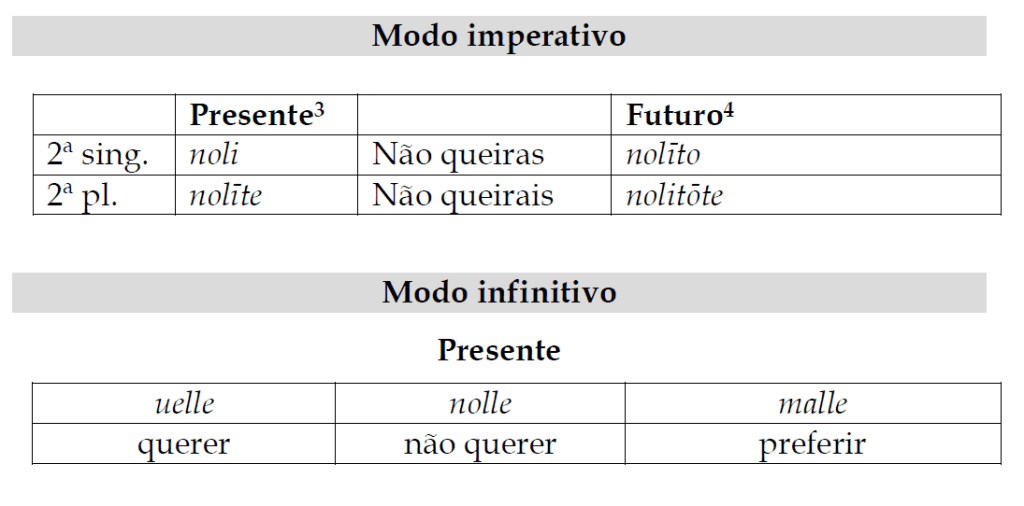
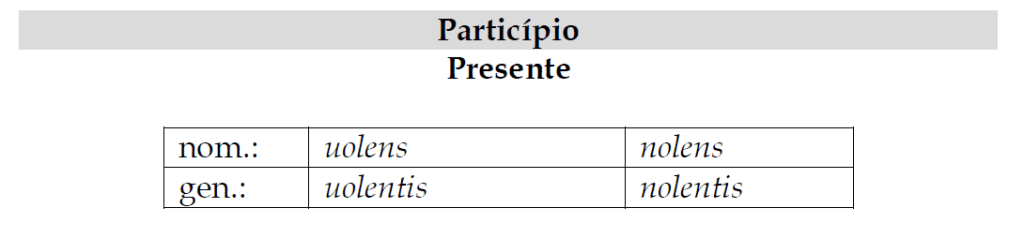
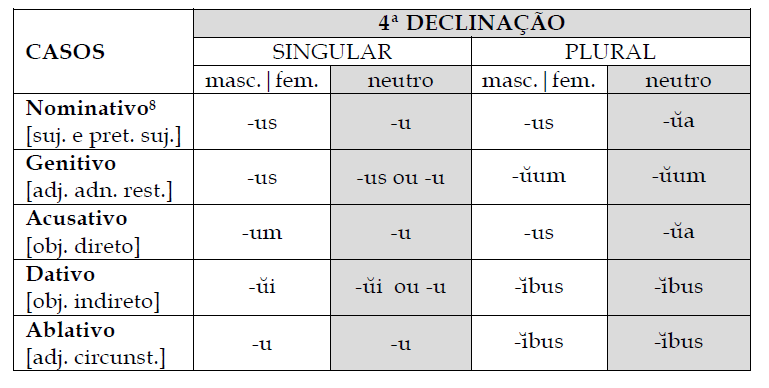
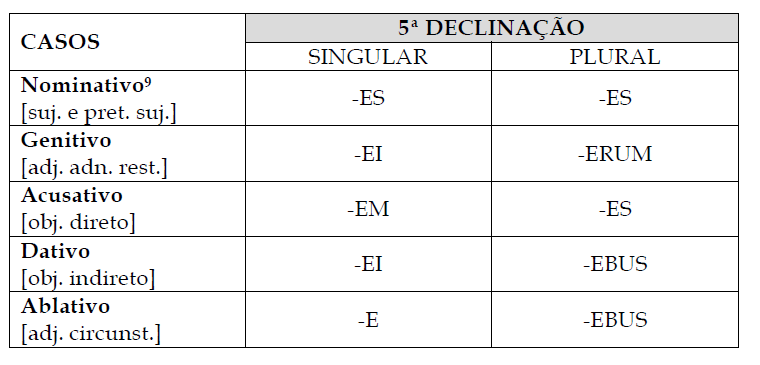

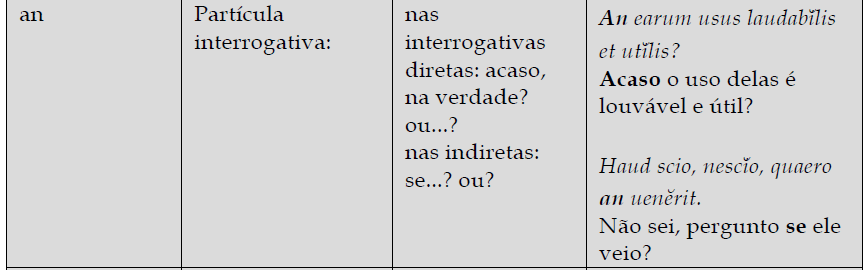
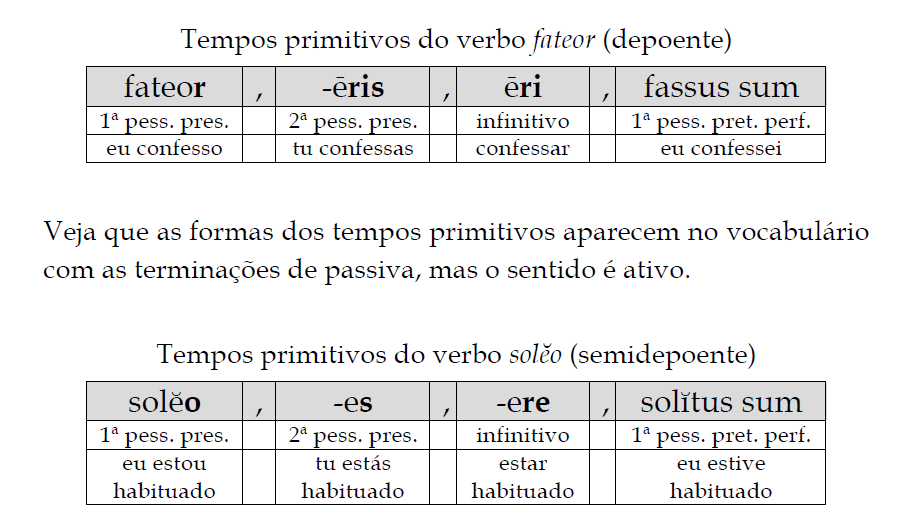
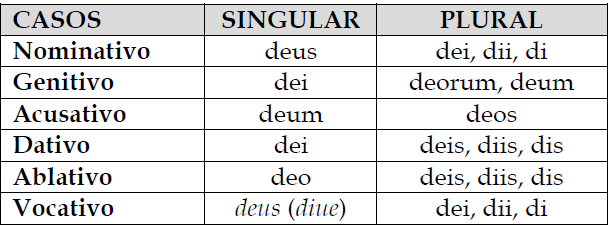
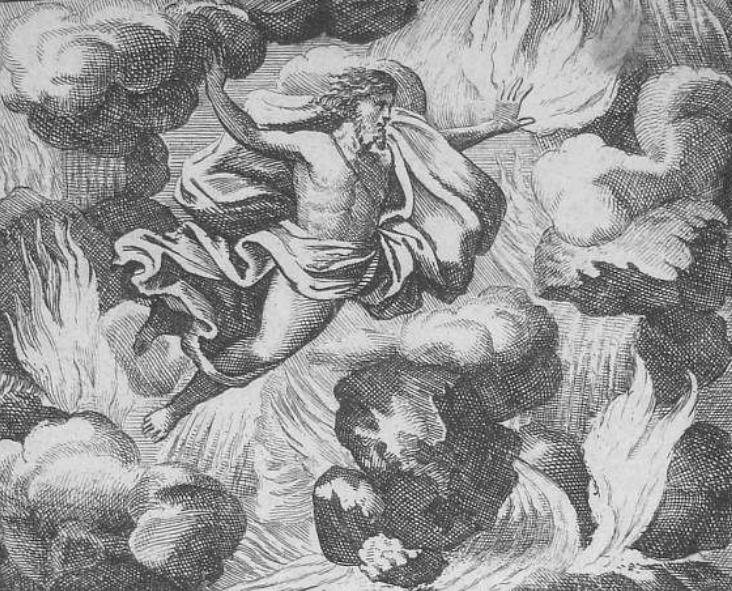
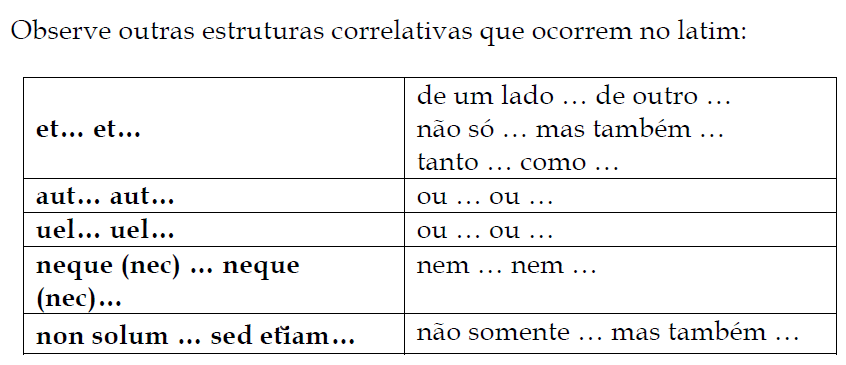

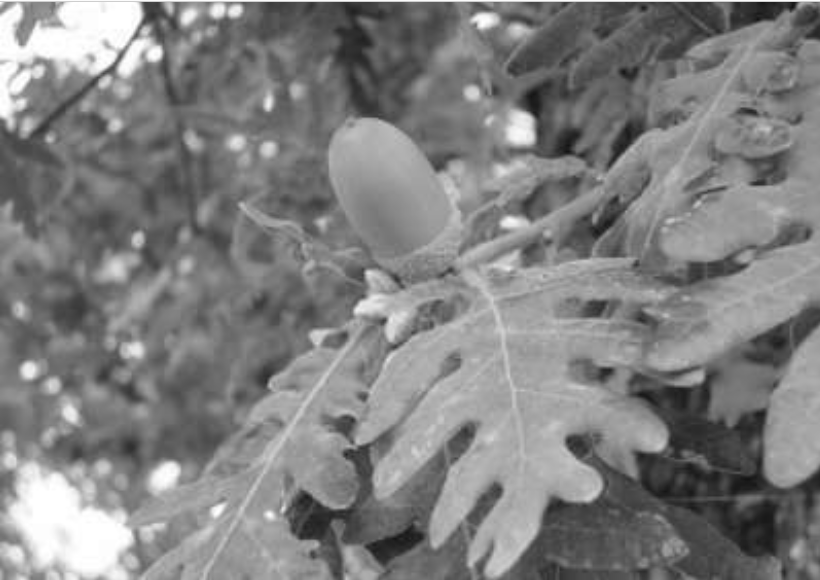
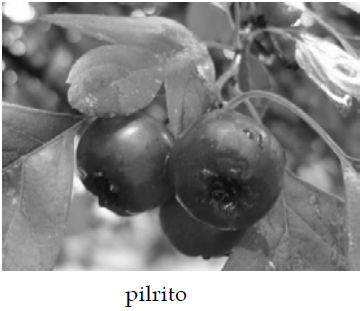
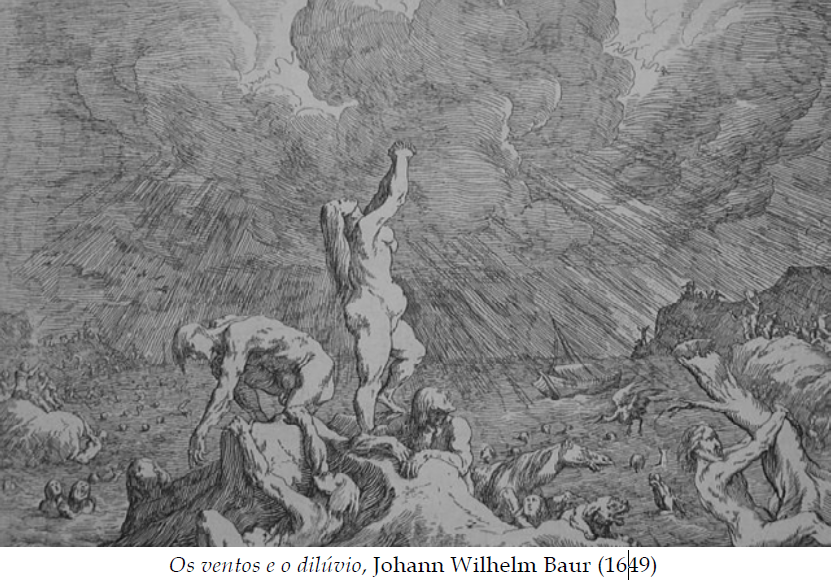
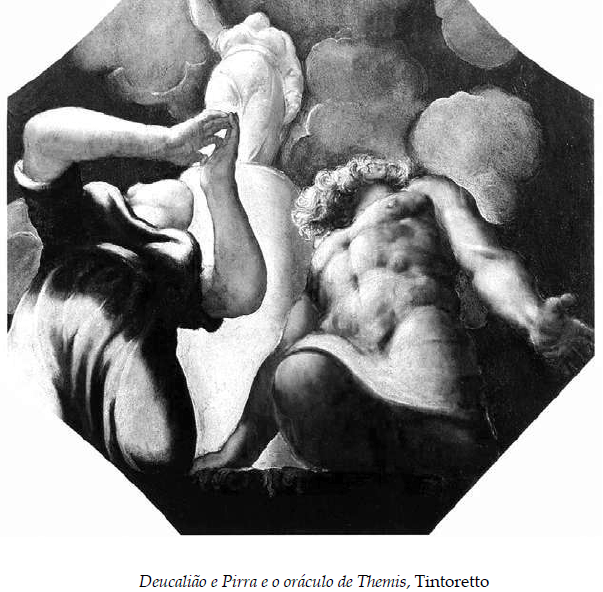
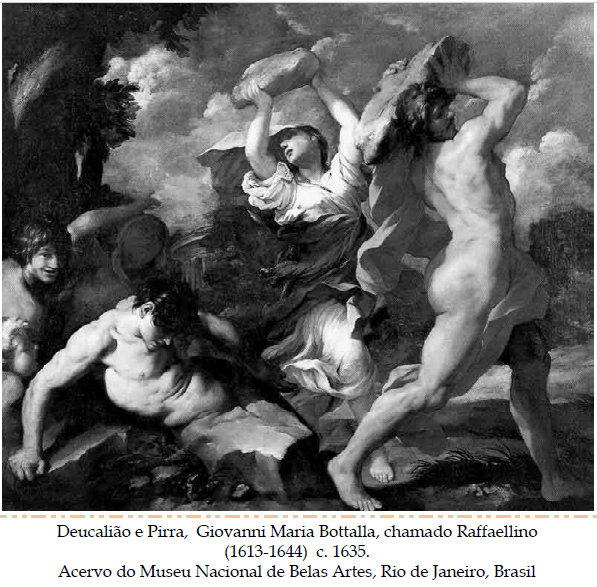
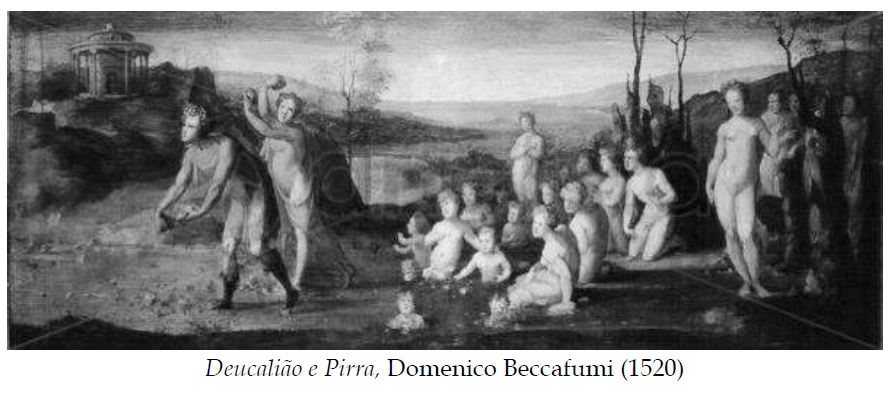
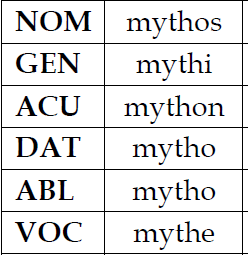
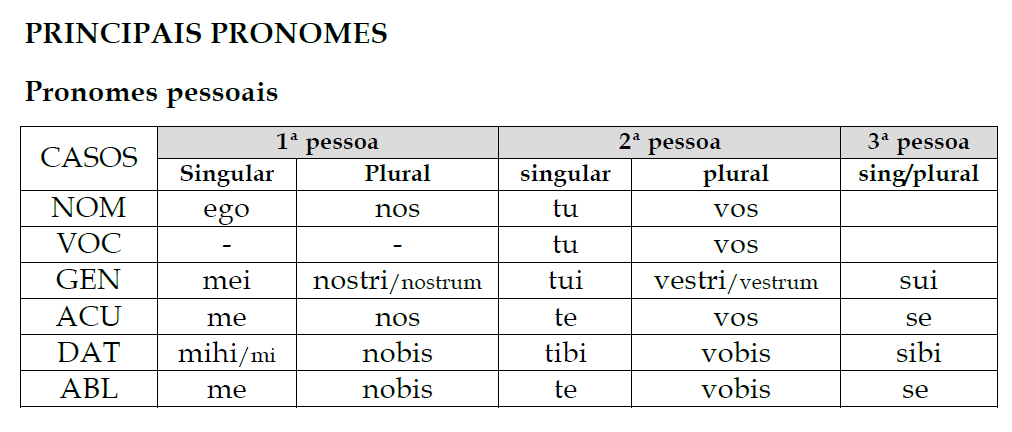
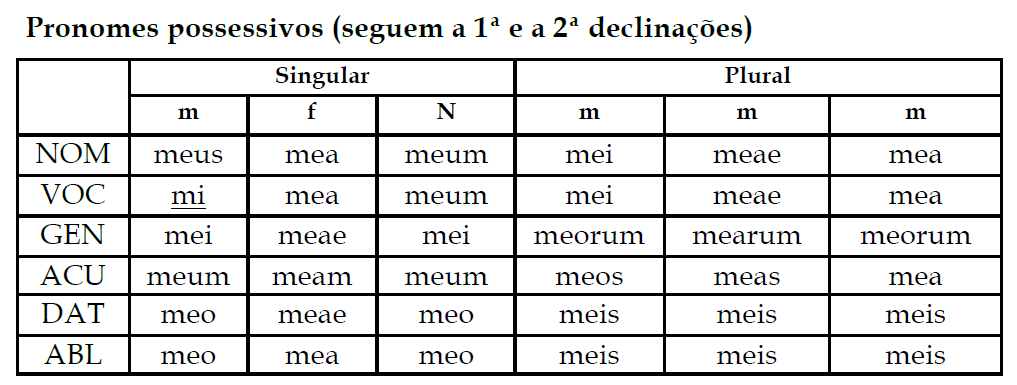
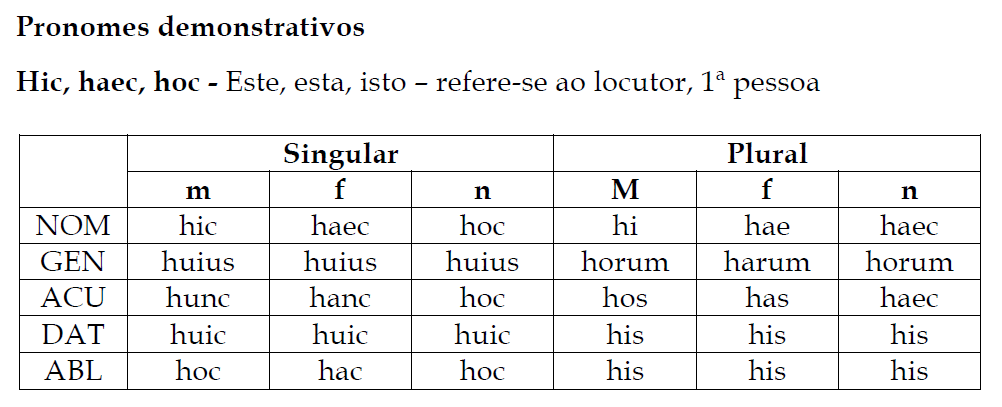
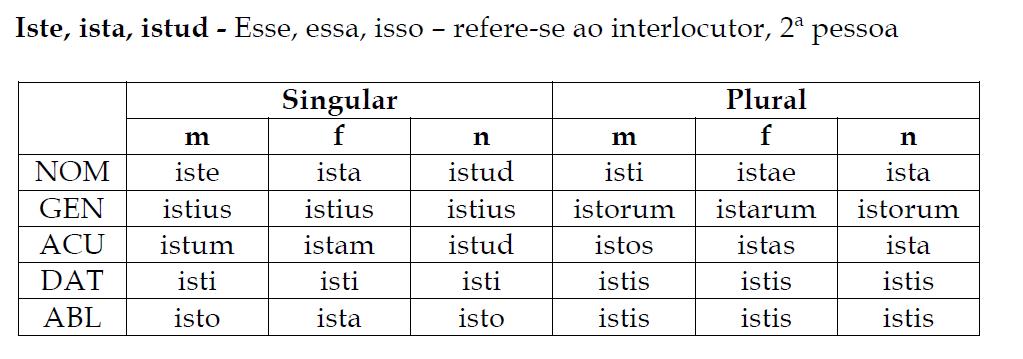








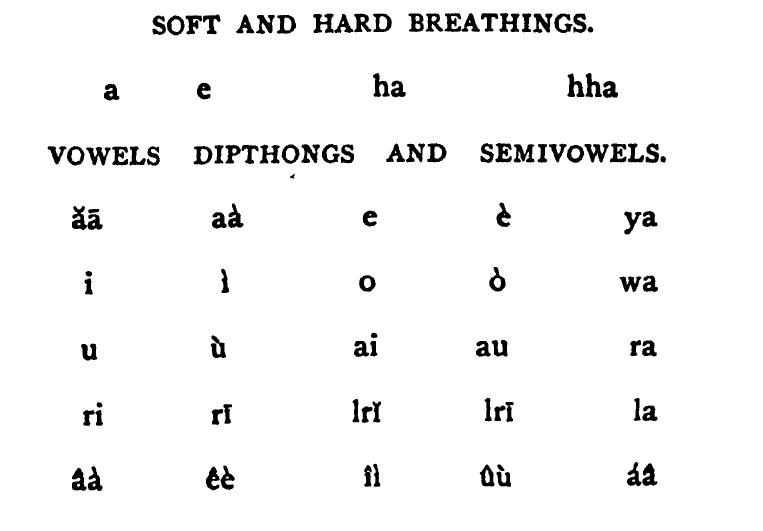
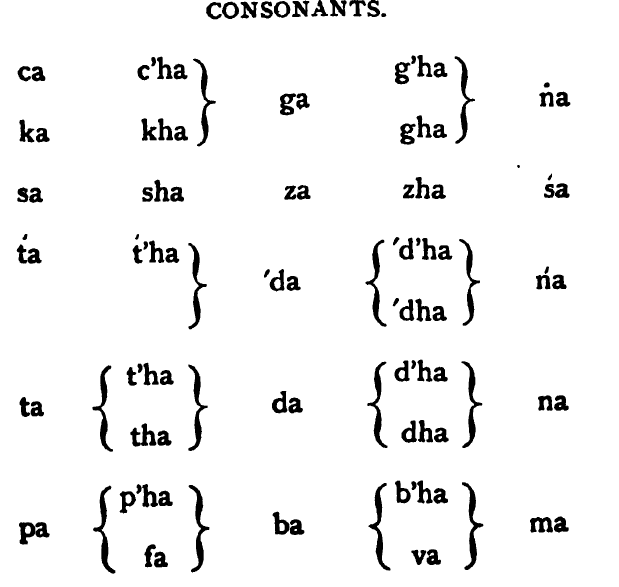
 Seclusão Anagógica