
THE LAWS OF MANU – Comentários antropológico-filosóficos; crítica de seus fundamentos religiosos.

Para dúvidas de vocabulário, ver glossário ao final.

I

He who can be perceived by the internal organ, who is subtile, indiscernible, and eternal, who contains all created beings and is inconceivable, shone forth of his own.

He, desiring to produce beings of many kinds from his own body, first with a thought created the waters, and placed his seed in them.

That became a golden egg, in brilliancy equal to the sun; in that he himself was born as Brahman, the progenitor of the whole world.

The waters are called narah, the waters are, indeed, the offspring of Nara; as they were his first residence (ayana), he thence is named Narayana.

From that cause, which is indiscernible, eternal, and both real and unreal, was produced that male (Purusha), who is famed in this world under the appellation of Brahman.

The divine one resided in that egg during a whole year, then he himself by his thought divided it into two halves;

And out of those two halves he formed heaven and earth, between them the middle sphere, the 8 points of the horizon, and the eternal abode of the waters.

From himself he also drew forth the mind, which is both real and unreal, likewise from the mind egoism, which possesses the function of self-consciousness lordly;”

from minute body particles of these 7 very powerful Purushas springs this world, the perishable from the imperishable.”

But in the beginning he assigned their several names, actions, and conditions to all, even according to the words of the Veda.

He, the Lord, also created the class of the gods, who are endowed with life, and whose nature is action; [à imagem e semelhança do homem!] and the subtile class of the Sadhyas, and the eternal sacrifice.”

Dividing his own body, the Lord became half male and half female; with that he produced Virag.”

They created 7 other Manus possessing great brilliancy, gods and classes of gods and great sages of measureless power,

Cattle, deer, carnivorous beasts with 2 rows of teeth, Rakshasas, Pisakas, and men are born from the womb.

From eggs are born birds, snakes, crocodiles, fishes, tortoises, as well as similar terrestrial and aquatic animals.”

Those trees which bear fruit without flowers are called vanaspati (lords of the forest); but those which bear both flowers and fruit are called vriksha.”

These plants which are surrounded by multiform Darkness, the result of their acts (in former existences), possess internal consciousness and experience pleasure and pain.

The conditions in this always terrible and constantly changing circle of births and deaths to which created beings are subject, are stated to begin with Brahman, and to end with these.

When he whose power is incomprehensible, had thus produced the universe and men, he disappeared in himself, repeatedly suppressing one period by means of the other.

When that divine one wakes, then this world stirs; when he slumbers tranquilly, then the universe sinks to sleep.”

When this soul has entered darkness, it remains for a long time united with the organs of sensation, but performs not its functions; it then leaves the corporeal frame.

When, being clothed with minute particles only, it enters into vegetable or animal seed, it then assumes, united with the fine body, a new corporeal frame.

Thus he, the imperishable one, by waking and slumbering, incessantly revivifies and destroys this whole movable and immovable creation.

But he having composed these Institutes, himself taught them, according to the rule, to me alone in the beginning; next I to Mariki and the other sages.

Bhrigu, here, will fully recite to you these Institutes; for that sage learned the whole in its entirety from me.”

Six other high-minded, very powerful Manus, who belong to the race of this Manu, the descendant of the Self-existent (Svayambhu), and who have severally produced created beings,

Svarokisha, Auttami, Tamasa, Raivata, Kakshusha, possessing great lustre, and the son of Vivasvat.

These seven very glorious Manus, the first among whom is Svayambhuva, produced and protected this whole movable and immovable, each during the period allotted to him.

Eighteen nimeshas (twinklings of the eye, are one kashtha), 30 kashthas one kala, 30 kalas one muhurta, and as many muhurtas one day and night.” Estritamente falando, em contas matemáticas (muhurta/30, etc., 1 nimesha seria 0,177s).

A month is a day and a night of the manes, but the division is according to fortnights. The dark (fortnight) is their day for active exertion, the bright (fortnight) their night for sleep.” A famosa equivalência de 1 mês humano = 1 dia dos semi-deuses, espíritos que no ciclo de reencarnações já estão entre um deus e um humano.

24×28=672h

Deveríamos dormir 12h. E trabalhar umas 3…

A year is a day and a night of the gods; their division is as follows: the half year during which the sun progresses to the north will be the day, that during which it goes southwards the night.”

Se tu és vinte e oito vezes melhor que ele, sou doze vezes melhor que tu. (Ou onze. Não sabemos quantos dias tinha o ano hindu de então. 28 * 12 = 336 dias)

But hear now the brief description of the duration of a night and a day of Brahman and of the several ages (yuga) according to their order.” Do nimesha ao grande ano.

They declare that the Krita age consists of 4,000 years of the gods;¹ the twilight preceding it consists [single-handedly] of as many hundreds”

¹ 1 milhão 344 mil anos do mortal.

In the other 3 ages with their twilights preceding and following, the thousands and hundreds are diminished by one (in each).” 3000 ou 2900 mil.

These 12,000 years which thus have been just mentioned as the total of 4 human ages, are called one age of the gods.

But know that the sum of 1,000 ages of the gods makes one day of Brahman, and that his night has the same length.” 2000 anos dos deuses = 24h do deus dos deuses

The before-mentioned age of the gods, 12,000 of their years, being multiplied by 71, is here named the period of a Manu (Manvantara).” Quase 300 milhões dos nossos anos.

The Manvantaras, the creations and destructions of the world, are numberless; sporting, as it were, Brahman repeats this again and again.

In the Krita age Dharma is 4-footed and entire, and so is Truth; nor does any gain accrue to men by unrighteousness.

In the other 3 ages, by reason of unjust gains, Dharma is deprived successively of 1 foot, and through theft, falsehood, and fraud the merit gained by men is diminished by ¼ in each.

Men are free from disease, accomplish all their aims, and live 400 years in the Krita age, but in the Treta and the succeeding ages their life is lessened by ¼.” Supondo que estamos na quarta idade e o homem vive 70 anos, o verdadeiro homem do eterno e universal mito da idade de ouro vivia 136 anos, não 400. Se calculássemos a partir de 400, viveríamos 168 anos na quarta era. Realmente estamos numa era fodida!

In the Krita age the chief virtue is declared to be austerities, in the Treta knowledge, in the Dvapara sacrifices, in the Kali liberality alone. [Ver GLOSSÁRIO ao final]

But in order to protect this universe He, the most resplendent one, assigned separate duties and occupations to those who sprang from his mouth, arms, thighs, and feet.” As quatro castas hindus, da superior à inferior: os brâmanes provieram da boca de Brahma; são os sacerdotes da religião. Os Chatriya são os guerreiros, e por isso provieram de seus braços; a terceira casta provêm das coxas – embora uma ligação intuitiva entre esta parte do corpo e o ofício de mercador ou camponês não possa ser descoberta rapidamente, são os membros desta casta mais nobres, ou menos indignos, que os últimos, que vêm dos pés de Brahma, a parte mais baixa, e escravos e servos não dispõem de autonomia.

One occupation only the lord prescribed to the Sudras, to serve meekly even these three castes.” E estes que vêm dos pés de Brahma, que não são de barro, são os únicos que não devem estudar os Vedas.

Man is stated to be purer above the navel; hence the Self-existent (Svayambhu) has declared the purest part of him to be his mouth.

The very birth of a Brahmana is an eternal incarnation of the sacred law; for he is born to fulfil the sacred law, and becomes one with Brahman.”

CENTÉSIMO MANDAMENTO: “Whatever exists in the world is the property of the Brahmana; on account of the excellence of his origin the Brahmana is, indeed, entitled to all.”

The Brahmana eats but his own food, wears but his own apparel, bestows but his own in alms; other mortals subsist through the benevolence of the Brahmana.” Ao contrário de outras civilizações baseadas nos serviços dos escravos, o brâmane está interdito de comer alimentos feitos por castas inferiores, produz as próprias roupas, deve estudar os preceitos do Veda constante e ininterruptamente. Não é uma casta ociosa, como no Ocidente. Ou assim nos quer fazer parecer o legislador!

A learned Brahmana must carefully study them, and he must duly instruct his pupils in them, but nobody else”

He sanctifies any company, seven ancestors and seven descendants, and he alone deserves this whole earth.”

In this work the sacred law has been fully stated as well as the good and bad qualities of human actions and the immemorial rule of conduct, to be followed by all the four castes (varna).”

twice-born man: um brâmane versado no sagrado. Auxiliarmente, no que tange ao princípio da transmigração, nenhum brâmane viveu primeiramente como brâmane. Já foi de uma das castas inferiores, renasceu brâmane. E se não se comportar diligentemente como brâmane, renascerá novamente como homem inferior, ou animal ou planta, ou ainda destino pior, como veremos no livro apropriado – sendo ignorar o Veda um pecado irreparável. Não haveria ressentimento se, por via da transmigração, toda a sociedade hindu entender que a cada um será dada sua oportunidade. Se o dogma da reencarnação não for aceitável, isso é uma outra história… Enquanto for, não é uma organização social estapafúrdia, e elimina os ressentimentos sobre “desigualdades” entre castas.

The laws concerning women, of hermits, final emancipation and renouncing the world, the whole duty of a king and the manner of deciding lawsuits,

The rules for the examination of witnesses, the laws concerning husband and wife, the law of division, gambling and the removal of thorns,¹

[¹ Nesse contexto, homens nocivos como espinhos.]

The behaviour of Vaisyas and Sudras, the origin of the mixed castes, the law for all castes in times of distress and the law of penances,

(…)

The primeval laws of countries, of castes (gati), of families, and the rules concerning heretics and companies – Manu has declared in these Institutes.

As Manu, in reply to my questions, formerly promulgated these Institutes, even so learn ye also from me.”

II

To act solely from a desire for rewards is not laudable, yet an exemption from that desire is not to be found in this world: for on that desire is grounded the study of the Veda and the performance of the actions prescribed by the Veda.”

Not a single act here below appears ever to be done by a man free from desire; for whatever man does, it is the result of the impulse of desire.”

The whole Veda is the first source of the sacred law, next the tradition and the virtuous conduct of those who know the Veda further, also the customs of holy men, and finally self-satisfaction.”

Manu (…) was omniscient.”

The man who obeys the law prescribed in the revealed texts and in the sacred tradition gains fame in this world and after death unsurpassable bliss.”

Every twice-born man, who, relying on the Institutes of dialectics, [retórica, oratória] treats with contempt those 2 sources [revelação e tradição], must be cast out by the virtuous, as an atheist and a scorner of the Veda.”

The knowledge of the sacred law is prescribed for those who are not given to the acquisition of wealth and to the gratification of their desires; to those who seek the knowledge of the sacred law the supreme authority is the revelation (Sruti).

But when 2 sacred texts (Sruti) are conflicting, both are held to be law; for both are pronounced by the wise valid law.” Ou seja: é próprio do (inevitável ao) grande homem ser visto como um herético ou imoral, porque o homem pequeno não serve como avaliador justo.

That land, created by the gods, which lies between the two divine rivers Sarasvati and Drishadvati, the sages call Brahmavarta.” Seria interessante apurar a que zona geográfica corresponde atualmente. Provavelmente uma pequena porção da Índia, ou talvez outro Estado-nação.

The precise location and size of the region has been the subject of academic uncertainty. Some scholars, such as the archaeologists Bridget and Raymond Allchin, believe the term Brahmavarta to be synonymous with the Aryavarta region.”

The custom handed down in regular succession since time immemorial among the 4 chief castes (varna) and the mixed races of that country is called the conduct of virtuous men.” Há muito mais no hinduísmo do que aparenta aos olhos ocidentais (4 castas e só – há dezenas de castas e há pessoas fora do sistema de castas que não são os excluídos – proscritos – que compõem na verdade a casta inferior por definição). Talvez que o mundo ainda aguarde o Lévi-Strauss dos hindus.

That country which lies between the Himavat and the Vindhya (mountains) to the east of Prayaga and to the west of Vinasana (the place where the river Sarasvati disappears) is called Madhyadesa (the central region).

But the tract between those two mountains, which extends as far as the eastern and the western oceans, the wise call Aryavarta (the country of the Aryans).”

Por onde não perambula o veado negro, esta é terra de bárbaros.

O homem nascido duas vezes pode residir na terra sagrada; mas um Sudra, este que viva onde for.” Aqui temos duas sentenças seguidas que comprovam o parentesco mais arcano do hinduísmo tanto com a antropologia grega quanto com o hebraísmo mais ortodoxo.

Thus has the origin of the sacred law been succinctly described to you and the origin of this universe; learn now the duties of the castes.

With holy rites, prescribed by the Veda, must the ceremony on conception and other sacraments be performed for twice-born men, which sanctify the body and purify from sin in this life and after death.” Instituição do batismo para o brâmane//católico. Conquanto “concepção” é já o ato sexual gerador, não só o sacramento pós-parto (do qual se trata na sentença seguinte).

Kauda, ou tonsura: “substantivo feminino Corte de cabelo redondo, no topo da cabeça, conferido pelo Bispo aos eclesiásticos que obtiveram o primeiro grau do clericato; a cerimônia em que esse corte é realizado; prima tonsura;

Cercilho; esse corte de cabelo;

Ação ou efeito de cortar os cabelos e a barba.”

Vê-se que isso antecede em muito qualquer “bispo”…

Não pecar (perder a nobreza), nesse sentido, é:

Estudar o Veda;

orar;

recitar;

sacrificar;

procriar.

Before the navel-string is cut, the Gatakarman (birth-rite) must be performed for a male; and while sacred formulas are being recited, he must be fed with gold, honey, and butter.” Uma péssima primeira refeição.

But let the father perform or cause to be performed the Namadheya (the rite of naming the child), on the 10th or 12th day after birth, or on a lucky lunar day, in a lucky muhurta, under an auspicious constellation.

Let the first part of a Brahmana’s name denote something auspicious, a Kshatriya’s be connected with power, and a Vaisya’s with wealth, but a Sudra’s express something contemptible.” A origem consciente dos nomes próprios feios e vulgares.

The second part of a Brahmana’s name shall be a word implying happiness, of a Kshatriya’s a word implying protection, of a Vaisya’s a term expressive of thriving, and of a Sudra’s an expression denoting service.

The names of women should be easy to pronounce, not imply anything dreadful, possess a plain meaning, be pleasing and auspicious, end in long vowels, and contain a word of benediction.

In the 4th month the Nishkramana (the first leaving of the house) of the child should be performed, in the 6th month the Annaprasana (first feeding with rice), and optionally any other auspicious ceremony required by the custom of the family.

According to the teaching of the revealed texts, the Kudakarman (tonsure) must be performed, for the sake of spiritual merit, by all twice-born men in the first or third year.” Repare na insistência no tema (e no já 2º vocábulo utilizado para tonsura).

In the 8th year after conception [7 anos e 3 meses aproximados de vida, este é o aniversário], one should perform the initiation (upanayana) of a Brahmana, in the 11th after conception that of a Kshatriya, but in the 12th that of a Vaisya.” Os brâmanes amadurecem mais rápido (como as mulheres).

The initiation of a Brahmana who desires proficiency in sacred learning should take place in the 5th year after conception, that of a Kshatriya who wishes to become powerful [o Kshatriya está no meio do caminho do que nós consideraríamos como guerreiro e político] in the 6th, and that of a Vaisya who longs for success in his business in the 8th.” Absurdo. Ao mesmo tempo que o nome deve reforçar o destino, o “eleito” deve escolher “livremente” numa idade muito anterior à do próprio juízo, e anterior até à da iniciação ritual. Hoje todos são Vaisyas de berço.

The time for the Savitri (initiation) of a Brahmana does not pass until the completion of the 16th year after conception, of a Kshatriya until the completion of the 22nd, and of a Vaisya until the completion of the 24th.” De novo, o ocidental tem todo o espírito do comércio em sua “formação individual”.

After those periods men of these 3 castes who have not received the sacrament at the proper time become Vratyas (outcasts), excluded from the initiation and despised by the Aryans.

With such men, if they have not been purified according to the rule, let no Brahmana ever, even in times of distress, form a connexion either through the Veda or by marriage.” O apartheid mais intenso jamais imaginado. O Vratya está abaixo do Sudra (quarta casta).

Let students, according to the order of their castes, wear the skins of black antelopes, spotted deer, and he-goats” Não sei precisar a diferença entre antelope e deer nesse caso, ambos tradutíveis como veado ou corça.

The girdle of a Brahmana shall consist of a triple cord of Munga grass, smooth and soft” O comerciante usa cânhamo, quanta ironia, burguesia!

If Munga grass be not procurable, the girdles may be made of Kusa, Asmantaka, and Balbaga fibres, with a single threefold knot, or with 3 or 5 knots according to the custom of the family.” Esses trechos necessitam de consulta a comentadores.

The staff of a Brahmana shall be made of such length as to reach the end of his hair; that of a Kshatriya, to reach his forehead; and that of a Vaisya, to reach the tip of his nose.”

the student should beg alms according to the prescribed rule.” Quem está a serviço, está a serviço, ainda que seja um aristocrata.

Let him first beg food of his mother, or of his sister, or of his own maternal aunt, or of some other female who will not disgrace him by a refusal.”

let him eat, turning his face towards the east, [voltado para o nascer do Sol] and having purified himself by sipping water.

His meal will procure long life, if he eats facing the east; fame, if he turns to the south; prosperity, if he turns to the west; truthfulness, if he faces the east.” Aqui não sei se o texto está corrompido ou se o leste é duas vezes bendito e o norte poluído.

Let him always worship his food, and eat it without contempt; when he sees it, let him rejoice, show a pleased face, and pray that he may always obtain it.

Food, that is always worshipped, gives strength and manly vigour; but eaten irreverently, it destroys them both.” O pai do pai-nosso.

Let him not give to any man what he leaves, and beware of eating between the 2 meal-times; let him not over-eat himself, nor go anywhere without having purified himself.”

They call the part at the root of the thumb the tirtha sacred to Brahman, that at the root of the little finger the tirtha sacred to Ka (Pragapati), that at the tips of the fingers, the tirtha sacred to the gods, and that below between the index and the thumb, the tirtha sacred to the manes.”

Let him first sip water thrice; next twice wipe his mouth; and, lastly, touch with water the cavities of the head, the seat of the soul” As origens do TOC.

“…and turning to the east or to the north.” (ablução – o que significa que o trecho acima provavelmente omite norte de forma errada)

This whole series of ceremonies must be performed for females also, in order to sanctify the body, at the proper time and in the proper order, but without the recitation of sacred texts.” O super-apartheid.

The nuptial ceremony is stated to be the Vedic sacrament for women and to be equal to the initiation, serving the husband equivalent to the residence in the house of the teacher, and the household duties the same as the daily worship of the sacred fire.” O homem é o sol da mulher, e seu professor, e sua casa.

Thus has been described the rule for the initiation of the twice-born, which indicates a new birth, and sanctifies; learn now to what duties they must afterwards apply themselves.

Having performed the initiation, the teacher must first instruct the pupil in the rules of personal purification, of conduct, of the fire-worship, and of the twilight devotions.”

At the beginning and at the end of a lesson in the Veda he must always clasp both the feet of his teacher, [abraçar, apertar – com as mãos ou com os pés, porém? Manter apertado não parece ser o sentido, uma vez que contradiria a sentença seguinte, se se tratar mesmo das mãos – parece ser apenas um amplexo inicial de cumprimento] and he must study joining his hands; that is called the Brahmangali (joining the palms for the sake of the Veda).

With crossed hands he must clasp the feet of the teacher, and touch the left foot with his left hand, the right foot with his right hand. [esclarecimento do ‘mistério’ acima – pode parecer óbvio, mas implica que o discípulo deve cruzar os braços na saudação, posto que estão um de frente para o outro]

Let him [o aprendiz novato] always pronounce the syllable Om at the beginning and at the end of a lesson in the Veda; [if] the syllable Om [does not] precede the lesson, [it] will slip away, and unless it follow[s] it will fade away.” Se o discípulo não recitar Om antes e depois da lição, não será capaz de compreender o que vem a seguir ou esquecerá o que acabou de aprender.

“…and sanctified by 3 suppressions of the breath (Pranayama), he is worthy to pronounce the syllable Om.

Pragapati (the lord of creatures) milked out from the 3 Vedas the sounds A, U, and M, and the Vyahritis Bhuh, Bhuvah, Svah.” Não só os deuses tiram leite de pedra como do próprio livro, ou Palavra, ou Grande Verdade. Extraem o mais puro e o máximo do (aparente) mínimo.

A twice-born man who daily repeats those three [vowels] 1000 times outside the village will be freed after a month even from great guilt, as a snake from its slough. [pele]Who repeats, repents. Pêgo com as calças na mão.

The Brahmana, the Kshatriya, and the Vaisya who neglect the recitation of that Rik-verse and the timely performance of the rites prescribed will be blamed among virtuous men.

Know that the 3 imperishable Mahavyahritis, preceded by the syllable Om, and followed by the 3-footed Savitri are the portal of the Veda and the gate leading to union with Brahman.

He who daily recites that verse, untired, during 3 years, will enter after death the highest Brahman, move as free as air, and assume an ethereal form.

The monosyllable Om is the highest Brahman, 3 suppressions of the breath are the best form of austerity, but nothing surpasses the Savitri [iniciação, mote ou lema neste contexto, isto é, expressão curta que resume toda uma doutrina] ‘truthfulness is better than silence’.” A afetação na fala seria o mais ridículo de 3 estados possíveis (pode-se dizer a verdade, calar ou mentir). O silêncio é mais digno. Mas mais digna que o silêncio é a fala sincera.

All rites ordained in the Veda, burnt oblations and other sacrifices pass away; but know that the syllable Om is imperishable, and it is Brahman, and the Lord of creatures (Pragapati).

Uma oferenda sob a forma de orações em murmúrio, é dez vezes mais eficaz que um sacrifício realizado conforme as leis do Veda; uma oração inaudível aos outros, no entanto, supera em cem vezes aquela oferenda; e a recitação puramente mental dos textos sagrados, mil vezes.

Se juntarmos os 4 Pakayagnas [?] e essas oferendas sancionadas pelo Veda, ainda não alcançamos nem um dezesseis avos do valor da oferenda sob a forma de orações em murmúrio.

[?] Ou Pakayanas

Mas também é verdade que um Brahmana pode, sem dúvida, alcançar a mais nobre elevação apenas por orações murmuradas; se ele executa outros ritos ou os negligencia, aquele que é o amigo de todas as criaturas [é ‘duas vezes nascido’, i.e., da primeira casta] é de todo modo um verdadeiro Brahmana [e alcança o que outros não podem alcançar].

Um homem sábio deve se esforçar para controlar seus órgãos que deixados a seu curso natural são seduzidos pelos objetos atrativos do mundo; um homem sábio controla seus órgãos vitais assim como o carroceiro seus cavalos.

Os 11 órgãos que os antigos sábios enumeraram eu vou ensinar na ordem própria e precisa,

o ouvido, a pele, os olhos, a língua, o nariz como o quinto, o ânus, o órgão da geração, mãos e pés e o órgão da fala [sistema fonador – do qual a língua participa; mas na primeira série de órgãos a língua era considerada apenas enquanto instrumento do paladar] como o décimo.”

Know that the internal organ (manas) is the 11th, which by its quality belongs to both sets [órgãos dos sentidos e órgãos da ação]; when that has been subdued, both those sets of 5 organs have been conquered.”

O desejo nunca é extinto através da fruição do desejo; quanto mais prazer se usufrui, mais forte o desejo, como fogo alimentado por combustível.

Portanto, entre obter todos os prazeres e renunciar a todos eles, a renúncia absoluta é sem dúvida melhor.

É extremamente difícil restringir os órgãos sensuais apenas através da abstinência; é preciso buscar constantemente o conhecimento a fim de lograr a renúncia absoluta.

Tampouco bastam os Vedas, a profissão da generosidade, a performance de sacrifícios nem qualquer restrição auto-imposta, nem uma rotina austera, para a obtenção de recompensa divina, se o coração do homem em questão se encontra contaminado pela sensualidade.

Apenas o homem que, escutando, tocando, vendo, provando e cheirando seja o que for, não sente prazer nem desprazer pode ser chamado de homem que domou seus órgãos.

Porém, basta que um dos órgãos escape do controle para que a sabedoria também escape, exatamente como a água derramada do recipiente escorre pelo corpo daquele que vai buscá-la ao poço.

Se o homem conserva os dez órgãos (e a mente, o décimo primeiro órgão) em sujeição, conquistará toda sua meta, sem que careça da prática da Yoga.”

O praticante deve erguer-se com o céu ainda escuro, sussurrando o Savitri até a aurora, mas que ele não deixe de recitá-lo, sentado, manhã e tarde e noite adentro, até as constelações estarem visíveis no céu.” Netero alcançando seu auge (Hunter x Hunter). Gratidão é a palavra-chave (hoje tão banalizada).

There are no forbidden days for the daily recitation, since that is declared to be a Brahmasattra; at that the Veda takes the place of the burnt oblations”

Unless one be asked, one must not explain anything to anybody, nor must one answer a person who asks improperly; let a wise man, though he knows, behave among men as an idiot.

Of the two persons, him who illegally explains, and him who illegally asks, one or both will die or incur the other’s enmity.”

good seed must not be thrown on barren land.” Se ao menos os cristãos fossem mais orgulhosos e assim pensassem teríamos evitado muitos genocídios de povos originários.

But he who acquires without permission the Veda from one who recites it, incurs the guilt of stealing the Veda, and shall sink into hell.”

A Brahmana who completely governs himself, though he know the Savitri only, is better than he who knows the 3 Vedas but does not control himself, eats all sorts of food, and sells all sorts of goods.

One must not sit down on a couch or seat which a superior occupies; and he who occupies a couch or seat shall rise to meet a superior, and salute him.”

After the salutation, a Brahmana who greets an elder must pronounce his name, saying, ‘I am N. N.’”

In saluting he should pronounce after his name the word bhoh; for the sages have declared that the nature of bhoh is the same as that of all proper names.”

and the vowel ‘a’ must be added at the end of the name of the person addressed, the syllable preceding it being drawn out to the length of 3 moras [unidades].

A Brahmana who does not know the form of returning a salutation, must not be saluted by a learned man; as a Sudra, even so is he.

Let him ask a Brahmana, on meeting him, after his health, with the word kusala, a Kshatriya, anamaya, a Vaisya kshema, and a Sudra anarogya.”

But to a female who is the wife of another man, and not a blood-relation, he must say, ‘Lady’ (bhavati) or ‘Beloved sister!’”

To his maternal and paternal uncles, fathers-in-law, officiating priests, venerable persons, he must say, ‘I am N. N.’, and rise, even though they be younger.

A maternal aunt, the wife of a maternal uncle, a mother-in-law, and a paternal aunt must be honoured like the wife of one’s teacher; they are equal to the wife of one’s teacher.

The feet of the wife of one’s brother, if she be of the same caste (varna), must be clasped every day; but the feet of wives of other paternal and maternal relatives need only be embraced on one’s return from a journey.

Towards a sister of one’s father and of one’s mother, and towards one’s own elder sister, one must behave as towards one’s mother; but the mother is more venerable than they.”

Fellow-citizens are called friends and equals though one be 10 years older than the other, men practising the same fine art though one be 5 years older, Srotriyas though 3 years intervene between their ages, but blood-relations only (if the) difference of age be very small.

Know that a Brahmana of 10 years and Kshatriya of 100 years stand to each other in the relation of father and son; but between those two the Brahmana is the father.

Wealth, kindred, age, the due performance of rites, and, fifthly,¹ sacred learning are titles to respect; but each later-named cause is more weighty than the preceding ones.” Os ricos (merceeiros) por último.

¹ Lendo essa palavra me dei conta de que o inglês, mesmo não sendo tão proeminente em consoantes como muitas línguas européias, tem uma palavra de 9 letras em que 8 são consoantes, sendo 6 consecutivas: twelfthly!

Whatever man of the 3 highest castes¹ possesses most of those five,¹ both in number and degree, that man is worthy of honour among them; and so is a Sudra who has entered the 10th decade of his life.” Que cruel essa expectativa…

¹ Três nem sequer dependem da vontade do indivíduo…

Way must be made for a man in a carriage, for one who is above 90 years old, [!] for one diseased, for the carrier of a burden, for a woman, for a Snataka, [estudante graduado] for the king, and for a bridegroom.” Leis inclusivas desde os mais remotos tempos.

a Snataka and the king must be most honoured; and if the king and a Snataka meet, the latter receives respect from the king.”

They call that Brahmana who initiates a pupil and teaches him the Veda together with the Kalpa and the Rahasyas, the teacher (akarya).

But he who for his livelihood teaches a portion only of the Veda, or also the Angas of the Veda, is called the sub-teacher (upadhyaya).”

That Brahmana who performs in accordance with the rules of the Veda the rites, the Garbhadhana (conception-rite) and so forth, and gives food to the child, is called the Guru (the venerable one).”

That man who truthfully fills both his ears with the Veda the pupil shall consider as his father and mother; he must never offend him.

The teacher (akarya) is 10 times more venerable than a sub-teacher (upadhyaya), the father a 100 times more than the teacher, but the mother a 1000 times more than the father.”

That Brahmana who is the giver of the birth for the sake of the Veda and the teacher of the prescribed duties becomes by law the father of an aged man, even though he himself be a child.

Young Kavi, the son of Angiras, taught his relatives who were old enough to be fathers, and, as he excelled them in sacred knowledge, he called them ‘Little sons’.

They, moved with resentment, asked the gods concerning that matter, and the gods, having assembled, answered, ‘The child has addressed you properly.

For a man destitute of sacred knowledge is indeed a child…’”

The seniority of Brahmanas is from sacred knowledge, that of Kshatriyas from valour, that of Vaisyas from wealth in grain (and other goods), but that of Sudras alone from age.

A man is not therefore venerable because his head is gray; him who, though young, has learned the Veda, the gods consider to be venerable.” You don’t have to be old to be wise, right, Halffy?

As an elephant made of wood, as an antelope made of leather, such is an unlearned Brahmana; those three have nothing but the names.

As a eunuch is unproductive with women, as a cow with a cow is unprolific, and as a gift made to an ignorant man yields no reward, even so is a Brahmana useless, who does not know the Rikas.

Created beings must be instructed in what concerns their welfare without giving them pain, and sweet and gentle speech must be used by a teacher who desires to abide by the sacred law.” O inverso da pedagogia contemporânea.

let him not utter speeches which make others afraid of him, since that will prevent him from gaining heaven.” Uma lição à igreja católica, por exemplo.

A Brahmana should always fear homage as if it were poison; and constantly desire scorn as nectar.” Nietzsche em estado bruto.

For he who is scorned sleep with an easy mind, awake with an easy mind, and with an easy mind walk here among men; but the scorners utterly perish.”

A twice-born man who, not having studied the Veda, applies himself to other and worldly study soon falls, even while living, to the condition of a Sudra and his descendants after him.

He who has not been initiated should not pronounce any Vedic text excepting those required for the performance of funeral rites, since he is on a level with a Sudra before his birth from the Veda.”

Let him abstain from honey, meat, perfumes, garlands, substances used for flavouring food, women, all substances turned acid, and from doing injury to living creatures.

From anointing his body, applying collyrium to his eyes, from the use of shoes and of an umbrella or parasol, from sensual desire, anger, covetousness, dancing, singing, and playing musical instruments” Já é demasiado!

MAIS PROBIÇÕES: “…gambling, idle disputes, backbiting, and lying, from looking at and touching women, and from hurting others.”

Let him always sleep alone, let him never waste his manhood; for he who voluntarily wastes his manhood, breaks his vow.”

SANSÃO, O VIRGEM (E ATÉ BRAÇO-VIRGEM!): “A twice-born student who has involuntarily wasted his manly strength during sleep [aqui é definitivamente onde a polução noturna se torna poluição noturna!] must bathe, worship the sun, and afterwards thrice mutter the Rik-verse, which begins ‘Again let my strength return to me’.”

lAwful

He who, without being sick, neglects during 7 days to go out begging, and to offer fuel in the sacred fire, shall perform the penance of an Avakirnin (one who has broken his vow).”

the subsistence of a student on begged food is declared to be equal in merit to fasting.”

In the presence of his teacher let him always eat less, wear a less valuable dress and ornaments than the former, and let him rise earlier from his bed and go to rest later.”

Let him not pronounce the mere name of his teacher without adding an honorific title behind his back even, and let him not mimic his gait, speech, and deportment.

Wherever people justly censure or falsely defame his teacher, there he must cover his ears or depart thence to another place.” Me pergunto se cover his ears neste caso é destruir os próprios tímpanos.

By censuring his teacher, though justly, he will become in his next birth an ass,¹ by falsely defaming him, a dog; he who lives on his teacher’s substance, will become a worm, and he who is envious of his merit, a larger insect.”

¹ Muito conveniente. Mas demonstra que os hindus valorizam mais a mula ou o burro que o cachorro.

If his teacher’s teacher is near, let him behave towards him as towards his own teacher; but let him, unless he has received permission from his teacher, not salute venerable persons of his own family.”

A student must not shampoo the limbs of his teacher’s son, nor assist him in bathing, nor eat the fragments of his food, nor wash his feet.”

Let him not perform for a wife of his teacher the offices of anointing her, assisting her in the bath, shampooing her limbs, or arranging her hair.” Essa segunda recomendação é muito mais importante que a primeira!

A pupil who is full 20 years old, and knows what is becoming and unbecoming, shall not salute a young wife of his teacher by clasping her feet.” Aquele que já é grandinho (sabe o que é morrer e transar), que não abrace a mulher de seu mentor!

It is the nature of women to seduce men in this world; for that reason the wise are never unguarded in the company of females.

For women are able to lead astray in this world not only a fool, but even a learned man, and to make him a slave of desire and anger.” Sábias palavras!

Se ironizar os comandos das Leis de Manu representar minha perdição, eu já estou no pior dos labirintos…

One should not sit in a lonely place with one’s mother, sister, or daughter; for the senses are powerful, and master even a learned man.

But at his pleasure a young student may prostrate himself on the ground before the young wife of a teacher, in accordance with the rule, and say, ‘I, N. N., worship thee, O lady’.”

On returning from a journey he must clasp the feet of his teacher’s wife and daily salute her in the manner just mentioned, remembering the duty of the virtuous.” Podia tirar uma casquinha, desde que estivesse sumido por um tempo!

A student may either shave his head, or wear his hair in braids, or braid one lock on the crown of his head; the sun must never set or rise while he lies asleep in the village.

If the sun should rise or set while he is sleeping, be it intentionally or unintentionally, he shall fast during the next day, muttering the Savitri.”

If a woman or a man of low caste perform anything leading to happiness, let him diligently practise it, as well as any other permitted act in which his heart finds pleasure.”

That trouble and pain which the parents undergo on the birth of their children, cannot be compensated even in 100 years.” Para o homem, não sei a que dor e sofrimento se refere!

The father, forsooth, is stated to be the Garhapatya fire, the mother the Dakshinagni, but the teacher the Ahavaniya fire; this triad of fires is most venerable.

He who neglects not those three, even after he has become a householder, will conquer the 3 worlds and, radiant in body like a god, he will enjoy bliss in heaven.

By honouring his mother he gains this world, by honouring his father the middle sphere, but by obedience to his teacher the world of Brahman. [Contradiz trecho anterior em que a mãe era a mais honorável de todas por longa margem.]

He shall inform them of everything that with their consent he may perform in thought, word, or deed for the sake of the next world.” O ponto fraco do Vedanta: aquele que tem de ser o servo da vontade dos pais por toda a vida acaba inconscientemente desejando sua morte. Desse ponto de vista, os órfãos são muito mais felizes, aliviados de uma tirânica carga patriarcal. Aquele que segue contido e autocensurado diante de pais centenários, por exemplo, se torna mórbido, malvado. Lembrar-se de que o mais comum neste mundo é ser de natureza oposta à dos próprios parentes.

every other act is a subordinate duty.”

He who possesses faith may receive pure learning even from a man of lower caste, the highest law even from the lowest, and an excellent wife even from a base family.” E aqui um dos pontos que é mais mal-digerido pelo Ocidente: a lei de castas NÃO proscreve o casamento intercastas – e nem mesmo o próprio estudo dos Vedas está interdito a um Kshatriya e assim sucessivamente (na verdade ele é obrigatório para o brâmane, nisso consistindo a principal diferença). Se o espírito da religião não for apropriado por uma oligarquia (aristocracia decadente) sacerdotal, há liberdade de expressão individual para todos, e não uma elite que apenas se perpetua no poder através de expedientes absurdos e odiosos, falsamente justificados na tradição infinita dos tempos passados.

Even from poison nectar may be taken, even from a child good advice, even from a foe a lesson in good conduct, and even from an impure substance, gold.

Excellent wives, learning, the knowledge of the law, the rules of purity, good advice, and various arts may be acquired from anybody.

It is prescribed that in times of distress a student may learn the Veda from one who is not a Brahmana; and that he shall walk behind and serve such a teacher, as long as the instruction lasts.” Vivemos tempos assim.

A Brahmana who serves his teacher till the dissolution of his body, reaches forthwith the eternal mansion of Brahman.”

A perpetual student must, if his teacher dies, serve his son provided he be endowed with good qualities, or his widow, or his Sapinda, in the same manner as the teacher.” Me parece que o Código de Manu já é a perversão decadente de um código muito mais antigo e que não continha artimanhas e adulterações dignas de senhores de engenho para escravizar pessoas ingênuas por mais tempo (atravessando até gerações na mesma casa).

Should none of these be alive, he must serve the sacred fire, standing by day and sitting during the night, and thus finish his life.” Patético. O que é um fogo sagrado ou um deus sem o homem para observá-lo e adorá-lo com consciência? Mas neste caso esse mandamento é apenas algo mecânico e esvaziado de consciência e de sentido, compulsivo (e compulsório!) e involuntário, mera auto-imolação.

III

The vow of studying the 3 Vedas under a teacher must be kept for 36 years, or for half that time, or for a quarter, or until the student has perfectly learnt them.” Um aforismo realmente inútil. Positivamente, talvez o único que legisle seja: o tempo mínimo de estudo dos Vedas, excetuando-se os superdotados, é de 9 anos.

In connecting himself with a wife, let him carefully avoid the ten following families, be they ever so great, or rich in kine, horses, sheep, grain, or property,

one which neglects the sacred rites, one in which no male children are born, one in which the Veda is not studied, one the members of which have thick hair on the body, those which are subject to hemorrhoids, phthisis, weakness of digestion, epilepsy, or white or black leprosy.” O que a ignorância não é capaz de prescrever! O que me faz lembrar piada chula, por sinal: – Sua esposa tem hemorróida? – Não que eu saiba, mas por que a pergunta?! – É que ela senta muito

Let him not marry a maiden with reddish hair, nor one who has a redundant member, nor one who is sickly, nor one either with no hair on the body or too much, nor one who is garrulous or has red eyes,

Nor one named after a constellation, [desculpe, Andrômeda, terei de deixá-la!] a tree, or a river, nor one bearing the name of a low caste, or of a mountain, nor one named after a bird, a snake, or a slave, nor one whose name inspires terror.

Let him wed a female free from bodily defects, who has an agreeable name, the graceful gait of a Hamsa or of an elephant, [graciosa como uma jamanta dopada!] a moderate quantity of hair on the body and on the head, small teeth, and soft limbs.” A genealogia dos incels e redpilled.

Quem procura não só pêlo em ovo como cavalo em dente e até os próprios ovos não será nunca feliz no casamento…

Macho, nunca saciado, nunca saciável, nunca sociável: “For the first marriage of twice-born men wives of equal caste are recommended; but for those who through desire proceed to marry again the following females, chosen according to the order of the castes, are most approved.

It is declared that a Sudra woman alone can be the wife of a Sudra, she and one of his own caste the wives of a Vaisya, those 2 and one of his own caste the wives of a Kshatriya, those 3 and one of his own caste the wives of a Brahmana.” Quer-se dizer: desçam escadas um degrau por vez.

he who weds a Sudra woman becomes an outcast, according to Saunaka on the birth of a son, and according to Bhrigu he who has male offspring from a Sudra female, alone.

A Brahmana who takes a Sudra wife to his bed, will after death sink into hell; if he begets a child by her, he will lose the rank of a Brahmana [afundar no inferno ainda em vida].”

For him who drinks the moisture of a Sudra’s lips, who is tainted by her breath, and who begets a son on her, no expiation is prescribed.”

Now listen to the brief description of the following 8 marriage-rites used by the 4 castes (varna) which partly secure benefits and partly produce evil both in this life and after death.

They are the rite of Brahman (Brahma), that of the gods (Daiva), that of the Rishis (Arsha), that of Pragapati (Pragapatya), that of the Asuras (Asura), that of the Gandharvas (Gandharva), that of the Rhashasas (Rakshasa), and that of the Pisakas (Paisaka).

Which is lawful for each caste (varna) and which are the virtues or faults of each rite, all this I will declare to you, as well as their good and evil results with respect to the offspring.

One may know that the first 6 according to the order are lawful for a Brahmana, the 4 last for a Kshatriya, and the same 4, excepting the Rakshasa rite, for a Vaisya and a Sudra.”

the Paisaka and the Asura rites [o 5º e o 8º] must never be used.

For Kshatriyas those before-mentioned 2 rites, the Gandharva and the Rakshasa, [6º e 7º] whether separate or mixed, are permitted by the sacred tradition.”

The gift of a daughter, after decking her with costly garments and honouring her by presents of jewels, to a man learned in the Veda and of good conduct, whom the father himself invites, is called the Brahma rite. (1)

The gift of a daughter who has been decked with ornaments, to a priest who duly officiates at a sacrifice, during the course of its performance, they call the Daiva rite. (2)

When the father gives away his daughter according to the rule, after receiving from the bridegroom, for the fulfilment of the sacred law, a cow and a bull or two pairs, that is named the Arsha rite. (3)

The gift of a daughter by her father after he has addressed the couple with the text, ‘May both of you perform together your duties’, and has shown honour to the bridegroom, is called in the Smriti the Pragapatya rite. (4)

When the bridegroom receives a maiden, after having given as much wealth as he can afford, to the kinsmen and to the bride herself, according to his own will, that is called the Asura rite. (5) [???]

The voluntary union of a maiden and her lover one must know to be the Gandharva rite, (6) which springs from desire and has sexual intercourse for its purpose. [Gostaríamos de dizer que todos os casos de matrimônios em nossa própria sociedade são deste tipo, mas sabemos que não.]

The forcible abduction of a maiden from her home, while she cries out and weeps, after her kinsmen have been slain or wounded and their houses broken open, is called the Rakshasa rite. (7) [Espécie de ‘espólio de guerra’. Entende-se perfeitamente por que está previsto para os Kshatriyas.]

When a man by stealth seduces a girl who is sleeping, intoxicated, or disordered in intellect, that is the 8th, the most base and sinful rite of the Pisakas. (8)

The gift of daughters among Brahmanas is most approved, if it is preceded by a libation of water; but in the case of other castes it may be performed by the expression of mutual consent.

Listen now to me, ye Brahmanas, while I fully declare what quality has been ascribed by Manu to each of these marriage-rites.

The son of a wife wedded according to the Brahma rite, if he performs meritorious acts, liberates from sin 10 ancestors, 10 descendants and himself as the 21st. [o motivo da necessidade de procriação do asceta, qualidade que me deixou perplexo à primeira leitura do Mahabharata]

The son born of a wife, wedded according to the Daiva rite, likewise saves 7 ancestors and 7 descendants, the son of a wife married by the Arsha rite 3 in the ascending and descending lines, and the son of a wife married by the rite of Ka (Pragapati) 6 in either line.”

But from the remaining 4 blamable marriages spring sons who are cruel and speakers of untruth, who hate the Veda and the sacred law.” Brahmen are not to blame. Braman, o homem-sutiã.

The ceremony of joining the hands is prescribed for marriages with women of equal caste; know that the following rule applies to weddings with females of a different caste.

On marrying a man of a higher caste a Kshatriya bride must take hold of an arrow, a Vaisya bride of a goad, [vara de açoite do gado] and a Sudra female of the hem [bainha] of the bridegroom’s garment.

Let the husband approach his wife in due season, being constantly satisfied with her alone; he may also, being intent on pleasing her, [pleasing himself, in truth] approach her with a desire for conjugal union on any day excepting the Parvans.

Sixteen days and nights in each month, including 4 days which differ from the rest and are censured by the virtuous, are called the natural season of women. [?]

But among these the first 4, the 11th and the 13th are declared to be forbidden; the remaining nights are recommended.” Do quinto ao décimo pode mandar ver.

On the even nights sons are conceived and daughters on the uneven ones; hence a man who desires to have sons should approach his wife in due season on the even nights.

A male child is produced by a greater quantity of male seed, a female child by the prevalence of the female; if both are equal, a hermaphrodite or a boy and a girl; if both are weak or deficient in quantity, a failure of conception results.

He who avoids women on the 6 forbidden nights and on 8 others, is equal in chastity to a student, in whichever order he may live.

No father who knows the law must take even the smallest gratuity for his daughter; for a man who, through avarice, takes a gratuity, is a seller of his offspring.

But those male relations who, in their folly, live on the separate property of women, e.g. appropriate the beasts of burden, carriages, and clothes of women, commit sin and will sink into hell.

Some call the cow and the bull given at an Arsha wedding ‘a gratuity’; but that is wrong, since the acceptance of a fee, be it small or great, is a sale of the daughter.

When the relatives do not appropriate for their use the gratuity given, it is not a sale; in that case the gift is only a token of respect and of kindness towards the maidens.

Women must be honoured and adorned by their fathers, brothers, husbands, and brothers-in-law, who desire their own welfare.”

The houses on which female relations, not being duly honoured, pronounce a curse, perish completely, as if destroyed by magic.

Hence men who seek their own welfare, should always honour women on holidays and festivals with gifts of ornaments, clothes, and dainty food. [não basta ser comida, tem de ser comida boa; dainty food em inglês também parece evocar sempre doces ou ‘comidas que só mulheres e crianças costuma(va)m comer]

By low marriages, by omitting the performance of sacred rites, by neglecting the study of the Veda, and by irreverence towards Brahmanas, great families sink low.” Levar-se muito a sério nunca é bom!

By practising handicrafts, by pecuniary transactions, by begetting children on Sudra females only, by trading in cows, horses, and carriages, by the pursuit of agriculture and by taking service under a king,

By sacrificing for men unworthy to offer sacrifices and by denying the future rewards for good works, families, deficient in the knowledge of the Veda, quickly perish.”

A householder has 5 slaughter-houses, the hearth, the grinding-stone, the broom, the pestle and mortar, [pilão e argamassa] the water-vessel, [?] by using which he is bound with the fetters of sin. [trecho obscuro]

In order to successively expiate the offences committed by means of all these 5 the great sages have prescribed for householders the daily performance of the 5 great sacrifices.

Teaching and studying is the sacrifice offered to Brahman, the offerings of water and food called Tarpana the sacrifice to the manes, the burnt oblation the sacrifice offered to the gods, the Bali offering that offered to the Bhutas, [fantasmas, não-deificados, almas ‘penadas’, portanto em hierarquia inferior aos manes] and the hospitable reception of guests the offering to men.

He who neglects not these 5 great sacrifices, while he is able to perform them, is not tainted by the sins committed in the 5 places of slaughter, though he constantly lives in the order of house-holders.

But he who does not feed these 5, the gods, his guests, those whom he is bound to maintain, the manes, and himself, lives not, though he breathes.

They call these 5 sacrifices also Ahuta, Huta, Prahuta, Brahmya-huta, and Prasita.

Ahuta, not offered in the fire, is the muttering of Vedic texts, Huta the burnt oblation offered to the gods, Prahuta, offered by scattering it on the ground, the Bali offering given to the Bhutas, Brahmya-huta, offered in the digestive fire of Brahmanas, the respectful reception of Brahmana guests, and Prasita, eaten, the daily oblation to the manes, called Tarpana.”

An oblation duly thrown into the fire, reaches the sun; from the sun comes rain, from rain food, therefrom the living creatures derive their subsistence.”

Let him daily perform a funeral sacrifice with food, or with water, or also with milk, roots, and fruits, and thus please the manes.

Let him feed even one Brahmana in honour of the manes at the Sraddha, which belongs to the 5 great sacrifices; but let him not feed on that occasion any Brahmana on account of the Vaisvadeva offering.

A Brahmana shall offer according to the rule of his Grihya-sutra a portion of the cooked food destined for the Vaisvadeva in the sacred domestic fire to the following deities:

First to Agni, and next to Soma, then to both these gods conjointly, further to all the gods (Visve Devah), and then to Dhanvantari,

Further to Kuhu (the goddess of the new-moon day), to Anumati (the goddess of the full-moon day), to Pragapati (the lord of creatures), to heaven and earth conjointly, and finally to Agni Svishtakrit (the fire which performs the sacrifice well).

After having thus duly offered the sacrificial food, let him throw Bali offerings in all directions of the compass, proceeding from the east to the south, [sentido horário] to Indra, Yama, Varuna, and Soma, as well as to the servants of these deities.

Saying, ‘Adoration to the Maruts’, he shall scatter some food near the door, and some in water, saying, ‘Adoration to the waters’; he shall throw some on the pestle and the mortar, speaking thus, ‘Adoration to the trees’.

Near the head of the bed he shall make an offering to Sri (fortune), and near the foot of his bed to Bhadrakali; in the centre of the house let him place a Bali for Brahman and for Vastoshpati (the lord of the dwelling) conjointly.

Let him throw up into the air a Bali for all the gods, and in the day-time one for the goblins roaming about by day, and in the evening one for the goblins that walk at night.” Haha!

In the upper story let him offer a Bali to Sarvatmabhuti; but let him throw what remains from these offerings in a southerly direction for the manes.

Let him gently place on the ground some food for dogs, outcasts, Kandalas (Svapak), those afflicted with diseases that are punishments of former sins, crows, and insects.”

The oblations to gods and manes, made by men ignorant of the law of gifts, are lost, if the givers in their folly present shares of them to Brahmanas who are mere ashes.” Monopólio sacerdotal: só nós sabemos o que são manes e como chegar até eles. Para vocês, leigos, é tudo , matéria sem valor.

Grass room for resting, water, and 4thly [?] a kind word; these things never fail in the houses of good men.

But a Brahmana who stays one night only is declared to be a guest (atithi); for because he stays (sthita) not long (anityam), he is called atithi.

One must not consider as a guest a Brahmana who dwells in the same village, nor one who seeks his livelihood by social intercourse, even though he has come to a house where there is a wife, and where sacred fires are kept.

Those foolish householders who constantly seek the food of others, become, in consequence of that, after death the cattle of those who give them food.

A guest who is sent by the setting-sun in the evening, must not be driven away by a householder; whether he have come at supper-time or at an inopportune moment, he must not stay in the house without entertainment.”

But if another guest comes after the Vaisvadeva offering has been finished, the house-holder must give him food according to his ability, but not repeat the Bali offering.

A Brahmana shall not name his family and Vedic gotra in order to obtain a meal; for he who boasts of them for the sake of a meal is called by the wise a foul feeder (vantasin).

But a Kshatriya who comes to the house of a Brahmana is not called a guest (atithi), nor a Vaisya, nor a Sudra, nor a personal friend, nor a relative, nor the teacher. [meio óbvio!]

But if a Kshatriya comes to the house of a Brahmana in the manner of a guest, the house-holder may feed him according to his desire, after the above-mentioned Brahmanas have eaten.”

Without hesitation he may give food, even before his guests, to the following persons: newly-married women, to infants, to the sick, and to pregnant women.

But the foolish man who eats first without having given food to these persons does, while he crams, [se empanturra] not know that after death he himself will be devoured by dogs and vultures.

After the Brahmanas, the kinsmen, and the servants have dined, the householder and his wife may afterwards eat what remains.

Having honoured the gods, the sages, men, the manes, and the guardian deities of the house, the householder shall eat afterwards what remains.” Origem de os últimos serão os primeiros?

He who prepares food for himself alone, eats nothing but sin; for it is ordained that the food which remains after the performance of the sacrifices shall be the meal of virtuous men.

Let him honour with the honey-mixture a king, an officiating priest, a Snataka, the teacher, a son-in-law, a father-in-law, and a maternal uncle, if they come again after a full year has elapsed since their last visit.

A king and a Srotriya, who come on the performance of a sacrifice, must be honoured with the honey-mixture, but not if no sacrifice is being performed; that is a settled rule.

But the wife shall offer in the evening a portion of the dressed food as a Bali-oblation, without the recitation of sacred formulas; for that rite which is called the Vaisvadeva is prescribed both for the morning and the evening.

After performing the Pitriyagna, a Brahmana who keeps a sacred fire shall offer, month by month, on the new-moon day, the funeral sacrifice Sraddha, called Pindanvaharyaka.

The wise call the monthly funeral offering to the manes Anvaharya, and that must be carefully performed with the approved flesh.

I will fully declare what and how many Brahmanas must be fed on that occasion, who must be avoided, and on what kinds of food they shall dine.

One must feed 2 Brahmanas at the offering to the gods, and 3 at the offering to the manes, or one only on either occasion; even a very wealthy man shall not be anxious to entertain a large company.

A large company destroys these 5 advantages[:] (1) the respectful treatment of the invited, (2) the propriety of place, (3) and [the propriety of] time, (4) purity, (5) and the selection of virtuous Brahmana (guests); he therefore shall not seek a large company.” Trecho empolado.

SUBSTITUTO VIVO, REPRESENTANTE DO DIVINO E DO ALÉM? “Oblations to the gods and manes must be presented by the givers to a Srotriya [?] alone; what is given to such a most worthy Brahmana yields great reward.”

Let him make inquiries even regarding the remote ancestors of a Brahmana who has studied an entire recension of the Veda [um tratado baseado no Veda, ou apenas um dos 3 Vedas?]; if descended from a virtuous race such a man is a worthy recipient of gifts consisting of food offered to the gods or to the manes, he is declared to procure as great rewards as a guest (atithi).

Though a million of men, unacquainted with the Rikas, were to dine at a funeral sacrifice, yet a single man, learned in the Veda, who is satisfied with his entertainment, is worth them all as far as the production of spiritual merit is concerned.

Food sacred to the manes or to the gods must be given to a man distinguished by sacred knowledge; for hands, smeared with blood, cannot be cleansed with blood.

[E dá-lhe imprecações!] As many mouthfuls as an ignorant man swallows at a sacrifice to the gods or to the manes, so many red-hot spikes, spears, and iron balls must the giver of the repast swallow after death.

Some Brahmanas are devoted to the pursuit of knowledge, and others to the performance of austerities; some to austerities and to the recitation of the Veda, and others to the performance of sacred rites.” Parece implicar que quem se devota a ritos não tem tempo para buscar ou seria ilícito que buscasse apenas o auto-aperfeiçoamento ascético.

Oblations to the manes ought to be carefully presented to those devoted to knowledge, but offerings to the gods, in accordance with the reason of the sacred law,¹ to men of all the 4 classes.” Surpreendente. Os manes são hierarquicamente inferiores aos deuses, porém desagradá-los é mais “fácil”, pois eles são mais exigentes.

¹ Pleonasmo.

If there is a father ignorant of the sacred texts whose son has learned one whole recension of the Veda and the Angas, and a son ignorant of the sacred texts whose father knows an entire recension of the Veda and the Angas,

Know that he whose father knows the Veda, is the more venerable one of the two; yet the other one is worthy of honour, because respect is due to the Veda which he has learned.”

He who performs funeral sacrifices and offerings to the gods chiefly for the sake of gaining friends, reaps after death no reward for Sraddhas and sacrifices.”

As a husbandman reaps no harvest when he has sown the seed in barren soil, even so the giver of sacrificial food gains no reward if he presented it to a man unacquainted with the Rikas.”

For a rite sacred to the gods, he who knows the law will not make too close inquiries regarding an invited Brahmana; but when one performs a ceremony in honour of the manes, one must carefully examine the qualities and parentage of the guest.”

Let him not entertain at a Sraddha one who wears his hair in braids (a student), one who has not studied the Veda, one afflicted with a skin-disease, a gambler, nor those who sacrifice for a multitude of sacrificers.”

A paid servant of a village or of a king, man with deformed nails or black teeth, one who opposes his teacher, one who has forsaken the sacred fire, and a usurer;

One suffering from consumption, [tuberculose] one who subsists by tending cattle, a younger brother who marries or kindles the sacred fire before the elder, one who neglects the 5 great sacrifices, an enemy of the Brahmana race, an elder brother who marries or kindles the sacred fire after the younger, [que culpa ele tem?] and one who belongs to a company or corporation,

An actor or singer, one who has broken the vow of studentship, one whose only or first wife is a Sudra female, the son of a remarried woman, a one-eyed man, and he in whose house a paramour of his wife resides;

He who teaches for a stipulated fee and he who is taught on that condition, he who instructs Sudra pupils and he whose teacher is a Sudra, he who speaks rudely, the son of an adulteress, and the son of a widow, [!]

He who forsakes his mother, his father, or a teacher without a sufficient reason, he who has contracted an alliance with outcasts either through the Veda or through a marriage,

An incendiary, a prisoner, he who eats the food given by the son of an adulteress, a seller of Soma, [?] he who undertakes voyages by sea, [!] a bard, an oil-man, a suborner to perjury,

He who wrangles or goes to law with his father, the keeper of a gambling-house, a drunkard, he who is afflicted with a disease in punishment of former crimes, he who is accused of a mortal sin, a hypocrite, a seller of substances used for flavouring food,

A maker of bows and of arrows, he who lasciviously dallies with a brother’s widow, the betrayer of a friend, one who subsists by gambling, he who learns the Veda from his son, [!!]

An epileptic man, who suffers from scrofulous swellings of the glands, one afflicted with white leprosy, an informer, a madman, a blind man, [já havia a restrição a caolhos, que englobava essa…] and he who cavils at the Veda [elabora sofismas em cima dos ensinamentos; questiona] must all be avoided.

A trainer of elephants, oxen, horses, or camels, [animais, impuros!] he who subsists by astrology, a bird-fancier, and he who teaches the use of arms, [aí eu concordo]

He who diverts water-courses, and he who delights in obstructing them, an architect, a messenger, and he who plants trees for money,

A breeder of sporting-dogs, a falconer, one who defiles maidens, he who delights in injuring living creatures, he who gains his subsistence from Sudras, and he who offers sacrifices to the Ganas [multidões], [todas tipificações obviamente nefárias para o Vedanta…]

He who does not follow the rule of conduct, a man destitute of energy like a eunuch, one who constantly asks for favours, he who lives by agriculture, a club-footed man, [!] and he who is censured by virtuous men,

A shepherd, a keeper of buffaloes, the husband of a remarried woman, and a carrier of dead bodies, all these must be carefully avoided.”

I will fully declare what result the giver obtains after death, if he gives food, destined for the gods or manes, to a man who is unworthy to sit in the company.

The Rakshasas, indeed, consume the food eaten by Brahmanas who have not fulfilled the vow of studentship, by a Parivettri and so forth, and by other men not admissible into the company.

He must be considered as a Parivettri who marries or begins the performance of the Agnihotra before his elder brother, but the latter as a Parivitti.

(1) The elder brother who marries after the younger, (2) the younger brother who marries before the elder, (3) the female with whom such a marriage is contracted, (4) he who gives her away, (5) and the sacrificing priest, as the 5th, all fall into hell.

He who lasciviously dallies with the widow of a deceased brother, though she be appointed to bear a child by him [o irmão vivo ou o morto?] in accordance with the sacred law, must be known to be a Didhishupati.

Two kinds of sons, a Kunda and a Golaka, are born by wives of other men; he who is born while the husband lives, will be a Kunda, and he who is begotten after the husband’s death, a Golaka.

But those 2 creatures, who are born of wives of other men, cause to the giver the loss of the rewards, both in this life and after death, for the food sacred to gods or manes which has been given to them.”

A blind man by his presence causes to the giver of the feast the loss of the reward for 90 guests, a one-eyed man for 60, one who suffers from white leprosy for 100, and one punished by a terrible disease for 1000.”

Food given to a seller of Soma becomes ordure, that given to a physician pus and blood, but that presented to a temple-priest is lost, and that given to a usurer finds no place in the world of the gods.”

But a Brahmana who, being duly invited to a rite in honour of the gods or of the manes, in any way breaks the appointment, becomes guilty of a crime, and in his next birth a hog.”

The manes are primeval deities, free from anger, careful of purity, ever chaste, averse from strife, and endowed with great virtues.

Now learn fully from whom all these manes derive their origin, and with what ceremonies they ought to be worshipped.

The various classes of the manes are declared to be the sons of all those sages, Mariki and the rest, who are children of Manu, the son of Hiranyagarbha.

The Somasads, the sons of Virag, are stated to be the manes of the Sadhyas, and the Agnishvattas, the children of Mariki, are famous in the world as the manes of the gods.

The Barhishads, born of Atri, are recorded to be the manes of the Daityas, Danavas, Yakshas, Gandharvas, Snake-deities, Rakshasas, Suparnas, and a Kimnaras.

The Somapas those of the Brahmanas, the Havirbhugs those of the Kshatriyas, the Agyapas those of the Vaisyas, but the Sukalins those of the Sudras.

The Somapas are the sons of Kavi (Bhrigu), the Havishmats the children of Angiras, the Agyapas the offspring of Pulastya, but the Sukalins the issue of Vasishtha.

One should know that other classes, the Agnidagdhas, the Anagnidagdhas, the Kavyas, the Barhishads, the Agnishvattas, and the Saumyas, are the manes of the Brahmanas alone.

But know also that there exist in this world countless sons and grandsons of those chief classes of manes which have been enumerated.”

From the sages sprang the manes, from the manes the gods and the Danavas, but from the gods the whole world, both the movable and the immovable in due order.” Um sistema realmente complicado. Os primeiros sábios do hinduísmo precedem a existência, diria Sartre!

For twice-born men the rite in honour of the manes is more important than the rite in honour of the gods; for the offering to the gods which precedes the Sraddhas has been declared to be a means of fortifying the latter.”

Let him make the Sraddha begin and end with a rite in honour of the gods; it shall not begin and end with a rite to the manes; for he who makes it begin and end with a rite in honour of the manes, soon perishes together with his progeny.”

But if no sacred fire is available, he shall place the offerings into the hand of a Brahmana; for Brahmanas who know the sacred texts declare, ‘What fire is, even such is a Brahmana.’

The malevolent Asuras forcibly snatch away that food which is brought without being held with both hands.”

Let him on no account drop a tear, become angry or utter an untruth, nor let him touch the food with his foot nor violently shake it.” Um espirro pode danar famílias…

A tear sends the food to the Pretas, [fantasmas famintos]¹ anger to his enemies, a falsehood to the dogs, contact with his foot to the Rakshasas, a shaking to the sinners.”

¹ wikia: “Acredita-se que os pretas tenham sido pessoas falsas, corruptas, compulsivas, enganosas, invejosas ou gananciosas em uma vida anterior.”

All the food must be very hot, and the guests shall eat in silence; even though asked by the giver, the Brahmanas shall not proclaim the qualities of the sacrificial food.”

What a guest eats covering his head, what he eats with his face turned towards the south, what he eats with sandals on his feet, that the Rakshasas consume.”

A Kandala, a village pig, a cock, a dog, a menstruating woman, and a eunuch must not look at the Brahmanas while they eat.” Não é menos absurda que as outras regras, mas sem dúvida é a primeira que aprendemos sobre os brâmanes… Qual a diferença entre um carregador de mortos e um eunuco? A rigor, nenhuma.

If a lame man, a one-eyed man, one deficient in a limb, or one with a redundant limb, be even the servant of the performer of the Sraddha, he must be removed from that place.

The remnant in the dishes, and the portion scattered on Kusa grass, shall be the share of deceased children who received not the sacrament of cremation and of those who unjustly forsook noble wives.” Isso devia gerar epidemias grotescas… Muita comida apodrecendo no chão…

The foolish man who, after having eaten a dinner, gives the leavings to a Sudra, falls headlong into the Kalasutra hell.”

If the partaker of a dinner enters on the same day the bed of a Sudra female, the manes of his ancestors will lie during that month in her ordure.” Problema deles!

The food eaten by hermits in the forest, milk, Soma-juice, meat which is not prepared with spices, and salt unprepared by art, are called, on account of their nature, sacrificial food.”

I will now fully declare what kind of sacrificial food, given to the manes according to the rule, will serve for a long time or for eternity.” Agradeço.

The ancestors of men are satisfied for one month with sesamum grains, rice, barley, masha beans, water, roots, and fruits, which have been given according to the prescribed rule,” Fantasmas digerem muito devagar…

Two months with fish, 3 months with the meat of gazelles, 4 with mutton, and 5 indeed with the flesh of birds,” Uma boa caçada e o brâmane se livra desse rito por quase um semestre!

Six months with the flesh of kids, [não as que você está pensando!] 7 with that of spotted deer, 8 with that of the black antelope, but 9 with that of the deer called Ruru,

Ten months they are satisfied with the meat of boars and buffaloes, but 11 months indeed with that of hares and tortoises, [hmmmm! abriu o apetite aqui…]

One year with cow-milk and milk-rice; from the flesh of a long-eared white he-goat their satisfaction endures 12 years.

The vegetable called Kalasaka, the fish called Mahasalka, the flesh of a rhinoceros and that of a red goat, and all kinds of food eaten by hermits in the forest serve for an endless time.

Whatever food, mixed with honey, one gives on the 13th lunar day in the rainy season under the asterism of Maghah, that also procures endless satisfaction.”

He who performs it on the even lunar days and under the even constellations, gains the fulfilment of all his wishes; he who honours the manes on odd lunar days and under odd constellations, obtains distinguished offspring.

As the 2nd half of the month is preferable to the 1st half, even so the afternoon is better for a funeral sacrifice than the forenoon.”

Let him not perform a funeral sacrifice at night, because the night is declared to belong to the Rakshasas, nor in the twilight, nor when the sun has just risen.”

They call the manes of fathers Vasus, those of grandfathers Rudras, and those of great-grandfathers Adityas; thus speaks the eternal Veda.”

“…hear now the law for the manner of living fit for Brahmanas.”

IV

He may subsist by Rita (truth), and Amrita (ambrosia), or by Mrita (death) and by Pramrita (what causes many deaths); or even by Satyanrita (a mixture of truth and falsehood), but never by Svavritti (a dog’s mode of life).

By Rita shall be understood the gleaning of corn; by Amrita, what is given unasked; by Mrita, food obtained by begging and agriculture is declared to be Pramrita.” !

But trade and money-lending are Satyanrita, even by that one may subsist. Service is called Svavritti; therefore one should avoid it.”

Let him avoid all means of acquiring wealth which impede the study of the Veda; let him maintain himself anyhow, but study, because that devotion to the Veda-study secures the realisation of his aims.”

Let him not honour, even by a greeting, heretics, men who follow forbidden occupations, men who live like cats, rogues, logicians arguing against the Veda, and those who live like herons [garças].”

A Snataka who pines with hunger, may beg wealth of a king, of one for whom he sacrifices, and of a pupil, but not of others; that is a settled rule.

A Snataka who is able to procure food shall never waste himself with hunger, nor shall he wear old or dirty clothes, if he possesses property.

Keeping his hair, nails, and beard clipped, subduing his passions by austerities, wearing white garments and keeping himself pure, he shall be always engaged in studying the Veda”

He shall carry a staff of bamboo, a pot full of water, a sacred string, a bundle of Kusa grass, and wear 2 bright golden ear-rings.”

Let him never look at the sun, when he sets or rises, is eclipsed or reflected in water, or stands in the middle of the sky.

Let him not step over a rope to which a calf is tied, let him not run when it rains, and let him not look at his own image in water; that is a settled rule.”

Let him, though mad with desire, not approach his wife when her courses appear; nor let him sleep with her in the same bed.”

Let him not eat in the company of his wife, nor look at her, while she eats, sneezes, yawns, or sits at her ease.”

A Brahmana who desires energy must not look at a woman who applies collyrium to her eyes, has anointed or uncovered herself or brings forth a child.” E mesmo assim o homem pode usar brinquinhos dourados…

Let him not eat, dressed with one garment only; let him not bathe naked; let him not void urine on a road, on ashes, or in a cow-pen,

Nor on ploughed land, in water, on an altar of bricks, on a mountain, on the ruins of a temple, nor ever on an ant-hill, [hahaha]

Nor in holes inhabited by living creatures, nor while he walks or stands, nor on reaching the bank of a river, nor on the top of a mountain.”

Let him never void faeces or urine, facing the wind, or a fire, or looking towards a Brahmana, the sun, water, or cows.”

Let him void faeces and urine, in the daytime turning to the north, at night turning towards the south, during the two twilights in the same position as by day.”

The intellect of who voids urine against a fire, the sun, the moon, in water, against a Brahmana, a cow, or the wind, perishes.”

Let him not blow a fire with his mouth; let him not look at a naked woman; let him not throw any impure substance into the fire, and let him not warm his feet at it.”

Let him not interrupt a cow who is suckling her calf, nor tell anybody of it. A wise man, if he sees a rainbow in the sky, must not point it out to anybody.”

Let him not dwell in a country where the rulers are Sudras, nor in one which is surrounded by unrighteous men, nor in one which has become subject to heretics, nor in one swarming with men of the lowest castes.” Let not he live!

Let him not exert himself without a purpose; let him not drink water out of his joined palms; let him not eat food placed in his lap; let him not show idle curiosity.

Let him not dance, nor sing, nor play musical instruments, nor slap his limbs, nor grind his teeth, nor let him make uncouth noises, though he be in a passion.” Verdadeiro instrumento de tortura ascética.

Let him not clip his nails or hair, and not tear his nails with his teeth.” Quer dizer que ele sempre tem de ter barba, cabelo e unhas aparadas, mas não por si mesmo!

Let him not crush earth or clods, nor tear off grass with his nails; let him not do anything that is useless or will have disagreeable results in the future.

A man who crushes clods, [torrão de terra] tears off grass, or bites his nails, goes soon to perdition, likewise an informer and he who neglects purification.” Fofoqueiros cavam a terra e depois roem as unhas?! Esse é o simbolismo?

Let him not wrangle; let him not wear a garland over his hair. To ride on the back of cows or of oxen is anyhow a blamable act.” Interessantíssimo: o brâmane é a vaca, o chapéu seria o brâmane. Let him not wear a hammer as a cap!

Let him never play with dice, nor himself take off his shoes;”

Let him not eat after sunset any food containing sesamum grains;”

Let him eat while his feet are yet wet from the ablution, but let him not go to bed with wet feet. He who eats while his feet are still wet, will attain long life.”

let him not look at urine or ordure, nor cross a river swimming with his arms.”

Let him not stay together with outcasts, nor with Kandalas, nor with Pukkasas, nor with fools, nor with overbearing men, nor with low-caste men, nor with Antyavasayins.”

One oil-press is as bad as ten slaughter-houses, one tavern as bad as ten oil-presses, one brothel as bad as ten taverns, one king as bad as ten brothels.

A king is declared to be equal in wickedness to a butcher who keeps 100,000 slaughter-houses; to accept presents from him is a terrible crime.

He who accepts presents from an avaricious king who acts contrary to the Institutes of the sacred law, will go in succession to the following 21 hells:…”

E eu me pergunto quantos dos (poucos) tolos que seguiram com cegueira todo o Código de Manu entenderam algo do Katha!

Those who know the rules of recitation declare that in the rainy season the Veda-study must be stopped on these two occasions, when the wind is audible at night, and when it whirls up the dust in the day-time.

Manu has stated, that when lightning, thunder, and rain are observed together, or when large fiery meteors fall on all sides, the recitation must be interrupted until the same hour on the next day, counting from the occurrence of the event.” Devemos assim concluir que quedas de meteoritos eram relativamente comuns nessa época?!

PRESCRIÇÕES PARA LER O VEDA NUM COMPUTADOR CONECTADO A TOMADAS! “But when lightning and the roar of thunder are observed after the sacred fires have been made to blaze, the stoppage shall last as long as the light of the sun or of the stars is visible; if the remaining above-named phenomenon, rain, occurs, the reading shall cease, both in the day-time and at night.”

For those who wish to acquire exceedingly great merit, a continual interruption of the Veda-study is prescribed in villages and in towns, and the Veda-study must always cease when any kind of foul smell is perceptible.” Estou começando a achar que o Veda nunca deve ser lido! Bendito o desatento sem olfato!

Nor during a fog, nor while the sound of arrows is audible, nor during both the twilights, nor on the new-moon day, nor on the 14th and the 8th days of each half-month, nor on the full-moon day.” E eu não estou incluindo metade das veda-ções!

Let him not recite the Veda on horseback, nor on a tree, nor on an elephant, nor in a boat or ship, nor on a donkey, nor on camel, nor standing on barren ground, nor riding in a carriage,”

The Rig-veda is declared to be sacred to the gods, the Yagur-veda (sic) sacred to men, and the Sama-veda sacred to the manes; hence the sound of the latter is impure”

Let him not intentionally step on the shadow of images of the gods, of a Guru, of a king, of a Snataka, of his teacher, of a reddish-brown animal, or of one who has been initiated to the performance of a Srauta sacrifice (Dikshita).”

Let him not show particular attention to an enemy, to the friend of an enemy, to a wicked man, to a thief, or to the wife of another man. For in this world there is nothing so detrimental to long life as criminal conversation with another man’s wife.

Let him who desires prosperity, indeed, never despise a Kshatriya, a snake, and a learned Brahmana, be they ever so feeble.”

Let him not despise himself on account of former failures; until death let him seek fortune, nor despair of gaining it.”

Let him not insult those who have redundant limbs or are deficient in limbs, nor those destitute of knowledge, nor very aged men, nor those who have no beauty or wealth, nor those who are of low birth.”

Far from his dwelling let him remove urine and ordure, far let him remove the water used for washing his feet, and far the remnants of food and the water from his bath.”

Everything that depends on others gives pain, everything that depends on oneself gives pleasure; know that this is the short definition of pleasure and pain.”

Let him, when angry, not raise a stick against another man, nor strike anybody except a son or a pupil; those two he may beat in order to correct them.”

Having intentionally struck him [um Brahmana] in anger, even with a blade of grass, he will be born during 21 existences in the wombs of such beings where men are born in punishment of their sins.”

If the punishment falls not on the offender himself, it falls on his sons, if not on the sons, at least on his grandsons; but an iniquity once committed, never fails to produce fruit to him who wrought it.”

The teacher is the lord of the world of Brahman, the father has power over the world of the Lord of created beings (Pragapati), a guest rules over the world of Indra, and the priests over the world of the gods.”

Gold and food destroy his longevity, land and a cow his body, a horse his eye, a garment his skin, clarified butter his energy, sesamum-grains his offspring.”

As he who attempts to cross water in a boat of stone sinks to the bottom, even so an ignorant donor and an ignorant donee sink low.

A man who, ever covetous, displays the flag of virtue, who is a hypocrite, a deceiver of the people, intent on doing injury, and a detractor from the merits of all men, one must know to be one who acts like a cat.

That Brahmana, who with downcast look, of a cruel disposition, is solely intent on attaining his own ends, dishonest and falsely gentle, is one who acts like a heron.”

He who, without being a student, gains his livelihood by wearing the dress of a student, takes upon himself the guilt of all students and is born again in the womb of an animal.”

He who uses without permission a carriage, a bed, a seat, a well, a garden or a house belonging to an other man, takes upon himself ¼ of the owner’s guilt.”

A wise man should constantly discharge the paramount duties (called yama), but not always the minor ones (called niyama); for he who does not discharge the former, while he obeys the latter alone, becomes an outcast.”

Let him never eat food given by intoxicated, angry, or sick men, nor that in which hair or insects are found, nor what has been touched intentionally with the foot,

Nor that at which the slayer of a learned Brahmana has looked, nor that which has been touched by a menstruating woman, nor that which has been pecked at by birds or touched by a dog,

Nor food at which a cow has smelt, nor particularly that which has been offered by an invitation to all comers…”

“…nor any sweet thing that has turned sour, nor what has been kept a whole night, nor the food of a Sudra, nor the leavings of another man,”

Nor food … given by a female who has no male relatives”

Nor the food given … [by] a basket-maker, or a dealer in weapons,”

Nor the food given by those who knowingly bear with paramours of their wives, and by those who in all matters are ruled by women”

The food of a king impairs his vigour, the food of a Sudra his excellence in sacred learning, the food of a goldsmith his longevity, that of a leather-cutter his fame;

The food of an artisan destroys his offspring, that of a washerman his bodily strength; the food of a multitude and of harlots excludes him from the higher worlds.

The food of a physician is as vile as pus, that of an unchaste woman equal to semen, that of a usurer as vile as ordure, and that of a dealer in weapons as bad as dirt.

The food of those other persons who have been successively enumerated as such whose food must not be eaten, the wise declare to be as impure as skin, bones, and hair.

If he has unwittingly eaten the food of one of those, he must fast for 3 days; if he has eaten it intentionally, or has swallowed semen, ordure, or urine, he must perform a Krikkhra penance.

A Brahmana who knows the law must not eat cooked food given by a Sudra who performs no Sraddhas; but, on failure of other means of subsistence, he may accept raw grain, sufficient for one night and day.”

Do not make that equal, which is unequal. The food of that liberal usurer is purified by faith; that of the other man is defiled by a want of faith.’

A giver of land obtains land, a giver of gold long life, a giver of a house most excellent mansions, a giver of silver (rupya) exquisite beauty (rupa),

A giver of a garment a place in the world of the moon, a giver of a horse (asva) a place in the world of the Asvins, a giver of a draught-ox great good fortune, a giver of a cow the world of the sun;”

“…a giver of the Veda (brahman) union with Brahman;”

let him not speak ill of Brahmanas, though he be tormented by them; when he has bestowed a gift, let him not boast of it.” Alguns trechos proíbem a recepção de quaisquer presentes por quaisquer pessoas, mesmo brahmanas…

Giving no pain to any creature, let him slowly accumulate spiritual merit, for the sake of acquiring a companion to the next world, just as the white ant gradually raises its hill.

For in the next world neither father, nor mother, nor wife, nor sons, nor relations stay to be his companions; spiritual merit alone remains.

Single is each being born; single it dies; single it enjoys the reward of its virtue; single it suffers the punishment of its sin.

Leaving the dead body on the ground like a log of wood, or a clod of earth, the relatives depart with averted faces; but spiritual merit follows the soul.”

Let him, who desires to raise his race, ever form connexions with the most excellent men, and shun all low ones.”

He may accept from any man fuel, water, roots, fruit, food offered without asking, and honey, likewise a gift which consists in a promise of protection.” !

The Lord of created beings (Pragapati) has declared that alms freely offered and brought by the giver himself may be accepted even from a sinful man, provided the gift had not been asked for or promised beforehand.” Hmm, exceções oportunas! Estou tendo um déjà vu. Posso ter lido o mesmo no Mahabharata?

During 15 years the manes do not eat the food of that man who disdains a freely-offered gift, nor does the fire carry his offerings to the gods.

A couch, a house, Kusa grass, perfumes, water, flowers, jewels, sour milk, grain, fish, sweet milk, meat, and vegetables let him not reject, if they are voluntarily offered.

He who desires to relieve his Gurus and those whom he is bound to maintain, or wishes to honour the gods and guests, may accept gifts from anybody; but he must not satisfy his own hunger with such presents.

But if his Gurus are dead, or if he lives separate from them in another house, let him, when he seeks a subsistence, accept presents from good men alone.

His labourer in tillage, a friend of his family, his cow-herd, his slave, and his barber are, among Sudras, those whose food he may eat, likewise a poor man who offers himself to be his slave.” !!!

All things have their nature determined by speech; speech is their root, and from speech they proceed; but he who is dishonest with respect to speech, is dishonest in everything.”

Thus have been declared the means by which a Brahmana householder must always subsist, and the summary of the ordinances for a Snataka, which cause an increase of holiness and are praiseworthy.

V

Garlic, leeks [alho-poró] and onions, mushrooms and all plants, springing from impure substances, are unfit to be eaten by twice-born men.

One should carefully avoid red exudations from trees and juices flowing from incisions, the Selu fruit, and the thickened milk of a cow which she gives after calving [dar a luz].

Rice boiled with sesamum, wheat mixed with butter, milk and sugar, milk-rice and flour-cakes which are not prepared for a sacrifice, meat which has not been sprinkled with water while sacred texts were recited, food offered to the gods and sacrificial viands,

The milk of a cow or other female animal within 10 days after her calving, that of camels, of one-hoofed animals, of sheep, of a cow in heat, [cio] or of one that has no calf with her,

The milk of all wild animals excepting buffalo-cows, that of women, and all substances turned sour must be avoided.

Among things turned sour, sour milk, and all food prepared of it may be eaten, likewise what is extracted from pure flowers, roots, and fruit.” Primeiro sinal de bom senso no capítulo!

Let him avoid all carnivorous birds and those living in villages, and one-hoofed animals which are not specially permitted, and the Tittibha (Parra Jacana) [ave parecida com o avestruz],

The sparrow, the Plava, the Hamsa, the Brahmani duck, the village-cock, the Sarasa crane, the Raggudala, the woodpecker, the parrot, and the starling, [estorninho]

Those which feed striking with their beaks, web-footed birds, the Koyashti, those which scratch with their toes, those which dive and live on fish, meat from a slaughter-house and dried meat,

The Baka and the Balaka crane, the raven, the Khangaritaka, animals that eat fish, village-pigs, and all kinds of fishes. [muitas repetições – também pudera, não se pode comer nada, já citou toda a fauna e flora e métodos de preparo!]

He who eats the flesh of any animal is called the eater of the flesh of that particular creature, he who eats fish is an eater of every kind of flesh; let him therefore avoid fish.

But the fish called Pathina and Rohita may be eaten, if used for offerings to the gods or to the manes; one may eat likewise Ragivas, Simhatundas, and Sasalkas on all occasions.” Toda regra tem exceções!

Let him not eat solitary or unknown beasts and birds, though they may fall under the categories of eatable creatures, nor any 5-toed animals.

The porcupine, the hedgehog, the iguana, the rhinoceros, the tortoise, and the hare they declare to be eatable; likewise those domestic animals that have teeth in one jaw only, excepting camels.”

A twice-born man who knowingly eats mushrooms, a village-pig, garlic, a village-cock, onions, or leeks, will become an outcast.”

Thus has the food, allowed and forbidden to twice-born men, been fully described; I will now propound the rules for eating and avoiding meat.” Promete ser uma jornada cansativa…

What is destitute of motion is the food of those endowed with locomotion; animals without fangs of those with fangs, those without hands of those who possess hands, and the timid of the bold.”

After death the guilt of one who slays deer for gain is not as great as that of him who eats meat for no sacred purpose.

But a man who, being duly engaged to officiate or to dine at a sacred rite, refuses to eat meat, becomes after death an animal during twenty-one existences.” Hahaha! Nem 20, nem 22, 21!

As many hairs as the slain beast has, so often indeed will he who killed it without a lawful reason suffer a violent death in future births.” Quase li hares no lugar de hairs!

LEI (DA CONVENIÊNCIA) DO MAIS FORTE: Svayambhu (the Self-existent) himself created animals for the sake of sacrifices; sacrifices have been instituted for the good of this whole world; hence the slaughtering of beasts for sacrifices is not slaughtering in the ordinary sense of the word.” Assim discursam os warmongers: For the greatest good of all!

A twice-born man who, knowing the true meaning of the Veda, slays an animal for these purposes, causes both himself and the animal to enter a most blessed state.”

He who injures innoxious beings from a wish to give himself pleasure, never finds happiness, neither living nor dead.” Por outro lado, viva o direito animal!

He who does not injure any creature, attains without an effort what he thinks of, what he undertakes, and what he fixes his mind on.”

Having well considered the disgusting origin of flesh and the cruelty of fettering and slaying corporeal beings, let him entirely abstain from eating flesh.”

becomes dear to men

becomes deer to men

There is no greater sinner than that man who, though not worshipping the gods or the manes, seeks to increase the bulk of his own flesh by the flesh of other beings.”

“‘Me he (mam sah)’ will devour in the next world, whose flesh I eat in this life; the wise declare this to be the real meaning of the word ‘flesh’ (mamsah).” !!!

There is no sin in eating meat, [???] in drinking spirituous liquor, and in carnal intercourse, for that is the natural way of created beings, but abstention brings great rewards.” Com certeza são passagens interpoladas…

When a child dies that has teethed, or that before teething has received the sacrament of the tonsure or of the initiation, all relatives become impure, and on the birth of a child the same is prescribed.”

Or while the impurity on account of a death is common to all Sapindas, that caused by a birth falls on the parents alone; or it shall fall on the mother alone, and the father shall become pure by bathing;”

On the death of children whose tonsure has not been performed, the Sapindas are declared to become pure in one day and night; on the death of those who have received the tonsure but not the initiation, the law ordains the purification after 3 days.

A child that has died before the completion of its 2nd year, the relatives shall carry out of the village, decked with flowers, and bury it in pure ground, without collecting the bones afterwards.

Such a child shall not be burnt with fire, and no libations of water shall be offered to it; leaving it like a log of wood in the forest, the relatives shall remain impure during 3 days only.”

On the death of females betrothed but not married the bridegroom and his relatives are purified after 3 days, and the paternal relatives become pure according to the same rule.”

If the king in whose realm he resides is dead, he shall be impure as long as the light of the sun or stars shines, [o período de impureza é mais curto porque os reis eram Kshatriyas] but for an intimate friend who is not a Srotriya the impurity lasts for a whole day, likewise for a Guru who knows the Veda and the Angas.

A Brahmana shall be pure after 10 days, a Kshatriya after 12, a Vaisya after 15, and a Sudra is purified after a month.”

When he has touched a Kandala, a menstruating woman, an outcast, a woman in childbed, a corpse, or one who has touched a corpse, he becomes pure by bathing.” Intuo pelas palavras que o Kandala ou Chandala é o nascido proscrito, já o outcast é aquele que se tornou proscrito por infringir a lei sagrada, após ter tido a ‘sorte’ de nascer em uma das 4 castas. Comparar uma mulher menstruada ou em trabalho de parto com um cadáver é inaceitável, há 3 mil ou daqui a 3 mil anos!

Libations of water shall not be offered to those who neglect the prescribed rites and may be said to have been born in vain, to those born in consequence of an illegal mixture of the castes, to those who are ascetics of heretical sects, and to those who have committed suicide,

To women who have joined a heretical sect, who through lust live with many men, who have caused an abortion, have killed their husbands, or drink spirituous liquor.”

Let him carry out a dead Sudra by the southern gate of the town, but the corpses of twice-born men, as is proper, by the western, northern, or eastern gates.” O sul é sempre um cu (ditado que faz mais sentido no Brasil)!

The taint of impurity does not fall on kings, and those engaged in the performance of a vow, or of a Sattra; for the first are seated on the throne of Indra, and the last 2 are ever pure like Brahman.”

A king is an incarnation of the 8 guardian deities of the world, the Moon, the Fire, the Sun, the Wind, Indra, the Lords of wealth and water (Kubera and Varuna), and Yama.”

The learned are purified by a forgiving disposition, those who have committed forbidden actions by liberality, secret sinners by muttering sacred texts, and those who best know the Veda by austerities.”

An earthen vessel which has been defiled by spirituous liquor, urine, ordure, saliva, pus or blood cannot be purified by another burning.

Land is purified by the following five modes, viz. by sweeping, by smearing it with cowdung, by sprinkling it with cows’ urine or milk, by scraping, and by cows staying on it during a day and night.

Food which has been pecked at by birds, smelt at by cows, touched with the foot, sneezed on, or defiled by hair or insects, becomes pure by scattering earth over it.” Repulsivo.

The hand of an artisan is always pure, so is every vendible commodity exposed for sale in the market, and food obtained by begging which a student holds in his hand is always fit for use; that is a settled rule.” Curiosa e contraditória valorização do cidadão de terceira casta e seus produtos!

The mouth of a woman is always pure, likewise a bird when he causes a fruit to fall; a calf is pure on the flowing of the milk, and a dog when he catches a deer.” Poético.

Manu has declared that the flesh of an animal killed by dogs is pure, likewise that of a beast slain by carnivorous animals or by men of low caste Dasyu, such as Kandalas.” Muito conveniente!

Oily exudations, semen, blood, the fatty substance of the brain, [?] urine, faeces, the mucus of the nose, ear-wax, phlegm, tears, the rheum of the eyes, and sweat are the 12 impurities of human bodies.” Oily exudations e sweat se diferem em quê (seria vômito a tradução apropriada do primeiro?)? Por que lágrimas são impuras?!

Sudras who live according to the law, shall each month shave their heads; their mode of purification shall be the same as that of Vaisyas, and their food the fragments of an Aryan’s meal.”

“…bathing is prescribed for him who has had intercourse with a woman.” …

By a girl, by a young woman, or even by an aged one, nothing must be done independently, even in her own house. …a woman must never be independent.”

She must always be cheerful, clever in the management of her household affairs, careful in cleaning her utensils, and economical in expenditure.”

DO MAIS PORCO E CÍNICO JÁ ESCRITO: “Though destitute of virtue, or seeking pleasure elsewhere, or devoid of good qualities, yet a husband must be constantly worshipped as a god by a faithful wife.”

A faithful wife, who desires to dwell (after death) with her husband, must never do anything that might displease him who took her hand, whether he be alive or dead.” E por que os “nascidos duas vezes” acham que alguma mulher iria querer uma loucura dessas (passar a eternidade no além com o mesmo marido folgado)?!

she must never even mention the name of another man after her husband has died.”

Many thousands of Brahmanas who were chaste from their youth, have gone to heaven without continuing their race.

A virtuous wife who after the death of her husband constantly remains chaste, reaches heaven, though she have no son, just like those chaste men.”

nor is a second husband anywhere prescribed for virtuous women.”

By violating her duty towards her husband, a wife is disgraced in this world, after death she enters the womb of a jackal, and is tormented by diseases the punishment of her sin.”

A twice-born man, versed in the sacred law, shall burn a wife of equal caste who conducts herself thus and dies before him, with the sacred fires used for the Agnihotra, and with the sacrificial implements.

Having thus, at the funeral, given the sacred fires to his wife who dies before him, he may marry again, and again kindle the fires.”

VI

When a householder sees his skin wrinkled, and his hair white, and the sons of his sons, then he may resort to the forest.”

Let him avoid honey, flesh, and mushrooms growing on the ground or elsewhere, the vegetables called Bhustrina, and Sigruka, and the Sleshmantaka fruit.”

Or let him walk, fully determined and going straight on, in a north-easterly direction, subsisting on water and air, until his body sinks to rest.”

A twice-born man who seeks final liberation, without having studied the Vedas, without having begotten sons, and without having offered sacrifices, sinks downwards.”

Let him always wander alone, without any companion, in order to attain final liberation, fully understanding that the solitary man, who neither forsakes nor is forsaken, gains his end.”

Let him not desire to die, let him not desire to live; let him wait for his appointed time, as a servant waits for the payment of his wages.”

Against an angry man let him not in return show anger, let him bless when he is cursed, and let him not utter speech, devoid of truth, scattered at the seven gates.”

His vessels shall not be made of metal, they shall be free from fractures; it is ordained that they shall be cleansed with water, like the cups, called Kamasa, at a sacrifice.”

In order to expiate the death of those creatures which he unintentionally injures by day or by night, an ascetic shall bathe and perform six suppressions of the breath.”

Let him quit this dwelling, composed of the 5 elements, where the bones are the beams, which is held together by tendons instead of cords, where the flesh and the blood are the mortar, which is thatched with the skin, which is foul-smelling, filled with urine and ordure, infested by old age and sorrow, the seat of disease, harassed by pain, gloomy with passion, and perishable.”

The student, the householder, the hermit, and the ascetic, these constitute 4 separate orders, which all spring from the order of householders.”

And in accordance with the precepts of the Veda and of the Smriti, the housekeeper is declared to be superior to all of them; for he supports the other 3.”

“…now learn the duty of kings.”

VII

A Kshatriya, who has received according to the rule the sacrament prescribed by the Veda, must duly protect this whole world.

For, when these creatures, being without a king, through fear dispersed in all directions, the Lord created a king for the protection of this whole creation,

Taking eternal particles of Indra, of the Wind, of Yama, of the Sun, of Fire, of Varuna, of the Moon, and of the Lord of wealth (Kubera).”

Em nada difere isso do semitismo.

Because a king has been formed of particles of those lords of the gods, he therefore surpasses all created beings in lustre” Mesmo os duas vezes nascidos?

“…nor can anybody on earth even gaze on him.”

Even an infant king must not be despised, from an idea that he is a mortal; for he is a great deity in human form.”

Fire burns one man only, if he carelessly approaches it, the fire of a king’s anger consumes the whole family, together with its cattle and its hoard of property.” Uhhh!

Having fully considered the time and the place of the offence, the strength and the knowledge of the offender, let him justly inflict that punishment on men who act unjustly.”

Punishment alone governs all created beings, punishment alone protects them, punishment watches over them while they sleep; the wise declare punishment to be identical with the law.” Religião de escravos.

UMA OBRA PARA DRACONS E HOBBESES: “The whole world is kept in order by punishment, for a guiltless man is hard to find; through fear of punishment the whole world yields the enjoyments which it owes.”

All castes would be corrupted by intermixture, all barriers would be broken through, and all men would rage against each other in consequence of mistakes with respect to punishment.”

PÉS NO CHÃO:From those versed in the 3 Vedas let him learn the threefold sacred science, the primeval science of government, the science of dialectics, and the knowledge of the supreme Soul; from the people the theory of the various trades and professions.”

Hunting, gambling, sleeping by day, censoriousness, women, drunkenness, dancing, singing, and music, and useless travel are the 10-fold set of vices springing from love of pleasure.

Tale-bearing, violence, treachery, envy, slandering, unjust seizure of property, reviling, and assault are the 8-fold set of vices produced by wrath.”

Drinking, dice, women, and hunting, these 4 in succession, he must know to be the most pernicious in the set that springs from love of pleasure.”

On a comparison between vice and death, vice is declared to be more pernicious; a vicious man sinks to the nethermost hell, he who dies, free from vice, ascends to heaven.” Algo de romano nessas palavras.

Let him appoint seven or eight ministers whose ancestors have been royal servants, who are versed in the sciences, heroes skilled in the use of weapons and descended from noble families and who have been tried.

Even an undertaking easy in itself is sometimes hard to be accomplished by a single man; how much harder is it for a king, especially if he has no assistant, to govern a kingdom which yields great revenues.

Let him daily consider with them the ordinary business, referring to peace and war, the 4 subjects called sthana, the revenue, the manner of protecting himself and his kingdom, and the sanctification of his gains by pious gifts.”

But with the most distinguished among them all, a learned Brahmana, let the king deliberate on the most important affairs which relate to the six measures of royal policy.

Let him, full of confidence, always entrust to that official all business; having taken his final resolution with him, let him afterwards begin to act.”

Among them let him employ the brave, the skilful, the high-born, and the honest in offices for the collection of revenue, in mines, manufactures, and storehouses, but the timid in the interior of his palace.

Let him also appoint an ambassador who is versed in all sciences, who understands hints, expressions of the face and gestures, who is honest, skilful, and of noble family.”

Having learnt exactly from his ambassador the designs of the foreign king, let the king take such measures that he does not bring evil on himself.

Let him settle in a country which is open and has a dry climate, where grain is abundant, which is chiefly inhabited by Aryans, not subject to epidemic diseases or similar troubles, and pleasant, where the vassals are obedient and his own people easily find their livelihood.” Ora, assim é fácil!

A king who, while he protects his people, is defied by foes, be they equal in strength, or stronger, or weaker, must not shrink from battle, remembering the duty of Kshatriyas.”

When he fights with his foes in battle, let him not strike with weapons concealed in wood, nor with barbed, poisoned, or the points of which are blazing with fire.

Let him not strike one who in flight has climbed on an eminence, nor a eunuch, nor one who joins the palms of his hands in supplication, nor one who flees with flying hair, nor one who sits down, nor one who says ‘I am thine’;

Nor one who sleeps, nor one who has lost his coat of mail, nor one who is naked, nor one who is disarmed, nor one who looks on without taking part in the fight, nor one who is fighting with another foe;

Nor one whose weapons are broken, nor one afflicted with sorrow, nor one who has been grievously wounded, nor one who is in fear, nor one who has turned to flight; but in all these cases let him remember the duty of honourable warriors.

But the Kshatriya who is slain in battle, while he turns back in fear, takes upon himself all the sin of his master, whatever it may be;

And whatever merit a man who is slain in flight may have gained for the next world, all that his master takes.

Chariots and horses, elephants, parasols, money, grain, cattle, women, all sorts of goods and valueless metals belong to him who takes them conquering.”

“…what has not been taken singly, must be distributed by the king among all the soldiers.

Thus has been declared the blameless, primeval law for warriors; from this law a Kshatriya must not depart, when he strikes his foes in battle.”

What he has not yet gained, let him seek to gain by his army; what he has gained, let him protect by careful attention; what he has protected, let him augment by increasing it; and what he has augmented, let him liberally bestow.

Let him be ever ready to strike, his prowess constantly displayed, and his secrets constantly concealed, and let him constantly explore the weaknesses of his foe.”

His enemy must not know his weaknesses, but he must know the weaknesses of his enemy; as the tortoise hides its limbs, even so let him secure the members of his government against treachery, let him protect his own weak points.

Let him plan his undertakings patiently meditating like a heron; like a lion, let him put forth his strength; like a wolf, let him snatch his prey; like a hare, let him double in retreat.”

Let him appoint a lord over each village, as well as lords of 10 villages, lords of 20, lords of 100, and lords of 1000.

The lord of one village himself shall inform the lord of ten villages of the crimes committed in his village, and the ruler of ten to the ruler of twenty.”

The ruler of ten villages shall enjoy one kula (as much land as suffices for one family), the ruler of twenty 5 kulas, the superintendent of a hundred villages the revenues of one village, the lord of a thousand the revenues of a town.

The affairs of these officials, which are connected with their villages and their separate business, another minister of the king shall inspect, who must be loyal and never remiss;”

Let that man always personally visit by turns all those other officials; let him properly explore their behaviour in their districts through spies appointed to each.

For the servants of the king, who are appointed to protect the people, generally become knaves who seize the property of others; let him protect his subjects against such men.”

After consideration the king shall always fix in his realm the duties and taxes in such a manner that both he himself and the man who does the work receive their due reward.”

A 1/50 of the increments on cattle and gold may be taken by the king, and 1/8, 1/6, or 1/12 part of the crops.”

Though dying with want, a king must not levy a tax on Srotriyas, and no Srotriya, residing in his kingdom, must perish from hunger.”

Mechanics and artisans, as well as Sudras who subsist by manual labour, he may cause to work for himself one day in each month. [1/30, low tax!]”

When he is tired with the inspection of the business of men, let him place on that seat of justice his chief minister, who must be acquainted with the law, wise, self-controlled, and descended from a noble family.”

At the time of consultation let him cause to be removed idiots, the dumb, the blind, and the deaf, animals, very aged men, women, barbarians, the sick, and those deficient in limbs.

Such despicable persons, likewise animals, and particularly women betray secret council; for that reason he must be careful with respect to them.”

Let the king consider as hostile his immediate neighbour and the partisan of such a foe, as friendly the immediate neighbour of his foe, and as neutral the king beyond those two.”

War is declared to be of two kinds, (viz.) that which is undertaken in season or out of season, by oneself and for one’s own purposes, and that waged to avenge an injury done to a friend.” Ativa ou reativa.

Marching to attack is said to be twofold, (viz. that undertaken) by one alone when an urgent matter has suddenly arisen, and that undertaken by one allied with a friend.”

When he knows his own army to be cheerful in disposition and strong, and that of his enemy the reverse, then let him march against his foe.

But if he is very weak in chariots and beasts of burden and in troops, then let him carefully sit quiet, gradually conciliating his foes.

When the king knows the enemy to be stronger in every respect, then let him divide his army and thus achieve his purpose.”

Let him arrange everything in such a manner that no ally, no neutral or foe may injure him; that is the sum of political wisdom.”

On even ground let him fight with chariots and horses, in water-bound places with boats and elephants, on ground covered with trees and shrubs with bows, on hilly ground with swords, targets, and other weapons.”

Men born in Kurukshetra, Matsyas, Pankalas, and those born in Surasena, (?) let him cause to fight in the van [front, vanguarda] of the battle, as well as others who are tall and light.”

“…he should also mark the behaviour of the soldiers when they engage the enemy.

When he has shut up his foe in a town, let him sit encamped, harass his kingdom, and continually spoil his grass, food, fuel, and water.”

He should however try to conquer his foes by conciliation, by well-applied gifts, and by creating dissension, used either separately or conjointly, never by fighting, if it can be avoided.

For when 2 princes fight, victory and defeat in the battle are, as experience teaches, uncertain; let him therefore avoid an engagement.”

When he has gained victory, let him duly worship the gods and honour righteous Brahmanas, let him grant exemptions, and let him cause promises of safety to be proclaimed.

But having fully ascertained the wishes of all the conquered, let him place there a relative of the vanquished ruler on the throne, and let him impose his conditions.”

The seizure of desirable property which causes displeasure, and its distribution which causes pleasure, are both recommendable, if they are resorted to at the proper time.

All undertakings in this world depend both on the ordering of fate and on human exertion; but among these 2 the ways of fate are unfathomable; in the case of man’s work action is possible.”

By gaining gold and land a king grows not so much in strength as by obtaining a firm friend, who, though weak, may become powerful in the future.”

A weak friend even is greatly commended, who is righteous and grateful, whose people are contented, who is attached and persevering in his undertakings.”

Let the king, without hesitation, quit for his own sake even a country which is salubrious, fertile, and causing an increase of cattle.”

“…let him at all events preserve himself even by giving up his wife and his wealth.”

Let him mix all his food with medicines that are antidotes against poison, and let him always be careful to wear gems which destroy poison.

Well-tried females whose toilet and ornaments have been examined, shall attentively serve him with fans, water, and perfumes.

When he has dined, he may divert himself with his wives in the harem; but when he has diverted himself, he must, in due time, again think of the affairs of state.” Hohohoooo!

Having eaten there something for the second time, and having been recreated by the sound of music, let him go to rest and rise at the proper time free from fatigue.

A king who is in good health must observe these rules; but, if he is indisposed, he may entrust all this business to his servants.” Atestado médico: uma prerrogativa que demorou milênios para se tornar do povo.

VIII

A king, desirous of investigating law cases, must enter his court of justice, preserving a dignified demeanour, together with Brahmanas and with experienced councillors.

There, either seated or standing, raising his right arm, without ostentation in his dress and ornaments, let him examine the business of suitors,

Daily deciding one after another all cases which fall under the 18 titles of the law according to principles drawn from local usages. and from the Institutes of the sacred law.”

Os 18 tópicos são desinteressantes da ótica moderna. Pelo menos 3 tratam das relações homem-mulher sob diferentes prismas (1 só para o adultério feminino, p.ex.).

Where 3 Brahmanas versed in the Vedas and the learned judge appointed by the king sit down, they call that the court of 4-faced Brahman.”

For divine justice is said to be a bull (vrisha); that who violates it (kurute ‘lam) the gods consider to be a man despicable like a Sudra (vrishala); let him, therefore, beware of violating justice.

The only friend who follows men even after death is justice; for everything else is lost at the same time when the body perishes.

One quarter of the guilt of an unjust decision falls on him who committed the crime, ¼ on the false witness, ¼ on all the judges, ¼ on the king.” Proporções imbecis.

A Brahmana who subsists only by the name of his caste (gati), or one who merely calls himself a Brahmana (though his origin be uncertain), may, at the king’s pleasure, interpret the law to him, but never a Sudra.”

That kingdom where Sudras are very numerous, which is infested by atheists and destitute of twice-born inhabitants, soon entirely perishes, afflicted by famine and disease.” Como pode a elite ser a maioria?

Property, the owner of which has disappeared, the king shall cause to be kept as a deposit during three years; within the period of three years the owner may claim it, after that term the king may take it.

He who says, ‘This belongs to me,’ must be examined according to the rule; if he accurately describes the shape, and the number of the articles found and so forth, he is the owner, and ought to receive that property.

But if he does not really know the time and the place where it was lost, its colour, shape, and size, he is worthy of a fine equal in value to the object claimed.”

If a plaintiff does not speak, he may be punished corporally or fined according to the law; if a defendant does not plead within three fortnights, he has lost his cause.”

Those must not be made witnesses who have an interest in the suit, nor familiar friends, companions, and enemies of the parties, nor men formerly convicted of perjury, nor persons suffering under severe illness, nor those tainted by mortal sin.

The king cannot be made a witness, nor mechanics and actors, [?!] nor a Srotriya, nor a student of the Veda, nor an ascetic who has given up all connexion with the world,

(…) nor an aged man, nor an infant, nor one man alone, nor a man of the lowest castes, nor one deficient in organs of sense,

Nor one extremely grieved, nor one intoxicated, nor a madman, nor one tormented by hunger or thirst, nor one oppressed by fatigue, nor one tormented by desire, nor a wrathful man, nor a thief.

Women should give evidence for women,”

On failure of qualified witnesses, evidence may [be] given in such cases by a woman, by an infant, by an aged man, by a pupil, by a relative, by a slave, or by a hired servant.”

On a conflict of the witnesses the king shall accept as true the evidence of the majority; if the conflicting parties are equal in number, that of those distinguished by good qualities; on a difference between equally distinguished witnesses, that of the best among the twice-born.”

One man who is free from covetousness may be accepted as witness; but not even many pure women, because the understanding of females is apt to waver, nor even many other men, who are tainted with sin.”

SEMPRE UMA EXCEÇÃO! “In some cases a man who, though knowing the facts to be different, gives such false evidence from a pious motive, does not lose heaven; such evidence they call the speech of the gods. § Whenever the death of a Sudra, of a Vaisya, of a Kshatriya, or of a Brahmana would be (caused) by a declaration of the truth, a falsehood may be spoken; for such (falsehood) is preferable to the truth.”

If two parties dispute about matters for which no witnesses are available, and the judge is unable to really ascertain the truth, he may cause it to be discovered even by an oath.”

No crime, causing loss of caste, is committed by swearing falsely to women, the objects of one’s desire, at marriages, for the sake of fodder for a cow, or of fuel, and in order to show favour to a Brahmana.”

Evidence given from covetousness, distraction, terror, friendship, lust, wrath, ignorance, and childishness is declared to be invalid.” Jurisprudência 5 mil anos à frente da Lava-Jato.

Manu, the son of the Self-existent (Svayambhu), has named 10 places on which punishment may be made to fall in the cases of the 3 lower castes; but a Brahmana shall depart unhurt from the country.

These are the organ, the belly, the tongue, the two hands, and fifthly the two feet, the eye, the nose, the two ears, likewise the (whole) body.

Unjust punishment destroys reputation among men, and fame after death, and causes even in the next world the loss of heaven; let him, therefore, beware of inflicting it.

A king who punishes those who do not deserve it, and punishes not those who deserve it, brings great infamy on himself and after death sinks into hell.

Let him punish first by gentle admonition, afterwards by harsh reproof, thirdly by a fine, after that by corporal chastisement.

But when he cannot restrain such offenders even by corporal punishment, then let him apply to them even all the 4 modes cojointly.”

Those technical names of certain quantities of copper, silver, and gold, which are generally used on earth for the purpose of business transactions among men, I will fully declare.

The very small mote which is seen when the sun shines through a lattice, they declare to be the least of all quantities and to be called a trasarenu (a floating particle of dust).

Know that 8 trasarenus are equal in bulk to a liksha (the egg of a louse [!!!]), 3 of those to 1g of black mustard (ragasarshapa), and 3 of the latter to a white mustard-seed.” Um trasarenu realmente é porra nenhuma!

Six grains of white mustard are 1 middle-sized barley-corn, and 3 barley-corns 1 krishnala (raktika, or gunga-berry); 5 krishnalas are 1 masha (bean), and 16 of those 1 suvarna.

Four suvarnas are 1 pala, and 10 palas 1 dharana; 2 krishnalas of silver, weighed together, must be considered 1 mashaka of silver.” etc.

JUROS MÁXIMOS DE 8%a.a.: “A money-lender may stipulate as an increase of his capital, for the interest, allowed by Vasishtha, and take monthly the eightieth part of a hundred.”

Neither a pledge nor a deposit can be lost by lapse of time; they are both recoverable, though they have remained long with the bailee.”

Let him not take interest beyond the year, nor such as is unapproved, nor compound interest, periodical interest, stipulated interest, and corporal interest.”

The man who becomes a surety [fiador] in this world for the appearance of a debtor, and produces him not, shall pay the debt out of his own property.

But money due by a surety, or idly promised, or lost at play, or due for spirituous liquor, or what remains unpaid of a fine and a tax or duty, the son of the party owing it shall not be obliged to pay.”

A contract made by a person intoxicated, or insane, or grievously disordered by disease and so forth, or wholly dependent, by an infant or very aged man, or by an unauthorised party is invalid.”

What is given by force, what is enjoyed by force, also what has been caused to be written by force, and all other transactions done by force, Manu has declared void.”

Three suffer for the sake of others, witnesses, a surety, and judges; but 4 enrich themselves through others, a Brahmana, a money-lender, a merchant, and a king.” Tão curioso que parece um provérbio e não a continuação do direito penal/econômico até aqui descrito.

The debtor who complains to the king that his creditor recovers the debt independently of the court, shall be compelled by the king to pay as a fine one quarter of the sum and to his creditor the money due.” Multa de 25% por acionar a justiça em vão (e na verdade menosprezar a justiça como instância da decisão certa).

A sensible man should make a deposit only with a person of good family, of good conduct, well acquainted with the law, veracious, having many relatives, wealthy, and honourable (arya).”

He who restores not his deposit to the depositor at his request, may be tried by the judge in the depositor’s absence.

On failure of witnesses let the judge actually deposit gold with that defendant under some pretext or other through spies of suitable age and appearance and afterwards demand it back.” Excelente expediente!

If the defendant restores it in the manner and shape in which it was bailed, there is nothing of that description in his hands, for which others accuse him.” O problema é que safado (de mané se gradua para malandro) pode se livrar dessa maneira (devolve o depósito de alguns, de outros não).

An open or a sealed deposit must never be returned to a near relative of the depositor during the latter’s lifetime; for if the recipient dies without delivering them, they are lost, but if he does not die, they are not lost.

But a depositary who of his own accord returns them to a near relative of a deceased depositor, must not be harassed about them by the king or by the depositor’s relatives.”

He who does not return a deposit and he who demands what he never bailed shall both be punished like thieves, or be compelled to pay a fine equal to the value of the object retained or claimed.”

If a deposit of a particular description or quantity is bailed by anybody in the presence of a number of witnesses, it must be known to be of that particular description and quantity; the depositary who makes a false statement regarding it is liable to a fine.

But if anything is delivered or received privately, it must be privately returned; as the bailment was, so should be the re-delivery.”

If, after one damsel has been shown, another be given to the bridegroom, he may marry them both for the same price; that Manu ordained.

He who gives a damsel in marriage, having first openly declared her blemishes, whether she be insane, or afflicted with leprosy, or have lost her virginity, is not liable to punishment.”

If an officiating priest, chosen to perform a sacrifice, abandons his work, a share only of the fee in proportion to the work (done) shall be given to him by those who work with him.” Achava que um sacerdote que faz isso era morto!

But if specific fees are ordained for the several parts of a rite, shall he who performs the part receive them, or shall they all share them?

The Adhvaryu priest shall take the chariot, and the Brahman at the kindling of the fires (Agnyadhana) a horse, the Hotri priest shall also take a horse, and the Udgatri the cart, used when the Soma is purchased.” Um capítulo imensamente curioso e multifacetado!

Should money be given or promised for a pious purpose by one man to another who asks for it, the gift shall be void, if the money is afterwards not used in the manner stated.

But if the recipient through pride or greed tries to enforce the fulfilment of the promise, he shall be compelled by the king to pay 1 suvarna as an expiation for his theft.”

But the king himself shall impose a fine of 96 panas on him who gives a blemished damsel to a suitor without informing him of the blemish.”

But that man who, out of malice, says of a maiden, ‘She is not a maiden’, shall be fined 100 panas, if he cannot prove her blemish.” A cavalo dado…?

The nuptial texts are applied solely to virgins, and nowhere among men to females who have lost their virginity, for such females are excluded from religious ceremonies.

The nuptial texts are a certain proof that a maiden has been made a lawful wife; but the learned should know that they and the marriage ceremony are complete with the 7th step of the bride around the sacred fire.”

A hired herdsman who is paid with milk, may milk with the consent of the owner the best cow out of ten; such shall be his hire if no other wages are paid.

The herdsman alone shall make good the loss of a beast strayed, destroyed by worms, killed by dogs or by falling into a pit, if he did not duly exert himself to prevent it.

But for an animal stolen by thieves, though he raised an alarm, the herdsman shall not pay, provided he gives notice to his master at the proper place and time.”

But if goats or sheep are surrounded by wolves and the herdsman does not hasten to their assistance, he shall be responsible for any animal which a wolf may attack and kill.

But if they, kept in proper order, graze together in the forest, and a wolf, suddenly jumping on one of them, kills it, the herdsman shall bear in that case no responsibility.”

If a dispute has arisen between two villages concerning a boundary, the king shall settle the limits in the month of Gyaishtha, when the landmarks are most distinctly visible.

Let him mark the boundaries by trees, e.g. Nyagrodhas, Asvatthas, Kimsukas, cotton-trees, Salas, Palmyra palms, and trees with milky juice,

By clustering shrubs, bamboos of different kinds, Samis, creepers and raised mounds, reeds, thickets of Kubgaka; thus the boundary will not be forgotten.

Tanks, wells, cisterns, and fountains should be built where boundaries meet, as well as temples,

And as he will see that through men’s ignorance of the boundaries trespasses constantly occur in the world, let him cause to be made other hidden marks for boundaries,

Stones, bones, cow’s hair, chaff, ashes, potsherds, dry cowdung, bricks, cinders, pebbles, and sand,

And whatever other things of a similar kind the earth does not corrode even after a long time, those he should cause to be buried where one boundary joins the other.”

If there be a doubt even on inspection of the marks, the settlement of a dispute regarding boundaries shall depend on witnesses.

The witnesses, giving evidence regarding a boundary, shall be examined concerning the landmarks in the presence of the crowd of the villagers and also of the 2 litigants.

As they, being questioned, unanimously decide, even so he shall record the boundary in writing, together with their names.

Let them, putting earth on their heads, wearing chaplets of red flowers and red dresses, being sworn each by the rewards for his meritorious deeds, settle the boundary in accordance with the truth.”

On failure of witnesses from the two villages, men of the 4 neighbouring villages, who are pure, shall make as witnesses a decision concerning the boundary in the presence of the king.”

On failure of neighbours who are original inhabitants of the country and can be witnesses with respect to the boundary, the king may hear the evidence even of the following inhabitants of the forest.

Viz. hunters, fowlers, herdsmen, fishermen, root-diggers, snake-catchers, gleaners, and other foresters.

As they, being examined, declare the marks for the meeting of the boundaries to be, even so the king shall justly cause them to be fixed between the 2 villages.”

Thus the law for deciding boundary disputes has been fully declared, I will next propound the manner of deciding cases of defamation.

A Kshatriya, having defamed a Brahmana, shall be fined 100 panas; a Vaisya one 150 or 200; a Sudra shall suffer corporal punishment.

A Brahmana shall be fined 50 panas for defaming a Kshatriya; in the case of a Vaisya the fine shall be 25 panas; in the case of a Sudra 12.

For offences of twice-born men against those of equal caste, the fine shall be also 12; for speeches which ought not to be uttered, that double.

A once-born man (a Sudra), who insults a twice-born man with gross invective, shall have his tongue cut out; for he is of low origin.”

The one-and-a-half-born man (“classe média” hindu)

With whatever limb a man of a low caste does hurt to a man of the 3 highest castes, even that limb shall be cut off; that is the teaching of Manu.

He who raises his hand or a stick, shall have his hand cut off; he who in anger kicks with his foot, shall have his foot cut off.” Punições muito desproporcionais às vistas anteriormente.

A low-caste man who tries to place himself on the same seat with a man of a high caste, shall be branded on his hip and be banished, or the king shall cause his buttock to be gashed [cortada – não está claro se a nádega será decepada ou apenas ferida, mas parece ser o primeiro caso, para que aprenda a sentar-se somente onde é-lhe devido!].”

If out of arrogance he spits (on a superior), the king shall cause both his lips to be cut off; if he urines (on him), the penis; if he breaks wind (against him), the anus.” Isso merece uma tradução: “Se um hindu cospe em um hindu de casta superior por despeito, o rei deve mandar que ambos os seus lábios sejam decepados; se ele urina no superior, o pênis; se ele peida [breaks wind!] ou coisa pior, o ânus.” À luz desse parágrafo, a nádega (acima) não é decepada, pois o verbo cut não inclui o complemento off. Além disso, decepar o ânus só tem sentido se se referir a cortar fora a carne das nádegas, já que é o fim do tubo digestivo e não se “corta” um ânus fora…

If he lays hold of the hair of a superior, let the king unhesitatingly cut off his hands, likewise if he takes him by the feet, the beard, the neck, or the scrotum.”

In the case of damage done to leather, or to utensils of leather, of wood, or of clay, the fine shall be 5 times their value; likewise in the case of damage to flowers, roots, and fruit.” A imbecilidade, percebida contemporaneamente, de não ressarcir apenas o valor do objeto danificado.

A wife, a son, a slave, a pupil, and a younger brother of the full blood, who have committed faults, may be beaten with a rope or a split bamboo,

But on the back part of the body only, never on a noble part; he who strikes them otherwise will incur the same guilt as a thief.” Vira-te ao ser chicoteado, e teu chicoteador terá as mãos arrancadas!

The killer of a learned Brahmana throws his guilt on him who eats his food, an adulterous wife on her negligent husband, a sinning pupil or sacrificer on their negligent teacher or priest, a thief on the king who pardons him.” E a mesma imbecilidade no pensar não enxerga contágio por más condições de higiene em epidemias. Assim funciona a estreita mente humana!

For stealing men of noble family and especially women and the most precious gems, the offender deserves corporal or capital punishment.” Jóias de mulheres sempre foram um problema, desde que o homem é homem! Uma jóia para uma jóia, diriam os arcaicos objetificadores do sexo não-frágil…

For stealing cows belonging to Brahmanas, piercing the nostrils of a barren cow, and for stealing other cattle belonging to Brahmanas, the offender shall forthwith lose half his feet.” Mais arbitrário que um árbitro do brasileirão!

Um brahmana que rouba paga sessenta e quatro vezes mais caro.

The taking of roots and of fruit from trees, of wood for a sacrificial fire, and of grass for feeding cows, Manu has declared to be no theft.” Repare no duplo sentido: não há sanção porque são para um rito sagrado. Mas for poderia significar: roubar o material santo. Aí seria pena capital, sem dúvida (destined for).

Twice-born men may take up arms when they are hindered in the fulfilment of their duties, when destruction threatens the twice-born castes in evil times,

In their own defence, in a strife for the fees of officiating priests, and in order to protect women and Brahmanas; he who under such circumstances kills in the cause of right, commits no sin.“

One may slay without hesitation an assassin who approaches with murderous intent, whether he be one’s teacher, a child or an aged man, or a Brahmana deeply versed in the Vedas.” Mas que um brahmana profundamente versado nos Vedas queira assassinar alguém quase deita por terra todo o valor da religião!

…in that case fury recoils upon fury.”

A man formerly accused of such offences, [adultério] who secretly converses with another man’s wife, shall pay the first or lowest amercement.” Deve pagar a mesma sentença por um crime menor. Anti-pedagógico.

He who addresses the wife of another man at a Tirtha, outside the village, in a forest, or at the confluence of rivers, suffer the punishment for adulterous acts (samgrahana).

Offering presents, romping [farrear!] with her, touching her ornaments and dress, sitting with her on a bed, all these acts are considered adulterous acts” Onde falta humor aos legisladores, faltam deuses capazes da dança.

If one touches a woman in a place which ought not to be touched or allows oneself to be touched in such a spot, all such acts done with mutual consent are declared to be adulterous” Castrar ou não cidadãos deste Estado não faz diferença, porque são todos castrados metafísicos.

Mendicants, bards, men who have performed the initiatory ceremony of a Vedic sacrifice, and artisans are not prohibited from speaking to married women.”

Let no man converse with the wives of others after he has been forbidden (…)

This rule does not apply to the wives of actors and singers, nor of those who live on the intrigues of their own wives; for such men send their wives to others or, concealing themselves, allow them to hold criminal intercourse.” Ancient times cuckolds.

He who violates an unwilling maiden shall instantly suffer corporal punishment; but a man who enjoys a willing maiden shall not suffer corporal punishment, if his caste be the same as hers.” Se é pra casar que mal tem (pensamento estúpido).

From a maiden who makes advances to a man of high caste, he shall not take any fine; but her, who courts a man of low caste, let him force [be forced?] to live confined in her house.”

But if any man through insolence forcibly contaminates a maiden, 2 of his fingers shall be instantly cut off, and he shall pay a fine of 600” Novamente a pergunta misteriosa: por que dois dedos?! Also: definir insolência, contaminação, etc.

ANTI-LESBIANAS: “A damsel who pollutes another damsel must be fined 200 panas, pay the double of her nuptial fee, and receive 10 lashes with a rod.”

But a woman who pollutes a damsel shall instantly have her head shaved or 2 fingers cut off, [!] and be made to ride through the town on a donkey.” Woman: não-virgem; damsel: donzela, moça virgem?

If a wife, proud of the greatness of her relatives or her own excellence, violates the duty which she owes to her lord, the king shall cause her to be devoured by dogs in a place frequented by many.”

On a man once convicted, who is again accused within a year, a double fine must be inflicted; even thus must the fine be doubled for repeated intercourse with a Vratya and a Kandali.” Aparentemente Kandali aqui não significa pária (fora das castas), mas uma quinta e rara casta, neste sistema tão complexo. Porém, a questão é polêmica, já que o significado que encontrei diverge (veja glossário ao final) e em tese significaria o banimento do brâmane, pois ele não pode tocar uma intocável!

A Sudra who has intercourse with a woman of a twice-born caste, guarded or unguarded, shall be punished in the following manner: if she was unguarded, he loses the part offending and all his property; if she was guarded, everything, even his life.

For intercourse with a guarded Brahmana (…) a Kshatriya shall be fined 1000 panas and be shaved with the urine of an ass.”

A Brahmana who carnally knows a guarded Brahmani against her will, shall be fined 1000 panas; but he shall be made to pay five hundred, if he had connexion with a willing one.

Let him never slay a Brahmana, though he have committed all possible crimes; [!] let him banish such an offender, leaving all his property to him and his body unhurt.”

SUBVERTENDO A NOÇÃO DE PROSTITUTA DE LUXO: “A Brahmana who approaches unguarded females of the Kshatriya or Vaisya castes, or a Sudra female, shall be fined 500; but for intercourse with a female of the lowest, 1000.” Quanto mais sujinha, mais excita?

A Brahmana who does not invite his next neighbour and his neighbour next but one, though both be worthy of the honour, to a festival at which 20 Brahmanas are entertained, is liable to a fine of one masha.” Chame só 19 e recuse “penetras”!

IMPOSTO NUNCA FOI ROUBO, E O LEÃO SEMPRE FOI FEITO PARA DEVORAR COM EFICÁCIA: “He who avoids a custom-house or a toll, he who buys or sells at an improper time, or he who makes a false statement in enumerating his goods, shall be fined eight times the amount of duty which he tried to evade.”

a woman who has been pregnant 2 months or more, an ascetic, a hermit in the forest, and Brahmanas who are students of the Veda, shall not be made to pay toll at a ferry.”

a Brahmana who, because he is powerful, out of greed makes initiated men of the twice-born castes against their will do the work of slaves, shall be fined by the king 6000 panas.”

But a Sudra, whether bought or unbought, he may compel to do servile work; for he was created by the Self-existent (Svayambhu) to be the slave of a Brahmana.

A Sudra, though emancipated by his master, is not released from servitude; since that is innate in him, who can set him free from it?”

A Brahmana may confidently seize the goods of his Sudra; for, as that slave can have no property, his master may take his possessions.”

IX

I will now propound the eternal laws for a husband and his wife who keep to the path of duty, whether they be united or separated.

Her father protects her in childhood, her husband in youth, and her sons in old age; a woman is never fit for independence.

Reprehensible is the father who gives not his daughter in marriage at the proper time; reprehensible is the husband who approaches not in due season, and reprehensible is the son who does not protect his mother after her husband has died.”

The husband, after conception by his wife, becomes an embryo and is born again of her; for that is the wifehood of a wife (gaya), that he is born (gayate) again by her.”

No man can completely guard women by force; but they can be guarded by the employment of the following expedients:”

Women, confined in the house under trustworthy and obedient servants, are not well guarded; [!] but those who of their own accord keep guard over themselves, are well guarded.

Drinking liquor, associating with wicked people, separation from the husband, rambling abroad, sleeping at unseasonable hours, and dwelling in other men’s houses, are the 6 causes of the ruin of women.

Women do not care for beauty, nor is their attention fixed on age; thinking, ‘It is enough that he is a man,’ they give themselves to the handsome and to the ugly.

through their natural heartlessness, they become disloyal towards their husbands, however carefully they may be guarded in this world.”

“‘If my mother, going astray and unfaithful, conceived illicit desires, may my father keep that seed from me,’ that is the scriptural text.”

Akshamala, a woman of the lowest birth, being united to Vasishtha and Sarangi, being united to Mandapala, became worthy of honour.”

They all say that the male issue of a woman belongs to the lord, but with respect to the meaning of the term lord the revealed texts differ; some call the begetter of the child the lord, others declare that it is the owner of the soil.”

This earth, indeed, is called the primeval womb of created beings; but the seed develops not in its development any properties of the womb.” Negavam que a mulher passava suas características à descendência.

The rice called vrihi and sali, mudga-beans, sesamum, masha-beans, barley, leeks, and sugar-cane, all spring up according to their seed.

That one plant should be sown and another be produced cannot happen; whatever seed is sown, a plant of that kind even comes forth.

Never therefore must a prudent well-trained man, who knows the Veda and its Angas and desires long life, cohabit with another’s wife.” Mesmo que suas sementes sejam nobilíssimas?

As the arrow, shot by a hunter who afterwards hits a wounded deer in the wound made by another, is shot in vain, even so the seed, sown on what belongs to another, is quickly lost to the sower.”

If one man’s bull were to beget a hundred calves on another man’s cows, they would belong to the owner of the cows; in vain would the bull have spent his strength.”

The wife of an elder brother is for his younger(brother the wife of a Guru; [tudo, e inacessível] but the wife of the younger is declared to be the daughter-in-law of the elder.” In times of need…

An elder brother who approaches the wife of the younger, and a younger brother who approaches the wife of the elder, except in times of misfortune, both become outcasts, even though they were duly authorised.

On failure of issue by her husband a woman who has been authorised, may obtain, in the proper manner prescribed, the desired offspring by cohabitation with a brother-in-law or with some other Sapinda of the husband.” Sabia.

He who is appointed to cohabit with the widow shall approach her at night anointed with clarified butter and silent, and beget one son, by no means a second.” Está isento até de conversar: só o órgão sexual importa.

Some sages, versed in the law, considering the purpose of the appointment not to have been attained by those 2 on the birth of the first, think that a second son may be lawfully procreated on such women.” Hm.

But when the purpose of the appointment to cohabit with the widow bas been attained in accordance with the law, those 2 shall behave towards each other like a father and a daughter-in-law.” Daqui a pouco dirão que é lícito também ao pai (sogro) “depositar” suas sementes…

If those 2 being thus appointed deviate from the rule and act from carnal desire, they will both become outcasts, as men who defile the bed of a daughter-in-law or of a Guru.”

For 1 year let a husband bear with a wife who hates him; but after the lapse of a year let him deprive her of her property and cease to cohabit with her.”

She who drinks spirituous liquor, is of bad conduct, rebellious, diseased, mischievous, or wasteful, may at any time be superseded by another wife.

A barren wife may be superseded in the 8th year, she whose children all die in the 10th, she who bears only daughters in the 11th, but she who is quarrelsome without delay.” Haha!

To a distinguished, handsome suitor of equal caste should a father give his daughter in accordance with the prescribed rule, though she have not attained the proper age.”

Three years let a damsel wait, though she be marriageable; but after that time let her choose for herself a bridegroom of equal caste and rank.”

A maiden who choses for herself, shall not take with her any ornaments, given by her father or her mother, or her brothers; if she carries them away, it will be theft.”

A man, aged 30, shall marry a maiden of 12 who pleases him, or a man of 24 a girl 8 years of age; if the performance of his duties would otherwise be impeded, he must marry sooner.

The husband receives his wife from the gods, he does not wed her according to his own will; doing what is agreeable to the gods, he must always support her while she is faithful.”

Even a Sudra ought not to take a nuptial fee, when he gives away his daughter; for he who takes a fee sell his daughter, covering the transaction by another name.”

“…learn now the law concerning the division of the inheritance.”

Immediately on the birth of his first-born a man is called the father of a son and is freed from the debt to the manes; that son, therefore, is worthy to receive the whole estate.”

Between sons born of wives equal in caste and without any other distinction no seniority in right of the mother exists; seniority is declared to be according to birth.”

A son is even as oneself, such a daughter is equal to a son; how can another heir take the estate, while such an appointed daughter who is even oneself, lives?”

But if, after a daughter has been appointed, a son be born to her father, the division of the inheritance must in that case be equal; for there is no right of primogeniture for a woman.”

Through a son he conquers the worlds, through a son’s son he obtains immortality, but through his son’s grandson he gains the world of the sun.” Poético, mas inócuo.

Because a son delivers (trayate) his father from the hell called Put, he was therefore called put-tra (a deliverer from Put) by the Self-existent (Svayambhu) himself.”

Even the male child of a female duly appointed, [testamentado] not begotten according to the rule (given above), is unworthy of the paternal estate; for he was procreated by an outcast.”

The rules given above must be understood to apply to a distribution among sons of women of the same caste; hear now the law concerning those begotten by one man on many wives of different castes.”

Let the son of the Brahmana wife take 3 shares of the remainder of the estate, the son of the Kshatriya 2, the son of the Vaisya a share and a half (1 ½), and the son of the Sudra may take 1 share.”

The son of a Brahmana, a Kshatriya, and a Vaisya by a Sudra wife receives no share of the inheritance; whatever his father may give to him, that shall be his property.”

For a Sudra is ordained a wife of his own caste only and no other; those born of her shall have equal shares, even if there be a hundred sons.”

Among the 12 sons of men whom Manu, sprung from the Self-existent (Svayambhu), enumerates, 6 are kinsmen and heirs, and 6 not heirs, but kinsmen.

The legitimate son of the body, (1) the son begotten on a wife, (2) the son adopted, (3) the son made, (4) the son secretly born, (5) and the son cast off, (6) are the 6 heirs and kinsmen. [1???]

The son of an unmarried damsel, (7) the son received with the wife, (8) the son bought, (9) the son begotten on a re-married woman, (10) the son self-given, (11) and the son of a Sudra female, (12) are the 6 who are not heirs, but kinsmen.”

Him whom a man begets on his own wedded wife, let him know to be a legitimate son of the body (Aurasa), the first in rank.” Aqui está explicada a diferença entre (1) e (2) imediatamente acima: (1) é a semente do pai e nada mais.

That boy equal by caste whom his mother or his father affectionately give, confirming the gift with a libation of water, in times of distress to a man as his son, must be considered as an adopted son (Datrima).” Não é qualquer um que se acha abandonado, como no nosso direito.

But he is considered a son made (Kritrima) whom a man makes his son, he being equal by caste, acquainted with the distinctions between right and wrong, and endowed with filial virtues.” Desde que comprovadamente da casta, o pai pode adotar um filho que não foi “doado” cerimoniosamente por outros brâmanes (ou casta equivalente).

If a child be born in a man’s house and his father be not known, he is a son born secretly in the house (Gudhotpanna), and shall belong to him of whose wife he was born.

He whom a man receives as his son, after he has been deserted by his parents or by either of them, is called a son cast off (Apaviddha).” Deserdado reintegrado.

A son whom a damsel secretly bears in the house of her father, one shall name the son of an unmarried damsel (Kanina), and declare such offspring of an unmarried girl to belong to him who weds her afterwards.

If one marries, either knowingly or unknowingly, a pregnant bride, the child in her womb belongs to him who weds her, and is called a son received with the bride (Sahodha).

If a man buys a boy, whether equal or unequal in good qualities from his father and mother for the sake of having a son, that child is called a son bought (Kritaka).” Bastante intuitivo: se é um filho comprado, é um filho comprado!

¹ Não em casta!

If a woman abandoned by her husband, or a widow, of her own accord contracts a second marriage and bears a son, he is called the son of a re-married woman (Paunarbhava).

If she be still a virgin, or one who returned to her first husband after leaving him, she is worthy to again perform with her second (or first deserted) husband the nuptial ceremony.

He who, having lost his parents or being abandoned by them without just cause, gives himself to a man, is called a son self-given (Svayamdatta).” Sem essa explicação, jamais seria capaz de adivinhar que diabos seria um filho autodado.

The son whom a Brahmana begets through lust on a Sudra female is, though alive (parayan), a corpse (sava), and hence called a Parasava (a living corpse).” Cruel! Traduzo na seqüência:

IX, 178. O filho que um brâmane obteve via luxúria e cupidez de uma mulher Sudra (quarta casta) é, embora vivo, um cadáver, e dessa forma considerado um zumbi (morto-vivo).”

These 11, the son begotten on the wife and the rest as enumerated above, the wise call substitutes for a son, taken in order to prevent a failure of the funeral ceremonies.” Traduzindo: para o pai não ir para o inferno.

Those sons, who have been mentioned in connection with the legitimate son of the body, being begotten by strangers, belong in reality to him from whose seed they sprang, but not to the other man who took them.”

Not brothers, nor fathers, but sons take the paternal estate; but the father shall take the inheritance of a son who leaves no male issue, and his brothers.” Ou seja: não, mas pode sim.

Always to that relative within 3 degrees who is nearest to the deceased Sapinda the estate shall belong; afterwards a Sakulya shall be the heir, then the spiritual teacher or the pupil.

But on failure of all heirs Brahmanas shall share the estate, who are versed in the 3 Vedas, pure and self-controlled; thus the law is not violated.”

Such property, as well as a gift subsequent and what was given to her by her affectionate husband, shall go to her offspring, even if she dies in the lifetime of her husband.”

The ornaments which may have been worn by women during their husbands’ lifetime, his heirs shall not divide; those who divide them become outcasts.

Eunuchs and outcasts, persons born blind or deaf, the insane, idiots and the dumb, as well as those deficient in any organ, receive no share.

But it is just that who knows the law should give even to all of them food and raiment without stint, according to his ability; he who gives it not will become all outcast.

If the eunuch and the rest should somehow or other desire to take wives, the offspring of such among them as have children is worthy of a share.

Whatever property the eldest son acquires by his own exertion after the father’s death, a share of that shall belong to his younger brothers, provided they have made a due progress in learning.

But if all of them, being unlearned, acquire property by their labour, the division of that shall be equal, as it is not property acquired by the father; that is a settled rule.

Property acquired by learning [ofícios religiosos] belongs solely to him to whom it was given, likewise the gift of a friend, a present received on marriage or with the honey-mixture.”

If brothers, once divided and living again together as coparceners, make a second partition, the division shall in that case be equal; in such a case there is no right of primogeniture.”

A mother shall obtain the inheritance of a son who dies without leaving issue, and, if the mother be dead, the paternal grandmother shall take the estate.”

The division of the property and the rules for allotting shares to the several sons, those begotten on a wife and the rest, in due order, have been thus declared to you”

Gambling and betting let the king exclude from his realm; those two vices cause the destruction of the kingdoms of princes.

When inanimate things are used for staking money on them, that is called among men gambling (dyuta), when animate beings are used, one must know that to be betting (samahvaya).”

Gamblers, dancers and singers, [uma religião CHATA!] cruel men, men belonging to an heretical sect, those following forbidden occupations, and sellers of spirituous liquor, let him instantly banish from his town.”

On women, infants, men of disordered mind, the poor and the sick, the king shall inflict punishment with a whip, a cane, or a rope and the like.

But those appointed to administer public affairs, who, baked by the fire of wealth, mar the business of suitors, the king shall deprive of their property.”

Forgers of royal edicts, those (…) the king shall put to death.”

Whatever matter his ministers or the judge may settle improperly, that the king himself shall resettle and fine them 1,000 panas.”

For violating a Guru’s bed, the mark of a female part shall be impressed on the forehead with a hot iron; for drinking the spirituous liquor called Sura, the sign of a tavern; for stealing the gold of a Brahmana, a dog’s foot; for murdering a Brahmana, a headless corpse.

Excluded from all fellowship at meals, excluded from all sacrifices, excluded from instruction and from matrimonial alliances, abject and excluded from all religious duties, let them wander over earth.”

But men of other castes, who have unintentionally committed such crimes, ought to be deprived of their whole property; if they committed them intentionally, they shall be banished.

A virtuous king must not take for himself the property of a man guilty of mortal sin; but if he takes it out of greed, he is tainted by that guilt.

Having thrown such a fine into the water, let him offer it to Varuna, or let him bestow it on a learned and virtuous Brahmana.” Conveniente…

Varuna is the lord of punishment, for he holds the sceptre even over kings; a Brahmana who has learnt the whole Veda is the lord of the whole world.”

Thus the manner of deciding suits falling under the 18 titles, between 2 litigant parties, has been declared at length.”

Officials of high rank and physicians who act improperly, men living by showing their proficiency in arts, and clever harlots,

These and the like who show themselves openly, as well as others who walk in disguise such as non-Aryans who wear the marks of Aryans, he should know to be thorns in the side of his people.”

Assembly-houses, houses where water is distributed or cakes are sold, brothels, [eles podem existir?] taverns [elas podem existir?] and victualler’s shops, cross-roads, well-known trees, festive assemblies, and play-houses and concert-rooms,

Old gardens, forests, the shops of artisans, empty dwellings, natural and artificial groves,

These and the like places the king shall cause to be guarded by companies of soldiers, [haja soldado!] both stationary and patrolling, and by spies, in order to keep away thieves.”

A just king shall not cause a thief to be put to death, unless taken with the stolen goods in his possession; him who is taken with the stolen goods and the implements of burglary, he may, without hesitation, cause to be slain.”

On those who rob the king’s treasury and those who persevere in opposing his commands, he shall inflict various kinds of capital punishment, likewise on those who conspire with his enemies.”

REGIME PROGRESSIVO! “But the king shall cut off the hands of those robbers who, breaking into houses, commit thefts at night, and cause them to be impaled on a pointed stake.

On the first conviction, let him cause 2 fingers of a cut-purse to be amputated; on the second, one hand and one foot; on the third, he shall suffer death.”

Him who breaks the dam of a tank he shall slay by drowning him in water or by some other mode of capital punishment; or the offender may repair the damage, but shall be made to pay the highest amercement.”

Those who break into a royal storehouse, an armoury, or a temple, and those who steal elephants, horses, or chariots, he shall slay without hesitation.”

PELA VOLTA DA ÉTICA MÉDICA (NEM QUE POR CONSTRANGIMENTOS MAQUIAVÉLICOS): “All physicians who treat their patients wrongly shall pay a fine; in the case of animals, the first or lowest; in the case of human beings, the middlemost amercement.”

Let him place all prisons near a high-road, where the suffering and disfigured offenders can be seen.

Him who destroys the wall of a town, or fills up the ditch round a town, or breaks a gate, he shall instantly banish.”

He who sells for seed-corn that which is not seed-corn, he who takes up seed already sown, and he who destroys a boundary-mark, shall be punished by mutilation.

But the king shall cause a goldsmith who behaves dishonestly, the most nocuous of all the thorns, to be cut to pieces with razors.”

The king [1] and his minister, [2] his capital, [3] his realm, [4] his treasury, [5] his army, [6] and his ally [7] are the 7 constituent parts of a kingdom; hence a kingdom is said to have seven limbs (anga).

But let him know that among these seven constituent parts of a kingdom which have been enumerated in due order, each earlier (named) is more important and its destruction the greater calamity.”

The various ways in which a king behaves resemble the Krita, Treta, Dvapara, and Kali ages; hence the king is identified with the ages of the world.

Sleeping he represents the Kali (or iron age), waking the Dvapara or bra[o?]zen age, ready to act the Treta (or silver age), but moving actively the Krita (or golden) age.”

As Indra sends copious rain during the four months of the rainy season, even so let the king, taking upon himself the office of Indra, shower benefits on his kingdom.”

Let him not, though fallen into the deepest distress, provoke Brahmanas to anger; for they, when angered, could instantly destroy him together with his army and his vehicles.” Espécie de caução colocada pelos brâmanes!

Thus, though Brahmanas employ themselves in all sorts of mean occupations, they must be honoured in every way; for each of them is a very great deity.

When the Kshatriyas become in any way overbearing towards the Brahmanas, the Brahmanas themselves shall duly restrain them; for the Kshatriyas sprang from the Brahmanas.”

Kshatriyas prosper not without Brahmanas, Brahmanas prosper not without Kshatriyas; Brahmanas and Kshatriyas, being closely united, prosper in this world and in the next.” Lembrando que o mutualismo é necessário, pois o rei é o primeiro-dos-Kshatriyas, o último Brahmana, pior que o brâmane mais chão, se assim se pode dizer.

But a king who feels his end drawing nigh shall bestow all his wealth, accumulated from fines, on Brahmanas, make over his kingdom to his son, and then seek death in battle.” Mesmo em tempos de paz?!

Thus the eternal law concerning the duties of a king has been fully declared; know that the following rules apply in due order to the duties of Vaisyas and Sudras.”

For when the Lord of creatures (Pragapati) created cattle, he made them over to the Vaisya; to the Brahmana, and to the king he entrusted all created beings.

A Vaisya must never conceive this wish, ‘I will not keep cattle’; and if a Vaisya is willing to keep them, they must never be kept by men of other castes.

A Vaisya must know the respective value of gems, of pearls, of coral, of metals, of cloth made of thread, of perfumes, and of condiments.” Deve ser melhor que os economistas de nossos tempos! Terceira classe hindu está acima da primeira classe de um Paulo Guedes, cof, cof…

He must be acquainted with the manner of sowing of seeds, and of the good and bad qualities of fields, and he must perfectly know all measures and weights.” E melhor que nossos imbecis senhores do agro!

RELAÇÕES INTERNACIONAIS: A ORIGEM: “Moreover, the excellence and defects of commodities, the advantages and disadvantages of different countries, the probable profit and loss on merchandise, and the means of properly rearing cattle.

He must be acquainted with the proper wages of servants, with the various languages of men, with the manner of keeping goods, and the rules of purchase and sale.”

But to serve Brahmanas who are learned in the Vedas, householders, and famous for virtue is the highest duty of a Sudra, which leads to beatitude.” Nunca houve código de escravidão mais explícito: nossos servos devem ser mais competentes que nós mesmos, eis sua obrigação moral.

NOTE-SE, PORÉM, A SEMELHANÇA COM O REBANHO CRISTÃO: “A Sudra who is pure, the servant of his betters, gentle in his speech, and free from pride, and always seeks a refuge with Brahmanas, attains in his next life a higher caste.”

Be proud, be very proud – or you’ll be a slave forever (because your current life IS forever!). Pride and vanity are not the same.

The excellent law for the conduct of the 4 castes, when they are not in distress, has been thus promulgated; now hear in order their several duties in times of distress.”

X

Pela ordem, não parece que o livro X está numerado corretamente, pois não se inicia falando do direito de guerra.

Let the three twice-born castes, discharging their prescribed duties, study the Veda; but among them the Brahmana alone shall teach it, not the other two; that is an established rule.”

Brahmana, the Kshatriya, and the Vaisya castes are the twice-born ones, but the fourth, the Sudra, has one birth only; there is no fifth caste.

In all castes those children only which are begotten in the direct order on wedded wives, equal in caste and married as virgins, are to be considered as belonging to the same caste as their fathers

Sons, begotten by twice-born man on wives of the next lower castes, they declare to be similar to their fathers, but blamed on account of the fault inherent in their mothers.

Such is the eternal law concerning children born of wives one degree lower; know that the following rule is applicable to those born of women 2 or 3 degrees lower.

From a Brahmana a children with the daughter of a Vaisya is called an Ambashtha, with the daughter of a sudra a Nishada, who is also called Parasava.

From a Kshatriya and the daughter of a Sudra springs a being, called Ugra, resembling both a Kshatriya and a Sudra, ferocious in his manners, and delighting in cruelty.

Children of a Brahmana by women of the 3 lower castes, of a Kshatriya by wives of the 2 lower castes, and of a Vaisya by a wife of the one caste below him are all 6 called base-born (apasada).”

From a Sudra [por uma mãe brâmane, Shatriya ou Vaisya, respectivamente] are born an Ayogava, a Kshattri, and a Kandala, the lowest of men, … sons who owe their origin to a confusion of the castes.” Em tese um Kandala ou Chandala não é um Intocável? Essa dúvida me assolou por anos!

A Brahmana begets on the daughter of an Ugra an Avrita, on the daughter of an Ambashtha an Abhira, but on a female of the Ayogava caste, a Dhigvana.”

Those sons whom the twice-born beget on wives of equal caste, but who, not fulfilling their sacred duties, are excluded from the Savitri, one must designate by the appellation Vratyas.”

NÃO É POSSÍVEL DESCER AQUÉM DO KANDALA (EM TESE!): “The Suta, the Vaidehaka, the Kandala, that lowest of mortals, the Magadha, he of the Kshattri caste (gati), and the Ayogava, § These 6 (Pratilomas) beget similar races on women of their own caste, they also produce the like with females of their mother’s caste (gati), and with females of higher ones.”

excluded from the Aryan community, vahya

Just as a Sudra begets on a Brahmana female a being excluded from the Aryan community, even so a person himself excluded procreates with females of the 4 castes sons more worthy of being excluded than he himself.”

But from a Kandala by a Pukkasa woman is born the sinful Sopaka, who lives by the occupations of his sire, and is ever despised by good men.

A Nishada woman bears to a Kandala a son called Antyavasayin, employed in burial-grounds, and despised even by those excluded from the Aryan community.” How low, how low, how low can you go? 80 cycles

All those tribes in this world, which are excluded from the community of those born from the mouth, the arms, the thighs, and the feet of Brahman, are called Dasyus, whether they speak the language of the Mlekkhas (barbarians) or that of the Aryans.” Eu.

Near well-known trees and burial-grounds, on mountains and in groves, let these tribes dwell, known by certain marks, and subsisting by their peculiar occupations.

But the dwellings of Kandalas and Svapakas shall be outside the village, they must be made Apapatras, and their wealth shall be dogs and donkeys.

Their dress shall be the garments of the dead, they shall eat their food from broken dishes, black iron shall be their ornaments, and they must always wander from place to place.”

By day they may go about for the purpose of their work, distinguished by marks at the king’s command, and they shall carry out the corpses of persons who have no relatives; that is a settled rule.”

A base-born man either resembles in character his father, or his mother, or both; he can never conceal his real nature.”

A SEMENTE DO HOMEM E O CAMPO UTERINO (A S-udra is born): “Some sages declare the seed to be more important, and others the field; again others assert that the seed and the field are equally important; but the legal decision on this point is as follows: Seed, sown on barren ground, perishes in it; a fertile field also, in which no good seed is sown, will remain barren.”

Having considered the case of a non-Aryan who acts like an Aryan, and that of an Aryan who acts like a non-Aryan, the creator declared, ‘Those two are neither equal nor unequal.’

But a Brahmana, unable to subsist by his peculiar occupations just mentioned, may live according to the law applicable to Kshatriyas; for the latter is next to him in rank.

If it be asked, ‘How shall it be, if he cannot maintain himself by either of these occupations?’ the answer is, he may adopt a Vaisya’s mode of life, employing himself in agriculture and rearing cattle.”

Some declare that agriculture is something excellent, but that means of subsistence is blamed by the virtuous; for the wooden implement with iron point injuries the earth and the beings living in the earth.”

If he applies sesamum to any other purpose but food, anointing, and charitable gifts, he will be born again as a worm and, together with his ancestors, be plunged into the ordure of dogs.

By selling flesh, salt, and lac a Brahmana at once becomes an outcast; by selling milk he becomes equal to a Sudra in 3 days.”

A Vaisya who is unable to subsist by his own duties, may even maintain himself by a Sudra’s mode of life, avoiding however acts forbidden to him, and he should give it up, when he is able to do so.

But a Sudra, being unable to find service with the twice-born and threatened with the loss of his sons and wife through hunger, may maintain himself by handicrafts.”

By teaching, by sacrificing for, and by accepting gifts from despicable men Brahmanas in distress commit not sin; for they are as pure as fire and water.

He who, when in danger of losing his life, accepts food from any person whatsoever, is no more tainted by sin than the sky by mud.

Agigarta, who suffered hunger, approached in order to slay his own son, and was not tainted by sin, since he only sought a remedy against famishing.”

On comparing the acceptance of gifts from low men, sacrificing for them, and teaching them, the acceptance of gifts is the meanest of those acts and most reprehensible for a Brahmana on account of its results in the next life.”

Learning, mechanical arts, work for wages, service, rearing cattle, traffic, agriculture, contentment with little, alms, and receiving interest on money, are the 10 modes of subsistence permitted to all men in times of distress.”

The service of Brahmanas alone is declared to be an excellent occupation for a Sudra; for whatever else besides this he may perform will bear him no fruit.”

XI

If an opulent man is liberal towards strangers, while his family lives in distress, that counterfeit virtue will first make him taste the sweets of fame, but afterwards make him swallow the poison of punishment in hell.”

A Brahmana shall never beg from a Sudra property for a sacrifice; for a sacrificer, having begged it from such a man, after death is born again as a Kandala.”

A Brahmana who knows the law need not bring any offence to the notice of the king; by his own power alone be can punish those men who injure him.

His own power is greater than the power of the king; the Brahmana therefore, may punish his foes by his own power alone.”

The organs of sense and action, honour, bliss in heaven, longevity, fame, offspring, and cattle are destroyed by a sacrifice at which too small sacrificial fees are given; hence a man of small means should not offer a Srauta sacrifice.”

Carnal intercourse with sisters by the same mother, with unmarried maidens, with females of the lowest castes, with the wives of a friend, or of a son, they declare to be equal to the violation of a Guru’s bed.”

By his origin alone a Brahmana is a deity even for the gods, and his teaching is authoritative for men, because the Veda is the foundation for that.

If only 3 of them who are learned in the Veda proclaim the expiation for offences, that shall purify the sinners; for the words of learned men are a means of purification.”

The Rikas, the Yagus-formulas which differ from the former, the manifold Saman-songs, must be known to form the triple Veda; he who knows them is called learned in the Veda.”

XII

Action, which springs from the mind, from speech, and from the body, produces either good or evil results; by action are caused the various conditions of men, the highest, the middling, and the lowest.

Know that the mind is the instigator here below, even to that action which is connected with the body, and which is of 3 kinds, has 3 locations, and falls under 10 heads.

Coveting the property of others, thinking in one’s heart of what is undesirable, and adherence to false doctrines, are the 3 kinds of sinful mental action.

Abusing others, speaking untruth, detracting from the merits of all men, and talking idly, shall be the 4 kinds of evil verbal action.

Taking what has not been given, injuring creatures without the sanction of the law, and holding criminal intercourse with another man’s wife, are declared to be the 3 kinds of wicked bodily action.”

In consequence of many sinful acts committed with his body, a man becomes in the next birth something inanimate, in consequence of sins committed by speech, a bird, or a beast, and in consequence of mental sins he is re-born in a low caste.

That man is called a true tridandin in whose mind these three, the control over his speech (vagdanda), the control over his thoughts (manodanda), and the control over his body (kayadanda), are firmly fixed.”

Another strong body, formed of particles of the 5 elements and destined to suffer the torments in hell, is produced after death in the case of wicked men.”

The individual soul, having endured those torments of Yama, again enters, free from taint, those very five elements, each in due proportion.”

Know Goodness (sattva), Activity (ragas), and Darkness (tamas) to be the 3 qualities of the Self, with which the Great One always completely pervades all existences.”

Goodness is declared to have the form of knowledge, Darkness of ignorance, Activity of love and hatred; such is the nature of these 3 which is all-pervading and clings to everything created.”

What is coupled with delusion, what has the character of an undiscernible mass, what cannot be fathomed by reasoning, what cannot be fully known, one must consider as the quality of Darkness.”

Delighting in undertakings, want of firmness, commission of sinful acts, and continual indulgence in sensual pleasures, are the marks of the quality of Activity.

Covetousness, sleepiness, pusillanimity, cruelty, atheism, leading an evil life, a habit of soliciting favours, and inattentiveness, are the marks of the quality of Darkness.”

I will briefly declare in due order what transmigrations in this whole world a man obtains through each of these qualities.”

Immovable beings, insects, both small and great, fishes, snakes, and tortoises, cattle[?] and wild animals, are the lowest conditions to which the quality of Darkness leads.

Elephants, horses, Sudras, and despicable barbarians, lions, tigers, and boars are the middling states, caused by the quality of Darkness.

Karanas, Suparnas and hypocrites, Rakshasas and Pisakas belong to the highest rank of conditions among those produced by Darkness.

Ghallas, Mallas, Natas, men who subsist by despicable occupations and those addicted to gambling and drinking form the lowest order of conditions caused by Activity.

(…)

The Gandharvas, the Guhyakas, and the servants of the gods, likewise the Apsarases, belong all to the highest rank of conditions produced by Activity.

Hermits, ascetics, Brahmanas, the crowds of the Vaimanika deities, the lunar mansions, and the Daityas form the first and lowest rank of the existences caused by Goodness.

Sacrificers, the sages, the gods, the Vedas, the heavenly lights, the years, the manes, and the Sadhyas constitute the second order of existences, caused by Goodness.

The sages declare Brahma, the creators of the universe, the law, the Great One, and the Undiscernible One to constitute the highest order of beings produced by Goodness.” Quase incompreensível para quem não lê os Upanishads! O número 9 cumpre aqui uma função nitidamente cabalístico-pitagórica, refletida, de algum modo, nos 9 círculos do inferno de Dante.

The slayer of a Brahmana enters the womb of a dog, a pig, an ass, a camel, a cow, a goat, a sheep, a deer, a bird, a Kandala, and a Pukkasa.”

A Brahmana who steals the gold of a Brahmana shall pass a thousand times through the bodies of spiders, snakes and lizards, of aquatic animals and of destructive Pisakas.”

Women, also, who in like manner have committed a theft, shall incur guilt; they will become the females of those same creatures which have been enumerated above.” Falta de criatividade do legislador!

A Brahmana who has fallen off from his duty becomes an Ulkamukha Preta, who feeds on what has been vomited; and a Kshatriya, a Kataputana (Preta), who eats impure substances and corpses.”

Acts which secure the fulfilment of wishes in this world or in the next are called pravritta (such as cause a continuation of mundane existence); but acts performed without any desire for a reward, preceded by the acquisition of true knowledge, are declared to be nivritta (such as cause the cessation of mundane existence).”

He who sacrifices to the Self alone, equally recognising the Self in all created beings and all created beings in the Self, becomes independent like an autocrat and self-luminous.”

All those traditions (smriti) and those despicable systems of philosophy, which are not based on the Veda, produce no reward after death; for they are declared to be founded on Darkness.

All those doctrines, differing from the Veda, which spring up and soon perish, are worthless and false, because they are of modern date.”

The 3 kinds of evidence, perception, inference, and the sacred Institutes which comprise the tradition of many schools, must be fully understood by him who desires perfect correctness with respect to the sacred law.”

One who knows the Rig-veda, one who knows the Yagur-veda, and one who knows the Sama-veda, shall be known to form an assembly consisting of at least 3 members and competent to decide doubtful points of law.”

All that which is most efficacious for securing supreme bliss has been thus declared to you; a Brahmana who does not fall off from that obtains the most excellent state.”

Some call him Agni (Fire), others Manu, the Lord of creatures, others Indra, others the vital air, and again others eternal Brahman.

He pervades all created beings in the 5 forms, and constantly makes them, by means of birth, growth and decay, revolve like the wheels of a chariot.”

GLOSSÁRIO DE TERMOS VÉDICOS

agni: fogo; divino quando em letra maiúscula.

Anga: parte. Estudar um Anga do Veda é estudar apenas uma porção dele.

amrita: ambrosia

anna: primeiro

apara: inferior.

asma: consciência de si mesmo. Eu tenho asma! Voltando a falar sério, ASMITA seria a asma doentia (o egoísmo exacerbado).

dva: 2

Dvapara: bronze ou terceira era.

garbha: feto

Kali: “divindade negativa” emanada de Shiva.

kali: ferro; conflito. KALIYUGA vem a ser a “era dos conflitos”, a idade contemporânea, quarta era e final, ainda chamada de era da cobiça.

kalpa: “preceito, dissolução ou aniquilação do mundo, um dia na vida de Brahmā, período de 4.320.000 anos.” Não é a definição correta para a ocorrência de Kalpa acima.

Kandali: “1. Candala ou Chandala é uma classe de pessoas na Índia geralmente consideradas como sem castas e intocáveis; 2. De acordo com a antiga lei do código de Manu smrti, é a classe formada a partir da união de uma mulher brâmane e um homem sudra; 3. O termo também é usado em tempos modernos para uma determinada casta dos agricultores, pescadores, barqueiros.”

karma: grosso modo, ação. (palavra polissêmica)

kaya: corpo = KOSA

Krita ou krta: ouro. Primeira das 4 eras.

manas: como deixado claro pelo contexto, acima, quando citado, manas se refere ao que é exclusivo do homem, i.e., sua faculdade intelectiva.

Nara: Vishnu, divindade mais associada ao homem em si e às águas dentre as formas do “Olimpo hindu”.

Oṁ — símbolo do hinduísmo e do Yoga, é a vibração primordial do Universo, o mais poderoso dos mantras. É dito que ele contém o conhecimento dos Vedas e se considera o corpo sonoro do Ilimitado, Śābda Brahman.” … “o Oṁ é o mundo inteiro. O passado, o presente, o futuro: tudo é o mantra Oṁ”

Pisaka: semelhante ao Rakshasa, mas considerado uma representação ainda mais acurada do mal.

prana: respiração, energia vital, embora exista PRANANA e VATA para dizer respiração (desambiguação).

Pranayama: “exercício respiratório feito com acompanhamento mental de mantra.”

prasana: sentido do gosto ou a língua.

Rakshasa: criatura devoradora de humanos.

Sadhya: aquilo que pode ser realizado via esforço sincero, disciplina e a prática espiritual. Na hierarquia védica, trata-se da segunda existência mais louvável (calcada nos méritos no mundo dos fenômenos, na ação propriamente dita), ultrapassável apenas pelo completo desapego à existência e fusão com Brahman.

Sapinda: num sentido geral, parentes mais próximos. No sentido mais puro da época das Leis, parentes até sétimo grau a que está aplicado o tabu do incesto. No sentido legal indiano até a década de 1950, estende-se até terceira ou quinta geração (dependendo do sexo do cônjuge), remontando para o radical da árvore genealógica (antepassados). Os filhos do casal são de primeiro grau. Os netos, de segundo, etc. Sapindas, em suma, não podem se casar entre si.

sat: ser, verdade, realidade.

Smriti: “‘memória’ [não consta das citações, mas coloquei à guisa complementar] Toda a produção literária posterior aos textos revelados do Shruti (a partir de 500 a.C. até o século V d.C.: o Vedánga (Membros do Veda: fonética, gramática, métrica, etimologia, astronomia e ritual), os Ágamas, os Puránas, o Manuvadharmashástra (Leis de Manu), as Upanishads tardias, et coetera.”

Snataka: estudante iniciado no Veda

svah (ou swa): o si-mesmo, a alma.

Treta: prata ou segunda era.

vak: falar, palavra.

yama: ato, exercício, atividade, o que decorre da ação ou KARMA. Num sentido mais estrito: controle, refreamento, isto é, a conduta ou postura do indivíduo visando conscientemente à liberação. As escolas clássicas do yoga dizem haver 5 yamas-base.

yana = yajña: sacrifício;

ritual do fogo;

prática de Yoga.

Yoga: união com o Um através da respiração e do progressivo desmascaramento dos conceitos humanos.

Alguns esclarecimentos do glossário foram obtidos via https://www.yoga.pro.br/glossario-sanscrito-525-verbetes-pedro-kupfer/.

Samskara são os outros, teria dito Sartre.
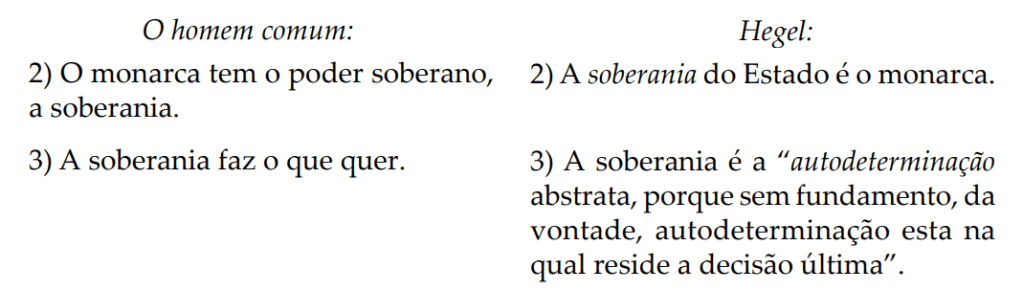
CRÍTICA DA FILOSOFIA DO DIREITO DE HEGEL + INTRODUÇÃO À CRÍTICA DA FILOSOFIA DO DIREITO DE HEGEL – Marx (trad. Rubens Enderle e Leonardo de Deus; ed. Marcelo Backes, Boitempo), 1843, 1844; 2005 (2010), 2ed.

NOTA À EDIÇÃO

Na Crítica, Marx afirma a ‘verdadeira democracia’, no sentido do pensamento de Rousseau (e de Feuerbach). Já na ‘Introdução’ ele faz uma transição do liberalismo burguês ao tema da ‘emancipação humana’ (isto é, do comunismo), enquanto a democracia passa a ser identificada com a ‘emancipação política’; é quando Marx introduz o conceito de ‘democracia acabada’ (vollendete Demokratie), definição que iria muito além da mera transformação da forma política na república burguesa.”

O primeiro caderno manuscrito – que provavelmente continha a crítica dos parágrafos 257 a 260 da obra de Hegel – desapareceu, e os que restaram contêm uma análise detalhada e crítica dos parágrafos 261 a 313, nos quais é aprofundada a questão do Estado.”

APRESENTAÇÃO

Para os jovens-hegelianos, [esquerda burguesa] tratava-se de demonstrar que o ‘real’ não devia ser identificado imediatamente com a realidade empírica, positiva, como afirmavam os velhos-hegelianos, [direita] mas sim com a realidade que, pelo ‘trabalho do negativo’, deve ser suprassumida em um nível superior do conceito.”

Essa posição, no entanto, sofreu uma séria inflexão a partir de 1841, quando os jovens discípulos de Hegel, desiludidos com as possibilidades de uma reforma constitucional de caráter liberal no reinado de Frederico Guilherme IV, e identificando a monarquia constitucional com um mero compromisso de feudalidade e modernidade, acabaram por abandonar a filosofia hegeliana do Estado em nome da defesa da democracia.”

Marx, embora à época bastante próximo do pensamento jovem-hegeliano, já explicitava suas diferenças em relação a esses autores.”

Essa primeira formulação da idéia de ‘crítica filosófica’ seria retomada e desenvolvida, em 1842, nas páginas da Gazeta Renana, em um pequeno artigo voltado contra a Escola Histórica do Direito e seu precursor, Gustav Hugo. Ao denunciar a impostura da filiação de Hugo à filosofia de Kant, Marx compara o ‘ceticismo vulgar’ da Escola Histórica com o ‘ceticismo do século XVIII’, isto é, com o caráter crítico da filosofia iluminista (id est, a filosofia kantiana).”

Sem a intervenção da crítica filosófica, o ‘já repudiado’ não dá lugar à ‘nova vida’, o ‘espírito novo’ fica preso às ‘velhas formas’ e assiste-se à ‘putrefação do mundo de seu tempo, que se compraz em si mesma’. A crítica não opõe ao mundo uma racionalidade exterior a ele, mas é, ela mesma, tão somente a atualização dessa racionalidade, o tornar-se consciente, para si, do trabalho do negativo que impulsiona o processo histórico para a realização de sua racionalidade intrínseca.”

A crítica vulgar (Bruno Bauer, Max Stirner) assume diante da realidade empírica uma atitude arrogante, altiva, pretensiosa; ela expõe as contradições do existente apenas para desprezá-las como algo pertencente à massa, isto é, ao mundo humano, o mundo da prática sensível, sobre o qual paira a imaculada esfera puramente teorética do Espírito.”

Tratava-se, para Marx, de estender o alcance da crítica para além dos limites do pensamento feuerbachiano, restrito ao campo teórico da religião e da ciência.”

o pressuposto da supremacia ontológica do Estado em relação à sociedade civil, pressuposto este que acompanhou todo o pensamento político ocidental até alcançar, na filosofia hegeliana, sua forma acabada.”

Além disso, foram perdidas a folha de rosto e a capa do manuscrito, o que alimentou incertezas e especulações sobre o verdadeiro título que Marx teria consagrado a essa obra. Em sua primeira publicação, em 1927, na edição da MEGA¹, dirigida por Riazanov, ele aparece com o título ‘Da crítica da filosofia do direito de Hegel: crítica do direito público hegeliano (§§ 261-313)’. Já na edição da MEGA², de 1982, que serviu como original para a presente tradução, adotou-se ‘Para a crítica da filosofia do direito de Hegel’, título mais provável do manuscrito segundo os editores, considerando-se a designação da obra à qual Marx dedicará, logo em seguida, uma Introdução. No Brasil, assim como em outros países, as referências à Crítica adotaram títulos diversos, como ‘Contribuição à crítica da filosofia do direito de Hegel’, ‘Crítica de 1843’, ‘Crítica de Kreuznach’, ‘Manuscrito de Kreuznach’ etc.”

O que Marx denuncia como o ‘mistério’ da especulação hegeliana é a ontologização da Idéia, com a conseqüente desontologização da realidade empírica. Em Hegel, família e sociedade civil são produzidas pela idéia de Estado, engendradas por ela.”

A inversão determinativa entre sujeito e predicado é, portanto, a inversão ontológica entre a determinação real e a determinação ideal, o conteúdo concreto e a idéia abstrata ou, poder-se-ia dizer, o ser e o pensar.”

O pensamento é transformado em sujeito do mesmo modo que Deus o é na teologia: pela atribuição de ser à idéia abstrata e de abstração ao ser concreto.”

A matemática aplicada é, também, subsunção etc. Hegel não se pergunta se esta é a maneira racional, adequada, de subsunção. Ele se agarra apenas a uma única categoria e se satisfaz em encontrar para ela uma existência correspondente.”

A alienação política tem lugar no momento em que o povo, ao se submeter à sua própria obra, perde seu estatuto fundante e as posições são invertidas.”

no poder governamental, como a burocracia, a participação no Estado transformada em privilégio, como uma corporação contra a sociedade civil (§§ 287-297)”

Em Hegel, como em Montesquieu, a constituição é entendida não como um código particular de leis positivas mas como produto do espírito de um povo, conjunto de determinações fundamentais da vontade racional.”

A constituição, como particular, deve ser apenas ‘parte’ do todo, isto é, momento da vontade geral. Como universal, ela deve ser essa própria vontade geral, o próprio todo. Na especulação hegeliana, no entanto, esses dois sentidos da constituição são confundidos: embora afirme tratar da constituição como um universal, Hegel a desenvolve, em verdade, como um particular.”

o conflito do povo com o Estado político reproduz-se, no interior desse Estado, como o conflito do ‘povo en miniature’ do poder legislativo com o poder governamental. § A crítica de Marx à alienação política guarda um vínculo profundo com o pensamento de Rousseau.”

É preciso, porém, distinguir, na argumentação marxiana, os 2 níveis em que o termo democracia é empregado: como ‘gênero’ (a ‘verdadeira democracia’) e como ‘espécie’ (a ‘república política’). A ‘verdadeira democracia’ é um princípio político, não um Estado existente. (…) Com o termo ‘república política’, Marx se refere à democracia no interior do ‘Estado abstrato’, à democracia existente, ainda não plenamente realizada.”

A defesa hegeliana da constituição estamental assenta, por sua vez, na concepção do povo como uma ‘massa’ que ‘não sabe o que quer’, uma ‘multidão e uma turba’ dotada de ‘uma opinião e um querer inorgânicos’, opostos ao Estado.” Infelizmente o tempo está dando a razão a Hegel!

Solange Mercier-Josa, Entre Hegel et Marx (Paris, L’Harmattan, 1999)

A Crítica da filosofia do direito de Hegel é a obra de um democrata radical.”

Rubens Enderle

Sete Lagoas, abril de 2005

CRÍTICA DA FILOSOFIA DO DIREITO DE HEGEL

(§§ 261-313)

§ 261. Em face das esferas do direito privado e do bem privado, da família e da

sociedade civil, o Estado é, de um lado, uma necessidade externa e sua potência

superior, a cuja natureza as leis daquelas esferas, bem como seus interesses,

encontram-se subordinados e da qual são dependentes; porém, de outro lado,

é o Estado seu fim imanente e tem sua força na unidade de seu fim último geral

e no interesse particular dos indivíduos, na medida em que tais indivíduos

têm deveres perante ele assim como, ao mesmo tempo, têm direitos.”

negrito: Marx

(não-)itálico + sublinhado: Hegel

Por ‘necessidade externa’ pode-se somente entender que ‘leis’ e ‘interesses’ da família e da sociedade civil devem ceder, em caso de colisão, às ‘leis’ e ‘interesses’ do Estado; que aquelas são subordinadas a este; que sua existência é dependente da existência do Estado”

Mas Hegel não fala, aqui, de colisões empíricas; ele fala da relação das ‘esferas do direito privado e do bem privado, da família e da sociedade civil’ com o Estado”

Precisamente porque ‘subordinação’ e ‘dependência’ são relações externas, que restringem e se contrapõem à essência autônoma, é a relação da ‘família’ e da ‘sociedade civil’ com o Estado aquela da ‘necessidade externa’, de uma necessidade que vai contra a essência interna da coisa.”

“‘Subordinação’ e ‘dependência’ são as expressões para uma identidade ‘externa’, forçada e aparente, para cuja expressão lógica Hegel utiliza, corretamente, a ‘necessidade externa’.”

Hegel estabelece, [na segunda metade do parágrafo,] uma antinomia sem solução.” Se refere a NECESSIDADE EXTERNA x FIM IMANENTE. O silogismo tem como fim que direitos seriam iguais a deveres.

O Estado é o Novo Testamento: amar a propriedade alheia como a tua mesma.

§ 262. A Idéia real, o Espírito, que se divide ele mesmo nas 2 esferas ideais de seu conceito, a família e a sociedade civil, como em sua finitude, para ser, a partir da idealidade delas, Espírito real e infinito para si [empiricamente infinito, infinito na prática], divide, por conseguinte, nessas esferas, a matéria dessa sua realidade, os indivíduos como a multidão, de maneira que, no singular, essa divisão aparece mediada pelas circunstâncias, pelo arbítrio e pela escolha própria de sua determinação.

Se traduzirmos essa frase em prosa, teremos: [HAHAHA]

O que serve de mediação para a relação entre o Estado, a família e a sociedade civil são as ‘circunstâncias, o arbítrio e a escolha própria da determinação’. [hahahaha] A razão do Estado nada tem a ver, portanto, com a divisão da matéria do Estado em família e sociedade civil. O Estado provém delas de um modo inconsciente e arbitrário. Família e sociedade civil aparecem como o escuro fundo natural donde se acende a luz do Estado. Sob a matéria do Estado estão as funções do Estado, bem entendido, família e sociedade civil, na medida em que elas formam partes do Estado, em que participam do Estado como tal.”

A assim denominada ‘Idéia real’ (o Espírito como infinito, real) é, portanto, apresentada como se ela agisse segundo um princípio determinado, mediante um desígnio determinado.” “ela o faz de um modo que é precisamente como é na realidade. Aqui aparece claramente o misticismo lógico, panteísta.”

Esse fato, essa relação real é expressa, pela especulação, como manifestação, fenômeno. Essas circunstâncias, esse arbítrio, essa escolha da determinação, essa mediação real são tão-somente a manifestação de uma mediação que a Idéia real executa nela mesma e que se passa por detrás das cortinas.” O mundo aparente é só o resultado esquematizado de uma fórmula atemporal já aplicada no eterno (em si) das coisas. Trazendo o debate para a concretude do assunto, o direito privado é só o que o direito público predeterminou!

A empiria ordinária não tem como lei o seu próprio espírito, mas um espírito estranho e, ao contrário, a Idéia real tem como sua existência não uma realidade desenvolvida a partir dela mesma, mas a empiria ordinária, comum.”

[Daí que] ‘circunstâncias, arbítrio’, etc. convertem-se em momentos objetivos da Idéia, irreais e com um outro significado.”

Trata-se de uma dupla história, uma esotérica e outra exotérica. O conteúdo permanece na parte exotérica [ordinária]. O interesse da parte esotérica é sempre o de novamente achar, no Estado, a história do Conceito lógico. Mas é na parte exotérica que o desenvolvimento verdadeiro prossegue.”

Racionalmente, as sentenças de Hegel significam apenas que:

A família e a sociedade civil são partes do Estado. Nelas, a matéria do Estado é dividida ‘pelas circunstâncias, pelo arbítrio e pela escolha própria da determinação’. Os cidadãos do Estado (Staatsbürger) são membros da família e membros da sociedade civil.”

família e sociedade civil se fazem, a si mesmas, Estado. Elas são a força motriz. Segundo Hegel, ao contrário, elas são produzidas pela Idéia real.”

A realidade empírica é, portanto, tomada tal como é; ela é, também, enunciada como racional; porém, ela não é racional devido à sua própria razão, mas sim porque o fato empírico, em sua existência empírica, possui um outro significado diferente dele mesmo.” “O real torna-se fenômeno; porém, a Idéia não tem outro conteúdo a não ser esse fenômeno. Também não possui a Idéia outra finalidade a não ser a finalidade lógica: ‘ser espírito real para si infinito’. [ser uma auto-justificação circular de si mesmo, dar conta imediatamente de algo que é mais amplo, i.e., a Lei positivando aqui e agora de maneira determinada – arbitrária! – a sucessão inesgotável das gerações] Nesse parágrafo, encontra-se resumido todo o mistério da filosofia do direito e da filosofia hegeliana em geral.”

§ 266: puxadinho de Hegel para salvaguardar a “liberdade” (colocando nela tanto peso quanto na necessidade, em seu sistema).

a relação universal entre necessidade e liberdade.” “É exatamente a mesma passagem que se realiza, na lógica, da esfera da Essência à esfera do Conceito.” Essência: o que há de mais particularista, ocluso. Conceito: o que há de mais universal, público. Um conceito particular é o conceito que divulga uma essência. Está feita a mediação, como no outro par aparentemente irreconciliável.

Trata-se apenas de encontrar, para determinações singulares concretas, as determinações abstratas correspondentes.”

§ 267. A necessidade na idealidade é o desenvolvimento da Idéia dentro de si mesma; ela é, como substancialidade subjetiva, a disposição política e, como objetiva, diferentemente daquela, é o organismo do Estado, o Estado propriamente político e sua constituição.”

O desenvolvimento lógico da família e da sociedade civil ao Estado é, portanto, pura aparência, pois não se desenvolve como a disposição familiar, a disposição social; a instituição da família e as instituições sociais como tais relacionam-se com a disposição política e com a constituição política e com elas coincidem.

A passagem em que o Espírito é ‘não apenas como essa necessidade e como um reino da aparência’, mas como ‘sua idealidade’, [o espírito é ao mesmo tempo essência e aparência] como a alma desse reino que é para si real e que possui uma existência particular, não é de modo algum uma passagem, uma vez que a alma da família existe para si como amor etc. A pura idealidade de uma esfera real só poderia, contudo, existir como ciência.” Marx pega bem pesado: o florilégio do discurso de Hegel chega a querer ser estética, poesia, pintura de amor, quando não pode exceder a simples epistemologia.

A constituição política é o organismo do Estado, ou o organismo do Estado é a constituição política. Que os diferentes lados de um organismo se encontrem em uma coesão necessária e oriunda da natureza do organismo, é pura tautologia. Que, uma vez que a constituição política é determinada como organismo, os diferentes lados da constituição, os diferentes poderes, relacionem-se como determinações orgânicas e se encontrem em uma relação racional recíproca, é, igualmente, tautologia.”

Além dessa inversão de sujeito e predicado, produz-se aqui a aparência de que o discurso trata de outra idéia que não a do organismo.”

Quando eu digo: ‘Esse organismo (organismo do Estado, a constituição política) é o desenvolvimento da Idéia em suas distinções etc.’, não sei ainda absolutamente nada sobre a idéia específica da constituição política; a mesma sentença pode ser dita, com a mesma verdade, tanto do organismo animal quanto do organismo político.” “uma explicação que não dá a differentia specifica não é uma explicação.” “há apenas a aparência de um conhecimento real, pois esses sujeitos reais permanecem incompreendidos”

“‘Esses lados distintos são, assim, os diferentes poderes, suas funções e sua atividade.’ Por meio da pequena palavra ‘assim’, cria-se a aparência de uma conseqüência, de uma derivação, de um desenvolvimento.”

Que os ‘diferentes lados do organismo do Estado’ sejam os ‘diferentes poderes’, com suas ‘funções e atividade’, é um fato empírico; que eles sejam membros de um ‘organismo’ é o ‘predicado’ filosófico.”

Chamemos a atenção, aqui, para uma peculiaridade estilística de Hegel, que se repete freqüentemente e é um produto do misticismo. O parágrafo, em seu conjunto, diz o seguinte:

C1 (COLUNA 1) “A disposição toma seu conteúdo particularmente determinado dos diferentes lados do organismo do Estado. Esse organismo é o desenvolvimento da Idéia em suas distinções e em sua realidade objetiva. Esses lados distintos são, assim, os diferentes poderes, suas funções e atividades, por meio dos quais o universal continuamente, e aliás na medida em que esses poderes são determinados pela natureza do Conceito, se mantém, se engendra de modo necessário e, na medida em que é igualmente pressuposto de sua produção, conserva a si mesmo; – esse organismo é a constituição política.”

Ex: o universal … 1) se mantém; 2) se engendra necessariamente; 3) se conserva. Uma sintaxe realmente problemática!

+ os (diferentes) poderes são determinados pela natureza do Conceito logo, a natureza do Conceito determina a manutenção, conservação e engendramento do universal.

+ o universal é um pressuposto de sua própria produção

+ A disposição toma seu conteúdo … dos diferentes lados da constituição política. A disposição política toma seu conteúdo da constituição política. A constituição política é o desenvolvimento da Idéia. (tautologias)

C2 (COLUNA 2 [Rearranjo de Marx]) “(I) A disposição toma seu conteúdo particularmente determinado dos diferentes lados do organismo do Estado. Esses lados distintos são… os diferentes poderes, suas funções e suas atividades.

(II) A disposição toma seu conteúdo particularmente determinado dos diferentes lados do organismo do Estado. Esse organismo é o desenvolvimento da Idéia em suas distinções e em sua realidade objetiva… por meio dos quais o universal continuamente, e aliás na medida em que esses poderes são determinados pela natureza do Conceito, se mantém, se engendra de modo necessário e, na medida em que é igualmente pressuposto de sua produção, conserva a si mesmo; – esse organismo é a constituição política.”

Ana Coluto

Vê-se como Hegel une as determinações ulteriores em dois sujeitos, nos ‘diferentes lados do organismo’ e no ‘organismo’.”

A determinação de que o universal ‘se engendra’ continuamente e, por meio disso, se conserva, não é nada original, pois isso já está presente na determinação desses poderes como ‘lados do organismo’, como lados ‘orgânicos’.”

As frases: esse organismo é ‘o desenvolvimento da Idéia em suas distinções e na realidade objetiva destas’, ou em distinções por meio das quais ‘o universal’ (o universal é, aqui, o mesmo que a Idéia) ‘continuamente, e aliás na medida em que esses poderes são determinados pela natureza do Conceito, se mantém, se engendra de modo necessário e, na medida em que é igualmente pressuposto de sua produção, conserva a si mesmo’ são frases idênticas.” A constituição política é a Idéia engendrando-se a si própria, teria sido mais honesto de H. dizer.

A frase: ‘os diferentes lados do Estado são os diferentes poderes’ é uma verdade empírica e não pode se passar por uma descoberta filosófica.”

o espírito que, por haver [o mesmo papel do ‘assim’ anterior] passado pela forma da cultura, sabe-se e quer a si mesmo.”

Na medida em que, primeiro, eu trato o Estado sob o esquema da realidade ‘abstrata’, tenho que tratá-lo, em seguida, sob o esquema da ‘realidade concreta’, da ‘necessidade’, da distinção realizada.”

Traduzindo-se esse parágrafo para nossa língua, temos:” HAHAHA!

O verdadeiro ponto de partida, o espírito que se sabe e se quer, sem o qual o ‘fim do Estado’ e os ‘poderes do Estado’ seriam ficções inconsistentes, vazias de essência, ou até mesmo existências impossíveis, aparece apenas como último predicado da substancialidade, já anteriormente determinada como fim universal e como os diferentes poderes do Estado.”

O ‘fim do Estado’ e os ‘poderes do Estado’ são mistificados, visto que são apresentados como ‘modos de existência’ da ‘Substância’ e aparecem como algo separado de sua existência real, do ‘espírito que se sabe e se quer’, do ‘espírito cultivado’.”

A essência das determinações do Estado não consiste em que possam ser consideradas como determinações do Estado, mas sim como determinações lógico-metafísicas em sua forma mais abstrata. O verdadeiro interesse não é a filosofia do direito, mas a lógica.”

A lógica não serve à demonstração do Estado, mas o Estado serve à demonstração da lógica.”

A Substância deve ‘dividir-se nas distinções conceituais, que são, do mesmo modo, graças àquela substancialidade, determinações estáveis e reais’. Essa frase, a essencial, pertence à lógica e já se encontra pronta e acabada antes da filosofia do direito.”

Adendo: O Estado interno como tal é o poder civil, sendo a direção para o exterior o poder militar, que é, contudo, no Estado, um lado nele mesmo determinado.”

Em lugar do conceito da constituição, obtemos a constituição do Conceito.”

a subjetividade como a última decisão do querer, o poder soberano – no qual os diferentes poderes estão reunidos em uma unidade individual, que é, portanto, o cume e o início do todo – a monarquia constitucional.”

Cada povo tem, assim, a constituição que lhe cabe e que lhe é própria”

Do raciocínio de Hegel segue-se apenas que o Estado, em que o ‘modo e formação da autoconsciência’ e a ‘constituição’ se contradizem, não é um verdadeiro Estado.”

Disso deveria resultar, antes, a exigência de uma constituição que contivesse em si mesma a determinação e o princípio de avançar com a consciência; de avançar com o homem real, o que só é possível quando se eleva o ‘homem’ a princípio da constituição. Hegel é, aqui, sofista.”

Este absoluto autodeterminar-se constitui o princípio distintivo do poder soberano como tal, que é o primeiro a ser desenvolvido.”

É … incorreto fazer do poder soberano o sujeito e, uma vez que o poder soberano pode ser compreendido como o poder do príncipe, produzir a ilusão de que ele é o senhor desse momento, o seu sujeito.”

§ 12 A vontade, … dando-se a forma da singularidade, é decisiva e apenas como vontade decisiva ela é vontade efetiva.”

É evidente que se as funções e atividades particulares são chamadas funções e atividades do Estado, função e poder estatais, elas não são propriedade privada, mas propriedade do Estado. Isso é uma tautologia.”

ele esquece que tanto a individualidade particular como as funções e atividades estatais são funções humanas; ele esquece que a essência da ‘personalidade particular’ não é a sua barba, o seu sangue, o seu físico abstrato, mas sim a sua qualidade social, e que as funções estatais etc. são apenas modos de existência e de atividade das qualidades sociais do homem.”

COMO IGUALAR TIRANIA E SOBERANIA: “O despotismo designa, em geral, a situação da ausência de lei em que a vontade particular como tal, seja a de um monarca seja a de um povo, vale como lei ou, antes, em lugar da lei, ao passo que a soberania, ao contrário, constitui precisamente a situação legal e constitucional, o momento da idealidade das esferas e funções particulares, pelo qual uma tal esfera não é independente e autônoma em seus fins e modos de atuação e centrada apenas em si mesma, mas é determinada, nesses fins e modos de atuação, pelo fim do todo (o que foi designado, em termos gerais, com a expressão vaga de o bem do Estado), sendo dele dependente. (…) em situação de urgência, porém, seja ela interna ou externa, impõe-se a soberania, em cujo conceito simples conflui o organismo existente em suas particularidades e à qual é confiada a salvação do Estado com o sacrifício daquilo que seria legítimo, situação na qual aquele idealismo chega à sua realidade própria.” O exato conceito de ditadura.

A soberania existe, portanto, por um lado, apenas como substância inconsciente, cega. Logo conheceremos sua outra realidade.”

Se Hegel tivesse partido dos sujeitos reais como a base do Estado, ele não precisaria deixar o Estado subjetivar-se de uma maneira mística.”

A Substância mística se torna sujeito real e o sujeito real aparece como um outro, como um momento da Substância mística. Precisamente porque Hegel parte dos predicados, das determinações universais, em vez de partir do ente real (υποχειµενον, sujeito), e como é preciso haver um suporte para essa determinação, a Idéia mística se torna esse suporte.”

Que idealismo de Estado seria este, que, em lugar de ser a real autoconsciência dos cidadãos do Estado, a alma comum do Estado, seria uma pessoa, um sujeito? Hegel não desenvolve mais a respeito nessa frase.”

O discurso, que antes falava da subjetividade, fala agora da individualidade. O Estado como soberano deve ser Uno, Um indivíduo, deve possuir individualidade.”

Ele não diz: a vontade do monarca é a decisão última, mas a decisão última da vontade é… o monarca. A primeira frase é empírica. A segunda distorce o fato empírico em um axioma metafísico.”

A nota de Hegel a esse parágrafo é tão curiosa que devemos elucidá-la mais de perto.”

O desenvolvimento imanente de uma ciência, a dedução de todo seu conteúdo a partir do simples Conceito, mostra a peculiaridade de que um único e mesmo conceito – aqui a vontade –, que, inicialmente, porque é o começo, é abstrato, se conserva, mas condensa suas determinações igualmente apenas por si mesmo e, desse modo, ganha um conteúdo concreto.”

Medonho!

Como Marx falou, trata-se apenas da ciência da Lógica, única “ciência” em que há “a dedução de todo seu conteúdo a partir do simples Conceito”. Traduziria da seguinte maneira: O desenvolvimento do conhecimento humano mostra a peculiaridade de que um conceito qualquer (p.ex. a vontade) se conserva, ainda que passe de pura abstração para conteúdo concreto (ou seja, se duplica). Passa a ser, como fica bem claro pela Introdução marxiana (mais abaixo) o filósofo tardio do Absolutismo francês, e não o descobridor contemporâneo da ascensão prussiana.

Hegel poderia concluir, do mesmo modo: pelo fato de o homem singular ser um Uno, o gênero humano é apenas Um único homem.”

Típico de um autor aristocrata no final da aristocracia européia: “Mas soberania popular, definida em oposição à soberania existente no monarca, é o sentido ordinário em que se começou a falar de soberania popular nos últimos tempos – nessa oposição a soberania popular pertence aos pensamentos confusos, [!] em cujo fundamento reside a representação desordenada do povo.”

Os ‘pensamentos confusos’ e a ‘representação desordenada’ se encontram, aqui, somente em Hegel.”

Se por soberania popular se compreende a forma da república e, mais precisamente, da democracia, então – em face da idéia desenvolvida, não se pode mais falar de tal representação.” E por quê?

Ao contrário da monarquia, a democracia pode ser explicada a partir de si mesma. Na democracia nenhum momento recebe uma significação diferente daquela que lhe cabe. Cada momento é, realmente, apenas momento do demos inteiro. (…) A monarquia é uma espécie e, definitivamente, uma má espécie. A democracia é conteúdo e forma. A monarquia deve ser apenas forma, mas ela falsifica o conteúdo.”

Hegel parte do Estado e faz do homem o Estado subjetivado; a democracia parte do homem e faz do Estado o homem objetivado.”

A democracia, em um certo sentido, está para as outras formas de Estado como o cristianismo para as outras religiões. O cristianismo é (…) o homem deificado como uma religião particular.” “A democracia relaciona-se com todas as outras formas de Estado como com seu velho testamento.”

Os franceses modernos concluíram, daí, que na verdadeira democracia o Estado político desaparece. O que está correto, considerando-se que o Estado político, como constituição, deixa de valer pelo todo.”

Nos Estados antigos o Estado político constituiu o conteúdo estatal por exclusão das outras esferas; o Estado moderno é um compromisso entre o Estado político e o não-político.”

A luta entre monarquia e república é, ela mesma, ainda, uma luta no interior do Estado abstrato. A república política é a democracia no interior da forma de Estado abstrata. A forma de Estado abstrata da democracia é, por isso, a república; porém, aqui, ela deixa de ser a constituição simplesmente política.”

A propriedade etc., em suma, todo o conteúdo do direito e do Estado é, com poucas modificações, o mesmo na América do Norte assim como na Prússia. Lá, a república é, portanto, uma simples forma de Estado, como o é aqui a monarquia. O conteúdo do Estado se encontra fora dessas constituições.”

Dentre os diversos momentos da vida do povo, foi o Estado político, a constituição, o mais difícil de ser engendrado.” “A tarefa histórica consistiu, assim, em sua reivindicação, mas as esferas particulares não têm a consciência de que seu ser privado coincide com o ser transcendente da constituição ou do Estado político e de que a existência transcendente do Estado não é outra coisa senão a afirmação de sua própria alienação. A constituição política foi reduzida à esfera religiosa, à religião da vida do povo, o céu de sua universalidade em contraposição à existência terrena de sua realidade.”

A vida política, em sentido moderno, é o escolasticismo [formalismo] da vida do povo.”

Onde o comércio e a propriedade fundiária ainda não são livres nem independentes, também não o é a constituição política. A Idade Média foi a democracia da não-liberdade.” Imperialismo não permite liberdade.

A abstração do Estado como tal pertence somente aos tempos modernos porque a abstração da vida privada pertence somente aos tempos modernos. A abstração do Estado político é um produto moderno.

Na Idade Média havia servos, propriedade feudal, corporações de ofício, corporações de sábios etc.; ou seja, na Idade Média a propriedade, o comércio, a sociedade, o homem são políticos; o conteúdo material do Estado é colocado por intermédio de sua forma; cada esfera privada tem um caráter político ou é uma esfera política; ou a política é, também, o caráter das esferas privadas. Na Idade Média, a constituição política é a constituição da propriedade privada, mas somente porque a constituição da propriedade privada é a constituição política. Na Idade Média, a vida do povo e a vida política são idênticas. O homem é o princípio real do Estado, mas o homem não-livre.”

Ou a res publica é, como na Grécia, a questão privada real, o conteúdo real do cidadão (Bürger), e o homem privado é escravo; o Estado político como político é o verdadeiro e único conteúdo de sua vida e de seu querer; ou, como no despotismo asiático, o Estado político é apenas o arbítrio privado de um indivíduo singular, e o Estado político, assim como o Estado material, é escravo.” Não deixa de ser um grande elogio aos orientais.

Já ouvimos que a subjetividade é sujeito e que o sujeito é necessariamente indivíduo empírico, Uno. Aprendemos, agora, que a determinação da naturalidade, da corporeidade, reside no conceito da singularidade imediata. Hegel não demonstrou nada senão o óbvio, a saber, que a subjetividade existe apenas como indivíduo corpóreo e, evidentemente, o nascimento natural pertence ao indivíduo corpóreo.” Se não nasceu para ser o rei, não presta para ser rei – o ruim é que não prestará também para ser deitado à guilhotina!

A soberania, a dignidade do monarca seria, portanto, de nascença. O corpo do monarca determina sua dignidade. No ponto culminante do Estado, então, o que decide em lugar da razão é a mera physis. O nascimento determinou a qualidade do monarca, assim como ele determina a qualidade do gado.” “O nascimento do homem como monarca é tão pouco passível de se converter em verdade metafísica quanto a imaculada concepção de Maria.”

Hegel diz que a conversão da soberania do Estado (de uma autodeterminação da vontade) no corpo do monarca inato (na existência) é, no fundo, a passagem do conteúdo em geral que a vontade faz a fim de realizar um fim pensado, de traduzi-lo em existência. Mas Hegel diz: no fundo. A diferença peculiar que ele indica é, portanto, tão peculiar que suprime toda analogia e põe a magia no lugar da ‘natureza da vontade em geral’.”

O meio é a vontade absoluta e a palavra do filósofo; o fim particular é novamente o fim do sujeito filosofante, construir o monarca hereditário a partir da Idéia pura. A realização do fim é a mera garantia de Hegel.”

Na assim chamada prova ontológica da existência de Deus é a mesma conversão do Conceito absoluto no ser, conversão que constituiu a profundidade da Ideia nos tempos modernos, mas que mais recentemente foi considerada como inconcebível.”

§ 282. Da soberania do monarca decorre o direito de indultar os criminosos, pois somente a ela compete a realização do poder do Espírito, de tornar o acontecido não-acontecido e anular o delito no perdão e no esquecimento.”

O direito de indultar é o direito da graça. A graça é a mais alta expressão do arbítrio acidental, significativamente concebido por Hegel como um atributo próprio do monarca.”

§ 284. Apenas esses cargos ou indivíduos deliberativos estão sujeitos à responsabilidade, na medida em que o objetivo da decisão, o conhecimento do conteúdo e das circunstâncias, os fundamentos legais e os outros fundamentos de determinação são os únicos passíveis de responsabilidade, isto é, de prova da objetividade e, por isso, ela pode recair em uma deliberação distinta da vontade do monarca como tal; mas a majestade própria do monarca, como subjetividade que decide em última instância, é elevada acima de toda responsabilidade pelos atos do governo.

Hegel descreve aqui de modo inteiramente empírico o poder ministerial, tal como ele é na maior parte das vezes determinado nos Estados constitucionais. Tudo o que a filosofia acrescenta é fazer deste ‘fato empírico’ existência, o predicado do ‘momento da particularidade no poder soberano’.”

O momento especulativo é, portanto, bastante escasso. Em contrapartida, o desenvolvimento depende, em especial, de fundamentos inteiramente empíricos e, de fato, muito abstratos e muito ruins. Assim, por exemplo, a eleição dos ministros é deixada ao ‘arbítrio ilimitado’ do monarca, ‘já que eles têm a ver com a sua pessoa imediata’, isto é, já que eles são ministros. Do mesmo modo, a ‘eleição ilimitada’ do criado de quarto do monarca pode ser desenvolvida a partir da Idéia absoluta.” HAHAHA

Em um organismo racional a cabeça não pode ser de ferro e o corpo de carne. Para que os membros se conservem, eles precisam ser de igual nascimento, de uma só carne e um só sangue. Mas o monarca hereditário não é de igual nascimento, ele é de outra matéria. A prosa da vontade racionalista dos outros membros do Estado defronta-se aqui com a magia da natureza.”

Em segundo lugar, a irresponsabilidade. Se o príncipe infringe o ‘todo da constituição’, as ‘leis’, cessa sua irresponsabilidade, porque cessa sua existência constitucional; mas precisamente essas leis, essa constituição, o fazem irresponsável. Elas contradizem, portanto, a si mesmas, e esta única cláusula suprime a lei e a constituição. A constituição do monarca constitucional é a irresponsabilidade.”

Em vez de o Estado ser produzido como a mais elevada realidade da pessoa, a mais elevada realidade social do homem, ocorre que um único homem empírico, uma pessoa empírica, é produzido como a mais alta realidade do Estado. Esta inversão do subjetivo no objetivo e do objetivo no subjetivo (que decorre do fato de Hegel querer escrever a biografia da Substância abstrata, da Idéia;¹ que, portanto, a atividade humana etc. tenha que aparecer como atividade e resultado de uma outra coisa; que Hegel queira deixar agir como uma singularidade imaginária o ser do homem para si, em lugar de deixá-lo agir na sua existência real, humana) tem necessariamente como resultado que uma existência empírica é tomada de maneira acrítica como a verdade real da Idéia”

¹ Significado de fenomenologia do Espírito.

Desta maneira, portanto, produz-se também a impressão de algo místico e profundo. É muito banal que o homem tenha que nascer e que esta existência, posta pelo nascimento físico, eleve-se ao homem social etc., até ao cidadão do Estado; o homem se torna, pelo nascimento, tudo o que ele se torna. Mas é muito profundo, é chocante que a idéia do Estado nasça imediatamente e que, no nascimento do príncipe, ela mesma se engendre como existência empírica.”

Qual é, então, a diferença última, precisa, de uma pessoa em relação a todas as outras? O corpo. A mais alta função do corpo é a atividade sexual. O ato constitucional mais elevado do rei é, portanto, sua atividade sexual, pois por meio dela ele faz um rei e dá continuidade a seu corpo. O corpo de seu filho é a reprodução de seu próprio corpo, a criação de um corpo real.”

A explicação ordinária do poder governamental. O que se pode indicar como peculiar a Hegel é, apenas, que ele coordena poder governamental, poder policial e poder judiciário, enquanto geralmente os poderes administrativo e judiciário são tratados como poderes opostos.”

Como a sociedade civil é o campo de batalha do interesse privado individual de todos contra todos, então tem lugar, aqui, o conflito desse interesse com as questões comuns particulares e o conflito destas, juntamente com aquele, contra os mais elevados pontos de vista e disposições do Estado.”

Este é o segredo do patriotismo dos cidadãos no sentido de que eles sabem o Estado como sua substância”

Isso é estranho

1) pela definição da sociedade civil como bellum omnium contra omnes;

2) porque o egoísmo privado é revelado como o ‘segredo do patriotismo dos cidadãos’ e como ‘a profundidade e a força do Estado na disposição’;

3) porque o ‘cidadão’, o homem do interesse particular em oposição ao universal, o membro da sociedade civil, é considerado como ‘indivíduo fixo’, do mesmo modo que o Estado se opõe, em ‘indivíduos fixos’, aos ‘cidadãos’.”

§ 291. As tarefas governamentais são de natureza objetiva, para si já decidida segundo a sua substância e devem completar-se e realizar-se por meio de indivíduos. [!!!] Entre os dois não há qualquer enlace imediato, natural; por isso, os indivíduos não são destinados a elas por meio da personalidade natural e do nascimento. O momento objetivo para a sua destinação àquelas tarefas é o conhecimento e a demonstração de sua aptidão”

Realmente, ninguém pediu pra ser funcionário público!

O serviço público, como se lê na nota,

exige […] o sacrifício da satisfação independente e caprichosa dos fins subjetivos e dá, precisamente por isso, o direito de encontrar satisfação na prestação conforme o dever, mas somente nela. Nisso se encontra, por esse lado, a ligação do interesse universal com o particular, que constitui o conceito e a estabilidade interna do Estado.

(…)

Porém, que a impassibilidade, a legalidade e a benevolência da conduta se tornem costume, isto depende, em parte, da direta formação ética e de pensamento, que serve de contrapeso espiritual àquilo que a aprendizagem das assim chamadas ciências dos objetos dessas esferas, a prática exigida das funções, o trabalho efetivo etc. têm em si de mecânico e algo semelhante; por outro lado, o tamanho do Estado é um momento capital, por meio do qual tanto o peso dos laços familiares e outros laços privados são enfraquecidos, quanto a vingança, o ódio e outras paixões semelhantes se tornam mais impotentes e, com isso, mais inofensivas; na ocupação com os grandes interesses existentes em um grande Estado, estes lados subjetivos desaparecem para si e produz-se o hábito dos interesses, das opiniões e das funções universais.”

§ 297. Os membros do governo e os funcionários do Estado constituem a parte principal do estamento médio (Hauptteil des Mittelstandes), no qual se encontram a inteligência cultivada e a consciência jurídica da massa do povo. Que esse estamento não assuma a posição de uma aristocracia e que a sua cultura e habilidade não se tornem um meio de arbítrio e de dominação, isto é assegurado pelas instituições da soberania, pelo alto, e pelos direitos das corporações, por baixo.”

O que Hegel diz sobre o ‘poder governamental’ não merece o nome de desenvolvimento filosófico. A maior parte dos parágrafos poderia figurar, literalmente, no código civil prussiano e, entretanto, a administração propriamente dita é o ponto mais difícil do desenvolvimento.”

A burocracia deve, portanto, proteger a universalidade imaginária do interesse particular, o espírito corporativo, a fim de proteger a particularidade imaginária do interesse universal, seu próprio espírito. O Estado deve ser corporação tanto quanto a corporação quer ser Estado.”

O espírito burocrático é um espírito profundamente jesuítico, teológico.” “a burocracia transforma o ‘espírito formal do Estado’, ou a real falta de espírito do Estado, em imperativo categórico. A burocracia se considera o fim último do Estado.” “Os fins do Estado se transmutam em fins da repartição e os fins da repartição se transformam em fins do Estado. A burocracia é um círculo do qual ninguém pode escapar. (…) A cúpula confia aos círculos inferiores o conhecimento do particular, os círculos inferiores confiam à cúpula o conhecimento do universal e, assim, eles se enganam reciprocamente.”

Cada coisa tem, por isso, um duplo significado, um real e um burocrático, do mesmo modo que o saber é duplo, um saber real e um burocrático (assim também a vontade).” “A burocracia tem a posse da essência do Estado, da essência espiritual da sociedade; esta é sua propriedade privada.” “O espírito universal da burocracia é o segredo, o mistério; guardado em seu interior por meio da hierarquia e, em relação ao exterior, como corporação fechada. Por isso o espírito público do Estado, assim como a disposição política aparecem para a burocracia como uma traição de seu mistério.”

No seu interior, porém, o espiritualismo se torna um materialismo crasso, o materialismo da obediência passiva, da fé na autoridade, do mecanismo de uma atividade formal, fixa, de princípios, idéias e tradições fixos. Quanto ao burocrata tomado individualmente, o fim do Estado se torna seu fim privado, uma corrida por postos mais altos, um carreirismo.”

O Estado existe apenas como diferentes espíritos de repartição, imóveis, cuja coesão consiste na subordinação e na obediência passiva. A ciência real aparece como desprovida de conteúdo, assim como a vida real aparece como morta, uma vez que este saber imaginário e esta vida imaginária valem pela essência.”

Enquanto, por um lado, a burocracia é este materialismo crasso, o seu espiritualismo crasso se mostra, por outro lado, no fato de ela querer fazer tudo, isto é, de ela fazer da vontade a causa prima, pois ela é mera existência ativa e recebe o seu conteúdo do exterior e, portanto, só pode demonstrar a própria existência ao formar e limitar este conteúdo. Para o burocrata, o mundo é um mero objeto de manipulação.”

Quando Hegel chama o poder governamental de lado objetivo da soberania inerente ao monarca, ele está correto no mesmo sentido de que a Igreja católica era a existência real da soberania, do conteúdo e do espírito da Santíssima Trindade.”

Os interesses particulares das corporações e das comunas têm, dentro de sua própria esfera, um dualismo que conforma o caráter de sua administração.”

A oposição entre Estado e sociedade civil está, portanto, consolidada; o Estado não reside na sociedade civil, mas fora dela; ele a toca apenas mediante seus ‘delegados’, a quem é confiada a ‘gestão do Estado’ no interior dessas esferas. Por meio destes ‘delegados’ a oposição não é suprimida, mas transformada em oposição ‘legal’, ‘fixa’. (…) A ‘polícia’, os ‘tribunais’ e a ‘administração’ não são deputados da própria sociedade civil, que neles e por meio deles administra o seu próprio interesse universal, mas sim delegados do Estado para administrar o Estado contra a sociedade civil.”

Essa possibilidade de cada cidadão se tornar servidor público é, portanto, a segunda relação afirmativa entre sociedade civil e Estado, a segunda identidade. Ela é de natureza muito superficial e dualística. Todo católico tem a possibilidade de se tornar padre (isto é, de separar-se dos leigos, do mundo). Com isso, o clero, como potência externa, opõe-se menos ao católico? Que cada um tenha a possibilidade de adquirir o direito de uma outra esfera, demonstra apenas que sua própria esfera não é a realidade desse direito.” “A identidade, por ele construída, entre sociedade civil e Estado, é a identidade de dois exércitos inimigos, em que cada soldado tem a ‘possibilidade’, por meio da ‘deserção’, de se tornar membro do exército ‘inimigo’ e, com isso, de fato, Hegel descreve com exatidão a situação empírica atual.”

Em um Estado racional, um exame se faz mais necessário para se tornar sapateiro do que para se tornar funcionário público executivo; pois o ofício de sapateiro é uma habilidade sem a qual se pode ser um bom cidadão do Estado, um homem social; mas o ‘saber político’ é uma condição sem a qual o homem vive, no Estado, fora do Estado, separado de si mesmo, privado de ar. O ‘exame’ não é senão uma fórmula maçônica, o reconhecimento legal do saber cívico como um privilégio.

O exame, o ‘vínculo’ do ‘cargo público’ e do ‘indivíduo’, este laço objetivo entre o saber da sociedade civil e o saber do Estado, é apenas o batismo burocrático do saber, o reconhecimento oficial da transubstanciação do saber profano no saber sagrado (e é evidente que, em todo exame, o examinador sabe tudo). Nunca se ouviu falar que os homens de Estado gregos ou romanos tenham prestado exames. Mas o que é um homem de Estado romano em face de um homem de governo prussiano!”

Além do momento objetivo da profissão de fé burocrática (o exame), faz-se necessário ainda, para que a fé dê frutos, o momento subjetivo da graça do príncipe.” A nomeação.

No § 294, Hegel desenvolve a remuneração dos funcionários a partir da Idéia. É aqui, na remuneração dos funcionários ou no fato de o serviço público garantir simultaneamente a segurança da existência empírica, que está posta a identidade real da sociedade civil e do Estado. O soldo dos funcionários é a mais alta identidade construída por Hegel.”

é exato que a remuneração dos funcionários constitui a estabilidade interna das grandes monarquias modernas.”

a hierarquia pune o funcionário na medida em que ele peca contra ela ou comete um pecado que para ela é supérfluo; mas ela o protege, tão logo a hierarquia peque no funcionário”

Se, portanto, perguntamos a Hegel qual é a proteção da sociedade civil contra a burocracia, ele nos responde:

1) A ‘hierarquia’ da burocracia. O próprio abuso. O controle. O fato de que o adversário se encontra ele mesmo com pés e mãos atados e, se para baixo ele é martelo, para cima ele é bigorna.”

O belo é que Hegel contrapõe a ‘direta formação ética e de pensamento’ ao ‘mecanicismo do saber e do trabalho burocráticos’!” Ou seja, não há pensamento nem ética, nem pode haver, na burocracia.

“‘Assim, o aperfeiçoamento de um estado de coisas’, conclui Hegel, ‘é, aparentemente, tranqüilo e imperceptível. Depois de um longo tempo, uma constituição passa a uma condição totalmente diferente da anterior.’ § A categoria da transição gradual é, em primeiro lugar, historicamente falsa e, em segundo lugar, não esclarece nada.”

O poder legislativo fez a revolução francesa; lá onde ele, em sua particularidade, apareceu como dominante, ele fez, em geral, as grandes revoluções universais orgânicas; ele não combateu a constituição, mas uma particular constituição antiquada, precisamente porque o poder legislativo era o representante do povo, da vontade genérica. Em contrapartida, o poder governamental fez as pequenas revoluções, as revoluções retrógradas, as reações; ele não fez a revolução por uma nova constituição, contra uma antiga, mas a fez contra a constituição, precisamente porque o poder governamental era o representante da vontade particular, do arbítrio subjetivo, da parte mágica da vontade.” Curiosamente vemos o exato reverso da medalha hoje no Brasil.

Corretamente posta, a pergunta significa apenas: tem o povo o direito de se dar uma nova constituição? O que de imediato tem de ser respondido afirmativamente, na medida em que a constituição, tão logo deixou de ser expressão real da vontade popular, tornou-se uma ilusão prática. § A colisão entre a constituição e o poder legislativo é apenas um conflito da constituição consigo mesma, uma contradição no conceito da constituição. § A constituição não é senão uma acomodação entre o Estado político e o Estado não-político; por isso, ela é, necessariamente em si mesma, um tratado entre poderes essencialmente heterogêneos. É, portanto, aqui, impossível para a lei enunciar que um desses poderes, uma parte da constituição, deva ter o direito de modificar a constituição mesma, o todo.”

Em um povo irracional, não se poderia falar, de modo algum, de uma organização racional do Estado. Aqui, na filosofia do direito, o nosso objeto é, acima de tudo, a vontade geral. § O poder legislativo não faz a lei, ele apenas a descobre e a formula.”

A primeira colisão não-resolvida era aquela entre a constituição inteira e o poder legislativo. A segunda é aquela entre o poder legislativo e o poder governamental, entre a lei e a execução.”

Mediante o dinheiro, a justiça da igualdade pode ser mais bem-realizada. De outro modo, o homem talentoso seria mais onerado do que aquele sem talento, se a prestação dependesse da capacidade concreta.” Que pena que os talentosos costumem receber menores remunerações, mantendo-se o mesmo dilema! A inflação corrói qualquer vantagem que o assalariado pudesse ter quanto a prestações em pecúnia.

Mas, no que concerne à vontade especialmente boa dos estamentos para o bem geral, já se notou acima que é próprio da opinião da plebe, do ponto de vista do negativo em geral, supor no governo uma vontade má ou menos boa; – uma suposição que, sobretudo se tivesse que ser respondida de forma igual, teria, por consequência, a recriminação de que os estamentos, uma vez que provêm da singularidade, do ponto de vista privado e dos interesses particulares, são inclinados a empregar a sua atividade em favor destes, em detrimento do interesse universal, enquanto, em contrapartida, os outros momentos do poder do Estado estão, já para si, postos no ponto de vista do Estado e consagrados ao fim universal.”

Não se deve condenar Hegel porque ele descreve a essência do Estado moderno como ela é, mas porque ele toma aquilo que é pela essência do Estado. [em todos os tempos] Que o racional é real, [que a Idéia seja o empírico] isso se revela precisamente em contradição com a realidade irracional, que, por toda parte, é o contrário do que afirma ser e afirma ser o contrário do que é. [O empírico é uma contradição não-resolvida, daí que a Idéia e o Absoluto não vêm a se realizar no Estado e na Filosofia de Hegel]

Hegel quer o luxo do elemento estamental [cidadãos e seus interesses privados] apenas por amor à lógica.”

Em seguida, ele ainda censura a consciência comum por ela não se contentar com essa satisfação lógica, por ela não querer ver a realidade resolvida na lógica mediante uma abstração arbitrária, mas querer ver a lógica transformada em verdadeira objetividade.” Isto é: censura as pessoas por dizerem ‘O Estado é mau!’, ‘os políticos só cuidam de seus próprios interesses’, etc.

O Estado moderno, no qual tanto o ‘assunto universal’ quanto o ato de ocupar-se com ele são um monopólio, e no qual, em contrapartida, os monopólios são os assuntos universais reais, realizou o estranho achado de apropriar-se do ‘assunto universal’ como uma mera forma.”

O elemento estamental é a mentira sancionada, legal, dos Estados constitucionais: que o Estado é o interesse do povo ou o povo é o interesse do Estado. (…) O poder metafísico do Estado [poder legislativo, aquele que tem mais condições de atender ao ‘universal’] era a sede mais apropriada da ilusão metafísica, universal, do Estado.”

E, finalmente, o trecho já reproduzido anteriormente, agora sim passível de compreensão, no seu contexto: “Que esse momento [o momento ‘estamental’, de participação do povo no ‘universal’, mediante o legislativo e seus representantes, momento este anterior e subordinado ao momento do monarca absoluto…] seja uma determinação da Idéia desenvolvida até a totalidade, essa necessidade interna, que não se deve confundir com necessidades e utilidades externas, decorre, como em toda parte, do ponto de vista filosófico.

Assim como os burocratas são delegados do Estado na sociedade civil, do mesmo modo os estamentos são delegados da sociedade civil no Estado. São sempre, portanto, transações entre duas vontades opostas.”

Estado e governo são sempre colocados do mesmo lado, como idênticos; do outro lado, é colocado o povo, dissolvido nas esferas particulares e nos indivíduos.” “Os estamentos situam-se como órgão mediador entre os dois.” “Não é demonstrado, porém, por onde os estamentos devem começar a unir, neles mesmos, duas disposições contraditórias.”

Em um Estado, no qual a ‘posição’ dos ‘estamentos’ impede que os indivíduos ‘venham a se apresentar como uma multidão ou uma turba, como uma opinião e um querer inorgânicos, como um simples poder de massa contra o Estado orgânico’ – o ‘Estado orgânico’ existe fora da ‘multidão’ e da ‘turba’, ou a ‘multidão’ e a ‘turba’ pertencem à organização do Estado; apenas que sua ‘opinião e querer inorgânicos’ não devem chegar a se pôr como ‘opinião e querer contra o Estado’, sob cuja orientação determinada eles se tornariam opinião e querer ‘orgânicos’. Do mesmo modo, esse ‘poder de massa’ deve permanecer apenas ‘de massa’, de modo que o entendimento esteja fora da massa e, com isso, ela não coloque a si mesma em movimento, podendo ser posta em movimento apenas pelos monopolistas do ‘Estado orgânico’ e ser explorada como poder de massa. (…) Os ‘estamentos’ protegem o Estado da turba inorgânica apenas por meio da desorganização dessa turba.”

Com isso, ou o poder soberano deixa realmente de ser o extremo do poder soberano (e o poder soberano existe apenas como um extremo, como uma unilateralidade, porque ele não é um princípio orgânico), tornando-se um poder aparente, um símbolo, ou, então, ele perde apenas a aparência do arbítrio e do simples poder dominante.”

É digno de nota que Hegel desenvolve menos o conteúdo da atividade estamental, o poder legislativo, do que a posição dos estamentos, sua estatura política.”

Se ela [a oposição ao governo], enquanto tem sua manifestação, não ficasse apenas na superfície, mas se tornasse realmente uma oposição substancial, então o Estado estaria em vias de perecer.”

Embora na concepção de tais teorias os estamentos da sociedade civil em geral e os estamentos em sentido político se encontrem distantes uns dos outros, a linguagem conservou, ainda, essa união que, aliás, existia anteriormente.”

es(go)tamento

O ponto culminante da identidade hegeliana era, como ele mesmo o confessa, a Idade Média. Lá, os estamentos da sociedade civil em geral e os estamentos em sentido político eram idênticos.”

Mas Hegel parte da separação da ‘sociedade civil’ e do ‘Estado político’ como de dois opostos fixos, duas esferas realmente diferentes. De fato, essa separação é, certamente, real no Estado moderno.” “Se a identidade dos estamentos civil e político expressasse a verdade, ela não poderia ser, portanto, mais do que uma expressão da separação das sociedades civil e política!” Que agora são separadas na linguagem, como não o eram na Idade Média!

Ora, a disposição não está, certamente, ligada a um patrimônio – mas a conexão relativamente necessária é que aquele que possui um patrimônio independente não está limitado por circunstâncias exteriores e pode, assim, proceder sem impedimentos e agir em prol do Estado.”

Apologia do morgadio (herança exclusiva do primogênito) como base de sustentação do cargo público não-remunerado, o que inclusive é contraditório com tudo o que Hegel já disse e ainda dirá sobre a classe dos servidores remunerados, o que demonstra a cisão irreparável em sua “unidade”: senhores de terras e uma classe média que estudou a burocracia, dois elementos que não podiam ser mais ‘água e óleo’.

Hegel realizou a proeza de desenvolver, a partir da Idéia absoluta, os pares por nascimento, o bem hereditário etc. etc., este ‘sustentáculo do trono e da sociedade’.”

Hegel não chamou a coisa de que aqui se trata por seu nome conhecido. É a controvérsia entre constituição representativa e constituição estamental. A constituição representativa é um enorme progresso, pois ela é a expressão aberta, não-falseada, conseqüente, da condição política moderna. Ela é a contradição declarada.”

O estamento universal, que se dedica mais de perto ao serviço do governo, tem imediatamente, em sua determinação, o universal como fim de sua atividade essencial.

A sociedade civil ou o estamento privado não tem isso como sua determinação; sua atividade essencial não tem a determinação de ter como fim o universal, ou seja, sua atividade essencial não é uma determinação do universal, não é determinação universal. O estamento privado é o estamento da sociedade civil contra o Estado. O estamento da sociedade civil não é um estamento político.” Burguês, o anti-político.

Esse ato político é uma completa transubstanciação. Nele, a sociedade civil deve separar-se de si completamente como sociedade civil, como estamento privado, e deve fazer valer uma parte de seu ser, aquela que não somente não tem nada em comum com a existência social real de seu ser, como, antes, a ele se opõe diretamente.”

Como cidadão real, ele se encontra em uma dupla organização, a burocrática – que é uma determinação externa, formal, do Estado transcendente, do poder governamental, que não tangencia o cidadão e a sua realidade independente – e a social, a organização da sociedade civil.” “Portanto, para se comportar como cidadão real do Estado, para obter significado e eficácia políticos, ele deve abandonar sua realidade social, abstrair-se dela, refugiar-se de toda essa organização em sua individualidade; pois a única existência que ele encontra para sua qualidade de cidadão do Estado é sua individualidade nua e crua, já que a existência do Estado como governo está completa sem ele e que a existência dele na sociedade civil está completa sem o Estado.”

Hegel quer demonstrar que os estamentos da sociedade civil são os estamentos políticos e, para provar isso, supõe que os estamentos da sociedade civil sejam a ‘particularização do Estado político’, isto é, que a sociedade civil seja a sociedade política. A expressão ‘o particular no Estado’ só pode significar, aqui, ‘a particularização do Estado’. Hegel, por uma má consciência, escolhe a expressão indeterminada.” “Muito prudente é, também, a determinação de que o particular ‘liga-se’ ao universal. Ligar é coisa que pode ser feita com as coisas mais heterogêneas.”

É um progresso da história que os estamentos políticos tenham se tornado estamentos sociais, de modo que, assim como os cristãos são iguais no céu e desiguais na terra, também os membros singulares do povo são iguais no céu de seu mundo político e desiguais na existência terrena da sociedade. A transformação propriamente dita dos estamentos políticos em sociais se deu na monarquia absoluta. [começo da modernidade]”

Somente a Revolução Francesa completou a transformação dos estamentos políticos em sociais, ou seja, fez das distinções estamentais da sociedade civil simples distinções sociais, distinções da vida privada, sem qualquer significado na vida política. A separação da vida política e da sociedade civil foi, assim, consumada.”

Em seu sentido medieval, o estamento permanece, ainda, apenas no interior da própria burocracia, onde a posição social e a posição política são imediatamente idênticas. A ele se opõe a sociedade civil como estamento privado.”

A única distinção geral, superficial e formal é, aqui, apenas aquela entre cidade e campo. Mas dentro da própria sociedade a distinção se forma não em círculos fixos, mas em círculos móveis, cujo princípio é o arbítrio. Dinheiro e cultura são os critérios principais.” “É uma divisão de massas que se formam fugazmente, cuja própria formação é arbitrária e que não é uma organização.”

um estamento que é, ele próprio, por sua vez, apenas uma determinação exterior do indivíduo, pois não é inerente ao seu trabalho nem se relaciona com ele como uma comunidade objetiva, existente, organizada segundo leis estáveis e mantendo com ele relações estáveis. Ao contrário, ele não mantém qualquer relação real com o agir substancial do indivíduo, com seu estamento real. O médico não forma nenhum estamento particular na sociedade civil. Um comerciante pertence a um estamento diverso daquele de outro comerciante, isto é, ele pertence a outra posição social. (…) O princípio do estamento social ou da sociedade civil é o gozo e a capacidade de fruir.”

A atual sociedade civil é o princípio realizado do individualismo; a existência individual é o fim último; atividade, trabalho, conteúdo etc., são apenas meio.”

O modo de vida, atividade etc. deste último, em lugar de fazer dele um membro, uma função da sociedade, faz dele uma exceção da sociedade, é o seu privilégio. Que essa distinção não seja apenas uma distinção individual, mas se concretize como comunidade, estamento, corporação, isso não apenas não suprime a sua natureza exclusiva, como é, antes, somente sua expressão. Em vez de ser função da sociedade, a função individual se converte em uma sociedade para si.”

A Idade Média é a história animal da humanidade, sua zoologia. A era moderna, a civilização, comete o erro inverso.”

A única oposição que ainda é possível aqui parece ser aquela entre os dois representantes das duas vontades do Estado, entre as duas emanações, entre o elemento governamental e o elemento estamental do poder legislativo; parece ser, portanto, uma oposição no interior do próprio poder legislativo.”

O poder soberano perdeu o seu inacessível, exclusivo, Uno empírico; a sociedade civil perdeu seu inacessível, vago, Todo empírico; um a sua rigidez, a outra sua fluidez.”

Assim como, do lado do poder do príncipe, o poder governamental já tem essa determinação, assim também, do lado dos estamentos, um momento deles tem de estar voltado para a determinação de existir essencialmente como o momento do termo-médio.

Já vimos, porém, que Hegel opõe, aqui, de forma arbitrária e inconseqüente, príncipe e estamentos como extremos. (…) Os estamentos … fazem, do lado da sociedade civil, mais do que o poder governamental o faz do lado do poder soberano, uma vez que é propriamente este último que se contrapõe ao povo como seu oposto.

(*) ponte de asnos: “Marx faz aqui um trocadilho, empregando a expressão ‘ponte dos asnos’ tanto em seu sentido escolástico (pons asinorum), do diagrama utilizado para descobrir as possibilidades de termos-médios de um silogismo, quanto no sentido literal. Os estamentos são os asnos sobrecarregados de funções, que têm de ser, ainda, a própria ponte – o termo-médio – que os une ao governo. (N.T.)”

O príncipe deveria, por conseguinte, fazer-se, no poder legislativo, de termo-médio entre o poder governamental e o elemento estamental; porém, o poder governamental é justamente o termo-médio entre ele e a sociedade estamental, e esta é o termo-médio entre ele e a sociedade civil!” Triangulações vesgas da Idéia.

São cabeças de Jano, que ora se mostram de frente, ora de costas, e que de frente têm um caráter diverso do de costas.” “Tal como um homem que se encontra entre dois litigantes e, então, um destes, por sua vez, coloca-se entre o intermediário e o outro litigante. É a história do homem e da mulher que brigavam e do médico que queria servir de conciliador entre eles, com o que, então, a mulher devia se colocar entre o médico e o marido e, este, entre a mulher e o médico. Tal como o leão no Sonho de uma noite de verão, que exclama: ‘Eu sou um leão e não sou um leão, eu sou Marmelo’.(*) Assim, cada extremo é, aqui, ora o leão da oposição, ora o Marmelo da mediação.” Hahaha!

(*) “Marx comete, aqui, um pequeno equívoco: no entremez representado no interior da peça, o ‘leão’ é protagonizado pelo marceneiro Pino (Schnock) e não pelo carpinteiro Marmelo (Squenz).” É tanta confusão que talvez tenha errado de propósito! O governo não é leão nem Marmelo nem carpinteiro nem marceneiro, mas sim um pino (nas horas vagas!).

Trata-se de uma sociedade belicosa em seu âmago, mas que tem muito medo das manchas roxas para se bater realmente, e os dois, que querem brigar, se ajustam de tal modo que o terceiro, que se encontra entre eles, deva receber as pancadas; mas, então, um dos dois apresenta-se novamente como o terceiro, e, diante de tamanha precaução, eles não chegam a qualquer decisão.”

Extremos reais não podem ser mediados um pelo outro, precisamente porque são extremos reais. Mas eles não precisam, também, de qualquer mediação, pois eles são seres opostos. Não têm nada em comum entre si, não demandam um ao outro, não se completam. Um não tem em seu seio a nostalgia, a necessidade, a antecipação do outro. (Mas quando Hegel trata a universalidade e a singularidade, os momentos abstratos do silogismo, como opostos reais, é esse precisamente o dualismo fundamental da sua lógica …)”

No que concerne ao primeiro ponto, polo norte e polo sul são, ambos, polo; sua essência é idêntica; do mesmo modo, os sexos feminino e masculino são um gênero, uma essência, a essência humana. Norte e sul são determinações opostas de uma essência; a diferença de uma essência em seu mais alto desenvolvimento. Eles são a essência diferenciada. Eles são o que são apenas como uma determinação diferenciada, e precisamente como essa determinação diferenciada da essência. Verdadeiros extremos reais seriam polo e não-polo, gênero humano e inumano. A diferença é, aqui, uma diferença da existência, lá uma diferença da essência, de duas essências.”

Contraposição (superação, a não-mediação) à dialética: poesia.

o espírito é apenas a abstração da matéria [conceito derivado, duas essências, porém a matéria é existente, possuindo um avesso formal]

Outro exemplo: O fascismo existiu historicamente, o socialismo não (não foi logrado). O fascismo empírico é apenas a abstração do socialismo (forma-se um conceito do que deveria ser o socialismo, com base na má-fé de juízo empírica do fascista). Dado que o socialismo é o antípoda e o remédio do fascismo (ou a tentativa de socialismo é a inimiga por definição da consumação do fascismo), é possível a “inferência”.

A posição não é igual. Por exemplo, cristianismo ou religião em geral e filosofia são extremos. Mas, em verdade, a religião não constitui uma oposição verdadeira à filosofia. Pois a filosofia compreende a religião em sua realidade ilusória. A religião, enquanto quer ser uma realidade, está, portanto, para a filosofia, dissolvida na própria filosofia.”

A crítica vulgar cai em um erro dogmático oposto. Assim ela critica, por exemplo, a constituição. Ela chama a atenção para a oposição entre os poderes etc. Ela encontra contradições por toda parte. Isso é, ainda, crítica dogmática, que luta contra seu objeto, do mesmo modo como, antigamente, o dogma da santíssima trindade era eliminado por meio da contradição entre um e três. A verdadeira crítica, em vez disso, mostra a gênese interna da santíssima trindade no cérebro humano. Descreve seu ato de nascimento. Com isso, a crítica verdadeiramente filosófica da atual constituição do Estado não indica somente contradições existentes; ela esclarece essas contradições, compreende sua gênese, sua necessidade.”

Esse momento do elemento estamental é o romantismo do Estado político, o sonho de sua substancialidade ou de seu acordo consigo mesmo. É uma existência alegórica.”

Um dos estamentos da sociedade civil contém o princípio que, por si mesmo, é capaz de ser constituído como essa relação política, isto é, o estamento da eticidade natural.

(o estamento dos proprietários fundiários).”

no que diz respeito à ‘vida familiar’ como base, parece que a eticidade ‘social’ da sociedade civil esteja situada acima dessa ‘eticidade natural’. Ademais, a ‘vida familiar’ é a ‘eticidade natural’ dos outros estamentos, ou do estamento dos cidadãos da sociedade civil, tanto quanto do estamento dos proprietários fundiários. Porém, que a ‘vida familiar’ seja, no estamento dos proprietários fundiários, não apenas o princípio da família, mas a base da sua existência social em geral, isso parece, antes, tornar esse estamento inapto para a mais elevada tarefa política, já que ele aplicará leis patriarcais a uma esfera não-patriarcal e fará valer o filho ou o pai, o senhor e o servo, lá onde se trata do Estado político, da qualidade de cidadão do Estado (Staatsbürgerthum).

No que concerne à determinação natural do elemento soberano, Hegel desenvolveu não um rei patriarcal, mas um rei moderno, constitucional.”

ele não é cidadão do Estado porque proprietário fundiário, mas proprietário fundiário porque cidadão do Estado! Eis aqui, portanto, uma inconseqüência de Hegel no interior de seu próprio modo de ver, e uma tal inconseqüência é acomodação.”

O ‘morgadio’ seria o constituir-se político do estamento dos proprietários fundiários.” O “rei” de cada família, sustentado pelo direito burocrático do Estado.

Primeira tese. O Estado não se contenta com ‘a mera possibilidade da disposição’, ele deve contar com uma ‘necessidade’.

Segunda tese. ‘A disposição não está ligada a um patrimônio’, isto é, a disposição do patrimônio é uma ‘mera possibilidade’.

Terceira tese. Mas há uma ‘conexão relativamente necessária’; a saber: ‘aquele que possui um patrimônio independente’ etc. pode ‘agir em prol do Estado’, ou seja, o patrimônio dá a ‘possibilidade’ da disposição de Estado, embora esta ‘possibilidade’ não satisfaça, de acordo com a primeira sentença.

Além disso, Hegel não demonstrou que a propriedade da terra é o único ‘patrimônio independente’.”

Além disso, entre nós, a filosofia não é exercida como o era, aproximadamente, entre os gregos, como uma arte privada, mas ela tem, antes, uma existência pública, em contato com o público, principalmente ou unicamente a serviço do Estado.”

As oposições assumiram, aqui, uma forma totalmente nova e muito material, como mal poderíamos esperá-las no céu do Estado político. § A oposição, tal qual Hegel a desenvolve, expressa em sua agudeza, é a oposição de propriedade privada e patrimônio.”

Porque ela não é transmitida ‘aos filhos de acordo com a igualdade do amor’, ela é separada, independente até mesmo da pequena sociedade, da sociedade natural, da família, de sua vontade e de suas leis; e conserva, portanto, a natureza rude da propriedade privada também em relação à passagem no interior do patrimônio familiar.” “Mas ele mesmo qualificou o ‘amor’ como a base, o princípio, o espírito da vida familiar [acima]. No estamento que tem a vida familiar como sua base, falta, portanto, a base da vida familiar, o amor como princípio real, por conseguinte eficiente e determinante.”

Em seu mais alto desenvolvimento, o princípio da propriedade privada contradiz o princípio da família. Contrariamente, portanto, ao estamento da eticidade natural, da vida familiar, é, antes, apenas na sociedade civil que a vida familiar chega a ser vida da família, vida do amor. O estamento da eticidade natural é, antes, a barbárie da propriedade privada contra a vida familiar.

Essa seria, portanto, a soberana grandeza da propriedade privada, da propriedade fundiária, sobre a qual houve, recentemente, tantos sentimentalismos e sobre a qual tantas lágrimas multicores de crocodilo foram derramadas.”

Há, em Hegel, uma certa decência, a dignidade do intelecto. Ele não quer justificar e construir o morgadio em si e para si, ele o quer apenas com referência a outro, não como autodeterminação, mas como determinidade de um outro, não como fim, mas como meio para um fim.” Pelo menos o morgadia não é um simples momento da Idéia!

Qual é, então, o poder do Estado político sobre a propriedade privada? O próprio poder da propriedade privada, sua essência trazida à existência.” “A propriedade privada não é mais um objeto determinado do arbítrio, mas sim o arbítrio é o predicado determinado da propriedade privada.” “Que filosofia do direito é essa, em que a independência da propriedade privada tem no direito privado um significado diverso daquele do direito público?”

Uma tal monstruosidade, como a de definir o morgadio como uma determinação da propriedade privada por meio do Estado político, é, em suma, inevitável, quando se interpreta uma velha visão de mundo no sentido de uma nova, quando se dá a uma coisa, como aqui a propriedade privada, um duplo significado, um no tribunal do direito abstrato e outro oposto no céu do Estado político.”

“‘A certeza que se funda na verdade’, que ‘é a disposição política’, é a certeza fundada em seu ‘próprio terreno’ (em sentido literal).”

A incorruptibilidade aparece como a mais alta virtude política, uma virtude abstrata. Além disso, a incorruptibilidade é algo tão à parte no Estado construído por Hegel, que ela tem de ser construída como um poder político particular, provando, precisamente por isso, que ela não é o espírito do Estado político, não é a regra, mas a exceção, e que é construída como uma tal exceção. Para preservá-los da corruptibilidade, corrompem-se os senhores do morgadio por meio de sua propriedade inalienável.”

Mas não é mais cômico que a mais alta dignidade do poder legislativo seja confiada a uma raça particular de homens? Não há nada mais ridículo do que Hegel contrapor a designação por ‘nascimento’ do legislador, do representante do cidadão do Estado, à sua designação por meio da ‘acidentalidade de uma escolha’.” “Em toda parte, Hegel cai de seu espiritualismo político no mais crasso materialismo. No cume do Estado político, é o nascimento, por toda parte, que faz de determinados indivíduos a encarnação das mais altas tarefas públicas.” “Nesse sistema, a natureza faz, imediatamente, reis, ela faz, imediatamente, pares etc. assim como faz olhos e narizes.”

Eu sou humano por nascimento, sem o consentimento da sociedade; mas é apenas por meio do consentimento geral que esse nascimento determinado se torna nascimento de um par ou de um rei. Somente o consentimento faz do nascimento dessa pessoa o nascimento de um rei; assim, é o consenso e não o nascimento que faz o rei. Se é o nascimento, diferentemente das outras determinações, que dá imediatamente ao homem uma posição, então é seu corpo que faz dele este funcionário social determinado.” “e é naturalmente essa concepção zoológica que tem na heráldica a sua ciência correspondente. O segredo da nobreza é a zoologia.” HAHAHA!

Há dois momentos a salientar no morgadio hereditário:

1) O permanente é o bem hereditário, a propriedade fundiária. Ele é o constante na relação, a substância. O senhor do morgadio, o proprietário, é, na verdade, apenas acidente. A propriedade fundiária se antropomorfiza nas diversas gerações. É como se a propriedade fundiária herdasse sempre o primogênito da casa, como um atributo preso a ela. (…)

2) A qualidade política do senhor do morgadio é a qualidade política do seu bem hereditário, uma qualidade política inerente a esse bem hereditário.” Geografia física!

os membros do Estado político recebem sua independência de um ser que não é o ser do Estado político, mas de um ser do direito privado abstrato, da propriedade privada abstrata.”

O fato de o Estado ser o monarca hereditário, uma personalidade abstrata, significa apenas que a personalidade do Estado é abstrata ou que é o Estado da personalidade abstrata; como, de resto, também os romanos desenvolveram o direito do monarca puramente segundo as normas do direito privado ou o direito privado como a suprema norma do direito público. Os romanos são os racionalistas, os alemães os místicos da propriedade privada soberana.”

Combateu-se Hegel muitas vezes por seu desenvolvimento da moral. Mas o que ele fez foi desenvolver a moral do Estado moderno e do direito privado moderno. Quis-se separar mais a moral do Estado, emancipá-la mais!”

a separação do Estado atual da moral é moral, … a moral é não-estatal e o Estado é imoral. É, antes, um grande mérito de Hegel, ainda que inconsciente sob um certo aspecto …, ter apontado à moral moderna o seu verdadeiro lugar.”

Comércio e indústria, em suas nuances particulares, são a propriedade privada de corporações particulares. Dignidades da côrte, jurisdição etc. são a propriedade privada de estamentos particulares. As diversas províncias são propriedades privadas de príncipes singulares etc. O serviço militar ao país etc. é a propriedade privada do soberano. O espírito é a propriedade privada do clero. Minha atividade conforme ao dever é propriedade privada de outrem, assim como meu direito é uma propriedade privada particular. A soberania, aqui a nacionalidade, é propriedade privada do imperador.”

Onde os príncipes atacaram a independência da propriedade privada, como na França, eles atentaram contra a propriedade privada das corporações, antes de atentar contra a propriedade privada dos indivíduos.”

O príncipe constitucional expressa, por isso, a idéia do Estado constitucional em sua abstração mais aguda. (…) Ele é, igualmente, uma mera imaginação, como pessoa e como príncipe, ele não tem nem poder real, nem atividade real.”

Os romanos, na verdade, foram os primeiros a desenvolver o direito da propriedade privada, o direito abstrato, o direito privado, o direito da pessoa abstrata. O direito privado romano é o direito privado em seu desenvolvimento clássico. Nos romanos, no entanto, não encontramos, em nenhuma parte, que o direito da propriedade privada tenha sido mistificado, tal como nos alemães. Ele não se tornará jamais, também, direito público.”

O verdadeiro fundamento da propriedade privada, a posse, é um fato, um fato inexplicável, não um direito. É somente por meio das determinações jurídicas, conferidas pela sociedade à posse de fato, que esta última adquire a qualidade de posse jurídica, a propriedade privada.”

No que concerne ao vínculo, nos romanos, entre constituição política e propriedade privada, aparecem:

1) O homem (como escravo), assim como nos povos antigos em geral, como objeto da propriedade privada.

Nisso, nada de especial.

2) As regiões conquistadas são tratadas como propriedade privada; nelas, é feito valer o jus utendi et abutendi [uso e abuso].

3) Em sua própria história, aparece a luta entre pobres e ricos, patrícios e plebeus etc.

De resto, a propriedade privada se faz valer no todo, como nos antigos povos clássicos em geral, como propriedade pública, seja como despesa da república nos tempos prósperos, seja como benfeitoria geral luxuriosa (banhos etc.) perante a massa.”

Se não como prisioneiro de guerra, como se “legitima” a existência do escravo?

Aplicando a idéia a um mundo futuro, que veja o instituto como inevitável e inerente à condição social humana, haveria de ser: 1) os arredios ao conceito de uma sociedade anti-capitalista; 2) os que falharam na “nova educação”, pelos novos mestres pedagogos; 3) aqueles que entendem a vida empírica como uma maldição (todos os religiosos da atualidade que persistirem em seus credos no futuro).

O poder imperial era, por isso, hereditário apenas de fato. [não de direito]” “quando o direito privado atingiu o pleno desenvolvimento em Roma, o direito público foi abolido, caminhou para sua dissolução, enquanto na Alemanha ocorreu o inverso.”

As dignidades do Estado nunca são hereditárias em Roma” Um senador tem de ser apto, demonstrar-se apto.

Ao contrário do morgadio germânico etc., a liberdade de testar aparece em Roma como uma emanação da propriedade privada. Nesta última oposição reside toda a diferença dos desenvolvimentos romano e germânico da propriedade privada.”

Na medida em que estes últimos são deputados pela sociedade civil, é imediatamente claro que esta faz aquilo como aquilo que ela é – portanto, não enquanto dissolvida atomisticamente nos indivíduos e reunindo-se, num breve momento, apenas para um ato isolado e temporário, sem atitude subseqüente, mas sim enquanto organizada nas suas associações, comunidades e corporações, constituídas sem demora, que recebem desse modo uma conexão política.”

Então quando organizados nas suas associações, comunidades e corporações os deputados se despojam de seu corpo físico e dos ritos burocráticos para determinar o destino das massas? É isto que a assembléia legislativa é – indivíduos, átomos, que comparecem rotineiramente a sessões e precisam cumprir vários protocolos demorados. Suas reuniões ocupam apenas breves momentos de alguns dias da semana. E muitos dos deputados, não é necessário dizer, são bastante inconseqüentes! Imagine-se, para terminar, quanto esforço e tempo não demanda organizar e constituir associações, comunidades e corporações, o que não depende sequer da presteza e agilidade de um deputado! Afinal, estamos falando de dois sistemas burocráticos diferentes – o de uma associação qualquer e outro do poder legislativo, o que só contribui para tornar ainda mais lento o processo e dissolver eventuais responsabilidades.

Câmara dos deputados e câmara dos pares (ou como quer que elas se chamem)¹ não são, aqui, diferentes existências do mesmo princípio, mas sim fazem parte de dois princípios e condições sociais essencialmente diferentes. A câmara dos deputados é, aqui, a constituição política da sociedade civil em sentido moderno; a câmara dos pares o é em sentido estamental.”

¹ Aqui, embora queira-se dizer senado, o significado é outro, no tempo de Marx e na Alemanha (e Inglaterra, como se verá mais abaixo): os senadores eram os morgados, senhores do morgadio, latifundiários, não-eleitos, mas empossados por direito no cargo graças, essencialmente, ao seu nascimento e à primogenitura dentro da aristocracia.

A sociedade civil, portanto, tem na câmara estamental a representante de sua existência medieval e, na câmara dos deputados, a representante de sua existência política (moderna).” “A existência política empírica que Hegel tem diante dos olhos (Inglaterra) guarda, portanto, um significado bem diferente daquele que ele lhe imputa.”

Nesse sentido, também a constituição francesa representa um progresso. Ela reduziu, em verdade, a câmara dos pares a uma pura nulidade, mas essa câmara, segundo o princípio da monarquia constitucional, tal como Hegel tencionava desenvolvê-lo, só pode ser, por sua natureza, uma nulidade, a ficção da harmonia entre príncipe e sociedade civil, ou do poder legislativo ou Estado político consigo mesmo como uma existência particular e, precisamente por isso, mais uma vez contraditória.”

A paridade é realmente, nessa constituição, um estamento na sociedade civil, um estamento que é puramente político e criado a partir do ponto de vista da abstração do Estado político; mas ele aparece mais como decoração política do que como estamento real, provido de direitos particulares. A câmara dos pares, sob a restauração, era uma reminiscência. A câmara dos pares da revolução de Julho(*) é uma criação efetiva da monarquia constitucional.” Inicialmente o senado (na monarquia constitucional) não era como hoje, de mandato temporário, mas com cargos vitalícios.

(*) Não é a revolução francesa: “Revolução de julho de 1830, que depôs o rei Bourbon Carlos X e alçou ao trono Luís Filipe de Orléans, conhecido como ‘o rei burguês’. Seu reinado (a Monarquia de Julho), caracterizado por alterações de caráter liberal na constituição restauracionista de 1814, duraria até a revolução de 1848.”

O mérito dos franceses é, portanto, o de ter estabelecido a câmara dos pares como produto próprio do Estado político”

Que existência elevada é essa, que necessita de uma garantia fora de si mesma? e que deve, além disso, ser a existência universal desta mesma garantia e, portanto, sua real garantia? Em suma, no desenvolvimento do poder legislativo, Hegel retrocede, por toda parte, do ponto de vista filosófico ao outro ponto de vista, que não considera a coisa em relação consigo mesma.”

O direito político, como direito das corporações etc., contradiz totalmente o direito político enquanto político, ou direito do Estado, ou qualidade do cidadão do Estado”

Que todos devam participar singularmente nas deliberações e decisões sobre os assuntos gerais do Estado, pois estes todos são membros do Estado, cujos assuntos são assuntos de todos e no qual esses têm um direito de ser com seu saber e querer –, essa concepção, que gostaria de colocar o elemento democrático, sem nenhuma forma racional, no organismo estatal, que é tal somente por meio da referida forma, apresenta-se tão óbvia porque permanece circunscrita à abstrata determinação de ser membro do Estado, e o pensamento superficial se atém a abstrações.” O pensamento superficial se atém a abstrações seria um ótimo resumo da inteira filosofia de Hegel!

Nada como duas guerras européias para fazer com que o voto universal se tornasse de repente muitíssimo racional!

Já esclarecemos que Hegel desenvolve apenas um formalismo de Estado. O verdadeiro princípio material é, para ele, a Idéia, a abstrata forma pensada do Estado como um Sujeito, a Idéia absoluta, que não guarda em si nenhum momento passivo, material.”

A questão sobre como a sociedade civil deve tomar parte no poder legislativo, que ela ingresse nele por meio de deputados, ou que ‘todos singularmente’ participem de forma direta, é ela mesma uma questão no interior da abstração do Estado político, ou no interior do Estado político abstrato; é uma questão política abstrata.”

A totalidade não é algo por meio do qual o singular perde a determinação da singularidade abstrata; a totalidade é apenas o número total da singularidade.” Que todos participassem, ainda assim isso não mudaria o fato de que o fazem apenas por interesse próprio, idiossincraticamente.

“‘Todos’ devem ‘participar singularmente nas deliberações e decisões sobre os assuntos gerais do Estado’; isto é, portanto: todos devem participar, não como todos, mas sim como ‘singular’.”

Ser parte consciente de alguma coisa é lhe tomar, com consciência, uma parte, participar nela conscientemente. Sem essa consciência, o membro do Estado seria um animal.”

Quando se diz ‘os assuntos universais do Estado’, produz-se a aparência de que os ‘assuntos universais’ e o ‘Estado’ são algo de diferente. Mas o Estado é o ‘assunto universal’, portanto realmente os ‘assuntos universais’.”

Se se trata, portanto, dos reais membros do Estado, então não se pode falar dessa participação como de um dever.”

Não se trata, aqui, de determinar se a sociedade civil deve exercer o poder legislativo por meio de deputados ou todos singularmente, mas se trata, sim, da extensão e da máxima generalização possível da eleição, tanto do sufrágio ativo como do sufrágio passivo. Esse é o ponto propriamente controverso da reforma política, tanto na França quanto na Inglaterra.”

a eleição é a relação imediata, direta, não meramente representativa, mas real, da sociedade civil com o Estado político.” Um Marx ainda muito comedido!

É somente na eleição ilimitada, tanto ativa quanto passiva, que a sociedade civil se eleva realmente à abstração de si mesma, à existência política como sua verdadeira existência universal, essencial.”

Eles não se encontram, com isso, na situação de serem mandatários comissionados ou portadores de instruções, tanto menos que a assembleia tem a determinação de ser uma reunião viva, em que se debate, se persuade mutuamente e se decide em conjunto.”

Ele reconhece, portanto, na determinação material, aquilo que ele converteu em sua determinação formal, a abstração de si mesma da sociedade civil em seu ato político; e sua existência política não é senão essa abstração.”

Que os deputados entendam ‘mais’ dos assuntos universais e não entendam ‘simplesmente’, Hegel só pode afirmá-lo mediante um sofisma.”

A separação entre Estado político e sociedade civil aparece como a separação entre os deputados e seus mandantes.”

É significativo que Hegel qualifique, aqui, a confiança como a substância da deputação, como a relação substancial entre representantes e representados. Confiança é uma relação pessoal.”

Primeiramente, a primeira câmara, a câmara da propriedade privada independente fôra construída como garantia, para o príncipe e o poder governamental, contra a disposição da segunda câmara, como a existência política da universalidade empírica; e, agora, Hegel exige novamente uma nova garantia, que deve garantir a disposição etc. da própria segunda câmara.”

O que ele realmente exige, aqui, é que o poder legislativo deva ser o real poder governativo. Ele expressa isso de tal forma que exige a burocracia duas vezes: uma como representação do príncipe, outra como representação do povo.” “Falta apenas que Hegel exija que os estamentos prestem um exame ao digníssimo governo.” HAHAHA

Vê-se que Hegel é completamente contagiado pela soberba miserável do mundo do funcionalismo prussiano, que, nobre em sua limitação de gabinete, olha de cima a ‘autoconfiança’ da ‘opinião subjetiva do povo sobre si mesmo’.”

Sobre as eleições mediante muitos indivíduos, pode ainda ser observado que, especialmente nos grandes Estados, ocorre necessariamente a indiferença em dar o próprio voto, como se ele tivesse, na multidão, um efeito insignificante, e os que têm o direito ao voto, ainda que isso lhes seja apresentado e apregoado como alguma coisa de elevado, não comparecem para votar – de forma que resulta, de tal instituição, muito mais o oposto de sua destinação, e a eleição cai em poder de poucos, de um partido e, portanto, do interesse particular, contingente, justamente aquilo que devia ser neutralizado.”

Ou seja: para que as eleições não recaiam em interesses particulares, não se as deve tornar públicas!!! Grosseiro.

§ 313. Mediante essa separação, não apenas a maturação das decisões recebe sua maior segurança, graças a uma pluralidade de instâncias, e é afastada a acidentalidade de um voto do momento, assim como a acidentalidade da decisão por maioria dos votos, como também, principalmente, o elemento estamental possui menos ocasiões de se opor diretamente ao governo, ou, no caso de o elemento mediador se encontrar igualmente do lado do segundo estamento, o peso de sua opinião será tanto mais reforçado quanto mais ele aparecer como imparcial e sua oposição aparecer como neutralizada.”

Por que não três ou quatro câmaras para aperfeiçoar o bicameralismo?

CRÍTICA DA FILOSOFIA DO DIREITO DE HEGEL – INTRODUÇÃO

Na Alemanha, a crítica da religião está, no essencial, terminada; e a crítica da religião é o pressuposto de toda a crítica.” Incipit tragoedia.

Ela é a realização fantástica da essência humana, porque a essência humana não possui uma realidade verdadeira. Por conseguinte, a luta contra a religião é, indiretamente, contra aquele mundo cujo aroma espiritual é a religião.”

A religião é o suspiro da criatura oprimida, o ânimo de um mundo sem coração, assim como o espírito de estados de coisas embrutecidos. Ela é o ópio do povo.” Como toda droga, a desintoxicação deve ser gradual. Pois o que se quer dizer é que é um supremo consolo; hoje em dia tem-se a tendência de ver nessa censura mais moralismo do que poderia haver mesmo no séc. XIX, até por seu autor ser quem é, de entender a frase meramente como reprovação unilateral, “costume milenar” que deve ser cortado de imediato (com o que não se sonha, nem entre os círculos mais revolucionários): Arranque-se essa vem-vergonhice, vício imundo e que desencadeia ilusões, todas maléficas ao organismo!

A supressão [Aufhebung] da religião como felicidade ilusória do povo é a exigência da sua felicidade real.”

é a exigência de que abandonem uma condição que necessita de ilusões. A crítica da religião é, pois, em germe, a crítica do vale de lágrimas”

A crítica arrancou as flores imaginárias dos grilhões, não para que o homem suporte grilhões desprovidos de fantasias ou consolo, mas para que se desvencilhe deles e a flor viva desabroche.”

Portanto, a tarefa da história, depois de desaparecido o além da verdade, é estabelecer a verdade do aquém.” “A crítica do céu transforma-se, assim, na crítica da terra, a crítica da religião, na crítica do direito, a crítica da teologia, na crítica da política.”

Mesmo a negação de nosso presente político é já um fato empoeirado no quarto de despejo histórico das nações modernas. Se nego as perucas empoadas, fico ainda com as perucas desempoadas. Quando nego a situação alemã de 1843, não me encontro nem mesmo, segundo a cronologia francesa, no ano de 1789, quanto menos no centro vital do período atual.”

A história alemã, é verdade, orgulha-se de um desenvolvimento que nenhuma nação no firmamento histórico realizou antes dela ou chegará um dia a imitar. Tomamos parte nas restaurações das nações modernas, sem termos tomado parte nas suas revoluções.” Duas vezes! Tentará de novo?

Tendo nossos pastores à frente, encontramo-nos na sociedade da liberdade apenas no dia do seu sepultamento.”

A escola histórica do direito alemã teria inventado a história alemã, não fosse ela uma invenção da história alemã.”

(*) “Savigny, defensor da tese de que o direito refletia a própria ‘alma’ de um povo – sua cultura, seus costumes –, sendo, portanto, refratário a qualquer reformulação do direito orientada pelos princípios racionalistas, foi professor de Marx na Universidade de Berlim entre 1836 e 1837 e o influenciou quanto ao método de estudo, já que era uma prerrogativa da Escola Histórica o estudo exegético dos textos e documentos relacionados ao seu objeto de investigação.”

Em contrapartida, entusiastas bonacheirões, chauvinistas alemães por sangue e liberais esclarecidos por reflexão buscam nossa história de liberdade além de nossa história, nas primitivas florestas teutônicas. Mas, se ela só pode ser encontrada nas florestas, em que se diferencia a história da nossa liberdade da história da liberdade do javali?”

E mesmo para os povos modernos, essa luta contra o teor limitado do status quo alemão não carece de interesse, pois o status quo alemão é a perfeição manifesta do ancien régime, e o ancien régime é o defeito oculto do Estado moderno.” “Para as nações modernas, é instrutivo assistir ao ancien régime, que nelas viveu sua tragédia, desempenhar uma comédia como fantasma alemão.” “Na medida em que o ancien régime, como ordem do mundo existente, lutou contra um mundo que estava então a emergir, ocorreu de sua parte um erro histórico-mundial, mas não um erro pessoal. Seu declínio foi, por isso, trágico.”

Os deuses da Grécia, já mortalmente feridos na tragédia Prometeu acorrentado, de Ésquilo, tiveram de morrer uma vez mais, comicamente, nos diálogos de Luciano. Por que a história assume tal curso? A fim de que a humanidade se separe alegremente do seu passado. É esse alegre destino histórico que reivindicamos para os poderes políticos da Alemanha.”

a relação da indústria, do mundo da riqueza em geral, com o mundo político é um dos problemas fundamentais da era moderna. Sob que forma começa este problema a preocupar os alemães? Sob a forma de tarifas protecionistas, do sistema de proibição, da economia política. O chauvinismo alemão passou dos homens para a matéria e, assim, nossos cavaleiros do algodão e heróis do ferro viram-se, um belo dia, metamorfoseados em patriotas.”

A situação antiga, apodrecida, contra a qual essas nações se rebelam teoricamente e que apenas suportam como se suportam grilhões, é saudada na Alemanha como a aurora de um futuro glorioso que ainda mal ousa passar de uma teoria astuta(*) a uma prática implacável.

(*) Listig, em alemão, astuto. Jogo de palavras com o nome de Friedrich List (1789-1846): economista e defensor do protecionismo, teórico da burguesia ascendente nos anos anteriores a 1848 e promotor da união alfandegária (Zolverein), da qual aproveitava-se, também, a Prússia.”

Assim como as nações do mundo antigo vivenciaram a sua pré-história na imaginação, na mitologia, nós, alemães, vivenciamos a nossa pós-história no pensamento, na filosofia. Somos contemporâneos filosóficos do presente, sem sermos seus contemporâneos históricos.” “O que, para as nações avançadas, constitui uma ruptura prática com as modernas condições políticas é, na Alemanha, onde essas mesmas condições ainda não existem, imediatamente uma ruptura crítica com a reflexão filosófica dessas condições.”

A filosofia alemã do direito e do Estado é a única história alemã situada al pari com o presente moderno, oficial.”

É com razão, pois, que o partido político prático na Alemanha exige a negação da filosofia.”

Reivindicais que se deva seguir, como ponto de partida, o germe da vida real, mas esqueceis que o germe da vida real do povo alemão brotou, até agora, apenas no seu crânio. Em uma palavra: não podeis suprimir a filosofia sem realizá-la.”

A crítica da filosofia alemã do direito e do Estado, que com Hegel alcançou sua versão mais consistente, rica e completa, consiste tanto na análise crítica do Estado moderno e da realidade com ele relacionada como na negação decidida de todo o modo da consciência política e jurídica alemã, cuja expressão mais distinta, mais universal, elevada ao status de ciência, é justamente a própria filosofia especulativa do direito. Se a filosofia especulativa do direito só foi possível na Alemanha – esse pensamento extravagante e abstrato do Estado moderno, cuja efetividade permanece como um além, mesmo que esse além signifique tão somente o além do Reno –, a imagem mental alemã do Estado moderno, que faz abstração do homem efetivo, só foi possível, ao contrário, porque e na medida em que o próprio Estado moderno faz abstração do homem efetivo ou satisfaz o homem total de uma maneira puramente imaginária. Em política, os alemães pensaram o que as outras nações fizeram. A Alemanha foi a sua consciência teórica. A abstração e a presunção de seu pensamento andaram sempre no mesmo passo da unilateralidade e da atrofia de sua realidade.”

Pergunta-se: pode a Alemanha chegar a uma práxis à la hauteur des principes, quer dizer, a uma revolução que a elevará não só ao nível oficial das nações modernas, mas à estatura humana que será o futuro imediato dessas nações?

A arma da crítica não pode, é claro, substituir a crítica da arma, o poder material tem de ser derrubado pelo poder material, mas a teoria também se torna força material quando se apodera das massas.”

Ser radical é agarrar a coisa pela raiz. Mas a raiz, para o homem, é o próprio homem.”

A crítica da religião tem seu fim com a doutrina de que o homem é o ser supremo para o homem, portanto, com o imperativo categórico de subverter todas as relações em que o homem é um ser humilhado, escravizado, abandonado, desprezível.”

O passado revolucionário da Alemanha é teórico – é a Reforma. Assim como outrora a revolução começou no cérebro de um monge, agora ela começa no cérebro do filósofo. § Sem dúvida, Lutero venceu a servidão por devoção porque pôs no seu lugar a servidão por convicção. Quebrou a fé na autoridade porque restaurou a autoridade da fé. Transformou os padres em leigos, transformando os leigos em padres. Libertou o homem da religiosidade exterior, fazendo da religiosidade o homem interior. Libertou o corpo dos grilhões, prendendo com grilhões o coração.”

Mas, assim como a emancipação não se limita aos príncipes, tampouco a secularização dos bens se restringirá à confiscação da propriedade da Igreja, que foi, sobretudo, praticada pela hipócrita Prússia. Naquele tempo, a Guerra dos Camponeses, o fato mais radical da história alemã, fracassou por culpa da teologia. Hoje, com o fracasso da própria teologia, nosso status quo, o fato menos livre da história alemã, se despedaçará contra a filosofia. Na véspera da Reforma, a Alemanha oficial era a serva mais incondicional de Roma. Na véspera de sua revolução, ela é a serva incondicional de menos do que Roma: da Prússia e da Áustria, dos aristocratas rurais [Krautjunker] e dos filisteus.”

Como poderia ela, com um salto mortale, transpor não só suas próprias barreiras como também, ao mesmo tempo, a das nações modernas, barreiras que, na realidade, ela tem de sentir e buscar atingir como uma libertação de suas próprias barreiras reais?”

Mas, se a Alemanha acompanhou o desenvolvimento das nações modernas apenas por meio da atividade abstrata do pensamento, sem tomar parte ativa nas lutas reais desse desenvolvimento, ela compartilhou, por outro lado, das dores desse desenvolvimento, sem compartilhar de seus prazeres, de suas satisfações parciais. À atividade abstrata, por um lado, corresponde o sofrimento abstrato, por outro. Por isso, a Alemanha se encontrará, um belo dia, no nível da decadência européia sem que jamais tenha atingido o nível da emancipação. Poder-se-á compará-la a um idólatra que padece das doenças do cristianismo.”

Haverá, por exemplo, algum país no mundo que participe tão ingenuamente de todas as ilusões do regime constitucional sem compartilhar das suas realidades como a chamada Alemanha constitucional?”

Assim como os deuses de todas as nações se encontravam no Panteão romano, também os pecados de todas as formas de Estado se encontrarão no Sacro Império Romano-Germânico. Que esse ecletismo atingirá um grau até então inédito é garantido, sobretudo, pela glutonaria político-estética de um rei alemão [Frederico Guilherme IV] que pretende desempenhar todos os papéis da realeza: o papel feudal e o burocrático, o absoluto e o constitucional, o autocrático e o democrático, se não na pessoa do povo, pelo menos na sua própria pessoa, e se não para o povo, ao menos para si mesmo.” Infelizmente profético com relação ao nazismo. São inúmeros – não inúmeros, ok, mas são dignos de nota – os grandes intelectuais do século XIX que cheiraram a pólvora da condição alemã imperial, previram a catástrofe, que veio a suceder apenas após suas mortes.

Em que se baseia uma revolução parcial, meramente política? No fato de que uma parte da sociedade civil se emancipa e alcança o domínio universal; que uma determinada classe, a partir da sua situação particular, realiza a emancipação universal da sociedade. Tal classe liberta a sociedade inteira, mas apenas sob o pressuposto de que toda a sociedade se encontre na situação de sua classe, portanto, por exemplo, de que ela possua ou possa facilmente adquirir dinheiro e cultura.

Nenhuma classe da sociedade civil pode desempenhar esse papel sem despertar, em si e nas massas, um momento de entusiasmo em que ela se confraternize e misture com a sociedade em geral, confunda-se com ela, seja sentida e reconhecida como sua representante universal; um momento em que suas exigências e direitos sejam, na verdade, exigências e direitos da sociedade, em que ela seja efetivamente o cérebro e o coração sociais. Só em nome dos interesses universais da sociedade é que uma classe particular pode reivindicar o domínio universal.”

Para que a revolução de um povo e a emancipação de uma classe particular da sociedade civil coincidam, para que um estamento [Stand] se afirme como um estamento de toda a sociedade, é necessário que, inversamente, todos os defeitos da sociedade sejam concentrados numa outra classe, que um determinado estamento seja o do escândalo universal, a incorporação das barreiras universais; é necessário que uma esfera social particular se afirme como o crime notório de toda a sociedade, de modo que a libertação dessa esfera apareça como uma autolibertação universal. (…) O significado negativo-universal da nobreza e do clero francês condicionou o significado positivo-universal da classe burguesa, que se situava imediatamente ao lado deles e os confrontava.

Na Alemanha, porém, faltam a todas as classes particulares não apenas a consistência, a penetração, a coragem e a intransigência que delas fariam o representante negativo da sociedade. A todos os estamentos faltam, ainda, aquela grandeza de alma que, mesmo que por um momento apenas, identifica-se com a alma popular”

A relação entre as diferentes esferas da sociedade alemã não é, portanto, dramática, mas épica.” “Até mesmo o autossentimento moral da classe média alemã assenta apenas sobre a consciência de ser o representante universal da mediocridade filistina de todas as outras classes.” Uma classe média autoconsciente: um prodígio!

cada classe, tão logo inicia a luta contra a classe que lhe é superior, enreda-se numa luta contra a classe inferior.”

Na França, basta que alguém queira ser alguma coisa para que queira ser tudo. Na Alemanha, ninguém pode ser nada se não renunciar a tudo.”

Assim, o papel de emancipador é sucessivamente assumido, num movimento dramático, pelas diferentes classes do povo francês, até alcançar, por fim, a classe que realiza a liberdade social não mais sob o pressuposto de certas condições externas ao homem e, no entanto, criadas pela sociedade humana, mas organizando todas as condições da existência humana sob o pressuposto da liberdade social. Na Alemanha, ao contrário, onde a vida prática é tão desprovida de espírito quanto a vida espiritual é desprovida de prática, nenhuma classe da sociedade civil tem a necessidade e a capacidade de realizar a emancipação universal, até que seja forçada a isso por sua situação imediata, pela necessidade material e por seus próprios grilhões.”

O proletariado começa a se formar na Alemanha como resultado do emergente movimento industrial, pois o que constitui o proletariado não é a pobreza naturalmente existente, mas a pobreza produzida artificialmente, não a massa humana mecanicamente oprimida pelo peso da sociedade, mas a massa que provém da dissolução aguda da sociedade e, acima de tudo, da dissolução da classe média, embora seja evidente que a pobreza natural e a servidão cristão-germânica também engrossaram as fileiras do proletariado.”

Quando o proletariado exige a negação da propriedade privada, ele apenas eleva a princípio da sociedade o que a sociedade elevara a princípio do proletariado, aquilo que nele já está involuntariamente incorporado como resultado negativo da sociedade.”

BELAS PALAVRAS, HOJE TRISTES: “A emancipação do alemão é a emancipação do homem. A cabeça dessa emancipação é a filosofia, o proletariado é seu coração. A filosofia não pode se efetivar sem a suprassunção [Aufhebung] do proletariado, o proletariado não pode se suprassumir sem a efetivação da filosofia. Quando estiverem realizadas todas as condições internas, o dia da ressurreição alemã será anunciado pelo canto do galo gaulês.”

O QUE É LOLICON? Debate acadêmico compreensivo e supramoral.

Na cultura pop nipônica, lolicon (ロリコン, em algumas instâncias transliterado lolicom) é um gênero de mídia ficcional em que garotas jovens (ou apenas de aparência jovem) surgem em contextos sexuais ou ao menos românticos. O termo, um portmanteau (contração, fusão) das palavras inglesas “Lolita” e “complexo” (como em “complexo de Édipo” – ironicamente, Vladimir Nabokov, autor de Lolita, odiava a psicanálise; para um conceito de complexo “melhorado” no reino da psicologia, cfr. Jung, Os arquétipos e o inconsciente coletivo). Mas lolicon pode também significar afeto ou desejo, por parte do consumidor, direcionado a personagens com essa característica (ロリ, as lolis), e por extensão ser empregado para designar fãs dos respectivos personagens ou obras que os contemplam.

Associado com formas irrealistas e estilizadas presentes nos mangás, animes e videogames, [conforme abaixo] lolicon na cultura otaku é entendido como diferente da atração por materiais reais vinculados a garotas jovens ou atração direta por garotas jovens (parafilia, pedofilia, efobofilia) (Galbraith 2016, McLelland 2011b, Kittredge 2014). Dessa forma, o conceito de lolicon cruza com o de moe.

POLÊMICA ATRÁS DE POLÊMICA:

SOCIOLOGIA, PSICOLOGIA, SEXOLOGIA, LITERATURA, ECONOMIA, RELIGIÃO, HISTÓRIA JAPONESA E DOS MEIOS DE COMUNICAÇÃO DE MASSA NOS SÉCULOS XX E XXI: Não há esfera que fique de fora da discussão!

O primeiro termo deriva da novela Lolita, vertida pela primeira vez ao japonês na década de 1970, época em que no Japão imagens hoje chamadas “do gênero shōjo” (idealização artística da mulher não-adulta) se expandiam e adquiriam imensa popularidade. Durante o “lolicon boom”, como chamaremos esse período iniciado nos anos 1970 e completamente desenvolvido nos anos 80 (no Japão), a terminologia se sedimentou entre os otakus, querendo dizer atração por bishōjo (idealização artística da mulher não-adulta considerada esteticamente bela – é isso que o prefixo bi- acrescenta à conceituação de shoujo dada acima: a idéia, ademais, de beleza) precoces.

Onde, no shoujo, a idade da “heroína” pode flutuar dos 8 aos 18 anos, aproximadamente, o acréscimo do adjetivo jovem tende a restringir o alvo da atração do leitor a uma faixa etária mais estrita e inferior, flutuando entre os 8 e os 15, genericamente falando, isto é, a pubescência tardia ou a maturidade do desenvolvimento feminino são descartadas, havendo preferência por personagens mais jovens que “colegiais” (equivalentes à idade em que cursariam o ensino médio).

Com o tempo, essa restrição etária, baseada nas preferências dos otakus, foi baixando, isto é, se tornando ainda mais estreitamente intervalada. O alvo da atração ou afeição recuou para uma preferência por representações mais infantis, variando dos 8 aos 12 anos, de forma geral, excluindo-se, agora, as séries finais do ensino fundamental, oitavo e nono ano, antigas sétima e oitava série (para tomar as séries escolares como referência-base). Doze anos era a idade da protagonista da novela de Vladimir Nabokov (idade em que, se espera, conclua-se a sexta série ou sétimo ano).

O artwork comum nesse boom (explosão, em termos midiáticos) foi fortemente influenciado pelo caráter arredondado dos traços dos mangás shōjo já existentes antes do fenômeno (é importante destacar que inicialmente este gênero é/era marqueteado, no Japão, para garotas como leitoras-padrão ou consumidoras finais). Isso significa que na arte destinada aos homens houve um recuo do realismo dos traços para favorecer formas mais “graciosas” e estilizadas, o que por fim é entendido como a aproximação a um conceito de “eroticismo” ou “erotização” fofos (kawaii ero). Nos anos 80 este era um estilo artístico subcultural, porém hoje em dia, em escala global, trata-se de fenômeno mainstream.

Para quem desconhece o histórico do fenômeno, no entanto, pareceria que o lolicon boom seria extinto no fim da década 1980 e não seria exportado do Japão, pois houve um grande arrefecimento do movimento e o que sobrou do subgênero foram alguns poucos mangás de natureza abertamente erótica. O que explica que o fenômeno tenha se revigorado desde então, após um hiato que será discutido mais abaixo, e com receio de tornar-me repetitivo aqui, é que o lolicon boom representava um tempo em que o material era dirigido a garotas jovens e no entanto houve a reapropriação do material pelo público masculino como efeito colateral imprevisto (podemos dizer, então, que duas vezes num período de 20 anos). Quando o público reage de uma forma diferente e amplia-se a base de consumo, mudam as regras da produção cultural.

Além disso, uma onda de pânico moral direcionado contra “mangás [ditos] perniciosos”, especificamente na década de 90, quando atingiu seu auge, tornou lolicon quase uma palavra proibida ou maculada, sendo a explicação “extra-estética” de sua decadência temporária. Leis de pornografia infantil em certos países abrangem material ficcional (desenhos provocativos de crianças), enquanto que noutros a legislação é mais branda, incluindo o próprio Japão (McLelland 2016). Logo houve uma divisão geral em dois campos mutuamente opostos, ditos militantes ou ativistas, nos pólos mais extremos: os adversários e os apoiadores da tese de que representar crianças imageticamente em atos pré-sexuais ou sexuais seria um crime de abuso sexual e contra os direitos da infância.

Críticos de mídia geralmente associam o lolicon a uma separação muito mais discernível entre ficção e realidade do que seria permitido, antes de tudo, para que o debate acima referido fizesse sentido. Antes de tudo – a repetição da expressão não é à toa –, o que se quer entender é a sexualidade sui generis daqueles que se enquadram no rótulo otaku (parte desse complexo debate já foi empreendida nos primeiros artigos enciclopédicos desta série no rafazardly, que chega com este post ao terceiro episódio, e faz sua primeira ‘ponta’ ou participação no blog-afiliado Seclusão Anagógica, devido à natureza eminentemente mais filosófica da discussão; os dois anteriores tratavam diretamente do fenômeno moe – recomendo a leitura, aqui e aqui).

Embora a referência principal seja ao trabalho de Nabokov,¹ os japoneses também extraíram sua concepção de “Lolita”, “loli” e “Lolita complex” do livro – e particularmente do título do livro – de outro autor, quase no mesmo período, que leu ou não leu Nabokov (certamente sabia do livro e do título do livro), mas que escreveu de forma não-ficcional sobre o assunto: Russell Trainer, The Lolita Complex (1966, traduzido ao japonês em 1969) (Takatsuki 2010).

¹ Que, a essa altura do campeonato (embora me seja irritante ter de esclarecer algo tão patente e óbvio), exige a imediata clarificação, para evitar mal-entendidos e novos pânicos morais: a novela de Nabokov que – eu dizia – NÃO faz apologia à pedofilia (concepção muito difundida por quem não leu ou leu mal o livro), sendo um trabalho de ficção que antes contém uma mensagem subjacente contrária, pois retrata Dolores Haze –“Lolita”– como uma criança abusada cuja infância foi roubada pelo protagonista e narrador. Este seu abusador, primeiro padrasto e depois amante de Lolita (ou talvez primeiro amante e depois padrasto, dependendo da perspectiva), auto-apelidando-se Humber Humbert, vem a ser claramente, na novela, desde as primeiras páginas, quando inicia sua história num presídio, como confessa, um doente psiquiátrico, além de criminoso e homicida (ele não assassina Lolita, receio dar o spoiler, mas quem ainda quiser conferir a obra depois deste alerta, não tendo-o feito até hoje, fique à vontade para descobrir a que me refiro quando chamo o protagonista de autor de um homicídio…).

O livro de Trainer é o que se pode chamar de um tratado de psicologia “popular” (compreensível para não-iniciados) em que seu autor usa o termo complexo de Lolita para designar os homens adultos que sentem atração por garotas pré-pubescentes e púberes (Stapleton 2016). A única diferença entre o sentido antigo de Trainer (década de 70) e o mais atual do termo, usado na esfera otaku, seria a transposição da atração erótica, de forma completa, de pessoas reais para representações gráficas e ficcionais, o que Trainer não pesquisou. Daí ser este um assunto necessariamente polêmico, mas não-necessariamente condenável, ao menos para quem puder manter uma posição impessoal e algo compreensiva ou tolerante (no sentido de que não é preciso concordar com uma determinada estética para entender que ela é possível de existir, ou que mesmo que seja repulsiva isso não signifique automaticamente que é criminosa ou apologética da prática da pedofilia; no sentido, ainda, de que concepções morais de um pesquisador, sobretudo ocidental, não deveriam preestabelecer o resultado de suas pesquisas e antecipar suas conclusões sobre o assunto) (Matt 2014, Galbraith 2021).

Por fim, lolicon, defendem outros estudos mais recentes que a exposição de Trainer, seria apenas um macrocosmo de representações visuais em que o erotismo velado ou o erotismo explícito (pornografia) representam apenas microcosmos, de forma que o conteúdo leve e associado apenas ao carisma de tais personagens costuma recair sob o manto do conceito de moe, o que complexifica sobremaneira a questão, fazendo ver que existem no mínimo duas vertentes do que vem se chamando todo este tempo de lolicon. Portanto, a primeira asserção que podemos elaborar em resposta à pergunta mais imediata que com certeza o parágrafo inicial deste artigo suscita é (a pergunta seria: “Lolicon é pornografia?”): Depende. Há obras lolicon pornográficas e obras lolicon não-pornográficas.

PULSÃO & SENTIMENTO:

Tentando equilibrar extremos inconciliáveis

Conforme Akira Akagi (1993), que além de acadêmico ocupa posição editorial no mercado japonês, o termo se afastou muito do que seria intuível de acordo com a novela de Nabokov: a anteposição de um parceiro, homem, muito mais velho a uma – basicamente – criança do sexo feminino. Para Akagi não há dúvida de que lolicon descreve ou exprime um desejo ou necessidade por coisas “fofas, agradáveis, bonitas […] impregnadas de feminilidade infantil” nas páginas dos mangás e nos quadros dos animes lidos e assistidos pelo público otaku ou lolicon em específico. Além disso, Akagi já não vê o fenômeno como confinado ao universo masculino, nem ao adulto masculino: essa pulsão viria de diferentes extratos do público, tanto homens quanto mulheres, de qualquer faixa etária.

Galbraith pesquisou enfaticamente a obsessão do público japonês pelo 2D da questão: a bidimensionalidade e inanidade do alvo da preferência loli, citando os conceito parelhos de “two-dimensional fetishism” (nijikon fechi, fetichismo bidimensional) e “two-dimensional syndrome” (nijikon shōkōgun, síndrome bidimensional ou síndrome das duas dimensões).

Por mais que soe repulsiva ao leitor-padrão qualquer tentativa de tolerar esse comportamento considerado “anômalo” por nossos standards, é salutar observar que, como todas as fake news e qualquer clima de histeria suscitado em nossas sociedades, os eventos repressivos ao lolicon boom dos anos 90 no Japão sucederam a um gatilho sensacionalista que partiu da dita imprensa marrom ou de tablóide estilo inglês, como sói acontecer: por causa de manchetes de jornais pouco esclarecedoras e artigos no geral contendo assunções, lolicon passou a ser uma ofensa ou estigma, sobretudo depois da prisão, em 1989, de Tsutomu Miyazaki, serial killer (incomum o suficiente na sociedade japonesa) de garotas jovens reputadas como lolitas. Miyazaki foi retratado como o estereótipo perfeito do que queriam demonizar como otakulolicon. Mais adiante entraremos em detalhes sobre os crimes de Miyazaki e seus traços de personalidade. O que nos interessa agora, independentemente da veracidade das alegações, seria colocar o caso num contexto adequado de causa-efeito sem tentar extrapolá-lo ou situá-lo como o big bang de vários males sociais que – sim – existem na cultura conservadora do Japão.

Para esse fim gosto de evocar um exemplo mais próximo de nós. Culpar toda a indústria e todos os fãs de um determinado gênero pelas ações de um criminoso, seja uma série de crimes ou um crime, seria como dizer que um assassino em série brasileiro que fosse fã da seleção brasileira exemplificaria que o futebol é pernicioso para as pessoas. Uma hipérbole simplificadora. Faz-nos lembrar como o Ocidente passou a demonizar os videogames em inúmeras instâncias, principalmente na era Mortal Kombat – também nos “puritanos” 90, mas dessa vez nos Estados Unidos – e depois, de novo, após o Massacre de Columbine (o que é uma longa, longa história para ser tratada aqui…). Até hoje nenhum estudo concluiu que videogames aumentam a violência no mundo real e, creia-me, há milhares deles, partindo de todos os espectros – portanto, ajamos com prudência e cautela neste assunto “parente” (violência e sexo parecem estar sempre coligados em nossa sociedade, seja a ocidental específica ou quando travamos conhecimento e intercâmbio com os gostos orientais, já repararam?).

(*) Aproveito este ponto da discussão para explicar o termo “supramoral” presente no título do post: aplico-o aqui no mesmo sentido de “extra-moral” no artigo de Nietzsche, Sobre a Verdade e a Mentira em um Sentido Extra-Moral, uma lição de humildade em epistemologia e perspectivismo (algumas traduções trazem não-moral no lugar, mas esse termo tende a confundir o leitor, sendo mais próximo de amoral ou mesmo de imoral, o que geraria o que aqui queremos evitar, o clássico pânico moral). Como Nietzsche também escreveu Muito além do bem e do mal, continuando suas idéias deste primeiro artigo em época mais madura de sua filosofia, super- ou supra- é um bom termo ou prefixo para designar a tentativa de uma discussão que esteja ou pretenda estar acima da moral (burguesa, em que vivemos), não sem prescindir da ética, mas tentando desviar de suas principais armadilhas limitadoras (a moral de uma época e sua capacidade de achatar e deformar o pensamento dos observadores, efeito jamais subestimado o bastante, i.e., a noção de que o bem e o mal são conceitos absolutos definidos desde o início dos tempos e imutáveis).

Esse mesmo episódio catalisador (a prisão de Miyazaki) pode ter influenciado a criação, na subcultura otaku, do termo moe, justamente para evitar as conotações pejorativas que contaminaram o termo lolicon (Galbraith 2016), pelo menos durante a postura da mídia japonesa de atacar o fenômeno (o que foi revertido posteriormente). O termo lolicon, no entanto, nunca foi abandonado de todo. Desde a passagem do ápice do pânico moral da grande mídia e do “furacão caso Miyazaki” parece ser menos pejorativo e menos malvisto (embora eu não tenha como avaliar como se dá seu uso cotidiano no próprio território japonês em diferentes contextos públicos).

A LONGA HISTÓRIA DO MANGÁ E O ETERNO BINARISMO SHOUNEN-SHOUJO/BISHOUNEN-BISHOUJO

Por incrível que possa parecer, o que vem acima foi tencionado como mera introdução ao tópico! Primeiro precisamos traçar o histórico do veículo mangá antes de compreendermos ainda melhor o lolicon (dos três meios de comunicação de massa invariavelmente citados ao lado dessa estética, o mangá é o mais influente de todos, tendo ditado vários cânones às animações televisivas e cinematográficas e aos jogos eletrônicos).

Após certa estagnação (seja de vendas ou de inovações estéticas) nos mangás direcionados ao público feminino jovem durante os anos 50 e 60, os anos 1970 foram muito prolíficos no terreno do shōjo. Novas maneiras de desenho, novas narrativas e roteiros, novos temas envolvidos nas páginas, como conflitos psicológicos, papéis sociais e, por que não, a sexualidade. Inegavelmente foi a incorporação deste último tema pelos mangakas que atraiu mais homens a consumir também shoujo em detrimento de apenas seus “mangás típicos”, os shounen. Alguma assimetria pode ser percebida aqui: enquanto que hoje muitas mulheres lêem shounen, tendo esse termo perdido seu significado de raiz, nos anos 70 era menos comum que garotas lessem mangás de garotos, ou pelo menos não na mesma proporção avassaladora que os gostos masculinos se metamorfosearam. O que acontece com a cultura japonesa e é difícil para um não-iniciado introjetar é que a intenção mercadológica não determinou o interesse público neste contexto, e lá a indústria tentara segmentar as leituras por sexo, o que, se é feito aqui, tem contornos menos pronunciados. Por exemplo: nunca fui censurado ou tratado pejorativamente porque via Powerpuff Girls na infância; meninas não são necessariamente tomboy só porque lêem Marvel e DC (excluamos os gatekeepers da análise, os fãs tóxicos, que existem em qualquer terreno cultural!).

Sucede que o fenômeno japonês não é nada curioso, olhando de uma perspectiva mais afastada. Continuando com exemplificações, e mal comparando, seria como se Alice no País das Maravilhas, um livro em tese destinado a crianças, fosse um dia lido por gente adulta, e muito comentado e pesquisado –– Ora, isso realmente aconteceu e acontece, contrariando “o intuito original do criador”, se é que Lewis Carroll pensava que sua multifacetada obra era tão unidimensional assim… Talvez os editores ingleses da época tivessem uma visão mais estreita? De todo modo, pouco adiantou, e o público, que é também agente, seguiu seus próprios gostos e orientações.

Por falar em Alice e Carroll, a primeira aparição do termo “Lolita complex” num mangá (e não num livro de psicologia) deu-se precisamente em Kyabetsu-batake de Tsumazuite, Stumbling Upon a Cabbage Patch [Deparando-se com/Tropeçando em uma folha de repolho é como eu traduzo, mas não cacei uma tradução oficial em português], inspirado em Alice no País das Maravilhas, serialização iniciada em junho de 1974 na revista de shoujo Bessatsu Margaret. Shinji Wada, o autor, desenhou uma cena em que um personagem masculino diz num balão que “Lewis Carroll era um homem de caráter bizarro por gostar só de crianças pequenas”, fala que evidentemente não deve ser confundida com a opinião do autor nem servir para subestimar o leitor, que não encara falas ficcionais como verdades, ainda mais tendo em conta que era um mangá humorístico. Uma piada inocente, estilo Michael Jackson, que não é nada estranha a qualquer conhecedor 101 de Alice no País das Maravilhas e o processo de criação do livro, parte da biografia do matemático e poeta Lewis Carroll. (Mais um caso em que teremos que encerrar o debate ou recorrer a opiniões infundadas, pois não há nada que comprove mais do que realmente se sabe, i.e., que Carroll era um sujeito apartado e nunca cometeu nenhum ato de pedofilia nem manifestava expressa atração por “garotinhas”, nem por Alice Liddell, sua “musinha” inspiradora – inclusive esse epíteto é questionável; ela apenas recebeu o livro, mas a heroína parece ter sido criada com outros arquétipos infantis em vista, fora da família Liddell, talvez uma síntese mental de todas as crianças vitorianas, como sói acontecer com escritores. Dou a mesma margem de presunção de inocência ao vilipendiado rei do pop Michael Jackson até que me provem o contrário.)

COMPLICAÇÕES:

A CULTURA JAPONESA NÃO É PARA PRINCIPIANTES!

Os primeiros exemplos da estética lolicon foram influenciados por desenhistas homens que conscientemente introjetaram traços shōjo em sua técnica (Schodt 1996, Kinsella 1998), bem como por mangás eróticos criados por mulheres mesmas, material esse em tese dirigido a homens conforme os editoriais das revistas em que era publicado (Shigematsu 1999). O nu artístico, fotografia de crianças reais, no âmbito shōjo, era popular na época (anos 70): uma coleção intitulada Nymphet: The Myth of the 12-Year-Old (Ninfeta: O mito dos doze anos de idade) foi publicado na Terra do Sol Nascente em 1969, até antes da década em estudo. Em 1972 e 1973 é que se reportam “ondas de Alice” ou um Alice boom específico, dentro do boom shoujo maior. Nessa onda estratificada, fotos de pessoas reais eram o tema.¹

¹ Mais uma vez: sobre fotografias nudistas de crianças (não-pornográficas) e a época vitoriana de Carroll, indico a leitura cuidadosa de https://seclusao.org/2023/12/02/lewis-carroll-serieosultimospolimatas/, em particular as seções “Hobby (em alto nível) da fotografia (1856–1880)”, “Sexualidade de Carroll & Algumas considerações sobre o surgimento da arte da fotografia” e “Os diários perdidos”.

A tendência não se limitou aos mangás. Na mídia impressa, revistas dedicadas ao homem adulto possuíam fotos eróticas, relatos ficcionais e ensaios sobre a beleza única da garota jovem. Por que essa evolução da preferência do homem japonês, entretanto? Teoriza-se que a própria legislação coercitiva fomentou esse gosto: havia a interdição de mostrar pêlos das partes íntimas; uma saída menos óbvia – talvez para nós – do que promover ensaios com mulheres em idade legal que praticavam a raspagem total (o que nós só fomos adotar também mais tarde, no Ocidente, como “prática higiênica” ou “padrão”) foi então adotada pelas editoras: procurar modelos femininas na idade em que ainda não exibiam pelugem. Essa lei “anti-obscenidade” que data do Japão imperial só foi corrigida de fato em 1991, quando já não importava muito. Mesmo assim, a lei continua proibindo pêlos, por exemplo, na indústria pornô. Mas em representações artísticas e desenhos a restrição caiu. Às vezes parece que as autoridades japonesas se preocupam mais com a aparição de pêlos vaginais ou escrotais que com toda a psique do ser humano, todavia.

Primeira página do mangá mais famoso de Hideo Azuma (1950-2019), Cybele. Gō Itō identifica este trabalho como a transposição do erotismo ficcional para figuras mais redondas e irrealistas (Circularidade, redondez – atributos que raramente associamos a imagens que suscitem sex appeal no Ocidente, pelo menos nas últimas décadas – nosso ideal de beleza prefere linhas magras nas personagens, tornando o trabalho de Azuma imensamente inocente e pueril a quaisquer olhos contemporâneos!), mais próximas aos traços revolucionários e à “redondez” ou rotundidade dos personagens (totalmente a-sexualizados) de Osamu Tezuka nos anos 50 (Tezuka é praticamente o Pai do Mangá, e sua arte é AINDA MAIS RECHONCHUDA que o visto acima!).

ANOS 80:

FORMAÇÃO DA ESTÉTICA LOLI & IMPORTÂNCIA DAS CONVENÇÕES OU ANIME EVENTS NIPÔNICOS

O advento do lolicon não teria sido possível sem a criação da Comiket (sigla para Comic Market), uma convenção feita principalmente para comercializar dōjinshi (material de fãs, sem intermediação de editoras) entre o público leitor e autores amadores. A feira foi criada em 1975 pelo grupo Meikyu (Labirinto), composta por homens adultos fãs dos traços shōjo. Em 1979 apareceu o fanzine Cybele, de Hideo Azuma, que continha em seu primeiro exemplar uma paródia erótica do conto da Chapeuzinho Vermelho. Azuma seria batizado posteriormente como o “fundador oficial” do lolicon. Antes de Cybele o estilo dominante nos seinen (o shoujo para adultos) e nos mangás abertamente pornográficos era o gekiga, resumível em seu ultra-realismo, ângulos pontudos, certa atmosfera carregada (sombria e séria) e dark hatching (não traduzirei o termo – para entendê-lo, verificar o esquema de cores, digo, sombreamentos, já que mangás nascem em preto e branco, de Berserk, que personifica muito bem essa técnica). Em suma, havia mangás eróticos até esse momento, basicamente fotorrealistas em suas representações. O que o trabalho de Azuma fez foi uma abrangente estilização imagética, com sombreamentos, quando necessários, bastante tendentes ao branco ou cinza mais claro, linhas circulares, atmosfera fantástica, tomada de empréstimo dos shōjo, segundo o próprio Azuma. Essa indicação é muito importante na compreensão do fenômeno loli como, se é que é, uma perversão ficcional, que se desconecta do desejo por crianças do mundo real.

Embora as figuras tenham deixado de ter tão “circulares” ou “rechonchudas” quanto eram sob o lápis de Azuma, o espírito de “irrealismo” cartunesco das personagens foi o que perdurou na estética lolicon até a atualidade. Mas além do fator erótico Azuma nunca se levou a sério – todas as suas criações eram mangás de humor ou sátira. Em que pese Azuma achar que seus cartuns tivessem um apelo erótico, somente uma minoria concordava consigo a princípio. Porém, gradualmente o gekiga foi sendo deixado de lado mesmo pelos leitores de pornografia, que aderiram a sua revolução no traço. Houve um período de transição com corpos mais realistas e faces infantilizadas, até que o azumismo (tanto corpo quanto rosto) se tornasse hegemônico no mangá.

E a feira Comiket, introduzida acima, ironicamente criada por homens para receber majoritariamente mulheres, teve uma “invasão” de otakus homens em edições de anos subseqüentes. Registra-se que no primeiro ano do evento, 1975, 9 em cada 10 participantes eram do sexo feminino. Em 1981 a demografia já era parelha (50-50%) (Lam 2010). Argumenta-se, ainda, que o lolicon ganhou força como reação ao yaoi (mangá com imagens homoeróticas de homens vendido mais entre as mulheres, e desenhados também por autoras mulheres).

Faltava a “profissionalização” do fenômeno de nicho, que veio a acontecer principalmente por intermédio das publicações de grande porte Lemon People e Manga Burikko, ambas iniciadas em 1982. No primeiro editorial, a Lemon People até declarava com orgulho: “Temos o monopólio dos quadrinhos lolicon!”, demonstrando que naqueles anos pioneiros o termo não era derrogatório (como se tornou nos 90) (Kimi 2021). Houve ainda magazines (mensais, com vários mangás serializados dentro) como Manga Hot Milk (nome sugestivo…), Melon Comice Halfliter. Tudo como que se confundia nessa época despida ainda dos conceitos norteadores da atualidade: ilustrativamente, a própria palavra otaku só foi cunhada na própria revista Burikko, e em 1983!

Inicialmente uma revista sem fins lucrativos exclusivamente com arte gekiga, a Burikko se transformou totalmente um ano depois, esse mesmo 1983, quando passou a ser editada por Eiji Ōtsuka (Nagayama 2020), que sempre propalou a idéia de “vender mangás shoujo para garotos”. Em novembro daquele ano, ainda dividindo páginas entre gekiga e lolicon, a equipe da revista começou a receber cartas de leitores solicitando que parassem com os traços gekiga. De dezembro em diante o subtítulo da Burikko se tornou “Totally Bishōjo Comic Magazine” [revista para quadrinhos completamente bishoujo].¹

¹ Se não é uma instância de dessexualização popular de uma mídia consumível, diria que é pelo menos uma bidimensionalização e caricaturização dessa sexualização (além do caráter 2D associado a fotografias em contraste com as “mulheres reais”, as mesmas que são fotografadas, é importante reparar no “salto” da foto ao desenho, retirando os resquícios de 3D que ainda havia no hobby, e em seguida o salto do desenho realístico ao desenho cada vez mais auto-referente ou inverossímil).

Manga artists mulheres ficaram famosas durante esse boom de publicações, como Kyoko Okazaki e Erika Sakurazawa. Essas eram “rainhas” ou precursoras do movimento. Se há um “pai do lolicon”, Azuma, há um “rei do loli”, Aki Uchiyama, quem produzia 160 páginas de mangá por mês para cumprir suas metas.¹ Uchiyama teve mangás publicados não só na Lemon People como na revista ainda mais mainstream Shōnen Champion.

¹ Mais de 5 páginas por dia. Levando em conta que os autores de shounen que adoecem cumprindo agendas de séries semanais com poucos recessos anuais precisam cumprir uma cota de aproximadamente 3 páginas/dia hoje, essa cifra é assustadora e terrível na esfera das leis trabalhistas japonesas – quanta desumanidade!

Imagens de Clarisse (1979) são mais difíceis de encontrar do que se pensa! Créditos: https://fullfrontal.moe/

AS PRIMEIRAS ANIMAÇÕES DE MANGÁS EROGE

&

AS PRIMEIRAS VEDETES (ASSEXUALIZADAS COMO ROBÔS)

O primeiro anime pornô foi o nada-criativamente-batizado Lolita Anime, que durou de 1984 a 1985. Personagens icônicas desse período são Clarisse do filme Lupin III: Castle of Cagliostro (1979) e Lana do desenho para TV Future Boy Conan (1978), ambos dirigidos por Hayao Miyazaki (que odeia o fato de Clarisse ter se tornado um ícone loli). Clarisse se tornou instantaneamente objeto de culto, ajudada por resenhas em Gekkan Out, Animec e Animage. Uma série de zines ou mangás amadores com novas estórias de Clarisse era tão numerosa que virou um subgênero em si: Clarisse mangas! Essas mangás quase nunca eram abertamente eróticos, tendiam mais para uma leitura segura para garotas e garotos a partir dos 14 ou 15 anos.

Uma peculiaridade que só mesmo sendo japonês para entender por completo é que muitas das primeiras personagens lolicon nasceram do entrecruzamento entre mecha e bishoujo, mecha sendo o segmento com estórias que contenham e que se centrem em máquinas futuristas.¹ Kaoru Nagayama destaca a estréia de Daicon III Opening Animation (um anime que nem veio a ser comercializado ou terminado, mas que hoje é cultuado apenas com base na sua abertura, um grande feito técnico para o período, tendo sido mostrada numa convenção em 1981) como o marco zero desse crossover tão bizarro lolicon/sci-fi.

¹ A versão japonesa de “carros possantes e mulheres”? Cremos que não falte o elemento musical (os japoneses adoram o rock), mas com certeza a cerveja, ou doses copiosas de saquê, não entram nessa equação tríplice ou quádrupla!

Como já foi verificado neste artigo, animes inicialmente propagandeados para meninas, como Magical Princess Minky Momo (1982–1983), um dos primeiros do subgênero hoje profuso magical girls/isekai, explodiram em audiência – de ambos os sexos. Helen McCarthy sugere que os animes (diferente dos mangás, mais antigos, lembre-se) lolicon estão enraizados em shows de garotas com poderes mágicos como Minky Momo, pois a presença de heroínas metamorfas teria o poder de nublar as linhas entre a menina e a mulher (McCarthy & Clements 1998).¹,²

¹ Eu como criança não podia esconder a fascinação que as seqüências de transformação das sailors me provocavam – mesmo que eu fosse um pirralho de 7-8 anos vendo o anime na finada Rede Manchete. OBS: Repare no tamanho das pernocas – sempre me dizem, gracejando, que 2/3 do corpo dessas beldades são pura perna. Nada chubby como a arte dos 70/80-85, e tampouco nada loli: são legítimas adolescentes (no enredo) com aparência/corpo de mulher, diria Naoko Takeuchi, autora do mangá que explodiu mesmo quando virou anime. Isso se explica pelo que será dito no próximo tópico, já que Sailor Moon é dos anos 90. Acima, Minako, a Sailor Venus, como “garota normal” e depois de se transformar com a ajuda do broche, com uniforme estilizado de marinheiro. Veremos o “fetiche do uniforme” ressurgir em comentários sobre Evangelion e Kill la Kill, mais abaixo!

² Quantas teorias da genealogia do lolicon já percorremos? Isso mostra a complexidade do fenômeno. Com o perdão da expressão, a complexidade do complexo…

FLUTUAÇÕES: RETRAÇÃO DO BOOM E REVIVAL 90

(+ TODO PAÍS TEM SEU CHARLES MANSON)

Na reta final do boom, que extinguir-se-ia por si mesmo, segundo alguns, porque “os leitores/espectadores não tinham qualquer compromisso com o loliconper see “não tinham meninas jovens como seu objeto sexual”, a maioria dos criadores e consumidores do nicho erótico já havia migrado para um estilo mais diversificado e mesclado de traço bishoujo, resumível em “caras de bebê e peitões”, híbrido fetichista menina-mulher o que já não se consideram aspectos lolicon. Na própria Comiket, mangás lolicon declinaram sensivelmente em popularidade a partir de 1989, sendo substituídos por dōjinshi eróticos nas novas bases, abrangendo “novos tipos de fetiche” e uma onda de “erotismo softcore” que caía e ainda cai bem, segundo as demografias, entre homens e mulheres indistintamente, em particular quando se fala de yuri (subgênero de mangá de romance lésbico).¹

¹ Uma coisa que me chama a atenção é que o mangá erótico homem-homem surgiu e proliferou primeiro que o lésbico no Japão: normalmente em sociedades patriarcais a aceitação do lesbianismo se dá muito antes, ou desde o início (vide a Grécia Antiga), enquanto que o homoerotismo macho-macho é visto com muito mais reticência, senão completa interdição (Europa moderna ~1500-~1950). Os gregos tinham uma sociedade regulada pelo amor pederasta homem mais velho-moço, mas havia um código de ética tão estrito sobre essas relações que este assunto não podia ser discutido em público nem interferir na vida familiar heteronormativa da polis (seria mais grave que pular a cerca entre casados entre nós – não, pior do que falar abertamente sobre ‘ser traído’ pelo parceiro formal!). Já o lesbianismo era “ignorado” e não sofria sanções (ainda falando de Grécia Antiga), ao passo que imaginamos que, se uma mulher sáfica fosse descoberta, em coordenadas geográficas não muito distantes de onde floresceu a Filosofia, 1000 anos depois, seria levada imediatamente às torturas, ao “julgamento” (unilateral da Igreja Católica) e à sentença de queimar na fogueira.

Apesar de ser um parágrafo policialesco, temos que cobrir esta parte da história também: no mesmo 1989, lolicon e otaku se transformaram da noite para o dia em tópicos controversos, com o pânico moral pós-prisão de Tsutomu Miyazaki, um adulto na casa dos 20 anos que seqüestrou e matou 4 garotas entre os 4 e os 7 anos, além de violar os corpos já sem vida. Fotos do quarto de Miyazaki abarrotaram os jornais de então: uma extensa coleção de VHS, incluindo filmes de terror/slashers (subgênero de maníaco que age sozinho e mata suas vítimas com armas brancas em estórias ficcionais) supostas inspirações de seus atos; volumes de mangá, dentre eles shōjo e lolicon, etc. A “culpa” dos atos de Miyazaki foi atribuída pelo jornalismo japonês à cultura de então (poderíamos dizer que a mídia estava culpando a própria mídia? sim, o nicho ultra-conservador dos telejornais e mídia impressa para velhos ortodoxos culpando mídias que não compreendiam ou que eram fenômenos de menos de 20 anos de idade). Diziam que ao ler e assistir o que leu e assistiu Miyazaki sentiu sua inibição para cometer crimes reduzida, e achou mais fácil trafegar a tênue linha que separa ficção de realidade. Todos argumentos espúrios. Até onde sei a linha que separa páginas de mangá ou o écran da vida real continua sendo grossíssima! Curiosamente, nenhum outro Miyazaki apareceu, para confirmar a “empiria” da tese criminalística… De qualquer forma, o que aqui nos interessa é que este serial killer foi tachado de otaku, e a imagem do otaku impressa na população nacional como “gente social e sexualmente imatura”. Talvez os imperadores pedófilos que causavam guerras envolvendo milhões de vidas fossem gente social e sexualmente muito mais madura – que regressão, meu Japão!! (contém #ironia) A conseqüência natural e imediata foi um expurgo das redações, estúdios, bancas e livrarias de material “tendente ao grotesco” ou a estéticas ditadas pelo mundo otaku. Muitos subgêneros de mangá foram considerados perniciosos por um tempo. Alguns artistas da subcultura dōjinshi foram presos na esteira do escândalo Miyazaki. E demoraria alguns anos até a poeira voltar a baixar…

Em suma, os anos 90 viveram basicamente da volta da dicotomia shounen/shoujo, com séries como Sailor Moon (vide nota acima) e Magic Knight Rayearth supostamente fazendo sucesso apenas com seu público tencionado: garotas. Não sei se aqui no Brasil é que a atração por algo tão “diferente do que estávamos acostumados” funcionou diferente, mas desconfio que o fenômeno do “macho que assistiu/leu Sailor Moon religiosamente” no Japão está subestimado pela fonte bibliográfica do artigo da Wikipédia e outros consultados!

Como tudo na vida, a estética lolicon não mais parecia decadente e enjoativa para o público otaku e nem voltou a ser problematizada com o mesmo ardor pelos veículos de comunicação quando voltou a despontar no fim do milênio e começo dos 2000. A principal revista mensal com compilados de capítulos de mangás lolicon deste período revivalista foi a Comic LO

¹ Obviamente que LOli era um trocadilho intencional a ser evocado, mas o O também é acrônimo para “only”: “Só” lolitas.

E ENTÃO, O QUE É (UM)A LOLITA JAPONESA?

Deu para perceber que nenhum conceito de lolicon é exaustivo e definitivo – infelizmente. Alguns persistem em defini-lo com base na idade dos personagens expostos (mas principalmente personagens femininas), outros entendem ser um tipo de traço, estilo ou técnica de desenho, resultando em personagens necessariamente pequenos, normalmente representando mulheres de busto chato, independentemente da idade (adultas podem ser lolis, segundo a cultura japonesa, modificando o que Nabokov instalou com sua obra). Para tentar adicionar algum conteúdo a tais definições já tentadas, diríamos que a maioria dos lolicon works fixa-se em tropos como personagens ingênuos, antagonizando ou contrastando com personagens “precoces” (com um senso anômalo de perversão ou conhecimento erótico-sexual), ou personagens nuançados, coquettes. Para complicar, lolicon é usado indiscriminadamente para artes explicitamente eróticas, implicitamente eróticas ou com zero erotismo (Aoki 2019).

Kaoru Nagayama (2020) constata que leitores de mangá eles mesmos definem lolicon como mangás a conter “heroínas [protagonistas] de idade inferior à de uma estudante do ensino médio”, o que novamente não nos ajuda, pois os tais “leitores de mangá” discordam entre si, segundo o próprio Nagayama. Outros nichos “preferem” caracterizar o lolicon como estrelando “qualquer figura menor de idade”, outros dizem que “abrange a sociedade inteira, desde que as personagens se enquadrem na estética”, outros vão além e citam “que não tenham excedido o ensino primário” (ala fanática e considerada abertamente pedofílica em seus gostos). Elisabeth Klar (2013) observa que female characters “oscilam em idade”, seja porque cada mangá estabelece seus parâmetros, seja porque uma mesma personagem pode apresentar uma idade física “x” com comportamento atribuível a uma idade mental “y”, e Klar alega que é esse contraste, o mais das vezes, que gera o conflito que possibilita o relato da estória, ou sua categorização no lolicon. Ilustração peculiar seria a roribabā, (arquétipo da “Lolita vovó”), deliberadamente de design infantil e que se porta como alguém idoso. Ao contrário do que se disse acima (que quando o fenômeno arrefeceu nos 80 os traços mais curvilíneos para o corpo já não eram loli), traços secundários que denotem madurez corporal podem ser tolerados ou catalogados dentro do lolicon (Galbraith 2011). Argumentos da plot podem ainda justificar a aparência demasiado jovem de entidades não-humanas ou sobre-humanas (vampiras, bruxas, monstros que tomaram a forma humana) (Galbraith 2009).¹

¹ Me reservo ao direito de explicar, neste momento, um personagem que vem a calhar para enriquecer a discussão: trata-se de Biscuit Krüger de Hunter X Hunter, que considero uma subversão ou paródia do tropo. Sempre faço questão de ressaltar, para os que não sabem, que o autor do mangá, Yoshihiro Togashi, é casado com Takeuchi, a autora de Sailor Moon. Não significa que ela o influenciou – mas ao mesmo tempo significa. Explico: Togashi com certeza está informado e influenciado por toda a repercussão do shoujo que veio antes de sua própria produção. Ambos são quase da mesma idade, mas Hunter X Hunter, sendo um mangá de 1999, incorpora todas as lições dos anos 90, diferentemente de Yu Yu Hakusho, mangá de Togashi contemporâneo a Sailor Moon e, com efeito, bastante diferente – enquanto que HxH produz uma quebra do binarismo de gêneros e é mais do que nunca uma aproximação com o shoujo – na época de YYH ambos não eram casados, então podemos considerar que Togashi era um de Takeuchi (talvez vice-versa?), mais famosa então –: Togashi não tinha como não se interessar por uma produção tão influente como foi Sailor Moon, independentemente de quem a criou. Sigamos à personagem que para mim sintetiza uma forma de “contar a estória de uma loli de forma inusitada para o fã, sem desagradá-lo” (e destaco que só seria loli segundo aqueles que defendem que o lolicon é definível pelo traço, não pelo psicológico ou idade das personagens):

TRANSITANDO ENTRE O LOLI E O NÃO-LOLI:

Estudo de caso de Biscuit Krüger

Biscuit Krueger (Bisky ou Bisky-chan para os íntimos) é uma mulher de 57 anos, mestra do shingen-ryu (espécie de karate neste mundo ficcional) e é um hunter (caçador) de 2 estrelas. Na obra de Togashi, hunters são as criaturas mais poderosas, pois a seleção para se tornar um caçador são bastante rigorosas e secretivas; dentre os próprios hunters, aqueles que obtêm mais destaque (como possuir 2 estrelas de mérito, das 3 possíveis) são a nata em termos de poder e eficiência. Eis uma dessas pessoas, no frágil corpo que se contempla acima. Embora muito nos interessasse discorrer sobre todas as suas técnicas e um pouco do sistema de poder do anime, nos ateremos ao que é necessário para a discussão do lolicon (ou crítica ao lolicon) aqui.

Introduzida num momento tardio da estória, ela é supostamente, por alguns episódios, uma antagonista dos 2 co-protagonistas, garotos de 12 anos de idade (Gon e Killua): “Garotinhos são tão inocentes. E é tão divertido arruinar suas amizades…”, ela diz, de si para si, enquanto banca a stalker ou parte rumo à captura de suas presas, em sentido metafórico.

Porém, sua antipatia por ambos era só uma fachada para conseguir aproximar-se: testemunhando a inexperiência conjugada com o talento não-polido de ambos durante a missão em que os três estavam envolvidos (vencer um jogo entre caçadores numa ilha gigantesca), ela não pode evitar, dada sua natureza de “mãezona”, se converter de imediato em figura de mestre e conselheira para os dois (a segunda mestra oficial de nen da dupla – nen sendo o equivalente ao ki ou força vital neste universo). “Vou treinar vocês a partir de agora, e de graça. Mas definitivamente não pegarei leve!!” (aos dois) / “Por que coisas que brilham como pérolas polidas sempre aceleram o meu coração?” (para si mesma)

A primeira subversão vem do fato de que Bisky não é um “artefato”, “coisa”, cobiçado(a) por homens mais velhos e que ignora suas intenções (paradigma dos personagens ingênuos ou tapados), resiste ou tenta “transitar” entre os dois (tornando-se uma companheira coquete do bando). Antes, a relação dela com os personagens é absolutamente assexual – mesmo quando Gon e Killua pensavam que ela fosse apenas uma garota, como eles – Bisky não está em relação com homens mais velhos, então o estereótipo de loli fica comprometido –– por outro lado seu design evoca o lolicon… E, ao mesmo tempo, bem no princípio parecia que ela seria a predadora e eles os predados… Dupla, tripla subversão…

Cedo na estória – desde a introdução de Biscuit, i.e. – o espectador aprende algo que os garotos continuarão ignorando por um bom tempo, através de outro personagem (Gon, em realidade, a série inteira; Killua sendo o único a desvendar o segredo, eventualmente): Binolt, um assassino infiltrado no jogo, possui o talento de aprender tudo sobre o físico e mental de seu adversário ao comer fios de seu cabelo. É nesse momento que o personagem ergue sua guarda e entra em desesperação, pois ao “comer” alguns cachos de Biscuit após cortá-los com sua tesoura de assassino, se dá conta de que seu alvo não é uma pobre e vulnerável criança, mas uma verdadeira senhora in disguise, a Loba e não Chapeuzinho num vestido mais claro… Porém os motivos de por que Biscuit é ou está dessa maneira são ainda obscuros para o expectador por mais alguns episódios… Pode ter a ver com sua técnica antropomórfica, uma espécie de boneca espiritual massagista que ajuda usuários de nen a relaxar e conservar por mais tempo a juventude… Mas isso fica como hipótese ou conjetura – e ainda não explica o ar cutesy e a falta de intenção de Bisky de confessar sua idade (ela até a revela para os garotos, mas há evidentemente alguma peça faltando, e isso aumenta a intriga de quem acompanha a trama…).

Como caçadora de tesouros, ela ingressa na ilha atrás de uma das cartas, que para o vencedor será convertida no item que contém; mas durante a competição, ao treinar os protagonistas, o presente sai melhor do que a encomenda: ela descobriu duas jóias humanas que ajudou a polir. Sua personalidade deliberadamente astuta e mentirosa num corpo “que não deveria ser o seu” é o cerne da personagem. E o talento de Biscuit para ludibriar é atestado quando o grupo é forçado a se aliar temporariamente com uma figura ambígua, pode-se dizer, um rival do tenro passado de Gon: o veterano e caprichoso hunter Hisoka. Bisky percebe instintiva e instantaneamente que ele mente, porque está acostumada a mentir e enganar pessoas, sendo sincero no que diz, mas escondendo coisas dos garotos. Ela própria consegue enganá-lo, ou mantê-lo curto na coleira, demonstrando que é mestra no quesito.

Vários eventos depois, fica claro que para ganhar o jogo o trio teria de lutar fisicamente com um esquadrão terrorista que estava mais perto de coletar as cartas necessárias para se sagrarem campeões. O problema é que esse trio de rivais não cogitava a possibilidade de dividir o prêmio nem travar um duelo honroso, recorrendo a táticas extremas, manipulando e matando suas vítimas se necessário. E – um dos charmes do anime em todo seu curso, aliás – Killua e Gon especialmente são mais fracos que os três adultos: eles são hunters (o que já é excepcional o bastante) crianças tentando sobreviver entre outros hunters adultos. Pelo menos dessa vez eles estão acompanhados de Bisky, que sabe muito bem o que fazer. O trio forma um plano cuidadoso e há lutas individuais para sanar a situação (o grupo de Gon não cederá as cartas a Genthru, o Bomber, usuário de um nen com características literalmente explosivas). No momento mais fenomenal da personagem, Biscuit se isola com um dos lutadores do trio Bomber. Ele não entende por que ela se afastaria de seus amigos, se isso a deixaria em visível desvantagem, afinal ela era a “menininha” do trio. Mostrando seu grande trunfo, ela responde que seu oponente é um tolo e não percebeu a diferença de nível de poder entre os dois: ela quer eliminá-lo sem testemunhas (nesse momento Bara, o alvo, sente o suor frio descer-lhe a nuca). Bisky começa a reverter de forma: seu corpo adquire uma massa incomparável e ela libera sua verdadeira força, ficando com este aspecto:

Com um só soco ela deixa seu adversário inconsciente – parece que não precisava matá-lo, afinal de contas. Mas antes disso ele havia, de olhos arregalados, perguntado por que ela se escondia sob a aparência de uma criança. Ela diz que tem dois motivos: 1) esconder seu real potencial dos inimigos; 2) ela odeia sua aparência verdadeira e pouco feminina. O tropo que Togashi gostaria de comentar fica aqui muito mais claro: por conveniência, até personagens que não são loli gostariam de ser loli se pudessem, sendo algo esteticamente mais aprazível e bastante vantajoso num shounen ou coisa do tipo (mangá de batalhas). É como uma queda da quarta parede na discussão do lolismo. Gostaria de me estender ainda mais sobre essa personagem fascinante que ainda ajuda os dois garotos-protagonistas ulteriormente no enredo, porém sairia do escopo do artigo!

Folha de designs de Bisky, incluindo sua “massagista de nen”, criatura artificial.

Coloração equivocada: não é tão raro nas adaptações mangá-anime. No mangá, obviamente, ela possui um design preto e branco, exceto quando aparece na capa (e o erro parece ter decorrido daí mesmo, cf. capa do volume 15, que não deve ter tido a aprovação prévia de Togashi), que DEVERIA CORRESPONDER à iteração mais conhecida de Bisky (o anime iniciado em 2011, retificado). Antes disso, porém, o anime de 1999 (num arco OVA) a representou com base no cabelo e olhos colorizados de forma errônea na capa do vol. 15, em que aparece com mechas castanhas e íris azul no lugar dos olhos rosa e cachos louros canônicos (talvez internamente não tenham entendido que Togashi quis realmente posicionar apenas a boneca que serviu de inspiração para o design da personagem como cover da edição, e não a personagem per se!). Essa Bisky “equivocada” dos anos 90 é hoje considerado um design mais realista (?) devido às cores mais escuras e expressões mais sérias dos rostos como eram a praxe então.

Um exemplo mais moderno, ainda “em execução” ou “em andamento”, do “tropo comentado/invertido” da loli ou do pós-loli, como eu batizaria, é Jewelry Bonney de One Piece. Esperaria o término do mangá ou de sua participação no mangá antes de uma análise idêntica à que fiz com Bisky.

FUTURO E INOVAÇÕES?¹

¹ Este tópico do Wikipedia já estaria mais para “passado”, por isso eu o abreviei aqui.

O lolicon é proeminente hoje no Superflat,¹ a uma espécie de escola de arte fundada por Takashi Murakami. Entre os desenhistas desse movimento encontramos Mr. (esse é o nome estilizado do artista!) e Henmaru Machino (Darling 2001). Murakami ficou famoso por promover um ensaio de fotos com Britney Spears na temática lolicon¹ para a capa da revista japonesa Pop (Ashcraft 2010).

¹ Sobre o SUPOSTO envolvimento da pop idol ocidental e Princess of Pop em controvérsias relativas à sexualização de under-age girls no Japão (!), vide a partir do 3º parágrafo do tópico “ANATOMIA DO LOLICONISMO”, abaixo!

LOLICON X MOE

A resposta típica a moe characters seria o amor platônico. No lolicon isso não é tão simples. Estamos presos numa tempestade nebulosa aqui: o moe está incluso, inclui o lolicon, ou ambos são antagônicos, ou interpenetram-se em alguns pontos? Por exemplo: em Neon Genesis Evangelion, qual é o “coeficiente de sexualização das personagens”? Das colegiais e da principal adulta da trama, Misato, que num spin-off beija o protagonista Shinji de 14 anos de idade (para apimentar aqui a discussão), um beijo romântico, não apenas “selinho” – na cena, a personagem adulta sabia que morreria nos segundos subseqüentes e que o destino da criança era provavelmente o mesmo… na sua opinião isso atenua o impacto do “beijo molhado” na cena? Asuka e Rei, para começo de conversa, são moe ou loli? É possível que sejam moe e loli? O que elas insinuam e não mostram pode ser catalogado como “do gênero”? Por exemplo, não vemos nada erótico partindo de Asuka, vemos cenas semi-eróticas de Rei; por outro lado, Asuka fala quase sempre em sexo, e Rei é “frígida” e andrógina. São designs fofos, mas são também atraentes para o público masculino mais velho? E qual das pulsões prevalece no final, se é possível dar uma resposta unívoca? O autor de Neon Genesis Evangelion evoca em várias entrevistas a vontade de subverter o próprio gênero anime como um todo, quem dirá as sub-noções a ele atreladas de moe e lolicon – porém não podemos deixar o autor falar pela obra, até porque: 1) ele pode estar errado; 2) pode estar apenas fazendo campanha de marketing, autopromoção. Para complicar a equação, Shinji tem um envolvimento homoerótico velado – talvez interpretável como narcisismo, uma vez que a criatura em questão, Kaworu, não é humana, é, aliás, no lore de Evangelion, um anjo, denominação per se de entidades assexuadas – no anime clássico; mais explícito nos filmes Rebuild – mas não se consuma, é um relacionamento platônico. Já com Asuka, o “herói melindroso e realista” Shinji divide seu primeiro beijo…

Com o perdão da rima, menos em comum com o moe/loli, mais em comum com a estética adulta e angular de Sailor Moon. Além disso, Asuka “se transforma” num mecha, componente essencial dos anos 70 resgatado por Anno 20 anos depois.

Kaworu Nagisa, “o último anjo” ou “a tentação final”, um anjo antropomorfo que dá a liberdade de escolha ao EVA-01 e provavelmente serve de gatilho para o fim do projeto da Instrumentalidade Humana (fim da individuação, e da humanidade como a conhecemos, o bad ending da estória).

A icônica cena no elevador entre Asuka e Rei, o que mais se aproxima de uma DR entre “amigas” em NGE.

Curiosamente, no último filme de Evangelion (Evangelion: 3.0+1.0 Thrice Upon A Time), que estende a estória original (na verdade contradizendo-a, inclusive no sobrenome de personagens como Asuka), Shinji, envolto no acidente que demarca o fim do antigo anime, fica suspenso em criogenia por alguns anos. A realidade que ele conhecia (se o anime já era pós-apocalíptico, digamos que este quarto filme da série final de Hideaki Anno seria pós-pós-apocalíptico em seu máximo) não existe mais. Todos os seus companheiros de escola se tornaram pessoas adultas. Mesmo o seu novo interesse amoroso (ou antes o interesse é que parte dela…), Mari Makinami (não mais Asuka) – que é capaz de se abrir quanto aos sentimentos mais íntimos, ao contrário de Asuka –, é uma mulher mais velha (não tanto quanto Misao, que já está morta) – menos Rei, mas Rei descobre não ser humana, num sentido bastante melancólico… Fato é que os personagens da trama foram tão deslocados do ambiente original que já não há qualquer traço de loliconismo feminino na produção (antes, há lolilaconismo, se puderem perdoar o poeta). A vedetização das heroínas em seus supersuits e supermechas obliterando Anjos (os “vilões” da narrativa) ainda são presença obrigatória, servindo de pretextos excitantes por alguns minutos, mas num soft adult mode, conjugado com o carisma moe de suas atuações e falas um tanto infantis ou menos pretensiosas que o enredo total no meio das trocas de tiro.

Redesign anos 2010 de Asuka e a personagem-piloto exclusiva da tetralogia Rebuild of Evangelion, Mari Makinami (“retirando sex-appeal da piloto-mulher”, diriam alguns). Sobre Asuka Langley: “O character designer, Yoshiyuki Sadamoto, concebeu Asuka para ser a protagonista da série, mas ao contemplar melhor as opções percebeu que haveria muita verossimilhança com outros animes já co-digiridos por Anno e desenhados por ele, como Gunbuster e Nadia.” Sobre este último anime, conferir a dinâmica do casal protagonista Jean-Nadia, dita como protótipo da relação Shinji-Asuka.

John Oppliger da AnimeNation identifica Ro-Kyu-Bu!, Kodomo no Jikan e Moetan como exemplos de séries que desafiam a distinção entre moe e lolicon mediante o uso de innuendos sexuais: “Satiriza-se a santidade casta do moe; “Essas produções não hesitam em brincar com os espectadores e demonstrar como as linhas demarcatórias entre loli e moe são puramente perspectivísticas e idiossincráticas”. Por fim: “O ’moe-style’ lolicon apresenta um erotismo leve e  domado, com meros traços gráficos eróticos, como vislumbres de roupa íntima, desistindo de qualquer cena sexual propriamente dita”

¹ TERCEIRO ESTUDO DE CASO?

Bom, quase tudo sobre isso eu já expressei em minha análise de NGE acima. Gostaria de citar Kill la Kill como outra produção (também do estúdio Gainax, não há coincidência aí) como obra (deliberadamente) divisiva, com uma protagonista andrógina, tomboy, voz grossa – demorou até o episódio 2 para eu identificar que era do sexo feminino –, obrigada a vestir um uniforme de batalha sexy (ridiculamente sexy, over-the-top, como se diz na gringa, e que parece nada tapar, quase só mesmo os mamilos e a própria vagina) – uma entidade viva – para ganhar poderes, embora com o tempo ela se torne a melhor amiga do dito uniforme e o introjete casualmente, como faria uma sailor transformada. A protagonista, Ryuko Matoi, não deixa de lutar de maneira rude e bárbara, exibindo tantos panty-shots (panchira, grande tropo do gênero) quantos murros e golpes no estilo JoJo’s Bizarre Adventure old school ou Hokuto no Ken (protótipos da porradaria de macho alfa, com ligeiras nuances de romance bem no pano de fundo), ao contrário de Sailor Moon e seus movimentos de balé graciosos e magia ou os mechs envenenados e que entram em “modo berserk” de Evangelion (sendo, numa palavra, uma protagonista badass). Neste caso, porém, há um innuendo, como o artigo original do Wikipedia dizia – innuendo é insinuação –, de que, se há, o interesse amoroso de Ryuko é sua melhor amiga Mako, mas o final é “aberto” nesse sentido.

Numa só palavra, sendo grosseiro como não permite um artigo acadêmico: se Ryuko Matoi fosse de verdade, e se nós fôssemos outro personagem do enredo, preferencialmente um(a) colega de sua idade, gostaríamos tanto de abraçá-la, compadecendo-nos de seu indizível sofrimento emocional durante a saga, quanto de fodê-la e de sermos seu/sua namoradinho(a) e andarmos de mãos dadas por aí. De novo a Gainax acertou no meio da cultura otaku, com bombas de efeito moral (pun intended) capazes de confundir os próprios otakus-receptores tanto ou mais que a crítica especializada e as autoridades “policialescas” (já que não podemos dizer que haja padrecos ou crentes “enchendo o saco” por bobagens no Japão como os há por aqui).

Nota extra: meu primeiro pensamento sobre a série, confirmado, diria, em sua maior parte após terminar de assistir o curto anime, foi que Kill la Kill é a mais ambiciosa e mais bem-conduzida paródia-hômage a Sailor Moon jamais produzida. Se pode ser argumentado qualquer ponto antitético a essa tese e “pró-moe” em relação a Kill la Kill é que apesar de ser mais velha que uma sailor no começo da estória de Takeuchi (14), Ryuko, 17, parece mais jovem.

A comilona Mako Mankanshoku: essa cena faz sem dúvida referência ao último episódio de Evangelion clássico, em que, após a recusa da instrumentalidade humana, Rei aparece correndo para a aula atrasada, também com trajes azuis, segurando uma torrada com a boca.

ANATOMIA DO LOLICONISMO E MESCLA COM DADDY ISSUES OCIDENTAIS

(Inútil, inútil, inútil!…, diria Dio Brando)

Akira Akagi identificou 5 temas primordiais dos lolicon mangas em sua análise de 1993: sadomasoquismo, “objetos tentaculares” [agora eu ri] (literalmente tentáculos aliens ou robôs em formato peniano), fetiches “mecha” [isso não estaria incluso no tema anterior?] (fusão máquina-mulher), paródias eróticas de animes e mangás do mainstream e “material simplesmente indecente ou pervertido”, observando também [mas que observador tendencioso… quase me arrependo de tê-lo colocado nesse artigo, pois ele retirou a discussão das profundezas oceânicas e a atirou na superfície de uma piscina de plástico!] “lesbianismo” e “masturbação” [ou seja, esse autor carola considera que lolicon representa tudo que é degenerado, e na mente de pessoas caducas tudo é degenerado… mesmo o amor sáfico ou o ato de masturbar-se!]. O crítico de mídia [creio que a esse ponto da minha matéria, que traduz alguns trechos da Wikipedia, devo esclarecer que no Brasil essa expressão certamente seria substituída por “antropólogo” ou “sociólogo”, que são as faculdades que formam os críticos dos mass media por excelência – nada tem que ver com jornalismo, embora um jornalista possa ser crítico de mídia também…] Setsu Shigematsu argumenta que essas formas de substituição e mímica possibilitam ao lolicon “transformar o sexo heteronormativo e tradicional numa paródia completa da sociedade”. Obras mais extremas neste universo figuram ainda coerção, estupro, incesto, bondage [já foi citado acima em sadomasoquismo] e hermafroditismo [não há nada de extremo nisso!!!], este último tópico corroborado por Matthews 2011.

Nagayama, terceiro estudioso citado neste subtítulo, diz que maioria dos mangás lolicon PORNOGRÁFICOS [agora sim foi traçada uma linha, porque o lolicon-sem-mais não pode ser resumido aos atributos do parágrafo precedente de forma alguma] lidam com “a consciência do pecado”, ou servem como sensibilizantes de tabus, da culpa e da compulsão [isso por si só explicaria sua origem específica na sociedade japonesa – mas hoje trata-se de fenômeno mundial]. Alguns mangás retratam a mulher como a beneficiária da experiência libertadora como resultado, a parceira realmente ativa da relação, a sedutora de homens. Noutros, o tropo e a realidade misógina do “homem como mal absoluto que preda vítimas indefesas” têm mais relevância. Seria uma exposição nua e crua da fragilidade dos personagens, ou quase sempre das personagens, das mulheres. O autor alega que se um mangá mostra o sexo entre duas crianças estaria isento da “consciência do pecado” validado pela inocência mútua do ato, além de evocar no leitor nostalgia e uma visão idealizada do passado, mais puro. Outros mangás tentam instilar esse desejo de nostalgia-agora, de repetir a infância, na psique problemática de seus personagens, principalmente nos mais abstratos em termos de estória e também character design. Mas Nagayama alerta: “É só porque é ficção e porque a ficção se distingue claramente da realidade que alguém experiencia a parte moe, estando implícito na fala que a “parte lolicon” é o resto maldito da equação. Não saberia o público (especificamente lolicon) apreciar a diferença entre ficção e realidade mais – teria perdido essa capacidade, que presumo inata no homem?

O governo da cidade de Tóquio já lançou campanhas maciças de banimento de artes eróticas questionáveis em animes, mangás e videogames. Durante um destes fuzuês que parecem cíclicos, My Wife Is A Grade Schooler [Minha Esposa é uma Colegial], mangá hoje fora de circulação, foi lançado. E esse trabalho foi a maior vítima da campanha. Quando o mangá foi mostrado na TV (não como anime, mas em canais de notícia, que filmaram suas páginas), post-its foram usados para censurar os locais mais sugestivos das caricaturas. Porém, aí ocorreu um efeito histérico reverso: os tais post-its induziram o público a imaginar as cenas ainda mais sugestivas do que eram de fato. O mangá era de “humor extremo” ou gag manga e criticava o cinismo da sociedade japonesa, incluindo sua hipocrisia pedofílica. Não são poucas as teorias de que o mangá foi parar no noticiário para servir de bode expiatório para toda uma geração de content creators, mas, novamente, o público underground passou a ter mais acesso à obra graças a essa tática asinina (mostrar o que se quer esconder… e mostrar apenas de forma censurada). Faremos um cruzamento inesperado do mundo totalmente japa ao mundo mais american way impossível ao descrever a capa do primeiro tankoubon de My Wife… como bastante alusivo a uma série de fotografias da super pop idol Britney Spears… Com efeito, a ascensão de Britney ao estrelato coincide com a exportação definitiva (segunda, terceira onda, não importa qual onda, mas dessa vez sem a recessão das outras, pois que vige até o momento) do modelo mangá-anime-videogames com estética japonesa traduzidos para os nossos continentes. Basta ver que digitando-se o nome do mangá “proibido” o google remete primeiro a sites sobre Britney Spears. Como se deu essa súbita associação transoceânica inimaginável? Não sei se essa capa e esse material é tão difícil de encontrar mesmo hoje na internet, mas vejo paródias-de-paródias como “If my wife became a high school student…” aparecendo na pesquisa… o que isso conota é o famoso meme: a namorada pergunta ao namorado: “Você ainda me amaria se eu virasse um verme?”. E creio que fique no terreno do meme. Ou, o que é mais grave e sensacionalista por parte da mídia ocidental, existe a hipótese de que o título japonês sempre tenha comportado a restritiva “se…” e que não estejamos falando de um mangá que parodia um gag manga, i.e., o círculo completo da auto-paródia, mas apenas de um e mesmo produto, da década passada, conforme encontrei visualmente na seguinte forma:

No que isso divergiria de um Goku magicamente transformado em criança num shounen absolutamente de classificação livre, ainda casado com uma idosa, faz meu cérebro coçar… pois não há resposta possível! Talvez o problema seja que a estória aqui contada seja mais interessante que Dragon Ball GT (uma chance de mais de 99,9%)… Realmente indignante para os puritanos. Desculpe não manter um tom neutro, mas às vezes a neutralidade é mentirosa, e aqui a desfaçatez da “discussão” (nem chamaria disso) ultrapassa todos os limites da inocuidade das picuinhas humanas… Que políticos japoneses percam tempo com esse tipo de palavrório contra “esse tipo de mangá” em vez de convencer sua população de que precisam de emigrantes (do ponto de vista do resto do globo), e jovens, e racialmente ecléticos, isso sim me deixa possesso! Uma sociedade que prefere, sendo uma exportadora de cultura, deixar-se morrer aos poucos por pura e simples xenofobia… Não deixa de ser irônico!

Mesma mochila vermelha, [parece que a obra da capa acima É a original; logo, a tradução anglófona da Wikipedia conduz a um erro fatal] mesma camisa de malha azul, vestido de noiva tal qual. Não é coincidência. Murakami, fotógrafo, dentre outros ofícios, e Seiji Matsuyama, o autor de My Wife Is A Grade Schooler (IF MY WIFE WAS, retificando, o que é grotescamente diferente, ainda mais no mundo da ficção – aliás, IF já denota que é ficção!), estiveram conversando no twitter sobre fotografia e sua relação com mangás ero. Matsuyama postou alguns links da Pop Magazine em seu website, com trabalhos que ele realizou como freela. Matsuyama chama suas criações de “Takashi Murakami x Britney Spears x My Wife Is A Grade Schooler collaboration” (uma tríade do mangá do polêmico autor, do ditocujo autor e do fotógrafo avant-garde com a cantora – diria influencer se essa palavra já existisse até seu auge lá pelos 2007 – que mais vendia no momento, e ainda sustenta inúmeros recordes que, se pensarmos nas mudanças no mercado da música, parecem inquebrantáveis para sempre). Murakami defende no twitter que esse tipo de projeto se destina precipuamente a indicar que mangá é arte. Aqui eu pego o bonde sensacionalista de um artigo da Kotaku (que não sabe se é pró-ocidente, pró-oriente, anti-todo mundo, site de fofoca, de games…).¹ Ashcraft (jornalista da Kotaku) pondera, a respeito:

“Se a legislação [japonesa] sobre crianças virtuais deveria ter passado [sido aprovada] ou se essas imagens são arte ou pornografia [veremos abaixo que COM CERTEZA não são (mais) pornografia, in this day an age, e felizmente!] está além do escopo deste artigo [5 parágrafos mal-redigidos!]. O que está em discussão aqui é se Britney Spears ‘sabia o que estava fazendo’. Ela sabia que estava participando? [em quê, esclareça o leitor! nas filmagens de Eyes Wide Shut, de Kubrick por acaso?!?] Estava por dentro do plano? Que essas imagens nessas fotografias estão conectadas ao que alguns críticos [que críticos?] estão chamando de pornografia infantil?”

Título isentão da matéria: Was Britney Spears Bamboozled Into Virtual Child Porn Protest Art?

¹ Pergunte-se por que Tim Rogers, o mais celebrado resenhista de lá, pulou do barco e hoje consegue muito mais audiência em seu canal-solo no YouTube!

MINHA PRAGMÁTICA E SUPRAMORAL OPINIÃO SOBRE TODA ESSA POLÊMICA-CHINFRIM, NÃO SEM ANTES APRESENTAR AS TAIS FOTOS DO “POLÊMICO” ENSAIO DE BRITNEY POR MURAKAMI, SE É QUE PRECISA (Hollywood, você já foi bem melhor com suas vedetes!):

Uma coisa podemos dizer: não é uma mulher recatada e do lar! Ah, e nem de longe as poses mais provocativas da diva, sou obrigado a dizer a quem não sabe ainda… Acho que homens babões atrás de mero fetiche imagético ficaram bastante decepcionados… E peraí… quantos anos Britney tem aqui? “Pornografia infantil”?!? Faz-me rir!

Se algo o desagrada, você, leitor, censor, ou se algo soa-lhe eticamente inconveniente, ignore, faça shadow ban, mas NÃO TENTE SUPRIMIR O MATERIAL com a ajuda de leis governamentais – isso fomentará a circulação do material de forma ilícita. Esse raciocínio ÓBVIO ainda não chegou à mente da maioria do público nem muito menos das autoridades escandalizadas, por sinal, daí a profusão de polêmicas inócuas com que lidamos! E especificamente sobre Spears: não subestimem a inteligência desta mulher e artista! “Sim e não”, caro Ashcraft (repórter homem sem qualquer tipo de suscetibilidade ou mesmo libido, imagino, o que inclui senso artístico); ela sabia “no que estava se metendo”, mas sua opinião era de que essas fotos ingénues nada tinham a ver com pornografia infantil, nem com pornografia dela mesma – fim do debate e da “polêmica”!

Meme que flagrei hoje, 20 de janeiro de 2024, na minha timeline: “If my father was a…?” parece ser a “idéia” central, para além de algumas referências implícitas a alguns animes para quem souber saborear os detalhes. Memes não possuem uma lógica que deva ser encarada com um códice moral ou olhar de julgador, simplesmente se ri deles ou se os ignora… Quanto mais eu demorar para publicar este artigo, mais referencial memético encontrarei para acrescentar, então é melhor terminar de uma vez!

PALAVRAS FINAIS, POR ORA

(estou ficando cansado…)

Em 2014 estabeleceu-se que obras lolicon ficariam de fora das leis de restrição japonesas em pornografia infantil. Um jurista do caso declarou que “Pornografia de mangá, anime e feita em CG [computer graphics] não viola diretamente os direitos de garotas e garotos. Não foi cientificamente validado que esse material possa vir a causar danos mesmo de modo indireto. Sem essa validação, punir autores, veiculadores e usuários se torna ditatorial”.

Estatisticamente, o abuso de menores está em queda no Japão desde os anos 60-70, justamente anos do boom lolicon. McLelland diz que “garotos” ou “garotas”, personagens desse tipo de mídia, são na verdade a hipóstase de um “terceiro gênero”. Steven Smet defende que o lolicon é um “exorcismo de fantasias” que inclusive ajuda a explicar a queda da criminalidade sexual no país. Galbraith sustenta ainda que esse tipo de arte e movimento, tornando-se profundo, promove o debate aberto dos temas da otaku culture com os meios de comunicação de massa, pondo a descoberto seus principais problemas éticos.

Um estudo de 2012 da Sexologisk Klinik (governo dinamarquês) não encontrou evidências de que desenhos que ilustrem explícito abuso sexual de crianças conduzam a abusos no mundo real. Sharalyn Orbaugh defende que mangás que contêm menores vítimas de abuso ou pelo menos engajados em atividades sexuais podem ser uma ferramenta de auxílio para menores que foram vítimas lidarem com o trauma.

Hiroshi Nakasatomi, do campo do direito, diz que a estética lolicon pode distorcer os desejos sexuais do leitor e induzir a crimes [alguém do direito falando em causa-efeito de forma tão simples, quanta novidade!]. Nakasatomi crê ainda que esse tipo de arte viola os direitos da criança, visão compartilhada pela ONG CASPAR (fundada em meio à repercussão do caso do serial killer Miyazaki).

A feminista Kuniko Funabashi entende que o lolicon contribui, sim, para a violência sexual por iconografar principalmente garotas em posições passivas e subordinadas e “apresentar o corpo feminino como uma posse do homem”. Mais um do Direito, o sr. Shin’ichirou Harata, toma o cuidado de ressalvar que qualquer lei sobre o assunto não pode indistintamente tratar material ficcional e real sob o mesmo crivo, cabendo ao “fã” ter discrição e “noção da quarta parede” em trabalhos potencialmente ambivalentes. Este jurista acredita que há ética no meio, e que o selo moe representaria justamente o lado ou metade “mais benigno(a)” deste universo, sendo o baluarte de uma ética otaku (a segunda vez que lemos essa opinião nesta espécie de suma de resenha crítica que vimos desempenhando).

Dilton Rocha Ferraz Ribeiro analisa que até o momento atual leis para restrição e leis que são contra restrição de materiais lolicon se mantêm estáveis nos últimos anos, sem tendência para reviravoltas acentuadas seja para um lado, seja para outro. Catherine Driscoll e Liam Grealy acreditam que há pressão internacional sobre o Japão para aprovar leis de censura e que no direito local tende-se a falar de um “excepcionalismo cultural” aplicável à cultura nipo. Deveríamos nos perguntar também por que legislações anti-armamentistas aprovadas pela própria ONU não encontram qualquer salvaguarda nos Estados Unidos da América, se não queremos ser aqui hipócritas!

Alguns mangakás e estudiosos dos mangás comparam o caso do lolicon (obviamente a taxa de pedófilos entre os leitores é muito baixa, como em qualquer segmento social) com a do público yaoi: a maioria dos leitores habituais desses mangás com enredos homossexuais masculinos é composta por heteros. Uma preferência literária não-condizente com a sexualidade cotidiana, portanto.

O teórico queer Yuu Matsuura (não confundir com o personagem fictício de mesmo nome) afirma em alto e bom som que personagens 2D são artefatos não-humanos e que desejo orientado a tais dispositivos não é qualificável como desejo sexual, a não ser que fosse de uma outra espécie não-humana, não-animal, figurativa, nova, sem precedentes, mesmo no campo do imaginário (pois é diferente até de ler um romance de cavalaria e sonhar com uma consumação platônica ou carnal). Matsuura diz que quem qualifica lolicon como “pornografia infantil” incorre num conceito para isso por ele formulado, “hiper-sexualismo antropomorfo”(*), alegando que há mais na natureza e nas pulsões humanas que essa visão clássica e ultrapassada. Segundo Matsuura essa tendência possui implicações bem desumanas, quer seja, a marginalização dos classificáveis como adeptos do nijikon, palavra que apareceu mais cedo no texto quando expusemos Galbraith (se quisermos passar grosso modo por esse conceito sem perder tanto de seu conteúdo originário, pensar basicamente na categorização “assexual” que cunhamos no Ocidente em tempos recentes). Só o que sabemos é que, enquanto seres vivos, temos pulsão-por-algo, esse algo não necessitando ser de nossa espécie, ou mesmo tridimensional, ou real.

(*) 対人性愛中心主義, taijin seiai chūshin shugi.

Akira Akagi entende que de décadas para cá a idealização do herói típica do público masculino sofreu intensa metamorfose (fenômeno ligado à decadência do gekiga): “Leitores de lolicon não necessitam de um pênis para ter prazer, eles sentem necessidade de êxtase por uma garota. […] Identificam-se COM A garota, e sentem com isso um prazer que o Ocidente até Freud classificaria de masoquista”. Gō Itō vai além e diz que já ouviu em entrevistas com mangakás: “A criança loli que eu desenhei sendo estuprada era eu”. Ele entende esse tipo de comentário, generalizadamente, como uma metáfora: o sujeito sendo estuprado pela sociedade e seu grito de protesto.

Kaoru Nagayama complementa essas posições dizendo que o leitor de lolicon não é estático e flui entre a perspectiva do observador voyeur onisciente e insensível num segundo para no outro identificar-se com cada personagem da trama e seus sofrimentos ou deleites, fazendo sínteses existenciais dessa experiência em poucos instantes. Co-autora do Book of Otaku (1989), a feminista Chizuko Ueno entende que o lolicon, sendo uma orientação clara para o bishōjo fictivo, é “completamente alheio à pedofilia”, e não perdeu a essência cute atribuída ao fenômeno moe em nenhum momento de sua evolução. Teria sido, sim, uma resposta masculina, dos que se sentiam excluídos dessa estética mais “fofa”, para também passarem a fazer parte do circuito bishoujo, apesar da demografia das editoras inicialmente direcionar-lhes apenas material shoujo. Em outros termos, o “homem”, para o “japonês médio”, já não é o mesmo, dos anos 50 para cá. Isso é tão óbvio, e tão corrente para nós, que até esquecemos que o Japão viveu um sistema rígido de patriarcado muito mais severo e estendido que os nossos diferentes patriarcados (considerando os dois tipos de colonização da América, a Europa, a Oceania, a Rússia, etc.), e que a revolução de costumes deles, ao menos nos meios de expressão artística, foi muito mais acelerada.

Partindo para a análise da sexualidade japonesa e deixando um pouco de lado os mangás, abstraindo o fenômeno evidente de que “a arte-influencia-a-vida-e-a-própria-arte” por um parágrafo apenas, e considerando somente as mudanças sociais e seus efeitos na arte (análise de causação linear), o sociólogo Kimio Itou atribui a emergência do lolicon às mudanças progressivas das relações intergênero no país. Para Itou a resposta mais óbvia que a juventude masculina japonesa do pós-guerra encontrou ao se sentir inferiorizada e imatura diante de mulheres cada vez mais independentes e assertivas, liberadas para o mercado de trabalho, foi procurar um refúgio imediato em formas de arte em que “dispunham de objetos passionais ainda fáceis de administrar, como na época de seus próprios pais [pais no coletivo de ‘apenas homens’] para com suas esposas submissas”. Eixo simplista de pensamento, como o dos que espumam por uma isonomia completa entre material de ficção e realidade para punição por pedofilia, porém agrega à discussão, sem dúvida, pois é uma das facetas do fenômeno.

Kinsella, informado pelo comentário de Itou, concorda, mas diz que há obviamente a influência feminina: a parcela das consumidoras mulheres também se interessa por ver homens mais vulneráveis e “desnudos”, mais convincentes e vulneráveis, em suas estórias, o que efetivamente acontece nos mangás que derrubam os tropos clássicos do shounen. Kinsella resume: o lolicon é um modo de lidar com a ansiedade social, prevalente na sociedade japonesa, em que participam ambos os sexos.

Este artigo é parte de uma série de traduções da Wikipédia inglesa sobre animes ou tópicos tangentes, mas acrescento ou removo detalhes ou conteúdos conforme minha predileção – a ponto de o artigo final se tornar quase irreconhecível se cotejado ao artigo da Wikipedia, tantas modificações e inserções eu faço. De fato, se tornou meu artigo em vez de apenas mera tradução. Às vezes – mas não sempre –, com o intuito de facilitar ao leitor, grifo os trechos mais pessoais de azul. Meus hiper-links não conduzem ao próprio site wikia, mas a outros artigos do rafazardly ou do seclusão (meus blogs), quando presentes.   

próximo da série “anime & mangá”: O QUE É SHOTACON? (o oposto diametral de LOLICON, ou antes a complementaridade de sexo do LOLICON, i.e., o mesmo fenômeno, só que espelhado para o masculino)

THE RADICAL CASE – Tom O’Carroll, 1980, 2013.

LEGENDA:

vermelho e negrito – trechos mais importantes, cerne do livro.

verde – desaprovo a idéia exposta

azul – meus comentários

PREFACE

I am a paedophile, and in the chapters that follow it will become apparent why I have felt it necessary to crash through the barriers of societal disapproval by speaking out. The fact that I have been able to do so owes much to the work, described in Part Three, of the Paedophile Information Exchange (PIE), a group with which I have been closely connected, which has been campaigning since its inception in 1974 for the open discussion of paedophilia, and for abolition of the laws against consensual sexual acts between children and adults.

PIE’s struggle has been a tough one. There have been threats, and violence, against us. Members’ careers have been shattered following ‘exposure’ in the press, and now, thanks to charges of ‘conspiracy to corrupt public morals’ levelled against PIE’s organisers (including myself), this struggle is about to see us into the dock at the Old Bailey. The writing of this book has been jeopardised on 2 occasions, in 1978 and 1979, when police raided my house, along with those of other PIE members, and seized a large quantity of research material. By the merest good fortune, the material seized on each occasion consisted largely of papers I had already studied and used in the draft of my book.

Such pressures are the penalty to be paid for speaking the unspeakable. And yet it is arguable that the ‘radical’ case presented here is not so radical at all. There are elements of our case on which PIE and myself no longer stand alone, and cannot easily be dismissed as a libertarian ‘lunatic fringe’: the recent report of the National Council for One Parent Families, Pregnant at School, has called for the abolition of the age of consent, for reasons which are completely in line with those advanced in relation to sex education, contraception and pregnancy in this hook, and there are other, equally ‘respectable’, bodies that now support the abolition, or lowering, of the age of consent. In the Netherlands, as readers unfamiliar with developments in Europe will discover in the coming pages, even major church organisations and political parties are coming to the conclusion that the laws designed to ‘protect’ children from sexual experiences actually do them more harm than good.”

families which deny children their sexual life, including the possibility of sexual contact with adults, are profoundly limited, however good they may be in other respects.”

As a lover of boys, I find myself tending to write more about relationships between boys and men than other forms of paedophilic encounters, including the apparently far more numerous contacts between girls and men. I have made a determined effort, however, to write a book on ‘paedophilia’, rather than on ‘boy-love’. There are already a number of books about the latter which strike me as far too parochial. Some boy-lovers write as though girls did not exist – especially as they fail to address themselves to the all-important question of consent, which can only be fully answered by reference to the impact that adults of either sex can have on children of either sex in sexual encounters. Unfortunately, a book on general ‘paedophilia’ runs the risk of obscuring important psychological differences, at least so far as male paedophilia is concerned, between boy-love and girl-love – differences which have major implications, especially for feminist critiques of paedophilia, which are sometimes over-reliant on a unitary view of the male sexual psyche.”

I find it irritating to write about ‘the penis’, ‘the vagina’, ‘masturbation’ and ‘sexual intercourse’. To use the 4-letter equivalents of these words – providing it is not done in an aggressive, expletive way – enables one to de-medicalise sex, to talk about it in the enthusiastic way that healthy folk think about it.”

Surprisingly enough, the point has been well taken by at least one group of relatively enlightened psychiatrists, Kraemer et al., in their book The Forbidden Love. Nevertheless, I have deferred to the view of my publisher, who feels that what I have to say is already controversial enough, and that any use of four-letter words could alienate otherwise sympathetic readers. I have at all points referred to ‘children’ rather than ‘kids’. Personally, I like the word ‘kids’. I find it attractive in the same way that it is pleasant to call a friend ‘Bill’ instead of ‘William’, or ‘tu’ instead of ‘vous’: it implies closeness, familiarity, friendly regard. But I also recognise that the word ‘kids’ is not a million miles from the idea of ‘mere kids’, or ‘little nuisances’. As readers will discover, this is not an idea I would wish to reinforce. Hence I have felt a formal designation to be appropriate.”

real names have not, for obvious reasons, been used.”

1. THE SEEDS OF REBELLION

It has always been hard for me to believe that there are children, boys or girls, who actually like erotic involvement with people much older than themselves. Harder for me, probably, than for a lot of those who so violently denounce paedophilia. So throughout my early adult years, that so many boys were on account of this was almost too good to me to be true, an impossible dream; although I learned to talk to them, shyly, tentatively, I never came even remotely close to sexual involvement.”

As an individual, I didn’t personally feel any need for non–parental adult affection, still less adult sexuality, any expression of which would have distressed me.”

Like many another child, when I was first told the facts of life (at school), my reaction was ‘My Mum and Dad couldn’t possibly do anything as dirty as that!’

There are those who will detect in all this the aetiology of my ‘perversion’. Let them. I am not interested in why I am a paedophile, any more than others are interested in why they are ‘normal’.”

But there are also plenty of children whose parents, fortunately, have a relatively healthy, animalistic view of sex. Their children grow up curious about it, wanting to know more about what Mum and Dad get up to, wanting to join in themselves, not being terrified of it, eager to involve themselves sexually with peers and adults alike.”

I was engaged to be married, for a while. She liked me well enough, and would have gone through with the marriage, given an ounce of encouragement. I told myself I loved her, in a Gideon,¹ cerebral way at least, and I tried to fool myself that I would come to love her body with more familiarity. Or rather I would lose my revulsion for it, just as a loathing for spiders can be mastered if one grits one’s teeth and makes a determined effort to get close to the little beasts.”

¹ Figura bíblica

after only a few months the engagement was broken. My few belaboured, pitiful performances between the sheets, all role-playing and false passion, should have told me the inevitable fate of any future such liaisons, but that did not prevent me trying again, many times.”

My hope was to find someone who wanted a man about the place to be a father and a breadwinner (or else house-husband to a career woman), rather than a giver of sexual love. At first I coyly described myself in the ads as ‘fond of children’, and met a number of divorcees and separated women, some of whom already had delightful children of their own.

In fact all sorts of women answered my ads, including, for no reason I could fathom, lots of nurses. One of these was a Chelsea swinger, who insisted on fellating me within an hour of meeting. It was a sort of sexual first aid, because I had told her I wasn’t very good at making love.”

astonishingly they accepted an ad in which I described myself as ‘crazy about choirboys, cub scouts and Alice-In-Wonderland little girls’. Even more astonishingly 7 women replied to it, though not one of them had taken what I said literally. Yet again I found myself faced with a dreary round of explanation and failure.”

If I had only lied my way out of it, all would have been well. The Head all but invited me to. ‘What’s all this about you telling a boy you love him?’ he said. ‘Surely it’s just a misunderstanding, isn’t it? You didn’t actually say that did you? Or maybe it was a joke of some sort?’

My suspension was to be lifted, and I was to receive sick pay for an indefinite period, under psychiatric attention, until such time as I was deemed medically fit to work again. At that point I was to be transferred to a teaching post elsewhere in the city.”

In some ways I was lucky. Despite everything, I had the unfailing, and doubtless ill-deserved, support of my parents. I had friends: old, loyal friends from my own schooldays. My staffroom colleagues were good to me too: they still made me feel welcome of an evening, over a beer at the local teacher’s club. Even the lonely daytime hours were less barren than they might have been, for I was at least able to apply myself to writing a novel with a paedophilic theme.”

That was my nadir. My time of total despair. Against the backcloth of all that had happened to me I couldn’t be relaxed, and cheerful and spontaneous with lads, as one needs to be. Instead I made a nervous, dry-mouthed, guilty, almost totally out-of-the-blue pass at the paper boy – whose own conversation had never been at all earthy or overtly sexual. The tension in my manner transmitted itself to him. I was behaving like a classic Strange Man, the kind of guy the poor child might have expected to leave him strangled in a ditch. Not surprisingly, he was terrified, and the more I tried to sound kind and reassuring, the more inescapably I knew I was sounding – and indeed behaving – like the loony I appeared to be.”

I had built my life on the belief that I loved boys. Yet for the sake of my lust there I was, large as life, terrifying a poor child out of his wits. There was no way in which I could fail to accept total culpability. It was different with Chris. I could blame all the trouble on the parents who were poisoning his mind, or the school who had sacked me for no more than being in love with a boy and saying so. But as I stood there face to face with Kevin, looking into those frightened eyes, I felt that every last shred of my integrity lay in tatters. I was nothing. Just a shit. Just a child molester.”

In fact I had neither the gun nor the courage, and although I went so far as to hack away at myself somewhat ineffectually with a blunt kitchen knife, I accepted my father’s timely intrusion without demur. I felt pathetic, gutless and lost. There seemed no move to make that could possibly make things better, and existence just drifted on, from one numb day to another.”

Why am I saying all this? What can be the point of rattling the skeletons in my own cupboard so publicly? There are several reasons, but perhaps the most important is that in doing so I will have given quite a powerful indication that it is not my intention to dodge any issues, or overlook any unpalatable truths. I know from my own life that there are problems, immense problems, in paedophilia” “People do not turn to paedophilia to avoid the responsibilities of an adult relationship, as some would have it believed – it seems to me that the responsibilities of a relationship with a child are in any case more onerous than one with an adult, not less.”

2. CHILDREN’S SEXUALITY: WHAT DO WE MEAN?

Não é o melhor caminho citar Psicanálise se se pretende um estudo sério!

Some even hide behind Freud to do so. Mary Whitehouse, leading British campaigner for so-called ‘morality’, talks of ‘the latency period’ when she wants to convey the idea of childish innocence.”

It is now medically recognised that masturbation, for instance, is entirely harmless, but most parents and teachers still steer children away from it and from any other expression of sexuality.”

The orgasm in an infant or other young male is, except for the lack of ejaculation, a striking duplicate of orgasm in an older adult . . . the behaviour involves a series of gradual physiologic changes, the development of rhythmic body movements with distinct penis throbs and pelvic thrusts, an obvious change in sensory capacities, a final tension of muscles, especially of the abdomen, hips and back, a sudden release with convulsions, including rhythmic anal contractions followed by the disappearance of all symptoms.”

Kinsey, Sexual Behaviour in the Human Male

In 5 cases of young pre-adolescents, observations were continued over periods of months or years, until the individuals were old enough to make it certain that true orgasm was involved; and in all of these cases the later reactions were so similar to the earlier behaviour that there could be no doubt of the orgastic nature of the first experience.” Como raios fizeram esse acompanhamento? Qual foi a metodologia ‘íntima’??

In the volume on the female, Kinsey reports the ‘typical reactions of a small girl in orgasm, made by an intelligent mother who had frequently observed her 3-year-old in masturbation’ [!!]. The mother had reported:

Lying face down on the bed, with her knees drawn up, she started rhythmic pelvic thrusts, about one second or less apart. The thrusts were primarily pelvic, with the legs tensed in a fixed position. The forward components of the thrusts were in a smooth and perfect rhythm which was unbroken except for momentary pauses during which the genitalia were readjusted against the doll on which they were pressed; the return from each thrust was convulsive, jerky. There were 44 thrusts in unbroken rhythm, a slight momentary pause, 87 thrusts followed by a slight momentary pause, then 10 thrusts, and then a cessation of all movement.

There was marked concentration and intense breathing with abrupt jerks as orgasm approached. She was completely oblivious to everything during these later stages of the activity. Her eyes were glassy and fixed in a vacant stare. There was noticeable relief and relaxation after orgasm. A second series of reactions began 2 minutes later with series of 48, 18 and 57 thrusts, with slight momentary pauses between each series. With the mounting tensions, there were audible gasps, but immediately following the cessation of pelvic thrusts there was complete relaxation and only desultory movements thereafter.”

Most of the activity occurred between the ages of 8 and 13, though there was some activity at every age.”

The cessation of pre-adolescent sex play in the later pre-adolescent years was taken by Fraud and many of his followers to represent a period of sexual latency. On the contrary, it seems to be a period of inactivity which is imposed by the culture upon the socio-sexual activities of a maturing child, especially if the child is female.

Pre-adolescent masturbation is, on the other hand, usually carried over from the pre-adolescent to the adolescent and adult years, probably because it does not fall under the restraints which are imposed on a socio-sexual activity.”

The most remarkable aspect of the pre-adolescent population is its capacity to achieve repeated orgasm in limited periods of time. This capacity definitely exceeds the capacity of teenage boys who, in turn, are much more capable than any older males.”

His work was undertaken among a sample of the white population in the United States, and although it is remarkable that so much pre-adolescent sexual activity was found to occur in such a society, which like our own has been traditionally divided between attempts on the one hand to deny that it exists and on the other to stamp it out, it is probable that much more sexual expression would be found in a similar survey undertaken in a sexually freer culture.”

Just as the homosexual activities of the Ancient Greeks were carefully censored from the attention of generations of schoolboys by Christian pedagogues, so there has been a similar conspiracy of silence on sexual behaviour in other cultures. Have you ever seen a TV documentary on child sex? Cameras and crews have been to all the right places, deep up the Amazon and into the Australian outback, but they never report on what the scholars know about juvenile sex.”

In a few permissive societies adults participate actively in the sexual stimulation of infants and young children. Hopi and Siriono parents masturbate their youngsters frequently.” Clellan S. Ford & Frank A. Beach, Patterns of Sexual Behaviour, 1951

Among the Kazak, adults who are playing with small children, especially boys, excite the young one’s genitals by rubbing and playing with them. In this society autogenital stimulation on the part of young children is accepted as a normal practice. Mothers in Alorese society occasionally fondle the genitals of their infant while nursing it. During early childhood Alorese boys masturbate freely and occasionally they imitate intercourse with a little girl. As the children grow older, however, sexual activity is frowned upon and during late childhood such behaviour is forbidden to both boy and girl. Actually, however, they continue their sexual activity, but in secret.”

Simulated coitus? At this point Ford and Beach slip into the same error as Malinowski, on whose famous study of the Trobriands they were relying. When Malinowski heard about real intercourse between quite small children, he simply couldn’t believe his ears, as might be expected in anyone with a Western background”

Some of my informants insisted that such small female children actually have intercourse with penetration. Remembering, however, the Trobriander’s very strong tendency to exaggerate in the direction of the grotesque, a tendency not altogether devoid of a certain malicious Rabelaisian humour, [!] I am inclined to discount those statements of my authorities. If we place the beginning of real sexual life at the age of 6 to 8 in the case of girls, and 10 to 12 in the case of boys, we shall probably not be erring very greatly in either direction”

B.M., The Sexual Life of Savages in North West Melanesia

There are, indeed, some societies in which enforcement of the prevailing incest regulations is the only major restriction on sexual activity among adolescents”

Ford and Beach report a number of institutionalized child-adult sexual contacts:

Among the Siwans (Siwa Valley, North Africa), all men and boys engage in anal intercourse.”

Among the Aranda aborigines (Central Australia), ‘pederasty’ is a recognised custom . . . Commonly a man, who is fully initiated but not yet married, takes a boy of 10 to 12, who lives with him as his wife for several years, until the older man marries.” Exemplo famoso.

They are convinced that boys can become pregnant as a result of sodomy, and a lime-eating ceremony is performed periodically to prevent such conception.

Of course, boys do not become pregnant. The Keraki got it monumentally wrong, and factors such as this make it all too easy for ‘advanced’, ‘superior’ westerners to assume that the customs of ‘primitive’ peoples can teach us nothing.” Quando há relato etnográfico de ingenuidade tão tocante, é quase certo que se trata de erro do próprio antropólogo, inclusive!

I do not feel we should ‘single out as peculiar’ men who fail to engage in anal intercourse, nor do I think fathers should push their children into unwanted sexuality, any more than they should prevent their sexual expression. Nevertheless, these accounts indisputably show us that given the opportunity children do develop a sexual life of their own, in which there is no ‘latency period’.”

AS LIMITAÇÕES DA RAÇA (CHAMADA HOMEM!):‘it may be thought that the need for continual sexual expression is only felt compulsively from adolescence onwards (and even then perhaps more in males than females), possibly due to the biologic, hormonal changes that occur around and immediately prior to puberty. Studies have revealed many cases in which the absence of hormones, following castration in men, and the menopause in women, makes no difference, or very little difference, to the continuance of pre-existing levels of sexual activity.’ Sexual feelings and behaviour patterns appear to depend on a much wider variety of factors than hormones alone.”

Kinsey points out that the average frequency of sexual outlet between adolescence and the age of 30 is 3 times per week. However, ‘There are a few males who have gone for long periods of years without ejaculating: there is one male who, although apparently sound physically, has ejaculated only once in 30 years. There are others who have maintained average frequencies of 10, 20, or more per week for long periods of time’

Perhaps the most famous study, even now, is that of 1937 by Bender and Blau, in which the authors stated:

This study seems to indicate that these children do not deserve completely the cloak of innocence with which they have been endowed by moralists, social reformers and legislators. The history of the relationship in our cases usually suggested at least some co-operation of the child in the activity, and in some cases the child assumed an active role in initiating the relationship.’

Interestingly, Bender and Blau’s attitude was highly traditional. They considered it their task to stop children from having an interest in sex. Their hospital ‘therapy’ was designed deliberately to crush sexual expression and to divert attention to more ‘normal’ childish interests.”

In many of the sexually freer cultures described earlier children were allowed to watch their parents’ intercourse, or were masturbated by their parents, without any discernible adverse effects in terms of creating anxiety or emotional disturbance.” “One should also add that children who come to the attention of psychiatrists account for only a proportion of those who have sex with adults – a very tiny proportion at that. Others, with more satisfactory home backgrounds, are far more likely to have undetected relationships.”

One wonders what ‘political’ motives J. Weiss et al. (‘A study of girl sex victims’, Psychiatric Quarterly, Vol. 29, 1955) would have come up with to explain Virginia’s sex play with a dog, without twigging the simple possibility that it turned her on!”

3. THE ‘MOLESTER’ AND HIS ‘VICTIM’

Take, for instance, the little girl who will happily smile at and chatter to a ‘nice man’, and will sit across his knee with her legs apart. If the man is susceptible to paedophilic feelings, he may be tempted to see this as ‘seductive’ behaviour, when the child in fact may be quite unaware of the way he is interpreting events – she may be exhibiting, in the traditional sense, all the ‘innocence’ of childhood (even though, quite independently, she may also be highly sexed and know how to give herself an orgasm).”

The various ‘participant victim’ studies reveal that children in this category are, typically, affection-seeking. In the bodily closeness of a caressing and touching relationship, it is exactly this sought-after affection that the paedophile provides.”

That there are men – particularly men – in our society who are presumptuous in matters of sex is all too obvious: nearly every woman is familiar with having to run an uncomfortable gauntlet of male presumptions, from wolf-whistling and ‘flashing’ to bum smacking and, for an unfortunate few, rape. As feminists have pointed out, some of this behaviour may spring not just from false presumptions as to what is acceptable to women, but from utter indifference to what is acceptable, or even from outright hostility.

At any rate, the fact is that we do live in a sexist society. Men are encouraged by their social and sexual upbringing towards exactly the attitudes of arrogant, aggressive, flesh-consumerism of which they stand accused.”

What I hope to show, however, is that there is much in consensual paedophilia, as opposed to child molesting, that presupposes a gentle, almost feminine type of sexual expression, rather than one which conforms to the masculine stereotype of dominance and aggression. Many people do not realise that there are consensual paedophilic acts, precisely because society makes no distinction between these acts and aggressively imposed ones. This absurdity is reflected in the legal phrase ‘indecent assault’, which covers not only cases of assault in the usual sense of that word, but acts which the child agreed to and perhaps, as is often the case, initiated.”

Far from being unrestrained sex maniacs their approaches to children are almost always affectionate and gentle, and the sex acts which occur, mostly mutual display and fondling, resemble the sexual behaviour that goes on between children.”

D.J. West

Miriam Darwin in the survey of 74 child victims in the California study was unable to show a case in which violence was used.”

Despite half a century of Fraudian indoctrination about infantile sexuality and despite changes of attitude concerning most other sexual deviations, abhorrence and fear of paedophilia have not decreased. Through parents and schools and other community groups children are constantly warned to look out for ‘The Stranger’ and to distrust anybody they do not know. Unfortunately the picture presented usually does not fit the facts of most cases and therefore affords little protection to the child. The danger of creating paranoid and xenophobic (fear of strangers) attitudes can be more damaging to child-rearing in general than paedophilic occurrences.”

Mohr & Turner

Although repeated researches (see Radzinowicz, 1957) have shown with great consistency that sexual offenders tend to keep to one particular type of sexual behaviour, often of a very partial kind, and very rarely gravitate to more serious types, this fact is strongly resisted by even the informed public. The rare exceptions receive great publicity, and in a population of 50 million even a rare event occurs somewhere every month or so. Such stereotypes profoundly affect the attitude of parents.”

I feel that children are likeable to paedophiles in ways that are not purely physical; this would be consistent with the idea that the paedophilic offender may actually feel affection for his victim. Lest you feel it is self-evident that someone committing a sexual assault likes his victim, I would point out that in a previous study I found results which suggested that some rapists, for example, commit offences in states of heightened anger arousal and appear to be concerned to hurt rather than to achieve sexual gratification.”

For a variety of good reasons, many sexual radicals completely reject medically-derived means of categorisation, which since Krafft-Ebing’s day have built up a picture of ‘the homosexual’ and ‘the paedophile’ as clinical entities”

The Concise Oxford Dictionary defines paedophilia as ‘sexual love directed towards a child’. It is interesting that the endlessly difficult word ‘love’ should find a niche in this definition. I am glad that it has. I find it more appealing, more related to my own sentiments than the more colourless alternative ‘sexual attraction towards a child’, and the inclusion of the word ‘love’ automatically excludes the possibility of ‘paedophilia’ being used in the context of ‘sexual hate directed towards a child’, i.e. sex based on hostility, such as that involved in the sadistic rape or murder of a child.” “What is being described here is what David Swanson calls ‘the classic paedophile’, whose other predominant characteristic is that he has a consistent and often exclusive interest in children as sexual partners. What is meant by ‘co-operation’ here is that the paedophile is ‘turned on’ by situations in which the child is erotically active. As long ago as 1912 this was pointed out in an important and sometimes overlooked work by Moll, who wrote: ‘handling the child’s genitals plays the chief part, frequently because the offender can himself obtain sexual gratification only through inducing sexual excitement in the child and watching this excitement.’” “All in all, he will want to be liked by children, and is likely to regard them as what the sociologists call ‘significant others’ – ones who count.”

In symbolic interactionist terms, some adults see children as ‘significant others’ whose judgements and appreciation are crucial for the adult’s self-concepts. Such adults would not jeopardise their self-concepts by committing acts which would detract from the child’s regard for them. We suggested, therefore, that among molesters who regard children as significant others, the offence would be of a nature not likely to alienate or harm the child.”

Charles McCaghy

It is a view widely held and one which found favour among our police and legal witnesses, that seduction in youth is the decisive factor in the production of homosexuality as a condition, and we are aware that this view has done much to alarm parents and teachers. We have found no convincing evidence in support of this contention.”

Wolfenden Report

Gagnon and Simon have pointed out that psychosexual orientation and responses are not learned in specifically sexual situations anyway, but rather through non-sexual interactions in early childhood. By around the age of 6, children have already developed ideas about what is ‘male’ and ‘female’ behaviour, and what is the ‘right’ behavioural pattern for them.”

More general anxieties on behalf of ‘the victim’, particularly the question of whether she or he will suffer psychological damage as a result of the experiences in question, are at least partly derived from the imposition of the very term ‘victim’ onto all child-adult sex relations, irrespective of whether they are forceful or gentle, unacceptable or acceptable to the child. The ultimate absurdity in clinging to the false distinction between ‘molester’ and ‘victim’ is to be found in a term encountered earlier, that of the ‘participant victim’. Those researchers who adopted this curious term presumably felt they had to make some concession to orthodox thinking: society could not all at once be expected to understand the idea of child-adult sex in which there was no victimisation.

Perhaps because ‘men’ are assumed to be the victimisers, I find that women are more apt to cling to the image of the child as a victim. Yet, ironically, it is 2 women researchers who have done much to dispel this myth.

Lauretta Bender was one of them. Her description of a group of sexually active children was followed up 16 years later by a further study of the same children, which looked into the question of whether there had been any discernible psychological damage evidenced in failure to develop a satisfactory adult life, both sexually and generally. She found no problems which she felt could reasonably be attributed to the sexual experiences. Remember 7-year-old Virginia, who had sex with a janitor? The experience neither put her off sex for life, nor made a nymphomaniac of her. She became a nurse, married at 21 and, in the words of the study, ‘became a happy wife and mother’.”

The psychological effects of sexual ‘assault’ on children have been researched on a scientifically rigorous basis (in a way which Bender’s studies never pretended to be) by Lindy Burton. Although Burton’s study included cases which could properly be called ‘assaults’, she is at pains to emphasise the consensuality often present in others.”

“‘Perhaps the most significant single characteristic of sexually assaulted children is their tendency to seek affection. The characteristic was noted by teachers (who did not know of their sexual experience) on both year’s testings. The most frequent comment regarding their behaviour was that they tended to sidle up to and hang around the teacher. In addition they were described as very anxious to bring objects to the teacher, always finding excuses for engaging him, very anxious to be in with the gang, trying to become the centre of attention, and tending to flashy dressing.’

While she suggests the possibility that the affection-seeking may represent a need to cling to familiar adults following an unsettling experience, Burton also recognises a totally different alternative (which is supported, as she says, by other studies), that children who need affection meet their sexual experiences in the course of their search for it. Burton even concedes that a further possibility cannot be ignored: ‘The affection seeking behaviour observed in this study might also indicate an attempt on the part of the child to replace the adult with whom he had a sexual relationship.’

Burton’s work was not designed to test the motive behind affection-seeking behaviour, however; so far as her study is concerned, the above comments are only speculations.”

Interestingly enough, some studies have indicated that those children who appear to make the quickest ‘recovery’ from sexual ‘assault’, are not the ‘participant victims’ but the ‘accidental’ ones: the minority who are molested in the true sense, in public parks, playgrounds and so on. Yet the paradox is easily explained. The ‘accidental’ victim is likely to receive a great deal of parental sympathy and support in relation to the incident. On the other hand, the child who is ‘found out’ having a relationship with an adult is likely to be made to feel guilty about it – especially by parents struggling to repress any unwelcome thoughts that their own inadequacies (especially in failing to give their child affection) could be responsible for the relationship developing in the first place. The issue is complicated slightly by the fact that some ‘participant victims’ come from homes which show no sensitivity at all to the prevailing sexual mores of society.”

The real disturbance may be much greater, however, in cases where the parents are very strong on ‘morals’, but not so good at being warm and loving towards their children.”

Take the case of an 11-year-old boy whose parents overheard him tell his brother about a man who was ‘having sex’ with him. There was a family scene, mother crying, father pacing up and down and vowing he would ‘kill the bastard’. The police were called in. The boy was interrogated over and over again by both parents and police.

The boy was taken to the police station where he was told to lower his trousers. A doctor examined his penis, retracting the foreskin. The boy was made to bend down while the doctor put a lubricated rubber sheath on his finger which he inserted into the boy’s rectum. The man was charged, denied it, and the boy was examined by the magistrates. The man was remanded on bail, so in order to prevent the boy meeting him again, he was sent to stay with relatives in Ireland until the trial 3 months later.

What seems to have happened was that the boy was rather deprived of affection from his parents who were cold and undemonstrative. He had often allowed the man to cuddle him, and this sometimes led to the man feeling him inside his trousers. If one can make a strong attempt to master the disgust this might evoke, and consider the possible damage done to the boy by being starved of love at home, by enduring the anger, fearful interrogation, and most of all by submitting to the formal repetition by the doctor of the acts which were causing all the trouble, one can see that the offender was the last one from whom the boy needed protection. As a psychiatrist involved in the case put it, ‘If he hadn’t been buggered by the man, he certainly had been by the doctor.’ I think Ingram’s point is not so much that the doctor’s, ‘buggery’ was awful as an act, but that in the circumstances it was necessarily carried out formally, with cold, clinical indifference to the boy’s feelings. While anal intercourse can itself be experienced as pleasant, within a loving relationship, a doctor’s examination is scarcely likely to be so.” “Nine years later the boy is now 20, cold, repressed, afraid of sex, isolated and friendless, depending on anti-depressants to make his moods tolerable.”

Only 3 years ago in our own country, [Holland] a 13-year-old boy was questioned from 9 A.M. until 5 P.M. in a small barred cell in a police station in order to extract evidence from him. He stubbornly maintained that nothing had happened, until the examiner said, ‘Good. If you keep on lying we will have to turn your friend loose. But your father has told me that he will waylay the fellow and kill him. Then your friend will be dead and your father will get 15 years in the clink for murder. And all because you persist in lying.’ Thereupon the young boy told everything, after which he went into a total psychological collapse.”

Strange, isn’t it, that society professes a concern for the child and obsessively keeps her/him away from adult sexuality as an expression of this concern, yet when – for whatever reasons – sexual contacts are found to have occurred, the child’s real interests fly out of the window. She or he may then be harangued by parents and the police, subjected to medical examination, dragged through the courts and debarred from seeing the adult friend in question. Some concern!”

Paederasty’, an older but not ancient word (first recorded literary usage in 17th century), is unequivocally sexual, by virtue of incorporating the Greek ‘erastes’, meaning (sexual) lover. It has been defined, pejoratively, as ‘sodomy with a boy’ (Concise Oxford Dictionary), and thus denotes a specific act, rather than a predilection or orientation. The word is less in use now than of old, particularly in the last century, when it was virtually a synonym of ‘sodomy’, as the ‘boy’ in question could be a youth or even a young man. The first part of both words comes from ‘pais’, meaning ‘boy’, but only in the case of ‘paedophilia’ has this first part been generalised to include children of either sex.” Curiosa inversão lingüística do grego ao português, em que pais é o exato oposto!

I am often asked what proportion of the adult population is paedophilic and whether more are attracted to boys than to girls, or vice versa. The answer to either question involves definitional problems and the practical difficulty of obtaining accurate data. Is a woman a paedophile if she gets a ‘buzz out of parenthood’? What about those mothers who report genital arousal while breast-feeding? Or fathers who think they are conventionally heterosexual, but who find to their alarm (as sometimes happens) that cuddling a young son can bring on an erection? Do people have to be exclusively attracted to children, or self-defined as paedophilic, for the label to be appropriate? And what do we mean by a ‘child’? Do we take puberty as the upper edge of childhood, or is the word ‘paedophilia’ to embrace the love of pubescent youngsters as well? Finally, in view of all these ambiguities, does the labelling process itself give a false impression of separable categories of people, when in fact the differences between them may be less important than the similarities? The problem of obtaining reliable data is even more difficult. Adults can be asked about their sexual preferences by means of a confidential questionnaire. Or inferences can be drawn about the sexual tastes of those whose behaviour leads them to court appearances for paedophilic offences. Or we can be guided by the professional experience of the psychiatrists to whom paedophiles go for ‘treatment’. None of these methods, or any others I have seen discussed, is at all satisfactory, for a variety of reasons. In particular, it cannot be over-emphasised that criminal statistics are misleading: a high percentage of those convicted of sexual offences involving children are not ‘classic’ paedophiles, i.e., they prefer an adult partner. In addition, only a small proportion of paedophiles have relationships which surface in the law courts. Of the practising paedophiles interviewed by Rossman, only 1% had ever been arrested (Parker Rossman, Sexual Experience Between Men and Boys: Exploring the Pederast Underground, p. 13). Dr. Edward Brongersma has written, ‘In a recently published French study, 129 men (average age 34 years) said they had had sexual contact with a total of 11,007 boys (an average of 85 different boys per man).[!] The laws which make such contact criminal are thus in practice ineffective. This enormously high dark number shows that the law has degenerated to pure arbitrariness against a few unlucky individuals.’

In response to an inquiry conducted among students at Nijmegen Catholic University in Holland, 13% of the boys and 18% of the girls reported that, as children, they had had at least one sexual contact with an adult” “Kinsey had data from 4,441 women, of whom 24% reported that they had been approached while they were pre-adolescent by adult males who appeared to be making sexual advances, or who had made sexual contacts with them. Half of these cases (52%) were of exhibitionism by the adult, and less than a quarter (22%) resulted in specifically genital contact with the child. At the University of California, 35% of the female students reported having had, as children, sexual relations with adults.”

The criminal statistics for England and Wales (…) found that in the year under study (1973) 88% male partners/victims and about 70% of female partners/victims in cases of indecent assault were under 16. In this year, 802 persons (8 of them female) were convicted of indecent assault on a male, and 3,006 (6 of them female) were convicted of indecent assault on a female.”

At the Old Bailey, in 1979, a defendant, Roger Moody, was acquitted of a charge of attempted buggery on a 10-year-old boy, on the directions of the judge, after it emerged that improper police questioning of the boy had yielded an unsound statement by the youngster. A further charge of indecent assault on the same boy was thrown out by the jury after only a 15-minute retirement. Both charges related to one alleged incident when the boy was sleeping on an adjacent mattress to the man during a holiday. The most important single feature of the proceedings was the testimony of the young ‘victim’ in court that he had not made a complaint against the man, but merely accepted the allegations as a possibility, when put to him by the police 18 months after the ‘offence’, and then without a parent being present, as required by the proper procedure for questioning children of that age. In other words – so the jury must have accepted – the police had got him to state that a crime with a maximum sentence of life imprisonment had been attempted, and that one carrying a maximum of 10 years’ prison had actually taken place, even though he eventually accepted in court that whatever he thought had touched him might have been a hand, and it might have been accidental, and it was as he was just waking up anyway. Interestingly, Roger Moody had freely admitted to being a paedophile and that he had a great deal of affection for the boy. The fact that, in the full knowledge of this, both judge and jury were unhesitatingly in favour of acquittal, amounts to a massive indictment of police handling of the case.”

4. PAEDOPHILIA IN ACTION

Sometimes he had fits of being playful, or when he wanted to kiss me he liked to pull my pigtails or tickle me in the ribs or give me a big cuddle. Once I saw him looking down my blouse as I was stooping to pick strawberries, and that is quite a discovery for a rather slim lass of that age, especially when you, as I was then, are terribly proud of the little breasts already beginning to form.

I well remember that I went red but carried on as if I hadn’t noticed, but felt like undoing my blouse to let Uncle Herman see even better that I was a growing girl. First I didn’t dare, but later about midday when we were hoeing I said that the heat was stifling (it was a very hot day) and, very bravely, took off my blouse so as to be just like Uncle Herman and looked very sportsmanlike showing my naked torso. I was, of course, too young for a bra.

The way he looked at me standing there in my jeans! But, funnily enough, I wasn’t shy any more. The hoeing was soon finished and we suddenly felt like a drink of lemonade, logically because the little drawing room in the summer house that Uncle Herman had built could not be seen from the other allotments.

He was just different from other occasions and I remember that he was flattering me terribly; that I was so big and that he had no idea (as if I didn’t know better) that I already had a bust, and whether growing didn’t hurt, and whether I knew they were not often so big to start with. . . . It was just small talk, but naturally I lapped it all up.

And I didn’t mind at all him squatting in front of me, when I was sitting on a tree stump, and feeling my small breasts and rubbing his fingers over my nipples. It was not nasty, dirty or repulsive because, well, because it was Uncle Herman. This is something that can never be explained, naturally, but can only be felt if you knew him as we children did. There was no question of a schoolgirl ‘crush’.

As always, one thing led to another, as far as I can remember it was hardly 10 minutes before I was standing stark naked in front of him, but well inside the house, safely behind the curtains. And even that seemed to happen of its own accord. When I folded my arms behind my head, because I had discovered in the mirror at home that it made my breasts look bigger, Uncle Herman said that I would soon be getting hairs too under my armpits, and I proudly blurted that I had some ‘down below’. This he would not believe (or pretended not to) because my armpits were still bare and, when I insisted, he of course dared me to prove it. When I began to take off my jeans he drew me further indoors, I knew that I had not planned to undress completely but, when I had taken my jeans down far enough to show him a few blonde hairs, I suddenly became very daring and stripped them off.

Naturally I knew that my little naked body didn’t look like anything, but then I felt almost like a film star, for Uncle Herman looked at me as if I were Sophia Loren. It was, of course, a funny feeling standing there naked, but not at all nasty, as it had been shortly before at the sports examination for basketball, when I had to take my knickers down. I was quite at ease with Uncle Herman and I remember vaguely that he said that he felt it was such a pity that he hadn’t got such a nice daughter (Uncle Herman and Aunt Koosje had no children). In any case he was being paternal, but not for long, for when I sat on his knee he began to kiss me and to stroke my breasts, belly and thighs with his big hands. Very soon his fingers were busy between my legs.

I experienced this as a tremendous sensation, not so much from what I felt, but from what he did. I think that I understood that he liked young girls and had grasped his chance and I willingly allowed him to do what he wanted. He was so dear to me and said such nice loving things. I look back on it now as an odd but fine first experience; in fact I liked it so much that, when I went home, I asked if I could come and ‘play Eva’ (as he called it) again. Uncle Herman wanted that, too, and we arranged to go to the allotment on the following day after the evening meal. Uncle Herman often worked there, but now no work was going to be done.

I wanted to pull off my dress at once but he pulled me towards him and began to talk to me terribly seriously and to say that we couldn’t do it any more and that he could be put in prison for what he had already done; that my parents would never forgive him if they discovered what had happened and so on.

But when I said that I enjoyed his seeing me naked and being stroked all over, we became sort of blood brothers in order to share our secret.

Then he undressed me and laid me on the old battered sofa and kissed me all over. I found it was a wonderful sensation. Gradually this summer I was being completely initiated and ‘woken up’, and soon Uncle Herman took off his clothes too and taught me how a girl can satisfy a man. He taught me all kinds of positions and the pleasures of licking and sucking but he kept himself completely in control (that I find a real achievement) and did not have actual sexual intercourse with me.

He found it, sometimes, sufficient just to look at me, especially when I was doing naked gymnastics for him (I was and still am very supple); then I saw his member get stiff in his trousers. One day we did something really crazy and ran, stark naked except for our rubber boots, through the pouring rain, to pick berries. We had wonderful fun and there was nobody to see us and when, dripping wet, we took refuge indoors again, we dried each other and had sex.

Once again I don’t want to defend what Uncle Herman did and certainly don’t want to praise paedophilia highly, but I spent just as fine a summer as he did. It came suddenly to an end when Daddy, who is a station master, was transferred again and perhaps that was a good thing.”

I myself have spoken to a number of prisoners and ex-prisoners who readily tell me that they can see nothing wrong with an attraction to little boys or girls, as long as any relationship is based on consent – but that they wouldn’t dream of saying the same thing to a prison psychiatrist.”

In the same way that countless women grow up, are married and go through their whole lives without realising that the attraction they feel for other women is, in fact, sexual and that they are really gay, many women do not identify their feeling of love and attraction to children as sexual. Perhaps they don’t really enjoy sex with men, but get enormous pleasure from cuddling, caressing and bathing children. They get satisfaction from this but don’t see their natural spontaneous feelings as anything to do with paedophilia. A friend of mine, whose girlfriend had a baby, enjoyed a close loving relationship with the child and did see it as sexual – they had a lot of fun together.

In Mexico, mothers and grandmothers often lick their babies’ genitals to soothe them to sleep. The babies obviously like it. Is this a sexual assault? Should they all be arrested? It’s well known that babies and small children need to be touched and held a lot, otherwise they suffer severe emotional problems that can continue throughout their lives. So when do we define a touch as sexual? And indeed should we make that distinction at all?

Some would define the sexuality or otherwise of a touch in terms of its effect on the toucher, i.e. if the touch is accompanied by specifically genital arousal in the toucher, then it is a sexual touch. So when the correspondent talks about the ‘enormous pleasure’ women get from cuddling and caressing children, it is a moot point whether this pleasure is genital. In terms both of semantic precision and of the clarity of thought which such precision implies, the distinction as to what is, and is not, sexual pleasure is important. On the other hand, we should not lose sight of the fact that the effect on the child is the important thing in the last analysis. Does it really make any difference to the baby whether the adult who gives it delight by licking its genitals is definitely turned on sexually, or turned on from a more generalised sensuality, or even from the ‘pure’ non-sexual motive of deriving satisfaction from the pleasure given to the child? As the correspondent rightly says, should we bother to make the distinction at all?

Her comments go a long way to explaining why female paedophilia, like lesbianism, is largely invisible in our society. Women have a licence to be intimate with children, and their motives for doing so are invariably interpreted as non-sexual, in all but undeniably sexual situations, chiefly coitus. Thus occasionally a woman appears before the courts if she has allowed or encouraged boys to have intercourse with her. By contrast, in the absence of coitus as a possibility, sexual acts between women and girls are rarely proceeded against. I imagine most people think they never happen and that women just do not want them – yet I personally know women who feel that a major part of their sexual response is towards little girls.

The following account of lesbian paedophilia appeared in Body Politic, the Canadian gay magazine, and relates a story from the youngster’s point of view. As will be seen, concern over the effects of a relationship need not be all one way.

Donna lives in a small town in staunch Presbyterian Ontario where everyone knows everyone else, and where <it’s difficult to be unconventional and almost impossible to be lesbian.>’

Sharon was a teacher at her public school.

She first taught me 6th grade. I guess I was attracted to her then though I didn’t think of it in sexual terms. But then I didn’t think of anything in sexual terms at the time.’

Sharon was a married woman – her husband was also a teacher – and she had 2 children. At the time, she was more than twice Donna’s age. The first woman Donna was actually involved with, however, was Jean.

I worked away from home the summer I was 14. I met Jean and was really impressed by her. But it’s hard to imagine going to bed with a schoolfriend’s mother. It was the next summer before I actually had the nerve to do it. I was 15 – she was 43. She was a beautiful woman, but our relationship was fraught with contradictions. I wanted it and initiated it, but I also felt guilty and fearful; I knew Jean’s life as a 43-year-old wife and mother of 7 children was complicated enough without the added burden of a lesbian relationship with a 15-year-old kid.’

Meanwhile, Donna had maintained a regular correspondence with Sharon.

It seems quite strange, looking back on it, the way we cultivated our friendship. Real child-adult friendships are probably quite rare. We wrote letters even though we only lived a few miles apart; that made it seem a bit furtive, too. I guess we had to be content with melodrama when we had so few opportunities to see each other and when there were no acceptable forms for expressing what we felt for each other. That is, until I came out for the first time.’

By the following summer, Sharon and Donna had been able to contrive some way of spending time together.

I had just turned 16 when I told her about Jean and me. In retrospect my big confession seems sort of unreal. We had been out canoeing and had gone ashore on a small island. It sounds very romantic, doesn’t it? I was a regular little Conspirator. Only it didn’t turn out exactly the way I had planned. I was more or less saying to Sharon <All right, if you feel the same way about me as I feel about you, don’t be afraid. You aren’t leading me astray. You aren’t taking me anywhere I haven’t already been.> Her reaction seemed mostly to be shock. I guess I wasn’t the most tactful 16-year-old.’

But Donna’s coming out about her relationship with Jean eventually did have the desired effect.

Sharon later told me that she felt strongly, almost magnetically drawn to me for those few minutes on the island and that her own responses were what really shocked her. Ours was her first lesbian relationship and seemed, for her, to carry all the significance of a first exploration of her sexual identity. But again I felt guilty. Partly because of society’s condemnation, should the nature of our relationship ever become known. But more because, although Sharon’s sexual orientation is to other women, she has chosen to live a heterosexual lifestyle. And I was a threat to her family – her security. Again, I wondered if maybe I wasn’t taking more from her in emotional support and understanding than I could return.’

In many people’s eyes, it would be inappropriate to say that Donna was a ‘child’ at the time of her association with Jean and Sharon. But what about Beth Kelly, now mature in years, and a radical lesbian feminist, who, as a ‘precocious’ 8-year-old, developed a relationship with a grown woman? She writes:

The first woman I ever loved sexually was my great-aunt; our feelings for each other were deep strong, and full. The fact that she was more than 50 years older than I did not affect the bond that grew between us. And, yes, I knew what I was doing – every step of the way – even though I had not, at the time, learned many of the words with which to speak of these things.

Aunt Addie was a dynamic, intelligent, and creative woman – who refused, all her life, to be cowed by convention. In an extended family where women played out <traditional> housewifely roles to the hilt, she stood out, a beacon of independence and strength. She was a nurse in France during the I World War, had travelled, read books, and lived for over 20 years in a monogamous relationship with another woman. Her lover’s death pre-dated the start of our sexual relationship by about 2 years. But we had always been close and seen a great deal of each other. In the summers, which my mother, brother and I always spent at her seashore home, we were together daily. In other seasons, she would drive to visit us wherever we were living, and often stayed for a month or so at a time…

I adored her; that’s all there was to it. I had never been taught at home that heterosexual acts or other body functions were dirty or forbidden, and I’d been isolated enough from other children to manage to miss a lot of the usual sexist socialisation learned in play.

It never occurred to me that it might be considered <unnatural> or <antisocial> to kiss or touch or hold the person I loved, and I don’t think that Addie was terribly concerned by such things either. I do know that I never felt pressured or forced by any sexual aspects of the love I felt for her. I think I can safely say, some 20 years later, that I was never exploited – physically emotionally, or intellectually – in the least.’

Eglington, Greek Love, Neville Spearman, London, 1971.

https://www.amazon.com/Greek-Love-J-Z-Eglinton/dp/1589636376

5. DO CHILDREN NEED SEX?

The difficulty of getting love and lust together again after they have been firmly severed in childhood is at the root of almost every problem of erotic relations between 2 people.”

James Prescott, an American neuropathologist, has gone so far as to suggest that sexual satisfaction early in life, and sensual – specifically, tactile – pleasuring in infancy, are a direct antidote to violence in adulthood. His theory is based on correlations between levels of violence in 49 pre-literate cultures for which data were available, and certain variables reflecting physical affection – such as the extent in each of the cultures to which infants were cuddled, caressed and played with, and the permitted levels of pre-marital and extramarital sex.

The method of measuring levels of ‘affection’ or ‘violence’ in any particular culture will of course always be open to dispute, but it is worthwhile pointing out that the scales used by Prescott were developed independently, by anthropologists.”

Six societies, apparent exceptions, were characterized by both high infant affection and high violence. But in five of these cultures a high value was placed on virginity and pre-marital sexual repression was the rule. On the other hand, 7 societies were characterized by both low infant physical affection and low adult physical violence. All of these were permissive towards early sexual behaviour – which tends to confirm the therapeutic value noted by some observers of the hugging and caressing of otherwise emotionally deprived children in paedophilic relationships.”

Prescott points to laboratory experiments with animals which are consistent with his theory. ‘A raging, violent animal,’ he says, ‘will abruptly calm down when electrodes stimulate the pleasure centres of the brain. Likewise, stimulating the violence centres of the brain can terminate the animal’s sensual pleasure and peaceful behaviour.’

6. TOWARDS MORE SENSIBLE LAWS

It is now over 4 years since PIE [ver a história do PIE nos capítulos finais] formulated its proposals on the age of consent, in the form of legal recommendations made to the Home Office Criminal Law Revision Committee. At the time, the proposals were received in total silence by the press, although we understand that at least one cabinet minister was impressed.”

7. THE PHILOSOPHY OF CHILDREN’S RIGHTS

The idea that children can have rights in any matter, never mind the contentious area of sexuality, is a new one, and at this stage in history it is still considered incumbent on those who talk of ‘children’s rights’ to provide some philosophical justification of their position.”

This paternalistic conception of children’s rights represents what is now entrenched, traditional thinking, at least in the Western democracies. It is to be seen most clearly set out in the United Nations Declaration of the Rights of the Child, which has its origin in a League of Nations declaration of 1924.” De fato, difícil de imaginar que algo emanado da Liga das Nações, em pleno entreguerras, que só jogou mais sal na ferida, seja sensato.

Thus in Principle 6 it is stated that ‘The child, for the full and harmonious development of his personality, needs love and understanding. He shall, wherever possible, grow up in the care and under the responsibility of his parents.’

Also in Principle 7, on education, it is stated: ‘The best interests of the child shall be the guiding principle of those responsible for his education and guidance; that responsibility lies in the first place with his parents.’Só hipocrisias. Pode-se mesmo dizer de algum indivíduo até hoje que ele teve jamais pais genuinamente sábios e ponderados?

The phrase ‘best interests of the child’ is one we shall be considering a lot during this chapter, for in it is embodied the assumption that the benevolent exercise of control of the child by its parents, or sometimes by the State, is incontestably the correct, indeed the only, way to secure the ‘best interests of the child’.”

When intervention occurs, bureaucratic discretion takes the place of family discretion. The statutes allowing for State intervention imply that the State’s representative will know what is in the child’s ‘best interests’.”

In addition to acts which are criminal for adults (e.g. armed robbery), children may be accused of delinquency for misbehaviour that is not criminal for adults. The so-called status offences, incorrigibility, truancy, running away, sexual precociousness, represent a confused mixture of social control and preventive care that has resulted in the confinement of thousands of children for the crime of having trouble growing up.” Rodham

The classic case of Maria Colwell illustrates the point perfectly. 7-year-old Maria’s stepfather, William Kepple, was found guilty of beating her to death, not long after a court had decided she must leave her foster home to live with him and her natural mother, Mrs. Pauline Kepple. Her natural father died when she was a baby.

Maria had been taken into local authority care when she was 6 months old, after an NSPCC investigation had revealed neglect by her mother. In the years that followed she was fostered with relatives in what was by all accounts a good and loving home, until Mrs. Kepple exercised her parental ‘right’ to the return of the child, unopposed by the local authority social worker in charge of the case.” Cf. https://en.wikipedia.org/wiki/Killing_of_Maria_Colwell.

The bureaucratic view, based on the dogma that every conceivable effort should be made to have the child brought up by its natural mother, was woefully doctrinaire and unsuited to the circumstances of the case. If only the law had had available some mechanism by which Maria’s own views could have been made known – she wanted to stay with her foster parents – the whole ghastly business need never have happened.

Fortunately, publicity surrounding the Colwell case, and others like it, contributed to the success of Dr. David Owen’s Parliamentary Bill which introduced provisions for children to be represented in court by advocates who would represent their interests separately from those of either the parents or the local authorities”

Richard Farson, author of Birthrights, published in the United States in 1974, is perhaps the most famous of them. John Holt, of Escape From Childhood renown, is another, and both owe a debt to the French historian Philippe Ariés, whose book Centuries of Childhood was the first in the field with a coherent development of the idea that the whole concept of ‘childhood’ – of children as necessarily ‘innocent’ and incapable beings – is a relatively recent invention.”

Before the 17th century, children were not thought of as innocent. Only then did innocence become the idea of childhood. It was at that time that children were no longer given indecent books to read and life began to be hidden from them. Previously, adults in the presence of children had talked and acted openly about sex and every other ‘adult’ matter. There was considerable sexual precocity. Louis XIV was in his wife’s bed at age 14. Girls often married at 13.”

(And one must bear in mind that the age of puberty was much higher then than now.)”

Farson rightly points to the power politics of religion coming to take the child’s mind as a battlefield: religion as a factor in education had been a matter of earnest theorizing since Plato, but the stressing of the peculiar importance of the child’s mind, especially the young child, because of his impressionability, was the preserve of the Jesuits of the Counter-Reformation. Hence their well-known saying: ‘Give me a child for the first 7 years, and you may do what you like with him afterwards.’

If it was felt that the child’s mind was a blank, it was at least conceded that his heart, or soul, was another matter. Those who fought for the control of the child’s mind, and through it for his heart and soul, at least began to take the child seriously as a person, even if it was only to mould and change him to a particular straight and narrow development.

Thus we have a curious, and paradoxical state of affairs in which 2 apparently mutually-exclusive views of the child develop hand in hand. One is that of the stern religionist who feels that as we are all ‘conceived in sin’, we are by nature sinful. We are imbued from the start with a devilish, lustful will, which has to be broken; hence the belief that children should be made from the earliest stages of life to feel tortured by guilt about masturbation: it had to be eliminated with the utmost ferocity. It was this doctrine which gave impetus from the 18th century onwards to all those stories about masturbation making one go blind or insane, and which meant that any discovered transgressions would be punished by the whip, or by locking up the child’s genitalia in absurd and obscene chastity devices designed to prevent self-manipulation.

Yet this very restriction of the child, this ferocious insistence that all his sexual feelings be repressed, was – at the same time – used to reinforce the sentimental notion of childhood ‘innocence’: not only is the child forced to be unsexual, but he is then praised for the ‘innocence’ of his nature, which is totally unnatural to him.”

Farson’s view of history, à la Ariés, is that a proper view of the child was held in former times and that we lost it. Others have found this ‘golden age’ idea rather simplistic, or at least insupportable in view of the grossness of child abuse in practically every era of history, including those eras before the ideas of ‘innocence’ and ‘protection’ took a hold.”

in the most advanced societies, particularly in the United States, young people can spend an extended adolescence of non-paying college work, during which they are economically dependent on parental support, right into their mid-20s or beyond. And if they don’t make it, if they leave high school, or the comprehensive, at the earliest opportunity, they remain similarly alienated by joining the dole queue, or going to a low-grade, low-income job in which their alienation from full adult status is similarly complete.” Bear the criminal, bear the criminal until it’s time to shine and to avenge your offended spirit! With hate, TO Jesus!

QUANDO OS SIONISTAS ERAM COMUNISTAS ELES ERAM MELHORES

Farson addresses his attentions to the merits of that-most-examined-of-all commune arrangement, the Israeli kibbutz. He points to a number of factors about the kibbutz which reduce parent-child conflict:

1) The child, supported by the kibbutz, is economically independent of his parents;

2) equality of the sexes eliminates the patriarchal family system;

3) the importance of the nurse allows the child to love someone other than his parents;

4) because nurses handle the primary discipline, the daily visits of parents and children can take place under ideal conditions;

5) jealousy and anger that have to be expressed in the family can be expressed in the kibbutz because the child can find more legitimate objects of aggression among peers; and

6) the collective framework shields the child from overprotective or domineering parents who might block his efforts to become independent.”

Underlying all these questions is a yet more fundamental range of questions about society’s expectations of its children: about the implicit, or explicit, aims of child rearing and of education, about each generation’s expectations for its children as they grow up, not only as individuals, but in terms of the future nature and achievements of society as a whole – though it is even an assumption to suppose that all societies have any expectations of their offspring: there are some happy-go-lucky peoples (or irresponsible, unimaginative ones?) who do not consciously impose values or goals of any sort, beyond what can be summarized in the slogan ‘Do your own thing’ (if by sheer chance, you happen to have developed one!).” Have money, be like me! Win, you fool! Said J.

The Israeli sense of purpose lies in fairly crude, but clearly defined, nationalism. Other examples of such a strong communal purpose can be found in a variety of religious communes, in Plato’s education of the ‘guardians’, and indeed in their ideological descendant, the English public school system (not, one would have thought, the most fruitful place at which to start the quest for children’s rights!).

But we must be careful that in any such quest we do not put the cart before the horse: we must first, like Plato, look to the nature of ‘the good’, and of a ‘just’ social order, before we can proceed to the issue of whether the idea of children’s rights is at all appropriate.”

John Rothchild & Susan Wolf , Children of the Counterculture, 1976.

The authors, themselves high-achieving, middle-class parents, admit to having ambitions for their own children, and make no bones about it. But at the same time they point out that the social ‘education’ of the counter-culture children was not nearly as disastrous as might be supposed. Despite their immensely dangerous surroundings, and their lack of formal education, or guidance of any sort, these children seemed to be growing up to be much more pleasant and self-reliant than conventional middle-class children. There appeared to be amongst them a sort of new breed of Noble Savage, like 12-year-old Andy Peyote, whom the authors met when he was hitch-hiking, alone, on a Californian highway. The son of a famous commune pioneer from the New Mexico hills, young Peyote – courteous, clean, intelligent, competent in the practical business of looking after himself, and neither a deadbeat nor a rebel (there being no rules or rule enforcers to rebel against) – clearly struck a romantic chord in the hearts of Rothchild and Wolf.” Um Tom Sawyer do mundo real?

I must admit it: letting children do what they want makes me nervous. I’m scared of anarchy. I used to like a reasonably orderly classroom, full of well-behaved children who put their hand up to ask questions one at a time, who paid attention to what I told them and didn’t give too much trouble. Even now, if I’m chatting to children who don’t know who I am, even if I’m being friendly and relaxed and informal, I tend to give the impression, despite myself, that I’m a schoolteacher. I don’t boss children around, but just in small things – like suggesting that they put their lollipop wrappers in a waste bin – I automatically find myself modelling their behaviour. This being the case, I find the romantic freedoms of the counter-culture completely hair-raising and devoutly to be avoided. On the other hand the freedom of A.S. Neill’s Summerhill: A Radical Approach to Education is a different matter.”

However, I cannot help but agree with the view of Paul Goodman, author of Growing Up Absurd, when he asserts that Neill, in encouraging children to govern themselves, was to some extent falsely imposing adult ideas: one man one vote, the social contract, political democracy, can be taken much too seriously.”

No geral o autor começa com gás seus capítulos, mas logo se torna um debate insosso de minúcias como “hora de ir para a cama”, citando sem descanso seu material bibliográfico. Além disso, quando chega, por exemplo, a citar Rawls ou feministas, eu preferiria ter contato com estas fontes na origem primeiro, para não corer o risco de estar sendo mal-conduzido por outras lentes. Destarte, me obrigo a praticamente pular para o próximo capítulo mais ou menos na metade do anterior. Em quase todos acabei por fazê-lo, até quase o fim do livro, em que O’Carroll (pseudônimo?) retoma vários pontos interessantes do início da obra!

8. ‘CONSENT’ AND ‘WILLINGNESS’

Basic elements constituting freedom of choice arguably include:

(i) a full knowledge of all the short- and long-term consequences to which participation in a sexual act could lead;

(ii) a developed notion of which sexual activities (and partners) are exciting and desirable;

(iii) control over the situation, so that withdrawal from it can be made at any point, if so wished.

These factors may prompt some approving nods as criteria for consent, if only because they appear to rule out most, if not all, children. Giving it a moment’s more thought, however, a problem arises: even adults, in embarking on a sexual encounter or relationship, cannot be sure ‘where it will all end’; nor do most people enter adulthood with a fixed idea as to the activities, and people, that might turn them on – the scope for experiment and discovery is a lifelong one. Only the third factor, that of control over the situation, appears to maintain its crucial importance when viewed in an adult context.

The usual mistake is to believe that sexual activity, especially for children, is so alarming and dangerous that participants need to have an absolute, total awareness of every conceivable ramification of taking part before they can be said to give valid consent. What there most definitely needs to be, is the child’s willingness to take part in the activity in question; whatever social or legal rules are operated, they must not be such as to allow unwilling children to be subjected to sexual acts. But there is no need whatever for a child to know ‘the consequences’ of engaging in harmless sex play, simply because it is exactly that: harmless.

Sex, especially the non-penetrative sex play to which child-adult activity is almost entirely confined in the case of younger children (i.e. those children of whom it can most readily be said that ‘They don’t know what they are doing’), is not in itself remotely dangerous – unlike playing in a busy road. Nor do children need firm ideas of what a particular new experience will be like, any more than do adults trying, say, ‘69’ for the first time: the activity may prove more, or less, exciting than they suppose, but as it is completely harmless there is no reason why it cannot be safely explored.

It will of course be pointed out that children who enter a sexual relationship blissfully and innocently unaware of sexual shame and guilt, could be in for a rude awakening when a relationship is discovered. This leaves a question. Should we protect children from sex (to avoid the consequences of the guilt and social retribution arising from it) or, alternatively, should we make the reduction of guilt a priority? Knowing the hideous consequences of guilt, and the harmlessness of sex per se, I myself don’t find it a particularly difficult question to answer.

In a nutshell, there is no reason why the same criteria of ‘consent’ that we would apply to a young adult signing on for a 9-year term in the Army, or for a life-long commitment in marriage, should operate at all: such criteria, which hang on mature judgement, are not necessary for the protection of the child’s best interests.” Discurso generalizado: Agora que você já é um hominho, pode morrer por nosso país; ou trabalhar no McDonald’s e ralar para sustentar novas crianças que deverão esperar 18 anos até cuidarem do próprio nariz (ou jogarem a vida no lixo)!

A lack of ability to ‘read’ an adult’s (possibly disguised) sexual wishes and intentions, and a failure to understand that their own (merely) friendly behaviour may be interpreted as intentionally seductive, could result in children allowing things to happen ‘before they know where they are’. Eager friendliness with an adult could quickly turn to apprehension, and perhaps to passive compliance in sexual acts which were not desired. Such a situation would plainly be unsatisfactory, for although the child might theoretically be able to say ‘no’, she or he might (perhaps through sudden fear of the adult, as a result of his unexpected behaviour) find herself or himself in practice unable to do so.”

The possibility that adults may tend to ‘engineer’ the willingness of children, that they may ‘manipulate’ their consent, gives rise to a great deal of unease, and needs to be considered at some length. It might be suggested, for instance, that no matter how precocious a young child’s sex education has been, there has to be a first time for all her/his experiences, and at this point the child is not in a position critically to evaluate whatever an adult partner says an experience will be like, or what it will lead to.” “In our culture, the words ‘disadvantage’, ‘manipulation’ and ‘vulnerability’ immediately spring to mind as concomitants of the younger partner’s lack of experience; in the pro-sexual cultures examined earlier, ideas roughly corresponding to our words ‘guidance’, ‘showing how’, or ‘initiation’, represent the prevailing way of thinking.”

In Britain it is enshrined in the 1944 Education Act that all children in all schools shall begin the day with an act of worship – the only element in the curriculum which is insisted upon by statute. This being the case – religion being considered to be of vital importance – one might have expected that there would be an equal concern in Government, at least as great as that in relation to sex, that children should not be subjected to ‘manipulation’ by ruthless adult salesmen offering every kind of creed; that these people should not be free to exploit the vulnerable minds of children. If it is true that children are incapable of making judgements about sexual relationships, how much more adept are they likely to be at judging the rival claims of Protestant and Catholic, or Jehovah’s Witnesses and the Exclusive Brethren?” “But no. Even though this is an important issue, adults are free to fill a child’s mind with any prejudice or bigotry they like, without any danger of facing a sentence for corrupting a minor, assault on a child’s mind, or anything else. Children are seen as fair game for the imposition of any religious belief or value system that the adult, particularly the parents, cares to impose.” Uma religião falocêntrica. Que ironia!

Why does society tolerate this? Partly, there is a vague feeling that it is better for a child to have some religion than none at all – not least because most religions emphasize a restrictive sexual ‘morality’!”

By a draconian anti-sexual emphasis of this sort, however, society would achieve (as it in fact does) a lasting repression of sexuality in children, and destructive feelings of sexual guilt lasting throughout life – exactly the vicious circle from which I am suggesting society should try to break free. Less heavy-handed measures might include support for extended, non-nuclear family arrangements, in which the infant’s upbringing would be less monopolized by one person than at present, and thus less subject to the idiosyncratic needs and projections of any one person.”

corporal punishment. There is no shortage of school teachers ready to beat out the fantasized ‘badness’ of their charges, largely for their own gratification. It is curious that this rates as such an unobjectionable activity in our society, especially among those who furiously oppose the sexual ‘corruption’ of children.”

Young children above the age of infancy become susceptible to manipulation of a less direct kind, characterized by deception. When children acquire language, they can be told untruths, from the relatively (though not entirely) benign Father Christmas myth, to the pernicious threat of the ‘bogeyman’, who comes to take away naughty children. Sexual myths usually fall into the pernicious category, alas, so that the whole area of sexuality becomes poisonously invested with mystery and darkness – and the perpetrators, far from being paedophiles, are usually ordinary parents who, because of their own sexual anxieties and conflicts, are inclined to deceive children with such classics of deception as the idea that babies are brought by the stork.”

A paedophile who concocts a non-sexual ‘reason’ for he and a small child to strip naked together, say, may succeed in arousing the child’s sexual curiosity and excitement. This would quite clearly be manipulation, based on exploiting the ignorance of the child as to the adult’s motives. Supposing, by contrast, the paedophile had been scrupulously non-manipulative. Supposing, instead of playing tricks, he had simply, and openly, invited the child to ‘play’ sexually. Both approaches would require for their success the child’s willing involvement and participation at all stages. The fact that in the more manipulative case the participation is induced by sleight of hand [destreza, astúcia] is really less important than the fact that the child is relaxed and enjoying the situation. Indeed, the sleight of hand may be an effective means of enabling the situation to occur ‘naturally’, so far as the child is concerned, without any embarrassment or uncertainty on the adult’s part.”

9. POWER AND EQUALITY

Not all women see this power relationship as necessarily a problem though. Having researched paedophilia for a higher degree thesis, Jane Gale has written (‘Paedophilia’, MA thesis for the University of Kent, 1978):¹

Sexual acts between children are often considered exploratory and are consequently acceptable. Between child and adult the act is not considered exploratory, but rather a power relationship as the adult has a greater life experience and a greater propensity for evil and by his superior physical and mental strength may harm the child far more than another child could. It must be remembered that the adult, if he has a greater propensity for evil; also has a greater propensity for good.¹ If a relationship should be deemed unacceptable because of the unequal distribution of power, then most heterosexual adult relationships are unacceptable.³ The greater life experience of the adult may be more beneficial to the child than a relationship with someone of his own age.’

¹ Essas bibliografias são impossíveis de encontrar.

² Argumento muito falacioso e conveniente, embora filosoficamente correto.

³ Correto. Aliás, maioria das homossexuais e parafílicas também.

Another model, made much of in J.Z. Eglington’s Greek Love (op. cit.), is that of teacher-pupil – the mentor relationship.”

The phrase ‘a woman trying to catch a man’ is much more familiar. Traditionally, it means trying to catch a man in marriage; to inveigle him into committing himself into a life-long contract, to lure him into providing her with emotional and economic security. Jill Richard¹ (‘Children’s sexuality’, Radical Therapist, Vol. 5, No. 1, 1976) and other feminists would doubtless agree that the politics of ‘catching your man’ are self-defeating, leading the woman into self-imposed bondage, dependency and inferior status. The implications for the man of the woman’s success in making her catch are also a matter of male regret: in winning a woman’s love, in winning regular sex, he pays the heavy price (usually too heavy, he feels) of being responsible or having commitments.

¹ [Da autora, um artigo mais contemporâneo – envolvendo a polêmica do retrocesso da prática do aborto legal nos EUA –: https://www.academia.edu/32396125/Pussy_Wars.]

Responsibility’ and ‘commitment’ are in fact distinctively key words of adult life and often relate to matters outside personal relationships (…) a priest may have a ‘great sense of commitment’ to the Church.” Compromisso e responsabilidade laboral – para o resto temos zero energia!

Faced with a woman who uses her personal-political art to get a man to sign on the dotted line of a life-long marriage contract, a man does need such maturity (and often hasn’t got it). He needs to be able to make subtle judgements about whether he and she are going to be suited to each other even when, in years to come, they may find each other a little less physically compelling. Notoriously, when people are romantically in love they are incapable of making such decisions sensibly: they become blind to the fact that because they ‘love’ each other now, this happy state may not last indefinitely. As Denis de Rougement (Love in the Western World, Anchor, New York, 1957) has eloquently argued, marriages based on the ideal of romantic love are built on shaky foundations, and the mere fact that a couple are adult when they make their decision does not alter this.”

Marriage is not so different from a hire-purchase contract. You don’t sign unless you can keep up the payments. And you don’t know your capacity for keeping up the payments unless you first have experience in handling money (or in marriage, the opposite sex) and your judgement is mature. Insufficiently mature judgement, it hardly needs saying, can land one with a great deal of misery and hardship.”

In the 60s and early 70s, it was the height of fashion to be a sexual revolutionary, a ‘swinger’, a wife or husband swapper, a group-sex, happy-go-lucky all-round fun-lover. The name of the game was to have sex without guilt. To enjoy the bodies of others, and let others enjoy one’s own, without the essentially selfish aspect of trying to own the person inside the body, without trying to trap her or him into a ‘heavy’, committed relationship, which would serve only to shackle a partner in a physical and emotional chastity belt for much of the time. If only people would let their partners go when they wanted to, instead of expending a lot of emotional energy on keeping them away from rivals, then all would be OK. Everyone would have a lot of sex fun. Everyone would be spontaneously warm and loving to everyone else, not exclusively to one closely-guarded body-and-soul mate. [Bom demais para ser verdade!]

The trouble is that in an adult context the issues are not nearly as simple as many people liked to pretend they were, or really thought they were. Some genuine, truly generous-hearted people, believed that the selfish aspects of possessive love could be broken if only people would trust each other: trust the stranger as much as the known quantity: trust the wife’s newly acquired boyfriend to be as unpossessive as oneself, so that one would not be in danger of ‘losing’ her, only ‘sharing’ her. [E se o commitment fosse tão sério: e daí se a perdesse? Outras andorinhas viriam…] Some people managed to make it work. Others saw the pitfalls, the potential for betrayal, the double-dealing in sexual diplomacy. They saw the fact that smooth and cynical operators of the new freedom could get themselves a lot of sex all over the place and still keep one person as their special possession. (…) And then, what about the need for stability and commitment in bringing up a family?” Quase a mesma coisa que um burocrata liberal inserido num regime de autogestão socialista!

The men in boy-man relationships know that most of the boys are not going to grow up gay: they are Ariel spirits, happy for the moment to give and receive affection and sex play, but soon they will fly away to girls and adulthood. One might as soon try to catch the wind as tie them down in a heavy, exclusive, jealous relationship. They’d be off and away before you could say ‘sexual politics’.” “What about the 13-year-old girl who falls desperately in love with an older man? Aren’t they all vulnerable to the adult’s sexual politics?” “Personally, I wouldn’t like to be a parent responsible for coldly squashing such a young love. I wouldn’t want to say to a 13-year-old daughter, ‘What do you see in the old goat? He’s only after one thing, and I’m not going to let you see him again!’

A friend of mine – we’ll call him Bill – went for a long holiday in Malta. Bill is a very likeable and perfectly ‘normal’ heterosexual, whose main passion in life is angling [fishing, no sentido social ou figurado, fisgar – aqui, me parecia o sentido mais literal e ‘inocente’ possível]. In the first week of Bill’s stay on the island, a boy of 9 or 10 came to watch him fishing. Over the next 6 weeks or so the lad was his constant companion. When the time came for Bill to return to England, the child wanted to go with him. When told this was impossible, he did everything in his power to persuade Bill to stay. There was a scene that was not merely tearful, but anguished – hysterical even – like those harrowing scenes we associate with a court that awards custody of a child to the ‘wrong’ parent. Bill was astonished and appalled. He had no idea how much the boy had fallen for him. One does not know why he felt such a bond with Bill, or what deep need inside the boy Bill was at least partly fulfilling. What is clear is that the trauma of parting cannot be attributed to the effects of sexual seduction, or to any ‘manipulation’ by the adult. There had been none of either.”

10. CHILDREN IN EROTICA AND PORNOGRAPHY

Child pornography and child prostitution are matters which provoke an even greater sense of outrage, if that is possible, than child-adult sexual relations as such, and with some good reason.

Whereas a paedophilic relationship may depend for its existence simply on sexual and emotional ties between the child and adult involved, both pornography and prostitution appear to have their primary raison d’être in the pursuit of money. Sometimes the child makes money on his own account, sometimes it finds its way into the hands of parents, almost always porn producers are motivated by profit.”

For most youth, it’s the only way to get exposed, the only way to get sex with men … I knew I was a homosexual at 9 years old, I knew what I wanted, but the only way I knew how to get it was to go to the theatre and ask for money. Maybe that’s hustling, but it was very fulfilling – it served its purpose.”

Richi McDougall

Exploitation of this sort is essentially a problem associated with poverty, such as that in Victorian England and many parts of the Third World today. The answer accordingly lies more in the elimination of poverty than in law enforcement. But it should also be realized that prostitution is to a great extent rooted in sexual restriction, not in sexual freedom: as Engels said, the price paid by Victorian society for its official code of strict monogamy was that prostitution flourished alongside it.”

It is in any case more than a little ironic that the anti-pornographers should be the ones to express anxiety on this score: the more God-fearing among them usually make no bones about beating the fear of God into their own children, and commend the use of corporal punishment in schools.”

“‘Pornography’, like ‘fornication’, is a term heavily laden with overtones of shame and degradation. There may indeed be a place for such a word, if we want to talk about depictions or descriptions of sex which is itself in some way shameful or degrading (such as the rape scene from the film Straw Dogs [Sob o Domínio do Medo, 1971],¹ or sexist representations which cast women as the mere playthings of men), but we need a positive word as well, to describe the joyous or beautiful representation of the human body and happy sexual acts – and we have such a word: ‘erotica’.

¹ [E observe: hoje um filme classificado para +16 apenas (essas classificações são sempre histéricas e reacionárias – significa: normalização do estupro)!]

The question of when a representation is degrading and when it is beautiful is of course massively subjective; but we cannot possibly move towards a society with a healthily guilt-free attitude towards sex if we continue to insist on defining all representations of sexuality as degrading rather than beautiful. Nor should the depiction of nude children, or children engaging in pleasurable sexual acts, necessarily call for the use of the word ‘pornography’ rather than ‘erotica’. We have already discussed the devastating consequences of taking a negative attitude to the sexual development of children: joyous erotica featuring children can be beneficial in contributing to a more positive, healthy attitude.

Having made this distinction, the words ‘soft core’ and ‘hard core’ become redundant. These terms are used by the police, and others whose job it is to distinguish not between ‘erotica’ and ‘pornography’, not between good and bad representations of sex, but between degrees of badness – usually between what is legally permissible (just about) and what is not.¹ This distinction – between, for instance, showing a non-erect penis (soft core) and an erect one (hard core)² – is a dimension of concern only for those who feel there is something intrinsically ‘worse’ about overtly depicted eroticism than, say, mere nudity, i.e. for those who start with a shame-faced attitude to sex.”

¹ Nos anos 90 foi vista uma revolução: a hardcore pornography se tornou mainstream.a E há HCP em todos os espectros: dos exploiters de extrema direita à “esquerda florida do amor livre” ressuscitada: idols de Bruna Surfistinha – cujo protótipo seria Deborah Secco, que certamente não rejeitaria o rótulo de ‘feminista’ sob a égide da ‘liberdade do que fazer com meu corpo’ – aí se enquadram. Infindas discussões, mas diria que esta última vertente não entende que em seu jogo de autoliberação acaba recaindo num perde-perde, e não num ganha-ganha, da velha desigualdade de gênero… A hipocrisia nesse campo vai longe, com trocadilhos de linguagem flertando com a “barreira da legalidade”: atrizes pornô de 18 anos são chamadas de barely legal. Publicações impressas do fim dos anos 90 tinham essa alcunha!

a Com algumas concessões da legislação: nada de sexo com animais nem coprofilia, p.ex., aspectos banidos do PornHub, a verdadeira meca virtual da “pornografia legalizada”.

² Claramente o discurso dos anos 70 sobre essa dicotomia nada tem a ver com os mesmos vocábulos… em 2023.

Traditionally, arguments against erotica have been directed towards the effect on the consumer.¹ Only recently, with the discovery of child erotica, has emphasis shifted to the production side. As it happens, the change of emphasis is justified: undoubtedly the strongest arguments against child erotica relate to the effects on the children involved in its production. However, it is worth bearing in mind that for the most part those who in the past have been most vocal against erotica – Lord Longford² is a good example – found themselves up against all sorts of evidential difficulties in trying to work out a clear case for clamping down on erotica, purely on the basis of arguments related to the consumer; one senses that many of the ‘antis’ were all but leaping around with glee to find that the involvement of children had given them a new angle, a new set of arguments.

¹ [Mesma discussão improfícua acerca dos videogames e violência (e, finalmente, pornografia, ainda mais agora que existe o ultra-realismo gráfico).]

² [Nulidade atual, se pensarmos que o google mal reconhece sua existência.]

There is still plenty of life in consumer-based arguments, despite the fact that trying to prove whether a book, or magazine, or whatever, tends to ‘deprave and corrupt’ has become a long-running legal farce. Trial after trial of books since the passing of the Obscene Publications Act 1959 in Britain has shown that it cannot be easily established, at least to a jury’s satisfaction, what effect erotic literature is likely to have on people, in any ‘moral’ sense.” Mas os neocons nunca desistirão desse projeto político fadado ao fracasso. A não ser que igrejas comecem a lucrar com a violência ou eroticidade das mídias e obras de arte… aí talvez tenhamos uma trégua!

A more serious argument for the intervention of the law would exist if it could be shown that exposure to sexual material tended to increase the consumer’s likelihood to commit sex crimes. Scientific approaches to the effects of erotica have been addressed both specifically to this question and to other defined behavioural effects (including measurable changes in social and moral attitudes). Much of the work has been poor in quality, including a number of the studies undertaken for the massive and much-vaunted American Presidential Commission Report of 1970 (Report on Pornography and Obscenity, American Government Printing Office, Washington, D.C., 1970).

One recent addition to the canon, Eysenck and Nias’s Sex, Violence and the Media makes a more valuable contribution. This work has done much to clarify the issues, by making sensible distinctions regarding the type of erotica in question and the disposition of the viewer. Unlike the American Commission, which adopted a ‘permissive’ approach on the basis that they could find no proof for any dangerous effects of erotica, Eysenck and Nias adopted the firm conclusion that both violent representations and certain types of pornography (here I use the word advisedly) do have deleterious effects. But they also agree that what they call good pornography (erotica) is harmless and can even be used profitably in therapy.

Having said this, I should point out that in the one country – Denmark – where the level of sex crimes has been minutely analysed since the abolition of all censorship, there has been an actual fall in some reported sex offences, including ‘child molesting’. It is only fair to add that the figures are hotly disputed on a number of grounds, but on any interpretation of the evidence to date it is hard to believe that the Danes are being turned into a nation of sex maniacs.”

They cite John Cleland’s Fanny Hill [Memórias de uma Mulher de Prazer, 1748¹] as their ‘good’ example:

¹ [‘it is considered <the first original English prose pornography, and the first pornography to use the form of the novel>. It is one of the most prosecuted and banned books in history. § The text has no swearing or explicit scientific terms for body parts, but uses many literary devices to describe genitalia. For example, the vagina is sometimes referred to as <the nethermouth>, which is also an example of psychological displacement. § A critical edition by Peter Sabor includes a bibliography and explanatory notes. The collection Launching Fanny Hill contains several essays on the historical, social and economic themes underlying the novel.’

Leia em https://gutenberg.org/cache/epub/25305/pg25305-images.html.]

Fanny Hill is perhaps as erotic a book as one could wish to read; it contains detailed descriptions of sexual intercourse in a great variety of positions, pre- and extra-marital sex, promiscuity and ‘unnatural’ [a palavra da época para homossexualidade] sexual behaviours. Yet the tone is one of enjoyment, women are not degraded by the men they consort with, and there is no violence to destroy this sense of good humour and enjoyment.’

If the book were to be filmed, [foi, e muito] they say,

We know of no evidence that such a presentation would do harm, and indeed there is evidence … that the effect on attitudes towards the other sex might be positive.’

By contrast, many commercially available films are not of this wholesome type:

Even when they do not overtly depict scenes of violence and degradation of women at the hands of men, such as rape, beatings and subordination, the tone is consistently anti-feminist, with women only serving to act as sexual slaves to men, being made use of, and ultimately being deprived of their right to a sexual climax – in the majority of such films, the portrayal ends with the men spraying their semen over the faces and breasts of the women …. The intention would seem to be simply to degrade women, and it is noteworthy that in many cases of rape the men involved either act in the same manner, or else urinate all over the women involved ….

(…)

The amount of overt sex in such films may not differ in any way from that shown in our hypothetical Fanny Hill film; what is important in marking the difference is the context, which is pro-love, pro-sex, and pro-women, in the one case, but anti-women, anti-love, and even anti-sex [fascist] (in the sense of gentle, pleasant, co-operative sex) in the other.’

It is claimed that those who start out by masturbating to ‘soft’ material inevitably find after a while that their response to it diminishes, and in the search for a more effective ‘kick’ they gravitate towards something more potent. An article in The Guardian (Lynn Owen, ‘Taboo or not taboo?’, 16 September, 1977, p. 11) drew attention to this theory in 1977 and made much of its alarming implications:

Judith Reisman, a media researcher from Ohio, traced how saturation with straightforward female stimulus like The Sun’s page 3 leads slowly but inevitably to the need for, and acceptance of, such things as paedophilia and incest and sexual violence. An acceptance not just among minorities, but among the general population …. Judith Reisman says <media conditioning into paedophilia and incest> is now leading, according to her researches, into child sadism.’

Fosse isso verdade o matrimônio clássico já teria sido banido como a ‘maconha’ como porta de entrada das outras drogas (sexuais) pesadas!! Imagine só o que Reisman não diria do instagram e do tiktok hoje, para ficarmos nas ‘redes sociais estritamente legais’… Tsc! Terceiro ponto: se todos são afetados, a pesquisadora deveria ter se tornado depravada para provar a própria tese… Não só eu mas o próprio autor percebeu essa contradição: “Strong stuff. As the perils of porn involve, in Ms Reisman’s view, the general population, not just those with a particular psychological disposition, no doubt everyone reading this will be asking themselves how far their own response to erotica substantiates the theory.”

Fosse essa lei verdadeira, eu não ouviria mais rock clássico: apenas metal extremo. Fosse essa lei verdadeira, eu não tiraria mais férias de 30 dias – tentaria tirar licenças remuneradas de 2 a 4 anos ou praticaria o suicídio ao não consegui-las. Fosse essa lei verdadeira, não assistiria mais séries ou animes, nem leria livros, já que já perscrutei Nietzsche, Dostoievski, Togashi, Oda, e não encontrei nada que a eles se equipare até o dia atual. Ao contrário, nossa existência funciona em ciclos, como os do corpo humano. Não há clínica de reabilitação para os inocentes e homeopáticos prazeres da vida… Talvez as academias de ginástica funcionem sob esse princípio: quem continua puxando a mesma carga de peso ou não começa a correr 15km, se satisfazendo com 10, seja tachado de um grande preguiçoso que deixou de ser fitness junkie…¹

Firstly, the half truth. I know that my own response to erotica, and that of a numbers of paedophile acquaintances, is indeed subject to the Law of Diminishing KicksWhereas at one time, when they first became available to me, pictures of (merely) nude boys were a powerful stimulus to masturbation, the response gradually wore off; after this, only ‘stronger’ pictures, showing boys engaged in masturbation, or fellatio with other boys, were capable of reproducing a comparably powerful masturbation stimulus to that which I had felt on my first exposure to nudes. Even the response to these stronger pictures diminished slightly with familiarity, but another new stimulus – pictures showing anal intercourse with boys – revived the response.

¹ [Me deu até saudade de ler Burroughs!]

Interestingly enough, I have never felt any urge to practise anal intercourse, actively or passively, and erotica has not turned me on to it as something to do myself. I have no idea what other new depiction, if any, would turn me on, but I am quite sure it would not involve violence. [o que seria um salto quântico ou qualitativo e não quantitativo] How can I be sure, you may ask? Well, I have seen sadomasochistic material involving adults, and I find it very much of a turn-off rather than a turn-on, compared to other types of adult erotica, some of which do produce a mild positive response in me.” A moda do ASMR no mundo erótico parece comprovar que depois de um clímax (orgasmo?) vem um declínio… Ninguém quer ver gang bangs ou bukkakes a vida inteira – há um momento em que se torna efetivamente nojento e a pessoa sente falta de relações teatralmente amorosas e “clássicas” em “vídeos pornô” (se por clássico quer-se dizer monogâmicas ou heteronormativas, não tenho a capacidade de dizer, já que sou hetero, mas certamente o monogâmico tem fetiches ficcionais, que nunca põe em prática, e mesmo assim enjoa de seus fetiches ficcionais com o tempo)…

Homosexuals can be exposed to any amount of ‘straight’ heterosexual erotica without it having the slightest appeal to them. It certainly doesn’t turn them on to ‘straight’ sex. Similarly, ‘straights’ who are exposed to homosexual erotica have generally been left cold.” Se os teóricos da extrema direita querem convencê-lo do contrário – que ver casais gays se beijando na rua os incomoda –, o problema está estritamente na segurança e convicção da autodefinição sexual dessas pessoas, eu diria…

To envisage erotica as a tool in the sexual revolution may seem odd to those feminists and others who see it as an agency for the reinforcement of existing social roles and states of oppression, and as a blatant expression of profiteering capitalism. It may even seem a slightly old-fashioned view, echoing the anti-censorship, liberal tide of the 1960s. Indeed, the anti-porn, and in fact anti-erotic, element in feminism is now a major component in its radical thinking.

As an antidote, it is worth noting that not all radicals, even among feminists, are anti-erotica. The following is from an interview Germaine Greer, the celebrated and controversial feminist, gave with the American magazine Evergreen in 1971:

Claudia Dreifus: You are an editor of the European pornzine SUCK – a rather unusual position for one of Britain’s leading feminists. In America, I couldn’t conceive of a leading Women’s Liberationist sitting on the editorial committee of a pornsheet. Do you see a conflict between your feminist ideals and your involvement with SUCK?

Germaine: I see no conflict at all. SUCK is not a pornzine in the American sense of the word. SUCK as a matter of fact is no more the equivalent of SCREW than I am the equivalent of Al Goldstein (editor of SCREW)SCREW is a sadistic paper. Its emphasis is completely masculine and it treats female flesh like it was so much butcher meat. It’s completely unerotic – very American. It makes me puke. SUCK, on the other hand, is a completely different kettle of fish. The key-note of SUCK is that sexual relationships should be open and unpossessive. We are anti-possession, anti-conquest, and anti-demanding of the sexual object, be it male or female. We are pro-pleasure.’

¹ [‘Alvin Goldstein (January 10, 1936 – December 19, 2013) was an American pornographer. He is known for helping normalize hardcore pornography in the United States.’ – como eu narrei acima em nota de rodapé, fenômeno precípuo dos anos 90, que me afetou, como expectador, apenas retroativamente, já que sou de 1988.]”

The approved sexual relationship in all Western societies is exclusive, possessive, colonizing, exploitary; sex is recognized as intimately connected with violence, for the power of the one over the other must be enforced and enforceable. Butch rules bitch, pimp rules whore, man rules wife, queer rules queen. Like the most insidious tyrannies, it is spoken of as a natural law, nature red in tooth and claw. This organization, which is as clear and universal as if it were indeed the expression of an irrefragable law, has as its central pole pain instead of pleasure. The pain of sexual frustration, of repressed tenderness, of denied curiosity, of isolation in the ego, of greed, suppressed rebellion, of hatred poisoning all love and generosity permeates our sexuality. What we love we destroy.”

On the other hand, it does not follow as a matter of logical necessity that because a woman may be represented in a passive sexual role that this makes her a ‘victim’. Such a view proceeds from a fundamentally anti-sexual (or at least anti-heterosexual) outlook, in which it is assumed that a woman could not find pleasure in such a role.” “The mere image of a woman reclining passively and nakedly provides no evidence of either the intent or successful effect of ridiculing the person depicted, or her sex. In fact, all the more emotive parts of Brownmiller’s [Against Our Will: Men, Women and Rape, Secker and Warburg, London, 1975] argument – the supposed wish to make females ‘dirty’, the alleged purpose of ridicule, the desire to see women ‘abused, broken and discarded’ – relate not to sexual representation specifically, but to the way Brownmiller believes (the ‘gut knowledge’) that men think about women. She ignores the possibility that many men may have quite different feelings than those which she infers. In other words, there is nothing intrinsic in sexual representations of women which bolsters ‘bad’ attitudes in men: no one would argue that Rubens’ classical female nudes, by depicting women as naked, and passive, were in themselves degrading to women. If they did, one could ask the further question, ‘Were Michaelangelo’s nude men degrading to the male sex?’ Presumably not.”

The person depicted in the erotic image is not ‘real’, is seen in a sexual dimension only, and is therefore capable of being considered only as an object of sexual attraction, not as a whole person. This is not a problem one can attribute to the mind of the consumer: it is inherent in the sheer fact of encapsulating just one aspect of a person in a photographic or cinematic image.”

When we purchase goods, we make the sales clerk into an object to satisfy our needs. … What is objectionable is not objectification itself but the power that exists in one person (the male) to determine the nature of the sexual and emotional relationship and retain control over it: in the family (husband/wife); in the advertising business (ad-man/nude women used to sell products) on the streets where men feel justified in whistling at women or even raping them …” Gregg Blachford, Gay Left (journal), ‘Looking at pornography: erotica and the socialist morality’

Sou, por exemplo, uma prostituta dos meus clientes (bolsistas, professores), etc. Caso fosse professor de filosofia, a libertadora filosofia!, seria ainda um objeto que cospe respostas aos alunos… Sou um autor, e me gratifico que me leiam, que considerem meu livro como meu eu total. Os inconvenientes e as utilidades de nossa enfermidade ‘Capital’…

the teenager who sticks up posters of her or his favourite rock stars on the bedroom wall is to some extent objectifying them. They become at once less, and more, than their real selves. Less, in the sense that their full humanity can never be revealed by a mere poster; they are reduced, by the functional apparatus with which they are surrounded – microphones, guitars, etc. – to the level of mere symbols of a generalized notion of excitement; and yet they become more, in so far as the particular star on the wall is a glamour figure, the subject of adulation – as well as looking at his image, the youngsters who buy the posters read long articles in the pop music press giving biographical details about the particular star’s music, love life, personality.

The same applies to the boy who puts up a picture of his favourite football team. The picture thus represented is not ‘real’: all the good, or extravagant, or flamboyant – or even downright bad and nasty (as with Sid Vicious and other ‘punk’ figures) – aspects of a person are played up, at the expense of a reality which probably includes a good deal of the merely ordinary. Does this matter? Is it an indication that the youngster who owns the poster is exploiting and degrading the rock star? Or does the rock star exploit the youngster?

And what about the widower who keeps a photo of his dear, departed wife on the mantelpiece? To him the image is invested with all sorts of memories of a real, living person: one whose full personality he probably knew in intimate detail. No objectification here, one would think.”

O OÁSIS DOS NERDS ESPINHENTOS: “In addition, Brownmiller’s critique is founded on the proposition that men are always in control, and that part of this control expresses itself in a cynical and deliberate degradation of women in pornography. While this regrettably may be true to some extent, it is worth noting that the male who most needs erotica is the one who is sexually deprived, and not in control at all. It is the adolescent who is denied the opportunity for sex; it is the man who is shy and lacks an ability to form intimate personal relationships; it is the old, the ugly and the disabled. They are people who would like to know women as full human beings, but are deprived of the opportunity for the necessary contacts. They are people who yearn for personal contact: for erotic contact, certainly, but for emotional and social contact too.”

This longing for personal contact applies perhaps even more among paedophile consumers of child erotica. Their state of deprivation from ‘real’ children is of course legally enforced, so far as the erotic element of a potential relationship is concerned. § The law-abiding teacher, or youth worker, or ‘uncle’, may be allowed to know live children up to a point – but only if his interaction with them is ‘innocent’, in a way that is just as unreal, just as denying of life and personality as any tendency erotica may have towards ‘objectification’.”

Some high-quality child erotica has been produced, though not by those who are so vocal in their denunciation of lesser-quality material. A good example is a book published in America called Show Me! A Picture Book of Sex for Children and Parents [St. Martins Press, New York, 1975], described by the publishers as a picture book of sex for children and their parents. It contains a great many large photos of children and adolescents engaged in various sexual activities, supported by a text which briefly raises a variety of subjects, including anatomical variation, circumcision, masturbation, childbirth, nursing and sexual intercourse. In other words, it is a sort of sex-education primer.

Dr. Larry Constantine, an assistant professor at Tufts University, who works on attachment to Boston State Hospital as a family counsellor, wrote a serious review of the book for the journal Family Coordinator [vol. 26, 1977], expressing the view that it was ‘a beautiful book that breaks ground by its totally explicit photographs of children and adolescents in a variety of sexual activities’. The text, he felt, was less good, being characterized by out-of-date Freudian references and sexist bias. Yet on balance he still felt the book was valuable. Why? In a nutshell because it offers a warm, positive view of eroticism.”

The reviewer’s daughter, who at the age of 6 was able to point out the flaws in the book, said ‘It turns me on!’. It is regrettable that children’s exposure to erotic love is through the distortions and deceptions of adult media.” ‘The sexual rights of children: implications of a radical perspective’, in: Larry L. Constantine and Floyd M. Martinson (eds.), Children and Sex: New Findings, New Perspectives, Little, Brown, Boston, 1980.

The topic of child erotica is a very new one in the public consciousness. For this reason there has been inadequate time for resources to be devoted into research on it, and in any case few would think this necessary, any more than they would think it necessary to research the harm done to a victim by knife attacks. Nevertheless, one needs something more positive to go on than the notion of ‘spiritual murder’.”

Child pornography is now said to be a multi-million dollar business in the United States. If this is true then it will inevitably have attracted the most ruthless people imaginable, who would think nothing of brutalizing and murdering children for money. Yet such studies as there have been of the business indicate that not all the material is produced by ruthless gangster types, even in the United States, where the worst abuses have been reported. Robin Lloyd reports that much of the material is produced by amateurs, who are themselves paedophiles: the photographs show their own little girl- and boy-friends, whom they may love dearly and be very proud of.”

Magazine pictures, and films too, often feature children sexually active with each other, with no adult involved, as though the camera were merely recording spontaneous childhood sexiness which would have been going on even if no film were being made. These are children, we are invited to suppose, who are perfectly happy to fellate and masturbate each other, and to have coitus, with a carefree disregard for their being under public scrutiny. How much of this is real, how much a counterfeit designed to ease the buyer’s conscience, it is hard to say, and only by talking to the particular children involved in each case could one be sure of the truth. I should add that I have met and spoken to some children who have been featured in erotica, and have fairly detailed knowledge, from reliable sources, of the personal circumstances and dispositions of others: in these cases, the photographer has been an ‘enthusiastic amateur’ and the children have definitely enjoyed their ‘work’.”

it is no accident that those in the forefront of the campaign against child erotica are also predominantly anti-gay, anti-heterosex-before-marriage, anti what they derisively call ‘permissive’ attitudes generally.” “They are the people who, in their anxiety to promote the ‘moral’ welfare of others, overlook the misery, the frustration, and the violence engendered by sexual ignorance and repression. For they feel that people, especially children, must be kept sexually ignorant and repressed to free them from the ‘corrupting’ effect of their own feelings.”

Were the rights claims of children in this area vigorously defended, pornography using children would undoubtedly continue, but its production could be made more accessible to policing. Children who did not wish to participate could be better protected from exploitation at the hands of parents and other adults, just as child actors are protected by the scrutiny made possible by an open legal industry in which rights to participate are also recognized. The extremes of exploitation, kidnapping, rape and other excesses of the pornographer using children now are products of the illegality and marginality of the enterprise. True concern for children would prefer to see some children participating willingly in pornography under able-to-be-monitored conditions than to have other’s brutally exploited because of their status as runaways or mere chattels of their parents.

Larry Constantine

One problem of children in erotica which does affect them more than adults, arguably, is that of blackmail. The boy who is carefree enough at the age of 12 or 13 to take part in erotic films always faces the possibility that 10 years later his attitude will have changed. He may have married. The thought of his wife finding out might be enough to make him part with money to a blackmailer.” Embora não na seara “erótica”, nessas horas sempre penso no Macauley Culkin, que se afastou completamente das lentes de cinema (seu pai era nitidamente um aproveitador).

11. THE BEGINNINGS OF RADICAL PAEDOPHILIA IN BRITAIN

The general public in the UK has long been aware of ‘child molesting’ and ‘perversion’. But only in the 1970s did it come to hear about ‘paedophilia’, a designation suddenly lifted from the obscurity of medical textbooks to become a crusading badge of identity for those whom the term had been designed to oppress.

Paedophilia’ became simultaneously a recognized word and a public issue in August and September 1977, when a series of connected events resulted in the activities of the Paedophile Information Exchange (PIE) being given prominent attention in the national press. Prior to this time, most people had no idea that an organization like PIE even existed, which is perhaps not surprising considering its tiny membership – the total at that time standing around 250 – and the fact that it had only been going since October 1974. Nor, when the dust had settled on that late summer’s attention, were they any the wiser as to the reasons for its appearance, its philosophy, its proposals: the nature of the publicity had seen to that.

It was not until PIE had been going for a number of months that I myself heard about it, or about Paedophile Action for Liberation (PAL), which was later merged with PIE. There had been virtually no newspaper coverage at that time, and the only people ‘in the know’ about paedophile groups were readers of gay newspapers and magazines, and others in gay circles who had heard by word of mouth.”

beards, I recall, were no longer just hairs growing out of a man’s face, but were now pronounced, with great solemnity, to be

the last bastion of male chauvinism.

In the same spring, I went to several meetings of PAL, which had developed as a breakaway group from South London GLF [Gay Liberation Front]. It was at these meetings that I first met other paedophiles, and experienced the sheer exhilaration and joy of suddenly finding a whole new social world – a world in which the Great Unmentionable was all at once the thing to talk about, a source of instant, garrulous rapport, between the unlikeliest combinations of people: at my first meeting there were maybe a dozen, all male, mostly young not easily pigeon-holed ‒ by either dress, accent or manner ‒ into any obvious social class stereotypes.”

It was not long that year before PAL proved itself slightly too garrulous, too open, too devil-may-care, for it became the subject of classic ‘exposé’ treatment in the Sunday press – a whole front page, plus centre-page spread, in the Sunday People, which resulted in local intimidation and lost jobs for some of those who were exposed. For a long time (though not ultimately), PIE was luckier, and better able to survive than the demoralized members – or embers – of the PAL conflagration.”

PIE had been the idea of Michael Hanson, a gay student living in Edinburgh, who became the group’s first Chairperson. He wasn’t even a paedophile, though a passing relationship with a youth whom he took to be 16, but who turned out to be a year younger, provided the mental stimulus for his deliberations on paedophilia.”

Inspired by Engels, their thinking questioned the basis of the family as an economic, social and sexual system. And well before Keith Hose’s appearance on the scene, a large contingent of GLF had favoured the abolition of the age of consent; their youth group had even staged a march in support of this.”

If GLF gays found themselves discriminated against in a pub, they would promptly stage a mass sit-in there; action which sometimes won them the respect and support of ‘straight’ locals, rather than hostility. ‘Radical drag’ was one of their more flamboyant manifestations: gays would dress in weird combinations of clothes, such as ‘butch’ pit boots worn with a ‘femme’ feathered hat, in a graphic, art-derived and powerful visual challenge to traditional assumptions – assumptions not just about dress, but about the socio-sexual roles of the wearers.”

In other words we have always intended to be a ‘self-help’ group. In this respect we have something in common with a ‘slimmers’ club, or Alcoholics Anonymous, though of course our philosophy of self-help has been vastly different to either. The point of paedophiles helping each other, as we have seen it, has not been to help each other to reform himself, that is, to try and modify his sexual identity to fit in with the demands of society. The point has been one of learning how to cope with the fact of living in a hostile society. How to be paedophile without being suicidal about it, without feeling guilty just because other people expect you to.” Me pergunto o que Foucault diria sobre isso.

How have we fared in this aim? What have we done to help paedophiles themselves?” “Obviously, we have always had to be very careful in the kind of ads we have accepted. The purpose has always been to put paedophiles in touch with each other, not with children, and once in a while we have had to turn down ads which could have implied the latter. Likewise we have been careful not to allow ads for the sale or purchase of erotica. Not surprisingly, the News of the World eventually turned its attention to our ads. These are some that caught their eye:

No. 273 Energetic middle-aged male sincere and discreet lks boys 8-15 yrs and the various ways in which they dress. Int swimming. Wld lk to hear from others with similar ints.

No. 390 Male. Interested public school type boys, 12-16, either in football shorts or corduroy trousers, wd like to meet young male, 20-30, with similar interests (S W London/Surrey).

No. 379 Male Int girls 6-13 wd lk to correspond/meet others with similar interests; music, sports, fashion, Hi-Fi, photography, dance, reading, films (Blackpool).

No. 373 Doctor, male. Poet and author, interested photos little girls in white pants and little boys out of white pants. Wd like to hear from male or female with similar interests. All letters answered. Perfect discretion (Reading, Berks).

No. 401 Anglican priest, south London, anxious to meet other paeds for friendship and help.

We have never conducted a formal survey of our members’ use of the Contact Page, but I imagine the figure would be well over 80% having written or received at least one letter during their membership. I myself used the system during the early months of my membership.”

If he were to wake up in the morning finding himself attracted to women rather than boys, would this give him joy, or distress? Would he feel still the same person essentially, or would the change have meant the death of a part of himself which he held dear, a part which was an inalienable aspect of his sense of self?” “Whether he ever took the treatment I do not know, but he did get into trouble, and is now serving a 4-year sentence. § As you may imagine, I felt dreadful about that. If I had come down firmly in favour of him doing what his doctor told him, would it have happened? I wrote, and offered to visit him in prison, but it turned out that he was being well looked after there by his family, and had a good job in the prison library – where he was able to get on with writing his novel, plus a critical edition of the works of some 18th-century poet.”

I have reluctantly come to the conclusion that I should resign from PIE. When I joined, I saw it as an organization serving the purpose of meeting friends whose sexual orientation was similar to my own. It therefore gave me: (1) a feeling of release, in that I could safely share views normally repressed; (2) a feeling of security – in that I no longer felt isolated from the world because of my sexual outlook. Speaking purely for myself, I no longer feel a sense of (1) release – in so far as our aims seem no longer the mutual discussion of views, but rather an attempt to convince the community of the rightness of our views; (2) security – in so far as I now feel much more at risk in expressing paedophile views than I did before this year’s [1977] campaigning began. (…) That is the cardinal, indisputable tragedy of our situation. There is thus no object in my remaining a member. My decision is, however, a most reluctant one, since some of the finest people I have ever met in the gay world are PIE members. I have very much enjoyed their companionship, and no doubt in leaving PIE I shall be losing that friendship. I have no doubt that my loss will be greater than theirs …”

12. THE BIG BANG

We hadn’t looked at history for any sense of dynamic, for any precise revolutionary dialectic. We just did what we felt it was in us to do, what we were bursting to do, which was to stand up and say loud and clear that we were pig sick of creeping in the shadows, of pretending to be something other than ourselves, of apologizing for feelings which within our deepest selves we knew were capable of a good and fine manifestation, not a wicked or perverted or ‘sick’ one.” “After all, look what Darwin managed to get away with. And dear old Karl Marx, who could calmly set the world alight from a comfortable chair in the Reading Room of the British Museum!” “To isolate ourselves as a focus for universal hostility was indeed irrational, even downright crazy, and yet we still felt we had to do it.” “Not secretly or stealthily at any rate. We were just not prepared to wait for decades or centuries before declaring ourselves. It just wasn’t in our nature. Instead, we naively supposed we could be both open and play the lobbying, public-relations game to some extent; we thought we could manipulate the Establishment and find allies within it, simultaneously with being the ogres of the popular press and the Church-based reactionaries like the Festival of Light.”

In the days before people had become fully alert as to our radical nature, we thought it might be possible to establish ourselves as a self-help agency, to which probation officers could refer anyone convicted of a paedophilic offence, on the (correct) principle that we could befriend and ‘counsel’ those involved more effectively than a professional with no great knowledge or understanding of the personal problems involved.”

We could see ‘the enemy’ only where it was most obviously manifest. We knew the Whitehouse lobby had a broad populist appeal among the nation’s churchgoers and was not without power and influence. We knew that most ordinary people had deep, gut feelings about the protection of children, and that many of them would see red about PIE so forcefully that they couldn’t begin to give any rational consideration to our ideas.” “Having recognized all these enemies, we mistakenly supposed that in other areas we might find, if not friends, then at least rational, liberally-minded people, who would be open to ideas. [na esquerda]

What we had failed to see was that normally intelligent, broad-minded people were just as capable of giving way to their initial, emotional sense of revulsion as anyone else: in making an appeal to their brains, to their education, we put too much faith in these factors. We were quite wrong in supposing that only religious maniacs and splenetic judges are ruled by factors outside the intellect. Of course, had we been preaching any one of dozens of other doctrines, our supposition would have been correct: there is no shortage of liberals who are prepared to take a sympathetic view of the Provisional IRA, despite their revulsion against the barbarity of kneecappings and the suffering of children who get in the way of the bullets and bombs and hatred. § Apparently violence, in the pursuit of a political end like nationalism, is somehow acceptable, no matter how horrific it may be. Yet for some reason that I cannot fathom, the non-violent love of children is regarded as more horrific, not less so.” Porque não se admite um ‘amor não-violento da criança’ como a priori sociobiológico. Entende-se-o como tática do patriarcado para reviver práticas antigas que ficavam “atrás das cortinas”. E, sobre o exemplo empregado, ironicamente o IRA abandonou sua condição de grupo terrorista em anos recentes (até onde eu sei).

One of my colleagues at the Open University, who held a senior administrative position, was a classic case in point. He was a chap with a good degree from London School of Economics, a fairly left-wing Socialist, with a fine and subtle mind. One could discuss anything with him sensibly, religion, politics, even sexual ethics, up to a point. But paedophilia? Well, when he found out about my involvement with PIE his shock was so complete as to render him literally speechless.”

We recognized that we would have to sail through stormy waters, through shock/horror headlines, perhaps through sackings of our public representatives from their jobs and other forms of intimidation. § But at the same time we would win a measure of respect for our sincerity, and with the dying down of the initial revulsion, people would ask themselves why we had put so much at risk, and would begin to consider our ideas properly. In a few years time, when the trendy liberals had caught up, the really smart thing for the fashionable Hampstead hostess would be to gently drop into the conversation some tidbit about her little Julian’s ‘sensitive’ relationship with film director X or famous artist Y!”

It would just be a mechanical matter, I supposed, of keeping the media informed as to what we were up to – of generating newsworthy events and then plugging them by means of press releases, press conferences and so on.”

Then, just at the critical moment, enter the deus ex machina, Mary Whitehouse.¹ A story appeared in the press in which she claimed that public funds were being used indirectly to subsidize ‘paedophile groups’. She said that the Albany Trust – partly government-grant-supported – was itself ‘supporting’ such groups.”

¹ Já citada nos capítulos iniciais. Uma espécie de Margaret Thatcher dos costumes.

The significance of Kemp’s article, unlike any that had appeared in The Guardian, or elsewhere, was that it was noticed. The whole of Fleet Street read it, and every paper decided there was an angle they either could, or positively had to, follow up. The following day, on holiday from my job at the Open University, I spent nearly 15 hours answering calls from the national and provincial press, and almost as long the day after that.”

The Daily Mirror ran the story as a front page lead, with the headline ‘CHILDREN IN SEX SHOCKER’, with appropriately horrified comments from the likes of Rhodes Boyson, and an editorial in which we were urged to ‘crawl back under the stone’ from which we came.”

The pressure came not only from the press. Once the hotel had been identified, the manager had to contend with threats to smash windows and disrupt the meeting. Some even threatened to burn the place down and kill the manager if the meeting went ahead, according to hotel staff I talked to.”

For a few days, incredibly, it looked as though we might find sanctuary in the most traditional, yet unlikely, source: the Church. For we had managed to get hold of a sympathetic vicar who was prepared to loan us his church hall. (…) unfortunately, the vicar in question took fright when, after seeking the advice of the Bishop of Truro, he was advised against giving us the hall.”

Red Lion Square. An evocative name, which had come to be almost synonymous with political violence. It had been the scene of famous clashes between extreme right and extreme left, and in 1974 a demonstrator had died there. Would our humble little gathering be as fraught, I wondered. There was now not the remotest chance of it going ahead quietly. PIE was big news, and our new venue had already been given out in all the national newspapers. (one thing we could be sure of: in the event of violence, it wouldn’t be a contest between the big battalions, of left versus right. For who would be the heavy infantry fighting for PIE? We could expect plenty against us.” “Did we have to prove our courage when we really wanted to show that paedophiles are often kind and gentle, loving and non-violent people?”

As the meeting began, I looked at the growing crowd (now several hundred strong) and recognized from previous demos several prominent National Front¹ thugs and sympathizers – male and female – including Dereck Day, who was featured in the Observer article on the National Front.

[¹ Eufemismo para nazis.]

In the hall we tried to listen attentively to the PIE speakers but the constant strains of ‘kill them, kill them’ from the crowd, who were beating on the door, made this difficult. I was frightened and could not concentrate properly. § The meeting ended half an hour earlier than planned in a bid to surprise the mob outside. Those who could run fast were advised to form ranks. The elderly and several disabled had to wait for further instructions. It all felt like abandoning ship into a cruel sea. § Many of us were set upon individually by the crowd. A Jewish brother, his glasses stamped on, was kicked and punched. The police, now about 30 in number, reacted lethargically. § Survival instincts are strong. I removed my gay badge and masqueraded as a het[erosexual] when challenged by a potential assailant. They seemed surprised that most of us were not old men in faded brown raincoats. We were all sorts – gay, paedophile, straight, press people, academics, coming to listen to what PIE had to say. § As I was pummelled and kicked I appealed to a policeman for help, but I was told to ‘Get the hell out of here’. Eventually 3 of us managed to stop a passing cab and escape. § To my amazement, the meeting itself went just about as well as possible in the circumstances. We had been worried about disruption inside the hall, with people storming the platform – after all, this was a public meeting, to which any of the mob outside could have come if they paid their money and showed no obvious signs of being hell-bent on disruption. But as everyone coming into the hall was being labelled by the crowd as a ‘pervert’ – including people who were trying to get into a regular Bible Class in another part of the building – there may have been an understandable reluctance to do so.”

Now, the same thing was felt about ‘paedophiles’ – to most people it was just a new word for an old vice [‘molesters’], without any understanding having been gained. In view of the nature of the press coverage, particularly in the Daily Mirror and the other ‘populars’, this was hardly surprising: it was just a catalogue of revulsion and hate, without any discussion of ideas. Now I am not quite so naive as to suppose there would have been: I was always well aware, and so were we all in PIE, that news stories cannot he used as a means of persuasion towards accepting unfamiliar, and perhaps difficult, new concepts.”

But we had hoped to achieve something just by getting people to realize that radical paedophiles exist, and that they have a philosophy – which the more thoughtful of them might ultimately read about in a book by Tom O’Carroll, or whoever. And this realization could only be achieved, by a tiny, limited-resources group like ours, not by careful, patient, secretive, high-level lobbying, but by speaking out loud in public and simply having to ride out the inevitable initial period of hysteria.”

Word reached me that at least one of those [minors] who had been shown on the Tonight programme was recognized by his schoolmates. Since then, he has been persecuted at school, and both he and his parents have been taunted so much by neighbours that the family have had to move out of the district. Does that make the ‘frank and fearless’ documentary-makers happy, as they go off on their next assignment?”

13. A WIDER PERSPECTIVE

while in the UK we have only one Mary Whitehouse, the Americans have two – Anita ‘Save Our Children’ Bryant and Judianne ‘Child Porn’ Densen-Gerber – plus a formidable supporting cast of moral crusaders, backed by mainstream news media, often as prurient and sensationalistic as the News of the World.”

Anita Bryant is chiefly famed for her attack on legislation designed to prevent discrimination against homosexuals in employment – especially against homosexual teachers in schools – whence the slogan ‘Save Our Children’, with which in 1977 she won her most notable victory, Miami in Florida.”

The backlash styled itself as ‘pro-family’, and at its heart was detestation of all lifestyles that refused to conform with the tradition roles of women and men in society, as well as of non-traditional erotic behaviour – it was thus anti-feminist as well as anti-gay. The easy targets, however, were those at the margin of public acceptability, particularly paedophiles, and most of all ‒ because of the dreaded homosexuality factor ‒ male boy-lovers. Boy-love came to be for Anita Bryant what communism was to Joe McCarthy. Like McCarthy, the new witch-hunters talked about a ‘national conspiracy’ and citizens were urged to be ever vigilant to track down and expose the conspirators. One organization, the Interfaith Committee against Child Molesters, is alleged to have offered a ‘Community Action Kit’. People have been urged to ‘shadow’ their neighbours, friends, and even relatives, and to ‘turn them in’ if they are suspected of sexual ‘irregularities’. Guidelines are apparently being published on what to look for in nailing a boy-lover. If a man is frequently seen with a lad not related to him, then that man is patently up to no good and has to be investigated.” “Punishment for male offenders would involve surgical removal of the nerves within the penis that control a man’s ability to have an erection, thus impeding his sexuality far more effectively than traditional castration. Women would have their ovaries removed. This would not prevent a woman from having sex, but a lack of hormones produced by the ovaries would cause her vagina to lose it’s elasticity, to ‘dry up’, making intercourse less satisfactory and possibly painful.”

At the same time, the word ‘backlash’ is of great significance here, for there have been in the United States extensive attitudinal changes to react against – changes which made equal rights for homosexuals acceptable to some state legislatures in the first place.”

René Guyon wrote treatises which, echoing Reich, asserted that many of the ills of civilization are products of distorted sexuality.”

John Gerassi, The Boys of Boise

How is it they could turn the tables on a District Attorney who was bent on a witch-hunt? How did they tempt a Superior Court judge into supporting such a radical cause? How was it that even some churches offered their support? Despite the fear of persecution, how on earth was it possible to get 1,500 people to turn up at a fund-raising meeting and avoid the violence that attended PIE’s debacle at the Conway Hall?

A major part of the answer is that the Boston-Boise Committee was strictly a civil liberties group, which, although it did oppose the age of consent laws in Massachusetts, took no stand on paedophilia as such. It was also far less uncompromising than PIE in that the emphasis to its public approach was consistently on the sexuality of adolescent boys, of youths, rather than children – a fact which probably enabled it to maintain support within the gay community which might otherwise have been frightened off.”

OU SIMPLESMENTE ALABAMA VIBES: “Another element perhaps lies deeper in the nature of American society, for I suspect that despite the readily whipped-up hysteria, there is also in the USA a willingness to consider new ideas that is almost wholly lacking in Britain: even the mainstream news media allowed themselves to be influenced positively by the Boston-Boise Committee’s campaign, and began to run some open-minded articles.”

The point is that Western society has undergone a revolution in sexual values, but it has tried to apply it exclusively to adults, and this rather arbitrary restriction is simply not working. How do we explain to our kids that while sex is natural, healthy, normal and good, they should refrain from enjoying it until they grow up and leave home? More to the point, how do we explain it to ourselves?”

Richard Currier

Despite everything, despite the ferocity of the Bryant/Densen-Gerber phenomenon, I feel mildly encouraged by North America’s openness to ideas – and when I say that, I include Canada, where early in 1979 a major court victory was won by the gay journal Body Politic (through a prosecution appeal is pending at the time of this writing), which had faced a charge in connection with a long, serious article called ‘Men Loving Boys Loving Men’, which was said to be ‘immoral, indecent or scurrilous’. The charge was dismissed by a judge who spoke of Body Politic as ‘a serious journal of news and opinion’ and the article as ‘a plea for understanding’ which ‘forcefully argues in favour of a particular attitude of non-condemnation of paedophiles’.” Otimismo infundado para quem vive no século XXI!

If there are small glimmers of encouragement to be detected in North America, there is by comparison a great, warm glow radiating from Holland. It has already been noted that such unlikely groups as the Netherlands Order of Attorneys and the Protestant Union for Child Protection believe that in the case of consensual child-adult sexual activity, prosecution of the adult is not justified.” Outra nação que se tornou imensuravelmente mais conservadora.

A TV programme, watched by 2 million viewers, feature a Protestant minister with positive views on paedophilia, plus an enlightened mother and a medical student who felt he had received enormous benefit from a relationship he had had with a man from the age of 12. Feedback from the public did not indicate outrage at the programme. Dr. Brongersma, who was one of the principle contributors, told me that, on the contrary, reaction was favourable from the entire press (Communist to Roman Catholic) and from the general public.

There has even been a march through the streets, with placards, banners and, yes, children too, to protest at The Hague’s Palace of Justice, during the appeal court hearing in 1978 of a 34-year-old social worker who had been given a 3 month sentence (1 month suspended) for his 3rd conviction on charges relating to sex with boys under 16. The sentence itself was lenient by UK standards, especially as the offence in question concerned not one, but 3 boys, aged 14 and 15.”

Interestingly enough, the Netherlands had no age of consent laws for many years, between the Napoleonic occupation and the passing of this article in 1886, and there is no evidence whatsoever that children were exploited more in this period than afterwards, when they became officially ‘protected’.”

After the trial signatures were collected for a petition to the Minister of Justice, calling for an end to all Dutch legislation on sexual morals. One of those gathering signatures was Gerald Zwerus, Chairperson of the National Paedophile Workgroup of the NVSH, and himself a teacher. Zwerus’ campaigning does not appear to have affected his position as a teacher, and he has even been allowed to speak at schools on the subject. Following one such talk, an initiative was taken by some pupils to collect signatures for the petition.

Since then, there has been a further petition calling for the abolition of the age of consent, presented to the Government in June 1979, and signed by the Trade Union of Teachers, the Union of Probation Officers, the Protestant Trade Union of School Teachers, and the Protestant Union for the Family; this last-mentioned group recently published a completely-positive pamphlet on paedophilia, replacing an earlier one in which the emphasis was on ‘child molesters’.

Evidently this group, concerned as it is with the family, does not see paedophilia as a threat to family life. What’s more, the largest single party in Parliament, Labour, along with smaller ones, supports abolition, and if the Liberals join them (they are presently studying the matter) there will be a Parliamentary majority.”

A German paedophile, wracked by guilt over his attraction to little girls, knew no one in his home town in whom he could confide. Then he heard that a World Sex Fair was to be held in Rotterdam, and he thought that there he might be able to meet and talk to someone from a paedophile group. Accordingly, he went along, and discovered that there was indeed an exhibition stand run by volunteers from the local NVSH group. He approached what he took to be the 2 volunteers on duty and tentatively struck up a conversation with them. They both listened sympathetically to him, and in the relaxed atmosphere he soon found himself pouring out a great many secrets about his relationships with little girls. To his surprise and pleasure neither of his newly-found confidantes seemed in the least bit shocked, or disapproving. Then one of them had to go. ‘Sorry to leave,’ he said, ‘but I am a policeman and I have to go on duty’. It was some time before the other man, who really was an NVSH volunteer, could convince the shocked German that he was not going to be arrested, or that details of his confession would not he released to police back in his home town. What the NVSH man knew, and the German did not, was that generally speaking the police in Rotterdam do not now go out of their way to concern themselves with under-age sex. Although the age of consent is 16, for both homosexual and heterosexual acts, no action is taken unless complaint is made, when the child is a girl between 12 and 16.” “My guess is that paedophilia will never be accepted, in Holland or elsewhere, by any society in which paedophiles are singled out as a minority – a minority which, like the homosexual minority, cannot help but seem bizarre and alien to even the most understanding onlookers, when the focus of attention is on the peculiar sexual orientation of the ‘problem’ group involved.”

Sexual liberation can only mean something valuable to most people in the context of their own lives, and the lives of their own children, not the lives of some minority group with whom they are asked to sympathize. This fact is recognized by those sexually progressive groups in America who encourage cross-generational sensuality [?] within the family, in a way that comes across as ‘natural’ and non-threatening, to average parents.”

Will it ever be possible for a ‘civilized’ society to totally rediscover affectivity? Will we be able to recreate the best, most sexually guilt-free elements of ‘primitive’ cultures? Why were those elements lost in the first place? Is there something in advanced societies necessarily inimical to sexual shame and guilt falling below a certain irreducible plateau level? Are we doomed to a regime of more or less continuous sexual repression, punctuated by occasional, half-hearted bouts of ‘permissiveness’?” Foucault diria que sim, mas quem diabos lê Foucault em 2023!

Are our social and sexual roles inevitably distorted, as Engels and others have suggested, by the very nature of our economic system? Or is there something about the late 20th century – the technological revolution, which promises fundamental changes in the way we live – that suggests possibilities for a completely new beginning, for a new approach to social and sexual relations?” Haha, não é por aí!

This wider revival of conservative values, in which there has been a central emphasis in the rhetoric of the major political parties on ‘the family’, may be seen as a reaction against the ‘Jenkinsite’ view of society that flourished in the reforming 1960s (which saw the liberalization of the abortion laws and the abolition of hanging, as well as the reform of the law against homosexuality).”

Germany, the country which had the world’s best established sexual reform movement in the early part of this century, where the work of Dr. Magnus Hirschfeld promised to lead the world to a new rationality about homosexual and other aberrant behaviour, was soon in the grip of a massive persecution of homosexuals.” “Political oppression cannot exist without sexual oppression. Or can it?”

Until we stop alienating children from their bodies, by cruelly binding them in swaddling clothes of shame, they will be bound to grow up deformed, as surely as if, like the Chinese of old, we were to bind their feet.”

FINIS.

40 RECOMENDAÇÕES DE BIBLIOGRAFIA COMPLEMENTAR

Bloch, I., Anthropological Studies in the Strange Sexual Practises of all Races in all Ages

Bloch, I., The Sexual Life of our Time in its Relations to Modern Civilization

Califa, Pat, Public Sex – essays on the culture of radical sex.

CAMPAIGN AGAINST PUBLIC MORALS, Paedophilia and Public Morals

Cook, M. & Howells, K. (eds.), Adult Sexual Interest in Children

Dover, K.J., Greek Homosexuality

Frankl, G., The Failure of the Sexual Revolution

Fraser, M., The Death of Narcissus

Fraser, M., ‘Paedophilia: the eighth deadly sin?’, Forum

Friedenburg, E.Z., The Vanishing Adolescent

Geddes, D.P. (ed.), An Analysis of the Kinsey Reports

Geraci, Joseph (ed.), Dares to Speak: historical and contemporary perspectives on boy-love

Goldberg, S., The Inevitability of Patriarchy

Greer, G., The Female Eunuch

Guyon, R., Sex Life and Sex Ethics

Heron, A. (ed.), Towards a Quaker View of Sex

Hirschfield, M., Sexual Anomalies and Perversions

Jenkins, Phillip, Intimate Enemies: Moral panics in contemporary Great Britain

Justice, B. & Justice, R., The Broken Taboo: Sex in the Family

Licht, H., Sexual Life in Ancient Greece

Lloyd, R., Playland: A Study of Boy Prostitution

Mead, M., Sex and Temperament in Three Primitive Societies

Mohr, J.W. & al., Paedophilia and Exhibitionism: A Handbook

Moll, A., The Sexual Life of the Child

Money, Dr. John & Lamacz, Margaret, Vandalised Lovemaps: paraphilic outcome of seven cases in pediatric sexology

Ollendorff, R., The Juvenile Homosexual Experience

Ovenden, G.& Melville, R., Victorian Children

Perry, M. (ed.), Childhood and Adolescent Sexology

Pomeroy, W.B., Boys and Sex

Pomeroy, W.B., Dr. Kinsey and the Institute for Sex Research

Pomeroy, W.B., Girls and Sex

Raile, A.L., The Defence of Uranian Love (3 vols.)

Randall, J.L., Childhood and Sexuality: a radical Christian approach

Reade, B., Sexual Heretics: Male Homosexuality in English Literature 1850-1900

Rycroft, C., Reich

Sandford, T; Brongersma, E; & van Naerssen, A. (eds.), Male Intergenerational Intimacy

Stoll, B., But Why Cancer, Sally?

Stoller, R., Perversion: The Erotic Form of Hatred

Taylor, B. (ed.), Perspectives on Paedophilia

Winnicott, D.W., The Child, the Family, and the Outside World

YOUTH LIBERATION OF ANN ARBOR, Youth Liberation of Ann Arbor

TRADUÇÃO DA PÁGINA “MANUSMRITI” (LEIS DE MANU) DA WIKIPEDIA ENGLISH CONFORME VERSÃO ENCONTRADA EM 16 DE JULHO DE 2023 (COM OMISSÕES E CONDENSAÇÕES, DADO O CARÁTER REDUNDANTE DO VERBETE)

Manusmṛiti (Sânscritoमनुस्मृति), também conhecido como Mānava-Dharmaśāstra ou Leis de Manu ou Código de Manu, é um dos vários textos legais e constitucionais no repertório dos Dharmaśāstras, pertencente ao Hinduísmo. Na Índia Antiga os sábios costumavam anotar em manuscritos suas concepções sobre como deveria se organizar a sociedade. Reputa-se que a forma original do Manusmriti foi alterada e interpolada com comentários e opiniões de escritores póstumos, uma vez que muitas informações contradizem umas às outras.

Mais de 50 manuscritos do Manusmriti são conhecidos, mas a primeira versão descoberta, a mais traduzida, difundida e reputada como autêntica desde o século XVIII seria o “manuscrito Kolkata (antigamente referido como Calcutta) com comentários de Kulluka Bhatta”. A academia moderna considera esta alegação de legitimidade uma farsa, e os múltiplos manuscritos do Manusmriti descobertos na Índia são inconsistentes entre si, mesmo internamente, o que leva a crer que haja problemas de legitimidade do texto ligados a inserções e interpolações feitas sobre uma hipotética fonte original.

O texto, em versos, está em sânscrito, e é geralmente datado como sendo do primeiro ao terceiro século d.C., apresentando-se como um discurso dado por Manu (Svayambhuva) e Bhrigu sobre assuntos do dharma como obrigações, direitos, leis, conduta, virtudes, entre outros. A influência do texto foi detectada fora do próprio território indiano pela historiografia. A lei búdica medieval de Myanmar e da Tailândia também são atribuídas a Manu, e o texto influenciou reinos hinduístas passados no Camboja e na Indonésia.

As Leis de Manu foram uns dos primeiros escritos sânscritos a ser traduzidos para a língua inglesa em 1776, pelo filólogo britânico William Jones; foram usadas como refência para a criação do código hinduísta da Colônia (o enclave da Companhia das Índias Orientais administrado pela Inglaterra).

Nomenclatura

O título Manusmriti é relativamente recente, cunhado provavelmente devido à natureza versificada do documento. Os mais de 50 manuscritos descobertos nunca usam esse título, e sim Manava Dharmasastra (sânscrito: मानवधर्मशास्त्र) em seus colofões no fim de cada capítulo. Na academia, ambos os títulos, portanto, se referem ao mesmo texto.

Cronologia

William Jones Karl Wilhelm Friedrich Schlegel dataram o Manusmriti como tendo sido escrito por volta de 1250 a.C. e 1000 a.C., respectivamente, o que, do ponto de vista da lingüística atual, é insustentável, uma vez que a linguagem do texto, que tem de ser atribuída a um período posterior ao texto védico mais tardio, não é anterior, de perspectiva alguma, a pelo menos 500 a.C. Ultimamente, porém, os escoliastas atualizaram a provável data do texto como provindo de período ainda mais recente: do primeiro ou segundo século da era cristã. Patrick Olivelle, filólogo e indologista, acrescenta que evidências numismáticas e a menção de moedas de ouro sugerem uma datação ainda mais avançada, séculos II ou III.

Maioria dos orientalistas considera o texto um compósito produzido por múltiplos autores durante um vasto período de tempo. Olivelle acredita que os textos indianos antigos e medievais passaram sem exceção por exaustivas revisões e reedições, e neste caso suas pesquisas indicariam um protótipo do Manusmriti contendo 100 mil versos e 1080 capítulos. Não obstante, a versão moderna, de acordo com o próprio Olivelle, seria uma supercondensação de autoria de um autor único, ou de um guru com uma equipe de assistentes.

O Manusmriti, segundo Olivelle, nunca foi um documento original – ele bebe de outros textos e reflete “uma cristalização do conhecimento acumulado” na Índia Antiga. A raiz dos modelos teóricos inscritos no Manusmriti pode ser dita como consistindo, no mínimo, de 2 shastras (“disciplinas”, em forma de um livro contendo um código moral) que o precedem: artha (política e direito) e dharma (conceito hindu muito antigo que engloba o que chamamos de obrigações, direitos, leis, condutas, virtudes e outras prescrições discutidas nos vários Dharmasastras, todos mais antigos que o Manusmriti). Seus conteúdos podem ser traçados como originados nos Kalpasutras da era védica, que levaram ao desenvolvimento dos Smartasutras, compostos dos Grihyasutras e Dharmasastras. Os textos fundadores do Manusmriti incluem vários desses sutras ou sastras, todos eles da era pré-cristã. Muitos deles inclusive conhecemos apenas de nome, sendo 4 os remanescentes: os códigos legais de Apastamba, Gautama, Baudhayana e Vasishtha.

Estrutura

A versão antiga do texto foi dividida pelos modernos em 12 Adhyayas (capítulos); aquela não possuía nenhuma divisão. O texto cobre vários temas, sendo único entre textos hindus antigos no uso de “versos de transição” que demarcam o fim de um assunto e o começo de outro. O texto pode ser, a rigor, dividido tematicamente em 4, com proporções bem diferentes entre as seções, e com algumas subseções:

  1. Criação do mundo

  2. A fonte do dharma

  3. O dharma das 4 classes sociais

  4. A lei do karma, do renascimento e da liberação final

O texto foi composto na métrica Shlokas (versos), na forma de um diálogo entre um mestre exortativo e discípulos ansiosos para aprender os vários aspectos da doutrina do dharma. Os primeiros 58 versos são atribuídos ao próprio Manu, enquanto os mais de 2 mil versos restantes são atribuídos ao seu discípulo Bhrigu. Olivelle lista as subseções como segue:

Fontes da lei

Dharmasya Yonih (Fontes da Lei) tem 24 versos e 1 verso de transição. Eles contêm o que o texto considera a justa e adequada fonte da lei:

वेदोऽखिलो धर्ममूलं स्मृतिशीले तद्विदाम् आचारश्चैव साधूनामात्मनस्तुष्टिरेव

Tradução 1: O Veda inteiro é a (primeira) fonte da lei sagrada, em seguida vêm a tradição e a conduta virtuosa daqueles que conhecem o Veda, além dos costumes de homens pios e, por fim, a auto-satisfação ou auto-contentamento (Atmana santushti).

Tradução 2: A raiz do dharma são, além do Veda, a tradição e os costumes daqueles que conhecem o Veda, além da conduta de pessoas virtuosas, considerando o que é útil e interessante para si mesmo.

— Manusmriti 2.6

वेदः स्मृतिः सदाचारः स्वस्य प्रियमात्मनः एतच्चतुर्विधं प्राहुः साक्षाद् धर्मस्य लक्षणम्

Tradução 1: O Veda, a tradição sagrada, os costumes dos homens virtuosos e o próprio prazer individual, declaradas como as fontes quádruplas da definição da sacralidade da lei.

Tradução 2: O Veda, a tradição, a conduta das pessoas boas e o que é prazeiteiro ao indivíduo – dizem que estes são os 4 caminhos do dharma.

— Manusmriti 2.12

Esta seção do Manusmriti, como outros textos de direito hindus, incluem 4 fontes do dharma, como enfatiza Levinson, o que inclui o Atmana santushtiSadachara (normas locais de indivíduos que se sobressaíram em vida), Smriti (a rememoração intergeracional da sabedoria) e Sruti (sermões ouvidos).

Dharma das 4 Varnas (castas)

Mais informações: Varna (Hinduism)

  • 3.1 Regras relativas à Lei (2.25 – 10.131) (notação: capítulo ponto verso)

    • 3.1.1 Regras da ação em tempos de paz (2.26 – 9.336)

      • 3.1.1.1 O Dharma quádruplo de um brâmane (2.26 – 6.96) (contém a seção mais longa do Manusmriti subseção 3.1, chamada dharmavidhi)

      • 3.1.1.2 Regras de ação para um rei secular (7.1 – 9.324) (Contém 960 versos, inclui a descrição de instituições e funcionários do Estado, como os funcionários devem ser escolhidos, leis de impostos, regras da guerra, o papel e os limites do poder do rei (o governante civil), e longas seções cobrindo 18 razões para litigância, incluindo aquelas relativas ao descumprimento de um contrato, quebras de contrato, o não-pagamento de salários, disputas de propriedade, disputas de herança, humilhação e difamação, agressão física, roubo, violência sob qualquer forma, lesões, crimes sexuais contra as mulheres, a segurança pública e outras. A seção inclui ainda regras sobre a formação de provas, regras sobre interrogatórios de testemunhas e a organização dos tribunais.)

      • 3.1.1.3 Regras de ação para Vaiśyas e Śūdras (9.326 – 9.335) (a menor seção, 8 regras para os vaishyas, 2 para os shudras, mas algumas dessas leis aplicáveis a estas duas classes são discutidas de maneira muito geral ainda nos versos 2.26 a 9.324)

    • 3.1.2 Regras de ação em tempos de adversidade (10.1 – 11.129) (contém regras estipuladas pelo aparato estatal às 4 varnas para tempos de guerra, fome ou outras emergências ou calamidades)

  • 3.2 Regras relativas à penitência (11.1 – 11.265) (inclui regras de punição proporcional ao delito; em vez de multas, encarceramento ou morte, discute sobre a auto-penitência ou isolamento social como forma de punir certos crimes brandos.)

Os versos 6.97, 9.325, 9.336 e 10.131 são também de transição. Olivelle observa instâncias de interpolação e inserção nos textos das seções, tanto na versão vulgar quanto na edição crítica, que nesse aspecto não diferem.

Determinação do Karmayoga

Os versos 12.1, 12.2 e 12.82 são transicionais. Esta seção está em um estilo diferente do restante do texto, suscitando a dúvida de se todo o capítulo não teria sido interpolado. Enquanto que há evidências para julgar que este capítulo foi redigido ao longo de vários séculos, não pode ser descartada a hipótese de que o capítulo inteiro seja uma interpolação única, anexada mais tardiamente a uma versão mais antiga do Manusmriti.

  • 4.1 Frutos da ação (12.3–81) (seção sobre ações e conseqüências, responsabilidade pessoal, ação como meio de alcance do moksha – a maior felicidade terrenal)

  • 4.2 Regras da ação para o supremo bem (12.83–115) (pequena seção sobre karma, obrigações e responsabilidades como meio para atingir o supremo bem)

O último verso do Manusmriti declara

एवं यः सर्वभूतेषु पश्यत्यात्मानमात्मना सर्वसमतामेत्य ब्रह्माभ्येति परं पदम्
Aquele que reconhece em sua alma individual (
SelfAtman) a alma universal que existe em todos os seres se torna Uno em consciência com todos os demais e ingressa no estado supremo, Brahman.

— Manusmriti 12.125, manuscrito de Calcutta com comentários de Kulluka Bhatta.

Conteúdo

A estrutura e o conteúdo do Manusmriti sugere ser este um documento predominantemente destinado aos brâmanes (a classe sacerdotal) e aos Kshatriyas (reis políticos, administração e classe guerreira). O texto dedica 1034 de seus versos, ou seja, mais da metade, a leis que concernem às virtudes bramânicas, e 971 à segunda classe. A declinação de regulamentos para os Vaishyas (classe mercante) e os Shudras (artesãos e trabalhadores braçais) é sempre mais breve e econômica. Olivelle sugere que tal característica pode ser explicada pela necessidade dos autores ou do autor de estabelecer, em prol do equilíbrio intercastas, “a mediação do poder político (temporal) e os interesses sacerdotais (espirituais)”. Teria sido, a da confecção do documento, uma época de aumento de invasões de povos estrangeiros à Índia.

Sobre as virtudes e a condição de pária

O Manusmriti enumera e prescreve virtudes em muitos de seus versos. Um exemplo seria o verso 6.75: a não-violência é a palavra de ordem, e a temperança um comportamento fundamental. No verso 10.63 consta que as 4 varnas devem se abster de machucar qualquer criatura, de mentir e de roubar bens e propriedades.

Analogamente, no verso 4.204, Olivelle ressalta, alguns manuscritos do Manusmriti descrevem as virtudes desejadas como sendo “compaixão, tolerância, veracidade, pacifismo, auto-controle, desapego dos desejos, meditação, serenidade, candura e honestidade” em primeiro lugar; logo depois viriam “purificação, sacrifício, trabalho ascético, caridade, recitação dos Veda, restrição dos órgãos sexuais, observâncias (dos preceitos védicos), jejuns, cultivo do silêncio e asseio”. Alguns manuscritos do texto contêm um verso 4.204 diferente, listando “não machucar ninguém, falar sempre a verdade, ser casto, sincero e nunca um ladrão” como virtudes centrais; enquanto “não ceder à ira, obedecer ao mestre, purificar-se, comer com moderação e vigilância” como as virtudes secundárias exigidas.

Em uma terceira variante de manuscritos do Manusmriti descoberta, incluindo o mais prolificamente traduzido (de Calcutá), o texto declara, no verso referido, que todos os preceitos dos Yamas, como a ahimsa, são essenciais; e que preceitos dos Niyamas, tais quais Ishvarapranidhana (veneração de um deus pessoal) são menores, e que os brâmanes que pratiquem apenas Niyamas e não Yamas se tornarão párias ou proscritos, excluídos das 4 varnas, destituídos de direitos.

Relevância do Manusmriti

Escolhas, comportamentos e ética

O Manusmriti possui muitos versos descrevendo obrigações de uma pessoa para consigo mesma e seus próximos, incluindo códigos morais e legais. Trata-se de um contraste similar à divisão moderna entre regras informais que imperam nas relações de matrimônio ocidentais (que não são objeto do código penal, mas tabus) e que rebaixam a condição de crianças nascidas fora de casamentos formais; mas que ao mesmo tempo buscam, na letra da lei, uma proteção do estatuto da infância, que deve ser digna independentemente do contexto do nascimento da criança. [Trecho muito mal escrito e inoportuno para uma página de enciclopédia, na minha opinião. Traduzi torcendo o nariz.]

Condutas individuais são extensamente previstas. Os versos 2.51–2.56 recomendam que um monge (asceta, sábio ou guru em treinamento) viva da mendicância, mas que sempre dê a comida e o dinheiro adquiridos primeiro a seu mestre antes de poder comer e usufruir ele mesmo da quantia. Deve-se reverenciar a comida obtida e comer tudo sem desdém, mas nunca recair na gula e intemperança, o que é prejudicial à saúde. No verso 5.47 o texto cita que o trabalho se torna menos árduo quando o homem medita durante sua execução e só executa aquilo que tem prazer em executar, e quando este ofício não prejudica outras criaturas.

Uma miríade de versos se concentra sobre as interdições e recomendações no tocante ao consumo de carne; normalmente ele implica o sofrimento animal e seu consumo é mau. Há uma apologia do vegetarianismo avant la lettre. E no entanto não parecem prescrições absolutas, pois o tom é temperado para que o praticante sempre escolha sua conduta e sua dieta com diligência conforme seu contexto (se não for possível evitar a carne, que se a coma). O verso 5.56 diz: “não é pecado comer carne ou ingerir licores, ou praticar o sexo; essas são atividades naturais das criaturas. Abster-se de tais atividades, entretanto, é gratificante para o sujeito”.

Sobre os direitos da mulher

O Manusmriti é mais inconsistente e contraditório consigo mesmo quando trata das funções da mulher na sociedade. Diz-se que o casamento não pode ser dissolvido por uma mulher ou por um homem (vv. 8.101–8.102); em outras seções o divórcio é autorizado para ambas as partes. Conforme os vv. 9.72–9.81 um casamento fraudulento pode ser anulado, bem como a relação abusiva, assim como os divorciados podem contrair cada qual um segundo matrimônio. Há também previsão legal para mulheres contraírem novo casamento mediante desaparecimento ou abandono comprovado do marido.

Prega-se, alhures, a castidade das viúvas (vv. 5.158–5.160), e interdita-se o casamento fora da própria casta (vv. 3.13–3.14). Nos vv. 2.67–2.69 e 5.148–5.155 o Manusmriti declara que toda garota deve obedecer e buscar a proteção do pai, a jovem a do marido, e a viúva a do filho. E que uma mulher deve sempre venerar seu marido, e seu filho, vicariamente, após a morte do marido. Essa veneração deve ser análoga à veneração de um deus; e o homem não deve considerar sua esposa menos do que a encarnação de uma deusa. Nos vv. 3.55–3.56 o Manusmriti cita: “as mulheres devem ser honradas e estar sempre adornadas”, e “onde as mulheres são reverenciadas, os deuses se regozijam; onde elas não o são, nenhum ritual sagrado gera qualquer benefício”. Nos vv. 5.147–5.148 temos: “uma mulher nunca deve buscar viver sozinha”.

E, concomitantemente, o texto enumera numerosas práticas de casamentos intercastas (anulomapratiloma, etc.), mesmo o de um brâmane com uma Sudra (primeira com quarta casta) (vv. 9.149–9.157), uma viúva que engravida de um outro homem (vv. 9.57–9.62), ou ainda o de casais fugitivos [!] – que depois de haverem fugido para contrair relações que não seriam autorizadas pelas famílias podem ser legalmente reconhecidos no direito de família caso regressem, conforme os vv. 9.143–9.157 –, sem ignorar ainda [como antecipado mais acima] os direitos que não deixam os menores em situações excepcionais desassistidos socialmente.

O texto tampouco se cala diante da situação da gravidez da mulher casada de um homem que não seja o marido, dedicando-lhe os vv. 8.31–8.56: a custódia deve ser da mãe e do marido legalmente constituído, e não do pai biológico.

O Manusmriti prevê que a mulher tem direito a possuir 6 diferentes tipos de propriedade (vv. 9.192–9.200), quais sejam: dote, doação após fuga com o amado, resgate após seqüestro, presente facultativo do noivo ou de sua família sangüínea; e a última hipótese, a da herança.

Flavia Agnes, feminista indiana contemporânea, comenta que o Manusmriti não é de fácil interpretação da perspectiva feminina. A lei imposta pela colonização inglesa fundiu algumas das noções hindus com certos preceitos disseminados pelo islamismo, mas ignorou vários conteúdos de ambas as religiões, presentes na região da Colônia, enfatizando outros, criando um direito inédito. Toda essa intervenção inglesa (para pior, no caso do reconhecimento de direitos mais amplos às mulheres) criou mitos a respeito de um papel histórico precursor do Manusmriti no sul da Ásia. Embora possua pontos considerados avançados na isonomia dos sexos, a legislação de Manu não pode ser considerada “progressista” do ponto de vista atual.

Do Estado e da arte militar

O capítulo 7 se concentra no rei (líder da segunda casta): quais as suas obrigações, que virtudes deve cultivar e que vícios deve evitar. Os vv. 54 a 76 explicam como deve ser a nomeação de ministros, embaixadores e servidores. Descreve-se como deve ser estruturada a capital dum império. O Manusmriti segue explicando o direito de guerra, discriminando que a negociação pacífica e as tentativas de reconciliação devem ter sempre prioridade. Caso a guerra seja inevitável, o soldado não está autorizado a ferir civis, não-combatentes ou mesmo inimigos rendidos. Deve-se empregar força apenas proporcional, dentre outras noções éticas muito familiares ao direito moderno ocidental. Indiretamente relacionada ao assunto está a cobrança de tributos a povos submetidos, de 7.127 a 7.137.

Autenticidade e inconsistências nos vários manuscritos

Olivelle, creditado como tradutor de uma edição dos Manusmriti publicada em 2005 pela Oxford Press, prefacia que na academia pós-moderna (contemporânea) não há como falar em autenticidade ou inautenticidade do texto per se:

MDh foi o primeiro texto jurídico hindu a ser conhecido pelo Ocidente, em 1794. … Todas as suas edições, exceto a de Jolly, reproduzem o texto do manuscrito de Calcutta com os comentários de Kulluka. Eu denomino essa versão de vulgar ou popular (a vulgata do Código de Manu). Esta versão é a mais conhecida por ter ganhado traduções de W. Jones (1794), Burnell (1884), Bühler (1886) e Doniger (1991). … A crença na autenticidade do texto de Kulluka foi debatida por Burnell (1884, xxix): ‘Restam poucas dúvidas de que o texto recebido de Kulluka Bhatta, adotado por estudiosos europeus e indianos, seja muito próximo ao texto do manuscrito original.’ Essa é uma afirmação leviana. Quem já investigou a maioria da mais de meia centena de manuscritos existentes sabe que há mais divergências que coincidências em relação ao conteúdo.”

— Patrick Olivelle, Manu’s Code of Law (2005)

Sinha acredita que no máximo 1214 dos 2685 versos poderiam ser considerados genuínos. Apontam-se contradições internas em versos como 3.55–3.62 (glorificação da mulher) e 9.3 e 9.17 (extrema objetificação da mulher). Algumas passagens, direcionadas a Ganesha, seriam absolutamente forjadas. Robert E. Van Voorst hipotetiza que os vv. 3.55–60 podem se referir ao tratamento destinado à mulher no lar, e os trechos que a objetificam refletiriam apenas o aspecto público de uma sociedade estritamente patriarcal, o que seria segundo o autor perfeitamente conciliável.

Mahatma Gandhi disse o seguinte a respeito das contradições do Manusmriti:

Considero o Manusmriti uma parte dos shastras. Isso não significa que me comprometa com todos os versos impressos neste livro. É mesmo humanamente impossível fazê-lo.”

— Mahatma Gandhi, On Adi-Dravida’s Difficulties

Comentários

Há uma verdadeira escola de comentaristas (escoliastas) do texto já no período medieval da Índia. Bhāruci é o mais antigo dos comentadores. Kane data sua vida entre os séculos X e XI, Olivelle no VIII e J. Duncan M. Derrett entre o VII e o VIII. Significa que com base nesses três escoliastas modernos podemos inserir Bhāruci em qualquer ano do 600 a 1200 d.C. O comentário de Bhāruci é denominado Manu-sastra-vivarana e tem muito menos versos que a versão vulgar (Kullūka-Calcutta) em circulação desde a época da colonização britânica. Há algumas referências a textos mais antigos, reputados como para sempre perdidos. O comentário mais antigo é alternativamente chamado Raja-Vimala. Derrett aponta que Bhāruci é “no geral mais fidedigno ao propósito histórico do Manusmriti” do que qualquer outro exegeta.

O comentário de Medhātithi foi bastante estudado. Buhler, Kane e Lingat crêem que ele fôra um autor da Índia setentrional, provavelmente da Caxemira. A estimativa é que sua resenha tenha sido escrita entre os séculos IX e XI.

O comentário de Govindarāja, Manutika, é estabelecido com precisão como pertencente ao século XI. Isso porque foi referenciado por outros 2 comentários, Jimutavahana e Laksmidhara, tendo sido, segundo Olivelle, plagiado por Kullūka.

Kullūka ele mesmo, que escreveu o Manvarthamuktavali, além da propria versão mais consagrada do Manusmriti, criou basicamente toda a reputação não-erudita e grande parte da reputação erudita do Código de Manu, e seu manuscrito foi descoberto na Calcutá da época em que estava sob controle britânico. Não há “mérito” em sua maior reputabilidade, de fato: foi por sorte a versão achada primeiro. Sua datação é o séc. XIII, como período mais precoce possível, ou XV, previsão mais tardia.

O comentário de Nārāyana, intitulado Manvarthavivrtti, é mais provavelmente do século XIV. A vida de seu autor é um tanto obscura, embora o nome seja freqüentemente citado na literatura hindu. Tanto Nārāyana é considerado fonte indispensável que foi este comentador a principal base para a edição crítica do Manusmriti de 2005.

Nandana, do sul da Índia, em seu comentário Nandini, oferece pistas sobre todas as interpolações no manuscrito que derivem de gurus do hemisfério meridional do país.

Outros escoliastas medievos de somenos importância são Sarvajnanarayana, Raghavananda e Ramacandra.

Relevância e papel histórico

Para as Índias antiga e medieval

Há grande ceticismo sobre se o Código de Manu foi jamais uma fonte real do Direito na Índia antiga ou medieval (do nosso calendário). David Buxbaum: “Na opinião dos mais proeminentes comentaristas contemporâneos, a quantidade de prescrições inscrita neste único documento jamais foi um documento oficial do (proto-)Estado do Hindustão. É mais uma obra defendendo uma concepção ideal a ser implementada, como A República de Platão.”

Donald Davis: “não há evidência histórica de uma ativa propagação ou implementação do Dharmasastra (entender como sinônimo do Manusmriti) por iniciativa de qualquer governador ou instituição – o texto foi sempre uma matéria sacerdotal passada adiante. Categorizar o texto como peça de direito, portanto, seria compreendê-lo mal.”

Outros estudiosos corroboram a visão de Davis, seja via fontes epigráficas, arqueológicas ou textuais da época medieval do hinduísmo e os reinos então constituídos, no Gujarat, em Kerala e em Tamil Nadu, reconhecendo, muito embora, certa influência dos mandamentos éticos sobre as legislações do sul da Ásia, nem que apenas como fonte teórica de códigos ali instalados a posteriori, sem tanta verossimilhança prática.

Fora da Índia

Os Dharmasastras, particularmente o Manusmriti, diz Anthony Reid, foram muito venerados na Birmânia (a já citada atual Myanmar). Wareru Dhammathat cita outras regiões: Sião (Tailândia), Camboja e Java-Bali (Indonésia). Os reis destes lugares seguiam o Manusmriti literalmente, diferente da própria Índia pré-moderna, que afinal é a mãe do documento. Em Java havia maior flexibilidade e tolerância quanto aos mandamentos de Manu. Deve-se esclarecer, entretanto, que os manuscritos que circulavam pelo Sudeste Asiático diferem consideravelmente da versão vulgar mais célebre. Há interpolações no manuscrito Calcutta feitas em séculos mais recentes, próximos à invasão anglo-saxã da Índia.

Para a Índia britânica

Artigo principal: Lei hindu (em inglês)

Antes da lei britânica, a Sharia (lei do Islã) fôra codificada pelos muçulmanos espalhados no sul da Ásia e rebatizada como Fatawa-e-Alamgiri. A Sharia é posterior ao Alcorão em si, mas foi aceita pelos maometanos como a “parte legal” derivada do Corão. No entanto, a lei para não-muçulmanos (hindus, budistas, sikhs, jainistas, parsis) – não fôra instituída. Com a chegada da marinha britânica o Manusmriti desempenhou um papel histórico de construção de um sistema não-muçulmano legal onde previamente havia um vácuo de normas oficiais e escritas. A percepção européia da Índia foi muito condicionada pelo conteúdo do texto. Como antes do século XVIII não havia virtualmente quase nada de empírico e sério veiculado no Ocidente sobre os hindus, estas foram as “primeiras impressões sérias” da nação, o que decerto distorceu ainda por muitas décadas a compreensão do Oriente pelo Ocidente (processo cuja mitigação ainda está em curso).

Os britânicos apoiaram o imperador de Mughal. Nasceram ali o legislativo e o judiciário indianos, por assim dizer. A Companhia das Índias Orientais, posteriormente apenas a Coroa Britânica, buscava o lucro nas suas relações com os lugar-tenentes ingleses ali estabelecidos e a manutenção da ordem política via controle militar, mais ou menos relaxado ou autoritário, conforme o contexto. A administração recém-modernizada do país nunca praticou tantas arbitrariedades quanto, p.ex., os lusos e espanhóis na América, pelo menos em teoria – buscava-se uma via racional do “menor esforço”, associando-se as autoridades inglesas a intermediários locais, “convertidos” aos valores do Ocidente, a fim de governar de maneira indireta e menos truculenta, mas igualmente eficiente e monopolista.

É claro que houve transigência no processo: os ingleses também recuavam e se adaptavam a costumes hindus que a população não aceitasse modificar ou reformar em absoluto. Sendo assim, com a lei muçulmana e o Código de Manu, a Inglaterra manteve sua grande Colônia sob controle e estabilidade, respeitando minimamente a cultura e as religiões locais. Até mesmo conflitos entre etnias hindus não sofriam pesada interferência do exército inglês. Essa política de mínima intervenção não mudaria até o final do século XIX.

No que concerne a heranças, casamento, castas e instituições de outras religiões [em relação à Igreja Anglicana], o Alcorão, para os de fé islâmica, e o Shaster (shastras) para os gentoos (hindus) são os dois únicos sistemas legais vigentes.”

— Warren Hastings, Governador-Geral das Índias, 15 de agosto de 1772

Chama a atenção, contudo, como os oficiais britânicos interpretavam o Manusmriti como um código de leis, penal, civil, etc., nos moldes ocidentais, não compreendendo que se tratava de um comentário sobre costumes, ética e leis sacerdotais (transcendentais), o que muito difere das Constituições positivistas modernas. Ademais, muitas autoridades do Império não sabiam que o Código de Manu era apenas uma pequena parte de toda uma tradição milenar de dezenas de milhares de páginas. Ou seja, que o Código de Manu não era uma autoridade absoluta para o brâmane, mas sua própria fiabilidade derivava do reconhecimento do Veda e dos Upanishads como instâncias supremas da normatização da vida da casta superior e, em decorrência, das demais três e dos párias.

A codificação das duas leis pelos britânicos começou em 1772 e continuou séc. XIX adentro, com ênfase em apenas alguns textos, e em algumas passagens dos textos que julgavam mais importantes, ignorando quão dinâmica era a estrutura da sociedade hindu. O status da mulher se viu, por exemplo, estagnado por completo, graças à transigência inglesa quanto às tradições indianas que eles próprios só compreendiam pela metade. A economia e sua evolução pareciam a preocupação prioritária do Império e único elemento que admitia avanços e reformas. No processo de codificação legal, os ingleses deram ouvido principalmente aos prosélitos muçulmanos e hindus, nem sempre os mais recomendáveis pregadores da própria religião. Muitas leis de costumes que não consideraríamos hindus em povoados relativamente isolados ou autônomos sofreram uma “islamização” ou “bramanização” indiscriminada, tanto quanto os ingleses conseguiam penetrar o território. Em suma, séculos de desenvolvimentos plurais foram achatados numa lei de formato unívoco e linear que não refletia de forma alguma o cotidiano da população local.”

— Abdullahi Ahmed An-Na’im, Islam and the Secular State: Negotiating the Future of Sharia [O Islã e o Estado Secular: Negociando o Futuro da Sharia]

Comparações com outros dharmasastras

Mais informações: Dharma e Dharmashastra

Além do Código de Manu a Índia contava com de 18 a 36 dharmasastras ou shastras “concorrentes entre si”, nas palavras de John Bowker. Muitos destes, todavia, foram irremediavelmente perdidos. Alguns sobreviveram em fragmentos. Poucos em sua completude, e mesmo assim nas mesmas condições do presente objeto de estudo (interpolados, modificados, com fragmentos irreconciliáveis entre si, etc.). No entanto há sempre notícias desses shastras nos inúmeros textos da religião hindu, e uns influenciam ou influenciaram os outros numa grande rede. Quanto aos comentários de natureza jurídica, depois do smriti, foi o dharma sutra mais arcaico, o Yajnavalkya Smriti, o que mais atraiu a atenção dos estudiosos. Em seguida poderíamos citar o Narada Smriti e o Parashara Smriti. De acordo com Ghose et al., o Yajnavalkya Smriti era mais citado que o Código de Manu na temática da governança (prática política). Este texto não tem datação definida e sua composição é nitidamente uma junção de outros escritos. Possivelmente ele é vários séculos mais recente que o próprio Manusmriti, mais “conciso, metódico, bem-dividido em seções e algo mais liberal quanto aos costumes muito rígidos prescritos à casta sacerdotal”.

Pelos 18 títulos de suas leis, o Yajnavalkya segue o mesmo padrão do Código de Manu, com ligeiras modificações. No tópico dos direitos das mulheres, incluindo a herança, no status dos Sudras, nas penas criminais, o Yajnavalkya é muito mais liberal. … Ele lida exaustivamente com a criação de documentos válidos, a lei das hipotecas e negócios em associação (o direito de corporações e empresas).”

M. Rama Jois, Legal and Constitutional History of India

Jois sugere que a verve mais liberal do Yajnavalkya Smriti possa decorrer da influência do budismo. As diferenças também incluem a adição, por Manu, de versos concernentes à organização de monastérios, arrendamento de terras, execuções de obrigações, etc. O Yajnavalkya era mais referenciado por reinos hindus na era medieval, como exposto no comentário do Vijñāneśvara chamado Mitakshara, do séc. XII.

Recepção moderna

Figuras indianas proeminentes divergem bastante na interpretação do Manusmriti. B.R. Ambedkar (à esq.) queimou o manuscrito em 1927. Gandhi (à dir.) prefere considerá-lo uma mistura de exposições elevadas com ensinamentos contraditórios. Gandhi sugere, portanto, uma leitura crítica, desconsiderando as partes contrários à ahimsa.

Entre os principais críticos nativos do texto no século XX podemos citar, que Ambedkar culpa o texto pela consolidação do sistema de castas. Como referenciado, em protesto, ele queimou um exemplar do Código de Manu numa fogueira em ato público em 25 de dezembro de 1927. Gandhi era contra a queima de livros, não importando seu teor. Mahatma considerava que as discriminações de casta, muito nocivas para o desenvolvimento nacional e espiritual do povo hindu, não estão inerentemente ligadas aos indianos como Estado nem muito menos ao sistema hindu de crenças. O texto reconhece diferentes vocações e profissões, define mais obrigações que direitos e se parece muito mais com um manifesto da importância equivalente do guru e do “zelador” (o que nós devemos entender muito mais como o verdadeiro papel do Kshatriya no lugar da enganosa palavra “rei”), ou do não-aristocrata, pois entende-se nas entrelinhas que sem os segundos não há sentido de ser da classe sacerdotal – visto que um povo não pode viver apenas de seus sacerdotes. Assevera ainda que o original podia ter um sentido diferente da versão que conhecemos, depois de séculos de emendas. O mérito maior do Manusmriti seria pregar a não-agressão e a resistência pacífica, tão úteis na independência da Índia no século XX.

A versão lida por Friedrich Nietzsche é a tradução de Louis Jacolliot. O filósofo tanto elogia quanto critica o Manusmriti:

  • O Código de Manu seria “um trabalho incomparavelmente superior, em espiritualidade”, aos escritos sagrados do cristianismo. “O livro brilha em todos os seus versos” e sua deontologia “é a de uma classe de nobres, composta de filósofos ou guerreiros, [quem] está em posição hierárquica mais alta que a da população comum”. Nietzsche não defende o sistema de castas, enfatiza David Conway, mas endossa o princípio da possibilidade da exclusão política conforme exposto pelo Código de Manu. Nietzsche considerava a ordem social de Manu muito distante da perfeição, mas entendia que a idéia da separação em castas não é incomum entre as culturas, sendo uma imposição social de uma minoria sobre uma população, sendo um fato sociológico ou antropológico, independentemente de ser desejável ou não. Nietzsche considera que qualquer hierarquia grupal, de classe ou de casta, apenas reflete a inerente necessidade humana de elaborar um ranqueamento dos próprios valores, ainda que se tratasse de uma lista individual, por exemplo, hierarquizando nomes próprios da História, ou de virtudes de uma mesma pessoa em ordem de relevância, o que parece ser um comportamento universal do homem. No fim, a formação social hindu poderia ser resumida como uma tentativa de obtenção da, uma busca pela, excelência.  Julian Young, intérprete de Nietzsche: “A natureza, e não Manu, estabelece separações: pessoas predominantemente espirituais, pessoas consideradas fortes de temperamento e também fisicamente, e um terceiro grupo de medíocres.”

  • Abaixo vem a parte criticada por Nietzsche. Segundo Walter Kaufmann, em contradição com Conway, N. “denuncia a forma como o Código de Manu lida com os proscritos, alegando que nada ofende nem indigna o sentimento do ocidental mais do que o ali estabelecido para os menos privilegiados…” Nietzsche de fato escreveu o seguinte: “esses regulamentos, produtos de uma etnia ariana bastante remota, ‘pura’, nos ensinam que o conceito de pureza de sangue é o exato oposto de uma ‘idéia inofensiva’”.

A historiadora Romila Thapar descarta por completo a opinião de Ambedkar, dita como estereotipada até o ridículo. Para Thapar, evidências arqueológicas nunca confirmaram uma pretensa perseguição aos budistas por Pushyamitra, conforme Ambedkar alegava. Ao contrário, existe uma epígrafe no portão de Bharhut, do tempo dos Shungas, que parece exalter o budismo.

Pollard et al. pensam que o Código de Manu se refere à reconstrução de uma nação devastada por uma grande série de enchentes. Swami Dayananda Saraswati, o fundador da Arya Samaj (espécie de cisma extremista em relação ao hinduísmo, pregando, paradoxalmente, o monoteísmo), considera o manuscrito de Calcutta autêntico e digno de ser seguido literalmente. Entre os maiores admiradores do escrito se encontra Annie Besant, feminista, franco-maçon e socialista.

Como epílogo, as exortativas aspas de Friedrich Nietzsche em Vontade de Potência: “Feche a Bíblia e abra o Código de Manu. Ele é afirmador da vida, transmite uma sensação agradável emanando dos elementos vitais; erigir um livro da lei como o de Manu significa dar ao homem a primeira palavra, almejar à perfeição, ter ânsia de realizar a mais alta arte do viver possível”.

Edições e traduções

Versão lida pelo Seclusão Anagógica, com publicação de trechos prevista para breve: sacred-texts.com/ ­

Veja ainda

Notas [não-assinaladas acima para não truncar a leitura]

    1. ^ Manusmriti, The Oxford International Encyclopedia of Legal History (2009), Oxford University PressISBN 978-0195134056, See entry for Manusmriti

    2. Jump up to:a b c Patrick Olivelle (2005), Manu’s Code of Law, Oxford University Press, ISBN 978-0195171464, pp. 18–19, 41

    3. ^ “Flood (1996)”. p. 56.

    4. Jump up to:a b c d Patrick Olivelle (2005), Manu’s Code of Law, Oxford University Press, ISBN 978-0195171464, pp. 353–354, 356–382

    5. Jump up to:a b G. Srikantan (2014), Thomas Duve (ed.), Entanglements in Legal History, Max Planck Institute: Germany, ISBN 978-3944773001, p. 123

    6. ^ Steven Collins (1993), The discourse of what is primary, Journal of Indian philosophy, Volume 21, pp. 301–393

    7. ^ Patrick Olivelle (2005), Manu’s Code of Law, Oxford University Press, ISBN 978-0195171464, pp. 3–4

    8. ^ Robert Lingat (1973), The Classical Law of India, University of California Press, ISBN 978-0520018983, p. 77

    9. ^ “Flood (1996)”. p. 56.

    10. ^ P Bilimoria (2011), “The Idea of Hindu Law”, Journal of the Oriental Society of Australia, Volume 43, pp. 103–130

    11. Jump up to:a b c d Donald Davis (2010), The Spirit of Hindu Law, Cambridge University Press, ISBN 978-0521877046, pp. 13–16, 166–179

    12. ^ William Wilson Hunter. The Indian Empire: Its People, History and Products. Routledge. p. 114.

    13. ^ “Manu-smriti | Hindu law | Britannica”. www.britannica.com. Retrieved 1 January 2023.

    14. ^ Patrick Olivelle (2005), Manu’s Code of Law, Oxford University Press, ISBN 978-0195171464, pp. 24–25

    15. ^ Patrick Olivelle (2005). Manu’s Code of Law. Oxford University Press. p. 19. ISBN 0195171462.

    16. Jump up to:a b Patrick Olivelle (2005), Manu’s Code of Law, Oxford University Press, ISBN 978-0195171464, pp. 41–49

    17. Jump up to:a b John Bowker (2012), The Message and the Book: Sacred Texts of the World’s Religions, Yale University Press, ISBN 978-0300179293, pp. 179–180

    18. ^ Patrick Olivelle (1999), Dharmasutras – the law codes of ancient India, Oxford University Press, ISBN 0192838822, pp. xxiv–xxv, 280–314

    19. Jump up to:a b c d Manu; Olivelle, Alma Cowden Madden Centennial Professor in Liberal Arts Professor of Sanskrit and Indian Religions Patrick; Olivelle, Patrick; umetnostite, Makedonska akademija na naukite i; Olivelle, Suman (2005). Manu’s Code of Law (in Sanskrit). Oxford University Press, US. ISBN 978-0-19-517146-4.

    20. Jump up to:a b Patrick Olivelle (2005), Manu’s Code of Law, Oxford University Press, ISBN 978-0195171464, pp. 25–27

    21. Jump up to:a b c d Patrick Olivelle (2005), Manu’s Code of Law, Oxford University Press, ISBN 978-0195171464, pp. 9–10

    22. Jump up to:a b c d e f g Manu (Lawgiver); Bühler, Georg (1886). The laws of Manu. PIMS – University of Toronto. Oxford : The Clarendon Press.

    23. Jump up to:a b Brian Smith and Wendy Doniger (1992), The Laws of Manu, Penguin, ISBN 978-0140445404, pp. 17–18

    24. ^ David Levinson (2002), Encyclopedia of Crime and Punishment, Volume 1, SAGE Publications, ISBN 978-0761922582, p. 829

    25. ^ Davis, Donald R. Jr. (2007). “On Ātmastuṣṭi as a Source of Dharma”. Journal of the American Oriental Society. 127 (3): 279–296.

    26. ^ Werner Menski, Hindu Law: Beyond Tradition and Modernity (Delhi: Oxford UP, 2003), p. 126 and Domenico Francavilla, The Roots of Hindu Jurisprudence: Sources of Dharma and Interpretation in Mīmāṃsā and Dharmaśāstra. Corpus Iuris Sanscriticum. Vol. 7 (Torino: CESMEO, 2006), pp. 165–176.

    27. ^ Patrick Olivelle (2005), Manu’s Code of Law, Oxford University Press, ISBN 978-0195171464, pp. 10–15, 154–205

    28. ^ Patrick Olivelle (2005), Manu’s Code of Law, Oxford University Press, ISBN 978-0195171464, pp. 16, 8–14, 206–207

    29. Jump up to:a b Patrick Olivelle (2005), Manu’s Code of Law, Oxford University Press, ISBN 978-0195171464, pp. 16–17, 208–229

    30. ^ Patrick Olivelle (2005), Manu’s Code of Law, Oxford University Press, ISBN 978-0195171464, pp. 237–350, 914–982

    31. Jump up to:a b c Patrick Olivelle (2005), Manu’s Code of Law, Oxford University Press, ISBN 978-0195171464, pp. 10, 17–19, 230–236, 290–292

    32. ^ Robert Lingat (1973), The Classical Law of India, University of California Press, ISBN 978-0520018983, p. 86

    33. Jump up to:a b Patrick Olivelle (2005), Manu’s Code of Law, Oxford University Press, ISBN 978-0195171464, pp. 16, 62–65

    34. ^ Patrick Olivelle (2005), Manu’s Code of Law, Oxford University Press, ISBN 978-0195171464, p. 41

    35. ^ J Duncan M Derrett (1975), Bharuci’s commentary on the Manusmrti, Schriftenreihe des Sudasien-Instituts der Universitat Heidelberg, ISBN 978-3515018586, p. 23

    36. ^ Patrick Olivelle (2005), Manu’s Code of Law, Oxford University Press, ISBN 978-0195171464, pp. 208–214, 337

    37. Jump up to:a b Patrick Olivelle (2005), Manu’s Code of Law, Oxford University Press, ISBN 978-0195171464, p. 275

    38. ^ J Duncan M Derrett (1975), Bharuci’s commentary on the Manusmrti, Schriftenreihe des Sudasien-Instituts der Universitat Heidelberg, ISBN 978-3515018586, pp. 30, 439–440

    39. Jump up to:a b c Patrick Olivelle (2005), Manu’s Code of Law, Oxford University Press, ISBN 978-0195171464, pp. 31–32

    40. ^ Patrick Olivelle (2005), Manu’s Code of Law, Oxford University Press, ISBN 978-0195171464, p. 97

    41. ^ Patrick Olivelle (2005), Manu’s Code of Law, Oxford University Press, ISBN 978-0195171464, p. 140

    42. ^ Patrick Olivelle (2005), Manu’s Code of Law, Oxford University Press, ISBN 978-0195171464, pp. 31–32, 138–147, 558–593

    43. Jump up to:a b c Flavia Agnes (2001), Law and Gender Inequality: The Politics of Women’s Rights in India, Oxford University Press, ISBN 978-0195655247, pp. 41–45

    44. ^ Robert Lingat (1973), The Classical Law of India, University of California Press, ISBN 978-0520018983, p. 84

    45. ^ Patrick Olivelle (2005), Manu’s Code of Law, Oxford University Press, ISBN 978-0195171464, pp. 190–207, 746–809

    46. ^ Patrick Olivelle (2005), Manu’s Code of Law, Oxford University Press, ISBN 978-0195171464, pp. 31–32, 108–123, 138–147

    47. ^ Patrick Olivelle (2005), Manu’s Code of Law, Oxford University Press, ISBN 978-0195171464, pp. 98, 146–147

    48. ^ Patrick Olivelle (2005), Manu’s Code of Law, Oxford University Press, ISBN 978-0195171464, p. 111

    49. ^ Patrick Olivelle (2005), Manu’s Code of Law, Oxford University Press, ISBN 978-0195171464, p. 146

    50. ^ Patrick Olivelle (2005), Manu’s Code of Law, Oxford University Press, ISBN 978-0195171464, pp. 31–32, 194–207, 755–809

    51. ^ Robert Lingat (1973), The Classical Law of India, University of California Press, ISBN 978-0520018983, pp. 83–84

    52. ^ Patrick Olivelle (2005), Manu’s Code of Law, Oxford University Press, ISBN 978-0195171464, pages 182-193, 659–706

    53. ^ Patrick Olivelle (2005), Manu’s Code of Law, Oxford University Press, ISBN 978-0195171464, pages 200–201, 746–809

    54. ^ Abdullahi Ahmed An-Na’im (2010), Islam and the Secular State, Harvard University Press, ISBN 978-0674034563, pp. 149, 289

    55. Jump up to:a b c d Robert Lingat (1973), The Classical Law of India, University of California Press, ISBN 978-0520018983, pp. 81–82

    56. Jump up to:a b Patrick Olivelle (2005), Manu’s Code of Law, Oxford University Press, ISBN 978-0195171464, pp. 154–166, 613–658

    57. Jump up to:a b J Sinha (2014), Psycho-Social Analysis of the Indian Mindset, Springer Academic, ISBN 978-8132218036, p. 5

    58. ^ Arun Kumbhare (2009), Women of India: Their Status Since the Vedic TimesISBN 978-1440156007, p. 56

    59. ^ A. Narain (1991). Robert Brown (ed.). Ganesh: Studies of an Asian God. State University of New York Press. p. 22. ISBN 978-0791406564.

    60. ^ Robert E. Van Voorst (January 2016). Anthology of World Scriptures. Cengage. p. 43. ISBN 978-1305888005.

    61. ^ Mahatma Gandhi, Hinduism According to Gandhi, Orient Paperbacks (2013 Reprint Edition), ISBN 978-8122205589, p. 129

    62. ^ Kane, P. V. (1975), History of Dharmaśāstra, Poona: Bhandarkar Oriental Research Institute, 1975, Volume I, Part I, 566.

    63. Jump up to:a b Olivelle, Patrick, “Dharmaśāstra: A Literary History”, page 29.

    64. ^ J. Duncan M. Derrett (1975), Bharuci’s commentary on the Manusmrti, Schriftenreihe des Sudasien-Instituts der Universitat Heidelberg, ISBN 978-3515018586

    65. ^ J. Duncan M. Derrett (1977), Essays in Classical and Modern Hindu Law, Brill Academic, ISBN 978-9004048089, pp. 10–17, 36–37 with footnote 75a

    66. ^ Kane, P. V. (1975), History of Dharmaśāstra, Poona: Bhandarkar Oriental Research Institute, Volume I, Part II, 583.

    67. Jump up to:a b c d e f g h Patrick Olivelle (2005), Manu’s Code of Law, Oxford University Press, ISBN 978-0195171464, pp. 367–369

    68. ^ Visvanath Narayan Mandlik (1886), ManavadharmaśastramOCLC 83427487

    69. ^ David Buxbaum (1998), Family Law and Customary Law in Asia: A Contemporary Legal Perspective, Springer Academic, ISBN 978-9401757942, p. 204

    70. ^ Donald Davis (2010), The Spirit of Hindu Law, Cambridge University Press, ISBN 978-0521877046, p. 14

    71. ^ Werner Menski (2009), Hindu Law: Beyond Tradition and Modernity, Oxford University Press, ISBN 978-0195699210, Chapters 2 & 4

    72. ^ Donald R. Davis Jr (2005), “Intermediate Realms of Law: Corporate Groups and Rulers in Medieval India”, Journal of the Economic and Social History of the Orient, Volume 48, Issue 1, pp. 92–117

    73. Jump up to:a b Anthony Reid (1988), Southeast Asia in the Age of Commerce, 1450–1680: The lands below the winds, Yale University Press, ISBN 978-0300047509, p. 137–138

    74. ^ BHATTACHARYYA, PARNASABARI (1993). “Manusmriti and Manavadhammasattham: Indian Influence on Burmese Legal Texts”Proceedings of the Indian History Congress. 54: 68–72. ISSN 2249-1937JSTOR 44142924.

    75. ^ Victor Lieberman (2014), Burmese Administrative Cycles, Princeton University Press, ISBN 978-0691612812, pp. 66–68; Also see discussion of 13th-century Wagaru Dhamma-sattha / 11th century Manu Dhammathat manuscripts discussion.

    76. ^ On Laws of Manu in 14th-century Thailand’s Ayuthia kingdom named after Ayodhya, see David Wyatt (2003), Thailand: A Short History, Yale University Press, ISBN 978-0300084757, p. 61;
      Robert Lingat (1973), 
      The Classical Law of India, University of California Press, ISBN 978-0520018983, pp. 269–272

    77. ^ Hooker, M. B. (February 1978). “The Indian-Derived Law Texts of Southeast Asia”. The Journal of Asian Studies. 37 (2): 201–219. doi:10.2307/2054162JSTOR 2054162S2CID 159671154.

    78. ^ Lariviere, Richard W. (November 1989). “Justices and Paṇḍitas: Some Ironies in Contemporary Readings of the Hindu Legal Past”. Journal of Asian Studies. Association for Asian Studies. 48 (4): 757–769. doi:10.2307/2058113JSTOR 2058113S2CID 159457790.

    79. Jump up to:a b c Tomothy Lubin et al (2010), Lubin and Davis (eds.), Hinduism and Law: An Introduction, Cambridge University Press, ISBN 978-0521716260, Chapter 1

    80. Jump up to:a b c Washbrook, D. A. (1981). “Law, State and Agrarian Society in Colonial India”. Modern Asian Studies. 15 (3): 649–721. doi:10.1017/s0026749x00008714JSTOR 312295S2CID 145176900.

    81. ^ Kugle, Scott Alan (May 2001). “Framed, Blamed and Renamed: The Recasting of Islamic Jurisprudence in Colonial South Asia”. Modern Asian Studies. Cambridge University Press. 35 (2): 257–313. doi:10.1017/s0026749x01002013JSTOR 313119S2CID 146583562.

    82. Jump up to:a b c d Ludo Rocher (1978), “Hindu Conceptions of Law”, Hastings Law Journal, Volume 29, pp. 1283–1297

    83. ^ Rocher, Ludo (1972). “Indian Response to Anglo-Hindu Law”. Journal of the American Oriental Society. 92 (3): 419–424. doi:10.2307/600567JSTOR 600567.

    84. Jump up to:a b c d Anderson, Michael (1995). “10”. In Arnold, David; Robb, Peter (eds.). Institutions and Ideologies: A SOAS South Asia Reader. Routledge. ISBN 978-0700702848.

    85. ^ Ewing, K. (1988). Sharia and ambiguity in South Asian Islam. University of California Press. ISBN 978-0520055759.

    86. Jump up to:a b c Abdullahi Ahmed An-Na’im (2010), Islam and the Secular State, Harvard University Press, ISBN 978-0674034563, pp. 149–150

    87. ^ Baillie, Neil B. E. (Neil Benjamin Edmonstone) (1875). A digest of Moohummudan law on the subjects to which it is usually applied by British courts of justice in India. New York Public Library. London, Smith, Elder & co.

    88. ^ “Flood (1996)”. p. 56.

    89. ^ Ludo Rocher, “Hindu Law and Religion: Where to draw the line?” In S. A. J. Zaidi, ed. Malik Ram Felicitation Volume. (New Delhi, 1972), pp. 190–191.

    90. ^ J. D. M. Derrett, Religion, Law, and the State in India, London: Faber, 1968, 96. For a related distinction between religious and secular law in Dharmaśāstra, see Lubin, Timothy (2007). “Punishment and Expiation: Overlapping Domains in Brahmanical Law”. Indologica Taurinensia. 33: 93–122. SSRN 1084716.

    91. ^ For reviews of the British misappropriations of Dharmaśāstra, see: Lariviere, Richard W. (November 1989). “Justices and Paṇḍitas: Some Ironies in Contemporary Readings of the Hindu Legal Past”. Journal of Asian Studies. Association for Asian Studies. 48 (4): 757–769. doi:10.2307/2058113JSTOR 2058113S2CID 159457790. and Rocher, Ludo (June 1993). “Law Books in an Oral Culture: The Indian Dharmaśāstras”. Proceedings of the American Philosophical Society. 137 (2): 254–267. JSTOR 986732.

    92. ^ M. Rama Jois (2004), Legal and Constitutional History of India, Universal Law Publishing, ISBN 978-8175342064, pp. 19–34

    93. Jump up to:a b M. Rama Jois (2004), Legal and Constitutional History of India, Universal Law Publishing, ISBN 978-8175342064, p. 31

    94. ^ M. Rama Jois (2004), Legal and Constitutional History of India, Universal Law Publishing, ISBN 978-8175342064, pp. 31–32

    95. ^ M. Rama Jois (2004), Legal and Constitutional History of India, Universal Law Publishing, ISBN 978-8175342064, p. 32

    96. Jump up to:a b c Mahatma Gandhi, Hinduism according to Gandhi, Orient Paperbacks (2013 Reprint Edition), ISBN 978-8122205589, p. 129

    97. Jump up to:a b c Nicholas Dirks (2001), Castes of Mind: Colonialism and the Making of Modern India, Princeton University Press, ISBN 978-0691088952, pp. 266–269

    98. ^ For objections to the work by feminists, see: Avari, pp. 142–143.

    99. ^ For Manu Smriti as one of the first Sanskrit texts noted by the British and translation by Sir William Jones in 1794, see: Flood (1996), p. 56.

    100. ^ For British interest in Dharmashastras due to administrative needs, and their misinterpretation of them as legal codes rather than as social and ritual texts, see: Thapar (2002), pp. 2–3.

    101. ^ Friedrich Nietzsche, The Antichrist (1888), 56–57.

    102. ^ Daniel Conway (1997), Nietzsche and the Political, Routledge, ISBN 978-0415100694, p. 36

    103. Jump up to:a b Julian Young (2010), Friedrich Nietzsche: A Philosophical Biography, Cambridge University Press, ISBN 978-0521871174, p. 515

    104. Jump up to:a b Aaron Ridley, Nietzsche: The Anti-Christ, Ecce Homo, Twilight of the Idols: And Other Writings, Cambridge University Press, p. 58

    105. ^ Walter Kaufmann (2013), Nietzsche: Philosopher, Psychologist, Antichrist, Princeton University Press, ISBN 978-0691160269, pp. 225–226

    106. ^ Walter Kaufmann (1980), From Shakespeare to Existentialism, Princeton University Press, ISBN 978-0691013671, p. 215

    107. ^ Ambedkar, Bhimrao Ramji; Moon, Vasant (1987). Dr. Babasaheb Ambedkar, Writings and Speeches: Philosophy of Hinduism ; India and the pre-requisites of communism ; Revolution and counter-revolution ; Buddha or Karl Marx. Education Department, Government of Maharashtra. ISBN 978-81-901518-9-4.

    108. ^ Romila Thapar, Aśoka and the Decline of the Mauryas, Oxford University Press (1960) p. 200.

    109. ^ John Marshall, “An Historical and Artistic Description of Sanchi”, from A Guide to Sanchi, citing p. 11. Calcutta: Superintendent, Government Printing (1918). pp. 7–29 on line, Project South Asia.

    110. ^ Pollard;Rosenberg;Tignor, Elizabeth;Clifford;Robert (2011). Worlds Together Worlds Apart. New York: Norton. p. 285. ISBN 9780393918472.

    111. ^ The Light of Truth, Chapter 4

    112. ^ The Pedigree of Man: Four Lectures Delivered at the Twenty-eighth Anniversary Meetings of the Theosophical Society, at Adyar, December, 1903. Theosophical Publishing Society. 1904.

    113. ^ Friedrich Nietzsche, The Will to Power, vol. 1.

Referências

THE 12 TABLES – com comentários de Coleman-Norton

This celebrated code, after its compilation by a commission of 10 men (decemviri), who composed in 451BC 10 sections and 2 sections in 450BC, and after its ratification by the (then) principal assembly (comitia centuriata) of the State in 449BC was engraved on 12 bronze tablets (whence the name Twelve Tables),¹ which were attached to the Rostra before the Curia in the Forum of Rome. Though this important witness of the national progress was destroyed during the Gallic occupation of Rome in 387BC, yet copies must have been extant, since Cicero (106BC-43BC) says that in his boyhood schoolboys memorized these laws ‘as a required formula’. However, now no part of the 12 Tables either in its original form or in its copies exists. The surviving fragments of the 12 Tables come from the writings of late Latin writers and fall into these 4 types:

¹ The code was known under 2 titles: Lex Duodecim Tabularum and Duodecim Tabulae.

(1) Fragments which seem to contain the original words, ‘modernized’ in spelling;

(2) Fragments which are fused with the context of the quoter, but with little distortion;

(3) Fragments which not only are fused but also much distorted, although with a preservation through paraphrase;

(4) Passages which present only an interpretation (or an opinion based on one), or a title.”

the attribution of some items to certain tablets is debatable. The probable order of the fragments, which total over 115, has been inferred from various statements and from other indications of ancient authors.”

TABLE 1. PROCEEDINGS PRELIMINARY TO TRIAL

7. If one of the parties shall not have appeared, after noon the judge shall adjudge the case in favour of him present.

8. If both parties be present, sunset shall be the time-limit of the proceedings.”

TABLE 2. TRIAL

(…)

TABLE 3. DEBT

5. Unless the debtors make a compromise, they shall be held in bonds for 60 days. During those days they shall be brought to the magistrate into the meeting-place on 3 successive market-days and the amount for which they have been judged liable shall be declared publicly. Moreover on the 3rd market-day the debtors shall suffer capital punishment or shall be delivered for sale beyond the Tiber (river).”

Numa passagem não muito bem-compreendida, fica em suspenso a possibilidade do credor poder mutilar o corpo do réu na porcentagem ou fração que lhe é devida, quando ele falha em pagar o valor e é ofertado no mercado, já que o credor (o litigante) teria direito a 1/x do ‘corpo’ do réu!

TABLE 4. PATERNAL POWER

1. O recém-nascido severamente deformado deve ser morto de imediato.

2. Se um pai repudiou o filho três vezes para que fosse vendido no mercado, o filho deverá ser declarado livre do seu pai.¹

¹ A prerrogativa do patria potestas significava que se o antigo comprador de um filho liberta seu escravo, o filho reentra nas posses do pai. Este fragmento significa que mesmo este instituto não tem mais razão de ser quando há manumissão tripla.

3. Para repudiar a esposa, o marido deverá ordenar-lhe que cuide de seus próprios negócios, confiscar-lhe todas as chaves e expulsá-la.

4. Sobre a herança legal, aquele que estava no útero é admitido, se, é claro, vier a nascer.¹

¹ Interpretação: alegados filhos, i.e., crianças nascidas no décimo mês após a morte do tido como progenitor, não têm direito à herança.”

TABLE 5. INHERITANCE AND GUARDIANSHIP

1. Mulheres devem permanecer sob tutela, mesmo após a maioridade.¹ … As virgens vestais são excepcionais, e ficam livres do controle parental.

¹ 25 anos (para mulheres). Para homens, a maioridade em casos de julgamentos por roubo ou por prejuízo causado a terceiros, por exemplo, é 16!

2. As propriedades movíveis de uma mulher que estão sub tutelagem de seu agnato¹ não podem ser auferidas por usucapião, salvo se esses bens tiverem sido cedidos pela proprietária, com consentimento do tutor.”

¹ Parentes paternos. Cognatos são parentes paternos ou maternos. A família agnática é toda aquela contemplada na lei civil. A família cognática possui regulamentações na lei dos gentios.

4. Se um indivíduo morre sem testamento e não tem descendente direto, o agnato macho mais próximo deve ser o herdeiro.

5. Sem agnato macho, os homens do clã do falecido¹ terão direito à herança.

¹ Por inferência em relação à nota anterior, trata-se de algum cognato.

(*) Tutor e guardião não devem ser confundidos: o segundo é o das crianças irresponsáveis pela idade; o primeiro é o dos lunáticos, dentre os quais incluíam-se os pródigos.”

TABLE VI. OWNERSHIP AND POSSESSION

7. O usucapião de bens movíveis é completado após um ano; o usucapião de bens inamovíveis (herança, terrenos) é completado somente após 2 anos.”

TABLE VII. REAL PROPERTY

6. Neighboring persons shall mend the roadway. If they keep it not laid with stones, one shall drive one’s beast vehicles across the land where one shall wish.”

10. The owner of a tree may gather its fruit which falls upon another’s farm.”

TABLE VIII. TORTS OR DELICTS

1. If any person had sung or had composed a song which caused slander or insult to another person . . . he should be clubbed to death.¹”

¹ “Slander and libel are not distinguished from each other in Roman Law.”

14. It is forbidden that a thief be killed by day . . . Unless he defend himself with a weapon, even though he shall use that weapon and shall resist, you shall not kill him. And even if the thief resist, you shall shout.”

18. A stolen thing is debarred from prescription (usucapio).

19. No person shall practise usury at a rate of more than 1/12¹ [0,083%] … if he do, a usurer shall be condemned for quadruple damages.”

¹ “The uncia (whence our ‘ounce’) is the unit of division of the asa and is used also as 1/12 of anything. One-twelfth the principal paid yearly as interest equals 8,33%.”

a The as originally was a bar (1ft. in length) of aes (copper), then a weight, then a coin weighing 1 pound and worth about $0.17. From time to time the as was reduced in weight and was depreciated in value, until by the provisions of the Lex Papiria in 191BC the as weighed ½ ounce and was valued at $0.008.”

24. The penalty for false testimonies is that any person who has been convicted of speaking false witness shall be precipitated from the Tarpeian Rock.¹”

¹ “A southern spur of the Capitoline Hill, which overlooks the Forum, and named after Tarpeia, a legendary traitress”

27. No person shall hold nocturnal meetings in the city.”

TABLE IX. PUBLIC LAW

3. A judge (iudex) or an arbitrator (arbiter) legally (iure) appointed, who has been convicted of receiving money for declaring a decision, shall be punished capitally (capite).”

6. It is forbidden to put to death . . . unconvicted anyone whomsoever.”

TABLE X. SACRED LAW

4. Women shall not tear their cheeks or have a lessus¹ (sorrowful outcry) on account of the funeral.”

¹ “Cicero says that some older interpreters suspected that some kind of mourning-garment was meant by lessus, but that he inclines to the interpretation that it signifies a sort of sorrowful wailing (De Legibus, II)”

6. Anointing by slaves and every kind of drinking-bout is abolished . . . There shall be no costly sprinkling, no myrrh-spiced drink, no long garlands, no incense-boxes.”

9. Gold shall not be added to a corpse. But him whose teeth shall have been fastened with gold, if a person shall bury or shall burn him with that gold, it shall be with impunity (sine fraude).”

TABLE XI. SUPPLEMENTARY LAWS

(…)

TABLE XII. SUPPLEMENTARY LAWS

(…)

UNPLACED FRAGMENTS

o direito a recorrer de qualquer sentença é outorgado.”

O FUTURO DA DEMOCRACIA: Uma defesa das regras do jogo, do achismo, da demagogia e dos lugares kitsch-comuns

Diga-se o que se disser a este respeito, a verdade é que nenhum dos regimes democráticos nascidos na Europa após a Segunda Guerra Mundial foi abatido por uma ditadura, como ocorrera após a Primeira. Ao contrário, algumas ditaduras que sobreviveram à catástrofe da guerra transformaram-se em democracias. Enquanto o mundo soviético é sacudido por frêmitos democráticos, o mundo das democracias ocidentais não está seriamente ameaçado por movimentos fascistas.” Como o tempo passa, sr. Bobbio!

Existe inclusive quem empregou, com ou sem razão, o conceito de despotismo oriental para explicar a situação da União Soviética.”

Pode-se definir a democracia das maneiras as mais diversas, mas não existe definição que possa deixar de incluir em seus conotativos a visibilidade ou transparência do poder. (…) Os construtores dos primeiros regimes democráticos propuseram-se a dar vida a uma forma de governo na qual este núcleo duro fosse definitivamente destruído [?]

Retomo a minha velha idéia de que direito e poder são as duas faces de uma mesma moeda: só o poder pode criar direito e só o direito pode limitar o poder. O Estado despótico é o tipo ideal de Estado de quem se coloca do ponto de vista do poder; no extremo oposto encontra-se o Estado democrático, que é o tipo ideal de Estado de quem se coloca do ponto de vista do direito. Quando exaltavam o governo das leis em contraposição ao governo dos homens, os antigos tinham em mente leis derivadas da tradição ou forjadas pelos grandes legisladores. Hoje, quando falamos de governo das leis pensamos em primeiro lugar nas leis fundamentais, capazes de estabelecer não tanto aquilo que os governados devem fazer quanto como as leis devem ser elaboradas, sendo normas que vinculam, antes ainda que os cidadãos, os próprios governantes: temos em mente um governo das leis num nível superior, no qual os próprios legisladores estão submetidos a normas vinculatórias. Um ordenamento deste gênero apenas é possível se aqueles que exercem poderes em todos os níveis puderem ser controlados em última instância pelos possuidores originários do poder fundamental, os indivíduos singulares.”


autoformação gregária

rebanho que ensina


a direita reacionária perene, que ressurge continuamente sob as mais diversas vestes mas com o mesmo rancor de sempre contra os <princípios imortais>.”

Em suas lições sobre a filosofia da história na universidade de Berlim, Hegel, respondendo a um estudante que dele queria saber se os Estados Unidos deveriam ser considerados como o país do futuro —, assim se manifestou, visivelmente irritado: <Como país do futuro, a América não me diz respeito. O filósofo não se afina com profecias (…) A filosofia ocupa-se daquilo que é eternamente, ou melhor, da razão, e com isto já temos muito o que fazer>.” Irônico, muito irônico, tratando-se de H.!

Na sua célebre conferência, proferida aos estudantes da universidade de Mônaco no final da guerra, sobre a ciência como vocação, Max Weber assim respondeu aos seus ouvintes que lhe pediam insistentemente um parecer sobre o futuro da Alemanha: <A cátedra não existe nem para os demagogos nem para os profetas>.”

É por isto que as previsões feitas pelos grandes mestres do pensamento sobre o curso do mundo acabaram por se revelar, no final das contas, quase sempre erradas, a começar daquelas feitas por aquele que boa parte da humanidade considerou e ainda considera o fundador de uma nova e infalível ciência da sociedade, Karl Marx.”

Estado liberal e Estado democrático são interdependentes em dois modos: na direção que vai do liberalismo à democracia, no sentido de que são necessárias certas liberdades para o exercício correto do poder democrático, e na direção oposta que vai da democracia ao liberalismo, no sentido de que é necessário o poder democrático para garantir a existência e a persistência das liberdades fundamentais.”

Algum tempo atrás, um meu ouvinte chamou minha atenção para as palavras conclusivas que Pasternak põe na boca de Gordon, o amigo do doutor Jivago: <Aconteceu mais vezes na história. O que foi concebido como nobre e elevado tornou-se matéria bruta. Assim a Grécia tornou-se Roma, assim o iluminismo russo tornou-se a revolução russa>.”

A democracia representativa, que é a única forma de democracia existente e em funcionamento, é já por si mesma uma renúncia ao princípio da liberdade como autonomia. A hipótese de que a futura computadorcracia, como tem sido chamada, permita o exercício da democracia direta, isto é, dê a cada cidadão a possibilidade de transmitir o próprio voto a um cérebro eletrônico, é uma hipótese absolutamente pueril. A julgar pelas leis promulgadas a cada ano na Itália, o bom cidadão deveria ser convocado para exprimir seu próprio voto ao menos uma vez por dia. O excesso de participação, produto do fenômeno que Dahrendorf chamou depreciativamente de cidadão total, pode ter como efeito a saciedade de política e o aumento da apatia eleitoral.”

a presença do poder invisível (máfia, camorra, lojas maçônicas anômalas, serviços secretos incontroláveis e acobertadores dos subversivos que deveriam combater)”

O ideal do poderoso sempre foi o de ver cada gesto e escutar cada palavra dos que estão a ele submetidos (se possível sem ser visto nem ouvido): hoje este ideal é inalcançável. Nenhum déspota da antiguidade, nenhum monarca absoluto da idade moderna, apesar de cercado por mil espiões, jamais conseguiu ter sobre seus súditos todas as informações que o mais democrático dos governos atuais pode obter com o uso dos cérebros eletrônicos.” Bobbio é bobinho.

o desmantelamento do Estado de serviços — Estado este que exigiu um aparato burocrático até agora jamais conhecido — esconde o propósito, não digo de desmantelar, mas de reduzir a limites bem-circunscritos o poder democrático. Que democratização e burocratização caminharam no mesmo passo é algo evidente, como de resto havia já observado Max Weber. Quando os proprietários eram os únicos que tinham direito de voto, era natural que pedissem ao poder público o exercício de apenas uma função primária: a proteção da propriedade. Daqui nasceu a doutrina do Estado limitado, do Estado carabinière ou, como se diz hoje, do Estado mínimo, e configurou-se o Estado como associação dos proprietários para a defesa daquele direito natural supremo que era exatamente, para Locke, o direito de propriedade. A partir do momento em que o voto foi estendido aos analfabetos tornou-se inevitável que estes pedissem ao estado a instituição de escolas gratuitas; com isto, o Estado teve que arcar com um ônus desconhecido pelo Estado das oligarquias tradicionais e da primeira oligarquia burguesa. Quando o direito de voto foi estendido também aos não-proprietários, aos que nada tinham, aos que tinham como propriedade tão-somente a força de trabalho, a conseqüência foi que se começou a exigir do Estado a proteção contra o desemprego e, pouco a pouco, seguros sociais contra as doenças e a velhice, providências em favor da maternidade, casas a preços populares, etc. Assim aconteceu que o Estado de serviços, o estado social, foi, agrade ou não, a resposta a uma demanda vinda de baixo, a uma demanda democrática no sentido pleno da palavra.

Terminada a Primeira Guerra Mundial foram suficientes poucos anos na Itália, e 10 anos na Alemanha, para ser abatido o Estado parlamentar; após a segunda, a democracia não voltou a ser abatida nos lugares em que foi restaurada e em outros países foram derrubados governos autoritários. Mesmo num país de democracia não-governante e mal governante como a Itália, a democracia não corre sério perigo, embora eu diga isto com um certo temor. [com razão, B.]

embora admitindo que possa estar correndo um certo risco, creio ser possível fazer uma constatação final: nenhuma guerra explodiu até agora [1984; argumento tornado obsoleto] entre Estados dirigidos por regimes democráticos. O que não quer dizer que os Estados democráticos não tenham feito guerras, mas apenas que jamais as fizeram entre si. A observação é temerária, como já reconheci, mas prefiro fazê-la e aguardar um desmentido. Será que estava certo Kant quando proclamou como primeiro artigo definitivo de um possível acordo pela paz perpétua que <a constituição de cada Estado deve ser republicana>? Certo, o conceito de <república> ao qual se referia Kant não coincide com o conceito atual de <democracia>, mas a idéia de que a constituição interna dos Estados viesse a ser um obstáculo à guerra foi uma idéia forte, fecunda, inspiradora de muitos projetos pacifistas elaborados ao longo dos dois últimos séculos (e importa pouco que eles tenham permanecido, na prática, letra morta).”

Foram os movimentos estudantis os primeiros a mandar pelos ares os seus organismos representativos pelo fato de que os representantes eram fiduciários [aqueles que têm o poder de cobrar uma dívida] e não delegados, e a impor através de suas assembléias o princípio do mandato imperativo. Imediatamente ficou claro que se tratava de uma representação orgânica, isto é, dos interesses particulares, isto é, daquela representação na qual o representante deve pertencer à mesma categoria do representado.

O oposto ocorre na representação política da maior parte dos Estados que se governam à base de um sistema representativo: o que caracteriza uma democracia representativa é, com respeito ao <quem>, que o representante seja um fiduciário e não um delegado; e é, com respeito ao <que coisa>, que o fiduciário represente os interesses gerais e não os interesses particulares. (E exatamente porque são representados os interesses gerais e não os interesses particulares dos eleitores, nela vigora o princípio da proibição de mandato imperativo.)” Bobbio complica desnecessariamente a questão, além de nem mesmo ao complexificá-la estar, no final, certo!

“O princípio foi retomado e reafirmado várias vezes por Lênin, a começar no Estado e Revolução, e subsistiu como princípio normativo nas várias constituições soviéticas. O artigo 105 da constituição em vigor diz: <O deputado tem o dever de informar os eleitores sobre sua atividade e sobre a atividade dos Soviets. O deputado que não se demonstrar digno da confiança dos eleitores pode ser privado do mandato a qualquer momento por decisão da maioria dos eleitores e segundo as modalidades previstas pela lei>.¹ Este princípio foi transmitido à maior parte das constituições das democracias populares (ao contrário do que ocorre na maior parte das constituições das democracias ocidentais, como por exemplo a italiana, cujo artigo 67 diz: <Cada membro do Parlamento representa a Nação e exerce suas funções sem vínculo de mandato>).”

¹ Delegado não é um bom antônimo em língua portuguesa para fiduciário. Delegado é essencialmente aquele que não é dono do seu próprio mandato, segundo essa descrição. Mas aí está o cerne do espírito democrático: que represente ou diga representar o coletivo ou a maioria e não seus próprios eleitores, cada congressista pode dizê-lo, mas quem decide sobre o mérito é o povo. Deputado e delegado são praticamente sinônimos, etimologicamente. Mandato imperativo deveria querer dizer, sempre, que o cargo não é de seu ocupante e a destituição não necessita de procedimentos complexos para ocorrer, baseando-se na vontade popular. Mas Bobbio não sabe onde encaixar seu poder de império, ou seu juridiquês simplesmente não é claro.

A assembléia dos cidadãos — a democracia que Rousseau tinha em mente — é um instituto, como de resto Rousseau sabia muito bem, que pode ter vida apenas numa pequena comunidade, como era a do modelo clássico por excelência, a Atenas do V e do IV séculos, quando os cidadãos não passavam de poucos milhares e a sua assembléia, considerando-se os ausentes por motivo de força maior ou por livre e espontânea vontade, reunia-se com todos juntos no lugar estabelecido (no qual, escreve Glotz, raramente podiam ser vistos mais que 2 ou 3 mil cidadãos, mesmo que na colina onde habitualmente se realizavam as assembléias ordinárias pudessem estar, sempre segundo Glotz, 25 mil pessoas em pé e 18 mil sentadas).”

a democracia política foi e é até agora necessária para que um povo não caia sob um regime despótico; mas é também suficiente?” Não.

O efeito do excesso de politização pode ser a revanche do privado. A participação multidirecional tem o seu reverso da medalha, que é a apatia política. O custo que se deve pagar pelo empenho de alguns poucos é com freqüência a indiferença de muitos.”


Tão logo alguém diga dos negócios de Estado: que me importam eles?, pode-se estar seguro de que o Estado está perdido”

Contrato Social


Numa conhecida intervenção (conhecida por ter dado lugar a um debate que durou meses e que se concluiu com um livro), Althusser escreve que o partido <respeitará as regras do jogo naquela que os seus interlocutores consideram, segundo a ideologia jurídica clássica, a esfera do político>, mas logo depois acrescenta que <a destruição do Estado burguês não significa a supressão de toda regra do jogo, mas a transformação profunda dos seus aparatos>. Não é uma afirmação genérica demais? [Não é uma implicância genérica demais a de Bobbio com os socialistas?] (…) afirmar que nem todas as regras do jogo serão suprimidas é um modo de subtrair-se à obrigação de precisar o próprio ponto de vista a respeito de um problema tão central como é exatamente este das regras do jogo, e é sobretudo um indício de absoluta ausência de idéias acerca da sua possível resolução.” Desde que não concorde comigo, não sabe o que está dizendo, é o que diz B.

a democracia, exatamente enquanto sistema das mediocridades que não se absolutiza e não se eleva ele próprio a fim […], é como aquele jogo que aceita recolocar em discussão as próprias regras. Se não o faz é já uma outra coisa Asor Rosa, La felicità e la política, in: Laboratório político, 1981, n. 2 p. 31. Acontece que a democracia não pode se pôr em discussão.

as regras referentes ao controle da constitucionalidade, de fato, não foram incorporadas em toda parte. Mas estar de acordo sobre a tese não faz avançar um milímetro a solução do problema mais difícil, qual seja, o de saber se todas as regras podem ser modificadas (…) pode-se modificar por maioria a própria regra da maioria? [Não] Em poucas palavras: se uma maioria parlamentar decide, como já ocorreu na história, abolir o regime parlamentar e atribuir a um chefe ou a uma oligarquia restrita o poder de tomar decisões vinculatórias para toda a coletividade, o sistema daí derivado ainda é uma democracia apenas pelo fato de ter sido instituído democraticamente?” Questionamentos de quarta série.

problema preliminar àquele, igualmente importante, da corrigibilidade do sistema – qual seja, o de saber se não existem limites intransponíveis neste processo de revisão contínua e, no caso de existirem (e eu não duvido que existam), o de saber quais são eles”

Qualquer pessoa pode preferir um jogo no qual os 2 adversários troquem não apenas socos mas também pontapés, desde que perceba que está simplesmente propondo um jogo diverso, contrapondo a luta livre ao pugilato. (A ninguém porém seria lícito, caso não queira ser tido por louco, inventar e defender um jogo no qual um dos 2 jogadores tenha o direito de dar apenas socos e o outro também pontapés; entretanto, no debate político isto ocorre com freqüência).”

não se pode aceitar as regras, recusar os atores e propor outros movimentos. (…) O que é absurdo (ou melhor, inconcludente) é imaginar um modo diverso de fazer-político com atores e movimentos diversos sem levar em conta que, para fazê-lo, é preciso mudar as regras que previram e criaram aqueles atores e organizaram aqueles movimentos inclusive nos mínimos detalhes. Este discurso pode agradar ou não, mas é o único discurso realista que uma nova esquerda, se ainda existe, pode fazer.” Caga regras (inconcludentes!) só para o campo adversário.

Saber por que esta ruptura [de 1968] produziu apenas uma série de convulsões e não uma transformação do sistema (tendo provavelmente contribuído para a sua piora) é um problema impossível de ser discutido neste momento. Uma das razões é certamente a debilidade das propostas alternativas exatamente no que se refere às regras do jogo, ou seja, a ausência de uma alternativa que não fosse a da alteração das relações de força à base do pressuposto de que a única alternativa à luta regulada é a vitória do mais forte. É uma verdade indiscutível que a transformação não ocorreu e que o sistema democrático, embora com muitas dificuldades e num processo de lenta deterioração, acabou por resistir, mesmo diante da vasta área dos <autonomistas> e da inegável vitalidade do partido armado. Resistiu mal, resiste sempre pior, mas resistiu. (…) os partidos tradicionais acabaram por sobreviver e continuaram a recolher em torno de si a imensa maioria dos consensos, não obstante as imprecações, as lamúrias e os protestos (…) de resto, a apatia política não é de forma alguma um sintoma de crise de um sistema democrático mas, como habitualmente se observa, um sinal da sua perfeita saúde: basta interpretar a apatia política não como recusa ao sistema mas como benévola indiferença. Além do mais, para os partidos que vivem e prosperam num sistema político caracterizado por grande abstenção, como por exemplo para os partidos norte-americanos, pouco importa que as pessoas deixem de votar. Ao contrário: menos gente vota, menos pressões recebem. Também os nossos partidos fingem estar preocupados com o crescente abstencionismo. Na verdade, estão preocupados não com o abstencionismo em si, que os deixaria mais livres para o desenvolvimento das manobras cotidianas, mas com o fato de que as abstenções podem criar vantagens para o partido adversário; em substância, temem que os eleitores do próprio partido sejam mais abstencionistas que os de outros partidos.” Contradição em termos.

um partido novo, que malgrado a novidade é um partido como todos os outros.” “O mesmo discurso vale para os sindicatos, que também fazem parte de um determinado sistema, possível de ser denominado capitalista-conflituoso: um sistema que tem suas regras (entre as quais se incluem o direito de greve e o contrato coletivo de trabalho) [quanto não retroagimos!] e que não pode ser facilmente sobrepujado ou substituído. Mas mesmo neste caso, a nova esquerda jamais delineou claramente o sistema alternativo, limitando-se a apelar, mais que para novas formas de agregação, para a classe em si mesma, para a ausência de qualquer organização, para o assim chamado <espontaneísmo>, um dos tantos mitos da esquerda obreirista. Nos sistemas do socialismo realizado, o sindicato perde a sua razão de ser porque estes sistemas não são mais capitalistas mas nem por isso são mais conflituosos [?]. O caso da Polônia fala por si próprio e não é fácil prever como terminará [o Solidariedade, grande coalizão sindical, tomou o poder pacificamente graças ao enfraquecimento do governo comunista alinhado à União Soviética e que sofria a oposição relevante da própria Igreja Católica em âmbito nacional].”

A tese segundo a qual o sujeito da transformação do sistema é o sindicato e não o partido é a velha idéia do sindicalismo revolucionário que a nova esquerda [termo estúpido sem qualquer substância] jamais retomou seriamente; aliás, não podia mesmo retomá-la num contexto histórico no qual o sindicato tornara-se um ator previsto e de algum modo regulado pelo próprio sistema, e depois que todas as diversas correntes da esquerda revolucionária tinham sido diretamente influenciadas pelo leninismo, que fizera do partido de vanguarda (e não do sindicato) o ator da transformação (transformação que pressupunha a conquista do poder exatamente pelo partido de vanguarda).” B. se acha inteligente apontando indiretinhas casuísticas (entre parênteses)!

a Anistia Internacional, que empreendeu entre outras uma campanha pela abolição da pena de morte no mundo.”

Quem escreve pertence a uma geração que perdeu as grandes esperanças há mais de 30 anos, pouco tempo depois da libertação e do fim da Segunda Guerra” “Quem tem atrás de si muitos anos de esperanças frustradas está mais resignado diante da própria impotência. Mais resignado porque, tendo vivido metade da própria vida (a idade da formação) sob o fascismo, continua obstinadamente a crer, como de resto a maior parte de seus coetâneos, que uma má democracia (e a italiana é inegavelmente má) é sempre preferível a uma boa ditadura (como ditadura, a mussoliniana foi certamente melhor que a hitleriana); melhor não ter uma política externa do que ter uma agressiva, belicosa e destinada à catástrofe; 10 partidos brigadores são mais toleráveis que um único <graniticamente> unido sob a direção infalível de seu chefe [o Centrão]; a sociedade corporativa mais livre é menos insuportável que o Estado corporativo, e assim por diante. Mas compreendo bem que estas observações não valem para os mais jovens, que não conheceram o fascismo e conhecem apenas esta democracia medíocre, e que não estão dispostos a aceitar o argumento do mal menor. Os mais jovens, digo, que conheceram ao contrário a estação exaltante mas enganadora do 68 e que pouco se tranqüilizam com o fato de que a festa tenha terminado no banal, e infelizmente também trágico, cotidiano.”

E não é grandemente reconfortante nem mesmo o argumento de que as mudanças sociais são lentas, quase imperceptíveis, e de que é preciso não sermos impacientes demais.” “Tentar uma fenomenologia do refluxo significa distinguir, no fenômeno geral, fenômenos diversos que requerem tratamentos específicos (desde que considerados como doenças a serem combatidas).”

separação da política, renúncia à política e recusa à política. O primeiro encontra sua expressão mais incisiva na fórmula: <Nem tudo é política>. (…) a nova fórmula (que aliás é velhíssima) realmente não é regressista nem reacionária, e menos ainda indiferentista. A politização integral da própria vida é a via que conduz ao Estado total e àquilo que Dahrendorf chamou de cidadão total, para o qual a polis é tudo e o indivíduo nada.Mais ou menos…

Nos momentos em que a ação política reentra no próprio âmbito, que é aquele assinalado pela paixão pelo poder, e no qual sobressaem as artes do leão e da raposa, o homem comum busca salvação na vida privada, que passa então a ser exaltada como o porto em que é possível salvar-se das tempestades da história, e o filósofo escreve: <Estas turbas não me induzem nem ao choro nem ao riso, mas bem mais a filosofar e a observar melhor a natureza humana […] Deixo portanto que cada um viva conforme suas próprias inclinações e quem quiser morrer que morra em paz, desde que a mim seja possível viver para a verdade> (Spinoza – Epístola, XXX). Pregaram a abstenção da vida política os epicuristas no período da crise das cidades gregas e os libertinos na época em que se acirraram as guerras religiosas; nestes últimos anos, com uma intensidade há tempo desconhecida pela nossa cultura, reaparece a exaltação do primado da vida espiritual ou dos princípios morais com respeito à pura política, p.ex. nos dissidentes soviéticos como Solzhenitsyn e Zinoviev (para citar 2 escritores em posições antípodas). Permanece inalterada ao longo dos séculos a advertência de que se deve dar a César o que é de César desde que seja possível dar a Deus o que é de Deus. A incapacidade de distinguir uma esfera da outra, a concentração de todas as energias em apenas uma das esferas[,] é própria do fanático (e somente em casos raros, do gênio).”

A segunda atitude, a da renúncia, pode ser resumida numa outra fórmula: <A política não é de todos> (…) Pode-se imaginar uma situação em que a política é tudo mas não é de todos, como p.ex. a do Estado total, ou no extremo oposto uma situação em que a política não é tudo mas é de todos, correspondente p.ex. ao Estado democrático e ao mesmo tempo liberal. Entre estes 2 extremos, estão a situação em que a política não é tudo e não é de todos, exemplificada pelos Estados oligárquicos do passado (e também pelos do presente, regra geral camuflados sob as falsas vestimentas de Estados democráticos), e a situação em que a política é tudo e é de todos, da qual dou apenas um modelo ideal, jamais realizado e talvez (por sorte, diria) não-realizável: a república idealizada por Rousseau no Contrato Social (a mais próxima do modelo que com maior ou menos consciência tinham em mente os contestadores de 68, à exceção dos reduzidos grupos de neomarxistas-leninistas ou de stalinistas à moda antiga.)

A terceira atitude, por mim denominada de recusa à política, é mais exclusiva que as duas primeiras e é, talvez, a que pelo seu radicalismo melhor caracteriza o fenômeno do refluxo. Acabei de afirmar que as duas primeiras fórmulas também podem ser interpretadas como juízos de fato. Esta última, ao contrário, implica sempre um juízo de valor sobre a política. (…) dois diferentes modos (um mais grosseiro, outro mais nobre) de condenar a política. O primeiro, predominantemente egoístico, particularista e economicista, é próprio do indiferentismo pequeno-burguês, segundo o qual sábio é aquele que cuida do próprio <particular> e quem se ocupa da política é alguém que dela tira proveito; além do mais, para este modo de condenar a política, não existem ideais e os ideais desfraldados são mentiras pois os homens movem-se apenas porque têm interesses, maiores ou menores e variáveis conforme as condições e as ambições, devendo cada um proteger os seus próprios e defendê-los do assim chamado interesse público, que quase sempre é o interesse privado de alguns poucos. O segundo, ético-religioso, sempre presente em nossa tradição filosófica, é próprio de quem não consegue ver na política mais do que o <vulto demoníaco do poder> (bem mais trágico do que o vulto charlatanesco que afasta os indiferentistas) e considera a política como o lugar onde domina incontrastada a vontade de poderio (…) para julgar quem tem razão e quem está errado, inexiste outro tribunal que não a história, e esta sempre deu razão a quem vence (…) Destas 2 atitudes, uma é talvez exageradamente míope, a outra exageradamente presbita.”

Naturalmente esta fenomenologia do refluxo pode explicar muitas coisas e faz com que o refluxo pareça menos excepcional do que julgam aqueles que, numa breve estação de suas vidas, acreditaram sinceramente no empenho total.”

Quanto ao direito à desobediência civil,1 ele não existe, ou melhor, existe bem claro o dever oposto, estabelecido pelo art. 54, de <observar a constituição e as leis>. O mesmo deve ser dito do direito de veto,1 desde que o entendamos literalmente como o direito de impedir uma deliberação coletiva com um único voto contrário, já que num sistema democrático impera soberana a regra da maioria e não a da unanimidade.

1 Para ulteriores reflexões sobre a desobediência civil e sobre o direito de veto remeto ao verbete Disobbedienza civile do Dizionario di política, Utet, Torino, 1983, pp. 338-42. Em preparação para o Seclusão.

o movimento operário nasceu com a idéia de que a democracia era uma conquista burguesa e de que era necessário um novo modelo de fazer política, mas pouco a pouco não apenas aceitou a democracia representativa como inclusive buscou consolidá-la através do sufrágio universal.”

quando o povo era reunido, escreve Glotz, o arauto amaldiçoava quem quer que procurasse enganar o povo, e para que os demagogos não abusassem de suas artes oratórias a assembléia permanecia todo o tempo sob o <olhar> de Deus (referência esta ao ato de <ver>). Os magistrados eram sotopostos [subpostos, submetidos] a uma vigilância contínua, e <nove vezes por ano em cada pritaneu deviam renovar seus poderes por um voto de confiança, com votação por levantamento de mãos, e se não o obtinham eram ipso facto remetidos de volta aos tribunais>.” “Não é sem razão que a assembléia tenha sido freqüentemente comparada a um teatro ou a um estádio, i.e., a um espetáculo público, onde existem espectadores chamados a assistir a uma ação cênica que se desenrola segundo regras preestabelecidas e se conclui com uma sentença.”

Platão descreve como, a pouco e pouco, por obra de poetas envolvidos <por um entusiasmo de bacantes>, foi introduzida uma deplorável confusão entre os vários modos musicais e gerado no vulgo o desprezo pelas leis musicais (…) e ao invés de uma aristocracia em assunto de música surgiu uma miserável teatrocracia [sugestivo: conduta que até hoje é bom evitar!]. Logo depois redefine este termo recém-cunhado, <teatrocracia>, como <democracia em assunto de música>, interpretando-a como o efeito da pretensão do vulgo de poder falar sobre tudo e de não reconhecer mais nenhuma lei.” “De clara derivação platônica, embora com acentuação diversa do teatro como lugar em comparação com o teatro como conjunto de espectadores, é o uso que Nietzsche faz do termo <teatrocracia> em O caso Wagner, onde repreende o movimento de Bayreuth por ter encorajado <a presunção do profano, do idiota em arte>, donde <toda esta gente organiza hoje associações, quer impor o próprio gosto, gostaria de ser juiz até mesmo in rebus musicis et musicantibus>

A relação entre a medida excepcional e temporaneidade é uma das características da ditadura romana, daquela que Schmitt chamava de ditadura <comissária> para distingui-la da ditadura <soberana> (La dittatura, 1921) (…) A partir do momento em que a ditadura se torna perpétua, o ditador se transforma em tirano.”

Há alguns anos, num livro muito conhecido e discutido, Habermas contou a história da transformação do estado moderno mostrando a gradual emergência daquela que ele chamou de <a esfera privada do público> ou, dito de outra forma, a relevância pública da esfera privada ou ainda da assim chamada opinião pública, que pretende discutir e criticar os atos do poder público e exige para isto, e não pode deixar de exigir, a publicidade dos debates, tanto dos debates propriamente políticos quanto dos judiciários.1 A publicidade assim entendida é uma categoria tipicamente iluminista na medida em que representa bem um dos aspectos da batalha de quem se considera chamado a derrotar o reino das trevas: onde quer que tenha ampliado o próprio domínio, a metáfora da luz e do clareamento (da Aufklärung ou do Enlightment) ajusta-se bem à representação do contraste entre poder visível e poder invisível.

1 Jürgen, Habermas. Strukturwandel der Öfferlichkeit, Luchterhand, Neuwied, 1962 (trad. it. Storia e critica dell’opinione pubblica, Laterza, Bari, 1971). O livro me parece discutível porque jamais são distinguidos, no curso de toda a análise histórica, os 2 significados de <público>: quais sejam, <público> como pertencente à esfera estatal, à <res publica>, que é o significado originário do termo latino <publicum>, transmitido pela distinção clássica entre ius privatum e ius publicum, e <público> como manifesto (que é o significado do termo alemão öffentliches), oposto a secreto.”

<Por que sociedades secretas? — pergunta Bode, seu defensor na Alemanha setentrional; a resposta é simples: porque seria loucura jogar a cartas descobertas quando o adversário esconde o próprio jogo>Koselleck

Em seu famoso ensaio sobre o iluminismo, Kant afirma resolutamente que o iluminismo exige <a mais inofensiva de todas as liberdades, qual seja, a de fazer uso público da própria razão em todos os campos>. A esta afirmação faz seguir o comentário: <O público uso da própria razão deve ser livre o tempo todo e apenas ele pode realizar o iluminismo entre os homens>, desde que por <público uso da própria razão> entenda-se <o uso que alguém dela faz como douto diante do inteiro público dos leitores>. O comentário se faz acompanhar, como se sabe, do elogio a Frederico II, que favoreceu a liberdade religiosa e a liberdade de pensamento, entendida esta última como a autorização aos súditos <para fazer uso da sua razão> e <expor publicamente ao mundo suas idéias a respeito de uma melhor constituição, criticando livremente a existente>.”

qual cidadão, no momento mesmo em que aceita o pactum subiectionis, poderia declarar publicamente que se reserva [a]o direito de não observá-lo? E que valor teria um semelhante pacto no caso de ser reconhecido este direito aos contraentes?” “O momento em que nasce o escândalo é o momento em que se torna público um ato ou uma série de atos até então mantidos em segredo ou ocultos, na medida em que não podiam ser tornados públicos pois, caso o fossem, aquele ato ou aquela série de atos não poderiam ser concretizados. Pense-se aqui nas várias formas que pode assumir a pública corrupção, o peculato, a malversação, a concussão, o interesse privado em cargos públicos e assim por diante, apenas para dar exemplos banais, coisa corriqueira. Qual empregado público poderia declarar em público, no momento em que é empossado em seu cargo, que irá se apropriar do dinheiro público (peculato) ou do dinheiro que embora não pertencente à administração pública é por ele apropriado por razões de ofício (malversação)? (…) É evidente que semelhantes declarações tornariam impossível a ação declarada pois nenhuma administração pública confiaria um cargo a quem as fizesse. Esta é a razão pela qual semelhantes ações devem ser desenvolvidas em segredo e, uma vez tornadas públicas, suscitam aquela perturbação da opinião pública que se chama, precisamente, <escândalo>. Apenas o tirano platônico pode executar publicamente inclusive aqueles atos imundos que o cidadão privado ou executa escondido ou, reprimindo-os, os executa apenas em sonho, como se violasse a própria mãe. O critério da publicidade para distinguir o justo do injusto, o lícito do ilícito, não vale para as pessoas em quem, como o tirano, o público e o privado coincidem”

O pai que comanda filhos menores de idade, o patrão que comanda súditos escravos, o monarca que recebe de Deus o direito de comandar, o soberano que é equiparado a um Deus terreno, não têm nenhuma obrigação de revelar aos destinatários de seus comandos, que não constituem um <público>, o segredo das suas decisões. Tasso faz dizer a Torrismondo: <Os segredos dos reis, confiados ao vulgo insensato, bem guardados não são>.”

quem protege precisa ter mil olhos como os de Argo, quem obedece não precisa ver coisa alguma. Tanto é oculada a proteção como cega a obediência.”

O maquiaveliano Gabriel Naudé, nas suas Considerações políticas sobre os golpes de Estado (1639), escreve: <Não existe nenhum príncipe tão frágil e carente de bom senso para ser sem critério ao ponto de submeter ao julgamento do público aquilo que a duras penas permanece secreto se confiado ao ouvido de um ministro ou de um favorito>.” “Num dos textos hoje incluídos entre os mais notáveis para a reconstrução do pensamento político francês à época da monarquia absoluta, A monarquia de França (1519) de Claude de Seyssel, pode-se ler que <aussi faut avoir regard de ne communiquer les choses qu’il est requis être secrètes, en trop grosse assemblée. Car il est presque impossible que ce qui vient à connaissance de plusieurs gens ne soit publié>.”

Bem entendido, quando falo do poder oculto do autocrata não me refiro ao seu aspecto exterior. Quanto mais é absoluto, tanto mais o príncipe deve aparecer ao externo com sinais inconfundíveis de seu poderio: a residência em plena cidade, a coroa, o cetro e as outras insígnias reais, a magnificência das vestes, o cortejo dos nobres, a escolta armada, a ostentação de símbolos em sentido próprio <vistosos>, os arcos do triunfo à sua passagem, as cerimônias solenes para tornar públicos os principais momentos da sua vida privada, núpcias, nascimentos e mortes (em singular contraste com o caráter secreto dos atos públicos).”

Nos Comentários sobre a primeira década de Tito Lívio, Maquiavel dedica às conjuras um dos capítulos mais densos e longos, que começa assim: <Ele não me pareceu do tipo dos que deixam para trás a consideração das conjuras (…) porque se vê que muito mais por elas príncipes perderam a vida e o Estado, do que por guerras abertas>.”

Quando não se pode evitar o contato com o público coloca-se a máscara. Nos escritores da razão de Estado o tema da <mendacidade> [falsidade] é um tema obrigatório, assim como é obrigatória a referência à <nobre mentira> de Platão ou aos <discursos sofísticos> de Aristóteles.”

Platão e Xenofonte permitiam aos magistrados e aos governantes que mentissem, como se faz com as crianças e os doentes. Assim fazia o sábio Péricles com os atenienses para colocá-los na estrada da razão.”

Quis custodiei custodes?”

nas coisas práticas está proibido o recurso ao processo ao infinito”


O diretor do Panótico Brasil chama-se Zé Carioca.


Não é por acaso que o próprio Kant, de quem precedentemente ilustrei a tese da publicidade dos aos de governo como remédio contra a imoralidade da política, coloque entre os artigos preliminares para a paz perpétua internacional a proibição absoluta do recurso aos espiões, recurso este por ele incluído entre <os estratagemas que desonram>“Na república de Ibania, descrita pelo dissidente soviético A. Zinoviev, em Crime abissali, 2 vol., Adelphi, Milano, 1977-8, a espionagem é elevada a princípio geral de governo, a regra suprema não só nas relações entre governantes e governados mas também nas relações dos governados entre si, de tal forma que o poder autocrático acaba por se fundar, mais que sobre sua capacidade de espionar os súditos, também sobre a colaboração que lhe é prestada pelos súditos aterrorizados, que se espionam uns aos outros.”

Durante séculos, de Platão a Hegel, a democracia foi condenada como forma de governo má em si mesma, por ser o governo do povo e o povo, degradado a massa, a multidão, a plebe, não estar em condições de governar; o rebanho precisa do pastor, a chusma do timoneiro, o filho pequeno do pai, os órgãos do corpo da cabeça, para recordar algumas das metáforas tradicionais. Desde quando a democracia foi elevada à condição de melhor forma de governo possível (ou da menos má), o ponto de vista a partir do qual os regimes democráticos passaram a ser avaliados é o das promessas não-cumpridas. A democracia não cumpriu a promessa do autogoverno. Não cumpriu a promessa da igualdade não apenas formal mas também substancial.”

o confronto entre democracia e tecnocracia pertence mais ao que denominei de <paradoxos> da democracia que aos seus insucessos.”

Houve uma época em que se chamava de <simulação> do ponto de vista do sujeito ativo, i.e., do príncipe, aquilo que hoje se chama de <manipulação> do ponto de vista do sujeito passivo, i.e., dos cidadãos.” “Os escritores políticos interessaram-se durante séculos pelos problemas da política considerados do ponto de vista do príncipe: daí o interesse pelo tema da mentira útil e dos limites e condições da sua liceidade.” “Os escritores democráticos sempre execraram a <falsidade> do príncipe com a mesma fúria e a mesma perseverança com que os escritores antidemocráticos têm invectivado a eloqüência enganadora dos demagogos.”

<Subgoverno> permaneceu até agora um termo quase exclusivamente jornalístico, embora já mereça entrar no universo do discurso técnico dos politicólogos. Talvez tenha chegado o momento de se tentar uma teoria do subgoverno, do qual existe apenas – e como! – uma prática. Tal prática está estreitamente conectada àquela função do Estado pós-keynesiano (que os neomarxistas chamam de Estado do Capital) que é o governo da economia. Onde o estado assumiu a tarefa do governar a economia, a classe política exerce o poder não mais apenas através das formas tradicionais da lei, do decreto legislativo, dos vários tipos de atos administrativos – que, desde quando existem um regime parlamentar e um Estado de Direito (um Estado, entenda-se, em que os atos da administração pública são submetidos a um controle jurisdicional), começaram a fazer parte da esfera do poder visível –, mas também através da gestão dos grandes centros de poder econômico (bancos, indústrias estatais, indústrias subvencionadas, etc.), da qual acima de tudo extrai os meios de subsistência dos aparatos dos partidos, dos aparatos dos quais por sua vez extrai, através das eleições, a própria legitimação para governar. À diferença do poder legislativo e do poder executivo tradicional, o governo da economia pertence em grande parte à esfera do poder invisível, na medida em que se subtrai (se não formalmente, ao menos substancialmente) ao controle democrático e ao controle jurisdicional. No que se refere ao controle democrático, o problema da relação entre parlamento e governo da economia continua a ser um dos mais graves temas de debate por parte dos constitucionalistas, politicólogos e políticos, pela simples razão de que, não obstante uma ou outra inovação, como a introduzida pela lei de 24 de janeiro de 1978, n. 18, relativa ao controle parlamentar sobre as nomeações das empresas públicas, está bem longe de ser resolvido, como demonstram os escândalos que estouram inesperadamente, põem a opinião pública diante de novidades desconcertantes e revelam, mais que o descuido, a impotência do parlamento.”

quando o cidadão individual obtém uma vantagem com a pública ilegalidade, enfraquece-se o instituto da justiça administrativa. Chamo de <criptogoverno> o conjunto das ações realizadas por forças políticas eversivas que agem na sombra em articulação com os serviços secretos, ou com uma parte deles, ou pelo menos por eles não-obstaculizadas. O primeiro episódio deste gênero na recente história da Itália foi inegavelmente o massacre da Praça Fontana. Não obstante o longo processo judiciário em várias fases e em várias direções, o mistério não foi revelado, a verdade não foi descoberta, as trevas não foram dissipadas. (…) embora não saibamos quem foi, sabemos com certeza que alguém foi.”

A maior parte dos homens tem a memória fraca quando não se trata das próprias feridas. Deve pois haver alguém que chame a si a tarefa de representar a memória coletiva e, portanto, de não omitir nada que nos ajude a entender. Nossa história recente foi atravessada por inúmeros fatos misteriosos para que não deva refletir sobre a fragilidade e sobre a vulnerabilidade das nossas instituições democráticas, inclusive do ponto de vista sobre o qual procurei chamar a atenção nas presentes páginas, ou seja, o da opacidade do poder (opacidade como não-transparência). E se a existência de um arcanum imperii ou dominationis permanece uma hipótese, não foi uma hipótese, mas uma dramática realidade, o retorno, impensável até há poucos anos, das arcana seditionis sob a forma da ação terrorista. O terrorismo é um caso exemplar de poder oculto que atravessa toda a história. Um dos pais do terrorismo moderno, Bakunin,1 proclamava a necessidade de uma <ditadura invisível>. Quem decidiu ingressar num grupo terrorista é obrigado a cair na clandestinidade, coloca o disfarce e pratica a mesma arte da falsidade tantas vezes descrita como um dos estratagemas do príncipe.

1 <Este programa pode ser claramente enunciado em poucas palavras: destruição total do mundo jurídico-estatal e de toda a assim chamada civilização burguesa mediante uma revolução popular espontânea, dirigida de modo invisível não por uma ditadura oficial, mas por uma ditadura anônima e coletiva de amigos da libertação total do povo de todos os grilhões, amigos estes solidamente unidos numa sociedade secreta e atuantes sempre e por toda parte em nome de um único fim e segundo um único programa> M.A. Bakunin a S.G. Nekaev, in: A.I. Herzen, A un vecchio compagno, org. V. Strada. Einaudi. Torino, 1977, p. 80.

Curiosamente, o limite do Panopticon era o mesmo que Rousseau admitia para a democracia direta, realizável apenas nas pequenas repúblicas. Mas hoje a idéia de que a democracia direta se tenha tornado possível pelo uso dos computadores não é mais o fruto de uma imaginação extravagante. E por que o próprio uso dos computadores não poderia tornar possível um Estado por parte de quem detém o poder? Hoje já é impossível equiparar o conhecimento que tinha dos próprios súditos um monarca absoluto como Luís XIII ou Luís XIV com o conhecimento que pode ter dos próprios cidadãos o governo de um Estado bem-organizado. Quando lemos as histórias das jacqueries1 reparamos o quão pouco conseguia <ver> o monarca com o seu aparato de funcionários, e como as revoltas estouravam sem que o poder, apesar de absoluto, estivesse em condições de preveni-las, embora não fosse muito sutil ao reprimi-las.

1 [Sublevações de <joões-ninguéns>, camponeses franceses, em torno da Baixa Idade Média, muito antes de qualquer conceito consciente de revolução no sentido moderno.]

Se esta perspectiva é apenas um pesadelo ou um destino ninguém está em condições de prever. Seria de todo modo uma tendência oposta à que deu vida ao ideal da democracia como ideal do poder visível: a tendência não mais rumo ao máximo controle do poder por parte dos cidadãos, mas ao contrário rumo ao máximo controle dos súditos por parte de quem detém o poder.”

A verdadeira surpresa, porém, foi a reedição de um clássico do liberalismo como On Liberty, de John Stuart Mill (Il Saggiatore, Milão), na nova coleção <O espaço político>, uma coleção com clara orientação de esquerda – mas de uma esquerda não-dogmática, disposta a confrontar-se com a direita iluminada (Luhmann) e a freqüentar autores antes malditos (Carl Schmitt).” “o liberalismo metodológico de Feyerabend

Recordo com que avidez e ânsia de descoberta, durante os últimos anos do fascismo, nós – que jamais havíamos rompido as relações com a tradição liberal mantida viva, com dignidade e eficácia, pelos Croce, pelos Einaudi, pelos Salvatorelli, pelos Omodeo – redescobrimos Marx, a sua extraordinária força de ruptura com as idéias recebidas, a sua capacidade de nos fazer ver a história do ângulo daqueles que jamais tinham tido a <sua> história, a sua crítica feroz das ideologias, máscaras por detrás das quais se esconde a cobiça de poder e de riqueza. Devemos nos maravilhar se hoje, após tanto marxismo de escola, esquemático, tediosamente repetitivo, e depois que as revoluções feitas em nome de Marx deram origem a regimes despóticos, uma nova geração animada de espírito crítico e com uma mentalidade iconoclástica (o 68 não passou em vão) redescobre os escritores liberais? A mais célebre edição italiana do ensaio de Mill sobre a liberdade foi a feita por Piero Gobetti no exato momento em que o fascismo estava impondo ao país um estado iliberal (1924). Gobetti solicitou o prefácio a um de seus mestres, Luigi Einaudi, a mais culta e firme voz do liberalismo-liberismo1 italiano.

1 Em italiano, o termo <liberalismo> abarca sobretudo o universo do liberalismo político, e o termo <liberismo> (que aqui traduzo literalmente) o universo do liberalismo econômico, referindo-se basicamente à restauração do livre-cambismo. (N.T.)

O ensaio de Mill é o ABC do liberalismo. Mas após estas letras, como ocorreu nos últimos 150 anos, vêm todas as demais letras do alfabeto. E não chegamos ainda ao Z.” “A partir da teoria popperiana da sociedade aberta, a oposição fechado/aberto passou a ocupar o posto da oposição iluminista luz/trevas.” “Cattaneo escrevia que as civilizações estacionárias, como as <chinesas>, são sistemas fechados; as civilizações em movimento, como a romana antiga e a inglesa moderna, são sistemas abertos. (…) <Pelo atrito perpétuo das idéias acende-se ainda hoje a chama do gênio europeu> [Pelo contrário: Buda circunda]

Não obstante a idéia corrente na filosofia do direito moderno (até Hegel inclusive) de que o direito, diferentemente da moral, consiste em preceitos negativos, cujo primeiro princípio é o neminem laedere, todo ordenamento jurídico, mesmo o do Estado liberal ideal (que na realidade jamais existiu), consiste em preceitos negativos e positivos. A idéia de que o único dever do Estado seja o de impedir que os indivíduos provoquem danos uns aos outros, idéia que será levada às extremas conseqüências e à máxima rigidez pelo liberalismo extremo de Herbert Spencer, deriva de uma arbitrária redução de todo o direito público a direito penal (donde a imagem do Estado guarda-noturno gendarme). Como pude afirmar nas mais diversas ocasiões, a passagem do Estado liberal para o Estado social é assinalada pela passagem de um direito com função predominantemente protetora-repressiva para um direito cada vez sempre mais promocional.” “Distribuir: mas com qual critério? O debate atual sobre o Estado social nasce da divergência de respostas a esta simples pergunta.”

nenhum dos primeiros propagadores do liberalismo pode ser arrolado entre os escritores democratas, assim como, vice-versa, o primeiro grande escritor democrata, Rousseau, não pode ser arrolado entre os escritores liberais.” O país em que hoje o Estado assistencial é objeto das críticas mais ferozes são os EUA, onde jamais existiu um partido social-democrata.”

O ideal do neoliberalismo torna-se então o do Estado simultaneamente mínimo e forte. De resto, que as duas antíteses não se superpõem é demonstrado pelo espetáculo de um Estado simultaneamente máximo e fraco que temos permanentemente sob os olhos.” “O contratualismo moderno nasce da derrubada de uma concepção holística ou orgânica da sociedade (a concepção segundo a qual, de Aristóteles a Hegel, o todo é superior às partes), nasce da idéia de que o ponto de partida de todo projeto social de libertação é o indivíduo singular com suas paixões (a serem dirigidas ou domadas)” “o contrato social não é mais uma hipótese racional, mas um instrumento de governo continuamente praticado. Mas qual contrato social?” “O projeto de um novo contrato social parece-me ser o único modo de falar de socialismo liberal que não é abstrato demais ou até mesmo contraditório [????].”

esses tratados de paz mais duradouros que são as constituições.”

Exemplar deste ponto de vista a posição de Hegel, segundo a qual as principais categorias do direito privado, a propriedade e o contrato, são insuficientes para tornar compreensível a realidade do direito público que preside à organização da totalidade enquanto o direito privado se ocupa da resolução de conflitos entre partes independentes que assim permanecem não obstante os vínculos jurídicos, ao menos formalmente iguais.” “Segundo esta concepção das relações entre direito privado e direito público, uma sociedade como a medieval, na qual as relações políticas são todas subsumíveis na disciplina do direito privado, representa uma época de decadência. Assim, o império alemão não é mais, para Hegel, um Estado, pois as relações entre os príncipes e o império e dos príncipes entre si, que deveriam ser reguladas pelo direito público, são ao contrário tratadas como relações de direito privado (relações familiares e patrimoniais).” “a categoria do <particularismo> atravessa toda a história do pensamento político com sinal negativo, sob as duas formas concretas da <facção> e da <corporação>” “prevalecendo os interesses particulares sobre os gerais, o <privado> sobre o <público>, não existe mais o Estado, entendido exatamente conforme a doutrina consolidada, como a unidade do todo.” “Observando-se bem, o panorama que temos todos os dias sob os olhos é tão acidentado e tão pouco resolvível nos esquemas do direito público interno – herdados pela doutrina do Estado dos últimos séculos, de Bodin a Weber e a Kelsen – que acaba por justificar esta postura que se coloca entre a laudatio temporis acti (de um tempo que na realidade jamais existiu) e o desejo de uma restauração (talvez impossível senão ao preço de jogar fora, juntamente com a água suja do particularismo, também a criança da democracia, uma criança que ainda deve crescer e que está destinada ou a crescer com o pluralismo ou a morrer).”

quem tivesse a paciência de recolher dados empíricos sobre o modo através do qual são feitos os acordos políticos num país como a Itália, que se sustenta até hoje sobre um pacto geral de exclusão de alguns partidos das coalizões de governo e sobre um número enorme de pactos de aliança a 2, 3, 4, a n partidos, poderia talvez escrever um manual de direito constitucional pactício (ao lado do direito privado pactício, do direito internacional pactício) que, até onde tenho conhecimento, não foi até agora tentado por ninguém.”

O caso mais interessante de contraste entre constituição formal e constituição real do ponto de vista da revanche do particularismo sobre o princípio da unidade orgânica é o da prática inoperante da proibição de mandato imperativo (art. 67), que no entanto foi sempre considerada um dos eixos do Estado representativo” “os deputados mantêm-se sob a disciplina de partido e quando dela se afastam o fazem nem sempre para defender interesses nacionais contra interesses de parte, mas porque obedecem a grupos de pressão que num certo sentido representam interesses ainda mais particulares do que os dos partidos (…) uma locução como a do art. 67 da constituição italiana (<Todo membro do parlamento representa a Nação>, op. cit.) soa falsa, se não mesmo ridícula. Cada membro do parlamento representa antes de tudo o próprio partido, assim como, num estado de camadas, o delegado representava antes de tudo os interesses da própria camada.” “Não há também dúvida de que a democracia representativa nasceu do pressuposto (equivocado) de que os indivíduos, uma vez investidos da função pública de escolher os seus representantes, escolheriam os <melhores>. Existe um trecho numa carta dos Federalist Papers, escrita por Madison, que toda vez que me ocorreu de lê-lo aos meus alunos não deixou de provocar uma grande hilaridade: é o trecho no qual uma das vantagens da democracia representativa acaba por consistir na eleição de um <corpo de cidadãos, cuja provada sabedoria pode melhor discernir o interesse coletivo do próprio país e cuja sede de justiça tornaria menos provável que se sacrificasse o bem do país a considerações particularíssimas e transitórias>.”

Na sociedade de massa o voto de opinião está se tornando sempre mais raro: ousaria dizer que a única verdadeira opinião é a dos que não votam porque compreenderam ou crêem ter compreendido que as eleições são um rito do qual é possível subtrair-se sem graves danos, e como todos os ritos, por exemplo a missa aos domingos, são no fim das contas uma chateação.”

O problema fundamental dos jusnaturalistas – entre os quais podemos incluir, além dos nomes mencionados por Rawls, os de Hobbes, Spinoza, Pufendorf e tantos outros – jamais foi o da justiça, mas o do poder (…) Com respeito a este poder de vida e de morte, fundado em última instância sobre o uso exclusivo da força, a pergunta principal que os filósofos políticos sempre se puseram foi a de saber qual é a justificação deste poder.”

Quando se trata o Estado com o mesmo capricho que distingue os pequenos interesses passageiros, quando se o dissolve a bel-prazer das partes, então é porque se o considera realmente no mesmo pé de igualdade que qualquer contrato concernente à troca de pimenta, de café, de musselina ou de tabaco. É preciso olhar o Estado com bem outra reverência.” Burke – Riflessioni sulla rivoluzione francese

Exatamente porque a teoria do contrato social se apóia sobre argumentos racionais e está ligada ao nascimento da democracia (mesmo se nem todas as teorias contratualistas são democráticas) o seu eclipse jamais chegou a ser total.”

Num livro escrito no final do século passado, que jamais vi citado nos debates destes últimos anos, Contratualismo e sociologia contemporânea, o autor, Salvatore Fragapane (um filósofo do direito morto com pouca idade), desenvolve uma análise crítica do contratualismo sobrevivido, juntamente com o individualismo a ele conectado, ao impetuoso avança da sociologia, a partir de Comte, que tinha considerado o ponto de partida individualista como uma abstração metafísica, repugnante à ciência positiva; com base nisto, fala da crescente <contratualização> das relações individuais, já destacada por Maine e por Spencer, e a confirma com a justa observação (justa e atualíssima, e talvez mais atual do que nunca) de que <o industrialismo, com a necessidade das grandes forças capitalistas, que apenas podem resultar de poderosas associações, e a divisão do trabalho, com o seu contínuo fracionamento e com a conseqüente especificação das trocas, determinam o uso das formas contratuais não só nas relações comerciais e civis, mas também nas funções políticas>.”

“O que não deriva desta distinção entre contrato originário <metafísico> e fenômeno de contratualização da sociedade é que o segundo é o objeto de uma análise histórica e o primeiro um modelo regulador, que não é nem confirmado nem confutado pelo segundo pois se põe sobre um plano completamente diverso. No entanto, quando hoje se fala de neocontratualismo com referência às teorias do contrato social, deve ficar bem claro, como havia com perspicácia observado o autor antes citado, que uma coisa é o problema de uma refundação da sociedade à base do modelo contratualista, outra coisa o tema do estilhaçamento do poder central em tantos poderes difusos e geralmente antagônicos, com o conseqüente nascimento dos assim chamados governos parciais e das relações naturalmente de tipo contratual entre uns e outros. Aliás, fico inclusive tentado a dizer que o primeiro nasce da exigência de encontrar uma solução para o segundo.”

A impotência do Estado diante das controvérsias entre os poderosos grupos de interesse que se instalaram em seu interior faz pensar na impotência da ONU diante da controvérsia entre Estados” “Certamente fica sempre uma grande diferença entre o ter o monopólio da força e não poder exercê-lo, de um lado, e o não tê-lo realmente, de outro. Mas é surpreendente, quase paradoxal, que, enquanto se invoca um reforço do poder público por sobre os Estados, assiste-se a um crescente enfraquecimento do poder público no interior de cada um deles, salvo naqueles em que o poder militar ganhou a dianteira sobre o poder político. “a grande inovação da ONU em comparação com a Sociedade das Nações foi a instituição do Conselho Econômico e Social, que iniciou um processo de intervenção em favor dos países em vias de desenvolvimento e propôs à consideração do debate entre Estados o problema não só da ordem internacional, que por séculos foi o fim único do direito das gentes, mas também o da justiça internacional. [Ainda muito cedo…]” “Dificuldade grave, afirmei, porque a perspectiva de um grande super-Estado assistencial vai abrindo caminho num mundo em que não foi resolvido, a não ser em parte, e está agora em grande crise, o projeto do Estado assistencial limitado às relações internas.”

Ao longo de toda a história do pensamento político repõe-se com insistência a pergunta: <Qual o melhor governo, o das leis ou o dos homens?> As diferentes respostas a essa pergunta constituem um dos capítulos mais significativos e fascinantes da filosofia política. Para começar será bom considerar que esta pergunta não deve ser confundida com aquela outra, não menos tradicional, dedicada a saber qual é a melhor forma de governo. Desde a célebre disputa entre os três princípios persas, narrada por Heródoto, para definir se é melhor o governo de um, de poucos ou de muitos, a discussão sobre a melhor forma de governo esteve sempre voltada para a contraposição respectivamente das virtudes e dos defeitos da monarquia, da aristocracia e da democracia, e eventualmente para a superação do contraste entre elas através do delineamento de uma forma de governo que abarcasse todas as 3, o assim chamado governo misto. (…) Mas cada uma das 3 formas tem o seu reverso numa forma má, a monarquia na tirania, a aristocracia na oligarquia, a democracia na oclocracia ou governo da ralé.” “A alternativa <governo das leis ou governo dos homens?> diz respeito a este segundo problema.” “A favor do primado do governo das leis sobre o governo dos homens existem na idade clássica 2 textos respeitáveis, um de Platão e outro de Aristóteles.” “Os que apóiam o poder régio asseveram que as leis apenas podem fornecer prescrições gerais e não provêm aos casos que pouco a pouco se apresentam, assim como em qualquer arte seria ingênuo regular-se conforme normas escritas… Todavia, aos governantes é necessária também a lei que fornece prescrições universais [Aristóteles]” “<Ora, a lei não tem paixões, que ao contrário se encontram necessariamente em cada alma humana> (Política, 1286a).” “a lei, na medida em que pretende valer para todos os casos e para todos os tempos, é <semelhante a um homem prepotente e ignorante que não deixa a ninguém a oportunidade de realizar algo sem uma sua prescrição> (O Político, 294ab)”

O primado da lei está fundado sobre o pressuposto de que os governantes sejam maus, no sentido de que tendem a usar o poder em benefício próprio. Vice-versa, o primado do homem está fundado sobre o pressuposto do bom governante, cujo tipo ideal, entre os antigos, era o grande legislador.”

Que sejam considerados os 3 maiores filósofos cujas teorias acompanham a formação do Estado moderno, Hobbes, Rousseau e Hegel”

Rousseau: <Se é sempre livre quando se está submetido às leis, mas não quando se deve obedecer a um homem; porque neste segundo caso devo obedecer à vontade de outrem, e quando obedeço às leis obtempero apenas à vontade pública, que é tanto minha como de qualquer outro>” “Pode-se considerar como característica intrínseca da lei, além da generalidade e da abstratividade, também a emanação da vontade geral?” “Para atribuir à lei enquanto tal também a proteção da liberdade negativa é preciso uma limitação ainda maior do seu significado.”

Também para Hegel o direito abstrato, que é o direito de que se ocupam os juristas, é composto apenas de proibições. Esta velha doutrina, que podemos chamar de <doutrina dos limites da função do direito> (que se integra historicamente com a doutrina dos limites do poder do Estado), foi retomada e trazida novamente à luz do dia por um dos maiores defensores do Estado liberal, Friedrich von Hayek, que entende por normas jurídicas propriamente ditas apenas aquelas que oferecem as condições ou os meios com os quais o indivíduo pode perseguir livremente os próprios fins sem ser impedido a não ser pelo igual direito dos outros.” “para justificar o nexo entre lei e liberdade é preciso manipular o conceito mesmo de lei”

não se deve confundir a doutrina do primado do governo dos homens com o elogio da monarquia como forma de governo, tão freqüente nos clássicos do pensamento político como Bodin, Hobbes, Montesquieu, Hegel. O governo monárquico, enquanto se contrapõe ao tirânico, sua forma corrupta, é sempre um governo sub lege. A máxima de Ulpiano, <princeps legibus solutus est>, enunciada para o principado romano, foi interpretada pelos juristas medievais no sentido de que o soberano está livre das leis positivas que ele mesmo produz e dos costumes que valem até quando são tolerados, mas não das leis divinas e naturais, que obrigam inclusive o monarca, que antes de ser rei é um homem como todos os outros, embora apenas em consciência, em virtude de uma vis directiva, como explica por exemplo São Tomás, e não coactiva.”

“Enquanto se identificar o governo dos homens com o governo tirânico não existe razão nenhuma para se abandonar a antiga doutrina do primado do governo das leis. Melhor ainda: a existência de governos tirânicos é a confirmação, ao inverso, da excelência do governo das leis. Desde a célebre descrição platônica do advento do tirano como decorrência da dissolução da polis provocada pela democracia <licenciosa> (o epíteto é de Maquiavel), a tirania como forma de governo corrupta foi associada bem mais à democracia que à monarquia. Porém, apenas no início do século passado, após a revolução francesa e o domínio napoleônico, é que encontrou um lugar de destaque entre os escritores políticos conservadores, ao lado das tradicionais formas de governo e, com uma conotação geralmente negativa, do assim chamado <cesarismo>, que com Napoleão III se torna, especialmente por efeito da crítica de Marx, <bonapartismo>. Pois bem: por todos os escritores que o fazem forma autônoma de governo, o cesarismo é definido como <tirania> (ou despotismo) popular; a reminiscência platônica, que se propagou nos séculos juntamente com o desprezo pelos demagogos, é evidente. Em outras palavras, o cesarismo (ou bonapartismo) é aquela forma de governo de um só homem que nasce como efeito do desarranjo a que são levados inelutavelmente os governos populares: o jacobinismo gera Napoleão o Grande, a revolução de 1848 gera Napoleão o pequeno, do mesmo modo que o tirano clássico nasce nas cidades gregas tão logo ganha corpo o demos e o senhor surge nas tumultuosas comunas italianas. Para Tocqueville, uma nova espécie de opressão ameaça os povos democráticos, pelo que é difícil valer-se de palavras antigas <pois a coisa é nova>. Mas não tão nova ao ponto de não poder ser descrita como uma forma de despotismo: <Imaginemos sob quais aspectos novos o despotismo poderia produzir-se no mundo: vejo uma inumerável multidão de homens símiles e iguais que nada mais fazem que rodar sobre si mesmos, para procurarem pequenos e vulgares prazeres com que saciar a sua alma… Acima deles ergue-se um poder imenso e tutelar, que se encarrega por si só de assegurar o usufruto dos bens e de velar por sua sorte. É absoluto, minucioso, sistemático, previdente e brando.> T., De la démocratie en Amérique

Perto do fim do século, à análise histórica e doutrinal do cesarismo foi dedicado amplo espaço, em 2 dos maiores tratados de política, o de Treitschke e de Roscher. O primeiro, antifrancês até a medula, considera que Napoleão satisfez o desejo dos franceses de serem escravos e chama o regime nascido da revolução de <despotismo democrático>. O segundo, retomando o topos clássico da anarquia que provoca o desejo de ordem, pois é sempre melhor 1 leão que 10 lobos ou 100 chacais, afirma que o tirano nasce do governo do povo e governa com o favor daqueles que por ele são tratados como escravos. Como se vê, o coligamento entre governo popular e governo tirânico é um tema caro a todos os escritores antidemocráticos, liderados por Platão. Na crítica à democracia grega, já Hamilton havia escrito na primeira carta do Federalist: <A maior parte dos que subverteram a liberdade das repúblicas começaram (sic) sua carreira tributando ao povo um obséquio cortesão; começaram como demagogos e terminaram tiranos.>

Grande ou pequena, patronal ou apenas paterna, a família sempre foi elevada a modelo, ao menos até Locke, do grupo monocrático, no qual o sumo poder está concentrado nas mãos de um único e os súditos são, no sentido jurídico da palavra, <incapazes>.” “Os vínculos que unem o pai ou o patrão aos membros do grupo familiar não são jurídicos mas éticos ou, no extremo oposto, estão fundados meramente sobre a força. Enquanto sociedade de desiguais – a mulher (ou as mulheres, na família poligâmica) com respeito ao marido, os filhos com respeito ao pai, os escravos com respeito ao patrão –, a sociedade familiar, e com ela o Estado quando concebido como uma família, não se submetem à força igualizadora da lei, apóiam-se mais sobre a justiça caso por caso que sobre a justiça legal.”

“Embora em posição marginal, não-preeminente, o ideal do governo paterno chega com Filmer, confutado por Locke, até o limiar da idade moderna. Quando Leibniz enumera os deveres do soberano, para distinguir o bom governo do mau governo, retoma na verdade os deveres do bom pai de família. São deveres que dizem respeito quase exclusivamente à boa educação e ao bem-estar dos súditos, tais como o adestramento para a moderação, a prudência, a sanidade física, o exercício de todas as virtudes da alma e do corpo. Entre estes, o dever de fazer com que os súditos <amem e honrem os seus governantes> (que faz eco ao mandamento <Honrar o pai e a mãe> [mais conhecido como <ser um idiota>]). Não é sem razão que a crítica definitiva da concepção paternalista do poder provenha de um pensador como Kant, ao qual devemos uma das mais completas e coerentes teorias do Estado de Direito: para Kant <um governo fundado sobre o princípio da benevolência para com o povo, tal como o governo de um pai para com os filhos, i.e., um governo paternalista (imperium paternale) […], é o pior despotismo que se possa imaginar>.”

Desde os antigos, a começar de Aristóteles, que neste caso dá início a uma tradição secular, o governo do soberano-pai, o despotismo, diferentemente da tirania, é um governo legítimo; e isto porque onde os povos são por natureza escravos (como ocorre com os bárbaros orientais), a única forma de governo possível é a do patrão de escravos. Na história do pensamento europeu poucas idéias foram tão tenazmente defendidas e tão monotonamente repetidas como esta, uma idéia que chega, de fato, através de Montesquieu, até Hegel, para o qual no mundo oriental <apenas um é livre>, enquanto na sociedade européia de seu tempo, que tem início com as monarquias germânicas, <todos são livres>.

<De onde derivam as leis?> A questão é tão premente que As Leis de Platão começam com estas palavras. O Ateniense dirige-se a Clínias e lhe pergunta: <Um deus ou um homem, entre vós, hóspede, é considerado como o autor da instituição das leis?> E Clínias responde: <Um deus, hóspede, um deus> (621a). Se se respondesse que as leis têm origem em outras leis, precipitar-se-ia num regresso ao infinito. Deve-se pois parar em certo ponto. Assim, ou as leis têm origem divina ou sua origem se perde na escuridão dos tempos. Mas é preciso considerar a circunstância de que, de tanto em tanto, os deuses inspiram homens extraordinários que, estabelecendo novas leis, dão uma ordem justa e duradoura às cidades: Minos em Creta, Licurgo em Esparta, Sólon em Atenas. Deste modo, diante do governo das leis o princípio do bom governo está completamente invertido: não é a boa lei que faz o bom governante mas o sábio legislador que realiza o bom governo ao introduzir boas leis. Os homens chegam antes das leis: o governo das leis, para ser um bom governo (e não pode ser um bom governo se não são boas as leis às quais deve conformar a própria ação) pressupõe o homem justo, capaz de interpretar as carências de sua cidade.” “o grande legislador é exaltado por Rousseau, admirador do governo de Esparta, num dos capítulos mais surpreendentes e controversos do Contrato social: <Seriam precisos deuses para dar leis aos homens><Se é verdade que um grande príncipe é uma pessoa rara, quanto mais não o será um grande legislador?> A resposta não pode dar margem a dúvidas: <O primeiro deve limitar-se a seguir um modelo, mas o outro deve propô-lo>. Sob todos os aspectos o legislador é <um homem extraordinário>, cuja missão histórica é nada mais nada menos a de <mudar a natureza humana, transformar cada indivíduo, que em si mesmo é um todo perfeito e isolado, numa parte de um todo maior>. O mito do grande legislador inspira os grandes revolucionários.

Jeremy Bentham, incansável e mal-sucedido autor de projetos legislativos que deveriam instaurar o reino da felicidade sobre a terra.”

Análoga à figura do grande legislador é a do fundador de Estados. Nesta qualidade projeta-se, na tradição antiga, fonte inexaurida de personagens paradigmáticos, Teseu, de quem Plutarco (que o coloca ao lado de Rômulo, fundador de Roma) escreveu que <de um povo disperso fez uma cidade> [semeou o dente do dragão]. Análoga porque pertencente ao tema misterioso e sugestivo das origens.”

“voltando-se às origens não se encontram leis, mas homens, ou melhor, segundo a interpretação mais acreditada e aceita, o homem, o herói. Na idade moderna, a mais elevada homenagem ao fundador de Estados e, portanto, o mais elevado reconhecimento do primado do governo dos homens sobre o governo das leis, encontra-se não por acaso em Maquiavel, de um autor, como é o comentador de Tito Lívio, nutrido de leituras clássicas e particularmente sensível aos ensinamentos dos escritores antigos. Falando dos <príncipes novos>, entre os quais os mais <extraordinários> são, segundo uma secular tradição apologética, Moisés, Ciro, Teseu e Rômulo, Maquiavel escreve que quem considerar suas ações acabará por ver quão admiráveis são eles. Nas últimas páginas, invocando o novo príncipe que deverá libertar a Itália do <bárbaro domínio>, os apresenta mais uma vez como exemplo, e repete: <Nenhuma coisa dá tanta honra a um governante novo como as novas leis e os novos regulamentos por ele elaborados>. Seguindo as pegadas de Maquiavel, de quem é um grande admirador, Hegel eleva o herói, fundador de Estados, à condição de suma figura da história universal, à qual dedica algumas páginas grandiosas e solenes nas lições de filosofia da história: <Eles têm o direito a seu lado porque são os videntes: sabem qual é a verdade do seu mundo e do seu tempo […] e os outros se reúnem em torno da sua bandeira>. Têm o direito a seu lado? O que quer dizer isto? Quer dizer, precisamente, como H. explica nas lições de filo. do dir., que o fundador de Estados tem o direito, que todos os seus sucessores não têm, de exercer a força acima e por fora das leis para alcançar seu fim, para cumprir a sua missão extraordinária, um direito que, não encontrando obstáculos no direito de outrem, pode com razão afirmar-se como <absoluto> [no deserto…].”

Tanto o grande legislador, o sábio, quanto o fundador de Estados, o herói, são personagens excepcionais que surgem em situações incomuns e desenvolvem suas ações em momentos ou de começo ou de ruptura. O governo dos homens, mais que uma alternativa ao governo das leis, é uma necessária sub-rogação nas épocas de crise. A fenomenologia das figuras históricas através das quais abriu caminho a idéia da superioridade do governo dos homens é em grande parte uma fenomenologia de personagens excepcionais. Daí que a pergunta <governo das leis ou governo dos homens?> acaba por ser uma pergunta mal-posta, pois um não exclui o outro. Entre todas as representações positivas do governo dos homens, a única que não é imediatamente associada a um Estado de exceção é a do rei-filósofo de Platão; este porém, na mente mesma de Platão, é uma figura ideal [se entendi bem, o político ainda não-nascido]. Sua existência histórica, obscurecida na Carta sétima, na frase <os problemas das cidades terão fim quando o seu governo estiver em mãos de gente capaz de exercer a verdadeira filosofia> (326ab), termina num fracasso.”

Do Estado de exceção nasce, nos primeiros séculos da república romana, a instituição do ditador. Em torno desta instituição giraram e giram até hoje as reflexões mais interessantes e pertinentes sobre o governo do homem. O ditador romano é o caso exemplar da atribuição a uma única pessoa de todos os poderes, dos <plenos poderes>, e portanto do poder de suspender, mesmo que temporariamente, a validade das leis normais, numa situação de particular gravidade para a sobrevivência mesma do Estado. Representa bem o conceito de que o governo do homem deve ser sempre interpretado com referência às circunstâncias que dele revelam necessidade. Em alguns dos maiores escritores políticos da idade moderna, de Maquiavel a Rousseau, a ditadura romana é apresentada como exemplo de sabedoria política, na medida em que reconhece a utilidade do governo do homem mas o admite apenas em caso de perigo público e apenas enquanto durar o perigo. Mais ainda: o dever do ditador é exatamente o de restabelecer o Estado normal e, com isso, a soberania das leis. [Daí a república vir antes do império: o segundo é decadência. Nunca houve um <auge do Império Romano>.] Mesmo quando a ditadura, afastando-se de seus princípios constitutivos, tende a perpetuar-se no tempo e aparece então o homem de exceção que transforma o poder constitucional do ditador pro tempore num poder pessoal, a justificação do prolongamento indefinido dos plenos poderes está sempre fundada sobre a gravidade excepcional e a imprevisível duração da crise [O Brasil & O Rei]. Trata-se em geral de uma crise catastrófica, de uma crise não-interna ao regime, finda a qual o ordenamento retoma o seu curso regular, mas de uma crise externa, isto é, de uma crise que prenuncia a passagem de um ordenamento a outro, na qual o aparecimento de um homem da história universal (para usar a expressão de Hegel), como César, representa a travessia turbulenta, caracterizada por uma longa e cruenta guerra civil, da república ao principado. A distinção, introduzida por Carl Schmitt, entre ditadura comissária e ditadura soberana, reflete a diferença entre os plenos poderes como instituição prevista pela constituição e os plenos poderes assumidos por fora da constituição pelo chefe destinado a derrubar o antigo regime e a instaurar o novo.”

“Que a ditadura soberana, ou constituinte, seja exercida por um indivíduo, como César ou Napoleão, ou por um grupo político, como os jacobinos ou os bolcheviques, ou ainda por uma classe inteira conforme a concepção marxista do Estado, definido como ditadura da burguesia ou do proletariado, não altera nada quanto à natureza do governo ditatorial como governo no qual o homem ou os homens se contrapõem à supremacia das leis transmitidas.”

Na interpretação marxiana do golpe de Estado de Luís Bonaparte, o <bonapartismo> assemelha-se mais à ditadura que à tirania: representa de fato o exercício de um poder excepcional numa situação em que o poder da classe dominante está ameaçado (situação aliás prevista também na instituição do ditador romano, que era chamado não só em caso de perigo externo mas também interno [contradisse o parágrafo acima!]). Seguindo Marx, Gramsci define o cesarismo como característico de <uma situação na qual as forças em luta se equilibram de tal modo que a continuação da luta não pode concluir-se senão com a destruição recíproca> [Os Mil Dias de Saga no Santuário]. Além do mais, Gramsci distingue um cesarismo progressivo e um regressivo, indicando como exemplo do primeiro César e Napoleão I, do segundo Bismarck e Napoleão III. Estas páginas dos Cadernos do cárcere foram escritas entre 1932 e 1934: pode-se conjeturar que falando de cesarismo progressivo Gramsci pensasse em Lenin, falando de cesarismo regressivo pensasse em Mussolini.”

o líder carismático de Weber é uma espécie de síntese histórica <de todas as formas de poder do homem>: para ele confluem seja o grande demagogo (o tirano dos antigos, que oferece o material histórico para a reconstrução da forma moderna do cesarismo), seja o herói no sentido maquiaveliano e hegeliano, seja o grande chefe militar. Não porém os grandes legisladores, de quem Weber se ocupa marginalmente, limitando-se a dizer <que são normalmente chamados ao seu posto quando existem tensões sociais, i.e., quando se afirma a primeira situação típica que exige uma política social sistemática>. No extremo oposto do poder carismático está o poder legal: um e outro representam exemplarmente a contraposição entre o governo dos homens e o governo das leis. O poder tradicional está a meio caminho entre os dois extremos: é um poder pessoal mas não extraordinário; é um poder pessoal cujo fundamento de legitimidade não deriva dos méritos do chefe mas da força da tradição e, portanto, como no caso do poder legal, de uma força impessoal. (…) O poder carismático queima tudo nos tempos breves e intensos que existem entre um término e um início, entre a decadência e a regeneração, entre a velha ordem que desaparece e a nova que a duras penas abre caminho. Se o seu domínio habitualmente é efêmero, o seu dever é extraordinário [quero Tróia, Páris, Briseis e a flecha!].”

“Que Weber, como escritor político militante, tivesse as suas preferências e nos últimos anos de vida cultivasse o ideal de uma forma de governo misto que combinasse a legitimidade democrática com a presença ativa de um chefe – forma que ele chamou de <democracia plebiscitária> para contrapô-la à democracia parlamentar <acéfala> –, é um problema do qual se pode neste momento prescindir [Mein Kampf!]. Mesmo porque a plebiscitária que sobreveio na Alemanha alguns anos depois de sua morte não foi aquela que ele tinha imaginado e recomendado. De qualquer modo, resta a Weber o mérito, entre outros, de ter posto em termos justos um dos mais velhos problemas da filosofia política, transcrevendo uma disputa (na qual confrontaram-se normalmente paixões opostas) numa complexa construção de filosofia política, deixando ao político, e não ao cientista, a tarefa de escolher entre uma e outra alternativa.”