“O VOLUME VI ‘Tipos Psicológicos’ e o volume VII – ‘O Eu e o Inconsciente’ e ‘Psicologia do Inconsciente’ – eram considerados básicos e imprescindíveis à compreensão de sua Obra Completa pelo próprio C.G. JUNG. Nesta Obra Completa, o presente volume n° XII, ‘Psicologia e Alquimia’ ocupa um lugar central. O texto é aqui apresentado em sua terceira edição.”
I
INTRODUÇÃO À PROBLEMÁTICA DA PSICOLOGIA RELIGIOSA DA ALQUIMIA
“A exigência da ‘imitatio Christi’, isto é, a exigência de seguir seu modelo, tomando-nos semelhantes a ele, deveria conduzir o homem interior ao seu pleno desenvolvimento e exaltação. Mas o fiel, de mentalidade superficial e formalística, transforma esse modelo num objeto externo de culto”
“Cristo pode ser imitado até o ponto extremo da estigmatização, sem que seu imitador chegue nem de longe ao modelo e seu significado. Não se trata de uma simples imitação, que não transforma o homem, representando assim um mero artifício. Pelo contrário, trata-se de realizar o modelo segundo os meios próprios de cada um – Deo concedente – na esfera da vida individual.”
“A concepção inadequada da ‘imitatio Christi’ apenas exterior é reforçada pelo preconceito europeu que distingue a atitude ocidental da oriental. O homem ocidental sucumbe ao feitiço das ‘dez mil coisas’: distingue o particular, uma vez que está preso ao eu e ao objeto, permanecendo inconsciente no que diz respeito às raízes profundas de todo o ser. Inversamente, o homem oriental vivência o mundo das coisas particulares e o seu próprio eu como um sonho, pelo fato de seu ser encontrar-se enraizado no fundamento originário; este o atrai de forma tão poderosa que relativiza sua relação com o mundo, de um modo muitas vezes incompreensível para nós.”
“A atitude oriental (principalmente a hindu) representa o contrário dessa atitude: o mais alto e o mais baixo estão dentro do sujeito (transcendental). Por este motivo o significado do ‘atman’, do si-mesmo, é elevado além de todos os limites.”
“O psíquico é só natureza – e por isso se pensa comumente que nada de religioso pode provir dele.”
“(Um pouco mais de Meister Eckhart não faria mal a ninguém!)”
“Uma projeção exclusivamente religiosa pode privar a alma de seus valores, tomá-la incapaz de prosseguir em seu desenvolvimento, por inanição, retendo-a num estado inconsciente. Ela pode também cair vítima da ilusão de que a causa de todo o mal provém de fora, sem que lhe ocorra indagar como e em que medida ela mesma contribui para isso. A alma parece assim tão insignificante a ponto de ser considerada incapaz do mal e muito menos do bem.”
“É verdade que os missionários cristãos pregam o Evangelho aos pobres pagãos nus, mas os pagãos interiores que povoam a Europa ainda não ouviram essa mensagem.”
“Todavia, quando demonstro que a alma possui uma função religiosa natural, e quando reafirmo que a tarefa mais nobre de toda a educação (do adulto) é a de transpor para a consciência o arquétipo da imagem de Deus, suas irradiações e efeitos, são justamente os teólogos que me atacam e me acusam de ‘psicologismo’.”
“A psicologia, enquanto ciência da alma, deve restringir-se ao seu objeto e precaver-se no sentido de não ultrapassar seus limitas, fazendo afirmações metafísicas ou não importa que profissão de fé.”
“Ignoramos em última instância de onde se origina o arquétipo, da mesma forma que ignoramos a origem da alma. A competência da psicologia enquanto ciência empírica não vai além da possibilidade de constatar, à base de uma pesquisa comparativa, se o tipo encontrado na alma pode ou não ser designado como uma ‘imagem de Deus’. Desta forma, nada se afirma de positivo ou de negativo acerca de uma possível existência de Deus, do mesmo modo que o arquétipo do ‘herói’ não pressupõe a sua existência.” Bela saída pela tangente!
“Ninguém pode evitar a fé em aceitar como causa primeira Deus, Purusha, Atman ou Tao, eliminando assim a inquietude última do homem. A ciência trabalha com escrúpulo e não pretende tomar o céu de assalto.”
“O ponto de vista religioso interpreta o tipo como algo decorrente da ação do impressor; o ponto de vista científico o interpreta como símbolo de um conteúdo desconhecido e inapreensível.”
“É impensável que qualquer figura determinada possa exprimir a indeterminação arquetípica. Senti-me impelido por isso a dar o nome psicológico de Si-mesmo (Selbst) ao arquétipo correspondente – suficientemente determinado para dar uma idéia da totalidade humana e insuficientemente determinado para exprimir o caráter indescritível e indefinível da totalidade.”
“o símbolo de Cristo é da maior importância para a psicologia, porquanto constitui, ao lado da figura de Buda, talvez o símbolo mais desenvolvido e diferenciado do Si-mesmo. Isto pode ser avaliado pela amplitude e pelo conteúdo dos predicados atribuídos ao Cristo, que correspondem à fenomenologia psicológica do Si-mesmo de um modo incomum, apesar de não incluir todos os aspectos deste arquétipo.”
“O Si-mesmo não só é indefinido, como também comporta paradoxalmente o caráter do definido e até mesmo da unicidade.” “A inclusão de uma personalidade humana, única (especialmente quando ligada à natureza divina indefinível), corresponde ao individual absoluto do Si-mesmo, que liga o único ao eterno e o individual ao mais geral.”
“A vivência dos opostos nada tem a ver com a visão intelectual, nem com a empatia. É mais aquilo a que poderíamos chamar de destino.”
“Sabe-se que os números ímpares sempre foram masculinos não só para nós, ocidentais, como também para os chineses; quanto aos números pares, são femininos.”
“Como o leitor já percebeu pelo título deste livro, ocupa-se ele com o significado psicológico da alquimia e portanto com um problema que, salvo raríssimas exceções, tem escapado à pesquisa científica até o presente.”
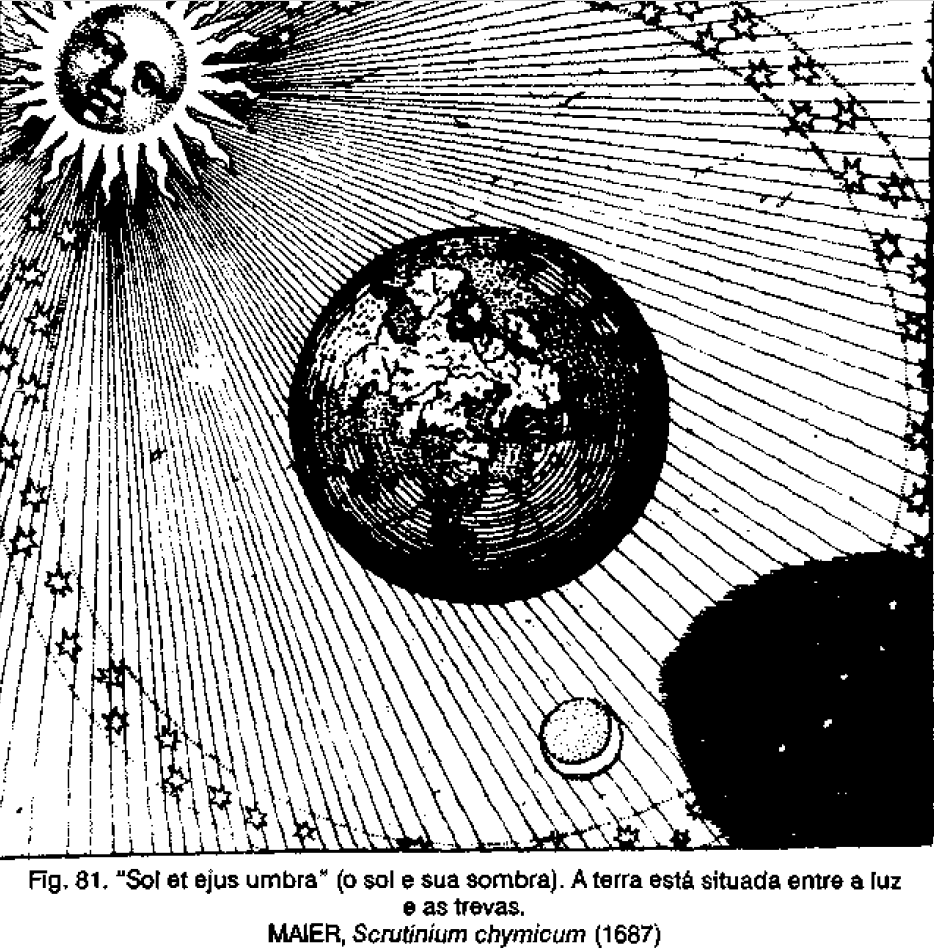
“A alquimia constitui como que uma corrente subterrânea em relação ao cristianismo que reina na superfície. A primeira se comporta em relação ao segundo como um sonho em relação à consciência e da mesma forma que o sonho compensa os conflitos do consciente, assim o esforço da alquimia visa preencher as lacunas deixadas pela tensão dos opostos no cristianismo.”
“A transformação histórico-universal da consciência para o lado ‘masculino’ é em primeiro lugar compensada pelo inconsciente ctônico-feminino.”
“Não se escandalize o leitor se a minha digressão soa como um mito gnóstico. Movemo-nos aqui no terreno psicológico em que está enraizada a gnose. A mensagem do símbolo cristão é gnose, e a compensação do inconsciente o é ainda mais.”
“A alquimia trata principalmente do germe da unidade que está oculto no caos de Tiamat e que corresponde à contrapartida da unidade divina.”
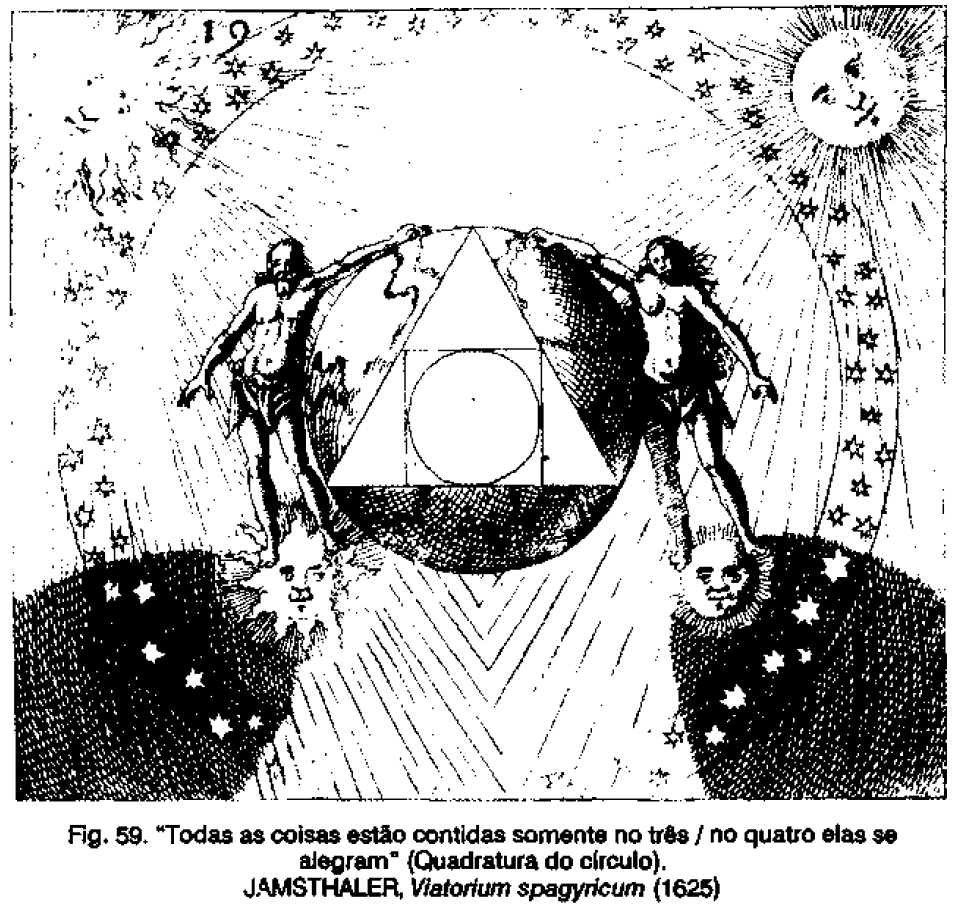
“O número três não é uma expressão natural da totalidade, ao passo que o número quatro representa o mínimo dos determinantes de um juízo de totalidade.”
“O ‘mercúrio’ é sem dúvida ‘quadratus’, mas também uma serpente tricéfala, ou simplesmente uma tri-unidade.”
“os temas do sonho sempre reaparecem depois de determinados intervalos, sob certas formas que designam à sua maneira o centro.”
“Poderíamos estabelecer um paralelo entre esses processos em espiral e o processo de crescimento das plantas; o tema vegetal (árvore, flor, etc.) também retorna freqüentemente nesses sonhos e fantasias, ou em desenhos espontâneos.” O tema do concurso refeito: voltei ao Colégio Militar por direito, “me emendei”, etc. Há sempre uma festa que é a do meu casamento ou casamento do A. em que bebo tanto que emendo o fim de semana com a segunda de trabalho.
“No processo do tratamento psíquico, a relação dialética conduz logicamente ao confronto do paciente com sua sombra, essa metade obscura da alma da qual nos livramos invariavelmente através de projeções, ora carregando o próximo – num sentido mais ou menos lato – de todos os vícios que são nossos, ora transferindo os próprios pecados para um mediador divino através da ‘contritio’ ou da ‘attritio’ mais amena.(*)
(*) Contritio é ‘arrependimento perfeito’. Attritio é ‘arrependimento imperfeito’ (‘contritio imperfecta’ à qual também pertence a ‘contritio naturalis’). A primeira considera o pecado como oposição ao Bem Supremo; a última o rejeita por sua maldade e feiúra e também por medo do castigo.”
“Quando a sombra é trazida à consciência pode arrastar consigo, à tona, os conteúdos do inconsciente coletivo. Isto pode exercer uma influência tremenda sobre a consciência, uma vez que a vivificação dos arquétipos molesta o mais frio dos racionalistas, e precisamente a ele.”
“O simples conhecimento da estrutura psíquica da neurose também é insuficiente nesses casos; quando o processo atinge a esfera do inconsciente coletivo encontramo-nos diante de material saudável, ou seja, dos fundamentos universais da psique, com suas variações individuais. O que ajuda a compreender essas camadas mais profundas da psique é, por um lado, o conhecimento da mitologia e da psicologia primitiva e, por outro, de um modo muito especial, o conhecimento das etapas históricas preliminares da consciência moderna. A consciência atual foi modelada tanto pelo espírito da Igreja, como pela ciência em cujos primórdios se ocultava muita coisa que não podia ser aceita pela Igreja. Trata-se principalmente de remanescentes do espírito da Antiguidade e do seu sentimento da natureza que não era possível extirpar, tendo encontrado um refúgio na Filosofia Natural da Idade Média. Os antigos deuses dos planetas sobreviveram a muitos séculos de Cristianismo sob a forma de ‘spiritus metallorum’ e componentes astrológicos do destino.”
“A alquimia movia-se de fato sempre no limite da heresia e era proibida pela Igreja. Ela desfrutou entretanto da proteção eficaz da obscuridade de seu simbolismo, que a qualquer momento podia ser explicado por uma alegoria inofensiva. Para muitos alquimistas, o aspecto alegórico se achava de tal modo em primeiro plano, que estavam totalmente convencidos de tratar-se apenas de corpos químicos. Outros, entretanto, consideravam o trabalho de laboratório relacionado com o símbolo e seu efeito psíquico. Tal como demonstram os textos, esses alquimistas tinham a consciência do efeito psíquico, a ponto de condenarem os ingênuos fazedores de ouro como mentirosos, trapaceiros ou extraviados.”
“A grande preocupação da Igreja é a ‘imitatio Christi’, ao passo que o alquimista, na solidão e na problemática obscura de sua obra, sucumbe sem saber ou mesmo sem querer aos pressupostos inconscientes naturais de seu espírito e de seu ser, por não dispor para se apoiar de modelos claros e inequívocos como o Cristo. Os autores estudados pelo alquimista fornecem-lhe símbolos cujo sentido ele capta a seu modo, embora na realidade toquem e excitem seu inconsciente. Ironizando-se a si mesmos, os alquimistas cunharam a expressão: ‘obscurum per obscurius’ (o obscuro pelo mais obscuro).”
“A unidade dos quatro, o ouro filosófico, o ‘lapis angularis’ (pedra angular), a ‘aqua divina’ (água divina) correspondiam na Igreja à cruz de quatro braços na qual o ‘Unigenitus’ foi sacrificado, uma vez na história e por toda a eternidade.”
“A possessão revela-se quase sempre pelo fato de as pessoas possuídas se identificarem com os conteúdos. Não reconhecendo o papel que lhes é imposto como efeito dos novos conteúdos a serem descobertos, elas os encarnam exemplarmente em suas vidas, tomando-se profetas e reformadoras.” “Jesus tomou-se assim a imagem protetora contra todos os poderes arquetípicos que ameaçavam apoderar-se das pessoas. A boa-nova anunciava: ‘Já aconteceu, e já não vos acontecerá mais se acreditardes em Jesus, o filho de Deus!’” “Por isso sempre houve pessoas que, não se satisfazendo com a dominante da vida consciente, buscaram por debaixo do pano ou por atalhos secundários, para seu bem ou para seu mal, a experiência originária das raízes eternas. Seguindo o fascínio do inconsciente irrequieto, puseram-se a caminho rumo .ao deserto, onde, como Jesus, depararam com o filho das Trevas”
“Mas a parte anímica da obra não desapareceu. Ela conquistou novos intérpretes, como vemos por exemplo no Fausto e na relação significativa da psicologia moderna do inconsciente com a simbólica alquímica.”
II.
SÍMBOLOS ONÍRICOS DO PROCESSO DE INDIVIDUAÇÃO
Contribuição para o conhecimento dos processos do inconsciente manifesto nos sonhos
“a simbólica da mandala”
“O material de que disponho consiste em mais de mil sonhos e impressões visuais de um homem ainda jovem cuja formação científica deve ser sublinhada.” “A não ser uma curta entrevista no início, antes de começar as observações, não encontrei o sonhador durante os oito primeiros meses. Assim, pois, 355 dos 400 sonhos foram sonhados independentemente de qualquer contato pessoal comigo.”
“Não contesto de modo algum a possibilidade de sonhos ‘paralelos’, isto é, de sonhos cujo sentido coincida com a atitude da consciência ou venha em apoio desta última. Mas na minha experiência, pelo menos, estes últimos são relativamente raros.”
“O chapéu que cinge a cabeça é redondo como o círculo solar da coroa, contendo por isso a primeira alusão à mandala.”
usar o chapéu de outra pessoa
boné capacete
boina
usar o cabelo de outra pessoa
“O mar é o símbolo do inconsciente coletivo porque sob sua superfície espelhante se ocultam profundidades insondáveis.”
“Tal como a mania de perseguição resulta de um relacionamento envenenado pela desconfiança, assim também uma realidade ilusória vem substituir a animação normal do meio ambiente e, em lugar de pessoas, começam a mover-se sombras aterradoras e fantasmagóricas. Este é o motivo pelo qual o homem primitivo povoava os lugares desertos e solitários de ‘diabos’ e outros fantasmas.” Porões do CMB.
“A resistência do consciente contra o inconsciente, bem como a depreciação deste último, é uma necessidade histórica do desenvolvimento da consciência, pois de outro modo ela nunca se teria diferenciado do inconsciente. A consciência do homem moderno porém distanciou-se demasiadamente da realidade do inconsciente.”
“país das crianças”
O País das Maravilhas aceita todas as idades, é atemporal
“É infantil não apenas aquele que permanece criança por muito tempo, mas aquele que separando-se da infância pensa que ela não existe mais porque não a vê.”
“A pré-história psíquica é o espírito da gravidade, que exige degraus e escadas porque não pode voar, a modo do intelecto, sem corpo e sem peso.”
“O inconsciente pessoal deve sempre ser resolvido em primeiro lugar, isto é, deve ser integrado na consciência. De outro modo, o acesso ao inconsciente coletivo tomar-se-ia impossível. A viagem com pai e mãe, subindo e descendo muitas escadas, corresponde a esta conscientização de conteúdos infantis ainda não-integrados.”
“SONHO 13
O pai grita ansioso: ‘Este é o sétimo!’”
“Se for correta a interpretação de que o ‘sétimo’ corresponde ao degrau máximo da iluminação, o processo da integração do inconsciente pessoal deveria em princípio estar concluído.”
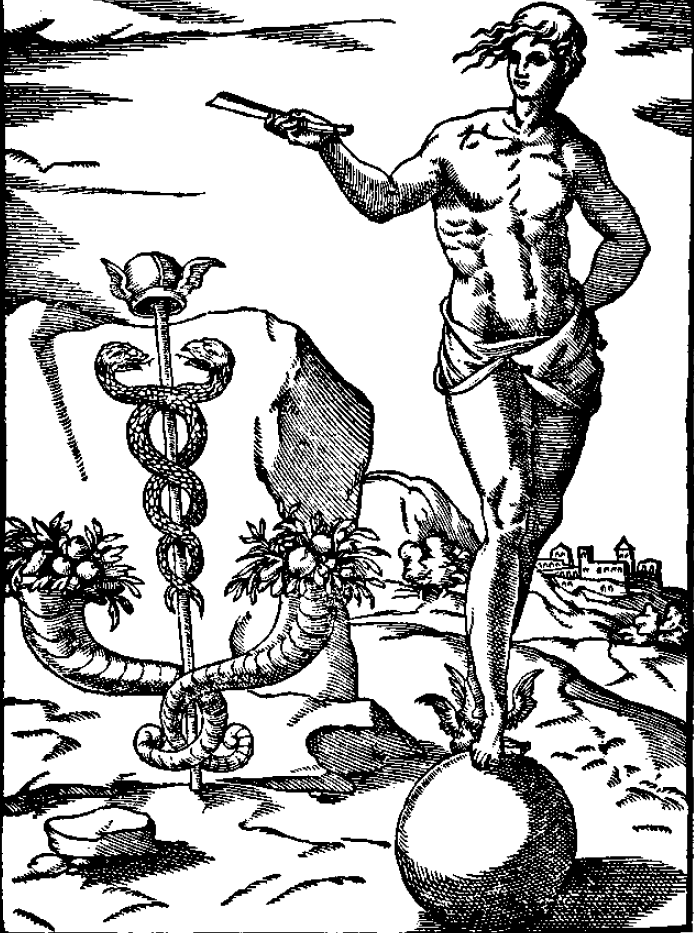
“Enquanto planeta Mercúrio ele é o mais próximo do sol, o que indica também sua maior afinidade com o ouro. Enquanto metal, o mercúrio dissolve o ouro e apaga seu brilho solar.”
“A ‘arte negra’ porém não é tão remota quanto se pensa; o sonhador, como homem culto, devia ter lido o Fausto. Este último é um drama alquímico do começo ao fim, embora o homem culto de hoje tenha apenas uma vaga idéia disto.”
“Os monólogos da caveira, no Fausto e em Hamlet, evocam o absurdo aterrador da existência quando é apenas considerada pelo ‘pálido esboço do pensamento’.”
“O fenômeno da ‘voz’ sempre tem um caráter definitivo e indiscutível para o sonhador, isto é, a voz enuncia uma verdade ou condição que já não pode ser posta em dúvida.”
“Nenhuma mandala é igual a outra, sendo individualmente diferentes. Acrescentou que as mandalas encontradas nos mosteiros e nos templos não têm significado particular, por serem meras representações exteriores. A verdadeira mandala é sempre uma imagem interior, construída pouco a pouco através da imaginação (ativa) somente em períodos de distúrbio do equilíbrio anímico, ou quando se busca ima pensamento difícil de ser encontrado por não figurar na doutrina sagrada.”
“ela é sempre um sistema quaternário, uma ‘quadratura circuli’ (quadratura do círculo), cujos conteúdos procedem invariavelmente da dogmática lamaísta.”
“É essencial conhecer esta valorização máxima do símbolo, porquanto coincide com o significado central dos símbolos mandálicos individuais, caracterizados pelas mesmas qualidades de natureza por assim dizer ‘metafísica’. Se não estivermos completamente enganados, eles representam um centro psíquico da personalidade que não é idêntico ao ‘eu’. Observei tais processos e imagens ao longo de vinte anos, através de um material empírico relativamente abundante.”
“Pratica-se a ioga indiana de qualquer escola, seguem-se regimes alimentares, aprende-se de cor a teosofia, rezam-se mecanicamente os textos místicos da literatura universal – tudo isto porque não se consegue mais conviver consigo mesmo e porque falta fé em que algo de útil possa brotar de nossa própria alma.”
“Perde-se a culpa, que é substituída por uma inocência infantil; reaparece então o pai mau responsável por isto e a mãe pouco amorosa responsável por aquilo e nesses inegáveis nós causais fica-se preso como uma mosca em teia de aranha, sem perceber que se perdeu a liberdade moral.”
“O tipo de veículo, num sonho, ilustra o tipo de movimento, ou a maneira pela qual se avança no tempo – em outras palavras, como se vive sua vida psíquica, individual ou coletivamente, por seus próprios meios ou por meios emprestados, espontaneamente ou mecanicamente. No avião, o sonhador é conduzido por um piloto desconhecido, isto é, por vima intuição de origem inconsciente.” “No sonho de que tratamos agora, ele está num bonde elétrico que pode ser usado por qualquer pessoa; isto significa que ele se movimenta ou se comporta como qualquer pessoa.”
“Da mesma forma os filósofos afirmam que o quadrado deve transformar-se em triângulo, isto é, em corpo, espírito e alma, os quais antes do vermelho aparecem em três cores, ou seja, o corpo ou a terra num negro saturnino, o espírito num branco lunar como água, a alma ou o ar, amarelo como o sol. Então o triângulo estará completo, todavia, por sua vez, ele deve transformar-se num círculo, isto é, num vermelho inalterável.”
“o intelecto do homem moderno considera tudo isto o maior dos absurdos. No entanto, este juízo de valor não impede que tais associações de idéias existam há muitos séculos, desempenhando um papel de suma importância.” “(Muitos de meus críticos, que se dizem ‘cientistas’, reagem exatamente como aquele bispo que excomungou os besouros por proliferarem desavergonhadamente.)”
“A retro-identificação com os ancestrais humanos e animais significa, no plano psicológico, uma integração do inconsciente, um verdadeiro banho de renovação na fonte da vida, onde se é novamente peixe, isto é, inconsciente, como no sono, na embriaguez e na morte; daí o sono de incubação, a consagração orgiástica dionisíaca e a morte ritualística na iniciação. Tais procedimentos realizam-se sempre no lugar sagrado. Podemos transpor facilmente estas idéias para o concretismo freudiano: o temenos [estrutura geralmente quadrangular ou circular que nos rodeia e protege] seria o útero materno, e o rito, uma regressão ao incesto. No entanto, neste caso, trata-se de equívocos de neuróticos, os quais permaneceram parcialmente infantis. Ignoram que essas práticas foram exercidas pelos adultos desde os primórdios, sendo portanto impossível explicá-las como simples regressões ao estágio infantil. Caso contrário, as mais altas conquistas da humanidade não significariam mais do que desejos infantis pervertidos, e a expressão ‘infantil’ perderia a sua razão de ser.”
“Se esses ritos de renovação não produzissem resultados efetivos, não só teriam desaparecido na pré-história, como nem mesmo teriam surgido. Nosso caso demonstra que mesmo quando a consciência está a milhas de distância das representações arcaicas dos ritos de renovação, o inconsciente procura reaproximá-los da consciência, mediante os sonhos. Sem dúvida alguma a autonomia e autarquia da consciência representam qualidades sem as quais esta última não existiria; no entanto, tais qualidades podem constituir também um perigo de isolamento e de aridez, por criarem uma alienação insuportável do instinto, resultante da cisão entre consciência e inconsciente.”
“Minha experiência, entretanto, testemunha que a consciência só pode pretender a uma posição relativamente central, devendo aceitar o fato de que de certa forma é ultrapassada e cercada pela psique inconsciente por todos os lados. ‘Para trás’, mediante os conteúdos inconscientes, está conectada com as condições fisiológicas e com os pressupostos arquetípicos. Contudo também protende ‘para frente’, através de intuições que por sua vez são parcialmente condicionadas por arquétipos e por percepções subliminares, ligadas à relatividade espácio-temporal do inconsciente. Deixo ao critério do leitor que examine a possibilidade de uma tal hipótese, após uma ponderação cuidadosa sobre esta série de sonhos e sobre a temática por ela levantada.”
“As festas carnavalescas medievais e o jogo da péla na igreja foram abolidos relativamente cedo; conseqüentemente, o carnaval foi secularizado, desaparecendo a ebriedade divina do espaço sagrado. Restaram na igreja o luto, a severidade, o rigor e a alegria espiritual temperada. Mas a embriaguez, essa forma de possessão imediata e perigosa, desligou-se dos deuses, envolvendo por isso o mundo dos homens em seu excesso e seu ‘pathos’. As religiões pagãs enfrentavam este perigo, dando lugar no culto a esse êxtase da embriaguez.”
“A problemática do três e quatro, do sete e oito, que GOETHE tocou neste ponto, é um dos enigmas da alquimia que remonta historicamente a textos atribuídos a CHRISTIANOS.”
“Filho, toma do corpo mais simples e redondo, e não do triangular ou quadrangular, toma do redondo; porque o redondo está mais próximo da simplicidade do que o triangular. Note-se que o corpo simples não tem ângulo algum, pois é o primeiro e o último dentre os planetas, como o sol entre as estrelas”
“Os leões, como todos os animais selvagens, indicam afetos latentes. Na alquimia, o papel do leão é importante e tem um significado semelhante. Trata-se de um animal ‘do fogo’, alegoria do diabo, e indica o perigo do sonhador ser tragado pelo inconsciente.”
“De vez em quando aparecem mandalas ‘perturbadas’. Elas consistem de todas as formas derivadas do círculo, do quadrado ou da cruz regular; bem como as formas baseadas não no número quatro, mas no três ou no cinco. Os números seis e doze constituem neste caso uma certa exceção. O doze pode ter relação com o quatro ou o três. Os doze meses e os doze signos do Zodíaco são símbolos circulares, colocados à nossa disposição. Da mesma forma, o seis é um conhecido símbolo do círculo. O três sugere a predominância da idéia e da vontade (trindade) e o cinco, o homem físico (materialismo).” // CANA NA CASA & O 6 IMPOSSÍVEL
“A ‘voz’ tem em geral um caráter indiscutível de autoridade e costuma comparecer nos momentos decisivos.”
“Sem o círculo vertical azul a mandala dourada permanece incorpórea e bidimensional, mera imagem abstrata. Somente a interferência do tempo e do espaço no aqui e agora cria a realidade. A totalidade se concretiza apenas no instante, naquele instante que Fausto buscou pela vida afora.”
“A visão do ‘relógio do mundo’ não é o último estágio, nem o ponto culminante no desenvolvimento dos símbolos da psique objetiva. No entanto ela é mais ou menos o desfecho da terça parte inicial do material que abrange cerca de quatrocentos sonhos e visões.”
“Não quero contudo insinuar que me julgo capaz de fazer afirmações concludentes acerca de um tema tão complexo. Não é a primeira vez que trato de uma série de manifestações espontâneas do inconsciente. Já o fiz em meu livro Símbolos da Transformação; neste se tratava do problema de uma neurose (da puberdade), ao passo que aqui a problemática se prolonga até a individuação. Além disso, há uma diferença considerável entre as duas personalidades em questão. O primeiro caso, do qual aliás nunca tratei pessoalmente, terminou numa catástrofe psíquica (psicose); o segundo, aqui em questão, apresenta um desenvolvimento normal, tal como tenho observado freqüentemente em pessoas de elevado nível intelectual.”
“É como se normalmente existisse uma nítida insistência no quatro, ou como se houvesse estatisticamente uma probabilidade maior em relação ao quatro. Não posso silenciar a seguinte observação: o fato de o principal elemento químico constitutivo do organismo físico ser o carbono – caracterizado por quatro valências – é sem dúvida um ‘lusus naturae’ (um jogo da natureza) bastante estranho”
III.
AS IDÉIAS DE SALVAÇÃO NA ALQUIMIA
Uma contribuição à história das idéias na alquimia
“LENTAMENTE, no decurso do século XVIII, a alquimia pereceu em sua própria obscuridade. Seu método de explicação – ‘obscurum per obscurius, ignotum per ignotius’ (o obscuro pelo mais obscuro, o desconhecido pelo mais desconhecido) – era incompatível com o espírito do iluminismo e particularmente com o alvorecer da ciência química, no final do século. Mas estas duas novas forças intelectuais apenas eram o tiro de misericórdia na alquimia. Sua decadência interna começara pelo menos um século antes, no tempo de JAKOB BÖHME, quando muitos alquimistas abandonaram seus alambiques e cadinhos, devotando-se inteiramente à filosofia (hermética).”
“Sobre este aspecto da alquimia, especialmente quanto a seu significado psicológico, o livro de HERBERT SILBERER Probleme der Mystik und ihrer Symbolik (1914) fornece uma informação abundante. O simbolismo fantástico relacionado com o aspecto psicológico é graficamente descrito num trabalho de BERNOULLI: Seelische Entwicklung im Spiegel der Alchemie. Podemos encontrar em EVOLA um relato detalhado da filosofia hermética: La tradizione ermetica. Mas um estudo abrangente das idéias contidas nos textos, e da sua história, ainda está faltando, embora sejamos devedores a REITZENSTEIN por sua importante obra preparatória neste campo.”
“Quatro estágios são assinalados, caracterizados pelas cores originárias já mencionadas em HERÁCLITO: melanosis (o enegrecimento), leukosis (embranquecimento), xanthosis (amarelecimento), iosis (enrubescimento).” “Mais tarde, por volta dos séculos XV e XVI, as cores foram reduzidas a três, e a xanthosis, também chamada ‘citrinitas’, caiu gradualmente em desuso, ou então era raramente mencionada. Em seu lugar a ‘viriditas’ (o verde) aparece raras vezes após a melanosis ou ‘nigredo’.”
“A partir da ‘nigredo’, a lavagem (ablutio, baptisma) conduz diretamente ao embranquecimento, ou então ocorre que a alma (anima) liberta pela morte é reunida ao corpo morto e cumpre sua ressurreição; pode dar-se finalmente que as múltiplas cores (omnes colores) – a ‘cauda pavonis’ (cauda do pavão) – conduzam à cor branca e una, que contém todas as cores. Neste ponto, a primeira meta importante do processo é alcançada: trata-se da ‘albedo’, ‘tinctura alba’, ‘terra alba foliata’, ‘lapis albus’, etc., altamente valorizada por muitos alquimistas como se fosse a última meta. É o estado lunar ou de prata, que ainda deve alçar-se ao estado solar. A ‘albedo’ é, por assim dizer, a aurora; mas só a ‘rubedo’ é o nascer do sol. A transição para a ‘rubedo’ constitui o amarelecimento (citrinitas), se bem que como já observamos este é suprimido posteriormente.”
“Tal é superficialmente e em suas linhas gerais a estrutura da alquimia, como é conhecida por todos. Do ponto de vista do nosso conhecimento moderno da química, ela nos diz pouco ou nada e se nos voltarmos para os textos, com seus mil e um processos e receitas legados pela Idade Média e pela antiguidade, encontraremos poucos dentre eles, relativamente, de significado identificável pelo químico. É provável acharmos a maioria sem sentido; é indubitável que jamais foi produzida uma verdadeira tintura ou ouro artificial durante todos esses séculos de intenso labor. Podemos então perguntar com toda a razão o que induzia os velhos alquimistas a prosseguir trabalhando ou ‘operando’ (como diziam) de modo constante, escrevendo todos aqueles tratados sobre a ‘divina’ arte, se toda a sua ação era tão desprovida de esperança? Para fazer-lhes justiça devemos acrescentar que todos os conhecimentos essenciais da química e suas limitações eram-lhes desconhecidos e assim podiam ter esperança como aqueles que sonhavam com o vôo e cujos sucessores fizeram tal sonho tornar-se realidade. Nem poderíamos subestimar o sentido da satisfação que nasce do empreendimento, da aventura: o ‘quaerere’ (buscar) e o ‘invenire’ (achar). Estes permanecem, na medida em que os métodos empregados parecem ter sentido. Nada havia naquele tempo que pudesse convencer o alquimista da falta de sentido de suas operações químicas; e o que é mais, ele contava com uma longa tradição de não poucos que haviam obtido o maravilhoso resultado.”
“Se admitimos que o alquimista usa o processo químico só simbolicamente, então por que trabalha num laboratório com cadinhos e alambiques? E se, como ele constantemente afirma, está descrevendo processos químicos, por que os desfigura com seu simbolismo mitológico até torná-los irreconhecíveis?”
“A constituição espiritual do homem pertencente aos ciclos pré-modernos da cultura era tal, que cada percepção física tinha simultaneamente um componente psíquico que o ‘animava’, conferindo à imagem um ‘significado’ adicional e ao mesmo tempo uma tonalidade emotiva particular e poderosa. Assim sendo, a física antiga era ao mesmo tempo uma teologia e uma psicologia transcendental: pelo fato de receber os lampejos das essências metafísicas na matéria dos sentidos corporais. A ciência natural era ao mesmo tempo uma ciência espiritual e os múltiplos sentidos dos símbolos reuniam os diversos aspectos em um único conhecimento.” EVOLA
“Fazer segredo pode ser um mero blefe com o propósito óbvio de explorar os crédulos. Mas toda tentativa de explicar a alquimia unicamente sob este ponto de vista é, na minha opinião, desmentida pelo fato de que vim bom número de tratados detalhados, eruditos e conscienciosos foram escritos e impressos anonimamente, não podendo portanto ter representado uma vantagem ilegítima para alguém.”
“Na tentativa de explicar o mistério da matéria, projetava outro mistério, isto é, projetava seu próprio fundo psíquico desconhecido no que pretendia explicar”
“O alquimista não pratica sua arte por acreditar teoricamente numa correspondência, mas tem uma teoria das correspondências pelo fato de vivenciar a presença da idéia na matéria (physis).”
“A astrologia é uma experiência primordial, como a alquimia. Projeções deste tipo repetem-se todas as vezes que o homem tenta explorar uma escuridão vazia, preenchendo-a involuntariamente com formas vivas.”
“As exposições de HOGHELANDE vêm provar, tal como os dois textos anteriores, que durante as experiências de laboratório ocorrem alucinações ou visões, as quais só podem ser projeções de conteúdos inconscientes.” Neste momento ouvindo CATHEDRAL, trilha perfeita.
“A fim de podermos compreender tais afirmações temos que livrar-nos de todas as idéias modernas sobre a constituição de um gás, e concebê-las como puramente psicológicas. Trata-se nesse caso da projeção de pares de opostos, tais como leve – pesado, visível – invisível, etc. Acontece que a identidade dos opostos é a característica de todo fato psíquico no estado inconsciente. Assim sendo, uma ‘anima corporalis’ é simultaneamente ‘spiritualis’ e o núcleo do ar sólido e pesado é ao mesmo tempo o ‘spiritus creator’ que paira sobre as águas.”
“Assim por exemplo o sábio MICHAEL MAIER censura GEBER – autoridade clássica – de ser o mais obscuro de todos, afirmando que seria preciso um Édipo para decifrar o enigma da ‘Gebrina Sphinx’. BERNARDUS TREVISANUS, outro alquimista famoso, acusa GEBER de obscurantista, comparando-o a um Proteu que promete a fruta e dá cascas.”
“Mercurius encontra-se no início e no fim da obra. É a ‘prima materia’, o ‘caput corvi’, a ‘nigredo’, Como dragão, devora-se a si mesmo e como dragão morre para ressuscitar sob a forma do lapis. É o jogo de cores da ‘cauda pavonis’ (cauda do pavão) e a separação nos quatro elementos. É o hermafrodita, o ser primordial, o qual se divide, formando o par clássico de irmão-irmã, e se unifica na ‘coniunctio’, a fim de aparecer de novo ao fim sob a forma radiante do ‘lumen novum’ (nova luz), do lapis. É metal e não obstante líquido, matéria e no entanto espírito, frio porém ígneo, veneno que é medicamento, um símbolo unificador de opostos.”
“A metáfora enfática usada por NIETZSCHE no Zarathustra: ‘Para mim uma imagem dorme na pedra’, parece dizer o mesmo, mas em uma ordem inversa. Na antigüidade, o mundo da matéria era preenchido pela projeção de um segredo anímico que, desde então, aparecia como o segredo da matéria, assim permanecendo até a decadência da alquimia no século XVIIl. A intuição estática de NIETZSCHE porém queria arrancar da pedra o segredo do super-homem, onde ele até então dormia. À semelhança dessa imagem, NIETZSCHE queria criar o super-homem, o qual segundo a linguagem dos antigos poderia ser considerado o homem divino. Os velhos alquimistas, pelo contrário, procuravam a pedra miraculosa que contivesse uma essência pneumática a fim de extrair dela a substância que penetra em todos os corpos (pois ela é o ‘espírito’ que penetrou na pedra), transformando todas as substâncias vis em matéria nobre mediante a tintura. Esta ‘matéria-espírito’ é como o mercúrio que se encontra invisivelmente dentro dos minérios e que deve em primeiro lugar ser expulso afim de ser recuperado ‘in substantia’. Mas assim que se possui esse mercúrio penetrante é possível ‘projetá-lo’ em outros corpos, fazendo-os passar do estado imperfeito para o estado perfeito.”
“Na medida em que o ponto de vista da psicologia complexa é realista, isto é, fundamentado na hipótese de que os conteúdos psíquicos são existências, os atributos mencionados caracterizam uma parcela inconsciente da personalidade, dotada de uma consciência superior que ultrapassa o humano comum. Empiricamente, tais figuras exprimem sempre ‘insights’ ou qualidades superiores, ainda não conscientes, podendo-se até mesmo perguntar se elas podem ser atribuídas ou não ao ego propriamente dito. Tal problema, que o leigo pode considerar um sofisma, se reveste de um enorme significado na prática. Uma atribuição incorreta pode provocar inflações perigosas, que o leigo só considera sem importância por desconhecer os desastres anímicos e exteriores que podem ser causados por tais inflações.”
“Assim como no cristianismo a divindade se oculta na figura do servo, na ‘filosofia’ ela se oculta na pedra insignificante.”
“Poderíamos ser tentados a explicar o simbolismo alquímico da transformação como sendo uma caricatura da Missa, se sua origem não fosse pagã e portanto muito mais antiga.”
“Os alquimistas são, de fato, pessoas solitárias; cada qual diz o que tem a dizer à sua maneira. Raramente têm discípulos e parece que transmitiam bem pouca coisa por tradição direta; nem temos provas da existência de quaisquer sociedades secretas. Cada qual trabalhava sozinho no laboratório e sofria com a sua solidão.”
“não é correto afirmar que os alquimistas nunca definiram a ‘materia prima’; muito pelo contrário, foram tantas as definições dadas que estas acabaram por contradizer-se repetidamente.”
“Voltai-vos para mim de todo o coração e não me rejeiteis, por eu ser preta e escura, pois o sol assim me queimou; e as profundezas cobriram o meu rosto e a terra foi deteriorada e maculada em minhas obras, pois havia escuridão sobre ela, por eu ter afundado no lodo da profundeza e minha substância não foi explorada. Por isso clamo da profundeza e do abismo da Terra minha voz se dirige a todos vós que passais pelo caminho: Tende cuidado e olhai para mim, se jamais um dentre vós encontrou alguém que comigo se parecesse, eu lhe porei nas mãos a estrela matutina.”
“Não podemos esquecer que o alquimista não faz a menor questão de se torturar com escrúpulos morais, sob pretexto de o homem ser um nada pecador que vai ao encontro da obra de redenção de Deus através de uma conduta ética irrepreensível. O alquimista está no papel de um ‘redentor’ cujo ‘opus divinum’ é mais uma continuação da obra divina de redenção do que uma medida de prevenção contra uma eventual danação por ocasião do Juízo Final.”
“Uma vez que o incesto se dá a conselho dos filósofos, a morte do filho do rei é algo de desagradável e perigoso. A consciência coloca-se numa situação perigosa pela descida ao inconsciente; aparentemente, é como se ela se extinguisse. A situação é a do herói dos primórdios devorado pelo dragão. Em se tratando de um decréscimo ou extinção da consciência, tal ‘abaissement du niveau mental’ equivale ao ‘peril of the soul’ tão temido pelos primitivos (medo dos espíritos).”
“Quando a própria mãe se une a seu filho maritalmente, não se considera este ato como incestuoso. Pois é a natureza que assim ordena e assim exige a sagrada lei do destino, e o fato não desagrada a Deus.”
“O mito gnóstico originário sofreu estranhas transformações: o ‘nous’ e a ‘physis’ constituem uma unidade indistinta na ‘prima materia’, tomando-se uma ‘natura abscondita’.”
“O alquimista ressalta incessantemente a sua ‘humilitas’ (humildade) e sempre inicia seus tratados invocando Deus. Não pensa em identificar-se com Cristo; muito pelo contrário, a alquimia estabelece um paralelo entre a substância procurada, o ‘lapis’, e o Cristo. Não se trata assim propriamente de uma identificação, mas do ‘sicut’ (assim como) hermenêutico, que indica a analogia.”
“O homem moderno deve quase considerar-se feliz pelo fato de que, no momento da colisão com o pensamento e a vivência orientais, seu empobrecimento espiritual chegou a tal ponto que mal percebeu contra o que estava colidindo. Seu confronto com o Oriente desenrola-se agora no nível totalmente inadequado e inócuo do intelecto”
“As raízes do gnosticismo não radicam no cristianismo; aliás seria mais verdadeiro afirmar que este último assimilou idéias do gnosticismo.”
WEI PO-YANG, An Ancient Chinese Treatise on Alchemy
“nos escritos dos padres da Igreja o vento sul é uma alegoria do Espírito Santo, provavelmente devido à natureza quente e seca desse vento. Por este motivo, o processo de sublimação é denominado na alquimia árabe ‘o grande vento do sul’, referindo-se ao aquecimento da retorta e do seu conteúdo. O Espírito Santo é ígneo e provoca a exaltação.”
“Nessa época floresceram as sociedades secretas, sobretudo os Rosa-cruzes – a melhor prova da exaustão do segredo da alquimia! A existência de uma ordem secreta tem sua razão de ser quando é necessário proteger um segredo que perdeu sua vitalidade e que só poderá perdurar de um modo formal.”
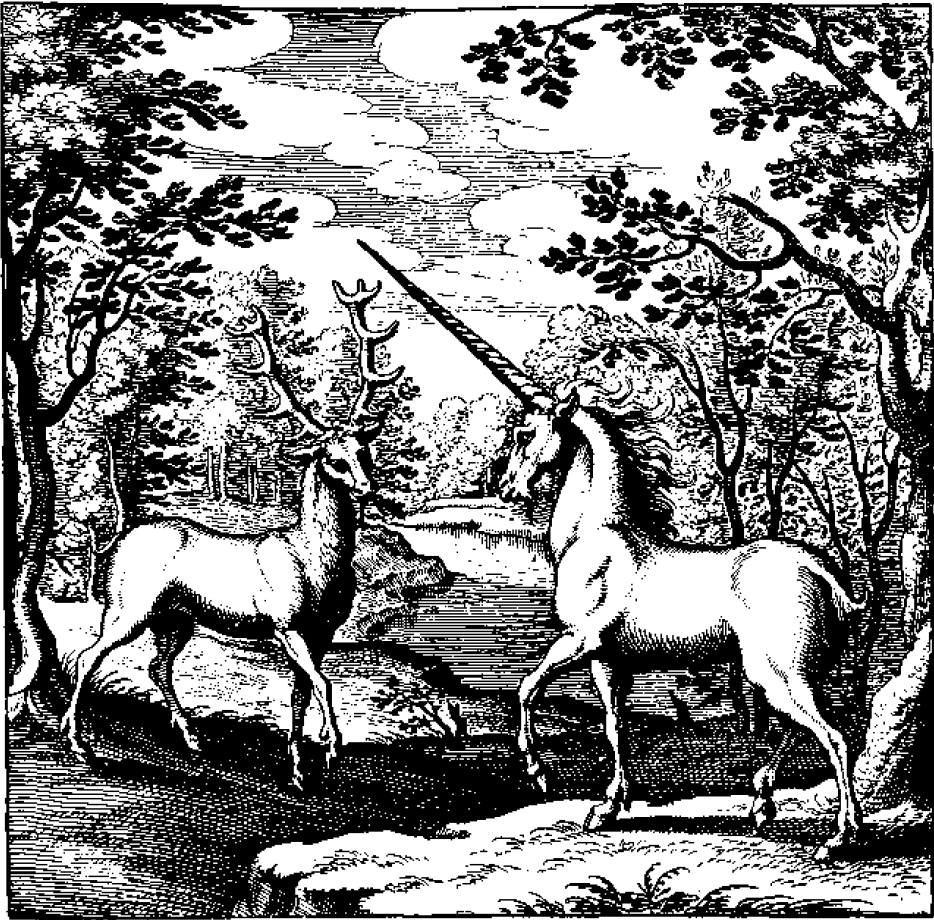
“Na tradição medieval associa-se o unicórnio ao leão ‘porque este animal é como o leão, forte, feroz e cruel’. ‘Por esta razão’, diz BACCIUS, ‘este animal chama-se Lycornu na França e na Itália’, o que parece significar um derivado de ‘lion’.” “Conta-se do unicórnio coisas semelhantes às do dragão, que em sua qualidade de animal subterrâneo habita cavernas e gargantas; que eles (os unicórnios) se escondem e habitam os desertos e as altas montanhas e as grutas mais profundas e estranhas e as tocas dos animais selvagens, entre sapos e outros vermes nojentos e imundos”
“No Rig-Veda, ele é chamado de ‘Pai Manu’ e conta-se que com sua filha gerou os homens. É o fundador da ordem social e moral. É o primeiro sacrificador e sacerdote. Transmitiu aos homens a doutrina dos Upanishades.”
“O leão, sendo um animal perigoso, é semelhante ao dragão. Este tem que ser morto; quanto ao leão, tem pelo menos que ter as patas cortadas. O unicórnio também deve ser domado; por ser um monstro, possui um significado simbólico superior e sua natureza é mais espiritual do que a do leão.”
“Segundo o Li-ki há quatro animais benévolos ou espirituais: o unicórnio (K’i-lin), a fénix, a tartaruga e o dragão. O unicórnio é o maior dos quadrúpedes. Seu corpo é de cervo, tem rabo de boi e cascos de cavalo. Suas costas têm cinco diferentes cores e seu ventre é amarelo. É benévolo em relação aos outros animais. Dizem que aparece por ocasião do nascimento dos bons imperadores ou dos grandes sábios. Se é ferido, isto significa maus presságios. Apareceu pela primeira vez no jardim do Imperador Amarelo. Mais tarde, dois unicórnios viviam em P’ing-yang, capital do imperador Yao. Um unicórnio apareceu à mãe de Confúcio, estando ela grávida. Antes da morte de Confúcio houve um presságio que ela ocorreria: um cocheiro feriu um unicórnio.”
“Este apanhado do simbolismo do unicórnio não passa de uma amostra, exemplificando as conexões intimamente entretecidas e emaranhadas que há entre a filosofia natural pagã, o gnosticismo, a alquimia e a tradição da Igreja, a qual, por sua vez, influenciou profundamente a cosmovisão da alquimia medieval. Espero que este exemplo tenha esclarecido meu leitor até que ponto a alquimia representava um movimento filosófico-religioso ou ‘místico’.”
EPÍLOGO
“NUNCA ficou muito claro o que os antigos filósofos entendiam por ‘lapis’. Esta questão só será respondida satisfatoriamente depois de sabermos que conteúdos eles projetavam de seu inconsciente. Somente a Psicologia do Inconsciente poderá resolver tal enigma. Sabemos que um conteúdo do inconsciente, enquanto projetado, é inacessível.”
“Identificando-se com Paris, Fausto traz a ‘coniunctio’ da projeção para a esfera da vivência pessoal psicológica e portanto para a consciência. Este passo decisivo significa nada mais nada menos do que a solução do enigma alquímico, e também o resgate de uma parte da personalidade até então inconsciente. Todo acréscimo de consciência porém traz consigo o perigo da inflação. Isto fica demonstrado claramente no aspecto de super-homem em Fausto. A morte deste, necessidade que se deve às exigências da época, não constitui de modo algum uma resposta satisfatória. O nascimento e transformação que se seguem à ‘coniunctio’ se dão no além, isto é, no inconsciente, deixando o problema em aberto. Este foi retomado por NIETZSCHE, como sabemos, no Zarathustra: o da transformação em super-homem, que ele aproximou perigosamente do homem terrestre. Isto provocou inevitavelmente o ressentimento anticristão, pois o seu super-homem é uma hybris da consciência individual, que se choca necessariamente com o poder coletivo do cristianismo – levando à destruição catastrófica do indivíduo. É sabido o modo pelo qual e de que formas características isto aconteceu ‘tam ethice quam physice’ (tanto moral como fisicamente) com o próprio NIETZSCHE. E que resposta os tempos subseqüentes deram ao individualismo do super-homem nietzscheano? Responderam com o coletivismo, com a organização coletivista e o amontoamento de massas ‘tam ethice quam physice’, escarnecendo de tudo o que existira até então.”
“O fogo esfriou, transformando-se em ar, o ar tornou-se o vento de Zarathustra e causou uma inflação de consciência. Esta, pelo visto, só pôde ser dominada pelas mais aterradoras catástrofes da civilização, ou seja, pelo dilúvio que os deuses enviaram à humanidade pouco hospitaleira.” Jung criou uma estorinha de gibi na própria cabeça.
“Este estado de possessão inconsciente prosseguirá até o dia em que o europeu se ‘assuste com sua semelhança a Deus’.”
“O termo científico ‘individuação’ não significa de modo algum que se trate de fatos inteiramente conhecidos e esclarecidos. Ele apenas designa um domínio obscuro de pesquisa ainda em curso dos processos psíquicos através dos quais a personalidade em formação atinge seu centro no inconsciente. Trata-se de processos vitais, que, por seu caráter numinoso, serviram desde os primórdios de estímulo fundamental para a formação dos símbolos.”
Para dúvidas de vocabulário, ver glossário ao final.
I
“He who can be perceived by the internal organ, who is subtile, indiscernible, and eternal, who contains all created beings and is inconceivable, shone forth of his own.
He, desiring to produce beings of many kinds from his own body, first with a thought created the waters, and placed his seed in them.
That became a golden egg, in brilliancy equal to the sun; in that he himself was born as Brahman, the progenitor of the whole world.
The waters are called narah, the waters are, indeed, the offspring of Nara; as they were his first residence (ayana), he thence is named Narayana.
From that cause, which is indiscernible, eternal, and both real and unreal, was produced that male (Purusha), who is famed in this world under the appellation of Brahman.
The divine one resided in that egg during a whole year, then he himself by his thought divided it into two halves;
And out of those two halves he formed heaven and earth, between them the middle sphere, the 8 points of the horizon, and the eternal abode of the waters.
From himself he also drew forth the mind, which is both real and unreal, likewise from the mind egoism, which possesses the function of self-consciousness lordly;”
“from minute body particles of these 7 very powerful Purushas springs this world, the perishable from the imperishable.”
“But in the beginning he assigned their several names, actions, and conditions to all, even according to the words of the Veda.
He, the Lord, also created the class of the gods, who are endowed with life, and whose nature is action; [à imagem e semelhança do homem!] and the subtile class of the Sadhyas, and the eternal sacrifice.”
“Dividing his own body, the Lord became half male and half female; with that he produced Virag.”
“They created 7 other Manus possessing great brilliancy, gods and classes of gods and great sages of measureless power,
“Cattle, deer, carnivorous beasts with 2 rows of teeth, Rakshasas, Pisakas, and men are born from the womb.
From eggs are born birds, snakes, crocodiles, fishes, tortoises, as well as similar terrestrial and aquatic animals.”
“Those trees which bear fruit without flowers are called vanaspati (lords of the forest); but those which bear both flowers and fruit are called vriksha.”
“These plants which are surrounded by multiform Darkness, the result of their acts (in former existences), possess internal consciousness and experience pleasure and pain.
The conditions in this always terrible and constantly changing circle of births and deaths to which created beings are subject, are stated to begin with Brahman, and to end with these.
When he whose power is incomprehensible, had thus produced the universe and men, he disappeared in himself, repeatedly suppressing one period by means of the other.
When that divine one wakes, then this world stirs; when he slumbers tranquilly, then the universe sinks to sleep.”
“When this soul has entered darkness, it remains for a long time united with the organs of sensation, but performs not its functions; it then leaves the corporeal frame.
When, being clothed with minute particles only, it enters into vegetable or animal seed, it then assumes, united with the fine body, a new corporeal frame.
Thus he, the imperishable one, by waking and slumbering, incessantly revivifies and destroys this whole movable and immovable creation.
But he having composed these Institutes, himself taught them, according to the rule, to me alone in the beginning; next I to Mariki and the other sages.
Bhrigu, here, will fully recite to you these Institutes; for that sage learned the whole in its entirety from me.”
“Six other high-minded, very powerful Manus, who belong to the race of this Manu, the descendant of the Self-existent (Svayambhu), and who have severally produced created beings,
Svarokisha, Auttami, Tamasa, Raivata, Kakshusha, possessing great lustre, and the son of Vivasvat.
These seven very glorious Manus, the first among whom is Svayambhuva, produced and protected this whole movable and immovable, each during the period allotted to him.
Eighteen nimeshas (twinklings of the eye, are one kashtha), 30 kashthas one kala, 30 kalas one muhurta, and as many muhurtas one day and night.” Estritamente falando, em contas matemáticas (muhurta/30, etc., 1 nimesha seria 0,177s).
“A month is a day and a night of the manes, but the division is according to fortnights. The dark (fortnight) is their day for active exertion, the bright (fortnight) their night for sleep.” A famosa equivalência de 1 mês humano = 1 dia dos semi-deuses, espíritos que no ciclo de reencarnações já estão entre um deus e um humano.
24×28=672h
Deveríamos dormir 12h. E trabalhar umas 3…
“A year is a day and a night of the gods; their division is as follows: the half year during which the sun progresses to the north will be the day, that during which it goes southwards the night.”
Se tu és vinte e oito vezes melhor que ele, sou doze vezes melhor que tu. (Ou onze. Não sabemos quantos dias tinha o ano hindu de então. 28 * 12 = 336 dias)
“But hear now the brief description of the duration of a night and a day of Brahman and of the several ages (yuga) according to their order.” Do nimesha ao grande ano.
“They declare that the Krita age consists of 4,000 years of the gods;¹ the twilight preceding it consists [single-handedly] of as many hundreds”
¹ 1 milhão 344 mil anos do mortal.
“In the other 3 ages with their twilights preceding and following, the thousands and hundreds are diminished by one (in each).” 3000 ou 2900 mil.
“These 12,000 years which thus have been just mentioned as the total of 4 human ages, are called one age of the gods.
“But know that the sum of 1,000 ages of the gods makes one day of Brahman, and that his night has the same length.” 2000 anos dos deuses = 24h do deus dos deuses
“The before-mentioned age of the gods, 12,000 of their years, being multiplied by 71, is here named the period of a Manu (Manvantara).” Quase 300 milhões dos nossos anos.
“The Manvantaras, the creations and destructions of the world, are numberless; sporting, as it were, Brahman repeats this again and again.
In the Krita age Dharma is 4-footed and entire, and so is Truth; nor does any gain accrue to men by unrighteousness.
In the other 3 ages, by reason of unjust gains, Dharma is deprived successively of 1 foot, and through theft, falsehood, and fraud the merit gained by men is diminished by ¼ in each.
Men are free from disease, accomplish all their aims, and live 400 years in the Krita age, but in the Treta and the succeeding ages their life is lessened by ¼.” Supondo que estamos na quarta idade e o homem vive 70 anos, o verdadeiro homem do eterno e universal mito da idade de ouro vivia 136 anos, não 400. Se calculássemos a partir de 400, viveríamos 168 anos na quarta era. Realmente estamos numa era fodida!
“In the Krita age the chief virtue is declared to be austerities, in the Treta knowledge, in the Dvaparasacrifices, in the Kali liberality alone. [Ver GLOSSÁRIO ao final]
But in order to protect this universe He, the most resplendent one, assigned separate duties and occupations to those who sprang from his mouth, arms, thighs, and feet.” As quatro castas hindus, da superior à inferior: os brâmanes provieram da boca de Brahma; são os sacerdotes da religião. Os Chatriya são os guerreiros, e por isso provieram de seus braços; a terceira casta provêm das coxas – embora uma ligação intuitiva entre esta parte do corpo e o ofício de mercador ou camponês não possa ser descoberta rapidamente, são os membros desta casta mais nobres, ou menos indignos, que os últimos, que vêm dos pés de Brahma, a parte mais baixa, e escravos e servos não dispõem de autonomia.
“One occupation only the lord prescribed to the Sudras, to serve meekly even these three castes.” E estes que vêm dos pés de Brahma, que não são de barro, são os únicos que não devem estudar os Vedas.
“Man is stated to be purer above the navel; hence the Self-existent (Svayambhu) has declared the purest part of him to be his mouth.
“The very birth of a Brahmana is an eternal incarnation of the sacred law; for he is born to fulfil the sacred law, and becomes one with Brahman.”
CENTÉSIMO MANDAMENTO: “Whatever exists in the world is the property of the Brahmana; on account of the excellence of his origin the Brahmana is, indeed, entitled to all.”
“The Brahmana eats but his own food, wears but his own apparel, bestows but his own in alms; other mortals subsist through the benevolence of the Brahmana.” Ao contrário de outras civilizações baseadas nos serviços dos escravos, o brâmane está interdito de comer alimentos feitos por castas inferiores, produz as próprias roupas, deve estudar os preceitos do Veda constante e ininterruptamente. Não é uma casta ociosa, como no Ocidente. Ou assim nos quer fazer parecer o legislador!
“A learned Brahmana must carefully study them, and he must duly instruct his pupils in them, but nobody else”
“He sanctifies any company, seven ancestors and seven descendants, and he alone deserves this whole earth.”
“In this work the sacred law has been fully stated as well as the good and bad qualities of human actions and the immemorial rule of conduct, to be followed by all the four castes (varna).”
twice-born man: um brâmane versado no sagrado. Auxiliarmente, no que tange ao princípio da transmigração, nenhum brâmane viveu primeiramente como brâmane. Já foi de uma das castas inferiores, renasceu brâmane. E se não se comportar diligentemente como brâmane, renascerá novamente como homem inferior, ou animal ou planta, ou ainda destino pior, como veremos no livro apropriado – sendo ignorar o Veda um pecado irreparável. Não haveria ressentimento se, por via da transmigração, toda a sociedade hindu entender que a cada um será dada sua oportunidade. Se o dogma da reencarnação não for aceitável, isso é uma outra história… Enquanto for, não é uma organização social estapafúrdia, e elimina os ressentimentos sobre “desigualdades” entre castas.
“The laws concerning women, of hermits, final emancipation and renouncing the world, the whole duty of a king and the manner of deciding lawsuits,
The rules for the examination of witnesses, the laws concerning husband and wife, the law of division, gambling and the removal of thorns,¹
[¹ Nesse contexto, homens nocivos como espinhos.]
The behaviour of Vaisyas and Sudras, the origin of the mixed castes, the law for all castes in times of distress and the law of penances,
(…)
The primeval laws of countries, of castes (gati), of families, and the rules concerning heretics and companies – Manu has declared in these Institutes.
As Manu, in reply to my questions, formerly promulgated these Institutes, even so learn ye also from me.”
II
“To act solely from a desire for rewards is not laudable, yet an exemption from that desire is not to be found in this world: for on that desire is grounded the study of the Veda and the performance of the actions prescribed by the Veda.”
“Not a single act here below appears ever to be done by a man free from desire; for whatever man does, it is the result of the impulse of desire.”
“The whole Veda is the first source of the sacred law, next the tradition and the virtuous conduct of those who know the Veda further, also the customs of holy men, and finally self-satisfaction.”
“Manu (…) was omniscient.”
“The man who obeys the law prescribed in the revealed texts and in the sacred tradition gains fame in this world and after death unsurpassable bliss.”
“Every twice-born man, who, relying on the Institutes of dialectics, [retórica, oratória] treats with contempt those 2 sources [revelação e tradição], must be cast out by the virtuous, as an atheist and a scorner of the Veda.”
“The knowledge of the sacred law is prescribed for those who are not given to the acquisition of wealth and to the gratification of their desires; to those who seek the knowledge of the sacred law the supreme authority is the revelation (Sruti).
But when 2 sacred texts (Sruti) are conflicting, both are held to be law; for both are pronounced by the wise valid law.” Ou seja: é próprio do (inevitável ao) grande homem ser visto como um herético ou imoral, porque o homem pequeno não serve como avaliador justo.
“That land, created by the gods, which lies between the two divine rivers Sarasvati and Drishadvati, the sages call Brahmavarta.” Seria interessante apurar a que zona geográfica corresponde atualmente. Provavelmente uma pequena porção da Índia, ou talvez outro Estado-nação.
“The precise location and size of the region has been the subject of academic uncertainty. Some scholars, such as the archaeologists Bridget and Raymond Allchin, believe the term Brahmavarta to be synonymous with the Aryavarta region.”
“The custom handed down in regular succession since time immemorial among the 4 chief castes (varna) and the mixed races of that country is called the conduct of virtuous men.” Há muito mais no hinduísmo do que aparenta aos olhos ocidentais (4 castas e só – há dezenas de castas e há pessoas fora do sistema de castas que não são os excluídos – proscritos – que compõem na verdade a casta inferior por definição). Talvez que o mundo ainda aguarde o Lévi-Strauss dos hindus.
“That country which lies between the Himavat and the Vindhya (mountains) to the east of Prayaga and to the west of Vinasana (the place where the river Sarasvati disappears) is called Madhyadesa (the central region).
But the tract between those two mountains, which extends as far as the eastern and the western oceans, the wise call Aryavarta (the country of the Aryans).”
“Por onde não perambula o veado negro, esta é terra de bárbaros.
O homem nascido duas vezes pode residir na terra sagrada; mas um Sudra, este que viva onde for.”Aqui temos duas sentenças seguidas que comprovam o parentesco mais arcano do hinduísmo tanto com a antropologia grega quanto com o hebraísmo mais ortodoxo.
“Thus has the origin of the sacred law been succinctly described to you and the origin of this universe; learn now the duties of the castes.
With holy rites, prescribed by the Veda, must the ceremony on conception and other sacraments be performed for twice-born men, which sanctify the body and purify from sin in this life and after death.” Instituição do batismo para o brâmane//católico. Conquanto “concepção” é já o ato sexual gerador, não só o sacramento pós-parto (do qual se trata na sentença seguinte).
Kauda, ou tonsura: “substantivo feminino Corte de cabelo redondo, no topo da cabeça, conferido pelo Bispo aos eclesiásticos que obtiveram o primeiro grau do clericato; a cerimônia em que esse corte é realizado; prima tonsura;
Cercilho; esse corte de cabelo;
Ação ou efeito de cortar os cabelos e a barba.”
Vê-se que isso antecede em muito qualquer “bispo”…
Não pecar (perder a nobreza), nesse sentido, é:
Estudar o Veda;
orar;
recitar;
sacrificar;
procriar.
“Before the navel-string is cut, the Gatakarman (birth-rite) must be performed for a male; and while sacred formulas are being recited, he must be fed with gold, honey, and butter.” Uma péssima primeira refeição.
“But let the father perform or cause to be performed the Namadheya (the rite of naming the child), on the 10th or 12th day after birth, or on a lucky lunar day, in a lucky muhurta, under an auspicious constellation.
Let the first part of a Brahmana’s name denote something auspicious, a Kshatriya’s be connected with power, and a Vaisya’s with wealth, but a Sudra’s express something contemptible.” A origem consciente dos nomes próprios feios e vulgares.
“The second part of a Brahmana’s name shall be a word implying happiness, of a Kshatriya’s a word implying protection, of a Vaisya’s a term expressive of thriving, and of a Sudra’s an expression denoting service.
The names of women should be easy to pronounce, not imply anything dreadful, possess a plain meaning, be pleasing and auspicious, end in long vowels, and contain a word of benediction.
In the 4th month the Nishkramana (the first leaving of the house) of the child should be performed, in the 6th month the Annaprasana (first feeding with rice), and optionally any other auspicious ceremony required by the custom of the family.
According to the teaching of the revealed texts, the Kudakarman (tonsure) must be performed, for the sake of spiritual merit, by all twice-born men in the first or third year.” Repare na insistência no tema (e no já 2º vocábulo utilizado para tonsura).
“In the 8th year after conception [7 anos e 3 meses aproximados de vida, este é o aniversário], one should perform the initiation (upanayana) of a Brahmana, in the 11th after conception that of a Kshatriya, but in the 12th that of a Vaisya.” Os brâmanes amadurecem mais rápido (como as mulheres).
“The initiation of a Brahmana who desires proficiency in sacred learning should take place in the 5th year after conception, that of a Kshatriya who wishes to become powerful [o Kshatriya está no meio do caminho do que nós consideraríamos como guerreiro e político] in the 6th, and that of a Vaisya who longs for success in his business in the 8th.” Absurdo. Ao mesmo tempo que o nome deve reforçar o destino, o “eleito” deve escolher “livremente” numa idade muito anterior à do próprio juízo, e anterior até à da iniciação ritual. Hoje todos são Vaisyas de berço.
“The time for the Savitri (initiation) of a Brahmana does not pass until the completion of the 16th year after conception, of a Kshatriya until the completion of the 22nd, and of a Vaisya until the completion of the 24th.” De novo, o ocidental tem todo o espírito do comércio em sua “formação individual”.
“After those periods men of these 3 castes who have not received the sacrament at the proper time become Vratyas (outcasts), excluded from the initiation and despised by the Aryans.
With such men, if they have not been purified according to the rule, let no Brahmana ever, even in times of distress, form a connexion either through the Veda or by marriage.” O apartheid mais intenso jamais imaginado. O Vratya está abaixo do Sudra (quarta casta).
“Let students, according to the order of their castes, wear the skins of black antelopes, spotted deer, and he-goats” Não sei precisar a diferença entre antelope e deer nesse caso, ambos tradutíveis como veado ou corça.
“The girdle of a Brahmana shall consist of a triple cord of Munga grass, smooth and soft” O comerciante usa cânhamo, quanta ironia, burguesia!
“If Munga grass be not procurable, the girdles may be made of Kusa, Asmantaka, and Balbaga fibres, with a single threefold knot, or with 3 or 5 knots according to the custom of the family.” Esses trechos necessitam de consulta a comentadores.
“The staff of a Brahmana shall be made of such length as to reach the end of his hair; that of a Kshatriya, to reach his forehead; and that of a Vaisya, to reach the tip of his nose.”
“the student should beg alms according to the prescribed rule.” Quem está a serviço, está a serviço, ainda que seja um aristocrata.
“Let him first beg food of his mother, or of his sister, or of his own maternal aunt, or of some other female who will not disgrace him by a refusal.”
“let him eat, turning his face towards the east, [voltado para o nascer do Sol] and having purified himself by sipping water.
His meal will procure long life, if he eats facing the east; fame, if he turns to the south; prosperity, if he turns to the west; truthfulness, if he faces the east.” Aqui não sei se o texto está corrompido ou se o leste é duas vezes bendito e o norte poluído.
“Let him always worship his food, and eat it without contempt; when he sees it, let him rejoice, show a pleased face, and pray that he may always obtain it.
Food, that is always worshipped, gives strength and manly vigour; but eaten irreverently, it destroys them both.”O pai do pai-nosso.
“Let him not give to any man what he leaves, and beware of eating between the 2 meal-times; let him not over-eat himself, nor go anywhere without having purified himself.”
“They call the part at the root of the thumb the tirtha sacred to Brahman, that at the root of the little finger the tirtha sacred to Ka (Pragapati), that at the tips of the fingers, the tirtha sacred to the gods, and that below between the index and the thumb, the tirtha sacred to the manes.”
“Let him first sip water thrice; next twice wipe his mouth; and, lastly, touch with water the cavities of the head, the seat of the soul” As origens do TOC.
“…and turning to the east or to the north.” (ablução – o que significa que o trecho acima provavelmente omite norte de forma errada)
“This whole series of ceremonies must be performed for females also, in order to sanctify the body, at the proper time and in the proper order, but without the recitation of sacred texts.” O super-apartheid.
“The nuptial ceremony is stated to be the Vedic sacrament for women and to be equal to the initiation, serving the husband equivalent to the residence in the house of the teacher, and the household duties the same as the daily worship of the sacred fire.” O homem é o sol da mulher, e seu professor, e sua casa.
“Thus has been described the rule for the initiation of the twice-born, which indicates a new birth, and sanctifies; learn now to what duties they must afterwards apply themselves.
Having performed the initiation, the teacher must first instruct the pupil in the rules of personal purification, of conduct, of the fire-worship, and of the twilight devotions.”
“At the beginning and at the end of a lesson in the Veda he must always clasp both the feet of his teacher, [abraçar, apertar – com as mãos ou com os pés, porém? Manter apertado não parece ser o sentido, uma vez que contradiria a sentença seguinte, se se tratar mesmo das mãos – parece ser apenas um amplexo inicial de cumprimento] and he must study joining his hands; that is called the Brahmangali (joining the palms for the sake of the Veda).
With crossed hands he must clasp the feet of the teacher, and touch the left foot with his left hand, the right foot with his right hand. [esclarecimento do ‘mistério’ acima – pode parecer óbvio, mas implica que o discípulo deve cruzar os braços na saudação, posto que estão um de frente para o outro]”
“Let him [o aprendiz novato] always pronounce the syllable Om at the beginning and at the end of a lesson in the Veda; [if] the syllable Om[does not] precede the lesson, [it] will slip away, and unless it follow[s] it will fade away.” Se o discípulo não recitar Om antes e depois da lição, não será capaz de compreender o que vem a seguir ou esquecerá o que acabou de aprender.
“…and sanctified by 3 suppressions of the breath (Pranayama), he is worthy to pronounce the syllable Om.
Pragapati (the lord of creatures) milked out from the 3 Vedas the sounds A, U, and M, and the VyahritisBhuh, Bhuvah, Svah.” Não só os deuses tiram leite de pedra como do próprio livro, ou Palavra, ou Grande Verdade. Extraem o mais puro e o máximo do (aparente) mínimo.
“A twice-born man who daily repeats those three [vowels] 1000 times outside the village will be freed after a month even from great guilt, as a snake from its slough. [pele]” Who repeats, repents. Pêgo com as calças na mão.
“The Brahmana, the Kshatriya, and the Vaisya who neglect the recitation of that Rik-verse and the timely performance of the rites prescribed will be blamed among virtuous men.
Know that the 3 imperishable Mahavyahritis, preceded by the syllable Om, and followed by the 3-footed Savitri are the portal of the Veda and the gate leading to union with Brahman.
He who daily recites that verse, untired, during 3 years, will enter after death the highest Brahman, move as free as air, and assume an ethereal form.
The monosyllable Om is the highest Brahman, 3 suppressions of the breath are the best form of austerity, but nothing surpasses the Savitri[iniciação, mote ou lema neste contexto, isto é, expressão curta que resume toda uma doutrina]‘truthfulness is better than silence’.”A afetação na fala seria o mais ridículo de 3 estados possíveis (pode-se dizer a verdade, calar ou mentir). O silêncio é mais digno. Mas mais digna que o silêncio é a fala sincera.
“All rites ordained in the Veda, burnt oblations and other sacrifices pass away; but know that the syllable Om is imperishable, and it is Brahman, and the Lord of creatures (Pragapati).
Uma oferenda sob a forma de orações em murmúrio, é dez vezes mais eficaz que um sacrifício realizado conforme as leis do Veda; uma oração inaudível aos outros, no entanto, supera em cem vezes aquela oferenda; e a recitação puramente mental dos textos sagrados, mil vezes.
Se juntarmos os 4 Pakayagnas[?] e essas oferendas sancionadas pelo Veda, ainda não alcançamos nem um dezesseis avos do valor da oferenda sob a forma de orações em murmúrio.
[?] Ou Pakayanas
Mas também é verdade que um Brahmana pode, sem dúvida, alcançar a mais nobre elevação apenas por orações murmuradas; se ele executa outros ritos ou os negligencia, aquele que é o amigo de todas as criaturas [é ‘duas vezes nascido’, i.e., da primeira casta] é de todo modo um verdadeiro Brahmana [e alcança o que outros não podem alcançar].
Um homem sábio deve se esforçar para controlar seus órgãos que deixados a seu curso natural são seduzidos pelos objetos atrativos do mundo; um homem sábio controla seus órgãos vitais assim como o carroceiro seus cavalos.
Os 11 órgãos que os antigos sábios enumeraram eu vou ensinar na ordem própria e precisa,
o ouvido, a pele, os olhos, a língua, o nariz como o quinto, o ânus, o órgão da geração, mãos e pés e o órgão da fala [sistema fonador – do qual a língua participa; mas na primeira série de órgãos a língua era considerada apenas enquanto instrumento do paladar] como o décimo.”
“Know that the internal organ (manas) is the 11th, which by its quality belongs to both sets [órgãos dos sentidos e órgãos da ação]; when that has been subdued, both those sets of 5 organs have been conquered.”
“O desejo nunca é extinto através da fruição do desejo; quanto mais prazer se usufrui, mais forte o desejo, como fogo alimentado por combustível.
Portanto, entre obter todos os prazeres e renunciar a todos eles, a renúncia absoluta é sem dúvida melhor.
É extremamente difícil restringir os órgãos sensuais apenas através da abstinência; é preciso buscar constantemente o conhecimento a fim de lograr a renúncia absoluta.
Tampouco bastam os Vedas, a profissão da generosidade, a performance de sacrifícios nem qualquer restrição auto-imposta, nem uma rotina austera, para a obtenção de recompensa divina, se o coração do homem em questão se encontra contaminado pela sensualidade.
Apenas o homem que, escutando, tocando, vendo, provando e cheirando seja o que for, não sente prazer nem desprazer pode ser chamado de homem que domou seus órgãos.
Porém, basta que um dos órgãos escape do controle para que a sabedoria também escape, exatamente como a água derramada do recipiente escorre pelo corpo daquele que vai buscá-la ao poço.
Se o homem conserva os dez órgãos (e a mente, o décimo primeiro órgão) em sujeição, conquistará toda sua meta, sem que careça da prática da Yoga.”
“O praticante deve erguer-se com o céu ainda escuro, sussurrando o Savitri até a aurora, mas que ele não deixe de recitá-lo, sentado, manhã e tarde e noite adentro, até as constelações estarem visíveis no céu.” Netero alcançando seu auge (Hunter x Hunter). Gratidão é a palavra-chave (hoje tão banalizada).
“There are no forbidden days for the daily recitation, since that is declared to be a Brahmasattra; at that the Veda takes the place of the burnt oblations”
“Unless one be asked, one must not explain anything to anybody, nor must one answer a person who asks improperly; let a wise man, though he knows, behave among men as an idiot.
Of the two persons, him who illegally explains, and him who illegally asks, one or both will die or incur the other’s enmity.”
“good seed must not be thrown on barren land.” Se ao menos os cristãos fossem mais orgulhosos e assim pensassem teríamos evitado muitos genocídios de povos originários.
“But he who acquires without permission the Veda from one who recites it, incurs the guilt of stealing the Veda, and shall sink into hell.”
“A Brahmana who completely governs himself, though he know the Savitri only, is better than he who knows the 3 Vedas but does not control himself, eats all sorts of food, and sells all sorts of goods.
One must not sit down on a couch or seat which a superior occupies; and he who occupies a couch or seat shall rise to meet a superior, and salute him.”
“After the salutation, a Brahmana who greets an elder must pronounce his name, saying, ‘I am N. N.’”
“In saluting he should pronounce after his name the word bhoh; for the sages have declared that the nature of bhoh is the same as that of all proper names.”
“and the vowel ‘a’ must be added at the end of the name of the person addressed, the syllable preceding it being drawn out to the length of 3 moras [unidades].
A Brahmana who does not know the form of returning a salutation, must not be saluted by a learned man; as a Sudra, even so is he.
Let him ask a Brahmana, on meeting him, after his health, with the word kusala, a Kshatriya, anamaya, a Vaisya kshema, and a Sudra anarogya.”
“But to a female who is the wife of another man, and not a blood-relation, he must say, ‘Lady’ (bhavati) or ‘Beloved sister!’”
“To his maternal and paternal uncles, fathers-in-law, officiating priests, venerable persons, he must say, ‘I am N. N.’, and rise, even though they be younger.
A maternal aunt, the wife of a maternal uncle, a mother-in-law, and a paternal aunt must be honoured like the wife of one’s teacher; they are equal to the wife of one’s teacher.
The feet of the wife of one’s brother, if she be of the same caste (varna), must be clasped every day; but the feet of wives of other paternal and maternal relatives need only be embraced on one’s return from a journey.
Towards a sister of one’s father and of one’s mother, and towards one’s own elder sister, one must behave as towards one’s mother; but the mother is more venerable than they.”
“Fellow-citizens are called friends and equals though one be 10 years older than the other, men practising the same fine art though one be 5 years older, Srotriyas though 3 years intervene between their ages, but blood-relations only (if the) difference of age be very small.
Know that a Brahmana of 10 years and Kshatriya of 100 years stand to each other in the relation of father and son; but between those two the Brahmana is the father.
Wealth, kindred, age, the due performance of rites, and, fifthly,¹ sacred learning are titles to respect; but each later-named cause is more weighty than the preceding ones.” Os ricos (merceeiros) por último.
¹ Lendo essa palavra me dei conta de que o inglês, mesmo não sendo tão proeminente em consoantes como muitas línguas européias, tem uma palavra de 9 letras em que 8 são consoantes, sendo 6 consecutivas: twelfthly!
“Whatever man of the 3 highest castes¹ possesses most of those five,¹ both in number and degree, that man is worthy of honour among them; and so is a Sudra who has entered the 10th decade of his life.” Que cruel essa expectativa…
¹ Três nem sequer dependem da vontade do indivíduo…
“Way must be made for a man in a carriage, for one who is above 90 years old, [!] for one diseased, for the carrier of a burden, for a woman, for a Snataka, [estudante graduado] for the king, and for a bridegroom.” Leis inclusivas desde os mais remotos tempos.
“a Snataka and the king must be most honoured; and if the king and a Snataka meet, the latter receives respect from the king.”
“They call that Brahmana who initiates a pupil and teaches him the Veda together with the Kalpa and the Rahasyas, the teacher (akarya).
But he who for his livelihood teaches a portion only of the Veda, or also the Angas of the Veda, is called the sub-teacher (upadhyaya).”
“That Brahmana who performs in accordance with the rules of the Veda the rites, the Garbhadhana (conception-rite) and so forth, and gives food to the child, is called the Guru (the venerable one).”
“That man who truthfully fills both his ears with the Veda the pupil shall consider as his father and mother; he must never offend him.
The teacher (akarya) is 10 times more venerable than a sub-teacher (upadhyaya), the father a 100 times more than the teacher, but the mother a 1000 times more than the father.”
“That Brahmana who is the giver of the birth for the sake of the Veda and the teacher of the prescribed duties becomes by law the father of an aged man, even though he himself be a child.
Young Kavi, the son of Angiras, taught his relatives who were old enough to be fathers, and, as he excelled them in sacred knowledge, he called them ‘Little sons’.
They, moved with resentment, asked the gods concerning that matter, and the gods, having assembled, answered, ‘The child has addressed you properly.
‘For a man destitute of sacred knowledge is indeed a child…’”
“The seniority of Brahmanas is from sacred knowledge, that of Kshatriyas from valour, that of Vaisyas from wealth in grain (and other goods), but that of Sudras alone from age.
A man is not therefore venerable because his head is gray; him who, though young, has learned the Veda, the gods consider to be venerable.” You don’t have to be old to be wise, right, Halffy?
“As an elephant made of wood, as an antelope made of leather, such is an unlearned Brahmana; those three have nothing but the names.
As a eunuch is unproductive with women, as a cow with a cow is unprolific, and as a gift made to an ignorant man yields no reward, even so is a Brahmana useless, who does not know the Rikas.
Created beings must be instructed in what concerns their welfare without giving them pain, and sweet and gentle speech must be used by a teacher who desires to abide by the sacred law.” O inverso da pedagogia contemporânea.
“let him not utter speeches which make others afraid of him, since that will prevent him from gaining heaven.” Uma lição à igreja católica, por exemplo.
“A Brahmana should always fear homage as if it were poison; and constantly desire scorn as nectar.” Nietzsche em estado bruto.
“For he who is scorned sleep with an easy mind, awake with an easy mind, and with an easy mind walk here among men; but the scorners utterly perish.”
“A twice-born man who, not having studied the Veda, applies himself to other and worldly study soon falls, even while living, to the condition of a Sudra and his descendants after him.”
“He who has not been initiated should not pronounce any Vedic text excepting those required for the performance of funeral rites, since he is on a level with a Sudra before his birth from the Veda.”
“Let him abstain from honey, meat, perfumes, garlands, substances used for flavouring food, women, all substances turned acid, and from doing injury to living creatures.
From anointing his body, applying collyrium to his eyes, from the use of shoes and of an umbrella or parasol, from sensual desire, anger, covetousness, dancing, singing, and playing musical instruments”Já é demasiado!
MAIS PROBIÇÕES: “…gambling, idle disputes, backbiting, and lying, from looking at and touching women, and from hurting others.”
“Let him always sleep alone, let him never waste his manhood; for he who voluntarily wastes his manhood, breaks his vow.”
SANSÃO, O VIRGEM (E ATÉ BRAÇO-VIRGEM!): “A twice-born student who has involuntarily wasted his manly strength during sleep[aqui é definitivamente onde a polução noturna se torna poluição noturna!] must bathe, worship the sun, and afterwards thrice mutter the Rik-verse, which begins ‘Again let my strength return to me’.”
lAwful
“He who, without being sick, neglects during 7 days to go out begging, and to offer fuel in the sacred fire, shall perform the penance of an Avakirnin (one who has broken his vow).”
“the subsistence of a student on begged food is declared to be equal in merit to fasting.”
“In the presence of his teacher let him always eat less, wear a less valuable dress and ornaments than the former, and let him rise earlier from his bed and go to rest later.”
“Let him not pronounce the mere name of his teacher without adding an honorific title behind his back even, and let him not mimic his gait, speech, and deportment.
Wherever people justly censure or falsely defame his teacher, there he must cover his ears or depart thence to another place.” Me pergunto se cover his ears neste caso é destruir os próprios tímpanos.
“By censuring his teacher, though justly, he will become in his next birth an ass,¹ by falsely defaming him, a dog; he who lives on his teacher’s substance, will become a worm, and he who is envious of his merit, a larger insect.”
¹ Muito conveniente. Mas demonstra que os hindus valorizam mais a mula ou o burro que o cachorro.
“If his teacher’s teacher is near, let him behave towards him as towards his own teacher; but let him, unless he has received permission from his teacher, not salute venerable persons of his own family.”
“A student must not shampoo the limbs of his teacher’s son, nor assist him in bathing, nor eat the fragments of his food, nor wash his feet.”
“Let him not perform for a wife of his teacher the offices of anointing her, assisting her in the bath, shampooing her limbs, or arranging her hair.” Essa segunda recomendação é muito mais importante que a primeira!
“A pupil who is full 20 years old, and knows what is becoming and unbecoming, shall not salute a young wife of his teacher by clasping her feet.” Aquele que já é grandinho (sabe o que é morrer e transar), que não abrace a mulher de seu mentor!
“It is the nature of women to seduce men in this world; for that reason the wise are never unguarded in the company of females.
For women are able to lead astray in this world not only a fool, but even a learned man, and to make him a slave of desire and anger.” Sábias palavras!
Se ironizar os comandos das Leis de Manu representar minha perdição, eu já estou no pior dos labirintos…
“One should not sit in a lonely place with one’s mother, sister, or daughter; for the senses are powerful, and master even a learned man.
But at his pleasure a young student may prostrate himself on the ground before the young wife of a teacher, in accordance with the rule, and say, ‘I, N. N., worship thee, O lady’.”
“On returning from a journey he must clasp the feet of his teacher’s wife and daily salute her in the manner just mentioned, remembering the duty of the virtuous.” Podia tirar uma casquinha, desde que estivesse sumido por um tempo!
“A student may either shave his head, or wear his hair in braids, or braid one lock on the crown of his head; the sun must never set or rise while he lies asleep in the village.
If the sun should rise or set while he is sleeping, be it intentionally or unintentionally, he shall fast during the next day, muttering the Savitri.”
“If a woman or a man of low caste perform anything leading to happiness, let him diligently practise it, as well as any other permitted act in which his heart finds pleasure.”
“That trouble and pain which the parents undergo on the birth of their children, cannot be compensated even in 100 years.” Para o homem, não sei a que dor e sofrimento se refere!
“The father, forsooth, is stated to be the Garhapatya fire, the mother the Dakshinagni, but the teacher the Ahavaniya fire; this triad of fires is most venerable.
He who neglects not those three, even after he has become a householder, will conquer the 3 worlds and, radiant in body like a god, he will enjoy bliss in heaven.
By honouring his mother he gains this world, by honouring his father the middle sphere, but by obedience to his teacher the world of Brahman. [Contradiz trecho anterior em que a mãe era a mais honorável de todas por longa margem.]
He shall inform them of everything that with their consent he may perform in thought, word, or deed for the sake of the next world.” O ponto fraco do Vedanta: aquele que tem de ser o servo da vontade dos pais por toda a vida acaba inconscientemente desejando sua morte. Desse ponto de vista, os órfãos são muito mais felizes, aliviados de uma tirânica carga patriarcal. Aquele que segue contido e autocensurado diante de pais centenários, por exemplo, se torna mórbido, malvado. Lembrar-se de que o mais comum neste mundo é ser de natureza oposta à dos próprios parentes.
“every other act is a subordinate duty.”
“He who possesses faith may receive pure learning even from a man of lower caste, the highest law even from the lowest, and an excellent wife even from a base family.” E aqui um dos pontos que é mais mal-digerido pelo Ocidente: a lei de castas NÃO proscreve o casamento intercastas – e nem mesmo o próprio estudo dos Vedas está interdito a um Kshatriya e assim sucessivamente (na verdade ele é obrigatório para o brâmane, nisso consistindo a principal diferença). Se o espírito da religião não for apropriado por uma oligarquia (aristocracia decadente) sacerdotal, há liberdade de expressão individual para todos, e não uma elite que apenas se perpetua no poder através de expedientes absurdos e odiosos, falsamente justificados na tradição infinita dos tempos passados.
“Even from poison nectar may be taken, even from a child good advice, even from a foe a lesson in good conduct, and even from an impure substance, gold.
Excellent wives, learning, the knowledge of the law, the rules of purity, good advice, and various arts may be acquired from anybody.
“It is prescribed that in times of distress a student may learn the Veda from one who is not a Brahmana; and that he shall walk behind and serve such a teacher, as long as the instruction lasts.” Vivemos tempos assim.
“A Brahmana who serves his teacher till the dissolution of his body, reaches forthwith the eternal mansion of Brahman.”
“A perpetual student must, if his teacher dies, serve his son provided he be endowed with good qualities, or his widow, or his Sapinda, in the same manner as the teacher.” Me parece que o Código de Manu já é a perversão decadente de um código muito mais antigo e que não continha artimanhas e adulterações dignas de senhores de engenho para escravizar pessoas ingênuas por mais tempo (atravessando até gerações na mesma casa).
“Should none of these be alive, he must serve the sacred fire, standing by day and sitting during the night, and thus finish his life.” Patético. O que é um fogo sagrado ou um deus sem o homem para observá-lo e adorá-lo com consciência? Mas neste caso esse mandamento é apenas algo mecânico e esvaziado de consciência e de sentido, compulsivo (e compulsório!) e involuntário, mera auto-imolação.
III
“The vow of studying the 3 Vedas under a teacher must be kept for 36 years, or for half that time, or for a quarter, or until the student has perfectly learnt them.” Um aforismo realmente inútil.Positivamente, talvez o único que legisle seja: o tempo mínimo de estudo dos Vedas, excetuando-se os superdotados, é de 9 anos.
“In connecting himself with a wife, let him carefully avoid the ten following families, be they ever so great, or rich in kine, horses, sheep, grain, or property,
one which neglects the sacred rites, one in which no male children are born, one in which the Veda is not studied, one the members of which have thick hair on the body, those which are subject to hemorrhoids, phthisis, weakness of digestion, epilepsy, or white or black leprosy.”O que a ignorância não é capaz de prescrever! O que me faz lembrar piada chula, por sinal: – Sua esposa tem hemorróida? – Não que eu saiba, mas por que a pergunta?! – É que ela senta muito…
“Let him not marry a maiden with reddish hair, nor one who has a redundant member, nor one who is sickly, nor one either with no hair on the body or too much, nor one who is garrulous or has red eyes,
Nor one named after a constellation,[desculpe, Andrômeda, terei de deixá-la!]a tree, or a river, nor one bearing the name of a low caste, or of a mountain, nor one named after a bird, a snake, or a slave, nor one whose name inspires terror.
Let him wed a female free from bodily defects, who has an agreeable name, the graceful gait of a Hamsa or of an elephant, [graciosa como uma jamanta dopada!] a moderate quantity of hair on the body and on the head, small teeth, and soft limbs.”A genealogia dos incels e redpilled.
Quem procura não só pêlo em ovo como cavalo em dente e até os próprios ovos não será nunca feliz no casamento…
Macho, nunca saciado, nunca saciável, nunca sociável: “For the first marriage of twice-born men wives of equal caste are recommended; but for those who through desire proceed to marry again the following females, chosen according to the order of the castes, are most approved.
It is declared that a Sudra woman alone can be the wife of a Sudra, she and one of his own caste the wives of a Vaisya, those 2 and one of his own caste the wives of a Kshatriya, those 3 and one of his own caste the wives of a Brahmana.” Quer-se dizer: desçam escadas um degrau por vez.
“he who weds a Sudra woman becomes an outcast, according to Saunaka on the birth of a son, and according to Bhrigu he who has male offspring from a Sudra female, alone.
A Brahmana who takes a Sudra wife to his bed, will after death sink into hell; if he begets a child by her, he will lose the rank of a Brahmana [afundar no inferno ainda em vida].”
“For him who drinks the moisture of a Sudra’s lips, who is tainted by her breath, and who begets a son on her, no expiation is prescribed.”
“Now listen to the brief description of the following 8 marriage-rites used by the 4 castes (varna) which partly secure benefits and partly produce evil both in this life and after death.
They are the rite of Brahman (Brahma), that of the gods (Daiva), that of the Rishis (Arsha), that of Pragapati (Pragapatya), that of the Asuras (Asura), that of the Gandharvas (Gandharva), that of the Rhashasas (Rakshasa), and that of the Pisakas (Paisaka).
Which is lawful for each caste (varna) and which are the virtues or faults of each rite, all this I will declare to you, as well as their good and evil results with respect to the offspring.
One may know that the first 6 according to the order are lawful for a Brahmana, the 4 last for a Kshatriya, and the same 4, excepting the Rakshasa rite, for a Vaisya and a Sudra.”
“the Paisaka and the Asura rites [o 5º e o 8º] must never be used.
For Kshatriyas those before-mentioned 2 rites, the Gandharva and the Rakshasa, [6º e 7º] whether separate or mixed, are permitted by the sacred tradition.”
“The gift of a daughter, after decking her with costly garments and honouring her by presents of jewels, to a man learned in the Veda and of good conduct, whom the father himself invites, is called the Brahma rite. (1)
The gift of a daughter who has been decked with ornaments, to a priest who duly officiates at a sacrifice, during the course of its performance, they call the Daiva rite. (2)
When the father gives away his daughter according to the rule, after receiving from the bridegroom, for the fulfilment of the sacred law, a cow and a bull or two pairs, that is named the Arsha rite. (3)
The gift of a daughter by her father after he has addressed the couple with the text, ‘May both of you perform together your duties’, and has shown honour to the bridegroom, is called in the Smriti the Pragapatya rite. (4)
When the bridegroom receives a maiden, after having given as much wealth as he can afford, to the kinsmen and to the bride herself, according to his own will, that is called the Asura rite. (5) [???]
The voluntary union of a maiden and her lover one must know to be the Gandharva rite, (6) which springs from desire and has sexual intercourse for its purpose. [Gostaríamos de dizer que todos os casos de matrimônios em nossa própria sociedade são deste tipo, mas sabemos que não.]
The forcible abduction of a maiden from her home, while she cries out and weeps, after her kinsmen have been slain or wounded and their houses broken open, is called the Rakshasa rite. (7) [Espécie de ‘espólio de guerra’. Entende-se perfeitamente por que está previsto para os Kshatriyas.]
When a man by stealth seduces a girl who is sleeping, intoxicated, or disordered in intellect, that is the 8th, the most base and sinful rite of the Pisakas. (8)
The gift of daughters among Brahmanas is most approved, if it is preceded by a libation of water; but in the case of other castes it may be performed by the expression of mutual consent.
Listen now to me, ye Brahmanas, while I fully declare what quality has been ascribed by Manu to each of these marriage-rites.
The son of a wife wedded according to the Brahma rite, if he performs meritorious acts, liberates from sin 10 ancestors, 10 descendants and himself as the 21st. [o motivo da necessidade de procriação do asceta, qualidade que me deixou perplexo à primeira leitura do Mahabharata]
The son born of a wife, wedded according to the Daiva rite, likewise saves 7 ancestors and 7 descendants, the son of a wife married by the Arsha rite 3 in the ascending and descending lines, and the son of a wife married by the rite of Ka (Pragapati) 6 in either line.”
“But from the remaining 4 blamable marriages spring sons who are cruel and speakers of untruth, who hate the Veda and the sacred law.” Brahmen are not to blame. Braman, o homem-sutiã.
“The ceremony of joining the hands is prescribed for marriages with women of equal caste; know that the following rule applies to weddings with females of a different caste.
On marrying a man of a higher caste a Kshatriya bride must take hold of an arrow, a Vaisya bride of a goad, [vara de açoite do gado] and a Sudra female of the hem [bainha] of the bridegroom’s garment.
Let the husband approach his wife in due season, being constantly satisfied with her alone; he may also, being intent on pleasing her, [pleasing himself, in truth] approach her with a desire for conjugal union on any day excepting the Parvans.
Sixteen days and nights in each month, including 4 days which differ from the rest and are censured by the virtuous, are called the natural season of women. [?]
But among these the first 4, the 11th and the 13th are declared to be forbidden; the remaining nights are recommended.” Do quinto ao décimo pode mandar ver.
“On the even nights sons are conceived and daughters on the uneven ones; hence a man who desires to have sons should approach his wife in due season on the even nights.
A male child is produced by a greater quantity of male seed, a female child by the prevalence of the female; if both are equal, a hermaphrodite or a boy and a girl; if both are weak or deficient in quantity, a failure of conception results.
He who avoids women on the 6 forbidden nights and on 8 others, is equal in chastity to a student, in whichever order he may live.
No father who knows the law must take even the smallest gratuity for his daughter; for a man who, through avarice, takes a gratuity, is a seller of his offspring.
But those male relations who, in their folly, live on the separate property of women, e.g. appropriate the beasts of burden, carriages, and clothes of women, commit sin and will sink into hell.
Some call the cow and the bull given at an Arsha wedding ‘a gratuity’; but that is wrong, since the acceptance of a fee, be it small or great, is a sale of the daughter.
When the relatives do not appropriate for their use the gratuity given, it is not a sale; in that case the gift is only a token of respect and of kindness towards the maidens.
Women must be honoured and adorned by their fathers, brothers, husbands, and brothers-in-law, who desire their own welfare.”
“The houses on which female relations, not being duly honoured, pronounce a curse, perish completely, as if destroyed by magic.
Hence men who seek their own welfare, should always honour women on holidays and festivals with gifts of ornaments, clothes, and dainty food. [não basta ser comida, tem de ser comida boa; dainty food em inglês também parece evocar sempre doces ou ‘comidas que só mulheres e crianças costuma(va)m comer]”
“By low marriages, by omitting the performance of sacred rites, by neglecting the study of the Veda, and by irreverence towards Brahmanas, great families sink low.” Levar-se muito a sério nunca é bom!
“By practising handicrafts, by pecuniary transactions, by begetting children on Sudra females only, by trading in cows, horses, and carriages, by the pursuit of agriculture and by taking service under a king,
By sacrificing for men unworthy to offer sacrifices and by denying the future rewards for good works, families, deficient in the knowledge of the Veda, quickly perish.”
“A householder has 5 slaughter-houses, the hearth, the grinding-stone, the broom, the pestle and mortar, [pilão e argamassa] the water-vessel, [?] by using which he is bound with the fetters of sin. [trecho obscuro]
In order to successively expiate the offences committed by means of all these 5 the great sages have prescribed for householders the daily performance of the 5 great sacrifices.
Teaching and studying is the sacrifice offered to Brahman, the offerings of water and food called Tarpana the sacrifice to the manes, the burnt oblation the sacrifice offered to the gods, the Bali offering that offered to the Bhutas, [fantasmas, não-deificados, almas ‘penadas’, portanto em hierarquia inferior aos manes] and the hospitable reception of guests the offering to men.
He who neglects not these 5 great sacrifices, while he is able to perform them, is not tainted by the sins committed in the 5 places of slaughter, though he constantly lives in the order of house-holders.
But he who does not feed these 5, the gods, his guests, those whom he is bound to maintain, the manes, and himself, lives not, though he breathes.
They call these 5 sacrifices also Ahuta, Huta, Prahuta, Brahmya-huta, and Prasita.
Ahuta, not offered in the fire, is the muttering of Vedic texts, Hutathe burnt oblation offered to the gods, Prahuta, offered by scattering it on the ground, the Bali offering given to the Bhutas, Brahmya-huta, offered in the digestive fire of Brahmanas, the respectful reception of Brahmana guests, and Prasita, eaten, the daily oblation to the manes, called Tarpana.”
“An oblation duly thrown into the fire, reaches the sun; from the sun comes rain, from rain food, therefrom the living creatures derive their subsistence.”
“Let him daily perform a funeral sacrifice with food, or with water, or also with milk, roots, and fruits, and thus please the manes.
Let him feed even one Brahmana in honour of the manes at the Sraddha, which belongs to the 5 great sacrifices; but let him not feed on that occasion any Brahmana on account of the Vaisvadeva offering.
A Brahmana shall offer according to the rule of his Grihya-sutra a portion of the cooked food destined for the Vaisvadeva in the sacred domestic fire to the following deities:
First to Agni, and next to Soma, then to both these gods conjointly, further to all the gods (Visve Devah), and then to Dhanvantari,
Further to Kuhu (the goddess of the new-moon day), to Anumati (the goddess of the full-moon day), to Pragapati (the lord of creatures), to heaven and earth conjointly, and finally to Agni Svishtakrit (the fire which performs the sacrifice well).
After having thus duly offered the sacrificial food, let him throw Bali offerings in all directions of the compass, proceeding from the east to the south, [sentido horário] to Indra, Yama, Varuna, and Soma, as well as to the servants of these deities.
Saying, ‘Adoration to the Maruts’, he shall scatter some food near the door, and some in water, saying, ‘Adoration to the waters’; he shall throw some on the pestle and the mortar, speaking thus, ‘Adoration to the trees’.
Near the head of the bed he shall make an offering to Sri (fortune), and near the foot of his bed to Bhadrakali; in the centre of the house let him place a Bali for Brahman and for Vastoshpati (the lord of the dwelling) conjointly.
Let him throw up into the air a Bali for all the gods, and in the day-time one for the goblins roaming about by day, and in the evening one for the goblins that walk at night.” Haha!
“In the upper story let him offer a Bali to Sarvatmabhuti; but let him throw what remains from these offerings in a southerly direction for the manes.
Let him gently place on the ground some food for dogs, outcasts, Kandalas (Svapak), those afflicted with diseases that are punishments of former sins, crows, and insects.”
“The oblations to gods and manes, made by men ignorant of the law of gifts, are lost, if the givers in their folly present shares of them to Brahmanas who are mere ashes.” Monopólio sacerdotal: só nós sabemos o que são manes e como chegar até eles. Para vocês, leigos, é tudo pó, matéria sem valor.
“Grass room for resting, water, and 4thly [?] a kind word; these things never fail in the houses of good men.
But a Brahmana who stays one night only is declared to be a guest (atithi); for because he stays (sthita) not long (anityam), he is called atithi.
One must not consider as a guest a Brahmana who dwells in the same village, nor one who seeks his livelihood by social intercourse, even though he has come to a house where there is a wife, and where sacred fires are kept.
Those foolish householders who constantly seek the food of others, become, in consequence of that, after death the cattle of those who give them food.
A guest who is sent by the setting-sun in the evening, must not be driven away by a householder; whether he have come at supper-time or at an inopportune moment, he must not stay in the house without entertainment.”
“But if another guest comes after the Vaisvadeva offering has been finished, the house-holder must give him food according to his ability, but not repeat the Bali offering.
A Brahmana shall not name his family and Vedic gotra in order to obtain a meal; for he who boasts of them for the sake of a meal is called by the wise a foul feeder (vantasin).
But a Kshatriya who comes to the house of a Brahmana is not called a guest (atithi), nor a Vaisya, nor a Sudra, nor a personal friend, nor a relative, nor the teacher. [meio óbvio!]
But if a Kshatriya comes to the house of a Brahmana in the manner of a guest, the house-holder may feed him according to his desire, after the above-mentioned Brahmanas have eaten.”
“Without hesitation he may give food, even before his guests, to the following persons: newly-married women, to infants, to the sick, and to pregnant women.
But the foolish man who eats first without having given food to these persons does, while he crams, [se empanturra] not know that after death he himself will be devoured by dogs and vultures.
After the Brahmanas, the kinsmen, and the servants have dined, the householder and his wife may afterwards eat what remains.
Having honoured the gods, the sages, men, the manes, and the guardian deities of the house, the householder shall eat afterwards what remains.” Origem de os últimos serão os primeiros?
“He who prepares food for himself alone, eats nothing but sin; for it is ordained that the food which remains after the performance of the sacrifices shall be the meal of virtuous men.
Let him honour with the honey-mixture a king, an officiating priest, a Snataka, the teacher, a son-in-law, a father-in-law, and a maternal uncle, if they come again after a full year has elapsed since their last visit.
A king and a Srotriya, who come on the performance of a sacrifice, must be honoured with the honey-mixture, but not if no sacrifice is being performed; that is a settled rule.
But the wife shall offer in the evening a portion of the dressed food as a Bali-oblation, without the recitation of sacred formulas; for that rite which is called the Vaisvadeva is prescribed both for the morning and the evening.
After performing the Pitriyagna, a Brahmana who keeps a sacred fire shall offer, month by month, on the new-moon day, the funeral sacrifice Sraddha, called Pindanvaharyaka.
The wise call the monthly funeral offering to the manes Anvaharya, and that must be carefully performed with the approved flesh.
I will fully declare what and how many Brahmanas must be fed on that occasion, who must be avoided, and on what kinds of food they shall dine.
One must feed 2 Brahmanas at the offering to the gods, and 3 at the offering to the manes, or one only on either occasion; even a very wealthy man shall not be anxious to entertain a large company.
A large company destroys these 5 advantages[:] (1) the respectful treatment of the invited, (2) the propriety of place, (3) and [the propriety of] time, (4) purity, (5) and the selection of virtuous Brahmana (guests); he therefore shall not seek a large company.” Trecho empolado.
SUBSTITUTO VIVO, REPRESENTANTE DO DIVINO E DO ALÉM?“Oblations to the gods and manes must be presented by the givers to a Srotriya [?] alone; what is given to such a most worthy Brahmana yields great reward.”
“Let him make inquiries even regarding the remote ancestors of a Brahmana who has studied an entire recension of the Veda [um tratado baseado no Veda, ou apenas um dos 3 Vedas?]; if descended from a virtuous race such a man is a worthy recipient of gifts consisting of food offered to the gods or to the manes, he is declared to procure as great rewards as a guest (atithi).
Though a million of men, unacquainted with the Rikas, were to dine at a funeral sacrifice, yet a single man, learned in the Veda, who is satisfied with his entertainment, is worth them all as far as the production of spiritual merit is concerned.
Food sacred to the manes or to the gods must be given to a man distinguished by sacred knowledge; for hands, smeared with blood, cannot be cleansed with blood.
[E dá-lhe imprecações!] As many mouthfuls as an ignorant man swallows at a sacrifice to the gods or to the manes, so many red-hot spikes, spears, and iron balls must the giver of the repast swallow after death.
Some Brahmanas are devoted to the pursuit of knowledge, and others to the performance of austerities; some to austerities and to the recitation of the Veda, and others to the performance of sacred rites.” Parece implicar que quem se devota a ritos não tem tempo para buscar ou seria ilícito que buscasse apenas o auto-aperfeiçoamento ascético.
“Oblations to the manes ought to be carefully presented to those devoted to knowledge, but offerings to the gods, in accordance with the reason of the sacred law,¹ to men of all the 4 classes.” Surpreendente. Os manes são hierarquicamente inferiores aos deuses, porém desagradá-los é mais “fácil”, pois eles são mais exigentes.
¹ Pleonasmo.
“If there is a father ignorant of the sacred texts whose son has learned one whole recension of the Veda and the Angas, and a son ignorant of the sacred texts whose father knows an entire recension of the Veda and the Angas,
Know that he whose father knows the Veda, is the more venerable one of the two; yet the other one is worthy of honour, because respect is due to the Veda which he has learned.”
“He who performs funeral sacrifices and offerings to the gods chiefly for the sake of gaining friends, reaps after death no reward for Sraddhas and sacrifices.”
“As a husbandman reaps no harvest when he has sown the seed in barren soil, even so the giver of sacrificial food gains no reward if he presented it to a man unacquainted with the Rikas.”
“For a rite sacred to the gods, he who knows the law will not make too close inquiries regarding an invited Brahmana; but when one performs a ceremony in honour of the manes, one must carefully examine the qualities and parentage of the guest.”
“Let him not entertain at a Sraddha one who wears his hair in braids (a student), one who has not studied the Veda, one afflicted with a skin-disease, a gambler, nor those who sacrifice for a multitude of sacrificers.”
“A paid servant of a village or of a king, man with deformed nails or black teeth, one who opposes his teacher, one who has forsaken the sacred fire, and a usurer;
One suffering from consumption,[tuberculose] one who subsists by tending cattle, a younger brother who marries or kindles the sacred fire before the elder, one who neglects the 5 great sacrifices, an enemy of the Brahmana race, an elder brother who marries or kindles the sacred fire after the younger,[que culpa ele tem?] and one who belongs to a company or corporation,
An actor or singer, one who has broken the vow of studentship, one whose only or first wife is a Sudra female, the son of a remarried woman,a one-eyed man, and he in whose house a paramour of his wife resides;
He who teaches for a stipulated fee and he who is taught on that condition, he who instructs Sudra pupils and he whose teacher is a Sudra, he who speaks rudely, the son of an adulteress, and the son of a widow,[!]
He who forsakes his mother, his father, or a teacher without a sufficient reason, he who has contracted an alliance with outcasts either through the Veda or through a marriage,
An incendiary, a prisoner, he who eats the food given by the son of an adulteress, a seller of Soma, [?] he who undertakes voyages by sea, [!] a bard, an oil-man, a suborner to perjury,
He who wrangles or goes to law with his father, the keeper of a gambling-house, a drunkard, he who is afflicted with a disease in punishment of former crimes, he who is accused of a mortal sin, a hypocrite, a seller of substances used for flavouring food,
A maker of bows and of arrows, he who lasciviously dallies with a brother’s widow, the betrayer of a friend, one who subsists by gambling, he who learns the Veda from his son, [!!]
An epileptic man, who suffers from scrofulous swellings of the glands, one afflicted with white leprosy, an informer, a madman, a blind man,[já havia a restrição a caolhos, que englobava essa…] and he who cavils at the Veda [elabora sofismas em cima dos ensinamentos; questiona]must all be avoided.
A trainer of elephants, oxen, horses, or camels,[animais, impuros!] he who subsists by astrology, a bird-fancier, and he who teaches the use of arms,[aí eu concordo]
He who diverts water-courses, and he who delights in obstructing them, an architect, a messenger, and he who plants trees for money,
A breeder of sporting-dogs, a falconer, one who defiles maidens, he who delights in injuring living creatures, he who gains his subsistence from Sudras, and he who offers sacrifices to the Ganas [multidões], [todas tipificações obviamente nefárias para o Vedanta…]
He who does not follow the rule of conduct, a man destitute of energy like a eunuch, one who constantly asks for favours, he who lives by agriculture, a club-footed man, [!] and he who is censured by virtuous men,
A shepherd, a keeper of buffaloes, the husband of a remarried woman, and a carrier of dead bodies, all these must be carefully avoided.”
“I will fully declare what result the giver obtains after death, if he gives food, destined for the gods or manes, to a man who is unworthy to sit in the company.
The Rakshasas, indeed, consume the food eaten by Brahmanas who have not fulfilled the vow of studentship, by a Parivettri and so forth, and by other men not admissible into the company.
He must be considered as a Parivettri who marries or begins the performance of the Agnihotra before his elder brother, but the latter as a Parivitti.
(1) The elder brother who marries after the younger, (2) the younger brother who marries before the elder, (3) the female with whom such a marriage is contracted, (4) he who gives her away, (5) and the sacrificing priest, as the 5th, all fall into hell.
He who lasciviously dallies with the widow of a deceased brother, though she be appointed to bear a child by him [o irmão vivo ou o morto?] in accordance with the sacred law, must be known to be a Didhishupati.
Two kinds of sons, a Kunda and a Golaka, are born by wives of other men; he who is born while the husband lives, will be a Kunda, and he who is begotten after the husband’s death, a Golaka.
But those 2 creatures, who are born of wives of other men, cause to the giver the loss of the rewards, both in this life and after death, for the food sacred to gods or manes which has been given to them.”
“A blind man by his presence causes to the giver of the feast the loss of the reward for 90 guests, a one-eyed man for 60, one who suffers from white leprosy for 100, and one punished by a terrible disease for 1000.”
“Food given to a seller of Soma becomes ordure, that given to a physician pus and blood, but that presented to a temple-priest is lost, and that given to a usurer finds no place in the world of the gods.”
“But a Brahmana who, being duly invited to a rite in honour of the gods or of the manes, in any way breaks the appointment, becomes guilty of a crime, and in his next birth a hog.”
“The manes are primeval deities, free from anger, careful of purity, ever chaste, averse from strife, and endowed with great virtues.
Now learn fully from whom all these manes derive their origin, and with what ceremonies they ought to be worshipped.
The various classes of the manes are declared to be the sons of all those sages, Mariki and the rest, who are children of Manu, the son of Hiranyagarbha.
The Somasads, the sons of Virag, are stated to be the manes of the Sadhyas, and the Agnishvattas, the children of Mariki, are famous in the world as the manes of the gods.
The Barhishads, born of Atri, are recorded to be the manes of the Daityas, Danavas, Yakshas, Gandharvas, Snake-deities, Rakshasas, Suparnas, and a Kimnaras.
The Somapas those of the Brahmanas, the Havirbhugs those of the Kshatriyas, the Agyapas those of the Vaisyas, but the Sukalins those of the Sudras.
The Somapas are the sons of Kavi (Bhrigu), the Havishmats the children of Angiras, the Agyapas the offspring of Pulastya, but the Sukalins the issue of Vasishtha.
One should know that other classes, the Agnidagdhas, the Anagnidagdhas, the Kavyas, the Barhishads, the Agnishvattas, and the Saumyas, are the manes of the Brahmanas alone.
But know also that there exist in this world countless sons and grandsons of those chief classes of manes which have been enumerated.”
“From the sages sprang the manes, from the manes the gods and the Danavas, but from the gods the whole world, both the movable and the immovable in due order.” Um sistema realmente complicado. Os primeiros sábios do hinduísmo precedem a existência, diria Sartre!
“For twice-born men the rite in honour of the manes is more important than the rite in honour of the gods; for the offering to the gods which precedes the Sraddhas has been declared to be a means of fortifying the latter.”
“Let him make the Sraddha begin and end with a rite in honour of the gods; it shall not begin and end with a rite to the manes; for he who makes it begin and end with a rite in honour of the manes, soon perishes together with his progeny.”
“But if no sacred fire is available, he shall place the offerings into the hand of a Brahmana; for Brahmanas who know the sacred texts declare, ‘What fire is, even such is a Brahmana.’”
“The malevolent Asuras forcibly snatch away that food which is brought without being held with both hands.”
“Let him on no account drop a tear, become angry or utter an untruth, nor let him touch the food with his foot nor violently shake it.” Um espirro pode danar famílias…
“A tear sends the food to the Pretas, [fantasmas famintos]¹ anger to his enemies, a falsehood to the dogs, contact with his foot to the Rakshasas, a shaking to the sinners.”
¹ wikia: “Acredita-se que os pretas tenham sido pessoas falsas, corruptas, compulsivas, enganosas, invejosas ou gananciosas em uma vida anterior.”
“All the food must be very hot, and the guests shall eat in silence; even though asked by the giver, the Brahmanas shall not proclaim the qualities of the sacrificial food.”
“What a guest eats covering his head, what he eats with his face turned towards the south, what he eats with sandals on his feet, that the Rakshasas consume.”
“A Kandala, a village pig, a cock, a dog, a menstruating woman, and a eunuch must not look at the Brahmanas while they eat.” Não é menos absurda que as outras regras, mas sem dúvida é a primeira que aprendemos sobre os brâmanes… Qual a diferença entre um carregador de mortos e um eunuco? A rigor, nenhuma.
“If a lame man, a one-eyed man, one deficient in a limb, or one with a redundant limb, be even the servant of the performer of the Sraddha, he must be removed from that place.
“The remnant in the dishes, and the portion scattered on Kusa grass, shall be the share of deceased children who received not the sacrament of cremation and of those who unjustly forsook noble wives.” Isso devia gerar epidemias grotescas… Muita comida apodrecendo no chão…
“The foolish man who, after having eaten a dinner, gives the leavings to a Sudra, falls headlong into the Kalasutra hell.”
“If the partaker of a dinner enters on the same day the bed of a Sudra female, the manes of his ancestors will lie during that month in her ordure.” Problema deles!
“The food eaten by hermits in the forest, milk, Soma-juice, meat which is not prepared with spices, and salt unprepared by art, are called, on account of their nature, sacrificial food.”
“I will now fully declare what kind of sacrificial food, given to the manes according to the rule, will serve for a long time or for eternity.” Agradeço.
“The ancestors of men are satisfied for one month with sesamum grains, rice, barley, masha beans, water, roots, and fruits, which have been given according to the prescribed rule,” Fantasmas digerem muito devagar…
“Two months with fish, 3 months with the meat of gazelles, 4 with mutton, and 5 indeed with the flesh of birds,” Uma boa caçada e o brâmane se livra desse rito por quase um semestre!
“Six months with the flesh of kids, [não as que você está pensando!] 7 with that of spotted deer, 8 with that of the black antelope, but 9 with that of the deer called Ruru,
Ten months they are satisfied with the meat of boars and buffaloes, but 11 months indeed with that of hares and tortoises, [hmmmm! abriu o apetite aqui…]
One year with cow-milk and milk-rice; from the flesh of a long-eared white he-goat their satisfaction endures 12 years.
The vegetable called Kalasaka, the fish called Mahasalka, the flesh of a rhinoceros and that of a red goat, and all kinds of food eaten by hermits in the forest serve for an endless time.
Whatever food, mixed with honey, one gives on the 13th lunar day in the rainy season under the asterism of Maghah, that also procures endless satisfaction.”
“He who performs it on the even lunar days and under the even constellations, gains the fulfilment of all his wishes; he who honours the manes on odd lunar days and under odd constellations, obtains distinguished offspring.
As the 2nd half of the month is preferable to the 1st half, even so the afternoon is better for a funeral sacrifice than the forenoon.”
“Let him not perform a funeral sacrifice at night, because the night is declared to belong to the Rakshasas, nor in the twilight, nor when the sun has just risen.”
“They call the manes of fathersVasus, those of grandfathersRudras, and those of great-grandfathersAdityas; thus speaks the eternal Veda.”
“…hear now the law for the manner of living fit for Brahmanas.”
IV
“He may subsist by Rita (truth), and Amrita (ambrosia), or by Mrita (death) and by Pramrita (what causes many deaths); or even by Satyanrita (a mixture of truth and falsehood), but never by Svavritti (a dog’s mode of life).
By Rita shall be understood the gleaning of corn; by Amrita, what is given unasked; by Mrita, food obtained by begging and agriculture is declared to be Pramrita.” !
“But trade and money-lending are Satyanrita, even by that one may subsist. Service is called Svavritti; therefore one should avoid it.”
“Let him avoid all means of acquiring wealth which impede the study of the Veda; let him maintain himself anyhow, but study, because that devotion to the Veda-study secures the realisation of his aims.”
“Let him not honour, even by a greeting, heretics, men who follow forbidden occupations, men who live like cats, rogues, logicians arguing against the Veda, and those who live like herons [garças].”
“A Snataka who pines with hunger, may beg wealth of a king, of one for whom he sacrifices, and of a pupil, but not of others; that is a settled rule.
A Snataka who is able to procure food shall never waste himself with hunger, nor shall he wear old or dirty clothes, if he possesses property.
Keeping his hair, nails, and beard clipped, subduing his passions by austerities, wearing white garments and keeping himself pure, he shall be always engaged in studying the Veda”
“He shall carry a staff of bamboo, a pot full of water, a sacred string, a bundle of Kusa grass, and wear 2 bright golden ear-rings.”
“Let him never look at the sun, when he sets or rises, is eclipsed or reflected in water, or stands in the middle of the sky.
Let him not step over a rope to which a calf is tied, let him not run when it rains, and let him not look at his own image in water; that is a settled rule.”
“Let him, though mad with desire, not approach his wife when her courses appear; nor let him sleep with her in the same bed.”
“Let him not eat in the company of his wife, nor look at her, while she eats, sneezes, yawns, or sits at her ease.”
“A Brahmana who desires energy must not look at a woman who applies collyrium to her eyes, has anointed or uncovered herself or brings forth a child.” E mesmo assim o homem pode usar brinquinhos dourados…
“Let him not eat, dressed with one garment only; let him not bathe naked;let him not void urine on a road, on ashes, or in a cow-pen,
Nor on ploughed land, in water, on an altar of bricks, on a mountain, on the ruins of a temple, nor ever on an ant-hill, [hahaha]
Nor in holes inhabited by living creatures, nor while he walks or stands, nor on reaching the bank of a river, nor on the top of a mountain.”
“Let him never void faeces or urine, facing the wind, or a fire, or looking towards a Brahmana, the sun, water, or cows.”
“Let him void faeces and urine, in the daytime turning to the north, at night turning towards the south, during the two twilights in the same position as by day.”
“The intellect of who voids urine against a fire, the sun, the moon, in water, against a Brahmana, a cow, or the wind, perishes.”
“Let him not blow a fire with his mouth; let him not look at a naked woman; let him not throw any impure substance into the fire, and let him not warm his feet at it.”
“Let him not interrupt a cow who is suckling her calf, nor tell anybody of it. A wise man, if he sees a rainbow in the sky, must not point it out to anybody.”
“Let him not dwell in a country where the rulers are Sudras, nor in one which is surrounded by unrighteous men, nor in one which has become subject to heretics, nor in one swarming with men of the lowest castes.” Let not he live!
“Let him not exert himself without a purpose; let him not drink water out of his joined palms; let him not eat food placed in his lap; let him not show idle curiosity.
Let him not dance, nor sing, nor play musical instruments, nor slap his limbs, nor grind his teeth, nor let him make uncouth noises, though he be in a passion.” Verdadeiro instrumento de tortura ascética.
“Let him not clip his nails or hair, and not tear his nails with his teeth.” Quer dizer que ele sempre tem de ter barba, cabelo e unhas aparadas, mas não por si mesmo!
“Let him not crush earth or clods, nor tear off grass with his nails; let him not do anything that is useless or will have disagreeable results in the future.
A man who crushes clods, [torrão de terra] tears off grass, or bites his nails, goes soon to perdition, likewise an informer and he who neglects purification.” Fofoqueiros cavam a terra e depois roem as unhas?! Esse é o simbolismo?
“Let him not wrangle; let him not wear a garland over his hair. To ride on the back of cows or of oxen is anyhow a blamable act.” Interessantíssimo: o brâmane é a vaca, o chapéu seria o brâmane. Let him not wear a hammer as a cap!
“Let him never play with dice, nor himself take off his shoes;”
“Let him not eat after sunset any food containing sesamum grains;”
“Let him eat while his feet are yet wet from the ablution, but let him not go to bed with wet feet. He who eats while his feet are still wet, will attain long life.”
“let him not look at urine or ordure, nor cross a river swimming with his arms.”
“Let him not stay together with outcasts, nor with Kandalas, nor with Pukkasas, nor with fools, nor with overbearing men, nor with low-caste men, nor with Antyavasayins.”
“One oil-press is as bad as ten slaughter-houses, one tavern as bad as ten oil-presses, one brothel as bad as ten taverns, one king as bad as ten brothels.
A king is declared to be equal in wickedness to a butcher who keeps 100,000 slaughter-houses; to accept presents from him is a terrible crime.
He who accepts presents from an avaricious king who acts contrary to the Institutes of the sacred law, will go in succession to the following 21 hells:…”
E eu me pergunto quantos dos (poucos) tolos que seguiram com cegueira todo o Código de Manu entenderam algo do Katha!
“Those who know the rules of recitation declare that in the rainy season the Veda-study must be stopped on these two occasions, when the wind is audible at night, and when it whirls up the dust in the day-time.
Manu has stated, that when lightning, thunder, and rain are observed together, or when large fiery meteors fall on all sides, the recitation must be interrupted until the same hour on the next day, counting from the occurrence of the event.” Devemos assim concluir que quedas de meteoritos eram relativamente comuns nessa época?!
PRESCRIÇÕES PARA LER O VEDA NUM COMPUTADOR CONECTADO A TOMADAS!“But when lightning and the roar of thunder are observed after the sacred fires have been made to blaze, the stoppage shall last as long as the light of the sun or of the stars is visible; if the remaining above-named phenomenon, rain, occurs, the reading shall cease, both in the day-time and at night.”
“For those who wish to acquire exceedingly great merit, a continual interruption of the Veda-study is prescribed in villages and in towns, and the Veda-study must always cease when any kind of foul smell is perceptible.” Estou começando a achar que o Veda nunca deve ser lido!Bendito o desatento sem olfato!
“Nor during a fog, nor while the sound of arrows is audible, nor during both the twilights, nor on the new-moon day, nor on the 14th and the 8th days of each half-month, nor on the full-moon day.” E eu não estou incluindo metade das veda-ções!
“Let him not recite the Veda on horseback, nor on a tree, nor on an elephant, nor in a boat or ship, nor on a donkey, nor on camel, nor standing on barren ground, nor riding in a carriage,”
“The Rig-veda is declared to be sacred to the gods, the Yagur-veda (sic) sacred to men, and the Sama-veda sacred to the manes; hence the sound of the latter is impure”
“Let him not intentionally step on the shadow of images of the gods, of a Guru, of a king, of a Snataka, of his teacher, of a reddish-brown animal, or of one who has been initiated to the performance of a Srauta sacrifice (Dikshita).”
“Let him not show particular attention to an enemy, to the friend of an enemy, to a wicked man, to a thief, or to the wife of another man. For in this world there is nothing so detrimental to long life as criminal conversation with another man’s wife.
Let him who desires prosperity, indeed, never despise a Kshatriya, a snake, and a learned Brahmana, be they ever so feeble.”
“Let him not despise himself on account of former failures; until death let him seek fortune, nor despair of gaining it.”
“Let him not insult those who have redundant limbs or are deficient in limbs, nor those destitute of knowledge, nor very aged men, nor those who have no beauty or wealth, nor those who are of low birth.”
“Far from his dwelling let him remove urine and ordure, far let him remove the water used for washing his feet, and far the remnants of food and the water from his bath.”
“Everything that depends on others gives pain, everything that depends on oneself gives pleasure; know that this is the short definition of pleasure and pain.”
“Let him, when angry, not raise a stick against another man, nor strike anybody except a son or a pupil; those two he may beat in order to correct them.”
“Having intentionally struck him [um Brahmana] in anger, even with a blade of grass, he will be born during 21 existences in the wombs of such beings where men are born in punishment of their sins.”
“If the punishment falls not on the offender himself, it falls on his sons, if not on the sons, at least on his grandsons; but an iniquity once committed, never fails to produce fruit to him who wrought it.”
“The teacher is the lord of the world of Brahman, the father has power over the world of the Lord of created beings (Pragapati), a guest rules over the world of Indra, and the priests over the world of the gods.”
“Gold and food destroy his longevity, land and a cow his body, a horse his eye, a garment his skin, clarified butter his energy, sesamum-grains his offspring.”
“As he who attempts to cross water in a boat of stone sinks to the bottom, even so an ignorant donor and an ignorant donee sink low.
A man who, ever covetous, displays the flag of virtue, who is a hypocrite, a deceiver of the people, intent on doing injury, and a detractor from the merits of all men, one must know to be one who acts like a cat.
That Brahmana, who with downcast look, of a cruel disposition, is solely intent on attaining his own ends, dishonest and falsely gentle, is one who acts like a heron.”
“He who, without being a student, gains his livelihood by wearing the dress of a student, takes upon himself the guilt of all students and is born again in the womb of an animal.”
“He who uses without permission a carriage, a bed, a seat, a well, a garden or a house belonging to an other man, takes upon himself ¼ of the owner’s guilt.”
“A wise man should constantly discharge the paramount duties (called yama), but not always the minor ones (called niyama); for he who does not discharge the former, while he obeys the latter alone, becomes an outcast.”
“Let him never eat food given by intoxicated, angry, or sick men, nor that in which hair or insects are found, nor what has been touched intentionally with the foot,
Nor that at which the slayer of a learned Brahmana has looked, nor that which has been touched by a menstruating woman, nor that which has been pecked at by birds or touched by a dog,
Nor food at which a cow has smelt, nor particularly that which has been offered by an invitation to all comers…”
“…nor any sweet thing that has turned sour, nor what has been kept a whole night, nor the food of a Sudra, nor the leavings of another man,”
“Nor food … given by a female who has no male relatives”
“Nor the food given … [by] a basket-maker, or a dealer in weapons,”
“Nor the food given by those who knowingly bear with paramours of their wives, and by those who in all matters are ruled by women”
“The food of a king impairs his vigour, the food of a Sudra his excellence in sacred learning, the food of a goldsmith his longevity, that of a leather-cutter his fame;
The food of an artisan destroys his offspring, that of a washerman his bodily strength; the food of a multitude and of harlots excludes him from the higher worlds.
The food of a physician is as vile as pus, that of an unchaste woman equal to semen, that of a usurer as vile as ordure, and that of a dealer in weapons as bad as dirt.
The food of those other persons who have been successively enumerated as such whose food must not be eaten, the wise declare to be as impure as skin, bones, and hair.
If he has unwittingly eaten the food of one of those, he must fast for 3 days; if he has eaten it intentionally, or has swallowed semen, ordure, or urine, he must perform a Krikkhra penance.
A Brahmana who knows the law must not eat cooked food given by a Sudra who performs no Sraddhas; but, on failure of other means of subsistence, he may accept raw grain, sufficient for one night and day.”
‘Do not make that equal, which is unequal. The food of that liberal usurer is purified by faith; that of the other man is defiled by a want of faith.’
“A giver of land obtains land, a giver of gold long life, a giver of a house most excellent mansions, a giver of silver (rupya) exquisite beauty (rupa),
A giver of a garment a place in the world of the moon, a giver of a horse (asva) a place in the world of the Asvins, a giver of a draught-ox great good fortune, a giver of a cow the world of the sun;”
“…a giver of the Veda (brahman) union with Brahman;”
“let him not speak ill of Brahmanas, though he be tormented by them; when he has bestowed a gift, let him not boast of it.” Alguns trechos proíbem a recepção de quaisquer presentes por quaisquer pessoas, mesmo brahmanas…
“Giving no pain to any creature, let him slowly accumulate spiritual merit, for the sake of acquiring a companion to the next world, just as the white ant gradually raises its hill.
For in the next world neither father, nor mother, nor wife, nor sons, nor relations stay to be his companions; spiritual merit alone remains.
Single is each being born; single it dies; single it enjoys the reward of its virtue; single it suffers the punishment of its sin.
Leaving the dead body on the ground like a log of wood, or a clod of earth, the relatives depart with averted faces; but spiritual merit follows the soul.”
“Let him, who desires to raise his race, ever form connexions with the most excellent men, and shun all low ones.”
“He may accept from any man fuel, water, roots, fruit, food offered without asking, and honey, likewise a gift which consists in a promise of protection.” !
“The Lord of created beings (Pragapati) has declared that alms freely offered and brought by the giver himself may be accepted even from a sinful man, provided the gift had not been asked for or promised beforehand.” Hmm, exceções oportunas! Estou tendo um déjà vu. Posso ter lido o mesmo no Mahabharata?
“During 15 years the manes do not eat the food of that man who disdains a freely-offered gift, nor does the fire carry his offerings to the gods.
A couch, a house, Kusa grass, perfumes, water, flowers, jewels, sour milk, grain, fish, sweet milk, meat, and vegetables let him not reject, if they are voluntarily offered.
He who desires to relieve his Gurus and those whom he is bound to maintain, or wishes to honour the gods and guests, may accept gifts from anybody; but he must not satisfy his own hunger with such presents.
But if his Gurus are dead, or if he lives separate from them in another house, let him, when he seeks a subsistence, accept presents from good men alone.
His labourer in tillage, a friend of his family, his cow-herd, his slave, and his barber are, among Sudras, those whose food he may eat, likewise a poor man who offers himself to be his slave.” !!!
“All things have their nature determined by speech; speech is their root, and from speech they proceed; but he who is dishonest with respect to speech, is dishonest in everything.”
“Thus have been declared the means by which a Brahmana householder must always subsist, and the summary of the ordinances for a Snataka, which cause an increase of holiness and are praiseworthy.
V
“Garlic, leeks [alho-poró] and onions, mushrooms and all plants, springing from impure substances, are unfit to be eaten by twice-born men.
One should carefully avoid red exudations from trees and juices flowing from incisions, the Selu fruit, and the thickened milk of a cow which she gives after calving [dar a luz].
Rice boiled with sesamum, wheat mixed with butter, milk and sugar, milk-rice and flour-cakes which are not prepared for a sacrifice, meat which has not been sprinkled with water while sacred texts were recited, food offered to the gods and sacrificial viands,
The milk of a cow or other female animal within 10 days after her calving, that of camels, of one-hoofed animals, of sheep, of a cow in heat, [cio] or of one that has no calf with her,
The milk of all wild animals excepting buffalo-cows, that of women, and all substances turned sour must be avoided.
Among things turned sour, sour milk, and all food prepared of it may be eaten, likewise what is extracted from pure flowers, roots, and fruit.” Primeiro sinal de bom senso no capítulo!
“Let him avoid all carnivorous birds and those living in villages, and one-hoofed animals which are not specially permitted, and the Tittibha (Parra Jacana) [ave parecida com o avestruz],
The sparrow, the Plava, the Hamsa, the Brahmani duck, the village-cock, the Sarasa crane, the Raggudala, the woodpecker, the parrot, and the starling, [estorninho]
Those which feed striking with their beaks, web-footed birds, the Koyashti, those which scratch with their toes, those which dive and live on fish, meat from a slaughter-house and dried meat,
The Baka and the Balaka crane, the raven, the Khangaritaka, animals that eat fish, village-pigs, and all kinds of fishes. [muitas repetições – também pudera, não se pode comer nada, já citou toda a fauna e flora e métodos de preparo!]”
“He who eats the flesh of any animal is called the eater of the flesh of that particular creature, he who eats fish is an eater of every kind of flesh; let him therefore avoid fish.
But the fish called Pathina and Rohita may be eaten, if used for offerings to the gods or to the manes; one may eat likewise Ragivas, Simhatundas, and Sasalkas on all occasions.” Toda regra tem exceções!
“Let him not eat solitary or unknown beasts and birds, though they may fall under the categories of eatable creatures, nor any 5-toed animals.
The porcupine, the hedgehog, the iguana, the rhinoceros, the tortoise, and the hare they declare to be eatable; likewise those domestic animals that have teeth in one jaw only, excepting camels.”
“A twice-born man who knowingly eats mushrooms, a village-pig, garlic, a village-cock, onions, or leeks, will become an outcast.”
“Thus has the food, allowed and forbidden to twice-born men, been fully described; I will now propound the rules for eating and avoiding meat.” Promete ser uma jornada cansativa…
“What is destitute of motion is the food of those endowed with locomotion; animals without fangs of those with fangs, those without hands of those who possess hands, and the timid of the bold.”
“After death the guilt of one who slays deer for gain is not as great as that of him who eats meat for no sacred purpose.
But a man who, being duly engaged to officiate or to dine at a sacred rite, refuses to eat meat, becomes after death an animal during twenty-one existences.”Hahaha! Nem 20, nem 22, 21!
“As many hairs as the slain beast has, so often indeed will he who killed it without a lawful reason suffer a violent death in future births.” Quase li hares no lugar de hairs!
LEI (DA CONVENIÊNCIA) DO MAIS FORTE:“Svayambhu (the Self-existent) himself created animals for the sake of sacrifices; sacrifices have been instituted for the good of this whole world; hence the slaughtering of beasts for sacrifices is not slaughtering in the ordinary sense of the word.” Assim discursam os warmongers: For the greatest good of all!
“A twice-born man who, knowing the true meaning of the Veda, slays an animal for these purposes, causes both himself and the animal to enter a most blessed state.”
“He who injures innoxious beings from a wish to give himself pleasure, never finds happiness, neither living nor dead.”Por outro lado, viva o direito animal!
“He who does not injure any creature, attains without an effort what he thinks of, what he undertakes, and what he fixes his mind on.”
“Having well considered the disgusting origin of flesh and the cruelty of fettering and slaying corporeal beings, let him entirely abstain from eating flesh.”
becomes dear to men
becomes deer to men
“There is no greater sinner than that man who, though not worshipping the gods or the manes, seeks to increase the bulk of his own flesh by the flesh of other beings.”
“‘Me he (mam sah)’ will devour in the next world, whose flesh I eat in this life; the wise declare this to be the real meaning of the word ‘flesh’ (mamsah).” !!!
“There is no sin in eating meat,[???] in drinking spirituous liquor, and in carnal intercourse, for that is the natural way of created beings, but abstention brings great rewards.” Com certeza são passagens interpoladas…
“When a child dies that has teethed, or that before teething has received the sacrament of the tonsure or of the initiation, all relatives become impure, and on the birth of a child the same is prescribed.”
“Or while the impurity on account of a death is common to all Sapindas, that caused by a birth falls on the parents alone; or it shall fall on the mother alone, and the father shall become pure by bathing;”
“On the death of children whose tonsure has not been performed, the Sapindas are declared to become pure in one day and night; on the death of those who have received the tonsure but not the initiation, the law ordains the purification after 3 days.
A child that has died before the completion of its 2nd year, the relatives shall carry out of the village, decked with flowers, and bury it in pure ground, without collecting the bones afterwards.
Such a child shall not be burnt with fire, and no libations of water shall be offered to it; leaving it like a log of wood in the forest, the relatives shall remain impure during 3 days only.”
“On the death of females betrothed but not married the bridegroom and his relatives are purified after 3 days, and the paternal relatives become pure according to the same rule.”
“If the king in whose realm he resides is dead, he shall be impure as long as the light of the sun or stars shines,[o período de impureza é mais curto porque os reis eram Kshatriyas] but for an intimate friend who is not a Srotriya the impurity lasts for a whole day, likewise for a Guru who knows the Veda and the Angas.
A Brahmana shall be pure after 10 days, a Kshatriya after 12, a Vaisya after 15, and a Sudra is purified after a month.”
“When he has touched a Kandala, a menstruating woman, an outcast, a woman in childbed, a corpse, or one who has touched a corpse, he becomes pure by bathing.” Intuo pelas palavras que o Kandala ou Chandala é o nascido proscrito, já o outcast é aquele que se tornou proscrito por infringir a lei sagrada, após ter tido a ‘sorte’ de nascer em uma das 4 castas. Comparar uma mulher menstruada ou em trabalho de parto com um cadáver é inaceitável, há 3 mil ou daqui a 3 mil anos!
“Libations of water shall not be offered to those who neglect the prescribed rites and may be said to have been born in vain, to those born in consequence of an illegal mixture of the castes, to those who are ascetics of heretical sects, and to those who have committed suicide,
To women who have joined a heretical sect, who through lust live with many men, who have caused an abortion, have killed their husbands, or drink spirituous liquor.”
“Let him carry out a dead Sudra by the southern gate of the town, but the corpses of twice-born men, as is proper, by the western, northern, or eastern gates.”O sul é sempre um cu (ditado que faz mais sentido no Brasil)!
“The taint of impurity does not fall on kings, and those engaged in the performance of a vow, or of a Sattra; for the first are seated on the throne of Indra, and the last 2 are ever pure like Brahman.”
“A king is an incarnation of the 8 guardian deities of the world, the Moon, the Fire, the Sun, the Wind, Indra, the Lords of wealth and water (Kubera and Varuna), and Yama.”
“The learned are purified by a forgiving disposition, those who have committed forbidden actions by liberality, secret sinners by muttering sacred texts, and those who best know the Veda by austerities.”
“An earthen vessel which has been defiled by spirituous liquor, urine, ordure, saliva, pus or blood cannot be purified by another burning.
Land is purified by the following five modes, viz. by sweeping, by smearing it with cowdung, by sprinkling it with cows’ urine or milk, by scraping, and by cows staying on it during a day and night.
Food which has been pecked at by birds, smelt at by cows, touched with the foot, sneezed on, or defiled by hair or insects, becomes pure by scattering earth over it.” Repulsivo.
“The hand of an artisan is always pure, so is every vendible commodity exposed for sale in the market, and food obtained by begging which a student holds in his hand is always fit for use; that is a settled rule.” Curiosa e contraditória valorização do cidadão de terceira casta e seus produtos!
“The mouth of a woman is always pure, likewise a bird when he causes a fruit to fall; a calf is pure on the flowing of the milk, and a dog when he catches a deer.” Poético.
“Manu has declared that the flesh of an animal killed by dogs is pure, likewise that of a beast slain by carnivorous animals or by men of low caste Dasyu, such as Kandalas.” Muito conveniente!
“Oily exudations, semen, blood, the fatty substance of the brain, [?] urine, faeces, the mucus of the nose, ear-wax, phlegm, tears, the rheum of the eyes, and sweat are the 12 impurities of human bodies.” Oily exudations e sweat se diferem em quê (seria vômito a tradução apropriada do primeiro?)? Por que lágrimas são impuras?!
“Sudras who live according to the law, shall each month shave their heads; their mode of purification shall be the same as that of Vaisyas, and their food the fragments of an Aryan’s meal.”
“…bathing is prescribed for him who has had intercourse with a woman.” …
“By a girl, by a young woman, or even by an aged one, nothing must be done independently, even in her own house. …a woman must never be independent.”
“She must always be cheerful, clever in the management of her household affairs, careful in cleaning her utensils, and economical in expenditure.”
DO MAIS PORCO E CÍNICO JÁ ESCRITO: “Though destitute of virtue, or seeking pleasure elsewhere, or devoid of good qualities, yet a husband must be constantly worshipped as a god by a faithful wife.”
“A faithful wife, who desires to dwell (after death) with her husband, must never do anything that might displease him who took her hand, whether he be alive or dead.”E por que os “nascidos duas vezes” acham que alguma mulher iria querer uma loucura dessas (passar a eternidade no além com o mesmo marido folgado)?!
“she must never even mention the name of another man after her husband has died.”
“Many thousands of Brahmanas who were chaste from their youth, have gone to heaven without continuing their race.
A virtuous wife who after the death of her husband constantly remains chaste, reaches heaven, though she have no son, just like those chaste men.”
“nor is a second husband anywhere prescribed for virtuous women.”
“By violating her duty towards her husband, a wife is disgraced in this world, after death she enters the womb of a jackal, and is tormented by diseases the punishment of her sin.”
“A twice-born man, versed in the sacred law, shall burn a wife of equal caste who conducts herself thus and dies before him, with the sacred fires used for the Agnihotra, and with the sacrificial implements.
Having thus, at the funeral, given the sacred fires to his wife who dies before him, he may marry again, and again kindle the fires.”
VI
“When a householder sees his skin wrinkled, and his hair white, and the sons of his sons, then he may resort to the forest.”
“Let him avoid honey, flesh, and mushrooms growing on the ground or elsewhere, the vegetables called Bhustrina, and Sigruka, and the Sleshmantaka fruit.”
“Or let him walk, fully determined and going straight on, in a north-easterly direction, subsisting on water and air, until his body sinks to rest.”
“A twice-born man who seeks final liberation, without having studied the Vedas, without having begotten sons, and without having offered sacrifices, sinks downwards.”
“Let him always wander alone, without any companion, in order to attain final liberation, fully understanding that the solitary man, who neither forsakes nor is forsaken, gains his end.”
“Let him not desire to die, let him not desire to live; let him wait for his appointed time, as a servant waits for the payment of his wages.”
“Against an angry man let him not in return show anger, let him bless when he is cursed, and let him not utter speech, devoid of truth, scattered at the seven gates.”
“His vessels shall not be made of metal, they shall be free from fractures; it is ordained that they shall be cleansed with water, like the cups, called Kamasa, at a sacrifice.”
“In order to expiate the death of those creatures which he unintentionally injures by day or by night, an ascetic shall bathe and perform six suppressions of the breath.”
“Let him quit this dwelling, composed of the 5 elements, where the bones are the beams, which is held together by tendons instead of cords, where the flesh and the blood are the mortar, which is thatched with the skin, which is foul-smelling, filled with urine and ordure, infested by old age and sorrow, the seat of disease, harassed by pain, gloomy with passion, and perishable.”
“The student, the householder, the hermit, and the ascetic, these constitute 4 separate orders, which all spring from the order of householders.”
“And in accordance with the precepts of the Veda and of the Smriti, the housekeeper is declared to be superior to all of them; for he supports the other 3.”
“…now learn the duty of kings.”
VII
“A Kshatriya, who has received according to the rule the sacrament prescribed by the Veda, must duly protect this whole world.
For, when these creatures, being without a king, through fear dispersed in all directions, the Lord created a king for the protection of this whole creation,
Taking eternal particles of Indra, of the Wind, of Yama, of the Sun, of Fire, of Varuna, of the Moon, and of the Lord of wealth (Kubera).”
Em nada difere isso do semitismo.
“Because a king has been formed of particles of those lords of the gods, he therefore surpasses all created beings in lustre” Mesmo os duas vezes nascidos?
“…nor can anybody on earth even gaze on him.”
“Even an infant king must not be despised, from an idea that he is a mortal; for he is a great deity in human form.”
“Fire burns one man only, if he carelessly approaches it, the fire of a king’s anger consumes the whole family, together with its cattle and its hoard of property.” Uhhh!
“Having fully considered the time and the place of the offence, the strength and the knowledge of the offender, let him justly inflict that punishment on men who act unjustly.”
“Punishment alone governs all created beings, punishment alone protects them, punishment watches over them while they sleep; the wise declare punishment to be identical with the law.” Religião de escravos.
UMA OBRA PARA DRACONS E HOBBESES: “The whole world is kept in order by punishment, for a guiltless man is hard to find; through fear of punishment the whole world yields the enjoyments which it owes.”
“All castes would be corrupted by intermixture, all barriers would be broken through, and all men would rage against each other in consequence of mistakes with respect to punishment.”
PÉS NO CHÃO: “From those versed in the 3 Vedas let him learn the threefold sacred science, the primeval science of government, the science of dialectics, and the knowledge of the supreme Soul; from the peoplethe theory of the various trades and professions.”
“Hunting, gambling, sleeping by day, censoriousness, women, drunkenness, dancing, singing, and music, and useless travel are the 10-fold set of vices springing from love of pleasure.
Tale-bearing, violence, treachery, envy, slandering, unjust seizure of property, reviling, and assault are the 8-fold set of vices produced by wrath.”
“Drinking, dice, women, and hunting, these 4 in succession, he must know to be the most pernicious in the set that springs from love of pleasure.”
“On a comparison between vice and death, vice is declared to be more pernicious; a vicious man sinks to the nethermost hell, he who dies, free from vice, ascends to heaven.” Algo de romano nessas palavras.
“Let him appoint seven or eight ministers whose ancestors have been royal servants, who are versed in the sciences, heroes skilled in the use of weapons and descended from noble families and who have been tried.
Even an undertaking easy in itself is sometimes hard to be accomplished by a single man; how much harder is it for a king, especially if he has no assistant, to govern a kingdom which yields great revenues.
Let him daily consider with them the ordinary business, referring to peace and war, the 4 subjects called sthana, the revenue, the manner of protecting himself and his kingdom, and the sanctification of his gains by pious gifts.”
“But with the most distinguished among them all, a learned Brahmana, let the king deliberate on the most important affairs which relate to the six measures of royal policy.
Let him, full of confidence, always entrust to that official all business; having taken his final resolution with him, let him afterwards begin to act.”
“Among them let him employ the brave, the skilful, the high-born, and the honest in offices for the collection of revenue, in mines, manufactures, and storehouses, but the timid in the interior of his palace.
Let him also appoint an ambassador who is versed in all sciences, who understands hints, expressions of the face and gestures, who is honest, skilful, and of noble family.”
“Having learnt exactly from his ambassador the designs of the foreign king, let the king take such measures that he does not bring evil on himself.
Let him settle in a country which is open and has a dry climate, where grain is abundant, which is chiefly inhabited by Aryans, not subject to epidemic diseases or similar troubles, and pleasant, where the vassals are obedient and his own people easily find their livelihood.” Ora, assim é fácil!
“A king who, while he protects his people, is defied by foes, be they equal in strength, or stronger, or weaker, must not shrink from battle, remembering the duty of Kshatriyas.”
“When he fights with his foes in battle, let him not strike with weapons concealed in wood, nor with barbed, poisoned, or the points of which are blazing with fire.
Let him not strike one who in flight has climbed on an eminence, nor a eunuch, nor one who joins the palms of his hands in supplication, nor one who flees with flying hair, nor one who sits down, nor one who says ‘I am thine’;
Nor one who sleeps, nor one who has lost his coat of mail, nor one who is naked, nor one who is disarmed, nor one who looks on without taking part in the fight, nor one who is fighting with another foe;
Nor one whose weapons are broken, nor one afflicted with sorrow, nor one who has been grievously wounded, nor one who is in fear, nor one who has turned to flight; but in all these cases let him remember the duty of honourable warriors.
But the Kshatriya who is slain in battle, while he turns back in fear, takes upon himself all the sin of his master, whatever it may be;
And whatever merit a man who is slain in flight may have gained for the next world, all that his master takes.
Chariots and horses, elephants, parasols, money, grain, cattle, women, all sorts of goods and valueless metals belong to him who takes them conquering.”
“…what has not been taken singly, must be distributed by the king among all the soldiers.
Thus has been declared the blameless, primeval law for warriors; from this law a Kshatriya must not depart, when he strikes his foes in battle.”
“What he has not yet gained, let him seek to gain by his army; what he has gained, let him protect by careful attention; what he has protected, let him augment by increasing it; and what he has augmented, let him liberally bestow.
Let him be ever ready to strike, his prowess constantly displayed, and his secrets constantly concealed, and let him constantly explore the weaknesses of his foe.”
“His enemy must not know his weaknesses, but he must know the weaknesses of his enemy; as the tortoise hides its limbs, even so let him secure the members of his government against treachery, let him protect his own weak points.
Let him plan his undertakings patiently meditating like a heron; like a lion, let him put forth his strength; like a wolf, let him snatch his prey; like a hare, let him double in retreat.”
“Let him appoint a lord over each village, as well as lords of 10 villages, lords of 20, lords of 100, and lords of 1000.
The lord of one village himself shall inform the lord of ten villages of the crimes committed in his village, and the ruler of ten to the ruler of twenty.”
“The ruler of ten villages shall enjoy one kula (as much land as suffices for one family), the ruler of twenty 5 kulas, the superintendent of a hundred villages the revenues of one village, the lord of a thousand the revenues of a town.
The affairs of these officials, which are connected with their villages and their separate business, another minister of the king shall inspect, who must be loyal and never remiss;”
“Let that man always personally visit by turns all those other officials; let him properly explore their behaviour in their districts through spies appointed to each.
For the servants of the king, who are appointed to protect the people, generally become knaves who seize the property of others; let him protect his subjects against such men.”
“After consideration the king shall always fix in his realm the duties and taxes in such a manner that both he himself and the man who does the work receive their due reward.”
“A 1/50 of the increments on cattle and gold may be taken by the king, and 1/8, 1/6, or 1/12 part of the crops.”
“Though dying with want, a king must not levy a tax on Srotriyas, and no Srotriya, residing in his kingdom, must perish from hunger.”
“Mechanics and artisans, as well as Sudras who subsist by manual labour, he may cause to work for himself one day in each month. [1/30, low tax!]”
“When he is tired with the inspection of the business of men, let him place on that seat of justice his chief minister, who must be acquainted with the law, wise, self-controlled, and descended from a noble family.”
“At the time of consultation let him cause to be removed idiots, the dumb, the blind, and the deaf, animals, very aged men, women, barbarians, the sick, and those deficient in limbs.
Such despicable persons, likewise animals, and particularly women betray secret council; for that reason he must be careful with respect to them.”
“Let the king consider as hostile his immediate neighbour and the partisan of such a foe, as friendly the immediate neighbour of his foe, and as neutral the king beyond those two.”
“War is declared to be of two kinds, (viz.) that which is undertaken in season or out of season, by oneself and for one’s own purposes, and that waged to avenge an injury done to a friend.” Ativa ou reativa.
“Marching to attack is said to be twofold, (viz. that undertaken) by one alone when an urgent matter has suddenly arisen, and that undertaken by one allied with a friend.”
“When he knows his own army to be cheerful in disposition and strong, and that of his enemy the reverse, then let him march against his foe.
But if he is very weak in chariots and beasts of burden and in troops, then let him carefully sit quiet, gradually conciliating his foes.
When the king knows the enemy to be stronger in every respect, then let him divide his army and thus achieve his purpose.”
“Let him arrange everything in such a manner that no ally, no neutral or foe may injure him; that is the sum of political wisdom.”
“On even ground let him fight with chariots and horses, in water-bound places with boats and elephants, on ground covered with trees and shrubs with bows, on hilly ground with swords, targets, and other weapons.”
“Men born in Kurukshetra, Matsyas, Pankalas, and those born in Surasena, (?) let him cause to fight in the van [front, vanguarda] of the battle, as well as others who are tall and light.”
“…he should also mark the behaviour of the soldiers when they engage the enemy.
When he has shut up his foe in a town, let him sit encamped, harass his kingdom, and continually spoil his grass, food, fuel, and water.”
“He should however try to conquer his foes by conciliation, by well-applied gifts, and by creating dissension, used either separately or conjointly, never by fighting, if it can be avoided.
For when 2 princes fight, victory and defeat in the battle are, as experience teaches, uncertain; let him therefore avoid an engagement.”
“When he has gained victory, let him duly worship the gods and honour righteous Brahmanas, let him grant exemptions, and let him cause promises of safety to be proclaimed.
But having fully ascertained the wishes of all the conquered, let him place there a relative of the vanquished ruler on the throne, and let him impose his conditions.”
“The seizure of desirable property which causes displeasure, and its distribution which causes pleasure, are both recommendable, if they are resorted to at the proper time.
All undertakings in this world depend both on the ordering of fate and on human exertion; but among these 2 the ways of fate are unfathomable; in the case of man’s work action is possible.”
“By gaining gold and land a king grows not so much in strength as by obtaining a firm friend, who, though weak, may become powerful in the future.”
A weak friend even is greatly commended, who is righteous and grateful, whose people are contented, who is attached and persevering in his undertakings.”
“Let the king, without hesitation, quit for his own sake even a country which is salubrious, fertile, and causing an increase of cattle.”
“…let him at all events preserve himself even by giving up his wife and his wealth.”
“Let him mix all his food with medicines that are antidotes against poison, and let him always be careful to wear gems which destroy poison.
Well-tried females whose toilet and ornaments have been examined, shall attentively serve him with fans, water, and perfumes.
When he has dined, he may divert himself with his wives in the harem; but when he has diverted himself, he must, in due time, again think of the affairs of state.” Hohohoooo!
“Having eaten there something for the second time, and having been recreated by the sound of music, let him go to rest and rise at the proper time free from fatigue.
A king who is in good health must observe these rules; but, if he is indisposed, he may entrust all this business to his servants.” Atestado médico: uma prerrogativa que demorou milênios para se tornar do povo.
VIII
“A king, desirous of investigating law cases, must enter his court of justice, preserving a dignified demeanour, together with Brahmanas and with experienced councillors.
There, either seated or standing, raising his right arm, without ostentation in his dress and ornaments, let him examine the business of suitors,
Daily deciding one after another all cases which fall under the 18 titles of the law according to principles drawn from local usages. and from the Institutes of the sacred law.”
Os 18 tópicos são desinteressantes da ótica moderna. Pelo menos 3 tratam das relações homem-mulher sob diferentes prismas (1 só para o adultério feminino, p.ex.).
“Where 3 Brahmanas versed in the Vedas and the learned judge appointed by the king sit down, they call that the court of 4-faced Brahman.”
“For divine justice is said to be a bull (vrisha); that who violates it (kurute‘lam) the gods consider to be a man despicable like a Sudra (vrishala); let him, therefore, beware of violating justice.
The only friend who follows men even after death is justice; for everything else is lost at the same time when the body perishes.
One quarter of the guilt of an unjust decision falls on him who committed the crime, ¼ on the false witness, ¼ on all the judges, ¼ on the king.” Proporções imbecis.
“A Brahmana who subsists only by the name of his caste (gati), or one who merely calls himself a Brahmana (though his origin be uncertain), may, at the king’s pleasure, interpret the law to him, but never a Sudra.”
“That kingdom where Sudras are very numerous, which is infested by atheists and destitute of twice-born inhabitants, soon entirely perishes, afflicted by famine and disease.” Como pode a elite ser a maioria?
“Property, the owner of which has disappeared, the king shall cause to be kept as a deposit during three years; within the period of three years the owner may claim it, after that term the king may take it.
He who says, ‘This belongs to me,’ must be examined according to the rule; if he accurately describes the shape, and the number of the articles found and so forth, he is the owner, and ought to receive that property.
But if he does not really know the time and the place where it was lost, its colour, shape, and size, he is worthy of a fine equal in value to the object claimed.”
“If a plaintiff does not speak, he may be punished corporally or fined according to the law; if a defendant does not plead within three fortnights, he has lost his cause.”
“Those must not be made witnesses who have an interest in the suit, nor familiar friends, companions, and enemies of the parties, nor men formerly convicted of perjury, nor persons suffering under severe illness, nor those tainted by mortal sin.
The king cannot be made a witness, nor mechanics and actors, [?!] nor a Srotriya, nor a student of the Veda, nor an ascetic who has given up all connexion with the world,
(…) nor an aged man, nor an infant, nor one man alone, nor a man of the lowest castes, nor one deficient in organs of sense,
Nor one extremely grieved, nor one intoxicated, nor a madman, nor one tormented by hunger or thirst, nor one oppressed by fatigue, nor one tormented by desire, nor a wrathful man, nor a thief.
Women should give evidence for women,”
“On failure of qualified witnesses, evidence may [be] given in such cases by a woman, by an infant, by an aged man, by a pupil, by a relative, by a slave, or by a hired servant.”
“On a conflict of the witnesses the king shall accept as true the evidence of the majority; if the conflicting parties are equal in number, that of those distinguished by good qualities; on a difference between equally distinguished witnesses, that of the best among the twice-born.”
“One man who is free from covetousness may be accepted as witness; but not even many pure women, because the understanding of females is apt to waver, nor even many other men, who are tainted with sin.”
SEMPRE UMA EXCEÇÃO! “In some cases a man who, though knowing the facts to be different, gives such false evidence from a pious motive, does not lose heaven; such evidence they call the speech of the gods. § Whenever the death of a Sudra, of a Vaisya, of a Kshatriya, or of a Brahmana would be (caused) by a declaration of the truth, a falsehood may be spoken; for such (falsehood) is preferable to the truth.”
“If two parties dispute about matters for which no witnesses are available, and the judge is unable to really ascertain the truth, he may cause it to be discovered even by an oath.”
“No crime, causing loss of caste, is committed by swearing falsely to women, the objects of one’s desire, at marriages, for the sake of fodder for a cow, or of fuel, and in order to show favour to a Brahmana.”
“Evidence given from covetousness, distraction, terror, friendship, lust, wrath, ignorance, and childishness is declared to be invalid.”Jurisprudência 5 mil anos à frente da Lava-Jato.
“Manu, the son of the Self-existent (Svayambhu), has named 10 places on which punishment may be made to fall in the cases of the 3 lower castes; but a Brahmana shall depart unhurt from the country.
These are the organ, the belly, the tongue, the two hands, and fifthly the two feet, the eye, the nose, the two ears, likewise the (whole) body.”
“Unjust punishment destroys reputation among men, and fame after death, and causes even in the next world the loss of heaven; let him, therefore, beware of inflicting it.
A king who punishes those who do not deserve it, and punishes not those who deserve it, brings great infamy on himself and after death sinks into hell.
Let him punish first by gentle admonition, afterwards by harsh reproof, thirdly by a fine, after that by corporal chastisement.
But when he cannot restrain such offenders even by corporal punishment, then let him apply to them even all the 4 modes cojointly.”
“Those technical names of certain quantities of copper, silver, and gold, which are generally used on earth for the purpose of business transactions among men, I will fully declare.
The very small mote which is seen when the sun shines through a lattice, they declare to be the least of all quantities and to be called a trasarenu (a floating particle of dust).
Know that 8 trasarenus are equal in bulk to a liksha (the egg of a louse [!!!]), 3 of those to 1g of black mustard (ragasarshapa), and 3 of the latter to a white mustard-seed.” Um trasarenu realmente é porra nenhuma!
“Six grains of white mustard are 1 middle-sized barley-corn, and 3 barley-corns 1 krishnala (raktika, or gunga-berry); 5 krishnalas are 1 masha (bean), and 16 of those 1 suvarna.
Four suvarnas are 1 pala, and 10 palas 1 dharana; 2 krishnalas of silver, weighed together, must be considered 1 mashaka of silver.” etc.
JUROS MÁXIMOS DE 8%a.a.: “A money-lender may stipulate as an increase of his capital, for the interest, allowed by Vasishtha, and take monthly the eightieth part of a hundred.”
“Neither a pledge nor a deposit can be lost by lapse of time; they are both recoverable, though they have remained long with the bailee.”
“Let him not take interest beyond the year, nor such as is unapproved, nor compound interest, periodical interest, stipulated interest, and corporal interest.”
“The man who becomes a surety [fiador] in this world for the appearance of a debtor, and produces him not, shall pay the debt out of his own property.
But money due by a surety, or idly promised, or lost at play, or due for spirituous liquor, or what remains unpaid of a fine and a tax or duty, the son of the party owing it shall not be obliged to pay.”
“A contract made by a person intoxicated, or insane, or grievously disordered by disease and so forth, or wholly dependent, by an infant or very aged man, or by an unauthorised party is invalid.”
“What is given by force, what is enjoyed by force, also what has been caused to be written by force, and all other transactions done by force, Manu has declared void.”
“Three suffer for the sake of others, witnesses, a surety, and judges; but 4 enrich themselves through others, a Brahmana, a money-lender, a merchant, and a king.” Tão curioso que parece um provérbio e não a continuação do direito penal/econômico até aqui descrito.
“The debtor who complains to the king that his creditor recovers the debt independently of the court, shall be compelled by the king to pay as a fine one quarter of the sum and to his creditor the money due.” Multa de 25% por acionar a justiça em vão (e na verdade menosprezar a justiça como instância da decisão certa).
“A sensible man should make a deposit only with a person of good family, of good conduct, well acquainted with the law, veracious, having many relatives, wealthy, and honourable (arya).”
“He who restores not his deposit to the depositor at his request, may be tried by the judge in the depositor’s absence.
On failure of witnesses let the judge actually deposit gold with that defendant under some pretext or other through spies of suitable age and appearance and afterwards demand it back.” Excelente expediente!
“If the defendant restores it in the manner and shape in which it was bailed, there is nothing of that description in his hands, for which others accuse him.” O problema é que safado (de mané se gradua para malandro) pode se livrar dessa maneira (devolve o depósito de alguns, de outros não).
“An open or a sealed deposit must never be returned to a near relative of the depositor during the latter’s lifetime; for if the recipient dies without delivering them, they are lost, but if he does not die, they are not lost.
But a depositary who of his own accord returns them to a near relative of a deceased depositor, must not be harassed about them by the king or by the depositor’s relatives.”
“He who does not return a deposit and he who demands what he never bailed shall both be punished like thieves, or be compelled to pay a fine equal to the value of the object retained or claimed.”
“If a deposit of a particular description or quantity is bailed by anybody in the presence of a number of witnesses, it must be known to be of that particular description and quantity; the depositary who makes a false statement regarding it is liable to a fine.
But if anything is delivered or received privately, it must be privately returned; as the bailment was, so should be the re-delivery.”
“If, after one damsel has been shown, another be given to the bridegroom, he may marry them both for the same price; that Manu ordained.
He who gives a damsel in marriage, having first openly declared her blemishes, whether she be insane, or afflicted with leprosy, or have lost her virginity, is not liable to punishment.”
“If an officiating priest, chosen to perform a sacrifice, abandons his work, a share only of the fee in proportion to the work (done) shall be given to him by those who work with him.” Achava que um sacerdote que faz isso era morto!
“But if specific fees are ordained for the several parts of a rite, shall he who performs the part receive them, or shall they all share them?
The Adhvaryu priest shall take the chariot, and the Brahman at the kindling of the fires (Agnyadhana) a horse, the Hotri priest shall also take a horse, and the Udgatri the cart, used when the Soma is purchased.” Um capítulo imensamente curioso e multifacetado!
“Should money be given or promised for a pious purpose by one man to another who asks for it, the gift shall be void, if the money is afterwards not used in the manner stated.
But if the recipient through pride or greed tries to enforce the fulfilment of the promise, he shall be compelled by the king to pay 1 suvarna as an expiation for his theft.”
“But the king himself shall impose a fine of 96 panas on him who gives a blemished damsel to a suitor without informing him of the blemish.”
“But that man who, out of malice, says of a maiden, ‘She is not a maiden’, shall be fined 100 panas, if he cannot prove her blemish.” A cavalo dado…?
“The nuptial texts are applied solely to virgins, and nowhere among men to females who have lost their virginity, for such females are excluded from religious ceremonies.
The nuptial texts are a certain proof that a maiden has been made a lawful wife; but the learned should know that they and the marriage ceremony are complete with the 7th step of the bride around the sacred fire.”
“A hired herdsman who is paid with milk, may milk with the consent of the owner the best cow out of ten; such shall be his hire if no other wages are paid.
The herdsman alone shall make good the loss of a beast strayed, destroyed by worms, killed by dogs or by falling into a pit, if he did not duly exert himself to prevent it.
But for an animal stolen by thieves, though he raised an alarm, the herdsman shall not pay, provided he gives notice to his master at the proper place and time.”
“But if goats or sheep are surrounded by wolves and the herdsman does not hasten to their assistance, he shall be responsible for any animal which a wolf may attack and kill.
But if they, kept in proper order, graze together in the forest, and a wolf, suddenly jumping on one of them, kills it, the herdsman shall bear in that case no responsibility.”
“If a dispute has arisen between two villages concerning a boundary, the king shall settle the limits in the month of Gyaishtha, when the landmarks are most distinctly visible.
Let him mark the boundaries by trees, e.g. Nyagrodhas, Asvatthas, Kimsukas, cotton-trees, Salas, Palmyra palms, and trees with milky juice,
By clustering shrubs, bamboos of different kinds, Samis, creepers and raised mounds, reeds, thickets of Kubgaka; thus the boundary will not be forgotten.
Tanks, wells, cisterns, and fountains should be built where boundaries meet, as well as temples,
And as he will see that through men’s ignorance of the boundaries trespasses constantly occur in the world, let him cause to be made other hidden marks for boundaries,
And whatever other things of a similar kind the earth does not corrode even after a long time, those he should cause to be buried where one boundary joins the other.”
“If there be a doubt even on inspection of the marks, the settlement of a dispute regarding boundaries shall depend on witnesses.
The witnesses, giving evidence regarding a boundary, shall be examined concerning the landmarks in the presence of the crowd of the villagers and also of the 2 litigants.
As they, being questioned, unanimously decide, even so he shall record the boundary in writing, together with their names.
Let them, putting earth on their heads, wearing chaplets of red flowers and red dresses, being sworn each by the rewards for his meritorious deeds, settle the boundary in accordance with the truth.”
“On failure of witnesses from the two villages, men of the 4 neighbouring villages, who are pure, shall make as witnesses a decision concerning the boundary in the presence of the king.”
“On failure of neighbours who are original inhabitants of the country and can be witnesses with respect to the boundary, the king may hear the evidence even of the following inhabitants of the forest.
Viz. hunters, fowlers, herdsmen, fishermen, root-diggers, snake-catchers, gleaners, and other foresters.
As they, being examined, declare the marks for the meeting of the boundaries to be, even so the king shall justly cause them to be fixed between the 2 villages.”
“Thus the law for deciding boundary disputes has been fully declared, I will next propound the manner of deciding cases of defamation.
A Kshatriya, having defamed a Brahmana, shall be fined 100 panas; a Vaisya one 150 or 200; a Sudra shall suffer corporal punishment.
A Brahmana shall be fined 50 panas for defaming a Kshatriya; in the case of a Vaisya the fine shall be 25 panas; in the case of a Sudra 12.
For offences of twice-born men against those of equal caste, the fine shall be also 12; for speeches which ought not to be uttered, that double.
A once-born man (a Sudra), who insults a twice-born man with gross invective, shall have his tongue cut out; for he is of low origin.”
The one-and-a-half-born man (“classe média” hindu)
“With whatever limb a man of a low caste does hurt to a man of the 3 highest castes, even that limb shall be cut off; that is the teaching of Manu.
He who raises his hand or a stick, shall have his hand cut off; he who in anger kicks with his foot, shall have his foot cut off.” Punições muito desproporcionais às vistas anteriormente.
“A low-caste man who tries to place himself on the same seat with a man of a high caste, shall be branded on his hip and be banished, or the king shall cause his buttock to be gashed [cortada – não está claro se a nádega será decepada ou apenas ferida, mas parece ser o primeiro caso, para que aprenda a sentar-se somente onde é-lhe devido!].”
“If out of arrogance he spits (on a superior), the king shall cause both his lips to be cut off; if he urines (on him), the penis; if he breaks wind (against him), the anus.” Isso merece uma tradução: “Se um hindu cospe em um hindu de casta superior por despeito, o rei deve mandar que ambos os seus lábios sejam decepados; se ele urina no superior, o pênis; se ele peida [breaks wind!] ou coisa pior, o ânus.” À luz desse parágrafo, a nádega (acima) não é decepada, pois o verbo cut não inclui o complemento off. Além disso, decepar o ânus só tem sentido se se referir a cortar fora a carne das nádegas, já que é o fim do tubo digestivo e não se “corta” um ânus fora…
“If he lays hold of the hair of a superior, let the king unhesitatingly cut off his hands, likewise if he takes him by the feet, the beard, the neck, or the scrotum.”
“In the case of damage done to leather, or to utensils of leather, of wood, or of clay, the fine shall be 5 times their value; likewise in the case of damage to flowers, roots, and fruit.” A imbecilidade, percebida contemporaneamente, de não ressarcir apenas o valor do objeto danificado.
“A wife, a son, a slave, a pupil, and a younger brother of the full blood, who have committed faults, may be beaten with a rope or a split bamboo,
But on the back part of the body only, never on a noble part; he who strikes them otherwise will incur the same guilt as a thief.” Vira-te ao ser chicoteado, e teu chicoteador terá as mãos arrancadas!
“The killer of a learned Brahmana throws his guilt on him who eats his food, an adulterous wife on her negligent husband, a sinning pupil or sacrificer on their negligent teacher or priest, a thief on the king who pardons him.” E a mesma imbecilidade no pensar não enxerga contágio por más condições de higiene em epidemias. Assim funciona a estreita mente humana!
“For stealing men of noble family and especially women and the most precious gems, the offender deserves corporal or capital punishment.” Jóias de mulheres sempre foram um problema, desde que o homem é homem! Uma jóia para uma jóia, diriam os arcaicos objetificadores do sexo não-frágil…
“For stealing cows belonging to Brahmanas, piercing the nostrils of a barren cow, and for stealing other cattle belonging to Brahmanas, the offender shall forthwith lose half his feet.” Mais arbitrário que um árbitro do brasileirão!
Um brahmana que rouba paga sessenta e quatro vezes mais caro.
“The taking of roots and of fruit from trees, of wood for a sacrificial fire, and of grass for feeding cows, Manu has declared to be no theft.”Repare no duplo sentido: não há sanção porque são para um rito sagrado. Mas for poderia significar: roubar o material santo. Aí seria pena capital, sem dúvida (destined for).
“Twice-born men may take up arms when they are hindered in the fulfilment of their duties, when destruction threatens the twice-born castes in evil times,
In their own defence, in a strife for the fees of officiating priests, and in order to protect women and Brahmanas; he who under such circumstances kills in the cause of right, commits no sin.“
“One may slay without hesitation an assassin who approaches with murderous intent, whether he be one’s teacher, a child or an aged man, or a Brahmana deeply versed in the Vedas.” Mas que um brahmana profundamente versado nos Vedas queira assassinar alguém quase deita por terra todo o valor da religião!
“…in that case fury recoils upon fury.”
“A man formerly accused of such offences, [adultério] who secretly converses with another man’s wife, shall pay the first or lowest amercement.” Deve pagar a mesma sentença por um crime menor. Anti-pedagógico.
“He who addresses the wife of another man at a Tirtha, outside the village, in a forest, or at the confluence of rivers, suffer the punishment for adulterous acts (samgrahana).
Offering presents, romping [farrear!] with her, touching her ornaments and dress, sitting with her on a bed, all these acts are considered adulterous acts” Onde falta humor aos legisladores, faltam deuses capazes da dança.
“If one touches a woman in a place which ought not to be touched or allows oneself to be touched in such a spot, all such acts done with mutual consent are declared to be adulterous” Castrar ou não cidadãos deste Estado não faz diferença, porque são todos castrados metafísicos.
“Mendicants, bards, men who have performed the initiatory ceremony of a Vedic sacrifice, and artisans are not prohibited from speaking to married women.”
“Let no man converse with the wives of others after he has been forbidden (…)
This rule does not apply to the wives of actors and singers, nor of those who live on the intrigues of their own wives; for such men send their wives to others or, concealing themselves, allow them to hold criminal intercourse.” Ancient times cuckolds.
“He who violates an unwilling maiden shall instantly suffer corporal punishment; but a man who enjoys a willing maiden shall not suffer corporal punishment, if his caste be the same as hers.”Se é pra casar que mal tem (pensamento estúpido).
“From a maiden who makes advances to a man of high caste, he shall not take any fine; but her, who courts a man of low caste, let him force [be forced?] to live confined in her house.”
“But if any man through insolence forcibly contaminates a maiden, 2 of his fingers shall be instantly cut off, and he shall pay a fine of 600” Novamente a pergunta misteriosa: por que dois dedos?! Also: definir insolência, contaminação, etc.
ANTI-LESBIANAS:“A damsel who pollutes another damsel must be fined 200 panas, pay the double of her nuptial fee, and receive 10 lashes with a rod.”
“But a woman who pollutes a damsel shall instantly have her head shaved or 2 fingers cut off, [!]and be made to ride through the town on a donkey.”Woman: não-virgem; damsel: donzela, moça virgem?
“If a wife, proud of the greatness of her relatives or her own excellence, violates the duty which she owes to her lord, the king shall cause her to be devoured by dogs in a place frequented by many.”
“On a man once convicted, who is again accused within a year, a double fine must be inflicted; even thus must the fine be doubled for repeated intercourse with a Vratya and a Kandali.” Aparentemente Kandali aqui não significa pária (fora das castas), mas uma quinta e rara casta, neste sistema tão complexo. Porém, a questão é polêmica, já que o significado que encontrei diverge (veja glossário ao final) e em tese significaria o banimento do brâmane, pois ele não pode tocar uma intocável!
“A Sudra who has intercourse with a woman of a twice-born caste, guarded or unguarded, shall be punished in the following manner: if she was unguarded, he loses the part offending and all his property; if she was guarded, everything, even his life.
For intercourse with a guarded Brahmana (…) a Kshatriya shall be fined 1000 panas and be shaved with the urine of an ass.”
“A Brahmana who carnally knows a guarded Brahmani against her will, shall be fined 1000 panas; but he shall be made to pay five hundred, if he had connexion with a willing one.
“Let him never slay a Brahmana, though he have committed all possible crimes; [!]let him banish such an offender, leaving all his property to him and his body unhurt.”
SUBVERTENDO A NOÇÃO DE PROSTITUTA DE LUXO: “A Brahmana who approaches unguarded females of the Kshatriya or Vaisya castes, or a Sudra female, shall be fined 500; but for intercourse with a female of the lowest, 1000.” Quanto mais sujinha, mais excita?
“A Brahmana who does not invite his next neighbour and his neighbour next but one, though both be worthy of the honour, to a festival at which 20 Brahmanas are entertained, is liable to a fine of one masha.” Chame só 19 e recuse “penetras”!
IMPOSTO NUNCA FOI ROUBO, E O LEÃO SEMPRE FOI FEITO PARA DEVORAR COM EFICÁCIA: “He who avoids a custom-house or a toll, he who buys or sells at an improper time, or he who makes a false statement in enumerating his goods, shall be fined eight times the amount of duty which he tried to evade.”
“a woman who has been pregnant 2 months or more, an ascetic, a hermit in the forest, and Brahmanas who are students of the Veda, shall not be made to pay toll at a ferry.”
“a Brahmana who, because he is powerful, out of greed makes initiated men of the twice-born castes against their will do the work of slaves, shall be fined by the king 6000 panas.”
“But a Sudra, whether bought or unbought, he may compel to do servile work; for he was created by the Self-existent (Svayambhu) to be the slave of a Brahmana.
A Sudra, though emancipated by his master, is not released from servitude; since that is innate in him, who can set him free from it?”
“A Brahmana may confidently seize the goods of his Sudra; for, as that slave can have no property, his master may take his possessions.”
IX
“I will now propound the eternal laws for a husband and his wife who keep to the path of duty, whether they be united or separated.
“Her father protects her in childhood, her husband in youth, and her sons in old age; a woman is never fit for independence.
Reprehensible is the father who gives not his daughter in marriage at the proper time; reprehensible is the husband who approaches not in due season, and reprehensible is the son who does not protect his mother after her husband has died.”
“The husband, after conception by his wife, becomes an embryo and is born again of her; for that is the wifehood of a wife (gaya), that he is born (gayate) again by her.”
“No man can completely guard women by force; but they can be guarded by the employment of the following expedients:”
“Women, confined in the house under trustworthy and obedient servants, are not well guarded; [!] but those who of their own accord keep guard over themselves, are well guarded.
Drinking liquor, associating with wicked people, separation from the husband, rambling abroad, sleeping at unseasonable hours, and dwelling in other men’s houses, are the 6 causes of the ruin of women.
Women do not care for beauty, nor is their attention fixed on age; thinking, ‘It is enough that he is a man,’ they give themselves to the handsome and to the ugly.
“through their natural heartlessness, they become disloyal towards their husbands, however carefully they may be guarded in this world.”
“‘If my mother, going astray and unfaithful, conceived illicit desires, may my father keep that seed from me,’ that is the scriptural text.”
“Akshamala, a woman of the lowest birth, being united to Vasishtha and Sarangi, being united to Mandapala, became worthy of honour.”
“They all say that the male issue of a woman belongs to the lord, but with respect to the meaning of the term lord the revealed texts differ; some call the begetter of the child the lord, others declare that it is the owner of the soil.”
“This earth, indeed, is called the primeval womb of created beings; but the seed develops not in its development any properties of the womb.” Negavam que a mulher passava suas características à descendência.
“The rice called vrihi and sali, mudga-beans, sesamum, masha-beans, barley, leeks, and sugar-cane, all spring up according to their seed.
That one plant should be sown and another be produced cannot happen; whatever seed is sown, a plant of that kind even comes forth.
Never therefore must a prudent well-trained man, who knows the Veda and its Angas and desires long life, cohabit with another’s wife.” Mesmo que suas sementes sejam nobilíssimas?
“As the arrow, shot by a hunter who afterwards hits a wounded deer in the wound made by another, is shot in vain, even so the seed, sown on what belongs to another, is quickly lost to the sower.”
“If one man’s bull were to beget a hundred calves on another man’s cows, they would belong to the owner of the cows; in vain would the bull have spent his strength.”
“The wife of an elder brother is for his younger(brother the wife of a Guru; [tudo, e inacessível] but the wife of the younger is declared to be the daughter-in-law of the elder.” In times of need…
“An elder brother who approaches the wife of the younger, and a younger brother who approaches the wife of the elder, except in times of misfortune, both become outcasts, even though they were duly authorised.
On failure of issue by her husband a woman who has been authorised, may obtain, in the proper manner prescribed, the desired offspring by cohabitation with a brother-in-law or with some other Sapinda of the husband.” Sabia.
“He who is appointed to cohabit with the widow shall approach her at night anointed with clarified butter and silent, and beget one son, by no means a second.” Está isento até de conversar: só o órgão sexual importa.
“Some sages, versed in the law, considering the purpose of the appointment not to have been attained by those 2 on the birth of the first, think that a second son may be lawfully procreated on such women.”Hm.
“But when the purpose of the appointment to cohabit with the widow bas been attained in accordance with the law, those 2 shall behave towards each other like a father and a daughter-in-law.” Daqui a pouco dirão que é lícito também ao pai (sogro) “depositar” suas sementes…
“If those 2 being thus appointed deviate from the rule and act from carnal desire, they will both become outcasts, as men who defile the bed of a daughter-in-law or of a Guru.”
“For 1 year let a husband bear with a wife who hates him; but after the lapse of a year let him deprive her of her property and cease to cohabit with her.”
“She who drinks spirituous liquor, is of bad conduct, rebellious, diseased, mischievous, or wasteful, may at any time be superseded by another wife.
A barren wife may be superseded in the 8th year, she whose children all die in the 10th, she who bears only daughters in the 11th, but she who is quarrelsome without delay.” Haha!
“To a distinguished, handsome suitor of equal caste should a father give his daughter in accordance with the prescribed rule, though she have not attained the proper age.”
“Three years let a damsel wait, though she be marriageable; but after that time let her choose for herself a bridegroom of equal caste and rank.”
“A maiden who choses for herself, shall not take with her any ornaments, given by her father or her mother, or her brothers; if she carries them away, it will be theft.”
“A man, aged 30, shall marry a maiden of 12 who pleases him, or a man of 24 a girl 8 years of age; if the performance of his duties would otherwise be impeded, he must marry sooner.
The husband receives his wife from the gods, he does not wed her according to his own will; doing what is agreeable to the gods, he must always support her while she is faithful.”
“Even a Sudra ought not to take a nuptial fee, when he gives away his daughter; for he who takes a fee sell his daughter, covering the transaction by another name.”
“…learn now the law concerning the division of the inheritance.”
“Immediately on the birth of his first-born a man is called the father of a son and is freed from the debt to the manes; that son, therefore, is worthy to receive the whole estate.”
“Between sons born of wives equal in caste and without any other distinction no seniority in right of the mother exists; seniority is declared to be according to birth.”
“A son is even as oneself, such a daughter is equal to a son; how can another heir take the estate, while such an appointed daughter who is even oneself, lives?”
“But if, after a daughter has been appointed, a son be born to her father, the division of the inheritance must in that case be equal; for there is no right of primogeniture for a woman.”
“Through a son he conquers the worlds, through a son’s son he obtains immortality, but through his son’s grandson he gains the world of the sun.” Poético, mas inócuo.
“Because a son delivers (trayate) his father from the hell called Put, he was therefore called put-tra (a deliverer from Put) by the Self-existent (Svayambhu) himself.”
“Even the male child of a female duly appointed, [testamentado] not begotten according to the rule (given above), is unworthy of the paternal estate; for he was procreated by an outcast.”
“The rules given above must be understood to apply to a distribution among sons of women of the same caste; hear now the law concerning those begotten by one man on many wives of different castes.”
“Let the son of the Brahmana wife take 3 shares of the remainder of the estate, the son of the Kshatriya 2, the son of the Vaisya a share and a half (1 ½), and the son of the Sudra may take 1 share.”
“The son of a Brahmana, a Kshatriya, and a Vaisya by a Sudra wife receives no share of the inheritance; whatever his father may give to him, that shall be his property.”
“For a Sudra is ordained a wife of his own caste only and no other; those born of her shall have equal shares, even if there be a hundred sons.”
“Among the 12 sons of men whom Manu, sprung from the Self-existent (Svayambhu), enumerates, 6 are kinsmen and heirs, and 6 not heirs, but kinsmen.
The legitimate son of the body, (1) the son begotten on a wife, (2) the son adopted, (3) the son made, (4) the son secretly born, (5) and the son cast off, (6) are the 6 heirs and kinsmen. [1???]
The son of an unmarried damsel, (7) the son received with the wife, (8) the son bought, (9) the son begotten on a re-married woman, (10) the son self-given, (11) and the son of a Sudra female, (12) are the 6 who are not heirs, but kinsmen.”
“Him whom a man begets on his own wedded wife, let him know to be a legitimate son of the body (Aurasa), the first in rank.” Aqui está explicada a diferença entre (1) e (2) imediatamente acima: (1) é a semente do pai e nada mais.
“That boy equal by caste whom his mother or his father affectionately give, confirming the gift with a libation of water, in times of distress to a man as his son, must be considered as an adopted son (Datrima).” Não é qualquer um que se acha abandonado, como no nosso direito.
“But he is considered a son made (Kritrima) whom a man makes his son, he being equal by caste, acquainted with the distinctions between right and wrong, and endowed with filial virtues.” Desde que comprovadamente da casta, o pai pode adotar um filho que não foi “doado” cerimoniosamente por outros brâmanes (ou casta equivalente).
“If a child be born in a man’s house and his father be not known, he is a son born secretly in the house (Gudhotpanna), and shall belong to him of whose wife he was born.
“He whom a man receives as his son, after he has been deserted by his parents or by either of them, is called a son cast off (Apaviddha).” Deserdado reintegrado.
“A son whom a damsel secretly bears in the house of her father, one shall name the son of an unmarried damsel (Kanina), and declare such offspring of an unmarried girl to belong to him who weds her afterwards.
“If one marries, either knowingly or unknowingly, a pregnant bride, the child in her womb belongs to him who weds her, and is called a son received with the bride (Sahodha).
If a man buys a boy, whether equal or unequal in good qualities,¹ from his father and mother for the sake of having a son, that child is called a son bought (Kritaka).” Bastante intuitivo: se é um filho comprado, é um filho comprado!
¹ Não em casta!
“If a woman abandoned by her husband, or a widow, of her own accord contracts a second marriage and bears a son, he is called the son of a re-married woman (Paunarbhava).
If she be still a virgin, or one who returned to her first husband after leaving him, she is worthy to again perform with her second (or first deserted) husband the nuptial ceremony.
He who, having lost his parents or being abandoned by them without just cause, gives himself to a man, is called a son self-given (Svayamdatta).” Sem essa explicação, jamais seria capaz de adivinhar que diabos seria um filho autodado.
“The son whom a Brahmana begets through lust on a Sudra female is, though alive (parayan), a corpse (sava), and hence called a Parasava (a living corpse).” Cruel! Traduzo na seqüência:
“IX, 178. O filho que um brâmane obteve via luxúria e cupidez de uma mulher Sudra (quarta casta) é, embora vivo, um cadáver, e dessa forma considerado um zumbi (morto-vivo).”
“These 11, the son begotten on the wife and the rest as enumerated above, the wise call substitutes for a son, taken in order to prevent a failure of the funeral ceremonies.” Traduzindo: para o pai não ir para o inferno.
“Those sons, who have been mentioned in connection with the legitimate son of the body, being begotten by strangers, belong in reality to him from whose seed they sprang, but not to the other man who took them.”
“Not brothers, nor fathers, but sons take the paternal estate; but the father shall take the inheritance of a son who leaves no male issue, and his brothers.” Ou seja: não, mas pode sim.
“Always to that relative within 3 degrees who is nearest to the deceased Sapinda the estate shall belong; afterwards a Sakulya shall be the heir, then the spiritual teacher or the pupil.
But on failure of all heirs Brahmanas shall share the estate, who are versed in the 3 Vedas, pure and self-controlled; thus the law is not violated.”
“Such property, as well as a gift subsequent and what was given to her by her affectionate husband, shall go to her offspring, even if she dies in the lifetime of her husband.”
“The ornaments which may have been worn by women during their husbands’ lifetime, his heirs shall not divide; those who divide them become outcasts.
Eunuchs and outcasts, persons born blind or deaf, the insane, idiots and the dumb, as well as those deficient in any organ, receive no share.
But it is just that who knows the law should give even to all of them food and raiment without stint, according to his ability; he who gives it not will become all outcast.
If the eunuch and the rest should somehow or other desire to take wives, the offspring of such among them as have children is worthy of a share.
Whatever property the eldest son acquires by his own exertion after the father’s death, a share of that shall belong to his younger brothers, provided they have made a due progress in learning.
But if all of them, being unlearned, acquire property by their labour, the division of that shall be equal, as it is not property acquired by the father; that is a settled rule.
Property acquired by learning[ofícios religiosos] belongs solely to him to whom it was given, likewise the gift of a friend, a present received on marriage or with the honey-mixture.”
“If brothers, once divided and living again together as coparceners, make a second partition, the division shall in that case be equal; in such a case there is no right of primogeniture.”
“A mother shall obtain the inheritance of a son who dies without leaving issue, and, if the mother be dead, the paternal grandmother shall take the estate.”
“The division of the property and the rules for allotting shares to the several sons, those begotten on a wife and the rest, in due order, have been thus declared to you”
“Gambling and betting let the king exclude from his realm; those two vices cause the destruction of the kingdoms of princes.
When inanimate things are used for staking money on them, that is called among men gambling (dyuta), when animate beings are used, one must know that to be betting (samahvaya).”
“Gamblers, dancers and singers, [uma religião CHATA!] cruel men, men belonging to an heretical sect, those following forbidden occupations, and sellers of spirituous liquor, let him instantly banish from his town.”
“On women, infants, men of disordered mind, the poor and the sick, the king shall inflict punishment with a whip, a cane, or a rope and the like.
But those appointed to administer public affairs, who, baked by the fire of wealth, mar the business of suitors, the king shall deprive of their property.”
“Forgers of royal edicts, those (…) the king shall put to death.”
“Whatever matter his ministers or the judge may settle improperly, that the king himself shall resettle and fine them 1,000 panas.”
“For violating a Guru’s bed, the mark of a female part shall be impressed on the forehead with a hot iron; for drinking the spirituous liquor called Sura, the sign of a tavern; for stealing the gold of a Brahmana, a dog’s foot; for murdering a Brahmana, a headless corpse.
Excluded from all fellowship at meals, excluded from all sacrifices, excluded from instruction and from matrimonial alliances, abject and excluded from all religious duties, let them wander over earth.”
“But men of other castes, who have unintentionally committed such crimes, ought to be deprived of their whole property; if they committed them intentionally, they shall be banished.
A virtuous king must not take for himself the property of a man guilty of mortal sin; but if he takes it out of greed, he is tainted by that guilt.
Having thrown such a fine into the water, let him offer it to Varuna, or let him bestow it on a learned and virtuous Brahmana.” Conveniente…
“Varuna is the lord of punishment, for he holds the sceptre even over kings; a Brahmana who has learnt the whole Veda is the lord of the whole world.”
“Thus the manner of deciding suits falling under the 18 titles, between 2 litigant parties, has been declared at length.”
“Officials of high rank and physicians who act improperly, men living by showing their proficiency in arts, and clever harlots,
These and the like who show themselves openly, as well as others who walk in disguise such as non-Aryans who wear the marks of Aryans, he should know to be thorns in the side of his people.”
“Assembly-houses, houses where water is distributed or cakes are sold, brothels, [eles podem existir?] taverns [elas podem existir?] and victualler’s shops, cross-roads, well-known trees, festive assemblies, and play-houses and concert-rooms,
Old gardens, forests, the shops of artisans, empty dwellings, natural and artificial groves,
These and the like places the king shall cause to be guarded by companies of soldiers, [haja soldado!] both stationary and patrolling, and by spies, in order to keep away thieves.”
“A just king shall not cause a thief to be put to death, unless taken with the stolen goods in his possession; him who is taken with the stolen goods and the implements of burglary, he may, without hesitation, cause to be slain.”
“On those who rob the king’s treasury and those who persevere in opposing his commands, he shall inflict various kinds of capital punishment, likewise on those who conspire with his enemies.”
REGIME PROGRESSIVO! “But the king shall cut off the hands of those robbers who, breaking into houses, commit thefts at night, and cause them to be impaled on a pointed stake.
On the first conviction, let him cause 2 fingers of a cut-purse to be amputated; on the second, one hand and one foot; on the third, he shall suffer death.”
“Him who breaks the dam of a tank he shall slay by drowning him in water or by some other mode of capital punishment; or the offender may repair the damage, but shall be made to pay the highest amercement.”
“Those who break into a royal storehouse, an armoury, or a temple, and those who steal elephants, horses, or chariots, he shall slay without hesitation.”
PELA VOLTA DA ÉTICA MÉDICA (NEM QUE POR CONSTRANGIMENTOS MAQUIAVÉLICOS):“All physicians who treat their patients wrongly shall pay a fine; in the case of animals, the first or lowest; in the case of human beings, the middlemost amercement.”
“Let him place all prisons near a high-road, where the suffering and disfigured offenders can be seen.
Him who destroys the wall of a town, or fills up the ditch round a town, or breaks a gate, he shall instantly banish.”
“He who sells for seed-corn that which is not seed-corn, he who takes up seed already sown, and he who destroys a boundary-mark, shall be punished by mutilation.
But the king shall cause a goldsmith who behaves dishonestly, the most nocuous of all the thorns, to be cut to pieces with razors.”
“The king [1] and his minister, [2] his capital, [3] his realm, [4] his treasury, [5] his army, [6] and his ally [7] are the 7 constituent parts of a kingdom; hence a kingdom is said to have seven limbs (anga).
But let him know that among these seven constituent parts of a kingdom which have been enumerated in due order, each earlier (named) is more important and its destruction the greater calamity.”
“The various ways in which a king behaves resemble the Krita, Treta, Dvapara, and Kali ages; hence the king is identified with the ages of the world.
Sleeping he represents the Kali (or iron age), waking the Dvapara or bra[o?]zen age, ready to act the Treta (or silver age), but moving actively the Krita (or golden) age.”
“As Indra sends copious rain during the four months of the rainy season, even so let the king, taking upon himself the office of Indra, shower benefits on his kingdom.”
“Let him not, though fallen into the deepest distress, provoke Brahmanas to anger; for they, when angered, could instantly destroy him together with his army and his vehicles.” Espécie de caução colocada pelos brâmanes!
“Thus, though Brahmanas employ themselves in all sorts of mean occupations, they must be honoured in every way; for each of them is a very great deity.
When the Kshatriyas become in any way overbearing towards the Brahmanas, the Brahmanas themselves shall duly restrain them; for the Kshatriyas sprang from the Brahmanas.”
“Kshatriyas prosper not without Brahmanas, Brahmanas prosper not without Kshatriyas; Brahmanas and Kshatriyas, being closely united, prosper in this world and in the next.” Lembrando que o mutualismo é necessário, pois o rei é o primeiro-dos-Kshatriyas, o último Brahmana, pior que o brâmane mais chão, se assim se pode dizer.
“But a king who feels his end drawing nigh shall bestow all his wealth, accumulated from fines, on Brahmanas, make over his kingdom to his son, and then seek death in battle.” Mesmo em tempos de paz?!
“Thus the eternal law concerning the duties of a king has been fully declared; know that the following rules apply in due order to the duties of Vaisyas and Sudras.”
“For when the Lord of creatures (Pragapati) created cattle, he made them over to the Vaisya; to the Brahmana, and to the king he entrusted all created beings.
A Vaisya must never conceive this wish, ‘I will not keep cattle’; and if a Vaisya is willing to keep them, they must never be kept by men of other castes.
A Vaisya must know the respective value of gems, of pearls, of coral, of metals, of cloth made of thread, of perfumes, and of condiments.” Deve ser melhor que os economistas de nossos tempos! Terceira classe hindu está acima da primeira classe de um Paulo Guedes, cof, cof…
“He must be acquainted with the manner of sowing of seeds, and of the good and bad qualities of fields, and he must perfectly know all measures and weights.” E melhor que nossos imbecis senhores do agro!
RELAÇÕES INTERNACIONAIS: A ORIGEM: “Moreover, the excellence and defects of commodities, the advantages and disadvantages of different countries, the probable profit and loss on merchandise, and the means of properly rearing cattle.
He must be acquainted with the proper wages of servants, with the various languages of men, with the manner of keeping goods, and the rules of purchase and sale.”
“But to serve Brahmanas who are learned in the Vedas, householders, and famous for virtue is the highest duty of a Sudra, which leads to beatitude.”Nunca houve código de escravidão mais explícito: nossos servos devem ser mais competentes que nós mesmos, eis sua obrigação moral.
NOTE-SE, PORÉM, A SEMELHANÇA COM O REBANHO CRISTÃO: “A Sudra who is pure, the servant of his betters, gentle in his speech, and free from pride, and always seeks a refuge with Brahmanas, attains in his next life a higher caste.”
Be proud, be very proud – or you’ll be a slave forever (because your current life IS forever!). Pride and vanity are not the same.
“The excellent law for the conduct of the 4 castes, when they are not in distress, has been thus promulgated; now hear in order their several duties in times of distress.”
X
Pela ordem, não parece que o livro X está numerado corretamente, pois não se inicia falando do direito de guerra.
“Let the three twice-born castes, discharging their prescribed duties, study the Veda; but among them the Brahmana alone shall teach it, not the other two; that is an established rule.”
“Brahmana, the Kshatriya, and the Vaisya castes are the twice-born ones, but the fourth, the Sudra, has one birth only; there is no fifth caste.
In all castes those children only which are begotten in the direct order on wedded wives, equal in caste and married as virgins, are to be considered as belonging to the same caste as their fathers
Sons, begotten by twice-born man on wives of the next lower castes, they declare to be similar to their fathers, but blamed on account of the fault inherent in their mothers.
Such is the eternal law concerning children born of wives one degree lower; know that the following rule is applicable to those born of women 2 or 3 degrees lower.
From a Brahmana a children with the daughter of a Vaisya is called an Ambashtha, with the daughter of a sudra a Nishada, who is also called Parasava.
From a Kshatriya and the daughter of a Sudra springs a being, called Ugra, resembling both a Kshatriya and a Sudra, ferocious in his manners, and delighting in cruelty.
Children of a Brahmana by women of the 3 lower castes, of a Kshatriya by wives of the 2 lower castes, and of a Vaisya by a wife of the one caste below him are all 6 called base-born (apasada).”
“From a Sudra [por uma mãe brâmane, Shatriya ou Vaisya, respectivamente] are born an Ayogava, a Kshattri, and a Kandala, the lowest of men, … sons who owe their origin to a confusion of the castes.” Em tese um Kandala ou Chandala não é um Intocável? Essa dúvida me assolou por anos!
“A Brahmana begets on the daughter of an Ugra an Avrita, on the daughter of an Ambashtha an Abhira, but on a female of the Ayogava caste, a Dhigvana.”
“Those sons whom the twice-born beget on wives of equal caste, but who, not fulfilling their sacred duties, are excluded from the Savitri, one must designate by the appellation Vratyas.”
NÃO É POSSÍVEL DESCER AQUÉM DO KANDALA (EM TESE!): “The Suta, the Vaidehaka, the Kandala, that lowest of mortals, the Magadha, he of the Kshattri caste (gati), and the Ayogava, § These 6 (Pratilomas) beget similar races on women of their own caste, they also produce the like with females of their mother’s caste (gati), and with females of higher ones.”
“excluded from the Aryan community, vahya”
“Just as a Sudra begets on a Brahmana female a being excluded from the Aryan community, even so a person himself excluded procreates with females of the 4 castes sons more worthy of being excluded than he himself.”
“But from a Kandala by a Pukkasa woman is born the sinful Sopaka, who lives by the occupations of his sire, and is ever despised by good men.
A Nishada woman bears to a Kandala a son called Antyavasayin, employed in burial-grounds, and despised even by those excluded from the Aryan community.”How low, how low, how low can you go?80 cycles
“All those tribes in this world, which are excluded from the community of those born from the mouth, the arms, the thighs, and the feet of Brahman, are called Dasyus, whether they speak the language of the Mlekkhas (barbarians) or that of the Aryans.” Eu.
“Near well-known trees and burial-grounds, on mountains and in groves, let these tribes dwell, known by certain marks, and subsisting by their peculiar occupations.
But the dwellings of Kandalas and Svapakas shall be outside the village, they must be made Apapatras, and their wealth shall be dogs and donkeys.
Their dress shall be the garments of the dead, they shall eat their food from broken dishes, black iron shall be their ornaments, and they must always wander from place to place.”
“By day they may go about for the purpose of their work, distinguished by marks at the king’s command, and they shall carry out the corpses of persons who have no relatives; that is a settled rule.”
“A base-born man either resembles in character his father, or his mother, or both; he can never conceal his real nature.”
A SEMENTE DO HOMEM E O CAMPO UTERINO (A S-udra is born):“Some sages declare the seed to be more important, and others the field; again others assert that the seed and the field are equally important; but the legal decision on this point is as follows: Seed, sown on barren ground, perishes in it; a fertile field also, in which no good seed is sown, will remain barren.”
“Having considered the case of a non-Aryan who acts like an Aryan, and that of an Aryan who acts like a non-Aryan, the creator declared, ‘Those two are neither equal nor unequal.’”
“But a Brahmana, unable to subsist by his peculiar occupations just mentioned, may live according to the law applicable to Kshatriyas; for the latter is next to him in rank.
If it be asked, ‘How shall it be, if he cannot maintain himself by either of these occupations?’ the answer is, he may adopt a Vaisya’s mode of life, employing himself in agriculture and rearing cattle.”
“Some declare that agriculture is something excellent, but that means of subsistence is blamed by the virtuous; for the wooden implement with iron point injuries the earth and the beings living in the earth.”
“If he applies sesamum to any other purpose but food, anointing, and charitable gifts, he will be born again as a worm and, together with his ancestors, be plunged into the ordure of dogs.
By selling flesh, salt, and lac a Brahmana at once becomes an outcast; by selling milk he becomes equal to a Sudra in 3 days.”
“A Vaisya who is unable to subsist by his own duties, may even maintain himself by a Sudra’s mode of life, avoiding however acts forbidden to him, and he should give it up, when he is able to do so.
But a Sudra, being unable to find service with the twice-born and threatened with the loss of his sons and wife through hunger, may maintain himself by handicrafts.”
“By teaching, by sacrificing for, and by accepting gifts from despicable men Brahmanas in distress commit not sin; for they are as pure as fire and water.
He who, when in danger of losing his life, accepts food from any person whatsoever, is no more tainted by sin than the sky by mud.
Agigarta, who suffered hunger, approached in order to slay his own son, and was not tainted by sin, since he only sought a remedy against famishing.”
“On comparing the acceptance of gifts from low men, sacrificing for them, and teaching them, the acceptance of gifts is the meanest of those acts and most reprehensible for a Brahmana on account of its results in the next life.”
“Learning, mechanical arts, work for wages, service, rearing cattle, traffic, agriculture, contentment with little, alms, and receiving interest on money, are the 10 modes of subsistence permitted to all men in times of distress.”
“The service of Brahmanas alone is declared to be an excellent occupation for a Sudra; for whatever else besides this he may perform will bear him no fruit.”
XI
“If an opulent man is liberal towards strangers, while his family lives in distress, that counterfeit virtue will first make him taste the sweets of fame, but afterwards make him swallow the poison of punishment in hell.”
“A Brahmana shall never beg from a Sudra property for a sacrifice; for a sacrificer, having begged it from such a man, after death is born again as a Kandala.”
“A Brahmana who knows the law need not bring any offence to the notice of the king; by his own power alone be can punish those men who injure him.
His own power is greater than the power of the king; the Brahmana therefore, may punish his foes by his own power alone.”
“The organs of sense and action, honour, bliss in heaven, longevity, fame, offspring, and cattle are destroyed by a sacrifice at which too small sacrificial fees are given; hence a man of small means should not offer a Srauta sacrifice.”
“Carnal intercourse with sisters by the same mother, with unmarried maidens, with females of the lowest castes, with the wives of a friend, or of a son, they declare to be equal to the violation of a Guru’s bed.”
“By his origin alone a Brahmana is a deity even for the gods, and his teaching is authoritative for men, because the Veda is the foundation for that.
If only 3 of them who are learned in the Veda proclaim the expiation for offences, that shall purify the sinners; for the words of learned men are a means of purification.”
“The Rikas, the Yagus-formulas which differ from the former, the manifold Saman-songs, must be known to form the triple Veda; he who knows them is called learned in the Veda.”
XII
“Action, which springs from the mind, from speech, and from the body, produces either good or evil results; by action are caused the various conditions of men, the highest, the middling, and the lowest.
Know that the mind is the instigator here below, even to that action which is connected with the body, and which is of 3 kinds, has 3 locations, and falls under 10 heads.
Coveting the property of others, thinking in one’s heart of what is undesirable, and adherence to false doctrines, are the 3 kinds of sinful mental action.
Abusing others, speaking untruth, detracting from the merits of all men, and talking idly, shall be the 4 kinds of evil verbal action.
Taking what has not been given, injuring creatures without the sanction of the law, and holding criminal intercourse with another man’s wife, are declared to be the 3 kinds of wicked bodily action.”
“In consequence of many sinful acts committed with his body, a man becomes in the next birth something inanimate, in consequence of sins committed by speech, a bird, or a beast, and in consequence of mental sins he is re-born in a low caste.
That man is called a true tridandin in whose mind these three, the control over his speech (vagdanda), the control over his thoughts (manodanda), and the control over his body (kayadanda), are firmly fixed.”
“Another strong body, formed of particles of the 5 elements and destined to suffer the torments in hell, is produced after death in the case of wicked men.”
“The individual soul, having endured those torments of Yama, again enters, free from taint, those very five elements, each in due proportion.”
“Know Goodness (sattva), Activity (ragas), and Darkness (tamas) to be the 3 qualities of the Self, with which the Great One always completely pervades all existences.”
“Goodness is declared to have the form of knowledge, Darkness of ignorance, Activity of love and hatred; such is the nature of these 3 which is all-pervading and clings to everything created.”
“What is coupled with delusion, what has the character of an undiscernible mass, what cannot be fathomed by reasoning, what cannot be fully known, one must consider as the quality of Darkness.”
“Delighting in undertakings, want of firmness, commission of sinful acts, and continual indulgence in sensual pleasures, are the marks of the quality of Activity.
Covetousness, sleepiness, pusillanimity, cruelty, atheism, leading an evil life, a habit of soliciting favours, and inattentiveness, are the marks of the quality of Darkness.”
“I will briefly declare in due order what transmigrations in this whole world a man obtains through each of these qualities.”
“Immovable beings, insects, both small and great, fishes, snakes, and tortoises, cattle[?] and wild animals, are the lowest conditions to which the quality of Darkness leads.
Elephants, horses, Sudras, and despicable barbarians, lions, tigers, and boars are the middling states, caused by the quality of Darkness.
Karanas, Suparnas and hypocrites, Rakshasas and Pisakas belong to the highest rank of conditions among those produced by Darkness.
Ghallas, Mallas, Natas, men who subsist by despicable occupations and those addicted to gambling and drinking form the lowest order of conditions caused by Activity.
(…)
The Gandharvas, the Guhyakas, and the servants of the gods, likewise the Apsarases, belong all to the highest rank of conditions produced by Activity.
Hermits, ascetics, Brahmanas, the crowds of the Vaimanika deities, the lunar mansions, and the Daityas form the first and lowest rank of the existences caused by Goodness.
Sacrificers, the sages, the gods, the Vedas, the heavenly lights, the years, the manes, and the Sadhyas constitute the second order of existences, caused by Goodness.
The sages declare Brahma, the creators of the universe, the law, the Great One, and the Undiscernible One to constitute the highest order of beings produced by Goodness.” Quase incompreensível para quem não lê os Upanishads! O número 9 cumpre aqui uma função nitidamente cabalístico-pitagórica, refletida, de algum modo, nos 9 círculos do inferno de Dante.
“The slayer of a Brahmana enters the womb of a dog, a pig, an ass, a camel, a cow, a goat, a sheep, a deer, a bird, a Kandala, and a Pukkasa.”
“A Brahmana who steals the gold of a Brahmana shall pass a thousand times through the bodies of spiders, snakes and lizards, of aquatic animals and of destructive Pisakas.”
“Women, also, who in like manner have committed a theft, shall incur guilt; they will become the females of those same creatures which have been enumerated above.” Falta de criatividade do legislador!
“A Brahmana who has fallen off from his duty becomes an Ulkamukha Preta, who feeds on what has been vomited; and a Kshatriya, a Kataputana (Preta), who eats impure substances and corpses.”
“Acts which secure the fulfilment of wishes in this world or in the next are called pravritta (such as cause a continuation of mundane existence); but acts performed without any desire for a reward, preceded by the acquisition of true knowledge, are declared to be nivritta (such as cause the cessation of mundane existence).”
“He who sacrifices to the Self alone, equally recognising the Self in all created beings and all created beings in the Self, becomes independent like an autocrat and self-luminous.”
“All those traditions (smriti) and those despicable systems of philosophy, which are not based on the Veda, produce no reward after death; for they are declared to be founded on Darkness.
All those doctrines, differing from the Veda, which spring up and soon perish, are worthless and false, because they are of modern date.”
“The 3 kinds of evidence, perception, inference, and the sacred Institutes which comprise the tradition of many schools, must be fully understood by him who desires perfect correctness with respect to the sacred law.”
“One who knows the Rig-veda, one who knows the Yagur-veda, and one who knows the Sama-veda, shall be known to form an assembly consisting of at least 3 members and competent to decide doubtful points of law.”
“All that which is most efficacious for securing supreme bliss has been thus declared to you; a Brahmana who does not fall off from that obtains the most excellent state.”
“Some call him Agni (Fire), others Manu, the Lord of creatures, others Indra, others the vital air, and again others eternal Brahman.
He pervades all created beings in the 5 forms, and constantly makes them, by means of birth, growth and decay, revolve like the wheels of a chariot.”
GLOSSÁRIO DE TERMOS VÉDICOS
agni: fogo; divino quando em letra maiúscula.
Anga: parte. Estudar um Anga do Veda é estudar apenas uma porção dele.
amrita: ambrosia
anna: primeiro
apara: inferior.
asma: consciência de si mesmo. Eu tenho asma! Voltando a falar sério, ASMITA seria a asma doentia (o egoísmo exacerbado).
dva: 2
Dvapara: bronze ou terceira era.
garbha: feto
Kali: “divindade negativa” emanada de Shiva.
kali: ferro; conflito. KALIYUGA vem a ser a “era dos conflitos”, a idade contemporânea, quarta era e final, ainda chamada de era da cobiça.
kalpa: “preceito, dissolução ou aniquilação do mundo, um dia na vida de Brahmā, período de 4.320.000 anos.” Não é a definição correta para a ocorrência de Kalpa acima.
Kandali: “1. Candala ou Chandala é uma classe de pessoas na Índia geralmente consideradas como sem castas e intocáveis; 2. De acordo com a antiga lei do código de Manu smrti, é a classe formada a partir da união de uma mulher brâmane e um homem sudra; 3. O termo também é usado em tempos modernos para uma determinada casta dos agricultores, pescadores, barqueiros.”
karma: grosso modo, ação. (palavra polissêmica)
kaya: corpo = KOSA
Krita ou krta: ouro. Primeira das 4 eras.
manas: como deixado claro pelo contexto, acima, quando citado, manas se refere ao que é exclusivo do homem, i.e., sua faculdade intelectiva.
Nara: Vishnu, divindade mais associada ao homem em si e às águas dentre as formas do “Olimpo hindu”.
“Oṁ — símbolo do hinduísmo e do Yoga, é a vibração primordial do Universo, o mais poderoso dos mantras. É dito que ele contém o conhecimento dos Vedas e se considera o corpo sonoro do Ilimitado, Śābda Brahman.” … “o Oṁ é o mundo inteiro. O passado, o presente, o futuro: tudo é o mantra Oṁ”
Pisaka: semelhante ao Rakshasa, mas considerado uma representação ainda mais acurada do mal.
prana: respiração, energia vital, embora exista PRANANA e VATA para dizer respiração (desambiguação).
Pranayama: “exercício respiratório feito com acompanhamento mental de mantra.”
prasana: sentido do gosto ou a língua.
Rakshasa: criatura devoradora de humanos.
Sadhya: aquilo que pode ser realizado via esforço sincero, disciplina e a prática espiritual. Na hierarquia védica, trata-se da segunda existência mais louvável (calcada nos méritos no mundo dos fenômenos, na ação propriamente dita), ultrapassável apenas pelo completo desapego à existência e fusão com Brahman.
Sapinda: num sentido geral, parentes mais próximos. No sentido mais puro da época das Leis, parentes até sétimo grau a que está aplicado o tabu do incesto. No sentido legal indiano até a década de 1950, estende-se até terceira ou quinta geração (dependendo do sexo do cônjuge), remontando para o radical da árvore genealógica (antepassados). Os filhos do casal são de primeiro grau. Os netos, de segundo, etc. Sapindas, em suma, não podem se casar entre si.
sat: ser, verdade, realidade.
Smriti: “‘memória’ [não consta das citações, mas coloquei à guisa complementar] Toda a produção literária posterior aos textos revelados do Shruti (a partir de 500 a.C. até o século V d.C.: o Vedánga (Membros do Veda: fonética, gramática, métrica, etimologia, astronomia e ritual), os Ágamas, os Puránas, o Manuvadharmashástra (Leis de Manu), as Upanishads tardias, et coetera.”
Snataka: estudante iniciado no Veda
svah (ou swa): o si-mesmo, a alma.
Treta: prata ou segunda era.
vak: falar, palavra.
yama: ato, exercício, atividade, o que decorre da ação ou KARMA. Num sentido mais estrito: controle, refreamento, isto é, a conduta ou postura do indivíduo visando conscientemente à liberação. As escolas clássicas do yoga dizem haver 5 yamas-base.
yana = yajña: sacrifício;
ritual do fogo;
prática de Yoga.
Yoga: união com o Um através da respiração e do progressivo desmascaramento dos conceitos humanos.
EXTREMAMENTE CONSOLADOR:“For help in financing translations and preparation of the manuscript, we are indebted to the Centre de recherche sur les civilisations chinoise, japonaise et tibétaine. A great debt is also owed our translators, some of whom received only token remuneration and some none at all: John Kieschnick, Regina Llamas, Margaret McIntosh, Sabine Wilms, Didier Davin and John Lagerwey. The same is true of Kimberly Powers, who contributed far more than the hours paid in order to bring the bibliography and index as close to perfection as possible.”
“The present work covers primarily the period from 1250BC on, when written materials first become available.”
INTRODUCTION
“After Kong Qiu (Confucius; 551–479 BC) and his disciples, defenders of traditional values and of a humanism based on education, ritual practice and moral amelioration, various schools of thought and wisdom developed and engaged in ongoing debates in the princely courts of the 5th to 3rd centuries BC.”
“The pantheon Wu-ding sacrificed to included such <nature> gods as River and Mountain, as well as Di (Lord), a god distinguished from all others by the fact that, like the Shang king, he <ordered> (ling), and by the fact he was not sacrificed to even though his powers would seem to have been extensive”
“Relying on the work of anthropologists and linguists, Kern underlines the <striking overlap between the language of poetry, the aesthetics of ritual and the ideology of memory> as expressed in these hymns.”
“The parallel with the Pentateuch and the Psalms as described by Artur Weiser is also striking: <The cult of the feast of Yahweh, the heart of which was the revelation of God at Sinai, was the native soil on which the tradition of the Heilsgeschichte concerning the Exodus, the revelation at Sinai, and the conquest of the land was formed and cultivated.> Through the ritual repetition of salvation history at the annual feast, it <became a new ‘event’. The congregation attending the feast experienced this as something which happened in its presence, and thereby participated in the assurance and realization of salvation which was the real purpose of the festival.> See Artur Weiser, The Psalms: a commentary, tr. Herbert Hartwell (London, 1962), p. 26, n. 2, and p. 28.”
“With the appropriation of the Annals by Confucius or his disciples, history writing bifurcates into <sacred> and <secular> traditions. Entries in the Annals were now understood as messages addressed not to the ancestors but to living contemporaries, and their stylistic particularities were interpreted as a politico-ethical commentary on the course of events. The Annals rapidly acquired the status of a canonical text, and the first commentarial traditions appeared. In the Zuo commentary, history became a mirror aimed at supplying members of the educated elite with a working knowledge of past events”
“In the Shang, the word wu referred at once to a divine figure, a kind of sacrifice and a person with a special status or function. The wu could also be used as a sacrificial victim. For the early Zhou we have no information, but the Rites of Zhou include a <chief shaman> in charge of male (xi) and female shamans (wu) who perform a wide range of rituals, including exorcisms, sacrifices and rain dances. Lin cites Warring States and Han texts that show the involvement of shamans in healing, divining, fortune-telling and black magic of various kinds.”
“O comentário do Zuo narra um conselheiro que pergunta a seu duque como expor uma <mulher tola> – sua maneira de se referir a uma wu – ao sol poderia ser útil para terminar uma estiagem. Xunzi se refere a xamãs machos e fêmeas, respectivamente, como <aleijados> e <corcundas>, sugerindo que fossem inatamente anormais ou desprezíveis. Han os ataca com ainda mais virulência. Para ele, os wu são figuras traiçoeiras e semeadoras de <práticas sinistras> (zuodao). Mas o retrato mais revelador da precipitação de seu status é transmitido por uma estória contida num dos capítulos iniciais do Zhuangzi. Liezi, discípulo de um mestre do Dao, encontra um xamã que crê ser ainda mais poderoso que o seu mestre. Este, ao tomar conhecimento do fato, convida o estranho para ter seu caráter mapeado por vários dias seguidas, em sua casa. Num processo [anti?]terapêutico que lembra a psicanálise, o mestre faz o xamã conhecer a si mesmo um pouco melhor a cada dia. Dá-se uma espécie de lavagem cerebral. O xamã não vê o Dao/Tao, mas apenas o que o mestre o revela, com cálculo. No último dia, o que o mestre o ensina é tão horripilante que o xamã foge para longe sem dar que Liezi pudesse reencontrá-lo. Humilhado e vencido, Liezi vai para casa e, pelos próximos três anos, toma o lugar de sua mulher no fogão e alimenta os porcos como se fossem gente.”[???]
“the literati of the ancient world had given precedence to the king over
the self, and valued subjection over subjectivity”
“one’s basic vital energy (qi)”
“vital essence (jing)”
Eleve seu ki para acreditar em Marx
Nem materialismo nem História
O que importa são as esferas do átomo
DEMOcitizen
Só depende de você o autocontrole
superpleonasmo
Ser herói não é uma condição heróica.
“A serena indiferença do Sábio às contingências do mundo exterior é louvada como o privilégio dos homens mutilados e amputados [castrados? História do eunuco? Toda a Academia descende dessa raça mística?]. Qualquer amputação é uma bênção: golpe de sorte que liberta.”
Nem Montesquieu, do alto de suas convicções, poderia negar que basta ao habitante da zona mais tórrida, simiesco e concupiscente que é, cortar fora o próprio bilau para se converter como que por milagre no nórdico mais glacial: o clima não tem poder sobre a engenhosidade do eunuco, cujo sangue não corre atrás de interesses “impuros”. E qualquer babuíno, por fortuna, pode ser um brâmane (um sem-pau).
O eunuco está livre para fazer política, isto é, intrigas.
UM PROBLEMA DE ENERGIA:“There is <no Cartesian opposition of mind and matter,> and intentionality, so central to Western reflection on the self as an <autonomous agent,> is irrelevant to the Chinese discovery of self as <a purely vital activity.>”
Para o bem ou para o mal, eu sou tão poderoso que o suicídio constituiria uma impossibilidade automática enquanto questão contemporânea (é um problema cuja solução pertence a um futuro que, momentaneamente, posso chamar de longínquo).
Seria um estoque, um todo de potência armazenado, no “nada” do meu entorno, que não encontraria destinação e não poderia ser simplesmente “evacuado” da realidade. Isto só seria possível mediante uma boa explosão atômica que tragasse tudo ao seu redor (meu mundo, meus lugares, minhas pessoas).
Assim como não é possível forçar uma máquina emperrada a seguir o movimento, seguir existindo.
“<White mind> is the title of a chapter in the Guanzi and refers to growing <closer to the spirit world> through self-cultivation. In general, whiteness and brightness refer to the spirit world, as in the terms <bright spirits> (mingshen) and <Hall of Light> (Mingtang).”
“One of the earliest medical classics, the Suwen (Plain questions), <proposes that in general all disease originates from the changes of the six qi and that physicians must observe the disease mechanisms and not violate the principles of the movements of the six qi.> Contemporaries, says the Suwen, <have lost compliance with the four seasons and go against what is appropriate in the cold or in summer heat.> Ghosts and demons do not disappear altogether from the medical classics, but they are seen above all as the cause of <withdrawal> [abstinência] and <mania,> that is, psychological illness. Even strange dreams are explained in physiological terms, as the result of fear caused by lack of blood and qi in the heart that leads to dispersal of the spirit when asleep.”
“the tales of Yao and Shun, two emperors of high antiquity said to have transferred power to virtuous ministers rather than to their sons, show how the <end of kin-based empire brought into conflict heredity and talent.>”
“the word Dao refers to absolute generality that is infinite extensiveness (…) Being without definition, it does nothing and, without doing anything, there is nothing that is not done.”Levi
“Described as having four faces and being the <unique man,> the Yellow Emperor embodies sovereignty over space-time by virtue of his occupation of the center, that is, his <domination of the four directions from a strategic point which does not belong to ordinary space>: like Heaven in the archaic sacrificial system and Dao in the new philosophical system, the center is transcendent.”
“Confucius [is] <the most important mythic figure of all, prototype of the worthy scholar who fails to find a worthy ruler to employ him.>”
“In this new supreme cult, the Yellow Emperor was shifted to the southwest, corresponding to the <middle> of the year, and Taiyi took his place in the center.”
“The bureaucratic empire simply could not be built on ancestor worship, not even of the <purely symbolic> kind the Ru sought to impose on the Son of Heaven: it required worship of an abstract, impersonal and universal kind that only the new qi-based cosmology and calendrical astrology could provide. It is this radical and ongoing transformation of state religion in the Han that explains why, as Fu-shih Lin shows, the wu, who still enjoyed official positions under the chamberlain for ceremonials in the Western Han, were in the Eastern Han shifted into the domestic treasury, <in charge of the small sacrificial rites of the palace>: the old, anthropomorphic religion was dead.”
“It is not surprising that immortals and hermits, both associated with the mountains and wild areas just beyond the city and clearly distinguished from the state-sponsored exemplars on the sacrificial registers, became local benefactors and the deities of cults devoted exclusively to the well-being of a specific town or small region. In the stories, the recurring theme of tensions with kings and high officials likewise expresses the particularist, local nature of many of these cults.” Lewis
“a religious culture is unveiled in which sacrificial goods are quantified in terms of tribute or conscript labor, a society where status was defined in terms of ritual expenditure and where piety to the spirit world was translated into a detailed complex of material symbolism ranging from the measurement and value of ritual jades to the color and flavor associated with the cuisine offered up to the spirit world and shared in ritual banquets.” Sterckx
“The Discussions, which recounts the court debate of 81 BC over the establishment of state monopolies in salt and iron, reveals a fundamental contradiction between the emerging state market economy and its theoretical ritual framework.”
“Shall we sacrifice one hundred Qiang people (a nomadic enemy tribe) and one hundred sets of sheep and pigs to (High King) Tang, Great Ancestors Jia and Ding, and Grandfather Yi?”
“sacrificial provisions rank first among nine types of tributary goods to be collected by the feudal state.”
“While Mozi [creator of the Moists credo] called for simplicity in funerals and mocked the rival Ru as funeral specialists primarily attracted by the food they could eat while performing, Guanzi thought lavish funerals were good for the economy. Starting in the Warring States era, lists of grave goods were meticulously compiled and inserted in the grave. <Spirit artifacts> came to be mass produced: according to Sterckx, a kiln [fornalha] near Chang’an could fire 8000 items at once.”
“Do the <daybooks> (rishu) discovered in such numbers in Qin and early Han tombs represent a religion common to all, or should we speak of an <elite common religion>? Mu-chou Poo and Liu Tseng-kuei draw heavily on these new sources, and both authors agree that they are, to cite Liu’s conclusion, <the complex product of popular belief and the theory of interaction between heaven and humans.> That is, they very clearly belong to their times, when widely shared—and inevitably elite—theories of the mutual influence (ganying) of humans and nature required of people that they adapt their behavior to the natural cycles of seasons and months, but also ensured that, without the help of any religious specialists, people could have a very real impact on their fate. Liu therefore concludes that <people needed only to master its rules in order to enjoy space to act and to choose whether to go toward or to avoid. They could even use methods that converted the inauspicious into the auspicious.>”
“The Red Emperor (Lord), who is probably identical to the Fiery Emperor mentioned by Lewis and Kalinowski, is a god in charge of punishment, so on days when he <approaches> —descends to earth—people should stay home and avoid purposeful activities. Seven days before the annual sacrifice to all gods in the eighth month, people should not visit families who were in mourning or where a child had just been born. There were taboos on pronouncing the word <death> or <to die,> and graves were called <homes for ten thousand years.> Avoidance of the death date and name of the deceased were already generalized, and this at once ensured the divine status of the dead and kept them at a distance: <The living belong to Chang’an, the dead to Taishan.>”
“It would seem, then, that, contrary to the popular image, Han festivals were not at all about carnival-like joy for a good year. Seen through the lens of the taboos, it was about being careful to the utmost lest one commit a fault. Festivals were times of crisis, and the taboos were rules for getting through the narrows. Not only did people worship the gods with sacrifices at this time, they often avoided disaster by not going outdoors and did their best not to disturb the yin, yang and five agent energies. This is reminiscent of the way the Han handled natural catastrophes. For example, on the two solstices, officials did not handle public work and military movements were halted.”
“The discovery of tens of thousands of Qin and Han tombs and the painstaking work of archaeologists on these tombs has contributed substantially to our understanding of the importance of the funerary culture of the early empires. As Michèle Pirazzoli-t’Serstevens puts it, <We may say that the tombs, their décor and their furnishings together constitute a compendium of the cosmological beliefs, the conceptions and the rites linked to death, but also of the myths, divinities and demons that peopled the Han imaginary world.> Like the study of political institutions, that of funerary culture identifies the last century of Western Han as a major turning point, with the appearance of the custom of burying husband and wife in the same tomb and the emergence of the house-tomb—purely symbolic until the 2nd century BC—as the universal mode of sepulture. What the latter implied in religious terms was the primacy of tomb over ancestral temple and of the individual over the clan: what more telling illustration could be found of the dramatic changes that had occurred in Chinese society?—the collapse of Zhou rites and music gave way not just to a bureaucratic empire ruled by a mystified Son of Heaven, but also to a world of individuals whose memory could be perpetuated as had been, in the past, that of founder ancestors like Houji or sage kings like Yu. This is, therefore, the time to refer to the invention of the biography by Sima Qian (ca. 145–90 BC) which, according to Yuri Pines, <epitomizes a change of mentality from the lineage-oriented to an individual-oriented notion of continuity and immortality.> To Sima Qian, who in his autobiography compares himself to Confucius, it was also about the righting of injustice: the historian, by his judgments, could reverse the injustices of history. In sum, the new literary genre conjoined concerns about justice and immortality, ethics and <survival.>”
“Like Taiyi in the Han, this Lord of Heaven is linked to the Big Dipper, which on occasion serves as his chariot. The prevalence of Xiwangmu (west) in the company of her rather unimpressive <mate,>Dongwanggong (east), in 2nd century AD tombs is likewise a reflection of the rising impact of cosmological thinking.”
“One of the more interesting features of these steles [monólitos] is the genealogies they contain, which usually mention a distant first ancestor, then jump to ego’s near ascendants”
“By <alternative forms of knowledge>Espesset means the so-called chenwei <weft> [tramas, entrelaçados] or <apocryphal> texts, but also the sudden appearance of revealed texts like the Taiping jing (Scripture of Great Peace).”
“They are at once reflections of a bureaucratic empire in which clan solidarity and ancestor worship had at least in part given way to the worship of immortals and sage kings and of the <eschatological preoccupations> generated by the gradual disintegration of the empire in the 2nd century AD.”
Shennong bencao jing (Materia medica of the Divine Farmer)
“Ghost infixation is a disease that was passed on from a dead person to a living person through contagion by hidden corpse qi, in severe cases to the point of killing off entire households.”
“inherited burden (chengfu)”
“First, the traditions of moral introspection that had been developed in the self-cultivation texts had provided an opening for a sense of guilt. Second, the ancestors had become individualized along with the rest of society in the Warring States. Third, ancestors were no longer the charismatic founders of states, they were the recently dead of local families. But what the ancestors had lost in political they had gained in psychological power because, the process of interiorization continuing to do its work, it had led to the discovery of the self as a place where ancestral dramas also continued to play themselves out to their inevitable conclusions: justice in the form of retribution (bao) was inevitable.”
“The art of delivery from infixation, fundamentally different from acumoxa and medicinal therapy, consisted in presenting petitions to confess one’s own and one’s ancestors’ sins … (Infixation disease) was all the more threatening to people because the family was at its core, and the disease attacked and spread within the household.”
“Many of the chapters here, but especially those of Eno, Kern, Cook, Levi and Li enable us to give a nuanced historical gradation and, above all, to see early Chinese ancestor worship for what it was: an expression of political power and legitimacy that was by definition sumptuary and therefore emphatically not an integral part of some kind of universal, unchanging Chinese religion.”
“The third point worth underlining is the notion of <religion> itself that this book, with its multiplicity of disciplinary approaches, assumes, namely, that religion is more about the structuring values and practices of a given society than about the beliefs of individuals. The place allotted the individual is in any case of necessity small for the early period of Chinese history, for want of sources. Here, it is only in the chapters of Graziani and Csikszentmihàlyi on self-cultivation that, timidly, the individual practitioner appears—and we learn that the aim of such individual practice is to interiorize traditional ritual attitudes or to become a sovereign subject in union with an impersonal Dao.”
“We have already mentioned how Li Jianmin’s article points toward the disjointed future that will be the subject of the next two volumes. This reminds us that the larger project is less about some stable system we might call <early Chinese religion> than it is about the periodic collapse of such systems and how, from the disassembled fragments of the old something radically new is laboriously constructed, thus providing a social and psychological foundation for the next phase of political integration. In the pages above, we have isolated rationalization and interiorization as the two fundamental strategies of the practice of reconstruction. We apply them here to our analysis of the central period of historical change covered by these volumes: the Warring States. The two volumes to come will apply them to the next period of political disarray, the Six Dynasties.”
“The most determinedly historical/material approaches are quite logically those of the archaeologists, for the discipline of archaeology consists in constant training in patience, in not rushing to judgment, in trying to let new materials speak for themselves as much as possible rather than forcing them into a pre-existent theory. Given the ever-growing impact of archaeology on the field of ancient China studies, it should hardly come as a surprise that this same prudential attitude oft en characterizes essays that use the new manuscript materials. It is to this necessary prudence that we have spoken above in our methodological introduction. On the other end of the scale are chapters by authors like Kominami and Levi: the first makes use of a traditional philological approach that reads texts of widely different
periods as part of a single <book>; the second makes use of recent anthropologically inspired studies of sacrifice in ancient Greece to read texts such as the Rites of Zhou that all agree are late idealizations but that Levi parses anew in order to find his sociological way back into the heart of early Zhou ancestral sacrifice. Whether or not the audacious conclusions of these two authors win widespread acceptance, there can be no doubt but that their ideas merit the debates they will inevitably occasion.”
SHANG AND WESTERN ZHOU (1250–771BC)
SHANG STATE RELIGION AND THE PANTHEON OF THE ORACLE TEXTS
*
ROBERT ENO
“the oracle texts are virtually the only written legacy of any Chinese era before the armies of the Zhou brought the Shang dynasty to an end about 1046 BC. (…) These dates continue to provoke strong debate among scholars, and no proposed dates for China prior to 841 BC may yet be considered authoritative.”
“China came late to writing, and the Shang, which established dynastic power about 1600 BC, was preceded by a range of cultures, known through the archaeological record. During the 3rd millennium BC, some of these exhibit a scale of material distinctiveness, urbanization and social complexity that suggests development toward state formation and regional civilization.”
Xiaoneng Yang – New perspectives in China’s past: Chinese archaeology in the 20th century, 2004 (artigo “Urban revolution in the late prehistoric China”, pp. 99-143).
“When we look to the oracle texts for information about China’s religious past, we must bear in mind that the Shang may be only one of many ancestors of Chinese civilization.”
“It is tempting to view the Liangzhu culture, with its broad regional reach over territories that seem subject to political coordination from a series of central places, as a <civilization>, in Norman Yoffee’s sense of an ideology and culture for which the sustaining of a state is its principal raison d’être (Myths of the archaic state: evolution of the earliest cities, states, and civilizations [Cambridge, Eng., 2004], p. 17).”
“Liangzhu culture disappears from the archaeological record quite suddenly, and the successor culture that comes to occupy the Yangzi delta region exhibits none of the advanced features of the Liangzhu polity. Virtually simultaneous, the established Longsha culture that had spread over the 3rd millennium from Shandong through the Central Plain left the Shandong region, directly north of the Liangzhu cultural horizon, to be replaced by a culture exhibiting far fewer features of development toward state structure.”
“The field of oracle bone studies tends to be highly specialized, in part because reading the texts requires specialized training and the volume of texts to be explored is very large, but also because the Shang art of divination by bone and shell involved many facets, each subject to elucidation by modern technical scholarship.”
“Dong was also the author of the first systematic overview of the texts, organizing them chronologically and building structures to allow systematic analysis in his 1945 work, Yin lipu (…) In the West, the indispensable tool that has educated scholars in the field has been David Keightley’s 1978 monograph, Sources of Shang history: the oracle bone inscriptions of Bronze Age China.”
“the dominant position in the early China field from the second quarter of the 20th century was occupied by a school of thought known as yigu, or <doubting antiquity,> characterizing a skeptical view holding that most received accounts of the distant past were in fact post-Qin fabrications or deliberate distortions, serving various interests of their authors or of the imperial state.
In recent decades, accelerating during the 1990s and the current decade, archaeologists have found in pre-imperial tombs dated as early as the 4th century BC caches of texts that match received versions that the yigu approach had maintained to be of much later date. The cumulative force of these discoveries has been to raise the credibility of attempts to interpret archaeologically recovered evidence in terms of the historical outlines drawn in received texts. The 1995 publication by Li Xueqin signaled that the skeptical methodology of mid-20th century scholarship was no longer a dominant trend in China.” “Li Xueqin, Zouchu yigu shidai (Shenyang, 1995). Li’s book is basically a collection of previously published studies, but the lead essay, which shares the title of the book, constitutes a manifesto rejecting as passé the methodologies of the yigu approach. This paradigm shift, if it may be so termed, has had varying impact outside of China, and some scholars in the West remain wary of correlations between archaeological evidence and the testimony of received texts. For a pronounced example, see Robert Bagley, <Shang archaeology,> in Cambridge history, pp. 124–231.”
“the impact on the field of the Chinese government’s commissioning of the research as a government-sponsored project, involving scores of scholars under deadline to produce an absolute chronology within a short time frame, and the acrimonious debate that has ensued over the specific chronology that the project adopted.”
“Since the 1970s and accelerating in recent years, the archaeological recovery of a very large corpus of Warring States and early Han manuscripts written on bamboo, silk and wood, has created increasing interest in paleographic studies, and this has benefited the field of oracle bone studies, where new materials have not been frequently added to the existing corpus, and also Zhou bronze studies, where new inscriptions continue to be published in great numbers. The recent translation into English of Qiu Xigui’s massive 1988 text on paleographic principles and
methods, Wenzixue gaiyaois a reflection of this trend”
“Oracle texts exist as inscriptions on <oracle bones,> ox scapulae and turtle shells that were used for divinatory purposes. Virtually all known Shang inscribed oracle bones have been excavated from a region near Anyang, in northeast Henan, which was the site of the last capital of the Shang state, generally referred to as Yinxu, occupied as the royal central place from about 1300 BC until the Zhou conquest.” “The shape of the cracks or the sounds made in cracking constituted the data elicited by the diviners. Subsequently, a trained scribe carved on the obverse (and sometimes the reverse) a notation of the issue divined (known as the <charge>).”
“(I) a preface, including a date and the name of the individual presiding over the divination act; (II) the charge, that is, the topic of divination; following the charge, there sometimes may be a record of (III) the king’s prognostication, and in a subset of these cases, (IV) a verification of the ultimate outcome of events (if this element is present, the king’s foreknowledge is as a rule confirmed); finally, (V) a postface, noting the time when the divination was made (month of the year or year of the king’s reign) and, if the divination was made at a place remote from the capital, (VI) a notation of that place, may end the inscription. The vast majority of oracle texts conform to this template, although very few include all of them.”
Não é que eles tenham um talento fora de série para escrever verdadeiros calhamaços em superfícies microscópicas – uma adivinhação é muito mais sucinta do que parece, mesmo se dividindo em tantas seções:
“Cracking on (gui)hai¹ day, Zheng divined/
about whether the coming week would have no disaster.²/
The King prognosticated saying, <There will be disaster.>/
On the week’s renshen day a disaster occurred at the Zhong [encampment./
Fourth Month. (HJ 5807)”
¹ Último dia da semana do ciclo sexagenário chinês – intuível de acordo com a data prescrita para predições para semanas subsecutivas, por mais que os caracteres para gui estivessem perdidos na inscrição.
²“Current practice in China tends to employ the question form [Will there be any disaster during the upcoming week?], while in the West, statements are more usual”
“The possibility exists that divination by scapulimancy [vide glossário no começo] involved complex liturgical formulas, such as those preserved in texts dating from the Warring States era, that were not represented in the <bureaucratic> notation of the oracle texts”
NADA SUI GENERIS: “there existed a general rule that scheduled cult was offered to ancestors on the days of the week corresponding to their temple names.”
Keightley – Shang divination and metaphysics (1988)
“The periodization of oracle texts reveals substantial changes over the period from the reign of the earliest ruler to have bones inscribed, Wuding (r. ca. 1250–1192), to that of the last Shang king, Di-xin (r. ca. 1075–1046), known in later texts by his personal name Zhou.”
“The term <pantheon> is misleading if it is construed in parallel to, say, the Greek or Egyptian examples, which include a relatively fixed dramatis super-personae, predictably deployed in myth and art as well as worshipped in cult. Such a Chinese panoply may be suggested by myths recorded in much later documents, but not by the oracle texts. In this context, the term <pantheon> refers only to an inventory of significant spirits implied by oracle text references.”
“Pantheon members in category (A) were ancestors of the Shang royal house whose spirit tablets stood on the altars of the Zi clan temple complex at the Shang ritual center. For us, the best-known individual among them would be the king that the oracle texts call Da-yi and whom later received texts call Cheng Tang, the leader known for his overthrow of the Xia ruling house, establishing Shang dynastic control sometime about 1600 BC. (…) But Cheng Tang was not the founder of the lineage association to which all Shang kings belonged. The lineage was established six generations earlier by an ancestor known in the oracle texts as Shang-jia” “Shang-jia and the five succeeding first-born clan leaders form the earliest stratum of what may be called the core lineage.” “Although the oracle texts indicate that worship of pre-dynastic and dynastic kings shared many features, and, in particular, that Shang-jia was a focus of lineage cult, the other Pre-dynastic Kings are treated as relatively minor figures.”
“According to the Shiji, the founder of the Zi lineage was Xie, who was seven generations senior to Shang-jia (Zhonghua shuju, ed., 1. 91–92). However, judging from the oracle texts, ancestors prior to Shang-jia do not seem to have been represented within the temple shrine complex. It may be that the Shang ruling house saw itself as a branch of a larger descent group possessing the Zi lineage name (xing), of which Shang-jia was the founder.”
“As we see from (2), Pre-dynastic Kings could influence weather and crops, but this seems not to be true for dynastic kings and royal consorts. All ancestors could, however, affect the king’s person and outcomes of events in the human sphere.”
“<Former Lords>: Some figures in this group are, indeed, clearly historical, the most prominent example being Yi Yin, known through later texts as the chief minister to the dynastic founder Cheng Tang.”
ZOOCORNO: “According to the Shiji account, Ku’s secondary consort gave birth to Xie, the Shang lineage founder, after swallowing the egg of a dark bird.”
Melhor o primeiro mortal duma província do que um deus-súdito (segundo no “Olimpo”).
“By far, the most prominent figures in this sector of the pantheon are the Powers He, or the River Power, and Yue, or the Mountain Power. These are generally interpreted to denote the Yellow River and Mt. Song (Songshan), the major peak in the central Henan region of the Yellow River Valley, in the vicinity of the capitals of the Shang state prior to the move to Anyang ca. 1300 BC, roughly 50 years before the earliest oracle texts.”
“The parallel sequencing of the three Powers suggests the possibility of an imagined descent line that extends back to Natural Powers, passes down through the Former Lords, and ends in the core royal lineage.”
“There is evidence to support the inclusion in this group of a Sun Power, an Earth Power, Powers of the Cardinal Directions, Cloud and Wind Powers, and a number of others. However, there is so sharp a drop off in the volume of inscriptions, compared to the River and Mountain Powers, and the ambiguities of text interpretation are so plentiful, that it is possible to argue that no other phenomena of nature may have been conceived as Powers possessed of responsiveness and intent, or that membership of other Nature Powers in the pantheon may have been transient and unstable.”
“On the primary interpretation offered here, the rising and setting sun (or more likely a single Sun Power at rising and setting) is receiving cult. But it is equally possible that the ritual is to be done at sunrise and sunset, with the object unspecified (not unusual)”
“The well-known myth that in high antiquity there were ten suns, nine of which were shot from the sky by <Archer Yi,> invites association with the Shang calendar of the ten-day week, denoted by cyclical signs corresponding to ancestral cult schedules. Sarah Allan(*) has argued that Shang ancestors were <totemically identified with one of the ten suns,> and that the history of the lineage was expressed through this myth.”
(*) Shape of the turtle, p. 56.
Keightley – Graphs, words, and meanings: three reference works for Shang oracle-bone studies, with an excursus on the religious role of the Day or Sun (artigo)
______. – The ancestral landscape
“The graph for the soil, tu, is often interpreted by scholars as representing an Earth Power. Again, the evidence is characterized by ambiguities. In almost all cases of the occurrence of tu, the graph may be interpreted without reference to a Power, as referring to territory or as representing the term she, which would denote, by analogy with later practice, the major outdoor sacrificial altar at the Shang capital site.”
“Shang building foundations and interior sites are studded with pits in which animal and human victims were buried in sacrifice; whether the intended objects of sacrifice were spirits of these places, or whether these deaths were understood as general rites of sanctification is difficult to determine.” Era pra escoar a água da chuva…
Estrelas não eram endeusadas.
“The term Di is a part of all later religious traditions in China. It is used broadly as both a generic term for high spirits and earthly rulers. The distinctive role of supreme spirit is often signaled in later texts by the term shangdi (High Di), but in the oracle texts this usage is rarely seen.”
“the number of texts that point toward a model of a bureaucratized pantheon is far too small to support any strong claim for it as a feature of Shang religious imagination (<Was there a high god Ti in Shang religion?>Early China 15, 1990, p. 4).”
REDEFININDO A MARRA DE JEOVÁ: “Di, or Tian, was too remote for living humans to sacrifice to directly. Instead, an intermediary, such as an ancestral ruler, was necessary to convey to Di the offerings of the living.”
“a substantial number take the position that the term Di is an alternative way of denoting the first ancestor of the Shang, Ku, who is referred to in later texts as Di Ku.”
“The astronomical significance of the alignment of major structures at the Shang complex at Anyang has been argued in great detail in a series of articles by the archaeologist Shi Zhangru, published in the Bulletin of the Institute of History and Philology, Academia Sinica (BIHP). For his hypothesis that the gaitian cosmological model influential in later eras is an artifact of Shang astronomy, see <Du ge jia shi Qiheng tu, shuo gaitian shuo qiyuan xinli chugao>” “Pankenier notes that the true Celestial Pole lies in a region of the sky that is vacant of significant stars—<Pole Stars> are simply those nearest to this vacant apex—and suggests that for the sophisticated observers of the Shang, the location of the true pole was of critical importance. He illustrates how the oracle text graph for Di can be projected on the north polar region of the ancient sky in such a way that its extreme points correspond with significant visible stars, while the intersection of linear axes at the center will map to the vacant Celestial Pole.”
“My own research has suggested a different direction for interpreting the status of Di in Shang religion. I have focused on the unusual distance that seems to exist between Di and living humans in the oracle texts, and explained it with reference to features of ancient written Chinese that provide no distinctions among singular, collective and generic nouns. My proposal is that the term di is used as a generic or collective term, assignable to any one Power or denoting groups of Powers, or all Powers, collectively, and that the Shang pantheon thus does not, in fact, possess an apex uniting its various segments.”
“This accounts for the use of the term generically to designate the deceased father of a king ruling as his immediate heir. It also suggests that the collective term may not include Powers that are not related to the core Shang lineage, descending from Shang-jia, or perhaps from the extended lineage, including figures such as Kui and Wang-hai.”
“The[re are] inscriptions (…) [that] are an obstacle to acceptance of the hypothesis of di as a collective term.” Cf. Michael J. Puett, To become a god: cosmology, sacrifice, and self-divinization in early China, Cambridge, Mass., 2002.
“in matters of state, such as ensuring good harvests and success in war, the king held a monopoly on oracular privilege.”
“in the case of the king’s prognostications, verifications in the Huayuanzhuang corpus confirm the Prince’s power to foretell, though they are rarely recorded.”
“it is only in the Early Era that we see the full pantheon active in the inscriptions. For example, by rough count, Di appears in Later Era texts with about one-seventh the frequency of the Early Era and the proportion for the River Power is comparable. By Period V, these Powers have virtually disappeared from the pantheon, as visible in the oracle texts.”
“Given that Period I texts account for almost 60 percent of the corpus recovered to date, while representing, at most, 30 percent of the duration of the oracle text era, it seems reasonable to view Wu-ding as a ruler with an unusually heightened concern about the spirit world, and one likely to encourage an expansive view of its population and of the king’s responsibilities in relation to it.”
Keightley – History of Religions 17.3–4 (1978)
______. – The making of the ancestors [tendências weberianas de análise (a burocracia do Estado chinês)]
“If we associate bureaucracy with activities that require complete predictability and hierarchical structures, and that stipulate in writing certain types of expectations, the oracle texts certainly evidence these in increasing degrees. The taxonomic impulse seems to grow throughout the corpus.” But: “Hierarchy without functional distinction and impersonality that assigns all importance to ascriptive features may in many ways be inimical to bureaucracy, using that term strictly.”
“The most celebrated example of subordinates to Di, the <Five Ministers of Di,> or <Five Great Ministers of Di,> appear on no more than three bones datable to Period I and one datable to Period III. Other inscriptions directly suggesting Powers subordinate to Di are equally rare; for example, the much quoted designation <Di’s Envoy Wind> appears only once. The notion that Di acted as the chief executive of the ancestral sector of the pantheon is also not well documented. Its chief support is Di’s appearance in a single inscription set, discussed earlier, where he is the apparent senior
figure in a hierarchical rite of hosting. Given these problems, the only hierarchy that we may assert to have clear definition in the oracle texts, becoming more profound as the corpus evolves, is the age-based hierarchy of the ancestral pantheon. While this type of hierarchy may be impersonal, in the sense that in the oracle texts we sense no idiosyncratic character features among the ancestors, it is deeply personal in that it is based entirely on ascriptive traits of lineage association, typical of kinship-based patrimonial organization and antithetical to the social impersonality that distinguished bureaucratic organization.”
“Powers controlling natural phenomena include Di, Nature Powers, Former Lords, Pre-dynastic Kings, and even in one case, the Dynastic King Da-yi, whose reach beyond an expected role may reflect the force of the state founder’s personal charisma.”
“It is certainly true that when Wu-ding’s tooth ached, only ancestors heard the report, and we might conclude that when the oracle texts worry about whether the River Power may <harm the King,> they are concerned with the king’s state interests, rather than his physical person.”
“questioning here whether the pantheon exhibits proto-bureaucratic features is not to dispute Keightley’s assertion that divination practice itself reflects the emergence of preconditions for bureaucratic state structures, which seems profoundly correct.”
LEIS RUDIMENTARES DE PRESCRIÇÃO DE DOCUMENTOS NA ARQUIVOLOGIA ORIENTAL! OS “70 ANOS” RITUAIS DOS CASCOS E OSSOS:“Zhang Guoshi proposes that the untidy <filing> method adopted for these materials—burial in pits—was the point at which their creators consigned them to the spirits in a gesture of sanctification”
“The question of when writing emerges is an unsettled one. In 1993, publication of an inscribed shard from the Longshan site of Dinggong in Shandong Province seemed to confirm a mature system of writing about a millennium earlier than the oracle texts (though one that bore no clear relation to Shang script); however, Cao Dingyun has convincingly demonstrated that this was very likely a fraud (<Shandong Zouping Dinggong yizhi ‘Longshan taowen’ bian wei>, Zhongyuan wenwu 1996.2, 32–38).”
“In Pankenier’s view, a Grand Conjunction of all 5 visible planets in 1059 BC formed a <text> that the Zhou subjects of the Shang interpreted as the shift of political legitimacy licensing them to prepare to overthrow the Shang royal house. Pankenier illustrates how the entire, puzzling Shiji account of the ultimate conquest of the Shang by King Wu of the Zhou can be unpacked in terms of observations of the motion of the planets against a
stellar field interpreted as a geographical analogue to China, an astrological template well attested from the Warring States era on. Pankenier further demonstrates how the dates that the Zhushu jinian gives for the founding of the Shang suggest that a similarly extraordinary, though somewhat different, planetary conjunction, occurring in 1576 BC, was the impetus for Cheng Tang’s overthrow of the Xia Dynasty. If Pankenier is correct, few aspects of religious ideology could be considered more central to state religion in the Shang than these astronomical issues.”
“Pankenier notes that Grand Conjunctions occur at intervals of approximately five centuries, and are thus, for cultures observant of the sky, likely to be associated with portentous events.”
“Bronze was the most advanced and costly technology of the time, and the Shang chose to invest a very high proportion of its most precious natural and human resources in this ritual industry, in service to the dead, who were nourished from these vessels.”
“Robert Bagley, building on the theories of Max Loehr, argues strongly that the animal motifs on Shang bronzes evolved from purely artistic imperatives, and that they carry no specific religious significance (Shang ritual bronzes in the Arthur M. Sackler collection [Cambridge, Mass., 1987], pp. 21–22). The success of Loehr’s analysis of stylistic evolution in predicting the dates of excavated vessels, and its function in discouraging literal correspondences between imagery and myth, command respect. However, I do not think that it is necessary to reason from the cogency of stylistic evolution that religious factors must be excluded.”
Kwang-Chih Chang – Art, myth, and ritual: the path to political authority in ancient China (Cambridge, Mass., 1983)
“Ken’ichi Takashima suggests that diviners understood oracle bones to be inhabited by a supernatural force, min: <the numen of the bone,> that rendered them efficacious and whose action was detectable to diviners and the king, as recorded in the king’s prognostications or diviner marginalia (<Towards a more rigorous methodology of deciphering oracle-bone inscriptions>)”
“See also Victor Mair’s argument that wu of the late 2nd millennium BC represented an Indo-European presence in China, and should be understood in terms of practices associated with magi (<Old Sinitic ∗myag,
Old Persian maguš, and English ‘magician,>Early China15 [1990], pp. 27–
47).”
Wu Hung – Monumentality in early Chinese art and architecture (Stanford, 1995)
Robert Eno – The Confucian creation of Heaven: philosophy and the defense of ritual mastery, 1990
“Space does not permit a more detailed analysis of the role of dance in the oracle text corpus, and the degree to which oracle texts may support the validity of Childs-Johnson’s theory of the relation of mask dance to animal imagery and, perhaps, to the way in which the Shang conceptualized and encountered members of the pantheon in a performance context, remains to be tested.”
“Cracking [with the boys!] on guisi day (the day of) performance of an yi-rite at the shrine of Wenwu Di-yi; divining about whether the king, by performing a shao-sacrifice to Cheng Tang by means of an exorcism by cauldron using two female captive victims, and libation of the blood of three rams and three pigs, will in this way be correct.”
“While the Shang lineage and temple systems were ordered according to the cyclical-stem [ciclo da árvore genealógica] system, which organized both the ancestral pantheon by temple designation and the sacrificial schedule by corresponding day, the Zhou organized their lineages according to a system of alternating generations known as zhao-mu.” “We occasionally find the familiar figure of Di, but the term seems to be fused with the new high Power, Tian, who is mentioned with considerable frequency. Former Lords and Nature Powers have disappeared.”
“(on problems with dating, see Edward L. Shaughnessy, Sources of Western Zhou history: inscribed bronze vessels [Berkeley, 1991], p. 242, n. 51).”
“But we need to bear in mind that Zhou bronze inscriptions are not comparable to the oracle texts. They are not religious divinations; their primary purpose is to commemorate political and personal events leading to some reward for the vessel owner. They are not state documents; the men who commissioned these texts were members of a disparate elite class. Most had no lineage ties to the royal Ji lineage of the Zhou, and many seem to have been far removed from state power, both in rank and in geographical proximity. Ultimately, comparison of Shang and Zhou pantheons on the basis of recovered contemporary textual sources is simply not currently a feasible project.”
“Tian has taken on the role of ethical guardian, rewarding and punishing rulers according to the quality of their stewardship of the state. The relationship of the ruler to the High Power has now added to worship the fulfillment of an imperative to govern according to moral standards.”
“On the stability of the early Western Zhou, see Shaughnessy, <Western Zhou history,> Cambridge history, p. 318.” “On the fengjian system, see Hsu and Linduff, Western Chou civilization, 147–85. On the term fengjian as distinct from <feudalism,> see Li Feng, <Feudalism and Western Zhou China: an analytical criticism,> Harvard Journal of Asiatic Studies 63.1 (2003), pp. 115–44. The geopolitical dynamics of Zhou state building is elucidated with great clarity in Li Feng, Landscape and power in early China: the crisis and fall of the Western Zhou, 1045–771 B.C. (Cambridge, Eng., 2006).”
“Conclusion
The Confucian Analectsteaches us that knowledge is clarity about what things you know and what things you don’t, and in the case of Shang state religion, this is a difficult distinction to sustain. Based on the traditional narrative of history, we can understand the Shang as ancestral to later eras of Chinese culture and bring those expectations to our primary body of recovered contemporary data, the late Shang oracle texts. But archaeology has complicated our understanding of the cultural milieu surrounding the Shang state, and of the nature of that state itself, and this calls for increasing caution when interpreting Shang evidence in terms of cultural features typical of subsequent eras.”
SHANG AND ZHOU FUNERAL PRACTICES
∗
ALAIN THOTE (Trad. Margareth McIntosh)
Further readings:
Colin Renfrew, Archaeology: theories, methods and practice (London, 1991).
Ian Morris, Death-ritual and social structure in classical antiquity (Cambridge, 1992).
Alain Testart, La servitude volontaire: essai sur le rôle des fidélités personnelles dans la genèse du pouvoir, 2 vols (Paris, 2004).
“Generally, the practices associated with death are interpreted in terms of social rank, prestige or wealth, rather than from a religious point of view. (…) Also, if the rites associated with death include gestures, words, songs and various material manifestations and, as such, form an essential part of the religion of the times, the archaeological approach has only the data from the material culture to go on, that is, the arrangement and content of isolated tombs and cemeteries. With these reservations, in the case of ancient China the data gathered during the excavations are exceptionally rich. They show that during the Bronze Age (about 1500–300 BC) the shape and content of the tombs show significant continuity. At the same time, certain periods were marked by great changes, even discontinuities in the transmission of burial practices. It is these periods which will retain our attention because, through the archaeological data, it is in them that the relation which men have entertained with death is more clearly evident.”
“Another example of the continuity of funeral customs, as the practice was carried on till the beginning of the empire, is a small object placed in the dead person’s mouth in two tombs at Fuquanshan. One of them was in carnelian, the other in jade. The vessels, which probably contained food offerings, were placed at the head and foot of the deceased. Near the dead person or on his body were found jade axe blades, some of which were hafted at the moment of burial. Their presence may be interpreted in various ways, all non exclusive. The weapons symbolized without any doubt the deceased’s status as warrior, as later on in the Bronze Age. They also materialized the prestige of a man capable of concentrating in his hands considerable wealth. Objects in jade, a material difficult to carve, require an exceptionally long time to make, and therefore indicate marked social inequalities characterizing a highly hierarchical organization. The idea the weapons served to protect the corpse, in a real or symbolic way, may also be envisaged. But in this case, what was the purpose of the protection? Was it against evil spirits?” “Jade did represent the noblest material and was therefore used for body ornaments and prestige (or symbolic) weapons, as well as for the ritual objects that accompanied the dead (bi disks, cong cylinders).” “When their original disposition has not been disturbed, they are still found in the places no doubt then considered as vital as, in the tombs of Chu royal members of the 4th century BC, at the top of the skull, all along the head and the hips, on his or her sexual organ, and on the feet.”
“Oriented north-south, give or take a few degrees, the pits were square or rectangular and provided with two opposing ramps or, for the largest, with four sloping ramps producing a cruciform complex.” “The length of tomb 1217 was about 120 meters from its northern to southern end, while the more <modest> tomb at Wuguancun had a total length of about 45 meters. The shaft, about ten meters deep, had nearly vertical walls pierced by the ramps. Not all the ramps go all the way down to the bottom level of the shaft, as their first function was probably to perform the rites which preceded the closing of the tomb.”
“Other victims were executed while the pit and access ramps were filled in, and then around the tomb as well. In the single royal necropolis of Anyang there were more than one thousand sacrificial pits and additional burials outside the main tombs. The sacrifices were made either during the funeral or at regular intervals after the closing of the tomb. With all these sacrificial pits and burials, death was present all around the votive temple and the royal tomb.”
“If we compare the position of the humans sacrificed on the roof of the outer coffin with the ritual bronzes inside this coffin, we see that the human victims are concentrated directly above the bronzes.”
“Cinnabar has a bright red color and may be associated with the sacred. In the Shang period, it was not yet a medicine for immortality as it would be during the Han period.”
“109 ritual bronzes were inscribed with the name of Fu Hao and therefore cast in her lifetime, whereas several other vessels were given to her at the time of her death. The furnishings comprised personal goods accumulated, or rather collected, during the deceased’s life and, no doubt, objects offered at the time of the funeral.”
“The social pyramid
Members of the society at all levels seem to have been involved in the funerals of their leaders, particularly their king. The investment in time, labor and material goods for the building of the tombs and the supply of their furnishings is simply not quantifiable. For a single royal tomb, thousands of foremen, specialized craftsmen, workers, and slaves were mobilized for years. Moreover, as the Shang community was patrilinear, the difference in the treatment of kings and their wives was considerable. It can be measured in the size and form of the tomb, in the wealth of its furnishings, and in the number of human victims who accompanied the deceased. Although a queen such as Fu Hao enjoyed great prestige, the luxury of her tomb, one of the wealthiest of Chinese antiquity, is nothing in comparison to the tomb of a king.”
“The records in the oracle inscriptions concerning Fu Hao’s life and deeds are testimony to her role as a general of the armies involved in campaigns against countries that the Shang considered their dependencies but had rebelled against their master. She is also known for possibly having given birth to one king of the succeeding generation. See Robert L. Thorp, China in the early Bronze Age: Shang civilization (Philadelphia, 2005), p. 137.”
“Vessels for a kind of beer dominated in the Shang period: according to type, they served to store the beverage (hu, pou, you, lei, fou), to pour it (gong or he, ladles [concha de sopa]), perhaps to heat it, or to drink it (jia, jue, gu).” “In fact, it is difficult to separate the pourers by their form, since some of them were used to hold water for ablutions and others to dilute water with beverages. In the same way, the exact function of each container is not always clear.”
“They were often placed pell-mell [aleatoriamente] in the same pit, without any grave goods; sometimes their skeletons were found incomplete. They were propitiatory victims, chosen among the prisoners of war according to Shang oracle bone inscriptions, and doubtless also from among persons at the bottom of the social pyramid. Human offerings to the deceased were in no way different from the offerings of animals (birds, elephants, dogs, etc.), also sacrificed by hundreds throughout the royal necropolis.”
“Possibly, like the owners of the sacrificial burials surrounding the main tomb the persons of the second category followed their master of their own free will, with the promise of a life in the next world similar to the one they enjoyed on earth and out of fidelity. They are not offerings in the proper sense, because these people have not been <offered> by one person to another (or to a god). There was neither change of owner nor conveyance of one person to another. The word <sacrifice> to qualify the act that enabled the individuals to accompany in death the person whom they served is no doubt inappropriate. Thus here in death the social relations which had existed in life between the tomb’s owner and his personnel were perpetuated for eternity.”
“In particular, as of writing, no Zhou [dinastia sucedânea da Shang] royal tomb has been discovered, and this limitation probably influences our analysis of the tombs of this period.”
“the rulers’ tombs seem to have had comparable proportions from one principality to another, as if standards were followed by these lords, or else were imposed on them.”
Lothar von Falkenhausen – Chinese society in the age of Confucius (1000–250 BC): the archaeological evidence (Los Angeles, 2006)
“These ramps and also the area situated above the guo contained several wheels of dismantled chariots, and even one whole chariot. In many cases, near the tombs there were pits containing sacrificed horses and chariots and, occasionally, the charioteer. The horses were killed in two ways: either a large number was buried alive (up to 45 horses), or they were killed before being carefully put in the pits.”
“if the head is turned toward the north, it is to let the soul go to the dwelling of the dead.”
“Lacking raw material, the artisans did not hesitate to carve the plaques again independently of their previous decoration, for the presence of jade inside the coffin was considered essential for prophylactic reasons.”
“The repetition of similar vessels gives these sets a far more imposing aspect, allowing immediate evaluation of the wealth and status of a prince. According to Jessica Rawson, these changes indicate innovations in the ceremonies held in front of gatherings that were more numerous than before. Finally, sets of bells and musical stones are included, and these pieces are also subject to variation in accord with the social position of their owner.”
“Several vessels bear inscriptions, but they make up only a very small part of the sets of bronzes, no doubt less than 1 percent. (…) One formula appears frequently, either in isolation or to conclude a text: <May my sons and the sons of my sons (all my descendants) forever preserve these vessels
and use them eternally (for worship).”
“the vessels deposited in the tombs are often the same ones (and in many cases part of) the deceased used in his own lifetime to sacrifice to his dead father and to his ancestors, and thus to communicate with them.”
“In 771, following a revolt which ended with the assassination of the king, the court had to leave hurriedly the capital near modern-day Xi’an (Shaanxi) to take refuge in the secondary capital located near Luoyang (Henan). Royal power, greatly weakened by these events, was never again able to control the princes who had previously been (almost) completely subordinate to the king. Archaeological evidence reveals the growing independence of the lords in two converging ways. In the evolution of burial customs, changes, slow at first, became manifest during the course of the 6th century BC. Burials in the principalities then offered the elites an occasion to display their power, at times in an extravagant way.”
“This tomb has two ramps, of a total length of around 280 meters. It contained 166 human victims, both accompaniers and sacrificial victims. The first were put in coffins of different types of wood, placed more or less near the prince, probably according to the place they occupied in his suite during their lifetime, while the others were buried without a coffin. The tomb was 24 meters in depth. Composed of compartments with communicating doors in the fashion of a dwelling for the living, the guo is complex. This is the first evidence of such an internal organization, but as the tomb has been robbed several times, we cannot know if the distribution of the furnishings between the compartments followed an arrangement which already suggested a dwelling.”
“Some of them, on the model known as <catacomb-tomb,> were composed of shafts whose bottom was dug out laterally so as to form a chamber closed by a low wall of unfired adobe bricks, wood or branches. The body of the deceased rested inside with burial objects, deposited at his head in most cases. The custom of burying a dog in a waist pit under the coffin of the deceased has been attested in Qin, as in several other sites of the same period in north China. The prevailing orientation for the deceased’s head is the west.”
“Many of the dead are lying on their backs, legs folded to the left or right side. This is a specific characteristic of a large number of Qin burials, a fact that is explained in various ways. Whatever the reason, this is a cultural marker related to very ancient practices widespread in Qinghai and Gansu and, farther afield, in central Asia. This custom continued until the late 3rd century, as exemplified in tomb 11 at Shuihudi, Yunmeng county, Hubei, dated to 217BC. It may be linked to religious beliefs. A folded leg posture could frighten away evil spirits according to an almanac discovered at Shuihudi.”
Falkenhausen – Mortuary behavior
“As for the earthenware vessels imitating ritual bronze vessels, they developed in the Chu area in larger proportions than in any other place, and earlier, from the 8th century BC on. The production of pots specifically for burial and fired at a lower temperature so that they were unusable in daily life appeared much earlier in China, but they did not occur in such numbers as in the Chu kingdom and the Qin principality during the Eastern Zhou period. Also, the imitations of bronze vessels in Chu are often of high quality. By contrast, the relatively low quality of the burial objects is a characteristic trait of the Qin. The ritual bronze vessels, like the ritual jades found in Qin tombs are among the less well worked of the Zhou period, made in an awkward style. Several of the elements just mentioned seem to indicate that Qin people tended to reserve for the dead objects necessarily different from those of the living, either cheap substitutes or models of real objects.”
“Of vast dimensions (around 140 square meters), the guo was composed of 4 compartments (large enough to be considered as chambers, which is not generally the case elsewhere in the Chu kingdom) arranged in an irregular layout: to the east, the chamber where the deceased reposed, in two nested coffins; in the center, a chamber containing the ritual vessels and a set of musical instruments used during the ceremonies; to the west, a chamber holding the coffins of 13 women; to the north, a small chamber containing weapons, two enormous bronze jars, and the inventories of the chariots which composed the cortege and carried the gifts of the relatives of the deceased and princes and officers close to him at the time of the funeral. (…) 8 coffins containing the remains of young women, no doubt servants or musicians, and, finally, a dog’s coffin placed close to that of the deceased (in earlier tombs, dogs were found buried in sacrificial pits). On a symbolic level, this chamber seems to have represented his private apartments, whereas the central chamber was used for rituals and symbolized his official life. The northern chamber formed a kind of armory, with everything necessary for a warlord of this period. The western chamber probably contained the household staff of the deceased (perhaps in charge of the ritual ensemble or the musical instruments of the central chamber). The 4 rooms communicated with each other, at least symbolically, because the openings were very small (about 40cm wide and high). The idea of communication within the tomb is also suggested by the paintings on the double coffin, since on the sides of the inner coffin a window and two doors were represented, and the larger coffin had on one side a small opening of the same size as the openings between the chambers.”
“The idea that a man had two souls hun and po seems to have appeared in the 4th century BC or even before.”
“For the location of cemeteries or isolated tombs, the Chu people chose a hill or a terrace, an elevated area, as opposed to the plain, often swampy and reserved for crops. Besides these practical reasons, there were perhaps other reasons, religious or symbolic, for the phenomenon is characteristic of the entire Chu cultural area. The tombs are characterized by the presence of an outer coffin of limited dimensions (around 9m × 7m for the largest), carefully constructed with thick and solid beams.”
“The number of compartments, between one and six, is proportional to the size of the tomb, and seems to be related to the status of the deceased, as is his coffin, which may be contained in one or two other nested coffins placed in the central compartment of the guo.”
“In the largest Chu tombs, the orientation to the east prevails, whereas most of the deceased of medium-sized and small tombs were oriented to the south.”
“In effect, we see the decline of the ritual bronzes in two different ways. On the one hand, in the 4th century BC in Chu, not only do they no longer carry inscriptions, they are often badly cast, not smoothed after the cast, even unusable. On the other hand, the use of earthenware replicas of ritual vessels increased greatly in the Chu kingdom (this phenomenon existed also in the other kingdoms and principalities, but in lesser proportions). While the ritual ensembles no longer played their previous leading role among the burial objects, new and different categories of objects, related to earthly life, were present in the tomb: furniture (beds, low tables, arm and back rests, lamps, gaming tables), luxurious tableware (separate from the ritual utensils), personal effects (combs, hairpieces, hairpins, mirrors, fans, shoes, clothes), sets of writing utensils, bamboo slips, and always, following a centuries-old custom, weapons. In the choice of objects various functions appear: the conduct of war, grooming [assepsia e adorno], entertainment, the pleasures of the table, rites which the deceased should follow during his lifetime. While the ritual sets composed of substitutes of low quality are only symbolically present, the other objects are of ostentatious luxury.”
“In the arrangement of the tomb, as in its contents, the material comfort of the deceased was thereafter assured. Beyond the conformism inherent in the social classes to which the deceased belonged, the choices made for the composition of the burial furnishings seem to be in accordance with the personal destiny of the deceased, and not only with the social position he occupied in his lifetime.”
“At the same time, the protection of the tomb aimed for efficacy, and the measures of a magical character were no longer expressed by animal or human sacrifice but by the presence of sculptures of monster guardians of the tombs, the zhenmushou [representadas abaixo], whose function was to ward off the serpents which would come and feed off the corpse. Perhaps the living sought also in this way to protect themselves from the dead, to dissuade them from coming back to torment the living.”
BRONZE INSCRIPTIONS, THE SHIJING AND THE SHANGSHU:
THE EVOLUTION OF THE ANCESTRAL SACRIFICE DURING THE WESTERN ZHOU
∗
MARTIN KERN
“even the earliest texts reflect linguistic and intellectual developments that, when compared to the data available from bronze inscriptions, postdate the early Western Zhou reigns. Thus, these texts were either partially updated or wholly created not by the sage rulers of the early Western Zhou but by their distant, late-Western or early Eastern Zhou descendants who commemorated them. In the case of the Documents, this is true not only for those speeches that have long been recognized as postdating the Western Zhou—for example, King Wu’s (1049/45–1043 BC) <Exhortation at Mu> (Mu shi), purportedly delivered at dawn before the decisive battle against the Shang, but clearly a post-Western Zhou text—but also for the 12 speeches that have been generally accepted as the core Documents chapters from the reign of King Cheng (1042/35–1006 BC), including the regency of the Duke of Zhou (1042–1036 BC)¹. In other words, all our transmitted sources that speak about the early Western Zhou are likely later idealizations that arose in times of dynastic decline and from a pronounced sense of loss and deficiency: first in the middle and later stages of the Western Zhou, that is, after King Zhao’s (r. 977/75–957 BC) disastrous campaign south; and second in the time of Confucius (551–479 BC) and the following half millennium of the Warring States and the early imperial period.
¹ The argument for the authenticity of these speeches is outlined in Herlee G. Creel, The origins of statecraft in China, vol. 1, The Western Chou empire (Chicago, 1970), pp. 447–63, and re-iterated in Shaughnessy, <Shang shu (Shu ching),> in Early Chinese texts, ed. Michael Loewe (Berkeley, 1993), p. 379. However, Kai Vogelsang, <Inscriptions and proclamations: on the authenticity of the ‘gao’ chapters in the Book of documents,> Bulletin of the Museum of Far Eastern Antiquities 74 (2002), pp. 138–209, has raised serious doubts about Creel’s conclusions; instead, his sophisticated and detailed study (and recent works by others cited there, including by He Dingsheng and Vassilij M. Kryukov) suggests a late Western Zhou or early Chunqiu date for the early layers of both the Songs and the Documents. A similar argument is advanced in Kern [eu mesmo], <The performance of writing in Western Zhou China,> in The poetics of grammar and the metaphysics of sound and sign, eds. Sergio La Porta and David Shulman (Leiden, 2007), pp. 109–76.”
Baxter, “Zhou and Han phonology in the Shijing,” in Studies in the historical phonology of Asian languages, eds. William G. Boltz and Michael C. Shapiro (Amsterdam, 1991)
“In general, the case of the speeches is more problematic than that of the hymns. While the Songs were largely stable in their archaic wording since at least the late 4th century BC, regardless of their high degree of graphic variants in early manuscripts and profound differences in interpretation¹, the text of the Documents was still much in flux far into Han times. However, despite these editorial interventions, the early layers of the received Songs and Documents display an archaic diction in lexical choices and ideology that in general fits well with the epigraphic evidence from late (but not early) Western Zhou and early Springs and Autumns (Chunqiu) period (722–486 BC) bronze inscriptions.
¹ Because of the basic monosyllabic nature of the classical Chinese language and its large numbers of homophones, this is not to say that those who in the early period occasionally wrote down parts of the Songs necessarily agreed in every case on the word behind the many different graphs that could be used to write it (…) see Kern, <Excavated manuscripts and their Socratic pleasures: newly discovered challenges in reading the ‘Airs of the States,’> Études Asiatiques/Asiatische Studien 61.3 (2007), 775–93. However, textual ambiguity was a far more serious problem with the <Airs of the States> (Guofeng) section of the Songs than with the ritual hymns related to the ancestral sacrifice.”
“Untouched by later editorial change, the bronze texts provide not only the best linguistic, historical and ideological standards against which the Songs and the Documents have to be measured and dated; they also provide pristine contemporaneous evidence for the Western Zhou ancestral sacrifice itself. While their information about specific ritual procedures is not nearly as detailed as in the hymns and speeches (to say nothing of the much later elaborations in the ritual classics and other texts), they nevertheless open a window into some very specific evidence of court ceremony, present us with the very artifacts that were used for sacrificial offerings, and allow us to chronologically stratify important historical developments in Western Zhou ritual practice and ideology between the early (ca. 1045–957 BC), middle (956–858 BC) and late (857–771 BC) periods of the dynasty. Especially the last point is critically important, as it helps us to rethink some of the central tenets of Western Zhou religion. To raise some specific examples, none of them trivial: in the early hymns and speeches from the Songs and the Documents—and far more so in later sources—the interrelated notions of <Son of Heaven> (tianzi) and <Mandate of Heaven> (tianming) appear as singularly central and critical to the political legitimacy and religious underpinnings of early Western Zhou rule. Neither term, however, appears with any frequency in early Western Zhou bronze inscriptions, that is, during the reigns of kings Wu, Cheng, Kang (1005/3–978 BC), and Zhao.”
“The commemoration of origin, and with it of the religious legitimacy of the entire dynasty, created an ideal past as a parallel reality to an actual experience of loss and decay. When Confucius and his followers began to enshrine the ideal past in an ideal body of texts—later called the Five Classics(Wu jing), with the Songs and the Documents at its historical core—they unknowingly preserved not the cultural, political and religious expression of the early Western Zhou but only its subsequent, and already highly idealized, commemoration.”
“I disagree with Maspero (and Shaughnessy) on the—to my mind anachronistic—idea of individual literary authors or even a <solitary poet> (Shaughnessy) at the Western Zhou royal court; instead, I see the hymns, speeches and inscriptions as the work of ritual specialists who composed these texts in an institutional framework.”
“Western Zhou bronze inscriptions mentioning military affairs record only victories; and while the famous Shi Qiang-pan inscription of ca. 900 BC praises King Zhao for having subdued the southern people of Chu and Jing, other historical sources inform us that the royal expedition south suffered a crushing defeat that destroyed the Zhou army and even left the king dead. The fact that a royal scribe of highest rank was granted a wide and shallow water basin inscribed with a text that was as prominently displayed as it was historically inaccurate merely two generations after King Zhao’s death shows that the true question answered by the inscribed narrative was not, <What has happened?> but, <What do we wish to remember?> (…) In both hymns and speeches, this perspective is consistently emphasized through the intense use of first and second person pronouns.”
“by its nature of <multi-media happenings> that involved converging patterns of song, music, dance, fragrance, speech, material artifacts and sacrificial offerings, the sacrifice embodied the cultural practices of elite life” “And finally, the ancestral sacrifice was directly connected to other ritual, social and political activities, among them banquets and ceremonies of administrative appointment. In these combined functions, the ancestral sacrifice was at the very center of Western Zhou social, religious and political activities.”
Falkenhausen, Ritual music in Bronze Age China: an archaeological perspective (PhD diss., Harvard University, 1988)
“the role of the impersonator (shi), in which an adolescent member of the family served as the medium for the ancestral spirits”
“<may sons of sons, grandsons of grandsons, forever treasure and use [this sacrificial vessel]>Xu Zhongshu, <Jinwen guci shili>, Bulletin of the Institute of History and Philology 6.1 (1936), 1–44, has estimated that 70–80% of all bronze inscriptions end with this formula.”
“While circumstantial evidence strongly suggests the presence of writing in administrative, economic, legal and other pragmatic contexts, this writing was not preserved in the ways the inscriptions (through durable material) and the hymns and speeches (through tradition) were. Phrased the other way around, without the institution of the ancestral sacrifice, none of the earliest sources would have come into existence or have been transmitted the way they were.”
“Warring States and early imperial texts contain elaborate descriptions of the temple and refer to it primarily as miao (temple) or zongmiao (lineage temple); the three ritual classics in particular provide extensive information about its multi-layered architecture in conjunction with the rituals performed within it.”
“Archaeologists and art historians have attempted to interpret excavated building foundations as those of large-scale temple complexes. In another step, these interpretations have led to complex drawings of the presumed—and long lost—temple architecture above ground, complete with courtyards and roofed buildings of multiple chambers.” “Impressive and inspiring as these reconstructions are, they tend to draw on an extremely diverse body of far later sources and are difficult to substantiate from the available early evidence. To reconstruct above-ground architecture from building foundations is bold, and nothing in these foundations of pounded earth proves that the building they supported was indeed an ancestral temple.” “Furthermore, the ritual classics—none of which predate the late Warring States period—are not reliable descriptions of buildings and accounts of religious practices from more than half a millennium earlier; instead, they must be understood as composite, diachronic and normative idealizations from those who imagined an age long gone by. None of the early layers of the Songs and Documents provides any description of an ancestral temple, nor does a single Western Zhou bronze inscription, and even the term miao appears just once in the entire 12 early chapters of the Documents, in only three of the <Major court hymns,> and in only one of the <Eulogies of Zhou>—<Clear temple> (Qing miao, Mao 266), the paradigmatic sacrificial hymn purportedly in praise of King Wen. Of the mere 23 inscriptions in the Jinwen yinde that mention miao, 20 are from the middle and late Western Zhou periods, and 19 of them follow the same formula as in, for example, the late Western Zhou Da Ke-ding tripod: <The king was in (the capital) Ancestral Zhou. At dawn, the king entered the miao of (his ancestor, King) Mu.> This brief remark is followed not by an account of his sacrifice in the temple but by an extensive description of an appointment ceremony in which the king commanded a subject to take up a certain position and bestowed on him the insignia for the task.”
“the temple was also the site of administrative and diplomatic activities; or more precisely, the same location functioned as both temple and administrative office.”
“The 31 <Eulogies of Zhou> are very short pieces—20 of them less than 50 characters long—and are believed to be the sacrificial hymns through which the Western Zhou rulers addressed their ancestors, the early kings from King Wen to King Kang. In addition, the 31 <Major court hymns> provide the master narrative of early Zhou history and culture; presumably performed at royal banquets, they also contain a certain number of references to the sacrifices, and so do a small group of songs from the 74 <Minor court hymns>. While all the <Court hymns> are distinguished by their regular tetrasyllabic meter, orderly rhymes, stanzaic divisions [Divisão em estrofes], overall length and extensive narrative structure, many of the <Eulogies of Zhou> are notably lacking in these features and for this reason have been understood—rightly or wrongly—as genuinely archaic.”
“It is the Mandate of Heaven,
How majestic and not ending!
Ah, greatly illustrious—
How pure the virtuous power of King Wen!
[His] fi ne blessings flow to us in abundance,
May we receive them!
[He who] grandly gives us favors is King Wen—
[His] distant descendants will strengthen them.”
Mao 267
“The brilliant and cultured [ancestral] lords and rulers
Have bestowed [on us] these blessings and favors.
[Their] kindness to us has been without limits—
Sons and grandsons will preserve it.
There are no fiefs [feudos] that are not in your land,
It is the king who shall be honoring them.
Remember these great accomplishments [of the past],
Continuing and extending, may [you] revere them as august.
Truly valorous [the king] is indeed as a man,
In all four quarters, may [you] follow him.
Greatly illustrious is indeed [his] virtuous power.
The hundred lords, may they regard it as [their] model—
Oh, the former kings are not forgotten.”
Mao 269
“There are blind musicians, there are blind musicians,
They are in the courtyard of the Zhou temple.
We have set up the boards, we have set up the vertical posts for bells
[and drums,
With raised flanges¹, planted feathers,
The small responding and introducing drums, the large suspended
[drums,
The little hand drums, chime stones, rattles, and clappers—
All prepared and now played.
The panpipes [flauta de Pã] and flutes are all raised—
Huang-huang is their sound.
Solemn and concordant their harmonious tune—
The former ancestors, these are listening!
Our guests the ancestors have arrived,
For long they observe this performance.”
Mao 280
¹ Espécie de roldana, disco de metal aparafusável, mesma nomenclatura que no Português
“The bells and drums go huang-huang,
The chime stones and flutes go jiang-jiang;
The blessings sent down are xiang-xiang.
The blessings sent down are jian-jian,
The awe-inspiring demeanor is fan-fan.
The spirits, they are drunk, they are satiated—
Blessings and fortune come in return!”
Mao 274
“Here, an important performative element of the sacrificial hymns becomes visible, namely, their euphonic qualities that contribute to the overall aesthetic experience of the ritual performance. Not only does <Strong and valorous> array 5 reduplicatives in a row, in each line occupying 2 out of 4 characters, the lines also constitute 2 rhyme sequences that in the translation are separated by the line space (huang-jiang-xiang versus jian-fan (<return>)-fan).”
Falkenhausen – Suspended music: chime bells in the culture of Bronze Age China (Berkeley, 1993)
Jenny F. So (ed.) – Music in the age of Confucius (Washington, 2000)
Kern – Shi jing songs as performance texts: a case study of “Chu ci” (“Thorny caltrop”), Early China 25 (2000)
“Those who are coming are yong-yong (harmonious),
As they arrive, they are su-su (solemn)
Assisting are the lords and princes,
The Son of Heaven is mu-mu (majestic).
Ah, as we offer the large bull
Assist me in setting forth the sacrifice!
Come, o!, my august father,
Comfort me, the sacrificing son!
(…)
Having regaled the brilliant father,
I also regale the cultured mother.”
Mao 282
Bernhard Karlgren, ‘Legends and cults in ancient China’, Bulletin of the Museum of Far Eastern Antiquities 18 (1946), 199–365; Wolfram Eberhard, Review of Karlgren, ‘Legends and cults’, in Artibus Asiae IX (1946), 355–64.
B. ______, Glosses on the Book of odes (Stockholm, 1964)
“Unlike the latter, the <Major court hymns> are very extensive pieces—some of them several hundred characters long—that present the broad foundational narrative of the origin and early development of Zhou civilization. While it is unclear whether or not any of these hymns were performed in the ancestral sacrifice, their grand narrative of the Zhou must have pervaded the sacrifice as well as other ritual performances at the Zhou court.”
“Wang, From ritual to allegory, pp. 73–114, compares the narrative of King Wen as told in the <Major court hymns> to the epics of early Greece.”
“It is not merely here what we have here;
it is not merely now what is now;
since ancient times, it is like this”
“The richest account of the Zhou ancestral sacrifice comes from the <Minor court hymn>Thorny caltrop that deserves to be quoted in full. The hymn comprises 72 tetrasyllabic lines divided into 6 stanzas of equal length. Every stanza except the 5th begins with a new rhyme, and additional rhyme changes occur in stanzas four, five and six. In the following, I indicate the rhymes in square brackets (…) changes of rhyme indicate actual shifts of voices in the ritual communication among the participants, or shifts in the direction or perspective of speech.” “This construction suggests not a genuine performance text sung in the ancestral sacrifice but a more complex textual artifact: a versified commemorative narrative that aims to preserve the authentic expressions of an earlier sacrifice while also providing guidance for an audience, certainly postdating the Western Zhou, that was no longer familiar with the original sacrificial practice.”
“Stanza 1:
[Invoker addressing the impersonator(s) of the ancestor(s) on behalf of the descendant:]
Thorny, thorny is the caltrop—
So we remove its prickles. [A]
Since times of old, what have we done?
We plant the panicled millet, the glutinous millet: [A]
Proceeding to the winter sacrifice, the autumn sacrifice. [B]
Some flay, some boil, [B]
Some arrange, some present. [B]
The invoker sacrifices inside the temple gate, [B]
The sacrificial service is greatly shining. [B]
The ancestors, these you make to return, [B]
The divine protectors, these you feast. [B]
The offering descendant shall have benison! [B]
He will be requited with great blessings—
Ten thousand years longevity without limit! [B]
Stanza 3:
[Invoker addressing the descendant:]
The furnace managers are attentive, attentive, [C]
Making the sacrificial stands grand and magnificent: [C]
Some meat is roasted, some is broiled. [C]
The noble wives are solemn, solemn, [C]
Making the plates grand and numerous. [C]
With those who are guests, with those who are visitors, [C]
Presentations and toasts are exchanged. [C]
Rites and ceremony are perfectly to the rule, [C]
Laughter and talk are perfectly measured. [C]
The divine protector, he is led to arrive, [C]
He will requite you with great blessings—
Ten thousand years longevity will be your reward! [C]
Stanza 4:
[Principal descendant:]
We are greatly reverential, [D]
Form and rites are without transgression. [D]
[Narrative comment]
The officiating invoker invokes the spirits’ announcement,
He goes and presents it to the offering descendant:
[Invoker addressing the descendant on behalf of the ancestors:]
You have made fragrant and aromatic the offering sacrifice, [A]
The spirits enjoy the drink and food; [A]
They predict for you a hundred blessings. [A]
According to the proper quantities, according to the proper rules, [A]
You have brought sacrificial grain, you have brought glutinous millet, [A]
You have put them in baskets, you have arranged them. [A]
Forever the spirits bestow on you the utmost, [A]
This ten-thousandfold, this hundred-thousandfold! [A]
Stanza 5:
[Principal descendant (?):]
Rites and ceremony are completed, [A]
Bells and drums have given their warning. [A]
[Narrative comment]:
The offering descendant goes to his place,
The officiating invoker delivers the announcement:
[Invoker addressing the impersonator(s) of the ancestor(s) on behalf of the descendant:]
The spirits are all drunk— [E]
The august impersonators may now rise!” [E]
[Narrative comment]:
Drums and bells escort the impersonators away;
And so the divine protector returns. [F]
The many attendants and the noble wives
Clear and remove the dishes without delay. [F]
The many fathers and the brothers
All together banquet among themselves. [F]
Stanza 6:
[Narrative comment]:
The musicians all come in to perform, [G]
To secure the subsequent fortune. [G]
[Invoker addressing the descendant:]
Your viands have been set forth, [B]
Without resentment, all are happy! [B]
[Male clan members addressing the descendant:]
We are drunk, we are satiated; [H]
young and old, we bow our heads. [H]
The spirits have enjoyed the drink and food,
They cause you, the lord, to live long! [H]
[Invoker addressing the descendant:]
Greatly compliant, greatly timely
is how you have completed the rites. [I]
Sons of sons, grandsons of grandsons,
Let them not fail to continue these rites! [I]”
“It shows the ancestral sacrifice as a communal affair where members of the family, guests, and ritual officials fulfilled their prescribed roles, including the impersonator(s)—one or more young members of the family—that, once inebriated, spoke in the tongues representing the ancestral spirits.” “<Thorny caltrop>encapsulates not any particular performance but the blueprint and essence of all such performances. By contrast, bronze inscriptions frequently do name their patrons and also the ritual officials in the appointment ceremonies. The act of having a bronze vessel cast reflected the merits of a particular individual for whom it apparently was important to historicize the ceremony by referring to the appointment ceremony not merely as a royal institution but to one particular instantiation of that institution, complete with the names of those present—a phenomenon that reflects a strong concern with the continuity of memory over future generations but perhaps also the contractual dimensions of a royal appointment.”
“the <AXAY> [rhyme] structure is almost exclusively confined to the ritual hymns in the Book of songs (compared to the <Airs of the states> in the same anthology)—especially the <Major court hymns>—and so is the intensity with which the reduplicatives follow upon one another.”
“August indeed!” – stanza 8
“The engines of assault were strong, strong,
the walls of Chong were high, high.
Captives to be questioned came in procession, procession,
Cut-off ears were presented calmly, calmly.
These he offered at the war sacrifice, these he offered at the conquest
[sacrifice.
These he brought forward, these he appended.
Within the four quarters, there was none who affronted him.
The engines of assault were powerful, powerful,
The walls of Chong were towering, towering.
These he attacked, these he assailed,
These he put to an end, these he exterminated.
Within the four quarters, there was none who opposed him.”
W.A.H.C. Dobson – The language of the Book of songs (Toronto, 1968)
UM SOFTWARE SINCRETISTA “CRIOU” A RELIGIÃO CHINESA (LÉVI-STRAUSS GARGALHA NO SUBTERRÂNEO):“They are intertwined and overlap; they appear in recursive loops or parallel linear structures; they create a dense and multi-layered texture that resonates between lines, stanzas and whole songs. Their rich, tangible language embodies the Zhou institutions of cultural memory— sacrifice and banquet—and expresses cultural coherence, genealogical reproduction and political authority.
The features of the <Eulogies> and <Court hymns,> and the ways in which they blend language and performance, are not unique to Zhou China but have been identified and analyzed by anthropologists and linguists in other cultures as well. According to these studies, there is a striking overlap between the language of poetry, the aesthetics of ritual, and the ideology of memory. Stanley J. Tambiah has offered a useful description of ritual as
a culturally constructed system of symbolic communication. It is constituted of patterned and ordered sequences of words and acts, often expressed in multiple media, whose content and arrangement are characterized in varying degree by formality (conventionality), stereotypy (rigidity), condensation (fusion), and redundancy (repetition). [Culture, thought, and social action: an anthropological perspective (Cambridge, 1985), p. 128.]”
O SOFRIMENTO DE QUEM ESTÁ “FOR A DO TEMPO”: “It can be taken as general knowledge that poetic formation serves primarily the mnemotechnical purpose of putting identity-securing knowledge into a durable form. We are by now equally familiar with the fact that this knowledge is usually performed in the form of a multi-media staging which embeds the linguistic text undetachably in voice, body, miming, gesture, dance, rhythm, and ritual act . . . By the regularity of their recurrence, feasts and rites grant the imparting and transmission of identity-securing knowledge and hence the reproduction of cultural identity. Ritual repetition secures the coherence of the group in space and time.”Assmann, Das kulturelle Gedächtnis: Schrift , Erinnerung und politische Identität in frühen Hochkulturen (Munich, 1992), pp. 56–57 (my translation [Kern]); see also pp. 143–44.”
“Maurice Bloch has characterized ritual speech as <formalized> and <impoverished language,> as the <language of traditional authority> where <many of the options at all levels of language are abandoned so that choice of form, of style, of words and of syntax is less than in ordinary language.>Bloch holds that <religion uses forms of communication which do not have propositional force> and that in a song, <no argument or reasoning can be communicated . . . You cannot argue with a song.>”B. – Symbols, song, dance and features of articulation
David Schaberg, Song and the historical imagination in early China, Harvard Journal of Asiatic Studies 59 (1999);
______, Foundations of Chinese historiography: literary representation in Zuo Zhuan and Guoyu (Harvard University, 1996)
Kern, The poetry of Han historiography, Early Medieval China 10–11.1 (2004)
“Through remembrance, history turns into myth. By this, it does not become unreal but, on the contrary and only then, reality in the sense of a continual normative and formative force.” Assmann – Das kulturelle Gedächtnis
“In particular, religious celebrations of founding myths, such as the commemoration of the Israelite exodus in the Passover, are often performed in communal feasts. Here, the identity of the commemorating group is affirmed through reference to its shared past, and its collective identity is communicated in a ceremonial setting where remembrance <coagulates into texts, dances, images, and rites>.”
“In short, linguistic evidence, historical context and conceptual considerations on the nature and practice of cultural memory all converge in the argument for, at the earliest, a mid- or late Western Zhou date for the 12 speeches, and for their genuine place in the sacrifices and banquets of royal commemoration and political identity.” “The 12 speeches do not use rhyme but show a preference for rhythmic patterns, repetitions of various kinds, frequent exclamations like <Alas!> at the beginning of a paragraph, catalogues (as in lists of dignitaries and functionaries) and the regular use of fixed formulae such as <I, the small child> that are also familiar from bronze inscriptions.” “As no pronoun (or explicit subject) is required in classical Chinese, their heavy use—a feature typical of liturgical speech—is a conscious stylistic choice that adds rhythm, intensity and a rhetorical emphasis on personality to the speech.” “See Wheelock, <The problem of ritual language>, p. 50: <One of the first things that strikes one about liturgical utterances is the heavy usage of pronouns, adverbs, ellipses and the like that make reference to the immediate environment of the speaker and depend upon that context for their meaning.>”
“The king said:
I declare to you, the many officers of Yin:
Now, that I, indeed, have not killed you;
I, indeed, will give this command once again.
Now I make a great city in this place of Luo.
I, indeed, across the four quarters have none whom I reject.
And indeed it is you, the many officers,
Who should rush to submit and hasten to serve us—
Be greatly obedient!
You, then, may have your land!
You, then, may be tranquil in your duties and dwellings.
If you can be reverential,
Heaven, indeed, will favor and pity you.
If you cannot be reverential,
You not only will not have your land—
I also will apply the punishments of Heaven
To you as persons.
Now you indeed shall dwell in your city,
perpetuate your residence.
You, then, will have duties, will have years in this place of Luo.
Your small children will then prosper,
Following your being moved here.”
“Longer inscriptions only gradually emerged in early Western Zhou times and became increasingly frequent over the middle and later periods of the dynasty. At the same time, their placement in the bronze vessels changed over time: initially hidden deep inside the vessel and hence not visible for the human eye or at least very hard to discern, the inscriptions became not only longer over time but also more prominently placed.”
“While bells are known already from late third millennium BC and musical chime-bells were already used during the late Shang period, the yongzhong musical bells, originally not part of the northern (including royal) ritual culture, were adopted from the south” “when sets of vessels and bells were inscribed, they all carried identical inscriptions; bronze bells were now introduced to the ensemble of ritual artifacts, adding the element of music to the ceremonies; minute detail in ornament was replaced by larger patterns that oft en included bold, even coarse, wave bands; and the calligraphy of bronze inscriptions became increasingly regular and symmetrically arranged. Altogether, an overall uniformity of design was imposed across the entire range of bronze ritual paraphernalia, and their increased size, larger ornament and arrangement in sets suggest a shift from a more private ritual of the ancestral sacrifice to one with larger numbers of participants perhaps standing at some distance.”
“away from <dionysian> rituals centered upon dynamic, even frenzied movement, to a new kind of far more formalized ceremonies of <apollonian> character, in which it was the paraphernalia themselves, and their orderly display, that commanded the principal attention of the participants.” Falkenh.
K.C. Chang, The animal in Shang and Chou bronze art, Harvard Journal of Asiatic Studies 41 (1981)
______. Art, myth, and ritual: the path to political authority in ancient China (Cambridge, 1983)
J. Rawson, Late Shang bronze design: meaning and purpose IN: Roderick (ed.) – The problem of meaning in early Chinese ritual bronzes, Whitfield (London, 1993)
“while early Western Zhou bronzes seem to have varied from decade to decade and those of middle Western Zhou at least by quality of surface design, the late Western Zhou period bronzes are rigidly uniform. There seems to have been little variety either from owner to owner or from place to place over the hundred years of their use. A strong centralized control of ritual seems to have been in place . . . In the same way, inscriptions seem unvarying, as though a single model for the range of expression, for the contents, and for the shapes of the characters was in force . . . these characters seem closely dependent on early written forms and thus suggest an element of deliberate archaism. Other suggestions of archaism are seen in some vessel shapes . . . It would appear that this interest in the past was twofold, first in the reproduction of ancient shapes of vessel and character type, and second in the collection of older bronzes . . . Where the vessels (found in hoards [aos montes]) are late and fall into the sets just mentioned, the inscriptions are beautifully written but stereotyped in content.” Rawson – Western Zhou archaeology
Rawson – Statesmen or barbarians
“As the appointment ceremony inscriptions show, the inscription was the final result of an elaborate, multi-step ceremony in which a high dignitary reported to the Zhou king, then received the royal command in a ceremony held in the courtyard of the royal ancestral temple, and finally was granted the right to have a vessel—inscribed or not—cast, most likely in the royal workshop. Having received the vessel, he was entitled to use it in his own ancestral sacrifices. If inscribed, the vessel text could be as short as noting its patron and his dedication (<I have made this vessel>); next, it could include a prayer for blessings to express the ritual use of the artifact. Further extended, it could provide an account of the patron’s merits that was probably based either on his report to the king or on the king’s appointment in response.” “The most complete versions of the ceremony (or perhaps a series of ceremonies) can be found in the magnificent inscriptions of 373 characters on the Qiu-pan water basin that is further related to other lengthy inscriptions, including those on two separate series of Qiu-ding tripods from 786 and 785 BC, that were all found in 2003 in Yangjiacun (Mei xian, Shaanxi).”
“The bronze inscriptions of mid- and late Western Zhou times show conscious efforts toward poetic form. Especially in the wake of the ritual reforms, a greater number of inscriptions were guided by the same principles of rhyme and meter familiar from the Songs. The great majority of Western Zhou inscriptions include just a few graphs, but the two longest known bronze texts so far come close to 500 characters, and others contain from several dozen to 200–300 characters. All these more extensive texts fall into the range of length of the transmitted hymns. While rhyme and tetrasyllabic meter occur already among the earliest Western Zhou inscriptions, these features become increasingly regular from the periods of kings Gong and Yi onward, as do the calligraphy and overall visual layout (linear arrangement, spacing between graphs, etc.) of the inscriptions.”
“The oral performance of inscribed texts is not unusual elsewhere; for the ancient Greek example, see Rosalind Thomas, Literacy and orality in ancient Greece (Cambridge, 1995)”
“The ephemeral nature of performance became eternalized in the continuous existence of a repertoire of texts that finally transcended any particular occasion. Both hymns and inscriptions commemorated the ancestors as much as their own sacrificial ritual to serve them. Raising and answering a question like <Truly—our sacrifices are like what?> (<Thorny caltrop>), the hymnic text was the voice through which the ritual performance interpreted itself. Hymns and inscriptions contained, however abbreviated, what must not fall into oblivion: the order of culture, as embodied in the order of the sacrifice.”
“Truly—our sacrifices, what are they like?
Some hull (he grain, some scoop it;
Some sift it, some tread it.
Washing it, we hear it swish, swish;
Distilling it, we see it steam, steam.
Now we consult, now we consider;
We take southern-wood to sacrifice the fat,
We take a ram to flay it.
Now we roast, now we broil;
To give rise to the following year.
We load the wooden trenchers,
The wooden trenchers, the earthenware platters.
As the fragrance begins to rise,
The Lord on High is tranquil and delighted.
How good the fragrance is indeed!
Lord Millet [?] founded the sacrifice—
Luckily, without fault or offense,
It has reached the present day.”
RITUALS FOR THE EARTH
∗
KOMINAMI ICHIRÔ (Trad. Didier Davin)
“But why revere not Earth itself but a clod of earth placed on it? According to the Baihu tong (Comprehensive discussions of the White Tiger Hall) of Ban Gu, in the section on the ritual dedicated to the gods of the earth and cereals, sheji, the reason given is as follows:
The land is vast, and it would be impossible to express reverence to all the land. There are many kinds of cereal, and it would be impossible to sacrifice to them all. That is why earth is formed into a mound to erect a she, so that Earth can be worshiped (to sacrifice to it is to show veneration). Millet [painço, mileto] being the foremost of cereals, millet is set up and sacrifices made.
Chen Li – Baihu tong shuzheng, 1994.”
“In ancient times the grand astrologer (taishi) observed the earth as it changed with the seasons. When the yang energy fills the world, the energy inside the earth thunders forth. When the constellation Auspices of agriculture appears in the south in the morning and the sun and the moon enter the constellation of the Celestial temple, the veins of the earth open up. Nine days before (the first day of spring when the ritual to Great Earth is celebrated), the grand astrologer reports to (the officer of) Millet: <From now to the first day of the second month, the yang energy will rise up and the moisture in the earth start to be active. If there is neither activity nor transformation, the veins will be obstructed and the cereals will not grow.>
(…)
The king then ordered the minister of education (situ) to warn the nobles, the hundred officers, and the common people, and the minister of works (sikong) to prepare the altars of the ceremonial rice field, and to order the grand officer of agriculture to verify that all tools were ready.”
Guoyu – Zhouyu shang, 1939.
“At the beginning of the spring the king of Zhou himself executed a simulation of plowing in order to open up work in the fields for his subjects.”
“To determine how widespread the idea of Earth as a mother goddess was in ancient China, in relation to the vitality of the earth and according to the idea the Great Earth is itself the body of a goddess, is certainly a subject for research to resolve. However, that the idea of the earth as the body of a goddess—or a primitive giant—may have existed can be also deduced from the legend of Pangu separating earth and sky, in which everything in the universe comes from the body of Pangu. The 45th chapter of the Taiping jing (Scripture of Great Peace)and the first chapter of the Bowu zhi (Extensive investigation of things) both view the surface of the earth as its skin and warn against digging deep into its flesh.”
“The duty of the grand minister of education is to be in charge of the maps of the land and the census of the population so as to help the king bring peace to the state . . .”
Rites of Zhou
“Plant for the Great she a pine tree [pinheiro], for the she of the east a cypress [cipreste], for the she of the south a birch [bétula], for the she of the west a chestnut [castanheiro], and for the she of the north a locust [alfarrobeira].”
Shangshu (Book of documents)
“Regarding the theory linking the ritual of the she and the cult of the copses [bosques], see Édouard Chavannes, Le dieu du sol dans la Chine antique, Le T’ai-chan: essai de monographie d’un culte chinois (Paris, 1910)”
“This text is precious because it tells us that officials who cannot use a wooden votive tablet [tábua] used as substitute a bundle of silk or a bunch of reeds, which served as a receptacle for the divinity. The she made from the clump of trees is the zou of tied reeds on a bigger scale, and the clump is likewise a receptacle for the divinity, its brushy sharp point probably serving to invite them.”
“In the 5th month of the year 705, a decree ordered the establishment of a Great she in the eastern capital. The imperial secretary of the office of rites, Zhu Qinming, asked the scholars and officers of rites: <In the Rites of Zhou the emblem/tablet of the field is the most appropriate tree of the region. Why now use a stone as the emblem/altar of the Great she?> The vice minister of the chamberlain of ceremonials Wei Shuxia, the director of studies Guo Shanyun, and the erudites of the chamberlain for ceremonials Zhang Zhaixian and Yin Zhizhang submitted a discussion: <In the Sanli yizong (Fundamental ideas of the three books of rites) of Cui Ling’en it is said that the use of a stone for the god of the she is because, among all things belonging to earth, stone is the most solid. Also, in the Lüshi chunqiu it is said that, in the rites of the Yin people, a stone was used for the she, and in the Hou Weishu (History of the Latter Wei) it is said that in the 4th month of the year 443 the stone emblem/altar of the Great she was moved to the palace of the earth god (shegong). Thus there are clear and ancient statements to the effect that the she tablet/emblem was made of stone. In the Rites of Zhou the trees of the various regions are also used as emblem of the fields because it is referring not to the Great she but to that of the common people. Moreover, examination of the emblem/altar of the ancient she reveals it was 1 foot 6 inches in height and 1 foot 7 inches wide on the 4 sides.
The matter was confided to the scholars and the officers of rites, that they discuss the system. Wei Shuxia and the other officers of the rites again submitted a discussion which said: <There is no regulation in the ritual texts about the size of the she emblem/altar. But when the Son of Heaven goes to war, the she tablet is transported in a carriage, and this is called the ‘rites of the earth god’. If the votive tablet of the earth god can be thus transported, it is clear that it must not be too heavy.”
Tang huiyao
“Many bones of humans and dogs were found around the stone, all buried with the head facing the stones. The humans bones were buried in a crouched position, the head down, and most of them had the hands tied behind the back. This was not the site of a simple graveyard but of a ritual in which, it is supposed, humans and dogs were sacrificed. Furthermore, the bones of the sacrificed victims were excavated in two separate layers of the early Yinxu period and the last Yinxu period, so we know this ritual site was used for a long period.
There is still some doubt as to whether these two vestiges of altars centered on a stone are directly linked to the she with an altar of stone. But we can certainly not ignore the fact they are both located in northern Jiangsu, and that they may be related to the she altar of the Eastern tribal area, culturally different from the Central Plains.”
“The king, for all the people, erected an altar (she) to (the spirit of) the ground called the Great she, and one for himself called the Lord’s she. A feudal prince, for all his people, erected one called the State she, and one for himself called the she of the Prince. Great officers and all below them in association erected such a she, called the Appointed she.”
Tradução do Livro dos ritos, in: An encylopedia of ancient ceremonial usages, religious creeds, and social institutions, James Legge, vol. 2
“The basic part of the ritual is supposed to have been determined even before the structure of the state was constituted, that is to say back in the Neolithic period when agricultural society emerged. If there is no major error in this supposition, the essence of the ritual of the she was less what the state had decreed than what was inherited from popular rituals of the she.
We can also see that the earth god ritual concerned all people, regardless of class, in the following description found in the chapter <Jingshen xun> of the Huainanzi: <At the she of remote country places, people beat vases and drum on pitchers to accompany their harmonious singing, and they consider that music.>”
“The famous episode in the biography of Chen Ping in the Shiji (Records of the historian), where Chen Ping, who was prefect, divided the ritual meat equally at the she ritual in his prefecture and was praised by the ancients for that, reveals the fact that equality was indeed the fundamental rule.”
“This popular ritual of the she occurred twice a year, no doubt ever since antiquity, in spring and autumn. In spring the prayer for a good crop was made to the she, and in autumn gratitude for the harvest was expressed to the she. As the chapter <Yueling> (Monthly ordinances) of the Liji says: <That month (the 2nd month of the lunar calendar) the fortunate day is chosen, and orders are given to the people to sacrifice at their altars to the spirit of the ground.>”
(w)ors(hip)
“In such-and-such a year and month, on the day of the new moon, the head of the she So-and-so, together with all the people of the she, announces (gao) clearly to the god of the she: It is you who supports and nourishes the people and makes all things grow. It is now the second (eighth) month, an auspicious day, and, in accord with the standard rite, we reverently off er the special sacrificial victim, clear wine and cereals, which with great deference we present to the god of the she. May you enjoy these offerings.”
Tongdian
“I would like to focus henceforth on the tradition that led the Shang people—those who created the Shang dynasty—to call their most important base <Bo> and ask why a <Bo> can be found in every place.”
“The group forming the core of the Shang moved to different places before the advent of the Shang dynasty, and even after the founding of the dynasty they moved the capital several times. According to received texts, from the ancient ancestor of the Shang Qi to King Tang, the Shang clan changed their base eight times, and after King Tang had founded the dynasty, they changed five more times the site of the capital, which was finally fixed by Pangeng near Yinxu.”
WHEREVER I MAY ROAM: ”Why did the people of the Shang clan change so frequently the site of their capital? The notes in the Pangeng chapter of the Shangshu explain that the lower and middle region of the Yellow River has an alkaline soil in which, after a certain period of use, the salt rose from the underground water, and it ceased to be suitable for agriculture. This is why the Shang had to change places continually. The problem of underground water was certainly one of the reasons, but, more fundamentally, we may speculate that the repetition of the change of base was a necessary element of the basic features of the tribal group that the Shang was at this time. Moreover, one can see that the characteristics of this tribe were taken over by the Zhou. At least until the middle of the Western Zhou, the Zhou were mainly acting as a tribal group which needed repeatedly to move from place to place.”
“the people of the Shang (and of the Zhou as well) would establish their seat, not in the center of already secured territory, from which they then expanded their domination to the peripheral regions, but on the front lines, where they fought with other tribes to expand their sphere of power.” “Thus, through their military power the Shang eliminated other tribes, and by the building of military bases one after the other they expanded their territorial domination. These military bases were probably often called shi. In the oracular inscriptions of Yinxu, as in texts inscribed on bronzes from the first years of the Western Zhou, we can see many places called Such-and-such a shi. Among them, the most important place is called jingshi, a word which will later mean the central city of a state.” “To establish a she on a specific site and celebrate a ritual to this she was a way of confirming the possession of this land in a religious way.”
“When Wu set out to slay the Yin, what was he so anxious about?
When he carried the corpse [the tablet representing the cadaver] into battle, what was he pressed by?”
Chuci (Songs of The South)
“If you obey orders well during battle, you will be rewarded by the ancestors [zu]. If you disobey orders, you will be executed before the she”
Book of documents
Tanto zu quanto she eram placas de madeira ou pedra (no caso da she encimadas por porções de terra do solo natal, caso as tropas estivessem longe – não-raro a terra era confinada num bambu, que também tinha conotação sagrada e se referia à she) representando almas de reis mortos (convertidas em divinas) e os Deuses do panteão chinês em si, diante dos quais eram ministradas as honras e as punições letais. “When the Shang militarily eliminated another tribe and obtained a new territory, the clod of earth that was carried with the army was mixed with local earth and a new she was built. By mixing the earth of the homeland with the earth of the new land, through some sort of contagious magic, the earth of the new land acquired the same stability and vitality as that from the homeland. If this measure of contagious magic was not used, a new land, even a militarily occupied one, remained a chaotic and sterile wasteland for the members of the Shang clan.”
Purificar a Lua com a bandeira americana.
“The Great she was established in the center of the country (the capital). The earth platform of the Great she was made of blue earth on the east, red on the south, white on the west, black on the north, and of yellow earth in the center. When a lord received an assignment, he dug some earth from the side corresponding to the direction of the assigned country, covered it with the yellow earth, and wrapped it in white reeds. This constituted the <enfeoffment [uma investidura, um tributo pago pelo senhor para estabelecer o ‘contrato’ de vassalagem] of the she>. That is why it was said he had received the <lineage earth> of the royal court of the Zhou.” “However, in more ancient times, in the case of military expansion of territory, even if 5 colors of earth were not used, the religious method of the transportation of a clod of earth from the homeland and the establishment of a she with it was used.”
“It is worth noting that in the Forbidden City of present-day Beijing, one can still see the platform of a sheji made in the Ming–Qing era. According to the rules of the Rites of Zhou, the shrine to the ancestors should have been built to the east side (left) and the sheji to the west (right) of the palace. The actual site of the sheji is in the Zhongshan park, but its platform is still one with 5 colors. It is hard to see when the weather is dry, but after the rain the colors of the earth of the 5 elements on the 4 sides and top of the platform is very clear.”
Muda a aristocracia, a tradição permanece: “Because the main portion of the population of Lu was linked to the boshe, Yang Hu made his alliance with them at the boshe. We may suppose that, while the zhoushe was a new she linked to the occupation of the Zhou court, the boshe had a somewhat different character, as the institution of the ancient religion. The fact that the boshe was a particular type of she containing ancient elements is typically expressed by the fact that human sacrifices were executed there.”
“In the Zuozhuan, it is the prisoners of war who are sacrificed to the boshe as an offering to the god. According to the passage, this was <the first time> a human being was sacrificed, and we may suppose it was not the last. The second item is similar, except that it involves the offering not of ordinary prisoners of war but the ruler of the defeated state himself to the boshe.”
“What is the diff erence between <meeting> (hui) and <making a covenant> (meng)? The viscount arrived late at the meeting (that is, too late to join the covenant). On the day jiyou, the lord of Zhulou captured the viscount of Zeng and used him for a sacrifice. Where did he use him? He used him at the she. How did he use him at the she? He hit him on the nose to make him bleed, and so bloodied the she.”
Gongyang zhuan
“the Gongyang zhuan explains that the sacrificial blood was just a nosebleed, but as the professor Naba Toshisada has pointed out, the sacrifice to the she using the blood of the nose is the later, simplified ritual, and there is no doubt that, originally, the victim was killed and his blood left to empty out on the she.”
“The Shang people carried a clod of earth called botu from one battlefield to the next and, when they won new territories, settled their military base there and used the botu to build a boshe at its center. The first religious activity at this new boshe was the sacrifice of the former owner of the land defeated during the acquisition of the invaded territory. Considering the fact that this rite was later simplified, with a nosebleed replacing the blood of the victim, it seems likely that the action of pouring the blood of the former lord on the she itself was the main part of the victory ritual. By this ritual procedure, the change of ownership of a defined region was religiously confirmed.” Nascimento da política e culto à terra no sentido mais mundano do termo (o déspota de Deleuze): antes, quando apenas pequenos animais eram sacrificados, a prece era por muitas chuvas e boas colheitas (protoestado agrário).
“The fact she and zu (ancestor) are phonetically related has already been noted in earlier studies. In consequence, we may suppose that if, in the first period the Shang carried only the clod of earth called botu from battle to battle and used it to make their boshe, they must have carried separately the tablets of their ancestors. Thus the she was not just a place for rituals to the earth god but, the further we go back in time, the more it was a general ritual installation with different functions.”
“6th month, day xinchou, a fire occurred at the pushe. What is the pushe? It is the she of a fallen state. The she is a mound of earth (feng). What does it mean there was a catastrophe on it? The she of the extinguished state has a roof on it. A roof is built on top of it, and firewood placed under it.”
Gongyang zhuan
“The Great she of the Son of Heaven must receive the frost, dew, wind, and rain, so as to be in communication with the energies of the earth and sky. That is why on the she of a state that has perished a roof is built so that it cannot receive the yang energies of the heavens. A window on the north side of the pushe allows light to enter from the yin direction.”
Book of Rites
“In the 6th month, on a xinwei day, the 1st of the moon, when an eclipse of the sun occurred, the drums were beaten and a sacrifice made at the she. Why? As a way of imploring the yin, a red thread was tied around the she. One explanation says this was to threaten the she, another that there was a risk that someone, in the darkness (of the eclipse), infringe the limits of the she.”
Gongyang commentary
“human actions can have an eff ect on natural phenomena like eclipses. There is no doubt that beating drums and offering sacrifices were actions made to give energy to the declining sun. Tying a red thread around the perimeter of the she can be understood as an attempt to make the red energy reach the sun through the she. When people wanted to exert a magic influence on the celestial world, they did so via the she.”
“In Chinese mythology, in a distant past, Yu made the land safe for people to live on by conquering the big flood that had covered the entire world. There are many texts mentioning this flood control by Yu; for example, the chapter <Yugong> of the Book of documents, which relates the creation of the 9 provinces and the determination of the tribute owed by each province. It begins with the following expression: <Yu spread the earth (futu). Following the mountains, he cut down trees and fixed the lofty mountains and major rivers.> The Weikong zhuan interprets this paragraph as follows:
When the flood was overflowing, Yu went to each of the nine provinces and secured their earth. When he went through a mountain forest, he cut down the trees and opened a road. The lofty mountains are the 5 great mountains, and the major rivers are the 4 great rivers. In each of them he set the procedure that must be followed for the rituals.”
PROMETEU DESACORRENTADO (PORQUE MORTO E RESSUSCITADO): ZEUS ARREPENDIDO
“Yu and Gun first spread the earth (butu) and secured all nine provinces . . . When the flooding waters engulfed the heavens, Gun stole the living earth (xirang) from Di [O Deus Supremo] and sought with it to dike the flood. Because he acted without waiting for a mandate from Di, Di ordered (ling) Zhurong to kill Gun in the vicinity of Feather (Mountain). Gun came back to life in Yu, andDi then mandated Yu to complete the task of spreading the earth (butu) so as to secure the nine provinces.”
“Yu scattered the earth, pacified the world, labored mightily on behalf of the people, and found Yi, Gaotao, Hengge, and Zhicheng to serve as his assistants.”
Xunzi
“In all likelihood, this expression has its origin in a fixed verse form of the epic narration of Yu’s labors, and even when the original meaning of this fixed verse form had became obscure, it was still used as an ancient expression inherited from the past. On the basis of the Classic of mountains and seas, where Gun starts to spread the earth and Yu completes the task, we may hypothesize that the term originally meant the use of <living earth> (xirang) from the sky. Another term for <living earth> is xitu. Both terms refer to an earth that possesses vitality and can expand spontaneously.”
AS POÇAS DE JUSENKYO
“In all, the abysmal swamps composed of vast stretches of water measuring several hundred meters in depth covered 200,033,550 leagues [mais de 1 trilhão de km!(*)] and included nine abysses. Then Yu stopped up the flooding waters with living earth that he formed into the eminent mountains.”
Huainanzi
(*) O engraçado é que, segundo consta, o volume oficial do planeta Terra é de cerca de 1 trilhão de quilômetros cúbicos!
“The xitu is never exhausted: the more it is dug the more abundant it becomes. That is why the flooding waters could be stopped up by it.”
Gao You commentary
“When the owl and the turtle (taught him the flood control method by) pulling [and holding in the mouth,
Why did Gun not follow what they said?
And if he almost accomplished the work according to his will,
Why did the High Lord (Di) punish him?
Long he lay cast off on Feather Mountain.
Why did he not rot for three years?
Lord Yu came forth from the belly of Gun.
How was he transformed?
Yu inherited the same tradition
And carried on the work of his father.
Why was it that though he continued the work already begun,
His plan was a different one?
How did he fill the flood waters up
Where they were most deep?
How did he set bounds
To the Nine Lands of the earth?
What did the winged dragon trace on the ground?
Where did the seas and rivers flow?
What did Gun labour on,
And what did Yu accomplish?”
Songs of the South (tr. Hawkes)
“Here the fact that the task of containing the flood was started by the father Gun and completed by the son Yu is pointed out. While Gun, sacrificing himself, stole the living earth treasured by Di, the High Lord, Yu then spread it everywhere and, by the power of proliferation of the living earth, succeeded in restraining the flood. If we schematize this legend from the point of view of vitality, the vitality of the sky, by the intermediary of the living earth, was transmitted to earth, and this vitality overwhelmed the forces antagonistic to life in the form of a flood and vanquished the chaos on the surface of the earth. The legendary motif of the sacrifice of Gun, which made possible the transmission of the vitality of the sky to earth, is inseparable from the sacrificial ritual that is the background of this legend.”
“In Polynesian mythology, it was the work of a bird to bring the earth over the primitive sea on which people can live. In what is generally called underwater mythology, a bird dove into the primitive sea and came up holding in his mouth a clod of earth from the bottom of the sea. Many legends explain that this earth expanded and became the actual earth.”
“At the summit of the world there is the Kunlun mountain, and Xu Zheng, in the Changli, says that the summit of the Kunlun mountain corresponds to the Great Bear constellation. Mount Kunlun, on the vast earth, is the nearest point to the sky, and its summit reaches the sky. There earth and sky meet. If someone climbed to the top of Mount Kunlun, he would have entered the world of the sky.” “We may say that Kunlun mountain is a she representing the entire earth, and the she of the different regions are miniature Kunluns for each area.” “Yu spread the xirang everywhere he went and so governed the whole earth. When the various peoples, from the Shang to the Zhou, carried a clod of earth from their homeland and spread it via the she in the new territories they acquired through conquest, thereby making it possible to reside in those territories, they were engaging in a practice whose background was the mythical conception of flood control by Yu.”
EASTERN ZHOU (770-256BC)
ANCESTOR WORSHIP DURING THE EASTERN ZHOU
*
CONSTANCE A. COOK
“Although all deities, no matter how historic, could wield potential harm, local courts by the end of the Eastern Zhou period had become much more concerned with interpreting natural omens produced by Sky and Earth by way of mathematical equations of natural forces, such as time, yin, yang, directions, elements, mountains, rivers, clouds, stars, comets, sounds, and so forth.”
“These arguments for tradition faced intensifying attacks by elite groups who questioned the efficacy of Zhou-style rituals at the same time that the system of ancestor worship was crumbling. The sphere of ancestral influence was narrowing to the lives of their immediate descendants. It was precisely at this same time that the Bronze Age—marked by the production of bronze sacrificial and burial vessels for ancestor creation and worship, a system that had peaked under the Zhou—was also coming to an end.”
“The state of Zheng moved the Zhou treasures around when they relocated the heirs in new or rebuilt sections of Chengzhou. Qin, which at that time occupied the ancestral Zhou region, absconded [sumiu] with the treasures altogether.”
“The Chu challenge dismissed the Zhou idea that the wang had to be empowered by the highest Sky power named Tian (or Shangdi).” “Early titles, such as wang and di, which were once limited to living hegemonic rulers or to their deified ancestors, were used by the lower elite as well. The title wang, besides being the title for a king, was used as an epithet for a deceased grandfather (wangfu) or deceased grandmother (wangmu). The title di was applied to a royal spirit but also to living <emperors>.”
“This mix-up in the use of epitaphs for the living and the dead reflects the elite search for divinity and power as it ultimately moved away from a focus on the ascendance of an ancestral god toward the transcendence of oneself within a natural order (vd. Puett, To become a god). This move mirrored the failure of the ancestors to hand down a sustainable, <unchanging> (bu yi) heavenly mandate for political control over land.”
“While ancestral treasures and lineage records were melted down, burned or redistributed, occasionally the larger state would re-feng the destroyed state so that the people could carry on sacrifices to certain powerful founder or nature deities—many unheard of during the period of Zhou hegemony.”
“For the translation of the title gong as <patriarch,> it is important to understand the history of the term. As Falkenhausen has pointed out the title gong was an <appellation of (a) venerated ancestor> and <later also (a) title for the ruler of a polity, sometimes translated as ‘Duke’> (Chinese society, p. 528). By the Eastern Zhou period, the title was hundreds of years old. In bronze inscriptions, we find the title generally applied to the deceased leader of an elite lineage group who was also a past ruler or even a founder ancestor. There is no clear relationship of the many gong found in Eastern Zhou texts to the Zhou king. This is no doubt due to the fact that gong was first a kinship rank (higher than <elder>bo) and second a political title. For a discussion of when gong might be applied instead of wang for a local ruler, as in the case of Chu, see Cook, Myth and authenticity: deciphering the Chu Gong Ni bell inscription, Journal of the American Oriental Society 113.4 (1993), 539–50, p. 546. By the end of the Eastern Zhou period, the term was also applied to venerated individuals or officials, such as the trinity of gong, defined variously as high officers in the early Zhou, of pre-historic dynasties, or even of Taiyi in the sky (in which case, the trinity were stars) depending on which text one followed. In this chapter, keeping with the author’s effort to avoid the use of titles linked to Western styles of government, the English title <duke> is avoided. The title <patriarch,> which in English can equally be applied to a family head, a founder, and a leader is used instead.”
“A feng could be set up only in summer, and not in winter months, so as not to harm the earth.”
“In a world composed of qi, the hierarchy supporting enactment of ancestor worship was meaningless. During the Warring States period, ancestors devolved into manifestations of qi, rather than acting as agents of Tian, and retained power only over their descendants and their homes.”
“Mencius (ca. 382–300 BC) explained that the zongmiao of each state was where the records (dianji) of their first patriarch’s feng by the Zhou king or Son of Heaven (tianzi) were safeguarded. It was the site where the family ceremonial <vessels> (qi) were stored. War, neglect, and the intrusion of other ritual systems destroyed the link between ancestor worship, the shrine for this worship, and the stability of the political realm. The archaic use of bronze sacrificial vessels in the shrines to <announce> lineage changes was expensive, unwieldy, and no longer relevant.”
“Archaeologists can only attest to the building of shrines and mausoleums in royal burial grounds outside of the cities. Pictorial representations of sacrifices on the surfaces of bronze vessels show simple tiered buildings within an area with trees and featuring scenes of toasting, tasting, or serving from ritual vessels, and of music and dance performances, archery, and other rituals.”
Lewis, The construction of space in early China (Albany, 2006)
“The manufacturing of sacrificial artifacts, considered one of the first responsibilities of people with land, was tied to a network of elite alliances as well as access to mining and production centers, such as Houma, in the northern section of the middle Yellow river valley (location of the Jin state) or to Tonglüshan in the middle Yangzi river valley (location of Jin’s rival, the powerful Chu state). The political disruption of old alliances and local control over manufacturing centers altered the traditional economy for sacrificial bronze production.”
“During the Warring States period, the musical performances patterned after the sage kings were transformed by the Ruists into personal practices of self-cultivation. The use of music, body movement, and imitation allowed the acolyte to achieve a similar level of sainthood.”
“Unlike a male heir, this princess was exhorted to pattern herself after King Wen’s mother (a Zhou saint and possible fertility goddess of Ji lineage women such as the princess) to receive divine aid; her dance involved a sashaying (youyou) style of weiyi performance while her face bore a numinous glow to the beat indicative of ancestral presence (mumu), the same rhythmic tones used at the beginning of Zhou-style inscriptions when invoking the presence of the former kings or ancestors. From this set of inscriptions, we discover that elite women, like elite men, were also trained to perform during founder ancestor ceremonies.”
“it was clearly hazardous for an outsider to participate in a non-Zhou or Shang-style di ceremony, in this case that of the Lu and Song people (particularly in this case because, as the full passage tells us, the Jin army harbored nefarious intentions against Song).”
“For a definition of ghost or gui as spirits of animate and inanimate objects, see Mu-choo Poo, The concept of ghost in ancient Chinese religion, in Religion and Chinese society, ed., John Lagerwey, vol. 1.”
“In Eastern Zhou texts, <Mulberry Woods> [Bosques de Amora] is both the name of a holy site and a dance. As a site for worship in Song, the Mozi text claims that it was equivalent to other sites (famous for hunting and fertility rituals), such as the sheji in Qi, the <Cloud Dream> (Yunmeng) wetlands in Chu, and the <Possessing Ancestors> (Youzu ) brush of Yan.”
“ Zhuangzi (ca. 365–285 BC) ironically compared the skilled movements of the Mulberry Woods dance to the movements of the hands, shoulders, knees, and feet of a master butcher while slaughtering an ox as an illustration of the self perfection achieved by following the dao.” Cf. Scott Cook, Zhuang Zi and his carving of the Confucian ox
“Some characters may have been dressed as founder ancestors with natural forms such as horned animals or bird figures, and other characters may have represented suns, rivers, trees or other spirits worshipped along with the founder ancestors since Shang times.”
“For a study of early dances, see Dallas McCurley, Performing patterns: numinous relations in Shang and Zhou China, The Drama Review 49.3 (2005)”
“a bureaucracy of ancestral spirits who, like their earthly descendants, had to constantly jockey for power and status based on the types of sacrifice or symbolic tributes paid them. On a more mundane level, it seems that the Biyang people, by accepting the Huo tribute, also took charge of the ancestral spirits of the Huo people and that the two sets of ancestral spirits were joined to make a more powerful pantheon which was then taken over and controlled by Jin.”
“The graph representing the Yi people in bronze inscriptions was written the same as <corpse> (shi) no doubt symbolic of their use in Zhou human sacrifice.”
O PAN-TEÃO ONDE VALE LITERALMENTE DE TUDO: “The Yu-people performed the di sacrifice (1) to the Yellow Emperor (Huangdi) and the suburban sacrifice (jiao) (2) to Ku; they took Zhuanxu as local branch lineage founder (zu) (3) and Yao as ancestral founder (zong) (4). The Xia-people likewise presented the di (1) to the Yellow Emperor but the suburban sacrifice (2) to Gun; they also took Zhuanxu as local lineage founder (3) but Yu as ancestral founder (4). The Yin people presented di (1) to Ku and the suburban sacrifice (2) to Ming; they took Qi as their local lineage founder (3) and Tang as ancestral founder (4). The Zhou people presented di (1) to Ku and the suburban sacrifice to Ji (2); they took King Wen as local lineage founder (3) and King Wu as the ancestral founder (4). Huangdi ((1), op. cit.) may have been a progenitor spirit local (3) to the northeast. He was first mentioned in a bronze inscription as a founder ancestor (4) by a member of the Tian lineage after they took over Qi in the 4th century BC (see Doty, The bronze inscriptions of Ch’i, vol. 2, p. 632. See also the discussions by Li Ling, Kaogu faxian yu shenhua chuanshuo, pp. 126–31 and You Shen, Chunqiu yiji qi yiqian, pp. 41–2). Reference to the suburban sacrifice (2) for progenitor Ji begs the question of what happened to this agricultural god (besides being turned into the generic Shennong). The only hint might reside in the mention in the <Chunguan zongbo 3> section of the Zhouli regarding the di-like musical performance (1) (flutes, drums, songs) for the <field ancestor> (tianzu) and possibly related to spring plowing (Shisanjing zhushu, vol. 3, p. 368).”
“For an outline and discussion of the varied <legend sets> of different founder sage kings, see Sarah Allan,The heir and the sage (San Francisco, 1981).”
“The general term <death> (si) was applied to commoners and animals. A king or Zhou-style <Son of Heaven> (tianzi) <collapsed (like a mountain)> (peng), whereas a regional ruler (hou) and his wife both fell with a <thudding sound> (as with the noise of a group of insects suddenly taking off or of dirt being thrown into a hole) (hong).¹ The next two stages for affirming rank involved first the funeral and then the mourning—the performance style of either stage represented an adherence either to a Zhou-style belief structure, as advocated by the Ruists, or to local customs, including a style that did not involve social rank or display, as advocated by Moists. In either case, there seems to have been a pervasive belief that it took about 25 months or <three years> for the aspect of the deceased that could become an ancestor with adequate mortuary ritual to settle into the next world or to begin influencing the human world.²
¹ Curiously, someone complained that if music is not performed during the period of mourning, the entire process was also at risk of <collapse> (see <Yanghuo>, Lunyu zhengyi, in Zhuzi jicheng vol. 1, p. 380). The reduplicated descriptive honghong occurs in these two contexts in the Shijing (Maoshi zhengyi, in Shisanjing zhushu vol. 2, pp. 36, 188, 548). General terms for <life>, on the other hand, did not seem to reflect different ranks. We find that life (sheng) was also an <embodiment> (wu), and <death> (si) simply the lack thereof, <nothing> (wang). The word connoting physical body (shen) was also used to imply self-consciousness or <oneself>.
² Also in Mozi is the notation that only family with three years worth of subsistence could afford to recognize a child (as their own and worth raising); see the discussion by Anne Kinney, Infant abandonment in early China, Early China 18 (1993), p. 117. Xunzi explained that all beings (wu) born between Heaven and Earth with blood and breath (qi) had awareness and the ability to feel loss at the death of a loved one, but that humans had more and therefore the need for more elaborate rituals of grieving (Knoblock, Xunzi, vol. 3, p. 69; Xunzi jijie, in Zhuzi jicheng vol. 2, p. 247).”
“According to some late ritual texts, the send-off ceremony for the deceased was a kind of wake which occurred at midnight before the burial and involved drinking, feasting, singing and other entertainment, during which the heirs, by contrast, were to make a show of grief and restraint. They were silent, wore rough un-hemmed and undyed sackcloth gowns, and ate unrefined rice and gruel.”
“Men of the hemmed-gown groups included the highest ranks of society, tianzi, wang, zhufu, who all required three-year mourning periods. While in mourning, they could not attend any ceremonies of other members in their group, suggesting that the association of the mourner with the death of a powerful member of society could jeopardize the auspicious nature of those ceremonies. This was also the case for the next rank of elites, but to a lesser degree, suggesting that the power of the spirit was directly correlated to his social rank in life. The next rank consisted of the many youths of the same generation as the heir in the main and collateral elite lineage lines, the shi and their pengyou. They mourned only 9 months. The mortuary cults around a powerful wife or mother were simply <lighter> (qing) versions of their husbands’.”
“Xunzi disapproved of the increasing tendency toward shortened mourning periods and also the excessive displays of grief (especially for financial gain).”
“Criticism or support of the system became a rhetorical device defining the debate between the camps of Ruist and Mozi followers. Mozi argued against the elaborate funeral and mortuary rituals central to the Ruist practice. For him, it was a waste of resources spent on the preservation of the corpses of the elite and key to what he saw as their corrupt hierarchical identities. Their tombs and burial grounds—replete with shrines, sacred gardens and mausoleum parks—were physical testimonies of power. He advocated quick disposal of the corpse with a minimum of fuss; one that did not involve physical preservation.” “Mozi complained about the false nature of these rich funeral displays of <righteous decorum> (yi) . He noted that such displays were claimed by Ruists to be <humane> (ren) acts because they could be observed (guan) by the <10.000 peoples> (wanmin). The observation of ceremonies served as a social model or moral lesson for the audience. Mozi noted that these fake performers of <filial piety> claimed to draw their inspiration from their high ancestors who in turn had followed their own <way of the former kings,> thus falsely elevating themselves by links to sage-king founders.”
“The local and immigrant non-elite people lived outside the city walls in the <suburbs.> The elite inside the city referred to the main shrines for a wife’s natal lineage and home as <outer main ancestral shrines> (waizong) [mulheres como periferia da casta]. The dead were buried outside the city walls, often at some distance from the living. Regions outside the state’s borders were infested with the ghosts of vanquished peoples, such as those of the Four Regions exterminated by the Zhou.”
Confúcio coincide com a época da “portabilidade dos túmulos e ícones sagrados” que representavam esses mesmos túmulos: já não era tabu retirá-los de seu templo mortuário original, onde foi realizado o ritual do enterro e consagração do espírito ancestral. Prática que se tornou controversa e uma faca de dois gumes, pois a superstição ainda fazia os guerreiros que lutavam pela elite “herege” considerarem estar perdendo a proteção das deidades ao deslocá-las em batalha.A verdade é que era um beco sem-saída: fora das fronteiras da cidade, os súditos só poderiam ser prejudicados, sem seus espíritos protetores, ainda que sob a forma de vedetes-simulacros, ou sucumbir à ação maligna de espíritos de inimigos mortos. Portanto, a restauração confuciana, que pretendia reinstaurar a harmonia, durante os períodos de guerra entre grandes províncias, apenas recrudesceu a decadência: deuses portáteis, meros mascotes arbitrários, seriam, ainda, deuses?
BARAFUNDA ILIMITADA OU FORJANDO AS PRÓPRIAS CADEIAS: “While traveling was particularly dangerous and required all sorts of protective rituals, Warring States period divination texts and almanacs illustrate the dangers of ordinary life, where the slightest cough or fever might be the result of a mischievous demon or ghost. When diviners inquired about the source of an illness, they used a combination of oracle bone and stalk divination as diagnostic tools. To effect a cure, ritualists offered a range of meat sacrifices, jades and finished cloth garments or cap ornaments to a pantheon of human and natural spirits. In the records of divination and sacrifice, ancestral spirits might be named or simply referred to in general categories, such as <human harm> (renhai) or <luminous ancestors> (mingzu). The named ancestral spirits included mythical founder spirits, ancient kings, the former king at the head of a branch lineage and recently deceased ancestors. Of these groups, the recently deceased, which went back as far as four generations, were considered, along with the earth and sky deities, as the most likely sources of curses (sui). Particularly dangerous were those, such as parents, for whom mourning rituals had not yet been completed. Also dangerous were ghosts of those who had died young or violently, belonged to an in-law’s family, <wandered> (you) due to lack of a proper burial, or were hungry. Improper displays of respect and sacrifices to ancestor spirits caused <blame> (jiu), from which descendants had to be released (jie) with gifts of food, drink, precious objects and performances to make them happy (xi).”
“While we find that ancestor worship and mortuary ritual continued to form the basis of all social and political relationships in ancient China, the lack of a clear relationship via a single Son of Heaven combined with general socio-political disruption led to increased disaffection from Zhou-style or elite traditions. Most significantly, the public worship of royal ancestors, such as the Zhou founder kings, disappeared from the bronze inscription corpus. Local courts continued the mimetic ceremony of ancestor worship at di ceremonies—the occasions for the display of skills by the elite young who were undergoing a change of status through political advancement or marriage—but the founder ancestors worshipped were more often legendary figures, some reaching back to a pre-Zhou history.”
A divindade deixava de pertencer a um passado remoto imemorial para se tornar o sábio doutrinador (o próprio Confúcio é o protótipo por excelência); e, no caso extremo dos Daoístas, o espírito das divindades supremas era incorporado ao próprio corpo por vias ascéticas. Cada monge era um panteão de deuses. Assim se dissolvia a China Antiga dos cultos grandiloqüentes que sempre remontavam a ramos primordiais de uma intrincadíssima árvore genealógica, perdida na poeira das oficinas abandonadas não mais ocupadas pelos escrivãos ou sacerdotes da monarquia, tornados antiquados e desnecessários. Desburocratização de um Estado fossilizado pela reverência aos ante-antepassados e florescência dum novo estado das coisas, menos burocratizado mas também menos transcendental, político, centrado no comando de uma intelligentsia incipiente (os legisladores diretamente subordinados aos novos imperadores que ganharam as guerras de conquista).
RITUAL AND RITUAL TEXTS IN EARLY CHINA
*
MU-CHOU POO
“Actions, emotions, sounds, color, even odor, though important during ritual performance, are often difficult to recapture with written words. Ritual texts, or texts describing ritual in various ways, are thus the most important testimony available to study rituals. Myth, whatever its relationship with ritual, may appear in a fragmentary state in ritual texts and may occasionally provide some insight into the formation of certain religious ideas or customs. Archaeological reports, on the other hand, may provide partial evidence of funerary or temple rituals often left unmentioned in written texts.”
Mu-chou Poo, Wine and wine offering in the religion of ancient Egypt (London, 1995)
“The use of fire torches indicates that fire was considered auspicious and righteous. What is to be noticed is that the evil spirits were basically not destroyed but expelled. The spell specifically states that <if you do not leave at once, those who stay behind will become their (the deities’) food.> When the evil spirits were driven out, the expression used is <they (the Exorcist and the twelve animal-deities) send the pestilences forth out of the Meridional Gate.> Thus although destructive threats were uttered in the spell, the aim of this exorcistic ritual was not to destroy the evil spirits but only to send them out of the human sphere. Implicitly, this means that the evil spirits would be able to come back the following year, so that another exorcism had to be performed. The cosmological assumption behind this exorcistic act, therefore, is quite interesting: the evil spirits, though malevolent and dangerous toward human beings, were part of the cosmic order. They could be expelled from the human sphere, yet there seems to be no way to destroy them once and for all. Thus yearly, or periodically, there arises the need to expel them.”
“During the meng-ritual, the parties engaged in the covenant first dug a pit in the ground, then sacrificed a bull, a horse, or a sheep in the pit, cut off its left ear and placed it on a plate, and poured the blood into a vessel. The covenant or contract was then pronounced, and the participants each drunk from the vessel as a token of a binding alliance. The covenant text was then buried together with the sacrifice, and the participants each kept a copy for their own record.”
“To secure a covenant, self-curses (shi) were often pronounced by the participants to ensure their faithfulness regarding the covenant. Therefore the term mengshi (covenant and curse) was often employed in situations involving the establishment of covenants and their securing with curses. In other words, a meng by its nature contains a shi, though not vice versa.”
“Thus the body of the covenant text usually consists of two sections: the first states the pact, or what behavior is expected of the participants henceforth, and the second is a shi, which is an invocation of the deities and ancestors asking them to witness the act and to keep an eye on those who would violate the covenant.”
“Similar to the nuo-exorcism, the meng-covenant can also be performed in a private situation as a form of oath-taking. One example is the meng between Duke Zhuang of Lu and Lady Mengren. The mutual oath was taken with the exchange of blood by cutting the arms of the two participants. When blood flowed from the wound, the two arms were entwined so as to form a binding pact.” “Here it might be useful to trace the meaning of blood in the context of ancient Chinese religious ideas.”
“A oferenda mais honorífica não é dispor o gosto mas venerar o aroma (qi) (…) Havia oferendas de sangue, de carne crua e de carne cozida. Todas por causa de seu cheiro”
Liji zhushu
“In either case the binding force of blood in the meng-covenant does not seem to have been adequately expressed by the term qi. There is also the idea that blood smeared on various objects could serve as a kind of exorcistic protection. In such cases, blood is seen as possessing a certain sacred power that could ward off evil spirits. In fact, an unresolved issue is whether the participants of the meng-covenant drank the blood, or merely smeared the blood on the mouth, as an act of sanctification.”
“For the religious significance of blood, mainly as representing life force or soul substance, and the blood-brotherhood or inter-commingling of blood-life, see H.W. Robinson, Blood, in Encyclopaedia of religion and ethics, ed. James Hastings (New York, 1926), vol. 2, pp. 714–19; Jean-Paul Roux, Blood, in The encyclopaedia of religion, ed. Lindsay Jones (New York, 2005), vol. 2, pp. 254–56.”
“When the meng-covenant lost its appeal as an effective assurance of alliance, especially in the political arena, a form of secular justice based on military force had to be enforced to ensure the smooth enforcement of a political alliance. The secularization of political affairs, of course, was a gradual process and did not replace the entire belief system, which we continue to encounter in other areas of human activities, as well as, in changed form, in the political sphere.”
“To suggest that a deity for human fertility was honored in a ritual that sought agricultural success is logically not impossible, since the ancient Mesopotamians also had similar religious festivals linking human fecundity with agricultural fertility.”
Thorkild Jacobsen, The treasure of darkness: a history of Mesopotamian religion (New Haven, 1976)
Derk Bodde, Festivals in classical China
“Beginning from the bottom of the tomb pit, animals such as dogs were buried in the so-called yaokeng or <waist pit> [parte da metade inferior]. After the coffins and caskets were installed, if it was a royal tomb, human sacrifice was performed, and the heads and beheaded bodies of the victims were buried on the steps of the ramps.”
“The death of a member of a social group provided an opportunity for the surviving members to rehearse the social network. As the Confucian scholar Xunzi put it, <Music is performed to unite and create unity, ritual is performed to divide and make distinctions>.”
“it is also clear that the Rites and ceremonies is not a field report and that its content is the result of much editing and numerous transmissions and, above all, ideological embellishments. When we look at actual practice, deviations from the <norm> as described in the Rites and ceremonies seem
to be the rule.”
James L. Watson, The structure of Chinese funerary rites: elementary forms, ritual sequence, and the primacy of performance, in Death ritual in late imperial and modern China, eds. James L. Watson and Evelyn Rawski (Berkeley, 1988)
“Funerary rituals are performed not only for those who died of natural causes, but also for those who died an untimely death, such as on the battlefield, which would require different rituals. A text found in a tomb from Jiudian, Hubei province, dating to the late 4th century BC, seems to be a model text for praying to the deity Wuyi, who is referred to as being assigned by the Lord on High (Shangdi) to take charge of the war dead, to enable such a person to return home to receive food offerings from his family.”
“quando o fantasma tem um lugar a que retornar, não causará nenhum prejuízo”
Zuozhuan
“As legend has it, Yu, the successor of the wise emperor Shun and founder of the Xia dynasty, the first dynasty in Chinese traditional history (though yet to be substantiated by modern historians), was skilled in hydraulic engineering and so spent most of his life in the countryside trying to divert water into channels to prevent floods. Three times he passed his home but did not enter the house to see his newly wedded wife. This famous story has been told time and again in Chinese history as evidence of the Great Yu’s devotion to his work—people first, so to speak. He is endlessly praised by the Chinese as a national hero.”
“His poor wife must have suffered a lot from his absence, should the legend be true, since Great Yu apparently did not care much about her personal needs, as he was serving a <greater cause>. Greater or not, the result is what we see in the minds of the common people whose wisdom has created the passages in the daybook. Do not marry your daughter on the day that Yu got married, as this will bring bad luck to your daughter: she will be separated from her husband, for example, and suffer exactly what Yu’s wife had suffered. One should not travel on the same (sexagesimally defined) day as Yu left home, for he never returned home. Positively or negatively, the legend of Yu was closely associated with rituals and beliefs related to travel.”
“The duke of Zheng ordered that 100 soldiers off r a pig and 25 soldiers a dog and chicken, in order to cast a curse against the one who shot Ying Kaoshu.”
“Toward the end of the reign of Emperor Wu of the Han, a case of witchcraft broke out, involving numerous officials and royal relatives and ending in the tragic death of the heir apparent. The ignition point of the incident was allegedly the act of cursing against the emperor by discontented royal relatives, and many court women were involved. The method used was the burial of small wooden figurines accompanied by spells cast by shamans. The exact content of the spell, however, remains unknown. Apparently here again the act required no assistance from any deities or demons, though the actions of the wu-shamans always involved dubious relations with evil ghosts and spirits.”
Donald Harper, A Chinese demonography of the third century B.C.
“What ghosts detest are namely: reclining in a crouch, sitting like a winnowing basket, linked steps, and standing on one foot.” “O que os fantasmas abominam são o seguinte: a postura de agachar-se, sentar-se como se fosse peneirar, dar passos concatenados [conforme a liturgia de Yu], equilibrar-se numa perna só.”
D. Harper – Spellbinding
“When without cause a ghost attacks a person and does not desist—this is the Stabbing Demon. Make a bow from peach wood; make arrows from non-fruiting jujube wood [da tamareira], and feather them with chicken feathers. When it appears, shoot it. Then it will desist.
When without cause a ghost lodges in a person’s home—this is the mound ghost [fantasma da colina abandonada, destroços ou túmulos]. Take earth from an old abandoned mound and make imitation [sic] people and dogs with it. Set them on the outside wall, one person and one dog every 5 paces, and encircle the home. When the ghost comes, scatter ashes, strike a winnowing basket, and screech [guiche] at it. Then it stops.
When a ghost continually causes a person to have foul dreams, and after waking they cannot be divined—this is the Master of Diagrams. Make a mulberry-wood staff [cajado da amoreira] and prop it inside the doorway, and turn a cookpot [panela] upside down outside the doorway. Then it will not come.” Idem
“There are plants such as jujube wood, peach wood, mulberry wood, woolly grass, reeds, and bamboo; animal parts that include foxtails or cattails; objects with an offensive smell, such as feces of dogs and pigs; inanimate substances such as sand, ashes, yellow soil, white stone, water, and fire; and finally there are man-made objects such as arrows, drums, bells, swords, and shoes. Usually the actions taken are quite simple, yet sometimes the text only says something like <search for it and get rid of it,> without specifying the exact method to be used to get rid of the demons. There are also examples where the exorcistic ritual consists of only actions, such as <unbind the hair and rush past it,> without the use of any instruments or objects. The use of fire and the sounding of the drum, in particular, reminds us of what happened during the nuo-exorcism.”
“The sitting posture that resembles a winnowing basket is seen as an offensive position, the classic reference being Confucius’ reprimanding of Yuan Rang’s sitting thus.”
“The mentality behind this is quite revealing. If the ritual acts themselves—including the use of certain objects and the performance of certain bodily actions—were powerful and efficacious and the human performer only a neutral agent that brought the sacred or powerful objects and actions together, there should be no direct relationship between the ritual act and the performer. In other words, the exorcistic rituals are understood as purely technical actions much like using medicine to cure a disease. In fact, in the <medical> texts found in the early Han period, i.e., the Mawangduisilk manuscript Wushi’er bingfang (Recipes for 52 ailments), exorcistic acts and spells are placed together with herbal recipes.”
“…and leave without looking back.” <Orfismo> corriqueiro nas fórmulas rituais…
Donald Harper, Early Chinese medical literature: the Mawangdui medical manuscripts (London, 1998)
“The recipe for healing a tooth: Present oneself before the eastern wall, make 3 Yu-steps, and say: <Hao! I dare to implore the lord of the eastern wall. So-and-so is ill because of a decayed tooth. If you can heal so-and-so, I promise to offer a cow and a calf: a fine pair.>”
“In this cosmology things work according to pre-set rules: every divine being has its proper domain of power, and every evil spirit has its weakness and thus can be exorcised. Human beings suffer attack from the evil spirits and obtain protection from the divine beings; they can also solve their own problems by performing proper rituals. The key is to have the necessary knowledge about what objects to choose and what actions to take. Morality, in this context, does not come into play, since one’s rescue comes from ritual knowledge, not moral behavior. The performance of rituals and sacrifices, moreover, also implies a desire to negotiate with the divine spirits.” “There was a separation of one’s moral self from the outside world, since the technical know-how one needs to perform the rituals and consult the texts was not conditioned by one’s moral behavior.”
“The concept of the Mandate of Heaven depended on an idea of morality, as the Mandate was bestowed on morally just rulers. (…) Confucians, Taoists, Moists, and Legalists were all masters of their own moral philosophy. Yet their philosophy is often penetrated by the amoral cosmology described here.” “How or whether this amoral cosmology is transformed in the Daoist, Buddhist, and so-called popular religions, how personal piety and devotion to the gods are intertwined with or influenced by this underlying mentality, moreover, can be very significant, for here may lie the heart of Chinese religious sentiment that instructs or informs all forms of religious belief in the subsequent eras.”
CHINESE HISTORY WRITING BETWEEN THE SACRED AND THE SECULAR
*
YURI PINES
“the first of the so-called <official histories>, the Shiji (Records of the historian).”
“Apparently, the scribes kept day-to-day records during the campaign, and at its successful conclusion they decided (perhaps in consultation with the lord of Jin, the vessel’s donor) what portion of their records was to be inscribed on the bells.”
“Appeals to history in early Chinese philosophy and rhetoric”, Journal of Chinese Philosophy
“All the features found in inscriptions, namely the meticulous dating, the abundance of technical details, formulaic language, selective recording and what seem like attempts to influence the future through properly recording the past, are evident in the genre of the state annals, of which the Chunqiu of the state of Lu is the only surviving representative.”
“Like the bronze inscriptions, the annals concealed unpleasant news: thus the assassination of a Lu ruler or heir is invariably reported as the slain lord merely <passing away> (hong), while the heir is said to have <died> (zu). Similarly, it was taboo (hui) for the annals to publish occasions when the lord of Lu was detained or otherwise humiliated by foreign powers. Also, when in 517 [BC] rebellious ministers expelled Lord Zhao (r. 541–510), the Chunqiu laconically recorded: <Ninth month; on (the day) jihai, the lord left for Qi.>”
“The Chunqiu is extraordinarily careful in its choice of words. Thus, it uniformly refers to foreign dignitaries according to their ranks within the Zhou original hierarchy, stubbornly refusing to recognize the ritual <upgrading> of powerful rulers of such states as Chu, Wu, Yue and Qin from their original bo (earl) or zi (viscount) to the gong (duke) and wang (king) rank. Careful use of other terms, names and appellations convey the Chunqiu’s”
“The Han scholar, Huan Tan (ca. 20 BC–56 AD) exclaimed: <If the (Chunqiu) classic lacked the (Zuo) commentary, the sage would close the door and ponder over it for ten years, and even then he would not understand it!>”
“Courageous Dong Hu was praised as a model scribe by Confucius (551–479) himself—precisely because he understood that the function of the annals is not to record events as such, but to present a ritually correct judgment of the rulers and their ministers. This judgment could have severe consequences for the culprit. Several Zuo anecdotes attest to the annals’ legal importance.”
“the Qi potentate, Cui Zhu, had no less than two scribes killed in order to prevent them recording that he had assassinated Lord Zhuang (r. 553–548), but the scribes’ persistence left him no option but to accept this damage to his name (Zuo, Xiang 25, p. 1099).”
“The phrase <if spirits and deities exist>, became widespread in the second half of the Chunqiu period, as suggested by the Zuozhuan (Zuo, Xuan 4, p. 680; Xiang 10, p. 977; Xiang 14, p. 1013; Xiang 20, p. 1055; Zhao 27, p. 1487). This conditional clause reflects growing doubts as to the deities’ existence, reflected also in the later part of the Zuo (see Pines, Foundations of Confucian thought: intellectual life in the Chunqiu period”
“I shall return to the story of the retroactive manipulation of the records later; here it is important to assess the power of the annals to influence political reality. While not all Chunqiu statesmen were as concerned with their image <on the ce tablets of the overlords> as Ning Zhi, it is highly likely that Ning Zhi’s reaction was precisely the one sought by the annals’ compilers. Through their staunch preference for ritual reality over historical facts, and through their judgment of political actors, the court scribes and their employers hoped to preserve the deteriorating ritual order intact. Thus, the Chunqiu was not merely a means of communicating with the ancestors, but a creation—or re-creation—of reality as it should be, an alternative to the chaotic events of the real world. Perhaps this is why Confucius chose to publish the Chunqiu, turning thereby the Lu annals into one of the most revered canonical texts in Chinese history.”
“when Confucius (or members of his entourage) published the Chunqiu, in effect re-addressing it from the spirits to living contemporaries, they radically altered the function of the text. This may have caused Confucius to doubt whether this action itself was in accord with ritual norms, as is reflected in his putative saying: <I will be understood only because of the Chunqiu; I will be condemned only because of the Chunqiu.>” “The extant evidence does not allow a decisive answer as to whether or not Confucius (or his followers) modified the original text of the Lu annals, but it is highly likely that he was the text’s publisher.” “Almost immediately, the terse [rusticismo] text of the Lu annals acquired commentaries, which have become indispensable to its readers ever since. Two of these commentaries, namely, the Zuo and the Gongyang zhuan, may be representative of the bifurcation of Chinese historiography between the bureaucratic account of events aimed at political education of the elite and the perpetuation of ritual reality at the expense of the facts.
The Zuozhuan was composed between the 5th and 4th centuries BC. It incorporates various historical sources from major Chunqiu states, including materials that appear as auxiliary notes used by the scribes for the compilation of the annals, as well as more detailed narrative histories prepared by the scribes separately from the annals. Elsewhere I have suggested that these <scribal records> (shiji), being addressed to members of the educated elite rather than to the deities, reflect an alternative historiographic tradition to that of the court annals”
“First, far from being a dry ritualistic account, the Zuo presents history complexly, with explicit emphasis on cause-and-effect relations; not incidentally one of the most wide-spread terms in the text is gu (<therefore>), which appears over 600 times. Second, the Zuo is markedly devoid of the formulaic language so characteristic of the Chunqiu. Thus, for example, there is no traceable correlation between the appellations it employs and its author’s evaluation of the protagonists; nor does the text employ other hidden formulae to deliver <praise and blame>; this is done in a more straightforward way. Third, in terms of language, the Zuo does not steadfastly observe ritual conventions; hence, it frequently refers to the rulers of Chu, Wu and Yue as <kings>—much to the dismay of later Confucian purists. Fourth, there are no traces of taboos in the Zuo, and as far as I can tell, the text shows no clear political biases. It conceals neither defeats nor misdeeds of domestic and foreign rulers and dignitaries, as it mercilessly reveals their treachery, folly and cruelty.” “Ideologically, the author obviously believes in the moral and ritually correct universe of the Chunqiu; but he delivers his ideological message neither through the Chunqiu-like subtleties nor through a tendentious arrangement of materials as in the later dynastic histories. Rather, ideological goals are served through a variety of interpretative techniques, such as moralizing speeches, long- and short-term predictions, commentaries by the narrator and by Confucius, and the like.”
“This emphasis on detailed information is probably the single most important feature of the Zuo. Not a single pre-imperial text can even remotely match it in terms of precision of the historical data involved.”
“This abundant information is often presented in an almost raw form, with minimal interpretation, which at times results in narratives that go against the moral messages enunciated in other parts, indicating that ruthless and immoral statesmen can attain political success. Some of the later readers of the Zuo were visibly annoyed by this occasional moral void in a canonical text.”
“If the Zuozhuan approach represents a <secular> trend in traditional historiography, the Gongyang zhuan may be the clearest representative of a new quasi-religious approach, the adherents of which identified the Chunqiu itself as a sacred text that can magically influence the world. The Gongyang zhuan, which has been extensively studied by Joachim Gentz, to whom I am indebted for much of the following analysis, was composed in the second half of the Warring States period (Zhanguo, 453–221), approximately a century or more after the Zuo.”
“For the massive abuse of historical narratives and the diminishing appeal of historical argumentation in political debates, see Pines, Speeches and the question of authenticity in ancient Chinese historical records, in: Historical truth”
“Why did the superior man (Confucius) make the Chunqiu? To eradicate generations of disorder and return to the right there is nothing like the Chunqiu. Yet we cannot know anymore whether it was made for this purpose or because superior men liked to speak of the Way of Yao and Shun. And was it not in the end perhaps the delight that he would be recognized (in the same way) as Yao (recognized) Shun? To obtain the (hidden) meaning of the Chunqiu in order to await for later sages—it was also this in which the superior man was delighted when making (the Chunqiu).”
“The Gongyang authors assume that the Chunqiu comprises two layers: the initial Lu court annals, and the modifications by Confucius. The first layer is a factual skeleton of the text to which Confucius added the <flesh>, namely, specific wording through which the events should be properly understood and analyzed.” “the Gongyang zhuan does not always succeed in offering a coherent exegesis and is time and again forced to invent new rules . . . and even rules that deviate from deviation rules.” Gentz
“The Gongyang zhuan’s method of exegesis is revealing. It is based on a somewhat cabbalistic assumption that the Chunqiu text is sacrosanct and infallible, not a single word of which is misplaced or miswritten due to authorial oversight, but rather hides the Sage’s message. To preserve this assumption in light of obvious flaws in the Chunqiu records, the Gongyang masters perform remarkable intellectual acrobatics.”
Yuri Pines, Beasts or humans: pre-imperial origins of sino-barbarian dichotomy, in: Mongols, Turks and others, eds. Reuven Amitai and Michal Biran (Leiden, 2004).
“Chunqiu entry from the year 566 [BC]:
Winter, the 12th month. (Our) lord (de Wei) assembled with the marquis of Jin, the duke of Song, the marquis of Chen, the marquis of Wei, the earl of Cao, the viscount of Ju, and the viscount of Zhu at Wei. Earl Kunwan of Zheng was going to the assembly. He did not meet the overlords; on the day bingxuhe died at (the town of) Cao.
This record conceals an instance of regicide: Lord Xi of Zheng (r. 570–566) did not merely <die> but was assassinated. Why did the Chunqiu conceal this fact? The two commentaries offer entirely different explanations. The Zuo explains:
When Earl Xi of Zheng was still heir-apparent, in the 16th year of Lord Cheng [of Lu, i.e., 575], he traveled together with Zi Han (a leading Zheng noble) [1] to Jin, and mistreated him. Later he traveled with Zi Feng (another leading noble) [2] to Chu and again mistreated him. In the 1st year of his rule, he attended the court of Jin; Zi Feng wanted to complain to Jin and to depose the lord, but Zi Han stopped him. On the eve of the meeting at Wei, Zi Si (another leading Zheng noble) [3] acted as chancellor, and (the lord Xi of Zheng) again mistreated him. (The lord’s) servant [4] remonstrated but was not heeded [protestou mas foi ignorado]; when he remonstrated again, the lord (Xi of Zheng) killed him. When the lord arrived at Cao, Zi Si[o terceiro nobre humilhado da história] dispatched bandits who killed Lord Xi at night; while (Zi Si) informed the overlords that the lord died of high fever.
The Gongyang zhuan presents an entirely different version:
Why was it written <died at Cao>? (Cao) is a Zheng town. When an overlord dies within his domain, the location is not recorded: why was the location recorded here?—To conceal the matter?—What to conceal?—(The
lord) was murdered.—Who murdered him?—His nobles murdered him.Why is it not said that his nobles murdered him?—It is a taboo for the
Central States.—Why is it a taboo for the Central States?—The earl of
Zheng was en route to meet the overlords at Wei; his nobles remonstrated,
saying: <It is not good to return to the Central States; it is better to follow
Chu.>The earl of Zheng said: <Unacceptable.> His nobles said: <If you
consider the Central States righteous, then what about them invading us
during the mourning period? If you consider them powerful, then they
are no match for Chu.> Then they murdered (the lord).—Why then was
the name of the earl of Zheng, Kunwan, recorded? He was wounded and
was on the way back; he did not arrive at his lodging and died.—But he
did not meet the overlords; why is it written that he went to the assembly?—To fulfill his will.
Both texts agree about the basic fact: the lord of Zheng was murdered by his underlings en route to the inter-state assembly at Wei; thus the Chunqiu record is obviously misleading. The Zuozhuan explains that this record reflects a deliberately wrong report by the Zheng chancellor, a major culprit. The Lu scribes (and probably scribes of other northern states) went along with this lie in order not to alienate an important ally (and the Zheng leaders duly respected this by reconfirming their alliance with the northerners a few months later). That the lord of Zheng was an intolerable ruler whose cruelty and folly brought about this miserable end should not absolve the murderers of their responsibility: after all the aforementioned Zhao Dun was also justified in his plot against Lord Ling of Jin, but nonetheless the paragon [paradigm] of upright historians, Dong Hu, considered Zhao Dun guilty of regicide. The concealment of a similar event in the state of Zheng is therefore morally and ritually wrong and can be explained only by analyzing political circumstances.
This explanation is unacceptable to the Gongyang (as well as the parallel Guliang zhuan) authors. To justify the false record they invent a fascinating explanation: the Chunqiu concealed the crime as a matter of taboo. While taboo regulations should not apply to the non-Lu rulers, in this case the record was modified out of respect to Lord Xi’s putative [alegado(a)] commitment to the cause of the <Central States> against the state of Chu. It is almost needless to state that this explanation is groundless. While Zheng frequently shifted its alliances, there are no indications that Lord Xi was a supporter of the northern states, or that his ministers leaned toward Chu; the fact that Zheng continued its alliance with Jin after the assassination of Lord Xi suggests that this explanation is wrong. More substantially, treating the state of Chu as the Other of the <Central States> is anachronistic: this conceptualization of Chu is a product of the middle Warring States period and does not reflect the conditions when the Chunqiu was compiled. The Gongyang authors go to great lengths to preserve the integrity and infallibility of the text upon which they comment.
[ARES BÍBLICOS] This example will suffice to show how reverence for the Chunqiu required the authors of the Gongyang zhuan to invent or twist the facts to fit in with preconceived ideas. This reflects a general attitude of the authors toward history. The latter is important insofar as it serves as a foundation for Confucius’ putative judgments in the Chunqiu, but in the final account it is subordinate to ritual considerations.What really happened matters very little; the true message of the Chunqiu is what ought to have happened. The Gongyang zhuan creates an imagined state of affairs in which there is a unified world ruled by a powerful Son of Heaven, who is served by the overlords and their nobles, with the latter being the ruler’s minor executives and not powerful political actors. This picture, which the authors read into the Chunqiu, is completely at odds with the realities of the eponymous period (722–453), and depicts not the actual but the ideal state of affairs.”
“The Gongyang zhuan marks therefore both the apex and the dead end of religious historiography. Its advent in the early Han might therefore have contributed decisively toward what Li Wai-yee identifies as the <anti-historical tendency in Han thought>. Th is a-historicism is what eventually diminished the importance of the Gongyang zhuan in the later historiographical tradition, as it was overshadowed by the rival commentary, the Zuozhuan.”
“it is interesting to try to locate the Shiji, the fountainhead of Chinese official histories, within the sides of this divide. Recently, Michael Nylan has made several interesting observations with regard to possible religious motives in the Shiji. According to her interpretation, by compiling his universal history, Sima Qian tried to act out his filial obligation to his father, Tan, and to attain a kind of personal immortality in addition to addressing such a religiously significant topic as relations between Heaven and Man.¹ My focus will be different from Nylan’s, though. In what follows, I shall address the relation of the Shiji to the Chunqiu traditions outlined above, and then explore possible religious aspects of the genre of biographies invented by Sima Qian.”
¹ “See Nylan, Sima Qian: a true historian?, Early China 23–24 (1998–99)”
“The 12 <Chronicles>(the number of which might have been patterned after the 12 lords of Lu surveyed in the Chunqiu) deal with the rulers who supposedly governed All under Heaven; the <Hereditary houses> deal with the high nobility; while the <Arrayed biographies> focus on particularly noteworthy individuals of lesser rank.” “For detailed analyses of the structure of the Shiji, see Grant Hardy, Worlds of bronze and bamboo: Sima Qian’s conquest of history (New York, 1999), pp. 27–60; Lewis, Writing and authority, pp. 309–13.”
“Much to the dismay of later ideologues of dynastic legitimacy, he placed accounts of the pre-dynastic state of Qin and of the Han competitor, Xiang Yu (d. 202) in the <imperial> section, while the story of the peasant rebel, Chen She (d. 208), appears among the <Hereditary houses>. This obvious violation of the ritually sanctioned hierarchical norms discloses the major difference between the Shiji and the Chunqiu. While in the latter, ritual order mattered much more than historical setting, for Sima Qian the actual power of certain individuals or groups was compelling enough to make him deviate from the norms of social hierarchy. In the final account, the <secular> historian in Sima Qian overwhelms the <religious> one.”
“I would like to focus on the genre of biographies, which is one of Sima Qian’s important innovations. Prior to the Shiji there is no evidence for the existence of a biographic genre at all. Although its seeds can be traced to the inscription of the donor’s achievements or pedigree on bronze vessels, or to the collection of anecdotes about and sayings of important historical personalities that circulated in the Warring States period, prior to Sima Qian no attempt was made to systematically present biographies. Sima Qian’s invention of this genre—if he really did it—became one of his lasting contributions to Chinese historiography.”
“Boyi and Shuqi, two morally impeccable persons who died of starvation, enable Sima Qian to question more generally Heaven’s justice. By providing examples of righteous men, like Confucius’s disciple Yan Yuan, who died prematurely, and of arch-villains, like Robber Zhi, who enjoyed a good life, Sima Qian asks in despair: <So, what is called ‘the Way of Heaven’: is it right or is it wrong?>. Questioning Heaven’s justice and lamenting one’s fate was a common topos in Warring States discourse, the prevalent answer being that the superior man will cultivate his virtue whatever the external circumstances.”
“The superior man detests that after he passes away his name will not be mentioned.” Confúcio
“Clouds follow the dragon; wind follows the tiger; the sage rises and myriad creatures eye him.” Yijing
“establishing one’s name may serve as a sort of compensation for Heaven’s injustice. In Durrant’s words, <the historian thereby becomes the savior, those attached to him are saved, living on through the power of his writing brush>.¹ Indeed, by preserving one’s name for posterity, the historian corrects Heaven’s wrongdoing, providing a sort of immortality for those who failed to fulfill their aspirations in life. An after-life in a historical text becomes a compensation for underappreciation or failure in life.”
¹ The cloudy mirror
“I, Bao, heard: <The best is to establish virtue; second to it is to establish merits; ¹ next is to establish words.>” Zuo
¹“The difference between establishing <virtue> (de) and <merit> (gong ), may be in the degree of political achievement; establishing de could pertain in certain early Zhou contexts to establishing a new dynasty or at least a new regional polity (for these early usages of de, see Kominami Ichirō, Tenmei to toku, Tōhō gakuhō 64 (1992), 1–59). Merit could pertain to a more modest achievement, such as those for which meritorious ancestors of the noble lineages received their ranks. As for <establishing words>, this may well refer to the tradition of preserving ideologically important speeches of leading statesmen.”
“The coexisting ideas of a bureaucratically organized netherworld, of the tomb as a dwelling for the soul and of the <paradise> of the Spirit Mother of the West (Xiwangmu) might have been insufficiently compelling to satisfy the elites’ need of positive retribution in the afterlife.”
“To paraphrase Grant Hardy, Sima Qian’s magnum opus became eventually as imperishable as bronze and stone, which were singled out as proper media for commemoration by the Warring States thinkers. By the 1st century AD, with the increasing circulation of the Shiji, a new commemorative genre ensued, that of stone steles erected on the tombs of the elite. The similarity in the structure of the epitaphs and the Shiji biographies may not be incidental.”
DIVINERS AND ASTROLOGERS UNDER THE EASTERN ZHOU. TRANSMITTED TEXTS AND RECENT ARCHAEOLOGICAL DISCOVERIES
*
MARC KALINOWSKI (trans. Margaret McIntosh)
“It now appears that, under the Shang, osteo-pyromancy was the first of the mantic arts, indissolubly linked to the religious beliefs and practices of the upper levels of society.
Another equally important discovery was that of the numerical signs inscribed on the pyromantic media of the Shang and, in greater quantity still, on those of the Western Zhou (ca. 1050–771). These <numerograms> composed of 6 figures one above the other and usually grouped 2-by-2, have been identified as the ancestors of the hexagrams of the Book of changes (Yijing). Also referred to as the Changes of Zhou (Zhouyi), this eminent classic compiled between the 9th and the 7th centuries BC, originally without glosses or commentaries, was a collection of oracles connected to a set of 64 mantic diagrams (the hexagrams), made up of 6 units (the monograms) represented in the received versions of the text by straight or broken lines symbolizing the yang-odd and the yin-even.”
“A cleromantic process [a divinização da sorte – o número que for sorteado foi comandado pelos deuses] of casting wooden sticks or, as tradition would have it, yarrow stalks, allowed the diviner to draw by lot a numerical device in order to obtain the oracle corresponding to the request submitted by the consultant.”
NOVA ERA: EARLY CHINESE RELIGION IN A NUTSHELL
“Chinese historiographers divide the 6 centuries which separate the Western Zhou from the early empires into 2 periods. The first is that of Spring and Autumn (770–482 BC), when the increasingly vast domains and principalities that resulted from the incorporation of territories formerly under the sphere of influence of the Zhou kings began to rival each other for the exercise of hegemonic power. During the second period, that of the Warring States (481–222 BC), territorial units became large and independent states with, at their head, powerful lords seconded by numerous high dignitaries, magistrates, and local functionaries. It is to one of them, King Zheng of Qin, that the privilege of unifying the realm fell when, at the end of a war of conquest without precedent, he took the title of First Emperor (Shihuang) 26 years after his accession to power in 246 BC.” “From the end of the Spring and Autumn period the first speculations on the nature of man and his place in society appear. Following Kong Qiu (Confucius, 551–479) and his disciples, defenders of traditional values and of a humanism founded on education as well as ritual and moral improvement, different currents of wisdom and thought gradually took shape, leading to ardent debates in the princely courts of the 5th to 3rd centuries BC.”
“the diviners and astrologers depended on a ministry of cults composed of 70 major and minor officers and a total of 3,673 functionaries or petty officials. Among the major officers, alongside those in charge of rites and sacrifices—the grand master of music (dayue) and the grand invocator (dazhu)—are listed the grand diviner (dabu) and the grand scribe (dashi ). The grand diviner was responsible for divination by turtle and by the Changes (the yarrow stalk method), as well as for the interpretation of dreams. His functions consisted in writing the proposals to be divined and presiding over oracular consultations. He also played a role in the rites and royal sacrifices, in ceremonies of enthronement and investiture, the moving of the capital, military campaigns, and funeral rites. Seven minor officers assisted him in these duties: 4 for pyromancy alone, including the one who made the prognostications, wrote them down, archived them and, at the end of the year, kept an account of the oracles, verified or not; the 3 otherstook care respectively of the drawing of the yarrow stalks before the burning of the turtle plastrons, of the interpretation and exorcism of dreams, and of the examination and conjuration of the prodigies which had appeared in the land. The grand scribe, for his part, was responsible for the conservation of official documents and charts and the composition of administrative acts and their archiving. It was also his duty to establish the calendar for the seasonal activities of government and assist the diviners in the choice of days propitious for the holding of regular worship. In this framework he carried out his predictive functions with the help of two minor officers, one in charge of observations and calculation of the movements of the stars, the other of recording celestial irregularities, meteorological phenomena, and omens of good or bad fortune.”
Hans Bielenstein, The bureaucracy of Han times (Cambridge, Eng., 1980)
Anne Cheng, Étude sur le confucianisme Han. L’élaboration d’une tradition exégétique sur les classiques (Paris, 1985)
“Our principal source of information on the activities of the pre-imperial diviners and astrologers remains without contest the Zuo commentary (Zuozhuan, hereafter Commentary). The work is closely related to the Annals (Chunqiu), the celebrated collection of annals of the state of Lu traditionally attributed to Confucius, which reports in brief and ritualized form the events which took place in Lu and elsewhere between 722 and 479, the year of the Master’s death.”
“The themes submitted for divination principally concerned war (25 cases) and, in decreasing order, succession struggles and the choice of high officials (6 cases), illness (4), marriage (3) and changes of capital or residence (3).”
“An anecdote reports a case of the theft of a turtle between members of the same lineage.”
“King Ling at a former time had asked the turtle whether he might possibly (verb shang) get the whole kingdom; and when the answer was unfavorable, he cast the shell from him, railed at Heaven, and said, <This small thing you will not give me, but I will take it for myself.> The people were distressed by his insatiable ambition, and joined in the insurrection against him as eagerly as if they had been going home.”
“A first consultation by turtle is made and interpretation of the oracle confided to 3 scribes, whose predictions agree in suggesting to the hesitant minister not to undertake anything against Song. As if the avalanche of arguments presented by the scribes was insufficient, a second consultation takes place, this time by casting yarrow stalks and with the intervention of a counselor who is not a diviner, and his prognosis confirms the preceding results. The effect of the episode on the narrative process is weak because the minister simply follows the unanimous opinion expressed by the 4 interpreters. It might be said that, in such cases, the divinatory consultation has no other function than to accentuate the importance of the [political] decision to be taken”
“The prince of Lu, who had the cowardice to wish that the prince of Qi die of sickness rather than to face him in battle, died himself in the month following the prediction.”
“for military matters, it was the head of the armies and not the prime minister that had the traditional privilege of consulting the turtle.”
“the predictions always consist in determining the name of the spirit or demon causing the consultant’s illness.” “in the Commentary, there is always someone who questions in one way or another the ability to harm the spirit identified by the diviner, and this has the effect of preventing the holding of the prescribed sacrifices.”
Provavelmente vem da adivinhação oriental por arremesso e coleta de ramos de gravetos nossa consagrada expressão “quebrar um galho”. Vem daí também o jogo da vareta?
“The interest aroused by the accounts of yarrow stalk divination in the Commentary has been greater than for the other forms of mantic arts it describes. This is due in part to the fascination exerted by the Book of changes over Chinese culture in general and to its canonical status comparable to that of the books of Songs and Documents.”
“In the first instance, the independence of the yarrow method compared with that of the turtle is attested from the very beginning of the Commentary and consequently covers the entire Spring and Autumn period. Nevertheless, the two methods remain complementary, as can be seen in the cases of consultations in common in periods 1 (3 cases) and 2 (2 cases). Second, the casting of the stalks is also associated with the Changes from the beginning, since the first account, dated 672BC (Zhuang 22.1), begins with the phrase, <A scribe of Zhou cast the yarrow using the Changes of Zhou.> This formulation and its variations appear no less than 8 times in the text.”
“the practice of yarrow stalk divination spread beyond the specialized circles of court diviners and was little by little secularized by becoming accessible to the consultants themselves.” A Mãe Diná que não pesca, mas ensina a pescar: Pague uma módica taxa e aprenda a prever o seu próprio futuro daqui pra frente, oportunidade única!; Seja independente: aprenda seu próprio destino sem incomodar os outros!, etc.
“The scribe was not in favor of the marriage and made a series of clairvoyant predictions which anticipated everything that would happen to the princely family of Jin following the defeat of Han. Returning to the present time of the narrative, a conversation takes place between Prince Hui and his minister concerning the scribe’s predictions. The wise minister blames his master for the carelessness with which he made his dead father bear the responsibility for the defeat instead of acknowledging his own mistakes. Criticism of the prince’s irresponsibility in the face of the events which were to come is accompanied by criticism of the prediction itself which, we are told, was useless because it anticipated the course of events but could not change any of the predictions:
Previously, Prince Xian of Jin (father of Prince Hui) consulted the yarrow concerning the marriage of his daughter Bo Ji to Prince Mu of Qin, and obtained hexagram Kui’s line in hexagram Guimei.¹ Scribe Su made the following prediction: <Unlucky! For the verse says: ‘The young wife cuts the lamb’s throat and no blood runs, the young girl offers her basket which remains empty, the neighbor to the west (Qin) reproaches us but there is no one to respond’ . . . It will not be propitious (in the future) to undertake a military campaign. Defeat will take place on the hill (of Han) where the ancestors of Jin repose. The marriage of the young girl will bring discord and solitude, the enemy will draw his bow and a nephew (son of Prince Hui) will be exiled near his aunt (Bo Ji) . . .” Ou muito me engano ou temos aqui exemplos edipianos “clássicos” (ou, ironicamente, antigos, “quase totêmicos”): a garganta do Carneiro sem sangue representando a falta de ejaculação (cabeça = prepúcio) e, consequentemente, a ausência de filhos no casamento (a cesta vazia sendo sua barriga estéril).
¹ Os chineses chamam de sexta linha, mas seria a primeira na nossa perspectiva de leitura (a mais ao topo).
“The turtle creates images, the yarrow generates numbers. Things must take form before images can reveal themselves. In the process of their revelation, the images cause a proliferation from which the numbers are born. The mistakes of your late father were not produced by the numbers of the yarrow! Followed or not, the prediction of Scribe Su would have changed nothing.” Xi 15.4a
“To return without knowing where to go, this is called a blind return.”
– Seus dias estão contados! – disse o averbador para o funcionário.
Miss Fortune the unlucky lady
“Your sickness is without cure. I would say that it is the result of an excessive frequentation of women. The illnesses caused by women are like bewitchments. Neither evil spirits nor diet is involved here. Your spirit is altered only by the effect of your deliriums (…) The written form of the word gu (‘bewitchment’) represents a swarm of insects above a bowl of food, just as the vermin who escape from a dish of spoiled cereals are also called gu. In the Changes of Zhou, the hexagram entitled Bewitchment (Gu) has images of the wind which topples the mountain and of a man lost because of a woman.”
“The dreamers hardly differ from the consultants of turtle and yarrow, except that there are more women among them.” Me pergunto como seriam os sonhos de um eunuco.
Li Wai-yee, “Dreams of interpretation in early Chinese historical and philosophical writings,” in: Dream cultures: explorations in the comparative history of dreaming, eds. David Schulman and Guy G. Stromsa (Oxford, 1999)
“More evocative still are the dreams in which a divinity, an ancestor or a ghost speaks directly to the dreamer, threatening him with all manner of harm and demanding he make offerings to them in exchange for some kind of favor.”
“The interpretations are quite rare, short, and rarely raise a contradictory debate. Dreamers hesitated, moreover, to communicate their dreams, for fear of seeing them come true.”
“Most interpreters of omens are technicians: a diviner, two music masters and, above all, scribes and astrologers. Unlike the specialists of turtle and yarrow, they are designated by name, and some of them are among the most often quoted figures of the Zuozhuan in the field of astrology and divination.” “The treatment of prodigies in the Commentary is often accompanied by reflections on the principles which govern the science of omens. The authors of these discourses attempt to reconcile natural explanations with the tradition which holds prodigies to be in resonance with the course of events and to appear in response to human and social disorders”
Zhuang 14.2: “Previously, two serpents were seen fighting at the southern gate of the Zheng capital, one coming from inside and the other from outside. The serpent from the inside was killed. Six years went by and Prince Li returned home [from exile]. The prince of Lu asked his counselor Shen Xu: <Do omens exist after all?> He heard the reply: <When someone fears something, his vital force heats up and affects his surroundings. It is men who cause omens to appear. If a person has committed no fault, they will not appear of their own. Inversely, they will come if a person’s conduct departs from established rules of proper conduct. It is in this sense that the omens exist.>”
“the scribe had in fact the same opinion as the narrator, but rather than show a skepticism which could have been interpreted as a mark of impiety, he preferred not to go against the prince’s convictions and instead used the talents suited to his status as royal scribe. The exactitude of his predictions is not at any time in doubt and the interest of the account resides precisely in the manner in which the figures of naturalist, skeptic and diviner are reunited in the same character”
Xi 16.1: “In the springtime, five stones fell from heaven onto the state of Song and six herons [garças] flew backwards across the capital. In the first case, it was actually a rain of stars, and in the other, an illusion produced by the wind. Prince Xiang questioned Shu Xing, an inner scribe of the king of Zhou who was visiting Song, on the significance of these prodigies and on whether they were omens of good or bad fortune. The scribe answered: <This year there will be grand funerals in Lu and next year revolts will break out in Qi. You yourself, my lord, will soon try to exert your power over the princes of neighboring countries, but you will not be able to do so.> He retired and declared to his entourage: <The prince’s question was badly put. These prodigies are caused by natural changes of yin and yang. In no way are they omens of good or bad fortune. These depend upon men themselves. As the prince posed his question badly, I didn’t dare to contradict him.>”
“The celestial phenomena involved in the accounts can be reduced to 3 types. The first is solar eclipses, which were considered particularly unfavorable and dangerous events.”
“The prince is astounded by the accuracy of the counselor’s predictions, but the counselor questions the efficacy of astrology and credits his success to chance, invoking the irregularity of celestial movements, the uncertainty of the course of events, and the inconstancy of human decisions:
Zhao 7.4, 7.14: “The prince of Jin asked [his wise counselor] Shi Wenbo: <Who will suffer because of this eclipse?> The counselor replied: <Its evil effects will be felt first by the state of Wei, then, in lesser measure, by that of Lu.><Why?> asked the prince. <The eclipse started over the territory of Wu and then, leaving it, entered that of Lu,> continued Wenbo. <Misfortune will strike first at Wei, surely at the prince himself, and then it will spread naturally to Lu, where it may affect the minister> . . .
[The predicted events having taken place,] the prince confided to Wenbo: <Everything announced in your reply to my question has come true. Could it always be so?> The counselor replied: <No! Celestial phenomena vary unceasingly, the intentions of men are unequal, the chain of events is never regular, and the conduct of government does not follow unchanging rules. From the same beginning follow different ends. How can that which was true once be always true!>”
Léopold de Saussure, Les origines de l’astronomie chinoise (Paris, 1930)
“The narrator’s attention is focused on the return of correlated events each time the planet comes back to occupy the same position within the 12 Jupiter mansions. In the following example, which takes place in 531BC, the prediction of the assassination of the prince of Cai is based explicitly on the fact that he himself killed his father 12 years before (in 543). Although the narrator does not mention it explicitly, this is also true of the second prediction since the king of Chu, who will die 2 years later (in 529), had had his predecessor assassinated while Jupiter was in the same mansion (in 541)”
“Calendrical art is also the subject of numerous remarks and digressions. Their aim is generally to indicate errors of calculation, as when Confucius, having observed that Antares was still visible in the first month of winter, criticized Lu calendarists for having allowed the astronomical year to become separate from the civil calendar.”
“There are also cases of divination by music and two others by the study of facial features. The art of predicting the destiny of people by examining their physical traits gained in importance under the early empires, so the first instances mentioned in the Commentary are not uninteresting.”
“Th ere is no place for pompous imprecatory predictions from inspired prophets: the interpretations always rely on sign analysis and deductive reasoning. Th e most daring—those where the predictive inspiration of the interpreters is given full rein—at most take the form of what one could call a “reasonable trance”. Th e shamans themselves, when explaining dreams, speak the same language as the scribes and diviners. Th e principal function of the divinatory arts is to predict the future, whether it be near, as in predictions concerning a decision to be taken regarding a litigious situation, or far, as in predictions concerning the destiny of a person or a state. Th is predictive dimension serves the narrator mainly for the narrative eff ects which can be introduced into the account of events, but also for the portrayal of conversations and debates in which the protagonists themselves question the utility of divination. Finally, the “public” of the mantic arts is restricted to the ruling elites. Here, too, the interest of the narrator lies in the social eff ects of divination, the reactions of the consultants who follow or contest the predictions, hesitate, or show wisdom or impiety.”
“Other accounts show that some diviners enjoyed a status comparable to high officials. The function was hereditary, and it happened that a father and his son officiated together during the same consultation. In one account the prince of Teng, during a quarrel with another prince of the same rank over relative position, finally won the argument when he claimed to be descended from a line of diviners which went back to the Western Zhou.”
“When a conflict is apparent between a diviner and a counselor, preference always goes to the latter.” “This faculty of foreknowledge is not presented in the texts as coming from some sort of intuition or divine inspiration, but from careful observation of human behavior and moral standards. In this sense, the criticism introduced by the speeches of the counselors shows a tendency towards a rationalized practice of divination. Claudia Moatti, La raison de Rome. Naissance de l’esprit critique à la fin de
la République (Paris, 1997), p. 178, notes similar developments in Rome at the end of the Republic: <What is at work in the distinction between divination and religion, is in fact the work of Reason over tradition.>”
“In the light of the archaeological contexts in which the divination records were discovered, consultation of the oracles seems to have been widespread above all among the noble lineages and high officials of the kingdom. By contrast, the hemerological miscellanies from Jiudian and the majority of the daybooks [livros de ritos e sacrifícios] from the Qin and Han tombs belonged to magistrates of more modest rank or to local administrators.”
Marc Kalinowski, “Fonctionnalité calendaire dans les cosmogonies anciennes de la Chine,”Études chinoises 23 (2004)
“It is interesting to note that in the divinations concerning illness—where the religious context is most apparent—the rites for elimination of curses proposed by the diviners are always contested, as if there was a determination openly displayed here by the narrator to encourage the abandonment of these practices.” “The negative bias with regard to sacrificial practices which is evident in all these texts was largely shared by the educated elite of the 4th century and, as Henri Maspero has shown, is a reflection of the impact of the religious crisis caused by the slow disintegration of the political regime created by the Western Zhou and the resultant decline of the lineage and territorial cults which assured its cohesion.” “the emphasis on the predictive function of divination is a clear indicator of a change in the very understanding of mantic activity, the finality of which is no longer to gain the goodwill of the ancestors and the gods or implore their favors by rites of prayer and offerings, but to banish doubts, legitimize decisions and, in the final analysis, to use the future as they used the past. It is, incidentally, in the Commentary that the first stirrings of a philosophical approach to the idea of individual fate may be found. The accounts of predictions contained in the work will serve as a point of reference in later debates on historical determinism and the predictability of future events and human destiny.”
Sun Xiaochun & Jacob Kistemaker, The Chinese sky under the Han. Constellating stars and society (Leiden, 1997)
THE IMAGE AND STATUS OF SHAMANS IN ANCIENT CHINA
*
FU-SHIH LIN (trans. John Lagerwey & Mu-chou Poo)
“But today’s shamans are thoroughly benighted: where is their luminous intelligence? What laws do they follow? Orthodox gods do not descend. Befuddled by illicit ghosts, they covet material goods and so cheat gods and men and cause this Way to be extinguished. How distressing!” Zhouli, Shisanjing zhushu Apud Taibei, 1981.
“The word <hills> refers to the unfortunate dead, but people don’t like to use the word <unfortunate dead>. When shamans and invocators identify this god as Lishan (Shennong), are they not in error?”
“At the end of the Eastern Han shamans were no longer capable of ordering <orthodox gods> (zhengshen) to descend or possess them. That is, the orthodox gods did not descend for them, and they only sacrificed to the ghosts of the unfortunate dead, who had become the focus of <illicit cults> (yinsi) outside the state <register of sacrifices> (sidian).”
“from what time did the shamans who had enjoyed such high respect lose their status? How can we determine this? Second, is the collapse of their status due to their loss of technical competence and their moral corruption? If so, what factors led to this situation? (…) Indeed, already at the end of the 19th/beginning of the 20th century, shamanism had attracted the attention of the academic world, although it was not until the last 10 to 20 years that this interest came to be widely shared.”
“Early studies relied almost entirely on the written records. But as archaeological materials have grown daily more abundant, studies based on iconography and sacrificial vessels have been made.”
“Some studies have looked at shamanism from a different perspective, such as that of gender and female shamanism, for example. Others have explained the character wu itself, or have analyzed myths and legendary persons connected with shamanism, or have analyzed the relationship between shamanism and Daoism.”
“scholars have not come to any consensus on the role played by shamans in the formation of ancient Chinese society and civilization, nor on their social and political status. By using both textual and archaeological materials and the results of previous studies, selecting those which are the most credible, this chapter will analyze the social image of shamans in early Chinese society and try to discover the reasons for the changes in their social and political status from the pre-Qin through the Han.”
“Then came the decadence of Shaohao, when the Nine Li disrupted government; people and gods commingled, and things no longer stayed true to category. Everyone made sacrifice, there were shamans (wu) and scribes (shi) in every family, and there was no sincerity. Although people exhausted themselves in sacrifice, they had no well-being. Sacrifices were not measured, and gods and people occupied the same positions. People recklessly made sworn alliances that were utterly without authority. The gods imitated the people and had no measure in their behavior. Good things did not descend, and there was nothing to offer in sacrifice. Catastrophes multiplied, and no one lived out his life. When Zhuanxu received the Mandate, he ordered the southern rector Zhong to take charge of heaven in order to organize the gods, and he ordered the northern rector Li to take charge of earth in order to organize the people. He made all return to the ancient norm, when there was no mutual intrusion. This is what is meant by <breaking off communication between earth and heaven> [a good thing].”Discourses of the states
“most scholars do agree that Guan Shefu is describing 3 phases in the development of religion in ancient China. Be that as it may, Guan Shefu’s answer is an excellent expression of the increasingly mature and ever-more dominant humanistic mentality of the late Spring and Autumn period.”
“Because the people had many diseases, the Yellow Emperor appointed Shaman Xian to bathe and fast in order to open the 9 orifices, to beat the drum and strike the bell so as to excite the heart and exercise the body, to make steps in order to stir up the energies of yin and yang, and to drink ale and eat scallions in order to remove blockages in the 5 viscera. Because he beat the drum and hollered in order to drive out pestilence and the drought demon, the people, in their ignorance, thought it was the drought demon who was causing trouble.”
“<…there are old perverse energies which linger without breaking out. Then the mind has something it hates, and then again something it desires. Within, his blood and energy are in disorder, and yin and yang attack each other. It comes out of nowhere and is invisible and inaudible, so it seems it is ghosts or gods.> The Yellow Emperor said: <Then why do you just use incantations?>Qibo replied: <The shamans of old, because they knew how each form of illness triumphed, knew ahead of time where the illness would come from, so an incantation sufficed.>”
“Sima Qian is here giving the names of all the great specialists of astrology in the pre-Qin period. Among them, we find Shaman Xian as the representative of the Shang dynasty. Indeed, from the Han through the Tang, Shaman Xian was the name of a major book on astral divination cited and studied by astrologers.”
Victor Mair, tr., Wandering on the Way: early Taoist tales and parables of Chuang Tzu (New York, 1994)
“To rely on myths and legends to prove that shamans were a part of the ruling class in ancient China may not be sufficient to convince people. But for the Shang and Zhou, we have fairly complete evidence. In the Shang, the word wu appears frequently in the oracle bones. Written in the bones, it has 6 different meanings: divination; a kind of sacrifice, like the <oriented sacrifice> (fangsi) or the <sacrifice from afar> (wangsi); the name of a state; a place name; the name of a god; a person with a special status or function (referred to below as a shaman).”
“It is worth noting that the Shang could, on occasion, use the shaman as sacrificial victim. Because of this, some scholars speculate that their status was low, but others think, on the contrary, that this is proof for the idea of a shaman-king. In short, we have no real way of knowing whether the shaman in the oracle bones was, as many scholars think, the king or a central member of the ruling class, or whether he was someone of low estate and plebeian functions. Still, in a society and a ruling class where gods and ghosts were worshipped, where everything required asking the gods and divining, and where great significance was attached to sacrifice and exorcism, it seems not very credible that the shaman was of little importance.”
“At the very least, it seems certain that, throughout the Zhou dynasty, there must have been shaman officials and official shamans in the feudal system. By <shaman officials> I mean officials who were in charge of shamanic affairs, and by <official shamans> I mean they were a part of the <official structure>, or that in the ruling circles there were shamans who had particular functions and responsibilities.”
“Is the maker of arrows really more unfeeling than the maker of armour? The maker of arrows is afraid lest he should fail to harm people, whereas the maker of armour is afraid lest they should be harmed. The case is similar with the shaman and the coffin-maker. For this reason one cannot be too careful in the choice of one’s calling. Shamans wish to save people with incantations, while coffin makers, when they make caskets, want to sell them as quickly as possible, so it is in their interest that people die.”
“In the time of Marquis Wen of Wei, Ximen Bao was prefect of Ye. When he went to Ye, he met with the elders and asked them what the people suffered from. The elders said: <They suffer from having to provide a wife for the Lord of the River. That is why they are poor.> When Bao asked why, they said: <The district elder (sanlao) and inspector (tingyuan) tax the people yearly and collect from them millions. They use 200,000 to 300,000 to find a wife for the Lord of the River, and the rest of the money they divide between themselves and the shamans and invocators. The shamans look for and then betroth a pretty girl from a low-class family, saying she will become the wife of the Lord of the River. They wash her, make new clothes of silk for her, and then have her retire to fast. On the banks of the river they prepare a fasting palace, with a curtain of red silk within which the girl is placed. For 10-odd days they provide her beef and ale. They make her up with powder and prepare for her a wedding bed which, having had her to sit on it, they set afloat on the river. At first it floats, but after some distance, it sinks. Families with pretty daughters, fearing lest they be taken for the Lord of the River, flee afar with their daughters. As this has gone on for a long time, the city has grown ever emptier and poorer. The people have a saying: ‘If we do not find a wife for the Lord of the River, his waters will inundate us, and we will drown.’>
(…)
Bao looked at her and said to the district elder, the shamans, and the local elders: <This woman is not pretty. Let the chief shaman enter and report to the Lord of the River that we must search out a prettier girl, whom we will escort later.> Then he had his clerks and soldiers pick up the chief shaman and throw her in the river. Some time thereafter, he said: <How is it the shaman is taking so long? Let one of her disciples go get her!> They threw a disciple in the river. After another while, he said: <Why is the disciple taking so long? Let another disciple go fetch her!> When they had thrown a second and then a third disciple into the river, Ximen Bao said: <The shaman’s disciples are all women and are incapable of making the report. Let the district elder go make the report.> They threw the district elder in the water. Ximen Bao stood by looking at the river for a long while, reverently waiting. The local elders and clerks looking on from the side were all terrified. Ximen Bao turned to them and said: <The shaman and the district elder have not come back. What shall we do?> (…) The clerks and people of Ye were all terrified, but from that time on no one dared bring up the idea of finding a bride for the Lord of the River.”
“The first person in the record to have looked down on shamans or to have expressed his doubts about their techniques would seem to be the grand officer of Lu, Zang Wenzhong (Duke Xi 21, 639 BC):
“<Put in good repair your walls, the inner and the outer; lessen your food; be sparing in all your expenditure. Be in earnest to be economical, and encourage people to help one another—this is the most important preparation. What have the shaman and the deformed person to do with the matter? If Heaven wish to put them to death, it had better not have given them life. If they can really produce drought, to burn them will increase the calamity.> The duke followed his advice; and that year the scarcity was not very great.”
“The fact this scripture speaks of a foolish woman means this is a latter-day shaman. This is no longer the shaman whose spirit was focused.”
“The way of Heaven is distant, that of humans near. How can we know what we cannot reach? How does Zao know the way of Heaven? Given how much he talks, is it surprising he is credible on occasion?” Zuozhuan
“<How wrong my lord is! Kings in antiquity relied on the solidity of their virtue to bring peace to the world and on the capaciousness of their actions to embrace the multitudes. The feudal lords honored them as their overlord, and the people adhered to them as to their own parents. That is why heaven and earth were in harmony and the 4 seasons came in order and why the stars, the sun, and the moon followed their circuits without disorder. Solid virtue and capacious actions make one the mate of heaven, in the image of the seasons, and then one becomes the sovereign of sovereigns and the lord of the bright spirits. In antiquity, lords did not act carelessly and multiply sacrifices, nor take their own person lightly and rely on shamans. With a government in disorder and behavior that is vulgar, do you think to seek out the luminous virtue of the Five Emperors? Do you think that by spurning the worthy and employing shamans you can seek sovereignty for your person? Merit with regard to the people is not easily won, nor does good fortune descend readily: do you not think it will be difficult to become the sovereign of sovereigns? Alas! Your position is loft y but your theories are lowly.> (…) <That you believed him and are at fault domestically is a lack of knowledge; to send him away to another feudal lord abroad is a lack of humanity. Please have the shaman of Chu go east and Yukuan imprisoned.> The duke consented.” Yanzi chunqiu
“Making music is wrong! How do we know that this is so? The proof is found among the books of the former kings, in Tang’s Code of Punishment, where it says: <Constant dancing in the palace—this is the way
of shamans! As a punishment, gentlemen shall be fined two measures of silk.” Mozi xiangu
“Shamans, invocators, astrologers, and observers of ethers must make positive statements to the people and report their prayers to the defenders. The defenders know only that they have prayed. The shamans and observers of ethers must not foolishly make negative statements that frighten the people. Those who do must be judged without mercy” Antes Tartufos que Padres.
“If the enemy comes from the east, meet him at the eastern altar. The altar is 8 feet high, and the hall has 8 sealed entries. 8 persons aged 80 preside over the sacrifice with green flags. There are 8 green gods 8 feet tall, 8 crossbows that let the arrows fly 8 times. Vestments must also be green, and the sacrificial victim a cock . . . Relocate (inside the city) the houses and various important sites of worship that are outside the city. When the numinous shamans pray there, supply the sacrificial victims.”
“While defending the city against an enemy, then, shamans must be fully controlled and utilized, to pray to the gods, help calm the people and excite the army’s ardor. (…) In a time when wars were frequent, Mo’s ideas were probably welcome to leaders and the military class.” “Mozi repeatedly attacked the idea that there were no ghosts and told many <ghost stories> in order to prove their existence.”
“The techniques of black magic in which shamans excelled were much feared, and there was worry shamans could use these techniques to deceive the good people and disrupt the political order. For these reasons, some advocated forbidding them. When the <black magic calamity> broke out during the reign of Han Wudi and led to official action, a basic change occurred in the political and social standing of shamans.”
“Although their rank and salary is not recorded, given the fact their office of sacrifices belonged in the Western Han to the chamberlain for ceremonials (outer court, officials of the court), their salary and rank must have been like that of 600 bushel officials. In the Eastern Han, their salary was still 600 bushels, but they were transferred to the domestic treasury (inner court, palace officials). This transfer suggests the role of the shamans in state sacrifices was even less important than in the Western Han.”
“Craftsmen, doctors, shamans, diviners, invocators, and other specialists, as well as merchants and shopkeepers, whether living in the merchants’ quarter, in residential neighborhoods, or in hostels, had each to report his business to the office of the local magistrate. Their capital having been set aside, their profit was calculated and divided into 11 parts, with one part going for tribute. Those who dared not to report or did not report in accord with the facts had everything confiscated and had to do labor service for the magistrate for a year.”
“The most important paths to officialdom in the Han were being the son of an official, purchase of office, being the disciple of an academician, special summons, selection after scrutiny and examinations. Recommendation categories included <worthy and excellent>, <straightforward and upright> and many more. Of these various paths to officialdom, the most common in the early Western Han were being the son of an official and purchase of office. From the mid-Han on, it gradually became recommendations for <knowledge of the Classics> (jingshu), <special summons> (pizhao) and being <filial and incorrupt> (xiaolian). In the Eastern Han, annual recommendations for this last category were the most important, followed by special summons and being the son of an official.”
“In the Eastern Han, literati became the core of the bureaucracy, together with scribes. Once this was the case, the literati came naturally to have considerable power to manipulate recommendations. Whether it involved examinations or special summons, the literati systematically chose their own kind and rejected others. Under these circumstances, whatever was not in accord with what the Confucian Classics and theories required came to be viewed as <heterodox> and was rejected or attacked, or at the very least looked down on.”
“It is popular to prettify fabrications and act falsely and serve as shaman and invocator for the people in order to earn some pay . . . Some become rich through their profession, which is why lazy people study with them and there are shamans on every street and invocators in every ward.”
“Being proud and discoursing unreasonably is one incurable disease, looking lightly on one’s person while valuing wealth is a second, and incapacity to adapt to food and clothing a third. When yin and yang come forth together and the energies of the viscera are unstable, this is the fourth incurable disease; being weak but unable to take medicine is the fifth; and trusting shamans rather than physicians is the sixth. Whoever has one of these problems is most difficult to cure.” Shiji
The phrase <shamans drumming> is commented on by Li Kui as referring to <wild talk>: <wild talk harms truth; it is worse than saying nothing.> Thus <shamans drumming> is a metaphor for wild and empty theories, and is tantamount to criticizing shamans for being untrue and useless.”
“People nowadays believe in sacrifices . . . Rather than improving their behavior, they enrich their incantations. Rather than being respectful to those above, they fear ghosts. Death and calamity they attribute to demonic attack, saying the curse has not yet entirely succeeded. When afflicted by a demonic attack, they sacrifice. When calamities pile up, they attribute it to the fact they were not reverent in their sacrifices. As for exorcisms, they are of no use; sacrifices are of no help; and shamans and invocators are powerless.” Wang Chong, Lunheng
“If to cure illness, real ginseng was needed but one takes radish instead, or if ophiopogon was needed but one takes steamed millet instead—if one does not know what the real thing is and compounds and eats the fake drug instead, the sickness will grow worse. Not knowing one has been cheated, one says the recipe was no good and drugs are of no use in curing the illness. Th en one rejects drugs and dares not drink them but instead goes looking for a shaman, even if the result is death.” Wang Fu, Qianfu lun
“Nowadays, many women have abandoned domestic chores and have stopped caring for silkworms and weaving to learn how to shamanize and invoke, to play the drums and dance in the service of the gods. Thus do they cheat the little people and confuse them”
“The concepts of yin, yang and the five agents were quite current in the Han, so we may suspect that it was because Gong Chong’s book was full of <sayings of the shamans> that the authorities considered it mad. Later, under Huandi (r. 147–67), Xiang Kai presented the book again, and again it was not accepted. According to Fan Ye’s account, in the year 166, because <the eunuchs dominated at court and punishments were excessive, heir-apparents died one aft er the other, and catastrophes and bizarre events occurred in number,> Xiang Kai sent in a memorial in which he again promotes the Taiping qingling shu, saying it can enable the emperor to <make the country flourish and ensure many heirs.> But the chancellor memorialized as follows:
Xiang Kai uses unorthodox words to speak of important matters. His analyses break the law and contravene classical knowledge (jingyi). He relies falsely on the stars and the gods to invent ideas that fit his personal fancies, and he misleads the sovereign with lies. Please hand him over to the police, have him officially charged with a crime and sent to the Luoyang prison.”
“Shamans and invocators who invoke the ghosts and gods in order to terrorize ignorant people were all to be tried and convicted. Anyone who butchered an ox was to be punished immediately . . . The practices subsequently ceased.”
“But what worried the rulers most was perhaps the fact that shamans could cheat and confuse the people and engender panic, doubt and disorder. From the point of view of intellectuals or officials, not only could shamanic activities waste the people’s wealth and mislead them with regard to their health, they could also be the cause of crowds gathering and causing trouble, disturbing the public order or even threatening the government. Nor was this worry utterly without foundation, because from the time of the Wang Mang interregnum (9–23 AD) to the end of the Eastern Han, there were many incidents of <perverse bandits> (yaozei) revolting, among them cases in which shamans participated in or led the organizations.”
“Apart from outright violence and revolt, it was shamanic curses (zhuzu), black magic (wugu), and erotic charms (meidao) that were perceived as threats it was difficult to protect against.”
“there was a technique of transferring a curse that was current at the court and among the people. Its basic idea was to use incantations to transfer a misfortune incurred by someone onto another person. The Balanced assessments of Wang Chong provides an example: <Shaman Xian knew how to use incantations to transfer a person’s illness and cure their misfortune.> At the very latest, from the Qin dynasty on the court had an officer who specialized in this kind of <curse transfer> (yanji).”
“After Wudi’s death, Xu, like every other prince, had an opportunity to succeed to the throne. Hence, regardless of who was on the throne, Xu had shamans curse and make sacrifices, in the hope that, if the emperor died, he might succeed him. This is a classic example of how the Han feudal princes used shamanic curses to try and seize power.”
“Regardless of whether Liu Yun and his queen really had employed the shaman Fu Gong and the concubine Hehuan to curse Aidi, the emperor and his courtiers believed the emperor’s illness to be the result of black magic. So when the finger was pointed at Liu Yun, the accusation was readily believed. Moreover, Liu Yun really had employed shamans.”
“There is also so-called <black magic>. Because of the name of this technique, scholars have long misunderstood it to involve <poisoning> of the kind that was current in the southwest border regions during the Wei and the Jin. That these are not identical methods may be seen from the law code drawn up by Cui Hao on behalf of Shizu (r. 424–51) around the year 430:
In cases of poisoning, both the men and women involved were to be beheaded and their homes burned down. In cases of black magic, a goat was attached to their back, and they were drowned in a pit.”
“Wugu involves incantations, while gudu involves actual poison, usually derived from insects or snakes.”
“During the reign of Wudi, in the years 92–90 BC, a series of cases of black magic occurred in the context of a wide-reaching political struggle. Wudi’s biography in the Hanshu gives a detailed account of the events, which caused the death of several tens of thousands of people. The persons involved included the empress, the heir apparent, princesses, the prime minister and the famous general Li Guangli. It is fair to say that few other political incidents in the Han dynasty involved such highly placed individuals.”
“black magic is in fact not very different from cursing. It just adds the burial of puppets.”
“He arbitrarily arrested and interrogated the culprits, using a red hot iron to cauterize them and forcing them to submit. People then falsely accused each other of the crime of witchcraft, and officials arbitrarily charged people with the crime of treason. Several tens of thousands were implicated and put to death.”
“For months now I have been eating once a day: how could I listen to music? . . .”
“Finally, there is <the way of seduction> (meidao). Some think this refers to the arts of the bedroom (fangzhong shu), others that it is female black magic which <could cause someone to lose favor and meet misfortune, or gain favor and fortune.> These two explanations are not in complete contradiction, but what really counts is that the nucleus here, too, is incantations”
“Jealous, she strangled over 40 concubines and broke off and stole the arms and legs of firstborns to use in the way of seduction. Someone reported this in a memorial to the throne, and the judgment was execution in the marketplace.”
“Empress Dou was highly favored, but because the Song sisters were both favored by the emperor and the elder Madame Song’s son Qing was heir apparent, Empress Dou was full of hate and plotted with her mother, Lady of Biyang, to ensnare Madame Song . . . Later, in the gate of the side courts they intercepted a letter written by Madame Song. It said: <I am ill and would like to have fresh rabbit; let family members go get one.> They then falsely accused her of wishing to engage in black magic cursing, with the rabbit being the means to do it. Day and night they slandered her until the emperor gradually distanced himself from mother and child.”
“Once the imperial system had come into being, shamans fell into the lower classes and found it very difficult to recover their former glory.”
THE SUBJECT AND THE SOVEREIGN: EXPLORING THE SELF IN EARLY CHINESE SELF-CULTIVATION
*
ROMAIN GRAZIANI
“The essence of classical metaphysics revolves around the question: how is true knowledge possible? Plato’s concept of psyche, Aristotles’ noos, Descartes’ res cogitans, or Kant’s transcendental subject were all posited in order to answer this fundamental question of true knowledge.”
“Contrasting with the theoretical question of knowledge, the way of ethics explores the construction—but, as we will see below, also the dissolution— of the self.” Subestimação da filosofia de Platão.
“Many texts pertaining to the so-called philosophical traditions have been read over the course of the past decades in the light of new material discovered in tombs. These materials confirm and strengthen the ties between philosophical speculation and concrete practices. It should be noted that in many cases manuscripts found in tombs have a higher degree of technicality than the transmitted texts from the same period.”
Mark Csikszentmihàlyi, Material virtue. Ethics and the body in early China
“Historians also keep reminding us that an absolute beginning is never to be found anywhere. There is certainly a prehistory of self-cultivation practices in archaic China, or during the Spring and Autumn period. Unfortunately, what we know about it is most incomplete.” “Furthermore, the meaning of many key terms is often hard to interpret and remains subject to conflicting interpretations by modern scholars.”
“The thorough study of all these contextual features is a Herculean undertaking which would require far more than a single monograph. But we must admit at the outset that far too little is known about the uses of these texts or the extent of their influence on society.”
“For a general overview, accessible to non-specialists, of the reasons for this disregard and the importance of archeological discoveries in recent decades as well as questions pertaining to labeling philosophical schools, see the work of Harold Roth, Original Tao: <Inward training> (Nei-yeh) and the foundations of Taoist mysticism (New York, 1999); see in particular the introduction and chap. 5.”
“Self-cultivation is furthermore an expression that may appear vague and too broad. Linguistically, it has, however, precise counterparts in primary sources, with a set of equivalent expressions using the term xiu (to care for, to work on, to cultivate) and/or yang (to nourish, to nurture), in combination with shen (the self, or the body), xin (the heart/mind) or xing (the physical <form> or appearance). In its more general aspect, or if we try to take stock of its variable forms, self-cultivation consists of voluntary, personal, self-initiated practices that aim at moral achievement, cognitive enlightenment, vital flourishing, long life or immortality but also, and not infrequently, undisputed political domination. From a more negative standpoint, we can view the development of these practices in the context of kingdoms plagued by wars and daily violence, in an atmosphere of threats and dangers where the need to preserve oneself from natural catastrophes and political violence became a prominent concern. Self-cultivation is not so much focused on a theoretical doctrine as on the realization of a certain way of life and takes into account components of human experience of universal significance: hunger, disease, desire, death, the need for physical security and peace of mind, or the grounds for virtuous action. Some, like the various authors of the Zhuangzi, conceived ways not to fear death, disease or physical accidents; others sought ways to avoid death by a process of transformation leading to the production of a body impervious to decay and extinction.(*) Such attitudes, partly derived from ancient religious behavior, significantly patterned the development of Daoism during the Han dynasty.
(*) A practice later called shijie <liberation from the dead body,> documented among others in the Biographies of arrayed immortals (Liexian zhuan), it is also called qing shen <lightening the body.>”
“They imply a constant effort of the will until natural spontaneity takes over partial ways of responding and acting. Self-cultivation thus presupposes without explicitly stating it a deep faith in human moral liberty and in the possibility of perfecting oneself. (…) Many of these texts are, above all, concerned with a form of asceticism which bears a certain similarity to Stoicism(*) though it must be noted that beyond this distant similarity, the Greek and Chinese approaches remain fundamentally distinct and rely on diverging assumptions.
(*) Both aspire to a spiritual sovereignty freed from individuality, identify the principle of the genesis of all things with a material element, the original cosmic breath, in the perspective of a dynamic conception of nature, and locate the organ of thought in the breast.”
“A simple clod of earth never loses the Way”Shen Dao
“This almost transcendent norm serves to express the possibility in everyone to gain an enlightened or ecstatic apprehension of the world, in a way that has often been seen by modern scholars as a religious or mystical experience. One of our working hypotheses, which finds its more manifest confirmation in Han Feizi’s Daoist-rooted doctrine, is that each consistent conception of the sage elaborated in a given society develops in direct interaction with a certain view of rulership, and that the manner in which the full grasp of one’s inner self is described displays similar features to the optimal efficiency of political power. In other words, the way a man is supposed to experience full possession of his inner reality and to fully develop his nature offers a paradigm which influences and is in turn influenced by the shaping of the political landscape and the nature of kingship. This is obviously the case in early China, and we shall first focus on the way the inner self was discovered, described and debated by early literati. We will explore the psycho-physiological discourses at the heart of the representations of human life in order to understand the development of a theory of sovereignty that played a pivotal role in the ideological creation of imperial China during the Warring States.”
“If meditative practice stands at the core of the most interesting early sources of self-cultivation, we should note that meditation can take many forms according to the various textual traditions. Some resemble Hellenistic and Roman practices such as, in the Confucian tradition, the habit of a daily recounting of one’s behavior to others.”
“I continue to use the term Daoism as a pragmatic a posteriori but historically-rooted category, to refer not to an organized school of thought but to authors, texts, milieus and tendencies of the 4th and 3rd centuries BC that all have an air de famille. All consider the Way as a foundational ontological category, as the source of ultimate enlightenment, in opposition to a form of knowledge defined by learning and study, which accepts the paramount value of speech. Daoist discourse is furthermore associated with practices of the self aspiring to vitality, longevity and meditative trance, often discussed in terms of qi, jing and shen, leaving out of primary consideration the patterns of behavior dictated by the sages of the past. No strict borders separate these masters, disciples and textual lineages from the entourage of other circles such as doctors, diviners and magicians. The category <Huang-Lao,> the famous <philosophical football> as Mark E. Lewis astutely puts it in Writing and authority in early China (Albany, 1997), denotes in this chapter texts and authors assuming most of these patterns, but with a strong emphasis on political and administrative concerns rooted in Daoist cosmology.”
“In the Zhuangzi, meditation on several key images—concerning the formation and dissolution of things, the alternation of life and death, the underlying unity of all beings, the cosmic contemplation of the vastness surrounding us—triggers the powers of imagination and highlights the insignificance of human existence in the immensity of space and time. Such principles must always be at hand so that they can serve in every circumstance of human life, as exemplified by the facetious character Master Si in chapter 6 <Dazong shi>, who restates them in an extravagant but serene manner on his deathbed.”
“Evidence for gymnastic practices in the Warring States is rather scarce, but we have more records for the Qin and Han thanks to recent archeological finds, first in Mawangdui, with the text on bamboo slips <Ten questions> (Shiwen) and a silk manuscript with 44 illustrations of gymnastic movements performed by all kinds of male and female persons of different age, social status and attire, some subtitled with the therapeutical indication associated with the movement performed. In Zhangjiashan (northern Chu), an excavated tomb revealed a <Document of gymnastics> (Yinshu) that comments on gymnastic movements and which we can reasonably date to the beginning of the 2nd century BC. On the tomb site of Fuyang in modern Anhui, dated 165 BC, bamboo slips were found that mention gymnastic practices dealing with the circulation of vital breath. The archeological site of Shuihudi at Yunmeng in modern Hubei also revealed a manuscript in the same vein. While we shall not comment on such practices attested for the Han period, I have little doubt that they already existed in the Warring States. For a detailed analysis and references, see Catherine Despeux, <La gymnastique dao yin dans la Chine ancienne,> in: Études chinoises, 23 (2004), 45–81, and Livia Kohn, <Yoga and Daoyin,> in: L. Kohn ed., Daoist body cultivation. Traditional models and contemporary practices (Magdalena, NM, 2006).”
“We shall leave here out of consideration the debate on the authorship of the numerous chapters of the Guanzi. For a survey of this debate, see Allyn W. Rickett, Guanzi. Political, economic, and philosophical essays from early China, vol. 2 (Princeton, 1998), and for the <Xinshu> chapters in particular, Romain Graziani, <De la regence du monde a la souverainete interieure. Une etude des quatre chapitres de ‘L’art de l’esprit’ du ‘Guanzi,’> PhD dissertation (University Paris 7, 2001).”
“The first text, <Inward training> (Neiye), which may be considered a, if not the, foundational text of Daoist thought, begins with a discussion of vital energy (qi), the fundamental substance of the universe and constitutive principle of all reality. We can find in this text the principal topics of self-cultivation that will later be developed in Daoist and Confucian schools: 1) the care for one’s life and body (sensory organs, hair, skin, bones and sinews [tendões]); 2) the search for the optimal development of cognitive and perceptive power, where knowledge is not conceived as a positive content of concrete information about objects, but as an optimal alertness of the senses; 3) the cultivation of inner dispositions (attention, quietness, good mood) tied to the study of forms of behavior and external conduct (ritual, poetry and music as regulators of emotions such as anger, worry or excitement); 4) rules for eating and drinking that extend the ideal of the regulation of qi to other specialized organs in the body; 5) returning to one’s inborn nature and the consequent obtainment of a good and pacified heart (shanxin anchu); 6) the ability to speak and act in such a way that all things of their own accord fall into step (as in the Analects, we find elements of magical thought in the asserted ability of the sage to command assent and get things done by his mere charisma and virtue); 7) last, and most importantly, the development of an art of ruling conceived as the natural extension of self-cultivated potency over the world. This point is virtually present in the <Neiye> and in Laozi 8, and fully developed in the <Xinshu shang> and in the <Baixin>, as well as in the <Shuyan>.”
“The functions shared between the 9 apertures are divided like the responsibilities incumbent on officials. If the mind keeps with the spontaneous course of nature, the 9 orifices follow the natural principles”
Ainda muito dependentes da CABEÇA. Not quite there!
PARI PASSU HERODOTUS: “These conceptions date from the period when ideas on human physiology began to proliferate in the 4th and 3rd centuries BC. Phenomena which appear as heterogeneous—streams of thought, bodily strength, physical violence, states of mind, moods or emotions—all stem from one fundamental source, vital energy.”
“qi is at once the individual’s vitality, vigor, dynamism, breath, mood and the entirety of his sensory experiences; it is also his aggressiveness as well as his inspiration, sensual desire and mental acumen. (…) Qi is inside and outside the body, and self-cultivation practices work on the best way to regulate and harmonize the intake and outfl ow of this energy.”
“The oldest meaning of qi, long before it was defi ned in a cosmological context as the universal fluid, either in its active (yang) or passive (yin) form, was very similar to the Greek word pneuma (wind, breath, air).”
“Paul Unschuld has noted that Hippocratic medicine in the 4th century BC in Greece made reference in its inquiries into pathogenic agents in the expression phusai ek ton perittomaston (Φυσαιεκτωνπεριττῶματων), which describes precisely the elements which are appropriate to qi, more specifically the fumes which rise from food”
“In the Biblical tradition, Yahweh models man with clay and then instills the <breath of life> into his creature’s nostrils; analogous myths were developed in Egypt, Sumer and Greece.”
“For a detailed study of the notion of breath in European philosophical and religious traditions, see Gérard Verbeke, L’évolution de la doctrine du pneuma, du stoïcisme à Saint Augustin (Paris, 1945); for a medical approach to the notion of pneuma in the Hellenistic world, see also Armelle Debru, Le corps respirant. La pensée physiologique chez Galien (Leiden, New York, 1996).”
“Qi is indeed matter that is always in motion—a principle of motion. In petty men, the qi moves in a chaotic way up and down the body, for they have only deviant qi (xie qi), while the sage, enjoying a regular qi (zheng qi) can follow a straight path.”
MAIS PERTO DA LEI DO ÁTOMO COMO CONCEBIDO NO SÉCULO XX: “The mind-matter coupling of the Cartesian tradition is replaced by another, more relative complementarity, which considers the breath of life as either gross or refined, rough or subtle.”
S. Kuriyama, The expressiveness of the body and the divergence of Greek and Chinese medicine (New York, 2002).
“While the term shen originally referred to the manes of the dead, heavenly ancestors, and divinities in a religious context, it gradually came to signify spiritual energy in self-cultivation texts.”
“The sage and the cloud are formed by the same essence. This remains the most concise expression of the fundamental substratum of all things and of the continuity between matter and mind. A <material> substance stores in itself a form of energy that can be transformed into something entirely spiritual by proper mental acumen. It is imaginable that Xun Kuang, who on a number of occasions uses the expression Art of the mind (Xinshu) and who spent some of his formative years studying at the Jixia academy, to which he returned for a decade in his maturity as a renowned scholar, around 275–265 BC [quanta precisão!], is harking back to the foundational text, Inward training.”
“But how, then, shall we understand the mind? The term xin in Chinese designates a single organ for functions which are generally divided in Western culture between the heart and the mind. It refers to that organ, or rather that sense, through which we conceive and feel at the same time, and pertains as much to the realm of meaning as of emotion. The first consequence of this apparent unity is that the exploration of the self almost never leads to the formulation of an inner conflict (as between reason and feeling, desire and will, the animal and the reasonable parts within us), for xin is as much the faculty which decides as the organ which conforms, as much the command center as the seat of affects.”
“We find in early texts persons confronted with contradictory choices, as between filial piety and loyalty [?], but not facing the psychological complexity of inner division between diverging faculties, such as reason and sensibility, rightful moral perception and weakness of the will or impotency in action, such as the attitude epitomized by Mede in Ovid’s Metamorphoseswhich was to inspire Saint Paul in his Epistle to the Romans: Video meliora proboque, deteriora sequor [Vejo as coisas melhores e as aprovo, mas sigo as piores.]”
“The character facing such a dilemma may even commit suicide so as not to endure the shame and humiliation of not living up to his moral standard, but we never witness the typically Greek tragic essence of one’s inner multiplicity, of rebellious and conflicting feelings, or correct action performed with a sense of frustration (enkrateia in Greek), or the doing of an incorrect thing in spite of good feelings and a knowledge of good principles (akrasia, weakness of the will).” O que você fez foi o que você quis fazer stricto sensu.
ULTRA-REASONING (KIREN):“This inner task is devoid of references to evil, contamination or fault, and instead focuses on failure or excess. This way of thinking defines a form of self-cultivation in which there is neither a moralistic tone nor the hint of a potential subject.”
CONTRA STIRNER & TUDO QUE VEIO DEPOIS:“ipseity—such as the active reflection upon oneself, the assertive remembrance of one’s thoughts and deeds, the history of one’s emotions, the search for one’s identity, the process of filtering certain representations—are all systematically absent from Daoist self-cultivation texts in the Warring States. The key elements of self-cultivation lend themselves more to a disappearance of the self than to an ipseity.” “Nothing corresponds to the ontological concept of the individual, understood as singular and unique (hic), nor to the psychological concept of the individual as characterized by self-awareness”
“Published in 1980, the excavated text Wuxing is a manuscript on silk found amidst a set of other texts on bamboo and silk in the outer coffin of tomb 3 at Mawangdui, Hunan, sealed in 168 BC and found in 1973. In 1993 an older version of the Wuxing, without the partial commentary found at Mawangdui, was found in a tomb near the site of Guodian in modern Hubei province. (…) According to Csikszentmihàlyi, the Wuxing predates the Mencius, and the Mencius predates the commentary to the Wuxing. Since the commentary of this text was probably composed and recopied between 207 and 195 BC, and given the fact the medium on which it was inscribed (long bamboo slips and silk) was a precious one, we may assume it was a quite important text transmitted and discussed throughout the 3rd century”
“we seem to always remain in a world where language stands at the periphery of the sage’s concern, as if the world of wisdom in China were fundamentally non-discursive and non-dialectical, and that seems as much the case for the period of the Warring States as for subsequent periods. The extrinsic role of language—when it is not rejected outright as a hindrance—is flagrant in most philosophical texts portraying the sage, whether they be from Ru or from Daoist traditions.”
“Confucius’s reticence to speak is well-known and was subtly analyzed by Jean Levi in his biography Confucius (Paris, 2002). One might also make reference in this case to the story of wheelwright Pian [construtor de rodas] in the Zhuangzi, chapter <Tian dao>, who professes to Duke Huan his scorn of writings from the past. For him books are no more than the dregs of the men of old (ZZJS, 13.490–491).”
“Nor shall we be able to silence the recurring reproaches and objections raised against Chinese philosophical texts by most Western philosophers, whose analytical minds cannot help but see Chinese texts as fraught with contradictions, deficient in logical rigor, vague to the point of obscurity, and lacking in clear definitions and demonstrations. If early Chinese texts were produced in radically different conditions from those of modern times, it is not only because of the material factor of the medium used to write, which entails its own constraints, but because texts are never really freed from the constraints of orality. Many self-cultivation texts that we label today as philosophical, like the <Art of the mind>, may have been only notes on lectures of the master, or instructions for collective meditation. Even when duly composed, the general movement of thought in these texts, their rhythm, their tempo and temporality, develop according to the standards of oral speech. This is a major constraint, which certainly accounts for many of the features regarded as logical deficiencies in ancient Chinese thought. A text often unfolds according to associations of ideas without any systematic rigor, it eludes and resumes ideas at will instead of exposing them one by one—all features that are typical of speech, even if in written notes it was always possible to optimize the composition, add introductory parts, conclusions, or transitions.”
“When someone transcends his own individuality in a superior principle, he is outside language, in the silent processes of the natural order, never in something akin to the Greek logos. The superior form of intelligence or knowledge is an alertness of the sensory apparatus, a faculty of seeing and hearing, far from the conception of thought as an inner and silent dialogue between the mind and itself. Chinese self-cultivation texts are much more inclined to emphasize the limits of language, the weakness of argumentation and the impossibility of imparting the ultimate experience of the spiritual forces that animate the world and which may rest ephemerally within our corporeal form when the latter is made as pure as a sacrificial vessel.”
Marthe Nussbaum, The therapy of desire. Theory and practice in Hellenistic ethics (Princeton, N.J., 1994).
“From the standpoint of classical Western philosophy, self-cultivation is merely an art of wisdom or a form of mysticism, in great part because of its non-discursive view of reality.”
“He who knows does not speak. He who speaks does not know.”
“The great Way has no name. The great debate does not speak”
“How can we account for the advocacy of a minimal use of language and the mistrust of speech in early Chinese texts and more particularly in self-cultivation milieus? Underlying some critical statements against language, in the Laozi and the Zhuangzi, we may sense a kind of sociological intuition that language internalizes society’s preferences and traditional values at the expense of a full grasp of things as they genuinely are. From this well-known perspective, language is an instrument in the inculcation of beliefs and behavioral norms, and it accounts for the dichotomies according to which we face the outward world.”
“This effort to reconcile the ideas of Daoism with the demands of personal study, noble efforts and a desire to act for the sake of others without reserve, even to the extent of neglecting one’s health and accelerating one’s demise, is nonetheless somewhat paradoxical in a chapter on self-cultivation.”
“<The Huainanzi is anxious to dismiss the impression that through wuwei it is recommending disengagement and motionlessness.> Griet Vankeerberghen. What is advocated is selfless agency and not passivity in action.”
“The self is regarded as something negative, as a <human construct that bears no relation to the agent’s true nature.>”
“Comparing the mind to a mirror implies that external happenings merely graze the surface of the body and never find a way inside. The mirror-like perceptiveness of the mind is not beclouded nor jaundiced by inner moods.” Melhor ser uma esfera maciça de chumbo
“reflecting everything without ever being affected by what it reflects.”O que parece o ato da esponja que se tornou descartável, não retentora de nada novo. Velha.
Thinking the thin inking of the inner king of Beijin.
“If my mind is regulated, my senses are as well;
If my mind is peaceful, my senses are as well.
What regulates them is the mind;
What appeases them is the mind.
The mind harbors another mind:
Inside the mind there is still another mind.
For this mind within the mind
Thought precedes words.
After thought, dispositions appear;
After dispositions come words.”
“When speculation gains in subtlety, clairvoyance increasingly declines (GZJS 13.38.344)”
“The almost obsessive reiterations in the <Art of the mind> of the benefits of stillness and peace of mind, the repeated urging to dispel affections and reflections and revert to a state of emptiness, remind us that the <mind within the mind> can only be fully attained by calming our tendency to constantly worry and busy ourselves, to dissipate our focus on the present and rush headlong into the blinding and deafening world of things.”
“vacuity is the beginning of all things” (GZJS 13.36.330)
“Here we are taking up the concept of intentionality in the phenomenological sense of the word as defined by the Austrian philosopher Franz Brentano (1838–1917), the professor of Husserl and the father of phenomenology (cf. Psychologie von empirischen Standpunkt, Hamburg, 1874 and 1911). It is to Brentano that we owe our modern and now classic formulation of intentionality. This definition would inspire the first phenomenological analyses of Husserl as well as the works of Alexius Meinong and Kasimir Twardowski on the representation of mental objects. It is, of course, this modern meaning of intentionality to which we are referring when we speak of the end of intentional life in order to attain calm in the <Inward training>. Intentionality does not simply have a volitional meaning but makes reference to consciousness of any object, any tension of the mind toward an object of representation. Husserl would then make of intentionality the distinctive property of mental phenomena as opposed to physical phenomena. In the texts of self-cultivation, the mind which lets go of the intentional order and turns its attention toward its very grasping is not a second internal consciousness within the act of grasping physical phenomena (its primary object), nor is it a thinking consciousness which envisions the phenomenal self. It is a fundamental mind which discovers itself as a purely vital activity without any reference to the self.”
“we all know a contrario as a universal component of human experience that the increase of fatigue, hunger, weariness, or sensitivity to cold are the natural outcomes of an inconsiderate outflow of qi, caused by strong emotions, strenuous motions or emission of semen.”
“If Confucius was said to keep spirits at bay, and if the chapter Chu yu B of the Discourses of the states (Guoyu) attempted to maintain a strict separation through ritual between humans and spirits, the <Inward training> is probably the first text to voice the possibility for humans to equal the divine efficacy of spirits”
“The arrival of shen is often associated, in early texts, with a quasi divine clairvoyance or even the magical protection of a force which inhabits us momentarily, that of the ancestor or the dead parent, the spirit of which is hosted by the body”
“When one has refined the material principle of one’s activity, one may see clearly through the natural processes and enjoy the same acuity as formless and free-floating beings do. This idea first presented in the <Art of the mind> will gain popularity in texts imbued with Daoist thought and will challenge the traditional monopoly of court diviners and shamans over the spiritual world. The <Inward training> contends that man can avail himself of the powers that defi ne spirits while depriving ritual specialists of their prerogatives and getting rid of the superstition they deliberately maintain.
To summarize Michael Puett’s analysis, these crucial statements in the <Inward training> undoubtedly contributed to a new definition of human beings and of the nature of spirits, as well as to a new understanding of the relations between the two. It provided the matrix for the ongoing debate in the Warring States and the Han on the possibility of self-divinization and therefore deeply shook the religious and political structure advocated by the Ru tradition. It also challenged the Mohist school, which explicitly denied the possibility of humans gaining power from the divine realm.”
“The unexpected arrival of the spirit resembles more a sudden intrusion than a calculated effect. Th e contact with invisible powers, even if they become more or less immanent to the human form, is described in terms which recall the Zhou ancestral cults or the spirit’s visitation in the body of a medium who goes into trance.”
“The ecstatic trance, the loss of consciousness, and the wandering of the soul do not define here the ultimate spiritual experiences. The powers of the sage are defined according to concurrent paradigms, first that of the center, of a clear vision and internal control. It is this trait which distinguishes the form of self-cultivation promoted by Jixia scholars in the regional culture of Qi from the southern literary culture of Chu adumbrated in the Songs of the South and the Zhuangzi.”
“Whereas Western moral philosophy has mainly accounted for recurrent failures in action and irrational behavior by the weakness of the will, many early Chinese texts on self-cultivation, primarily the Zhuangzi, stand for a philosophical position that explains our frustrations and failures by an excess of the will.”
Elster Jon, Sour grapes. Studies in the subversion of rationality (Cambridge,
1983).
“The sage can only enjoy in an intermittent way a divine state that ghosts and daemons enjoy permanently. Spiritual energy emerges from within, but the independence and unpredictability of its manifestation, and the intermittent state of mind it sets into motion suggest that it might be understood as if it were an external force.”
“When in today’s world a painter declares that he was inspired after a long period of apathy, or if he lightheartedly confesses that he was visited by the muses overnight, he does not claim an attachment to the ancient belief in divine beings which entered the body, possessed it and expressed themselves through the artistic medium. And yet, when we replace outdated terms like muse or daimon with those of inspiration or grace, we continue to speak of this momentary transformation of perceptive powers, of this experience of intensification of the presence of things, as a state caused by something external, as if it came from the outside, as an event.”
“But why did Jixia scholars like the authors of the Wuxing and thinkers like Mencius try so hard to associate the sage with a specific external appearance, radiant, sleek, and bright, along the lines of contemporary theories of music and medicine? Contrast this with Socrates’s ugly physical appearance, which is the sanctuary of a beautiful, invisible soul, maliciously discussed by Montaigne in EssaisIII.12 <De la physionomie>. Such a clear-cut contrast between the look of the body and the nature of the soul cannot be conceived in the self-cultivation texts we examine—aside from Zhuangzi—for ideological reasons and also as a consequence of the continuity between the material body and the inner spirit.”
“The shaman was preferably described as a deformed or monstrous being: he is either a midget or a hunchback, as if his physical defectiveness or his infirmity were that which allowed for a <spiritual surplus>.”
“The ritual and historical texts also speak of the blind musicians who played an important part at sacrificial rituals, presumably including rain-dances.”
“Physical deformity becomes suspect, and is associated with the outcast and shameful condition of amputated men punished by the almighty law.”
Marcel Granet, Danses et légendes de la Chine ancienne (Paris, 1994 repr.)
“We know that if Kui appears most frequently as the music master of the wise emperors of the past Shun and sometimes Yao, he is also evoked in other textual sources as a strange one-footed creature. The moral imperative of holding fast to the integrity of the body sanctified by the Confucians was exploited by the Legalists, whose systematized policy of penal mutilation strengthened the ties between outlaws and cripples: every immoral person must become deformed and incomplete. By the complementarity of moral self-cultivation and penal policy, the former producing complete and radiant bodies, the latter mutilated and crippled ones, both Confucianism and Legalism play on the same keyboard of aesthetic values albeit in a different mode.”
“The rhetorical confl ation of moral excellence and a physical appearance graced with luster and sleekness seems to have irked the authors of the Zhuangzi more than anyone else. The Zhuangzi not only derides the vanity of technical exercises performed by self-cultivation adepts and the assertive search of immortality that were to become the core of Daoist practices. It also distills its black irony against Confucian self-cultivation, which assumes a necessary tie between moral integrity and physical completeness, and conceives of physical appearance as the radiant expression of inner flourishing, the natural outcome of refined vital breath and essence.”
“On the political significance of the deformed bodies and amputated outlaws in the Zhuangzi, see Albert Galvany, <Pensar desde la exclusion: monstruos y seres extraordinarios en le Zhuangzi,> PhD dissertation (University of Granada, 2007).”
“The aforementioned chapter portrays among others a character of uncommon ugliness, Ai Taituo, maliciously qualified as e, <ugly, unhealthy, sick, abhorrent>, who nonetheless attracts, fascinates, and seduces anyone who gets acquainted with him. From his person emanates a charismatic aura which makes women fall madly in love with him, to such an extent that they beg their husbands’ permission to leave, for they had rather be one among the many concubines of such a man than the official spouse of another.”
“The man who has had his feet cut off in punishment discards his fancy clothes because praise and blame no longer touch him. The chained convict climbs the highest peak without fear because he has abandoned all thought of life and death. These two are submissive and unashamed because they have forgotten other men, and by forgetting other men they have become men of Heaven.”
“Indeed I have an idiotic mind, so bare and blank! People are clear and clever, I alone appear confused! People are perceptive and penetrating, I alone am dull and dumb!”
“The irony of the Zhuangzi’s lampoons against the pretense of imposing a universal moral and aesthetic norm on human beings, along with an ideologically corresponding form of self-cultivation, can still be savored today as a superb exercise of self-liberation against a refi ned form of political tyranny of the body.”
“the Zhuangzi is an exception in many regards, and the way selfcultivation
is viewed or reinvented in its chapters would need a separate study (there is, for instance, the rehabilitation of menial tasks and the valorization of playful activities such as the divine butchering of an ox by the virtuoso cook Ding, the prodigious mental askesis performed by a hunchback from Chu in catching cicadas on a stick or the mystical design of a bell-rack by carpenter Qing).”
“Zhuang Zhou and those who continued his writings generally think in terms of living fi gures and do not conceive of wisdom or philosophy without casting a specific character for each particular episode. The sage, in his various guises and multiple manifestations, is always present in the Zhuangzi. We are constantly confronted with him as he acts, speaks, or even blunders before us; these concrete images speak to us as equal human beings, and not as philosophers in search of wisdom or contenders for power.”
“We would be wrong to see in the move toward internal pacification a quietist philosophy solely occupied with the search for internal calm and a return to emptiness. If the sage empties his mind of all the inclinations likely to influence him, it is in order to prepare himself for the reception of the spiritual energy which bestows power, mastery and knowledge. Th is power of the mind never serves as a means to know things in themselves, or to contemplate a supreme transcendent being; it is a means to rule, subjugate and grasp the world. The sociological conditions surrounding the practice of speculative thought in ancient China, the prevalence of public forms of writing situated at the crossroads between religious practices and political authority, the fact that most literati rose from social classes which were below that of the high nobility and aspired to the position of minister or high-ranking civil servant (when they were not already part of the sovereign’s intimate circle) might each in their own way account for the omnipresence of the theme of kingship among the learned.”
“The king remained the privileged figure of the accomplished man in the Daoist tradition of self-cultivation. This tradition, combining with the Confucian moral reminiscence of the wise sovereigns’ heyday, contributed mightily to the Legalist rethinking of the acquisition and preservation of absolute power concentrated solely in the hands of the king.
Between the noble nostalgia of a golden age where virtuous emperors governed by civilizing their peoples and the messianic dream of restoring unity <under heaven> through the quasi divine powers of the One Man, these philosophical currents redirected the demands of individual self-perfection toward a form of sovereignty and a focus on royal omnipotence. It is in this way that the reflections on self-cultivation never gained their independence, as if the literati of the ancient world had given precedence to the king over the self, and valued subjection over subjectivity.”
ETHICS AND SELF–CULTIVATION PRACTICE IN EARLY CHINA
*
MARK CSIKSZENTMIHÀLYI
“Yet despite the fact we have all come across cultural parallels that would seem to allow the use of etic categories, the subjectivity inherent in the process of translating between emic and etic categories render such comparative projects suspect in the eyes of many. Indeed, the distinction between these two categories was popularized by cultural anthropologists who drew an analogy between their field and that of linguistics, and its use generally assumes access to native informants whose testimony provides the basis for the emic categories and who test their connection to etic ones. While each passing year witnesses an increase in the textual resources available to students of premodern China, it is safe to speculate that access to native informants will remain in the domain of science fiction for some time to come. Still, it is worth visiting this issue at the outset of a study concerning early China that is predicated on the connection between two terms that do not have unambiguous counterparts in the language of early China: ethics and self-cultivation practice.”
“of the different aspects of the contemporary study of morality, certain aspects are more germane to the study of early China than others.”
“One reason for the modern turn away from ‘virtue ethics’ theories is that the actual nature of intention is diffi cult to determine for the observer, and even at times for the actor. At a time when the vocabulary of contemporary moral theory includes notions like weakness of will, self-alienation and suspicion, it may be difficult to imagine how ancients could have believed that intentions were transparent enough to be evaluated.”
“This essay argues that the vocabulary of ritual performance provided a resource for just such a test of the sincerity of intentions, and that this vocabulary should as a result be seen as an integral part of not only early Chinese moral psychology, but also cultivation practice—here defined as practice or training that alters the actor’s dispositions.”
“The domain of this study is the set of pre-imperial texts that focus on 3 types of self-cultivation: 1) those in the ethical discourse that trained readers to develop virtues such as ren (benevolence) and yi (righteousness), 2) those in the physical cultivation discourse that trained readers to strengthen their qi and lengthen their lives, and 3) those in the spiritual cultivation discourse that trained readers to communicate with tian (Heaven, the cosmos) and the spirits in order to receive their blessings.”
“’Virtue ethics’ refers to a theory of morality that emphasizes individual character, in contrast to approaches that emphasize duties (deontology) or the consequences of actions (consequentialism). In Virtue ethics and consequentialism in early Chinese philosophy, Bryan Van Norden argues that early theorists writing in the tradition of Kongzi (he calls this tradition ‘Ruism’) is a virtue ethic, using a definition that has four elements:
(1) an account of what a ‘flourishing’ human life is like, (2) an account of what virtues contribute to leading such a life, (3) an account of how one acquires those virtues, and (4) a philosophical anthropology that explains what humans are like, such that they can acquire those virtues so as to flourish in that kind of life.”
Joel Kupperman, Character (New York, 1991)
“When Hu Shi (1891–1962) described his theory of the 3 progressive states of ritual in his 1918 Zhongguo zhexue shi dagang(An outline history of Chinese philosophy), Émile Durkheim’s Elementary forms of religious life had been in print for a scant 6 years. Both works grew out of the background of 19th century evolutionary accounts of religion. Perhaps because of that, they both describe how ceremonies with symbolic importance in a specific religious context gain significance for the broader society as their components become indexed to the values of the collective. This connection between personal ritual performance and social norms is the first of two that are sometimes drawn between ritual practice and moral action, which I will call the ‘social’ ritual-ethical connection.”
“Hu described ritual as starting as religious ceremony, (I) going through a stage in which the rules of the ceremony were acknowledged as customary across the society, (II) and ending when rules became aligned with moral principles and thus became subject to modification. (III) Behind this scheme is a commonly accepted early 20th century formula: societies move from (primitive) religion to (civilized) philosophy.”
Herbert Fingarette, Confucius—the secular as sacred (New York, 1972)
“So if you think an old embankment dam is useless and destroy it, that will certainly result in flooding and loss, just as if you think the old rites are obsolete and get rid of them, that will certainly result in chaos and disaster.” Confucius
“When a lesser person is impoverished, he or she becomes constrained, and when rich, becomes proud. Constraints lead to stealing while pride leads to disorderly behavior. The regulations and patterns of ritual were created based on human affective dispositions, in order to serve as an embankment dam for the people.” Book of Rites
“This function of the rites does not construct dispositions, but rather blocks outside factors that might result in their construction. Specifically, wealth leads to a level of satiety that leads to pride, while poverty results in stealing.”
“Although the blockage or prevention of disorderly behavior benefits society and gives the individual cognitive space, this is no more than one part or an initial stage of that development.
If participation in ritual limits desires, how does it create dispositions that change behavior? In part by creating new attitudes that filter or replace desires, creating the basis for the development of virtuous dispositions.”
“If we were to describe morality as the presence of virtuous dispositions, the innate impulse to reverence would be ‘pre-moral’ because it requires cultivation to be turned into the virtue of ritual propriety. This developmental model is also found in the excavated Wuxing text, which identifies reverence as a stage in the development of ritual propriety.”
?, Reverence: renewing a forgotten virtue (Oxford and New York, 2001)
“The gentleman is awed by three things. He is awed by tian’s mandate, he is awed by great people, and he is awed by the words of the sages. A lesser person does not recognize tian’s mandate and so is not in awe of it, he is improperly familiar with great people, and he deprecates the words of the sages.”Lunyu jishi (Beijing, 1996)
“It has never happened that a person has reached sincerity but has not moved others. There has never been an insincere person who was able to move others.” Mengzi zhengyi (Beijing, 1996)
“Here the efficacy of ritual in producing authentic action may no longer be explained solely as the result of the ‘social’ ritual-ethical connection, but is also a matter of a connection on the level of the individual. Hu Shi’s evolutionary scheme has no place for this phenomenon, because here the relationship between performance and good actions is not created gradually on the level of society, but rather is a physical, material transformation in the body of the individual. A robust account of the relationship between moral action and ritual practice must take into account both its social and individual aspects. This dual aspect is also present for other practices that adopted features of the structure of moral self-cultivation practice.”
“It is, of course, possible to view early sexual techniques as teleologically neutral ‘technologies’ that might be used to multiple ends from ensuring off spring to longevity, pleasure, or controlling desires.”
The Cambridge history of ancient China, from the origins of civilization to 221 BC, eds Michael Loewe and Edward Shaughnessy (Cambridge, 1999).
“The reduction of desires on the part of the ruler is apparently the ethical justification for the clan’s political authority.” Uma espécie de ‘concentrar toda a libido no exercício do poder’.
“Taken together, these references to Pengzu’s methods for reducing desire and cultivating essence are rather different in their immediate goals, but are both programs that promise to adjust the body so that it occupies a new place in the body politic or transforms the body.”
Peter Brown, The body and society: men, women, and sexual renunciation in early Christianity
“Sometimes Mars remains in the Heart celestial palace indicating a drought or calamity but not the death of the lord. But since Ziwei did not know this, he saw it as a sign of the disaster of death. He believed the commonplace that ‘reaching sincerity’ stimulated (gan) Mars to lodge among particular stars. It was by coincidence that it left this position on its own, and Duke Jing, on his own, did not die. The world then said that Ziwei’s words were borne out, and that Duke Jing’s sincerity had moved Heaven.” Huang Hui, ed., Lunheng jiaoshi, 4 vols (Beijing, 1990)
“Once one communicates with Heaven then one can move the nature of water, wood and stone. How much the more so someone made of blood and qi? For all those who work at persuasion and governing, nothing is as good as sincerity.” Chen Qiyou, ed., Lüshi chunqiu xin jiaoshi
“Correspondences such as those between ethical categories and the body were an important part of physiology outside of China, too. The system of the Greek physician Galen (129–200) related the 3 systems based in the liver and veins, heart and arteries, and brain and nerves to the soul’s nutritive, vital and sensitive spirits, respectively. Like correspondences were an important part of Medieval and Renaissance medicine”
O. Tempkin, Galenism: rise and decline of a medical philosophy (Ithaca, 1973).
“Wayne Meeks, The origins of Christian morality (New Haven, 1993), p. 131. Some contend that an important difference between the Christian and the early Chinese picture is the presence of a naturalized Heaven in China. But this also appears at times in the Christian tradition. John Philoponus, a 6th century Alexandrian Christian, attacked the prevalent idea that the heavens were divine, and argued that both the heavens and the earth were equally divine creations.”
“It is striking that ritual is central to Ruism yet almost absent from the Aristotelean and Platonistic versions of virtue ethics.” Van Norden
THE MITHOLOGY OF EARLY CHINA
*
MARK EDWARD LEWIS
“This chapter surveys early Chinese ‘mythology’, a vexed term which will require a brief discussion prior to the body of the work. Th is is a topic that did not exist prior to the 20th century, because the very notion of a ‘mythology’ did not emerge within China, but was imported from the West. Only under the impact of Western social sciences did the Chinese become convinced that they, too, had a mythology and then begin the search to recover it. Consequently, many of the studies of the topic have begun with the assertion that the singular lack of early Chinese myths is a phenomenon that requires explanation, even while producing massive articles and books that sort through substantial amounts of material.”
“The systematic study of Chinese mythology, or perhaps we should say its invention, began with the critical assault on accounts of the Golden Age of the sage kings in high antiquity. These accounts, elaborated in the Eastern Zhou and early imperial periods, had served as the model of an idealized ancient world that underpinned the imperial system. The attack on this tradition had begun with Qing dynasty textual criticism, which demonstrated that several of the classics and related texts were later forgeries.”
“The full assault on the glorification of antiquity began with the group around Gu Jiegang (1893–1980) who produced the multi-volume Critiques of ancient history (Gushi bian) between 1926 and 1941. Inspired by Hu Shi’s call to use the vernacular language and associated popular culture as a means of creating a strong Chinese nation, Gu Jiegang had begun his career in association with the Folklore Movement. However, he approached folklore from a historical point of view, hoping to use materials gathered in the countryside to critically re-think the Chinese past in order to assist its future. This early turn to folklore, while not crucial to Gu’s work, is of significance for the history of myth studies in China.”
“Arguing through detailed textual criticism that all the texts which provided the basis for Chinese accounts of high antiquity were written after the fall of the Western Zhou (771 BC), he drew two crucial conclusions. First, the entire history of China’s high antiquity was spurious. Second, and more important both for him and us, while the ‘fraudulent’ texts told us nothing about the truth of the ancient past, they were invaluable as sources for the periods that produced them. By working through the sequence in which the texts emerged, and the issues with which they dealt, the critical historian could shed new light on the concerns, values and conduct of the intellectuals of the Warring States and early empires. On the basis of these insights the contributors to Critiques systematically dismantled the genealogy of the early sage kings and the assorted stories dealing with their deeds.”
Lawrence Schneider, Ku Chieh-kang and China’s new history: nationalism and the quest for alternative traditions (Berkeley, 1971), ch. 4–5.
Hung Chang-tai, Going to the people: Chinese intellectuals and folk literature (Cambridge, Mass., 1985).
“Thus one of Gu’s great discoveries was that the later a text was composed, the earlier was the supposed career of its leading figure, and the more detailed and fabulous were the narratives. The later genealogy of the sage kings began with the Yellow Emperor, passed through Yao and Shun, to be followed by Yu the flood-tamer and finally the kings of the Shang and the Zhou. However, the earliest texts, such as the Book of songs (Shijing), mentioned only Yu, while Yao and Shun were not mentioned until the later chapters of the Book of documents (Shangshu), and the Yellow Emperor was not mentioned until texts from the late Warring States. Second, and more important, in the earlier texts Yu appeared as a powerful spirit, while over time he was progressively humanized. (One must note here that Gu’s argument hinged on the exclusion of less canonical works from the later period, such as the Classic of mountains and seas [Shanhai jing].) This led Gu and his followers to hypothesize that the early sage kings had originally been gods or powerful spirits, frequently attributed to specific regional and even non-Han traditions, who had been transformed into humans by rationalist scholars seeking ancient precedents for their own intellectual programs. These ideas were given their most thorough elaboration in Yang Kuan’s monumental Introduction to the ancient history of China (Zhongguo shanggu shi daolun), which, as the final volume of the Critiques, reworked virtually the entirety of China’s accounts of its high antiquity into tales—often regional in origin—of assorted nature deities and animal spirits.”
“Even as the authors of the Critiques were unmasking a world of ancient regional gods and myths hidden by the intellectual programs of the early Confucians, a handful of leading Western scholars were developing similar lines of argument. In his ‘Légendes mythologiques dans le Chou King’, Henri Maspero used modern ethnographic accounts of myths collected in France’s Southeast Asian colonies to argue that the accounts of Yao, Shun and Yu were derived from early creation myths in which the sage kings had originally figured as gods. Two years later Marcel Granet published Danses et légendes de la Chine ancienne, which remains in many ways the single most brilliant work written on Chinese myth.”
“Subsequent studies in China, the West and Japan have become empirically much richer, but in terms of providing insight into early China or its myths they have gone little beyond these pioneers. In 1942 Wolfram Eberhard published the 2 volumes of Lokalkulturen im alten China. With an approach stemming largely from the traditions of folklore, he collected textual and modern versions of tales which he assembled into clusters based on their regional distribution. In this way he sought to reconstruct the diverse ethnic and regional cultures which had combined to form China. However, his decision to bring together versions from across the full sweep of Chinese history renders the work of limited utility for the study of early myths.”
“First, modern ethnological studies had invalidated the old argument of Euhemerus that gods were originally human heroes. Second, the date at which a story is first recorded cannot be treated as the date of its origin. Long-existent traditions may be set down relatively late.”
“With the exception of a brief but useful essay by Derk Bodde—which sketches the problems in studying early Chinese myths, cites his leading predecessors and studies the major etiological myths—all subsequent overarching works on Chinese mythology are compendia of varying thoroughness.”
“Finally, Anne Birrell has likewise done a translation of the Mountains and seas and a thematically organized compendium of Chinese myths.” Cf. Anne Birrell, Chinese mythology: an introduction (Baltimore, 1993).
“One point that unites all approaches to Chinese myth is the conviction that those who transmitted them to us were attempting to hide or eliminate them. In the case of Gu Jiegang and his followers this was part of a conscious political critique of the imperial heritage grounded in the tales of the sage kings. By showing how these were inventions of rationalizing Confucians, the Critiques group created the possibility of recasting tales of early China as a ‘national’ mythology in the manner that had become essential to nationalisms in Europe. However, it is notable that they did not actually attempt such a national mythology, which was left to the Marxist social historians and the Guomindang.”
“On myths and nationalism in Europe, see George S. Williamson, The longing for myth in modern Germany: religion and aesthetic culture from romanticism to Nietzsche (Chicago, 2004).”
“they all agreed that the texts of the Warring States and early empires were fundamentally duplicitous. These arguments are weak for three reasons.”
“the super-human or non-human aspects of the major characters remain
apparent.”
“the belief that the limited number of accounts dealing with gods results from censorship hinges on taking the Greek and South Asian cases—where the distinction between gods and men is fixed and fundamental—as definitive of ‘mythology’. (…) Claims by Western scholars, such as Bodde, that myths necessarily pertain to gods are not useful in the Chinese case.”
“Finally, the supposed skepticism about spirits and divinities that many scholars have attributed to early Chinese intellectuals is not visible in the texts which have been recently excavated, nor is it visible in the received literary record if carefully read. If the Warring States and early imperial writers had been truly rationalist or skeptical, the elaborate reconstructions of 20th-century mythographers would have been impossible.
Consequently, I will adopt a diff erent approach. Since our earliest usable stories date from the Eastern Zhou, primarily from the Warring States and later, I will read those stories as evidence of the attitudes of the people of that period. In doing so, I do not reject the recent attempts of certain scholars to work out traces of a Shang mythology on the basis of echoes of later mythic texts found in the oracle bones and bronze décor. However, the nature of the Shang sources means that such arguments are at best suggestive, so I will not deal with any tentatively reconstructed mythology of the Shang period. Since the Eastern Zhou sources are biased toward literati concerns, the stories will serve as evidence of the commitments and dilemmas of the literati. In addition, scattered evidence on local cults, ideas of the less intellectually committed members of the elite as suggested in tomb art and cults pertaining to workers will also be discussed.”
“The impossibility of any ‘substantial’ definition of myth has been pointed out in recent years by scholars who have shown that myths are not a distinctive mode or genre of narrative that can be distinguished from other stories by any substantive trait or linguistic mark. Such scholars have usually concluded that the category ‘myth’is an illusion or a modern construct used to deride certain stories in the service of some rival program that claims to transcend ‘primitive’myths, e.g., philosophy, dogmatic religion, science or history. Rival intellectual programs, such as Gnosticism or some forms of Romanticism, embraced the same hypostasized concept of ‘myth’ as a weapon against the all-encompassing claims of dogma, reason or modernity.”
“Walter Burkert, Structure and history in Greek mythology and ritual (Berkeley, 1979); Georges Dumezil, The destiny of the warrior, trans. Alf Hiltebeitel (Chicago, 1970); G.S. Kirk, Myth: its meaning and functions in ancient and other cultures (Berkeley, 1970).On the importance of myth’s being ‘anonymous’ and ‘traditional’, see Claude Lévi-Strauss, The raw and the cooked, trans. J. Weightman & D. Weightman (New York, 1970), p. 18.”
“Marcel Detienne, L’Invention de la mythologie (Paris, 1981), esp. ch. 7, ‘Le mythe introuvable’; Ivan Strenski, Four theories of myth in twentieth-century history: Cassirer, Eliade, Lévi-Strauss, and Malinowski (Iowa City, 1987); Robert Elwood, The politics of myth: a study of C.J. Jung, Mircea Eliade, and Joseph Campbell (Albany, 1999); Bruce Lincoln, Theorizing myth: narrative, ideology, and scholarship (Chicago, 1999); Andrew Von Hendy, The modern construction of myth (Bloomington, 2002); Richard Terdiman, Present past: modernity and memory crisis (Ithaca, 1993); Hans Blumenberg, Work on myth, trans. Robert M. Wallace (Cambridge, Mass., 1985), Part II, ch. 2–3.”
“Luc Brisson, How philosophers saved myths: allegorical interpretations of classical mythology, trans. Catherine Tihanyi (Chicago, 2004). On the pivotal role of the allegorical reading in preserving classical myths, see also Von Hendy, The modern construction of myth (op. cit.), ch. 1.”
“While the theory of a category of stories called ‘myths’ was not formulated until Plato created it as a negative term to valorize his own definition of ‘philosophy’, Edmunds shows how an incipient category already operated in the writings of Pindar, Aristophanes and Herodotus.”
“Second, even the critics who coined ‘myth’ as a negative term to set off the glories of their own programs elaborated their own myths. Plato’s use of stories about the afterlife, Atlantis, the origins of the world and other clearly ‘mythic’ themes has been the object of considerable study. The traditional myths condemned by Plato were in turn interpreted as poetic truths by Aristotle, or as veridical allegories by the Hellenistic philosophers. The apostle Paul contrasted the ‘godless and silly myths’ of the Greeks with the Christian logos (adopting Plato’s categories), Clement of Alexandria and Irenaeus denounced classical mythology as demonic, and the rejection of Gnosticism hinged in part on its reliance on an elaborate mythology. Nevertheless, elaborate tales spun out from the New Testament and, later, lives of saints formed a ‘Christian mythology’ as analyzed by scholars of the Enlightenment and the early Romantic movement.” Cf. Williamson, The longing for myth in modern Germany, chs. 1, 4.
“Nevertheless science elaborated mythic accounts of its own heroic origins, e.g., the misrepresented trial of Galileo. As Kurt Hübner (Die Wahrheit des Mythos, Munich, 1985) has shown, the tale of science supplanting myth is only one version of numerous mythicizing accounts of the end of mythology. Finally, whereas historians from the time of Thucydides have defined themselves against myth, and modern positivist historiography made the supplanting of earlier myths one of its chief tasks, increasing numbers of modern historians have incorporated myths into their work, making studying the work of mythology a central topic of their research.” Cf. Joseph Mali, Mythistory: the making of a modern historiography (Chicago, 2003).
“Hans Blumenberg’s Work on myth (Arbeit am Mythos). As the title indicates, this book elaborates its theory of mythology in terms of what is done with the stories, rather than some quality of the stories themselves. Blumenberg applies to myth the same sort of ideas as those used for literature in the ‘reception’ theories elaborated by Ingarden, Iser and Jauss, in which the assumptions and rules of reading provided by the audience re-shape the meaning of the text. The primary difference is that unlike literature, where new readings are applied to a fixed text, in the case of a myth the story itself is adapted and rewritten as the concerns of its tellers and audience change. It is for this reason that myths are ‘stories that are distinguished by a high degree of constancy in their narrative core’ but by an equally pronounced capacity for variation. It is these correlate attributes that allow myths to be transmitted over centuries (…) This combination helps account for the power of myths, which, as Blumenberg argues, are the product of a ‘Darwinism of words’ in which stories that seize attention and help people cope with their world are selected for repetition, and in which these same stories are adapted over time to changing circumstances. For useful evaluations of the book, see the ‘Translator’s introduction’ and Von Hendy, The modern construction of myth, pp. 320–26. Blumenberg demonstrates this capacity of myths to evolve by devoting the second half of his book to a study of the myth of Prometheus from its earliest appearance in Hesiod to its 20th-century versions in Kafka and Gide.
This variability of myths, in which new versions are constantly elaborated to gloss or supplant old ones, also helps to explain why mythology is routinely theorized by those who claim to refute it, only to fashion new myths in their own turn. As Lowell Edmunds has pointed out, even before ‘myth’ was theoretically formulated by Plato as a negative category, the term was oft en applied to stories which the author rejected in favor of another version or tale. Thus in Aristophanes’s Wasps Bdelycleon tells his father not to tell ‘myths [mythoi]’ about supernatural creatures, but ‘stories of the human kind’. Likewise Pindar prefaces his version of the story of Pelops by repudiating a version of the myth that he claims was started by ‘malicious neighbors’ of Pelops’ family.”
“the repeated theorization of mythology as a target of criticism is not a proof of the illusory character of the category, but rather of its mode of generation and perpetuation.”
“Thus the aforementioned absolute condemnation of killing in the Decalogue also condemns rulers who engage in wars and punish criminals. While some rigorous religious thinkers accepted this, others reconciled the contradictory rejection of killing and support of political rulers with analogies which served as miniature, nested myths. Thus Augustine suggested that a state was a bandit gang with justice, while Luther identified rulers as ‘God’s hangmen’.”
“For a brief summation of Lévi-Strauss’s methods as potentially applied to Chinese myths, see Sarah Allan, The heir and the sage: dynastic legend in early China (San Francisco, 1981), pp. 13–24. On the manner in which Lévi-Strauss’s approach to myth denies their character as narratives, in an attempt to turn them into charts, see Von Hendy, The modern construction of myth, pp. 240–50.”
“Any argument, such as that of Schelling in 1857, that myth has its own autonomy as a mode of thought ultimately depends on the elaboration of some theory that sets myths apart as a distinctive form of thought or language. In the absence of such a theory, to posit myth as an autonomous realm with its own order is incoherent, and explanations of stories in one culture by reference to those from another which is not historically related are illusory.” Mas e os arquétipos universais? Poderia o ponto em comum ser nós: o que vemos de semelhante entre a mitologia hindu e a mitologia grega, por exemplo?
“Birrell explicitly rejects any single disciplinary or theoretical approach that would distinguish myths, while at the same time arguing that myths form an autonomous intellectual sphere where a myth in one culture is best explained in light of one from another. As an example of the weakness of this approach, I would cite her discussion of Chang O on p. 11 (op. cit.).”
“In fact, if one considers the numerous recurring early Chinese stories in which women like Chang O either bestow the arts of immortality on men or take them away, looks at the role of goddesses in the realms of immortality and the tomb, and reflects on the image of sex as a battleground for the energies that will prolong life, the traditional approach to Chang O reveals major aspects of Chinese culture. [not of a trickster] Furthermore, comparison of these stories with such major Greek myths as those of Medea (who uses the lure of immortality to take away life) or Meleager and his mother, as well as Indian myths on sexual relations and immortality, would draw the Chang O myths into a major and insightful comparative endeavor. By contrast, to simply attach to her the rubric ‘trickster’, a term almost as emptied through overuse as ‘hero’, tells us virtually nothing.”
“First, it is important to note that although modern scholars state that the early Chinese treated the sage kings as human beings, this was not entirely true. During the Warring States and early empires the idea became widespread, if not universal, that the sage kings and dynastic founders—including the Han founder, about whom even the moderately skeptical Sima Qian recorded that he was sired by a dragon—were in fact the off spring of powerful spirits, dragons or forces of nature sired on human women. This assumption shows that the sage kings were not in any sense simply human. They were rather semi-divine beings, who marked the interface between the human world and the spirits. This clear distinction between the sage and the ordinary human led many people of the period to assert that the sage kings had no emotions or did not dream. The idea that Confucius was a prophet who had foretold the rise of the Han and its institutional form was part of the same complex of ideas.”
“As ‘charter myths’, these tales of the deeds and creations of ancient sage kings provided a sacred prototype for the usage and institutions of their own day. They off ered a means of representing a complex social reality, formulating its principles in vivid and dramatic terms and refl ecting on its inherent tensions. Some of these stories were reworked or reinterpreted versions of earlier tales; others were original creations which due to their aptness or power became widely known and frequently cited, but they all formed a common repertoire of stories that provided both etiologies and models for social action.”
“the invention of tools became a hallmark of the sage kings denied to lesser beings.”
“In his defeat of Chiyou and other rivals, the Yellow Emperor provided a model for the creation of a stable political order based on organized violence. In yielding the throne to the most capable, Yao and Shun set a distinctive public rule apart from the claims of kinship and inheritance, provided a mythic charter for the claims of officials against the ruler, and offered a rationalization and model for the practice of changing dynasties. In taming the flood, Yu defined the nature of an ordered human geography, provided a mythical prototype for the irrigation and water control projects of the Warring States period, and established links between the cultivation of the body and the establishment of political order.”
(SEMPRE BOM A AUTOCITAÇÃO!) Mark Edward Lewis, The flood myths of early China (Albany, 2006)
Deborah Porter, From deluge to discourse: myth, history, and the generation of Chinese fiction (Albany, 1996)
“However, the scattered references to the work of the sage kings lack the systematic character suggested here. The sage kings did not arise together in a pantheon of mutual opposition and complementarity, with the diverse spheres of the human and natural worlds parceled out among their patrons. As discussed above, modern scholars of myth generally agree that the sage kings were partially humanized transformations of earlier, supernatural beings who figured in shamanic rituals, cosmogonic myths or tales of the origins of tribes and clans. The sage kings arose independently in various regions or among different peoples, and they were drawn into a single pantheon—or, rather, a ‘genealogy’—through the centuries-long process of amalgamation and assimilation that created the Chinese empire. Consequently, the feats or attributes of one can occasionally be attributed to another. However, the divisions between the works and characters of the different sage kings are generally consistent.”
“Sima Qian observed that scholars had spoken of the Five Emperors from of old, but the Book of documents preserved by the Confucians recorded nothing prior to Yao. While the ‘myriad schools’ spoke of the Yellow Emperor, their writings were ‘neither proper nor in accord with reason’, and even the discussions of the Yellow Emperor attributed to Confucius were not transmitted by the Confucians of Sima Qian’s day.”
A.C. Graham, ‘The nung-chia <school of the tillers> and origins of peasant utopianism in China’, Bulletin of the School of Oriental and African Studies 42 (1979), 66–100.
“For the mythology of the sage kings was a history of the emergence of humankind out of a savage state of nature, an emergence achieved through the powers of supremely able rulers who served as prototypes for political actors in the Warring States. Underlying the tales about the sage kings was the belief that in the earliest times people had not been distinguished from animals. They lived intermixed with animals in the wilds, went naked or wore animal skins, built nests in trees or dwelt in caves, and ate wild plants or raw meat. The fundamental work of the sage kings was to create a distinctive human world by separating people from animals. This work had three basic aspects: the physical separation, the transformation of the material conditions of existence through inventing tools and technological processes, and the introduction of a specifically human code of conduct. These aspects were united in the overarching image of ‘separation’ or ‘distinction’: physical separation, the distinctions of correct perception and the social divisions of superior and subordinate that uniquely characterized man. Through the drawing of lines and the introduction of appropriate divisions, the sage kings created the human world out of physical and moral chaos. On the relations between men and animals as an issue in early China, see Roel Sterckx,The animal and the daemon in early China (Albany, 2002).”
“The fundamental text of the Mohist school tells of a primal ‘Humpty Dumpty’ world in which each man used the terms of moral judgment in whatever manner he chose. This moral and linguistic chaos shattered all social bonds and reduced humanity to the level of birds and beasts. (…) The major Daoist texts also described a ‘state of nature’ in which men were mixed with animals, and they attributed the subsequent separation to the former rulers. They disagreed with the other schools only in that they celebrated the primal unity and treated the separation as a decline.”
“Perhaps because they assigned the highest importance to the authority of the past and the careers of former rulers, the Confucians presented the most detailed versions of the creation of human society out of a primal chaos.”
“Shun commanded Yi to take fire and set the mountains and highlands ablaze, so the animals fled and hid. Yu then channeled the 9 rivers and led them, rippling and swirling, to the sea . . . Hou Ji taught the people husbandry, the planting and reaping of the five grains. The five grains ripened, and the people thrived.”
“In the time of Yao the waters reversed their course and overflowed the Middle Kingdoms so that snakes and dragons dwelt there. The people had no fixed dwellings, so those in lower regions made nests in trees, while those in higher ones lived in mountain caves . . . Yao had Yu impose order on it. Yu dredged out the land and channeled the rivers to the sea. He expelled the snakes and dragons to the grassy swamps. The movement of the water outward from the land formed the Jiang, Huai, Han, and Yellow rivers. As the dangers were removed to the distant regions, the harm of the snakes and dragons vanished. Only then were people able to obtain level land to dwell on.
When Yao and Shun died, the Way of the sages declined, and violent rulers arose in succession. They destroyed houses to make them into pools and ponds, so the people had no place to rest. They eliminated agricultural fields to make them into gardens and orchards, so the people had no clothes or food. Heterodox doctrines and violent conduct also arose. Since pools, ponds, gardens, orchards, and marshes were numerous, the birds and wild animals arrived. When it reached the time of King Zhou (of Shang), the whole world was again chaotic. The Duke of Zhou assisted King Wu to execute Zhou. He attacked Yin (Shang) and after 3 years punished its ruler. He expelled Feilian to the edge of the sea and executed him. He destroyed 50 states. He drove out the tigers, leopards, rhinoceroses, and elephants to distant lands, and the whole world was happy . . .” EVER AFTER!
“The generations degenerated and the Way declined. Heterodox theories and violent conduct again arose. There were ministers who assassinated their rulers and sons who killed their fathers. Confucius was afraid, so he wrote the Spring and Autumn annals. This is the task of the Son of Heaven. Therefore Confucius said, ‘Will those who appreciate me do it only through the Annals? Will those who regard me as a criminal do it only because of the Annals?’ A sage king does not now arise, the feudal lords are unrestrained, and unemployed scholars engage in wild criticism. The words of Yang Zhu and Mo Di fill the world. All discourse in the world that does not tend toward Yang tends toward Mo. Master Yang’s advocacy of being for oneself means having no ruler. Master Mo’s advocacy of caring equally for all means having no father. To have no ruler and no father means to be a bird or beast. Gongming Yi said, ‘If the ruler’s kitchens have fat meat and his stables sleek horses, while the people appear hungry and there are bodies of those who have starved in the fields, this is leading the animals to eat people.’ If the Way of Yang and Mo does not cease and the Way of Confucius does not become well-known, then heterodox theories and slanderous people will block up the teachings of humanity and duty. If the teachings of humanity and duty are blocked up, then you will lead the animals to eat people, and people will also eat one another. For this reason, I am afraid. I study the former sages, block Yang and Mo, and reject excessive phrases, so that heterodox theories cannot arise . . . (…) Confucius completed the Annals, and rebellious ministers and criminal sons became afraid [what?]” Mengzi zhengyi
“In this schema the fl ood, and the primal chaos with which it is linked, stand for all the criminality, bad government and intellectual deviance that threatened the social order.”
“One consequence of the idea that humanity was created through a historical separation from the animal world was that the fundamental distinction between men and animals was not biological but technological and, above all, moral. Man was an animal with a particular ensemble of productive skills and social relations, and should he lose them he would return to his animal state.”
“If you carry out duty then you are a man; if you abandon it then you are a beast.”
“If people became people solely through a set of technologies and teachings created by former kings and maintained by present rulers, then subjects were human only through submission to their masters. Without the controls and institutions imposed by the elite, the common people were nothing but beasts.”
“Thus the state can be re-introduced only in conjunction with the merchants and an urban-based world, which expresses the actual urban-based nature of the Warring States and early imperial polity, but which contradicts the explicit political and intellectual hostility to merchants.”
“Texts of the period contrast the two in that the Husbandman ruled without force—no hunting, punishments or warfare—while the Yellow Emperor was the first to introduce both punishments and warfare as the foundations of the state. Thus, the myths of the Yellow Emperor resolve the challenge of the stateless world of the Divine Husbandman; as the texts of the period note, the Husbandman (or his descendants) could not stop violence, because they themselves lacked the instruments of force.”
“According to the Records of the historian (Shiji), whose author still had access to Qin chronicles, the Yellow Emperor first received sacrifice from Qin state in the 5th century BC in association with a deity known as the Fiery Emperor (Yandi). Several stories, as well as the personal name of the Yellow Emperor, indicate that he was a dragon spirit who acted as a deity of the storm, while the associated Fiery Emperor was a spirit of drought. Stories of battles between these deities, and of their use of ‘natural’ weapons of water and fire, show their early ritual links to combat.”
“The Zhou state had been dominated by a warrior aristocracy whose violence in the forms of hunting, warfare, and sacrifice had been both the expression and mainstay of their power. The mythic negation of martial prowess, in the figure of Chiyou, expressed the political elimination and philosophical rejection of this aristocracy. At the same time, the innovations of the Yellow Emperor—his reliance on discipline that transformed beasts into soldiers, his employment of revealed texts that embodied the commander’s art, and his subsuming of political violence to natural pattern through calendrical rituals—gave mythic origins to the elements of the new style of warfare that had emerged. These included the reliance on infantry armies composed of peasants, the emergence of military specialists who were masters of new doctrines and technologies, and the incorporation of these armies and specialists into a state order defined by the semi-divine ruler and his ritual performances. The tales of the origins of a proper law based on celestial pattern likewise provided a mythic sanction for the legal codes that had become fundamental to the political order.”
“Combat was the duty of peasants, and the carrying out of legal punishments was performed by designated torturers or executioners. Command of armies or the adjudication of cases was performed by servants of the ruler trained in specific skills and arts. Finally, the ruler himself was the guarantor of links to Heaven or the natural world which guaranteed the correctness of state-sanctioned violence, but himself played no part in it. (This excludes his role as an occasional sacrificer, the violent character of which was steadily suppressed.)”
“Throughout the early imperial period, and indeed the rest of Chinese history, the claims of licit violence were perpetually undercut. One of the most dramatic cases of this was the doctrine of the Mandate of Heaven, in which a violent rebel, if successful, was supposed to be magically transformed into the chosen one of Heaven. However, the denunciations as criminals of the ‘sage’ founders of the Shang and Zhou in the Master Han Fei (Han Feizi) and related texts show that the fact of rebellion could never be fully suppressed or ignored.” “Criticisms of officials’ use of the law are frequent, but a handy compendium is Shiji 122, the ‘Biographies of the harsh officials’. On amnesties, see Brian McKnight, The quality of mercy: amnesties and traditional Chinese justice (Honolulu, 1981), ch. 2”
“All the intellectual traditions of early China agreed that a truly successful ruler would eliminate the need for warfare, whether through his rigorous enforcement of laws or the transforming power of his life-giving moral charisma. Th us any recourse to war meant that the ruler had failed. Similarly, actual performance of combat by the decent and obedient subjects of the empire was repeatedly called into question, and the Han government gradually transferred all combat roles to barbarians, convicts and volunteers drawn from bullies and troublemakers. Cf. Mark Edward Lewis, ‘The Han abolition of universal military service’, in Warfare in Chinese history, ed. Hans Van de Ven (Cambridge, 2000).”
“While the details vary, what became the standard versions assert that Yao and Shun had immoral sons who were not fi t to receive the throne, so they yielded it to the best man in the kingdom. In the case of Yao, this meant leaving the throne to Shun, while Shun yielded the throne to Yu. In some versions Shun and Yu had proven their worth by decades of work as ministers, and in some texts Yao had eff ectively adopted Shun by giving the latter his two daughters in marriage. In other versions the ruler first offered the throne to a figure who declined out of modesty, or because he was a hermit who regarded world rulership as a fatal trap. In some cases the ultimate recipient of the throne was first set up as regent, so his assumption of the throne contrasts with figures such as the Duke of Zhou, who served as regents only to yield the throne to the true heir, sometimes after being accused of harboring rebellious thoughts.”
“While the moral condemnation of a ‘bad last ruler’ was one political option for justifying the establishment of a new dynasty, and is often treated by Western scholars as though it were a universal recourse, in reality the Chinese of the early imperial period preferred to stage a peaceful yielding of the throne modeled on myths that condemned the hereditary principle. Cf. Howard Wechsler, Offerings of jade and silk: ritual and symbol in the legitimation of the T’ang dynasty (New Haven, 1985).”
“While such an explicit challenge to the emperor could never actually be written, the glorification of ministers in these myths did encourage a vaulting sense of literati entitlement. The perpetual frustration of this mythically-sanctioned greatness manifested itself at the levels of the individual, in the endless works of literature bemoaning the ruler’s failure to appreciate the author and of the literati group as a whole, in the perpetual shifts of power away from the formal bureaucracy to an inner court, and the consequent shedding of ink and blood elicited by some officials’ refusal to accept the objective limits of their own position.
A final negative corollary of these myths of yielding the throne was the mythic elaboration of the idea that the sage kings were bad fathers and sons. Given that the sage kings had to yield the throne to an official because of the moral failings of their sons, they were clearly bad fathers.”
“These ideas were elaborated in tales pertaining to Yao, Shun, and Yu in which each of them had a morally deficient father and in turn spawned degenerate sons. Indeed the writers of the period argued that since they were the sons of such morally exemplary parents, the wicked sons of the sage kings had to be the greatest villains that ever lived.”
“The superiority of drainage to blocking [the curses of water!] also provided a standard image for regulating the world through the use of its own internal tendencies, as opposed to trying to impose order by the application of external force.”
“In the most common forms of the latter version, order was restored through exiling a group of 4 named malefactors to the 4 edges of the earth, where they became forces for order. Such accounts of the flood and its suppression provided a mythic prototype for the classic model of the world structured as a fixed center ringed by the 4 cardinal directions.” “One notable feature of the accounts of expulsions was that the 4 malefactors were identified as the offspring or descendants of earlier rulers. While this in part indicated the belief that a new regime had to expel the polluting traces of earlier rulers, it also indicates the key role of father-son relations in accounts of the flood.” “Not only did Yu surpass his father, but, in many accounts, his father was executed prior to Yu’s appointment. Moreover, accounts of Yu’s toils in the flood often emphasize how he neglected his own wife and children in the decades that he devoted to his work.”
“Several early literary sources spoke of offspring who were destined to destroy their families and, consequently, should be killed. These offspring fell into 2 categories: those who had an animal nature and hence were alien to their own families, and those who were too close a duplication of their parents. It is the latter category that is particularly important for the stories of the sage kings’ families as prototypes for the tensions of Chinese kinship.” “Thus the wicked Gu Sou, who repeatedly attempted to murder his son Shun, was a spirit of music as was Shun himself. In the next generation, the irremediably wicked Shang Jun fi gures in several texts as an agricultural deity, a role also assigned to Shun. Gun and Yu likewise share many attributes as snake or dragon spirits (…) Indeed, in a few accounts Yu is directly born from Gun’s body.”
“The threat of a son who is identical to his father manifests itself primarily in the question of succession and inheritance. In the process of becoming a father, the son transforms his own father into a dead ancestor. Furthermore, to the extent that the father-son relationship was imagined in terms of an authority parallel to that of a ruler and his ministers, which had become a cliché in Chinese political thought, the son’s inducing the death of his father in the act of becoming an adult took on the trappings of rebellion or regicide. It is these problems generated in the conflation of household and state authority that are elaborated within the mythology of Yu through linking his actions as world fashioner, ruler and father.”
“Specifically, several texts recount that Yu was born from a stone, or in a place named for a stone. In other versions his mother was inseminated by a magical stone or meteor. Other texts tell how Yu’s son Qi was also born from a stone, or rather a mother—in some texts identified with Nüwa—who had been transformed into a stone.”
“Some tell how his body lost its hair and nails, reverting to a fishlike condition which may well reflect his origins in an aquatic deity. Others speak of his being lamed, or reduced to a strange, hobbling gait. This latter was reproduced in the ‘Pace of Yu’ (Yubu) which became a central element in ritual procedures associated with 2 of the spatial realms with which Yu’s work is linked: the ordering of the world and the formation of the body. In the former context, the Pace of Yu was employed in rituals to protect travelers, often those whose journeys entailed moving through mountains in a manner that recapitulated Yu’s structuring of the world. In the latter context, the Pace was used in rituals to cure a variety of ailments and thus restore the body to proper order.”
“Although the sage kings were the most prominent figures in the myths of the period found in texts, images from tombs provide a very different pantheon of spiritual powers. While one could devote a monograph to the images in Han tombs, and the identifi cations of the figures depicted, I will here focus on only a few of the most important figures: Chiyou, Nüwa, Fuxi and the Queen Mother of the West. These figures are notable in that, with the possible exception of Chiyou, they are much more prominent in the tomb art of the period than in the texts. They are also significant in that the most important of them—Nüwa and the Queen Mother—are women. The significance of this will be discussed below.”
“Chiyou served as the mythic prototype for the exorcist, who imitated him by wearing animal skins and four eyes and carrying a weapon with which to ward off evil influences. One of the exorcist’s roles was to clear the road of evil influences in order to protect travelers, a role also assigned to Chiyou in a prayer from the period.”
“The second major figure I will discuss is Nüwa, who figures in tomb art only together with her consort Fuxi, where the 2 appear as half-human, half-snake beings whose snake-like lower bodies intertwine. In this form they constitute a primal couple that joins together in sexual union to generate and maintain the world. In later accounts they are described as a sibling pair, which is also found in tales throughout Southeast Asia and the Pacific, whose incestuous mating re-populated the world after the human race had been destroyed by the flood. While it is uncertain that such stories existed in early times, or even that the couple was specifically involved in tales of the flood, their images in Han art show how they were related to the themes of the flood myth.”
“It is notable in this regard that the Chinese underworld was imagined as a realm of water known as the ‘Yellow Springs’. In these ways the conjoined images of Nüwa and Fuxi produced a spatial order structured in both the vertical and horizontal dimensions, an order that was generated within the sexual act that conventionally produced the human body.”
“Versions of the same stones also appear in accounts of metallurgy where the casting of swords is treated as a sexual process that parallels the generation of a body, and may even incorporate bodily parts.” Correlato ao mito de Amaterasu.
“Nüwa also restores the world to an even level by placing it on 4 giant tortoise legs. She thus not only uses bodily parts to restore the world, but also turns the world into one vast tortoise body with the shell equivalent to the sky, the plastron to the 5 regions that make up the earth and the legs to support it.”
“Fuxi, for his part, has a distinct mythological role in texts which has no clear relation to his generative and structuring function within the tomb. In the full-blown sequence of sage kings that took shape by the beginning of the empire, he was described as the creator of the role of king, whose key mythological inventions were the trigrams of the Book of changes, and by extension of writing and mathematics. All the other inventions of the sage kings existed in nuce within the potent symbols of the trigrams, which as generative forces in their own right produced the entirety of human civilization.”
“The last mythic figure who plays a prominent role in Han tomb art, indeed the most prominent role, is the Queen Mother of the West (Xiwangmu).” “Although they vary in accounts of her appearance and powers, she is most commonly described as an eternal goddess living on a mountain at the western edge of the world. She has animal aspects or assistants, controls certain astral phenomena and is the mistress of arts related to immortality. These accounts suggest that she was a cosmic deity associated with death, which was linked to the west. More notably, she appears in Han historical records as the patron deity of a mass movement that arose in 3 BC in response to a major drought in the northeast.”
“Her iconography includes her distinctive headdress, her animal attendants (dragon and tiger as a seat, hare grinding the elixirs of immortality, the toad in the moon, the crow in the sun, the nine-tailed fox), a cosmic tree or pillar, Mt. Kunlun and, sometimes, the game/divination device liubo. Her image is found throughout China, indicating that her cult was widespread, if not universal. In the art of both the shrines and tombs she is often located in a paradise which appears to be the ultimate goal of the departed, and she or her assistants may guide them.”
“For a briefer study in English, see the chapter by Michèle Pirazzoli-t’Serstevens in Volume Two.”
“In post-Han fiction and prose the Queen Mother emerged in a whole set of elaborate accounts in which she appears to an earthly ruler, notably King Mu or Emperor Wu of the Han, and either bestows immortality upon him, or ultimately fails to do so. In this way the Queen Mother mythically served as the highest of the female divinities who bestowed the arts of sexuality and immortality on earthly men, figures who were briefly cited above in the myths of the Yellow Emperor as patron of the arts of the body. The stories of her meetings with earthly rulers might also be related to a broader set of astral myths on key meetings in the sky, a set which includes the tales of the Cowherd and the Weaver Girl.”
WHY WOMEN? “This has several explanations. First, the tombs represent the beliefs and interests of a broader segment of the population than do the texts, which were limited to a highly literate minority. While still elite products, the tomb art was produced for many people of no literary pretensions. Second, the tomb and shrine art preserves a religious character which is hidden in the tales of the sage kings, and female deities played a crucial role throughout the history of Chinese religion. Third, the tomb was constructed as the earthly equivalent of the household, as a dwelling place for the deceased. Consequently, it reflected both the physical and social structure of the household, in which women played a much more important role than in the lineage or the state.”
“While myth and history are often presented as contradictory methods of narrating the past, it is also conventional to think of much of our own approach to the historical past as myth. Thus the 15–21 September 2007 issue of The Economist states that Margaret Thatcher ‘is now entering the phase of myth, with all its distortions’ (see p. 72). The use of the word ‘Munich’ as a code for appeasement has likewise entered the realm of myth. [???] In a not entirely serious variation on Lévi-Strauss’ theory of myth as the play of structural oppositions, E.R. Leach noted that conventional knowledge about Henry VIII and Elizabeth I focused on the contrast between the father with 6 wives, who indulged in the pleasures of the flesh, and his virgin daughter. A classic American historical myth is the tale of the first Thanksgiving feast, celebrated when friendly Native Americans helped the settlers avoid famine. This imaginative reworking of an actual event not only served as the charter for a national holiday invented centuries later, but also communicated a whole set of falsifying ideological messages about relations with the natives, the priority of the northern colonies over the southern (records of harvest festivals in Virginia antedate those in New England), and the absence of a debt to England (where harvest festivals had been celebrated for centuries).”
“Any reader of later Chinese history, poetry or literature encounters numerous cases of such early historical figures who have become iconic tokens for talking about certain ideas or problems. Here I will only examine a few particularly important cases, and also a few cases of historical figures who became deities in later imperial China.”
char[ac]ter
“Confucius himself was the single most important mythic historical figure of Chinese antiquity. Around the earliest collections of his remarks gathered by his friends or disciples, there gradually developed an elaborate body of anecdotes that were preserved in what became the Analects (Lunyu) and later parts of the Book of Rites (Liji). As he became a more eminent figure, the authors of the Master Zhuang likewise began to write stories in which Confucius was instructed in Daoism’s truths by Lao Dan, or in which Confucius testified to his own disciples about his inferiority to the true Daoist sages.”
“In these stories by Sima Qian, Confucius emerged as the prototype of the worthy scholar who fails to find a worthy ruler to employ him, and so must ultimately confine his activities to the textual realm of ‘empty words’. As the ‘uncrowned king’ who had magically predicted the rise and institutional form of the Han, he even rose to the rank of a near divinity, but ultimately sank back into the role of the model teacher, whose state-sponsored cult provided ritualized consolation to all those who had aspired to worldly greatness but had to settle for teaching children and youths.”
“This replacement of local water spirits, goddesses and the ghosts of drowned women with historical figures from the literary records indicates one of the most important functions of turning people into gods in Chinese civilization. In the cases of both Wu Zixu and Qu Yuan, the deification of these historical humans permitted the incorporation of illicit local cults and customs into the ritual repertoire of the elite. As the imperial system and its adherents penetrated into the south, or any frontier region, the beliefs and practices of the local people could be made acceptable to the political center by converting wild, often non-human, gods into canonical figures from Chinese historical sources. By telling new stories about the local gods, i.e., by Sinicizing their myths, alien and threatening beings could be converted into benign spiritual agents of the imperial order. Such absorption into China through the rewriting of myths could well have been actively supported by local elites seeking the heightened status of ties to the imperial court.”
“Local mythology took at least four forms. First, there were tales of local nature divinities: dragons, tigers, snakes, mountains, strange rocks, springs, trees and so on. Second, there were stories of local heroes or people held to be remarkable in the community or region. Third, there were tales of the local activities of the ancient sage kings or other sanctioned figures from the imperial center to whom were assigned achievements in a given locality, presumably by members of the local elite with a strong literary background. Fourth, there were tales of immortals who, often linked to notable local mountains, became emblematic figures of tensions between localities and the court. I will discuss each of these in turn.”
“One version of the story appears in the Discourses of the states (Guoyu), probably from the late 4th century BC. It tells how Confucius identified a giant bone discovered at Guiji as that of the giant Fangfeng who was executed for arriving late to Yu’s assembly. This story is significant, because texts dating back to Ren Fang’s (AD 460–508) Record of strange phenomena (Shuyi ji) describe an active cult to Fangfeng in the Hangzhou Bay region.”
“Li Bing was an actual man, a Qin administrator who in the 3rd century BC had built the great Dujiangyan water diversion and irrigation system that had turned the Chengdu plain into one of the most productive regions in China. However, as early as the Han he had become a legendary being who was depicted in sculpture, received regular offerings in a temple and figured as the hero of a set of tales in which he tamed the river by defeating its god in armed combat.” “The theme of taming floods by defeating hostile gods of nature developed even further in Sichuan in stories of a local god, Erlang, who was eventually identified as the son of Li Bing and received sacrifices together with him. In the later versions of these stories, which are preserved in local histories, as well as oral tales collected in this century, it is Erlang who discovers the wicked dragon that causes the floods in Sichuan, defeats the miscreant in combat and imprisons him in a deep pond beneath a stone pillar. Li Bing, the hero of the earlier tales, plays no role in these later versions.”
“This story insists on the local nature of the cult. Tang benefited his own town, but was menaced and forced to flee by a provincial governor. After departing he continued to bless his own locality, granting it good fortune not found elsewhere. The list of donors on the back of the stele names 15 people, two of whom are from Tang Gongfang’s home town, and the rest from a neighboring district. These appear to be local notables, many of whom had served as local magistrates or minor officials, and the rest are described as ‘retired scholars’. None of them appears in any literary source, which indicates that they did not make a career in the higher levels of the imperial government.”
“Unlike the Iron Ancestor, we are fortunate to have an account of the origins of this spirit. According to the ritual text for eliminating lacquer poisoning that is preserved in the Recipes for 52 ailments (Wushi’er bingfang) discovered at Mawangdui, the Lacquer King [Rei de Laca] was sent to earth by the Lord of Heaven (Tiandi) to help artisans apply lacquer to weapons and armor. However, he rebelled against his divine master and caused a rash [erupção] to appear on the craft smen’s skin. To heal the disease, the shaman-doctor smeared pig, chicken or rat feces on a statue of the Lacquer King, hit it with his shoe, threatened to stab it or had the victim spit on it 7 times (14 in the case of a woman). These constituted either modes of exorcism (for which the use of animal feces was routine) or forms of punishment that would force the deity to cease his attacks on the skin of the worker.” “However, he is also held responsible for a contradiction in the process of producing lacquer, which was an essential and valuable product but which caused a form of contact dermatitis in those who fashioned it. Thus he is described as both rebel and servant, in the manner of Chiyou, who simultaneously introduces a useful technology and the harm associated with it.”
“Apart from the numerous historical figures who had entered the realm of myth, I have also omitted, for example, tales of the origin of the world or humanity. I have done so because there are few such tales, and they play a minor role in early Chinese mythology. In fact, the tales of the separation of Heaven and earth, the closest that we possess to an account of a physical creation among the surviving stories from the period, primarily deal with the origins of sacrifice, social hierarchy and the politicized hierarchy of substances in the human body. The only story of the creation of the human race, a late Eastern Han account of the work of Nüwa, is primarily a myth of the origins of social classes, and only secondarily of the physical creation of mankind. Thus even the tales of physical origins become primarily extensions of the myths of the sage kings, i.e., accounts of the institutions and practices that constitute human society.” MINHA TEORIA: Quanto mais antigo, mais longe do começo!
“Several anthologists of myth have assembled the few accounts of origins, fleshed out with lengthy commentaries, at the beginning of their collections. See Birrell, Chinese mythology, pp. 23–39; Rémi Mathieu, Anthologie des mythes et legendes de la Chine ancienne (Paris, 1989), pp. 27–41. In his essay on Chinese myth, Bodde discusses no myths except those of origins, including the flood. See Bodde, ‘Myths of ancient China’, pp. 382–403.”
RITUAL PRACTICES FOR CONSTRUCTING TERRESTRIAL SPACE (WARRING STATES-EARLY HAN)
*
VERA DOROFEEVA-LICHTMANN
“The groundbreaking study of early Chinese city planning is the famous book by Paul Wheatley, whose comparative approach favored its recognition in various studies in the history of city planning and cosmological conceptions far beyond sinology (The pivot of the four quarters, 1971).Wheatley pinpoints the prominence of centrality and cardinally-oriented axiality in Shang and Western Zhou cities and concludes that the ancient Chinese city served as a cosmo-magical symbol.”
“Nancy Steinhardt (…) argues that the notion of a single tradition of Chinese city planning is too simplistic (Chinese imperial city planning, 1990).”
“According to the Rites of Zhou, the capital city is a square with a side of 9 li, 3 gates on each side, and 9 north-south and 9 east-west avenues.”
“The Hall of Light (Mingtang) occupies a special place among the ideal constructions of state importance described in a series of texts dating from the 4th century BC through the 2nd century AD. These descriptions are further discussed, often with <graphic representations> (tu) of the Mingtang, in later Chinese scholarship.”
“Not surprisingly, the Hall of Light has long attracted research interest and has become an integral part of studies in Chinese cosmology and city planning.”
“Two representations of the Mingtang are singled out in the Chinese cultural traditions: the 5-chamber Mingtang and the 9-chamber Mingtang, associated primarily with the <Kaogong ji> and the <Mingtang> chapter of the Da Dai liji (Book of rites of the Elder Dai), respectively. Both models are also conceived in relation to the temporal-spatial system of the <Yueling> (<Monthly ordinances>) chapter of the Liji (Book of rites).” “Compilation of the Da Dai liji is attributed to Dai De (1st century BC), but it most likely did not appear earlier than the beginning of the 2nd century AD.” “The <Monthly ordinances> describes the annual circulation of the Zhou ruler in the Hall of Light which, according to this text, consists of 13 temporal-spatial units: 12 months corresponding to 12 peripheral divisions of space arranged according to the 4 cardinal directions/seasons, plus the additional month corresponding to the center. The 13 units of the <Yueling> representation of the Mingtang can be inscribed both into a 5-chamber and a 9-chamber frame.”
William Edward Soothill, The Hall of Light: a study of early Chinese kingship (London, 1951);
Laurence Sickman & Alexander Soper, The art and architecture of China (Harmondsworth, 1956)
“One of the earliest surviving representations of the 5-chamber and the 9-chamber Mingtang is found in the Sanli tu (Graphic representations of the three ritual (classics), by Nie Chongyi (fl. mid-10th century). Despite the huge time span between these representations and the textual sources they are derived from, there is some evidence that the representations continue an earlier scholarly tradition that can be traced back at least to the Han dynasty. They have apparent structural similarities with the ground-plan of a construction discovered in Chang’an excavations and considered to be the Hall of Light of Wang Mang (r. AD 9–23), especially the emphasis on the diagonal dimensions.”
“The Nine Provinces are symbolically represented as a 3 × 3 square grid, with the length of a side of each square being 1,000 li.” “The Nine Provinces and 5 concentric zones are orderly and hierarchically structured representations of the world—the civilized world and the whole world respectively—and may therefore be referred to as global schemes or cosmograms. (…) Structures generated through these constraints necessarily have regular form and are organized as a set of hierarchically interrelated positions. E.g., the central position has a higher value than a peripheral one, the eastern position than the western (…) The Nine Provinces and five concentric zones serve as the 2 model cosmograms representing the two basic patterns for mapping terrestrial space: the square grid and the nest of concentric squares.”
Nicola di Cosmo and Don Wyatt (eds.), Political frontiers, ethnic boundaries, and human geographies in Chinese history, London, 2003.
“The regular form of the cosmograms serves, first of all, to symbolize the primary aim of statecraft as conceived in ancient China, that is, maintaining hierarchical order, balance and harmony in the world. It is for this reason that cosmograms are so systematically imprinted on the architectural symbols of power in China. For the same reason the interest in orderly structures of space and rituals and instruments serving to obtain such structures increased during the formative period of Chinese empire.”
Variações de um mesmo cosmograma (a hierarquia 1-9 não muda).
“To summarize, cosmograms are instrumental in conveying conceptions of space dominated by closely interrelated political and religious meanings. In order to match these meanings, real topography could be, and in fact should be corrected or even considerably transformed.” “real topography is sacrifi ced for cosmological harmony, and topographically accurate maps are more the exception than the rule.” “Cosmograms and maps are not distinguished on the terminological level, both being designated by the term tu, <graphic representation>.”
John Knoblock and Jeffrey Riegel, trans., The Annals of Lü Buwei: a complete translation and study (Stanford, 2000)
“The schematic structure of the concentric zones is easily derived from the concept of the symbolic squareness of the earth and the units of its division characteristic of the Chinese cosmographical tradition.”
“Locating a province simply at a cardinally-oriented point, e.g., <in the south>, is an attribute of a 3 × 3 square grid, its 9 squares corresponding to the 8 cardinal directions and the center. Five of the <Youshi lan> provinces and 6 of the <Zhifang shi> provinces [divisões imperiais mais antigas] refer to the cardinally-oriented squares of the grid (…) Four of these provinces have the same cardinally-oriented positions in both accounts: Qing to the east, Yang to the southeast, Jing to the south and Yong to the west. The 5th cardinally-oriented province found in both lists, but new with respect to the <Yugong> (You), is located in the north in the <Youshi lan> and in the northeast in the <Zhifang shi>.”
“a province located in the eastern area can be ascribed eastern, northeastern, or northwestern positions, even if this deviates slightly from its real location.”
“Yugong (Shangshu) initial set
1. Ji
2. Yan
3. Qing
4. Xü
5. Yang
6. Jing
7. Yu
8. Liang
9. Yong
Youshi lan (Lüshi chunqiu) (difference in 1 name)
10. (+ You, no lugar de Liang)
Shidi (Erya) (difference in 1 name)
11. (+ Ying, no lugar de Qing)
Zhifang shi (Zhouli) (difference in 1 name)
12. (+ Bing, no lugar de Xü)
In total, there are 12 names of provinces (associated with the 12 provinces established by Shun).”
“I argue that the schematic attributes are already present in this description of the Nine Provinces, but are given in an implicit and more sophisticated way, whereas the straightforward references to schematic representation (cardinal directions, the length of the grid’s square) are characteristic of later terrestrial descriptions composed under the impact of imperial ideology, which required they be explicit and direct in this respect.”
“In particular, one can see from this map that the major structural problem for <squeezing> the Nine Provinces as they are described in the <Yugong> into the rigid form of the 3 × 3 grid is that there are too many provinces in the east and too few in the west. In order to bring the provinces into conformity with the grid framework, some shifts in their topographical locations are necessary. Th eir arrangement according to the nine celestial palaces solves this problem by keeping to more or less real topographical locations of the provinces in the north and accepting distortions and shifts in the south. The arrangement according to the Great One does the exact opposite.”
(*) “The earliest surviving maps of landmarks enumerated in the <Yugong> date from the Southern Song dynasty (1127–1279). The maps are either engraved on stone steles or block-printed. No earlier maps related to the <Yugong> have been found so far. The so-called references to such maps in ancient texts, e.g., the Yugong tu (Hou Hanshu [Beijing, 1973], p. 2465), cannot be regarded as absolute proof of their existence, due to the ambiguity of the character tu that, apart from <map>, stands for a wide range of <graphic representations>—schemes, drawings, pictures, tables, spatial textual layouts—in sum, <toutes les représentations graphiques quelles qu’elles soient>; see Édouard Chavannes, ‘Les deux plus anciens spécimens de la cartographie chinoise’, Bulletin de l’École Française d’Extrême Orient 3 (1903), p. 236. In other words, references of this kind do not allow one to determine what specific type of <graphic representation> is designated. For a recent comprehensive survey of tu-related studies, see Francesca Bray, ‘Introduction: the powers of tu,’ in Graphics and text, pp. 1–78.”
(*) “Although these maps are done about one and a half millennia later than the <Yugong>, they are still the product of a continuous Chinese cartographic tradition. The latter differs markedly from modern Western cartography not only in the code of representation, but also in its goals and functions. I make some general observations on this issue, supplied with references to studies in the history of Chinese cartography, in Dorofeeva-Lichtmann [autora corrente],‘Mapping a <spiritual> landscape’ , pp. 38–43.”
“[Fragment of] Map 1. Yugong jiuzhou shanchuan zhi tu (Map of the Nine Provinces, the (nine itineraries marked by) mountains and the (nine) river [itineraries) of the <Tribute of Yu>)
Note: The itineraries marked by mountains are shown in the map by dotted lines.”
Comparação com um mapa de escala moderna.
“Two of these characteristics—fields and revenue—are especially noteworthy for the purely formal way in which they are defined. They play the role of criteria which enable one to evaluate and compare the provinces according to a nonary scale. The scale consists of 3 main classes: upper, middle and lower, each divided into 3 sub-classes, e.g., the superior class is shangshang (upper-upper class), one degree lower is shangzhong (middleupper class), etc. In this respect fields and revenue differ markedly from other characteristics of a more descriptive kind, e.g., <its soil is white and mouldy> (Ji province).”
“This map shows that Yu fi rst regulated those provinces that are closest to the sea in the east. Pursuing his work of regulation, he first descended along the sea from the north to the south, then turned to the center, and finally put in order the 2 western provinces, the farthest from the sea (this order is accentuated by arrows I have added to the map). This order seems to be determined by the need to drain an excess of water in the basins of the Yellow and Yangzi rivers, which requires first clearing out the territories close to the sea in the east and then moving west along the river courses. Therefore, Yu’s regulation of the Nine Provinces, according to the <Yugong>, combines the characteristics of the tour and draining the waters of the flood.”
“Yu’s territory [centro] comprises the region around the Zhou capital Chengzhou/Luoyi, which became the major capital after the loss of the Zhou domain in the west around the Wei river in 771 BC and is firmly associated with the center in all extant sources up to the Former Han in which the foundation and location of the Zhou capital is discussed.”
“The set of the <Youshi lan>, which is the most similar to the <Yugong> with respect to the names of the provinces (it differs in one name only), is also quite similar, though not completely identical, as regards sequence. The central province Yu is shifted here to the first place, and the new province You (located, according to this text, in the north) is added at the end of the list. This sequence is particularly interesting for its accentuation of the center, especially evident since Yu is associated here with Zhou. The emphasis on the center reflects the imperial ambitions of the Lüshi chunqiu, but also means that this sequence is not influenced by the idea of draining.
In the <Shidi>, the northern province Ji recovers the initial place it occupied in the <Yugong>. The 2 provinces whose names differ from the <Yugong> set are placed at the end. Apart from this, the sequence of provinces in the <Shidi> account is considerably different and gives the impression the provinces were tossed up in the air: after Yu province comes Yong, the last in the <Yugong> and the 8th in the <Youshi lan>, then Yang and Jing, both of which in the <Yugong> and the <Youshi lan> precede Yong, and then Yan and Xu that in the <Yugong> precede Yang and Jing.”
“The sequence of provinces in the <Zhifang shi> representing the Western Zhou is even more different, but its general direction is quite clear: it starts from the southeastern and southern positions and ends in the north, which is quite unexpected in a representation of the Zhou administrative system.”
“In sum, none of the sequences is completely independent from that of the <Yugong>, as can be seen from the fact the new provinces are placed at the end of the lists. The necessity of respecting this rule inevitably poses problems in working out the logic of the sequence of the provinces. By comparison, the sequence of provinces in the <Dixing xun>, radically different in its names from the <Yugong> group, is remarkably regular. It also makes a smooth tour, starting in the south and moving counter-clockwise, that is, just the opposite of the <Yugong> sequence.”
“An itinerary by land is marked by two to four mountains, as a route from mountain to mountain. The nine land itineraries are marked by 27 mountains. All the itineraries are delineated from west to east, and the general sequence of the itineraries is from north to south. Among a total of nine itineraries, six marked by 20 mountains are situated in the Yellow river basin, while only three itineraries marked by seven mountains are in the Yangzi basin, a refl ection of the marginal status of the Yangzi basin in the <Yugong>.” “each of these two groups of itineraries is introduced by the character <delineate> (dao), implying that it was Yu who founded them.”
“the river itineraries are delineated in a more detailed way. Apart from their initial and final points, quite a number of details are provided along the way: confluences with other rivers or changing of the river’s name; mountains and other geographical objects passed by; and, in many cases and on different parts of an itinerary, its direction with respect to the 4 cardinal directions.”
Chemla, Karine & Guo Shuchun, trans., Le classique mathématique de la Chine ancienne et ses commentaires (Paris, 2004).
“The Shanhai jing is the largest among the terrestrial descriptions that have survived from ancient China (ca. 30,000 characters). Its aim is to provide a consistent, complete and detailed picture of the entire inhabited world. Yet, despite its pretension to comprehensiveness, it has never outweighed the much shorter and more concise <Yugong>.”
“The most substantial point of difference between the <Yugong> and the Shanhai jing versions of Yu’s deeds, although not formulated directly, are the spirits, completely absent in the former and the key element of the organization of space in the latter. This led me to the conclusion that the focus of the Shanhai jing on local spirits is at least one of the main reasons for its negative evaluation. But it is not as simple as it may seem at first glance, because the local spirits are not completely excluded from either imperial practice or from the officially recognized texts. On the contrary, sacrifices to mountains and rivers were the core constituent element of the so-called royal <tours of inspection> (xunshou) that became an especially important ritual for rulership with the foundation of the empire, under the Qin and the Former Han dynasties. ”
“Shun’s tour of inspection, that consisted in performing sacrifices to the local spirits inscribed in a cardinally-oriented spatial framework on the one hand and establishing the proper sites of landmarks and a regular administrative division of the civilized world by Yu on the other, are, in effect, typologically similar world-making practices, both aimed at ordering terrestrial space. Yet they are sharply distinguished in the Shangshu, and this distinction is also respected in the dynastic histories.”
“The <administrative> version of Yu’s deeds appears marginal when compared with a broad range of sources that represent the <spiritual> version. Yet, it is the administrative version that became recognized in the imperial histories conveying the official conception of space regulation. § One of the reasons for choosing the administrative version and banning spirits from the story of such a key figure of Chinese official ideology as Yu the Great is the cautious attitude to spirits in Confucianism. Spirits are, indeed, an issue that is rather avoided by Confucius who <respected demons and spirits, but kept them at a distance> (Lunyu 11.6).”
“The already mentioned omission of Shun’s name in Ban Gu’s introduction to the <Yugong> seems to be done in order to avoid any possible association of the concept of <terrestrial organization> with the spirits.”
THE RITE, THE NORM AND THE DAO: PHILOSOPHY OF SACRIFICE AND TRANSCENDENCE OF POWER IN ANCIENT CHINA
*
JEAN LEVI (trans. John Lagerwey)
“According to his biographer, Sima Qian, Confucius resigned from his position as minister of justice not when the sovereign, occupied by the beauties sent him by the kingdom of Qi in order to separate him from the sage, neglected to attend the council of ministers, but when he forgot to give the dignitaries their share of meat after the great suburban sacrifice to Heaven.”
“The word zuo, which refers especially to gifts of meat, is glossed by the word <good fortune> (fu). The distribution of sacrificial meat is sometimes referred to as <distributing good fortune> or <distributing beneficial meat>; the character which refers to the distributed parts, shan, is composed of the meat radical and a character meaning <beneficial, good>. Not only does the ritualist refer to this practice, he codifies it. The rite of the distribution of shares is embedded in its own ceremonial sequence. Used together with the word lu to refer to official positions in archaic Chinese, the character fu represents a sacrificial vase. By metonymic derivation, it came to mean the portion of meat in the vessel given by the king to his courtiers and then, by extension, the material advantages that these gifts implied, as well as the benediction of the gods they brought. As for the word zuo, it has the verbal sense of giving a territory or a fief. All of these terms must be understood in the context of a system of gifts and counter-gifts made through the mediation of the gods or the ancestors. Thus the expression <meat-eaters> is not an idle one. It refers to a system of the distribution of symbolic goods and noble office whose key is the sacrificial practice that decides who belongs to the ruling circle.”
“The more individual ancestors to whom he had the right to sacrifice, the higher was his rank. Thus the king had 7 rooms in his ancestor temple, in which he honored his father, grandfather, great-grandfather, great-great-grandfather, the kings Wen and Wu, and the first ancestor, Houji, Lord Millet, founder of the Zhou people. A feudal prince had but 5 rooms, a great officer 4, and a gentleman 1.”
“the word used to designate rank: jue. The term originally designates a bird-shaped cup that served as a libation cup in sacrificial—primarily funeral—ceremonies. Aristocratic titles correspond to the hierarchy of the gods and are a function of the gods whom one has the right to honor. A doubly nested hierarchy is deployed in this manner: a vertical hierarchy of the gods to whom one sacrifi ces on the one hand and the geographic extent of the fief over which one has authority on the other.”
“The Son of Heaven is in charge of the entire empire because he belongs to the eldest lineage segment of all the feudal lords, who are members of junior lineage branches that at a given moment separated off from the trunk of the dynastic genealogical tree.”
“Such is, broadly sketched, the organization of the Zhou royalty, at least as it reveals itself in sources which are not anterior to the Spring and Autumn period (770–482 BC).”
“In a word, it seems to me that neither the functioning of Zhou society nor the later development of the Chinese state can be made sense of without reference to the sacrifice to Heaven, be it as a hypothetically necessary event. I shall therefore concentrate my analysis on it.
Because of the singular character of the sacrifice to Heaven that he alone may accomplish, the sovereign distinguishes himself from the feudal lords not quantitatively but qualitatively. If the princes of Lu, exceptionally, may also perform this ritual, it is because of the special ties of their ancestor, the Duke of Zhou, to the dynastic house and because of the services he rendered, for not only was he the brother of the founding king, Wu, but he himself was virtually king when he served as regent of King Cheng, still a young child when his father died.”
“The sacrifice to Heaven is a solemn sacrifi ce which in principle requires neither special apparatus nor pomp. It must at the same time strike the imagination by its atmosphere of dignity, an atmosphere derived not from the wealth or the number of the victims and the vessels, but from the gravity and the seriousness with which it is accomplished. Such as we can see it through later rituals, the sacrifice to Heaven was the occasion for a mise en scène whereby was rendered visible, by means of ritual language, the very principles which govern the natural and the social order.
It is a solar sacrifice that marks the victory of the principle of generation and life over the yin forces of decline and death. As such, it takes place either aft er the winter solstice or at the spring equinox. Commentators debate this point because the ritual texts say only, in ambiguous fashion, that it is done <when the days become longer>, a phrase which could refer either to the time when days begin to become longer—the winter solstice—or when the days become longer than the nights, at the spring equinox.”
“It is thus an act of thanksgiving to the sun as the light of day that generates light and life and provides food. Th at is why it is done in the southern suburb and why the sacrificial victim is red.”
“King Wu is said to have made the sacrifi ce to Heaven on a xin day immediately after defeating the Yin on the Muye plain. This makes of the Zhou a solar dynasty, yang, bearer of life and source of fecundity. Its ancestor is Houji, god of the harvest, and its solar and fi ery nature are marked by the presages of the red bird and the appearance of flames when King Wen ascended the throne. The cycle of the seasons is indistinguishable from that of history. The Zhou victory, regardless of whether it occurred at the time of the solstice or of the equinox, appears as the social expression of the victory of light and the forces of life over darkness and the season of death. Th anks to this ritual, history is invested with a cosmic or, even better, calendrical charge.”
“a single red bullock (in reality, 2), but a perfect one. Innocent and pure, the victim must be very young: <Of the bullocks used in sacrifi cing to Heaven and Earth, the horns were (not larger than) a cocoon or a chestnut.> (Liji) The animal, selected at birth and raised in a special corral, is chosen by divination and nourished in special fashion for at least three months. The culinary preparations, too, are very simple, at least as regards the part offered the gods: the burned, the raw and the boiled. The vessels used were also of the simplest: earthenware.
The simplicity of the sacrifice as such was in marked contrast with the precautions and decorum of the preliminary ceremonies.”
“The young bullock for Heaven was killed by arrows shot by the king himself, and the blood was collected and presented as a fi rst offering. Then the bullock was placed on a pyre lit by means of a mirror and committed to the flames. This was followed by a ritual pantomime which exalted the merits of Heaven and gave thanks to Houji for having invented agriculture and created the suburban sacrifice. Once the victim had been entirely consumed by the flames and all leftovers had disappeared, the ashes were swept and a second off ering made according to the protocol of the great sacrifices to the royal ancestors. The second bullock was attached to a pole. The king cut off a clump of hair with a rattle knife and drew some blood in order by sound and smell to attract the attention of the souls of the ancestors. He handed these to the invocator, who deposited them in front of the tablet of the deceased in order to show him the animal was perfect within and without. The bullock was then killed by arrow and cut up. His entrails were extracted, as well as his lungs, the heart, the tongue, and the liver. Th e fat of the intestines was burned with artemesia and millet [painço, milho-miúdo] so as to attract the spirits in heaven with the appetizing odor. The liver was prepared by the king and served with the heart and the tongue to the representative of the deceased, called a shi, corpse. The head—the noble part—was presented before the tablet. The blood, seat of the vital energy, qi and the organs—lungs, heart and liver, likewise filled with vital energy—were the first to be tasted. These ritual traits and the interpretation given them are not unlike Greek notions relating to the splanchna, which played a fundamental role in the economy of the sacrifice, and also like the Dogon idea of nyama, even though the idea here was not to regenerate the sacrificer but to nourish the vital force of the ancestors. Next, the flesh of the victim was prepared by the cooks and presented in the first place to the representative of the ancestor in the form of raw meat not yet de-boned, of de-boned raw meat, of boiled meat (yan), and of well-cooked meat (ren or shu) because, according to the ritual specialists, <how could they know whether the spirit enjoyed it?>. Other specialists, more certain, say that raw meat is the portion meant for distant and prestigious ancestors, while the boiled meat is for more recent ancestors, those who are more <human>. Between the various offerings of meat accompanied by different kinds of millet, there were a great number of libations of ale and liquors, and the cups circulated among the participants according to a strict protocol.
By means of fasting, purification, divination, proclamations to the living and the dead, processions, ritual throat-slitting, spilled blood, consummation on the pyre, sacrifi cial cooking, feasting, dynastic dances and hymns to the glory of the gods, the ceremony for Heaven brilliantly expresses the meaning of the sacrifice as it was understood by the Zhou.”
“The blood, a hyperbolic form of the raw, is offered to the supreme god, and the victim offered this god is entirely consumed by the flames.”
“If the similarity of the victims seems to associate the Lord on High (Shangdi) and Lord Millet, a certain number of ritual traits as regards the treatment of the two animals in fact distinguishes them.”
“In a certain sense, the living and the souls of the dead are but 2 aspects of the same procedure from which Heaven is excluded and which therefore qualifies it as the only truly divine factor. The ancestors are human beings who have lived, and the living are potential dead persons, that is, waiting to become gods if only they receive sacrifices. The dead, for their part, by virtue of the protection they provide their lineage, cause the family to multiply by watching over the fecundity over their descendants. The living thereby contribute to the survival of the dead, just as the ancestors guarantee that of the living who, when they are dead in turn, will have a numerous posterity. Celebrating the ancestors in fact confirms and justifies human mortality. The sacrifice reveals that the eternal nature of the souls has as its counterpart the ephemeral, perishable nature of humans.” “Ancestors, however prestigious, have a divine career which is dependent on the fortunes of the family which continues to ensure their sacrifices.” “Moreover, after a certain number of generations, they lose all individuality and are absorbed into the collective and anonymous mass of the distant ancestors. Ancestors are never more than intercessors with regard to the great gods of natural forces, especially Shangdi, the supreme god who reigns in heaven. Th ey are prisoners of time.”
“By contrast, things are wholly different as regards the Lord on High. If he requires sacrifices, if he feeds on the smoke of the sweet-smelling fat offered him by the Son of Heaven, he depends on the existence of no lineage. It is he who controls the mandate and distributes it to those families which reveal themselves most apt to embody his virtue. The Xia were replaced by the Shang, who were in turn overthrown by the Zhou.”
“Families know glory and decline, and sacrifices to the ancestors begin and end, but he is forever master of the game. He is identical with destiny, the fixed pivot around which turns the wheel of time, with its phases of ascension and decline”
“Having doubled itself in the great sacrifice to the supreme ancestor, the worship of Heaven ends with a general distribution of food that at once creates solidarity and marks distinctions, in such a manner as to furnish the model for both the cosmic order and the functioning of society. Even though it would seem to be but an appendix of the sacrificial ritual as such, the distribution of the leftovers is fundamental.”
“Heaven receives no leftovers but also gives none. It is the source of all leftovers, but no leftovers return to Heaven nor emanate from it. The food Heaven receives involves no leftovers and is foreign to the law of leftovers because it is indivisible: the smoke is no more divided than is the stream of red blood that flows from the open wound of the cutthroat of the bullock. Even if, during solemn oaths, the contracting parties smear their lips with the blood of the sacrificed victim collected in a cup, this involves reciprocal sharing and not the distribution from top to bottom that creates a hierarchy. This is also the case with the ceremony of the division of incense in modern popular religion, in which the burning of incense may be considered a distant reminiscence of the holocaust of the animal victim on the mound of the god of Heaven. This division creates an affiliation, not a subordination. Heaven, as it were, is on equal footing with the leftovers. Both belong to non-being: it is its disappearance that makes the leftover an active principle; it is its absence or evanescence which marks Heaven’s transcendence. By virtue of being outside the common norm, Heaven determines the ontic specificity of each being or, to use more consensual terminology, Heaven’s norm, li, is the cause or, if one prefers, the pretext of distribution without itself being involved, just as the leftovers in their cascading descent determine, in the sacrifice, the place and name of one and all. Th us Heaven is at once the absent and the central element of the ceremony. The relationship of Heaven to the leftovers is identical to that which, later on and in another context, will link the Dao and the De, the Way and its efficacious manifestation or Virtue.”
“The Chinese system of leftovers is at once similar to and radically different from the Indian category of uchista. The ontological status of the leftover as inseparable from the notion of debt is primary in the Brahmanic religion. (…) It is the remainder of the sum still owed aft er each act that sets in motion the process of actions without end, of which the sacrifice is at once the exemplary and exacerbated expression, a sequence of acts which determines the order of the world, the dharma. It is in this sense that Jacques Derrida, theorizing the results of Charles Malamoud’s study of the sacrifice, is right in creating the category of <remainder of the rest>. According to Derrida, there is something in the remainder that cannot be determined and that it is the function of the sacrifi ce to dispense with. Indian sacrificial culture is understood as aiming to control the divisions of the remainders—their cutting up and sharing—by subjecting them to an order which is at once sacrificial, hierarchical, and ontological. It aims at enclosing the remainder in its limits as <leftover> and transforming it into something identical to itself in spite of the fact that it is by nature something outside itself insofar as it only exists with respect to another outside itself from which it is inseparable. Not only is every remainder a leftover of something, it is the something of the remainder. Sacrifice in this context becomes nothing but the rationalization of the leftover, its ontological domestication as it were, founding an economy in which a hierarchy is created on the basis of the self-identity of the <master>, whether he be the sacrificer, the god, or the Fathers (that is, the dead djiva).
In the sacrifice to Heaven and to the ancestors, there is a distribution of the remainders such that there is nothing left over.” Ótimo trocadilho.
“At the very least, the leftover is not theorized as such, on the contrary: it is diluted in the course of its descent from the summit of the hierarchy to the bottom where, at a given moment, it disappears. But if it disappears, it does not remain without a remainder, that is, an effect. It leaves a trace which is worth more than itself: the recognition of a debt and the creation of a duty linking the subordinate to his superior in gratitude for the gift received. It is thus not the leftover as such that is conceptualized by the exegetes in the Chinese representation of the sacrifice but its transformation into a moral imperative which abolishes it in its essence. This notion of the obligation of reciprocity, bao, becomes, in the discourse on the sacrifice built up by Confucian ritual specialists from the 5th–4th centuries BC on, the raison d’être of the sacrifice: one presents offerings in order to show his recognition of the superior beings who give life and the means to sustain it. Liang Qichao, the great literatus of the end of the 19th century, expresses in its most synthetic form this concept of sacrifice as dictated by the moral duty of recognition and described in a great variety of manners in the Classics. According to Liang, the sacrifice in China, unlike that of the West which seeks to obtain the blessings of the gods, aims only at recognizing the virtue and merit of—and showing one’s gratitude to—everything in creation that has a benefi cial influence. With the following phrase he concludes his list of the entities and beings which, beginning with Heaven and ending with cats, deserve to receive sacrifices: <This single conception of pao (bao) penetrates the whole (institution) of sacrificial offerings.> This is a reinterpretation in ethical terms of the more fundamental phenomenon of the conversion of the leftover into an obligation of such a nature that it is virtually a categorical imperative, but an imperative which expresses itself in purely ritual form.” “In this sense, what matters is not so much the leftovers as the dynamics of their trajectory.”
“After the loss of the Dao comes power, after the loss of power, charity, after the loss of charity, propriety, and after the loss of propriety, rites.” Daode jing (Book of the Way and its power)
“Thus the Dao is to Being what Heaven is to the sacrifice: its power is the result of the fact that it is absent from the process it engenders.”
“the Dao, source of all beings but itself pure nothingness and transcendence”
“The authors of this period are constantly playing with the notions of recompense, power, gratitude and duty, a word game facilitated by the vastness of the semantic field of the word de, Virtue in the sense of being efficacious and also, by homophony with the word de [ideograma chinês é diferente], meaning gift or gain, success, results.”
“Indeed, the process does not come to an end with the end of the left overs at the bottom of the social hierarchy. This sets off the inverse process which is at once invisible—on the ritual level, that is—and essential as regards the real production of a surplus that, fictitiously generated by the sacrifice, ascends from the bottom to the top and thus creates a perpetual cycle. The descent of blessings from on high down below also serves to hide the concrete process of the collection of wealth and its seizure, going from the bottom to the top, insofar as the sacrificial victims are the fruit of the labor of the humble, the first to produce and the last to receive.”
“Politics, kinship and sacredness are all one thanks to the double articulation of the cults.” “It functions like a language which, because of the perfectly mastered manipulation of conventional signs, enables the creation of an illusion that the symbolic system is the exact replica of reality, that it can substitute for reality, and that it suffices to act on the symbolic system in order to have power over reality.”
“While the territories of the fiefs in the old center of the country remained small and fragmented, vast kingdoms grew up on the periphery. Under the cover of ensuring the defense of the Zhou sovereigns against barbarian incursions, these new entities imposed their will on other princes. The ancient and venerable fiefs that constituted, with the royal domain of the Zhou itself, the heartland of ancient China came under the sway of the dominant power of the moment. With the development of these large outlying states, struggle between the kingdoms was exacerbated. The changes in the nature of the relations between the principalities impacted relations between the noble families within the various states. The princely lines were displaced by collateral branches that took over the management of affairs. With the development of the economy and the administration, the great officers acquired considerable weight. Cults and fiefs disappeared as the number of takeovers multiplied.”
“Already in an episode in the Zuozhuan, one of the commentaries on the annals of the principality of Lu, the negative exclamation of Cao Gui, simple gentleman, about the <meat-eaters> whom he calls <idiots incapable of making a plan>, reveals the antagonism between the ancient noble class which still holds the reins of state because of its place in the cultic hierarchy and the new class which wants to play a role in the state on the basis of their personal qualities, be it competence or virtue.”
“If at the beginning the king acts as the legitimate representative of the entire country and can play the role of mediator between the human community and the superior entities, once he has lost his power and prestige, the divinity and its worship lose all reason for existence. There is no longer any link between transcendence and society.”
“In order to fill the void left by the disintegration of the cultic system, the departmentalization of territory will thus be accompanied by a new religious organization corresponding to a more abstract space and time.”
“The notion of a universal order, of a deep structure (li) on which the metaphysical system of China was built, derived from this transformation of the religious space structured by the cults into bureaucratic entities. The principle of territorial structuring becomes central and, understood as the adequate form of the universal norm, becomes the source of the order that could take the place of the ancient Heaven of the Zhou.”
“The question of classes of ever more inclusive sets of words leads to the Dao, insofar as the Dao is defined as the total absence of any limits which, in its absolute generality, can embrace all beings. This is what All-embracing Harmony says to Analytic Intelligence at the end of the first part of his discourse: [!]
The creation contains more than 10,000 beings, and yet we use the phrase <10,000 beings> to refer to an infinity, in the same way we use the term <heaven and earth> to refer to what is most vast in the universe or <yin and yang> to refer to energies in general. The word Dao refers to absolute generality that is infinite extensiveness. If we remember that this expression is just a way of talking in order to give an idea of size, then it is perfectly legitimate to use it. But we cannot compare a heuristic term of this kind with categorizations that define an object. There is an abyss between the modes of referring to the Dao, which are always by default and the taxonomy we use in ordinary discourse, where we refer to such names as <dog> or <horse>.” Zhuangzi jishi
“Even though each season has its own characteristics, Heaven favors none of them, so that the year may run its course. Each department has its own specific function, but the sovereign shows no preference for any of them. That is what brings order to a country. It is because he attaches equal importance to civil and military affairs that the action of the prince is well-rounded. Even though each of the 10,000 things obeys its own norm, the Dao shows no partiality. That is why it cannot be defined. Being without definition, it does nothing and, without doing anything, there is nothing that is not done. That is what is involved in the system of administrative circumscriptions.”
DO MENOS PARA O MAIS:“To this process of the inclusion of ever larger classes of things referred to by terms, which modern linguistics calls hyperonymy, there corresponds the inverse process of hyponymy, in which things are divided into ever smaller categories included in the larger categories that precede them, producing <minor distinctions in reference> (xiao bieming, to be compared with Analytic Intelligence).”
“Anger is born of the blood and energy; aggressiveness expresses itself in the skin. If one does not allow anger to get out, it accumulates and forms an abscess. If you are ready to abandon the 4 emotions, like a dried up corpse, you will never allow yourself to get carried away. Thereupon, the Yellow Emperor abandoned the affairs of the empire and took refuge on Mount Bowang, where he stayed in meditation for 3 years in order to find himself.”
“The founder of civilization and sovereignty. He has 4 faces, or 4 eyes. The Yellow Emperor was 4-faced because he sent 4 remarkable men to the 4 directions to organize the world”
“For the Yellow Emperor is very intimate with the exorcists, beginning with his wife Momu, whose proverbial ugliness is said to be the basis of apotropaic practices insofar as her ugly face served as the model for the masks of sorcerers.”
(*) “On the relationship of the Yellow Emperor and his wife to exorcistic rituals, see Jean Levi, <Aspects du mythe du tigre dans la Chine ancienne>, PhD thesis (University of Paris 7, 1978)”
O ROBESPIERRE CHINÊS: “It is no doubt to Shang Yang (executed in 338 BC) that fell the ambiguous privilege of elaborating the first theory of the manipulation of the masses and of being the first to apply it concretely, while Han Fei was the one who gave this theory its definitive formulation.”
“A ruler can therefore act with the same certainty with regard to the future as a hydraulic engineer: he need only act in conformity with the infallible laws that guide the course of rivers and passions.”
“Total social servitude can thereby be transformed, at its paroxysm, into its opposite, natural spontaneity. In order to be effi acious, to function as it were naturally, or rather, in order to constrain people to act spontaneously without recourse to punishments, the law must be excessive, and it then abolishes itself in its own cruelty. By a dialectical inversion borrowed from Daoist metaphysics, the use of punishment aims at the suppression thereof. The Law must be interiorized. It must become custom or, even better, tropism.¹ It then follows that the application of the decrees will be confided not to the highest ruling authorities but, on the contrary, delegated to the lowest level: by means of deliberations in the family, by collective responsibility and denunciation in the villages, it penetrates into every pore of social organization.”
¹ TROPISMO: “Desenvolvimento de um vegetal numa direção dada, sob a influência de uma excitação exterior (luz, gravidade etc.).”
“Just as the Dao is at once the aggregate and the source of all norms without coinciding with them, the prince will be the source of all laws and rules by being beyond all norms and rules. Like the principle, the sovereign is unique and refers to himself as gu, <orphan, solitary one>. He is the One and is often called <the one man>; he is said to be du, <singular>, in his person—he can never be the equal of anyone—but also in his decisions, for he is always the only one who decides, duduan.” “The Dao in its singularity stands over against the diversity of phenomena marked by the seal of multiplicity insofar as even the two primary principles of yin and yang function as a pair of entities of the same nature. This makes it easy to understand why any infringement on royal prerogatives, however minor, must be punished severely. To be One and to control multiplicity, the prince must, in the face of multiplicity, fulfill his function as the One by never allowing himself to be caught up in multiplicity as a part of it, however eminent.” “Cloistered behind the high walls of his palace, he is hidden from the eyes of his subjects, whom he can neither encounter nor see. In no case can a monarch, if he wishes to keep his preeminence, rely on his 5 senses and plunge himself in the contemplation of objects. The sovereign must live in complete retirement, hidden deep within his palace, without ever taking any initiative.”
“In the past, the Son of Heaven knew how to dress himself but allowed the attendant to do it for him. He knew how to walk, but he had a master of ceremonies go before him. He could speak, but a herald made his speeches. In this way he never said anything wrong and never made a mistake in etiquette.”Shenzi
“The state apparatus produces a miniaturization of reality, and this does not in the least diminish its power but on the contrary confers on it a surplus of efficaciousness equal to that of the universe. The imperial system enables an unheard of extension of the fi eld of action of the sovereign at the same time that it reduces his domain of activity.”
“The Legalist sovereign does not create a tyrannical reign of the arbitrary but, on the contrary, that of an irrepressible necessity achieved by the absolute and unhindered application of the law and which cannot be confused with the will of the prince.”
“The foundation of the human being is the earth, the foundation of the earth its proper use, and the foundation of proper use the cycle of seasons. Appropriate use of the seasons depends on the people, the efficaciousness of the people on their capacity for work, and this capacity on the regulation thereof. Whoever understands soil types and how to plant at the right time, who sees to it the people are used in such a way their strength is spared, will contribute to the increase in wealth. If, in addition, taxes and duties are moderate, the people will live well and, because they enjoy abundance, they will have a sense of shame. Having a sense of shame, the laws and edicts will become for them customary, with the result there will be no need to use punishments and prison terms.”Mawangdui
“Such a system has no place for rights. Rights are entirely useless because the law is but the automatic application of the cosmic law. In like manner, there can be no discussion or contesting of the decrees of the prince by the people. They are above—or prior to—praise. The laws of nature, by virtue of their apodictic nature, cannot be judged negatively or positively.”
“Like the Dao, the sovereign must be empty—pure nothingness: he is empty of all desire, all thought and all intentionality. It is because he is entirely opaque to his subjects—who, on the contrary, are transparent to him—that he can extend his domination over the world.”
“Thanks to the Law, thanks also to the techniques of manipulation that free him from dependence on his own talents, the sovereign dominates his subjects. He knows everything of their least thought, their least act. The control of others comes to him from his clairvoyance. Even though he is the target of all eyes, he can manipulate others because he can see through them and control their every act thanks to his techniques of espionage, of anonymous accusation, and of police investigation. He knows everything that happens in the most distant corner of his territory, for the eyes of his subjects are his eyes, their ears his ears, their brain his brain. He overturns their relative strengths and is no longer an isolated individual subject to the pressure of the united masses but, over against the mass of individuals isolated and separated from each other, he is in charge of the faculties of the entire people.” “Centralizing all information, collecting all secrets, he enjoys a truly divine penetration. Gifted with absolute clairvoyance, everything is transparent for him. But this transparence is the result of systematic dissimulation. The subject is transparent. The master is impenetrable and hidden. Without outlines, undefined, he cannot be grasped, while the thousand eyes he has stolen from his servants leave nothing in the dark.”
“As much as his capacity to see, his invisibility is his strength. It is but the dark and negative side of the light he sheds. The sovereign who is the equal of the gods penetrates because he is obscure. This divine perspicacity (shen) makes him as mysterious as the souls of the dead, who act in the shadows, invisible, having an impact that is as terrifying as the origin is hidden to the view of mortals.”
“Thus the prince, if he wishes to dominate, must be careful never to display to others anything but the polished mirror of the unconditioned, happy to reflect images without ever giving anything of himself, because he is nothing. This mirror, the prince can present it insofar as he has withdrawn from the world of forms.”
“Indecipherable like the Dao, the norm of all norms, the master of men acts without anyone knowing it. Impenetrable, indeterminate, he is like chaos, the most accomplished form of the Dao, its first manifestation from which the cosmos emerged.”
“The politico-mystical texts from the tradition of the Yellow Emperor referred to above bring this aspect of Legalism especially to the fore. But it is also present in Han Fei, whose inspiration derives from the many earlier texts of self-cultivation. The source of this literature lies in the conceptions of the balance of the sovereign’s humors and energies thanks to the cook, whose job it is to harmonize the 5 flavors. The <Neiye>, Inward training, one of the chapters of the Guanzi which is entirely devoted to self-cultivation, develops the idea that sovereign power is but the socialized—and therefore partial—expression of the global and universal energy, the qi, the <energy> which circulates between heaven and earth just as it irrigates the body.”
DE DRAGON BALL A STAR WARS: “Power then expresses itself in the radiant deployment of the <Force> gained by the regulation and concentration of the influx of vital energies.”
“Good and bad fortune follow the same path. No one knows where they come from. The only way to know them is to be empty, undefined. For in the emptiness of non possession, as soon as an atom forms, there are shapes and names. As soon as there are shapes and names, black and white are distinct. (…) He who is infinitely sereneis a sage; he who focuses on the public good is infinitely alert; he who is infinitely alert is the observer of the universe.” Mawangdui
“Thus does the imperial fi gure correspond to an ontological necessity. Like the Dao, which deploys itself both on the numenal and fenomenal planes, this figure has a double aspect, at once biological and cosmological.”
“What most differentiates the Confucian system of regulation from the mode of state control advocated by the Legalists is no doubt its diffuse character. In this sense, it is truly totalitarian and achieves an <immanentization> of transcendence which makes the latter perhaps even more efficient.”
“Rites which can be spread among the lowest levels of society only by means of institutions like village and township schools and by ceremonies led by the authorities such as the banquets for elders or, later, under the Han, the worship of Confucius, go together with a strict management of the people, caught up in a network of surveillance that is all the more terrible in that it is interiorized and seems, because of its virtually choreographic character, almost debonair and avuncular.”
“The most accomplished form of government in the world of the literati is pedagogy, a pedagogy which makes its impact by means of edifying acts. Confucian morality is spread by means of models: paragons of virtue, sages of antiquity, masters. But these various models which each must imitate are but the reproduction of the unique model incarnate in the emperor, for he is the mediator between Heaven and men”
“The place of this translation of the natural into the social is the Mingtang, or Hall of Light. The Mingtang is a building meant to be a replica of the cosmos, with its roof round like the heavens and its base square like the earth and containing 4 oriented facades for each of the directions around a central room. Each of the 4 sides was divided into 3 rooms. Thus did it represent the totality of the spatio-temporal universe, with its 5 directions and 12 months.” “From the appropriate room, dressed in a robe of the season’s color and carrying its emblems, the Son of Heaven proclaimed the nature of government and the appropriate music, flavors, meats, sacrifices and rites. The circulation of the sovereign, by the mere fact of his route, wove a fabric of seasons converted into a liturgical norm. The regularity of the natural cycle was subordinated to the carrying out of a ceremony that revealed a social order identified with the structure of the cosmos because the cosmos had itself been hypostasized as liturgy by the royal act.”
O TRIPLO LI QUE CRIA O 4º LI: “The rite, li, which can be defined by a play on words as li, to walk in the right way so as to reveal the deep structure of things, li, is thus the socialized expression of the natural norm.”
EXPRESSÃO SOCIAL DAS NORMAS DA NATUREZA = RITO + O CAMINHO CORRETO + COISA
(LI³ = LI + LI + LI)
“As a matter of fact, no one knows whether the Mingtang is an ancient institution, nor even whether such a building was ever built before the Han dynasty. Some specialists suspect that no Mingtang was ever built before the usurpation of Wang Mang, at the beginning of our era. Léon Vandermeersch (La voie royale), however, in his well-informed study of the institutions of the archaic royalty, believes he can trace back its creation to the very beginning of the Zhou, under the regency of the Duke of Zhou, to be precise, when it substituted for the [? – substituiu ou foi substituído?] ancestor temple which had itself always functioned as royal palace and hall of deliberations of the council, because the Duke, as regent, was not allowed to preside in the temple lest he transgress royal prerogatives. But his proof for this hypothesis is slight. Such as it is described in the texts of the Warring States, the Hall of Light bears all the hallmarks of a ritual utopia. Nonetheless, what is important is less the reality of the institution as such or of the building containing it than the driving force of the ideological structuring revealed by the fantastic discourse concerning this dreamed-of architecture.”
“Then, with Confucius, rites take on a personal and ethical coloration before they become the subject of general skepticism in the Warring States period, until Xunzi restores to them their letters patent by making of them the cardinal principle of life in society and by raising them to the rank of cosmic norm. But it must be said that this apotheosis and this resurrection owe much to their contamination by the concept of law developed by the Legalists. This does not mean a return to Zhou rituality, but on the contrary confirms its definitive disappearance. The rites are reborn from the observation that a new order had to be founded since, with Xunzi, the rite is no longer anything but a pure instrument for the structuring of the cosmos, an instrument stripped of any charge of religious emotion, even if this emotion was very controlled during the Spring and Autumn period.”
“The body of the emperor is invested with no magic power. Nor is it the seat of a mysterious force, nor yet does it participate in an Elsewhere haunted by powers who govern life and death. It simply shares in the charisma of a state apparatus which has a sacred dimension.”
* * *
“HANDBOOK OF ORIENTAL STUDIES
SECTION FOUR
CHINA
edited by
STEPHEN F. TEISER, MARTIN KERN AND TIMOTHY BROOK
VOLUME 21-1”
Será esta a série que contém todos os Early Chinese Religion studies?! Não fica muito claro (título à p. 711 do PDF)
“Part One: Shang through Han (1250 BC – 220 AD)
VOLUME TWO”
(Aqui estamos quase na metade física do livro. Abre-se como que uma nova folha de rosto e detalhes de registro do livro, como se se trata-se de outro exemplar físico, mas continuando o índice do 1º volume, conforme segue:)
“Cover illustration: Detail of the inner coffin of Zeng Hou Yi discovered at Suizhou Leigudun (Hubei), painting and lacquer on wood, ca. 433 BC. Rights reserved. Provincial museum of Hubei (Wuhan).
This book is printed on acid-free paper.
Library of Congress Cataloging-in-Publication Data
Early Chinese religion / edited by John Lagerwey and Marc Kalinowski.
p. cm. — (Handbook of oriental studies. Section four, China, ISSN 0169-9520 ; v. 21)
Includes bibliographical references and index.
ISBN 978-90-04-16835-0 (v. 1 : hardback : alk. paper) 1. China—Religion—History. I. Lagerwey, John. II. Kalinowski, Marc.
BL1803.E27 2008
299.5’10931–dc22
2008035404
ISSN: 0169-9520
ISBN Set: 978 90 04 16835 0
ISBN Volume Two: 978 90 04 17209 8
Copyright 2009 by Koninklijke Brill NV, Leiden, The Netherlands.
Koninklijke Brill NV incorporates the imprints Brill, Hotei Publishing, IDC Publishers, Martinus Nijhoff Publishers and VSP.
All rights reserved. No part of this publication may be reproduced, translated, stored in a retrieval system, or transmitted in any form or by any means, electronic, mechanical, photocopying, recording or otherwise, without prior written permission from the publisher. ¯\_(ツ)_/¯
Authorization to photocopy items for internal or personal use is granted by Koninklijke Brill NV provided that the appropriate fees are paid directly to The Copyright Clearance Center, 222 Rosewood Drive, Suite 910,
Danvers, MA 01923, USA.
Fees are subject to change.
printed in the netherlands”
À disposição para cobrança. Este material é mesmo para uso interno e pessoal, já que absolutamente NINGUÉM lê meu blog!
Volume One – sem título (todos os artigos anteriores)
Volume Two – QIN AND HAN (221 BC–220 AD) (os que seguem)
COMBINING THE GHOSTS AND SPIRITS, CENTERING THE REALM:
MORTUARY RITUAL AND POLITICAL ORGANIZATION IN THE RITUAL COMPENDIA OF EARLY CHINA
*
MICHAEL PUETT
“The Liji禮記 (Book of rites), Yili儀禮 (Rites and ceremonies) and Zhouli 周禮 (Rites of Zhou) would become, in later Chinese history, the 3 most significant classics from early China for defining ritual behavior.”
The Liji
“The Liji is, by far, the most disparate of the three ritual compendia. It consists of distinct texts, dating from the 4th through 2nd centuries BC, which were compiled in the Western Han as chapters of a single work.”
“The Ziyi緇衣, one of the texts later made into a chapter of the Liji, was discovered in 1995 in a tomb at Guodian, sealed roughly in 300 BC.”
(*) “For a study of how the Ziyi was transformed into a chapter of what would ultimately come to be seen as one of the classics, see Edward Shaughnessy, Rewriting early Chinese texts (Albany, 2006), pp. 63–130.”
“As we will see, the entire corpus of the Liji would ultimately come to be associated with Confucius.”
“The general view one finds in several of the chapters is of a constructionist vision of ritual. Rituals are presented as inventions of earlier human sages. Prior to these inventions, humans were selfish, supporting only themselves or at most only those members of their own immediate family, and they failed to see themselves as linked to other families or as linked to the larger cosmos. Th e sages, however, were able to recognize certain patterns within the cosmos and within human dispositions that could be used as models for patterning humanity in a more general way, constructing a world in which distinct families came to be linked together to create a larger community, and in which that community came to be linked to the larger cosmos.”
“Practitioners thus come to see ghosts as ancestors and see the ruler as both father and mother, as well as the Son of Heaven. Thus, in what was once a world of competing families, in a cosmos perceived to be at best indifferent to humanity and perhaps governed by capricious spirits, rituals create a world in which humans come to think of the entire cosmos as a family.”
“When happiness, anger, sorrow, and joy have not yet emerged, this is called centrality. When they have emerged, and all are centered and modulated, this is called harmony.”
“The center is defined as that which precedes humans being pulled in situations by different emotions. Once these emotions have emerged, they need to be modulated by a centering process equivalent to what existed prior to their emergence—a modulation that is then termed harmony. The implication of this argument is that the danger for humans is to be pulled by their emotions in diff erent situations, and humans must endlessly attempt to center and harmonize themselves. Since there is no pre-given set of rituals to defi ne the actions of the practitioner, the goal here is clearly one of self-cultivation: through cultivation, one becomes able, in any given situation, to be centered and harmonized.”
Na cultura pop nipônica, lolicon (ロリコン, em algumas instâncias transliterado lolicom) é um gênero de mídia ficcional em que garotas jovens (ou apenas de aparência jovem) surgem em contextos sexuais ou ao menos românticos. O termo, um portmanteau (contração, fusão) das palavras inglesas “Lolita” e “complexo” (como em “complexo de Édipo” – ironicamente, Vladimir Nabokov, autor de Lolita, odiava a psicanálise; para um conceito de complexo “melhorado” no reino da psicologia, cfr. Jung, Os arquétipos e o inconsciente coletivo). Mas lolicon pode também significar afeto ou desejo, por parte do consumidor, direcionado a personagens com essa característica (ロリ, as lolis), e por extensão ser empregado para designar fãs dos respectivos personagens ou obras que os contemplam.
Associado com formas irrealistas e estilizadas presentes nos mangás, animes e videogames, [conforme abaixo] lolicon na cultura otaku é entendido como diferente da atração por materiais reais vinculados a garotas jovens ou atração direta por garotas jovens (parafilia, pedofilia, efobofilia) (Galbraith 2016, McLelland 2011b, Kittredge 2014). Dessa forma, o conceito de lolicon cruza com o de moe.
POLÊMICA ATRÁS DE POLÊMICA:
SOCIOLOGIA, PSICOLOGIA, SEXOLOGIA, LITERATURA, ECONOMIA, RELIGIÃO, HISTÓRIA JAPONESA E DOS MEIOS DE COMUNICAÇÃO DE MASSA NOS SÉCULOS XX E XXI:Não há esfera que fique de fora da discussão!
O primeiro termo deriva da novela Lolita, vertida pela primeira vez ao japonês na década de 1970, época em que no Japão imagens hoje chamadas “do gênero shōjo” (idealização artística da mulher não-adulta) se expandiam e adquiriam imensa popularidade. Durante o “lolicon boom”, como chamaremos esse período iniciado nos anos 1970 e completamente desenvolvido nos anos 80 (no Japão), a terminologia se sedimentou entre os otakus, querendo dizer atração por bishōjo (idealização artística da mulher não-adulta considerada esteticamente bela – é isso que o prefixo bi- acrescenta à conceituação de shoujo dada acima: a idéia, ademais, de beleza) precoces.
Onde, no shoujo, a idade da “heroína” pode flutuar dos 8 aos 18 anos, aproximadamente, o acréscimo do adjetivo jovem tende a restringir o alvo da atração do leitor a uma faixa etária mais estrita e inferior, flutuando entre os 8 e os 15, genericamente falando, isto é, a pubescência tardia ou a maturidade do desenvolvimento feminino são descartadas, havendo preferência por personagens mais jovens que “colegiais” (equivalentes à idade em que cursariam o ensino médio).
Com o tempo, essa restrição etária, baseada nas preferências dos otakus, foi baixando, isto é, se tornando ainda mais estreitamente intervalada. O alvo da atração ou afeição recuou para uma preferência por representações maisinfantis, variando dos 8 aos 12 anos, de forma geral, excluindo-se, agora, as séries finais do ensino fundamental, oitavo e nono ano, antigas sétima e oitava série (para tomar as séries escolares como referência-base). Doze anos era a idade da protagonista da novela de Vladimir Nabokov (idade em que, se espera, conclua-se a sexta série ou sétimo ano).
O artwork comum nesse boom (explosão, em termos midiáticos) foi fortemente influenciado pelo caráter arredondado dos traços dos mangás shōjo já existentes antes do fenômeno (é importante destacar que inicialmente este gênero é/era marqueteado, no Japão, para garotas como leitoras-padrão ou consumidoras finais). Isso significa que na arte destinada aos homens houve um recuo do realismo dos traços para favorecer formas mais “graciosas” e estilizadas, o que por fim é entendido como a aproximação a um conceito de “eroticismo” ou “erotização” fofos (kawaii ero). Nos anos 80 este era um estilo artístico subcultural, porém hoje em dia, em escala global, trata-se de fenômeno mainstream.
Para quem desconhece o histórico do fenômeno, no entanto, pareceria que o lolicon boom seria extinto no fim da década 1980 e não seria exportado do Japão, pois houve um grande arrefecimento do movimento e o que sobrou do subgênero foram alguns poucos mangás de natureza abertamente erótica. O que explica que o fenômeno tenha se revigorado desde então, após um hiato que será discutido mais abaixo, e com receio de tornar-me repetitivo aqui, é que o lolicon boom representava um tempo em que o material era dirigido a garotas jovens e no entanto houve a reapropriação do material pelo público masculino como efeito colateral imprevisto (podemos dizer, então, que duas vezes num período de 20 anos). Quando o público reage de uma forma diferente e amplia-se a base de consumo, mudam as regras da produção cultural.
Além disso, uma onda de pânico moral direcionado contra “mangás [ditos] perniciosos”, especificamente na década de 90, quando atingiu seu auge, tornou lolicon quase uma palavra proibida ou maculada, sendo a explicação “extra-estética” de sua decadência temporária. Leis de pornografia infantil em certos países abrangem material ficcional (desenhos provocativos de crianças), enquanto que noutros a legislação é mais branda, incluindo o próprio Japão (McLelland 2016). Logo houve uma divisão geral em dois campos mutuamente opostos, ditos militantes ou ativistas, nos pólos mais extremos: os adversários e os apoiadores da tese de que representar crianças imageticamente em atos pré-sexuais ou sexuais seria um crime de abuso sexual e contra os direitos da infância.
Críticos de mídia geralmente associam o lolicon a uma separação muito mais discernível entre ficção e realidade do que seria permitido, antes de tudo, para que o debate acima referido fizesse sentido. Antes de tudo – a repetição da expressão não é à toa –, o que se quer entender é a sexualidade sui generis daqueles que se enquadram no rótulo otaku (parte desse complexo debate já foi empreendida nos primeiros artigos enciclopédicos desta série no rafazardly, que chega com este post ao terceiro episódio, e faz sua primeira ‘ponta’ ou participação no blog-afiliado Seclusão Anagógica, devido à natureza eminentemente mais filosófica da discussão; os dois anteriores tratavam diretamente do fenômeno moe – recomendo a leitura, aqui e aqui).
Embora a referência principal seja ao trabalho de Nabokov,¹ os japoneses também extraíram sua concepção de “Lolita”, “loli” e “Lolita complex” do livro – e particularmente do título do livro – de outro autor, quase no mesmo período, que leu ou não leu Nabokov (certamente sabia do livro e do título do livro), mas que escreveu de forma não-ficcional sobre o assunto: Russell Trainer, The Lolita Complex (1966, traduzido ao japonês em 1969) (Takatsuki 2010).
¹ Que, a essa altura do campeonato (embora me seja irritante ter de esclarecer algo tão patente e óbvio), exige a imediata clarificação, para evitar mal-entendidos e novos pânicos morais: a novela de Nabokov que – eu dizia – NÃO faz apologia à pedofilia (concepção muito difundida por quem não leu ou leu mal o livro), sendo um trabalho de ficção que antes contém uma mensagem subjacente contrária, pois retrata Dolores Haze –“Lolita”– como uma criança abusada cuja infância foi roubada pelo protagonista e narrador. Este seu abusador, primeiro padrasto e depois amante de Lolita (ou talvez primeiro amante e depois padrasto, dependendo da perspectiva), auto-apelidando-se Humber Humbert, vem a ser claramente, na novela, desde as primeiras páginas, quando inicia sua história num presídio, como confessa, um doente psiquiátrico, além de criminoso e homicida (ele não assassina Lolita, receio dar o spoiler, mas quem ainda quiser conferir a obra depois deste alerta, não tendo-o feito até hoje, fique à vontade para descobrir a que me refiro quando chamo o protagonista de autor de um homicídio…).
O livro de Trainer é o que se pode chamar de um tratado de psicologia “popular” (compreensível para não-iniciados) em que seu autor usa o termo complexo de Lolita para designar os homens adultos que sentem atração por garotas pré-pubescentes e púberes (Stapleton 2016). A única diferença entre o sentido antigo de Trainer (década de 70) e o mais atual do termo, usado na esfera otaku, seria a transposição da atração erótica, de forma completa, de pessoas reais para representações gráficas e ficcionais, o que Trainer não pesquisou. Daí ser este um assunto necessariamente polêmico, mas não-necessariamente condenável, ao menos para quem puder manter uma posição impessoal e algo compreensiva ou tolerante (no sentido de que não é preciso concordar com uma determinada estética para entender que ela é possível de existir, ou que mesmo que seja repulsiva isso não signifique automaticamente que é criminosa ou apologética da prática da pedofilia; no sentido, ainda, de que concepções morais de um pesquisador, sobretudo ocidental, não deveriam preestabelecer o resultado de suas pesquisas e antecipar suas conclusões sobre o assunto) (Matt 2014, Galbraith 2021).
Por fim, lolicon, defendem outros estudos mais recentes que a exposição de Trainer, seria apenas um macrocosmo de representações visuais em que o erotismo velado ou o erotismo explícito (pornografia) representam apenas microcosmos, de forma que o conteúdo leve e associado apenas ao carisma de tais personagens costuma recair sob o manto do conceito de moe, o que complexifica sobremaneira a questão, fazendo ver que existem no mínimo duas vertentes do que vem se chamando todo este tempo de lolicon. Portanto, a primeira asserção que podemos elaborar em resposta à pergunta mais imediata que com certeza o parágrafo inicial deste artigo suscita é (a pergunta seria: “Lolicon é pornografia?”): Depende. Há obras lolicon pornográficas e obras lolicon não-pornográficas.
PULSÃO & SENTIMENTO:
Tentando equilibrar extremos inconciliáveis
Conforme Akira Akagi (1993), que além de acadêmico ocupa posição editorial no mercado japonês, o termo se afastou muito do que seria intuível de acordo com a novela de Nabokov: a anteposição de um parceiro, homem, muito mais velho a uma – basicamente – criança do sexo feminino. Para Akagi não há dúvida de que lolicon descreve ou exprime um desejo ou necessidade por coisas “fofas, agradáveis, bonitas[…] impregnadas de feminilidade infantil” nas páginas dos mangás e nos quadros dos animes lidos e assistidos pelo público otaku ou lolicon em específico. Além disso, Akagi já não vê o fenômeno como confinado ao universo masculino, nem ao adulto masculino: essa pulsão viria de diferentes extratos do público, tanto homens quanto mulheres, de qualquer faixa etária.
Galbraith pesquisou enfaticamente a obsessão do público japonês pelo 2D da questão: a bidimensionalidade e inanidade do alvo da preferência loli, citando os conceito parelhos de “two-dimensional fetishism” (nijikon fechi, fetichismo bidimensional) e “two-dimensional syndrome” (nijikon shōkōgun, síndrome bidimensional ou síndrome das duas dimensões).
Por mais que soe repulsiva ao leitor-padrão qualquer tentativa de tolerar esse comportamento considerado “anômalo” por nossos standards, é salutar observar que, como todas as fake news e qualquer clima de histeria suscitado em nossas sociedades, os eventos repressivos ao lolicon boom dos anos 90 no Japão sucederam a um gatilho sensacionalista que partiu da dita imprensa marrom ou de tablóide estilo inglês, como sói acontecer: por causa de manchetes de jornais pouco esclarecedoras e artigos no geral contendo assunções, lolicon passou a ser uma ofensa ou estigma, sobretudo depois da prisão, em 1989, de Tsutomu Miyazaki, serial killer (incomum o suficiente na sociedade japonesa) de garotas jovens reputadas como lolitas. Miyazaki foi retratado como o estereótipo perfeito do que queriam demonizar como otakulolicon.Mais adiante entraremos em detalhes sobre os crimes de Miyazaki e seus traços de personalidade. O que nos interessa agora, independentemente da veracidade das alegações, seria colocar o caso num contexto adequado de causa-efeito sem tentar extrapolá-lo ou situá-lo como o big bang de vários males sociais que – sim – existem na cultura conservadora do Japão.
Para esse fim gosto de evocar um exemplo mais próximo de nós. Culpar toda a indústria e todos os fãs de um determinado gênero pelas ações de um criminoso, seja uma série de crimes ou um crime, seria como dizer que um assassino em série brasileiro que fosse fã da seleção brasileira exemplificaria que o futebol é pernicioso para as pessoas. Uma hipérbole simplificadora. Faz-nos lembrar como o Ocidente passou a demonizar os videogames em inúmeras instâncias, principalmente na era Mortal Kombat – também nos “puritanos” 90, mas dessa vez nos Estados Unidos – e depois, de novo, após o Massacre de Columbine (o que é uma longa, longa história para ser tratada aqui…). Até hoje nenhum estudo concluiu que videogames aumentam a violência no mundo real e, creia-me, há milhares deles, partindo de todos os espectros – portanto, ajamos com prudência e cautela neste assunto “parente” (violência e sexo parecem estar sempre coligados em nossa sociedade, seja a ocidental específica ou quando travamos conhecimento e intercâmbio com os gostos orientais, já repararam?).
(*) Aproveito este ponto da discussão para explicar o termo “supramoral” presente no título do post: aplico-o aqui no mesmo sentido de “extra-moral” no artigo de Nietzsche, Sobre a Verdade e a Mentira em um Sentido Extra-Moral, uma lição de humildade em epistemologia e perspectivismo (algumas traduções trazem não-moral no lugar, mas esse termo tende a confundir o leitor, sendo mais próximo de amoral ou mesmo de imoral, o que geraria o que aqui queremos evitar, o clássico pânico moral). Como Nietzsche também escreveu Muito além do bem e do mal, continuando suas idéias deste primeiro artigo em época mais madura de sua filosofia, super- ou supra- é um bom termo ou prefixo para designar a tentativa de uma discussão que esteja ou pretenda estar acima da moral (burguesa, em que vivemos), não sem prescindir da ética, mas tentando desviar de suas principais armadilhas limitadoras (a moral de uma época e sua capacidade de achatar e deformar o pensamento dos observadores, efeito jamais subestimado o bastante, i.e., a noção de que o bem e o mal são conceitos absolutos definidos desde o início dos tempos e imutáveis).
Esse mesmo episódio catalisador (a prisão de Miyazaki) pode ter influenciado a criação, na subcultura otaku, do termo moe, justamente para evitar as conotações pejorativas que contaminaram o termo lolicon (Galbraith 2016), pelo menos durante a postura da mídia japonesa de atacar o fenômeno (o que foi revertido posteriormente). O termo lolicon, no entanto, nunca foi abandonado de todo. Desde a passagem do ápice do pânico moral da grande mídia e do “furacão caso Miyazaki” parece ser menos pejorativo e menos malvisto (embora eu não tenha como avaliar como se dá seu uso cotidiano no próprio território japonês em diferentes contextos públicos).
A LONGA HISTÓRIA DO MANGÁ E O ETERNO BINARISMO SHOUNEN-SHOUJO/BISHOUNEN-BISHOUJO
Por incrível que possa parecer, o que vem acima foi tencionado como mera introdução ao tópico! Primeiro precisamos traçar o histórico do veículo mangá antes de compreendermos ainda melhor o lolicon (dos três meios de comunicação de massa invariavelmente citados ao lado dessa estética, o mangá é o mais influente de todos, tendo ditado vários cânones às animações televisivas e cinematográficas e aos jogos eletrônicos).
Após certa estagnação (seja de vendas ou de inovações estéticas) nos mangás direcionados ao público feminino jovem durante os anos 50 e 60, os anos 1970 foram muito prolíficos no terreno do shōjo. Novas maneiras de desenho, novas narrativas e roteiros, novos temas envolvidos nas páginas, como conflitos psicológicos, papéis sociais e, por que não, a sexualidade. Inegavelmente foi a incorporação deste último tema pelos mangakas que atraiu mais homens a consumir também shoujo em detrimento de apenas seus “mangás típicos”, os shounen. Alguma assimetria pode ser percebida aqui: enquanto que hoje muitas mulheres lêem shounen, tendo esse termo perdido seu significado de raiz, nos anos 70 era menos comum que garotas lessem mangás de garotos, ou pelo menos não na mesma proporção avassaladora que os gostos masculinos se metamorfosearam. O que acontece com a cultura japonesa e é difícil para um não-iniciado introjetar é que a intenção mercadológica não determinou o interesse público neste contexto, e lá a indústria tentara segmentar as leituras por sexo, o que, se é feito aqui, tem contornos menos pronunciados. Por exemplo: nunca fui censurado ou tratado pejorativamente porque via Powerpuff Girls na infância; meninas não são necessariamente tomboy só porque lêem Marvel e DC (excluamos os gatekeepers da análise, os fãs tóxicos, que existem em qualquer terreno cultural!).
Sucede que o fenômeno japonês não é nada curioso, olhando de uma perspectiva mais afastada. Continuando com exemplificações, e mal comparando, seria como se Alice no País das Maravilhas, um livro em tese destinado a crianças, fosse um dia lido por gente adulta, e muito comentado e pesquisado –– Ora, isso realmente aconteceu e acontece, contrariando “o intuito original do criador”, se é que Lewis Carroll pensava que sua multifacetada obra era tão unidimensional assim… Talvez os editores ingleses da época tivessem uma visão mais estreita? De todo modo, pouco adiantou, e o público, que é também agente, seguiu seus próprios gostos e orientações.
Por falar em Alice e Carroll, a primeira aparição do termo “Lolita complex” num mangá (e não num livro de psicologia) deu-se precisamente em Kyabetsu-batake de Tsumazuite, Stumbling Upon a Cabbage Patch [Deparando-se com/Tropeçando em uma folha de repolho é como eu traduzo, mas não cacei uma tradução oficial em português], inspirado em Alice no País das Maravilhas, serialização iniciada em junho de 1974 na revista de shoujo Bessatsu Margaret. Shinji Wada, o autor, desenhou uma cena em que um personagem masculino diz num balão que “Lewis Carroll era um homem de caráter bizarro por gostar só de crianças pequenas”, fala que evidentemente não deve ser confundida com a opinião do autor nem servir para subestimar o leitor, que não encara falas ficcionais como verdades, ainda mais tendo em conta que era um mangá humorístico. Uma piada inocente, estilo Michael Jackson, que não é nada estranha a qualquer conhecedor 101 de Alice no País das Maravilhas e o processo de criação do livro, parte da biografia do matemático e poeta Lewis Carroll. (Mais um caso em que teremos que encerrar o debate ou recorrer a opiniões infundadas, pois não há nada que comprove mais do que realmente se sabe, i.e., que Carroll era um sujeito apartado e nunca cometeu nenhum ato de pedofilia nem manifestava expressa atração por “garotinhas”, nem por Alice Liddell, sua “musinha” inspiradora – inclusive esse epíteto é questionável; ela apenas recebeu o livro, mas a heroína parece ter sido criada com outros arquétipos infantis em vista, fora da família Liddell, talvez uma síntese mental de todas as crianças vitorianas, como sói acontecer com escritores. Dou a mesma margem de presunção de inocência ao vilipendiado rei do pop Michael Jackson até que me provem o contrário.)
COMPLICAÇÕES:
A CULTURA JAPONESA NÃO É PARA PRINCIPIANTES!
Os primeiros exemplos da estética lolicon foram influenciados por desenhistas homens que conscientemente introjetaram traços shōjo em sua técnica (Schodt 1996, Kinsella 1998), bem como por mangás eróticos criados por mulheres mesmas, material esse em tese dirigido a homens conforme os editoriais das revistas em que era publicado (Shigematsu 1999). O nu artístico, fotografia de crianças reais, no âmbito shōjo, era popular na época (anos 70): uma coleção intitulada Nymphet: The Myth of the 12-Year-Old (Ninfeta: O mito dos doze anos de idade) foi publicado na Terra do Sol Nascente em 1969, até antes da década em estudo. Em 1972 e 1973 é que se reportam “ondas de Alice” ou um Alice boom específico, dentro do boom shoujo maior. Nessa onda estratificada, fotos de pessoas reais eram o tema.¹
¹ Mais uma vez: sobre fotografias nudistas de crianças (não-pornográficas) e a época vitoriana de Carroll, indico a leitura cuidadosa de https://seclusao.org/2023/12/02/lewis-carroll-serieosultimospolimatas/, em particular as seções “Hobby (em alto nível) da fotografia (1856–1880)”, “Sexualidade de Carroll & Algumas considerações sobre o surgimento da arte da fotografia” e “Os diários perdidos”.
A tendência não se limitou aos mangás. Na mídia impressa, revistas dedicadas ao homem adulto possuíam fotos eróticas, relatos ficcionais e ensaios sobre a beleza única da garota jovem. Por que essa evolução da preferência do homem japonês, entretanto? Teoriza-se que a própria legislação coercitiva fomentou esse gosto: havia a interdição de mostrar pêlos das partes íntimas; uma saída menos óbvia – talvez para nós – do que promover ensaios com mulheres em idade legal que praticavam a raspagem total (o que nós só fomos adotar também mais tarde, no Ocidente, como “prática higiênica” ou “padrão”) foi então adotada pelas editoras: procurar modelos femininas na idade em que ainda não exibiam pelugem. Essa lei “anti-obscenidade” que data do Japão imperial só foi corrigida de fato em 1991, quando já não importava muito. Mesmo assim, a lei continua proibindo pêlos, por exemplo, na indústria pornô. Mas em representações artísticas e desenhos a restrição caiu. Às vezes parece que as autoridades japonesas se preocupam mais com a aparição de pêlos vaginais ou escrotais que com toda a psique do ser humano, todavia.
Primeira página do mangá mais famoso de Hideo Azuma (1950-2019), Cybele. Gō Itō identifica este trabalho como a transposição do erotismo ficcional para figuras mais redondas e irrealistas (Circularidade, redondez – atributos que raramente associamos a imagens que suscitem sex appeal no Ocidente, pelo menos nas últimas décadas – nosso ideal de beleza prefere linhas magras nas personagens, tornando o trabalho de Azuma imensamente inocente e pueril a quaisquer olhos contemporâneos!), mais próximas aos traços revolucionários e à “redondez” ou rotundidade dos personagens (totalmente a-sexualizados) de Osamu Tezuka nos anos 50 (Tezuka é praticamente o Pai do Mangá, e sua arte é AINDA MAIS RECHONCHUDA que o visto acima!).
ANOS 80:
FORMAÇÃO DA ESTÉTICA LOLI & IMPORTÂNCIA DAS CONVENÇÕES OU ANIME EVENTS NIPÔNICOS
O advento do lolicon não teria sido possível sem a criação da Comiket (sigla para Comic Market), uma convenção feita principalmente para comercializar dōjinshi (material de fãs, sem intermediação de editoras) entre o público leitor e autores amadores. A feira foi criada em 1975 pelo grupo Meikyu (Labirinto), composta por homens adultos fãs dos traços shōjo. Em 1979 apareceu o fanzineCybele, de Hideo Azuma, que continha em seu primeiro exemplar uma paródia erótica do conto da Chapeuzinho Vermelho. Azuma seria batizado posteriormente como o “fundador oficial” do lolicon. Antes de Cybele o estilo dominante nos seinen (o shoujo para adultos) e nos mangás abertamente pornográficos era o gekiga, resumível em seu ultra-realismo, ângulos pontudos, certa atmosfera carregada (sombria e séria) e dark hatching (não traduzirei o termo – para entendê-lo, verificar o esquema de cores, digo, sombreamentos, já que mangás nascem em preto e branco, de Berserk, que personifica muito bem essa técnica). Em suma, havia mangás eróticos até esse momento, basicamente fotorrealistas em suas representações. O que o trabalho de Azuma fez foi uma abrangente estilização imagética, com sombreamentos, quando necessários, bastante tendentes ao branco ou cinza mais claro, linhas circulares, atmosfera fantástica, tomada de empréstimo dos shōjo, segundo o próprio Azuma. Essa indicação é muito importante na compreensão do fenômeno loli como, se é que é, uma perversão ficcional, que se desconecta do desejo por crianças do mundo real.
Embora as figuras tenham deixado de ter tão “circulares” ou “rechonchudas” quanto eram sob o lápis de Azuma, o espírito de “irrealismo” cartunesco das personagens foi o que perdurou na estética lolicon até a atualidade. Mas além do fator erótico Azuma nunca se levou a sério – todas as suas criações eram mangás de humor ou sátira. Em que pese Azuma achar que seus cartuns tivessem um apelo erótico, somente uma minoria concordava consigo a princípio. Porém, gradualmente o gekiga foi sendo deixado de lado mesmo pelos leitores de pornografia, que aderiram a sua revolução no traço. Houve um período de transição com corpos mais realistas e faces infantilizadas, até que o azumismo (tanto corpo quanto rosto) se tornasse hegemônico no mangá.
E a feira Comiket, introduzida acima, ironicamente criada por homens para receber majoritariamente mulheres, teve uma “invasão” de otakus homens em edições de anos subseqüentes. Registra-se que no primeiro ano do evento, 1975, 9 em cada 10 participantes eram do sexo feminino. Em 1981 a demografia já era parelha (50-50%) (Lam 2010). Argumenta-se, ainda, que o lolicon ganhou força como reação ao yaoi(mangá com imagens homoeróticas de homens vendido mais entre as mulheres, e desenhados também por autoras mulheres).
Faltava a “profissionalização” do fenômeno de nicho, que veio a acontecer principalmente por intermédio das publicações de grande porte Lemon People e Manga Burikko, ambas iniciadas em 1982. No primeiro editorial, a Lemon People até declarava com orgulho: “Temos o monopólio dos quadrinhos lolicon!”, demonstrando que naqueles anos pioneiros o termo não era derrogatório (como se tornou nos 90) (Kimi 2021). Houve ainda magazines (mensais, com vários mangás serializados dentro) como Manga Hot Milk (nome sugestivo…), Melon Comice Halfliter. Tudo como que se confundia nessa época despida ainda dos conceitos norteadores da atualidade: ilustrativamente, a própria palavra otaku só foi cunhada na própria revista Burikko, e em 1983!
Inicialmente uma revista sem fins lucrativos exclusivamente com arte gekiga, a Burikko se transformou totalmente um ano depois, esse mesmo 1983, quando passou a ser editada por Eiji Ōtsuka (Nagayama 2020), que sempre propalou a idéia de “vender mangás shoujo para garotos”. Em novembro daquele ano, ainda dividindo páginas entre gekiga e lolicon, a equipe da revista começou a receber cartas de leitores solicitando que parassem com os traços gekiga. De dezembro em diante o subtítulo da Burikko se tornou “Totally Bishōjo Comic Magazine” [revista para quadrinhos completamente bishoujo].¹
¹ Se não é uma instância de dessexualização popular de uma mídia consumível, diria que é pelo menos uma bidimensionalização e caricaturização dessa sexualização (além do caráter 2D associado a fotografias em contraste com as “mulheres reais”, as mesmas que são fotografadas, é importante reparar no “salto” da foto ao desenho, retirando os resquícios de 3D que ainda havia no hobby, e em seguida o salto do desenho realístico ao desenho cada vez mais auto-referente ou inverossímil).
Manga artists mulheres ficaram famosas durante esse boom de publicações, como Kyoko Okazaki e Erika Sakurazawa. Essas eram “rainhas” ou precursoras do movimento. Se há um “pai do lolicon”, Azuma, há um “rei do loli”, Aki Uchiyama, quem produzia 160 páginas de mangá por mês para cumprir suas metas.¹ Uchiyama teve mangás publicados não só na Lemon People como na revista ainda mais mainstream Shōnen Champion.
¹ Mais de 5 páginas por dia. Levando em conta que os autores de shounen que adoecem cumprindo agendas de séries semanais com poucos recessos anuais precisam cumprir uma cota de aproximadamente 3 páginas/dia hoje, essa cifra é assustadora e terrível na esfera das leis trabalhistas japonesas – quanta desumanidade!
Imagens de Clarisse (1979) são mais difíceis de encontrar do que se pensa! Créditos: https://fullfrontal.moe/
AS PRIMEIRAS ANIMAÇÕES DE MANGÁS EROGE
&
AS PRIMEIRAS VEDETES (ASSEXUALIZADAS COMO ROBÔS)
O primeiro anime pornô foi o nada-criativamente-batizado Lolita Anime, que durou de 1984 a 1985. Personagens icônicas desse período são Clarisse do filme Lupin III: Castle of Cagliostro (1979) e Lana do desenho para TV Future Boy Conan (1978), ambos dirigidos por Hayao Miyazaki (que odeia o fato de Clarisse ter se tornado um ícone loli). Clarisse se tornou instantaneamente objeto de culto, ajudada por resenhas em Gekkan Out, Animec e Animage. Uma série de zines ou mangás amadores com novas estórias de Clarisse era tão numerosa que virou um subgênero em si: Clarisse mangas! Essas mangás quase nunca eram abertamente eróticos, tendiam mais para uma leitura segura para garotas e garotos a partir dos 14 ou 15 anos.
Uma peculiaridade que só mesmo sendo japonês para entender por completo é que muitas das primeiras personagens lolicon nasceram do entrecruzamento entre mecha e bishoujo, mecha sendo o segmento com estórias que contenham e que se centrem em máquinas futuristas.¹ Kaoru Nagayama destaca a estréia de Daicon III Opening Animation (um anime que nem veio a ser comercializado ou terminado, mas que hoje é cultuado apenas com base na sua abertura, um grande feito técnico para o período, tendo sido mostrada numa convenção em 1981) como o marco zero desse crossover tão bizarro lolicon/sci-fi.
¹ A versão japonesa de “carros possantes e mulheres”? Cremos que não falte o elemento musical (os japoneses adoram o rock), mas com certeza a cerveja, ou doses copiosas de saquê, não entram nessa equação tríplice ou quádrupla!
Como já foi verificado neste artigo, animes inicialmente propagandeados para meninas, como Magical Princess Minky Momo (1982–1983), um dos primeiros do subgênero hoje profuso magical girls/isekai, explodiram em audiência – de ambos os sexos. Helen McCarthy sugere que os animes (diferente dos mangás, mais antigos, lembre-se) lolicon estão enraizados em shows de garotas com poderes mágicos como Minky Momo, pois a presença de heroínas metamorfas teria o poder de nublar as linhas entre a menina e a mulher (McCarthy & Clements 1998).¹,²
¹ Eu como criança não podia esconder a fascinação que as seqüências de transformação das sailors me provocavam – mesmo que eu fosse um pirralho de 7-8 anos vendo o anime na finada Rede Manchete. OBS: Repare no tamanho das pernocas – sempre me dizem, gracejando, que 2/3 do corpo dessas beldades são pura perna. Nada chubby como a arte dos 70/80-85, e tampouco nada loli: são legítimas adolescentes (no enredo) com aparência/corpo de mulher, diria Naoko Takeuchi, autora do mangá que explodiu mesmo quando virou anime. Isso se explica pelo que será dito no próximo tópico, já que Sailor Moon é dos anos 90.Acima, Minako, a Sailor Venus, como “garota normal” e depois de se transformar com a ajuda do broche, com uniforme estilizado de marinheiro. Veremos o “fetiche do uniforme” ressurgir em comentários sobre Evangelion e Kill la Kill, mais abaixo!
² Quantas teorias da genealogia do lolicon já percorremos? Isso mostra a complexidade do fenômeno. Com o perdão da expressão, a complexidade do complexo…
FLUTUAÇÕES: RETRAÇÃO DO BOOM E REVIVAL 90
(+ TODO PAÍS TEM SEU CHARLES MANSON)
Na reta final do boom, que extinguir-se-ia por si mesmo, segundo alguns, porque “os leitores/espectadores não tinham qualquer compromisso com o loliconper se” e “não tinham meninas jovens como seu objeto sexual”, a maioria dos criadores e consumidores do nicho erótico já havia migrado para um estilo mais diversificado e mesclado de traço bishoujo, resumível em “caras de bebê e peitões”, híbrido fetichista menina-mulher o que já não se consideram aspectos lolicon. Na própria Comiket, mangás lolicon declinaram sensivelmente em popularidade a partir de 1989, sendo substituídos por dōjinshi eróticos nas novas bases, abrangendo “novos tipos de fetiche” e uma onda de “erotismo softcore” que caía e ainda cai bem, segundo as demografias, entre homens e mulheres indistintamente, em particular quando se fala de yuri (subgênero de mangá de romance lésbico).¹
¹ Uma coisa que me chama a atenção é que o mangá erótico homem-homem surgiu e proliferou primeiro que o lésbico no Japão: normalmente em sociedades patriarcais a aceitação do lesbianismo se dá muito antes, ou desde o início (vide a Grécia Antiga), enquanto que o homoerotismo macho-macho é visto com muito mais reticência, senão completa interdição (Europa moderna ~1500-~1950). Os gregos tinham uma sociedade regulada pelo amor pederasta homem mais velho-moço, mas havia um código de ética tão estrito sobre essas relações que este assunto não podia ser discutido em público nem interferir na vida familiar heteronormativa da polis (seria mais grave que pular a cerca entre casados entre nós – não, pior do que falar abertamente sobre ‘ser traído’ pelo parceiro formal!). Já o lesbianismo era “ignorado” e não sofria sanções (ainda falando de Grécia Antiga), ao passo que imaginamos que, se uma mulher sáfica fosse descoberta, em coordenadas geográficas não muito distantes de onde floresceu a Filosofia, 1000 anos depois, seria levada imediatamente às torturas, ao “julgamento” (unilateral da Igreja Católica) e à sentença de queimar na fogueira.
Apesar de ser um parágrafo policialesco, temos que cobrir esta parte da história também: no mesmo 1989, lolicon e otaku se transformaram da noite para o dia em tópicos controversos, com o pânico moral pós-prisão de Tsutomu Miyazaki, um adulto na casa dos 20 anos que seqüestrou e matou 4 garotas entre os 4 e os 7 anos, além de violar os corpos já sem vida. Fotos do quarto de Miyazaki abarrotaram os jornais de então: uma extensa coleção de VHS, incluindo filmes de terror/slashers (subgênero de maníaco que age sozinho e mata suas vítimas com armas brancas em estórias ficcionais) supostas inspirações de seus atos; volumes de mangá, dentre eles shōjo e lolicon, etc. A “culpa” dos atos de Miyazaki foi atribuída pelo jornalismo japonês à cultura de então (poderíamos dizer que a mídia estava culpando a própria mídia? sim, o nicho ultra-conservador dos telejornais e mídia impressa para velhos ortodoxos culpando mídias que não compreendiam ou que eram fenômenos de menos de 20 anos de idade). Diziam que ao ler e assistir o que leu e assistiu Miyazaki sentiu sua inibição para cometer crimes reduzida, e achou mais fácil trafegar a tênue linha que separa ficção de realidade. Todos argumentos espúrios. Até onde sei a linha que separa páginas de mangá ou o écran da vida real continua sendo grossíssima! Curiosamente, nenhum outro Miyazaki apareceu, para confirmar a “empiria” da tese criminalística… De qualquer forma, o que aqui nos interessa é que este serial killer foi tachado de otaku, e a imagem do otaku impressa na população nacional como “gente social e sexualmente imatura”. Talvez os imperadores pedófilos que causavam guerras envolvendo milhões de vidas fossem gente social e sexualmente muito mais madura – que regressão, meu Japão!! (contém #ironia) A conseqüência natural e imediata foi um expurgo das redações, estúdios, bancas e livrarias de material “tendente ao grotesco” ou a estéticas ditadas pelo mundo otaku. Muitos subgêneros de mangá foram considerados perniciosos por um tempo. Alguns artistas da subcultura dōjinshi foram presos na esteira do escândalo Miyazaki. E demoraria alguns anos até a poeira voltar a baixar…
Em suma, os anos 90 viveram basicamente da volta da dicotomia shounen/shoujo, com séries como Sailor Moon (vide nota acima) e Magic Knight Rayearthsupostamente fazendo sucesso apenas com seu público tencionado: garotas. Não sei se aqui no Brasil é que a atração por algo tão “diferente do que estávamos acostumados” funcionou diferente, mas desconfio que o fenômeno do “macho que assistiu/leu Sailor Moon religiosamente” no Japão está subestimado pela fonte bibliográfica do artigo da Wikipédia e outros consultados!
Como tudo na vida, a estética lolicon não mais parecia decadente e enjoativa para o público otaku e nem voltou a ser problematizada com o mesmo ardor pelos veículos de comunicação quando voltou a despontar no fim do milênio e começo dos 2000. A principal revista mensal com compilados de capítulos de mangás lolicon deste período revivalista foi a Comic LO.¹
¹ Obviamente que LOli era um trocadilho intencional a ser evocado, mas o O também é acrônimo para “only”: “Só” lolitas.
E ENTÃO, O QUE É (UM)A LOLITA JAPONESA?
Deu para perceber que nenhum conceito de lolicon é exaustivo e definitivo – infelizmente. Alguns persistem em defini-lo com base na idade dos personagens expostos (mas principalmente personagens femininas), outros entendem ser um tipo de traço, estilo ou técnica de desenho, resultando em personagens necessariamente pequenos, normalmente representando mulheres de busto chato, independentemente da idade (adultas podem ser lolis, segundo a cultura japonesa, modificando o que Nabokov instalou com sua obra). Para tentar adicionar algum conteúdo a tais definições já tentadas, diríamos que a maioria dos lolicon works fixa-se em tropos como personagens ingênuos, antagonizando ou contrastando com personagens “precoces” (com um senso anômalo de perversão ou conhecimento erótico-sexual), ou personagens nuançados, coquettes. Para complicar, lolicon é usado indiscriminadamente para artes explicitamente eróticas, implicitamente eróticas ou com zero erotismo (Aoki 2019).
Kaoru Nagayama (2020) constata que leitores de mangá eles mesmos definem lolicon como mangás a conter “heroínas [protagonistas] de idade inferior à de uma estudante do ensino médio”, o que novamente não nos ajuda, pois os tais “leitores de mangá” discordam entre si, segundo o próprio Nagayama. Outros nichos “preferem” caracterizar o lolicon como estrelando “qualquer figura menor de idade”, outros dizem que “abrange a sociedade inteira, desde que as personagens se enquadrem na estética”, outros vão além e citam “que não tenham excedido o ensino primário” (ala fanática e considerada abertamente pedofílica em seus gostos). Elisabeth Klar (2013) observa que female characters“oscilam em idade”, seja porque cada mangá estabelece seus parâmetros, seja porque uma mesma personagem pode apresentar uma idade física “x” com comportamento atribuível a uma idade mental “y”, e Klar alega que é esse contraste, o mais das vezes, que gera o conflito que possibilita o relato da estória, ou sua categorização no lolicon. Ilustração peculiar seria a roribabā, (arquétipo da “Lolita vovó”), deliberadamente de design infantil e que se porta como alguém idoso. Ao contrário do que se disse acima (que quando o fenômeno arrefeceu nos 80 os traços mais curvilíneos para o corpo já não eram loli), traços secundários que denotem madurez corporal podem ser tolerados ou catalogados dentro do lolicon (Galbraith 2011). Argumentos da plot podem ainda justificar a aparência demasiado jovem de entidades não-humanas ou sobre-humanas (vampiras, bruxas, monstros que tomaram a forma humana) (Galbraith 2009).¹
¹ Me reservo ao direito de explicar, neste momento, um personagem que vem a calhar para enriquecer a discussão: trata-se de Biscuit Krüger de Hunter X Hunter, que considero uma subversão ou paródia do tropo. Sempre faço questão de ressaltar, para os que não sabem, que o autor do mangá, Yoshihiro Togashi, é casado com Takeuchi, a autora de Sailor Moon. Não significa que ela o influenciou – mas ao mesmo tempo significa. Explico: Togashi com certeza está informado e influenciado por toda a repercussão do shoujo que veio antes de sua própria produção. Ambos são quase da mesma idade, mas Hunter X Hunter, sendo um mangá de 1999, incorpora todas as lições dos anos 90, diferentemente de Yu Yu Hakusho, mangá de Togashi contemporâneo a Sailor Moon e, com efeito, bastante diferente – enquanto que HxH produz uma quebra do binarismo de gêneros e é mais do que nunca uma aproximação com o shoujo – na época de YYH ambos não eram casados, então podemos considerar que Togashi era um fã de Takeuchi (talvez vice-versa?), mais famosa então –: Togashi não tinha como não se interessar por uma produção tão influente como foi Sailor Moon, independentemente de quem a criou. Sigamos à personagem que para mim sintetiza uma forma de “contar a estória de uma loli de forma inusitada para o fã, sem desagradá-lo” (e destaco que só seria loli segundo aqueles que defendem que o lolicon é definível pelo traço, não pelo psicológico ou idade das personagens):
TRANSITANDO ENTRE O LOLI E O NÃO-LOLI:
Estudo de caso de Biscuit Krüger
Biscuit Krueger (Bisky ou Bisky-chan para os íntimos) é uma mulher de 57 anos, mestra do shingen-ryu (espécie de karate neste mundo ficcional) e é um hunter (caçador) de 2 estrelas. Na obra de Togashi, hunters são as criaturas mais poderosas, pois a seleção para se tornar um caçador são bastante rigorosas e secretivas; dentre os próprios hunters, aqueles que obtêm mais destaque (como possuir 2 estrelas de mérito, das 3 possíveis) são a nata em termos de poder e eficiência. Eis uma dessas pessoas, no frágil corpo que se contempla acima. Embora muito nos interessasse discorrer sobre todas as suas técnicas e um pouco do sistema de poder do anime, nos ateremos ao que é necessário para a discussão do lolicon (ou crítica ao lolicon) aqui.
Introduzida num momento tardio da estória, ela é supostamente, por alguns episódios, uma antagonista dos 2 co-protagonistas, garotos de 12 anos de idade (Gon e Killua): “Garotinhos são tão inocentes. E é tão divertido arruinar suas amizades…”, ela diz, de si para si, enquanto banca a stalker ou parte rumo à captura de suas presas, em sentido metafórico.
Porém, sua antipatia por ambos era só uma fachada para conseguir aproximar-se: testemunhando a inexperiência conjugada com o talento não-polido de ambos durante a missão em que os três estavam envolvidos (vencer um jogo entre caçadores numa ilha gigantesca), ela não pode evitar, dada sua natureza de “mãezona”, se converter de imediato em figura de mestre e conselheira para os dois (a segunda mestra oficial de nen da dupla – nen sendo o equivalente ao ki ou força vital neste universo). “Vou treinar vocês a partir de agora, e de graça. Mas definitivamente não pegarei leve!!” (aos dois) / “Por que coisas que brilham como pérolas polidas sempre aceleram o meu coração?” (para si mesma)
A primeira subversão vem do fato de que Bisky não é um “artefato”, “coisa”, cobiçado(a) por homens mais velhos e que ignora suas intenções (paradigma dos personagens ingênuos ou tapados), resiste ou tenta “transitar” entre os dois (tornando-se uma companheira coquete do bando). Antes, a relação dela com os personagens é absolutamente assexual – mesmo quando Gon e Killua pensavam que ela fosse apenas uma garota, como eles – Bisky não está em relação com homens mais velhos, então o estereótipo de loli fica comprometido –– por outro lado seu design evoca o lolicon… E, ao mesmo tempo, bem no princípio parecia que ela seria a predadora e eles os predados… Dupla, tripla subversão…
Cedo na estória – desde a introdução de Biscuit, i.e. – o espectador aprende algo que os garotos continuarão ignorando por um bom tempo, através de outro personagem (Gon, em realidade, a série inteira; Killua sendo o único a desvendar o segredo, eventualmente): Binolt, um assassino infiltrado no jogo, possui o talento de aprender tudo sobre o físico e mental de seu adversário ao comer fios de seu cabelo. É nesse momento que o personagem ergue sua guarda e entra em desesperação, pois ao “comer” alguns cachos de Biscuit após cortá-los com sua tesoura de assassino, se dá conta de que seu alvo não é uma pobre e vulnerável criança, mas uma verdadeira senhora in disguise, a Loba e não Chapeuzinho num vestido mais claro… Porém os motivos de por que Biscuit é ou está dessa maneira são ainda obscuros para o expectador por mais alguns episódios… Pode ter a ver com sua técnica antropomórfica, uma espécie de boneca espiritual massagista que ajuda usuários de nen a relaxar e conservar por mais tempo a juventude… Mas isso fica como hipótese ou conjetura – e ainda não explica o ar cutesy e a falta de intenção de Bisky de confessar sua idade (ela até a revela para os garotos, mas há evidentemente alguma peça faltando, e isso aumenta a intriga de quem acompanha a trama…).
Como caçadora de tesouros, ela ingressa na ilha atrás de uma das cartas, que para o vencedor será convertida no item que contém; mas durante a competição, ao treinar os protagonistas, o presente sai melhor do que a encomenda: ela descobriu duas jóias humanas que ajudou a polir. Sua personalidade deliberadamente astuta e mentirosa num corpo “que não deveria ser o seu” é o cerne da personagem. E o talento de Biscuit para ludibriar é atestado quando o grupo é forçado a se aliar temporariamente com uma figura ambígua, pode-se dizer, um rival do tenro passado de Gon: o veterano e caprichoso hunter Hisoka. Bisky percebe instintiva e instantaneamente que ele mente, porque está acostumada a mentir e enganar pessoas, sendo sincero no que diz, mas escondendo coisas dos garotos. Ela própria consegue enganá-lo, ou mantê-lo curto na coleira, demonstrando que é mestra no quesito.
Vários eventos depois, fica claro que para ganhar o jogo o trio teria de lutar fisicamente com um esquadrão terrorista que estava mais perto de coletar as cartas necessárias para se sagrarem campeões. O problema é que esse trio de rivais não cogitava a possibilidade de dividir o prêmio nem travar um duelo honroso, recorrendo a táticas extremas, manipulando e matando suas vítimas se necessário. E – um dos charmes do anime em todo seu curso, aliás – Killua e Gon especialmente são mais fracos que os três adultos: eles são hunters (o que já é excepcional o bastante) crianças tentando sobreviver entre outros hunters adultos. Pelo menos dessa vez eles estão acompanhados de Bisky, que sabe muito bem o que fazer. O trio forma um plano cuidadoso e há lutas individuais para sanar a situação (o grupo de Gon não cederá as cartas a Genthru, o Bomber, usuário de um nen com características literalmente explosivas). No momento mais fenomenal da personagem, Biscuit se isola com um dos lutadores do trio Bomber. Ele não entende por que ela se afastaria de seus amigos, se isso a deixaria em visível desvantagem, afinal ela era a “menininha” do trio. Mostrando seu grande trunfo, ela responde que seu oponente é um tolo e não percebeu a diferença de nível de poder entre os dois: ela quer eliminá-lo sem testemunhas (nesse momento Bara, o alvo, sente o suor frio descer-lhe a nuca). Bisky começa a reverter de forma: seu corpo adquire uma massa incomparável e ela libera sua verdadeira força, ficando com este aspecto:
Com um só soco ela deixa seu adversário inconsciente – parece que não precisava matá-lo, afinal de contas. Mas antes disso ele havia, de olhos arregalados, perguntado por que ela se escondia sob a aparência de uma criança. Ela diz que tem dois motivos: 1) esconder seu real potencial dos inimigos; 2) ela odeia sua aparência verdadeira e pouco feminina. O tropo que Togashi gostaria de comentar fica aqui muito mais claro: por conveniência, até personagens que não são loli gostariam de ser loli se pudessem, sendo algo esteticamente mais aprazível e bastante vantajoso num shounen ou coisa do tipo (mangá de batalhas). É como uma queda da quarta parede na discussão do lolismo. Gostaria de me estender ainda mais sobre essa personagem fascinante que ainda ajuda os dois garotos-protagonistas ulteriormente no enredo, porém sairia do escopo do artigo!
Folha de designs de Bisky, incluindo sua “massagista de nen”, criatura artificial.
Coloração equivocada: não é tão raro nas adaptações mangá-anime. No mangá, obviamente, ela possui um design preto e branco, exceto quando aparece na capa (e o erro parece ter decorrido daí mesmo, cf. capa do volume 15, que não deve ter tido a aprovação prévia de Togashi), que DEVERIA CORRESPONDER à iteração mais conhecida de Bisky (o anime iniciado em 2011, retificado). Antes disso, porém, o anime de 1999 (num arco OVA) a representou com base no cabelo e olhos colorizados de forma errônea na capa do vol. 15, em que aparece com mechas castanhas e íris azul no lugar dos olhos rosa e cachos louros canônicos (talvez internamente não tenham entendido que Togashi quis realmente posicionar apenas a boneca que serviu de inspiração para o design da personagem como cover da edição, e não a personagem per se!). Essa Bisky “equivocada” dos anos 90 é hoje considerado um design mais realista (?) devido às cores mais escuras e expressões mais sérias dos rostos como eram a praxe então.
Um exemplo mais moderno, ainda “em execução” ou “em andamento”, do “tropo comentado/invertido” da loli ou do pós-loli, como eu batizaria, é Jewelry Bonney de One Piece. Esperaria o término do mangá ou de sua participação no mangá antes de uma análise idêntica à que fiz com Bisky.
FUTURO E INOVAÇÕES?¹
¹ Este tópico do Wikipedia já estaria mais para “passado”, por isso eu o abreviei aqui.
O lolicon é proeminente hoje no Superflat,¹ a uma espécie de escola de arte fundada por Takashi Murakami. Entre os desenhistas desse movimento encontramos Mr. (esse é o nome estilizado do artista!) e Henmaru Machino (Darling 2001). Murakami ficou famoso por promover um ensaio de fotos com Britney Spears na temática lolicon¹ para a capa da revista japonesa Pop (Ashcraft 2010).
¹ Sobre o SUPOSTO envolvimento da pop idol ocidental e Princess of Pop em controvérsias relativas à sexualização de under-age girls no Japão (!), vide a partir do 3º parágrafo do tópico “ANATOMIA DO LOLICONISMO”, abaixo!
LOLICON X MOE
A resposta típica a moe characters seria o amor platônico. No lolicon isso não é tão simples. Estamos presos numa tempestade nebulosa aqui: o moe está incluso, inclui o lolicon, ou ambos são antagônicos, ou interpenetram-se em alguns pontos? Por exemplo: em Neon Genesis Evangelion, qual é o “coeficiente de sexualização das personagens”? Das colegiais e da principal adulta da trama, Misato, que num spin-off beija o protagonista Shinji de 14 anos de idade (para apimentar aqui a discussão), um beijo romântico, não apenas “selinho” – na cena, a personagem adulta sabia que morreria nos segundos subseqüentes e que o destino da criança era provavelmente o mesmo… na sua opinião isso atenua o impacto do “beijo molhado” na cena? Asuka e Rei, para começo de conversa, são moe ou loli? É possível que sejam moe eloli? O que elas insinuam e não mostram pode ser catalogado como “do gênero”? Por exemplo, não vemos nada erótico partindo de Asuka, vemos cenas semi-eróticas de Rei; por outro lado, Asuka fala quase sempre em sexo, e Rei é “frígida” e andrógina. São designs fofos, mas são também atraentes para o público masculino mais velho? E qual das pulsões prevalece no final, se é possível dar uma resposta unívoca? O autor de Neon Genesis Evangelion evoca em várias entrevistas a vontade de subverter o próprio gênero anime como um todo, quem dirá as sub-noções a ele atreladas de moe e lolicon – porém não podemos deixar o autor falar pela obra, até porque: 1) ele pode estar errado; 2) pode estar apenas fazendo campanha de marketing, autopromoção. Para complicar a equação, Shinji tem um envolvimento homoerótico velado – talvez interpretável como narcisismo, uma vez que a criatura em questão, Kaworu, não é humana, é, aliás, no lore de Evangelion, um anjo, denominação per se de entidades assexuadas – no anime clássico; mais explícito nos filmes Rebuild – mas não se consuma, é um relacionamento platônico. Já com Asuka, o “herói melindroso e realista” Shinji divide seu primeiro beijo…
Com o perdão da rima, menos em comum com o moe/loli, mais em comum com a estética adulta e angular de Sailor Moon.Além disso, Asuka “se transforma” num mecha, componente essencial dos anos 70 resgatado por Anno 20 anos depois.
Kaworu Nagisa, “o último anjo” ou “a tentação final”, um anjo antropomorfo que dá a liberdade de escolha ao EVA-01 e provavelmente serve de gatilho para o fim do projeto da Instrumentalidade Humana (fim da individuação, e da humanidade como a conhecemos, o bad ending da estória).
A icônica cena no elevador entre Asuka e Rei, o que mais se aproxima de uma DR entre “amigas” em NGE.
Curiosamente, no último filme de Evangelion (Evangelion: 3.0+1.0 Thrice Upon A Time), que estende a estória original (na verdade contradizendo-a, inclusive no sobrenome de personagens como Asuka), Shinji, envolto no acidente que demarca o fim do antigo anime, fica suspenso em criogenia por alguns anos. A realidade que ele conhecia (se o anime já era pós-apocalíptico, digamos que este quarto filme da série final de Hideaki Anno seria pós-pós-apocalíptico em seu máximo) não existe mais. Todos os seus companheiros de escola se tornaram pessoas adultas. Mesmo o seu novo interesse amoroso (ou antes o interesse é que parte dela…), MariMakinami (não mais Asuka) – que é capaz de se abrir quanto aos sentimentos mais íntimos, ao contrário de Asuka –, é uma mulher mais velha (não tanto quanto Misao, que já está morta) – menos Rei, mas Rei descobre não ser humana, num sentido bastante melancólico… Fato é que os personagens da trama foram tão deslocados do ambiente original que já não há qualquer traço de loliconismo feminino na produção (antes, há lolilaconismo, se puderem perdoar o poeta). A vedetização das heroínas em seus supersuits e supermechas obliterando Anjos (os “vilões” da narrativa) ainda são presença obrigatória, servindo de pretextos excitantes por alguns minutos, mas num soft adult mode, conjugado com o carisma moe de suas atuações e falas um tanto infantis ou menos pretensiosas que o enredo total no meio das trocas de tiro.
Redesign anos 2010 de Asuka e a personagem-piloto exclusiva da tetralogia Rebuild of Evangelion, Mari Makinami (“retirando sex-appeal da piloto-mulher”, diriam alguns). Sobre Asuka Langley: “O character designer, Yoshiyuki Sadamoto, concebeu Asuka para ser a protagonista da série, mas ao contemplar melhor as opções percebeu que haveria muita verossimilhança com outros animes já co-digiridos por Anno e desenhados por ele, como Gunbuster e Nadia.” Sobre este último anime, conferir a dinâmica do casal protagonista Jean-Nadia, dita como protótipo da relação Shinji-Asuka.
John Oppliger da AnimeNation identifica Ro-Kyu-Bu!, Kodomo no Jikan e Moetan como exemplos de séries que desafiam a distinção entre moe e lolicon mediante o uso de innuendos sexuais: “Satiriza-se a santidade casta do moe”; “Essas produções não hesitam em brincar com os espectadores e demonstrar como as linhas demarcatórias entre loli e moe são puramente perspectivísticas e idiossincráticas”. Por fim: “O ’moe-style’ lolicon apresenta um erotismo leve e domado, com meros traços gráficos eróticos, como vislumbres de roupa íntima, desistindo de qualquer cena sexual propriamente dita”.¹
¹ TERCEIRO ESTUDO DE CASO?
Bom, quase tudo sobre isso eu já expressei em minha análise de NGE acima. Gostaria de citar Kill la Kill como outra produção (também do estúdio Gainax, não há coincidência aí) como obra (deliberadamente) divisiva, com uma protagonista andrógina, tomboy, voz grossa – demorou até o episódio 2 para eu identificar que era do sexo feminino –, obrigada a vestir um uniforme de batalha sexy (ridiculamente sexy, over-the-top, como se diz na gringa, e que parece nada tapar, quase só mesmo os mamilos e a própria vagina) – uma entidade viva – para ganhar poderes, embora com o tempo ela se torne a melhor amiga do dito uniforme e o introjete casualmente, como faria uma sailor transformada. A protagonista, Ryuko Matoi, não deixa de lutar de maneira rude e bárbara, exibindo tantos panty-shots (panchira, grande tropo do gênero) quantos murros e golpes no estilo JoJo’s Bizarre Adventure old school ou Hokuto no Ken (protótipos da porradaria de macho alfa, com ligeiras nuances de romance bem no pano de fundo), ao contrário de Sailor Moon e seus movimentos de balé graciosos e magia ou os mechs envenenados e que entram em “modo berserk” de Evangelion (sendo, numa palavra, uma protagonista badass). Neste caso, porém, há um innuendo, como o artigo original do Wikipedia dizia – innuendo é insinuação –, de que, se há, o interesse amoroso de Ryuko é sua melhor amiga Mako, mas o final é “aberto” nesse sentido.
Numa só palavra, sendo grosseiro como não permite um artigo acadêmico: se Ryuko Matoi fosse de verdade, e se nós fôssemos outro personagem do enredo, preferencialmente um(a) colega de sua idade, gostaríamos tanto de abraçá-la, compadecendo-nos de seu indizível sofrimento emocional durante a saga, quanto de fodê-la e de sermos seu/sua namoradinho(a) e andarmos de mãos dadas por aí. De novo a Gainax acertou no meio da cultura otaku, com bombas de efeito moral (pun intended) capazes de confundir os próprios otakus-receptores tanto ou mais que a crítica especializada e as autoridades “policialescas” (já que não podemos dizer que haja padrecos ou crentes “enchendo o saco” por bobagens no Japão como os há por aqui).
Nota extra: meu primeiro pensamento sobre a série, confirmado, diria, em sua maior parte após terminar de assistir o curto anime, foi que Kill la Kill é a mais ambiciosa e mais bem-conduzida paródia-hômage a Sailor Moon jamais produzida. Se pode ser argumentado qualquer ponto antitético a essa tese e “pró-moe” em relação a Kill la Kill é que apesar de ser mais velha que uma sailor no começo da estória de Takeuchi (14), Ryuko, 17, parece mais jovem.
A comilona Mako Mankanshoku: essa cena faz sem dúvida referência ao último episódio de Evangelion clássico, em que, após a recusa da instrumentalidade humana, Rei aparece correndo para a aula atrasada, também com trajes azuis, segurando uma torrada com a boca.
ANATOMIA DO LOLICONISMO E MESCLA COM DADDY ISSUES OCIDENTAIS
(Inútil, inútil, inútil!…, diria Dio Brando)
Akira Akagi identificou 5 temas primordiais dos lolicon mangas em sua análise de 1993: sadomasoquismo, “objetos tentaculares” [agora eu ri] (literalmente tentáculos aliens ou robôs em formato peniano), fetiches “mecha” [isso não estaria incluso no tema anterior?] (fusão máquina-mulher), paródias eróticas de animes e mangás do mainstream e “material simplesmente indecente ou pervertido”, observando também [mas que observador tendencioso… quase me arrependo de tê-lo colocado nesse artigo, pois ele retirou a discussão das profundezas oceânicas e a atirou na superfície de uma piscina de plástico!] “lesbianismo” e “masturbação” [ou seja, esse autor carola considera que lolicon representa tudo que é degenerado, e na mente de pessoas caducas tudo é degenerado… mesmo o amor sáfico ou o ato de masturbar-se!]. O crítico de mídia [creio que a esse ponto da minha matéria, que traduz alguns trechos da Wikipedia, devo esclarecer que no Brasil essa expressão certamente seria substituída por “antropólogo” ou “sociólogo”, que são as faculdades que formam os críticos dos mass media por excelência – nada tem que ver com jornalismo, embora um jornalista possa ser crítico de mídia também…] Setsu Shigematsu argumenta que essas formas de substituição e mímica possibilitam ao lolicon“transformar o sexo heteronormativo e tradicional numa paródia completa da sociedade”. Obras mais extremas neste universo figuram ainda coerção, estupro, incesto, bondage [já foi citado acima em sadomasoquismo] e hermafroditismo [não há nada de extremo nisso!!!], este último tópico corroborado por Matthews 2011.
Nagayama, terceiro estudioso citado neste subtítulo, diz que maioria dos mangás lolicon PORNOGRÁFICOS [agora sim foi traçada uma linha, porque o lolicon-sem-mais não pode ser resumido aos atributos do parágrafo precedente de forma alguma] lidam com “a consciência do pecado”, ou servem como sensibilizantes de tabus, da culpa e da compulsão [isso por si só explicaria sua origem específica na sociedade japonesa – mas hoje trata-se de fenômeno mundial]. Alguns mangás retratam a mulher como a beneficiária da experiência libertadora como resultado, a parceira realmente ativa da relação, a sedutora de homens. Noutros, o tropo e a realidade misógina do “homem como mal absoluto que preda vítimas indefesas” têm mais relevância. Seria uma exposição nua e crua da fragilidade dos personagens, ou quase sempre das personagens, das mulheres. O autor alega que se um mangá mostra o sexo entre duas crianças estaria isento da “consciência do pecado” validado pela inocência mútua do ato, além de evocar no leitor nostalgia e uma visão idealizada do passado, mais puro. Outros mangás tentam instilar esse desejo de nostalgia-agora, de repetir a infância, na psique problemática de seus personagens, principalmente nos mais abstratos em termos de estória e também character design. Mas Nagayama alerta: “É só porque é ficção e porque a ficção se distingue claramente da realidade que alguém experiencia a parte moe”, estando implícito na fala que a “parte lolicon” é o resto maldito da equação. Não saberia o público (especificamente lolicon) apreciar a diferença entre ficção e realidade mais – teria perdido essa capacidade, que presumo inata no homem?
O governo da cidade de Tóquio já lançou campanhas maciças de banimento de artes eróticas questionáveis em animes, mangás e videogames. Durante um destes fuzuês que parecem cíclicos, My Wife Is A Grade Schooler [Minha Esposa é uma Colegial], mangá hoje fora de circulação, foi lançado. E esse trabalho foi a maior vítima da campanha. Quando o mangá foi mostrado na TV (não como anime, mas em canais de notícia, que filmaram suas páginas), post-its foram usados para censurar os locais mais sugestivos das caricaturas. Porém, aí ocorreu um efeito histérico reverso: os tais post-its induziram o público a imaginar as cenas ainda mais sugestivas do que eram de fato. O mangá era de “humor extremo” ou gag manga e criticava o cinismo da sociedade japonesa, incluindo sua hipocrisia pedofílica. Não são poucas as teorias de que o mangá foi parar no noticiário para servir de bode expiatório para toda uma geração de content creators, mas, novamente, o público underground passou a ter mais acesso à obra graças a essa tática asinina (mostrar o que se quer esconder… e mostrar apenas de forma censurada). Faremos um cruzamento inesperado do mundo totalmente japa ao mundo mais american way impossível ao descrever a capa do primeiro tankoubon de My Wife… como bastante alusivo a uma série de fotografias da super pop idol Britney Spears… Com efeito, a ascensão de Britney ao estrelato coincide com a exportação definitiva (segunda, terceira onda, não importa qual onda, mas dessa vez sem a recessão das outras, pois que vige até o momento) do modelo mangá-anime-videogames com estética japonesa traduzidos para os nossos continentes. Basta ver que digitando-se o nome do mangá “proibido” o google remete primeiro a sites sobre Britney Spears. Como se deu essa súbita associação transoceânica inimaginável? Não sei se essa capa e esse material é tão difícil de encontrar mesmo hoje na internet, mas vejo paródias-de-paródias como “If my wife became a high school student…” aparecendo na pesquisa… o que isso conota é o famoso meme: a namorada pergunta ao namorado: “Você ainda me amaria se eu virasse um verme?”. E creio que fique no terreno do meme. Ou, o que é mais grave e sensacionalista por parte da mídia ocidental, existe a hipótese de que o título japonês sempre tenha comportado a restritiva “se…” e que não estejamos falando de um mangá que parodia um gag manga, i.e., o círculo completo da auto-paródia, mas apenas de um e mesmo produto, da década passada, conforme encontrei visualmente na seguinte forma:
No que isso divergiria de um Goku magicamente transformado em criança num shounen absolutamente de classificação livre, ainda casado com uma idosa, faz meu cérebro coçar… pois não há resposta possível! Talvez o problema seja que a estória aqui contada seja mais interessante que Dragon Ball GT (uma chance de mais de 99,9%)… Realmente indignante para os puritanos. Desculpe não manter um tom neutro, mas às vezes a neutralidade é mentirosa, e aqui a desfaçatez da “discussão” (nem chamaria disso) ultrapassa todos os limites da inocuidade das picuinhas humanas… Que políticos japoneses percam tempo com esse tipo de palavrório contra “esse tipo de mangá” em vez de convencer sua população de que precisam de emigrantes (do ponto de vista do resto do globo), e jovens, e racialmente ecléticos, isso sim me deixa possesso! Uma sociedade que prefere, sendo uma exportadora de cultura, deixar-se morrer aos poucos por pura e simples xenofobia… Não deixa de ser irônico!
Mesma mochila vermelha, [parece que a obra da capa acima É a original; logo, a tradução anglófona da Wikipedia conduz a um erro fatal] mesma camisa de malha azul, vestido de noiva tal qual. Não é coincidência. Murakami, fotógrafo, dentre outros ofícios, e Seiji Matsuyama, o autor de My Wife Is A Grade Schooler (IF MY WIFE WAS, retificando, o que é grotescamente diferente, ainda mais no mundo da ficção – aliás, IF já denota que é ficção!), estiveram conversando no twitter sobre fotografia e sua relação com mangás ero. Matsuyama postou alguns links da Pop Magazine em seu website, com trabalhos que ele realizou como freela. Matsuyama chama suas criações de “Takashi Murakami x Britney Spears x My Wife Is A Grade Schooler collaboration” (uma tríade do mangá do polêmico autor, do ditocujo autor e do fotógrafo avant-garde com a cantora – diria influencer se essa palavra já existisse até seu auge lá pelos 2007 – que mais vendia no momento, e ainda sustenta inúmeros recordes que, se pensarmos nas mudanças no mercado da música, parecem inquebrantáveis para sempre). Murakami defende no twitter que esse tipo de projeto se destina precipuamente a indicar que mangá é arte. Aqui eu pego o bonde sensacionalista de um artigo da Kotaku (que não sabe se é pró-ocidente, pró-oriente, anti-todo mundo, site de fofoca, de games…).¹ Ashcraft (jornalista da Kotaku) pondera, a respeito:
“Se a legislação [japonesa] sobre crianças virtuais deveria ter passado [sido aprovada] ou se essas imagens são arte ou pornografia [veremos abaixo que COM CERTEZA não são (mais) pornografia, in this day an age, e felizmente!] está além do escopo deste artigo [5 parágrafos mal-redigidos!]. O que está em discussão aqui é se Britney Spears ‘sabia o que estava fazendo’. Ela sabia que estava participando? [em quê, esclareça o leitor! nas filmagens de Eyes Wide Shut, de Kubrick por acaso?!?] Estava por dentro do plano? Que essas imagens nessas fotografias estão conectadas ao que alguns críticos [que críticos?] estão chamando de pornografia infantil?”
Título isentão da matéria: Was Britney Spears Bamboozled Into Virtual Child Porn Protest Art?
¹ Pergunte-se por que Tim Rogers, o mais celebrado resenhista de lá, pulou do barco e hoje consegue muito mais audiência em seu canal-solo no YouTube!
MINHA PRAGMÁTICA E SUPRAMORAL OPINIÃO SOBRE TODA ESSA POLÊMICA-CHINFRIM, NÃO SEM ANTES APRESENTAR AS TAIS FOTOS DO “POLÊMICO” ENSAIO DE BRITNEY POR MURAKAMI, SE É QUE PRECISA (Hollywood, você já foi bem melhor com suas vedetes!):
Uma coisa podemos dizer: não é uma mulher recatada e do lar! Ah, e nem de longe as poses mais provocativas da diva, sou obrigado a dizer a quem não sabe ainda… Acho que homens babões atrás de mero fetiche imagético ficaram bastante decepcionados… E peraí… quantos anos Britney tem aqui? “Pornografia infantil”?!? Faz-me rir!
Se algo o desagrada, você, leitor, censor, ou se algo soa-lhe eticamente inconveniente, ignore, faça shadow ban, mas NÃO TENTE SUPRIMIR O MATERIAL com a ajuda de leis governamentais – isso fomentará a circulação do material de forma ilícita. Esse raciocínio ÓBVIO ainda não chegou à mente da maioria do público nem muito menos das autoridades escandalizadas, por sinal, daí a profusão de polêmicas inócuas com que lidamos! E especificamente sobre Spears: não subestimem a inteligência desta mulher e artista! “Sim e não”, caro Ashcraft (repórter homem sem qualquer tipo de suscetibilidade ou mesmo libido, imagino, o que inclui senso artístico); ela sabia “no que estava se metendo”, mas sua opinião era de que essas fotos ingénues nada tinham a ver com pornografia infantil, nem com pornografia dela mesma – fim do debate e da “polêmica”!
Meme que flagrei hoje, 20 de janeiro de 2024, na minha timeline: “If my father was a…?” parece ser a “idéia” central, para além de algumas referências implícitas a alguns animes para quem souber saborear os detalhes. Memes não possuem uma lógica que deva ser encarada com um códice moral ou olhar de julgador, simplesmente se ri deles ou se os ignora… Quanto mais eu demorar para publicar este artigo, mais referencial memético encontrarei para acrescentar, então é melhor terminar de uma vez!
PALAVRAS FINAIS, POR ORA
(estou ficando cansado…)
Em 2014 estabeleceu-se que obras lolicon ficariam de fora das leis de restrição japonesas em pornografia infantil. Um jurista do caso declarou que “Pornografia de mangá, anime e feita em CG [computer graphics] não viola diretamente os direitos de garotas e garotos. Não foi cientificamente validado que esse material possa vir a causar danos mesmo de modo indireto. Sem essa validação, punir autores, veiculadores e usuários se torna ditatorial”.
Estatisticamente, o abuso de menores está em queda no Japão desde os anos 60-70, justamente anos do boom lolicon. McLelland diz que “garotos” ou “garotas”, personagens desse tipo de mídia, são na verdade a hipóstase de um “terceiro gênero”. Steven Smet defende que o lolicon é um “exorcismo de fantasias” que inclusive ajuda a explicar a queda da criminalidade sexual no país. Galbraith sustenta ainda que esse tipo de arte e movimento, tornando-se profundo, promove o debate aberto dos temas da otaku culture com os meios de comunicação de massa, pondo a descoberto seus principais problemas éticos.
Um estudo de 2012 da Sexologisk Klinik (governo dinamarquês) não encontrou evidências de que desenhos que ilustrem explícito abuso sexual de crianças conduzam a abusos no mundo real. Sharalyn Orbaugh defende que mangás que contêm menores vítimas de abuso ou pelo menos engajados em atividades sexuais podem ser uma ferramenta de auxílio para menores que foram vítimas lidarem com o trauma.
Hiroshi Nakasatomi, do campo do direito, diz que a estética lolicon pode distorcer os desejos sexuais do leitor e induzir a crimes [alguém do direito falando em causa-efeito de forma tão simples, quanta novidade!]. Nakasatomi crê ainda que esse tipo de arte viola os direitos da criança, visão compartilhada pela ONG CASPAR (fundada em meio à repercussão do caso do serial killer Miyazaki).
A feminista Kuniko Funabashi entende que o lolicon contribui, sim, para a violência sexual por iconografar principalmente garotas em posições passivas e subordinadas e “apresentar o corpo feminino como uma posse do homem”. Mais um do Direito, o sr. Shin’ichirou Harata, toma o cuidado de ressalvar que qualquer lei sobre o assunto não pode indistintamente tratar material ficcional e real sob o mesmo crivo, cabendo ao “fã” ter discrição e “noção da quarta parede” em trabalhos potencialmente ambivalentes. Este jurista acredita que há ética no meio, e que o selo moe representaria justamente o lado ou metade “mais benigno(a)” deste universo, sendo o baluarte de uma ética otaku (a segunda vez que lemos essa opinião nesta espécie de suma de resenha crítica que vimos desempenhando).
Dilton Rocha Ferraz Ribeiro analisa que até o momento atual leis para restrição e leis que são contra restrição de materiais lolicon se mantêm estáveis nos últimos anos, sem tendência para reviravoltas acentuadas seja para um lado, seja para outro. Catherine Driscoll e Liam Grealy acreditam que há pressão internacional sobre o Japão para aprovar leis de censura e que no direito local tende-se a falar de um “excepcionalismo cultural” aplicável à cultura nipo. Deveríamos nos perguntar também por que legislações anti-armamentistas aprovadas pela própria ONU não encontram qualquer salvaguarda nos Estados Unidos da América, se não queremos ser aqui hipócritas!
Alguns mangakás e estudiosos dos mangás comparam o caso do lolicon (obviamente a taxa de pedófilos entre os leitores é muito baixa, como em qualquer segmento social) com a do público yaoi: a maioria dos leitores habituais desses mangás com enredos homossexuais masculinos é composta por heteros. Uma preferência literária não-condizente com a sexualidade cotidiana, portanto.
O teórico queer Yuu Matsuura (não confundir com o personagem fictício de mesmo nome) afirma em alto e bom som que personagens 2D são artefatos não-humanos e que desejo orientado a tais dispositivos não é qualificável como desejo sexual, a não ser que fosse de uma outra espécie não-humana, não-animal, figurativa, nova, sem precedentes, mesmo no campo do imaginário (pois é diferente até de ler um romance de cavalaria e sonhar com uma consumação platônica ou carnal). Matsuura diz que quem qualifica lolicon como “pornografia infantil” incorre num conceito para isso por ele formulado, “hiper-sexualismo antropomorfo”(*), alegando que há mais na natureza e nas pulsões humanas que essa visão clássica e ultrapassada. Segundo Matsuura essa tendência possui implicações bem desumanas, quer seja, a marginalização dos classificáveis como adeptos do nijikon, palavra que apareceu mais cedo no texto quando expusemos Galbraith (se quisermos passar grosso modo por esse conceito sem perder tanto de seu conteúdo originário, pensar basicamente na categorização “assexual” que cunhamos no Ocidente em tempos recentes). Só o que sabemos é que, enquanto seres vivos, temos pulsão-por-algo, esse algo não necessitando ser de nossa espécie, ou mesmo tridimensional, ou real.
(*) 対人性愛中心主義, taijin seiai chūshin shugi.
Akira Akagi entende que de décadas para cá a idealização do herói típica do público masculino sofreu intensa metamorfose (fenômeno ligado à decadência do gekiga): “Leitores de lolicon não necessitam de um pênis para ter prazer, eles sentem necessidade de êxtase por uma garota. […] Identificam-se COM A garota, e sentem com isso um prazer que o Ocidente até Freud classificaria de masoquista”. Gō Itō vai além e diz que já ouviu em entrevistas com mangakás: “A criança loli que eu desenhei sendo estuprada era eu”. Ele entende esse tipo de comentário, generalizadamente, como uma metáfora: o sujeito sendo estuprado pela sociedade e seu grito de protesto.
Kaoru Nagayama complementa essas posições dizendo que o leitor de lolicon não é estático e flui entre a perspectiva do observador voyeur onisciente e insensível num segundo para no outro identificar-se com cada personagem da trama e seus sofrimentos ou deleites, fazendo sínteses existenciais dessa experiência em poucos instantes. Co-autora do Book of Otaku (1989), a feminista Chizuko Ueno entende que o lolicon, sendo uma orientação clara para o bishōjo fictivo, é “completamente alheio à pedofilia”, e não perdeu a essência cute atribuída ao fenômeno moe em nenhum momento de sua evolução. Teria sido, sim, uma resposta masculina, dos que se sentiam excluídos dessa estética mais “fofa”, para também passarem a fazer parte do circuito bishoujo, apesar da demografia das editoras inicialmente direcionar-lhes apenas material shoujo. Em outros termos, o “homem”, para o “japonês médio”, já não é o mesmo, dos anos 50 para cá. Isso é tão óbvio, e tão corrente para nós, que até esquecemos que o Japão viveu um sistema rígido de patriarcado muito mais severo e estendido que os nossos diferentes patriarcados (considerando os dois tipos de colonização da América, a Europa, a Oceania, a Rússia, etc.), e que a revolução de costumes deles, ao menos nos meios de expressão artística, foi muito mais acelerada.
Partindo para a análise da sexualidade japonesa e deixando um pouco de lado os mangás, abstraindo o fenômeno evidente de que “a arte-influencia-a-vida-e-a-própria-arte” por um parágrafo apenas, e considerando somente as mudanças sociais e seus efeitos na arte (análise de causação linear), o sociólogo Kimio Itou atribui a emergência do lolicon às mudanças progressivas das relações intergênero no país. Para Itou a resposta mais óbvia que a juventude masculina japonesa do pós-guerra encontrou ao se sentir inferiorizada e imatura diante de mulheres cada vez mais independentes e assertivas, liberadas para o mercado de trabalho, foi procurar um refúgio imediato em formas de arte em que “dispunham de objetos passionais ainda fáceis de administrar, como na época de seus próprios pais [pais no coletivo de ‘apenas homens’] para com suas esposas submissas”. Eixo simplista de pensamento, como o dos que espumam por uma isonomia completa entre material de ficção e realidade para punição por pedofilia, porém agrega à discussão, sem dúvida, pois é uma das facetas do fenômeno.
Kinsella, informado pelo comentário de Itou, concorda, mas diz que há obviamente a influência feminina: a parcela das consumidoras mulheres também se interessa por ver homens mais vulneráveis e “desnudos”, mais convincentese vulneráveis, em suas estórias, o que efetivamente acontece nos mangás que derrubam os tropos clássicos do shounen. Kinsella resume: o lolicon é um modo de lidar com a ansiedade social, prevalente na sociedade japonesa, em que participam ambos os sexos.
Este artigo é parte de uma série de traduções da Wikipédia inglesa sobre animes ou tópicos tangentes, mas acrescento ou removo detalhes ou conteúdos conforme minha predileção – a ponto de o artigo final se tornar quase irreconhecível se cotejado ao artigo da Wikipedia, tantas modificações e inserções eu faço. De fato, se tornou meu artigo em vez de apenas mera tradução. Às vezes – mas não sempre –, com o intuito de facilitar ao leitor, grifo os trechos mais pessoais de azul. Meus hiper-links não conduzem ao próprio site wikia, mas a outros artigos do rafazardly ou do seclusão (meus blogs), quando presentes.
próximo da série “anime & mangá”: O QUE É SHOTACON? (o oposto diametral de LOLICON, ou antes a complementaridade de sexo do LOLICON, i.e., o mesmo fenômeno, só que espelhado para o masculino)
“Hume’s essays on the suicide and the immortality of the soul were completed around 1755 and printed as part of a book of essays titled Five Dissertations. When pre-release copies of Five Dissertations provoked controversy among influential readers, Hume and his printer Andrew Millar agreed to have the 2 essays physically removed from the printed copies. (…) Rumours about the 2 withdrawn essays circulated for years, and clandestine copies appeared anonymously in French (1770) and later in English (1777). In 1783 the 2 essays were published more openly, and this time with Hume’s name attached. Like the 1770 and 1777 publications, the 1783 publication was not authorized by Hume. [e quem disse que precisava?] Along with Hume’s 2 essays, the anonymous editor of the 1783 edition included his own critical notes to Hume’s 2 pieces, and excerpts from Rousseau’s La Nouvelle Heloise on the subject of suicide.” “A copy of the original 2 essays as they were printed in Five Dissertations is in the possession of the National Library of Scotland. That copy contains 19 corrections in Hume’s hand and is Hume’s final surviving revision of the essays. None of these corrections appear in the 1783 edition.” Mau trabalho, editor! Aliás, veremos quão ruim é esse editor que sabia quão pouco “valia” ao ocultar seu nome no devido tempo!
ON SUICIDE
“IF Suicide be criminal, it must be a transgression of our duty either to God, our neighbour, or ourselves. — To prove that suicide is no transgression of our duty to God, the following considerations may perhaps suffice.”
“Every event is alike important in the eyes of that infinite being, who takes in at one
glance the most distant regions of space, and remotest periods of time.”Tudo importa. Até Hume viu isso. Schopenhauer, que elogiou este artigo, não o viu!Não importa que um cristão ou um fenomenólogo o diga.
“judgement” “judgment”
“burden” “burthen”
Formas americana e britânica da ortografia, respectivamente.Realmente faltou uma revisão minimamente competente do material!
“What is the meaning then of that principle, that a man who tired of life, and hunted by pain and misery, bravely overcomes all the natural terrors of death, and makes his escape from this cruel scene: that such a man I say, has incurred the indignation of his Creator by encroaching on the office of divine providence, and disturbing the order of the universe? Shall we assert that the Almighty has reserved to himself in any peculiar manner the disposal of the lives of men, and has not submitted that event, in common with others, to the general laws by which the universe is governed? This is plainly false; the lives of men depend upon the same laws as the lives of all other animals; and these are subjected to the general laws of matter and motion. The fall of a tower, or the infusion of a poison, will destroy a man equally with the meanest creature; an inundation sweeps away every thing without distinction that comes within the reach of its fury.”
“In order to destroy the evidence of this conclusion, we must shew a reason why this particular case is excepted; is it because human life is of such great importance, that ‘tis a presumption for human prudence to dispose of it? But the life of a man is of no greater importance to the universe than that of an oyster.” “If I turn aside a stone which is falling upon my head, I disturb the course of nature, and I invade the peculiar province of the Almighty, by lengthening out my life beyond the period which by the general laws of matter and motion he had assigned it.” “It would be no crime in me to divert the Nile or Danube from its course, were I able to effect such purposes. Where then is the crime of turning a few ounces of blood from their natural channel? — Do you imagine that I repine at Providence or curse my creation, because I go out of life, and put a period to a being, which, were it to continue, would render me miserable? Far be such sentiments from me; I am only convinced of a matter of fact, which you yourself acknowledge possible, that human life may be unhappy, and that my existence, if further prolonged, would become ineligible; but I thank Providence, both for the good which I have already enjoyed, and for the power with which I am endowed of escaping the ill that threatens me.”
“When I fall upon my own sword, therefore, I receive my death equally from the hands of the Deity as if it had proceeded from a lion, a precipice, or a fever.” Suponho que tal ‘panteísmo’ fosse inaceitável em sua época, daí a censura!
JESUS CRISTO ESCOLHEU O SUICÍDIO, i.e., previu sua morte e não resistiu a ela (seria blasfemo que imitássemos o ato de Deus-enquanto-homem?): “If my life be not my own, it were criminal for me to put it in danger, as well as to dispose of it; nor could one man deserve the appellation of hero, whom glory or friendship transports into the greatest dangers, and another merit the reproach of wretch or miscreant¹ who puts a period to his life, from the same or like motives.”
¹ A edição traz “misereant”.Misery ant!
“‘Tis impious, says the old Roman superstition, to divert rivers from their course, or
invade the prerogatives of nature.¹ ‘Tis impious, says the French superstition, to inoculate for the small-pox,² or usurp the business of providence by voluntarily producing distempers and maladies. ‘Tis impious, says the modern European superstition, to put a period to our own life, and thereby rebel against our Creator; and why not impious, say I, to build houses, cultivate the ground, or fail upon the ocean?”
¹ Verdade seja dita, isso hoje seria um crime ecológico hediondo, a menos que estudos mostrassem de forma incondicional que isso beneficiaria a natureza e as populações em torno do curso original e do novo curso do rio!
² Resta-nos saber o que seria inocular a varíola…
“But you are placed by providence, like a sentinel,¹ in a particular station, and when you desert itwithout being recalled, you are equally guilty of rebellion against your almighty sovereign, andhave incurred his displeasure.”
¹ “Centinal” no original.
“I ask, why do you conclude that providence has placed me in this station?” “But providence guided all these causes, and nothing happens in the universe without its consent and co-operation. If so, then neither does my death, however voluntary, happen without its consent; and whenever pain or sorrow so far overcome my patience, as to make me tired of life, I may conclude that I am recalled from my station in the clearest and most express terms.”De fato, o suicida seria especial nesse sentido: estaria em maior comunhão com deus no momento de seu ato supremo: poderia até se comunicar com ele, como uma sibila.
“The difference to the whole will be no greater than betwixt my being in a chamber and in the open air. The one change is of more importance to me than the other; but not more so to the universe.” Lição de humildade, verdadeiramente.
“A man may disturb society[,] no doubt, and thereby incur the displeasure of the Almighty: But the government of the world is placed far beyond his reach and violence.”
“A MAN who retires from life does no harm to society: He only ceases to do good; which, if it is an injury, is of the lowest kind. — All our obligations to do good to society seem to imply something reciprocal. I receive the benefits of society, and therefore ought to promote its interests; but when I withdraw myself altogether from society, can I be bound any longer? But allowing that our obligations to do good were perpetual, they have certainly some bounds; I am not obliged to do a small good to society at the expense¹ of a great harm to myself; why then should I prolong a miserable existence, because of some frivolous advantage which the public may perhaps receive from me? If upon account of age and infirmities, I may lawfully resign any office, and employ my time altogether in fencing against these calamities, and alleviating, as much as possible, the miseries of my future life: why may I not cut short these miseries at once by an action which is no more prejudicial to society?”
¹ “Expence” no original.
“A MAN is engaged in a conspiracy for the public interest; is seized upon suspicion; is threatened with the rack; and knows from his own weakness that the secret will be extorted from him: Could such a one consult the public interest better than by putting a quick period to a miserable life? This was the case of the famous and brave Strozi of Florence.”¹
¹ Strozzi, família itálica, rival dos Médici ou Medici. Banqueiros e posteriormente financistas e políticos. Tendo perdido na luta civil pelo controle de Florença, foram banidos e arruinados em 1434. Os Strozzi se recompuseram e posteriormente governaram Siena; houve então uma guerra entre Florença e Siena. Depois as famílias tiveram casamentos entre si – a família Médici, considera-se, teve mais benefícios dessa união que a primeira família. O evento a que alude David Hume é provavelmente este: “After the republic was overthrown in 1530 Alessandro de’ Medici attempted to win Filippo Strozzi’s support, but Strozzi declined and instead, retired to Venice. After the murder of Alessandro in 1537, Strozzi assumed leadership of a group of republican exiles with the object of re-entering the city but having been captured and subsequently tortured he committed suicide.”
“He invades the business of providence no more than the magistrate did, who ordered his execution; and his voluntary death is equally advantageous to society, by ridding it of a pernicious member.”
“I believe that no man ever threw away life, while it was worth keeping. For such is our natural horror of death, that small motives will never be able to reconcile us to it; and though perhaps the situation of a man’s health or fortune did not seem to require this remedy, we may at least be assured that any one who, without apparent reason, has had recourse to it, was curst with such an incurable depravity or gloominess of temper as must poison all enjoyment, and render him equally miserable as if he had been loaded with the most grievous misfortunes.”Um problema congênito no cérebro, diria Sakyo, O Apostador.
Um ensaio muito mais morno do que o esperado, mas pelo menos mantém Hume no esquadrão dos filósofos ocidentais que realmente merecem ser lidos, nem que uma só vez!
ON THE IMMORTALITY OF THE SOUL
“Matter and spirit are at bottom equally unknown, and we cannot determine what qualities inhere in the one or in the other.” “Abstract reasonings cannot decide any question of fact or existence.”
“As the same material substance may successively compose the bodies of all animals, the same spiritual substance may compose their minds” “The most positive asserters of the mortality of the soul never denied the immortality of its substance. And that an immaterial substance, as well as a material, may lose its memory or consciousness, appears in part from experience, if the soul be immaterial.”
“what is incorruptible must also be ingenerable. The Soul therefore[,] if immortal, existed before our birth; and if the former existence no ways concerned us, neither will the latter.”
“But if any purpose of nature be clear, we may affirm, the whole scope and intention of man’s creation, so far as we can judge by natural reason, is limited to the present life.” Se intenção houvesse, seria esse o caso. Acontece que não há nenhuma finalidade preconcebida (assada no forno para nosso consumo) na existência humana – o que não nos impede de viver o presente como finalidade.
“WHAT cruelty, what iniquity, what injustice in nature, to confine all our concern, as well as all our knowledge, to the present life, if there be another scene still waiting us, of infinitely greater consequence?” Hume quer dizer, em poucas palavras: não haver céu e inferno não é objeção à imortalidade d’alma, se os padrecos insistem tanto em que a alma TEM de ser imortal; logo, não estou sendo um herege ao dizê-lo.
“A pair of shoes perhaps was never yet wrought to the highest degree of perfection which that commodity is capable of attaining. Yet it is necessary, at least very useful, that there should be some politicians and moralists, even some geometers, poets, and philosophers among mankind.” Sócrates se sentiria orgulhoso da analogia!
“ON the theory of the Soul’s mortality, the inferiority of women’s capacity is easily accounted for. Their domestic life requires no higher faculties, either of mind or body. This circumstance vanishes and becomes absolutely insignificant, on the religious theory: the one sex has an equal task to perform as the other; their powers of reason and resolution ought also to have been equal, and both of them infinitely greater than at present.”
“Shall we therefore erect an elysium for poets and heroes like that of the ancient¹ mythology?”
¹ “Antient”
“Punishment, according to our conception, should bear some proportion to the offence. Why then eternal punishment for the temporary offences of so frail a creature as man? Can any one approve of Alexander’s rage, who intended to exterminate¹ a whole nation because they had seized his favorite horse Bucephalus?”
¹ “Extirminate”
CILA OU CARIBDE:“HEAVEN and Hell suppose 2 distinct species of men, the good and the bad; but the greatest part of mankind float betwixt vice and virtue. — Were one to go round the world with an intention of giving a good supper to the righteous, and a sound drubbing to the wicked, he would frequently be embarrassed in his choice, and would find that the merits and the demerits of most men and women scarcely amount to the value of either.”
“By the Roman law those who had been guilty of parricide and confessed their crime, were put into a sack alone with an ape, a dog, and a serpent, and thrown into the river. Death alone was the punishment of those who denied their guilt, however fully proved. A criminal was tried before Augustus, and condemned after a full conviction, but the humane emperor, when he put the last interrogatory, gave it such a turn as to lead the wretch into a denial of his guilt. ‘You surely (said the prince) did not kill your father.’ This lenity suits our natural ideas of right even towards the greatest of all criminals, and even though it prevents so inconsiderable a sufferance.¹ Nay[,] even the most bigotted priest would naturally without reflection approve of it, provided the crime was not heresy or infidelity; for as these crimes hurt himself in his temporal² interest and advantages, perhaps he may not be altogether so indulgent to them.”
¹ “Sufference”.
² O grifo em “temporal” é do próprio Hume.
“The damnation of one man is an infinitely greater evil in the universe, than the subversion of a thousand millions of kingdoms. Nature has rendered human infancy
peculiarly frail and mortal, as it were on purpose to refute the notion of a probationary state; the half of mankind die before they are rational creatures.”Muito bom – e lamentável sabermos sobre a alta taxa de mortandade infantil à época (ou queria Hume dizer que maioria dos adultos não passava de crianças grandes?)!
“THE Physical arguments from the analogy of nature are strong for the mortality of the soul, and are really the only philosophical arguments which ought to be admitted with regard to this question, or indeed any question of fact.”Porque se uma “alma” reencarna ou transmigra, não faz sentido falar que é uma alma, se a memória lhe é extirpada.
“The last symptoms which the mind discovers are disorder, weakness, insensibility, and stupidity, the forerunners of its annihilation.”
“Trees perish in the water, fishes in the air, animals in the earth. Even so small a difference as that of climate is often fatal. What reason then to imagine that an immense alteration, such as is made on the soul by the dissolution of its body and all its organs of thought and sensation, can be effected without the dissolution of the whole?” “yet no one rejects the argument drawn from comparative anatomy. The Metempsychosis is therefore the only system of this kind that philosophy can harken to.”
“NOTHING in this world is perpetual, every thing however seemingly firm is in continual flux and change, the world itself gives symptoms of frailty and dissolution. How contrary to analogy, therefore, to imagine that one single form, seemingly the frailest of any, and subject to the greatest disorders, is immortal and indissoluble?”
“How to dispose of the infinite number of posthumous existences ought also to embarrass the religious theory. Every planet in every solar system we are at liberty to imagine peopled with intelligent mortal beings, at least we can fix on no other supposition. For these then a new universe must every generation be created beyond the bounds of the present universe, or one must have been created at first so prodigiously wise as to admit of this continual influx of beings.” E quanto gasto energético – um universo não é coisa barata! Mas é o religioso que estiola até o zero o valor deste único universo conhecível…
“When it is asked whether Agamemnon, Thersites, Hannibal, Varro, and every stupid clown that ever existed in Italy, Scythia, Bactria or Guinea, are now alive; can any man think, that a scrutiny of nature will furnish arguments strong enough to answer so strange a question in the affirmative? The want of argument without revelation sufficiently establishes the negative.” Ri demais do trecho, pois Hume enfia no mesmo saco romanos e bárbaros, como que para despeitar os eclesiásticos de seu tempo, e junta numa fila só Agamêmnon, herói mitológico (embora seja uma figura homérica cinza, trágica, num sentido bem inferior a Aquiles…), com Térsites, o “palhaço” do mito – embora não respaldado por Homero ele mesmo, mas por modificações futuras, como a de Shakespeare –, quase “térmites”, aliás, e conquistadores da historiografia, como Aníbal, e, por fim, intelectuais inofensivos, legíveis até (estou estudando latim por ele): Varro, o “maníaco da etimologia” (conquanto todo homem das artes daquele tempo participasse também da política)!
“Were our horrors of annihilation an original passion, not the effect of our general love of happiness, it would rather prove the mortality of the soul. For as nature does nothing in vain, she would never give us a horror against an impossible event.”Só o que protege a imortalidade da alma é a convicção na imortalidade da alma. Essa sim será imortal, quanto dure o homem! Wishful thinking arquetípico.
“‘TIS an infinite advantage in every controversy to defend the negative. If the question be out of the common experienced course of nature, this circumstance is almost, if not altogether, decisive.”
“Some new species of logic is requisite for that purpose, and some new faculties of the mind, that may enable us to comprehend that logic.”
Como seria de esperar, essa “edição crua” não viria à luz, mesmo em tempos pós-censura (brincadeira, esses tempos são uma fábula!) sem os obrigatórios comentários morais e “atenuadores”, objetando o autor original… E aqui vamos nós a esses anexos, para um tico de diversão!…
ANTI SUICIDE
Organizado em notas, entre parênteses, ao artigo ON SUICIDE…
(1) “THIS elaborate eulogium on philosophy points obliquely at religion, which we Christians consider as the only sovereign antidote to every disease incident to the mind of man.”
“Neither priestcraft, nor magisterial powers, however, cramped the progress of improving reason, or baffled the genius of enquiring man.” Hahaha! A ousadia…
“In truth, the superior advantage and necessity of the Christian religion seems manifest from this particular circumstance, that it has taken away every possible restraint from natural religion, allowing it to exert itself to the utmost in finding out the fundamental truths of virtue,¹ and in acquiescing in them, in openly avowing and acknowledging them when revealed, in extending the views and expectations of men, in giving them more just and liberal sentiments,² and in publickly and uniformly disclaiming any intention of establishing a kingdom for its votaries or believers in this world.”O argumento mais estúpido que já li: o cristianismo é uma forma superior de moral porque veio depois dos antigos, i.e., os antigos eram o cume da filosofia – que razão Deus teria para suprimi-los senão para colocar em seu lugar o que vem a ser melhor na seqüência – a fé cristã?! Argumento “histórico” e uma imbecil faca de dois gumes: tudo o que acontece, deve acontecer!… inclusive a MORTE DE DEUS, no futuro de Hume e desse editor…
¹ Como se por séculos não matassem na fogueira qualquer um que se desviasse 1mm das poderosas e absurdas constrições do monoteísmo mais tirânico! Como o helenismo foi livre, talvez unicamente livre acima de qualquer outro modo de vida possível, só podemos tentar entender por contraste com nossa própria servidão voluntária…
² Justamente com o enfraquecimento da religião… Que grande coincidência! Mas, ó!, era tudo parte do plano divino!
“They tally exactly with the present circumstances of mankind, and are admirably adapted to cure every disease, every disorder of the human mind, to beget, to cherish, and confirm every pure, every virtuous, every pious disposition.”Não creio que agüentarei mais muito tempo lendo essas groselhas velhas!
“MANKIND are certainly at present in a state of the deepest corruption and depravity, and at the same time apt to continue strangely insensible of the misery and danger to which, under the government of infinite wisdom, it necessarily renders them.” Sou obrigado a concordar que essa insensibilidade estranha não é só muito estranha como um tanto mórbida! Que ratos religiosos como esse ainda vivam entre nós após a força civilizacional, em 300 anos, ter finalmente descrido da autenticidade transcendental dessas velhas escrituras, no entanto, é algo que me tira do sério a cada dia!… Porque que quisessem ser idiotas no século XVIII inglês não me afeta no mais mínimo… mas outro papo é continuar com esse discurso, num mundo igualmente corrupto e depravado (porque ainda e persistentemente cristão)!
(2) “CLEOMENES, king of Sparta, when suffering under misfortune, was advised to kill himself by Tharyceon. ‘Thinkest thou, wicked man, to shew thy fortitude by rushing upon death, an expedient always at hand, the dastardly resource of the basest minds? Better than we, by the fortune of arms, or overpowered by numbers, have left the field of battle to their enemies; but he who, to avoid pain, or calamity, or censures of men, gives up the contest, we are to seek death, that death ought to be in action. It is base to live or die only for ourselves. All we gain by suicide is to get our own reputation, or doing the least service to our country. In hopes, then, we may yet be of some use to others, both methinks are bound to preserve life as long as we can. Whenever these hopes shall have altogether abandoned us, death, if sought for, will readily be found.’”Quanta cretinice argumentar pró-cristianismo pelas aspas de um espartano (provavelmente forjadas) – QUANTO DESPEITO A TUDO QUE É NOBRE! Além disso, curioso como os religiosos, antes de Durkheim, nunca tenham percebido um só exemplo de suicídio altruísta!
(3) “Is it possible to conceive the author of nature capable of authenticating a deed, which ultimately terminates in the total annihilation of the system?”Não, e por isso me pergunto todo santo dia: como foi o cristianismo possível?
IMMORTALITY OF THE SOUL [comments]
Uma pergunta, antes de tudo: nós filósofos não nos queremos meter em escolástica – por que então os escolásticos insistem em meter o pé na filosofia? Exigem dos filósofos uma lógica sobre-humana, eu diria in-umana! Por que os comentam e criticam, então, em vez de relegá-los ao ostracismo? Deve se explicar por um sentimento cruel de inveja irreprimível…
(1) “How many live and die in this salutary conviction, to whom these refined speculations must forever remain as unintelligible as if they had never been formed!”E ainda assim temos aqui um refinado crítico de tais opiniões refinadas!
(2) “The substance of the soul we do not know, but are certain her ideas must be immaterial.” Idéias materiais?! Coisa nova!
(3) “Whoever, yet, of all the assertors of the soul’s immortality, presumed to make a monopoly of this great privilege to the human race? Who can tell what another state of existence may be, or whether every other species of animals may not possess principles an immortal as the mind of man?”Olha, muitos e muitos eclesiásticos já excluíram os animais do paraíso (ou do inferno)! Aposto que a maioria veio até antes de seus comentários, senhor apócrifo!
(4) “There is not a single word in all this elaborate and tedious deduction, which has not been urged and refuted five hundred times.”Cuidado com a postura de atacar não prestando atenção aos próprios flancos – pode ser um ataque suicida (no Brittish pun intended)! Se um curto artigo de um mero cético é tão tedioso, vá ler a bíblia, ora pois!
(5) “The truth is, that form which all mankind have deemed immortal, is so far from being the frailest, that it seems in fact the most indissoluble and permanent of any other we know. All the rational and inventive powers of the mind happily conspire to proclaim her infinitely different in nature, and superior in dignity to every possible modification of pure matter.”“Que a vida não tenha se extinguido no planeta – este é meu divino argumento de por que a alma é indubitavelmente imortal!”, diz esse paspalho.
“What judgement should we form of that principle which informed and enlightened a Galileo, a Copernicus, or a Newton?”Que ele era natural, pagão, conseqüente, imanente (não insipirado!). E não vamos esquecer que todos eles foram perseguidos pela Igreja – porque deus quis, na sua opinião! Strange ways… até mesmo para Jeová! Fora que os artistas mais inspirados também o foram…
Antes de abandonar esse mar de merda aos 70% da extensão do documento (anexos que, confesso, não li por inteiro), chequemos, ao menos, algo literariamente elogiável, i.e., as visões antitéticas de Rousseau (que não é nenhum santo, acrescentemos, o que aumenta a hipocrisia do editor que resolveu utilizar um filósofo mundano para atacar outro, só porque aquele concordava consigo!).
The following Letters on SUICIDE are extracted from Rousseau’s ELOISA. LETTER CXIV. To Lord B——-.
“I will never dispose of it, till I am certain that I may do it without a crime, and till I have not the least hope of employing it for your service.”Como é tolo(a) – pare de hamletianizar sobre isso e faça-o de uma vez!
“I adore the supreme Being — I owe every thing to you; I have an affection for you; you are the only person on earth to whom I am attached.” O(a) autor(a) da carta se dirige com efeito a um humano (o que é óbvio – mas poderia ser uma “carta de suicídio endereçada a Deus”, numa hipótese excepcional).
“Roebeck¹ [sic] wrote an apology for suicide before he put an end to his life. I will not, after his example, write a book on the subject, neither am I well satisfied with that which he has penned, but I hope in this discussion at least to imitate his moderation.”
¹ “Johan Robeck (1672–1739) was a Swedish-German theologian and philosopher who justified and committed suicide.” O mais interessante do verbete na wikipedia: “He wrote a book permitting suicide from a theological point of view, entitled Exercitatio philosophica de morte voluntaria (A philosophical exercise about voluntary death, 1736). His book started a debate among Europeans of his time, which included Rousseau and Voltaire, especially after he himself committed suicide by drowning in the river Weser near Bremen, Germany. Robeck’s argument is based upon the idea of life as a gift, given by God, who therefore gave up for his rights in the gift. Anyone can destroy a gift, according to Robeck’s argument; therefore, suicide is legitimate. (…) (…) Robeck’s suicide is referenced in the old woman’s story at the end of chapter XII in Voltaire’s 1759 novel Candide, ‘…but I have met only 12 who have voluntarily put an end to their misery—3 negroes, 4 Englishmen, 4 Swiss, and a German professor called Robeck.’ [Cândido ou O Otimismo: leitura muito melhor que A Nova Heloísa, pelo visto…]”
“if I sacrifice my arm to the preservation of something more precious, which is my body, I have the same right to sacrifice my body to the preservation of something more valuable, which is the happiness of my existence.”
“They consider a man living upon earth as a soldier placed on duty. God, say they, has fixed you in this world, why do you quit your station without his leave? But you, who argue thus, has he not stationed you in the town where you was born, why therefore do you quit it without his leave? is not misery, of itself, a sufficient permission? Whatever station Providence has assigned me, whether it be in a regiment, or on the earth at large, he intended me to stay there while I found my situation agreeable, and to leave it when it became intolerable.”
“I agree that we must wait for an order; but when I die a natural death, God does not order me to quit life, he takes it from me; it is by rendering life insupportable, that he orders me to quit it. In the first case, I resist with all my force; in the second, I have the merit of obedience.”
“This is one of the quibbles of the Phaedo, which, in other respects, abounds with sublime truths. If your slave destroys himself, says Socrates to Cebes, would you not punish him, for having unjustly deprived you of your property. § Prithee, good Socrates, do we not belong to God after we are dead? The case you put is not applicable; you ought to argue thus: if you encumber¹ your slave with a habit which confines him from discharging his duty properly, will you punish him for quitting it, in order to render you better service? the grand error lies in making life of too great importance; as if our existence depended upon it, and that death was a total annihilation. Our life is of no consequence in the sight of God; it is of no importance in the eyes of reason, neither ought it to be of any in our sight; when we quit our body, we only lay aside an inconvenient habit.”
¹ “incumber”.
“Socrates being condemned, by an unjust judgment, to lose his life in a few hours, had no occasion to enter into an accurate enquiry whether he was at liberty to dispose of it himself. Supposing him really to have been the author of those discourses which Plato ascribes to him, yet believe me, my lord, he would have meditated with more attention on the subject, had he been in circumstances which required him to reduce his speculations to practice; and a strong proof that no valid objection can be drawn from that immortal work against the right of disposing of our own lives, is, that Cato read it twice through the very night that he destroyed himself.”
“What is the fate of those sons of sensuality, who indiscreetly multiply their torments by their pleasures? they in fact destroy their existence by extending their connections in this life; they increase the weight of their crimes by their numerous attachments; they relish no enjoyments, but what are succeeded by a thousand bitter wants; the more lively their sensibility, the more acute their sufferings; the stronger they are attached to life, the more wretched they become.”
“It would be as ridiculous to suppose that life can be a blessing to such men, as it was absurd in the sophister Possidonius to deny that is was an evil, at the same time that he endured all the torments of the gout.”
“We drag a painful and melancholy life, for a long time before we can resolve to quit it; but when once life becomes so insupportable as to overcome the horror of death, then existence is evidently a great evil, and we cannot disengage ourselves from it too soon.”
“This is not all. After they have denied that life can be an evil, in order to bar our right of making away with ourselves; they confess immediately afterwards that it is an evil, by reproaching us with want of courage to support it.”
“O Rome, thou victrix of the world, what a race of cowards did thy empire produce! Let Arria,¹ Eponina,² Lucretia,³ be off the number; they were women. But Brutus, Cassius, and thou great and divine Cato, who didst share with the gods the adoration of an astonished world, thou whose sacred and august presence animated the Romans with holy zeal, and made tyrants tremble, little did thy proud admirers imagine that paltry rhetoricians, immured in the dusty corner of a college, would ever attempt to prove that thou wert a coward, for having preferred death to a shameful existence.”
¹ “Árria era casada com o cônsul romano Aulo Cecina Peto. Quando o marido e o filho ficaram gravemente doentes ao mesmo tempo e a criança morreu, ela fez todos os preparativos para o funeral e compareceu pessoalmente, sem que o marido soubesse de nada. Toda vez que visitava o marido, Árria dizia-lhe que o menino estava melhorando. Quando a emoção ameaçava denunciá-la, ela se desculpava, saía do quarto e, nas palavras de Plínio, o Jovem, ‘entregava-se à dor’, em seguida, retornava para o marido com um comportamento mais calmo. (…) Escriboniano foi morto e Peto foi levado para Roma de navio. Árria queria embarcar no navio como escrava, o que não lhe foi permitido fazer. Então ela alugou um barco de pesca e nessa pequena embarcação seguiu o grande navio. (…) Na presença do imperador Cláudio, Árria atacou abertamente a esposa do líder da rebelião, Escriboniano, por fornecer voluntariamente provas à acusação, gritando: ‘Ouço-a dizer que poderia continuar vivendo após Escriboniano ter morrido em seus próprios braços?’ Foi esta a frase que alertou a todos sobre sua intenção de morrer ao lado de Peto. § Seu genro, Trásea, tentou convencê-la a viver, perguntando se ela iria querer que sua própria filha se matasse caso ele fosse condenado à morte. Árria insistiu que ela não se oporia, contanto que sua filha (também chamada Árria) tivesse pelo menos vivido muitos anos felizes com Trásea antes do eventual suicídio, assim como ela mesma tinha vivido com Peto. (…) Essa resposta aumentou a ansiedade dos parentes e ela foi observada com mais atenção. Percebendo isso, Árria disse que eles não poderiam impedi-la de se matar. Enquanto falava, pulou da cadeira e bateu a cabeça com grande força contra a parede, caindo inconsciente. Quando voltou a si, disse: ‘Eu disse a vocês que encontraria uma maneira difícil de morrer se vocês me negassem uma maneira fácil.’ § Quando o marido hesitou em se suicidar, Árria pegou a adaga, enfiou-a no peito e devolveu-a ao marido com as palavras ‘Paete, non dolet’ (‘Peto, não dói.’).”Grande mulher!Cf.John Nicholson, Paetus and Arria. A tragedy, in five acts. Lackington, Allen, and Co., Londres, 1809.
² Esta é figura mais obscura e não consegui apanhar detalhes diretos de seu êxito:“Júlio Sabino escondeu-se com sua esposa Eponina ou Peponila por 9 anos, mas seria posteriormente capturado e levado à capital imperial, onde foi executado em 78 sob ordens do imperador Vespasiano (r. 69–79). A história do casal, e principalmente a figura de Eponina, tornar-se-ia popular na França durante os séculos XVIII e XIX.”
³ Lucrécia é o exemplo mais famoso de mulher suicida da Roma antiga, por isso não deslindei o verbete.
“but tell me, thou great and valiant hero, who dost so courageously decline the battle, in order to endure the pain of living somewhat longer; when spark of fire lights upon your hand, why do you withdraw it in such haste? how? are you such a coward that you dare not bear the scorching of fire? nothing, you say, can oblige you to endure the burning spark; and what obliges me to endure life? was the creation of a man of more difficulty to Providence, than that of a straw? and is not both one and the other equally the work of his hands?”
“none but a fool will voluntarily endure evils which he can avoid without a crime; and it is very often a great crime to suffer pain unnecessarily.” Maldito seja o dogma do “arrependimento”, manhoso dispositivo milenar de tortura psicológica de povos inteiros!
“cut off this leg, which endangers my life. I will see it done without shrinking, and will give that hero leave to call me coward, who suffers his leg to mortify, because he dares not undergo the same operation.”
“let a magistrate on whom the welfare of a nation depends, let a father of a family who is bound to procure subsistence for his children, let a debtor who might ruin his creditors, let these at all events discharge their duty; admitting a thousand other civil and domestic relations to oblige an honest and unfortunate man to support the misery of life, to avoid the greater evil of doing injustice; is it, therefore, under circumstances totally different, incumbent on us to preserve a life oppressed with a swarm of miseries, when it can be of no service but to him who has not courage to die?” Considerando o sexo de Eloísa/Heloísa, em tempos tão machistas, de “mulheres serem menos que homens” (e, o que é mais, considerando o Cristianismo como inerentemente machista), me admira que ainda quisessem condená-la ao inferno eterno só por se matar!
“Though hunger, sickness, and poverty, those domestic plagues, more dreadful than savage enemies, may allow a wretched cripple to consume, in a sick bed, the provisions of a family which can scarce subsist itself, yet he who has no connections, whom heaven has reduced to the necessity of living alone, whose wretched existence can produce no good, why should not he, at least, have the right of quitting a station, where his complaints are troublesome, and his sufferings of no benefit?”
“In fact, why should we be allowed to cure ourselves of the gout, and not to get rid of the misery of life? do not both evils proceed from the same hand?” A gota e a vida. A água. Poético.
“let them shew how it can be less criminal to use the bark for a fever, than to take opium for the stone. (…) if we regard the means, both one and the other are equally natural”
“are we then to make no alteration in the condition of things, because every thing is in the state he appointed? must we do nothing in this life, for fear of infringing his laws, or is it in our power to break them if we would? no, my lord, the occupation of man is more great and noble.” = It is not against law to kill yourself.
THE CRUX:“My lord, I appeal to your wisdom and candour; what more infallible maxims can reason deduce from religion, with respect to suicide? If Christians have adopted contrary tenets, they are neither drawn from the principles of religion, nor from the only sure guide, the Scriptures, but borrowed from the Pagan philosophers. Lactantius and Augustine, the first who propagated this new doctrine, of which Jesus Christ and his apostles take no notice, ground their arguments entirely on the reasoning of Phaedo, which I have already controverted”“In truth, where do we find, throughout the whole bible, any law against suicide, or so much as a bare disapprobation of it; and is it not very unaccountable, that among the instances produced of persons who devoted themselves to death, we do not find the least word of improbation against examples of this kind? nay, what is more, the instance of Samson’s voluntary death is authorized by a miracle” “would this man, who lost his strength by suffering himself to be seduced by the allurements of a woman, have recovered it to commit an authorised crime, as if God himself would practice deceit on men?”Parece que o europeu-médio da época odiava Sansão pela sua “fraqueza feminil”, outro indício de misoginia neste livro.
“Thou shalt do no murder, says the decalogue; what are we to infer from this? if this commandment is to be taken literally, we must not destroy malefactors, nor our enemies: and Moses, who put so many people to death, was a bad interpreter of his own precept. If there are any exceptions, certainly the first must be in favour of suicide, because it is exempt from any degree of violence and injustice, the two only circumstances which can make homicide criminal; and because nature, moreover, has, in this respect, thrown sufficient obstacles in the way.”
“True repentance is derived from nature; if man endures whatever he is obliged to suffer, he does, in this respect, all that God requires of him; and if any one is so inflated with pride, as to attempt more, he is a madman, who ought to be confined, or an impostor, who ought to be punished.”
“If we would offer a sacrifice to the supreme Being, is it nothing to undergo death?” “Such are the liberal precepts which good sense dictates to every man, and which religion authorises.”
“you do not endure less than myself; and your troubles, like mine, are incurable; and they are the more remediless, as the laws of honour are more immutable than those of fortune. You bear them, I must confess, with fortitude. Virtue supports you; advance but one step farther, and she disengages you. You entreat¹ me to suffer; my lord, I dare importune you to put an end to your sufferings;² and I leave you to judge which of us is most dear to the other. Why should we delay doing that which we must do at last? shall we wait till old age and decrepit baseness attach us to life, after they have robbed it of its charms, and till we are doomed to drag an infirm and decrepit body with labour, and ignominy, and pain? We are at an age when the soul has vigour to disengage itself with ease from its shackles, and when a man knows how to die as he ought; when farther advanced in years, he suffers himself to be torn from life, which he quits with reluctance. Let us take advantage of this time, when the tedium of life makes death desirable; and let us tremble for fear it should come in all its horrors, at the moment when we could wish to avoid it.I remember the time, when Iprayed to heaven only for a single hour of life, and when I should have died in despair if ithad not been granted. Ah! what a pain it is to burst asunder the ties which attach our heartsto this world, and how advisable it is to quit life the moment the connection is broken!”Não pense que você é um deus ou um Átlas que pode carregar tudo nas costas! A mente doentia de Rousseau fazia com que ele cancelasse todas as suas conclusões perfeitas, mas não importa a antítese, com tamanha tese que se auto-sustenta! Ou seja: dane-se o que diz a carta de resposta mais abaixo, esta primeira é a melhor e mais ética delas, com toda certeza.
¹ “intreat”
² Esse trecho me fazia pensar, à primeira leitura, que a autora era a própria Heloísa, e que essa fosse a correspondência de um casal apaixonado. Como veremos abaixo esta não é a interpretação correta! Ainda mantenho, no entanto, meu elogio aos “casais suicidas perfeitos”, da ficção ou da História, como Árria e Peto mais acima, em outra nota deste artigo.
“May the friendship which invites us preserve our union to the latest hour! O what a pleasure for 2 sincere friends voluntary to end their days in each others arms, to intermingle their latest breath, and at the same instant to give up the soul which they shared in common! What pain, what regret can infect their last moments?”Romeu e Julieta, Meruem & Komugi. E todos os casais perfeitos. Belo e moral.
LETTER CXV. ANSWER.
“I am an Englishman, and not afraid to die”Then die already!E se parece infantil de minha parte dizê-lo, saibam que assim R. terminará essa carta fictiva de resposta a alguém meditando o suicídio:“If it has no power to restrain you, die! you are below my care.”
“Thou art no man; thou art nothing; and if I did not consider what thou mightest be, I cannot conceive any thing more abject.” #misoginia
“It is certainly most probable that the life of man is not without some design, some end, some moral object.”E se você não criar os seus próprios objetos morais, passará toda a vida ensinando aos outros aquilo que nem sequer sabe ou tem (predicadores religiosos, os “virtuosos” da modernidade!).
“Is it lawful for you therefore to quit life? I should be glad to know whether you have yet begun to live?”Cuidado, você acabará incitando seu interlocutor ao suicídio falando dessa forma, caro “cavalheiro”!
“Thou unhappy wretch! point out to me that just man who can boast that he has lived long enough”
“You are not ashamed to exhaust common-place topics, which have been hackneyed over a hundred times”Todos nós só fazemos isso, porque nunca houve nada de novo sob o sol da eternidade, idiota!Ei, o que é que há com esses europeus centuplicadores que sequer entendem o Um (a inexistência do indivíduo, ou seja, a inaplicabilidade da moral cristã)? Todos censuram seus antípodas com “isso já foi dito 100, 500 vezes”, mas isso também já foi dito infinitas vezes!!
“Life is an evil to a wicked man in prosperity, and a blessing to an honest man in distress: for it is not its casual modification, but its relation to some final object which makes it either good or bad.”Essa sentença só admite algum grau de aceitabilidade após o marxismo: temos pelo que lutar quando somos uns miseráveis!
“I have lost all hope of seducing a modest woman, I am obliged therefore to be a man of virtue; I had much rather die.”Ou essa é uma novela moral lésbica da época do Iluminismo (impossível!) ou eu errei: o autor da primeira carta não era Eloísa/Heloísa; talvez da segunda?Mas não, o escritor foi identificado no cabeçalho da 1ª carta como Lord B. Portanto, não se trata de um ataque misoginista repentino entre um “casal de amigos-amantes”, pelo menos – é uma carta misoginista, com certeza, mas falando da categoria mulher em geral, não a uma mulher em específico, o que não ajuda muito Rousseau quando consideramos sua obra como um todo (cria-se um educador sem preconceitos)!Agora vejo cem por cento justificado o juízo nietzschiano de que Rousseau era uma tarântula moral.Moral da história, enfim: deixa teu amigo sofrer pela mulher que ele quiser, não o menoscabes!
“correct your irregular appetites”Uau, que profundas palavras! Se apenas todos as sorvessem! A panacéia universal!
“Grief, disquietude, regret, and despair, are evils of short duration, which never take root in the mind”
“Reflect thoroughly, young man; [cry baby na linguagem hodierna] what are ten, 20, 30 years, in competition with immortality? Pain and pleasure pass like a shadow; life slides away in an instant; it is nothing of itself; its value depends on the use we make of it.”Muito bem-dito, mas isso não é em nada um argumento anti-suicídio!
“The good that we have done is all that remains, and it is that alone which marks its importance.”O final do parágrafo é que é hediondo: quem disse que o bem que fazemos remanesce? Falta-lhe niilismo!, diria um irmão mais velho de Rousseau ou Senhor B., se ele tivesse nascido na Vila da Folha!Os amigos são o bem que fazemos pelo caminho!… ops, espera aí…
“Your death does injury to no one? I understand you! You think the loss I shall sustain by your death of no importance; you deem my affliction of no consequence.” Não, imbecil – teu amigo até te convidou para te matares junto com ele; não sejas tão presunçoso!
“Are not you apprehensive left your death should be attended with a loss more fatal, which would deprive the world and virtue itself of its brightest ornament?”Tudo isso de uma pessoa que você acaba de chamar de wretched?! O que é um fodido para o mundo, se talvez nem Platão tivesse sido nada de mais? Deixe que os outros trabalhem e superem cristianamente sua perda – ou não seriam ovelhinhas dignas de seu bom pastor!
“And if she should survive you, are not you afraid to rouse up remorse in her bosom, which is more grievous to support than life itself?”Mais uma vez subestimando a força mental feminina, Rousseau, apenhei-o no pulo! Ou era só um tique de um de seus personagens?!Mas cuidado quando, ao redigir uma ficção, não acabe recheando a trama apenas de elementos do mundo real – como essa podre religião milenarista que é o alvo de toda a discussão pelo correio! Ou vai acabar estragando a própria “coisa real”, os resquícios de dignidade que ainda pudessem haver em ser cristão!
“do you owe nothing to your native country, and to those unhappy people who may need your existence!”Ah sim, sempre somos mais úteis como potenciais soldadinhos que levarão canhonadas no bucho à próxima briguinha de príncipes que surgir no “jardim Europa”!
“The laws, the laws, young man! did any wise man ever despise them? Socrates, though innocent, out of regard to them refused to quit his prison.”Errado: Sócrates seria muito mais obediente à lei se aceitasse o exílio. Ele foi egoísta e anti-ateniense. Não só isso, mas seu ato de fato derrubou Atenas, iniciou sua lenta decadência… Poder-se-ia inverter a sentença rousseuana com total certeza de não incorrer em erro algum: algum homem sábio já deixou de desprezar as leis de seu país?E é Rousseau quem fala aqui, um revolucionário, ou pelo menos um dos antepassados dos revolucionários europeus que conhecemos e enaltecemos… que ironia repulsiva!
“Thou weak and abject man! what resemblance is there between Cato and thee?”Agora o cristão está fazendo acepção de pessoas? Quando antes não fazia nem entre humanos e pulgas!
“Ah vain wretch! hold thy peace: I am afraid to profane his name by a vindication of his conduct. At that august and sacred name every friend to virtue should bow to the ground, and honour the memory of the greatest hero in silence.” Parece que CATO, O SUICIDA era inexoravelmente adorado pelos moralistas de Pla(n)tão do século de Rousseau! Sendo assim, não é o suicídio que irá macular a imagem de ninguém para as gerações futuras, estou correto?!
“When Rome was no more, it was lawful for the Romans to give up their lives” Cada um tem seu conceito privado de Roma – interessante, pois eu tenho também o meu!
“But thou, what art thou? what hast thou done?”Ainda bem que isso é ficção. Mas estou com medo – extemporâneo, embora – da possibilidade de Rousseau ter induzido mais de um de seus “amigos” à auto-supressão após a leitura de suas delicadas cartinhas, em sua vida pessoal!“Você é um verme, você não tem a grandeza necessária para recorrer ao suicídio” – é como pedir a prova, chamar ao desafio! Imagine o estado de espírito de alguém já muito aflito lendo tais “exortações”!
“Know, that a death, such as you meditate, is shameful and surreptitious. It is a theft committed on mankind in general.”Foda-se! A humanidade nada tem a ver com a droga do suicida, ESSE É TODO O DEBATE, e isso não devia escapar à pena do mais sensaborão dos romancistas! Ajuste a perspectiva, pare de falar da grandeza do mundo, reduza-a até os olhos de uma mosca – ou de um depressivo – se preciso!
“distribute my fortune; make me rich.” Melhor frase de Rousseau em todos esses fragmentos!Enfim, na escala “evolucionária” R. é o elo perdido entre os padrecos metafísicos que escreviam para o público em vez de apenas meditar de si para si mesmos (sem importunar ninguém) e “os filósofos”, no sentido clássico. Rousseau era uma aranha que não suportava tecer teias, e odiava os filósofos mais do que qualquer filósofo médio já os odeia, por necessidade da vocação… Com um ódio não-justificável, isto é! Porque a postura de Hume, Kant ou Schopenhauer contra a filosofia é bem diferente, bem mais digna…
NOTAS ACERCA DAS “CARTAS”
Surpreendentemente os autores das notas a Rousseau parecem não ter relação com os autores das notas a Hume (autênticos padrecos de paróquia), ou então eram os mesmos sujeitos em dias muito mais bem-humorados ou ensolarados de suas vidas, porque não grifei nenhuma passagem em verde, nada li de absurdo nessas linhas finais!
“Is the letter a forgery, or does the author reason only with an intent to be refuted? [toda ficção é forjada, ora] What makes our opinion in this particular dubious, is the example of Robeck, which he cites, and which seems to warrant his own. Robeck deliberated so gravely that he had patience to write a book, a large, voluminous, weighty, and dispassionate book; and when he had concluded, according to his principles, that it was lawful to put an end to our being, he destroyed himself with the same composure that he wrote.”O que dizer desse tal Robeck ou Roebeck ou Röbeck? Nem o conheço e já o estimo tanto, muito mais que Tertuliano (autor de uma homília chamada Sobre a virtude da paciência)!
“how many instances are there, well attested, of men, in every other respect perfectly discreet, who, without remorse, rage, or despair, have quitted life for no other reason than because it was a burden to them, and have died with more composure than they lived?”
“The power of committing suicide is regarded by Pliny as an advantage which men possess even above the Deity himself.
‘Deus non sibi potest mortem consciscere si velit quod homini dedit optimum in tantis vitae paenis.’
“His intimate acquaintance with manuscripts and other not easily accessible literature made Hardy a 1st-rate authority on all questions relating to the subjects he treated in his particular line of research.” Outros livros do autor: On The Connection of the British Government with the Idolatry of Ceylon, 1834; Eastern Monachism, an Account of the Laws of the Order of the Mendicants, 1850.
PREFACE
“It has been my simple aim to answer the question What is Budhism as it is now professed by its myriads of votaries?” “with the exception of one brief interval, I have been at a distance from any public library; I have received no assistance from any society, literary or religious, though that assistance has not been unasked” Deve ser por isso, como veremos, que o livro é tão enfadonho!
“My previous work, On Eastern Monachism, describes the discipline, rites, and present circumstances of the Budhist priesthood.” “By the perusal of both these works, the student will be prepared to understand the general outline of the system; as, although its literature is elaborate, its elementary principles are few.”Desconfie desse tipo de religião!
“The native authors are not studious of method; and it is a formidable task to reduce their materials to order. [muito menos ‘os Gotamas’…]”
“it must be remembered that this is the 1st attempt to form an analysis of the deeds and doctrines attributed to Gotama.” E foi uma tentativa fracassada, ou então o budismo está ranqueado caso tão mal quanto o espiritismo na hierarquia dos monoteísmos… Lembrando que eu considero o teísmo ou ateísmo sub-seitas do Grande Monoteísmo.
“In the ontological terms I have usually adopted the nomenclature of the Rev. D.J. Gogerly, of the Wesleyan Mission in Ceylon. [a seção ‘metafísica’ nada tem de metafísica ou de diferente das outras, como veremos] It is greatly to be regretted that the writings of that gentleman are so limited; as they are an invaluable treasure to the student of Budhism.”
1. THE SYSTEM OF THE UNIVERSE
“THE cycles of chronology are reckoned by asankyas; a word that conveys the idea of innumerable, incalculable, from a, negative, and sankya, number, that of which the sum of quantity can be determined.
The number of the years to which the life of man is extended never remains at one stay. It is always on the increase or undergoing a gradual diminution; but it never exceeds an asankya in length, and never diminishes to less than 10 years; [haha] and the progress of the change is so slow as to be imperceptible, except after long intervals of time. A decrease in the age of man is attached by a correspondent deterioration in his stature, intellect, and morals.” Vivemos um quadro peculiar nos últimos séculos: nossa estatura e expectativa de vida só aumentam, mas também diminuem intelecto e moral. De quanto tempo será a infância dum homem que aos 10 anos já está senil? Menos de 2 anos! É necessário imaginar a gravidez dos grandes homens como a de elefantes, e a vida como a da tartaruga marinha.
“From the time that man’s age increases from 10 years to an asankya, and again decreases from an asankya to 10 years, is an antah-kalpa. 80 antah-kalpas make a maha-kalpa.” 80 cycles of ascension & fall (Overkill)
“The space to which the light of one sun or moon extends is called a sakwala. Each sakwala includes an earth, with its continents, islands and oceans, and a mountain in the center called Maha Meru; as well as a series of hells and heavens, the latter being divided into dewa-lokas and brahma-lokas. The sakwalas are scattered throughout space, in sections of 3 and 3. All the sakwalas in one section touch each other, [diâmetro triangular] and in the space between the 3 is the Lokantarika hell. Each sakwala is surrounded by a circular wall of rock, called the sakwala-gala.
Were a high wall to be erected around the space occupied by 100,000 kelas of sakwalas (each kela being 10,000,000) [= 1 trilhão de <sistemas solares>], reaching to the highest of the heavens, and the whole space filled with mustard seeds, a rishi[sábio, santo, asceta] might take these seeds, and looking towards any of the cardinal points, throw a single seed towards each sakwala, until the whole of the seeds were exhausted; but though there would be no more seeds, there would still be more sakwalas, in the same direction, to which no seed had been thrown, without reckoning the sakwalas in the 3 other points. [Tudo isso os homenzinhos antigos chamavam de grandiosidade!]
The sakwala systems are divided into 3 classes: 1. Wisayak-setra, the systems that appear to Budha. 2. Agnya-setra, the systems, a 100,000 kelas in number, that receive the ordinances of Budha, or to which the exercise of his authority extends. 3. Jammak-setra, the systems, 10,000 in number, [contagem muito mais restrita: no número 2 era 1 trilhão de sistemas, aqueles que Buda ‘governa’; mas ele só pode nascer num perímetro como o do núcleo de um átomo, quer seja, 10 mil] in which a Budha may be born (between the birth in which he becomes a claimant for the Budhaship, or a Bodhisat, and the birth in which he attains the supremacy), or in which the appearance of a Budha is known, and to which the power of pirit, or priestly exorcism, extends.
There are 3 other sections into which each sakwala is divided: 1. Arúpawachara, the lokas, or worlds, in which there is no perceptible form. 2. Rúpawachara, the worlds in which there is form, but no sensual enjoyment. 3. Kámá-wachara, the worlds in which there is form, with sensual enjoyment.”
Satwa-loka: world of sentient being
Awakasa-loka: world of void
Sanskara-loka: material world (trees, rock, etc.)
“At the base of each sakwala is the vacuum called Ajatakasa, above which is the Wa-polowa, or world of wind, or air, 960 yojanas in thickness; the world of air supports the Jala-polowa, or world of water, 480,000 yojanas in thickness and immediately above the world of water is the Maha Polowa, or the great earth, 240,00 yojanas in thickness, which is composed of 2 superior strata, viz. the Sala, or Gal-polowa, consisting of hard rock, and the Pas-polowa, consisting of soft mould, each of which is 120,000 yojanas in thickness. The under surface of the earth is composed of a nutritious substance like virgin honey. In the center of the earth is the mountain called Maha Meru, which, from its base to its summit, is 168,000 yojanas in height. On its top is the dewa-loka called Tawutisa, of which Sekra[rei dos devas, espécie de deus – às vezes sinônimo do próprio Indra]is the regent, or chief. Between Maha Meru and the rocks at the extreme circumference of the earth are 7 concentric circles of rocks, each circle diminishing in height as it increases in extent. Between the different circles of rocks there are seas, the waters of which gradually decrease in depth, from Maha Meru to the outermost circle, near which they are only 1 inch. In the waters of these seas there are various species of fish, some of which are many thousands of miles in size.
In each earth there are 4 dwipas, or continents, the inhabitants of which have faces of the same shape as the continent in which they are born.”
1. Uturukurudiwayina (norte)
2. Puyrwawidesa (leste)
3. Aparagodana (oeste)
4. Jambudwipa (sul)
+. Ao centro dos continentes está Maha Meru.
“The sakwala in which Gotama appeared is called magul, festive, or joyous, because it is the only one in which a supreme Budha is ever born [4 acima].”
O umbigo de Jambudwipa se chama Bódhi-mandala. “it contains the bodha, or bo-tree, under which Gotama became a Budha.”
“In the earlier ages there were 199,00 kingdoms in Jambudwipa; in the middle ages, 84,000 or 63,000 [depending of the time]; and in more recent ages about 100. In the time of Gotama Budha this continent contained 9,6 million towns”
“The sun and moon are at regular intervals seized by the asuras Rahu and Ketu; and these periods are called grahanas, or seizures (eclipses).”
6 dewa-lokas (worlds of happiness)
16 brahma-lokas (worlds of tranquillity and unconsciousness) [alguém tem convites?]
8 narakas (places of suffering)
“Under the rock Maha Meru is the residence of the asuras.”
“The earth, inhabited by men, with the various continents, lokas, and sakwalas connected with it, is subject alternately to destruction and renovation, in a series of revolutions, to which no beginning, no end, can be discovered. Thus it ever was; thus it will be, ever.”
“sakwalas and their destructions:
normally, it is destroyed by fire;
each 8 times, it is destroyed by water instead;
each 64 times, it becomes destructed by wind.
Which means that after 7 fire destructions, comes water destruction. And after 7 water destructions, comes, after the other 7 fire destructions of the next cycle, the first wind destruction, replacing the water destruction that should be the 8th of that cycle.”
80
“When the destruction is by the agency of fire, from the period at which the fire begins to burn to the time when the destruction is complete, and the fire entirely burnt out, there are 20 antah-kalpas. This period is called a sangwartta-asankya-kalpa.
From the period at which the fire ceases to burn to the falling of the great rain by which the future world is to be formed, there are 20 antah-kalpas. This period is called a sangwarttastayi-asankya-kamlpa.
From the first falling of the seminal rain to the formation of the sun, moon, rocks, oceans, &c., there are 20 antah-kalpas. This period is called a wiwartta-asankya-kalpa.
After the elapse of 20 antah-kalpas more, a great rain begins to fall; and this period is called a wiwarttastayi-asankya-kalpa.”
“the 4 cycles of mundane revolution:
1. destruction
2. continuance of destruction
3. formation
4. continuance of formation
When all 4 cycles (asankya-kalpas) happen, we have a maha-kalpa.”
Um Asankya (ou pseudo-eternidade)
100 milênios = 100 mil anos = 1 laksha
100 lakshas = = 100 x 100.000 = 10 milhões de anos = 1 kóti or kela
100 lakshas de kótis = 10 milhões x 10 milhões = 100 trilhões = 10^14 = 1 prakóti
1 koti de prakotis = 10 milhões x 100 trilhões = 10^8 x 10^14 = 10^20 = 1 kótiprakóti
1 koti de kotiprakotis = 1 nahuta = 10^28
1 koti de nahutas = 1 ninnahuta = 10^36
1 koti de ninnahutas = 1 hutanahuta = 10^44
1 koti de hutanahutas = 1 khamba = 10^52
1 koti de khambas = 1 wiskhamba = 10^60
1 koti de wishkhamba = 1 ababa = 10^68
1 koti de ababas = 1 attata = 10^76
1 koti de attatas = 1ahaha = 10^84
Quanto não custa rir! ahaha!
The system of the universe:
1 koti de ahahas = 1 kumuda = 10^92
1 koti de kumudas = 1 gandhika = 10^100
1 koti de gandhikas = 1 utpala = 10^108
1 koti de utpalas = 1 pundaríka = 10^116
1 koti de pundarikas = 1 paduma = 10^124
1 koti de padumas = 1 katha = 10^132
1 koti de kathas = 1 maha katha = 10^140
1 koti de maha kathas = 1 asankya = 10^148
De modo que asankya não é propriamente incontável ou infinito… Enfim, patafísica horrorosa!
Os Kalpas
“Were the surface of the earth to increase in elevation at the rate of 1 inch in a 1,000 years, and the process to continue in the same proportion, the elevation would extend to 28 miles before the antah-kalpa [ciclo de máximo envelhecimento e a volta à menor duração da vida humana, i.e., 10 anos] would be concluded.”
20 antah-kalpas = 1 asankya-kalpa
4 asankya-kalpas = maha-kalpa
“To 1 antah-kalpa there are 8 yugas, 4 of which are called utsarppani and 4 arppani. The 4 utsarppani yogas are progressive, and therefore called urdhamukha; but the 4 arppani are retrograde, and are therefore called adhomukha.”
“The 4 utsarppani yugas are called kali, dwapara, treta, krita, respectively; the 4 arppani yogas, krita, treta, dwapara and kali.”
“In the Kali age a man will be grey when he is 12; and no one will exceed 20 years of life.” – Wilson’s Vishnu Purana.
“It would be as great a miracle for a supreme Budha to be born in a kali yuga as for a beautiful and sweet-scented lotus to blow amidst the flames of hell.” “It is only in the asunya kalpas that the Budhas appear (…) When one Budha is born in a kalpa, it is called sara; when 2, manda; when 3, wara; when 4, saramanda; and when 5, bhadra. It is only after very long intervals that the bhadra kalpa occurs.”
1 satya yoga = 1,728,000 anos
1 treta = 1,296,000
1 dwapar = 864,000
kali = 432,000
“The year 1852 is the 4,936th year of the kali yug, and the 3,892,936th of the kalpa. (…) It has been remarked that these yugs correspond, in number, succession and character with the golden, silver, bronze and iron ages of the Greek and Roman mythologies.”
“The brahmanical kalpa, equal to the whole period of the 4 yugs, consists of 4,320,000,000 (4,32bi) of solar years, which is a day of Brahma; and his night has the same duration. 360 of these days and nights compose a year of Brahama, and a 100 of these years constitute his life, which therefore exceeds in length 300,000,000,000 solar years. This system originates in the descending progression of 4, 3, 2 and 1, according to the notion of diminishing virtue in the several ages, applied to a circle of 12,000 divine years, each of which is equal to 360 years of mortals; and 12,000 multiplied by 360 is equal to 4,320,000. [??? – diferença da ordem de 1000] (…) The chronology of Manetho[sacerdote egípcio] appears to have been constructed upon similar principles, as his dynasties are so arranged as to fill up an exact number of Sothaic circles, or periods of the star Sirius, each comprehending 1460 Julian, or 1461 Egyptian years. Cf.Grote, History of Greece.”
The Sakwalas
1,000 sakwalas = 1 sahasri-lokadhatu
10 lacs x sakwalas = 1 madyama-lokadhatu
1,000 kelas x sakwalas = 1 maha-sahasri-lokadhatu
“That space is infinite, that the beings inhabiting it are infinite, and that the sakwalas are infinite is known to Budha, and by him alone is it perceived.”
“The doctrine of an infinity of world was taught in Greece by Anaximander and Xenophanes, 428 BC, and by Democritus, 361 BC. They taught that there is at all times an infinity of co-existent worlds (world-islands) throughout endless and unbounded space; and that it is as absurd to think there should be only one world in space as that in an extensive field properly cultivated should grow up no more than one single blade of corn. It was the opinion of Democritus that some of these worlds resemble each other, whilst others are entirely dissimilar.”
“By the practice of the rite called kasina, to see to the verge of the rocks that bound the sakwala, and then to conclude that the world is finite, i.e., that beyond these rocks there are no other worlds, is the error called antawada. By the practice of the same rite, to see many other sakwalas and then conclude that the world is infinite, is the error called anantawada.To conclude that the world is finite vertically, but infinite horizontally is the error called anantanantawada.To conclude that the world is neither finite nor infinite, is the error called nawantananantawada. These errors are enumerated by Gotama in the Brahama-jala-sutra as being professed by some of the heretics[cortem-lhe a cabeça!] included in the 62 sects that existed in his day.” Ver último capítulo – ou não, já que dá um sono do cacete!
Maha Meru
Tolices sem fim.
“Were a stone to fall from the summit it would be 4 months and 15 days in reaching the earth.”
The Rocky Circles
“The idea of the 7 concentric circles around Meru, like that of the 7 strings of the lyre of Orpheus, or the 7 steps of the ladder of Zoroaster, was probably suggested by the previous idea of the orbit of the 7 planets, which it is not unreasonable to suppose had its origin in the number of the days of the week, as appointed in the beginning by God. The city of Ecbatana (the Achmetha of Ezra, 6:2, and the Ecbatana of the Apocrypha, supposed to be the present Hamadan) as described by Herodotus, 1:98, might have been erected as the model of sakwala. The Brahmans teach that there are 7 great insular continents, surround severally by great seas. According to the Bhagavata, Priyavrata drove his chariot 7x round the earth and the rust left by the wheels became the beds of the oceans, separating it into 7 dwipas.”
The Oceans
(*) “Thales held the opinion that the earth floats on the ocean, like a great ship; but this was denied by Democritus, who taught that the earth rests upon the air, after the manner of an immense bird, with its wings outspread. The opinion of the Budhists, that the earth is supported by a world of air, is more scientific than that of those Hindus who believe that it is borne upon a turtoise.”
(*) “The mariners of Phoeacia, according to Homer, had ships endowed with consciousness, that required no steersman.”Bom pra eles!
Uturukurudiwayina
(*) “It is supposed that the legends respecting square-faced or square-headed animals (Herod. iv.109) have had their origin in the appearance of the sea-dogs (phocae vitulinae) that inhabit the lakes of Siberia.”Em nada melhor que Plínio, o Velho
(*) “In speaking of the 4 points, the people of India, like the Hebrews, suppose themselves to be looking towards the rising sun. Hence the same word, both in Sanskrit and Hebrew, signifies alike the front, the eastern quarter and aforetime.”
(*) “There is a resemblance, in position and general character, between the inhabitants of Uturukuru and the Hyperboreans. This happy people, dwelling beyond the influence of Boreas, never felt the cold north wind. Their females were delivered without the sense of pain. The songs and dances at their festivals were accompanied by innumerable flocks of swans. They lived to the age of 1,000 years, and yet without any of the usual accompaniments of senility. (…) When tired of their long existence, they leapt, crowned with garlands, from a rock into the sea.¹ This custom of leaping from high rocks occurs, in precisely the same manner, in Scandinavian legends. – Müller’s Dorians. (…)The opinion that the northern regions of the Earth were formerly warm and pleasant has been confirmed by the investigations and discoveries of geologists.”
¹ Meta de vida, digo, de morte.
(*) “According to Zoroaster, in the reign of Jemshid, the ancient sovereign of Iran, men appeared until death to retain the age of 15.”
“This tree is 100 yojanas high, and when the people require anything, it is not necessary that they should go to it to receive it, as the tree extends its branches, and gives whatever is desired.”
“There is no relationship, as of father, mother or brother. The females are more beautiful than the dewas. There is no rain, and no houses are required. In the whole region, there is no low place or valley.”
“As there is no wood of which to form a pyre, [the dead] are taken to the cemetery and there left.”
“When the people of this region pass away, they are always born as dewas or as men, and never in any of the 4 hells.”
The Great Forest
(*) “The most northern parts of the earth are always regarded by the natives of India as the highest. This was also the opinion of the Hebrews, and of the ancients generally. Hence the expression to go down, or descend, is frequently used of going to the south. – 1 Sam. 25:1; 30:15.”
“E Davi se levantou e desceu ao deserto de Parã.”
“E disse-lhe Davi: Poderias, descendo, guiar-me a essa tropa? E disse-lhe: Por Deus jura-me que não me matarás, nem me entregarás na mão de meu senhor, e, descendo, te guiarei a essa tropa.”
(*) “It has been supposed the word Caesar is derived from the Sanskrit kesa, <hair>, and that the future emperor was so called because he had much hair on his head when he was born.”Many things have been supposed…
The Sun, Moon and Planets
O sol é de corais e ouro.
A lua é de cristal (que me faz sonhar) e prata.
O diâmetro e circunferência do sol e da lua
são basicamente equivalentes.
(*) O CLIMA E A LUA: “modern science has proved¹ that there is a real connection between the clearness of the atmosphere and the cold produced at night by the radiation of heat from the earth’s surface, which is impeded by the presence of clouds. As the moon-beam is of course brighter when the atmosphere is clear, it has been supposed that this is the cause of the greater degree of cold, instead of its being a correlative effect.”
¹ Suspeitar desse tipo de construção frasal, sobretudo vindo de homens espiritualistas do séc. XIX!
São caracterizadas 3 estações (ao menos no que tange ao volume de chuvas – alto, baixo e mediano).
Durante a estação seca os gnats (mosquitos) não saem de suas casas; são eles que presidem as precipitações.
“the dewas of rain, called ABRA; the dewas of dew, called MAHIKA; the dewas of mist, called DHUMA; the dewas of dust, or motes, called RAJA; and the asur[a] RAHU. The regent of the moon descended to take refuge in Gotama Budha, when attacked by Rahu.” Naruto deve ser Buda.
(*) “Nearly all the astronomical works possessed by the Singhalese are translations from the Sanskrit; but many of the statements that are incidentally made upon this subject in their own books differ materially from the systems now considered to be the most popular upon the continent of India. 1. The Jainas maintain that Meru is in the centre of the earth, around which lies Jambudwipa; that the earth is without support, and is continually falling in space (which may have some relation to the fact that ‘the sun, with his planets, is rapidly darting towards a point in the constellation Hercules’, as taught by modern astronomers); and that the moon is 80 yojanas above the sun, beyond which are the planets, at a still greater distance.”
Os 12 signos do zodíaco:
“1. Mesha, red ram. 2. Wrashaba, white bull. 3. Mithuna, woman & man, blue skin-colored, holding an iron rod and a lute. 4. Karkkataka, red crab. 5. Singha, red lion. 6. Kanya, virgin, black skin-colored, in a ship, holding a handful of ears of rice and a lamp. 7. Tula, white man, with a pair of scales in his hand. 8. Wraschika, black elk [alce]. 9. Dhanu, figure of a golden color, half-man, half-horse, with a bow in his hand. 10. Makara, marine monster. 11. Kumbha, white man, holding a water-jar. 12. Mina, 2 fishes, looking opposite ways.” Os mais diferentes são capricórnio e escorpião. Um alce negro no lugar do escorpião; uma figura antropomorfa, muito distante de um inseto.
Os 12 meses:
1 Bak 30 dias 55h 32min¹ 7 Wap 29 dias 54h 7min¹
2 Wesak 31 dias 24h 12min² 8 Il 29 dias 30h 24min²
3 Poson 31 dias 36h 38min² 9 Unduwap 29 dias 30h 53min²
4 Aesala 31 dias 28h 12min² 10 Durutu 29 dias 27h 24min²
5 Nikini 31 dias 2h 10min 11 Nawan 29 dias 30h 24min²
6 Binara 30 dias 27h 22min² 12 Medin-dina 30 dias 20h 21min
¹ Não significaria 2 dias a mais? Implicando o mês mais longo do ano sendo Bak, o janeiro deles, com 32 dias. Ou Poson (nota 2), pois seriam 32 dias e ½!
² Não significaria pelo menos 1 dia a mais? O mês mais curto do ano teria pelo menos 30 dias.
O sol tem 12 casas; a lua, 27.
Os 9 planetas (grahas):
1. Rawi, o sol 6. Chandra, a lua
2. Sukra, Vênus 7. Budha, Mercúrio
3. Kuja, Marte 8. Guru, Júpiter
4. Rahu, 1º asur (deus que causa eclipses) 9. Ketu, 2º asur
5. Saeni, Saturno
The Dewa-Lokas and Brahma-Lokas
“There are in all 6 dewa-lokas: 1. Chaturmaharajika, in which one day is equal to 50 of the years of men; 30 of these days make a month, and 12 of these months a year; and as the dewas live 500 of these years, their age is equal to 9 million of the years of men. (…)”
(*) “In the rupa[corporal]-brahma-lokas there are no sensual pleasures, and there is no pain, the enjoyments being intellectual, although there is bodily form, resembling in some measure that which St. Paul may mean by ‘a spiritual body’.” Os arupa-brahma-lokas são mundos de existência somente espiritual.
“Thus if the ages in the 6 dewa-lokas and 20 brahma-lokas be added together, it will give a total of 231,628 maha kalpas, 12,285,000,000 [quase 13 bilhões] years.” Pelo menos se parece com a idade do universo segundo a física moderna. Ou seja: há fundamento. Místico – mas há.
Newasannyanasannyayatana, o mundo mais próximo do Nirvana.
The Narakas (Os Infernos)
Há 136 mundos do inferno, mas 8 principais. “The walls [between them] are 9 yojanas in thickness, and of so dazzling a brightness that they burst the eyes of those who look at them, even from the distance of 100 yojanas.”
A etimologia do submundo ou sheol, hades, infernum, hell sempre implica um mundo localizado na Terra, embora escondido (normalmente debaixo da terra) – geralmente um abismo, como em annwn do Druidismo celta. Âmago da alma humana.
“Under the great bo-tree, at the depth of 100 yojanas, is the roof of Awichi, the flames from which burst forth beyond the walls, and rise to the height of 100 yojanas.”
a- não
-wichi refúgio
O lugar sem refúgio ou escapatória.
(*) “Homer makes the seat of hell as far beneath the deepest pit of earth as the heaven is above the earth.Virgil makes it twice as far. And Milton thrice.”
(*) “Periphlegethon flows into an extensive district burning with fierce fire; where it forms a lake larger than our own sea, boiling with water and mud. From hence it moves in circles round the earth, turbid and muddy.” Phedro
(*) “Volcanic scoriae and lava streams were portions of Periphlegethon itself, portions of the subterranean melted and evermoving mass.” Humbolt, Kosmos
The Periodical Destruction and Renovation of the Universe
YS: “The part where the sacred tree of Budha is to appear is the first spot of earth that is formed, as it is the last spot destroyed at the end of a kalpa.”
“A 100,000 years previous to the commencement of this destruction, one of the dewas from a Kamawachara dewa-loka, pitying the condition of the world, appears with disordered hair, eyes streaming with tears, and a form of woe.(*)
(*) This mission of the déwa bears some resemblance to that of Noah, the preacher of righteousness, during the respite of 120 years previous to the deluge. Gen. 6:3; 1 Pet. 3:20; 2 Pet. 2:5.”
“Aftter a long period, a 2nd sun appears suddenly in the sky, and by its rays the 11,575 rivers, and the smaller ponds, tanks and other places are dried up, and white sand is formed. § After another long period a 3rd sun appears, that burns up the 5 great rivers.”
“The sun still remains in the sky, but there is no living existence connected with it.”
Um quarto sol destrói até o naraka mais profundo.
OS OCEANOS SÃO MAIS FUNDOS QUE OS ÍNFEROS (Muito além de Cássia Eller): “In due time, a 5th sun appears. By means of this sun the waters of the great ocean are dried up to the depth of 100 yojanas, then of 200, and gradually on to 1,000. They are afterwards dried up to the depth of 10,000 yojanas, and the diminution of the water proceeds until it has extended to the depth of 80,000 yojanas; and thus there will be only 4,000 yojanas of water left.”
TUDO EM VÃO, POIS NÃO HÁ OBSERVADORES:“There is at last about the depth of one tala, then of 7 porisas (the height of a man when his hand is held up over his head, or 5 cubits); gradually it diminishes to the height of a man, to the loins, the knees, and the ancle, to as much as would fill the feet marks of cattle, just as the rain does on the surface of the earth in April or October; and finally, out of all the water of the lakes, seas, and oceans, not so much is left as would moisten the end of the finger. § After another long interval, a 6th sun is formed, when the earth and Meru send forth smoke; and there is thicker smoke, and still thicker, in succession.”
7th sun (of a 7th sum), o número cabalístico que não poderia faltar.
“Thus the earth and Meru are entirely destroyed, so as to be no more seen.”
Os sóis continuam a queimar. “whirling, roaring, bursting, blasting, thundering, until the work of destruction is perfect.”Um verdadeiro hino do black metal.
“dark void”“This destruction is called Tejo-sangwartta.”
Mas essa 1ª destruição é só aquela pelo fogo; há ainda os ciclos de destruição pela água. O que tornaria essa exposição o sonífero perfeito, caso entrássemos no mesmo nível de detalhes…
“This rain is so acrid that it dissolves entirely the earth and all things connected with it, after which the body of water thus produced mingles with the water of the Jala-polowa, upon which the earth had previously rested” “This destruction Is called Apo-sangwartta.”
Perdão, eu estava enganado sobre os tipos de destruição: não são 2 que se alternam somente. Há o “apocalipse do vento”…
“The dewas are born, through the exercise of the meditative rite called bhawana, in the brahma-lokas that survive the destruction. The beings in the narakas, through the power obtained from their karma, or moral action, are born in the naraka of some other sakwala; or in an akasa, or aerial abode, [era uma casa muito engraçada… não tinha chão…] formed by the same power. There are other beings that by the power of the rite called wayokasina are born in the brahma-lokas”
“Previous to the destruction by water, cruelty, or violence, prevails in the world; previous to that by fire, licentiousness; and previous to that by wind, ignorance.” Talvez estejamos na véspera do MMC das 3 destruições!
“That immutable power, Brahma, by waking and reposing alternately, revivifies and destroys in eternal succession, the whole assemblage of locomotive and immoveable creatures.”
Código de Manu
(*) “But by the Peripatetics and others a different doctrine was taught. They were of opinion that the world had never been created and could never be destroyed; as they could trace in the universe no seminal principles, they believed it to be ‘fatherless and eternal, destitute of origin, and beyond the influence of fate.’”
2. THE VARIOUS ORDERS OF SENTIENT EXISTENCE
“He who is now the most degraded of the demons, may one day rule the highest of the heavens; he who is at present seated upon the most honorable of the celestial thrones may one day writhe amidst the agonies of a place of torment; and the worm that we crush under our feet may, in the course of ages, become a supreme Budha.”
5 gati ou condições:
Dewa, divina
Manusya, humana
Preta, monstruosa
Tirisan, dos brutos
Niraya, infernal
O TOPO DA HIERARQUIA HOMENS-DEUSES: “I. The Pase-Budhas are sages of wondrous power, who never appear at the same time as a supreme Budha; yet in the kalpa in which there is no supreme Budha there is no Pase-Budha. They attain to their high state of privilege by their own unaided powers. Their knowledge is limited; but they never fall into any error that would involve the transgression of the precepts. In the 5 gradations of being enumerated by Nagasena, the Pase-Budhas are placed between the rahat and the supreme Budha. Their relative dignity may be learnt from the announcement, that when alms are given to them it produces greater merit by 100x than when given to the rahats. And that when given to the supreme Budhas it produces greater merit by 16x than when given to them. The supreme Budhas reveal the paths leading to nirwana to all beings; but the Pase-Budhas can only obtain nirwana for themselves.[Assim como um suicida consciencioso apenas se mata; o genocida-suicida, mata muitas pessoas consigo.]They cannot release any other being from the miseries of successive existence. They cannot preach the perfect bana, even as the dumb man, though he may have seen a remarkable dream, cannot explain it to others; or as the savage, who enters a city and is sumptuously fed by some respectable citizen who meets with him, is unable, on his return to the forest, to give his fellow-savages an idea of the taste of the food he has eaten, because they are not accustomed to food of the same kind. But although they cannot teach others, they may themselves attain to a perfect acquaintance with the 4 pratisambhidas, or modes of supernatural illumination.” “It is a rule of the priests in Ceylon who belong to the sect of the Amarapuras not to follow the observances of the Pase-Budhas, unless they have received the sanction of Gotama.
II. The 4th[? – perdi alguma coisa?] of the paths leading to nirvana is called arya, or aryahat. The ascetic who has entered this path is called a rahat. He is free from all cleaving to sensuous objects.” As três anteriores seriam: ser o Buda supremo, ser encaminhado pelo Buda supremo e ser o Pase-Buda?
“The mind of the rahat is incapable of error upon any subject connected with religious truth”
“There are 5 great powers that the rahat possesses: – 1. Irdhi, or the power of working miracles; he can rise into the air, overturn the earth, or arrest the course of the sun. (…)” Já li o bastante sobre esses poderes de X-Men!…
COMPARAÇÃO MÓRBIDA: “as the trunk of the tree remains unmoved in the storm, though the branches may be subject to violent oscilations.” (Para dizer que o rahat não sente tristeza; é um tronco oco!)
“This high state of privilege was sometimes received in an instant; as when the ascetic Nigrodha became a rahat whilst his hair was being cut off to prepare him for the reception of the priesthood.”
“In the earlier ages of Budhism, the rahatship was attained by females.” Desde então, só queda no nirvaniilismo, digo, machismo…
“At his death, the rahat invariably enters nirvana, or ceases to exist. [E não dá no mesmo?] As the cause of reproduction, karma, is destroyed, it is not possible for him to enter upon any other mode of existence”
“To make a false profession of the attainment of rahatship is one of the 4 crimes that involve permanent exclusion from the priesthood.” Punição justa aos Malafaias do Oriente…
“III. The moment that man loses the aid of induction, and enters the unseen world, his littleness becomes manifest” ???
“There is, therefore, no part of heathenism that is less interesting than its description of other worlds”Sou obrigado a concordar. E lembro os leitores, neste ponto, que demarca aproximadamente 1/3 de nosso percurso, que este grande explanador do budismo é na verdade um cristão! Admiro-o, não ironicamente, pela paciência de um supra-Jó! Publicar um livro em matéria tão insossa… que grande asceta involuntário!
“The Pase-Budhas and rahats are equally partakers of humanity; but we must now pass on to the consideration of the unearthly and the monstrous.” Autocrítica?!
“The devas resemble the saints of the Romanists, or the kindred dii minores of a more ancient faith, as they are beings who were once men but are now reaping the reward of their prowess or virtue. They reside in a place of happiness; but do not possess the higher attributes of divinity. They receive birth by the apparitional form,¹ are subject to various passions, and in size are more than colossal. Their number must be incalculable by the numeration of mortals”
¹ Essa é uma das maiores baboseiras da doutrina búdica. Veremos mais detalhes à frente!
“They endeavour to prevent the acquirement of merit by those whom they fear will supplant them in the possession of the various pleasures and dignities they respectively enjoy.” Deuses invejosos… Mas nem estamos falando de Cristianismo ou Judaísmo!!
“The grand principles of Budhism would be complete without the existence of any other orders of being beside those that inhabit our earth, and are perceptible to the senses; and it would agree better with the genius of the system pronounced by Gotama to suppose that, like other sceptics, he believed in neither angel nor demon, than to imagine that the accounts of the devas and other supernatural beings we meet with in works called Budhistical were known at its first promulgation.” Matou a charada. Tudo isso faz com que não devamos dar o menor crédito aos praticamentes do budismo que sustentam que sua crença é atéia. É tão atéia quanto um rosário é usado por devotos sem segundos interesses…
“All the accounts of his interviews with devas and brahmas, as well as those which represent these agencies as listening to his words and doing him homage must, it is unnecessary to say, have been the product of a more recent age.[E como essas interpolações são chatíssimas!] It is possible that he may have enunciated the mundane system now attributed to him, and have spoken of other worlds, which his disciples peopled with imaginary beings, in deference to vulgar prejudice or from pride of office, making them ancillary to the exaltation of the sage in whose glory they so largely participated. [Todo discípulo é assim: estraga o mestre.] There is the greater reason to believe that this class of legends has been grafted upon Budhism from a foreign source; as nearly the whole of them may be traced to opinions that are common to almost every school that arose among the Hindus in the period that succeeded the age of Gotama.[Pera lá, meu amigo! Acusar a religião da qual o budismo nasceu como seita herética de ter desvirtuado os ensinamentos de Buda… Quando os hindus tinham mais o que fazer durante todos estes séculos! Talvez o budismo seja apenas uma doutrina ruim e autodestrutiva!]We have a similar process in the hagiology of all the ancient churches of Christendom; and in the traditions of the Jews and Mussulmans, which came not from the founders of the systems, but from the perverted imaginations of their followers in after days.” Comparar os hindus com estes seguidores de Paulo de Tarso é um insulto gravíssimo, fique sabendo!
“In some instances the names of the devas and brahmas are the same as those we meet with among the records of Brahmanism; but we are not on that account to confound the religion of the Pitakas with that of the Puranas. Budhism knows nothing of an infinite nihility like Brahm; nor of Brahma, the creator, Vishnu, the preserver, or Siva, the destroyer.”Infinite nihility é meu ovo, de onde nascerá um universo cedo o bastante…“The honour that the Budhists who best understand their religion pay to the devas is extremely small. The priests believe themselves to be higher than the most exalted of these celestial agencies. [no hinduísmo passa-se o mesmo, tolinho – os devas são apenas uma metáfora sobre nosso próprio potencial ilimitado de alçarmo-nos ao divino…]There are dewalas (places of worship dedicated to the dewas) in nearly every village in the Singhalese provinces of Ceylon; but there are few instances, if any, in which a temple is dedicated to any dewa who is prominently mentioned in the sacred books of the Budhists; [Xenofobia contra os habitantes do Sri Lanka!] which is an additional proof that the whole system is an unauthorised adjunct, being either engrafted upon Budhism from the practices of the Brahmans, or brought down from the times preceding the introduction of the bana into Ceylon.”
“[sobre a criação de deuses que representam a criação de alguma arte,] the native of India would despise rather than reverence the being who is in any way connected with manual exercises, even in their most pleasing beneficial form. The devas are feared rather than loved; and if their aid is asked, it is in sullenness or with ill-concealed contempt. [há controvérsias]
In many of the accounts that are given us of the attempts of the devas to prevent the rishis [sábios hindus] and others from attaining the high rank that their merit would ensure if permitted to go on to its full development, we have a parallel to the envy with which the gods of the Greeks looked upon the advancement of man in those branches of knowledge that they regarded as being exclusively their own heritage. The story of Prometheus was of most terrible import to all who wished to pass beyond the bounds of common mortality; and the lesson it teaches is heard, with more or less distinctness, in almost every tradition of the mythic age.” Sua antropologia comparada deficitária esqueceu de citar o castigo a todos os descendentes de Adão e Eva por quererem provar do fruto da árvore do conhecimento! Mas o senhor é um reverendo, senhor Spence! Seria pedir muito do senhor tamanho nível de integridade!
“IV. The inhabitants of the brahma-lokas have attained to a more exalted state than the dewas. In the worlds in which they have sensuous enjoyment, they are brighter and larger than the dewas, have a larger retinue, more extensive riches, and live to a greater age.[E isso é bom, numa religião que exorta o desapego material e a abstinência?]The rupa (the aggregate of the elements that constitute the body) of the Brahmas differs from that of men, and is one peculiar to themselves. They are insensible to heat and cold, and are entirely free from sexual passion. They have attained their present state of exaltation by the exercise of the rite called dhyana;¹ and when the age allotted to them has passed away, they may be born as men, as animals, or in any other world. (…)”
¹ Nenhum rito é necessário ao verdadeiro bramana. Os ritos são o caminho exotérico às benesses do atingimento da verdade do Um (Brahma).
“the lord of the 3 worlds, Budha.”
“VI. The Garundas have the shape of immense birds, and are represented as being great enemies to the nagas. § “VII. The Nagas (…) have the shape of the spectacle-snake (…) but many actions are attributed to them that can only be done by one possessing the human form. They are demi-gods.” Nunca passou pela sua cabeça que o Gênese retirou seu conto desta mitologia oriental? Uma serpente que fala e que poderia até andar sobre duas patas – pense a respeito!
“If their name be derived from the root naga, a mountain, it may have reference to the place of their abode, under Meru.” “it is possible that the mythological nagas may have had their origin in the fears produced by the ravages of the ancient mountaineers. Another name by which they are known, nayas, bears a considerable resemblance to that of the naiades of the Greeks, who also resided in rivers, lakes and streams. As vigilant as a naya who guards a hidden treasure is a common expression, giving to these beings the same office that is borne by the genii of the Arabs. Even in England there is a current opinion that near abbeys and other old places there are treasures watched over by snakes.” Cobrassss sssão perssuasssivas, assim como o gênio da lâmpada das Mil e Uma Noites!
“VII. The Yakas are not to be classed with devils, though this is their popular designation. They are beings whose karma has placed them in the situation they now occupy in the scale of existence; but many of their acts might be attributed to the dewas, as many of the acts of the dewas might be attributed to them [???]”
“their enmity is to be overcome by exorcism, not by sacrifice.”
“They marry, and delight in dances, songs, and other amusements”
“in one birth, after he became a candidate of the Budhaship, Gotama was himself a yaka.” Não acredite em deuses que não saibam dançar!
“What is the reason, my lord, that many demons are opposed to Budha?”
“My lord, there are disciples of Budha who reside in solitary parts of forests, free from noise and tumult, in quiet and retirement, remote from men. In those retired places demons of great power reside, who are opposed to the doctrines of Budha.”Então, talvez, fosse melhor ficar nas cidades!
“if any priest or priestess, male or female disciple, fully and perfectly learn this defence, none of the amanusa (not-men), no male or female yaka, etc., will approach him with an evil design, whether walking, standing, sitting, or reclining.” Rev. D.J. Gogerly,Ceylon Friend. Significa que o asceta já se tornou uma bo-tree, ou seja, uma árvore.
“X. The Asurs reside under Meru. There were formerly contests carried on between them and the dewas of Tawutisa, but when Manamanawakaya became Sekra, they were finally defeated, and from that time have been kept in subjection.”
“The asurs have been compared to the Titans and Giants of the Greeks, as in stature they are immensely greater than any order of being; and as they are connected with eclipses and made war with the dewas, there appears to be some ground for the comparison; it being generally agreed that the giants were personifications of the elements, and that their wars with the gods refer to the throes of the world in its state of chaos.” Dizem que descendemos de gigantes. Isso significa que descendemos verdadeiramente do caos.
“XI. The Rakshasresemble the yakas; but they have not, like them, the power to assume any shape that they choose. When appearing to men, they must assume their own proper form. They live principally in the forest of Himala, and feed on the flesh of the dead, whether of beasts or of men.” Personificações do vício da gula.
“XIII. The inhabitants of the Narakas endure intense misery; and it was declared by Gotama that those who transgress the precepts will be born in these worlds. To tell the fearfulness of their affliction is difficult; it is like the joining together of all evil things; it is not possible rightly to declare it.” Alguma semelhança com o credo cristão?
“The other beings that are introduced as living in different regions and worlds are mere deformities; and are presented before us in all their repulsiveness, without any equivalent to the covering with which the Greeks, in their more cultivated ages, invested beings who in their original shape were equally monstrous.”
The Pase(*)-Budhas
(*) “The word pachcheko, derived from pati-ekan, by permutation of letters contracted into pachcheko and pachche (in Singhalese, pase) signifies severed from unity (with supreme Budhahood): and is a term applied to an inferior being or saint, who is never co-existent with a supreme Budha, as he is only manifested during the period intervening between the nibbana of one and the advent of the succeeding supreme Budha, and attain nibbana without rising to supreme Budhahood.”Turnour, Mahawanso.
“It is necessary that he be born of one of the 3 superior castes, as he can belong to no other”
The Dewas
“In 1 of our years the devas breathe 216 times, which is 18 times in one of our months, and once in 100 hours. In 100 of our years they eat once.”
The Legend of Lomasa Kasyapa
“I am Sekra; if you would become lord of the whole earth you must entreat the rishi Kasyapa, now living in the forest of Himala, to offer a sacrifice of all kinds of animals, from the elephant downwards.”
Primeira recusa
“After this Sekra again appeared to the king, and recommended him to send his daughter Chandrawati-dewi to make the same request.”
Segunda recusa – e onde eu mesmo perderia o “jogo”, pois oferecer uma linda princesa já é sacanagem (literalmente)!
“At the sight of the princess the rishi forgot the obligations by which he was bound, and was willing to accompany her to the city. On their arrival, the animals were all assembled in the place of sacrifice; but when he lifted up the knife to slay the elephant, the affrighted beast cried out, and all the rest joined in the lamentation. This brought the rishi to his senses; and throwing down the knife, he fled at once to the forest, where he accomplished the requisite amount of merit, and was afterwards born in a brahma-loka. This rishi was the Bodhisat who afterwards became Gotama Budha; [Mas Buda não era infalível? Precisou do grito de um elefante para ‘voltar a si’? Talvez que Buda seja igual o Lula: muito, muito sortudo, segundo os ‘economistas’] as he was under the influence of a temporary madness[paixão!] when he thus resolved upon taking life [away], it is not contrary to the declaration that in every birth he received as a human being he was kind to all sentient existence.” Digamos que Buda praticou o coito interrompido, religiosamente falando!
The Faithful Priest
“coming to a place where 4 ways met, [the crooked cross] he was in perplexity as to which was the right path, until the dewa of a neighbouring rock stretched forth a hand, and said In this direction. [Mas os devas não estão sempre dispostos a enganar os ascetas?]Having remained at the wihara[mosteiro] 4 months, he thought of departing on the following morning. But, in the night, as he was walking in the hall of ambulation, he saw a dewa near the steps at the entrance, weeping. (…) ‘Whilst you have remained here, the priests have been at peace with each other; but when you depart, they will again begin to quarrel; therefore I weep.’ The priest, listening, resolved not to leave, and abode there until he attained nirvana.” Zzzzzzzzzzzzzz… Tá difícil, Schopenhauer, tá muito difícil embarcar nesse trem e nesse barco furado!
(…)
Leitura dinâmica em trechos dignos de 1,001 Noites (ou seja: péssimos).
(*) “Brahma put forth in darkness beings emaciate with hunger, of hideous aspects, and with long beards. Those beings hastened to the deity. Such of them as exclaimed, Oh, preserve us! were thence called rakshawas (from raksha, to preserve): others, who cried out, Let us eat, were denominated from that expression yakshas (from yaksha, to eat).” Vishnu Purana
3. THE PRIMITIVE INHABITANTS OF THE EARTH; THEIR FALL FROM PURITY; AND THEIR DIVISION INTO 4 CASTES.
Mais ou menos uma genealogia do racismo, hahaha.
“NEARLY all the ancient nations of the world, of whom we have any record, carry back their origin to a period immensely remote; nor is this to be wondered at, when we consider that the traditions of the diluvian age must then have been fresh in the memories of men.”
“Nimrod, from whom was ‘the beginning of the kingdom of Babel’, was the great grandson of Noah; and the kingdom of Egypt is supposed to have had its origin from Mizraim, the son of Ham. The founders of these kingdoms, therefore, conversed with men who had seen the flood, and who had been witnesses of the most fearful mundane convulsion that had taken place since the formation of our species. Who, in the days of his childhood, when the mind yearns after information relative to the past, and the strangest fiction is received as sober truth, has ever listened to the tales that none are so ready to tell as the aged, whether grandsire or gammer, without the receiving of impressions which the experience of future years can never entirely obliterate?” “the wildest romance ever heard in our day, from lips all garrulous, must be poor and spiritless when compared with the wondrous revelations that the members of the Noachic family could impart”
“The traditions of the Budhists are in unison with this order of development [judaísmo].”
“the whole space was void, like the inside of a drum.”
“The monarchs of the brahma-lokas, coming to see whether the lotus was formed that indicated whether a supreme Budha will appear in the same kalpa or not, dispersed the darkness in an instant”
Os 5 Budas
“there was no necessity for a sun or a moon. (…) no change of seasons was known; there was no difference between night and day; and there was no diversity of sex. Throughout many ages did the brahmas thus live, in all happiness” etc., etc.
As 4 castas de Brahma eram todas perfeitas. O que não faz rigorosamente sentido algum! Mas está no Vishnu Purana!
A NATA da sociedade.
Somente depois fez-se a luz. Uma estranha gênese…
“The whole of the brahmas assembled together; and after expressing to each other their regret for the loss of the privileges they had once enjoyed, they determined upon forming a sun.”
SOL
surya > sura > might
wirya > energy
“The name of Sun-day was given to the day upon which this luminary was formed.”
LUA
chanda > channa > thought, determination
Do sol à lua. De Brahma aos chandala.
“To this day they gave the name of M[o]onday.”
“Upon the 5 subsequent days, they caused the 5 planets to appear in order, viz., Kuja, Budha, Guru, Sekra and Saeni”
O LEITE E O IOGURTE CRIARAM AS RAÇAS!“When the brahmas had been long accustomed to eat the terrene production, their skins became coarse; and the complexion of one was light, whilst that of another was dark. This produced pride and contention, by which the substance was deprived of its delicious flavour, and in time entirely disappeared. But in its stead there arose a kind of fungus, in taste like cream mingled with butter, by subsisting upon which the difference in their complexions was increased, in proportion as the brahmas partook of it with more or less avidity. [o melhor é ser do meio, pois!] In process of time the fungus also disappeared, and was followed by a climbing plant called badalata, after which rice of a superior kind was produced. It was pure as a pearl, and had no outward pellicle.”
O SIGNIFICADO DO ARROZ NO CASAMENTO: “By subsisting upon the rice, the apertures of the body were produced, and the generative powers were developed; which led to passion and sexual intercourse.”
“the banished [inferior] brahmas were led to build houses as places of concealment and privacy. They then became too indolent to fetch each meal as it was wanted, and accordingly at one journey brought away as much rice as sufficed for many days.” O arroz era um grão sagrado que crescia da semente à madurez em uma só noite. “By degrees an outer integument was formed upon the grain, then a coarse husk, and at last, when it had been cut down it was not renewed. This loss occasioned the necessity of setting limits to the places where it grew” “some of the brahmas became discontented with what they received as their share; and coveting the property of others, they began to make aggressions, and commit theft.”
O governante foi escolhido por sorteio para ser o protetor dos bons contra os ladrões, maus e corruptos. Sammata, o apontado, o eleito. khettani (terra cultivável), Khattiyo, kshatriya (o administrador da terra cultivável). Notar que o governante desse caso não é um rei ou primeiro-entre-os-brahmas, mas um azarado, subordinado! Vê-se que Brahma em verdade tinha criado apenas uma casta de homem; o texto é que se exprimiu de forma tola ao dizer que “as 4 castas eram iguais” (simplesmente eram uma).
Brahmana, aquele que suprime ou pune. Legislador.
HIERARQUIA QUADRIPARTITE
1. OCIOSOS
2. AGRÔNOMOS OU CULTIVADORES DE PLANTAS (PRIMEIROS POLÍTICOS OU SÍNDICOS!)
3. MANIPULADORES DE DINHEIRO
4. CAÇADORES, HOMICIDAS DE ANIMAIS, FUTURAMENTE OS SERVOS.
“There were others again who built habitations, and became skilful in the arts, by which wealth is acquired, on which account they were called wessa; and from them originated the waisyas, or caste of merchants.
Again, there were other brahmas who became addicted to hunting; whence they were called ludda or sudda, and from them came the sudras.
Thus arose the 4 great castes; but all the brahmas were originally of one race, and were all equally illustrious. From each of the 4 castes, certain individuals repaired to the wilderness, and became recluses, on which account they were called sumano, or sramanas, ascetics.” Como que à margem dos degraus da escada.
(*) “A.J. Pott supposes that Xerxes is a compound of the Zend ksathra, king (with the loss of the t) and ksahya, also meaning king, the original form of shah.”
“more than 150 millions of people are at the present moment subject to the power of the castes.”
“[in the Bible,] before the flood there were hereditary distinctions among mankind, founded upon the same causes whence caste is represented by the Budhists to have had its origin. There was first a disctinction moral and religious; ‘the sons of God’, on the one side; and ‘the daughters of men’, the children of an evil generation, on the other. There was, secondly, a professional distinction. It is said that Abel was ‘a keeper of sheep’, and that Cain was a ‘tiller of the ground’, so that in the 1st human family there was a division of labour; but we have no reason to conclude that this distinction was hereditary in the respective households of Adam and Eve”
A ORIGEM DO REBANHO DE OVELHAS PIAS: “after ‘Cain went out from the presence of the Lord’, his former occupation was continued, as God said unto him: ‘When thou tillest the ground, it shall not henceforth yield unto thee her strength.’ – Gen. 4:12.” Mas se a terra já não dava frutos, qual o sentido? O mais inteligente, até moralmente, na estória de Abel e Caim, seria que o assassino fratricida fosse condenado a desempenhar o ofício do irmão no lugar dele! “Cain (…) abandoned the labour of tillage and ‘builded a city’” Ah bom. MAS FODEU PARA O HOMEM!
JABAL & JUBAL: “It is said of Jabal, who was of the race of Cain, that he was ‘the father of such as dwell in tents, and such as have cattle’, which would seem to intimate that there was a return, on the part of certain families, to the occupations that were abandoned by the rest of their race. Another individual of the same race, Jubal, is said to be ‘the father of all such as handle the harp and organ’.”
Os “abelardos” não trabalham, só os cainianos! Só rezavam, bancavam os ascetas e, eventualmente, quando o pau endurecia, praticavam a pedofilia!
Gênese 4 é o livro das profissões como um todo.
“The most ancient documents that speak decisively of caste are to be found among the Hindus.” O Sudra vem do pé de Brahma, mas o brâmane vem da boca.
“Jatimala, or Garland of Classes”
brahma veda, divine sciences
Castas egípcias:
Colchians
Iberians
Medes
Persians
Etrureans
Mais parecem nacionalidades atuais!
Castas mexicanas e peruanas também são citadas.
“Wherever tribes are mentioned, in ancient history, before an irresistible change of circumstances led to democratical institutions, there, so far as anything can be discovered of their nature, a difference either of caste or of national descent, is clearly apparent.”
Niebuhr
Müller, Dorians– sobre as castas dos ancestrais dos gregos
“The denomination of the 4 Attic or Ionian tribes are supposed to have referred originally to the occupation of those who bore them.” Cf. Grote, História da Grécia (op. cit.)
“The descendants of a foreigner remained foreigners to the end of time (…) community of place could no more convert aliens into citizens than it could convert domestic animals into men. (…) but distinctions from race were not of that odious and fantastic character which they have borne in modern times; they implied real differences, often of the most important kind, religious and moral.” Arnold, Thucydides. Ainda não existia algo chamado formação, educação, pedagogia – que lástima!
“The number of the Egyptian castes is variously estimated, but in every enumeration the priests are named first, and next to them the military.” Parece que mudanças de casta no Egito eram permitidas e até menos do que raras.
O BOTO & O DRAGÃO:“among the Hindus, a change of caste is as impossible as for the quadruped to become a fish, or the crawling serpent to take unto itself wings and soar towards the sun as an eagle.”
“That the Egy. had the power to change their caste is further confirmed by the statement of Herodotus, that the other castes despised the swineherds so much as never to intermarry with them” Ok, tão possível quanto um aristocrata inglês casar com uma mendiga, digamos.
“The 3 classes of society that existed among the Saxons were so strongly divided by the laws of caste that no marriage could take place between persons in the different ranks. The severest penalties prohibited intrusion into another rank.
The establishment of caste could not be the work of a moment. For a length of time after the principle began to be manifested, its power would be comparatively trifling and its restrictions few. It would be regarded rather as tending to mutual disadvantage in the social economy, than as necessary or essential. But in India there must have been peculiar circumstances that favoured its development; and when the wearing of the chain had become familiar, the Brahmans rivetted its links most firmly by declaring that its origin was divine, its existence coeval with man, and its character immutable. In other countries there arose institutions that acted as an antagonist to this principle; so that its influence was never paramount, and in time it ceased to exist.
The Brahmans and the Budhists agree as to their estimate of the number of the castes.(*)
(*) In Persia there was a similar division of the human race. <The whole system of Zoraster reposed on a 4-fold division of castes: that of the priests, the warriors, the agriculturists, and the artificers of whatever denomination.> — Zend-avesta, 1:141.”
FORÇAÇÃO DE BARRA: “In this light Noah, who in the earlier ages must have been regarded by all mankind with profound reverence, would be represented as adumbrating the Kshatriyas, or the race of the kings; Shem, [Caim?] whose ‘God was blessed’, would be made to represent the Brahmans, or the race of the priests; Japhet, ‘dwelling in the tents of Shem’, would be made to represent the Vaisyas, or the race of the merchants, wandering from place to place,[o judeu atemporal]as was their primitive custom, and taking up their abode in other lands for the purpose of traffic; and Ham, the father of Canaan, ‘cursed’, and ‘the servant of servants unto his brethren’, would be prominently exhibited as the exemplar of the Sudras, the servile race.
When we name the Brahmans as the sacerdotal tribe, we must not regard them as directing their attention to religious duties alone. In the first ages we have no instance of such a restriction. The first priest of whom we read, Melchisedec, was a king regnant. [Mas isso não era no extremo Oriente!] Of the 2nd, Potipherah, we know only his name, title and place of residence; and though he is called a priest, the Chaldee translator renders the word by prince in their idiom. On his appointment as 1st-minister of the king, Joseph was probably admitted into the sacerdotal tribe. Among the Jews, previous to the time of David, the high-priests were generally considered as the rulers of the people, under God as the supreme monarch of Israel; and the Levites appear to have exercised an inferior authority in the provincial towns. There are also instances in after times wherein the king’s ministers, those who were ‘at his hand’, are called priests. 2 Sam. 8:18; 20:23; 1 Reis 4:2; 1 Crôn. 18:17. The priestly office was hereditary after the time of Aaron.”
“The high priests of Hephaestos professed to have registers that proved their dignity to have been transmitted through 341 generations, and they had colossal statues of this number of individuals. (Herod. 2, 82)”
(*) “The priests of Egypt resembled, in many aspects, the character given of the ancient Brahmans, inasmuch as they were judges, physicians, and astrologers.”
“They were thus the professors of the various branches of science said to have been revealed by the chief Brahma, from whom all the sciences are supposed to be derived, such as astrology, magic, astronomy, etc.”
“In the Dasa-brahma-jataka, Gotama is represented as relating the history of a certain noble, Widhura, who in a former age informed Korawya, king of the city of Indupat, in Kuru, that there were 10 kinds of Brahmans.”
1. o médicos ambulantes ou peripatéticos (incluía a função de exorcista);
2. músicos de côrte;
3. “carroceiros”, indivíduos que “pediam esmola” aos reis andando de carruagem – geralmente os reis eram forçados a conceder essa esmola para mantê-los vivos e ociosos;
4. pedintes mais tradicionais, a pé, que batiam de porta em porta e se conservavam tão privados da higiene que viraram verdadeiras árvores, símbolo de que buscavam a purificação espiritual;
5. comerciantes de frutos e mel;
6. agricultores, boieiros, treinadores de aves e proprietários de escravos, todos da mesma categoria – esses davam imensos dotes para suas filhas no himeneu; outrossim, recebiam imensos dotes ao casar um varão;
7. contadores de nekatas, [?] sacrificadores de animais e espécies de açougueiros (vendedores de carne); [No Código de Manu essa função é claramente da terceira casta]
8. oleiros ou vasilheiros, mas diferente dos artesãos também peregrinam para vender sua mercadoria – essa classe também trabalha como guia para pessoas atravessando regiões selvagens;
9. ermitões, vivem da carne de caça de coelhos, iguanas, veados, alguns animais de rio e anfíbios, tartarugas, etc.;
10. os ascéticos propriamente ditos ou ascéticos profissionais (aspirantes a Budas), que iriam às côrtes fazer rituais de bênção aos reis, muito bem-pagos.”
Ressalva:“These are the words of an adversary, or they would lead us to conclude that the ancient Brahmans were something like the Gypsies of Spain and other countries in our own days.”
“although there must have been commerce, in the shape of barter, [escambo] during the earliest ages, a considerable period would elapse before the merchant had gained sufficient wealth to cause his occupation to be looked upon as respectable [or calamitous!].”
“It is under the character of a wanderer that the ancient merchant is generally represented; he has not only to superintend the sale of his wares, but to accompany them in their transit. Thus is Hebrew the name of the merchant is derived from a root that signifies <to go about, to wander>; in Greek, from transitus; and our own word merchant has a similar signification in the Gothic mergan, to spread.”
“By the Singhalese the 3rd caste is generally regarded as being exclusively mercantile, whilst the cultivators form the 1st class of the Sudras. It is said in one of their legends that the 1st merchant was called Wessama, who, having discovered the properties of certain medical productions, afterwards disposed of them for gain.” O Hipócrates lazarento!
“It is the more usual course for the cultivators of the soil to be regarded as forming the noblest class of the people, next to those who hold rank as hereditary princes; they are the eupatrids; they form the timocracy; and it is from them the rulers of the State are chosen; as delegates of the king, when the government is monarchical, or as temporary chiefs, when it is an aristocracy. The circumstances of those who reside in the country, whether as proprietors or as labourers, is favourable to the maintenance of respectability of character, as they are exposed to fewer temptations than the merchant, who was necessarily to live in the midst of the luxuries that produce vice. The higher classes among the Greeks were averse to any profession except arms, agriculture, and musical exercises; and the Spartans carried their disdain of all manual occupations so far as to leave even agriculture to the Helots. [ou seja: a segurança alimentar dos espartanos ficava nas mãos dos escravos] The Thracian chiefs also held it disgraceful to cultivate the earth; war and robbery were with them the only paths to honour. On the other hand, the earlier Romans were eminently an agricultural people. (…) But to the Persians, buying and selling appeared to be a mean practice, as they thought it impossible to carry it on without falsehood and cheating; and when Cyrus heard that the Lacedaemonians had a regular market at Sparta, he expressed great contempt for the nation. – Herod. 1:153. When the Lydians revolted against Cyrus, he was advised by Croesus to enforce upon them the wearing of effeminate clothing, the practice of music, and shop-keeping, as by this means they would become women instead of men. [velha anedota conhecida – real ou não, já se tornou algo tão sabido na História Antiga que nem se julga mais necessário citar]Kleon, the tanner, and Hyperbolus, the lamp-maker, are greatly derided by Aristophanes for presuming to engage in politics. [o comediante aristocrata]”
“The philosophers themselves were not exempt from these prejudices; they supposed that as mechanical arts rendered the body languid, whereby the mind loses its energy, the man who exercises them is unable to fulfil the duties required of him in a free state.”
“The ancients, with one mind, esteemed agriculture to be the proper business of the freeman, as well as the school of the soldier. Cato says, the countryman has the fewest evil thoughts. (…) In him the whole stock of the nation is preserved; it changes in cities where foreign merchants and tradesmen are wont to settle, even as those who are natives remove withersoever they are lured by gain. In every country where slavery prevails the freedman seeks his maintenance by occupations of this kind, in which he not unfrequently grows wealthy (…) hence the opinion, that the admitting the artisans to full civic rights is hazardous, and would transform the character of a nation.”
Niebuhr
“It therefore appears to be contrary to the analogy presented in other nations, when we see the tribe of merchants in India holding so high a rank” Terceiro em 4 classes não me parece uma posição elevada!
“The earliest cause of dissention among the primitive brahmas is said to have arisen from the difference in the colour of their skin. When 2 descendants of an illustrious Brahman became converts to Budhism, Gotama enquired if their change of profession had excited the displeasure of the other Brahmans; and in reply they said it was alleged by their kinsmen, that the Brahmans are ‘the sons of Brahma, sprung from his mouth, pure and fair, while the other castes and sects are sprung from his feet, black and impure’. This statement is in favour of the supposition that the Br. at first confined themselves to some region not far from the place whence the 1st dispersion of mankind commenced, by which the fairness of their complexion was preserved; whilst the other tribes of the Hindus went on towards the south, spreading themselves throughout the entire extent of the peninsula, and penetrating even to Ceylon; by which their complexions would be gradually rendered darker, from their residence under a vertical sun.”Assunção extremamente simplista. “Fairer race” implicaria por um acaso cor da pele, porra?! “hence the proverb Never trust a black Brahman, nor a white Pariah.” [!!!]
“The Budhist legends agree with revelation in teaching that all men were originally of one race; but with this truth they have mixed up the error that the aborigines of mankind were many. There is also an agreement with the Scriptures, in the statement that men were originally pure, and that they fell from eating a product of the earth.”
“There appears to be an intimate connexion between the institutions of caste and the doctrine of the transmigration of souls. Almost in every place where the former has existed we can trace the presence of the latter. Indeed, the custom of caste is so contrary to right reason that its establishment seems to be impossible w/o calling in the aid of some supernatural power to assist in its confirmation.[Engenhosa ligação, mas um ocidental pouco versado em Platão nada sabe das conseqüências sociais deste pensamento tão elevado!]In this respect[ao menos!] there is consistency in the teachings of Gotama; as he rejects caste, and his doctrine on the origin of the intellectual powers, and their extinction at death, is not transmigration. There is caste among the Budhists of Ceylon, but this is contrary to the tenets of the founder of their religion; and their notions on the subject of that which constitutes the ego, the individual man, have been modified in a similar manner; the custom on the one part, and the popular notion on the other, being homogeneous derivations from primitive Budhism.” Seria o budismo a doutrina exotérica do credo esotérico das castas brâmanes?
JUSTIFICATIVA INANE DA EXPLORAÇÃO: “That which gives to caste its real importance, and by which it is exhibited in its most repulsive aspect, is, however, held as firmly by the Budhists as the Brahmans; inasmuch as they teach that the present position of all men is the result of the merit or demerit of former births; a doctrine which, if true, would make the scorn with which the outcast is regarded a natural feeling, as he would be in reality a condemned criminal, undergoing the sentence that has been pronounced against him by a tribunal that cannot err in its decrees. By the Brahman, the Sudra is represented as an object of contempt, because he at first proceeded from the feet of Brahma; but for this statement to have any power, it must be proved [???] that the Sudra was in every previous birth from the beginning of the kalpa, a Sudra; and if the Brahman be honourable on account of having proceeded from the mouth of Br., it must be proved that he has never been any other than a Brahman in all previous generations. Yet it is said by Manu (2:168): ‘A twice-born man, who not having studied the Veda, applies diligent attention to a different and worldly study, soon falls, even when living, to the condition of a Sudra and his descendants after him.’” Ou mesmo para a de um proscrito (abaixo dos Sudras).
COMPLACÊNCIA & RESIGNAÇÃO: “In the Sambhuta Jataka[livros budistas] there is an account of 2 low-caste youths who attempted to acquire learning; but for this they were attacked by people of the higher castes, and left for dead. They then went to a distant city, assumed a different dress, that their design might not be frustrated, and passed for Brahmans. [tricksters!] One of them completed his education, but whilst the other was yet at school, a stranger, who was detained all night at the same place on account of a storm, had some hot food placed before him; when, as he seized it too eagerly, his mouth was burnt, and he cried out from pain. The scholar called out to him to put it away quickly, but in so doing he used a low-caste word from forgetfulness, by which his caste was discovered. In the same Jataka, the Sadol, or Chandala, is represented as one who is born in the open air, his parents not being possessed of the smallest hut, where, as he lies among the pots when his mother goes to cut firewood, he is suckled by the bitch along with her own pups. But it was uniformly declared by Gotama that there is no essential difference between the 4 tribes.”
“There are more than 100 classes of the Brahmanical caste, each of which has a different name. There appears to be a greater leaning towards caste in Ceylon than in any other Budhistical country, which in part may have arisen from the circumstance that their recent monarchs were of Malabar extraction.”
“In Nepal, where Budhism is yet [?]professed, the original inhabitants were all of one caste, or had no caste; but their descendants, in the course of time, became divided into many castes, according to the trades or professions that they followed; but even now we are told that in Nepal caste is merely a popular usage, w/o the sanction of religion, and altogether a very different thing from caste, properly so called. In Tibet and Burma, both of which are Budhistical countries, caste is unknown. In China there are clans, resembling those of the Scottish Highlanders; but this institution differs from caste, and has many features that are peculiar to this singular race.”
“[Castes] defy all government; it robs the state of the best energies of many of its most able subjects; it scowls at all innovation; there can be no change, no improvement, wherever it ensconces in its strength” Hoje existe uma casta mundial chamada bilionários.
“At an early period after the establishment of Christianity in India by Europeans, it was deemed necessary to institute rules for the guidance of native converts in relation to caste. At the synod of Diamper, in 1599, it was declared that ‘it would rejoice the synod to see the superstitious and absurd customs of the heathen Malabars of the better sort not mixing with the lower, and having no correspondence or communication with those that have but touched any of them, totally abolished among the Christians of this bishopric’; but as many of the Christians resided under heathen princes, it was considered that in these circumstances the customs might be observed lawfully, and w/o scruple. Where these impediments did not exist, as ‘there is no distinction of persons with God, who is Lord of all’, ‘the synod doth command that all that shall be guilty of forbearing to touch such, or having touched them shall wash themselves, to be severely punished as superstitious followers of the heathen customs, and commands the preachers and confessors to admonish them thereof in their sermons and confessions’.” Hm, e aí, e depois, o que aconteceu? Por um acaso algum brâmane em sã consciência se converteria ao cristianismo?James Hough, History of Christianity in India.
Aqui acaba virtualmente qualquer interesse cultural deste livro!
4. THE BUDHAS WHO PRECEDED GOTAMA
“The Budhas appear after intervals regularly recurring, in a series that knows neither beginning nor end.” “The whole of the 24 Budhas who preceded Gotama were Kshatriyas, with the exception of the 3 last, Brahmans.”
A VERDADE DO BILHETE: “According to Major Forbes, Kakusanda became a Budha B.C. 3101; Konagamana, B.C. 2099; and Kasyapa, B.C. 1014.” “the Maha Bhadra kalpa of the Budhists [would be] the same as the Kali yug of the Brahmans; but neither of these ideas can be made to agree with the system as it is received in Ceylon.”
“The beings who will in due course become Budhas are called Bodhisat.”
I. The era of resolution;
II. The era of expression;
III. The era of nomination.
“We have little information of the innumerable Budhas who have appeared in past ages, until we come to the 24 who immediately preceded Gotama; and even their history consists of little more than names and correlative incidents.”
The era of Resolution
“The kalpa in which we now live is called Maha Bhadra.”
“By virtue of this act may I hereafter become a Budha; and as this is sidharttha oil [of white mustard-seed], may my name in that birth be Sidharttha.”
The era of Expression
“During the whole of these ages, in which 387,000 Budhas appeared, Gotama Bodhisat expressed his wish to become a Budha. This was the period called wakpranidhana.” Ridículo.
The era of Nomination; including the History of the Budhas who preceded Gotama
Depreende-se da história dos Budas pretéritos que é muito mais fácil se tornar um nascendo filho de rei! Se você, plebeu, ou chandala, ficar triste com as notícias, console-se: em breve reencarnará como a pessoa certa!
“he reigned 10,000 years before he became an ascetic … he exercised asceticism, previous to the reception of the Budhaship … he lived 100,000 years” Dez vezes mais que a “humanidade”.
“This long period of remediless ignorance was succeeded by the Maha-bhadra kalpa [período da grande excelência, mostrando que, quando quer, cada fé pode ser tão etnocêntrica quanto a da Europa branca], in which 5 Budhas are to appear; Kakusenda, Konagamana, Kasyapa, Gotama and Maitri. The first 4 have already appeared; and Maitri will be the next Budha who will arive to bless the world.”
NENHUM INTERESSE PARA O ASPIRANTE À INSERÇÃO NA FÉ (QUE ALIÁS É DESINTERESSANTE EM SI!): “Kakusanda remained a laic for the space of 4,000 years, and had an establishment of 30,000 females, but Rochani was his principal queen. At the birth of his son Uttara he left the palace in a chariot drawn by 6 horses, and after performing the necessary rites of asceticism for the space of 8 months, he received the rice-cakes from Wajirendraya, and the kusagrass from Gunasubhadra; and at the root of the tree called sirisa, or mara, he attained the power of a supreme Budha.”
5. GÓTAMA BÓDHISAT: HIS VIRTUES AND STATES OF BEING
Numa quantidade infinita de tempo, toda invidualidade humana passível de existência seria não só todas as demais individualidades humanas como também todas as demais existências animais, vegetais, se é que não outras mais! Por conseguinte, venerar Buda é puro egoísmo. Veneração de nosso ego transcendental.
“It is thought that myriads of ages previous to his reception of the Budhaship, he might have become a rahat, and therefore ceased to exist; but that of his own free will, he forewent the privilege, and threw himself into the stream of successive existence, for the benefit of the 3 worlds.”Eu não acredito que em minha reencarnação como Arthur Schopenhauer fui capaz de me prescrever a mim mesmo no século XXI este livro! E ademais Buda é contraditório: tendo alcançado a aniquilação total, ele volta para perpassar todos os sofrimentos para atingir… o nirvana. Absurdo em estado bruto.
“the Singhalese Pansiya-anas-jataka-pota, or the Book of the 550 Births, was compiled.”
“The work known by this title is a Pali commentary on one of the 15 books belonging to the 5th section of the Sutra Pitaka, or Discourses of Budha, and forms no part therefore of the sacred code; but according to a decision that the comments are of equal authority with the text, it is regarded as of indisputable authority. There is a Singhalese translation of the greater part of it, which is exceedingly popular, not on account of the peculiar doctrines of Budhism contained in it, for these are but incidentally referred to, but from its being a collection of amusing stories which they believe to be unquestionably true. [Mais um livro ruim de estorietas amadas pelo vulgo, como Arabian Nights!]The copy of the Pali comment now before me is written on olas 29 inches long, having 9 lines on a page, and occupies 1,000 leaves or 2,000 pages. The text itself is very scarce; my copy was made from one in the possession of the late chief priest of the Matura district, Bowilla; it contains 340 pages of 9 lines each, written on olas 23 inches long. It is named Jataka Gatha or Birth Stanzas, although a large proportion of them has no reference to any birth, being general maxims or miscellaneous observations.” Rev. D.J. Gogerly, 1838, descrevendo informações absolutamente inúteis.
98% DE NOSSA LITERATURA É MENTIROSA (E CONSIDERO AQUI A PROSA FICCIONAL E OS VERSOS POÉTICOS COMO VERDADES); AS RELIGIÕES, TANTO QUANTO AS GERAÇÕES DE HOMENS, SE SUCEDEM NO TEMPO E NO ESPAÇO ENCHARCANDO O MUNDO COM NOVAS, SEMPRE NOVAS, MENTIRAS ORGULHOSAS:“Not a few of the fables that pass under the name ofAesopare here to be found; and the schoolboy is little aware, as he reads of the wit of the fox or the cunning of the monkey, that these animals become, in the course of ages, the teacher of the 3 worlds, Budha.”
“Each Jataka begins with the formula yata-giya-dawasa” – era uma vez
CADA UM PUXA A SARDINHA PARA O QUE LHE CONVÉM, E NINGUÉM TEM A PALAVRA FINAL: “The Hindu collection of fables, called the Hitopadesa, is well known. The Jataka-pota bears a considerable resemblance to those parts of the Talmud that are described as consisting of ‘aphorisms and moral sentiments, illustrated by similes and parables, and also by narratives, sometimes real and sometimes fictitious’.” Que código moral apresentaria narrativas ou aforismos tão diferentes um do outro? Nem mesmo seitas da senda da mão esquerda! “Etimologia (origem da palavra senda). Do latim semita, -ae.” (dicio.com.br/senda)
MIL E UM RONCOS EM RELATOS ENFADONHOS: “One tale, after the usual manner of eastern compositions, presents the opportunity for the introduction of several other stories that are only slightly dependent upon the principal narrative. The Singhalese will listen the night through to recitations from this work, w/o any apparent weariness; and a great number of the Jatakas are familiar even to the women.”Esses “bichos”, de acordo com sociedades patriarcais!
O Jataka esta dividido em 9 livros modernos: “The Sujata Jataka [o 1º de todos] is here translated in full, with its introduction; but in the other Jatakas the introduction is omitted, and the narrative much abridged. The 1st Jataka recorded in the original text is the Apanaka[que é com efeito o 2º]; and the last, the Wessantara [9º].”
The virtues and Privileges of the Bodhisat
FAIXA BRANCA, FAIXA CINZA E FAIXA PRETA DO JUDÔ DA VIRTUDE: “There are 10 primary virtues, called paramitas (…) each (…) divided into 3 degrees, ordinary, upa (superior) and paramartha (pre-eminent), (…) [resulting in] 30 paramitas”
JESUITISMO OU ASSISISMO: “3. In the Chulla Suttasoma, and other similar births, he abandoned vast treasures of gold and silver, and numberless slaves, cattle, buffaloes, and other sources of wealth, and thus fulfilled the naiskrama-paramita, which requires retirement from the world.”
“…the giving of that which involves the loss of life, as the head upon which the royal crown has been placed, or the body, to feed lions, tigers, yakas, and rakshas, is the pre-eminent dana.” !?!?!?
“Because of his merit, he might always be born in a dewa or brahma-loka, but as in these places he cannot further the purposes of his great intention he prefers being born in the world of men. Other beings must remain the appointed time in these worlds, there being no dangers or accidents by which their departure can be hastened; but as the Bodhisat cannot there perform the paramitas, he has the power to depart at his pleasure. For this purpose he lies down upon a couch, and resolves upon being born in this world (…) This kind of death [after his resolve] is called adhimukti”
Teria Togashi se inspirado no credo budista para divisar seu sistema nen?“There are some who excel in purity, and in them wisdom is less evident; others who excel in wisdom, and in them purity is less evident; and others excel in determined courage, and in them purity and wisdom are less apparent.” “After the assurance of the Budhaship has been received, were the Bodhisat to give the most valuable alms everyday during many ages to hasten its reception, no effect of this kind would be produced.” “When there is rice that is accustomed to ripen in 3, 4 or 5 months, no labour of the husbandman can accelerate the period of the harvest, however often he may water it, or whatever pains he may take” Péssima analogia.
* * *
Os 8 tresloucados pré-requisitos do atingimento do status de Buda:
1. ser um humano, e não dewa (o budismo é também uma doutrina ‘blasfema’, falando de todas as outras religiões conhecidas, em que o homem pode mais que deus).
2. ser homem, não mulher (esse era assaz previsível…).
3. estar destinado ao rahat (lembrando que o rahat é já o asceta que atingiu a perfeição em seu modo de vida meritório).
4. deve fazer em algum momento um ritual dedicado ao Buda Supremo, ritual este que por sua vez exige a fé firme e sincera e não apenas o cumprimento da liturgia. (Outra SUPREMA contradição do credo: o Buda Supremo conhecido é só um, Gotama, mas é intuitivo, dados os elementos da doutrina já explanados, que existe potencial para INFINITOS BUDAS SUPREMOS ao longo de uma infinidade de anos e eras e mesmo de mundos de reencarnação. Não contraditório per se, mas paradoxal no sentido de que, ad infinitum, até mesmo o Buda Supremo torna-se algo banal como os Budas menores, que também se tornam banais como qualquer outra existência. A longo prazo, “tudo é indiferente”, mas assim mesmo algumas almas predestinadas sempre se tornam SUPERBUDAS.)
5. deve viver como um asceta (o número 3 indica a apetência a ser asceta; o número 5, a conversão ascética propriamente dita).
6. praticar as virtudes incansavelmente, recebendo de alguém de hierarquia superior no sistema budista a confirmação de que está destinado a ser Buda.
7. deve ter fé na ausência de defeitos de virtude na pessoa deste Buda que o orienta (nº 6), [apesar de ser de hierarquia superior!] e sobretudo fé em que tem a mesma capacidade de atingir a impecabilidade meritória. Em síntese, nesta etapa o candidato a Buda confirma a si mesmo.
8. o exercício diuturno da determinação de ser Buda, ainda que lhe fosse dito que sofreria o tormento do inferno por inúmeras existências para obter este grau.
“There are some persons who, on hearing of the afflictions of the Bodhisat, might suppose that his sufferings are excessive; but in reality his enjoyment preponderates.” O Buda mais-nietzschiano-que-schopenhaueriano? “Were a kalpa to be divided into 8 parts, to other beings there is enjoyment in 7 parts; and in one part suffering; [quanto otimismo!] but to the Bodhisat there is enjoyment throughout the whole of the 8 parts.”
“He is never born as any kind of vermin; he is never a louse, bug, ant or worm; all other beings receive these births, but the Bodhisat is never born less than a snipe;¹ nor is he born as a serpent or as any other animal of a similar species.” E qual a relevância disso para a moral búdica?
¹ “Any of various long-billed shorebirds of the family Scolopacidae, especially the widely distributed species Gallinago gallinago.”
“He is never born blind, dumb, deaf, a cripple or leprous. He is never born as a female. He is never born as one of a doubtful sex.” etc., etc., etc.
INTERESSANTE ALEGORIA ARQUETÍPICA: “The unwise merchant listened to the words of the yaka, [lembrando, demônio disfarçado de gente] and breaking the water vessels so that not a particle of water was left, he drove on. But they did not meet with anything like the appearance of water; the men became exhausted from thirst; and when evening came, they untied the wagons and placed them in a circle, fastening the oxen to the wheels; there was no water for the oxen to drink of for the men to prepare their rice; exhausted, they threw themselves down here and there, and fell asleep. When the night was about half over, the demons came from their city, slew the oxen and men, and devoured them, leaving at their departure nothing but their bones. Thus, through the folly of the merchant, all these beings came to destruction; their bones were scattered abroad; and the 500 wagons were left in the path, full of goods.
About a month and a half after the departure of the unwise merchant, Bodhisat [em uma de suas reencarnações] commenced his journey, after l[e]ading his 500 wagons with goods, and by degrees came to the beginning of the desert. Here he filled his large jars with water, and when the people were encamped, he called them together by beat of drum, and said, ‘No one is allowed to touch even a drop of water without permission from me; there are poisonous trees in this desert; therefore let no one eat any leaf, fruit or flower that he has not been accustomed to before, without my consent.’ After giving this advice, he entered the desert, along with his wagons. When he had arrived at about the middle, the yaka, in the same manner as in the former instance, appeared in the path; but Bodhisat knew him, and reflected, ‘There is no water in this desert; it is on this account that it has received its name of waterless; this person has fearless, red eyes; his shadow does not appear; without doubt, the unwise merchant who preceded me has thrown away his water, so that the men have become exhausted, and then been devoured; this demon knows not my superior wisdom, nor my readiness in expedients.’”
‘My lord, these people say that the verge of a green forest appears in the distance; from thence the rains are constant; they are adorned with lotus flowers, and carry red and white water flowers in their hands; they are eating the roots of water plants; and their garments are dripping with wet; it will be better, therefore, to throw away our water, that we may lighten our wagons, and proceed more quickly.’
‘Did you ever hear from anyone that there is either lake or pond in this desert?’
‘We never heard of any such thing; is it not called the Waterless Desert?’[ótimo nome!]
‘The men we saw told us that the verge of a green forest, where the rains are constant, appears in the distance. Now to what distance does the rainy wind extend?’
‘It blows about a yojana.’
‘Well, has anyone of you all felt this wind?’
‘No, sir.’
‘How far may the rain-cloud be seen?’
‘About a yojana.’
‘Has anyone of you all seen it?’
‘No, sir.’
‘To what distance does the lightning appear?’
‘About a yojana.’
‘Has any one of you all seen its flash?’
‘No, sir.’
‘How far can the sound of the thunder be heard?’
‘We have not heard it, sir.’
‘Good people, these are not men; they are demons; they wish us to throw away our water, that when we are exhausted they may devour us; the unwise merchant who preceded us, will have thrown away his water and been destroyed; the 500 wagons will be left in the road, full of goods, and we shall find them; do not throw away a single drop of water, but drive on with all haste.’Além de escapar à tentação do deserto, enriqueceu! Benjamin Franklin ficaria encantado!
“On their arrival at the place of merchandise, Bodhisat sold his goods at a high price, and the whole company returned in safety to their own city.”
‘The followers of the reasoner came to a great destruction; whilst the followers of the non-reasoner (who has an intuitive perception of the truth) were preserved from the demon, went in safety to the place at which they wished to arrive and then with great satisfaction returned in safety”
“One day, when at the house of a carpenter, whose head was bald, like a copper porringer, a mosquito alighted thereon; and the carpenter called to his son, who was near, to drive it away. The son, taking a sharp axe for this purpose, aimed a blow at the insect, but split his father’s head in two, and killed him. On seeing what was done, Bodhisat said that an enemy was better than a foolish relative or friend.”
O LEÃO E O CHACAL: Uma história de amizade no reino animal.
“Wessantara … This son was the Bodhisat who in the next birth but one became Gotama Budha. From the moment he was born … he could speak”
“The prince enquired why she had come at an improper hour, when she said that she had been troubled by a dream, in which a black man came and cut off her 2 arms and plucked out her heart. Wessantara rejoiced to hear her dream, as he saw that the time for fulfilling the paramitas had come”
“After the brahman had partaken of some fruits that were set before him, Wessantara enquired why he had come; and he replied that he had come to ask the gift of his 2 children. On hearing this request, the prince told him that he was the best friend he had yet met with, as others had asked only the elephant or the chariot; but that their mother was thus absent, and as it would be right for her to see them before their departure, he would have to remain until the next day. The brahman said that he could not stay so long; and that if he did not receive the children now he must go away without them. Wessantara then informed him that if he took them to his royal parents, he would be rewarded with many gifts; but he replied that if he were to take them to the city it would cost him his life, when it became known in what way he had received them, [as slaves] and that the prince must decide whether he would give up the children or not. Jaliya and Krishnajina, on hearing this conversation, fled away in extreme terror, and hid themselves under the leaves of a lotus growing in a pond near their dwelling.
By this time Wessantara had resolved upon giving his children to the brahman without any further delay; but when he called them they did not make their appearance.”
‘The brahman may take me; I am willing to become his servant; I cannot remain here and listen to my father’s cries’
“as Wessantara reflected that if he did not give up his children he could not become a Budha, and would be unable to release sentient beings from the miseries of repeated existence, he called them to the pansal, and pouring water on the hands of the brahman, delivered them to him, saying, ‘May I by this become the all-knowing!’” Aonde não chega o fanatismo!
“Wessantara made no reply, and as Jaliya was asking him why he was silent, Jujaka approached bleeding, and looking like an executioner who had just been taking the life of some criminal. The children trembled with fear when they saw him. Unable to retain them both, as Kirshnajina ran away when he seized Jaliya, and the sister when he seized her brother, he tied them together by a with [corda de vime], and began to drive them along with a stick, beating them as they went. Looking at their father, they told him to see the blood streaming down their backs, and to consider the pain they endured.”
‘If my children have to suffer this before my eyes, what will they not have to endure when they are at a distance. How can they pass over hills, thorns, and stones? When they are hungry, who will feed them? When their feet are swollen, who will give them relief? When the cold wind chills them, who will administer unto them comfort? How will the mother who has borne them in her bosom grieve when she returns at night, and finds that they are gone?’ Thus thinking, he resolved to drive away the brahman, and receive them again.
O super-indeciso.
‘Ye well-known dewas, and ye animals with whom we have sported, let our mother know the manner in which we thus pass along the road!’
“The prince now informed her that he had given them away in alms to an aged brahman, that the pre-requisites of the Budhaship might be fulfilled. Then Madri-dewi replied, ‘The Budhaship is more excellent than a 100,000 children!’ and rejoicing in the reward that was to be obtained from this gift, wished that it might be extended to all the beings in the world.”
“Wessantara, on seeing him, asked why he had come, and he replied, ‘I am now old and powerless; I have no one to assist me; I have therefore come to receive the princess as my slave.’ The prince looked in the face of Madri-dewi; and she, knowing his thoughts, expressed her willingness to comply with the wish that had been expressed; whereupon he delivered her to the supposed brahman, that the gift might assist in the reception of the Budhaship. When the brahman received her, he said, ‘The princess now belongs to me; that which belongs to another, you have not the right to give away; therefore keep her for me until I shall return.’ Then, assuming his own form, Sekra informed Wessantara that all the dewas and brahmas had rejoiced in the gifts he had offered; and assuring him that he would most certainly attain the Budhaship, he informed him that in 7 days his relatives would come to him, together with his children, and that he would again receive the kingdom.”
“When Sanda [pai de Wessantara, rei] found that they were his grandchildren, he placed the boy upon one knee, and the girl upon the other, greatly rejoicing, and ordered many presents to be given to the brahman, who, however, from eating too much, died at midnight. The next day his body was burnt upon a costly pyre.”
“When the prince perceived that among the elephants was the animal he had given to the king of Kalinga he felt ashamed, as it had been presented in alms; when told, however, that it had been returned by the people, as there was now plenty in the land, he was satisfied.”
“Wessantara and the princess again received the kingdom; and after reigning in conformity with the 10 precepts of kings, he was reborn in the dewa-loka called Tusita.”
“the dewa Sekra became the priest Anurudha” Poderia não ser este? https://en.wikipedia.org/wiki/%C5%9Aakra_(Buddhism)Mas este livro possui inúmeras divergências de grafias, então não apostaria, neste momento. Creio que sejam as mesmas figuras. “Kirshnajina became the priestess Upphala”
6. THE ANCESTORS OF GOTAMA BUDHA
“Maha Sammata, the first monarch of the world. Several of the names, and some of the events, are met with in the Puranas of the Brahmans, but it is not possible to reconcile one order of statement with the other; and it would appear that the Budhist historians have introduced races, and invented names, that they may invest their venerated sage with all the honors of heraldry, in addition to the attributes of divinity.”
“The chakrawartii is a universal emperor. There are never 2 persons invested with this office at one time. The grammatical etymology is, He who abides in, or rules over, an extensive territory, called a chakra. (Vishnu Purana)”
“The ancient Egyptians had a king who reigned 3 myriads of years; but even this period is nothing to an asankya. Satyavarta, the first of the solar race of princes among the Hindus, reigned the whole of the satya-yug, or 1,728,000 years. Berosus informs us that the first 10 kings of Chaldaea reigned 120 sari, the sarus being a period of 3600 years. Thus the 10 kings give 432,000 years, the same extend as a kali-yug.” “From the time the untruth was told, the dewas ceased to be guardians of the kings, and 4 princes were appointed in their place. (…) the Ganawara.” “This was the first murder committed in the world. The evil that came upon these kings was a warning to their successors, so that they pursued a different course”
“The Jews have a tradition that Abraham was the first man who ever turned grey. His beard became grey when Isaac attained the age of manhood, that he might be distinguished from his son, who exactly resembled his father.” Hahaha.
Os 29 primeiros reis eram supremos e cheios de luz, blá-blá-blá…
“The Maha-sammata-wansa was now lost, and the Makhadewa race commenced. There were 84,000 princes of this race(…) The last of these kings, Kalaranjanaka, did not become an ascetic, as his predecessors had done, and the Makhadewa race ceased.” “The last of these kings was Okkaka II.” “The last of these princes had a son called Amba, or Okkaka III.”
“These women are witches, and have overcome my better judgement by their wiles”
“At this time, the Bodhisat who afterwards became Gotama Budha was the ascetic Kapila, and resided in a forest, near a lake”
“The eldest sister was therefore appointed as the queen-mother, and each of the brothers took one of the other sisters as his wife.”
7. THE THE LEGENDARY LIFE OF GOTAMA BUDHA
“unless a boldness of divination, liable as it is to abuse, be permitted, all researches into the earlier history of nations must be abandoned.”
Niebuhr, nas únicas sábias palavras desse resumo e compêndio insosso de mentiras
“and a gifted critic may one day arise, who, by his discriminating skill, will be enabled to arrange every subject under one or other of these 4 classes – the pure fiction, the uncertain, the probable and the established fact. In the mean time, we must be content with the legend in its received version, with all the accumulations it has gathered in successive ages.” Puro detrito “histórico”.
Com efeito, tudo é baboseira ilegível!
“Well, Kantaka, you must assist me tonight, that by your aid I may be enabled to release all sentient beings from the perils of existence, and he then mounted upon his back.”
“If I receive as much food as a sesamum seed in size, it would be sufficient; I require nothing more than a pepper pod, or a small fruit; with only this I can still live.”
“The prince has endeavoured to become Budha, but has failed in the attempt; he is now dead.”
8. THE DIGNITY, VIRTUES AND POWERS OF BUDHA
(…)
9. THE ONTHOLOGY OF BUDHISM
“We have now done with the ancient legend, and its supernatural accompaniments.” Já não era tempo! Começa agora um CURSO INTENSIVÃO de budismo (o que o livro deveria ter se dedicado a ser pelo menos 400 páginas atrás!!). Como veremos, entretanto, a expectativa de que fosse um bom material foi vã!
9.1 PREFÁCIO DO “CURSO”
OS SEIS KHANDAS
1. Os cinco Khandas ou partes do Khanda
2. O corpo organizado ou rupan (a alma no sentido laico, pseudo-alma no budismo)
3. Sensação ou wedana (con-tato)
4. Percepção ou sannya (subordinada à sensação)
5. Discriminação ou sankharo (subordinada à sensação)
6. Consciência ou winyana (subordinada ao corpo organizado)
62 seitas heterodoxas do budismo (hmmmm…)
Seitas “voltadas para o passado” (18):
4 seitas: reconhecem a eternidade da existência mediante a reminiscência ou “indução”.
4 seitas: alguns seres são eternos e alguns vivem apenas em mutabilidade (transcendência x mundanidade).
4 seitas: o mundo é finito ou infinito ou infinito “lateralmente” mas não “perpendicularmente” ou é de natureza indeterminável. (urgh!)
1 seita: os céticos e os em erro (rá!)
5 seitas: o mundo não possui uma causa primeira, pois na existência pregressa do Ser no mundo de Brahma não há consciência.
Seitas “voltadas para o futuro” (44):
16 seitas: existe a vida após a morte, com consciência, seja material, imaterial ou um estado híbrido ou “nenhum dos dois”, finita ou indefinidamente extensa, ou uma mistura de ambos (finita e infinita), ou nenhuma.
8 seitas: existe apenas insciência após a morte.
8 seitas: existe um estágio intermediário entre a consciência e a inconsciência.
7 seitas: a morte é aniquilação.
5 seitas: existe um caminho para a felicidade suprema. (?!)
“Nenhuma das 62 seitas possui a verdade.” Ó!
“Não pode haver, de acordo com o budismo, um processo como a transmigração, no sentido usual do termo.”
“A mente oriental muito sofreu por sua inclinação pela analogia e pela metáfora.”
“O que é o homem? São os olhos o homem? É evidente que nem os olhos, nem os pés, nem o coração, nem outra nomenclatura de partes do corpo são o homem. SILOGISMO: Logo, não há homem. Homem é um nome. MAS eles esquecem que, diferente duma carroça e suas rodas, que só estão conectadas espacialmente, há um mistério não esclarecido entre os membros do corpo e o corpo (…) um nexo da vitalidade”
paticha samuppada, ou causas da existência continuada.
Três tópicos do vocabulário búdico:
I. ignorância (awidya)
II. apego a objetos existentes (upadana)
III. mérito e demérito (karma)(*)
(*) Escopo claramente mais restrito que no hinduísmo.
“Como adveio a ignorância?”
“Como a cadeia da existência foi forjada?”
“O karma primário não deve ser discutido.”
“O relato bramânico da origem da ignorância é mais inteligível, embora não mais satisfatório (do que a remissão a uma desconhecida causa primeira).”
Segundo o Vishnu Purana, Brahma tentou criar o universo 9 vezes. Na primeira, criou apenas o amovível e ignorante. Tendo aprendido com seu erro, repetiu a operação 8 vezes, cada vez obtendo maior sucesso. Awidya é o próprio Brahma.
“O mundo é um ovo da noite”
Demócrito
mus araneus: mesmo conceito provindo do Egito.
O erro, no budismo, se concentra num só ponto: se os seres vivos não reproduzem (abominam a ignorância), não existe upadana a longo prazo. Essa sentença resume toda esta filosofia de vida. O que a existência faz diante do budismo? Pois upadana sempre vence. O mundo não acaba. A Europa não acaba. Budismo é epifenômeno insignificante de upadana. Nirvana nada mais é que o reconhecimento do mal absoluto, e a fraqueza diante dele. Além disso, o budismo é uma criação do último homem: antinatural, uma blasfêmia contra a natureza. A revolta da razão.
O nascimento espectral: quando um gênio destoante nasce, impossível de explicar logicamente. Exemplo: eu em minha família sou um nascimento espectral. Não estou ligado ao mérito-demérito daquela árvore, sou indiferente a ela, fenômeno novo, “absurdo”, porém predito e necessário.
“Este conceito fabuloso e todo-poderoso chamado karma é mera abstração. É dito que é achinteyya, sem consciência. É uma potência criadora e cega, como a terra fértil.”
“O karmaage como uma doença hereditária; seu mal pode estar latente por gerações [de renascimentos], e de repente irromper com violência descontrolada.”
“O budista, no sentido correto, portanto, está fadado a morrer sem esperança. [no status de sua próxima vida]”
O karma será destino até que deixe de regular a moral no universo, ponto de viragem em que a coletividade senciente “o vence”. E no entanto nunca se falou em salvação coletiva universal, como é impossível que reproduções aconteçam (no fundo: cada um que cuide do seu cu, digo, de seu pênis e de sua vagina). O budismo não é revolucionário, é apenas egóico como todo cisma.
MAU SINAL:“Não tenho conhecimento de nenhuma teoria ou sistema com que o budismo concorde. Nem qualquer teoria moderna, salvo a de Johan Gottlieb Fichte, quem ensinou: o arranjo dos sentimentos morais e as relações, a ordem moral do universo, é Deus.’”
“Cometas surgem como os peixes, por generatio spontanea”
Kepler
Zeus vs. Moirae
“Enquanto o budismo declara o karma como sendo o poder supremo que controla o universo, ele é um sistema ateu. Ignora a existência de uma divindade pessoal e inteligente. Reconhece que há um governo moral do mundo; mas honra o livro em vez do legislador; e adora o cetro em vez do rei.”
“Todos os seres são causados, mas é impossível descobrir a causa do ser.”
9.2.2 O corpo organizado
Mais futilidades pseudometafísicas… “O corpo organizado está dividido em 28 partes ou setores. 1. terra; 2. água; 3. fogo; 4. vento; 5. olho [!]. 6. ouvido; 7. nariz. 8. língua. 9 o ‘corpo’. 10. a aparência externa. 11. o som. 12. o cheiro. 13. o gosto. 14. a substância, ou seja, aquilo sensível ao toque. 15. o feminin. 16 o masculino. 17. o coração. 18. a vitalidade. 19. o espao. 20. a comunicação silenciosa. 21. a faculdade da fala. 22. a leveza. 23. a elasticidade. 24. a adaptação. 25. a agregação. 26. a duração. 27. a decadência. 28. a impermanência.”
1. terra. dividida em 20. O cabelo da cabeça é terra, a carne é terra, o cabelo do corpo é terra, bem como as unhas, os dentes, a pele, as veias, os ossos, a medula, os rins, o coração (físico), o fígado, o abdôme (intestino, estômago), o baço, os pulmões, as fezes, o cérebro.
2. água. 12. bile, fleuma, pus, sangue, suor, gordura, lágrimas, soro ou sangue, saliva, muco, lubrificação das juntas, urina.
3. fogo. 4. fogo da vida, fogo da tristeza, fogo da enfermidade e fogo do estômago que queima a comida (hahaha!). Gotama não era tão bem-dotado intelectualmente se demorou tantos kali-yugas para fazer um sisteminha tão mequetrefe…
4. vento ou ar. 6. o sopro que ascende; o sopro que descende; o sopro da respiração; o sopro excretório (esse pessoal tem mesmo fixação por isso!), outro sopro relacionado aos intestinos (???) e o sopro total, regulador do movimento. Causa secundária da ação, em conjunto com hita, a mente.
5 a 9. os cinco órgãos dos sentidos (e lá vamos nós de novo!). prasada-rupas.
…
“Khandas que são conectados a algum objeto sensível, ou por esse objeto são nutridos, são chamados aharaja; aqueles conectados às faculdades mentais (abstratas) não podem ser divididos, e são chamados chittaja.”
…
17. coração, a sede do pensamento. A causa da mano-winyana (consciência).
18. vitalidade. o princípio da vida. O karmaatua sobre o corpo organizado para produzir a essência da existência. Interliga todos os rupa-khandas.
19. espaço. 9 aberturas, buracos ou não-preenchimentos no corpo (vazios inerentes à vida). já comentado.
…
22. a leveza pode ser kaya (corporal) ou chitta (mental).
…
“o coração possui wastu, substância; mas não dwara, apertura, ou uma ‘porta’, como o olho; alguns [dos 28 atributos] não têm substância nem abertura, por ser invisíveis. (…) os ekaja, procedentes de uma causa; os dwija, procedentes de duas causas ou mais.”
9.2.3 Sensação
(…)
9.2.4 Percepção
(…)
9.2.5 Discriminação
55 categorias, dentre as quais as faculdades morais.
1. Phassa, o que Kant poderia chamar de apercepção (percepção a-conceituada).
2. wedana; explicado como sensação, então não sabemos por que não está no tópico anterior. No entanto, pode incluir “sensações” mais elaboradas, como a “felicidade” no sentido filosófico, além da “gratificação” por comer uma boa comida (sensação inferior).
3. sannya, percepção – reflexão sobre a percepção das formas, seria mais bem-dito.
4. chetana, pensamento – considerada a faculdade mais ágil das 55. A explicação, entretanto, parece muito mais a de reflexo ou de instinto, no lugar de reflexão, o que aliás explicaria sua enumeração como ágil, quase instantânea. Capacidade incessante, está sempre alerta, nunca sofre interrupções.
“se não houvera partilha do pensamento o ofício do professor seria em vão”
16 formas da produção do pensar: reflexão, incluindo reminiscências; instrução de outrem; consciência (memória); satisfação (?); aversão; verossimilhança; separação/análise; diálogo; signos; impressões; números (os dois últimos poderiam ser linguagem – separação muito incompetente); instrução; meditação; mediante livros;vizinhança (proximidade geográfica!); hábito. Enfim, uma grande porcaria de “análise”…
5. manaskara, a reflexão reiterada.
…
7. individualidade
8. atenção
9. exame e obtenção da certeza (análogo à lógica aristotélica)
10. resolução
11. alegria
12. determinação
13. firmeza
…
15. ética
…
19. afeição
…
34. compaixão
…
39. cobiça
…
44. falta de vergonha
…
50. preguiça [que isso, afinal, os pecados capitais?]
…
9.2.6 Consciência
89 categorias. Chega! Não quero mais esses catálogos e inventários inúteis!
9.2.7 Identidade; Individualidade; e Retribuição Moral.
“(Assim como os elementos da existência são incluídos dentre os 5 khandas, é evidente que o budismo não reconhece a existência de um espírito ou alma; e essa asserção não é feita gratuitamente, sem a autoridade adequada, provinda de fontes adicionais [ao próprio Buda], principalmente das Perguntas de Milinda.)”
Milinda x Nagasena
NAGASENA: Eu sou chamado Nagasena por meus pais e pelos gurus e pelos outros; mas Nagasena não é uma existência, um ser, um homem.
REI MILINDA: Então quem recebe seus sacrifícios? Quem pratica os preceitos? Se alguém matara Nagasena, este alguém não seria então apontado como assassino? Você não foi ensinado, nem se tornou sacerdote brâmane? Quem é Nagasena? O que é Nagasena? São os dentes Nagasena? Pele, carne, coração ou sangue são Nagasena? Seu semblante é Nagasena? São os 5 sentidos Nagasena? Tirando-se os 5 sentidos, o que sobra é Nagasena?
NAGASENA: Não para todas as perguntas.
MILINDA: Disse inverdades.
NAGASENA: Vossa Majestade veio a pé ou em carroça?
MILINDA: Em carroça.
NAGASENA: O que é uma carroça? É o ornamento que cobre a carroça? As rodas, o raio das rodas? (…)
MILINDA: A carroça é só um som, um nome. Ao dizer que veio transportado por uma carroça, Vossa Majestade mentiu.”
Oratória manjada…
“(Mediante uma interrupção da narrativa de Nagasena, um fragmento da obra chamada Amawatura explicará seu argumento relativo ao Eu, o self.)”
Trechos extremamente aborrecidos…
9.2.8 Reprodução
“Devas, pretas and the beings in hell are born by the apparitional birth, not from the womb”
blablablá…
9.2.9 Karma
O autor disse que percorreria a ontologia do budismo, mas continua contando apenas diálogos lendários e insípidos.
9. THE ETHICS OF BUDHISM
Quem sabe não é agora que esse livro preste alguma serventia…
Brincadeira! Muito longe disso…
Enumera os pecados humanos. Ceticismo, ingerir drogas e adultério aparecem igualados ao homicídio. zZzZzZz.
Texto ininteligível e sem alma. Para mim significa apenas ceticismo moral extremo, a.k.a., niilismo.
“Whosoever will, may come to the cross, and be made happy. The stream that issues therefrom ‘cleanses from all sin’. This doctrine may be, as in the days of its first manifestation, ‘unto the Jews a stumbling-block, and unto the Greeks foolishness’, but unto all who are willing to test its truthfulness, it will prove to be ‘the power of God and the wisdom of God’.” Ótimo! Nada como terminar o livro com um pouco de xenofobia!
“the now myriad-worshipped Budha will not have a single votary; and Jesus of Nazareth, ‘who over all, God blessed for ever’, will be the life, and the blessedness, and the glory of universal man.” Portanto, não custa lembrar, o livro foi escrito por um cristão entusiasta! Mas ele está errado: nem Buda, nem Cristo… Ninguém!
NOTA PÓSTUMA OU NÃO-DIRETAMENTE CONECTADA COM A LEITURA
Consta de pesquisa na matéria na internet que o budismo Mahayana, ainda que esotérico, contradiz muito do afirmado neste manual do séc. XIX: “[o Mahayana] defende que todas as pessoas são possuidoras da felicidade absoluta, o estado de buda (iluminação).” O que é o mesmo que dizer nada e tudo ao mesmo tempo.
O Manusmṛiti (Sânscrito: मनुस्मृति), também conhecido como Mānava-Dharmaśāstra ou Leis de Manu ou Código de Manu, é um dos vários textos legais e constitucionais no repertório dos Dharmaśāstras, pertencente ao Hinduísmo. Na Índia Antiga os sábios costumavam anotar em manuscritos suas concepções sobre como deveria se organizar a sociedade. Reputa-se que a forma original do Manusmriti foi alterada e interpolada com comentários e opiniões de escritores póstumos, uma vez que muitas informações contradizem umas às outras.
Mais de 50 manuscritos do Manusmriti são conhecidos, mas a primeira versão descoberta, a mais traduzida, difundida e reputada como autêntica desde o século XVIII seria o “manuscrito Kolkata (antigamente referido como Calcutta) com comentários de Kulluka Bhatta”. A academia moderna considera esta alegação de legitimidade uma farsa, e os múltiplos manuscritos do Manusmriti descobertos na Índia são inconsistentes entre si, mesmo internamente, o que leva a crer que haja problemas de legitimidade do texto ligados a inserções e interpolações feitas sobre uma hipotética fonte original.
O texto, em versos, está em sânscrito, e é geralmente datado como sendo do primeiro ao terceiro século d.C., apresentando-se como um discurso dado por Manu (Svayambhuva) e Bhrigu sobre assuntos do dharma como obrigações, direitos, leis, conduta, virtudes, entre outros. A influência do texto foi detectada fora do próprio território indiano pela historiografia. A lei búdica medieval de Myanmar e da Tailândia também são atribuídas a Manu, e o texto influenciou reinos hinduístas passados no Camboja e na Indonésia.
As Leis de Manu foram uns dos primeiros escritos sânscritos a ser traduzidos para a língua inglesa em 1776, pelo filólogo britânico William Jones; foram usadas como refência para a criação do código hinduísta da Colônia (o enclave da Companhia das Índias Orientais administrado pela Inglaterra).
Nomenclatura
O título Manusmriti é relativamente recente, cunhado provavelmente devido à natureza versificada do documento. Os mais de 50 manuscritos descobertos nunca usam esse título, e sim Manava Dharmasastra (sânscrito: मानवधर्मशास्त्र) em seus colofões no fim de cada capítulo. Na academia, ambos os títulos, portanto, se referem ao mesmo texto.
Cronologia
William Jones e Karl Wilhelm Friedrich Schlegel dataram o Manusmriti como tendo sido escrito por volta de 1250 a.C. e 1000 a.C., respectivamente, o que, do ponto de vista da lingüística atual, é insustentável, uma vez que a linguagem do texto, que tem de ser atribuída a um período posterior ao texto védico mais tardio, não é anterior, de perspectiva alguma, a pelo menos 500 a.C. Ultimamente, porém, os escoliastas atualizaram a provável data do texto como provindo de período ainda mais recente: do primeiro ou segundo século da era cristã. Patrick Olivelle, filólogo e indologista, acrescenta que evidências numismáticase a menção de moedas de ouro sugerem uma datação ainda mais avançada, séculos II ou III.
Maioria dos orientalistas considera o texto um compósito produzido por múltiplos autores durante um vasto período de tempo. Olivelle acredita que os textos indianos antigos e medievais passaram sem exceção por exaustivas revisões e reedições, e neste caso suas pesquisas indicariam um protótipo do Manusmriti contendo 100 mil versos e 1080 capítulos. Não obstante, a versão moderna, de acordo com o próprio Olivelle, seria uma supercondensação de autoria de um autor único, ou de um guru com uma equipe de assistentes.
O Manusmriti, segundo Olivelle, nunca foi um documento original – ele bebe de outros textos e reflete “uma cristalização do conhecimento acumulado” na Índia Antiga. A raiz dos modelos teóricos inscritos no Manusmriti pode ser dita como consistindo, no mínimo, de 2 shastras(“disciplinas”, em forma de um livro contendo um código moral) que o precedem: artha (política e direito) e dharma (conceito hindu muito antigo que engloba o que chamamos de obrigações, direitos, leis, condutas, virtudes e outras prescrições discutidas nos vários Dharmasastras, todos mais antigos que o Manusmriti). Seus conteúdos podem ser traçados como originados nos Kalpasutras da era védica, que levaram ao desenvolvimento dos Smartasutras, compostos dos Grihyasutras e Dharmasastras. Os textos fundadores do Manusmriti incluem vários desses sutras ou sastras, todos eles da era pré-cristã. Muitos deles inclusive conhecemos apenas de nome, sendo 4 os remanescentes: os códigos legais de Apastamba, Gautama, Baudhayana e Vasishtha.
Estrutura
A versão antiga do texto foi dividida pelos modernos em 12 Adhyayas (capítulos); aquela não possuía nenhuma divisão. O texto cobre vários temas, sendo único entre textos hindus antigos no uso de “versos de transição” que demarcam o fim de um assunto e o começo de outro. O texto pode ser, a rigor, dividido tematicamente em 4, com proporções bem diferentes entre as seções, e com algumas subseções:
Criação do mundo
A fonte do dharma
O dharma das 4 classes sociais
A lei do karma, do renascimento e da liberação final
O texto foi composto na métrica Shlokas (versos), na forma de um diálogo entre um mestre exortativo e discípulos ansiosos para aprender os vários aspectos da doutrina do dharma. Os primeiros 58 versos são atribuídos ao próprio Manu, enquanto os mais de 2 mil versos restantes são atribuídos ao seu discípulo Bhrigu. Olivelle lista as subseções como segue:
Fontes da lei
O Dharmasya Yonih (Fontes da Lei) tem 24 versos e 1 verso de transição. Eles contêm o que o texto considera a justa e adequada fonte da lei:
Tradução 1: O Veda inteiro é a (primeira) fonte da lei sagrada, em seguida vêm a tradição e a conduta virtuosa daqueles que conhecem o Veda, além dos costumes de homens pios e, por fim, a auto-satisfação ou auto-contentamento (Atmana santushti).
Tradução 2: A raiz do dharma são, além do Veda, a tradição e os costumes daqueles que conhecem o Veda, além da conduta de pessoas virtuosas, considerando o que é útil e interessante para si mesmo.
Tradução 1: O Veda, a tradição sagrada, os costumes dos homens virtuosos e o próprio prazer individual, declaradas como as fontes quádruplas da definição da sacralidade da lei.
Tradução 2: O Veda, a tradição, a conduta das pessoas boas e o que é prazeiteiro ao indivíduo – dizem que estes são os 4 caminhos do dharma.
— Manusmriti 2.12
Esta seção do Manusmriti, como outros textos de direito hindus, incluem 4 fontes do dharma, como enfatiza Levinson, o que inclui o Atmana santushti, Sadachara (normas locais de indivíduos que se sobressaíram em vida), Smriti (a rememoração intergeracional da sabedoria) e Sruti (sermões ouvidos).
3.1 Regras relativas à Lei (2.25 – 10.131) (notação: capítulo ponto verso)
3.1.1 Regras da ação em tempos de paz (2.26 – 9.336)
3.1.1.1 O Dharma quádruplo de um brâmane (2.26 – 6.96) (contém a seção mais longa do Manusmriti subseção 3.1, chamada dharmavidhi)
3.1.1.2 Regras de ação para um rei secular (7.1 – 9.324) (Contém 960 versos, inclui a descrição de instituições e funcionários do Estado, como os funcionários devem ser escolhidos, leis de impostos, regras da guerra, o papel e os limites do poder do rei (o governante civil), e longas seções cobrindo 18 razões para litigância, incluindo aquelas relativas ao descumprimento de um contrato, quebras de contrato, o não-pagamento de salários, disputas de propriedade, disputas de herança, humilhação e difamação, agressão física, roubo, violência sob qualquer forma, lesões, crimes sexuais contra as mulheres, a segurança pública e outras. A seção inclui ainda regras sobre a formação de provas, regras sobre interrogatórios de testemunhas e a organização dos tribunais.)
3.1.1.3 Regras de ação para Vaiśyas e Śūdras (9.326 – 9.335) (a menor seção, 8 regras para os vaishyas, 2 para os shudras, mas algumas dessas leis aplicáveis a estas duas classes são discutidas de maneira muito geral ainda nos versos 2.26 a 9.324)
3.1.2 Regras de ação em tempos de adversidade (10.1 – 11.129) (contém regras estipuladas pelo aparato estatal às 4 varnas para tempos de guerra, fome ou outras emergências ou calamidades)
3.2 Regras relativas à penitência (11.1 – 11.265) (inclui regras de punição proporcional ao delito; em vez de multas, encarceramento ou morte, discute sobre a auto-penitência ou isolamento social como forma de punir certos crimes brandos.)
Os versos 6.97, 9.325, 9.336 e 10.131 são também de transição. Olivelle observa instâncias de interpolação e inserção nos textos das seções, tanto na versão vulgar quanto na edição crítica, que nesse aspecto não diferem.
Determinação do Karmayoga
Os versos 12.1, 12.2 e 12.82 são transicionais. Esta seção está em um estilo diferente do restante do texto, suscitando a dúvida de se todo o capítulo não teria sido interpolado. Enquanto que há evidências para julgar que este capítulo foi redigido ao longo de vários séculos, não pode ser descartada a hipótese de que o capítulo inteiro seja uma interpolação única, anexada mais tardiamente a uma versão mais antiga do Manusmriti.
4.1 Frutos da ação (12.3–81) (seção sobre ações e conseqüências, responsabilidade pessoal, ação como meio de alcance do moksha – a maior felicidade terrenal)
4.2 Regras da ação para o supremo bem (12.83–115) (pequena seção sobre karma, obrigações e responsabilidades como meio para atingir o supremo bem)
O último verso do Manusmriti declara
एवंयःसर्वभूतेषुपश्यत्यात्मानमात्मना।ससर्वसमतामेत्यब्रह्माभ्येतिपरंपदम्॥ Aquele que reconhece em sua alma individual (Self, Atman) a alma universal que existe em todos os seres se torna Uno em consciência com todos os demais e ingressa no estado supremo, Brahman.
— Manusmriti 12.125, manuscrito de Calcutta com comentários de Kulluka Bhatta.
Conteúdo
A estrutura e o conteúdo do Manusmriti sugere ser este um documento predominantemente destinado aos brâmanes (a classe sacerdotal) e aos Kshatriyas (reis políticos, administração e classe guerreira). O texto dedica 1034 de seus versos, ou seja, mais da metade, a leis que concernem às virtudes bramânicas, e 971 à segunda classe. A declinação de regulamentos para os Vaishyas (classe mercante) e os Shudras (artesãos e trabalhadores braçais) é sempre mais breve e econômica. Olivelle sugere que tal característica pode ser explicada pela necessidade dos autores ou do autor de estabelecer, em prol do equilíbrio intercastas, “a mediação do poder político (temporal) e os interesses sacerdotais (espirituais)”. Teria sido, a da confecção do documento, uma época de aumento de invasões de povos estrangeiros à Índia.
Sobre as virtudes e a condição de pária
O Manusmriti enumera e prescreve virtudes em muitos de seus versos. Um exemplo seria o verso 6.75: a não-violência é a palavra de ordem, e a temperança um comportamento fundamental. No verso 10.63 consta que as 4 varnas devem se abster de machucar qualquer criatura, de mentir e de roubar bens e propriedades.
Analogamente, no verso 4.204, Olivelle ressalta, alguns manuscritos do Manusmriti descrevem as virtudes desejadas como sendo “compaixão, tolerância, veracidade, pacifismo, auto-controle, desapego dos desejos, meditação, serenidade, candura e honestidade” em primeiro lugar; logo depois viriam “purificação, sacrifício, trabalho ascético, caridade, recitação dos Veda, restrição dos órgãos sexuais, observâncias (dos preceitos védicos), jejuns, cultivo do silêncio e asseio”. Alguns manuscritos do texto contêm um verso 4.204 diferente, listando “não machucar ninguém, falar sempre a verdade, ser casto, sincero e nunca um ladrão” como virtudes centrais; enquanto “não ceder à ira, obedecer ao mestre, purificar-se, comer com moderação e vigilância” como as virtudes secundárias exigidas.
Em uma terceira variante de manuscritos do Manusmriti descoberta, incluindo o mais prolificamente traduzido (de Calcutá), o texto declara, no verso referido, que todos os preceitos dos Yamas, como a ahimsa, são essenciais; e que preceitos dos Niyamas, tais quais Ishvarapranidhana (veneração de um deus pessoal) são menores, e que os brâmanes que pratiquem apenas Niyamas e não Yamas se tornarão párias ou proscritos, excluídos das 4 varnas, destituídos de direitos.
Relevância do Manusmriti
Escolhas, comportamentos e ética
O Manusmriti possui muitos versos descrevendo obrigações de uma pessoa para consigo mesma e seus próximos, incluindo códigos morais e legais. Trata-se de um contraste similar à divisão moderna entre regras informais que imperam nas relações de matrimônio ocidentais (que não são objeto do código penal, mas tabus) e que rebaixam a condição de crianças nascidas fora de casamentos formais; mas que ao mesmo tempo buscam, na letra da lei, uma proteção do estatuto da infância, que deve ser digna independentemente do contexto do nascimento da criança. [Trecho muito mal escrito e inoportuno para uma página de enciclopédia, na minha opinião. Traduzi torcendo o nariz.]
Condutas individuais são extensamente previstas. Os versos 2.51–2.56 recomendam que um monge (asceta, sábio ou guru em treinamento) viva da mendicância, mas que sempre dê a comida e o dinheiro adquiridos primeiro a seu mestre antes de poder comer e usufruir ele mesmo da quantia. Deve-se reverenciar a comida obtida e comer tudo sem desdém, mas nunca recair na gula e intemperança, o que é prejudicial à saúde. No verso 5.47 o texto cita que o trabalho se torna menos árduo quando o homem medita durante sua execução e só executa aquilo que tem prazer em executar, e quando este ofício não prejudica outras criaturas.
Uma miríade de versos se concentra sobre as interdições e recomendações no tocante ao consumo de carne; normalmente ele implica o sofrimento animal e seu consumo é mau. Há uma apologia do vegetarianismo avant la lettre. E no entanto não parecem prescrições absolutas, pois o tom é temperado para que o praticante sempre escolha sua conduta e sua dieta com diligência conforme seu contexto (se não for possível evitar a carne, que se a coma). O verso 5.56 diz: “não é pecado comer carne ou ingerir licores, ou praticar o sexo; essas são atividades naturais das criaturas. Abster-se de tais atividades, entretanto, é gratificante para o sujeito”.
Sobre os direitos da mulher
O Manusmriti é mais inconsistente e contraditório consigo mesmo quando trata das funções da mulher na sociedade. Diz-se que o casamento não pode ser dissolvido por uma mulher ou por um homem (vv. 8.101–8.102); em outras seções o divórcio é autorizado para ambas as partes. Conforme os vv. 9.72–9.81 um casamento fraudulento pode ser anulado, bem como a relação abusiva, assim como os divorciados podem contrair cada qual um segundo matrimônio. Há também previsão legal para mulheres contraírem novo casamento mediante desaparecimento ou abandono comprovado do marido.
Prega-se, alhures, a castidade das viúvas (vv. 5.158–5.160), e interdita-se o casamento fora da própria casta (vv. 3.13–3.14). Nos vv. 2.67–2.69 e 5.148–5.155 o Manusmriti declara que toda garota deve obedecer e buscar a proteção do pai, a jovem a do marido, e a viúva a do filho. E que uma mulher deve sempre venerar seu marido, e seu filho, vicariamente, após a morte do marido. Essa veneração deve ser análoga à veneração de um deus; e o homem não deve considerar sua esposa menos do que a encarnação de uma deusa. Nos vv. 3.55–3.56 o Manusmriti cita: “as mulheres devem ser honradas e estar sempre adornadas”, e “onde as mulheres são reverenciadas, os deuses se regozijam; onde elas não o são, nenhum ritual sagrado gera qualquer benefício”. Nos vv. 5.147–5.148 temos: “uma mulher nunca deve buscar viver sozinha”.
E, concomitantemente, o texto enumera numerosas práticas de casamentos intercastas (anuloma, pratiloma, etc.), mesmo o de um brâmane com uma Sudra (primeira com quarta casta) (vv. 9.149–9.157), uma viúva que engravida de um outro homem (vv. 9.57–9.62), ou ainda o de casais fugitivos [!] – que depois de haverem fugido para contrair relações que não seriam autorizadas pelas famílias podem ser legalmente reconhecidos no direito de família caso regressem, conforme os vv. 9.143–9.157 –, sem ignorar ainda [como antecipado mais acima] os direitos que não deixam os menores em situações excepcionais desassistidos socialmente.
O texto tampouco se cala diante da situação da gravidez da mulher casada de um homem que não seja o marido, dedicando-lhe os vv. 8.31–8.56: a custódia deve ser da mãe e do marido legalmente constituído, e não do pai biológico.
O Manusmriti prevê que a mulher tem direito a possuir 6 diferentes tipos de propriedade (vv. 9.192–9.200), quais sejam: dote, doação após fuga com o amado, resgate após seqüestro, presente facultativo do noivo ou de sua família sangüínea; e a última hipótese, a da herança.
Flavia Agnes, feminista indiana contemporânea, comenta que o Manusmriti não é de fácil interpretação da perspectiva feminina. A lei imposta pela colonização inglesa fundiu algumas das noções hindus com certos preceitos disseminados pelo islamismo, mas ignorou vários conteúdos de ambas as religiões, presentes na região da Colônia, enfatizando outros, criando um direito inédito. Toda essa intervenção inglesa (para pior, no caso do reconhecimento de direitos mais amplos às mulheres) criou mitos a respeito de um papel histórico precursor do Manusmriti no sul da Ásia. Embora possua pontos considerados avançados na isonomia dos sexos, a legislação de Manu não pode ser considerada “progressista” do ponto de vista atual.
Do Estado e da arte militar
O capítulo 7 se concentra no rei (líder da segunda casta): quais as suas obrigações, que virtudes deve cultivar e que vícios deve evitar. Os vv. 54 a 76 explicam como deve ser a nomeação de ministros, embaixadores e servidores. Descreve-se como deve ser estruturada a capital dum império. O Manusmriti segue explicando o direito de guerra, discriminando que a negociação pacífica e as tentativas de reconciliação devem ter sempre prioridade. Caso a guerra seja inevitável, o soldado não está autorizado a ferir civis, não-combatentes ou mesmo inimigos rendidos. Deve-se empregar força apenas proporcional, dentre outras noções éticas muito familiares ao direito moderno ocidental. Indiretamente relacionada ao assunto está a cobrança de tributos a povos submetidos, de 7.127 a 7.137.
Autenticidade e inconsistências nos vários manuscritos
Olivelle, creditado como tradutor de uma edição dos Manusmriti publicada em 2005 pela Oxford Press, prefacia que na academia pós-moderna (contemporânea) não há como falar em autenticidade ou inautenticidade do texto per se:
“O MDh foi o primeiro texto jurídico hindu a ser conhecido pelo Ocidente, em 1794. … Todas as suas edições, exceto a de Jolly, reproduzem o texto do manuscrito de Calcutta com os comentários de Kulluka. Eu denomino essa versão de vulgar ou popular (a vulgata do Código de Manu). Esta versão é a mais conhecida por ter ganhado traduções de W. Jones (1794), Burnell (1884), Bühler (1886) e Doniger (1991). … A crença na autenticidade do texto de Kulluka foi debatida por Burnell (1884, xxix): ‘Restam poucas dúvidas de que o texto recebido de Kulluka Bhatta, adotado por estudiosos europeus e indianos, seja muito próximo ao texto do manuscrito original.’ Essa é uma afirmação leviana. Quem já investigou a maioria da mais de meia centena de manuscritos existentes sabe que há mais divergências que coincidências em relação ao conteúdo.”
— Patrick Olivelle, Manu’s Code of Law (2005)
Sinha acredita que no máximo 1214 dos 2685 versos poderiam ser considerados genuínos. Apontam-se contradições internas em versos como 3.55–3.62 (glorificação da mulher) e 9.3 e 9.17 (extrema objetificação da mulher). Algumas passagens, direcionadas a Ganesha, seriam absolutamente forjadas. Robert E. Van Voorst hipotetiza que os vv. 3.55–60 podem se referir ao tratamento destinado à mulher no lar, e os trechos que a objetificam refletiriam apenas o aspecto público de uma sociedade estritamente patriarcal, o que seria segundo o autor perfeitamente conciliável.
Mahatma Gandhi disse o seguinte a respeito das contradições do Manusmriti:
“Considero o Manusmriti uma parte dos shastras. Isso não significa que me comprometa com todos os versos impressos neste livro. É mesmo humanamente impossível fazê-lo.”
— Mahatma Gandhi, On Adi-Dravida’s Difficulties
Comentários
Há uma verdadeira escola de comentaristas (escoliastas) do texto já no período medieval da Índia. Bhāruci é o mais antigo dos comentadores. Kane data sua vida entre os séculos X e XI, Olivelle no VIII e J. Duncan M. Derrett entre o VII e o VIII. Significa que com base nesses três escoliastas modernos podemos inserir Bhāruci em qualquer ano do 600 a 1200 d.C. O comentário de Bhāruci é denominado Manu-sastra-vivarana e tem muito menos versos que a versão vulgar (Kullūka-Calcutta) em circulação desde a época da colonização britânica. Há algumas referências a textos mais antigos, reputados como para sempre perdidos. O comentário mais antigo é alternativamente chamado Raja-Vimala. Derrett aponta que Bhāruci é “no geral mais fidedigno ao propósito histórico do Manusmriti” do que qualquer outro exegeta.
O comentário de Medhātithi foi bastante estudado. Buhler, Kane e Lingat crêem que ele fôra um autor da Índia setentrional, provavelmente da Caxemira. A estimativa é que sua resenha tenha sido escrita entre os séculos IX e XI.
O comentário de Govindarāja, Manutika, é estabelecido com precisão como pertencente ao século XI. Isso porque foi referenciado por outros 2 comentários, Jimutavahana e Laksmidhara, tendo sido, segundo Olivelle, plagiado por Kullūka.
Kullūka ele mesmo, que escreveu o Manvarthamuktavali, além da propria versão mais consagrada do Manusmriti, criou basicamente toda a reputação não-erudita e grande parte da reputação erudita do Código de Manu, e seu manuscrito foi descoberto na Calcutá da época em que estava sob controle britânico. Não há “mérito” em sua maior reputabilidade, de fato: foi por sorte a versão achada primeiro. Sua datação é o séc. XIII, como período mais precoce possível, ou XV, previsão mais tardia.
O comentário de Nārāyana, intitulado Manvarthavivrtti, é mais provavelmente do século XIV. A vida de seu autor é um tanto obscura, embora o nome seja freqüentemente citado na literatura hindu. Tanto Nārāyana é considerado fonte indispensável que foi este comentador a principal base para a edição crítica do Manusmriti de 2005.
Nandana, do sul da Índia, em seu comentário Nandini, oferece pistas sobre todas as interpolações no manuscrito que derivem de gurus do hemisfério meridional do país.
Outros escoliastas medievos de somenos importância são Sarvajnanarayana, Raghavananda e Ramacandra.
Relevância e papel histórico
Para as Índias antiga e medieval
Há grande ceticismo sobre se o Código de Manu foi jamais uma fonte real do Direito na Índia antiga ou medieval (do nosso calendário). David Buxbaum: “Na opinião dos mais proeminentes comentaristas contemporâneos, a quantidade de prescrições inscrita neste único documento jamais foi um documento oficial do (proto-)Estado do Hindustão. É mais uma obra defendendo uma concepção ideal a ser implementada, comoA Repúblicade Platão.”
Donald Davis: “não há evidência histórica de uma ativa propagação ou implementação doDharmasastra(entender como sinônimo doManusmriti) por iniciativa de qualquer governador ou instituição – o texto foi sempre uma matéria sacerdotal passada adiante. Categorizar o texto como peça de direito, portanto, seria compreendê-lo mal.”
Outros estudiosos corroboram a visão de Davis, seja via fontes epigráficas, arqueológicas ou textuais da época medieval do hinduísmo e os reinos então constituídos, no Gujarat, em Kerala e em Tamil Nadu, reconhecendo, muito embora, certa influência dos mandamentos éticos sobre as legislações do sul da Ásia, nem que apenas como fonte teórica de códigos ali instalados a posteriori, sem tanta verossimilhança prática.
Fora da Índia
Os Dharmasastras, particularmente o Manusmriti, diz Anthony Reid, foram muito venerados na Birmânia (a já citada atual Myanmar). Wareru Dhammathat cita outras regiões: Sião (Tailândia), Camboja e Java-Bali (Indonésia). Os reis destes lugares seguiam o Manusmriti literalmente, diferente da própria Índia pré-moderna, que afinal é a mãe do documento. Em Java havia maior flexibilidade e tolerância quanto aos mandamentos de Manu. Deve-se esclarecer, entretanto, que os manuscritos que circulavam pelo Sudeste Asiático diferem consideravelmente da versão vulgar mais célebre. Há interpolações no manuscrito Calcutta feitas em séculos mais recentes, próximos à invasão anglo-saxã da Índia.
Antes da lei britânica, a Sharia (lei do Islã) fôra codificada pelos muçulmanos espalhados no sul da Ásia e rebatizada como Fatawa-e-Alamgiri. A Sharia é posterior ao Alcorão em si, mas foi aceita pelos maometanos como a “parte legal” derivada do Corão.No entanto, a lei para não-muçulmanos (hindus, budistas, sikhs, jainistas, parsis) – não fôra instituída. Com a chegada da marinha britânica o Manusmriti desempenhou um papel histórico de construção de um sistema não-muçulmano legal onde previamente havia um vácuo de normas oficiaise escritas. A percepção européia da Índia foi muito condicionada pelo conteúdo do texto. Como antes do século XVIII não havia virtualmente quase nada de empírico e sério veiculado no Ocidente sobre os hindus, estas foram as “primeiras impressões sérias” da nação, o que decerto distorceu ainda por muitas décadas a compreensão do Oriente pelo Ocidente (processo cuja mitigação ainda está em curso).
Os britânicos apoiaram o imperador de Mughal. Nasceram ali o legislativo e o judiciário indianos, por assim dizer. A Companhia das Índias Orientais, posteriormente apenas a Coroa Britânica, buscava o lucro nas suas relações com os lugar-tenentes ingleses ali estabelecidos e a manutenção da ordem política via controle militar, mais ou menos relaxado ou autoritário, conforme o contexto. A administração recém-modernizada do país nunca praticou tantas arbitrariedades quanto, p.ex., os lusos e espanhóis na América, pelo menos em teoria – buscava-se uma via racional do “menor esforço”, associando-se as autoridades inglesas a intermediários locais, “convertidos” aos valores do Ocidente, a fim de governar de maneira indireta e menos truculenta, mas igualmente eficiente e monopolista.
É claro que houve transigência no processo: os ingleses também recuavam e se adaptavam a costumes hindus que a população não aceitasse modificar ou reformar em absoluto. Sendo assim, com a lei muçulmana e o Código de Manu, a Inglaterra manteve sua grande Colônia sob controle e estabilidade, respeitando minimamente a cultura e as religiões locais. Até mesmo conflitos entre etnias hindus não sofriam pesada interferência do exército inglês. Essa política de mínima intervenção não mudaria até o final do século XIX.
“No que concerne a heranças, casamento, castas e instituições de outras religiões [em relação à Igreja Anglicana], o Alcorão, para os de fé islâmica, e o Shaster (shastras) para os gentoos (hindus) são os dois únicos sistemas legais vigentes.”
— Warren Hastings, Governador-Geral das Índias, 15 de agosto de 1772
Chama a atenção, contudo, como os oficiais britânicos interpretavam o Manusmriti como um código de leis, penal, civil, etc., nos moldes ocidentais, não compreendendo que se tratava de um comentário sobre costumes, ética e leis sacerdotais (transcendentais), o que muito difere das Constituições positivistas modernas. Ademais, muitas autoridades do Império não sabiam que o Código de Manu era apenas uma pequena parte de toda uma tradição milenar de dezenas de milhares de páginas. Ou seja, que o Código de Manu não era uma autoridade absoluta para o brâmane, mas sua própria fiabilidade derivava do reconhecimento do Veda e dos Upanishads como instâncias supremas da normatização da vida da casta superior e, em decorrência, das demais três e dos párias.
“A codificação das duas leis pelos britânicos começou em 1772 e continuou séc. XIX adentro, com ênfase em apenas alguns textos, e em algumas passagens dos textos que julgavam mais importantes, ignorando quão dinâmica era a estrutura da sociedade hindu. O status da mulher se viu, por exemplo, estagnado por completo, graças à transigência inglesa quanto às tradições indianas que eles próprios só compreendiam pela metade. A economia e sua evolução pareciam a preocupação prioritária do Império e único elemento que admitia avanços e reformas. No processo de codificação legal, os ingleses deram ouvido principalmente aos prosélitos muçulmanos e hindus, nem sempre os mais recomendáveis pregadores da própria religião. Muitas leis de costumes que não consideraríamos hindus em povoados relativamente isolados ou autônomos sofreram uma “islamização” ou “bramanização” indiscriminada, tanto quanto os ingleses conseguiam penetrar o território. Em suma, séculos de desenvolvimentos plurais foram achatados numa lei de formato unívoco e linear que não refletia de forma alguma o cotidiano da população local.”
— Abdullahi Ahmed An-Na’im, Islam and the Secular State: Negotiating the Future of Sharia [O Islã e o Estado Secular: Negociando o Futuro da Sharia]
Além do Código de Manu a Índia contava com de 18 a 36 dharmasastras ou shastras“concorrentes entre si”, nas palavras de John Bowker. Muitos destes, todavia, foram irremediavelmente perdidos. Alguns sobreviveram em fragmentos. Poucos em sua completude, e mesmo assim nas mesmas condições do presente objeto de estudo (interpolados, modificados, com fragmentos irreconciliáveis entre si, etc.). No entanto há sempre notícias desses shastras nos inúmeros textos da religião hindu, e uns influenciam ou influenciaram os outros numa grande rede. Quanto aos comentários de natureza jurídica, depois do smriti, foi o dharma sutra mais arcaico, o Yajnavalkya Smriti, o que mais atraiu a atenção dos estudiosos. Em seguida poderíamos citar o Narada Smriti e o Parashara Smriti. De acordo com Ghose et al., o Yajnavalkya Smriti era mais citado que o Código de Manu na temática da governança (prática política). Este texto não tem datação definida e sua composição é nitidamente uma junção de outros escritos. Possivelmente ele é vários séculos mais recente que o próprio Manusmriti, mais “conciso, metódico, bem-dividido em seções e algo mais liberal quanto aos costumes muito rígidos prescritos à casta sacerdotal”.
“Pelos 18 títulos de suas leis, o Yajnavalkya segue o mesmo padrão do Código de Manu, com ligeiras modificações. No tópico dos direitos das mulheres, incluindo a herança, no status dos Sudras, nas penas criminais, o Yajnavalkya é muito mais liberal. … Ele lida exaustivamente com a criação de documentos válidos, a lei das hipotecas e negócios em associação (o direito de corporações e empresas).”
—M. Rama Jois, Legal and Constitutional History of India
Jois sugere que a verve mais liberal doYajnavalkya Smriti possa decorrer da influência do budismo. As diferenças também incluem a adição, por Manu, de versos concernentes à organização de monastérios, arrendamento de terras, execuções de obrigações, etc. O Yajnavalkya era mais referenciado por reinos hindus na era medieval, como exposto no comentário do Vijñāneśvara chamado Mitakshara, do séc. XII.
Recepção moderna
Figuras indianas proeminentes divergem bastante na interpretação do Manusmriti.B.R. Ambedkar (à esq.) queimou o manuscrito em 1927. Gandhi (à dir.) prefere considerá-lo uma mistura de exposições elevadas com ensinamentos contraditórios. Gandhi sugere, portanto, uma leitura crítica, desconsiderando as partes contrários à ahimsa.
Entre os principais críticos nativos do texto no século XX podemos citar, que Ambedkar culpa o texto pela consolidação do sistema de castas. Como referenciado, em protesto, ele queimou um exemplar do Código de Manu numa fogueira em ato público em 25 de dezembro de 1927. Gandhi era contra a queima de livros, não importando seu teor. Mahatma considerava que as discriminações de casta, muito nocivas para o desenvolvimento nacional e espiritual do povo hindu, não estão inerentemente ligadas aos indianos como Estado nem muito menos ao sistema hindu de crenças. O texto reconhece diferentes vocações e profissões, define mais obrigações que direitos e se parece muito mais com um manifesto da importância equivalente do guru e do “zelador” (o que nós devemos entender muito mais como o verdadeiro papel do Kshatriya no lugar da enganosa palavra “rei”), ou do não-aristocrata, pois entende-se nas entrelinhas que sem os segundos não há sentido de ser da classe sacerdotal – visto que um povo não pode viver apenas de seus sacerdotes. Assevera ainda que o original podia ter um sentido diferente da versão que conhecemos, depois de séculos de emendas. O mérito maior do Manusmriti seria pregar a não-agressão e a resistência pacífica, tão úteis na independência da Índia no século XX.
O Código de Manu seria “um trabalho incomparavelmente superior, em espiritualidade”, aos escritos sagrados do cristianismo. “O livro brilha em todos os seus versos” e sua deontologia “é a de uma classe de nobres, composta de filósofos ou guerreiros, [quem] está em posição hierárquica mais alta que a da população comum”. Nietzsche não defende o sistema de castas, enfatiza David Conway, mas endossa o princípio da possibilidade da exclusão política conforme exposto pelo Código de Manu. Nietzsche considerava a ordem social de Manu muito distante da perfeição, mas entendia que a idéia da separação em castas não é incomum entre as culturas, sendo uma imposição social de uma minoria sobre uma população, sendo um fato sociológico ou antropológico, independentemente de ser desejável ou não. Nietzsche considera que qualquer hierarquia grupal, de classe ou de casta, apenas reflete a inerente necessidade humana de elaborar um ranqueamento dos próprios valores, ainda que se tratasse de uma lista individual, por exemplo, hierarquizando nomes próprios da História, ou de virtudes de uma mesma pessoa em ordem de relevância, o que parece ser um comportamento universal do homem. No fim, a formação social hindu poderia ser resumida como uma tentativa de obtenção da, uma busca pela, excelência. Julian Young, intérprete de Nietzsche: “A natureza, e não Manu, estabelece separações: pessoas predominantemente espirituais, pessoas consideradas fortes de temperamento e também fisicamente, e um terceiro grupo de medíocres.”
Abaixo vem a parte criticada por Nietzsche. Segundo Walter Kaufmann, em contradição com Conway, N. “denuncia a forma como o Código de Manu lida com os proscritos, alegando que nada ofende nem indigna o sentimento do ocidental mais do que o ali estabelecido para os menos privilegiados…” Nietzsche de fato escreveu o seguinte: “esses regulamentos, produtos de uma etnia ariana bastante remota, ‘pura’, nos ensinam que o conceito de pureza de sangue é o exato oposto de uma ‘idéia inofensiva’”.
A historiadora Romila Thapar descarta por completo a opinião de Ambedkar, dita como estereotipada até o ridículo. Para Thapar, evidências arqueológicas nunca confirmaram uma pretensa perseguição aos budistas por Pushyamitra, conforme Ambedkar alegava. Ao contrário, existe uma epígrafe no portão de Bharhut, do tempo dos Shungas, que parece exalter o budismo.
Pollard et al. pensam que o Código de Manu se refere à reconstrução de uma nação devastada por uma grande série de enchentes. Swami Dayananda Saraswati, o fundador da Arya Samaj (espécie de cisma extremista em relação ao hinduísmo, pregando, paradoxalmente, o monoteísmo), considera o manuscrito de Calcutta autêntico e digno de ser seguido literalmente. Entre os maiores admiradores do escrito se encontra Annie Besant, feminista, franco-maçon e socialista.
Como epílogo, as exortativas aspas de Friedrich Nietzsche em Vontade de Potência: “Feche a Bíblia e abra o Código de Manu. Ele é afirmador da vida, transmite uma sensação agradável emanando dos elementos vitais; erigir um livro da lei como o de Manu significa dar ao homem a primeira palavra, almejar à perfeição, ter ânsia de realizar a mais alta arte do viver possível”.
Olivelle, Patrick (2004). The Law Code of Manu. New York: Oxford University Press. ISBN0192802712.
Olivelle, Patrick (2005). Manu’s Code of Law: A Critical Edition and Translation of the Mānava-Dharmaśāstra. Oxford: Oxford University Press. ISBN0195171462.
Pranjivan Harihar Pandya (ed.), Manusmriti; With a commentary called Manvarth Muktavali by Kullooka Bhatt, Bombay, 1913.
^ Jump up to:ab John Bowker (2012), The Message and the Book: Sacred Texts of the World’s Religions, Yale University Press, ISBN978-0300179293, pp. 179–180
^ Patrick Olivelle (1999), Dharmasutras – the law codes of ancient India, Oxford University Press, ISBN0192838822, pp. xxiv–xxv, 280–314
^ Jump up to:abcdManu; Olivelle, Alma Cowden Madden Centennial Professor in Liberal Arts Professor of Sanskrit and Indian Religions Patrick; Olivelle, Patrick; umetnostite, Makedonska akademija na naukite i; Olivelle, Suman (2005). Manu’s Code of Law (in Sanskrit). Oxford University Press, US. ISBN978-0-19-517146-4.
^ David Levinson (2002), Encyclopedia of Crime and Punishment, Volume 1, SAGE Publications, ISBN978-0761922582, p. 829
^Davis, Donald R. Jr. (2007). “On Ātmastuṣṭi as a Source of Dharma”. Journal of the American Oriental Society. 127 (3): 279–296.
^ Werner Menski, Hindu Law: Beyond Tradition and Modernity (Delhi: Oxford UP, 2003), p. 126 and Domenico Francavilla, The Roots of Hindu Jurisprudence: Sources of Dharma and Interpretation in Mīmāṃsā and Dharmaśāstra. Corpus Iuris Sanscriticum. Vol. 7 (Torino: CESMEO, 2006), pp. 165–176.
^ Patrick Olivelle (2005), Manu’s Code of Law, Oxford University Press, ISBN978-0195171464, pp. 10–15, 154–205
^ Patrick Olivelle (2005), Manu’s Code of Law, Oxford University Press, ISBN978-0195171464, pp. 16, 8–14, 206–207
^ Jump up to:ab Patrick Olivelle (2005), Manu’s Code of Law, Oxford University Press, ISBN978-0195171464, pp. 16–17, 208–229
^ Patrick Olivelle (2005), Manu’s Code of Law, Oxford University Press, ISBN978-0195171464, pp. 237–350, 914–982
^ Jump up to:abc Patrick Olivelle (2005), Manu’s Code of Law, Oxford University Press, ISBN978-0195171464, pp. 10, 17–19, 230–236, 290–292
^ Robert Lingat (1973), The Classical Law of India, University of California Press, ISBN978-0520018983, p. 86
^ Patrick Olivelle (2005), Manu’s Code of Law, Oxford University Press, ISBN978-0195171464, p. 41
^J Duncan M Derrett (1975), Bharuci’s commentary on the Manusmrti, Schriftenreihe des Sudasien-Instituts der Universitat Heidelberg, ISBN978-3515018586, p. 23
^ Patrick Olivelle (2005), Manu’s Code of Law, Oxford University Press, ISBN978-0195171464, pp. 208–214, 337
^J Duncan M Derrett (1975), Bharuci’s commentary on the Manusmrti, Schriftenreihe des Sudasien-Instituts der Universitat Heidelberg, ISBN978-3515018586, pp. 30, 439–440
^ Patrick Olivelle (2005), Manu’s Code of Law, Oxford University Press, ISBN978-0195171464, p. 97
^ Patrick Olivelle (2005), Manu’s Code of Law, Oxford University Press, ISBN978-0195171464, p. 140
^ Patrick Olivelle (2005), Manu’s Code of Law, Oxford University Press, ISBN978-0195171464, pp. 31–32, 138–147, 558–593
^ Jump up to:abc Flavia Agnes (2001), Law and Gender Inequality: The Politics of Women’s Rights in India, Oxford University Press, ISBN978-0195655247, pp. 41–45
^ Robert Lingat (1973), The Classical Law of India, University of California Press, ISBN978-0520018983, p. 84
^ Patrick Olivelle (2005), Manu’s Code of Law, Oxford University Press, ISBN978-0195171464, pp. 190–207, 746–809
^ Patrick Olivelle (2005), Manu’s Code of Law, Oxford University Press, ISBN978-0195171464, pp. 31–32, 108–123, 138–147
^ Patrick Olivelle (2005), Manu’s Code of Law, Oxford University Press, ISBN978-0195171464, pp. 98, 146–147
^ Patrick Olivelle (2005), Manu’s Code of Law, Oxford University Press, ISBN978-0195171464, p. 111
^ Patrick Olivelle (2005), Manu’s Code of Law, Oxford University Press, ISBN978-0195171464, p. 146
^ Patrick Olivelle (2005), Manu’s Code of Law, Oxford University Press, ISBN978-0195171464, pp. 31–32, 194–207, 755–809
^ Robert Lingat (1973), The Classical Law of India, University of California Press, ISBN978-0520018983, pp. 83–84
^ Patrick Olivelle (2005), Manu’s Code of Law, Oxford University Press, ISBN978-0195171464, pages 182-193, 659–706
^ Patrick Olivelle (2005), Manu’s Code of Law, Oxford University Press, ISBN978-0195171464, pages 200–201, 746–809
^ David Buxbaum (1998), Family Law and Customary Law in Asia: A Contemporary Legal Perspective, Springer Academic, ISBN978-9401757942, p. 204
^ Donald Davis (2010), The Spirit of Hindu Law, Cambridge University Press, ISBN978-0521877046, p. 14
^ Werner Menski (2009), Hindu Law: Beyond Tradition and Modernity, Oxford University Press, ISBN978-0195699210, Chapters 2 & 4
^ Donald R. Davis Jr (2005), “Intermediate Realms of Law: Corporate Groups and Rulers in Medieval India”, Journal of the Economic and Social History of the Orient, Volume 48, Issue 1, pp. 92–117
^ Jump up to:ab Anthony Reid (1988), Southeast Asia in the Age of Commerce, 1450–1680: The lands below the winds, Yale University Press, ISBN978-0300047509, p. 137–138
^ Victor Lieberman (2014), Burmese Administrative Cycles, Princeton University Press, ISBN978-0691612812, pp. 66–68; Also see discussion of 13th-century Wagaru Dhamma-sattha / 11th century Manu Dhammathat manuscripts discussion.
^ On Laws of Manu in 14th-century Thailand’s Ayuthia kingdom named after Ayodhya, see David Wyatt (2003), Thailand: A Short History, Yale University Press, ISBN978-0300084757, p. 61; Robert Lingat (1973), The Classical Law of India, University of California Press, ISBN978-0520018983, pp. 269–272
^Lariviere, Richard W. (November 1989). “Justices and Paṇḍitas: Some Ironies in Contemporary Readings of the Hindu Legal Past”. Journal of Asian Studies. Association for Asian Studies. 48 (4): 757–769. doi:10.2307/2058113. JSTOR2058113. S2CID159457790.
^ Jump up to:abc Tomothy Lubin et al (2010), Lubin and Davis (eds.), Hinduism and Law: An Introduction, Cambridge University Press, ISBN978-0521716260, Chapter 1
^Kugle, Scott Alan (May 2001). “Framed, Blamed and Renamed: The Recasting of Islamic Jurisprudence in Colonial South Asia”. Modern Asian Studies. Cambridge University Press. 35 (2): 257–313. doi:10.1017/s0026749x01002013. JSTOR313119. S2CID146583562.
^ Jump up to:abcd Ludo Rocher (1978), “Hindu Conceptions of Law”, Hastings Law Journal, Volume 29, pp. 1283–1297
^Rocher, Ludo (1972). “Indian Response to Anglo-Hindu Law”. Journal of the American Oriental Society. 92 (3): 419–424. doi:10.2307/600567. JSTOR600567.
^ Jump up to:abcdAnderson, Michael (1995). “10”. In Arnold, David; Robb, Peter (eds.). Institutions and Ideologies: A SOAS South Asia Reader. Routledge. ISBN978-0700702848.
^Ewing, K. (1988). Sharia and ambiguity in South Asian Islam. University of California Press. ISBN978-0520055759.
^ Jump up to:abc Abdullahi Ahmed An-Na’im (2010), Islam and the Secular State, Harvard University Press, ISBN978-0674034563, pp. 149–150
^ Ludo Rocher, “Hindu Law and Religion: Where to draw the line?” In S. A. J. Zaidi, ed. Malik Ram Felicitation Volume. (New Delhi, 1972), pp. 190–191.
^ J. D. M. Derrett, Religion, Law, and the State in India, London: Faber, 1968, 96. For a related distinction between religious and secular law in Dharmaśāstra, see Lubin, Timothy (2007). “Punishment and Expiation: Overlapping Domains in Brahmanical Law”. Indologica Taurinensia. 33: 93–122. SSRN1084716.
^ For reviews of the British misappropriations of Dharmaśāstra, see: Lariviere, Richard W. (November 1989). “Justices and Paṇḍitas: Some Ironies in Contemporary Readings of the Hindu Legal Past”. Journal of Asian Studies. Association for Asian Studies. 48 (4): 757–769. doi:10.2307/2058113. JSTOR2058113. S2CID159457790. and Rocher, Ludo (June 1993). “Law Books in an Oral Culture: The Indian Dharmaśāstras”. Proceedings of the American Philosophical Society. 137 (2): 254–267. JSTOR986732.
^ M. Rama Jois (2004), Legal and Constitutional History of India, Universal Law Publishing, ISBN978-8175342064, pp. 19–34
^ Jump up to:ab M. Rama Jois (2004), Legal and Constitutional History of India, Universal Law Publishing, ISBN978-8175342064, p. 31
^ M. Rama Jois (2004), Legal and Constitutional History of India, Universal Law Publishing, ISBN978-8175342064, pp. 31–32
^ M. Rama Jois (2004), Legal and Constitutional History of India, Universal Law Publishing, ISBN978-8175342064, p. 32
^ Jump up to:abc Mahatma Gandhi, Hinduism according to Gandhi, Orient Paperbacks (2013 Reprint Edition), ISBN978-8122205589, p. 129
^ Jump up to:abc Nicholas Dirks (2001), Castes of Mind: Colonialism and the Making of Modern India, Princeton University Press, ISBN978-0691088952, pp. 266–269
^ For objections to the work by feminists, see: Avari, pp. 142–143.
^ For Manu Smriti as one of the first Sanskrit texts noted by the British and translation by Sir William Jones in 1794, see: Flood (1996), p. 56.
^ For British interest in Dharmashastras due to administrative needs, and their misinterpretation of them as legal codes rather than as social and ritual texts, see: Thapar (2002), pp. 2–3.
^ Friedrich Nietzsche, The Antichrist (1888), 56–57.
^ Daniel Conway (1997), Nietzsche and the Political, Routledge, ISBN978-0415100694, p. 36
^ Jump up to:ab Julian Young (2010), Friedrich Nietzsche: A Philosophical Biography, Cambridge University Press, ISBN978-0521871174, p. 515
^ Jump up to:ab Aaron Ridley, Nietzsche: The Anti-Christ, Ecce Homo, Twilight of the Idols: And Other Writings, Cambridge University Press, p. 58
^ Walter Kaufmann (2013), Nietzsche: Philosopher, Psychologist, Antichrist, Princeton University Press, ISBN978-0691160269, pp. 225–226
^ Walter Kaufmann (1980), From Shakespeare to Existentialism, Princeton University Press, ISBN978-0691013671, p. 215
Keay, John (2000). India: A History. New York: Grove Press. ISBN0802137970.
Kulke, Hermann; Rothermund, Dietmar (1986). A History of India. New York: Barnes & Noble. ISBN0880295775.
Olivelle, Patrick (2010). “Dharmasastra: A Literary History”. In Lubin, Timothy; Krishnan, Jayanth; Davis, Jr. Donald R. (eds.). Law and Hinduism: An Introduction. Cambridge University Press. ISBN978-0521716260.
INSPIRADOS X APÓCRIFOS: “Nos primórdios do cristianismo eram 315 evangelhos, mas a Igreja admitiu apenas 4 (os já conhecidos, que formam o Novo Testamento). Isto ocorreu no concílio de Nicéia, aos 325 d.C., 1º concílio ecumênico da Igreja, convocado pelo imperador Constantino. Trezentos bispos, homens comuns, mas sedentos de poder, reuniram-se como se fossem detentores da verdade e decidiram que apenas os evangelhos de Mateus, Marcos, Lucas e João eram verdadeiros.”
“A princípio, os hebreus respaldaram-se apenas na mitologia sumeriana (…) posteriormente sincretizaram [sua mitologia] com o zoroastrismo persa, absorvendo principalmente o dualismo e a escatologia zoroástrica, durante o cativeiro da Babilônia. Ao se fazer um estudo comparativo, constata-se a intensa influência das mitologias mesopotâmicas e do zoroastrismo nas escrituras hebraicas e, por conseguinte, na Bíblia”
“As passagens bíblicas existentes no Gênesis, inerentes à criação do mundo, refletem claramente a intensa influência do épico da criação Enuma Elish. (…) Enuma Elish é o mito babilônio da Criação, descoberto por Austen Henry Layard, em 1849 (de forma fragmentada em tábuas de argila), nas ruínas da biblioteca de Assurbanipal, em Nínive (Mossul, Iraque), e publicado por George Smith, em 1876.”
“O livro mais antigo da Bíblia é o de Jó, datando entre 500 a 400 a.C.”
“não há lógica em Deus referir-se a Ele mesmo no plural para dizer que criará o homem à Sua imagem e semelhança.”
“Edom significa vermelho, segundo nome de Esaú, irmão gêmeo de Jacó, considerado o pai dos edomitas; a terra dos edomitas”
“A exclusão de Lilith do texto bíblico ocorreu de maneira gradual, e bem anteriormente à tradução da versão Vulgata (…) feita por São Jerônimo, em latim, usada pela I. Católica durante muitos séculos e fonte de diversas traduções das quais derivam as Bíblias atuais). Roberto Sicuteri, autor do livro Lilith, a Lua Negra, confirma que é na época da transposição da versão jeovística da Bíblia (séc. X a.C.)¹ para a versão sacerdotal (587-538 a.C.) que a lenda de Lilith teria sido eliminada, entretanto, ainda restam pequenos resquícios desta tradição em fragmentos deste texto, à exemplo (sic) do Livro de Isaías.”
¹ Não bate com a datação do Livro de Jó dada acima.
“Lilith também é um demônio feminino da mitologia babilônica (…) que habitava lugares desertos. A Cabala faz referência à (sic) Lilith como a 1ª mulher de Adão, mas, em outro trecho, também é tida como a serpente que induziu Eva a comer o fruto proibido (Patai 81:455f).”
EVA POTRANQUINHA DO SENHOR: “Lilith não aceitava ficar por baixo nas relações sexuais e Adão recusava-se em inverter as posições. Isto foi o estopim para desencadear uma grande altercação entre o casal primordial, à qual (sic) gerou uma imensa indisposição, que culminou na separação.”
“…onde se tornou a noiva de Samael/Asmodeus/Leviatã, o senhor das forças do mal do sitra achra (‘outro lado’…) (…) um dos príncipes de Lúcifer” “Lilith acasala-se (sic) com os demônios, parindo cem (…) diariamente, cujos machos são denominados Lilim, ou Liliotes, ou Linilins, e as fêmeas Liliths (o termo Lilim aparece no Targum Jerushalami, a bênção sacerdotal dos Números 6:26”
“Lilith [em esculturas babilônicas] ostenta um tipo de gorro ou chapéu escalonado, adornado com enfeites laterais e um disco solar no topo, caracterizando-a como uma deusa (e não como um demônio)”
“Lilith aparece também no épico babilônico de Gilgamesh(o lendário rei sumério), em aproximadamente 2 mil a.C., como uma prostituta vampira que era incapaz de procriar e cujos seios estavam secos.” “Muitos acreditam também que há uma relação entre Lilith e Inanna, deusa suméria da guerra, da fertilidade e do prazer sexual.” “Em seus templos [de Inanna] se praticava a prostituição sagrada e suas sacerdotisas eram conhecidas como Nu-gig.” “Também não é incomum que se confunda Lilith com Ishtar ou até mesmo com Ísis, pela ligação destas com a morte. Vale dizer que as deusas Inanna dos sumérios, Asterote dos filisteus, Ísis dos egípcios, Ishtar dos acádios e posteriormente dos babilônios, Astarte dos fenícios e Ostara (Easter), a deusa da fertilidade e da primavera na mitologia nórdica, são cognatas.”
“Quando a lua nova chegava, costumava-se dizer que a deusa estava com as regras.” Literalmente? Genealogia do termo regras para se referir ao mênstruo na faculdade de legislar sobre…?
“Entre 3 mil e 2,5 mil a.C., quando os sumerianos passaram a ter contatos com culturas patriarcais, ocorre a passagem da concepção religiosa matriarcal para a patriarcal, então os templos dedicados à deusa foram postos abaixo e as práticas sexuais foram reprimidas e se tornaram parte da sombra, o poder da mulher foi identificado com o mal e o demônio (mas o politeísmo foi mantido, diga-se de passagem).” “A deusa passou a ser denominada como <a Grande Abominação>” “A deusa de Israel chamava-se Asherah (ou Aserá), esposa de Yahweh. Para a maioria das pessoas que lêem a Bíblia, a idéia de um único Deus de Israel, Yahweh, parece ser clara. No entanto, descobertas arqueológicas das últimas décadas vêm demonstrando que nem sempre foi assim.” Vou explicar ao longo das passagens por que esse “cientificismo” do autor depõe contra ele, e não a favor.
“Pesquisas destacam [fonte???] a época do profeta Elias como o período histórico em que se começa a falar da exclusividade do Deus de Israel, principalmente no embate com o deus Baal e no processo de sincretismo, onde Yahweh incorpora as características de Baal.” Interessante.
“processo de diabolização de outras divindades”
“Num primeiro momento, a divindade Yahweh teria sido um elemento religioso que veio de fora do contexto cananeu. Nesta época, possivelmente era o Deus El que ocupava o trono do panteão divino.”
“Haroldo Reimer aponta 5 fases do desenvolvimento do monoteísmo no Antigo Israel, a saber: a 1ª fase seria marcada pelo sincretismo entre El e Yahweh, no qual El é uma divindade cananéia cujas características são de Criador da terra e pai dos deuses (analogamente, o sumeriano deus Apsu também era o progenitor dos deuses, diga-se de passagem); a 2ª fase, por volta do séc. IX a.C., seria marcada pelos conflitos com o deus Baal. Baal era filho de El, cuja característica principal era a fertilidade; [nenhum deus pode ser eunuco!] a 3ª fase estaria na ênfase da adoração exclusiva de Yahweh. O profeta Oséias, no séc. VIII a.C., equipara a idolatria à adoração de outras divindades. [?] Neste período, acontece a reforma de Ezequias (II Reis 18:4), que mostra a remoção dos lugares altos e a destruição da serpente de bronze, Neustã. Reforma legitimada legalmente através do Código da Aliança (Êx. 20:22-23 e 29); A 4ª fase remete à época de dominação assíria, com a reforma de Josias (II Reis 22 e 23), justificada legalmente pelo Código Deuteronômico, englobando uma série de medidas visando a (sic) exclusividade de Yahweh e sua centralidade em Jerusalém. (…) A 5ª fase seria marcada pelo monoteísmo absoluto e estaria relacionada com o período do exílio. Gên. 1 afirma o poder criacional de Yahweh diante do domínio babilônico ancorado na fidelidade à divindade Marduk (a influência da mitologia babilônica).”
“Conforme a pesquisadora Monika Ottermann, que traça o panorama da presença da deusa em Israel, da Idade do Bronze à Idade do Ferro, no Oriente Médio, datando a Idade do Bronze Médio entre 1800 a 1500 a.C., a representação da deusa é caracterizada como ‘Deusa-Nua’, destacando o triângulo púbico, emergindo também representações em forma de ramos ou pequenas árvores estilizadas, combinação que vem a ser denominada ‘Deusa-Árvore’. Os ramos, árvore ou pequenas árvores, brotando com suas raízes no triângulo púbico, simboliza a busca pela vida (…) (vale dizer que o hexagrama judaico, conhecido como estrela de Davi, símbolo do Estado de Israel, é formado por 2 triângulos opostos e sobrepostos” Ou seja: SEXO!
“Vários selos ou impressões de selos que associam símbolos astrais com árvores estilizadas foram encontrados na Palestina e na Transjordânia, o que reforça interpretações sobre a existência de um culto à deusa Asherah ao lado de Yahweh.”
“No âmbito da mitologia grega, Lilith é associada à deusa Hécate – analogamente, <a mulher escarlate> do Apocalipse –, uma deusa que guarda as portas do inferno montada em um enorme cão de 3 cabeças”
“Sol Invictus (Sol Invicto, em latim [não diga!]), também conhecido pelo nome completo, Deus Sol Invicto, era um título religioso aplicado a 3 divindades distintas durante o Império Romano tardio.” Mitra Marte
Correção: Não se trata do império romano tardio, posto que muito anterior à cristianização.
“Mitra significava amigo no idioma falado na Índia védica. Já no persa avéstico, tinha o significado de contrato. Atualmente, usa-se esta última semasiologia,¹ e existem diversas grafias para Mitra: Mihr [amor], Meher, Meitros, etc.”
¹ “Linguística Estudo semântico que consiste em partir do signo linguístico para a determinação do conceito (por opos. a onomasiologia).”
onomasiologia: “Estudo semântico que consiste em buscar, a partir do conceito, os signos linguísticos, a expressão que lhe corresponde (por opos. a semasiologia).”
“A deusa Anahita(Anihata, Anahira) era uma virgem imaculada, era a mãe de Mitra, era considerada a mãe de deus e a deidade feminina do fogo, dentro do panteão de deuses avésticos.”
“Mitra (…) foi despojado de sua soberania e todos os seus poderes e atributos foram atribuídos a Ahura-Mazda.”
HaShatan HaSatan Satã
A Síndrome de Estocolmo aplicada em grande escala a um povo se chama Síndrome Babilônica.
“Os soldados macedônios, com suas esposas e filhos persas, levaram o culto [de] Mitra à Macedônia e à Grécia.”
Mitrídates, o Grande – 120 a 63 a.C., o último persa de sua estirpe, derrotado por Roma em 66. Chamado em Montesquieu, Espírito das Leis (Jean Melville) de Mitríades.
“Na época, existiam 2 escolas rabínicas. Cada uma com pontos de vista diferentes. Uma seguia os ensinamentos de Hilel, o ancião, e a outra os ensinamentos de Shamai. Beit Hilel e Beit Shamai eram os nomes das escolas. Hilel e Shamai foram 2 renomados eruditos judeus. Hilel era uma pessoa amável, simples, próxima às camadas mais modestas da sociedade, e suas máximas breves refletem sua generosidade, piedade e amor à humanidade. Shamai era extremamente íntegro e mais rígido e irascível. Yeshua deve ter estudado na escola de Hilel.”
“Aquele que tenta engrandecer seu nome o destrói; aquele que não aumenta seu conhecimento o diminui; e aquele que não estuda, merece morrer.”
Hilel
“Conta-se que [quem conta?], quando Herodes apareceu na sala do Sinédrio, rodeado pela guarda real, totalmente armados, (sic) o silêncio reinava. Podia-se sentir o sentimento (sic) de intimidação naquela sala, quando, (sic) apenas Shamai, sem medo, levantou-se para falar contra ele.”
“Em suma, a escola Beit Hilel pendia ao judaísmo essênio, que era mais uma filosofia de vida do que uma religião. Já a escola Beit Shamai tinha um perfil notoriamente farisaico, o que a aproximava do judaísmo dominante.” A história do farisaísmo e a história da religião se confundem.
“Em função de Sua Missão neste orbe, os pais de Yeshua foram previamente selecionados em razão de seus genes, [Genes? Deus veio do século XX numa máquina do tempo, como uma espécie de John Connor?] conduta moral e, obviamente, evolução espiritual.”
O CARPINTEIRO QUE NÃO CARPIA, POIS TINHA MUITOS LIVROS QUE LER: “Certamente, Yeshua estudou o hinduísmo, o zoroastrismo, o budismo, filosofias, mitologias e crenças gregas, egípcias, etc. Tudo isso, Ele (sic) deve ter feito durante os Seus (sic) anos de vida oculta.”
“A Igreja Católica não aceita Jesus como rabino porque um rabino deve ser casado, principalmente no séc. I, e isto vai contra o celibato. Outras questões: se Jesus fôra casado, quem fôra a Sua (sic) esposa? Maria Madalena? Jesus teve filhos? A vida do Mestre é um mistério total. Ele mesmo não deixara nada escrito por razões óbvias. [?] O importante era Sua Mensagem. (sic) Ele não tencionava criar religião alguma.” Ora, se o importante era sua mensagem, ele deveria ter deixado escritos. Mas se ele não pretendia deixar escritos, por razões óbvias, tampouco poderia esperar semear alguma coisa, religião ou não! Paroxismo.
“O libertador que os sacerdotes esperavam era diferente. Esperavam um messias que entrasse em conluio com eles, ocupasse o trono de Davi e promovesse a união do povo de Israel para deflagrar uma insurreição contra Roma”
“Estar na fé implica o indivíduo freqüentar assiduamente o templo ou igreja, participar dos rituais, ler e crer na bíblia e nas pregações, sem duvidar de nada.”
“Trechos que foram criados pelos antigos líderes judaicos-hebreus (muito antes de Cristo) para sustentar o judaísmo, que os mantinha na opulência e no poder, p.ex.: ‘Trazei todos os dízimos à casa do Tesouro, para que haja mantimento na minha casa; e provai-me nisto, diz o Senhor dos Exércitos, se eu não vos abrir as janelas do céu e não derramar sobre vós bênção sem medida’ (Malaquias 3:10)”
FILHOS DE LEVI QUERIA DIZER O CENTRÃO DE ARTHUR LIRA?“Aos filhos de Levi, dei todos os dízimos em Israel por herança, pelo serviço que prestam, serviço da tenda da congregação. E nunca mais os filhos de Israel [os populares] se chegarão à tenda da congregação, para que não levem sobre si o pecado e morram. Mas os levitas farão o serviço da tenda da congregação e responderão por suas faltas; estatuto perpétuo é este para todas as vossas gerações. [Porém, quando o dízimo é secreto, não há apuração de faltas]E não terão eles nenhuma herança no meio dos filhos de Israel. [não terão trabalho honesto, viverão do roubo do povo] Porque os dízimos dos filhos de Israel, que apresentam ao Senhor em oferta, dei-os por herança aos levitas…” Números 18:21-23– Números, esse pessoal gosta muito de númeRo$!
“No entanto, nada do que alguém dedicar irremissivelmente ao Senhor, de tudo o que tem, seja homem, ou animal, ou campo da sua herança, se poderá vender, nem resgatar; toda coisa assim consagrada será santíssima ao Senhor”Levítico 27:28 Extremamente ambíguo!
MERCADORES DA FÉ:“Os atuais finórios de Deus utilizam muito os supracitados versículos do capítulo 18 do livro de Números para se colocarem na mesma posição dos levitas judeus, transferindo a eles uma incumbência textualmente aplicada tão-somente aos levitas, mas literalmente incabível aos missionários da cristandade, pois não encontra respaldo no Novo Testamento”“A isto se deu o nome de teologia da prosperidade, principal característica das religiões neopentecostais.”
“a cultura sumeriana formou a hebraica.” Nomeadamente a doutrina do povo eleito.
“Os Evangelhos Sinóticos foram escritos por volta dos anos 50. O evangelho de João foi escrito aproximadamente no ano 90, portanto, apesar de serem cópias de cópias de outras cópias, assim como o de João também, os evangelhos de Marcos, Mateus e Lucas são mais confiáveis do que o de João, por serem mais contemporâneos a Jesus, ou seja, estão mais próximos do Jesus histórico na linha temporal.”
NÃO EXISTE IGREJA SEM FÉ, MAS EXISTE FÉ SEM IGREJA: “Dentre os Evangelhos Sinóticos, somente Marcos 16:16 menciona a salvação apenas pela fé, entretanto, a maioria dos estudiosos bíblicos afirma que Marcos 16:16 é um versículo espúrio no evangelho segundo Marcos, pois destoa totalmente dos demais escritos atribuídos ao evangelista e, principalmente, porque o trecho em questão não consta nos primeiros manuscritos do evangelho de Marcos.”
MANUAL DE COMO SER ANTICRISTÃO NO SÉCULO XXI
Suriman ataca da forma errada:expondo contradições entre escritos bíblicos. Mas eu diria que se não houvesse qualquer contradição esse grande livro (ou livro grande) seria muito menos amado! Não é expondo contradições que se combaterá os cristãos de todos os tempos e lugares.Uma estratégia melhor seria, p.ex., denunciar o livro sagrado como muito estreito e linear.Um Deus onisciente e onipresente deveria poder ser capaz de mais nuances, matizes, perspectivas e contradições – as que vemos são muito poucas, mambembes, astutas no pior sentido de pobreza argumentativa, quase que evidenciam um pragmatismo, uma racionalidade temporã, de mercadores da fé, um livro ESCRITO ATRAVÉS DE DEUS por mãos humanas que nada tem de divino, é chão e abjeto, parece um manual de economia! Por isso é que é uma fraude, e esse Deus não existe ou foi incrivelmente traído pelos descendentes de seus profetas e sacerdotes, que conseguiram apagar todos os traços do Evangelho Original e até calar a boca de seu Filho, que Era Ele Mesmo. Ou seja, um deus fraco; e deuses não são fracos. Ou apenas um Deus satânico – mas cuidado, isso é muito popular entre os cristãos que hoje já não sentem necessidade sequer de simular o ascetismo! Pois Ele quer o mal; e nosso objetivo não é mais atacar o livro, que o deixa claro, mas, com poder político, não deixar qualquer traço ou tolerância dessas práticas más!
“Paulo encoraja a soberba e a megalomania, elitizando o cristianismo, fazendo um jogo perigoso, que fomenta discriminações, preconceitos, discórdias e até pelejas, opondo-se ao amor universal pregado por Jesus, e contrariando outros trechos que afirmam que Deus não faz acepção de pessoas, como, p.ex., em Romanos 2:11, que é uma epístola dele mesmo, por sinal.”
“No hinduísmo, um avatar é uma manifestação corporal de um ser imortal, por vezes até do Ser Supremo. Deriva do sânscrito Avatara, que significa <descida>, normalmente denotando (sic – conotando) uma religião das encarnações de Vishnu (tais como Krishna), que muitos hinduístas reverenciam como divindade.”
“A 1ª semelhança encontrada pelos tradutores das tábuas em escrita cuneiforme é a mais impressionante. Foi a mola propulsora de toda a discussão sobre a veracidade dos textos bíblicos, pois a descrição do dilúvio não só é a mais bem-conservada tábua de toda a epopéia, mas a mais rica em detalhes e semelhanças com a descrição no Gênesis. Além do quê, outras narrativas do dilúvio foram encontradas em forma de poemas isolados e com outros personagens, como as tábuas de Atra-Hasis, a Epopéia de Erra, os textos do rei Ziusudra (Utnapishtim).”
“Ea (deus da água doce e da sabedoria, patrono das artes e protetor da humanidade na mitologia acadiana e babilônica; denominado Enki na mitologia suméria) avisa Utnapishtim em um sonho das intenções de Enlil e orienta-o a como sobreviver à catástrofe que estaria por vir [extinção do homem?]: <põe abaixo tua casa e constrói um barco….>”
“Eu carreguei o interior da nave com tudo o que eu tinha de ouro e de coisas vivas. Minha família, meus parentes, os animais do campo – os domesticados e os selvagens – e todos os artesãos.”O que seria do mundo sem os artesãos! Até o detalhe do corvo que foi solto e encontrou, finalmente, terra firme após 6 dias de dilúvio foi copiado pelo VT de Gilgamesh!
“Enlil, furioso com Ea por ter permitido que um humano sobrevivesse e conhece[sse] o segredo dos deuses, viu-se sem alternativa que não a de transformar Utnapishtim em um imortal, para que sua maldição de que nenhum mortal sobrevivesse se completasse.”
Gilgamesh então mergulha no oceano e obtém a planta da juventude eterna. Mas não se alimenta dela a tempo, decidindo levá-la consigo para Uruk e compartilhá-la com os anciãos do povo. “Gilgamesh é surpreendido por uma serpente marinha que lhe rouba a flor, perdendo para sempre o segredo da imortalidade”
fruto – serpente – mortalidade (terra)
fruto – serpente – imortalidade (água)
“Gilgamesh então ficou desolado e abatido, pois além de fracassar em sua missão perdera para sempre o irmão Enkidu, restando-lhe apenas, melancolicamente, esperar o dia de sua morte chegar.”
O Mito de Dilmum (o casal divino Enki e Nintu).
“Os sumérios foram, provavelmente, os primeiros a habitar o sul da Mesopotâmia. A região foi ocupada em 5 mil a.C. (…) ali [se] constru[íram] as primeiras cidades de que a humanidade tem conhecimento, como Ur, Uruk e Lagash. As cidades foram erigidas sobre colinas.”
“No início do 2º milênio a.C. a região da Mesop. constitui-se em um grande e unificado império que tinha como centro administrativo a cidade da Babilônia, situada nas margens do rio Eufrates. Os amoritas, povos semitas provenientes da Arábia, edificaram o Primeiro Império Babilônico. Este povo é conhecido também como <antigos babilônicos>, o que os diferencia dos caldeus, fundadores do II Império Bab., denominados NEOBABILÔNICOS.”
“De origem semita, os assírios viviam do pastoreio e habitavam as margens do rio Tigre.” “conquistaram (…) o Egito. O centro adm. do império assírio era Nínive.”
“os [também semitas] caldeus foram os principais responsáveis pela derrota dos assírios e pela organização do novo império babil. Nabucodonosor foi o soberano mais conhecido dos caldeus. (…) governou por 60 anos e após sua morte os persas dominaram o novo imp. bab.” Ao todo, em somente 7 décadas construíram os lendários Jardins Suspensos e a Torre de Babel.
Uma etnia tão fratricida realmente precisava inventar um Deus vingador-Deus do amor (no fim é indiferente, desde que unisse as “tribos”). Para o leigo que lê a bíblia, entretanto, monarcas como Nabucodonosor passam como governantes dos gentios, cem por cento pagãos, sem qualquer relação com a árvore genealógica hebraica.
Apesar de matemática, astronomia e medicina altamente desenvolvidas, a principal realização cultural dos sumérios foi a escrita fonética. “Quem decifrou a escrita cuneiforme foi Henry C. Rawlinson.”
“Anterior ao Código de Hamurabi [por muito tempo considerada a lei mais antiga da humanidade] tem-se o o Cód. de Ur-Nammu, descoberto em 1952 pelo assiriólogo (…) Samuel Noah Kromer.”
“Sargão I é o 1º monarca da história a manter um exército de prontidão.”
“Apesar de terem preservado a maior parte da cultura suméria, os amoritas introduziram seu idioma semítico, um ancestral do hebreu na região” Neste idioma é escrita a Epopéia gilgameshiana.
“1750 a.C.: (…) os cassitas, um povo não-semítico, conquista a maior parte da Mesop.”
“o historiador e lingüista Zecharia Sitchin, especialista em traduções de tabletes cuneiformes, revela que[,] para os sumérios e babilônios os Anunnaki eram, literalmente, astronautas extraterrestres que aterrissaram na região onde se situa o Iraque, há aproximadamente 450 mil anos, em missão de mineração, que se estendeu do Oriente-Médio à África.” Eridu, considerada a cidade mais antiga do mundo, teria sido fundada por esses curiosos E.T.s! “…com o objetivo de obter ouro em quantidade suficiente para sanar os problemas no ecossistema de seu planeta natal, Nibiru.” Ah, o homem! Por que um povo capaz de se teletransportar precisaria de OURO?! Péssima base literária!
“Segundo os sumérios, o trab. de mineração ficou comprometido por rebilões entre os Anunnaki, o que levou Enki e Ninti, brilhantes cientistas, a interferir no ritmo evolutivo do tipo humanóide simiesco que habitava o planeta. Através de experiências de engenharia genética, foi obtido o protótipo do Homo sapiens, chamado pelos sum. de Adapa/Adamu.” E daqui pra frente só piora! Mas como série estilo Arquivo X seria sensacional!
“a cada 3600 anos[curiosamente coincidindo com o sistema matemático sexagesimal babilônico, que coisa!] o planeta Nibiru completa um período orbital em torno do Sol [qual sol?] e, durante sua aproximação da Terra, diversos cataclismos se sucedem. Os Anunnaki então aproveitariam essa <janela cósmica> para retornarem à Terra.” Prefiro o lore de One Piece!
“Nibiru/Marduk, 10º planeta (tendo Plutão como 9º) do sistema solar ou talvez o 6º ou 7º planeta da estrela anã-marrom que seria a suposta irmã gêmea do nosso Sol.” U-A-U!
“Nibiru é um planeta do s.s. citado no poema Enuma Elish(Batalha Celeste)¹ e associado ao deus Marduk (…) Os sumérios descreviam nosso sistema solar como um conjunto de 12 corpos celestes significativos” Claro que também corresponderia ao sistema duodecimal criado para a medição do tempo!
¹ Narração da criação do planeta Terra por Marduk.
“Marduk (…) era filho de uma relação incestuosa entre Enki e Ninhursag. Foi pai de Dumuzi (o bíblico Tamuz), correspondente ao deus egípcio Osíris. Sua consorte era Sarpanitu.” “foi o vencedor do monstro Tiamat, que personifica o caos primordial; divide-o em 2 partes, com as quais forma o céu e a terra.”
“Intertestamentário é o período de tempo que abrange 400 anos entre 397 e 6 a.C.. Trata-se do período situado entre o V. e o N. Testamento.” Hiato Malaquias-Mateus.
“De acordo com o Livro dos Jubileus, Sete casou-se com sua irmã mais jovem Azura e teve vários filhos, entre os quais Enos. [que não sofria de azia]” “É importante esclarecer que Sete é também o nome de um personagem jaredita do Livro de Éter (um dos livros que compõem o Livro de Mórmon). § Alguns estudiosos do séc. XIX identificam Sete com Shitti, um epíteto do deus Marduque”
“Algumas religiões e crenças, culturalmente atrasadas, encorajam seus seguidores à prática do suicídio.” São tantas coisas erradas na frase que mal saberia por onde começar…
“Eostre, Ostara ou Ostera é a deusa da fertilidade e do renascimento na mitologia anglo-saxã, na mitologia nórdica e mitologia germânica. A primavera, lebres e ovos coloridos eram os símbolos da fertilidade e renovação a ela associados.” Páscoa vem do latim pache, passagem, originalmente transição entre estações (fim do inverno no hemisfério norte). Mas também “Deusa da Aurora” no Alto Alemão ou simplesmente sol nascente em outras raízes anglo-saxãs.
“Eos, Deusa do Amanhecer na mitologia grega.” // Astarte // Ishtar
“Varuna é um deus indiano da criação. Possivelmente é a mais augusta divindade do panteão védico.” “Varuna tentou impedir o nascimento de Indra, mas foi impossível” Varuna foi então rebaixado de Zeus hindu para mero deus da noite e dos oceanos. Nenhum olimpo é uma liga, i.e., há sempre rebaixamento e ascensão de semi-deuses e heróis correndo por fora!
“A principal coletânea da mitologia persa é o Shahnameh de Ferdowsi, escrito há mil anos. A obra de Ferdowsi tem por base as histórias e personagens do zoroastrismo e do masdeísmo, não apenas o Avesta, mas também o Bundahishn e o Denkard. Segundo a crença, o sexo era predominante, assim como o amor verdadeiro. [?!] O primeiro beijo (…) era fundamental…” Bem, continua sendo entre nós… “Já a 1ª relação sexual deveria ser presenciada pelos pais.” Isto sim está fora da cartilha!
“A mitologia persa é ao mesmo tempo muito próxima e diferente da mitologia hindu. Elas são próximas, porque os iranianos são um povo indo-europeu cuja língua tem grande semelhança com o sânscrito e foram um povo que estabeleceu constantes relações com os arianos da Índia. E são diferentes, pois a religião dos antigos persas adquiriu um aspecto mais moral que mitológico.”
“Ahura Mazda é o criador de outras 6 ou 7 divindades supremas, os Amesha Spenta, que reinam, cada um, sobre uma parte da criação”
Subordinados dos Amesha Spenta:
I. Mitra, o mestre do espaço livre;
II. Tistrya, o deus das trovoadas;
III. Verethraghna, o deus da vitória;
IV. Os Izeds.
“Angra Mainyu perdeu sua identidade zoroastrista e masdeísta original na posterior literatura persa, sendo finalmente descrito como um Dev ou div, celestial ou radiante [um gigante com o corpo manchado e 2 chifres].”
“Somente após a reforma religiosa de Zaratustra o termo dev foi associado com demônios. Mesmo assim os persas que habitavam a região ao sul do mar Cáspio continuaram a adorar os devs e resistiram à pressão para aceitar o zoroastrismo e as lendas em torno dos devs sobreviveram até os dias atuais. P.ex., a lenda do Dev-e Sepid (Dev branco) de Mazandaran.”
“A personagem mais importante nos épicos persas é Rostam. Sua contraparte é Zahhak, um símbolo do despotismo que foi finalmente derrotado por Kaveh, que liderou um levante popular contra ele.” “A serpente, como em muitas outras mitologias, representava o mal” “os pássaros, em especial, eram sinal de boa sorte.”
“Peri (avéstico Pairika), considerada uma mulher bonita porém má na mitologia mais antiga, tornou-se gradualmente menos má e mais bonita até transformar-se em um símbolo de beleza no período islâmico similar aos houri – espécie de anjos – do Paraíso. Entretanto, outra mulher má, Patiareh, atualmente simboliza a prostituição.”
“a reconstrução da história da Índia Védica é baseada no estudo dos Vedas (…) associado às informações arqueológicas.” “muito do que se sabe da época é baseado no Rig Veda – o mais antigo texto sânscrito escrito e preservado. Acredita-se que estas e outras narrativas épicas, como o Ramayana e o Mahabharata, se originam neste período, a partir da tradição oral” “era de mistura cultural. A cultura ariana foi aos poucos se mesclando à cultura indiana local. A partir de 200 a.C. este processo se completou e o que conhecemos como cultura indiana tomou sua forma geral.”
“A ordem social reflete a presença dos árias [brâmanes] no poder e, com isso, a supremacia dos sacerdotes [sempre um mal!] se consolidou no sistema de castas.” Em breve, THE LAWS OF MANU no Seclusão.
“Os chamados impuros ou párias não pertenciam a nenhuma casta [<quinta casta>]. Eram nascidos de uma união de pessoas de castas diferentes [superficial: não procede – apenas se forem provindos de união não-sancionada – e desde que um brâmane tenha pelo menos 4 esposas a 4ª pode até ser uma Sudra] ou de expulsos de suas castas por terem violado as leis. Não podiam viver nas cidades, ler os livros sagrados [falso: nem mesmo os shatriya podem ler o Veda!] e banhar-se nas águas do Ganges.”
Ahura Mazda deriva de ashura, senhor, deus menor hindu. E no entanto os outros deuses são devas, que na etimologia seriam aproximados de dev, demônio. Ou seja: Índia e Zoroastrismo são essencialmente opostos (pode-se dizer que uma religião é a outra de ponta-cabeça).E no entanto estas duas religiões são um contraste absoluto com as noções hebraicas – formando-se um triângulo de oposição entre macro-religiões, a dos judeus a mais contrária e refratária às outras crenças.
Sempre imaginei que Maniqueísmo e Mazdeísmo ou Masdeísmo (o Zoroastrismo, enfim) fossem sinônimos. O que não quadra é a informação seguinte: “Maniqueísmo, filosofia religiosa sincrética e dualística ensinada pelo profeta persa Mani (ou Manes), combinando elementos do Zoroastrismo, Cristianismo e Gnosticismo” O mais curioso é que Mani é muito próximo de Manu, autor de um dos códigos de lei mais antigos, inscrito no hinduísmo e obedecendo aos Vedas. E manes também é uma nomenclatura para determinada classe de divindades importantes na ritualística bramânica.
Zoroastrismo (doutrina mais pura) > Masdeísmo (refundação “decadente”)
“Ísis, a deusa do amor e da mágica, tornou-se a deusa-mãe do Egito.” E ainda: médica, casamenteira (inscrito em amor e magia) e incentivadora da agricultura, patrona da harmonia e das festas, além de governante no sentido sócio-político, ao lado de seu marido Osíris. Podemos portanto chamá-la sem equívoco de Deusa da Cultura Egípcia, ou Embaixadora do Egito enquanto civilização. Teria originado o Rio Nilo. Por diversos acontecimentos da mitologia, é associada à árvore do tamarindo. Por último, Ísis também é a deusa da Morte ou da transição da vida terrena para a próxima vida, tendo criado o ritual do embalsamento.
MITOS & ARQUÉTIPOS
Nas odisséias de Ísis e inúmeros outros deuses de outras mitologias há sempre uma cena arquetípica: a deusa (sempre uma mulher), disfarçada, se torna ama de um príncipe recém-nascido, filho do rei do local. A ele se afeiçoa e deseja presenteá-lo com a imortalidade mediante um ritual que, visto pelos olhos de um leigo, parece um homicídio hediondo, geralmente envolvendo as labaredas do fogo. Sempre, no momento de ser consumada a imortalidade, o ritual é interrompido por alguma testemunha do palácio e o príncipe nunca obtém a imortalidade. A estória de Zigfried e Aquiles é uma variante deste arquétipo, excluindo elementos como “príncipe ainda bebê” e a ama, que se converte noutra figura feminina, como a mãe de Aquiles, que o segura pelos calcanhares e o banha em águas que concedem a imortalidade – dando-lhe uma imortalidade parcial ou condicionada, destinada a ser vencida quando um guerreiro atinge seu ponto fraco, única parte mortal do corpo, o calcanhar-de-Aquiles.
No mito de Osíris há outra alusão a um ser assexuado ou hermafrodita, tema de inúmeros mitos, como o de Platão n’O Banquete, conotando uma suposta perfeição ou transcendência em relação à condição limitada dos dois sexos, fundindo todas as suas qualidades num ser Uno. Osíris fôra retalhado em inúmeros pedaços e pelos dons de Ísis e sua irmã voltou à vida, com todas as suas partes reconectadas, exceto a genitália, que havia sido devorada por um peixe do Nilo. Nasce o ser perfeito e assexual – e o que eu comentei acima de “nenhum deus pode ser hermafrodita”, cai por terra!
Hórus é o filho de Ísis e Osíris. Como a ressurreição de Osíris pôde ser apenas temporária, já que ele possuía o corpo mas sua alma já havia partido, Hórus foi concebido numa “atípica lua-de-mel” entre Ísis e o deus morto-vivo, que finalmente foi embalsamado e partiu de maneira pacífica ao Outro Mundo. Tal circunstância torna Hórus divindade dual, tanto da Vida quanto da Morte, e sua aparência reflete sua capacidade espiritual: meio-homem, meio-falcão.
Set, deus-cobra, arqui-inimigo de Hórus, Osíris e Ísis, entrou em combate com o filho do casal: este embate entre falcão e serpente é outro arquétipo. Nietzsche utiliza tal simbologia em seu próprio Zaratustra (o que podemos considerar o mesmo que: a superação de todas as religiões monoteístas após a morte de Deus, ainda que usando velhos nomes e velhos símbolos), em que Zaratustra é secundado por dois discípulos, uma serpente e um falcão [na verdade, águia], falantes. Como Zaratustra anuncia aquilo que virá muito além do bem e do mal, a serpente e o falcão não são mais, respectivamente, representantes nem do mal nem do bem.
Sobre Ísis (bom tropo para usar em um RPG): “Suas habilidades mágicas melhoraram muito quando ela tirou proveito da velhice de Rá a fim de enganá-lo, fazendo-o revelar seu nome e, assim, dando a ela acesso a um pouco de seu poder.”
A VIRGEM MARIA EGÍPCIA: “Do morto e castrado Osíris, Ísis extraiu por conta própria a semente viva. E muitas vezes foi retratada em pinturas ou esculturas com o divino filho, Hórus, sobre o joelho.”
“Osíris mandava no mundo dos mortos, seu falo perdido para sempre nas águas do Nilo, onde dele corria um fluxo interminável de sêmen, fertilizando os extraordinários campos do Egito todos os anos quando o rio transbordava.” “Osíris, o deus do sangue, julgava o malfeitor olhando dentro do coração do mesmo.” Isso não o impediu de cair numa simplória armadilha de Set.
“Bellenus é o deus celta do Sol.” “Era um dos principais deuses da mitologia celta, mas era uma divindade mais regional, adorada principalmente no norte da Itália e na costa mediterrânea da Gália.”
“Na antiga religião, antes da Igreja destruir este culto e transformá-lo no que se conhece como <bruxaria>, os camponeses iam para os bosques de carvalhos à noite e acendiam enormes fogueiras para a deusa, o que tornou esta festividade conhecida como As Fogueiras de Beltane.” Origem de nossa festa junina, cristianizada.
“Mabon (pronuncia-se mêibon) é também conhecido como Equinócio de Outono ou Lar da Colheita ou Festival da Segunda Colheita. Dia sagrado no paganismo, em especial na religião wicca. (…) corresponde a (…) 20 de março no hemisfério sul e (…) 22 de setembro no hemisfério norte”
“o ano-novo pagão (Samhain – pronuncia-sesou-en)” etimologia: samh, verão + fuin, fim.“É uma época de quilíbrio, onde o dia e a noite têm a mesma duração.”
“O nome Mabon veio de um deus celta (também conhecido como Angus), o deus do amor.”
“Lughnasadh (pronuncia-se lusaná) é também conhecido como Lammas ou Festival da Primeira Colheita. (…) Celebrado dia 2 de fevereiro no hemisfério sul”
“O nome lusaná tem suas raízes em uma festa agrícola típica dos célticos. (…) em honra ao deus (…) do Sol: Lugh”
“Já o nome Lammas significa <A Massa de Lugh>, que representa o alimento (geralmente pão ou bolo ou qualquer outra massa) feito com grãos, que representam a colheita”
“coven (grupo de bruxos)” ui ui ui!
Mani: a deusa brasileira da mandioca, alva como a lua!
“grande parte da tradição do Halloween, do dia de todos os santos e do dia dos finados pode ser associada ao Samhain.” “Alguns autores acham que não existe nenhuma evidência que relacione o Samhain com o culto dos mortos e que esta crença se popularizou no séc. XIX.” “Era também a época em que o Sidhe (nome celta para duende) deixava antever o outro mundo.” Origem ainda do espantalho ou do Jack o’Lantern.
MITO <TEBAIDO> (+1 ARQUÉTIPO PARA A LISTA…): “A religião mitraica dos magos tem uma lenda como a maçonaria. [?] É a seguinte: Mitra (Luz) (…) nasceu da <rocha generativa>, [a pedra do gênesis de Raul Seixas?] debaixo da sombra de uma árvore sagrada. Uns pastores foram testemunhas (…) Viram-no sair da rocha, com a cabeça adornada (…) armado de um cutelo e levando uma tocha para iluminar as trevas” Pedra do tempo; quem tem teto de vidro que atire o primeiro dente!
“Os pontos em comum entre a mitologia maga e a vida de Cristo segundo os evangelhos saltam à vista.” Com toda a certeza.
“O mitraísmo – religião da moda no Império Romano – cultuava Mitra e a supracitada mitologia não poderia ficar de fora. Provavelmente os líderes da embrionária Igreja Católica optaram pela absorção da mitologia dos magos, amalgamando-a com a história de Jesus para adaptar o cristianismo às crenças romanas e, deste modo, torná-lo aprazível aos mitraístas, facilitando a conversão.”
“Na tentativa de consolidar a totalidade do Imp. Romano sob o seu domínio, Licínio o Breve [imperador da banda oriental] marchou contra Constantino. Como parte de seu esforço para ganhar a lealdade de suas legiões, L. dispensou o exército e o serviço civil da política de tolerância do Edito de Milão, [que cessou a perseguição aos cristãos] permitindo-lhes sua expulsão. Alguns perderam propriedades e outros a vida. § Constantino venceu a guerra em 324 d.C.”
“Em relação ao Antigo Testamento, o problema só foi definitivamente resolvido em 1546 (no Concílio de Trento), sendo incluídos o Livro da Sabedoria, atribuído a Salomão, o Eclesiastes ou Sirac, as Odes de Salomão, o Tobit ou Livro de Tobias, os Livros dos Macabeus e ainda outros.”
LINHA DO TEMPO (somente inseri os mais relevantes)
ANO – nº romano do Concílio – local – principais resultados
325 – IV – Nicéia – Apostasia do Arianismo; Fundação da Igreja Católica.
432 – VI – Éfeso – Apostasia do Nestorianismo.
451 – VII – Calcedônia – Apostasia do Monofisitismo.
553 – VIII – Constantinopla – Apostasia do resiliente Nestorianismo!
681 – IX – Constantinopla – Apostasia do Monotelitismo.
767 – X – Nicéia – permite a veneração de imagens [destruição do cristianismo primitivo, na opinião de muitos protestantes…]
(Entre 867 e 1064 – incontáveis cismas, mas o principal, entre a Romana e a Ortodoxa.)
869 – XI – Constantinopla – primeira trégua provisória Ocid. x Or.
1123 – XII – Latrão – Apostasia do Valdensismo e Albigensismo.
1139 – XIII Latrão – idem [!]
(Seguiriam mais dois em Latrão para o mesmo fim, o segundo em 1215 – XV Concílio.)
Daqui em diante não importa o número, os concílios são cada vez mais estapafúrdios, se já não o eram o bastante…
1431 – Concílio da Reforma (Basiléia, Ferrara, Florenza e Lausana)
1517 – real surgimento das Igrejas Protestantes (conclusão do processo de cisma iniciado quase um século antes). (Trento)
1545 – Contra-Reforma (Trento)
1870 – A grande besteira e heresia da infalibilidade papal, que duraria muito pouco tempo para uma religião milenar! (Vaticano)
1962 – “Concílio da modernização”, para fisgar os beatlemaníacos e afins!
“O judaísmo era para ser uma filosofia de vida e não uma religião (assim como o cristianismo deveria[, e o hinduísmo logrou]).”
RECAPITULAÇÃO:
Essênios: judeus mais ortodoxos (anti-fariseus).
A partir dos cismas com os essênios, tudo é história política.
Os essênios eram vegetarianos e nunca sacrificaram animais a Javé. Não havia quase nenhuma lei religiosa entre eles.
“Os hebreus (<descendentes do patriarca bíblico Éber>) é o nome dado ao povo que viveu na região do Oriente Médio a partir do II milênio a.C., e que daria origem aos povos semitas como os árabes e os israelitas, antepassados históricos e espirituais dos atuais judeus e muçulmanos.” “Os hebreus permaneceram por 3 séculos na Palestina, até a ocorrência de uma violenta seca que abalou a região.” Não me admira inventarem a estória de Noé depois de tamanho trauma.
No regresso à Palestina, após a escravidão egípcia e a morte de Moisés, assim era a demografia (principais etnias):
hebreus
cananeus
filisteus
Começa o Estado judeu.
A teoria de que os altos impostos derrubaram o reinado de Salomão (ancaps aprovam!).
Dominação assíria-babilônica da etnia já dividida em dois reinos (patética decadência).
Alexandre, o Grande bem que tentou mais uma vez separar o que jamais deveria ter sido novamente reunido (judeus e Palestina), mas depois de sua morte o ciclo seguiria…
“palestinos, descedentes dos antigos filisteus” Gostaria de saber como essa palavra foi virar uma crítica da erudição acadêmica!
Espírito Santo, do hebraico Ruach Ha Kodesh. Suriman defende que a única razão d’<O> Espírito Santo (seria apenas ‘um espírito santo’) ter adquirido tamanha importância no credo cristão se deveu a um erro de tradução de Jerônimo. Depois cita o mesmo fenômeno como “jogada de mestre por parte da Igreja”. Ou é jogada de mestre ou é erro não-intencional de um tradutor honesto! Nem a Igreja é tão “inteligente” nem Jerônimo, patrono dos tradutores, era tão burro.
CITANDO O MIDRASH: “o Espírito Santo foi concebido como sendo por vezes um homem e outras uma mulher.” Aí está a drag queen do “pastor” André (indo pra) Vala***.
O Talmude também “enche” o saco com “aparições” do Espírito Santo ao longo da ZZZzzzhis…, perdão, da zzzhistória.
“qualquer um que ensine a Torah em público partilha do E.S.” Virou um diplominha à la Direito pelo UniCEUB. Hahaha!
“A visão judaica retrata, na idiossincrasia deles, a sintonia com o PAI e, conseqüentemente, com o Cosmo.” Quem é esse PAI, e esse Cosmo?! Qual a religião do autor?! Não me diga que é espírita?
EQUAÇÃO DA FÉ
(Torah + Neviim + Ctuvim) = Tanach = Antigo Testamento
“hoje a maior parte dos estudiosos são unânimes [ou são unânimes ou são a maior parte… os dois não dá!] em concordar que Moisés não é o autor do texto que possuímos” Ó!
“O conteúdo do Tanakh é equivalente ao A.T., porém com outra divisão.”
Neviim = livros dos profetas, juízes, reis, etc. (História de Israel, haha)
Ctuvim = resíduo salomônico, Jó, Eclesiastes, Crônicas (senta que lá vem MAIS história…) etc.
“Maomé não escreveu o Alcorão.” U-a-u!!!
Sufismo (os hereges místicos do maometismo, necessários, conforme toda religião monoteísta ensina): desdobramento em Cabala e Gnose.
POEMA DO ASSIM
ZAratustra: início e fim, A a Z.
choro-riso-choro
dança-reza-dança
sim-sala-bim
coisa ZAntiga ZAgora voltam às modaz.
Zaratustra se perguntava na infância: quem estipulou o valor dos valores?
“Zaratustra, nascido de uma virgem…” Porra, variem um pouco o arquétipo!!!
“Dos 20 aos 30, Z. viveu quase sempre isolado, habitando no alto de uma montanha, em cavernas sagradas.” “Em outros relatos, teria ido ao deserto, onde fôra tentado pelo diabo…” Dá até preguiça de digitar
“Após 7 anos de solidão completa…” Ué, não eram 10?
“Em dez anos de pregação (30-40 anos) teve somente um crente: seu primo.”
“Ninguém o escutava. Ninguém o entendia.”
É preciso aprender a colher desprezo onde esperas carinho! Depois garfas esses malditos – tudo tem sua hora…
“Com 40 anos realizou milagres…” Poxa vida, até então era só um homem comum. Plot twist nota zero!
“Aos 77 anos ele teria morrido assassinado enquanto rezava no templo”
“Em seu sentido mais abrangente, o gnosticismo significa <a crença na salvação pelo conhecimento> (Joan O’Grady).”
COSMOVISÃO DUALISTA
A tentativa de conciliar Jeová, o deus mau, com o do Novo Testamento.
Principais “patronos”: Marcião (marcionismo); Valentim (valentinismo ou valencionismo), Nestor (nestorianismo). Nenhum desses escapou de ser perseguido pela igreja…
Aeons, Pleroma, Demiurgo, décimo terceiro aeon, …
Pelo menos reconhece-se que a era cristã é decadente!
“Os escritos joaninos são do final do 1º séc., quando nasceu o gnosticismo.” O mais ‘malvado’ dos escritores do NT.
Um rip-off do hinduísmo, em minha modesta expertise… Tanto que a maneira como os gnósticos se expressam é muito similar à minha interpretação dos Vedas:“Assim, os primeiros cristãos sabiam que 2 tipos de pessoas se achegariam ao cristianismo, um tipo sem o toque pneumático [e que tal torque? haha], e, portanto, incapaz de aproximar-se da salvação pelo conhecimento e pela sabedoria dos Mistérios, mas possuindo apenas capacidade de assimilar pela fé o lado superficial da Lei; o outro tipo, tocado pelo dom pneumático, pela centalha-espírito, que possuiria plena capacidade de assimilar os conhecimentos e a sabedoria dos Mistérios divinos e descer ao nível do profundo e espiritual da Lei, podendo gozar de completa iluminação e redenção.” Trecho de Orígenes, De Principiis
Trocando em miúdos, há duas religiões neste mundo: a dos superiores e a dos inferiores. Ou o que é mais: há a existência esotérica (Filosofia transcendental) e a exotérica (tudo o mais, filosofia ou qualquer outra coisa). “Outro patamar”… O princípio ecumênico do brâmane “em toda cultura posterior”…
Aspectos esotéricos da doutrina de Cristo: mais esotéricos do que a própria ortodoxia; mais ortodoxos do que os (maus) ortodoxos! Ver ainda mais sobre: naasenos ou ofitas; perates; sethianos; docéticos; carpocráticos; basilidianos (Basílio).
(mais conhecidos em negrito) “Com o passar do tempo, os herdeiros da tradição gnóstica e maniqueísta foram mudando de nome. Podemos indicar o aparecimento dos seguintes grupos: entre os sécs. III e IX: Euchites, Magistri Comacini, Artífices Dionisianos, Nestorianos (DV), e Eutychianos; no séc. X: Paulicianos e Bogomilos; no séc. XI: Cátharos, Patarini, Cavaleiros de Rodes, Cavaleiros de Malta, Místicos Escolásticos; [!!!] no séc. XII: Albigenses,Cavaleiros Templários, Hermetistas;no séc. XIII: a Fraternidade dos Winklers, os Beghards e Beguinen, os Irmãos do Livre Espírito, os Lollards, e os Trovadores; no séc. XIV: os Hesychastas, os Amigos de Deus, os Rosa-cruzes (Johann Valentin Andrea), os Fraticelli; no séc. XV: os Fraters Lucis, a Academia Platônica, a Sociedade Alquímica, a Sociedade da Trolha [!], os Irmãos da Boêmia (Unitas Fratrum); no séc. XVI: A Ordem de Cristo (derivada dos Templários), os Filósofos do Fogo, a Militia Crucífera Evangélica e os Ministérios dos Mestres Herméticos; no séc. XVII: os Irmãos Asiáticos (Irmãos Iniciados de São João Evangelista da Ásia), a Academia di Secreti e os Quietistas; no séc. XVIII: os Martinistas;no séc. XIX: a Sociedade Teosófica.” Teosofia é uma palavra que cheira mal…
Paulicianos como alguns dos mais persistentes e perseguidos dentre todos…
“Pouco material chegou até os dias de hoje; a maioria dos personagens e suas doutrinas só pôde ser conhecida por meio dos criticos do gnosticismo. A maior polêmica contra os gnósticos apareceu no período patrístico [proto-Escolástica], com os escritos apologéticos de Irineu (130-200), Tertuliano (160-225)¹ e Hipólito (170-236).”
“Por isso a descoberta da Biblioteca de Nag Hammadi em 1945 foi de suma importância, visto que seu conteúdo é eminentemente gnóstico. O achado impulsionou as pesquisas sobre o assunto na 2ª metade do XX. Estes manuscritos totalizavam 52 textos, em 13 códices de papiro, escritos em copta. (…) 3 obras pertencentes ao Corpus Hermeticum [Códice Askew, Códice Bruce e Códice de Berlim] e 1 tradução parcial da República de Platão.”
“No séc. XX, Jung pesquisou profundamente as doutrinas gnósticas, inclusive ajudando no trabalho de organização da Biblioteca de Nag Hammadi, e fez uma ligação entre os mitos gnósticos e os arquétipos do inconsciente coletivo. Escreve[u] o livro Sete sermões aos mortos sob o pseudônimo de Basilides de Alexandria, onde coloca a sua visão gnóstica em 7 textos no formato dos evangelhos.” Não sabia disso! Googlando, só encontrei um documento de 11 páginas…
Ironicamente, a-gnósticos assume uma conotação extremamente pejorativa se levarmos os gnósticos em consideração!
“Nesse ramo não existe clero nem sistema de graus, sendo uma metodologia de trabalho interior.” Mas só faltava mesmo essa! Chega de clero em tudo e qualquer coisa, até nas doutrinas anticlericais!
“A magia hermética passou por um renascimento no séc. XIX europeu, quando foi praticada por nomes como os envolvidos na Ordem Hermética do Amanhecer Dourado [haha] e Eliphas Levi. No séc. XX foi estudada por Franz Bardon.”
Nem tudo que é hermético é hermético (haha).
Caibalion, livro-síntese do hermetismo do século XIX.
9 9 9
“O que está em cima é como o que está embaixo. E o que está embaixo é como o que está em cima.”
…God is satan deep below, satan is God high above
In the end it’s all the same…
Mercyful Fate, 9
6 6 6
“Muitos historiadores consideram os Vedas os textos sobreviventes mais antigos.” Coincidência ou destino? Não há começo ou fim para a sabedoria. A vida seria um erro sem… os Vedas?!
O autor nada sabe sobre o bramanismo. Mero conhecimento linear de wikipedia!
* * *
Pode-se chamar de tradição algo que sequer monta a 70 anos (‘religião’ wicca)? Vários artigos ainda em uso do capitalismo (valor transcendental = 0) têm mais tradição do que isto!
“Os dados que temos nos mostram que a maioria dos wiccanos dos dias de hoje são solitários, i.e., não participam de nenhum coven.” Hahaha! Incel ideology.
O tal doPerispíritoencerra com chave de bosta a obra (engano meu, ainda havia muitas páginas desgostosas, vide abaixo). O mais chucro sobre esse “pessoal” é que eles querem transformar suas crenças sobre reencarnação e plano astral em ciência, i.e., ficam buscando sem descanso uma ratificação empírica. O cúmulo da idiotia. Assim como Nietzsche afirma que o sono é o parente mais próximo da morte, aquele que não pára de falar sobre reencarnação é o mais covarde dos acovardados diante da morte. Fale de vida ou da própria morte, ou então não fale nada – falar em reencarnar é atestar sua insignificância e falta de propósito corrente (tudo o que importa valorar).
Volto a afirmar, se já não o fiz neste blog: numa hierarquia das religiões, eu sempre posicionarei o Espiritismo no degrau mais baixo de todos. A degradação da degradação de uma degradação de uma crença original. A pior das quimeras.
Pergunto-me, aliás, quanto do texto foi redigido efetivamente pelo autor e o quanto não foi recortado diretamente de enciclopédias públicas virtuais… 70% do livro são platitudes… Como eu retirei o equivalente a 30 páginas de meras “platitudes”? Ora, um dos meus hobbies confessos é acumular conhecimentos “chatos”, superficiais, bidimensionais, sou um leitor habitual da Wikipédia, é claro! Mas afora as curios, não há qualquer valor metafísico nestas páginas!
“Algumas fontes [dentro da sua cabeça] afirmam que Platão ensinava a reencarnação aos seus iniciados e a metempsicose aos leigos.”
Atenção, ainda há algumas páginas para exibição das tendências sádicas do autor!
“No Liber Sententiarum Inquisitiones (Livro das Sentenças da Inquisição) o padre dominicano Bernardo Gui (Bernardus Guidonis, 1261-1331) descreveu vários métodos para obter confissões dos acusados, inclusive o enfraquecimento das forças físicas do prisioneiro.”
“Roda do despedaçamento: uma roda onde o acusado era amarrado na parte externa. … Dama-de-Ferro … a 1ª ref. confiável de uma execução com a D-F data de 14/08/1515. A vítima era um falsificador de moedas”
“Berço de Judas: peça metálica em forma de pirâmide sustentada por hastes. A vítima, sustentada por correntes, é colocada ‘sentada’ sobre a ponta da pirâmide. O afrouxamento gradual ou brusco da corrente manejada pelo executor fazia com que o peso do corpo pressionasse e ferisse o ânus, a vagina, o cóccix ou o saco escrotal.”
“Potro … Na legislação espanhola havia uma lei que regulamentava um nº máx. de 5 voltas na manivela para que, caso a vítima fosse considerada inocente, não sofresse seqüelas irreversíveis. Mesmo assim, era comum que os carrascos, incitados pelos interrogadores, excedessem muito esse limite e a vítima tivesse a carne e os ossos esmagados.” Nem Hitler pensaria em criar um Código Penal dos Campos de Concentração. Talvez estejamos aqui diante do ápice da maldade humana…
“A decapitação pela espada, por exigir uma técnica apurada do executor e ser mais suave que outros métodos, era, geralmente, reservada aos nobres.” Como filosofar com a espada!
“O cadáver ficava exposto até que se desintegrasse.” Alguma dúvida de por que a Peste Negra quase exterminou o “píncaro da civilização” dos sujismundos europeus?
“Cremação … Para garantir que morresse queimada e não asfixiada pela fumaça, a vítima era vestida com uma camisola embebida em enxofre” A banalidade do mal.
“Hoje a Igreja ainda pode emitir um admonitum: uma advertência para o fiel, em determinados casos. É o atual modus agendi da Igreja para declarar que uma obra literária é nociva à fé. Parece inverossímil, mas o caso citado a seguir é contemporâneo (final do séc. XX). Este absurdo medieval aconteceu com o frei Leonardo Boff, um teólogo militante dos direitos humanos desde 1972. Cada livro que ele publicava era objeto de análise do Santo Ofício. Trata-se de fato recente. Ele sentou na mesma cadeira na qual sentaram Galileu Galilei e Giordano Bruno, entre outros. Lugar no qual eram e continuam sendo julgados os inquiridos, no Palácio do Vaticano, onde está tudo exatamente como antes, inclusiva [na arquitetura] a famosa Sala de Torturas.”
“FREI BETTO: [O processo] até piorou, porque atualmente, depois do estabelecimento da infalibilidade do papa, nenhum réu pode ter direito à defesa; não se pode partir do princípio de que a autoridade eclesiástica errou. (…)
BOFF: (…)
FREI BETTO: Não pode pedir perdão?
BOFF: Não.
BETTO: Não pode se defender, constituir advogado…
BOFF: Não pode. Aliás, existe advogado, mas você não conhece. Você tem um adv. chamado advocatus pro autore, que não conhece, que com os cardeais faz o adv. do diabo, toma a minha defesa, mas não pode conversar comigo.
BETTO: Você pode falar ali?
BOFF: Não, só responder. E você (…) não sabe quem são os acusadores. Só conhece algumas perguntas; o cardeal é que tem todo o material, extenso, que é o documentário dele.”
AUTOR OTIMISTA! “Não obstante, graças à era da informação, aos poucos as pessoas estão se libertando desses grilhões e passando a pensar por conta própria, sem medo de questionar e nem de pesquisar.” “Só permanece na ignorância quem quer.” Kardecismo liberal: nojento! Com certeza apóia o homeschooling… Mirar diretamente o sol é o mesmo que a cegueira, senhor. Isso que eu chamo de tunnel vision: mesmo pessoas obscurantistas se crêem iluminadores em nossos tempos mesquinhos…
BLIOGRAFIA (alguns livros que me parecerem interessantes da seção final…)
4 livros de Kardec, malíssimo, malíssimo sinal!…
…
É, nenhuma das leituras me pareceu fundamental! Vade retro.
Esse artigo (contendo também anotações fragmentárias) visa a integrar os conhecimentos transmitidos pelos Vedas-Upanishads (livros sagrados hindus) com o conhecimento em Primeira filosofia (Metafísica no sentido estrito ou Filosofia Continental, abarcando autores de Platão (séc. IV a.C.) ao pós-estruturalismo francês dos anos 1960). O post poderá ser lido em conjunto com outros da categoria Religião e da subcategoria Hinduísmo já presentes no Seclusão e indexados no menu. Usarei The Roots of Vedanta, de Sudhakshina Rangaswami, como bibliografia principal para as citações dos textos védicos (traduzidos por mim do inglês quando necessário).
Os Upanishads (revelações comentadas) são a cabeça e os Vedas em si são o tronco da visão e conhecimento hindus; a correta leitura dos Upanishads, portanto, pode ser considerada a aquisição da consumação da sabedoria transmitida pelos textos sagrados antigos da Índia. Mal comparando, os Upanishads seriam como os textos dos Escolásticos sobre o Antigo e o Novo Testamentos (Santo Agostinho e São Tomás de Aquino como os principais); mas o paralelo cessa quando se entende que, para o praticante da religião hindu, os Upanishads são de quase tão remota origem quanto os Vedas e, apesar de reconhecidamente escritos por mãos humanas, de indivíduos considerados “gurus”, são tratados como texto sagrado, indispensável para compreender a elaborada natureza dos Vedas. Isso faz com que os Upanishads gozem de uma autoridade que a Cidade de Deus ou a Suma Teológica jamais gozaram no Ocidente, mesmo em face da Igreja Romana.
O fato fundamental dos escritos Upanishads é que eles reconhecem a característica de arbitrariedade e às vezes insuficiência da língua para transmitir idéias, compreensão básica da Lingüística moderna e o esteio principal de toda a bibliografia, por exemplo, de Ludwig Wittgenstein. Como a linguagem, a partir de determinado ponto, se torna inadequada para articular a experiência em sua essência, os sábios antigos do Oriente utilizaram o recurso da exposição de mitos e símbolos como alegorias de seus ensinamentos (paralelo com Platão), chegando mesmo à utilização de conceitos puramente negativos (Hegel), necessários para abordar as intuições que levam ao Absoluto.
Os Upanishads são a primeira fonte direta (śruti prasthāna) do oriental para a cognição da Realidade Absoluta. Há mais de cem Upanishads, de forma que o que se realiza aqui é apenas um esboço de introdução ao tema. Os dez Upanishads comentados pelo sábio Sankara são considerados os Upanishads clássicos ou mais importantes, aqueles que se deve tentar ler, caso não haja tempo para a leitura de todo o catálogo dos Upanishads. Os Upanishads, desde o início, não pretendem ser uma descrição literal ou hiper-concentrada de saberes, dogmas ou revelações, como a Bíblia. Dessa forma, não está organizado em versículos, mas em capítulos de prosa como os livros técnicos ou de ficção ocidental modernos em sua quase totalidade, aproximando-nos do olhar védico. O importante será a compreensão holística de todo o conteúdo ali apresentado, e não debruçar-se sobre uma sentença, procurando o significado de um vocábulo como aforismo ou sentença para a vida. O que interessa é a compreensão global pelo adepto. Fenômeno similar se dá com o estudante de filosofia, que adquire conhecimento aos poucos consultando os vários autores de primeira grandeza, para só então partir para os de segunda ou terceira grandeza, buscando conhecimentos mais específicos. Tampouco há uma ordem preestabelecida para a leitura: pode-se começar por qualquer Veda ou Upanishad. O aprendizado é cumulativo, cíclico e recursivo.
Afora o próprio binômio Vedas-Upanishads, o texto da literatura mais importante para Sankara, a maior autoridade sobre o assunto, é o épico Bhagavad Gita. É como se na Ilíada e Odisséia homéricas estivessem comprimidos toda a doutrina de Platão, Aristóteles, Descartes, Kant, Hegel, Marx, Nietzsche, Kierkegaard, Leibniz, Spinosa, Pascal, dentre outros. O Bhagavad consegue resumir os principais preceitos dos Upanishads e pode ser uma primeira leitura iniciática, ou uma leitura posterior, de reforço dos ensinamentos védicos.
A forma de trabalho da linha dos Upanishads é diametralmente oposta à do Bhagavad Gita, mas ambos atingem a mesma meta: os primeiros enfatizam a renúncia e meditação em Brahma como a disciplina espiritual que conduz à liberação; o segundo, poema-diálogo, ensina a trilha da ação desinteressada neste mundo, a prática do karma-yoga, evoluindo gradativamente ao mais espiritualizado inana-yoga, que pode incluir ou não a devoção a um deus antropomorfizado (objetivo do bhakti-yoga), abrindo, tanto quanto os Upanishads, o caminho para a liberação sem a prática da renúncia ascética. Alguns dos temas deste parágrafo são complexos e foram utilizadas expressões diretamente retiradas dos próprios textos sagrados. Por isso, entraremos em explicações mais detalhadas adiante, “quebrando” os vários temas em seções:
A trilha da ação desinteressada
Em última instância, a prática do karma-yoga equivale a princípios ocidentais como o enunciado de Friedrich Nietzsche “como filosofar com o martelo”. Em Crepúsculo dos Ídolos, Nietzsche, escritor alemão do séc. XIX, expõe seu “método destrutivo do pensamento”. Destrutivo não deve ser entendido de forma pejorativa. Como na frase acima “chegando mesmo à utilização de conceitos puramente negativos”, o “pensar destrutivo” nada mais é do que lutar contra preconcepções potencialmente nocivas adquiridas involuntariamente durante o processo normal de educação do ser humano. Através da aplicação do pensamento crítico sobre os valores herdados pelo homem ocidental, Nietzsche pretende pôr em questão algumas afirmações tidas como verdade que não passam, no sentido da filosofia, de “puras aparências”. Filosofar a marteladas nada tem de violento, ou mesmo de atividade corporal voltada ao mundo material em si: é, traduzida em outras palavras, a função do filósofo. Porém, Nietzsche escreve em um tempo que já carrega uma grande herança da Filosofia, diferente de quando Platão escreveu. Por isso, para ele, é fundamental desconfiar e reler os filósofos do passado, analisando-os filosoficamente, a fim de não acabar criando castelos de areia, isto é: a desvinculação do pensador a noções antigas e erradas deve ser priorizada em relação a “criar novos conteúdos deônticos (princípios éticos para a convivência humana)”. Ele estava aplicando o karma-yoga sem o saber. O karma-yoga é a meditação oriental que ensina a iniciar o caminho da renúncia das ilusões materiais.
Através dos fenômenos, experiências e aparências chegamos enfim àquilo que não é passível de ser pronunciado com suficiência de sentido (a Idéia de Platão conforme exposta n’A República). Quer dizer, o ioga é visto por grande parte dos ocidentais como um mero exercício de relaxamento, equivalente à passividade e inação. Esta é a “aparência enganosa” do ioga e do iogue (praticante). O próprio termo “praticante” levaria à conclusão imediatamente contrária, no entanto: ele pratica, ele age, o ioga é ação – contradição de sentido com a visão exotérica ocidental (vulgar, depreciativa) sobre o ioga. Ação que sufoca a ação através do controle da respiração.
Depois de compreender o ioga como ação, entretanto, é hora de compreender o ioga num nível ainda mais esotérico (de disciplina verdadeira): não como ação comum, mas como ações das ações. Esta assim num sentido novo é tanto oposta à inação ou renúncia conhecidas do público em geral como à ação comum do cotidiano. O que se faz aqui é exatamente o proceder dinâmico da filosofia de Georg Hegel, se tivermos que pensar não mais em Platão, mas no primeiro filósofo moderno de importância que podemos usar para nos auxiliar na compreensão do hinduísmo. Não é que o hinduísmo deva ser necessariamente analisado filosoficamente, nem a filosofia moderna “superada” ou sentida religiosamente pelo guru capacitado por Brahma, mas há essa constatação intermédia: as duas vias são o Um e o Mesmo. Tese (popular, concepções mundanas) – antítese (começo crítico do aprendizado de “filosofar com o martelo” ou do karma-yoga) – síntese (consumação, sabedoria efetiva, inana-yoga ou o conceito da Idéia de Platão em seu sentido mais elaborado).
A trajetória da compreensão pelo sujeito aspirante ao saber de que o mundo das experiências é nosso meio (nossa técnica) para alcançar o Absoluto: assim também pode ser resumido o karma-yoga. E alcançar o Absoluto no sentido carma-iogue é: compreender que participo de um destino em perfeita harmonia com todo o universo, me fundo com ele. A expressão karma, muito mal-utilizada no Ocidente, deve ser interpretada pelo estudante dos Vedas como destino, mas não na concepção clássica e fatídica de destino. Trata-se do destino sentido não como um peso ou castigo infligido ao indivíduo (compreensão popular de “carma”), mas como a leveza de espírito para a prática da ação responsável. O eterno retorno de Nietzsche buscava a mesma conclusão ética. O saber é sempre recursivo. Estou explicando estas mesmas equivalências pela terceira ou quarta vez no Seclusão Anagógica. Mas isso é uma virtude, não um defeito: a sabedoria é esse ir e vir pelos mesmos pensamentos, até solidificar o conhecimento adquirido. Eu aprendo enquanto ensino; não importa de onde parti, nem onde chego; percorro círculos; não importa se o leitor me lê pela primeira vez agora ou acessa esse texto depois de ler outras explicações anteriores (ou futuras). Ele se junta ao círculo seleto, aprende e também ensina.
A devoção a um deus antropomorfizado (bhakti-yoga)
“O caminho da devoção a uma forma pessoal de Deus abre as portas da liberação mesmo para aqueles incapazes de renunciar ao mundo (inquilinos do mundo).” Esta é uma citação de Sankara nos Upanishads. Ter fé numa entidade divina (religião significa re-ligare, entrar em fusão com) é uma das formas disponíveis para atingir a liberação védica, mesmo sem a disciplina espiritual mais rogorosa dos Upanishads, como ensina o Bhagavad Gita. Ao que se renuncia quando se diz “aqueles incapazes de renunciar”? Ao mundo? Sim e não. Sim no sentido das aparência enganosas, não no sentido de que não se renuncia à vida neste mundo, contanto que a vida neste mundo esteja ligada à busca da verdade mais profunda (o Absoluto). Há que prestar atenção na palavra inquilino. Nossa casa é o mundo, mas não somos os proprietários: estamos de passagem, utilizando uma vida cedida por empréstimo num todo maior.
Apesar da semelhança à primeira vista entre o bakthi-yoga e as religiões ou monoteísmos ocidentais, que são baseadas no culto a um Deus pessoal, a primeira vantagem do hinduísmo sobre o credo cristão (sempre citarei o Cristianismo pela sua maior popularidade e aderência no Ocidente, mas a rigor me refiro a todas as religiões de massa por metonímia) é que o hinduísmo não é um ateísmo, não é um monoteísmo e não é um politeísmo, apesar de ser todos os três ao mesmo tempo (aparências divergem das idéias). O caminho da devoção seria interpretado como “oração” ou “reza” no Ocidente. Está no limiar do que seria a passividade – ajoelhar-se, entregar-se, pedir socorro, etc. – e do que seria a atividade – executar um rito por volição própria, aliar-se ao seu deus, ser ativo na transformação do mundo ao se encontrar apto a transformá-lo, encarnando, representando ou se manifestando como, sendo carne e estando presente no mundo material, a vontade divina neste mundo –.
Em outros termos: ajoelhar-se (símbolo da submissão) e performar são sinônimos. Entregar-se, desistir, dar por encerrado, transferir a responsabilidade, ser o forjador de uma aliança, puxar para si a responsabilidade, iniciar a resolução de um problema concreto são também sinônimos. Pedir socorro e socorrer, ser o agente de alguém, representar algo maior do que a si mesmo são sinônimos. É natural vulgarmente separar todo fenômeno em “ação” ou “renúncia”, inação, como se viu na explicação introdutória sobre o ioga. Porém, as fronteiras entre essas categorizações arbitrárias são enganosas.
Indo além: renunciar ao mundo, seria uma ação ou uma desistência? O discípulo de Cristo, que no ato de se tornar discípulo distribui todas as suas riquezas para peregrinar com Cristo, não age? Aquele que renuncia ao mundo, não desiste da vida, se entrega, se anula? Ambas as perspectivas estão corretas. Covardia ou coragem? O debate ou simpósio entre ambas as alternativas seria eterno e inconclusivo. Há aqueles formatados para o que o mundo chama de ação; há aqueles formatados para o que o mundo chama de inação. Todos são, não obstante, homens, e muito mais parecidos em essência do que revelam as simples aparências. Assim como o ioga pode ser ação, inação, o que é ação e inação e o que não é ação nem inação ao mesmo tempo, o mesmo se aplica à intervenção militante no mundo. Cristo é reconhecido por qualquer cristão, do papa ao mais tímido e “ignorante” dos fiéis, tanto como aquele que disse: “Dai a César o que é de César, meu reino não está neste mundo”; como aquele que militou fervorosamente (veja o advérbio), com bastante ênfase e barulho, no seio do judaísmo: curar os doentes, ensinar a verdade, acusar os fariseus, destruir ídolos, arregimentar um exército de apóstolos. Portanto, tanto o reacionário político quanto o comunista clássico da guerra de guerrilha poderão dizer, com acerto, tanto que:
a) Cristo era, mesmo que de carne, Deus ou o Espírito Santo (mistério triplo, imagens que não correspondem às idéias), a manifestação ativo-passiva (tanto faz) de Deus, o Único, na Terra, com “destino selado”, ao mesmo tempo que dirigente autônomo das próprias ações, para o cumprimento final da Palavra e do Evento. Em última instância, a apologia mais completa de tudo que aconteceu, acontece e acontecerá. O pregador da doutrina de que “não importa o Estado, nos preparemos para o outro, o verdadeiro Reino”.
b) Cristo foi o comunista consumado. Revolucionário, transformador, ativista-modelo para a humanidade póstuma. Mártir, lutou por um futuro melhor para seus camaradas, derramando sangue para que seus filhos pudessem sorrir, viver a vida, sem carregar nenhuma cruz. Um libertador das condições materiais opressoras, desafiador de César e do templo dos hipócritas, instaurador de boas-novas, de uma nova verdade, de novos valores. O mundo se divide em dois, afinal – como negá-lo? Antes de Cristo e depois de Cristo; pelo menos pode-se generalizar dessa forma contanto que não levemos em conta a Ásia. (Curiosamente, de onde vêm os três reis magos? Do Oriente. Folclore popular que se integra com o que existe no Novo Testamento.)
Renunciar ao mundo não é nem uma ação nem uma renúncia, no sentido vulgar. Cristo não foi nem um corajoso herói nem um herege tumultuador e covarde. Ecce homo: Eis o homem. Cristo foi um homem. A única unidade entre esses pólos fictícios que traçamos é nossa própria condição e convivência no mesmo planeta.
A esse ponto, já ficou muito claro, após uma exposição tão numerosa em exemplos, que não importa a estrada, a esotérica (erudita) ou a exotérica (popular), a crença num panteão, num Deus único e supremo, o panteísmo ou o ceticismo extremos, o acolhimento do budismo ou do ateísmo clássico no seio da modernidade pós-Revolução Francesa (a negação do Deus cristão, que após Jesus Cristo, para os fiéis, nada quer dizer para o indivíduo senão “condenar-se ao inferno”)… Todos os caminhos levam ao mesmo caminho, ao mesmo ponto de chegada. É claro – no hinduísmo, a religião mais antiga e perfeita, completada, este caminho é explicado, e desde o Bhagavad Gita foi ensinado o método mais econômico para percorrê-lo.
Seja pela compreensão e estudo aplicado dos Vedas em alto nível de abstração, seja pela crença popular nos avatares de Brahman, o hinduísmo permite o ecumenismo: quem desejar segui-lo poderá atingir o mesmo efeito (em última instância, a fusão com Brahman, a renúncia ao mundo ou a completa inserção no mundo, no real, conforme o próprio indivíduo interprete e descreva o próprio credo). A velha polêmica (tão recente, se comparada com todo o sistema hindu!) entre Calvino e Lutero sobre a salvação via fé ou via obras é uma bobagem, uma dialética de boteco entre os dois mais importantes cristãos da Europa do período reformista.
Para voltarmos ao hinduísmo: As portas da liberação são abertas, sem olhar a quem. O ser humano é um inquilino no mundo. Ou antes: o corpo é o inquilino da alma, que é Brahman. As aparências estão de passagem no seio do Absoluto, que as contém e retém e é o dono do espaço que elas ocupam. Toda morada é temporária, por isso a expressão inquilino: nosso corpo não é o dono do imóvel. O homem é, apesar de tudo, nômade, no sentido espiritual, mesmo o mais sedentário: ele chegou e irá partir. Enquanto mero indivíduo, é um ser provisório.
Pensando na expressão inglesa usada no Upanishad traduzido naquela língua, o house-holder, o chefe de família ou dono do seu lar, no sentido empregado na frase, é o meu inquilino, é o corpo e não a alma. Como posso estar tão certo, pois, de traduzir desta maneira? No próprio inglês haveria um termo muito mais inequívoco para descrever um house-holder que não é apenas um sujeito de ocasião (um inquilino, que mora no mundo apenas de aluguel, no sentido cotidiano). Este termo é o landlord, “aquele que aluga para os outros”. O único landlord num sentido metafísico (e quem é Senhor da terra é Senhor do tempo e de tudo que ambos contêm) é Brahma. Mesmo Vishnu e os outros deuses-avatares da hierarquia hindu, e abaixo deles os sábios inspirados que escreveram, sistematizaram e interpretaram os Vedas numa linha sucessória, são apenas manifestações de aluguel, procuradores (no sentido jurídico daquele que representa) do Um. A explicação, pelo menos para mim, é muito mais intelectiva, simples, que o mistério da Santíssima Trindade, e nem por isso o hinduísmo deixa de ser uma religião, isto é, vira apenas um sistema de regras e saberes secular (por não conter mistérios que não podem ser revelados). Toda religião tem seus mistérios, é um sine qua non (condição de existência de uma religião). Os do Cristianismo, entretanto, podem e devem no mais longo prazo levar à vertigem, à estupefação e a uma incompreensão completa e duradoura.
O hinduísmo, pelo contrário, é explícito e honesto: enquanto alguém que não crê em Cristo é sempre alguém que não crê no Deus-Pai (e vice-versa) conforme o cânone cristão, um hindu poderá dizer: eu só acredito neste mundo, no meu lar e em minha família; isso não “interessa” a Brahman (trilha da ação desinteressada). Caso siga sua crença aparentemente simplória da maneira correta, este hindu (consciente ou inconsciente de sê-lo) entenderá eventualmente que tudo (sua casa, sua família, seu mundo) é real, e que, no entanto e apesar disso, tudo isso é Brahman, oriundo de Brahman. Não crer no ‘divino’ ou crer demasiado no ‘divino’ são uma e a mesma coisa para o hinduísmo: seja um indivíduo como Platão, seja um venerador público de Vishnu, seja um venerador secreto de Indra, seja um ‘venerador’ ou venerador de Brahma… (Quem põe as aspas? Responde-se à pergunta mais adiante.) Se ele sabe quem é Brahma, as portas estão abertas para ele. Brahma é apenas uma palavra.
A evolução transcendental ao inana-yoga: estar-com-Brahman
Quem acredita em Brahma como um colega-acima-dos-outros, que vive em relação com eles, sendo um outro para eles, diferente, como por exemplo Zeus para os outros deuses gregos ou o general para seu exército, é um herege, herege no sentido absoluto do bramanismo (hinduísmo), pois não é isto que Brahma é (malversação das escrituras). E no entanto, Platão, que viveu sob a religião ateniense, e não hindu, onde Zeus presidia, onde Zeus como primeiro-acima-dos-outros-deuses era a única norma sancionada, e pré-requisito da conservação da cidadania na polis (cidade-Estado de Atenas), sem nunca negar explicitamente a mitologia grega, chegou à Verdade, “apenas” trocando as palavras.
Aquele que jejua hipocritamente, ritualiza apenas teatralmente e diviniza ou amaldiçoa erradamente (não chega a Brahman embora pareça ser do credo de Brahman; amaldiçoa em verdade o mundo, que é Brahman, enquanto alega que o faz por Brahman, não entendendo o vínculo entre aparência e Verdade), esse alguém não compreendeu Brahman, então não importa que seja um devoto no sentido clássico ou popular (um asceta que se conduz de modo perfeito no exterior). Pois este que desrespeita tanto a casa em que mora de aluguel quanto as portas da libertação da frase traduzida acima, a única verdade é que se encontra fora da doutrina hindu, condenado à eterna imanência. E este que respeita sua moradia passageira e conduz-se às portas de Brahman, é Um com Brahman. E é impossível desrespeitar a casa (alegoria para o mundo material) respeitando o que é mais importante que o material ao mesmo tempo (pois a “casa” é a via de acesso ao que é invisível, a senda espiritual), como é uma situação impossível desprezar as portas da liberação, a Idéia, ao passo que respeita concomitantemente as aparências. (Respeitar as aparências não é ser materialista – é tratar aparências como aparências! Respeitar é entender.) Não! Não existe distinção final ou factual entre corpo e alma, entre casa e portas supremas, do ângulo hindu: ou se está com Brahman, ou não se está com Brahman, de corpo e de alma.
Estar-com-Brahman é um conceito, portanto não pode ser determinado por um observador externo, o mais zeloso: não é uma opinião, não é aparência. O conceito é Idéia. Que segundo os outros homens alguém esteja ou não com Brahman, e pratique ou não o bramanismo, isto é indiferente no tocante à vida deste homem determinado (e à resposta para a pergunta: ele está com Brahman?). Pois as aparências enganam, e enganam todos os observadores do sensível sem exceção. Enganam até quando enganam ou “não enganam”: o asceta hipócrita, o asceta legítimo, o homem conhecido por seus pares como mau, o homem conhecido por seus pares como bom, todos estes são aparência, mas quem haverá de dizer se correspondem ou não em essência? Quem determina com infalibilidade a hipocrisia? Quem está acima do conceito de legitimidade, de bem e de mal? Quem no mundo das aparências não é apenas joguete dessas noções humanas, demasiado humanas? Quem será o juiz temporal da transcendentalidade de um ser?
O cristianismo cavou a própria cova quando erigiu a Igreja, matéria-carne que proclama o monopólio do espírito. É a infância do ser humano em forma institucional: comete os erros mais fundamentais a respeito das aparências e do caminho ao mundo-verdade. E quando a religião definhava e foi reformada, os juízes saíram das igrejas e se instalaram por todo o mundo debaixo do céu, como câmeras de vigilância de um panóptico da Torre de Babel, tão onipotentes quanto inúteis, pois os reformadores, tanto quanto os iniciadores, não reconheceram o mesmo princípio universal exposto pelos Vedas: não há juízo temporal da transcendentalidade alheia. Não se julga do sagrado (verdadeiro) com opinião (aparência). Ninguém nega boas intenções onde há. Ninguém nega má-fé onde há. Mas no caso do Ocidente as boas intenções dos tradutores, disseminadores e pastores, “democratas do espírito”, geraram o mesmo mal-entendido que a má-fé pura: povoou-se o mundo de sacerdotes, em vez de eliminá-los, tal qual o bramanismo, que já nasceu onisciente e infalível por um simples motivo: é uma religião sem sacerdotes, que proíbe o sacerdócio sobre os outros. É por isso que a origem dos Vedas é tão remota que só pode ser falada em termos de fábulas, mitos e lendas, pois o que já não fosse transcendental a partir de sua estada-no-mundo não poderia gerar transcendência. Indivíduos não autorizam (no sentido tanto de autorização quanto de serem os autores) religiões.
A impossibilidade da divinização do indivíduo e de provar o sagrado: Por que o Ocidente precisa do Oriente
O mundano só existe “em-transcendência”, não é possível tratar uma Revelação como aparência, experiência derivada dos cinco sentidos – mesmo os eventos geradores ou supostamente geradores de transcendência que se localizem após a pré-história (i.e., numa cronologia humana consciente) são fabulosos: Cristo existiu? Onde ele foi crucificado? Qual era sua aparência (ironia tríplice)? Quem hoje tem parentesco mais próximo com ele? Ele ressuscitou? Por que ele ressuscitou em segredo diante de seus mais próximos e de Maria Madalena, e não diante de toda a cidade, de toda a colônia, de toda a civilização romana (a mesma pergunta da crônica esportiva: por que ele não calou os críticos?)? Por que milagres não são fatos científicos (ambos são conceitos mutuamente contraditórios)? Por que cada apóstolo conta um evento de forma diferente, tendo Cristo no mesmo instante pronunciado algo distinto conforme a testemunha?
Porque não seria fato gerador de uma religião de massa nada que não suscitasse tantas perguntas sem resposta! Somente havendo tantas dúvidas sobre a identidade ou mesmo a existência de Cristo é que foi possível tornar fascículos sabidamente escritos pelos homens chamados X., Y., Z. e K., depois reunidos necessariamente em uma outra geração por outro homem que jamais conheceu Cristo a não ser por relatos, Paulo, ele mesmo santificado (num tempo em que santificavam pessoas apenas após a morte; é constrangedor ter de incluir essas ressalvas entre parênteses!), somente por toda essa via errática é que o Cristianismo pôde nascer como uma fé (fora da História, embora ‘na’ cronologia histórica). Tudo isso apenas gerará pano para manga enquanto coserem-se hábitos, surgirem panos com manchas misteriosas para movimentar discussões vãs e enquanto átomos não puderem ser fotografados.
Um exemplo de por que não há novas religiões a partir da modernidade, nem pode haver: Napoleão Bonaparte gerou partidários, admiradores e fanáticos, mas não uma religião. Quem sabe em outro milênio uma figura tornada finalmente mitológica chamada Napoleão, de quem pouco se sabe de concreto, venha a inspirar um novo credo transcendental, o Napoleonismo! Não, porém, enquanto houver uma foto de Napoleão ou o sentido de fotografia não recair novamente no mitológico (esquecimento da técnica fotográfica, tratamento da evidência da imagem como produção sobrenatural). Insisto sobre o sentido de ‘fotografia’ como ícone moderno da palavra chamada ‘prova’ e do método científico, consistente em ‘provar uma série de fenômenos’, visto que pretendo voltar ao assunto no próximo subtítulo.
Mas isso – a divinização no sentido autêntico de Napoleão – seria impossível para a França que tanto sabe sobre ele, para o Ocidente inteiro agora, historiograficamente informado sobre o indivíduo Napoleão Bonaparte, objeto de inúmeros tratados políticos e biografias científicas. O pior tirano imaginável sobre a Terra não poderia fundar uma religião à força e ser bem-sucedido; mas uma miríade infinita de tiranos de esquina poderia se perpetuar no poder firmemente falando em nome do deus estabelecido – o que evidencia a diferença infinita entre a esfera do transcendente (Brahman) e o poder terrenal (mundo de César). De fato, o Ocidente se tornou tão desconfiado que a própria noção de Deus em sua cultura vive no fio da navalha, e seguirá se complicando cada vez mais, enquanto o Ocidente for Ocidente, e não uma cultura nova e reoxigenada, alimentada pelo intercâmbio cultural com o Oriente, o único lugar do universo que hoje pode ressuscitar o sagrado da outra metade do globo mortificada e anestesiada, mundanizada.
Aplicação do anteriormente estabelecido às contradições da ciência pós-moderna (reino da não-filosofia)
“…enquanto átomos não puderem ser fotogrados”: retomaremos este trecho como um exemplo prosaico da transcendentalidade de todo o mundano fora do próprio tema religioso: é fisicamente impossível, e isto foi declarado pela própria Física, que o principal objeto de estudo da ciência chamada Física seja fotografado, ou, de forma ainda mais astuciosa podemos dizer, no lugar de fotografado: comprovado (requisito mínimo da cientificização de um conhecimento, qualquer que seja ele). Este fracasso é a razão precípua de dizermos que “as ciências exatas estão em crise”, e de essa crise ser administrada – e sem dúvida ao longo de muitos séculos ainda por vir continuará sendo administrada, o que significa “adiada”, ou “não-resolvida” – desde há não muito tempo pelo inteligente expediente da troca da denominação “exatas” por “naturais”, o que certamente dissipa ao menos parcialmente o constrangimento, o escândalo e a sangria mais explícitos que ocorreriam, tendo em vista a denominação antiga (o que é exato pode ser totalmente definido, sem lacunas), caso contrastassem diariamente o termo exato ou hard com a patente inexatidão atual do conhecimento técnico Esta inexatidão não decorre de erro ou incompetência. Este “fracasso” não é, do ângulo científico, um fracasso: ele é conseqüência natural e direta do grande sucesso da aplicação do método científico por um par de séculos. A inexatidão das ciências naturais é conseqüência inevitável de seu enorme e vertiginoso progresso.
Nos tempos áureos da ciência moderna a “tradutibilidade” dos conhecimentos tecnológicos era ampla. Todo o conteúdo das ciências clássicas está bem-explicado em livros-textos escolares atuais. Porém, os novos conhecimentos derivados do método científico em crise, no que chamo de decadência da ciência moderna ou sua fase pós-moderna, não são comunicáveis ao grande público com a mesma facilidade, pois os dados não são mais o que costumavam ser, e é preciso refundar o conceito de lógica (hoje tributário de Aristóteles, i.e., lógica formal, mas não a única lógica passível de existir) para acomodar resultados de observações e experimentos, vd. física quântica. E é exatamente por isso que as pessoas leigas ficam cada vez mais insatisfeitas com os resultados divulgados como conquistas das ciências, e que cientistas não dão entrevistas em grandes jornais, porque há uma longa cadeia de pessoas que precisa processar e filtrar a informação emanada pelas maiores autoridades em determinado assunto, reformatando a informação para que ela seja recebida pelo grande público em palavras – finalmente para ele – compreensíveis. Talvez os últimos eventos a capitalizarem grande parte da atenção mundial (sem necessidade de conhecimento técnico sobre fabricação de foguetes ou as propriedades dos átomos instáveis usados em bombas nucleares, seja por parte dos jornalistas e comunicadores ou do cidadão comum) tenham sido a criação da bomba atômica e a aterrissagem do homem na Lua.
A quem se pergunta, “compreensíveis” acima significa, no sentido mais sincero possível, que, na verdade, nada de significativo está sendo dito ou veiculado, e talvez devêssemos agradecer por isso, se pensarmos exclusivamente na preservação de nossa saúde mental em uma sociedade tão complexa, e se desprezarmos o outro lado da questão e que é a pior parte de tudo isso, ou seja, que evidências socialmente verificáveis não cessam de indicar que um público necessariamente cada dia mais ignorante passará a exibir comportamentos negacionistas de manada mais e mais aleatórios, ridículos e perigosos – sem que se conheça por ora o limite macabro desta “torção cognitivo-coletiva” –, recusando-se um grande número de indivíduos, por exemplo, para nos restringirmos à época atual e não sucumbirmos à tristeza tentando prever o que virá a seguir, a tomar vacinas que facilmente previnem doenças graves e que são muito transmissíveis, a ponto de que os próprios cientistas de “médio escalão” poderão estar mais e mais sujeitos a esta mesma lei (da involução cognitiva pari passu à evolução do compartimento das ciências em múltiplos e pequeníssimos nichos mais e mais “intraduzíveis” ao cidadão comum), havendo alguns que, não por charlatanismo nem qualquer intenção de ganho pessoal, repercutem os mesmos discursos de manada, genuinamente convencidos por ele, até que num dia não muito distante os físicos, biomédicos e bacteriologistas mais especializados em seus sub-sub-sub-ramos (previsão:) venham a se encontrar mais isolados de qualquer contato humano que K., o agrimensor do livro O Castelo, ponto em que já não haverá possibilidade de retorno (fratura do campo científico como jamais se viu, mesmo durante a sofrida transição da opulenta Idade Antiga para a fervilhante Idade Moderna). Corre-se o risco do turismo espacial se tornar realidade simultaneamente a quebras de recordes para a resposta ‘sim’ em enquetes como “você acredita que vive num mundo que tem o formato de um tabuleiro?” (obviamente que até lá a palavra usada não será tabuleiro, pois esse termo tão complicado terá caído em desuso), e o risco conseqüente de que esse contraste absurdo nada cause em termos de convívio social, pois cidadãos dos espectros mais afastados coexistirão harmoniosamente dentro de suas culturas e subculturas (cada qual enterrado e cem por cento esterilizado em sua própria bolha inexpugnável, chamando tudo o mais de falso e conspiratório, já incapaz, porém, de se incomodar de verdade com isso, apenas reproduzindo comportamentos automáticos como dizer no elevador que “parece que vai chover” ao negar a eficácia de vacinas). Essa situação não mudará caso estejamos falando de colegas de trabalho, roommates ou parentes próximos ou ainda marido e mulher situados em campos extremos e opostos (imagine o casal: um é funcionário de agência espacial e outra uma atleta que vem se preparando para a expedição de exploração das cachoeiras infinitas das bordas do tabuleiro terrestre).
Recuando um pouco, tudo isso é a razão precípua, ainda, da filosofia ser a mãe de todas as ciências mas de forma nenhuma nem sequer uma meia-ciência (ou seja, um título honorífico), porque ela fala do transcendental, que o mundo moderno aprendeu a considerar não só inecessário como até mesmo inexistente ou indesejável caso existisse, em vez de vital. Dada a própria natureza indeterminável do objeto teórico ‘átomo’, vulgar “menor partícula da matéria”, que na verdade nem é matéria, podemos dizer que toda a decadência do saber transcendental no Ocidente é, ironicamente, uma questão de lógica da mais rapace ou degradada.
Por outro lado, que se pense na implicação do átomo como partícula dual é já um sintoma de que mundo das aparências (a matéria, o real, o perceptível) e a verdade invisível que rege sobre ele (ser duas coisas ao mesmo tempo, cientificamente validado) estão se aproximando, e não se afastando inequivocamente. Somos matéria; somos átomos, sem dúvida. O átomo é um (excelente) modelo, não pode ser provado, significando que nós mesmos, que sabemos que existimos enquanto aparência, átomos que somos, pressentimos que somos, embora também átomo e matéria, algo mais, que não conseguimos definir com palavras, i.e., opera-se uma crescente necessidade de revitalização do transcendental, muito lenta e imperceptível para os desatentos, mas cujo mecanismo é similar ao desenvolvimento da Filosofia Continental e à doutrina contida nos Vedas-Upanishads.
Trocando em miúdos, em uma sociedade em que todos andam com uma câmera no bolso, capaz de registrar “coisas” instantaneamente, a fim de convencer os ausentes de coisas improváveis (via sentidos), desconfiamos da própria realidade dos entes, da própria acepção das palavras prova, coisa e fotografia. Duvidamos do que está aí, presente, e por uma questão até de sobrevivência cada indivíduo-coisa se vê, embora não veja (a realidade imaterial), obrigado a perguntar por sua própria essência e considerar o que não está aí para nenhum dos cinco sentidos, procurando um sentido metafísico para sua existência e presença, um caminho que seja, diferente do caminho das coisas (método científico, experimental ou positivista, o caminho não-filosófico ou irreligioso e o modo completamente mundano da existência).
Conclusão da tese: hinduísmo e filosofia continental como duas versões da Verdade revelada
E no entanto, a despeito da superioridade metafísica do hinduísmo, percebida tautologicamente apenas pelos próprios adeptos do hinduísmo, o mundo segue seu curso histórico sem nenhuma modificação fundamental até agora quanto à dimensão de alcance e prevalência das grandes religiões. A despeito da fraude autodemonstrada da religião cristã, a humanidade está e é livre para ter sacerdotes. Se no Oriente, por hipótese, o povo viesse a desejar de forma inédita o sacerdócio em nossos moldes, haveria o sacerdócio! Haveria a hipocrisia, e, aliás, há a hipocrisia entre “hindus” como há dentro de qualquer outro credo (e como os outros credos apresentam seus Platões, brâmanes inconscientes, i.,e., os praticantes honestos).
O que se pode afirmar, percorrendo a História, entretanto, é que o hinduísmo prevalece internamente imutável – sem necessidade de um movimento ou clamor popular por uma reforma nas práticas e nos escritos dos Vedas –, uma vez que como ele é e como ele está, ele conduz à Idéia, à Verdade, a Brahman. Já os pressupostos das religiões monoteístas que conhecemos não resistem a uma análise bramânica ou filosófica pós-moderna, i.e., o próprio Ocidente veio a negar sua religião (suas religiões) em tempos relativamente recentes. No Oriente, semelhante acontecimento ‘mundano’ não teve lugar. Nele, filosofia e religião são Um só. Entre nós verificamos dolorosamente o contrário, e a dor é mútua e equivalente: a dos Escolásticos (quando a religião se dizia a própria filosofia, hoje extintos) e a dos sábios laicos, em voga, momento definidor em que a filosofia emancipou-se e após caminhar certo tempo com as próprias pernas descobriu sobre a calamidade da morte de Deus – Nietzsche em Gaia-Ciência – e sobre a inevitabilidade do transcendental da condição humana – O Mundo como Vontade & Representação, Assim Falou Zaratustra –, logo, tragicamente, no momento em que via essa mesma transcendentalidade escorrer pelo ralo – o Ser e Tempo de Heidegger, etc. –, cenário este que, a filosofia pós-moderna o sabe, inviabiliza a própria continuidade da filosofia e, destarte, da vida.
Esse texto foi um retrabalho das anotações feitas durante a leitura do livro indicado no primeiro parágrafo, Rangaswami, The Roots of Vedantha, e a síntese e principais aspas desta obra serão publicados posteriormente no Seclusão.
DISCRETO GLOSSÁRIO PARA MARINHEIROS DE PRIMEIRA VIAGEM
boatswain: oficial, contramestre da embarcação, o primeiro na linha de comando após o master (vide baixo).
capful: tampa
capful of wind: brisa repentina
curlew: ave pernalta (maçarico)
dram: dose
master: capitão, autoridade máxima num navio
punch: ponche
supercargo: sobrecargo (espanhol), comissário de navio mercante
uncouth: tosco, bruto
urge: (subs.) desejo, necessidade;
(verb.) (u. somebody to) encorajar;
argumentar, defender, endossar;
(u. on) incitar, pressionar, compelir.
TRADUÇÃO DOS PRINCIPAIS TRECHOS DA OBRA
1
“Eu nasci no ano de 1632, na cidade de Iorque, de boa família (…) meu pai, sendo um forasteiro de Bremen (…) amealhou uma boa fortuna no comércio, deixando seus negócios para casar com minha mãe e se estabelecer em Iorque. Dela eu herdei meu sobrenome Robinson, pertencente a uma nobre família rural. Meu nome de batismo é Robinson Kreutznaer; mas, devido à corrupção corrente das palavras no Inglês, somos agora chamados – aliás, chamamo-nos a nós mesmos, e assim o escrevemos – Crusoe”
2
“Eu tinha dois irmãos mais velhos, um dos quais foi morto na batalha de Dunkirk contra os espanhóis. O que veio a ser do meu segundo irmão, eu jamais soube, ou soube tanto quanto meus pais vieram a saber de mim. (…) Meu pai, que já era muito velho, me deu uma boa educação, tanto quanto permite a educação doméstica numa cidade de interior desprovida de escolas, e me preparou para o Direito; mas eu não desejava nada que não fosse rumar ao mar; e minha estranha inclinação tanto me conduziu contra as vontades, digo, os comandos do meu pai, e contra todas as tentativas e persuasões da minha mãe e amigos da família, que só podia haver algo de fatal nessa propensão anti-natural à natureza, uma correnteza que me empurrava para a vida de misérias em que eu me veria afogado.”
3
“minha condição de vida era mediana, ou o que se poderia chamar de estrato superior da vida humilde, que meu pai, inclusive, considerava, baseado em sua não-depreciável experiência, a melhor condição na face da terra, a mais apropriada à felicidade humana, não exposta às misérias e durezas, ao trabalho duro e sofrimentos típicos da parte mecanizada da humanidade, e ao mesmo tempo não contaminada pelo orgulho, luxúria, ambição, e inveja dos situados acima.” “reis lamentaram com frequência os miseráveis efeitos de terem nascido para grandes coisas” “o homem sábio já deu seu testemunho sobre isso, dizendo que o segredo da felicidade é não desejar riquezas nem pobrezas.”
4
“se eu não me sentia bem e feliz no mundo, isso devia se atribuir ao mero destino ou a uma falha exclusivamente minha” “meu pai decidira que no que dependesse dele eu não seria um azarado que tivesse de buscar sustento noutros recantos, e que me seria dada uma tranqüila existência no seio dos negócios da família” “Fiquei profundamente afetado pela sinceridade desse discurso, e, de fato, como não ficar?” “Tinha agora dezoito anos, o que já era demasiado tarde para se tornar aprendiz de negociante ou secretário de advogado”
5
“Esse garoto pode ser feliz se escolher permanecer em casa; mas se se aventurar pelo mundo exterior, será a criatura mais miserável a ter nascido: não posso dar meu consentimento a isso.”
6
“1º de setembro de 1651 (…) Nunca nenhuma desgraça na vida de um jovem aventureiro, acredito eu, apareceu tão cedo, ou durou tanto quanto a minha.”
7
“Ao longo dessas primeiras aflições eu me sentia estúpido, paralisado em minha cabine, localizada na entreponte, e mal posso descrever meu temperamento de então: como pôr em palavras a penitência que me adveio quando pensei ter passado pelo pior que eu poderia passar: achava, com efeito, que a amargura da morte era coisa do passado, e que na minha segunda vez o mal-estar não se repetiria.”
8
“soubemos que dois navios próximos de nós cortaram seus mastros por inteiro, pesados que estavam; e nossos homens gritaram que um navio que navegava cerca de uma milha à frente havia afundado.”
9
“e, quando eles cortaram o mastro dianteiro, o mastro principal ficou tão torto, e balançou tanto o navio, que foram obrigados a cortá-lo também, deixando o convés plano. (…) a tempestade continuou com tamanha fúria que os próprios marinheiros admitiram nunca ter visto uma pior. (…) Me era vantajoso, pensando bem, o fato de que eu não fazia idéia do que eles realmente queriam dizer com naufrágio até eu ver tudo com os meus próprios olhos”
10
“os homens me ergueram e me contaram que eu, que não havia podido fazer nada da outra vez, podia agora bombear a água tão bem quanto qualquer outro; no que eu me agitei e me dirigi à bomba, trabalhando sem desdém. (…) Estava tão espantado que como que desmaiei. Como era uma ocasião em que ninguém podia vacilar sob o preço da própria vida, ninguém reparou em mim; mas um homem que chegou à bomba me empurrou para o lado com o pé, e ali me deixou, me imaginando morto”
11
“o capitão seguiu disparando por ajuda; e uma pequena embarcação, que veio até nós com os tiros, lançou um barco. Foi com um supremo esforço que ele conseguiu chegar até nós; mas nos era impossível subir a bordo, ou para o barco se conservar perto da borda do navio, até que os homens, remando desesperadamente, arriscando suas vidas para salvar as nossas, receberam a corda que nossos homens jogaram por sobre a popa com uma bóia na ponta e esticaram com tanta dificuldade, até estar ao alcance. Puxamo-los com vigor rente a nossa popa, e todos conseguimos subir no barco. Mas era em vão para eles ou para nós pensar em conseguir atingir de novo o navio deles (…) Não estávamos muito mais do que um quarto de hora fora do nosso navio até que vimos a embarcação soçobrar. Foi então que entendi pela primeira vez o que é que queria dizer efetivamente um naufrágio marítimo.”
12
“Conseguimos embarcar (…) e assim que chegamos em segurança à terra firme seguimos a pé a Yarmouth, onde, como miseráveis que éramos, fomos tratados com a maior humanidade, tanto pelos magistrados da cidade, que nos designaram bons dormitórios, quanto por mercadores e donos de navios, que nos deram dinheiro suficiente para nos levar a Londres ou Hull ou aonde achássemos melhor.
Se eu tivesse tido a prudência de voltar a Hull, e de lá para casa, teria sido um homem feliz, e meu pai, como na parábola do Nosso Abençoado Salvador, teria mesmo sacrificado um bezerro gordo em minha honra; porque o terem ouvido que o navio em que me encontrava não foi mais visto desde Yarmouth foi muitas semanas antes, e demoraria até que meu pai obtivesse qualquer comprovação de que eu não havia morrido afogado.”
13.0 (original)
“I know not what to call this, nor will I urge that it is a secret overruling decree, that hurries us on to be the instruments of our own destruction, even though it be before us, and that we rush upon it with our eyes open. Certainly, nothing but some such decreed unavoidable misery, which it was impossible for me to escape, could have pushed me forward against the calm reasonings and persuasions of my most retired thoughts, and against two such visible instructions as I had met with in my first attempt.”
13A (versão contextual ou “ousada”)
“nem sei do que chamá-la, nem alego em definitivo que se trate de um decreto invencível e inevitável, incompreensível para nós, meros mortais, essa coisa que nos leva a ser os instrumentos de nossa própria destruição, ainda quando podemos ver esta última distintamente à frente, e que nos defrontemos em vão com o perigo com todas as nossas forças e astúcias. Antes, mediante todos os nossos esforços, apressaríamos o mau desfecho ao invés de detê-lo. Porém, estou quase convencido de que nada senão essa hipótese de uma desgraça previamente decretada, inescapável, poderia explicar minha conduta resolutamente errônea e sem discernimento, quando eu sempre havia sido, até ali, um sujeito tão ponderado e meticuloso. Como se não bastasse, eu ainda fui alertado, recebendo, por assim dizer, sinais explícitos no sentido de que deveria reformar minha conduta, através de duas catástrofes consecutivas, nas duas únicas vezes em que me havia aventurado em alto-mar.”
13B (versão mais literal ou “conservadora”)
“Eu não sei do que chamar isso, nem defenderei que é um mandato soberano secreto, que nos conduz a ser os instrumentos de nossa própria perdição, ainda que esteja diante de nós, e que corramos a isso de olhos abertos. Certamente, nada a não ser uma infelicidade imperativa similar, de que me era impossível fugir, poderia ter me empurrado contra a análise ponderada e as exortações dos meus mais retirados pensamentos, e contra duas instruções tão visíveis como as com que me deparei na minha primeira provação.”
13C (versão-síntese ou “cristã”)
Parece incrível, quase milagroso, eu diria, que ignoremos assim, dessa maneira estúpida, tola e arredia os sinais mais claros e proeminentes da Providência em nossas vidas, o que sempre nos custa muito caro. Em nossa cegueira concorremos a nossa própria queda. Nossa razão, numa avaliação depois dos fatos, depois da poeira baixar, se encontrava indubitavelmente comprometida, mergulhada na insânia. Tudo isso eu sou obrigado a chamar de destino do pecador ou decreto dos céus.
14
“– Talvez tudo isso tenha nos sucedido por sua causa, como Jonas no navio de Társis¹. Diga-me, filho, o que você faz da vida; e com que propósito decidiu viajar por mar?”
¹ Localização citada na Bíblia (Tarshish na versão inglesa) pelo menos em Reis I, Crônicas II, Ezequiel, Salmos e Isaías, além da ocorrência mais famosa, no livro do profeta Jonas (daí a alusão do interlocutor de Crusoe nesta fala admoestadora: ambos, Robinson e Jonah, podem ser considerados descrentes amaldiçoados cujo arrependimento nunca se manifestará tarde demais). E desde que esta cidade aparece em diferentes livros de distintos profetas, referindo-se aparentemente a coordenadas geográficas dessemelhantes, torna-se um problema determiná-la realmente em sua identidade. Especialistas inferem que pode se tratar de Cartago, algum outro entreposto do Mar Vermelho usado pelos Antigos, da Fenícia (atual Líbano e proximidades), ou quem sabe até da Espanha (onde o profeta Jonas teria supostamente desembarcado caso completasse a viagem desastrosa, ponto geográfico que deveria ser bem afastado do Oriente Médio considerando o alcance das navegações antigas). Outros defendem que a locução “de Társis” usada para navios no Antigo Testamento era um epíteto para se referir, além de a embarcações provindas da tal localidade, a qualquer veículo mercante e de grande porte, guiado com muitos remadores ao invés de com velas, já que este porto poderia ter sido tão famoso que ajudou a popularizar a nomenclatura entre todas as nações que praticavam trocas de víveres e gêneros. Um navio de Társis seria, portanto, segundo esse último raciocínio, um tipo de navio enorme que estaríamos seguros de transportar várias riquezas. Salomão teria, por exemplo, uma frota de navios de Társis, mesmo que eles nem passassem pelo local, significando-se com isso que era um monarca opulento.
15
“<Eu não pisaria no mesmo navio que você de novo nem por mil libras.> Essa foi, como eu disse, uma divagação de suas disposições, ainda muito agitadas pela perda da véspera, e já era mais longe do que ele tinha brevê para conduzir as coisas.”
16
“Desde esse dia passei constantemente a observar algumas incongruências e irracionalidades do ser humano normal, especialmente dos jovens – por exemplo, eles nunca têm vergonha de pecar, mas se envergonham de se arrepender; não têm vergonha pela ação pela qual eles seriam acertadamente considerados imbecis, por outro lado têm vergonha do que vem depois, vergonha que só os tornaria homens mais sábios. (…) Uma relutância irresistível continuou adiando a minha decisão de ir para casa; e como passei muito tempo viajando, a lembrança de toda a desgraça foi se dissipando, e com ela também o ímpeto de voltar ao meu lar. Até o ponto de eu praticamente deixar essa idéia de lado, preferindo procurar-me outra viagem.”
17
“O vento soprava do norte-nordeste, o que contrariava meus desejos, porque se soprasse do sul estaria seguro de fazer a costa da Espanha, e de atingir a baía de Cádiz”
18
“Depois de pescarmos por algum tempo, sem conseguir nada – porque mesmo com peixes no gancho eu não os puxava, para que ele não os visse –, eu disse ao mouro, <Isso não vai dar certo; nosso senhor não vai ter nada para a mesa; precisamos pescar além.>”
19
“<Xury, se você for fiel a mim, far-lhe-ei um grande homem; mas se você não pretende cumprir a condição> – isto é, jurar por Maomé e a barba de seu pai – <eu devo jogá-lo no mar também.> O menino sorriu, e falou tão inocentemente que não podia duvidar mais dele, então ele jurou fidelidade a mim, jurou que iria para qualquer canto do mundo comigo”
20
“É impossível descrever os barulhos horrendos, e os gritos insanos, e os uivos que brotaram, fosse na faixa litorânea, fosse na parte interiorana, depois do disparo das armas, coisas que tenho minhas razões para crer que essas criaturas desconheciam até então: só isso já me convenceu de que o melhor era não desembarcar no escuro, sendo que mesmo de dia essa empresa seria arriscadíssima; cair nas mãos de selvagens como esses não teria sido melhor do que se nas garras de leões e tigres”
21
“Como anteriormente já havia passado por estas costas, sabia muito bem que as Ilhas Canárias e as Ilhas de Cabo Verde não distavam do litoral. Mas como estava sem instrumentos para observar a latitude, não me lembrando ou não sabendo com exatidão a latitude dessas ilhas, mal sabia por onde começar a procurá-las, ou quando era o melhor tempo; minha expectativa era, continuando pela costa, chegar às partes onde os ingleses realizavam comércio, podendo assim pedir ajuda.
Segundo os meus cálculos mais confiáveis, o lugar onde estávamos devia ser aquele país que, estando entre os domínios do Imperador do Marrocos e os negros, seguia inabitado e inabitável, exceto por feras selvagens; os negros nunca conseguiram ali se fixar, tendo se dirigido ao sul por medo dos mouros, e os mouros consideraram, por sua vez, essas terras inférteis; e, com certeza, ambos fugiam também do prodigioso número de tigres, leões, leopardos e outras bestas furiosas cujo habitat é ali; destarte, aquela era uma zona apenas para caça, para os mouros, que só a visitavam com exércitos, de 2 a 3 mil homens de uma vez; avançando pela costa, por aproximadamente cem milhas não vimos nada senão um deserto litorâneo, de dia, e não ouvimos nada senão uivos e bramidos terríveis à noite.”
22
“Xury, cujos olhos eram muito mais aptos que os meus, me chama de forma branda e tenta me persuadir de que o melhor a fazer seria tentar o máximo pela costa; <Porque,>, disse ele, <bem ali, olha, fica monstro horripilante, bem do ladinho colina, agora dormindo.>”
23
“<Me mata ele! ele me come numa boca!> – uma bocada, ele queria dizer.”
24
“Foi a nossa caça, mas não servia para comer; e eu estava muito lamentoso por termos perdido três cargas de pólvora atirando no que se tornaria carcaça inutilizável para nós. No entanto, Xury disse que gostaria de comer um pouco; então ele sobe a bordo e me solicita a machadinha. <Para quê, Xury?>, perguntei. <Eu corto fora sua cabeça,> ele respondeu. E contudo, Xury não pôde cortar-lhe a cabeça, se bem que cortou pelo menos uma pata, e a trouxe consigo, e era uma pata monstruosa.
Me peguei pensando, então, que, apesar de tudo, pelo menos a pele desse animal devia acabar nos servindo para alguma coisa; então me resolvi a extrair sua pele, se me fosse possível. Xury e eu logo fomos ao trabalho; ou quase só o Xury, que era muito melhor do que eu nisso”
25
“É impossível expressar o espanto dessas pobres criaturas quando ouvem o fogo de nossas armas: alguns desses aborígenes estavam inclusive prontos para morrer de simples medo, havendo desfalecido no solo como cadáveres enrijecidos, tamanho seu terror; mas quando viram a fera alvejada de fato morta, e afundando n’água, e que eu gesticulei para que avançassem, eles criaram coragem e vieram, e começaram a buscar o corpo da criatura. Eu fui o primeiro a apalpá-la graças à mancha de sangue; com o auxílio de uma corda, que eu amarrei em sua circunferência, fiz os negros puxarem. Vimos que se tratava de um leopardo bastante curioso, todo pintalgado, muito bonito de se olhar; os negros ergueram as mãos de pura admiração, pensando que eu, pelas minhas próprias forças, havia matado o monstro.
As outras criaturas, espantadas pelo brilho da pólvora e o barulho da arma, nadaram em velocidade na contra-mão, até as montanhas de onde tinham vindo; dessa distância, já não podia distingui-las. Descobri que os negros ansiavam por comer a carne da criatura abatida, então logo aprovei o banquete, procurando lisonjeá-los (…) ainda que sem qualquer faca, com um simples pedaço de madeira afiada eles extraíram facilmente sua pele, mais facilmente, aliás, do que eu poderia com uma boa lâmina. Eles me ofereceram um pouco da carne, mas eu a recusei, instando-os a usufruírem cem por cento do meu presente; fiz apenas sinais para a pele, que me interessava; eles ma deram sem qualquer objeção; trouxeram-me, inclusive, muitas outras de suas provisões, algumas incompreensíveis para mim, que eu julguei conveniente aceitar sem restrição, porém. Depois fiz sinais sobre querer água, e lhes repassei algumas jarras vazias, virando-as de cabeça para baixo, significando que queria que mas enchessem. Eles logo chamaram seus amigos, e vieram duas mulheres, trazendo a bordo um grande recipiente feito de barro cozido ao sol, pelo menos supu-lo; enquanto isso, mandei minhas jarras com Xury, que desceu e encheu todas as três. As mulheres estavam tão peladas quanto os homens.”
26
“Ele era um homem caridoso e um justo capitão; ordenou a todos os seus homens que não tocassem em nada meu: depois, alojou tudo como se fosse seu mesmo, e me repassou tudo listado em inventário, exatamente como era, sem se esquecer mesmo dos três potes de barro.”
27
“Tivemos uma excepcional viagem para os Brasis¹, e eu cheguei à Bahia de Todos los Santos, ou Baía de Todos os Santos, cerca de 22 dias depois. E agora que havia sido livrado uma vez mais da mais miserável das condições em vida, devia considerar o que fazer a seguir.
Jamais poderei enaltecer o suficiente o generoso tratamento a mim dispensado pelo capitão português: não só deixou que eu desembarcasse sem pagar um tostão pela viagem, como me deu 20 ducados pela pele de leopardo, e 40 pela de leão, que tinha no meu barco, e fez com que todos os meus bens no navio fossem diligentemente devolvidos a mim; tudo que eu lhe quis vender ele fez questão de comprar, garrafas, duas das minhas armas, e até mesmo um pedaço dum torrão de cera de abelha – pedaço porque eu tinha gastado um tanto do torrão para confeccionar velas”
¹ Robinson sempre se referirá ao Brasil como “The Brazils”, daí a necessidade de manter alguma correspondência com a expressividade do original.
28
“Não estava há muito tempo nos Brasis quando fui recomendado para a casa de um homem bom e honesto, como eu mesmo, que possuía um ingenio, como eles o chamam por lá (i.e., uma monocultura com uma casa de engenho de cana-de-açúcar, plantation). (…) resolvi me tornar eu também um agricultor entre iguais: determinado a isto, isto é, prosperar rapidamente, como vi que era possível pelos relatos de brusca ascensão social desses empreendedores portugueses, que vinham do nada e se tornavam muito ricos, busquei meios de reaver meu patrimônio que estava retido em Londres, a fim de investir no negócio das plantações. Com esse fito, providenciei uma espécie de carta de naturalização, pré-requisito para se possuir terras brasileiras. E comprei tantas terras incultas quantas meu dinheiro inglês permitira. Tracei um plano para minhas plantações e meu estabelecimento, proporcional a meu capital inicialmente investido.”
29
“Esse capital podia ser considerado pequeno, assim como o do meu vizinho, um português de Lisboa de pais ingleses, chamado Wells, sujeito com quem comecei a me entender muito bem. Por dois anos plantamos apenas para nossa subsistência. Mas depois começamos a aumentar a produção, e nossas terras entraram em ordem; no terceiro ano, experimentamos cultivar tabaco, reservando um bom terreno para a cana já na temporada seguinte. Ah, realmente cometi um erro em partir com meu servo Xury!”
30
“Era, realmente, um empreendimento algo alheio a meu gênio, e diretamente contrário à vida que eu usufruíra nesses últimos tempos, ansiada vida aventureira pela qual eu tinha inclusive abandonado a casa de meu pai, desobedecendo todos os seus bons conselhos. Acho até que por alguma profunda ironia estava chegando àquela condição mediana, ou estrato superior da vida humilde, que meu pai previamente tanto recomendara. Tudo isso do outro lado do mundo, quando eu não teria precisado ter me esforçado tanto nem rodado além-mar.”
31
“mas uma existência verdadeiramente solitária, numa ilha cheia de desolação, deveria ser minha sina, eu, que vivi a vida civilizada inteira descontente, sempre comparando minha sorte com a dos meus próximos, e que ao me ver tão sozinho e abandonado só gostaria, enfim, de voltar à condição antiga, tão de repente enfeitada de riquezas e idílios que eu era incapaz de enxergar.”
32
“a primeira coisa que eu fiz foi comprar um escravo negro, mais um criado europeu – i.e., outro além daquele que o capitão me trouxe de Lisboa. No entanto, como a prosperidade mal-administrada tantas vezes nos conduz as nossas maiores adversidades, assim deu-se comigo. Entrei o ano seguinte com grande sucesso no meu negócio: plantei 50 grandes rolos de tabaco em meu terreno, muito mais do que poderia dispor eu mesmo e nas trocas com meus vizinhos; e esses rolos, pesando cada um umas 100 libras (coisa de 40kg), foram muito bem-curados, para aguardar remessa assim que retornasse o navio lisboeta”
33
“Continuasse eu nesse ritmo, teria ocasião de colher os melhores frutos, bem melhores do que meu pai talvez desejasse para mim como condição benfazeja, tranqüila e retirada, sem que ele tivesse deixado de me inculcar, incansavelmente, vários exemplos dos pequenos prazeres de que a <estação intermediária da vida> está abarrotada”
34
“Você deve supor que, tendo vivido praticamente 4 anos nos Brasis, e tendo começado a prosperar acima das expectativas na minha plantation, eu tinha não só aprendido o idioma, mas até amealhado reputação e amizades respeitáveis entre os demais plantadores, bem como entre os mercantes de São Salvador, que era o nome do nosso porto; e que, nas minhas conversações com eles, eu teria uma hora ou outra tocado no assunto do meu par de viagens pelas costas da Guiné: a maneira como se traficava com os negros de lá, e como era fácil auferir muitas riquezas através do escambo de quinquilharias – como colares de contas, brinquedos, facas, tesouras, machados, pedaços de vidro e similares – obtendo não só ouro em pó, grãos da Guiné¹, dentes de elefante, etc., como outros negros, para trabalhar nos Brasis, em grande quantidade.
Eles escutavam os meus discursos sobre esses temas com muita atenção, principalmente no tocante à compra e venda de negros, que ainda não era um tráfico dos mais comuns daqueles tempos, tanto que seu monopólio era exercido por assientos, isto é, corporações pessoalmente designadas pelos reis de Espanha e Portugal, e quase todos os escravos obtidos ficavam como que estocados pelo poder público; poucos negros vinham para cá para serem comprados, e isso a um valor exorbitante.”
¹ Cardamomos ou ainda grãos-do-paraíso.
35
“numa palavra, a questão era se eu aceitaria ir como comissário no navio, para gerenciar o comércio no litoral da Guiné; como benesse, me ofereceram uma parte igual na divisão dos negros, sem a necessidade de desembolsar qualquer soma.
Seria uma boa proposta, devo dizer, caso fosse destinada a qualquer homem sem latifúndios nos Brasis, ou pelo menos a quem cuidava de terras pequenas e sem perspectivas de melhora a curto prazo; para mim, já estabelecido, que só tinha mesmo de repetir o que tinha feito até ali por mais 3 ou 4 anos para ficar rico; e considerando que minha remessa de tabacos me traria ainda mais de 3 a 4 mil libras esterlinas, na pior das hipóteses – para mim, pensar em tal aventura seria a coisa mais precipitada que alguém na minha posição pudesse conceber.
Mas eu, que nasci para ser o meu próprio destruidor, não pude resistir à oferta; não mais do que quando cedi aos meus primeiros impulsos nômades, fugindo das asas de meu pai. Numa palavra, encorajei os homens, disse que aceitava a proposta de coração, desde que vigiassem minhas possessões nesse ínterim, agindo conforme algumas ordenações genéricas de minha parte. Estabelecemos tudo em um contrato”
36
“Subi a bordo numa data maligna, Primeiro de Setembro de 1659, sendo este o aniversário de 8 anos da minha saída da casa dos meus pais em Hull, bancando o rebelde, em relação à autoridade parental, e o tolo, em relação a meus próprios interesses.
Nosso navio tinha cerca de 120 toneladas de carga, levava 6 armas e 14 homens, além do capitão, seu contínuo e eu mesmo. Não havia, dentre essa carga, grande volume de coisas pessoais; todo o espaço fôra aproveitado para o escambo com os negros, incluindo artesanatos, vidros, conchas e coisas do gênero, mimos que os agradam em especial, como espelhos, facas, tesouras, machadinhas, etc.”
37
“Desfrutávamos de tempo favorável, apesar de muito quente, enquanto navegávamos nossa própria costa, até atingirmos a altura do Cabo Santo Agostinho; daí, perdendo contato com a faixa litorânea, seguimos rente como se fôssemos desembarcar na ilha de Fernando de Noronha, mantendo o curso norte-nordeste, com a diferença de que contornamos a ilha pelo oeste. Nesse trajeto atravessamos a linha do Equador em 12 dias, e, conforme o último registro de navegação, nos encontrávamos a 7°22’ de latitude norte, quando um violento tornado, ou furacão, nos desorientou totalmente. Os ventos começaram de sudeste, sentido noroeste, apresentando leves e contínuas mudanças de direção, até se estabelecer sentido nordeste; neste ponto, explodiram em terríveis rajadas, que nos impediram por 12 dias inteiros de mudar de direção; só podíamos seguir viagem empurrados para o que o destino e a fúria da natureza nos reservasse; nem preciso dizer que durante cada momento desses 12 dias eu esperava ser engolido pelo mar; de fato, ninguém no navio estava certo de sair-se com vida da empreitada.”
38
“o capitão descobriu estarmos próximos à costa da Guiana, isto é, os confins setentrionais do Brasil¹, além do rio Amazonas, em direção ao rio Orinoco, comumente chamado o Grande Rio”
¹ Aqui o autor Defoe realmente escreve Brazil, no singular. Seria the Brazils então mero maneirismo?
39
“concluímos não haver país habitado para emergências antes de chegarmos ao círculo das ilhas do Caribe, então resolvemos rumar a Barbados, o que levaria uns 15 dias e não seria complicado, em casos normais, contanto que evitássemos as perigosas correntes da Baía ou Golfo do México.”
40
“Com esse intuito, alteramos nosso curso, virando oeste-noroeste, a fim de alcançar algumas das ilhas britânicas, que concebíamos como de águas mais calmas. Contudo, nossa viagem era determinada por outros desígnios. Na latitude de 12°18’, uma segunda tempestade nos atingiu, deslocando-nos para oeste com a mesma impetuosidade da primeira. Isso nos subtraiu de tal forma de qualquer possibilidade de contato humano que, se fosse para nos salvarmos das tormentas marítimas, estaríamos sob perigo muito maior de ser devorados por selvagens do que de voltar à civilização.”
41
“Não é fácil para ninguém que nunca esteve em situação parecida descrever ou conceber sequer a consternação da tripulação. Não sabíamos mais onde estávamos, ou para onde a tempestade nos dirigia – se para alguma ilha ou o continente, se para algum lugar ermo ou habitado.”
42
“embora a tempestade tenha cedido consideravelmente, o mar continuava temerosamente alto comparado à linha da praia, e seria corretamente chamado nesse momento den wild zee, como dizem os holandeses durante as tempestades.”
43
“apressávamos nossa destruição com nossas próprias mãos, puxando o navio conforme podíamos para terra firme.”
44
“à medida que chegávamos mais perto da costa, o panorama parecia mais e mais assustador, pior do que o mar.”
45
“A onda que veio me afundou bem uns 5 ou 10 metros”
46
“e duas vezes mais fui erguido pelas ondas e levado em direção à praia, como antes, uma praia bem plana.”
47
“Finalmente estava em terra e a salvo da maré, então comecei a olhar para cima e agradecer a Deus pela minha vida, quando há alguns minutos eu não podia esperar mais por nenhuma salvação.”
48
“Até alegrias repentinas, como as desgraças, confundem, a princípio.”
49
“quanto aos homens, jamais os vi de novo, nem sinal deles, a não ser três de seus chapéus, uma boina, e dois sapatos que não eram do mesmo par.”
50
“Eu não tinha nada comigo a não ser uma faca, um cachimbo e um pouco de tabaco numa caixa. Essas eram todas as minhas provisões; e isso me transportou a tamanhas angústias que por alguns instantes corri pela praia feito um louco.”
51
“Descobri que todos os mantimentos do navio estavam secos e intocados pela água, e passando pela pior das fomes, fui ao armazém de pão e enchi meus bolsos de biscoito (…) também achei algum rum na cabine-mor do qual tomei uns bons goles, coisa de que estava precisado, haja vista a determinação que eu tinha de possuir para enfrentar o que me aguardava à frente.”
52
“Ainda ignorava onde eu pudesse estar; se num continente ou numa ilha; se em terras habitadas ou não; se em meio a feras selvagens ou não.”
53
“Sim, eu me encontrava numa ilha envolta pelo mar de todos os lados: nenhuma terra no horizonte a não ser algumas rochas, a considerável distância; e outras duas ilhas, menores que esta, uns 15km a oeste.
Descobri, ainda, que a ilha era um deserto, e, como tive boas razões para acreditar, inabitado por seres humanos; nem de animais selvagens eu tive indícios. Se bem que vi muitas aves, mas não conhecia suas espécies; e quando as matava não sabia dizer se eram comestíveis. Enquanto voltava pelo caminho que tracei a fim de circundar a ilha, atirei num pássaro grande que vi pousado na copa de uma árvore, nos limiares de uma espessa floresta. Acho que foi a primeira arma disparada por ali desde a criação do mundo. Logo que atirei, de todas as imediações da vegetação irromperam inumeráveis pássaros, dos mais díspares gêneros, criando uma orquestra de grasnados e lamentos confusos. Eram muitos os cantos e as notas, cada um diferente do vizinho, mas nenhum deles eu tinha antes ouvido. Quanto ao animal que matei, tomei-o por uma espécie de gavião, pela cor e pelo bico, mas ele tinha garras muito pequenas para um. Infelizmente sua carne não passava de carniça.”
54
“Comecei a pensar na possibilidade de pegar ainda outras coisas que estavam estocadas no navio, particularmente o cordame e as velas; então me resolvi a empreender uma nova excursão até os destroços, se é que seria possível.”
55
“Alarguei um sorriso sem testemunhas à vista daquele dinheiro: <Ô, merda!>, bradei alto, <pra que você me serve agora? Não vales nada – não, nem o esforço de me curvar e apanhar-te do chão! Uma dessas facas já vale todas essas moedas amontoadas; não tenho utilidade para vós – ficai aí, e ide para as profundas como criatura cuja vida não vale a pena ser salva.> No entanto, após reconsiderações, eu levei o dinheiro comigo; e embrulhando tudo numa lona, comecei a pensar em elaborar mais uma jangada; porém, no meio desses preparativos, assisti o céu enegrecendo, e senti o vento começar a soprar; num quarto de hora estourou o vendaval.”
56
“A primeira vez que atirei em meio a essas criaturas, matei uma cabra, que levava uma cabritinha consigo, na lactação, o que me muito me flagelou; quando a mãe tombou, a criança permaneceu estática a seu lado, até eu vir e pegá-la; assim que decidi carregar o cadáver da mais velha nos ombros, a cabritinha me seguiu até a boca de meu esconderijo; não podia deixá-la a esmo lá fora, então a trouxe para dentro, na esperança de poder domesticá-la; no entanto, a cabrita nunca comeu; fui forçado a matá-la e comê-la. Essas duas carnes me sustentaram por um bom período, porque eu não estava comendo muito, procurando conservar meus mantimentos, especialmente o pão, o máximo possível.”
57
“Ora, você se encontra numa condição desolada, é a pura verdade; mas, faça o favor de lembrar: onde estão, agora, todos os outros companheiros? Não eram onze no barco? Onde estão os 10? Por que eles não foram salvos, e você, apenas, <se perdeu> dos demais? Por que só você escapou? Quem teve o melhor desfecho?”
58
“<Particularmente,> dizia eu, alto (embora para mim mesmo), <o que eu poderia ter feito sem uma arma, sem munição, sem nenhuma ferramenta para construir qualquer coisa, ou com o que trabalhar, sem roupas, forragem para um leito, uma tenda, ou qualquer tipo de lona?>”
59
“Era, segundo os meus cálculos, 30 de setembro, quando, da forma como eu relatei mais acima, pisei pela primeira vez nessa ilha horrenda (…) eu considerava minha latitude presente como 9°22” norte.
Depois dos primeiros 10 ou 12 dias, me veio à tona a probabilidade de que eu perderia a noção do tempo e dos dias por pura falta de livros, papéis, caneta e tinta, enfim, e acabaria deixando de observar até mesmo os dias do Sabá; para preveni-lo, comecei a cortar com uma faca numa grande trave, em letras maiúsculas – e, transformando-a numa cruz gigante, cravei-a no lugar onde primeiro pisei –, <APORTEI NESTA ILHA EM 30 DE SETEMBRO DE 1659.>
Na lateral dessa trave retangular eu cortava a cada dia uma lasca vertical, e cada sétima lasca era um risco horizontal que cortava as 6 lascas anteriores, demarcando a conclusão de mais uma semana – todo primeiro dia do mês eu também riscava todas as lascas do mês anterior; e assim eu fui mantendo meu rude calendário, para reconhecer as semanas, meses e anos.”
60
“Encontrei três bíblias muito bem-conservadas dentre meus suprimentos com coisas da velha Inglaterra, e que tinha sem muito porquê embrulhado junto com outras coisas mais práticas para minha longa viagem; havia ainda alguns livros portugueses; dentre eles, dois ou três livros de reza católicos¹; e muitos mais, que eu fiz questão de estocar diligentemente em minha caverna. Não devo esquecer de mencionar que tínhamos no navio um cachorro e dois gatos, sobre cuja eminente história devo tecer observações em tempo apropriado; isso porque levei ambos os gatos comigo; quanto ao cão, ele pulou do navio por si mesmo, e nadou até a praia, me achando, no dia em que recuperei minhas primeiras provisões do navio, e foi meu fiel escudeiro por anos a fio; eu não tinha necessidade de nada que ele me trouxesse, nem de sua diuturna companhia; eu só queria que ele um dia conversasse comigo, mas esse dia jamais chegaria.Encontrei penas, tinta e papel em meio aos destroços aproveitáveis do navio, e os utilizei ao máximo; enquanto sobrava alguma tinta, mantive registros muito exatos, mas depois não tive mais como, porque com a matéria-prima da ilha me era impossível produzir mais tinta.
E isso me fez ver que eu desejava muitas coisas não obstante as tantas coisas muito preciosas que por milagre pude reunir comigo nesta desolação; dessas coisas, a tinta era uma das que mais me faziam falta; como também uma pá, uma picareta, uma enxada, qualquer coisa que me ajudasse a cavar a terra; agulhas, alfinetes, linha; quanto ao linho, logo senti essa carestia também.”
¹ Popish no original
61
“Que necessidade tinha eu de lamentar o tédio das minhas tarefas mais demoradas, uma vez que eu tinha todo o tempo do mundo para realizá-las com toda a calma?”
62
“Eu fiz questão de deixar um relato da minha vida de náufrago sobrevivente por escrito, não tanto para legar minha experiência solitária à posteridade – principalmente diante da perspectiva de não ter herdeiro algum –, mas como que para me libertar dos pensamentos repetidos, que eu ruminava e me afligiam”
63
“eu contrapus assaz imparcialmente, como bom e simultâneo devedor e credor, os confortos de que eu usufruía e as misérias a que estava sujeito, dessa forma — [segue uma tabela de duas colunas, intituladas “Mal” e “Bem”, numa infinidade de linhas, das quais eu transcrevo apenas duas]:
Mal.
Bem.
…
…
Não tenho roupas com que me agasalhar.
Se bem que eu me encontro no clima quente, onde, se tivesse roupas, mal poderia vesti-las.
…
…
Não tenho uma alma penada com quem conversar ou espairecer.
Se bem que Deus enviou o navio, maravilhosamente, para perto o bastante da costa, para que eu pudesse aproveitar o maior número de suprimentos necessários para suster minha nova vida, suprir algumas de minhas carências mais profundas e me manter forte e revigorado tanto quanto meu corpo me permita, pelo tempo que for preciso.
[Um verdadeiro Homo oeconomicus!]
64
“Comecei a me dedicar, então, a alguns expedientes que julguei necessários neste momento, conforme a sensação de luxo na minha ilha ia aumentando, satisfeitas as necessidades mais prementes. Eu queria muito uma cadeira e uma mesa; sem elas não podia desfrutar de alguns poucos dos confortos conhecidos que ainda me estariam acessíveis; não poderia escrever nem comer, isto é, como um ser civilizado, e com o prazer que se demanda de um homem. Desta feita, fui ao trabalho.”
65
“todo homem pode ser, com a ajuda do tempo, mestre de qualquer arte mecânica.”
66
“Foi nessa época que comecei de fato a manter um diário completo dos meus afazeres; antes disso, nos primeiros instantes, estive sempre em correrias e aflições, então a fadiga física, ademais da minha confusão mental, não me permitiam nenhuma ocupação saudável e regular que fosse considerada supérflua. Na verdade teriam sido edições deploráveis do meu pequeno jornal da ilha, pois acabaria descrevendo meus tormentos de consciência, o que não teria fim produtivo algum. Um exemplo hipotético: <dia 30. – Após alcançar a areia, me salvando de um afogamento, ao invés de estar grato a Deus pela minha salvação, após, primeiro, vomitar, de tanta água salgada que havia no meu estômago, recuperando-me o mais que podia, corri pela beira-mar crispando minhas mãos e batendo na minha cabeça e no meu rosto…>”
67
“30 de Setembro, 1659. – Eu, o mísero e desgraçado Robinson Crusoe, tendo soçobrado em meio a uma terrível tempestade, acabei atingindo essa ilha desafortunada e deprimente, que eu batizei de <A Ilha do Desespero>”
68
“1º de Novembro. – Fixei minha tenda debaixo duma rocha, e passei minha primeira noite ali; fi-la o mais larga possível, com estacas que sustentassem uma maca.”
69
“4 de Novembro. – Essa manhã comecei a organizar meus turnos de trabalho, minha ronda diária armado, minha sesta, o período para recreação – p.ex., toda manhã eu caminhava com minha espingarda por 2 ou 3 horas, se não chovesse; em seguida trabalhava em algo até as onze; comia o que tinha à disposição; das 12 às 2 necessitava cochilar, o clima sendo tão quente; no entardecer eu voltava ao trabalho manual. Meu período de labuta nesses dois dias foi inteiramente gasto construindo minha mesa, já que eu ainda era um marceneiro bem desajeitado, embora o tempo e a necessidade me fizessem, dentro em pouco, um mecânico nato e completo, pelo menos tanto quanto a natureza poderia fazer de qualquer um.
5 de Novembro. – Esse dia eu passeei com meu rifle e meu cão, tendo matado um gato selvagem; sua pele era muito macia, mas a carne era inútil; como se há de observar, eu extraía e preservava as peles de todas as criaturas que eu matava.”
70
“7 de Novembro. – O tempo começou a melhorar. Dias 7, 8, 9, 10, e parte ainda do dia 12 (porque o 11 caiu num domingo), eu passei fazendo uma cadeira, e com um supremo esforço consegui dar-lhe um formato tolerável
(…)
Nota. – Logo eu negligenciaria meu repouso aos domingos; omitindo sua marcação na trave de que falei, acabei esquecendo que dia do mês correspondia a que dia da semana.”
71
“18 de Novembro. – No dia seguinte, explorando o bosque, achei uma árvore daquele tipo de madeira, ou bem parecido, que nos Brasis chamam de árvore-de-ferro, tamanha sua resistência.”
72
“10 de Dezembro. – Já dava minha caverna ou catacumba por terminada; quando de repente (parece que escavei-a muito ampla) uma grande quantidade de terra desmoronou de um dos lados; foi o bastante para me atemorizar, e com razão, porque se eu estivesse ali debaixo naquele instante jamais teria necessitado de um coveiro.”
73
“27 de Dezembro. – Matei um cabrito, e incapacitei outro, então o capturei e o trouxe para casa amarrado numa corda; imobilizei sua perna quebrada e a amarrei numa tala.
Nota bene – Fui tão bom veterinário que o cabrito sobreviveu, e a perna cresceu vigorosa como nova; porém, involuntariamente, por ter sido o enfermeiro dessa cabra por tanto tempo, ela ficou domesticada, comendo sempre da relva perto da minha porta, de modo que ela não quis ir embora depois disso. Foi a primeira vez que considerei criar um rebanho, o que manteria meu sustento uma vez que minha pólvora tivesse se esgotado.”
74
“1º de Janeiro. – (…) Explorando os vales que estão além da parte central da ilha até mais tarde, deparei-me com múltiplas cabras, muito embora um tanto tímidas e arredias; tive a idéia de trazer meu cachorro para ver o que ele conseguiria caçar.
75
2 de Janeiro. – No dia seguinte, como planejado, voltei com meu cão, e mandei-o para cima das cabras, mas errei meus cálculos: todas se juntaram para encarar meu mascote, e ele se deu conta do perigo, evitando se aproximar.”
76
“Encontrei uma espécie de pombo selvagem, que construía seu ninho diferente dos pombos-torcazes¹, que nidificam no topo das árvores, mas como pombos domésticos², que fazem seu lar no topo de penhascos, geralmente em fendas rochosas³. Apanhando alguns, me dediquei a domesticá-los; contudo, quando cresceram logo revoaram, o que, julguei, devia ter sido por falta de comida, porque raramente tinha com o que alimentá-los; ainda assim, continuei encontrando seus ninhos, e pegando os filhotes desses primeiros pombos, que tinham uma carne deliciosa.”
¹ Espécie européia
² A espécie que nos é familiar
³ Daí a predileção dos pombos urbanos por se aninharem no topo de edifícios, em sacadas e parapeitos, seu ponto preferencial instintivamente.
77
“Àquela altura eu clamava por velas; assim que escurecia, mais ou menos às 7, era obrigado a ir deitar. Lembrei-me então do torrão de cera com que produzi velas em minhas aventuras africanas; só que eu não tinha nenhuma cera!”
78
“após testemunhar vários pés-de-cevada em pleno crescimento, nesse clima absolutamente impróprio para grãos germinarem, sem saber a causa do milagre, quedei-me estupefato, e comecei a acreditar que Deus interveio no caso; e que sua ação benévola foi tão dirigida a minha sobrevivência neste lugar desolado quanto isolado do mundo eu me encontrava.” “Mas devo confessar que minha gratidão devota à Providência divina começou a definhar, igualmente, assim que me dei conta de que isso não passava de um fato lógico, quando me lembrei de que, certa vez, alimentei galinhas naquele mesmo sítio com sementes que havia trazido da embarcação”
79
“conservei cuidadosamente as folhas dessas espigas, que pode-se ter certeza de que estavam na sua estação (mais ou menos fim de junho); estocando cada grão, me decidi a replantá-los, esperando tê-los em quantidade o bastante para me fornecer pão. Mas não foi antes do quarto ano que eu pude me permitir usufruir dessa colheita, e ainda assim modicamente, como farei questão de detalhar mais à frente; perdi tudo na primeira temporada por ignorar a época adequada da semeadura; eu fiz o plantio logo antes da estação seca, o que matou minha safra desde sua pré-concepção, salvo raríssimas plantas”
80
“fui ao meu pequeno armazém e traguei um pouco de rum; e que, aliás, desde que cheguei à ilha procurei fazer bem frugalmente, sabendo que um dia minha escassa provisão de destilados poderia acabar.”
81
“4 de Maio. – Depois de uma jornada inteira de pescaria, não conseguindo nenhum peixe que eu ousasse comer, já na última tentativa de obter um almoço, acabei fisgando um polpudo e tenro golfinho. Eu utilizava uma linha de cânhamo, mas não dispunha de anzol; o que não me impedia de às vezes voltar para casa de mãos cheias. Antes de proceder à refeição eu deixava os peixes ao relento, secando ao sol.”
82
“16 de Junho. – Na descida para a praia encontrei uma tartaruga, ou cágado, grande. Foi a primeira vez que vi esse animal na ilha; depois eu descobriria que foi por puro azar, porque me aventurando pelo outro lado da ilha mais tarde chegaria à conclusão de que era fácil obtê-las às centenas.
17 de Junho. – Passei o dia cozinhando a tartaruga. Encontrei dentro dela o equivalente a umas 5 dúzias de ovos; a carne de tartaruga era a refeição mais deliciosa que já havia provado na vida, talvez porque passei tantos meses à custa tão-só de carne de bode e aves.”
83
“21 de Junho. – Estou muito doente; e muito apreensivo com minha condição – sozinho dessa forma. Rezei pela primeira vez desde a tempestade em Hull, mas essa reza deve ter parecido mais um delírio, tamanha minha desorientação mental.
22 de Junho. – Um pouco melhor; mas com muito medo do que pode me acontecer.
23 de Junho. – Piorei novamente; febre e calafrios, e também uma dor-de-cabeça violenta.
24 de Junho. – Muito melhor.
25 de Junho. – Febre muito violenta; a crise durou umas 7h; sentindo frio e calor alternadamente, cheio de suor frio.
26 de Junho. – Melhor; sem mais carne, saí armado, mas me achei muito fraco no meio do caminho. Mesmo assim, matei uma cabra, trazendo-a para a caverna com a maior dificuldade. Comi um pouco dela assada; preferiria tê-la cozido para comer como sopa, mas eu não tinha nenhuma panela.
27 de Junho. – A febre regressou tão violenta que me contorci na cama o dia inteiro, sem comer nem beber. Estava prestes a morrer de sede; muito debilitado, mal poderia me suster de pé, muito menos sair e procurar água. Rezei de novo, sentindo tonteira e confusão quase sempre; e quando ela me deixava um pouco, minha lucidez era a do ignorante, que não tem idéia do que pedir; por fim, gritei, <Senhor, olhe por mim! Tenha piedade de mim! Misericórdia, Senhor!> Acredito que não saí desse transe por 2 ou 3h; até que, baixando a febre, adormeci, para acordar só à noite. Despertei muito mais disposto, mas ainda fraco e sedento. Sem água na caverna, não me atrevi a sair do lugar e esperei o sono vir novamente. Nesse segundo sono do dia tive esse horrível pesadelo: estava sentado no chão, do lado de fora do meu abrigo, no mesmo lugar onde fiquei logo que começou uma forte chuva, após aquele desmoronamento parcial do meu teto; e dali eu observei um homem descendo de uma grande nuvem negra, circundado pelas brilhantes chamas do fogo, iluminando tudo abaixo de si. Aliás, minto: ele era a própria luz, ele emanava luz, radioso, a ponto de me doer a vista fitá-lo; não bastasse, sua fisionomia era severa, indescritivelmente severa. (…) Assim que ele pisou em terra (ele vinha flutuando em direção ao solo lentamente), aproximou-se de mim sem hesitar, de posse de um longo bastão ou qualquer arma do tipo, com a visível intenção de me matar (…) <Depois de tudo isso, não estás arrependido, então vais morrer!> (…) Ninguém que ler esse relato deve esperar que eu seja capaz de descrever as angústias de minha alma durante essa terrível visão. Isto é, por mais que tivesse sido apenas um sonho, era sempre com a própria realidade que eu sonhava. Quando eu despertei não parecia minimamente liberto daquela forte impressão; acho mesmo que demorei vários segundos para me dar conta de que tinha sido tudo imaginário.
Ai de mim! Até ali, não tinha nenhum conceito da divindade. O pouco que me foi transmitido pela educação paterna foi simplesmente desperdiçado graças a uma longa série de oito anos de ininterruptas perversidades marítimas”
84
“Todos os acontecimentos anteriores da minha história fazem mais críveis as desgraças que ainda preciso relatar. Porque o que virá na seqüência é decerto mais miserável, e tinha de sê-lo, para me fazer perceber que havia a mão de Deus nisso, e que tudo isso era a punição devida pelo meu pecado passado – meu comportamento rebelde para com meu pai – ou meus pecados presentes, abundantes – ou a justa recompensa pela trajetória da minha existência maldita como um todo.”
85
“Quando fui salvo e resgatado em alto-mar pelo capitão português, bem-empregado, e tratado de forma tão honorável e justa, para não dizer caritativa, me parece que não fui grato internamente por isso. Depois, de novo, quando naufraguei, me arruinei, e quase me afoguei antes de chegar a esta ilha, eu ainda me encontrava tão longe quanto antes de qualquer remorso (…) Eu apenas me repetia com freqüência que eu era um cachorro desgraçado, nascido para a miséria.”
86
“Essa é a condição compartilhada pelos marinheiros, a da euforia subsecutiva à sobrevivência ao naufrágio, a do esquecimento de tudo, como se nunca tivesse acontecido, após a primeira tigela de ponche”
87
“Mesmo o terremoto, talvez a mais terrível das tragédias naturais, a que mais faz pressentirmos o Poder invisível que dirige todas as circunstâncias, não basta para inculcar na gente essa reverência e fixar em nossa mente as fortes impressões do incidente.”
88
“quando comecei a estar doente, e uma visão ociosa e ponderada das misérias da morte pôde se formar em minha mente; quando minha alma começou a afundar sob o peso do meu forte destempero, e meu corpo estava já exausto pela violência da febre; a consciência, minha consciência dormente por tanto tempo, decidiu acordar, e comecei a reprovar a mim mesmo e ao meu passado, em que eu, com bastante evidência, com uma insolência sobrenatural, provoquei a justiça divina, consecutivamente; os primeiros golpes foram terríveis e imprevisíveis, mas dada a insistência com que eu me obstinava na minha cegueira, Deus, que não falha, promoveu mais uma vez seu julgamento.”
89
“Se eu me perguntar: por que não fui aniquilado num desses incidentes? Por que não se afogou você, seu idiota, em Yarmouth Roads; nem foi assassinado na luta de quando o navio foi tomado por piratas de Salé; devorado pelas bestas selvagens na costa da África; ou por que não se afogou aqui, quando toda a tripulação pereceu menos eu?”
90
“me ocorreu ao pensamento que os brasileiros não atribuem a seu clima, mas a seu tabaco todos os destemperos, e eu tinha um rolo de tabaco num dos baús, quase seco, e alguns que estavam verdes, ainda úmidos.
Eu, pela interferência de Deus, sem dúvida, achei as coisas certas; é, nesse baú eu encontrei a solução para dois problemas: o da alma e o do corpo. Abri-o e encontrei o que eu queria, o tabaco; e vendo os poucos livros que tinha no navio, ali ao lado, e salvos, eu peguei uma das Bíblias de que já tinha comentado. Sem a calma e a disposição necessárias, não havia sequer aberto esse livro até aquele mesmo dia. Pois então, eu deixei o livro e o tabaco para mim sobre a mesa. Em meu despropósito, não saberia como usar aquele tabaco.”
91
“Comecei a repetir, como as crianças de Israel quando lhes foi prometida carne que comer, <Pode Deus colocar uma mesa no deserto?> então eu comecei a dizer, <Pode Deus Ele mesmo me libertar deste lugar?>”
92
“decerto perdi um dia no meu cômputo, e nunca soube quando.”
93
“4 de Julho. – De manhã apanhei a Bíblia; e começando pelo Novo Testamento, empreendi uma leitura a sério, e me impus a obrigação de ler por um bocado todas as manhãs e também todas as noites; procurando não considerar o número de capítulos, mas com o fito de ir até onde meus pensamentos me levassem. Não muito tempo passou nesse trabalho até que eu achei meu coração muito mais profunda e sinceramente afetado pelo meu passado reprovável.”
94
“Cheguei a estas palavras: <Ele é enaltecido um Príncipe e um Salvador, concede o arrependimento e o perdão.>¹ Deixei cair a Bíblia; e com meu coração e minhas mãos erguidas aos céus, numa espécie de transe de contentamento, gritei com toda a força, <Jesus, tu filho de Davi!…> Essa foi a primeira vez que pude dizer, no sentido verdadeiro das palavras, que rezei em toda a minha vida; agora eu rezava com a consciência do meu estado”
¹ Atos 5:31, com omissões
95
“é até difícil imaginar quão afundado eu estava, e a que debilidade eu estava reduzido.”
96
“Tive freqüentes convulsões em meus nervos e em meus membros por algum tempo. Aprendi com isso algo em particular, que sair na estação da chuva era a coisa mais perniciosa para a minha saúde que podia haver”
97
“Foi em 15 de Julho que iniciei uma investigação mais pormenorizada da ilha.”
98
“Encontrei muitos pés-de-cana, silvestres, imperfeitos para o cultivo.”
99
“eu observei tão escassamente enquanto estava nos Brasis que pouco sabia dessas plantas no campo; pouco, ao menos, para quem pretendia tirar algum proveito em meio à calamidade.”
100
“As vinhas se espalharam por sobre as árvores, e os cachos de uva estavam agora em seu acme, maduros e suculentos. Essa foi uma descoberta e tanto, que me deixou extremamente contente; mas fui alertado, pela minha experiência, a desfrutar com moderação deles; considerando que quando estava no litoral da Barbária¹, comer uvas matou vários dos nossos britânicos, escravos então, ocasionando-lhes febres e constipações. Mas encontrei uma bela utilidade para essas uvas; antes de consumi-las, deveria curá-las ou secá-las ao sol, e conservá-las como uvas secas ou passas são conservadas, pelo que julguei que ficariam, e de fato ficaram, apetitosas e saudáveis para a ingestão, justamente quando estivéssemos fora da estação das uvas.
Passei a noite ali, sem voltar a minha habitação; foi esta a primeira vez, desde que desembarquei na ilha, que pernoitei fora.”
¹ Norte da África
101
“Encontrei cacaueiros em abundância, além de limão, laranja e citronelas; nenhum pé de gêneros com que eu estivesse habituado. Podia-se ver que as árvores davam poucos frutos. Os limões verdes que tive a chance de experimentar não só eram uma delícia como muito nutritivos; misturei seu suco com água, o que fez da substância ainda mais aprazível, muito refrescante. Eu já tinha provisões o bastante para regressar à caverna; e eu estava resolvido a manter também um estoque de uvas, citronelas, limões… Assim eu chegaria preparado à estação das chuvas, da qual eu sabia estar na véspera.”
102
“Fiquei surpreso ao me deparar com minha pilha de uvas, tão suculentas quando as havia extraído, desfigurada, com frutos espalhados pelo chão de forma irregular, muitos deles já devorados ou esbagaçados. Minha primeira conclusão foi: a ilha possui criaturas selvagens, as quais eu ignorava”
103
“Enquanto regressava à moradia principal após essa jornada, contemplava o vale, frutífero, o ar prazenteiro do panorama, as correntes de água doce mais à mão, os bosques circundantes, cheios de víveres, e que facilitavam o abrigo às tempestades: em suma, me dei conta, de súbito, que o lugar em que resolvera fixar minha primeira morada foi simplesmente o pior daquele país.”
104
“quando pensei melhor sobre o assunto, achei que por outro lado eu estava bem mais perto do litoral naquela habitação mais antiga, e esse tipo de vantagem não podia ser desprezado”
105
“e embora em reconsiderações tenha me resolvido a ficar no mesmo lugar, construí-me uma espécie de caramanchão, circundando-o a certa distância por uma cerca considerável de vegetação, de duas camadas, tão alta quanto eu mesmo conseguiria atravessar, bem compacta e espessa; e nele eu poderia ficar seguro, por até duas ou três noites com suprimentos, sem sair do lugar”
106
“deste dia em diante – 14 de Agosto –, choveu quase que todo dia até meados de Outubro; e às vezes tão violentamente que não podia me aventurar fora da caverna dias a fio.
Durante a estação, surpreendi-me com o crescimento de minha família, até porque logo no começo das chuvas perdi um membro, uma das minhas duas gatas domésticas trazidas no navio (ela fugira ou morrera, e seu cadáver não pudera ser encontrado, ou assim eu pensava, até que ela voltaria ao lar no fim de Agosto com três filhotes). Isso me pareceu sobremaneira estranho já que a única espécie de gatos que eu pude encontrar vivendo na ilha era selvagem, incluindo aquele exemplar que abati com minha arma no último novembro; e para mim seria impossível a reprodução entre esses gatos selvagens e minhas felinas. Os gatos (ou qualquer coisa que fossem) da ilha eram bem diferentes do gênero europeu com que estamos habituados. Quando minha gata apareceu com crias, ter cruzado com algum destes machos nativos parecia a única explicação provável; mas os filhotes não aparentavam ser híbridos ou mestiços; eram gatos europeus por inteiro. Eu estava perplexo: só havia dois gatos-fêmeas de linhagem européia na ilha – como explicar esta propagação da raça? Seja como for, continuando minha história, desses três primeiros gatos eu vim, depois, a ficar tão empesteado de gatos nos meus domínios que tive que matar vários deles, como se fossem vermes ou bestas selvagens; e os que sobraram ainda tive de enxotar para mais longe.”
107
“minha comida era assim administrada: comia uma diversidade de cereais no café; como almoço, um pedaço de carne de cabra, ou de tartaruga, grelhada – porque, para minha infelicidade, eu não dispunha de qualquer recipiente para preparar nenhum ensopado; e dois ou três ovos de tartaruga de jantar.”
108
“30 de Setembro. – Triste dia do meu primeiro aniversário nesta ilha. Ou pelo menos a contagem dos riscos na trave agora chegava a 365 dias.
(…)
Durante todo esse período não observei o Sabá; no princípio, porque não tinha qualquer senso de religião em minha mente, mas depois porque tinha perdido os meios de distinguir entre os dias da semana, já que confundi os riscos do poste com o passar do tempo, errando na contagem, ou omitindo alguns dias, por puro esquecimento; mas o fato é que eu chegava a meu segundo ano na minha nova casa, aproximadamente. E, decidindo refundar o calendário, estabeleci que a cada sétimo dia desde este dia de aniversário eu comemoraria o Sabá. Pouco tempo depois, a tinta começou a faltar, então eu me contentava agora com registros os mais sucintos; abandonei a forma de memorandos diários e detalhados acerca de meus progressos na ilha.”
109
“Metade de abril, maio, junho e julho inteiros e ainda a metade de agosto – estação seca, época do ano em que o sol está para o norte da linha do Equador.
A outra metade de agosto, setembro e a primeira metade de outubro – estação chuvosa, quando o sol mais se esconde.
A segunda metade de outubro, novembro, dezembro, janeiro e a primeira metade de fevereiro – secura, o sol estando mais para o hemisfério sul.”
110
“Tentei de várias formas me produzir uma cesta. No entanto, todos os galhos que eu apanhava para a tarefa se provavam tão quebradiços que era tudo em vão. De toda forma, foi uma grande vantagem para mim que quando criança eu passasse um bom tempo ocioso observando um desses cesteiros da vila fazendo seu trabalho; observar aquelas peças de vime era muito prazeroso. Garotos, diferentemente de homens crescidos, são sempre muito oficiosos e maleáveis, oferecendo ajuda no trabalho dos adultos e aprendendo rotinas com extrema facilidade. O método me era conhecido, portanto; o que me faltava eram os materiais. Foi aí que eu pensei que se eu usasse a madeira mais resistente que já usara para fundar meu cercado a coisa com as cestas poderia dar certo. Ela devia se parecer minimamente com a madeira dos salgueiros típicos da Europa que mais se usavam para produzir artesanato. O dia seguinte à idéia, portanto, me dirigi a minha casa de campo, como eu chamava, e cortando alguns dos ramos menores, verifiquei que sua qualidade era ainda melhor do que nas minhas expectativas; na próxima vez que fiz a viagem, pois, vim preparado, com uma machadinha, para extrair uma maior quantidade de matéria-prima, que de fato era abundante nesta porção da ilha.”
111
“embora não sejam uma referência estética, meus cestos rudimentares serviram bem ao seu propósito; dali em diante eu sempre estava carregando alguns nas minhas andanças; e quando acabava o vime eu providenciava mais; e fui me especializando e produzindo cestos cada vez maiores e mais resistentes para armazenar todo o meu milho. Era muito mais prático que em sacos.”
112
“eu consegui discernir terra – se uma ilha ou continente, impossível dizer; mas era visível um promontório se estendendo do oeste a oeste-sudoeste, por uma grande distância; de acordo com meus cálculos, não poderiam ser menos do que de 80km a 100km.
Eu não poderia dizer que parte do mundo era essa, a não ser que era com certeza uma parte da América, e, conclusão a que cheguei depois das minhas observações, devia se tratar de uma das partes do domínio espanhol, quiçá totalmente habitada por selvagens, onde, se ali eu tivesse desembarcado, estaria em situação muito mais grave que a atual; isso me resignou quanto aos desígnios da Providência, que eu agora cria determinar todas as coisas para o melhor; sim, eu achei a resignação e serenei minha mente, deixando de lado aflitivos desejos de estar lá ao invés de aqui.
Além do mais, depois de alguma ponderação sobre o caso, raciocinei que se essa terra fosse mesmo espanhola, mais cedo ou mais tarde eu veria passar alguma embarcação por estas águas; e, se não, quase com certeza este lugar seriam as costas selvagens entre as colônias espanholas e os Brasis, terra-de-ninguém apinhada dos piores aborígenes; eles são canibais, ou devoradores de homens, e não hesitam em assassinar e comer todos os corpos que caem em suas mãos.”
113
“vira papagaios em abundância, e gostaria muito de ter levado um para mim, se possível, para adestrá-lo e ensiná-lo a falar. Depois de algum sacrifício, capturei um papagaio tenro, nocauteando-o com um galho; depois de tratá-lo, trouxe-o para a caverna; mas levaria anos até que ele começasse a me repetir com a voz; daí em diante as coisas fluíram, e ele sempre estava a chamar meu nome como um velho parente.”
114
“Esse passeio foi muito frutífero. Deparei-me com lebres (ou era o que pareciam ser) e raposas; mas todas de gêneros bem distintos dos conhecidos até então por mim. Nessa ronda eu matei e preparei várias como refeição, mas descobri que não forneciam uma carne que valesse a pena.”
115
“Nessas andanças eu nunca percorri mais do que uns 3km em linha reta num só dia; mas eu dava tantas voltas e rodeios tentando descobrir cada metro quadrado da flora que não se podia dizer que eu não me deitasse exausto onde eu escolhesse me assentar para passar a noite.”
116
“Por esses lados eu também encontrava aves as mais inauditas, a verdade é que nem todas tão misteriosas assim, pois em minhas prévias aventuras pelo Atlântico já havia conhecido várias espécies exóticas; o melhor de tudo é que a carne de algumas delas era deliciosa; os nomes dessas aves, jamais poderia dizer, salvo pelos pingüins¹.”
¹ Pode parecer que Defoe não sabia nada de zoologia ao lermos este parágrafo, mas realmente existe uma única espécie de pingüim, o Pingüim de Galápagos, que vive em clima tropical e pouco lembra o nosso típico “amiguinho polar” das representações mais corriqueiras.
117
“Eu naveguei contornando a costa com rumo leste, imagino que uns 20km, e fincando uma vara na areia como referência, concluí dever voltar pra casa, e que a próxima jornada seria pelo outro lado da ilha a leste da minha habitação, continuando a volta em torno ao litoral, tal que no fim estaria de volta à vara havia plantado na areia, circunavegando assim minha ilha.”
118
“Nessa jornada meu cachorro encontrou uma cabrinha, e nela avançou; e eu, correndo para tomar o controle, cheguei a tempo, e a salvei viva do cão. Minha idéia era trazê-la para casa, porque a caça desses animais esquivos é sempre muito difícil por aqui. Meu plano era arranjar duas cabras para que procriassem, e eu tivesse filhotinhos domesticados para mim. Além do mais, a pior das tragédias, acabar a minha munição, seria compensada com uma criação regular desses animais a fim de garantir a minha carne.”
119
“Eu sentia visivelmente quão mais feliz essa vida era, com todas as suas circunstâncias miseráveis, do que a vida que levei durante todo o meu passado.”
120
“Antigamente, enquanto perambulava, ou caçando ou explorando o país, a angústia da minha alma quanto a minha condição extrema podia explodir a qualquer momento, e meu coração como que morria, considerando as florestas, as montanhas, os desertos em que eu me encontrava, sem que eu passasse de um prisioneiro, enjaulado nessas grades eternas e aferrolhado pelo próprio oceano, numa vastidão inabitada, sem redenção. Em meio à pior confusão mental, na tempestade do espírito, eu só podia retorcer as mãos e chorar feito criança. Às vezes essas crises me afetavam no meio do meu expediente, com a arma na mão, e eu só podia me sentar no meio do caminho e suspirar, olhando ao meu redor por uma ou duas horas inteiras antes de conseguir me mexer; e na verdade isso era pior do que quando a explosão me fazia chorar, porque então eu não descarregava o que me oprimia; a pior desgraça é aquela que não se exaure e não o abandona de uma vez.”
121
“Eu nunca tinha aberto a Bíblia, ou dado a mínima, para ser sincero, até minha fatídica viagem; mas acho que Deus providenciou cuidadosamente para que um exemplar do Livro se encontrasse no navio, volume dado a mim por um amigo da Inglaterra, que embalou-o como que por acaso junto com outros de meus pertences à ocasião em que solicitei provisões pessoais, sem que eu tivesse sequer cogitado pedir-lhe esse favor. E agora a Bíblia era minha única e última assistência depois do naufrágio. E Deus salvou-a de perecer nas águas!”
122
“Empreendi 42 dias numa prateleira para minha caverna; eu aposto que dois serralheiros, com ferramentas e uma serra, é lógico, teriam produzido 6 delas em meia-jornada, com a madeira da mesma árvore.”
123
“Eu me encontrava novamente perplexo e impotente: como descascar o milho e fazer refeições com ele? Mais básico ainda: como limpá-lo? Como, uma vez já tendo aprendido a fazer várias comidas, produzir pão? Não, não adiantaria saber como fazer, se eu não tinha material para assá-lo… Essas vontades todas, aliadas à minha necessidade de estocar milho, para as vicissitudes climáticas, me fez deixar a colheita inteira intocada, esperando a próxima estação de semeadura”
124
“Agora eu poderia dizer com franqueza que estava trabalhando pelo meu pão. Duvido que a não ser um número muito pequeno de pessoas tenha pensado a sério sobre a multitude de pequenas coisas necessárias no fabrico do pão: o plantio, a colheita, o desfolhamento, a cura, a fermentação,…”
125
“Logo eu já estava desejando um moinho para me ajudar a peneirar todos os grãos, fermento e sal, e um forno; mas eu me virei sem todas essas maravilhas; e ainda assim o milho resultante era-me um luxo inestimável.”
126
“todo meu tempo de trabalho eu me distraía conversando com meu papagaio, ensinando-o mais e mais vocabulário; ensinei-o rapidamente seu nome, e a repeti-lo bem alto, <Poll>, que foi a primeira palavra que eu escutei pronunciada na ilha por outro alguém que não eu mesmo. Trabalho, aliás, que eu considerava um extra.
Uma tarefa hercúlea pela frente: ponderei longamente sobre a possibilidade de cozer alguns vasos de terra para estocar meus bens, sem saber nada de olaria. Considerando o calor intenso, imaginei que assim que me deparasse com alguma argila propícia, poderia deixar o material ressecar ao sol, tornando-o rígido o suficiente para moldar as formas à vontade”
127
“Qual não foi o meu desconsolo quando vi que, depois de ter selecionado uma grande árvore no bosque, tendo-a arduamente derrubado, e com minhas rústicas ferramentas talhado o exterior como o de um casco de navio com boa aerodinâmica, e queimado e cortado na medida as partes internas da madeira tornando-a oca, aplicando o princípio do navio ideal — quando vi que, depois de tudo isso eu devia deixar minha obra-prima abandonada onde estava por falta de meios para lançá-la na água, longe da costa que estava?
Pode-se pensar que eu empreendi esse trabalho como um louco, sem projetar nada; mas eu estava tão concentrado em fazer uma embarcação capaz de enfrentar as águas do oceano profundo que sinceramente esse <pequeno detalhe> ficou ignorado e postergado para o depois: e, com efeito, era mais fácil navegar 50 milhas marítimas do que avançar 50m com aquela estrutura de madeira por sobre terra firme.”
128
“Eu derrubei um cedro tal que não sei se Salomão contou com um tão magnânimo para a construção do Templo de Jerusalém; tinha uns bons 1.80m de diâmetro na parte mais baixa próxima ao toco, e 1.50m, na altura de seus quase 7m de longitude (…) eu passei 20 dias só cortando a base desse cavalo de tróia; outros 14 me livrando dos ramos, numa inexprimível labuta de machadadas repetitivas (…) me custou 3 meses mais limpar o interior, lapidando a forma de um barco; tudo isso sem fogo, apenas com marreta e cinzel, graças à teimosia; o resultado foi uma charmosa periagua¹, grande o bastante para levar 26 homens, ou seja, eu e todos os meus mantimentos, com segurança”
¹ Adaptação de piragua (espanhol), termo usado para designar as embarcações construídas por aborígenes americanos feitas de um só tronco de árvore. Não é exatamente o mesmo que uma piroga ou tsé-tsé, por isso mantive no original.
129
“Se tivesse conseguido levar esse mamute de madeira para a água, não resta dúvida de que eu empreenderia a viagem mais insana e improvável da história.
Mas, como eu já disse, todos os expedientes que empreguei para tentar levar a embarcação à água falharam; isso muito embora eu não tenha desistido senão depois de muitos suor, tempo e fracassos.”
130
“quem há de se ressentir das dores se vê a felicidade logo ali adiante?”
131
“Medi a distância de terra que separava o barco do mar e projetei cavar uma doca ou canal, para, levando a montanha a Maomé, trazer a água ao barco. (…) mas demoraria de 10 a 12 anos (…) finalmente, com grande relutância, dei por encerrada aquela tentativa.”
132
“Eu tinha o bastante para comer e satisfazer minhas necessidades, então o que era o excedente? Se eu matasse mais carne do que poderia ingerir, o cachorro a comeria, ou o verme; se eu plantasse mais milho do que poderia comer, estragaria; as árvores que eu cortasse e cuja madeira não aproveitasse apodreceriam no solo; para mim, bastava pouca madeira para combustível, e como vivia numa ilha tropical o único fogo que eu usava era para a comida.”
133
“O mais descarado cobiçador, a mais descarada ave-de-rapina no mundo, teriam sido curados desse vício se estivessem no meu lugar; eu possuía infinitamente mais do que poderia saber utilizar.”
134
“Eu até tinha, como citei en passant lá atrás, dinheiro físico, bem como ouro e prata, e enfim, mais de 16kg em libra esterlina. Para quê?! Deixei tudo encostado no recanto mais imprestável da caverna, porque não havia o mínimo comércio por aqui (…) eu trocaria tudo por uma lata de tinta.”
135
“Gastei horas inteiras, aliás, dias inteiros, me representando, nas cores mais vívidas, como agiria caso tivesse chegado à ilha sem poder contar com nada do que retirei do navio. E raciocinava que não poderia chegar a comida alguma que não fosse peixes e tartarugas; o que significa que teria perecido, porque até comer meu primeiro peixe ou localizar a primeira tartaruga vários dias haviam-se passado! E que mesmo que eu tivesse sobrevivido, viveria como o pior dos selvagens; mesmo que matasse cabras e pássaros à mão, não teria como abri-los, destrinchá-los, dividir sua carne, separá-la da pele e das entranhas; seria obrigado a rasgá-la com meus próprios dentes ou garras, feito besta-fera.”
136
“<Alguma aflição é como a minha?> É muito fácil ver que outras pessoas recaem em cenários muito mais desastrosos, e como muitos só não recaem por causa da Providência.”
137
“Mas ai de mim! Sucumbindo cedo ao nomadismo marinho, a vida mais destituída do temor a Deus, porque ignara dos terrores d’Ele, que estão sempre à mostra!”
138
“Minha tinta, como observei, acabou a dada altura. Isto é, quando restava apenas um bocado, diluí-o na água para aumentar o tempo de uso, mas no fim a letra saía tão pálida que o papel mal podia ser lido.”
139
“há uma estranha coincidência nos dias em que a Providência decidiu se mostrar para mim (…) Primeiro, observei que no mesmo dia em que rompi com meu pai e amigos e disparei para Hull, com o fito de ser marinheiro, foi também o dia do ano que fui tomado prisioneiro pelos piratas de Salé; e esse foi ainda o mesmo dia do calendário em que escapei do naufrágio do navio em Yarmouth; como se não bastasse, foi o exato dia em que empreendi minha fuga da própria escravidão de Salé, com um pequeno barco; e pasmem, porque, agora estou disposto à revelação – esse dia é aquele em que vim ao mundo, o 30 de Setembro; para não dizer que desde o nascimento só me ocorreram tragédias, foi no 26º aniversário que celebrei o milagre de escapar vivo do último naufrágio, este que me trouxe à ilha; a maldição e a solidão sempre andaram de mãos dadas em minha existência. Mas eu prefiro encarar essa data como um recomeço positivo.
A primeira coisa de que sofri a escassez depois do esgotamento da minha tinta foi o pão – digo, o biscuit de trigo que trouxe do navio; esse eu racionei ao máximo, permitindo-me um por dia apenas por mais de um ano; e não comi nada parecido por mais um ano, até que conseguisse fazer pão do meu milho; lembro-vos do quanto foi extravagante ver milharais crescendo na ilha, devido àquele curioso acidente, então posso me considerar um cara de sorte.”
140
“eu não poderia sair pelado por aí – não, mesmo que eu fosse inclinado a essas coisas, coisa que eu não sou –, primeiro devido à infração moral que isso representa, mesmo estando-se sozinho; e, depois, por uma razão puramente prática: não me era possível agüentar a abrasão solar, de modo que estar vestido era menos pior; o contato direto com o poderoso sol causava bolhas na minha pele; qualquer tecido era imperativo. Depois de um tempo de aprendizado, eu já não me prestava a sair da caverna em plena luz do dia sem um boné ou chapéu.”
141
“entreguei-me ao trabalho, costurando, ou melhor seria dizer, remendando da pior forma, porque meu serviço com um novo colete¹ para mim era um autêntico vexame”
¹ “Waistcoat” no original. Não devemos esquecer que um gentleman (ou mesmo uma pessoa de classe inferior) da Inglaterra do século XVII não saía de casa com menos de 3 camisas sobrepostas, e podemos também nos assegurar de que esse hábito indumentário não fosse fácil de abandonar, como Robinson diz sobre a parte “imoral” de ficar pelado diante de si mesmo, uma vez que Deus não deixou sequer que Adão e Eva andassem descobertos após o Pecado Original. Por maior que fosse o calor, e por mais que não se necessitasse de tantas peças para se proteger das assaduras ou queimações do sol, não é absurdo imaginar que um inglês médio, jogado numa ilha tropical subitamente, não dispensasse, ainda assim, a elegância na aparência (não importa o quão cafona isso soe hoje). Adicione a isso o fato de que a aristocracia conservadora e anglicana daquela época tinha extrema predileção por casacas e sobrecasacas de tons negros (os primeiros ancestrais da estética dos góticos e metaleiros?).
142
“Já mencionei por diversas vezes que sempre preservara as peles das criaturas que matara, i.e., de todas as de 4 patas; algumas, no entanto, foram completamente inutilizadas pelo sol forte, que as endurecia, mas algumas se salvavam e me eram imprescindíveis.”
143
“se eu já era um mau carpinteiro, eu era um costureiro ainda pior.”
144
“eu gastei uma quantidade incrível de tempo e agonias até terminar um guarda-chuva (…) eu tinha visto esse tipo de artesanato nos Brasis, onde esses objetos são muito usados contra o calor”
145
“a maior dificuldade era conseguir fazer o guarda-chuva fechar. Podia fazer tranqüilamente um que ficasse sempre aberto, mas assim ele não seria portátil e fácil de carregar em todos os meus périplos. Porém, ao final meus esforços foram recompensados. Usei algumas das minhas peles, os pêlos para cima, de forma que o objeto aparava completamente a água da chuva, como um belo toldo, além de me privar do sol durante tempo aberto. Pela primeira vez pude andar pela ilha despreocupado nos momentos de intensidade solar. De fato, eu me sentia melhor nessas caminhadas, protegido assim, que nos tempos abertos mais frescos (menos abafados) de antes, desguarnecido. Quando usar o guarda-chuva era contra-indicado podia simplesmente retraí-lo e carregá-lo para cima e para baixo debaixo do braço.”
146
“Isso fez da minha vida um tanto mais sociável (suportável): quando aprendi a desprezar a carência de conversações, mantendo diálogos com meus próprios pensamentos, e em última instância com Deus, via exortações, não era esse proceder muito mais elevado do qualquer tipo de sociedade com os homens no mundo civilizado?”
147
“Era 6 de Novembro, do sexto ano do meu reino – ou cativeiro, o que achar melhor. Nas minhas contínuas explorações, eu estava averiguando condições do terreno na parte oriental da ilha. Havia uma região cheia de saliências rochosas que continuavam em direção ao mar, e de fato prosseguiam visíveis, mesmo uns 10km mar adentro; o mais intrigante, logo depois dessa distância era discernível um banco de areia, com um belo topo seco, acima do nível do mar, com a respeitável extensão de pelo menos uns 2,5km. Eu precisava verificar essa ocorrência pessoalmente!”
148
“Havia encontrado uma tartaruga na praia, tão grande quanto eu podia erguer, e a enfiei no barco; e eu tinha comigo uma grande jarra de água fresca, ou melhor, um dos meus jarros de barro; mas do que isso podia me servir no meio do vasto oceano, onde, com certeza, nenhuma praia havia, nenhuma terra firme ou ilha, por pelo menos uns 5000km?
Agora eu percebia quão fácil era para a Providência piorar até mesmo a condição humana mais deplorável. E eu reavaliava meu anterior estado desolado e solitário como um dos melhores da terra; e considerava ficar preso naquela ilha o paraíso. Estirei as mãos, apontando para o céu – <Ó deserto abençoado!> disse eu, <Talvez nunca mais o veja. Ah, criatura miserável que és! aonde a corrente te leva?> Depois, censurei meu temperamento ingrato, e o ter repudiado minha segura condição de solitário; agora, o que eu não daria para estar de volta na ilha! Concluo que nunca percebemos nosso verdadeiro estado até sermos afetados por um duro contraste, nem sabemos valorizar as coisas boas senão na falta delas.”
149
“E no entanto eu trabalhei duro, lutei até o limite de minhas forças, e mantive meu barco o mais ao norte possível, ou seja, em aproximação do ponto em que a corrente virava (…) nada de bússola a bordo, sem referência para como voltar à ilha, caso eu perdesse a concentração por um instante”
150
“Quando eu cheguei de novo em terra, prostrei-me e agradeci a Deus minha salvação, deixando de lado definitivamente qualquer projeto de fuga com meu barco”
151
“calcule você, que lê minha história, a minha surpresa ao ser acordado por uma voz que me chamava pelo nome repetidas vezes, <Robin, Robin, Robin Crusoe: pobre Robin Crusoe! Onde está você, Robin Crusoe? Onde está você? Por onde você andou?>”
152
“a voz insistia, <Robin Crusoe, Robin Crusoe>, e o que era parte do sonho foi gradualmente me despertando e me pondo em alerta, embora terrivelmente amedrontado, já entregue à pior das consternações; logo que abri meus olhos, lá estava meu Poll sentado no topo da cerca; soube de imediato que era ele que me chamava o tempo todo; porque foi nesse linguajar lamentoso que ensinei-lhe a falar; e ele aprendeu com tamanha perfeição que se apoiava no meu dedo, aproximando o bico do meu rosto, e berrava, <Pobre Robin Crusoe! Onde está você? Como chegou aqui?> e coisas do tipo.”
153
“contente em meus pensamentos, abdiquei de livre e espontânea vontade de conservar qualquer barco, mesmo que tenham sido o produto de incontáveis meses de muito trabalho, fora todo o esforço despendido em empurrar um deles até a água.”
154
“nunca me vangloriei tanto ou me alegrei tanto de algo quanto quando consegui terminar um cachimbo de tabaco; e em que pese se tratasse de uma coisa tão feia e assimétrica, de uma cor igualmente feia, do vermelho que fica o barro queimado endurecido, era forte e firme e servia para canalizar a fumaça, ou seja, servia para meu conforto, porque antes de cair aqui eu sempre costumava fumar; e havia cachimbos no navio, mas esqueci de trazê-los à primeira exploração, imaginando que não haveria, de qualquer jeito, tabaco na ilha”
155
“Então eu verifiquei que minha pólvora estava consideravelmente diminuída; esta seria uma carência impossível de suprir, logo, comecei a ponderar seriamente o que eu deveria fazer assim que toda ela acabasse; ou seja, como eu faria para matar os animais.”
156
“Estando agora em meu décimo primeiro ano na minha nova residência, com a pólvora escasseando, passei a praticar artes de capturar e enganar as cabras, para testar o que podia fazer sem a ajuda das armas; particularmente, meu objetivo era conseguir uma fêmea grávida. Produzi algumas armadilhas; acredito até que elas funcionaram para atrair as vítimas; mas a matéria-prima não era boa, e sem um fio resistente esses animais acabavam escapando, e a isca era devorada sem mais. Por fim, pensei em forjar pequenos precipícios”
157
“Eu não podia imaginar àquela altura o que aprenderia depois, i.e., que a fome pode domar um leão.”
158
“em cerca de um ano e meio eu já tinha um rebanho de 12 cabras, crianças inclusas; em dois anos mais a população cresceria para 34, sem contar muitos que eu matava para o jantar.”
159
“Mas isso não era tudo; agora não só eu tinha carne de cabra quando quisesse, como leite – uma coisa em que, no começo, eu nem tive tempo para pensar, mas que, conforme fui me instalando na ilha, começou a fazer falta; fazia ordenhas rotineiras e produzia de 4 a 9 litros por dia, dependendo da época. (…) Eu, que nunca havia ordenhado uma vaca, muito menos uma cabra, ou visto a manteiga e o queijo sendo feitos quando menino, depois de tantos entreveros e infortúnios, cá estava a fazer manteiga e queijo, além de sal”
160
“Quanta misericórdia Nosso Senhor não pode distribuir a Suas criaturas, mesmo aquelas em condições lamentáveis, que se julgavam abandonadas e destinadas à destruição!”
161
“Tenho certeza que a visão da minha pequena família sentada no jantar faria um estóico sorrir. Ali estava sua majestade, o rei e senhor supremo de toda a ilha; tinha a vida de todos os meus servos a meu inteiro dispor; podia enforcar, afogar, conceder a liberdade, ou suprimi-la, e não havia descontentes na côrte.”
162
“Poll, como meu súdito favorito, era o único a quem era permitido me dirigir a palavra. Meu cachorro, agora velho e louco, sem ter podido encontrar uma parceira para propagar a prole, sentava-se à direita; dois gatos, um de cada lado da mesa, na expectativa de uma esmola de minhas mãos aqui e acolá, como que esperançosos da magnanimidade da realeza e cientes de que os bons criados são recompensados com favores especiais.”
163
“Minha barba crescera mais de 20 centímetros de comprimento; mas um dia, de posse de tesouras e lâminas afiadas o suficiente em minha <base>, resolvi-me a apará-la. Deixei toda ela curta, exceto pelo bigode, que deixei crescerem à moda maometana dos dois lados, como vi alguns turcos usarem em Salé; essa aparência não era seguida entre os mouros”
164
“Não pude deixar de me pegar pensando que aquela pegada isolada na areia só podia se tratar da pegada do diabo; por que como qualquer outra forma humana (que não Robin Crusoe!) poderia chegar a esse lugar? Onde estaria a embarcação que trouxe tais quimeras? Cadê qualquer outra pegada ou vestígio antropóide? E como raios um homem chegaria ali?”
165
“Mas então meditei que o diabo encontraria um sem-número de maneiras diferentes de assinalar sua presença, ou melhor, de me assustar; como eu morava do outro lado da ilha, não fazia sentido deixar uma singular marca, passageira, num recanto em que minha chance de a perceber era mesmo de 1 em 10 mil; a primeira maré alta, a primeira ventania forte, seriam o bastante para desfigurar completamente essa pegada.”
166
“A freqüência com que essas coisas ocorrem me dissuadia de associar o episódio do aparecimento dessa pegada na praia remota ao demônio; então comecei a avaliar que ela devia pertencer a uma criatura mais perigosa – i.e., o pé de um selvagem do continente que veio de canoa com seus companheiros, arrastada para cá seja devido às correntes marítimas seja devido a ventos rebeldes”
167
“Não podia deixar de pensar na chegada de muitos deles para me devorar; e, doutra forma, podia ser que não me achassem, mas achassem minha gruta, meu palácio subterrâneo, que depredassem todo o meu milharal, ou dispersassem todo o meu rebanho domesticado de cabras, o que me faria morrer ignominiosamente de fome. Meu pavor diante desta perspectiva baniu de mim toda esperança devota, toda aquela confiança em Deus, fundada em tantas e maravilhosas experiências que me provaram Sua benevolência”
168
“Que estranho jogo-de-xadrez da Providência é a vida do homem!”
169
“Hoje amamos o que amanhã odiaremos; hoje procuramos aquilo de que amanhã nos esquivamos; hoje desejamos o que amanhã tememos, aliás, mais que isso, aquilo diante do que trememos de pavor. Isso tinha sua perfeita ilustração em mim mesmo, nesta ocasião, da forma mais convincente possível; eu, cujo maior drama um dia fôra estar alijado da convivência com outros homens, sozinho, limitado pelo oceano sem-fim, solapado da humanidade, condenado ao silêncio; eu, a quem os céus nem se importavam em enumerar entre os vivos, ou de ser visto em comunhão com qualquer outra criatura semelhante; eu, que ver um da mesma espécie que eu teria sido nessa época o mesmo que uma Ressurreição, e a maior bênção concedível a um filho de Adão, depois da redenção no dia do Juízo, claro; esse mesmo eu era agora quem se sentia apavorado frente à possibilidade de ver um outro homem, e preferia no momento se ver debaixo da terra a encarar um hipotético vulto silencioso de um homem.”
170
“Bem no meio dessas cogitações, apreensões e reflexões, veio à tona o pensamento de que toda essa representação podia não passar de uma quimera, de uma peça pregada pela minha imaginação; ou simplesmente um engodo, nomeadamente, a marca do meu próprio pé conservada na areia. Sim, porque eu já havia feito aquele caminho invertido, chegando do mar das minhas peregrinações com meu barco: e isso bastou para me persuadir do caráter ilusório de tudo aquilo”
171
“Teria eu interpretado o papel daqueles tolos que tentam fazer estórias de fantasmas e aparições sobrenaturais, mas que acabam, depois, acreditando e temendo essas figuras mais do que qualquer outro?
172
“Quando reencontrei a marca e medi-a com meu próprio pé, achei-a muito maior que minha própria sola.”
173
“Quão ridículas nossas resoluções quando possuídos pelo medo!”
174
“o medo do perigo é 10 mil vezes mais assustador que o próprio perigo, quando aparente; e consideramos o peso da ansiedade ainda maior, e por boa margem, do que o próprio mal que desencadeia essa ansiedade: (…) eu parecia, a meu ver, Saulo, que resmungava não só de que os filisteus o perseguiam como que Deus o havia abandonado; porque eu não agia como quem quisesse recompor a lucidez, clamando por Deus em minha angústia e estando seguro de Seus caminhos, como já havia sido capaz de fazer, em prol de mim mesmo; se eu fosse um bom devoto, estaria mais reconfortado neste momento de atribulação”
175
“posso testemunhar, pela minha experiência, que um ânimo calmo, beato, amoroso e afetivo é muito mais propício para a reza do que o um ânimo atemorizado e descomposto.”
176
“estive, um tempo antes, propenso a experimentar transformar um pouco da minha cevada em malte, para fermentar uma cerveja.”
177
“Como sei eu o que Deus diria desse caso em particular? É certo que essas pessoas não cometem esse ato considerando-o criminoso; não agem contra a própria consciência, contra sua cultura; eles ignoram que seja uma ofensa, e ao contrário de nós não a cometem pensando em desafiar a justiça divina. Eles não acham mais errado matar um prisioneiro de guerra do que nós achamos matar um boi; ou comer carne humana, mais do que nós consideraríamos comer uma deliciosa carne de carneiro.”
178
“isso justificaria a conduta dos espanhóis em todas as barbaridades praticadas na América, quando destruíram milhões dessas gentes; gentes que, por mais idólatras e selvagens, e repletas de ritos desumanos e sangrentos, como oferecer homens em sacrifício a seus ídolos, eram, ainda, pelo menos em relação aos espanhóis, demasiado inocentes; e pensar que a expulsão (devastação!) desses índios de suas terras seja comentada pelos próprios espanhóis, a essa altura, com tamanhas repelência e ojeriza arrependidas, sem falar das outras nações cristãs da Europa, que referenciam o episódio como mero massacre, uma amostra sangrenta e inatural da crueldade humana, injustificável perante Deus ou mesmo perante o próprio homem (…) é como se o reino da Espanha fosse particularmente conhecido por gerar uma raça de homens sem princípios ou ternura, má até as entranhas, incapaz da piedade aos mais fracos, um traço reconhecido da disposição de caráter generosa.”
179
“Eu me encontrava agora no vigésimo terceiro ano da minha estadia na ilha, e já estava tão em simbiose com o lugar e a maneira de viver nele que, pudesse eu desfrutar da certeza de não mais ser perturbado pelas visitas dos selvagens, me contentaria em passar o resto dos meus dias neste cenário, igualzinho a um bode que encontrei agonizante numa caverna subterrânea que descobri tardiamente na ilha. (…) Havia, como é sabido, ensinado meu Poll a falar; e ele o fazia com tanto desprendimento, com tanta articulação e simplicidade, que isso me satisfazia inteiramente; e ele co-habitou comigo não menos do que 26 anos. O quanto ele ainda poderia ter sobrevivido, eu não sei, mas sei que nos Brasis dão por certo que esse animal vive 100 anos. Meu cão me foi um companheiro prazenteiro e fiel por não menos do que 16 anos, morrendo de simples velhice. Quanto aos meus gatos, multiplicaram-se, como observei anteriormente, a um grau em que fui obrigado a usar da pólvora para controlar a população, se é que eu desejava não ser devorado no lugar, e todos os meus suprimentos; mas fato é que quando os dois originais (as duas fêmeas, como também já expliquei) se foram, e depois de várias vezes ter de efetuar esse <controle populacional>, ou mesmo conservá-los por perto mas sem providenciar-lhes alimento diretamente, todos foram, uns após os outros, tornando-se selvagens, fugindo para as matas, com a exceção de dois ou três favoritos, que mantive como animais de estimação, cujos filhotes eu sempre afogava ao nascerem. Nem todos, no entanto: 2 ou 3 eu mantinha comigo na caverna, ensinando a comer na minha própria mão; e tive ainda mais dois papagaios, que também tagarelavam bem, todos capazes de chamar <Robin Crusoe>, mas nenhum como Poll, o original”
180
“Com que habitualidade, no curso de nossas vidas, o mal de que mais buscamos evadir, quando nele recaímos, temido o quanto seja, não acaba se tornando a janela para nossa salvação?”
181
“detectei 9 ou mais selvagens nus sentados em torno de uma pequena fogueira feita por eles, não com o fito de aquecer, porque ninguém sente calor nestas latitudes, mas, como eu bem supunha, para preparar porções de sua bárbara dieta de carne humana que traziam consigo”
182
“Observei que, ao longo de 1h ou mais, antes de se irem, dançaram, e eu pude ver os detalhes de seus gestos e posturas através de minha luneta. Mas não podia precisar a cena tão bem a ponto de afirmar se estavam cem por cento nus ou não cobriam as partes com alguma folhagem ou tecido; nem mesmo apurar quem era homem ou mulher eu podia, àquela distância.”
183
“nem parei para pensar que, se eu matasse um bando – de 10 ou 12 –, teria, no dia, na semana, no mês, ou enfim, no ano seguinte, de matar outro e depois outro, ad infinitum, até não ser mais do que um homicida frio, pior que um canibal”
184
“enquanto lia a Bíblia, e refletindo com muita severidade sobre minhas atuais circunstâncias, muito me surpreendi com o barulho de uma arma, ou assim pensava, vindo do mar. Esse foi um tipo de surpresa inédito para mim”
185
“Assumi de imediato que se trataria de um navio com problemas perto da costa, e que podia ser uma viagem em frota, ou que esperassem haver uma outra embarcação nas proximidades, apta a socorrê-los. Tive presença de espírito, num momento tão alarmante, onde cada segundo conta, de notar que dali eu nada poderia fazer, mas quem sabe eles é que podiam me ajudar! Reuni toda a madeira seca que consegui e, fazendo uma pilha de dar inveja, taquei-lhe fogo, sobre uma colina.”
186
“não demorou um instante para eu ouvir outra arma ser disparada assim que meu fogo ardeu, e depois do primeiro tiro outros tantos, todos do mesmo local.”
187
“Em todo meu tempo de vida solitária nunca sentira um tão forte e premente desejo de estar em sociedade com meus iguais, ou um lamento mais profundo por estar tão longe de tudo.”
188
“Creio mesmo ter repetido as palavras, <Ah, se tivesse pelo menos um homem vivo!> umas mil vezes; e eu nutria tamanho desejo de que isso acontecesse que ao pronunciar esta frase minhas mãos crispavam-se, e meus dedos pressionavam a palma de minhas mãos, de forma a estraçalhar qualquer coisa despida de muita dureza, que eu porventura pudesse estar segurando, contra minha vontade; e meus dentes se entrebatiam, e tão intensamente, que eu não conseguia desfazer essa tensão mandibular por algum tempo.”
189
“Mas não era para ser o que não era para ser; fosse o destino deles, ou o meu, ou ambos, impediam-nos; até meu último ano de estadia na ilha, mediante pormenores que ainda irei mostrar, nada soube do paradeiro real desses supostos afogados; e o pior de tudo foi ter me deparado com o cadáver de uma criança na praia logo no dia seguinte.”
190
“Quando me aproximava da rocha, um cachorro, notando minha chegada, ganiu e latiu; e, atraído pelo meu chamado, se atirou ao mar. Logo o puxei para o barco, e vi que estava quase morto de sede e fome. Dei-lhe um bocado do meu pão, e ele devorou como um lobo em fúria faminto há duas semanas na nevasca; também dei água fresca para a pobre criatura, água na qual, se eu não a administrasse com solicitude, ele certamente teria se afogado. Cheguei a bordo da carcaça do navio, mas o que eu vi foram dois corpos feito um no refeitório ou castelo de proa, completamente abraçados em sua agonia final.”
191
“Além do cachorro, nada no navio que conservasse a vida; nem sequer suprimentos aproveitáveis, só podridão invadida e corroída pela água do mar. Havia alguns tonéis de licor, se de vinho ou brandy¹, não sei dizer, preservadas, no porão, que eu agora podia ver, depois da vazão das águas; mas eram recipientes grandes e pesados demais para valerem meu tempo.”
¹ Espécie de cachaça feita da uva, mais forte que o vinho típico, um pouco mais parecido com o cognac, de origem inglesa ao contrário do rival, de origem francesa.
192
“penso que esse navio vinha com mercadorias de Buenos Ayres¹, ou do Rio da Prata, no extremo sul da América, e seu trajeto seria mais ou menos os Brasis, depois Havana, depois o Golfo do México até quem sabe desembarcar na Espanha.”
¹ Mantive o charmoso erro ortográfico de Defoe.
193
“Peguei uma pá-de-lareira e algumas tenazes, que eu já desejava com ardor há muitos anos, bem como duas pequenas chaleiras de metal, um pote de cobre para fazer chocolate, e uma grelha”
194
“Descobri que o tonel de licor era dum tipo de rum, mas não das safras que costumamos ter nos Brasis; em outras palavras, um não muito bom”
195
“Eu tinha, agora, dois pares de sapatos, que removi dos pés de dois afogados que flagrei nos destroços, e achei, ainda, outros dois pares num dos baús, o que eu recebi com todas as boas-vindas; mas não eram como os sapatos ingleses, nem no conforto nem no acabamento, estando mais para sandálias do que sapatos de verdade.”
196
“minha cabeça desafortunada, que sempre me dava indícios de que nascera para fazer do meu corpo miserável”
197
“a grande praga da humanidade, de onde advém, até onde eu sei, metade das suas misérias: o não estar satisfeito com a condição que lhe fôra dada por Deus e pela Natureza – aprendi isso da pior forma, contrariando os bons conselhos de meu pai, no que eu enxergo meu pecado original, sem falar nos meus erros subseqüentes e do mesmo tipo que esse; a soma de todos esses fatores resultou na minha condição insólita; porque se a Providência tivesse me abençoado com a moderação nos desejos, aquela posição privilegiada que ganhei nos Brasis, a de monocultor, teria gradualmente me elevado – e eu estaria usufruindo disso nesse momento, depois de décadas na ilha – a uma das maiores plantações da colônia – eu estou bem convencido de que, com os melhoramentos que eu vinha empreendendo no solo no pouco tempo em que me estabeleci ali, minhas terras e suas commodities agora me valeriam cerca de uma centena de milhar de moidores¹ –, mas lá fui eu com meu espírito irrequieto largar o certo pelo duvidoso, mexer com viagens ousadas para as Guinés para capturar negros, sendo que sem nada de aventureiro no sangue, com muita parcimônia e a ajuda do tempo, eu simplesmente poderia comprar mão-de-obra escrava da soleira da minha própria porta de quem se arriscasse a traficar, os verdadeiros traficantes que nasceram para isso? e mesmo que houvesse um pouco de ágio nessa operação, a diferença de preço não valia todos os riscos que eu aceitei correr.”
¹ Um “moidore” ou “moeda d’oiro”, moeda em circulação em Portugal e no Brasil colonial, valia quase 30 xelins, a forte moeda inglesa. A conta é fácil: 100.000×30=3.000.000 xelins, uma verdadeira fortuna.
198
“o erro de cálculo se apoderou tão poderosamente de meu temperamento que eu divisava sempre novos planos para estragar minha vida pacata”
199
“meu estado retornou ao antigo: eu tinha mais posses do que antes, mas não era de forma alguma, por isso, mais rico; eu explico: não havia mais utilidade para minha riqueza insular do que para os silvícolas do Peru antes dos espanhóis invadirem aqueles domínios.”
200
“a pior das danações possíveis – i.e., cair nas mãos dos canibais e selvagens, que cairiam sobre mim da mesma forma que eu cairia sobre um bode ou uma tartaruga; e não sentiriam mais remorso do que eu quando sacrifico, para meu estômago, um pombo ou um maçarico de águas rasas.”
201
“algo tão abaixo da brutalidade em si – devorar a própria raça! (…) me ocorreu de especular: de que parte do mundo provinham afinal esse bando de desgraçados? quão longe da costa era esse lugar? o que eles pretendiam nessas excursões? que tipo de barcos eles possuíam? e por que não me planejar para poder visitar eu mesmo este misterioso país, do mesmo modo como eles me visitam?”
202
“Note bem que toda essa cadeia de raciocínios era mero fruto de uma mente perturbada, misturada com um temperamento impaciente, já intensificado até o desespero devido à situação que se prolongava, e as decepções acumuladas que eu tivera desde o naufrágio que vivenciei”
203
“era o primeiro som de voz humana que eu ouvia, salvo a minha, nos últimos vinte e cinco anos ou mais.”
204
“eles faziam suas espadas de madeira tão afiadas, tão pesadas, e a madeira era tão rígida, que era até possível degolar alguém com elas, trucidar, aliás, todas as partes do corpo, com um golpe só para cada uma, como esses bárbaros adoram fazer.”
205
“A sua cor de pele era de um matiz diferente do negro, mas ainda assim muito fulvo ou pardacento; mas não de um amarelo feio e nauseante, como dos brasileiros e virginianos, fora outros nativos da América, mas de uma espécie de bege de azeite, lustroso, que tinha algo de um inefável agrado, embora, como vêem, dificílimo de descrever.”
206
“Num piscar de olhos eu já estava falando com ele; e ensinando-o a falar comigo: e a primeira coisa foi fazê-lo saber que seu nome seria Sexta-feira¹, que foi o dia da semana em que salvei sua vida: batizei-o assim em memória da ocasião. Da mesma forma, ensinei-o a chamar-me de Mestre; que para ele esse deveria ser absolutamente o meu nome: eduquei-o, ainda, para falar Sim e Não e me certifiquei de que entendesse o que significavam.”
¹ Friday, no original. Eis aqui um dos personagens secundários mais célebres da Literatura.
207
“Notei que Sexta-feira ainda sentia ânsia de vômito comendo apenas as carnes animais que eu lhe dava, e que ele ainda era, em sua natureza, um canibal.”
208
“nunca homem nenhum teve um servo mais fervoroso, fiel e amável do que Sexta-feira foi para mim: sem paixões, rompantes de mau humor ou caprichos, perfeitamente devotado e comprometido; todas as suas afeições eram destinadas a mim, como as de uma criança a um pai; e devo dizer que ele sacrificaria sua vida pela minha a qualquer ocasião”
209
“Agora minha vida começou a ser tão fácil que eu já dizia para mim mesmo que, estivesse eu a salvo de outros selvagens, não ligaria de morrer nestas coordenadas.”
210
“A pobre criatura, que, de determinada distância, me viu matando o selvagem, seu inimigo tribal, mas que não podia intuir ou conceber como eu fiz aquilo, não podia se demonstrar senão absorto, comovido, chocado, maravilhado, a ponto de parecer que iria bater as botas. Pois bem; semanas se passaram. Ele não viu a causa nem o momento exato em que matei o cabrito; mas correu para o animal a apalpá-lo, para verificar se ele não estaria ensangüentado; e, sem raciocinar direito, imaginou que eu também, movido por algum ímpeto extraordinário, estaria prestes a matar ele próprio: ele veio a mim totalmente subserviente, prostrado, implorante, abraçando meus joelhos, murmurando numa língua estranha para mim; mesmo assim, seu conteúdo não poderia ser muito diferente do que <Salve-me, por tudo o que é mais sagrado, tenha compaixão!>.
211
“Eu vi quão espantado ele estava, ainda mais porque não me viu inserir nada na arma, mas deve ter interpretado tudo o que se passou como um meio mágico de matar e destruir, não importa o quê: homem, besta, ave, qualquer coisa que se aproximasse, ou mesmo algo longínquo de mim; e o pavor despertado em Sexta-feira era de tal monta que não pôde ser controlado senão com certo tempo; e eu acredito que, se eu nada explicasse, ele me idolatraria, e idolatraria minha arma comigo como uma deusa. Mas, quanto à arma, ele ficaria dias receando sequer tocá-la; mas ele se aproximava e falava com ela, e parecia responder depois de uns instantes, como se tivesse recebido uma resposta; depois eu vim a entender seu procedimento: ele estava implorando para que ela não o matasse.”
212
“Depois de comer um pouco eu dei uns pedaços para meu homem, que pareceu muito agradecido, e demonstrou apreciar o gosto; mas o mais estranho para Sexta-feira foi ver-me colocar sal na comida. Ele fez sinais para comunicar que o sal era péssimo para ingerir; e, colocando um pouco na própria boca, como mímica, pareceu nauseado, querendo cuspir o conteúdo a qualquer custo, e depois lavando a boca com água fresca: seguindo seu modelo, me servi de um pouco de carne sem sal, e fiz as mesmas caretas, tão exageradas quanto as dele; mas isso não o convenceu”
213
“ele me relatou, tão bem quanto podia, que não voltaria a comer carne humana nunca mais, o que ouvi muito encantado.”
214
“em pouco tempo Sexta-feira já podia me substituir no trabalho e sem que a qualidade fosse menor.
Comecei a calcular que, havendo duas bocas para alimentar ao invés de uma, eu devia me reservar mais solo para a plantação, investindo em mais milho; eu demarquei essa terra extra e comecei a limpar o terreno da mesma maneira que antes. Sexta-feira trabalhou comigo árdua e até alegremente: e eu o revelei para que era tudo aquilo; era para cultivar mais milho, que geraria mais pão, porque agora ele estava comigo, e eu queria ter o bastante para ele e para mim.”
215
“Esse foi o ano mais prazenteiro de toda a minha vida neste lugar. Sexta-feira já começava a falar bem melhor, e entendia os nomes de quase todas as coisas que eu citava, e de todos os lugares a que eu mandava que ele fosse, e conversava muito comigo também; em suma, voltei a usar minha própria língua, órgão com que eu estava desacostumado. Ademais do prazer que nossos diálogos ocasionavam, eu nutria muito contentamento por este rapaz: sua honestidade simples e sem simulações me parecia mais cristalina a cada dia, e eu começava realmente a amar a criatura; de sua parte, creio que ele me amava mais do que lhe era facultado amar qualquer coisa em sua vida pregressa.
Uma vez eu o testei, para ver se ele tinha alguma inclinação a voltar a seu velho habitat; e, tendo-lhe ensinado o Inglês tão bem até que ele pudesse responder qualquer pergunta minha, eu o questionei se a nação à qual ele pertencia nunca conquistara outras em batalha.”
216
“Mestre. – Você é o melhor guerreiro que eu já vi; como você veio a se tornar prisioneiro, Sexta-feira?
Sexta-feira. – Minha nação bater muito bem para escravizada.
Mestre. – Como assim bater? Se sua nação bate nas outras, como você foi capturado?
Sexta-feira. – Eles mais grande número que nação, no lugar que estava eu; eles pegar um, dois, três, e eu: minha nação vencer eles no lugar antigo, onde eu não estar; lá minha nação pegar um, dois, muito mil.
Mestre. – Mas por que sua facção não o resgatou das mãos do inimigo?
Sexta-feira. – Eles correr, um, dois, três, e eu, e fazer ir canoa na; minha nação ter não canoa esse tempo aí.
Mestre. – Então, Sexta-feira, o que faz sua nação com os homens que pega? Ela os leva e os come, como estes fizeram?
Sexta-feira. – Sim, sim, eles irem aqui; ir outro lugar mais.
Mestre. – Você já esteve aqui com eles?
Sexta-feira. – Sim, eu estever aqui. (aponta para o lado noroeste da ilha, que, aparentemente, era sua <base>.)
Mediante esse diálogo esclarecedor, descobri que meu amigo Sexta-feira formava parte dos selvagens que desembarcavam esporadicamente na parte mais remota da minha ilha, para fazer a mesma coisa que quase teriam feito com ele, não fosse minha intervenção; algum tempo depois, quando criei coragem para levá-lo àquele canto, o canto noroeste, ele estava familiarizado com o lugar, e narrou como já estivera ali por exemplo quando se banquetearam de 20 homens, 2 mulheres, e 1 criança; ele não podia dizer 20 em Inglês, a bem da verdade; mas ele enumerou essa quantidade enfileirando pedrinhas, e pedindo que eu mesmo dissesse.”
217
“Ele me contou que não havia perigo, nenhuma canoa afundava: mas depois de algum tempo em alto-mar, entrava-se numa corrente e num vento forte que sopravam sempre para o mesmo lado de manhã, e para o lado oposto à tarde. Eu havia entendido essa descrição como a maré baixando e subindo, na hora; mas posteriormente compreendi que era algo mais, tratava-se da correnteza e do refluxo do poderoso Orinoco, em cuja garganta nossa ilha repousava; e que essa nação de Sexta-feira, que apurei estar a oeste e a noroeste, ficava na grande ilha de Trinidad, no ponto setentrional dessa mesma foz. Enchi Sexta-feira de perguntas sobre a tribo, seus membros, o mar, a costa e que nações rivais estavam próximas; ele me relatou toda a extensão de seus conhecimentos com a maior abertura imaginável. Eu lhe perguntei os nomes das múltiplas nações canibais, mas ele na verdade chamava todos os seus inimigos e amigos por um só nome, Caribes; agora eu sabia com certeza onde eu me encontrava no mapa, sendo os Caribes essa região que se estende do estreito do Rio Orinoco até as Guianas, e que também está limitada por Santa Marta¹. Sexta-feira me falou que muito além da lua, ou seja, do lugar em que se põe a lua, no extremo oeste, habitavam homens brancos barbados, como eu, e apontou para meus bigodes invejáveis, que já descrevi; e que eles matar muito homens, essas foram literalmente suas palavras: do que entendi, ele se referia aos espanhóis, cujas crueldades na América se alastraram por todo o Caribe, e eram lembradas por todas as nações do mundo, e recontadas de pai para filho.”
¹ Atual Martinica
218
“As respostas de Sexta-feira muito me enterneciam; comecei a alimentar a esperança de, mais cedo ou mais tarde, achar um jeito de escapar da ilha, e muito contava nisso com o auxílio desse pobre selvagem. Durante o já longo tempo que Sexta-feira estava a meu lado, e que podíamos conversar em Inglês, me eximi de introduzir qualquer noção religiosa em sua mente; o máximo que fiz foi perguntar-lhe, certa feita, quem foi que o fez. A criatura mostrou não entender a pergunta, mas pensou que eu perguntava quem era seu pai – então eu reiniciei, com outra abordagem, indagando quem fez o mar, a terra em que pisávamos, as colinas e as florestas. Ele me disse, <sido Benamuckee, um que viver além tudo>. Ele não podia dar descrições acessórias desse ser excelente, só sabia dizer que era extremamente antigo, <velho velho mais>, disse Sexta, <que mar, terra, que também estrelas e lua>.”
219
“Ele ouvia com muita atenção e recebia com evidente alegria a noção de Jesus Cristo ter sido enviado para redimir todos nós; e sobre a maneira como devíamos nos dirigir a nosso Deus, e Sua capacidade de nos escutar, mesmo de tão longe. Ele me disse, um dia, que se nosso Deus podia nos ouvir, lá de cima do sol, ele devia ser mesmo um Deus superior a Benamuckee, que vivia bem abaixo, no topo de uma montanha, e mesmo assim não podia escutar nada até que alguns caribes se aproximassem de sua morada. Ele continuou, <Não; eles nunca irem quem moço ser; só homem velho ir”, pajés que ele chamava de Oowokakee; sim, estes eram os membros do restrito clero primitivo, os sacerdotes de sua nação; e segundo Sexta-feira eles subiam a montanha para dizer O (assim ele chamava o fazer preces), e depois desciam e repassavam aos demais os proclames de Benamuckee. Nisso, observei que havia tentativa de luzes mesmo entre os mais cegos e ignorantes pagãos do mundo; e a política de fazer da religião um segredo indevassável, para preservar o sentimento da veneração entre a população, submetendo-a ao clero, longe de ter nascido com os romanos, era um dado universal da humanidade, presente até entre esses selvagens bárbaros e brutais! Eu me dei ao trabalho, para esclarecer essa fraude ao meu amigo Sexta-feira, de dizer-lhe que a pretensão de seus anciãos que simulam idas às montanhas para dizer <O> ao seu <deus> Benamuckee não passava de artifício; e ainda que o fato de trazerem notícias do que teria dito Benamuckee era apenas um graveto a mais nessa fogueira; que se é que eles obtinham alguma resposta ou conversavam com alguém, era decerto com um espírito mau; então dissertei demoradamente acerca do demônio, sua origem, sua rebelião contra Deus, sua inimizade e inveja do homem, a razão dela, sua reclusão teimosa e vingativa num recanto obscuro do mundo de seu Pai, buscando amealhar seguidores, sendo uma paródia de um deus, e os diversos estratagemas por ele empregados para iludir o gênero humano e levá-lo à ruína; como ele tinha acesso em segredo a nossas paixões e sentimentos mais profundos, adaptando suas armadilhas a nossas tentações, de modo a jogar uns homens contra os outros para que o homem se tornasse a perdição do próprio homem, e para que escolhêssemos espontaneamente a danação eterna, sua única forma de vencer o Pai.
Descobri não ser tão fácil incutir-lhe essas últimas noções quanto fôra inspirar-lhe o Espírito Santo. A natureza era meu colaborador automático em meus argumentos para evidenciar a onipotência do Criador e para sustentar a necessidade de uma Causa Primeira emanada de um Poder que governava a Providência mediante expedientes por todos os mortais ignorados; era fácil ensinar acerca da eqüidade e justiça que se concretizam ao pagarmos tributo e homenagearmos Este Ser, que nos fez, afinal; mas nada parecido parecia funcionar quando se tratava do Coisa-Ruim, sua gênese, sua pessoa, seu caráter e, acima de tudo, sua propensão inata ao mal, e a combater o homem; a pobre criatura, atônita, também me confundiu quando perguntou coisas da forma mais inocente possível, sem que eu soubesse como responder.”
220
“<Mas Mestre>, diz Sexta-Feira, <você dizer Deus tão forte, tão grande; Ele é forte grande terrível mais não que demônio?> <Sim, sim, Sexta-feira; Deus é mais poderoso que o diabo – Deus está acima do diabo, por conseguinte oramos a Deus para sobrepujarmos o diabo, e para que Ele nos conceda resistir a suas provações e apagar o fogo de nossas paixões e repentes.> <Mas>, insistiu Sexta-feira, <se Deus muito forte mais, terrível mais que diabo mau, por que Deus matar não diabo, fazer ele mais não fazer mal?> Eu fui arrebatado por esse raciocínio tão simples; e, em que pese eu ser já um coroa experimentado, não passava de um douto noviço em termos bíblicos, recém-auto-convertido, mal-qualificado para bancar o casuísta ou resolvedor de enigmas capciosos; assim de chofre não sabia nem o que dizer; então simulei não tê-lo escutado bem, para ganhar tempo; ele era muito dócil e estava muito ansioso por uma resposta para deixar o assunto de lado, e se repetiu da mesma forma, palavra por palavra. Mas eu já tinha amortecido parte do impacto e me dispunha a responder algo construtivo: <Deus ainda irá puni-lo com severidade; mas essa punição está reservada para o dia do Juízo Final, e neste dia o diabo será arremessado de encontro ao abismo infindável, e condenado ao fogo eterno>.”
221
“mas por que matar não diabo agora; matado não muito atrás??”
222
“<Ahhhhh… Hmmm…>, continuou Sexta, tão ternamente, <dizer então que você, eu, demônio, tudo mau ruim, todos preservado, rependido, Deus perdoar todos.> Aqui eu desmoronei de novo ao âmago mais fundo do paradoxo. Isso era um testemunho preciso de que as noções mais básicas da natureza, embora guiem as criaturas capazes da razão ao conhecimento de Deus, e ao devido culto ao Ser Supremo, seres naturais que somos, ainda assim, não bastam; só a revelação divina é capaz de ensinar o que quis transmitir Jesus Cristo, i.e., a redenção destinada a nós; ensinar do Mediador do novo pacto, do intercessor no escabelo do trono de Deus”
223
“Depois expliquei-lhe tão bem quanto pude por que nosso Messias não veio na forma de anjo, mas tomou a forma da semente de Abraão; e como, por esta mesma razão, os anjos caídos não podiam partilhar da redenção; que ele veio tão-só para as ovelhas perdidas da casa de Israel, etc.”
224
“quando me dei conta de que nessa vida de ermitão que vinha levando a tendência natural era ser movido a olhar para o céu, e procurar a Mão que me trouxe até aqui, pareceu de repente óbvio que a conseqüência disso era que eu também era um instrumento da Providência, destinado a salvar a vida e, até onde eu sei, a alma de um pobre selvagem, declarando-lhe a verdadeira Palavra, ensinando-o a doutrina cristã, pois só em Jesus Cristo a vida é eterna; eu dizia que, quando refletia sobre essas coisas, uma alegria secreta escorria por todas as partes da minha alma, e eu exultava de felicidade por ter sido aqui trazido, para este lugar, que eu considerei por tanto tempo e em várias ocasiões o mais pavoroso de todos em que eu podia estar.”
225
“<Eu vir barco assim chegar porto minha nação> Eu não entendi Sexta-feira durante um bom tempo; mas, por fim, quando havia ruminado o suficiente, compreendi que um barco, igual àquele, aportou no litoral de seu país; ou ainda melhor, como ele explicou, foi levado pelo mau tempo até a praia.”
226
“Sexta-feira me descreveu o barco bem o bastante; mas fui concebê-lo perfeitamente quando acrescentou com alguma afeição, <Nós salvar homem brancos de afogo>. Então perguntei, para confirmar, se não havia homens brancos, como ele os chamou, no barco. <Sim,> ele disse; <barco cheio homem brancos!> Eu quis saber quantos. Ele disse, com a ajuda dos dedos, 17. Perguntei, então, o que foi deles. Ele contou, <Eles viver, eles morar minha na nação.>
Isso fez minha mente girar; porque inferi que se tratassem dos homens do meu próprio navio, cuja tripulação sumira sem vestígios no naufrágio; como havia botes a bordo, considerando a embarcação maior já condenada, pode muito bem ser que um grupo tivesse se preparado a tempo, mas que as fortes correntes tenham-nos levado para mais longe da ilha, até a costa dos selvagens. Então voltei a questioná-lo, mais acuradamente, o que aconteceu com eles. Ele me confirmou que sem sombra de dúvida eles ainda viviam por lá; que eles já lá estavam há cerca de 4 anos; que os selvagens não tocaram neles, pelo contrário, deixaram que vivessem à parte sem ser incomodados, e até deram-lhes comida no início. Então perguntei como eles, canibais, não devoraram os homens brancos. Ele respondeu, <Não, eles fazer irmão com eles;> isto é, pelo que entendi, estabeleceram uma trégua; Sexta-feira completou, <Eles não comer homens mas quando fazer guerra e lutar;>”
227
“se Sexta-feira pudesse voltar a sua nação, poderia ser que ele esquecesse toda sua religião como toda sua devoção a mim, e estaria em ótimas condições para relatar da minha presença aqui, voltar com mais homens, quem sabe 100 a 200, e banquetear-se comigo, no que ele não apresentaria qualquer remorso, imerso novamente em sua inconsciência antiga. Mas eu cometi um erro de avaliação e subestimei o caráter desta pobre e humilde criatura, o que muito me remordeu a minha própria consciência. Contudo, como meus ciúmes ainda se mantiveram sensíveis durante algumas semanas, passei a agir de modo mais circunspecto”
228
“<Você viraria um selvagem de novo, comeria carne humana de novo, e seria tão selvagem quanto antes?> Ele me olhou cheio de tristeza, e balançando a cabeça, agitado, bradou, <Não, não, Sexta-feira contar eles para viver bem; contar eles para rezar a Deus; contar a eles para comer pão-de-milho, criar carne, leite; comer não homem mais.> <Mas então,> eu me manifestei, <vão te matar, Sexta-feira.> Ele me olhou sério, e disse, <Não, não, eles matar eu não, eles querer aprender amar.>”
229
“podíamos achar uma maneira de fugir de lá, uma vez estando no continente, junto com todos os homens brancos; pelo menos, seria melhor do que partindo sozinho dessa ilha a 40 milhas da costa.”
230
“<Pois então, Sexta-feira, devemos ir agora a sua nação?> Ele pareceu muito incomodado com meu dizer; atribuo isso a ele achar o barco muito pequeno para fazer essa viagem. Então eu disse que tinha um maior; no dia seguinte fui com ele até o local em que depositei meu primeiro barco, aquele que eu não pude levar até a água. Ele disse que era grande o bastante; o problema agora era que, como eu não o conservara, e como ele havia ficado por lá uns 22 ou 23 anos, o sol tinha rachado e apodrecido a madeira de tal forma que o tornou inavegável.”
231
“ele se tornou um marinheiro excepcional, salvo que não pude ensiná-lo a usar a bússola.”
232
“<Ah, Mestre! Ah, mestre! Ah, desgraça! Ah, ruim!> – <Qual o problema, Sexta?> <Olha ali,> disse ele, <um, dois, três canoas; um, dois, três!> Dessa forma de falar eu apreendi que havia 6; mas chegando mais perto vi que eram mesmo só 3. <Vamos, Sexta, não fique com medo.> Assim encorajei-o como pude. No entanto, ele estava cada vez mais atemorizado, porque nada passava pela sua cabeça a não ser que eles tinham vindo procurá-lo, e o retalhariam e o comeriam”
233
“eu não tinha medo de seu número, pois eles estavam todos nus, desarmados, eram uns miseráveis, e eu tinha certeza de ser superior – isso mesmo se estivesse sozinho. Mas de súbito me veio um pensamento: qual era minha necessidade, ou meu direito, de ir e me meter com eles, de sujar minhas mãos com sangue, ir e atacar pessoas que não me fizeram nem me quiseram fazer o mal?”
234
“é verdade, Sexta-feira podia justificar-se, pois era um inimigo natural desses homens, vivia em estado de guerra com essa nação, e era absolutamente honroso para ele atacá-los – mas eu não podia dizer o mesmo.”
235
“Ele me disse que não era alguém de sua nação, mas um dos barbados de que ele falara, que chegaram de barco.”
236
“Eu o ergui e perguntei, na língua portuguesa, o quê ele era. Ele me respondeu em Latim, Christianus”
237
“Eis o saldo do assalto sanguinário: Três mortos no nosso primeiro disparo, da árvore; dois no seguinte; dois mortos por Sexta-feira no barco; dois mortos por Sexta-feira daqueles feridos no primeiro tiro; um morto por Sexta-feira nos bosques; três mortos pelo espanhol; quatro mortos, aqui e ali, espalhados pelo campo de batalha, em decorrência dos ferimentos, ou então assassinados pelo meu homem Sexta em sua perseguição implacável; quatro que escaparam de barco, um dos quais muito ferido, se é que não morto já – 21 ao todo.”
238
“eu fiquei muito apreensivo com essa fuga, porque podiam avisar seu povo e voltar com centenas de canoas para nos devorar estritamente calcados na vantagem numérica; então consenti em persegui-los por mar, correndo para uma de suas canoas abandonadas; pulei para dentro e convoquei Sexta-feira para me seguir: mas logo que subi a bordo percebi inesperadamente outra criatura viva largada ali, amarrada nos pés e mãos, como estava antes o espanhol, preparado para ser imolado, em pânico absoluto, sem saber quem eu era; ele não conseguia se mexer nem olhar para fora do barco de tão apertado que estava amarrado. Estava quase morto.”
239
“Quando Sexta-feira chegou, eu solicitei que falasse com ele, e contasse de sua salvação; e, puxando minha garrafa, pedi para dar-lhe na boca, o que, junto com a boa notícia, reviveu o espírito do cativo, e ele já pôde ao menos pôr-se sentado na embarcação.”
240
“quando Sexta-feira enfim voltou a si, me revelou: era seu pai!”
241
“Minha ilha era agora bem habitada, e me imaginava um monarca extremamente rico; era uma reflexão curiosa me tomar por uma majestade. Em primeiro lugar, todo o país era minha própria propriedade, então meu direito de domínio era absoluto. Segundo, meu povo estava perfeitamente sujeito a mim – eu era senhor absoluto e o legislador supremo –: todos deviam suas próprias vidas a mim, e estariam dispostos a arriscar suas vidas por mim. Uma outra coisa marcante é que havia 3 súditos, e cada um de uma confissão religiosa diferente – meu primeiro homem, Sexta-feira, era Protestante¹, seu pai um pagão e canibal, e o espanhol um Papista. Eu, entretanto, permitia a liberdade de consciência na ilha. Mas que importância tem tudo isso!”
¹ Já de há muito, à primeira vez que li o livro, mas sobretudo com estas palavras, pude concluir com segurança: o objetivo final da obra The Life and Adventures of Robinson Crusoe era ser um panfleto luterano.
242
“Sua visão era de que os selvagens do barco jamais poderiam ter sobrevivido à tempestade que desabou aquela mesma noite em que escaparam, e de que pereceram afogados com certeza, ou no mínimo foram levados para o sul a litorais de outras nações, onde era mais certo ainda que morressem, devorados por seus incontáveis inimigos; quanto ao que poderiam fazer caso chegassem sãos e salvos ao próprio país, o velho afirmou que de nada sabia; a questão é que eles estavam tão apavorados pela maneira como foram atacados, com o barulho, o fogo, etc., que mesmo que eles escapassem e pudessem relatar o ocorrido aos compatriotas o mais provável é que contassem que foram atacados e assassinados pelo trovão e o relâmpago, por entidades divinas e não homens; e que os dois que apareceram – Sexta-feira e eu – eram dois espíritos celestes, ou erínias, que baixaram à terra a fim de destruí-los. (…) era-lhes impossível sequer conceber que um homem pudesse soltar fogo, falar a língua dos céus (trovões) e matar de tanta distância, sem nem mesmo erguer as mãos: e esse velho selvagem tinha toda a razão; como eu mesmo vim a testemunhar em seguida, os selvagens nunca tentaram voltar, tão aterrorizados pelo relato dos 4 sobreviventes (eu julgo mesmo que eles tenham escapado vivos do incidente), acreditando ser essa uma ilha encantada com a qual não deveriam se meter.”
243
“Preferia mil vezes estar entregue aos selvagens e ser devorado vivo do que cair nas garras impiedosas dos padres da Inquisição.”
244
<Embora os filhos de Israel tenham a princípio celebrado sua fuga do Egito, depois se rebelaram contra o mesmo Jeová, O que os libertou, quando se amotinaram pedindo pão no meio do deserto.>
245
“Seguindo meus comandos, o espanhol e o velho selvagem, o pai de Sexta-feira, foram embora numa das canoas em que, poder-se-ia dizer, haviam chegado, cativos, ou seja, em que foram trazidos, para serem jantados. Dei a cada um um rifle, com travas, e umas oito cargas de pólvora e projéteis, instruindo-os a cuidar bem dos meus <filhotes>, e não empregá-los a não ser em caso de extrema necessidade.”¹
¹ Poderia batizar as linhas gerais do comportamento do protagonista e a ideologia (ou “espírito de época”) de Defoe na singela alusão weberiana: A ÉTICA PROTESTANTE & O ESPÍRITO DO ARMAMENTISMO!
246
“Em primeiro lugar, comecei a considerar o que um navio inglês estaria fazendo nesse quadrante do mundo, uma vez que não era a rota de nenhuma das partes com que comerciava a Inglaterra; e não houve tempestade recente que os carregasse para cá; sendo assim, se fossem mesmo ingleses, a probabilidade é de que estivessem aqui por motivos escusos; então, era melhor seguir no meu plano do que arriscar cair nas mãos de bandidos e assassinos.
Nunca se devem desprezar os sinais secretos do perigo que sobrevêm quando menos se pensa estar sujeito a ele. Que esses sinais secretos nos alcançam a tempo hábil de evitar o mal, acredito que ninguém possa negar; que esses indícios ou presságios sejam descobertas de um mundo invisível, onde há comunicação de espíritos, disso não devemos duvidar; e se eles são inclinados a nos alertar do perigo, por que não supor que são uma agência amigável (e se estamos falando de deus em pessoa ou de meros subordinados, isso não modifica a questão) e que vêm para o nosso bem?”
247
“havia ao todo 11 homens, dos quais 3 estavam desarmados e, como eu suspeitava, amarrados; e quando os primeiros 4 ou 5 pularam na praia, trouxeram os três como prisioneiros: um do trio, pude perceber que empregava os gestos mais ternos e apaixonados, indicando apelo, aflição, e desespero, beirando aliás a extravagância.”
– Não, fora de questão, Sexta; receio que vão matá-los, sim; mas de uma coisa estou certo: não vão devorá-los.”
249
“<Estarei falando com Deus ou um homem? É um homem de verdade ou um anjo?> <Não tema, senhor,> disse eu; <se Deus houvera mandado um anjo para salvá-lo, ele viria mais bem-trajado, e armado de outra maneira; por gentileza, deixe os medos e anseios de parte; eu sou um homem, um inglês, e estou disposto a ajudá-lo; veja você, tenho apenas um e único servo…>”
250
<Em suma, meu senhor, eu era o comandante do navio – meus homens se amotinaram; eles estavam resolvidos a não me matar, e, ao menos, me desembarcaram neste ermo desolado, com mais estes dois – um o meu subordinado, e outro um passageiro – onde nossa expectativa era perecer, porque pensávamos ser um local inabitado, e sinceramente ainda não sei o que pensar.>
251
“Ele me disse que havia dois vilões alucinados aos quais, no meu lugar, ele não dirigiria nenhuma misericórdia; e que se eles fossem abatidos, ele acreditava que todos os outros amotinados retomariam os seus postos.”
252
<Veja, senhor, se eu estiver disposto a colaborar com sua empreitada, você estaria disposto a atender duas condições? (…) falo de 2 somente; 1º, que enquanto você permanecer nesta ilha comigo, não aspirará a nenhuma autoridade; e se eu puser armas nas suas mãos, você irá, em qualquer ocasião, mas devolver depois, sem ter prejudicado nenhuma gente dessa ilha em suas ações, limitando-se a obedecer minhas ordens como as de um general militar; 2º, que se o navio for recuperado você me levará, eu e meu escudeiro Sexta-feira, para a Inglaterra, sem custo de passagem.>
253
“O capitão contou-lhes que iria poupar suas vidas se fosse-lhe dada uma prova de sua repugnância e arrependimento, acerca da traição que cometeram, e se jurassem fidelidade no procurar recuperar o navio, e mais tarde em conduzi-lo de volta à Jamaica, de onde a embarcação viera.”
254
“…e assim nossa vitória estava completa.”
255
“Tudo o que lhes mostrei, tudo que eu lhes disse, era perfeitamente admirável, mas o que o capitão apreciou acima de tudo foi minha fortificação, e com que grau de precisão eu forjara meu abrigo escondido pelas copas das densas árvores, brotos que, plantados 20 anos atrás, assomavam agora formando uma verdadeira floresta, e era incrível como as árvores cresciam mais rápido aqui que na Inglaterra”
256
“Eu lhe disse que esse era meu castelo e minha casa, mas que eu também tinha um sítio no interior, como muitos príncipes possuem, para onde eu podia me retirar quando oportuno, e que eu iria mostrá-lo adequadamente qualquer hora; mas que no momento nosso negócio era considerar como reaver o navio. Ele concordou, mas confessou que estava perdido quanto a que medidas tomar, uma vez que ainda havia 26 mãos a bordo, todas pactuadas numa conspiração maldita, arriscando suas vidas contra a lei, e que sua força seria aumentada pelo desespero, e levariam a insubordinação às últimas conseqüências, se preciso. Nada mais natural, já que se fossem vencidos seu destino natural eram as galés inglesas, ou então as colônias penitenciárias da Coroa, o que quer dizer que era inviável atacarmos com tão pouca gente como éramos.”
257
“Pudemos escutar quando uns se lamentavam com os outros, angustiados: estamos presos numa ilha encantada; ou há aborígenes insidiosos aqui, e vamos irremediavelmente ser assassinados, ou então são demônios e espíritos maus, e vamos ser levados para o inferno e ser consumidos pelas chamas.”
258
“Ao estampido da pólvora eu avancei com todo o meu exército, que era agora de 8 homens, quer seja, eu mesmo, generalissimo; Sexta-feira, meu tenente-general; o capitão e seus 2 homens, e os 3 prisioneiros de guerra a que também confiamos armas.”
259
“<Tom Smith! Tom Smith!> Tom Smith respondeu de imediato, <É Robinson?> porque ao que tudo indica reconheceu minha voz. O outro respondeu, <Sim, isso mesmo; Pelo devido temor a Deus, Tom Smith, largue as armas e se renda, ou todos vocês são homens mortos.> <A quem devemos nos render? Onde estão?>, tentou blefar Smith. <Aqui estão>, disse a voz; <aqui estão o capitão e 50 homens com ele, que os caçaram essas duas horas inteiras; o oficial do navio está morto; Will Fry foi ferido, e eu sou um prisioneiro; e se vocês não se renderem agora estão todos perdidos.>”
260
“Também lhes contei a história dos 17 espanhóis que eram esperados, para quem deixei uma carta, e fi-los prometerem tratá-los como iguais. Aqui deve-se notar que o capitão, que possuía tinta a bordo, muito se admirou de que eu nunca tivesse encontrado uma solução para minha escassez de tinta, com tanto carvão e água a minha disposição, ou então qualquer outro material suplente, uma vez que eu havia elaborado muitas outras coisas e derivado luxos de matérias-primas que demandavam muito mais trabalho duro.”
261
“E assim deixei minha ilha, a 19 de Dezembro, como descobri de acordo com a datação do navio, do ano de 1686, depois de 28 anos, 2 meses e 19 dias de confinamento; sendo assim redimido de minha segunda prisão acidental no mesmo dia do mês em que escapei dos mouros de Salé. Nesse navio, depois de uma viagem comprida, aportei na Inglaterra em 11 de Junho, do ano 1687, tendo estado ao todo 35 anos ausente de minha pátria.
Quando cheguei à Inglaterra eu não passava de um perfeito estranho a todos, como se nunca tivesse nascido. Minha benfeitora e fiel escudeira, que eu deixara a cargo das minhas posses, estava viva, mas não sem muitas intempéries na vida; tornou-se viúva uma segunda vez, e empobrecida. Deixei-a tranqüila quanto ao que poderia pensar que me devia, dizendo que isso não tinha mais a menor importância; pelo contrário, em gratidão pelo seu cuidado atencioso e fidedignidade, confortei-a com o pouco que pude de provisões; de fato, nem chegava a ser um grande ato de gentileza”
262
“Depois de um tempo fui para Yorkshire; meu pai já estava morto, minha mãe e o restante da família também extintos, exceto duas irmãs além de duas sobrinhas do meu irmão que me restava antes das minhas viagens, agora também falecido; e como já de há muito eu tinha sido dado como um parente morto, não havia qualquer fortuna no meu nome; numa palavra, eu não estava numa situação confortável; o pouco dinheiro que eu trouxera da minha ilha talvez não me garantisse a subsistência por muito tempo.”
263
“Decidi viajar a Lisboa, para ver se não podia por este meio obter informações do estado de minhas plantações nos Brasis, e saber do meu antigo parceiro, que com certeza também me considerava morto. Cheguei a Portugal no Abril seguinte, sempre acompanhado de meu inseparável Sexta-feira, o meu favorito, e mais confiável de todos os servos que já tive. Investigando, para minha surpresa e contentamento, descobri que meu velho amigo, capitão do navio português que me ajudou no meu primeiro incidente de relevo, me retirando do continente africano a troco de nada, vivia ainda.”
264
“dada a extrema probabilidade de eu ter naufragado e acabado no fundo do mar, meus provedores financeiros repassaram meus ganhos de produção ao procurador-fiscal, que estabeleceu propriedade sobre o montante, no caso de eu jamais aparecer para reclamá-lo, distribuindo-o na seguinte proporção: um terço destinado ao rei e 2/3 ao monastério de Santo Agostinho, destinado à caridade e a um fundo para a conversão de índios à fé católica: mas, no caso de eu aparecer, ou alguém que me representasse, para clamar a herança, ela ser-me-ia devolvida; os lucros da produção anual, sendo distribuídos para fins não-lucrativos, porém, não poderiam ser recuperados: se bem que me asseguraram que o tesoureiro real para as questões das terras, e o mecenas que mantinha o monastério, tomaram o devido cuidado de exigir contas ao incumbente (meu velho amigo e vizinho de plantation), que nunca deixava de divulgar as rendas anuais do negócio agrário, soma da qual, para simplificar, eu tinha direito à metade, que o mecenas e o tesoureiro recebiam diligentemente.”
265
“a terça parte do rei que, pelo visto, acabava indo parar em outra instituição religiosa, só para se ter idéia, equivalia a mais de 200 moidores/ano¹”
¹ Conforme explicação no fragmento 197, trata-se de 6.000 shillings, uma quantidade esmagadoramente incalculável, ou incalculavelmente esmagadora. Em suma, Robinson Crusoe se tornou um bilionário da noite para o dia!
266
“o valor da minha terra era calculado em 19.446 crusadoes, o que equivalia a aproximadamente 3.240moidores.¹”
¹ Talvez Robinson fosse ainda mais que um bilionário: um trilhardário; alguém impossível de conceber nos dias de capitalismo financeiro e integrado globalmente de hoje, em que estimar fortunas é menos complicado e em que há mecanismos mais garantidos de redistribuição de renda e controle e taxação de riquezas exorbitantes (ver n. 268 e 269).
267
“lembrai que os últimos momentos de Jó foram melhores que o próspero início.”
268
“Eu era o dono, não mais que de repente, de mais de 5.000 libras esterlinas em dinheiro, e tinha um patrimônio, nos Brasis, que me rendia mais de 1.000 libras/ano, tão seguro e rentável quanto outras rendas provindas de terras londrinas: então, para resumir, eu me encontrava agora numa condição que eu mal poderia entender, muito menos aprender a desfrutar.”
269
“Eu não dispunha mais de uma caverna onde esconder meus tesouros, ou de um lugar qualquer onde pudessem ser guardados sem tranca ou chave, sem me preocupar, até enferrujar, desbotar e criar bolor, porque ninguém ia conseguir encontrá-los; pelo contrário, eu não tinha câmaras ou depósitos o bastante para alojar tantas posses, ou na verdade a quem confiar os papéis que me certificavam essas riquezas.”
270
“Comecei a despertar a inclinação para regressar aos Brasis e me estabelecer lá em definitivo, afinal aquela fazenda me soava o lugar mais natural para me fixar; apesar de me acostumar lentamente à idéia, eu tinha escrúpulos religiosos que me impediam de dar o passo decisivo. Mas admito que não foi a religião católica dos Brasis o fator determinante para adiar minha viagem no presente”
271
“é que, quando comecei a pensar em viver e morrer ao lado deles, comecei a me arrepender haver-me professado um Papista, e achava agora que não era essa a melhor crença na qual morrer.
Mas, como eu já disse, não era essa a razão principal da minha hesitação, mas que eu realmente não sabia aos cuidados de quem relegar todas as minhas posses; finalmente, tomei a decisão de ir à Inglaterra, onde eu deveria, uma vez chegado, estabelecer alguma relação, ou rede de relações, em que pudesse me escorar”
272
“eu tinha me apegado demais ao mar, e ainda assim manifestava uma estranha aversão à ida para a Ilha Britânica pela via marítima, desta vez”
273
“É a mais pura verdade que meus maiores infortúnios se devem ao mar, e essa era a razão mais evidente da minha apreensão; mas não subestime o menor pressentimento instintivo de um homem em iguais circunstâncias: duas das embarcações que eu havia fretado para meu deslocamento, sem minha presença mas com vários dos meus pertences, simplesmente malograram. Uma foi atacada por piratas argelinos, e a outra afundou em Start, nas proximidades de Torbay¹, deixando apenas 3 sobreviventes; ou seja, em qualquer destes navios que eu estivesse teria resultado para mim uma nova desgraça.
Assediado pelos meus próprios pensamentos temerosos de tal maneira, meu mais experiente piloto, a quem eu tudo comunicava, me pressionou vivamente a não fazer essa viagem inteiramente pelo mar, antes desembarcando o mais cedo possível, por exemplo no porto de Groyne² e cruzando por terra da Baía de Biscay³ até La Rochelle4, partindo de onde eu teria uma jornada fácil e segura até Paris, de lá para Calais, de Calais para Dover5; de Dover para Madri, e seguindo sempre pelas estradas francesas.”
¹ Inglaterra
² Não consegui apurar a localidade
³ Gasconha, região do sudoeste francês próxima dos Pirineus e da Espanha, cuja população é em alto grau composta por descendentes de bascos. É a terra natal de D’Artagnan (Dumas).
4 França
5 Sudeste da Inglaterra, na menor distância verificada entre a França e a Ilha, bastando atravessar um estreito para se cruzar a fronteira.
274
“foi o inverno europeu mais severo na memória de todos os viventes”
275
“Sendo o urso uma criatura pesada e desajeitada, que não galopa como o lobo, habilidoso e ligeiro, ele tem duas qualidades particulares, que geralmente são a regra de suas ações; primeiro, quanto a homens, que não são sua caça em específico (ele só os ataca se for o primeiro a ser atacado, ou se estiver morrendo de fome, o que é provável que fosse o caso agora, estando o terreno coberto de neve), se você não se meter com eles, eles não se meterão consigo; isso significa ser muito civil com um urso, e dar licença para deixar-lhe a passagem, porque ele é no fundo um gentleman; ele não vai sair do caminho nem para um príncipe; se você está morrendo de medo, o conselho é nem olhar na direção dele e seguir seu caminho; porque se você der uma parada, e der uma olhadela de viés, ele vai interpretar como uma afronta; e se você jogar alguma coisa nele, mesmo que seja um pedacinho de galho tão grande quanto um dedo mindinho, ele vai se sentir violado de verdade, e vai ignorar todos os outros negócios até acertar as contas com você, este é um ponto de honra – essa é sua primeira qualidade: a segunda é, uma vez afrontado, um urso nunca deixará o afrontador escapar, noite e dia, até dar-se o tira-teima, mesmo que o acompanhe apenas de longe, tão de longe que não possa ser pressentido ou detectado; ele é um perseguidor implacável.”
276
“Todos ficamos surpresos ao contemplá-lo; mas quando Sexta-feira o viu, nele se via o semblante da coragem e da alegria. <O! O! O!>, repete Sexta três vezes, apontando: <Ah, mestre, você me deixar ir, eu apertar mão com ele; eu você fazer rir.>
Não tem como dizer que não fiquei atônito com essa reação. <Tolo! Ele vai devorá-lo!> – <Comer eu!!! Comer eu!!>, repetiu Sexta-feira duas vezes; <EU comer ele; eu fazer você rir.> Então Sexta-feira se sentou e descalçou suas botas num átimo, vestindo no lugar um par de sandálias (como chamamos esses sapatos frouxos que eles usam, e que ele levava no bolso), deu ao meu outro assistente o arreio do cavalo, e sem sua arma ele literalmente deslizou pela neve, como um cervo, ou melhor ainda, como o vento.
O urso caminhava devagar, e não parecia querer encrenca, até Sexta-feira se aproximar um tanto, chamá-lo, como se o urso pudesse entendê-lo. <Escuta tu, escuta tu! eu falar contigo.> Contemplamos à distância, estávamos na borda de uma floresta da Gasconha, onde o terreno é plano e aberto, com árvores esparsas. Sexta-feira, que estava, como dizemos popularmente, nos calcanhares do urso, se pôs frente a frente com ele na maior ligeireza, se apoderou de uma pedra grande das proximidades, e atirou-a nele, acertando-o bem na cabeça, mas sem conseguir machucá-lo mais do que se atirasse contra um muro; mas isso era o que Sexta-feira realmente queria, porque o pilantra o fez visivelmente só para atrair a atenção do urso e fazê-lo seguir suas pegadas na neve, e ainda por cima nos fazer rir enquanto o chamava e o instigava mais e mais. Assim que o urso sentiu o impacto da pedrada e fitou o índio, não hesitou em segui-lo, com passadas largas, sacudindo de forma estranha, o que com certeza poria mesmo um cavalo em fuga; Sexta-feira desenhou uma escapatória em nossa direção, como se quisesse a nossa ajuda; logo empunhamos as carabinas e estávamos prontos para os disparos, para salvar nosso homem; mesmo muito bravo com sua conduta intempestiva, atraindo esse predador para cima de nós, sendo que antes ele nada queria conosco; então eu bradei, <Cachorro! isso é o ‘nos fazer rir?’. Venha e monte seu cavalo, nós cuidamos dele agora.> <Não disparar, não disparar; calminha aí, e vocês rir muito ainda>”
277
“Nem bem o urso abandonou aquela parte mais frágil do galho, <Rá!>, fez Sexta-feira para nós, <agora vocês ver eu ensinar urso dançar!>: então ele começou a pular e sacudir o galho corpulento, no que o urso começou a cambalear, mas sem perder o equilíbrio, e olhando sempre para trás, pensando como poderia voltar e descer; aí foi que nós rimos realmente com vontade.”
278
“<O quê? Você não vir longe mais? Favor ô, vir mais!>; e Sexta-feira continuou pulando e fazendo o galho vibrar cada vez mais; e o urso, como que entendendo a língua dele, realmente se aproximou, prosseguindo enroscado ao galho; Sexta-feira retomou seus saltos ritmados, e o urso parou de novo. Achávamos a oportunidade perfeita para dar um tirombaço na cabeça da fera, e dissemos para Sexta-feira não se mexer: mas ele gritou firmemente, <Ah, favor! Favor, gente! Não atirar, eu atirar depois só>: foi o que ele seguiu dizendo a fim de nos acalmar. Para encurtar logo essa história, Sexta-feira caprichou tanto em sua dança, e o urso ficou tão refém do procedimento, que não paramos de rir por um longo período, mas mesmo assim não podíamos entender como aquilo acabaria, pois Sexta-feira seguia encurralado: primeiro, pensávamos que ele contava em derrubar o urso com um de seus pulos; acontece que o urso era esperto demais para cair dessa maneira; ele não ficava parado nas partes mais sensíveis da grande ramagem, e segurava-se firme com suas garras enormes; ansiávamos, em verdade, pelo fim do longo espetáculo. Mas Sexta-feira nos removeu a neblina e a dúvida dos pensamentos com a mesma celeridade de sempre: <Ora, Ora, você não se adiantar mais, né ursão, eu ir então; você não vir mim; eu vir tu;> e dizendo isso Sexa-feira não hesitou em ir à extremidade mais leve do ramo da árvore, que provavelmente racharia com seu peso, mas deixou-se cair suavemente, agarrando numas folhagens para amortecer a queda, no que pisou em terra e rapidamente armou-se. <Ora,> interpelei-o, <Sexta, o que fará agora? Por que não atira de uma vez?> <Não atirar,> me respondeu Sexta-feira, <não ainda; eu atirar agora, não matar; eu ficar, fazer mais risada>. E o índio cumpriu a palavra: o urso, vendo seu contendor escapulir-se, tentou baixar mais rápido, mas morrendo de medo de se desequilibrar do galho, olhando para trás a cada recuo de poucos centímetros, vinha de marcha à ré bem devagar, até finalmente alcançar o tronco; então desceu, ainda com todo o cuidado e sem pressa, prendendo-se com as garras na madeira e movendo uma pata traseira de cada vez; nessa conjuntura, e antes que pudesse pisar a neve, Sexta-feira se aproximou, destravou a espingarda e o matou. Então o sacana nos olhou para ver nossa reação; e quando viu que todos nós estávamos a gargalhar depois de pensarmos que ele estava o tempo todo em apuros, ele começou a rir alto também. <Assim matar nós urso na nossa nação!”> <Assim que vocês matam? Como, se vocês não têm armas de fogo…> <Não,>, não arma, não, mas disparar flecha grande.> Esse foi um excelente entretenimento para todos nós; mas, convenhamos, ainda nos encontrávamos em meio silvestre, com nosso guia ferido, e não sabíamos direito o que fazer; o uivar de lobos repercutia em minha mente; exceto um uivo que ouvi na costa d’África, que sempre recordava na memória, esse era o som mais horripilante que já tinha ouvido.”
279
“Tínhamos que atravessar uma senda perigosíssima, e nosso guia nos alertou que, houvesse mais lobos na região, certamente com eles nos depararíamos; esse era um planalto estreito, cercado de árvores, e além de tudo comprido, o que perfazia uma garganta, que devíamos atravessar para superar as florestas espessas, e só além estaria o vilarejo onde repousaríamos. Já estava a meia hora do pôr-do-sol quando nos vimos nesse cenário desanimador: seja como for, nos arredores do primeiro bosque nada havia de ruim, exceto que vimos 5 grandes lobos a coisa de meio quilômetro de distância, em velocidade, como se estivessem no meio da caça; mas não vinham na nossa trajetória e pareciam não ter-nos notado sequer, tendo saído também de nossa vista num instante.”
280
“não vimos mais nenhum lobo até nos embrenharmos, na segunda seção de árvores espessas, por coisa de 2km, até termos de novo planalto liso pela frente e repararmos em mais lobos. Vimos um cavalo morto; isto é, a carcaça do banquete lupino, e uma dúzia deles ainda se livrando dos restos, mas já estava quase tudo terminado, estavam só a roer os ossos.”
281
“Não cruzáramos metade do planalto que nos faltava quando ouvimos de novo uivos vindos da floresta esquerda que nos encheram de calafrios. Vimos uma centena de lobos se aproximando numa alcatéia, como que em fila, na perfeita organização de um calejado exército. Não fazia idéia de como recebê-los todos; raciocinando rápido, concluí que manter uma linha de frente densa era a única resposta apropriada; isso nós perfizemos rápido; só solicitei que metade abrisse fogo, e enquanto essa metade recarregava sua arma, a outra disparasse, para não darmos intervalo algum às feras, se elas não demonstrassem nenhum receio em avançar. E na verdade no segundo lance de disparos devíamos usar as pistolas (pois cada qual tinha tanto um fuzil quanto um par de pistolas). Dessa forma, poderíamos disparar 6 rajadas a metade de nosso bando; mas todo esse planejamento foi exagerado, pois a linha de frente do inimigo se assustou e recuou logo com os primeiros disparos. O barulho os assustava tanto quanto o próprio fogo. Quatro caíram com tiros na cabeça; muitos outros estavam feridos, manchando bastante a neve branca; é verdade, eles pararam, mas não desistiram. Nesse ínterim, me lembrando de que já havia escutado que a mais feroz das criaturas se assustava com o som da voz humana, instei todos os meus colegas a berrar tanto quanto conseguissem; e descobri na prática que essa noção não era equívoca; com nossos gritos eles começaram a dar meia-volta. Então eu coordenei uma segunda torrente de disparos logo a suas costas, o que os fez galopar em retirada de vez, e sumiram-se nas árvores. Isso nos deu tempo para carregar nossas armas; e era importante continuarmos nos deslocando em direção à vila sem perder tempo. Mas mal recarregamos nossas espingardas e apontamos, ouvimos ruídos horríveis daquela mesma floresta para onde se afugentaram os feridos vivos e os assustados, só que provinha de um ponto mais adiantado, onde deveríamos chegar ainda.
A noite se impunha, a luz era cada vez mais cinza e opaca, o que só piorava as coisas; a princípio o som era indistinto, mas com nossa lenta aproximação foi ficando claro: eram uivos e rugidos daquelas criaturas infernais; de súbito percebemos três bandos compactos de lobos, um à esquerda, um por trás de nós, outro pela frente, de modo que parecíamos irremediavelmente emboscados: porém, como eles não caíram em cima de nós de imediato, fomos galgando pela neve, devagar, porque puxar nossos cavalos era um problema. Foi assim que chegamos à clareira da floresta, com o intuito de atravessar esta última como nosso obstáculo final; nesse instante fomos pegos de surpresa ao nos deparar com um número indeterminado de lobos à espreita, semi-oculto pela vegetação. Sem nos dar tempo para pensar ouvimos um tiro, de outra abertura na floresta próxima; vimos um cavalo trotando no nosso rumo, só com sela e arreios, sem cavaleiro, avançando como o vento, perseguido por 16 ou 17 lobos no que parecia ser o limite da velocidade dos animais na natureza: e o cavalo podia ir mais depressa; mas imaginávamos que ele não poderia manter esse ritmo nesse terreno pouco propício a seu tipo: e assim se deu.
Outra visão ainda mais horrenda nos sobreveio; aproximando-nos com alguma cautela do local em que lobos e cavalo entraram em contato, que foi pior para o último, vislumbramos a carcaça de outro cavalo e de dois homens, devorados pelo apetite infame dessas criaturas; e um dos homens era sem dúvida o autor do disparo que ouvíramos, porque a seu lado estava um fuzil ainda fumegante; ele já estava sem cabeça, pescoço e algumas outras partes superiores. Isso terminou de nos desesperar; nossa confusão teve de cessar porque as criaturas nos premiam a achar uma solução instantânea, e nós seríamos o banquete lupino (a sobremesa) se não pensássemos em alguma coisa para virar o jogo; eu acredito que em todo esse cenário havia coisa de 300 lobos para nos destroçar. Creio que aquilo que nos salvou foi que havia muita lenha empilhada na horizontal, perto da referida clareira, porque muitas das árvores desse bosque haviam sido desmatadas em alguma estação anterior pelos locais (só podia ser no verão). Eram troncos enormes de pinheiro, e nos dariam uma grande vantagem na defesa. Não sei por que todo o madeirame não havia ainda sido transportado, mas tínhamos de usá-lo a nosso favor. Organizei meu bando como em trincheiras, em formação triangular, ou seja, três lados de frente para o que pudesse atacar de fora; envolvemos com este “cordão retilíneo” os cavalos, que ficaram no centro, guarnecidos. Nunca vi nem em ficção um assalto tão furioso de bestas selvagens contra o que quer que fosse, e nem sei como estou aqui a contar. Eles vieram emitindo sons que eu mal podia associar aos grunhidos que já ouvira até então, e tentaram subir pelos troncos de madeira para nos abocanhar; acredito que essa fúria estivesse acentuada justamente por causa da ânsia pela carne de cavalo que eles farejaram. Coordenei os lances de tiros, como daquela outra vez; e os disparos foram tão precisos que vi inúmeros desses predadores caírem já sem vida; mas eram muitos e não podíamos parar, e eles seguiam vindo como demônios, sem perderem a confiança, como no assalto anterior, que não era comparável a este. E os de trás premiam os da frente, de modo que mesmo que algum lobo mais covarde quisesse retroceder não teria podido.
Quando foi ejetada a segunda carga de nossos canos, alguns segundos me deram a falsa impressão de que houve intimidação por parte deles, mas eles retomaram a caça com o mesmo vigor de antes; demos mais duas salvas de tiros; acredito que nessas 4 primeiras saraivadas o número de abatidos foi de 16, 17, 18… com pelo menos o dobro de feridos, mas o exército de quatro patas não parava por nada.”
282
“despachamo-los num instante, e os demais estavam tão apavorados com a luz que a noite contrastante – pois agora a escuridão era quase total – só fazia da ameaça do fogo algo mais terrível e opressor, então recuar era para eles inevitável; ordenei que carregássemos nossas pistolas uma última vez numa sessão sincronizada de tiros, e depois dela gritamos com todas as forças dos pulmões; nisso, os lobos simplesmente meteram o rabo entre as pernas, e demos cabo de uns 20 que ainda vimos espalhados pela neve, agonizando ou rastejando, rasgando-os barbaramente com nossas espadas, o que produziu o efeito que eu esperava: os gemidos de morte desses infelizes animais que ficaram para trás terminaram, por nós, o serviço de terror psicológico nos sobreviventes em fuga; não sobrou um que ousasse nos desafiar.
Fazendo as contas, acho que matamos umas cinco dúzias dessas feras, e se houvesse luz do dia creio que o massacre teria sido mais amplo. O campo de batalha varrido das ameaças, seguimos em frente, porque cerca de 5km ainda nos separavam da cidade.”
283
“em uma hora de caminhada estávamos no vilarejo onde nos hospedaríamos, cujos moradores estavam visivelmente apreensivos e andando armados; parece que a noite passada os lobos e até alguns ursos assaltaram o local, forçando-os a manter-se em vigília se não quisessem perder seus rebanhos de ovelhas e mesmo os próprios entes.”
284
“aqui fomos obrigados a contratar um novo guia e ir rumo a Toulouse, onde a temperatura era mais agradável e quente, sem dúvida uma localidade deliciosa, sem neve nenhuma, sem lobos, nem nada similar; quando contamos nossa saga em Toulouse, nem ficaram surpresos; disseram que é o normal da estação nas florestas ao pé das montanhas, especialmente em nevascas; mas o que acharam estranho foi que tipo de guia resolveu nos conduzir assim tão perigosamente por aquelas trilhas, justo nessa época do ano, e que foi extraordinário ninguém de nós terminar sendo devorado. Quando relatamos nossa tática de esquadrão, com os cavalos ao centro, nos culparam severamente, e disseram que era 50 para 1 a probabilidade da morte face à da salvação, usando tal expediente. Era a vista dos cavalos que deixava os lobos enraivecidos, e que em outras circunstâncias eles têm medo das armas; só que passando fome e sob a loucura instintiva da caça à presa natural, a expectativa de abocanhar a carne eqüina tornava-os insensíveis ao perigo; se não tivéssemos mantido rajadas contínuas de balas, e se não tivéssemos atirado em invólucros de pólvora para causar detonações, o mais provável é que não teríamos para quem contar essas histórias senão no outro mundo.”
285
“disseram que o melhor nessa ocasião seria agruparmo-nos todos, deixando para trás nossos cavalos, e assim nos livraríamos com a maior facilidade, ou pelo menos assim reza a inteligência e a experiência. Nunca senti tanto remorso por desafiar tolamente o perigo quanto agora, por incrível que pareça; três centenas de lobos querendo devorá-lo, sem nenhum escudo na paisagem ou refúgio no horizonte, sendo que não precisávamos estar naquele local e podíamos ter evitado atrair tantas feras, era mais terrível do que um súbito mal marítimo, muitas vezes imprevisível, inevitável; achei mesmo que minha hora estava encomendada, nalgum ponto daquela noite”
286
“Em suma, preferia circunavegar o globo, mesmo que estivesse certo de cruzar com uma tempestade por semana.
Felizmente, dos próximos dias não tenho nada sobrenatural a relatar, enquanto ainda estive percorrendo a França – nada que outros viajantes não tenham relatado previamente com muito mais propriedade. Fui de Toulouse a Paris, e sem muito me demorar já estava em Calais, pisando em Dover em segurança dia 14 de Janeiro, já no fim desse rigoroso inverno.”
287
“Meu maior guia e conselheiro privado não podia deixar de ser minha preciosa viúva, a minha antiga tutora, que, em gratidão pelo dinheiro que lhe enviei, não considerava nunca excesso de zelo nem cuidado fazer tudo que estivesse a seu alcance pelo meu bem; e eu depositava tanta confiança nela que não tive a menor intranqüilidade em atribuir-lhe toda a responsabilidade pela administração da minha fortuna; na verdade não só isso, como me senti um tanto aliviado depois de tudo; não é comum poder contar com alguém de tamanha integridade ao seu lado.
Resolvido, afinal, a arrematar a questão das minhas plantations nos Brasis, escrevi ao meu amigo lisboeta, que, comunicando minha sobrevinda aos dois empresários que agora usufruíam dos meus direitos de terra, os descendentes dos meus investidores originais, ambos residentes nos Brasis, recebeu a resposta em sinal de aprovação pela minha oferta, e remeterem imediatamente 33.000 dólares espanhóis¹ a um receptor em Lisboa, que me indicaram.”
¹ “Pieces of eight” no original, uma das primeiras moedas aceitas quase que irrestritamente em nível global por algum tempo.
288
“E assim se conclui, basicamente, a primeira metade de uma vida devotada ao acaso e à aventura – uma vida sujeita às tramas da Providência, e duma variedade que o mundo poderia replicar em uma multitude de indivíduos; começando tolamente, mas terminando de forma muito mais feliz do que qualquer um dos capítulos dessa história poderia sinalizar.
Qualquer um adivinharia que nesse estado de eterno sucumbente da Fortuna (e falo do azar, não do dinheiro!) esse meu epílogo não significaria um verdadeiro fim – e esse <qualquer um> teria acertado em cheio. Não é que eu simplesmente não conseguisse parar. Eu tentei. Mas novas circunstâncias sempre me retiravam do repouso. Eu nascera inclinado ao nomadismo, não tinha família, nem muitos conhecidos tão próximos; nem mesmo a riqueza me trouxera esses <luxos> humanitários; depois de liquidar minha propriedade nos Brasis, capitalizando bastante, ainda não podia retirar esses trópicos da cabeça, parecia que meu destino <morava> ali; o vento me levaria ao meu destino; e mais que isso, eu tinha no íntimo uma vontade de rever a minha ilha, de saber se os espanhóis que estavam para lá chegar quando parti estavam bem.”
289
“Me casei, e confesso que nada perdi com isso, e tive 3 filhos, 2 meninos e 1 menina; mas, ficando viúvo prematuramente, e meu sobrinho retornando ao lar enriquecido após uma viagem à Espanha, meu eterno ímpeto de viajar, e sua importunidade, prevaleceram, e este meu parente logrou me convencer a embarcar em seu navio como comerciante autônomo em direção às Índias Orientais; este era o ano de 1694.
No decorrer dessa viagem visitei minha nova colônia na ilha, vi meus sucessores os espanhóis, me informei de tudo que se passara desde minha partida – e posso dizer-lhe, eles sofreram nas mãos dos vilões que eu deixei que residissem por ali; soube como foram insultados, os humildes hispânicos, como se entenderam, voltaram a se desentender, entraram em comunhão, e em atrito uma vez mais, e como por último os espanhóis, em legítima defesa, foram obrigados a recorrer à violência; como os ingleses corsários terminaram por se tornarem servos dos espanhóis, mas como apesar de tudo os espanhóis sempre os trataram com bondade, mesmo durante a vigência dessa desigualdade – um conto, enfim, que se fosse pormenorizado aqui, se desdobraria nos acidentes mais maravilhosos concebíveis, não sem minha participação nisso tudo. Eu cheguei em tempo de colaborar com eles numa guerra travada contra os caribes, que continuavam a fazer visitas cerimoniais à costa. A ilha se modificara muito, 5 dos novos habitantes inclusive arriscaram-se na navegação ao continente, e seqüestraram 11 homens e 5 mulheres aborígenes, razão pela qual encontrei, ao aportar na minha segunda visita, 22 crianças na ilha.
Eu permaneci por 20 dias, entreguei-lhes suprimentos os mais variados, particularmente armas, pólvora, balas, roupas, ferramentas, e ainda 2 mãos-de-obra, isto é, 2 trabalhadores, que trouxe da Inglaterra, um carpinteiro e um ferreiro.”
290
“De lá, voltei à costa brasileira, de onde fretei um navio com mais gente para povoar a ilha; e no novo navio, além de novos recursos, enviei 7 mulheres, as quais selecionei muito bem, para serem esposas devotas para aqueles a quem coubesse a sorte de ser seus consortes.”
291
“Mas de todas essas coisas, com o relato composto e minucioso de como 300 caribes vieram e atacaram a ilha, destruindo suas plantações, e como houve luta dos novos habitantes contra esse exército selvagem, não só uma, mas duas vezes, e de que aqueles foram primeiro derrotados mas depois venceram, com a ajuda providencial de uma tempestade, e como renovaram e recuperaram suas provisões e cultivos, e seguiram vivendo ali, de tudo isso…
…, e com o acréscimo de outros incidentes ocorridos longe da ilha, nas mais remotas coordenadas do globo terrestre, novas aventuras protagonizadas por mim, por 10 anos mais de minha atribulada existência, de tudo isso devo eu falar, na Segunda Parte de minha História.”
cuneiforme: “Diz-se da antiga escrita persa, meda e assíria formada de .caracteres em forma de cunha.”
sleet: granizo
stork: cegonha
to dally: vadiar
1. OS CEM ANOS DE DISPUTA SOBRE A AUTENTICIDADE DO AVESTA E DA LÍNGUA SUI GENERIS ZEND
“The Zend-Avesta is the sacred book of the Parsis, that is to say, of the few remaining followers of that religion which feigned over Persia at the time when the second successor of Mohammed overthrew the Sassanian dynasty (7th century A.D.), and which has been called Dualism, or Mazdeism, or Magism, or Zoroastrianism, or Fire-worship, according as its main tenet, or its supreme God (Ahura Mazda) [Baal?], or its priests, or its supposed founder, or its apparent object of worship has been most kept in view. In less than a century after their defeat, nearly all the conquered people were brought over to the faith of their new rulers, either by force, or policy, or the attractive power of a simpler form of creed. But many of those who clung to the faith of their fathers, went and sought abroad for a new home, where they might freely worship their old gods, say their old prayers, and perform their old rites. That home they found at last among the tolerant Hindus, on the western coast of India and in the peninsula of Guzerat. There they throve and there they live still, while the ranks of their co-religionists in Persia are daily thinning and dwindling away. A century ago [séc. XVIII], it is said, they still numbered nearly 100,000 souls; but there now [yesterday!] remain no more than 8,000 or 9,000 souls, scattered in Yezd and the surrounding villages (Dosabhoy Framjee, The Parsees).”
“There has been no other great belief in the world that ever left such poor and meagre monuments of its past splendour.” “Persia, it is known, had much influence on each of the movements which produced, or proceeded from, those three books [Gospels; Talmud; Quran]; she lent much to the first heresiarchs, much to the Rabbis, much to Mohammed.” “the Avesta, which saw the blending of the Aryan mind with the Semitic, and thus opened the 2nd stage of Aryan thought.”
“Aristotle, Hermippus and many others wrote of it in books of which, unfortunately, nothing more than a few fragments or merely the titles have come down to us.” “It was never more eagerly studied than in the 1st centuries of the Christian era; but that study had no longer anything of the disinterested and almost scientific character it had in earlier times. Religious and philosophic sects, in search of new dogmas, eagerly received whatever came to them bearing the name of Zoroaster.” “Zoroaster and Plato were treated as if they had been philosophers of the same school, and Hierocles expounded their doctrines in the same book.Proclus collected 70 Tetrads of Zoroaster and wrote commentaries on them; but we need hardly say that Zoroaster commented on by Proclus was nothing more or less than Proclus commented on by Proclus. [haha]” “Throughout the Middle Ages nothing was known of Mazdeism but the name of its founder, who from a Magus was converted into a magician and master of the hidden sciences. It was not until the Renaissance that real inquiry was resumed.” “the book of Thomas Hyde was the first complete and true picture of modern Parsîism” “Eighteen years later, a countryman of Hyde, George Boucher, received from the Parsis in Surat a copy of the Vendîdâd Sâdah, which was brought to England in 1723 by Richard Cobbe. But the old manuscript was a sealed book, and the most that could then be made of it was to hang it by an iron chain to the wall of the Bodleian Library, as a curiosity to be shown to foreigners. A few years later, a Scotch-man, named Fraser, went to Surat, with the view of obtaining from the Parsis, not only their books, but also a knowledge of their contents. He was not very successful in the first undertaking, and utterly failed in the second.” “Anquetil Duperroncame out of Surat victorious, and succeeded at last in winning from the Parsis both their books and their knowledge.” “He spent 10 years in studying the material he had collected, and published in 1771 the first European translation of the Zend-Avesta.”
“half the learned world denied the authenticity of the Avesta, which it pronounced a forgery. It was the future founder of the Royal Asiatic Society, William Jones, a young Oxonian then [estudante de Oxford], who opened the war. He had been wounded to the quick by the scornful tone adopted by Anquetil towards Hyde and a few other English scholars: the Zend-Avesta suffered for the fault of its introducer, Zoroaster for Anquetil. In a pamphlet written in French[*], with a verve and in a style which showed him to be a good disciple of Voltaire, W. Jones pointed out, and dwelt upon, the oddities and absurdities with which the so-called sacred books of Zoroaster teemed.” “[*] Lettre à M. A*** du P*** dans laquelle est compris l’examen de sa traduction des livres attribués à Zoroastre.” “It is true that Anquetil had given full scope to satire by the style he had adopted: he cared very little for literary elegance, and did not mind writing Zend and Persian in French; so the new and strange ideas he had to express looked stranger still in the outlandish garb he gave them.” “In fact the only thing in which Jones succeeded was to prove in a decisive manner that the ancient Persians were not equal to the lumières of the 18th century, and that the authors of the Avesta had not read the Encyclopédie.” HAHAHA! Ver ZOROASTRO na Enc.
[P-S.: Não há um verbete para Zaratustra ou “Zoroastre”. O que pude encontrar que mais se aproximava da temática foi o seguinte:
“PARSIS, (Hist. moderne) nom que l’on donne dans l’Indostan aux adorateurs du feu, ou sectateurs de la religion fondée en Perse par Zerdust ou Zoroastre. Les Parsis qui se trouvent aujourd’hui dans l’Inde, sont venus de Perse, comme leur nom l’indique; leurs ancêtres se sont refugiés dans ce pays pour se soustraire aux persécutions des Mahométans arabes & tartares qui avoient fait la conquéte de leur patrie. Ils sont vétus comme les autres indiens, à l’exception de leur barbe qu’ils laissent croître; ils se livrent ordinairement à l’agriculture & à la culture de la vigne & des arbres. Ils ne communiquent point avec ceux d’une autre religion, de peur de se souiller [contaminar]; il leur est permis de manger des animaux, mais ils s’abstiennent de faire usage de la viande de porc & de celle de vache, de peur d’offenser les Mahométans & les Banians. Ils ont une grande vénération pour le coq; leurs prétres, qu’ils nomment darous, sont chargés du soin d’entretenir le feu sacré que leurs ancètres ont autrefois apporté de Perse; ce seroit un crime irrémissible que de le laisser éteindre. Ce ne seroit pas un péché moins grand que de répandre de l’eau ou de cracher sur le feu ordinaire qui sert dans le ménage. Il est pareillement un objet de vénération pour les Parsis; & il y auroit de l’impiété à l’entretenir avec quelque chose d’impur. Leur respect pour le feu va jusqu’au point de ne point vouloir l’éteindre avec de l’eau, quand même leur maison seroit en danger d’en être consumee: par la même raison ils ne consentiroient jamais à étndre une chandelle. En un mot, il ne leur est jamais permis de rien faire pour éteindre le feu; il faut qu’il s’éteigne de lui-même. Les Parsis regardent le mariage comme un état qui conduit au bonheur éternel; ils ont en horreur le célibat, au point que si le fils ou la fille d’un homme riche viennent à mourir avant que d’avoir été mariés, le pere cherche des gens, qui pour de l’argent consentent à épouser la personne qui est morte. La céremonie du mariage des Parsis consiste à faire venir deux darous ou prétres, dont l’un place un doigt sur le front de la fille, tandis que l’autre place le sien sur le front de l’epoux. Chacun de ces prêtres demande à l’une des parties, si elle consent à épouser l’autre: après quoi ils répandent du ris sur la téte des nouveaux maries; ce qui est un emblème de la fécondité qu’ils leur souhaitent. Les Parsis n’enterrent point leurs morts; ils les exposent à l’air dans une enceinte environnée d’un mur où ils restent pour servir de proie aux vautours [abutres]. Le terrein de cette enceinte va en pente de la circonference au centre: c’est-là que l’on expose les morts, qui dans un climat si chaud, répandent une odeur très-incommode pour les vivans. Quelques jours après qu’un corps a été exposé dans cet endroit, les amis & les parens du defunt vont se rendre au lieu de la sépulture; ils examinent ses yeux; si les vautours ont commencé par lui arracher l’oeil droit, on ne doute pas que le mort ne jouisse de la béatitude; si au contraire l’oeil gauche a été emporté le premier, on conclut que le mort est malheureux dans l’autre vie [se ficar o bicho pega, se correr…?]. C’est aux environs de Surate que demeurent la plûpart des Parsis de l’Indostan.”]
Aprender Sânscrito?!?
À procura da missa perfeita
“Pray, who would dare ascribe to Zoroaster books in which are found numberless names of trees, animals, men, and demons unknown to the Ancient Persians; in which are invoked an incredible number of pure animals and other things, which, as appears in the silence of ancient writers, were never known, or at least never worshipped, in Persia? What Greek ever spoke of Hom, of Jemshîd, and, of such other personages as the fabricators of that rhapsody exalt with every kind of praise, as divine heroes?” Meiners “in the midst of his Ciceronian nonsense, there was something like the germ of comparative mythology; seldom has a man approached the truth so closely and then departed from it so widely.” “Meiners had pointed out the mythical identity of the Mount Alborg of the Parsis with the Mount Meru of the Hindus, as a proof that the Parsis had borrowed their mythology from the Hindus: the conclusion was incorrect, but the remark itself was not so.” “Meiners had said that the name of the Parsi demons was of Indian origin, as both languages knew them by the Latin name <Deus>. This was an incorrect statement, and yet an important observation. The word which means <a demon> in Persia, means quite the contrary in India [um deus], and that radical difference is just a proof of the two systems being independent of one another [pelo contrário: Freud/Saussure: os contrários significam derivação de uma mesma raiz – PRECEITO BÁSICO DA LINGÜÍSTICA!].” “Zend has no Arabic elements in it, and that Pahlavi [idioma] itself, which is more modern than Zend, does not contain any Arabic, but only Semitic words of the Aramean dialect”
“Plutarch agrees so well with the Zend books that I think no one will deny the close resemblance of doctrines and identity of origin.”
Tychsen
“<…it follows that the language of the Zend was at least a dialect of the Sanscrit, approaching perhaps as nearly to it as the Prácrit [grafia diferente ao longo do volume], or other popular idioms, which we know to have been spoken in India 2,000 years ago> [William Jones]. This conclusion, that Zend is a Sanskrit dialect, was incorrect, the connection assumed being too close; but it was a great thing that the near relationship of the two languages should have been brought to light.” “the Zend is not derived from the Sanskrit, but both are derived from another and older language.”
“The first 25 of this century [1800-1825] were void of results, but the old and sterile discussions as to the authenticity of the texts continued in England.”
“Rhode sketched the religious history of Persia after the translations of Anquetil”
“Emmanuel Rask, one of the most gifted minds in the new school of philology (…) [wrote] the first essay on Zend grammar, and it was a masterly one.”
“Eugène Burnouffounded the only correct method [?] of interpreting the Avesta.” “He also gave the first notions of a comparative mythology of the Avesta and the Veda, by showing the identity of the VedicYama with the Avesta Yima, and of Traitâna with Thraêtaona and Ferîdûn. Thus he made his Commentaire sur le Yasna, a marvellous and unparalleled model of critical insight and steady good sense, equally opposed to the narrowness of mind which clings to matters of fact without rising to their cause and connecting them with the series of associated phenomena, and to the wild and uncontrolled spirit of comparison, which, by comparing everything, confounds everything.”
2. O AVESTA “REAL”/”ORIGINAL”/PAHLAVI VS. O AVESTA “SAGRADO”/”VÉDICO”: O ELO PERDIDO DOS LIVROS HISTÓRICO-RELIGIOSOS – Anjos, Demônios & A Síntese Metódica
DIZEM OS CONVENCIONALISTAS/COMPARATISTAS…
“tradition [language] is always either new sense or nonsense. The key to the Avesta is not the Pahlavi, but the Veda. The Avesta and the Veda are two echoes of one and the same voice, the reflex of one and the same thought: the Vedas, therefore, are both the best lexicon and the best commentary to the Avesta.”
DIZEM OS HIPER-EMPÍRICOS/LINGÜISTAS/TRADICIONALISTAS…
“<the demons,> the Daêvas, would ascend from their dwelling in hell up to heaven, to meet their philological brothers, the Indian Devas. The traditional method, as it starts from matters of facts [coisas-em-si], moves always in the field of reality; the comparative method starts from an hypothesis, moves in a vacuum, and builds up a fanciful religion and a fanciful language.”
DIZ A SÍNTESE…
“the divergence between the two methods is more apparent than real” “No language, no religion, that has lived long and changed much, can be understood at any moment of its development, unless we know what it became afterwards, and what it was before. The language and religion of the Avesta record but a moment in the long life of the Iranian language and thought, so that we are unable to understand them, unless we know what they became and whence they came.” “it cannot happen that the tradition [o oral, o real, como se o passado fosse realmente acessível a nós do presente] and the Veda [a convenção, a ficção cristalizada, a memória comparada, como se a verdade já tivesse sido dita de uma vez por todas] will really contradict one another, if we take care to ask from each only what it knows” “The Veda, generally speaking, cannot help in discovering matters of fact in the Avesta, but only in explaining them when discovered by tradition.” O Veda também é real, a tra[d]ição também é ficção.
Quando a gramática (a língua de hoje) não era entendida como convenção (de outrora)!
Quando a mitologia (a mentira infantil de hoje) não era entendida como a realidade (de ontem)!
Quando aprender línguas não era compará-las…
Quando ler um livro não era vivenciá-lo…
Prega o prego que não se deve pregar
encaixotando o último prego do caixão
que levou um caixote no mar ventoso
queonda!
“Roth showed after Burnouf how the epical history of Iran was derived from the same source as the myths of Vedic India, and pointed out the primitive identity of Ahura Mazda, the supreme god of Iran, with Varuna, the supreme god of the Vedic age.” “the dangers of the method came to light in the works of Haug, who, giving a definite form to a system still fluctuating, converted Mazdeism into a religious revolution against Vedic polytheism, found historical allusions to that schism both in the Avesta and in the Veda, pointed out curses against Zoroaster in the Vedas, and, in short, transformed, as it were, the two books into historical pamphlets.”
3. “ZEND NÃO É ZEND”; VÁRIOS LIVROS DENTRO DE UM LIVRO & SUAS GENEALOGIAS E APOCALIPSES
“Zend-Avesta” quer dizer: A Explicação da Lei. A prístina e utópica forma do Livro teria de ser o Avesta (a Lei). “Vendîdâd Sâdah” é o mesmo conteúdo, apenas com a ordem trocada.
“What it is customary to call, <the Zend language > ought to be named, <the Avesta language>; the Zend being no language at all; and, if the word be used as the designation of one, it can be rightly applied only to the Pahlavi.”
O Zend-bundismo
“It is a tradition with the Parsis, that the Yasts were originally 30 in number, there having been 1 for each of the 30 Izads who preside over the 30 days of the month; yet there are only 18 still extant.”
“The cause that preserved the Avesta is obvious; taken as a whole, it does not profess to be a religious encyclopedia, but only a liturgical collection, and it bears more likeness to a Prayer Book than to the Bible.”
ALEXANDRIA NÃO FOI NADA: “The primitive Avesta, as revealed by Ormazd to Zoroaster and by Zoroaster to Vistâsp, king of Bactria, was supposed to have been composed of 21 Nosks or Books, the greater part of which was burnt by Iskander the Rûmi (Alexander the Great). After his death the priests of the Zoroastrian religion met together, and by collecting the various fragments that had escaped the ravages of the war and others that they knew by heart, they formed the present collection, which is a very small part of the original book, as out of the 21 Nosks there was only one that was preserved in its entirety, the Vendîdâd”
“There were, in fact, 4 kings at least who bore the name of Valkhash: the most celebrated and best known of the four was Vologeses I, the contemporary of Nero. Now that Zoroastrianism prevailed with him, or at least with members of his family, we see from the conduct of his brother Tiridates, who was a Magian (Magus); and by this term we must not understand a magician, but a priest, and one of the Zoroastrian religion.” “Pliny very often confounds Magism and Magia, Magians and Magicians. We know from Pliny, too, that Tiridates refused to initiate Nero into his art: but the cause was not, as he assumes, that it was <a detestable, frivolous, and vain art>, but because Mazdean law forbids the holy knowledge to be revealed to laymen, much more to foreigners”
“Now the language used in Persia after the death of Alexander, under the Arsacides and Sassanides, that is, during the period in which the Avesta must have been edited, was Pahlavi, which is not derived from Zend, but from ancient Persian, being the middle dialect between ancient and modern Persian. Therefore, if the Sassanian kings had conceived the project of having religious books of their own written and composed, it is not likely that they would have had them written in an old foreign dialect, but in the old national language, the more so, because, owing both to their origin and their policy, they were bound to be the representatives of the genuine old Persian tradition.”
The bulk of the book is a rebuke.
“Mazdeism had just been threatened with destruction by a new religion sprung from itself, the religion of Mânî, which for a while numbered a king amongst its followers (Shapûr I, 240-270). Mazdeism was shaken for a long time, and when Mânî was put to death, his work did not perish with him. In the Kissah-i Sangâh, Zoroaster is introduced prophesying that the holy religion will be overthrown three times and restored three times; overthrown the first time by Iskander, it will be restored by Ardeshîr; overthrown again, it will be restored by Shapûr II and Âdarbâd Mahraspand; and, lastly, it will be overthrown by the Arabs and restored at the end of time by Soshyos.”
“And he who would set that man at liberty, when bound in prison, does no better deed than if he should flay a man alive and cut off his head.”
“that Mânî should have rejected many Zoroastrian practices is not unlikely, as his aim was to found a universal religion.”
“And of two men, he who fills himself with meat is filled with the good spirit much more than he who does not so; the latter is all but dead; the former is above him by the worth of an Asperena, by the worth of a sheep, by the worth of an ox, by the worth of a man.”
MANI, O PRIMEIRO VEGAN: “Like Mânî, Christian teachers held the single life holier than the state of matrimony, yet they had not forbidden marriage, which Mânî did; they never prohibited the eating of flesh, which was one of the chief precepts of Mânî” “The patriarch of Alexandria, Timotheus, allowed the other patriarchs, bishops, and monks to eat meat on Sundays, in order to recognise those who belonged to the Manichean sect”
“All the main features of Mazdean belief, namely, the existence of two principles, a good and an evil one, Ormazd and Ahriman, the antithetical creations of the two supreme powers, the division of all the beings in nature into two corresponding classes, the limited duration of the world, the end of the struggle between Ormazd and Ahriman by the defeat and destruction of the evil principle, the resurrection of the dead, and the everlasting life, all these tenets of the Avesta had already been established at the time of Philip and Aristotle.”
“According to the Avesta burying corpses in the earth is one of the most heinous sins that can be committed; we know that under the Sassanians a prime minister, Seoses, paid with his life for an infraction of that law. Corpses were to be laid down on the summits of mountains, there to be devoured by birds and dogs; the exposure of corpses, was the most striking practice of Mazdean profession, and its adoption was the sign of conversion. (…) Persians, says Herodotus, bury their dead in the earth, after having coated them with wax. But Herodotus, immediately after stating that the Persians inter their dead, adds that the Magi do not follow the general practice, but lay the corpses down on the ground, to be devoured by birds.” “There were therefore, practically, two religions in Iran, the one for laymen and the other for priests. The Avesta was originally the sacred book only of the Magi, and the progress of the religious evolution was to extend to laymen what was the custom of the priests.” “Between the priests and the people there was not only a difference of calling, but also a difference of race, as the sacerdotal caste came from a non-Persian province.” “when we learn from Herodotus (I, 101) that the Medes were divided into several tribes, Busae, Paraetakeni, Strouchates, Arizanti, Budii, and Magi, without his making any remark on the last name, we can hardly have any doubt that the priests known as Magi belonged to the tribe of the Magi, that they were named after their origin, and that the account of Marcellinus may be correct even for so early a period as that of Herodotus.”
UMA RELIGIÃO QUE NÃO É DE EXTREMOS: “That they came from Media, we see from the traditions about the native place of Zoroaster, their chief and the founder of their religion. Although epic legends place the cradle of Mazdean power in Bactria, at the court of King Vistâsp, Bactria was only the first conquest of Zoroaster, it was neither his native place, nor the cradle of his religion.”
“The Pahlavi names of the cardinal points show that Media was the centre of orientation in Magian geography (Garrez, Journal Asiatique, 1869, II).”
“< How many masters are there?>
<There are the master of the house, the lord of the borough, the lord of the town, the lord of the province, and the Zarathustra (the high-priest) as the fifth. So is it in all lands, except in the Zarathustrian realm; for there are there only four masters, in Ragha, the Zarathustrian city>”
NIE. O INCOMPREENDIDO FILÓSOFO-LEGISLADOR: “The temple of Azerekhsh is ascribed to Zeratusht, the founder of the Magian religion, who went, it is said, from Shîz to the mountain of Sebîlân, and, after remaining there some time in retirement, returned with the Zend-Avesta, which, although written in the old Persian language, could not be understood without a commentary. After this he declared himself to be a prophet”
“In the Avesta itself we read that Zoroaster was born and received the law from Ormazd on a mountain, by the river Darega”
“Cyrus is said to have introduced the Magian priesthood into Persia (Xenophon, Cyrop. VIII, I, 23)”
“The proper word for a priest in the Avesta is Âthravan, literally, fire-man, and that this was his name with the Persians too appears from the statement in Strabo (XV, 733)”
NÓS GOSTAMOS DE MISSAS PORQUE AO SAIR DELAS NOS ACHAMOS MAIS IGNORANTES DO QUE QUANDO ENTRAMOS: “The very fact that no sacrifice could be performed without the assistance of the Magi makes it highly probable that they were in possession of rites, prayers, and hymns very well composed and arranged, and not unlike those of the Brahmans (…) it is quite possible that Herodotus may have heard the Magi sing, in the fifth century B.C., the very same Gâthas which are sung nowadays by the Mobeds in Bombay. A part of the Avesta, the liturgical part, would therefore have been, in fact, a sacred book for the Persians. It had not been written by them, but it was sung for their benefit. That Zend hymns should have been sung before a Persian-speaking people is not stranger than Latin words being sung by Frenchmen, Germans, and Italians; the only difference being that, owing to the close affinity of Zend to Persian, the Persians may have been able to understand the prayers of their priests.”
KANT 0: “The theory of time and space as first principles of the world, of which only the germs are found in the Avesta, was fully developed in the time of Eudemos, a disciple of Aristotle.”
CARNE PODRE MISTURADA COM O AR – NÃO, ORA ESSA, CARNE É AR!: “The new principle they introduced, or, rather, developed into new consequences, was that of the purity of the elements. Fire, earth, and water had always been considered sacred things, and had received worship: the Magi drew from that principle the conclusion that burying the dead or burning the dead was defiling a god: as early as Herodotus they had already succeeded in preserving fire from that pollution, and cremation was a capital crime. The earth still continued to be defiled, notwithstanding the example they set; and it was only under the Sassanians, when Mazdeism became the religion of the state, that they won this point also.”
A CASTA DOS MAGOS GANHOU LENTAMENTE O PODER NO IRÃ, MAS HÁ UM MARCO: “Artaxerxes Longimanus. The epic history of Iran, as preserved in the Shah Nâmah, passes suddenly from the field of mythology to that of history with the reign of that king, which makes it likely that it was in his time that the legends of Media became national in Persia”
O FIM TRÁGICO: “their principles required an effort too continuous and too severe to be ever made by any but priests, who might concentrate all their faculties in watching whether they had not dropped a hair upon the ground. A working people could not be imprisoned in such a religion, though it might be pure and high in its ethics. The triumph of Islam was a deliverance for the consciences of many, and Magism, by enforcing its observances upon the nation, brought about the ruin of its dogmas, which were swept away at the same time: its triumph was the cause and signal of its fall”
“He seems to have been a man of contemplative mind rather than a man of action, which often excited the anger or scorn of his people against him”
“Men, when raised from the dead, shall have no shadow any longer (μήτεσκιὰν ποιοῦντας). In India, gods have no shadows (Nalus); in Persia, Râshidaddîn was recognised to be a god from his producing no shadow (Guyard, Un grand maitre, des Assassins, Journal Asiatique, 1877, I, 392); the plant of eternal life, Haoma, has no shadow (Henry Lord).
“the holiness of marriage between next of kin, even to incest, was unknown to Persia under Cambyses (Herod. III, 31), but it is highly praised in the Avesta, and was practised under the Sassanians (Agathias II, 31); in the times before the Sassanians it is mentioned only as a law of the Magi (Diog. Laert. Prooem. 6; Catullus, Carm. XC).”
“The struggle of Haoma against Keresâni is an old Indo-European myth, Keresâni being the same as the Vedic Krisânu, who wants to keep away Soma from the hands of men.”
“Nothing is known of any Scythian religion, and what is ascribed to a so-called Scythian influence, the worship of the elements, is one of the oldest and most essential features of the Aryan religions.”
4. EVOLUÇÃO DO MAZDEÍSMO DO HINDUÍSMO
“There were, therefore, in the Indo-Iranian religion a latent monotheism and an unconscious dualism; both of which, in the further development of Indian thought, slowly disappeared; but Mazdeism lost neither of these two notions”
“Asureavisvavedas” = o Senhor onisciente
“in the middle of the Vedic period. Indra, the dazzling god of storm, rose to supremacy in the Indian Pantheon, and outshines Varuna with the roar and splendour of his feats; but soon to give way to a new and mystic king, Prayer or Brahman.”
“§7. The Indo-Iranian Asura was often conceived as sevenfold: by the play of certain mythical formulae and the strength of certain mythical numbers, the ancestors of the Indo-Iranians had been led to speak of seven worlds, and the supreme god was often made sevenfold, as well as the worlds over which he ruled. The names and the several attributes of the seven gods had not been as yet defined, nor could they be then; after the separation of the two religions, these gods, named Âditya, <the infinite ones,> in India, were by and by identified there with the sun, and their number was afterwards raised to twelve, to correspond to the twelve successive aspects of the sun. In Persia, the seven gods are known as Amesha Spentas, <the undying and well-doing ones;> they by and by, according to the new spirit that breathed in the religion, received the names of the deified abstractions, Vohu-manô (good thought), Asha Vahista (excellent holiness), Khshathravairya (perfect sovereignty), Spenta Ârmaiti (divine piety), Haurvatât and Ameretât (health and immortality). The first of them all was and remained Ahura Mazda; but whereas formerly he had been only the first of them, he was now their father.”
“In the Veda, they are invoked as a pair (Mitrâ-Varunâ), which enjoys the same power and rights as Varuna alone, as there is nothing more in Mitrâ-Varunâ than in Varuna alone, Mitra being the light of Heaven, that is, the light of Varuna. But Ahura Mazda could no longer bear an equal, and Mithra became one of his creatures” “the Creator was formerly a brother to his creature.”
“Yet, with all his might, he still needs the help of some god, of such as free the oppressed heavens from the grasp of the fiend. When storm rages in the atmosphere he offers up a sacrifice to Vayu, the bright storm god, who moves in the wind, he entreats him: <Grant me the favour, thou Vayu whose action is most high, that I may smite the world of Angra Mainyu, and that he may not smite mine! Vayu, whose action is most high, granted the asked-for favour to the creator Ahura Mazda.>”
“Whereas in India the fiends were daily driven farther and farther into the background, and by the prevalence of the metaphysical spirit gods and fiends came to be nothing more than changing and fleeting creatures of the everlasting, indifferent Being, Persia took her demons in real earnest; she feared them, she hated them, and the vague and unconscious dualism that lay at the bottom of the Indo-Iranian religion has its unsteady outlines sharply defined, and became the very form and frame of Mazdeism.”
“§11. The war in nature was waged in the storm. The Vedas describe it as a battle fought by a god, Indra, armed with the lightning and thunder, against a serpent, Ahi, who has carried off the dawns or the rivers, described as goddesses or as milch cows [vacas leiteiras!], and who keeps them captive in the folds of the cloud.” Rios de leite, montanhas de baunilha: talvez tenha sido a concepção inicial de uma sociedade obesa mórbida como a nossa…
“<The son of waters> is both in the Vedas and in the Avesta a name of the fire-god, as born from the cloud, in the lightning.”
Râma é o mortal mais forte que habitou a terra, o sal da raça humana.
Num mundo perfeitamente maniqueísta, necessariamente pai ou mãe são diabólico(a)s, mãe ou pai são angelicais. O Ocidente já escolheu sua versão, sua restrição além-aquém do ou. Esteril-o-tipo. Satanização do Destino.
Yâtu, o Deus do Tédio
“There was a class of myths, in which, instead of being carried off, she was supposed to have given herself up, of her own free will, to the demon, and to have betrayed the god, her lover. In another form of myth, still more distant from the naturalistic origin, the Pairikas were <nymphs of a fair, but erring line,> who seduced the heroes to lead them to their ruin. Afterwards the Pari became at length the seduction of idolatry”
Páris com P de Pecado
“Saoshyant, the son of Zarathustra”
Ano-novo é que faz comida boa (quando passa)
“The sacrifice is more than an act of worship, it is an act of assistance to the gods.” “Haoma, the Indian Soma, is an intoxicating plant, the juice of which is drunk by the faithful for their own benefit and for the benefit of their gods. It comprises in it the powers of life of all the vegetable kingdom.” “There are two Haomas: one is the yellow or golden Haoma, which is the earthly Haoma, and which, when prepared for the sacrifice, is the king of healing plants; the other is the white Haoma or Gaokerena, which grows up in the middle of the sea Vouru-kasha, surrounded by the ten thousand healing plants. It is by the drinking of Gaokerena that men, on the day of the resurrection, will become immortal.” “Spell or prayer is not less powerful than the offerings.”
“Agni, as a messenger between gods and men, was known to the Vedas as Narâ-sansa; hence came the Avesta messenger of Ahura, Nairyô-sangha.”
HARD HARD LIFE
FACILITY OF FELICITIES
EASINESS OF DIZZINESS
FABRIC OF CORRUPTION
NECESSITY OF CRISIS
“The Amesha Spentas projected, as it were, out of themselves, as many Daêvas or demons, who, either in their being or functions, were, most of them, hardly more than dim [vis, decaídas] inverted images of the very gods they were to oppose, and whom they followed through all their successive evolutions. Haurvatât and Ameretât, health and life, were opposed by Tauru and Zairi, sickness and decay, who changed into rulers of thirst and hunger when Haurvatât and Ameretât had become the Amshaspands of waters and trees.”
“In the eyes of the Parsis, animals belong either to Ormazd or Ahriman according as they are useful or hurtful to man; but, in fact, they belonged originally to either the one or the other, according as they had been incarnations of the god or of the fiend, that is, as they chanced to have lent their forms to either in the storm tales”
“Persia was on the brink of zoolatry, and escaped it only by misunderstanding the principle she followed.”
“as Tistrya had been compared to a shining star on account of the gleaming of lightning, the stars joined in the fray, where they stood with Tistrya on Ahura’s side; and partly for the sake of symmetry, partly owing to Chaldaean influences, the planets passed into the army of Ahriman.”
“In the Veda Yama, the son of Vivasvat, is the first man and, therefore, the first of the dead, the king of the dead. As such he is the centre of gathering for the departed, and he presides over them in heaven, in the Yamasâdanam, as king of men, near Varuna the king of gods.
His Avesta twin-brother, Yima, the son of Vîvanghat, is no longer the first man, as this character had been transferred to another hero, of later growth, Gayô Maratan; yet he has kept nearly all the attributes which were derived from his former character: on the one hand he is the first king, and the founder of civilisation; on the other hand, <the best mortals> gather around him in a marvellous palace, in Airyanem Vaêgô”
WINTER WON’T COME: “The world was imagined as lasting a long year of 12 millenniums. There had been an old myth, connected with that notion, which made the world end in a frightful winter, to be succeeded by an eternal spring, when the blessed would come down from the Vara of Yima to repeople the earth. But as storm was the ordinary and more dramatic form of the strife, there was another version, according to which the world ended in a storm, and this version became the definitive one.” (Director’s Cut)
“This brings us to the question whether any historical reality underlies the legend of Zarathustra or Zoroaster.”
N[A]DA
A Lei e a Verdade são Figuras, Imagens, Símbolos, Sensaborões, Não! Não as Quero Não os Quero de Forma ou Conteúdo algum!
Imortalidade e Clareza são meros contos do vigário
O que há é Nada, depois de Nada,
Nada há!
A vida veio da água e termina no breu oceânico
Anunciador que admoesta
Admoestador que anuncia
Como um raio
e cuspo gases
Que nada!, isso é tudo…
“Mazdeism has often been called Zoroaster’s religion, in the same sense as Islam is called Muhammed’s religion, that is, as being the work of a man named Zoroaster, a view which was favoured, not only by the Parsi and Greek accounts, but by the strong unity and symmetry of the whole system.” “it was thought that Zoroaster’s work had been a work of reaction against Indian polytheism, in fact, a religious schism. When he lived no one knows, and every one agrees that all that the Parsis and the Greeks tell of him is mere legend, through which no solid historical facts can be arrived at. The question is whether Zoroaster was a man converted into a god, or a god converted into a man.”
* * *
“profeta de deus, organizador da liturgia, com o objetivo de ser <intermediário> entre Ormuz, o princípio do bem, experimentado na luz do sol e cujo animal simbólico é a águia real, e Ahriman, o princípio do mal, experimentado nas trevas e cujo animal simbólico é a serpente (Janz, 1985, p. 183-184).”Apud Flávio Senra, 2010
“Segundo Janz, foi em Basiléia que o jovem Nietzsche conheceu um teórico que haveria de influenciá-lo em seus primeiros escritos. Teria sido o Sr. Johann Jakob Bachofen responsável por influenciar a leitura que Nietzsche fez da tragédia grega e, também, responsável por oferecer o referencial bibliográfico para o conhecimento que o filósofo teria da religião de Zoroastro. Trata-se de Friedrich Creuzer (1771-1858), o autor compartilhado por Bachofen e o jovem Nietzsche. Creuzer foi autor de Symbolik und Mithologie der alten Völker besonders der Griechen (Simbólica e mitologia dos povos primitivos, especialmente dos gregos), obra publicada entre 1810-12, em quatro volumosos tomos. Através de Thomas Gelzer, estudioso do pensamento de Bachofen, organizador de Die Bachofen-Briefe (As cartas de Bachofen), publicadas em 1969, chegamos a conhecer um pouco mais sobre esse elo de ligação (sic) entre os autores aqui citados. Creuzer foi estudioso de Plotino e Proclo. A partir desse último, chegou a influenciar o romantismo e Goethe. Foi em Creuzer, entre outros, que Nietzsche se apoiou para preparar o curso de inverno de 1875-76, curso repetido no semestre de inverno de 1877-78, sobre os arcaísmos da cultura religiosa dos gregos. Segundo o importante biógrafo de Nietzsche que foi Janz, a obra de Creuzer foi retirada da biblioteca da Universidade da Basiléia em 1871, momento da redação de O Nascimento da Tragédia e, posteriormente, foi adquirida por Nietzsche.”
“A tradução [do nome Zaratustra em persa] sugerida pelo literato é Estrela de ouro, Estrela de fulgor, o que destelha ouro.”
Por Salomé, Nietzsche perdeu a cabeça!
Bibliografia:
BOYCE, M. Zoroastrismo. In. BLEEKER, C. J.; WIDENGREN, G. Historia religionun. Manual de historia de las religiones. Religiones del presente. p. 211-236.
GADAMER, H-G. Nietzsche l’antipode. Le drame de Zarathoustra. Paris: Editions Allia, 2000.
GÂTHAS. Traduzido do avestano para o inglês por Ali A. Jafarey e do inglês para o português por Onaldo A. Pereira. Goiânia: Comunidade Ascha, [s.d.].
HEIDEGGER, M. ¿Quien és el Zaratustra de Nietzsche? In. Conferencias y artículos. Barcelona: Editiones del Serbal. p. 75-93.
TATSCH, F. G. Persas. In. FUNARI, P. P. (Org.) As religiões que o mundo esqueceu. São Paulo: Contexto, 2009. p. 102-143.
WINDEGREN, G. Fenomenología de la religion. Madrid: Ediciones Cristiandad, 1976.
* * *
“But the great weapon of Zarathustra is neither the thunder-stones he hurls, nor the glory with which he is surrounded, it is the Word.”
“the Romans worshipped the thunder as a goddess, Fama”
“MEU ANCESTRAL ERA UM YOUKAI E EU NASCI POR INSEMINAÇÃO ARTIFICIAL INCUBADA INDIRETA”:“As he overwhelmed Angra Mainyu during his lifetime by his spell, he is to overwhelm him at the end of time by the hands of a son yet unborn. <Three times he came near unto his wife Hrôgvi, and three times the seed fell upon the ground. The Ized Neriosengh took what was bright and strong in it and intrusted it to the Ized Anâhita. At the appointed time, it will be united again with a maternal womb: 99,999 Fravashis of the faithful watch over it, lest the fiends destroy it.> A maid bathing in the lake Kãsava will conceive by it and bring forth the victorious Saoshyant (Sôshyôs), who will come from the region of the dawn to free the world from death and decay, from corruption and rottenness” O homem que é num só ruptura e continuidade.
“Etymology was unable to preserve the Daêvas from this degradation, as the root div, <to shine,> was lost in Zend, and thus the primitive meaning being forgotten, the word was ready to take any new meaning which chance or necessity should give to it.”
VIRA VILÃO: “Though the word Indra is the name of a fiend in the Avesta, the Vedic god it denotes was as bright and as mighty in Iran as in India under the name of Verethraghnaa”
NÃO HÁ DIALÉTICA, THOMAS EDSON: “There was no religious revolution: there was only a long and slow movement which led, by insensible degrees, the vague and unconscious dualism of the Indo-Iranian religion onwards to the sharply defined dualism of the Magi.” O mesmo é a gota que precede a tempestade, o raio anunciador, o Zaratustra do XIX.
“there is hardly any religion in which slow growth and continual change is more apparent. When the Magi had accounted for the existence of evil by the existence of two principles, there arose the question how there could be 2 principles, and a longing for unity was felt, which found its satisfaction in the assumption that both are derived from one and the same principle. This principle was, according to divers sects, either Space, or Infinite Light, or Boundless Time, or Fate.” “at any rate, no one can think of ascribing to one man, or to one time, that slow change from dualism to monotheism”
“The seven worlds became in Persia the seven Karshvare of the earth: the earth is divided into seven Karshvare, only one of which is known and accessible to man, the one on which we live, namely, Hvaniratha; which amounts to saying that there are seven earths.”
“Mitra means literally, <a friend>”
“Ahriman created a lovely bird, the peacock, to show that he did not do evil from any incapacity of doing well, but through wilful wickedness (Eznik); Satan is still nowadays invoked by the Yezidis as Melek Taus (<angel peacock>).”
5. O VENDÎDÂD: PRÓLOGO-SINOPSE / PREPARAÇÃO PARA A LEITURA: O PURO E O IMPURO
“There is nothing in worship but what existed before in mythology.” “The Parsis, being at a loss to find 4-eyed dogs, interpret the name as meaning a dog with 2 spots above the eyes” “This reminds one at once of the three-headed Kerberos, watching at the doors of hell, and, still more, of the two brown, four-eyed dogs of Yama, who guard the ways to the realm of death” “the notion of uncleanness is quite the reverse of what thought elsewhere: the corpse, when rotten, is less unclean than the body still all but warm with life; death defiles least when it looks most hideous, and defiles most when it might look majestic. The cause is that in the latter case the death-demon has just arrived in the fullness of his strength, whereas in the former case time has exhausted his power.” “The Indo-Europeans either burnt the corpse or buried it: both customs are held to be sacrilegious in the Avesta.” “the dead man was a traveller to the other world, whom the fire kindly carried to his heavenly abode [nos Vedas]” “burning the dead is the most heinous of sins: in the times of Strabo it was a capital crime”
“The Magi are said to have overthrown a king for having built bath-houses, as they cared more for the cleanness of water than for their own.”
“Everything that goes out of the body of man is dead, and becomes the property of the demon. The going breath is unclean, it is forbidden to blow the fire with it, and even to approach the fire without screening it from the contagion with a Penôm. Parings of nails and cuttings or shavings of hair are unclean, and become weapons in the hands of the demons unless they have been protected by certain rites and spells. Any phenomenon by which the bodily nature is altered, whether accompanied with danger to health or not, was viewed as a work of the demon, and made the person unclean in whom it took place. One of these phenomena, which is a special object of attention in the Vendîdâd, is the uncleanness of women during their menses. The menses are sent by Ahriman, especially when they last beyond the usual time: therefore a woman, as long as they last, is unclean and possessed of the demon: she must be kept confined, apart from the faithful whom her touch would defile, and from the fire which her very look would injure; she is not allowed to eat as much as she wishes, as the strength she might acquire would accrue to the fiends. Her food is not given to her from hand to hand, but is passed to her from a distance, in a long leaden spoon. The origin of all these notions is in certain physical instincts, in physiological psychology, which is the reason why they are found among peoples very far removed from one another by race or religion.”
“Only the case when the woman has been delivered of a still-born child is examined in the Vendîdâd. She is unclean as having been in contact with a dead creature; and she must first drink gômêz [urina de vaca] to wash over the grave in her womb. So utterly unclean is she, that she is not even allowed to drink water, unless she is in danger of death; and even then, as the sacred element has been defiled, she is liable to the penalty of a Peshôtanu [proscrito que é melhor matar do que deixar que viva na comunidade].”
“metal vessels, can be cleansed, earthen vessels cannot; leather is more easily cleansed than woven cloth; dry wood than soft wood.”
“Assaults are of 7 degrees: âgerepta, avaoirista, stroke, sore wound, bloody wound, broken bone, and manslaughter. The gravity of the guilt does not depend on the gravity of the deed only, but also on its frequency. Each of these 7 crimes amounts, by its being repeated without having been atoned for, to the crime that immediately follows in the scale, so that an âgerepta 7x repeated amounts to manslaughter.”
“The lowest penalty in the Vendîdâd is five stripes, and the degrees from five stripes to Peshôtanu [pena capital] are ten, fifteen, thirty, fifty, seventy, ninety, two hundred. For instance, âgerepta is punished with five stripes, avaoirista with ten, stroke with fifteen, sore wound with thirty, bloody wound with fifty, broken bone with seventy, manslaughter with ninety; a second manslaughter, committed without the former being atoned for, is punished with the Peshôtanu penalty. In the same way the 6 other crimes, repeated eight, or seven, or six, or five, or four, or three times make the committer go through the whole series of penalties up to the Peshôtanu penalty.” “400 stripes if one, being in a state of uncleanness, touches water or trees, 400 if one covers with cloth a dead man’s feet, 600 if one covers his legs, 800 if the whole body. 500 stripes for killing a whelp, 600 for killing a stray dog, 700 for a house dog, 800 for a shepherd’s dog, 1000 stripes for killing a Vanhâpara dog, 10,000 for killing a water dog.” “Yet any one who bethinks himself of the spirit of the old Aryan legislation will easily conceive that there may be in its eyes many crimes more heinous, and to be punished more severely, than manslaughter: offences against man injure only one man; offences against gods endanger all mankind. No one should wonder at the unqualified cleanser being put to death who reads Demosthenes’ Neaera” “It may be doubted whether the murder of a shepherd’s dog could have been actually punished with 800 stripes, much more whether the murder of a water dog could have been really punished with 10,000 stripes, unless we suppose that human endurance was different in ancient Persia from what it is elsewhere, or even in modern Persia herself” “In the Ravâets, 200 stripes, or a Tanâfûhr, are estimated as equal to 300 istîrs or 1200 dirhems, or 1350 rupees; a stripe is therefore about equal to 6 rupees. How far that system prevailed in practice, whether the guilty might take advantage of this commutation of his own accord, or only with the assent of the judge, we cannot decide. It is very likely that the riches of the fire-temples came for the most part from that source, and that the sound of the dirhems often made the Sraoshô-karana fall from the hands of the Mobeds. That the system of financial penalties did not, however, suppress the system of bodily penalties, appears from the customs of the Parsis who apply both, and from the Pahlavi Commentary which expressly distinguishes three sorts of atonement: the atonement by money (khvâstak), the atonement by the Sraoshô-karana, and the atonement by cleansing.”
“The outward form of the Vendîdâd has been often compared with that of the Books of Moses. But in reality, in the Bible, there is no conversation between God and the lawgiver: the law comes down unasked, and God gives commands, but gives no answers. In the Vendîdâd, on the contrary, it is the wish of man, not the will of God, that is the first cause of the revelation.”
No momento, tenho 4 anos de cão.
Ravâet (l.c.): “Ormazd, wishing to keep the body of the first man, Gayômart, from the assaults of Ahriman, who tried to kill him, cried out: <O thou-yellow-eared dog, arise!>”
“<The Dakhma is a round building, and is designated by some writers, ‘The Tower of Silence.’ A round pit, about six feet deep, is surrounded by an annular stone pavement, about seven feet wide, on which the dead bodies are placed. This place is enclosed all round by a stone wall some twenty feet high, with a small door on one side for taking the body in. The whole is built up of and paved with stone. The pit has communication with three or more closed pits, at some distance into which the rain washes out the liquids and the remains of the dead bodies> (Dadabhai Naoroji, The Manners and Customs of the Parsees, Bombay, 1864, p. 16). Cf. Farg. 6:50. A Dakhma is the first building the Parsis erect when settling on a new place (Dosabhoy Framjee).”
“The Avesta and the Commentator attach great importance to that point [deixar o cadaver ao relento no topo de montanhas, ao invés de enterrá-los ou, muito menos, cremá-los]: it is as if the dead man’s life were thus prolonged, since he can still behold the sun. <Grant us that we may long behold the sun,> said the Indian Rishi.”
DEUSA DA LAREIRA: “<When the child is being born, one brandishes a sword on the four sides, lest fairy Aal kill it> (Polack,Persien, 1:223). In Rome, three gods, Intercidona, Pilumnus, and Deverra, keep her threshold, lest Sylvanus come in and harm her (Augustinus, A Cidade de Deus, 6:9).”
Conversão monetária: “An istîr (στατήρ) is as much as 4 dirhems (δραχμή). The dirhem is estimated by modern tradition a little more than a rupee.”
“Sraoshô-karana is translated by kâbuk, <a whip,> which agrees with the Sanskrit translation of the sî-srôshkaranâm sin”
Enfraquecimento paulatino do (coração?) do homem: “In the time of Chardin, the number of stripes inflicted on the guilty never exceeded 300; in the old German law, 200; in the Hebrew law, 40.”
“In later Parsîism every sin (and every good deed) has its value in money fixed, and may thus be weighed in the scales of Rashnu. If the number of sin dirhems outweigh the number of the good deed dirhems, the soul is saved. Herodotus noticed the same principle of compensation in the Persian law of his time (1:137; 7:194).”
“Complete translations of the Vendîdâd have been published by Anquetil Duperron in France (Paris, 1771), by Professor Spiegel in Germany (Leipzig, 1852), by Canon de Harlez in Belgium (Louvain, 1877). The translation of Professor Spiegel was translated into English by Professor Bleeck, who added useful information from inedited Gujarathi translations (Hertford, 1864).”
* * *
O ZEND-AVESTA COMENTADO
Vendîdâd
Fargard I
“Okeanos, the river that divides the gods from the fiends.”
“As Irân Vêg is a place of refuge for mankind and all life from the winter that is to destroy the world, winter was thought, by a mythical misunderstanding, to be the counter-creation of Irân Vêg: hence the glacial description of that strange paradise.”
“os contos sobre pessoas sem-cabeça, com olhos sobre os ombros, que Plínio recebeu de Ctésias, o meio-persa (História Natural, 5:8; 7:2; apud St. Agostinho (…)). Geógrafos persas mencionam tal povo, localizado nas ilhas orientais próximas à China. A origem mitológica dos relatos deve ser atribuível à Grécia ou à Índia (cf. Pausânias (…)).” O Cavaleiro Sem-Cabeça é a Primeira Vinda da Anarquia, a Morte de Deus Número Um!
Fargard II
Antediluvianos somos. Haverá mais livros. Noé era o Anjo Vingador, a Fome, a Guerra, a Peste e a Morte num(a) só. E esta é a Cidade de Deus dos Escolhidos. Mas tudo se torna chato com o Tempo. Anti-luvas de pelica para disputas e atritos! Anti-ONU, anti-onipotência.
“The world, lasting a long year of 12 millenniums, was to end by a dire winter, like the Eddic Fimbul winter, to be followed by an everlasting spring, when men, sent back to earth from the heavens, should enjoy, in an eternal earthly life, the same happiness that they had enjoyed after their death in the realm of Yima [the first man, Iran’s Adam]. But as in the definitive form which was taken by Mazdean cosmology the world was made to end by fire, its destruction by winter was no longer the last incident of its life, and therefore, the Var of Yima, instead of remaining, as it was originally, the paradise that gives back to earth its inhabitants, came to be nothing more than a sort of Noah’s ark.” “Yima had once the same right as his Indian brother [Yama] to the title of a founder of religion: he lost it as, in the course of the development of Mazdeism, Zarathustra became the titular law-giver.”
Eu tenho um anel e um punhal, mas o que eu queria mesmo era um pônei…
A Terra não suporta 300 anos de prosperidade…
“In Aryan mythology, the sun is, as is well known, the symbol and source of royalty: Persian kings in particular are <the brothers of the sun>.”
“And Yima made the earth grow larger by one-third than it was before, and there came flocks and herds and men”
Três impérios de 300 anos, totalizando 900 anos. Aproximadamente o mesmo ciclo de vida de Adão…
“And Yima made the earth grow larger by two-thirds than it was before”
“And Yima made the earth grow larger by three-thirds than it was before”
REBOOT DA MATRIX 2.0: “There shall be no humpbacked, none bulged forward there; no impotent, no lunatic; no poverty, no lying, no meanness, no jealousy; no decayed tooth, no leprous to be confined”
O Mito da kilométrica Macross: “In the largest part of the place thou shalt make 9 streets, 6 in the middle part, 3 in the smallest.”
Vamos fazer uma Arca de Noé ecológica movida a engenhos de cana-de-açúcar! Com um Lollapalooza todo dia ali dentro, para nos matar intoxicados de tanto ócio sonoro opiado. Era negra esta nau? Sim, tanto faz, sou indiferente, mas duvido que oriental!
Teto solar não funciona na chuva.
“As the bird, because of the swiftness of his flight, was often considered an incarnation of lightning, and as thunder was supposed to be the voice of a god speaking from above, the song of the bird was often thought to be the utterance of a god and a revelation.”
Fargard III
“Although the erection of Dakhmas is enjoined by the law, yet the Dakhma in itself is as unclean as any spot on the earth can be, since it is always in contact with the dead. The impurity which would otherwise be scattered over the whole world, is thus brought together to one and the same spot. Yet even that spot, in spite of the Ravaet, is not to lie defiled for ever, as every 50 years the Dakhmas ought to be pulled down, so that their sites may be restored to their natural purity.”
Um homem quando não dá mais esperma, já não pode dar passos firmes com as pernas. São muitas e permanentes as perdas.
Fargard IV
“A responsabilidade conjunta da família [até o nono grau de parentesco] era um princípio da lei persa, bem como da lei germânica antiga (cf. Marcellinus)”
Atenuantes acrescidas com a passagem do tempo (para a herança da culpa):“ só o filho nascido depois da quebra de contrato é responsável por ela; os corretos não o são; quando o pai morre, o filho, se honesto, não tem nada a temer para si. Os Ravaets [os que enterram corpos sozinhos] não podem transferir sua punição (…); a alma daquele que rompe um contrato verbal demora 300 anos no inferno” Em regime fechado ou semi-aberto? Domiciliar, para o capeta (Arihman)?
Fargard V
“There is no sin upon a man for any dead matter that has been brought by dogs, by birds, by wolves, by winds, or by flies.”
“The Ratu is the chief priest, the spiritual head of the community.”
“The frog is a creature of Ahriman’s, and one of the most hateful; for, in the sea Vouru-kasha, it goes swimming around the white Hom, the tree of everlasting life, and would gnaw it down, but for the godlike fish Kar-mâhî, that keeps watch and guards the tree wherever the frog would slip in”
“A grávida que abortou deve tomar gômêz com cinzas, três, seis ou nove taças, até lavar o túmulo que tem no útero” “e a ela não está permitido, até o quarto dia, tomar água ou sal, ou qualquer comida cozida com água ou sal: no quarto dia deve ser-lhe dado nîtrang, para se lavar e lavar suas vestes, e não lhe está permitido lavar-se e lavar suas vestes com água até o quadragésimo primeiro dia” “a roupa poluída pelo morto só pode vestir mulheres, mesmo depois de lavada e exposta por 6 meses à luz do sol e da lua”
Fargard VI
“the dead shall become immortal by tasting of the white Haoma”
Fargard VII
O solene momento da morte: “the Drug Nasu [corrupção, poluição] comes and rushes upon the dead, from the regions of the north, in the shape of a raging fly, with knees and tail sticking out, all stained with stains, and like unto the foulest Khrafstras”
Fargard VIII
“Quatro sujeitos podem ser mortos sem uma ordem do Dastur [sacerdote]: o Nasâ-burner [quem queima cadáveres], o andarilho, o sodomita, e o criminoso pego em flagrante”
Fargard IX-XI
(…)
Fargard XII
“So, besides the general uncleanness arising from actual contact with a corpse, there was another form of uncleanness arising from relationship with the dead. (…) Whether this is the primitive form of mourning, or only a later form of it, we will not discuss here.”
“The son deserts the house where his father has died; he could not live and walk in it”
Fargard XIII
Sobre os cães no lato senso.
“I a. i. Which is the good creature among the creatures of the good spirit that from midnight till the sun is up goes and kills thousands of the creatures of the evil spirit? § Ahura Mazda answered: <The dog with the prickly back, with the long and thin muzzle, the dog Vanghâpara or Duzaka [hedgehog]>.” Quem matar um porco-espinho que caça os animais malignos entre meia-noite e o nascer-do-sol vai para o inferno e sua descendência é castigada por 9 gerações. O cágado é o “porco-espinho do mal”. A doninha, o castor e a raposa também são espíritos benignos.
“The young dog enters the community of the faithful at the age of 4 months, when he can smite the Nasu.”
“Whenever one eats bread one must put aside 3 mouthfuls and give them to the dog… for among all the poor there is none poorer than the dog.” “Bring ye unto him milk and fat with meat; this is the right food for the dog.”
“De acordo com a lei de Sólon, o cão que morder alguém deve ser entregue à vítima amarrado a um bloco de 4 cúbitos de comprimento (Plutarchus, Solon, 24); o cavalo que matou um homem é condenado à morte (Eusebius, Prep. Evang., 5).”
“If there be in the house of a worshipper of Mazda a mad dog, or one that bites without barking, what shall the worshippers of Mazda do?
They shall put a wooden collar around his neck, and they shall tie him to a post, an asti thick if the wood be hard, two astis thick if it be soft. To that post they shall tie him; by the 2 sides of the collar they shall tie him.”
“If they shall not do so [tratar o cão enfermo], and the scentless dog [cão sem faro] fall into a hole, or a well, or a precipice, or a river, or a canal, and he be wounded and die thereof, they shall be Peshôtanus [pecadores irretratáveis].”
“Which of the 2 wolves deserves more to be killed, the one that is born of a he-dog and of a she-wolf, or the one that is born of a she-dog and of a he-wolf?
Of these 2 wolves, the one that is born of a he-dog and of a she-wolf deserves more to be killed than the one that is born of a she-dog and a he-wolf.
For there are born of a he-dog and of a she-wolf such dogs as fall on the shepherd’s dog, on the house dog, on the Vohunazga dog, on the trained dog, and destroy the folds; such dogs are born as are more murderous, more mischievous, more destructive to the folds than any other dogs.”
“Um cachorro come comida podre, como um padre; ele possui gratidão, como um padre; ele é facilmente satisfeito, como um padre; ele só quer um pequeno pedaço de pão, como um padre; nessas coisas ele é exatamente como um padre.
Ele marcha à frente, como um guerreiro; ele luta pelas pacíficas vacas, como um guerreiro; ele é o primeiro é sair de casa, como um guerreiro. (…)
Ele está sempre atento e tem o sono leve, como um pastor; ele é o primeiro a sair de casa, como um pastor; e o último a retornar para casa, como um pastor.
Ele canta como um trovador; ele é intrusivo, como um trovador; ele é esquálido, como um trovador; ele é pobre, como um trovador.
Ele gosta da escuridão, como um bandido; ele espreita à escuridão, como um bandido; ele é um comilão imoderado, como um bandido; ele é um guardião não-confiável, como um bandido.
(…)
Ele adora dormir, como uma criança; ele pode sair correndo sem destino e se perder, como uma criança; ele é linguarudo e babão, como uma criança, ele caminha de 4 pela casa, como uma criança.”
Os indianos e Platão concordam com a medula sendo a origem do sêmen; Aristóteles discorda.
FADO-LESÃO
epilep(oe)sia
Fargard XIV
Mil almas de cachorros mortos se juntam para formar um cachorro d’água (??). E aquele que o matar será o responsável por uma peste inteira a devastar os campos (10 mil chicotadas de cada um dos 2 tipos existentes, o que soa inverossímil como legislação real jamais aplicada; ou multa exorbitante; ou o sacrifício de 10 mil cobras venenosas, ou tartarugas, ou sapos, ou formigas [??], ou vermes da terra ou moscas).
A “cobra venenosa” do parágrafo acima pode ser uma forma de se referir ao gato, já que é reputado como “tendo o mesmo formato do cão”, mas sendo maligno.
“Os animais a que os Gaures [indianos] mais têm repulsa são as serpentes, os vermes, os lagartos e outros dessa espécie, os sapos, os caranguejos, os ratos e os morcegos, e sobretudo os gatos” G. du Chinon “Eles dizem, ainda, que os sapos são a causa da morte dos homens, pois envenenam as águas que habitam continuamente, e quanto mais destes espécimes houver mais doenças vão causar”
Fargard XV
“He who gives too hot food to a dog so as to burn his throat is margarzân (guilty of death)”
Fargard XVI-XVII
(…)
Fargard XVIII
“If a Gahi (courtezan) look at running waters, they fall; if at trees, they are stunted; if she converse with a pious man, his intelligence and his holiness are withered by it (Saddar 67 Hyde 74). Cf. Manu, 4:40-ss.”
“O Zartust Isfitamân! with regard to woman, I say to thee that any woman that has given up her body to two men in one day is sooner to be killed than a wolf, a lion, or a snake: any one who kills such a woman will gain as much merit by it as if he had provided with wood 1000 fire-temples or destroyed the dens of adders [ninhos de víboras], scorpions, lions, wolves, or snakes”
Fargard XIX
“an old myth in which Zarathustra and Angra Mainyu played respectively the parts of Oedipus and the Sphinx.”
A ponte que passa pelo Inferno mas leva para o Céu: “This bridge is known in many mythologies; it is the Sirath bridge of the Musulmans; not long ago they sang in Yorkshire of <the Brig o’ Dread, na brader than a thread> (Thoms, Anecdotes, 89), and even nowadays the peasant in Nièvre tells of a little board–
<Pas pu longue, pas pu large
Qu’un ch’veu de la Sainte Viarge,>
which was put by Saint Jean d’Archange between the earth and paradise”
A teoria de anjos do mal: “Indra the Daêva, Sâuru the Daêva, Naunghaithya the Daêva, Taurvi and Zairi, Aêshma of the wounding spear, Akatasha the Daêva, Zaurva, baneful to the fathers, Bûiti the Daêva, Driwi the Daêva, Daiwi the Daêva, Kasvi the Daêva, Paitisha the most Daêva-like amongst the Dâevas [Opposition, or counter-action, a personification of the doings of Ahriman/Angra Mainyu and of his marring power].”
Fargard XX
Thrita, o primeiro médico.
As funções de médico e matador (logo, encantador) de serpentes eram unificadas. Princípio de HxH: quem tem o veneno, tem o remédio.
Eram 8 as doenças.
Fargard XXI
“There were old myths in which a cloud was compared to a bull in the atmosphere, from whom rain was supposed to come.”
“As light rises up from Hara Berezaiti [Alborz, the mountain by which the earth is surrounded], so waters spring up from it and come back to it”
“In the Avesta the word Airyaman has the same meaning as in the Veda; but the character of the god is more fully developed, and whereas he has no distinct personality in the Vedic hymns, he appears here in the character of a healing god, which is derived in a very natural manner from his primitive and general character.”
“the ruffian Angra Mainyu wrought by his witchcraft 9 diseases, and 90, and 900, and 9000, and 9 times 10.000 diseases [ou seja, 9.999].”
* * *
Introdução ao Segundo Volume do Zend-Avesta de Darmesteter (compilação em 3vol.)
“These writings are generally of a higher poetical and epical character than the rest of the Avesta, and are most valuable records of the old mythology and historical legends of Iran.”
“In India the Sîrôzah is recited in honour of the dead, on the 30th day after the death, on the 30th day of the 6th month, on the 30th day of the 12th month, and then every year on the 30th day from the anniversary day (Anquetil, Zend-Avesta, II, 315).”
“the attribution of each of the 30 days of the month to certain gods, seems to have been borrowed from the Semites: the tablets found in the library of Assurbanipal contain an Assyrian Sîrôzah, that is, a complete list of the Assyrian gods that preside over the 30 days of the month”
“The Ormazd Yast is recited every day at the Hâvan Gâh, after the morning prayer (Anquetil, Zend-Avesta, II, 143): it is well also to recite it when going to sleep and when changing one’s residence (§17).”
Como se trata de uma religião humilde, o Masdeísmo possui cerca de duas dúzias de nomes para Ormazd. “With the Musulmans, Allah had 1001 names. On the names of God among the Jews, see Zeitschrift der Deutschen Morgenlandischen Gesellschaft, XXXV, pp. 162, 532.”
Sîrôzahs, Yasts and Nyâyis
Sîrôzah I
A paz que quebra pernas.
“The month was divided into four weeks, the first two numbering seven days, the last two numbering eight.”
A lua engravidou do touro. E assim nasceram as 208 espécies animais, devidamente salvas no Dilúvio.
Sîrôzah II
(…)
Ormazd Yast
MAZDA significa: onisciente.
AHURA MAZDA: Senhor Onisciente.
Bahman Yast
Assim Falou: “Foi no topo da montanha que Ahura revelou a lei”
Haptân Yast
(…)
Ardibehist Yast
“The Airyaman prayer is the greatest of spells, the best of spells, the very best of all spells; the fairest of spells, the very fairest of all spells; the fearful one amongst spells, the most fearful of all spells; the firm one amongst spells, the firmest of all spells; the victorious one amongst spells, the most victorious of all spells; the healing one amongst spells, the best-healing of all spells.”
Khordâd Yast
(…)
Âbân Yast
“One must be cautious in the use of the Greek sources, as the Greeks, with the eclectic turn of their mind, were inclined to confound under the name of Anâhita all the great female deities of Asia Minor, and her name became a common appellation for the Aphrodites as well as for the Artemides of the East.”
“she, Ardvi Sûra Anâhita, who has a thousand cells and a thousand channels: the extent of each of those cells, of each of those channels is as much as a man can ride in 40 days, riding on a good horse.”
“Beautiful were her white arms, thick as a horse’s shoulder or still thicker; beautiful was her…”
“A Parsi poem, of a very late date, gives further details about Gandarewa. It was a monster who lived <in the sea, on the mountain, and in the valley>; he was called Pâshnah zarah, because the sea did not go above his heel (a misinterpretation of his Avestean epithet zairi pashna, golden-heeled, the Zend zairi being mistaken for the Persian zarah, sea); his head would rise to the sun and rub the sky; he could swallow up 12 men at once. Keresâspa fought him for 9 days and 9 nights together; he drew him at last from the bottom of the sea and smashed his head with his club: when he fell on the ground, many countries were spoiled by his fall (Spiegel, Die traditionnelle Literatur der Parsen, p. 339, and West, Pahlavi Texts, II, pp. 369ss.).
In the Vedic mythology the Gandharva is the keeper of Soma, and is described now as a god, now as a fiend, according as he is a heavenly Soma-priest or a jealous possessor who grudges it to man. What was the original form of the myth in Mazdeism is not clear. In the Shâh Nâmah he appears as the minister of Azi Dahâka [rei tirânico, vinculado ao símbolo da cobra]. Cf Yt. XV, 27 seq., and Ormazd et Ahriman, pp. 99, note 5; 215, note 1.
“Frangrasyan (Afrâsyâb) was king of Tûrân for 200 years. The perpetual struggle between Irân and Tûrân, which lasts to this day, was represented in the legend by the deadly and endless wars between Afrâsyâb and the Iranian kings from Minokihr down to Kai Khosrav (Kavi Husravah). The chief cause of the feud was the murder of Syâvakhsh (Syâvarshâna) by Afrâsyâb; Syâvakhsh, son of Kai Kaus (Kava Usa), having been exiled by his father, at the instigation of his mother-in-law, took refuge with Afrâsyâb, who received him with honour, and gave him his daughter in marriage: but the fortune of Syâvakhsh raised the jealousy of Afrâsyâb’s brother, Karsîvaz (Keresavazda), who by means of calumnious accusations extorted from Afrâsyâb an order for putting him to death (see Yt. XIX, 77). Afrâsyâb was revenged by his son, Kai Khosrav, the grandson of Afrâsyâb (Yt. IX, 22).”
Os avós de Moisés: “A part of the waters she made stand still, a part of the waters she made flow forward, and she left him a dry passage to pass over the good Vitanghuhaiti.”
Outro mito bastante difundido é o da esfinge (às vezes antropomórfica!) fazedora de enigmas e do herói que é capaz de responder às perguntas corretamente: “This legend is fully told in the Pahlavi tale of Gôsti Fryân (edited and translated by West): a sorcerer, named Akht, comes with an immense army to the city of the enigma-expounders, threatening to make it a beaten track for elephants, if his enigmas are not solved. A Mazdayasnian, named Gôsti Fryân, guesses the 33 riddles proposed by Akht; then, in his turn, he proposes him 3 riddles which the sorcerer is unable to guess, and, in the end, he destroys him by the strength of a Nirang. Cf. Yt. XIII, 120. This tale, which belongs to the same widespread cycle as the myth of Oedipus and the Germanic legend of the Wartburg battle, is found in the Zarathustra legend too (Vendîdâd XIX, 4).” “Grant me this, O good, most beneficent Ardvi Sûra Anâhita! that I may overcome the evil-doing Akhtya[?], the offspring of darkness, and that I may answer the 99[?] hard riddles that he asks me maliciously, the evil-doing Akhtya, the offspring of darkness.”
“Between the earth and the region of infinite light there are 3 intermediate regions, the star region, the moon region, and the sun region. The star region is the nearest to the earth, and the sun region is the remotest from it. Ardvi Sûra has her seat in the star region.”
“The Hvôva or Hvôgva family plays as great a part in the religious legend, as the Naotara family in the heroic one. Two of the Hvôvas, Frashaostra and Gâmâspa, were among the 1st disciples of Zarathustra and the prophet married Frashaostra’s daughter, Hvôgvi (cf. Yt.XIII, 139).”
“The conversion of Vistâspa by Zarathustra is the turning-point in the earthly history of Mazdeism, as the conversion of Zarathustra by Ahura himself is in its heavenly history.”
“Aregat-aspa is the celebrated Argâsp, who waged a deadly war against Gustâsp to suppress the new religion: he stormed Balkh, slaughtered Lôhrâsp and Zartûst (Zarathustra), and was at last defeated and killed by Gustâsp’s son, Isfendyâr.”
“the skin of the beaver [na verdade, lontra, otter] that lives in water is the finest-coloured of all skins”
Khôrshêd [Sun] Yast
Darmesteter – Études Iraniennes
Mâh [Moon] Yast
(…)
Tîr Yast
Estrelas contra planetas
Pena que a Terra é um planeta
Oh, o Mal venceu!
Tistryia (o protagonista “não-antropomórfico” deste capítulo) é Sirius, a estrela que está no céu no Ano-Novo. Canino-maior. Adviria daí a famosa expressão “calor do cão”.
Morte e Vida Tempestiva
“Haptoiriwga (Ursa Major) is the leader of the stars in the north (Bund. II, 7). It is entrusted with the gate and passage of hell” Cérbero, O Urso
“The age of 15 is the paradisiacal age in the Avesta (Yasna LX, 5 [18]).”
Gôs [Vaca] Yast
(…)
Mihir [Luz, Verdade…] Yast
“mithra” (com letra minúscula) é contrato.
“2. (…) Break not the contract, O Spitama! neither the one that thou hadst entered into with one of the unfaithful, nor the one that thou hadst entered into with one of the faithful who is one of thy own faith. For Mithra stands for both the faithful and the unfaithful.
3. Mithra, the lord of wide pastures, gives swiftness to the horses of those who lie not unto Mithra.
(…)”
“Mithra is closely connected with the sun, but not yet identical with it, as he became in later times”
OS 6 MUNDOS INÚTEIS (DV!): “The earth is divided into 7 Karshvares, separated from one another by seas and mountains impassable to men. Arezahi and Savahi are the western and the eastern Karshvare; Fradadhafshu and Vîdadhafshu are in the south; Vourubaresti and Vourugaresti are in the north; Hvaniratha is the central Karshvare.– Hvaniratha is the only Karshvare inhabited by man (Bundahis XI, 3).” SOBERBO E HUMILDE AO MESMO TEMPO.
“Those who lie unto Mithra, however swift they may be running, cannot overtake (…) The wind drives away the spear that the foe of Mithra flings, for the number of the evil spells that the foe of Mithra works out.”
“71. Who, eagerly clinging to the fleeing foe, along with Manly Courage, smites the foe in battle, and does not think he has smitten him, nor does he consider it a blow till he has smitten away the marrow and the column of life, the marrow and the spring of existence.
72. He cuts all the limbs to pieces, and mingles, together with the earth, the bones, hair, brains, and blood of the men who have lied unto Mithra.”
“The Hindus supposed that the sun had a bright face and a dark one, and that during the night it returned from the west to the east with its dark face turned towards the earth.”
“he who stands up upon this earth as the strongest of all gods, the most valiant of all gods, the most energetic of all gods, the swiftest of all gods, the most fiend-smiting of all gods, he, Mithra, the lord of wide pastures”
“Mithra está vinte vezes entre dois amigos”
“Mithra está cinqüenta vezes entre dois amantes”
“Mithra está sessenta vezes entre dois pupilos do mesmo mestre”
“Mithra está oitenta vezes entre o genro e o seu sogro”
“Mithra está noventa vezes entre dois irmãos”
“Mithra está cem vezes entre pai e filho”
“Mithra está mil vezes entre duas nações”
“Mithra está dez mil vezes quando unido à Lei de Mazda”
“He is the stoutest of the stoutest, he is the strongest of the strongest, he is the most intelligent of the gods, he is victorious and endowed with Glory”
Srôsh Yast Hâdhôkht
(…)
Rashn [Verdade/Justiça] Yast
Derivação, avatar ou afluente do outro deus da verdade, Mithra.
Farvardîn Yast
“This latter part is like a Homer’s catalogue of Mazdeism. The greatest part of the historical legends of Iran lies here condensed into a register of proper names.”
“There are five classes of animals: those living in waters (upâpa), those living under the ground (upasma = upa-zema), the flying ones (fraptargat), the running ones (ravaskarant), the grazing ones [animais de pasto] (kangranghâk); Vispêrad 1:1 e seg..; Yt. 13:74. The representatives of those several classes are the kar mâhi fish, the ermine, the karsipt, the hare, and the ass-goat (Pahl. Comm. ad Visp. 1. 1.).”
“Gaotema, the heretic.”Siddhartha, o Buda.
“The 6th and last Gâhambâr (see Âfrigân Gâhambâr), or the last 10 days of the year (10th-20th March), including the last 5 days of the last month, Sapendârmad, and the 5 complementary days. These last 10 days should be spent in deeds of charity, religious banquets (gasan), and ceremonies in memory of the dead. It was also at the approach of the spring that the Romans and the Athenians used to offer annual sacrifices to the dead; the Romans in February <qui tunc extremus anni mensis erat> (Cicero, De Legibus, II, 21), the Athenians on the 3rd day of the Anthesterion feast (in the same month). The souls of the dead were supposed to partake of the new life then beginning to circulate through nature, that had also been dead during the long months of winter.”
“<Zartûst went near unto Hvôv (Hvôgvi, his wife) 3 times, and each time the seed went to the ground; the angel Nêryôsang received the brilliance and strength of that seed, delivered it with care to the angel Anâhîd, and in time will blend it with a mother> (Bundahis, 32:8). A maid, Eredat-fedhri, bathing in Lake Kãsava, will conceive by that seed and bring forth the Saviour Saoshyant; his two fore-runners, Ukhshyat-ereta and Ukhshyat-nemah, will be born in the same way of Srûtat-fedhri and Vanghu-fedhri (Yt. 13:141-142).”
“By Zartûst were begotten three sons and three daughters; one son was Isadvâstar, one Aûrvatad-nar, and one Khûrshêd-kîhar; as Isadvâstar was chief of the priests he became the Môbad of Môbads, and passed away in the 100th year of the religion; Aûrvatad-nar was an agriculturist, and the chief of the enclosure formed by Yim, which is below the earth (see Vend. 2:43[141]); Khûrshêd-kîhar was a warrior, commander of the army of Pêshyôtanû, son of Vistâsp (see Yt. 24:4), and dwells in Kangdez; and of the three daughters the name of one was Frên, of one Srît, and of one Pôrukîst (see Yt. 13:139). Aûrvatad-nar and Khûrshêd-kîhar were from a serving (kakar) wife, the rest were from a privileged (pâdakhshah) wife”
“bathing in Lake Kãsava, she will become pregnant from the seed of Zarathustra, that is preserved there, and she will bring forth a son, Oshedar bâmî.”
Bahrâm [Genius of Victory] Yast
“The raven was sacred to Apollo. The priests of the sun in Persia are said to have been named ravens (Porphyrius). Cf. Georgica,I, 45.”
Râm Yast
“Takhma Urupa (in later legend Tahmûrâf) was a brother to Yima. He reigned for 30 years and rode Ahriman, turned into a horse. But at last his wife, deceived by Ahriman, revealed to him the secret of her husband’s power, and Tahmûrâf was swallowed up by his horse. But Yima managed to take back his brother’s body from the body of Ahriman and recovered thereby the arts and civilisation which had disappeared along with Tahmûrâf (see Minokhired XXVII, 32; Ravâet apud Spiegel, Einleitung in die traditionelle Literatur, pp. 317 seq.; Ormazd et Ahriman, §137 seq.).”
“My name is the Overtaker (apaêta), O holy Zarathustra! My name is the Overtaker, because I can overtake the creatures of both worlds, the one that the Good Spirit has made and the one that the Evil Spirit has made.”
Dîn [O Caminho do Nirvana] Yast
Deidade relacionada ao cumprimento da Lei e à busca da Felicidade que foi deixada de lado no Zoroastrismo tardio. Na realidade, tratavam-se de duas gênias, as entidades femininas Daêna e Kista.
Ashi Yast
“11. The men whom thou dost attend, O Ashi Vanguhi! have daughters that sit….; thin is their waist, beautiful is their body, long are their fingers; they are as fair of shape as those who look on can wish. Happy the man whom thou dost attend! Do thou attend me, thou rich in all sorts of desirable things and strong!”
Âstâd Yast
(…)
Zamyâd Yast
“This Yast would serve as a short history of the Iranian monarchy, an abridged Shâh Nâmah.” Onde se lê “monarquia”, entendo até aqui “montanhas”: “7. To the number of 2000 mountains, and 200 and 40 and 4, O Spitama Zarathustra!”
“33. In whose reign there was neither cold wind nor hot wind, neither old age nor death, nor envy made by the Daêvas, in the times before his lie, before he began to have delight in words of falsehood and untruth.”
“The Glory is described as departing 3 times, because it is threefold, according as it belongs to the king considered as a priest, a warrior, or a husbandman.”
“This tale belongs to the widespread cyclus of the island-whale (a whale whose back is mistaken by sailors for an island; they land upon it, cook their food there, and the monster, awaked by the heat, flies off and carries them away: see Arabian Nights, 71st Night; Babâ Bathrâ, 5).”
“I am an infant still, I am not yet of age: if I ever grow of age, I shall make the earth a wheel, I shall make the heavens a chariot” “Snâvidhaka reminds one vividly of the Titanic Otus and Ephialtes (Odyssea XI, 308)
<Such were they youths! Had they to manhood grown,
Almighty Jove had trembled on his throne:
But ere the harvest of the beard began
To bristle on the chin, and promise man,
His shafts Apollo aim’d.> (Pope.)”
“Afrâsyâb was charged with having laid Iran waste by filling up or conducting away rivers”
Vanant Yast
(…)
Yast XXII
“8. And it seems to the soul of the faithful one as if he were inhaling that wind with the nostrils, and he thinks: <Whence does that wind blow, the sweetest scented wind I ever inhaled with my nostrils?>
9. And it seems to him as if his own conscience were advancing to him in that wind, in the shape of a maiden fair, bright, white-armed, strong, tall-formed, high-standing, thick-breasted [seios fartos], beautiful of body, noble, of a glorious seed, of the size of a
maid in her 15th year, as fair as the fairest things in the world.”
“11. And she, being his own conscience, answers him: <O thou youth of good thoughts, good words, and good deeds, of good religion, I am thy own conscience!>”
“And in that wind he saw his own religion and deeds, as a profligate [immoral] woman, naked, decayed, gaping [arregaçada; boquiaberta], bandy-legged [aleijada], lean-hipped [descadeirada (?)], and unlimitedly spotted, so that spot was joined to spot, like the most hideous noxious creatures (khrafstar), most filthy and most stinking”
Âfrîn Paighambar Zartûst
“May ten sons be born of you! In three of them mayest thou be an Âthravan! In three of them mayest thou be a warrior! In three of them mayest thou be a tiller of the ground! And may one be like thyself, O Vîstâspa!”
Vîstâsp Yast
“The fiend is powerful to distress, and to dry up the milk of the woman who indulges in lust and of all females.”
Khôrshêd Nyâyis
(…)
Mihir Nyâyis
(…)
Mâh Nyâyis
(…)
Âbân Nyâyis
(…)
Âtas Nyâyis
“Mayest thou burn in this house! Mayest thou ever burn in this house! Mayest thou blaze in this house! Mayest thou increase in this house! Even for a long time, till the powerful restoration of the world, till the time of the good, powerful restoration of the world!”
“Firm-footed, unsleeping, sleeping only for a third part of the day and of the night, quick to rise up from bed, ever awake”
* * *
Introdução ao Terceiro Volume do Zend-Avesta de Darmesteter (parte final)
“Professor Darmesteter, having extended his labours in his University, found his entire time so occupied that he was obliged to decline further labour on this Series for the present [É que a terceira parte do livro é realmente um saco! Não valia a pena traduzi-la…]. My work on the Gâthas had been for some time in his hands, and he requested me, as a friend, to write the still needed volume of the translation of the Avesta.”
“It will, I trust, be regarded as a sufficient result if a translation, which has been built up upon the strictest critical principles, can be made at all readable. For while any student may transcribe from the works of others what might be called a translation of the Yasna, to render that part of it, termed the Gâthas, has been declared by a respected authority <the severest task in Aryan philology> [C. Bartholomae]”. “On mathematical estimates the amount of labour which will have to be gone through to become an independent investigator seems to be much greater than that which presents itself before specialists in more favoured departments. No one should think of writing with originality on the Gâthas, or the rest of the Avesta, who had not long studied the Vedic Sanskrit, and no one should think of pronouncing ultimate opinions on the Gâthas, who has not to a respectable degree mastered the Pahlavi commentaries. But while the Vedic, thanks to the labours of editor and lexicographers, has long been open to hopeful study, the Pahlavi commentaries have never been thoroughly made out, and writer after writer advances with an open avowal to that effect; while the explanation, if attempted, involves questions of actual decipherment, and Persian studies in addition to those of the Sanskrit and Zend; and the language of the Gâthas requires also the study of a severe comparative philology, and that to an unusual, if not unequalled, extent.”
“It is to be hoped that our occupations are sufficiently serious to allow us to pass over the imperfections of Neryosangh’s Sanskrit style. He was especially cramped in his mode of expressing himself by a supposed necessity to attempt to follow his original (which was not the Gâthic but the Pahlavi) word for word. His services were most eminently scholarly, and, considering his disadvantages, some of the greatest which have been rendered. Prof. R. v. Roth and Dr. Aurel Stein have kindly transcribed for me valuable variations.”
“Many readers, for whom the Zend-Avesta possesses only collateral interest, may not understand why any introductory remarks are called for to those portions of it which are treated in this volume. The extent of the matter does not appear at first sight a sufficient reason for adding a word to the masterly work which introduces the first two volumes, and, in fact, save as regards questions which bear upon the Gâthas, I avoid for the most part, for the present, all discussion of details which chiefly concern either the sections treated in the first two volumes, or the extended parts of the later Avesta treated here. But the Gâthas are of such a nature, and differ so widely from other parts of the Avesta, that some words of separate discussion seem quite indispensable, and such a discussion was recommended by the author of the other volumes.”
O ELO PERDIDO DAS RELIGIÕES, INDEED:
“Ahura Mazda is one of the purest conceptions which had yet been produced. He has 6 personified attributes (so one might state it), later, but not in the Gâthas, described as Archangels, while in the Gâthas they are at once the abstract attributes of God, or of God’s faithful adherents upon earth, and at the same time conceived of as persons, all efforts to separate the instances in which they are spoken of as the mere dispositions of the divine or saintly mind, and those in which they are spoken of as personal beings, having been in vain.” “It is not a polytheism properly so-called, as Ahura forms with his Immortals a Heptade, reminding one of the Sabellian Trinity.” “It might be called, if we stretch the indications, a Hagio-theism, a delineation of God in the holy creation. Outside of the Heptade is Sraosha, the personified Obedience (and possibly Vayu, as once mentioned); and, as the emblem of the pious, is the Kine’s soul, while the Fire is a poetically personified symbol of the divine purity and power. As opposed to the good God, we have the Evil Mind, or the Angry (?) Spirit, not yet provided with full personified attributes to correspond to the Bountiful Immortals. He has, however, a servant, Aêshma, the impersonation of invasion and rapine, the chief scourge of the Zarathustrians; and an evil angel, the Drug, personified deceit, while the Daêvas (Devas) of their more southern neighbours (some of whose tribes had remained, as servile castes, among the Zarathustrians) constitute perhaps the general representatives of Aka Manah [Angra Mainiyu], Aêshma, the Drug, &c.”
“Accordingly the evil principle is recognised as so necessary that it is represented by an evil God. His very name, however, is a thought, or a passion; while the good Deity is not responsible for the wickedness and grief which prevail. His power itself could not have prevented their occurrence. And He alone has an especially objective name, and one which could only be applied to a person.” “the Hegelian sublated dualism [dualismo negado] is a descendant from the Zarathustrian through the Gnostics and Jacob Boehme [De Signatura Rerum].”
“The truth is, that the mental heaven and hell with which we are now familiar as the only future states recognised by intelligent people [??], and thoughts which, in spite of their familiarity, can never lose their importance, are not only used and expressed in the Gâthas, but expressed there, so far as we are aware, for the first time.”
“Zarathustra’s human characteristics are wholly lost in the mythical attributes with which time and superstition had abundantly provided him.” “Who was then the person, if any person, corresponding to the name Zarathustra in the Gâthas? Did he exist, and was he really the author of these ancient hymns? That he existed as an historical person I have already affirmed; and as to the hymns ascribed to him and his immediate associates, I have also no hesitation. Parts of these productions may have been interpolated, but the Gâthas, as a whole, show great unity, and the interpolations are made in the spirit of the original. And that Zarathustra was the name of the individual in which this unity centres, we have no sufficient reason to dispute.”
“They are now, some of them, the great commonplaces of philosophical religion; but till then they were unheard (agustâ).” “I would not call him a reformer; he does not repudiate his predecessors. The old Aryan Gods retire before the spiritual Ahura; but I do not think that he especially intended to discredit them. One of the inferior ones is mentioned for a moment, but the great Benevolence, Order, and Power, together with their results in the human subject, Ahura’s Piety incarnate in men, and their Weal and Immortality as a consequence, crowd out all other thoughts.”
“Nor do I lay too much stress upon the difference between the Gâthic dialect and the so-called Zend; but I do lay very great stress upon the totally dissimilar atmospheres of the 2 portions. In the Gâthas all is sober and real. (…) No dragon threatens the settlements, and no fabulous beings defend them. Zarathustra, Gâmâspa, Frashaostra and Maidhyômâh; the Spitâmas, Hvôgvas, the Haêkataspas, are as real, and are alluded to with a simplicity as unconscious, as any characters in history. Except inspiration, there are also no miracles.”
“If there exist any interpolations, and we may say a priori that all existing compositions of their antiquity are, and must have been, interpolated, the additions were the work of the author’s earliest disciples who composed fully in his spirit”
“the West Iranian as well as the East Iranian was in no sense derived from the Vedic. The old Aryan from which all descended was once spread without distinction over both West and East, while, on the other hand, the mythological features of the Avesta, kindred as they are to those of the Eastern Veda, are yet reproduced for us, some of them, in the poetry of the mediaeval West as drawn from the Avesta”
“both burial and cremation may have been permitted at the Gâthic period, being forbidden long after.”
“As the Asura (Ahura) worship extended into India with the Indians as they migrated from Iran, a form of Asura worship arose in Iran which added the name of Mazda to the original term for God. In the East it began to acquire additional peculiarities out of which, when Zarathustra arose, he developed his original system, while in other parts of Iran, and with great probability in Persia, it retained its original simplicity.”
“The Aryan –âm was first written as the nasal vowel –ã, and still further carelessly reduced to –a, but never so spoken.”
“The Greeks of the time of Herodotus probably, and those later certainly, found a form of Zarathustrianism in full development in Media; but if the contemporaries of Herodotus heard familiarly of a Zarathustrianism there, a long period of time must be allowed for its development if it originated in Media, and a still longer period if it found its way there from the East. If, then, the bulk of the later Avesta existed at the time of Herodotus and at that of Darius, how long previously must it have been composed; for such systems do not bloom in a day?”
“The oldest Riks have now an established antiquity of about 4000; were the hymns sung on the other side of the mountains as old? The metres of these latter are as old as those of the Rig-veda, if not older, and their grammatical forms and word structure are often positively nearer the original Aryan from which both proceeded.”
“Em nenhum outro ramo da ciência a academia avança a passadas tão ligeiras quanto nos estudos do Pahlavi, vários trabalhos importantes tendo surgido após os comentários de Spiegel.” “Uma tradução do Pahlavi deve por óbvio ser empreendida, antes de tudo, à luz dos glossários disponíveis, uma vez que a língua é sobremaneira indefinida devido a suas múltiplas formas gramaticais. Qualquer referência tal qual um glossário, se puder inclusive ser provada como tendo sido escrita pela mesma pessoa que compôs os textos, seria decisiva no êxito da empreitada”
“It is hardly necessary to mention that the restoration of texts goes hand in hand with translation. (…) Our oldest MS. (that of Copenhagen, numbered 5) dates from the year 1323AD; and what were the dates of the ancient documents before the eyes of the Pahlavi translator who writes in it?”
“I regard it as unwise to suppose that the metrical lines of the Avesta, or indeed of any very ancient poetical matter, have been composed with every line filed into exact proportions.” “Priests or reciters of intelligence would here and there round off an awkward strophe, as year after year they felt the unevenness of numbers. Metre must inevitably bring a perfecting corruption at times, as a deficiency in the metre must also prove a marring corruption.” “where the text, as it stands, gives no satisfactory sense to us, after we have exhausted the resources of previous Asiatic scholarship, or direct analogy, in our efforts to explain it, it is in that case not the text as the composer delivered it.”
“Isso dito, não-especialistas não devem supor que nossos textos sejam menos seguros ou confiáveis na aparência que (digamos) muitos trechos do Velho Testamento. Largas porções são tão claras, pelo menos, quanto o Rig-veda; e as emendas mencionadas [que os tradutores e copistas empreendem] muito freqüentemente acabam afetando a doutrina. Que o público cultivado, entretanto, confie no caminho acadêmico dos esforços, embora claudicantes, honestos e insistentes, confiando em que emendas, quando necessárias, ou possíveis, quando felizes, beneficiam em muito a harmonia do texto.”
“Infinitives and accusatives generally, both in the Gâthas and the Rig-veda, avoid the end of the sentence.”
“The meanings of the Vedic words not holding their own even in India, developing into the Sanskrit and Prâkrit which differ widely, how truly misguided is it therefore to attribute necessarily the same shades of meaning to the terms of the two sister tongues?”
Further reference:Dr. Julius Jolly –Geschichte des Infmitivs im Indogermanischen, 1873.
L.H. Mills, Hanover, Fevereiro de 1886
The Yasna, Visparad, Âfrînagân, Gâhs, and Miscellaneous Fragments
The Gâthas
“Zarathustra, everywhere else nearly or quite a demi-god, is here a struggling and suffering man.”
“As the extent of documents necessarily produces a certain impression upon the mind of an investigator, it must not be forgotten that the Gâthas were in all probability many times more voluminous than the fragments which now remain to us.”
Gâtha Ahunavaiti
Yasna 29
“So far from being the demi-god of the other parts of the Avesta, Zarathustra’s declarations are characterized by her [The Kine’s Soul, o espírito do rebanho sagrado] as <the voice of a pusillanimous man>, while she, on the contrary, expected one truly kingly in his rank and characteristics, and able to bring his desires to effect, while the Bountiful Immortals (or the attending chieftains), as if they had meant their question in verse 7 to be a question uttered in mere perplexity or contempt, join in with chorus, asking when indeed an effective helper will be provided.”
LIMBO DE UM PROFETA EM CRISE CRIATIVA
Zaratustra é um Platão 2.0; monoteísta covarde, ainda não pode confessá-lo por completo, e prefere ser demagogo, um politeísta traíra. No fim, não agradará nem o Um nem a Meia-Dúzia do Olimpo (Iraniano, neste caso). Meio-homem. New torrent of values.
“For whom did ye create me, and by whom did ye fashion me?”
“Observe that Zarathustra, like other prophets, met at times little honour from his fellow-countrymen who are here well represented by the voice of the Kine’s Soul.” Literally: the little and weak (although numerous) flock.
Yasna 28 (?)
“I see thee in that time when every man is intelligent because he is pious; but when shall it be?”
Yasna 30
“The point and meaning of the entire doctrine is that a good God cannot be responsible for permanent evil; that imperfection and suffering are original, and inherent in the nature of things, and permanently so. The swallowing up of sin and sorrow in ultimate happiness belongs to a later period. It is not Gâthic Zarathustrianism. Evil was the work of an independent being. (…) But the blood-feuds of War, not to speak of the theological animosity, were too much for his philosophy. The sage could not regard all men and their circumstances with broad and equable impartiality.
The hated Daêva-worshippers, who were doubtless equally conscientious with the Zarathustrians, are said to have failed of correct discernment.”
“Have we here possibly an indication of the pre-existence of souls? If Âramaiti gave a body, it may be inferred that a period elapsed between the acts of the two spirits and this.”
Yasna 31
“Here we observe that the Zarathustrian Mazda-worship was aggressive and missionary in its spirit, and in a proselyting sense by no means indifferent to the final destiny of the Gentile world. (The later and traditional system announced indeed the restoration and so the conversion of all men, and that not as an object proposed to the efforts of charity, but as a necessary result – so by inference; see Bundahis (West), pp. 126, 129). I can find no trace of this in the Gâthas.”
“Observe that we are forced by every dictate of logic and common sense to avoid the commonplace rendering here. Cattle do not have <paths> made for them, nor do they cry aloud for an overseer, or complain at the appointment of one who does not appear to them promising; nor is it one main effort of religion <to content the soul of cattle.> Cattle, as the chief article of wealth, are taken to signify all civic life. The <path> is the path for the people to walk in, securing safety for soul and life and herds. The adhvan is <the way> which <is the religious characteristics and teachings of the prophets> (XXXIV, 13).” “Observe that this cow (some would say <ox>) chooses her master, unlike other cattle. But observe also, what is more interesting, that she seems reconciled to the guardian appointed by Ahura. In Y. XXIX, 9, she actually <wept> at the naming of the pusillanimous Zarathustra, desiring a kingly potentate. Now, however, we see that she must have dried her tears, as she is satisfied with the simple workman whom he represents notwithstanding high rank.”
“he who through, or on account of, a little sin which has been committed, commits the great one to secure a purification…”
“Ich frage — was die Strafe ist?”
“And which of the (religions) is the greater (and the more prevailing as to these questions which thus concern the soul?)”
“Keiner von euch höre auf die Lieder und Gebote des Liigners.”
Yasna 32
blindness of bliss
“One might suppose that the Daêva-party were very near the Zarathustrians in many of their religious peculiarities, but that they could not accede to, or understand, the dualism. After the manner of Pagans they implicated the Gods in their sins. (Compare the drunken Indra.) At all events a bitter and violent war of doctrines was waging with both speech and weapons. (I think it looks like the struggle of two parties who each claimed to be the proper representative of some similar form of faith, similar, of course I mean, outwardly.)”
GRAMMAR ISSUES AT ITS MAXIMUM
Curiosa inversão em relação ao <sentido ocidental da gramática>: “I do not think that the word is an accusative there. A simple accusative does not so naturally fall to the end of the sentence in Gâthic; it is generally in apposition when so situated. The nominatives tend toward the end of the sentence.” “We must, however, never forget that the supposed error of the Pahlavi is sometimes the reflex of our own (often necessary) ignorance.” “<v> was miswritten for <y> as often <y> for <v>. The Pahlavi language, not to speak of the Pahlavi translation, suggests it. How are we to account for the word vîyâvânînêd? We should not arrest our philology at the Zend and Sanskrit.” “Can gâus be a genitive here? But if a nominative, must not ye refer to it? How then could the Kine <kindle> the aid of grace? A genitive looks difficult.” “Certainly if âis can be used as a particle, anâis is not altogether impossible in some such sense. Moreover, the Pahlavi translation here and elsewhere has afforded us such a multitude of valuable concretes, that we shall do well to think twice before we reject its most startling suggestions.” “It is very difficult to decide in which sense yeng daînti noît jyâteus khshayamaneng vasô is to be taken.”
“I will cause (verbal) missiles to be cast forth from the mouth for the harm of the wicked.”
Yasna 33
“Taking up the peculiar <I who> of XXVIII, the composer returns to the first person, continuing in that form with little exception until the last verse, which, naming Zarathustra in the third person, implies (if it is not an addition, which, however, it may be) that Zarathustra had been the speaker throughout. As it is highly probable that the author who uses this <I who> is the same who uses it in XXVIII, and if we may take verse 14 as fair evidence that Zarathustra is the speaker here, we acquire some additional grounds for believing that the person who wrote (if we can apply such an expression to the author) the words <to Zarathustra and to us.> as well as <to Vistâspa and to me,> and <to Frashaostra and to me,> was universally recognised to be Zarathustra himself composing a piece to be recited by another.”
“And perhaps it is this practical severity of dualism as opposed to the more facile <lying> of the opposed religion, which was the cause of that high reputation of the Persians for veracity, which was grouped with avoiding debt by Herodotus among the virtues of the race.”
“the Riks of the Veda: (…) these latter may be regarded as representing the opposite extreme of this early religion [a desse compilado de Yasnas] [O extremo oposto no sentido de que a religião primordial possuía preocupações sobretudo práticas, com respeito ao cultivo da terra; já os Vedas são excessivamente formalistas nos rituais.]”
“How the fields had better be worked, and how the people could best be kept from bloody free-booting as aggressors or as victims, this involved Ahura’s Righteous Order, Benevolence, Power and Piety, the four energizing Immortals all at once. And this only could secure the other two rewarding personifications, Welfare and Immortality.”
“Its <Zarathustra> may mean <I> just as <David> is used by the Psalmist for <me.> And the language can mean nothing but a dedication of all that he is and has to God, his flesh, his body, his religious eminence, the obedience which he offers in word and deed, inspired by Righteousness, and the Kingdom which he has succeeded in saving and blessing. (I do not think that I have at all exaggerated the grasp and fervour of this section. Less could not be said, if the words are to be allowed their natural weight.)”
“hamêstagã, the souls in the intermediate place between Heaven and Hell, whose sins and good works have been equal (West, Gloss. to M. î K.).”
“There are certain cases where allowance for an ancient scholar working under great disadvantages becomes a critical necessity. Here the Pahlavi translator was clearly the victim of a manuscript. The word <âidûm> (sic) stood, as similar words so often stand, in his MS. as <âi. dûm.> Deeply imbued with a superstitious regard for every letter, and with a public equally scrupulous, he saw no course before him but to translate each as best he could. He chose to render <âi> by an infinitive, preserving the root, and could only think of a form of <dâ> for dûm (so also moderns in another case). Many writers, seeing such a step, cast away his paper, regarding themselves as absolved by such a <blunder> [gafe] from mastering his translations. But a little honest labour will always bring one back to sounder exegesis.”
“We seem obliged to suppose that Ahura was poetically conceived of as sitting (like Vohûman in Vendîdâd 19:31 (Wg.)) upon an ornamented throne, or we may take the expression as pure metaphor equalling <exert Thy power.>”
Yasna 34
“The kind of gifts which are proposed for offerings are not sacrificial beasts or fruits, but the actions of the truly pious citizen whose soul is intimately united with Righteousness, the homage of prayer, and the songs of praise. As no piety could exist without strict ecclesiastical regularity, so no ceremonial punctuality was conceived of apart from honour and charity”
“Such is Your Kingdom, caring for the righteous poor, and therefore we declare You irreconcilably distinct from the Daêvas and their polluted followers. Ye are beyond them and before in the spirit of Your Reign!”
The Gâthâ Ustavaitî
“Those passages which express grief, fear, and passionate resentment, we should naturally refer to Zarathustra personally, and to the earlier portion of his career”
Yasna 43
A CEGUEIRA AUTO-INDUZIDA DOS PROFETAS: “The unbelieving opposers, as he declares, shall meet no favour at his hands, but detestation, while to the devout disciple he will be as powerful an aid. And this because his mind and thought are (as if blinded to the present) fixed upon the ideal Kingdom, while for the present he never ceases to toil on, making preparations for the Frashakard, and constructing hymn after hymn to set up the needed machinery of lore [crença].”
“Wait only before Thou givest the word that I should go forth with Thy new truths (which bring such suffering to him who first pronounces them), wait till my obedient will, listening fully to all which Thou shalt say, shall come to me, and then shall that obedient reverence in me and my beloved, help on our effort, that we may spread abroad the tidings of Thy promised recompense to win the living to Thee”
“happy is he whose benefit is for every one”
Mas deu nisso.
“Ich will mich erheben.” Mais ou menos o contrário de dar a outra face.
SER & LAP
No jogo de dar a outra face, ganha quem tem mais caras.
Eu não posso me desperdiçar, como os vingativos de-todos-os-dias.
Minha trilha é unívoca, porém a terra é batida e os tornozelos vão firmes.
Será verdade que mentirosos não atraem fanáticos?
Realmente sabes que
O homem veraz
Nocauteará? Na mesa
Contra ele
O! Se não verão o ás!
* * *
No call tea
ganhei a luta
espera eu não pedi chá
nem chorei lágrimas
de sangue
* * *
“It is bad policy to force a text to express what we happen to believe to be a more natural idea.”
No final, dá na mesma moita de hoje e sempre.
Yasna 44
“Horses were material for sacrifice among the Persians according to Herodotus.”
Yasna 45
“The Antizarathustra, the evil teacher par eminence, has been defeated”
Lúcifer discípulo.
Pode Satã ser um ignorante, um Sol, um bruxo idiota que nunca ouvira falar de Cristo? Não.
Poderia o detrator de Zaratustra, do Zaratustra antigo, ser um estrangeiro? Dificilmente.
Poderia o anti-eu, o Zaratustra do século XXI, ser um Al. ou Da.? No máximo um comunista chinfrim, ou um niilista sórdido negativo como Cioran. Um Hegel (!?). A anti-partícula que surge previamente à partícula que nega. Antecristo.
“(Never do we see any aspersions upon Ahura’s name, or a suspicion of His purity as shown by complicity with cruelty, or the toleration of evil passions.)”
PRINCÍPIO DO NÃO-CONTRADITÓRIO APLICADO À RELIGIÃO
Não podemos provar deus, mas podemos refutar o diabo. No fim, trata-se de uma tautologia necessária se se quer ter alguém a quem blasfemar ou louvar, o que são a mesma coisa até que Aristóteles prove o contrário.
“A text should never be changed, if it is possible to render it as it is.”
Yasna 46
“there is not only hope for the tribesmen of Ahura, but for the pagan, and not for the <alien> only, but for the Turanian enemy, whose very name had been a synonym for suffering. If these even shall repent, they may be blest; and some had already turned. The converted tribe Fryâna offered many pious proselytes.” Não há religião que queira diminuir quantitativamente, nem que ampliar em números e fiéis represente, tragicamente, uma queda essencial (de qualidade), uma corrupção do cerne da crença. Realmente é muita fé na misericórdia do seu deus. “Here we have the clear evidence of the conversion of a border tribe. The Zarathustrians had saved some Turanian clan from plunder or annihilation, and so secured their friendship.”
Zaratustra, esse Pelé da Antiguidade: adora se auto-referir em terceira pessoa em assuntos magnânimos.
The Gâthâ Spentâ Mainyû (Spentâmainyû)
Yasna 47
“His indwelling Spirit (which idea, or expression, has probably no direct connection with the <Holy Spirit> of the Old and New Testaments, but which, as giving the designation <spirit> to the Ameshôspends, may well have been the original of the <seven spirits which are before the throne of God>)”
Yasna 48
“Did he [the Pahlavi translator] suppose <woman> to be literally (!) expressed in the text?”
Yasna 49
“The weapons of Ahura were not spiritual only, any more than those of Israel were, or those of Mohammed.” “And this Bendva had his functionaries and a system, and they were in full and active operation. And this was, beyond a doubt, a rival and settled system, and not merely an upstart and insurrectionary one. It had caused the true prophet many an hour of thought as well as anger. Its functionaries gave him pause (mânayêitî). Falsity in religion was as ever his opportunity; and invective follows. <The priestly judge himself who served the Drûg-worshippers was a cheat.> <The holy Order was his foe, and not his helper.>”
Mas outros têm primos que levantam o dedo em riste
Nestes podemos à vontade pisar.
Yasna 49 (cont.)-Yasna 50
“Were these verses then written by the prime mover? And was he other than Zarathustra? (…) Zarathustra was a princely disciple [principesco, extravagante, muito importante, o primeiro e acima-de-todos…?], on the hypothesis mentioned, and nothing more. The real author of Zarathustrianism was, in that case, in no sense Zarathustra (…) In fact he was the power behind both throne and home, and yet without a name! (…) But if Zarathustra had, as described, the leading name, and composed a portion of the hymns with their lost companions, is it probable that he possessed no decided prominence in this matter above Vîstâspa, Frashaôstra, and Gâmâspa?” “or was there a quaternion of seers, four Zarathustras, as one might say?” “these verses (6-1 1) were simply rhetorically put into the mouth of the monarch from the exigency of the style of composition.”
“the Kinvat Bridge was the last crisis before salvation or perdition.”
The Gâthâ Vohû Kshathrem (Vohukhshathrâ)
Yasna 51
(…)
The Gâthâ Vahistâ Îstis (Vahistôistî)
Yasna 53
“the nuptials of Zarathustra’s daughter, with the mention of his name, and the reference to her <father> as the one from whom her bridegroom obtained her, indicate that Zarathustra may well have been still living.”
“That Zarathustra does not speak in the first person, has no importance whatever in the question. The piece is not of course a whole; but it may well be a whole out of which parts have fallen. That the subject passes on to the old polemical vehemence in the last verses, is far from unnatural. The marriage festival of Zarathustra’s child must have been, if without intention, a semi-political occasion, and the bard would express himself, as naturally, with regard to the struggle which was still going on.”
“She is the youngest, and her name is as pious as that of a maid of ancient Israel, for she is called <full of the religious knowledge>.”
“he warns all men and women against the evil Vayu, the spirit of the air.”
The Yasna [worships which include sacrifice]
Yasna 1
“Haug first called attention to the striking coincidence with the Indian. In the Aitareya and Satapatha Brâhmanas, in the Atharvaveda, and in the Râmâyana, the gods are brought up to the number thirty-three. The names differ somewhat however.”
“The star Jupiter has been called Ormuzd by the Persians and Armenians, and it may be intended here, as stars are next mentioned, but who can fail to be struck with the resemblance to the Mitra-Varuna of the Rig-veda. Possibly both ideas were present to the composer.”
“The first day of the month is called Ahura Mazda. The first month is called Fravashi.”
“the holy and effective, the revelation given against the Daêvas [Nota] This was the Vendîdâd, the name being a contraction of vîdaêvâ-dâta. It will not be forgotten that the Vendîdâd, although later put together, contains old Aryan myths which antedate Zarathustra, although in its present greatly later form, Zarathustra is a demi-god in it, and his name is involved in myth.”
“That the thought, word, and deed here were more than the mere semi-mechanical use of faculties in reciting the liturgy, is clear. At the same time all morality was supposed to be represented in the liturgy. The evil man would offend in thought, word, and deed, if he recited it carelessly, or with bad conscience, and as guilty of any known and unrepented sins. The moral and ceremonial laws went hand in hand.”
Yasna 2-4
(…)
(Yasna 5 é o 37.)
Yasna 6-8
(…)
Yasna 9
“H(a)oma = Soma, as a deity, flourished not only before the Gâthas, but before the Riks of the Veda, in Aryan ages before Iranian and Indian became two peoples. (…) Probably on account of bitter animosities prevailing between their more southern neighbours and themselves, and the use of Soma by the Indians as a stimulant before battle, the Iranians of the Gâthic period had become lukewarm in their own H(a)oma worship. But that it should have revived, as we see it in this Yast, after having nearly or quite disappeared, is most interesting and remarkable. Was it definitively and purposely repudiated by Zarathustra, afterwards reviving as by a relapse? I do not think that it is well to hold to such deliberate and conscious antagonisms, and to a definite policy and action based upon them. The Soma-worship, like the sacramental acts of other religions which have become less practised after exaggerated attention, had simply fallen into neglect, increased by an aversion to practices outwardly similar to those of <Daêva-worshippers>. The Yast is, of course, made up of fragments, which I have endeavoured to separate by lines. In the translation I have given a rhythmical rendering, necessarily somewhat free. It was difficult to import sufficient vivacity to the piece, while using a uselessly awkward literalness. The freedom, as elsewhere, often consists in adding words to point the sense, or round the rhythm.”
“Vivanghvant was the first of men who prepared me for the incarnate world. This blessedness was offered him; this gain did he acquire, that to him was born a son who was Yima, called the brilliant, (he of the many flocks, the most glorious of those yet born, the sunlike-one of men) [Nota] The fifth from Gaya Maretan the Iranian Adam, but his counterpart, the Indian Vivasvat, appears not only as the father of Yama, but of Manu, and even of the gods (as promoted mortals?).”
“Âthwya was the second who prepared me for the corporeal world. This blessedness was given him, this gain did he acquire, that to him a son was born, Thraêtaona of the heroic tribe,/
Who smote the dragon Dahâka, three-jawed and triple-headed, six-eyed, with thousand powers, and of mighty strength, a lie-demon of the Daêvas, evil for our settlements, and wicked, whom the evil spirit Angra Mainyu made as the most mighty Drug(k)” Façanha anterior à de Indra que também matou dragões. Esses Adões orientais são um tanto peculiares (e apressados!).
“Pourushaspa was the fourth man who prepared me for the corporeal world. This blessedness was given him, this gain did he acquire, that thou, O Zarathustra! wast born to him, the just, in Pourushaspa’s house, the D(a)êva’s foe, the friend of Mazda’s lore”
Yasna 10-18
(…)
Yasna 19
“May not khrafstra be a degeneration from kehrp-astar? While the term may be applied to wild beasts, one is strongly inclined to hold that foul insects are chiefly referred to.”
Yasna 20
(…)
Yasna 21
“Here, men and women are worshipped, as it is improbable that the <Immortals> whose names are in the feminine are meant. The prayer is in the Gâthic dialect, and ancient metre would hardly contain so artificial a formation.”
Yasna 22-25
(…)
Yasna 26
“Whether a real distinction existed in the minds of these early writers, between a Fravashi and a departed soul, is hard to say. That a Fravashi was worshipped as existing before the person to whom it appertained was born, may be owing to a poetical, and not a dogmatic, anticipation.”
“We worship the Fravashis of (those) holy men and holy women; we worship all the good, heroic, bountiful Fravashis of the saints from Gaya Maretan to the Saoshyant, the victorious (From the Iranian Adam to the Christ of the resurrection; see Yast 19:89-91).”
Yasna 27-56
(…)
Yasna 57
“Observe how far West the word Daêva is applied; also, if Hindvô is not in a gloss in verse 29, the fact proves that a vast geographical extent was familiar to the writers of the Avesta.”
Yasna 58-72
(…)
Visparad [todos os chefes de rituais]
Visparad I-XXIII
(…)
Âfrînagân
Âfrînagân I-III
(…)
The Gâhs
(…)
MISCELLANEOUS FRAGMENTS
(…)
* * *
RECOMENDAÇÕES DE LEITURA
James Summers – A Handbook of the Chinese languages
Fâ-Hien – A Record of Buddhistic Kingdoms (tr. James Legge)
Liddell & Scott – A Greek-English Lexicon
Chandler – A Practical Introduction to Greek Accentuation
Rabbî Yônâh – The Book of Hebrew Roots
Richard Cleasby – An Icelandic-English Dictionary
T. Lewis & Short – A Latin Dictionary, founded on Andrew’s Edition of Freund’s Latin Dictionary
Codrington – The Melanesian Languages
Monier-Williams – A Practical Grammer of Sanskrit Language
Sakuntala. A Sanskrit Drama, in 7 Acts.
Payne Smith – Thesaurus Syriacus
John Wycliffe – The Holy Bible in the earliest English Versions, made from the Latin Vulgate
St. Athanasius – Orations against the Arians
Burnet – History of the Reformation of the Church of England
Freeman – History of The Norman Conquest of England
Magna Carta (England)
Müller – On certain Variations in the Vocal Organs of the Passeres that have hitherto escaped notice. (tr. Bell)
Dhammapada
The Sacred Books of China
Julius Joly – The Institutes of Vishnu
Kâshinâth Trimbak Telang – The Baghavadgîtâ, with the Sanatsugâtîya and the Anugîtâ
Rhys Davids – Buddhist Suttas
Julius Eggeling – The Satapatha-Brâhmana
Georg Bühler – The Sacred Laws of The Âryas
Henry Sweet – Old English Reading Primers
____. – First Middle English Primer, with Grammar and Glossary
Skeat – Principles of English Etymology
Earle – The Philology of the English Tongue
Milton – Areopagitica
Bunyan – The Pilgrim’s Progress
Keats – Hyperion
John Barrow – An Elementary Latin Grammar
César (Júlio) – Comentários
Cícero – Selected Letters
Tácito – Os Anais
Juvenal – Sátiras
Charles Wordsworth – A Greek Primer
Ésquilo – Agamênon
Lucian – Vera Historia
Kitchin – Historical Grammar of the French Language
“AB, s. m. onzieme mois de l’année civile des Hébreux, & le cinquieme de leur année ecclésiastique, qui commence au mois de Nisan. Le mois ab répond à la Lune de Juillet, c’est-à-dire à une partie de notre mois du même nom & au commencement d’Août. Il a 30 jours. Les Juifs jeûnent le premier jour de ce mois, à cause de la mort d’Aaron, & le neuvieme, parce qu’à pareil jour le Temple de Salomon fut brûlé par les Chaldéens; & qu’ensuite le second Temple bâti depuis la captivité, fut brûlé par les Romains. Les Juifs croyent que ce fut le même jour que les Envoyés qui avoient parcouru la Terre de Chanaan, étant revenus au camp, engagerent le peuple dans la révolte. Ils jeûnent aussi ce-jour-là en mémoire de la défense que leur fit l’Empereur Adrien de demeurer dans la Judée, & de regarder même de loin Jérusalem, pour en déplorer la ruine. Le 18e jour du même mois, ils jeûnent à cause que la lampe qui étoit dans le Sanctuaire, se trouva éteinte cette nuit, du tems d’Achaz. [?] Les Juifs qui étoient attentifs à conserver la mémoire de tout ce qui leur arrivoit, avoient encore un jeûne [não confundir jejum com jovem] dont parle le Prophete Zacharie, institué en mémoire & en expiation du murmure des Israélites dans le désert, lorsque Moyse eut envoyé de Cades-barné des espions dans la Terre promise. Les Juifs disent aussi que dans ce mois les 2 Temples ont été ruinés, & que leur grande Synagogue d’Alexandrie fut dispersée. L’on a remarqué que dans ce même mois ils avoient autre-fois été chassés de France, d’Angleterre & d’Espagne. (G)
* * *
AB, s.m. en hébreu signifie père; d’où les Chaldéens & les Syriens ont fait abba, les Grecs abbas, conservé par les Latins, d’où nous avons formé le nom d’Abbé. Saint Marc & Saint Paul ont employé le mot syriaque ou chaldaïque abba, pour signifier Pere, parce qu’il etoit alors commun dans les Synagogues & dans les premieres assemblées des Chrétiens. C’est pourquoi abba Pater dans le Saint Marc 14, & dans le Saint Paul aux Romains 8, n’est que le même mot expliqué, comme s’ils disoient: abba, c’est-à-dire, mon pere.” Mon dieu sacré!
Tradução de “PLATÓN. Obras Completas (trad. espanhola do grego de Patricio de Azcárate, 1875), Ed. Epicureum (digital)”.
“SÓCRATES. — Pois bem, não te parece que a oração exige muita prudência, porque, sem sabê-lo, podem pedir-se aos deuses grandes males, crendo pedir-se-lhes bens, e os deuses não se encontrar em disposição de conceder o que se lhes pede? Por exemplo, Édipo pediu-lhes num arrebato de cólera que seus filhos decidissem com a espada seus direitos hereditários e, quando devia pedir aos deuses que o livrassem das desgraças de que era vítima, atraiu sobre si outras novas; porque foram escutados os seus rogos, e daí vieram essas enormes e terríveis calamidades, que não necessito te referir em pormenor.”
“SÓCRATES. — Te pergunto se te parece imprescindível que todo homem seja sensato ou insensato. Ou se há um terceiro estágio intermediário, no qual não se é sensato nem insensato.”
“todos são artesãos mas nem todos são arquitetos, sapateiros ou estatuários, por mais que em conjunto sejam todos artesãos. (…) Da mesma forma, os homens dividiram a loucura. Ao ponto mais alto da loucura denominamos delírio, e em um grau menor, estupidez ou imbecilidade. Mas aqueles que querem empregar palavras decorosas chamam os homens que deliram de exaltados, e os imbecis ou estúpidos de simplórios; para outros, são gente sem malícia, sem experiência, crianças.”
“Arquelau, rei da Macedônia, tinha um favorito que amava com paixão; este favorito, mais apaixonado pelo trono do que estava Arquelau por ele, matou-o para reinar em seu lugar,(*) lisonjeando-se de que desde aquele momento seria um homem feliz; mas desfrutou sua tirania apenas 3 ou 4 dias, quando sucumbiu vítima das tramóias que consolidaram contra ele outros ambiciosos.
(*) Platão incorre aqui em um anacronismo; [voluntário] Sócrates, tendo morrido antes de Arquelau, não podia ter descrito o fim deste rei.”
“E o que eu digo das honras digo igualmente dos filhos. Quantos não vimos que, depois de pedir com insistência aos deuses para ter uma sucessão, e tê-la obtido, com isso atraíram sobre si as desgraças e os tormentos mais cruéis! Uns, por terem tido filhos radicalmente viciosos, passaram o resto de suas vidas em dor; outros, que tiveram bons filhos, não foram por isso mais felizes, porque sua própria morte sobrevindo-lhes apenas após a morte de seus próprios descendentes, esses pais teriam preferido que seus filhos nunca tivessem nascido.”
“<Poderoso Júpiter, dá-nos bens, peçamo-te-os ou não; e afasta de nós os males, ainda quando te os peçamos.> Esta oração me parece muito preciosa e segura.”
“toda poesia é naturalmente enigmática, e não é fácil a um qualquer penetrar em seu sentido. E, além de sua natureza enigmática, se a poesia tem por órgão um poeta envaidecido com seu saber, e que em vez de revelar-no-lo procura ocultá-lo, então é quase impossível penetrar seu pensamento.”
“Estando os atenienses em guerra com os espartanos, calhou de aqueles terem sido sempre vencidos em todos os combates realizados por mar e por terra, sem terem podido conseguir jamais a superioridade.”
“gastamos no culto, nós sozinhos, mais que todos os outros gregos juntos. Os espartanos, pelo contrário, nunca desperdiçam assim seu dinheiro; são tão avaros para com seus deuses que lhes oferecem sempre vítimas mutiladas, e estão sempre gastando muito menos que os atenienses em termos de religião, por mais que sejam mais ricos. (…) Mas eis aqui o que Ámon(*) responde às objeções atenienses: <estimo mais as bênçãos dos espartanos do que todos os sacrifícios dos atenienses>. Então o profeta se calou.
(*) Sacerdote tebano do deus egípcio.”
“<Enquanto construíam um forte, os troianos ofereciam aos imortais grandes hecatombes, e os ventos levavam da terra ao céu um odor agradável; e contudo os deuses se negaram a apreciá-lo, porque tinham aversão à cidade de Tróia, a Príamo e ao povo deste rei hábil no manejo da lança.>