PAIDEIA

Por que será que nos outonos tropicais sempre me sinto em primaveras e nas primaveras pareço estar em pleno e solene outono europeu? Vosso verão seria meu inverno, meu retiro gelado o vosso calor e fastio existencial? Rafael O Europeu. Será que o índio e o negro, falando sério, homericamente falando, e não como eugenista, têm mesmo algum valor e pesam nessa balança? Em poucas palavras, o meu destino é o mesmo do homem branco autêntico? Então por que eu só nasci depois que ele já havia morrido há alguns séculos? Arianismos não passam de circos turbulentos e charlatães a invadirem a cidade que, languescente, implora por qualquer horror ou alvoroço.

Ah, sinceramente!… O que é o Homem, sr. Drácula? Que são Reis, um Rei pode responder? Não, porque não és homem, és pálido demais para isso. O homem só entra para a História se se torna rei. Para tanto, não pode nascer coroado. O rei não está nu, pois nu adveio o homem. Um homem, um homem, não dois, é um amontoado, não dois, de educação. Sheroísmo, Xintoísmo… Pílula de encolher. Botão para crescer. Tudo começa no enxame de abelhas. Com operários e zangões, zero Ziegfrieds… Até despontarem os primeiros HérculesAquiles escolhidos… Se eles se vão – e eles se vão – a humanidade também (es)vai…

Aqui salta. Onde é Ítaca?

Por que me ludibriaste e me fascinaste esse tempo todo?

Tu és drone para meus ouvidos, eu, porém, reafirmo: embora alguém me tenha por filho, sou originariamente o Ser-sem-Pai.

Vai com Férias, meu amigo pederasta, pois temos muitos verões-invernos e trabalhos de cigarra pela frente!

L’ENCYCLOPÉDIE – AG

AG

* AGE, (Myth.) Les Poëtes ont distribué le tems qui suivit la formation de l’homme en quatre âges. L’âge d’or, sous le regne de Saturne au ciel, & sous celui de l’innocence & de la justice en terre. La terre produisoit alors sans culture, & des fleuves de miel & de lait couloient de toutes parts. L’âge d’argent, sous lequel ces hommes commencerent à être moins justes & moins heureux. L’âge d’airain, où le bonheur des hommes diminua encore avec leur vertu; & l’âge de fer, sous lequel, plus méchans que sous l’âge d’airain, ils furent plus malheureux. On trouvera tout ce système exposé plus au long dans l’ouvrage d’Hésiode, intitulé Opera & dies; ce Poëte fait à son frère l’histoire des siècles écoulés, & lui montre le malheur constamment attaché à l’injustice, afin de le détourner d’être méchant [?]. Cette allégorie des âges est très-philosophique & très-instructive; elle étoit très-propre à apperendre aux peuples à estimer la vertu ce qu’elle vaut.

Les Historiens, ou plûtôt les Chronologistes, ont divisé l’age du Monde en six époques principales, entre lesquelles ils laissent plus ou moins d’intervalles, selon qu’ils font le monde plus ou moins vieux. Ceux qui placent la création six mille ans avant Jesus-Christ, comptent pour l’âge d’Adam jusqu’au déluge, 2.262 ans; depuis le déluge jusqu’au partage des Nations, 738; depuis le partage des Nations jusqu’à Abraham, 460; depuis Abraham jusqu’à la pâque des Israëlites, 645; depuis la pâque des Israëlites jusqu’à Saül, 774; depuis Saül jusqu’à Cyrus, 583; & depuis Cyrus jusqu’à Jesus-Christ, 538.

Ceux qui ne font le monde âgé que de 4 mille ans, comptent de la création au déluge, 1.656; du déluge à la vocation d’Abraham, 426; depuis Abraham jusqu’à la sortie d’Egypte, 430; depuis la sortie d’Egypte jusqu’à la fondation du Temple, 480; depuis la fondation du Temple jusqu’à Cyrus, 476; depuis Cyrus jusqu’à Jesus-Christ, 532.

D’autres comptent de la création à la prise de Troie, 2.830 ans; & à la fondation de Rome, 3.250; de Carthage vaincue par Scipion à Jesus-Christ, 200; de Jesus-Christ à Constantin, 312, & au rétablissement de l’Empire d’Occident, 808.”

TRADUÇÃO COMPLETA DO VERBETE:

IDADES, (Mitologia) Os Poetas dividiram o tempo que sucedeu à criação do homem em 4 partes. A idade de ouro, sob o reinado de Saturno nos Céus, e da Inocência e da Justiça na Terra. A própria terra dava de comer sem precisar ser cultivada, pois era excessivamente fértil, e havia favos de mel e leite jorrando de todas as partes. A idade de prata, em que os homens principiaram a ser menos justos e felizes. A idade de bronze, quando a felicidade do homem decaía mais e mais, em proporção ao rebaixamento da virtude. E finalmente a idade de ferro, a idade mais infeliz dos homens, quando já eram mais maus que na idade de bronze. Esse sistema é meticulosamente descrito na obra de Hesíodo Os Trabalhos e Os Dias. Esse poeta dedica a seu irmão caçula a história dos séculos passados, mostrando a desgraça inexoravelmente ligada à injustiça, como uma espécie de educação sentimental ao menino: não sejas cruel! Essa alegoria das idades é bastante filosófica e intuitiva; nenhuma melhor a fim de transmitir ao homem o real valor da virtude.

Os Historiadores, ou melhor diria Cronologistas, dividiram as épocas do mundo em 6 principais, de forma geral, mas discordando, entre si, a respeito da duração de cada época, e dos marcos que representaram as transições, explicando-se assim a variação nas teorias acerca da idade total do mundo:

Aqueles que optam pela criação do mundo a 6.000 a.C. contam, de Adão ao Dilúvio, 2.262 anos; do dilúvio à partilha das nações pelos Eleitos de Jeová, 738; da divisão das tribos até Abraão, decorreram mais 460 anos; de Abraão ao Êxodo, outros 645; do exílio no deserto ao reinado de Saul, temos 774 anos; de Saul a Ciro, 583; de Ciro a Jesus, 538.”¹

¹ Perceba que a soma dos 6 períodos, tão irregulares entre si, dá exatamente 6.000. Mas se o mundo tem 6.000 anos, e esta Enciclopédia é do século XVIII, provavelmente esses historiadores eram contemporâneos de Cristo, ou muito maus matemáticos!

Outros, partidários da teoria de que a Terra não tem mais do que 4 mil anos de existência, computam da Criação ao Dilúvio 1.656 anos; do Dilúvio ao pacto monoteísta de Abraão, 426; do aparecimento de Abraão à fuga do Egito, 430; entre o grande expurgo e a fundação do Templo de Salomão, mais 480; a partir da fundação do templo até o reinado de Ciro, 476; e de Ciro a Jesus 532.”¹

¹ Outra vez a mágica: as 6 parcelas totalizam 4 mil.

Um terceiro grupo contabiliza do Gênese à destruição de Tróia precisamente 2.830 anos; daí à fundação de Roma, mais 3.250 anos; de quando Cipião¹ venceu Cartago até Jesus Cristo, dois séculos exatos; até Constantino surgir, transcorreram-se mais 312 anos; o reestabelecimento do Império do Ocidente ter-se-ia dado, por fim, 808 anos após.”²

¹ Públio Cornélio Cipião Africano, cônsul e general romano. Com uma margem de erro de uma ou duas décadas, a contagem desse intervalo segue muito provável, segundo os dados da historiografia contemporânea, aperfeiçoada desde o tempo dos Enciclopedistas.

² Essa conta, que fecha em 7.400, é a mais particular das 3, e além de escolher “menos datas bíblicas” se estende até quase a época de Diderot. Curioso, no entanto, é a uniformidade das perspectivas sobre as dimensões da “idade do universo” então: nunca mais antigo do que um punhadinho de milênios que se contam nos dedos.

AGITATEURS, s. m. (Hist. mod.) nom que l’on donna en Angleterre vers le milieu du siecle passé à certains Agens ou Solliciteurs que l’armée créa pour veiller à ses intérêts. Cromwel se ligua avec les Agitateurs, trouvant qu’ils étoient plus écoutés que le Conseil de guerre même. Les Agitateurs commencerent à proposer la réforme de la Religion & de l’État, & contribuerent plus que tous les autres factieux à l’abolition de l’Épiscopat & de la Royauté: mais Cromwel parvenu à ses fins par leur moyen, vint à bout de les faire casser.

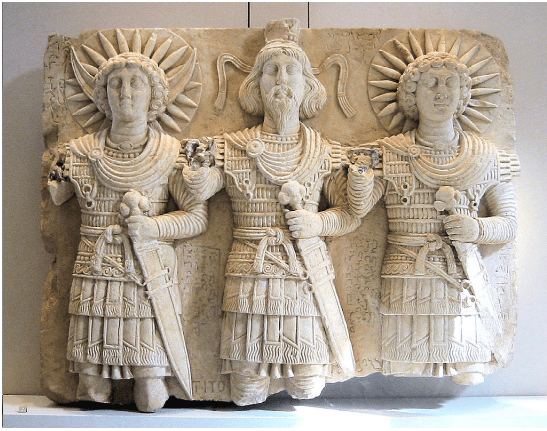
AGLIBOLUS.png* AGLIBOLUS, (Myth.) Dieu des Palmyréniens. Ils adoroient le soleil sous ce nom: ils le représentoient sous la figure d’un jeune homme vêtu d’une tunique relevée par la ceinture, & qui ne lui descendoit que jusqu’au genou, & ayant à sa main gauche un petit bâton en forme de rouleau; ou selon Hérodien, sous la forme d’une grosse pierre ronde par enbas, & finissant en pointe; ou sous la forme d’un homme fait, avec les cheveux frisés, la figure de la lune sur l’épaule, des cothurnes aux piés, & un javelot à la main.”

AGON, s. m. (Hist. anc.) chez les Anciens étoit une dispute ou combat pour la supériorité dans quelqu’exercice du corps ou de l’esprit.

Il y avoit de ces combats dans la plupart des fêtes anciennes en l’honneur des Dieux ou des Héros. V. Fête, Jeu.

Il y en avoit aussi d’institués exprès, & qui ne se célébroient pas simplement pour rendre quelque fête plus solemnelle. Tels étoient à Athenes l’agon gymnicus, l’agon nemeus, institué par les Argiens dans la 53e Olympiade; l’agon olympius, institué par Hercule 430 ans avant la premiere Olympiade. Voyez Néméen, Olympique, &c.

Les Romains, à l’imitation des Grecs, instituerent aussi de ces sortes de combats. L’Empereur Aurélien en établit un sous le nom d’agon solis, combat du soleil; Diocletien un autre, sous le nom d’agon capitolinus, qui se célébroit tous les quatre ans à la maniere des jeux Olympiques. C’est pourquoi au lieu de compter les années par lustres, les Romains les ont quelquefois comptées par agones.

Agon se disoit aussi du Ministre dans les sacrifices dont la fonction étoit de frapper la victime. Voyez Sacrifice, Victime.

On croit que ce nom lui est venu de ce que se tenant prêt à porter le coup, il demandoit: agon ou agone, frapperai-je?

L’agon en ce sens s’appelloit aussi pona cultr arius & victimarius. (G)”

AGRANIES, AGRIANIES ou AGRIONIES, (Hist. anc. Myth.) fête instituée à Argos en l’honneur d’une fille de Proëtus. Plutarque décrit ainsi cette fête. Les femmes y cherchent Bacchus, & ne le trouvant pas elles cessent leurs poursuites, disant qu’il s’est retiré près des Muses. Elles soupent ensemble, & après le repas elles se proposent des énigmes: mystere qui signifioit que l’érudition & les Muses doivent accompagner la bonne chere; & si l’ivresse y survient, sa fureur est cachée par les Muses qui la retiennent chez elles, c’est-à-dire, qui en répriment l’excès. On célébroit ces fêtes pendant la nuit, & l’on y portoit des ceintures & des couronnes de lier[r]e, arbuste consacré à Bacchus & aux Muses. (G)”

* AGRÉABLE, GRACIEUX, “On aime la rencontre d’un homme gracieux; il plaît. On recherche la compagnie d’un homme agréable; il amuse. Les personnes polies sont toûjours gracieuses. Les personnes enjoüées sont ordinairement agréables. Ce n’est pas assez pour la société d’être d’un abord gracieux, & d’un commerce agréable. On fait une réception gracieuse. On a la conversation agréable. Il semble que les hommes sont gracieux par l’air, & les femmes par les manières.”

AGRICULTURE. “Les Egyptiens faisoient honneur de son invention à Osiris; les Grecs à Cerès & à Triptoleme son fils; les Italiens à Saturne ou à Janus leur Roi, qu’ils placerent au rang des Dieux en reconnoissance de ce bienfait. L’agriculture fut presque l’unique emploi des Patriarches, les plus respectables de tous les hommes par la simplicité de leurs moeurs, la bonté de leur ame, & l’élevation de leurs sentimens. Elle a fait les délices des plus grands hommes chez les autres peuples anciens. Cyrus le jeune avoit planté lui-même la plûpart des arbres de ses jardins, & daignoit les cultiver; & Lisandre de Lacédemone, & l’un des chefs de la République, s’écrioit à la vûe des jardins de Cyrus: O Prince, que tous les hommes vous doivent stimer heureux, d’avoir sü joindre ainsi la vertu à tant de grandeur & de dignité! Lisandre dit la vertu, comme si l’on eût pensé dans ces tems qu’un Monarque agriculteur ne pouvoit manquer d’être un homme vertueux; & il est constant du moins qu’il doit avoir le goût des choses utiles & des occupations innocentes. Hiéron de Syracuse, Attalus, Philopator de Pergame, Archelaüs de Macédoine, & une infinité d’autres, sont loüés par Pline & par Xénophon, qui ne loücient pas sans connoissance, & qui n’étoient pas leurs sujets, de l’amour qu’ils ont eu pour les champs & pour les travaux de la campagne. La culture des champs fut le premier objet du Législateur des Romains; & pour en donner à ses sujets la haute idée qu’il en avoit lui-même, la fonction des premiers Prêtres qu’il institua, fut d’offrir aux Dieux les prémices de la terre, & de leur demander des recoltes abondantes. Ces Prêtres étoient au nombre de douze; ils étoient appellés Arvals, de arva, champs, terres labourables. Un d’entr’eux étant mort, Romulus lui-même prit sa place; & dans la suite on n’accorda cette dignité qu’à ceux qui pouvoient prouver une naissance illustre. Dans ces premiers tems, chacun faisoit valoir son héritage, & en tiroit sa subsistance. Les Consuls trouverent les choses dans cet état, & n’y firent aucun changement. Toute la campagne de Rome fut cultivée par les vainqueurs des Nations. On vit pendant plusieurs siecles, les plus célebres d’entre les Romains, passer de la campagne aux premiers emplois de la République, &, ce qui est infiniment plus digne d’être observé, revenir des premiers emplois de la République aux occupations de la campagne. Ce n’étoit point indolence; ce n’étoit point dégoût des grandeurs, ou éloignement des affaires publiques: on retrouvoit dans les besoins de l’État nos illustres agriculteurs, toujours prêts à devenir les défenseurs de la patrie. Serranus semoit son champ, quand on l’appella à la tête de l’Armée Romaine: Quintius Cincinnatus la bouroit une piece de terre qu’il possédoit au-delà du Tibre, quand il reçut ses provisions de Dictateur; Quintius Cincinnatus quitta ce tranquille exercice; prit le commandement des armées; vainquit les ennemis; fit passer les captifs sous le joug; reçut les honneurs du triomphe, & fut à son champ au bout de 16 jours. Tout dans les premiers tems de la République & les plus beaux jours de Rome, marqua la haute estime qu’on y faisoit de l’agriculture: les gens riches, locupletes, n’étoient autre chose que ce que nous appellerions aujourd’hui de gros Laboureurs & de riches Fermiers. La premiere monnoie, pecunia à pecu, porta l’empreinte d’un mouton ou d’un boeuf, comme symboles principaux de l’opulence: les registres des Questeurs & des Censeurs s’appellerent pascua. Dans la distinction des citoyens Romains, les premiers & les plus considérables furent ceux qui formoient les tribus rustiques, rusticoe tribus: c’étoit une grande ignominie, d’être réduit, par le défaut d’une bonne & sage oeconomie de ses champs, au nombre des habitans de la ville & de leurs tribus, in tribu urbana. On prit d’assaut la ville de Carthage: tous les livres qui remplissoient ses Bibliotheques furent donnés en présent à des Princes amis de Rome; elle ne se réserva pour elle que les 28 livres d’agriculture du Capitaine Magon. Decius Syllanus fut chargé de les traduire; & l’on conserva l’original & la traduction avec un très-grand soin. Le vieux Caton étudia la culture des champs, & en écrivit: Ciceron la recommande à son fils, & en fait un très bel éloge: Omnium rerum, lui dit-il, ex quibus aliquid exquisitur, nihil est agriculturâ melius, nihil uberius, nihil dulcius, nihil homine libero dignius. Mais cet éloge n’est pas encore de la force de celui de Xénophon. L’agriculture naquit avec les lois & la société; elle est contemporaine de la division des terres. Les fruits de la terre furent la premiere richesse: les hommes n’en connurent point d’autres, tant qu’ils furent plus jaloux d’augmenter leur félicité dans le coin de terre qu’ils occupoient, que de se transplanter en différens endroits pour s’instruire du bonheur ou du malheur des autres: mais aussitôt que l’esprit de conquête eut agrandi les sociétés & enfanté le luxe, le commerce, & toutes les autres marques éclatantes de la grandeur & de la méchanceté des peuples; les métaux devinrent la représentation de la richesse, l’agriculture perdit de ses premiers honneurs; & les travaux de la campagne abandonnés à des hommes subalternes, ne conserverent leur ancienne dignité que dans les chants des Poëtes. Les beaux esprits des siecles de corruption, ne trouvant rien dans les villes qui prêtât aux images & à la peinture, se répandirent encore en imagination dans les campagnes, & se plurent à retracer les moeurs anciennes, cruelle satyre de celles de leur tems: mais la terre sembla se venger elle-même du mépris qu’on faisoit de sa culture. «Elle nous donnoit autrefois, dit Pline, ses fruits avec abondance; elle prenoit, pour ainsi dire, plaisir d’être cultivée par des charrues couronnées par des mains triomphantes; & pour correspondre à cet honneur, elle multiplioit de tout son pouvoir ses productions. Il n’en est plus de même aujourd’hui; nous l’avons abandonnée à des Fermiers mercenaires; nous la faisons cultiver par des esclaves ou par des forçats; & l’on seroit tenté de croire qu’elle a ressenti cet affront.» [Je] ne sai[s] quel est l’état de l’agriculture à la Chine: mais le Pere du Halde nous apprend que l’Empereur, pour en inspirer le goût à ses sujets, met la main à la charrue tous les ans une fois; qu’il trace quelques sillons; & que les plus distingués de sa Cour lui succèdent tour à tour au même travail & à la même charrue.”

Constantin le Grand défendit à tout créancier de saisir pour dettes civiles les esclaves, les boeufs, & tous les instrumens du labour. «S’il arrive aux créanciers, aux cautions, aux Juges mêmes, d’enfreindre cette loi, ils subiront une peine arbitraire à laquelle ils seront condamnés par un Juge supérieur.» Le même Prince étendit cette défense par une autre loi, & enjoignit aux Receveurs de ses deniers [denários], sous peine de mort, de laisser en paix le Laboureur indigent. Il concevoit que les obstacles qu’on apporteroit à l’agriculture diminueroient l’abondance des vivres & du commerce, & par contrecoup l’étendue de ses droits. Il y eut un tems où l’habitant des provinces étoit tenu de fournir des chevaux de poste aux couriers, & des boeufs aux voitures publiques; Constantin eut l’attention d’excepter de ces corvées le cheval & le boeuf servant au labour.”

Mais les lois qui protegent la terre, le Laboureur & le boeuf, ont veillé à ce que le Laboureur remplît son devoir. L’Empereur Pertinax voulut que le champ laissé en friche appartînt à celui qui le cultiveroit; que celui qui le défricheroit fût exempt d’imposition pendant dix ans; & s’il étoit esclave, qu’il devînt libre. Aurelien ordonna aux Magistrats municipaux des villes d’appeller d’autres citoyens à la culture des terres abandonnées de leur domaine, & il accorda trois ans d’immunité à ceux qui s’en chargeroient. Une loi de Valentinien, de Théodose & d’Arcade met le premier occupant en possession des terres abandonnées, & les lui accorde sans retour, si dans l’espace de deux ans personne ne les réclame: mais les Ordonnances de nos Rois ne sont pas moins favorables à l’agriculture que les Lois Romaines.”

Cet article n’auroit point de fin, si nous nous proposions de rapporter toutes les Ordonnances relatives à la conservation des grains depuis la semaille jusqu’à la récolte. Mais ne sont-elles pas toutes bien justes? Est-il quelqu’un qui voulût se donner les fatigues & faire toutes les dépenses nécessaires à l’agriculture, & disperser sur la terre le grain qui charge son grenier, s’il n’attendoit la récompense d’une heureuse moisson?”

«Si quelque voleur de nuit dépouille un champ qui n’est pas à lui, il sera pendu, s’il a plus de 14 ans; il sera battu de verges, s’il est plus jeune, est livré au propriétaire du champ, pour être son esclave jusqu’à ce qu’il ait réparé le dommage, suivant la taxe du Préteur. Celui qui mettra le feu à un tas de blé, sera fouetté & brûlé vif. Si le feu y prend par sa négligence, il payera le dommage, ou sera battu de verges, à la discrétion du Préteur».

AGRIPPA, (Hist. anc.) nom que l’on donnoit anciennement aux enfans qui étoient venus au monde dans une attitude autre que celle qui est ordinaire & naturelle, & specialement à ceux qui étoient venus les piés en devant.”

ce mot a été à Rome un nom, puis un surnom d’hommes, qu’on a féminisé en Agrippina. (G)”

* AGUAS, (Géogr.) peuple considérable de l’Amérique méridionale, sur le bord du fleuve des Amazones. Ce sont, dit-on dans l’excellent Dictionnaire portatis de M. Vosgien, les plus raisonnables des Indiens: ils serrent la tête entre deux planches à leurs enfans aussitôt qu’ils sont nés.”

METAFÍSICA DE ARISTÓTELES (FÍSICA – VOL. II)

Traducción y prefacio de Iñaki Jarauta

GLOSSÁRIO

agobio: angústia

aloja: calandra, “espécie de grande cotovia de bico forte e vôo rasteiro” (Priberam)

“calhandra”, in Dicionário Priberam da Língua Portuguesa [em linha], 2008-2013, https://www.priberam.pt/dlpo/calhandra [consultado em 20-08-2018].

ESTUDIO PRELIMINAR (PREFACIO)

Grilo, Eudemo [Sobre a Alma], Protréptico, Sobre las ideas y Sobre el bien son obras de juventud, al estilo de los diálogos platónicos, estilo que luego abandonará al no tener el carácter imaginativo de Platón.

Conocido como <el lector>, por su gusto por la lectura (al punto que practicaba directamente sin la ayuda del esclavo lector como era costumbre)

De la filosofía como marco da independência teórica de Aristóteles.

Al no poder adquirir terreno por ser macedonio, se instala en un pórtico largo de un gimnasio público, fuera de las murallas, junto a un santuario dedicado a Apolo Licio. Por un lado, el nombre en griego, Perípatos, y por otro, el del héroe del santuario, dieron origen a las dos denominaciones con que históricamente se conoce a la escuela de Arist. [doravante apenas A.]: el Liceo e el Perípato.”

Tras la muerte del rey macedonio, se desató en Atenas una auténtica persecución contra todo sospechoso de haber pertenecido al bando de los que querían una Grecia unida y dominada por Macedonia.” “Se refugió en Calcis, en las posesiones heredadas de su madre, y murió al cabo de unos meses”

De hecho, muchas partes de sus obras quedaron agrupadas, desde su 1ª compilación, en tratados unitarios, ya clásicos, sin haberse reparado en la época en que dichas partes fueron escritas, invirtiendo a veces el ordenamiento cronológico de su redacción. Un ejemplo son los capítulos 9 y 10 del libro XIII y el libro XIV de la Metafísica, redactados en una época temprana, cuando todavía A. se consideraba platónico, que figuran como parte final de la propia obra, cuyos libros VII, VIII y IX, escritos muy posteriormente, ya consignan sin rodeos una radical independencia de Platón. [De fato, nos capítulos finais A. se dedica apenas à refutação negativa de concepções que já demonstrou serem absurdas através de seus próprios conceitos e novidades, apresentados nos primeiros livros desta obra-compêndio.]

A. nunca utilizó el término metafísica, ya que se refiere a la ubicación metodológica de este trabajo dentro de la edición de la obra total de A., el cual fue producido a continuación de Física. (…) Quizá, de acuerdo con la preocupación del filósofo, una denominación más correcta hubiese sido <Filosofía>

LIBRO PRIMERO

PREEMINÊNCIA DO OLHO: “Todos los hombres tienen, por naturaleza, el deseo de saber. El placer que nos causan las percepciones de nuestros sentidos es una prueba de esta verdad. Ellas nos agradan por si mismas, independientemente de su utilidad, sobre todo, las que corresponden a la vista.”

Los animales reciben de la naturaleza la facultad de conocer por los sentidos. Pero este conocimiento en unos no promueve la memoria, al tiempo que en otros la produce. Así, los primeros son simplemente inteligentes, mientras que los otros son más capaces de aprender que los que no poseen la facultad de recordar. La inteligencia, sin la capacidad de recordar, es patrimonio de los que no tienen la facultad de percibir los sonidos; por ejemplo, la abeja (…) la capacidad de aprender se encuentra en todos aquéllos que unen a la memoria el sentido del oído.

muchos recuerdos de una misma cosa constituyen la experiencia. Pero la experiencia, al parecer se asimila casi por completo a la ciencia y al arte.” “El arte comienza cuando de un gran número de nociones suministradas por la experiencia se forma una sola concepción general” “En la práctica, la experiencia no parece diferir del arte” “Esto es así porque la experiencia es el conocimiento de las cosas particulares; y el arte, por el contrario, el de lo general. Ahora bien, todos los actos, todos los hechos se dan en lo particular.” “si alguno posee la teoría sin la experiencia, y conociendo lo general ignora lo particular contenido en él, errará muchas veces en el tratamiento de la enfermedad.” “los hombres de arte pasan por ser más sabios que los hombres de experiencia (…) El motivo de esto es que los unos conocen la causa y los otros la ignoran.” “los operarios se parecen a esos seres inanimados que obran, pero sin conciencia de su acción, como el fuego” “En los seres animados, una naturaleza particular es la que produce cada una de estas acciones; en los operarios es el hábito. La superioridad de los jefes sobre los operarios no se debe a su habilidad práctica, sino al hecho de poseer la teoría y conocer las causas. (…) el carácter principal de la ciencia consiste en poder ser trasmitida por la enseñanza. (…) según la opinión común, el arte, más que la experiencia, es ciencia; porque los hombres de arte pueden enseñar y los hombres de experiencia, no.

inventores (…) su ciencia no tenía la utilidad por fin. (…) posibilidad del reposo. Las matemáticas fueron inventadas en Egipto, porque en este país se dejaba en gran solaz [ócio] a la casta de los sacerdotes.

la ciencia que se llama Filosofía consiste, según la idea que generalmente se tiene de ella, en el estudio de las causas y de los principios.” “concebimos al filósofo, principalmente, como conocedor del conjunto de las cosas, en tanto es posible, pero sin tener la ciencia de cada una de ellas en particular.” “un conocimiento que se adquiere sin esfuerzos no tiene nada de filosófico. Por último, el que tiene las nociones más rigurosas de las causas y quien mejor enseña estas nociones es más filósofo que todos los demás en todas las ciencias.” “El filósofo no debe recibir leyes, pero sí darlas”

la aritmética es más rigurosa que la geometría.”

que no es una ciencia práctica lo prueba el ejemplo de los primeros que han filosofado. Lo que en un principio movió a los hombres a hacer las primeras indagaciones filosóficas fue, como lo es hoy, la admiración.” //(ARENDT)

Ir en busca de una explicación y admirarse es reconocer que se ignora. (…) el amigo de la ciencia lo es en cierta manera de los mitos, porque el asunto de los mitos es lo maravilloso.” “Así como llamamos hombre libre al que se pertenece a sí mismo y no tiene dueño, de igual modo esta ciencia es la única entre todas que puede llevar el nombre de libre.”

no es posible que la divinidad sea envidiosa, y los poetas, como dice el proverbio, mienten muchas veces.”

La mayoría de los primeros que filosofaron no consideraron los principios de todas las cosas sino desde el punto de vista de la materia.” “Por lo que hace al número y al carácter propio de los elementos, estos filósofos no están de acuerdo.” “Estos elementos perduran siempre, y no se hacen o devienen” “Anaxágoras de Clazomenes, primogénito de Empédocles, no pudo presentar una teoría tan recomendable. Pretende que el nº de los principios es infinito.”

lo más antiguo que existe también es lo que hay de más sagrado, y lo más sagrado que hay es el juramento.”

Es inegable que toda destrucción y toda producción provienen de algún principio, ya sea único o múltiple. No obstante, ¿de dónde provienen estos efectos y cuál es la causa? Porque, en verdad, el sujeto mismo no puede ser autor de sus propios cambios.”

LAVOISIER, O RETARDATÁRIO: “Pretenden que la unidad es inmóvil y que no sólo nada nace ni muere en toda la naturaleza (opinión antigua y a la que todos se asociaron), sino que en la naturaleza es imposible todo otro cambio. (…) Ninguno de los que aceptan la unidad del todo ha llegado a la concepción de la causa que comentamos [o movimento], excepto, quizá, Parménides

cuando hubo un hombre que proclamó que en la naturaleza, al modo que sucedía con los animales, había una inteligencia, causa del concierto y del orden universal, pareció que este hombre era el único que estaba en el pleno uso de su razón, en compensación por las divagaciones de sus predecesores.”

El Amor, el más antiguo de todos los dioses.” Hesíodo

Si se dijese que Empédocles ha proclamado, y proclamado el primero, el bien y el mal como principios, no se caería en error”

estos filósofos en verdad no saben lo que dicen.”

PAI E FILHO: “Anaxágoras se sirve de la inteligencia como de una máquina, para la creación del mundo (…) pero en todos los demás casos a otra causa más bien que a la inteligencia es a la que atribuye la producción de los fenómenos. Empédocles se sirve de las causas más que Anaxágoras,es verdad, pero de un modo también insuficiente, y al servirse de ellas no sabe ponerse de acuerdo consigo mismo.”

según Leucippo y Demócrito, el no-ser existe lo mismo que el ser.”

Los números son, por su naturaleza, anteriores a las cosas (…) tal combinación de números les parecía ser la justicia, tal otra el alma y la inteligencia, tal otra la oportunidad; lo mismo, aproximadamente, hacían con todo lo demás. Por último, veían en los números las combinaciones de la música y sus acordes.” “Como la década parece ser un número perfecto, que reúne todos los números, pretendieron que los cuerpos en movimiento en el cielo son 10 en número. Pero no siendo visibles más que 9, han imaginado un 10º, el Antichtho [Contra-Terra]. Todo esto lo hemos explicado detenidamente en otra obra [Física].”

el impar es finito, el par es infinito”

Otros pitagóricos aceptan 10 principios, que colocan de 2 en 2, en el orden siguiente:

Finito e infinito.

Par e impar.

Unidad y pluralidad.

Derecha e izquierda.

Macho y hembra.

Reposo y movimiento.

Rectilíneo y curvo.

Luz y tinieblas.

Bien y mal.

Cuadrado y cuadrilátero irregular.”

Alcmeón de Crotona florecía cuando era anciano Pitágoras

según se dice, Parménides fue discípulo de Xenófanes

O LIQUIDIFICADOR ESTAGNADO (O 1º ZERO ABSOLUTO): “en el análisis que nos ocupa, debemos, como ya hemos dicho, prescindir de estos filósofos, por lo menos, de los dos últimos (Xenófanes y Melisso) cuyas concepciones son verdaderamente bastante ordinarias. Con respecto a Parménides, parece que reflexiona con un conocimiento más profundo de las cosas. Convencido de que fuera del ser, el no-ser es nada, acepta que el ser es necesariamente uno y que no hay ninguna otra cosa más que el ser; cuestión que hemos tratado detenidamente en la Física. Pero obligado a explicar las apariencias, a aceptar la pluralidad que nos ofrecen los sentidos, al mismo tiempo que la unidad concebida por la razón, sienta otras dos causas, otros dos principios: lo caliente y lo frío

los pitagóricos empezaron a ocuparse de la forma propia de las cosas y a definirlas; pero en este punto su teoría es demasiado imperfecta. (…) como si, p.ej., se creyese que lo doble y el nº 2 son una misma cosa, porque lo doble se encuentra desde luego en el nº 2. (…) porque entonces un ser único sería muchos seres, y ésta es la consecuencia de la teoría pitagórica.”

História é o que já morreu. O presente é fofoca.

Platón era partidario de la opinión de Heráclito, según la cual no hay ciencia posible de estos objetos. Más tarde conservó esta misma opinión. [*]

Por otro lado, fue discípulo de Sócrates, cuyos trabajos indudablemente no comprendieron más que la moral y de ningún modo el conjunto de la naturaleza, pero que al tratar la moral, se propuso lo general como objeto de sus investigaciones, siendo el primero que tuvo el pensamiento de dar definiciones. Platón creyó que sus definiciones debían recaer sobre otros seres que los seres sensibles, porque ¿cómo dar una definición común de los objetos sensibles que mudan continuamente? A estos seres los llamó Ideas, agregando que los objetos sensibles están fuera de las ideas y reciben de ellas su nombre (…) El único cambio que introdujo en la ciencia fue la palabra <participación>.

Los pitagóricos dicen, efectivamente, que los seres existen a imitación de los nºs (…) La diferencia es sólo de nombre. Con relación a investigar en qué consiste esta participación de las ideas, es algo de lo que no se ocuparon ni Platón ni los pitagóricos.” [*] “Platón consideró [que] las ideas son los números. (…) Platón está de acuerdo con los pitagóricos. [Recai em contradição, ou bem considera sua Dialética uma espécie de Poesia das Poesias?] (…) Pero reemplazar por una díada el infinito considerado como uno, y constituir el infinito de lo grande y de lo pequeño, esto es lo que le es propio. (…) mientras que los pitagóricos no aceptan a los seres matemáticos como intermedios. (…) sus precursores no conocían la Dialéctica.”

POESIA COM “P” DE “PARTICIPAÇÃO”, “PATAFÍSICA” E “PARA-A-MORTE”.

de una materia única sólo puede salir una sola mesa, mientras que él, que produce la idea, la idea única, produce muchas mesas.”

Unos dicen que es el fuego el principio de las cosas, otros el agua, otros el aire. ¿Y por qué no aceptan también, según la opinión común, la tierra como principio? Porque generalmente se dice que la tierra es todo.”

los seres matemáticos están privados de movimiento, a excepción de aquellos que trata la Astronomía.” “¿Pero cómo tendrá lugar el movimiento si no hay otras sustancias que lo finito y lo infinio, lo par y lo impar? Los pitagóricos nada dicen de esto ni explican tampoco cómo pueden operarse, sin movimiento y sin cambio, la producción y la destrucción, o las revoluciones de los cuerpos celestes.”

Dejemos ya a los pitagóricos y quedémonos con lo dicho en lo que respecta a ellos. [Platonismo]”

51 IDÉIAS, OU 50 TONS DE ESSÊNCIA: “Porque el nº de las ideas es casi tan grande o poco menos que el de los seres cuyas causas intentan descubrir y de los cuales han partido para llegar a las ideas. Cada cosa tiene su homónimo” “debería haber ideas de cosas en relación con las cuales no se acepta que las haya.” “de acuerdo con el argumento de la unidad en la pluralidad habrá hasta negaciones; y como se piensa en lo que ha desaparecido, habrá también ideas de los objetos que han desaparecido” “los razonamientos más rigurosos conducen ya a aceptar las ideas de lo que es relativo“la hipótesis del tercer hombre” “Las ciencias no recaen únicamente sobre la esencia, recaen también sobre otras cosas; y pueden obtenerse otras mil consecuencias de este género.” “una cosa participante de lo doble en sí, participaría al mismo tiempo de la eternidad” “Por lo tanto, idea significa esencia en este mundo y en el mundo de las ideas” “Si no hay comunidad de género, no habrá entre ellas más de común que el nombre: y será como si se diese el nombre de hombre a Callias y a un trozo de madera, sin haber observado ninguna relación entre ellos.” “Decir que las ideas son ejemplares y que las demás cosas participan de ellas es llenarse de palabras vacías de sentido y hacer metáforas poéticas.”

EL PROBLEMA DE LA MÓNADA: “aunque Sócrates exista o no, podría nacer un hombre como Sócrates.” “la misma cosa será a la vez modelo y copia.” “Se dice en Fedón que las ideas son las causas del ser y del devenir o llegar a ser, y no obstante, aun aceptando las ideas, los seres que de ellas participan no se producen si no hay un motor.” “Es indudable que de la reunión de muchos números resulta un número; no obstante, ¿cómo muchas ideas pueden formar una sola idea?”

Y no se diga que lo profundo es una especie de ancho, porque entonces el cuerpo sería una especie de plano.”

AVÔ DO PRINCÍPIO DE REALIDADE: “Platón negó la existencia del punto, suponiendo que es una concepción geométrica. Le daba el nombre de principio de la línea, siendo los puntos estas líneas indivisibles que trataba muchas veces.”

participar, como antes hemos dicho, no significa nada.”

Pero las matemáticas se han convertido hoy en filosofía, son toda la filosofía, por más que se diga que su estudio no debe hacerse sino en vista de otras cosas.”

Esto es a lo que viene a parar lo grande y lo pequeño. A esto se reduce la opinión de los físicos de que lo raro y lo denso son las primeras diferencias del objeto. Efectivamente, no es otra cosa que lo más y lo menos.”

Suponer na inmovilidad de las ideas es igual a eliminar todo estudio de la naturaleza. Una cosa que parece más fácil de explicar es que todo es uno; y no obstante, esta teoría no lo logra.”

buscar los elementos de todos los seres o imaginarse que se han encontrado es una verdadera locura.”

ANTI-KANT: “Quien aprende la geometría tiene, necesariamente, conocimientos previos, pero nada sabe de antemano de los objetos de la geometría y de lo que se trata de aprender. Las otras ciencias se encuentran en el mismo caso. Por lo tanto, si como se pretende, hay una ciencia de todas las cosas, se abordará esta ciencia sin poseer ningún conocimiento previo.” “Se discutirá sobre los verdaderos elementos como se discute con motivo de ciertas sílabas [//TEETETO]. Entonces, unos dicen que la sílaba xa se compone de c, de s y de a; otros pretenden que en ella entra otro sonido distinto de todos los que se reconocen como elementos.”

las investigaciones de todos los filósofos recaen sobre los principios que hemos enumerado en la Física, y no hay otros fuera de éstos.”

LIBRO SEGUNDO

La ciencia que tiene por finalidad la verdad es difícil desde un punto de vista y fácil desde otro. Lo evidencia la imposibilidad que hay de alcanzar la completa verdad, y la imposibilidad de que se oculte por entero. Cada filósofo expone algún secreto de la naturaleza. Lo que cada cual agrega en particular al conocimiento de la verdad no es nada, sin duda, o es muy poca cosa, pero, la reunión de todas las ideas presenta importantes resultados.”

¿quién no clava la flecha en una puerta?”

es justo reconocer no sólo a aquéllos cuyas opiniones compartimos, sino también a quienes han tratado las cuestiones de una manera un poco superficial, porque también han contribuido por su parte”

Es indudable que existe un primer principio y que no existe ni una serie infinita de causas ni una infinidad de especies de causas. Entonces, desde la perspectiva de la materia, es imposible que haya producción hasta el infinito; p.ej., que la carne provenga de la tierra, la tierra del aire, el aire del fuego, sin que esta cadena se termine nunca. Lo mismo debe entenderse del principio del movimiento (…) En igual forma, en relación con la causa final (…) Y finalmente, lo mismo puede decirse en relación con la causa esencial.”

lo mismo que entre el ser y el no-ser hay siempre el devenir, del mismo modo, entre lo que no existía y lo que existe, está lo que deviene. Entonces el que investiga, deviene o se hace sabio, y esto es lo que se quiere expresar cuando se dice que de aprendiz que era deviene o se hace maestro.”

Los que aceptan la producción hasta el infinito no ven que excluyen por este medio el bien. Porque ¿hay alguien que quiera emprender nada, sin proponerse llegar a un término? Esto sólo le ocurriría a un necio.”

Aquí no ocurre lo que con la línea, cuyas divisiones no acaban; el pensamiento tiene necesidad de puntos de parada. Entonces, si se recorre esta línea que se divide hasta el infinito, no se pueden contar todas las divisiones.”

Hay hombres que no aceptan más comprobaciones que las de las matemáticas; otros no quieren más que ejemplos; otros no encuentran mal que se apele al testimonio de los poetas. Los hay, por último, que reclaman que todo sea rigurosamente comprobado; mientras que otros encuentran insoportable este rigor, ya porque no pueden seguir la serie encadenada de los razonamientos, ya porque piensan que es perderse en insignificancias. Efectivamente, hay algo de esto en la afectación de rigurosidad en la ciencia. Así es que algunos consideran indigno que el hombre libre lo utilice, no sólo en la conversación, sino también en la discusión filosófica.”

sería absurdo confundir y mezclar la investigación de la ciencia y la del método“No debe requerirse rigor matemático en todo, sino tan sólo cuando se trata de objetos inmateriales. [Quão estranho era o mundo de A.!] Entonces, el método matemático no es el de los físicos, porque la materia es probablemente el fondo de toda la naturaleza.”

LIBRO TERCERO (ou: LIVRO DAS PERGUNTAS)

ANTI-DESCARTES: “Dudar en este caso es encontrarse en el estado del hombre encadenado, y, como a éste, es imposible seguir adelante.”

(1) “¿La investigación de las causas pertenece a una sola ciencia o a muchas?”

(2) “¿es posible o no afirmar y negar al mismo tiempo una sola y misma cosa?”

O ponto heideggeriano do princípio da não-contradição como limite ocidental.

los dialécticos, los cuales sólo razonan sobre lo probable”

(3) “¿hay o no hay alguna cosa que sea causa en sí?

(4) “¿Cuáles son en este caso los seres fuera de los cuales existe?”

(5) “¿Los principios de los seres mortales y los de los seres inmortales son los mismos o diferentes, son todos inmortales o son los principios de los seres mortales también mortales?

(6) “¿la unidad y el ser constituyen la sustancia de los seres, como pretendían los pitagóricos y Platón, o acaso hay algo que le sirva de sujeto, de sustancia, como la Amistad de Empédocles, el fuego, el agua, el aire de éste o aquel filósofo?

no hay acción sin movimiento, de modo que en las cosas inmóviles no se puede aceptar ni la existencia de este principio del movimiento ni la del bien en sí.

De esto se desprende que nada se comprueba en las ciencias matemáticas por medio de la causa del movimiento.” “Por esta razón, algunos sofistas, por ejemplo, Aristipo, rechazaban como infames las ciencias matemáticas.”

P. 49: “una cosa no puede ser y no ser al mismo tiempo” (2)

Toda comprobación debe partir de un principio, recaer sobre un objeto y comprobar algo de ese objeto. De esto se desprende que todo lo que se comprueba podría reducirse a un sólo género. Y efectivamente, todas las ciencias comprobatorias se sirven de axiomas. Y si la ciencia de los axiomas es distinta de la ciencia de la esencia, ¿cuál de las dos será la ciencia soberana, la ciencia primera? Los axiomas son lo más general que hay, son los principios de todas las cosas” “No es probable que haya una sola ciencia de todas las esencias. En este caso habría una sola ciencia comprobatoria de todos los accidentes esenciales de los seres” “la esencia, a lo que parece, no se comprueba”

Habrá otro cielo, otro Sol, otra Luna, además de los que podemos ver; y lo mismo en todo lo demás que aparece en el firmamento. No obstante, ¿cómo creeremos en su existencia? A este nuevo cielo no se lo puede hacer razonablemente inmóvil; y por otro lado, es por completo imposible que esté en movimiento. Lo mismo ocurre con los objetos que trata la Óptica, y con las relaciones matemáticas entre los sonidos musicales.”

Pero tampoco es exacto que la Geodesia [então, apenas uma subdivisão da Geografia com colaboração da Matemática – a gravidade não era conhecida pelos gregos, como na Geodésia Moderna] sea una ciencia de magnitudes sensibles y finitas, porque en este caso desaparecería ella cuando desapareciesen las magnitudes. La Astronomía misma, la ciencia del cielo que cae con el dominio de nuestros sentidos, no es una ciencia de magnitudes sensibles. Ni las líneas sensibles son las líneas del geómetra, porque los sentidos no nos dan ninguna línea recta, ninguna curva, que cumpla con la definición; el círculo no encuentra la tangente en un solo punto, sino en muchos, como observaba Protágoras en su polémica con los geómetras; ni los movimientos reales ni las revoluciones del cielo concuerdan completamente con los movimientos y las revoluciones que dan los cálculos astronómicos; últimamente, las estrellas no son de la misma naturaleza que los puntos.”

necesariamente en un mismo lugar se tendrán dos sólidos, y no serán inmóviles, ya que se darán en objetos sensibles que están en movimiento. ¿por qué aceptar seres intermedios para colocarlos en los seres sensibles? Los mismos absurdos de antes se reproducirán sin cesar. Entonces, habrá un cielo fuera del cielo que está sometido a nuestros sentidos, pero no estará separado de él, estará en el mismo lugar; lo cual es más inadmisible que el cielo separado.”

los principios de los seres no pueden ser al mismo tiempo los géneros y los elementos constitutivos. La esencia no acepta dos definiciones” “La unidad y el ser no son géneros, y por lo tanto, no son principios, ya que son los géneros los que constituyen los principios.” “Pero si las diferencias son principios, hay en cierto modo una infinidad de principios, sobre todo, si se toma como partida el género más elevado.”

la unidad debe aparecer más bien como individuo: el hombre, en efecto, no es el género de los hombres particulares.” “debe considerarse a los individuos como principios de los géneros. Pero por otro lado, ¿cómo concebir que los individuos sean principios?

Si no hay algo fuera de lo particular y si hay una infinidad de cosas particulares, ¿cómo es posible conseguir la ciencia de la infinidad de las cosas?”

Aceptemos que realente hay algo fuera del conjunto del atributo y de la sustancia, aceptemos que hay especies. No obstante, ¿la especie es algo que exite fuera de todos los objetos o sólo está fuera de algunos sin estar fuera de otros, o no está fuera de ninguno?

¿Entonces diremos que no hay nada fuera de las cosas particulares? En este caso no habría nada de inteligible, no habría más que objetos sensibles, no habría ciencia de nada, a menos que se llamase ciencia al conocimiento sensible. Tampoco habría nada eterno ni inmóvil” “Y si no hay nada eterno, la producción es imposible. Porque es imprescindible que lo que deviene o llega a ser sea algo, así como aquello que hace llegar a ser; y que la última de las causas productoras sea de todos los tiempos, ya que la cadena de las causas tiene un límite y es imposible que cosa alguna sea producida por el no-ser. (…) porque ningún movimiento es infinito: lo que deviene existe, necesariamente, antes de devenir o llegar a ser.

Asimismo, si la sustancia existe en todo tiempo, con mucha más razón es necesario aceptar la existencia de la esencia en el momento en que la sustancia deviene. En efecto, si no hay sustancia ni esencia, no existe absolutamente nada. (…) es necesario que la forma y la esencia sean algo fuera del conjunto de la sustancia y de la forma. (…) ¿En qué casos se aceptará esta existencia separada y en qué casos no se la aceptará? Porque es indudable que no en todos los casos se la aceptará. Efectivamente, no podemos decir que hay una casa fuera de las casas particulares.”

si los principios de los seres son reducidos a la unidad numérica, no quedará existente otra cosa que los elementos.

Numérica o individualmente son la misma cosa, ya que llamamos individual a lo que es uno por el nº

Hesíodo y todos los teósofos sólo han buscado lo que podía convencerlos, y no han pensado en nosotros. (…) luego agregan que los seres que no han gustado el néctar y la ambrosía están destinados a morir. Estas explicaciones tenían, sin duda, un sentido para ellos; pero nosotros ni siquiera comprendemos cómo han podido encontrar causas en esto.” “¿cómo estos seres podrán ser inmortales, ya que tendrían necesidad de alimentarse? Pero no tenemos necesidad de someter a un análisis profundo invenciones fabulosas.”

si se destruyen los principios, ¿cómo podrá haber seres mortales? Y si los principios son inmortales, ¿por qué entre estos principios inmortales hay unos que producen seres mortales y otros seres inmortales? (…) ningún filósofo ha aceptado que los seres tengan principios diferentes”

Platón y los pitagóricos pretenden, efectivamente, que el ser y la unidad no son otra cosa que ellos mismos y que tal es su carácter. La unidad en sí y el ser en sí; según estos filósofos, es lo que constituye la sustancia de los seres.

Los físicos son de otra idea. Empédocles explica que el ser es la Amistad. Otros pretenden que el fuego o el aire son esta unidad y este ser. Lo mismo ocurre con los que han aceptado la pluralidad de elementos”

Si no se establece que la unidad y el ser son una sustancia, se sigue que no hay nada general, ya que estos principios son lo más general que hay en el mundo, y si la unidad en sí y el ser en sí no son algo, con más fuerte razón no habrá ser alguno fuera de lo que se denomina lo particular. Asimismo, si la unidad no fuera una sustancia, es indudable que el nº mismo no podría existir como uma naturaleza separada de los seres.”

cómo puede haber más de un ser, ya que lo que es otra cosa que el ser no es. De lo cual, necesariamente, se sigue lo que decía Parménides: que todos los seres se reducían a uno y que la unidad es el ser.”

si la unidad fuese indivisible, no habría absolutamente nada, y esto es lo que piensa Zenón.” “No obstante, como la conclusión de Zenón es un poco rígida, y por otro lado, puede haber en ella algo de indivisible, se responde a la objeción de que en el caso de la mónada o el punto la adición no aumenta la extensión y sí el nº. Pero entonces, ¿cómo un solo ser, y si se quiere muchos seres de esta nauraleza, formarán una magnitud?”

Por lo tanto, si por un lado el cuerpo es la sustancia por excelencia; si por otro lado las superficies, las líneas y los puntos lo son más que el cuerpo mismo; y si, en otro concepto, ni las superficies, ni las líneas, ni los puntos son sustancias, en tal caso no sabemos ni qué es el ser ni cuál es la sustancia de los seres.” “con las superficies ocurre, aproximadamente, lo mismo que con el tiempo. Es imposible que devenga y muera; no obstante, como no es una sustancia, parece diferente sin cesar. En efecto, los puntos, las líneas y las superficies se encuentran en un caso semejante, porque se les puede aplicar los mismos razonamientos. Como el instante actual, no son ellos más que límites o divisiones.”

LIBRO CUARTO

investigar los elementos del ser, no como accidentes, sino como seres (…) debemos investigar las causas primeras del ser como ser.”

La unidad y el ser se subdividen en géneros, unos anteriores y otros posteriores; y habrá tantas partes de la filosofía como subdivisiones hay.” “Una sola ciencia se ocupa de los opuestos” “una sola ciencia debe tratar de la sustancia y sus diferentes modos; ésta era una de las cuestiones que nos habíamos planteado.”

Lo prueban las investigaciones de los dialécticos y de los sofistas, que se disfrazan con el traje del filósofo, porque la sofística no es otra cosa que la apariencia de la filosofía, y los dialécticos debaten sobre todo (…) Si se ocupan de estos modos del ser, es indudablemente porque son del dominio de la filosofía, como que la dialéctica y la sofística se mueven en el mismo círculo de ideas que la filosofía. Pero la filosofía se distingue de una por los efectos que produce, y de la otra por el género de vida que impone. La dialéctica trata de conocer, la filosofía conoce; en relación con la sofística, no es más que una ciencia aparente y sin realidad.”

casi todos los filósofos están de acuerdo en sostener que los seres y la sustancia están formados de contrarios. Todos dicen que los principios son contrarios, adoptando los unos el impar y el par, otros lo caliente y lo frío, otros lo finito y lo infinito, otros la Amistad y la Discordia.”

Por este motivo, ninguno de los que se ocupan de las ciencias parciales, ni el geómetra ni el aritmético, intenta exponer ni la verdad ni la falsedad de los axiomas; y sólo exceptúo algunos de los físicos, por entrar esta investigación en su propósito. En efecto, los físicos son los únicos que han querido comprender, en una sola ciencia, la naturaleza toda y el ser. Pero como hay algo superior a los seres físicos, porque los seres físicos son más que un género particular del ser, al que trate de lo universal y de la sustancia primera es a quien también pertenecerá investigar este algo. Verdaderamente, la física es una especie de filosofía, pero no es la filosofía primera.

Principio cierto por excelencia es aquél con relación al cual todo error es imposible. El principio cierto por excelencia debe ser el más conocido de los principios (porque siempre se cae en error en relación con las cosas que no se conocen) y un principio que no tenga nada de hipotético, ya que el principio, cuya posición es necesaria para comprender las cosas, no es una suposición. Finalmente, al principio que hay necesidad de conocer para conocer lo que quiera que sea, es también necesario poseerlo obvinculatoriamente [? – palavra não-dicionarizada], para realizar toda clase de estudios. No obstante, ¿cuál es este principio? Es el siguiente: es imposible que el mismo atributo pertenezca y no pertenezca al mismo sujeto, en un tiempo mismo, y en la misma relación, etc. (no olvidemos aquí, para precavernos de las sutilezas lógicas, ninguna de las condiciones esenciales que hemos establecido en otra parte).”

Según algunos, Heráclito es de otra idea; pero que se diga una cosa no hay que deducir necesariamente que se piensa.”

si dos pensamientos contrarios no son otra cosa que una afirmación que se niega a sí misma, mentiría quien afirmase tener esta concepción simultánea, sería necesario que tuviese al mismo tiempo los dos pensamientos contrarios.”

También hay filósofos que, dando una muestra de ignorancia, quieren comprobar este principio; porque es ignorancia no saber diferenciar lo que tiene necesidad de comprobación de lo que no la tiene. Es absolutamente imposible comprobarlo todo, porque seria necesario caminar hasta el infinito; de modo que no resultaría comprobación. Y si hay verdades que no deben comprobarse, dígasenos qué principio, como no sea el comprobado, se encuentra en semejante caso. § No obstante, se puede establecer, por vía de refutación, esta imposibilidad de los contrarios.” “Supuestamente, quien comprobase el principio incurriría en una petición de principio. Pero si se intenta dar otro principio como causa de éste que se trata, entonces habrá refutación, pero no comprobación.”

un hombre falto de razón se parece a una planta.”

VOCÊ ME DÁ SUA PALAVRA? “Pero quien comprueba no es la causa de la comprobación, sino aquél a quien ésta se dirige. Empieza por destruir todo lenguaje y acepta enseguida que se puede hablar. Por último, el que acepta que las palabras tienen un sentido también acepta que hay algo de verdadero, independiente de toda comprobación. De esto se desprende la imposibilidad de los contrarios.

si el animal de dos pies es el hombre y el hombre es una esencia, la esencia del hombre es el ser un animal de dos pies.” “la cuestión no es saber si es posible que la misma cosa sea y no sea al mismo tiempo el hombre nominalmente, sino si puede serlo realmente.”

Si el pensamiento no recae sobre un objeto uno, todo pensamiento es imposible. Para que el pensamiento sea posible, es necesario dar un nombre determinado al objeto del pensamiento.

esto es lo que distingue la esencia del accidente: la blancura, en el hombre, es un accidente; y la blancura es un accidente en el hombre, porque es blanco, pero no es la blancura.

Si se plantea que todo es accidente, ya no hay género primero, ya que siempre el accidente designa el atributo de un sujeto.”

El accidente no es nunca un accidente de accidente, sino cuando estos dos accidentes son los accidentes del mismo sujeto.”

Una nave, un muro y un hombre deben ser la misma cosa, si todo se puede afirmar o negar de todos los objetos, como se advierten obligados a aceptar los que adoptan la proposión de Protágoras. Si se cree que el hombre no es una nave, indudablemente, el hombre no será una nave. Y por lo tanto el hombre es una nave, ya que la afirmación contraria es verdadera. De esta manera llegamos a la proposición de Anaxágoras. Todas las cosas están confundidas. De modo que nada existe que sea verdaderamente uno.” “lo indeterminado es el ser en potencia y no en acto.” Sería absurdo que un ser tuviese en sí su propia negación y no tuviese la negación de otro ser que no está en él. P.ej., si es indudable que el hombre no es un hombre, por cierto también es indudable que el hombre no es una nave. Si aceptamos la afirmación también debemos aceptar la negación.” “Si es indudable que el hombre también es el no-hombre, es indudable que ni el hombre ni el no-hombre podrían existir, porque es necesario aceptar al mismo tiempo las dos negaciones de estas dos afirmaciones. Si de la doble afirmación de su existencia se forma una afirmación única, compuesta de estas dos afirmaciones, es necesario aceptar la negación única que es opuesta a aquélla.”

Sus palabras no tienen ningún sentido; porque no dicen que las cosas son así o que no son así, sino que son y no son así al mismo tiempo. Después viene la negación de estos dos términos; y dicen que no es así ni no así, sino que es así y no así. Si no fuera así, habría ya algo determinado.”

supuestamente, todos los hombres tienen la idea de la existencia real, si no de todas las cosas, por lo menos de lo mejor y de lo peor.

Pero aun cuando el hombre no tuviera la ciencia, aun cuando sólo tuviera opiniones, sería necesario que se aplicase mucho más todavía al estudio de la verdad; al igual que el enfermo se ocupa más de la salud que el hombre que está sano. Porque el que sólo tiene opiniones, si se lo compara con el que sabe, está en estado de enfermedad en relación con la verdad.”

según la teoría de Demócrito, aquello que parece a los sentidos es necesariamente en su opinión la verdad.” “en delirio los hombres también tienen razón, pero que ya no es la misma.” “si tales son las teorías que enseñan sobre la verdad, ¿cómo abordar sin desaliento los problemas filosóficos? Buscar la verdad ¿no sería ir en busca de sombras que desaparecen?” “la opinión que tienen es verosímil, pero no verdadera.” “De estas observaciones nacieron otras teorías que todavía van más lejos. Por ejemplo, la de los filósofos que se dicen de la escuela de Heráclito; la de Cratilo, que llegaba hasta creer que no es necesario decir nada.”

La cosa que cesa de ser aún participa de lo que ha dejado de ser, y necesariamente ya participa de aquello que deviene o se hace. si un ser muere, todavía en él habrá ser; y si deviene, es indispensable que aquello de donde sale y aquello que lo hace devenir tengan una existencia y que esto no continúe así hasta el infinito.”

FENOMENOLOGIA PURA!

¿por qué entonces han aplicado la teoría [do Não-Ser do Indivíduo] al mundo entero? Este espacio que nos rodea no es más que una porción nula del universo. hubiera sido más justo absolver a este bajo mundo en favor del mundo celeste, que condenar el mundo celeste a causa del primero. (…) Para rebatir a estos filósofos no hay más que comprobarles que existe una naturaleza inmóvil

pretender que el ser y el no-ser existen simultáneamente es aceptar el eterno reposo (…) no hay nada en que se puedan transformar los seres, ya que todo existe en todo.”

no todas las apariencias son verdaderas.”

No puede negarse el testimonio de un sentido porque en distintos tiempos esté en desacuerdo consigo mismo; la imputación debe dirigirse al ser que experimenta la sensación. P.ej., el mismo vino sea porque él haya cambiado, sea porque nuestro cuerpo haya cambiado, nos parecerá indudablemente dulce en un instante y lo contrario en otro. Pero no es lo dulce lo que deja de ser lo que es, nunca se despoja de su propiedad esencial; siempre es indudable que un sabor dulce es dulce, y lo que tenga un sabor dulce tendrá necesariamente para nosotros este carácter esencial.” “las teorías niegan toda esencia” “De modo que si hay algo necesario, los contrarios no podrían existir a la vez en el mismo ser. En general, si sólo existiera lo sensible, no habría nada, porque nada puede haber sin la existencia de los seres animados que pueden percibir lo sensible; y quizás entonces sería cierto decir que no hay objetos sensibles ni sensaciones, porque todo esto es en la hipótesis una modificación del ser que siente. Pero que los objetos que causan la sensación no existan, ni aun independientemente de toda sensación, es algo imposible.” “por su naturaleza, el motor es anterior al objeto en movimiento”

el principio de la comprobación no es una comprobación.”

decir que todo lo que aparece es verdadero es igual a decir que todo es relativo. Los que exigen una comprobación lógica deben tener en cuenta lo siguiente: es necesario que acepten, si quieren entrar en una discusión; no que lo que aparece es verdadero, sino que lo que aparece es verdadero para aquél a quien aparece cuando y como le aparece.”

REFUTAÇÃO FINAL DE SCHOPENHAUER: “Es facil contestar a los que, por las razones que ya hemos apuntado, pretenden que la apariencia es la verdad y, por lo tanto, que todo es verdadero y falso.”

si el hombre y lo que es pensado son la misma cosa, el hombre no es aquello que piensa, sino lo que es pensado.”

Y ya que es imposible que dos afirmaciones contrarias sobre el mismo objeto sean verdaderas al mismo tiempo, es indudable que tampoco es posible que los contrarios se encuentren al mismo tiempo en el mismo objeto, porque uno de los contrarios no es otra cosa que la privación, la privación de la esencia.”

También es imposible que haya un término medio entre dos proposiciones contrarias”

PREFÍSICA QUÂNTICA: “Por otro lado, todo lo que es inteligible o pensado, el pensamiento lo afirma o lo niega; y esto resulta indudablemente de acuerdo con la definición del caso en que se está en lo verdadero y de aquél en que se está en lo falso. Cuando el pensamiento pronuncia tal juicio afirmativo o negativo, está en lo verdadero. Cuando pronuncia tal otro juicio, está en lo falso.”

Hay más todavía: con los intermedios se llegará al infinito. Se tendrá no sólo tres seres en lugar de dos, sino muchos más. Efectivamente, además de la afirmación y negación primitivas, podrá haber una negación relativa al intermedio; este intermedio será alguna cosa, tendrá una sustancia propia. Y, por otro lado, cuando alguno, interrogado sobre si un objeto es blanco, responde <no>, no hace más que decir que no es blanco; y bien, no-ser es la negación.”

supuestamente, el pensamiento de Heráclito, cuando sostiene que todo es y no es, es que todo es verdadero; el de Anaxágoras, cuando pretende que entre los contrarios hay un intermedio, es que todo es falso. Ya que hay mezcla de los contrarios, la mezcla no es ni bien ni no-bien; nada se puede afirmar por lo tanto como verdadero.”

la relación de la diagonal con el lado del cuadrado es inconmensurable.”

Para polemizar es necesario empezar por una definición y establecer lo que significa lo verdadero y lo falso.”

El que dice que todo es verdadero también afirma la verdad de la afirmación contraria a la suya, de modo que la suya no es verdadera porque el que sienta la proposición contraria pretende que no está en lo verdadero. El que dice que todo es falso también afirma la falsedad de lo que él mismo dice.”

hay un motor eterno de todo lo que está en movimiento, y el primer motor es inmóvil.”

LIBRO QUINTO

las premisas son los principios de las comprobaciones” todas las causas son principios” la naturaleza es un principio” la causa de la octava es la relación de 2 a 1 y, en general, el número y las partes que entran en la definición de la octava.” La causa es también el finLa salud es causa del paseo.”

¿Por qué?” “Finalmente, se denominan causas todos los intermedios entre el motor y el objeto.”

No obstante, estas causas se distinguen entre sí, en la medida que unas son los instrumentos y otras operaciones.” causa material” X “causa de movimiento” la presencia y la privación, son ambas causas de movimiento.”

causa final significa, efectivamente, el bien por excelencia. Y poco importa que se diga que este fin es el bien real o que es sólo una apariencia del bien.”

Policletes es causa de la estatua de una manera y el estatuario de otra; sólo por accidente es el estatuario Policletes. (…) Así, el hombre, o ascendiendo más aún, el animal, es la causa de la estatua (…) Aceptamos decir que la causa de la estatua es el blanco, es el músico; y no Policletes o el hombre.”

Por último, las causas accidentales y las causas esenciales pueden encontrarse reunidas en la misma noción; p.ej., como cuando se dice no ya Policletes ni tampoco estatuario, sino Policletes estatuario.”

los modos de las causas son 6; y estos modos son opuestos 2 a 2[:]

particular X general

combinados X simples

en acto x en potencia”

las causas en acto, lo mismo que las causas particulares, comienzan y concluyen al mismo tiempo que los efectos que ellas producen” No siempre ocurre así con las causas en potencia; la casa y el arquitecto no mueren al mismo tiempo.”

Se denomina <elemento> a la materia prima que entra en la composición y que no puede ser dividida en partes heterogéneas. Así los elementos del sonido son lo que constituye el sonido, y las últimas partes en que se lo divide, partes que no se pueden dividir en otros sonidos de una especie diferente de la suya propia. Si se dividiesen, sus partes serían de la misma especie que ellas mismas: una partícula de agua, p.ej., es agua [H2O é H2O]; pero una parte de una sílaba no es una sílaba.”

a las comprobaciones primeras, que se encuentran en el fondo de muchas comprobaciones, se las llama elementos de las comprobaciones: éstos son los silogismos primeros, compuestos de 3 términos, uno de los cuales sirve de medio.”

los atributos más universales son elementos. Cada uno de ellos es uno y simple, y existe en gran número de seres, en todos o en la mayor parte. Por último, la unidad y el punto son, según algunos, elementos.” “algunos pretenden que los géneros son elementos más bien que la diferencia, porque el género es más universal. Efectivamente, ahí donde hay diferencia se muestra siempre el género; pero donde hay género, no siempre hay diferencia.”

ROMANTISMO ANTIGO: “(1) se denomina <naturaleza> a la generación de todo aquello que crece, p.ej., cuando se pronuncia larga la primera sílaba de la palabra griega, después la materia intrínseca de donde proviene lo que nace”

conexión [<fusão>] (pero no bajo la relación de la cualidad)” X “adjunción (simple contacto)”

(2) “sustancia bruta, inerte y sin acción” “el bronce es la naturaleza de la estatua y de los objetos de bronce, y la madera lo es de los objetos de madera (…) se entiende tambíen por naturaleza los elementos de las cosas naturales; entonces se explican los que aceptan por elemento el fuego, la tierra, el aire, el agua o cualquier otro principio análogo, y los que aceptan muchos de estos elementos o todos ellos a la vez.”

(3) “la naturaleza es la esencia de las cosas naturales. Esta acepción la toman los que dicen que la naturaleza es la composición primitiva (Empédocles).”

principio natural del devenir o del ser” “la reunión de la esencia y de la materia constituye la naturaleza de los seres.” “la forma y la esencia son también una naturaleza, porque son el fin de toda producción. (…) toda esencia en general toma el nombre de naturaleza, porque la naturaleza es también una especie de esencia.” “la naturaleza propiamente dicha es la esencia de los seres, que tienen en sí y por sí mismos el principio de su movimiento.”

Se denomina <necesario> a aquello que es la causa cooperante sin la cual es imposible vivir. Así, la respiración y el alimento son necesarios al animal.” “También constituyen lo necesario la violencia y la fuerza. Porque la violencia se denomina necesidad, y por lo tanto, la necesidad es una cosa que aflige, como dice Eveno:

<Toda necesidad es una cosa aflictiva>.”

la necesidad es a nuestros ojos aquello en cuya virtud es imposible que una cosa sea de otra manera.” “las comprobaciones de las verdades necesarias son necesarias, porque es imposible, si la comprobación es rigurosa, que la conclusión sea otra que la que es.” “la necesidad propiamente dicha, es la necesidad absoluta, porque es imposible que tenga muchos modos de existencia.” “Entonces, si hay seres eternos e inmutables, nada puede ejercer sobre ellos violencia o contrariar su naturaleza.”

Aceptemos que hombre y hombre músico sean idénticos entre sí. Esto se comprobará, o bien porque el hombre es una sustancia una, que tiene por accidente músico, o bien porque ambos son los accidentes de un ser particular, de Coriseo, p.ej. No obstante, en este último caso, los dos accidentes no son accidentes de la misma manera; uno representa, por así decirlo, el género, y existe en la esencia; el otro no es más que un estado, una modificación de la sustancia. Todo lo que se denomina unidad accidental es unidad tan sólo en el sentido que acabamos de decir.”

A linha, até a linha curva, sempre que seja contínua, é uma; assim como cada uma das partes do corpo, as pernas, os braços. Não obstante, podemos dizer que o que tem naturalmente a continuidade é mais uno que o que só tem uma continuidade artificial.

Observe que se denomina contínuo aquele cujo movimento é um basicamente e não pode ser outro.” “o movimento indivisível no tempo.”

DE LA HOMOGENEIDAD DEL OBJETO: “Las cosas básicamente continuas son unas, aun cuando tengan una flexión. Las que no tienen flexión lo son más: la canilla o el muslo, por ejemplo, lo son más que la pierna, la cual puede no tener un movimiento uno; y la línea recta tiene más que la curva el carácter de unidad. Decimos de la línea curva, así como de la línea angulosa, que es una y que no es una, porque es posible que no estén sus partes todas en movimiento, o que lo estén todas a la vez. Pero en la línea recta el movimiento es siempre simultáneo, y ninguna de las partes que tiene magnitud está en reposo.”

Se dice que el vino es uno y que el agua es una, son ambos genéricamente indivisibles; y que todos los líquidos juntos, el aceite, el vino, los cuerpos fusibles, no son más que una misma cosa, porque hay identidad entre los elementos primitivos de la materia líquida, ya que lo que constituye todos los líquidos es el agua y el aire.”

el caballo, el hombre, el perro, son una sola cosa, porque son animales.” “el triángulo isósceles y el equilátero son una sola y misma figura” “Efectivamente, toda definición puede dividirse.” “En general, la unidad de todos los seres es a unidad por excelencia

Para nosotros no constituirán una unidad las partes que constituyen el calzado colocadas una junto a otras de una manera cualquiera; y sólo cuando hay, no simplemente continuidad, sino partes colocadas de tal manera que constituyan un calzado y tengan una forma determinada, es cuando decimos que hay verdadera unidad. Por esta razón, la línea del círculo es la línea una por excelencia y es perfecta en todas sus partes.

O que é indivisível com relação à quantidade, e como quantidade, o que é absolutamente indivisível e não tem posição, se denomina mônada. O que o é em todos os sentidos mas que ocupa uma posição, é um ponto. O que não é divisível, senão num sentido, é uma linha. O que pode ser dividido em dois sentidos é uma superfície. O que pode sê-lo por todos os lados e em três sentidos, sob a relação da quantidade, é um corpo.”

Uno en número es aquello cuya materia es una; uno en forma es aquello que tiene unidad de definición; uno, genéricamente, es lo que tiene los mismos atributos; dondequiera que hay relación, hay unidad por analogía. Entonces, el uno en número también es uno en forma; pero lo que es uno en forma, no lo es siempre en número, etc.”

cuando se dice que una cosa es esto o aquello, significa que esto o aquello es el accidente de esta cosa; lo mismo que si se dice que el hombre es músico o el músico es hombre, o bien que el músico es blanco o el blanco es músico, porque uno y otro son accidentes del mismo ser (…) El músico no es hombre, sino porque el hombre es accidentalmente músico.” Pero el músico es ser sería pleonasmo. “El ser es designado accidental cuando el sujeto del accidente y el accidente son ambos accidentes de un mismo ser; cuando el accidente se da en un ser; o por último, cuando el ser en que se encuentra el accidente es tomado como atributo del accidente.”

Ser significa que una cosa es verdadera (…) decimos que la relación de la diagonal con el lado del cuadrado no es conmensurable, porque es falso que lo sea.

La guerra de Troya es anterior a las guerras médicas, porque está más lejana del instante actual. Después entra lo que está más próximo a este mismo instante actual. El porvenir está en este caso. La celebración de los juegos Nemeos será anterior al de los juegos Pythicos, porque está más próxima al instante actual, tomando el instante actual como principio, como cosa primera.”

El bailarín que sigue al corifeo es anterior al que figura en tercera fila; y la penúltima cuerda de la lira es anterior a la última. En el primer caso, el corifeo es el principio; en el segundo es la cuerda del medio.”

hay dos órdenes de conocimiento, el esencial y el sensible. Para el conocimiento esencial, lo universal es lo anterior, asi como lo particular para el conocimiento sensible. En la esencia misma, el accidente es anterior al todo; lo músico es anterior al hombre músico, porque no podría haber todo sin partes. Y no obstante, la existencia del músico es imposible si no hay alguien que sea músico.” “La anterioridad por naturaleza no tiene por condición la anterioridad accidental; pero ésta no puede nunca existir sin aquélla; distinción que Platón ha establecido. Por otro lado, el ser tiene muchas acepciones: lo que es anterior en el ser es el sujeto; entonces, la sustancia tiene la prioridad.”

Se denomina <poder> o <potencia> el principio del movimiento o del cambio, colocado en otro ser o en el mismo ser, pero como otro.”

Lo imposible es aquello cuyo contrario es absolutamente verdadero. Entonces, es imposible que la relación de la diagonal con el lado del cuadrado sea conmensurable

Una magnitud continua en un solo sentido, se denomina longitud; en dos sentidos, latitud, y en tres, profundidad. Una pluralidad finita es el número; una longitud finita es la línea. Lo que tiene latitud determinada es una superficie; lo que tiene profundidad determinada, un cuerpo.”

Lo grande y lo pequeño, lo mayor y lo menor, considerados ya en sí mismos, ya en sus relaciones, también son modos esenciales de la cantidad.”

el tiempo no es una cantidad, sino porque el movimiento lo es.”

<cualidad> se denomina a la diferencia que distingue la esencia”

La esencia del número es el ser producto de un número multiplicado por la unidad: la esencia de 6 no es 2x, 3x un número, sino 1x, porque 6 = 1*6.”

La cualidad primera es la diferencia en la esencia. La cualidad en los números forma parte de los números mismos” “en la segunda clase de cualidades se colocan los modos de los seres en movimiento (…) La virtud, el vicio, pueden considerarse como si formaran parte de estos modos, porque son la expresión de la diferencia de movimiento o de acción en los seres en movimiento que hacen o experimentan el bien y el mal. (…) El bien y el mal, sobre todo, reciben el nombre de cualidades que se dan en los seres animados, y entre éstos principalmente en los que tienen voluntad.”

la relación del más o del menos es una relación numérica completamente indeterminada. El número inferior es indudablemente conmensurable, pero se lo compara a un número inconmensurable.”

se denomina idéntico aquello cuya esencia es una; semejante, lo que tiene la misma cualidad; igual, lo que tiene la misma cantidad.”

lo que es conmensurable, científico, inteligible, se denomina relativo, porque se refiere a otra cosa. Decir que una cosa es inteligible, o sea, que se puede tener inteligencia de esta cosa, porque la inteligencia no es relativa al ser a la que pertenece, sería repetir 2x la misma cosa. De la misma manera, la vista es relativa a algún objeto, no al ser a quien pertenece la vista (…) La vista es relativa o al color o a otra cosa semejante. En la otra expresión, habría 2x la misma cosa; la vista es la vista del ser al que pertenece la vista.”

la medicina es una de las cosas relativas, porque la ciencia, de la que es ella una especie, parece una cosa relativa.”

lo igual es relativo; lo semejante también lo es. Finalmente, hay relaciones accidentales: en este concepto el hombre es relativo, porque accidentalmente es doble, y lo doble es una cosa relativa. También lo blanco puede ser relativo de la misma manera, si el mismo ser es accidentalmente doble y blanco.”

Se dice: un médico perfecto, un perfecto tocador de flauta, cuando no les falta ninguna de las cualidades proprias de su arte. Esta calificación se aplica metafóricamente al igual que a lo que es malo. Se dice: un perfecto mentiroso; un perfecto ladrón; y también se le suele dar el nombre de buenos: un buen ladrón, un buen mentiroso.” “De este modo, la palabra perfecta se aplica metafóricamente a la muerte: ambos son el último término.” “es indudable que la palabra término tiene tantos sentidos como principio, y más aún: el principio es un término, pero el término no es siempre un principio.”

en qué o por qué en su primera acepción significa en primer lugar la forma; en segundo, la materia, la sustancia primera de cada cosa; en resumen, tiene todas las acepciones del término causa.”

<en sí> y <por sí> también se entenderán necesariamente de muchas maneras. En sí significará la esencia de un ser, como Callias y la esencia propia de Callias. Expresará además todo lo que se encuentra en la noción del ser: Callias es en sí un animal; porque en la noción de Callias se encuentra el animal: Callias es un animal.” “Es verdad que el hombre tiene muchas causas, lo animal, lo bípedo; no obstante, el hombre es hombre en sí y por sí. Por último, se dice de lo que se encuentra sólo en un ser, como es solo; y en este sentido lo que está aislado se dice que existe en sí y por sí.”

Se denomina <pasión> a las cualidades que alternativamente pueden revestir un ser; como lo blanco y lo negro, lo dulce y lo amargo, la pesantez y la ligereza, y todas las demás de este género. (…) En fin, se denomina pasión a una gran y terrible desgracia.”

los helenos, los jonios. Estos nombres designan razas, porque son seres que tienen unos a Helen y otros a Jon [Íon, irmão de Aqueu] por autores de su existencia.”

Es falsa la proposición de Hippias de que el mismo ser es a la vez verídico y mentiroso.”

Se denomina <accidente> a lo que se encuentra en un ser y puede afirmarse con verdad, pero que no es, no obstante, ni necesario ni ordinario.”

LIBRO SEXTO

estas ciencias no dicen nada de la existencia o de la no existencia del género de seres de los que tratan (…) La Física: el principio del movimiento y del reposo; no es una ciencia práctica ni una ciencia creadora. (…) La voluntad es en el agente el principio de toda práctica” “la Física será una ciencia teórica, la ciencia de una sola esencia, inseparable de un objeto material.” “la forma determinada, la noción esencial de los seres físicos”

lo chato” X “lo romo”

Sucede que são sinônimos perfeitos, ainda mais aplicados ao exemplo do nariz!

También la ciencia matemática es teórica (…) Si hay algo que sea realmente inmóvil, eterno, independiente, a la ciencia teórica pertenece su conocimiento.”

Todas las causas son necesariamente eternas, y las causas inmóviles e independientes lo son por excelencia, porque son las causas de los fenómenos celestes.

Por lo tanto, hay 3 ciencias teóricas, la Matemática, la Física y la Teología. Efectivamente, si Dios existe en alguna parte, es en la naturaleza inmóvil e independiente donde es necesario reconocerlo. Por otro lado, la ciencia por excelencia debe tener por objeto el ser por excelencia. Las ciencias teóricas están a la cabeza de las demás ciencias, y ésta que comentamos, está a la cabeza de las ciencias teóricas.

Si entre las sustancias que tienen una materia, no hubiese alguna sustancia de otra naturaleza, entonces la Física sería la ciencia primera. Pero si hay una sustancia inmóvil, esta sustancia es anterior a las demás, y la ciencia primera es la Filosofía. Por su condición de ciencia primera, esta ciencia igualmente es la ciencia universal, y a ella pertenece investigar el ser como ser, la esencia, y las propiedades del ser como ser.”

no hay ninguna especulación que tenga por objeto el ser accidental” “porque el número de los accidentes es infinito.” “el accidente no tiene, en cierto modo, más que una existencia nominal. (…) desde cierta perspectiva, Platón ha puesto en la clase del no-ser el objeto de la Sofística.

El accidente es el que los sofistas han tomado, prefiriéndolo a todo, si así puedo decirlo, por texto de sus discursos. Se preguntan si hay diferencia o identidad entre música y gramática, entre Coriseo músico y Coriseo; si todo lo que existe, pero que no ha existido en todo tiempo, ha devenido o llegado a ser; y por lo tanto si el que es músico se ha hecho gramático, o el que es gramático, músico; y plantean otras cuestiones análogas. Ahora bien, el accidente parece que es algo que se distingue poco del no-ser, como se advierte en semejantes cuestiones. Todos los demás seres de diferente especie se hacen o devienen y se destruyen, lo cual no ocurre con el ser accidental.

Aun cuando el cocinero sólo atienda a satisfacer el gusto, puede ocurrir que sus comidas sean útiles a la salud; pero este resultado no proviene del arte culinario, entonces, decimos que es un resultado accidental que el cocinero llegue a conseguir algunas veces este resultado, pero no absolutamente.”

Una de dos: o no hay nada que exista siempre, ni ordinariamente; o esta suposición es imposible. Entonces, hay alguna otra cosa, que son los efectos del azar y los accidentes. No obstante, en los seres ¿tiene lugar sólo el <frecuentemente> y <de ninguna manera>, <el siempre> o bien hay seres eternos? Éste es un punto que más adelante discutiremos.

el agua con la miel es ordinariamente buena para la fiebre. Pero no se podrá establecer la excepción y decir, p.ej., que no es buen remedio en la luna nueva”

Todo lo que ocurrirá necesariamente ocurrirá. Así, es necesario que el ser que vive, muera; porque hay ya en él la condición necesaria (…) No obstante, ¿morirá de enfermedad o de muerte violenta? La condición necesaria aún no está cumprida, y no lo estará mientras eso no ocurra.”

LIBRO SÉPTIMO

la sustancia será el ser primero, no tal o cual modo del ser, sino el ser tomado en su sentido absoluto.”

el eterno objeto de todas las investigaciones pasadas y presentes; la pregunta que se manifiesta eternamente. ¿qué es el ser?, viene a reducirse a ésta: ¿qué es la sustancia?

Platón dice que las ideas y los seres matemáticos son por lo pronto dos sustancias, y que hay una tercera, la sustancia de los cuerpos sensibles. Speusippo acepta un número mucho mayor de ellas, siendo la primera, en su opinión, la unidad; después aparece un principio particular para cada sustancia, uno para los números, otro para las magnitudes, otra para el alma, y de esta manera multiplica el número de las sustancias.” “¿Quién está en lo cierto, quién no? ¿Cuáles son las verdaderas sustancias? ¿Hay o no otras sustancias que las sensibles? Y si hay otras, ¿cuál es su modo de existencia?”

sustancia tiene 4 sentidos principales. (…) la esencia, lo universal, el género, o el sujeto.” “El sujeto no es atributo de nada (…) [antes es] la materia, la forma, el conjunto de la materia y de la forma.” “de acuerdo con esta definición, la materia debería ser considerada como sustancia; porque si no es una sustancia, no vemos a qué otra cosa podrá aplicársela este carácter; si se quitan los atributos, no queda más que la materia.” “la cantidad no es una sustancia; sustancia es más bien el sujeto primero en el que se da la cantidad. Elimínese la longitud, la latitud y la profundidad, y no quedará nada absolutamente” “Considerada la cuestión desde esta perspectiva, la sustancia será la materia; sin embargo, por otro lado, esto es imposible. Porque la sustancia parece tener por carácter esencial el ser separable y el ser cierta cosa determinada. Entonces, la forma y el conjunto de la forma y de la materia parecen ser más bien sustancia que la materia.” “la materia cae, hasta cierto punto, bajo los sentidos. § Así, queda investigar la tercera, la forma. Esta ha dado lugar a prolongadas discusiones.” forma esencial” Ante todo, actuemos por vía de definición y digamos que la esencia de un ser es este ser en sí. Ser tú no es ser músico; tú no eres en tí músico y tu esencia es lo que eres tú en ti mismo.” “Para que haya definición de la esencia de una cosa es necesario que en la proposición que expresa su carácter no se encuentre el nombre de esta cosa.” “La definición es una expresión que designa un objeto primero

¿qué es la cualidad? La cualidad es un ser, pero no absolutamente; con la cualidad ocurre lo que con el no-ser, del cual algunos filósofos, para poder discurrir sobre él, dicen que es, no porque propiamente sea, sino que él es el no-ser.

Las investigaciones acerca de la definición de cada ser no deben trasponer las que se hagan sobre la naturaleza misma del ser.”

no hay definición primera. (…) no se desprende que toda expresión adecuada a la noción de un objeto sea una definición. Esto sólo es indudable en relación con ciertos objetos. P.ej., lo será si el objeto es uno (…) La unidad se entiende de tantas maneras como el ser, y el ser expresa, o tal cosa determinada, o la cantidad, o también la cualidad.

definiciones redundantes” “tampoco habrá definición que comprenda a la vez el atributo y el sujeto; p.ej., definición del número impar. Pero se dan definiciones de esta clase de objetos, sin advertir que estas son definiciones artificiales.”

Si se acepta la existencia de las ideas, entonces el bien en sí se distingue de la forma sustancial del bien, el animal en sí de la forma del animal, el ser en sí de la forma sustancial del ser “Si de este modo se separa el ser de la forma, ya no habrá ciencia posible del ser, y las formas, por su parte, no serán ya seres” “Digo que no hay ciencia porque la ciencia de un ser es el conocimiento de la forma sustancial de este ser.”

En efecto, las ideas necesariamente son sustancias y no atributos, de otra manera, participarían de su sujeto.” “por un lado, hay identidad entre el ser y la forma; por otro, no. No hay identidad entre la forma sustancial de hombre y la forma sustancial de hombre blanco, pero hay identidad en el sujeto, que experimenta la modificación.

Fácilmente se notará lo absurda que es la separación del ser y de la forma sustancial, si se da un nombre a toda forma sustancial. Fuera de este nombre habrá, en el caso de la separación, otra forma sustancial, entonces habrá una forma sustancial del caballo fuera de la forma sustancial del caballo en general. Y no obstante, ¿qué impide decir que algunos seres tienen inmediatamente en sí mismos su forma sustancial, ya que la forma sustancial es la esencia?” “no es accidental que la unidad y la forma sustancial de la unidad sean una misma cosa. Si son dos cosas diferentes, se irá así hasta lo infinito. Se tendrá por un lado la forma esencial de la unidad, y por otro, la unidad; y cada uno de estos dos términos, a su vez, estará en el mismo caso.”

En toda producción hay una causa, un sujeto, luego un ser producido

ser natural”: “Todos los seres que provienen de la naturaleza o del arte tienen una materia, porque todos pueden existir o no existir, y esta posibilidad depende de la materia, que se da en cada uno de ellos.”

CLONAR AINDA É FODER: “un hombre es el que produce un hombre.”

creaciones” “azar” “producciones colaterales” “hay en la naturaleza seres que se producen lo mismo por medio de una semilla que sin semilla.”

Las producciones del arte son aquéllas cuya forma está en el espíritu” “la salud es la idea misma que está en el alma, la noción científica; la salud viene de un pensamiento como éste: la salud es tal cosa, p.ej., si se quiere producirla, que haya otra cosa, p.ej., el equilibrio de las diferentes partes; ahora bien, para producir este equilibrio, es necesario el calor. De esta forma, sucesivamente, se llega por el pensamiento a una cosa última, que puede, de inmediato, producirse. El movimiento que realiza esta cosa se denomina operación, operación hecha con la mira de la salud. De manera que, desde una perspectiva, la salud viene de la saludPor esencia inmaterial entiendo la forma pura. § Entre las producciones y los movimientos hay unos que se denominan pensamientos y otros que se dicen operaciones; los que provienen de la causa productora y de la forma son los pensamientos; los que tienen por principio la última idea a que llega el espíritu, son operaciones.” “para que haya salud, es necesario que haya equilibrio; no obstante, ¿qué es el equilibrio? Es tal cosa: y esta cosa tendrá lugar, si hay calor. ¿Qué es calor? Tal cosa. El calor existe en potencia, y el médico puede realizarla. Por lo tanto, el principio productor, la causa motriz de la salud, si es fruto del arte, es la idea que está en el espíritu; si es fruto del azar, indudablemente, tendrá por principio la cosa misma, por medio de la cual la hubiera producido el que la produce por el arte. El principio de la curación, probablemente, es el calor; y se produce el calor por medio de fricciones. Ahora bien, el calor producido en el cuerpo es un elemento de la salud, o va seguido de otra cosa o de muchas que son elementos de la salud. Procediendo así, la última cosa a la que se llega es la causa eficiente

O MACACO FAZ O HOMEM: “es imposible que se produzca cosa alguna si no hay algo que preexista: sin duda, es absolutamente necesario la preexistencia de un elemento. La materia es un elemento, es el sujeto, y sobre ella tiene lugar na producción.”

INGLÊS, LÍNGUA DE AUSTRALOPITHECUS: “El objeto producido no toma nunca el nombre del sujeto de donde proviene; sólo se dice que es de la naturaleza de este sujeto, que es de esto, pero no esto. No se dice una estatua piedra, sino una estatua de piedra.” “el hombre sano proviene del hombre y del enfermo.” “Cuando una cosa proviene de otra, hay transformación de la una en la otra, y el sujeto no persiste en su estado. Ésta es la razón de esta locución.”

Producir un ser particular es hacer de un sujeto absolutamente indeterminado un objeto determinado. P.ej., digo que hacer el bronce redondo no es producir ni la redondez ni la esfera, sino que es producir un objeto en su totalidad diferente, es producir esta forma en otra cosa.” “De lo anterior se desprende que lo que se denomina la forma, la esencia, no se produce; la única cosa que deviene o se hace, es la reunión de la forma y de la materia, porque en todo ser que ha devenido, hay materia; por un lado, la materia; por otro, la forma.” “el ser realizado, Sócrates, Callias, tomados en forma individual, están en el mismo caso que una esfera particular de bronce. El hombre y el animal son como la esfera de bronce en general. § Entonces, es indudable que las ideas consideradas como causas, siendo ésta la perspectiva de los partidarios de las ideas y suponiendo que haya seres independientes de los objetos particulares, son inútiles para la producción de las esencias y que no son las ideas las que constituyen las esencias de los seres.” “el hombre produce al hombre. No obstante, puede haber una producción contra la naturaleza; el caballo engrendra al mulo; y aun la ley de la producción es en este caso la misma, porque la producción tiene lugar de acuerdo con un tipo común al caballo y al asno, de un género que se aproxima al uno y al otro, y que no ha recibido nombre. Probablemente, el mulo es un género indermedio.”

la materia se distingue, pero su forma es idéntica: la forma es indivisible.”

Una cantidad de seres tienen en sí mismos un principio de movimiento, y les es imposible tal movimiento particular; p.ej., no poder bailar al compás. Por lo tanto, todas las cosas que tienen una materia de este género, las piedras, p.ej., no pueden tomar tal movimiento particular, a menos que reciban un impulso exterior. No obstante, ellas tienen un movimiento que les es propio; así ocurre con el fuego. Por este motivo ciertas cosas no existirán independientemente del artista y otras, en cambio, podrán existir.”

En determinados casos, la definición de las partes entrará en la definición del todo, y en otros no entrará, como p.ej., cuando no haya definición del ser realizado.” “los seres inmateriales, como, p.ej., la forma considerada en sí misma, no pueden revolverse absolutamente en sus partes o se resuelven de otra manera. Ciertos seres tienen en sí mismos sus principios constitutivos, sus partes; pero la forma no tiene principios, ni partes de este género.”

se aplica igualmente el nombre de círculo a los círculos propiamente dichos y a los círculos particulares, porque no hay nombre propio para designar los círculos particulares.”

el alma es la esencia de los seres animados (…) hay prioridad de partes del alma, de todas o de algunas, con relación al conjunto del animal.” un dedo no es realmente un dedo en todo estado posible, sino tan sólo cuando tiene vida; no obstante, se denomina igual al dedo muerto.” el círculo y la esencia del círculo, el alma y la esencia del alma, son una sola y misma cosa.” si el alma no es el animal, si se distingue de él, habrá anterioridad para las partes.”

Es realmente difícil establecer qué partes pertenecen a la forma y qué partes pertenecen al conjunto de la forma y de materia; y no obstante, si este punto no es revisado, es imposible definir los individuos. (…) si no se nota qué partes son o no son materiales, tampoco se notará cuál deberá ser la definición del objeto.” “Aunque todos los círculos visibles fueran de bronce, no por esto el bronce sería una parte de la forma. No obstante, es difícil al pensamiento comprobar esta separación. Entonces, lo que a nuestros ojos constituye la forma es la carne, los huesos y las partes análogas. Por lo tanto, ¿serán éstas partes de la forma, las cuales entren en la definición, o es más bien la materia?”

pretenden que la definición de la línea es la noción misma de la dualidad. § Entre los que aceptan las ideas, unos dicen que la díada es la línea en si, otros que es la idea de la línea, porque si algunas veces hay identidad entre la idea y el objeto de la idea, p.ej., entre la díada y la idea de la díada, la línea no está en este caso.” “a este punto conducía ya la teoría de los pitagóricos; y por consecuencia última, la posibilidad de constituir una sola idea en sí de todas las ideas; o sea, el anonadamiento de las demás ideas y la reducción de todas las cosas a la unidad.

no tenemos necesidad de reducir de este modo todas las cosas y de eliminar la materia. Lo factible es que en algunos seres hay reunión de la materia y de la forma; en otros, de la sustancia y de cualidad. Y la comparación de la que ordinariamente se servía Sócrates, el joven con relación al animal no es exacta. Ella nos hace salir de la realidad y permite pensar que el hombre puede existir independientemente del bronce. Pero no hay paridad. El animal es un ser sensible y no lo puede definir sin el movimiento, por lo tanto, sin partes organizadas de cierta y determinada manera. (…) la mano inanimada no es una parte del hombre.”

¿por qué en los seres matemáticos las definiciones no entran como partes en las definiciones? ¿por qué no se define el círculo por los semicírculos? Se argumentará que los semicírculos no son objetos sensibles. Pero ¡que importa!, puede haber una materia hasta en seres no sensibles (…) todo lo que tiene una existencia real, tiene una materia. El círculo, que es la esencia de todos los círculos, no puede tenerla; pero los círculos particulares deben tener partes materiales

Por otro lado, es indudable que la sustancia primera en el animal es el alma, y que el cuerpo es la materia.”

las sustancias sensibles, sustancias cuyo estudio pertenece más bien a la física y a la segunda filosofía.” “las partes materiales no son partes de la sustancia y sí sólo de la sustancia total. Esta tiene una definición y no la tiene, según la perspectiva.” “sustancia primera” “sustancia realizada” “en relación con las sustancias primeras, hay identidad entre la curvatura y la forma sustancial de la curvatura, con tal que la curvatura sea primera; y entiendo por primero lo que no es atributo de otro ser, que no tiene sujeto, materia.”

¿por qué hay unidad en el ser definido, en el ser cuya noción es una definición? El hombre es un animal de dos pies. Aceptemos que ésta sea la noción del hombre. ¿Por qué este ser es un solo ser, y no varios: animal y bípedo? Si se dice hombre y blanco hay pluralidad de objetos cuando el uno no existe en el otro, pero hay unidad cuando el uno es atributo del otro, cuando el sujeto, el hombre, experimenta cierta modificación. En el último caso, los dos objetos se hacen uno solo y se tiene el hombre blanco” “supuestamente, el género no participa de las diferencias; de no ser así, la misma cosa participaría a la vez de los contrarios” “Hay pluralidad en las diferencias: animal, que anda, con dos pies, sin plumas. ¿por qué en este caso hay unidad y no pluralidad?” “porque la definición es una noción, es la noción de la esencia. La definición debe ser la noción de un objeto uno, ya que, como hemos dicho, esencia significa un ser determinado.”

género primero” “Los demás géneros no son más que el género primero y las diferencias reunidas al género primero. Entonces, el primer género es animal; el siguiente, animal de dos pies; y otro, animal de dos pies sin plumas. Lo mismo ocurre si la proposición contiene un número mayor de términos; y en general, poco importa que contenga un gran número de ellos o uno pequeño, o dos solamente.”

(el sonido es, p.ej., género y materia, y de esta materia derivan las diferencias, las especies y los elementos) (…) la definición es la noción proporcionada por las diferencias.”

es necesario indicar la diferencia en la diferencia.” “no se debe decir: entre los animales que tienen pies, hay unos que tienen pluma y otros que no las tienen; aunque esta proposición sea verdadera, no deberá emplearse este método, a no mediar la imposibilidad de dividir la diferencia. Se debe decir: unos tienen el pie dividido en dedos, otros no tienen el pie dividido en dedos. Éstas son las diferencias del pie: la división del pie en dedos es una manera de ser del pie. Y es necesario continuar de este modo hasta que se llegue a objetos entre los que no haya diferencias. En este concepto, habrá tantas especies de pies como diferencias (…) es indudable que la última diferencia debe ser la esencia” “Si se ha conseguido la diferencia de la diferencia, una sola, la última es la forma, la esencia del objeto.”

es imposible que ningún universal sea una sustancia. Por lo pronto, la sustancia primera de un individuo es aquélla que le es propia, que no es la sustancia de otro.” “¿De qué será sustancia el universal? Lo es de todos los individuos, o no lo es de ninguno” “la unidad de sustancia y la unidad de esencia constituyen la unidad del ser.”

¿el animal no puede ser la esencia del hombre y del caballo? Pero en este caso habría una definición del universal. Ahora bien, que la definición encierre o no todas las nociones que están en la sustancia, poco importa; el universal no por eso dejará de ser la sustancia de algo”

ninguno de los atributos generales indica la existencia determinada, sino que designan el modo de la existencia. Sin esto, prescindiendo de otras muchas consecuencias, se cae en la del tercer hombre.” “Es imposible que la sustancia sea un producto de sustancias contenidas en ella en acto. Dos seres en acto nunca se harán un solo ser en acto. Pero si los dos seres sólo existen en potencia, podrá haber unidad. En potencia, p.ej., el doble se compone de dos mitades.” “O la díada no es una unidad, o la mónada no existe en acto en la díada.”

toda sustancia debe ser simple. Por lo tanto, no podrá definirse ninguna sustancia. § No obstante, todo el mundo cree, y nosotros lo hemos dicho antes, que sólo la sustancia, o al menos ella principalmente, tiene una definición. Y ahora resulta que ni ella la tiene. ¿Será que es imposible la definición de absolutamente nada? ¿O bien lo será en un sentido y en otro no?

el hombre no es un accidente de lo animal.” “¿Cómo es posible que el animal, cuya sustancia es el animal en sí, exista fuera del animal en sí? § Las mismas consecuencias surgen en relación con los seres sensibles, y todavía más absurdas. (…) es indudable que no hay idea de los objetos sensibles, en el sentido en que lo entienden algunos filósofos.

Entiendo por conjunto la sustancia que se compone a partir de la reunión de la forma definida y de la materia (…) Todo lo que es sustancia en concepto de conjunción está sujeto a destrucción, porque hay producción de semejante sustancia. Por lo que hace a la forma definida, no está sujeta a la destrucción, porque no es producida; es el producto, no la forma sustancial de la casa, sino tal casa particular.”

Los seres mortales no se manifiestan al conocimiento cuando están fuera del alcance de los sentidos, y por lo tanto, aunque las nociones sustanciales se conserven en el alma, no puede haber definición ni comprobación de estos seres.” “ninguna idea es susceptible de definición.” “Esta observación necesariamente se aplica a los seres eternos. Son anteriores a todo, y son parte de lo compuesto (…) el hombre en sí es independiente; porque o ningún ser lo es o el hombre y el animal lo son ambos.” “ideas componentes”

En las articulaciones, existen principios de movimiento, principios producidos indudablemente por otro principio, pero que hacen que ciertos animales continúen viviendo aún después de ser divididos en partes. No obstante, no hay sustancia en potencia, sino cuando hay unidad y continuidad natural; cuando la unidad y la continuidad son resultado de la violencia o de una conexión arbitraria, entonces no es más que una mutilación.”

Cuando preguntamos: ¿cuál es el principio?, lo que queremos es referir el objeto en cuestión a un término más conocido. El ser y la unidad tienen más títulos a ser sustancia de las cosas que el principio, el elemento y la causa; y no obstante no lo son.

los que aceptan las ideas tienen razón en un sentido al darles una existencia independiente, ya que son sustancias. Pero en otro sentido no tienen razón en hacer de la idea una unidad en la pluralidad. El motivo del error es la imposibilidad en que están de decir cuál es la naturaleza de estas sustancias sensibles.”

…esta sustancia que existe separada de las sustancias sensibles.” “la sustancia es un principio y una causa. Preguntar el por qué es preguntar siempre porqué una cosa existe en otra.” “Investigar por qué una cosa es una cosa, es no investigar nada. Es necesario que el por qué de la cosa que se busca se manifieste realmente” “En los casos en que se pregunta por qué un ser es él mismo, por qué el hombre es hombre, o el músico es músico, no vale más que una respuesta a todas estas preguntas, no hay más que una razón que dar, es porque cada uno de estos seres es indivisible en sí mismo, o sea, porque es uno; respuesta que igualmente se aplica a todas las preguntas de este género, y que las resuelve en pocas palabras.” “¿Por qué truena?, porque se produce un ruido en las nubes. En este ejemplo lo que se busca es la existencia de una cosa en otra cosa, lo mismo que cuando se pregunta: ¿por qué estas piedras y estos ladrillos son una casa?” “lo que se busca es la esencia.” “si no se nota por qué el hombre es hombre, es porque el ser no es referido a cosa alguna” “Esto es una casa, ¿por qué?, porque se encuentra en ella tal carácter, que es la esencia de la casa. Por la misma causa, tal hombre, tal cuerpo es tal o cual cosa. Por lo tanto, lo que se busca es la causa de la materia. Y esta causa es la forma que determina el ser, es la esencia. Se nota que en relación con los seres simples no hay lugar para pregunta ni respuesta sobre este punto” “En la disolución, la carne, la sílaba, dejan de existir, mientras que las letras, el fuego y la tierra perduran. Por lo tanto, la sílaba es algo más que las letras; la vocal y la consonante es también otra cosa; y la carne, no es sólo el fuego y la tierra, lo caliente y lo frío, sino que es también otra cosa.”

sólo son sustancias los seres que existen por sí mismos y cuya naturaleza no está constituida por otra cosa que por ellos mismos.”

LIBRO OCTAVO

Entonces, los que definen una casa diciendo que es piedra, ladrillos, madera, tratan de la casa en potencia, porque todo esto es la materia; los que dicen que es un abrigo destinado para refugiarse los hombres y para guardar los muebles, o determinan algún otro carácter de este género, definen la casa en acto.” “la tercera sustancia, el conjunto de la materia y de la forma”

La esencia debe ser necesariamente eterna, o bien morir en un objeto, sin morir ella por esto; o producirse en un ser, sin estar ella misma sujeta a la producción. Anteriormente hemos probado y comprobado que nadie produce la forma; que no nace, y que solamente se realiza en un objeto. Lo que nace es el conjunto de la materia y de la forma.”

la definición es una especie de número (es divisible en partes indivisibles como el número, porque no hay una infinidad de nociones en la definición)”

¿cuál es la causa material del hombre? La menstruación. ¿Cuál es la causa motriz? Quizá la esperma. ¿Cuál es la causa formal? La esencia pura. ¿Cuál es la causa final? La finalidad. Quizás estas dos últimas causas son iguales.”

¿cuál es la causa, cuál es la materia del eclipse? No la hay, y sólo la Luna experimenta el eclipse. La causa motriz, la causa de la destrucción de la luz, es la tierra. En relación con la causa final, quizá no exista. La causa formal es la noción misma del objeto, pero esta noción es imprecisa, si no se le agrega la de la causa productora. Entonces, ¿qué es el eclipse? Es la falta de luz. Se agrega: esta falta es el resultado de la interposición de la tierra entre el Sol y la Luna”

No es lo blanco lo que deviene, es la madera que deviene o se hace blanca. Y todo lo que se produce proviene de algo y se hace o deviene algo. De esto se desprende que los contrarios no pueden provenir todos unos de otros. El hombre negro se hace un hombre blanco de otra manera que lo negro se hace blanco.”

O MISTÉRIO DA TRANSUBSTANCIAÇÃO AVANT LA LETTRE: “¿Es en potencia como el agua es vinagre y vino? (…) ¿Y el ser vivo es un cadáver en potencia, o bien no lo es? (…) El vinagre y el cadáver se originan del agua y del animal, como la noche se origina del día. En todos los casos en que hay, como en éste, transformación recíproca, es necesario que en la transformación los seres vuelvan a sus elementos materiales. Para que el cadáver se haga un animal, debe por lo pronto pasar de nuevo por el estado de materia; y después, gracias a esta condición, podrá hacerse un animal. Es necesario que el vinagre varíe en agua para luego volverse vino.”

¿Cuál es la causa de la unidad?” “¿Qué es lo que constituye la unidad del hombre y por qué es uno y no múltiple, animal y bípedo, p.ej., sobre todo si hay, como algunos pretenden, un animal en sí y un bípedo en sí? (…) En la hipótesis que tratamos, el hombre no puede absolutamente ser uno; es varios: (…) se nota que con esta forma de definir las cosas y de tratar la cuestión, es imposible mostrar la causa y zanjar el problema.” “no entran en las definiciones ni el ser ni la unidad.”

Hay algunos que aceptan la participación para zanjar este problema de la unidad; pero no saben ni cuál es la causa de la participación, ni lo que es participar. Según otros, lo que forma la unidad es el enlace con el alma; la ciencia, dice Licofrón [Licofrão]¹, es el enlace del saber con el alma. Por último, otros sostienen que la vida es la reunión, el encadenamiento del alma con el cuerpo. Lo mismo puede decirse de todas las cosas. La salud será en esto caso el enlace, el encadenamiento, la reunión del alma con la salud; el triángulo de metal, la reunión del metal y del triángulo; lo blanco, la reunión de la superficie y de la blancura.

La investigación de la causa es la que genera la unidad de la potencia y del acto, y el análisis de su diferencia es lo que ha engendrado estas opiniones. Ya lo hemos dicho: la materia inmediata y la forma son una sola y misma cosa, sólo que una es el ser en potencia, y la otra el ser en acto. Investigar cuál es la causa de la unidad, e investigar la de la forma sustancial de la unidad, es investigar lo mismo.

¹ Sofista. Também citado por A. na Política.

LIBRO NOVENO

ser primero” “la potencia, al igual que el acto, se aplica a otros seres que los que son susceptibles de movimiento.” “potencia motriz”

No tenemos que ocuparnos de las potencias que sólo son potencias en el nombre. En la geometría p.ej., algo parecido ha sido motivo de que se diera a algunos objetos el nombre de potencias; y a otras cosas se las ha supuesto potentes o impotentes a causa de una cierta manera de ser o de no ser.”

poder primero, el del cambio (…) La potencia de ser modificado es en el ser pasivo el principio del cambio, que es capaz de experimentar gracias a la acción de otro ser como otro. La otra potencia es el estado de ser.”

potencia de hacer bien”

desde una perspectiva, es indudable que la potencia activa y la potencia pasiva son una sola potencia, y desde otra son dos potencias.” “Cada potencia racional puede producir por sí sola efectos contrarios; pero cada una de las potencias irracionales produce un sólo y mismo efecto.” “Entonces, lo sano no origina más que la salud, lo caliente más que el calor, lo frío mas que la frialdad, mientras que el que sabe origina los dos contrarios.”

los objetos inanimados, lo frío, lo caliente, lo dulce; y en resumen, todos los objetos sensibles, no serán cosa alguna independientemente del ser que siente. Entonces, se llega a la teoría de Protágoras. (…) Si denominamos ciego al ser que no ve, cuando está en su naturaleza el ver y en la época en que debe por su naturaleza ver los mismos seres serán ciegos y sordos muchas veces al día.” “Semejante teoría elimina el movimiento y la producción.”

Es irrefutable que unas cosas pueden existir en potencia y no existir en acto, y que otras pueden existir realmente y no existir en potencia. Lo mismo ocurre con todas las demás categorías. Suele ocurrir que un ser que tiene el poder de caminar no ande; que camine un ser que tiene el poder de no andar. Digo que una cosa es posible cuando su tránsito de la potencia al acto no contiene ninguna imposibilidad.”

el movimiento parece ser el acto por excelencia. Por este motivo, no se atribuye el movimiento a lo que no existe (…) De las cosas que no existen ciertamente se dice que son inteligibles, apetecibles, pero no que están en movimiento.”

en acto (entelequia)” Desgina a condição de possibilidade

decir: la relación de la diagonal con el lado del cuadrado puede ser medida, pero no lo será, es no tener en cuanta lo que es la imposibilidad. Se dirá que nada se opone a que en relación con una cosa que existe o no existirá haya posibilidad de existir o de haber existido.” HOMEM: ANIMAL BÍPEDE VOADOR CASTRADO: “Pero aceptar esta proposición y suponer que no existe, pero que es posible, existe realmente o ha existido, es aceptar que no hay nada imposible. Pero hay cosas imposibles: es imposible medir la relación de la diagonal con el lado del cuadrado. No hay identidad entre lo falso y lo imposible. Es falso que ahora tú estés de pie, pero no es imposible.”

Un ser que tiene la potencia como tiene un poder de actuar, el cual no es absoluto sino sometido a ciertas condiciones, en las que va embebida la de que no habrá obstáculos exteriores. La eliminación de estos obstáculos es la consecuencia misma de algunos de los caracteres que entran en la definición de la potencia. Por esto la potencia no puede producir al mismo tiempo, aunque se quiera o se desee, dos efectos, o los efectos contrarios.

el acto significa tanto el movimiento en relación con la potencia, como la esencia en relación con una cierta materia.”

como la división se prolonga hasta el infinito, se dice que el acto de la división existe en potencia, pero nunca existe separado de la potencia.”

actos completos” “todo movimiento es incompleto, como la demarcación [emagrecimento], la investigación, la marcha, la construcción” “No se puede dar un paso y haberlo dado al mismo tiempo, construir y haber construido, devenir y haber devenido, imprimir o recibir un movimiento y haberlo recibido [?]. El motor se distingue del ser en movimiento; pero por el contrario, el mismo ser puede al mismo tiempo ver y haber visto, pensar y haber pensado; estos últimos hechos son los que designo como actos; los otros no son más que movimientos.”

¿la tierra es o no el hombre en potencia? Tendrá más bien esta condición cuando se haya hecho esperma, y quizá ni aun entonces será el hombre en potencia. Del mismo modo, la salud no lo recibe todo de la medicina y del azar; pero hay seres que tienen esta propiedad, y son los que se denominan sanos en potencia.”

A TERRA EM SI NÃO É FODIDA: “La esperma todavía no es el hombre en potencia; es necesario que esté en otro ser y que experimente un cambio. Cuando ya tenga esta condición, de acuerdo con la acción de producir, si nada exterior se opone a ello, entonces será el hombre en potencia; pero para esto es necesario la acción de otro principio. Así, la tierra no es todavía la estatua en potencia; es necesario que se convierta en bronce” “la materia que contiene un ser en potencia es aquélla en relación con la cual se dice: este ser es, no este otro, sino de este otro. La tierra no contendrá el ser en potencia sino de un modo secundario: entonces no se dice que el cofre es de tierra o que es tierra, sino que es de madera, porque la madera es el cofre en potencia.” “Cuando la música es una cualidad de tal sujeto, no se dice que él es música, sino músico; no se dice que el hombre es blancura, sino que es blanco; que es marcha o movimiento, sino que está en marcha o en movimiento, como se dice que el ser es de esto. Los seres que están en este caso, los seres primeros, son sustancias; los otros no son más que formas, el sujeto determinado

es indudable que el acto es anterior a la potencia.” “bajo la relación del tiempo, el acto es algunas veces anterior, otras veces no. Es indudable que el acto es anterior bajo la relación de la noción.” “Es necesario que la noción preceda; todo conocimiento debe apoyarse sobre un conocimiento.” “El ser que obra es anterior genéricamente, pero no con relación al número; la materia, la semilla, la facultad de ver, son anteriores bajo la relación del tiempo a este hombre que existe actualmente en acto, al trigo, al caballo, a la visión. (…) porque siempre es necesario que el acto provenga de la potencia a partir de la acción de un ser que existe en acto; entonces, el hombre viene del hombre, el músico se forma bajo la dirección del músico; siempre hay un primer motor, y el primer motor ya existe en acto.”

Escritor desde o berço… Velho e ainda “não sabe” escrever.

tocando la flauta es como se aprende a tocarla. (…) de esto se desprende este argumento sofístico: que el que no conoce una ciencia hará las cosas que son objeto de esta ciencia. Sí, indudablemente el que investiga no posee aún la ciencia; pero así como en toda producción ya existe alguna cosa producida, y en todo movimiento ya hay un movimiento realizado (y ya lo hemos comprobado en nuestra Física), así es necesario que el que investigue ya tenga algunos elementos de la ciencia.”

Efectivamente, los animales no ven por tener vista, sino que tienen la vista para ver; del mismo modo, se posee el arte de construir para construir y la ciencia especulativa para elevarse a la especulación (…) aun en este último caso, no hay realmente especulación, no hay más que un ejercicio; la especulación pura no tiene como fin la satisfacción de nuestras necesidades.”

el fin de la vista es la visión, y definitivamente la vista no produce otra cosa que la visión; por el contrario, en otros casos se produce otra cosa: así del arte de construir se deriva no sólo la construcción sino también la casa. No obstante, no hay realmente fin en el primer caso, y es sobre todo en el segundo donde la potencia tiene un fin.”

siempre que fuera del acto no hay algo producido, el acto existe en el sujeto mismo: p.ej., la visión está en el ser que ve; la teoría en el que hace la teoría, la vida en el alma, y por lo tanto, la felicidad misma es un acto del alma, porque también la felicidad es un tipo de vida.

Por lo tanto, es indudable que la esencia y la forma son actos; de lo que indudablemente se desprende que el acto, bajo la relación de la sustancia, es anterior a la potencia. (…) se asciende de acto en acto hasta que se llega al acto del motor primero y eterno.”

nada de lo que existe en potencia es eterno. (…) toda potencia supone al mismo tiempo el contrario; lo que no tiene la potencia de existir no existirá necesariamente nunca; pero todo lo que existe en potencia puede muy bien pasar al acto: lo que tiene la potencia de ser puede ser o no ser (…) Pero puede ocurrir que lo que tiene la potencia de no ser no sea. Pero lo que puede no ser es mortal, absolutamente mortal, o muy mortal desde la perspectiva de que puede no ser con relación al lugar, a la cantidad, a la cualidad; y absolutamente mortal significa mortal en relación con la esencia. Nada de lo que es absolutamente mortal existe absolutamente en potencia; pero puede existir en potencia desde ciertas perspectivas, como en relación con la cualidad y con relación al lugar.

Todo lo que es inmortal existe en acto, y lo mismo ocurre con los principios necesarios. Porque son principios primeros, y si no lo fuesen no existiría nada. (…) Y si hay algún objeto que esté en movimiento eterno, no se mueve en potencia, a no entenderse por esto el poder pasar de un lugar a otro. Nada se opone a que este objeto, sometido a un movimiento eterno, no sea eterno. Por esta razón, el Sol, los astros, el cielo, todo existe siempre en acto, y no hay que temer que se detengan nunca como lo temen los físicos; nunca se cansan en su andar, porque su movimiento no es como el de los seres mortales, la acción de una potencia que acepta los contrarios. Lo que hace que la continuidad del movimiento sea difícil para éstos últimos es que la sustancia de los seres mortales es la materia, y que la materia existe sólo en potencia y no en acto. No obstante, ciertos seres sometidos a cambio son, bajo esta relación, una imagen de los seres inmortales; en este caso están el fuego y la tierra. Efectivamente, ellos existen siempre en acto, porque tienen el movimiento por sí mismos y en sí mismos.”

potencias irracionales”

No hay, en los principios, en los seres eternos, ni mal, ni pecado, ni destrucción, porque la destrucción se cuenta también en el número de los males.”

¿Por qué la suma de los tres ángulos de un triángulo equivale a dos rectos? Porque la suma de los ángulos formados alrededor de un mismo punto, sobre una misma línea, es igual a dos ángulos rectos.” “¿Por qué él ángulo inscripto en el semicírculo es invariablemente un ángulo recto? Porque hay igualdad en estas tres líneas: las dos mitades de la base y la recta llevada del centro del círculo al vértice del ángulo opuesto a la base (…) Por lo tanto, es indudable que por medio de la reducción al acto se descubre lo que existe en la potencia; y la causa de esto es que la actualidad es la concepción misma.

Existe el ser según las distintas formas de las categorías; después el ser en potencia o el ser en acto de las categorías; existen los contrarios de estos seres. Pero el ser propiamente dicho es sobre todo lo verdadero; el no-ser, lo falso.” “Todo lo que se dice es verdadero o falso, porque es necesario que se reflexione lo que se dice.”

ser es estar reunido, es ser uno; no-ser es estar separado, ser muchos.”

Lo verdadero es percibir y decir lo que se percibe, y decir no es lo mismo que afirmar. Desconocer es no percibir, porque sólo se puede estar en lo falso accidentalmente cuando se trata de esencias. (…) no hay para el ser en sí producción ni destrucción: sin esto provendría de otro ser.”

Desde una perspectiva, el ser considerado como lo verdadero, y el no-ser como lo falso, significan lo verdadero cuando hay reunión, lo falso cuando no hay reunión. Desde otra, el ser es la existencia determinada, y la existencia indeterminada es el no-ser. En este caso, la verdad es el pensamiento que se tiene de estos seres, y entonces no hay falsedad ni error, no hay más que ignorancia, la cual no se parece al estado del ciego, porque el estado del ciego es igual a no tener absolutamente la facultad de concebir.”

LIBRO DÉCIMO

En en libro de las diferentes acepciones hemos establecido que la unidad se entiende de muchas maneras. Pero estos numerosos modos pueden reducirse en total a 4 principales que comprenden todo lo que es uno primitivamente y en sí y no accidentalmente.” “continuidad o el conjunto” “unidad de pensamiento”

por movimiento primero entiendo el movimiento circular

El pensamiento indivisible es el pensamiento de lo que es indivisible, ya bajo la relación de la forma, ya bajo la relación del número. El ser particular es indivisible numéricamente; lo indivisible bajo la relación de la forma es lo que es indivisible bajo la relación del conocimiento y de la ciencia. Por lo tanto, la unidad primitiva es la misma que es causa de la unidad de las sustancias.”

Son 4 los modos de la unidad: continuidad natural, conjunto, individuo, universal.” “es uno todo ser que tiene en sí uno de estos caracteres de la unidad.”

Fuego y elemento no son idénticos entre sí en la esencia; pero el fuego es un elemento porque indudablemente es un objeto, una determinada naturaleza. Por la palabra elemento se entiende que una cosa es la materia primitiva que constituye otra cosa.”

unidad de longitud, de latitud, de profundidad, de peso, de velocidad. Es que el peso y la velocidad se encuentran simultáneamente en los contrarios, porque ambos son dobles” “En resumen, lo que es lento tiene su velocidad; lo que es ligero tiene su pesantez.”

se llega a considerar el pie como una línea indivisible por la necesidad de encontrar en todos los casos una medida única e indivisible” “Una cosa a la que no se pueda quitar ni agregar nada, esa es la medida exacta. La del número es por lo tanto la más exacta de las medidas: efectivamente, se define la mónada, diciendo que es indivisible en todos sentidos. Las otras medidas no son más que imitaciones de la mónada.”

conoceremos cuál es nuestra talla [estatura] porque se ha aplicado muchas veces la medida del codo [unidade de medida antiga que, dependendo do país, podia ser de uns 38 a 64cm, sendo normalmente uma média ponderada desses valores extremos =~50cm] a nuestro cuerpo. Protágoras pretende que el hombre es la medida de todas las cosas. Por esto entiende indudablemente el hombre que sabe y el hombre que siente; o sea, el hombre que tiene la ciencia y el hombre que tiene el conocimiento sensible.” Interpretação correta.

Nada hay más maravilloso que la opinión de Protágoras, y no obstante su proposición tiene sentido.” O melhor meio-metro da cidade.

PRETO ZERO: “Aceptemos que los seres sean colores; entonces, los seres serían un número, ¿pero qué tipo de número? Indudablemente, un número de colores y la unidad, propiamente dicha, sería una unidad particular, p.ej., lo blanco.” “La unidad sería el triángulo, si los seres fueran figuras rectilíneas.”

se nota que la unidad es en cada género una naturaleza particular, y que la unidad no es básicamente la naturaleza de lo que se quiera; la unidad que es necesario buscar en las esencias es una esencia.” “la pluralidad cae más bien bajo los sentidos que la unidad; lo divisible más bien que lo indivisible; de manera que bajo la relación de la noción sensible la pluralidad es anterior a lo indivisible.” los modos de la unidad son la identidad, la semejanza, la igualdad; los de la pluralidad son la heterogeneidad, la desemejanza, la desigualdad.” “tú eres idéntico a ti mismo bajo la relación de la forma y de la materia.” “las líneas rectas iguales son idénticas. Y asimismo se designan idénticos a cuadriláteros iguales y que tiene sus ángulos iguales, aunque haya pluralidad de objetos: en este caso, la unidad consiste en la igualdad.” “Los seres son semejantes cuando son idénticos en relación con la forma: un cuadrilátero más grande es semejante a un cuadrilátero más pequeño” el estaño se parece más bien a la plata que al oro: el oro se parece al fuego por su color leonado y rojizo.” La diferencia es opuesta a la identidad: tú te distingues de tu vecino.”

No hay negación absoluta de la identidad; indudablemente, se emplea la expresión no-idéntico, pero nunca cuando se trata de lo que no existe” “La heterogeneidad y la diferencia no son lo mismo: lo que se distingue de alguna cosa, se distingue de ella en algún punto”

El género es aquello en lo que son idénticas dos cosas que se distinguen en relación con la esencia. (…) la contrariedad es una especie de diferencia. (…) en todos los contrarios hay diferencia, y no sólo heterogeneidad.” “la contrariedad es la diferencia extrema” “diferencia perfecta” “La diferencia de género es la mayor de todas las diferencias.” “contrariedad primera” “la oposición primera es la contradicción, y no puede haber intermedio entre la afirmación y la negación, mientras que los contrarios aceptan intermedios

Anaxágoras se ha equivocado al decir que todo era igualmente infinito en cantidad y en pequeñez. En lugar de y en pequeñez, debía decir y en pequeño número; y entonces hubiera visto que no había infinidad, porque lo poco no es, como algunos creen, la unidad, sino la díada.”

Es indudable que toda ciencia es un objeto de conocimiento; pero no todo objeto de conocimiento es una ciencia” “supóngase la ciencia un número, y el objeto de la ciencia será la unidad, la medida.” Los opuestos por contradicción no tienen intermedios. Efectivamente, la contradicción es la oposición de dos proposiciones entre las que no hay medio: uno de los dos términos necesariamente está en el objeto.”

LIBRO UNDÉCIMO

La filosofía es una ciencia de principios. Pero podría aparecer esta duda: ¿debe considerarse la filosofía como una sola ciencia o como muchas? Si se responde que es una sola ciencia, una sola ciencia sólo comprende los contrarios, y los principios no son contrarios. Si no es una sola ciencia, ¿cuáles son las diversas ciencias que es necesario aceptar como filosóficas?” “La ciencia comprobatoria es la de los accidentes; la ciencia de los principios es la ciencia de las esencias.” “el motor primero no se encuentra en los seres inmóviles.” En relación con las ideas, es indudable que no existen”

A los seres matemáticos se los convierte en intermedios entre las ideas y los objetos sensibles, formando una tercera especie de seres fuera de las ideas y de los seres sometidos a nuestros sentidos. Pero no hay un tercer hombre, ni un caballo fuera del caballo en sí y de los caballos particulares. Por el contrario, si no tiene esto lugar, ¿de qué seres debe decirse que se ocupan los matemáticos? Indudablemente, no es de los seres que conocemos por los sentidos, porque ninguno de ellos tiene los caracteres de los que investigan las ciencias matemáticas.” “¿a qué ciencia pertenece investigar la materia de los seres matemáticos?” “nuestra ciencia, la filosofía, es la que se ocupa de este estudio.”

En resumen, ¿es necesario aceptar, sí o no, que existe una esencia separada fuera de las sustancias sensibles, o bien que estas últimas son los únicos seres, y ellas el objeto de la filosofía? Indudablemente, nosotros buscamos alguna esencia distinta de los seres sensibles, y nuestro fin es ver si hay algo que exista separado en sí y que no se encuentre en ninguno de los seres sensibles, ¿fuera de qué sustancias sensibles es necesario aceptar que existe?”

siendo el principio el mismo, ¿cómo unos seres son eternos y otros no son eternos? Esto es absurdo.”

CAPÍTULO V – FULCRO DA OBRA

O SER: “es imposible que una misma cosa sea y no sea al mismo tiempo” “No hay comprobación real de este principio y, no obstante, se puede refutar al que lo niegue. Efectivamente, no hay otro principio más cierto que éste, al cual se lo pudiera deducir por el razonamiento, y sería necesario que fuera así para que hubiera realmente comprobación. Pero si se quiere comprobar que comete un error quien pretenda que las proposiciones opuestas son igualmente verdaderas, será necesario tomar un objeto que sea idéntico a sí mismo, que puede ser y no ser el mismo en un solo y mismo momento y, no obstante, el cual, de acuerdo con la teoría, no sea idéntico. Es la única forma de refutar al que pretende que es posible que la afirmación y la negación de una misma cosa sean verdaderas al mismo tiempo.” “Con relación al que dice que tal cosa es y no es, niega lo mismo que afirma, y por lo tanto afirma que la palabra no significa lo que significa. Pero esto es imposible; es imposible, si la expresión tal cosa es tiene un sentido, que la negación de la misma cosa sea verdadera.”

Por no haberse entendido a sí mismo, Heráclito adoptó esta opinión. Aceptemos por un momento que su teoría sea verdadera; en tal caso, su principio mismo no será verdadero: no será cierto que la misma cosa puede ser y no ser al mismo tiempo; porque así como se dice verdad, afirmando y negando separadamente cada una de estas dos cosas, el ser y el no ser; en igual manera, se dice verdad afirmando como una sola proposición, la afirmación y la negación reunidas, y negando esta proposición total, considerada como una sola afirmación. Por último, si no se puede afirmar nada con verdad, se cometerá un error al decir que ninguna afirmación es verdadera. Si puede afirmarse alguna cosa, entonces cae por su propio peso la teoría de los que refutan los principios, y que por lo mismo vienen a suprimir en absoluto toda discusión.”

* * *

Protágoras pretendía que el hombre es la medida de todas las cosas, lo cual quiere decir, simplemente, que todas las cosas son, en realidad, tales como a cada uno le parecen. Si así fuese, se desprendería que la misma cosa es y no es, es a la vez buena y mala, y que todas las demás afirmaciones opuestas son igualmente verdaderas, ya que muchas veces la misma cosa parece buena a éstos, mala a aquéllos, y que lo que a cada uno parece es la medida de las cosas.” “es necesario aceptar que unos son y otros no lo son la medida de las cosas.”

si todo es falso, no se estará en lo verdadero al afirmar que todo es falso; en fin, porque si todo es verdadero, el que diga que todo es falso, no dirá una falsedad.”

la existencia de lo que es al presente arrastrará necesariamente la producción de todo lo que deberá seguirse, y, por lo tanto, todo deviene necesariamente.” “El azar y el pensamiento se refieren al mismo objeto, no habiendo elección sin pensamiento. Pero las causas que producen los efectos atribuidos al azar son indeterminadas” “Aun aceptando que el cielo tiene por causa el azar o un concurso fortuito, habría todavía una causa anterior, la inteligencia y la naturaleza.”

Llamo movimiento a la actualidad de lo posible como posible.” “el movimiento es la actualidad de lo que existe en potencia, cuando la actualidad se manifiesta, no como el ser es, sino como móvil.” “El metal es la estatua en potencia; no obstante, la actualidad del metal como metal no es el movimiento que produce la estatua. La noción del metal no implica la noción de una potencia determinada.” “no hay identidad, como lo prueba el análisis de los contrarios.” La construcción es o la actualidad misma, o la casa. Pero cuando es una casa, la posibilidad de construir ya no existe”

La causa de que el movimiento parezca indefinido es que no se puede reducir ni a la potencia, ni al acto de los seres, porque ni la cantidad en potencia se mueve necesariamente, ni la cantidad en acto.” “el movimiento es una actualidad y no es una actualidad; cosa difícil de comprender, pero que por lo menos es posible.” “el movimiento es la actualidad del objeto móvil producida por el motor.”

El infinito es lo que no se puede recorrer. (…) También existe el infinito por adición o por sustracción, o por adición y sustracción a la vez. § El infinito no puede tener una existencia independiente, ser algo por sí mismo, y al mismo tiempo ser un objeto sensible.”

¿cómo es posible que el infinito exista en sí, cuando el número y la magnitud, de los cuales no es el infinito más que un modo, no existen por sí mismos? Por lo tanto, si el infinito es accidental, no podrá ser, como infinito, el elemento de los seres, así como lo invisible no es el elemento del lenguaje, no obstante la invisibilidad del sonido.” el infinito será o indivisible o divisible, susceptible de ser dividido en infinitos. Pero un gran número de infinitos no puede ser el mismo infinito, porque el infinito sería una parte del infinito como el aire es una parte del aire, si el infinito fuera una esencia y un principio.”

si el todo es homogéneo, o será inmóvil o estará en perpetuo movimiento; pero la última suposición es imposible.” “si hay heterogeneidad en el todo, los lugares están entre sí en la misma relación que las partes que ellos contienen. Por lo pronto, no hay unidad en el cuerpo que constituye el todo, sino unidad por contacto. Entonces, o el número de las especies de cuerpos que lo componen es finito, o es infinito. Es imposible que este número sea finito; sin esto habría cuerpos infinitos, otros que no lo serían, siendo el todo infinito; p.ej., lo sería el fuego o el agua. Pero semejante suposición es la destrucción de los cuerpos finitos. Pero si el número de las especies de cuerpos es infinito, y si son simples, habrá una infinidad de especies de lugares, una infinidad de especies de elementos; esto es imposible” “todo cuerpo sensible está en un lugar. hay seis especies de lugares. En resumen, si es imposible que el lugar sea infinito, es imposible que lo sea el cuerpo mismo.”

En los seres que cambian, el cambio es un tránsito, o de un sujeto a otro sujeto, o de lo que no es sujeto a lo que no es sujeto, o de un sujeto a lo que no es sujeto, o de lo que no es sujeto a un sujeto” “el cambio de lo que no es sujeto no es un verdadero cambio. El tránsito de lo que no es sujeto al estado del sujeto, en cuyo caso hay contradicción, este cambio es la producción” “El cambio de un sujeto en lo que no es sujeto es la destrucción“es imposible que el no-ser esté en movimiento. Por lo tanto, es imposible que la producción sea un movimiento, porque lo que deviene es el no-ser. Indudablemente, sólo accidentalmente es como el no-ser deviene; no obstante, es indudable que el no-ser es el fondo de lo que deviene o llega a ser, en el sentido propio de esta expresión.” “entonces, la misma destrucción no es un movimiento. (…) el contrario de la destrucción es la producción.” “no hay más que un solo cambio verdadero, que es el del sujeto en un sujeto.”

nunca hay movimiento de movimiento, producción de producción ni, en resumen, cambio de cambio.” “si hay cambio de cambio, producción de producción, será necesario ir hasta el infinito.” “No hay primer término en una serie infinita, no habrá primer cambio, ni tampoco cambio que se una al primero; por lo tanto, es imposible que nada devenga, o se mueva, o experimente un cambio. Y luego, el mismo ser experimentaría a la vez los dos movimientos contrarios, el reposo, la producción y la destrucción; de modo que lo que deviniese aún, porque no existe ya, ni en el instante mismo de este devenir, ni después de este devenir, y lo que muere debe existir. A su vez, es necesario que lo que deviene, así como lo que cambia, tenga una materia.”

¿Y cuál sería el fin del movimiento? El movimiento es el tránsito de un sujeto de un estado a otro estado; por lo tanto, el fin del movimiento no debe ser un movimiento. ¿Cómo debería ser un movimiento? La enseñanza no puede tener por fin la enseñanza; no hay producción de producción.

El consiguiente no está en contacto; pero lo que está en contacto es consiguiente. Si hay continuidad, hay contacto; pero si no hay más que contacto, no hay continuidad todavía. Con relación a los seres que no son susceptibles de contacto, no hay conexión. De esto se desprende que el punto no es lo mismo que la mónada, porque los puntos son susceptibles de tocarse, mientras que las mónadas no lo son; no hay con relación a ellas más que la sucesión; finalmente, hay un intermedio entre los puntos; no lo hay entre las mónadas.”

LIBRO DUODÉCIMO

los objetos que no son esenciales no son objetos propriamente dichos, sino cualidades y movimientos” “nada puede tener una existencia separada más que la esencia.”

O ATEMPORAL: Los filósofos de hoy prefieren considerar como esencia los universales, ya que los universales son esos géneros con los que forman los principios y esencias, preocupados como están con el punto de vista lógico [olha quem fala!]. Para los antiguos, la esencia era lo particular; era el fuego, la tierra, y no el cuerpo en general.

Existen tres esencias, dos sensibles, una de ellas inmortal y la otra mortal; no hay duda en relación con ésta última: son las plantas, los animales. En relación con la esencia sensible inmortal, es necesario asegurarse si sólo tiene un elemento o si tiene muchos. La tercera esencia es inmóvil (…) Unos la dividen en dos elementos; otros reducen las ideas y los seres matemáticos a una sola naturaleza” “Las dos esencias sensibles son objeto de la física” “Pero la esencia inmóvil es objeto de una ciencia diferente, ya que no tiene ningún principio que sea común a ella y a las dos primeras.”

Existe, necesariamente, un sujeto que experimenta el cambio del contrario al contrario, porque no son los contrarios mismos los que cambian. A su vez, este sujeto persiste después del cambio, mientras que el contrario no persiste. Por lo tanto, además de los contrarios hay un tercer término, la materia.” “no es siempre accidental el que una cosa provenga del no-ser. Todo proviene del ser; pero indudablemente del ser en potencia, o sea, del no-ser, en acto. Ésta es la unidade de Anaxágoras, porque este término expresa mejor su pensamiento que las palabras: todo estaba confundido; ésta es la mezcla de Empédocles y Anaximandro, y esto es lo que dice Demócrito: todo existía a la vez en potencia, pero no en acto. Estos filósofos tienen alguna idea de lo que es la materia.” “Podría preguntarse de qué no-ser provienen los seres, porque el no-ser tiene tres acepciones. Si hay realmente el ser en potencia, de él es de quien provienen los seres; no de todo ser en potencia, sino tal ser en acto de tal ser en potencia. No alcanza con decir que todas las cosas existían confundidas, porque se distinguen por su materia.” “La inteligencia en este sistema es única” “Por lo tanto, hay tres causas, tres principios: dos constituyen la contrariedad, por un lado, la noción sustancial y la forma, por otro, la privación; el tercer principio es la materia.”

El arte es un principio que reside en un ser diferente del objeto producido; pero la naturaleza reside en el objeto mismo (…) las demás causas, no son más que privaciones de estas dos.”

existen o no existen la casa imaterial y la salud, y todo lo que es producto del arte. Pero no ocurre lo mismo con las cosas naturales. Así, Platón estaba en lo cierto al sostener que no hay más ideas que las de las cosas naturales, si se acepta que puede haber otras ideas que los objetos sensibles”

un hombre engendra un hombre; el individuo engendra el individuo. Lo mismo ocurre en las artes: la medicina es la que contiene la noción de la salud.”

es absurdo aceptar la identidad de principios, porque entonces provendrían de los mismos elementos las relaciones y la esencia.” “Nunca podrá haber identidad entre un elemento y lo que se compone de elementos, entre B o A, p.ej., y BA. Tampoco hay un elemento inteligible, como la unidad o el ser, que pueda ser el elemento universal; éstos son caracteres que pertenecen a todo compuesto. Ni la unidad ni el ser pueden ser esencia ni relación, y no obstante, esto sería necesario.”

Por lo tanto, desde la perspectiva de la similitud, hay 3 elementos y 4 causas o 4 principios y, desde otra perspectiva, hay elementos diferentes para los seres diferentes, y una primera causa motriz también diferente para los diferentes seres.” “ya que en relación con los hombres, productos de la naturaleza, el motor es un hombre (…) se desprende que de una manera hay 3 causas, de la otra 4; porque el arte del médico es en cierto modo la salud; el del arquitecto la forma de la casa, y es un hombre el que engendra un hombre. Finalmente, fuera de estos principios está el primero de todos los seres, el motor de todos los seres.”

el alma o el cuerpo, o bien na inteligencia, el deseo y el cuerpo.” “el hombre tiene por causas los elementos: que son la materia; después su forma; después una causa externa, su padre; y además de estas causas, el sol y el círculo oblicuo” “la actualidad primera, o sea, la forma” “del hombre universal sólo podría salir un hombre universal; pero no hay hombre universal que exista por sí mismo: Peleo es el principio de Aquiles; tu padre es tu principio; esta B es el principio de esta sílaba, BA; las formas son los principios de las esencias.

es imposible que el movimiento haya comenzado o que concluya; el movimiento es eterno; lo mismo es el tiempo, porque si el tiempo no existiese, no habría antes ni después. Además, el movimiento y el tiempo tienen la misma continuidad. Efectivamente, o son idénticos el uno al otro, o el tiempo es un modo del movimiento. No hay más movimiento continuo que el movimiento en el espacio, no todo movimiento en el espacio, sino el movimiento circular.” “es necesario que haya un principio tal que su esencia sea el acto mismo.”

Tampoco son los menstruos ni la tierra los que se fecundarían ai sí mismos; son las semillas, el germen, los que los fecundan.” “algunos filósofos aceptan una acción eterna, como Leucippo y Platón (…) Pero no explican ni el porqué ni la naturaleza, ni el cómo, ni la causa.” “¿cuál es el movimiento primitivo? Esto es una cuestión de alta importancia que ellos tampoco explican.”

A RODA IDIOTA: No hay necesidad de decir que, durante un tiempo indefinido, el caos y la noche existían solos. El mundo de toda eternidad es lo que es (ya tenga regresos periódicos, ya tenga razón otra teoría) si el acto es anterior a la potencia.” “debe de haber un ser cuya acción subsista siendo eternamente la misma.” “Es absolutamente necesario que aquél del que tratamos siempre actúe de acuerdo con el primer principio” “¿Qué necesidad hay de buscar otros principios?” “el primer cielo debe ser eterno.” “es un ser que mueve sin ser movido” “Lo deseable y lo inteligible mueven sin ser movidos, y lo primero deseable es idéntico al primero inteligible. Porque el objeto del deseo es lo que parece bello, y el objeto primero de la voluntad es lo que es bello.”

el cambio primero es el movimiento de traslación” “Así, el motor inmóvil es un ser necesario” “la necesidad, que es la condición del bien” “Sólo por poco tiempo podemos disfrutar de la felicidad perfecta. Él la posee eternamente, lo cual es imposible para nosotros.” “La inteligencia se piensa a sí misma (…) este carácter supuestamente divino de la inteligencia se encuentra en el más alto grado de la inteligencia divina, y la contemplación es el placer supremo y la soberana felicidad.” “la acción de la inteligencia es una vida” “Dios es un animal eterno, perfecto.”

puede decirse que el hombre es anterior al semen, no sin duda el hombre que ha nacido del semen, sino aquél de donde la semilla proviene.”

La teoría de las ideas no proporciona ninguna reflexión que, directamente, se aplique a este problema. Los que aceptan la existencia de aquéllas dicen que las ideas son números, y se expresan sobre los números tanto como si hubiera una infinidad de ellos, tanto como si no fuesen más que diez. ¿Por qué razón reconocen precisamente diez números? No dan ninguna comprobación concluyente para probarlo.”

además del movimiento simples del Universo, movimiento que, como hemos dicho, imprime la esencia primera e inmóvil, observamos que existen también otros movimientos eternos, los de los planetas (porque todo cuerpo esférico es eterno e incapaz de reposo, como hemos comprobado en la Física)” “Efectivamente, la naturaleza de los astros es una esencia eterna” “cuantos tantos planetas hay, otras tantas esencias eternas de su naturaleza debe haber, inmóviles en sí y sin extensión, siendo esto una consecuencia que se desprende de lo que antes hemos dicho.” “Pero cuál es el nº de estos movimientos es lo que debemos preguntar a aquélla de las ciencias matemáticas que más se aproxima a la filosofía; quiero decir, a la astronomía; porque el objeto de la ciencia astronómica es una esencia sensible, es indudable, pero eterna; mientras que las otras ciencias matemáticas no tienen por objeto alguno ninguna esencia real, como lo manifiestan la aritmética y la geometría. § Es indudable hasta para quienes apenas están iniciados en estas materias que hay un nº de movimientos mayor que el de seres en movimiento. Efectivamente, cada uno de los planetas tiene más de un movimiento ¿pero cuál es este nº?”

COMEÇAMOS COM OS TRECHOS ASTROLÓGICOS E ASTRONÔMICOS (QUASE) ININTELIGÍVEIS DA OBRA:

Eudoxio¹ explicaba al movimiento del sol y de la luna aceptando 3 esferas² para cada uno de estos dos astros. La primeira era la de las estrellas fijas³; la seguía el círculo que pasa por medio del Zodíaco4; y la el que está inclinado a todo ancho del Zodíaco.5 El círculo que sigue la 3ª esfera de la luna está más inclinado que el de la 3ª esfera del sol.6 Colocaba el movimiento de cada uno de los planetas en 4 esferas.7 La primeira y la segunda eran las mismas que la 1ª e la 2ª del sol y de la luna,8 porque la esfera de las estrellas fijas imprime el movimiento a todas las esferas, y la esfera que está colocada por debajo de ella, y cuyo movimiento sigue el círculo que pasa por medio del Zodíaco, y el movimiento de la 9 seguía un círculo oblicuo al círculo del medio de la 3ª.10 La 3ª esfera tenía polos particulares para cada planeta; pero los de Venus y de Mercurio eran los mismos.11

¹ Eudoxo de Cnido, discípulo do pitagórico Arquitas; contemporâneo de Platão. Astrônomo, médico e matemático.

² Órbitas ou “céus”, na nomenclatura aristotélica.

³ O céu mais remoto, o horizonte que não se mexe para o observador. De fato, trata-se de deuses, por assim dizer, pois não se mexem, ao contrário do sol e da lua, “deuses inferiores”, na concepção astronômica peripatética.

4 Faixa estrelada do firmamento que contém todas as constelações de estrelas que associamos aos signos. Ao que tudo indica, estrelas muito mais próximas e partícipes do destino humano que as do “primeiro céu”.

5 Céu que ocupa toda a extensão visível do Zodíaco, ou seja, onde as mudanças são mais perceptíveis de acordo com as estações e mudanças de calendário.

6 As órbitas do sol e da lua não são paralelas.

7 Agora o assunto são os planetas, astros esféricos, e portanto “perfeitos e eternos”, porém que possuem diferenças de órbita em relação ao sol e à lua (inclusive no número de órbitas em si).

8 Quanto às primeiras órbitas, entretanto, planetas e sol e lua (que no fim não eram considerados mais do que planetas, também, caso contrário seriam estrelas, ou seja, entes exclusivos do primeiro céu) compartilhavam exatamente o mesmo “circuito”.

9 A diferença de nobreza está em que os planetas possuem um quarto firmamento (quanto mais firmamentos, e quão maior seu número designativo, menos nobre(s)). Eis uma órbita “corrupta” (em termos de matéria e mortalidade) a que não degeneram nem o sol nem a lua, mas sim Vênus, Marte, entre outros.

10 Mesma observação da nota 6: órbitas de planetas e do sol e da lua, e mesmo de planetas entre si, não são paralelas.

11 Desconhecemos por que Mercúrio e Vênus precisam “dividir uma órbita”. Talvez tenha relação com serem os planetas mais próximos da Terra e os mais vulgarmente observáveis (o que é estranho, porque não se menciona Marte). Talvez seja a exposição da adequação supersticiosa que faziam os filósofos até Platão, ainda por demais pitagóricos, e que A. critica: eles possuem uma fixação pelo número 10. Com as estrelas fixas, o sol e lua, sobram poucas órbitas para os planetas restantes, que não poderiam ser superiores ao número mágico 10. Eu mesmo estou ofendendo os deuses, chegando a minha décima-primeira nota explicativa do parágrafo, cof, cof!

Callippo¹ pretendía que era necesario agregar otras 2 esferas al sol y 2 a la luna, si se quería dar cuenta de estos fenómenos, y una a cada uno de los otros planetas.”

¹ Cálipo de Cízico, discípulo de Eudoxo, talvez multiplicando seus erros na tentativa de diminuí-los. Contemporâneo do próprio A. Talvez considerações cabalísticas como a soma de todos os números de órbitas (céus), podendo resultar num número “de bons augúrios”, primo ou mágico, influenciasse astrônomos da Antiguidade a “acrescentar casas” para determinados astros, arbitrariamente. Tudo isso era um nunca ter fim especulativo, como sabe o autor desta Metafísica.

PURO NONSENSE

ya que las esferas en que se mueven los astros son por un lado 8 y por otro 25 (…) habrá entonces para los 2 primeros astros 6 esferas que giran en sentido inverso, y 16 para las 4 siguientes; y el nº total de esferas, de las de movimiento directo y las de movimiento inverso, será de 55. Pero si no se agregan los movimientos de los que hemos tratado al Sol y a la Luna, no habrá en todo más que 47 esferas.

Aceptemos que éste es el nº de las esferas. Entonces habrá un nº igual de esencias y de principios inmóviles y sensibles. Así debe suponerse racionalmente; pero que por precisión haya de aceptarse, esto dejo a otros más hábiles el cuidado de comprobarlo.¹”

¹ Como filósofo mais hábil de sua época, e cônscio de sua superioridade e corretude inigualáveis, A. lança o desafio, apenas como um fecho retórico ou, antes, como carimbo de certificação de que tudo quanto disse anteriormente não passa de especulação inútil pela qual ele perpassa e a qual ele deslinda, não como parte necessária e imprescindível de seu tratado metafísico, mas como gentil concessão aos filosofastros de seu tempo.

es indudable que no hay más que un solo cielo. Si hubiese muchos cielos como hay muchos hombres, el principio de cada uno de ellos sería uno bajo la relación de la forma, pero múltiple con relación al . Todo lo que es múltiple numéricamente tiene materia, porque cuando se trata de muchos seres, no hay otra unidad ni otra identidad entre ellos que la de la noción sustancial, entonces se tiene la noción del hombre en general; pero Sócrates es realmente uno. En relación con la primera esencia, no tiene materia, porque es una entelequia.”

Una tradición proveniente de la más remota antigüedad, y transmitida a la posteridad bajo el velo de la leyenda, nos dice que los astros son los dioses y que la divinidad comprende toda la naturaleza; todo lo demás no es más que una relación fantasiosa, imaginada para persuadir al vulgo y para el servicio de las leyes y de los intereses comunes. Así se da a los dioses la forma humana; se los representa bajo la figura de ciertos animales, y se crean mil invenciones del mismo tipo que se relacionan con estas fábulas.” “Una explicación a la que no le falta verosimilitud es que las diversas artes y la filosofía fueron descubiertas muchas veces y perdidas muchas veces, lo cual es muy probable, y que estas creencias son, por así decirlo, restos de la sabiduría antigua conservados hasta nuestro tiempo.”

Supuestamente la inteligencia es la más divina de las cosas que conocemos. Pero para serlo efectivamente, ¿cuál debe ser su estado habitual? (…) § Si la inteligencia no pensase nada, si fuese como um hombre dormido, ¿dónde estaría su dignidad? Y si piensa, pero su pensamiento depende de otro principio, no siendo entonces su esencia el pensamiento, sino un simple poder de pensar, no puede ser la mejor esencia, porque lo que le da su valor es el pensar.” “o se piensa a sí misma, o piensa algún otro objeto. Y si piensa otro objeto, o es éste siempre el mismo, o cambia. (…) ¿no sería absurdo que tales y cuales cosas fueran objeto del pensamiento? Es indudable que piensa lo más divino y excelente que existe, y que no cambia de objeto, porque cambiar sería pasar de lo mejor a lo peor, sería un movimiento.”

hay cosas que es necesario no ver, más bien que verlas”

I AM THE TABLE: si pensar fuese distinto de ser pensado, ¿cuál de los dos constituiría la excelencia del pensamiento? (…) En las ciencias creadoras la esencia independiente de la materia y la forma determinada, la noción y el pensamiento en las ciencias teóricas, son el objeto mismo de la ciencia. En relación con los seres inmateriales, lo que es pensado no tiene una existencia diferente de lo que piensa; hay con ellos identidad, y el pensamiento es uno con lo que es pensado.”

la inteligencia humana no se apodera siempre sucesivamente del bien, sino que se apodera en un instante indivisible de su bien supremo.”

el bien de un ejército lo constituyen el orden que reina en él y su general, y sobre todo su general: no es el general obra del orden, sino que es el general causa del orden.”

todo está ordenado en vista de una existencia única. Ocurre con el Uni[-]verso lo que con una familia.” “En la misión de cada cosa en el Universo, el principio es su naturaleza misma: quiero decir, que todos los seres necesariamente van separándose los unos de los otros, y todos, en sus diferentes funciones, concurren a la armonía del conjunto.”

Según todos los filósofos, todas las cosas provienen de los contrarios. Todas las cosas, contrarios: o sea, dos términos que están los dos mal utilizados” “La materia prima no es el contrario de nada.” “Suponiendo que pueda ocurrir que la misma cosa exista a la vez en concepto de materia y de principio, y en concepto de causa motriz, siempre resultaría que no habría identidad en su ser. ¿Qué es lo que constituye la amistad? Otro absurdo es el haber considerado la Discordia inmortal, mientras que la Discordia es la esencia misma del mal.” “Si prestamos atención, se notará que todos los que proponen a los contrarios como principios no utilizan los contrarios. ¿Y por qué esto es mortal, aquello inmortal? Ninguno de ellos explica esto”

Los partidarios de las ideas también deben aceptar un principio superior a las ideas, porque ¿de acuerdo con qué ha habido y hay todavía participación de las cosas en las ideas? Y mientras los demás están forzados a aceptar un contrario de la sabiduría y de la ciencia por excelencia, nosotros nos libramos de esta situación, no aceptando contrario en lo que es primero,¹ porque los contrarios tienen una materia y son idénticos en potencia. La ignorancia, por ser el contrario de la ciencia, implicaría un objeto contrario al de la ciencia.”

¹ O gênio, de fato, não tem contrário. É único. O burro é o contrário apenas do filosofastro ou sofista (que vivem no erro). O contrário do gênio é o Não-ser. Mas, desta perspectiva, o contrário do não-ser não pode ser o Ser, que é genérico, mera potência e não ato (atributo do gênio – Sócrates era o homem da pura ação).

si no hay más seres que los sensibles, ya no puede haber principio, ni orden, ni producción, ni armonía celeste, sino sólo una serie infinita de principios, como la que pretenden los teólogos y físicos sin excepción. Pero si se acepta la existencia de las ideas o de los números, no se tendrá la causa de nada; por lo menos no se tendrá la causa del movimiento.”

El mando de muchos no es bueno, alcanza con un solo jefe, como ya lo señaló Homero.”

LIBRO DECIMOTERCERO

Y si por suerte encontrásemos puntos de las teorías que conviniesen con los nuestros, guardémonos de sentir por esto pena alguna. Es para nosotros un motivo de respeto el que sobre determinadas cosas tengan concepciones superiores a las nuestras, y que no sean en otros puntos inferiores a nosotros.” “casi todas las cuestiones que se refieren a este tema ya han sido refutadas en nuestros tratados exotéricos.

Se equivocan quienes pretenden que las ciencias matemáticas no tratan ni de lo bello ni del bien. De lo bello es de lo que principalmente tratan, y lo bello es lo que comprueban. No hay motivos pero indican sus efectos y sus relaciones. ¿El orden, la simetría y la limitación no son las formas más imponentes de lo bello?” “Acabamos de comprobar que los objetos matemáticos son seres, y cómo son seres, en qué concepto no tienen la prioridad, y en cuál son anteriores.”

La teoría de las ideas nació en los que la establecieron como consecuencia de este principio de Heráclito, que aceptaron como verdadero: todas las cosas sensibles están en un flujo perpetuo. De esto principio, se desprende que, si hay ciencia y razón de alguna cosa, debe haber, fuera del mundo sensible, otras naturalezas, naturalezas persistentes; porque no hay ciencia de lo que pasa perpetuamente.” “Sócrates se encerró en la especulación de las virtudes morales, y fue el primero que investigó las definiciones universales de estos objetos.” “Sócrates intentaba no sin motivo establecer la esencia de las cosas. La argumentación regular era el punto al que dirigía sus esfuerzos. Ahora bien, el principio de todo silogismo es la esencia. La dialéctica todavía no tenía un poder bastante fuerte en ese [silogismo?] entonces para razonar sobre los contrarios independientemente de la esencia (…) puede atribuirse a Sócrates el descubrimiento de estos dos principios: la inducción y la definición general. Estos dos principios son el punto de partida de la ciencia. § Sócrates no aceptaba una existencia separada, ni a los universales ni a las definiciones. Los que vinieron después de él¹ las separaron, y dieron a esta clase de seres el nombre de ideas.” “Se encontraron próximamente el caso del hombre que, queriendo contar un pequeño nº de objetos, y persuadido de que no podría conseguirlo, aumentase el nº para mejor contarlos.”

¹ A referência a Platão, mestre de A. e discípulo nº 1 de Sócrates, não poderia ser mais evidente.

Decir que las ideas son ejemplares, y que los demás seres participan de las ideas, es contentarse con palabras vacías de sentido, es formar metáforas poéticas.” Nenhum golpe poderia ferir mais o anti-homérico Platão!

Se dice en el Fedón que las ideas son las causas del ser y del devenir. Entonces, aun cuando hubiese ideas, no habría producción, si no hay una causa motriz.”

LIBRO DECIMOCUARTO

Efectivamente, no hay grande y pequeño, mucho y poco; en resumen, no hay relación que sea básicamente mucho y poco, grande y pequeño; solamente relación. § Una prueba basta para comprobar que la relación no es en manera alguna una sustancia y un ser determinado, y es porque no está sujeta ni al devenir, ni a la destrucción, ni al movimiento.”

Se creyó que todos los seres se reducirían a un solo ser, al ser en sí, si no se solucionaba un problema, si no se salía al encuentro de la argumentación de Parménides: <es imposible que haya en ninguna parte no seres>.” “si se entiende el ser en varios sentidos, el no-ser tiene también varios sentidos” “Se llega hasta pretender que lo falso es esta naturaleza, este no-ser que con el ser produce multiplicidad de los seres. Esta opinión es la que ha obligado a decir que es necesario aceptar desde luego una hipótesis falsa, como los geómetras, que suponen que lo que no es un pie es un pie.” “el no-ser, desde la perspectiva de la pérdida de la existencia, se entiende en tantos sentidos como categorías hay; luego viene el no-ser que significa lo falso, y después el no-ser que es el ser en potencia; de este último es del que provienen los seres. No es del no-hombre

¿cómo el ser es muchos?”

Los antiguos poetas, supuestamente, participaron de esta opinión. Efectivamente, lo que rige, lo que manda, según ellos, no son los primeros seres, no es la Noche, ni el Cielo, ni el Caos, ni el Océano, sino Júpiter. Pero a veces mudan los jefes del mundo, y dicen que la Noche, el Océano, son el principio de las cosas. Aun aquéllos que han mezclado la filosofía con la poesía, y que no encubren siempre su pensamiento bajo el velo de la fábula, p.ej., Ferecides¹, los Magos y algunos otros, dicen que el bien supremo es el principio productor de todos los seres.”

¹ Ferécides de Siro, suposto Sábio da Grécia, contemporâneo, ou quase, portanto, de Tales de Mileto, um dos outros 6 e reputado “fundador da filosofia ocidental” (se bem que há 22 citações como “um dos 7 sábios” e que a historiografia não pôde esclarecer – o que se sabe é que as referências mais confiáveis não apontam Ferécides como um dos 7 sábios consagrados, mas sim discípulo de um). Discípulo de Pítaco e potencial influenciador de Pitágoras, principalmente no que concerne à doutrina da transmigração das almas ou metempsicose. Autor do livro (perdido) de teogonia As cinco cavernas.

el principio, ¿es la unidad o es el bien? Ahora bien, sería extraño si hay un ser primero, eterno, si ante todo se basta a sí mismo, que no sea el bien el que constituye este privilegio, esta independencia.”

ANTE&ANTI-DARWIN: Así, un filósofo ha rehusado reunir en un solo principio la unidad y el bien, porque hubiera sido necesario decir que el principio opuesto, la pluralidad, era el mal, ya que la producción viene de los contrarios.” “Es imposible colocar a la vez el bien entre los principios, y no colocarlo. Entonces, es indudable que los principios, las primeras sustancias, no han sido convenientemente determinados. Tampoco están en lo cierto aquéllos que asimilan los principios del conjunto de las cosas a los de los animales y de las plantas, y que dicen que lo que es más perfecto viene siempre de lo que es indeterminado, imperfecto.”

Es absurdo plantear que los seres matemáticos ocupan el mismo lugar que los sólidos. Cada uno de los seres individuales tiene su lugar particular, y por este motivo se pretende que existen separados con relación al lugar; pero los seres matemáticos no ocupan lugar; y es absurdo sostener que lo ocupan sin aclarar este lugar.”

¿por qué el número será inmortal?” “Indudablemente, los números no son esencias ni causas de la figura.” “un nº de carne, de hueso, esto es lo que es: 3 partes de fuego, 2 de tierra.” “la esencia es la relación mutua de las cantidades que entran en la mezcla: pero esto no es un nº, es la razón misma de la mezcla de los números corporales o cualesquiera otros.”

la discordia es, verdaderamente, la destrucción de la mezcla.”

si todo participa necesariamente del nº, es necesario que muchos seres se hagan idénticos, y que el mismo nº sirva a la vez a muchos seres.” “El Sol tiene cierto nº de movimientos; la Luna igualmente; y como ellos los tiene la vida y desenvolvimiento de cada animal.”

habrá identidad entre el Sol y la Luna. § ¿por qué los números son causas? Hay 7 vocales¹, 7 cuerdas tiene la lira, 7 acordes; las Pléyades son 7; en los 7 primeros años pierdon los animales, salvo las excepciones, los primeros dientes; los Jefes que mandaban delante de Tebas eran 7. ¿Es porque el nº 7 es 7 el haber sido 7 los jefes, y que la Pléyade se compone de 7 estrellas, o bien sería, en relación con los jefes, a causa del nº de las puertas de Tebas, o por otra razón? Éste es el nº de estrellas que atribuimos a la Pléyade; pero sólo contamos 12 en la Osa, mientras que algunos distinguen más. Hay quien dice que xi, psi y dzeta son sonidos dobles, y que, por lo mismo que hay 3 acordes, hay 3 letras dobles; pero aceptada esta hipótesis, habría una gran cantidad de letras dobles.” “Nosotros responderemos que no hay más que 3 disposiciones del órgano de la voz proprias para la emisión de la sigma después de la 1ª consoante de la sílaba. Este es el único motivo de que no haya más que 3 letras dobles, y no porque hay 3 acordes, porque hay más de 3, mientras que no puede haber más de 3 letras dobles.”

¹ Esta nota eu preparei para comentar trecho do Teeteto de Platão, mas reaproveitei aqui, adaptada ao contexto, bastante similar:

Este é o número de vogais na cultura ou língua grega, ou pelo menos na concepção gramatical em vigor na época de Sócrates, Platão e Aristóteles. Usualmente, dizemos, para o Português, haver 5 vogais. Porém, o mais correto seria diferenciar: “A, É, Ê”: aqui temos 3 vogais (fonemas), não somente 2 (“A e E”, como responderiam os vestibulandos ou formalistas). O acento gráfico transforma a pronúncia, pode mudar radicalmente o sentido de um (semi-)homônimo (todos os demais elementos do vocábulo mantidos). Este é um recorte de conhecimento didático aceito e transmitido por Aristóteles nesta sua compilação de “coisas que se apresentam em 7 no universo”. Mas é, como vemos, uma percepção altamente relativa, no espaço e no tempo: nós, lusófonos (ou latinos?), não consideramos a vogal “Ü”. Não significa que temos um alfabeto mais imperfeito que o grego. Já outras culturas não reconhecem o “Ô, tão óbvio para nós (mesmo nações vizinhas não o apresentam na fala nem o “~” por escrito). Noutras culturas, ainda, maioria das ocorrências de “E” se dá numa zona proximal do “I” (ex: dois “E” consecutivos no Inglês). Muitas vezes, os acentos “caem” na ortografia oficial, mas a pronúncia segue inalterada, porque se tornaram redundantes para a média populacional (cfr. inúmeros casos no próprio Português e no Francês). Os gregos ou franceses pré-modernos possuíam sinais gráficos que nós nem mesmo estudamos ou conhecemos na escola, tal qual a vogal “O” ou “I” encimada por uma barra horizontal, indicadora do tempo empregado na pronúncia da palavra (vogal breve ou longa, etc.). Em suma, trata-se de um sistema reputado como verdadeiro neste contexto (há 7 vogais na Grécia, e isso não se contesta).

Las cuerdas intermedias son la una como 9, la otra como 8; entonces el verso heroico es de 17, nº que es la suma de los otros 2 números, apoyándose a la derecha sobre 9 y a la izquierda sobre 8 sílabas. La misma distancia hay entre el alpha y la omega, que entre el agujero [buraco, orifício] más grande de la flauta, el que da la nota más grave, y el pequeño, que da el más agudo; y el mismo nº es el que constituye la armonía completa del cielo.

Es necesario no preocuparse por semejantes pequeñeces. Éstas son relaciones que no deben buscarse ni encontrarse en los seres eternos, ya que ni siquiera es necesario buscarlas en los seres mortales.” Dedicado ao Rev. Renan

ningún ser matemático es causa en ninguno de los sentidos que hemos establecido al tratar de los principios.

No obstante, ellos nos revelan el bien que reside en las cosas, y a la clase de lo bello pertenecen lo impar, no recto, lo igual y ciertas potencias de los números [?]. Hay paridad numérica entre las estaciones del año y tal nº determinado, pero nada más.”

Las relaciones en cuestión se parecen mucho a coincidencias fortuitas: éstas son accidentes; pero estos accidentes pertenecen igualmente a 2 géneros de seres; tienen una unidad, la analogía. Porque en cada categoría hay algo análogo”

Digamos también que los números ideales tampoco pueden ser causas de los acordes de la música: aunque iguales bajo la relación de la especie, se distinguen entre sí porque las mónadas se distinguen unas de otras. De esto se desprende que no se pueden aceptar las ideas.” “Por lo tanto, los despreciables problemas que trae el querer exponer cómo los números producen, y la absoluta imposibilidad de contestar a todas las objeciones, son una prueba concluyente de que los seres matemáticos no existen, como algunos pretenden, separados de los objetos sensibles”

Próxima Leitura em Aristóteles:

Física Vol I

IO

Renan Crente

THE COUNT OF MONTE CRISTO

Dumas [pai]

25/01/16-24/09/16

GLOSSÁRIO

Frascati: vinho branco italiano, procedente da região de mesmo nome

mazzolata: também mazzatello. Punição capital extremamente cruel empregada pela Igreja no século XVIII. A arma usada pelo carrasco era um enorme martelo ou um machado. O executor, no caso da 1ª arma, embalava a arma para pegar impulso no único golpe que desferia e acertava na cabeça do condenado, que se não morria caía desmaiado no chão e depois tinha a garganta cortada. Reservado a crimes hediondos.

singlestick: foi modalidade olímpica em 1904

I have a partner, and you know the Italian proverb – Chi ha compagno ha padrone – <He who has a partner has a master.>”

<but you were right to return as soon as possible, my boy.>

<And why?>

<Because Mercedes is a very fine girl, and fine girls never lack followers; she particularly has them by dozens.>

<Really?> answered Edmond, with a smile which had in it traces of slight uneasiness.”

Believe me, to seek a quarrel with a man is a bad method of pleasing the woman who loves that man.”

Why, when a man has friends, they are not only to offer him a glass of wine, but moreover, to prevent his suwallowing 3 or 4 pints [2 litros] of water unnecessarily!”

<Well, Fernand, I must say,> said Caderousse, beginning the conversation, with that brutality of the common people in which curiosity destroys all diplomacy, <you look uncommonly like a rejected lover;> and he burst into a hoarse laugh”

<they told me the Catalans were not men to allow themselves to be supplanted by a rival. It was even told me that Fernand, especially, was terrible in his vengeance.>

Fernand smiled piteously. <A lover is never terrible,> he said.”

pricked by Danglars, as the bull is pricked by the bandilleros”

<Unquestionably, Edmond’s star is in the ascendant, and he will marry the splendid girl – he will be captain, too, and laugh at us all unless.> – a sinister smile passed over Danglars’ lips – <unless I take a hand in the affair,> he added.”

happiness blinds, I think, more than pride.”

That is not my name, and in my country it bodes ill fortune, they say, to call a young girl by the name of her betrothed, before he becomes her husband. So call me Mercedes if you please.”

We are always in a hurry to be happy, Mr. Danglars; for when we have suffered a long time, we have great difficulty in believing in good fortune.”

<I would stab the man, but the woman told me that if any misfortune happened to her betrothed, she would kill herself>

<Pooh! Women say those things, but never do them.>”

<you are 3 parts drunk; finish the bottle, and you will be completely so. Drink then, and do not meddle with what we are discussing, for that requires all one’s wit and cool judgement.>

<I – drunk!> said Caderousse; <well that’s a good one! I could drink four more such bottles; they are no bigger than cologne flanks. Pere Pamphile, more wine!>”

and Caderousse rattled his glass upon the table.”

Drunk, if you like; so much the worse for those who fear wine, for it is because they have bad thoughts which they are afraid the liquor will extract from their hears;”

Tous les mechants sont beuveurs d’eau; C’est bien prouvé par le deluge.”

Say there is no need why Dantes should die; it would, indeed, be a pity he should. Dantes is a good fellow; I like Dantes. Dantes, your health.”

<Absence severs as well as death, and if the walls of a prison were between Edmond and Mercedes they would be as effectually separated as if he lay under a tombstone.>

<Yes; but one gets out of prison,> said Caderousse, who, with what sense was left him, listened eagerly to the conversation, <and when one gets out and one’s name is Edmond Dantes, one seeks revenge>-“

<I say I want to know why they should put Dantes in prison; I like Dantes; Dantes, our health!>

and he swallowed another glass of wine.”

the French have the superiority over the Spaniards, that the Spaniards ruminate, while the French invent.”

Yes; I am supercargo; pen, ink, and paper are my tools, and whitout my tools I am fit for nothing.” “I have always had more dread of a pen, a bottle of ink, and a sheet of paper, than of a sword or pistol.”

<Ah,> sighed Caderousse, <a man cannot always feel happy because he is about to be married.>”

Joy takes a strange effect at times, it seems to oppress us almost the same as sorrow.”

<Surely,> answered Danglars, <one cannot be held responsible for every chance arrow shot into the air>

<You can, indeed, when the arrow lights point downward on somebody’s head.>”

<That I believe!> answered Morrel; <but still he is charged>-

<With what?> inquired the elder Dantes.

<With being an agent of the Bonapartist faction!>

Many of our readers may be able to recollect how formidable such and accusation became in the period at which our story is dated.”

the man whom 5 years of exile would convert into a martyr, and 15 of restoration elevate to the rank of a god.”

glasses were elevated in the air à l’Anglais, and the ladies, snatching their bouquets from their fair bossoms, strewed the table with their floral treasures.”

yes, yes, they could not help admitting that the king, for whom we sacrificed rank, wealth and station was truly our <Louis the well-beloved,> while their wretched usurper has been, and ever wil be, to them their evil genius, their <Napoleon the accursed.>”

Napoleon is the Mahomet of the West and is worshipped as the personification of equality.”

one is the quality that elevantes [Napoleon], the other is the equality that degrades [Robespierre]; one brings a king within reach of the guillotine, the other elevates the people to a level with the throne.”

9 Termidor: degolação de Robespierre, num 27/7

4/4/14 – Queda de Napoleão

<Oh, M. de Villefort,>, cried a beautiful young creature, daughter to the Comte de Salvieux, and the cherished friend of Mademoiselle de Saint-Meran, <do try and get up some famous trial while we are at Marseilles. I never was in a law-cout; I am told it is so very amusing!>

<Amusing, certainly,> replied the young man, <inasmuch as, instead of shedding tears as at a theatre, you behold in a law-court a case of real and genuine distress – a drama of life. The prisoner whom you there see pale, agitated, and alarmed, instead of – as is the case when a curtain falls on a tragedy – going home to sup peacefully with his family, and then retiring to rest, that he may recommence his mimic woes on the morrow, – is reconducted to his prison and delivered up to the executioner. I leave you to judge how far your nerves are calculated to bear you through such a scene. Of this, however, be assured, that sould any favorable apportunity present itself, I will not fail to offer you the choice of being present.>

I would not choose to see the man against whom I pleaded smile, as though in mockery of my words. No; my pride is to see the accused pale, agitated and as though beaten out of all composure by the fire of my eloquence.”

Why, that is the very worst offence they could possibly commit, for, don’t you see, Renée, the king is the father of his people, and he who shall plot or contrive aught against the life and safety of the parent of 32 millions of souls, is a parricide upon a fearfully great scale.>”

It was, as we have said, the 1st of March, and the prisoner was soon buried in darkness.” 01/03/16

But remorse is not thus banished; like Virgil’s wounded hero, he carried the arrow in his wound, and, arrived at the salon, Villefort uttered a sigh that was almost a sob, and sank into a chair.”

Danglars was one of those men born with a pen behind the ear, and an inkstand in place of a heart. Everything with him was multiplication or subtraction. The life of a man was to him of far less value than a numeral, especially when, by taking it away, he could increase the sum total of his own desires. He went to bed at his usual hour, and slept in peace.”

A BARCA DO INFERNO QUE ARCA COM AS CONSEQÜÊNCIAS DO PE(S)CADO

desejos desejados no mar infinito

despojos desejosos de ser entregues aos derrotados

de consolo

que nojo

dessa raça

em desgraça

perpétua

que a maré a leve

para o fundo

do abismo

pesadâncora

pesadume

pesado cardume

proa perdeu o lume

popa nasceu sem gume

mastro adubado de petróleo

fóssil agora

apagado e insolente

eu sou experiente, experimente!

um louco que está sempre no lucro

das questões eu chego ao fulcro

por mais que não seja inteligente,

seja só uma compulsão demente

ser verdadeiro

se ver como herdeiro

de uma civilização

legada ao esquecimento

divino

o trem metafísico e seu lote de vagãos pagãos

levando à conclusão

de que o choque é elétrico

e anafilático

nada de milagre nada de intangível

só cobramos e debitamos o crível

(02/03/16)

said Louis XVIII, laughing; <the greatest captains of antiquity amused themselves by casting pebbles [seixos] into the ocean – see Plutarch’s Scipio Africanus.>”

<So then,> he exclaimed, turning pale with anger, <seven conjoined and allied armies overthrew that man. A miracle of heaven replaced me on the throne of my fathers after five-and-twenty years of exile. I have, during those 5-&-20 years, spared no pains to understand the people of France and the interests which were confided to me; and now when I see the fruition of my wishes almost within reach, the power I hold in my hands bursts, and shatters me to atoms!>”

Really impossible for a minister who has an office, agents, spies, and fifteen hundred thousand [1,5 million] francs for secret service money, to know what is going on at 60 leagues from the coast of France!”

Why, my dear boy, when a man has been proscribed by the mountaineers, has escaped from Paris in a hay-cart, been hunted over the plains of Bordeaux by Robespierre’s bloodhounds, he becomes accustomed to most things.”

<Come, come,> said he, <will the Restoration adopt imperial methods so promptly? Shot, my dear boy? What an idea! Where is the letter you speak of? I know you too well to suppose you would allow such a thing to pass you.>”

Quando a polícia está em débito, ela declara que está na pista; e o governo pacientemente aguarda o dia em que ela vem para dizer, com um ar fugitivo, que perdeu a pista.”

The king! I thought he was philosopher enough to allow that there was no murder in politics. In politics, my dear fellow, you know, as well as I do, there are no men, but ideas – no feelings, but interests; in politics we do not kill a man, we only remove an obstacle, that is all. Would you like to know how matters have progressed? Well, I will tell you. It was thought reliance might be placed in General Quesnel; he was recommended to us from the Island of Elba; one of us went to him, and visited him to the Rue Saint-Jacques, where he would find some friends. He came there, and the plan was unfolded to him for leaving Elba, the projected landing, etc. When he had heard and comprehended all to the fullest extent, he replied that he was a royalist. Then all looked at each other, – he was made to take an oath, and did so, but with such an ill grace that it was really tempting Providence to swear him, and yet, in spite of that, the general allowed to depart free – perfectly free. Yet he did not return home. What could that mean? why, my dear fellow, that on leaving us he lost his way, that’s all. A murder? really, Villefort, you surprise me.”

<The people will rise.>

<Yes, to go and meet him.>

Ring, then, if you please, for a second knife, fork, and plate, and we will dine together.”

<Eh? the thing is simple enough. You who are in power have only the means that money produces – we who are in expectation, have those which devotion prompts.>

<Devotion!> said Villefort, with a sneer.

<Yes, devotion; for that is, I believe, the phrase for hopeful ambition.>

And Villefort’s father extended his hand to the bell-rope to summon the servant whom his son had not called.”

Say this to him: <Sire, you are deceived as to the feeling in France, as to the opinions of the towns, and the prejudices of the army; he whom in Paris you call the Corsican ogre, who at Nevers is styled the usurper, is already saluted as Bonaparte at Lyons, and emperor at Grenoble. You think he is tracked, pursued, captured; he is advancing as rapidly as his own eagles. The soldiers you believe to be dying with hunger, worn out with fatigue, ready to desert, gather like atoms of snow about the rolling ball as it hastens onward. Sire, go, leave France to its real master, to him who acquired it, not by purchase, but by right of conquest; go, sire, not that you incur any risk, for your adversary is powerful enough to show you mercy, but because it would be humiliating for a grandson of Saint Louis to owe his life to the man of Arcola Marengo, Austerlitz.> Tell him this, Gerard; or, rather, tell him nothing. Keep your journey a secret; do not boast of what you have come to Paris to do, or have done; return with all speed; enter Marseilles at night, and your house by the back-door, and there remain quiet, submissive, secret, and, above all, inoffensive”

Every one knows the history of the famous return from Elba, a return which was unprecedented in the past, and will probably remain without a counterpart in the future.”

Napoleon would, doubtless, have deprived Villefort of his office had it not been for Noirtier, who was all powerful at court, and thus the Girondin of ‘93 and the Senator of 1806 protected him who so lately had been his protector.” “Villefort retained his place, but his marriage was put off until a more favorable opportunity.” “He made Morrel wait in the antechamber, although he had no one with him, for the simple sreason that the king’s procureur always makes every one wait, and after passing a quarter of an hour in reading the papers, he ordered M. Morrel to be admitted.”

<Edmond Dantes.>

Villefort would probably have rather stood opposite the muzzle of a pistol at five-and-twenty paces than have heard this name spoken; but he did not blanch.”

<Monsieur,> returned Villefort, <I was then a royalist, because I believed the Bourbons not only the heirs to the throne, but the chosen of the nation. The miraculous return of Napoleon has conquered me, the legitimate monarch is he who is loved by his people.>”

<There has been no arrest.>

<How?>

<It is sometimes essential to government to cause a man’s disappearance without leaving any traces, so that no written forms or documents may defeat their wishes.>

<It might be so under the Bourbons, but at present>-

<It has always been so, my dear Morrel, since the reign of Louis XIV. The emperor is more strict in prison discipline than even Louis himself>”

As for Villefort, instead of sending to Paris, he carefully preserved the petition that so fearfully compromised Dantes, in the hopes of an event that seemed not unlikely, – that is, a 2nd restoration. Dantes remained a prisoner, and heard not the noise of the fall of Louis XVIII’s throne, or the still more tragic destruction of the empire.” “At last there was Waterloo, and Morrel came no more; he had done all that was in his power, and any fresh attempt would only compromise himself uselessly.”

But Fernand was mistaken; a man of his disposition never kills himself, for he constantly hopes.”

Old Dantes, who was only sustained by hope, lost all hope at Napoleon’s downfall. Five months after he had been separated from his son, and almost at the hour of his arrest, he breathed his last in Mercedes’ arms.”

The inspector listened attentively; then, turning to the governor, observed, <He will become religious – he is already more gentle; he is afraid, and retreated before the bayonets – madmen are not afraid of anything; I made some curious observations on this at Charenton.> Then, turning to the prisoner, <What is it you want?> said he.”

<My information dates from the day on which I was arrested,> returned the Abbé Faria; <and as the emperor had created the kingdom of Rome for his infant son, I presume that he has realized the dream of Machiavelli and Caesar Borgia, which was to make Italy a united kingdom.>

<Monsieur,> returned the inspector, <providence has changed this gigantic plan you advocate so warmly.>

<It is the only means of rendering Italy strong, happy, and independent.>

<Very possibly; only I am not come to discuss politics, but to inquire if you have anything to ask or to complain of.>

<The food is the same as in other prisons, – that is, very bad, the lodging is very unhealthful, but, on the whole, passable for a dungeon; but it is not that which I wish to speak of, but a secret I have to reveal of the greatest importance.>

<It is for that reason I am delighted to see you,> continued the abbé, <although you have disturbed me in a most important calculation, which, if it succeded, would possibly change Newton’s system. Could you allow me a few words in private.>”

<On my word,> said the inspector in a low tone, <had I not been told beforehand that this man was mad, I should believe what he says.>”

A new governor arrived; it would have been too tedious to acquire the names of the prisoners; he learned their numbers instead. This horrible place contained 50 cells; their inhabitants were designated by the numbers of their cell, and the unhappy young man was no longer called Edmond Dantes – he was now number 34.”

Prisioneiros de segurança máxima não devem adoecer – que bactéria ou vírus cosmopolita os visitaria? Que mudança que fosse mais forte e sensível que o supertédio?

he addressed his supplications, not to God, but to man. God is always the last resource. Unfortunates, who ought to begin with God, do not have any hope in him till they have exhausted all other means of deliverance.”

Dantes spoke for the sake of hearing his own voice; he had tried to speak when alone, but the sound of his voice terrified him.”

in prosperity prayers seem but a mere medley of words, until misfortune comes and the unhappy sufferer first understands the meaning of the sublime language in which he invokes the pity of heaven!”

<Yes, yes,> continued he, <’Twill be the same as it was in England. After Charles I, Cromwell; after Cromwell, Charles II, and then James II, and then some son-in-law or relation, some Prince of Orange, a stadtholder¹ who becomes a king. Then new concessions to the people, then a constitution, then liberty. Ah, my friend!> said the abbé, turning towards Dantes, and surveying him with the kindling gaze of a prophet, <you are young, you will see all this come to pass.>”

¹ Magistrado de província holandesa

<But wherefore are you here?>

<Because in 1807 I dreamed of the very plan Napoleon tried to realize in 1811; because, like Napoleon, I desired to alter the political face of Italy, and instead of allowing it to be split up into a quantity of petty principalities, each held by some weak or tyrannical ruler, I sought to form one large, compact and powerful empire; and lastly, because I fancied I had found Caesar Borgia in a crowned simpleton, who feigned to enter into my views only to betray me. It was the plan of Alexander VI, but it will never succeed now, for they attempted it fruitlessly, and Napoleon was unable to complete his work. Italy seems fated to misfortune.> And the old man bowed his head.

Dantes could not understand a man risking his life for such matters. Napoleon certainly he knew something of, inasmuch as he had seen and spoken with him; but of Clement VII and Alexander VI he knew nothing.

<Are you not,> he asked, <the priest who here in the Chateau d’If is generally thought to be – ill?>

<Mad, you mean, don’t you?>

<I did not like to say so,> answered D., smiling.”

In the 1st place, I was 4 years making the tools I possess, and have been 2 years scraping and digging out earth, hard as granite itself; then what toil and fatigue has it not been to remove huge stones I should once have deemed impossible to loosen.”

Another, other and less stronger than he, had attempted what he had not had sufficient resolution to undertake, and had failed only because of an error in calculation.”

<When you pay me a visit in my cell, my young friend,> said he, <I will show you an entire work, the fruits of the thoughts and reflections of my whole life; many of them meditated over in the Colosseum at Rome, at the foot of St. Mark’s columm at Venice, little imagining at the time that they would be arranged in order within the walls of the Chateau d’If. The work I speak is called ‘A Treatise on the Possibility of a General Monarchy in Italy,’ and will make one large quarto volume.>”

I had nearly 5.000 volumes in my library at Rome; but after reading them over many times, I found out that with 150 well-chosen books a man possesses if not a complete summary of all human knowledge, at least all that a man need really know. I devoted 3 years of my life to reading and studying these 150 volumes, till I knew them nearly by heart; so that since I have been in prison, a very slight effort of memory has enabled me to recall their contents as readily as though the pages were open before me. I could recite you the whole of Thucidides, Xenophon, Plutarch, Titus Livius, Tacitus, Strada, Jornandes [Jordanes], Dante, Montaigne, Shakespeare, Spinoza, Machiavelli, and Bossuet.”

Yes, I speak 5 of the modern tongues – that is to say, German, French, Italian, English and Spanish; by the aid of ancient Greek I learned modern Greek – I don’t speak so well asI could wish, but I am still trying to improve myself.” “Improve yourself!” repeated Dantes; “why, how can you manage to do so?”

This last explanation was wholly lost upon Dantes, who had always imagined, from seeing the sun rise from behind the mountains and set in the Mediterranean, that it moved, and not the earth. A double movement of the globo he inhabited, and of which he could feel nothing, appeared to him perfectly impossible.”

Should I ever get out of prison and find in all Italy a printer courageous enough to publish what I have composed, my literary reputation is forever secured.”

What would you not have accomplished if you had been free?”

Possibly nothing at all; the overflow of my brain would probably, in a state of freedom, have evaporated in a 1,000 follies; misfortune is needed to bring to light the treasure of the human intellect. Compression is needed to explode gunpowder. Captivity has brought my mental faculties to a focus”

<if you visit to discover the author of any bad action, seek first to discover the person to whom the perpetration of that bad action could be in any way advantageous. Now, to apply it in your case, – to whom could your disappearance have been serviceable?>

<To no one, by heaven! I was a very insignificant person.>

<Do not speak thus, for your reply evinces neither logic nor philosophy; everything is relative, my dear young friend, from the king who stands in the way of his successor, to the employee who keeps his rival out of a place. Now, in the event of the king’s death, his successor inherits a crown, – when the employee dies, the supernumerary steps into his shoes, and receives his salary of 12.000 livres. Well, these 12.000 livres are his civil list, and are as essential to him as 12.000.000 of a king. Every one, from the highest to the lowest degree, has his place on the social ladder, and is beset by stormy passions and conflicting interests, as in Descartes’ theory of pressure and impulsion.” efeito borboleta parte I “But these forces increase as we go higher, so that we have a spiral which in defiance of reason rests upon the apex and not on the base.”

<Simply because that accusation had been written with the left hand, and I have noticed that> –

<What?>

<That while the writing of different persons done with the right hand varies, that performed with the left hand is invariably uniform.>”

That is in strict accordance with the Spanish character; an assassination they will unhesitatingly commit, but an act of cowardice never.”

Pray ask me whatever questions you please; for, in good truth, you see more clearly into my life than I do myself.”

<About six or seven and twenty years of age, I should say.>

<So,> anwered the abbé. <Old enough to be ambitious, but too young to be corrupt. And how did he treat you?>”

<That alters the case. Tis man might, after all, be a greater scoundrel than you have thought possible>

<Upon my word,> said Dantes, <you make me shudder. Is the world filled with tigers and crocodiles?>

<Yes; and remember that two-legged tigers and crocodiles are more dangerous than the others.>

Had a thunderbolt fallen at the feet of D., or hell opened its yawining gulf before him, he could not have been more completely transfixed with horror than he was at the sound of these unexpected words. Starting up he clasped his hands around his head as though to prevent his very brain from bursting, and exclaimed, <His father! his father!>”

D. was at lenght roused from his revery by the voice of Faria, who, having also been visited by his jailer, had come to invite his fellow-sufferer to share his supper. The reputation of being out of his mind though harmlessly and even amusingly so, had procured for the abbé unusual privileges. He was supplied with bread of a finer whiter quality than the usual prison fare, and even regaled each Sunday with a small quantity of wine.”

The elder prisoner was one of those persons whose conversation, like that of all who have experienced many trials, contained many usefel and important hints as well as sound information; but it was never egotistical, for the unfortunate man never alluded to his own sorrows. D. listened with admiring attention to all he said; some of his remarks corresponded with what he already knew, or applied to the sort of knowledge his nautical life had enabled him to acquire.”

I can well believe that so learned a person as yourself would prefer absolute solitude to being tormented with the company of one as ignorant and uninformed as myself.”

The abbé smiled: <Alas, my boy,> said he, <human knowledge is confined within very narrow limits; and when I have taught you mathematics, physics, history, and the 3 or 4 modern languages with which I am acquainted, you will know as much as I do myself. Now, it will scarcely require 2 years for me to communicate to you the stock of learnings I possess.>”

<Not their application, certainly, but their principles you may; to learn is not to know; there are the learners and the learned. Memory makes the one, philosophy the other.>

<But cannot one learn philosophy?>

<Philosophy cannot be taught; it is the application of the sciences to truth; it is like the golden cloud in which the Messiah went up into heaven.>”

An that very evening the prisoners sketched a plan of education, to be entered upon the following day. D. possessed a prodigious memory, combined with an astonishing quickness and readiness of conception; the mathematicla turn of his mind rendered him apt at al all kinds of calculation, while his naturally poetical feelings threw a light and pleasing veil over the dry reality of arithmetical computation, or the rigid severity of geometry. He already knew Italian, and had also picked up a little of the Romaic dialect during voyages to the East; and by the aid of these 2 languages he easily comprehended the construction of all the others, so that at the end of 6 months he began to speak Spanish, English, and German. In strict accordance with the promise made to the abbé, D. spoke no more of escape. Perhaps the delight his studies afforded him left no room for such thoughts; perhaps the recollection that he had pledged his word (on which his sense of honor was keen) kept him from referring in any way to the possibilities of flight. Days, even months, passed by unheeded in one rapid and instructive course. At the end of a year D. was a new man. D. observed, however, that Faria, in spite of the relief his society afforded, daily grew sadder; one thought seemed incessantly to harass and distract his mind. Sometimes he would fall into long reveries, sigh heavily and involuntarily, then suddenly rise, and, with folded arms, begin pacing the confined space of his dungeon. One day he stopped all at once, and exclaimed, <Ah, if there were no sentinel!>”

Esse tesouro, que deve corresponder a dois… de coroas romanas no mais afastado a… da segunda abertura co… declara pertencer a ele som… herdeiro. <25 de Abril, 149-”

Eu ouvi freqüentemente a frase <Tão rico como um Spada.>” “Ali, no 20º capítulo de a Vida do Papa Alexandre VI, constavam as seguintes linhas, que jamais poderei esquecer: – <As grandes guerras da Romagna terminaram; César Bórgia, que completou suas conquistas, precisava de dinheiro para adquirir a Itália inteira. O papa também precisava de dinheiro para liquidar seus problemas com Luís XII, Rei da França, que ainda era formidável a despeito de seus recentes reveses; e era necessário, portanto, recorrer a algum esquema rentável, o que era um problema de grande dificuldade nas condições de pauperização de uma exausta Itália. Sua santidade teve uma idéia. Ele resolveu fazer dois cardeais.

Ao escolher duas das maiores personagens de Roma, homens especialmente ricos – esse era o retorno pelo qual o pai santíssimo esperava. Primeiramente, ele poderia vender as grandes posições e esplêndidos ofícios que os cardeais já possuíam; e depois ele teria ainda dois chapéus para vender. Havia um terceiro ponto em vista, que logo aparecerá na narrativa. O papa e César Bórgia primeiro acharam os dois futuros cardeais; eles eram Giovanni Rospigliosi, que portava 4 das mais altas dignidades da Santa Sé; e César Spada, um dos mais nobres e ricos da nobreza romana; ambos sentiram a alta honraria de tal favor do papa. Eles eram ambiciosos, e César Bórgia logo encontrou compradores para suas posições. O resultado foi que Rospigliosi e Spada pagaram para ser cardeais, e 8 outras pessoas pagaram pelos ofícios que os cardeais tinham ante sua elevação; destarte 800.000 coroas entraram nos cofres dos especuladores.

É tempo agora de proceder à última parte da especulação. O papa encheu Rospigliosi e Spada de atenções, conferiu-lhes a insígnia do cardinalato, e os induziu a organizar seus negócios de forma a se mudarem para Roma. É aí que o papa e César Bórgia convidam os dois cardeais para jantar. Esse era um problema de disputa entre o santo pai e seu filho. César pensava que eles poderiam se utilizar de um dos meios que ele sempre tinha preparado para os amigos, i.e., em primeiro lugar, a famosa chave que era dada a certas pessoas com o pedido de que fossem e abrissem o armário equivalente. Essa chave era dotada de uma pequena ponta de ferro, – uma negligência da parte do chaveiro. Quando ela era pressionada a fim de abrir-se o armário, do qual a fechadura era complicada, a pessoa era picada por essa pontinha, e morria no dia seguinte. Havia também o anel com a cabeça de leão, que César usava quando queria cumprimentar seus amigos com um aperto de mão. O leão mordia a mão do assim favorecido, e ao cabo de 24h, a mordida se mostrava mortal. César propôs ao seu pai, que ou eles deveriam pedir aos cardeais para abrir o armário, ou apertar suas mãos; mas Alexandre VI respondeu: <Quanto aos valongos cardeais, Spada e Rospigliosi, convidemo-los para jantar, algo me diz que conseguiremos esse dinheiro de volta. Além disso, esquece-te, ó César, que uma indigestão se declara imediatamente, enquanto uma picada ou uma mordida ocasionam um atraso de um dia ou dois.> César recuou de tão convincente raciocínio, e os cardeais foram conseqüentemente chamados para jantar.

A mesa foi servida num vinhedo pertencente ao papa, perto de San Pierdarena, um retiro encantador que os cardeais conheciam de ouvir falar. Rospigliosi, bem disposto graças a suas novas dignidades, chegou com um bom apetite e suas maneiras mais obsequiosas. Spada, um homem prudente, e muito apegado a seu único sobrinho, um jovem capitão da mais alta promessa, pegou papel e caneta, e redigiu seu testamento. E depois mandou avisar o seu sobrinho para esperá-lo próximo ao vinhedo; mas aparentemente o servo não foi capaz de encontrá-lo.

Spada sabia o que esses convites significavam; desde a Cristandade, tão eminentemente civilizada, se alastrou por toda Roma, não era mais um centurião que vinha da parte do tirano com uma mensagem, <César quer que você morra.> mas era um núncio apostólico a latere, que vinha com um sorriso nos lábios para dizer, pelo papa, que <Sua santidade solicita sua presença num jantar.>

Spada se dirigiu lá pelas 2 a San Pierdarena. O papa o esperava. A primeira imagem a atrair a atenção de Spada foi a do seu sobrinho, todo paramentado, e César Bórgia cativando-o com as atenções mais marcadas. Spada empalideceu quando César o fitou com ar irônico, o que provava que ele havia antecipado tudo, e que a armadilha já estava em funcionamento.

Eles começaram a jantar e Spada foi capaz de indagar, somente, de seu sobrinho se ele tinha recebido sua mensagem. O sobrinho respondeu que não; compreendendo perfeitamente o significado da pergunta. Era tarde demais, já que ele já tinha tomado um copo de um excelente vinho, selecionado para ele expressamente pelo copeiro do papa. Spada testemunhou ao mesmo tempo outra garrafa, vindo a si, que ele foi premido a provar. Uma hora depois um médico declarou que ambos estavam envenenados por comer cogumelos. Spada morreu no limiar do vinhedo; o sobrinho expirou na sua própria porta, fazendo sinais que sua mulher não pôde compreender.

A seguir César e o papa se apressaram para botar as mãos na herança, sob o disfarce de estarem à procura de papéis do homem morto. Mas a herança consistia disso somente, um pedaço de papel em que Spada escreveu: -<Eu lego a meu amado sobrinho meus cofres, meus livros, e, entre outros, meu breviário com orelhas de ouro, que eu espero que ele preserve em consideração de seu querido tio.>

Os herdeiros procuraram em todo lugar, admiraram o breviário, se apropriaram dos móveis, e se espantaram grandemente de que Spada, o homem rico, era de fato o mais miserável dos tios – nenhum tesouro – e não ser que fossem os da ciência, contidos na biblioteca e laboratórios. Isso era tudo. César e seu pai procuraram, examinaram, escrutinaram, mas nada acharam, ou pelo menos muito pouco; nada que excedesse alguns milhares de coroas em prata, e aproximadamente o mesmo em dinheiro corrente; mas o sobrinho teve tempo de dizer a sua esposa, antes de morrer: <Procure direito entre os papéis do meu tio; há um testamento.>

Eles procuraram até mais meticulosamente do que os augustos herdeiros o fizeram, mas foi infrutífero. Havia dois palácios e um vinhedo atrás da Colina Palatina; mas nesses dias a propriedade da terra não tinha assim tanto valor, e os 2 palácios e o vinhedo continuaram com a família já que estavam abaixo da rapacidade do papa e seu filho. Meses e anos se passaram. Alexandre VI morreu, envenenado, – você sabe por qual erro. César, envenenado também, escapou desfolhando sua pele como a de uma cobra; mas a pele de baixo ficou marcada pelo veneno até se parecer com a de um tigre. Então, compelido a deixar Roma, ele acabou morto obscuramente numa escaramuça noturna; quase sem registros históricos. Depois da morte do papa e do exílio de seu filho, supôs-se que a família Spada voltaria ao esplendor dos tempos anteriores aos do cardeal; mas não foi o caso. Os Spada permaneceram em um conforto duvidoso, um mistério seguiu pairando sobre esse tema escuso, e o rumor público era que César, um político mais talentoso que seu pai, havia retirado do papa a fortuna dos 2 cardeais. Eu digo dos 2, porque o Cardeal Rospigliosi, que não tomara nenhuma precaução, foi completamente espoliado.”

Eu estava então quase certo de que a herança não ficara nem para os Bórgias nem para a família, mas se mantivera sem dono como os tesouros das 1001 Noites, que dormiam no seio da terra sob os olhos do gênio.”

esses caracteres foram traçados numa tinta misteriosa e simpática, que só aparecia ao ser exposta ao fogo; aproximadamente 1/3 do papel foi consumido pelas chamas.”

<2 milhões de coroas romanas; quase 13 milhões, no nosso dinheiro.” [*]

[*] $2.600.000 em 1894.”

Then an invincible and extreme terror seized upon him, and he dared not again press the hand that hung out of bed, he dared no longer to gaze on those fixed and vacant eyes, which he tried many times to close, but in vain – they opened again as soon as shut.”

<They say every year adds half a pound to the weight of the bones,> said another, lifting the feet.”

The sea is the cemetery of the Chateau d’If.”

It was 14 years day for day since Dantes’ arrest.”

At this period it was not the fashion to wear so large a beard and hair so long; now a barber would only be surprised if a man gifted with such advantages should consent voluntarily to deprive himself of them.”

The oval face was lengthened, his smiling mouth had assumed the firm and marked lines which betoken resolution; his eyebrows were arched beneath a brow furrowed with thought; his eyes were full of melancholy, and from their depths ocasionally sparkled gloomy fires of misanthropy and hatred; his complexion, so long kept from the sun, had now that pale color which produces, when the features are encircled with black hair, the aristocratic beauty of the man of the north; the profound learning he had acquired had besided diffused over his features a refined intellectual expression; and he had also acquired, being naturally of a goodly stature, that vigor which a frame possesses which has so long concentrated all its force within himself.”

Moreover, from being so long in twilight or darkness, his eyes had acquired the faculty of distinguishing objects in the night, common to the hyena and the wolf.”

it was impossible that his best friend – if, indeed, he had any friend left – could recognize him; he could not recognize himself.”

Fortunately, D. had learned how to wait; he had waited 14 years for his liberty, and now he was free he could wait at least 6 months or a year for wealth. Would he not have accepted liberty without riches if it had been offered him? Besides, were not those riches chimerical? – offspring of the brain of the poor Abbé Faria, had they not died with him?”

The patron of The Young Amelia proposed as a place of landing the Island of Monte Cristo, which being completely deserted, and having neither soldiers nor revenue officers, seemed to have been placed in the midst of the ocean since the time of the heathen Olympus by Mercury, the god of merchants and robbers, classes of mankind which we in modern times have separated if not made distinct, but which antiquity appears to have included in the same category” Tal pai, tal filho: vejo que um Dumas citou o outro, cf. o destino me comandou saber, por estar lendo A Dama das Camélias em simultaneidade – Jr. dissera a dado ponto, também inicial, de sua narrativa que era bom e inteligente que ladrões e comerciantes possuíssem antigamente o mesmo Deus, e que isso não era simples contingência histórica… Até aí, pensava tratar-se de Mammon, comentando o espúrio estilo de vida judio.

e qual solidão é mais completa, ou mais poética, que a de um navio flutuando isolado sobre as águas do mar enquanto reina a obscuridade da noite, no silêncio da imensidão, e sob o olhar dos Céus?”

Nunca um viciado em jogo, cuja fortuna esteja em jogo num lance de dados, chegou a experimentar a angústia que sentiu Edmundo em meio a seus paroxismos de esperança.”

<Em 2h,> ele disse, <essas pessoas vão partir mais ricas em 50 piastres cada, dispostas a arriscar novamente suas vidas só para conseguir outros 50; então retornarão com uma fortuna de 600 francos e desperdiçarão esse tesouro nalgum vilarejo, com aquele orgulho dos sultões e a insolência dos nababos.”

a providência, que, ao limitar os poderes do homem, gratifica-o ao mesmo tempo com desejos insaciáveis.”

<E agora,> ele exclamou, relembrando o conto do pescador árabe, que Faria relatou, <agora, abre-te sésamo!>”

o pavor – aquele pavor da luz do dia que mesmo no deserto nos faz temer estarmos sendo vigiados e observados.”

dentes brancos como os de um animal carnívoro”

seu marido mantinha sua tocaia diária na porta – uma obrigação que ele executava com tanta mais vontade, já que o salvava de ter de escutar os murmúrios e lamentos da companheira, que nunca o viu sem dirigir amargas invectivas contra o destino”

<And you followed the business of a tailor?>

<True, I was a tailor, till the trade fell off. It is so hot at Marseilles, that really I believe that the respectable inhabitants will in time go without any clothing whatever. But talking of heat, is there nothing I can offer you by way of refreshment?>”

<Too true, too true!> ejaculated Caderousse, almost suffocated by the contending passions which assailed him, <the poor old man did die.>”

Os próprios cães que perambulam sem abrigo e sem casa pelas ruas encontram mãos piedosas que oferecem uma mancheia de pão; e esse homem, um cristão, deviam permitir perecer de fome no meio de outros homens que se autodenominam cristãos? é terrível demais para acreditar. Ah, é impossível – definitivamente impossível!”

Eu não consigo evitar ter mais medo da maldição dos mortos que do ódio dos vivos.”

Hold your tongue, woman; it is the will of God.”

Happiness or unhappiness is the secret known but to one’s self and the walls – walls have ears but no tongue”

<Com isso então,> disse o abade, com um sorriso amargo, <isso então dá 18 meses no total. O que mais o mais devoto dos amantes poderia desejar?> Então ele murmurou as palavras do poeta inglês, <Volubilidade, seu nome é mulher.>

<no doubt fortune and honors have comforted her; she is rich, a countess, and yet–> Caderousse paused.”

Maneiras, maneiras de dizer asneiras…

Memorial de Buenos Aires

O aras à beira…

Bonaire de mademoiselle

Gastão amável que me acende o fogo!

ENCICLOPÉDIA DE UM FUTURO REMOTO


(…)


V


(…)


VANIGRACISMO [s.m., origem desconhecida; suspeita-se que guarde relação com vanitas, do latim <vaidade>]: espécie de atavismo do mal; inclinação ou tendência à reprise na crença de dogmas ultrapassados, como a pregação extremada do amor de Cristo ou o apego a regimes e práticas totalitários de forma geral. Duas faces do mesmo fenômeno. Nostalgia do Líder Supremo ou de coletivismos tornados impossíveis ou inexistentes nas democracias de massa, capitalismo avançado ou fase agônica do Ocidente.

        Adeptos são identificados sob a alcunha de vanigra.

Ex:

        Os vanigras brasileiros da década de 10 desejavam a conclamação de Bolsonaro como o Pai Nacional.

        O vanigra praguejou seu semelhante com a condenação ao Inferno no seu pós-vida, graças a suas condutas imorais.


vanigger – Corruptela de vanigra, utilizada para designar negros conservadores que insultavam a memória e o passado histórico de seus ancestrais escravos, ao professarem  credos como os supracitados (cristianismo, fascismo, etc.), invenções do homem branco europeu.

* * *

In business, sir, said he, one has no friends, only correspondents”

the tenacity peculiar to prophets of bad news”

It was said at this moment that Danglars was worth from 6 to 8 millions of francs, and had unlimited credit.”

Her innocence had kept her in ignorance of the dangers that might assail a young girl of her age.”

And now, said the unknown, farewell kindness, humanity and gratitude! Farewell to all the feelings that expand the heart! I have been heaven’s substitute to recompense the good – now the god of vengeance yields me his power to punish the wicked!”

in 5 minutes nothing but the eye of God can see the vessel where she lies at the bottom of the sea.”

He was one of those men who do not rashly court danger, but if danger presents itself, combat it with the most unalterable coolness.”

The Italian s’accommodi is untranslatable; it means at once <Como, enter, you are welcome; make yourself at home; you are the master.>”

he was condemned by the by to have his tongue cut out, and his hand and head cut off; the tongue the 1st day, the hand the 2nd, and the head the 3rd. I always had a desire to have a mute in my service, so learning the day his tongue was cut out, I went to the bey [governador otomano], and proposed to give him for Ali a splendid double-barreled gun which I knew he was very desirous of having.”

I? – I live the happiest life possible, the real life of a pasha. I am king of all creation. I am pleased with one place, and stay there; I get tired of it, and leave it; I am free as a bird and have wings like one; my attendants obey my slightest wish.”

What these happy persons took for reality was but a dream; but it was a dream so soft, so voluptuous, so enthralling, that they sold themselves body and soul to him who have it to them, and obedient to his orders as to those of a deity, struck down the designated victim, died in torture without a murmur, believing that the death they underwent was but a quick transtion to that life of delights of which the holy herb, now before you, had given them a slight foretaste.”

<Then,> cried Franz, <it is hashish! I know that – by name at least.>

<That it is precisely, Signor Aladdin; it is hashish – the purest and most unadulterated hashish of Alexandria, – the hashish of Abou-Gor, the celebrated maker, the only man, the man to whom there should be built a palace, inscribed with these words, <A grateful world to the dealer in happiness.>

Nature subdued must yield in the combat, the dream must succeed [suck-seed] to reality, and then the dream reigns supreme, then the dream becomes life, and life becomes the dream.”

When you return to this mundane sphere from your visionary world, you would seem to leave a Neapolitan spring for a Lapland winter – to quit paradise for earth – heaven for hell! Taste the hashish, guest of mine – taste the hashish.”

Tell me, the 1st time you tasted oysters, tea, porter, truffles, and sundry other dainties which you now adore, did you like them? Could you comprehend how the Romans stuffed their pheasants [faisões] with assafoetida (sic – asafoetida) [planta fétida, mas saborosa], and the Chinese eat swallow’s nests? [ninhos de andorinhas] Eh? no! Well, it is the same with hashish; only eat for a week, and nothing in the world will seem to you equal the delicacy of its flavor, which now appears to you flat and distasteful.”

there was no need to smoke the same pipe twice.”

that mute revery, into which we always sink when smoking excellent tobacco, which seems to remove with its fume all the troubles of the mind, and to give the smoker in exchange all the visions of the soul. Ali brought in the coffee. <How do you take it?> inquired the unknown; <in the French or Turkish style, strong or weak, sugar or none, coal or boiling? As you please; it is ready in all ways.>”

it shows you have a tendency for an Oriental life. Ah, those Orientals; they are the only men who know how to live. As for me, he added, with one of those singular smiles which did not escape the young man, when I have completed my affairs in Paris, I shall go and die in the East; and should you wish to see me again, you must seek me at Cairo, Bagdad, or Ispahan.”

Well, unfurl your wings, and fly into superhuman regions; fear nothing, there is a watch over you; and if your wings, like those of Icarus, melt before the sun, we are here to ease your fall.”

o tempo é testemunha

1001 Noites

The Count of Sinbad Cristo

Oh, ele não teme nem Deus nem Satã, dizem, e percorreria 50 ligas fora de seu curso só para prestar um favor a qualquer pobre diabo.”

em Roma há 4 grandes eventos todos os anos, – o Carnaval, a Semana Santa, Corpus Christi, o Festival de São Pedro. Durante todo o resto do ano a idade está naquele estado de apatia profunda, entre a vida e a morte, que a deixa parecida com uma estação entre esse mundo e o próximo”

<Para São Pedro primeiro, e depois o Coliseu,> retorquiu Albert. Mas Albrto não sabia que leva um dia para ver [a Basílica de] S. Pedro, e um mês para estudá-la. O dia foi todo passado lá.”

Quando mostramos a um amigo uma cidade que já visitamos, sentimos o mesmo orgulho de quando apontamos na rua uma mulher da qual fomos o amante.”

mulher amantizada”, aliás (livro de Dumas Filho) é o melhor eufemismo de todos os tempos!

<em Roma as coisas podem ou não podem ser feitas; quando se diz que algo não pode ser feito, acaba ali>

<É muito mais conveniente em Paris, – quando qualquer coisa não pode ser feita, você paga o dobro, e logo ela está feita.>

<É o que todo francês fala,> devolveu o Signor Pastrini, que acusou o golpe; <por essa razão, não entendo por que eles viajam.> (…)

<Homens em seu juízo perfeito não deixam seu hotel na Rue du Helder, suas caminhadas no Boulevard de Grand, e Café de Paris.>”

<Mas se vossa excelência contesta minha veracidade> – <Signor Pastrini,> atalhou Franz, <você é mais suscetível que Cassandra, que era uma profetisa, e ainda assim ninguém acreditava nela; enquanto que você, pelo menos, está seguro do crédito de metade de sua audiência [a metade de 2 é 1]. Venha, sente-se, e conte-nos tudo que sabe sobre esse Signor Vampa.>”

<O que acha disso, Albert? – aos 2-e-20 ser tão famoso?>

<Pois é, e olha que nessa idade Alexandre, César e Napoleão, que, todos, fizeram algum barulho no mundo, estavam bem detrás dele.>”

Em todo país em que a independência tomou o lugar da liberdade, o primeiro desejo dum coração varonil é possuir uma arma, que de uma só vez torna seu dono capaz de se defender e atacar, e, transformando-o em alguém terrível, com freqüência o torna temido.”

O homem de habilidades superiores sempre acha admiradores, vá onde for.”

MÁFIA: SEQÜESTRO, ESTUPRO, MORTE & A SUCESSÃO DO CLÃ

As leis dos bandidos [dos fora-da-lei] são positivas; uma jovem donzela pertence ao primeiro que levá-la, então o restante do bando deve tirar a sorte, no que ela é abandonada a sua brutalidade até a morte encerrar seus sofrimentos. Quando seus pais são suficientemente ricos para pagar um resgate, um mensageiro é enviado para negociar; o prisioneiro é refém pela segurança do mensageiro; se o resgate for recusado, o refém está irrevogavelmente perdido.”

Os mensageiros naturais dos bandidos são os pastores que habitam entre a cidade e as montanhas, entre a vida civilizada e a selvagem.”

<Tiremos a sorte! Tiremos a sorte!> berraram todos os criminosos ao verem o chefe. Sua demanda era justa e o chefe reclinou a cabeça em sinal de aprovação. Os olhos de todos brilharam terrivelmente, e a luz vermelha da fogueira só os fazia parecer uns demônios. O nome de cada um incluído o de Carlini, foi colocado num chapéu, e o mais jovem do bando retirou um papel; e ele trazia o nome de Diovolaccio¹. Foi ele quem propôs a Carlini o brinde ao chefe, e a quem Carlini reagiu quebrando o copo na sua cara. Uma ferida enorme, da testa à boca, sangrava em profusão. Diovolaccio, sentindo-se favorecido pela fortuna, explodiu em uma gargalhada. <Capitão,> disse, <ainda agora Carlini não quis beber à vossa saúde quando eu propus; proponha a minha a ele, e veremos se ele será mais condescendente consigo que comigo.> Todos aguardavam uma explosão da parte de Carlini; mas para a surpresa de todos ele pegou um copo numa mão e o frasco na outra e, enchendo o primeiro, – <A sua saúde, Diavolaccio²,> pronunciou calmamente, e ele entornou tudo, sem que sua mão sequer tremesse. (…) Carlini comeu e bebeu como se nada tivesse acontecido. (…) Uma faca foi plantada até o cabo no peito esquerdo de Rita. Todos olharam para Carlini; a bainha em seu cinto estava vazia. <Ah, ah,> disse o chefe, <agora entendo por que Carlini ficou para trás.> Todas as naturezas selvagens apreciam uma ação desesperada. Nenhum outro dos bandidos, talvez, fizesse o mesmo; mas todos entenderam o que Carlini fez. <Agora, então,> berrou Carlini, levantando-se por sua vez, aproximando-se do cadáver, sua mão na coronha de uma de suas pistolas, <alguém disputa a posse dessa mulher comigo?> – <Não,> respondeu o chefe, <ela é tua.>”

¹ Corruptela de demônio em Italiano

² Aqui o interlocutor, seu inimigo desde o sorteio, pronuncia o nome como o substantivo correto: diabo, demônio.

<Cucumetto violentou sua filha,> disse o bandido; <eu a amava, destarte matei-a; pois ela serviria para entreter a quadrilha inteira.> O velho não disse nada mas empalideceu como a morte. <Então,> continuou, <se fiz mal, vingue-a;>”

Mas Carlini não deixou a floresta sem saber o paradeiro do pai de Rita. Foi até o lugar onde o deixara na noite anterior. E encontrou o homem suspenso por um dos galhos, do mesmo carvalho que ensombreava o túmulo de sua filha. Então ele fez um amargo juramento de vingança sobre o corpo morto de uma e debaixo do corpo do outro. No entanto, Carlini não pôde cumprir sua promessa, porque 2 dias depois, num encontro com carabineiros romanos, Carlini foi assassinado. (…) Na manhã da partida da floresta de Frosinone Cucumetto seguiu Carlini na escuridão, escutou o juramento cheio de ódio, e, como um homem sábio, se antecipou a ele. A gente contou outras dez histórias desse líder de bando, cada uma mais singular que a anterior. Assim, de Fondi a Perusia, todo mundo treme ao ouvir o nome de Cucumetto.”

Cucumetto era um canalha inveterado, que assumiu a forma de um bandido ao invés de uma cobra nesta vida terrana. Como tal, ele adivinhou no olhar de Teresa o signo de uma autêntica filha de Eva, retornando à floresta, interrompendo-se inúmeras vezes sob pretexto de saudar seus protetores. Vários dias se passaram e nenhum sinal de Cucumetto. Chegava a época do Carnaval.”

4 jovens das mais ricas e nobres famílias de Roma acompanhavam as 3 damas com aquela liberdade italiana que não tem paralelo em nenhum outro país.”

Luigi sentia ciúmes! Ele sentiu que, influenciada pela sua disposição ambiciosa e coquete, Teresa poderia escapar-lhe.”

Por que, ela não sabia, mas ela não sentia minimamente que as censuras de seu amado fossem merecidas.”

<Teresa, o que você estava pensando enquanto dançava de frente para a jovem Condessa de San-Felice?> – <Eu estava pensando,> redargüiu a jovem, com toda a franqueza que lhe era natural, <que daria metade da minha vida por um vestido como o dela.>

<Luigi Vampa,> respondeu o pastor, com o mesmo ar daquele que se apresentasse Alexandre, Rei da Macedônia.

<E o seu?> – <Eu,> disse o viajante, <sou chamado Sinbad, o Marinheiro.>

Franz d’Espinay fitou surpreso.”

Sim, mas eu vim pedir mais do que ser vosso companheiro.> – <E o que poderia ser isso?> inquiriram os bandidos, estupefatos. – <Venho solicitar ser vosso capitão,> disse o jovem. Os bandidos fizeram uma arruaça de risadas. <E o que você fez para aspirar a essa honra?> perguntou o tenente. – <Matei seu chefe, Cucumetto, cujo traje agora visto; e queimei a fazenda San-Felice para pegar o vestido-de-noiva da minha prometida.> Uma hora depois Luigi Vampa era escolhido capitão, vice o finado Cucumetto.”

* * *

Minha casa não seria tão boa se o mundo lá fora não fosse tão ruim.

A vingança tem de começar nalgum lugar: a minha começa no cyberrealm, aqui.

nem é possível, em Roma, evitar essa abundante disposição de guias; além do ordinário cicerone, que cola em você assim que pisa no hotel, e jamais o deixa enquanto permanecer na cidade, há ainda o cicerone especial pertencente a cada monumento – não, praticamente a cada parte de um monumento.”

só os guias estão autorizados a visitar esses monumentos com tochas nas mãos.”

Eu disse, meu bom companheiro, que eu faria mais com um punhado de ouro numa das mãos que você e toda sua tropa poderiam produzir com suas adagas, pistolas, carabinas e canhões incluídos.”

E o que tem isso? Não está um dia dividido em 24h, cada hora em 60 minutos, e todo minuto em 60 segundos? Em 86.400 segundos muita coisa pode acontecer.”

Albert nunca foi capaz de suportar os teatros italianos, com suas orquestras, de onde é impossível ver, e a ausência de balcões, ou camarotes abertos; todos esses defeitos pesavam para um homem que tinha tido sua cabine nos Bouffes, e usufruído de um camarote baixo na Opera.”

Albert deixou Paris com plena convicção de que ele teria apenas de se mostrar na Itáia para ter todos a seus pés, e que em seu retorno ele espantaria o mundo parisiano com a recitação de seus numerosos casos. Ai dele, pobre Albert!”

e tudo que ele ganhou foi a convicção dolorosa de que as madames da Itália têm essa vantagem sobre as da França, a de que são fiéis até em sua infidelidade.”

mas hoje em dia ão é preciso ir tão longe quanto a Noé ao traçar uma linhagem, e uma árvore genealógica é igualmente estimada, date ela de 1399 ou apenas 1815”

A verdade era que os tão aguardados prazeres do Carnaval, com a <semana santa> que o sucederia, enchia cada peito de tal forma que impedia que se prestasse a menor atenção aos negócios no palco. Os atores entravam e saíam despercebidos e ignorados; em determinados momentos convencionais, os expectadores paravam repentinamente suas conversas, ou interrompiam seus divertimentos, para ouvir alguma performance brilhante de Moriani, um recitativo bem-executado por Coselli, ou para aplaudir em efusão os maravilhosos talentos de La Specchia”

<Oh, she is perfectly lovely – what a complexion! And such magnificent hair! Is she French?>

<No, Venetian.>

<And her name is–>

<Countess G——.>

<Ah, I know her by name!> exclaimed Albert; <she is said to possess as much wit and cleverness as beauty. I was to have been presented to her when I met her at Madame Villefort’s ball.>”

believe me, nothing is more fallacious than to form any estimate of the degree of intimacy you may suppose existing among persons by the familiar terms they seem upon”

Por mais que o balé pudesse atrair sua atenção, Franz estava profundamente ocupado com a bela grega para se permitir distrações”

Graças ao judicioso plano de dividir os dois atos da ópera com um balé, a pausa entre as performances é muito curta, tendo os cantores tempo de repousar e trocar de figurino, quando necessário, enquanto os dançarinos executam suas piruetas e exibem seus passos graciosos.”

Maioria dos leitores está ciente [!] de que o 2º ato de <Parisina> abre com um celebrado e efetivo dueto em que Parisina, enquanto dorme, se trai e confessa a Azzo o segredo de seu amor por Ugo. O marido injuriado passa por todos os paroxismos do ciúme, até a firmeza prevalecer em sua mente, e então, num rompante de fúria e indignação, ele acordar sua esposa culpada para contar-lhe que ele sabe de seus sentimentos, e assim infligir-lhe sua vingança. Esse dueto é um dos mais lindos, expressivos e terríveis de que jamais se ouviu emanar da pena de Donizetti. Franz ouvia-o agora pela 3ª vez.”

<Talvez você jamais tenha prestado atenção nele?>

<Que pergunta – tão francesa! Não sabe você que nós italianas só temos olhos para o homem que amamos?>

<É verdade,> respondeu Franz.”

<he looks more like a corpse permitted by some friendly grave-digger to quit his tomb for a while, and revisit this earth of ours, than anything human. How ghastly pale he is!>

<Oh, he is always as colorless as you now see him,> said Franz.

<Then you know him?> almost screamed the countess. <Oh, pray do, for heaven’s sake, tell us all about – is he a vampire, or a ressuscitated corpse, or what?>

<I fancy I have seen him before, and I even think he recognizes me.>”

Vou dizer-lhe, respondeu a condessa. Byron tinha a mais sincera crença na existência de vampiros, e até assegurou a mim que os tinha visto. A descrição que ele me fez corresponde perfeitamente com a aparência e a personalidade daquele homem na nossa frente. Oh, ele é a exata personificação do que eu poderia esperar. O cabelo cor-de-carvão, olhos grandes, claros e faiscantes, em que fogo selvagem, extraterreno parece queimar, — a mesma palidez fantasmal. Observe ainda que a mulher consigo é diferente de qualquer uma do seu sexo. Ela é uma estrangeira – uma estranha. Ninguém sabe quem é, ou de onde ela vem. Sem dúvida ela pertence à mesma raça que ele, e é, como ele, uma praticante das artes mágicas.”

Pela minha alma, essas mulheres confundiriam o próprio Diabo que quisesse desvendá-las. Porque, aqui – elas lhe dão sua mão – elas apertam a sua em correspondência – elas mantêm conversas em sussurros – permitem que você as acompanhe até em casa. Ora, se uma parisiense condescendesse com ¼ dessas coqueterias, sua reputação estaria para sempre perdida.”

Ele era talvez bem pálido, decerto; mas, você sabe, palidez é sempre vista como uma forte prova de descendência aristocrática e casamentos distintos.”

e, a não ser que seu vizinho de porta e quase-amigo, o Conde de Monte Cristo, tivesse o anel de Gyges, e pelo seu poder pudesse ficar invisível, agora era certo que ele não poderia escapar dessa vez.”

O Conde de Monte Cristo é sempre um levantado cedo da cama; e eu posso assegurar que ele já está de pé há duas horas.”

You are thus deprived of seeing a man guillotined; but the mazzuola still remains, which is a very curious punishment when seen for the 1st time, and even the 2nd, while the other, as your must know, is very simple.” [Ver glossário acima.]

do not tell me of European punishments, they are in the infancy, or rather the old age, of cruelty.”

As for myself, I can assure you of one thing, — the more men you see die, the easier it becomes to die yourself” opinion opium onion

do you think the reparation that society gives you is sufficient when it interposes the knife of the guillotine between the base of the occiput and the trapezal muscles of the murderer, and allows him who has caused us years of moral sufferings to escape with a few moments of physical pain?”

Dr. Guillotin got the idea of his famous machine from witnessing an execution in Italy.”

We ought to die together. I was promissed he should die with me. You have no right to put me to death alone. I will not die alone – I will not!”

Oh, man – race of crocodiles, cried the count, extending his clinched hands towards the crowd, how well do I recognize you there, and that at all times you are worthy of yourselves! Lead two sheep to the butcher’s, 2 oxen to the slaughterhouse, and make one of them understand that his companion will not die; the sheep will bleat for pleasure, the ox will bellow with joy. But man – man, whom God has laid his first, his sole commandment, to love his neighbor – man, to whom God has given a voice to express his thoughts – what is his first cry when he hears his fellowman is saved? A blasphemy. Honor to man, this masterpiece of nature, this king of creation! And the count burst into a laugh; a terrible laugh, that showed he must have suffered horribly to be able thus to laugh.”

The bell of Monte Citorio, which only sounds on the pope’s decease and the opening of the Carnival, was ringing a joyous peal.”

On my word, said Franz, you are wise as Nestor and prudent as Ulysses, and your fair Circe must be very skilful or very powerful if she succeed in changing you into a beast of any kind.”

Come, observed the countess, smiling, I see my vampire is only some millionaire, who has taken the appearance of Lara in order to avoid being confounded with M. de Rothschild; and you have seen her?”

without a single accident, a single dispute, or a single fight. The fêtes are veritable pleasure days to the Italians. The author of this history, who has resided 5 or 6 years in Italy, does not recollect to have ever seen a ceremony interrupted by one of those events so common in other countries.”

Se alle sei della mattina le quattro mile piastre non sono nelle mie mani, alla sette il conte Alberto avra cessato di vivere.

Luigi Vampa.

There were in all 6.000 piastres, but of these 6.000 Albert had already expended 3.000. As to Franz, he had no better of credit, as he lived at Florence, and had only come to Rome to pass 7 or 8 days; he had brought but a 100 louis, and of these he had not more than 50 left.”

Well, what good wind blows you hither at this hour?”

I did, indeed.”

Be it so. It is a lovely night, and a walk without Rome will do us both good.”

<Excellency, the Frenchman’s carriage passed several times the one in which was Teresa.>

<The chief’s mistress?>

<Yes. The Frenchman threw her a bouquet; Teresa returned it – all this with the consent of the chief, who was in the carriage.>

<What?> cried Franz, <was Luigi Vampa in the carriage with the Roman peasants?>”

Well, then, the Frenchman took off his mask; Teresa, with the chief’s consent, did the same. The Frenchman asked for a rendez-vous; Teresa gave him one – only, instead of Teresa, it was Beppo who was on the steps of the church of San Giacomo.”

<do you know the catacombs of St. Sebastian?>

<I was never in them; but I have often resolved to visit them.>

<Well, here is an opportunity made to your hand, and it would be difficult to contrive a better.>”

remember, for the future, Napoleon’s maxim, <Never awaken me but for bad news;> if you had let me sleep on, I should have finished my galop [dança de salão], and have been grateful to you all my life.”

<Has your excellency anything to ask me?> said Vampa with a smile.

<Yes, I have,> replied Franz; <I am curious to know what work you were perusing with so much attention as we entered.>

<Caesar’s ‘Commentaries,’> said the bandit, <it is my favorite work.>”

não há nação como a francesa que possa sorrir mesmo na cara da terrível Morte em pessoa.”

Apenas pergunte a si mesmo, meu bom amigo, se não acontece com muitas pessoas de nosso estrato que assumam nomes de terras e propriedades em que nunca foram senhores?”

a vista do que está acontecendo é necessária aos homens jovens, que sempre estão dispostos a ver o mundo atravessar seus horizontes, mesmo se esse horizonte é só uma via pública.”

foils, boxing-gloves, broadswords, and single-sticks – for following the example of the fashionable young men of the time, Albert de Morcerf cultivated, with far more perseverance than music and drawing, the 3 arts that complete a dandy’s education, i.e., fencing [esgrima], boxing, and single-stick”

In the centre of the room was a Roller and Blanchet <baby grand> piano in rosewood, but holding the potentialities of an orchestra in its narrow and sonorous cavity, and groaning beneath the weight of the chefs-d’oeuvre of Beethoven, Weber, Mozart, Haydn, Gretry, and Porpora.”

There on a table, surrounded at some distance by a large and luxurious divan, every species of tobacco known, – from the yellow tobacco of Petersburg to the black of Sinai, and so on along the scale from Maryland and Porto-Rico, to Latakia, – was exposed in pots of crackled earthenware [cerâmica] of which the Dutch are so fond; beside them, in boxes of fragrant wood, were ranged, according to their size and quality, pueros, regalias, havanas, and manillas; and, in an open cabinet, a collection of German pipes, of chibouques [cachimbo turco], with their amber mouth-pieces ornamented with coral, and of narghilés, with their long tubes of morocco, awaiting the caprice of the sympathy of the smokers.”

after coffee, the guests at a breakfast of modern days love to contemplate through the vapor that escapes from their mouths, and ascends in long and fanficul wreaths to the ceiling.”

A única diferença entre Jesus Cristo e eu é que uma cruz o carregava – eu é que carrego a minha cruz.

<Are you hungry?>

<Humiliating as such a confession is, I am. But I dined at M. de Villefort’s, and lawyers always give you very bad dinners. You would think they felt some remorse; did you ever remark that?>

<Ah, depreciate other persons’ dinners; you ministers give such splendid ones.>”

<Willingly. Your Spanish wine is excellent. You see we were quite right to pacify that country.>

<Yes, but Don Carlos?>

<Well, Don Carlos will drink Bordeaux, and in years we will marry his son to the little queen.>”

Recollect that Parisian gossip has spoken of a marriage between myself and Mlle. Eugenie Danglars”

<The king has made him a baron, and can make him a peer [cavalheiro], but he cannot make him a gentleman, and the Count of Morcerf is too aristocratic to consent, for the paltry sum of 2 million francs to a mesalliance [‘desaliança’, casamento com um malnascido]. The Viscount of Morcerf can only wed a marchioness.>

<But 2 million francs make a nice little sum,> replied Morcerf.”

<Nevermind what he says, Morcerf,> said Debray, <do you marry her. You marry a money-bag label, it is true; well but what does that matter? It is better to have a blazon less and a figure more on it. You have seven martlets on your arms; give 3 to your wife, and you will still have 4; that is 1 more than M. de Guise had, who so nearly became King of France, and whose cousin was emperor of Germany.>”

além do mais, todo milionário é tão nobre quanto um bastardo – i.e., ele pode ser.”

<M. de Chateau-Renaud – M. Maximilian Morrel,> said the servant, announcing 2 fresh guests.”

a vida não merece ser falada! – isso é um pouco filosófico demais, minha palavra, Morrel. Fica bem para você, que arrisca sua vida todo dia, mas para mim, que só o fez uma vez—“

<No, his horse; of which we each of us ate a slice with a hearty appetite. It was very hard.>

<The horse?> said Morcerf, laughing.

<No, the sacrifice,> returned Chateau-Renaud; <ask Debray if he would sacrifice his English steed for a stranger?>

<Not for a stranger,> said Debray, <but for a friend I might, perhaps.>”

hoje vamos encher nossos estômagos, e não nossas memórias.”

<Ah, this gentleman is a Hercules killing Cacus, a Perseus freeing Andromeda.>

<No, he is a man about my own size.>

<Armed to the teeth?>

<He had not even a knitting-needle [agulha de tricô].>”

He comes possibly from the Holy Land, and one of his ancestors possessed Calvary, as the Mortemarts(*) did the Dead Sea.”

(*) Wiki: “Anne de Rochechouart de Mortemart (1847-1933), duchess of Uzès, held one of the biggest fortunes in Europe, spending a large part of it on financing general Boulanger’s political career in 1890. A great lady of the world, she wrote a dozen novels and was the 1st French woman to possess a driving licence.”

Motto: “Avant que la mer fût au monde, Rochechouart portait les ondes”

<he has purchased the title of count somewhere in Tuscany?>

<He is rich, then?>

<Have you read the ‘Arabian Nights’?>

<What a question!>”

he calls himself Sinbad the Sailor, and has a cave filled with gold.”

<Pardieu, every one exists.>

<Doubtless, but in the same way; every one has not black salves, a princely retinue, an arsenal of weapons that would do credit to an Arabian fortress, horses that cost 6.000 francs apiece, and Greek mistresses.>”

<Did he not conduct you to the ruins of the Colosseum and suck your blood?> asked Beauchamp.

<Or, having delivered you, make you sign a flaming parchment, surrendering your soul to him as Esau did his birth-right?>”

The count appeared, dressed with the greatest simplicity, but the most fastidious dandy could have found nothing to cavil [escarnecer] at in his toilet. Every article of dress – hat, coat, gloves, and boots – was from the 1st makers. He seemed scarcely five-and-thirty. But what struck everybody was his extreme resemblance to the portrait Debray had drawn.”

Punctuality,> said M. Cristo, <is the politeness of kings, according to one of your sovereings, I think; but it is not the same with travellers. However, I hope you will excuse the 2 or 3 seconds I am behindhand; 500 leagues are not to be accomplished without some trouble, and especially in France, where, it seems, it is forbidden to beat the postilions [cocheiros].”

a traveller like myself, who has successively lived on maccaroni at Naples, polenta at Milan, olla podrida¹ at Valencia, pilau at Constantinople, karrick in India, and swallow’s nests in China. I eat everywhere, and of everything, only I eat but little”

¹ olla podrida: cozido com presunto, aves e embutidos.a

a embutido: carne de tripa

<But you can sleep when you please, monsieur?> said Morrel.

<Yes>

<You have a recipe for it?>

<An infallible one.>

(…)

<Oh, yes, returned M.C.; I make no secret of it. It is a mixture of excellent opium, which I fetched myself from Canton in order to have it pure, and the best hashish which grows in the East – that is, between the Tigris and the Euphrates.>”

he spoke with so much simplicity that it was evident he spoke the truth, or that he was mad.”

<Perhaps what I am about to say may seem strange to you, who are socialists, and vaunt humanity and your duty to your neighbor, but I never seek to protect a society which does not protect me, and which I will even say, generally occupies itself about me only to injure me; and thus by giving them a low place in my steem, and preserving a neutrality towards them, it is society and my neighbor who are indebted to me.>

(…) <you are the 1st man I ever met sufficiently courageous to preach egotism. Bravo, count, bravo!>” “vocês assumem os vícios que não têm, e escondem as virtudes que possuem.”

France is so prosaic, and Paris so civilized a city, that you will not find in its 85 departments – I say 85, because I do not include Corsica – you will not find, then, in these 85 departments a single hill on which there is not a telegraph, or a grotto in which the comissary of polie has not put up a gaslamp.”

<But how could you charge a Nubian to purchase a house, and a mute to furnish it? – he will do everything wrong.>

<Undeceive yourself, monsieur,> replied M.C.; <I am quite sure, that o the contrary, he will choose everything as I wish. He knows my tastes, my caprices, my wants. He has been here a week, with the instinct of a hound, hunting by himself. He will arrange everything for me. He knew, that I should arrive to-day at 10 o’clock; he was waiting for me at 9 at the Barrière de Fontainebleau. He gave me this paper; it contains the number of my new abode; read it yourself,> and M.C. passed a paper to Albert. <Ah, that is really original.> said Beauchamp.”

The young men looked at each other; they did not know if it was a comedy M.C. was playing, but every word he uttered had such an air of simplicity, that it was impossible to suppose what he said was false – besides, why whould he tell a falsehood?”

<Eu, em minha qualidade de jornalista, abro-lhe todos os teatros.>

<Obrigado, senhor,> respondeu M.C., <meu mordomo tem ordens para comprar um camarote em cada teatro.>

<O seu mordomo é também um núbio?> perguntou Debray.

<Não, ele é um homem do campo europeu, se um córsico for considerado europeu. Mas você o conhece, M. de Morcerf.>

<Seria aquele excepcional Sr. Bertuccio, que entende de reservar janelas tão bem?>

<Sim, você o viu o dia que eu tive a honra de recebê-lo; ele tem sido soldado, bandido – de fato, tudo. Eu não teria tanta certeza de que nesse meio-tempo ele não teve problemas com a polícia por alguma briguinha qualquer – uma punhalada com uma faca, p.ex.>”

Eu tenho algo melhor que isso; tenho uma escrava. Vocês procuram suas mulheres em óperas, o Vaudeville, ou as Variedades; eu comprei a minha em Constantinopla; me custa mais, mas não tenho do que reclamar.”

It was the portrait of a young woman of 5-or-6-and-20, with a dark complexion, and light and lustrous eyes, veiled beneath long lashes. She wore the picturesque costume of the Catalan fisher-women, a red and black bodice and golden pins in her hair. She was looking at the sea, and her form was outlined on the blue ocean and sky. The light was so faint in the room that Albert did not perceive the pallor that spread itself over the count’s visage, or the nervous heaving of his chest and shoulders. Silence prevailed for an instant, during which M.C. gazed intently on the picture. § <You have there a most charming mistress, viscount,> said the count in a perfectly calm tone”

Ah, monsieur, returned Albert, You do not know my mother; she it is whom you see here. She had her portrait painted thus 6 or 8 years ago. This costume is a fancy one, it appears, and the resemblance is so great that I think I still see my mother the same as she was in 1830. The countess had this portrait painted during the count’s absence.”

The picture seems to have a malign influence, for my mother rarely comes here without looking at it, weeping. This disagreement is the only one that has ever taken place between the count and countess, who are still as much united, although married more than 20 years, as on the 1st day of their wedding.”

Your are somewhat blasé. I know, and family scenes have not much effect on Sinbad the Sailor, who has seen so much many others.”

These are our arms, that is, those of my father, but they are, as you see, joined to another shield, which has gules, a silver tower, which are my mother’s. By her side I am Spanish, but the family of Morcerf is French, and, I have heard, one of the oldest of the south of France.”

<Yes, you are at once from Provence and Spain; that explains, if the portrait you showed me be like, the dark hue I so much admired on the visage of the noble Catalan.> It would have required the penetration of Oedipus or the Sphinx to have divined the irony the count concealed beneath these words, apparently uttered with the greatest politeness.”

A gentleman of high birth, possessor of an ample fortune, you have consented to gain your promotion as an obscure soldier, step by step – this is uncommon; then become general, peer of France, commander of the Legion of Honor, you consent to again commence a 2nd apprenticeship, without any other hope or any other desire than that of one day becoming useful to your fellow-creatures”

Precisely, monsieur, replied M.C. with ne of those smiles that a painter could never represent or a physiologist analyze.”

He was even paler than Mercedes.”

<And what do you suppose is the coun’s age?> inquired Mercedes, evidently attaching great importance to this question.

<35 or 36, mother.>

<So young, – it is impossible>”

The young man, standing up before her, gazed upon her with that filial affection which is so tender and endearing with children whose mothers are still young and handsome.”

I confess, I am not very desirous of a visit from the commisary of police, for, in Italy, justice is only paid when silent – in France she is paid only when she speaks.”

he has smitten with the sword, and he has perished by the sword”

while he stamped with his feet to remove all traces of his occupation, I rushed on him and plunged my knife into his breast, exclaiming, – <I am Giovanni Bertuccio; thy death for my brother’s; thy treasure for his widow; thou seest that my vengeance is more complete than I had hoped.> I know not if he heard these words; I think he did not for he fell without a cry.”

that relaxation of the laws which always follows a revolution.”

he who is about to commit an assassination fancies that he hears low cries perpetually ringing in his ears. 2 hours passed thus, during which I imagined I heard moans repeatedly.”

too great care we take of our bodies is the only obstacle to the success of those projects which require rapid decision, and vigorous and determined execution.”

No, no; but philosophy at half-past ten at night is somewhat late; yet I have no other observation to make, for what you say is correct, which is more than can be said for all philosophy.”

<heaven will bless you.>

<This, said M.C., is less correct than your philosophy, – it is only faith.>”

red is either altogether good or altogether bad.”

I do not like open doors when it thunders.”

the ocean called eterny”

For all evils there are 2 remedies – time and silence.”

Eu não tenho medo de fantasmas, e nunca ouvi falar de mortos terem causado tanto dano em 6 mil anos quanto os vivos num só dia.”

<It seems, sir steward,> said he <that you have yet to learn that all things are to be sold to such as care to pay the price.>

<His excellency is not, perhaps, aware that M. Danglars gave 16.000 francs for his horses?>

<Very well. Then offer him double that sum; a banker never loses an opportunity of doubling his capital.>”

you have been in my service 1 year, the time I generally give myself to judge of the merits or demerits of those about me.”

I am rich enough to know whatever I desire to know, and I can promise you I am not wanting in curiosity.”

<I assure your excellency,> said he, <that at least it shall be my study to merit your approbation in all things, and I will take M. Ali as my model.>

<By no means,> replied the count in the most frigid tones; <Ali has many faults mixed with most excellent qualities. He cannot possibly serve you as a pattern for your conduct, not being, as you are, a paid servant, but a mere slave – a dog, who, should he fail in his duty towards me, I should not discharge from my service, but kill.> Baptistin opened his eyes with astonishment.”

<Does the sum you have for them make the animals less beautiful,> inquired the count, shrugging his shoulders.”

I see; to your domestics you are <my lord,> the journalists style you <monsieur,> while your constituents call you <citizen>. These are distinctions very suitable under a constitutional government. I understand perfectly.”

I have acquired the bad habit of calling peorsons by their titles from living in a country where barons are still barons by right of birth.”

<My dear sir, if a trifle [ninharia] like that could suffice me, I should never have given myself the trouble of opening an account. A million? Excuse my smiling when you speak of a sum I am in the habit of carrying in my pocket-book or dressing-case.> And with these words M.C. took from his pocket a small case cantaining his visiting-cards and drew forth 2 orders on the treasury for 500.000 francs each, payable at sight to the bearer.”

I must confess to you, count, said Danglars, that I have hitherto imagined myself acquainted with the degree of all the great fortunes of Europe, and still wealth such as yours has been wholly unknown t me. May I presume to ask whether you have long possessed it?”

I have passed a considerable part of my life in the East, madame, and you are doubtless aware that the Orientals value only two things – the fine breeding of their horses and the beauty of their women.”

a woman will often, from mere wilfulness, prefer that which is dangerous to that which is safe. Therefore, in my opinion, my dear baron, the best and easiest way is to leave them to their fancies, and allow them to act as they please, and then, if any mischief follows, why, at least, they have no one to blame but themselves.”


“Debray, who perceived the gathering clouds, and felt no desire to witness the explosion of Madame Danglars’ rage, suddenly recollected an appointment, which compelled him to take his leave”

How grateful will M. de Villefort be for all your goodness; how thanfully will he acknowledge that to you alone he owes the existence of his wife and child!”

hated by many, but warmly supported by others, without being really liked by anybody, M. de Villefort held a high position in the magistracy, and maintened his eminence like a Harley or a Mole.” “A freezing politeness, a strict fidelity to government principles, a profound comtempt for theories and theorists, a deep-seated hatred of ideality, – these were the elements of private and public life displayed by M. de Villefort.”

<Finja pensar bem de si mesmo, e o mundo pensará bem de você,> um axioma 100x mais útil na sociedade hoje que aquele dos gregos, <Conhece-te a ti mesmo,> uma sabedoria que, em nosso dias, nós substituímos pela ciência menos complicada e mais vantajosa de conhecer os outros.”

4 revoluções sucessivas construíram e cimentaram o pedestal sobre o qual sua fortuna se baseia”

Ele deu bailes todos os anos, nos quais não aparecia por mais que ¼ de hora, – ou seja, 45min a menos do que o rei é visível em seus bailes. Nunca fôra visto em teatros, em concertos ou em qualquer lugar público de divertimento. Ocasionalmente, aliás raramente, chegava a jogar Whist, e ainda assim cuidado era tomado para selecionar os jogadores corretos – certas vezes se tratavam de embaixadores, outras, arcebispos; ou quem sabe um príncipe, ou um presidente, talvez alguma duquesa pensionista.”

From being slender he had now become meagre; once pale he was now yellow; his deep-set eyes were hollow, and the gold spectacles shielding his eyes seemed to be an integral portion of his face.”

<well sir, really, if, like you, I had nothing else to do, I should seek a more amusing occupation.>

<man is but an ugly caterpillar for him who studies him through a solar microscope; but you said, I think, that I had nothing else to do. Now, really, let me ask, sir, have you? – do you believe you have anything to do? or to speak in plain terms, do you really think that what you do deserves being called anything?>

It was a long time since the magisrate had heard a paradox so strong, or rather, to say the truth more exactly, it was the 1st time he had ever heard of it.”

it is with the justice of all countries especially that I have occupied myself – it is with the criminal procedure of all nations that I have compared natural justice, and I must say, sir, that it is the law of primitive nations, that is, the law of retaliation, that I have most frequently found to be according to the law of God.” “The English, Turkish, Japanese, Hindu laws, are as familiar to me as the French laws, and thus I was right, when I said to you, that relatively (you know that everything is relative, sir) – that relatively to what I have done, you have very little to do; but that relatively to all I have learned, you have yet a great deal to learn.”

I see that in spite of the reputation which you have acquired as a superior man, you look at everything from the material and vulgar view of society, beginning with man, and ending with man – that is to say, in the most restricted, most narrow view which it is possible for human understanding to embrace.”

Tobias took the angel who restored him to light for an ordinary young man. The nations took Attila, who was doomed to destroy them, for a conqueror similar to other conquerors, and it was necessary for both to reveal their missions, that they might be known and acknowledged”

It is not usual with us corrupted wretches of civilization to find gentlemen like yourself, possessors, as you are, of immense fortune – at least, so it is said – and I beg you to observe that I do not inquire, I merely repeat; – it is not usual, I say, for such privileged and wealthy beings to waste their time in speculations on the state of society, in philosophical reveries, intended at best to console those whom fate has disinherited from the goods of this world.”

The domination of kings are limited either by mountains or rivers, or a change of manners, or an alteration of language. My kingdom is bounded only by the world, for I am not an Italian, or a Frenchman, or a Hindu, or an American, or a Spaniard – I am a cosmopolite. No country can say it saw my birth. God alone knows what country will see me die. I adopt all customs, speak all languages. You believe me to be a Frenchman, for I speak French with the same facility and purity as yourself. Well, Ali, my Nubian, believes me to be an Arab; Bertuccio, my steward, takes me for a Roman; Haidée, my slave, thinks me a Greek. You may, therefore, comprehend, that being of no country, asking no protection from any government, acknowledging no man as my brother, not one of the scruples that arrest the powerful, or the obstacles which paralyze the weak, paralyzes or arrests me. I have only 2 adversaries – I will not say 2 conquerors, for with perseverance I subdue even them, – they are time and distance. There is a 3rd, and the most terrible – that is my condition asa mortal being, this alone can stop me in my onward career, before I have attained the goal at which I aim, for all the rest I have reduced to mathematical terms. What men call the chances of fate – namey, ruin, change, circumstances – I have fully anticipated, and if any of these should overtake me, yet it will not overwhelm me. Unless I die, I shall always be what I am, and therefore it is that I utter the things you have never heard, even from the mouths of kings – for kings have need, and oher persons have fear of you. For who is there who does not say to himself, in a society as incongruously organized as ours, <Perhaps some day I shall have to do with the king’s attorney>?”

we no longer talk, we rise to dissertation.” Engraçada inversão de sentido em relação ao Prefácio da Enciclopédia francesa, que vê nisso o fato de um monólogo cego, nada nobre.

Eu desejo ser a Providência eu mesmo, porque eu sinto que a coisa mais bela, nobre, mais sublime de todas no mundo, é recompensar e punir.”

o filho de Deus é tão invisível quanto o pai.”

<(…) Tudo o que eu posso fazer por você é torná-lo um dos agentes dessa Providência.> A barganha estava concluída. Devo sacrificar minh’alma, mas que importa afinal? Se fosse para fazer tudo de novo, faria de novo.” Villefort olhou o Conde de Monte Cristo admiradíssimo. “Conde, você tem parentes?”

Não, senhor, estou só no mundo.”

Oh, tanto pior.”

há algo que temer além da morte, da velhice e da loucura. P.ex., existe a apoplexia – aquele raio que atinge-o mas sem destruir, mas que de certo modo leva tudo a um fim.” “a ruptura de uma veia no lobo cerebral destruiu tudo isso, não num dia, não numa hora, mas num segundo. Noirtier, que, na noite anterior, era o velho jacobino, o velho senador, o velho Carbonaro, gargalhando à guilhotina, ao canhão, e à adaga – este Noirtier, jogando com revoluções – Monsieur Noirtier, para quem a França era um vasto tabuleiro de xadrez, de onde peões, bispos, cavaleiros e rainhas eram contìnuamente varridos, até o xeque-mate do rei – M.N., o formidável, era, na manhã seguinte, <o pobre N.,> o velho frágil, sob os ternos cuidados da mais fraca das criaturas da casa, i.e., sua neta, Valentina” Nunca chame uma mulher de fraca antes d’a vingança estar completada!

Cem escriores desde Sócrates, Sêneca, St. Agostinho,e Gall, fizeram, em verso e prosa, a comparação que você fez, e ainda assim eu posso mui bem deduzir que os sofrimentos paternos devem causar grandes transformações na mente de um filho.”

Valentina, a filha do meu primeiro casamento – com senhorita Renée de St.-Meran – e Eduardo, o garoto que você hoje salvou.”

<Meu palpite é,> respondeu V., <que meu pai, conduzido por suas paixões; cometeu algumas faltas desconhecidas para a justiça humana, mas marcadas na justiça de Deus. Esse Deus, desejoso em sua misericórdia de punir uma pessoa e mais ninguém, fez justiça nele tão-somente.> O Conde de Monte Cristo, com um sorriso nos lábios, emitiu, das profundezas de sua alma, um grunhido que teria feito V. voar se ao menos tivesse escutado.”

Sua atitude, embora natural para uma mulher oriental, seria, numa européia, confundida com algo emanando luxúria demais.” “E, para completar o quadro, Haidée se encontrava em plena primavera e no auge dos charmes da juventude – ela ainda não tinha ultrapassado os 20 verões.”

Nunca vi ninguém que eu preferisse a você, e nunca amei qualquer um, exceto você e meu pai.”

não é a árvore que abandona a flor – é a flor que cai da árvore.”

Meu pai tinha uma grande barba branca, mas eu o amava; ele tinha 60, mas para mim era mais bonito que qualquer jovem que já tivesse contemplado.”

Acredite: quando 3 grandes paixões, tristeza, amor e gratidão, preenchem o coração, ennui não tem lugar.”

Juventude é a flor da qual amor é o fruto; feliz é aquele que, depois de assistir seu silencioso crescimento, é o felizardo a pegar o fruto e chamá-lo seu.” Píndaro

Havia um estúdio para Emmanuel, que nunca estudava, e uma sala de concertos para Júlia, que nunca tocava.”

Morrel, ao morrer, deixou 500 mil francos, que foram partilhados entre mim e minha irmã, seus únicos descendentes.”

Oh, it was touching superstition, monsieur, and although I did not myself believe it, I would not for the world have destroyed my father’s faith. How often did he muse over it and pronounce the name of a dear friend – a friend lost to him forever; and on his death-bed, when the near approach of eternity seemed to have illumined his mind with supernatural light, this thought, which had until then been but a doubt, became a conviction and his last words were, <Maximilian, it was Edmond Dantes!> At these words the count’s paleness, which had for some time been increasing, became alarming; he could not speak”

M. Franz is not expected to return home for a year to come, I am told; in that time many favorable and unforeseen chances may befriend us.”

Valentine, while reproaching me with selfishness, think a little what you have been to me – the beautiful but cold resemblance of a marble Venus. What promise of future reward have you made me for all the submission and obedience I have evinced? – none whatever.”

The general remark is, <Oh, it cannot be excepcted that one of so stern a character as M. Villefort could lavish the tenderness some fathers do on their daughters. What though she has lost her own mother at a tender age, she has had tha happiness to find a 2nd mother in Madame de Ville.” “my father abandons me from utter indifference, while my mother-in-law detests me with a hatred so much the more terrible because it is veiled beneath a continual smile.”

I do not know; but, though unwilling to introduce money matters into our present conversation, I will just say this much – that her extreme dislike to me has its origin there; and I much fear she envies me the fortime I enjoy in right of my mother, and wich will be more than doubled at the death of M. and Mme. de Saint-Meran, whose sole heiress I am.”

no one could oppose him; he is all-powerful even with the king; he would crush you at a word.”

I am, for many reasons, not altogether so much beneath your alliance. The days when such distinctions were so nicely weighed and considered no longer exist in France, and the 1st families of the monarchy have intermarried with those of the empire. The aristocracy of the lance has allied itself with the nobility of the cannon.”

Don’t speak of Marseilles, I beg of your, Maximilian; that one word brings back my mother to my recollection – my angel mother, who died too soon for myself, and all who knew her.”

<Tell me truly, Maximilian, wether in former days, when our fathers dwelt at Marseilles, there was ever any misunderstanding between them?>

<Not that I am aware of,> replied the young man, <unless; indeed, any ill-feeling might have arisen from their being of opposite parties – your father was, as you know, a zealous partisan of the Bourbons, while mine was wholly devoted to the emperor>”

How singular, murmured Maximilian; your father hates me, while your grandfather, on the contrary – What strange feelings are aroused by politics.”

<And Monsieur de Monte Cristo, King of China, Emperor of Cochin-China,> said the young im[p][ertinent]”

And that is the case, observed Count of Monte Cristo. I have seen Russians devour, without being visibly inconvenienced, vegetable substances which would infallibly have killed a Neapolitan or an Arab.”

Well, supose that this poison was brucine, and you were to take a milligramme the 1st day, 2mg the 2nd, and so on. Well, at the end of 10 days you would have taken a centigramme [+40mg, cumulativamente], at the end of 20 days, increasing another mg, you would have taken 300 centigrammes [?]; that is to say, a dose which you would support without inconvenience, and which would be very dangerous for any other person who had not taken the same precautions as yourself. Well, then, at the end of a month, when drinking water from the same carafe, you would kill the person who drank with you, without your perceiving, otherwise than from slight inconvenience, that there was any poisonous substance mingles with this water.”

<I have often read, and read again, the history of Mithridates,> said Mme. de Villefort in a tone of reflection, <and had always considered it a fable.>

<No, madame, contrary to most history, it is true (…)>

<True, sir. The 2 favorite studies of my youth were botany and mineralogy, and subsequently when I learned the use of simple frequency explained the whole history of a people, and the entire life of individuals in the East, as flowers betoken and symbolize a love affair, I have regretted, that I was not a man, that I might have been a Flamel¹, a Fontana², or a Cabanis³.>

<And the more, madame,> said Counf of Monte Cristo, <as the Orientals do not confine themselves, as did Mithridates, to make a cuirass [escudo; proteção; couraça] of the poisons, but they also made them a dagger.>”

¹ Alquimista dos séc. XIV-XV.

² Médico italiano do séc. XVIII, autor, nas décadas 60, 70 e 80, de tratados pioneiros em toxicologia, como Ricerche fisiche sopra il veleno della vipera.

³ Médico e filósofo francês, contemporâneo de Fontana. De saúde frágil, era um médico que pesquisava muito e não clinicava, sendo portanto quase um metafísico da fisiologia. Suas idéias podem ser consideradas de uma amplitude tal que é, ainda, um psicólogo pré-Psicologia. Seu conceito de Vontade vital influenciaria fortemente Schopenhauer. Magnum opus: Lettre sur les causes premières (1824).

With opium, belladonna, brucaea, snake-wood¹, and the cherry-laurel², they put to sleep all who stand in their way. There is not one of those women, Egyptian, Turkish, or Greek, whom here you call <good women>, who do not know how, by means of chemistry, to stupefy a doctor, and in psychology to amaze a confessor.”

¹ Planta do gênero acácia comum em desertos do Oriente Médio e Austrália.

² Planta originária da vegetação costeira do Mar Morto.

the secret dramas of the East begin with a love philtre and end with a death potion – begin with paradise and end with – hell. There are as many elixirs of every kind as there are caprices and peculiarities in the physical and moral nature of humanity”

A man can easily be put out of the way there, then; it is, indeed, The Bagdad and Bassora of the <Thousand and One Nights>.”

at your theatres, by what at least I could judge by reading the pieces they play, they see persons swallow the contents of a phial, or suck the button of a ring, and fall dead instantly. 5 minutes afterwards the curtain falls, and the spectators depart. They are ignorant of the consequences of the murder; they see neither the police commissary with his badge of office, nor the corporal with his 4 men; and so the poor fools believe that the whole thing is as easy as lying. But go a little way from France – go either to Aleppo or Cairo, or only to Naples or Rome, and you will see people passing by you in the streets – people erect, smiling, and fresh-colored, of whom Asmodeus, if you were holding on by the skirt of his mantle, would say, <That man was poisoned 3 weeks ago; he will be a dead man in a month.>”

Ah, but madame, does mankind ever lose anything? The arts change about and make a tour of the world; things take a different name, and the vulgar do not follow them (…) Poisons at particularly on some organ or another – one on the stomach, another on the brain, another on the intestines. Well, the poison brings on a cough, the cough an inflammation of the lungs, or some other complaint catalogued in the book of science, which, however, by no means precludes it from being decidedly mortal; and if it were not, would be sure to become so, thanks to the remedies applied by foolish doctors, who are generally bad chemists, and which will act in favor of or against the malady, as you please; and then there is a human being killed according to all the rules of art and skill, and of whom justice learns nothing, as was said by a terrible chemist of my acquaintance, the worthy Abbé Adelmonte of Taormina, in Sicily, who has studied these national phenomena very profoundly.”

I thought, I must confess, that these tales, were inventions of the Middle Ages.”

What procureur has ever ventured to draw up an accusation against M. Magendie or M. Flourens², in consequence of the rabbits, cats, and guinea-pigs they have killed? – not one. So, then, the rabbit dies, and justice takes no notice. This rabbit dead, the Abbé Adelmonte has its entrails taken out by his cook and thrown on the dunghill; on this dunghill is a hen, who, pecking these intestines, is in her turn taken ill, and dies next day. At the moment when she is struggling in the convulsions of death, a vulture [espécie de urubu ou abutre] is flying by (there are a good many vultures in Adelmonte’s country); this bird darts on the dead fowl, and carries it away to a rock, where it dines off its prey. Three days afterwards, this poor vulture, which has been very much indisposed since that dinner, suddenly feels very giddly while flying aloft in the clouds, and falls heavily into a fish-pond. The pike, eels, and carp eat greedily always, as everybody knows – well, they feast on the vulture. Now suppose that next day, one of these eels, or pike, or carp, poisoned the fourth remove, is served up at your table. Well, then, your guest will be poisoned at fifth remove, and die, at the end of 8 or 10 days, of pains in the intestines, sickness, or abscess of the pylorus [piloro; músculo entre o estômago e o duodeno]. The doctors open the body and say with an air of profound learning, <The subject has died of a tumor on the liver, or of typhoid fever!>”

¹ Médico do XIX, vivisseccionista célebre pela radicalidade de seus experimentos, que chocaram até mesmo a comunidade científica de um período ainda não tão eticamente regulamentado quanto hoje.

² Médico do XIX especialista em anestesia; diferente de Gall, seu precursor em frenologia, utilizou animais como cobaias para fazer detalhadas comprovações.

But, she exclaimed, suddenly, arsenic is indelible, indestructible; in whatsoever way it is absorbed it will be found again in the body of the victim from the moment when it has been taken in sufficient quantity to cause death.”

<The fowl has not been poisoned – she had died of apoplexy. Apoplexy is a rare disease among fowls, I believe, but very commong among men.> Madame de Villefort appeared more and more thoughtful.

<It is very fortunate,> she observed, <that such substances could only be prepared by chemists; otherwise, all the world would be poisoning each other.>

<By chemists and persons who have a taste for chemistry,> said the Count of Monte Cristo caressly.”

The Orientals are stronger than we are in cases of conscience, and, very prudently, have no hell – that is the point.”

O lado ruim do pensamento humano vai ser sempre definido pelo paradoxo de Jean Jacques Rousseau – você deve saber, – o mandarim que é morto a 200km de distância por erguer a ponta do dedo. A vida inteira o homem passa fazendo essas coisas, e seu intelecto se exaure refletindo sobre elas. Você achará pouquíssimas pessoas que irão e enfiarão uma faca brutalmente no coração de seu companheiro ou irmão, ou que administrariam nele, para fazê-lo sumir da face da terra tão animada de vida, essa quantidade de arsênico de que falamos agora há pouco. Uma coisa dessas está realmente fora do normal – é excêntrico ou estúpido. Para chegar a esse ponto, o sangue deve ferver a 36º, o pulso deve estar, pelo menos, a 90, e os sentimentos, excitados além do limite ordinário.”

Thus Richard III, for instance, was marvellously served by his conscience after the putting away of the 2 children of Edward IV; in fact, he could say, <These 2 children of a cruel and persecuting king, who have inherited the vices of their father, which I alone could perceive in their juvenile propensities – these 2 children are impediments in my way of promoting the happiness of the English people, whose unhappiness they (the children) would infallibly have caused.> Thus was Lady Macbeth served by her conscience, when she sought to give her son, and not her husband (whatever Shakespeare may say), a throne. Ah, maternal love is a great virtue, a powerful motive – so powerful that it excuses a multitude of things, even if, after Duncan’s death, Lady Macbeth had been at all pricked by her conscience.”

Madame de Villefort listened with avidity to these appaling maxims and horrible paradoxes, delivered by the count with that ironical simplicity which was peculiar to him.”

As for me, so nervous, and so subject to fainting fits, I should require a Dr. Adelmonte to invent for me some means of breathing freely and tranquilizing my mind, in the fear I have of dying some fine day of suffocation.”

Only remember 1 thing – a small dose is a remedy, a large one is poison. 1 drop will restore life, as you have seen; 5 or 6 will inevitably kill, and in a way the more terrible inasmuch as, poured into a glass of wine, it would not in the slightest degree affect its flavor.”

He is a very strange man, and in my opinion is himself the Adelmonte he talks about.”

* * *

To no class of persons is the presentation of a gratuitous opera-box more acceptable than to the wealthy millionaire, who still hugs economy while boasting of carrying a king’s ransom in his waistcoat pocket.”

No, for that very ressemblance affrights me; I should have liked something more in the manner of the Venus of Milo or Capua; but this chase-loving Diana continually surrounded by her nymphs gives me a sort of alarm lest she should some day bring on me the fate of Acteon.” “she was beautiful, but her beauty was of too marked and decided a character to please a fastidious taste; her hair was raven black, but its natural waves seemed somewhat rebellious; her eyes of the same color as her hair, were surmounted by well-arched bows, whose great defect, however, consisted in an almost habitual frown, while her whole physiognomy wore that expression of firmness and decision so little in accordance with the gentler attributes of her sex”

But that which completed the almost masculine look Morcerf found so little to his taste, was a dark mole, of much larger dimensions than these freaks of nature generally are, placed just at the corner of her mouth” “She was a perfect linguist, a 1st-rate artist, wrote poetry, professed to be entirely devoted, following it with an indefatigable perseverance, assisted by a schoolfellow” “It was rumored that she was an object of almost paternal interest to one of the principal composers of the day, who excited her to spare no pains in the cultivation of her voice, which might hereafter prove a source of wealth and independence.”

Why, said Albert, he was talked about for a week; then the coronation of the queen of England took place, followed by the theft of Mademoiselle Mars’ diamonds; and so people talked of something else.”

He seems to have a mania for diamonds, and I verily believe that, like Potenkin, he keeps his pockets filled, for the sake of strewing them along the road, as Tom Thumb did his flint stones.”

No, no! exclaimed Debray; that girl is not his wife: he told us himself she was his slave. Do you not recollect, Morcerf, his telling us so at your breakfast?”

Ah, essa música, como produção humana, cantada por bípedes sem penas, está boa o bastante, para citar o velho Diógenes”

<quando eu desejo ouvir sons mais requintadamente consoantes com a melodia do que o ouvido mortal seria capaz de escutar, eu vou dormir.>

<Então durma aqui, meu querido conde. As condições são favoráveis; para o que mais inventaram a ópera?>

<Não, obrigado. Sua orquestra é muito barulhenta. Para dormir da maneira de que falo, calma e silêncio absolutos são precisos, e ainda certa preparação>–

<Eu sei – o famoso haxixe!>

<Precisamente. Destarte, meu querido visconde, sempre que quiser ser regalado com música de verdade, venha e jante comigo.>”

Haidée, cujo espírito parecia centrado nos negócios do palco, como todas as naturezas sem sofisticação, se deliciava com qualquer coisa que se insinuasse aos olhos ou aos ouvidos.”

Você observou, disse a Condessa G—— a Albert, que voltou para o seu lado, esse homem não faz nada como as outras pessoas; ele escuta com grande devoção o 3º ato de <Robert le Diable>, e quando começa o 4º ato, sai de contínuo.”

desinteresse é o raio mais rilhante em que uma espada nobre pode refletir.”

Ah, Haitians, – that is quite another thing! Haitians are the écarte of French stock-jobbing. We may like bouillote, delight in whist, be enraptured with boston, and yet grow tired of them all; but we always come back to écarte – it’s not only a game, it is a hors-d’oeuvre! M. Danglars sold yesterday at 405, and pockets 300.000 francs. Had he but waited till to-day, the price would have fallen to 205, and instead of gaining 300.000 francs, he would have lost 20 or 25.000.”

Você sabe que com banqueiros nada a não ser um documento escrito será válido.”

é cansativo bancar sempre o Manfredo. Eu desejo que minha vida seja livre e aberta.”

Você ouviu – Major Bartolomeo Cavalcanti – um homem que figura entre os nobres mais antigos de Itália, cujo nome foi celebrado no 10º canto do <Inferno> por Dante”

The acquaintances one makes in travelling have a sort of claim on one, they everywhere expect to receive the attention which you once paid them by chance, as though the civilities of a passing hour were likely to awaken any lasting interest in favor of the man in whose society you may happen to be thrown in the course of your journey.”

<Yes, he is to marry Mademoiselle de Villefort.>

<Indeed?>

<And you know I am to marry Mademoiselle Danglars,> said Albert, laughing.

<You smile.>

<Yes.>

<Why do you do so?>

<I smile because there appears to me to be about as much inclination for the consummation of the engagement in question as there is for my own. But really, my dear count, We are talking as much of women as they do of us; it is unpardonable>”

My servants seem to imitate those you sometimes see in a play, who, because they have only a word to say, aquit themselves in the most awkward manner possible.”

I should like you 100x better if, by your intervention, I could manage to remain a bachelor, even were it only for 10 years.”

Lucullus dines with Lucullus” ou o banquete-para-um.

Você deve saber que na França são muito particulares nesses pontos; não é o bastante, como na Itália, ir até o padre e dizer <Nós amamos 1 ao outro, e queremos que você nos case.> Casamento é um negócio civil na França, e a fim de se casar da maneira ortodoxa você precisa de papéis que estabeleçam inegavelmente sua identidade.”

<But what shall I wear?>

<What you find in your trunks.>

<In my trunks? I have but one portmanteau [mala].>

<I dare say you have nothing else with you. What is the use of losing one’s self with so many things? Besides an old soldier always likes to march with as little baggage as possible.>”

<Exactly so. Now, as I have never known any Sinbad, with the exception of the one celebrated in the ‘1001 Nights’>–

<Well, it is one of his descendants, and a great friend of mine; he is a very rich Englishman, eccentric almost to insanity, and his real name is Lord Wilmore.>”

I have, therefore, received a very good education, and have been treated by those kidnappers very much as the slaves were treated in Asia Minor, whose masters made them grammarians, doctors, and philosophers, in order that they might fetch a higher price in the Roman market.”

Você não pode controlar as circunstâncias, meu caro; <o homem propõe, e Deus dispõe>.”

<Does Mademoiselle Danglars object to this marriage with Monsieur de Morcerf on account of loving another?>

<I told you I was not on terms of strict intimacy with Eugenie.>

<Yes, but girls tell each other secrets without being particularly intimate; own, now, that you did question her on the subject. Ah, I see you are smiling.>”

She told me that she loved no one, said Valentine; that she disliked the idea of being married; that she would infinitely prefer leading an independent and unfettered life; and that she almost wished her father might lose his fortune; that she might become an artist, like her friend, Mademoiselle Louise d’Armilly.”

I never saw more simple tastes united to greater magnificence. His smile is so sweet when he addresses me, that I forget it ever can be bitter to others. Ah, Valentine, tell me, if he ever looked on you with one of those sweet smiles?”

Has the sun done anything for me? No, he warms me with his rays, and it is by his light that I see you – nothing more. Has such and such a perfume done anything for me? No; its odors charms one of my senses – that is all I can say when I am asked why I praise it. My friendship for him is as strange and unaccountable as his for me.”

A man who accustoms himself to live in such a world of poetry and imagination must find far too little excitement in a common, every-day sort of attachment such as ours.”

O que você está me dizendo? 900 mil francos? Essa é uma soma que poderia ser lamentada mesmo por um filósofo!”

Flora, a jovial e sorridente deusa dos jardineiros”

O Conde de Monte Cristo tinha visto o bastante. Todo homem tem uma paixão arrebatadora em seu coração, como cada fruta tem seu verme; a do homem-do-telégrafo era a horticultura.”

these Italians are well-named and badly dressed.”

I have only heard that an emperor of China had an oven built expressly, and that in this oven 12 jars like this were successively baked. 2 broke, from the heat of the fire; the other 10 were sunk 300 fathoms deep into the sea. The sea, knowing what was required of her, threw over them her weeds, encircled them with coral, and encrusted them with shells; the whole was cemented by 200 years beneath these almost impervious depths, for a revolution carried away the emperor who wished to make the trial, and only left the documents proving the manufacture of the jars and their descent into the sea. At the end of 200 years the documents were found, and they thought of bringing up the jars. Divers descended in machines, made expressly on the discovery, into the bay where they were thrown; but of 10 3 only remained, the rest having been broken by the waves.”

<Stop! You are in a shocking hurry to be off – you forget one of my guests. Lean a little to the left. Stay! look at M. Andrea Cavalcanti, the young man in a black coat, looking at Murillo’s Madonna; now he is turning.> This time Bertuccio would have uttered an exclamation had not a look from the Count of Monte Cristo silenced him. <Benedetto?> he muttered; <fatality!>”

you will admit that, when arrived at a certain degree of fortune, the superfluities of life are all that can be desired; and the ladies will allow that, after having risen to a certain eminence of position, the ideal alone can be more exalted.”

For example, you see these 2 fish; 1 brought from 50 leagues beyond St. Petersburg, the other 4 leagues from Naples. Is it not amusing to see them both on the same table?”

<Exactly: 1 comes from the Volga, and the other from Lake Fusaro.>

<Impossible!> cried all the guests simultaneously.

<Well, this is just what amuses me,> said the Count of Monte Cristo. <I am like Nero – cupitor impossibilium; and that is what is amusing you at this moment. This fish which seems so exquisite to you is very likely no better than perch or salmon; but it seemed impossible to procure it, and here it is.>”

<Pliny relates that they sent slaves from Ostia to Rome, who carried on their heads fish which he calls the muslus, and which, from the description, must probably be the goldfish. It was also considered a luxury to have them alive, it being an amusing sight to see them die, for, when dying, they chance color 3 or 4 times, and like the rainbow when it disappears, pass through all the prismatic shades, after which they were sent to the kitchen. Their agony formed part of their merit – if they were not seen alive, they were despised when dead.>

<Yes,> said Debray, <but then Ostia is only a few leagues from Rome.>

<True,> said the Count of Monte Cristo; <but what would be the use of living 18×100 years after Lucullus, if we can do no better than he could?>”

Elisabeth de Rossan, Marquise de Ganges, was one of the famous women of the court of Louis XIV where she was known as <La Belle Provençale>. She was the widow of the Marquise de Castellane when she married de Ganges, and having the misfortune to excite the enmity of her new brothers-in-law, was forced by them to take poison; and they finished her off with pistol and dagger.”

<Can you imagine>, said the Count of Monte Crisato, <some Othello or Abbé de Ganges, one stormy night, descending these stairs step by step, carrying a load, which he wishes to hide from the sight of man, if not from God?> Madame Danglars half fainted on the arm of Villefort, who was obliged to support himself against the wall.”

<What is done to infanticides in this country?> asked Major Cavalcanti innocently.

<Oh, their heads are soon cut off>, said Danglars.

<Ah, indeed?> said Cavalcanti.

<I think so, am I not right, M. de Villefort?> asked the Count of Monte Cristo.

<Yes, count>, replied Villefort, in a voice now scarcely human.”

Simpleton symptons

Melancholy in a capitalist, like the appearance of a comet, presages some misfortune to the world.”

She dreamed Don Carlos had returned to Spain; she believes in dreams. It is magnetism, she says, and when she dreams a thing it is sure to happen, she assures me.”

I make three assortments in fortune—first-rate, second-rate, and third-rate fortunes. I call those first-rate which are composed of treasures one possesses under one’s hand, such as mines, lands, and funded property, in such states as France, Austria, and England, provided these treasures and property form a total of about a hundred millions; I call those second-rate fortunes, that are gained by manufacturing enterprises, joint-stock companies, viceroyalties, and principalities, not drawing more than 1,500,000 francs, the whole forming a capital of about fifty millions; finally, I call those third-rate fortunes, which are composed of a fluctuating capital, dependent upon the will of others, or upon chances which a bankruptcy involves or a false telegram shakes, such as banks, speculations of the day—in fact, all operations under the influence of greater or less mischances, the whole bringing in a real or fictitious capital of about fifteen millions. I think this is about your position, is it not?”

We have our clothes, some more splendid than others,—this is our credit; but when a man dies he has only his skin; in the same way, on retiring from business, you have nothing but your real principal of about five or six millions, at the most; for third-rate fortunes are never more than a fourth of what they appear to be, like the locomotive on a railway, the size of which is magnified by the smoke and steam surrounding it. Well, out of the five or six millions which form your real capital, you have just lost nearly two millions, which must, of course, in the same degree diminish your credit and fictitious fortune; to follow out my s[i]mile, your skin has been opened by bleeding, and this if repeated three or four times will cause death—so pay attention to it, my dear Monsieur Danglars. Do you want money? Do you wish me to lend you some?

I have made up the loss of blood by nutrition. I lost a battle in Spain, I have been defeated in Trieste, but my naval army in India will have taken some galleons, and my Mexican pioneers will have discovered some mine.”

to involve me, three governments must crumble to dust.”

Well, such things have been.”

That there should be a famine!”

Recollect the seven fat and the seven lean kine.”

Or, that the sea should become dry, as in the days of Pharaoh, and even then my vessels would become caravans.”

So much the better. I congratulate you, my dear M. Danglars,” said Monte Cristo; “I see I was deceived, and that you belong to the class of second-rate fortunes.”

the sickly moons which bad artists are so fond of daubing into their pictures of ruins.”

But all the Italians are the same; they are like old Jews when they are not glittering in Oriental splendor.”

my opinion, I say, is, that they have buried their millions in corners, the secret of which they have transmitted only to their eldest sons, who have done the same from generation to generation; and the proof of this is seen in their yellow and dry appearance, like the florins of the republic, which, from being constantly gazed upon, have become reflected in them.”

Oh, that depends upon circumstances. I know an Italian prince, rich as a gold mine, one of the noblest families in Tuscany, who, when his sons married according to his wish, gave them millions; and when they married against his consent, merely allowed them thirty crowns a month. Should Andrea marry according to his father’s views, he will, perhaps, give him one, two, or three millions. For example, supposing it were the daughter of a banker, he might take an interest in the house of the father-in-law of his son; then again, if he disliked his choice, the major takes the key, double-locks his coffer, and Master Andrea would be obliged to live like the sons of a Parisian family, by shuffling cards or rattling the dice.”

Well, when I was a clerk, Morcerf was a mere fisherman.”

And then he was called——”

Fernand.”

Only Fernand?”

Fernand Mondego.”

You are sure?”

Pardieu! I have bought enough fish of him to know his name.”

Then, why did you think of giving your daughter to him?”

Because Fernand and Danglars, being both parvenus, both having become noble, both rich, are about equal in worth, excepting that there have been certain things mentioned of him that were never said of me.”

What?”

Oh, nothing!”

Ah, yes; what you tell me recalls to mind something about the name of Fernand Mondego. I have heard that name in Greece.”

In conjunction with the affairs of Ali Pasha?”

Exactly so.”

This is the mystery,” said Danglars. “I acknowledge I would have given anything to find it out.”

It would be very easy if you much wished it?”

How so?”

Probably you have some correspondent in Greece?”

I should think so.”

At Yanina?”

Everywhere.”

Well, write to your correspondent in Yanina, and ask him what part was played by a Frenchman named Fernand Mondego in the catastrophe of Ali Tepelini.”

You are right,” exclaimed Danglars, rising quickly, “I will write today.”

business-like persons pay very little attention to women, and Madame Danglars crossed the hall without exciting any more attention than any other woman calling upon her lawyer.”

it is true that every step in our lives is like the course of an insect on the sands;—it leaves its track! Alas, to many the path is traced by tears.”

 “Besides the pleasure, there is always remorse from the indulgence of our passions, and, after all, what have you men to fear from all this? the world excuses, and notoriety ennobles you.”

It is generally the case that what we most ardently desire is as ardently withheld from us by those who wish to obtain it, or from whom we attempt to snatch it. Thus, the greater number of a man’s errors come before him disguised under the specious form of necessity; then, after error has been committed in a moment of excitement, of delirium, or of fear, we see that we might have avoided and escaped it. The means we might have used, which we in our blindness could not see, then seem simple and easy, and we say, <Why did I not do this, instead of that?> Women, on the contrary, are rarely tormented with remorse; for the decision does not come from you,—your misfortunes are generally imposed upon you, and your faults the results of others’ crimes.

Chance?” replied Villefort; “No, no, madame, there is no such thing as chance.”

Oh, the wickedness of man is very great,” said Villefort, “since it surpasses the goodness of God. Did you observe that man’s eyes while he was speaking to us?”

No.”

But have you ever watched him carefully?”

did you ever reveal to anyone our connection?”

Never, to anyone.”

You understand me,” replied Villefort, affectionately; “when I say anyone,—pardon my urgency,—to anyone living I mean?”

Yes, yes, I understand very well,” ejaculated the baroness; “never, I swear to you.”

Were you ever in the habit of writing in the evening what had transpired in the morning? Do you keep a journal?”

No, my life has been passed in frivolity; I wish to forget it myself.”

Do you talk in your sleep?”

I sleep soundly, like a child; do you not remember?” The color mounted to the baroness’s face, and Villefort turned awfully pale.

It is true,” said he, in so low a tone that he could hardly be heard.

It was a strange thing that no one ever appeared to advance a step in that man’s favor. Those who would, as it were, force a passage to his heart, found an impassable barrier.”

And what is the news?”

You should not ask a stranger, a foreigner, for news.”

One may forsake a mistress, but a wife,—good heavens! There she must always be”

You are difficult to please, viscount.”

Yes, for I often wish for what is impossible.”

What is that?”

To find such a wife as my father found.” Monte Cristo turned pale, and looked at Albert, while playing with some magnificent pistols.

For any other son to have stayed with his mother for four days at Tréport, it would have been a condescension or a martyrdom, while I return, more contented, more peaceful—shall I say more poetic!—than if I had taken Queen Mab or Titania as my companion.”

That is what I call devoted friendship, to recommend to another one whom you would not marry yourself.”

I love everyone as God commands us to love our neighbor, as Christians; but I thoroughly hate but a few. Let us return to M. Franz d’Epinay. Did you say he was coming?”

those who remain in Paris in July must be true Parisians.”

That is very well before one is over forty. No, I do not dance, but I like to see others do so.”

One of his peculiarities was never to speak a word of French, which he however wrote with great facility.”

I am told it is a delightful place?”

It is a rock.”

And why has the count bought a rock?”

For the sake of being a count. In Italy one must have territorial possessions to be a count.”

Are you not his confessor?”

No, sir; I believe he is a Lutheran.”

He is a Quaker then?”

Exactly, he is a Quaker, with the exception of the peculiar dress.”

Has he any friends?”

Yes, everyone who knows him is his friend.”

But has he any enemies?”

One only.”

What is his name?”

Lord Wilmore.”

A investigação circular de Monsieur Villefaible…

Now, sir, I have but one question more to ask, and I charge you, in the name of honor, of humanity, and of religion, to answer me candidly.”

What is it, sir?”

Do you know with what design M. de Monte Cristo purchased a house at Auteuil?”

Certainly, for he told me.”

What is it, sir?”

To make a lunatic asylum of it, similar to that founded by the Count of Pisani at Palermo. Do you know about that institution?”

As the envoy of the prefect of police arrived ten minutes before ten, he was told that Lord Wilmore, who was precision and punctuality personified, was not yet come in, but that he would be sure to return as the clock struck.” (*) [VIDE MARCA POUCO ALÉM]

But as Lord Wilmore, in the character of the count’s enemy, was less restrained in his answers, they were more numerous; he described the youth of Monte Cristo, who he said, at ten years of age, entered the service of one of the petty sovereigns of India who make war on the English. It was there Wilmore had first met him and fought against him; and in that war Zaccone had been taken prisoner, sent to England, and consigned to the hulks, whence he had escaped by swimming. Then began his travels, his duels, his caprices; then the insurrection in Greece broke out, and he had served in the Grecian ranks. While in that service he had discovered a silver mine in the mountains of Thessaly, but he had been careful to conceal it from everyone. After the battle of Navarino, when the Greek government was consolidated, he asked of King Otho a mining grant for that district, which was given him. Hence that immense fortune, which, in Lord Wilmore’s opinion, possibly amounted to one or two millions per annum,—a precarious fortune, which might be momentarily lost by the failure of the mine.”

Hatred evidently inspired the Englishman, who, knowing no other reproach to bring on the count, accused him of avarice. “Do you know his house at Auteuil?”

Certainly.”

What do you know respecting it?”

Do you wish to know why he bought it?”

Yes.”

The count is a speculator, who will certainly ruin himself in experiments. He supposes there is in the neighborhood of the house he has bought a mineral spring equal to those at Bagnères, Luchon, and Cauterets. He is going to turn his house into a Badhaus, as the Germans term it. He has already dug up all the garden two or three times to find the famous spring, and, being unsuccessful, he will soon purchase all the contiguous houses. Now, as I dislike him, and hope his railway, his electric telegraph, or his search for baths, will ruin him, I am watching for his discomfiture, which must soon take place.”

I have already fought three duels with him,” said the Englishman, “the first with the pistol, the second with the sword, and the third with the sabre.”

Lord Wilmore, having heard the door close after him, returned to his bedroom, where with one hand he pulled off his light hair, his red whiskers, his false jaw, and his wound, to resume the black hair, dark complexion, and pearly teeth of the Count of Monte Cristo. It was M. de Villefort, and not the prefect, who returned to the house of M. de Villefort. (*) [???] He himself was the <envoy> [solução do miséterio], although the prefect was no more than an envoy of the King’s Attorney… Champsfort, consequently, continued his circularity with perfection & avidity…

You know that he has another name besides Monte Cristo?”

No, I did not know it.”

Monte Cristo is the name of an island, and he has a family name.”

I never heard it.”

Well, then, I am better informed than you; his name is Zaccone.”

It is possible.”

He is a Maltese.”

That is also possible.”

The son of a shipowner.”

Many men might have been handsomer, but certainly there could be none whose appearance was more significant, if the expression may be used. (…) Yet the Parisian world is so strange, that even all this might not have won attention had there not been connected with it a mysterious story gilded by an immense fortune.”

Albert,” she asked, “did you notice that?”

What, mother?”

That the count has never been willing to partake of food under the roof of M. de Morcerf.”

Yes; but then he breakfasted with me—indeed, he made his first appearance in the world on that occasion.”

But your house is not M. de Morcerf’s,” murmured Mercédès

Count,” added Mercédès with a supplicating glance, “there is a beautiful Arabian custom, which makes eternal friends of those who have together eaten bread and salt under the same roof.”

I know it, madame,” replied the count; “but we are in France, and not in Arabia, and in France eternal friendships are as rare as the custom of dividing bread and salt with one another.”

How can you exist thus without anyone to attach you to life?”

It is not my fault, madame. At Malta, I loved a young girl, was on the point of marrying her, when war came and carried me away. I thought she loved me well enough to wait for me, and even to remain faithful to my memory. When I returned she was married. This is the history of most men who have passed twenty years of age. Perhaps my heart was weaker than the hearts of most men, and I suffered more than they would have done in my place; that is all.” The countess stopped for a moment, as if gasping for breath. “Yes,” she said, “and you have still preserved this love in your heart—one can only love once—and did you ever see her again?”

MÍNIMA LISTA

Countless countesses

M. Count Comtempt

Countemporaneous

Aunt C.

instead of plunging into the mass of documents piled before him, M. Villefort opened the drawer of his desk, touched a spring, and drew out a parcel of cherished memoranda, amongst which he had carefully arranged, in characters only known to himself, the names of all those who, either in his political career, in money matters, at the bar, or in his mysterious love affairs, had become his enemies. § Their number was formidable, now that he had begun to fear, and yet these names, powerful though they were, had often caused him to smile with the same kind of satisfaction experienced by a traveller who from the summit of a mountain beholds at his feet the craggy eminences, the almost impassable paths, and the fearful chasms, through which he has so perilously climbed. When he had run over all these names in his memory, again read and studied them, commenting meanwhile upon his lists, he shook his head.

No,” he murmured, “none of my enemies would have waited so patiently and laboriously for so long a space of time, that they might now come and crush me with this secret. Sometimes, as Hamlet says—

Foul deeds will rise,

Though all the earth o’erwhelm them, to men’s eyes;’

Sujos feitos erguer-se-ão,

Muito embora toda a terra os soterre,

aos olhos dos homens

Hamlet

“—he cared little for that mene, mene, tekel upharsin, which appeared suddenly in letters of blood upon the wall;—but what he was really anxious for was to discover whose hand had traced them.” Referência bíblica. Segue explicação:

(source: Wiki)

Daniel reads the words, MENE, MENE, TEKEL, PARSIN, and interprets them for the king: MENE, God has numbered the days of your kingdom and brought it to an end; TEKEL, you have been weighed and found wanting; and PERES, the kingdom is divided and given to the Medes and Persians. <Then Belshazzar gave the command, and Daniel was clothed in purple, a chain of gold was put around his neck, and a proclamation was made … that he should rank third in the kingdom; [and] that very night Belshazzar the Chaldean (Babylonian) king was killed, and Darius the Mede received the kingdom.> (…) As Aramaic was written with consonants alone, they may have lacked any context in which to make sense of them. Daniel supplies vowels in two different ways, first reading the letters as nouns, then interpreting them as verbs. § The words Daniel reads are monetary weights: a mena, equivalent to a Jewish mina or 60 shekels, (several ancient versions have only one mena instead of two), a tekel, equivalent to a shekel, and parsin, meaning <half-pieces>. The last involves a word-play on the name of the Persians, suggesting not only that they are to inherit Belshazzar’s kingdom, but that they are two peoples, Medes and Persians. § Having read the words as nouns Daniel then interprets them as verbs, based on their roots: mina is interpreted as meaning <numbered>, tekel, from a root meaning to weigh, as meaning <weighed> (and found wanting), and peres, the singular form of dual parsin, from a root meaning to divide, as meaning the kingdom is to be <divided> and given to the Medes and Persians. (A curious point is that the various weights — a mina or sixty shekels, another shekel, and two half-shekels — add up to 62, which is noted in the last verse as the age of Darius the Mede).” RESUMO: “Seus dias estão contados…”

I cannot cry; at my age they say that we have no more tears,—still I think that when one is in trouble one should have the power of weeping.”

nothing frightens old people so much as when death relaxes its vigilance over them for a moment in order to strike some other old person.”

A stepmother is never a mother, sir. But this is not to the purpose,—our business concerns Valentine, let us leave the dead in peace.”

that theatrical formality invented to heighten the effect of a comedy called the signature of the contract”

It is an every-day occurrence for a gambler to lose not only what he possesses but also what he has not.”

I will, then, wait until the last moment, and when my misery is certain, irremediable, hopeless, I will write a confidential letter to my brother-in-law, another to the prefect of police, to acquaint them with my intention, and at the corner of some wood, on the brink of some abyss, on the bank of some river, I will put an end to my existence, as certainly as I am the son of the most honest man who ever lived in France.”

He shut himself in his room, and tried to read, but his eye glanced over the page without understanding a word, and he threw away the book, and for the second time sat down to sketch his plan (…) The garden became darker still, but in the darkness he looked in vain for the white dress, and in the silence he vainly listened for the sound of footsteps. The house, which was discernible through the trees, remained in darkness, and gave no indication that so important an event as the signature of a marriage-contract was going on. Morrel looked at his watch, which wanted a quarter to ten; but soon the same clock he had already heard strike two or three times rectified the error by striking half-past nine. § This was already half an hour past the time Valentine had fixed. It was a terrible moment for the young man. The slightest rustling of the foliage, the least whistling of the wind, attracted his attention, and drew the perspiration to his brow; then he tremblingly fixed his ladder, and, not to lose a moment, placed his foot on the first step. Amidst all these alternations of hope and fear, the clock struck ten. <It is impossible,> said Maximilian, <that the signing of a contract should occupy so long a time without unexpected interruptions. I have weighed all the chances, calculated the time required for all the forms; something must have happened.> And then he walked rapidly to and fro, and pressed his burning forehead against the fence. Had Valentine fainted? or had she been discovered and stopped in her flight? These were the only obstacles which appeared possible to the young man. (…) He even thought he could perceive something on the ground at a distance; he ventured to call, and it seemed to him that the wind wafted back an almost inarticulate sigh. (…) A light moved rapidly from time to time past three windows of the second floor. These three windows were in Madame de Saint-Méran’s room. Another remained motionless behind some red curtains which were in Madame de Villefort’s bedroom. Morrel guessed all this. So many times, in order to follow Valentine in thought at every hour in the day, had he made her describe the whole house, that without having seen it he knew it all.”

grief may kill, although it rarely does, and never in a day, never in an hour, never in ten minutes.”

Did you notice the symptoms of the disease to which Madame de Saint-Méran has fallen a victim?”

I did. Madame de Saint-Méran had three successive attacks, at intervals of some minutes, each one more serious than the former. When you arrived, Madame de Saint-Méran had already been panting for breath some minutes; she then had a fit, which I took to be simply a nervous attack, and it was only when I saw her raise herself in the bed, and her limbs and neck appear stiffened, that I became really alarmed. Then I understood from your countenance there was more to fear than I had thought. This crisis past, I endeavored to catch your eye, but could not. You held her hand—you were feeling her pulse—and the second fit came on before you had turned towards me. This was more terrible than the first; the same nervous movements were repeated, and the mouth contracted and turned purple.”

And at the third she expired.”

At the end of the first attack I discovered symptoms of tetanus; you confirmed my opinion.”

Yes, before others,” replied the doctor; “but now we are alone——“

What are you going to say? Oh, spare me!”

That the symptoms of tetanus and poisoning by vegetable substances are the same.” M. de Villefort started from his seat, then in a moment fell down again, silent and motionless.

Madame de Saint-Méran succumbed to a powerful dose of brucine or of strychnine, which by some mistake, perhaps, has been given to her.”

But how could a dose prepared for M. Noirtier poison Madame de Saint-Méran?”

Nothing is more simple. You know poisons become remedies in certain diseases, of which paralysis is one. For instance, having tried every other remedy to restore movement and speech to M. Noirtier, I resolved to try one last means, and for three months I have been giving him brucine; so that in the last dose I ordered for him there were six grains. This quantity, which is perfectly safe to administer to the paralyzed frame of M. Noirtier, which has become gradually accustomed to it, would be sufficient to kill another person.”

were you a priest I should not dare tell you that, but you are a man, and you know mankind.”

It cannot be wondered at that his mind, generally so courageous, but now disturbed by the two strongest human passions, love and fear, was weakened even to the indulgence of superstitious thoughts. Although it was impossible that Valentine should see him, hidden as he was, he thought he heard the shadow at the window call him; his disturbed mind told him so. This double error became an irresistible reality, and by one of the incomprehensible transports of youth, he bounded from his hiding-place, and with two strides, at the risk of being seen, at the risk of alarming Valentine, at the risk of being discovered by some exclamation which might escape the young girl, he crossed the flower-garden, which by the light of the moon resembled a large white lake, and having passed the rows of orange-trees which extended in front of the house, he reached the step, ran quickly up and pushed the door, which opened without offering any resistance. Valentine had not seen him. Her eyes, raised towards heaven, were watching a silvery cloud gliding over the azure, its form that of a shadow mounting towards heaven. Her poetic and excited mind pictured it as the soul of her grandmother. (…) Morrel was mad.”

A heart overwhelmed with one great grief is insensible to minor emotions.”

The weak man talks of burdens he can raise, the timid of giants he can confront, the poor of treasures he spends, the most humble peasant, in the height of his pride, calls himself Jupiter.”

It is said to have been a congestion of the brain, or apoplexy, which is the same thing, is it not?”

Nearly.”

You bend because your empire is a young stem, weakened by rapid growth. Take the Republic for a tutor; let us return with renewed strength to the battle-field, and I promise you 500,000 soldiers, another Marengo, and a second Austerlitz. Ideas do not become extinct, sire; they slumber sometimes, but only revive the stronger before they sleep entirely.” M. Noirtier a Napoleão

But tell me, said Beauchamp, what is life? Is it not a halt in Death’s anteroom?”

A moment later, Madame de Villefort entered the drawing-room with her little Edward. It was evident that she had shared the grief of the family, for she was pale and looked fatigued. She sat down, took Edward on her knees, and from time to time pressed this child, on whom her affections appeared centred, almost convulsively to her bosom.”

Old age is selfish, sir, and Mademoiselle de Villefort has been a faithful companion to M. Noirtier, which she cannot be when she becomes the Baroness d’Epinay. My father’s melancholy state prevents our speaking to him on any subjects, which the weakness of his mind would incapacitate him from understanding, and I am perfectly convinced that at the present time, although, he knows that his granddaughter is going to be married, M. Noirtier has even forgotten the name of his intended grandson.”

He was then informed of the contents of the letter from the Island of Elba, in which he was recommended to the club as a man who would be likely to advance the interests of their party. One paragraph spoke of the return of Bonaparte and promised another letter and further details, on the arrival of the Pharaon belonging to the shipbuilder Morrel, of Marseilles, whose captain was entirely devoted to the emperor.”

there was something awful in hearing the son read aloud in trembling pallor these details of his father’s death, which had hitherto been a mystery. Valentine clasped her hands as if in prayer. Noirtier looked at Villefort with an almost sublime expression of contempt and pride.”

The general fell, then, in a loyal duel, and not in ambush as it might have been reported. In proof of this we have signed this paper to establish the truth of the facts, lest the moment should arrive when either of the actors in this terrible scene should be accused of premeditated murder or of infringement of the laws of honor.”

<tell me the name of the president of the club, that I may at least know who killed my father.> Villefort mechanically felt for the handle of the door; Valentine, who understood sooner than anyone her grandfather’s answer, and who had often seen two scars upon his right arm, drew back a few steps. <Mademoiselle,> said Franz, turning towards Valentine, <unite your efforts with mine to find out the name of the man who made me an orphan at two years of age.> Valentine remained dumb and motionless.”

M, repeated Franz. The young man’s finger, glided over the words, but at each one Noirtier answered by a negative sign. Valentine hid her head between her hands. At length, Franz arrived at the word MYSELF.”

what is required of a young man in Paris? To speak its language tolerably, to make a good appearance, to be a good gamester, and to pay in cash.”

As for his wife, he bowed to her, as some husbands do to their wives, but in a way that bachelors will never comprehend, until a very extensive code is published on conjugal life.”

The two young ladies were seen seated on the same chair, at the piano, accompanying themselves, each with one hand, a fancy to which they had accustomed themselves, and performed admirably. Mademoiselle d’Armilly, whom they then perceived through the open doorway, formed with Eugénie one of the tableaux vivants of which the Germans are so fond. She was somewhat beautiful, and exquisitely formed—a little fairy-like figure, with large curls falling on her neck, which was rather too long, as Perugino sometimes makes his Virgins, and her eyes dull from fatigue. She was said to have a weak chest, and like Antonia in the Cremona Violin, she would die one day while singing. Monte Cristo cast one rapid and curious glance round this sanctum; it was the first time he had ever seen Mademoiselle d’Armilly, of whom he had heard much. <Well,> said the banker to his daughter, <are we then all to be excluded?> He then led the young man into the study, and either by chance or manœuvre the door was partially closed after Andrea, so that from the place where they sat neither the Count nor the baroness could see anything; but as the banker had accompanied Andrea, Madame Danglars appeared to take no notice of it.”

<Then you are wrong, madame. Fortune is precarious; and if I were a woman and fate had made me a banker’s wife, whatever might be my confidence in my husband’s good fortune, still in speculation you know there is great risk. Well, I would secure for myself a fortune independent of him, even if I acquired it by placing my interests in hands unknown to him.> Madame Danglars blushed, in spite of all her efforts. <Stay,> said Monte Cristo, as though he had not observed her confusion, <I have heard of a lucky hit that was made yesterday on the Neapolitan bonds.>”

<Yes,> said Monte Cristo, <I have heard that; but, as Claudius said to Hamlet, ‘it is a law of nature; their fathers died before them, and they mourned their loss; they will die before their children, who will, in their turn, grieve for them.’>”

How extraordinary! And how does M. de Villefort bear it?”

As usual. Like a philosopher.” Danglars returned at this moment alone. “Well,” said the baroness, “do you leave M. Cavalcanti with your daughter?”

And Mademoiselle d’Armilly,” said the banker; “do you consider her no one?” Then, turning to Monte Cristo, he said, “Prince Cavalcanti is a charming young man, is he not? But is he really a prince?”

HIERARQUIA DOS TÍTULOS DA NOBREZA-BURGUESIA OU CALEIDOSCÓPIO DA CLASSE ARISTOPLUTOCRÁTICA EUROPÉIA DOS “SÉCULOS DE OURO”:

Conde > Visconde > Duque > Barão > Baronete

OBS: A acepção Latina de <barão> é depreciativa.

it is so delightful to hear music in the distance, when the musicians are unrestrained by observation.”

He is a musician.”

So are all Italians.”

Come, count, you do not do that young man justice.”

Well, I acknowledge it annoys me, knowing your connection with the Morcerf family, to see him throw himself in the way.” Danglars burst out laughing.

What a Puritan you are!” said he; “that happens every day.”

But you cannot break it off in this way; the Morcerfs are depending on this union.”

Oh, my dear count, husbands are pretty much the same everywhere; an individual husband of any country is a pretty fair specimen of the whole race.”

Haydée—what an adorable name! Are there, then, really women who bear the name of Haydée anywhere but in Byron’s poems?”

Certainly there are. Haydée is a very uncommon name in France, but is common enough in Albania and Epirus; it is as if you said, for example, Chastity, Modesty, Innocence,—it is a kind of baptismal name, as you Parisians call it.”

Oh, that is charming,” said Albert, “how I should like to hear my countrywomen called Mademoiselle Goodness, Mademoiselle Silence, Mademoiselle Christian Charity! Only think, then, if Mademoiselle Danglars, instead of being called Claire-Marie-Eugénie, had been named Mademoiselle Chastity-Modesty-Innocence Danglars; what a fine effect that would have produced on the announcement of her marriage!”

How was it that Dionysius the Tyrant became a schoolmaster? The fortune of war, my dear viscount,—the caprice of fortune; that is the way in which these things are to be accounted for.”

Monte Cristo turned to Albert. <Do you know modern Greek,> asked he.

<Alas! no,> said Albert; <nor even ancient Greek, my dear count; never had Homer or Plato a more unworthy scholar than myself.>

Monte Cristo turned to Haydée, and with an expression of countenance which commanded her to pay the most implicit attention to his words, he said in Greek,—<Tell us the fate of your father; but neither the name of the traitor nor the treason.> Haydée sighed deeply, and a shade of sadness clouded her beautiful brow.”

that unsophisticated innocence of childhood which throws a charm round objects insignificant in themselves, but which in its eyes are invested with the greatest importance.”

things which in the evening look dark and obscure, appear but too clearly in the light of morning, and sometimes the utterance of one word, or the lapse of a single day, will reveal the most cruel calumnies.”

the breaking off of a marriage contract always injures the lady more than the gentleman.”

one must never be eccentric. If one’s lot is cast among fools, it is necessary to study folly.” “alguém nunca deve ser excêntrico. Se a alguém couber a mesma sorte que a dos loucos, é preciso estudar a loucura.”

Supposing the assertion to be really true?”

A son ought not to submit to such a stain on his father’s honor.”

Ma foi! we live in times when there is much to which we must submit.”

That is precisely the fault of the age.”

And do you undertake to reform it?”

Yes, as far as I am personally concerned.”

Well, you are indeed exacting, my dear fellow!”

Ah, but the friends of today are the enemies of tomorrow”

When you wish to obtain some concession from a man’s self-love, you must avoid even the appearance of wishing to wound it.”

It was a gloomy, dusty-looking apartment, such as journalists’ offices have always been from time immemorial.

I have heard it said that hearts inflamed by obstacles to their desire grew cold in time of security”

People die very suddenly in your house, M. de Villefort.”

Well, sir, you have in your establishment, or in your family, perhaps, one of the frightful monstrosities of which each century produces only one. Locusta and Agrippina, living at the same time, were an exception, and proved the determination of Providence to effect the entire ruin of the Roman empire, sullied by so many crimes. Brunhilda and Fredegund were the results of the painful struggle of civilization in its infancy, when man was learning to control mind, were it even by an emissary from the realms of darkness. All these women had been, or were, beautiful. The same flower of innocence had flourished, or was still flourishing, on their brow, that is seen on the brow of the culprit in your house.”

<Seek whom the crime will profit,> says an axiom of jurisprudence.”

Doctor,” cried Villefort, “alas, doctor, how often has man’s justice been deceived by those fatal words.

<Oh, man,> murmured d’Avrigny, <the most selfish of all animals, the most personal of all creatures, who believes the earth turns, the sun shines, and death strikes for him alone,—an ant cursing God from the top of a blade of grass!>

no one knows, not even the assassin, that, for the last twelve months, I have given M. Noirtier brucine for his paralytic affection, while the assassin is not ignorant, for he has proved that brucine is a violent poison.”

for when crime enters a dwelling, it is like death—it does not come alone.  (…) What does it signify to you if I am murdered? Are you my friend? Are you a man? Have you a heart? No, you are a physician!”

Ah, Caderousse,” said Andrea, “how covetous you are! Two months ago you were dying with hunger.”

The appetite grows by what it feeds on,” said Caderousse, grinning and showing his teeth, like a monkey laughing or a tiger growling.

That Count of Monte Cristo is an original, who loves to look at the sky even at night.”

those thieves of jewellers imitate so well that it is no longer worthwhile to rob a jeweller’s shop—it is another branch of industry paralyzed.”

From his past life, from his resolution to shrink from nothing, the count had acquired an inconceivable relish for the contests in which he had engaged, sometimes against nature, that is to say, against God, and sometimes against the world, that is, against the devil.”

The count felt his heart beat more rapidly. Inured as men may be to danger, forewarned as they may be of peril, they understand, by the fluttering of the heart and the shuddering of the frame, the enormous difference between a dream and a reality, between the project and the execution.” “and one might distinguish by the glimmering through the open panel that he wore a pliant tunic of steel mail, of which the last in France, where daggers are no longer dreaded, was worn by King Louis XVI, who feared the dagger at his breast, and whose head was cleft with a hatchet.”

So you would rob the Count of Monte Cristo?” continued the false abbé.

Reverend sir, I am impelled——”

Every criminal says the same thing.”

Poverty——”

Pshaw!” said Busoni disdainfully; “poverty may make a man beg, steal a loaf of bread at a baker’s door, but not cause him to open a secretary desk in a house supposed to be inhabited.”

Ah, reverend sir,” cried Caderousse, clasping his hands, and drawing nearer to Monte Cristo, “I may indeed say you are my deliverer!”

You mean to say you have been freed from confinement?”

Yes, that is true, reverend sir.”

Who was your liberator?”

An Englishman.”

What was his name?”

Lord Wilmore.”

I know him; I shall know if you lie.”

Ah, reverend sir, I tell you the simple truth.”

Was this Englishman protecting you?”

No, not me, but a young Corsican, my companion.”

What was this young Corsican’s name?”

Benedetto.”

Is that his Christian name?”

He had no other; he was a foundling.”

Then this young man escaped with you?”

He did.”

In what way?”

We were working at Saint-Mandrier, near Toulon. Do you know Saint-Mandrier?”

I do.”

In the hour of rest, between noon and one o’clock——”

Galley-slaves having a nap after dinner! We may well pity the poor fellows!” said the abbé.

Nay,” said Caderousse, “one can’t always work—one is not a dog.”

So much the better for the dogs,” said Monte Cristo.

While the rest slept, then, we went away a short distance; we severed our fetters with a file the Englishman had given us, and swam away.”

And what is become of this Benedetto?”

I don’t know.”

You ought to know.”

No, in truth; we parted at Hyères.” And, to give more weight to his protestation, Caderousse advanced another step towards the abbé, who remained motionless in his place, as calm as ever, and pursuing his interrogation. “You lie,” said the Abbé Busoni, with a tone of irresistible authority.

Reverend sir!”

You lie! This man is still your friend, and you, perhaps, make use of him as your accomplice.”

Oh, reverend sir!”

Since you left Toulon what have you lived on? Answer me!”

On what I could get.”

You lie,” repeated the abbé a third time, with a still more imperative tone. Caderousse, terrified, looked at the count. “You have lived on the money he has given you.”

True,” said Caderousse; “Benedetto has become the son of a great lord.”

How can he be the son of a great lord?”

A natural son.”

And what is that great lord’s name?”

The Count of Monte Cristo, the very same in whose house we are.”

Benedetto the count’s son?” replied Monte Cristo, astonished in his turn.

Well, I should think so, since the count has found him a false father—since the count gives him 4.000 francs a month, and leaves him 500.000 francs in his will.”

Ah, yes,” said the factitious abbé, who began to understand; “and what name does the young man bear meanwhile?”

Andrea Cavalcanti.”

Is it, then, that young man whom my friend the Count of Monte Cristo has received into his house, and who is going to marry Mademoiselle Danglars?”

Exactly.”

And you suffer that, you wretch—you, who know his life and his crime?”

Why should I stand in a comrade’s way?” said Caderousse.

You are right; it is not you who should apprise M. Danglars, it is I.”

Do not do so, reverend sir.”

Why not?”

Because you would bring us to ruin.”

And you think that to save such villains as you I will become an abettor of their plot, an accomplice in their crimes?”

Reverend sir,” said Caderousse, drawing still nearer.

I will expose all.”

To whom?”

To M. Danglars.”

By heaven!” cried Caderousse, drawing from his waistcoat an open knife, and striking the count in the breast, “you shall disclose nothing, reverend sir!” To Caderousse’s great astonishment, the knife, instead of piercing the count’s breast, flew back blunted. At the same moment the count seized with his left hand the assassin’s wrist, and wrung it with such strength that the knife fell from his stiffened fingers, and Caderousse uttered a cry of pain. But the count, disregarding his cry, continued to wring the bandit’s wrist, until, his arm being dislocated, he fell first on his knees, then flat on the floor. The count then placed his foot on his head, saying, “I know not what restrains me from crushing thy skull, rascal.”

Ah, mercy—mercy!” cried Caderousse. The count withdrew his foot. “Rise!” said he. Caderousse rose.

What a wrist you have, reverend sir!” said Caderousse, stroking his arm, all bruised by the fleshy pincers which had held it; “what a wrist!”

Silence! God gives me strength to overcome a wild beast like you; in the name of that God I act,—remember that, wretch,—and to spare thee at this moment is still serving him.”

Oh!” said Caderousse, groaning with pain.

Take this pen and paper, and write what I dictate.”

I don’t know how to write, reverend sir.”

You lie! Take this pen, and write!” Caderousse, awed by the superior power of the abbé, sat down and wrote:—

Sir,—The man whom you are receiving at your house, and to whom you intend to marry your daughter, is a felon who escaped with me from confinement at Toulon. He was Nº 59, and I Nº 58. He was called Benedetto, but he is ignorant of his real name, having never known his parents.

Sign it!” continued the count.

But would you ruin me?”

If I sought your ruin, fool, I should drag you to the first guard-house; besides, when that note is delivered, in all probability you will have no more to fear. Sign it, then!”

Caderousse signed it.

And you did not warn me!” cried Caderousse, raising himself on his elbows. “You knew I should be killed on leaving this house, and did not warn me!”

No; for I saw God’s justice placed in the hands of Benedetto, and should have thought it sacrilege to oppose the designs of Providence.”

God is merciful to all, as he has been to you; he is first a father, then a judge.”

Do you then believe in God?” said Caderousse.

Had I been so unhappy as not to believe in him until now,” said Monte Cristo, “I must believe on seeing you.” Caderousse raised his clenched hands towards heaven.

Help!” cried Caderousse; “I require a surgeon, not a priest; perhaps I am not mortally wounded—I may not die; perhaps they can yet save my life.”

Your wounds are so far mortal that, without the three drops I gave you, you would now be dead. Listen, then.”

Ah,” murmured Caderousse, “what a strange priest you are; you drive the dying to despair, instead of consoling them.”

I do not believe there is a God,” howled Caderousse; “you do not believe it; you lie—you lie!”

No,” said Caderousse, “no; I will not repent. There is no God; there is no Providence—all comes by chance.—”

Monte Cristo took off the wig which disfigured him, and let fall his black hair, which added so much to the beauty of his pallid features. <Oh?> said Caderousse, thunderstruck, <but for that black hair, I should say you were the Englishman, Lord Wilmore.>

<I am neither the Abbé Busoni nor Lord Wilmore,> said Monte Cristo; <think again,—do you not recollect me?> There was a magic effect in the count’s words, which once more revived the exhausted powers of the miserable man. <Yes, indeed,> said he; <I think I have seen you and known you formerly.>

<Yes, Caderousse, you have seen me; you knew me once.>

<Who, then, are you? and why, if you knew me, do you let me die?>

<Because nothing can save you; your wounds are mortal. Had it been possible to save you, I should have considered it another proof of God’s mercy, and I would again have endeavored to restore you, I swear by my father’s tomb.>

<By your father’s tomb!> said Caderousse, supported by a supernatural power, and half-raising himself to see more distinctly the man who had just taken the oath which all men hold sacred; <who, then, are you?> The count had watched the approach of death. He knew this was the last struggle. He approached the dying man, and, leaning over him with a calm and melancholy look, he whispered, <I am—I am——>

And his almost closed lips uttered a name so low that the count himself appeared afraid to hear it. Caderousse, who had raised himself on his knees, and stretched out his arm, tried to draw back, then clasping his hands, and raising them with a desperate effort, <O my God, my God!> said he, <pardon me for having denied thee; thou dost exist, thou art indeed man’s father in heaven, and his judge on earth. My God, my Lord, I have long despised thee!>”

<One!> said the count mysteriously, his eyes fixed on the corpse, disfigured by so awful a death.”

Bertuccio alone turned pale whenever Benedetto’s name was mentioned in his presence, but there was no reason why anyone should notice his doing so.”

the attempted robbery and the murder of the robber by his comrade were almost forgotten in anticipation of the approaching marriage of Mademoiselle Danglars to the Count Andrea Cavalcanti.”

some persons had warned the young man of the circumstances of his future father-in-law, who had of late sustained repeated losses; but with sublime disinterestedness and confidence the young man refused to listen, or to express a single doubt to the baron.”

With an instinctive hatred of matrimony, she suffered Andrea’s attentions in order to get rid of Morcerf; but when Andrea urged his suit, she betrayed an entire dislike to him. The baron might possibly have perceived it, but, attributing it to a caprice, feigned ignorance.”

in this changing age, the faults of a father cannot revert upon his children. Few have passed through this revolutionary period, in the midst of which we were born, without some stain of infamy or blood to soil the uniform of the soldier, or the gown of the magistrate. Now I have these proofs, Albert, and I am in your confidence, no human power can force me to a duel which your own conscience would reproach you with as criminal, but I come to offer you what you can no longer demand of me. Do you wish these proofs, these attestations, which I alone possess, to be destroyed? Do you wish this frightful secret to remain with us?”

he never interrogates, and in my opinion those who ask no questions are the best comforters.”

My papers, thank God, no,—my papers are all in capital order, because I have none”

do you come from the end of the world?” said Monte Cristo; “you, a journalist, the husband of renown? It is the talk of all Paris.”

Silence, purveyor of gossip”

Mademoiselle Eugénie, who appears but little charmed with the thoughts of matrimony, and who, seeing how little I was disposed to persuade her to renounce her dear liberty, retains any affection for me.”

I have told you, where the air is pure, where every sound soothes, where one is sure to be humbled, however proud may be his nature. I love that humiliation, I, who am master of the universe, as was Augustus.”

But where are you really going?”

To sea, viscount; you know I am a sailor. I was rocked when an infant in the arms of old Ocean, and on the bosom of the beautiful Amphitrite” “I love the sea as a mistress, and pine if I do not often see her.”

<Woman is fickle.> said Francis I; <woman is like a wave of the sea,> said Shakespeare; both the great king and the great poet ought to have known woman’s nature well.”

Woman’s, yes; my mother is not woman, but a woman.”

my mother is not quick to give her confidence, but when she does she never changes.”

You are certainly a prodigy; you will soon not only surpass the railway, which would not be very difficult in France, but even the telegraph.”

Precisely,” said the count; “six years since I bought a horse in Hungary remarkable for its swiftness. The 32 that we shall use tonight are its progeny; they are all entirely black, with the exception of a star upon the forehead.”

M. Albert. Tell me, why does a steward rob his master?”

Because, I suppose, it is his nature to do so, for the love of robbing.”

You are mistaken; it is because he has a wife and family, and ambitious desires for himself and them. Also because he is not sure of always retaining his situation, and wishes to provide for the future. Now, M. Bertuccio is alone in the world; he uses my property without accounting for the use he makes of it; he is sure never to leave my service.”

Why?”

Because I should never get a better.”

Probabilities are deceptive.”

But I deal in certainties; he is the best servant over whom one has the power of life and death.”

Do you possess that right over Bertuccio?”

Yes.”

There are words which close a conversation with an iron door; such was the count’s “yes.”

There, as in every spot where Monte Cristo stopped, if but for two days, luxury abounded and life went on with the utmost ease.”

Poor young man,” said Monte Cristo in a low voice; “it is then true that the sin of the father shall fall on the children to the third and fourth generation.”

Five minutes had sufficed to make a complete transformation in his appearance. His voice had become rough and hoarse; his face was furrowed with wrinkles; his eyes burned under the blue-veined lids, and he tottered like a drunken man. <Count,> said he, <I thank you for your hospitality, which I would gladly have enjoyed longer; but I must return to Paris.>

<What has happened?>

<A great misfortune, more important to me than life. Don’t question me, I beg of you, but lend me a horse.>

<My stables are at your command, viscount; but you will kill yourself by riding on horseback. Take a post-chaise or a carriage.>”

The Count of Morcerf was no favorite with his colleagues. Like all upstarts, he had had recourse to a great deal of haughtiness to maintain his position. The true nobility laughed at him, the talented repelled him, and the honorable instinctively despised him. He was, in fact, in the unhappy position of the victim marked for sacrifice; the finger of God once pointed at him, everyone was prepared to raise the hue and cry.”

Moral wounds have this peculiarity,—they may be hidden, but they never close; always painful, always ready to bleed when touched, they remain fresh and open in the heart.”

He thought himself strong enough, for he mistook fever for energy.”

I, El-Kobbir, a slave-merchant, and purveyor of the harem of his highness, acknowledge having received for transmission to the sublime emperor, from the French lord, the Count of Monte Cristo, an emerald valued at 800.000 francs; as the ransom of a young Christian slave of 11 years of age, named Haydée, the acknowledged daughter of the late lord Ali Tepelini, pasha of Yanina, and of Vasiliki, his favorite; she having been sold to me 7 years previously, with her mother, who had died on arriving at Constantinople, by a French colonel in the service of the Vizier Ali Tepelini, named Fernand Mondego. The above-mentioned purchase was made on his highness’s account, whose mandate I had, for the sum of 400.000 francs.

Given at Constantinople, by authority of his highness, in the year 1247 of the Hegira.

Signed El-Kobbir.

I am ignorant of nothing which passes in the world. I learn all in the silence of my apartments,—for instance, I see all the newspapers, every periodical, as well as every new piece of music; and by thus watching the course of the life of others, I learned what had transpired this morning in the House of Peers, and what was to take place this evening; then I wrote.”

Then,” remarked the president, “the Count of Monte Cristo knows nothing of your present proceedings?”—“He is quite unaware of them, and I have but one fear, which is that he should disapprove of what I have done. But it is a glorious day for me,” continued the young girl, raising her ardent gaze to heaven, “that on which I find at last an opportunity of avenging my father!”

Gentlemen,” said the president, when silence was restored, “is the Count of Morcerf convicted of felony, treason, and conduct unbecoming a member of this House?”—“Yes,” replied all the members of the committee of inquiry with a unanimous voice.

leave Paris—all is soon forgotten in this great Babylon of excitement and changing tastes. You will return after 3 or years with a Russian princess for a bride, and no one will think more of what occurred yesterday than if it had happened 16 years ago.”

Yes; M. Danglars is a money-lover, and those who love money, you know, think too much of what they risk to be easily induced to fight a duel. The other is, on the contrary, to all appearance a true nobleman; but do you not fear to find him a bully?”

I only fear one thing; namely, to find a man who will not fight.”

The count had, indeed, just arrived, but he was in his bath, and had forbidden that anyone should be admitted. “But after his bath?” asked Morcerf.

My master will go to dinner.”

And after dinner?”

He will sleep an hour.”

Then?”

He is going to the Opera.”

You know, mother, M. de Monte Cristo is almost an Oriental, and it is customary with the Orientals to secure full liberty for revenge by not eating or drinking in the houses of their enemies.”

Well,” cried he, with that benevolent politeness which distinguished his salutation from the common civilities of the world, “my cavalier has attained his object. Good-evening, M. de Morcerf.” 

Display is not becoming to everyone, M. de Morcerf.”

Wild, almost unconscious, and with eyes inflamed, Albert stepped back, and Morrel closed the door. Monte Cristo took up his glass again as if nothing had happened; his face was like marble, and his heart was like bronze. Morrel whispered, <What have you done to him?>”

listen how adorably Duprez is singing that line,—

<O Mathilde! idole de mon âme!>

I was the first to discover Duprez at Naples, and the first to applaud him. Bravo, bravo!” Morrel saw it was useless to say more, and refrained.

Doubtless you wish to make me appear a very eccentric character. I am, in your opinion, a Lara, a Manfred, a Lord Ruthven; then, just as I am arriving at the climax, you defeat your own end, and seek to make an ordinary man of me. You bring me down to your own level, and demand explanations! Indeed, M. Beauchamp, it is quite laughable.”

the Count of Monte Cristo bows to none but the Count of Monte Cristo himself. Say no more, I entreat you. I do what I please, M. Beauchamp, and it is always well done.”

It is quite immaterial to me,” said Monte Cristo, “and it was very unnecessary to disturb me at the Opera for such a trifle. In France people fight with the sword or pistol, in the colonies with the carbine, in Arabia with the dagger. Tell your client that, although I am the insulted party, in order to carry out my eccentricity, I leave him the choice of arms, and will accept without discussion, without dispute, anything, even combat by drawing lots, which is always stupid, but with me different from other people, as I am sure to gain.”

the music of William Tell¹ is so sweet.”

¹ Herói lendário, ligado à formação da Suíça. Está mais para um Robin Hood que para um Aquiles, no entanto.

Monte Cristo waited, according to his usual custom, until Duprez had sung his famous <Suivez-moi!> then he rose and went out.”

Edmond, you will not kill my son?” The count retreated a step, uttered a slight exclamation, and let fall the pistol he held.

Fernand, do you mean?” replied Monte Cristo, with bitter irony; “since we are recalling names, let us remember them all.”

Listen to me, my son has also guessed who you are,—he attributes his father’s misfortunes to you.”

Madame, you are mistaken, they are not misfortunes,—it is a punishment.”

What are Yanina and its vizier to you, Edmond? What injury has Fernand Mondego done you in betraying Ali Tepelini?”

Ah, sir!” cried the countess, “how terrible a vengeance for a fault which fatality made me commit!—for I am the only culprit, Edmond, and if you owe revenge to anyone, it is to me, who had not fortitude to bear your absence and my solitude.”

But,” exclaimed Monte Cristo, “why was I absent? And why were you alone?”

Because you had been arrested, Edmond, and were a prisoner.”

And why was I arrested? Why was I a prisoner?”

I do not know,” said Mercédès.

You do not, madame; at least, I hope not. But I will tell you. I was arrested and became a prisoner because, under the arbor of La Réserve, the day before I was to marry you, a man named Danglars wrote this letter, which the fisherman Fernand himself posted.”

Monte Cristo went to a secretary desk, opened a drawer by a spring, from which he took a paper which had lost its original color, and the ink of which had become of a rusty hue—this he placed in the hands of Mercédès. It was Danglars’ letter to the king’s attorney, which the Count of Monte Cristo, disguised as a clerk from the house of Thomson & French, had taken from the file against Edmond Dantes, on the day he had paid the two hundred thousand francs to M. de Boville. Mercédès read with terror the following lines:—

The king”s attorney is informed by a friend to the throne and religion that one Edmond Dantes, second in command on board the Pharaon, this day arrived from Smyrna, after having touched at Naples and Porto-Ferrajo, is the bearer of a letter from Murat to the usurper, and of another letter from the usurper to the Bonapartist club in Paris. Ample corroboration of this statement may be obtained by arresting the above-mentioned Edmond Dantès, who either carries the letter for Paris about with him, or has it at his father’s abode. Should it not be found in possession of either father or son, then it will assuredly be discovered in the cabin belonging to the said Dantes on board the Pharaon.”

You well know, madame, was my arrest; but you do not know how long that arrest lasted. You do not know that I remained for fourteen years within a quarter of a league of you, in a dungeon in the Château d’If. You do not know that every day of those fourteen years I renewed the vow of vengeance which I had made the first day; and yet I was not aware that you had married Fernand, my calumniator, and that my father had died of hunger!”

Can it be?” cried Mercédès, shuddering.

That is what I heard on leaving my prison fourteen years after I had entered it; and that is why, on account of the living Mercédès and my deceased father, I have sworn to revenge myself on Fernand, and—I have revenged myself.”

besides, that is not much more odious than that a Frenchman by adoption should pass over to the English; that a Spaniard by birth should have fought against the Spaniards; that a stipendiary of Ali should have betrayed and murdered Ali. Compared with such things, what is the letter you have just read?—a lover’s deception, which the woman who has married that man ought certainly to forgive; but not so the lover who was to have married her.” 

Not crush that accursed race?” murmured he; “abandon my purpose at the moment of its accomplishment? Impossible, madame, impossible!”

Revenge yourself, then, Edmond,” cried the poor mother; “but let your vengeance fall on the culprits,—on him, on me, but not on my son!”

It is written in the good book,” said Monte Cristo, “that the sins of the fathers shall fall upon their children to the third and fourth generation. Since God himself dictated those words to his prophet, why should I seek to make myself better than God?”

Listen; for ten years I dreamed each night the same dream. I had been told that you had endeavored to escape; that you had taken the place of another prisoner; that you had slipped into the winding sheet of a dead body; that you had been thrown alive from the top of the Château d’If, and that the cry you uttered as you dashed upon the rocks first revealed to your jailers that they were your murderers. Well, Edmond, I swear to you, by the head of that son for whom I entreat your pity,—Edmond, for ten years I saw every night every detail of that frightful tragedy, and for ten years I heard every night the cry which awoke me, shuddering and cold.”

What I most loved after you, Mercédès, was myself, my dignity, and that strength which rendered me superior to other men; that strength was my life. With one word you have crushed it, and I die.”

it is melancholy to pass one’s life without having one joy to recall, without preserving a single hope; but that proves that all is not yet over. No, it is not finished; I feel it by what remains in my heart. Oh, I repeat it, Edmond; what you have just done is beautiful—it is grand; it is sublime.”

suppose that when everything was in readiness and the moment had come for God to look upon his work and see that it was good—suppose he had snuffed out the sun and tossed the world back into eternal night—then—even then, Mercédès, you could not imagine what I lose in sacrificing my life at this moment.”

What a fool I was,” said he, “not to tear my heart out on the day when I resolved to avenge myself!”

MOMENT OF HESITATION

what? this edifice which I have been so long preparing, which I have reared with so much care and toil, is to be crushed by a single touch, a word, a breath! Yes, this self, of whom I thought so much, of whom I was so proud, who had appeared so worthless in the dungeons of the Château d’If, and whom I had succeeded in making so great, will be but a lump of clay tomorrow. Alas, it is not the death of the body I regret; for is not the destruction of the vital principle, the repose to which everything is tending, to which every unhappy being aspires,—is not this the repose of matter after which I so long sighed, and which I was seeking to attain by the painful process of starvation when Faria appeared in my dungeon? What is death for me? One step farther” But now is time to set back once again…

It is not God’s will that they should be accomplished.”

Oh, shall I then, again become a fatalist, whom fourteen years of despair and ten of hope had rendered a believer in Providence? And all this—all this, because my heart, which I thought dead, was only sleeping; because it has awakened and has begun to beat again, because I have yielded to the pain of the emotion excited in my breast by a woman’s voice.

yet, it is impossible that so noble-minded a woman should thus through selfishness consent to my death when I am in the prime of life and strength; it is impossible that she can carry to such a point maternal love, or rather delirium. There are virtues which become crimes by exaggeration. No, she must have conceived some pathetic scene; she will come and throw herself between us; and what would be sublime here will there appear ridiculous.”

I ridiculous? No, I would rather die.”

By thus exaggerating to his own mind the anticipated ill-fortune of the next day, to which he had condemned himself by promising Mercédès to spare her son, the count at last exclaimed, “Folly, folly, folly!—to carry generosity so far as to put myself up as a mark for that young man to aim at. He will never believe that my death was suicide; and yet it is important for the honor of my memory,—and this surely is not vanity, but a justifiable pride,—it is important the world should know that I have consented, by my free will, to stop my arm, already raised to strike, and that with the arm which has been so powerful against others I have struck myself. It must be; it shall be.” She remembered that she had a son, said he; and I forgot I had a daughter.

and seeing that sweet pale face, those lovely eyes closed, that beautiful form motionless and to all appearance lifeless, the idea occurred to him for the first time, that perhaps she loved him otherwise than as a daughter loves a father.”

I said to myself that justice must be on your side, or man’s countenance is no longer to be relied on.”

But what has happened, then, since last evening, count?”

The same thing that happened to Brutus the night before the battle of Philippi; I have seen a ghost.”

And that ghost——”

Told me, Morrel, that I had lived long enough.”

Do I regret life? What is it to me, who have passed twenty years between life and death? (…) I know the world is a drawing-room, from which we must retire politely and honestly; that is, with a bow, and our debts of honor paid.”

<I say, and proclaim it publicly, that you were justified in revenging yourself on my father, and I, his son, thank you for not using greater severity.>

Had a thunderbolt fallen in the midst of the spectators of this unexpected scene, it would not have surprised them more than did Albert’s declaration. As for Monte Cristo, his eyes slowly rose towards heaven with an expression of infinite gratitude. He could not understand how Albert’s fiery nature, of which he had seen so much among the Roman bandits, had suddenly stooped to this humiliation.”

Next to the merit of infallibility which you appear to possess, I rank that of candidly acknowledging a fault. But this confession concerns me only. I acted well as a man, but you have acted better than man.”

Providence still,” murmured he; “now only am I fully convinced of being the emissary of God!”

nothing induces serious duels so much as a duel forsworn.”

Mother,” said Albert with firmness. “I cannot make you share the fate I have planned for myself. I must live henceforth without rank and fortune, and to begin this hard apprenticeship I must borrow from a friend the loaf I shall eat until I have earned one. So, my dear mother, I am going at once to ask Franz to lend me the small sum I shall require to supply my present wants.”

I know that from the gulf in which their enemies have plunged them they have risen with so much vigor and glory that in their turn they have ruled their former conquerors, and have punished them.”

You had friends, Albert; break off their acquaintance. But do not despair; you have life before you, my dear Albert, for you are yet scarcely 22 years old; and as a pure heart like yours wants a spotless name, take my father’s—it was Herrera.”

Providence is not willing that the innocent should suffer for the guilty.”

Oh,” said the count, “I only know two things which destroy the appetite,—grief—and as I am happy to see you very cheerful, it is not that—and love.”

Every transport of a daughter finding a father, all the delight of a mistress seeing an adored lover, were felt by Haydée during the first moments of this meeting, which she had so eagerly expected. Doubtless, although less evident, Monte Cristo’s joy was not less intense. Joy to hearts which have suffered long is like the dew on the ground after a long drought; both the heart and the ground absorb that beneficent moisture falling on them, and nothing is outwardly apparent.

Monte Cristo was beginning to think, what he had not for a long time dared to believe, that there were two Mercédès in the world, and he might yet be happy.

We must explain this visit, which although expected by Monte Cristo, is unexpected to our readers.”

you know the guilty do not like to find themselves convicted.”

You call yourself, in Paris, the Count of Monte Cristo; in Italy, Sinbad the Sailor; in Malta, I forget what. But it is your real name I want to know, in the midst of your hundred names, that I may pronounce it when we meet to fight, at the moment when I plunge my sword through your heart.”

he uttered the most dreadful sob which ever escaped from the bosom of a father abandoned at the same time by his wife and son.”

Do you then really suffer?” asked Morrel quickly.

Oh, it must not be called suffering; I feel a general uneasiness, that is all. I have lost my appetite, and my stomach feels as if it were struggling to get accustomed to something.” Noirtier did not lose a word of what Valentine said. “And what treatment do you adopt for this singular complaint?”

A very simple one,” said Valentine. “I swallow every morning a spoonful of the mixture prepared for my grandfather. When I say one spoonful, I began by one—now I take four. Grandpapa says it is a panacea.” Valentine smiled, but it was evident that she suffered.

Maximilian, in his devotedness, gazed silently at her. She was very beautiful, but her usual pallor had increased; her eyes were more brilliant than ever, and her hands, which were generally white like mother-of-pearl, now more resembled wax, to which time was adding a yellowish hue.

Noirtier raised his eyes to heaven, as a gambler does who stakes his all on one stroke.”

since I am to be married whether I will or not, I ought to be thankful to Providence for having released me from my engagement with M. Albert de Morcerf, or I should this day have been the wife of a dishonored man.”

D’Avrigny’s look implied, “I told you it would be so.” Then he slowly uttered these words, “Who is now dying in your house? What new victim is going to accuse you of weakness before God?” A mournful sob burst from Villefort’s heart; he approached the doctor, and seizing his arm,—“Valentine,” said he, “it is Valentine’s turn!”

Your daughter!” cried d’Avrigny with grief and surprise.

a dead father or husband is better than a dishonored one,—blood washes out shame.”

You say an exterminating angel appears to have devoted that house to God’s anger—well, who says your supposition is not reality?”

Conscience, what hast thou to do with me?” as Sterne said.

See,” said he, “my dear friend, how God punishes the most thoughtless and unfeeling men for their indifference, by presenting dreadful scenes to their view. (…) I, who like a wicked angel was laughing at the evil men committed protected by secrecy (a secret is easily kept by the rich and powerful), I am in my turn bitten by the serpent whose tortuous course I was watching, and bitten to the heart!”

What does the angel of light or the angel of darkness say to that mind, at once implacable and generous? God only knows.”

Oh, count, you overwhelm me with that coolness. Have you, then, power against death? Are you superhuman? Are you an angel?”

To the world and to his servants Danglars assumed the character of the good-natured man and the indulgent father. This was one of his parts in the popular comedy he was performing,—a make-up he had adopted and which suited him about as well as the masks worn on the classic stage by paternal actors, who seen from one side, were the image of geniality, and from the other showed lips drawn down in chronic ill-temper. Let us hasten to say that in private the genial side descended to the level of the other, so that generally the indulgent man disappeared to give place to the brutal husband and domineering father.”

Cavalcanti may appear to those who look at men’s faces and figures as a very good specimen of his kind. It is not, either, that my heart is less touched by him than any other; that would be a schoolgirl’s reason, which I consider quite beneath me. I actually love no one, sir; you know it, do you not? I do not then see why, without real necessity, I should encumber my life with a perpetual companion. Has not some sage said, <Nothing too much>? and another, <I carry all my effects with me>? I have been taught these two aphorisms in Latin and in Greek; one is, I believe, from Phædrus, and the other from Bias. (…) life is an eternal shipwreck of our hopes”

The world calls me beautiful. It is something to be well received. I like a favorable reception; it expands the countenance, and those around me do not then appear so ugly. I possess a share of wit, and a certain relative sensibility, which enables me to draw from life in general, for the support of mine, all I meet with that is good, like the monkey who cracks the nut to get at its contents. I am rich, for you have one of the first fortunes in France. I am your only daughter, and you are not so exacting as the fathers of the Porte Saint-Martin and Gaîté, who disinherit their daughters for not giving them grandchildren. Besides, the provident law has deprived you of the power to disinherit me, at least entirely, as it has also of the power to compel me to marry Monsieur This or Monsieur That. And so—being, beautiful, witty, somewhat talented, as the comic operas say, and rich—and that is happiness, sir—why do you call me unhappy?”

Eugénie looked at Danglars, much surprised that one flower of her crown of pride, with which she had so superbly decked herself, should be disputed.”

I do not willingly enter into arithmetical explanations with an artist like you, who fears to enter my study lest she should imbibe disagreeable or anti-poetic impressions and sensations.”

the credit of a banker is his physical and moral life; that credit sustains him as breath animates the body”

as credit sinks, the body becomes a corpse, and this is what must happen very soon to the banker who is proud to own so good a logician as you for his daughter.” But Eugénie, instead of stooping, drew herself up under the blow. “Ruined?” said she.

Yes, ruined! Now it is revealed, this secret so full of horror, as the tragic poet says. Now, my daughter, learn from my lips how you may alleviate this misfortune, so far as it will affect you.””

Oh,” cried Eugénie, “you are a bad physiognomist, if you imagine I deplore on my own account the catastrophe of which you warn me. I ruined? and what will that signify to me? Have I not my talent left? Can I not, like Pasta¹, Malibran², Grisi³, acquire for myself what you would never have given me, whatever might have been your fortune, 100 or 150.000 livres per annum, for which I shall be indebted to no one but myself; and which, instead of being given as you gave me those poor 12.000 francs, with sour looks and reproaches for my prodigality, will be accompanied with acclamations, with bravos, and with flowers? And if I do not possess that talent, which your smiles prove to me you doubt, should I not still have that ardent love of independence, which will be a substitute for wealth, and which in my mind supersedes even the instinct of self-preservation? No, I grieve not on my own account, I shall always find a resource; my books, my pencils, my piano, all the things which cost but little, and which I shall be able to procure, will remain my own.

¹ Giuditta Pasta, soprano italiana do século XIX.

² Maria Malibran, mezzo-soprano espanhola, foi contemporânea de G. Pasta, mas só viveu 28 anos.

³ Outra mezzo-soprano de família abastada e freqüente nas óperas de Rossini. Na verdade, a dúvida é se se trata de Giuditta ou Giulia, a caçula, ambas muito talentosas.

From my earliest recollections, I have been beloved by no one—so much the worse; that has naturally led me to love no one—so much the better—now you have my profession of faith.”

I do not despise bankruptcies, believe me, but they must be those which enrich, not those which ruin.”

Five minutes afterwards the piano resounded to the touch of Mademoiselle d’Armilly’s fingers, and Mademoiselle Danglars was singing Brabantio’s malediction on Desdemona¹.

¹ Ou “Brabanzio”. Trata-se de uma cena do Otelo de Shakespeare.

Without reckoning,” added Monte Cristo, “that he is on the eve of entering into a sort of speculation already in vogue in the United States and in England, but quite novel in France.”

Yes, yes, I know what you mean,—the railway, of which he has obtained the grant, is it not?”

Precisely; it is generally believed he will gain ten millions by that affair.”

Ten millions! Do you think so? It is magnificent!” said Cavalcanti, who was quite confounded at the metallic sound of these golden words.

Well, you must become a diplomatist; diplomacy, you know, is something that is not to be acquired; it is instinctive. Have you lost your heart?”

This calm tone and perfect ease made Andrea feel that he was, for the moment, restrained by a more muscular hand than his own, and that the restraint could not be easily broken through.”

What is it?”

Advice.”

Be careful; advice is worse than a service.”

An Academician would say that the entertainments of the fashionable world are collections of flowers which attract inconstant butterflies, famished bees, and buzzing drones.”

At the moment when the hand of the massive time-piece, representing Endymion asleep, pointed to nine on its golden face, and the hammer, the faithful type of mechanical thought, struck nine times, the name of the Count of Monte Cristo resounded in its turn, and as if by an electric shock all the assembly turned towards the door.”

Having accomplished these three social duties, Monte Cristo stopped, looking around him with that expression peculiar to a certain class, which seems to say, <I have done my duty, now let others do theirs.>”

all were eager to speak to him, as is always the case with those whose words are few and weighty.”

Mademoiselle Danglars’ charms were heightened in the opinion of the young men, and for the moment seemed to outvie the sun in splendor. As for the ladies, it is needless to say that while they coveted the millions, they thought they did not need them for themselves, as they were beautiful enough without them.”

But at the same instant the crowd of guests rushed in alarm into the principal salon as if some frightful monster had entered the apartments, quærens quem devoret [procurando quem devorar]. There was, indeed, reason to retreat, to be alarmed, and to scream. An officer was placing two soldiers at the door of each drawing-room, and was advancing towards Danglars, preceded by a commissary of police, girded with his scarf.”

What is the matter, sir?” asked Monte Cristo, advancing to meet the commissioner.

Which of you gentlemen,” asked the magistrate, without replying to the count, “answers to the name of Andrea Cavalcanti?” A cry of astonishment was heard from all parts of the room. They searched; they questioned. “But who then is Andrea Cavalcanti?” asked Danglars in amazement.

A galley-slave, escaped from confinement at Toulon.”

And what crime has he committed?”

He is accused,” said the commissary with his inflexible voice, “of having assassinated the man named Caderousse, his former companion in prison, at the moment he was making his escape from the house of the Count of Monte Cristo.” Monte Cristo cast a rapid glance around him. Andrea was gone.

Oh, do not confound the two, Eugénie.”

Hold your tongue! The men are all infamous, and I am happy to be able now to do more than detest them—I despise them.”

Oh, I am done with considering! I am tired of hearing only of market reports, of the end of the month, of the rise and fall of Spanish funds, of Haitian bonds. Instead of that, Louise—do you understand?—air, liberty, melody of birds, plains of Lombardy, Venetian canals, Roman palaces, the Bay of Naples. How much have we, Louise?”

that deep sleep which is sure to visit men of twenty years of age, even when they are torn with remorse.”

The honorable functionary had scarcely expressed himself thus, in that intonation which is peculiar to brigadiers of the gendarmerie, when a loud scream, accompanied by the violent ringing of a bell, resounded through the court of the hotel. <Ah, what is that?> cried the brigadier.

<Some traveller seems impatient,> said the host. <What number was it that rang?>

<Number 3.>”

Andrea had very cleverly managed to descend two-thirds of the chimney, but then his foot slipped, and notwithstanding his endeavors, he came into the room with more speed and noise than he intended. It would have signified little had the room been empty, but unfortunately it was occupied. Two ladies, sleeping in one bed, were awakened by the noise, and fixing their eyes upon the spot whence the sound proceeded, they saw a man. One of these ladies, the fair one, uttered those terrible shrieks which resounded through the house, while the other, rushing to the bell-rope, rang with all her strength. Andrea, as we can see, was surrounded by misfortune.

<For pity’s sake,> he cried, pale and bewildered, without seeing whom he was addressing,—<for pity’s sake do not call assistance! Save me!—I will not harm you.>

<Andrea, the murderer!> cried one of the ladies.

<Eugénie! Mademoiselle Danglars!> exclaimed Andrea, stupefied.”

The baroness had looked forward to this marriage as a means of ridding her of a guardianship which, over a girl of Eugénie’s character, could not fail to be rather a troublesome undertaking; for in the tacit relations which maintain the bond of family union, the mother, to maintain her ascendancy over her daughter, must never fail to be a model of wisdom and a type of perfection.”

Sir, I do not deny the justice of your correction, but the more severely you arm yourself against that unfortunate man, the more deeply will you strike our family. Come, forget him for a moment, and instead of pursuing him, let him go.”

Listen; this is his description: <Benedetto, condemned, at the age of 16, for 5 years to the galleys for forgery.> He promised well, as you see—first a runaway, then an assassin.”

And who is this wretch?”

Who can tell?—a vagabond, a Corsican.”

Has no one owned him?”

No one; his parents are unknown.”

But who was the man who brought him from Lucca?”

for heaven’s sake, do not ask pardon of me for a guilty wretch! What am I?—the law. Has the law any eyes to witness your grief? Has the law ears to be melted by your sweet voice? Has the law a memory for all those soft recollections you endeavor to recall?” “Has mankind treated me as a brother? Have men loved me? Have they spared me? Has anyone shown the mercy towards me that you now ask at my hands? No, madame, they struck me, always struck me!”

Alas, alas, alas; all the world is wicked; let us therefore strike at wickedness!”

While working night and day, I sometimes lose all recollection of the past, and then I experience the same sort of happiness I can imagine the dead feel; still, it is better than suffering.”

Valentine, the hand which now threatens you will pursue you everywhere; your servants will be seduced with gold, and death will be offered to you disguised in every shape. You will find it in the water you drink from the spring, in the fruit you pluck from the tree.”

But did you not say that my kind grandfather’s precaution had neutralized the poison?”

Yes, but not against a strong dose; the poison will be changed, and the quantity increased.” He took the glass and raised it to his lips. “It is already done,” he said; “brucine is no longer employed, but a simple narcotic! I can recognize the flavor of the alcohol in which it has been dissolved. If you had taken what Madame de Villefort has poured into your glass, Valentine—Valentine—you would have been doomed!”

But,” exclaimed the young girl, “why am I thus pursued?”

Why?—are you so kind—so good—so unsuspicious of ill, that you cannot understand, Valentine?”

No, I have never injured her.”

But you are rich, Valentine; you have 200.000 livres a year, and you prevent her son from enjoying these 200.000 livres.”

Edward? Poor child! Are all these crimes committed on his account?”

Ah, then you at length understand?”

And is it possible that this frightful combination of crimes has been invented by a woman?”

Valentine, would you rather denounce your stepmother?”

I would rather die a hundred times—oh, yes, die!”

She tried to replace the arm, but it moved with a frightful rigidity which could not deceive a sick-nurse.”

For some temperaments work is a remedy for all afflictions.”

and the Rue du Faubourg Saint-Honoré was filled with a crowd of idlers, equally pleased to witness the festivities or the mourning of the rich, and who rush with the same avidity to a funeral procession as to the marriage of a duchess.”

but the article is not mine; indeed, I doubt if it will please M. Villefort, for it says that if four successive deaths had happened anywhere else than in the house of the king’s attorney, he would have interested himself somewhat more about it.”

Do you know, count, that persons of our time of life—not that you belong to the class, you are still a young man,—but as I was saying, persons of our time of life have been very unfortunate this year. For example, look at the puritanical procureur, who has just lost his daughter, and in fact nearly all his family, in so singular a manner; Morcerf dishonored and dead; and then myself covered with ridicule through the villany of Benedetto; besides——”

Oh, how happy you must be in not having either wife or children!”

Do you think so?”

Indeed I do.”

Philosophers may well say, and practical men will always support the opinion, that money mitigates many trials; and if you admit the efficacy of this sovereign balm, you ought to be very easily consoled—you, the king of finance, the focus of immeasurable power.”

<So rich, dear sir, that your fortune resembles the pyramids; if you wished to demolish them you could not, and if it were possible, you would not dare!> Danglars smiled at the good-natured pleasantry of the count.”

It is a fine thing to have such credit; really, it is only in France these things are done. Five millions on five little scraps of paper!—it must be seen to be believed.”

If a thunderbolt had fallen at the banker’s feet, he could not have experienced greater terror.”

<I never joke with bankers,> said Monte Cristo in a freezing manner”

Ah, true, I was writing. I do sometimes, soldier though I am.”

Why do you mention my father?” stammered he; “why do you mingle a recollection of him with the affairs of today?”

Because I am he who saved your father’s life when he wished to destroy himself, as you do today—because I am the man who sent the purse to your young sister, and the Pharaon to old Morrel—because I am the Edmond Dantes who nursed you, a child, on my knees.” Morrel made another step back, staggering, breathless, crushed; then all his strength give way, and he fell prostrate at the feet of Monte Cristo. Then his admirable nature underwent a complete and sudden revulsion; he arose, rushed out of the room and to the stairs, exclaiming energetically, “Julie, Julie—Emmanuel, Emmanuel!”

<Live—the day will come when you will be happy, and will bless life!>—no matter whose voice had spoken, we should have heard him with the smile of doubt, or the anguish of incredulity,—and yet how many times has your father blessed life while embracing you—how often have I myself——”

Ah,” exclaimed Morrel, interrupting the count, “you had only lost your liberty, my father had only lost his fortune, but I have lost Valentine.”

in grief, as in life, there is always something to look forward to beyond (…) one day you will thank me for having preserved your life.”

Come—do you know of what the Count of Monte Cristo is capable? do you know that he holds terrestrial beings under his control?”

I do not know whether you remember that this is the 5th of September; it is 10 years today since I saved your father’s life, who wished to die.”

Asmodeus—that diabolical personage, who would have been created by every fertile imagination if Le Sage had not acquired the priority in his great masterpiece—would have enjoyed a singular spectacle, if he had lifted up the roof of the little house in the Rue Saint-Germain-des-Prés, while Debray was casting up his figures.”

Amongst the Catalans, Mercédès wished for a thousand things, but still she never really wanted any. So long as the nets were good, they caught fish; and so long as they sold their fish, they were able to buy twine for new nets.”

Now I think we are rich, since instead of the 114 francs we require for the journey we find ourselves in possession of 250.”

Silence,—be silent!” said Andrea, who knew the delicate sense of hearing possessed by the walls; “for heaven’s sake, do not speak so loud!”

But I have always observed that poisoners were cowards. Can you be a coward,—you who have had the courage to witness the death of two old men and a young girl murdered by you?”

What I require is, that justice be done. I am on the earth to punish, madame,” he added, with a flaming glance; “any other woman, were it the queen herself, I would send to the executioner; but to you I shall be merciful. To you I will say, <Have you not, madame, put aside some of the surest, deadliest, most speedy poison?>”

Oh, pardon me, sir; let me live!”

She is cowardly,” said Villefort.

and one of the softest and most brilliant days of September shone forth in all its splendor.”

Well, do you know why they die so multitudinously at M. de Villefort’s?”

<Multitudinously> is good,” said Château-Renaud.

My good fellow, you’ll find the word in Saint-Simon.”

But the thing itself is at M. de Villefort’s; but let’s get back to the subject.”

Talking of that,” said Debray, “Madame was making inquiries about that house, which for the last three months has been hung with black.”

Who is Madame?” asked Château-Renaud.

The minister’s wife, pardieu!

No, my dear fellow, it is not at all incredible. You saw the child pass through the Rue Richelieu last year, who amused himself with killing his brothers and sisters by sticking pins in their ears while they slept. The generation who follow us are very precocious.”

I am 21 years old, or rather I shall be in a few days, as I was born the night of the 27th of September, 1817.” M. de Villefort, who was busy taking down some notes, raised his head at the mention of this date.

<At Auteuil, near Paris.>” M. de Villefort a second time raised his head, looked at Benedetto as if he had been gazing at the head of Medusa, and became livid. As for Benedetto, he gracefully wiped his lips with a fine cambric pocket-handkerchief.”

This is, indeed, the reason why I begged you to alter the order of the questions.” The public astonishment had reached its height. There was no longer any deceit or bravado in the manner of the accused. The audience felt that a startling revelation was to follow this ominous prelude.

Well,” said the president; “your name?”

I cannot tell you my name, since I do not know it; but I know my father’s, and can tell it to you.”

A painful giddiness overwhelmed Villefort; great drops of acrid sweat fell from his face upon the papers which he held in his convulsed hand.

Repeat your father’s name,” said the president. Not a whisper, not a breath, was heard in that vast assembly; everyone waited anxiously.

My father is king’s attorney,’ replied Andrea calmly.

King’s attorney?” said the president, stupefied, and without noticing the agitation which spread over the face of M. de Villefort; ‘king’s attorney?”

Yes; and if you wish to know his name, I will tell it,—he is named Villefort.” The explosion, which had been so long restrained from a feeling of respect to the court of justice, now burst forth like thunder from the breasts of all present; the court itself did not seek to restrain the feelings of the audience. The exclamations, the insults addressed to Benedetto, who remained perfectly unconcerned, the energetic gestures, the movement of the gendarmes, the sneers of the scum of the crowd always sure to rise to the surface in case of any disturbance—all this lasted five minutes, before the door-keepers and magistrates were able to restore silence.

the procureur, who sat as motionless as though a thunderbolt had changed him into a corpse.”

I was born in No. 28, Rue de la Fontaine, in a room hung with red damask; my father took me in his arms, telling my mother I was dead, wrapped me in a napkin marked with an H and an N, and carried me into a garden, where he buried me alive.”

A shudder ran through the assembly when they saw that the confidence of the prisoner increased in proportion to the terror of M. de Villefort. “But how have you become acquainted with all these details?” asked the president.

The man carried me to the foundling asylum, where I was registered under the number 37. Three months afterwards, a woman travelled from Rogliano to Paris to fetch me, and having claimed me as her son, carried me away. Thus, you see, though born in Paris, I was brought up in Corsica.” “my perverse disposition prevailed over the virtues which my adopted mother endeavored to instil into my heart. I increased in wickedness till I committed crime.”

<Do not blaspheme, unhappy child, the crime is that of your father, not yours,—of your father, who consigned you to hell if you died, and to misery if a miracle preserved you alive.> After that I ceased to blaspheme, but I cursed my father. That is why I have uttered the words for which you blame me; that is why I have filled this whole assembly with horror. If I have committed an additional crime, punish me, but if you will allow that ever since the day of my birth my fate has been sad, bitter, and lamentable, then pity me.”

<My mother thought me dead; she is not guilty. I did not even wish to know her name, nor do I know it.>” Just then a piercing cry, ending in a sob, burst from the centre of the crowd, who encircled the lady who had before fainted, and who now fell into a violent fit of hysterics. She was carried out of the hall, the thick veil which concealed her face dropped off, and Madame Danglars was recognized.”

Well, then, look at M. de Villefort, and then ask me for proofs.”

Everyone turned towards the procureur, who, unable to bear the universal gaze now riveted on him alone, advanced staggering into the midst of the tribunal, with his hair dishevelled and his face indented with the mark of his nails. The whole assembly uttered a long murmur of astonishment.

Father,” said Benedetto, “I am asked for proofs, do you wish me to give them?”

No, no, it is useless,” stammered M. de Villefort in a hoarse voice; “no, it is useless!”

How useless?” cried the president, “what do you mean?”

I mean that I feel it impossible to struggle against this deadly weight which crushes me. Gentlemen, I know I am in the hands of an avenging God! We need no proofs; everything relating to this young man is true.”

A dull, gloomy silence, like that which precedes some awful phenomenon of nature, pervaded the assembly, who shuddered in dismay.

What, M. de Villefort,” cried the president, “do you yield to an hallucination? What, are you no longer in possession of your senses? This strange, unexpected, terrible accusation has disordered your reason. Come, recover.”

The procureur dropped his head; his teeth chattered like those of a man under a violent attack of fever, and yet he was deadly pale.

I am in possession of all my senses, sir,” he said; “my body alone suffers, as you may suppose. I acknowledge myself guilty of all the young man has brought against me, and from this hour hold myself under the authority of the procureur who will succeed me.”

And as he spoke these words with a hoarse, choking voice, he staggered towards the door, which was mechanically opened by a door-keeper.

Well,” said Beauchamp, “let them now say that drama is unnatural!”

Ma foi!” said Château-Renaud, “I would rather end my career like M. de Morcerf; a pistol-shot seems quite delightful compared with this catastrophe.”

And moreover, it kills,” said Beauchamp.

And to think that I had an idea of marrying his daughter,” said Debray. “She did well to die, poor girl!”

Many people have been assassinated in a tumult, but even criminals have rarely been insulted during trial.”

Those who hear the bitter cry are as much impressed as if they listened to an entire poem, and when the sufferer is sincere they are right in regarding his outburst as sublime.

It would be difficult to describe the state of stupor in which Villefort left the Palais. Every pulse beat with feverish excitement, every nerve was strained, every vein swollen, and every part of his body seemed to suffer distinctly from the rest, thus multiplying his agony a thousand-fold.”

The weight of his fallen fortunes seemed suddenly to crush him; he could not foresee the consequences; he could not contemplate the future with the indifference of the hardened criminal who merely faces a contingency already familiar.

God was still in his heart. <God,> he murmured, not knowing what he said,—<God—God!> Behind the event that had overwhelmed him he saw the hand of God.”

During the last hour his own crime had alone been presented to his mind; now another object, not less terrible, suddenly presented itself. His wife! He had just acted the inexorable judge with her, he had condemned her to death, and she, crushed by remorse, struck with terror, covered with the shame inspired by the eloquence of his irreproachable virtue,—she, a poor, weak woman, without help or the power of defending herself against his absolute and supreme will,—she might at that very moment, perhaps, be preparing to die!” “Ah,” he exclaimed, “that woman became criminal only from associating with me! I carried the infection of crime with me, and she has caught it as she would the typhus fever, the cholera, the plague! And yet I have punished her—I have dared to tell her—I have—<Repent and die!> But no, she must not die; she shall live, and with me. We will flee from Paris and go as far as the earth reaches. I told her of the scaffold; oh, heavens, I forgot that it awaits me also! How could I pronounce that word? Yes, we will fly (…) Oh, what an alliance—the tiger and the serpent; worthy wife of such as I am!” “She loves him; it was for his sake she has committed these crimes. We ought never to despair of softening the heart of a mother who loves her child.” “she will live and may yet be happy, since her child, in whom all her love is centred, will be with her. I shall have performed a good action, and my heart will be lighter.”

anxiety carried him on further.”

Héloïse!” he cried. He fancied he heard the sound of a piece of furniture being removed. “Héloïse!” he repeated.

It is done, monsieur,” she said with a rattling noise which seemed to tear her throat. “What more do you want?” and she fell full length on the floor.

Villefort ran to her and seized her hand, which convulsively clasped a crystal bottle with a golden stopper. Madame de Villefort was dead. Villefort, maddened with horror, stepped back to the threshhold of the door, fixing his eyes on the corpse: “My son!” he exclaimed suddenly, “where is my son?—Edward, Edward!” and he rushed out of the room, still crying, “Edward, Edward!”

his thoughts flew about madly in his brain like the wheels of a disordered watch.”

The unhappy man uttered an exclamation of joy; a ray of light seemed to penetrate the abyss of despair and darkness. He had only to step over the corpse, enter the boudoir, take the child in his arms, and flee far, far away.

Villefort was no longer the civilized man; he was a tiger hurt unto death, gnashing his teeth in his wound. He no longer feared realities, but phantoms. He leaped over the corpse as if it had been a burning brazier. He took the child in his arms, embraced him, shook him, called him, but the child made no response. He pressed his burning lips to the cheeks, but they were icy cold and pale; he felt the stiffened limbs; he pressed his hand upon the heart, but it no longer beat,—the child was dead.

A folded paper fell from Edward’s breast. Villefort, thunderstruck, fell upon his knees; the child dropped from his arms, and rolled on the floor by the side of its mother. He picked up the paper, and, recognizing his wife’s writing, ran his eyes rapidly over its contents; it ran as follows:—

You know that I was a good mother, since it was for my son’s sake I became criminal. A good mother cannot depart without her son.”

Villefort could not believe his eyes,—he could not believe his reason; he dragged himself towards the child’s body, and examined it as a lioness contemplates its dead cub. Then a piercing cry escaped from his breast, and he cried,

Still the hand of God.”

The presence of the two victims alarmed him; he could not bear solitude shared only by two corpses. Until then he had been sustained by rage, by his strength of mind, by despair, by the supreme agony which led the Titans to scale the heavens, and Ajax to defy the gods. He now arose, his head bowed beneath the weight of grief, and, shaking his damp, dishevelled hair, he who had never felt compassion for anyone determined to seek his father, that he might have someone to whom he could relate his misfortunes,—some one by whose side he might weep.

He descended the little staircase with which we are acquainted, and entered Noirtier’s room. The old man appeared to be listening attentively and as affectionately as his infirmities would allow to the Abbé Busoni, who looked cold and calm, as usual. Villefort, perceiving the abbé, passed his hand across his brow.

He recollected the call he had made upon him after the dinner at Auteuil, and then the visit the abbé had himself paid to his house on the day of Valentine’s death. “You here, sir!” he exclaimed; “do you, then, never appear but to act as an escort to death?”

Busoni turned around, and, perceiving the excitement depicted on the magistrate’s face, the savage lustre of his eyes, he understood that the revelation had been made at the assizes; but beyond this he was ignorant.

I came to pray over the body of your daughter.”

And now why are you here?”

I come to tell you that you have sufficiently repaid your debt, and that from this moment I will pray to God to forgive you, as I do.”

Good heavens!” exclaimed Villefort, stepping back fearfully, “surely that is not the voice of the Abbé Busoni!”

No!” The abbé threw off his wig, shook his head, and his hair, no longer confined, fell in black masses around his manly face.

It is the face of the Count of Monte Cristo!” exclaimed the procureur, with a haggard expression.

You are not exactly right, M. Procureur; you must go farther back.”

That voice, that voice!—where did I first hear it?”

You heard it for the first time at Marseilles, 23 years ago, the day of your marriage with Mademoiselle de Saint-Méran. Refer to your papers.”

You are not Busoni?—you are not Monte Cristo? Oh, heavens—you are, then, some secret, implacable, and mortal enemy! I must have wronged you in some way at Marseilles. Oh, woe to me!”

Yes; you are now on the right path,” said the count, crossing his arms over his broad chest; “search—search!”

But what have I done to you?” exclaimed Villefort, whose mind was balancing between reason and insanity, in that cloud which is neither a dream nor reality; “what have I done to you? Tell me, then! Speak!”

You condemned me to a horrible, tedious death; you killed my father; you deprived me of liberty, of love, and happiness.”

Who are you, then? Who are you?”

I am the spectre of a wretch you buried in the dungeons of the Château d’If. God gave that spectre the form of the Count of Monte Cristo when he at length issued from his tomb, enriched him with gold and diamonds, and led him to you!”

Ah, I recognize you—I recognize you!” exclaimed the king’s attorney; “you are——”

Monte Cristo became pale at this horrible sight; he felt that he had passed beyond the bounds of vengeance, and that he could no longer say, “God is for and with me.” With an expression of indescribable anguish he threw himself upon the body of the child, reopened its eyes, felt its pulse, and then rushed with him into Valentine’s room, of which he double-locked the door. “My child,” cried Villefort, “he carries away the body of my child! Oh, curses, woe, death to you!”

In his arms he held the child, whom no skill had been able to recall to life. Bending on one knee, he placed it reverently by the side of its mother, with its head upon her breast.” 

you may pretend he is not here, but I will find him, though I dig forever!” Monte Cristo drew back in horror.

Oh,” he said, “he is mad!” And as though he feared that the walls of the accursed house would crumble around him, he rushed into the street, for the first time doubting whether he had the right to do as he had done. “Oh, enough of this,—enough of this,” he cried; “let me save the last.”

Indeed,” said Julie, “might we not almost fancy, Emmanuel, that those people, so rich, so happy but yesterday, had forgotten in their prosperity that an evil genius—like the wicked fairies in Perrault’s stories who present themselves unbidden at a wedding or baptism—hovered over them, and appeared all at once to revenge himself for their fatal neglect?”

If the Supreme Being has directed the fatal blow,” said Emmanuel, “it must be that he in his great goodness has perceived nothing in the past lives of these people to merit mitigation of their awful punishment.”

Do you not form a very rash judgment, Emmanuel?” said Julie.

When he had fixed his piercing look on this modern Babylon, which equally engages the contemplation of the religious enthusiast, the materialist, and the scoffer,—

Great city,” murmured he, inclining his head, and joining his hands as if in prayer, “less than 6 months have elapsed since first I entered thy gates. I believe that the Spirit of God led my steps to thee and that he also enables me to quit thee in triumph; the secret cause of my presence within thy walls I have confided alone to him who only has had the power to read my heart. God only knows that I retire from thee without pride or hatred, but not without many regrets; he only knows that the power confided to me has never been made subservient to my personal good or to any useless cause. Oh, great city, it is in thy palpitating bosom that I have found that which I sought; like a patient miner, I have dug deep into thy very entrails to root out evil thence. Now my work is accomplished, my mission is terminated, now thou canst neither afford me pain nor pleasure. Adieu, Paris, adieu!”

Maximilian,” said the count, “the friends that we have lost do not repose in the bosom of the earth, but are buried deep in our hearts, and it has been thus ordained that we may always be accompanied by them. I have two friends, who in this way never depart from me; the one who gave me being, and the other who conferred knowledge and intelligence on me.” 

It is the way of weakened minds to see everything through a black cloud. The soul forms its own horizons; your soul is darkened, and consequently the sky of the future appears stormy and unpromising.”

Morrel was not insensible to that sensation of delight which is generally experienced in passing rapidly through the air, and the wind which occasionally raised the hair from his forehead seemed on the point of dispelling momentarily the clouds collected there.

As the distance increased between the travellers and Paris, almost superhuman serenity appeared to surround the count; he might have been taken for an exile about to revisit his native land.—Marseilles, white, fervid, full of life and energy,—Marseilles, the younger sister of Tyre and Carthage, the successor to them in the empire of the Mediterranean,—Marseilles, old, yet always young.

Oh, heavens!” exclaimed Morrel, “I do not deceive myself—that young man who is waving his hat, that youth in the uniform of a lieutenant, is Albert de Morcerf!”

Yes,” said Monte Cristo, “I recognized him.”

How so?—you were looking the other way.”

The Count smiled, as he was in the habit of doing when he did not want to make any reply, and he again turned towards the veiled woman, who soon disappeared at the corner of the street. Turning to his friend,—“Dear Maximilian,” said the count, “have you nothing to do in this land?”

See” (and she exposed her face completely to view)—“see, misfortune has silvered my hair, my eyes have shed so many tears that they are encircled by a rim of purple, and my brow is wrinkled. You, Edmond, on the contrary,—you are still young, handsome, dignified; it is because you have had faith; because you have had strength, because you have had trust in God, and God has sustained you.” “It often happens,” continued she, “that a first fault destroys the prospects of a whole life.” 

Why, having recognized you, and I the only one to do so—why was I able to save my son alone? Ought I not also to have rescued the man that I had accepted for a husband, guilty though he were? Yet I let him die! What do I say? Oh, merciful heavens, was I not accessory to his death by my supine insensibility, by my contempt for him, not remembering, or not willing to remember, that it was for my sake he had become a traitor and a perjurer? (…) like all renegades I am of evil omen to those who surround me!”

God needed me, and I lived. Examine the past and the present, and endeavor to dive into futurity, and then say whether I am not a divine instrument. The most dreadful misfortunes, the most frightful sufferings, the abandonment of all those who loved me, the persecution of those who did not know me, formed the trials of my youth; when suddenly, from captivity, solitude, misery, I was restored to light and liberty, and became the possessor of a fortune so brilliant, so unbounded, so unheard-of, that I must have been blind not to be conscious that God had endowed me with it to work out his own great designs.  (…) Not a thought was given to a life which you once, Mercédès, had the power to render blissful; not one hour of peaceful calm was mine; but I felt myself driven on like an exterminating angel.

I collected every means of attack and defence; I inured my body to the most violent exercises, my soul to the bitterest trials; I taught my arm to slay, my eyes to behold excruciating sufferings, and my mouth to smile at the most horrid spectacles. Good-natured, confiding, and forgiving as I had been, I became revengeful, cunning, and wicked, or rather, immovable as fate.”

Like the gulf between me and the past, there is an abyss between you, Edmond, and the rest of mankind; and I tell you freely that the comparison I draw between you and other men will ever be one of my greatest tortures. No, there is nothing in the world to resemble you in worth and goodness!”

Before I leave you, Mercédès, have you no request to make?” said the count.

I desire but one thing in this world, Edmond,—the happiness of my son.”

I approve of the deed, but I must pray for the dead.”

I have no will, unless it be the will never to decide.”

A man of the count’s temperament could not long indulge in that melancholy which can exist in common minds, but which destroys superior ones. He thought he must have made an error in his calculations if he now found cause to blame himself.”

can I have been following a false path?—can the end which I proposed be a mistaken end?—can one hour have sufficed to prove to an architect that the work upon which he founded all his hopes was an impossible, if not a sacrilegious, undertaking? I cannot reconcile myself to this idea—it would madden me. The reason why I am now dissatisfied is that I have not a clear appreciation of the past. The past, like the country through which we walk, becomes indistinct as we advance. My position is like that of a person wounded in a dream”

There had been no prisoners confined in the Château d’If since the revolution of July; it was only inhabited by a guard, kept there for the prevention of smuggling [tráfico]. A concierge waited at the door to exhibit to visitors this monument of curiosity, once a scene of terror. The count inquired whether any of the ancient jailers were still there; but they had all been pensioned, or had passed on to some other employment. The concierge who attended him had only been there since 1830. He visited his own dungeon. He again beheld the dull light vainly endeavoring to penetrate the narrow opening. His eyes rested upon the spot where had stood his bed, since then removed, and behind the bed the new stones indicated where the breach made by the Abbé Faria had been. Monte Cristo felt his limbs tremble; he seated himself upon a log of wood.

<Are there any stories connected with this prison besides the one relating to the poisoning of Mirabeau?> asked the count; <are there any traditions respecting these dismal abodes,—in which it is difficult to believe men can ever have imprisoned their fellow-creatures?>

<Yes, sir; indeed, the jailer Antoine told me one connected with this very dungeon.>

Monte Cristo shuddered; Antoine had been his jailer. He had almost forgotten his name and face, but at the mention of the name he recalled his person as he used to see it, the face encircled by a beard, wearing the brown jacket, the bunch of keys, the jingling of which he still seemed to hear.”

he felt afraid of hearing his own history.”

And which of them made this passage?”

Oh, it must have been the young man, certainly, for he was strong and industrious, while the abbé was aged and weak; besides, his mind was too vacillating to allow him to carry out an idea.”

Blind fools!” murmured the count.

However, be that as it may, the young man made a tunnel, how or by what means no one knows; but he made it, and there is the evidence yet remaining of his work. Do you see it?”

The result was that the two men communicated with one another; how long they did so, nobody knows. One day the old man fell ill and died. Now guess what the young one did?”

Tell me.”

Now this was his project. He fancied that they buried the dead at the Château d’If, and imagining they would not expend much labor on the grave of a prisoner, he calculated on raising the earth with his shoulders, but unfortunately their arrangements at the Château frustrated his projects. They never buried the dead; they merely attached a heavy cannon-ball to the feet, and then threw them into the sea. This is what was done. The young man was thrown from the top of the rock; the corpse was found on the bed next day, and the whole truth was guessed, for the men who performed the office then mentioned what they had not dared to speak of before, that at the moment the corpse was thrown into the deep, they heard a shriek, which was almost immediately stifled by the water in which it disappeared.” The count breathed with difficulty; the cold drops ran down his forehead, and his heart was full of anguish.

No,” he muttered, “the doubt I felt was but the commencement of forgetfulness; but here the wound reopens, and the heart again thirsts for vengeance. And the prisoner,” he continued aloud, “was he ever heard of afterwards?”

Oh, no; of course not.

Then you pity him?” said the count.

Ma foi, yes; though he was in his own element.”

What do you mean?”

The report was that he had been a naval officer, who had been confined for plotting with the Bonapartists.”

Great is truth,” muttered the count, “fire cannot burn, nor water drown it! Thus the poor sailor lives in the recollection of those who narrate his history; his terrible story is recited in the chimney-corner, and a shudder is felt at the description of his transit through the air to be swallowed by the deep.” Then, the count added aloud, “Was his name ever known?”

Oh, yes; but only as No. 34.” #SugestãodeTítulodeLivro

Oh, Villefort, Villefort,” murmured the count, “this scene must often have haunted thy sleepless hours!”

Ah—No. 27.”

Yes; No. 27.” repeated the count, who seemed to hear the voice of the abbé answering him in those very words through the wall when asked his name.

Come, sir.”

I will leave you the torch, sir.”

No, take it away; I can see in the dark.”

Why, you are like No. 34. They said he was so accustomed to darkness that he could see a pin in the darkest corner of his dungeon.”

He spent 14 years to arrive at that,” muttered the count.

The guide carried away the torch.

O God! he read, preserve my memory!

Oh, yes,” he cried, “that was my only prayer at last; I no longer begged for liberty, but memory; I dreaded to become mad and forgetful. O God, thou hast preserved my memory; I thank thee, I thank thee!” 

Listen,” said the guide; “I said to myself, <Something is always left in a cell inhabited by one prisoner for 15 years,> so I began to sound the wall.”

Ah,” cried Monte Cristo, remembering the abbé’s 2 hiding-places.

After some search, I found that the floor gave a hollow sound near the head of the bed, and at the hearth.”

Yes,” said the count, “yes.”

I raised the stones, and found——”

A rope-ladder and some tools?”

How do you know that?” asked the guide in astonishment.

I do not know—I only guess it, because that sort of thing is generally found in prisoners’ cells.”

Yes, sir, a rope-ladder and tools.”

And have you them yet?”

No, sir; I sold them to visitors, who considered them great curiosities; but I have still something left.”

What is it?” asked the count, impatiently.

A sort of book, written upon strips of cloth.”

Go and fetch it, my good fellow; and if it be what I hope, you will do well.”

I will run for it, sir;” and the guide went out. Then the count knelt down by the side of the bed, which death had converted into an altar. “Oh, second father,” he exclaimed, “thou who hast given me liberty, knowledge, riches; thou who, like beings of a superior order to ourselves, couldst understand the science of good and evil”

Remove from me the remains of doubt, which, if it change not to conviction, must become remorse!” The count bowed his head, and clasped his hands together.

The manuscript was the great work by the Abbé Faria upon the kingdoms of Italy. The count seized it hastily, his eyes immediately fell upon the epigraph, and he read, <Thou shalt tear out the dragons’ teeth, and shall trample the lions under foot, saith the Lord.>

Ah,” he exclaimed, “here is my answer. Thanks, father, thanks.”

The name he pronounced, in a voice of tenderness, amounting almost to love, was that of Haydée.”

Alas,” said Monte Cristo, “it is the infirmity of our nature always to believe ourselves much more unhappy than those who groan by our sides!”

I knew a man who like you had fixed all his hopes of happiness upon a woman. He was young, he had an old father whom he loved, a betrothed bride whom he adored. He was about to marry her, when one of the caprices of fate,—which would almost make us doubt the goodness of Providence, if that Providence did not afterwards reveal itself by proving that all is but a means of conducting to an end,—one of those caprices deprived him of his mistress, of the future of which he had dreamed (for in his blindness he forgot he could only read the present), and cast him into a dungeon.”

Fourteen years!” he muttered—“Fourteen years!” repeated the count. “During that time he had many moments of despair. He also, Morrel, like you, considered himself the unhappiest of men.”

She was dead?”

Worse than that, she was faithless, and had married one of the persecutors of her betrothed. You see, then, Morrel, that he was a more unhappy lover than you.”

And has he found consolation?”

He has at least found peace.”

And does he ever expect to be happy?”

He hopes so, Maximilian.” The young man’s head fell on his breast.

Another proof that he was a native of the universal country was apparent in the fact of his knowing no other Italian words than the terms used in music, and which like the <goddam> of Figaro, served all possible linguistic requirements. <Allegro!> he called out to the postilions at every ascent. <Moderato!> he cried as they descended. And heaven knows there are hills enough between Rome and Florence by the way of Aquapendente! These two words greatly amused the men to whom they were addressed.

What subject of meditation could present itself to the banker, so fortunately become bankrupt?

Danglars thought for ten minutes about his wife in Paris; another ten minutes about his daughter travelling with Mademoiselle d’Armilly; the same period was given to his creditors, and the manner in which he intended spending their money; and then, having no subject left for contemplation, he shut his eyes, and fell asleep.”

where are we going?”

Dentro la testa! answered a solemn and imperious voice, accompanied by a menacing gesture. Danglars thought dentro la testa meant, “Put in your head!” He was making rapid progress in Italian. He obeyed, not without some uneasiness, which, momentarily increasing, caused his mind, instead of being as unoccupied as it was when he began his journey, to fill with ideas which were very likely to keep a traveller awake, more especially one in such a situation as Danglars. His eyes acquired that quality which in the first moment of strong emotion enables them to see distinctly, and which afterwards fails from being too much taxed. Before we are alarmed, we see correctly; when we are alarmed, we see double; and when we have been alarmed, we see nothing but trouble.

His hair stood on end. He remembered those interesting stories, so little believed in Paris, respecting Roman bandits; he remembered the adventures that Albert de Morcerf had related when it was intended that he should marry Mademoiselle Eugénie.”

Is this the man?” asked the captain, who was attentively reading Plutarch’s Life of Alexander.

Himself, captain—himself.”

The man is tired,” said the captain, “conduct him to his bed.”

Oh,” murmured Danglars, “that bed is probably one of the coffins hollowed in the wall, and the sleep I shall enjoy will be death from one of the poniards I see glistening in the darkness.”

From their beds of dried leaves or wolf-skins at the back of the chamber now arose the companions of the man who had been found by Albert de Morcerf reading Cæsar’s Commentaries, and by Danglars studying the Life of Alexander. The banker uttered a groan and followed his guide; he neither supplicated nor exclaimed. He no longer possessed strength, will, power, or feeling; he followed where they led him. At length he found himself at the foot of a staircase, and he mechanically lifted his foot five or six times. Then a low door was opened before him, and bending his head to avoid striking his forehead he entered a small room cut out of the rock. The cell was clean, though empty, and dry, though situated at an immeasurable distance under the earth.

Oh, God be praised,” he said; “it is a real bed!”

Ecco! said the guide, and pushing Danglars into the cell, he closed the door upon him. A bolt grated and Danglars was a prisoner. If there had been no bolt, it would have been impossible for him to pass through the midst of the garrison who held the catacombs of St. Sebastian, encamped round a master whom our readers must have recognized as the famous Luigi Vampa.

Since the bandits had not despatched him at once, he felt that they would not kill him at all. They had arrested him for the purpose of robbery, and as he had only a few louis about him, he doubted not he would be ransomed. He remembered that Morcerf had been taxed at 4.000 crowns, and as he considered himself of much greater importance than Morcerf he fixed his own price at 8.000 crowns. Eight thousand crowns amounted to 48.000 livres; he would then have about 5.050.000 francs left. With this sum he could manage to keep out of difficulties.”

His first idea was to breathe, that he might know whether he was wounded. He borrowed this from Don Quixote, the only book he had ever read, but which he still slightly remembered.”

Two millions?—three?—four? Come, four? I will give them to you on condition that you let me go.”

Why do you offer me 4.000.000 for what is worth 5.000.000? This is a kind of usury, banker, that I do not understand.”

Take all, then—take all, I tell you, and kill me!”

Come, come, calm yourself. You will excite your blood, and that would produce an appetite it would require a million a day to satisfy. Be more economical.”

(…)

But you say you do not wish to kill me?”

No.”

And yet you will let me perish with hunger?”

Ah, that is a different thing.”

For the first time in his life, Danglars contemplated death with a mixture of dread and desire; the time had come when the implacable spectre, which exists in the mind of every human creature, arrested his attention and called out with every pulsation of his heart, <Thou shalt die!>”

he who had just abandoned 5.000.000 endeavored to save the 50.000 francs he had left, and sooner than give them up he resolved to enter again upon a life of privation—he was deluded by the hopefulness that is a premonition of madness. He who for so long a time had forgotten God, began to think that miracles were possible—that the accursed cavern might be discovered by the officers of the Papal States, who would release him; that then he would have 50.000 remaining, which would be sufficient to save him from starvation; and finally he prayed that this sum might be preserved to him, and as he prayed he wept.”

Are you not a Christian?” he said, falling on his knees. “Do you wish to assassinate a man who, in the eyes of heaven, is a brother? Oh, my former friends, my former friends!” he murmured, and fell with his face to the ground. Then rising in despair, he exclaimed, “The chief, the chief!”

Still, there have been men who suffered more than you.”

I do not think so.”

Yes; those who have died of hunger.”

Danglars thought of the old man whom, in his hours of delirium, he had seen groaning on his bed. He struck his forehead on the ground and groaned. “Yes,” he said, “there have been some who have suffered more than I have, but then they must have been martyrs at least.”

Yes; you see I am as exact as you are. But you are dripping, my dear fellow; you must change your clothes, as Calypso said to Telemachus. Come, I have a habitation prepared for you in which you will soon forget fatigue and cold.”

I have made an agreement with the navy, that the access to my island shall be free of all charge. I have made a bargain.”

Morrel looked at the count with surprise. “Count,” he said, “you are not the same here as in Paris.”

You are wrong, Morrel; I was really happy.”

Then you forget me, so much the better.”

How so?”

Yes; for as the gladiator said to the emperor, when he entered the arena, <He who is about to die salutes you.>

Why should we not spend the last three hours remaining to us of life, like those ancient Romans, who when condemned by Nero, their emperor and heir, sat down at a table covered with flowers, and gently glided into death, amid the perfume of heliotropes and roses?”

Count,” said Morrel, “you are the epitome of all human knowledge, and you seem like a being descended from a wiser and more advanced world than ours.”

There is something true in what you say,” said the count, with that smile which made him so handsome; “I have descended from a planet called grief.”

I believe all you tell me without questioning its meaning; for instance, you told me to live, and I did live; you told me to hope, and I almost did so. I am almost inclined to ask you, as though you had experienced death, <is it painful to die?>

Monte Cristo looked upon Morrel with indescribable tenderness. “Yes,” he said, “yes, doubtless it is painful, if you violently break the outer covering which obstinately begs for life. If you plunge a dagger into your flesh, if you insinuate a bullet into your brain, which the least shock disorders,—then certainly, you will suffer pain, and you will repent quitting a life for a repose you have bought at so dear a price.”

Yes; I know that there is a secret of luxury and pain in death, as well as in life; the only thing is to understand it.”

You have spoken truly, Maximilian; according to the care we bestow upon it, death is either a friend who rocks us gently as a nurse, or an enemy who violently drags the soul from the body. Some day, when the world is much older, and when mankind will be masters of all the destructive powers in nature, to serve for the general good of humanity; when mankind, as you were just saying, have discovered the secrets of death, then that death will become as sweet and voluptuous as a slumber in the arms of your beloved.”

I am endeavoring,” he thought, “to make this man happy; I look upon this restitution as a weight thrown into the scale to balance the evil I have wrought. Now, supposing I am deceived, supposing this man has not been unhappy enough to merit happiness. Alas, what would become of me who can only atone for evil by doing good?

Then he saw a woman of marvellous beauty appear on the threshold of the door separating the two rooms. Pale, and sweetly smiling, she looked like an angel of mercy conjuring the angel of vengeance.

Is it heaven that opens before me?” thought the dying man; “that angel resembles the one I have lost.”

Monte Cristo pointed out Morrel to the young woman, who advanced towards him with clasped hands and a smile upon her lips.

Valentine, Valentine!” he mentally ejaculated; but his lips uttered no sound, and as though all his strength were centred in that internal emotion, he sighed and closed his eyes. Valentine rushed towards him; his lips again moved.

Without me, you would both have died. May God accept my atonement in the preservation of these two existences!” “Oh, thank me again!” said the count; “tell me till you are weary, that I have restored you to happiness; you do not know how much I require this assurance.”

Because tomorrow, Haydée, you will be free; you will then assume your proper position in society, for I will not allow my destiny to overshadow yours. Daughter of a prince, I restore to you the riches and name of your father.”

do you not see how pale she is? Do you not see how she suffers?”

Oh, yes,” she cried, “I do love you! I love you as one loves a father, brother, husband! I love you as my life, for you are the best, the noblest of created beings!”

Let it be, then, as you wish, sweet angel; God has sustained me in my struggle with my enemies, and has given me this reward; he will not let me end my triumph in suffering; I wished to punish myself, but he has pardoned me. Love me then, Haydée! Who knows? perhaps your love will make me forget all that I do not wish to remember.”

What do you mean, my lord?”

I mean that one word from you has enlightened me more than 20 years of slow experience; I have but you in the world, Haydée; through you I again take hold on life, through you I shall suffer, through you rejoice.”

Novas famílias curam das antigas!

“There is neither happiness nor misery in the world; there is only the comparison of one state with another, nothing more. He who has felt the deepest grief is best able to experience supreme happiness. We must have felt what it is to die, Morrel, that we may appreciate the enjoyments of living.” Indeed Zupamann!

Live, then, and be happy, beloved children of my heart, and never forget that until the day when God shall deign to reveal the future to man, all human wisdom is summed up in these two words,—<Wait and hope.> (Fac et spera)!—Your friend,

<Edmond Dantes, Count of Monte Cristo.>

L’ENCYCLOPÉDIE – Accouchement & Accroissement

ACCOUCHEMENT, s. m. dans l’oeconomie animale, action par laquelle la matrice se décharge au bout d’un certain tems du fruit de la conception.”

les uns ont prétendu que c’étoit le défaut d’aliment qui faisoit que le foetus cherchoit à sortir: d’autres, que l’enfant se détachoit de la matrice par la même raison que le fruit se détache de l’arbre; ceux-ci ont avancé que l’acreté des eaux renfermées dans l’amnios obligeoit l’enfant à se mouvoir & à chercher la sortie; & ceux-là ont pensé que l’urine & les excrémens formoient une certaine masse, que leur acreté qui incommodoit le foetus, de concert avec cette pesanteur, le contraignoit à se mouvoir; que par ses mouvemens la tête se tournoit du côté de la matrice, & que le visage regardoit ordinairement le coccyx; que dans cette situation les intestins & la vessie picotés par l’urine & par les excrémens, causoient encore plus d’inquiétude au foetus dans le bassin; que cette action de la mère augmentoit le tenesme, & par conséquent les efforts; & que le concours de ces causes ouvroit la matrice, &c.”

La premiere cause irritante est sans doute, comme l’observe le Docteur Haller (Comment. Boerhaav) dans le foetus. En effet, dans les animaux, il rompt l’oeuf par son propre effort, & il éclot: cela se voit quelquefois dans les quadrupedes, toûjours dans les oiseaux, dans les vipères & dans les insectes. Ce foetus se trouve de plus en plus incommodé, tant par son méchonium, que par l’angustie même du lieu & par la diminution des eaux, ce qui produit de plus fréquens froissemens contre la matrice, qui naissent du mal-aise que le foetus sent, d’autant plus que le cerveau s’accroît davantage, & que ses organes se perfectionnent”

Quelquefois la femme ne paroît gueres grosse, quoique prête d’accoucher, & elle accouche d’un gros enfant; la raison en est que l’uterus est plus dilaté postérieurement qu’antérieurement: mais il est facile, comme on voit, de s’assûrer, en touchant une femme, si elle est grosse, cet éloignement de l’uterus étant le premier signe de grossesse.”

Lorsque le Chirurgien aura reconnu que la femme est dans un véritable travail, il lui fera donner quelques lavemens pour vuider le rectum avant que l’enfant se trouve au passage: il est aussi fort à propos de faire uriner la femme ou la sonder, si le col de la vessie étoit déja comprimé par la tête de l’enfant. Lorsque la femme est assez forte, on gagne beaucoup à lui faire une saignée dans le travail; la déplétion qu’on occasionne par ce moyen, relâche toutes les parties & les dispose très-avantageusement. On prépare ensuite un lit autour duquel on puisse tourner commodément. Le Chirurgien touchera la femme de tems en tems, pour voir si les membranes qui enveloppent l’enfant sont prêtes à se rompre. Lorsque les eaux ont percé, on porte le doigt dans l’orifice de la matrice pour reconnoître quelle partie lenfant présente; c’est la tête dans l’accouchement naturel: on sent qu’elle est dure, grosse, ronde & égale; les autres parties ont des qualités tactiles différentes dont il est assez facile de s’appercevoir, même à travers les membranes.”

Il ne faut pas tirer lenfant tout droit, mais en vacillant un peu de côté & d’autre, afin de faire passer les épaules. Ces mouvemens se doivent faire sans perdre de tems, de crainte que l’enfant ne soit suffoqué par l’action de l’orifice sur le cou, si cette partie restoit arrêtée trop longtems au passage.”

On doit considérer la sortie du placenta comme un second accouchement. Lorsque le cordon ombilical est rompu, ou lorsque le placenta résiste un peu trop à sa séparation de l’intérieur de la matrice, il faut que le Chirurgien y porte la main promptement tandis que l’orifice est encore béant: le délai deviendroit par le resserrement de l’orifice un grand obstacle à l’introduction de la main. Si dans le second cas que nous venons d’exposer on ne portoit pas la main dans la matrice pour en détacher le placenta, & qu’on s’obstinât à vouloir tirer par le cordon, on pourroit occasionner le renversement de la matrice dont nous parlerons en son lieu.”

Les femmes accouchent au bout de sept, huit, neuf, dix & onze mois: mais elles ne portent pas plus longtems, nonobstant que quelques Medecins prétendent qu’un accouchement peut être naturel dans le quatorzieme mois.

On a remarqué que les Accouchemens sont plus heureux dans le septieme mois que dans le huitieme, c’est-à-dire, qu’il est plus aisé de sauver l’enfant quand il vient dans le septieme mois que quand il vient dans le huitieme, & que ces premiers vivent plus souvent que les derniers.

Peysonnel, Medecin à Lyon, a écrit un Traité Latin du terme de l’Accouchement des femmes, où il entreprend de concilier toutes les contradictions apparentes d’Hippocrate sur ce sujet. Il prétend que le terme le plus court de l’Accouchement naturel, suivant Hippocrate, est de 182 jours, ou de 6 mois complets; & le plus long, de 280 jours, ou de 9 mois complets & 10 jours; & que les enfans qui viennent devant ou après ce terme ne vivent point, ou ne sont pas légitimes.

Bartholin a écrit un Livre de insolitis partûs viis, des conduits extraordinaires par où sort le foetus: il rapporte différens exemples d’accouchemens fort extraordinaires. Dans les uns le foetus est sorti par la bouche; dans d’autres par l’anus. Voyez Salmuthus, Obs. 94. Cent. III. Transact. Philosoph. n°. 416. p. 435.”

En 1685, à Leckerkerch, qui est à huit ou dix lieues de la Haye, la femme d’un nommé Chrétien Claes accoucha de 5 enfans. Le premier fut un garçon qui vécut deux mois. 17 heures après la naissance de celui-là, vint un second fils, mais mort. 24 heures après cette femme mit au monde un troisieme garçon, qui vécut environ 2 heures. Autres 24 heures après elle eut un quatrieme mort-né. Elle mourut elle-même en mettant au monde un cinquieme garçon, qui périt dans le travail.” “Em 1685, em Leckerkerch (Holanda), a 8 ou 10 ligas de La Haye, a esposa de um famoso cristão chamado Claes deu a luz a cinco crianças. O primeiro era um menino que viveu 2 meses. 17 horas depois do primeiro nascimento, veio um segundo filho, que nasceu morto. 24 horas depois essa mesma mulher pôs no mundo um terceiro menino, que viveu em torno de 2 horas. Outras 24h depois ela teve um quarto, natimorto. Ela morreu, enfim, pondo no mundo um quinto menino, que pereceu no trabalho de parto.”

ACCROISSEMENT. “La nature a presque marqué le terme auquel tous les animaux doivent arriver: on n’en sait pas bien les raisons. L’homme qui vit longtemps vit naturellement deux fois plus que le boeuf & que le cheval, & il s’en est trouvé assez fréquemment qui ont vécû cent ans, & d’autres qui sont parvenus à 150. Les oiseaux vivent plus longtemps que les hommes; les poissons vivent plus que les oiseaux, parce qu’au lieu d’os ils n’ont que des cartilages, & ils croissent continuellement.”

Un arbre ou un animal qui prend en peu de tems son accroissement, périt beaucoup plûtôt qu’un autre auquel il faut plus de tems pour croître. Dans les animaux comme dans les végétaux, l’accroissement en hauteur est celui qui est achevé le premier. Un chêne cesse de grandir long-tems avant qu’il cesse de grossir. L’homme croît en hauteur jusqu’à 16 ou 18 ans, & cependant le développement entier de toutes les parties de son corps en grosseur, n’est chevé qu’à 30 ans. Les chiens prennent en moins d’un an leur accroissement en longueur; & ce n’est que dans la seconde année qu’ils achevent de prendre leur grosseur. L’homme qui est 30 ans à croitre, vit 80 ans ou 100 ans [números generosos, que época!]; le chien qui ne croît que pendant 2 ou 3 ans, ne vit aussi que 10 ou 12 ans: il en est de même de la plûpart des autres animaux. Les poissons qui ne cessent de croitre qu’au bout d’un très-grand nombre d’années, vivent des siècles” “Uma árvore ou um animal que chega em pouco tempo a seu crescimento completo definha e morre bem mais cedo que um outro ou uma outra que leve mais tempo até terminar de crescer. Nos animais como nos vegetais, o crescimento em altura é aquele que é atingido primeiro. Um carvalho pára de crescer muito tempo antes de parar de engordar. O homem cresce em altura até seus 16 ou 18 anos, contudo o desenvolvimento completo das partes de seu corpo, em volume, não é atingido senão aos 30 anos. Os cachorros atingem em menos de um ano seu crescimento em comprimento; e não é antes do decorrer do segundo ano, somente, que atingem o seu peso ideal. O homem, que leva 30 anos para crescer, morre dos 80 aos 100 [números generosos, que época!]; o cão, que não cresce mais do que durante 2 ou 3 anos, não vive para além de 10 ou 12; e essa proporção vale para a grande maioria dos animais. Os peixes, que não cessam de crescer até muitos e muitos anos, vivem séculos”

Les animaux qui ne produisent qu’un petit nombre de foetus, prennent la plus grande partie de leur accroissement, & même leur accroissement tout entier, avant que d’être en état d’engendrer; au lieu que les animaux qui multiplient beaucoup, engendrent avant même que leur corps ait pris la moitié, ou même le quart de son accroissement. L’homme, le cheval, le boeuf, l’âne, le bouc, le belier, ne sont capables d’engendrer que quand ils ont pris la plus grande partie de leur accroissement, il en est de même des pigeons & des autres oiseaux qui ne produisent qu’un petit nombre d’oeufs: mais ceux qui en produisent un grand nombre, comme les coqs, les poules, les poissons, &c. engendrent bien plûtôt. Un coq est capable d’engendrer à l’âge de 3 mois, & il n’a pas alors pris plus d’un tiers de son accroissement; un poisson qui doit au bout de 20 ans peser 30 livres, engendre dès la premiere ou la seconde année, & cependant il ne pese peut-être pas alors une demi-livre. (…) Il ne faut pas dire avec Leuwenhoek, que les poissons sont immortels, ou du moins qu’ils ne peuvent mourir de vieillesse.” “Os animais incapazes de produzir um grande número de fetos atingem a plenitude do crescimento, ou pelo menos grande parte dela, antes de chegar ao estado fértil; ao contrário, os animais que se multiplicam muito engendram descendentes antes mesmo de atingir a metade ou até mesmo ¼ de sua dimensão corporal máxima. O homem, o cavalo, o gado, o burro, o bode, não são capazes de se reproduzir antes de chegar quase ao seu tamanho total; os pombos e pardais, dentre outras espécies de aves, desenvolvem-se mais proximamente dos mamíferos que da média das aves, que põem muitos ovos. Sobre as aves mais prolíficas, como a galinha e o frango, e outras espécies, como os peixes: um galo ou uma galinha já podem ser pais à idade de 3 meses, quando não atingiram ainda 1/3 de seu tamanho ou massa; um peixe que deverá pesar, aos 20 anos, cerca de 15kg, reproduz-se desde o primeiro ou segundo ano de vida, quando não pesa mais do que 200 gramas. (…) No entanto, não devemos chegar ao ponto em que chegou o biólogo A.P. von Leeuwenhoek (1632-1723), o holandês reputado como <o pai da microbiologia> ao afirmar: <os peixes são imortais, ou ao menos não podem morrer de velhice>. [!]

URUPÊS – Contos e Preciosidades Antropológicas de Monteiro Lobato

GLOSSÁRIO (30 termos)

alqueire: mais de 2 e menos de 10 hectares (variação da medida conforme a região do país)

anequim: tosquia de ovelha;  espécie de tubarão = CAÇÃO, TINTUREIRA.

avenca: árvore

bacorejar: prever, pressentir

berne: larva de mosca

bicharoco: bicho pequeno; animal repelente; homenzarrão ou homem feioso.

bilha: vaso de gargalo curto e estreito; bujão; rabo, bunda (extremamente informal).

bocas do caeté legítimo / caquera / unha-de-vaca: o mesmo que solo fértil

bromatologia: ciência dos alimentos

capoeira, capoeirão: grande terreno não-cultivado (mata virgem – vide ao longo dos fragmentos de contos abaixo significados matizados)

carapina: carpinteiro

escolha: café bem reles

factótum: braço direito, faz-tudo

faroleiro: que trabalha num farol; ou quem fala demais.

filante: que corre em forma de fio; vinho engrossado; policial (gíria);  parasita = BURLISTA.

frágua: forja do ferreiro; fogueira; calor intenso; amargura; lugar calamitoso; pedregulho; corruptela de flagra.

grumete: soldado da marinha; abrasileirização de gourmet (à época groumet, criado numa adega ou então apreciador vinícola).

homessa!: interjeição: ora essa!, essa agora!

joão-grande: gaivota

marosca: trapaça

mata-bicho: gole de pinga; café da manhã; gorjeta.

mata-pau: Clúsia, espécie de figueira tropical. Ler o conto IX para definição completa.

melão-de-são-caetano: “1. Planta trepadeira (Momordica charantia) da família das cucurbitáceas, de folhas simples e alternas, com flores solitárias masculinas e femininas, fruto oblongo de casca rugosa, nativa de regiões tropicais e subtropicais. = CAETANO, CARAMELO, ERVA-DE-SÃO-CAETANO, MELOEIRO-DE-SÃO-CAETANO; 2. Fruto dessa planta, de sabor muito amargo.” Priberam.pt

ogre: ogro, bicho-papão

onzeneiro: agiota [criador de onzes em cima de dezes?]

paca: espécie mamífera parecida com a capivara que pode chegar a 70cm, de carne reputada deliciosa

picaço (antes do pintor e do carro): cavalo preto de cara e patas brancas; trem de ferro; carrapato-de-cachorro.

(*) “rodilha: rodela de pano torcido que o(a)s carregadores de águas de poços distantes da aldeia usam entre a cabeça e o pote ou a lata.”

toutiço: nuca

urupê: cogumelo também conhecido como orelha-de-pau

(*) Proveniente do glossário presente na própria obra.


PREFÁCIOS (INCLUI ENTREVISTA COM M.L.)

“Escrever <há> ou <êsse>, ou <ôutro>, ou <freqüência>, só porque uns ignaríssimos <alhos> gramaticais resolveram assim, é ser covarde, bobo. Que é a língua dum país? É a mais bela obra coletiva desse país. Ouça este pedacinho da Carolina Michaëlis [*]: <A língua é a mais genial, original e nacional obra d’arte que uma nação cria e desenvolve. Neste desenvolve está a evolução da língua. Uma língua está sempre se desenvolvendo no sentido da simplificação, e a reforma ortográfica foi apenas um simples apressar o passo desse desenvolvimento. Mas a criação de acentos novos, como o grave e o trema, bem como a inútil acentuação de quase todas as palavras, não é desenvolvimento para frente e sim complicação, involução e, portanto, coisa que só merece pau, pau e mais pau>. Pois não vê que a maior das línguas modernas, a mais rica em número de palavras, a mais falada de todas, a de mais opulenta literatura – a língua inglesa – não tem um só acento? E isto teve sua parte na vitória dos povos de língua inglesa no mundo, do mesmo modo que a excessiva acentuação da língua francesa foi parte de vulto na decadência e queda final da França.”

[*] Michaelis – A Saudade Portuguesa (1914)

“ENTREVISTADOR: Mas a acentuação já está imposta por lei.

MONTEIRO LOBATO: Não há lei humana que dirija uma língua, porque língua é um fenômeno natural, como a oferta e a procura, como o crescimento das crianças, como a senilidade, etc. Se uma lei institui a obrigatoriedade dos acentos, essa lei vai fazer companhia às leis idiotas que tentam regular preços e mais coisas. Leis assim nascem mortas e é um dever cívico ignorá-las, sejam lá quais forem os paspalhões que as assinem. A lei fica aí e nós, os donos da língua, o povo, vamos fazendo o que a lei natural da simplificação manda. Trema!… Acento grave!… <Ôutro> com acento circunflexo, como se houvesse meio de alguém enganar-se na pronúncia dessa palavra!… Imbecilidade pura, meu caro. E a reação contra o grotesco acentismo já começou. Os jornais não o aceitam e os escritores mais decentes idem. A aceitação do acento está ficando como a marca, a característica do carneirismo [regras ou máximas morais que uma coletividade passa de súbito a praticar, sem reflexão], do servilismo a tudo quanto cheira a oficial. Eu, de mim, solenemente o declaro, não sou <mé> [ovelha], e portanto não admito esses acentos em coisa nenhuma que eu escreva, nem leio nada que os traga. Se alguém me escreve uma carta cheia de acentos, encosto-a. Não leio. E se vem alguma com trema, devolvo-a, nobremente enojado…

NOTA DO EDITOR: Até a 36ª edição, a ortografia de Monteiro Lobato foi respeitada. A partir da 37ª edição, optou-se por seguir o Vocabulário Ortográfico da Língua Portuguesa. [!]


MONTEIRO LOBATO E A ACADEMIA

Em 1925, Monteiro Lobato inscreveu-se candidato a uma vaga da Academia Brasileira e obteve 14 votos. Mais tarde, inscreveu-se de novo mas arrependeu-se e, em carta ao presidente Carlos de Laet, retirou a sua apresentação. E nunca mais pensou em Academia.

Em 1944, um grupo de acadêmicos tomou a iniciativa de meter Monteiro Lobato lá dentro, pelo processo novo da indicação espontânea, processo que se havia inaugurado com a indicação, por dez acadêmicos, do sr. Getúlio Vargas. E Múcio Leão, presidente da Academia Brasileira, enviou a Monteiro Lobato a seguinte comunicação:

<RIO DE JANEIRO, 9 de outubro de 1944.

Ilustre amigo dr. Monteiro Lobato:

Tenho o prazer de comunicar-lhe que, em documento apresentado à Presidência da Academia Brasileira de Letras, em data de 7 do corrente e subscrito pelos srs. Olegário Mariano, Menotti del Picchia, Viriato Correia, Manuel Bandeira, Alceu Amoroso Lima, Cassiano Ricardo, Múcio Leão, Oliveira Viana, Barbosa Lima Sobrinho e Clementino Fraga, foi o nome de v. exa. indicado para a substituição do nosso saudoso e querido companheiro Alcides Maia. De acordo com o Regimento em vigor, cabe-me trazer a v. exa. esta comunicação.

Ainda de acordo com o Regimento, a inscrição de v. exa. se tornará efetiva, nos termos do art. 18, parágrafo primeiro, mediante carta que v. exa. dentro de dez dias, terá a bondade de enviar a esta presidência, dizendo que aceita a indicação e que deseja portanto concorrer à vaga.

Queira receber os protestos de minha grande estima e sincera consideração.

(assin.) Múcio Leão

Presidente da Academia Brasileira de Letras>

A resposta de Monteiro Lobato poderá constituir uma surpresa para muita gente, mas não para os que com ele privam e sabem da sua extraordinária coerência e fidelidade a si mesmo. É a seguinte:

<S. PAULO, 11 de outubro de 1944.

Sr. Múcio Leão

D.D. Presidente da Academia Brasileira:

Acuso o recebimento da carta de 9 do corrente, na qual me comunica que em documento apresentado à Academia Brasileira, subscrito por dez acadêmicos, foi meu nome indicado para a substituição de Alcides Maia; e que nos termos do Regimento devo declarar que aceito a indicação e desejo concorrer à vaga.

Esse gesto de dez acadêmicos do mais alto valor intelectual comoveu-me intensamente e a eles me escravizou. Vale-me por aclamação – honra com que jamais sonhei e está acima de qualquer merecimento que por acaso me atribuam. Mas o Regimento impõe a declaração de meu desejo de concorrer à vaga, e isso me embaraça. Já concorri às eleições acadêmicas no bom tempo em que alguma vaidade subsistia dentro de mim. O perpassar dos anos curou-me e hoje só desejo o esquecimento de minha insignificante pessoa. Submeter-me, pois, ao Regimento seria infidelidade para comigo mesmo – duplicidade a que não me atrevo.

De forma nenhuma esta recusa significa desapreço à Academia, pequenino demais que sou para menosprezar tão alta instituição. No ânimo dos dez signatários não paire a menor suspeita de que qualquer motivo subalterno me leva a este passo. Insisto no ponto para que ninguém veja duplo sentido nas razões de meu gesto… Não é modéstia, pois não sou modesto; não é menosprezo, pois na Academia tenho grandes amigos e nela vejo a fina flor da nossa intelectualidade. É apenas coerência; lealdade para comigo mesmo e para com os próprios signatários; reconhecimento público de que rebelde nasci e rebelde pretendo morrer. Pouco social que sou, a simples idéia de me ter feito acadêmico por agência minha me desassossegaria, me perturbaria o doce nirvanismo ledo e cego em que caí e me é o clima favorável à idade.

Do fundo do coração agradeço a generosa iniciativa; e em especial agradeço a Cassiano Ricardo e Menotti [quando esse sobrenome ainda valia como artista] o sincero empenho demonstrado em me darem tamanha prova de estima. Faço-me escravo de ambos. E a tudo atendendo, considero-me eleito – mas numa nova situação de academicismo: o acadêmico de fora, sentadinho na porta do Petit Trianon com os olhos reverentes pousados no busto do fundador da casa e o nome dos dez signatários gravados indelevelmente em meu imo. Fico-me na soleira do vestíbulo. Mal-comportado que sou, reconheço o meu lugar. O bom comportamento acadêmico lá de dentro me dá aflição…

Peço, senhor presidente, que transmita aos dez signatários os protestos da minha mais profunda gratidão e aceite um afetuoso abraço deste seu

Admirador e amigo

MONTEIRO LOBATO>”


CONTOS DA COLETÂNEA

I. OS FAROLEIROS (CAVALLERIA RUSTICANA)

“<Toda a gente> é um monstro com orelhas d’asno e miolos de macaco, incapaz duma idéia sensata sobre o que quer que seja.”

“Se percebo, sebo!”

“- Assina o meu drama um nome maior que o de Shakespeare…

– ???

– …a Vida, meu caro, a grande mestra dos shakespeares maiores e menores.”

“Eduardo começou do princípio.

– O farol é um romance. Um romance iniciado na antiguidade com as fogueiras armadas nos promontórios para norteio das embarcações de remo e continuado séculos em fora até nossos possantes holofotes elétricos. Enquanto subsistir no mundo o homem, o romance <Farol> não conhecerá epílogo. Monótono como as calmarias, embrecham-se [incrustam-se] nele, a espaços, capítulos de tragédia e loucura – pungentes gravuras de Doré[*] quebrando a monotonia de um diário de bordo. O caso dos Albatrozes foi um deles.” “Terá poesia de longe; de perto é alucinante.”

dore1

dore2

[*] Ilustrou Rabelais, Taine, Dante, Bürger (Münchhausen), Cervantes (Don Quixote, mais acima), Maxwell (Sindbad), Gautier, Victor Hugo, Tennyson, La Fontaine (Chapeuzinho Vermelho logo acima – e outros fabulistas), a própria Bíblia, Coleridge, Byron e Pérrault, para citar alguns!

“Uma leitura de Kipling despertara-me a curiosidade de conhecer um farol por dentro.”

“sem os faroleiros a manobrarem a <óptica>, esses comedores de carvão haviam de rachar à toinha aí pelos bancos de areia. Basta cair a cerração e já se põem tontos, a urrar de medo pela boca das sereias, que é mesmo um cortar a alma à gente. Porque então nem farol nem caracol. É a cegueira. Navegam com a Morte no leme. Fora disso, salva-os o foguinho lá de cima.”

“E na sua pinturesca linguagem de marítimo, que às vezes se tornava prodigiosamente técnica, narrou-me toda a história daquelas paragens malditas.”

“um já assim rachado de telha aos três por dois rebenta como bomba no fogo. Eu jogo que ele não vara o mês. Não vê seus modos?”

“Quero que o senhor me resolva um caso. Estão dois homens numa casa; de repente um enlouquece e rompe, como cação esfomeado, para cima do outro. Deve o outro deixar-se matar como carneiro ou tem o direito de atolar a faca na garganta do bicho?”

“Vi-me náufrago, retido para sempre num navio de pedra, grudado como desconforme craca na pedranceira da ilhota. E pela primeira vez na vida senti profundas saudades dessa coisa sórdida, a mais reles de quantas inventou a civilização – o <café>, com o seu tumulto, a sua poeira, o seu bafio a tabaco e a sua freguesia habitual de vagabundíssimos <agentes de negócios>…

Correram dias. Minto. No vazio daquele dessaborido viver no ermo o tempo não corria – arrastava-se com a lentidão da lesma por sobre chão liso e sem fim. Gerebita tornara-se enfadonho. Não mais narrava pinturescos incidentes da sua vida de marujo. Aferrado à idéia fixa da loucura do Cabrea, só cuidava de demonstrar-me os seus progressos. Fora desse tema sinistro, sua ocupação era seguir de olhos os navios que repontavam ao largo, até vê-los sumirem-se na curva do horizonte.”

“Como se casa bem com o mar o barco de vela! E que sórdido baratão craquento é ao pé dele o navio a vapor!”

“- Progresso amigo, tu és cômodo, és delicioso, mas feio… Que fizeste da coisa linda que é a vela enfunada? Do barco à antiga, onde ressoavam canções de maruja, e todo se enleava de cordame, e trazia gajeiro na gávea [marinheiro na plataforma superior, para observar à distância e gritar <Terra à vista!>], e lendas de serpentes marinhas na boca dos marinheiros, e a Nossa Senhora dos Navegantes em todas as almas, e o medo das sereias em todas as imaginações?

Desfez-se a poesia do reino encantado de Anfitrite ao ronco do Lusitânias, hotéis flutuantes com garçons em vez de <lobos-do-mar>, incaracterísticos, cosmopolitas, sem donaire, sem capitães de suíças, pitorescos no falar como 600 milhões de caravelas. O fumo da hulha sujou a aquarela maravilhosa que desde Hanon e Ulisses vinha o veleiro pintando sobre a tela oceânica…

– Se paras o caso dos loucos e te metes por intermezzos líricos para uso de meninas olheirudas, vou dormir. Volta ao farol, romanticão de má morte.

– Eu devia castigar o teu prosaísmo sonegando-te o epílogo do meu drama, ó filho do <café> e do carvão!

– Conta, conta…”

“Não te conto os pormenores do epílogo. Obtive luz e o que vi não te conto. Impossível pintar o hediondo aspecto de Cabrea com a carótida estraçalhada a dente, caído num lago de sangue. Ao seu lado Gerebita, com a cara e o peito vermelhos, a mão sangrenta, estatelava-se no chão, sem sentidos. Os meus transes diante daqueles corpos martirizados, àquela hora da noite – daquela terrível noite negra como esta e sacudida por um vento do inferno!…”

Mascagni – Cavalleria Rusticana [a ópera de Godfather III], intermezzo [trecho bem sem graça!]


II. O ENGRAÇADO ARREPENDIDO (A GARGALHADA DO COLECTOR¹)

¹ Agente da receita ou, quiçá, absorvente (arcaico).

“o animal que ri, vulgo homem”

Francisco Teixeira de Souza Pontes (…) Sabia de cor a Enciclopédia do Riso e da Galhofa², de Fuão Pechincha², o autor mais dessaborido que Deus botou no mundo”

² 1863

³ Pseudônimo de Eduardo Laemmert

“A gama inteira das vozes do cachorro, da acuação aos caititus [porcos-do-mato – ???] ao uivo à lua, e o mais, rosnado ou latido, assumia em sua boca perfectibilidade capaz de iludir aos próprios cães – e à lua.”

“Pontes ria parodiando o riso normal e espontâneo da criatura humana, única que ri além da raposa bêbada; e estacava de golpe, sem transição, caindo num sério de irresistível cômico.”

“Bastava sua presença. Mal o avistavam, já as caras refloriam; se fazia um gesto, espirravam risos; se abria a boca, espigaitavam-se uns, outros afrouxavam os coses, terceiros desabotoavam os coletes. E se entreabria o bico, Nossa Senhora!, eram cascalhadas, eram rinchavelhos [gargalhadas convulsas], eram guinchos, engasgos, fungações e asfixias tremendas.”

“– Quá, quá, quá – a companhia inteira, desmandibulada, chorava no espasmo supremo dos risos incoercíveis.”

“recibo sem selo”

Tudo cansa.”

A IRREVERSIBILIDADE DE TIRIRICA: “O estrondoso êxito do que a toda a gente se afigurou uma faceta nova da sua veia cômica verteu mais sombra na alma do engraçado arrependido. (…) Palhaço, então, eternamente palhaço à força? Mas a vida de um homem feito tem exigências sisudas, impõe gravidade e até casmurrice dispensáveis nos anos verdes. O cargo mais modesto da administração, uma simples vereança, requer na cara a imobilidade da idiotia que não ri. Não se concebe vereador risonho. Falta ao dito de Rabelais uma exclusão: o riso é próprio à espécie humana, fora o vereador.”

“E a caixeirada, os fregueses, os sapos de balcão e até passantes que pararam na calçada para <aproveitar o espírito>, desbocaram-se em quás de matraca até lhes doerem os diafragmas.”

“Urgia, entretanto, mudar de tecla, e Pontes volveu as vistas para o Estado, patrão cômodo e único possível nas circunstâncias, porque abstrato, porque não sabe rir nem conhece de perto as células que o compõem. Esse patrão, só ele, o tomaria a sério – o caminho da salvação, pois, embicava por ali. Estudou a possibilidade da agência do correio, dos tabelionatos, das coletorias e do resto. Bem ponderados os prós e contras, os trunfos e naipes, fixou a escolha na coletoria federal, cujo ocupante, major Bentes, por avelhantado e cardíaco, era de crer não durasse muito. Seu aneurisma andava na berra pública, com rebentamento esperado para qualquer hora. (…) Seu aneurisma, na opinião dos médicos que matavam pela alopatia, era coisa grave, de estourar ao menor esforço; mas o precavido velho não tinha pressa de ir-se para melhor, deixando uma vida onde os fados lhe conchegavam tão fofo ninho, e lá engambelava a doença com um regime ultrametódico. Se o mataria um esforço violento, sossegassem, ele não faria tal esforço.”

AGORA ESSE CHICO FOI LONGE DEMAIS: “Leu no Chernoviz¹ o capítulo dos aneurismas, decorou-o; andou em indagações de tudo quanto se dizia ou se escreveu a respeito; chegou a entender da matéria mais que o doutor Iodureto [nome duma substância usada na medicina], médico da terra, o qual, seja dito aqui à puridade, não entendia de coisa nenhuma desta vida.

O pomo da ciência, assim comido, induziu-o à tentação de matar o homem, forçando-o a estourar. Um esforço o mataria? Pois bem, Souza Pontes o levaria a esse esforço! – A gargalhada é um esforço, filosofava satànicamente de si para si. A gargalhada, portanto, mata. Ora, eu sei fazer rir…”

¹ Pedro Chernoviz, médico do II Império que escrevia tratados extremamente acessíveis, tais quais o Diccionário de Medicina Popular e das Ciências Acessórias para Uso das Famílias e História Natural para Meninos e Meninas.

“Também notaria nele o nervoso dos modos quem o observasse com argúcia – mas a argúcia não era virtude sobeja entre os seus conterrâneos, além de que estados d’alma do Pontes eram coisa de somenos, porque o Pontes…

– Ora o Pontes…”

“– Isso é velho, Pontes, já num almanaque Laemmert de 1850 me lembro de o ter lido.”

“Cada homem tem predileção por um certo gênero de humorismo ou chalaça. Este morre por pilhérias fesceninas de frades bojudos. Aquele péla-se pelo chiste bonacheirão da chacota germânica. Aquel’outro dá a vida pela pimenta gaulesa. O brasileiro adora a chalaça onde se põe a nu a burrice tamancuda de galegos e ilhéus. Mas o major? Por que não ria à inglesa, nem à alemã, nem à francesa, nem à brasileira? Qual o seu gênero? Um trabalho sistemático de observação, com a metódica exclusão dos gêneros já provados ineficientes, levou Pontes a descobrir a fraqueza do rijo adversário: o major lambia as unhas por casos de ingleses e frades. Era preciso, porém, que viessem juntos. Separados, negavam fogo. Esquisitices do velho. Em surgindo bifes vermelhos, de capacete de cortiça, roupa enxadrezada, sapatões formidolosos e cachimbo, juntamente com frades redondos, namorados da pipa e da polpa feminina, lá abria o major a boca e interrompia o serviço da mastigação, como criança a quem acenam com cocada. E quando o lance cômico chegava, ele ria com gosto, abertamente, embora sem exagero capaz de lhe destruir o equilíbrio sangüíneo.”

“Pescado fino era com ele, inda mais cozido pela Gertrudes. E naquele bródio [festinha, banquete], primara a Gertrudes num tempero que excedia as raias da culinária e se guindava ao mais puro lirismo. Que peixe! Vatel¹ o assinaria com a pena da impotência molhada na tinta da inveja, disse o escrevente, sujeito lido em Brillat-Savarin² e outros praxistas do paladar.”

¹ François Vatel, mordomo e cozinheiro real para os Bourbon, suposto inventor do chantilly.

² Jurista, porém mais célebre pela sua obra A Fisiologia do Gosto.

“Se o aneurisma lhe resiste ao embate, então é que o aneurisma era uma potoca, a aorta uma ficção, o Chernoviz um palavrório, a medicina uma miséria, o doutor Iodureto uma cavalgadura e ele, Pontes, o mais chapado sensaborão ainda aquecido pelo sol – indigno, portanto, de viver.”

PIADA BRASTEMP ANACRÔNICA: “– Dois barbadinhos e um lorde! A patifaria deve ser marca X. P. T. O [de primeira].”

Se eu fosse um publicitário dos anos 2000: “O XP não dá PT” “Quem tem XP não dá PT” (segmento RPGista)

“O major Antonio Pereira da Silva Bentes desferiu a primeira gargalhada da sua vida, franca, estrondosa, de ouvir-se no fim da rua, gargalhada igual à de Teufelsdrock diante de João Paulo Richter. Primeira e última, entretanto, porque no meio dela os convivas, atônitos, viram-no cair de borco sobre o prato, ao tempo que uma onda de sangue avermelhava a toalha. O assassino ergueu-se alucinado; aproveitando a confusão, esgueirou-se para a rua, qual outro Caim. Escondeu-se em casa, trancou-se no quarto, bateu dentes a noite inteira, suou gelado. Os menores rumores retransiam-no de pavor. Polícia?”

“<Como não me avisaste a tempo, conforme o combinado, só pelas folhas vim a saber da morte do Bentes. Fui ao ministro mas era tarde, já estava lavrada a nomeação do sucessor. A tua leviandade fez-te perder a melhor ocasião da vida. Guarda para teu governo este latim: tarde venientibus ossa, quem chega tarde só encontra os ossos – e sê mais esperto para o futuro.>

Um mês depois, descobriram-no pendente duma trave, com a língua de fora, rígido. Enforcara-se numa perna de ceroula¹. Quando a notícia deu volta pela cidade, toda a gente achou graça no caso. O galego do armazém comentou para os caixeiros:

– Vejam que criatura! Até morrendo fez chalaça. Enforcar-se na ceroula! Esta só mesmo do Pontes…”

¹ Infelizmente eis um caso em que o humor caducou por causa das mudanças de moda: teria de ser “retraduzida”, a piada, como “enforcou-se na própria cueca” ou então numa meia-calça…


III. A COLCHA DE RETALHOS

“Como a vida no mato asselvaja estas veadinhas! Note-se que os Alvoradas não são caipiras. Quando comprou a situação dos Periquitos, o velho vinha da cidade; lembro-me até que entrava em sua casa um jornal. Mas a vida lhes correu áspera na luta contra as terras ensapezadas e secas, que encurtam a renda por mais que dê de si o homem. Foram rareando as idas à cidade e ao cabo de todo se suprimiram. Depois que lhes nasceu a menina, rebento floral em anos outoniços, e que a geada queimou o café novo – uma tamina [insignificância, coisa desprezível], três mil pés – o velho, amuado, nunca mais espichou o nariz fora do sítio.

Se o marido deu assim em urumbeva [bicho-do-mato, rústico], a mulher, essa enraizou de peão para o resto da vida. Costumava dizer:

– Mulher na roça vai à vila três vezes – uma a batizar, outra a casar, terceira a enterrar.

Com tais casmurrices na cabeça dos velhos, era natural que a pobrezinha da Pingo d’Água (tinha esse apelido a Maria das Dores) se tolhesse na desenvoltura ao extremo de ganhar medo às gentes. Fôra uma vez à vila com vinte dias, a batizar. E já lá ia nos quatorze anos sem nunca mais ter-se arredado dali.

Ler? Escrever? Patacoadas, falta de serviço, dizia a mãe.

Que lhe valeu a ela ler e escrever que nem uma professora, se des’que casou nunca mais teve jeito de abrir um livro?

Na roça, como na roça.

Deixei a menina às voltas com a rodilha [glossário acima] e embrenhei-me por um atalho conducente à morada.

Que descalabro!…”

“Doce da roça mel é.”

“Se ainda teimo neste sapezal amaldiçoado é por via da menina; senão, largava tudo e ia viver no mato, como bicho.”

“- É para ver. E isto aqui tem coisa. É uma colcha de retalhos que venho fazendo há quatorze anos, des’que Pingo nasceu. Dos vestidinhos dela vou guardando cada retalho que sobeja e um dia os coso. Veja que galantaria de serviço…

Estendeu-me ante os olhos um pano variegado, de quadrinhos maiores e menores, todos de chita, cada qual de um padrão.

– Esta colcha é o meu presente de noivado. O último retalho há de ser do vestido de casamento, não é, Pingo?

Pingo d’Água não respondeu. Metida na cozinha, percebi que nos espiava por uma fresta.”

“Transcorreram dois anos sem que eu tornasse aos Periquitos. Nesse intervalo Sinh’Ana faleceu. Era fatal a dor que respondia na cacunda. E não mais me aflorava à memória a imagem daqueles humildes urupês, quando me chegou aos ouvidos o zunzum corrente no bairro, uma coisa apenas crível: o filho de um sitiante vizinho, rapaz de todo pancada, furtara Pingo d’Água aos Periquitos.

– Como isso? Uma menina tão acanhada!…

– É para ver! Desconfiem das sonsas… Fugiu, e lá rodou com ele para a cidade – não para casar, nem para enterrar. Foi ser <moça>, a pombinha…

O incidente ficou a azoinar-me o bestunto. À noite perdi o sono, revivendo cenas da minha última visita ao sítio, e nasceu-me a idéia de lá tornar. Para? Confesso: mera curiosidade, para ouvir os comentários da triste velhinha.”

“Ficou um vestido muito assentadinho no corpo, e galante, mas pelas minhas contas foi o culpado do Labreguinho engraçar-se da coitada. Hoje sei disso.”


IV. A VINGANÇA DA PEROBA [ÁRVORE CORTADA] (CHÓÓÓ! PAN!¹)

¹ Barulho do monjolo – e por que não? –, uma bela sinfonia para o homem do campo.

“Pertencia Nunes à classe dos que decaem por força de muita cachaça na cabeça e muita saia em casa. Filho homem só tinha o José Benedito, d’apelido Pernambi, um passarico desta alturinha, apesar de bem entrado nos sete anos. O resto era uma récula de <famílias mulheres> Maria Benedita, Maria da Conceição, Maria da Graça, Maria da Glória, um rosário de oito mariquinhas de saia comprida. Tanta mulher em casa amargava o ânimo do Nunes, que nos dias de cachaça ameaçava afogá-las na lagoa como se fossem uma ninhada de gatos.

O seu consolo era mimar Pernambi, que aquele ao menos logo estaria no eito, a ajudá-lo no cabo da enxada, enquanto o mulherio inútil mamparrearia por ali a espiolhar-se ao sol. Pegava, então, do menino e dava-lhe pinga. A princípio com caretas que muito divertiam o pai, o engrimanço pegou lesto no vício. Bebia e fumava muito sorna [indolente], com ares palermas de quem não é deste mundo. Também usava faca de ponta à cinta.

Homem que não bebe, não pita, não tem faca de ponta, não é homem, dizia o Nunes. E cônscio de que já era homem o piquirinha batia nas irmãs, cuspilhava de esguicho, dizia nomes à mãe, além de muitas outras coisas próprias de homem.”

“Comedido na pinga, Pedro Porunga casara com mulher sensata, que lhe dera seis <famílias>, tudo homem. Era natural que prosperasse, com tanta gente no eito. Plantava cada setembro três alqueires de milho; tinha dois monjolos, moenda, sua mandioquinha, sua cana, além duma égua e duas porcas de cria. Caçava com espingarda de dois canos, <imitação Laporte>, boa de chumbo como não havia outra. Morava em casa nova, bem coberta de sapé de boa lua, aparado à linha, com mestria, no beiral; os esteios e portais eram de madeira lavrada; e as paredes, rebocadas à mão por dentro, coisa muito fina.

Já o Nunes – pobre do Nunes! – não punha na terra nem um alqueire de semente. Teve égua, mas barganhou-a por um capadete e uma espingarda velha. Comido o porquinho, sobrou do negócio o caco da pica-pau, dum cano só e manhosa de tardar fogo.

Sua casa, de esteios com casca e portas de embaúba rachada, muito encardida de picumã [teia-de-aranha enegrecida e engrossada pelo tempo], prenunciava tapera próxima.”

“Calor de pinguço não dura…”

“Uma resolução de tal vulto, porém, não se toma assim do pé pr’a mão”

“Esta troada era o argumento decisivo de Nunes nas relações familiares. Quando ali roncava o <bééé>, mulher, filhas, Pernambi, Brinquinho [o cachorro cheio de carrapatos], todos se escoavam em silêncio. Sabiam por dolorosa experiência pessoal que o ponto acima era o porretinho de sapuva [madeira boa para machucar].”

“Só restava resolver o problema da madeira. Nas suas terras não havia senão pau de foice. Pau de machado, capaz de monjolo, só a peroba da divisa, velha árvore morta que era o marco entre os dois sítios, tacitamente respeitada de lá e cá. Deitá-la-ia por terra sem dar contas ao outro lado – como lhe fizeram à paca.”

“- O dia está ganho, compadre, largue disso e vamos molhar a garganta.

A molhadela da garganta excedeu a quanta bebedeira tinham na memória. Nunes, Maneta e Pernambi confraternizaram num bolo acachaçado, comemorativo do triunfo, até que uma soneira letárgica os derreou pelo chão.”

“Em cada eito de mato, dizia o meu velho, há um pau vingativo que pune a malfeitoria dos homens. Vivi no mato toda a vida, lidei toda casta de árvore, desdobrei desde embaúva e embiruçu até bálsamo, que é raro por aqui. Dormi no estaleiro quantas noites! Homem, fui um bicho-do-mato. E de tanto lidar com paus, fiquei na suposição de que as árvores têm alma, como a gente. (…) Não vê como gemem certos paus ao caírem? E outros como choram tanta lágrima vermelha, que escorre e vira resina?”

PAUMONIÇÃO: “o pau de feitiço. O desgraçado que acerta meter o machado no cerne desse pau pode encomendar a alma p’r’o diabo, que está perdido. Ou estrepado ou de cabeça rachada por um galho seco que despenca de cima, ou mais tarde por artes da obra feita com a madeira, de todo jeito não escapa. Não ‘dianta se precatar: a desgraça peala mesmo, mais hoje, mais amanhã, a criatura marcada. Isto dizia o velho – e eu por mim tenho visto muita coisa. Na derrubada do Figueirão, alembra-se? morreu o filho do Chico Pires. Estava cortando um guamirim quando, de repente, soltou um grito. Acode que acode, o moço estava com o peito varado até as costas. Como foi? Como não foi? Ninguém entendeu aquilo.”

“O cocho despejou a aguaceira – chóó! A munheca bateu firme no pilão – pan!”

“Amarelaram as folhas do milharal, as espigas penderam, maduras. Começou a quebra. Muito impaciente, Nunes debulhou o primeiro jacá recolhido e atochou o pilão. Ai! Não há felicidade completa no mundo. O engenho provou mal. Não rendia a canjica. Desproporcionada ao cocho, a haste não dava o jogo da regra.”

“sova de consertar negro ladrão”

“excomungado do inferno!”

“A cara dos Porungas, anuviada desde o incidente da peroba, refloriu dali por diante nos saudáveis risos escarninhos do despique. As nuvens foram escurentar os céus do Varjão. Era um nunca se acabar de troças e pilhérias de toda ordem. Inventavam traços cômicos, exageravam as trapalhices do mundéu. Enfeitavam-no como se faz ao mastro de São João. Sobre as linhas gerais debuxadas pelo velho, os Porunguinhas iam atando cada qual o seu buquê, de modo a tornar o pobre monjolo uma coisa prodigiosamente cômica. A palavra Ronqueira entrou a girar nas vizinhanças como termo comparativo de tudo quanto é risível ou sem pé nem cabeça.”

“Para acalmar a bílis, Nunes dobrou as doses de cachaça.

(…)

Sempre rentando o pai, somíssimo, Pernambi parecia um velhinho idiota. Não tirava da boca o pito e cada vez batia mais forte no mulherio miúdo.

Brinquinho desnorteara. Sentado nas patas traseiras olhava, inclinando a cabeça, ora para um, ora para outro, sem saber o que pensar da sua gente.”

“Feitiço de pau ou não, o caso foi que o inocente pagou o crime do pecador, como é da justiça bíblica.” “No meio das filhas em grita, o corpinho magro de Pernambi de borco no pilão. Para fora, pendentes, duas pernas franzinas – e o monjolo impassível, a subir e a descer, chóó-pan, pilando uma pasta vermelha de farinha, miolos e pelanca…” “Cavacos saltavam para longe, róseos cavacos da peroba assassina. E lascas. E achas… § Longo tempo durou o duelo trágico da demência contra a matéria bruta. Por fim, quando o monjolo maldito era já um monte escavado de peças em desmantelo, o mísero caboclo tombou por terra, arquejante, abraçado ao corpo inerte do filho. Instintivamente, sua mão trêmula apalpava o fundo do pilão em procura da cabecinha que faltava.”


V. UM SUPLÍCIO MODERNO [A SOLIDÃO DO MARATONISTA-CARTEIRO]

“A humanidade é sempre a mesma cruel chacinadora de si própria, numerem-se os séculos anterior ou posteriormente ao Cristo. Mudam de forma as coisas; a essência nunca muda. Como prova denuncia-se aqui um avatar moderno das antigas torturas: o estafetamento. Este suplício vale o torniquete, a fogueira, o garrote, a polé, o touro de bronze, a empalação, o bacalhau, o tronco, a roda hidráulica de surrar. A diferença é que estas engenharias matavam com certa rapidez, ao passo que o estafetamento prolonga por anos a agonia do paciente.”

“O ingênuo vê no caso honraria e negócio. É honra penetrar na falange gorda dos carrapatos orçamentívoros que pacientemente devoram o país; é negócio lambiscar ao termo de cada mês um ordenado fixo, tendo arrumadinha, no futuro, a cama fofa da aposentadoria.

Note-se aqui a diferença entre os ominosos tempos medievos e os sobreexcelentes da democracia de hoje. O absolutismo agarrava às brutas a vítima e, sem tir-te [aviso] nem habeas-corpos, trucidava-a; a democracia opera com manhas de Tartufo, arma arapucas, mete dentro rodelas de laranja e espera aleivosamente [traiçoeiramente] que, sponte sua [de livre e espontânea vontade], caia no laço o passarinho. Quer vítimas ao acaso, não escolhe. Chama-se a isto – arte pela arte…

Nomeado que é o homem, não percebe a princípio a sua desgraça. Só ao cabo de um mês ou dois é que entra a desconfiar; desconfiança que por graus se vai fazendo certeza, certeza horrível de que o empalaram no lombilho duro do pior matungo das redondezas, com, pela frente, cinco, seis, sete léguas de tortura a engolir por dia, de mala postal à garupa. [não é por ser uma tortura sedentária que o burocrata ‘não-carteiro’ sofre menos – aliás, periga estar em piores lençóis justamente por isso… não respira o ar fresco da República dos automotores e fuligem… Bem, de toda forma o princípio da repetição acéfala segue inalterado. Sempre um próximo memorando…]

“Para o comum dos mortais, uma légua é uma légua; é a medida duma distância que principia aqui e acaba lá. Quem viaja, feito o percurso, chega e é feliz.

As léguas do estafeta, porém, mal acabam voltam da capo¹, como nas músicas.”

¹ Abreviação de capotasto, termo importado das óperas italianas, provavelmente um ancestral do microfone, que ampliava o alcance sonoro de alguns instrumentos, mas cujo nome é estranho a todos nós seres nascidos no alvorecer do século XXI… Podemos dizer, numa alegoria mais atemporal: as léguas do estafeta, assim que cumpridas, renascem das cinzas, isto é, reverberam.

“Teia de Penélope, rochedo de Sísifo, há de permeio entre o ir e o vir a má digestão do jantar requentado e a noite mal dormida; e assim um mês, um ano, dois, três, cinco, enquanto lhes restarem, a ele nádegas, e ao sendeiro lombo.” Substituíram os pangarés quadrúpedes pelos pangarés bípedes de carteira B (office-boys)…

“Mal apeia, derreado, com o coranchim em fogo, ao termo dos trinta e seis mil metros da caminheira, come lá o mau feijão, dorme lá a má soneca e a aurora do dia seguinte estira-lhe à frente, à guisa de <Bom dia!>, os mesmos trinta e seis mil metros da véspera, agora espichados ao contrário…”

UM DIA COMUM NA VIDA DE ULISSES: Mal se levanta para um intervalo, o cu ardendo, ao termo das 4h contínuas da labuta diurna, come lá o macarrão com salada e o repolho gaseificadores, ouve seus dois álbuns de música que consegue no intervalo legalmente instituído em sua conta Spotify Premium (conservado a duras penas no cartão quase estourado), já tem de, antes da ginástica laboral (assine aqui), reiniciar na mesma jornada odisséica vespertina, sem tirar nem pôr… E amanhã o mesmo expediente, o mesmo metrô, o mesmo sistema, os mesmos lengalengas de repartição…

“Dá-lhe o Estado – o mesmo que custeia enxundiosas taturanas burocráticas a contos por mês, e baitacas parlamentares a 200 mil réis por dia – dá-lhe o generoso Estado… cem mil réis mensais. Quer dizer <um real> por nove braças de tormento. Com um vintém paga-lhe trezentos e trinta metros de suplício. Vem a sair a sessenta réis o quilômetro de martírio. Dor mais barata é impossível.

O estafeta entra a definhar de canseira e fome. Vão-se-lhe as carnes, as bochechas encovam, as pernas viram parênteses dentro dos quais mora a barriga do desventurado rocim.”

“Pelos fins de maio, à entrada do frio, é entanguido como um súdito de Nicolau exilado nas Sibérias que devora as léguas infernais.” “O patrão-governo pressupõe que ele é de ferro e suas nádegas são de aço; que o tempo é um permanente céu com <brisas fagueiras> ocupadas em soprar sobre os caminhantes os olores da <balsamina em flor>.” “quando há crises financeiras e lhe lembram economias, corta seus cinco, seus dez mil réis no pingue ordenado, para que haja sobras permitidoras d’ir à Europa um genro em comissão de estudos sobre <a influência zigomática do periélio solar no regime zaratústrico das democracias latinas>.”

“Depois de demorada viagem, o papelório chega a um gabinete onde impa [despacha empertigado] em secretária de imbuia [marcenaria de luxo], fumegando o seu charuto, um sujeito de boas carnes e ótimas cores. Este vence dois contos de réis por mês [vinte vezes o carteiro]; é filho d’algo; é cunhado, sogro ou genro d’algo; entra às onze e sai às três, com folga de permeio para uma <batida> no frege da esquina.

O canastrão corre os olhos mortiços de lombeira [modorra] por sobre o papel e grunhe:

– Estes estafetas, que malandros!”

estafetadopeloestressesendoexploradoacadadiaestaferradonãoestaránafestaoestafetataissãoasfasesinfetasdoserviçofétido

“O primeiro ato do vencedor foi correr a vassoura do Olho da Rua em tudo quanto era olhodarruável em matéria de funcionalismo público. Entre os varridos estava a gente do correio, inclusive o estafeta”

“Além do topete tinha Biriba o sestro [vício] do <sim senhor> alçado às funções de vírgula, ponto-e-vírgula, dois-pontos e ponto final de todas as parvoiçadas emitidas pelo parceiro; e às vezes, pelo hábito, quando o freguês parando de falar entrava a comer, continuava ele escandindo a <sim senhores> a mastigação do bolinho filado.”

“Que lhe daria o chefe?

No antegozo da pepineira [farra] iminente, viveu a rebolar-se em cama de rosas até que rebentou sua nomeação para o cargo de estafeta.

Sem queda para aquilo, quis relutar, pedir mais; na conferência que teve com o chefe, entretanto, as objeções que lhe vinham à boca transmutavam-se no habitual <sim senhor>, de modo a convencer o coronel de que era aquilo o seu ideal.”

“Iniciou Biriba o serviço: seis léguas diárias a fazer hoje e a desfazer amanhã, sem outra folga além do último dia dos meses ímpares.”


VI. (O) MEU CONTO DE MAUPASSANT

“Conversavam no trem dois sujeitos. Aproximei-me e ouvi:

(…)

– Por que Maupassant e não Kipling, por exemplo?

– Porque a vida é amor e morte, e a arte de Maupassant é nove em dez um enquadramento engenhoso do amor e da morte. Mudam-se os cenários, variam os atores, mas a substância persiste – o amor, sob a única face impressionante, a que culmina numa posse violenta de fauno incendido de luxúria, e a morte, o estertor da vida em transe, o quinto ato, o epílogo fisiológico. A morte e o amor, meu caro, são os dois únicos momentos em que a jogralice da vida arranca a máscara e freme num delírio trágico.

– (…)

– Não te rias. (…) Só há grandeza, em suma, e <seriedade>, quando cessa de agir o pobre jogral que é o homem feito, guiado e dirigido por morais, religiões, códigos, modas e mais postiços de sua invenção – e entra em cena a natureza bruta.

– A propósito de quê tanta filosofia, com este calor de janeiro?…”

– CONTAS + CONTOS

“Meu caro, aquele pobre Oscar Fingall O’Flahertie Wills Wilde disse muita coisa, quando disse que a vida sabe melhor imitar a arte do que a arte sabe imitar a vida.”


VII. “POLLICE VERSO”

“Hão de duvidar os naturalistas estremes que o homem dissesse dissecar. Um coronel indígena falar assim com este rigor de glótica é coisa inadmissível aos que avaliam o gênero inteiro pela meia dúzia de pafurícios [neologismo lobatiano] agaloados do seu conhecimento. Pois disse. Este coronel Gama abria exceção à regra; tinha suas luzes, lia seu jornal, devorara em moço o Rocambole [du Terrail], as Memórias de um Médico [Dumas] e acompanhava debates da Câmara com grande admiração pelo Rui Barbosa, o Barbosa Lima, o Nilo e outros. Vinha-lhe daí um certo apuro na linguagem, destoante do achavascado [rústico] ambiente glóssico da fazenda, onde morava.”

“Era às escondidas que <depenava> moscas, brinquedo muito curioso, consistente em arrancar-lhes todas as pernas e asas para gozar o sofrimento dos corpinhos inertes. Aos grilos cortava as saltadeiras, e ria-se de ver os mutilados caminharem como qualquer bichinho de somenos.”

“Entrou nesse período para um colégio, e deste pulou para o Rio, matriculado em medicina. O emprego que lá deu aos seis anos do curso soube-o ele, os amigos e as amigas. Os pais sempre viveram empulhados, crentes de que o filho era uma águia a plumar-se, futuro Torres Homem de Itaoca [a cidade oficial do Jeca], onde, vendida a fazenda, então moravam. Nesta cidade tinham em mente encarreirar o menino, para desbanque dos quatro esculápios [Esculápio: Deus da Medicina] locais, uns onagros [ou ônagros, jumentos selvagens], dizia o coronel, cuja veterinária rebaixava os itaoquenses à categoria de cavalos.

Pelas férias o doutorando aparecia por lá, cada vez <mais outro>, desempenado, com tiques de carioca, <ss> sibilantes, roupas caras e uns palavreados técnicos de embasbacar.”

“Não se lhe descreve aqui a cara, porque retratos por meio de palavras têm a propriedade de fazer imaginar feições às vezes opostas às descritas.”

“No queixo trazia barba de médico francês, coisa que muito avulta a ciência do proprietário. Doentes há que entre um doutor barbudo e um glabro, ambos desconhecidos, pegam sem tir-te no peludo, convictos de que pegam no melhor.”

<Isto aqui, contava em carta aos colegas do Rio, é um puro degredo. Clínica escassa e mal pagante, sem margem para grandes lances, e inda assim repartida por quatro curandeiros que se dizem médicos, perfeitas vacas de Hipócrates, estragadores de pepineira com suas consultinhas de cinco mil réis. O cirurgião da terra é um Doyen [o mais respeitado de um campo do saber, gíria; geralmente idoso, guru; possivelmente originado do grande pintor francês do século XVIII] de sessenta anos, emérito extrator de bichos-de-pé e cortador de verrugas com fio de linha. Dá iodureto [iodeto, ligação do iodo e metais] a todo o mundo e tem a imbecilidade de arrotar ceticismo, dizendo que o que cura é a Natureza. Estes rábulas é que estragam o negócio>

“Negócio, pepineira, grandes lances – está aqui a psicologia do novo médico. Queria pano verde para as boladas gordas.”

<Não há cá mulheres, nem gente com quem uma pessoa palestre. Uma pocilga! As boas pândegas do nosso tempo, hein?>

Yvonne voltara à pátria, deixando cá a meia dúzia de amantes que depenara a morrerem de saudades dos seus encantos. Antes de ir-se, deu a cada parvo uma estrelinha do céu, para que, a tantas, se encontrassem nela os amorosos olhares. Os seis idiotas todas as noites ferravam os olhos, um no <Taureau> (ela distribuíra as constelações em francês), outro na <Écrevisse>, outro na <Chevelure de Bérenice>, o quarto, no <Bélier>, o quinto em <Aritarés>, e o derradeiro na <Épi de la Vièrge>. A garota morria de rir no colo dum apache monmartrino, contando-lhe a história cômica dos seis parvos brasileiros e das seis constelações respectivas. Liam juntos as seis cartas recebidas a cada vapor, nas quais os protestos amorosos em temperatura de ebulição faziam perdoar a ingramaticalidade do francês antártico. E respondiam de colaboração, em carta circular, onde só variava o nome da estrela e o endereço. Esta circular era o que havia de terno. Queixava-se a rapariga de saudades, <essa palavra tão poética que fôra aprender no Brasil, o belo país das palmeiras, do céu azul, e dos michês>. Acoimava-os de ingratos, já em novos amores, ao passo que a pobrezinha, solitária e triste <comme la juriti>, consagrava os dias a rememorar o doce passado. Eis explicada a razão pela qual, nas noites límpidas, ficava Inacinho à janela, pensativo, de olhos postos na <Chevelure de Bérenice>.”

“– Uma bestinha! – dizia um. – Eu fico pasmado mas é de saírem da Faculdade cavalgaduras daquele porte! É médico no diploma, na barbicha e no anel do dedo. Fora d’aí, que cavalo!

– E que topete! – acrescentava outro. – Presumido e pomadista como não há segundo. Não diz humores ou sífilis; é mal luético. Eu o que queria era pilhá-lo numa conferência, para escachar…”

<Sem auscultação estetoscópica nada posso dizer. Voltarei mais tarde.>

– É uma pericardite aguda agravada por uma flegmasia hepático-renal. O doente arregalou o olho. Nunca imaginara que dentro de si morassem doenças tão bonitas, embora incompreensíveis.

– E é grave doutor? – perguntou a mulher, assustada.

– É e não é! – respondeu o sacerdote.”

“Ora, o major tinha trezentas apólices… Dependia pois da sua artimanha malabarizar aquele fígado, aquele coração, aquelas palavras gregas e, num prestidigitar manhoso, reduzir tudo a uns tantos contos de réis bem sonantes.”

“Fez os cálculos: trinta visitas, trinta injeções e tal e tal: três contos. Uma miséria! Se morresse, já o caso mudava de figura, poderia exigir vinte ou trinta. Era costume dos tempos fazerem-se os médicos herdeiros dos clientes. Serviços pagos em caso de cura aí com centenas de mil réis, em caso de morte reputavam-se em contos (milhões de réis).

Têm as idéias para escondê-las a caixa craniana, o couro cabeludo, a grenha: isso por cima; pela frente têm a mentira do olhar e a hipocrisia da boca. Assim entrincheiradas, elas, já de si imateriais, ficam inexpugnáveis à argúcia alheia. E vai nisso a pouca de felicidade existente neste mundo sublunar. Fosse possível ler nos cérebros claros como se lê no papel e a humanidade crispar-se-ia de horror ante si própria…”

“Primeira hipótese:

Cura do major = três contos.

Três contos = Itaoca, pasmaceira, etc…

Segunda hipótese:

Morte do major = trinta contos.

Trinta contos = Paris, Yvonne, <Bois>…”

“ilusões, farofas que a idade cura…”

<Vou diariamente à Sorbonne ouvir as lições do grande Doyen e opero em três hospitais. Voltarei não sei quando. Fico por cá durante os 35 contos, ou mais, se o pai entender de auxiliar-me neste aperfeiçoamento de estudos.>

A Sorbonne é o apartamento em Montmartre onde compartilha com o apache da Yvonne o dia da rapariga. Os três hospitais são os três cabarés mais à mão. Não obstante, o pai cismou naquilo cheio d’orgulho, embora pesaroso: não estar viva a Joaquininha para ver em que altura pairava o Nico – o Nico do sanhaço estripado… Em Paris! Na Sorbonne!… Discípulo querido do Doyen, o grande, o imenso Doyen!…”


VIII. BUCÓLICA

“Que ar! A gente das cidades, afeita a sorver um indecoroso gás feito de pó em suspensão num misto de mau azoto e pior oxigênio, ignora o prazer sadio que é sentir os pulmões borbulhantes deste fluido vital em estado de virgindade.”


IX. O MATA-PAU

“- Que raio de árvore é esta? – pergunta ele ao capataz, pasmado mais uma vez.

E tem razão de parar, admirar e perguntar, porque é duvidoso existir naquelas sertanias exemplar mais truculento da árvore assassina.

Eu, de mim, confesso, fiz as três coisas. O camarada respondeu à terceira:

– Não vê que é um mata-pau.

– E que vem a ser o mata-pau?

– Não vê que é uma árvore que mata outra. Começa, quer ver como? – disse ele escabichando as frondes com o olhar agudo em procura dum exemplar típico. Está ali um!

– Onde? – perguntei, tonto.

– Aquele fiapinho de planta, ali no gancho daquele cedro – continuou o cicerone, apontando com dedo e beiço uma parasita mesquinha grudada na forquilha de um galho, com dois filamentos escorridos para o solo.

– Começa assinzinho, meia dúzia de folhas piquiras; bota p’ra baixo esse fio de barbante na tenção de pegar a terra. E vai indo, sempre naquilo, nem p’ra mais nem p’ra menos, até que o fio alcança o chão. E vai então o fio vira-raiz e pega a beber a sustância da terra. A parasita cria fôlego e cresce que nem embaúva. O barbantinho engrossa todo dia, passa a cordel, passa a corda, passa a pau de caibro e acaba virando tronco de árvore e matando a mãe, como este guampudo aqui – concluiu, dando com o cabo do relho no meu mata-pau.

– Com efeito! – exclamei admirado. – E a árvore deixa?

– Que é que há de fazer? Não desconfia de nada, a boba. Quando vê no seu galho uma isca de quatro folhinhas, imagina que é parasita e não se precata. O fio, pensa que é cipó. Só quando o malvado ganha alento e garra de engrossar, é que a árvore sente a dor dos apertos na casca. Mas é tarde. O poderoso daí por diante é o mata-pau. A árvore morre e deixa dentro dele a lenha podre.

Era aquilo mesmo! O lenho gordo e viçoso da planta facinorosa envolvia um tronco morto, a desfazer-se em carcoma. Viam-se por ele arriba, intervalados, os terríveis cíngulos [cinto, fôrca] estranguladores; inúteis agora, desempenhada já a missão constritora, jaziam frouxos e atrofiados.

Imaginação envenenada pela literatura, pensei logo nas serpentes de Laocoonte, na víbora aquecida no seio do homem da fábula, nas filhas do rei Lear, em todas as figuras clássicas da ingratidão. Pensei e calei, tanto o meu companheiro era criatura simples, pura dos vícios mentais que os livros inoculam.”

“O melhor dela evaporou-se, a frescura, o correntio, a ingenuidade de um caso narrado por quem nunca aprendeu a colocação dos pronomes e por isso mesmo narra melhor que quantos por aí sorvem literaturas inteiras, e gramáticas, na ânsia de adquirir o estilo. Grandes folhetinistas andam por este mundo de Deus perdidos na gente do campo, ingramaticalíssima, porém pitoresca no dizer como ninguém.”

Elesbão trazia d’olho uma menina das redondezas, filha do balaieiro João Poca, a Rosinha, bilro sapiroquento [pau pequeno cheio de inflamações, se fosse possível traduzir literalmente!] de treze anos, feiosa como um rastolho [pêra].”

“Laranjeira azeda não dá laranja-lima.”

“Rosa só o era no nome. No corpo, simples botão inverniço, desses que melam aos frios extemporâneos de maio.

Olhos cozidos e nariz arrebitado, tal qual a mãe. Feia, mas da feiúra que o tempo às vezes conserta. Talvez se fiasse nisso o noivo.”

“Por esse tempo navegava Rosa na casa dos trinta anos. Como a não estragaram filhos, nem se estragou ela em grosseiros trabalhos de roça, valia muito mais do que em menina. O tempo curou-lhe a sapiroca, e deu-lhe carnes a boa vida. De tal forma consertou que todo o mundo gabava o arranjo.”

“Suas relações com o Ruço [filho adotivo], maternais até ali, principiaram a mudar de rumo, como quer que espigasse em homem o menino. Por fim degeneraram em namoro – medroso no começo, descarado ao cabo. A má casta das Pocas, desmentida no decurso da primavera, reafirmava-se em plena sazão calmosa. O verão das Pocas! Que forno…

Tudo transpira. Transpirou nas redondezas a feia maromba daqueles amores. Boas línguas, e más, boquejavam o quase incesto.

Quem de nada nunca suspeitou foi o honradíssimo Elesbão; e como na porta dos seus ouvidos paravam os rumores do mundo, a vida das três criaturas corria-lhes na toada mansa a que se dá o nome de felicidade.

Foi quando caiu de cama o pai de Elesbão, doente de velhice. Mandou chamar o filho e falou-lhe com voz de quem está com o pé na cova:

– Meu filho, abra os olhos com a Poca…

– Por que fala assim, meu pai?

O velho ouvira o zunzum da má vida; vacilava, entretanto, em abrir os olhos ao empulhado. Correu a mão trêmula pela cabeça do filho, afagou-a e morreu sem mais palavra. Sempre fôra amigo de reticências, o bom velho.

Elesbão regressou ao sítio com aquele aviso a verrumar-lhe os miolos. Passou dias de cara amarrada, acastelando hipóteses.” “Não se sabe se houve concerto entre os amásios. Mas Elesbão morreu. E como!” “Descobriram-lhe o cadáver pela manhã, bem rente ao mata-pau. A justiça, coitadinha, apalpou daqui e dali, numa cegueira… Desconfiou do Ruço – mas cadê provas? Era o Ruço mais fino que o delegado, o promotor, o juiz – mais até que o vigário da vila, um padre gozador da fama de enxergar através das paredes…”

“Viviam como filho e mãe, dizia ela; como marido e mulher, resmungava o povo.

O sítio, porém, entrou logo a desmedrar. Comiam do plantado, sem lembrança de meter na terra novas sementes.

O moço ambicionava vender as benfeitorias para mergulhar no Oeste, e como Rosa relutasse deu de maltratá-la.

Estes amores serôdios são como a vide: mais judiam deles, mais reviçam. Às brutalidades do Ruço respondia a viúva com redobros de carinho. Seu peito maduro, onde o estio no fim anunciava o inverno próximo, chamejava em fogo bravo, desses que roncam nas retranças dos taquaruçuzais. E isso vingava Elesbão, esse amor sem jeito, sem conta, sem medida, duas vezes criminoso sobre sacrílego e, o que era pior, aborrecido pelo facínora, já farto.

– Coroca! Sapicuá de defunto! Cangalha velha!

Não havia insulto com o pião do veneno plantado na nota da velhice que lhe não desfechasse, o monstro.

Rosa depereceu a galope. Adeus, gordura! Boniteza outoniça, adeus! Saias a ruflar tesas de goma, pericote luzidio recendente a lima, quando mais?

– O Ruço dá cabo dela, como deu cabo do marido – e é bem-feito.

Voz do povo…”

“Foi feliz, Rosa. Enlouqueceu no momento preciso em que seu viver ia tornar-se puro inferno.”

“Não é só no mato que há mata-paus!…”


X. BOCATORTA

Vargas, com ojeriza velha ao mísero Bocatorta, não perdia ensanchas de lhe atribuir malefícios e de estumar o patrão a corrê-lo das terras que aquilo, Nossa Senhora! até enguiçava uma fazenda…

Interessado, o moço indagou da estranha criatura.

– Bocatorta é a maior curiosidade da fazenda, respondeu o major. Filho duma escrava de meu pai, nasceu, o mísero, disforme e horripilante como não há memória de outro. Um monstro, de tão feio. Há anos que vive sozinho, escondido no mato, donde raro sai e sempre de noite. O povo diz dele horrores – que come crianças, que é bruxo, que tem parte com o demo. Todas as desgraças acontecidas no arraial correm-lhe por conta. Para mim, é um pobre-diabo cujo crime único é ser feio demais. Como perdeu a medida, está a pagar o crime que não cometeu…”

“- Você exagera, Vargas. Nem o diabo é tão feio assim, criatura de Deus!”

“Bocatorta representara papel saliente em sua imaginação. Pequenita, amedrontavam-na as mucamas com a cuca, e a cuca era o horrendo negro. Mais tarde, com ouvir às crioulinhas todos os horrores correntes à conta dos seus bruxedos, ganhou inexplicável pavor ao notâmbulo. Houve tempo no colégio em que, noites e noites a fio, o mesmo pesadelo a atropelou. Bocatorta a tentar beijá-la, e ela, em transes, a fugir. Gritava por socorro, mas a voz lhe morria na garganta. Despertava arquejante, lavada em suores frios. Curou-a o tempo, mas a obsessão vincara fundos vestígios em su’alma.”

“A maturação do espírito em Cristina desbotara a vivacidade nevrótica dos terrores infantis. Inda assim vacilava.

Renascia o medo antigo, como renasce a encarquilhada rosa de Jericó ao contato de uma gota d’água. Mas vexada de aparecer aos olhos do noivo tão infantilmente medrosa, deliberou que iria; desde esse instante, porém, uma imperceptível sombra anuviou-lhe o rosto.

Ao jantar foram o assunto as novidades do arraial – eternas novidades de aldeias, o Fulano que morreu, a Sicrana que casou. Casara um boticário e morrera uma menina de 14 anos, muito chegada à gente do major. Particularmente condoída, Don’Ana não a tirava da idéia.”

DANA SCULLY DE CALÇAS…: “Corriam no arraial rumores macabros. No dia seguinte ao enterramento o coveiro topou a sepultura remexida, como se fôra violada durante a noite; e viu na terra fresca pegadas misteriosas de uma <coisa> que não seria bicho nem gente deste mundo. Já duma feita sucedera caso idêntico por ocasião da morte da Sinhazinha Esteves; mas todos duvidaram da integridade dos miolos do pobre coveiro sarapantado. Esses incréus não mofavam agora do visionário, porque o padre e outras pessoas de boa cabeça, chamadas a testemunhar o fato, confirmavam-no.

Imbuído do ceticismo fácil dos moços da cidade, Eduardo meteu a riso a coisa muita fortidão de espírito.

– A gente da roça duma folha d’embaúva pendurada no barranco faz logo, pelo menos, um lobisomem e três mulas-sem-cabeça. Esse caso do cemitério: um cão vagabundo entrou lá e arranhou a terra. Aí está todo o grande mistério!”

…E O NECESSÁRIO SPOOKY MULDER: “Mas o major, esse não piou sim nem não. A experiência da vida ensinara-lhe a não afirmar com despotismo, nem negar com <oras> – Há muita coisa estranha neste mundo… – disse, traduzindo involuntariamente a safada réplica de Hamlet ao cabeça forte do Horácio.”

“Donaire, elegância, distinção… pintam lá vocábulos esbeiçados pelo uso esse punhado de quês particularíssimos cuja soma a palavra <linda> totaliza?

Lábios de pitanga, a magnólia da pele acesa em rosas nas faces, olhos sombrios como a noite, dentes de pérola… as velhas tintas de uso em retratos femininos desde a Sulamita não pintam melhor que o <linda!> dito sem mais enfeites além do ponto de admiração.

Vê-la mordiscando o hastil duma flor de catingueiro colhida à beira do caminho, ora risonha, ora séria, a cor das faces mordida pelo vento frio, madeixas louras a brincarem-lhe nas têmporas, vê-la assim formosa no quadro agreste duma tarde de junho, era compreender a expressão dos roceiros: Linda que nem uma santa.

Olhos, sobretudo, tinha-os Cristina de alta beleza. Naquela tarde, porém, as sombras de sua alma coavam neles penumbras de estranha melancolia. Melancolia e inquietação. O amoroso enlevo de Eduardo esfriava amiúde ante suas repentinas fugas. Ele a percebia distante, ou pelo menos introspectiva em excesso, reticência que o amor não vê de boa cara. E à medida que caminhavam recrescia aquela esquisitice. Um como intáctil morcego diabólico riscava-lhe a alma de voejos pressagos. Nem o estimulante das brisas ásperas, nem a ternura do noivo, nem o <cheiro de natureza> exsolvido da terra, eram de molde a esgarçar a misteriosa bruma de lá dentro.

Eduardo interpelou-a:

– Que tens hoje, Cristina? Tão sombria…

E ela, num sorriso triste:

– Nada!… Por quê?

Nada… É sempre nada quando o que quer que é lucila avisos informes na escuridão do subconsciente, como sutilíssimos ziguezagues de sismógrafo em prenúncio de remota comoção telúrica. Mas essas nadas são tudo!…”

“Bocatorta excedeu a toda pintura. A hediondez personificara-se nele, avultando, sobretudo, na monstruosa deformação da boca. Não tinha beiços, e as gengivas largas, violáceas, com raros cotos de dentes bestiais fincados às tontas, mostravam-se cruas, como enorme chaga viva. E torta, posta de viés na cara, num esgar diabólico, resumindo o que o feio pode compor de horripilante. Embora se lhe estampasse na boca o quanto fosse preciso para fazer daquela criatura a culminância da ascosidade, a natureza malvada fôra além, dando-lhe pernas cambaias e uns pés deformados que nem remotamente lembravam a forma do pé humano. E olhos vivíssimos, que pulavam das órbitas empapuçadas, veiados de sangue na esclerótica amarela. E pele grumosa, escamada de escaras cinzentas. Tudo nele quebrava o equilíbrio normal do corpo humano, como se a teratologia [ramo da Medicina que estuda de aberrações, “monstrologia”] caprichasse em criar a sua obra-prima.”

TERATOLOGIA DO DEMASIADO HUMANO #SugestõesdeTítulosdeLivros

“No dia seguinte amanheceu febril, com ardores no peito e tremuras amiudadas. Tinha as faces vermelhas e a respiração opressa.

O rebuliço foi grande na casa.

Eduardo, mordido de remorsos, compulsava com mão nervosa um velho Chernoviz, tentando atinar com a doença de Cristina; mas perdia-se sem bússola no báratro das moléstias. Nesse em meio, Don’Ana esgotava o arsenal da medicina anódina dos símplices caseiros.

O mal, entretanto, recalcitrava às chasadas e sudoríferos. Chamou-se o boticário da vila. Veio a galope o Eusébio Macário e diagnosticou pneumonia.

Quem já não assistiu a uma dessas subitâneas desgraças que de golpe se abatem, qual negro avejão de presa, sobre uma família feliz, e estraçoam tudo quanto nela representa a alegria, e esperança, o futuro?

Noites em claro, o rumor dos passos abafados… E o doente a piorar… O médico da casa apreensivo, cheio de vincos na testa… Dias e dias de duelo mudo contra a moléstia incoercível… A desesperança, afinal, o irremediável antolhado iminente; a morte pressentida de ronda ao quarto…

Ao oitavo dia Cristina foi desenganada; no décimo o sino do arraial anunciou o seu prematuro fim.”


XI. O COMPRADOR DE FAZENDAS

“As capoeiras substitutas das matas nativas revelavam pela indiscrição das tabocas a mais safada das terras secas. Em tal solo a mandioca bracejava a medo varetinhas nodosas; a cana-caiana assumia aspecto de caninha, e esta virava um taquariço magrela dos que passam incólumes entre os cilindros moedores.”

Zico, o filho mais velho, saíra-lhes um pulha, amigo de erguer-se às dez, ensebar a pastinha [circular à toa] até às onze e consumir o resto do dia em namoricos mal-azarados.

Afora este malandro tinham a Zilda, então nos dezessete, menina galante, porém sentimental mais do que manda a razão e pede o sossego da casa. Era um ler Escrich [espanhol, séc. XIX], a moça, e um cismar amores de Espanha!…

Em tal situação só havia uma aberta: vender a fazenda maldita para respirar a salvo de credores. Coisa difícil, entretanto, em quadra de café a cinco mil réis, botar unhas num tolo das dimensões requeridas. Iludidos por anúncios manhosos alguns pretendentes já haviam abicado ao Espigão; mas franziam o nariz, indo-se a arrenegar da pernada sem abrir oferta.

– De graça é caro! – cochichavam de si para consigo.

O redemoinho capilar do Moreira, a cabo de coçadelas, sugeriu-lhe um engenhoso plano mistificatório: entreverar de caetés, cambarás, unhas-de-vaca e outros padrões de terra boa, transplantados das vizinhanças, a fímbria das capoeiras e uma ou outra entrada acessível aos visitantes.

Fê-lo, o maluco, e mais: meteu em certa grota um pau-d’alho [trepadeira de cheiro forte] trazido da terra roxa, e adubou os cafeeiros margeantes ao caminho suficiente para encobrir a mazela do resto.

Onde um raio de sol denunciava com mais viveza um vício da terra, ali o alucinado velho botava a peneirinha…”

“Como lhes é suspeita a informação dos proprietários, costumam os pretendentes interrogar à socapa os encontradiços. Ali, se isso acontecia – e acontecia sempre, porque era Moreira em pessoa o maquinista do acaso – havia diálogos desta ordem:

– Geia por aqui?

– Coisinha, e isso mesmo só em ano brabo.

– O feijão dá bem?

– Nossa Senhora! Inda este ano plantei 5 quartas e malhei 50 alqueires. E que feijão!

– Berneia o gado?

– Qual o quê! Lá um ou outro carocinho de vez em quando. Para criar, não existe terra melhor. Nem erva nem feijão-bravo [planta que mata o gado]. O patrão é porque não tem força. Tivesse ele os meios e isto virava um fazendão.”

“É preciso, filha! Às vezes uma coisa de nada engambela um homem e facilita um negócio. Manteiga é graxa e a graxa engraxa!”

“Na roça, o ruge e o casamento saem do mesmo oratório.”

“- O canastrão? Pff! Raça tardia, meu caro senhor, muito agreste. Eu sou pelo Poland Chine. Também não é mau, não, o Large Black. Mas o Poland! Que precocidade! Que raça!

Moreira, chucro na matéria, só conhecedor das pelhancas famintas, sem nome nem raça, que lhe grunhiam nos pastos, abria insensivelmente a boca.

– Como em matéria de pecuária bovina – continuou Trancoso – tenho para mim que, de Barreto a Prado, andam todos erradíssimos. Pois não! Er-ra-dís-si-mos! Nem seleção, nem cruzamento. Quero a adoção i-me-di-a-ta das mais finas raças inglesas, o Polled Angus, o Red Lincoln. Não temos pastos? Façamo-los. Plantemos alfafa. Penemos. Ensilemos.”

“- Impossível, meu caro, não monto em seguida às refeições; dá-me cefalalgia.

Zilda corou. Zilda corava sempre que não entendia uma palavra.

– À tarde sairemos, não tenho pressa. Prefiro agora um passeiozinho pedestre pelo pomar, a bem do quilo.

Enquanto os dois homens em pausados passos para lá se dirigiam, Zilda e Zico correram ao dicionário.

– Não é com s – disse o rapaz.

– Veja com C – alvitrou a menina.

Com algum trabalho encontraram a palavra cefalalgia.

– Dor de cabeça! Ora! Uma coisa tão simples…”

“- Este cri-cri de grilos, como é encantador! Eu adoro as noites estreladas, o bucólico viver campesino, tão sadio e feliz…

– Mas é muito triste!… – aventurou Zilda.

– Acha? Gosta mais do canto estridente da cigarra, modulando cavatinas em plena luz? – disse ele, amelaçando a voz. – É que no seu coraçãozinho há qualquer nuvem a sombreá-lo…”

“- O senhor é um poeta! – exclamou Zilda a um regorjeio dos mais sucados.

– Quem o não é debaixo das estrelas do céu, ao lado duma estrela da terra?

– Pobre de mim! – suspirou a menina, palpitante.

Também do peito de Trancoso subiu um suspiro. Seus olhos alçaram-se a uma nuvem que fazia no céu as vezes da Via Láctea, e sua boca murmurou em solilóquio um rabo-d’arraia desses que derrubam meninas.

– O amor!… A Via Láctea da vida!… O aroma das rosas, a gaze da aurora! Amar, ouvir estrelas… Amai, pois só quem ama entende o que elas dizem.

Era zurrapa de contrabando; não obstante, ao paladar inexperto da menina soube a fino moscatel. Zilda sentiu subir à cabeça um vapor. Quis retribuir. Deu busca aos ramilhetes retóricos da memória em procura da flor mais bela. Só achou um bogari humílimo:

– Lindo pensamento para um cartão-postal!

Ficaram no bogari; o café com bolinhos de frigideira veio interromper o idílio nascente. Que noite aquela! Dir-se-ia que o anjo da bonança distendera suas asas de ouro por sobre a casa triste. Via Zilda realizar-se todo o Escrich deglutido. Dona Isaura gozava-se da possibilidade de casá-la rica. Moreira sonhava quitações de dívidas, com sobras fartas a tilintar-lhe no bolso.”

“Só Trancoso dormiu o sono das pedras, sem sonhos nem pesadelos. Que bom é ser rico!”

“Eu nunca vi Moreira que não fosse palerma e sarambé. É do sangue. Você não tem culpa.

Amuaram um bocado; mas a ânsia de arquitetar castelos com a imprevista dinheirama varreu para longe a nuvem. Zico aproveitou a aura para insistir nos 3 contos do estabelecimento – e obteve-os. Dona Isaura desistiu da tal casinha. Lembrava agora outra maior, em rua de procissão – a casa do Eusébio Leite.

– Mas essa é de 12 contos, advertiu o marido.

– Mas é outra coisa que não aquele casebre! Muito mais bem repartida. Só não gosto da alcova pegada à copa; escura…

– Abre-se uma clarabóia.

– Também o quintal precisa de reforma; em vez do cercado das galinhas…

Até noite alta, enquanto não vinha o sono, foram remendando a casa, pintando-a, transformando-a na mais deliciosa vivenda da cidade. Estava o casal nos últimos retoques, dorme-não-dorme, quando Zico bateu à porta.

– Três contos não bastam, papai, são precisos 5. Há a armação, de que não me lembrei, e os direitos, e o aluguel da casa, e mais coisinhas…

Entre dois bocejos, o pai concedeu-lhe generosamente 6.

E Zilda? Essa vogava em alto-mar dum romance de fadas. Deixemo-la vogar.”

“- Vejam vocês! – disse Moreira, resumindo a opinião geral. – Moço, riquíssimo, direitão, instruído como um doutor e no entanto amável, gentil, incapaz de torcer o focinho como os pulhas que cá têm vindo. O que é ser gente!

À velha agradara sobretudo a sem-cerimônia do jovem capitalista. Levar ovos e carás! Que mimo!

Todos concordaram, louvando-o cada um a seu modo.

E assim, mesmo ausente, o gentil ricaço encheu a casa durante a semana inteira.

Mas a semana transcorreu sem que viesse a ambicionada resposta. E mais outra. E outra ainda.

Escreveu-lhe Moreira, já apreensivo e nada. Lembrou-se dum parente morador na mesma cidade e endereçou-lhe carta pedindo que obtivesse do capitalista a solução definitiva. Quanto ao preço, abatia alguma coisa. Dava a fazenda por 55, por 50 e até por 40, com criação e mobília.

O amigo respondeu sem demora. Ao rasgar do envelope, os 4 corações da Espiga pulsaram violentamente: aquele papel encerrava o destino de todos quatro.

Dizia a carta: <Moreira. Ou muito me engano ou estás iludido. Não há por aqui nenhum Trancoso Carvalhais capitalista. Há o Trancosinho, filho de Nhá Veva, vulgo Sacatrapo. É um espertalhão que vive de barganhas e sabe iludir aos que o não conhecem. Ultimamente tem corrido o Estado de Minas, de fazenda em fazenda, sob vários pretextos. Finge-se às vezes comprador, passa uma semana em casa do fazendeiro, a caceteá-lo com passeios pelas roças e exames de divisas; come e bebe do bom, namora as criadas, ou a filha, ou o que encontra – é um vassoura de marca! – e no melhor da festa some-se. Tem feito isto um cento de vezes, mudando sempre de zona. Gosta de variar de tempero, o patife. Como aqui Trancoso só há este, deixo de apresentar ao pulha a tua proposta. Ora o Sacatrapo a comprar fazenda! Tinha graça…>”

“Todas as passagens trágicas dos romances lidos desfilaram-lhe na memória; reviu-se na vítima de todos eles. E dias a fio pensou no suicídio.

Por fim, habituou-se a essa idéia e continuou a viver.

Teve azo de verificar que isso de morrer de amores, só em Escrich.

Acaba-se aqui a história – para a platéia; para as torrinhas segue ainda por meio palmo. As platéias costumam impar umas tantas finuras de bom gosto e tom muito de rir; entram no teatro depois de começada a peça e saem mal as ameaça o epílogo.” “Nos romances e contos, pedem esmiuçamento completo do enredo; e se o autor, levado por fórmulas de escola, lhes arruma para cima, no melhor da festa, com a caudinha reticenciada a que chama <nota impressionista>, franzem o nariz. Querem saber – e fazem muito bem – se Fulano morreu, se a menina casou e foi feliz, se o homem afinal vendeu a fazenda, a quem e por quanto.

Sã, humana e respeitabilíssima curiosidade!

– Vendeu a fazenda o pobre Moreira?

Pesa-me confessá-lo: não! E não a vendeu por artes do mais inconcebível qüiproquó de quantos tem armado neste mundo o diabo – sim, porque afora o diabo, quem é capaz de intrincar os fios da meada com laços e nós cegos, justamente quando vai a feliz remate o crochê?

O acaso deu a Trancoso uma sorte de 50 contos na loteria. Não se riam. Por que motivo não havia Trancoso de ser o escolhido, se a sorte é cega e ele tinha no bolso um bilhete? Ganhou os 50 contos, dinheiro que para um pé-atrás daquela marca era significativo de grande riqueza.

De posse do bolo, após semanas de tonteira, deliberou afazendar-se. Queria tapar a boca ao mundo realizando uma coisa jamais passada pela sua cabeça: comprar fazenda. Correu em revista quantas visitara durante os anos de malandragem, propendendo, afinal, para a Espiga. Ia nisso, sobretudo, a lembrança da menina, dos bolinhos da velha e a idéia de meter na administração ao sogro, de jeito a folgar-se uma vida vadia de regalos, embalado pelo amor de Zilda e os requintes culinários da sogra. Escreveu, pois ao Moreira anunciando-lhe a volta, a fim de fechar-se o negócio.

Ai, ai, ai! Quando tal carta penetrou na Espiga houve rugidos de cólera, entremeio a bufos de vingança.

– É agora! – berrou o velho. – O ladrão gostou da pândega e quer repetir a dose. Mas desta feita curo-lhe a balda, ora se curo! – concluiu, esfregando as mãos no antegozo da vingança.

No murcho coração da pálida Zilda, entretanto, bateu um raio de esperança. A noite de su’alma alvorejou ao luar de um <Quem sabe?>. Não se atreveu, todavia, a arrostar a cólera do pai e do irmão, concertados ambos num tremendo ajuste de contas. Confiou no milagre. Acendeu outra velinha a Santo Antônio…

O grande dia chegou. Trancoso rompeu à tarde pela fazenda, caracolando o rosilho. Desceu Moreira a esperá-lo embaixo da escada, de mãos às costas.

Antes de sofrear as rédeas, já o amável pretendente abria-se em exclamações.

– Ora viva, caro Moreira! Chegou enfim o grande dia. Desta vez, compro-lhe a fazenda.

Moreira tremia. Esperou que o biltre apeasse e mal Trancoso, lançando as rédeas, dirigiu-se-lhe de braços abertos, todo risos, o velho saca de sob o paletó um rabo de tatu e rompe-lhe para cima com ímpeto de queixada.

– Queres fazenda, grandíssimo tranca? Toma, toma fazenda, ladrão! – e lepte, lepte, finca-lhe rijas rabadas coléricas.

O pobre rapaz, tonteando pelo imprevisto da agressão, corre ao cavalo e monta às cegas, de passo que Zico lhe sacode no lombo nova série de lambadas de agravadíssimo ex-quase-cunhado.

Dona Isaura atiça-lhe os cães:

– Pega, Brinquinho! Ferra, Joli!

O mal-azarado comprador de fazendas, acuado como raposa em terreiro, dá de esporas e foge à toda, sob uma chuva de insultos e pedras. Ao cruzar a porteira inda teve ouvidos para distinguir na grita os desaforos esganiçados da velha:

– Comedor de bolinhos! Papa-manteiga! Toma! Em outra não hás de cair, ladrão de ovo e cará!…

E Zilda?

Atrás da vidraça, com os olhos pisados do muito chorar, a triste menina viu desaparecer para sempre, envolto em uma nuvem de pó, o cavaleiro gentil dos seus dourados sonhos.

Moreira, o caipora, perdia assim naquele dia o único negócio bom que durante a vida inteira lhe deparara a Fortuna: o duplo descarte – da filha e da Espiga…”


XII. O ESTIGMA

“Saímos e percorremos toda a fazenda, o chiqueirão dos canastrões, o cercado das aves de raça, o tanque dos Pekins; vimos as cabras Toggenburg, o gado Jersey, a máquina de café, todas essas coisas comuns a todas as fazendas e que no entanto examinamos sempre com real prazer.

Fausto era fazendeiro amador. Tudo ali demonstrava logo dispêndio de dinheiro sem a preocupação da renda proporcional; trazia-a no pé de quem não necessita da propriedade para viver.”

“- Aquele nosso horror à coleira matrimonial! Como esbanjávamos diatribes contra o amor sacramento, benzido pelo padre, gatafunhado pelo escrivão… Lembras-te?

– E estamos a pagar a língua. É sempre assim na vida: a libérrima teoria por cima e a trama férrea das injunções por baixo. O casamento!… Não o defino hoje com o petulante entono de solteiro. Só digo que não há casamento – há casamentos. Cada caso é um especial.

– Tendo aliás de comum – disse eu – um mesmo traço: restrição da personalidade.

– Sim. É mister que o homem ceda cinqüenta por cento e a mulher outros tantos para que haja o equilíbrio razoável a que chamamos felicidade conjugal.

– <Felicidade conjugal>, dizes bem, restringindo com o adjetivo a amplidão do substantivo.”

Laura… É como um raio de sol matutino que folga e ri na face noruega da minha vida…”

“Envelhecera Fausto quarenta anos naqueles vinte de desencontro, e o tempo murchara-lhe a expansibilidade folgazã. Enquanto palestrávamos, uma a uma subiam-me à tona da memória as cenas e pessoas do Paraíso, a fascinante Laurita à frente. Perguntei por ela em primeiro.

– Morta! – foi a resposta seca e torva.

Como nas horas claras do verão nuvem erradia tapando às súbitas o sol põe na paisagem manchas mormacentas de sombras, assim aquela palavra nos velou a ambos a alegria do encontro.

– E tua mulher? Os filhos?

– Também morta, a mulher. Os filhos, por aí, casados uns, o último ainda comigo. Meu caro Bruno, o dinheiro não é tudo na vida, e principalmente não é pára-raios que nos ponha a salvo de coriscos a cabeça. Moro na rua tal; aparece lá à noite que te contarei a minha história – e gaba-te, pois serás a única pessoa a quem revelarei o inferno que me saiu o Paraíso…”

O <má> na mulher diz tudo; dispensa maior gasto de expressões. Quando ouvires de uma mulher que é má, não peças mais: foge a sete pés. Se eu fôra refazer o Inferno, acabaria com tantos círculos que lá pôs o Dante, e em lugar meteria de guarda aos precitos uma dúzia de megeras. Haviam de ver que paraíso eram, em comparação, os círculos…

Confesso que não casei por amor. Estava bacharel e pobre. Vi pela frente o marasmo da magistratura e a vitória rápida do casamento rico. Optei pela vitória rápida, descurioso de sondar para onde me levaria a áurea vereda. O dote, grande, valia, ou pareceu-me valer, o sacrifício. Errei. Com a experiência de hoje, agarrava a mais reles das promotorias. O viver que levamos não o desejo como castigo ao pior celerado.

– A face noruega!…

– Era exata a comparação, gélido como nos corria o viver conjugal no período em que, iludidos, contemporizávamos, tentando um equilíbrio impossível. Depois tornou-se-nos infernal. Laura, à proporção que desabrochava, reunia em si quanta formosura de corpo, alma e espírito um poeta concebe em sonhos para meter em poemas. Conluiava-se nela a beleza do Diabo, própria da idade, com a beleza de Deus, permanente – e o pobre do teu Fausto, um exilado em fria Sibéria matrimonial, coração virgem de amor, não teve mão de si, sucumbiu. No peito que supunha calcinado viçou o perigosíssimo amor dos trinta anos.”

“Ao cabo, ou porque me traísse o fogo interno ou porque o ciúme desse à minha mulher uma visão de lince, tudo leu ela dentro de mim, como se o coração me pulsasse num peito de cristal. Conheci, então, um lúgubre pedaço de alma humana: a caverna onde moram os dragões do ciúme e do ódio. O que escabujou minha mulher contra os <amásios>!

A caninana envolvia no mesmo insulto a inocência ignorante e a nobreza dum sentimento puríssimo, recalcado no fundo do meu ser.

Intimou-me a expulsá-la incontinenti.

Resisti.

Afastaria Laura, mas não com a bruteza exigida e de modo a me trair perante ela e todo o mundo. Era a primeira vez que eu depois de casado resistia, e tal firmeza encheu de assombro a <senhora>. Tenho cá na visão o riso de desafio que nesse momento lhe crispou a boca, e tenho n’alma as cicatrizes das áscuas que espirraram aqueles olhos [brasa ou lustre vítreo da ira neste órgão sensível à luz e aos sentimentos!].

Apanhei a luva.

Estas guerras conjugais portas adentro!… Não há aí luta civil que se lhe compare em crueza. Na frente de estranhos, de Laura e dos filhos, continha-se. Maltratava a pobre menina, mas sem revelar a verdadeira causa da perseguição.

A sós comigo, porém, que inferno!

Durou pouco isso. Escrevi a parentes, e dava os primeiros passos para a arrumação de Laura, quando…”

“Emboscava-se nele com um livro, ou com a costura, e dess’arte sossegava um momento da inferneira doméstica.

Um dia em que saí à caça, menos pela caçada do que para retemperar-me da guerra caseira na paz das matas, ao montar a cavalo vi-a dirigir-se para lá com o cestinho de costura.

Demorei-me mais do que o usual, e em vez de paca trouxe uma longa meditação desanimadora, feita de papo acima, inda me lembro, sob a fronte de enorme guabirobeira.

Ao pisar no terreiro, vi as crianças a me esperarem na escada, assustadinhas.

– Papai não viu Laura?”

“Corremos todos. Estava lá o cestinho de costura, mais adiante… o corpo frio da menina.

Morta, à bala!

A blusa entreaberta mostrava no entresseio uma ferida: um pequeno furo negro donde fluía para as costelas fina estria de sangue. Ao lado da mão direita inerte, o meu revólver.

Suicidara-se…

Não te digo o meu desespero. Esqueci mundo, conveniências, tudo, e beijei-a longamente entre arquejos e sacões de angústia.

Trouxeram-na a braços. Em casa, minha mulher, então grávida, recusou-se a ver o cadáver com pretexto do estado, e Laura desceu à cova sem que ela por um só momento deixasse a clausura. Note você isto: <Minha mulher não viu o cadáver da menina>. Dias depois, humanizou-se. Deixou a cela, voltando à vida do costume, muito mudada de gênio, entretanto. Cessara a exaltação ciumosa do ódio, sobrevindo em lugar um mutismo sombrio. Pouquíssimas palavras lhe ouvi daí por diante.

A mim, o suicídio de Laura, sobre sacudir-me o organismo como o pior dos terremotos, preocupava-me como insolúvel enigma.

Não compreendia aquilo.

Suas últimas palavras em casa, seus últimos atos, nada induzia o horrível desenlace. Por que se mataria Laura?

Como conseguira o revólver, guardado sempre no meu quarto, em lugar só de mim e de minha mulher sabido?

Uma inspeção nos seus guardados não me esclareceu melhor; nenhuma carta ou escrito judicioso.

Mistério!

Mas correram os meses e um belo dia minha mulher deu à luz um menino.

Que tragédia! Dói-me a cabeça o recordá-la.

A velha Lucrécia, auxiliar da parteira, foi quem veio à sala com a notícia do bom sucesso.

– Desta vez foi um meninão!, disse ela. Mas nasceu marcado…

– Marcado?

– Tem uma marca no peito, uma cobrinha coral de cabeça preta.

Impressionado com a esquisitice, dirigi-me para o quarto. Acerquei-me da criança e desfiz as faixas o necessário para examinar-lhe o peitinho. E vi… vi um estigma que reproduzia com exatidão o ferimento de Laurinha: um núcleo negro, imitante ao furo da bala, e a <cobrinha>, uma estria enviesada pelas costelas abaixo.

Um raio de luz inundou-me o espírito. Compreendi tudo. O feto em formação nas entranhas da mãe fôra a única testemunha do crime e, mal nascido, denunciava-o com esmagadora evidência.

– Ela já viu isto? – perguntei à parteira.

– Não! Nem é bom que veja antes de sarada.

Não me contive. Escancarei as janelas, derramei ondas de sol no aposento, despi a criança e ergui-a ante os olhos da mãe; dizendo com frieza de juiz:

– Olha, mulher, quem te denuncia!

A parturiente ergueu-se de golpe, recuou da testa as madeixas soltas e cravou os olhos no estigma. Esbugalhou-os como louca, à medida que lhe alcançava a significação.

Depois ergueu-se de golpe, e pela primeira vez aqueles olhos duros se turvaram ante a fixidez inexorável dos meus.

Em seguida moleou o corpo, descaindo para os travesseiros, vencida.

Sobreveio-lhe uma crise à noite. Acudiram médicos. Era febre puerperal sob forma gravíssima. Minha mulher recusou obstinadamente qualquer medicação e morreu sem uma palavra, fora as inconscientes escapas nos momentos de delírio…

Mal concluíra Fausto a confidência daqueles horrores, abriu-se a porta e entrou na sala um rapazinho imberbe.

– Meu filho – disse ele – , mostra ao Bruno a tua cobrinha.

O moço desabotoou o colete; entreabriu a camisa. Pude então ver o estigma. Era perfeita ilusão: lá estava a imagem do orifício aberto pelo projétil e o do fio de sangue escorrido. Veja você, concluiu o meu triste amigo, os caprichos da Natureza…

– Caprichos de Nêmesis… – ia eu dizendo, mas o olhar do pai cortou-me a palavra: o moço ignorava o crime de que fôra ele próprio eloqüente delator.”


XIII. VELHA PRAGA [NÃO-FICÇÃO: O PRIMEIRO ESCRITO DE MONTEIRO LOBATO, UMA QUEIXA-CRIME ENVIADA A’O ESTADO DE S. PAULO, 2a versão: A MULTITUDE DE HOMENS MAUS E PODEROSOS SEMPRE NOS GERA, A NÓS OS ESCRITORES, MESSIAS URBANÓIDES. OBRIGADO VÂNIA, OBRIGADO JUSSARA, OBRIGADO, JESUS-JUDAS, OBRIGADO CEARIBARÁ, OBRIGADO TANTOS OUTROS JÁ ESQUECIDOS PORQUE POR MIM MUITO – E JUSTAMENTE – MAL-TRATADOS, MAS ESSA LISTA SÓ CONTINUARÁ, PARA MEU IMENSO REGOZIJO…]

“Andam todos em nossa terra por tal forma estonteados com as proezas infernais dos belacíssimos <vons> alemães, que não sobram olhos para enxergar males caseiros.

Venha, pois, uma voz do sertão dizer às gentes da cidade que se lá fora o jogo da guerra lavra implacável, fogo não menos destruidor devasta nossas matas, com furor não menos germânico.”

“A serra da Mantiqueira ardeu como ardem aldeias na Europa, e é hoje um cinzeiro imenso, entremeado aqui e acolá de manchas de verdura – as restingas úmidas, as grotas frias, as nesgas salvas a tempo pela cautela dos aceiros. Tudo o mais é crepe negro.”

“Preocupa à nossa gente civilizada o conhecer em quanto fica na Europa por dia, em francos e cêntimos, um soldado em guerra; mas ninguém cuida de calcular os prejuízos de toda sorte advindos de uma assombrosa queima destas. As velhas camadas de húmus destruídas; os sais preciosos que, breve, as enxurradas deitarão fora, rio abaixo, via oceano; o rejuvenescimento florestal do solo paralisado e retrogradado; a destruição das aves silvestres e o possível advento de pragas insetiformes; a alteração para o pior do clima com a agravação crescente das secas; os vêdos [tapume, sebe] e aramados perdidos; o gado morto ou depreciado pela falta de pastos; as cento e uma particularidades que dizem respeito a esta ou aquela zona e, dentro delas, a esta ou aquela <situação> agrícola.”

“neste tortíssimo 1914 que, benza-o Deus, parece aparentado de perto como o célebre ano 1000 de macabra memória.”

OS 4 ESTÁGIOS DA EROSÃO E DESERTIFICAÇÃO (NÃO ENSINAM NAS ESCOLAS): “Em quatro anos, a mais ubertosa região se despe dos jequitibás magníficos e das perobeiras milenárias – seu orgulho e grandeza, para, em achincalhe crescente, cair em capoeira, passar desta à humildade da vassourinha e, descendo sempre, encruar definitivamente na desdita do sapezeiro – sua tortura e vergonha.”

“Este funesto parasita da terra é o CABOCLO, espécie de homem baldio, seminômade, inadaptável à civilização, mas que vive à beira dela na penumbra das zonas fronteiriças. À medida que o progresso vem chegando com a via férrea, o italiano, o arado, a valorização da propriedade, vai ele refugindo em silêncio, com o seu cachorro, o seu pilão, a pica-pau [espingarda rústica] e o isqueiro, de modo a sempre conservar-se fronteiriço, mudo e sorna.”

“não se liga à terra, como o campônio europeu <agrega-se>, tal qual o <sarcopte> [parasita], pelo tempo necessário à completa sucção da seiva convizinha; feito o quê, salta para diante com a mesma bagagem com que ali chegou.

Vem de um sapezeiro para criar outro. Coexistem em íntima simbiose; sapé e caboclo são vidas associadas. Este inventou aquele e lhe dilata os domínios; em troca, o sapé lhe cobre a choça e lhe fornece fachos para queimar a colméia das pobres abelhas.

Chegam silenciosamente, ele e a <sarcopta> fêmea, esta com um filhote no útero, outro ao peito, outro de sete anos à ourela da saia – este já de pitinho na boca e faca à cinta.

Completam o rancho um cachorro sarnento – Brinquinho –, a foice, a enxada, a pica-pau, o pilãozinho de sal, a panela de barro, um santo encardido, três galinhas pevas [de extração baixa, diferente da garnisé] e um galo índio. Com estes simples ingredientes, o fazedor de sapezeiros perpetua a espécie e a obra de esterilização iniciada com os remotíssimos avós.

Acampam.

Em três dias uma choça, que por eufemismo chamam casa, brota da terra como um urupê. Tiram tudo do lugar, os esteios, os caibros, as ripas, os barrotes, o cipó que os liga, o barro das paredes e a palha do teto. Tão íntima é a comunhão dessas palhoças com a terra local, que dariam idéia de coisa nascida do chão por obra espontânea da natureza – se a natureza fosse capaz de criar coisas tão feias.

Barreada a casa, pendurado o santo, está lavrada a sentença de morte daquela paragem.

Começam as requisições. Com a pica-pau, o caboclo limpa a floresta das aves incautas. Pólvora e chumbo adquire-os vendendo palmitos no povoado vizinho. É este um traço curioso da vida do caboclo e explica o seu largo dispêndio de pólvora; quando o palmito escasseia, rareiam os tiros, só a caça grande merecendo sua carga de chumbo; se o palmital se extingue, exultam as pacas: está encerrada a estação venatória.

“Quem foi o incendiário? Donde partiu o fogo?

Indaga-se, descobre-se o Nero: é um urumbeva qualquer, de barba rala, amoitado num litro de terra litigiosa.

E agora? Que fazer? Processá-lo?

Não há recurso legal contra ele. A única pena possível, barata, fácil e já estabelecida como praxe, é <tocá-lo>.

Curioso este preceito: <ao caboclo, toca-se. Toca-se, como se toca um cachorro importuno, ou uma galinha que vareja pela sala. E tão afeito anda ele a isso, que é comum ouvi-lo dizer: ‘Se eu fizer tal coisa, o senhor não me toca?’>

Justiça sumária – que não pune, entretanto, dado o nomadismo do paciente.

Enquanto a mata arde, o caboclo regala-se.

– Eta fogo bonito!

No vazio de sua vida semi-selvagem, em que os incidentes são um jacu abatido, uma paca fisgada n’água ou o filho novimensal, a queimada é o grande espetáculo do ano, supremo regalo dos olhos e dos ouvidos.”

“O caboclo é uma quantidade negativa. Tala 50 alqueires de terra para extrair deles o com que passar fome e frio durante o ano. Calcula as sementeiras pelo máximo da sua resistência às privações. Nem mais, nem menos. <Dando para passar fome>, sem virem a morrer disso, ele, a mulher e o cachorro – está tudo muito bem; assim fez o pai, o avô; assim fará a prole empanzinada que naquele momento brinca nua no terreiro.”


XIV. URUPÊS [Introdução ao mítico Jeca Tatu!]

“Morreu Peri, incomparável idealização dum homem natural como o sonhava Rousseau, protótipo de tantas perfeições humanas, que no romance, ombro a ombro com altos tipos civilizados, a todos sobreleva em beleza d’alma e corpo.

Contrapôs-lhe a cruel etiologia dos sertanistas modernos um selvagem real, feio e brutesco, anguloso e desinteressante, tão incapaz muscularmente, de arrancar uma palmeira, como incapaz, moralmente, de amar Ceci.

Por felicidade nossa – e de D. Antônio de Mariz – não os viu Alencar; sonhou-os qual Rousseau. Do contrário, lá teríamos o filho de Araré a moquear [comer, em algum dos dois sentidos, contra a vontade da moça] a linda menina num bom brasileiro de pau-brasil, em vez de acompanhá-la em adoração pelas selvas, como o Ariel benfazejo do Paquequer.”

“Todo o clã plumitivo deu de forjar seu indiozinho refegado de Peri e Atala. Em sonetos, contos e novelas, hoje esquecidos, consumiram-se tabas inteiras de aimorés sanhudos, com virtudes romanas por dentro e penas de tucano por fora.

Vindo o público a bocejar de farto, já cético ante o crescente desmantelo do ideal, cessou no mercado literário a procura de bugres homéricos, inúbias [trombetas], tacapes, bonés, piagas [pajés] e virgens bronzeadas. Armas e heróis desandaram cabisbaixos, rumo ao porão onde se guardam os móveis fora de uso, saudoso museu de extintas pilhas elétricas que a seu tempo galvanizaram nervos. E lá acamam poeira cochichando reminiscências com a barba de D. João de Castro [capitão-geral das Índias, séc. XVI], com os frankisks de Herculano [santo italiano da ordem dos franciscanos], com os frades de Garrett [romancista português obcecado por personagens fradescos] e que-tais [em suma: velharias fora de moda que todos empilhavam no porão]

Não morreu, todavia.

Evoluiu.”

“os prosaicos demolidores de ídolos – gente má e sem poesia. Irão os malvados esgaravatar o ícone com as curetas da ciência. E que feias se hão de entrever as caipirinhas cor de jambo de Fagundes Varela! E que chambões e sornas os Peris de calça, camisa e faca à cinta!

Isso, para o futuro. Hoje ainda há perigo em bulir no vespeiro: o caboclo é o <Ai Jesus!> [a comoção, o fraco] nacional.

É de ver o orgulho[so] entono com que respeitáveis figurões batem no peito exclamando com altivez: Sou raça de caboclo!

“a verdade nua manda dizer que entre as raças de variado matiz, formadoras da nacionalidade e metidas entre o estrangeiro recente e o aborígine de tabuinha no beiço, uma existe a vegetar de cócoras, incapaz de evolução, impenetrável ao progresso. Feia e sorna, nada a põe de pé.

Quando Pedro I lança aos ecos o seu grito histórico e o país desperta estrovinhado à crise duma mudança de dono, o caboclo ergue-se, espia e acocora-se de novo.”

“Vem Floriano; estouram as granadas de Custódio; Gumercindo bate às portas de Roma; Incitátus [Hermes da Fonseca] derranca [fode com] o país.

O caboclo continua de cócoras, a modorrar…

Nada o esperta. Nenhuma ferrotoada o põe de pé. Social, como individualmente, em todos os atos da vida, Jeca, antes de agir, acocora-se. Jeca Tatu é um piraquara do Paraíba, maravilhoso epítome de carne onde se resumem todas as características da espécie.”

A POSIÇÃO DA CAGADA

“De pé ou sentado, as idéias se lhe entravam, a língua emperra e não há de dizer coisa com coisa.” “Pobre Jeca Tatu! Como és bonito no romance e feio na realidade!”

“Sua casa de sapé e lama faz sorrir aos bichos que moram em toca e gargalhar ao joão-de-barro.

Pura biboca de bosquímano. Mobília, nenhuma. A cama é uma espipada esteira de peri posta sobre o chão batido.

Às vezes se dá ao luxo de um banquinho de três pernas – para os hóspedes. Três pernas permitem equilíbrio; inútil, portanto, meter a quarta, o que ainda o obrigaria a nivelar o chão. Para que assentos, se a natureza os dotou de sólidos, rachados calcanhares sobre os quais se sentam?

Nenhum talher. Não é a munheca um talher completo – colher, garfo e faca a um tempo?”

“Servem de gaveta os buracos da parede.

Seus remotos avós não gozaram maiores comodidades.

Seus netos não meterão quarta perna ao banco. Para quê?

Vive-se bem sem isso.

Se pelotas de barro caem, abrindo seteiras na parede, Jeca não se move a repô-las. Ficam pelo resto da vida os buracos abertos, a entremostrarem nesgas de céu.

Quando a palha do teto, apodrecida, greta em fendas por onde pinga a chuva, Jeca, em vez de remendar a tortura, limita-se, cada vez que chove, a aparar numa gamelinha a água gotejante…

Remendo… Para quê? se uma casa dura dez anos e faltam <apenas> nove para que ele abandone aquela? Esta filosofia economiza reparos.”

“Um pedaço de pau dispensaria o milagre; mas entre pendurar o santo e tomar da foice, subir ao morro, cortar a madeira, atorá-la, baldeá-la e especar a parede, o sacerdote da Grande Lei do Menor Esforço não vacila. É coerente.

Um terreirinho descalvado rodeia a casa. O mato o beira. Nem árvores frutíferas, nem horta, nem flores – nada revelador de permanência.”

“- Não paga a pena.

Todo o inconsciente filosofar do caboclo grulha nessa palavra atravessada de fatalismo e modorra. Nada paga a pena.”

“Bem ponderado, a causa principal da lombeira do caboclo reside nas benemerências sem conta da mandioca. Talvez que sem ela se pusesse de pé e andasse. Mas enquanto dispuser de um pão cujo preparo se resume no plantar, colher e lançar sobre brasas, Jeca não mudará de vida. O vigor das raças humanas está na razão direta da hostilidade ambiente. Se a poder de estacas e diques o holandês extraiu de um brejo salgado a Holanda, essa jóia do esforço, é que ali nada o favorecia. Se a Inglaterra brotou das ilhas nevoentas da Caledônia, é que lá não medrava a mandioca.

Medrasse, e talvez os víssemos hoje, os ingleses, tolhiços, de pé no chão, amarelentos, mariscando de peneira no Tâmisa. Há bens que vêm para males. A mandioca ilustra este avesso de provérbio.

“O fato mais importante de sua vida é, sem dúvida, votar no governo. Tira nesse dia da arca a roupa preta do casamento, sarjão funadinho de traça e todo vincado de dobras; entala os pés num alentado sapatão de bezerro; ata ao pescoço um colarinho de bico e, sem gravata, ringindo e mancando, vai pegar o diploma de eleitor às mãos do chefe Coisada, que lho retém para maior garantia da fidelidade partidária.

Vota. Não sabe em quem, mas vota. Esfrega a pena no livro eleitoral, arabescando o aranhol de gatafunhos [rabiscos] a que chama <sua graça>.

Se há tumulto, chuchurreia de pé firme, com heroísmo, as porretadas oposicionistas, e ao cabo segue para a casa do chefe, de galo cívico na testa e colarinho sungado para trás, a fim de novamente lhe depor nas mãos o <dipeloma>.

Grato e sorridente, o morubixaba galardoa-lhe o heroísmo, flagrantemente documentado pelo latejar do couro cabeludo, com um aperto de munheca e a promessa, para logo, duma inspetoria de quarteirão.

Representa este freguês o tipo clássico do sitiante já com um pé fora da classe. Exceção, díscolo [insubordinado] que é, não vem ao caso. Aqui tratamos da regra e a regra é Jeca Tatu.”

“são as noções práticas da vida, que recebeu do pai e sem mudança transmitirá aos filhos.”

“Eu, para escapar do <reculutamento>, sou inté capaz de cortar um dedo, como o meu tio Lourenço…”

“O veículo usual das drogas é sempre a pinga – meio honesto de render homenagem à deusa Cachaça, divindade que entre eles ainda não encontrou heréticos.”

MEDICINA E SANITARISMO JECA: “O ritual bizantino dentro de cujas maranhas os filhos do Jeca vêm ao mundo, e do qual não há fugir sob pena de gravíssimas conseqüências futuras, daria um in-fólio d’alto fôlego ao Sílvio Romero bastante operoso que se propusesse a compendiá-lo.” “Todos os volumes do Larousse não bastariam para catalogar-lhe as crendices, e como não há linhas divisórias entre estas e a religião, confundem-se ambas em maranhada teia, não havendo distinguir onde pára uma e começa outra.

A idéia de Deus e dos santos torna-se jeco-cêntrica. São os santos os graúdos lá de cima, os coronéis celestes, debruçados no azul para espreitar-lhes a vidinha e intervir nela ajudando-os ou castigando-os, como os metediços deuses de Homero. Uma torcedura de pé, um estrepe, o feijão entornado, o pote que rachou, o bicho que arruinou – tudo diabruras da côrte celeste, para castigo de más intenções ou atos.

Daí o fatalismo. Se tudo movem cordéis lá de cima, para que lutar, reagir? Deus quis. A maior catástrofe é recebida com esta exclamação, muito parenta do <Allah Kébir> do beduíno.”

DIO-NÍSI-OGRO TATU

“A arte rústica do campônio europeu é opulenta a ponto de constituir preciosa fonte de sugestões para os artistas de escol. Em nenhum país o povo vive sem a ela recorrer para um ingênuo embelezamento da vida. Já não se fala no camponês italiano ou teutônico, filho de alfobres mimosos, propícios a todas as florações estéticas. Mas o russo, o hirsuto mujique a meio atolado em barbárie crassa. Os vestuários nacionais da Ucrânia nos quais a cor viva e o sarapantado da ornamentação indicam a ingenuidade do primitivo, os isbás da Lituânia, sua cerâmica, os bordados, os móveis, os utensílios de cozinha, tudo revela no mais rude dos campônios o sentimento da arte.

No samoieda, no pele-vermelha, no abexim, no papua, um arabesco ingênuo costuma ornar-lhes as armas – como lhes ornam a vida canções repassadas de ritmos sugestivos.

Que nada é isso, sabido como já o homem pré-histórico, companheiro do urso das cavernas, entalhava perfis de mamutes em chifres de rena.

Egresso à regra, não denuncia o nosso caboclo o mais remoto traço de um sentimento nascido com o troglodita.

Esmenilhemos o seu casebre: que é que ali denota a existência do mais vago senso estético? Uma chumbada no cabo de relho e uns zigue-zagues a canivete ou fogo pelo roliço do porretinho de guatambu. É tudo.

Às vezes surge numa família um gênio musical cuja fama esvoaça pelas redondezas. Ei-lo na viola: concentra-se, tosse, cuspilha o pigarro, fere as cordas e <tempera>. E fica nisso, no tempero.

Dirão: e a modinha? A modinha, como as demais manifestações de arte popular existentes no país, é obra do mulato, em cujas veias o sangue recente do europeu, rico de atavismos estéticos, borbulha d’envolta com o sangue selvagem, alegre e são do negro.

O caboclo é soturno.

Não canta senão rezas lúgubres.

Não dança senão o cateretê aladainhado.

Não esculpe o cabo da faca, como o cabila.

Não compõe sua canção, como o felá do Egito.

No meio da natureza brasílica, tão rica de formas e cores, onde os ipês floridos derramam feitiços no ambiente e a infolhescência dos cedros, às primeiras chuvas de setembro, abre a dança dos tangarás; onde há abelhas de sol, esmeraldas vivas, cigarras, sabiás, luz, cor, perfume, vida dionisíaca em escachôo permanente, o caboclo é o sombrio urupê de pau podre a modorrar silencioso no recesso das grotas.

Só ele não fala, não canta, não ri, não ama.

Só ele, no meio de tanta vida, não vive…”

* * *


ANEXO – QUEM FOI ESSE TAL MONTEIRO?

“Antes de Lobato, os livros do Brasil eram impressos em Portugal. Com ele, inicia-se o movimento editorial brasileiro. Em 1931 volta dos Estados Unidos da América do Norte, pregando a redenção do Brasil pela exploração do ferro e do petróleo.

Começa a luta que o deixará pobre, doente e desgostoso. Havia interesse oficial em se dizer que no Brasil não havia petróleo. Foi perseguido, preso e criticado porque teimava em dizer que no Brasil havia petróleo e que era preciso explorá-lo para dar ao seu povo um padrão de vida à altura de suas necessidades.”

A SONHADA CONCUBINA DO PRINCIPEZINHO DE ROUSSEAU

“Já em 1921 dedicou-se à literatura infantil. Retorna a ela, desgostoso dos adultos que o perseguem injustamente. Em 1943, funda a Editora Brasiliense para publicar suas obras completas, reformulando inclusive diversos livros infantis.

Com <Narizinho Arrebitado>, lança o Sítio do Pica-Pau Amarelo e seus célebres personagens. Por intermédio de Emília, diz tudo o que pensa; na figura do Visconde de Sabugosa, critica o sábio que só acredita nos livros já escritos; Dona Benta é o personagem adulto que aceita a imaginação criadora das crianças, admitindo as novidades que vão modificando o mundo; Tia Nastácia é o adulto sem cultura, que vê no que é desconhecido o mal, o pecado. Narizinho e Pedrinho são as crianças de ontem, hoje e amanhã, abertas a tudo, querendo ser felizes, confrontando suas experiências com o que os mais velhos dizem, mas sempre acreditando no futuro.”

THE ZEND-AVESTA by DARMESTETER, 1880.

BREVIÁRIO DOS CONTEÚDOS DESTE ARTIGO:

Introdução 1

Fargards (1 a 21)

Introdução 2

Sîrôzahs (1 e 2)

Yasts (1 a 24)

Nyâyis (1 a 5)

Introdução 3

Yasnas (28 a 34)

Yasnas (43 a 51)

Yasna 53

Yasnas (1 a 26)

Yasna 57

Recomendações de Leitura

Introdução

* * *

DIC:

cuneiforme: “Diz-se da antiga escrita persa, meda e assíria formada de .caracteres em forma de cunha.”

sleet: granizo

stork: cegonha

to dally: vadiar

1. OS CEM ANOS DE DISPUTA SOBRE A AUTENTICIDADE DO AVESTA E DA LÍNGUA SUI GENERIS ZEND

The Zend-Avesta is the sacred book of the Parsis, that is to say, of the few remaining followers of that religion which feigned over Persia at the time when the second successor of Mohammed overthrew the Sassanian dynasty (7th century A.D.), and which has been called Dualism, or Mazdeism, or Magism, or Zoroastrianism, or Fire-worship, according as its main tenet, or its supreme God (Ahura Mazda) [Baal?], or its priests, or its supposed founder, or its apparent object of worship has been most kept in view. In less than a century after their defeat, nearly all the conquered people were brought over to the faith of their new rulers, either by force, or policy, or the attractive power of a simpler form of creed. But many of those who clung to the faith of their fathers, went and sought abroad for a new home, where they might freely worship their old gods, say their old prayers, and perform their old rites. That home they found at last among the tolerant Hindus, on the western coast of India and in the peninsula of Guzerat. There they throve and there they live still, while the ranks of their co-religionists in Persia are daily thinning and dwindling away. A century ago [séc. XVIII], it is said, they still numbered nearly 100,000 souls; but there now [yesterday!] remain no more than 8,000 or 9,000 souls, scattered in Yezd and the surrounding villages (Dosabhoy Framjee, The Parsees).”

There has been no other great belief in the world that ever left such poor and meagre monuments of its past splendour.” “Persia, it is known, had much influence on each of the movements which produced, or proceeded from, those three books [Gospels; Talmud; Quran]; she lent much to the first heresiarchs, much to the Rabbis, much to Mohammed.” “the Avesta, which saw the blending of the Aryan mind with the Semitic, and thus opened the 2nd stage of Aryan thought.”

Aristotle, Hermippus and many others wrote of it in books of which, unfortunately, nothing more than a few fragments or merely the titles have come down to us.” “It was never more eagerly studied than in the 1st centuries of the Christian era; but that study had no longer anything of the disinterested and almost scientific character it had in earlier times. Religious and philosophic sects, in search of new dogmas, eagerly received whatever came to them bearing the name of Zoroaster.” Zoroaster and Plato were treated as if they had been philosophers of the same school, and Hierocles expounded their doctrines in the same book. Proclus collected 70 Tetrads of Zoroaster and wrote commentaries on them; but we need hardly say that Zoroaster commented on by Proclus was nothing more or less than Proclus commented on by Proclus. [haha]” “Throughout the Middle Ages nothing was known of Mazdeism but the name of its founder, who from a Magus was converted into a magician and master of the hidden sciences. It was not until the Renaissance that real inquiry was resumed.” the book of Thomas Hyde was the first complete and true picture of modern Parsîism “Eighteen years later, a countryman of Hyde, George Boucher, received from the Parsis in Surat a copy of the Vendîdâd Sâdah, which was brought to England in 1723 by Richard Cobbe. But the old manuscript was a sealed book, and the most that could then be made of it was to hang it by an iron chain to the wall of the Bodleian Library, as a curiosity to be shown to foreigners. A few years later, a Scotch-man, named Fraser, went to Surat, with the view of obtaining from the Parsis, not only their books, but also a knowledge of their contents. He was not very successful in the first undertaking, and utterly failed in the second.” “Anquetil Duperron came out of Surat victorious, and succeeded at last in winning from the Parsis both their books and their knowledge.” “He spent 10 years in studying the material he had collected, and published in 1771 the first European translation of the Zend-Avesta.

half the learned world denied the authenticity of the Avesta, which it pronounced a forgery. It was the future founder of the Royal Asiatic Society, William Jones, a young Oxonian then [estudante de Oxford], who opened the war. He had been wounded to the quick by the scornful tone adopted by Anquetil towards Hyde and a few other English scholars: the Zend-Avesta suffered for the fault of its introducer, Zoroaster for Anquetil. In a pamphlet written in French[*], with a verve and in a style which showed him to be a good disciple of Voltaire, W. Jones pointed out, and dwelt upon, the oddities and absurdities with which the so-called sacred books of Zoroaster teemed.” “[*] Lettre à M. A*** du P*** dans laquelle est compris l’examen de sa traduction des livres attribués à Zoroastre.” “It is true that Anquetil had given full scope to satire by the style he had adopted: he cared very little for literary elegance, and did not mind writing Zend and Persian in French; so the new and strange ideas he had to express looked stranger still in the outlandish garb he gave them.” “In fact the only thing in which Jones succeeded was to prove in a decisive manner that the ancient Persians were not equal to the lumières of the 18th century, and that the authors of the Avesta had not read the Encyclopédie.HAHAHA! Ver ZOROASTRO na Enc.

[P-S.: Não há um verbete para Zaratustra ou “Zoroastre”. O que pude encontrar que mais se aproximava da temática foi o seguinte:

PARSIS, (Hist. moderne) nom que l’on donne dans l’Indostan aux adorateurs du feu, ou sectateurs de la religion fondée en Perse par Zerdust ou Zoroastre. Les Parsis qui se trouvent aujourd’hui dans l’Inde, sont venus de Perse, comme leur nom l’indique; leurs ancêtres se sont refugiés dans ce pays pour se soustraire aux persécutions des Mahométans arabes & tartares qui avoient fait la conquéte de leur patrie. Ils sont vétus comme les autres indiens, à l’exception de leur barbe qu’ils laissent croître; ils se livrent ordinairement à l’agriculture & à la culture de la vigne & des arbres. Ils ne communiquent point avec ceux d’une autre religion, de peur de se souiller [contaminar]; il leur est permis de manger des animaux, mais ils s’abstiennent de faire usage de la viande de porc & de celle de vache, de peur d’offenser les Mahométans & les Banians. Ils ont une grande vénération pour le coq; leurs prétres, qu’ils nomment darous, sont chargés du soin d’entretenir le feu sacré que leurs ancètres ont autrefois apporté de Perse; ce seroit un crime irrémissible que de le laisser éteindre. Ce ne seroit pas un péché moins grand que de répandre de l’eau ou de cracher sur le feu ordinaire qui sert dans le ménage. Il est pareillement un objet de vénération pour les Parsis; & il y auroit de l’impiété à l’entretenir avec quelque chose d’impur. Leur respect pour le feu va jusqu’au point de ne point vouloir l’éteindre avec de l’eau, quand même leur maison seroit en danger d’en être consumee: par la même raison ils ne consentiroient jamais à étndre une chandelle. En un mot, il ne leur est jamais permis de rien faire pour éteindre le feu; il faut qu’il s’éteigne de lui-même. Les Parsis regardent le mariage comme un état qui conduit au bonheur éternel; ils ont en horreur le célibat, au point que si le fils ou la fille d’un homme riche viennent à mourir avant que d’avoir été mariés, le pere cherche des gens, qui pour de l’argent consentent à épouser la personne qui est morte. La céremonie du mariage des Parsis consiste à faire venir deux darous ou prétres, dont l’un place un doigt sur le front de la fille, tandis que l’autre place le sien sur le front de l’epoux. Chacun de ces prêtres demande à l’une des parties, si elle consent à épouser l’autre: après quoi ils répandent du ris sur la téte des nouveaux maries; ce qui est un emblème de la fécondité qu’ils leur souhaitent. Les Parsis n’enterrent point leurs morts; ils les exposent à l’air dans une enceinte environnée d’un mur où ils restent pour servir de proie aux vautours [abutres]. Le terrein de cette enceinte va en pente de la circonference au centre: c’est-là que l’on expose les morts, qui dans un climat si chaud, répandent une odeur très-incommode pour les vivans. Quelques jours après qu’un corps a été exposé dans cet endroit, les amis & les parens du defunt vont se rendre au lieu de la sépulture; ils examinent ses yeux; si les vautours ont commencé par lui arracher l’oeil droit, on ne doute pas que le mort ne jouisse de la béatitude; si au contraire l’oeil gauche a été emporté le premier, on conclut que le mort est malheureux dans l’autre vie [se ficar o bicho pega, se correr…?]. C’est aux environs de Surate que demeurent la plûpart des Parsis de l’Indostan.”]


Aprender Sânscrito?!?

À procura da missa perfeita


Pray, who would dare ascribe to Zoroaster books in which are found numberless names of trees, animals, men, and demons unknown to the Ancient Persians; in which are invoked an incredible number of pure animals and other things, which, as appears in the silence of ancient writers, were never known, or at least never worshipped, in Persia? What Greek ever spoke of Hom, of Jemshîd, and, of such other personages as the fabricators of that rhapsody exalt with every kind of praise, as divine heroes?” Meiners “in the midst of his Ciceronian nonsense, there was something like the germ of comparative mythology; seldom has a man approached the truth so closely and then departed from it so widely. “Meiners had pointed out the mythical identity of the Mount Alborg of the Parsis with the Mount Meru of the Hindus, as a proof that the Parsis had borrowed their mythology from the Hindus: the conclusion was incorrect, but the remark itself was not so.” Meiners had said that the name of the Parsi demons was of Indian origin, as both languages knew them by the Latin name <Deus>. This was an incorrect statement, and yet an important observation. The word which means <a demon> in Persia, means quite the contrary in India [um deus], and that radical difference is just a proof of the two systems being independent of one another [pelo contrário: Freud/Saussure: os contrários significam derivação de uma mesma raiz – PRECEITO BÁSICO DA LINGÜÍSTICA!].Zend has no Arabic elements in it, and that Pahlavi [idioma] itself, which is more modern than Zend, does not contain any Arabic, but only Semitic words of the Aramean dialect”

Plutarch agrees so well with the Zend books that I think no one will deny the close resemblance of doctrines and identity of origin.”

Tychsen

<…it follows that the language of the Zend was at least a dialect of the Sanscrit, approaching perhaps as nearly to it as the Prácrit [grafia diferente ao longo do volume], or other popular idioms, which we know to have been spoken in India 2,000 years ago> [William Jones]. This conclusion, that Zend is a Sanskrit dialect, was incorrect, the connection assumed being too close; but it was a great thing that the near relationship of the two languages should have been brought to light.” “the Zend is not derived from the Sanskrit, but both are derived from another and older language.”

The first 25 of this century [1800-1825] were void of results, but the old and sterile discussions as to the authenticity of the texts continued in England.”

Rhode sketched the religious history of Persia after the translations of Anquetil”

Emmanuel Rask, one of the most gifted minds in the new school of philology (…) [wrote] the first essay on Zend grammar, and it was a masterly one.”

Eugène Burnouf founded the only correct method [?] of interpreting the Avesta.” “He also gave the first notions of a comparative mythology of the Avesta and the Veda, by showing the identity of the Vedic Yama with the Avesta Yima, and of Traitâna with Thraêtaona and Ferîdûn. Thus he made his Commentaire sur le Yasna, a marvellous and unparalleled model of critical insight and steady good sense, equally opposed to the narrowness of mind which clings to matters of fact without rising to their cause and connecting them with the series of associated phenomena, and to the wild and uncontrolled spirit of comparison, which, by comparing everything, confounds everything.

2. O AVESTA “REAL”/”ORIGINAL”/PAHLAVI VS. O AVESTA “SAGRADO”/”VÉDICO”: O ELO PERDIDO DOS LIVROS HISTÓRICO-RELIGIOSOS – Anjos, Demônios & A Síntese Metódica

DIZEM OS CONVENCIONALISTAS/COMPARATISTAS…

tradition [language] is always either new sense or nonsense. The key to the Avesta is not the Pahlavi, but the Veda. The Avesta and the Veda are two echoes of one and the same voice, the reflex of one and the same thought: the Vedas, therefore, are both the best lexicon and the best commentary to the Avesta.”

DIZEM OS HIPER-EMPÍRICOS/LINGÜISTAS/TRADICIONALISTAS…

<the demons,> the Daêvas, would ascend from their dwelling in hell up to heaven, to meet their philological brothers, the Indian Devas. The traditional method, as it starts from matters of facts [coisas-em-si], moves always in the field of reality; the comparative method starts from an hypothesis, moves in a vacuum, and builds up a fanciful religion and a fanciful language.”

DIZ A SÍNTESE…

the divergence between the two methods is more apparent than real” “No language, no religion, that has lived long and changed much, can be understood at any moment of its development, unless we know what it became afterwards, and what it was before. The language and religion of the Avesta record but a moment in the long life of the Iranian language and thought, so that we are unable to understand them, unless we know what they became and whence they came.” “it cannot happen that the tradition [o oral, o real, como se o passado fosse realmente acessível a nós do presente] and the Veda [a convenção, a ficção cristalizada, a memória comparada, como se a verdade já tivesse sido dita de uma vez por todas] will really contradict one another, if we take care to ask from each only what it knows” “The Veda, generally speaking, cannot help in discovering matters of fact in the Avesta, but only in explaining them when discovered by tradition.O Veda também é real, a tra[d]ição também é ficção.


Quando a gramática (a língua de hoje) não era entendida como convenção (de outrora)!

Quando a mitologia (a mentira infantil de hoje) não era entendida como a realidade (de ontem)!

Quando aprender línguas não era compará-las…

Quando ler um livro não era vivenciá-lo…

Prega o prego que não se deve pregar

encaixotando o último prego do caixão

que levou um caixote no mar ventoso

queonda!

Roth showed after Burnouf how the epical history of Iran was derived from the same source as the myths of Vedic India, and pointed out the primitive identity of Ahura Mazda, the supreme god of Iran, with Varuna, the supreme god of the Vedic age.” “the dangers of the method came to light in the works of Haug, who, giving a definite form to a system still fluctuating, converted Mazdeism into a religious revolution against Vedic polytheism, found historical allusions to that schism both in the Avesta and in the Veda, pointed out curses against Zoroaster in the Vedas, and, in short, transformed, as it were, the two books into historical pamphlets.”

3. “ZEND NÃO É ZEND”; VÁRIOS LIVROS DENTRO DE UM LIVRO & SUAS GENEALOGIAS E APOCALIPSES

Zend-Avesta” quer dizer: A Explicação da Lei. A prístina e utópica forma do Livro teria de ser o Avesta (a Lei). Vendîdâd Sâdah é o mesmo conteúdo, apenas com a ordem trocada.

What it is customary to call, <the Zend language > ought to be named, <the Avesta language>; the Zend being no language at all; and, if the word be used as the designation of one, it can be rightly applied only to the Pahlavi.”

O Zend-bundismo

It is a tradition with the Parsis, that the Yasts were originally 30 in number, there having been 1 for each of the 30 Izads who preside over the 30 days of the month; yet there are only 18 still extant.”

The cause that preserved the Avesta is obvious; taken as a whole, it does not profess to be a religious encyclopedia, but only a liturgical collection, and it bears more likeness to a Prayer Book than to the Bible.”

ALEXANDRIA NÃO FOI NADA: “The primitive Avesta, as revealed by Ormazd to Zoroaster and by Zoroaster to Vistâsp, king of Bactria, was supposed to have been composed of 21 Nosks or Books, the greater part of which was burnt by Iskander the Rûmi (Alexander the Great). After his death the priests of the Zoroastrian religion met together, and by collecting the various fragments that had escaped the ravages of the war and others that they knew by heart, they formed the present collection, which is a very small part of the original book, as out of the 21 Nosks there was only one that was preserved in its entirety, the Vendîdâd

There were, in fact, 4 kings at least who bore the name of Valkhash: the most celebrated and best known of the four was Vologeses I, the contemporary of Nero. Now that Zoroastrianism prevailed with him, or at least with members of his family, we see from the conduct of his brother Tiridates, who was a Magian (Magus); and by this term we must not understand a magician, but a priest, and one of the Zoroastrian religion.” “Pliny very often confounds Magism and Magia, Magians and Magicians. We know from Pliny, too, that Tiridates refused to initiate Nero into his art: but the cause was not, as he assumes, that it was <a detestable, frivolous, and vain art>, but because Mazdean law forbids the holy knowledge to be revealed to laymen, much more to foreigners”

Now the language used in Persia after the death of Alexander, under the Arsacides and Sassanides, that is, during the period in which the Avesta must have been edited, was Pahlavi, which is not derived from Zend, but from ancient Persian, being the middle dialect between ancient and modern Persian. Therefore, if the Sassanian kings had conceived the project of having religious books of their own written and composed, it is not likely that they would have had them written in an old foreign dialect, but in the old national language, the more so, because, owing both to their origin and their policy, they were bound to be the representatives of the genuine old Persian tradition.”

The bulk of the book is a rebuke.

Mazdeism had just been threatened with destruction by a new religion sprung from itself, the religion of Mânî, which for a while numbered a king amongst its followers (Shapûr I, 240-270). Mazdeism was shaken for a long time, and when Mânî was put to death, his work did not perish with him. In the Kissah-i Sangâh, Zoroaster is introduced prophesying that the holy religion will be overthrown three times and restored three times; overthrown the first time by Iskander, it will be restored by Ardeshîr; overthrown again, it will be restored by Shapûr II and Âdarbâd Mahraspand; and, lastly, it will be overthrown by the Arabs and restored at the end of time by Soshyos.”

And he who would set that man at liberty, when bound in prison, does no better deed than if he should flay a man alive and cut off his head.”

that Mânî should have rejected many Zoroastrian practices is not unlikely, as his aim was to found a universal religion.”

And of two men, he who fills himself with meat is filled with the good spirit much more than he who does not so; the latter is all but dead; the former is above him by the worth of an Asperena, by the worth of a sheep, by the worth of an ox, by the worth of a man.”

MANI, O PRIMEIRO VEGAN: “Like Mânî, Christian teachers held the single life holier than the state of matrimony, yet they had not forbidden marriage, which Mânî did; they never prohibited the eating of flesh, which was one of the chief precepts of Mânî” “The patriarch of Alexandria, Timotheus, allowed the other patriarchs, bishops, and monks to eat meat on Sundays, in order to recognise those who belonged to the Manichean sect”

All the main features of Mazdean belief, namely, the existence of two principles, a good and an evil one, Ormazd and Ahriman, the antithetical creations of the two supreme powers, the division of all the beings in nature into two corresponding classes, the limited duration of the world, the end of the struggle between Ormazd and Ahriman by the defeat and destruction of the evil principle, the resurrection of the dead, and the everlasting life, all these tenets of the Avesta had already been established at the time of Philip and Aristotle.”

According to the Avesta burying corpses in the earth is one of the most heinous sins that can be committed; we know that under the Sassanians a prime minister, Seoses, paid with his life for an infraction of that law. Corpses were to be laid down on the summits of mountains, there to be devoured by birds and dogs; the exposure of corpses, was the most striking practice of Mazdean profession, and its adoption was the sign of conversion. (…) Persians, says Herodotus, bury their dead in the earth, after having coated them with wax. But Herodotus, immediately after stating that the Persians inter their dead, adds that the Magi do not follow the general practice, but lay the corpses down on the ground, to be devoured by birds.” “There were therefore, practically, two religions in Iran, the one for laymen and the other for priests. The Avesta was originally the sacred book only of the Magi, and the progress of the religious evolution was to extend to laymen what was the custom of the priests.” “Between the priests and the people there was not only a difference of calling, but also a difference of race, as the sacerdotal caste came from a non-Persian province.” “when we learn from Herodotus (I, 101) that the Medes were divided into several tribes, Busae, Paraetakeni, Strouchates, Arizanti, Budii, and Magi, without his making any remark on the last name, we can hardly have any doubt that the priests known as Magi belonged to the tribe of the Magi, that they were named after their origin, and that the account of Marcellinus may be correct even for so early a period as that of Herodotus.”

UMA RELIGIÃO QUE NÃO É DE EXTREMOS: “That they came from Media, we see from the traditions about the native place of Zoroaster, their chief and the founder of their religion. Although epic legends place the cradle of Mazdean power in Bactria, at the court of King Vistâsp, Bactria was only the first conquest of Zoroaster, it was neither his native place, nor the cradle of his religion.”

The Pahlavi names of the cardinal points show that Media was the centre of orientation in Magian geography (Garrez, Journal Asiatique, 1869, II).”

< How many masters are there?>

<There are the master of the house, the lord of the borough, the lord of the town, the lord of the province, and the Zarathustra (the high-priest) as the fifth. So is it in all lands, except in the Zarathustrian realm; for there are there only four masters, in Ragha, the Zarathustrian city>”

NIE. O INCOMPREENDIDO FILÓSOFO-LEGISLADOR: “The temple of Azerekhsh is ascribed to Zeratusht, the founder of the Magian religion, who went, it is said, from Shîz to the mountain of Sebîlân, and, after remaining there some time in retirement, returned with the Zend-Avesta, which, although written in the old Persian language, could not be understood without a commentary. After this he declared himself to be a prophet

In the Avesta itself we read that Zoroaster was born and received the law from Ormazd on a mountain, by the river Darega

Cyrus is said to have introduced the Magian priesthood into Persia (Xenophon, Cyrop. VIII, I, 23)”

The proper word for a priest in the Avesta is Âthravan, literally, fire-man, and that this was his name with the Persians too appears from the statement in Strabo (XV, 733)”

NÓS GOSTAMOS DE MISSAS PORQUE AO SAIR DELAS NOS ACHAMOS MAIS IGNORANTES DO QUE QUANDO ENTRAMOS: “The very fact that no sacrifice could be performed without the assistance of the Magi makes it highly probable that they were in possession of rites, prayers, and hymns very well composed and arranged, and not unlike those of the Brahmans (…) it is quite possible that Herodotus may have heard the Magi sing, in the fifth century B.C., the very same Gâthas which are sung nowadays by the Mobeds in Bombay. A part of the Avesta, the liturgical part, would therefore have been, in fact, a sacred book for the Persians. It had not been written by them, but it was sung for their benefit. That Zend hymns should have been sung before a Persian-speaking people is not stranger than Latin words being sung by Frenchmen, Germans, and Italians; the only difference being that, owing to the close affinity of Zend to Persian, the Persians may have been able to understand the prayers of their priests.

KANT 0: “The theory of time and space as first principles of the world, of which only the germs are found in the Avesta, was fully developed in the time of Eudemos, a disciple of Aristotle.”

CARNE PODRE MISTURADA COM O AR – NÃO, ORA ESSA, CARNE É AR!: “The new principle they introduced, or, rather, developed into new consequences, was that of the purity of the elements. Fire, earth, and water had always been considered sacred things, and had received worship: the Magi drew from that principle the conclusion that burying the dead or burning the dead was defiling a god: as early as Herodotus they had already succeeded in preserving fire from that pollution, and cremation was a capital crime. The earth still continued to be defiled, notwithstanding the example they set; and it was only under the Sassanians, when Mazdeism became the religion of the state, that they won this point also.”

A CASTA DOS MAGOS GANHOU LENTAMENTE O PODER NO IRÃ, MAS HÁ UM MARCO:Artaxerxes Longimanus. The epic history of Iran, as preserved in the Shah Nâmah, passes suddenly from the field of mythology to that of history with the reign of that king, which makes it likely that it was in his time that the legends of Media became national in Persia”

O FIM TRÁGICO: “their principles required an effort too continuous and too severe to be ever made by any but priests, who might concentrate all their faculties in watching whether they had not dropped a hair upon the ground. A working people could not be imprisoned in such a religion, though it might be pure and high in its ethics. The triumph of Islam was a deliverance for the consciences of many, and Magism, by enforcing its observances upon the nation, brought about the ruin of its dogmas, which were swept away at the same time: its triumph was the cause and signal of its fall”

He seems to have been a man of contemplative mind rather than a man of action, which often excited the anger or scorn of his people against him”

Men, when raised from the dead, shall have no shadow any longer (μήτεσκιν ποιοντας). In India, gods have no shadows (Nalus); in Persia, Râshidaddîn was recognised to be a god from his producing no shadow (Guyard, Un grand maitre, des Assassins, Journal Asiatique, 1877, I, 392); the plant of eternal life, Haoma, has no shadow (Henry Lord).

the holiness of marriage between next of kin, even to incest, was unknown to Persia under Cambyses (Herod. III, 31), but it is highly praised in the Avesta, and was practised under the Sassanians (Agathias II, 31); in the times before the Sassanians it is mentioned only as a law of the Magi (Diog. Laert. Prooem. 6; Catullus, Carm. XC).”

The struggle of Haoma against Keresâni is an old Indo-European myth, Keresâni being the same as the Vedic Krisânu, who wants to keep away Soma from the hands of men.”

Nothing is known of any Scythian religion, and what is ascribed to a so-called Scythian influence, the worship of the elements, is one of the oldest and most essential features of the Aryan religions.”

4. EVOLUÇÃO DO MAZDEÍSMO DO HINDUÍSMO

There were, therefore, in the Indo-Iranian religion a latent monotheism and an unconscious dualism; both of which, in the further development of Indian thought, slowly disappeared; but Mazdeism lost neither of these two notions”

Asureavisvavedas” = o Senhor onisciente

in the middle of the Vedic period. Indra, the dazzling god of storm, rose to supremacy in the Indian Pantheon, and outshines Varuna with the roar and splendour of his feats; but soon to give way to a new and mystic king, Prayer or Brahman.”

§7. The Indo-Iranian Asura was often conceived as sevenfold: by the play of certain mythical formulae and the strength of certain mythical numbers, the ancestors of the Indo-Iranians had been led to speak of seven worlds, and the supreme god was often made sevenfold, as well as the worlds over which he ruled. The names and the several attributes of the seven gods had not been as yet defined, nor could they be then; after the separation of the two religions, these gods, named Âditya, <the infinite ones,> in India, were by and by identified there with the sun, and their number was afterwards raised to twelve, to correspond to the twelve successive aspects of the sun. In Persia, the seven gods are known as Amesha Spentas, <the undying and well-doing ones;> they by and by, according to the new spirit that breathed in the religion, received the names of the deified abstractions, Vohu-manô (good thought), Asha Vahista (excellent holiness), Khshathravairya (perfect sovereignty), Spenta Ârmaiti (divine piety), Haurvatât and Ameretât (health and immortality). The first of them all was and remained Ahura Mazda; but whereas formerly he had been only the first of them, he was now their father.”

In the Veda, they are invoked as a pair (Mitrâ-Varunâ), which enjoys the same power and rights as Varuna alone, as there is nothing more in Mitrâ-Varunâ than in Varuna alone, Mitra being the light of Heaven, that is, the light of Varuna. But Ahura Mazda could no longer bear an equal, and Mithra became one of his creatures” “the Creator was formerly a brother to his creature.”

Yet, with all his might, he still needs the help of some god, of such as free the oppressed heavens from the grasp of the fiend. When storm rages in the atmosphere he offers up a sacrifice to Vayu, the bright storm god, who moves in the wind, he entreats him: <Grant me the favour, thou Vayu whose action is most high, that I may smite the world of Angra Mainyu, and that he may not smite mine! Vayu, whose action is most high, granted the asked-for favour to the creator Ahura Mazda.>”

Whereas in India the fiends were daily driven farther and farther into the background, and by the prevalence of the metaphysical spirit gods and fiends came to be nothing more than changing and fleeting creatures of the everlasting, indifferent Being, Persia took her demons in real earnest; she feared them, she hated them, and the vague and unconscious dualism that lay at the bottom of the Indo-Iranian religion has its unsteady outlines sharply defined, and became the very form and frame of Mazdeism.”

§11. The war in nature was waged in the storm. The Vedas describe it as a battle fought by a god, Indra, armed with the lightning and thunder, against a serpent, Ahi, who has carried off the dawns or the rivers, described as goddesses or as milch cows [vacas leiteiras!], and who keeps them captive in the folds of the cloud.” Rios de leite, montanhas de baunilha: talvez tenha sido a concepção inicial de uma sociedade obesa mórbida como a nossa…

<The son of waters> is both in the Vedas and in the Avesta a name of the fire-god, as born from the cloud, in the lightning.”

Râma é o mortal mais forte que habitou a terra, o sal da raça humana.

Num mundo perfeitamente maniqueísta, necessariamente pai ou mãe são diabólico(a)s, mãe ou pai são angelicais. O Ocidente já escolheu sua versão, sua restrição além-aquém do ou. Esteril-o-tipo. Satanização do Destino.

Yâtu, o Deus do Tédio

There was a class of myths, in which, instead of being carried off, she was supposed to have given herself up, of her own free will, to the demon, and to have betrayed the god, her lover. In another form of myth, still more distant from the naturalistic origin, the Pairikas were <nymphs of a fair, but erring line,> who seduced the heroes to lead them to their ruin. Afterwards the Pari became at length the seduction of idolatry”

Páris com P de Pecado

Saoshyant, the son of Zarathustra”

Ano-novo é que faz comida boa (quando passa)

The sacrifice is more than an act of worship, it is an act of assistance to the gods.” Haoma, the Indian Soma, is an intoxicating plant, the juice of which is drunk by the faithful for their own benefit and for the benefit of their gods. It comprises in it the powers of life of all the vegetable kingdom.” “There are two Haomas: one is the yellow or golden Haoma, which is the earthly Haoma, and which, when prepared for the sacrifice, is the king of healing plants; the other is the white Haoma or Gaokerena, which grows up in the middle of the sea Vouru-kasha, surrounded by the ten thousand healing plants. It is by the drinking of Gaokerena that men, on the day of the resurrection, will become immortal.” “Spell or prayer is not less powerful than the offerings.”

Agni, as a messenger between gods and men, was known to the Vedas as Narâ-sansa; hence came the Avesta messenger of Ahura, Nairyô-sangha.”


HARD HARD LIFE

FACILITY OF FELICITIES

EASINESS OF DIZZINESS

FABRIC OF CORRUPTION

NECESSITY OF CRISIS


The Amesha Spentas projected, as it were, out of themselves, as many Daêvas or demons, who, either in their being or functions, were, most of them, hardly more than dim [vis, decaídas] inverted images of the very gods they were to oppose, and whom they followed through all their successive evolutions. Haurvatât and Ameretât, health and life, were opposed by Tauru and Zairi, sickness and decay, who changed into rulers of thirst and hunger when Haurvatât and Ameretât had become the Amshaspands of waters and trees.”

In the eyes of the Parsis, animals belong either to Ormazd or Ahriman according as they are useful or hurtful to man; but, in fact, they belonged originally to either the one or the other, according as they had been incarnations of the god or of the fiend, that is, as they chanced to have lent their forms to either in the storm tales”

Persia was on the brink of zoolatry, and escaped it only by misunderstanding the principle she followed.”

as Tistrya had been compared to a shining star on account of the gleaming of lightning, the stars joined in the fray, where they stood with Tistrya on Ahura’s side; and partly for the sake of symmetry, partly owing to Chaldaean influences, the planets passed into the army of Ahriman.”

In the Veda Yama, the son of Vivasvat, is the first man and, therefore, the first of the dead, the king of the dead. As such he is the centre of gathering for the departed, and he presides over them in heaven, in the Yamasâdanam, as king of men, near Varuna the king of gods.

His Avesta twin-brother, Yima, the son of Vîvanghat, is no longer the first man, as this character had been transferred to another hero, of later growth, Gayô Maratan; yet he has kept nearly all the attributes which were derived from his former character: on the one hand he is the first king, and the founder of civilisation; on the other hand, <the best mortals> gather around him in a marvellous palace, in Airyanem Vaêgô

WINTER WON’T COME: “The world was imagined as lasting a long year of 12 millenniums. There had been an old myth, connected with that notion, which made the world end in a frightful winter, to be succeeded by an eternal spring, when the blessed would come down from the Vara of Yima to repeople the earth. But as storm was the ordinary and more dramatic form of the strife, there was another version, according to which the world ended in a storm, and this version became the definitive one.” (Director’s Cut)

This brings us to the question whether any historical reality underlies the legend of Zarathustra or Zoroaster.”


N[A]DA

A Lei e a Verdade são Figuras, Imagens, Símbolos, Sensaborões, Não! Não as Quero Não os Quero de Forma ou Conteúdo algum!

Imortalidade e Clareza são meros contos do vigário

O que há é Nada, depois de Nada,

Nada há!

A vida veio da água e termina no breu oceânico

Anunciador que admoesta

Admoestador que anuncia

Como um raio

e cuspo gases

Que nada!, isso é tudo…


Mazdeism has often been called Zoroaster’s religion, in the same sense as Islam is called Muhammed’s religion, that is, as being the work of a man named Zoroaster, a view which was favoured, not only by the Parsi and Greek accounts, but by the strong unity and symmetry of the whole system.” “it was thought that Zoroaster’s work had been a work of reaction against Indian polytheism, in fact, a religious schism. When he lived no one knows, and every one agrees that all that the Parsis and the Greeks tell of him is mere legend, through which no solid historical facts can be arrived at. The question is whether Zoroaster was a man converted into a god, or a god converted into a man.”

* * *

profeta de deus, organizador da liturgia, com o objetivo de ser <intermediário> entre Ormuz, o princípio do bem, experimentado na luz do sol e cujo animal simbólico é a águia real, e Ahriman, o princípio do mal, experimentado nas trevas e cujo animal simbólico é a serpente (Janz, 1985, p. 183-184).”Apud Flávio Senra, 2010

Segundo Janz, foi em Basiléia que o jovem Nietzsche conheceu um teórico que haveria de influenciá-lo em seus primeiros escritos. Teria sido o Sr. Johann Jakob Bachofen responsável por influenciar a leitura que Nietzsche fez da tragédia grega e, também, responsável por oferecer o referencial bibliográfico para o conhecimento que o filósofo teria da religião de Zoroastro. Trata-se de Friedrich Creuzer (1771-1858), o autor compartilhado por Bachofen e o jovem Nietzsche. Creuzer foi autor de Symbolik und Mithologie der alten Völker besonders der Griechen (Simbólica e mitologia dos povos primitivos, especialmente dos gregos), obra publicada entre 1810-12, em quatro volumosos tomos. Através de Thomas Gelzer, estudioso do pensamento de Bachofen, organizador de Die Bachofen-Briefe (As cartas de Bachofen), publicadas em 1969, chegamos a conhecer um pouco mais sobre esse elo de ligação (sic) entre os autores aqui citados. Creuzer foi estudioso de Plotino e Proclo. A partir desse último, chegou a influenciar o romantismo e Goethe. Foi em Creuzer, entre outros, que Nietzsche se apoiou para preparar o curso de inverno de 1875-76, curso repetido no semestre de inverno de 1877-78, sobre os arcaísmos da cultura religiosa dos gregos. Segundo o importante biógrafo de Nietzsche que foi Janz, a obra de Creuzer foi retirada da biblioteca da Universidade da Basiléia em 1871, momento da redação de O Nascimento da Tragédia e, posteriormente, foi adquirida por Nietzsche.”

A tradução [do nome Zaratustra em persa] sugerida pelo literato é Estrela de ouro, Estrela de fulgor, o que destelha ouro.”

Por Salomé, Nietzsche perdeu a cabeça!

Bibliografia:

BOYCE, M. Zoroastrismo. In. BLEEKER, C. J.; WIDENGREN, G. Historia religionun. Manual de historia de las religiones. Religiones del presente. p. 211-236.

GADAMER, H-G. Nietzsche l’antipode. Le drame de Zarathoustra. Paris: Editions Allia, 2000.

GÂTHAS. Traduzido do avestano para o inglês por Ali A. Jafarey e do inglês para o português por Onaldo A. Pereira. Goiânia: Comunidade Ascha, [s.d.].

HEIDEGGER, M. ¿Quien és el Zaratustra de Nietzsche? In. Conferencias y artículos. Barcelona: Editiones del Serbal. p. 75-93.

TATSCH, F. G. Persas. In. FUNARI, P. P. (Org.) As religiões que o mundo esqueceu. São Paulo: Contexto, 2009. p. 102-143.

WINDEGREN, G. Fenomenología de la religion. Madrid: Ediciones Cristiandad, 1976.

* * *

But the great weapon of Zarathustra is neither the thunder-stones he hurls, nor the glory with which he is surrounded, it is the Word.”

the Romans worshipped the thunder as a goddess, Fama

MEU ANCESTRAL ERA UM YOUKAI E EU NASCI POR INSEMINAÇÃO ARTIFICIAL INCUBADA INDIRETA”: “As he overwhelmed Angra Mainyu during his lifetime by his spell, he is to overwhelm him at the end of time by the hands of a son yet unborn. <Three times he came near unto his wife Hrôgvi, and three times the seed fell upon the ground. The Ized Neriosengh took what was bright and strong in it and intrusted it to the Ized Anâhita. At the appointed time, it will be united again with a maternal womb: 99,999 Fravashis of the faithful watch over it, lest the fiends destroy it.> A maid bathing in the lake Kãsava will conceive by it and bring forth the victorious Saoshyant (Sôshyôs), who will come from the region of the dawn to free the world from death and decay, from corruption and rottenness” O homem que é num só ruptura e continuidade.

Etymology was unable to preserve the Daêvas from this degradation, as the root div, <to shine,> was lost in Zend, and thus the primitive meaning being forgotten, the word was ready to take any new meaning which chance or necessity should give to it.”

VIRA VILÃO: “Though the word Indra is the name of a fiend in the Avesta, the Vedic god it denotes was as bright and as mighty in Iran as in India under the name of Verethraghnaa

NÃO HÁ DIALÉTICA, THOMAS EDSON: “There was no religious revolution: there was only a long and slow movement which led, by insensible degrees, the vague and unconscious dualism of the Indo-Iranian religion onwards to the sharply defined dualism of the Magi.” O mesmo é a gota que precede a tempestade, o raio anunciador, o Zaratustra do XIX.

there is hardly any religion in which slow growth and continual change is more apparent. When the Magi had accounted for the existence of evil by the existence of two principles, there arose the question how there could be 2 principles, and a longing for unity was felt, which found its satisfaction in the assumption that both are derived from one and the same principle. This principle was, according to divers sects, either Space, or Infinite Light, or Boundless Time, or Fate.” “at any rate, no one can think of ascribing to one man, or to one time, that slow change from dualism to monotheism”

The seven worlds became in Persia the seven Karshvare of the earth: the earth is divided into seven Karshvare, only one of which is known and accessible to man, the one on which we live, namely, Hvaniratha; which amounts to saying that there are seven earths.”

Mitra means literally, <a friend>”

Ahriman created a lovely bird, the peacock, to show that he did not do evil from any incapacity of doing well, but through wilful wickedness (Eznik); Satan is still nowadays invoked by the Yezidis as Melek Taus (<angel peacock>).”

5. O VENDÎDÂD: PRÓLOGO-SINOPSE / PREPARAÇÃO PARA A LEITURA: O PURO E O IMPURO

There is nothing in worship but what existed before in mythology.” “The Parsis, being at a loss to find 4-eyed dogs, interpret the name as meaning a dog with 2 spots above the eyes” “This reminds one at once of the three-headed Kerberos, watching at the doors of hell, and, still more, of the two brown, four-eyed dogs of Yama, who guard the ways to the realm of death” “the notion of uncleanness is quite the reverse of what thought elsewhere: the corpse, when rotten, is less unclean than the body still all but warm with life; death defiles least when it looks most hideous, and defiles most when it might look majestic. The cause is that in the latter case the death-demon has just arrived in the fullness of his strength, whereas in the former case time has exhausted his power.” “The Indo-Europeans either burnt the corpse or buried it: both customs are held to be sacrilegious in the Avesta.” “the dead man was a traveller to the other world, whom the fire kindly carried to his heavenly abode [nos Vedas]” “burning the dead is the most heinous of sins: in the times of Strabo it was a capital crime”

The Magi are said to have overthrown a king for having built bath-houses, as they cared more for the cleanness of water than for their own.”

Everything that goes out of the body of man is dead, and becomes the property of the demon. The going breath is unclean, it is forbidden to blow the fire with it, and even to approach the fire without screening it from the contagion with a Penôm. Parings of nails and cuttings or shavings of hair are unclean, and become weapons in the hands of the demons unless they have been protected by certain rites and spells. Any phenomenon by which the bodily nature is altered, whether accompanied with danger to health or not, was viewed as a work of the demon, and made the person unclean in whom it took place. One of these phenomena, which is a special object of attention in the Vendîdâd, is the uncleanness of women during their menses. The menses are sent by Ahriman, especially when they last beyond the usual time: therefore a woman, as long as they last, is unclean and possessed of the demon: she must be kept confined, apart from the faithful whom her touch would defile, and from the fire which her very look would injure; she is not allowed to eat as much as she wishes, as the strength she might acquire would accrue to the fiends. Her food is not given to her from hand to hand, but is passed to her from a distance, in a long leaden spoon. The origin of all these notions is in certain physical instincts, in physiological psychology, which is the reason why they are found among peoples very far removed from one another by race or religion.”

Only the case when the woman has been delivered of a still-born child is examined in the Vendîdâd. She is unclean as having been in contact with a dead creature; and she must first drink gômêz [urina de vaca] to wash over the grave in her womb. So utterly unclean is she, that she is not even allowed to drink water, unless she is in danger of death; and even then, as the sacred element has been defiled, she is liable to the penalty of a Peshôtanu [proscrito que é melhor matar do que deixar que viva na comunidade].”

metal vessels, can be cleansed, earthen vessels cannot; leather is more easily cleansed than woven cloth; dry wood than soft wood.”

Assaults are of 7 degrees: âgerepta, avaoirista, stroke, sore wound, bloody wound, broken bone, and manslaughter. The gravity of the guilt does not depend on the gravity of the deed only, but also on its frequency. Each of these 7 crimes amounts, by its being repeated without having been atoned for, to the crime that immediately follows in the scale, so that an âgerepta 7x repeated amounts to manslaughter.”

The lowest penalty in the Vendîdâd is five stripes, and the degrees from five stripes to Peshôtanu [pena capital] are ten, fifteen, thirty, fifty, seventy, ninety, two hundred. For instance, âgerepta is punished with five stripes, avaoirista with ten, stroke with fifteen, sore wound with thirty, bloody wound with fifty, broken bone with seventy, manslaughter with ninety; a second manslaughter, committed without the former being atoned for, is punished with the Peshôtanu penalty. In the same way the 6 other crimes, repeated eight, or seven, or six, or five, or four, or three times make the committer go through the whole series of penalties up to the Peshôtanu penalty.” “400 stripes if one, being in a state of uncleanness, touches water or trees, 400 if one covers with cloth a dead man’s feet, 600 if one covers his legs, 800 if the whole body. 500 stripes for killing a whelp, 600 for killing a stray dog, 700 for a house dog, 800 for a shepherd’s dog, 1000 stripes for killing a Vanhâpara dog, 10,000 for killing a water dog.” “Yet any one who bethinks himself of the spirit of the old Aryan legislation will easily conceive that there may be in its eyes many crimes more heinous, and to be punished more severely, than manslaughter: offences against man injure only one man; offences against gods endanger all mankind. No one should wonder at the unqualified cleanser being put to death who reads Demosthenes’ Neaera” “It may be doubted whether the murder of a shepherd’s dog could have been actually punished with 800 stripes, much more whether the murder of a water dog could have been really punished with 10,000 stripes, unless we suppose that human endurance was different in ancient Persia from what it is elsewhere, or even in modern Persia herself” “In the Ravâets, 200 stripes, or a Tanâfûhr, are estimated as equal to 300 istîrs or 1200 dirhems, or 1350 rupees; a stripe is therefore about equal to 6 rupees. How far that system prevailed in practice, whether the guilty might take advantage of this commutation of his own accord, or only with the assent of the judge, we cannot decide. It is very likely that the riches of the fire-temples came for the most part from that source, and that the sound of the dirhems often made the Sraoshô-karana fall from the hands of the Mobeds. That the system of financial penalties did not, however, suppress the system of bodily penalties, appears from the customs of the Parsis who apply both, and from the Pahlavi Commentary which expressly distinguishes three sorts of atonement: the atonement by money (khvâstak), the atonement by the Sraoshô-karana, and the atonement by cleansing.”

The outward form of the Vendîdâd has been often compared with that of the Books of Moses. But in reality, in the Bible, there is no conversation between God and the lawgiver: the law comes down unasked, and God gives commands, but gives no answers. In the Vendîdâd, on the contrary, it is the wish of man, not the will of God, that is the first cause of the revelation.”

No momento, tenho 4 anos de cão.

Ravâet (l.c.): “Ormazd, wishing to keep the body of the first man, Gayômart, from the assaults of Ahriman, who tried to kill him, cried out: <O thou-yellow-eared dog, arise!>”

<The Dakhma is a round building, and is designated by some writers, ‘The Tower of Silence.’ A round pit, about six feet deep, is surrounded by an annular stone pavement, about seven feet wide, on which the dead bodies are placed. This place is enclosed all round by a stone wall some twenty feet high, with a small door on one side for taking the body in. The whole is built up of and paved with stone. The pit has communication with three or more closed pits, at some distance into which the rain washes out the liquids and the remains of the dead bodies> (Dadabhai Naoroji, The Manners and Customs of the Parsees, Bombay, 1864, p. 16). Cf. Farg. 6:50. A Dakhma is the first building the Parsis erect when settling on a new place (Dosabhoy Framjee).”

The Avesta and the Commentator attach great importance to that point [deixar o cadaver ao relento no topo de montanhas, ao invés de enterrá-los ou, muito menos, cremá-los]: it is as if the dead man’s life were thus prolonged, since he can still behold the sun. <Grant us that we may long behold the sun,> said the Indian Rishi.”

DEUSA DA LAREIRA: “<When the child is being born, one brandishes a sword on the four sides, lest fairy Aal kill it> (Polack, Persien, 1:223). In Rome, three gods, Intercidona, Pilumnus, and Deverra, keep her threshold, lest Sylvanus come in and harm her (Augustinus, A Cidade de Deus, 6:9).”

Conversão monetária: “An istîr (στατήρ) is as much as 4 dirhems (δραχμή). The dirhem is estimated by modern tradition a little more than a rupee.”

Sraoshô-karana is translated by kâbuk, <a whip,> which agrees with the Sanskrit translation of the sî-srôshkaranâm sin”

Enfraquecimento paulatino do (coração?) do homem: “In the time of Chardin, the number of stripes inflicted on the guilty never exceeded 300; in the old German law, 200; in the Hebrew law, 40.”

In later Parsîism every sin (and every good deed) has its value in money fixed, and may thus be weighed in the scales of Rashnu. If the number of sin dirhems outweigh the number of the good deed dirhems, the soul is saved. Herodotus noticed the same principle of compensation in the Persian law of his time (1:137; 7:194).”

Complete translations of the Vendîdâd have been published by Anquetil Duperron in France (Paris, 1771), by Professor Spiegel in Germany (Leipzig, 1852), by Canon de Harlez in Belgium (Louvain, 1877). The translation of Professor Spiegel was translated into English by Professor Bleeck, who added useful information from inedited Gujarathi translations (Hertford, 1864).”

* * *

O ZEND-AVESTA COMENTADO

Vendîdâd

Fargard I

Okeanos, the river that divides the gods from the fiends.”

As Irân Vêg is a place of refuge for mankind and all life from the winter that is to destroy the world, winter was thought, by a mythical misunderstanding, to be the counter-creation of Irân Vêg: hence the glacial description of that strange paradise.”

os contos sobre pessoas sem-cabeça, com olhos sobre os ombros, que Plínio recebeu de Ctésias, o meio-persa (História Natural, 5:8; 7:2; apud St. Agostinho (…)). Geógrafos persas mencionam tal povo, localizado nas ilhas orientais próximas à China. A origem mitológica dos relatos deve ser atribuível à Grécia ou à Índia (cf. Pausânias (…)).” O Cavaleiro Sem-Cabeça é a Primeira Vinda da Anarquia, a Morte de Deus Número Um!

Fargard II

Antediluvianos somos. Haverá mais livros. Noé era o Anjo Vingador, a Fome, a Guerra, a Peste e a Morte num(a) só. E esta é a Cidade de Deus dos Escolhidos. Mas tudo se torna chato com o Tempo. Anti-luvas de pelica para disputas e atritos! Anti-ONU, anti-onipotência.

The world, lasting a long year of 12 millenniums, was to end by a dire winter, like the Eddic Fimbul winter, to be followed by an everlasting spring, when men, sent back to earth from the heavens, should enjoy, in an eternal earthly life, the same happiness that they had enjoyed after their death in the realm of Yima [the first man, Iran’s Adam]. But as in the definitive form which was taken by Mazdean cosmology the world was made to end by fire, its destruction by winter was no longer the last incident of its life, and therefore, the Var of Yima, instead of remaining, as it was originally, the paradise that gives back to earth its inhabitants, came to be nothing more than a sort of Noah’s ark.” “Yima had once the same right as his Indian brother [Yama] to the title of a founder of religion: he lost it as, in the course of the development of Mazdeism, Zarathustra became the titular law-giver.”

Eu tenho um anel e um punhal, mas o que eu queria mesmo era um pônei…

A Terra não suporta 300 anos de prosperidade…

In Aryan mythology, the sun is, as is well known, the symbol and source of royalty: Persian kings in particular are <the brothers of the sun>.”

And Yima made the earth grow larger by one-third than it was before, and there came flocks and herds and men”

Três impérios de 300 anos, totalizando 900 anos. Aproximadamente o mesmo ciclo de vida de Adão…

And Yima made the earth grow larger by two-thirds than it was before”

And Yima made the earth grow larger by three-thirds than it was before”

REBOOT DA MATRIX 2.0: “There shall be no humpbacked, none bulged forward there; no impotent, no lunatic; no poverty, no lying, no meanness, no jealousy; no decayed tooth, no leprous to be confined”

O Mito da kilométrica Macross: “In the largest part of the place thou shalt make 9 streets, 6 in the middle part, 3 in the smallest.”

Vamos fazer uma Arca de Noé ecológica movida a engenhos de cana-de-açúcar! Com um Lollapalooza todo dia ali dentro, para nos matar intoxicados de tanto ócio sonoro opiado. Era negra esta nau? Sim, tanto faz, sou indiferente, mas duvido que oriental!

Teto solar não funciona na chuva.

As the bird, because of the swiftness of his flight, was often considered an incarnation of lightning, and as thunder was supposed to be the voice of a god speaking from above, the song of the bird was often thought to be the utterance of a god and a revelation.”

Fargard III

Although the erection of Dakhmas is enjoined by the law, yet the Dakhma in itself is as unclean as any spot on the earth can be, since it is always in contact with the dead. The impurity which would otherwise be scattered over the whole world, is thus brought together to one and the same spot. Yet even that spot, in spite of the Ravaet, is not to lie defiled for ever, as every 50 years the Dakhmas ought to be pulled down, so that their sites may be restored to their natural purity.”

Um homem quando não dá mais esperma, já não pode dar passos firmes com as pernas. São muitas e permanentes as perdas.

Fargard IV

A responsabilidade conjunta da família [até o nono grau de parentesco] era um princípio da lei persa, bem como da lei germânica antiga (cf. Marcellinus)”

Atenuantes acrescidas com a passagem do tempo (para a herança da culpa):“ só o filho nascido depois da quebra de contrato é responsável por ela; os corretos não o são; quando o pai morre, o filho, se honesto, não tem nada a temer para si. Os Ravaets [os que enterram corpos sozinhos] não podem transferir sua punição (…); a alma daquele que rompe um contrato verbal demora 300 anos no inferno” Em regime fechado ou semi-aberto? Domiciliar, para o capeta (Arihman)?

Fargard V

There is no sin upon a man for any dead matter that has been brought by dogs, by birds, by wolves, by winds, or by flies.”

The Ratu is the chief priest, the spiritual head of the community.”

The frog is a creature of Ahriman’s, and one of the most hateful; for, in the sea Vouru-kasha, it goes swimming around the white Hom, the tree of everlasting life, and would gnaw it down, but for the godlike fish Kar-mâhî, that keeps watch and guards the tree wherever the frog would slip in”

A grávida que abortou deve tomar gômêz com cinzas, três, seis ou nove taças, até lavar o túmulo que tem no útero” “e a ela não está permitido, até o quarto dia, tomar água ou sal, ou qualquer comida cozida com água ou sal: no quarto dia deve ser-lhe dado nîtrang, para se lavar e lavar suas vestes, e não lhe está permitido lavar-se e lavar suas vestes com água até o quadragésimo primeiro dia” “a roupa poluída pelo morto só pode vestir mulheres, mesmo depois de lavada e exposta por 6 meses à luz do sol e da lua”

Fargard VI

the dead shall become immortal by tasting of the white Haoma”

Fargard VII

O solene momento da morte: “the Drug Nasu [corrupção, poluição] comes and rushes upon the dead, from the regions of the north, in the shape of a raging fly, with knees and tail sticking out, all stained with stains, and like unto the foulest Khrafstras

Fargard VIII

Quatro sujeitos podem ser mortos sem uma ordem do Dastur [sacerdote]: o Nasâ-burner [quem queima cadáveres], o andarilho, o sodomita, e o criminoso pego em flagrante”

Fargard IX-XI

(…)

Fargard XII

So, besides the general uncleanness arising from actual contact with a corpse, there was another form of uncleanness arising from relationship with the dead. (…) Whether this is the primitive form of mourning, or only a later form of it, we will not discuss here.”

The son deserts the house where his father has died; he could not live and walk in it”

Fargard XIII

Sobre os cães no lato senso.

I a. i. Which is the good creature among the creatures of the good spirit that from midnight till the sun is up goes and kills thousands of the creatures of the evil spirit? § Ahura Mazda answered: <The dog with the prickly back, with the long and thin muzzle, the dog Vanghâpara or Duzaka [hedgehog]>.” Quem matar um porco-espinho que caça os animais malignos entre meia-noite e o nascer-do-sol vai para o inferno e sua descendência é castigada por 9 gerações. O cágado é o “porco-espinho do mal”. A doninha, o castor e a raposa também são espíritos benignos.

The young dog enters the community of the faithful at the age of 4 months, when he can smite the Nasu.”

Whenever one eats bread one must put aside 3 mouthfuls and give them to the dog… for among all the poor there is none poorer than the dog.” “Bring ye unto him milk and fat with meat; this is the right food for the dog.”

De acordo com a lei de Sólon, o cão que morder alguém deve ser entregue à vítima amarrado a um bloco de 4 cúbitos de comprimento (Plutarchus, Solon, 24); o cavalo que matou um homem é condenado à morte (Eusebius, Prep. Evang., 5).”

If there be in the house of a worshipper of Mazda a mad dog, or one that bites without barking, what shall the worshippers of Mazda do?

They shall put a wooden collar around his neck, and they shall tie him to a post, an asti thick if the wood be hard, two astis thick if it be soft. To that post they shall tie him; by the 2 sides of the collar they shall tie him.”

If they shall not do so [tratar o cão enfermo], and the scentless dog [cão sem faro] fall into a hole, or a well, or a precipice, or a river, or a canal, and he be wounded and die thereof, they shall be Peshôtanus [pecadores irretratáveis].”

Which of the 2 wolves deserves more to be killed, the one that is born of a he-dog and of a she-wolf, or the one that is born of a she-dog and of a he-wolf?

Of these 2 wolves, the one that is born of a he-dog and of a she-wolf deserves more to be killed than the one that is born of a she-dog and a he-wolf.

For there are born of a he-dog and of a she-wolf such dogs as fall on the shepherd’s dog, on the house dog, on the Vohunazga dog, on the trained dog, and destroy the folds; such dogs are born as are more murderous, more mischievous, more destructive to the folds than any other dogs.”

Um cachorro come comida podre, como um padre; ele possui gratidão, como um padre; ele é facilmente satisfeito, como um padre; ele só quer um pequeno pedaço de pão, como um padre; nessas coisas ele é exatamente como um padre.

Ele marcha à frente, como um guerreiro; ele luta pelas pacíficas vacas, como um guerreiro; ele é o primeiro é sair de casa, como um guerreiro. (…)

Ele está sempre atento e tem o sono leve, como um pastor; ele é o primeiro a sair de casa, como um pastor; e o último a retornar para casa, como um pastor.

Ele canta como um trovador; ele é intrusivo, como um trovador; ele é esquálido, como um trovador; ele é pobre, como um trovador.

Ele gosta da escuridão, como um bandido; ele espreita à escuridão, como um bandido; ele é um comilão imoderado, como um bandido; ele é um guardião não-confiável, como um bandido.

(…)

Ele adora dormir, como uma criança; ele pode sair correndo sem destino e se perder, como uma criança; ele é linguarudo e babão, como uma criança, ele caminha de 4 pela casa, como uma criança.”

Os indianos e Platão concordam com a medula sendo a origem do sêmen; Aristóteles discorda.

FADO-LESÃO

epilep(oe)sia

Fargard XIV

Mil almas de cachorros mortos se juntam para formar um cachorro d’água (??). E aquele que o matar será o responsável por uma peste inteira a devastar os campos (10 mil chicotadas de cada um dos 2 tipos existentes, o que soa inverossímil como legislação real jamais aplicada; ou multa exorbitante; ou o sacrifício de 10 mil cobras venenosas, ou tartarugas, ou sapos, ou formigas [??], ou vermes da terra ou moscas).

A “cobra venenosa” do parágrafo acima pode ser uma forma de se referir ao gato, já que é reputado como “tendo o mesmo formato do cão”, mas sendo maligno.

Os animais a que os Gaures [indianos] mais têm repulsa são as serpentes, os vermes, os lagartos e outros dessa espécie, os sapos, os caranguejos, os ratos e os morcegos, e sobretudo os gatos” G. du ChinonEles dizem, ainda, que os sapos são a causa da morte dos homens, pois envenenam as águas que habitam continuamente, e quanto mais destes espécimes houver mais doenças vão causar”

Fargard XV

He who gives too hot food to a dog so as to burn his throat is margarzân (guilty of death)”

Fargard XVI-XVII

(…)

Fargard XVIII

If a Gahi (courtezan) look at running waters, they fall; if at trees, they are stunted; if she converse with a pious man, his intelligence and his holiness are withered by it (Saddar 67 Hyde 74). Cf. Manu, 4:40-ss.

O Zartust Isfitamân! with regard to woman, I say to thee that any woman that has given up her body to two men in one day is sooner to be killed than a wolf, a lion, or a snake: any one who kills such a woman will gain as much merit by it as if he had provided with wood 1000 fire-temples or destroyed the dens of adders [ninhos de víboras], scorpions, lions, wolves, or snakes”

Fargard XIX

an old myth in which Zarathustra and Angra Mainyu played respectively the parts of Oedipus and the Sphinx.”

A ponte que passa pelo Inferno mas leva para o Céu: “This bridge is known in many mythologies; it is the Sirath bridge of the Musulmans; not long ago they sang in Yorkshire of <the Brig o’ Dread, na brader than a thread> (Thoms, Anecdotes, 89), and even nowadays the peasant in Nièvre tells of a little board–

<Pas pu longue, pas pu large

Qu’un ch’veu de la Sainte Viarge,>

which was put by Saint Jean d’Archange between the earth and paradise”

A teoria de anjos do mal: “Indra the Daêva, Sâuru the Daêva, Naunghaithya the Daêva, Taurvi and Zairi, Aêshma of the wounding spear, Akatasha the Daêva, Zaurva, baneful to the fathers, Bûiti the Daêva, Driwi the Daêva, Daiwi the Daêva, Kasvi the Daêva, Paitisha the most Daêva-like amongst the Dâevas [Opposition, or counter-action, a personification of the doings of Ahriman/Angra Mainyu and of his marring power].”

Fargard XX

Thrita, o primeiro médico.

As funções de médico e matador (logo, encantador) de serpentes eram unificadas. Princípio de HxH: quem tem o veneno, tem o remédio.

Eram 8 as doenças.

Fargard XXI

There were old myths in which a cloud was compared to a bull in the atmosphere, from whom rain was supposed to come.”

As light rises up from Hara Berezaiti [Alborz, the mountain by which the earth is surrounded], so waters spring up from it and come back to it”

In the Avesta the word Airyaman has the same meaning as in the Veda; but the character of the god is more fully developed, and whereas he has no distinct personality in the Vedic hymns, he appears here in the character of a healing god, which is derived in a very natural manner from his primitive and general character.”

the ruffian Angra Mainyu wrought by his witchcraft 9 diseases, and 90, and 900, and 9000, and 9 times 10.000 diseases [ou seja, 9.999].”

* * *

Introdução ao Segundo Volume do Zend-Avesta de Darmesteter (compilação em 3vol.)

These writings are generally of a higher poetical and epical character than the rest of the Avesta, and are most valuable records of the old mythology and historical legends of Iran.”

In India the Sîrôzah is recited in honour of the dead, on the 30th day after the death, on the 30th day of the 6th month, on the 30th day of the 12th month, and then every year on the 30th day from the anniversary day (Anquetil, Zend-Avesta, II, 315).”

the attribution of each of the 30 days of the month to certain gods, seems to have been borrowed from the Semites: the tablets found in the library of Assurbanipal contain an Assyrian Sîrôzah, that is, a complete list of the Assyrian gods that preside over the 30 days of the month”

The Ormazd Yast is recited every day at the Hâvan Gâh, after the morning prayer (Anquetil, Zend-Avesta, II, 143): it is well also to recite it when going to sleep and when changing one’s residence (§17).”

Como se trata de uma religião humilde, o Masdeísmo possui cerca de duas dúzias de nomes para Ormazd. “With the Musulmans, Allah had 1001 names. On the names of God among the Jews, see Zeitschrift der Deutschen Morgenlandischen Gesellschaft, XXXV, pp. 162, 532.”

Sîrôzahs, Yasts and Nyâyis

Sîrôzah I

A paz que quebra pernas.

The month was divided into four weeks, the first two numbering seven days, the last two numbering eight.”

A lua engravidou do touro. E assim nasceram as 208 espécies animais, devidamente salvas no Dilúvio.

Sîrôzah II

(…)

Ormazd Yast

MAZDA significa: onisciente.

AHURA MAZDA: Senhor Onisciente.

Bahman Yast

Assim Falou: “Foi no topo da montanha que Ahura revelou a lei”

Haptân Yast

(…)

Ardibehist Yast

The Airyaman prayer is the greatest of spells, the best of spells, the very best of all spells; the fairest of spells, the very fairest of all spells; the fearful one amongst spells, the most fearful of all spells; the firm one amongst spells, the firmest of all spells; the victorious one amongst spells, the most victorious of all spells; the healing one amongst spells, the best-healing of all spells.”

Khordâd Yast

(…)

Âbân Yast

One must be cautious in the use of the Greek sources, as the Greeks, with the eclectic turn of their mind, were inclined to confound under the name of Anâhita all the great female deities of Asia Minor, and her name became a common appellation for the Aphrodites as well as for the Artemides of the East.”

she, Ardvi Sûra Anâhita, who has a thousand cells and a thousand channels: the extent of each of those cells, of each of those channels is as much as a man can ride in 40 days, riding on a good horse.”

Beautiful were her white arms, thick as a horse’s shoulder or still thicker; beautiful was her…”

A Parsi poem, of a very late date, gives further details about Gandarewa. It was a monster who lived <in the sea, on the mountain, and in the valley>; he was called Pâshnah zarah, because the sea did not go above his heel (a misinterpretation of his Avestean epithet zairi pashna, golden-heeled, the Zend zairi being mistaken for the Persian zarah, sea); his head would rise to the sun and rub the sky; he could swallow up 12 men at once. Keresâspa fought him for 9 days and 9 nights together; he drew him at last from the bottom of the sea and smashed his head with his club: when he fell on the ground, many countries were spoiled by his fall (Spiegel, Die traditionnelle Literatur der Parsen, p. 339, and West, Pahlavi Texts, II, pp. 369ss.).

In the Vedic mythology the Gandharva is the keeper of Soma, and is described now as a god, now as a fiend, according as he is a heavenly Soma-priest or a jealous possessor who grudges it to man. What was the original form of the myth in Mazdeism is not clear. In the Shâh Nâmah he appears as the minister of Azi Dahâka [rei tirânico, vinculado ao símbolo da cobra]. Cf Yt. XV, 27 seq., and Ormazd et Ahriman, pp. 99, note 5; 215, note 1.

Frangrasyan (Afrâsyâb) was king of Tûrân for 200 years. The perpetual struggle between Irân and Tûrân, which lasts to this day, was represented in the legend by the deadly and endless wars between Afrâsyâb and the Iranian kings from Minokihr down to Kai Khosrav (Kavi Husravah). The chief cause of the feud was the murder of Syâvakhsh (Syâvarshâna) by Afrâsyâb; Syâvakhsh, son of Kai Kaus (Kava Usa), having been exiled by his father, at the instigation of his mother-in-law, took refuge with Afrâsyâb, who received him with honour, and gave him his daughter in marriage: but the fortune of Syâvakhsh raised the jealousy of Afrâsyâb’s brother, Karsîvaz (Keresavazda), who by means of calumnious accusations extorted from Afrâsyâb an order for putting him to death (see Yt. XIX, 77). Afrâsyâb was revenged by his son, Kai Khosrav, the grandson of Afrâsyâb (Yt. IX, 22).”

Os avós de Moisés: “A part of the waters she made stand still, a part of the waters she made flow forward, and she left him a dry passage to pass over the good Vitanghuhaiti.”

Outro mito bastante difundido é o da esfinge (às vezes antropomórfica!) fazedora de enigmas e do herói que é capaz de responder às perguntas corretamente: “This legend is fully told in the Pahlavi tale of Gôsti Fryân (edited and translated by West): a sorcerer, named Akht, comes with an immense army to the city of the enigma-expounders, threatening to make it a beaten track for elephants, if his enigmas are not solved. A Mazdayasnian, named Gôsti Fryân, guesses the 33 riddles proposed by Akht; then, in his turn, he proposes him 3 riddles which the sorcerer is unable to guess, and, in the end, he destroys him by the strength of a Nirang. Cf. Yt. XIII, 120. This tale, which belongs to the same widespread cycle as the myth of Oedipus and the Germanic legend of the Wartburg battle, is found in the Zarathustra legend too (Vendîdâd XIX, 4).” “Grant me this, O good, most beneficent Ardvi Sûra Anâhita! that I may overcome the evil-doing Akhtya[?], the offspring of darkness, and that I may answer the 99[?] hard riddles that he asks me maliciously, the evil-doing Akhtya, the offspring of darkness.”

Between the earth and the region of infinite light there are 3 intermediate regions, the star region, the moon region, and the sun region. The star region is the nearest to the earth, and the sun region is the remotest from it. Ardvi Sûra has her seat in the star region.”

The Hvôva or Hvôgva family plays as great a part in the religious legend, as the Naotara family in the heroic one. Two of the Hvôvas, Frashaostra and Gâmâspa, were among the 1st disciples of Zarathustra and the prophet married Frashaostra’s daughter, Hvôgvi (cf. Yt.XIII, 139).”

The conversion of Vistâspa by Zarathustra is the turning-point in the earthly history of Mazdeism, as the conversion of Zarathustra by Ahura himself is in its heavenly history.”

Aregat-aspa is the celebrated Argâsp, who waged a deadly war against Gustâsp to suppress the new religion: he stormed Balkh, slaughtered Lôhrâsp and Zartûst (Zarathustra), and was at last defeated and killed by Gustâsp’s son, Isfendyâr.”

the skin of the beaver [na verdade, lontra, otter] that lives in water is the finest-coloured of all skins”

Khôrshêd [Sun] Yast

Darmesteter – Études Iraniennes

Mâh [Moon] Yast

(…)

Tîr Yast

Estrelas contra planetas

Pena que a Terra é um planeta

Oh, o Mal venceu!

Tistryia (o protagonista “não-antropomórfico” deste capítulo) é Sirius, a estrela que está no céu no Ano-Novo. Canino-maior. Adviria daí a famosa expressão “calor do cão”.

Morte e Vida Tempestiva

Haptoiriwga (Ursa Major) is the leader of the stars in the north (Bund. II, 7). It is entrusted with the gate and passage of hell” Cérbero, O Urso

The age of 15 is the paradisiacal age in the Avesta (Yasna LX, 5 [18]).”

Gôs [Vaca] Yast

(…)

Mihir [Luz, Verdade…] Yast

mithra” (com letra minúscula) é contrato.

2. (…) Break not the contract, O Spitama! neither the one that thou hadst entered into with one of the unfaithful, nor the one that thou hadst entered into with one of the faithful who is one of thy own faith. For Mithra stands for both the faithful and the unfaithful.

3. Mithra, the lord of wide pastures, gives swiftness to the horses of those who lie not unto Mithra.

(…)”

Mithra is closely connected with the sun, but not yet identical with it, as he became in later times”

OS 6 MUNDOS INÚTEIS (DV!): “The earth is divided into 7 Karshvares, separated from one another by seas and mountains impassable to men. Arezahi and Savahi are the western and the eastern Karshvare; Fradadhafshu and Vîdadhafshu are in the south; Vourubaresti and Vourugaresti are in the north; Hvaniratha is the central Karshvare.– Hvaniratha is the only Karshvare inhabited by man (Bundahis XI, 3).” SOBERBO E HUMILDE AO MESMO TEMPO.

Those who lie unto Mithra, however swift they may be running, cannot overtake (…) The wind drives away the spear that the foe of Mithra flings, for the number of the evil spells that the foe of Mithra works out.”

71. Who, eagerly clinging to the fleeing foe, along with Manly Courage, smites the foe in battle, and does not think he has smitten him, nor does he consider it a blow till he has smitten away the marrow and the column of life, the marrow and the spring of existence.

72. He cuts all the limbs to pieces, and mingles, together with the earth, the bones, hair, brains, and blood of the men who have lied unto Mithra.”

The Hindus supposed that the sun had a bright face and a dark one, and that during the night it returned from the west to the east with its dark face turned towards the earth.”

he who stands up upon this earth as the strongest of all gods, the most valiant of all gods, the most energetic of all gods, the swiftest of all gods, the most fiend-smiting of all gods, he, Mithra, the lord of wide pastures”

Mithra está vinte vezes entre dois amigos”

Mithra está cinqüenta vezes entre dois amantes”

Mithra está sessenta vezes entre dois pupilos do mesmo mestre”

Mithra está oitenta vezes entre o genro e o seu sogro”

Mithra está noventa vezes entre dois irmãos”

Mithra está cem vezes entre pai e filho”

Mithra está mil vezes entre duas nações”

Mithra está dez mil vezes quando unido à Lei de Mazda”

He is the stoutest of the stoutest, he is the strongest of the strongest, he is the most intelligent of the gods, he is victorious and endowed with Glory”

Srôsh Yast Hâdhôkht

(…)

Rashn [Verdade/Justiça] Yast

Derivação, avatar ou afluente do outro deus da verdade, Mithra.

Farvardîn Yast

This latter part is like a Homer’s catalogue of Mazdeism. The greatest part of the historical legends of Iran lies here condensed into a register of proper names.”

There are five classes of animals: those living in waters (upâpa), those living under the ground (upasma = upa-zema), the flying ones (fraptargat), the running ones (ravaskarant), the grazing ones [animais de pasto] (kangranghâk); Vispêrad 1:1 e seg..; Yt. 13:74. The representatives of those several classes are the kar mâhi fish, the ermine, the karsipt, the hare, and the ass-goat (Pahl. Comm. ad Visp. 1. 1.).”

Gaotema, the heretic.”Siddhartha, o Buda.

The 6th and last Gâhambâr (see Âfrigân Gâhambâr), or the last 10 days of the year (10th-20th March), including the last 5 days of the last month, Sapendârmad, and the 5 complementary days. These last 10 days should be spent in deeds of charity, religious banquets (gasan), and ceremonies in memory of the dead. It was also at the approach of the spring that the Romans and the Athenians used to offer annual sacrifices to the dead; the Romans in February <qui tunc extremus anni mensis erat> (Cicero, De Legibus, II, 21), the Athenians on the 3rd day of the Anthesterion feast (in the same month). The souls of the dead were supposed to partake of the new life then beginning to circulate through nature, that had also been dead during the long months of winter.”

<Zartûst went near unto Hvôv (Hvôgvi, his wife) 3 times, and each time the seed went to the ground; the angel Nêryôsang received the brilliance and strength of that seed, delivered it with care to the angel Anâhîd, and in time will blend it with a mother> (Bundahis, 32:8). A maid, Eredat-fedhri, bathing in Lake Kãsava, will conceive by that seed and bring forth the Saviour Saoshyant; his two fore-runners, Ukhshyat-ereta and Ukhshyat-nemah, will be born in the same way of Srûtat-fedhri and Vanghu-fedhri (Yt. 13:141-142).”

By Zartûst were begotten three sons and three daughters; one son was Isadvâstar, one Aûrvatad-nar, and one Khûrshêd-kîhar; as Isadvâstar was chief of the priests he became the Môbad of Môbads, and passed away in the 100th year of the religion; Aûrvatad-nar was an agriculturist, and the chief of the enclosure formed by Yim, which is below the earth (see Vend. 2:43[141]); Khûrshêd-kîhar was a warrior, commander of the army of Pêshyôtanû, son of Vistâsp (see Yt. 24:4), and dwells in Kangdez; and of the three daughters the name of one was Frên, of one Srît, and of one Pôrukîst (see Yt. 13:139). Aûrvatad-nar and Khûrshêd-kîhar were from a serving (kakar) wife, the rest were from a privileged (pâdakhshah) wife”

bathing in Lake Kãsava, she will become pregnant from the seed of Zarathustra, that is preserved there, and she will bring forth a son, Oshedar bâmî.”

Bahrâm [Genius of Victory] Yast

The raven was sacred to Apollo. The priests of the sun in Persia are said to have been named ravens (Porphyrius). Cf. Georgica, I, 45.”

Râm Yast

Takhma Urupa (in later legend Tahmûrâf) was a brother to Yima. He reigned for 30 years and rode Ahriman, turned into a horse. But at last his wife, deceived by Ahriman, revealed to him the secret of her husband’s power, and Tahmûrâf was swallowed up by his horse. But Yima managed to take back his brother’s body from the body of Ahriman and recovered thereby the arts and civilisation which had disappeared along with Tahmûrâf (see Minokhired XXVII, 32; Ravâet apud Spiegel, Einleitung in die traditionelle Literatur, pp. 317 seq.; Ormazd et Ahriman, §137 seq.).”

My name is the Overtaker (apaêta), O holy Zarathustra! My name is the Overtaker, because I can overtake the creatures of both worlds, the one that the Good Spirit has made and the one that the Evil Spirit has made.”

Dîn [O Caminho do Nirvana] Yast

Deidade relacionada ao cumprimento da Lei e à busca da Felicidade que foi deixada de lado no Zoroastrismo tardio. Na realidade, tratavam-se de duas gênias, as entidades femininas Daêna e Kista.

Ashi Yast

11. The men whom thou dost attend, O Ashi Vanguhi! have daughters that sit….; thin is their waist, beautiful is their body, long are their fingers; they are as fair of shape as those who look on can wish. Happy the man whom thou dost attend! Do thou attend me, thou rich in all sorts of desirable things and strong!”

Âstâd Yast

(…)

Zamyâd Yast

This Yast would serve as a short history of the Iranian monarchy, an abridged Shâh Nâmah.” Onde se lê “monarquia”, entendo até aqui “montanhas”: “7. To the number of 2000 mountains, and 200 and 40 and 4, O Spitama Zarathustra!”

33. In whose reign there was neither cold wind nor hot wind, neither old age nor death, nor envy made by the Daêvas, in the times before his lie, before he began to have delight in words of falsehood and untruth.”

The Glory is described as departing 3 times, because it is threefold, according as it belongs to the king considered as a priest, a warrior, or a husbandman.”

This tale belongs to the widespread cyclus of the island-whale (a whale whose back is mistaken by sailors for an island; they land upon it, cook their food there, and the monster, awaked by the heat, flies off and carries them away: see Arabian Nights, 71st Night; Babâ Bathrâ, 5).”

I am an infant still, I am not yet of age: if I ever grow of age, I shall make the earth a wheel, I shall make the heavens a chariot” “Snâvidhaka reminds one vividly of the Titanic Otus and Ephialtes (Odyssea XI, 308)

<Such were they youths! Had they to manhood grown,

Almighty Jove had trembled on his throne:

But ere the harvest of the beard began

To bristle on the chin, and promise man,

His shafts Apollo aim’d.> (Pope.)”

Afrâsyâb was charged with having laid Iran waste by filling up or conducting away rivers”

Vanant Yast

(…)

Yast XXII

8. And it seems to the soul of the faithful one as if he were inhaling that wind with the nostrils, and he thinks: <Whence does that wind blow, the sweetest scented wind I ever inhaled with my nostrils?>

9. And it seems to him as if his own conscience were advancing to him in that wind, in the shape of a maiden fair, bright, white-armed, strong, tall-formed, high-standing, thick-breasted [seios fartos], beautiful of body, noble, of a glorious seed, of the size of a

maid in her 15th year, as fair as the fairest things in the world.”

11. And she, being his own conscience, answers him: <O thou youth of good thoughts, good words, and good deeds, of good religion, I am thy own conscience!>”

And in that wind he saw his own religion and deeds, as a profligate [immoral] woman, naked, decayed, gaping [arregaçada; boquiaberta], bandy-legged [aleijada], lean-hipped [descadeirada (?)], and unlimitedly spotted, so that spot was joined to spot, like the most hideous noxious creatures (khrafstar), most filthy and most stinking”

Âfrîn Paighambar Zartûst

May ten sons be born of you! In three of them mayest thou be an Âthravan! In three of them mayest thou be a warrior! In three of them mayest thou be a tiller of the ground! And may one be like thyself, O Vîstâspa!”

Vîstâsp Yast

The fiend is powerful to distress, and to dry up the milk of the woman who indulges in lust and of all females.”

Khôrshêd Nyâyis

(…)

Mihir Nyâyis

(…)

Mâh Nyâyis

(…)

Âbân Nyâyis

(…)

Âtas Nyâyis

Mayest thou burn in this house! Mayest thou ever burn in this house! Mayest thou blaze in this house! Mayest thou increase in this house! Even for a long time, till the powerful restoration of the world, till the time of the good, powerful restoration of the world!”

Firm-footed, unsleeping, sleeping only for a third part of the day and of the night, quick to rise up from bed, ever awake”

* * *

Introdução ao Terceiro Volume do Zend-Avesta de Darmesteter (parte final)

Professor Darmesteter, having extended his labours in his University, found his entire time so occupied that he was obliged to decline further labour on this Series for the present [É que a terceira parte do livro é realmente um saco! Não valia a pena traduzi-la…]. My work on the Gâthas had been for some time in his hands, and he requested me, as a friend, to write the still needed volume of the translation of the Avesta.”

It will, I trust, be regarded as a sufficient result if a translation, which has been built up upon the strictest critical principles, can be made at all readable. For while any student may transcribe from the works of others what might be called a translation of the Yasna, to render that part of it, termed the Gâthas, has been declared by a respected authority <the severest task in Aryan philology> [C. Bartholomae]”. “On mathematical estimates the amount of labour which will have to be gone through to become an independent investigator seems to be much greater than that which presents itself before specialists in more favoured departments. No one should think of writing with originality on the Gâthas, or the rest of the Avesta, who had not long studied the Vedic Sanskrit, and no one should think of pronouncing ultimate opinions on the Gâthas, who has not to a respectable degree mastered the Pahlavi commentaries. But while the Vedic, thanks to the labours of editor and lexicographers, has long been open to hopeful study, the Pahlavi commentaries have never been thoroughly made out, and writer after writer advances with an open avowal to that effect; while the explanation, if attempted, involves questions of actual decipherment, and Persian studies in addition to those of the Sanskrit and Zend; and the language of the Gâthas requires also the study of a severe comparative philology, and that to an unusual, if not unequalled, extent.

It is to be hoped that our occupations are sufficiently serious to allow us to pass over the imperfections of Neryosangh’s Sanskrit style. He was especially cramped in his mode of expressing himself by a supposed necessity to attempt to follow his original (which was not the Gâthic but the Pahlavi) word for word. His services were most eminently scholarly, and, considering his disadvantages, some of the greatest which have been rendered. Prof. R. v. Roth and Dr. Aurel Stein have kindly transcribed for me valuable variations.”

Many readers, for whom the Zend-Avesta possesses only collateral interest, may not understand why any introductory remarks are called for to those portions of it which are treated in this volume. The extent of the matter does not appear at first sight a sufficient reason for adding a word to the masterly work which introduces the first two volumes, and, in fact, save as regards questions which bear upon the Gâthas, I avoid for the most part, for the present, all discussion of details which chiefly concern either the sections treated in the first two volumes, or the extended parts of the later Avesta treated here. But the Gâthas are of such a nature, and differ so widely from other parts of the Avesta, that some words of separate discussion seem quite indispensable, and such a discussion was recommended by the author of the other volumes.”

O ELO PERDIDO DAS RELIGIÕES, INDEED:

Ahura Mazda is one of the purest conceptions which had yet been produced. He has 6 personified attributes (so one might state it), later, but not in the Gâthas, described as Archangels, while in the Gâthas they are at once the abstract attributes of God, or of God’s faithful adherents upon earth, and at the same time conceived of as persons, all efforts to separate the instances in which they are spoken of as the mere dispositions of the divine or saintly mind, and those in which they are spoken of as personal beings, having been in vain.” “It is not a polytheism properly so-called, as Ahura forms with his Immortals a Heptade, reminding one of the Sabellian Trinity.” “It might be called, if we stretch the indications, a Hagio-theism, a delineation of God in the holy creation. Outside of the Heptade is Sraosha, the personified Obedience (and possibly Vayu, as once mentioned); and, as the emblem of the pious, is the Kine’s soul, while the Fire is a poetically personified symbol of the divine purity and power. As opposed to the good God, we have the Evil Mind, or the Angry (?) Spirit, not yet provided with full personified attributes to correspond to the Bountiful Immortals. He has, however, a servant, Aêshma, the impersonation of invasion and rapine, the chief scourge of the Zarathustrians; and an evil angel, the Drug, personified deceit, while the Daêvas (Devas) of their more southern neighbours (some of whose tribes had remained, as servile castes, among the Zarathustrians) constitute perhaps the general representatives of Aka Manah [Angra Mainiyu], Aêshma, the Drug, &c.”

Accordingly the evil principle is recognised as so necessary that it is represented by an evil God. His very name, however, is a thought, or a passion; while the good Deity is not responsible for the wickedness and grief which prevail. His power itself could not have prevented their occurrence. And He alone has an especially objective name, and one which could only be applied to a person.” “the Hegelian sublated dualism [dualismo negado] is a descendant from the Zarathustrian through the Gnostics and Jacob Boehme [De Signatura Rerum].”

The truth is, that the mental heaven and hell with which we are now familiar as the only future states recognised by intelligent people [??], and thoughts which, in spite of their familiarity, can never lose their importance, are not only used and expressed in the Gâthas, but expressed there, so far as we are aware, for the first time.”

Zarathustra’s human characteristics are wholly lost in the mythical attributes with which time and superstition had abundantly provided him.” “Who was then the person, if any person, corresponding to the name Zarathustra in the Gâthas? Did he exist, and was he really the author of these ancient hymns? That he existed as an historical person I have already affirmed; and as to the hymns ascribed to him and his immediate associates, I have also no hesitation. Parts of these productions may have been interpolated, but the Gâthas, as a whole, show great unity, and the interpolations are made in the spirit of the original. And that Zarathustra was the name of the individual in which this unity centres, we have no sufficient reason to dispute.”

They are now, some of them, the great commonplaces of philosophical religion; but till then they were unheard (agustâ).” “I would not call him a reformer; he does not repudiate his predecessors. The old Aryan Gods retire before the spiritual Ahura; but I do not think that he especially intended to discredit them. One of the inferior ones is mentioned for a moment, but the great Benevolence, Order, and Power, together with their results in the human subject, Ahura’s Piety incarnate in men, and their Weal and Immortality as a consequence, crowd out all other thoughts.”

Nor do I lay too much stress upon the difference between the Gâthic dialect and the so-called Zend; but I do lay very great stress upon the totally dissimilar atmospheres of the 2 portions. In the Gâthas all is sober and real. (…) No dragon threatens the settlements, and no fabulous beings defend them. Zarathustra, Gâmâspa, Frashaostra and Maidhyômâh; the Spitâmas, Hvôgvas, the Haêkataspas, are as real, and are alluded to with a simplicity as unconscious, as any characters in history. Except inspiration, there are also no miracles.

If there exist any interpolations, and we may say a priori that all existing compositions of their antiquity are, and must have been, interpolated, the additions were the work of the author’s earliest disciples who composed fully in his spirit”

the West Iranian as well as the East Iranian was in no sense derived from the Vedic. The old Aryan from which all descended was once spread without distinction over both West and East, while, on the other hand, the mythological features of the Avesta, kindred as they are to those of the Eastern Veda, are yet reproduced for us, some of them, in the poetry of the mediaeval West as drawn from the Avesta”

both burial and cremation may have been permitted at the Gâthic period, being forbidden long after.”

As the Asura (Ahura) worship extended into India with the Indians as they migrated from Iran, a form of Asura worship arose in Iran which added the name of Mazda to the original term for God. In the East it began to acquire additional peculiarities out of which, when Zarathustra arose, he developed his original system, while in other parts of Iran, and with great probability in Persia, it retained its original simplicity.”

The Aryan –âm was first written as the nasal vowel –ã, and still further carelessly reduced to –a, but never so spoken.”

The Greeks of the time of Herodotus probably, and those later certainly, found a form of Zarathustrianism in full development in Media; but if the contemporaries of Herodotus heard familiarly of a Zarathustrianism there, a long period of time must be allowed for its development if it originated in Media, and a still longer period if it found its way there from the East. If, then, the bulk of the later Avesta existed at the time of Herodotus and at that of Darius, how long previously must it have been composed; for such systems do not bloom in a day?”

The oldest Riks have now an established antiquity of about 4000; were the hymns sung on the other side of the mountains as old? The metres of these latter are as old as those of the Rig-veda, if not older, and their grammatical forms and word structure are often positively nearer the original Aryan from which both proceeded.”

Em nenhum outro ramo da ciência a academia avança a passadas tão ligeiras quanto nos estudos do Pahlavi, vários trabalhos importantes tendo surgido após os comentários de Spiegel.” “Uma tradução do Pahlavi deve por óbvio ser empreendida, antes de tudo, à luz dos glossários disponíveis, uma vez que a língua é sobremaneira indefinida devido a suas múltiplas formas gramaticais. Qualquer referência tal qual um glossário, se puder inclusive ser provada como tendo sido escrita pela mesma pessoa que compôs os textos, seria decisiva no êxito da empreitada”

It is hardly necessary to mention that the restoration of texts goes hand in hand with translation. (…) Our oldest MS. (that of Copenhagen, numbered 5) dates from the year 1323AD; and what were the dates of the ancient documents before the eyes of the Pahlavi translator who writes in it?”

I regard it as unwise to suppose that the metrical lines of the Avesta, or indeed of any very ancient poetical matter, have been composed with every line filed into exact proportions.” “Priests or reciters of intelligence would here and there round off an awkward strophe, as year after year they felt the unevenness of numbers. Metre must inevitably bring a perfecting corruption at times, as a deficiency in the metre must also prove a marring corruption.” “where the text, as it stands, gives no satisfactory sense to us, after we have exhausted the resources of previous Asiatic scholarship, or direct analogy, in our efforts to explain it, it is in that case not the text as the composer delivered it.”

Isso dito, não-especialistas não devem supor que nossos textos sejam menos seguros ou confiáveis na aparência que (digamos) muitos trechos do Velho Testamento. Largas porções são tão claras, pelo menos, quanto o Rig-veda; e as emendas mencionadas [que os tradutores e copistas empreendem] muito freqüentemente acabam afetando a doutrina. Que o público cultivado, entretanto, confie no caminho acadêmico dos esforços, embora claudicantes, honestos e insistentes, confiando em que emendas, quando necessárias, ou possíveis, quando felizes, beneficiam em muito a harmonia do texto.”

Infinitives and accusatives generally, both in the Gâthas and the Rig-veda, avoid the end of the sentence.”

The meanings of the Vedic words not holding their own even in India, developing into the Sanskrit and Prâkrit which differ widely, how truly misguided is it therefore to attribute necessarily the same shades of meaning to the terms of the two sister tongues?”

Further reference: Dr. Julius Jolly – Geschichte des Infmitivs im Indogermanischen, 1873.

L.H. Mills, Hanover, Fevereiro de 1886

The Yasna, Visparad, Âfrînagân, Gâhs, and Miscellaneous Fragments

The Gâthas

Zarathustra, everywhere else nearly or quite a demi-god, is here a struggling and suffering man.”

As the extent of documents necessarily produces a certain impression upon the mind of an investigator, it must not be forgotten that the Gâthas were in all probability many times more voluminous than the fragments which now remain to us.”

Gâtha Ahunavaiti

Yasna 29

So far from being the demi-god of the other parts of the Avesta, Zarathustra’s declarations are characterized by her [The Kine’s Soul, o espírito do rebanho sagrado] as <the voice of a pusillanimous man>, while she, on the contrary, expected one truly kingly in his rank and characteristics, and able to bring his desires to effect, while the Bountiful Immortals (or the attending chieftains), as if they had meant their question in verse 7 to be a question uttered in mere perplexity or contempt, join in with chorus, asking when indeed an effective helper will be provided.”

LIMBO DE UM PROFETA EM CRISE CRIATIVA

Zaratustra é um Platão 2.0; monoteísta covarde, ainda não pode confessá-lo por completo, e prefere ser demagogo, um politeísta traíra. No fim, não agradará nem o Um nem a Meia-Dúzia do Olimpo (Iraniano, neste caso). Meio-homem. New torrent of values.

For whom did ye create me, and by whom did ye fashion me?”

Observe that Zarathustra, like other prophets, met at times little honour from his fellow-countrymen who are here well represented by the voice of the Kine’s Soul.” Literally: the little and weak (although numerous) flock.

Yasna 28 (?)

I see thee in that time when every man is intelligent because he is pious; but when shall it be?”

Yasna 30

The point and meaning of the entire doctrine is that a good God cannot be responsible for permanent evil; that imperfection and suffering are original, and inherent in the nature of things, and permanently so. The swallowing up of sin and sorrow in ultimate happiness belongs to a later period. It is not Gâthic Zarathustrianism. Evil was the work of an independent being. (…) But the blood-feuds of War, not to speak of the theological animosity, were too much for his philosophy. The sage could not regard all men and their circumstances with broad and equable impartiality.

The hated Daêva-worshippers, who were doubtless equally conscientious with the Zarathustrians, are said to have failed of correct discernment.”

Have we here possibly an indication of the pre-existence of souls? If Âramaiti gave a body, it may be inferred that a period elapsed between the acts of the two spirits and this.”

Yasna 31

Here we observe that the Zarathustrian Mazda-worship was aggressive and missionary in its spirit, and in a proselyting sense by no means indifferent to the final destiny of the Gentile world. (The later and traditional system announced indeed the restoration and so the conversion of all men, and that not as an object proposed to the efforts of charity, but as a necessary result – so by inference; see Bundahis (West), pp. 126, 129). I can find no trace of this in the Gâthas.”

Observe that we are forced by every dictate of logic and common sense to avoid the commonplace rendering here. Cattle do not have <paths> made for them, nor do they cry aloud for an overseer, or complain at the appointment of one who does not appear to them promising; nor is it one main effort of religion <to content the soul of cattle.> Cattle, as the chief article of wealth, are taken to signify all civic life. The <path> is the path for the people to walk in, securing safety for soul and life and herds. The adhvan is <the way> which <is the religious characteristics and teachings of the prophets> (XXXIV, 13).” “Observe that this cow (some would say <ox>) chooses her master, unlike other cattle. But observe also, what is more interesting, that she seems reconciled to the guardian appointed by Ahura. In Y. XXIX, 9, she actually <wept> at the naming of the pusillanimous Zarathustra, desiring a kingly potentate. Now, however, we see that she must have dried her tears, as she is satisfied with the simple workman whom he represents notwithstanding high rank.”

he who through, or on account of, a little sin which has been committed, commits the great one to secure a purification…”

Ich frage — was die Strafe ist?”

And which of the (religions) is the greater (and the more prevailing as to these questions which thus concern the soul?)”

Keiner von euch höre auf die Lieder und Gebote des Liigners.”

Yasna 32

blindness of bliss

One might suppose that the Daêva-party were very near the Zarathustrians in many of their religious peculiarities, but that they could not accede to, or understand, the dualism. After the manner of Pagans they implicated the Gods in their sins. (Compare the drunken Indra.) At all events a bitter and violent war of doctrines was waging with both speech and weapons. (I think it looks like the struggle of two parties who each claimed to be the proper representative of some similar form of faith, similar, of course I mean, outwardly.)”

GRAMMAR ISSUES AT ITS MAXIMUM

Curiosa inversão em relação ao <sentido ocidental da gramática>: “I do not think that the word is an accusative there. A simple accusative does not so naturally fall to the end of the sentence in Gâthic; it is generally in apposition when so situated. The nominatives tend toward the end of the sentence.” “We must, however, never forget that the supposed error of the Pahlavi is sometimes the reflex of our own (often necessary) ignorance.” “<v> was miswritten for <y> as often <y> for <v>. The Pahlavi language, not to speak of the Pahlavi translation, suggests it. How are we to account for the word vîyâvânînêd? We should not arrest our philology at the Zend and Sanskrit.” “Can gâus be a genitive here? But if a nominative, must not ye refer to it? How then could the Kine <kindle> the aid of grace? A genitive looks difficult.” “Certainly if âis can be used as a particle, anâis is not altogether impossible in some such sense. Moreover, the Pahlavi translation here and elsewhere has afforded us such a multitude of valuable concretes, that we shall do well to think twice before we reject its most startling suggestions.” “It is very difficult to decide in which sense yeng daînti noît jyâteus khshayamaneng vasô is to be taken.”

I will cause (verbal) missiles to be cast forth from the mouth for the harm of the wicked.”

Yasna 33

Taking up the peculiar <I who> of XXVIII, the composer returns to the first person, continuing in that form with little exception until the last verse, which, naming Zarathustra in the third person, implies (if it is not an addition, which, however, it may be) that Zarathustra had been the speaker throughout. As it is highly probable that the author who uses this <I who> is the same who uses it in XXVIII, and if we may take verse 14 as fair evidence that Zarathustra is the speaker here, we acquire some additional grounds for believing that the person who wrote (if we can apply such an expression to the author) the words <to Zarathustra and to us.> as well as <to Vistâspa and to me,> and <to Frashaostra and to me,> was universally recognised to be Zarathustra himself composing a piece to be recited by another.”

And perhaps it is this practical severity of dualism as opposed to the more facile <lying> of the opposed religion, which was the cause of that high reputation of the Persians for veracity, which was grouped with avoiding debt by Herodotus among the virtues of the race.”

the Riks of the Veda: (…) these latter may be regarded as representing the opposite extreme of this early religion [a desse compilado de Yasnas] [O extremo oposto no sentido de que a religião primordial possuía preocupações sobretudo práticas, com respeito ao cultivo da terra; já os Vedas são excessivamente formalistas nos rituais.]”

How the fields had better be worked, and how the people could best be kept from bloody free-booting as aggressors or as victims, this involved Ahura’s Righteous Order, Benevolence, Power and Piety, the four energizing Immortals all at once. And this only could secure the other two rewarding personifications, Welfare and Immortality.”

Its <Zarathustra> may mean <I> just as <David> is used by the Psalmist for <me.> And the language can mean nothing but a dedication of all that he is and has to God, his flesh, his body, his religious eminence, the obedience which he offers in word and deed, inspired by Righteousness, and the Kingdom which he has succeeded in saving and blessing. (I do not think that I have at all exaggerated the grasp and fervour of this section. Less could not be said, if the words are to be allowed their natural weight.)”

hamêstagã, the souls in the intermediate place between Heaven and Hell, whose sins and good works have been equal (West, Gloss. to M. î K.).”

There are certain cases where allowance for an ancient scholar working under great disadvantages becomes a critical necessity. Here the Pahlavi translator was clearly the victim of a manuscript. The word <âidûm> (sic) stood, as similar words so often stand, in his MS. as <âi. dûm.> Deeply imbued with a superstitious regard for every letter, and with a public equally scrupulous, he saw no course before him but to translate each as best he could. He chose to render <âi> by an infinitive, preserving the root, and could only think of a form of <dâ> for dûm (so also moderns in another case). Many writers, seeing such a step, cast away his paper, regarding themselves as absolved by such a <blunder> [gafe] from mastering his translations. But a little honest labour will always bring one back to sounder exegesis.”

We seem obliged to suppose that Ahura was poetically conceived of as sitting (like Vohûman in Vendîdâd 19:31 (Wg.)) upon an ornamented throne, or we may take the expression as pure metaphor equalling <exert Thy power.>”

Yasna 34

The kind of gifts which are proposed for offerings are not sacrificial beasts or fruits, but the actions of the truly pious citizen whose soul is intimately united with Righteousness, the homage of prayer, and the songs of praise. As no piety could exist without strict ecclesiastical regularity, so no ceremonial punctuality was conceived of apart from honour and charity”

Such is Your Kingdom, caring for the righteous poor, and therefore we declare You irreconcilably distinct from the Daêvas and their polluted followers. Ye are beyond them and before in the spirit of Your Reign!”

The Gâthâ Ustavaitî

Those passages which express grief, fear, and passionate resentment, we should naturally refer to Zarathustra personally, and to the earlier portion of his career”

Yasna 43

A CEGUEIRA AUTO-INDUZIDA DOS PROFETAS: “The unbelieving opposers, as he declares, shall meet no favour at his hands, but detestation, while to the devout disciple he will be as powerful an aid. And this because his mind and thought are (as if blinded to the present) fixed upon the ideal Kingdom, while for the present he never ceases to toil on, making preparations for the Frashakard, and constructing hymn after hymn to set up the needed machinery of lore [crença].”

Wait only before Thou givest the word that I should go forth with Thy new truths (which bring such suffering to him who first pronounces them), wait till my obedient will, listening fully to all which Thou shalt say, shall come to me, and then shall that obedient reverence in me and my beloved, help on our effort, that we may spread abroad the tidings of Thy promised recompense to win the living to Thee”

happy is he whose benefit is for every one”

Mas deu nisso.

Ich will mich erheben.” Mais ou menos o contrário de dar a outra face.


SER & LAP

No jogo de dar a outra face, ganha quem tem mais caras.

Eu não posso me desperdiçar, como os vingativos de-todos-os-dias.

Minha trilha é unívoca, porém a terra é batida e os tornozelos vão firmes.

Será verdade que mentirosos não atraem fanáticos?

Realmente sabes que

O homem veraz

Nocauteará? Na mesa

Contra ele

O! Se não verão o ás!

* * *

No call tea

ganhei a luta

espera eu não pedi chá

nem chorei lágrimas

de sangue

* * *

It is bad policy to force a text to express what we happen to believe to be a more natural idea.”

No final, dá na mesma moita de hoje e sempre.

Yasna 44

Horses were material for sacrifice among the Persians according to Herodotus.”

Yasna 45

The Antizarathustra, the evil teacher par eminence, has been defeated”

Lúcifer discípulo.

Pode Satã ser um ignorante, um Sol, um bruxo idiota que nunca ouvira falar de Cristo? Não.

Poderia o detrator de Zaratustra, do Zaratustra antigo, ser um estrangeiro? Dificilmente.

Poderia o anti-eu, o Zaratustra do século XXI, ser um Al. ou Da.? No máximo um comunista chinfrim, ou um niilista sórdido negativo como Cioran. Um Hegel (!?). A anti-partícula que surge previamente à partícula que nega. Antecristo.

(Never do we see any aspersions upon Ahura’s name, or a suspicion of His purity as shown by complicity with cruelty, or the toleration of evil passions.)”

PRINCÍPIO DO NÃO-CONTRADITÓRIO APLICADO À RELIGIÃO

Não podemos provar deus, mas podemos refutar o diabo. No fim, trata-se de uma tautologia necessária se se quer ter alguém a quem blasfemar ou louvar, o que são a mesma coisa até que Aristóteles prove o contrário.

A text should never be changed, if it is possible to render it as it is.”

Yasna 46

there is not only hope for the tribesmen of Ahura, but for the pagan, and not for the <alien> only, but for the Turanian enemy, whose very name had been a synonym for suffering. If these even shall repent, they may be blest; and some had already turned. The converted tribe Fryâna offered many pious proselytes.” Não há religião que queira diminuir quantitativamente, nem que ampliar em números e fiéis represente, tragicamente, uma queda essencial (de qualidade), uma corrupção do cerne da crença. Realmente é muita fé na misericórdia do seu deus. “Here we have the clear evidence of the conversion of a border tribe. The Zarathustrians had saved some Turanian clan from plunder or annihilation, and so secured their friendship.”

Zaratustra, esse Pelé da Antiguidade: adora se auto-referir em terceira pessoa em assuntos magnânimos.

The Gâthâ Spentâ Mainyû (Spentâmainyû)

Yasna 47

His indwelling Spirit (which idea, or expression, has probably no direct connection with the <Holy Spirit> of the Old and New Testaments, but which, as giving the designation <spirit> to the Ameshôspends, may well have been the original of the <seven spirits which are before the throne of God>)

Yasna 48

Did he [the Pahlavi translator] suppose <woman> to be literally (!) expressed in the text?”

Yasna 49

The weapons of Ahura were not spiritual only, any more than those of Israel were, or those of Mohammed.” “And this Bendva had his functionaries and a system, and they were in full and active operation. And this was, beyond a doubt, a rival and settled system, and not merely an upstart and insurrectionary one. It had caused the true prophet many an hour of thought as well as anger. Its functionaries gave him pause (mânayêitî). Falsity in religion was as ever his opportunity; and invective follows. <The priestly judge himself who served the Drûg-worshippers was a cheat.> <The holy Order was his foe, and not his helper.>”


Quem não deve não teme

Mas quem não teme é um parvo

E todos os parvos devem alguma coisa

Estão em dívida com a vida

(ver continuação no Recanto das Letras: https://www.recantodasletras.com.br/frases/6280427)

Alguns têm primos que lhes pagam as dívidas

Esses não podemos mais nos olhos encarar.

Mas outros têm primos que levantam o dedo em riste

Nestes podemos à vontade pisar.


Yasna 49 (cont.)-Yasna 50

Were these verses then written by the prime mover? And was he other than Zarathustra? (…) Zarathustra was a princely disciple [principesco, extravagante, muito importante, o primeiro e acima-de-todos…?], on the hypothesis mentioned, and nothing more. The real author of Zarathustrianism was, in that case, in no sense Zarathustra (…) In fact he was the power behind both throne and home, and yet without a name! (…) But if Zarathustra had, as described, the leading name, and composed a portion of the hymns with their lost companions, is it probable that he possessed no decided prominence in this matter above Vîstâspa, Frashaôstra, and Gâmâspa?” “or was there a quaternion of seers, four Zarathustras, as one might say?” “these verses (6-1 1) were simply rhetorically put into the mouth of the monarch from the exigency of the style of composition.”

the Kinvat Bridge was the last crisis before salvation or perdition.”

The Gâthâ Vohû Kshathrem (Vohukhshathrâ)

Yasna 51

(…)

The Gâthâ Vahistâ Îstis (Vahistôistî)

Yasna 53

the nuptials of Zarathustra’s daughter, with the mention of his name, and the reference to her <father> as the one from whom her bridegroom obtained her, indicate that Zarathustra may well have been still living.”

That Zarathustra does not speak in the first person, has no importance whatever in the question. The piece is not of course a whole; but it may well be a whole out of which parts have fallen. That the subject passes on to the old polemical vehemence in the last verses, is far from unnatural. The marriage festival of Zarathustra’s child must have been, if without intention, a semi-political occasion, and the bard would express himself, as naturally, with regard to the struggle which was still going on.”

She is the youngest, and her name is as pious as that of a maid of ancient Israel, for she is called <full of the religious knowledge>.”

he warns all men and women against the evil Vayu, the spirit of the air.”

The Yasna [worships which include sacrifice]

Yasna 1

Haug first called attention to the striking coincidence with the Indian. In the Aitareya and Satapatha Brâhmanas, in the Atharvaveda, and in the Râmâyana, the gods are brought up to the number thirty-three. The names differ somewhat however.”

The star Jupiter has been called Ormuzd by the Persians and Armenians, and it may be intended here, as stars are next mentioned, but who can fail to be struck with the resemblance to the Mitra-Varuna of the Rig-veda. Possibly both ideas were present to the composer.”

The first day of the month is called Ahura Mazda. The first month is called Fravashi.”

the holy and effective, the revelation given against the Daêvas [Nota] This was the Vendîdâd, the name being a contraction of vîdaêvâ-dâta. It will not be forgotten that the Vendîdâd, although later put together, contains old Aryan myths which antedate Zarathustra, although in its present greatly later form, Zarathustra is a demi-god in it, and his name is involved in myth.”

That the thought, word, and deed here were more than the mere semi-mechanical use of faculties in reciting the liturgy, is clear. At the same time all morality was supposed to be represented in the liturgy. The evil man would offend in thought, word, and deed, if he recited it carelessly, or with bad conscience, and as guilty of any known and unrepented sins. The moral and ceremonial laws went hand in hand.”

Yasna 2-4

(…)

(Yasna 5 é o 37.)

Yasna 6-8

(…)

Yasna 9

H(a)oma = Soma, as a deity, flourished not only before the Gâthas, but before the Riks of the Veda, in Aryan ages before Iranian and Indian became two peoples. (…) Probably on account of bitter animosities prevailing between their more southern neighbours and themselves, and the use of Soma by the Indians as a stimulant before battle, the Iranians of the Gâthic period had become lukewarm in their own H(a)oma worship. But that it should have revived, as we see it in this Yast, after having nearly or quite disappeared, is most interesting and remarkable. Was it definitively and purposely repudiated by Zarathustra, afterwards reviving as by a relapse? I do not think that it is well to hold to such deliberate and conscious antagonisms, and to a definite policy and action based upon them. The Soma-worship, like the sacramental acts of other religions which have become less practised after exaggerated attention, had simply fallen into neglect, increased by an aversion to practices outwardly similar to those of <Daêva-worshippers>. The Yast is, of course, made up of fragments, which I have endeavoured to separate by lines. In the translation I have given a rhythmical rendering, necessarily somewhat free. It was difficult to import sufficient vivacity to the piece, while using a uselessly awkward literalness. The freedom, as elsewhere, often consists in adding words to point the sense, or round the rhythm.

Vivanghvant was the first of men who prepared me for the incarnate world. This blessedness was offered him; this gain did he acquire, that to him was born a son who was Yima, called the brilliant, (he of the many flocks, the most glorious of those yet born, the sunlike-one of men) [Nota] The fifth from Gaya Maretan the Iranian Adam, but his counterpart, the Indian Vivasvat, appears not only as the father of Yama, but of Manu, and even of the gods (as promoted mortals?).”

Âthwya was the second who prepared me for the corporeal world. This blessedness was given him, this gain did he acquire, that to him a son was born, Thraêtaona of the heroic tribe,/

Who smote the dragon Dahâka, three-jawed and triple-headed, six-eyed, with thousand powers, and of mighty strength, a lie-demon of the Daêvas, evil for our settlements, and wicked, whom the evil spirit Angra Mainyu made as the most mighty Drug(k)” Façanha anterior à de Indra que também matou dragões. Esses Adões orientais são um tanto peculiares (e apressados!).

Pourushaspa was the fourth man who prepared me for the corporeal world. This blessedness was given him, this gain did he acquire, that thou, O Zarathustra! wast born to him, the just, in Pourushaspa’s house, the D(a)êva’s foe, the friend of Mazda’s lore”

Yasna 10-18

(…)

Yasna 19

May not khrafstra be a degeneration from kehrp-astar? While the term may be applied to wild beasts, one is strongly inclined to hold that foul insects are chiefly referred to.”

Yasna 20

(…)

Yasna 21

Here, men and women are worshipped, as it is improbable that the <Immortals> whose names are in the feminine are meant. The prayer is in the Gâthic dialect, and ancient metre would hardly contain so artificial a formation.”

Yasna 22-25

(…)

Yasna 26

Whether a real distinction existed in the minds of these early writers, between a Fravashi and a departed soul, is hard to say. That a Fravashi was worshipped as existing before the person to whom it appertained was born, may be owing to a poetical, and not a dogmatic, anticipation.”

We worship the Fravashis of (those) holy men and holy women; we worship all the good, heroic, bountiful Fravashis of the saints from Gaya Maretan to the Saoshyant, the victorious (From the Iranian Adam to the Christ of the resurrection; see Yast 19:89-91).”

Yasna 27-56

(…)

Yasna 57

Observe how far West the word Daêva is applied; also, if Hindvô is not in a gloss in verse 29, the fact proves that a vast geographical extent was familiar to the writers of the Avesta.”

Yasna 58-72

(…)

Visparad [todos os chefes de rituais]

Visparad I-XXIII

(…)

Âfrînagân

Âfrînagân I-III

(…)

The Gâhs

(…)

MISCELLANEOUS FRAGMENTS

(…)

* * *

RECOMENDAÇÕES DE LEITURA

James Summers – A Handbook of the Chinese languages

Fâ-Hien – A Record of Buddhistic Kingdoms (tr. James Legge)

Liddell & Scott – A Greek-English Lexicon

Chandler – A Practical Introduction to Greek Accentuation

Rabbî Yônâh – The Book of Hebrew Roots

Richard Cleasby – An Icelandic-English Dictionary

T. Lewis & Short – A Latin Dictionary, founded on Andrew’s Edition of Freund’s Latin Dictionary

Codrington – The Melanesian Languages

Monier-Williams – A Practical Grammer of Sanskrit Language

Sakuntala. A Sanskrit Drama, in 7 Acts.

Payne Smith – Thesaurus Syriacus

John Wycliffe – The Holy Bible in the earliest English Versions, made from the Latin Vulgate

St. Athanasius – Orations against the Arians

Burnet – History of the Reformation of the Church of England

Freeman – History of The Norman Conquest of England

Magna Carta (England)

Müller – On certain Variations in the Vocal Organs of the Passeres that have hitherto escaped notice. (tr. Bell)

Dhammapada

The Sacred Books of China

Julius Joly – The Institutes of Vishnu

Kâshinâth Trimbak Telang – The Baghavadgîtâ, with the Sanatsugâtîya and the Anugîtâ

Rhys Davids – Buddhist Suttas

Julius Eggeling – The Satapatha-Brâhmana

Georg Bühler – The Sacred Laws of The Âryas

Henry Sweet – Old English Reading Primers

____. – First Middle English Primer, with Grammar and Glossary

Skeat – Principles of English Etymology

Earle – The Philology of the English Tongue

Milton – Areopagitica

Bunyan – The Pilgrim’s Progress

Keats – Hyperion

John Barrow – An Elementary Latin Grammar

César (Júlio) – Comentários

Cícero – Selected Letters

Tácito – Os Anais

Juvenal – Sátiras

Charles Wordsworth – A Greek Primer

Ésquilo – Agamênon

Lucian – Vera Historia

Kitchin – Historical Grammar of the French Language

Corneille – Horace

Racine – Esther

Beaumarchais – Le Barbier de Séville

Voltaire – Mérope

Musset – On ne badine pas avec l’Amour

Gautier – Scenes of Travel

Tasso – La Gerusalemme Liberata

Hermann Lange – gramáticas de Alemão

Schiller – Wilhelm Tell

Lessing – Nathan o Sábio

Nixon – Euclid Revised

Ouseley – A Treatise on Harmony

Troutbeck & Dale – A Music Primer

Upcott – An Introduction to Greek Sculpture


O CORTIÇO – Aluísio de Azevedo

26/07/16 a 16/09/16

Quando deram fé estavam amigados.

Ele propôs-lhe morarem juntos, e ela concordou de braços abertos, feliz em meter-se de novo com um português [João Romão], porque, como toda a cafuza, Bertoleza não queria sujeitar-se a negros e procurava instintivamente o homem numa raça superior à sua.”

tudo que rendia a sua venda e mais a quitanda seguia direitinho para a Caixa Econômica e daí então para o banco.”

E o fato é que aquelas 3 casinhas, tão engenhosamente construídas, foram o ponto de partida do grande cortiço de <São Romão>.”

português rico que já não tem pátria na Europa.”

Miranda, Estela e Zulmirinha. // Miolo do pão duro e velho

P. 6: “Dona Estela era uma mulherzinha levada da breca: achava-se casada havia 13 anos e durante esse tempo dera ao marido toda a sorte de desgostos. Ainda antes de terminar o 2º ano de matrimônio, o Miranda pilhou-a em flagrante delito de adultério.”

“Uma bela noite, porém, o Miranda, que era homem de sangue esperto e orçava então pelos seus 35 anos, sentiu-se em insuportável estado de lubricidade. Era tarde já e não havia em casa alguma criada que lhe pudesse valer. Lembrou-se da mulher, mas repeliu logo esta idéia com escrupulosa repugnância. Continuava a odiá-la. Entretanto este mesmo fato de obrigação em que ele se colocou de não servir-se dela, a responsabilidade de desprezá-la, como que ainda mais lhe assanhava o desejo da carne, fazendo da esposa infiel um fruto proibido. Afinal, coisa singular, posto que moralmente nada diminuísse a sua repugnância pela perjura, foi ter ao quarto dela.

A mulher dormia a sono solto. Miranda entrou de pé ante pé e aproximou-se da cama. <Devia voltar!… pensou. Não lhe ficava bem aquilo!…> Mas o sangue latejava-lhe, reclamando-a. Ainda hesitou um instante, imóvel, a contemplá-la no seu desejo.

Estela, como se o olhar do marido lhe apalpasse o corpo, torceu-se sobre o quadril da esquerda repuxando com as coxas o lençol para a frente e patenteando uma nesga nudez estofada e branca. O Miranda não pôde resistir, atirou-se contra ela, que, num pequeno sobressalto, mais de surpresa que de revolta, desviou-se, tonando [trovejando] logo e enfrentando com o marido. E deixou-se empolgar pelos rins [?], de olhos fechados, fingindo que continuava a dormir, sem a menor consciência de tudo aquilo.

Ah! ela contava como certo que o esposo, desde que não teve coragem de separar-se de casa, havia, mais cedo ou mais tarde, de procurá-la de novo. Conhecia-lhe o temperamento, forte para desejar e fraco para resistir ao desejo.

Consumado o delito, o honrado negociante sentiu-se tolhido de vergonha e arrependimento. Não teve ânimo de dar palavra, e retirou-se tristonho e murcho para o seu quarto de desquitado. (…) Jurou mil vezes aos seus brios nunca mais, nunca mais, praticar semelhante loucura.

Mas, daí a um mês, o pobre homem, acometido de um novo acesso de luxúria, voltou ao quarto da mulher.

Estela recebeu-o desta vez como da primeira, fingindo que não acordava; na ocasião, porém, em que ele se apoderava dela febrilmente, a leviana, sem se poder conter, soltou-lhe em cheio contra o rosto uma gargalhada que a custo sopeava. O pobre-diabo desnorteou, deveras escandalizado, soerguendo-se, brusco, num estremunhamento de sonâmbulo acordado com violência.

A mulher percebeu a situação e não lhe deu tempo para fugir; passou-lhe rápido as pernas por cima e, grudando-lhe ao corpo, cegou-o com uma metralhada de beijos.

Não se falaram.

Miranda nunca a tivera, nem nunca a vira, assim tão violenta no prazer. Estranhou-a. Afigurou-se-lhe estar nos braços de uma amante apaixonada; descobriu nela o capitoso [cabeçudo, irresistível] encanto com que nos embebedam as cortesãs amestradas na ciência do gozo venéreo. Descobriu-lhe no cheiro da pele e no cheiro dos cabelos perfumes que nunca lhe sentira; notou-lhe outro hálito; outro som nos gemidos e nos suspiros. E gozou-a, gozou-a loucamente, com delírio, com verdadeira satisfação de animal no cio.

E ela também, ela também gozou, estimulada por aquela circunstância picante do ressentimento que os desunia; gozou a desonestidade daquele ato que a ambos acanalhava aos olhos um do outro; estorceu-se toda, rangendo os dentes, grunhindo, debaixo daquele seu inimigo odiado, achando-o também agora, como homem, melhor que nunca, sufocando-o nos seus braços nus, metendo-lhe pela boca a língua úmida e em brasa. Depois, um arranco de corpo inteiro, com um soluço, gutural e estrangulado, arquejante e convulsa, estatelou-se num abandono abandono de pernas e braços abertos, a cabeça para o lado, os olhos moribundos e chorosos, toda ela agonizante, como se a tivessem crucificado na cama.”

O que for soará!”

A senhora está moça, está na força dos anos; seu marido não a satisfaz, é justo que o substitua por outro! Ah! isto é o mundo, e, se é torto, não fomos nós que o fizemos torto!… Até certa idade todos temos dentro um bichinho-carpinteiro, que é preciso matar, antes que ele nos mate!”

Meu rico amiguinho, quando uma mulher já passou dos 30 e pilha a jeito um rapazito da sua idade, é como se descobrisse ouro em pó! (…) quanto mais escovar-lhe você a mulher, melhor ela ficará de gênio, e por conseguinte melhor será para o pobre homem, coitado! (…) escove-a, escove-a! que a porá macia que nem veludo! (…) Vá passando! menos as de casa aberta, que isso é perigoso por causa das moléstias; nem tampouco donzelas! Não se meta com a Zulmira! E creia que lhe falo assim, porque sou seu amigo, porque o acho simpático, porque o acho bonito!

E acarinhou-o tão vivamente desta vez, que o estudante, fugindo-lhe das mãos, afastou-se com um gesto de repugnância e desprezo”

o prazer animal de existir, a triunfante satisfação de respirar sobre a terra.”

escapando como enguia por entre os dedos dos rapazes que a queriam sem ser para casar.”

E que deixassem lá falar o doutor, entendia que não era decente, nem tinha jeito, dar homem a uma moça que ainda não fôra visitada pelas regras!”

Pode haver o serviço que houver, aparecendo pagode, vai tudo pro lado!”

a respiração forte e tranqüila de animal sadio num feliz e pletórico resfolegar de besta cansada.”

Quem sabe se o pobre homem não levou a breca” = bateu as botas

o que lhe digo é que aquele n. 35 tem mau agouro!”

Paixões da Rita! Um por ano!”

Era mau insultar, porque palavra puxa palavra”

surgiu do seu buraco, que nem jabuti quando vê chuva.”

O chorado arrastava-os a todos, despoticamente, desesperando aos que não sabiam dançar.”

Outras raparigas dançaram, mas o português só via a mulata, mesmo quando, prostrada, fôra cair nos braços do amigo.”

notou no mesmo céu, que ele nunca vira senão depois de 7 horas de sono, que era já quase ocasião de entrar para o seu serviço, e resolveu não dormir, porque valia a pena esperar de pé.”

Chá! Que asneira! Chá é água morna! Isso que você tem é uma friagem. Vou-lhe fazer uma xícara de café bem forte pra você beber com um gole de parati e me dirá se sua ou não, e fica depois fino e pronto pra outra!”

inquieta, que nem um cão que, ao lado do dono, procura adivinhar-lhe as intenções.”

Vocês também, seus portugueses, por qualquer coisinha ficam logo pra morrer, com uma cara da última hora!”

Vá à pata que o pôs!”

Leocádia era uma excelente rapariga, incapaz de tamanha safadagem!”

Quem parira Mateus que o embalasse!”

Jerônimo abrasileirou-se.”

Não te queria falar, mas… sabes? deves tomar banho todos dos dias e… mudar de roupa… Isto aqui não é como lá. Isto aqui sua-se muito! É preciso trazer o corpo sempre lavado, que senão cheira-se mal!… Tem paciência.”

Ora, o quê! O mundo é largo! Há lugar pro gordo e há lugar pro magro! Bem tolo é quem se mata!”

Olha! pediu ela, faz-me um filho, que eu preciso alugar-me de ama-de-leite… Agora estão pagando muito bem às amas! A Augusta Carne-Mole, nesta última barriga, tomou conta de um pequeno aí na casa de uma família de tratamento, que lhe dava 70 mil-réis por mês!… E muito bom passadio!… Sua garrafa de vinho todos os dias!… Se me arranjares um filho dou-te outra vez o coelho!”

E, quando a pilhava sozinha, fazia-lhe sinais brejeiros, piscava-lhe o olho, batendo com a mão direita aberta sobre a mão esquerda fechada.”

Com um par de cocadas boas ficavam de pés unidos para sempre!”

arrulhar choroso de pomba no cio”

se você quiser estar comigo, dou uma perna ao demo!”

Jerônimo era a força tranqüila, o pulso de chumbo. O outro, agilidade de maracajá [jaguatirica]: era a força nervosa; Um, sólido e resistente; o outro, ligeiro e destemido, mas ambos corajosos.”

tinha levado um troca-queixos do marido”

Jogassem lá as cristas, que o mais homem ficaria com a mulher”

A vitória pendia para o lado do português. Os espectadores aclamavam-no já com entusiasmo; mas, de súbito, o capoeira mergulhou, num relance, até às canelas do adversário e surgiu-lhe rente dos pés, grudado nele, rasgando-lhe o ventre com uma navalhada.”

Afinal o portão lascou; um grande rombo abriu-se logo; caíram tábuas; e os quatro primeiros urbanos que se precipitaram dentro foram recebidos a pedradas e garrafas vazias. Seguiram-se outros. Havia uns vinte. Um saco de cal, despejado sobre eles, desnorteou-os.” “A polícia era o grande terror daquela gente, porque sempre que penetrava em qualquer estalagem, havia grande estropício; à capa de evitar e punir o jogo e a bebedeira, os urbanos invadiam os quartos, quebravam o que lá estava, punham tudo em polvorosa. Era uma questão de ódio velho.”

João Romão meditava, para cobrir o dano, carregar um imposto sobre os moradores da estalagem, aumentando-lhes o aluguel dos cômodos e o preço dos gêneros.” “De que tinha certeza de que as praças lhe invadiram a propriedade e puseram em cacos tudo o que encontraram, como se aquilo lá fosse roupa de francês!” “Como de costume, o espírito de coletividade, que unia aquela gente em círculo de ferro impediu que transpirasse o menor vislumbre de denúncia.” “Lá no cortiço de portas adentro, podiam esfaquear-se à vontade, nenhum deles e muito menos a vítima, seria capaz de apontar o criminoso”

Começou logo a sonhar que em redor ia tudo se fazendo de um cor-de-rosa, a princípio muito leve e transparente, depois mais carregado, e mais, e mais, até formar-se em torno dela uma floresta vermelha, cor de sangue, onde largos tinhorões rubros se agitavam lentamente. (…) mal se adiantava, [o pássaro de fogo] fugia logo, irrequiet[o], desvairad[o] de volúpia. (…) E feliz, e cheia de susto ao mesmo tempo, a rir e a chorar, sentiu o grito da puberdade sair-lhe afinal das entranhas, em uma onda vermelha e quente. (…) Um sino, ao longe, batia alegre as 12 badaladas do meio-dia.”

É mais doida do que ruim!”

Mais confuso que analfabetos se correspondendo por escrito.

Águas passadas não movem moinho!”

Porque, só depois que o Sol lhe abençoou o ventre, depois que nas suas entranhas ela sentiu o primeiro grito de sangue de mulher, teve olhos para essas violentas misérias dolorosas, a que os poetas davam o bonito nome de amor. A sua intelectualidade, tal como seu corpo, desabrocharia inesperadamente, atingindo de súbito, em pleno desenvolvimento, uma lucidez que a deliciava e surpreendia. Como que naquele instante o mundo inteiro se despia à sua vista, de improviso esclarecida, patenteando-lhe todos os segredos de suas paixões.” “Que estranho poder era esse, que a mulher exercia sobre eles, a tal ponto, que os infelizes, carregados de desonra e ludibrio, ainda vinham covardes e suplicantes mendigar-lhe o perdão pelo mal que ela lhes fizera?…” “Uma aluvião (sic) de cenas, que ela jamais tentaria explicar e que até aí jaziam esquecidas nos meandros do seu passado, apresentavam-se agora nítidas e transparentes.”

Mais vale um gosto do que 4 vinténs!”

Aos primeiros passos que dera sobre o tapete, onde seus grandes pés, afeitos por toda a vida à independência do chinelo e do tamanco, se destacavam como um par de tartarugas, sentiu logo o suor dos grandes apuros inundar-lhe o corpo e correr-lhe em bagada pela fronte e pelo pescoço, nem que se o desgraçado acabasse de vencer naquele instante uma légua de carreira ao sol.” “A cerveja fê-lo suar ainda mais e quando apareceram na sala dona Estela e a filha, o pobre-diabo chegava a causar dó de tão atrapalhado que se via. Por duas vezes escorregou, e numa delas foi apoiar-se a uma cadeira que tinha rodízios; a cadeira afastou-se e ele quase foi ao chão.”

E tinha de estirar-se ali, ao lado daquela preta fedorenta à cozinha e bodum de peixe! Ainda bem que não tinham filhos! Abençoadas drogas que a Bruxa dera à Bertoleza nas duas vezes em que esta se sentiu grávida! Mas, afinal, de que modo se veria livre daquele trambolho?”

É mesmo vício de Portugal: comendo e dizendo mal!”

Confio nos meus dentes, e esses mesmos me mordem a língua!”

seus olhos o acarinhavam, cintilantes de impaciência do antegozo daquele primeiro enlace.” “uma agonia de anjos violentados por diabos, entre a vermelhidão cruenta das labaredas do inferno.” “como a criança que, já dormindo, afaga ainda as tetas em que matou ao mesmo tempo a fome e a sede com que veio ao mundo.”

um diabo de uma mulata assanhada, que tão depressa era de Pedro como de Paulo!”

E as palavras <galego> e <cabra> cruzaram-se de todos os pontos, como bofetadas.”

As melancolias do crepúsculo, que é a saudade da terra quando o Sol se ausenta”

15 contos, 400 e tantos mil-réis!…”

O vendeiro, com efeito, impressionado com a primeira tentativa de incêndio, tratara de segurar todas as suas propriedades; e, com tamanha inspiração o fez que, agora, em vez de lhe trazer o fogo prejuízo, até lhe deixara lucros.”

Cautela e caldo de galinha nunca fizeram mal a doente!…”

João Romão, agora sempre de paletó, engravatado, de calças brancas, colete e corrente de relógio, já não parava na venda, e só acompanhava as obras na folga das ocupações da rua. Principiava a tomar tino no jogo da Bolsa; comia em hotéis caros e bebia cerveja em larga camaradagem com capitalistas nos cafés do comércio.”

Maldita preta dos diabos! Era ela o único defeito, o senão de um homem tão importante e tão digno.”

Matilda maltida maldita

Escondia-se de todos, mesmo da gentalha do frege e da estalagem, envergonhada de si própria, amaldiçoando-se por ser quem era, triste de sentir-se a mancha negra, a indecorosa nódoa daquela prosperidade brilhante e clara.” “E, no entanto, adorava o amigo, tinha por ele o fanatismo irracional das caboclas do Amazonas pelo branco a que se escravizavam, dessas que morrem de ciúmes, mas que também são capazes de matar-se para poupar ao seu ídolo a vergonha do seu amor.”

Todo o dono, nos momentos de bom humor, afaga o seu cão…”

Como sempre, era a primeira a erguer-se e a última a deitar-se; de manhã escamando peixe, à noite vendendo-o à porta, para descansar da trabalheira grossa das horas de sol; sempre sem domingo nem dia santo; sem tempo para cuidar de si, feia, gasta, imunda, repugnante, com o coração eternamente emprenhado de desgostos que nunca vinham à luz.”

Estava completamente mudado. Rita apagara-lhe a última réstia das recordações da pátria; secou o calor dos seus lábios grossos e vermelhos a derradeira lágrima de saudade, que o desterrado lançou do coração com o extremo arpejo que a sua guitarra suspirou!

A guitarra! substituiu-a ela pelo violão baiano, e deu-lhe a ele uma rede, um cachimbo, e embebedou-lhe os sonhos de amante prostrado com as suas cantigas do Norte, tristes, deleitosas, em que há caboclinhos curupiras, que no sertão vêm pitar à beira das estradas em noites de lua clara, e querem que todo o viajante que vai passando lhes ceda fumo e cachaça, sem o que, ai deles! o curupira transforma-os em bicho do mato.”

O português abrasileirou-se para sempre, fez-se preguiçoso, amigo das extravagâncias e dos abusos, luxurioso e ciumento; fôra-se-lhe de vez o espírito da economia e da ordem; perdeu a esperança de enriquecer, e deu-se todo, todo inteiro, à felicidade de possuir e ser possuído só por ela, e mais ninguém.”

A princípio, ainda a pobre de Cristo tentou resistir com coragem àquela viuvez pior que essa outra, em que há, para elemento de resignação, a certeza de que a pessoa amada nunca mais terá olhos para cobiçar mulheres, nem boca para pedir amores.” “e continuando a viver somente porque a vida era teimosa e não queria deixá-la ir apodrecer lá embaixo, por sua vez.”

Um dia, Piedade levantou-se queixando-se de dores de cabeça, zoada nos ouvidos e o estômago embrulhado; aconselharam-lhe que tomasse um trago de parati. Ela aceitou o conselho e passou melhor. No dia seguinte repetiu a dose; deu-se bem com a perturbação em que a punha o álcool, esquecia-se um pouco durante algum tempo das amofinações da sua vida; e, gole a gole, habituara-se a beber todos os dias o seu meio martelo de aguardente, para enganar os pesares.”

Ora adeus, só se perdia quem mesmo já nascera para a perdição!”

Ele, receoso de contrariá-la e quebrar o ovo da sua paz, até aí tão completo com respeito à baiana, subordinava-se calado e afetando até satisfação; no íntimo, o infeliz sofria deveras. A lembrança constante da filha e da mulher apoquentava-o com pontas de remorso, que dia a dia alastravam na sua consciência, à proporção que esta ia acordando daquela cegueira.”

tanto que ultimamente, depois que a criatura pediu a um padre um pouco de água benta e benzeu-se com esta em certos lugares, o fogo desaparecera logo, e ela vivia direita e séria que não dava que falar a ninguém!”

começavam a vir estudantes pobres, com os seus chapéus desabados, o paletó fouveiro, uma pontinha de cigarro a queimar-lhes a penugem do buço, e as algibeiras muito cheias, mas só de versos e jornais.”

O mundo é grande! Para um pé doente há sempre um chinelo velho!”

e a mobília toda era já de casados, porque o esperto não estava para comprar móveis duas vezes.”

era ela a sua cúmplice e era todo seu mal – devia, pois, extinguir-se!”

aquela mãozinha enluvada que, dentro em pouco, nos prazeres garantidos do matrimônio, afagar-lhe-ia as carnes e os cabelos.

Mas e Bertoleza?…”

Ora já se viu como arranjei semelhante entalação?… Isso contado não se acredita!”

Sou negra, sim, mas tenho sentimentos! Quem me comeu a carne tem de roer-me os ossos!”

Pombinha, que se atirara ao mundo e vivia agora em companhia de Léonie[, a prostituta].”

um belo dia o desgraçado teve a dura certeza de que era traído pela esposa, não mais com o poeta libertino, mas com um artista dramático que muitas vezes lhe arrancara, a ele, sinceras lágrimas de comoção, declamando no teatro em honra da moral triunfante e estigmatizando o adultério com a retórica mais veemente e indignada.”

Por cima delas duas passara uma geração inteira de devassos. Pombinha, só com 3 meses de cama franca, fizera-se tão perfeita no ofício como a outra; a sua infeliz inteligência, nascida e criada no modesto lodo da estalagem, medrou logo admiravelmente na lama forte dos vícios de largo fôlego; fez maravilhas na arte; parecia adivinhar todos os segredos daquela vida; seus lábios não tocavam em ninguém sem tirar sangue”

A cadeia continuava e continuará interminavelmente, o cortiço estava preparando uma nova prostituta naquela pobre menina desamparada, que se fazia mulher ao lado de uma infeliz mãe ébria.”

o verdadeiro tipo da estalagem fluminense, a legítima, a legendária; aquela em que se matam homens sem a polícia descobrir os assassinos; viveiro de larvas sensuais em que irmãos dormem misturados com as irmãs na mesma cama”


GLOSSÁRIO

a trouxe-mouxe: pronuncia-se trouche-mouche. Em confusão, a esmo, caòticamente.

ama-seca (auto-explicativo)

azoinar: atordoar

cacaréu: cacareco

calaçaria: preguiça

caloji: quarto escuro para entrevistas amorosas

capadócio: charlatão; vadio.

capilé: xarope vegetal

cocada: doce; cabeçada.

cocote: meretriz

comezaina: refeição abundante

dobadoura: fazimento de intrigas

embigada: porrada com o umbigo

enfrenesiar/enfrenisar: colocar em frenesi

entrudo: festa; 3 dias que precedem a Quaresma; folia carnavalesca; pessoa vestida como bufão; momo/obeso [só em Portugal].

escopro: cinzel; cortador de ossos.

espojar: esparramar; deitar-se e rolar-se no chão.

frege: aderna; briga; “estabelecimento modesto, popular e geralmente pouco asseado, que vende bebidas e refeições.”

gira: passear; maluco; gíria.

iroso: irado

jirau: “1. Espécie de grade de varas, sobre esteios fixados no chão, que serve de cama nas casas pobres e também de grelha para expor ao sol quaisquer objetos; 2. Esteira suspensa do teto a certa altura, para nela se guardarem queijos e outros gêneros ao abrigo dos ratos; 3. Estrado onde se sentam os passageiros que vão numa jangada.” Significados antitéticos!

mossa: mal; dano.

minhoto: peça de pau que segura a madeira rachada para que não se fenda mais; milhafre (o “quase-abutre” do livro de Freud sobre Leonardo da Vinci).

parati: cachaça; peixe.

pernóstico: prepotente

podengo: cachorro de caçar coelhos

refle: bacamarte

safardana/bigorrilhas: indivíduo banal

sarilho: movimento rotativo; briga; confusão; roda-viva; engenho para tirar água.

serrazinar: ser maçante; insistir em monotema.

urbano: [Brasil, Informal] Agente de polícia

L’ENCYCLOPÉDIE – Abada

* ABADA, s. m. c’est, dit-on, un animal qui se trouve sur la côte méridionale de Bengale, qui a deux cornes, l’une sur le front, l’autre sur la nuque du cou; qui est de la grosseur d’un poulain [pônei] de deux ans, & qui a la queue d’un boeuf, mais un peu moins longue; le crin & la tête d’un cheval, mais le crin plus épais & plus rude, & la tête plus plate & plus courte; les pieds du cerf, fendus, mais plus gros. On ajoûte que de ses deux cornes, celle du front est longue de trois ou quatre pieds, mince, de l’épaisseur de la jambe humaine vers la racine; qu’elle est aiguë par la pointe, & droite dans la jeunesse de l’animal, mais qu’elle se recourbe en-devant; & que celle de la nuque du cou est plus courte & plus plate. Les Negres le tuent pour lui enlever ses cornes, qu’ils regardent comme un spécifique, non dans plusieurs maladies, ainsi qu’on lit dans quelques Auteurs, mais en général contre les venins & les poisons. Il y auroit de la témérité sur une pareille description à douter que l’Abada ne soit un animal réel; reste à savoir s’il en est fait mention dans quelque Naturaliste moderne, instruit & fidele, ou si par hasard tout ceci ne seroit appuyé que sur le témoignage de quelque voyageur. Voyez Vallisneri, tom. 3. p. 367.” Rinoceronte? Créditos: Maurício Gontijo.