Depois de pacificar a terra arrasada pelos desmandos de Ricardo II, Henrique IV encontra uma série de problemas, dentre os quais, os próprios sobrinho e filho, este último o Príncipe de Gales. Um príncipe, como se há de ver, MinúsculO, com o perdão da expressão, e que porta nas entranhas o próprio pai, curiosa inversão (ele tem um rei na barriga). Mas será situação irreversível e incontornável?
“KING HENRY IV
But I have sent for him to answer this;
And for this cause awhile we must neglect
Our holy purpose to Jerusalem.
Cousin, on Wednesday next our council we
Will hold at Windsor; so inform the lords:
But come yourself with speed to us again;
For more is to be said and to be done
Than out of anger can be uttered.
WESTMORELAND
I will, my liege.”
“PRINCE HENRY
Thou art so fat-witted, with drinking of old sack
and unbuttoning thee after supper and sleeping upon
benches after noon, that thou hast forgotten to
demand that truly which thou wouldst truly know.
What a devil hast thou to do with the time of the
day? Unless hours were cups of sack and minutes
capons and clocks the tongues of bawds and dials the
signs of leaping-houses and the blessed sun himself
a fair hot wench in flame-coloured taffeta, I see no
reason why thou shouldst be so superfluous to demand
the time of the day.”
PRÍNCIPE HENRIQUE
Você é tão destemperado, só pensa nesse vinho envelhecido e em desabotoar a camisa depois do almoço e em fazer a sesta na poltrona; tanto é assim que já esqueceu das coisas que não se esquece, e agora me pergunta coisas óbvias. Que diabos tem você com a hora do dia? Que t’importa isto? Só mesmo se as horas fossem taças de vinho e minutos codornas e relógios prostitutas e ponteiros letreiros de puteiro e o santo sol a própria grande e excitante puta da casa, caliente e num vestido de tafetá cor-de-fogo, só mesmo assim veria eu razão na sua leviandade em perguntar QUE HORAS SÃO?.
Com toda sua graça em forma de manteiga, não se frita nem um ovo!
“FALSTAFF [o Fanffarrão]
(…) let us be Diana’s foresters, gentlemen of the shade, minions of the moon; and let men say we be men of good government, being governed, as the sea is, by our noble and chaste mistress the moon, under whose countenance we steal.”
“FALSTAFF
By the Lord, thou sayest true, lad. And is not my
hostess of the tavern a most sweet wench?
PRINCE HENRY
As the honey of Hybla, my old lad of the castle. And
is not a buff jerkin a most sweet robe of durance?
FALSTAFF
How now, how now, mad wag! what, in thy quips and
thy quiddities? what a plague have I to do with a
buff jerkin?
PRINCE HENRY
Why, what a pox have I to do with my hostess of the tavern?
FALSTAFF
Well, thou hast called her to a reckoning many a
time and oft.
PRINCE HENRY
Did I ever call for thee to pay thy part?
FALSTAFF
No; I’ll give thee thy due, thou hast paid all there.
PRINCE HENRY
Yea, and elsewhere, so far as my coin would stretch;
and where it would not, I have used my credit.
(…)
FALSTAFF
(…) Do not thou, when thou art king, hang a thief.
PRINCE HENRY
No; thou shalt.
FALSTAFF
Shall I? O rare! By the Lord, I’ll be a brave judge.
PRINCE HENRY
Thou judgest false already: I mean, thou shalt have
the hanging of the thieves and so become a rare hangman.
FALSTAFF
Well, Hal, well; and in some sort it jumps with my
humour as well as waiting in the court, I can tell
you.”
A sabedoria grita nas ruas mas nenhum homem presta atenção.
Coisa espalhafatosa não pode ser boa!
Antes de conhecer você eu não sabia de nada.
Agora, veja você, sou pouco menos que um velhaco!
Mas chega! chega de ser bebum
tenho que tomar um rumo
Vadiar é minha vocação
E não é pecado dedicar-se ao seu talento nato
Portanto, vade ao ar, que serás recompensado!
Ó, se o homem há de ser salvo pelo mérito,
Em que círculo do Inferno caberás tu e tua vilania?
Ainda não cavaram tão profundo!
Incrível como a continuação de uma tragédia (ou pelo menos vendeta) seja, em Shakespeare, sem problemas de transição, uma comédia:
“PRINCE HENRY
Good morrow, Ned.
POINS
Good morrow, sweet Hal. What says Monsieur Remorse?
what says Sir John Sack and Sugar? Jack! how
agrees the devil and thee about thy soul, that thou
soldest him on Good-Friday last for a cup of Madeira
and a cold capon’s leg?”
“POINS
But, my lads, my lads, to-morrow morning, by four
o’clock, early at Gadshill! there are pilgrims going
to Canterbury with rich offerings, and traders
riding to London with fat purses: I have vizards [disfarces]
for you all; you have horses for yourselves:
Gadshill lies to-night in Rochester: I have bespoke
supper to-morrow night in Eastcheap: we may do it
as secure as sleep. If you will go, I will stuff
your purses full of crowns; if you will not, tarry
at home and be hanged.
FALSTAFF
Hear ye, Yedward; if I tarry at home and go not,
I’ll hang you for going.
POINS
You will, chops?
FALSTAFF
Hal, wilt thou make one?
PRINCE HENRY
Who, I rob? I a thief? not I, by my faith.
FALSTAFF
There’s neither honesty, manhood, nor good
fellowship in thee, nor thou camest not of the blood
royal, if thou darest not stand for ten shillings.
PRINCE HENRY
Well then, once in my days I’ll be a madcap.
FALSTAFF
Why, that’s well said.
PRINCE HENRY
Well, come what will, I’ll tarry at home.
FALSTAFF
By the Lord, I’ll be a traitor then, when thou art king.
PRINCE HENRY
I care not.
POINS
Sir John, I prithee, leave the prince and me alone:
I will lay him down such reasons for this adventure
that he shall go.
FALSTAFF
Well, God give thee the spirit of persuasion and him
the ears of profiting, that what thou speakest may
move and what he hears may be believed, that the
true prince may, for recreation sake, prove a false
thief; for the poor abuses of the time want
countenance. Farewell: you shall find me in Eastcheap.”
“POINS [privately to the prince]
Falstaff, Bardolph, Peto and Gadshill
shall rob those men that we have already waylaid:
yourself and I will not be there; and when they
have the booty, if you and I do not rob them, cut
this head off from my shoulders.”
“POINS
Tut! our horses they shall not see: I’ll tie them
in the wood; our vizards we will change after we
leave them: and, sirrah, I have cases of buckram [capas de couro]
for the nonce, to immask our noted outward garments.”
“Yet herein will I imitate the sun,
Who doth permit the base contagious clouds
To smother up his beauty from the world,
That, when he please again to be himself,
Being wanted, he may be more wonder’d at,
By breaking through the foul and ugly mists
Of vapours that did seem to strangle him.
If all the year were playing holidays,
To sport would be as tedious as to work;
But when they seldom come, they wish’d for come,
And nothing pleaseth but rare accidents.
So, when this loose behavior I throw off
And pay the debt I never promised,
By how much better than my word I am,
By so much shall I falsify men’s hopes;
And like bright metal on a sullen ground,
My reformation, glittering o’er my fault,
Shall show more goodly and attract more eyes
Than that which hath no foil to set it off.
I’ll so offend, to make offence a skill;
Redeeming time when men think least I will.”
SOL & CONTEMPLAÇÃO
Imitarei o sol,
Que dá licença para as vulgares e licenciosas nuvens
Eclipsarem sua beleza para o mundo,
E que, quando deseja de novo ser si mesmo,
Sendo por todos ansiado, é ainda mais festejado
Ao romper por entre o feio e sórdido véu
De vapores que pareciam ter seus raios estrangulado.
Se o ano todo fossem rejubilantes feriados,
Recrear-se seria tedioso como trabalhar;
Mas quando eles vêm raro, são bastante esperados,
E acolhidos como dádiva oportuna.
É assim então que,
Quando eu deitar de lado a folga,
Deixando de ser sempre folgado,
Pagando de modo inesperado
A dívida da qual era o tributário,
Quão melhor não me mostrarei
Que meu próprio hábito,
Tanto me esforcei para frustrar expectativas!
E como metal brilhante em solo esquálido,
Minha redenção, contrastando com minhas faltas,
Parecerá ‘inda melhor e atrairá muito mais fãs
Que as qualidades constantes, sem máscara.
Ofenderei os olhos e o tato com cuidado
Par’enfim converter a ofensa em agrado,
Recuperando o que já davam por perdido.
(Tradução do monólogo do Príncipe Henrique, no final da CENA II, PRIMEIRO ATO.)
“KING HENRY IV
Let me not hear you speak of Mortimer:
Send me your prisoners with the speediest means,
Or you shall hear in such a kind from me
As will displease you. My Lord Northumberland,
We licence your departure with your son.
Send us your prisoners, or you will hear of it.”
“HOTSPUR [o sobrinho sedioso]
But I will lift the down-trod Mortimer
As high in the air as this unthankful king,
As this ingrate and canker’d Bolingbroke.”
“HOTSPUR
He will, forsooth, have all my prisoners;
And when I urged the ransom once again
Of my wife’s brother, then his cheek look’d pale,
And on my face he turn’d an eye of death,
Trembling even at the name of Mortimer.
EARL OF WORCESTER
I cannot blame him: was not he proclaim’d
By Richard that dead is the next of blood?”
“HOTSPUR
But soft, I pray you; did King Richard then
Proclaim my brother Edmund Mortimer
Heir to the crown?
NORTHUMBERLAND
He did; myself did hear it.”
“HOTSPUR
All studies here I solemnly defy,
Save how to gall and pinch this Bolingbroke:
And that same sword-and-buckler Prince of Wales,
But that I think his father loves him not
And would be glad he met with some mischance,
I would have him poison’d with a pot of ale.”
“HOTSPUR
(…)
Why, what a candy deal of courtesy
This fawning greyhound then did proffer me!
Look,<when his infant fortune came to age>,
And <gentle Harry Percy>, and <kind cousin>;
O, the devil take such cozeners! God forgive me!”
“EARL OF WORCESTER
Then once more to your Scottish prisoners.
Deliver them up without their ransom straight,
And make the Douglas’ son your only mean
For powers in Scotland; which, for divers reasons
Which I shall send you written, be assured,
Will easily be granted.”
“HOTSPUR
Why, it cannot choose but be a noble plot;
And then the power of Scotland and of York,
To join with Mortimer, ha?
EARL OF WORCESTER
And so they shall.
HOTSPUR
In faith, it is exceedingly well aim’d.”
“EARL OF WORCESTER
(…)
For, bear ourselves as even as we can,
The king will always think him in our debt,
And think we think ourselves unsatisfied,
Till he hath found a time to pay us home:
And see already how he doth begin
To make us strangers to his looks of love.”
“GADSHILL
(…) I am joined with no foot-land rakers, no long-staff 6-penny strikers, none of these mad mustachio purple-hued malt-worms; but with nobility and tranquillity, burgomasters and great oneyers, such as can hold in, such as will strike sooner than speak, and speak sooner than drink, and drink sooner than pray: and yet, zounds, I lie; for they pray continually to their saint, the commonwealth; or rather, not pray to her, but prey on her, for they ride up and down on her and make her their boots.”
“FALSTAFF
(…)
a plague upon it when thieves cannot be true one to another!”
“LADY PERCY
Out, you mad-headed ape!
A weasel hath not such a deal of spleen
As you are toss’d with. In faith,
I’ll know your business, Harry, that I will.
I fear my brother Mortimer doth stir
About his title, and hath sent for you
To line his enterprise: but if you go,– ”
“HOTSPUR
Away,
Away, you trifler! Love! I love thee not,
I care not for thee, Kate: this is no world
To play with mammets and to tilt with lips:
We must have bloody noses and crack’d crowns,
And pass them current too. God’s me, my horse!
What say’st thou, Kate? what would’st thou
have with me?”
“ESPORA-QUENTE
Fora,
Fora daqui, intrigueira! Amor?! Eu não te amo,
Me fodo pra você, Kate: isso não é mundo
Para idolatrar pés-de-barros nem titilar com os lábios:
Tem que ter fogo nas ventas, cara feia, não confiar em nada,
Nem ninguém; nem em quem tem ou terá uma coroa sobre a fronte!
Deus sou eu, Eu e meu cavalo! Que diz disso, ó querida Kate?
Que merda ‘cê’inda quer comigo?”
“você é constante, a sua maneira,
mas não deixa de ser mulher: em prol do sigilo,
Nada de senhoras por perto; quero crer
Que você não fala nada sobre o que não sabe;
Por isso ainda acredito em você, querida e amável
Esposa do Espora!”
“PRINCE HENRY
I am now of all humours that have showed themselves
humours since the old days of goodman Adam to the
pupil age of this present twelve o’clock at midnight.”
“FRANCIS
Anon, anon, sir.
Exit
PRINCE HENRY
That ever this fellow should have fewer words than a parrot, and yet the son of a woman! His industry is upstairs and downstairs; his eloquence the parcel of a reckoning. I am not yet of Percy’s mind, the Hotspur of the north; he that kills me some six or seven dozen of Scots at a breakfast, washes his hands, and says to his wife <Fie upon this quiet life! I want work.> <O my sweet Harry,> says she, <how many hast thou killed to-day?> <Give my roan horse a drench,> says he; and answers <Some fourteen,> an hour after; <a trifle, a trifle.> I prithee, call in Falstaff: I’ll play Percy, and that damned brawn shall play Dame Mortimer his wife. <Rivo!> says the drunkard. Call in ribs, call in tallow.”
“there is nothing but roguery to be found in villanous man: yet a coward is worse than a cup of sack with lime in it.”
“FALSTAFF
I am a rogue, if I were not at half-sword with a
dozen of them two hours together. I have ‘scaped by
miracle. I am eight times thrust through the
doublet, four through the hose; my buckler cut
through and through; my sword hacked like a
hand-saw–ecce signum! I never dealt better since
I was a man: all would not do. A plague of all
cowards! Let them speak: if they speak more or
less than truth, they are villains and the sons of darkness.
PRINCE HENRY
Speak, sirs; how was it?
GADSHILL
We four set upon some dozen–
FALSTAFF
Sixteen at least, my lord.
GADSHILL
And bound them.
PETO
No, no, they were not bound.
FALSTAFF
You rogue, they were bound, every man of them; or I
am a Jew else, an Ebrew Jew.
GADSHILL
As we were sharing, some six or seven fresh men set upon us–
FALSTAFF
And unbound the rest, and then come in the other.
PRINCE HENRY
What, fought you with them all?
FALSTAFF
All! I know not what you call all; but if I fought
not with fifty of them, I am a bunch of radish: if
there were not two or three and fifty upon poor old
Jack, then am I no two-legged creature.
PRINCE HENRY
Pray God you have not murdered some of them.
FALSTAFF
Nay, that’s past praying for: I have peppered two
of them; two I am sure I have paid, two rogues
in buckram suits. I tell thee what, Hal, if I tell
thee a lie, spit in my face, call me horse. Thou
knowest my old ward; here I lay and thus I bore my
point. Four rogues in buckram let drive at me–
PRINCE HENRY
What, four? thou saidst but two even now.
FALSTAFF
Four, Hal; I told thee four.
POINS
Ay, ay, he said four.
FALSTAFF
These four came all a-front, and mainly thrust at
me. I made me no more ado but took all their seven
points in my target, thus.
PRINCE HENRY
Seven? why, there were but four even now.
FALSTAFF
In buckram?
POINS
Ay, four, in buckram suits.
FALSTAFF
Seven, by these hilts, or I am a villain else.
PRINCE HENRY
Prithee, let him alone; we shall have more anon.
FALSTAFF
Dost thou hear me, Hal?
PRINCE HENRY
Ay, and mark thee too, Jack.
FALSTAFF
Do so, for it is worth the listening to. These nine
in buckram that I told thee of–
PRINCE HENRY
So, two more already.
FALSTAFF
Their points being broken,–
POINS
Down fell their hose.
FALSTAFF
Began to give me ground: but I followed me close,
came in foot and hand; and with a thought seven of
the eleven I paid.
PRINCE HENRY
O monstrous! eleven buckram men grown out of two!
FALSTAFF
But, as the devil would have it, three misbegotten
knaves in Kendal green came at my back and let drive
at me; for it was so dark, Hal, that thou couldst
not see thy hand.
PRINCE HENRY
These lies are like their father that begets them;
gross as a mountain, open, palpable. Why, thou
clay-brained guts, thou knotty-pated fool, thou
whoreson, obscene, grease tallow-catch,–
FALSTAFF
What, art thou mad? art thou mad? is not the truth
the truth?
PRINCE HENRY
Why, how couldst thou know these men in Kendal
green, when it was so dark thou couldst not see thy
hand? come, tell us your reason: what sayest thou to this?
POINS
Come, your reason, Jack, your reason.
FALSTAFF
What, upon compulsion? ‘Zounds, an I were at the
strappado, or all the racks in the world, I would
not tell you on compulsion. Give you a reason on
compulsion! If reasons were as plentiful as
blackberries, I would give no man a reason upon
compulsion, I.
PRINCE HENRY
I’ll be no longer guilty of this sin; this sanguine
coward, this bed-presser, this horseback-breaker,
this huge hill of flesh,–
FALSTAFF
‘Sblood, you starveling, you elf-skin, you dried
neat’s tongue, you bull’s pizzle, you stock-fish! O
for breath to utter what is like thee! you
tailor’s-yard, you sheath, you bowcase; you vile
standing-tuck,–
PRINCE HENRY
Well, breathe awhile, and then to it again: and
when thou hast tired thyself in base comparisons,
hear me speak but this.
POINS
Mark, Jack.
PRINCE HENRY
We two saw you four set on four and bound them, and
were masters of their wealth. Mark now, how a plain
tale shall put you down. Then did we two set on you
four; and, with a word, out-faced you from your
prize, and have it; yea, and can show it you here in
the house: and, Falstaff, you carried your guts
away as nimbly, with as quick dexterity, and roared
for mercy and still run and roared, as ever I heard
bull-calf. What a slave art thou, to hack thy sword
as thou hast done, and then say it was in fight!
What trick, what device, what starting-hole, canst
thou now find out to hide thee from this open and
apparent shame?
POINS
Come, let’s hear, Jack; what trick hast thou now?
FALSTAFF
By the Lord, I knew ye as well as he that made ye.
Why, hear you, my masters: was it for me to kill the
heir-apparent? should I turn upon the true prince?
why, thou knowest I am as valiant as Hercules: but
beware instinct; the lion will not touch the true
prince. Instinct is a great matter; I was now a
coward on instinct. I shall think the better of
myself and thee during my life; I for a valiant
lion, and thou for a true prince. But, by the Lord,
lads, I am glad you have the money. Hostess, clap
to the doors: watch to-night, pray to-morrow.
Gallants, lads, boys, hearts of gold, all the titles
of good fellowship come to you! What, shall we be
merry? shall we have a play extempore?
PRINCE HENRY
Content; and the argument shall be thy running away.
FALSTAFF
Ah, no more of that, Hal, an thou lovest me!”
“BARDOLPH
Yea, and to tickle our noses with spear-grass to
make them bleed, and then to beslubber our garments
with it and swear it was the blood of true men. I
did that I did not this seven year before, I blushed
to hear his monstrous devices.
PRINCE HENRY
O villain, thou stolest a cup of sack 18 years
ago, and wert taken with the manner, and ever since
thou hast blushed extempore. Thou hadst fire and
sword on thy side, and yet thou rannest away: what
instinct hadst thou for it?”
“PRINCE HENRY
(…)
How long is’t ago, Jack, since thou sawest thine own knee?
FALSTAFF
My own knee! when I was about thy years, Hal, I was
not an eagle’s talon in the waist; I could have
crept into any alderman’s thumb-ring: a plague of
sighing and grief! it blows a man up like a
bladder.”
“– Quanto tempo faz, tratante, que não vês mais teu próprio joelho?
– Ah, meu joelhinho! Quando eu tinha sua idade, ‘Riquinho, e minha cintura não media nem a garra duma águia! Eu podia m’enfiar em qualquer anel-médio de gentil-homem, não duvide! Era tão espesso e denso quanto um palito-de-dente. Soprassem e eu sairia voando feito bexiga de ar quente!…”
“FALSTAFF
(…) But tell me, Hal,
art not thou horrible afeard? thou being
heir-apparent, could the world pick thee out three
such enemies again as that fiend Douglas, that
spirit Percy, and that devil Glendower? Art thou
not horribly afraid? doth not thy blood thrill at
it?
PRINCE HENRY
Not a whit, I’ faith; I lack some of thy instinct.”
“FALSTAFF
Shall I? content: this chair shall be my state,
this dagger my sceptre, and this cushion [almofada] my crown.
PRINCE HENRY
Thy state is taken for a joined-stool, thy golden
sceptre for a leaden dagger, and thy precious rich
crown for a pitiful bald crown!”
“Give me a cup of sack to make my eyes look red, that it may be thought I have wept; for I must speak in passion, and I will do it in King Cambyses’ vein.” [O filho de Ciro]
“Me dê uma taça de vinho para meus olhos parecerem vermelhos, para que se pense que eu chorei; devo falar apaixonadamente, à maneira do Rei Cambises.”
Juventude não é unha nem barba, que quanto mais se apara mais cresce vigorosa: não, não; quanto mais se desperdiça esse dom, menos desse dom se tem, meu caro! Quanto mais se é jovem, menos se é jovem, compreende-me? Aquele que passa a juventude sem ser um jovem como os outros ainda se sustém jovial por longos anos. Aquele que deita a perder sua juventude a consuma, no pior sentido possível. Quanto mais intensamente o adolescente viveu, mais o prazer ficou para trás, congelado no passado, inacessível à reprise. Tempere essa gastança hormonal!
“FALSTAFF [‘rei’presentando]
That thou art my son, I have
partly thy mother’s word, partly my own opinion,
but chiefly a villanous trick of thine eye and a
foolish-hanging of thy nether lip, that doth warrant
me. If then thou be son to me, here lies the point;
why, being son to me, art thou so pointed at? Shall
the blessed sun of heaven prove a micher and eat
blackberries? a question not to be asked. Shall
the sun of England prove a thief and take purses? a
question to be asked. There is a thing, Harry,
which thou hast often heard of and it is known to
many in our land by the name of pitch: this pitch,
as ancient writers do report, doth defile; so doth
the company thou keepest: for, Harry, now I do not
speak to thee in drink but in tears, not in
pleasure but in passion, not in words only, but in
woes also: and yet there is a virtuous man whom I
have often noted in thy company, but I know not his name.”
“If then the tree may be
known by the fruit, as the fruit by the tree, then,
peremptorily I speak it, there is virtue in that
Falstaff: him keep with, the rest banish. And tell
me now, thou naughty varlet, tell me, where hast
thou been this month?”
“PRINCE HARRY [HENRY] [agora no papel de seu próprio pai]
Thou art violently carried away from grace:
there is a devil haunts thee in the likeness of an
old fat man; a tun of man is thy companion. Why
dost thou converse with that trunk of humours, that
bolting-hutch of beastliness, that swollen parcel
of dropsies, that huge bombard of sack, that stuffed
cloak-bag of guts, that roasted Manningtree ox with
the pudding in his belly, that reverend vice, that
grey iniquity, that father ruffian, that vanity in
years? Wherein is he good, but to taste sack and
drink it? wherein neat and cleanly, but to carve a
capon and eat it? wherein cunning, but in craft?
wherein crafty, but in villany? wherein villanous,
but in all things? wherein worthy, but in nothing?
FALSTAFF
I would your grace would take me with you: whom
means your grace?”
“If sack and sugar be a fault,
God help the wicked! if to be old and merry be a
sin, then many an old host that I know is damned: if
to be fat be to be hated, then Pharaoh’s lean kine
are to be loved. No, my good lord; banish Peto,
banish Bardolph, banish Poins: but for sweet Jack
Falstaff, kind Jack Falstaff, true Jack Falstaff,
valiant Jack Falstaff, and therefore more valiant,
being, as he is, old Jack Falstaff, banish not him
thy Harry’s company, banish not him thy Harry’s
company: banish plump Jack, and banish all the world.”
“Sheriff
One of them is well known, my gracious lord,
A gross fat man.
Carrier
As fat as butter.
PRINCE HENRY
The man, I do assure you, is not here;
For I myself at this time have employ’d him.
And, sheriff, I will engage my word to thee
That I will, by to-morrow dinner-time,
Send him to answer thee, or any man,
For any thing he shall be charged withal:
And so let me entreat you leave the house.”
“Sheriff
Good night, my noble lord.
PRINCE HENRY
I think it is good morrow, is it not?
Sheriff
Indeed, my lord, I think it be two o’clock.”
“GLENDOWER
I say the earth did shake when I was born.
HOTSPUR
And I say the earth was not of my mind,
If you suppose as fearing you it shook.
GLENDOWER
The heavens were all on fire, the earth did tremble.
HOTSPUR
O, then the earth shook to see the heavens on fire,
And not in fear of your nativity.
Diseased nature oftentimes breaks forth
In strange eruptions; oft the teeming earth
Is with a kind of colic pinch’d and vex’d
By the imprisoning of unruly wind
Within her womb; which, for enlargement striving,
Shakes the old beldam earth and topples down
Steeples and moss-grown towers. At your birth
Our grandam earth, having this distemperature,
In passion shook.
GLENDOWER
Cousin, of many men
I do not bear these crossings. Give me leave
To tell you once again that at my birth
The front of heaven was full of fiery shapes,
The goats ran from the mountains, and the herds
Were strangely clamorous to the frighted fields.
These signs have mark’d me extraordinary;
And all the courses of my life do show
I am not in the roll of common men.
Where is he living, clipp’d in with the sea
That chides the banks of England, Scotland, Wales,
Which calls me pupil, or hath read to me?
And bring him out that is but woman’s son
Can trace me in the tedious ways of art
And hold me pace in deep experiments.
HOTSPUR
I think there’s no man speaks better Welsh.
I’ll to dinner.”
“GLENDOWER
I can call spirits from the vasty deep.
HOTSPUR
Why, so can I, or so can any man;
But will they come when you do call for them?
GLENDOWER
Why, I can teach you, cousin, to command
The devil.
HOTSPUR
And I can teach thee, coz, to shame the devil
By telling truth: tell truth and shame the devil.
If thou have power to raise him, bring him hither,
And I’ll be sworn I have power to shame him hence.
O, while you live, tell truth and shame the devil!
MORTIMER
Come, come, no more of this unprofitable chat.”
“MORTIMER
(…)
England, from Trent and Severn hitherto,
By south and east is to my part assign’d:
All westward, Wales beyond the Severn shore,
And all the fertile land within that bound,
To Owen Glendower: and, dear coz, to you
The remnant northward, lying off from Trent.
And our indentures tripartite are drawn;
Which being sealed interchangeably,
A business that this night may execute,
To-morrow, cousin Percy, you and I
And my good Lord of Worcester will set forth
To meet your father and the Scottish power,
As is appointed us, at Shrewsbury.
My father Glendower is not ready yet,
Not shall we need his help these fourteen days.
Within that space you may have drawn together
Your tenants, friends and neighbouring gentlemen.”
“HOTSPUR
Methinks my moiety, north from Burton here,
In quantity equals not one of yours:
See how this river comes me cranking in,
And cuts me from the best of all my land
A huge half-moon, a monstrous cantle out.
I’ll have the current in this place damm’d up;
And here the smug and silver Trent shall run
In a new channel, fair and evenly;
It shall not wind with such a deep indent,
To rob me of so rich a bottom here.
GLENDOWER
Not wind? it shall, it must; you see it doth.
MORTIMER
Yea, but
Mark how he bears his course, and runs me up
With like advantage on the other side;
Gelding the opposed continent as much
As on the other side it takes from you.”
“HOTSPUR
Will not you?
GLENDOWER
No, nor you shall not.
HOTSPUR
Who shall say me nay?
GLENDOWER
Why, that will I.
HOTSPUR
Let me not understand you, then; speak it in Welsh.
GLENDOWER
I can speak English, lord, as well as you;
For I was train’d up in the English court;
Where, being but young, I framed to the harp
Many an English ditty lovely well
And gave the tongue a helpful ornament,
A virtue that was never seen in you.
HOTSPUR
Marry,
And I am glad of it with all my heart:
I had rather be a kitten and cry mew
Than one of these same metre ballad-mongers;
I had rather hear a brazen canstick turn’d,
Or a dry wheel grate on the axle-tree;
And that would set my teeth nothing on edge,
Nothing so much as mincing poetry:
‘Tis like the forced gait of a shuffling nag.”
“HOTSPUR
E que sorte a minha!
Agradeço de todo coração não ter o dom;
Preferia mil vezes ser um gatinho que faz miau
Que recitar baladinhas num sarau
Decassilábicas e paraxítonas
Preferia mesmo ouvir rodar uma girândola,
Uma roda sem óleo raspando no seu eixo,
Do que esses mimos pegajosos
Chamados poesia!
É como o trote forçado de um pangaré aleijado!”
“Exit GLENDOWER
MORTIMER
Fie, cousin Percy! how you cross my father!
HOTSPUR
I cannot choose: sometime he angers me
With telling me of the mouldwarp and the ant,
Of the dreamer Merlin and his prophecies,
And of a dragon and a finless fish,
A clip-wing’d griffin and a moulten raven,
A couching lion and a ramping cat,
And such a deal of skimble-skamble stuff
As puts me from my faith. I tell you what;
He held me last night at least nine hours
In reckoning up the several devils’ names
That were his lackeys: I cried <hum>, and <well, go to>,
But mark’d him not a word. O, he is as tedious
As a tired horse, a railing wife;
Worse than a smoky house: I had rather live
With cheese and garlic in a windmill, far,
Than feed on cates [gostosuras] and have him talk to me
In any summer-house in Christendom.
MORTIMER
In faith, he is a worthy gentleman,
Exceedingly well read, and profited
In strange concealments, valiant as a lion
And as wondrous affable and as bountiful
As mines of India. Shall I tell you, cousin?
He holds your temper in a high respect
And curbs himself even of his natural scope
When you come ‘cross his humour; faith, he does:
I warrant you, that man is not alive
Might so have tempted him as you have done,
Without the taste of danger and reproof:
But do not use it oft, let me entreat you.”
“MORTIMER
This is the deadly spite that angers me;
My wife can speak no English, I no Welsh.”
“Glendower speaks to her in Welsh, and she answers him in the same
GLENDOWER
She is desperate here; a peevish self-wind harlotry,
one that no persuasion can do good upon.
The lady speaks in Welsh
MORTIMER
I understand thy looks: that pretty Welsh
Which thou pour’st down from these swelling heavens
I am too perfect in; and, but for shame,
In such a parley should I answer thee.
The lady speaks again in Welsh
I understand thy kisses and thou mine,
And that’s a feeling disputation:
But I will never be a truant, love,
Till I have learned thy language; for thy tongue
Makes Welsh as sweet as ditties highly penn’d,
Sung by a fair queen in a summer’s bower,
With ravishing division, to her lute.
GLENDOWER
Nay, if you melt, then will she run mad.
The lady speaks again in Welsh
MORTIMER
O, I am ignorance itself in this!”
“The music plays
HOTSPUR
Now I perceive the devil understands Welsh;
And ‘tis no marvel he is so humorous.
By’r lady, he is a good musician.”
“Você jura como a mulher dum confeiteiro”
“KING HENRY IV
For all the world
As thou art to this hour was Richard then
When I from France set foot at Ravenspurgh,
And even as I was then is Percy now.
Now, by my sceptre and my soul to boot,
He hath more worthy interest to the state
Than thou the shadow of succession;
For of no right, nor colour like to right,
He doth fill fields with harness in the realm,
Turns head against the lion’s armed jaws,
And, being no more in debt to years than thou,
Leads ancient lords and reverend bishops on
To bloody battles and to bruising arms.
What never-dying honour hath he got
Against renowned Douglas! whose high deeds,
Whose hot incursions and great name in arms
Holds from all soldiers chief majority
And military title capital
Through all the kingdoms that acknowledge Christ:
Thrice hath this Hotspur, Mars in swathling clothes,
This infant warrior, in his enterprises
Discomfited great Douglas, ta’en him once,
Enlarged him and made a friend of him,
To fill the mouth of deep defiance up
And shake the peace and safety of our throne.
And what say you to this? Percy, Northumberland,
The Archbishop’s grace of York, Douglas, Mortimer,
Capitulate against us and are up.
But wherefore do I tell these news to thee?
Why, Harry, do I tell thee of my foes,
Which art my near’st and dearest enemy?
Thou that art like enough, through vassal fear,
Base inclination and the start of spleen
To fight against me under Percy’s pay,
To dog his heels and curtsy at his frowns,
To show how much thou art degenerate.”
“FALSTAFF
Why, there is it: come sing me a bawdy song; make
me merry. I was as virtuously given as a gentleman
need to be; virtuous enough; swore little; diced not
above seven times a week; went to a bawdy-house once
in a quarter–of an hour; paid money that I
borrowed, three of four times; lived well and in
good compass: and now I live out of all order, out
of all compass.
BARDOLPH
Why, you are so fat, Sir John, that you must needs
be out of all compass, out of all reasonable
compass, Sir John.”
“Yet all goes well, yet all our joints are whole.”
“HOTSPUR
Forty let it be:
My father and Glendower being both away,
The powers of us may serve so great a day
Come, let us take a muster speedily:
Doomsday is near; die all, die merrily.
EARL OF DOUGLAS
Talk not of dying: I am out of fear
Of death or death’s hand for this one-half year.
Exeunt”
“FALSTAFF
Tut, never fear me: I am as vigilant as a cat to
steal cream.
PRINCE HENRY
I think, to steal cream indeed, for thy theft hath
already made thee butter. But tell me, Jack, whose
fellows are these that come after?
FALSTAFF
Mine, Hal, mine.
PRINCE HENRY
I did never see such pitiful rascals.
FALSTAFF
Tut, tut; good enough to toss; food for powder, food
for powder; they’ll fill a pit as well as better:
tush, man, mortal men, mortal men.
WESTMORELAND
Ay, but, Sir John, methinks they are exceeding poor
and bare, too beggarly.
FALSTAFF
‘Faith, for their poverty, I know not where they had
that; and for their bareness, I am sure they never
learned that of me.
PRINCE HENRY
No I’ll be sworn; unless you call three fingers on
the ribs bare. But, sirrah, make haste: Percy is
already in the field.”
“EARL OF WORCESTER
Good cousin [Deafspur], be advised; stir not tonight.
VERNON
Do not, my lord.
EARL OF DOUGLAS
You do not counsel well:
You speak it out of fear and cold heart.”
“VERNON
Come, come it nay not be. I wonder much,
Being men of such great leading as you are,
That you foresee not what impediments
Drag back our expedition: certain horse
Of my cousin Vernon’s are not yet come up:
Your uncle Worcester’s horse came but today;
And now their pride and mettle is asleep,
Their courage with hard labour tame and dull,
That not a horse is half the half of himself.”
Atualmente os cavalos não são nem a metade da metade de si mesmos.
“SIR WALTER BLUNT
I come with gracious offers from the king,
if you vouchsafe me hearing and respect.
HOTSPUR
Welcome, Sir Walter Blunt; and would to God
You were of our determination!
Some of us love you well; and even those some
Envy your great deservings and good name,
Because you are not of our quality,
But stand against us like an enemy.”
“HOTSPUR
The king is kind; and well we know the king
Knows at what time to promise, when to pay.
My father and my uncle and myself
Did give him that same royalty he wears;
And when he was not six and twenty strong,
Sick in the world’s regard, wretched and low,
A poor unminded outlaw sneaking home,
My father gave him welcome to the shore;
And when he heard him swear and vow to God
He came but to be Duke of Lancaster,
To sue his livery and beg his peace,
With tears of innocency and terms of zeal,
My father, in kind heart and pity moved,
Swore him assistance and perform’d it too.
Now when the lords and barons of the realm
Perceived Northumberland did lean to him,
The more and less came in with cap and knee;
Met him in boroughs, cities, villages,
Attended him on bridges, stood in lanes,
Laid gifts before him, proffer’d him their oaths,
Gave him their heirs, as pages follow’d him
Even at the heels in golden multitudes.
He presently, as greatness knows itself,
Steps me a little higher than his vow
Made to my father, while his blood was poor,
Upon the naked shore at Ravenspurgh;
And now, forsooth, takes on him to reform
Some certain edicts and some strait decrees
That lie too heavy on the commonwealth,
Cries out upon abuses, seems to weep
Over his country’s wrongs; and by this face,
This seeming brow of justice, did he win
The hearts of all that he did angle for;
Proceeded further; cut me off the heads
Of all the favourites that the absent king
In deputation left behind him here,
When he was personal in the Irish war.
SIR WALTER BLUNT
Tut, I came not to hear this.”
“EARL OF WORCESTER
It pleased your majesty to turn your looks
Of favour from myself and all our house;
And yet I must remember you, my lord,
We were the first and dearest of your friends.
For you my staff of office did I break
In Richard’s time; and posted day and night
to meet you on the way, and kiss your hand,
When yet you were in place and in account
Nothing so strong and fortunate as I.
It was myself, my brother and his son,
That brought you home and boldly did outdare
The dangers of the time. You swore to us,
And you did swear that oath at Doncaster,
That you did nothing purpose ‘gainst the state;
Nor claim no further than your new-fall’n right,
The seat of Gaunt, dukedom of Lancaster:
To this we swore our aid. But in short space
It rain’d down fortune showering on your head;
And such a flood of greatness fell on you,
What with our help, what with the absent king,
What with the injuries of a wanton time,
The seeming sufferances that you had borne,
And the contrarious winds that held the king
So long in his unlucky Irish wars
That all in England did repute him dead:
And from this swarm of fair advantages
You took occasion to be quickly woo’d
To gripe the general sway into your hand;
Forget your oath to us at Doncaster;
And being fed by us you used us so
As that ungentle hull, the cuckoo’s bird,
Useth the sparrow; did oppress our nest;
Grew by our feeding to so great a bulk
That even our love durst not come near your sight
For fear of swallowing; but with nimble wing
We were enforced, for safety sake, to fly
Out of sight and raise this present head;
Whereby we stand opposed by such means
As you yourself have forged against yourself
By unkind usage, dangerous countenance,
And violation of all faith and troth
Sworn to us in your younger enterprise.”
“Both he and they and you, every man
Shall be my friend again and I’ll be his:
So tell your cousin, and bring me word
What he will do: but if he will not yield,
Rebuke and dread correction wait on us
And they shall do their office. So, be gone;
We will not now be troubled with reply:
We offer fair; take it advisedly.”
“FALSTAFF
Hal, if thou see me down in the battle and bestride
me, so; ‘tis a point of friendship.
PRINCE HENRY
Nothing but a colossus can do thee that friendship.
Say thy prayers, and farewell.
FALSTAFF
I would ‘twere bed-time, Hal, and all well.
PRINCE HENRY
Why, thou owest God a death.”
“Well, ‘tis no matter; honour pricks
me on. Yea, but how if honour prick me off when I
come on? how then? Can honour set to a leg? no: or
an arm? no: or take away the grief of a wound? no.
Honour hath no skill in surgery, then? no. What is
honour? a word. What is in that word honour? what
is that honour? air. A trim reckoning! Who hath it?
he that died o’ Wednesday. Doth he feel it? no.
Doth he hear it? no. ‘Tis insensible, then. Yea,
to the dead. But will it not live with the living?
no. Why? detraction will not suffer it. Therefore
I’ll none of it. Honour is a mere scutcheon: and so
ends my catechism.
Exit”
“The king should keep his word in loving us;
He will suspect us still and find a time
To punish this offence in other faults:
Suspicion all our lives shall be stuck full of eyes;
For treason is but trusted like the fox,
Who, ne’er so tame, so cherish’d and lock’d up,
Will have a wild trick of his ancestors.
Look how we can, or sad or merrily,
Interpretation will misquote our looks,
And we shall feed like oxen at a stall,
The better cherish’d, still the nearer death.
My nephew’s trespass may be well forgot;
it hath the excuse of youth and heat of blood,
And an adopted name of privilege,
A hair-brain’d Hotspur, govern’d by a spleen:
All his offences live upon my head
And on his father’s; we did train him on,
And, his corruption being ta’en from us,
We, as the spring of all, shall pay for all.
Therefore, good cousin, let not Harry know,
In any case, the offer of the king.”
“EARL OF WORCESTER
The Prince of Wales stepp’d forth before the king,
And, nephew, challenged you to single fight.
HOTSPUR
O, would the quarrel lay upon our heads,
And that no man might draw short breath today
But I and Harry Monmouth! Tell me, tell me,
How show’d his tasking? seem’d it in contempt?
VERNON
No, by my soul; I never in my life
Did hear a challenge urged more modestly,
Unless a brother should a brother dare
To gentle exercise and proof of arms.
He gave you all the duties of a man;
Trimm’d up your praises with a princely tongue,
Spoke to your deservings like a chronicle,
Making you ever better than his praise
By still dispraising praise valued in you;
And, which became him like a prince indeed,
He made a blushing cital of himself;
And chid his truant youth with such a grace
As if he master’d there a double spirit.
Of teaching and of learning instantly.
There did he pause: but let me tell the world,
If he outlive the envy of this day,
England did never owe so sweet a hope,
So much misconstrued in his wantonness.
HOTSPUR
Cousin, I think thou art enamoured
On his follies: never did I hear
Of any prince so wild a libertine.
But be he as he will, yet once ere night
I will embrace him with a soldier’s arm,
That he shall shrink under my courtesy.
Arm, arm with speed: and, fellows, soldiers, friends,
Better consider what you have to do
Than I, that have not well the gift of tongue,
Can lift your blood up with persuasion.”
“An if we live, we live to tread on kings;
If die, brave death, when princes die with us!”
“They fight. DOUGLAS kills SIR WALTER BLUNT. Enter HOTSPUR”
“HOTSPUR
This, Douglas? no: I know this face full well:
A gallant knight he was, his name was Blunt;
Semblably furnish’d like the king himself.
EARL OF DOUGLAS
A fool go with thy soul, whither it goes!
A borrow’d title hast thou bought too dear:
Why didst thou tell me that thou wert a king?
HOTSPUR
The king hath many marching in his coats.
EARL OF DOUGLAS
Now, by my sword, I will kill all his coats;
I’ll murder all his wardrobe, piece by piece,
Until I meet the king.
HOTSPUR
Up, and away!
Our soldiers stand full fairly for the day.
Exeunt”
“FALSTAFF
(…) I am as hot as moulten
lead, and as heavy too: God keep lead out of me! I
need no more weight than mine own bowels. I have
led my ragamuffins where they are peppered: there’s
not three of my hundred and fifty left alive; and
they are for the town’s end, to beg during life.
But who comes here?”
“PRINCE HENRY
Give it to me: what, is it in the case?
FALSTAFF
Ay, Hal; ‘tis hot, ‘tis hot; there’s that will sack a city.
PRINCE HENRY draws it out, and finds it to be a bottle of sack
PRINCE HENRY
What, is it a time to jest and dally now?
He throws the bottle at him. Exit”
For God’s sake, gimme some sack!
“Enter DOUGLAS
EARL OF DOUGLAS
Another king! they grow like Hydra’s heads:
I am the Douglas, fatal to all those
That wear those colours on them: what art thou,
That counterfeit’st the person of a king?
KING HENRY IV
The king himself; who, Douglas, grieves at heart
So many of his shadows thou hast met
And not the very king. I have two boys
Seek Percy and thyself about the field:
But, seeing thou fall’st on me so luckily,
I will assay thee: so, defend thyself.”
“They fight. KING HENRY being in danger, PRINCE HENRY enters”
“KING HENRY IV
Stay, and breathe awhile:
Thou hast redeem’d thy lost opinion,
And show’d thou makest some tender of my life,
In this fair rescue thou hast brought to me.”
“Enter HOTSPUR
HOTSPUR
If I mistake not, thou art Harry Monmouth.
PRINCE HENRY
Thou speak’st as if I would deny my name.
HOTSPUR
My name is Harry Percy.
PRINCE HENRY
Why, then I see
A very valiant rebel of the name.
I am the Prince of Wales; and think not, Percy,
To share with me in glory any more:
Two stars keep not their motion in one sphere;
Nor can one England brook a double reign,
Of Harry Percy and the Prince of Wales.”
“They fight
Enter FALSTAFF
FALSTAFF
Well said, Hal! to it Hal! Nay, you shall find no
boy’s play here, I can tell you.
Re-enter DOUGLAS; he fights with FALSTAFF, who falls down as if he were dead, and exit DOUGLAS. HOTSPUR is wounded, and falls”
HOTPUR’S LAST DISCOURSE
“…But thought’s the slave of life, and life time’s fool”
Mas pensamentos são os escravos da vida, e os tolos de uma vida vivida.
“When that this body did contain a spirit,
A kingdom for it was too small a bound;
But now two paces of the vilest earth
Is room enough: this earth that bears thee dead
Bears not alive so stout a gentleman.
If thou wert sensible of courtesy,
I should not make so dear a show of zeal:
But let my favours hide thy mangled face;
And, even in thy behalf, I’ll thank myself
For doing these fair rites of tenderness.
Adieu, and take thy praise with thee to heaven!
Thy ignominy sleep with thee in the grave,
But not remember’d in thy epitaph!
He spieth FALSTAFF on the ground
What, old acquaintance! could not all this flesh
Keep in a little life? Poor Jack, farewell!
I could have better spared a better man:
O, I should have a heavy miss of thee,
If I were much in love with vanity!
Death hath not struck so fat a deer to-day,
Though many dearer, in this bloody fray.
Embowell”d will I see thee by and by:
Till then in blood by noble Percy lie.
Exit PRINCE HENRY”
“Counterfeit? I lie, I am no counterfeit: to die,
is to be a counterfeit; for he is but the
counterfeit of a man who hath not the life of a man:
but to counterfeit dying, when a man thereby
liveth, is to be no counterfeit, but the true and
perfect image of life indeed. The better part of
valour is discretion; in the which better part I
have saved my life. ‘Zounds, I am afraid of this
gunpowder Percy, though he be dead: how, if he
should counterfeit too and rise? by my faith, I am
afraid he would prove the better counterfeit.
Therefore I’ll make him sure; yea, and I’ll swear I
killed him. Why may not he rise as well as I?
Nothing confutes me but eyes, and nobody sees me.
Therefore, sirrah,
Stabbing him
with a new wound in your thigh, come you along with me.
Takes up HOTSPUR on his back
Re-enter PRINCE HENRY and LORD JOHN OF LANCASTER
PRINCE HENRY
Come, brother John; full bravely hast thou flesh’d
Thy maiden sword.
LANCASTER
But, soft! whom have we here?
Did you not tell me this fat man was dead?
PRINCE HENRY
I did; I saw him dead,
Breathless and bleeding on the ground. Art
thou alive?
Or is it fantasy that plays upon our eyesight?
I prithee, speak; we will not trust our eyes
Without our ears: thou art not what thou seem’st.
FALSTAFF
No, that’s certain; I am not a double man: but if I
be not Jack Falstaff, then am I a Jack. There is Percy:
Throwing the body down
if your father will do me any honour, so; if not, let
him kill the next Percy himself. I look to be either
earl or duke, I can assure you.
PRINCE HENRY
Why, Percy I killed myself and saw thee dead.
FALSTAFF
Didst thou? Lord, Lord, how this world is given to
lying! I grant you I was down and out of breath;
and so was he: but we rose both at an instant and
fought a long hour by Shrewsbury clock. If I may be
believed, so; if not, let them that should reward
valour bear the sin upon their own heads. I’ll take
it upon my death, I gave him this wound in the
thigh: if the man were alive and would deny it,
‘zounds, I would make him eat a piece of my sword.
LANCASTER
This is the strangest tale that ever I heard.
PRINCE HENRY
This is the strangest fellow, brother John.
Come, bring your luggage nobly on your back:
For my part, if a lie may do thee grace,
I’ll gild it with the happiest terms I have.
A retreat is sounded”
“He that rewards me, God reward him! If I do grow great,
I’ll grow less; for I’ll purge, and leave sack, and
live cleanly as a nobleman should do.”
“The noble Scot, Lord Douglas, when he saw
The fortune of the day quite turn’d from him,
The noble Percy slain, and all his men
Upon the foot of fear, fled with the rest;
And falling from a hill, he was so bruised
That the pursuers took him. At my tent
The Douglas is; and I beseech your grace
I may dispose of him.”
“Rebellion in this land shall lose his sway,
Meeting the cheque of such another day:
And since this business so fair is done,
Let us not leave till all our own be won.
Exeunt”
“RUMOUR
Open your ears; for which of you will stop
The vent of hearing when loud Rumour speaks?
I, from the orient to the drooping west,
Making the wind my post-horse, still unfold
The acts commenced on this ball of earth:
Upon my tongues continual slanders ride,
The which in every language I pronounce,
Stuffing the ears of men with false reports.
I speak of peace, while covert enmity
Under the smile of safety wounds the world:
And who but Rumour, who but only I,
Make fearful musters and prepared defence,
Whiles the big year, swoln with some other grief,
Is thought with child by the stern tyrant war,
And no such matter? Rumour is a pipe
Blown by surmises, jealousies, conjectures
And of so easy and so plain a stop
That the blunt monster with uncounted heads,
The still-discordant wavering multitude,
Can play upon it. But what need I thus
My well-known body to anatomize
Among my household? Why is Rumour here?
I run before King Harry’s victory;
Who in a bloody field by Shrewsbury
Hath beaten down young Hotspur and his troops,
Quenching the flame of bold rebellion
Even with the rebel’s blood. But what mean I
To speak so true at first? my office is
To noise abroad that Harry Monmouth fell
Under the wrath of noble Hotspur’s sword,
And that the king before the Douglas’ rage
Stoop’d his anointed head as low as death.
This have I rumour’d through the peasant towns
Between that royal field of Shrewsbury
And this worm-eaten hold of ragged stone,
Where Hotspur’s father, old Northumberland,
Lies crafty-sick: the posts come tiring on,
And not a man of them brings other news
Than they have learn’d of me: from Rumour’s tongues
They bring smooth comforts false, worse than
true wrongs.
Exit”
“LORD BARDOLPH
As good as heart can wish:
The king is almost wounded to the death;
And, in the fortune of my lord your son,
Prince Harry slain outright; and both the Blunts
Kill’d by the hand of Douglas; young Prince John
And Westmoreland and Stafford fled the field;
And Harry Monmouth’s brawn, the hulk Sir John,
Is prisoner to your son: O, such a day,
So fought, so follow’d and so fairly won,
Came not till now to dignify the times,
Since Caesar’s fortunes!
NORTHUMBERLAND
How is this derived?
Saw you the field? came you from Shrewsbury?
LORD BARDOLPH
I spake with one, my lord, that came from thence,
A gentleman well bred and of good name,
That freely render’d me these news for true.
NORTHUMBERLAND
Here comes my servant Travers, whom I sent
On Tuesday last to listen after news.
Enter TRAVERS”
“I did demand what news from Shrewsbury:
He told me that rebellion had bad luck
And that young Harry Percy’s spur was cold.
With that, he gave his able horse the head,
And bending forward struck his armed heels
Against the panting sides of his poor jade
Up to the rowel-head, and starting so
He seem’d in running to devour the way,
Staying no longer question.
NORTHUMBERLAND
Ha! Again:
Said he young Harry Percy’s spur was cold?
Of Hotspur Coldspur? that rebellion
Had met ill luck?”
“NORTHUMBERLAND
How doth my son and brother?
Thou tremblest; and the whiteness in thy cheek
Is apter than thy tongue to tell thy errand.
Even such a man, so faint, so spiritless,
So dull, so dead in look, so woe-begone,
Drew Priam’s curtain in the dead of night,
And would have told him half his Troy was burnt;
But Priam found the fire ere he his tongue,
And I my Percy’s death ere thou report’st it.
This thou wouldst say, <Your son did thus and thus;
Your brother thus: so fought the noble Douglas:>
Stopping my greedy ear with their bold deeds:
But in the end, to stop my ear indeed,
Thou hast a sigh to blow away this praise,
Ending with <Brother, son, and all are dead.>
MORTON
Douglas is living, and your brother, yet;
But, for my lord your son–”
“And as the thing that’s heavy in itself,
Upon enforcement flies with greatest speed,
So did our men, heavy in Hotspur’s loss,
Lend to this weight such lightness with their fear
That arrows fled not swifter toward their aim
Than did our soldiers, aiming at their safety,
Fly from the field.
NORTHUMBERLAND
For this I shall have time enough to mourn.
In poison there is physic; and these news,
Having been well, that would have made me sick,
Being sick, have in some measure made me well:
And as the wretch, whose fever-weaken’d joints,
Like strengthless hinges, buckle under life,
Impatient of his fit, breaks like a fire
Out of his keeper’s arms, even so my limbs,
Weaken’d with grief, being now enraged with grief,
Are thrice themselves. Hence, therefore, thou nice crutch!
A scaly gauntlet now with joints of steel
Must glove this hand: and hence, thou sickly quoif!
Thou art a guard too wanton for the head
Which princes, flesh’d with conquest, aim to hit.
Now bind my brows with iron; and approach
The ragged’st hour that time and spite dare bring
To frown upon the enraged Northumberland!
Let heaven kiss earth! now let not Nature’s hand
Keep the wild flood confined! let order die!
And let this world no longer be a stage
To feed contention in a lingering act;
But let one spirit of the first-born Cain
Reign in all bosoms, that, each heart being set
On bloody courses, the rude scene may end,
And darkness be the burier of the dead!
TRAVERS
This strained passion doth you wrong, my lord.
MORTON
(…)
You cast the event of war, my noble lord,
And summ’d the account of chance, before you said
<Let us make head.> It was your presurmise,
That, in the dole of blows, your son might drop:
You knew he walk’d o’er perils, on an edge,
More likely to fall in than to get o’er;
You were advised his flesh was capable
Of wounds and scars and that his forward spirit
Would lift him where most trade of danger ranged:
Yet did you say <Go forth;> and none of this,
Though strongly apprehended, could restrain
The stiff-borne action: what hath then befallen,
Or what hath this bold enterprise brought forth,
More than that being which was like to be?
LORD BARDOLPH
We all that are engaged to this loss
Knew that we ventured on such dangerous seas
That if we wrought our life ‘twas ten to one;
And yet we ventured, for the gain proposed
Choked the respect of likely peril fear’d;
And since we are o’erset, venture again.
Come, we will all put forth, body and goods.”
“MORTON
(…)
For that same word, rebellion, did divide
The action of their bodies from their souls;
And they did fight with queasiness, constrain’d,
As men drink potions, that their weapons only
Seem’d on our side; but, for their spirits and souls,
This word, rebellion, it had froze them up,
As fish are in a pond. But now the bishop
Turns insurrection to religion:
Supposed sincere and holy in his thoughts,
He’s followed both with body and with mind;
And doth enlarge his rising with the blood
Of fair King Richard, scraped from Pomfret stones;
Derives from heaven his quarrel and his cause;
Tells them he doth bestride a bleeding land,
Gasping for life under great Bolingbroke;
And more and less do flock to follow him.”
“FALSTAFF
(…) the brain of this foolish-compounded clay, man, is not able to invent anything that tends to laughter, more than I invent or is invented on me: I am not only witty in myself, but the cause that wit is in other men.”
“I will sooner have a beard grow in the palm of my hand than he shall get one on his cheek”
“I looked a’ should have sent me two-and-twenty yards of satin, as I am a true knight, and he sends me security. Well, he may sleep in security; for he hath the horn of abundance, and the lightness of his wife shines through it”
“Servant
Sir John Falstaff!
FALSTAFF
Boy, tell him I am deaf.
Page
You must speak louder; my master is deaf.
Lord Chief-Justice
I am sure he is, to the hearing of any thing good. Go, pluck him by the elbow; I must speak with him.
Servant
Sir John!
FALSTAFF
What! a young knave, and begging! Is there not wars? is there not employment? doth not the king lack subjects? do not the rebels need soldiers? Though it be a shame to be on any side but one, it is worse shame to beg than to be on the worst side, were it worse than the name of rebellion can tell how to make it.
Servant
You mistake me, sir.
FALSTAFF
Why, sir, did I say you were an honest man? setting my knighthood and my soldiership aside, I had lied in my throat, if I had said so.
Servant
I pray you, sir, then set your knighthood and our soldiership aside; and give me leave to tell you, you lie in your throat, if you say I am any other than an honest man.
FALSTAFF
I give thee leave to tell me so! I lay aside that which grows to me! if thou gettest any leave of me, hang me; if thou takest leave, thou wert better be hanged. You hunt counter: hence! avaunt!
Servant
Sir, my lord would speak with you.
Lord Chief-Justice
Sir John Falstaff, a word with you.
FALSTAFF
My good lord! God give your lordship good time of day. I am glad to see your lordship abroad: I heard say your lordship was sick: I hope your lordship goes abroad by advice. Your lordship, though not clean past your youth, hath yet some smack of age in you, some relish of the saltness of time; and I must humbly beseech your lordship to have a reverent care of your health.
Lord Chief-Justice
Sir John, I sent for you before your expedition to Shrewsbury.
FALSTAFF
An’t please your lordship, I hear his majesty is returned with some discomfort from Wales.
Lord Chief-Justice
I talk not of his majesty: you would not come when I sent for you.
FALSTAFF
And I hear, moreover, his highness is fallen into this same whoreson apoplexy.
Lord Chief-Justice
Well, God mend him! I pray you, let me speak with you.
FALSTAFF
This apoplexy is, as I take it, a kind of lethargy, an’t please your lordship; a kind of sleeping in the
blood, a whoreson tingling.
Lord Chief-Justice
What tell you me of it? be it as it is.
FALSTAFF
It hath its original from much grief, from study and perturbation of the brain: I have read the cause of his effects in Galen: it is a kind of deafness.
Lord Chief-Justice
I think you are fallen into the disease; for you hear not what I say to you.
FALSTAFF
Very well, my lord, very well: rather, an’t please you, it is the disease of not listening, the malady of not marking, that I am troubled withal.
Lord Chief-Justice
To punish you by the heels would amend the attention of your ears; and I care not if I do become your physician.
FALSTAFF
I am as poor as Job, my lord, but not so patient: your lordship may minister the potion of imprisonment to me in respect of poverty; but how should I be your patient to follow your prescriptions, the wise may make some dram of a scruple, or indeed a scruple itself.
Lord Chief-Justice
I sent for you, when there were matters against you for your life, to come speak with me.
FALSTAFF
As I was then advised by my learned counsel in the laws of this land-service, I did not come.
Lord Chief-Justice
Well, the truth is, Sir John, you live in great infamy.
FALSTAFF
He that buckles him in my belt cannot live in less.
Lord Chief-Justice
Your means are very slender, and your waste is great.
FALSTAFF
I would it were otherwise; I would my means were greater, and my waist slenderer.
Lord Chief-Justice
You have misled the youthful prince.
FALSTAFF
The young prince hath misled me: I am the fellow with the great belly, and he my dog.
Lord Chief-Justice
Well, I am loath to gall a new-healed wound: your day’s service at Shrewsbury hath a little gilded over your night’s exploit on Gadshill: you may thank the unquiet time for your quiet o’er-posting that action.
FALSTAFF
My lord?
Lord Chief-Justice
But since all is well, keep it so: wake not a sleeping wolf.
FALSTAFF
To wake a wolf is as bad as to smell a fox.
Lord Chief-Justice
What! you are as a candle, the better part burnt out.
FALSTAFF
A wassail candle, my lord, all tallow: if I did say of wax, my growth would approve the truth.
Lord Chief-Justice
There is not a white hair on your face but should have his effect of gravity.
FALSTAFF
His effect of gravy, gravy, gravy [recompense, suco da carne].
Lord Chief-Justice
You follow the young prince up and down, like his ill angel.
FALSTAFF
Not so, my lord; your ill angel is light; but I hope he that looks upon me will take me without weighing: and yet, in some respects, I grant, I cannot go: I cannot tell. Virtue is of so little regard in these costermonger times that true valour is turned bear-herd: pregnancy is made a tapster, and hath his quick wit wasted in giving reckonings: all the other gifts appertinent to man, as the malice of this age shapes them, are not worth a gooseberry. You that are old consider not the capacities of us that are young; you do measure the heat of our livers with the bitterness of your galls: and we that are in the vaward of our youth, I must confess, are wags too.
Lord Chief-Justice
Do you set down your name in the scroll of youth, that are written down old with all the characters of age? Have you not a moist eye? a dry hand? a yellow cheek? a white beard? a decreasing leg? an increasing belly? is not your voice broken? your wind short? your chin double? your wit single? and every part about you blasted with antiquity? and will you yet call yourself young? Fie, fie, fie, Sir John!
FALSTAFF
My lord, I was born about three of the clock in the afternoon, with a white head and something a round belly. For my voice, I have lost it with halloing and singing of anthems. To approve my youth further, I will not: the truth is, I am only old in judgment and understanding; and he that will caper with me for a thousand marks, let him lend me the money, and have at him! For the box of the ear that the prince gave you, he gave it like a rude prince, and you took it like a sensible lord. I have chequed him for it, and the young lion repents; marry, not in ashes and sackcloth, but in new silk and old sack.
Lord Chief-Justice
Well, God send the prince a better companion!
FALSTAFF
God send the companion a better prince! I cannot rid my hands of him.
Lord Chief-Justice
Well, the king hath severed you and Prince Harry: I hear you are going with Lord John of Lancaster against the Archbishop and the Earl of Northumberland.
FALSTAFF
Yea; I thank your pretty sweet wit for it. But look you pray, all you that kiss my lady Peace at home, that our armies join not in a hot day; for, by the Lord, I take but two shirts out with me, and I mean not to sweat extraordinarily: if it be a hot day, and I brandish any thing but a bottle, I would I might never spit white again. There is not a dangerous action can peep out his head but I am thrust upon it: well, I cannot last ever: but it was alway yet the trick of our English nation, if they have a good thing, to make it too common. If ye will needs say I am an old man, you should give me rest. I would to God my name were not so terrible to the enemy as it is: I were better to be eaten to death with a rust than to be scoured to nothing with perpetual motion.
Lord Chief-Justice
Well, be honest, be honest; and God bless your expedition!
FALSTAFF
Will your lordship lend me a thousand pound to furnish me forth?
Lord Chief-Justice
Not a penny, not a penny; you are too impatient to bear crosses. Fare you well: commend me to my cousin Westmoreland.
Exeunt Chief-Justice and Servant
FALSTAFF
If I do, fillip me with a three-man beetle. A man can no more separate age and covetousness than a’ can part young limbs and lechery: but the gout galls the one, and the pox pinches the other; and so both the degrees prevent my curses. Boy!
Page
Sir?
FALSTAFF
What money is in my purse?
Page
Seven groats and two pence.
FALSTAFF
I can get no remedy against this consumption of the purse: borrowing only lingers and lingers it out, but the disease is incurable. Go bear this letter to my Lord of Lancaster; this to the prince; this to the Earl of Westmoreland; and this to old Mistress Ursula, whom I have weekly sworn to marry since I perceived the first white hair on my chin. About it: you know where to find me.
Exit Page
A pox of this gout! or, a gout of this pox! for the one or the other plays the rogue with my great toe. ‘Tis no matter if I do halt; I have the wars for my colour, and my pension shall seem the more reasonable. A good wit will make use of any thing: I will turn diseases to commodity.”
Exit”
“Não há um só perigo que brote em que no meio dele não me joguem! Oh, ok, ok, eu não posso durar para sempre, não é mesmo? Mas seria melhor se a Inglaterra, se é que a Inglaterra tem alguma qualidade, tivesse a qualidade e a prudência de não tornar comum essa coisa de gerar perigos! Ora, se vocês da côrte insistem que sou um velho, deveriam dar-me repouso! Eu peço a Deus que meu nome não permaneça tão terrível a meus adversários, tanto quanto o é agora! Seria melhor ser devorado pela morte por inação e ferrugem dos membros que ser reduzido a nada por esse perpétuo movimento!”
“HASTINGS
Our present musters grow upon the file
To five and twenty thousand men of choice;
And our supplies live largely in the hope
Of great Northumberland, whose bosom burns
With an incensed fire of injuries.
LORD BARDOLPH
The question then, Lord Hastings, standeth thus;
Whether our present five and twenty thousand
May hold up head without Northumberland?
HASTINGS
With him, we may.
LORD BARDOLPH
Yea, marry, there’s the point:
But if without him we be thought too feeble,
My judgment is, we should not step too far
Till we had his assistance by the hand;
For in a theme so bloody-faced as this
Conjecture, expectation, and surmise
Of aids incertain should not be admitted.”
“LORD BARDOLPH
(…) [THE ROSEBUDS OF WAR]
We see the appearing buds; which to prove fruit,
Hope gives not so much warrant as despair
That frosts will bite them. When we mean to build,
We first survey the plot, then draw the model;
And when we see the figure of the house,
Then must we rate the cost of the erection;
Which if we find outweighs ability,
What do we then but draw anew the model
In fewer offices, or at last desist
To build at all? Much more, in this great work,
Which is almost to pluck a kingdom down
And set another up, should we survey
The plot of situation and the model,
Consent upon a sure foundation,
Question surveyors, know our own estate,
How able such a work to undergo,
To weigh against his opposite; or else
We fortify in paper and in figures,
Using the names of men instead of men:
Like one that draws the model of a house
Beyond his power to build it; who, half through,
Gives o’er and leaves his part-created cost
A naked subject to the weeping clouds
And waste for churlish winter’s tyranny.”
“LORD BARDOLPH
What, is the king but five and twenty thousand?
HASTINGS
To us no more; nay, not so much, Lord Bardolph.
For his divisions, as the times do brawl,
Are in three heads: one power against the French,
And one against Glendower; perforce a third
Must take up us: so is the unfirm king
In three divided; and his coffers sound
With hollow poverty and emptiness.”
ARCHBISHOP OF YORK
That he should draw his several strengths together
And come against us in full puissance,
Need not be dreaded.
HASTINGS
If he should do so,
He leaves his back unarm’d, the French and Welsh
Baying him at the heels: never fear that.
LORD BARDOLPH
Who is it like should lead his forces hither?
HASTINGS
The Duke of Lancaster and Westmoreland;
Against the Welsh, himself and Harry Monmouth:
But who is substituted ‘gainst the French,
I have no certain notice.”
“ARCHBISHOP OF YORK
(…)
So, so, thou common dog, didst thou disgorge
Thy glutton bosom of the royal Richard;
And now thou wouldst eat thy dead vomit up,
And howl’st to find it. What trust is in
these times?
They that, when Richard lived, would have him die,
Are now become enamour’d on his grave:
Thou, that threw’st dust upon his goodly head
When through proud London he came sighing on
After the admired heels of Bolingbroke,
Criest now <O earth, yield us that king again,
And take thou this!> O thoughts of men accursed!
Past and to come seems best; things present worst.”
“FANG
Snare, we must arrest Sir John Falstaff.
MISTRESS QUICKLY
Yea, good Master Snare; I have entered him and all.
SNARE
It may chance cost some of us our lives, for he will stab.
MISTRESS QUICKLY
Alas the day! take heed of him; he stabbed me in
mine own house, and that most beastly: in good
faith, he cares not what mischief he does. If his
weapon be out: he will foin like any devil; he will
spare neither man, woman, nor child.
FANG
If I can close with him, I care not for his thrust.
MISTRESS QUICKLY
No, nor I neither: I’ll be at your elbow.
FANG
An I but fist him once; an a’ come but within my vice,–
MISTRESS QUICKLY
I am undone by his going; I warrant you, he’s an
infinitive thing upon my score. Good Master Fang,
hold him sure: good Master Snare, let him not
‘scape.”
“It is more than for some, my lord; it is for all,
all I have. He hath eaten me out of house and home;
he hath put all my substance into that fat belly of
his: but I will have some of it out again, or I
will ride thee o’ nights like the mare.”
“thou didst swear to me then, as I was
washing thy wound, to marry me and make me my lady
thy wife. Canst thou deny it? Did not goodwife
Keech, the butcher’s wife, come in then and call me
gossip Quickly? coming in to borrow a mess of
vinegar; telling us she had a good dish of prawns;
whereby thou didst desire to eat some; whereby I
told thee they were ill for a green wound? And
didst thou not, when she was gone down stairs,
desire me to be no more so familiarity with such
poor people; saying that ere long they should call
me madam? And didst thou not kiss me and bid me
fetch thee thirty shillings? I put thee now to thy
book-oath: deny it, if thou canst.”
“Lord Chief-Justice
Sir John, Sir John, I am well acquainted with your
manner of wrenching the true cause the false way. It
is not a confident brow, nor the throng of words
that come with such more than impudent sauciness
from you, can thrust me from a level consideration:
you have, as it appears to me, practised upon the
easy-yielding spirit of this woman, and made her
serve your uses both in purse and in person.”
“Come, an ‘twere not for thy humours, there’s not a better wench in England.”
“PRINCE HENRY
(…) my heart bleeds inwardly that my father is so
sick: and keeping such vile company as thou art
hath in reason taken from me all ostentation of sorrow.
POINS
The reason?
PRINCE HENRY
What wouldst thou think of me, if I should weep?
POINS
I would think thee a most princely hypocrite.”
“PRINCE HENRY
From a God to a bull? a heavy decension! it was
Jove’s case. From a prince to a prentice? a low
transformation! that shall be mine; for in every
thing the purpose must weigh with the folly.”
“Viúva LADY PERCY
In military rules, humours of blood,
He was the mark and glass, copy and book,
That fashion’d others. And him, O wondrous him!
O miracle of men! him did you leave,
Second to none, unseconded by you,
To look upon the hideous god of war
In disadvantage; to abide a field
Where nothing but the sound of Hotspur’s name
Did seem defensible: so you left him.
Never, O never, do his ghost the wrong
To hold your honour more precise and nice
With others than with him! let them alone:
The marshal and the archbishop are strong:
Had my sweet Harry had but half their numbers,
To-day might I, hanging on Hotspur’s neck,
Have talk’d of Monmouth’s grave.”
“…so came I a widow;
And never shall have length of life enough
To rain upon remembrance with mine eyes,
That it may grow and sprout as high as heaven,
For recordation to my noble husband.”
“NORTHUMBERLAND
(…)
Fain would I go to meet the archbishop,
But many thousand reasons hold me back.
I will resolve for Scotland: there am I,
Till time and vantage crave my company.
Exeunt”
“FALSTAFF
You make fat rascals, Mistress Doll.
DOLL TEARSHEET
I make them! gluttony and diseases make them; I
make them not.
FALSTAFF
If the cook help to make the gluttony, you help to
make the diseases, Doll: we catch of you, Doll, we
catch of you; grant that, my poor virtue grant that.”
“PISTOL
God save you, Sir John!
FALSTAFF
Welcome, Ancient Pistol. Here, Pistol, I charge
you with a cup of sack: do you discharge upon mine hostess.
PISTOL
I will discharge upon her, Sir John, with two bullets.
FALSTAFF
She is Pistol-proof, sir; you shall hardly offend
her.
MISTRESS QUICKLY
Come, I’ll drink no proofs nor no bullets: I’ll
drink no more than will do me good, for no man’s
pleasure, I.
PISTOL
Then to you, Mistress Dorothy; I will charge you.
DOLL TEARSHEET
Charge me! I scorn you, scurvy companion. What!
you poor, base, rascally, cheating, lack-linen
mate! Away, you mouldy rogue, away! I am meat for
your master.
PISTOL
I know you, Mistress Dorothy.”
“Si fortune me tormente, sperato me contento.”
“DOLL TEARSHEET
Ah, you sweet little rogue, you! alas, poor ape,
how thou sweatest! come, let me wipe thy face;
come on, you whoreson chops: ah, rogue! I’ faith, I
love thee: thou art as valorous as Hector of Troy,
worth five of Agamemnon, and ten times better than
the Nine Worthies: ah, villain!
FALSTAFF
A rascally slave! I will toss the rogue in a blanket.”
“FALSTAFF
Kiss me, Doll.
PRINCE HENRY
Saturn and Venus this year in conjunction! what
says the almanac to that?
POINS
And look, whether the fiery Trigon, his man, be not
lisping to his master’s old tables, his note-book,
his counsel-keeper.”
“FALSTAFF
(…) I shall receive
money o’ Thursday: shalt have a cap to-morrow. A
merry song, come: it grows late; we’ll to bed.
Thou’lt forget me when I am gone.
DOLL TEARSHEET
By my troth, thou’lt set me a-weeping, an thou
sayest so: prove that ever I dress myself handsome
till thy return: well, harken at the end.
FALSTAFF
Some sack, Francis.
PRINCE HENRY / POINS
Anon, anon, sir.
Coming forward”
“FALSTAFF
I dispraised him before the wicked, that the wicked might not fall in love with him; in which doing, I have done the part of a careful friend and a true subject, and thy father is to give me thanks for it. No abuse, Hal: none, Ned, none: no, faith, boys, none.”
“You see, my good wenches, how men of merit are sought after: the undeserver may sleep, when the man of action is called on. Farewell good wenches: if I be not sent away post, I will see you again ere I go.”
O ELOGIO REAL AO SONO
“How many thousand of my poorest subjects
Are at this hour asleep! O sleep, O gentle sleep,
Nature’s soft nurse, how have I frighted thee,
That thou no more wilt weigh my eyelids down
And steep my senses in forgetfulness?
Why rather, sleep, liest thou in smoky cribs,
Upon uneasy pallets stretching thee
And hush’d with buzzing night-flies to thy slumber,
Than in the perfumed chambers of the great,
Under the canopies of costly state,
And lull’d with sound of sweetest melody?
O thou dull god, why liest thou with the vile
In loathsome beds, and leavest the kingly couch
A watch-case or a common ‘larum-bell?
Wilt thou upon the high and giddy mast
Seal up the ship-boy’s eyes, and rock his brains
In cradle of the rude imperious surge
And in the visitation of the winds,
Who take the ruffian billows by the top,
Curling their monstrous heads and hanging them
With deafening clamour in the slippery clouds,
That, with the hurly, death itself awakes?
Canst thou, O partial sleep, give thy repose
To the wet sea-boy in an hour so rude,
And in the calmest and most stillest night,
With all appliances and means to boot,
Deny it to a king? Then happy low, lie down!
Uneasy lies the head that wears a crown.”
Ah, quantos milhares de meus mais míseros súditos não desfrutam agora
Do mais aconchegante dos sonos noturnos! Ah sono, meu doce sono!
A gentil ama da mãe-natureza: como pude espantar este aio?
A ponto de não esperar mais que pese sobre meus cílios
Banhando meus sentidos em puro esquecimento?
Por que preferes visitar com constância as choças dos labregos?
Espreguiças-te na mais precária palha, não dormes comigo em meu leito real
Estiras-te, ao contrário, onde carapanãs roem tudo o que respira!
Não sentes este perfume do palácio dos senhores
Sob tetos imponentes e opulentos
Nem queres ser embalado e embalar-me por refinadas árias
Divindade tola, tens prazer em freqüentar só os vilões?
Camas sujas, deixando um vácuo nos canapés reais?
Preferes cubículos mofados a espaços bem-cuidados e arejados?
Vais então como sereia acalentar o reles marujinho que assiste do alto do mastro os mares
E deveria guardar-se, vigilante, de ter seus nervos apatetados
Tornando sua dura cama de madeira num berço confortável?
O vento que deveria servir-lhe de alerta-mor é que embalará essa cadeirinha de balanço extemporânea
Mal sabe o vigia enganado que assim entregue ao sono estará pior que enforcado
Voltando a si por demais tarde, quando as nuvens negras anunciarem
Em alto e bom som o estrondo da própria Morte!
Não podes tu, sono, deixar de tomar partido?
Deixar de lado essa gente corsária e voltar pra mim?
Na noite mais silenciosa e tranqüila
Que se mostra a mais propícia
Trairás teu próprio Rei?
Ora, se tão vil és, suma, pois!
Digo que a cabeça que sustenta uma coroa
Jamais dorme sossegada!
Warwick
Que vossa majestade ainda veja muitos sóis como este!
Sick King
Este sol cinza que escurece?
– Bom dia!
– Bom dia pra quem?
– Bom dia pra quem já comeu alguém/a queen!
– Então estou na noite…, e não é de núpcias.
“KING HENRY IV
Then you perceive the body of our kingdom
How foul it is; what rank diseases grow
And with what danger, near the heart of it.
WARWICK
It is but as a body yet distemper’d;
Which to his former strength may be restored
With good advice and little medicine:
My Lord Northumberland will soon be cool’d.
KING HENRY IV
O God! that one might read the book of fate,
And see the revolution of the times
Make mountains level, and the continent,
Weary of solid firmness, melt itself
Into the sea! and, other times, to see
The beachy girdle of the ocean
Too wide for Neptune’s hips; how chances mock,
And changes fill the cup of alteration
With divers liquors! O, if this were seen,
The happiest youth, viewing his progress through,
What perils past, what crosses to ensue,
Would shut the book, and sit him down and die.
‘Tis not ‘ten years gone
Since Richard and Northumberland, great friends,
Did feast together, and in two years after
Were they at wars: it is but eight years since
This Percy was the man nearest my soul,
Who like a brother toil’d in my affairs
And laid his love and life under my foot,
Yea, for my sake, even to the eyes of Richard
Gave him defiance. But which of you was by–
You, cousin Nevil, as I may remember–
To WARWICK
When Richard, with his eye brimful of tears,
Then cheque’d and rated by Northumberland,
Did speak these words, now proved a prophecy?
<Northumberland, thou ladder by the which
My cousin Bolingbroke ascends my throne;>
Though then, God knows, I had no such intent,
But that necessity so bow’d the state
That I and greatness were compell’d to kiss:
<The time shall come,> thus did he follow it,
<The time will come, that foul sin, gathering head,
Shall break into corruption:> so went on,
Foretelling this same time’s condition
And the division of our amity.
WARWICK
There is a history in all men’s lives,
Figuring the nature of the times deceased;
The which observed, a man may prophesy,
With a near aim, of the main chance of things
As yet not come to life, which in their seeds
And weak beginnings lie intreasured.
Such things become the hatch and brood of time;
And by the necessary form of this
King Richard might create a perfect guess
That great Northumberland, then false to him,
Would of that seed grow to a greater falseness;
Which should not find a ground to root upon,
Unless on you.”
-ASCENSÃO & QUEDA DE HENRIQUE NO QUARTO-
REI HENRIQUE
Infeliz daquele que tem acesso ao livro que conta do futuro
E testemunha da revolução dos tempos
Montanhas viram vales, o continente, cansado da secura, derrete-se em mar e sal.
Os oceanos, as calças de Poseidon, se tornam muito largas e as vestes desistem do deus
Tudo se esvai em água!
Se esse livro fosse lido
Nem o jovem mais iludido
Animado o fecharia,
Diante de tantas tribulações para trás e,
O que é mais inconsolável,
Para frente, para frente, sem solenidade
Campeãs da impertinência!
Nem bem dez anos faz
Que Ricardo II e Nortumbelino, grandes meus amigos,
Almoçavam comigo!
Só setecentos dias e uma mudança completa se havia operado!
Um em guerra contra o outro; e Percy me jurou lealdade,
Era o mais fidalgo e meu companheiro de armas mais leal.
Como um irmão, sem esperar recompensa, deu-se aos trabalhos
Mais ásperos, humilhando-se debaixo do amor fraternal,
Arriscando a própria vida e deixando de temer o próprio olhar furioso do então
Rei Ricardo
Nevil Pavio, primo, tu viste tudo de que te falo.
Estavas lá quando Ricardo com o olho umedecido,
Vencido pelo ex-companheiro, profetizou então esta negra revelação.
Nortumbelino, pela escada que erigiste
Meu primo Bolingbroke ascenderá ao trono!
Deus sabe que não tinha essa tenção
Mas o estado das coisas dobrou o Estado
Eu e a grandeza estávamos destinados um ao outro, promissoras núpcias.
Mas Ricardo disse ainda: Chegará o dia em que o pecado abominável explodirá em corrupção.
Então ele já contava
Dos tempos atuais e da nossa divisão.
PAVIOCURTO
Todo homem tem uma história,
E alguns vêem na sua própria
Toda a ruína coletiva.
Não é dom tampouco sorte,
Apenas questão de sutileza, estudo,
Probabilidade! Ele anuncia o que vê
que pode acontecer; e de fato acontece!
Porque ele sabia que as sementes que plantara
Germinariam, e sabia muito bem de que planta se tratava!
Sim, Ricardo ainda vive, através de seus palpites, entre nós
Fazendo esta infame porém necessária Colheita dos Tempos:
Nortumbelino, que o traíra, não perderia ocasião
De fazê-lo de novo, árvore sempre crescente,
Cada vez um carvalho mais velho e falso!
E, meu Rei, este carvalho, que já abrigou na sombra um tal Percy, agora anda necessitado
De solo rico o bastante para suas raízes tão sedentas, a fim de não se ver podado.
E esse solo, que ironia, só pode ser Vossa Majestade!
“SCENE II. Gloucestershire. Before SHALLOW’S house.
Enter SHALLOW and SILENCE, meeting; MOULDY, SHADOW, WART, FEEBLE, BULLCALF, a Servant or two with them”
FESTA DO SONIC?
Entram Supérfluo e Silêncio, entrecruzando-se; Embolorado, Sombra, Verruga, Fracote, Novilho, um servo ou dois com todos eles.
Desairoso Janota
“S[HAL]LOW
(…) Then was Jack Falstaff, now Sir John, a boy, and page to Thomas Mowbray, Duke of Norfolk.”
You R.I.P. what you shallow.
“Jesu, Jesu, the mad days that I have spent! and to see how many of my old acquaintance are dead!”
“SHALLOW
Death is certain. Is old Double of your town living yet?
SILENCE
Dead, sir.” Dobrado no caixão, sô.
“Enter BARDOLPH and one with him
BARDOLPH
Good morrow, honest gentlemen: I beseech you, which
is Justice Shallow?
SHALLOW
I am Robert Shallow, sir; a poor esquire of this
county, and one of the king’s justices of the peace:
What is your good pleasure with me?
BARDOLPH
My captain, sir, commends him to you; my captain,
Sir John Falstaff, a tall gentleman, by heaven, and
a most gallant leader.
SHALLOW
He greets me well, sir. I knew him a good backsword
man. How doth the good knight? may I ask how my
lady his wife doth?
BARDOLPH
Sir, pardon; a soldier is better accommodated than
with a wife.
SHALLOW
It is well said, in faith, sir; and it is well said
indeed too. Better accommodated! it is good; yea,
indeed, is it: good phrases are surely, and ever
were, very commendable. Accommodated! it comes of
<accommodo> very good; a good phrase.
BARDOLPH
Pardon me, sir; I have heard the word. Phrase call
you it? by this good day, I know not the phrase;
but I will maintain the word with my sword to be a
soldier-like word, and a word of exceeding good
command, by heaven. Accommodated; that is, when a
man is, as they say, accommodated; or when a man is,
being, whereby a’ may be thought to be accommodated;
which is an excellent thing.
SHALLOW
It is very just.
Enter FALSTAFF”
“FALSTAFF
(…) where is Mouldy?
MOULDY [Embotado]
Here, an’t please you.
SHALLOW
What think you, Sir John? a good-limbed fellow;
young, strong, and of good friends.
FALSTAFF
Is thy name Mouldy?
MOULDY
Yea, an’t please you.
FALSTAFF
‘Tis the more time thou wert used.
SHALLOW
Ha, ha, ha! most excellent, I’ faith! Things that
are mouldy lack use: very singular good! in faith,
well said, Sir John, very well said.”
“SHALLOW
Where’s Shadow?
SHADOW
Here, sir.
FALSTAFF
Shadow, whose son art thou?
SHADOW
My mother’s son, sir.
FALSTAFF
Thy mother’s son! like enough, and thy father’s
shadow: so the son of the female is the shadow of
the male: it is often so, indeed; but much of the
father’s substance!”
“SHALLOW
Ha, ha, ha! you can do it, sir; you can do it: I
commend you well. Francis Feeble!
FEEBLE
Here, sir.
FALSTAFF
What trade art thou, Feeble?
FEEBLE
A woman’s tailor, sir.
SHALLOW
Shall I prick him, sir?
FALSTAFF
You may: but if he had been a man’s tailor, he’ld
ha’ pricked you. Wilt thou make as many holes in
an enemy’s battle as thou hast done in a woman’s petticoat?
FEEBLE
I will do my good will, sir; you can have no more.”
“thou wilt be as valiant as the wrathful dove or most magnanimous mouse.”
“FEEBLE
I would Wart might have gone, sir.
FALSTAFF
I would thou wert a man’s tailor, that thou mightst
mend him and make him fit to go. I cannot put him
to a private soldier that is the leader of so many
thousands: let that suffice, most forcible Feeble.”
“FALSTAFF
I am bound to thee, reverend Feeble. Who is next?
SHALLOW
Peter Bullcalf o’ the green!
FALSTAFF
Yea, marry, let’s see Bullcalf.
BULLCALF
Here, sir.
FALSTAFF
‘Fore God, a likely fellow! Come, prick me Bullcalf
till he roar again.
BULLCALF
O Lord! good my lord captain,–
FALSTAFF
What, dost thou roar before thou art pricked?
BULLCALF
O Lord, sir! I am a diseased man.
FALSTAFF
What disease hast thou?
BULLCALF
A whoreson cold, sir, a cough, sir, which I caught
with ringing in the king’s affairs upon his
coronation-day, sir.
FALSTAFF
Come, thou shalt go to the wars in a gown; we wilt
have away thy cold; and I will take such order that
my friends shall ring for thee. Is here all?”
“Já faz 55 anos, sor.”
“Exeunt FALSTAFF and Justices
BULLCALF
Good Master Corporate Bardolph, stand my friend;
and here’s 4 Harry 10 shillings in French crowns
for you. In very truth, sir, I had as lief be
hanged, sir, as go: and yet, for mine own part, sir,
I do not care; but rather, because I am unwilling,
and, for mine own part, have a desire to stay with
my friends; else, sir, I did not care, for mine own
part, so much.
BARDOLPH
Go to; stand aside.
MOULDY
And, good master corporal captain, for my old
dame’s sake, stand my friend: she has nobody to do
any thing about her when I am gone; and she is old,
and cannot help herself: You shall have 40, sir.
BARDOLPH
Go to; stand aside.
FEEBLE
By my troth, I care not; a man can die but once: we
owe God a death: I’ll ne’er bear a base mind:
an’t be my destiny, so; an’t be not, so: no man is
too good to serve’s prince; and let it go which way
it will, he that dies this year is quit for the next.
BARDOLPH
Well said; thou’rt a good fellow.
FEEBLE
Faith, I’ll bear no base mind.
Re-enter FALSTAFF and the Justices”
– Como será o pgto., sr.?
– Em 4 xelins e ducados.
– Ah, sim, suponho que todos tenham ido à escola como se deve.
– Não se arrependerá de confiar nas propriedades morais dele, sr.!
MAMÃE EU QUERIA (E VOU) (SERVIR O EXÉRCITO)
Ó, que m’importa! Um homem tem de morrer, e só se morre uma vez, nem mais, nem menos.
Sim, morre-se uma vez! Não há escapatória!
Devemos esta morte a Deus Todo-Poderoso, com certeza. Nunca me esquecerei disso.
Se for coisa do destino, decreto dos céus, que seja!
Se não for, ora, que não seja! Não terá sido dessa vez. Ninguém é bom demais para ser
súdito do Rei! Digo, bom demais
para não ser súdito do Rei, se é que m’entendem! Ninguém é grande pra não ser pequeno.
Pelo menos eu acho. Enfim, só penso:
quem morre esse ano não morre no próximo, já está zerado e saldado! É o qu’eu sempre digo:
Antes cedo do que cinco!
“BARDOLPH
Sir, a word with you: I have 3 pound to free
Mouldy and Bullcalf.
FALSTAFF
Go to; well.
SHALLOW
Come, Sir John, which 4 will you have?
FALSTAFF
Do you choose for me.
SHALLOW
Marry, then, Mouldy, Bullcalf, Feeble and Shadow.
FALSTAFF
Mouldy and Bullcalf: for you, Mouldy, stay at home
till you are past service: and for your part,
Bullcalf, grow till you come unto it: I will none of you.”
“Here’s Wart; you see what a
ragged appearance it is; a’ shall charge you and
discharge you with the motion of a pewterer’s
hammer, come off and on swifter than he that gibbets
on the brewer’s bucket. And this same half-faced
fellow, Shadow; give me this man: he presents no
mark to the enemy; the foeman may with as great aim
level at the edge of a penknife. And for a retreat;
how swiftly will this Feeble the woman’s tailor run
off! O, give me the spare men, and spare me the
great ones. Put me a caliver into Wart’s hand, Bardolph.”
“Ele não é o mestre de seu ofício.”
“FALSTAFF
These fellows will do well, Master Shallow. God keep you, Master Silence: I will not use many words with you.”
“SHALLOW
Sir John, the Lord bless you! God prosper your
affairs! God send us peace! At your return visit
our house; let our old acquaintance be renewed;
peradventure I will with ye to the court.
FALSTAFF
‘Fore God, I would you would, Master Shallow.
SHALLOW
Go to; I have spoke at a word. God keep you.
FALSTAFF
Fare you well, gentle gentlemen.”
“(…) Lord, Lord, how
subject we old men are to this vice of lying! This
same starved justice hath done nothing but prate to
me of the wildness of his youth, and the feats he
hath done about Turnbull Street: and every third
word a lie, duer paid to the hearer than the Turk’s
tribute. I do remember him at Clement’s Inn like a
man made after supper of a cheese-paring: when a’
was naked, he was, for all the world, like a forked
radish [rabanete espetado], with a head fantastically carved upon it
with a knife: a’ was so forlorn, that his
dimensions to any thick sight were invincible: a’
was the very genius of famine; yet lecherous as a
monkey, and the whores called him mandrake: a’ came
ever in the rearward of the fashion, and sung those
tunes to the overscutched huswives that he heard the
carmen whistle, and swear they were his fancies or
his good-nights. And now is this Vice’s dagger
become a squire, and talks as familiarly of John a
Gaunt as if he had been sworn brother to him; and
I’ll be sworn a’ ne’er saw him but once in the
Tilt-yard; and then he burst his head for crowding
among the marshal’s men. I saw it, and told John a
Gaunt he beat his own name; for you might have
thrust him and all his apparel into an eel-skin; the
case of a treble hautboy [poderia jurar que uma caixinha de anel serviria de mansão para esse frangote!] was a mansion for him, a
court: and now has he land and beefs. Well, I’ll
be acquainted with him, if I return; and it shall
go hard but I will make him a philosopher’s two
stones to me: if the young dace be a bait for the
old pike [se a tilapinha server de isca pro dardo velho… por que não perfurá-lo, não é mesmo? Este é só o começo do bacalhau!], I see no reason in the law of nature but I
may snap at him. Let time shape, and there an end.
Exit”
Ó, a adaga do Vício se tornou gentil-homem – mas quando? E por quê?! Cruzes!
“WESTMORELAND [MAISTERRAAOESTE]
(…) You, lord archbishop,
Whose see is by a civil peace maintained,
Whose beard the silver hand of peace hath touch’d,
Whose learning and good letters peace hath tutor’d,
Whose white investments figure innocence,
The dove and very blessed spirit of peace,
Wherefore do you so ill translate ourself
Out of the speech of peace that bears such grace,
Into the harsh and boisterous tongue of war;
Turning your books to graves, your ink to blood,
Your pens to lances and your tongue divine
To a trumpet and a point of war?
ARCHBISHOP OF YORK
(…) we are all diseased,
And with our surfeiting and wanton hours
Have brought ourselves into a burning fever,
And we must bleed for it; of which disease
Our late king, Richard, being infected, died.
But, my most noble Lord of Westmoreland,
I take not on me here as a physician,
Nor do I as an enemy to peace
Troop in the throngs of military men;
But rather show awhile like fearful war,
To diet rank minds sick of happiness
And purge the obstructions which begin to stop
Our very veins of life. Hear me more plainly.
I have in equal balance justly weigh’d
What wrongs our arms may do, what wrongs we suffer,
And find our griefs heavier than our offences.
We see which way the stream of time doth run,
And are enforced from our most quiet there
By the rough torrent of occasion;
And have the summary of all our griefs,
When time shall serve, to show in articles;
Which long ere this we offer’d to the king,
And might by no suit gain our audience:
When we are wrong’d and would unfold our griefs,
We are denied access unto his person
Even by those men that most have done us wrong.
The dangers of the days but newly gone,
Whose memory is written on the earth
With yet appearing blood, and the examples
Of every minute’s instance, present now,
Hath put us in these ill-beseeming arms,
Not to break peace or any branch of it,
But to establish here a peace indeed,
Concurring both in name and quality.
WESTMORELAND
When ever yet was your appeal denied?
Wherein have you been galled by the king?
What peer hath been suborn’d to grate on you,
That you should seal this lawless bloody book
Of forged rebellion with a seal divine
And consecrate commotion’s bitter edge?
ARCHBISHOP OF YORK
My brother general, the commonwealth,
To brother born an household cruelty,
I make my quarrel in particular.
WESTMORELAND
There is no need of any such redress;
Or if there were, it not belongs to you.
MOWBRAY
Why not to him in part, and to us all
That feel the bruises of the days before,
And suffer the condition of these times
To lay a heavy and unequal hand
Upon our honours?
WESTMORELAND
O, my good Lord Mowbray,
Construe the times to their necessities,
And you shall say indeed, it is the time,
And not the king, that doth you injuries.
Yet for your part, it not appears to me
Either from the king or in the present time
That you should have an inch of any ground
To build a grief on: were you not restored
To all the Duke of Norfolk’s signories,
Your noble and right well remember’d father’s?”
“WESTMORELAND
You speak, Lord Mowbray, now you know not what.
The Earl of Hereford was reputed then
In England the most valiant gentlemen:
Who knows on whom fortune would then have smiled?
But if your father had been victor there,
He ne’er had borne it out of Coventry:
For all the country in a general voice
Cried hate upon him; and all their prayers and love
Were set on Hereford, whom they doted on
And bless’d and graced indeed, more than the king.
But this is mere digression from my purpose.
Here come I from our princely general
To know your griefs; to tell you from his grace
That he will give you audience; and wherein
It shall appear that your demands are just,
You shall enjoy them, every thing set off
That might so much as think you enemies.”
“WESTMORELAND
(…)
Our battle is more full of names than yours,
Our men more perfect in the use of arms,
Our armour all as strong, our cause the best;
Then reason will our heart should be as good
Say you not then our offer is compell’d.
MOWBRAY
Well, by my will we shall admit no parley.
WESTMORELAND
That argues but the shame of your offence:
A rotten case abides no handling.”
“HASTINGS
Besides, the king hath wasted all his rods
On late offenders, that he now doth lack
The very instruments of chastisement:
So that his power, like to a fangless lion,
May offer, but not hold.”
“LANCASTER [PRINCE HENRY]
You are too shallow, Hastings, much too shallow,
To sound the bottom of the after-times.”
“HASTINGS
Go, captain, and deliver to the army
This news of peace: let them have pay, and part:
I know it will well please them. Hie thee, captain.
Exit Officer”
“ARCHBISHOP OF YORK
To you, my noble Lord of Westmoreland.
WESTMORELAND
I pledge your grace; and, if you knew what pains
I have bestow’d to breed this present peace,
You would drink freely: but my love to ye
Shall show itself more openly hereafter.
ARCHBISHOP OF YORK
I do not doubt you.
WESTMORELAND
I am glad of it.
Health to my lord and gentle cousin, Mowbray.
MOWBRAY
You wish me health in very happy season;
For I am, on the sudden, something ill.
ARCHBISHOP OF YORK
Against ill chances men are ever merry;
But heaviness foreruns the good event.
WESTMORELAND
Therefore be merry, coz; since sudden sorrow
Serves to say thus, <some good thing comes
to-morrow.>
“A paz é da mesma natureza da conquista: os dois partidos, nobremente submetidos, não se sentem, nenhum deles, vencidos.”
“HASTINGS
My lord, our army is dispersed already;
Like youthful steers unyoked, they take their courses
East, west, north, south; or, like a school broke up,
Each hurries toward his home and sporting-place.
WESTMORELAND
Good tidings, my Lord Hastings; for the which
I do arrest thee, traitor, of high treason:
And you, lord archbishop, and you, Lord Mowbray,
Of capitol treason I attach you both.”
“MOWBRAY
Is this proceeding just and honourable?
WESTMORELAND
Is your assembly so?
ARCHBISHOP OF YORK
Will you thus break your faith?
LANCASTER
I pawn’d thee none:
I promised you redress of these same grievances
Whereof you did complain; which, by mine honour,
I will perform with a most Christian care.
But for you, rebels, look to taste the due
Meet for rebellion and such acts as yours.
Most shallowly did you these arms commence,
Fondly brought here and foolishly sent hence.
Strike up our drums, pursue the scatter’d stray:
God, and not we, hath safely fought to-day.
Some guard these traitors to the block of death,
Treason’s true bed and yielder up of breath.
Exeunt”
“FALSTAFF
I have a whole school of tongues in this belly of
mine, and not a tongue of them all speaks any other
word but my name. An I had but a belly of any
indifference, I were simply the most active fellow
in Europe: my womb, my womb, my womb, undoes me.
Here comes our general.”
“LANCASTER
(…)
Now, Falstaff, where have you been all this while?
When every thing is ended, then you come:
These tardy tricks of yours will, on my life,
One time or other break some gallows’ back.”
“O que pensas que sou, uma andorinha, uma flecha ou uma bala? Teria eu em meus movimentos miseráveis e velhos-velhacos agilidade de pensamento e predição? Vim o mais rápido que pude!”
“I came, saw and overcame”
“LANCASTER
And now dispatch we toward the court, my lords:
I hear the king my father is sore sick:
Our news shall go before us to his majesty,
Which, cousin, you shall bear to comfort him,
And we with sober speed will follow you.”
“FALSTAFF
I would you had but the wit: ‘twere better than
your dukedom. Good faith, this same young soberblooded
boy doth not love me; nor a man cannot make
him laugh; but that’s no marvel, he drinks no wine.
There’s never none of these demure boys come to any
proof; for thin drink doth so over-cool their blood,
and making many fish-meals, that they fall into a
kind of male green-sickness; and then when they
marry, they get wenches: they are generally fools
and cowards; which some of us should be too, but for
inflammation. A good sherris sack hath a two-fold
operation in it. It ascends me into the brain;
dries me there all the foolish and dull and curdy
vapours which environ it; makes it apprehensive,
quick, forgetive, full of nimble fiery and
delectable shapes, which, delivered o’er to the
voice, the tongue, which is the birth, becomes
excellent wit. The second property of your
excellent sherris is, the warming of the blood;
which, before cold and settled, left the liver
white and pale, which is the badge of pusillanimity
and cowardice; but the sherris warms it and makes
it course from the inwards to the parts extreme:
it illumineth the face, which as a beacon gives
warning to all the rest of this little kingdom,
man, to arm; and then the vital commoners and
inland petty spirits muster me all to their captain,
the heart, who, great and puffed up with this
retinue, doth any deed of courage; and this valour
comes of sherris. So that skill in the weapon is
nothing without sack, for that sets it a-work; and
learning a mere hoard of gold kept by a devil, till
sack commences it and sets it in act and use.
Hereof comes it that Prince Harry is valiant; for
the cold blood he did naturally inherit of his
father, he hath, like lean, sterile and bare land,
manured, husbanded and tilled with excellent
endeavour of drinking good and good store of fertile
sherris, that he is become very hot and valiant. If
I had a thousand sons, the first humane principle I
would teach them should be, to forswear thin
potations and to addict themselves to sack.”
Filhos se eu tivesse dez
A todos ensinaria
Encher a pança de tonéis!
“KING HENRY IV
Humphrey, my son of Gloucester,
Where is the prince your brother?
GLOUCESTER
I think he’s gone to hunt, my lord, at Windsor.
KING HENRY IV
And how accompanied?
GLOUCESTER
I do not know, my lord.
KING HENRY IV
Is not his brother, Thomas of Clarence, with him?
GLOUCESTER
No, my good lord; he is in presence here.
CLARENCE
What would my lord and father?
KING HENRY IV
Nothing but well to thee, Thomas of Clarence.
How chance thou art not with the prince thy brother?
He loves thee, and thou dost neglect him, Thomas;
Thou hast a better place in his affection
Than all thy brothers: cherish it, my boy,
And noble offices thou mayst effect
Of mediation, after I am dead,
Between his greatness and thy other brethren:
Therefore omit him not; blunt not his love,
Nor lose the good advantage of his grace
By seeming cold or careless of his will;
For he is gracious, if he be observed:
He hath a tear for pity and a hand
Open as day for melting charity:
Yet notwithstanding, being incensed, he’s flint,
As humorous as winter and as sudden
As flaws congealed in the spring of day.
His temper, therefore, must be well observed:
Chide him for faults, and do it reverently,
When thou perceive his blood inclined to mirth;
But, being moody, give him line and scope,
Till that his passions, like a whale on ground,
Confound themselves with working. Learn this, Thomas,
And thou shalt prove a shelter to thy friends,
A hoop of gold to bind thy brothers in,
That the united vessel of their blood,
Mingled with venom of suggestion–
As, force perforce, the age will pour it in–
Shall never leak, though it do work as strong
As aconitum or rash gunpowder.”
“WARWICK
My gracious lord, you look beyond him quite:
The prince but studies his companions
Like a strange tongue, wherein, to gain the language,
‘Tis needful that the most immodest word
Be look’d upon and learn’d; which once attain’d,
Your highness knows, comes to no further use
But to be known and hated. So, like gross terms,
The prince will in the perfectness of time
Cast off his followers; and their memory
Shall as a pattern or a measure live,
By which his grace must mete the lives of others,
Turning past evils to advantages.
KING HENRY IV
‘Tis seldom when the bee doth leave her comb
In the dead carrion.”
Ó, amigo, muitas vezes a abelha sai de seu favo só quando não há mais mel nenhum…
Tu és para mim uma andorinha de verão que canta as belezas tropicais no mais nevoento inverno…
Os anos passam e mudam seus humores exatamente como as estações do mesmo círculo do sol.
“Will fortune never come with both hands full,
But write her fair words still in foulest letters?
She either gives a stomach and no food;
Such are the poor, in health; or else a feast
And takes away the stomach; such are the rich,
That have abundance and enjoy it not.”
“A felicidade acaso nunca virá de mancheias e perfeita?
Só escrevendo por linhas tortas nessa comédia de tolos?
Ou temos um estômago sem comida,
Que é a vida do pobre, quando tem saúde;
Ou temos um banquete sem estômago,
Que é a vida do rico, que não desfruta sua abundância.”
“My due from thee is this imperial crown,
Which, as immediate as thy place and blood,
Derives itself to me. Lo, here it sits,
Which God shall guard: and put the world’s whole strength
Into one giant arm, it shall not force
This lineal honour from me: this from thee
Will I to mine leave, as ‘tis left to me.
Exit”
“KING HENRY IV
Where is the crown? who took it from my pillow?
WARWICK
When we withdrew, my liege, we left it here.
KING HENRY IV
The prince hath ta’en it hence: go, seek him out.
Is he so hasty that he doth suppose
My sleep my death?
Find him, my Lord of Warwick; chide him hither.
(…)
How quickly nature falls into revolt
When gold becomes her object!
For this the foolish over-careful fathers
Have broke their sleep with thoughts, their brains with care,
Their bones with industry;
For this they have engrossed and piled up
The canker’d heaps of strange-achieved gold;
For this they have been thoughtful to invest
Their sons with arts and martial exercises:
When, like the bee, culling from every flower
The virtuous sweets,
Our thighs pack’d with wax, our mouths with honey,
We bring it to the hive, and, like the bees,
Are murdered for our pains. This bitter taste
Yield his engrossments to the ending father.”
“I stay too long by thee, I weary thee.
Dost thou so hunger for mine empty chair
That thou wilt needs invest thee with my honours
Before thy hour be ripe? O foolish youth!
Thou seek’st the greatness that will o’erwhelm thee.
Stay but a little; for my cloud of dignity
Is held from falling with so weak a wind
That it will quickly drop: my day is dim.
Thou hast stolen that which after some few hours
Were thine without offence; and at my death
Thou hast seal’d up my expectation:
Thy life did manifest thou lovedst me not,
And thou wilt have me die assured of it.
Thou hidest a thousand daggers in thy thoughts,
Which thou hast whetted on thy stony heart,
To stab at half an hour of my life.
What! canst thou not forbear me half an hour?
Then get thee gone and dig my grave thyself,
And bid the merry bells ring to thine ear
That thou art crowned, not that I am dead.
Let all the tears that should bedew my hearse
Be drops of balm to sanctify thy head:
Only compound me with forgotten dust
Give that which gave thee life unto the worms.
Pluck down my officers, break my decrees;
For now a time is come to mock at form:
Harry the Fifth is crown’d: up, vanity!”
Aí seria outra peça, Mel Rey da Co(l)mé(d)ia Humana!
“Be happy, he will trouble you no more;
England shall double gild his treble guilt,
England shall give him office, honour, might;
For the fifth Harry from curb’d licence plucks
The muzzle of restraint, and the wild dog
Shall flesh his tooth on every innocent.
O my poor kingdom, sick with civil blows!
When that my care could not withhold thy riots,
What wilt thou do when riot is thy care?
O, thou wilt be a wilderness again,
Peopled with wolves, thy old inhabitants!”
Que dia teremos a minha coração?
Com todo o PESO que isso exige?
Inexoravelmente
Mesmo vindo de coroa enferrujada
pela senilidade do dinheiro?
“God witness with me, when I here came in,
And found no course of breath within your majesty,
How cold it struck my heart! If I do feign, [ME: How could it struck my heart?]
O, let me in my present wildness die
And never live to show the incredulous world
The noble change that I have purposed!
Coming to look on you, thinking you dead,
And dead almost, my liege, to think you were,
I spake unto this crown as having sense,
And thus upbraided it: <The care on thee depending
Hath fed upon the body of my father;
Therefore, thou best of gold art worst of gold:
Other, less fine in carat, is more precious,
Preserving life in medicine potable;
But thou, most fine, most honour’d: most renown’d,
Hast eat thy bearer up.> Thus, my most royal liege,
Accusing it, I put it on my head,
To try with it, as with an enemy
That had before my face murder’d my father,
The quarrel of a true inheritor.”
300bD295
Coroa
Cabeça de
Caveira
Não seria estar à
Beira
do Abismo
Começar a falar
Com os mortos ainda estando
Vivo?
Continua…
“O my son,
God put it in thy mind to take it hence,
That thou mightst win the more thy father’s love,
Pleading so wisely in excuse of it!
Come hither, Harry, sit thou by my bed;
And hear, I think, the very latest counsel
That ever I shall breathe. God knows, my son,
By what by-paths and indirect crook’d ways
I met this crown; and I myself know well
How troublesome it sat upon my head.
To thee it shall descend with bitter quiet,
Better opinion, better confirmation;
For all the soil of the achievement goes
With me into the earth. It seem’d in me
But as an honour snatch’d with boisterous hand,
And I had many living to upbraid
My gain of it by their assistances;
Which daily grew to quarrel and to bloodshed,
Wounding supposed peace: all these bold fears
Thou see’st with peril I have answered;
For all my reign hath been but as a scene
Acting that argument: and now my death
Changes the mode; for what in me was purchased,
Falls upon thee in a more fairer sort;
So thou the garland wear’st successively.
Yet, though thou stand’st more sure than I could do,
Thou art not firm enough, since griefs are green;
And all my friends, which thou must make thy friends,
Have but their stings and teeth newly ta’en out;
By whose fell working I was first advanced
And by whose power I well might lodge a fear
To be again displaced: which to avoid,
I cut them off; and had a purpose now
To lead out many to the Holy Land,
Lest rest and lying still might make them look
Too near unto my state. Therefore, my Harry,
Be it thy course to busy giddy minds
With foreign quarrels; that action, hence borne out,
May waste the memory of the former days.”
Leve esses hereges para o Velho Oeste.
Não faça Cruzadas
No deserto
Com esses comedores de areia
que não bebem vinho
Esqueça!
Puros são
os descendentes morenos
de Rousseau!
her eggs and the hereges
“My gracious liege,
You won it, wore it, kept it, gave it me”
“KING HENRY IV
Doth any name particular belong
Unto the lodging where I first did swoon?
WARWICK
‘Tis call’d Jerusalem, my noble lord.
KING HENRY IV
Laud be to God! even there my life must end.
It hath been prophesied to me many years,
I should not die but in Jerusalem;
Which vainly I supposed the Holy Land:
But bear me to that chamber; there I’ll lie;
In that Jerusalem shall Harry die.”
Da Ilha ao Exílio
“a friend i’ the court is better than a penny in purse.”
“LANCASTER
Good morrow, cousin Warwick, good morrow.
GLOUCESTER CLARENCE
Good morrow, cousin.
LANCASTER
We meet like men that had forgot to speak.
WARWICK
We do remember; but our argument
Is all too heavy to admit much talk.”
“KING HENRY V
This new and gorgeous garment, majesty,
Sits not so easy on me as you think.
Brothers, you mix your sadness with some fear:
This is the English, not the Turkish court;
Not Amurath an Amurath succeeds,
But Harry Harry. Yet be sad, good brothers,
For, by my faith, it very well becomes you:
Sorrow so royally in you appears
That I will deeply put the fashion on
And wear it in my heart: why then, be sad;
But entertain no more of it, good brothers,
Than a joint burden laid upon us all.
For me, by heaven, I bid you be assured,
I’ll be your father and your brother too;
Let me but bear your love, I’ll bear your cares:
Yet weep that Harry’s dead; and so will I;
But Harry lives, that shall convert those tears
By number into hours of happiness.
Princes
We hope no other from your majesty.
KING HENRY V
You all look strangely on me: and you most;
You are, I think, assured I love you not.
Lord Chief-Justice
I am assured, if I be measured rightly,
Your majesty hath no just cause to hate me.
KING HENRY V
No!
How might a prince of my great hopes forget
So great indignities you laid upon me?
What! rate, rebuke, and roughly send to prison
The immediate heir of England! Was this easy?
May this be wash’d in Lethe, and forgotten?”
“And I do wish your honours may increase,
Till you do live to see a son of mine
Offend you and obey you, as I did.
So shall I live to speak my father’s words:
<Happy am I, that have a man so bold,
That dares do justice on my proper son;
And not less happy, having such a son,
That would deliver up his greatness so
Into the hands of justice.> You did commit me:
For which, I do commit into your hand
The unstained sword that you have used to bear;
With this remembrance, that you use the same
With the like bold, just and impartial spirit
As you have done ‘gainst me. There is my hand.
You shall be as a father to my youth:
My voice shall sound as you do prompt mine ear,
And I will stoop and humble my intents
To your well-practised wise directions.
And, princes all, believe me, I beseech you;
My father is gone wild into his grave,
For in his tomb lie my affections;
And with his spirit sadly I survive,
To mock the expectation of the world,
To frustrate prophecies and to raze out
Rotten opinion, who hath writ me down
After my seeming.”
“PISTOL
Under which king, Besonian? speak, or die.
SHALLOW
Under King Harry.
PISTOL
Harry the Fourth? or Fifth?
SHALLOW
Harry the Fourth.
PISTOL
A foutre for thine office!
Sir John, thy tender lambkin now is king;
Harry the Fifth’s the man. I speak the truth:
When Pistol lies, do this; and fig me, like
The bragging Spaniard.
FALSTAFF
What, is the old king dead?
PISTOL
As nail in door: the things I speak are just.”
“the laws of England are at
my commandment. Blessed are they that have been my
friends; and woe to my lord chief-justice!”
“FALSTAFF
God save thee, my sweet boy!
KING HENRY IV
My lord chief-justice, speak to that vain man.
Lord Chief-Justice
Have you your wits? know you what ‘tis to speak?
FALSTAFF
My king! my Jove! I speak to thee, my heart!
KING HENRY IV
I know thee not, old man: fall to thy prayers;
How ill white hairs become a fool and jester!
I have long dream’d of such a kind of man,
So surfeit-swell’d, so old and so profane;
But, being awaked, I do despise my dream.
Make less thy body hence, and more thy grace;
Leave gormandizing; know the grave doth gape
For thee thrice wider than for other men.
Reply not to me with a fool-born jest:
Presume not that I am the thing I was;
For God doth know, so shall the world perceive,
That I have turn’d away my former self;
So will I those that kept me company.
When thou dost hear I am as I have been,
Approach me, and thou shalt be as thou wast,
The tutor and the feeder of my riots:
Till then, I banish thee, on pain of death,
As I have done the rest of my misleaders,
Not to come near our person by ten mile.
For competence of life I will allow you,
That lack of means enforce you not to evil:
And, as we hear you do reform yourselves,
We will, according to your strengths and qualities,
Give you advancement. Be it your charge, my lord,
To see perform’d the tenor of our word. Set on.
Exeunt KING HENRY V, & c”
“FALSTAFF
That can hardly be, Master Shallow. Do not you
grieve at this; I shall be sent for in private to
him: look you, he must seem thus to the world:
fear not your advancements; I will be the man yet
that shall make you great.”
“LANCASTER
I will lay odds that, ere this year expire,
We bear our civil swords and native fire
As far as France: I beard a bird so sing,
Whose music, to my thinking, pleased the king.
Come, will you hence?
Exeunt”
“Dancer
(…)
One word more, I beseech you. If you be not too
much cloyed with fat meat, our humble author will
continue the story, with Sir John in it, and make
you merry with fair Katharine of France: where, for
any thing I know, Falstaff shall die of a sweat,
unless already a’ be killed with your hard
opinions; for Oldcastle died a martyr, and this is
not the man. My tongue is weary; when my legs are
too, I will bid you good night: and so kneel down
before you; but, indeed, to pray for the queen.”


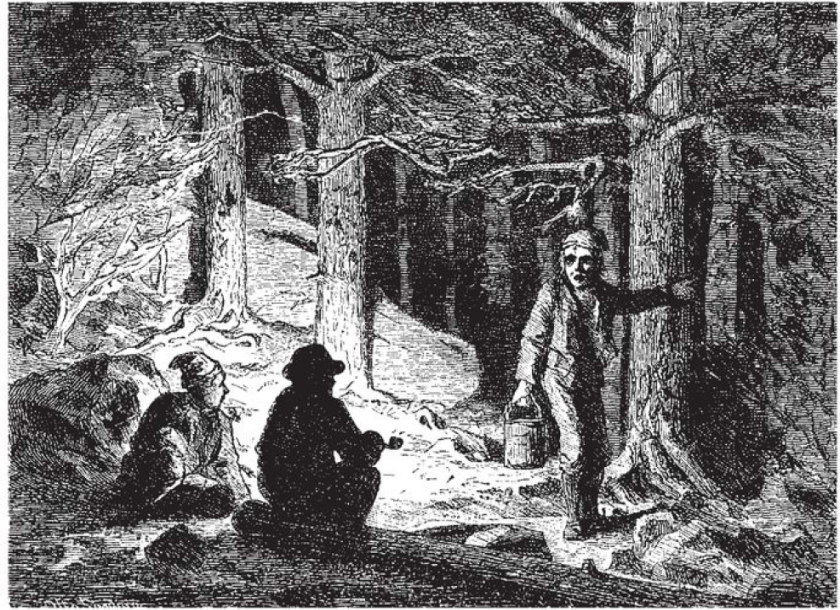
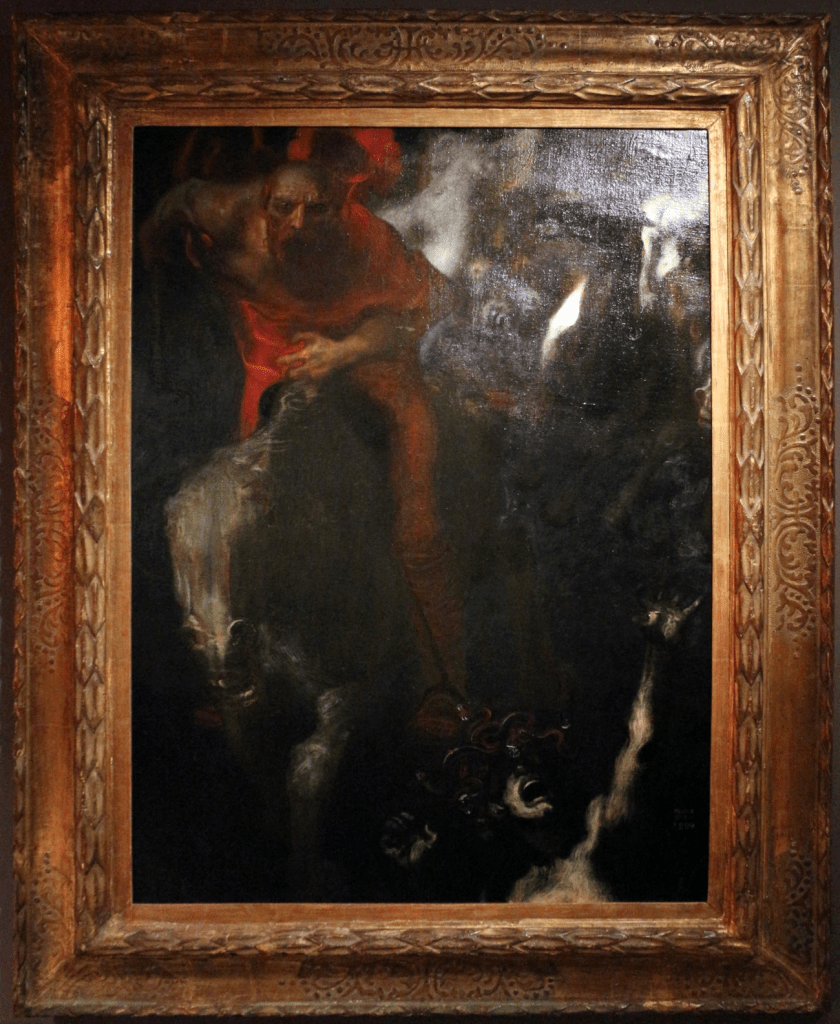

 Seclusão Anagógica