“For the moment let us see here the indication or the incitation to recognise that the essential place of semiology is at the centre, not on the margin or as an appendix to Logic.”
“metaphysics could only consider the sign as a passage, a place of passage, a passage-way (passerelle) between two moments of presence, the provisional reference from one presence to the other. The passage-way can be lifted.” Suspensa ou levantada, um dos problemas centrais da tradução da terminologia hegeliana para o Português: de preferência deve-se usar suspensão; ao mesmo tempo que um elemento “des-aparece”, isso não implica que ele suma da representação fenomênica ou seja aniquilado para não-mais-voltar. A suspensão mantém o vetor de lift (elevador, idéia de ascensão, subida, erguida, alavancagem) e ao mesmo tempo a noção do objeto da representação que fica em suspenso, i.e., desaparece para depois eventualmente re-aparecer (ascende, mas pode descender na seqüência, após momentos da representação).
“time itself is but the referring of presence to itself. As such signification, the sign procedure is, to be sure, the moment of presence lost; but it is a presence lost by the very time that engages it in the movement of its reappropriation.” A suspensão é um momento necessário da dialética hegeliana.
“The ‘in view’ designates the theoretical pre-eminence of the gaze, as well as the authority of the final aim, the telos of reappropriation of full presence, the ordination of the theory of signs to the light of parousia.” Parousia (grego): presença, aterrissagem (descida, chegada, retorno no sentido de reapropriação, no sentido mítico de Ulisses voltando à sua casa e também do passageiro que parte em viagem mas retorna, arrive back home, o contrário de arise, erguer-se, levantar-se, partir, que bem podia ser usado no lugar de lift). Ousia, sem par-, é Ser.
“It could be shown that this very general necessity governs metaphysics in its essence and in its totality – which is one with its history, and, I would even go so far as to say: with history as such.
We should then expect Hegelianism, which is so generally said to represent the completion of metaphysics, both in the sense of accomplishment and in the sense of end, to give the most systematic and powerful, the most ingathered, ingathering, assembled, assembling form to this metaphysical gesture. We should find a primary index of this in an architectonic reading that aims to locate the place Hegel assigns to the theory of signs in the system. For such an architectonic reading it would doubtless be best to consult here the Encyclopaedia of Philosophical Sciences (1817).”
“The theory of signs is inscribed in the 3rd part of the Encyclopaedia, that is in the Philosophy of Mind, following the Science of Logic (Lesser Logic) and the Philosophy of Nature. What does this division answer to? To briefly collect its meaning it is enough that we refer to what Hegel himself says at the end of the Introduction to the Encyclopaedia, § 18: [Os parentêses na citação são de Derrida]
As the whole science, and only the whole, can exhibit what the Idea or system of reason is, it is impossible to give in a preliminary way (or precursorily) a general impression of a philosophy.Nor can a division ( distribution) of philosophy into its parts be intelligible, except in connection with the system. A preliminary division, like the limited conception from which it comes, can only be an anticipation (something anticipated). Here, however, it is premised that the Idea turns out to be the thought which is completely (simply) identical with itself, and not identical simply in the abstract, but also in its action of setting itself over against itself, so as to gain a being of its own, and yet a being in full possession of itself while it is in this other.¹”
¹ Não só em potência, essência (em-si) mas também em ato, aparência (para-si), e conseqüentemente ao mesmo tempo em e para si, unidade sujeito-objeto (consciência em Hegel).
Em seguida H. divide a Filosofia em 3 momentos, esclarecendo que é uma divisão didática e nunca um momento subsiste só):
1. Lógica, o conhecimento da essência isolada, em-si, a Idéia.
2. Filosofia da Natureza, o conhecimento da aparência isolada, para-si, o Outro. (momento provisório da separação sujeito-mundo)
3. Filosofia da Mente (consciência), o conhecimento da descida ou chegada da Idéia ou essência ao se manifestar (do em si que se acopla ao para si, da etapa ou processo consumado descrito acima). Identidade final da diferença (Idéia e Outro no Um).
Grosso modo: ESSÊNCIA CARENTE OUTRO SER (ESSÊNCIA PERFEITA ou O ABSOLUTO).
A Filosofia da Mente pode ser subdividida em 3 momentos:
3.1. A mente subjetiva: abstração da auto-relação, a liberdade absoluta da Idéia consigo mesma (no arbitrário), mas falsa, pois “fora do mundo”.
3.2. A mente objetiva: a abstração da objetividade material do mundo, enquanto algo alheio à Idéia. A liberdade é entendida como necessidade, pura causalidade cega.
3.3 A menta absoluta: a unidade realmente existente, concreta, da consciência como objetividade e idealidade, a liberdade como tal. A “verdade” em sua dinamicidade, como compreendida por Hegel.
Por que o momento 3.1 está negritado acima? Porque Derrida entende a teoria do signo lingüístico como o equivalente a esta etapa. Um “modo” ou “determinação finita”, “transição ou etapa necessária da auto-superação”. Derrida chama o 3.1 ou signo de “transição da transição”. A Idéia auto-suficiente é negada, suprimida pelo Outro (próxima etapa afirmativa).
Derrida subdividirá, ainda, o 3.1, seu objeto de interesse neste texto, em:
3.1.1. O imediato: o Espírito-na-natureza (Naturgeist), o objeto do ponto de vista da Antropologia (do tempo de Hegel, mero modo de expressar a relação de alteridade homem vs. natureza, não a Antropologia científica que estuda a diferença cultural entre culturas ou homens diferentes – está muito mais para ciência exata que para um campo social, pois abarca até a fisiologia humana, como teremos a oportunidade de ver mais abaixo).
3.1.2. O mediato: reflexão no sentido comum. A consciência abstraída, tratando-se como objeto exterior (o objeto do ponto de vista da Fenomenologia da Mente).
3.1.3. Objeto-de-si-mesmo: o objeto do ponto de vista da Psicologia (hegeliana), reconhecendo-se idêntico ao que era outro (reincorporando-se).
Para Derrida, a teoria do signo pertence em sua delimitação, mais precisamente, ao momento da Psicologia (3.1.3), “definida como ciência da Mente determinando a si mesma em si mesma como objeto para si mesma”.
“A semiologia, como parte da ciência do objeto para si mesmo, não pertence à ciência da consciência, isto é, à fenomenologia [3.1.2].” “Esta psicologia está divorciada da natureza. Estamos não só referidos aqui a todas as tentativas semiológicas do séc. XVIII, que eram todas psicologizantes, mas referidos, em última instância, a Aristóteles, o patrono que Hegel invoca em sua Psicologia da Mente quando, na Introdução acima, descreve:
Os livros de Aristóteles Da Alma (Peri Psychis) … são por isso e ainda, de longe, o trabalho especulativo de valor mais admirável, talvez o único de valor, neste tópico. A principal meta de uma filosofia da mente só pode ser reintroduzir o conceito no conhecimento-da-mente, o que quer dizer redescobrir a lição destes livros de Aristóteles.”
Define Aristóteles, em outro livro:
“A palavra falada (ta en tiphoni) é o símbolo de afecções ou estados da alma, e a palavra escrita é o símbolo da palavra falada. Assim como nem todo homem tem a mesma escrita, nem todo homem tem o mesmo som da voz, mas os estados da alma, de que essas expressões são o signo imediato ou primário (semeia protos) são os mesmos para todos, assim como as coisas, de que esses estados são apenas a imagem.”
“Mas quando afirmo [Derrida] que é tradicional fazer da semiologia dependente da psicologia, não penso apenas no Hegelianismo do passado, mas no que se revela como além do Hegelianismo, isto é, superação do Hegelianismo, e não só algo derivativo e compreendido no Hegelianismo. Porque essa é uma tradição metafísica, ininterrompida pelas ciências humanas contemporâneas. Nos seus Cursos de Lingüística Geral, Saussure traça duas vezes o plano para uma semiologia geral juridicamente [?] dependente da psicologia.”
“A Lingüística é só uma parte da ciência geral da semiologia; as leis descobertas pela semiologia serão aplicáveis à lingüística, e esta última será circunscrita em limites bem-definidos dentro da massa de fatos antropológicos.” Saussure
Uma observação: hoje entendo a Lingüística como uma Semiologia no sentido saussureano, e a lingüística de Saussure como uma subdivisão desta. Isto é, entendo que nunca houve esta expansão desejada por Ferdinand de Saussure.
“Hjelmslev, apesar de reconhecer a importância da herança saussureana, levantou a questão da crítica aos pressupostos dessa mesma herança, i.e., criticou a autoridade atribuída à psicologia e o privilégio acordado à ‘substância expressiva’ sonora ou fônica.” Nesse tocante, creio que Saussure ainda siga atual e não procede a crítica hjelmsleviana: a lingüística segue sendo o estudo do signo psíquico, em clara antecipação à consideração de que surdos-mudos aprendem a língua sem prejuízo (o processo mental incorpora a questão da escuta e da fala, não havendo quebra epistemológica dos pressupostos de Saussure).¹ Por outro lado, a fala continua sendo a instância privilegiada em detrimento da escrita, como se vê no princípio da arbitrariedade das mudanças lingüísticas (sobre as quais a literatura não têm nenhum controle, uma vez que a língua se desenvolve organicamente no cotidiano do universo dos falantes totais daquela língua).
¹ Muitos estudantes de lingüística de nosso tempo querem desqualificar Saussure no trecho em que ele se refere ao ‘signo acústico’, porém o sentido mais correto do que ele quis expressar em sua época teria de ser retraduzido nas atuais edições de sua obra clássica como ‘psíquico’ no lugar de acústico, porque se refere a um processo interior, mental.
“Veremos como a excelência psíquica e a preeminência fônica andam juntas também em Hegel, por razões que são histórica e essencialmente metafísicas.”
“A psicologia estuda as faculdades ou modos gerais da atividade mental enquanto atividade mental – intuição, representação, rememoração, etc., desejos, etc.” H.
“A teoria dos signos, consistindo essencialmente numa teoria da fala e da escrita, está contida em duas notas de rodapé bastante extensas de H., notas estas mais longas que os próprios parágrafos aos quais estão subordinadas, no sub-tópico intitulado ‘Imaginação’ [na Enciclopédia]. A Semiologia seria, portanto, um desenvolvimento pertencente à teoria da imaginação, e mais especificamente, à Fantasiologia ou Fantástica¹ [Phantasiology ou Phantastics] hegeliana.”
¹ Ainda não li o original (a Enciclopédia). Talvez Fantasística ou mesmo Phantasística, com ‘ph’, sejam traduções mais acertadas.
“O que é imaginação? Representação (Vorstellung) é intuição relembrada-interiorizada (erinnerte). Pertence à inteligência (Intelligenz), que consiste em interiorizar a imediatidade sensível, ‘para apresentar a si mesmo como possuidor da intuição de si mesmo’ (in sich selbst anschauend zu setzen) – para suspender e conservar, no duplo movimento da negação (Aufhebung), a subjetividade pertencente à interioridade,¹ para que seja exteriorizada em si mesma e ‘esteja em si mesma em sua própria exterioridade’ (in ihrer eigenen Ausserlickhkeit in sich zu sein). Na lembrança temos o movimento decisivo da representação em que a inteligência é chamada de volta a si, e está em si mesma em sua exterioridade. Na lembrança o conteúdo da intuição se torna uma imagem – está livre da imediatidade e individualidade a fim de permitir a transição para a representação conceitual objetiva. E a imagem lembrada e interiorizada na memória não é mais uma ‘existência’, i.e., presente, na memória, mas depositada fora da consciência (bewusstlos aufbewahrt), retida numa morada inconsciente. A inteligência pode ser concebida como essa reserva, essa capa escura no fundo da qual as imagens enterradas são escavadas.² Hegel também chama essa instância ou reserva de ‘abismo noturno’ ou ‘abismo inconsciente’.”
¹ O texto em inglês de Derrida traz “inferiority”, inferioridade. Pode ser um jogo semântico de Hegel sobre ascender e baixar, também; mas como está em oposição a exterioridade aqui, acho mais provável que seja só erro de digitação.
² Fuck Freud!
“Que a rota que vamos percorrer seja circular e que esse abismo seja em verdade uma pirâmide é um enigma sobre o qual devemos perguntar se ele deve ser suspendido como uma verdade que estava no fundo de um poço e devemos trazer à luz ou então decifrado como inscrição que adorna o monumento.” Os próprios verbos interiorizar e recordar em alemão têm a mesma raiz. Sobre a pergunta retórica de Derrida, veremos que é um pouco dos dois.
“A síntese dessa imagem interna com a existência relembrada é ela mesma o conceito de representação: mediante esta síntese o interno agora tem a qualificação para aparecer diante da inteligência e existir propriamente, estar-aí (Dasein)” H. § 454
Esta explicação de H. serve para a memória re-produtiva, passiva, que não cria suas próprias memórias, apenas recebe dados do exterior. É só a primeira etapa da explicação da faculdade da memória.
O que é produzido e exteriorizado no momento seguinte (a segunda etapa da faculdade da memória) e espelhado (simétrico, contrário) é o signo. Ele é emitido pela imaginação produtiva ou criativa. Nossa capacidade de fantasiar, no sentido hegeliano.
Uma existência imaginada é uma imagem existenciada.
O que é internalizado se torna universal para si mesmo, e logo é expelido como intuição concreta (“an affirmation that may appear abusive or unintelligible”, D.) ou coisa. Nesse esquema H. não omite que é tributário de Kant.
“Finalmente, notemos que a imaginação transcendental é também o movimento de temporalização que Heidegger repetiu tão admiravelmente em seu Kant e o Problema da Metafísica”
A união dos contrários e a semio-poiesis. “Productive imagination is the Mittelpunkt” H.
Ao final do texto vamos finalmente entender o que significam essas aspas!
O signo em si mesmo não é nada.
“A imaginação, quando percebida como a agência dessa unificação, é razão (Vernunft), mas só razão formal, porque a matéria ou o tema que encapsula é para a imaginação enquanto (qua) imaginação uma matéria indiferente; ao passo que a razão enquanto (qua) razão determina também o conteúdo com vistas à verdade.” § 457
O signo só é um ponto-médio do caminho para a verdade da consciência (fica a meio caminho), e no entanto ele não é um acidente (arbitrário), no sentido de ser um momento, embora abstrato (nisso, ele é arbitrário), necessário no desenvolvimento da racionalidade e da aparição da verdade.
“Por que a verdade independe do, ou melhor, depende da ausência do, signo?”
“Por que o signo é só um momento inferior, um conceito metafísico menor?” (Neste sentido talvez o ‘interior’ lá em cima fosse mesmo inferior!)
“Por que a verdade não se expressa (em signos)?”
“Then ‘Why’ (Pourquoi) here no longer indicates a question about the in-view-of-what? (pour quoi), about the telos or the eschaton of the movement of signification; nor does it indicate a question about an origin: ‘Why?’ taken as ‘because of what?’ ‘Starting with what?’ etc. ‘Why’ is then the still metaphysical name for a question about the metaphysical system that links the sign to the concept and to truth. But this question can break through and penetrate only in freeing itself from even this Why-form, undetermined as it may seem.”
“O signo só é o que é hoje no campo do conhecimento porque a metafísica foi encerrada ou arrematada – ele se beneficiou disso.”
“O signo é, na definição de Hegel, portanto, a unidade de uma ‘representação independente’ e de uma ‘intuição’. Porém, na identidade da representação e da intuição, algo excepcional sucede: essa intuição não é uma simples intuição, como a intuição em geral. Um ser é dado, uma coisa é apresentada, apresentada para imediata recepção no presente. Exemplo: a cor dum chapéu está-lá para a intuição. Porém, como é indissociável da representação (Vorstellung) essa presença representa, i.e., reapresenta algo que não é em si mesmo, ou não é o mesmo, mesmidade, mas diferença. É colocada (a cor) no lugar de algo outro (etwas anderes vorstellend), um representativo representacional de algo mais (aqui Vorstellung não é só apresentação, é representação no sentido literal, pois indica o papel de mediação). O quê representa? Do quê o significante apresentado à intuição é significante? Como H. determina o representado ou o significado? É claramente uma idealidade contrastada com a real corpo-realidade (ou corporeidade) do significante. H. chama esse significado do signo, o Bedeutung (geralmente traduzido como ‘significação’; eu, por outro lado, prefiro traduzir como content de vouloir-dire).¹”
¹ O conteúdo-significado; seguindo a estranha expressão francesa, o conteúdo do querer-dizer.
Corpo-significante e alma/idealidade-significado
“O signo é, pois, uma encarnação.” “Isso segue válido em Saussure e Husserl. Para este último o signo é animado pela intenção de significações como corpo (Körper) tornando-se ou devindo corpo-próprio (Leib) animado por Geist (alma, espírito). Para Husserl a palavra viva é uma espiritualidade corporificada.”
“Mas Hegel enfatiza não só a aquisição do corpo-próprio, mas o lado inerte e inanimado, tumba.” Há um trocadilho em grego, usado por Platão, entre soma e sema (corpo e tumba, o corpo é uma prisão da alma).
“O corpo do signo é aquele monumento no qual a alma vai ser silenciada e confinada, guardada, mantida, conservada, tornada presente.” pirâmide-embalsamamento-monumento-inscrição
“trabalho da morte”
“H. usa deliberadamente o signo pirâmide, ou diríamos o símbolo piramidal, para designar ou para significar o signo.” “H. vê no hieróglifo egípcio uma espécie de paralisia da dialética.”
O “algo mais” acima é justamente o negativo. Todas as cores que não são a cor do chapéu. A intuição-do-ausente.
“A alma consignada na pirâmide é estrangeira. Se a alma é transposta, transferida, transplantada no monumento-significado, é de outra ordem que a pedra-significante, do intuitivo dado. E essa heterogeneidade é, primeiro, a irredutibilidade da alma e do corpo, do inteligível e sensível, do conceito (idealidade-significado) e do corpo sensível do significante. (representação)” H.
Há um abismo ou alteridade intransponível aí. Para H., essa é a distinção entre signo e SÍMBOLO. Um símbolo simboliza naturalmente algo que se lhe assemelha. Um signo é totalmente convencionado, não há ligação natural entre significante e significado.
“Essa teoria da natureza arbitrária do signo e essa distinção entre signo e símbolo é retomada em extenso e de modo mais claro na Introdução à primeira seção da Estética (‘Do símbolo em geral’).”
“Se ainda havia alguma dúvida de que todo o sistema conceitual que domina a assim chamada revolução da lingüística – quero dizer, a lingüística saussureana – usa como modelo explícito a metafísica, precisamente a metafísica que opõe conceitos entre si, a da semiologia hegeliana, creio que agora essa dúvida não pode mais se colocar.”
“A palavra símbolo foi utilizada por vários autores para designar o signo lingüístico, ou mais especificamente o que aqui se chama significante. O princípio da arbitrariedade do signo que acabo de explicitar é totalmente contrário à persistência desse uso. Uma característica do símbolo é que ele nunca é inteiramente arbitrário; não é inócuo, porque há indícios de uma conexão natural entre significante e significado. O símbolo da justiça, um par de balanças, não pode ser substituído impunemente, p.ex., por um tanque.” Saussure
“the production of arbitrary signs manifests the freedom of mind.” O telos da Psicologia hegeliana, a aquisição da liberdade.
“Na atribuição de significados, portanto, a inteligência manifesta uma liberdade e uma maestria incomparáveis no uso de intuições que não são nunca manifestas nas simbolizações.” H., § 458
“Aí vemos concluída a pirâmide de Hegel.” É como se o ‘espaço arquitetônico’ escolhido por H. para representar a aquisição de, por um lado, uma razão vazia (ainda uma razão incompleta) e, por outro, uma liberdade irrestrita pela consciência, em uma de suas etapas, fosse exatamente a parte que cabe deixar oca nas construções, para que a distensão dos metais e outros sólidos não comprometesse todo o esqueleto da construção.
“This sign-creating activity may be distinctively named ‘<productive> memory’ (produktive Gedächtnis) (the primarily abstract ‘Mnemosyne’); and since ‘memory’ (Gedächtnis), which in ordinary life is often used as interchangeable and synonymous with ‘remembrance’ (recollection) (Erinnerung), and even with ‘conception’ and ‘imagination’, has always to do with signs only.” (Remark, § 458)
“In his fine essay on Proust, G. Deleuze has shown very well that the Remembrance of Things Past was less an exercise of memory than a semiotic activity or experience. You see that Hegel does not distinguish between the two, and that there is here another occasion to underline an affinity between Proust and Hegel.”
ONDE GERALMENTE OS MATEMÁTICOS PARAM DE TENTAR DESAFIAR HEGEL: “É a minha tese [Derrida] a do privilégio do sistema lingüístico – que é fônico – sobre todos os demais sistemas semióticos. Um privilégio, destarte, também da fala sobre a escrita; e da escrita fonética sobre qualquer outro sistema de notação ou qualquer outro tipo de inscrição, em particular os hieróglifos ou a escrita ideográfica. Mas também da escrita fonética perante a escrita matemática formal (qualquer que seja ela), a álgebra, a pasigrafia [uma espécie de Esperanto taquigráfico] e outros projetos de escritura universal do tipo leibniziano (fracassados), sobre o qual Leibniz gabou-se de ‘não necessitar, por princípio, referir-se à voz (vox) ou à palavra’.”
“That is if one accepts, and in the measure that one accepts considering Hegelianism as the completion of Western metaphysics, the pre-eminence of the phoni is one with the essence of metaphysics. And thus whatever in certain modern sciences – for example in a certain work of glossematics carried out by Hjelmslev, but this is but one example – scientifically questions this privilege of the vox, both as voice and as word, in some measure trangresses the metaphysical closure itself.”
“no signo a intuição sensível-espacial é sublimada temporariamente” Mas o que entra no lugar do espaço ao ser negado é o tempo, que em si é (o lado oculto do) espaço. O signo como temporalização em Heidegger (acima).
“a fase mais verdadeira da intuição usada como signo é a existência no tempo (Dasein – o sendo-aí em intuição – in der Zeit: uma fórmula que devemos considerar ao mesmo tempo como dizendo que o tempo é o Dasein do conceito).” “Por que é a da intuição sublimada a sua fase mais verdadeira? Porque o tempo é o espaço sublimado.” O MEIO É A MENSAGEM:É a única forma do corpo (significante) desaparecer conservando-se a si mesmo na forma da idealidade (significado, conceito), ou seja, como outro. “But what is the signifying substance, what glossematicians call the expressive substance, most proper to be thus produced as time itself? It is sound, sound lifted from its naturalness and bound to the mind’s relation with itself, to the psychi as subject for itself and auto-affecting itself – the animated sound, the phonic sound, the voice, the Ton.” O homem é o único animal que vive-no-tempo porque ele fala (e compreende a fala).
“The voice is what unites the anthropological naturalness of the (natural) sound with the psychic-semiotic ideality, what consequently joins the Philosophy of Mind to the Philosophy of Nature, and within the Philosophy of Mind joins anthropology to psychology between which, I recall, phenomenology, the science of consciousness, is inscribed.”
“This means, in Hegelian language, that it is the essence of time as existence of the concept. But at the same time (so to speak) language, inasmuch as it interiorises and temporalises Dasein as it was in the given of sensible-spatial intuition, elevates existence itself, sublates (relève) it in its truth, at its highest level. It makes the sensible existence pass to representational or intellectual existence, to the existence of the concept. And this transition is precisely the moment of articulation that transforms the sound into voice and noise into language – a theme that would also merit a whole comparison with De Saussure.” O pensamento se materializa e a vida (fenomênica) fica em suspenso. Pode-se dizer que é a versão hegeliana da Idéia de Platão: acima do reino da Representação, no reino da representação, ao mesmo tempo, sem contradição, ou suportando a contradição (um em-como se não fosse em-, e sim num ‘além-tempo’: uma transcendência imanente).
“But he contents himself with this systematics or architectonics. He does not fill out the field whose limits and topography he delineates. There are, none the less, indications of the lineaments of such a linguistics. For example, he admits that linguistics must be distinguished into a formal (grammatical) element and a material (lexicological) element.”
“Ideality in general is, in Hegelian terms, ‘the negation of the real, which is none the less at the same time conserved, virtually retained (virtualiter erhalten), even if it does not exist’. But ideality as an element of language since the sign is the sublation (relève) of the sensible intuition of the real – has its own sense organs, its own elements of sensibility. Two senses share physical ideality between them: the sense for light and the sense for sound. These two elements have a privilege to which Hegel devotes numerous and splendid analyses in the Encyclopaedia and in the Aesthetics.
In so far as sound is concerned, it is noteworthy that linguistics refers us from psychology to anthropology (psycho-physiology), and that this latter refers us to physics. It is the reverse route of the teleology and movement according to which the Idea is reappropriated to itself as mind by rising from and sublating the nature [en (se) relevant (de) la nature] in which it was lost while being betokened therein. But at the beginning of the Physics light is posited as the first but abstract manifestation, an undifferentiated identity of qualified prime matter. It is through the light that nature refers to itself, manifests itself to itself. As is said in the Aesthetics, ‘light is the first ideality, the first auto-affirmation of nature. In light nature for the first time becomes subjective.’” E fez-se Luz, e fez-se o Verbo (a Voz).
“Signs, Hegel reflects, are not consumed. And this is to be related to the fact that the signifying matter is for Hegel always sound or light. We should have to ask if there is no other, and even whether audible or visible signs are not in some way eaten or consumed.
In any case, if sight is ideal, hearing, Hegel notes, is even more so; it as it were sublates (relève) sight.” Espaço Tempo. As artes visuais em geral, e os túmulos e inscrições egípcias em particular, negam a negação, tentam paralisar a dialética.
Há uma interseção astuciosa entre consumar (a metafísica) e consumir (a luz e o som) aqui (pois comer, devorar é acabar, completar). Afinal essa construção hegeliana é eterna ou está sofrendo erosão? Derrida encerra o ensaio falando da possibilidade de outra metafísica se – e somente se – alguém for pelo caminho da diferença (e não pelo da indiferença totalizante hegeliana), ou seja, alguma tentativa no sentido do que Hjelmslev empreendeu por volta dos anos 50.
HEGEL & O ESPÍRITO DA MÚSICA (Como que para comprovar que, procurando bem, todos os grandes filósofos, mesmo se odiando e discordando uns dos outros, chegam a conclusões fundamentais em comum – sobre a música, Hegel, Schopenhauer e Nietzsche são o consenso em contínuo – uma faixa de música alemã bastante longa): “since the calm, disinterested contemplation of works of art, far from seeking to suppress objects, lets them subsist as they are and where they are, what is conceived by sight is not the ideal in itself, but on the contrary perseveres in its sensible experience. But the ear, on the contrary, without practically (praktisch) turning to objects, perceives the result of the interior trembling (innern Erzitterns) of the body by which not the calm material figure, but a first ideality coming from the soul is manifested and revealed. As, on the other hand, the negativity in which the vibrant matter (schwingende Materia) enters constitutes a sublation (Aufheben)¹ of the spatial state, which sublation is in its turn sublated by the reaction of the body, the exteriorisation of this double negation, the sound (Ton) is an exteriorisation which is in its upsurge annihilated again by its own being-there, and vanishes by itself. By this double negation of exteriority inherent in the principle of sound, sound corresponds to the internal subjectivity in that sonority (Klingen), which of itself already is more ideal than real corporeality, renounces even this ideal existence and thus becomes a mode of expression of pure interiority.”²
¹ Entender sublimação do modo mais físico-químico possível – sem a interferência da hedionda psicanálise! Por isso eu prefiro sempre traduzir sublimação como simples negação quando posso – já que em Hegel a negação é sempre transitória (toda evaporação de matéria sólida é cíclica – cf. o motto marxista mais famoso!).ª De fato quando se diz que o tempo é o espaço sublimado, é o espaço negado, sem mais, nem menos do que isso.
ª Nada obsta o capitalismo (o real mais real) evaporar no ar!
² Aqui de novo o texto traz inferiority: agora estou certo de que era erro tipográfico: há a simetria corporeidade real (espaço puro) – pura interioridade (negação total do espaço).
“This decisive concept of vibration, of trembling (Erzittern) as a physical transition from space to time, as sublation of the visible in the audible, the real in the ideal, this teleological concept of sound as a movement of idealisation and of Aufhebung of natural exteriority, is also explicated in the Encyclopaedia in the Physics (§ 300). We must then come back to it if we wish to account for the material part of language, that is lexicology.”
“Thus in the linguistic part of semiology Hegel can make the move he advises against in general semiology: he can make of the question of writing an accessory question treated as an appendix, an excursus, a supplement. This move, we know, was made by Plato and Rousseau; it will also be made by De Saussure.”
“It is from the province of immediate spatial intuition to which written language proceeds that it takes and produces the signs.” H.
“‘Alphabetic writing is in and for itself the most intelligent’,says Hegel. Inasmuch as it respects, conveys and transcribes the voice as idealisation and movement of mind relating itself to its own interiority, phonetic writing is the most historical element of culture, most open to infinite development. ‘Learning to write an alphabetic writing must be considered a means of infinite culture (unendliche Bildungsmittel).’” Um meio de imagem infinito, ‘diz’-nos a língua alemã! Sobre o negrito: de fato nós definimos nossa História pela escrita (mesmo quando esquecemos de definir que é a escrita fonética): antes da escrita, era a pré-História. Resta a pergunta: abriremos mão da cultura, ou ainda viveremos dentro da História? Mesma pergunta, em roupagem diferente, sobre o fim da Metafísica em H..
“History as history of mind, the development of the concept as logos, the onto-theological deployment of parousia, is not hindered, limited, interrupted by alphabetical writing, which, on the contrary, inasmuch as it better effaces its own spacing, is the highest, the most sublating mediation.” Através do registro escrito (e amplio: da notação musical) podemos trazer de volta à memória qualquer momento sublime, ou idealidade, negação do real, do espaço ao menos, enquanto sobrevivemos na nossa forma fundamental que é o tempo, e vivenciar o Absoluto (em Hegel). Podemos, em suma, transcender a mundanidade. A pós-modernidade não vem destruindo a cultura, mas apenas jogando no mesmo terreno. Agora entendo por que Jean Baudrillard levanta a hipótese de que essa condição pode durar indefinidamente…
“In effect, as everyone knows, and as Hegel recognises with a lucidity very rare in this domain, there is no purely phonetic writing; the alphabetical system we use is not and cannot be completely phonetic. A writing can never be penetrated and sublated completely by the voice. And the non-phonetic functions, the so to speak – silences, of alphabetic writing are not factual accidents or by-products one might hope to eliminate (punctuation, numbers, spacing). Hegel recognises this in passing in a parenthesis he quickly closes, and in which we read, concerning hieroglyphic writing: ‘(and hieroglyphics are used even where there is alphabetic writing, as in our signs for the numbers, the planets, the chemical elements etc.)’.”
“Speaking of the hieroglyphic or Chinese writing, Hegel notes (as he does in other texts, notably in the Logic): ‘this feature of hieroglyphic – the analytic designation of representations – which misled Leibniz to regard it as preferable to alphabetic writing is rather in antagonism with the fundamental desideratum of language – the name’.
In assigning limits to universal, that is mute writing, writing not bound to the voice and to natural languages, in assigning limits to the function of the mathematical symbolism and calculus, considered as the work of the formal understanding, Hegel wishes to show that such a reduction of speech would interrupt the movement of Aufhebung, which is the movement of idealisation, of the history of mind and the reappropriation of logos in the presence to itself and infinite parousia. What is most written, most spaced, least vocal and internal in writing is what resists dialectics and history. We then cannot question the Hegelian concept of writing without questioning the whole history of metaphysics. For it is not a question of returning to Leibniz, concerning whom I have endeavoured elsewhere to show that his project remained metaphysical, and is fundamentally accessory to the system on the basis of which Hegel addresses his objections to him.
The writing from which metaphysics is to be questioned in its closure is then not writing such as metaphysics had itself determined it, that is such as our history and our culture enable us to think it, in the most familiar evidence of what is obvious. This writing in which the outside of metaphysics is announced could have, among other names, that of difference.”
“Isidoro, obispo de Sevilla desde el año 600 aproximadamente y hasta su muerte en abril de 636, fue autor de numerosas obras de carácter gramatical, espiritual, apologético, exegético, enciclopédico e histórico. Si nos centramos en estas últimas, Isidoro escribió una Crónica Universal desde la creación del mundo hasta su época y unas Historias de los godos, suevos e vándalos, especie de historia nacional de gran valor para los historiadores del período visigodo.”
“CI fue editada por última vez hace ya más de 100 años (1894) por Th. Mommsen, MGH, cm 2, PP. 424-81. Apenas ha merecido un gran interés por parte de los estudiosos. Sobresale el magnífico trabajo que dedicó a esta obra Reydellet, Les intentions idéologique; cf. además Galán Sánchez, El género historiográfico, pp. 173-208. Recientemente he dado término a una nueva edición crítica de esta obra junto con un amplio estudio de la misma: J.C. Martín, La Chronique d’Isidore de Séville. Édition critique et commentaire, 2000, Tesis Doctoral dirigida por François Dolbeau (que se puede consultar en la Biblioteca de la École Pratique des Hautes Études, IVe Section, Sciences Historiques et Philologiques, de París). HG (la Historia de los godos) fue críticamente traducida en 1975 por Rodríguez Alonso, Las Historias. De esta última obra existe además una reciente traducción inglesa acompañada de notas: Wolf, Conquerors, pp. 79-109.”
“se deduce que el reino de los godos ha durado, con el favor de Dios, 256 años” Menor que muitas tartartugas.
Mais nota de rodapé que dedo na mão
“La Crónica de Isidoro no aporta apenas nada a la historiografía, ni desde el punto de vista formal, ni desde el punto de vista del contenido, ni desde el punto de vista ideológico.”Galán Sánchez
“Desde el punto de vista ideológico, la Crónica de Isidoro no presenta tampoco ningún relieve especial. Políticamente hablando, es una historia ‘neutra’… Isidoro no se pone a escribir a raíz de ningún acontecimiento histórico extraordinario, ni para sustentar ninguna ideología política concreta. Fuera del providencialismo religioso típico del género, la obra de Isidoro presenta una rara y aséptica neutralidad ideológica.” ibid.
“Isidore does not write national but royal history.” Sánchez Salor, El providencialismo
“Ainsi unifiée et considérée dans son ensemble, l’Hispania est prête à devenir le territoire du regnum Gothorum. De fait, le regnum Gothorum se confond désormais avec le regnum Hispaniae… De cette fusion entre le regnum barbare et la grande province hispanique est né, la première en Europe, la ‘nation’ d’Espagne, l’Hispania.” Teillet, Des Goths
“aunque provisigodo, Juan de Bíclaro no se muestra hostil hacia Bizancio, a diferencia de Isidoro.”Álvarez García, Tiempo
“Los visigodos eran, probablemente, a los ojos de Isidoro, los bárbaros que habían sido conquistados por los vencidos, como antaño había ocurrido a los romanos al apoderarse éstos de Grecia. Así, los hispanorromanos habían conseguido conquistar a sus invasores gracias a su cultura, por un lado, pero sobre todo gracias a su religión, pues sin ninguna duda fue la conversión de los visigodos al catolicismo en 589 que hizo posible el nacimiento de la nueva nación hispanogoda.”
“Isidoro y sus intelectuales cercanos, en su calidad de escritores y eruditos, eran conscientes del devenir histórico, del nacimiento y del fin de los imperios, como los de los persas, egipcios, griegos o romanos. Sabían asimismo como lectores que la gloria de los reinos continúa más allá del fin de éstos y que es mucho más perdurable si ha sido fijada por escrito. Por ello, me parece altamente verosímil que Sisebuto propusiese a Isidoro la redacción de las dos principales obras históricas del sevillano, y que éste pudo escribirlas a fin de dejar eterno testimonio del esplendor y de la grandeza del reino hispanovisigodo de comienzos del siglo VII.”
“Así también parece que Casiodoro nada más finalizar la redacción de su Crónica hacia 519, concibió la idea de escribir su Historia de los godos, hoy perdida, y a la que acabó entregándose entre 519 a 523 y 533 a 537-8”
“Parece evidente que Isidoro no pudo escribir su obra durante esas rápidas y turbulentas semanas que constituyen el efímero reinado de Recaredo II, el hijo de Sisebuto.”
“Los historiadores se preguntan incluso por qué Sisebuto puso punto final en el año 615 a la campaña contra los últimos emplazamientos bizantinos en la Península cuando todo parecía indicar que iba a obtener una rápida y fácil victoria sobre éstos. Vid. García Moreno, Historia, p. 149; Vallejo Girvés, Bizancio.”
“Sin duda, precisamente la muerte de Sisebuto en las sospechosas circunstancias aludidas decidió a Isidoro a difundir rápidamente manuscritos que contuviesen HG, y ello pese a que probablemente no había finalizado satisfactoriamente su redacción o no había podido, al menos, revisarla con esmero. El trabajo que por esas mismas fechas el hispalense había dedicado a las Etimologías, su enorme enciclopedia, que conoció una primera redacción en vida de Sisebuto, hacia 620, debe de haber retrasado la composición de HG.”
COMIENZA LA CRÓNICA DE ISIDORO (SEGUIDO DA HISTÓRIA DO MUNDO POR RAFAEL DE ARAÚJO AGUIAR QUANDO O TEXTO ORIGINAL COMEÇAR A FICAR MUITO CHATO)
“Primera edad del mundo.”
“[Ano do Mundo] 1454 – En esta generación nacieron los gigantes.”
Nasce também a Música e a Metalurgia, no mesmo ano – que coincidência!
“2242 – Escrito está que el diluvio aconteció a los 600 años de edad de Noé, cuya arca cuenta Josefo que se halla en un monte de Armenia llamado Ararat.
(…)
Segunda edad del mundo.”
“2643 – En tiempos de Falec se edificó la Torre y se produjo la división de las lenguas.”
“3035 Tuvo entonces su principio el reino de los egipcios”
“3114 (…) Reinó el primero entre los asirios Belo, a quien algunos consideran Saturno.
(…)
Tercera edad del mundo [¿??]”
“3184 (…) Nino reinó como rey de los asirios, el cual inició las guerras el primero e inventó las armas.” Para desgosto de Hobbes, o Homem viveu 3184 anos em estado de natureza (e outros!!!) e não produziu uma só guerrinha…
Ainda neste GRANDE ANO! “Zoroastro, inventor de la magia, es asesinado por el rey Nino.”
“3344 (…) En este tiempo comienza el reino de los griegos” Uau, como não mais se sentiam tão superiores os egípcios, só 300 anos mais velhos que estas crianças, conforme descobrimos que mentiu Platão!
A deusa Atena habitava entre os homens.
“3434 (…) Serapis, hijo de Zeus [mais um dos adultérios que Hera teve de suportar, tsc!] y rey de los egipcios (…) muere.”
Atena inventa a costura – ó! E o escudo e o arco também!
“3688 (…) Se dice que en estos tiempos vivió Prometeo, de quien cuentan (…) que formó a los hombres del lodo.” Bom pra ele, mas já não havia homens?
Algum grego doido inventa a astrología.
3688 Zzzzzzzz… Os judeus são escravizados no Egito e Deucalião sobrevive ao segundo Dilúvio… Já tá ficando repetitivo, Jeová! Ah, não foi Jeová, foi Poseidon (Posidônio)!
3915 Inventam a medicina (um MÚSICO inventa a medicina)
Nem os Irmãos Certos, nem Santos du Monte, mas Dédalo e Ícaro!
“En esta época reina el primero entre los latinos Pico, hijo de Saturno.”
Já inventaram a harpa umas 30 vezes!
Acho que as Musas gostam é do Olvido, com o perdão do trocadilho!
3955 Funda-se Tiro (Porrada & Bomba)
4003 Primeiras Olimpíadas!
4009 Fred Flintstone come seu primeiro sauroburger
Burro! Diz que Tróia foi conquistada em 3 anos! Não leu Homero!
4044 Samson faz seu primeiro concerto – as primeiras divas pop!
/ Joyce escreve o Ulisses
Quarta idade, ronc, ronc….
Dildo manda construírem a cidade Pênis.
4221 O Retorno dos Reis
Sauron tá fodido!
A média de idade dos homens começa a cair porque ainda não inventaram a quiropraxia. Nem mesmo Quíron!
Nasce o Clube de Regatas Remo da Rômula
Ozéias faz seu primeiro gol contra.
Rômulo tanta eleger os homens mais dignos de sua cidade para fundar o Senado – mas, decepcionado, acaba mesmo nomeando 101 dálmatas.
4543 Governou Numa Pompílio esse ano – a fonte é Plutarco, pode confiar!
Agora os anos demoram mais para passar, porque antes só tinham 10 meses.
Mas ninguém fazia porra nenhuma nesses 2 meses, só orgia, carnaval e putaria! Enquanto Roma era Roma…
Sócrates nem tinha nascido e a República Romana já prosperava…
Mas como Isidoro me ouviu, agora ele começou a remediar o fato, já que não havia se prevenido, e colocou Tales na parada.
Safo meteu fogo em Babilônia
Retiram Desmond Prometeu de um poço, uma estória mal contada…
Pitágoras inventa Euclides e o Triângulo Isósceles das Bermudas (mais conhecido como Sunga).
Dario imperador uruguaio por 30 Copas.
Funda-se a Charrete Olímpica, mãe do Gol Olímpico.
Os primeiros dinossauros abandonam a Terra devido à poluição, surfando num cometa.
Ésquilo e Eurípedes são o primeiro casal gay da Grécia – Aristófanes faz bullying com eles.
Diz, por exemplo, que Ésquilo tem a voz muito fina. Vaticina que essa relação inominável terminará em Tragédia e que todos estão cegos por não se banharem uma vez no único rio.
Heródoto mata o Mito
Um Leão faminto ressuscita Zorastuto.
Wolverine é visto por alguns com a aparência de sempre (primeiro viajante do tempo, porque foi quem viajou mais para trás, mesmo não tendo criado a máquina).
Hipócrates manda Lísias calar a boca e funda a sofisteria.
Platão descobriu qual é o bronze e o fator de proteção solar ideais.
Artaxerxes, o Rei cabeça Oca da vila secreta, reina como Hokage por 26 anos.
Demóstenes engole várias pedras e finalmente aprende a gaguejar.
Aristóteles mata seu mestre com um golpe de dialética (nome mais feio para raquete de tênis).
O Immolation grava seu melhor álbum. Baal-DJbub o produziu.
Alexandre o Maconheiro morre de enfisema pulmonar aos 33 anos.
Lady Gaga grava seu clipe no local da morte.
Vasco da Gama descobre o continente asiático.
Não perca a conta, estamos no ano 7×1.
Ptolomeu transforma a Filadélfia na cidade de economia mais pujante do Meio-Oeste.
Inventam o jogo da cara ou coroa e a hiper-inflação dispara porque todos os plebeus ficam viciados.
Os gregos afundam Atlântida e se mudam para lá, cansados.
Ênio, meu professor da quinta série, funda a Geografia.
Sasuke Bruto Kun Uchiha vinga seu clã e funda um reino sanguinário no deserto da Tartária.
Não se vêem mais Trácios da peste bubônica.
Mustaine compõe Lucretia
Sai lava do estádio Cícero Pompeu de Toledo
Júlio César é capa da primeira G-magazine, editada, numa plot twist, por Aristófanes, agora defensor dos direitos LGB.
Jesus Cristo nasce na Virgínia. Anda pregando a Palavra: todos precisamos de armas para nos defender da Rainha Elizabeth II no final dos tempos que virá nos puxar pelo pé para o inferno ver jogos de críquete em câmera lenta.
Belmont inventa o crucifixo para invadir o castelo de Tepes.
O Rei Nero mija na cama.
Sêneca leva a arte pela arte longe demais…
Fazem um filme sobre ele que é censurado na parte em que seu arqui-inimigo Epicuro come apenas uma fatia de um enorme bolo. Hegemonia do cinema chinês.
Tite é demitido da seleção brasileira.
Reinado de Nerva Ótica. Começam a usar lentes transitions.
Galiano cura 3 epilépticos no CT do Palmeiras.
Constantine exorciza Roma para que parem de queimá-la.
Aproveita e converte logo todo mundo ao Cristianismo.
Cobra um cachê muito elevado e torna Roma presa fácil para os bárbaros bancários, enriquecidos.
Prisciliano funda uma seita herege que leva seu nome: queimado na fogueira por ousar fundar uma seita com um nome tão horrível.
Jerônimo Jackson é o principal artista do período. Canta em todas as línguas.
Agostinho larga o táxi e se converte num bom homem.
Os godos invadem a Itália, os vândalos picham todos os muros e os alanos se fixam nos álamos, engrandecendo um pouco seus nomes e etnia.
Em troca da Queda do Império Romano do Ocidente, os godos aceitam ter a letra ‘r’ inserida entre as duas sílabas de seus nomes.
Pelágio posa na G-magazine, ainda a revista mais lida do planeta.
Os vândalos migram para a África e arrancam-lhe todos os diamantes.
Maomé choca o mundo ao ser visto várias vezes com mulheres muito mais velhas.
Zenão finalmente atinge seu alvo com sua flecha.
Começam a fazer Igrejas quadradas com encanamento, porque o estilo anterior era muito feio e ostentatório.
Os longobardos são os primeiros a navegar em cima de seus próprios paus.
Lutero é internado no hospício antes que conseguisse chegar à Espanha e enlouquecer Sanho Pança com suas histórias de moinhos e rodas trituradoras.
Heráclito consegue calcular a área do delta do Nilo.
Heidegger fica famoso ao divulgar em panfletos que o mundo não acabará no ano 5900 porque como é sabido até lá ele não será, mas estará sendo, exceção que confirma a regra dos Ônticos (povo que migrou da Birmânia).
Spinoza e Will Smith prometem fazer uma turnê mundial gravando filmes e escrevendo livros, alternadamente.
David Lynch escreve um epílogo que ninguém entende mas todo mundo aplaude.
“Noam Chomsky has been generous in expressing his disagreements in private communication (an exchange of views is included in my earlier book, Extraterritorial: Papers on Literature and the Language Revolution).”
“Ningún problema tan consustancial con las letras y con su modesto misterio como el que propone una traducción.”
J.L. BORGES, Las versiones Homéricas, Discusión, 1957
“La théorie de Ia traduction n’est donc pas une linguistique appliquée. Elle est un champ nouveau dans Ia théorie et Ia pratique de Ia littérature. Son importance épistémologique consiste dans sa contribution à une pratique théorique de l’homogénéité entre signifiant et signifié propre a cette pratique sociale qu’est l’écriture.”
HENRI MESCHONNIC, Pour la poétique II, 1973
I. UNDERSTANDING AS TRANSLATION
Shakespeare, Cymbeline, Ato II
“Is there no way for man to be, but women
Must be half-workers? We are all bastards”
“Não poderia prosseguir a espécie humana sem
a cópula? Por que há de participar a mulher?”
REMÉDIO SECULAR
O chifre tem propriedades terapêuticas. Pois não é que cada cabra macho já nasce com o remédio de seus males autocriado(s)?
Corta teu chifre, queima-o e espalha as cinzas
Para se vingar…
Do chifre e do remédio.
“O vengeance, vengeance!
Me of my lawful pleasure she restrain’d(*),
And pray’d me oft forbearance: did it with
A pudency so rosy, the sweet view on’t(*)
Might well have warm’d old Saturn(*); that I thought her
As chaste as unsunn’d snow(*). O, all the devils!
This yellow Iachimo, in an hour, was’t not?
Or less; at first? Perchance he spoke not, but
Like a full-acorn’d boar, a German one,
Cried <O!> and mounted; found no opposition
But what he look’d for should oppose and she
Should from encounter guard. Could I find out
That woman’s part in me–for there’s no motion
That tends to vice in man, but I affirm
It is the woman’s part: be it lying, note it,
The woman’s: flattering, hers; deceiving, hers:
Lust, and rank thoughts, hers, hers: revenges, hers:
Ambitions, coverings, change of prides, disdain,
Nice longing, slanders, mutability;
All faults that name, nay, that hell knows, why, hers
In part, or all: but rather all. For even to vice
They are not constant, but are changing still;
One vice, but of a minute old, for one
Not half so old as that. I’ll write against them,
Detest them, curse them: yet ‘tis greater skill
In a true hate, to pray they have their will:
The very devils cannot plague them better.”
“Ah, vingança, vingança!
Do meu direito natural ela me desposou,
E rogou ilimitadas vezes: Tem misericórdia,
Com uma pudicícia tão rósea-roseta,
Um olhar tão doce inocente
Que derreteria até o velho Tempo;
Até pensei nela casta como
neve tapada. Ah, pelos Diabos!
Juan O Íntegro, esse galinha, num instante
No primeiro encontro? Talvez tenha-
Lhe metido sem sequer trocarem cumprimentos
Como com um leitão alemão,
Montou em cima com um grito;
E a montaria não se rebelou,
E como foi que a porta ele arrombou
do celeiro? poderia eu entender o que se passa
na cabeça da mulher? — porque de homem se tratando
não há o que nos force a comer do fruto proibido,
a não ser uma Eva em nossas vidas, aquela
campeã na arte de mentir na horizontal;
bajular, enganar; ceder à luxúria, cobiçar,
coisa de mulher: ah, e se vingar;
Ambições, dissimulações, véus de orgulho e desdém,
Paciência para esperar o momento de pecar;
escândalo, volubilidade;
Todos os pecados que, só deus sabe, só recaem,
Ou maior parte, nelas: Porque nem no vício
São elas tão constantes, mas é tudo imprevisível;
Um vício, um capricho de um minuto,
logo é trocado, por um bem mais no-viço.
Deteste-as, amaldiçoe-as: qu’importa! se elas são
especialistas nesse tipo de rancor,
sempre se acham com a razão:
nem demônios praguejam como elas!”
COMENTÁRIOS DOS (*)
“Lawful pleasure” pode ter ou não uma conotação sexual. Mas decerto é patriarcal – e não seria menoscabar o problema tratá-la como “mera questão jurídica”?
Pudicícia, rosada, doce… Todo o sintagma é carnal, erótico… Uma rosa, um botão de rosa, é tão inocente… Até ser deflorado… A virgem é pueril, não mente, até enrubescer, e o que seria a rosa que não é pálida? Talvez alguém que se envergonha de si própria, que se percebe, finalmente, complexa, mentirosa… A mesma cor da paixão e do imprevisível. “Roseta” lembra buceta, quem vê cara não vê genital… Pau-dora, origem do mal. A etimologia da palavra não engana os portugueses, só os lúbricos brasucas… Pau-pra-toda-obra. Doce pode ser gosto ou cheiro, para o heterossexual a buceta emana olores eflúvios e é apetitosa, quanto mais inutilizada ela é. A pudica na verdade é uma piranha (inconsciente), é isso que William na boca de Póstumo (nome sugestivo) quer dizer.
O irônico é que se eu estivesse a ver coisas (safadeza) em cada versostrofe, Shakespeare não mexeria (shake) com o leitor e seus sentimentos com tanta freqüência, sem respiro: Zeus, o mulherengo do Olimpo, que destronou o Pai-Tempo, que era outro mulherengo, todos eles vira-e-mexe sacaneados por mulheres… A que vem essa citação aqui? Warm é tão ambíguo quanto o róseo, pode ser enternecer, amolecer, como justamente o oposto excitar, entesar. O fato é que a mulher quebra o deus, preferi o derreter. Curva-o, com suas curvas, e aquele olhar. E olha que ele é o próprio Cronos, que anda com o ponteiro, e já viu de tudo nesse mundéu… Que sensação cruel.
Já que ela é inocente, posso dizer que é uma tapada. Uma neve tapada, recoberta, sem acesso ao Sol (deus Apolo, um pouco de razão na vida de Zeus, digo, do Pai mulherengo). Mas só assim para ser fria e glacial, impiedosa na hora de machucar… De novo aquilo da neve branquinha. A rosácea não!
Iachimo é Giacomo, o James bíblico. Também significa “complementador”, “reparador”, daí o epíteto “íntegro”. Porém, como nesta estória ele vem para galantear a mulher dos outros, é Juan e não James! Amarelo quer dizer literalmente “galinha” em Inglês.
Quanto aos outros quatro quintos, foram muito mais fáceis; se não é Eva o protótipo de tudo o que Póstumo falou, mato-me eu!
* * *
O poder do editor é de Thor!
“I am quoting from the Arden edition of the play by J.M. Nasworthy. His version of Posthumus’s speech embodies a sum of personal judgement, textual probability, and scholarly and editorial precedent. It is a recension which seeks to gauge the needs and resources of the educated general reader of the mid-twentieth century. It differs from the Folio in punctuation, line-divisions, spelling, and capitalization. The visual effect is markedly different from that achieved in 1623.” “A first step would deal with the meaning of salient words – with what that meaning may have been in 1611, the probable date of the play. Already this is a difficult step, because current meaning may not have been, or have been only in part, Shakespeare’s. In short how many of Shakespeare’s contemporaries fully understood his text? An individual and a historical context are both germane [pertinentes].”
“One might begin with the expressive grouping of stamp’d, coiner, tools, and counterfeit. Several currents of meaning and implication are interwoven. They invoke the sexual and the monetary and the strong, often subterranean links between these two areas of human will.” “The meshing of adulteration with adultery would be characteristic of Shakespeare’s total responsiveness to the field of relevant force and intimation in which words conduct their complex lives.”
Seu destino está selado, e ele é uma carta prestes a ser entregue.
“the O.E.D. and Shakespeare glossaries here direct us to Much Ado About Nothing. It soon becomes evident that Claudio’s damnation of women in Act IV, Scene I foreshadows the rage of Posthumus.”
“Pudency is so unusual [?] a word that the O.E.D. gives Cymbeline as authority for its undoubted general meaning: <susceptibility to shame>. A <rosy pudency> is one that blushes; but the erotic associations are insistent and part of a certain strain of febrile bawdy [obscenidade] in this play.” Eu não disse?
“Shakespeare uses chaste three lines later with the striking image of unsunn’d snow. This touch of unrelenting cold may have been poised in his mind once reference was made to old Saturn, god of sterile winter.” Dessa eu não sabia: Saturno, Deus dos Anéis e também do Inverno Estéril! Aquele que carrega a própria morte circular…
“Yellow Iachimo is arresting. The aura of nastiness is distinct.” “Much later, and with American overtones, yellow will come to express both cowardice and mendacity – the <yellow press>.” “Shakespeare at times seems to <hear> inside a word or phrase the history of its future echoes.” [!!!]
– Estou em Constância! – e desligou o telefone o homem, voltando a afundar sua língua nos pêlos pubianos de sua camarada constantina.
“The study of Shakespeare’s grammar is itself a wide field. In the late plays, he seems to develop a syntactic shorthand; the normal sentence structure is under intense dramatic stress. Often argument and feeling crowd ahead of ordinary grammatical connections or subordinations. The effects – Coriolanus is especially rich in examples – are theatrical in the valid sense.”
“He [Póstumo] is quick to anger and to despair. Perhaps we are to detect in his rhetoric a bent towards excess, towards articulation beyond the facts.”
“Posthumus’s philippicis [arenga, diatribe, discurso virulento], at almost every stage, conventional; his vision of corrupt woman is a locus communis. Close parallels to it may be found in Harrington’s translation of Ariosto’s Orlando Furioso (XVII), in Book X of Paradise Lost, in Marston’s Fawn, and in numerous Jacobean satirists and moralists.” “The nausea of Othello, moving from sexual shock to a vision of universal chaos, and the infirm hysteria of Leontes in The Winter’s Tale have a very different pitch [tom].”
“We know little of internal history, of the changing proceedings of consciousness in a civilization. How do different cultures and historical epochs use language, how do they conventionalize or enact the manifold possible relations between word and object, between stated meaning and literal performance? What were the semantics of an Elizabethan discourse, and what evidence could we cite towards an answer? The distance between <speech signals> and reality in, say, Biblical Hebrew or Japanese court poetry is not the same as in Jacobean English. But can we, with any confidence, chart these vital differences, or are our readings of Posthumus’s invective, however scrupulous our lexical studies and editorial discriminations, bound to remain creative conjecture?” “No aspect of Elizabethan and European culture is formally irrelevant to the complete context of a Shakespearean passage. Explorations of semantic structure very soon raise the problem of infinite series. Wittgenstein asked where, when, and by what rationally established criterion the process of free yet potentially linked and significant association in psychoanalysis could be said to have a stop. An exercise in <total reading> is also potentially unending. We will want to come back to this odd truism. It touches on the nature of language itself, on the absence of any satisfactory or generally accredited answer to the question <what is language?>”
“Indeed at the surface, Jane Austen’s prose is habitually unresistant to close reading; it has a lucid <openness>. Are we not making difficulties for ourselves? I think not, though the generation of obstacles may be one of the elements which keep a <classic> vital.” “No less than Henry James, she uses style to establish and delimit a coherent, powerfully appropriated terrain. What lies outside the code lies outside Jane Austen’s criteria of admissible imaginings or, to be more precise, outside the legitimate bounds of what she regarded as <life in fiction>.” “Entire spheres of human existence – political, social, erotic, subconscious – are absent. At the height of political and industrial revolution, in a decade of formidable philosophic activity, Miss Austen composes novels almost extraterritorial to history. Yet their inference of time and locale is beautifully established. The world of Sense and Sensibility and of Pride and Prejudice is an astute <version of pastoral>, a mid- and late eighteenth-century construct complicated, shifted slightly out of focus by a Regency point of view. No fictional landscape has ever been more strategic, more expressive, in a constant if undeclared mode, of a moral case.”
“the <Chinese box> effect of dependent and conditional phrases make for subtle comedy.”
“Nature, reason, and understanding are terms both of current speech and of the philosophic vocabulary. Their interrelations, implicit throughout the sentence, argue a particular model of personality and right conduct. The concision of Miss Austen’s treatment, its assumption that the <counters> of abstract meaning are understood and shared between herself, her characters, and her readers, have behind them a considerable weight of classic Christian terminology and a current of Lockeian psychology. By 1813 that conjunction is neither self-evident nor universally held. Jane Austen’s refusal to underline what ought to be commonplace, at a time when it no longer is, makes for a covert, but forceful didacticism. <Defects of education>, <inferior society>, and <frivolous pursuits> pose traps of a different order. (…) Only by steeping oneself in Miss Austen’s novels can one gauge the extent of Lucy Steele’s imperfections.” “How much pre-information do we need to parse accurately the notions of simplicity and of interesting character, and to visualize their relationship to Lucy Steele’s beauty?”
“In a usage which the utilitarian and pragmatic vocabularies of Malthus and Ricardo exactly invert, interest can mean <that which excites pathos>, <that which attracts amorous, benevolent sympathies>.”
“A remote sky, prolonged to the sea’s brim:
One rock-point standing buffetted alone,
Vexed at its base with a foul beast unknown,(*)
Hell-spurge of geomaunt and teraphim:¹
A knight, and a winged creature bearing him,
Reared at the rock: a woman fettered there,
Leaning into the hollow with loose hair²
And throat let back and heartsick trail of limb.³
The sky is harsh, and the sea shrewd and salt.
Under his lord, the griffin-horse ramps blind
With rigid wings and tail. The spear’s lithe stem4
Thrills in the roaring of those jaws: behind,
The evil length of body chafes at fault.
She does not hear nor see – she knows of them.”
Dante Gabriel Rossetti, Angelica Rescued by the Sea-Monster, rendição escrita de um quadro de Ingres (abaixo)
PEQUENO GLOSSÁRIO DE INGRES-ROSSETTI:
brim: horizonte
buffeted: fincada
chafes at fault: dá um coice no vento; é obrigado a recuar
fettered: presa, atada à
foul: horrenda
geomaunt: – (geomante, esclarecido apenas por Steiner – cfr. abaixo)
griffin-horse: cavalo-quimera, grifo
lithe stem: haste flexível
ramp: galopa, cavalga, esvoaça, se aproxima…
shrewd: agitado, maroto
sky is harsh, the: o tempo está feio/fechado
spurge: –
teraphim: ídolo judeu (herético)
“It has a markedly heathen ring and Milton used the word with solemn reprobation in his Prelatical Episcopacy of 1641.”
thrill: vibra
vexed: ameaçada
Linhas especialmente problemáticas assinaladas por números (e sugestões):
“Angélica resgatada pelo Monstro Marinho”
¹ Como se fosse uma entidade do inferno, Cérbero montando guarda //
O brotar da geomancia e dos maus presságios //
O aparecimento de maus augúrios e sinais dos deuses
(essas duas versões grifadas só foram rascunhadas após ler os parágrafos abaixo, que definem o termo arcano geomancy, e geomant, raro na língua.)
² Inclinando-se à beira do abismo, os cabelos ao vento
³ Sem voz e com os pungentes braços ao léu //
Sem poder chamar, mas gesticulando em desespero //
A garganta para trás, os braços desconjuntados
4 Com asas e cauda tensas. A haste da seta, n’entanto, já curva
“Hell-spurge is odd. Applied to a common genus of plants, the word may, figuratively, stand for any kind of <shoot> or <sprout>. One suspects that the present instance resulted from a tonal-visual overlap with surge [uma erupção infernal e caótica, poderia ser a rendição correta].”
“Geomaunt and teraphim make a bizarre pair. The O.E.D. gives Rossetti’s sonnet as reference for <geomant> or <geomaunt>, one skilled in <geomancy>, the art of divining the future by observing terrestrial shapes or the ciphers drawn when handfuls of earth are scattered (geomancy occurs in Büchner’s Wozzeck when the tormented Wozzeck sees a hideous future writ in the shapes of moss and fungi [lama e lodo – o café do reino vegetal]). Rossetti’s source for this occult term may well have been its appearance in Dante:
quando i geomanti lor maggior fortuna
veggiono in oriente, innanzi all’alba,
surger per via che poco le sta bruna . . .
(Purgatorio, XIX. 4-6)
The occurrence of surger so close to geomanti makes it likely that a remembrance of Dante in fact underlies this part of Rossetti’s sonnet and may be more immediate to it than Ingres’ painting.”
Marcadamente, os elementos telúricos do poema rivalizam com a temática marinha do soneto! Outra curiosidade é que o cavaleiro da estória é Roger, que salva a donzela da besta-marinha, mas o título diz o contrário!
MOTIVOS PARA UMA ABSTRAÇÃO
“In a way typical of Pre-Raphaelite verse, the linguistic proposition is validated by another medium (music, painting, textile, the decorative arts). Freed from autonomy, Rossetti’s evocative caption can go through its motions. What do these amount to? No firm doctrine of correspondence is operative: the sonnet makes no attempt to simulate the style and visual planes of the picture. It embodies a momentary ricochet: griffin, armoured paladin, the boiling sea, a swooning figure on a phallic rock [a parte que Freud adoraria] trigger a volley of <poetic> gestures.”
(*) “Indeed, the whole of line 3 foreshadows [prenuncia, remete a] the Pre-Raphaelite strain in Yeats.”
ZEITGEIST DA IGNORÂNCIA
“To our current way of feeling, Rossetti’s poem is a hollow bauble [baboseira vazia]. In short, at this stage in the history of feeling and verbal perception, it is difficult to <read at all> the Sonnets for Pictures.” “We are, in the main, <word-blind> to Pre-Raphaelite and Decadent verse. This blindness results from a major change in habits of sensibility. Our contemporary sense of the poetic, our often unexamined presumptions about valid or spurious uses of figurative speech have developed from a conscious negation of fin de siècle ideals.” “We have for a time disqualified ourselves from reading comprehensively (a word which has in it the root for <understanding>) not only a good deal of Rossetti, but the poetry and prose of Swinburne, William Morris, Aubrey Beardsley, Ernest Dowson, Lionel Johnson, and Richard Le Gallienne. Dowson’s Cynara poem or Arthur Symons’s Javanese Dancers provide what comes near to being a test-case. Even in the cool light of the late 1960s, the intimation of real poetry is undeniable.” “Much more is involved here than a change of fashion, than the acceptance by journalism and the academy of a canon of English poetry chosen by Pound and Eliot. This canon is already being challenged; the primacy of Donne may be over, Browning and Tennyson are visibly in the ascendant. A design of literature which finds little worth commending between Dryden and Hopkins is obviously myopic. But the problem of how to read the Pre-Raphaelites and the poets of the nineties cuts deeper.”
“No tone-values are more difficult to determine than those of a seemingly <neutral> text, of a diction which gives no initial purchase to lexicographer or grammarian.”
“When reading any piece of English prose after about 1800 and most verse, the general reader assumes that the words on the page, with a few <difficult> or whimsical exceptions, mean what they would in his own idiom. In the case of <classics> such as Defoe and Swift that assumption may be extended back to the early eighteenth century. It almost reaches Dryden, but it is, of course, a fiction.”
“We are growing year by year more introspective and self-conscious: the current philosophy leads us to a close, patient and impartial observation and analysis of our mental processes: we more and more say and write what we actually do think and feel, and not what we intend to think or should desire to feel.” Henry Sidgwick, 1869
VERBO & TEMPO
“Language – and this is one of the crucial propositions in certain schools of modern semantics – is the most salient model of Heraclitean flux. It alters at every moment in perceived time. The sum of linguistic events is not only increased but qualified by each new event. If they occur in temporal sequence, no two statements are perfectly identical. Though homologous, they interact. When we think about language, the object of our reflection alters in the process (thus specialized or metalanguages may have considerable influence on the vulgate). In short: so far as we experience and <realize> them in linear progression, time and language are intimately related: they move and the arrow is never in the same place.” “certain cultures speak less than others; some modes of sensibility prize taciturnity and elision, others reward prolixity and semantic ornamentation. Inward discourse has its complex, probably unrecapturable history: both in amount and significant content, the divisions between what we say to ourselves and what we communicate to others have not been the same in all cultures or stages of linguistic development.”
R.B. Lees, The Basis of Glottochronology
“the Indo-European paradigm of singular, dual, plural, which may go back to the beginnings of lndo-European linguistic history, survives to this day in the English usage better of two but best of three or more. Yet the English of King Alfred’s day, most of whose features are chronologically far more recent, is practically unintelligible.”
“The conservatism, indeed the deliberate retention of the archaic, which marks several epochs in the history of Chinese has often been noted. Post-war Italian, despite the pressure of verismo and the conscious modernism of other media, such as film, has been curiously inert”
“Both the French and the Bolshevik revolutions were linguistically conservative, almost academic in their rhetoric. The Second Empire, on the other hand, sees one of the principal movements of stress and exploration in the poetics and habits of sensibility of the French language. At most stages in the history of a language, moreover, innovative and conservative tendencies coexist.”
“Some who have thought hardest about the nature of language and about the interactions of speech and society – De Maistre, Karl Kraus, Walter Benjamin, George Orwell – have, consciously or not, argued from a vitalist metaphor. In certain civilizations there come epochs in which syntax stiffens, in which the available resources of live perception and restatement wither. Words seem to go dead under the weight of sanctified usage; the frequency and sclerotic force of clichés, of unexamined similes, of worn tropes increases. Instead of acting as a living membrane, grammar and vocabulary become a barrier to new feeling. A civilization is imprisoned in a linguistic contour which no longer matches, or matches only at certain ritual; arbitrary points, the changing landscape of fact.”
“Worn, threadbare, filed down, words have become the carcass of words, phantom words; everyone drearily chews and regurgitates the sound of them between their jaws.” Adamov
“The totality of Homer, the capacity of the Iliad and Odyssey to serve as repertoire for most of the principal postures of Western consciousness – we are petulant as Achilles and old as Nestor, our homecomings are those of Odysseus – point to a moment of singular linguistic energy.”
“Aeschylus may not only have been the greatest of tragedians but the creator of the genre, the first to locate in dialogue the supreme intensities of human conflict. The grammar of the Prophets in Isaiah enacts a profound metaphysical scandal – the enforcement of the future tense, the extension of language over time. A reverse discovery animates Thucydides; his was the explicit realization that the past is a language construct, that the past tense of the verb is the sole guarantor of history. The formidable gaiety of the Platonic dialogues, the use of the dialectic as a method of intellectual chase, stems from the discovery that words, stringently tested, allowed to clash as in combat or manoeuvre as in a dance, will produce new shapes of understanding. Who was the first man to tell a joke, to strike laughter out of speech (the absence of jokes from Old Testament writings suggests that purely verbal wit may be a fairly late, subversive development)?”
“It is difficult to suppose that the Oresteia was composed very long after the dramatist’s first awareness of the paradoxical relations between himself, his personages, and the fact of personal death.”
“We have histories of massacre and deception, but none of metaphor. We cannot accurately conceive what it must have been like to be the first to compare the colour of the sea with the dark of wine or to see autumn in a man’s face. Such figures are new mappings of the world, they reorganize our habitation in reality.” “No desolation has gone deeper than Job’s, no dissent from mundanity has been more trenchant than Antigone’s. The fire-light in the domestic hearth at close of day was seen by Horace; Catullus came near to making an inventory of sexual desire. A great part of Western art and literature is a set of variations on definitive themes. Hence the anarchic bitterness of the late-comer and the impeccable logic of Dada when it proclaims that no new impulses of feeling or recognition will arise until language is demolished. <Make all things new> cries the revolutionary, in words as old as the Song of Deborah or the fragments of Heraclitus.”
“ethno-linguists tell us, for example, that Tarascan, a Mexican tongue, is inhospitable to new metaphors, whereas Cuna, a Panamanian language, is avid for them. An Attic delight in words, in the play of rhetoric, was noticed and often mocked throughout the Mediterranean world. Qiryat Sepher, the <City of the Letter> in Palestine, and the Syrian Byblos, the <Town of the Book>, are designations with no true parallel anywhere else in the ancient world.”
“In numerous cultures blindness is a supreme infirmity and abdication from life; in Greek mythology the poet and the seer are blind so that they may, by the antennae of speech, see further.”
“A true reader is a dictionary addict. He knows that English is particularly well served, from Bosworth’s Anglo-Saxon Dictionary, through Kurath and Kuhn’sMiddle English Dictionary to the almost incomparable resources of the O.E.D. (both Grimm’s Wörterbuch and the Littré are invaluable but neither French nor German have found their history and specific genius as completely argued and crystallized in a single lexicon).”
“Rossetti’s geomaunt will lead to Shipley’s Dictionary of Early English and the reassurance that <the topic is capped with moromancy, foolish divination, a 17th century term that covers them all>. Skeat’s Etymological Dictionary and Principles of English Etymology are an indispensable first step towards grasping the life of words. But each period has its specialized topography. Skeat and Mayhew’s Glossary of Tudor and Stuart Words necessarily accompanies one’s reading of English literature from Skelton to Marvell. No one will get to the heart of the Kipling world, or indeed clear up certain cruces in Gilbert and Sullivan without Sir H. Yule and A. C. Burnell’s Hobson-jobson. Dictionaries of proverbs and place-names are essential. Behind the façade of public discourse extends the complex, shifting terrain of slang and taboo speech. Without such quarries as Champion’s L’Argot ancien and Eric Partridge’s lexica of underworld usage, much of Western literature, from Villon to Genet is only partly legible.
Beyond such major taxonomies lie areas of relevant specialization. A demanding reader of mid-eighteenth-century verse will often find himself referring to the Royal Horticultural Society’s Dictionary of Gardening. The old Drapers’ Dictionary of S. William Beck clears up more than one erotic conundrum in Restoration comedy. Fox-Davies’s Armorial Families and other registers of heraldry are as helpful at the opening of The Merry Wives of Windsor as they are in elucidating passages in the poetry of Sir Walter Scott. A true Shakespeare library is, of itself, very nearly a summation of human enterprise. It would include manuals of falconry and navigation, of law and of medicine, of venery [caça] and the occult. A central image in Hamlet depends on the vocabulary of wool-dyeing [tecedura de lã] (wool greased or enseamed with hog’s lard over the nasty sty [quer dizer que a lã em comento foi banhada com gordura e resinas de intestino de porco]); from The Taming of the Shrew [A Megera Domada] to The Tempest, there is scarcely a Shakespearean play which does not use the extensive glossary of Elizabethan musical terms to make vital statements about human motive or conduct. Several episodes in Jane Austen can only be made out if one has knowledge, not easily come by, of a Regency escritoire and of how letters were sent. Being so physically cumulative in effect, so scenic in structure, the Dickens world draws on a great range of technicality. There is a thesaurus of Victorian legal practice and finance in Bleak House and Dombey and Son. The Admiralty’s Dictionary of Naval Equivalentsand a manual of Victorian steam-turbine construction have helped clear up the meaning of one of the most vivid yet hermetic similes in The Wreck of the Deutschland.”
“The complete penetrative grasp of a text, the complete discovery and recreative apprehension of its life-forms (prise de conscience), is an act whose realization can be precisely felt but is nearly impossible to paraphrase or systematize.” “To read Shakespeare and Hölderlin is, literally, to prepare to read them. But neither erudition nor industry make up the sum of insight, the intuitive thrust to the centre.” “yet more is needed: just literary perception, congenial intimacy with the author, experience which must have been won by study, and mother wit which he must have brought from his mother’s womb.”Houman
“ainda mais (do que erudição e indústria) são necessários: percepção literária na medida, intimidade congênita com o autor, experiência esta ganha também por estudo, mas que em não poucos casos deriva de <inteligência de mãe> que deve haver desde o útero na pessoa.”
“Ter crítica de conjectura, que permite emendar um autor que está sendo traduzido, é mais do que se pode esperar do gênero humano, sobretudo em se tratando de Shakespeare”Johnson
“Ultimate connoisseurship is a kind of finite mimesis: through it the painting or the literary text is made new – though obviously in that reflected, dependent sense which Plato gave to the concept of <imitation>.”
“Every musical realization is a new poiesis. It differs from all other performances of the same composition. Its ontological relationship to the original score and to all previous renditions is twofold: it is at the same time reproductive and innovatory. In what sense does unperformed music exist? But what is the measure of the composer’s verifiable intent after successive performances? There is a strain of femininity [?] in the great interpreter, a submission, made active by intensity of response, to the creative presence.”
Je est un autre
“Literature is news that stays news” Ezra Pound
“Só a grande arte sobrevive a uma exaustiva e deliberada reinterpretação.”
“Each time Cymheline is staged, Posthumus’s monologue becomes the object of manifold <edition>. An actor can choose to deliver the words of the Folio in what is thought to have been the pronunciation of Elizabethan English. He can adopt a neutral, though in fact basically nineteenth-century solemn register and vibrato (the equivalent of a Victorian prize calf binding). He may by control of caesura and vowel-pitch convey an impression of modernity. His – the producer’s – choice of costume is an act of practical criticism. A Roman Posthumus represents a correction of Elizabethan habits of anachronism or symbolic contemporaneity – themselves a convention of feeling which we may not fully grasp. A Jacobean costume points to the location of the play in a unique corpus: it declares of Cymheline that Shakespeare’s authorship is the dominant fact.”
“When we read or hear any language-statement from the past, be it Leviticus or last year’s best-seller, we translate. Reader, actor, editor are translators of language out of time.”
“The time-barrier may be more intractable than that of linguistic difference. Any bilingual translator is acquainted with the phenomenon of <false friends> – homonyms such as French hahit and English habit which on occasion might, but almost never do, have the same meaning, or mutually untranslatable cognates such as English home and German Heim.”
“What material reality has history outside language, outside our interpretative belief in essentially linguistic records (silence knows no history)? Where worms, fires of London, or totalitarian régimes obliterate such records, our consciousness of past being comes on a blank space. To remember everything is a condition of madness. We remember culturally, as we do individually, by conventions of emphasis, foreshortening, and omission.”
“The Middle Ages experienced by Walter Scott were not those mimed by the Pre-Raphaelites. The Augustan paradigm of Rome was, like that of Ben Janson and the Elizabethan Senecans, an active fiction, a <reading into life>. But the two models were very different. From Marsilio Ficino to Freud, the image of Greece, the verbal icon made up of successive translations of Greek literature, history, and philosophy, has oriented certain fundamental movements in Western feeling. But each reading, each translation differs, each is undertaken from a distinctive angle of vision. The Platonism of the Renaissance is not that of Shelley, Hölderlin’s Oedipus is not the Everyman of Freud or the limping [deficiente; muito debilitado] shaman of Lévi-Strauss.”
“There is, today, a 1914-19 figura for those in their 70s; to a man of 40, 1914 is the vague forerunner of realities which only gather meaning in the crises of the late 1930s; to the <bomb-generation>, history is an experience that dates to 1945; what lies before is an allegory of antique illusions. In the recent revolts of the very young, a surrealistic syntax, anticipated by Artaud and Jarry, is at work: the past tense is to be excluded from the grammar of politics and private consciousness.”
“This metaphysic of the instant, this slamming of the door on the long galleries of historical consciousness, is understandable. It has a fierce innocence. It embodies yet another surge towards Eden, towards that pastoral before time (there could be no autumn before the apple was off the branch, no fall before the Fall) which the eighteenth century sought in the allegedly static cultures of the south Pacific. But it is an innocence as destructive of civilization as it is, by concomitant logic, destructive of literate speech. Without the true fiction of history, without the unbroken animation of a chosen past, we become flat shadows. Literature, whose genius stems from what Éluard [um dos fundadores do surrealismo] called le dur désir de durer, has no chance of life outside constant translation within its own language. Art dies when we lose or ignore the conventions by which it can be read, by which its semantic statement can be carried over into our own idiom”
“Languages that extend over a large physical terrain will engender regional modes and dialects. Before the erosive standardizations of radio and television became effective, it was a phonetician’s parlour-trick to locate, often to within a few dozen miles, the place of origin of an American from the border states or a north-country Englishman. The mutual incomprehensibility of diverse branches of Chinese such as Cantonese and Mandarin are notorious. There are dictionaries and grammars of Venetian, Neapolitan, and Bergamasque.”
“Different castes, different strata of society use a different idiom. Eighteenth-century Mongolia provides a famous case. The religious language was Tibetan; the language of government was Manchu; merchants spoke Chinese; classical Mongol was the literary idiom; and the vernacular was the Khalka dialect of Mongol.”
Michel Leiris, La Langue secrète des Dogons de Sanga (Soudan Français) (Paris, 1948)
“Upper-class English diction, with its sharpened vowels, elisions; and modish slurs, is both a code for mutual recognition – accent is worn like a coat of arms – and an instrument of ironic exclusion. It communicates from above, enmeshing the actual unit of information, often imperative or conventionally benevolent, in a network of superfluous linguistic matter.” “Thackeray and Wodehouse are masters at conveying this dual focus of aristocratic semantics. As analysed by Proust, the discourse of Charlus is a light-beam pin-pointed, obscured, prismatically scattered as by a Japanese fan beating before a speaker’s face in ceremonious motion. To the lower classes, speech is no less a weapon and a vengeance.”
William Labor, Paul Cohen & Clarence Robbins, A Preliminary Study of English, Used by Negro and Puerto Rican Speakers in New York City (New York, 1965)
“White and black trade words as do front-line soldiers lobbing back an undetonated grenade.”
“Competing ideologies rarely create new terminologies. As Kenneth Burke and George Orwell have shown in regard to the vocabulary of Nazism and Stalinism, they pilfer and decompose the vulgate. In the idiom of fascism and communism, peace, freedom, progress, popular will are as prominent as in the language of representative democracy. But they have their fiercely disparate meanings. The words of the adversary are appropriated and hurled against him. When antithetical meanings are forced upon the same word (Orwell’s Newspeak), when the conceptual reach and valuation of a word can be altered by political decree, language loses credibility. Translation in the ordinary sense becomes impossible. To translate a Stalinist text on peace or on freedom under proletarian dictatorship into a non-Stalinist idiom, using the same time-honoured words, is to produce a polemic gloss, a counter-statement of values. At the moment, the speech of politics, of social dissent, of journalism is full of loud ghost-words, being shouted back and forth, signifying contraries or nothing. It is only in the underground of political humour that these shibboleths [matizes, jargões, lugares-comuns] regain significance. When the entry of foreign tanks into a free city is glossed as <a spontaneous, ardently welcomed defence of popular freedom> (Izvestia, 27 August 1968), the word <freedom> will preserve its common meaning only in the clandestine dictionary of laughter.”
“Japanese children employ a separate vocabulary for everything they have and use up to a certain age. More common, indeed universal, is the case in which children carve their own language-world out of the total lexical and syntactic resources of adult society.”
“The scatological doggerels of the nursery and the alley-way may have a sociological rather than a psychoanalytic motive. The sexual slang of childhood, so often based on mythical readings of actual sexual reality rather than on any physiological grasp, represents a night-raid on adult territory. The fracture of words, the maltreatment of grammatical norms which, as the Opies have shown, constitute a vital part of the lore, mnemonics, and secret parlance of childhood, have a rebellious aim: by refusing, for a time, to accept the rules of grown-up speech, the child seeks to keep the world open to his own, seemingly unprecedented needs. In the event of autism, the speech-battle between child and master can reach a grim finality. Surrounded by incomprehensible or hostile reality, the autistic child breaks off verbal contact. He seems to choose silence to shield his identity but even more, perhaps, to destroy his imagined enemy. Like murderous Cordelia, children know that silence can destroy another human being. Or like Kafka they remember that several have survived the song of the Sirens, but none their silence.” “Diderot had referred to <l’enfant, ce petit sauvage>, joining under one rubric the nursery and the natives of the South Seas.”
“The passage from the transitional into the exploratory model is visible in Lewis Carroll. Alice in Wonderland relates to voyages into the language-world and special logic of the child as Gulliver relates to the travel literature of the Enlightenment.”
“Henry James was one of the true pioneers. He made an acute study of the frontier zones in which the speech of children meets that of grown-ups. The Pupil dramatizes the contrasting truth-functions in adult idiom and the syntax of a child. Children, too, have their conventions of falsehood, but they differ from ours. In The Turn of the Screw, whose venue is itself so suggestive of an infected Eden, irreconcilable semantic systems destroy human contact and make it impossible to locate reality. This cruel fable moves on at least four levels of language: there is the provisional key of the narrator (I), initiating all possibilities but stabilizing none, there is the fluency of the governess (II), with its curious gusts of theatrical bravura, and the speech of the servants so avaricious of insight (III). These three modes envelope, qualify, and obscure that of the children (IV). Soon incomplete sentences, filched letters, snatches of overheard but misconstrued speech, produce a nightmare of untranslatability. <I said things,> confesses Miles when pressed to the limit of endurance. That tautology is all his luminous, incomprehensible idiom can yield. The governess seizes upon <an exquisite pathos of contradiction>. Death is the only plain statement left. Both The Awkward Age and What Maisie Knew focus on children at the border, on the brusque revelations and bursts of static which mark the communication between adolescents and those adults whose language-territory they are about to enter.”
“But for all their lively truth, children in the novels of James and Dostoevsky remain, in large measure, miniature adults. They exhibit the uncanny percipience of the <aged> infant Christ in Flemish art. Mark Twain’s transcriptions of the secret and public idiom of childhood penetrate much further. A genius for receptive insight animates the rendition of Huck Finn and Tom Sawyer.” “For the first time in Western literature, the linguistic terrain of childhood was mapped without being laid waste. After Mark Twain, child psychology and Piaget could proceed.
“Sybil released her foot. <Did you read ‘Little Black Sambo’?> she said.
<It’s very funny you ask me that,> he said. <It so happens I just finished reading it last night.> He reached down and took back Sybil’s hand. <What did you think of it?> he asked her.
<Did the tigers run all around that tree?>
<I thought they’d never stop. I never saw so many tigers.>
<There were only six,> Sybil said.
<Only six!> said the young man. <Do you call that only?>
<Do you like wax?> Sybil asked.
<Do I like what?> asked the young man.
<Wax.>
<Very much. Don’t you?>
Sybil nodded. <Do you like olives?> she asked.
<Olives–yes. Olives and wax. I never go anyplace without ‘em.>
Sybil was silent.
<I like to chew candles,> she said finally.
<Who doesn’t?> said the young man, getting his feet wet.”
J.D. Salinger
“Hence the argument of modern anthropology that the incest taboo, which appears to be primal to the organization of communal life, is inseparable from linguistic evolution. We can only prohibit that which we can name. Kinship systems, which are the coding and classification of sex for purposes of social survival, are analogous with syntax. The seminal and the semantic functions (is there, ultimately, an etymological link?) determine the genetic and social structure of human experience. Together they construe the grammar of being.”
AGE OF MASTURBATION
“If coition can be schematized as dialogue, masturbation seems to be correlative with the pulse of monologue or of internalized address. There is evidence that the sexual discharge in male onanism is greater than it is in intercourse.”
“Ejaculation [expelir com força; falar] is at once a physiological and a linguistic concept. Impotence and speech-blocks [gagueira], premature emission [ejaculação precoce – <gente que interrompe a fala do outro>, cof, cof…] and stuttering, involuntary ejaculation and the word-river of dreams are phenomena whose interrelations seem to lead back to the central knot of our humanity. Semen, excreta, and words are communicative products. They are transmissions from the self inside the skin to reality outside. At the far root, their symbolic significance, the rites, taboos, and fantasies which they evoke, and certain of the social controls on their use, are inextricably interwoven. We know all this but hardly grasp its implications.”
Semen
See, man
Seaman
Zimmerman
“In what measure are sexual perversions analogues of incorrect speech? Are there affinities between pathological erotic compulsions and the search, obsessive in certain poets and logicians, for a <private language>, for a linguistic system unique to the needs and perceptions of the user? Might there be elements of homosexuality in the modem theory of language (particularly in the early Wittgenstein), in the concept of communication as an arbitrary mirroring? It may be that the significance of Sade lies in his terrible loquacity, in his forced outpouring of millions of words. In part, the genesis of sadism could be linguistic. The sadist makes an abstraction of the human being he tortures; he verbalizes life to an extreme degree by carrying out on living beings the totality of his articulate fantasies. Did Sade’s uncontrollable fluency, like the garrulousness [tagarelice] often imputed to the old, represent a psycho-physiological surrogate for diminished sexuality (pornography seeking to replace sex by language)?”
“The formal duality of men’s and women’s speech has been recorded also in Eskimo languages, in Carib, a South American Indian language, and in Thai. I suspect that such division is a feature of almost all languages at some stage in their evolution and that numerous spoors of sexually determined lexical and syntactical differences are as yet unnoticed. But again, as in the case of Japanese or Cherokee <child-speech>, formal discriminations are easy to locate and describe. The far more important, indeed universal phenomenon, is the differential use by men and women of identical words and grammatical constructs.”
“At a rough guess, women’s speech is richer than men’s in those shadings of desire and futurity known in Greek and Sanskrit as optative; women seem to verbalize a wider range of qualified resolve and masked promise. Feminine uses of the subjunctive in European languages give to material facts and relations a characteristic vibrato. I do not say they lie about the obtuse, resistant fabric of the world: they multiply the facets of reality, they strengthen the adjective. To allow it an alternative nominal status, in a way which men often find unnerving. There is a strain of ultimatum, a separatist stance, in the masculine intonation of the first-person pronoun; the <I> of women intimates a more patient bearing, or did until Women’s Liberation. The two language models follow on Robert Graves’dictum that men do but women are.
In regard to speech habits, the headings of mutual reproach are immemorial. In every known culture, men have accused women of being garrulous, of wasting words with lunatic prodigality. The chattering, ranting, gossipping female, the tattle, the scold, the toothless crone her mouth wind-full of speech, is older than fairy-tales. Juvenal, in his Sixth Satire, makes a nightmare of woman’s verbosity:
The grammarians yield to her; the rhetoricians succumb; the whole crowd is silenced. No lawyer, no auctioneer will get a word in, no, nor any other woman. Her speech pours out in such a torrent that you would think that pots and bells were being banged together. Let no one more blow a trumpet or clash a cymbal: one woman alone will make noise enough to rescue the labouring moon (from eclipse).”
“The alleged outpouring of women’s speech, the rank flow of words, may be a symbolic restatement of men’s apprehensive, often ignorant awareness of the menstrual cycle. In masculine satire, the obscure currents and secretions of woman’s physiology are an obsessive theme. Ben Jonson unifies the two motifs of linguistic and sexual incontinence in The Silent Woman. <She is like a conduit-pipe>, says Morose of his spurious bride, <that will gush out with more force when she opens again.> <Conduit-pipe>, with its connotations of ordure and evacuation, is appallingly brutal. So is the whole play. The climax of the play again equates feminine verbosity with lewdness: <O my heart! wilt thou break? wilt thou break? this is worst of all worst worsts that hell could have devised! Marry a whore, and so much noise!>”
“The motif of the woman or maiden who says very little, in whom silence is a symbolic counterpart to chasteness and sacrificial grace, lends a unique pathos to the Antigone of Oedipus at Colonus or Euripides’ Alcestis.” “These values crystallize in Coriolanus’ salute to Virgilia: <My gracious silence, hail!> The line is magical in its music and suggestion, but also in its dramatic shrewdness.”
“Women know the change in a man’s voice, the crowding of cadence, the heightened fluency triggered off by sexual excitement. They have also heard, perennially, how a man’s speech flattens, how its intonations dull after orgasm. In feminine speech-mythology, man is not only an erotic liar; he is an incorrigible braggart. Women’s lore and secret mock record him as an eternal miles gloriosus, a self-trumpeter who uses language to cover up his sexual or professional fiascos, his infantile needs, his inability to withstand physical pain.”
“Taceat mulier in ecclesia is prescriptive in both Judaic and Christian culture.”
“Like breathing, the technique is unconscious; like breathing also, it is subject to obstruction and homicidal breakdown. Under stress of hatred, of boredom, of sudden panic, great gaps open. It is as if a man and a woman then heard each other for the first time and knew, with sickening conviction, that they share no common language, that their previous understanding had been based on a trivial pidgin which had left the heart of meaning untouched. Abruptly the wires are down and the nervous pulse under the skin is laid bare in mutual incomprehension. Strindberg is master of such moments of fission. Harold Pinter’s plays locate the pools of silence that follow.”
“Like no other playwright, Racine communicates not only the essential beat of women’s diction but makes us feel what there is in the idiom of men which Andromaque, Phèdre, or Iphigénie can only grasp as falsehood or menace. Hence the equivocation, central in his work, on the twofold sense ofentendre [em francês, escutar antes que entender]: these virtuosos of statement hear each other perfectly, but do not, cannot apprehend. I do not believe there is a more complete drama in literature, a work more exhaustive of the possibilities of human conflict than Racine’s Bérénice. It is a play about the fatality of the coexistence of man and woman, and it is dominated, necessarily, by speech-terms (parole, dire, mot, entendre). Mozart possessed something of this same rare duality (so different from the characterizing, polarizing drive of Shakespeare). Elvira, Donna Anna, and Zerlina have an intensely shared femininity, but the music exactly defines their individual range or pitch of being. The same delicacy of tone-discrimination is established between the Countess and Susanna in The Marriage of Figaro. In this instance, the discrimination is made even more precise and more dramatically different from that which characterizes male voices by the <bisexual> role of Cherubino. The Count’s page is a graphic example of Lévi-Strauss’ contention that women and words are analogous media of exchange in the grammar of social life.Stendhal was a careful student of Mozart’s operas. That study is borne out in the depth and fairness of his treatment of the speech-worlds of men and women in Fabrice and la Sanseverina in The Charterhouse of Parma. Today, when there is sexual frankness as never before, such fairness is, paradoxically, rarer. It is not as <translators> that women novelists and poets excel, but as declaimers of their own, long-stifled tongue.”
“Não é como tradutoras que as mulheres que são novelistas e poetas sobressaem-se, mas como declamadoras de seu próprio eu, seu próprio sexo, seus discursos longamente interrompidos e abortados.”
“The <aside> as it is used in drama is a naïve representation of scission: the speaker communicates to himself (thus to his audience) all that his overt statement to another character leaves unsaid. As we grow intimate with other men or women, we often <hear> in the slightly altered cadence, speed, or intonation of whatever they are saying to us the true movement of articulate but unvoiced intent. Shakespeare’s awareness of this twofold motion is unfailing.Desdemona asks of Othello, in the very first, scarcely realized instant of shaken trust, <Why is your speech so faint?>.”
“Having kept the same word-signals bounding and rebounding between them like jugglers’ weights, year after year, from horizon to horizon, Beckett’s vagrants and knit couples understand one another almost osmotically. With intimacy, the external vulgate and the private mass of language grow more and more concordant. Soon the private dimension penetrates and takes over the customary forms of public exchange. The stuffed-animal and baby-speech of adult lovers reflects this take-over. In old age the impulse towards translation wanes and the pointers of reference turn inward. The old listen less or principally to themselves. Their dictionary is, increasingly, one of private remembrance.”
“The affair at Babel confirmed and externalized the never-ending task of the translator – it did not initiate it.”
Babel caiu e abandonei a comunhão com o cão dentro de mim.
II. LANGUAGE AND GNOSIS
“Theories of semantics, constructs of universal and transformational grammar that have nothing of substance to say about the prodigality of the language atlas–more than a thousand different languages are spoken in New Guinea–could well be deceptive. It is here, rather than in the problem of the invention and understanding of melody (though the two issues may be congruent), that I would place what Lévi-Strauss calls le mystère suprême of anthropology.”
“why does this unified, though individually unique mammalian species not use one common language? It inhales, for its life processes, one chemical element and dies if deprived of it. It makes do with the same number of teeth and vertebrae. To grasp how notable the situation is, we must make a modest leap of imagination, asking, as it were, from outside. In the light of anatomical and neurophysiological universals, a unitary language solution would be readily understandable. Indeed, if we lived inside one common language-skin, any other situation would appear very odd. It would have the status of a recondite fantasy, like the anaerobic or anti-gravitational creatures in science-fiction.”
“Depending on which classification they adopt, ethnographers divide the human species into 4 or 7 races (though the term is, of course, an unsatisfactory shorthand). The comparative anatomy of bone structures and sizes leads to the use of 3 main typologies. The analysis of human blood-types, itself a topic of great intricacy and historical consequence, suggests that there are approximately half a dozen varieties. Such would seem to be the cardinal numbers of salient differentiation within the species though the individual, obviously, is genetically unique.”
“We do not speak one language, nor half a dozen, nor twenty or thirty. Four to five thousand languages are thought to be in current use. This figure is almost certainly on the low side. We have, until now, no language atlas which can claim to be anywhere near exhaustive. Furthermore, the four to five thousand living languages are themselves the remnant of a much larger number spoken in the past. Each year so-called rare languages, tongues spoken by isolated or moribund ethnic communities, become extinct. Today entire families of language survive only in the halting remembrance of aged, individual informants (who, by virtue of their singularity are difficult to cross-check) or in the limbo of tape-recordings. Almost at every moment in time, notably in the sphere of American Indian speech, some ancient and rich expression of articulate being is lapsing into irretrievable silence. One can only guess at the extent of lost languages. It seems reasonable to assert that the human species developed and made use of at least twice the number we can record today. A genuine philosophy of language and socio-psychology of verbal acts must grapple with the phenomenon and rationale of the human <invention> and retention of anywhere between five and ten thousand distinct tongues.” “To speak seriously of translation one must first consider the possible meanings of Babel, their inherence in language and mind.”
“Despite decades of comparative philological study and taxonomy, no linguist is certain of the language atlas of the Caucasus, stretching from Bzedux in the north-west to Rut’ul and Küri in the Tartar regions of Azerbeidjan.” “Arci, a language with a distinctive phonetic and morphological structure, is spoken by only one village of approximately 850 inhabitants.” “A comparable multiplicity and diversity marks the so-called Palaeosiberian language families. Eroded by Russian during the nineteenth century, Kamtchadal, a language of undeniable resource and antiquity, survives in only 8 hamlets [povoados – ‘hamlet’ seria um vilarejo tão pequeno que sequer possui paróquia] in the maritime province of Koriak.” “For Mexico and Central America alone, current listings reckon 190 distinct tongues.” “Tubatulabal was spoken by something like a thousand Indians at the southern spur of the Sierra Nevada as recently as the 1770s.” “Blank spaces and question marks cover immense tracts of the linguistic geography of the Amazon basin and the savannah. At latest count, ethno-linguists discriminate between 109 families, many with multiple sub-classes. But scores of Indian tongues remain unidentified or resist inclusion in any agreed category.” “Many will dim into oblivion before rudimentary grammars or word-lists can be salvaged. Each takes with it a storehouse of consciousness.” “The language catalogue begins with Aba, an Altaic idiom spoken by Tartars, and ends with Zyriene, a Finno-Ugaritic speech in use between the Urals and the Arctic shore. It conveys an image of man as a language animal of implausible variety and waste. By comparison, the classification of different types of stars, planets, and asteroids runs to a mere handful.”
ME WHITE MAN YOU TROUBLE M’AN MONEY KING WORLD ME OWN: “We have no sound basis [base sonora e base segura, belo trocadilho!] on which to argue that extinct languages failed their speakers, that only the most comprehensive or those with the greatest wealth of grammatical means have endured. On the contrary: a number of dead languages are among the obvious splendours of human intelligence. Many a linguistic mastodon is a more finely articulated, more <advanced> piece of life than its descendants. There appears to be no correlation, moreover, between linguistic wealth and other resources of a community. Idioms of fantastic elaboration and refinement coexist with utterly primitive, economically harsh modes of subsistence. Often, cultures seem to expend on their vocabulary and syntax acquisitive energies and ostentations entirely lacking in their material lives. Linguistic riches seem to act as a compensatory mechanism. Starving bands of Amazonian Indians may lavish on their condition more verb tenses than could Plato.”
“With the simple addition of neologisms and borrowed words, any language can be used fairly efficiently anywhere; Eskimo syntax is appropriate to the Sahara. Far from being economic and demonstrably advantageous, the immense number and variety of human idioms, together with the fact of mutual incomprehensibility, is a powerful obstacle to the material and social progress of the species. We will come back to the key question of whether or not linguistic differentiations may provide certain psychic, poetic benefits.”
“It was before Humboldt that the mystery of many tongues on which a view of translation hinges fascinated the religious and philosophic imagination.”
Arno Borst, Der Turmbau von Babel: Geschichte der Meinungen über Ursprung und Vielfalt der Sprachen und Völker (Stuttgart, 1957-63).
O Cãos de Pã-Dora
“Thus Babel was a second Fall, in some regards as desolate as the first. Adam had been driven from the garden; now men were harried, like yelping dogs, out of the single family of man. And they were exiled from the assurance of being able to grasp and communicate reality.”
“Had there not been a partial redemption at Pentecost, when the gift of tongues descended on the Apostles? Was not the whole of man’s linguistic history, as certain Kabbalists supposed, a laborious swing of the pendulum between Babel and a return to unison in some messianic moment of restored understanding?” “Jewish gnostics argued that the Hebrew of the Torah was God’s undoubted idiom, though man no longer understood its full, esoteric meaning. Other inquirers, from Paracelsus to the 17th century Pietists, were prepared to view Hebrew as a uniquely privileged language, but itself corrupted by, the Fall and only obscurely revelatory of the Divine presence. Almost all linguistic mythologies, from Brahmin wisdom to Celtic and North African lore, concurred in believing that original speech had shivered into 72 shards, or into a number which was a simple multiple of 72.” “[Nota] The 6×12 component suggests an astronomical or seasonal correlation.” “The name of Esperanto has in it, undisguised, the root for an ancient and compelling hope.”
Gershom Scholem, Major Trends in Jewish Mysticism
“Starting with Genesis 11:11 and continuing to Wittgenstein’s Investigations or Noam Chomsky’s earliest, unpublished paper on morphophonemics in Hebrew, Jewish thought has played a pronounced role in linguistic mystique, scholarship, and philosophy.”
“the Talmud had said: <the omission or the addition of one letter might mean the destruction of the whole world.>”
“Elohim, the name of God, unites Mi, the hidden subject, with Eloh, the hidden object.”
“in Hebrew, and particularly in Exodus with its 72 designations of the Divine name, magic forces were compacted.”
“There was, as Coleridge knew, no deeper dreamer on language, no sensibility more haunted by the alchemy of speech, than Jakob Böhme (1575-1624). Like Nicholas of Cusa long before him, Böhme supposed that the primal tongue had not been Hebrew, but an idiom brushed from men’s lips in the instant of the catastrophe at Babel and now irretrievably dejected among all living speech (Nettesheim had, at one point, argued that Adam’s true vernacular was Aramaic).”
“In the visionary musings of Angelus Silesius (Johann Scheffler), Böhme’s intimations are carried to extremes. Angelus Silesius asserts that God has, from the beginning of time, uttered only a single word. In that single utterance all reality is contained. The cosmic Word cannot be found in any known tongue; language after Babel cannot lead back to it. The bruit of human voices, so mysteriously diverse and mutually baffling, shuts out the sound of the Logos. There is no access except silence. Thus, for Silesius, the deaf and dumb are nearest of all living men to the lost vulgate of Eden.
In the climate of the eighteenth century these gnostic reveries faded. But we find them again, changed into model and metaphor, in the work of three modem writers. It is these writers who seem to tell us most of the inward springs of language and translation.”
“Walter Benjamin’s Die Aufgabe des Übersetzers dates from 1923. An English translation of this essay, by James Hynd and E.M. Valk, may be found in Delos, A Journal on and of Translation, 2 (1968).”
“The relevant proposition is this: if translation is a form, then the condition of translatability must be ontologically necessary to certain works.” W.B.
“Translation is both possible and impossible – a dialectical antinomy characteristic of esoteric argument.” “At the <messianic end of their history> (again a Kabbalistic or Hasidic formulation), all separate languages will return to their source of common life. In the interim, translation has a task of profound philosophic, ethical, and magical import.”
“Certain of Luther’s versions of the Psalms, Hölderlin’s recasting of Pindar’s Third Pythian Ode, point by their strangeness of evocatory inference to the reality of an Ur-Sprache in which German and Hebrew or German and ancient Greek are somehow fused.”
“Marianne Moore’s readings of La Fontaine are thorn-hedges apart from colloquial American English. The translator enriches his tongue by allowing the source language to penetrate and modify it.” “As the Kabbalist seeks the forms of God’s occult design in the groupings of letters and words, so the philosopher of language will seek in translations – in what they omit as much as in their content – the far light of original meaning.”
“His loyalties divided between Czech and German, his sensibility drawn as it was, at moments, to Hebrew and to Yiddish, Kafka developed an obsessive awareness of the opaqueness of language. His work can be construed as a continuous parable on the impossibility of genuine human communication, or, as he put it to Max Brod in 1921, on <the impossibility of not writing, the impossibility of writing in German, the impossibility of writing differently. One could almost add a fourth impossibility: the impossibility of writing>.” “In the Penal Colony, perhaps the most desperate of his metaphoric reflections on the ultimately inhuman nature of the written word, Kafka makes of the printing press an instrument of torture. The theme of Babel haunted him: there are references to it in almost every one of his major tales. Twice he offered specific commentaries, in a style modelled on that of Hasidic and Talmudic exegesis”
“As no generation of men can hope to complete the high edifice, as engineering skills are constantly growing, there is time to spare. More and more energies are diverted to the erection and embellishment of the workers’ housing. Fierce broils occur between different nations assembled on the site. <Added to which was the fact that already the second or third generation recognized the meaninglessness, the futility (die Sinnlosigkeit) of building a Tower unto Heaven – but all had become too involved with each other to quit the city.> Legends and ballads have come down to us telling of a fierce longing for a predestined day on which a gigantic fist will smash the builders’ city with five blows. <That is why the city has a fist in its coat of arms.>” “The Talmud, which is often Kafka’s archetype, refers to the 49 levels of meaning which must be discerned in a revealed text. [?!?!]”
A base de uma torre que chegasse ao céu teria de estar fincada nas profundezas do inferno, como o arquétipo de todas as árvores. O Minotauro-Cérbero alado aguarda na entrada cheio de respostas para nossos próprios enigmas anti-edipianos.
“Gnostic and Manichaean speculation (the word has in it an action of mirrors) provide Borges with the crucial trope of a <counter-world>. [O Espelho de Enigmas]” Borges, o Confúcio do novo milênio: somos o sonho de uma lagartixa em sua “metempsicose”-rumo-à-borboleta de um paramundo.
the thrall of time
“Borges moves with a cat’s sinewy confidence and foolery between Spanish, ancestral Portuguese, English, French, and German. He has a poets’ grip on the fibre of each. He has rendered a Northumbrian bard’s farewell to Saxon English, <a language of the dawn>. The <harsh and arduous words> of Beowulf were his before he <became a Borges>.”
“The Library of Babel dates from 1941. Every element in the fantasia has its sources in the <literalism> of the Kabbala and in gnostic and Rosicrucian images, familiar also to Mallarmé, of the world as a single, immense tome. <The universe (which others call the Library) is composed of an indefinite, perhaps an infinite number of hexagonal galleries.> It is a beehive out of Piranesi [artista plástico italiano do séc. XVIII] but also, as the title indicates, an interior view of the Tower. <The Library is total and . . . its shelves contain all the possible combinations of the 20-odd orthographic symbols (whose number, though vast, is not infinite); that is, everything which can be expressed, in all languages. Everything is there: the minute history of the future, the autobiographies of the archangels, the faithful catalogue of the Library, thousands and thousands of false catalogues, a demonstration of the falsehood of the true catalogue, the Gnostic gospel of Basilides, the commentary on this gospel, the commentary on the commentary of this gospel, the veridical account of your death, a version of each book in all languages, the interpolation of every book in all books.> Any conceivable combination of letters has already been foreseen in the Library and is certain to <encompass some terrible meaning> in one of its secret languages. No act of speech is without meaning: <No one can articulate a syllable which is not full of tenderness and fear, and which is not, in one of those languages, the powerful name of some god.> Inside the burrow or circular ruins men jabber in mutual bewilderment; yet all their myriad words are tautologies making up, in a manner unknown to the speakers, the lost cosmic syllable or Name of God. This is the formally boundless unity that underlies the fragmentation of tongues.”
“Arguably, Pierre Menard, Author of the Quixote (1939) is the most acute, most concentrated commentary anyone has offered on the business of translation. What studies of translation there are, including this book, could, in Borges’ style, be termed a commentary on his commentary. This concise fiction has been widely recognized for the device of genius which it obviously is. But – and again one sounds like a pastiche of Borges’s fastidious pedantry – certain details have been missed. Menard’s bibliography is arresting: the monographs on <a poetic vocabulary of concepts> and on <connections or affinities> between the thought of Descartes, Leibniz, and John Wilkins point towards the labours of the 17th century to construe an ars signorum, a universal ideogrammatic language system. Leibniz’s Characteristica universalis, to which Menard addresses himself, is one such design; Bishop Wilkins’s Essay towards a real character and a philosophical language of 1668 another. Both are attempts to reverse the disaster at Babel. Menard’s <work sheets of a monograph on George Boole’s symbolic logic> show his (and Borges’) awareness of the connections between the 17th century pursuit of an inter-lingua for philosophic discourse and the <universalism> of modem symbolic and mathematical logic. Menard’s transposition of the decasyllables of Valéry’s Le Cimetière marin into alexandrines is a powerful, if eccentric, extension of the concept of translation. And pace the suave authority of the memorialist, I incline to believe that <a literal translation of Quevedo’s literal translation> of Saint François de Sales was, indeed, to be found among Menard’s papers.” “(How many readers of Borges have observed that Chapter IX turns on a translation from Arabic into Castilian, that there is a labyrinth in XXXVIII, and that Chapter XXII contains a literalist equivocation, in the purest Kabbalistic vein, on the fact that the word no has the same number of letters as the word sí?)” “to become Cervantes by merely fighting Moors, recovering the Catholic faith, and forgetting the history of Europe between 1602 and 1918 was really too facile a métier. Far more interesting was <to go on being Pierre Menard and reach the Quixote through the experiences of Pierre Menard>, i.e. to put oneself so deeply in tune with Cervantes’s being, with his ontological form, as to re-enact, inevitably, the exact sum of his realizations and statements. The arduousness of the game is dizzying. Menard assumes <the mysterious duty> – Bonner,(*) rightly I feel, invokes the notion of <contract> – of recreating deliberately and explicitly what was in Cervantes a spontaneous process. But although Cervantes composed freely, the shape and substance of the Quixote had a local <naturalness> and, indeed, necessity now dissipated. Hence a second fierce difficulty for Menard: to write <the Quixote at the beginning of the 17th century was a reasonable undertaking, necessary and perhaps even unavoidable; at the beginning of the 20th, it is almost impossible. It is not in vain that 300 years have gone by, filled with exceedingly complex events. Amongst them, to mention only one, is the Quixote itself> (Bonner’s <that same Don Quixote> both complicates and flattens Borges’ intimation). In other words, any genuine act of translation is, in one regard at least, a transparent absurdity, an endeavour to go backwards up the escalator of time and to re-enact voluntarily what was a contingent motion of spirit.”
(*) Tradutor anglo-saxônico deste clássico borgeano. Possivelmente, bancar uma missão desabonneradora!
“<Repetition> is, as Kierkegaard argued, a notion so puzzling that it puts in doubt causality and the stream of time.”
Qual de nós 2 escreve esta página, eu ou meu tradutor? Pois, se não é o segundo, talvez este trecho sequer exista… Eu certamente nunca vim a escrevê-lo!
Singularidades estão na [MÔ]NA[DA].
“Philology is the quintessential historical science, the key to the Scienza nuova, because the study of the evolution of language is the study of the evolution of the human mind itself.” “Vico’s opposition to Descartes and to the extensions of Aristotelian logic in Cartesian rationalism made of him the first true <linguistic historicist> or relativist.” “a universal logic of language, on the Aristotelian or Cartesian-mathematical model, is falsely reductionist.”
“Hamann throws out suggestions which anticipate the linguistic relativism of Sapir and Whorf.” “Herder was possessed of a sense of place. His Sprachphilosophie marks a translation from the inspired fantastications of Hamann to the development of genuine comparative linguistics in the early 19th century.” “An untranslated language, urges Herder, will retain its vital innocence, it will not suffer the debilitating admixture of alien blood.”
“Sir William Jones’ celebrated Third Anniversary Discourse on the Hindus of 1786 had, as Friedrich von Schlegel put it, <first brought light into the knowledge of language through the relationship and derivation he demonstrated of Roman, Greek, Germanic and Persian from Indic; and through this into the ancient history of peoples, where previously everything had been dark and confused>. Schlegel’s own Über die Sprache und Weisheit der Indier of 1808, which contains this tribute to Jones, itself contributed largely to the foundations of modern linguistics. It is with Schlegel that the notion of <comparative grammar> takes on clear definition and currency. Not much read today, Mme. de Staël’s De L’Allemagne (1813) [de quem Nietzsche foi orgulhosamente um detrator] exercised tremendous influence.” “Expanding on suggestions already made by Hamann, she sought to correlate the metaphysical ambience, internal divisions, and lyric bias of the German national spirit with the gnarled weave and <suspensions of action> in German syntax. She saw Napoleonic French as antithetical to German, and found its systematic directness and rhetoric clearly expressive of the virtues and vices of the French nation.”
“The play of intelligence, the delicacy of particular notation, the great front of argument which Humboldt exhibits, give his writings on language, incomplete though they are, a unique stature. Humboldt is one of the very short list of writers and thinkers on language–it would include Plato, Vico, Coleridge, Saussure, RomanJakobson–who have said anything that is new and comprehensive.”
“Werther, Don Carlos, Faust are supreme works of the individual imagination, but also intensely pragmatic forms. In them, through them, the hitherto divided provinces and principalities of the German-speaking lands could test a new common identity. Goethe and Schiller’s theatre at Weimar, Wieland’s gathering of German ballads and folk poetry, the historical narratives and plays of Kleist set out to create in the German mind and in the language a shared echo. As Vico had imagined it would, a body of poetry gave a bond of remembrance (partially fictive) to a new national community. As he studied the relations of language and society, Humboldt could witness how a literature, produced largely by men whom he knew personally, was able to give Germany a living past, and how it could project into the future great shadowforms of idealism and ambition.”
“To Humboldt and his brother, this intimation of universality was no empty metaphor. The Humboldts were among the last Europeans of whom it may be said with fair confidence that they had direct professional or imaginative notions of very nearly the whole of extant knowledge. Ethnographers, anthropologists, linguists, statesmen, educators, the two brothers were a nerve-centre for humanistic and scientific inquiry. Their active interests, like Leibniz’s, ranged with authority and passionate curiosity from mineralogy to metaphysics, from the study of Amerindian antiquities to modern technology.”
H., Über die Verschiedenheit des menschlichen Sprachbaues und ihren Einfluss auf die geistige Entwicklung des Menschengeschlechts/ On the Differentiation of the Structure of Human Language, and its Influence on the Spiritual Evolution of the Human Race (1835 [obra póstuma, editada por Steinthal somente em 1883]) (comparar textos Lorena) [?]
“This organic evolutionism goes well beyond and, indeed, against Kant. In so doing, Humboldt arrives at a key notion: language is a <third universe> midway between the phenomenal reality of the <empirical world> and the internalized structures of consciousness. It is this median quality, this material and spiritual simultaneity, that makes of language the defining pivot of man and the determinant of his place in reality.” “Humboldt conjoins the environmentalism of Montesquieu and the nationalism of Herder with an essentially post-Kantian model of human consciousness as the active and diverse shaper of the perceived world.” “It may be that Humboldt derived from Schiller his emphasis on language as being itself the most comprehensive work of art.” “The entelechy, the purposeful flow of speech–we find in Humboldt a kind of romantic Aristotelianism–is the communication of ordered, perceived experience.”
A Linguagem é a unidade primordial.
Mas a unidade primordial não é unitária, que pena!
FALA PRA FORA!: “Man walks erect not because of some ancestral reaching out towards fruit or branch, but because discourse, die Rede, <would not be muffled and made dumb by the ground>.”
“Humboldt clearly anticipates both C.K. Ogden’stheory of opposition and the binary structuralism of Lévi-Strauss.”
“Even the noblest language is only ein Versuch and will remain ontologically incomplete. On the other hand, no language however primitive will fail to actualize, up to a point, the inner needs of a community. Humboldt is convinced that different tongues provide very different intensities of response to life; he is certain that different languages penetrate to different depths. He takes over Schlegel’s classification of <higher> and <lower> grammars. Inflection is far superior to agglutination. The latter is the more rudimentary mode, a Naturlaut.”
“The Greek tone is light, delicate, nuancé. Attic civilization is incomparably inventive of intellectual and plastic forms. These virtues are engendered by and reflected in the precisions and shadings of Greek grammar. Few other languages have cast so finely-woven a net over the currents of life. At the same time, there is that in Greek syntax which helps explain the divisive quality of Greek politics, the excessive trust in rhetoric, the virtuosities of falsehood which sophisticate and corrode the affairs of the polis. Latin offers a grave contrast: the stern, masculine, laconic tenor of Roman culture is exactly correlate with the Latin language, with its sobriety, even paucity, of syntactic invention and Lautformung. The lettering of a Latin inscription is perfectly expressive of the linear, monumental weight of the language.”
“The actual history of linguistic relativity leads via the work of Steinthal (the editor of Humboldt’s fragmentary texts) to the anthropology of Franz Boas.”
“The first true Germany was that of Luther’s vernacular. Gradually the German language created those modes of shared sensibility from which the nation-state could evolve. When that state entered modem history, a late arrival burdened with myths and surrounded by an alien, partially hostile Europe, it carried with it a sharpened, defensive sense of unique perspective.”
“This determination constitutes what Trier, in the early 1930s, called das sprachliche Feld. Thus, in a distinctly Leibnizian way, each tongue or language-monad constructs and operates within a total conceptual field (the imagistic correlation with quantum physics is obvious). This field may be understood as a Gestalt.”
Zwischenwelten: Entremundos
“The gauchos of the Argentine know some 200 expressions for the colours of horses’ hides, and such discrimination is obviously vital to their economy. But their normal speech finds room only for 4 plant names.”
“Anthropological study of American Indian cultures seemed to bear out Humboldt’s conjectures on linguistic determinism and Trier’s notion of the <semantic field>. The whole approach is summarized by Edward Sapir in an article dated 1929”
Whorf, Language, Thought and Reality (1956):“Whorf was an outsider. He had something of Vico’s philosophic curiosity, but was a chemical engineer with a distinctively modern awareness of scientific detail.”
Paper views acadêmicos
“Spatialization, and the space-time matrix in which we locate our lives, are made manifest in and by every element of grammar. There is a distinctive Indo-European time-sense and a corresponding system of verb tenses. Different <semantic fields> exhibit different techniques of numeration, different treatments of nouns denoting physical quantity. They divide the total spectrum of colours, sounds, and scents in very diverse ways. Again, Wittgenstein’s use of <mapping> offers an instructive parallel: different linguistic communities literally inhabit and traverse different landscapes of conscious being.”
“Unlike many universalists, Whorf had an obvious linguistic ear. But it is his work on the languages of the Hopis of Arizona that carries the weight of evidence. It is here that the notion of distinct <pattern-systems> of life and consciousness is argued by force of specific example. The key papers on <an American Indian model of the universe> date from circa 1936 to 1939, at which point Whorf extended his analyses to the Shawnee language.”
“Hopi is better equipped to deal with wave processes and vibrations than is modern English. <According to the conception of modern physics, the contrast of particle and field of vibrations is more fundamental in the world of nature than such contrasts as space and time, or past, present, and future, which are the sort of contrasts our own language imposes upon us. The Hopi aspect-contrast . . . being obligatory upon their verb forms, practically forces the Hopi to notice and observe vibratory phenomena, and furthermore encourages them to find names for and to classify such phenomena.>” “The <metaphysics underlying our own language, thinking, and modern culture> necessarily imposes a static three-dimensional infinite space, but also a perpetual time-flow. These two <cosmic co-ordinates> could be harmoniously conjoined in the physics of Newton and the physics and psychology of Kant. They confront us with profound internal contradictions in the world of quantum mechanics and four-dimensional relativity. The metaphysical framework which informs Hopi syntax is, according to Whorf, far better suited to the world-picture of modern science. Hopi verb tenses and phrasings articulate the existence of events <in a dynamic state, yet not a state of motion>.” Ou é só o nosso olho que QUER VER quarks numa cultura antiocidental? A terra-natal de Heisenberg.
“It is the study of such <cryptotypes> in different languages, urges Whorf, that will lead anthropology and psychology to an understanding of those deep-seated dynamics of meaning, of chosen and significant form, that make up a culture.” “Patently, they elude translation (we shall return to this point). Yet careful, philosophically and poetically disciplined observation does allow the linguist and anthropologist to enter, in some degree at least, into the <pattern-system> of an alien tongue. Particularly if he acts on the principles of ironic self-awareness which underlie a genuine relativist view.”
sânscrito é merda
“Lévi-Strauss would fully endorse Whorf’s assertion that <many American Indian and African languages abound in finely wrought, beautifully logical discriminations about causation, action, result, dynamic or energic quality, directness of experience, etc., all matters of the function of thinking, indeed the quintessence of the rational. In this respect they far out-distance the European languages.>” “Whatever may be the future status of Whorf’s theories of language and mind, this text will stand.”
“if the Humboldt-Sapir-Whorf hypothesis were right, if languages were monads with essentially discordant mappings of reality, how then could we communicate interlingually? How could we acquire a second tongue or traverse into another language-world by means of translation?”
“N.S. Trubetskoy’s Grundzüge der Phonologiepublished in Prague in 1939. Comparing some 200 phonological systems, Trubetskoy set out those acoustic structures without which there cannot be a language and which all languages exhibit.”
“It seems safe enough to assert that all languages on this earth have a vowel system. In fact, the proposition is true only if we take it to include segmented phonemes which occur as syllabic peaks – and even in that case, at least one known tongue, Wishram, poses problems. There is a Bushman dialect called Kung, spoken by a few thousand natives of the Kalahari. It belongs to the Khoisan group of languages, but is made up of a series of clicking and breathing sounds which, so far as is known, occur nowhere else, and which have, until now, defied transcription. Obviously, these sounds lie within the physiological bounds of human possibility. But why should this anomaly have developed at all, or why, if efficacious, should it be found in no other phonological system? A primary nasal consonant <is a phoneme of which the most characteristic allophone is a voiced nasal stop, that is, a sound produced by a complete oral stoppage (e.g. apical, labial), velic opening, and vibration of the vocal cords> (Ferguson).”
“the plain statement that every human tongue has at least one primary nasal consonant in its inventory requires modification. Hockett’s Manual of Phonology (1955) reports a complete absence of nasal consonants from Quileute and two neighbouring Salishan languages. Whether such nasals once existed and have, in the course of history, become voiced stops, or whether, through some arresting eccentricity, Salishan speech never included nasal phonemes at all, remains undecided. Such examples can be multiplied.”
“The pursuit of such a <fundamental grammar> is itself a fascinating chapter in the history of analytic thought. A considerable distance has been covered since Humboldt’s hope, that a generalized treatment of syntactic forms would be devised to include all languages, <from the rawest> to the most accomplished. The notion that certain fixed syntactic categories – noun, verb, gender – can be found in every tongue, and that all languages share certain primary rules of relation, became well established in 19th-century philology. That <same basic mould> in which all languages are cast came to be understood quite precisely: as a set of grammatical units, of markers which themselves denote nothing but make a difference in composite forms, and of rules of combination.”
“No language has been found to lack a first- and second-person singular pronoun. The distinctions between I, thou, and he and the associated network of relations (so vital to kinship terms) exist in every human idiom.”
“All speech operates with subject-verb-object combinations. Among these, the sequences verb-object-subject, object-subject-verb, and object-verb-subject are exceedingly rare.”
“The most ambitious list of syntactic universals to have been established <on the basis of the empirical linguistic evidence> is that of J.H. Greenberg.” “If a language <has the category of gender, it always has the category of number>. Otherwise, there would be human aggregates trapped in eccentric chaos.” “Compared to the total of languages in current use, the number whose grammar has been formalized and thoroughly examined is absurdly small (Greenberg’s empirical evidence is drawn almost exclusively from 30 languages).”
“One would expect all languages with a distinction of gender in the second-person singular to show this distinction in the third person as well. In nearly every known instance, this holds. But not in a very small cluster of tongues spoken in central Nigeria. The Nootka language provides an often-cited example of a grammatical system in which it is very difficult to draw any normal distinction between noun and verb. The alignment of genitive constructions looks like a primal typological marker according to which all languages can be classified into a small number of major groups.Araucanian, an Indian tongue spoken in Chile, and some Daghestan languages of the Caucasus do not fit the scheme. Such anomalies cannot he dismissed as mere curios. A single genuine exception, in any language whether living or dead, can invalidate the whole concept of a grammatical universal.” “Chomskian grammar is emphatically universalist (but what other theory of grammar – structural, stratificational, tagmemic, comparative – has not been so?). No theory of mental life since that of Descartes and the XVII-century grammarians of Port Royal has drawn more explicitly on a generalized and unified picture of innate human capacities, though Chomsky and Descartes mean very different things by <innateness>. Chomsky’s starting-point was the rejection of behaviourism. No simple pattern of stimulus and mimetic response could account for the extreme rapidity and complexity of the way in which human beings acquire language. All human beings. Any language. A child will be able to construct and understand utterances which are new and which are, at the same time, acceptable sentences in his language. At every moment of our lives we formulate and understand a host of sentences different from any that we have heard before. These abilities indicate that there must be fundamental processes at work quite independently of <feedback from the environment>.” “Here, as in the shared axiom that language <makes infinite use of finite means>, Chomskian universalism is congruent with the relativism of Humboldt.” “Chomsky contends that a search for universals at the phonological or ordinary syntactic level is wholly inadequate. The shaping centres of language lie much deeper. In fact, surface analogies of the kind cited by Greenberg may be entirely misleading: it is probable that the deep structures for which universality is claimed are quite distinct from the surface structure of sentences as they actually appear. The geological strata are not reflected in the local landscape.” “In the vocabulary of Wittgenstein, the transition from <surface grammar> to <depth grammar> is a step towards clarity, towards a resolution of those philosophic muddles which spring from a confusion of linguistic planes. Chomskian <deep structures>, on the other hand, are located <far beyond the level of actual or even potential consciousness>. We may think of them as relational patterns or strings of an order of abstraction far greater than even the simplest of grammatical rules. Even this is too concrete a representation.” Hm. É como se ele só tivesse formatado a teoria para não ser jamais validada ou refutada.
…DO SENHOR REITOR: “Vico’s suggestion that all languages contain key anthropomorphic metaphors. One of these, the comparison of the pupil of the eye to a small child (pupilla), has been traced in all Indo-European languages, but also in Swahili, Lapp, Chinese, and Samoan.”
“i carries values of smallness in almost every Indo-European and Finno-Ugrian language. But English big and Russian velikij suffice to show that we are not dealing with anything like a universal semantic reflex.”
“The white/black dichotomy is of particular interest, as it appears to convey a positive/negative valuation in all cultures, regardless of skin-colour. It is as if all men, since the beginning of speech, had set the light above the dark.” “All languages do subdivide the colour spectrum into continuous segments (though <continuous> begs difficult issues in the neurophysiology and psychology of perception)”
Tese (estudo de caso da Filosofia Grega (a ponta da ponta da ponta do iceberg)): Benveniste, Problèmes de linguistique generale (Paris, 1966)
Réplica: Auberique, Aristote et le language, note annexe sur les catégoeries d’Aristote. À propos d’un article de M. Benveniste, 1965 (avant? comment?)
Tréplica: Derrida, Marges de la philosophie (Paris, 1972)
“Few grammarians would hold with Osgood that 11/12 of any language consist of universals and only 1/12 of specific, arbitrary conventions, but the majority would agree that the bulk and organizing principles of the iceberg belong to the subsurface category of universals.”
“Translation is, plainly, the acid test. But the uncertainties of relation between formal and substantive universality have an obscuring effect on the relations between translation and universality as such. Only if we bear this in mind can we understand a decisive hiatus or shift in terms of reference in Chomsky’s Aspects of the Theory of Syntax” “Are we not back in a Whorfian hypothesis of autonomous language-monads? Could Hall be right when he polemicizes against the whole notion of <deep structures>, calling them <nothing but a paraphrase of a given construction, concocted ad hoc to enable the grammarian to derive the latter from the former by one kind of manipulation or another>?”“By placing the active nodes of linguistic life so <deep> as to defy all sensory observation and pragmatic depiction, transformational generative grammarmay have put the ghost out of all reach of the machine.” Chomsky, O Obscuro – foi o que falei alguns parágrafos acima…
I.A. Richards, “Why Generative Grammar Does Not Help”
“No true understanding can arise from synchronic abstraction. Even more than the linguists, and long before them, poets and translators have worked inside the time-shaped skin of human speech and sought to elucidate its deepest springs of being. Men and women who have in fact grown up in a multilingual condition will have something to contribute towards the problem of a universal base and a specific world-image. Translators have left not only a great legacy of empirical evidence, but a good deal of philosophic and psychological reflection on whether or not authentic transfers of meaning between languages can take place.”
Man weiss nicht, von wannen er kommt und braust
Schiller
“O homem não sabe de onde eclodiu a língua”
III. WORD AGAINST OBJECT
SÓ SOCANDO CHOMSKY: “the seductive precedent of Euclidean geometry or classic algebraic demonstration, as each proceeds from axiomatic simplicities to high complexity, must not be invoked uncritically. The <elements> of language are not elementary in the mathematical sense. We do not come to them new, from outside, or by postulate. Behind the very concept of the elementary in language lie pragmatic manoeuvres of problematic and changing authority.”
“does that <intertraffique of the minde>, for which Samuel Daniel praised John Florio, the great translator, inhibit or augment the faculty of expressive utterance?”
“Certain experts in the field of simultaneous translation declare that a native bilingual speaker does not make for an outstanding interpreter. The best man will be one who has consciously gained fluency in his second tongue. The bilingual person does not <see the difficulties>, the frontier between the two languages is not sharp enough in his mind.” “In a genuinely multilingual matrix, the motion of spirit performed in the act of alternate choice – or translation – is parabolic rather than horizontal.”
“Speaking to oneself would be the primary function (considered by L.S. Vygotsky in the early 1930s, this profoundly suggestive hypothesis has received little serious examination since).”
“For a human being possessed of several native tongues and a sense of personal identity arrived at in the course of multilingual interior speech, the turn outward, the encounter of language with others and the world, would of necessity be very different, metaphysically, psychologically different, from that experienced by the user of a single mother-tongue. But can this difference be formulated and measured? Are there degrees of linguistic monism and of multiplicity or unhousedness that can be accurately described and tested?” “What records there are of a primary at-homeness in two or more languages may be found disseminated in the memoirs of poets, novelists, and refugees. They have never been seriously analysed. (Nabokov’s Speak Memory and the material ironized and inwoven in Ada are of the first importance.)”
Vildomec, Multilingualism (Leiden, 1963)
Dell Hymes (ed.), Pidginization and Creolization of Languages (Cambridge University Press, 1971)
Paul Pimsleur & Terence Quinn (eds.), The Psychology of Second Language Learning (Cambridge University Press, 1971)
Einar Hagen, Language Conflict and Language Planning: The Case of Modem Norwegian (Harvard, 1 966)
Leonard Forster, The Poet’s Tongues: Multilingualism in Literature (Cambridge University Press, 1970)
“Language and death may be conceived of as the two areas of meaning or cognitive constants in which grammar and ontology are mutually determinant. The ways in which we try to speak of them, or rather to speak them, are not satisfactory statements of substance, but are the only ways in which we can question, i.e. experience their reality. According to the medieval Kabbalah, God created Adam with the word emeth, meaning truth, writ on his forehead. In that identification lay the vital uniqueness of the human species, its capacity to have speech with the Creator and itself. Erase the initial aleph which, according to certain Kabbalists, contains the entire mystery of God’s hidden Name and of the speech-act whereby He called the universe into being, and what is left is meth, he is dead.” Cf. Gershom Scholem, On the Kabbalah and its Symbolism
Jakobson, Child Language, Aphasia, and Phonological Universals (The Hague, 1968)
“Work done with patients who have recovered eyesight after long periods of blindness or first acquire normal vision in mature age does suggest that we only see completely or accurately what we have touched.”
“Quantitatively, the 26-letter alphabet is richer than the genetic code with its <3-letter words>. But the lettering analogy may, as Paul Weiss has put it, be <of intriguing pertinence>.”
“The Vedantic precept that knowledge shall not, finally, know the knower points to a reasonable negative expectation; consciousness and the elucidation of consciousness as object may prove inseparable.”O preceito vedântico de que o conhecimento não deve (pode), em última instância, conhecer os pontos fulcrais, conhecer-se a si mesmo, pois do contrário frustraria todas as suas expectativas e recairia no pessimismo, de forma que o jogo do conhecimento apenas segue seu ritmo normal, constante e ininterrupto; a consciência e a elucidação da consciência como objetos talvez sejam inseparáveis.
“The needed distance for reflexive cognition is lacking. Even, perhaps, at the physiological level.”O distanciamento necessário para fins de cognição reflexiva é falto. Mesmo no nível fisiológico. Fora do que o conhecimento estaria para julgar-se enquanto conhecimento?
Jacques Monod, From Biology to Ethics:“Le langage ne reste enigmatique que pour qui continue de l’interroger, c’est-a-dire d’en parler.”
“Drugs, schizophrenic disturbances, exhaustion, hunger, common stress, and many other factors can bend, accelerate, inhibit, or simply blur our feeling and recording of time. The mind has as many chronometries as it has hopes and fears. During states of temporal distortion, linguistic operations may or may not exhibit a normal rhythm.” Cf. R. Wallis, Quatrième dimension de l’esprit (Paris, 1966)
“it is a commonplace to insist that much of the distinctive Western apprehension of time as linear sequence and vectorial motion is set out in and organized by the Indo-European verb system.”
“Does the past have any existence outside grammar? The notorious logical teaser – <can it be shown that the world was not created an instant ago with a complete programme of memories?> – is, in fact, undecidable. No raw data from the past have absolute intrinsic authority. Their meaning is relational to the present and that relation is realized linguistically. Memory is articulated as a function of the past tense of the verb.” “French knows a passé défini, a passé indéfini, a passé antérieur, a parfait (more properly, prétérit parfait), and an imparfait, to name only the principal modes.¹ No philosophic grammar has until now provided an analysis of the diverse logics, tonal values, semantic properties of past tenses and of the modulations between them to rival that of À La recherche du temps perdu – a title which is itself a pun on grammar. Proust’s minutely discriminated narrative pasts are reconnaissances of the <language-distances> which we postulate and traverse when stating memories. Proust’s control of grammar is so deeply felt, his collation of language with psychological stimuli so vital and examined, that he makes of the verb tense not only a precisely fixed location – at each moment of utterance we know where we were – but an investigation of the essentially linguistic, formally syntactic nature of the past. If the Abbé Sièyes could make of the laconic j’ai vécu a comprehensive reply to those who asked for an account of his life during the French Revolution, the reason is that the setting of the verb in the perfect preterite and the use of it without any prepositional adjunct, define a special <pastness>, an area of recall seemingly vague, yet made exact by inference of ironic judgement.”
¹ Bibliografia sugerida:
Gustave Guillaume, Temps et verbe (Paris, 1929)
______. L’Architectonique du temps dans les langues classiques (Copenhagen, 1946).
“The most complete treatment of the whole topic of time in language is to be found in André Jacob, Temps et langage (Paris, 1967). This work includes an extensive bibliography.”
PSICANÁLISE DO PRETÉRITO INTERMINÁVEL IMPERFEITO: “Orpheus walking to the light but with his eyes resolutely turned back. (…) So far as it depends on identifying a <true past> with what are, in fact, word-strings in the past tense, so far as it seeks to exhume reality through grammar, psychoanalysis remains a circular process. Remembrance is always now. In my opinion, Paul Ricoeur’s De L’interpretation (Paris, 1965) will remain the classic statement of the ontological <fictions> in propositions about the past, and of the role of such <fictions> in psychoanalysis.”
“Croce’s dictum<all history is contemporary history> points directly at the ontological paradox of the past tense.” TODO HISTORIADOR É UM TRADUTOR: “Looking at an oration by Pericles or an edict by Robespierre, he must determine <the whole range of communications which could have been conventionally performed on the given occasion by the utterance of the given utterance>. This is a handsome ideal, and it sharply illuminates the nature of the historian’s dilemma. But the solution offered is linguistically and philosophically naïve. There can be no determination of all <the functions words can serve> at any given time; <the whole range of communications that could have been conventionally performed> can never be registered or analysed. The determination of the dimensions of pertinent context (what are all the factors that may have genuine bearing on the meanings of this statement?) is very nearly as subjective, as bordered by undecidability in the case of the historical document as in that of the poetic or dramatic passage.”
“In Warheit und Methode (Tübingen, 1960), pp. 370-83, H.-G. Gadamer argues the problematic status of all historical documentation at a level which is, philosophically, a good deal deeper than that touched on by Skinner. His conclusion is lapidary, <Der Begriff des ursprünglichen Lesers steckt voller undurschauten Idealisierung> (p. 373). Oddly enough, Gadamer does not point out how drastically Heidegger – who is so clearly the source of the current hermeneutic movement – commits errors of arbitrary recreation in his definitions of the supposedly <true, authentic> meaning of key terms in early Greek philosophy.¹ Cf. in particular Heidegger’s Einführung in die Metaphysik of 1935 and 1953. See Richard E. Palmer, Hermeneutics (Evanston, Illinois, 1969) for an admirable introduction to the literature.”
¹ Tem certeza que o próprio Heidegger levou essas etimologias a sério?
“scholars of Sanskrit suggest that the development of a grammatical system of futurity may have coincided with an interest in recursive series of very large numbers”
“Stalinism has shown how a political system can outlaw the past, how it can determine exactly what memories are to be allowed to the living and what dose of oblivion to the dead. One can imagine a comparable prohibition of the future, the point being that tenses beyond the futur prochain necessarily entail the possibility of social change. What would existence be like in a total (totalitarian) present, in an idiom which limited projective utterances to the horizon of Monday next?” “The fact that young children begin by using verbs unmarked by tense may or may not tell us something regarding the genesis of language itself. Clearly, we have no history of the future tense.”
Mary R. Haas, The Prehistory of Languages (The Hague, 1969)
Richard M. Gale (ed.), The Philosophy of Time (London, 1968)
“What then is time? If no one asks me, I know. If I want to explain it to a questioner, I do not know.” Augustine
CONCEPÇÕES CRISTÃS DO TEMPO: “The account of Aquinas’ and Ockham’s thought in Étienne Gilson, La Philosophie au Moyen Age (3rd ed., Paris, 1947) remains indispensable.”
“McTaggart’s celebrated proof that time is unreal first appeared in 1908; Bergson’s Évolution créatrice a year later. Refutations of McTaggart and critiques of Bergson are at the source of the development of modem <tense-logic>. The questions asked are old.” “For an examination of McTaggart’s <proof> cf. G. Schlesinger, The Structure of McTaggart’s Argument (Review of Metaphysics, XXIV, 1971). The best history of <tense-logic> and the most thorough investigation of the issues involved are to be found in the two books by A.N. Prior, Past, Present, and Future (Oxford, 1967), andPapers on Time and Tense (Oxford, 1968).”
“The relation of the genuine prophet (nabi) to the future is, in the classic period of Hebrew feeling, unique and complex. It is one of <evitable> certitude. In as much as he merely transmits the word of God, the prophet cannot err. His uses of the future of the verb are tautological. The future is entirely present to him in the literal presentness of his speech-act. But at the same moment, and this is decisive, his enunciation of the future makes that future alterable. If man repents and changes his conduct, God can bend the arc of time out of foreseen shape. There is no immutability except His being. The force, the axiomatic certainty of the prophet’s prediction lies precisely in the possibility that the prediction will go unfulfilled. From Amos to Isaiah, the true prophet does not announce an immutable decree. (…) It is from the inspired duplicity of the prophet’s task that the tale of Jonah derives its intellectual comedy.”
C.A. Skinner, Prophecy and Religion (London, 1922) (não é o psicólogo!!)
“After the disaster at Megiddo in 609 BC, God’s will, says Buber [The Prophetic Fate], becomes an enigma. Jeremiah is a bachun (watch-tower) who seeks to resolve that enigma through moral perception.”
“In ancient Judaism man’s freedom is inherent in a complex logical-grammatical category of reversibility.”
“The oracle, at least during the early stages of Greek history, is never mistaken (during the Persian wars Delphi will prove to be erroneous and untrustworthy). Oracular uses of the future tense are severely deterministic. As in the grammar of malediction, the words cannot be called back or the fatality undone. But more often than not the phraseology of oracular pronouncements is susceptible of contrary interpretations. The language of the pythoness is forked as are the roads from Daulis. Frequently the questioner misreads the gnomic answer. Indeed the entire stance of those who consult the oracle is that of the unraveller [decifrador]. Such confrontation between deceptive message and code-breaker is characteristic of many aspects of Greek intellectual life.”
“More vividly than any other cultural forms, Greek tragedy, Thucydidean history embody a coexistence, a dialectical reciprocity between that which is wholly foreseen and yet shatters the mind.”
“Cicero’s version, in the De Divinatione and De Fatoalready lacks the tense paradoxality of the Greek source. Probably Yeats comes nearest, in Lapis Lazuli:
They know that Hamlet and Lear are gay;
Gaiety transfiguring all that dread.”
“Evidence suggests that there was a relatively brief spell during which Christ’s coming was regarded as imminent, as an event occurring in time but bringing time to a stop. As normal sunrise persisted, this anticipation shifted to a millenary calendar, to the numerological and cryptographic search for the true date of His return. Very gradually this sense of speculative but exact futurity altered, at least within orthodox teaching, to a preterite. The Redeemer’s coming had happened already; that <pastness> being replicated and made present in each true sacrament. Even the most lucid of modern Christologists can do little more than state the paradox: <So it seems we must say that for the early Church the coming of Christ was both present and future, both at once.>[Dodd, The Coming of Christ (Cambridge, 1951)] Such coterminous duality could fit no available syntax. The event, formidably concrete as it was held to have been, <lies outside our system of time-reckoning>. The mystery of the transubstantiative rite, enacted in each mass, has its own tense-logic. It literally bodies forth, says Dodd, a <coming of Christ which is past, present and future all in one>.”
“The paniques de l’an mille, analysed by Henri Focillon, the Adamite visionaries of the late Middle Ages, the men of the Fifth Monarchy in 17th-century England, the <doom churches> now proliferating in southern California, produce a similar idiom.”
Carnot’s Réflexions sur Ia puissance motrice du feu et les moyens propres à Ia developper (1824):“I can recall the queer inner blow I experienced when learning, as a boy, that in the future the thermodynamics of the sun would inevitably consume neighbouring planets and the works of Shakespeare, Newton, and Beethoven with them.”
“C. von Orelli’s Die hebräischen Synonyma der Zeit und Ewigkeit genetisch und sprachvergleichend dargestellt of 1871 marks the beginning of methodical attempts to relate grammatical possibilities and constraints to the development of such primary ontological concepts as time and eternity. It had long been established that the Indo-Germanic framework of three-fold temporality – past, present, future – has no counterpart in Semitic conventions of tense. The Hebrew verb views action as incomplete or perfected. Even archaic Greek has definite and subtly discriminatory verb forms with which to express the linear flow of time from past to future. No such modes developed in Hebrew. In Indo-European tongues <the future is preponderantly thought to lie before us, while in Hebrew future events are always expressed as coming after us>.”
“There can be spasms of despair in the individual and in the community, solicitations of <neverness> and of that last great repose which haunted Freud in Beyond the Pleasure Principle. Suicide is a recurrent option, as are resolutions of communal extinction, by sacrificial violence or a refusal to bear children. But these nihilistic temptations remain fitful and, statistically considered, rare. The language fabric we inhabit, the conventions of forwardness so deeply entrenched in our syntax, make for a constant, sometimes involuntary, resilience.”
“Very probably, the self-perpetuation of animals takes place in the matrix of a constant present. Like the replication of molecular organisms, the generation and nurture of offspring does not, of itself, instance a concept of the future. The drive of human expectations or, as Bloch calls it, das Prinzip Hoffnung, relates to those probabilistic, partly Utopian reflexes which every human being displays each time he expresses hope, desire, even fear. We move forward in the slipstream of the statements we make about tomorrow morning, about the millennium.”
“an animal not yet determined, not yet wholly posited”
“ein noch nicht festgestelltes Tier” Nietzsche
“it is only through language and music that man can make free of time, and overcome the presentness of his own death.”
“The paradoxical possibility of the existence of private language has widely exercised modem logic and linguistic philosophy. It may be that a muddle [confusão] between <idiolect> and <privacy> has frustrated the whole debate. It may be also that only a close reading of actual cases of translation, particularly of poetry, will isolate and make concrete the elements of privacy within public utterance.” “the material leaves one with the sense of an impasse, with the suspicion that a subject of intense interest to philosophy at large and to the theory of language has been unduly narrowed and, perhaps, muddled. In part, this is a matter of mandarin idiom, of the strong inclination of logicians to deal more with each other’s previous papers and animadversions than with the intrinsic question. But it may well be that the trouble lies with Wittgenstein’s own handling of the private-language argument.” “Wittgenstein’s case conceals a reductio ad absurdum, for it can be made to demonstrate that no language at all is possible.”
“To use language <in isolation> is like playing a game of solitaire. The names of the cards and the rules of manipulation are publicly given and the latter enable the player to play without the participation of other players. So, in a very important sense, even in a game of solitaire others participate, namely those who had made up the rules of the game.”Gershon Weiler
“Cryptography provides a crude model. The practice of encoding information in hidden characters, which can be transmitted either orally or in writing, is probably as ancient as human communication itself, and certainly older than the coded hieroglyphics incised in circa 1900 BC in a nobleman’s tomb at Menet Khufu. It seems to be an inference from the private-language argument that all codes are based on a known public speech-system and can, therefore, be broken (i.e. understood, learned by at least one person beyond the original encoder). I am not certain whether there is a logical proof of this contention, or indeed whether there can be. But factually this appears to be the case. If certain texts – the Indus Valley script, the pictographs found on Easter Island, Mayan glyphs – have, until now, remained undeciphered, the reasons are contingent. They lie in human error or the lack of a critical mass of samples. Yet even here there are suggestive border-cases, puzzles which make of contingency a complex matter of degree. The so-called Voynich manuscript first turned up in Prague in 1666 (a date [and site!] with emphatic apocalyptic-numerological overtones). Its 204 pages comprise a putative code of 29 symbols recurring in what appear to be ordered <syllabic> units. The text gives every semblance of common non-alphabetic substitution. It has, up to the present time, resisted every technique of crypto-analysis including computer-simulation. We do not even know whether we are dealing with, as was formerly held, a 13th – or, as now seems probable, a late-16th – or 17th-century device.” “Cf. David Kahn, The Codebreakers (London, 1966) for a detailed discussion of the Voynich manuscript.”
“But could there be any proof of nullity of meaning now that the original contriver is long dead? Would the absence of any such proof be evidence, however tenuous, towards the privacy of the <language> in question? And what of the <one-time pad> codes instituted by the German diplomatic service in the early 1920s? By its use of random non-repeating keys, this system makes of every message a unique, non-repeatable event. Does this undecipherable singularity throw any light on the logical paradigm of a language spoken only once, of a diary, in Wittgenstein’s model, whose rules of notation would apply only in and for the moment at which they were set down? It is the bizarre extremity of such cases which may help to point up, to elicit some of the untested assumptions in the private-language debate.”
“As it happens, there is as yet no strong evidence in anthropology to demonstrate either a single and diffusive or a multiple origin of human speech. The transformational-generative postulate of innateness remains highly controversial and is thought by many to be the weakest aspect of the new linguistics. (…) So long as Chomsky does not specify what kind of innate mechanism he is adducing, it is difficult to imagine what would constitute evidence for or against the innateness of deep structures and transformational procedures.”
“To a literate member of Western culture in the mid-20th century, the capital letter K is nearly an ideogram, invoking the presence of Kafka or of his eponymous doubles.”
“Contrary to what logicians have asserted, numerals do not necessarily satisfy the condition of an identity and universality of associative content.”
“At one pole we find a <pathology of Babel>, autistic strategies which attach hermetic meanings to certain sounds or which deliberately invert the lexical, habitual usage of words. At the other extreme, we encounter the currency of banal idiom, the colloquial shorthand of daily chatter from which constant exchange has all but eroded any particular substance. Every conceivable modulation exists between these two extremes. Even the sanest among us will have recourse, as does the deranged solipsist, to words and numerals, to phrases or sound-clusters, whose resonance and talismanic invocation are deeply personal. The cornered child will loose such signals on a deaf world. Families have their own thesaurus often irritatingly opaque to the newest member or outsider. So do priesthoods, guilds, professions, mysteries.”
“There is no dictionary that lists even a fraction of the historical, figurative, dialectic, argotic, technical planes of significance in such simple words as, say, chaussée or faubourg; nor could there be, as these planes are perpetually interactive and changing. Where experience is monotonized, on the other hand, the associative content grows progressively more transparent. There is, currently, a stylistic and emotional esperanto of airport lounges, a vulgate identically inexpressive from Archangel to Tierra del Fuego.”
“Harold Pinter and Peter Handke have strung together inert clichés, tags of commercial, journalistic idiom, to produce discourse which would show no indeterminacy, no roughage of personal reference. These satiric exercises have a direct bearing on the theory of language. The ego, with its urgent but vulnerable claims to self-definition, withers among hollow, blank phrases. Dead speech creates a vacuum in the psyche.” Comerciais de carro e desodorante que dão ânsia de vômito…
“The enrichments of intimacy, of evocative excitement, that came from the use of taboo words, the sense of a uniquely shared access to a new and secret place, were real. Being, today, so loud and public, the diction of eros is stale; the explorations past silence are fewer.”
“Under stress of radio and television, it may be that even our dreams will be standardized and made synchronic with those of our neighbours.”
“It is almost intolerable that needs, affections, hatreds, introspections which we feel to be overwhelmingly our own, which shape our awareness of identity and the world, should have to be voiced – even and most absurdly when we speak to ourselves – in the vulgate. Intimate, unprecedented as is our thirst, the cup has long been on other lips. One can only conjecture as to the blow which this discovery must be to the child’s psyche. What abandonments of autonomous, radical vision occur when the maturing sensibility apprehends that the deepest instrumentalities of personal being are cast in a ready public mould? The secret jargon of the adolescent coterie, the conspirator’s password, the nonsense-diction of lovers, teddy-bear talk are fitful, short-lived ripostes to the binding commonness and sclerosis of speech. In some individuals the original outrage persists, the shock of finding that words are stale and promiscuous (they belong to everyone) yet wholly empowered to speak for us either in the inexpressible newness of love or in the privacies of terror. It may be that the poet and philosopher are those in whom such outrage remains most acute and precisely remembered; witness Sartre’s study of himself in Les Mots and his analysis of Flaubert’s <infantile> refusal to enter the matrix of authorized speech [?]. <O Wort, du Wort das mir fehlt!> cries Moses at the enigmatic climax of Schönberg’s Moses und Aron. No word is adequate to speak the present absence of God. None to articulate a child’s discovery of his own unreplicable self. None to persuade the beloved that there has been neither longing nor trust like this in any other time or place and that reality has been made new. Those seas in our personal existence into which we are <the first that ever burst> are never silent, but loud with commonplaces.”
“The concept of <the lacking word> marks modern literature. The principal division in the history of Western literature occurs between the early 1870s and the turn of the century. It divides a literature essentially housed in language from one for which language has become a prison. Compared to this division all preceding historical and stylistic rubrics or movements – Hellenism, the medieval, the Baroque, Neo-classicism, Romanticism – are only subgroups or variants. From the beginnings of Western literature until Rimbaud and Mallarmé (Hölderlin and Nerval are decisive but isolated forerunners), poetry and prose were in organic accord with language. Vocabulary and grammar could be expanded, distorted, driven to the limits of comprehension. There are deliberate obscurities and subversions of the logic of common discourse throughout Western poetry, in Pindar, in the medieval lyric, in European amorous and philosophic verse of the 16th and 17th centuries. But even where it is most explicit, the act of invention, of individuation in Dante’s stile nuovo, in the semantic cosmography of Rabelais, moves with the grain of speech. The métier of Shakespeare lies in a realization, a bodying forth more exhaustive than any other writer’s, more delicately manifold and internally ordered, of the potentialities of public word and syntax. Shakespeare’s stance in language is a calm tenancy, an at-homeness in a sphere of expressive, executive means whose roots, traditional strengths, tonalities, as yet unexploited riches, he recognized as a man’s hand will recognize the struts and cornices, the worn places and the new in his father’s house.Where he widens and grafts, achieving reaches and interactions of language unmatched before him, Shakespeare works from within.The process is one of generation from a centre at once conventional (popular, historically based, current) and susceptible of augmented life. Hence the normative poise, [porte] the enfolding coherence which mark a Shakespearean text even at the limits of pathos or compactness.Violent, idiosyncratic as it may be, the statement is made from inside the transcendent generality of common speech. A classic literacy is defined by this <housedness> in language, by the assumption that, used with requisite penetration and suppleness, available words and grammar will do the job. There is nothing in the Garden or, indeed, in himself, that Adam cannot name. The concord between poetry and the common tongue dates back at least to the formulaic elements in Homer. It is because it is so firmly grounded in daily and communal speech, taught Milman Parry, that a Homeric simile retains its force. So far as the Western tradition goes, an underlying classicism, a pact negotiated between word and world, lasts until the second half of the 19th century. There it breaks down abruptly. Goethe and Victor Hugo were probably the last major poets to find that language was sufficient to their needs. The causes of this breakdown lie outside the scope of the argument. They are obviously multiple and complex. One would want to include consideration of the phenomenology of alienation as it emerges in the industrial revolution. The <discovery> of the unconscious and subconscious strata of the individual personality may have eroded the generalized authority of syntax. Conflicts between artist and middle class make the writer scornful of the prevailing idiom (this will be the theme of Mallarmé’s homage toPoe). <Entropy> effects could be important: the major European tongues, which are themselves offshoots from an Indo-European and Latin past, tire. Language bends under the sheer weight of the literature which it has produced. Where is the Italian poet to go after Dante, what untapped sources of life remain in English blank verse after Shakespeare? In 1902, Edmund Gosse will say of the Shakespearean tradition: <It haunts us, it oppresses us, it destroys us.> But the whole question of the aetiology and timing of the language-crisis in Western culture remains extremely involved and only partly understood. I have tried to deal with certain political and linguistic aspects of the problem in Language and Silence (1967) and Extraterritorial (1971).”
“The poet no longer has or aspires to native tenure in the house of words. Established language is the enemy.” “Because it has become calcified, impermeable to new life, the public crust of language must be riven.”
Mallarmé, Un Coup de dés jamais n’abolira le hazard
“The whole question of <difficulty> is more startling, nearer the heart of a theory of language, than is ordinarily realized. What is meant by saying that a linguistic proposition, a speech-act – verse or prose, oral or written – is <difficult>? Assuming the relevant language is known and the message plainly heard or transcribed, how can it be? Where does its <difficulty> lie? As Mauthner’s critique shows exhaustively, it is merely an evasion to affirm that the <thought> or <sentiment> in, behind the words is difficult.”
“Raise me this beggar and deject that lord,
The senator shall bear contempt hereditary,
The beggar native honour” Shak.
“It remains the case that our own sensibilities, our capacity to hear the full tonal range of speech fall drastically short of Shakespeare’s. As we re-read, we take in what we were too obtuse to grasp before. But such insufficiency is contingent. It is not a <difficulty> logically inherent in the text.” um onanista consciente “in the <complete library> all answers may be found” “This is still true of Ulysses, which is in this cardinal respect a classic work, no less responsible to a public grid and tradition than were the works of Milton and of Goethe. The fissure opens with Finnegans Wake.”
“No <difficulty> in Browning’s Sordello, reputedly the most obscure of romantic poems, is of the same nature, of the same semantic purpose and meaning, as are the difficulties in Mallarmé’s”
semen-ouvintes
sê
c’est
main
you are
or
20?
vingts
to: Wendy
[m]od[orra] (((móveis parados em Monte Mordor)))
forte Odor
sou forte
ou sinto dor?
douro
ou não sou flor?
mandioca, ora, oder?
odre de vidro?
cheio?
cavidade oca?
meio?
chora
maca-cheira
forte
som de (((soun-d)) sec
enxofree
“the energies of concealment are of an entirely new species.” “They pivot inward and we follow as best we may. The process is, as Mallarmé, Khlebnikov, and Stefan George taught, one of calculated failure”
P. 181: o tal do Mallarmé que parece até comigo… interpretações
Une damme elle s’abolit
dans le douceur du jus supreme (awh!)
communes blasphemes
elle sent
éther
en elle-même
au lit.
de repos
le blanc flotte dehors du pennis
la vie très belle, qui-t-on blâme?
Il ne s’en veillit pas
Au creux est né un musicien
silence! bruit!! silence!
vuide
ui ui ui
ouais ouiais ouais
Houaiss
au-man-aqui
ao-homme-ici-
bàs, tché!
tresser track
tréc, bric-à-brac
honnoré de bâl
au rap, nê!
“Paul Celan, almost certainly the major European poet of the period after 1945:
Das Gedunkelte Splitterecho,
himstrom—-
hin,
die Buhne über der Windung,
auf die es zu stehn kommt,
soviel Unverfenstertes dort,
sieh nur,
die Schütte
müssiger Andacht,
einen Kolbenschlag von
den Gebetssilos weg,
einen und keinen.”
“These subversions of linearity, of the logic of time and of cause so far as they are mirrored in grammar, of a significance which can, finally, be agreed upon and held steady, are far more than a poetic strategy. They embody a revolt of literature against language – comparable with, but perhaps more radical than any which has taken place in abstract art, in atonal and aleatory music. When literature seeks to break its public linguistic mould and become idiolect, when it seeks untranslatability, we have entered a new world of feeling.”
REPRESENTAÇÃO SYMBOHLIKA DO GOVERN0 BOLSONARO (ver 20/03/2019 Seclusão)
peeling grammatical
pissing
phishing
auto_phy
shy
psyauto
chology
cholostomyanus
u@fool
cleansing racial chants
white blues of t[h]orpor
“For the writer after Mallarmé language does violence to meaning, flattening, destroying it, as a living thing from the deeps is destroyed when drawn to the daylight and low pressures of the sea surface. But hermeticism, as it develops from Mallarmé to Celan, is not the most drastic of moves counter to language in modern literature. Two other alternatives emerge. Paralysed by the vacuum of words, by the chasm which has opened between individual perception and the frozen generalities of speech, the writer falls silent. The tactic of silence derives from Hölderlin or, more accurately, from the myth and treatment of Hölderlin in subsequent literature (Heidegger’s commentaries of 1936-44 are a representative instance).”
PROFISSÃO: … (niilista)
“the poet’s personal collapse into mental apathy and muteness, could be read as exemplifying the limits of language, the necessary defeat of language by the privacy and radiance of the inexpressible.”
“Vertigo assails him at the thought of the abyss which separates the complexity of human phenomena from the banal abstraction of words. Haunted by microscopic lucidity – he has come to experience reality as a mosaic of integral structures – Lord Chandos [Hofmannsthal] discovers that speech is a myopic shorthand. Looking at the most ordinary object with obsessive notice, Chandos finds himself entering into its intricate, autonomous specificity”
“Es ist mir dann, als geriete ich seiher in Gärung, würfe Blasen auf, wallte und funkelte. Und das Ganze ist eine Art fieberisches Denken, aber Denken in einem Material, das unmittelbarer, flüssiger, glühender ist als Worte. Es sind gleichfalls Wirbel, aber solche, aber solche, die nicht wie die Wirbel der Sprache ins Bodenlose zu führen scheinen, sondern irgenwie in mich selber und in den tiefsten Schoss des Friedens.”
“A good deal of what is representative in modern literature, from Kafka to Pinter, seems to work deliberately at the edge of quietness.”
“It is as if, through becoming involved in literature, I had used up all possible symbols without really penetrating their meaning. They no longer have any vital significance for me. Words have killed images or are concealing them. A civilization of words is a civilization distraught. Words create confusion. Words are not the word (les mots ne sont pas la parole) . . . The fact is that words say nothing, if I may put it that way . . . There are no words for the deepest experience. The more I try to explain myself, the less I understand myself. Of course, not everything is unsayable in words, only the living truth.” Ionesco
“the Russian <Kubofuturist>, Alexei Krucenyx, in his Declaration of the Word As Such (1913): <The worn-out, violated word ‘lily’ is devoid of all expression. Therefore I call the lily éuy…>”
“Considering the innocent finality of Hebrew poetry and of Greek literature, the paradox of freshness combined with ripeness of form, thinkers such as Winckelmann, Herder, Schiller, and Marx argued that Antiquity and the Greek genius in particular had been uniquely fortunate. The Homeric singer, Pindar, the Attic tragedians had been, literally, the first to find shaped expression for primary human impulses of love and hatred, of civic and religious feeling. To them metaphor and simile had been novel, perhaps bewildering suppositions. That a brave man should be like a lion or dawn wear a mantle of the colour of flame were not stale ornaments of speech but provisional, idiosyncratic mappings of reality. No Western idiom after the Psalms and Homer has found the world so new. Presumably, the theory is spurious. (…) No techniques of anthropological or historical reconstruction will give us any insight into the conditions of consciousness and social response which may have generated the beginnings of metaphor and the origins of symbolic reference.”
“The best analyses of the language of nonsense with special reference to English may be found in Emile Cammaerts, The Poetry of Nonsense (London, 1925), and Elizabeth Sewell, The Field of Nonsense (London, 1952).” “The grammar of nonsense consists primarily of pseudo-series or alignments of discrete units which imitate and intermingle with arithmetic progressions (in Lewis Carroll these are usually familiar rows and factorizations of whole numbers).” Muito que pensar (ou nem tanto): Platão, Pitágoras, Aristóteles, o Um… No fim, eu sou mais matemático do que sempre me cogito. A régua é a medida do homem. artes-anal. Picotear a lengua a nada lleva. Masturbação pura e simples travestida de vã-guarda. Parallax scrolling. Fausse sortie.
Um janota filosofando sobre o absurdo não consegue mais irreverência que um excêntrico mr. Kant.
PARECE QUE SUPERESTIMAMOS SHERLOCK HOLMES AQUI! “Bilingual and multilingual poetry, i.e. a text in which lines or stanzas in different languages alternate, goes back at least to the Middle Ages and to contrapunctal uses of Latin and the vulgate.”
“there are combinations of Provençal, Italian, French, Catalan, and Galician-Portuguese in troubadour verse.”
“Aime criaient-ils aime gravité
de très hautes branches tout bas pesait là
Terre aime criaient-ils dans le haut
(Cosí, mia sfera, cosí in me, sospesa, sogni: soffiavi, tenera,
[un cielo: e in me cerco i tuoi poli, se la
tua lingua è la mia ruota, Terra del Fuoco, Terra di Roubaud)
Naranja, poma, seno esfera al fin resuelta
en vacuidad de estupa. Tierra disuelta.
Ceres, Persephone, Eve, sphere
earth, bitter our apple, who at the last will hear
that love-cry?”
“A good measure of the prose in Finnegans Wake is polyglot. Consider the famous riverrounding sentence on page one: ‘Sir Tristram, violer d’amores, fr’over the short sea, has passencore rearrived from North Armorica . . . .’ Not only is there the emphatic obtrusion of French in triste, violer, pas encore and Armoric (ancient Brittany), but Italian is present in viola d’amore and, if Joyce is to be believed, in the tag from Vico, ricorsi storici, which lodges partly as an anagram, partly as a translation, in ‘passencore rearrived’.”
“Or take a characteristic example from Book II: ‘in deesperation of deispiration at the diasporation of his diesparation’. In this peal a change is rung on four and, possibly, five languages: English ‘despair’, French ‘déesse’, Latin dies (perhaps the whole phrase Dies irae is inwoven), Greek diaspora, and Old French or Old Scottish dais or deis meaning a stately room and, later, a canopied platform for solemn show.”
“Thus ‘seim’ in ‘the seim anew’ near the dose of ‘Anna Livia Plurabelle’ contains English ‘same’ and the river Seine in a deft welding not only of two tongues but of the dialectical poles of identity and flux.”
PROFESSORES UNIVERSITÁRIOS, UNI-VOS! BUT NOT ESPERANTO, POUR THOMAS: “But even in Finnegan’s Wake, the multilingual combinations are intended towards a richer, more cunning public medium. They do not aim at creating a new language. Such invention may well be the most paradoxical, revolutionary step of which the human intellect is capable.”
FIE! FAIRY, FAIL! PHANTOM PHANTASY — ANTHEM
in-me-she-ate (initiate)
inseminate
ins eminate
eminent enemy is
insert mine ache
sem mim, hate
neither,
nay, name ‘h’
‘n’ hey!
“This is not the place to go into the extensive, intricate literary aspects of Dada.¹ But it now seems probable that the entire modernist current, right to the present day, to minimalist art and the happening, to the <freak-out> and aleatory music [Jazz? Bebop?], is a footnote, often mediocre and second-hand, to Dada. The verbal, theatrical, and artistic experiments conducted first in Zurich in 1915-7 and then extended to Cologne, Munich, Paris, Berlin, Hannover, and New York, constitute one of the few undoubted revolutions or fundamental <cuts> in the history of the imagination.”
¹ “The field has reached an extension and complexity such that there is nearly need for a <bibliography of bibliographies>.”
Hans Richter, Dada-Kunst und Antikunst. Der Beitrag Dadas zur Kunst des 20. Jahrhunderts (Cologne, 1964);
Herbert S. Gershman, A Bibliography of the Surrealist Revolution in France (University of Michigan Press, 1969);
G. E. Steinke, The Life and Work of H. Ball, founder of Dadaism (The Hague, 1967).
Ball’s autobiographical novel Flametti oder vom Dandysmus der Armen;
Otto Flak’s roman à clef [“baseado em fatos reais”], Nein und Ja. Roman des Jahres 1917.
“The slapstick and formal inventions of Hugo Ball, Hans Arp, Tristan Tzara, Richard Huelsenbeck, Max Ernst, Kurt Schwitters, Francis Picabia, and Marcel Duchamp have a zestful integrity, an ascetic logic notoriously absent from a good many of the profitable rebellions that followed. Many instigations, themselves fascinating, lie behind the Dada language-routines as they erupt at the Cabaret Voltaire in 1915. It seems likely that Ball chose the name of the cabaret in order to relate Dada to the Café Voltaire in Paris at which Mallarmé and the Symbolists met during the late 1880s and 1890s.” “The notion of automatic writing, of the generation of word groups freed from the constraints of will and public meaning, dates back at least to 1896 and Gertrude Stein’s experiments at Harvard. These trials, in turn, were taken up by Italian Futurism and are echoed in Marinetti’s call for parole in libertà.”
“As Dada sprang up, <madness and death were competing . . . Those people not immediately involved in the hideous insanity of world war behaved as if they did not understand what was happening all around them . . . Dada sought to rouse them from their piteous stupor.> [Arp]”
Ball, Die Flucht aus der Zeit
Não “o fluxo do tempo”, mas um vôo ou salto para fora do tempo
nãotaxe
“The result is a disturbing sensation of possible events and densities (Heidegger’s Dichtung) just below the visual surface. No signals, or very few apart from the title, are allowed to emerge and evoke a familiar tonal context.”
“the very definition and perception of speech-pathology are themselves a social and historical convention. Different periods, different societies draw different lines between permissible and <private> linguistic forms. Cf. also B. Grassi, ‘Un contributo allo studio della poesía schizofrenica’ (Rassegna neuropsichiatrica, XV, 1961), David V. Forrest, Poiesis and the Language of Schizophrenia (Psychiatry, XXVIII, 1965), and S. Piro, Il linguaggio schizofrenico (Milan, 1967).”
“The self-defeating paradox in private language, be it the trobar clus of the Provençal poet or the lettrisme of Isou, lies in the simple fact that privacy diminishes with every unit of communication.”
“a dictionary is an inventory of consensual, therefore eroded and often <sub-significant> usages”
“L. Couturat and L. Leau, Histoire de Ia langue universelle (Paris, 1903), with its investigation of 56 artificial languages, remains the standard work.” “Pansophia can be achieved only by means of panglottia.”
“These 3 goals are already implicit in Bacon’s plea, in The Advancement of Learning (1605), for the establishment of a hierarchy of <real characters> capable of giving precise expression to fundamental <things and notions>. Some 20 years later Descartes, in his correspondence with Mersenne, welcomed the project but doubted whether it could be executed before the elaboration of a complete analytic logic and <true philosophy>.”
“Urquhart’s interlingua contains 11 genders and 10 cases besides the nominative. Yet the entire edifice is built on <but 250 prime radices upon which all the rest are branches>. Its alphabet counts 10 vowels, which also serve as digits, and 25 consonants; together these articulate all sounds of which the vocal organs of man are capable. This alphabet is a powerful means of arithmetical logic: <What rational Logarithms do by writing, this language doth by heart; and by adding of letters, shall multiply numbers; which is a most exquisite secret.> The number of syllables in a word, moreover, is proportionate to the number of its significations. Urquhart kept his <exquisite secret> but the anticipation of his claim on modem symbolic logic and computer languages is striking.”
“L. Couturat’s treatment of Leibnizian linguistics in La Logique de Leibniz (Paris, 1901) remains authoritative.”
“Few of these confections have shown much vitality. Only Esperanto continues to lead a somewhat Utopian, vestigial existence.”
“There are numerous treatments of the logical and linguistic aspects of computer languages. Several important papers are gathered in T.B. Steel (ed.), Formal Languages and Description Languages for Computer Programming (Amsterdam, 1961), and in M. Minsky (ed.), Semantic Information Processing (M.I.T. Press, 1968). Cf. also B. Higman, A Comparative Study of Programming Languages (London and New York, 1967).”
“The history of <the linguistic turn> is itself a broad subject. Even if we consider only the argument on <truth>, we can make out at least 4 main stages. There is the early work of [Marianne?] Moore and Russell [the mad chap], then of Russell and Whitehead, with its explicit background in the logistics of Boole, Peano, and Frege. There are the attempts to establish semantic definitions of <truth> made by Tarski, by Carnap, and by the Logical Positivists during the 1930s, attempts carried forward, in a highly personal vein, by Wittgenstein. A 3rd focus is provided by <Oxford philosophy> and, most notably, by the 1950 debate on <truth> between Austin and P.F. Strawson and the extensive literature to which this exchange gave rise.”
“linguistic analysis may do so thorough a job of exorcism that we might <come to see philosophy as a cultural disease which has been cured>.”
“This distinction, with its scarcely concealed inference of vacuity in the other camp, applies to Husserl, to Heidegger, to Sartre, to Ernst Bloch. Consequently, there is historical and psychological justification for setting <linguistic philosophy> apart from <philosophy of language> (Sprachphilosophie). This separation is damaging. It is doubtful whether Austin’s well-known prognostication can be realized so long as the gap remains: <Is it not possible that the next century may see the birth, through the joint labours of philosophers, grammarians and numerous other students of language, of a true and comprehensive science of language?>”
J. Ayer, Foundations of Empirical Knowledge (London, 1963)
“Schiller’s best-known paper: ‘Must Philosophers Disagree?’, published in the Proceedings of the Aristotelian Society for 1933. (…) There is the linguistic empiricism or materialism of the Marxists with its stress on <what is out there>. But no less than in other branches of recent philosophic investigation, it is the analytic positions which have been the most influential and actively pursued. The matter of truth has been one of the relations between <words and words> more often than between <words and things>.”
WHO’S AUSTIN? “Wittgenstein belongs to the history of hermetic and aphoristic practices in German literature as do Hölderlin and Lichtenberg. The finesse of Austin’s acoustical sense for speech, his ability to spot the almost surrealistic turns of unguarded oddity in common diction were such that he would have been, had he so purposed, an acute philologist or literary critic.”
Meu nulo e autêntico dia se encontra no meio-termo fractional infinitesimal entre o zero sociológico e o um platônico.
“Hume’s admonition in the first Book of the Treatise¹ inhibits him: all hypothetical arguments or <reasonings upon a supposition> are radically infirmed by the absence of any <belief of real existence>. Thus they are <chimerical and without foundation>. The entire terrain is a muddle.”
“Bloch is a messianic Marxist; he finds the best rudiments of futurity in dialectical materialism and the Hegelian-Marxist vision of social progress. But his semantics of rational apocalypse have general philosophic and linguistic application. More than any other philosopher, Bloch has insisted that <reasonings upon a supposition> are not, as Hume in his exercise of systematic doubt ruled, <chimerical and without foundation>.”
CONTINENTE VS. VERBUM: “The ontological and the linguistic-analytical approaches would coexist in mutual respect and be seen as ultimately collaborative. But we are still a long way from this consolidation of insight.”
“In the Hippias minorSocrates enforces an opinion which is exactly antithetical to that of Augustine. <The false are powerful and prudent and knowing and wise in those things about which they are false.> The dialogue fits only awkwardly in the canon and its purpose may have been purely <demonstrative> or ironically a contrario.” Or you may be slow to understand.
“<For I hate him like the gates of death who thinks one thing and says another>, declares Achilles in Book IX of the Iliad. Opposed to him stands Odysseus, <master deceiver among mortals>. In the balance of the myth it is Odysseus who prevails; neither intellect nor creation attenuate Achilles’ raucous simplicity.”
“The shallow cascade of mendacity which attends my refusal of a boring dinner engagement is not the same thing as the un-saying of history and lives in a Stalinist encyclopedia.”
“French allows alterité, a term derived from the Scholastic discrimination between essence and alien, between the tautological integrity of God and the shivered fragments of perceived reality. Perhaps <alternity> will do: to define the <other than the case>, the counter-factual propositions, images, shapes of will and evasion with which we charge our mental being and by means of which we build the changing, largely fictive milieu of our somatic and our social existence.”
MAN’S GENIUS LIES UNTOUCHED.
“Swift’s emblem remains one of elemental centaurs, of an instinctual ethic across the borders from man. It may be that the rubric of camouflage extends to silence, to a withholding of response. At a higher level of evolution, in the primate stage perhaps, the animal will refuse an answer (there is something less than human in Cordelia’s loving reticence).”
“Folk tales and mythology retain a blurred memory of the evolutionary advantage of mask and misdirection. Loki, Odysseus are very late, literary concentrates of the widely diffused motif of the liar”
“There is a myth of hand-to-hand encounter – a duel, a wrestling bout, a trial by conundrum whose stake is the loser’s life – which we come across in almost every known language and body of legend.”
“To falsify or withhold one’s real name – the riddle set for Turandot and for countless other personages in fairy-tales and sagas – is to guard one’s life, one’s karma or essence of being, from pillage or alien procurement.”
“There is only one world, and that world is false, cruel, contradictory, misleading, senseless… We need lies to vanquish this reality, this <truth>, we need lies in order to live… That lying is a necessity of life is itself a part of the terrifying and problematic character of existence.”
“It is our syntax, not the physiology of the body or the thermodynamics of the planetary system, which is full of tomorrows. Indeed, this may be the only area of <free will>, of assertion outside direct neurochemical causation or programming. We speak, we dream ourselves free of the organic trap.”
Gordon W. Hewes, “An Explicit Formulation of the Relationship Between Tool-Usings, Tool-Making, and the Emergence of Language” (in: Visible Language, VII, 1973)
“The symbolic affinities between words and fire, between the live twist of flame and the darting tongue, are immemorially archaic and firmly entrenched in the subconscious.”
Über Wahrheit und Lüge im aussermoralischen Sinne
“The craft of the translator is, as we shall see, deeply ambivalent: it is exercised in a radical tension between impulses to facsimile and impulses to appropriate recreation. In a very specific way, the translator <re-experiences> the evolution of language itself, the ambivalence of the relations between language and world, between <languages> and <worlds>. In every translation the creative, possibly fictive nature of these relations is tested. Thus translation is no specialized, secondary activity at the <interface> between languages. It is the constant, necessary exemplification of the dialectical, at once welding and divisive nature of speech.”
IV. THE CLAIMS OF THEORY
“THE literature on the theory, practice, and history of translation is large. It can be divided into four periods, though the lines of division are in no sense absolute. The first period would extend from Cicero’s famous precept not to translate verbum pro verbo, in his Libellus de optimo genere oratorum of 46 BC and Horace’s reiteration of this formula in the Ars poetica some 20 years later, to Hölderlin’s enigmatic commentary on his own translations from Sophocles (1804). This is the long period in which seminal analyses and pronouncements stem directly from the enterprise of the translator. It includes the observations and polemics of Saint Jerome, Luther’s magisterial Sendbrief vom Dolmetschen of 1530, the arguments of Du Bellay, Montaigne, and Chapman, Jacques Amyot to the readers of his Plutarch translation, Ben Jonson on imitation, Dryden’s elaborations on Horace, Quintilian and Jonson, Pope on Homer, Rochefort on the Iliad. Florio’s theory of translation arises directly from his efforts to render Montaigne; Cowley’s general views are closely derived from the nearly intractable job of finding an English transposition for the Odes of Pindar. There are major theoretic texts in this first phase: Leonardo Bruni’s De interpretatione recta of c. 1420, for example, and Pierre Daniel Huet’s De optimo genere interpretandi, published in Paris in 1680 (after an earlier, less developed version of 1661). Huet’s treatise is, in fact, one of the fullest, most sensible accounts ever given of the nature and problems of translation. Nevertheless, the main characteristic of this first period is that of immediate empirical focus. This epoch of primary statement and technical notation may be said to end with Alexander Fraser Tytler’s (Lord Woodhouselee) Essay on the Principles of Translation issued in London in 1792, and with Friedrich Schleiermacher’s decisive essay Über die verschiedenen Methoden des Übersetzens of 1813.”
2nd period:
“It gives the subject of translation a frankly philosophic aspect.”
“We owe to it many of the most telling reports on the activity of the translator and on relations between languages. These include texts by Goethe, Schopenhauer, Matthew Arnold, Paul Valéry, Ezra Pound, I.A. Richards, Benedetto Croce, Walter Benjamin, and Ortega y Gasset. This age of philosophic-poetic theory and definition – there is now a historiography of translation – extends to Valery Larbaud’s inspired but unsystematic Sous l’invocation de Saint Jerome of 1946.”
3rd period:
“The first papers on machine translation circulate at the close of the 1940s. Russian and Czech scholars and critics, heirs to the Formalist movement, apply linguistic theory and statistics to translation. Attempts are made, notably in Quine’s Word and Object (1960), to map the relations between formal logic and models of linguistic transfer. Structural linguistics and information theory are introduced into the discussion of interlingual exchange. Professional translators constitute international bodies and journals concerned mainly or frequently with matters of translation proliferate. It is a period of intense, often collaborative exploration of which Andrei Fedorov’s lntroduction to the Theory of Translation (Vvedniev toriju perevoda, Moscow, 1953) is representative.”
“In many ways we are still in this third phase.The approaches illustrated in these two books – logical, contrastive, literary, semantic, comparative – are still being developed. Yet certain differences in emphasis have occurred since the early 1960s. The <discovery> of Walter Benjamin’s paper Die Aufgabe des Übersetzers, originally published in 1923, together with the influence of Heidegger and Hans-Georg Gadamer, has caused a reversion to hermeneutic, almost metaphysical inquiries into translation and interpretation. Much of the confidence in the scope of mechanical translation, which marked the 1950s and early 60s, has ebbed. The developments of transformational generative grammars has brought the argument between <universalist> and <relativist> positions back into the forefront of linguistic thought. As we have seen, translation offers a critical ground on which to test the issues. Even more than in the 1950s, the study of the theory and practice of translation has become a point of contact between established and newly evolving disciplines. It provides a synapse for work in psychology, anthropology, sociology, and such intermediary fields as ethno- and socio-linguistics.”
“<If there is no interpreter present, let the alien speaker be silent.>
<Translation would be blasphemy> (II Corinthians 12:4). An even more definite taboo can be found in Judaism.”
“Traduced into French, said Heine, his German poems were <moonlight stuffed with straw>.”
“nulla cosa per legame musaico armonizzata si può de la sua loquela in altra transmutare, senza rompere tutta sua dolcezza e armonia” Dante
“To read Plato or Kant, to grasp Descartes or Schopenhauer, is to undertake an elaborate, finally <undecidable> task of semantic reconstruction.” Fiz meus 50% – tá bom né?
“As early as the Cratylus and the Parmenides, we are made to feel the tension between aspirations to universality, to a critical fulcrum independent of temporal, geographic conditions, and the relativistic particularities of a given idiom.”
“Strictly considered, no statement is completely repeatable (time has passed). To translate is to compound unrepeatability at second and third hand. L’intraducibilità is the life of speech.” Croce, Estetica, 1926
“The exuberance of Rabelais, Montaigne, and, to a lesser extent, Shakespeare found in the classic precedent a ballast [lastro], a supple but steadying recourse to scale and order. But <ballast> is too static an image.”
“The <untranslatability> of Aristophanes in the latter half of the 19th century was far more than a matter of prudery. The plays seemed <unreadable> at many levels of linguistic purpose and scenic event. Less than 100 years later, the elements of taste, humour, social tone, and formal expectation which make up the reflecting surface, had moved into focus.” “The argument against translatability is, therefore, often no more than an argument based on local, temporary myopia.”
“Giacchè tradurre, in verità, è Ia condizione d’ogni pensare e d’ogni apprendere.”Gentile
“The Dolmetscher [diplomata] is the <interpreter>, using the English word in its lower range of reference. He is the intermediary who translates commercial documents, the traveller’s questions, the exchanges of diplomats and hoteliers. He is trained in Dolmetscherschulen whose linguistic demands may be rigorous, but which are not concerned with <high> translation.”
“The same ambiguity affects English interpreter and Italian interprete: he is the helpful personage in the bank, business office, or travel bureau, but he is also the exegetist and recreative performer. Truchement is a complicated word with tonalities inclusive of different ranges and problems of translation. It derives from Arabic tardjeman (Catalan torismani) and originally designates those who translated between Moor and Spaniard. Its use in Pascal’s Provinciales, XV, suggests a negative feeling: the truchement is a go-between, whose rendering may not be disinterestedly accurate. But the term also signifies a more general action of replacement, almost of metaphor: the eyes can be the truchement, translating, substituting for the silent meanings of the heart.”
“When it is analysing complex structures, thought seems to favour triads. This is true of myths of golden, silver and iron ages, of Hegelian logic, of Comte’s patterns of history, of the physics of quarks.”
“According to the modem view, the category of imitatio can legitimately include Pound’s relations to Propertius and even those of Joyce to Homer.”
“Right translation is <a kind of drawing after the life>. Ideally it will not pre-empt the authority of the original but show us what the original would have been like had it been conceived in our own speech.”
“Goethe’s involvement in translation was lifelong. His translations of Cellini’s autobiography, of Calderón, of Diderot’s Neveu de Rameau are among the most influential in the course of European literature. He translated from Latin and Greek, from Spanish, Italian, English, French and Middle High German, from Persian and the south Slavic languages. Remarks on the philosophy and technique of translation abound throughout his work, and a number of Goethe’s poems are themselves a commentary on or metaphoric treatment of the theme of translation. Deeply persuaded, as he was, of the continuity of life-forms, of the harmonious, though often hidden interweaving and cross-reference in all morphological reality, Goethe saw in the transfer of meaning and music between languages a characteristic aspect of universality. His best-known theoretical statement occurs in the section on translation in the lengthy prose addenda to the West-Östlicher Divan (1819).” “Fritz Strich’s well-known Goethe und die Weltliteratur (Bern, 1946) deals with the general theme of Goethe’s relations to other literatures. But, so far as I am aware, we have not had until now a full-scale study of Goethe’s translations and of their influence on his own writings and philosophy of form.”
“Can he really have meant to say that Luther’s immensely conscious, often magisterially violent reading is an instance of humble style, imperceptibly insinuating a foreign spirit and body of knowledge into German?”
“He knew that Wieland’s imitations of Cervantes and Richardson, and his translations of Cicero, Horace, and Shakespeare had been instrumental in the coming of age of German literature.”
“Only the third class of translators can accomplish so much. Goethe’s example here is Johann Heinrich Voss whose versions of the Odyssey (1781) and Iliad (1793) Goethe rightly considered to be one of the glories of European translation and a principal instrument in the creation of German Hellenism.”
“Now the dominant current is German. As has been often said by German poets and scholars, translation was the <inmost destiny> (innerstes Schicksal) of the German language itself. The evolution of modem German is inseparable from the Luther Bible, from Voss’ Homer, from the successive versions of Shakespeare by Wieland, Schlegel, and Tieck.”
“After observing querulously in chapter 35 of the Parerga und Paralipomena, that no amount of labour or genius would convert être debout into stehen, Schopenhauer concluded that no less was needed than a <transference of soul>.”
“No translator has recorded with more scruple his inner life between languages or has brought a more intelligent intensity to the problem of <letter> versus <spirit> than did Stephen MacKenna. MacKenna gave his uncertain physical and mental health to the translation of Plotinus’ Enneades. The 5 tall volumes appeared between 1917 and 1930. This solitary, prodigious, grimly unremunerative labour constitutes one of the masterpieces of modem English prose and formal sensibility.” “In a monumental letter of 15 October 1926 MacKenna comes as close as he can to defining the proper modernity of a good translation from the classics.
“Whenever I look again into Plotinus I feel always the old trembling fevered longing: it seems to me that I must be born for him, and that somehow someday I must have nobly translated him: my heart, untravelled, still to Plotinus turns and drags at each remove a lengthening chain.”
“At best, wrote Huet, translation can, through cumulative self-correction, come ever nearer to the demands of the original, every tangent more closely drawn. But there can never be a total circumscription. From the perception of unending inadequacy stems a particular sadness. It haunts the history and theory of translation.”
“List Saint Jerome, Luther, Dryden, Hölderlin, Novalis, Schleiermacher, Nietzsche, Ezra Pound, Valéry, MacKenna, Franz Rosenzweig, Walter Benjamin, Quine – and you have very nearly the sum total of those who have said anything fundamental or new about translation.”
“There is no treatise on translation comparable in definition or influence to Aristotle’s Poetics or LonginusOn the sublime. It is only very recently (with the foundation of the International Federation of Translators in Paris in 1953) that translators have fully asserted their professional identity, that they have claimed a worldwide corporate dignity. Until then Valery Larbaud’s description of the translator as the beggar at the church door was largely accurate”
“Though the Index translationum issued annually by UNESCO shows a dramatic increase in the number and quality of books translated, though translation is probably the single most telling instrument in the battle for knowledge and woken consciousness in the underdeveloped world, the translator himself is often a ghostly presence. He makes his unnoticed entrance on the reverse of the title-page. Who picks out his name or looks with informed gratitude at his labour?”
“Who can identify the principal translators of Bacon, Descartes, Locke, Kant, Rousseau, or Marx? Who made Machiavelli or Nietzsche accessible to those who had no Italian or German?”
“We speak of the <immense influence> of Werther, of the ways in which the European awareness of the past was reshaped by the Waverley novels. What do we remember of those who translated Goethe and Scott, who were in fact the responsible agents of influence? Histories of the novel and of society tell us of the impact on Europe of Fenimore Cooper and Dickens. They do not mention Auguste-Jean-Baptiste Defaucompret through whose translations that impact is made.”
“It remains a piece of pedantic lore that Byronism, certainly in France, Russia, and the Mediterranean is mainly the consequence of the translations of Amédée Pichot.”
“It is the translations into French, English, and German by Motteux, Smollett, and Tieck respectively of Cervantes which constitute the life at large, the intensity in the literate imagination, of Don Quixote.”
“his role in making Dostoevsky or Proust available to us is underlined because it is felt that the work needs re-doing.”
“In what ways does the development of crucial philosophic, scientific, or psychological terms depend on successive translations of their initial or non-native statement? To what degree is the evolution of western Platonism, of the image of <the social contract>, of the Hegelian dialectic in the communist movements, a result of selective, variant, or thoroughly mistaken translations? Koyré’s investigations of the history of the translations of Copernicus, Galileo, and Pascal, Gadamer’s inquiries into the theoretic and practical translatability of key terms in Kant and Hegel, J.G.A. Pocock’s study of the inheritance of the vocabulary of politics from the Florentine Renaissance to Locke and Burke, are pioneering efforts. There is until now only a rudimentary understanding of the language-aspects of intellectual history and of the study of comparative institutions. Yet they are absolutely central. Without a grasp of the nature of translation there can be no account of the current in the circuit.”
“Schools for translators, such as are believed to have flourished in Alexandria in the 2nd century A.D. or in Baghdad, under the leadership of Hunain ibn Ishaq, during the 9th century, would be worth analysing and comparing.”
“We collate and judge this or that Arabic version of Aristotle or Galen. We contrast Roy Campbell’s reading into English of a Baudelaire sonnet with the readings proposed by Robert Lowell and Richard Wilbur. We set Stefan George’s Shakespeare next to Karl Kraus’. We follow the transformation of Racine’s alexandrines into the hexameters of Schiller’s Phädra. We wonder at the recasting of Lenin on empirio-criticism into Urdu and Samoyed.”
“To use a very rough analogy, the discipline of translation may be subject only to a Linnaean, not to a Mendelian type of formalization.”
“How many false starts, what arcs of association, what doodles of the brain and of the hand underlie Chesterton’s uncannily evocative version of Du Bellay’s Heureux qui comme Ulysse or Goethe’s rendition, which is a masterpiece, of Manzoni’s Il Cinque maggio?”
“The Valery Larbaud archive in Vichy contains a wealth of material, as yet unexploited, on the work in progress which led to the remarkable French translations of Moby Dickand Ulysses.” “It is doubtful whether Michel Butor will destroy the work-sheets of his current attempt to find a French mirroring for Finnegans Wake or whether Anthony Burgess’ efforts to do the same in Italian will not survive – notes, drafts, uncorrected proofs, final galleys and all – in the strong-room of some American university. The unformed fascinates us.”
“Because explication is additive, because it does not merely restate the original unit but must create for it an illustrative context, a field of actualized and perceptible ramification, translations are inflationary. There can be no reasonable presumption of co-extension between the source text and the translation. In its natural form, the translation exceeds the original or, as Quine puts it: <From the point of view of a theory of translational meaning the most notable thing about the analytical hypotheses is that they exceed anything implicit in any native’s dispositions to speech behavior.>”
“The conceptual claims, the idiom of Husserl, Merleau-Ponty and Emmanuel Levinas force on anyone concerned with the nature of translation a fuller awareness of, a more responsible discomfort at, notions of identity and otherness, of intentionality and signification. When Levinas writes that <le langage est le dépassement incessant de la Sinngebung par la signification> (significance constantly transcends designation), he comes near to equating all speech-acts with translation in the way indicated at the outset of this study.”
“The totality of Geometries comprehends, is perfectly homologous with, the study of the properties and relations of all magnitudes in all conceivable spaces. This is the first sort of relation. A particular geometry, projective geometry for example, derives rigorously from, is a part of, the larger science. This is the second sort. But it is possible neither to have a <theory of projective geometry> nor a <theory of geometrical meaning> without a <theory of Geometry or Geometries> to begin with.” “On the crucial issues – crucial, that is, in regard to a systematic understanding of the nature of translation – linguistics is still in a roughly hypothetical stage. We have some measurements, some scintillating tricks of the trade and far-ranging guesses. But no Euclidean Elements.”
“Only tautologies are coextensive with their own restatement. Pure tautologies are, one suspects, extremely rare in natural language. Occurring at successive moments in time, even repetition guarantees no logically neutral equivalence. Thus language generates – grammar permitting, one would want to say <language is> a surplus of meaning (meaning is the surplus-value of the labour performed by language).”
“In an estimated 97% of human adults language is controlled by the left hemisphere of the brain. The difference shows up in the anatomy of the upper surface of the temporal lobe (in 65% of cases studied, the planum temporale on the left side of the brain was 1/3 longer than on the right).” Cf. Norman Geschwind & Walter Levitsky, ‘Human Brain: Left-Right Asymmetries in Temporal Speech Regions’ (1968).
E.H. Lenneberg, Biological Foundations of Language
“Again a curious asymmetry or <slippage> turns up: the human ear is most sensitive to sounds whose pitch corresponds to a frequency of about 3,000 cycles per second, whereas the ordinary speaking voice of men, women and children is at least two octaves lower in the scale. This may mean that call-systems and language coexisted, at least for a long time, on neighbouring frequencies.”
“Virtually everything we know of the organization of the functions of language in the human brain derives from pathology. It has been recorded under abnormal conditions, during brain surgery, through electrical stimulation of exposed parts of the brain, by observing the more or less controlled effects of drugs on cerebral functions. Almost the entirety of our picture of how language <is located in> and produced by the brain is an extrapolation from the evidence of speech disorders followed by the study of dead tissue. This evidence, which dates back to Paul Broca’s famous papers of the 1860s, is voluminous. We know a good deal about specific cerebral dominance, i.e. the unilateral control of certain speech functions by particular areas of the cortex. Damage to Broca’s area (the third frontal gyrus on the left side) produces a characteristic aphasia. Articulation becomes slurred and elliptic; connectives and word endings drop away. Damage to the Wernicke area, also in the left hemisphere but outside and to the rear of Broca’s area, causes a totally different aphasia. Speech can remain very quick and grammatical, but it lacks content. The patient substitutes meaningless words and phrases for those he would normally articulate. Incorrect sounds slip into otherwise correct words.”
“There is a sense in which a great poet or punster is a human being able to induce and select from a Wernicke aphasia. The Sinbad the sailor sequence from Joyce’s Ulysses gives a fair illustration. But with a crucial difference: though aural reception of non-verbal sounds and of music may remain perfectly normal, a lesion in the Wernicke area will cut down severely on understanding.”
“But it is by no means clear that a neurophysiological scheme and the deepening analysis and treatment of pathological states will lead to an understanding of the production of human speech. (…) A phenomenon can be mapped, but the map can be of the surface. To say, as do the textbooks, that the third frontal gyrus <transforms> an auditory input into a visual-verbal output or feedback, is to substitute one vocabulary of images for another.”
“The gap is not only one of utterly different orders of complexity. It seems rather as if the concept of a neurochemical <explanation> of human speech and consciousness – the two are very nearly inseparable – were itself deceptive. The accumulation of physiological data and therapeutic practice could be leading towards a different, not necessarily relevant, sort of knowledge. There is nothing occult about this divergence. I have stressed throughout that the questions we ask of language and the answers we receive in (from) language are unalterably linguistic.” “We know no exit from the skin of our skin.”
“These points cannot be proved.” Foda-se, viado!
“It is conceivable that we have misread the Babel myth. The tower did not mark the end of a blessed monism, of a universal language situation. The bewildering prodigality of tongues had long existed, and had materially complicated the enterprise of men. In trying to build the tower, the nations stumbled on the great secret: that true understanding is possible only when there is silence. They built silently, and there lay the danger to God.”
“The polyglot situation and the requirements which follow from it depend totally on the fact that the human mind has the capacity to learn and to house more than one tongue. There is nothing obvious, nothing organically necessitated about this capacity. It is a startling and complex attribute. We know nothing of its historical origins, though these are presumably coincident with the beginnings of the division of labour and of trade between communities.We do not know whether it has limits. There are reliable records of polyglots with some measure of fluency in anywhere up to 25 languages. Is there any boundary other than the time span of individual lives?”“Não conhecemos o limite da cognição para o poliglotismo. Há registros concisos de indivíduos que falam mais ou menos fluentemente até 25 línguas diferentes. Há mesmo algum limite (a não ser o tempo de vida do ser humano)?” Gostaria de ter sido a criança-cobaia perfeita de um centro de pesquisa e não ter uma ‘língua-mãe’, mas de ter duas dúzias…
“The most detailed study remains that of W. Leopold, Speech. Development of a Bilingual Child: a Linguist’s Record (Northwestern University Press, 1939-47).” “Neither the Chomskyan model of competence/performance, nor socio-linguistic surveys of multilingual children or communities tell us what is meant by <learning a language> or by <learning two or more languages>, at the crucial level of the central nervous system.”
RUNNING IN CIRCLES AD AETERNUM: “If the change is focused and sustained, as occurs during the reception and internalization of <experience-information>, corresponding alterations take place in the properties of these neurones. There are experimental grounds for believing that their configurations and patterns of assembly change.” E aí estão as bobas conjeturas de Fraude no Projeto, uns 70 anos depois… Nem UM passo à frente!
“Over the next years there may be a spectacular progress of insight into the biochemistry of the central nervous system.” Sábio uso do itálico, Steiner!
“refinements in microbiology may lead to correlations between specific classes of information and specific changes in protein synthesis and neuronal assembly.” “On present evidence, however, it is impossible to go beyond rudimentary idealizations. The neurochemistry of language-acquisition, the understanding of the changes in RNA which may accompany the storage of a language in the memory centres and synoptic terminals of the cortex, necessitate models of a complexity, of a multi-dimensionality beyond anything we can now conceive of.”
“It is on this point that Marxist critiques of Chomskyan linguistics as an <empty mentalism> no less naïvely-deterministic than the theories of Skinner have been most telling. [A grande ironia é que Chomsky é um marxista!]” Cf. Rossi-Landi,ldeologies of Linguistic Relativity (The Hague, 1973), Il linguaggio come lavoro e come mercato (Milan, 1968).
“The sensation of a <near-miss> can be tactile. The sought word or phrase is a <micromillimeter away from> the scanner; it is poised obstinately at the edge of retrieval.” “The <muscles> of attention ache.” “a calming click which accompanies the instant of recall.”
“Homonyms, paronomasia, acoustic and semantic cognates, synecdochic sets, analogies, associative strings proliferate, undulating at extreme speed, sometimes with incongruous but pointed logic, across the surfaces of consciousness. The acrostic or cross-word yields faster than our pencil can follow.” Para horror de Breton.
“For the polyglot this impression is reinforced. He <switches> from one language to another with a motion that can have a lateral and for a vertical feel.” “A mixed, contingent usage of two languages can create interference effects, the phrase being sought in one idiom being <crowded out> or momentarily screened by a phrase in the other.”
“Very recent work with bilingual schizophrenics (<schizophrenia> being itself an unsatisfactory, catch-all term) may provide a similar clue. Patients who hear <voices> or report hallucinations will locate these phenomena in only one of their two languages. Questioned in the other or <safe> tongue, their answers and introspective testimony reveal no pathological interference.”
“When I have spent a few days in a country in which one of my <first> languages is native, I not only find myself re-entering that language with a strong sensation of recollected fluency and central logic, but soon have my dreams in it. In a short time-interval the language which I have been speaking in another country takes on a tangible shell of strangeness.” Acho que nunca sonhei em inglês ou espanhol, que vergonha! Mas já sonhei com muitos trocadilhos absolutamente geniais que são impossíveis de lembrar quando acordo – tudo de que lembro é que eram geniais!
“This susceptibility of linguistic <placing> to the influence of the surrounding social, psychological, and acoustical milieu is, by itself, sufficient to refute the more extreme theories of transformational-generative innateness. The external world <reaches in> at every instant to touch and regroup the layers of our speech.”
SOMOS MICHELANGELOS: “When we learn a new language, it may be that these modes of evocative congruence are the most helpful. Often, as we shall see, great translation moves by touch, finding the matching shape, the corresponding rugosity even before it looks for counterpart of meaning.”
“But no topologies of n-dimensional spaces, no mathematical theories of knots, rings, lattices, or closed and open curvatures, no algebra of matrices can until now authorize even the most preliminary model of the <language-spaces> in the central nervous system.”
“We know next to nothing of the organization and storage of different languages when they coexist in the same mind. How then can there be, in any rigorous sense of the term, a <theory of translation>?
In view of the claims put forward by linguistics since the late 1950s I have, in the foregoing chapters, tried to show that the study of language is not now a science. In closing the abstract portion of this work, I am tempted to go further. Very likely, it never will be a science. Language is, at vital points of usage and understanding, idiolectic.”
“An error, a misreading initiates the modern history of our subject. Romance languages derive their terms for <translation> from traducere because Leonardo Bruni misinterpreted a sentence in the Noctes of Aulus Gellius in which the Latin actually signifies <to introduce, to lead into>.”
“Like mutations in the improvement of the species, major acts of translation seem to have a chance necessity. The logic comes after the fact. What we are dealing with is not a science, but an exact art.”
V. THE HERMENEUTIC MOTION
“Nonsense rhymes, poésie concrète, glossolalia are untranslatable because they are lexically non-communicative or deliberately insignificant.” Yea, shan’t try mine!
“<This means nothing>, asserts the exasperated child in front of his Latin reader or the beginner at Berlitz.”
“The postulate that all cognition is aggressive, that every proposition is an inroad on the world, is, of course, Hegelian. It is Heidegger’s contribution to have shown that understanding, recognition, interpretation are a compacted, unavoidable mode of attack.” “Comprehension, as its etymology shows, <comprehends> not only cognitively but by encirclement and ingestion.”
“Ortega y Gasset speaks of the sadness of the translator after failure. There is also a sadness after success, the Augustinian tristitia which follows on the cognate acts of erotic and of intellectual possession.”
“Certain texts or genres have been exhausted by translation. Far more interestingly, others have been negated by transfiguration, by an act of appropriative penetration and transfer in excess of the original, more ordered, more aesthetically pleasing. There are originals we no longer turn to because the translation is of a higher magnitude (the sonnets of Louise Labé after Rilke’s Umdichtung).”
Translation does not take place in flat Earth.
“Though they deny it, phrase-books and primers are full of immediate deeps. Literally: J’aime la natation (from Collins French Phrase Book, 1962). Word-for-word: <I love natation>, which is mildly lunatic though, predictably, Sir Thomas Browne used the word in 1646. <I like to go swimming> (omitting the nasty problem of differential strengths in aimer and like). <Swimming> turns up in Beowulf; the root is Indo-European swem, meaning to be in general motion, in a sense still functional in Welsh and Lithuanian. Nager is very different: through Old French and Provençal there is a clear link to navigare, to what is <nautical> in the governance and progress of a ship. The phrase-book offers: je veux aller à la piscine.<Swimming-pool> is not wholly piscine. The latter is a Roman fish-pond; like nager it encodes the disciplined artifice, the interposition before spontaneous motion, of the classical order. <I want to go…> / je veux aller . . . . <Want> is ultimately Old Norse for <lack>, <need>, the felt register of deprivations. The sense <to desire> comes only 5th among the rubrics which follow on the word in the OED (Old English Dictionary). Vouloir is of that great family of words, derived from the Sanskrit root var, signifying volition, focused intent, the advance of <will> (its cognate). The phrase-book is uneasily aware of the profound difference.<I want should not be translated by je veux. In French this is a very strong form, and when used to express a wish creates the unfortunate impression of giving a blunt and peremptory order rather than of making a polite request.> But the matter is not basically one of differing forces of demand. <Want> as Shakespeare almost invariably adumbrates, speaks out of concavity, out of absence and need. In French this zone of meaning would be circumscribed by besoin, manque, and carence. But j’ai besoin d’aller nager is instantaneously off-pitch or obscurely therapeutic.”
“<It looks like rain> / le temps est à Ia pluie.No attempt here at bare literalism or point-to-point carry. <Rain> has no established cognates outside the Teutonic. The grammar of the phrase is elusive and infers futurity. <It> stands for an aggregate of sensory contexts, ranging from the indefinably atmospheric to the broadest markers of cloud, scent, or abrupt silence in the foliage. <It> is also purely syntactical, an ambiguous but indispensable member of the verb-phrase.” “Leaving aside a cosmogony – it is no Iess – in which <time> is homologous with <weather>, there is the grammar of être à Ia pluie. Here also there is contraction: the idiom elides intervening steps of conjecture: <the weather is such that it leads to the inference that . . .>. A highly-compacted argument about contiguity inheres in est à, almost as if we were saying <the hands of the clock are at . . .>. But the odd turn of <possession>, of time/weather being assigned to, being owned by the rain (i.e. ceci est à moi) is there, vestigially at least. It is abetted by the fact that pluie is not only or principally <rain> but pluvia. The Latin has a figurative weight which accords with possession.” “To know whether it will rain, we listen to the weather <forecast>; the Frenchman listens to the bulletin météorologique. Bulletins are in essence retrospective; there may be apologia and falsehood in them – the Napoleonic usage – but no augury.” “<Rain on the city>, <rain in the city>, <rain down on>: each is false. But why?”
“Das Kind ist unter die Räder gekommen. Though it signifies violent, presumably sudden mishap and aims at instant communication, the German phrase encodes a fairly elaborate gesture of fatality. <The child has been run over>, which is the equivalent offered by the <teach yourself> manual, hardly reflects the cautionary dispassion of the original. In the German phrasing the wheels have a palpable right of way; somehow the child has interrupted their licit progress. The grammatical effect is undeniably apologetic and even accusing: the syntactic neutrality of das Rad together with the near-passivity of the verb form edges the onus of guilt towards the child. The wheels have not culpably <gone over it>; it is the child which has <come to be under them>. <Undergo> would be inadmissible as translation, but it in fact conveys the accusatory hint.L’enfant s’est fait écraser is even stronger in implicit blame. Any attempt at giving a naïve equivalence in English would generate a sense of volition: <the child has had itself run over>. The French idiom intends nothing so crass. But the nuance of indictment is there and more, perhaps, than a nuance. It results from the fact that se faire plus an infinitive can function as a kind of passive without losing altogether the substratum of purposeful action.”
“Notoriously, the absence of the article in Russian can lead to pluralities and ambiguities which English misses or renders by expansive paraphrase. But the problem may arise as dramatically with regard to French. Genesis 1:3 is a well-known instance. Fiat lux. Et facta est luxhas a memorable sequentiality. The phonetic and grammatical exterior proclaim a phenomenon at once stunning and perfectly self-evident (Haydn’s setting of the words in the Creation precisely communicates the effect of supremely astounding platitude). Italian Sia luce. E fu luceuses 5 words as against 6 and is, in that sense, even more lapidary. But the initial sibilant, the soft c and the stress on gender in luce (where Latin lux was, at least for part of its history, masculine), feminizes and musicalizes the imperiousness of the Vulgate. Es werde Licht. Und es ward Licht is perfectly concordant with the Latin except in one detail. The semantically elusive Es has to be there. Werde Licht would misrepresent the whole tenor and significance of the Creator’s illocution. The Es preserves the mystery of creation without previous substance. <Let there be light: and there was light> in the Authorized Version, or <Let there be light, and there was light> in the New English Bible, expand on the Latin. There are now 8 words in the place of 6. And the punctuation is lightened. The purpose, presumably, is to give a sense of instant consequence. But the omission of the full-stop together with lower-case <and> sacrifice the Latin pedal point. In the original the note of cosmic command is fully held while the division into 2 short sentences makes for a dynamic surge. This is exactly what is called for: an instant of pent breath above a groundswell of complete certitude. The French version is also 8 words long and opts for a punctuation precisely medial between the 2 English variants. Que Ia lumière soit; et Ia lumière fut. But much has altered. Latin, Italian, German, and English preserve the characteristically Hebraic repetition of the cardinal word <light> at the climax of the sentence(s). In each of the 4 cases the word-order is powerfully imitative of the action expressed.”
“purely acoustically this is counter-productive, in so far as soit is more sonorous, more evocative of accomplished harmony than is fut with its clipped vowel-sound” “Es werde das Licht. Und es
ward das Licht is possible in a way the English is not. It is weaker, more oddly specific and inferential of some Plotinian discrimination between effulgences, but just possible. Indeed, in the German Bible the article comes with the third designation: Und Gott sah, dass das Licht gut war.” “<There was light there> differs from <there was a light there> in uncommitted generality and scale”
Être, ou ne pas être, c’est là Ia question
“These are the crucial parameters throughout the early history of automatic translation. The translation machine attempts to maximize the coincidence between a word-for-word interlinear and the reconstitution of actual meaning. It hopes, as it were, to locate <rows of words> of which the mere superscription with a lexical equivalent will make adequate sense. The machine is no more than a dictionary <which consults itself> at very high speed. In its primitive versions, the automatic translator offers one lexical counterpart for every word or idiom in the original. More sophisticated mechanisms can suggest a number of possible definitions from which the human reader of the print-out will select the most apposite. This procedure is not in any complete hermeneutic sense an act of translation. The machine’s evaluation of context is wholly statistical: how many times has the given word appeared before in this particular text or body of similar texts, and do the words which immediately precede or follow it match a prepared unit in the programme? But it would be wrong to underestimate either the interest or potential utility of machine-literalism. Statistical bracketings and memory-bound recognitions of the kind employed by the machine are very obviously a part of the interpretative performance in the human brain, certainly at the level of routine understanding. A large mass of scientific literature, moreover, is susceptible to more or less automatic lexical transfer. <A monolingual reader, expert in the subject matter of the text being translated, should find it possible, in most instances, to extract the essential content of the original from this crude translation, often more accurately than a bilingual layman.> (Oettinger)”
“By comparing Garvin’s treatment with Y. Bar-Hillel’s ‘Can Translation be Mechanized?’ (Journal of Symholic Logic, XX, I955), one obtains a general view of the changing climate in the field.”
“But [all] this is not what translators of poetry, philosophy, or Scripture have meant when they claimed to be literalists.”
“nec semper feriet quodcunque minabitur arcus.
verum ubi plura intent in carmine non ego paucis
offendar maculis, quas aut incuria fudit
aut humana parum cavit natura, quid ergo est?
ut scriptor si peccat idem librarius usque,
quamvis est monitus, venia caret; ut citharoedus
ridetur chorda qui semper oberrat eadem:
sic mihi qui multum fit Choerilus ille,
quem bis terve bonum cum risu miror; at idem
indignor quandoque bonus dormitat Homerus?”
Horácio, Ars poetica
“Not alwayes doth the loosed bow hit that (A)
Which it doth threaten: Therefore, where I see (B)
Much in a Poem shine, I will not be (B)
Offended with a few spots, which negligence (C)
Hath shed, or humane frailty not kept thence. (C)
How then? why, as a Scrivener, if h’ offend (D)
Still in the same, and warned, will not mend, (D)
Deserves no pardon; or who’d play and sing (E)
Is laught at, that still jarreth in one string: (E)
So he that flaggeth much, becomes to me (B)
A Choerilus, in whom if l but see (B)
Twice, or thrice good, I wonder: but am more (F)
Angry, if once I heare good Homer snore.” (F)
tradução de Ben Jonson
“Whoever thinks a faultless piece to see, (A)
Thinks what ne’er was, nor is, nor e’er shall be. (B)
In every work regard the writer’s end, (C)
Since none can compass more than they intend; (C)
And, if the means be just, the conduct true, (D)
Applause; in spite of trivial faults is due.” (D)
tradução de Pope
“Where frequent beauties strike the reader’s view, (A)
We must not quarrel for a blot or two, (B)
But pardon equally to books or men, (C)
The slips of human nature, and the pen.” (C)
tradução de Byron
“Ben Jonson’s is, obviously, a translation in a sense in which Pope’s and Byron’s imitative commentaries are not.”
“According to the hermeneutic model I have put forward, Nabokov’s ‘Pushkin’ represents a case of ‘over-compensation’, of ‘restitution in excess’. It is a ‘Midrashic’ reanimation and exploration of the original text so massive and ingenious as to become, consciously or not, its rival. Such ‘rival servitude’ is probably central to Nabokov’s attitude to the Russian language which he, in part, deserted, and to his own eminent but also ambivalent location in the Russian literary tradition.But all this, though it may be fascinating in itself and instructive for the student of translation, does not refute Alexander Gerschenkron’s judgement: <Nabokov’s translation can and indeed should be studied, but despite all the cleverness and occasional brilliance it cannot be read> (‘A magnificent Monument?’, Modem Philology, LXIII, 1966, p. 340). ‘Nabokovians’ tend never to refer to this decisive article in which Gerschenkron, himself a virtuoso of Russian, meets the master on his own ground of literal exactitude.”
“Texts concocted of unexamined lexical transfers, of grammatical hybrids which belong neither to the source nor to the target language are the inter-zone or rather limbo in which the rushed, underpaid hack translator works. For a representative sottisier of examples as between French and German, cf. Walter Widmer, Fug and (sic) Unfug des Übersetzens, pp. 57-70. At a slightly more elevated plane, we find the codified strangeness of most translations from the Persian, the Chinese, or the Japanese haiku.”
“Chateaubriand’s prefatory Remarques to his translation of Paradise Lost (1836) are of the most vivid formal and pragmatic interest.”
“What I have undertaken is a literal translation in the strongest sense of the term, a translation which a child and a poet will be able to follow line by line, word for word, as if they had an open dictionary in front of them.”
“he has been compelled to use ablative absolutes without the auxiliary verb they require in French; he has resorted to archaicisms and formed new words, particularly negatives such as inadoré or inabstinence. Coming to <many a row of starry lamps . . ./ Yielded light / As from a sky>, Chateaubriand has written Plusieurs rangs de lampes etoilées . . . émanent Ia lumière comme un firmament.”
“Or je sais qu’émaner en français n’est pas un verb actif; un firmament n’émane pas de Ia lumière, Ia lumière émane d’un firmament: mais traduisez ainsi, que devient l’image? Du moins le lecteur pénètre ici dans le génie de Ia langue anglaise; il apprend Ia difference qui existe entre les régimes des verbes dans cette langue et dans Ia nôtre.”
“Chateaubriand not only matches Milton’s Latinity in circonférence, in orbe, in verre optique but goes, as it were, <behind> Milton to a point of common origin in marne – a modernization of Old French or Breton-Celtic marle from which Milton’s <burning marle> directly derives. In trempe éthérée the dislocation is subtle: the phrase is, in French, difficult to conceptualize and nearly an oxymoron; surprisingly, moreover, trempe is of Walloon origin (Littré gives treinp)”
“In translations, as in word-play, false etymologies can take on a momentary truth.”
“For this voice of all voices was beyond any speech whatsoever, more compelling than any, even more compelling than music, than any poem; this was the heart’s beat, and must be in its single beat, since only thus was it able to embrace the perceived unity of existence in the instant of the heart’s beat, the eye’s glance; this, the very voice of the incomprehensible which expresses the incomprehensible, was in itself incomprehensible, unattainable through human speech, unattainable through earthly symbols, the arch-image of all voices and all symbols, thanks to a most incredible immediacy, and it was only able to fulfil its inconceivably sublime mission, only empowered to do so, when it passed beyond all things earthly, yet this would become impossible for it, aye, inconceivable, did it not resemble the earthly voice; and even should it cease to have anything in common with the earthly voice, the earthly word, the earthly language, having almost ceased to symbolize them, it could serve to disclose the arch-image to whose unearthly immediacy it pointed, only when it reflected it in an earthly immediacy: image strung to image, every chain of images led into the terrestrial, to an earthly immediacy, to an early happening, yet despite this – in obedience to a supreme human compulsion – must be led further and further, must find a higher expression of earthly immediacy in the beyond, must lift the earthly happening over and beyond its this-sidedness to a still higher symbol; and even though the symbolic chain threatened to be severed at the boundary, to fall apart on the border of the celestial, evaporating on the resistance offered by the unattainable, forever discontinued, forever severed, the danger is warded off, warded off again and again…”
“Taken <straight>, this bit of prose suggests Gertrude Stein seeking to transcribe and perhaps parody Kant.”
“we come close to the poets’ dream of an absolute idiolect.”
“There is from the bilingual weave of The Death of Virgil (1945) no necessary return to either English or any German text except Broch’s own.”
“Reference to meaning or language <beyond speech> can be a heuristic device as at the end of Wittgenstein’s Tractatus. It can be a conceit, often irritating, in epistemology or mysticism.”
“If we are to allow that this invocation of transcendence is more than a rhetorical turn and tactic of sublimity, the writer must give hostages. His accomplished work must be of a stature to justify the presumption that he has in fact mastered the available language and executive forms and that he has already extended both to the utmost of intelligibility.”
“The silences, the insanities, the suicides of a number of great writers are rigorous affirmations of an experience of the boundaries of language. In Hölderlin there can be no doubt either as to the preceding mastery or the totality of the transcendent risk. And it is precisely via Hölderlin’s translations that the case for <the word beyond speech> is put most visibly.
In modem hermeneutics the poetry, letters, and translations of Hölderlin occupy a privileged place. Heidegger’s ontology of language is partly based on them, and it is from Hölderlin that Walter Benjamin deduces much of his theory of <the logos> and of translation.”
“Allemann’s Hölderlin und Heidegger (Zürich and Freiburg, 1954) explores the relationship between the ontologist and the poet but tends to reconstrue Hölderlin in Heideggerian terms. Walter Benjamin’s ‘Zwei Gedichte von Friedrich Hölderlin’dates back to 1914-5 (but was first published in 1955). Benjamin’s essay on ‘The Task of the Translator’reaches its visionary apex with specific reference to Hölderlin’s versions of Pindar and of Sophocles [ver mais acima sobre essas traduções de autores antigos de Höld.].”
“The pioneering work was Norbert von Hellingrath’s Pindarübertragungen von Hölderlin (Jena, 1911), followed by Günther Zuntz’s dissertation Über Hölderlins Pindar-Übersetzung (Marburg, 1928). Two basic works came next: Lothar Kempter’s Hölderlin und die Mythologie (Zürich and Leipzig, 1929) and Friedrich Beissner’s Hölderlins Übersetzungen aus dem Grieschischen (Stuttgart, 1933). Pierre Bertaux’s Hölderlin. Essai de biographie intérieure (Paris, 1936)brilliantly placed the translations in the context of the poet’s work as a whole. Since then detailed treatments have proliferated. I have drawn on the following: Meta Corsen, ‘Die Tragödie als Begegnung zwischen Gott und Mensch, Hölderlin’s Sophoklesdeutung’ (Hölderlin-Jahrbuch, 1948-9); Hans Frey, ‘Dichtung, Denken und Sprache bei Hölderlin’ (Dissertation, Zürich, 1951); Wolfgang Schadewaldt, ‘Hölderlin’s Übersetzung des Sophokles’ (Hellas und Hesperien, Zürich and Stuttgart, 1960); Karl Reinhardt, ‘Hölderlin und Sophokles’ in: J.C.B. Mohr (ed.), Hölderlin, Beiträge zu seinem Verständnis in unsern Jahrhundert (Tübingen, 1961); M.B. Benn, Hölderlin and Pindar (The Hague, 1962);Jean Beaufret’s admirable Preface to Hölderlin, Remarques sur Oedipe/Remarques sur Antigone (Paris, 1965); Rolf Zubberbühler, Hölderlins Erneuerung der Sprache aus ihren etymologischen Ursprüngen (Berlin, 1969). The translations themselves have been assembled in Volume V of the Grosse Stuttgarter Ausgabebut textual problems remain. Little in the literature, moreover, looks closely at Hölderlin’s translations from the Latin.”
“[Reading Hölderlin is difficult mainly] due to historical-and psychological complications, to the difficulty which German sensibility, since Goethe and Schiller, has experienced in coping with Hölderlin’s idiosyncratic radicalism and collapse of reason. Hölderlin’s translations are unquestionably of the first importance. They represent the most violent, deliberately extreme act of hermeneutic penetration and appropriation of which we have knowledge.”
“Again we see that literalism is not, as in traditional models of translation, the naïve, facile mode but, on the contrary, the ultimate.”
“Hölderlin uses the figura etymologica (the reinterpretation of the meaning of words according to their supposed etymology) as does Heidegger:¹ he is seeking to <break open> modem terms in order to elicit their root-significance. He draws on Luther’s idiom and on the vocabulary of the Pietist movement. He enlists Swabian forms and reverts to the Old High German or Middle High German meanings and connotations of words. Hölderlin was not alone in so doing. His etymologizing is part of an anti-Enlightenment tactic of linguistic nationalism and numinous historicism. Herder and Klopstock were direct, influential forerunners. But Hölderlin pressed further.” “Hölderlin’s view was, in a sense, the reverse of the Aristotelian assertion that <names are of a finite number whereas objects are infinite>.”
¹ Aqueles que chamaram Heidegger de mau etimologista e arbitrário/falsificador seriam os ‘positivistas’ do séc. XX?!
“das schwere Wort wird zum magischen Träger des Tiefsinns”Zuberbühler
“A palavra complicada se torna o suporte mágico das profundezas”
“As if in express defiance of Cowley’s famous warning that <if a man should undertake to translate Pindar word for word, it would be thought that one mad man had translated another>, Hölderlin strove for utmost literalism.”
THE GREAT YGGDRASIL: “Paradoxically unimpeded by frequent misunderstandings of the original Greek, these experiments in total penetration and similitude lead both to Hölderlin’s crowning poems and to his appropriations of Sophocles. Hölderlin seemed to derive from his work on Pindar the (reckless) confidence that he could pierce to the core of meaning in ancient Greek, that he could break through the barriers of linguistic, psychological remoteness to a <pre-logic> or universality of inspiration. He made of the act of understanding and restatement an archaeology of intuition. He went deeper than any philologist, grammarian, or rival translator in his obsessive search for universal roots of the poetic and of language (again, as with the speech-mystics of the 17th century and the Pietists, the borrowed image of the <root of words> is being used literally).”
HEGEL TRADUTOR DE TRAGÉDIAS? “The extent and quality of Hölderlin’s knowledge of Greek are still problematic, as are the probably crucial relations of his own treatment of Sophocles to that of Hegel. The whole topic of the role of Oedipus and Antigone, especially the latter, in the growth of German idealism, and in the works of Hegel, Kierkegaard, and Schopenhauer, demands thorough analysis. It may emerge that Hölderlin’s appropriations were somewhat less eccentric than it would seem. Hegel also was planning a translation of Sophocles and Kierkegaard’s <reconstruction> of Antigone in Either/Or is more extravagant than anything in Hölderlin.” “To Hölderlin’s contemporaries, Ödipus der Tyrannand Antigone seemed either wildly misconceived or farcical. The small circle which took note of them at all inclined to see in these versions symptoms of the mental disorder which soon enveloped the poet in silence. [Como acontece com toda formiga que tenta interpreter um dos grandes!] Modern commentators, on the contrary, have judged Hölderlin’s text to be not only the ultimate in reconstitutive understanding of Sophocles but an unequalled penetration of the meaning of Greek tragedy as a whole.”“These drastic differences of opinion reflect the enigmatic nature of Hölderlin’s enterprise.”
“ihren Kunstfehler, wo er vorkommt, verbessern”H.
“Onde outro artista errou, melhore-o.”
IN ANCIENT TIMES: “Speech did not stand for or describe the fact: it was the fact.”
“Schiller’s mirth when he and Goethe listened to a reading of the choruses in Hölderlin’s Antigone, his urbane assurance that his sometime disciple had been deranged when writing them, are well known.”
“Connectives, the inherent causal bias in idiomatic sentence-structures, create a deceptive surface and façade of logic.”
“Only by challenging the autonomy of the divine, by invading the <space of the gods>, can man accomplish his own transcendent potential and simultaneously force the gods to observe and fulfil their own ambiguous contiguities to the mor[t!]al order.” “Antigone’s invocation of <my Zeus> in Hölderlin’s celebrated but debatable reading of line 450 is simultaneously an act of arbitrary appropriation, an incursion into the <absent> realm of divine justice, and a desperate affirmation of the relevance of that realm to the survival of mankind and society.” “We find ourselves here at the far limits of any rational theory or practice of linguistic exchange. Hölderlin’s is the most exalted, enigmatic stance in the literature of translation. It merits constant attention and respect by virtue of the psychological risks implied and because it produced passages of an intensity of understanding and <re-saying> such as to make commentary impertinent.” “Paradoxically, therefore, the most exalted vision we know of the nature of translation derives precisely from that programme of literalism, of word-for-word metaphrase which traditional theory has regarded as most puerile.”
“Though writing today, the translator aims to translate Spenser into 16th-century Castilian, he produces a version of Marivaux in 18th-century Russian, he renders Pepys’ journals into 17th-century Japanese. This synchronicity has the charm of utter logic. It is (probably) absurd, but for reasons which are not trivial.” “he can translate Werther into a Dutch or a Bengali of the 1770s.” “The translator may choose the right word and grammatical turn, but he knows its later history; inevitably, the spectrum of connotations is that of his own age and locale.”
“Leopardi intended to translate Herodotus into medieval Italian. Paul-Louis Courier’s experiments at reproducing Herodotus and Longus in Renaissance French are a case of ambiguous but highly suggestive <arbitrary contemporaneity>”
Littré, Hisroire de Ia langue française, 1863
“Littré translated one book of the Iliad into 13th-century French. (…) L’Enfer mis en vieux langage
Françoisappeared in 1879·”
Peu sont li jor que li destins vous file,
Li jor qu’avez encor de remanent;
Ne les niez à suivre sans doutance
Le haut soleil dans Ie monde sans gent.
Gardez queus vostre geste et semance;
Fait vous ne fustes por vivre com Ia beste,
Mais bien por suivre vertu et conoissance.
Mi compagnon, par ma corte requeste,
Devinrent si ardent à ce chemin,
Que parti fussent maugré mien com en feste.
Ore, tornant nostre arriere au matin,
0 rains hastames Ie vol plein de folie,
Aiant Ie bort sempre à senestre enclin.
Jà à mes ieus monstroit Ia nuit serie
Le pole austral; et li nostre ert tant bas,
Que fors Ia mer il ne se Ievoit mie.
“By a Borges effect, it is Dante who appears to be translating Littré whose Enfer is older than the Inferno and related to the chanson de geste rather than the Virgilian epic.”
“why had 13th-century German literature and civilization, poised as they were between the Teutonic north and the Mediterranean, in vital contact both with the pagan marches to the east and with Gallic Latinity, not produced a Comedia divina (the archaic spelling is Borchardt’s)? This hypothetical question engaged Borchardt, a somewhat enigmatic scholar-poet inclined to a pan-European mystique, from 1904 to ‘30.” “Dante’s absence from the history of the German language and of German sensibility in the period 1300-500 destroyed deep logical and material affinities between German feudalism and the <classical> Christendom of the Provence and of Tuscany. Far from being a sovereign renewal of German, the idiom of Luther was in many respects a defeat. Unlike medieval German, Luther’s Neuhochdeutsch was often helpless before the concreteness and sensuous force of the Biblical original. After Luther, argues Borchardt, came Opitz and Gottscheid and with them a palsied neo-classicism and bureaucratic academicism alien to fundamental strains in the German genius.”
“der genuine Archaismus greift in die Geschichte narchträglich ein, zwingt sie für die ganze Dauer des Kunstwerks nach seinem Willen um, wirft vom Vergangenen weg was ihm nicht past, und surrogiert ihr schöpferisch aus seinem Gegenwartsgefühl was es braucht; wie sein Ausgang nicht die Sehnsucht nach der Vergangenheit, sondern das resolute Bewustsein ihres unangefochtenen Besitzes ist, so wird sein Ziel nicht ihre Illusion, sondern im Goethischen Sinne des Wortes die Travestie.”
“Though it was noticed by Hesse, Curtius, Vossler and Hofmannsthal, Dante Deutsch has remained largely ignored.”
“There are admirable nuances: untergang for occidente (with the premonitory touch of disaster), auferschliessung with its delicate suggestion of the image of outward motion latent in esperienza, mannheit for virtute – an equivalence which restores the force of etymology – toll zu fliegen in which Borchardt simulates both the phonetic and semantic relations of the original, tief in meres grunde liegen which exactly mirrors the quiet menace of del marin suolo. Through these precisions, the translator renders the principal intent of Dante’s text, the inference of catastrophe in the midst of the bracing thrust of Ulysses’ summons. For all its abruptness (Borchardt valued Schroffheit), this version produces a more immediate fluency of rhyme and linked motion than perhaps any other. (…) And notice how gier, although subterraneously as it were, gives an effect, both tactile and tonal, which exactly matches acuti at the corresponding point in Dante’s verse.”
“The translator of a foreign classic, of the <classics> properly speaking, of scriptural and liturgical writings, of historians in other languages, of philosophic works, avoids the current idiom (or certainly did so until the modernist school).”“the translator combines, more or less knowingly, turns taken from the past history of the language, from the repertoire of its own masters, from preceding translators or from antique conventions which modern parlance inherits and uses still for ceremony.”
“So the Wooers spake; but Odysseus, that many a rede did know,
When the great bow he had handled, and eyed it about and along,
Then straight, as a man well learned in the lyre and the song,
On a new pin lightly stretcheth the cord, and maketh fast
From side to side the sheep-gut well-twined and overcast:
So the mighty bow he bended with no whit of laboring. . . .”
“But what is more retrograde than ‘T.E. Shaw’s’ 1932 version of Homer, what could be more ‘literary’ in the trivial sense?”
“Telemachus, the guest sitting in your hall does you no disgrace. My aim went true and my drawing the bow was no long struggle. See, my strength stands unimpaired to disprove the suitor’s slandering. In this very hour, while daylight lasts, is the Achaeans’ supper to be contrived: and after it we must make them a different play, with the dancing and music that garnish any feast.”
“This to translate a poet who, as Matthew Arnold had urged, is neither <quaint> nor <garrulous> but always <rapid>, <plain> and <direct> in word and thought.”
“Philosophic translation should seek to fix meaning uniquely and to render logical sequence transparent. To produce a <dated> version of a philosophic original is gratuitous unless the time-distance chosen specifically elucidates and makes unmistakable the sense, the technical status of the text.” Ex: a poesia de Platão ainda não pode ser transcrita como uma conversa de gírias de agora…
“Readings of the Timaeus as an analogue to the Pentateuch, hermetically transmited via a <Mosaic-Orphic> tradition, or as a prefiguration of Trinitarian and Christological motifs, are at least as old as the Middle Ages. Jowett’s stated purpose when he published his translation of the Dialogues in 1871 was to achieve greatest possible clarity consonant with the exact meaning of the Greek.” “Jowett’s <Christianization> of the dialogue, moreover, misses a central aspect of Plato’s teaching on creation. The <demiurgus> (Thomas Taylor’s translation of 1804) operates on materials which pre-exist. Plato’s cosmic builder is resolutely conceived in the image of a human craftsman, not of an omnipotent Deity in the Judaic-Christian vein.”
“The translator labours to secure a natural habitat for the alien presence which he has imported into his own tongue and cultural setting. By archaicizing his style he produces a déjà-vu. (…) It had been there <all along> awaiting reprise.” “Archaicism internalizes. It creates an illusion of remembrance which helps to embody the foreign work into the national repertoire. In the history of the art very probably the most successful domestication is the King James Bible.” “Only one set of working papers has until now turned up, and although it is among the most fascinating primary sources in the entire history of translation, it is also brief. Cf. Ward Allen (ed.), Translating for King James: Notes Made by a Translator of King James’s Bible. Allen’s discovery in 1964 of the notes taken by John Bois during the final revision of Romans through Revelation at Stationers’ Hall in London in 1610-11 is not only of extreme interest in itself, but holds out the possibility that further material may come to light.”
“Tyndale, the greatest of English Bible translators”
“By choosing or achieving almost fortuitously a dating some 2 or 3 generations earlier than their own, the translators of the Authorized Version made of a foreign, many-layered original a life-form so utterly appropriated, so vividly out of an English rather than out of a Hebraic, Hellenic or Ciceronian past, that the Bible became a new pivot of English self-consciousness.”
David Daiches, The King James Version of the English Bible: An Account of the Development and Sources of the English Bible of 1611 with Special Reference to the Hebrew Tradition, 1941.
Bowra, Primitive Song, 1963
“The assumption that speech habits and the conventions of concordance between word and object have not altered <across the time distance of 10 or 20 centuries> is one that causes increasing discomfort.” “Nothing in Quine’s famous model of stimulation and stimulus meaning logically or materially excludes the notion of a tribe which would have agreed among its members to deceive the linguist-explorer. Schoolboy coteries, fraternal lodges, craft guilds proceed in just this manner.”
“The difficulties of translating Chinese into a Western language are notorious. Chinese is composed mainly of monosyllabic units with a wide range of diverse meanings. The grammar lacks clear tense distinctions. The characters are logographic but many contain pictorial rudiments or suggestions. The relations between propositions are paratactic rather than syntactic and punctuation marks represent breathing pauses far more than they do logical or grammatical segmentations. In older Chinese literature it is almost impossible to demarcate prose from verse”
“The novice, i.e. almost everyone, will find invaluable pointers in Arthur Waley, ‘Notes on Chinese Prosody’ (Journal of the Royal Asiatic Society, April 1918); I.A. Richards, Mencius on the Mind, Experiments in Multiple Definition (London, 1932); Arthur Waley, Introduction to Chinese Painting (London, 1933); Arthur Waley, The Way and its Power: A Study of the Tao Te Ching and its Place in Chinese Thought (London, 1934); Robert Payne, The White Pony, An Anthology of Chinese Poetry from the Earliest Times to the Present Day, Newly Translated (New York, 1947); Roy Earl Teele, Through a Glass Darkly: A Study of English Translations of Chinese Poetry (Ann Arbor, 1949); James J.Y. Liu, The Art of Chinese Poetry (Chicago, 1962).”
The oddity lies in the fact that so many of the best-known translators have no Chinese.Bishop Percy, whose translations appeared in 1761, worked from an earlier English manuscript and from the Portuguese. [!!] Stuart Merrill, Helen Waddell, Amy Lowell, Witter Bynner, Kenneth Rexroth have used prose trots, previous translations, French versions, the word-by-word aid of sinologists, to arrive at their results. Paradoxically, scandalously perhaps, these constitute an ensemble of peculiar coherence and they are, in one or two cases, superior in depth of recapture to translations based on actual knowledge of the original. The notorious challenge is, of course, that of Cathay (1915). This collection is, one feels, not only the best inspired work in Pound’s uneven canon, but the achievement which comes nearest to justifying the whole ‘imagist’ programme. (…) Waley’s translations into vers libre derive from the immediate precedent of Pound.”
Wai-lim Yip, Ezra Pound’s ‘Cathay’, 1969
“Chinoiserie in European art, furniture and letters, in European philosophical-political allegory from Leibniz to Kafka and Brecht, is a product of cumulative impressions stylized and selected.” “Each translation in turn appears to corroborate what is fundamentally a Western ‘invention of China’. Pound can imitate and persuade with utmost economy not because he or his reader knows so much but because both concur in knowing so little.”
“Judith Gautier’s Le Départ d’un ami in: Le Livre de Jade (1867) differs from Pound’s Taking Leave of a Friend in verbal detail, but the conventions of melancholy and cool space are precisely analogous”
“The converse is true when Chinese artists sketch European or American cities and landscapes. These emerge delicately, characteristically uniform. New York shimmers on vague waters, like a vertical Venice.”
“All English versions of the Arabian Nights, even Edward Powys Mathers’ which is taken entirely from the French of J.C. Mardrus, display the same rose-water tint. French, German, Italian, English renditions of Japanese haiku are intimately related and come out in hushed monotone.”
“Whatever the archaeologists may tell us, we have come to envision antique statuary as pure white marble; and time’s erosion, having worn away the original loud colours, affirms our misprision.”
“English ‘differs from’ French as it does not from German or from Portuguese. The German- or Portuguese-speaker experiences this difference in regard to his own language and, with complexly variable modulations, in regard to languages of which he will have a less certain grasp. Each ‘differing from’ is diacritical in a generalized formal, historical sense but also inexhaustibly specific.”
“Chinese or Swahili are ‘immensely’ different from French. But this immensity is deceptively categorical and thin. It is a mainly inert ‘in-difference’ across an all but vacuous space. A ‘close distance’, on the other hand, as between French and English, is wholly energized by interactive differentiation.”
“Modern French lacks that plaisante plasticité still shown by the language of Ronsard and Montaigne who are Shakespeare’s counterparts.” “Possibilities of verbal prodigality, of grammatical exuberance, of metaphoric licence present in 15th– and 16th-century speech and writing were suppressed or relegated to the argotic and eccentric by the centralizing neo-classicism of 17th-century reform.” “French can muster pomp and ceremony even in excess of English; but its altitudes are characteristically abstract and of a dry, generalized grandeur peculiarly grounded in elision.” “Voltaire’s change of front, the extremism of the Romantics, the to and fro of Gide point to a shared awareness of the ‘Shakespearean gap’ in French. French literature provides no figure as immediately universal (a fact aggravated by all but fitful Anglo-Saxon immunity to Racine).”
“The modal completeness of French literature (major performances in every genre), the continuous strength but also originality of French literary movements and periods from the 13th century to today suggest, diacritically, that a Shakespeare in the history of one’s language and letters can be an ambiguous providence. (…) It may fatally debilitate, again by virtue of complete exploitation, the genre in which it is realized (the subsequent course of English verse drama).” “Conversely, if there is no Proust in the English novel, I mean no novelist who has made prose fiction inclusive of the uttermost of philosophic intelligence and, at the same time, of unbounded social, sexual, aesthetic exploration, Shakespeare’s central inherence in the language, in the very notion of English literature may, at some level, be a contributory cause. Certain reaches and deeps have never again been worth simulating.”
Horn-Monval, Les Traductions françaises de Shakespeare, 1963;
Brunel, Claudel et Shakespeare, 1971.
“Cleopatra’s lament over Antony (IV. XV. 63ff.) is quintessential of Shakespeare’s late supremely-charged economy:
The crown o’th’earth doth melt. My lord!
O, withered is the garland of the war,
The soldier’s pole is fall’n: young boys and girls
Are level now with men: the odds is gone,
And there is nothing left remarkable
Beneath the visiting moon.
This successive propositions display Cleopatra’s bounding pace, her impatience with contingency. But a subtle closeness meshes each motion. If ‘crown’ sustains the imperial theme and relates obviously to ‘the garland of the war’, it also announces the spatial, cosmological image which connects ‘earth’ to ‘pole’ (the word may, as in Hamlet and Othello, stand for ‘lode-star’) and joins both to the visitations of the moon. More plainly, ‘pole’ conveys the picture both of Antony’s spear or baton of command and of the wreathed maypole with its ancient connotations of centrality – the world’s ritual axis – and of celebration. The festival theme is operative in ‘crown’ and ‘garland’ but also in the reference to ‘young boys and girls’. Such, however, is the compaction of the passage, that this reference to the immature and to ‘boys’ in particular immediately evokes Antony and Cleopatra’s scorn for the ‘boy’ Caesar. ‘Odds’ can signify both ‘advantage’ and ‘peculiar distinction’. With Antony’s eclipse the world literally declines into flat inertia and the cold of a lunar phase. Charmian’s instant rejoinder – <O, quietness, lady!> – is concisely twofold: it begs calm of the distraught queen but also proclaims the lifeless state of being.”
“The alexandrine, native to, all but inseparable from, the French conception of heroic, lyrically elevated theatre, is inapposite to English blank verse. (…) But a French prose translation of Shakespeare also embodies the whole mechanism of dialectical differentiation and self-definition. (…) The ‘Shakespearean absence’ in French tragic drama is, from one point of view, related to the absence of prose. (…) Molière’s Don Juan gives a glimpse, but no more, of what might have been.”
« La couronne de l’univers se dénoue. Seigneur! La guirlande du combat se fane et l’étendard est abattu. À présent, les enfants et les hommes se valent. Tout s’égalise, et la lune en visitant la terre ne saura plus quoi regarder.
Though the difference in word-count is insignificant (40 as against 44), Gide’s reading, especially through its taut cadence, is meant to exemplify criteria of extreme concision. It is stringently alert to the expansionist latitude prevalent in literary translation.” “La couronne de l’univers se dénoue eliminates the topographical concreteness, the intimations at once material and emblematic, in ‘the crown of the earth melting’. Dénoue points clearly to a laurel wreath.” “Yet (…) guirlande du combat has no natural meaning in French, it only translates and it less than translates, combat being diminutive of ‘war’. Les enfans drastically (needlessly?) curtails ‘young boys and girls’, suppressing the sarcastic swerve towards Caesar. (…) He personifies the moon: it is ‘she’ – the feminine being, at this point so emphatic and symbolically laden in French – who will find nothing to look upon. (…) The whole distribution of feelings is altered. Charmian’s <Du calme, Madame!> not only trivializes; it omits the deadening fall towards extinction which is the cumulative sense and effect of Cleopatra’s lament.”
“It would be unrealistic and a trivialization of the density of Shakespeare’s method to neglect the cumulative erotic of successive touches. The allusion to physical failure, the sense of a cadence from radiant virility to impotence, are graphic in ‘melting’ and ‘withering’. There is almost a direct sexual rhetoric in ‘The soldier’s pole is fall’n’. The ‘levelling’ of boys and girls with men, which follows at once, enforces the motif of erotic pathos, of a world in which there is no longer to be found the critical difference between man and boy. One asks also, though only conjecturally, whether there is not a pertinent hint of feminine sexuality in the ‘visiting moon’.”
“The dramaturgy of Racine may fairly be termed discourse without body. It accomplishes extreme intensities of transubstantiation and ‘bodies forth’ a last violence of thought and feeling. But it is at no stage somatic.”
“It would be a vulgar simplification to say that good French enacts, bears the imprint of, a Cartesian mind-body dualism. But in no other European tongue is this dualism so na[t]ive.”
“[Conversely] Robert Lowell makes Jacobean melodrama of Phèdre. The hermeneutic of the translator’s (partial) return to his own native tongue is one of vulnerability.”
« Emma maigrit, ses joues pâlirent, sa figure s’allongea. Avec ses bandeaux noirs, ses grands yeux, son nez droit, sa démarche d’oiseau et toujours silencieuse maintenant, ne semblait-elle pas traverser l’existence en y touchant à peine, et porter au front la vague empreinte de quelque prédestination sublime? Elle était si triste et si calme, si douce à la fois et si réservée, que l’on se sentait près d’elle pris par un charme glacial, comme l’on frissonne dans les églises sous le parfum des fleurs mêlé au froid des marbres. Les autres même n’échappaient point à cette séduction. »
« Flaubert uses the economy of a certain syntactic duplicity to achieve a maximal richness of suggestion and correlation. »
“Unfortunately, the metrics of prose and notations for stress patterns in prose remain rudimentary.” Itáli cus meus cul d’miel
“Each time we return to a significant passage in Madame Bovary or in any other major text, we learn to hear more of its contained possibilities, more of the pulse of relation which gives it <internality>. Where language is fully used meaning is content beyond paraphrase.”
“Marx’s daughter, Eleanor Marx Aveling, published her translation in 1886. It was for a long time the sole English version and was taken up in the Everyman’s Library.” “Here, as in Ibsen’s Doll’s House, which the Aveling helped introduce to a circle of London readers, was a revolutionary exposure of the falsity of marriage and of family relations in a repressive capitalist system. The book had been prosecuted for obscenity in the courts of Napoleon III. Eleanor Marx saw in this prosecution a nakedly political attempt to silence an artist who, by sheer honesty of vision, had laid bare the cant [papo-furado] and corruption of life in the Second Empire.” “The translator has identified herself with Emma (there was, of course, to be a tragic concurrence in real life). All semantic options are decided in the heroine’s favour.” “Gerard Hopkins’s translation of 1948 is, linguistically, better informed.”
“He has been here before he came. He has chosen his source-text not arbitrarily but because he is kindred to it. The magnetism can be one of genre, tone, biographical fantasy, conceptual framework.”
“Once the translator has entered into the original, the frontier of language passed, once he has certified his sense of belonging, why go on with the translation? He is now, apparently, the man who needs it least. Not only can he hear and read the original for himself, but the more unforced his immersion the sharper will be his realization of a uniquely rooted meaning, of the organic autonomy of the saying and the said. So why a translation, why the circumvention which is the way home (the third movement in the hermeneutic)? Undoubtedly translation contains a paradox of altruism – a word on which there are stresses both of ‘otherness’ and of ‘alteration’. The translator performs for others, at the price of dispersal and relative devaluation, a task no longer necessary or immediate to himself. But there is also a proprietary impulse. It is only when he ‘brings home’ the simulacrum of the original, when he re-crosses the divide of language and community, that he feels himself in authentic possession of his source. Safely back he can, as an individual, discard his own translation. The original is now peculiarly his. Appropriation through understanding and metamorphic re-saying shades, psychologically as well as morally, into expropriation. This is the dilemma which I have defined as the cause of the fourth, closing movement in the hermeneutic of translation. After completing his work, the genuine translator is en fausse situation. He is in part a stranger to his own artifact which is now radically superfluous, and in part a stranger to the original which his translation has, in varying degrees, adulterated, diminished, exploited, or betrayed through improvement. (…) The need for compensation and restoration is obsessive in the distances, at once resistant and magnetic, of Hobbes to Thucydides, of Hölderlin to Sophocles, of MacKenna to Plotinus, of Celan to Shakespeare, of Nabokov to Pushkin.”
“Albert Cohn’s Shakespeare in Germany in the 16th and 17th Centuries (1965), and Rudolf Genée’s Geschichte der Shakespeareschen Dramen in Deutschland (1871) remain useful. Roy Pascal’s Shakespeare in Germany (1937) is a good introduction to the main trends for the period 1740-1815. Joseph Gregor, Shakespeare, Der Aufbau eines Zeitalters (1935) is interesting because of its untroubled assumption of a central authority, textual, theatrical, psychological in the German-Austrian interpretation of Shakespeare. (…) Friedrich Gundolf, Shakespeare und der Deutsche Geist (1927).”
“Die Shakespearomanie, As Grabbe termed it in 1827, could reach grotesque extremes: I have mentioned before the claims made, in the 1880s, that Shakespeare himself was of <Flemish-Teutonic> descent. (…) The 19th-century German pedagogues saw in Sh. a tragedian of middle-class morality, a more inspired version of Diderot and Lessing. Goethe, in his revealingly-entitled essay Shakespeare und kein Ende, came to the conclusion that Shakespeare is, above all, a poet to be read; staged, his plays are full of weakness and crudity. Goethe’s productions of Sh. in Weimar – notoriously the Romeo and Juliet of 1811 – drastically amended the infirm original. German philosophic readings of Sh., German schools of dramaturgy, made of their idol a Platonist and a radical materialist, a universal humanist and a bellicose nationalist, a bourgeois moralist and an advocate of pandemic sensuality, a symbolist so arcane as to have defied all previous unriddling and a naturalist in the manner of Hauptmann or Wedekind.” Conforme lido em Nietzsche’s Wayward Disciple, a peculiaridade da Literatura alemã é que ela parece ter saltado do Romantismo direto para o Naturalismo, pulando ou assimilando apenas ‘pelas beiradas’ o Realismo europeu (inglês-francês).
“Shakespeare, como nenhum outro, foi o Criador do sentido da vida humana.” Gundolf
“Uma comparação parecida já havia sido estabelecida por Friedrich Schlegel em sua História da Literatura Antiga e Moderna (1812).”
“The English text has not been translated into the German language, says Gundolf, it has become that language.”
O Soneto 87 do maior de todos – linhas traduzidas e intentadas:
SONHO 69 INC.: FENOMENOLOGIA DE BAUNILHA DE VERÃO
Até mais ver você é muit’area para minha pá,
E tá na cara que sabe o quanto vale
Seu preço é sua liberdade:
Tão alto que por mais que frenétiqueueinvista sei que não vou
Poder comprar todas as ações, estou no fim da fila!
Seu monopólio só compraria um trilionárioinfinitoinconcebível.
Porque como firmar, pactuar, assegurar-me, apossar-me
de você, Minha grandEmpresa, a maior transação,
Se dependo do livre-arbítrio de quem Pode mais?
Quem sou eu?
Perto dessa vertigem descomunal de cataratas de valor e valia e estima
O meu dom é ter carência e só possuir minhas mãos e mais nada
Meu escritório abandonado, micromundo autônomo se’Incentivo do ’stado
das coisas comélas são, parece que já sint’aquela dor
de quem só trabalh’em vão.
Es
tou
es
gotado.
Eis
que você se
deu – cedeu!, não reconhecendo seu valor,
Caiu em minhas mãos.
Ou eu a quem você o deu – o valor –,
Enganada, por não ser sujeito, Desse jeito,
Acaba que
seu dom é a exuberância do seu cativeiro inestimável,
Posto que quando está cativa volta a ser despreocupada perdulária,
Sem constrições ou amarras: Podes tudo novamente! Na minha mente!
A razão disso tudo é que com razão eu o novo dono devolvi
a quem merece (o valor no valor se multiplica): não ignoro sua riqueza incalculável!
Imensurável por qualquer Auditoria.
O que sou, o que sou de capital nesta História?!
Sou o imaterial, o ideal, tipo feudal, não-comercial, antiquaria, mitologia,
quimera, utopia, bruxaria!
Para ser mais claro que diáfano, sou fofas nuvens brancas sobre uma coroa doiro:
Sonho perfeito dum rei – Não! Tu és o sonho, eu sou o Rei que nada fez,
Só nasceu com sorte – Meu sonho lúcido preferido és Tu,
Consorte!
Porque tu és, e minha razão de ser é ser quem te sonhassim
O sonho é a vida vivida por um sujeito, predicado, cheia de seguimentos
Cheia de nuvens e fofuras cotadas em Libras esterlinas e muita sanha.
Eu (não sou o) sonho mas eu-sonho! Somos +2!
O bei!et0
&
ligação entre sonhador e sonhado
E diferente do inconsciente,
Saiba que a coisa que muita coisa ignora não vai
desaparecer quando
como e porque:
Eu não vou acordar!
“The Italian language, furthermore, is intimately Latin in its phonetics, derivations, syntactic structure and matrix of historical, cultural reference.”
“‘Aiuto, Galatea, ti prego, aiuto, o padre, o madre,
nel vostro regno accogliete il figlio prossimo alla morte.’
E il Ciclope l’insegue, e staccato un pezzo di monte
lo lancia sul fuggiasco. Solo un estremo
della rupe lo colse, ma fu per lui la morte.
E perché Aci riprendesse la forza dell’avo
feci quello che potevo ottenere del fato.
Dalla rupe scorreva sangue vivo, ma ecco, quel rosso
comincia a svanire come colore di fiume
che torbido di pioggia schiarisce a poco a poco.”
Metamorfoses, XIII. 880-90
“sangue vivo bypasses the suggestion of rubro which is nakedly Latin; obruit would evoke rovinare if Quasimodo had not put ma fu per lui la morte which looks antique and monumental but in fact is not, being vaguely operatic.”
“Kierkegaard, Ibsen, Strindberg, Kazantzakis have been given their impact by translation. Translation can illuminate, compelling the original, as it were, into reluctant clarity (witness Jean Hyppolite’s translation of Hegel’s Phenomenologie).” “Faulkner returned to American awareness after he had been translated and critically acclaimed in France.”
“his own sensibility and that of the author whom he is translating are discordant. Where there is difficulty the bad translator elides or paraphrases. Where there is elevation he inflates. Where his author offends he smoothes. 90% of all translation since Babel is inadequate and will remain so.”
“Only Rabelais has ever matched the scope, the implacable sanity of Homer’s tragi-comic view of life. Even Niobe fell to her food after all her children had been done to death. If the translator misses or attenuates this mystery of common sense, he will have failed Homer.”
“Hobbes’ Iliad of 1676 is the pastime of a very old man embittered by what he took to be the inadequate reception of his philosophical-political life-work.” “Hobbes felt that the essence of Homeric verse was one of speed. Hence his choice of decasyllabic lines often bone-spare. But Hobbes was no poet and the result is almost ludicrously thin”
“Now you and I must remember our supper.
For even Niobe, she of the lovely tresses, remembered
to eat, whose twelve children were destroyed in her palace…”
Parry’s Homer
“None of the translations I have quoted (and there are, at a very rough count, more than 200 complete or selected English renditions of the Iliad and Odyssey from 1581 to the present) is adequate to the original.”
“Too often, the translator feeds on the original for his own increase. Endowed with linguistic and prosodic talents, but unable to produce an independent, free life-form, the translator (Pound, Lowell, Logue, even Pasternak) will heighten, overcrowd, or excessively dramatize the text which he is translating to make it almost his trophy.”
“Implausible as the notion will seem in a context of Anglo-Saxon values, it can, I am persuaded, be reasonably maintained that Schlegel and Tieck have improved on numerous stretches of foolery, bawdy, and verbal farce in Shakespeare’s comedies (see their versions of The Two Gentlemen of Verona, As You Like It, and The Merry Wives of Windsor).”
“Although it mimes the sound of the original (You are – Es rare), the -quette in Poussiquette has overtones of coquetterie, of diminutive elegance much beyond the back-yard ecstasies in Lear. And rare is, by definition, more choice than beautiful.”
“To name a <short list> of supreme translations would be absurd. There are too many variables in historical circumstance and local purpose. One has competence in far too few languages, literatures, and disciplines.”
VI. TOPOLOGIES OF CULTURE
“To study the status of meaning is to study the substance and limits of translation.”
“The composer who sets a text to music is engaged in the same sequence of intuitive and technical motions which obtain in translation proper.” “The debate as to whether literalism or recreation should be. The dominant aim of translation is exactly paralleled by the controversy, prominent throughout the 19th century, as to whether the word or the musical design should be uppermost in the Lied or in opera.”
“The musical case is precisely comparable. When Zeiter, Schubert, Schumann, and Wolf set the identical Goethe poem to music, when Debussy, Fauré, and Reynaldo Hahn compose music to the same lyrics by Verlaine, when both Berlioz and Duparc write music to Gautier’s Au cimetière, the contrastive aspects, the problems of mutual awareness and critique are exactly those posed by multiple translation.”
“is Schubert right, in setting Schmidt von Lübeck’s Der Wanderer, when he concentrates the whole meaning of the song on the word nicht in the last line, making the word come on a poignant appoggiatura over a strange chord of the 6th?”
“What brand of Platonism is expressed in Satie’s musical setting of passages from the Symposium and the Phaedo (the analogy with certain of Jowett’s edulcorations is striking [ver acima])?”
“In all his 6 settings of Heine, Schubert misconstrues the poet’s covert but mordant irony. Often the musician will tamper with the words, altering, omitting or <improving> on the poem to suit his personal gloss or formal programme (the translator too adds or elides to his own advantage). Mozart tacks on an extra verse to Goethe’s Veilchen; wishing to obtain a rise of a full octave on the word, Schubert elides the e in Vögelein in Goethe’s Über allen Gipfeln; in Schumann’s opus 90, the composer alters Lenau’s text, changing words, leaving out several, inserting some of his own (being the most verbally-perceptive of songwriters, Hugo Wolf almost never modifies the lyric).”
“Jack M. Stein, Poem and Music in the German Lied from Gluck to Hugo Wolf, 1971. Prof. Stein’s book is one of the very few extended treatments of the interaction of poetry and musical setting. John Hollander’s The Untuning of the Sky: Ideas of Music in English Poetry 1500-1700, 1961 remains invaluable, but deals only marginally with the actual musical treatment of literary texts.”
Patrick Smith, The Tenth Muse: A Historical Study of the Opera Libretto, 1970
« Goethe est un piège pour les musiciens; et la musique un piège pour Goethe » André Suarès
“All too often there is cause for Nerval’s dictum that only the poet himself can set his own song”
“The work of Panofsky, of F. Saxl, of Edgar Wind, of E.H. Gombrich and many others has taught us how much of what the painter sees before him is previous painting.”
“Leishman’s long prefatory essay to Translating Horace, 1956 is a masterly introduction to the whole problem of the authority and transmission of classic forms in Western literature and feeling.”
“Seneca makes a change in the relations (topology) of the agents: Phaedra repents and slays herself, falling on Hippolytus’ body. But this is only a minor variant on a set theme.”
“Euripides does not describe the sea-bull. The dramatic pace and the indirection of confident art allow him to allude to a spectacle <more hideous than eyes can bear>. Seneca lingers on horror:
longum rubenti spargitur fuco latus.
tum pone tergus ultima in monstrum coit
facies, et urgens bellua immensam trahit
squamosa partem…
(His immense flanks are spotted with reddish slime. The extremity of his body is made up of a scaly tail which the monster drags behind him in writhing coils…)”
“It was thus that the horses of the sun, realizing the
absence of their accustomed driver, incensed that a
false hand should be guiding the chariot of day,
hurled Phaethon down from the heights of heaven.”
“On dit qu’on a vu même, en ce desordre affreux,
Un dieu qui d’aiguillons pressait leur flanc poudreux.”
“How are our readings of Euripides now lit or obscured by our knowledge of Seneca and, particularly, of Racine?”
“Horace’s Ode in praise of Lollius (IV. 9) is one of the templates for Western poetry and our image of the poet. Horace affirms that public achievement and heroism survive only through the poet’s commemoration. Eros and even the trivial joys sung by Anacreon achieve permanence in verse. This claim has been a talisman for the writer. No reprise has matched Horace’s compressed grandeur.”
“Many heroes lived before Agamemnon, but all unwept…”
“Vain was the Chief’s, the Sage’s pride!
They had no Poet, and they died.
In vain they schem’d, in vain they bled!
They had no Poet, and are dead.”
Pope
“How is Orpheus’ return from the underworld, which is used emblematically throughout the whole tradition of elegy and celebration, to be reconciled to the Christian interpretation of death? In his remarkable study of Orpheus in the Middle Ages (Harvard University Press, 1970), John Block Friedman has shown how late-antique thought, Neoplatonism, and Christian iconography lead to the gradual evolution of an <Orpheus-Christus figure>. From the 12th century on this syncretic conception influences art and literature.”
“The tension in Thomas Carew’s Elegy on the Death of Dr. Donne (1640) stems from a need to accord pagan with Christian counters. The need was the more acute because of Donne’s ecclesiastical status and the notorious distance between Donne’s profane and sacred poetry. The death of the Dean of St. Paul’s has left poetry <widdowed>.”
Como esse último capítulo é cansativo! O autor já esgotou completamente a originalidade do discurso, uugggh!
“The poet’s limbs lay scattered far and wide. But, Oh Hebrus, you received his head and his lyre, and (oh miracle!) while they floated in mid-stream, the lyre sounded desolate notes, the lifeless tongue murmured mournfully, and the river-banks replied sorrowingly.”
Metamorphoses XI
“Time that is intolerant
Of the brave and innocent,
And indifferent in a week
To a beautiful physique,
Worships language and forgives
Everyone by whom it lives;
Pardons cowardice, conceit,
Lays its honours at their feet.”
Auden
“The poet in front of the blank page, the painter before the vacant canvas, the sculptor facing the native stone, the thinker in the felt but undeclared proximity of the unthought, are very nearly a cliché for solitude.”
“there can be no doubt that Anna Karenina embodies Tolstoy’s close experience and partial denial of the presentation and moral judgement of adultery in Madame Bovary. Such cases are less rare than might appear.”
“The self-consciousness of men and women, so far as it is externalized in scenes of ideal or of drastic occurrence, was imprinted by Rousseau’s narrative (La nouvelle Héloïse, 1761).” “The geography of the hook, its scenario of lake, orchard, and alp, constituted a new, yet seemingly definitive, landscape of private sentiment. The diverse aspects of this landscape, its colorations, seasonal attributes, meteorologies acted as graphic objectifications of and incitements to social, philosophic, and erotic modes.” “Werther (1774) has its independent genius but belongs to the family.” “The lovers part; but there is between them a contract of desolation. They are dead to their own future. Subsidiary to these main motifs is that of the children of the beloved, or of her younger brothers or sisters. The lover’s relation to these – didactic, fraternal, conspiratorial – is one of pathos and duplicity.” “L’Éducation sentimentale, in its definitive version, appears in 1869. The title itself conveys Flaubert’s express realization of the central motif in Rousseau.” “Flaubert seems to have felt, as did other 19th-century readers, that, for all its splendour, Le Lys dans la vallé had vulgarized the psychological fineness of the material, that Balzac had, characteristically, injected a dose of melodrama (Lady Dudley and her fierce steeds) into an ambiguous tragedy of private feeling. Hence Flaubert’s special alertness to Volupté (Saint-Beuve).” “Sainte-Beuve died on 13 October 1869. The following day Flaubert wrote to his niece: <In part I had written L’Éducation sentimentale for Sainte-Beuve. He will have died without knowing a line of it!>.” “The <abler soul> of the great precedent, the proximity of the rival version, the existence, at once burdensome and liberating, of a public tradition, releases the writer from the trap of solipsism.”
“This is the agony of our human existence, that we can only feel things in conventional feeling patterns. Because when these feeling-patterns become inadequate, when they will no longer body forth the workings of the yeasty soul, then we are in torture.” Lawrence
CHINA CHINA CHINA, I SCREAM AND I PRAY: “Our Western feeling-patterns, as they have come down to us through thematic development, are <ours>, taking this possessive to delimit the Graeco-Latin and Hebraic circumference.” Reject tradition, embrace Übertradiktion!
“Yielding to intuitive conviction, and in patent rebuke to his own construct of history, Marx proclaimed that Greek art and literature would never be surpassed. They had sprung from a concordance, by definition unrepeatable, between <the childhood of the race> and the highest levels of technical craft.”
“The novelty of content and of empirical consequence in the natural sciences and technology have obscured the determinist constancy of tradition.”
“Chomsky’s emphasis on the innovative character of human speech, on the ability of native speakers to formulate and interpret correctly a limitless number of previously unspoken, unheard sentences, served as a dramatic rebuttal to naïve behaviourism. It demonstrated the inadequacy of the stimulus-response paradigm in its Pavlovian vein. Chomsky’s observation, moreover, has had notable consequences for education and speech-therapy. But looked at from a semantic point of view, the axiom of unbounded innovation is shallow.”
“Had we only Picasso’s sculptures, graphics, and paintings, we could reconstruct a fair portion of the development of the arts from the Minoan to Cézanne.”
“The apparent iconoclasts have turned out to be more or less anguished custodians racing through the museum of civilization, seeking order and sanctuary for its treasures, before closing time.”
“Long persuaded of the privileged dynamism of Western ways, of the presumably unique factor of iconoclasm and futurism operative in Western science and technology, we are now experiencing a subtle counter-current, a new understanding of our confinement within ancient bounds of mental habit.”
“The flowering of a sub- and semi-literacy in mass education, in the mass media, very obviously challenges the concept of cultural canons. The discipline of referential recognition, of citation, of a shared symbolic and syntactic code which marked traditional literacy are, increasingly, the prerogative or burden of an elite. This was always more or less the case; but the elite is no longer in an economic or political position to enforce its ideals on the community at large (even if it had the psychological impulse to do so).”
“The outward gains of barbarism which threaten to trivialize our schools, which demean the level of discourse in our politics, which cheapen the human word, are so strident as to make deeper currents almost impalpable.”
“A large part of the impulse behind the spread of English across the globe is obviously political and economic. In the aftermath of the Second World War, and building on earlier colonial-imperial foundations, English acted as the vulgate of American power and of Anglo-American technology and finance. But the causes of universality are also linguistic. There is ample evidence that English is regarded by native speakers of other languages whether in Asia, Africa or Latin America, as easier to acquire than any other second language. It is widely felt that some degree of competence can be achieved through mastery of fewer and simpler phonetic, lexical, and grammatical units than would be the case in North Chinese, Russian, Spanish, German, or French (the natural rivals to world status).”
“The bitter struggles between Walloons and Flemings, the language riots which plague India, the resurgence of linguistic autonomy in Wales and Brittany point to deep instincts of preservation. Norway now has 2 standard languages where it had only one at the tum of the century.”
“Has there been an <English English> author of absolutely the first rank after D.H. Lawrence and J.C. Powys? The representative masters of literature in the English language, since James, Shaw, Eliot, Joyce, and Pound have been mainly Irish or American. Currently, West Indian English, the English of the best American poets and novelists, the speech of West African drama demonstrate what can be called an Elizabethan capacity for ingestion, for the enlistment of both popular and technical forms.”
“One need only converse with Japanese colleagues and students, whose technical proficiency in English humbles one, to realize how profound are the effects of dislocation. (…) Only time and native ground can provide a language with the interdependence of formal and semantic components which <translates> culture into active life.”
NEO-BABEL: “More subtly, the modulation of English into an ‘Esperanto’ of world-commerce, technology, and tourism, is having debilitating effects on English proper. To use current jargon, ubiquity is causing a negative feedback. Again, it is too soon to judge of the dialectical balance”
AFTERWORD
“In recent papers, Chomsky himself has been modifying his standard theory. He now allows that rules of semantic interpretation must operate on surface structures as well as deep structures. He is also prepared to shift key morphological phenomena from the grammatical model, whose power may have been exaggerated, to the lexicon. Developed further, both these modifications would bring transformational generative grammars nearer to sociolinguistic and contrastive approaches.” Meio-século atrás e ele não parece ter completado essa transição a contento!
“By divorcing itself from that intimate collaboration with poetics which animates the work of Roman Jakobson, of the Moscow and Prague language-circles, and of I.A. Richards, formal linguistics has taken an abstract, often trivialized view of the relations between language and mind, between language and social process, between word and culture.”
“When I began this book the question of Babel, and the history of that question in religious, philosophic, and anthropological thought were hardly respectable among ‘scientific’ linguists. Now, only 4 years later…”
“For the most recent attempt to apply formal logic to vagueness, context dependence, metaphor, and polysemy in natural language, cf. M.J. Cresswell, Logics and Language (London, 1973). Nothing in this acute treatment seems to overcome Wittgenstein’s admonition against the derivation of systematic logic from ordinary language or Tarski’s theorem that <there can be no general criterion of truth for sufficiently rich languages> – all natural languages being <sufficiently rich>.”
« J’ai connu un fou qui croyait que Ia fin du monde était arrivée. II faisait de Ia peinture. Je l’aimais bien. » Beckett
“The Kabbalah, in which the problem of Babel and of the nature of language is so insistently examined, knows of a day of redemption on which translation will no longer be necessary. All human tongues will have re-entered the translucent immediacy of that primal, lost speech shared by God and Adam. We have seen the continuation of this vision in theories of linguistic monogenesis and universal grammar. But the Kabbalah also knows of a more esoteric possibility. It records the conjecture, no doubt heretical, that there shall come a day when translation is not only unnecessary but inconceivable. Words will rebel against man. They will shake off the servitude of meaning. They will <become only themselves, and as dead stones in our mouths>. In either case, men and women will have been freed forever from the burden and the splendour of the ruin at Babel.”
SELECTED BIBLIOGRAPHY
(Além das dezenas de obras já destacadas dentro dos capítulos regulares!)
1881
Giles, ‘The New Testament in Chinese’, In: The China Review, X
1920
Ezra Pound, ‘Translators of Greek: Early Translators of Homer’, reprinted in Literary Essays of Ezra Pound
1928
Albert Dubeux, Les Traductions françaises de Shakespeare (homônimo de outro livro citado acima!)
1929
Marcel Granet, Fêtes et chansons anciennes de la Chine
1934
André Thérive, Anthologie non-classique des anciens poètes grecs
1935
Georges Bonneau, Anthologie de la poésie japonnaise
1954
Olaf Blixen, La traducción literaria y sus problemas
1957
Cary, ‘Théories soviétiques de la traduction’, Babel, III
1963
Alfred Malblanc, Stylistique comparée du français et de l’allemand
1969
Orlinsky, Notes on the New Translation of the Torah
Zemb, Les structures logiques de la proposition allemande
1971
Leisi, Der Wortinhalt. Seine Struktur im Deutschen und Englishschen (4th edition, revised)
“First issued in Paris in 1932 and taken over by UNESCO in 1947, the annual Index Translationumis an indispensable guide to trends and areas of concentration in world translation.”
* * *
PRECISO ORGANIZAR UM MAPA DE PRIORIDADES DE PRÓXIMAS LEITURAS! Primeiro, neste documento só já seria um ganho e tanto – e depois no blog inteiro!…
“We abandoned the manuscript to the gnawing criticism of the mice¹ all the more willingly as we had achieved our main purpose—self-clarification.
Since then more than 40 years have elapsed and Marx died without either of us having had an opportunity of returning to the subject. We have expressed ourselves in various places regarding our relation to Hegel, but nowhere in a comprehensive, connected account. To Feuerbach, who after all in many respects forms an intermediate link between Hegelian philosophy and our conception, we never returned.”
¹ É incrível como o homem alemão do século XIX pudesse ser censurado em trabalhos de caráter extremamente “especulativo” (pelo menos assim deveria ser encarado o materialismo dialético na mesma geração de seu surgimento)!
“and even in Germany itself people appear to be getting tired of the pauper’s broth of eclecticism which is ladled out in the universities there under the name of philosophy.”
“Equally, a full acknowledgement of the influence which Feuerbach, more than any other post-Hegelian philosopher, had upon us during our period of storm and stress, appeared to me to be an undischarged debt of honour. I therefore willingly seized the opportunity when the editors of the Neue Zeit asked me for a critical review of Starcke’s book on Feuerbach. My contribution was published in that journal in the fourth and fifth numbers of 1886 and appears here in revised form as a separate publication.”
“On the other hand, in an old notebook of Marx’s I have found the eleven theses on Feuerbach printed here as an appendix. These are notes hurriedly scribbled down for later elaboration, absolutely not intended for publication, but invaluable as the first document in which is deposited the brilliant germ of the new world outlook.
London, February 21, 1888
Frederick Engels”
I
“The volume before us [o livro de Starcke citado no prefácio] carries us back to a period which, although in time no more than a generation behind us, has become as foreign to the present generation in Germany as if it were already 100 years old. Yet it was the period of Germany’s preparation for the Revolution of 1848; and all that had happened since then in our country has been merely a continuation of 1848, merely the execution of the last will and testament of the revolution.
Just as in France in the 18th century, so in Germany in the 19th, a philosophical revolution ushered in the political collapse.”
O SISTEMA TERMINAL DE TODO DESENVOLVIMENTO – O SISTEMA HEGELIANO: “The French were in open combat against all official science, against the church and often also against the state; their writings were printed across the frontier, in Holland or England, while they themselves were often in jeopardy of imprisonment in the Bastille. On the other hand, the Germans were professors, state-appointed instructors of youth; their writings were recognised textbooks, and the terminating system of the whole development—the Hegelian system—was even raised, as it were, to the rank of a royal Prussian philosophy of state! Was it possible that a revolution could hide behind these professors, behind their obscure, pedantic phrases, their ponderous, wearisome sentences? Were not precisely those people who were then regarded as the representatives of the revolution, the liberals, the bitterest opponents of this brain-confusing philosophy? But what neither the government nor the liberals saw was seen at least by one man as early as 1833, and this man was indeed none other than Heinrich Heine.¹”
¹ Engels se referia ao livro On the History of Religion and Philosophy in Germany.
Aplicação da frase “tudo o que é racional é real e tudo o que é real é racional” ao Estado alemão: “The Prussians of that day had the government that they deserved.”
Se se passa fome no Brasil em 2021, digamos que a responsabilidade é do “brasileiro metafísico”: “and if [the State] nevertheless appears to be evil, but still, in spite of its evil character, continues to exist, then the evil character of the government is justified by the corresponding evil character of its subjects.” Há um momento, entretanto, em que há a intervenção do irreal e do irracional na ‘política’: “The Roman Republic was real, but so was the Roman Empire, which superseded it. In 1789 the French monarchy had become so unreal, that is to say, so robbed of all necessity, so irrational, that it had to be destroyed by the Great Revolution, of which Hegel always speaks with the greatest enthusiasm.”
A transvaloração de todos os valores é uma necessidade.
“Truth, the cognition of which is the business of philosophy, was in the hands of Hegel no longer an aggregate of finished dogmatic statements, which, once discovered, had merely to be learned by heart. Truth lay now in the process of cognition itself, in the long historical development of science, which mounts from lower to ever higher levels of knowledge without ever reaching, by discovering so-called absolute truth, a point at which it can proceed no further, where it would have nothing more to do than to fold its hands and gaze with wonder at the absolute truth to which it had attained.” “Just as knowledge is unable to reach a complete conclusion in a perfect, ideal condition of humanity, so is history unable to do so” “The conservatism of this mode of outlook is relative; its revolutionary character is absolute—the only absolute dialectical philosophy admits.”
DECADÊNCIA: “At any rate we still find ourselves a considerable distance from the turning-point at which the historical course of society becomes one of descent, and we cannot expect Hegelian philosophy to be concerned with a subject which natural science,¹ in its time, had not at all placed upon the agenda as yet.”
¹ Referência a Darwin, realmente? Mas então ou o socialismo estava errado ou a teoria da distância em relação à decadência o estava: a Europa dos sécs. XVIII e XIX já era expressão da decadência e desagregação sociais. Forçosamente devemos reconhecer que essa desagregação apenas continua até o dia de hoje.
“he was compelled to make a system and, in accordance with traditional requirements, a system of philosophy must conclude with some sort of absolute truth. Therefore, however much Hegel, especially in his Logic, emphasised that this eternal truth is nothing but the logical, or, the historical, process itself, he nevertheless finds himself compelled to supply this process with an end, just because he has to bring his system to a termination at some point or other.”
“But at the end of the whole philosophy a similar return to the beginning is possible only in one way. Namely, by conceiving of the end of history as follows: mankind arrives at the cognition of this self-same absolute idea, and declares that this cognition of the absolute idea is reached in Hegelian philosophy. In this way, however, the whole dogmatic content of the Hegelian system is declared to be absolute truth, in contradiction to his dialectical method, which dissolves all dogmatism.”
“And so we find at the conclusion of the Philosophy of Right that the absolute idea is to be realized in that monarchy based on social estates which Frederick William III so persistently but vainly promised to his subjects, that is, in a limited, moderate, indirect rule of the possessing classes suited to the petty-bourgeois German conditions of that time; and, moreover, the necessity of the nobility is demonstrated to us in a speculative fashion.”
O CAVALO DE RAÇA QUE SE CONTENTOU COM DAR UMA VOLTINHA DE SPARRING E NÃO COMPETIU PELO OURO OLÍMPICO: “The inner necessities of the system are, therefore, of themselves sufficient to explain why a thoroughly revolutionary method of thinking produced an extremely tame political conclusion.”
“As a matter of fact the specific form of this conclusion springs from this, that Hegel was a German, and like his contemporary Goethe had a bit of the philistine’s queue dangling behind. Each of them was an Olympian Zeus in his own sphere, yet neither of them ever quite freed himself from German philistinism.”
“As conclusões tão timoratas do sistema hegeliano resultam disso: que Hegel era alemão, e como seu contemporâneo Goethe tinha um quê da tendência filistéia, fio que lhes conduzia os pensamentos. Cada um deles era um Zeus Olímpico em sua própria esfera, mas nenhum conseguiu livrar-se do filisteísmo germânico.”
“The phenomenology of mind (which one may call a parallel of the embryology and palaeontology of the mind, a development of individual consciousness through its different stages, set in the form of an abbreviated reproduction of the stages through which the consciousness of man has passed in the course of history), logic, natural philosophy, philosophy of mind, and the latter worked out in its separate, historical subdivisions: philosophy of history, of right, of religion, history of philosophy, aesthetics, etc.—in all these different historical fields Hegel laboured to discover and demonstrate the pervading thread of development. And as he was not only a creative genius but also a man of encyclopaedic erudition, he played an epoch-making role in every sphere.”
“A fenomenologia da mente (que pode também ser chamada de uma embriologia e paleontologia paralelas da mente, um desenvolvimento da consciência individual por seus diferentes estágios, disposta na forma de uma reprodução abreviada dos estágios que a consciência do homem atravessara no decurso da história), a lógica, a filosofia natural, a filosofia da mente, cada uma desdobrada em suas distintas subdivisões históricas: filosofia da história, do direito, da religião, história da filosofia, estética, etc. – em todos esses diferentes campos históricos Hegel esforçou-se por descobrir e demonstrar as difusas correntes do desenvolvimento. E desde que ele não era apenas um gênio criativo mas também um homem de erudição enciclopédica, ele desempenhou um papel que marcou época em cada uma dessas esferas.”
“Porém, tudo isso não passa de um verdadeiro prólogo, de uma estrutura ou esqueleto de sua filosofia. E se não nos limitarmos, como os pigmeus de antes, a meramente repisar sobre essas estruturas, sem avançar um só passo, mas nos aventurarmos mais longe nesta imensa edificação preparada, encontraremos inúmeros tesouros que ainda em nossa época possuem um valor não-deteriorado. Com todos os filósofos é justamente o ‘sistema’ o que é perecível; e tudo isso pela simples razão de que tais ‘sistemas’ emergem de um desejo imperecível da mente humana – o desejo de superar todas as contradições. Mas se todas as contradições forem superadas, atingiremos a verdade absoluta – e a história do mundo acaba. Porém, é mister que ela continue, embora não reste propósito algum para ela – eis, pois, uma nova e insolúvel contradição. Assim que nos damos conta – e, a longo prazo, ninguém nos ajudou a darmo-nos conta melhor do que o próprio Hegel – de que a tarefa da filosofia acima descrita nada significa além da constatação de que um único filósofo deve completar aquilo que só pode ser completado por toda a humanidade em seu desenvolvimento progressivo; assim que nos damos conta de que há um fim para toda a filosofia no sentido que nos foi aqui prescrito, a ‘verdade absoluta’ se torna obsoleta, posto ser inalcançável por essa via, ou por qualquer indivíduo em separado. Por outra parte, o filósofo isolado persegue verdades relativas alcançáveis percorrendo a via das ciências positivas, e a consunção de seus esforços mediante o método dialético. Seja como for, com Hegel a filosofia atinge um fim, por uma dupla razão: por uma parte, porque em seu sistema ele consumou todo o seu desenvolvimento da maneira mais esplêndida; e, por outra, porque, embora inconscientemente, ele nos indicou o caminho para fora do labirinto dos sistemas rumo ao conhecimento positivo real do mundo.”
“And in the theoretical Germany of that time, two things above all were practical: religion and politics. Whoever placed the chief emphasis on the Hegelian system could be fairly conservative in both spheres; whoever regarded the dialectical method as the main thing could belong to the most extreme opposition, both in politics and religion. Hegel himself, despite the fairly frequent outbursts of revolutionary wrath in his works, seemed on the whole to be more inclined to the conservative side. Indeed, his system had cost him much more ‘hard mental plugging’¹ than his method.”
¹ Esforços de conciliação
“The Left wing, the so-called Young Hegelians, [ainda burgueses liberais, e não os socialistas] in their fight with the pietist orthodox and the feudal reactionaries, abandoned bit by bit that philosophical-genteel reserve in regard to the burning questions of the day which up to that time had secured state toleration and even protection for their teachings. And when in 1840, orthodox pietism and absolutist feudal reaction ascended the throne with Frederick William IV, open partisanship became unavoidable. The fight was still carried on with philosophical weapons, but no longer for abstract philosophical aims. It turned directly on the destruction of traditional religion and of the existing state. (…) in the Rheinische Zeitung of 1842 the Young Hegelian school revealed itself directly as the philosophy of the aspiring radical bourgeoisie and used the meagre cloak of philosophy only to deceive the censorship.”
“Strauss’ Life of Jesus, published in 1835, had provided the first impulse. The theory therein developed of the formation of the gospel myths was combated later by Bruno Bauer with proof that a whole series of evangelic stories had been fabricated by the authors themselves. The controversy between these two was carried out in the philosophical disguise of a battle between ‘self-consciousness’ and ‘substance’. The question whether the miracle stories of the gospels came into being through unconscious-traditional myth-creation within the bosom of the community or whether they were fabricated by the evangelists themselves was magnified into the question whether, in world history, ‘substance’ or ‘self-consciousness’ was the decisive operative force. Finally came Stirner, the prophet of contemporary anarchism—Bakunin has taken a great deal from him—and capped the sovereign ‘self-consciousness’ by his sovereign ‘I’.”
“Then came Feuerbach’s Essence of Christianity. With one blow it pulverised the contradiction, in that without circumlocutions it placed materialism on the throne again.” “Nothing exists outside nature and man, and the higher beings our religious fantasies have created are only the fantastic reflection of our own essence.” “One must himself have experienced the liberating effect of this book to get an idea of it. Enthusiasm was general; we all became at once Feuerbachians. How enthusiastically Marx greeted the new conception and how much—in spite of all critical reservations—he was influenced by it, one may read in The Holy Family. § Even the shortcomings of the book contributed to its immediate effect. Its literary, sometimes even high-flown, style secured for it a large public and was at any rate refreshing after long years of abstract and abstruse Hegelianising. The same is true of its extravagant deification of love, which, coming after the now intolerable sovereign rule of ‘pure reason’, had its excuse, if not justification. But what we must not forget is that it was precisely these two weaknesses of Feuerbach that ‘true Socialism’, which had been spreading like a plague in ‘educated’ Germany since 1844, took as its starting-point, putting literary phrases in the place of scientific knowledge, the liberation of mankind by means of ‘love’ in place of the emancipation of the proletariat through the economic transformation of production”
“the Hegelian school disintegrated, but Hegelian philosophy was not overcome through criticism; Strauss and Bauer each took one of its sides and set it polemically against the other. Feuerbach smashed the system and simply discarded it. But a philosophy is not disposed of by the mere assertion that it is false. And so powerful a work as Hegelian philosophy, which had exercised so enormous an influence on the intellectual development of the nation, could not be disposed of by simply being ignored. It had to be ‘sublated’ in its own sense, that is, in the sense that while its form had to be annihilated through criticism, the new content which had been won through it had to be saved.”
“But in the meantime the Revolution of 1848 thrust the whole of philosophy aside as unceremoniously as Feuerbach had thrust aside Hegel. And in the process Feuerbach himself was also pushed into the background.” O que sempre aprendemos da Revolução de 1848 é que já integra o socialismo científico, pelo menos de parte da literatura histórica didática. Talvez porque Marx já fosse vivo e um adulto então?!
II
(*) “Among savages and lower barbarians the idea is still universal that the human forms which appear in dreams are souls which have temporarily left their bodies; the real man is, therefore, held responsible for acts committed by his dream apparition against the dreamer. Thus Imthurn found this belief current, for example, among the Indians of Guiana in 1884. (Note by Engels.)”
“The quandary arising from the common universal ignorance of what to do with this soul, once its existence had been accepted, after the death of the body, and not religious desire for consolation, led in a general way to the tedious notion of personal immortality. In an exactly similar manner the first gods arose through the personification of natural forces. And these gods in the further development of religions assumed more and more extramundane form, until finally by a process of abstraction, I might almost say of distillation, occurring naturally in the course of man’s intellectual development, out of the many more or less limited and mutually limiting gods there arose in the minds of men the idea of the one exclusive God of the monotheistic religions.”
“The question of the position of thinking in relation to being, a question which, by the way, had played a great part also in the scholasticism of the Middle Ages, the question: which is primary, spirit or nature—that question, in relation to the church, was sharpened into this: Did God create the world or has the world been in existence eternally?
The answers which the philosophers gave to this question split them into two great camps. Those who asserted the primacy of spirit to nature and, therefore, in the last instance, assumed world creation in some form or other—and among the philosophers, Hegel, for example, this creation often becomes still more intricate and impossible than in Christianity—comprised the camp of idealism. The others, who regarded nature as primary, belong to the various schools of materialism. § These two expressions, idealism and materialism, originally signify nothing else but this; and here too they are not used in any other sense. What confusion arises when some other meaning is put into them will be seen below.”
“What is decisive in the refutation of the views of Hume and Kant has already been said by Hegel, in so far as this was possible from an idealist standpoint. The materialistic additions made by Feuerbach are more ingenious than profound. The most telling refutation of this as of all other philosophical crotchets is practice, namely, experiment and industry. If we are able to prove the correctness of our conception of a natural process by making it ourselves, bringing it into being out of its conditions and making it serve our own purposes into the bargain, then there is an end to the Kantian ungraspable ‘thing-in-itself’.”
“The chemical substances produced in the bodies of plants and animals remained just such ‘things-in-themselves’ until organic chemistry began to produce them one after another, whereupon the ‘thing-in-itself’ became a thing for us, as, for instance, alizarin, the colouring matter of the madder [garança, planta que dá extratos vermelhos e púrpura], which we no longer trouble to grow in the madder roots in the field, but produce much more cheaply and simply from coal tar [piche]. For 300 years the Copernican solar system was a hypothesis with 100, 1,000 or 10,000 chances to 1 in its favour, but still always a hypothesis. But when Leverrier, by means of the data provided by this system, not only deduced the necessity of the existence of an unknown planet, but also calculated the position in the heavens which this planet must necessarily occupy, and when Galle really found this planet,(*) the Copernican system was proved. If, nevertheless, the neo-Kantians are attempting to resurrect the Kantian conception in Germany and the agnostics that of Hume in England (where in fact it never became extinct), this is, in view of their theoretical and practical refutation accomplished long ago, scientifically a regression and practically merely a shamefaced way of surreptitiously accepting materialism, while denying it before the world.
(*) The planet referred to is Neptune, discovered in 1846 by Johann Galle, an astronomer at the Berlin Observatory.”
“But during this long period from Descartes to Hegel and from Hobbes to Feuerbach, the philosophers were by no means impelled, as they thought they were, solely by the force of pure reason. On the contrary, what really pushed them forward most was the powerful and ever more rapidly onrushing progress of natural science and industry.” O que me faz pensar: viveremos uns 300 anos sem filosofia verdadeira com a estagnação das ciências da natureza a despeito do desenvolvimento tecnológico?
“Thus, ultimately, the Hegelian system represents merely a materialism idealistically turned upside down in method and content.”
“The course of evolution of Feuerbach is that of a Hegelian—a never quite orthodox Hegelian, it is true—into a materialist; an evolution which at a definite stage necessitates a complete rupture with the idealist system of his predecessor.” “Matter is not a product of mind, but mind itself is merely the highest product of matter. This is, of course, pure materialism. But, having got so far, Feuerbach stops short.”
“To me materialism is the foundation of the edifice of human essence and knowledge; but to me it is not what it is to the physiologist, to the natural scientist in the narrower sense, for example, to Moleschott, and necessarily is from their standpoint and profession, namely, the edifice itself. Backwards I fully agree with the materialists; but not forwards.”
“he lumps [the word] with the shallow, vulgarised form in which the materialism of the 18th century continues to exist today in the heads of naturalists and physicians, the form which was preached on their tours in the 50s by Büchner, Vogt and Moleschott. But just as idealism underwent a series of stages of development, so also did materialism.”
“The materialism of the last century was predominantly mechanical, because at that time, of all natural sciences, only mechanics, and indeed only the mechanics of solid bodies—celestial and terrestrial—in short, the mechanics of gravity, had come to any definite close. Chemistry at that time existed only in its infantile, phlogistic(*) form. Biology still lay in swaddling clothes; vegetable and animal organisms had been only roughly examined and were explained by purely mechanical causes.” Nem sei o que dizer da atual era de replicantes…
(*) “Phlogistic Theory: The theory prevailing in chemistry during the 17th and 18th centuries that combustion takes place due to the presence in certain bodies of a special substance named phlogiston.—Ed.”
“What the animal was to Descartes, man was to the materialists of the 18th century—a machine.”
“The second specific limitation of this materialism lay in its inability to comprehend the universe as a process, as matter undergoing uninterrupted historical development. This was in accordance with the level of the natural science of that time, and with the metaphysical, that is, anti-dialectical manner of philosophising connected with it. Nature, so much was known, was in eternal motion. But according to the ideas of that time, this motion turned, also eternally, in a circle and therefore never moved from the spot; it produced the same results over and over again.¹ This conception was at that time inevitable. The Kantian theory of the origin of the solar system(*) had been put forward but recently and was still regarded merely as a curiosity. The history of the development of the earth, geology, was still totally unknown, and the conception that the animate natural beings of today are the result of a long sequence of development from the simple to the complex could not at that time scientifically be put forward at all.
(*) The theory which holds that the sun and the planets originated from incandescent rotating nebulous masses.—Ed.”
¹ Seria o “meu pensamento-mor”, ao contrário de vanguardista em conexão com o eterno retorno, só uma regressão fetichista a esse tipo de sistema cíclico e esférico da natureza ideal? Outra pergunta: se é um ou outro ou nenhum dos dois, realmente importa em algo?! Se dinossauros nunca coexistiram com o homem, e o mundo é o homem, do princípio ao fim, dinossauros sendo eternos fósseis ou tendo vivido e sido abolidos em acontecimentos pré-históricos dedutíveis por nós não seriam uma e a mesma coisa?
“This absurdity of a development in space, but outside of time—the fundamental condition of all development—Hegel imposes upon nature just at the very time when geology, embryology, the physiology of plants and animals, and organic chemistry were being built up, and when everywhere on the basis of these new sciences brilliant foreshadowings of the later theory of evolution were appearing (for instance, Goethe and Lamarck).”
“The Middle Ages were regarded as a mere interruption of history by a thousand years of universal barbarism.” “history served at best as a collection of examples and illustrations for the use of philosophers. [paradigma Montaigne]”
“Though idealism was at the end of its tether and was dealt a death-blow by the Revolution of 1848, it had the satisfaction of seeing that materialism had for the moment fallen lower still.”
“It is true that Feuerbach had lived to see all three of the decisive discoveries—that of the cell, the transformation of energy and the theory of evolution named after Darwin. But how could the lonely philosopher, living in rural solitude, be able sufficiently to follow scientific developments in order to appreciate at their full value discoveries which natural scientists themselves at that time either still contested or did not know how to make adequate use of? The blame for this falls solely upon the wretched conditions in Germany, in consequence of which cobweb-spinning eclectic flea-crackers had taken possession of the chairs of philosophy, while Feuerbach, who towered above them all, had to rusticate and grow sour in a little village.”
“It was therefore a question of bringing the science of society, that is, the sum total of the so-called historical and philosophical sciences, into harmony with the materialist foundation, and of reconstructing it thereupon. But it did not fall to Feuerbach’s lot to do this. In spite of the ‘foundation’, he remained here bound by the traditional idealist fetters, a fact which he recognises in these words: ‘Backwards I agree with the materialists, but not forwards!’”
“The superstition that philosophical idealism is pivoted round a belief in ethical, that is, social, ideals, arose outside philosophy, among the German philistines, who learned by heart from Schiller’s poems the few morsels of philosophical culture they needed. No one has criticized more severely the impotent ‘categorical imperative’ of Kant—impotent because it demands the impossible, and therefore never attains to any reality—no one has more cruelly derided the philistine sentimental enthusiasm for unrealizable ideals purveyed by Schiller than precisely the complete idealist Hegel (see, for example, his Phenomenology).”
“the conviction that humanity, at least at the present moment, moves on the whole in a progressive direction has absolutely nothing to do with the antagonism between materialism and idealism. The French materialists no less than the deists Voltaire and Rousseau held this conviction to an almost fanatical degree, and often enough made the greatest personal sacrifices for it. If ever anybody dedicated his whole life to the ‘enthusiasm for truth and justice’—using this phrase in the good sense—it was Diderot, for instance. If, therefore, Starcke declares all this to be idealism, this merely proves that the word materialism, and the whole antagonism between the two trends, has lost all meaning for him here.”
“By the word materialism the philistine understands gluttony, drunkenness, lust of the eye, lust of the flesh, arrogance, cupidity, avarice, covetousness, profit-hunting and stock-exchange swindling—in short, all the filthy vices in which he himself indulges in private. By the word idealism he understands the belief in virtue, universal philanthropy and in a general way a ‘better world’, of which he boasts before others but in which he himself at the utmost believes only so long as he is having the blues or is going through the bankruptcy consequent upon his customary ‘materialist’ excesses. It is then that he sings his favourite song, What is man?—Half beast, half angel.
For the rest, Starcke takes great pains to defend Feuerbach against the attacks and doctrines of the vociferous assistant professors who today go by the name of philosophers in Germany. For people who are interested in this afterbirth of classical German philosophy this is, of course, a matter of importance; for Starcke himself it may have appeared necessary. We, however, will spare the reader this.”
III
“The existing positive religions have limited themselves to the bestowal of a higher consecration upon state-regulated sex love, that is, upon the marriage laws, and they could all disappear tomorrow without changing in the slightest the practice of love and friendship. Thus the Christian religion in France, as a matter of fact, so completely disappeared in the years 1793-98 that even Napoleon could not re-introduce it without opposition and difficulty; and this without any need for a substitute, in Feuerbach’s sense, making itself felt in the interval.”
“The chief thing for him is not that these purely human relations exist, but that they shall be conceived of as the new, true religion. They are to have full value only after they have been marked with a religious stamp. Religion is derived from religare and meant originally a bond. Therefore, every bond between two people is a religion. Such etymological tricks are the last resort of idealist philosophy.” “And so sex love and the intercourse between the sexes is apotheosised to a religion, merely in order that the word religion, which is so dear to idealistic memories, may not disappear from the language. The Parisian reformers of the Louis Blanc trend used to speak in precisely the same way in the 1840s.” “If Feuerbach wishes to establish a true religion upon the basis of an essentially materialist conception of nature, that is the same as regarding modern chemistry as true alchemy. If religion can exist without its god, alchemy can exist without its philosopher’s stone.”
“Already here it becomes evident how far today we have moved beyond Feuerbach. His ‘finest passages’ in glorification of his new religion of love are totally unreadable today.” “Feuerbach, who on every page preaches sensuousness, absorption in the concrete, in actuality, becomes thoroughly abstract as soon as he begins to talk of any other than mere sex relations between human beings.”
“In form he is realistic since he takes his start from man; but there is absolutely no mention of the world in which this man lives; hence, this man remains always the same abstract man who occupied the field in the philosophy of religion.” “In his philosophy of religion we still had men and women, but in his ethics even this last distinction disappears.”
“One believes one is saying something great if one says that ‘man is naturally good’. But one forgets that one says something far greater when one says ‘man is naturally evil’. –Hegel
This contains the twofold meaning that, on the one hand, each new advance necessarily appears as a sacrilege against things hallowed, as a rebellion against conditions, though old and moribund, yet sanctified by custom; and that, on the other hand, it is precisely the wicked passions of man—greed and lust for power—which, since the emergence of class antagonisms, serve as levers of historical development—a fact of which the history of feudalism and of the bourgeoisie, for example, constitutes a single continual proof.”
“after the debauch come the ‘blues’, and habitual excess is followed by illness.”
“Only very exceptionally, and by no means to his and other people’s profit, can an individual satisfy his urge towards happiness by preoccupation with himself.”
Feuerbach nega-se a si mesmo: “Man thinks differently in a palace and in a hut. If because of hunger, of misery, you have no stuff in your body, you likewise have no stuff for morality in your head, in your mind or heart.”
(*) “The schoolmaster of Sadowa: An expression currently used by German bourgeois publicists after the victory of the Prussians at Sadowa (in the Austro-Prussian War of 1866), the implication being that the Prussian victory was to be attributed to the superiority of the Prussian system of public education.—Ed.” Em infantaria: 7 a 1. Mas, em educação: de novo 7 a 1!
“If my urge towards happiness leads me to the Stock Exchange, and if there I correctly gauge the consequences of my actions so that only agreeable results and no disadvantages ensue, that is, if I always win, then I am fulfilling Feuerbach’s precept.” “In other words, Feuerbach’s morality is cut exactly to the pattern of modern capitalist society, little as Feuerbach himself might desire or imagine it.” “In short, the Feuerbachian theory of morals fares like all its predecessors. It is designed to suit all periods, all peoples and all conditions, and precisely for that reason it is never and nowhere applicable.” “Now how was it possible that the powerful impetus given by Feuerbach turned out to be so unfruitful for himself? For the simple reason that Feuerbach himself never contrives to escape from the realm of abstraction—for which he has a deadly hatred—into that of living reality.” “And that is what Feuerbach resisted, and therefore the year 1848, which he did not understand, meant to him merely the final break with the real world, retirement into solitude.”
“The cult of abstract man, which formed the kernel of Feuerbach’s new religion, had to be replaced by the science of real men and of their historical development. This further development of Feuerbach’s standpoint beyond Feuerbach was inaugurated by Marx in 1845 in The Holy Family.”
IV
(*) “Lately repeated reference has been made to my share in this theory, and so I can hardly avoid saying a few words here to settle this point. I cannot deny that both before and during my 40 years’ collaboration with Marx I had a certain independent share in laying the foundations of the theory, and more particularly in its elaboration. But the greater part of its leading basic principles, especially in the realm of economics and history, and, above all, their final trenchant formulation, belong to Marx. What I contributed—at any rate with the exception of my work in a few special fields—Marx could very well have done without me. What Marx accomplished I would not have achieved. Marx stood higher, saw further, and took a wider and quicker view than all the rest of us. Marx was a genius; we others were at best talented. Without him the theory would not be by far what it is today. It therefore rightly bears his name.”
“And this materialist dialectic, which for years has been our best working tool and our sharpest weapon, was, remarkably enough, discovered not only by us but also, independently of us and even of Hegel, by a German worker, Joseph Dietzgen.”
“today natural philosophy is finally disposed of. Every attempt at resurrecting it would be not only superfluous but a step backwards.”
“In the history of society, on the contrary, the actors are all endowed with consciousness, are men acting with deliberation or passion, working towards definite goals; nothing happens without a conscious purpose, without an intended aim.” Eis o aspecto que supervalorizaram! Conquanto o materialismo histórico antevia bem esse tipo de dificuldade em seu “determinismo dialético”: “Thus the conflicts of innumerable individual wills and individual actions in the domain of history produce a state of affairs entirely analogous to that prevailing in the realm of unconscious nature.” Weber sabia de onde retirar sua “teoria trágica da ação”, se podemos assim denominá-la.
“it follows for the old materialism that nothing very edifying is to be got from the study of history, and for us that in the realm of history the old materialism becomes untrue to itself because it takes the ideal driving forces which operate there as ultimate causes, instead of investigating what is behind them, what are the driving forces of these driving forces.” De certa forma esse é o parecer mais correto sobre a história.
“Instead of explaining the history of ancient Greece out of its own inner interconnections, Hegel simply maintains that it is nothing more than the working out of ‘forms of beautiful individuality’, the realisation of a ‘work of art’ as such.”
“The workers have by no means become reconciled to capitalist machine industry, even though they no longer simply break the machines to pieces as they still did in 1848 on the Rhine.” Me pergunto o que Engels diria dos entregadores de aplicativo de hoje em dia…
“Since the establishment of large-scale industry, that is, at least since the European peace of 1815, it has been no longer a secret to any man in England that the whole political struggle there pivoted on the claims to supremacy of two classes: the landed aristocracy and the bourgeoisie (middle class). In France, with the return of the Bourbons, the same fact was perceived, the historians of the Restoration period, from Thierry to Guisot, Mignet and Thiers, speak of it everywhere as the key to the understanding of all French history since the Middle Ages. And since 1830 the working class, the proletariat, has been recognised in both countries as a third competitor for power. Conditions had become so simplified that one would have had to close one’s eyes deliberately not to see in the fight of these three great classes and in the conflict of their interests the driving force of modern history—at least in the two most advanced countries.
But how did these classes come into existence? If it was possible at first glance still to ascribe the origin of the great, formerly feudal landed property—at least in the first instance—to political causes, to taking possession by force, this could not be done in regard to the bourgeoisie and the proletariat.”
“Overproduction and mass misery, each the cause of the other—that is the absurd contradiction which is its outcome, and which of necessity calls for the liberation of the productive forces by means of a change in the mode of production. § In modern history at least it is, therefore, proved that all political struggles are class struggles, and all class struggles for emancipation, despite their necessarily political form—for every class struggle is a political struggle—turn ultimately on the question of economic emancipation.”
“The traditional conception, to which Hegel, too, pays homage, saw in the state the determining element, and in civil society the element determined by it. Appearances correspond to this.” “If the state even today, in the era of big industry and of railways, is on the whole only a reflection, in concentrated form, of the economic needs of the class controlling production, then this must have been much more so in an epoch when each generation of men was forced to spend a far greater part of its aggregate lifetime in satisfying material needs, and was therefore much more dependent on them than we are today.” “The state presents itself to us as the first ideological power over man. Society creates for itself an organ for the safeguarding of its common interests against internal and external attacks.”
“The consciousness of the interconnection between this political struggle and its economic basis becomes dulled and can be lost altogether. While this is not wholly the case with the participants, it almost always happens with the historians. Of the ancient sources on the struggles within the Roman Republic only Appian tells us clearly and distinctly what was at issue in the last resort—namely, landed property.”
“It is indeed among professional politicians, theorists of public law and jurists of private law that the connection with economic facts gets lost for fair. Since in each particular case the economic facts must assume the form of juristic motives in order to receive legal sanction; and since, in so doing, consideration of course has to be given to the whole legal system already in operation, the juristic form is, in consequence, made everything and the economic content nothing.”
“Still higher ideologies, [than law] that is, such as are still further removed from the material, economic basis, take the form of philosophy and religion.”
“Just as the whole Renaissance period, from the middle of the 15th century, was an essential product of the towns and, therefore, of the burghers, so also was the subsequently newly-awakened philosophy. Its content was in essence only the philosophical expression of the thoughts corresponding to the development of the small and middle burghers into a big bourgeoisie.”
“ideology, that is, occupation with thoughts as with independent entities, developing independently and subject only to their own laws.”
“But a new world religion is not to be made in this fashion, by imperial decree. The new world religion, Christianity, had already quietly come into being, out of a mixture of generalised Oriental, particularly Jewish, theology, and vulgarised Greek, particularly Stoic, philosophy.”
“The fact that already after 250 years it became the state religion suffices to show that it was the religion in correspondence with the conditions of the time. In the Middle Ages, in the same measure as feudalism developed, Christianity grew into the religious counterpart to it, with a corresponding feudal hierarchy. And when the burghers began to thrive, there developed, in opposition to feudal Catholicism, the Protestant heresy, which first appeared in Southern France, among the Albigenses,(*) at the time the cities there reached the highest point of their florescence.
(*) Albigenses: A religious sect which during the 12th and 13th centuries directed a movement against the Roman Catholic Church. The name is derived from the town of Albi, in the south of France. —Ed.”
“The ineradicability of the Protestant heresy corresponded to the invincibility of the rising burghers.” “Thenceforward Germany disappears for three centuries from the ranks of countries playing an independent active part in history. But beside the German Luther appeared the Frenchman Calvin. With true French acuity he put the bourgeois character of the Reformation in the forefront, republicanised and democratised the Church. While the Lutheran Reformation in Germany degenerated and reduced the country to rack and ruin, the Calvinist Reformation served as a banner for the republicans in Geneva, in Holland and in Scotland, freed Holland from Spain and from the German Empire and provided the ideological costume for the 2nd act of the bourgeois revolution, which was taking place in England. Here Calvinism justified itself as the true religious disguise of the interests of the bourgeoisie of that time, and on this account did not attain full recognition when the revolution ended in 1689 in a compromise between one part of the nobility and the bourgeoisie. The English state Church was re-established; but not in its earlier form of a Catholicism which had the king for its pope, being, instead, strongly Calvinised. The old state Church had celebrated the merry Catholic Sunday and had fought against the dull Calvinist one. The new, bourgeoisified Church introduced the latter, which adorns England to this day. § In France, the Calvinist minority was suppressed in 1685 and either Catholicised or driven out of the country. But what was the good? Already at that time the freethinker Pierre Bayle¹ was at the height of his activity, and in 1694 Voltaire was born.”
¹ Em breve no Seclusão.
“For philosophy, which has been expelled from nature and history, there remains only the realm of pure thought, so far as it is left: the theory of the laws of the thought process itself, logic and dialectics.”
“With the Revolution of 1848, ‘educated’ Germany said farewell to theory and went over to the field of practice.” “The new little German Empire(*) abolished at least the most crying of the abuses with which this development had been obstructed by the system of petty states, the relics of feudalism, and bureaucratic management.
(*) This term is applied to the German Empire (without Austria) that arose in 1871 under Prussia’s hegemony.—Ed.”
“educated Germany lost the great aptitude for theory which had been the glory of Germany in the days of its deepest political humiliation” “Official German natural science, it is true, maintained its position in the front rank, particularly in the field of specialized research. But even the American journal Science rightly remarks that the decisive advances in the sphere of the comprehensive correlation of particular facts and their generalisation into laws are now being made much more in England, instead of, as formerly, in Germany. And in the sphere of the historical sciences, philosophy included, the old fearless zeal for theory has now disappeared completely, along with classical philosophy. Inane eclecticism and an anxious concern for career and income, descending to the most vulgar job-hunting, occupy its place. The official representatives of these sciences have become the undisguised ideologists of the bourgeoisie and the existing state—but at a time when both stand in open antagonism to the working class.” “The German working-class movement is the inheritor of German classical philosophy.” Não é que estejamos órfãos, só não tivemos filhos…
* * *
APPENDIX – THESES ON FEUERBACH (1845)
“Thus, for instance, once the earthly family is discovered to be the secret of the holy family, the former must then itself be criticised in theory and revolutionised in practice.”
“The standpoint of the old materialism is ‘civil’ society; the standpoint of the new is human society, or socialized humanity.”
CURSO DE LINGUÍSTICA GERAL II (módulo parcial): https://seclusao.art.blog/2018/04/16/saussureal/ Podemos retomar, portanto, da página 148 (SEGUNDA PARTE, cap. VI), salvo o que já houver sido explorado ainda antes, no
O curso I foi “redigido” com base num exemplar físico, cuja editora me escapa no momento;
O curso II foi “redigido” (e imagens foram aproveitadas) com base no PDF da edição Cultrix, com prefácio de Isaac Nicolau Salum (USP). Trad.: Antônio Chelini, José Paulo Paes e Izidoro Blikstein. ISBN 978-85-316-0102-6, 34ed., 2013.
Sou proprietário de um exemplar da obra e informo que os trechos por aqui veiculados têm intuitos tão-somente educativos.
PREFÁCIO À EDIÇÃO BRASILEIRA (PRINCÍPIO DA DÉCADA DE 70) – Isaac Salum
“A 1ª edição do Cours é de 1916, e é, como se sabe, ‘obra póstuma’, pois Saussure faleceu a 22 de fevereiro de 1913. A versão portuguesa sai com ‘apenas’ 54 anos de atraso. Mas nesse ponto não somos só nós que estamos atrasados. O Cours de linguistique générale não foi um best-seller, mas foi em francês mesmo que ele se tomou conhecido na Europa e na América. A 1ª edição francesa, de 1916, tinha 337 paginas; as seguintes, de 1922, 1931, 1949, 1955, 1962… e 1969, têm 331 paginas. Note-se, porém, como crescem os intervalos entre as edições até a 4ª, de 1949, e depois se reduzem à constante de 7 anos, o que mostra que até a edição francesa teve a sua popularidade aumentada nestas duas ultimas décadas.
Uma vista de olhos sobre as traduções é bastante elucidativa. A primeira foi a versão japonesa de Kobayashi, de 1928, reeditada em 1940, 1941 e 1950. Vem depois a alemã de Lommel, em 1931, depois a russa, de H.M. Suhotin, em 1933. Uma divulgou-o no Oriente, e a outra no mundo germânico ( e nórdico) e a terceira no mundo eslavo. A versão espanhola, de Amado Alonso, enriquecida com um excelente prefácio de 23 páginas, saiu em 1945, sucedendo-se as edições de 1955, 1959, 1961, 1965 e 1967, numa cerrada competição com as edições francesas.” “A versão inglesa de Wade Baskin, saída em Nova Iorque, Toronto e Londres, de 1959. A polonesa é de 1961, e a húngara, de 1967. Em 1967 saiu a notável versão italiana de Tullio De Mauro, tradução segura e fiel, mas especialmente notável pelas 23 páginas introdutórias e por mais 202 páginas que se seguem ao texto, de maior rendimento, em virtude do corpo do tipo usado, ostentando extraordinária riqueza de informações sobre Saussure e sobre a sorte do Cours, com 305 notas ao texto e uma bibliografia de 15 páginas (cerca de 400 títulos).”
“Mas a freqüência das reedições e traduções do Cours nesta década de 60 que acaba de expirar mostra que já era tempo de fazer sair uma versão portuguesa dessa obra cujo interesse cresce com o extraordinário impulso que vêm tomando os estudos lingüísticos entre nós e em todo o mundo. Já se tem dito, e com razão, que a Lingüística é hoje a ‘vedette’ das ciências humanas. Acresce que o desenvolvimento dos currículos do nosso estudo médio nestes últimos anos impede que uma boa percentagem de colegiais e estudantes do curso superior possam ler Saussure em francês.” Retiraram o Francês da grade curricular do ensino médio. Malditos milicos!
“O Cours é um clássico. Não é uma ‘bíblia’ da Lingüística moderna, que dê a ultima palavra sobre os fatos, mas é ainda o ponto de partida de uma problemática que continua na ordem do dia.”
“É bem certo que a Lingüística americana moderna surgiu sem especial contribuição de Saussure; não deixa, porém, de causar espécie a onda de silêncio da quase totalidade dos lingüistas americanos com relação ao Cours. Bloomfield, fazendo em 1922 a recensão da Language de Sapir, chama o Cours ‘um fundamento teórico da mais recente tendência dos estudos lingüísticos’, repete esse juízo ao fazer a recensão do próprio Cours. em 1924, fala em 1926, do seu ‘débito ideal’ a Sapir e a Saussure, mas não inclui o Cours na bibliografia de sua Language, em 1933.”
“hoje não se pode deixar de reconhecer que o Cours levanta uma série intérmina de problemas. Porque, no que toca a eles, Saussure – como Sócrates e Jesus – é recebido ‘de segunda mão’. Conhecemos Sócrates pelo que Xenofonte e Platão escreveram como sendo dele. O primeiro era muito pouco filósofo para entendê-lo, e o segundo, filósofo demais para não ir além dele, ambos distorcendo-o. Jesus nada escreveu senão na areia: seus ensinos são os que nos transmitiram os seus discípulos, alguns dos quais não foram testemunhas oculares.”
COINCIDÊNCIA OU DESTINO? “foram três os Cursos de Lingüística Geral que ele ministrou na Universidade de Genebra” “Saussure várias vezes se mostra insatisfeito com os pontos de vista a que tinha chegado.” “Os editores do Cours – Charles Bally, Albert Sechehaye, com a colaboração de A. Riedlinger – só tiveram em mãos as anotações de L. Caille, L. Gautier, Paul Regard, Mme. A. Sechehaye, George Dégallier, Francis Joseph, e as notas de Riedlinger. E, tal qual ele foi editado, com a sistematização e organização dos 3 ilustres discípulos de Saussure, apresenta vários problemas críticos.”
Godel, Les sources manuscrites du Cours de linguistique générale de Ferdinand de Saussure, Genebra-Paris, Droz, 1957.
Benveniste, Saussure après um demi-siècle
“Vejo-me diante de um dilema: ou expor o assunta em toda a sua complexidade e confessar todas as minhas dúvidas, o que não pode convir para um curso que deve ser matéria de exame, ou fazer algo simplificado, mais bem-adaptado a um auditório¹ de estudantes que não são lingüistas. Mas a cada passo me vejo retido por escrúpulos.”
¹ Falando assim nem parece que seus cursos agora clássicos jamais ultrapassaram a dúzia de estudantes simultâneos!
“Ajunte-se como traço anedótico que a frase final do Cours tão citada – a Lingüística tem por único e verdadeiro objeto a língua encarada em si mesma e por si mesma – não é de Saussure, mas dos editores.
Aí está um problema crítico com tríplice complicação. Problema crítico grave como o da exegese platônica ou o problema sinótico dos Evangelhos. Naturalmente, as notas dos discípulos de Saussure foram apanhadas ao vivo na hora, como cada um podia anotar.”
“Saussure destruía os seus rascunhos apressados em que ia traçando dia a dia o esboço da sua exposição.”
“Godel não se mostra muito entusiasta com essas pesquisas. Eis o que ele diz: ‘Na época em que Saussure se ocupava de mitologia gêrmânica, apaixonou-se também por pesquisas singulares. (…) Os cadernos e os quadros em que ele consignou os resultados dessa longa e estéril investigação formam a parte mais considerável dos manuscritos que ele deixou” “É curioso notar que Tullio De Mauro, tão rico de informações, e que cita e usa tanto o Recueil como Les sources manuscrites, não os tenha incluído no seu inventário bibliográfico final, de cerca de 400 títulos.”
“Os Souvenirs de F. de Saussure concernant sa jeunesse et ses études atrás mencionados (Ms. fr. 3957) são ricos de informações acerca das suas relações com os lingüistas alemães e sobre a famosa Mémoire sur le système primitif des voyelles dans les langues indo-européenes, Leipzig, Teubner, 1879, 302 pp., escrita aos 21 anos.”
“Se a isso se acrescentar o conjunto de obras editadas em 1922 por Charles Bally e Léopold Gautier sob o título de Recueil des publications scientifiques de Ferdinand de Saussure, num grosso volume de 8 tomos e 641pp., teremos tudo o que Saussure publicou ou esboçou ou escreveu.”
“O estudo sincrônico dum estado atual de língua, especialmente na sua manifestação oral, atenua, quase dispensando, o trabalho filológico. Mas, paradoxalmente, a obra do lingüista que insistiu na sincronia constitui-se agora um notável problema filológico: o do estabelecimento do seu texto.
A edição crítica saiu em 1968 (ed. Rudolf Engler), num primeiro volume de grande formato, 31×22 cm, e de 515+515 páginas. É uma edição sinó(p)tica [simultânea, global, contextual], que dá as fontes lado a lado em 6 colunas. A primeira coluna reproduz o texto do Cours, da 1ª edição de 1916, com as variantes introduzidas na 2ª e na 3ª (de 1922 e 31). As colunas 2, 3 e 4 trazem as fontes usadas por Charles Bally e Albert Sechehaye. As colunas 5 e 6 trazem as fontes descobertas e publicadas por Robert Godel”
Assim como “a Synopse des quatre évangiles en français de Benoit e Boismard, o famoso livro de Saussure ‘que ele não escreveu’ poderá ter também o seu interesse pedagógico: será uma fotografia fiel de como é apreendido diversamente aquilo que é transmitido via oral.”
“A edição a ser oferecida a um público mais amplo só pode ser a que consagrou a obra: a edição crítica, de leitura pesada, será obra de consulta de grande utilidade para os especialistas e para os mais aficionados.” Poooxa…
“Mas êste prefácio já se alongou demais. Além disso, os trabalhos de análise da Lingüística moderna como As grandes correntes da Lingüística Moderna, de Leroy, As novas tendências da Lingüística, de Malmberg, Lingüística Románica, de lorgu Iordan, em versão espanhola de Manuel Alvar (pp. 509-601), os estudos de Meillet em Linguistique historique et linguistique générale II (pp. 174-183) e no Bullettin de la Société de Linguistique de Paris, o de Benveniste em Problèmes de linguistique générale (pp. 32-45), o de Lepschy, em La linguistique structurale (pp. 45-56), o prólogo da edição de Amado Alonso, a excelente edição de Tullio De Mauro, são guias de grande valor para o interessado. A estes acrescente-se o excelente trabalho de divulgação de Georges Mounin, Saussure ou le structuraliste sans le savoir – présentation, choix de textes, bibliographie, que, a nosso ver, tem [de] defeituoso apenas o título, pois Saussure foi antes ‘estruturalista antes do termo’, que Mounin poderia dizer à francesa le structuraliste avant la lettre.”
S., (tese de doutorado) De l’emploi du genitif absolu en sanskrit
PREFÁCIO À 1a EDIÇÃO
“Lecionou três cursos de Lingüística Geral, em 1906-1907, 1908-1909 e 1910-1911; é verdade que as necessidades do programa o obrigaram a consagrar a metade de cada um desses cursos a uma exposição relativa às línguas indo-européias, sua história e sua descrição, pelo que a parte essencial do seu tema ficou singularmente reduzida.”
“Que iríamos fazer desse material? Um trabalho crítico preliminar se impunha: era mister, para cada curso, e para cada pormenor de curso, comparando todas as versões, chegar até o pensamento do qual tínhamos apenas ecos, por vezes discordantes. Para os dois primeiros cursos, recorremos à colaboração do Sr. A. Riedlinger, um dos discípulos que acompanharam o pensamento do mestre com o maior interesse; seu trabalho, nesse ponto, nos foi muito útil. No que respeita ao terceira curso, A. Sechehaye levou a cabo o mesmo trabalho minucioso de colação e arranjo.”
“A ausência de uma Lingüística da fala é mais sensível. Prometida aos ouvintes do 3º curso, esse estudo teria tido, sem dúvida, lugar de honra nos seguintes; sabe-se muito bem por que tal promessa não pôde ser cumprida. Limitamo-nos a recolher a situar em seu lugar natural as indicações fugitivas desse programa apenas esboçado: não poderíamos ir mais longe.”
* * *
INTRODUÇÃO. I. VISÃO GERAL DA HISTÓRIA DA LINGÜÍSTICA
“os trabalhos de Ritschl acerca de Plauto podem ser chamados lingüísticos; mas nesse domínio a crítica filológica é falha num particular: apega-se muito servilmente à língua escrita e esquece a língua falada; aliás, a Antiguidade grega e latina a absorve quase completamente.”
“Bopp não tem, pois, o mérito da descoberta de que o sânscrito é parente de certos idiomas da Europa e da Ásia, mas foi ele quem compreendeu que as relações entre línguas afins podiam tornar-se matéria duma ciência autônoma.”
Curtius, Princípios de Etimologia Grega, 1879
Schleicher, Breviário de Gramática Comparada das Línguas Indo-Germânicas, 1816
(modelo seminal da escola comparatista)
“A Lingüística propriamente dita, que deu à comparação o lugar que exatamente lhe cabe, nasceu do estudo das línguas românicas e das línguas germânicas. Os estudos românicos, inaugurados por Diez – sua Gramática das Línguas Românicas data de 1836-38 –, contribuíram particularmente para aproximar a Lingüística do seu verdadeiro objeto. Os romanistas se achavam em condições privilegiadas, desconhecidas dos indo-europeístas; conhecia-se o latim, protótipo das línguas românicas; além disso, a abundância de documentos permitia acompanhar pormenorizadamente a evolução dos idiomas. Essas duas circunstâncias limitavam o campo das conjecturas e davam a toda a pesquisa uma fisionomia particularmente concreta. Os germanistas se achavam em situação idêntica; sem dúvida, o protogermânico não é conhecido diretamente, mas a história das línguas que dele derivam pode ser acompanhada com a ajuda de numerosos documentes, através de uma longa seqüência de séculos. Também os germanistas, mais próximos da realidade, chegaram a concepções diferentes das dos primeiros indo-europeístas.”
“Graças aos neogramáticos, não se viu mais na língua um organismo que se desenvolve por si, mas um produto do espirito coletivo dos grupos lingüísticos. Ao mesmo tempo, compreende-se quão errôneas e insuficientes eram as idéias da Filologia e da Gramatica comparada.”
INTRODUÇÃO. VII. A FONOLOGIA
“os primeiros lingüistas, que nada sabiam da fisiologia dos sons articulados, caiam a todo instante nessas ciladas; desapegar-se da letra era, para eles, perder o pé; para nós, constitui o primeiro passo rumo à verdade, pois é o estudo dos sons através dos próprios sons que nos proporciona o apoio que buscamos. Os lingüistas da época atual terminaram por compreendê-lo; retomando, por sua própria conta, pesquisas iniciadas por outros (fisiologistas, teóricos do canto etc.), dotaram a Lingüística de uma ciência auxiliar que a libertou da palavra escrita.”
“A Fonética é uma ciência histórica; analisa acontecimentos, transformações e se move no tempo. A Fonologia se coloca fora do tempo, já que o mecanismo da articulação permanece sempre igual a si mesmo.”
“O lingüista exige, antes de tudo, que lhe seja fornecido um meio de representar os sons articulados que suprima qualquer equívoco. De fato, inúmeros sistemas gráficos foram propostos.”
“Haveria razões para substituir por um alfabeto fonológico a ortografia usual? Essa questão tão interessante pode apenas ser aflorada aqui; para nós, a escrita fonológica deve servir apenas aos lingüistas. Antes de tudo, como fazer ingleses, alemães, franceses etc., adotarem um sistema uniforme! Além disso, um alfabeto aplicável a todos os idiomas correria o risco de atravancar-se de signas diacríticos; sem falar do aspecto desolador que apresentaria uma página de um texto que tal, é evidente que, à força de precisar, semelhante escrita obscureceria o que quisesse esclarecer e atrapalharia o leitor. Esses inconvenientes não seriam compensados por vantagens suficientes. Fora da Ciência, a exatidão fonológica não é muito desejável.”
“os gramáticos gregos designavam as sonoras (como b, d, g) pelo nome de consoantes ‘médias’ (mesai) e as surdas (como p, t, k) pelo nome de psilai, que os latinos traduziam por tenues.”
“não sabemos exatamente qual era o valor do ç sânscrito, mas como ele é continuação do k palatal indo-europeu, esse dado delimita claramente o campo das suposições.”
“Os textos poéticos são documentos preciosos para o conhecimento da pronúncia: conforme o sistema de versificação se baseie no nº de sílabas, na quantidade, ou na conformidade dos sons (aliteração, assonância, rima), tais monumentos nos fornecem informações sobre esses diversos pontos. Se o grego distingue certas longas pela grafia, em outras descura tal precisão; é nos poetas que devemos buscar informações sobre a quantidade de a, i e u. No antigo francês, a rima permite conhecer, p.ex., até que época eram diferentes as consoantes finais de gras e faz (latim facio, ‘eu faço’) e a partir de que momento se aproximaram e se confundiram. A rima e a assonância nos ensinam ainda que no francês antigo os ee provenientes dum a latino (p.ex.: père de patrem, tel de talem, mer de marem) tinham um som totalmente diverso dos outros ee. Jamais esses termos rimam ou fazem assonância com ele (de illa), vert (de viridem), belle (de bella), etc.”
“em gótico, kawtsjo nos informa a pronúncia de cautio em baixo latim.”
APÊNDICE À INTRODUÇÃO – PRINCÍPIOS DE FONOLOGIA
“Muitos fonologistas se aplicam quase exclusivamente ao ato de fonação, vale dizer, à produção dos sons pelos órgãos (laringe, boca etc.), e negligenciam o lado acústico. Esse método não é correto: não somente a impressão produzida no ouvido nos é dada tão diretamente quanto a imagem motriz dos órgãos, como também é ela a base de toda teoria.
O dado acústico existe já inconscientemente quando se abordam as unidades fonológicas; pelo ouvido, sabemos o que é um b, um t etc. Se se pudessem reproduzir por meio do cinematógrafo todos os movimentos da boca e da laringe ao executarem uma seqüência de sons, seria impossível descobrir subdivisões nessa seqüência de movimentos articulatórios; não se sabe onde um som termina e outro se inicia. Como afirmar, sem a impressão acústica, que em fal, por exemplo, existem três unidades, e não duas ou quatro? É na cadeia da fala ouvida que se pode perceber imediatamente se um som permanece ou não igual a si próprio; enquanto se tenha a impressão de algo homogêneo, este som é único. O que importa não é sua duração em colcheias e semicolcheias, mas a qualidade de impressão. A cadeia acústica não se divide em tempos iguais, mas em tempos homogêneos, caracterizados pela unidade de impressão, e esse é o ponto de partida natural para o estudo fonológico. Nesse sentido, o alfabeto grego primitivo merece nossa admiração. Cada som simples é nele representado por um único signo gráfico, e, reciprocamente, cada signo corresponde a um som simples, sempre o mesmo. É uma descoberta de gênio, que os latinos herdaram. Na escrita da palavra bárbaros, ‘bárbaro’, cada letra corresponde a um tempo homogêneo (…) No alfabeto grego primitivo, não se encontram grafias complexas coma o ‘ch’ francês p[ara uma modalidade do ‘s’], nem representações duplas de um som único como no francês o ‘s’+‘s’ por ‘s’, nem um signo simples para um som duplo, como o u ‘x’ por ks. Esse princípio, necessário e suficiente para uma boa escrita fonológica, os gregos o realizaram quase integralmente.
É verdade que escreviam [caracteres específicos] por kh, th, ph (…) mas é uma inovação posterior (…) As mesmas inscrições oferecem dois signos para o k, o kappa e o koppa, mas o fato é diferente: tratava-se de consignar dois matizes reais da pronúncia, pois o k era umas vezes palatal, outras velar; além disso, o koppa desapareceu mais tarde. Enfim – ponto mais delicado –, as inscrições primitivas gregas e latinas costumam consignar freqüentemente uma consoante dupla com uma letra simples; assim a palavra latina fuisse era escrita FUISE; portanto, infração do princípio, pois esse duplo s dura dois tempos que, como veremos, não são homogêneos e dão impressões distintas; erro desculpável, porém, pois esses dois sons, sem se confundirem, apresentam uma característica comum.”
“Os semitas só assinalavam as consoantes: um termo como bárbaros teria sido escrito por eles BRBRS.”
“o fonema é a soma das impressões acústicas e dos movimentas articulatórios da unidade ouvida e da unidade falada, das quais uma condiciona a outra; portanto, trata-se já de uma unidade complexa, que tem um pé em cada cadeia.”
“A glote, formada por dois músculos paralelos ou cordas vocais, se abre ou se fecha conforme elas se separam ou se juntam. A oclusão completa não entra, por assim dizer, em linha de conta; quanto à abertura, ela pode ser mais larga ou mais estreita. No primeiro caso, o ar passa livremente e as cordas vocais não vibram; no segundo, a passagem do ar determina as vibrações sonoras. Não há outra alternativa na emissão normal dos sons.
A cavidade nasal é um órgão completamente imóvel; a passagem do ar pode ser impedida pelo levantamento da úvula, nada mais; é uma porta aberta ou fechada.”
“a expiração, elemento positivo, mas que intervém em todo ato fonat6rio, não tem valor diferenciador; ao passo que a ausência de ressonância nasal, fator negativo, servira, do mesmo modo que sua presença, para caracterizar os fonemas.”
Excerto p. 55 – A matéria de fonologia é muito técnica e fisiológica para que eu me detenha apenas em parágrafos. “[]” denota ausência do fator na fala. Não existe fala sem expiração ou articulação bucal (o que não significa que inexista som). A letra c faz referência à intervenção da laringe, que ocorre nos cenários II e IV. A letra d diz respeito à ressonância nasal, que interfere no som emitido nos cenários III e IV. Essas são todas as combinações possíveis grosso modo (já que ainda falta comentar sobre as ‘n’ possibilidades de articulações bucais; a expiração é uniforme e não possui variações).
ESCALA DE OCLUSÃO-ABERTURA DA ARTICULAÇÃO:
(fechada) 0 (mín.) 1 2 3 4 5 6 (máx.)
0. OCLUSIVAS
3 subtipos: labial (p, b, m); dental (t, d, n); gutural (k, g, n com notação de ponto em cima).
1. FRICATIVAS OU EXPIRANTES
genericamente podemos subdividir este ponto da escala em palatais e velares conforme capta o ouvido humano na maioria das línguas.
Ex (cada exemplo exige movimento diferente da língua): Ing – thing, then; Fr – si, rose, chant, génie; Ale – ich, Bach; Alemão do Norte – liegen, Tage.
“ouve-se um v nasal no francês inventor; mas em geral a fricativa nasal não é um som de que a língua tenha consciência.”
2. NASAIS
3. LÍQUIDAS
2 subtipos: lateral e vibrante.
Lateral: Sobretudo no l francês.
Vibrante: Sobretudo no r francês.
4. SEMIVOGAIS (I, U, Ü)
Primeiro grau de oclusão para as vogais.
“Passado um certo grau de abertura, a boca funciona principalmente como ressoador. (…) Quanto mais a boca se fecha, mais o som laríngeo é interceptado; quanto mais se abre, mais diminui o ruído. É assim que, de modo totalmente mecânico, o som predomina na vogal.”
“O i se pronuncia com os lábios retraídos (signo ¯) e articulação dianteira; o u com os lábios arredondados sinal º) e articulação posterior, ü com a posição dos lábios de u articulação de i.”
5. E, O, Ö
Fr: pin, pont, brun.
dé, dos, deux.
mer, mort, meurt.
6. A NASAL & A ABERTO
A nasal: o nosso ã.
Fr: grand
* * *
“O lingüista não tem necessidade alguma de ser um fonologista consumado; ele pede simplesmente que lhe seja fornecido certo nº de dados necessários para o estudo da língua.”
“não é nunca uma unidade simples que cria embaraços em Lingüística: se, por exemplo, em dado momento, numa determinada língua, todo a se transformou em o, nada resulta daí; podemos limitar-nos a assinalar o fenômeno, sem procurar explicá-lo fonologicamente. A ciência dos sons não adquire valor enquanto dois ou mais elementos não se achem implicados numa relação de dependência interna (…) somente o fato de que haja dois elementos engendra uma relação e uma regra”
“no antigo alto alemão, hagl, balg, wagn, lang, donr, dorn, se tornaram mais tarde, hagal, balg, wagan, lang, donnar, dorn (…) ora uma vogal se desenvolve entre duas consoantes; ora o grupo permanece compacto. Como, pois, formular a lei?” R: Com base nos grupos consonantais. Ou seja, gn e ng possuem valores silábicos diferentes na pronúncia, etc.
“Para nos darmos conta do que se passa nos grupos, necessário se faz fundar uma Fonologia onde eles seriam considerados como equações algébricas; um grupo binário implica certo número de elementos mecânicos e acústicos que se condicionam reciprocamente; quando um varia, essa variação tem, sobre os outras, uma repercussão necessária, que poderá ser calculada.”
“Sem dúvida, num grupo como appa, distingue-se, além da implosão e explosão, um tempo de repouso no qual a oclusão se prolonga ad libitum, e, tratando-se de um fonema de abertura maior, como no grupo alla, é a emissão do próprio som que se prolonga na imobilidade dos órgãos.”
“o w inglês, o j alemão e amiúde o y francês (em yeux, etc.) representam sons que se abrem, em oposição a u e i somente. Mas num grau maior de abertura (e e o), a implosão e a explosão, teoricamente concebíveis (aeea, aooa) são bastante difíceis de se distinguirem na prática. (…) o a já não apresenta mais nem implosão nem explosão, pois para este fonema a abertura desfaz qualquer diferença desse gênero.”
“Pela primeira. vez, saímos da abstração; pela primeira vez, aparecem elementos concretos, indecomponíveis, ocupando um lugar e representando um tempo na cadeia falada. Pode-se dizer que P não era mais que uma unidade abstrata reunindo as características comuns do Pimplosivo e do P explosivo, as únicas que se encontram na realidade, exatamente como B, P, M se reúnem numa abstração superior, as labiais. Fala-se de P como se se falasse duma espécie zoológica; existem exemplares machos e fêmeas, mas jamais um exemplar ideal da espécie. São essas abstrações que até agora temos distinguido e classificado; é necessário, porém, ir mais longe e chegar ao elemento concreto.” “Vê-se porque bastam dois elementos para confundir a Fonologia tradicional [anglo-saxônica, particularmente a inglesa da época de S.], e assim fica demonstrada a impossibilidade de proceder, como ela o faz, por unidades fonológicas abstratas.”
“em prix, enquanto se pronuncia o p, os órgãos se encontram já na posição do r. Mas é impossível pronunciar em cadeia contínua a série inversa rp; não que seja mecanicamente impossível adotar a posição de p enquanto se articula um r que se abre, mas porque o movimento desse r, encontrando a abertura menor do p, não poderá ser percebido.”
“try forma uma cadeia explosiva perfeita”
“Os termos vogal e consoante designam espécies diferentes; soante e consoante indicam, ao contrário, funções na sílaba. Essa dupla terminologia permite evitar uma confusão que reinou por longo tempo.” Ex: “i” cumpre função de soante em fidalgo e de consoante em piegas. “A análise mostra que as soantes são sempre implosivas e as consoantes ora implosivas (boy), ora explosivas (pied).”
“Na prática, são os fonemas de abertura 2, 3 e 4 (nasais, líquidas, semivogais) que desempenham um ou outro papel [implosão ou explosão]”
“O ouvido percebe, em toda cadeia falada, a divisão em sílabas, e em toda sílaba uma soante.”
“o hiato, de emprego tão freqüente, não é outra coisa senão um elo implosivo rompido”
“Por que fac é medido como longo em factus? Responde-se: por causa do grupo ct; mas se isso se deve ao grupo em si, qualquer sílaba iniciada por 2 consoantes terá também quantidade longa; no entanto, não é assim (cliens)…” “A verdadeira razão está em que a explosão e a implosão são essencialmente diversas no que respeita à duração.” “Sabe-se, por outro lado, que as vogais colocadas diante de um grupo formado de oclusivas ou fricativa + líquida, são tratadas de dois modos: em patrem, o a pode ser longo ou breve”, conforme se pronuncia o tr de forma implosiva, o que dá a sensação de que o a, mesmo não tendo sido a sílaba tônica, fôra mais “longo”, ou se o pronuncia de forma explosiva, o que “encurta” o a.
“O ditongo constitui apenas um caso especial do elo implosivo” Exemplo que dá S.: art. A pronúncia de arte, artista nos soa bem natural. Acontece que o sistema articulatório se comporta da mesma maneira pronunciando autista. Falsos ditongos: “não se pode pronunciar uo como implosiva + implosiva sem rompimento da cadeia, a menos que, por via de um artifício, se imponha a esse grupo a unidade que ele não tem por natureza.”
“não podemos, p.ex., fazer distinção alguma entre newo e neuo”
“vogais protéticas” – aquele s incômodo do francês que não temos certeza se se pronuncia ou não, pois está sucedido de uma consoante.
“todo caráter fonológico pouco sensível tende a aumentar quando se insiste em conservá-lo.” (até decair o uso do s). Scole iscole, escole école
“É ainda o mesmo caso que se encontra na pronúncia popular da preposição de, que se transcreve por ed: un oiel ed tanche. Por síncope, detanche se tornou d’tanche”
“Basta apenas relembrar a questão das soantes indo-européias, e perguntar, p.ex., por que o antigo alto alemão hagl se transformou em hagal, enquanto balg permaneceu intacto. O l desta última palavra, segundo elemento de um elo implosivo [balg, o alg é perfeitamente contínuo, ou seja, é uma sílaba só, com três implosões sucessivas, o que é sempre possível quando o som seguinte é mais fraco que o anterior], faz o papel de consoante e não tinha razão alguma para trocar de função. Ao contrário, o l, igualmente implosivo, de hagl fazia ponto vocálico.”
“Por outro lado, [essa evolução] se obscureceu com o tempo, pois hoje Hagel se pronuncia novamente hagl [g explosivo]. É isto mesmo que faz a diferença entre a pronúncia dessa palavra e a do francês aigle [é-gle, somente o e é explosivo].”
Este é o ponto ideal para ler o https://seclusao.art.blog/2018/04/16/saussureal/, que eu chamei de CURSO GERAL II no cabeçalho (PRIMEIRA PARTE + cinco primeiros capítulos da SEGUNDA PARTE). Agora empreende-se o fechamento do módulo da Lingüística Sincrônica e vai-se mais além:
SEGUNDA PARTE. VI. MECANISMO DA LÍNGUA
“Se o mecanismo da língua fosse inteiramente racional, poderíamos estudá-lo em si mesmo; mas como não passa de uma correção parcial de um sistema naturalmente caótico, adota-se o ponto de vista imposto pela natureza mesma da língua, estudando esse mecanismo como uma limitação do arbitrário.”
SEGUNDA PARTE. VII. A GRAMÁTICA E SUAS SUBDIVISÕES
“Lingüisticamente, a morfologia não tem objeto real e autônomo; não pode constituir uma disciplina distinta da sintaxe.”
“Tudo o que compõe um estado de língua pode ser reduzido a uma teoria dos sintagmas e a uma teoria das associações. Primeiramente, certas partes da Gramática tradicional parecem agrupar-se sem esforço numa ou noutra dessas ordens: a flexão é evidentemente uma forma típica da associação das formas no espírito do falante; por outro lado, a sintaxe, vale dizer, segundo a definição mais corrente, a teoria dos agrupamentos de palavras, entra na sintagmática, pois esses agrupamentos supõem sempre pelo menos duas unidades distribuídas no espaço. Nem todos os fatos da sintagmática se classificam na sintaxe, mas todos os fatos de sintaxe pertencem à sintagmática.”
TERCEIRA PARTE. LINGÜÍSTICA DIACRÔNICA
II. AS MUDANÇAS FONÉTICAS
“Em alemão, todo i se tornou ei, depois ai: win, triben, lihen, zit deram Wein, treiben, leihen, Zeit; todo u se tomou au: hus, zun, ruchHaus, Zaun, Rauch; assim também ü se converteu em eu: hüsirHauser etc. Pelo contrário, o ditongo ie passou a i, que se continua a escrever ie: cf. biegen, lieb, Tier. Paralelamente, todos os uo se transformaram em u: muotMut etc. Todo z deu s (escrito ss): wazerWasser, fliezenfliessen etc. Todo h interior desapareceu de entre vogais: lihen, sehenleien, seen (escritos leihen, sehen). Todo w se transformou em v lábio-dental (escrito w): wazerwasr(Wasser).”
“O mais grave erro de método que recordamos aqui consiste em formular uma lei fonética, no presente, como se os fatos que abrange existissem de uma vez para sempre, em vez de nascerem e morrerem numa porção do tempo. É o caos, porque assim se suprime toda sucessão cronológica dos acontecimentos. (…) Quando se diz: ‘s se toma r em latim’, dá-se a entender que o rotacismo é inerente à natureza da língua e fica-se embaraçado diante de exceções como causa, risus etc. Somente a fórmula: ‘s intervocálico se tomou r em latim numa certa época’ autoriza a pensar que no momento em que s passava a r, causa, risus etc., não tinham s intervocálico e estavam ao abrigo da mudança; com efeito, dizia-se ainda caussa, rissus.”
“Disse-se que a raça teria predisposições que traçariam de antemão a direção das mudanças fonéticas. Existe aí uma questão de Antropologia comparada: o aparelho fonatório varia de uma raça para outra? Não, não mais que de um indivíduo para outro; um negro transplantado desde seu nascimento para a França fala o francês tão bem quanto os indígenas. Ademais, quando se utilizam expressões como ‘o órgão italiano’ ou ‘a boca dos germanos não admite isso’, arrisca-se a transformar em caráter permanente um fato puramente histórico”
“ao lado dos idiomas escandinavos, tão carregados de consoantes, os dos lapões e dos finlandeses são mais vocálicos que o próprio italiano.”
“Fez-se intervir a lei do menor esforço, que substituiria duas articulações por uma só, ou uma articulação difícil por outra mais cômoda. Esta idéia, diga-se o que se disser, merece exame: ela pode elucidar a causa do fenômeno em certa medida, ou indicar pelo menos a direção em que cumpre investigar.” “Só que se poderiam mencionar outros tantos casos em que se passa exatamente o contrário.” Meu exemplo: mor virou maior.
“Se é verdade que o abreviamento corresponde a um menor esforço no sentido da duração, é igualmente verdade que as pronunciações negligenciadas caem e recaem na sílaba longa e que a breve exige maior vigilância.”
“nada autoriza a admitir que às épocas agitadas da história de uma nação correspondam evoluções precipitadas dos sons de um idioma.”
III. CONSEQÜÊNCIAS GRAMATICAIS DA EVOLUÇÃO FONÉTICA
“As formas simpes hunc, hanc, hac, etc., do latim clássico, que remontam a hon-ce, han-ce, há-ce, conforme o mostram as formas epigráficas, são o resultado da aglutinação do pronome com a partícula –ce; podia-se, outrora, aproximar hon-ce etc., de ec-ce; mais tarde, porém, tendo –e caído foneticamente, isto não mais foi possível; o que equivale a dizer que não se distinguem mais os elementos de hunc, hanc, hac etc.”
“Por si mesma, a evolução dos sons não tem a virtude de criar duas formas em lugar de uma.”
“Se agora se pretende que o pronome latino me é representado em francês por duas formas: me e moi (cf. il me voit e c’est moi qu’il voit), responderemos: Foi o lat. me átono que se tornou me; me acentuado deu moi; ora, a presença ou ausência do acento depende, não de leis fonéticas que fizeram com que me passassea me e moi, mas do papel dessa palavra na frase; trata-se de uma dualidade gramatical.” “De fato, não se registram parelhas fonéticas em parte alguma. A evolução dos sons não faz mais que acentuar as diferenças existentes antes dela.”
“Em francês, todo o latino situado em sílaba aberta se tornou eu com o acento ou ou em posição pretônica; daí parelhas como pouvons : peuvent, oeuvre : ouvrier, nouveau : neuf etc., nas quais se distingue sem esforço um elemento regular de diferença de variação.”
“A alternância pode ser assim definida: uma correspondência entre dois sons ou grupos de sons determinados, que se permutam regularmente entre duas séries de formas coexistentes.”
“É um erro, partilhado por numerosos lingüistas, acreditar que a alternância seja de ordem fonética, simplesmente porque os sons lhe formam a matéria, e porque suas alterações intervêm na gênese. De fato, quer a tomemos em seu ponto de partida ou em seu ponto de chegada, ela pertence sempre à gramática e à sincronia.”
“O ablaut (alemão), ou variação vocálica radical coincidente com uma oposição gramatical, é um exemplo capital da alternância; todavia, não se distingue do fenômeno geral por nenhum caráter particular.”
IV. A ANALOGIA
Mecanismo compensatório do fenômeno fonético.
Ex: “A princípio se disse honos : honosem, depois, por rotacismo do s, honos : honorem. O radical tinha, desde então, uma forma dupla; tal dualidade foi eliminada pela nova forma honor, criada sobre o modelo de orator : oratorem.”
“não se pode dizer de antemão até onde irá a imitação de um modelo, nem quais são os tipos destinados a provocá-la. Dessarte, não são sempre as formas mais numerosas que desencadeiam a analogia.”
“Honor e honos coexistiram durante certo tempo e era possível usar uma pela outra. Entretanto, como repugna à língua manter dois significantes para uma só idéia, as mais das vezes a forma primitiva, menos regular, cai em desuso e desaparece. É esse resultado que faz crer numa transformação: uma vez terminada a ação analógica, o estado antigo (honos : honorem) e o novo (honor : honorem) estão, em aparência, na mesma oposição que a que resulta da evolução dos sons. Todavia, no momento em que nasce honor, nada mudou, pois não se substitui nada; o desaparecimento de honos não é mais uma mudança, de vez que se trata de um fenômeno independente do primeiro.”
“A analogia é inteiramente gramatical e sincrônica.”
“Carteiro não foi engendrado por carta; foi criado pelo modelo de prisioneiro: prisão. Do mesmo modo, encartar deve sua existência à analogia com enfaixar, enquadrar, encapuzar, etc., que contêm faixa, quadro, capuz, etc. Existem, pois, em toda língua, palavras produtivas e palavras estéreis, mas a proporção de umas e outras varia. Isso se reduz à distinção já feita entre as línguas lexicológicas e as línguas gramaticais. Em chinês, em sua maioria, as palavras são indecomponíveis; ao contrário, numa língua artificial, são quase todas analisáveis.”
“Nossas gramáticas européias operam com a quarta proporcional [fenômeno do honos honorem honor transformado em procedimento-padrão]; elas explicam, p.ex., a formação de um pretérito alemão partindo de palavras completas; dizem aos alunos: sobre o modelo de setzen: setzte formem o pretérito de lachen, etc. Ao contrário, a gramática hindu estudaria num capítulo determinado as raízes(setz-, lach-, etc.), em outro as terminações do pretérito (-te…); daria os elementos resultantes da análise, e os alunos teriam de recompor as palavras completas. Em todo dicionários sânscrito, os verbos estão classificados na ordem que lhes consigna a raiz.
Conforme a tendência dominante de cada grupo lingüístico, os teóricos da gramática se inclinarão para um ou outro desses métodos.”
“O latim antigo tinha, portanto, em alto grau, o sentimento das peças da palavra (radicais, sufixos, etc.) e de sua combinação. É provável que nossas línguas modernas não o tenham de maneira tão aguda, mas parece que o alemão o tem mais que o francês.”
V. ANALOGIA E EVOLUÇÃO
“pag-anus, formado sobre pag-us, basta para mostrar como os latinos analisavam Rom-anus [em detrimento do mais antigo Roma-nus]” Ou seja, ‘pagão’ tinha tudo para ser ‘pago’, ou pelo menos ‘paganos’.
“Um exemplo particularmente curioso mostrará como a analogia trabalha de época para época com novas unidades. Em francês moderno, somnolent é analisado somnol-ent, como se fosse um particípio presente; a prova disso é que existe um verbo somnoler. Mas em latim dividia-se somno-lentus, como succu-lentus, etc., e mais antigamente ainda, somn-olentus (‘que cheira a sono’), de olere, como vin-olentus, ‘que cheira a vinho’).”
“As inovações da analogia são mais aparentes que reais. A língua é um traje coberto de remendos feitos de seu próprio tecido. Quatro quintos do francês são indo-europeus, se se pensa na substância de que se compõem suas frases, ao passo que as palavras transmitidas na sua totalidade, sem mudança analógica, da língua-mãe ao francês moderno, caberiam no espaço de uma página (p.ex.: est = esti, os nomes dos números, certos vocábulos como ours, nez, père, chein, etc.). A imensa maioria das palavras constitui, de um modo ou de outro, combinações novas de elementos fônicos arrancados a formas mais antigas. Nesse sentido, pode-se dizer que a analogia, precisamente porque utiliza sempre a matéria antiga para as suas inovações, é eminentemente conservadora.”
“O latim agunt se transmitiu quase intacto desde a época pré-histórica (quando se dizia agonti) até o limiar da época romana. Durante esse intervalo, as gerações sucessivas o retomaram sem que nenhuma forma concorrente viesse suplantá-lo. A analogia não teve nada a ver com essa conservação? Pelo contrário (…) Agunt (…) é solidário de formas como dicunt, legunt, etc. e de outras como agimus, agitis, etc. Sem essa vizinhança, teria muitas possibilidades de ser substituído por uma forma composta de novos elementos. O que se transmitiu não foi agunt, mas ag-unt; a forma não muda, porque ag- e –unt se verificavam regularmente em outras séries”
“Por conseguinte, as formas se mantém porque são refeitas analogicamente sem cessar; uma palavra é simultaneamente compreendida como unidade e como sintagma e perdura enquanto seus elementos não mudam.”
“Veja-se o que ocorre em francês com dites e faites, que correspondem diretamente ao latim dic-itis, fac-itis, mas que não têm mais ponto de apoio na flexão verbal atual; a língua procura substituí-las; ouve-se dizer disez, faisez, sobre o modelo de plaisez, lisez, etc. e essas novas desinências são já usuais na maioria dos compostos contredisez, etc.).”
“As únicas formas sobre as quais a analogia não tem poder nenhum são naturalmente as palavras isoladas, tais como os nomes próprios, especialmente os nomes de lugares”
VI. A ETIMOLOGIA POPULAR
“estropiar palavras”
“Existe, em primeiro lugar, o caso em que a palavra recebe uma interpretação nova sem que sua forma mude. Em alemão, durchbläuen, ‘moer de pancadas’, remonta etimologicamente a bliuwan, ‘fustigar’; todavia, a palavra é associada a blau (azul) devido às equimoses produzidas pelas pancadas. Na Idade Média, o alemão tomou emprestado do francês aventure, de que fez regularmente abentüre, depois Abenteuer; sem deformar a palavra, foi ela associada com Abend (‘o que se conta no serão’) de tal maneira que no século XVIII se escrevia Abend-teuer.”
“Mais comumente, entretanto, deforma-se a palavra ‘para acomodá-la aos elementos que se acreditam reconhecer nela; é o caso de choucroute (de Sauerkraut) [Sauer, rato]; em alemão, dromedarius se tornou Trampeltier, ‘o animal que pateia’; o composto é novo, mas encerra palavras que já existiam, trampeln e Tier.”
“Eis um caso particularmente instrutivo: o latim carbunculus, ‘carvãozinho’, deu em alemão Karfunkel (por associação com funkeln, ‘cintilar’) e em francês escarboucle, ligado a boucle. Calfeter, calfetrer se tornou calfeutrer por influência de feutre.”
“A analogia nada tira dos signos que substitui. Contrariamente, a etimologia popular se reduz a uma interpretação da forma antiga; a recordação, mesmo [que] confusa, é o ponto de partida da deformação”
“A etimologia popular não age, pois, senão em condições particulares, e não atinge mais que as palavras, raras, técnicas ou estrangeiras, que as pessoas assimilam imperfeitamente. A analogia, ao contrário, é um fato absolutamente geral, que pertence ao funcionamento normal da língua.”
VII. A AGLUTINAÇÃO
“ausência de vontade”
“Em francês, disse-se a princípio ce ci em duas palavras, e mais tarde ceci (…) tous jourstoujours, ao jour d’ ui aujourd’hui, dès jàdejà, vert jusverjus.” Em decorrência, o acento antigo (vért-jús) também transformou-se (verjús).
“A aglutinação opera unicamente na esfera sintagmática; sua ação incide num grupo dado; não considera outra coisa. Ao contrário, a analogia faz apelo às séries associativas tanto quanto aos sintagmas.”
“em latim, possum não é mais que a soldadura de duas palavras potis sum, ‘eu sou dono’: é um aglutinado”
Grosso modo:
aglutinação lexicológica
analogia sintática
“Os lingüistas discutiram interminavelmente acerca das formas es-mi, es-ti, ed-mi, etc., do indo-europeu. Foram os elementos es-, ed-, etc., numa época muito recuada, palavras verdadeiras, aglutinadas a seguir com outras: mi, ti, etc., ou então resultam es-mi, es-ti, etc., de combinações com elementos extraídos de outras unidades complexas da mesma ordem, o que faria remontar a aglutinação a uma época anterior à formação das desinências em indo-europeu? À falta de testemunhos históricos, a questão é provavelmente insolúvel.”
VIII. UNIDADES, IDENTIDADES E REALIDADES DIACRÔNICAS
“O indo-europeu não conhecia as preposições; as relações que estas indicam eram indicadas por numerosos casos, providos de grande força significativa. Não existiam tampouco verbos compostos por meio de preverbos, mas apenas partículas, palavrinhas que se acrescentavam à frase para precisar e matizar a ação do verbo. Assim, nada que correspondesse ao latim reo b mortem, ‘ir diante da morte’, nem a obire mortem; ter-se-ia de dizer ire mortem ob. Esse é ainda o estado do grego primitivo”
“é a mesma substância com outras funções”
“Somente a solução do problema da unidade diacrônica nos permitirá ultrapassar as aparências do fenômeno de evolução e atingir-lhe a essência.”
“Com efeito, para que eu possa dizer que uma unidade persistiu idêntica a si mesma, ou que, persistindo como unidade distinta, mudou de forma ou de sentido – pois todos esses casos são possíveis – cumpre que eu saiba em quê me fundo para afirmar que um elemento tomado a uma época, p.ex. o francês chaud, é a mesma coisa que um elemento tomado a outra época, p.ex. o latim calidum.”
“é impossível que o som dê conta, por si só, da identidade.”
ADEMAIS, ERA O MAR PARA O ROMANO O MESMO QUE O MAR PARA O FRANCÊS? “Tem-se, sem dúvida, razão em dizer que o latim mare deve aparecer em francês sob a forma de mer porque todo a se tornou e em certas condições, porque o e átono final cai, etc.; afirmar, porém, que são essas relações a e, e 0 (zero), que constituem a identidade, é inverter os termos, pois, ao contrário, é em nome da correspondência mare : mer que eu julgo que o a se tornou ie, que o e final cai, etc.”
APÊNDICES DA TERCEIRA E QUARTA(?) PARTES
(?) Os editores foram muito afobados, colocando a carruagem antes dos bois!
“A escola antiga divida as palavras em raízes, temas, sufixos, etc., e dava a essas distinções um valor absoluto. Lendo Bopp e seus discípulos, acreditar-se-ia que os gregos tinham trazido consigo, desde um tempo imemorial, uma bagagem de raízes e sufixos, e que se dedicavam a confeccionar suas palavras ao falar, que pater, p.ex., era para eles raiz pa + sufixo ter, que doso, em sua boca, representava a soma de do + so + uma desinência pessoal, etc.”
“A escola nova [neogramáticos], após ter reconhecido os defeitos da antiga doutrina, o que era fácil, contentou-se em rejeitar a teoria, ao passo que, na prática, ficava como que embaraçada por um aparato científico que, apesar de tudo, não podia dispensar. Quando se raciocina sobre essas ‘abstrações’, vê-se a parte de realidade que representam, e um corretivo muito simples basta para dar a tais artifícios do gramático um sentido legítimo e exato. Foi o que tentamos fazer mais acima, ao mostrar que, unida por um vínculo interior à análise subjetiva da língua viva, a análise objetiva tem um lugar legítimo e determinado no método lingüístico.”
Como diria o filósofo (não necessariamente o filósofo – nem mesmo o filólogo, com perdão do trocadilho!), a raiz é relativa! Ou a r-aiz é hell-ativa!
“Em certos idiomas, caracteres precisos assinalam a raiz para os falantes. É o caso do alemão, em que tem um aspecto assaz uniforme; quase sempre monossilábica (streit-, bind-, haft-, etc.), ela obedece a certas regras de estrutura: os fonemas não aparecem nela numa ordem qualquer; certas combinações de consoantes, tais como oclusiva + líquida, estão proibidas em posição final: werk- é possível, wekr- não o é; encontram-se helf-, werd-; não se encontram hefl-, wedr-.”
“A etimologia não é nem uma disciplina distinta nem uma parte da Lingüística evolutiva; é somente uma aplicação especial dos princípios relativos aos fatos sincrônicos e diacrônicos [nem sequer é um método]. Ela remonta o passado [processo obviamente finito – ainda que fôra infinito, poderíamos dizer que seu limite é bem claro: a palavra, limite do sentido]” Pode-se falar, embora soe mais esquisito, em etimologia sincrônica. Ex: “matador”, cuja etimologia é o verbo “matar”. Ou pode-se prosseguir a análise até um radical indecomponível. E depois remontar à árvore ou família de radicais do Português presente (enquanto se quiser continuar nos limites da etimologia sincrônica).
QUARTA PARTE. LINGÜÍSTICA GEOGRÁFICA
I. DA DIVERSIDADE DAS LÍNGUAS
“O termo idioma designa com muita precisão a língua como algo que reflete os traços próprios de uma comunidade (o grego idioma já tinha o sentido de ‘costume especial’).”
“a Lingüística moderna reconheceu sucessivamente as famílias indo-européia, semítica, banto”
“O fino-úgrio, que compreende entre outros o finês propriamente dito ou suomi, o mordvino, o lapão, etc., é uma família de línguas faladas na Rússia setentrional e na Sibéria, e que remonta certamente a um idioma primitivo comum; tais línguas se relacionam com o grupo muito vasto das línguas ditas uralo-altaicas, cuja comunidade de origem não está provada, malgrado certos traços que se encontram em todas.”
“Cumpre não confundir o que pode ser com o que é demonstrável. O parentesco universal das línguas não é provável, mas se fosse verdadeiro – como o crê um lingüista italiano, Trombetti [próximas leituras] –, não poderia ser provado, devido ao excessivo número de mudanças ocorridas.”
“Dois idiomas podem diferir em todos os graus; assemelharem-se espantosamente, coma o zenda e o sânscrito; ou parecerem inteiramente dissemelhantes, como o sânscrito e o irlandês; todos os matizes intermediários são possíveis: assim, o grego e o latim estão mais perto um do outro que respectivamente do sânscrito etc. Os idiomas que divergem entre si somente em pequeno grau sio chamados dialetos; contudo, não se deve dar a esse termo um sentido rigorosamente exato”
II. COMPLICAÇÕES DA DIVERSIDADE GEOGRÁFICA
“na África do Sul, ao lado de diversos dialetos negros, comprova-se a presença do holandês e do inglês, resultado de duas colonizações sucessivas; foi da mesma maneira que o espanhol se implantou no México. Não se deve acreditar, porém, que as usurpações lingüísticas desse gênero sejam específicas da época moderna.”
“na Irlanda, fala-se o céltico e o inglês; muitos irlandeses possuem as duas línguas. Na Bretanha, emprega-se o bretão e o francês; na região basca, utilizam-se o francês ou o espanhol ao mesmo tempo que o basco. Na Finlândia, o sueco e o finês coexistem há muito tempo; o russo veio juntar-se a eles recentemente; na Curlândia e na Livônia falam-se o letão, o alemão e o russo; o alemão, importado por colonos chegados, na Idade Média, sob os auspícios da liga hanseática, pertence a uma classe especial da população; o russo foi a seguir importado por via de conquista. A Lituânia viu implantar-se, de par com o italiano, o polonês, conseqüência de sua antiga união com a Polônia, e o russo, resultado da incorporação ao império moscovita. Até o século XVIII, o eslavo e o alemão estavam em uso em toda a região oriental da Alemanha, a partir do Elba. Em certos países, a confusão de línguas é ainda maior; na Macedônia, encontram-se todas as línguas imagináveis: o turco, o búlgaro, o sérvio, o grego, o albanês, o rumeno etc., misturados de diversas maneiras, conforme as regiões.”
“Acontece, por exemplo, que, de duas línguas, uma é falada nas cidades e a outra nos campos; tal repartição, contudo, nem sempre é clara.”
“Se possuíssemos o mapa lingüístico do Império Romano, ele nos mostraria fatos em tudo semelhantes aos da época moderna. Assim, na Campanha, ao fim da República, falavam-se: o osco, como o testemunham as inscrições de Pompéia; o grego, língua dos colonos fundadores de Nápoles etc.; o latim; talvez até mesmo o etrusco, que imperara nessa região antes da chegada dos romanos. Em Cartago, o púnico ou fenício persistira de par com o latim (existia ainda na época da invasão árabe), sem contar que se falava certamente o númida em território cartaginês. Quase se pode admitir que na Antiguidade, à volta da bacia do Mediterrâneo, os países unilíngües constituíam a exceção.”
“os ciganos, fixados sobretudo na Hungria, formavam vilas compactas; o estudo de sua língua mostrou que devem ter vindo da Índia, numa época ignorada. Na Dobrudja, às bocas do Danúbio, encontram-se vilas tártaras esparramadas, pintalgando o mapa lingüístico daquela região.”
“Por ‘língua literária’ entendemos não somente a língua da literatura como também, em sentido mais gerai, toda espécie de língua culta, oficial ou não, ao serviço da comunidade inteira. Abandonada a si mesma, a língua conhece apenas dialetos, nenhum dos quais se impõe aos demais, pelo que ela está destinada a um fracionamento indefinido. Mas coma a civilização, ao se desenvolver, multiplica as comunicações, escolhe-se, por uma espécie de convenção tácita, um dos dialetos existentes para dele fazer o veículo de tudo quanto interesse à nação no seu conjunto.”
“dessarte, no francês literário, reconhece-se bem o dialeto da Ilha de França, e o toscano no italiano comum. Seja como for, a língua literária não se impõe do dia para a noite, e uma grande parte da população passa a ser bilíngüe, falando simultaneamente a língua de todos e o patuá local. É o que se vê em muitas regiões da França, como a Savóia, em que o francês é uma língua importada e não logrou sufocar ainda o patuá da terra.”
“Os mesmos fatos ocorreram em todos os tempos, nos povos que chegaram a certo grau de civilização. Os gregos tiveram o seu koiné, nascido do ático e do jônio, de par com o qual subsistiram os dialetos locais. Mesmo na antiga Babilônia, acredita-se poder estabelecer que houve uma língua oficial ao lado dos dialetos regionais.” Que ironia: uma Torre de Babel não logra sequer a ‘unidade nacional’!
“Uma língua geral supõe forçosamente o uso da escrita? Os poemas homéricos parecem provar o contrário; conquanto tenham surgido numa época em que mal se fazia uso da escrita, sua língua é convencional e acusa todos os caracteres de uma língua literária.”
III. CAUSAS DA DIVERSIDADE GEOGRÁFICA
“Esquece-se o fator tempo, porque é menos concreto que o espaça; na realidade, porém, é dele que releva a diferenciação lingüística. A diversidade geográfica deve traduzir-se em diversidade temporal.”
“Um u se toma ü num dado momento, num dado meio; por que se modificou nesse momento e nesse lugar, e por que se tomou ü e não o por exemplo? Eis o que ninguém poderia dizer.”
“em todo o norte da França, exceto na Picardia e numa parte da Normandia, o c e g latinos antes de alguns sons se transformaram (cantum chant; virga verge). Na Normandia e Picardia esse registro permaneceu intacto (cf. picardo cat por chat, rescapé por réchappé, que passou recentemente, aliás, para o francês; vergue de virga, etc.)”
“Se, num momento dado, uma mesma língua reina por toda a extensão de um território, ao cabo de 5 ou 10 séculos os habitantes de 2 pontos extremos não se entenderão mais, provavelmente; em compensação, os de um ponto qualquer continuarão a compreender o falar das regiões circunvizinhas.”
“A pesquisa dos caracteres dialetais foi o ponto de partida dos trabalhos de cartografia lingüística cujo modelo é o Atlas Linguistique de la France, de Gilliéron; cumpre citar também o da Alemanha, de Wenker. A forma do atlas é a mais indicada, pois somos obrigados a estudar o país região por região e para cada uma delas um mapa não pode abranger senão um pequeno número de caracteres dialetais; a mesma região deve ser retomada um grande número de vezes para que se possa ter uma idéia das particularidades fonéticas, lexicológicas, morfológicas, etc., que ali se superpõem. Investigações que tais supõem toda uma organização, inquirições de correspondentes locais, etc. Convém citar, aqui, a inquirição acerca dos patuás da Suíça romana. Uma das vantagens dos atlas lingüísticos é a de fornecer materiais para os trabalhos de dialetologia”
“Freqüentes vezes, um dialeto tem o nome de língua porque produziu uma literatura; é o caso do português e do holandês.”
“Assim como não se poderia dizer onde termina o alto alemão e onde começa o plattdeutsch, assim também é impossível traçar uma linha de demarcação entre o alemão e o holandês, entre o francês e o italiano. (…) uma zona compacta mais restrita, imaginada para servir de transição entre as duas línguas, como p.ex. o provençal entre o francês e o italiano, não tem realidade.”
“Pelos seus caracteres, o eslavo se sobrepõe ao iraniano e ao germânico, o que está de acordo com a repartição geográfica dessas línguas; de igual maneira, o germânico pode ser considerado como um anel intermediário entre o eslavo e o céltico, o qual, por sua vez, tem relações muito íntimas com o itálico (…) E, contudo, quando se considera uma fronteira entre 2 grupos de idiomas, p.ex., a fronteira germano-eslava, comprova-se um salto brusco (…) É que os dialetos intermediários desapareceram.” “Hoje, o francês literário vem chocar-se, na fronteira, com o italiano oficial (toscano generalizado), e é uma sorte que se possam ainda encontrar patuás de transição nos Alpes ocidentais, enquanto em tantas outras fronteiras lingüísticas se apagou toda lembrança de falares intermediários.”
IV. PROPAGAÇÃO DAS ONDAS LINGÜÍSTICAS
Quase poético: “a linha isoglossemática é como a orla extrema de uma inundação que se expande e que pode também refluir.”
“O foneticista distinguirá, pois, cuidadosamente os focos de inovação em que um fonema evolui unicamente sobre o eixo do tempo, e as áreas de contágio que, relevando simultaneamente do tempo e do espaço, não terão que intervir na teoria dos fatos fonéticos puros. No momento em que um ts, vindo de fora, substitui o t, não se trata da modificação de um protótipo tradicional, mas da imitação de um falar vizinho, que não leva em conta esse protótipo; quando uma forma herza, ‘coração’, vinda dos Alpes, substitui na Turíngia um herta mais arcaico, não se deve falar de mudança fonética, mas de empréstimo de fonema.”
“a teoria das ondas não nos dá somente uma visão mais justa da pré-hist6ria do indo-europeu; ela nos instrui acerca das leis primordiais de todos os fenômenos de diferenciação e das condições que regem o parentesco das línguas. Entretanto, essa teoria das ondas se opõe à das migrações sem a excluir necessariamente. (…) e isso nos leva aos problemas da evolução de um idioma em territórios separados. É o caso do antigo inglês.”
“o que o isolamento pode fazer, a continuidade geográfica o faz igualmente bem; se existe uma diferença entre essas duas ordens de fenômenos, não podemos discerni-la.”
QUINTA PARTE. QUESTÕES DE LINGÜÍSTICA RETROSPECTIVA. CONCLUSÃO.
I. AS DUAS PERSPECTIVAS DA LINGÜÍSTICA DIACRÔNICA
“O método da lingüística diacrônica prospectiva consiste unicamente em criticar os documentas de que se dispõe. Mas num grande número de casos, essa maneira de praticar a ciência é insuficiente ou inaplicável. Com efeito, para poder fixar a história de uma língua em todos os seus detalhes, acompanhando o curso do tempo, seria mister possuir uma infinidade de fotografias da língua, tomadas momento após momento. Ora, tal condição nunca se verifica: os romancistas, por exemplo, que têm o privilégio de conhecer o latim, ponto de partida de sua pesquisa, e de possuir uma massa imponente de documentas pertencentes a uma longa série de séculos, verificam, a cada instante, lacunas enormes em sua documentação. Cumpre então renunciar ao método prospectivo, ao documento direto, e proceder em sentido inverso, remontando o curso do tempo pela retrospecção. Nesse segundo modo de ver, colocamo-nos numa época dada para pesquisar não o que resulta de uma forma, mas qual é a forma mais antiga que lhe pode dar origem.
Enquanto a prospecção se reduz a uma simples narração e se funda inteiramente na crítica dos documentos, a retrospecção exige um método reconstrutivo, que se apóia na comparação. Não se pode estabelecer a forma primitiva de um signo único e isolado, ao passo que 2 signos diferentes, mas da mesma origem, como o latim pater, sânscrito pitar-, ou radical do latim ger-o e o de ges-tus, deixam já entrever, por via de sua comparação, a unidade diacrônica que os vincula ambos a um protótipo suscetível de ser reconstituído pela indução. Quanto mais numerosos forem os termos de comparação, mais precisas serão tais induções, e elas rematarão – se os dados forem suficientes – em verdadeiras reconstruções.”
“Se, p.ex., numerosos idiomas germânicos são atestados diretamente por documentos, o germânico comum de onde esses diversos idiomas saíram só é conhecido indiretamente, pelo método retrospectivo. É ainda da mesma maneira que os lingüistas pesquisaram, com variável êxito, a unidade primitiva de outras famílias.”
“Destarte, a história prospectiva do latim começa somente no séc. III ou IV a.C.; todavia, a reconstituição do indo-europeu permitiu que se tivesse uma idéia do que deve ter ocorrido no período que se estende entre a unidade primitiva e os primeiros documentos conhecidos, e foi só então que se pôde traçar o quadro prospectivo do latim.
“Ora, em teoria, pode-se conceber uma Geologia prospectiva, mas na realidade, e com maior freqüência, uma vista de olhos só pode ser retrospectiva; antes de relatar o que aconteceu num ponto da Terra está obrigada a reconstituir a cadeia dos acontecimentos e averiguar o que levou essa parte do globo ao seu estado atual.”
“Se estudarmos, p.ex., (retrospectivamente), as origens do sufixo de particípio francês em –é, remontaremos ao latim –atum; este, por suas origens, se relaciona primeiramente com os verbos denominativos latinos em –are (sílaba tônica -a-), os quais, por sua vez, remontam em grande parte aos substantivos femininos em –a| (cf. plantare : planta, grego timao : tima, etc.); por outro lado, -atum não existiria se o sufixo indo-europeu -to- não tivesse sido, por si mesmo, vivo e produtivo (cf. grego klu-to-s, latim in-clu-tu-s, sânscrito çru-ta-s, etc.): -atum encerra ainda o elemento formativo –m do acusativo singular. Se, inversamente, perguntarmos (prospectivamente) em quais formações francesas se encontra o sufixo primitivo -to-, poderíamos mencionar não somente os diversos sufixos, produtivos ou não, do particípio passado (aimé = latim amatum, fini = latim finitum, clos = latim clausum por *claudtum, etc.), mas também muitos outros como –u = latim –utum (cf. cornu = cornutum), -tif [sufixo erudito] = latim –tivum (cf. fugitif = fugitivum, sensitif, négatif, etc.) e uma porção de palavras que não se analisam mais, tais como point = latim punctum, dé= latim datum, chétif = latim captivum, etc.”
I. A LÍNGUA MAIS ANTIGA E O PROTÓTIPO
“como os documentos do sânscrito são os mais antigos do indo-europeu, tais foram erroneamente promovidos à dignidade de protótipo. Uma coisa é supor o indo-europeu engendrando o sânscrito, o grego, o eslavo, o céltico, o itálico, e outra é colocar uma dessas línguas no lugar do indo-europeu. (…) Bopp, p.ex., escrevia que ‘não acreditava que o sânscrito pudesse ser a fonte comum’, como se fosse possível formular, mesmo dubitativamente, semelhante suposição.”
primeiro dogma: não se pode dotar uma língua de idade.
“Não acontece à linguagem o mesmo que à Humanidade: a continuidade absoluta de seu desenvolvimento impede distinguir nela gerações, e Gaston Paris se insurgia, com razão, contra a concepção de línguas-filhas e línguas-mães, porque tal concepção supõe interrupções. Não é, pois, nesse sentido que se pode dizer que uma língua é mais velha que outra.”
segundo dogma: se se o fizer, condicionalmente, o tempo no qual o idioma foi falado não importa, mas sua originalidade. Ex: “poder-se-ia dizer que o lituano do século XVI [descoberta nova, língua mais ‘preservada’ ou ‘pura’] é mais antigo que o latim do séc. III a.C. [que se sabe ser apenas uma modificação de latins mais antigos dos quais não temos registros diretos].”
“Como conseqüência dessa idéia assaz confusa de antiguidade, que faz do sânscrito algo de anterior a toda a família, aconteceu mais tarde que os lingüistas, mesmo curados da idéia de uma língua-mãe, continuaram a dar importância excessiva ao testemunho que ele fornece como língua colateral.”
“em vez de falar do germânico, não se tinha escrúpulo em citar muito simplesmente ‘o gótico’, porque é anterior de vários séculos aos outros dialetos germânicos; ele se tornava, por usurpação, o protótipo, a fonte dos outros dialetos. No tocante ao eslavo, os lingüistas se apoiavam exclusivamente no eslavônico ou páleo-eslavo, conhecido no séc. X, porque os outros são conhecidos a partir de data mais recente.”
“remontando do francês ao latim, encontramo-nos bem na vertical; o território dessas línguas resulta ser, por acaso, o mesmo que aquele em que se falava o latim, e cada uma delas não é senão o latim evoluído. Vimos também que o persa das inscrições de Dario é o mesmo dialeto que o persa da Idade Média. Mas o inverso é bem mais freqüente: os testemunhos das diversas épocas pertencem a dialetos diferentes da mesma família.”
III. AS RECONSTRUÇÕES
“a comparação resultará sempre numa reconstrução de formas.”
“[mas] pode-se chegar a um fato morfológico geral, deduzido de um conjunto [de quantidade indeterminável] de verificações isoladas”
“Uma forma reconstruída não é um todo solidário, mas uma soma sempre decomponível de raciocínios fonéticos, e cada uma de suas partes é revogável e fica submetida a exame. Por conseguinte, as formas restituídas foram sempre o reflexo fiel das conclusões gerais que lhes são aplicáveis. [testagem e retestagem gradual de novos casos isolados observados] Para ‘cavalo’ em indo-europeu foram sucessivamente supostos os termos *akvas, *ak1vas, *ek1vos e por fim *ek1wos; só o s e o nº de fonemas não sofreram contestação”
(Usa-se a notação do * em geral quando a reconstrução de idioma pré-histórico – o suposto indo-europeu – é altamente segura.)
“O objetivo das reconstruções não é, portanto, restituir uma forma por si mesma, o que seria aliás bastante ridículo, mas cristalizar, condensar um conjunto de conclusões que se crêem acertadas,, segundo os resultados que foi possível obter a cada momento; numa palavra, registrar o progresso de nossa ciência. Não há porque justificar os lingüistas pela idéia assaz extravagante que se lhes atribui de restaurar de cabo a rabo o indo-europeu, como se pretendessem utilizá-lo. Nem sequer nutrem tal idéia quando abordam as línguas historicamente conhecidas (não se estuda o latim lingüisticamente a fim de falá-lo bem)”
“Trata-se de um instrumento indispensável para representar, com relativa facilidade, grande número de fatos gerais, sincrônicos e diacrônicos. As grandes linhas do indo-europeu se aclaram imediatamente pelo conjunto das reconstruções: p.ex., que os sufixos eram formados de certos elementos (f, s, r, etc.) com exclusão de outros , que a variedade complicada do vocalismo dos verbos alemães (cf. werden, wirst, ward, wurde, worden) oculta, na regra, uma mesma alternância primitiva: e-o-(valor-zero).”
“Existem formas reconstruídas que são completamente seguras, outras que permanecem discutíveis ou francamente problemáticas.”
“Em *ek1wos é inútil determinar a qualidade absoluta do e, perguntar se era aberto ou fechado, articulado mais ou menos adiante, etc.; enquanto não tenham sido reconhecidas diversas espécies de e, isso não terá importância, desde que não os confundamos com outros dos elementos distinguidos da língua (a, o, e, etc.). Isso equivale a dizer que o primeiro fonema de *ek1wos não diferia do 2º de *medhyos, do 3º de *age, etc., e que se poderia, sem especificar-lhe a natureza fônica, catalogá-lo e representá-lo pelo seu nº respectivo no quadro dos fonemas indo-europeus. Ou seja: a reconstrução de *ek1wos quer dizer que o correspondente indo-europeu do latim équos, sânscrito açva-s etc. era formado de 5 fonemas determinados, tomados à gama fonológica do idioma primitivo.”
IV. O TESTEMUNHO DA LÍNGUA EM ANTROPOLOGIA E EM PRÉ-HISTÓRIA
“seria um erro supor que pela comunidade de línguas se possa inferir a consangüinidade; que uma família de línguas encubra uma família antropológica.”
“Durante longo tempo, acreditou-se que as línguas fossem uma fonte inesgotável de documentos acerca dos povos que as falavam e de sua pré-história. Adolphe Pictet, um dos pioneiros do celtismo, é conhecido sobretudo pelo seu livro As Origens Indo-Européias (1859-63). Esta obra serviu de modelo a muitas outras; continua a ser a mais atraente de todas. Pictet quer encontrar, nos testemunhos fornecidos pelas línguas indo-européias, os traços fundamentais da civilização dos ‘árias’, e acredita poder fixar-lhe os aspectos mais diversos: coisas materiais (ferramentas, armas, animais domésticos), vida social (tratava-se de um povo nômade ou agrícola?), família, governo; intenta conhecer o berço dos árias, que situa em Bactriana; estuda a fauna e a flora da região que habitavam. É este o ensaio mais considerável que já se fez nessa direção; a ciência que assim inaugurou recebeu o nome de Paleontologia lingüística.”
“Uma das tentativas mais recentes é a de Hermann Hirt (Die Indogermanen, 1905-1907).(*) Ela se funda na teoria de Schmidt para determinar a região habitada pelos indo-europeus (…) fatos de vocabulário mostraram-lhe que os indo-europeus eram agricultores, e ele se recusa a situá-los na Rússia meridional, mais adequada à vida nômade; a freqüência dos nomes de árvores, e, sobretudo, de certas essências (pinho, bétula, faia, carvalho), o leva a pensar que a região dos árias era arborizada e situada entre o Harz e o Vístula, mais especialmente na região de Brandemburgo e Berlim. Recordemos também que, mesmo antes de Pictet, Adalbert Kuhn e outros haviam utilizado a Lingüística para reconstruir a mitologia e a religião dos indo-europeus.
(*) Cf. também Arbois de Jubainville: Os Primeiros Habitantes da Europa (1877); O. Schrader: Sprachvergleichung und Urgeschichte [Mesclas de língua e Pré-história]; S. Feist: Europa im Lichte der Vorgerschichte [A Europa à Luz da Pré-História] (1910).”
Ora, não parece que se possa pedir a uma língua ensinamentos desse gênero”
“compreendeu-se pouco a pouco como são raras as palavras cuja origem está bem-estabelecida, e o linguista se tornou mais circunspecto.”
“a palavra para designar ‘arar’ falta nos idiomas asiáticos; isso, porém, não significa que tal ocupação fosse desconhecida no princípio: o arar pode muito bem ter caído em desuso ou ter sido levado a cabo através de outros procedimentos, designados por outras palavras.”
“o cânhamo só veio a ser conhecido na bacia do Mediterrâneo muito tardiamente, mais tardiamente ainda que nos países do Norte; em cada ocasião, o nome do cânhamo passava com a planta.”
“Em Homero, einateres quer dizer <concunhadas> no sentido de <mulheres de vários irmãos>; e galooi <cunhadas> no sentido de <mulher e irmã do marido entre si>; ora, o latim janitrices corresponde a einateres pela forma e pela significação. Do mesmo modo, o <cunhado, marido da irmã> não tem o mesmo nome que os <concunhados, maridos de várias irmãs, entre si>. Aqui se pode, portanto, verificar um pormenor minucioso, mas em geral temos de contentar-nos com uma informação geral. O mesmo acontece com animais: no caso de espécies importantes, como a espécie bovina, não apenas se pode contar com a coincidência do grego bous, do alemão Kuh, do sânscrito gau-s, etc., e reconstituir um indo-europeu *g2ou-s, como também a flexão tem os mesmos caracteres em todas as línguas, o que não seria possível se se tratasse de uma palavra tomada de empréstimo, posteriormente, a outra língua.”
“A despeito de tudo quanto se disse sobre o vínculo de dominus com domus, os linguistas não se sentem plenamente satisfeitos, pois é coisa das mais extraordinárias ver um sufixo –no- formar derivados secundários; nunca se ouviu falar de uma formação como seria em grego *oiko-no-s ou *oike-nos-s de oikos, ou em sânscrito *açva-na- de açva-. Mas é precisamente tal rareza que dá ao sufixo de dominus sem valor e seu relevo. [Aqui, Saussure elenca uma série de semelhanças em idiomas, em que uma mesma raiz gerou as palavras para senhor ou deus e povo ou servo, submisso.]”
Por inferência e analogia, pode-se concluir que tribunus é uma derivação de tribus significando “chefe da tribo”.
“Dominus, com seu singular sufixo, nos parece uma prova dificilmente refutável não apenas de uma comunidade lingüística mas também de uma comunidade de instituições entre o etnismo italiota e o etnismo germânico. Cumpre, todavia, lembrar, uma vez mais, que as comparações de língua a língua RARAS VEZES proporcionam índices tão característicos.”
V. FAMÍLIAS DE LÍNGUAS E TIPOS LINGÜÍSTICOS. CONCLUSÃO.
“Embora reconhecendo que Schleicher violentava a realidade ao ver na língua uma coisa orgânica, que trazia em si própria a sua lei de evolução, continuamos, sem vacilar, a querer fazer dela uma coisa orgânica em outro sentido, ao supor que o ‘gênio’ de uma raça ou de um grupo étnico tende a conduzir a língua incessantemente por caminhos determinados.”
Mary Higgins & Chester Raphael (eds.), 1967 (1972). Tradução do alemão ao inglês por Therese Pol.
“The publication of the interview contained in this book is not made under the auspices nor with the consent or authorization of the Sigmund Freud Archives, Inc. or K.R. Eissler” É evidente que não! Mas o engraçado é que o entrevistador foi o próprio Kurt Eissler…
Entrevista realizada em 18 e 19 de outubro de 1952.
“While Reich in many of his writings did refer to this relationship and to the conflict that developed later, the directness and informality of the interview technique has made it possible to elicit the information in a manner that is both simple and concise, and it should have the advantage of placing the reader in a favourable position to determine for himself what was at issue.” “In view of recent strenuous efforts to eliminate the libido theory, the publication of this interview is unexpectedly timely. For Reich remained steadfast in viewing libido as the core of Freudian theory.” Libido nunca significou a mesma coisa para ambos. E, ao contrário do que parece aos não-iniciados, depende de Reich o nome de Freud continuar a ter força século XXI adentro, e não o contrário.
“Freud capitulated (sublimation, death-instinct, and cultural theories), and gained fame; Reich died in prison. The fact that Freud did not offer any scientific proof for the libido theory, even though he predicted it would be forthcoming, and the attenuation that resulted from his later speculations, left his disciples with little to sustain them. As a result, they have gradually abdicated, despite some idolatrical lip service in their theoretical discussions and they have offered little, if any, opposition to the concerted effort now being directed against the energy theory”
“They emphasize ‘sociology’ and conveniently deemphasize ‘sexuality’. Ironically, although Reich’s emphasis on the magnitude of the influence of society upon the individual caused his break with Freud and his expulsion from the International Psychoanalytic Association, he saw no justification for discarding Freud’s libido and remained the only one prepared to defend it.
Although he was never politically oriented, Reich was once violently condemned and, at times, even today, continues to be slandered as a communist because he attached so much importance to the impact of society and saw in Marxist doctrine some basis for hope in bringing about an improven1ent in the human condition. However, practical communism, as it developed in the Soviet Union, became a monster he termed ‘red facism’; and this fact, in addition to his own experiences as a physician among the masses, convinced him that human structure, molded by authoritarian institutions, is protoplasmically unable to change.”
“Even Adler, Jung and Rank are not denied Reich’s indebtedness for the inadvertent assistance their theoretical positions provided in his pursuit of a natural scientific basis for the libido theory.”
“We have also provided the footnotes and appended a supplement consisting of correspondence with Freud and others, as well as miscellaneous documents pertinent to the material of the interview.”
“Ernst Freud, managing director of the Sigmund Freud Copyrights, Ltd., initially expressed interest only in the payment of a royalty, but negotiations were abruptly terminated and permission refused on the advice of unnamed psychoanalysts.”
* * *
“Why should we be so full of regard for privacy in important matters when our newspapers drown us in small scandals every day?” “The developments in science and education within the next 100 years will be decisive in establishing whether this interview will have any meaning whatsoever, or whether the evasion of the issues of babyhood and motherhood will continue to mess up more centuries of human destiny.”
Em 2052 a raça humana verá. Eu provavelmente não estarei mais aqui.
(*) “Even though Freud came to realize that these communications could not be taken at face value and, thus, necessitated theoretical and technical modifications, the verbal productions remain the raw material of the psychoanalytic therapy. The attempts to alleviate the difficulty in verbal communication, utilizing free association, produced some improvement, but the ability of the patient to communicate verbally remained an essential feature of the technique. It tended to exclude the uncooperative psychotic, for example, or the patient whose ability to communicate verbally was impaired by the concealed spasm of the glottis. The attempt to relieve such spasm by initiating the gag reflex, as utilized in orgone therapy, would not be a recognized means of eliminating the difficulty in psychoanalysis.”
“I began to see the despair in Freud’s face some time around 1940. Although he was dead, he had a great influence upon the direction of my further search in the realm of human emotions. What was his despair about? Now, if I am right, if I read the emotional expression correctly, the problem is why he was in such despair. And why didn’t I see it before, in 1925 or 1930?” “I don’t know whether you know that he withdrew from all meetings and congresses in 1924. And he developed his cancer of the jaw at that time. Are you following me?” Esse maldito não praticava o coito.
“Now, cancer, in my research is a disease following emotional resignation – a bio-energetic shrinking, a giving up of hope.”
(*) “Carcinomatous shrinking biopathy [biopatia minguante carcinomatosa] is the term Reich has applied to the process underlying the disease known as cancer, in which he discovered the functional unity of psychic resignation and biopathic shrinking which precede, often by many years, and accompany the appearance of the malignant tumor.”
“What happened at that time not only happened in the IPA from 1926 to 1934. It has happened all through the ages. It happened in the Christian Church 1500 years ago. It happened in every home on this planet. Now that sounds peculiar, doesn’t it? What happened? Do you know the term ‘pestilent character’?”
PAULO FODIDO, O DOENTE: (*) “Evidence of Paul Federn’s efforts to disturb the relationship between Freud and Reich was clearly revealed by Freud himself in a letter to Reich dated November 22, 1928, in which he told him that Federn had requested Reich’s removal as director of the technical seminar. In a later letter from Freud to Reich, October 10, 1930, Federn’s malevolent ‘digging’ was again in evidence.”
“I don’t know what has been deposited in the Freud Archives about me – what slander or defamation. But I know it’s around. I know who was involved in it. Jones was in it.”
“You don’t know that rumor of schizophrenia? Oh, yes. That was spread by Fenichel. Oh, yes. Now, today, nobody believes it. It was quite a thing, quite a thing. I doubt that you never heard that I’m paranoiac, schizophrenic.”
“Now listen! I can explain how they came to invent such a rumor, or to set such a rumor into motion about me. In 1929 I began to work in character analysis with physiological emotions, with physiological feelings in the patients.”
(*) “Students of the various schools of psychoanalysis are required to read Character Analysis but are often specifically warned not to read the contents of the 3rd edition beyond the chapter on The Masochistic Character’, to mark their separation from Reich’s later work. This separation is, of course, correct, but the admonition to ignore the later work is given with defamatory emphasis.”
“In investigating the difference between the typical neurotic and the schizophrenic, I learned that the neurotic recognizes the excitations which may break through spontaneously, or in the course of treatment, as biological, as arising from within. The schizophrenic fails to recognize these primary, biophysical sensations and plasmatic streamings as an inner process and, thus, comes to misinterpret and distort them. (…) This explanation of the schizophrenic process was viewed as distorted and even delusional by psychoanalysts such as Jones, Federn, Fenichel. And out of such things grew the slander of calling me a paranoid schizophrenic.”
“At that time, about 1925, the psychoanalysts in the technical seminar didn’t like my work on genitality, on orgastic potency, on the actual stasis neurosis which underlies the whole dynamic structure of the energy source of the neurosis”
“Hitschmann was the only one who said, ‘You hit the nail on the head.’ (He was the director of the Psychoanalytic Polyclinic. We built it up together.)”
“Basically, Freud discovered the principle of energy functioning of the psychic apparatus. The energy-functioning principle. This was what distinguished hin1 from all other psychologists. Not so much the discovery of the unconscious.”
“First, when Freud discovered infantile sexuality, he was furiously attacked, in a horrible way, by Modju. Do you know who Modju is?
(…)
Then you knew that ‘Modju’ is a synonym for the emotional plague or pestilent character who uses underhanded slander and defamation in his fight against life and truth.”
“DR. EISSLER
From where did you get the name?
DR. REICH
It was derived frmn Mocenigo [sobrenome italiano], a nincompoop [idiota], a nobody, who delivered a very great scientist, in the 16th century, to the Inquisition. That scientist was Giordano Bruno. He was imprisoned for 8 years and then burned at the stake. This Mocenigo was a nobody who knew nothing, learned nothing, couldn’t learn anything. He wanted to get a good memory function from Bruno, who had a marvelous memory. But he couldn’t do it. Bruno couldn’t give it to him. So what did he do? He went out and killed Bruno. You see? That’s MO-cenigo. And DJU is Djugashvili. That’s Stalin.”
“F. was moving quite logically in the direction of the genitality problem, where I found myself so n1uch later, about fifteen years later. But he couldn’t get at it.” “The sublimation theory, which he developed as an absolute, was a consequence of that. It was an evasion.” Aristóteles, Nietzsche: o alerta já foi dado no séc. XIX. Enquanto não entenderem o MAL-ENTENDIDO sobre a CATARSE, que começou na Antiguidade, nada mudará. Isso foi quase uma transcrição exata de aspas do último autor citado. O cerne da questão humana, da nossa civilização.
“They hampered Freud. He was hampered so that he couldn’t develop further. And from there, he went right into the death-instinct theory.”
(*) “<Sublimation, as the essential cultural achievement of the psychic apparatus, is possible only in the absence of sexual repression; in the adult it applies only to the pregenital, but not to the genital impulses.> Reich, The Sexual Revolution (New York: The Noonday Press. 1962), p. 19.”
“You didn’t know that? I don’t think his life was happy. He lived a very calm, quiet, decent family life, but there is little doubt that he was very much dissatisfied genitally. Both his resignation and his cancer were evidence of that. Freud had to give up, as a person. (…) Now, if my theory is correct, if my view of cancer is correct, you just give up, you resign-and, then, you shrink.” “I always had the feeling he smoked – not nervousness, not nervousness – but because he wanted to say something which never came over his lips.” the key!
(*) “All day, from breakfast until he went to sleep, Freud smoked practically without pause … usual quantum was twenty cigars a day” (Hanns Sachs) E não são os cigarrinhos com filtro de hoje, eram charutos! Demolindo ao menos o primeiro volume de Schur (porque ainda não li os outros 2), em que a versão das cartas de F. é hagiografada: “esta semana eu fumei apenas um charuto, etc., etc.”…
(*) “Once – and only once – I saw him terribly angry. But the only sign of this anger was a sudden pallor and the way his teeth bit into his cigar.”Theodor Reik, From Thirty Years with Freud
“If you bite with a muscle for years and years, the tissue begins to deteriorate, and then cancer develops. Now, that cannot be found in psychoanalytic theory. That comes right out of my work, out of orgonomy.”
“He was alone and lonesome. Only later, about 1926, Anna Freud began to come into his life, into his work, as a co-worker. He stood it better then. But he really withdrew in 1924. The last time I saw him at a Congress was in Berlin, 1922.” “He knew in 1929 that in my youthful scientific enthusiasm I was right. But to admit this would have meant to sacrifice half of the organization.”
“I don’t speak about impotence or frigidity. No. What I mean is the emotional, the primary emotional experience of the merger of two organisms. Do you get me, now?
(…)
It’s not just to fuck, you understand, not the embrace in itself, not the intercourse. It is the real emotional experience of the loss of your ego, of your whole spiritual self.”
“Don’t worry. Just go on. Do your clinical work. Don’t worry. He was right! Today, these death-instinct things are dead; they are finished. You don’t hear of them any more.”
“Now, how, in heaven’s name, are psychiatrists, who are influenced to such a great extent by psychoanalytic thinking, ever to correct the psychic economy in children, in new-borns, in adolescents if they leave that libido out? I don’t think it will stay that way, because I’m still around. You know that? I am quite a bit around. So that is the struggle.”
“Depth psychology, therefore, operates with a function of recent origin. Many animals express themselves by sounds. But the living functions beyond and before any sound formation as a form of expression.”
“You remember the role the so-called ‘negative therapeutic reaction’ played in psychoanalysis. The more you knew, the worse you got. And nobody understood it. Nobody! I began to understand it a few years ago. I would like to try to condense it into a few words.”
“It will sound incredible in 100 years. Take it away from the mother. The mother must not touch or see the baby. The baby has no body contact after having had 9 months of body contact at a very high temperature – what we call the ‘orgonotic body energy contact’, the field action between them, the warmth and the heat. Then, the Jews introduced something about 6 or 7,000 years ago. And that is circumcision. I don’t know why they introduced it. It’s still a riddle. Take that poor penis. Take a knife – right? And start cutting. And everybody says, ‘It doesn’t hurt’. Everybody says, ‘No, it doesn’t hurt’. Get it? That’s an excuse, of course, a subterfuge. They say that the sheaths of the nerve are not yet developed. Therefore, the sensation in the nerves is not yet developed. Therefore, the child doesn’t feel a thing. (…) Circumcision is one of the worst treatments of children. And what happens to them? You just look at them. They can’t talk to you. They just cry. What they do is shrink. They contract, get away into the inside, away from that ugly world. I express it very crudely, but you understand what I mean, Doctor.”
(*) “I find it difficult to believe that circumcision, as practiced in our hospitals, would not represent stress and shock of some kind. Nobody who has witnessed the way these infants are operated on without anesthesia, the infant screaming in manifest pain, can reasonably deny that such treatment is likely to leave traces of some kind on the personality. This is one of the cruel ties the medical profession thoughtlessly inflicts on infants just because these cannot tell what they suffer.”René Spitz
“Words can’t express it. Here, in the very beginning, the spite develops. Here, the ‘no’’ develops, the big ‘NO’ of humanity. And then you ask why the world is in a mess.” “How is it understandable that a single Hitler or a single Djugashvili can control 800,000,000 people?”
BUDISMO ORIGINAL, BUDISMO EUROPEU, BUDISMO MUNDIAL:“The biological system of the human race has been ruined for ages. It has been ruined for thousands of years in Asia – in China, in Japan. The hardened structures in India and Arabia. The helplessness of millions. That is why the Moscow Modju has such success in Asia. It is also true, of course, in Europe and in America. Everywhere.” “People are dull. They are dull, dead, uninterested. And. then, they develop their pseudo-contacts, fake pleasures, fake intelligence, superficial things, the wars, and so on.”
“He wanted to get out of his own marriage. But he couldn’t. He was bound down – bound down by his position, by his Judaism, and by many other things.” “Freud was a peculiar mixture of a very progressive free thinker and a gentleman professor of 1860. Yet, in spite of his conservatism, he was so open-minded and so outgoing. I don’t think that he, himself, betrayed his cause, but he let himself be caught.”
“I have had to destroy one organization after another in order to remain free. You get my point?”
(*) “Reich’s connection with the communist movement in the late 1920s, which has been repeatedly exploited to discredit him, arose simply from the fact that it was expedient, in order to carry on his work in sexual hygiene, to encounter the masses of the people in a semblance of organization in the socialist and communist parties. Thus, <It was necessary to carry on sex-economic hygiene work within the framework of the socialist and communist parties because that was where the masses of people were at that time. Their problems had to be handled in their life set-up if one wanted to get out of the rut of individual treatment. Furthermore, the physicians who would aid in such matters as birth control, and other aspects of sexual hygiene were in the socialist and communist parties, because Russia, at that time, was still connected with sex-affirmative legislation.> Reich, 1952. From the Archives of the Orgone Institute.”
“It is terrifically painful to be alone and alive at the same time. That’s hell. I go through it myself. Do you know why I have removed myself, why I sit here, alone? I have to save my clean thoughts. I have to maintain a cleanliness, a purity. Freud didn’t succeed in that, and you can see it in his face. That was not quite clear in 1925. I didn’t understand it, then. But later, I too began to experience the emotional plague and to see what it does to man’s leaders. Now, that’s very crucial, not only to the understanding of Freud, but to the understanding of the human race and what it does, how it operates with its leaders, how it creates the dictator.”
“He didn’t have any pose. On the other hand, Federn was a prophet, with a beard. Somebody else – Eidelberg, for instance, sat there as a ‘thinker’. But Freud was just a simple animal. Would you accept that? Just a simple animal. That was Freud. And then he broke.”
“he would write, ‘Impotence, three months.’ Can you imagine trying to accomplish this in 3 months, or even in 6 months?
[Change of tape. Dialogue lost.]” Oh man!
HOW ALONE AM I, EVEN? “When I first met Freud, there was immediate contact-immediate contact of 2 organisms, an aliveness, interest, and going to the point. I had the same experience with Einstein when I met him in 1940.(*) There are certain people who click, just click in their emotional contact.
(*) Reich met Professor Albert Einstein on January 13, 1941. The basis for the meeting and their ensuing correspondence is contained in The Einstein Affair (Orgone Institute Press, 1953).”
“And there was a great difference between my way of expression, as you feel it right now, and that of the rest of the psychoanalysts in Vienna. It was so very dull there. About 8 or 10 people would sit around, and it was awfully. dull – if you know what I mean?”
(*) “<It is wrong to speak of the psychoanalytic method of thinking. Freud really had no method. He disliked method. And when he tried to do something with it, he went way off. He was a good empirical worker, but not a scientific methodologist. The first attempt to put method into psychoanalysis was my work in character analysis. That’s what Reik criticized me for, just for method. I put what was correct in psychoanalysis on a natural-scientific foundation, but my methodological, scientific work had in itself nothing to do with psychoanalysis, in the sense of being a part of it or developing from it. What I did was to put my eagle’s egg in the nest of chickens’ eggs. Then I took it out and gave it its own nest.> Reich, 1951. From the Archives of the Orgone Institute.”
Almost oh nest!
“He liked my work in the technical seminar. I think Anna Freud knows that very well. She often said it, and she could confirm it. I was a good psychiatrist. I was known as a good clinician. I think I was the only one in that group whose background was in biology, natural science, and natural philosophy. I don’t know whether there was – no, there was nobody else. I don’t think Nunberg or Hitschmann or Federn, or anybody else had that background.”
“He often expressed the hope that I would continue clinical work, just clinical work. I was a clinician. We agreed that speculations had no meaning. It was easy to put up a theory about a case. I, however, appealed to facts, to the developn1ent of the case. And that’s what Freud loved. So he had great hopes.”
“Here, Freud’s disappointment comes in. I went into sociology, which, at that time, was mixed or identical with politics. It was one thing. And, here, there was another man, another genius, Marx. I began to be interested in Marx and Engels in 1927. I had to, of course. They were very great men and they all were right. I learned some good, true sociology, there.”
“I want to have it quite clear that Das Unbehagen in der Kultur was written specifically in response to one of my lectures in Freud’s home.”
…AS WE GET TO KNOW THE CHARACTERS! “Helene Deutsch was very sympathetic, but noncommittal. Who else? Horney understood, but she dropped the sexual angle. Rado was far off. Alexander [Abraham, nulidade] was always far off. Yes, Alexander was an eneny. Anna Freud understood. She was always very interested and friendly, but she was also noncommittal.”
“Now, I can assure you I made many mistakes at that time. For instance, it was a mistake to believe that if you tell the people about a neurosis and if you tell them about happiness, they will be able to understand and to change.” Paradigma vvilfredyano.
“Well, if I hadn’t gone through those mistakes, I wouldn’t have arrived where I am now, at such a mature point. I don’t want to go into that here, but I want you to understand there is no use in individual therapy. No use! Oh, yes, good use to make money and to help here and there. But from the standpoint of the social problem, the mental-hygiene problem, it’s no use. Therefore, I gave it up. There is no use in anything but infants. You have to go back to the unspoiled protoplasm.”
(*) “<While I was accused by Freud of criticizing his psychoanalytic theory on behalf of and at the command of Moscow, Bischoff and Schneider, two Berlin stooges of the Moscow dictators, were using the most intricate devices of defamation, underhandedness, distortion, lies and calumny in order to wrest some 50,000 men, women, adolescents and children from my influence. These people had joined the Sexpol organizations in Germany solely because I had made them look at social institutions from the standpoint of the gratification of human needs. In contradistinction, the red fascists were only interested in state power and in getting social influence by misusing what I had built up. They were not at all interested in the factual, concrete solution of the sexual misery of people. Therefore, they fought me as an ‘anti-Marxist, counter-revolutionary Freudian’. A few years later, I pulled out of this Freudian and Marxian mess and moved onto the road which led to the common functioning principle underlying both Freud’s and Marx’s discoveries, i.e. the living in the human unconscious mind as well as in the human creative working power.> Reich, 1952. From the Archives of the Orgone Institute.”
SOMOS 3: “but I remember that he said, ‘It is not our purpose, or the purpose of our existence, to save the world.’ And you will be astounded when I tell you that I have now reached the same point. I am just where Freud was in 1930.”
“First, you must shift from therapy to prophylaxis – prevention. Second, you must concern yourself with the family, which is the origin of the oedipus conflict, and so on. It was cold. They were revolting. Freud was very hard with me, but it was a good hardness.”
(*) “The responsibility for the instigation and perpetuation of these vicious attacks culminating in Reich’s imprisonment and death must be laid at the door of the psychoanalysts. Their attempts to absolve themselves of this responsibility by references to Reich’s sanity must be scrutinized in the light of this interview, which was requested and conducted amidst these desperate efforts to discredit and destroy Reich and his work by groundless slander.”
“You see, the question is: Will our children, in a hundred years, when they are 5 or 6 years old, be able to live their natural lives as nature or God ordains it? Or will they sublimate according to Anna Freud?”
“Hitschmann once told me that Freud couldn’t stand Federn’s eyes. He referred to them once as ‘patricidal eyes’. And that was quite true. Wonderful! Federn really had murderous eyes. Yes!”
“DR. EISSLER
I mean, it’s your fault that you are speaking in such a fascinating way that I don’t notice the time, really.
DR. REICH
All right. Now, I could go on and on because it is endless. That’s what Freud means to me. Freud is like Columbus who landed on a shore and opened up a continent. You understand? Now, Freud had a severe conflict with Judaism. Here, he was bound down, too. On the one hand, out of protest against the persecution he had suffered, he maintained very bravely and very courageously that he was a Jew. But he wasn’t. Freud was not Jewish. Do you know what I mean, now? (…) So Freud was really German. His style, his thinking, his interests, everything was German. And, here, he was torn apart. On the one hand, he was a Zionist. On the other hand, he was a German. He liked Goethe, Faust. His language was German. His style was the wounded German style of Thomas Mann – the rounded, harmonic, but very complicated expression, in contradistinction to the English, which is straight and simple. That became more and more apparent in Freud as the years went by and his fame grew. And, then, there was his interest in Moses, who, to Freud’s mind, wasn’t a Jew either.”
“Freud was the Moses who never reached the promised land. His unconscious was only an idea. It’s not real. It was never real.”
“I think he was a very eager physician. He wanted to cure people, but it didn’t work.”
(*) “Making the unconscious conscious, which is, in essence, the function of psychoanalysis, is a speculative, intuitive process of interpretation. In orgone therapy, the attack upon the characterological and muscular rigidities effects a release of bio-energy which is expressed in clonic movements and the experience of bodily sensations described as streamings. This movement provides an objectively expressive language, eliminating the need for the verbal psychoanalytic speculations condemned by many as unscientific.”
“The Christians have the deepest point of view, the cosmic one. The American Jew has it, too, but not the European. I don’t know whether we should go into that. But I am very much interested in the history of Christianity. Do you know what Christ knew? He knew about the Life Energy.”
“Freud was anti-emotional, very anti-emotional. Freud was for intellect only, you understand. I myself am quite intellectual. But intellect without an emotional basis can’t quite fully live or work.”
“Intellectual activity has often such a structure and direction that it impresses one as an extremely clever apparatus precisely for the avoidance of facts, as an activity which really detracts from reality.”
“In short, psychoanalytic theory assumes that the unconscious is the last biologically given realm; that there is nothing behind what the analyst can find in the depth of the person. This theory knows nothing of the bio-energetic functions in the core of the living system; neither does it penetrate deeply enough into the realm of bio-energetic functioning to realize that the ‘polymorphous perversity’ and antisociality of the unconscious are artifacts of our culture which suppresses the naturally given bioenergetics emotions”
“DR. EISSLER
Yes. Now in one of your letters you said that you saw Freud at the window like a caged animal.
DR. REICH
That was that September, when we parted.”
“But to return to our last meeting. We talked for about an hour, maybe an hour and a half, and I left. I knew it was the last time I would see him. Somehow, I knew that I wouldn’t see him again. I walked down. And as I left, I looked up at his window, and I saw him walk up, down, up, down, fast, up-down, up-down, in that room. I don’t know exactly why this impression remained so vivid to me, but I had the impression ‘caged animal’ And that’s what he was. Every man of his greatness, of his vivacity, of his spirit, who knew what he wanted and landed where he did would behave like that, like a caged animal. I have a very good feeling for movement and for expressions, and that was my impression – caged animal.”
“You see, every pioneer has to have friends and co-workers to carry his work. Now, what usually happens is that they are not around, or if they are around, they take advantage of the pioneer. That’s a very dreadful truth, but it is truth. He waits and waits and waits for somebody to come around, to help, to do things and to go along with him. But they are just dead. You see, the pioneer somehow jumps out of the present-day biological structure of humanity.”
“NÓS” NÃO TEMOS UM PORQUÊ DE SER ASSIM. MAS TEMOS UM “PORQUE SIM” DE SER ASSIM.
“Oh, yes, neurasthenia. The neurasthenia problem. Now, you know that Freud began as a somaticist, as a man who worked with the body. Then he discovered the unconscious. So he switched over into psychology. But he never forgot that he was a somaticist. The greatest thing that ever happened in psychiatry was the discovery that the core of the neurosis was somatic, i.e., the stasis, the libido stasis was somatic. I once treated a waiter. I did this and did that, and finally, I had to give up. I described it in The Function. I worked an hour every day for over 2 years. It didn’t work. Didn’t work. Nothing happened, even though I went through to the urszene, to the primal scene. He had no erections, couldn’t have erections. Well, such things drove me to Freud. His basic attitude about our technique was that we shouldn’t be too ambitious in trying to cure. But I always had the feeling that he was very, very disappointed in the curative faculties of psychoanalysis. He had expected very much, and it didn’t quite work out. When I first began to analyze, treatment was to last 3 months, or, at the most, 6 months. Then it became longer and longer and longer. Then he left therapy altogether. He no longer wanted to improve humanity.”
(*) “Reich, here, is referring to neurasthenia as a specific example of a psychiatric disorder with a somatic core. Contrasting it with the psychoneuroses, Freud had classified neurasthenia and anxiety neuroses as actual (‘aktuelle’) neuroses, i.e., disturbances lacking a psychic etiology. He did go so far as to suggest that all psychoneuroses may have an actual-neurotic core, but he failed to pursue the issue. Reich, on the other hand, searching for the somatic core, found ample clinical evidence to justify the conclusion that the stasis of sexual energy was the common denominator of all neuroses. This was the starting point of his orgasm theory and all his later investigations into the nature of the sexual energy.”
“if your destructiveness is just inhibited and you turn it against yourself and eat yourself up inside, then I agree with you fully. But to believe in a primary masochism, in a wish to punish yourself, in a desire to die – no! no!”
“He couldn’t speak. You see, he had been a marvelous speaker. His words flew clearly, simply, logically. I remember that Berlin Congress. He was beautiful. He spoke about Das Ich und Das Es. He spoke very clearly. And then it hit him right there in the speech organ. He had to resign. This man had wanted to talk, to go out, to speak, to move. Look at his mouth, the configuration of his mouth. He wanted to go out, to do.” I wanna sing, dad serious, dead issues, but I’m pretty awful at it – so what? So my fingers, awfully good in what they do – type, type, and type… I once dreamt they got cut off! Brainless Zanardi
“By the way, I have to mention here that Horney took over my bio-energetic theory. When Freud’s dualism didn’t work, I proceeded toward the physiological and biological realm, and then toward the plasma motions. If I want something, I stretch out. Yes? If I am afraid, I pull in. And if I want to hit, I go out with a fury. So you have: I go out in love. I withdraw in anxiety. Or withdrawal is anxiety. That’s simple. It’s the plasma motion which does it. When I came to the United States, I visited Horney. She asked me about my work and I told her. Three or four years later, a book by her appeared. I don’t know which it was – Personality, or one of them. But it said she had a new theory: People are moving toward people, away from people, and against people. Toward people, away from people, against people. Do you get the point?”
“There was a mental-hygiene movement long before, but the recognition of the neuroses as a social problem, mass neuroses, that’s what I brought into the mental-hygiene movement.”
“I had made statistics in the Psychoanalytic Polyclinic, in free-thinker movements and in various associations. They revealed that about 90% of all women and about 70% to 80% of all men were just plain sick. That made me realize that there was a mass neurosis. I went to Freud. He had already said that all humanity was his patient. Here, quite concretely, was the evidence. 90% of all women (today, I would say even more) are characterologically and neurotically sick and not functioning according to natural law.”
(*) “From the beginning of the attack by the Food and Drug Administration in 1947 until his imprisonment in 1957, Reich was compelled to divert much of his time and energy to legal matters.”
“I went too far. I would have done better if I had restricted the movement for the first 10 years to the spreading of clinics. I had 6 clinics in Vienna where people came and received advice once or twice a week. I had one, Annie Reich had one, Annie Angel had one, Bergler had one, and so on. To provide medical and educational help was its purpose. But I went too fast. I unintentionally aroused the animosity of the political parties. They felt the power of it, and they bccan1e afraid or jealous. Their meetings were dull. They spoke about this and that, law and such things. People weren’t interested. When they came to our meetings they had the whole personal, emotional life right in the open. That created too much competition. It happened too quickly, too quickly.”
“Never do it the political way! People will get very enthusiastic about it. They will glow. They will burn for you. But their structures won’t follow. The character structure can’t follow. Then you are in trouble. That’s the danger, and that’s the special problem of mental-hygiene. I’m fully occupied with it, now, in an effort to solve it. This discrepancy between what a human being wants, what he dreams of, what he intellectually understands as true and good and what he actually can do, i.e., what his structure, the character structure, really permits him to do, is quite a problem in mental hygiene. It is also the gap where religion comes in with the idea of paradise.”
“Freud? I don’t know. I don’t think Freud was ever against it. But the psychoanalysts, socialists, communists, Nazis, yes, and the liberals – everybody was against it. All the politicians were against it. The problem is so tough, so complicated. But I did learn one thing: Never do it politically. Never do it politically. Do it factually. Establish clinics, help adolescents to establish their love lives…”
(*) “<Apart from the mass of diseases it creates, the process of armoring in early childhood makes every living expression edgy, mechanical, rigid, incapable of change and adaptation to living functions and processes. The living organ sensations, which have become inaccessible to self-perception, will, from now on, constitute the total realm of ideas which center around the ‘SUPERNATURAL’. This, too, is tragically logical. Life is beyond reach, ‘transcendental’. Thus, it becomes the center of religious longing for the saviour, the redeemer, the BEYOND.> Reich, Ether, God and Devil”
“Politically? F. always said, ‘I’m a scientist. I have nothing to do with politics.’ And since politics was hooked up with sociology, I said, ‘That’s an impossible standpoint.’ You can’t be apolitical in a situation such as the world was in. You know, the depression years. But he was right as far as politics went because politics is irrational. He was wrong as far as social science went.”
“Do you know what a political peddler does? He uses such terms as ‘sexual freedom’, ‘sexual happiness for youth’ as slogans. For example, the anarchists in England, the communists in Greece do it in a political way.”
“All that brain surgery,(*) all that stuff, the chemistry racket business – no good. That’s medicine of the past. There’s no doubt that Freud was one of the fathers of the quite new medicine-psychosomatic medicine, functional medicine. We are the pioneers in that direction.” “There’s so much cheating in the field of medicine, especially in the United States, cheating, cheats, just quacks, that I understand why they become chauvinistic and bureaucratic. (…) I think it was a very great mistake in his fight against the chauvinism in medicine when he protected Reik. (…) He was attacked by someone for practicing medicine. Freud supported him. And from that, ‘lay analysis’ developed.
(*) Reich is referring to the frontal lobotomy which gained some vogue in the treatment of mental disease.”
“The admission of lay analysts into natural scientific psychoanalysis was a very great mistake. Here, again, I refer to the natural scientific angle in psychoanalysis as opposed to the mere psychological angle. The psychological angle doesn’t carry you anywhere. You have to be rooted in natural scientific thinking, in physical medicine, and so on. You have all these lay analysts in the United States and, in my opinion, they do very much damage, very great damage. And it was Freud who opened the way to that.”
“It was quite clear where Adler was wrong. He got stuck in a very superficial layer with the power thing and he didn’t think further. It was an evasion of the libido theory. That was quite clear. Freud was very clear about these things. He had an awfully clear mind. He knew. (…) Freud attacked hin1 fron1 the standpoint of the libido theory. He rebuffed him and didn’t want anything of the ego theory. Then, Freud himself went into it, undermining the libido theory.”
“Jung meant something very important. You know what he meant? He really meant the energy in the universe, a universal libido. Freud said it was not scientific. You couldn’t measure it on a Geiger counter as I can.(*) Furthermore, it was mystically conceived.
(*) The Geiger-Müller counter is used to measure orgone energy in the atmosphere.”
“There is a deadly orgone energy. It is in the atmosphere. You can demonstrate it on devices such as the Geiger counter. It’s a swampy quality. You know what swamps are? Stagnant, deadly water which doesn’t flow, doesn’t metabolize. Cancer, too, is due to a stagnation.”
(*) “The moment a man questions the meaning and value of life, he is sick, since objectively neither has any existence; by asking this question one is merely admitting to a store of unsatisfied libido to which something else must have happened, a kind of fermentation leading to sadness and depression.”F. em uma carta. Mas esta frase é um plágio.
“He was theoretically very good. You must grant mistakes to a man who has to handle such a vast realm as the unconscious. Everybody makes mistakes.”
“He thought Stekel was a charlatan.(*) I think he was unjust to Stekel. Stekel did things. He slept with patients and such things. (…) I think that was his reason.
(*) <He plays the respectful disciple, and meantime assumes the privilege of a superior. He forgives me so to speak for all that he has done to me.> F., in Joseph Wortis, Fragment of
an Analysis with Freud”
“Rank said something very real, without knowing it. It is what we operate with today in our children’s clinic. It is the tight uterus, the contracted, spastic uterus which chokes the child. The oxygen is lacking. The CO2 is excessive. Then, coming out of such a spastic uterus is really a trauma. The birth process takes 20 to 40 hours in primaparae as against 1 to 5 hours in relaxed organisms. So Rank was in the right direction, too. But what did he do? Just as so many others did, just as Adler did with the will to power. They based everything on it. They made a secondary or tertiary process the sole, responsible factor. And Rank did the same thing.”
“Freud rejected the existence of so-called ‘ozeanische Gefühle’. He didn’t believe in such a thing. I never quite understood why. It is so obvious that the ‘ozeanische Gefühle’, the feeling of unity between you and Spring and God, or what people call God, and Nature is a very basic element in all religion, in all religious feeling to the extent that it is not sick and distorted.”
“Well, there was a question wether Anna Freud had a love life. That was a very much discussed thing. Many analysts in Vienna thought she lived in abstinence. And it was regretted. I, personally, felt somehow that it wasn’t good for the development of the education of children. Problems of genitality arise in education and if one of its leaders lives that way it is important. This is what everybody felt. I know nothing about her. I wouldn’t like to utter any opinions about it.”
“F. used to analyze his children. If the child had wet himself, he would ask, ‘Why did you do it?’”
“He liked pretty women. For instance, Princess Bonaparte was quite pretty at that time, and Deutsch was a very pretty woman. Want more of such gossip?”
“Fenichel wrote letters around about what everybody did to everybody else.”
“DR. REICH
You would like this? Tell me, how far do you go when you mean Freud, when you say Freud, Sigmund Freud Archives? How far do you go?
DR. EISSLER
Well, it’s difficult to say. It originally meant Freud, and just Freud, but I don’t think that you can really make sharp distinctions.”
“It is meaningful from a point of view of my own use, of my early development, my emotional connection with Freud. I liked him very much. He liked me very much. It was important. But it is only a memory now. The psychoanalysts still think I’m a psychoanalyst. No! No! Am I looked upon as a psychoanalyst?”
(*) “<Your suggestion to link up the discovery of the Life Energy with Freud’s contributions to science cannot be put into effect. There is no such link. The utmost station of my work process which had clear cut positive links with psychoanalysis is the presentation in the second edition of my Character Analysis. Even these positive links had been rejected by Freud, including the crucial orgasm theory, the starting point of the later orgone energy developments.> Reich, in a letter to Dr. Harry Slochower, January 3, 1956.”
“I think it will take hundreds of years before the theory of the unconscious and the theory of bio-energy will be really lived by alive people. And to protect that process, you have to guard against slander. Slander will go on for a long time – the slander of love, the slander of genitality, the slander of life, the hate of life – for a long time. To protect against that is part of the job. It is beyond psychoanalysis. It has nothing to do with psychoanalysis. It is outside.”
“everybody wants to know how many women he had; whether he was divorced or not divorced; how many times he was divorced, and so on and so on. But those who ask these questions and those who assume the right to delve into the private lives of the pioneer, mostly to do damage, are themselves hidden in the bushes. I have a very typical picture of that. The pioneer is like a deer in the open meadow, and all of his critics and all of his enemies are all around him in the bushes. They can shoot from ambush and he can’t do a thing about it. Now, Freud was a pioneer, and you know how people wanted to know about him. He ran away from that. I told you that yesterday. He stayed at home. He didn’t see people. He was careful about his private life. He went into the sublimation theory.
Now, I myself began to be a pioneer, about 1923, when I discovered the genitality problem in neurosis. And the enemies – they were not enemies yet, but they sensed danger. As I told you yesterday, most of the psychoanalysts had been patients, sexually disturbed themselves, and that had a great influence. But it wouldn’t have developed as it did if I hadn’t tackled the problem of genitality in the neuroses. So the spotlight was turned on to me very early. I remember, in this connection, a remark by Reik, Theodor Reik, when I gave my first lecture on die Rolle der Genitalität in der Neurosenetiologie. All of the Viennese psychoanalysts sat there and listened. They were very attentive. Then, for the first time, the emotional atmosphere around me cooled. Reik said that it was a perfect presentation, but <I wouldn’t like to have written that book.>”
“About 1926, when I published the work on the genitality in children, the first puberty, rumors came to my ears that I cohabited with my patients. I didn’t. It was Federn who slandered. That went on and on and on, underhandedly. I would hear something here, something there.”
“DR. REICH
(…) To further illustrate the situation as it developed around 1932 – I was in trouble with my wife, my first wife. You know that?
DR. EISSLER
Yes.
DR. REICH
She was sick. I just had to leave her. And I, in contradistinction to Freud, did not give up my private life. I lived my love life. I was not afraid of public opinion. When the relationship with my first wife did not work out, I took another woman. Today, such things are readily acknowledged, aren’t they? But in those ‘cultured’ Viennese circles it was something very peculiar. Now, I was in the open. Everybody knew about it. I was not promiscuous, or in any way amoral or immoral. But I never permitted my organism to grow stale or to become dirty. That goes very deep, you understand. You know what happens when somebody lives too long in abstinence. He gets dirty, dirty-minded, pornographic, neurotic, and so on. (…) One only shrinks if one lives against nature. One shrinks, gets sick, ill, in one way or another.”
“As a psychoanalyst, you are aware of the fact that the one who leads a frustrated life, or a pathological life, is envious of the one who doesn’t, the one who leads a clear and straight life.”
“When I was through with my first wife, I had a second one. I wasn’t married to her, not legally married to her, but she was my wife. That was Elsa Lindenberg.¹ (…) Without mentioning names, I shall mention facts which resulted from the genital frustration of some psychoanalysts.”
¹ “Elsa Lindenberg met Wilhelm Reich, the psychologist, in May, 1932, during a protest demonstration against Adolf Hitler and the Nazi Party. She later recalled that ‘I got to know Willie Reich when I used to walk around Berlin at night with a pot of glue and anti-Hitler posters.’” Fonte: https://spartacus-educational.com/Elsa_Lindenberg.htm
“There were instances where psychoanalysts, under the pretext of a genital examination, of a medical examination, put their fingers into the vaginas of their patients. It was quite frequent. I knew that. You see, it happened once or twice that I fell in love with a patient. Then I was frank about it. I stopped the treatment and I let the thing cool off. Then we decided either yes or no to go to bed.
(…)
I was quite straight about it. Some psychoanalysts didn’t do that. They would be hypocrites about it. They would pretend there was nothing there and would masturbate the patient during the sessions.”
“One way the world usually attempts to kill the pioneer is to segregate him, to put him away into loneliness, into lonesomeness, so he can’t live a normal life. That is one way of breaking him. It happened to Nietzsche, for example. Now, I never permitted anyone to do that to me. They tried many times. What did I do? I dissolved the organizations that tried to do that.”
“Well, for example, it happened recently in New York. There was a group of two dozen or so physicians who began to admire me and to have this mystical attitude toward me. They sat around me. They made that bust of me and carried it up and down the steps in my house and made a holy smoke out of me. That began to disturb my life, my vitality. I had to separate myself. I didn’t want it. It is much more important that I stay alive and do my experiments and my science than it is to have a few followers.”
(*) “The jailing of Reich achieved for his enemies what he had been able to avoid during so much of his eventful life. It was the final and tragically irrevocable solution to the endless attempts to segregate him. Jailing succeeded where slander and defamation had failed.”
“I was reproached because I married a former patient of mine, Annie Pink. It turned out very badly. Rado married a patient, Emmy. Others married patients. There was nothing wrong with that. What was wrong, however, was the hypocrisy which was in many treatments”
“You make somebody else bad in order to free yourself from responsibility. We call that the Emotional Plague.”
“This was not a special case of hate, or infamy, or destructiveness toward me. It is a general thing that goes on everywhere. But the psychoanalysts are no different from anyone else.”
“I assure you that it is the same with the orgonomists today with the genitality theory. They don’t touch it. These armored character structures cannot handle natural genitality. It may take another 50 years or so to get it across.
Let me give you another example. My second wife, Elsa Lindenberg, was very beautiful. That is her picture over there. I came to the Lucerne Congress with her in 1934. It is quite amusing to think back on that today. But to give you a picture of the attitude of some analysts at that time: They lived in hotels, sat around in smoky lobbies, and so on. I didn’t. I lived with my wife in a tent at the Lucerne Lake. I had a dagger, you know, as you have when camping. Today, nobody would find anything peculiar in it. Fifteen years later, a rumor went around in New York to the effect that I had gone completely crazy at Lucerne and had put up a tent in the lobby of the hotel and that I went around with a dagger. You never knew who started it, but that rumor went around and came back to me.” “Only starved, genitally starved individuals do such things. A genital character, a normal, healthy individual doesn’t do that. It doesn’t occur to him to do such things, to run after a woman in such a manner. They didn’t know that she was my wife, but when they found out, they retreated. To get to the essence of the whole thing, it is impossible for a human organism, such as that of an analyst, to work continuously over the years with the human structure, with the instincts, the perverted instincts and the healthy instincts, to take all that, to have to accept it, to have it poured onto him, and to stand it, unless he himself is completely clean, lucid, and orgastically satisfied, unless he himself lives in a good way. Now, that was not the case with the majority of psychoanalysts. And that is crucial. (…) Their structures couldn’t stand it. I don’t think they avoided it in a moral way. In some cases, they did so in a pornographic way; in others, in a defensive, compulsion neurotic way; in still others, by just not having contact with it, just not handling it.”
“You can’t get at the human character by psychoanalytic means. You have to reach it with character analysis or orgone therapy. Human beings live emotionally on the surface, with their surface appearance. Correct? In order to get to the core where the natural, the normal, the healthy is, you have to get through that middle layer. And in that middle layer there is terror. There is severe terror. Not only that, there is murder there. All that Freud tried to subsume under the death instinct is in that middle layer. He thought it was biological. It wasn’t. It is an artifact of culture. It is a structural malignancy of the human animal. Therefore, before you can get through to what Freud called Eros or what I call orgonotic streaming or plasmatic excitation (the basic plasma action of the bio-energetic system), you have to go through hell. Just through hell! This is true for the physician as well as the patient. In this hell, there is confusion, schizophrenic breakdown, melancholic depression.” “A bull is mad and destructive when it is frustrated. Humanity is that way, too.”
“At that time, I would have run. I couldn’t run today. The bridges are burned behind me. Looking back, I understand it. It is very dangerous. You see, the armor, as thick as it is and as bad as it is, is a protective device, and it is good for the individual under present social and psychological circumstances to have it. He couldn’t live otherwise. That is what I try to teach my doctors today. I tell them I am glad they don’t succeed in breaking down that armor because people, who have grown up with such structures, are used to living with them. If you take that away, they break down. They can’t, they just can’t live any longer. They can’t function, you see. It will take a long time – maybe decades, maybe centuries, I don’t know – until we have new generations whose structures will be different.”
“DR. EISSLER
You mentioned yesterday about Jones. I thought that that had a direct effect on-
DR. REICH
Oh yes, of course. He was a very frustrated Englishman, you see. And he hated the way I lived. So, to judge from the events at Lucerne, he most likely dug against me to Freud. He thought I was psychopathic. The analysts don’t distinguish the sick and the healthy. So, to them, I was psychopathic.”
“(…) Emmy, Rado’s his wife, and I had very strong genital contact with each other. Never anything like full embrace happened between us, but we danced a lot together and we had very strong contact. And Rado was jealous.
DR. EISSLER
And then he started an intrigue against you?
DR. REICH
Yes. He was the one who started that rumor in 1934. He began the rumor that I was schizophrenic. He was the one. And Fenichel picked it up. The rumor was that I was in a mental institution. I wasn’t. I never was, never have been. Fenichel was the one who broke down emotionally. It was Fenichel who was in an institution for three weeks after a breakdown. He broke down in connection with my separation from the IPA. I never mentioned him by name, but I related that whole story in Character Analysis, in the 3rd edition. I never reacted to that publicly because I knew I was strong enough to survive. So, to begin with, it was Rado because of Emmy. Fenichel and others picked it up easily, as usually happens. I had quite a time to get rid of that. The rumor preceded me by a year in the United States. Everybody thought I was psychotic. That was my punishment for the discovery of the orgasm function.”
“This ‘don’t touch it’ showed up quite clearly in the handling of the Freud Archives. I don’t know whether you know that. Freud was put away. Nobody wants to deal with Freudian problems, you understand. ‘Put them away for 100 years. Let 2 or 3 later generations decide about it. We don’t want anything of it.’ You won’t agree with me. There is, however, no doubt about it. When your secretary went down to the Library of Congress to confirm receipt of my documents, the answer I received back was the assurance that my correspondence with Freud or about Freud is put away for 100 years. But I am not interested in that. I never intended to put away my correspondence for 100 years. On the contrary, I am going to publish it during my lifetime. There is nothing to hide. Are you going to tell them what I say?”
“It was a handy tool for my enemies, you know. I wasn’t a communist. I wasn’t a Marxist. I understood Marx, but I saw that Marxism, as I proved in my writings, was insufficient to handle the problems. But the analysts were already afraid of the ‘social consequences’. If I had known where it would lead, I would have been afraid, too. But I didn’t, you see. I was determined to go right after the problem.”
“I was never a political communist. I would like to have that fully on record. Never. Oh, yes, I worked in the organization. I worked with them. I believed that capitalism was bad, but I don’t believe, today, that the misery stems from capitalism. The misery is older than capitalism. I tried hard to get psychology, especially psychoanalytic psychology, into sociology.” “From the point of view of later developments of misery for myself and my beloved ones, I wished I had never started my program of improving the socialist movements. No more deadly enemies, no greater danger to my life and liberty or happiness have ever come than that movement directed by liberators without knowledge of the laws of responsible freedom.”
“Bernfeld began it about 1925, but he dropped it. I continued in 1927. In Austria, I worked with the communists, but I was in the Arbeiter Hilfe. (The Arbeiterhilfe (Worker’s Help) consisted mainly of people who were not party members but sympathized openly with the Russian revolution. The Arbeiterhilfe and the Rote Hilfe (Red Help) were designed as a kind of Red Cross organization. However, these affiliates consisting of non-political members were in many cases abused for political power purposes in the early 30s, without the consent or even the knowledge of the members of these organizations.) In Germany, I belonged to the socialist physicians under Simmel.(*) I worked with the communist faction because of the new laws in Russia – the sexual laws. Freud was all for it. Today, everybody is for it except the Russians, who dropped it long ago. Somehow, the world has split up. You see, there was this tendency in the late 20s to unite psychology and Marxism, or psychoanalysis and Marxism.(**)
(*) Ernst Simmel (1882-1947), president of the Society for Socialist Physicians in Berlin, who pioneered in the development of hospital care of patients, using psychoanalytic principles.
(**) At that time, nobody had an inkling of the future split of a mechanized and ruined Karl Marx who would be confined to an imperialist, Russian, tyrant state, and a badly mauled Freud confined to the USA, appearing frequently in a commercial manner as thousands of ‘lay psychotherapists’”
“He was a Modju. Federn was a psychoanalytic Modju. He was very unhappy in his marriage, but he was a very, very good husband. He stuck to her and so on. And he was a ‘culturist’. He used to read Goethe to his patients.”
“DR. REICH
(…) When did you enter the psychoanalytic movement?
DR. EISSLER
Well, I went to psychoanalytic lectures from 1931 on.
DR. REICH
Are you a member of the psychoanalytic society now?
DR. EISSLER
Yes.
DR. REICH
In New York?
DR. EISSLER
Yes.
DR. REICH
May I ask you a question? Did you discuss this interview with anyone of the Board of Directors of the Psychoanalytic?
DR. EISSLER
What do you mean – discuss?
DR. REICH
Discuss what we should talk about?
DR. EISSLER
One or two, I think, know that I planned to interview you.
DR. REICH
Who?
DR. EISSLER
I think I told Hartmann and Kronold.
DR. REICH
You know Kronold was my student.
DR. EISSLER
Yes.
DR. REICH
He is quite decent, but they all left me. They all abandoned me.
DR. EISSLER
But they say you are a very good analyst.
DR. REICH
Yes. Other psychoanalysts don’t know about this interview? They don’t ask? But they know that I cooperate with you?
DR. EISSLER
Yes, sure. But their interest is really a peripheral one.
DR. REICH
Is that so?
DR. EISSLER
Yes.
DR. REICH
You know what I mentioned yesterday about that original damage done to the human, to infants. That’s what it is – this lack of interest. Nobody is interested. They can’t be interested. The protoplasm doesn’t sparkle any more. Oh, we encounter that everywhere. We have it right in our own midst. It is everywhere, everywhere. Were there any objections to my depositing the documents?
DR. EISSLER
Oh, no.
DR. REICH
There are a few severe enemies in the psychoanalytic association. Nunberg is very severe. There are very many friends there, too, but they don’t touch it. You know what I mean.”
“Do you know who has kept the libido theory alive and working today? And who developed it? I regard myself as the only one who did it. Nobody else. Is that clear? I want this quite clearly on record. I claim that. (…) It was also a point of frequent discussion with Freud. I refer here to the relationship of the quantitative to the qualitative. To him, it was one of his greatest discoveries that an idea is not active on its own, but because it has a certain energy cathexis, i.e., it has a certain amount of energy attached to it. In this, he had brought the quantitative and the qualitative together. He did the same thing when he claimed that the neurosis had a somatic nucleus. But the quantitative, the energy angle, was only a concept. It was not reality. Now, whereas the psychoanalytic organization developed the qualitative angle, i.e., the ideas, their interconnection, and so on, I picked up the energy angle. I had to hold on to the libido theory, you understand, not only because it was true, but because I needed it. I needed it as a tool. It led into the physiological realm. That means that what Freud called libido was not a chemical, but a movement of the protoplasm.”
(*) “I must guard against any attempt to write me down in history as a Freudian or as one of the many psychotherapeutic schools which sprang from the deletion of the living nerve of the Freudian theory, namely, the libido theory. The actual discovery of the cosmic energy has nothing whatever to do with Freud.” Reich, 1956
(*) “The microscope, telescope, orgonoscope, temperature-difference apparatus, electroscope, field meter, fluorophotometer, Geiger-Müller counter are some of the devices used to visualize and otherwise demonstrate and measure quantitatively the orgone energy in biological specimens and in the atmosphere.”
(*) “Blue is the specific color of orgone energy within and without the organism. Classical physics tries to explain the blueness of the sky by the scattering of the blue and of the spectral color series in the gaseous atmosphere. However, it is a fact that blue is the color seen in all functions which are related to the cosmic or atmospheric or organismic orgone energy. Protoplasm of any kind, in every cell or bacterium is blue. It is generally mistaken as ‘refraction’ of light which is wrong, since the same cell under the same conditions of light loses its blueness when it dies. Thunder clouds are deeply blue, due to high orgone charges contained in the suspended masses of water. A completely darkened room, if lined with iron sheet metal (the so-called ‘Orgone Room’), is not black, i.e., free of any light, but bluish or bluish-gray. Orgone energy luminates spontaneously; it is ‘luminescent’. Water in deep lakes and in the ocean is blue. The color of luminating, decaying wood is blue; so are the luminating tail ends of glowworms, St. Elmo’s fire, and the aurora borealis. The lumination in evacuated tubes charged with orgone energy is blue.’” Reich, The Orgone Energy Accumulator – Its Scientific and Medical Use
“However, I could have developed my discovery of the life energy as well from Driesch’s Entelechy or Bergson’s Élan Vital, or from any of the biochemical branches of science, had I happened to have worked practically in any of these fields. Similar conflicts would have arisen to free my thoughts. This is to say that there are many forerunners of my discovery.”
“Think of an article like Sterba’s on my work in which he leaves out the crucial orgasm question entirely. Oh, yes, I know they talk of anal and oral and so on. That is not the point, you understand. The point is the grasping of what the libido theory meant. With the libido theory, psychology hooked onto natural science for the first time in the history of science.”
(*) “The term id expresses, in a metaphysical manner, the fact that there is in the biosystem a ‘something’ the functions of which are determined outside of the individual. This ‘something’, the id, is a physical reality; the cosmic orgone energy. The living ‘orgonotic system’, the ‘bio-apparatus’, represents nothing but a special state of concentrated orgone energy. In a recent review, a psychoanalyst described the ‘orgone’ as ‘identical with Freud’s id’. This is as correct as the contention, say, that the ‘entelechy’ of Aristotle and Driesch is identical with the ‘orgone’. It is true, indeed, that the terms id, entelechy, élan vital and orgone describe ‘the same thing’. But one makes things all too easy for oneself with such analogies. ‘Orgone’ is a visible, measurable and applicable energy of a cosmic nature. Such concepts as id, entelechy, or élan vital, on the other hand, are only the expression of inklings of the existence of such an energy. Are the ‘electromagnetic waves’ of Maxwell ‘the same’ as the ‘electromagnetic waves’ of Hertz? Undoubtedly they are. But with the latter one can send messages across the oceans while with the former one cannot.
Such ‘correct’ equations without a mention of the practical differences serve the function of verbalizing away great discoveries in natural science. They are as unscientific as the sociologist who, in a recent review, referred to the orgone as a ‘hypothesis’. With hypotheses, with such things as the id or entelechy, one cannot charge blood corpuscles or destroy cancer tumors; with orgone energy, one can.”Character Analysis
* * *
APÊNDICES DO LIVRO (PART 2. DOCUMENTARY SUPPLEMENT)
TRECHOS DE ESCLARECIMENTOS E PREFÁCIOS
“Freud seemed to have been stuck in his own need to ‘sublimate’ which he, then, made valid for all by translating it into a wrong psychological theory. Contemporaries of his such as Strindberg, Ibsen, Nietzsche, who had no fear, were far ahead of Freud in these matters.”
“Dialectic materialism as outlined by Engels in his Anti-Dühringdeveloped into biophysical functionalism. This development was made possible by the discovery of the biological energy, the orgone (1936-1939). Sociology and psychology were put on a solid biological foundation. Such a development cannot remain without influence on thought. As thinking develops, old concepts change and new concepts take the place of obsolete ones. The Marxist ‘consciousness’ was replaced by ‘dynamic structure’, ‘needs’ by ‘orgonotic instinctual processes’, ‘tradition’ by ‘biological and characterological rigidity’, etc.” “Does that mean that the economic theory of Marxism is fundamentally wrong? I should like to clarify this question by an illustration. Is the microscope of Pasteur’s time, or Leonardo da Vinci’s water pump ‘wrong’? Marxism is a scientific economic theory which stems from the social conditions of the early 19th century.”
TRECHOS DE CORRESPONDÊNCIAS
Carta a Adler, 1920
“For if this will to power originated from the desire to become like the father (reinforced by the inferiority feeling that this cannot be done), the explanation would suffice if we did not have to ask ourselves: in what respect does the 4-year-old boy want to become like his father? If he feels the stirrings of inferiority, this must have a cause – and what is it? However, our curiosity will scarcely be satisfied by this answer: the youngster wants to become an engineer or a shoemaker like his father; he wants to build equally fine houses, etc., and since he cannot do this, his inferiority feelings awaken, and along with them the will to surpass his father. We can even occasionally observe that little boys show preference for games imitating the occupations of adults, the closest model being the father. But we will have to say that this is not always the case, and if it does happen, it is frequently an imitation, free of envy, whose strongest motives must be sought in entirely different areas. We should even admit that nothing could be more alien to the child than the reality, burdened with worries and sorrow, which in the long run cannot be concealed from him, particularly if he is intelligent; that he will select from this reality only that which gives him the most pleasure – that is, only the marvelous freedom, the come-and-go-as-you-please, above all the freedom from the paternal whip that keeps coercing him back into the narrow circle he tries to break by every available means. And, here, alone, we
would find the relation you have emphasized: cause-effect, pressure by the father (by all education)–inferiority feeling (and the will to surpass the father, i.e., to overcome him, to be free of him).”
“I would like to point to the enormously conspicuous circumstance that persons with a particularly highly developed will to power also show a distinctly sadistic character trait.”
“Here the question arises as to why the absolutely and relatively greater inferiority feeling of the female sex does not produce, by way of overcompensation, a will to power far stronger than the man’s …. In explaining this case, you mentioned the father’s extraordinary love for his young daughter and later, it seemed to me, you did not refer to this very important circumstance again. Is it not likely, then, that the girl returned her father’s love, could not emancipate herself from him and rejected all suitors, regardless of her wish to get married, which even seems to have tormented her?”
Carta a Ferenzi, 1925
“But the principal conclusion of this research, stimulated by The Ego and the Id concerning the character and its analysis, seems to me the, by now, generally accepted opinion that we are progressing from symptom analysis to a therapy that investigates the characterological foundations of the symptom neurosis; and that true and lasting cures can be achieved only if we succeed in modifying the neurotic character, which is the substructure of its symptomatology.”
“Since The Ego and the Id, we can no longer doubt that sadism – the aggressive, destructive death instinct – stands as the equal of Eros, and we are learning to assess its importance, which differs from Adler’s in being less one-sided, and yet somehow resembling it. I must confess that the contradiction between text and addendum irritated me all the more as I felt that the Professor F. did not unequivocally resolve it; for what Adler at the time understood to be an aggressive instinct is the same that Freud calls destructive instinct.”
Carta a Federn, 1926 (infelizmente Reich era muito ponderado e acabava não enviando essas cartas mais ofensivas!)
“On the occasion of the last election of secretaries, after you became acting chairman following Rank’s resignation from the executive committee, you told me that I would have become secretary, along with Nunberg, if it had not been necessary to iron out certain differences with Jokl and to appoint him for political reasons. Nunberg was elected because he had seniority. (May I be permitted to remind you in this connection that I have seniority over Jokl.) I accepted these political arguments, too, even if I did not approve their specific political nature, and I, the ‘aggressive, paranoid and ambitious’ type, forgot the whole affair without being in the least upset about it. It was only after the most recent decisions of the executive committee that both incidents assumed significance in my mind. Now the position of secretary was simply liquidated with the explanation that Bernfeld was the only one being considered ad personam. And what about the post of second secretary before Bernfeld’s elecion? Please believe me when I say that I thought of my automatic advancement to Bernfeld’s position (as secretary or librarian) for the first time when you spoke of the new election in the board meeting. I had a two-fold interest in being on the executive committee. The first was motivated by the understandable desire to see and listen to the Professor more frequently. Infantile, perhaps, but neither ambitious nor criminal. The second was purely factual: I feel that for several years I have presented important suggestions which actually should have originated with a member of the executive committee since they concerned organizational questions such as establishing, conducting and developing the technical seminar (the chairmanship of which I have never claimed); differentiating between two kinds of members, systematizing the clinic services and the employment of physicians. (My admission as acting chairman to the executive committee of the clinician admission I did not claim but which was promised to me – suffered the same fate, for even flimsier reasons, as did my admission to the executive committee of the Association. Without bemoaning the former, I performed my duties in the outpatient clinic to the best of my ability and judgment, giving no cause for complaint, in spite of constant vexations.) Without my energetic efforts against the decision of the Association, the important question of the psychoanalytic specialist might not have been tackled for many years. My organizational work in the Association, combined with my scientific activity, gave me the feeling of justified expectation.”
“My activity – which, like all positive things, also has its negative aspects – has earned me the reputation of being aggressive. I share this fate with Tausk. I had to admit that for a while, stung by an irrelevant scientific opposition and by the general conditions in the Association, I did not exercise sufficient restraint, a fact which I regretted very, very much, and, on realizing it, I changed my conduct immediately. However, I may safely say that, no matter in what defensive position I found myself, I never insulted a colleague or otherwise hurt his feelings. Should this nevertheless have happened, I am ready to make any amends that are asked for. I never intended any personal offense but always objectively said what I was convinced I was justified in saying – without false consideration, however, for age or position of the criticized party. I have always welcomed objective criticism. On the other hand, I have had to put up with many things that would have prompted any one among you to insist on an arbitration procedure, and yet I did not react personally (coram publico or in private) or aggressively. That my objective criticism became stricter still is something I cannot be blamed for. May I recall the personal insults of Dr. Hitschmann, Drs. Nunberg and Hoffer; also, the irrelevant personal criticism of my lectures by Dr. Reik (‘The paper is good, but I would not like to have written it’). I will not even mention all the needling – so intangible, without being the less hurtful – that I cannot itemize without making a fool of myself.
Also, please do not ask me for details about colleagues (there is only one among them who is younger than I am) who are apparently well-intentioned toward me. Unless it can be proved that I made gross or numerous serious errors which would explain the attitude of many members and, by extension, the attitude of the executive committee, then only one explanation suggests itself: our Association is suffering from intramural envy. A paralyzing skepticism prevails; almost no one takes an active interest in the outpatient clinic, and anyone who wants to bring clarity to the controversial question of analytic therapy and refuses to become stifled in his interest in psychoanalysis as a science and movement is looked upon with a jaundiced eye.”
“A conversation with Professor Freud about analytic therapy convinced me that an infinite number of opinions, circulated as belonging to the Professor (e.g., on passivity), are either falsely attributed to him or, if he voiced them at all, have been misunderstood. Whence stems this shyness to discuss our therapy which is so dangerous for psychoanalysis as well as for the individual analyst? The idiotic rationalization is: the Professor does not think much of therapy. And yet, it is nothing but one’s own inner insecurity and lack of sincerity which take cover behind Freud.I am not an optimist, as people keep telling me over and over. I am merely seeking the truth about our achievements, and for this purpose, confident of analytic honesty, I created the technical seminar.I have worked for many years to obtain insight into the circumstances of successful and unsuccessful analyses. I interpret it as a symptom, and blame everyone who takes this personally, for letting me be the only one in the seminar, in courses and in publications who has reported on failures and tried to clarify these in common discussion. Most of the Viennese analysts report either on the theory of the case alone or on successful cases only.
So this is the crime that makes me unpopular: I criticized the ostrich attitude as being unanalytic; I publicly maintained that an analyst is duty-bound to discharge a patient when he has lost the thread of the analysis and is unable to find it again; he must deal with the therapeutic theory of each case and he must study the criteria for prognosis. I have repeatedly asked for cooperation, and have met either with blind criticism or scorn for my efforts.”
Carta a Freud, 1928
“In yesterday’s meeting I lectured on A Problem of Psychoanalytic Technique, reporting on the technique of dealing with narcissistic defense. Last summer, I was criticized for giving my technical lectures at the Seminar and not at the Association. In yesterday’s lecture, I wished to present to the Association one of the problems which has been discussed for years at the Seminar, in order to elucidate the differences of opinion prevailing in the Seminar. To my greatest astonishment, Dr. Federn declared that what I had presented was so commonplace that it did not belong in the Association. This may be true or not; but I must protest against Dr. Federn’s hateful, high-handed tone, and against the fact that he paralyzed the discussion by proposing that the points of contention should not be debated, which, in view of the Association’s general apathy for debate, was quite enough. This unprofessional attitude of a chairman cannot, and must not, be tolerated.
It is not only my own feeling but the conviction of almost all analysts, particularly the younger ones, that Dr. Federn inhibits all constructive work by his inconsistency, his inability to conduct a discussion, and especially by his embarrassing manner of belittling everything a younger analyst may say; he is not only hampering the development of the Vienna Association but, worse, contributing to its deterioration. Dr. Sterba and Dr. Bibring, who, at my suggestion, were to present to the Association surveys on technique and therapy developed at the Seminar, have refused to do so because they do not want to expose themselves to Dr. Fedem’s supercilious condescension. If Dr. Fedem complained last year that the Seminar draws off lectures from the Association, then he should not now brush aside everything the younger analysts have to say; even if their knowledge is rather basic, they still struggle to acquire it on their own because it is generally held that Dr. Federn’s technical course was inadequate and did not offer what he calls ‘commonplace’. The younger analysts dare not complain because they fear for their future. Conditions in the Association are utterly depressing.”
Carta aos editores do International Journal for Psychoanalysis, 1932
“I criticized the doctrine of the death instinct at a time when I knew nothing about Marxism except that it existed (see discussion with Alexander, written down in 1926). It was not Marxism that caused me to criticize the empirically unproven hypotheses leading to horrendous conclusions (death instinct and repetition compulsion), but it was analytic empiricism that brought me to Marxism. After all, aside from individual psychological motives, the question why psychoanalysis deviated from its initial clear biological path could essentially be explained in sociological terms alone.”
Carta a Eitingon, 1932
“In our conversation of October 6th, you asked me not to admit any candidates in the first training stages to the unofficial technical seminar I am conducting, and to limit attendance to those analysts who at least are guests of the Association. You justified this demand by stating that I differ with Prof. Freud on the death instinct theory, which, judging by the latest decisions, has become an integral part of psychoanalytic theory.”
Carta à IPA, 1933
“Yesterday Dr. Freud, the editorial director, advised me that, following a decision of the advisory board and the publishers, the contract for my book Character Analysis, scheduled for early publication, has been cancelled.”
“For a long time, political reaction has identified psychoanalysis with Kulturbolschewismus, and rightly so. The discoveries of psychoanalysis are diametrically opposed to the nationalistic ideology and threaten its existence. It makes absolutely no difference whether the representatives of psychoanalysis resort to one precautionary measure or another, whether they withdraw from scientific work, or whether they adapt it to present conditions. The sociological and cultural-political character of psychoanalysis cannot be eliminated from this world by any measure whatsoever. The nature of its discoveries (infantile sexuality, sexual repression, sexuality and religion) makes it the arch-enemy of political reaction. One may hide behind such illusory beliefs as a ‘nonpolitical’ science: this will only harm scientific research, but will never prevent the ruling powers from sensing the dangers where indeed they are, and fighting them accordingly. (For example, the burning of Freud’s books.)
Since psychoanalysis, in the unanimous opinion of its exponents, has a cultural and political significance beyond its medical goals and will play a decisive role in the forthcoming struggle for a new social order, but will certainly not side with political reaction, any attempt at adapting or camouflaging the movement’s essential meaning is a senseless self-sacrifice. All the more so as a substantial group of analysts is determined to continue the cultural-political struggle. The existence of this group, regardless of its position inside or outside the IPV[ienna], is politically compromising even if its principal spokesmen should be physically destrayed. I see no possibility for the leaders of the IPV to disavow this group since it is rooted completely, and in contradistinction to other groups, in the soil of psychoanalytic discoveries with all their implications.”
“Hitler’s rule does not spell the end of the historical process. If ever the historical raison d’être of psychoanalysis and its sociological function was needed, the current phase of historical development must prove it.”
Carta a Anna Freud, 1933
“when they learned that I was going to Copenhagen, two Danish students wanted to study with me. They discussed this with several Viennese analysts. One of these analysts discouraged them because a training course with me allegedly would not be recognized. This man knew more than I did. Another promised the bewildered Danes to consult local training analysts, and came back with the information that a training analysis with me was not advisable because the Danes were Marxists, and since I, too, was a Marxist, ‘the danger of identification’ would be ‘too great’. This came as quite a surprise to me, for up to now it seemed virtually taken for granted that theologians were sent to Pfister, moral philosophers to Mueller-Braunschweig, and reconstructed socialists to Bernfeld. Only in my case this Gleichschaltung, to use the latest Nazi term, does not seem to apply. I am powerless against such methods, which I hesitate to describe more succinctly; neither do I fear them.”
“I do not know if you realize that Dr. Harnik is going to Copenhagen as a training analyst, with the explicit consent of Dr. Eitingon. Dr. Hamik’s psychotic illness makes such a move seem extremely questionable. I refrain from describing the serious complications that are bound to arise when his psychosis breaks out in the North. It obviously will not help the cause of analysis. In any event, Dr. Eitingon bears a heavy responsibility for placing Dr. Harnik in such an exposed position.”
Carta a Anna, 1933
“I have the greatest interest in eliminating two facts: first, the IPV’s strategy of ‘killing by silence’ as hitherto applied to my work, and, secondly, the resultant attempts to give me the cold shoulder unofficially, quietly, as it were by indirection. Dr. Eitingon’s private stand on the question of my call to Copenhagen as a training analyst, of which I informed you; Dr. Federn’s private proposal that I should be induced to resign from the IPV; the private attempts by several analysts to dispute my competence to train analysts and to disavow my purely analytic work – these represent inappropriate attempts to resolve a conflict which can only be clarified by an open, official stand.”
Carta a Rado, 1933
“I have the misfortune to be an extremely orthodox analyst and a Marxist all in one, which in our present world has produced some very unpleasant truths.”
“Hence, could you investigate and let me know how the Americans feel about me? And if I could eventually get a purely formal invitation from overseas for visa purposes? I would also be grateful if, in your capacity as secretary of the IUK of the IPV, you would take a stand on my teaching activity in Copenhagen by writing officially to Berlin to the Educational Committee.”
“(Erik Carstens to Freud)
10 November 1933
DANISH PSYCHOANALYTIC ASSOCIATION
Holbersgade 26 – Copenhagen K
My dear Professor:
The Danish Psychoanalytic Association has asked me to write you as follows:
We are turning to you, the founder of psychoanalytic science, to help us in our difficulties. Our efforts in behalf of psychoanalysis are threatened from two sides – by the Danish authorities and the ‘wild’ analysts. Without motivation, our Minister of Justice has rejected our petition for residence and working permit for Dr. Reich, who is our training analyst and scientific director. We replied by inviting the public to a lecture, where Reich, Neergaard and I discussed the Struggle for Psychoanalysis. The evening was a success, about 600 people attended, the press gave us good coverage, and a group of physicians decided to send a new petition to the Minister of Justice. We have written to Dr. E. Jones, asking him for his expert opinion on the need of authorized training for psychoanalysts, for submission to the Danish authorities. The next attack on psychoanalysis happened a few days ago: the Attorney General is suing the editor of a journal for publishing an article by Dr. Reich on sexual education which he considers pornographic. This article is a translation of Reich’s paper published in 1928 in the Journal for Psychoanalytic Pedagogy.
We are determined to continue the struggle for authorized psychoanalytic training, but are further handicapped by the activities of wild analysts. One of them, Sigurd Naesgaard, Ph.D., who has never been analyzed, has battled for years against the training analysis. He asserts that the training analysis is only a means of power. Publicly, he describes himself as your student, but his publications contain such a mixture of opinions by Stekel, Adler, Jung and yourself that no one can quite unravel who said what. He has asked many persons to practice psychoanalysis without previous training. Several have followed his suggestion. Recently he founded, together with Strömme (Oslo) and Bjerre (Stockholm) a Scandinavian Psychotherapeutic Association for the purpose of establishing psychotherapeutic training institutes. In the program brochure, the training analysis is not even mentioned.
I am writing in such detail about Dr. Naesgaard becanse I know that you have corresponded with him and because I must assume that, living as far away as you do, you are not fully informed about him. A friend of mine who knows Naesgaard quite well recently told me that Naesgaard showed him a letter from you, in which you mentioned Harnik and Reich. You apparently wrote about Harnik that you had known for years that he was manic-paranoid. As to your comment on Reich, my friend had promised to keep silent.
You will scarcely be able to judge from such a distance how much Harnik has damaged the psychoanalytic movement here. My letter would be very long indeed if I were to elaborate on this. Let me just say this: people in Copenhagen were greatly surprised, and still are, that a man in his condition was a member of the teaching committee of the German Psychoanalytic Association, that he was given the difficult assignment to teach psychoanalysis in Denmark, and that he was an authorized analyst at all.
In contrast to Harnik, Dr. Reich has rendered us such valuable practical assistance as a training analyst and director of our technical seminar during his brief residence that we wish to keep him at all costs. His departure would not only disrupt our training program but would also cause great personal harm since our training analyses would suddenly stop. Most of us are prevented by external circumstances from following him abroad. But for several analysands with strong transference feelings such a break would be just as harmful as an interrupted operation would be for a patient whose doctor leaves him in the middle of surgery.
Therefore, we would appreciate your helping us in this trying situation by sending us your expert opinion on these two questions:
1) Is a training analysis mandatory for those who wish to practice psychoanalysis?
2) Is Reich’s article ‘Where Does Nudist Education Lead To?’ (Journal for ps. Pedagogy, 1928) pornographic?
We further would ask your permission to forward your opinions to the Danish authorities and also – if we consider it appropriate, to publish them in Denmark.”
“Freud’s reply, dated November 12, 1933, acknowledged Reich’s stature as an analyst, but criticized his political ideology, which he felt interfered with his scientific work. Carsten’s appeal for help was rejected.” C A N A L H Ã O – EM 1933 PASSOU O ANO SE MASTURBANDO COM CHARUTO, NEM SABIA QUEM ERA HITLER!
Carta ao ‘camarada’ Fenichel, 1934
“In science, a political struggle usually does not present itself directly and thus is not easily recognizable, but is camouflaged as a difference of scientific theories. It requires considerable Marxist training to recognize whether such differences merely stem from factual confusion or whether, regardless of the facts, they arise from conflicting political ideologies. I do not consider it very promising to wage a struggle within a scientific movement with weapons taken from the arsenal of party politics. I mean, it is not important to prove that one school of thought is reactionary and the other revolutionary. What matters is not so much the private political conviction of the analyst; rather, it is important to show how the ideology of a scholar will influence the formation of his theory and his clinical, therapeutic work. Any critique of psychoanalysis must grow from the subject matter itself; it must demonstrate from the raw material of research in which particular concepts the road forks off-to the right, or to the left. Therefore, dialectical-materialist criticism of the psychoanalytic movement can only be fruitful if it proceeds from a specific standpoint it has already earned independently – in other words, from a theory. A concrete example: it is certainly characteristic that the attitude of the Paris group toward the German e1nigres was reactionary. But what is decisive for the development of psychoanalysis is the fact not only that today Laforgue’s theories are published in preference to authentic psychoanalytic works but that this distortion of psychoanalysis goes unopposed, even among analysts who have been the most dependable in the past. Therefore, whoever does not take an open stand against the wrong theories we criticize supports them, whether he likes to or not, and runs the danger of slipping into the wrong path. For my part, since 1924, when I saw the beginnings of a schism in the formation of analytic theory, I have tried to gain a firm foothold for my criticism by the consistent development of the psychoanalytic libido theory. The attacks of the most prominent members of the Vienna association (Deutsch, Federn, Nunberg, etc.) on my orgasm theory were the first signs of the conflict between dialectical-materialist and bourgeois psychoanalysis at a time when neither side was aware of it. Even then Freud seemed to realize the depth of the conflict. He once said to me after a lecture: ‘Either you are completely wrong, or you will soon have to carry the heavy burden of psychoanalysis alone’. I knew I was not basically wrong, and today I know that the second part of Freud’s prediction has come true for me. So I already have my own theoretical platform on which to base my militant criticism. I suggest that you also find a theoretical position. Which brings me to the second point.
I think that in Fenichel’s report I have lately detected a tendency that has always caused me great concern. I fully appreciate it, but for purely objective reasons I cannot agree with it. This tendency reads: ‘Wherever possible, Freud himself should be kept out of the conflict’. And this is precisely what cannot be done. It is taken for granted that in tone and attitude our criticism of Freud will differ from our criticism of Roheim, but we cannot, and should not, exclude Freud from criticism. For we must note the following:
1) The scientific sins of Roheim, Laforgue, Jones, Klein, Deutsch, etc., are more or less rooted in Freud.
2) The basic debate between dialectical-materialist and bourgeois psychoanalysts will primarily have to prove where Freud the scientist came into conflict with Freud the bourgeois philosopher; where psychoanalytic research corrected the bourgeois concept of culture and where the bourgeois concept of culture hindered and confused scientific research and led it astray. ‘Freud against Freud’ is the central theme of our criticism. Not for one moment should we put our consideration for Freud before our consideration for the future of psychoanalysis. And from my personal relationship with Freud I have come to the conclusion that he would prefer it this way, all appearances to the contrary.”
“The present state of affairs would not have spread to such an extent if Freud had not supported the reactionary trends and combated the Marxist trends.”
“If people kill our work by silence – unless they just plagiarize and distort it, as Balint did at the last Congress – we must not only vigorously defend ourselves and even move to the attack, but we must have the courage of our own convictions. We must discard all false modesty and take the position that we are carrying on scientific – i.e., Marxist, dialectical-materialist –psychoanalysis, and that we are determined to defend it even against Freud wherever he is inconsistent.”
“Clergymen and reactionary-minded physicians who in analysis fail to recognize the contradiction between sexual reality and social ideology cannot become analysts.”
“(Reich to dialectical materialistic psychoanalysts)
Malmö, May 30, 1934
To the Group of
Dialectical Materialistic Psychoanalysts
Attn: Otto Fenichel
Oslo
Dear Colleagues and Comrades:
When my further residence in Sweden was turned down owing to denunciations by psychiatrists, as it recently turned out, a group of psychoanalysts and sympathizers wrote a circular letter to Freud, Einstein, Bohr and Malinowski, asking them to protest in writing against the persecution of scientists by political reactionaries. Freud declined” “The question cannot be clarified by pointing to his age, his weariness, his private convictions, etc. What concerns us here is an essential part of the struggle between reaction and revolution.”
“Now is the time to prove why psychoanalysis has this significance, and why its function can be fulfilled in the camp of the political left alone.”
“To the Group of
Analysts in Opposition
through Otto Fenichel
Oslo”
“I am also professionally interested in seeing that my findings are linked with my name; neither do I want to be judged in the same category and on the same level with Melitta Schmideberg; I want my writings to be studied at least as carefully as those of Miss Searl or Harnik. I will definitely defend myself if my concepts and findings, for which I have fought hard since 1924 against all generally held opinions, are now taken for granted without mention of my name or are presented as new problems that have just come up.”
“I advised supporting liberal slogans but maintaining our own basic, negative stand on reactionary research, if later we intend to come forward as a Marxist group, for essentially we will not be able to conceal this appearance from the world. (…) After all, any development is still possible. I am convinced that these inner difficulties would not exist if for years I had not worked quite openly and if many members of the opposition were not personal friends of mine as well, which seems to commit them more than the situation requires.”
Carta a Lotte Liebeck, sua aluna, fim de 1934
“With O.F. (Otto Fenichel) the situation is very difficult! This friendship and readiness to understand the orgasm theory, combined with a structural inability and unconscious hostility, is a complicated problem for me. I am glad that you could judge this for yourself when you were in Sletten.”
“You have good reason to be shaken by reading Freud: he was a wonderful man. But I was even more shattered by the subsequent break in his work. This is tragic. I am curious to know if you will discern it before it becomes openly manifest. It goes back to the earliest writings (predominance of symbolic interpretation rather than questions of dynamics-economy, genitality, etc.). But this can only be discovered ex post facto.”
A resposta de Liebeck:
“The first work being lucid, courageous, with a brilliant prediction about the tremendous significance of the path shown and of the insights for mankind in general. The suggestion that it is up to the coming century to build up further-and then, ten years later, a totally different man, even in tone! What once was courage and clarity, combined with the utmost caution and integrity of scientific thinking, is now replaced by anxious vacillation and the fear of his own courage. How many disappointments and personal blows there must have been in the intervening years! (…) Objectively, I note that he can be beaten with his own weapons. Throughout his early works he disparaged the hereditary factor in favor of the accidental element – only to smuggle in through the back door the same factor he had previously thrown out! (…) At one time he thought that hereditary damage was incurable anyway; now it is for us to tell him that ourselves!” “Our profession ceases to be gemütlich if we have to rake up the deepest primeval emotions! And this we must inevitably do, or else we will get stuck just as inevitably halfway in between, or worse! And once we do this, we can no longer doubt the truth of the etiology anchored in the traumatic experiences of childhood. I believe more and more that we lean, quite without cause, on fantasies, and seriously neglect actual experience.”
“I deliberately take my cue from the works of 1896. From then on, the roads fork off. Here is how I see it: on the one hand, a continued development; on the other, a slow retreat. For some time both are in balance, and there are still many marvelous discoveries for us in subsequent writings, until the balance shifts more and more to the sterile side and leads to paths that deviate from the natural sciences. There is only one thing I don’t understand: why haven’t the others noticed this? Or am I doing them an injustice out of my limited knowledge of literature? But perhaps it is an indispensable existential lie to have this blind spot.”
“(Reich to psychoanalysts in Denmark, Norway and Germany
who are in opposition to, and in conflict with, Freud)
Oslo, December 16, 1934”
“The German association did not actually want to exclude me and had taken it for granted that I would automatically become a member of the Scandinavian group. I was asked by numerous colleagues from various local groups to rejoin via the Norwegian group, and 3 members of this group, who were attending the Congress, assured me of acceptance. I could not make up my mind at that time and wished to consider the matter. Here are the names of several prominent colleagues who regarded the whole affair as a pure formality: Zulliger, Loewenstein, Bally, Landauer, Meng, Schjelderup, Hoel, Raknes, etc. When I moved to Oslo to carry out certain experiments concerning my sexual theory, people collaborated with me as if I were a member. The close connection of my work with the IPV group, and renewed assurances from colleagues in Oslo, prompted me to reapply for membership. No one had expected that Dr. Fenichel would sharply oppose me and use his influence against me. A few days earlier, I had asked Fenichel for his opinion, but he merely shrugged. The reason for his opposition is as follows: he said I harmed the cause of natural scientific (dialectical-materialist) psychoanalysis; it would be better if I remained outside and if the cause were even dissociated from my name and person.”
“I would ask you to note that I deeply regret ever having placed any confidence in Fenichel and asking for his help. I cannot entrust the dialectical-materialist theory of psychoanalysis which I have worked out over many years amidst the gravest trials to anyone else, nor can I dissociate myself from it. I have no quarrel with anyone doing exactly as he pleases, but I must defend myself against usurpers and so-called services of friendship.”
SÍNTESE
“I, therefore, find myself faced with the unpleasant task of summarizing my scientific position. Basically, it contains three main parts:
1. The concepts held in common with Freudian theory (the materialistic dialectic already developed by Freud).
2. Orgasm theory and character analysis as consistent extensions of Freud’s natural science and, sinmultaneously, representing those theories that I opposed to the death-instinct theory and the interpretive technique. Point 2 is still in the realm of psychoanalysis.
3. My own concepts of sexuality, based on the orgasm theory and transcending the sphere of psychology (sex-economy and sex-politics). Part 3 has merely points of contact with psychoanalysis. It forms an independent field: the basic law of the sexual process.
Whoever expounds a ‘dialectical-materialist psychology’ without explicitly expounding its very core, with the risks and sacrifices this entails, has simply made up his ‘own’ dialectical-materialist psychology and is at liberty to teach it. There is nothing we can do about the nuisance of naming certain activities by whim. Even Stroemme, for example, calls himself a ‘psychoanalyst’.”
“It was from my teacher Freud that I learned the art of waiting and keeping my ideas free from undesirable interpretations and mongrelizations. I prefer to have fewer relationships and, instead, more tidiness in my work.”
“Whoever fears exclusion – which is not so reprehensible – cannot take part in this struggle and is much more valuable as a quiet sympathetic bystander than he would be as an active fighter. However, it is self-evident that the victory of the scientific over the metaphysical trend in psychoanalysis will be more easily attained and secured if we succeed in revealing the various consequences inherent in the raw material of their own problems to the colleagues of all those groups that have plainly demonstrated their scientific orientation in their own work. The commitment to the dialectical-materialist trend in psychoanalysis in no way entails a similar commitment to the political trend of communism. There is no doubt that the person who is a valid scientist in his chosen professional specialty is to that extent secured against the influences of political reaction. And scientific integrity carries infinitely more weight than a political commitment. These are the natural scientists who someday will become the decisive force of social progress.”
O ANTI-FENICHEL
“Fenichel finds himself in a grave conflict. On the one hand, he cannot deny the validity of my scientific position. On the other hand, he fears nothing more than taking an unequivocal stand for me and against Freud whenever the differences are manifest. He cannot oppose me factually without losing sympathies, and so he calls himself a friend of the cause while doing everything he can to avoid a conflict that is unavoidable anyway. No one is forced to go to battle for the natural scientific trend. Gerö declared that he is on my side, but does not want to fight for it. This is the proper attitude: Gerö will never become dishonest as long as he admits this to himself. Lantos told me that she sympathized with me, but that it was not her business and that she did not want to take any risks for it. We are on very good terms. Fenichel’s attitude is insincere because he is caught in a conflict between willingness and ability. I shall no longer argue with Fenichel, but the nature of his dishonesty should be clearly set down here. Perhaps my readmission would lead to a premature exclusion of the group. In Fenichel’s place, as the friend of a cause which was after all my own creation and which remains irrevocably tied to me, I would have talked with Reich, consulted him as to what could be done in order to build up enough strength for some future date; I would have named all those who might sooner or later be won over to the libido-theoretical point of view; I would have sent Reich’s papers around for discussion, etc., etc. What did Fenichel do? He never unequivocally argued against the death-instinct theory; he did not dare to engage in open polemics against Freud when necessary; he presents a theory of dialectical-materialist psychology which in its least important aspects agrees with the theory he ostensibly sympathizes with; no one knows how much scientific knowledge there really is that argues against the death-instinct theory, totem and taboo, etc.; in short, he is afraid. He might be valuable as a quiet co-worker, but he is completely unsuited to lead any scientific opposition because he is not willing to accept the slightest responsibilities. (…) Fenichel is both terribly frightened and terribly ambitious. What he did was the inevitable result of this emotional confusion. I have neither time nor inclination for such organizational struggles. They are sterile.”
Para Liebeck, 1935
“And I most sincerely believe that this isolation – not from Eitingon but from life itself, from the world, from all vital things and processes – will soon prove true for my opponents and hesitating ‘friends’. This of course depends on more general problems to which I subordinate such questions as penis envy in women, etc. I find that psychoanalysis has become isolated from reality, but I have reality on my side and am not alone. (…) For years I’ve pleaded for understanding; now I’ve had it. (…) As I said in my letter, the best thing I can do for the cause is just to send out my publications. Our teacher spent 15 years in isolation. I’m not striving to emulate him, but if necessary I, too, can take it. But I don’t believe it will come to that, because there’s too much momentum in my work. You’ll be glad to hear that I’m going to hold a continuous clinical course and a technical seminar at the university; there is great interest.”
“It won’t be my fault if in the course of time fewer and fewer people will want to travel by a 1915 type train when a more modern one is available.”
“So, dear Lotte, don’t get all entangled, but remember that even the worst will eventually pass to make room for something better.”
“I’ve only scanned Kaiser’s paper.¹ I was amused to see that Imago simultaneously published another article completely contradicting it. I’ve gradually learned to take this kind of thing from the humorous side, although I feel that a certain type of humor is an evasion. [Provavelmente fala do ar sardônico de F.] I believe Kaiser handled the subject too academically; he wanted to be too consistent and he went ahead too fast. He forgets that a theoretical postulate can be substantially correct but may not be easily carried into practice. His conclusion that all interpretation is superfluous is correct, but in our clinical practice we still cannot do without terminal interpretations. From my own development I disliked the academic tone: it didn’t touch the essentials. But still, I liked the article. But I have one suspicion: just as they’ve tried to dissociate me from dialectical-materialist psychoanalysis, just as they’ve usurped my orgasm theory without mentioning my name, so now the IPV is collecting its ‘own character analysts’. I can assure you that my book was only the beginning: the real thing is still to come and cannot be mastered without me.”
¹ Um autor já morto em 1935, outro à frente de seu tempo, que Reich conhecia e cita no Character Analysis. Hellmuth Kaiser, Effective Therapy.
Outra carta, para Lotte, 8 dias depois:
“The only constructive thing one can do today is to analyze the nature and origin of the ‘split’ with complete intellectual honesty and independence. I’ve done my part – and that’s the end of it. I scarcely have ti1ne to carry on this controversy.” Sua discípula estava fazendo àquela altura o que estou fazendo agora: lendo o ‘inimigo’ para apre(e)nder todos os seus erros, já não mais podendo me identificar com quaisquer de suas OPINIÕES. Uma revisão literário-teórica de suma valia, ainda que só para mim mesmo, na pior das hipóteses.
“I realize more and more how sinful the death-instinct theorv really is. What a choking off of life itself!”
“One more thing: Nic Hoel (op. cit.) had the idea that we should start thinking about ways and means of protecting character-analytic technique from unwelcome distortions. What do you think? How should we go about it? I think it’s important to start soon -this is bound to become a fad. We would have to establish definite training requirements. I’ll never permit the work to get out of my hands: it is my strongest weapon. Please write me about this. It is also in the interest of the younger colleagues.”
(*) “Some psychoanalysts stole my principle of character-analysis without mentioning me, because to mention me as the originator of the character-analytic technique would mean to defend the orgasm theory, and to stand the blows which follow in its path. So they have thrown out the orgasm theory and are taking over a kind of ghost which does not mean yes or no, black or white, mah nor bah. You are helpless against such procedure on the part of the so-called common or little man who grabs where he can take without being punished, and pays tribute to where he is treated in an authoritative manner. Take, hit and run is their motto.”
(**) “Liebeck had stated that Freud’s Three Contributions to the Theory of Sex contained ‘just about everything that can basically be said on the subject! Everything else strikes me as mere elaboration.’”
A Lotte, fev. 1935
“Today she had her first session. I immediately noticed what 3 or 4 years ago I probably would not have seen till much later: rigid body attitude, stiff as a board, arms stretched out, hands folded, head practically nailed down. In speaking, the lips hardly moved, the voice without resonance, high-pitched, near inaudible. In previous analyses she had always insisted that she could not, and would not, speak: for 3½ years. The more she was urged to talk, the less she could do so. With Fenichel she was silent for months, and so was he. Instead of making her aware of her body attitude, and nothing else, he asked her to change position (i.e., Ferenczi’s active technique); thereupon increased defiance. The first thing I tell her is: ‘You’re behaving as if you were facing an operation – completely stiff.’ Her reply: ‘I’ve never been afraid of operations; on the contrary, I’ve always wanted them.’ (Masochism!!!) I slowly begin to describe her attitude, feature by feature: mouth, voice, posture, mask-like face, head virtually nailed down. After about 15 minutes she starts speaking softly and urgently, and suddenly remembers the anxiety she felt as a child about operations. That she was always stretched out so expectantly; that at one time she was very angry with her mother because under some pretext she took her to a doctor without telling her the truth. It had hurt a great deal. The posture stiffened even more. I have an idea: ‘Corpse.’ I tell her that a single word seems to me to describe her attitude, but that I will not mention it because she would have to begin to feel it herself. Her reply: ‘Were you thinking of corpse?’ Then come memories: once her hair got stuck in a crate while she was playing; she would go wild if someone suddenly grasped her from behind. The ‘nailed-down’ head gradually acquired meaning, but I said nothing and merely continued describing her attitude. At the end of the hour she said ‘I don’t like my back. I’m lying here as if I were glued down, as if I had no back, as if I’d been cut in two length-wise,’ etc. Now what do you say to that? Not once in 3 years of analysis did she remember that she was afraid of surgery. Her very attitude communicated this. I confess I was shaken. Three years of money, effort, life itself!!! I’m pleased, and a little proud, to have found a way. No, I would be sinning against myself if I failed to draw the therapeutic line vis-à-vis the others, cautiously, but sharply and resolutely all the same.
Which reminds me: Elsa (Lindenberg) wrote me that she cannot verbalize in her analysis. I forgot to tell you that she has characteristic mouth movements. She will not talk, or talk poorly, unless her neck cramps are made conscious to her first. Please watch this. Each silence – and this I’ve learned only recently – is rooted in anxiety bound up in tensions of the neck musculature. Very important for the beginning; may save months of effort if properly handled.”
A Lotte, mar. 1935
“I’ve done myself a grave injustice by working for so many years under the impression that my theory of genitality was rooted in Freud. This was merely due to my father fixation. Some day I hope to make a clean break.”
“Yesterday Fenichel presented his ‘criticism’ of my technique and everybody was against him, including most of his own analysands (Nic, Raknes). Did you know he’s leaving Oslo? Things have been hard for him lately because the superiority of character analysis had become obvious to all. He’s going to Prague. Unfortunately, he believes that this will solve his problems. The whole Norwegian group has sided with me, except for one who doesn’t know what it is all about, and two who’re honestly trying but are structurally incapable.”
“The apparatus is among the most modem there is. It may soon be necessary to have a professionally trained assistant come from Germany because the local physiologist merely wants to ‘help’, but that’s not enough. The first experiments (recording of potentials at erogenous zones) will start soon. (…) Please try to find an unemployed electrophysiologist who is fully acquainted with the oscillograph and knows about the physiology of the skin and the vegetative nervous system.”
A English (psiquiatra e ex-colega de curso), nov. 1937
“Here is an example of the tactics employed by some psychiatrists. In his attack on me, Professor Ragnar Vogt thinks he can draw on the anthropologist Bronislaw Malinowski for support. Now we can prove conclusively that Malinowski approves (…) my ethnological interpretations of his book […] Furthermore, he himself has disputed the biological roots of the child-parent conflict, and has interpreted it sociologically. I do not know if you are fully familiar with this struggle in the Psychoanalytic Association, and outside of it, in 1926. If not, you might be interested in reading the back issues of Imago for 1926-27 on Malinowski’s views – of course, only if you consider such orientation necessary and feel that the avenues of approach you studied with me in Vienna and Berlin are insufficiently enlightening.”
Carta aberta de Malinowski, 1938
“I have known Dr. Wilhelm Reich for 5 years, during which period I have read his works and also on many occasions had the opportunity of conversation and discussion with him, in London and Oslo. Both through his published work and in the personal contacts he has impressed me as an original and sound thinker, a genuine personality, and a man of open character and courageous views. I regard his sociological work a distinct and valuable contribution to Science. It would, in my opinion, be the greatest loss if Dr. Reich were in any way prevented from enjoying the fullest facilities for the working out of his ideas and scientific discoveries.
I should like to add that my testimonial may have some additional strength, coming as it does from one who does not share Dr. Reich’s advanced views nor yet his sympathies with Marxian philosophy – I like to describe myself as an old-fashioned, almost conservative liberal.”
Reich a Malinowski, abr. 1938
“I’m not an incorrigible optimist, but thanks to my work I have deeply experienced not only man’s satanic impulses but also the human side of him. So if Hitler plucks the strings of the subhuman theme, why shouldn’t we concentrate on his human core which we know exists all along but has merely been buried?”
Malinowski a Reich, jul. 1939
“My dear Willy:
Many thanks for your letter of July 10. As you can see, I am still in America, and I shall be only too happy to do all I can to help you.
Unfortunately it is by no means easy to manipulate matters now, owing to the enormous pressure on the universities and teaching institutions here. The other unfortunate point in your case is the fact that many psychoanalysts will have nothing to do with you. You know where my sympathies are, so I need not tell you how indignant I feel when this attitude is revealed. This would not be so bad if American psychoanalysts were not so much dominated by people from Vienna or Berlin. But wherever can there be a psychoanalytical society with Rank or H. Sachs or Alexander in the key position.”
Reich a um tal „Dr. Scharfenberg“, carta jamais entregue
“Before moving to New York, I am taking the liberty to express my heartfelt thanks for the service you have rendered my scientific work. I would beg you to restrain your amazement over this somewhat unusual gesture. I am very much in earnest, for I have learned to appreciate the enormously important role of antagonists. The antagonist himself is usually unaware of this aspect of his achievement. You have advanced my extremely difficult scientific work by at least a decade.”
“You pretend to fight alcoholism and, if I remember rightly, you belong to several temperance societies. Now it may have escaped your notice that the case history you referred to with such abusive vehemence describes the cure of an alcoholic by means of the recently developed vegetotherapy. The damming up of sexual energy and the resultant vegetative anxiety are very likely the most important underlying causes of alcoholism.”
“Furthermore, it became clear as never before that the exponents of the obsolete school of psychiatry are determined to collaborate with the police, while modern psychiatry works with the patient. You reacted to the modern treatment of the difficult problem of infantile onanism with police denunciations, while we work with kindergarten and teaching staffs in order to remove for all time a medieval inquisition that has eroded the vital energies of small children.”
“Over the long haul, practitioners who threaten with deportation proceedings are fighting a losing battle. You know that it was psychiatrists of your own persuasion who conspired to make my residence in Denmark and Sweden impossible, and that local and foreign fascists openly cheered your opinions about me. That this scandalizing exposure could happen to a member of a workers’ party calling itself socialist, to a registered member of the Friends of the Right of Asylum, to an ‘anti-fascist’, etc., was worth witnessing, in spite of embarrassing inconveniences. It proves the close ties between fascist ideology and the false premises inherent in genetic-oriented psychiatry. (…) From the ‘theory of degenerative genetic substances’ to Hitler’s ‘racial theory’, it is only one step. True science will stop the influence of such atrophied thinking. In the history of science your name will go down on the minus side. And yet, you might be grateful to me in turn: thanks to your active opposition to me, you have gained the honor that sometime in the future you will at least be mentioned negatively in the history of science.”
(*) “Though denunciations with the police as a weapon against Reich’s work had happened before in Europe, it had never come to an arrest.” USfachos
Reich a Malinowski, 1942
“They had investigated my ‘case’ for more than a year, found nothing, had no complaints, and yet I was behind bars for 3½ weeks.”
“My first wife has something to do with it. My daughter Lore told me several months ago that I had better watch out because her mother had, together with Dr. Kubie from the Psa. Society, prepared something against me in case that I don’t behave well. Here you are! Do you remember my troubles in Denmark and Sweden back in 1934 when psychiatrists had run to the police? Well, here’s the same story. The odds confronting our work are tremendous, but so are also the achievements.”
depth or death psychology, comes the question with a big H
Reich a Neill, dez. 1948
“For instance, the rumor was circulated about two weeks ago in many places that a woman patient had been masturbated at the Orgone Institute and thereupon had a breakdown. The woman whose name was mentioned in this connection had never been here. We went after this story immediately with the help of our lawyer, and the man who spread the rumor, a Dr. Miller, took it back immediately. Well, this is what I call plague.”
MISCELÂNEA
“This manuscript (Introduction to Ibsen’s ‘Peer Gynt”, Libidokonflikte und Wahngebilde, 1919-20 [publicação somente em 1952]) is being deposited with the Sigmund Freud Archives not only because it had some interest for the psychoanalytic historian. It is being deposited mainly to give an impression of the academic atmosphere in which the early psychoanalytic movement was submerged at that time. Psychoanalysis, which dealt with human dirt of the worst kind, and at the same time had to survive the onslaught of the maligning, gossiping, slandering academic world of established ‘sex-free’’ psychiatry, was forced to compensate for the dirt it handled by a highly academic, ‘purified’ style. It was, for example, a habit with early psychoanalytic lectures to introduce their lectures with an excuse as to their right to deal with the subject, or as to the subject itself.”
“It is noteworthy that Freud’s simple style in his first papers of the 1890’s became more and more involved, academic, and ‘Goethean’ as the decades passed by. Reich, who met psychoanalysis in 1919 and had grown up in the spirit and language of German, acaden1ic, natural science and philosophy, discloses a shrouded, academic style in this manuscript, which deals little with sex directly.” “But as the years passed by, and as the emotional plague increased its efforts to kill Reich’s fight for the love life of infants and adolescents, in the 1930’s, the style became more congruous with the contents: simple, straight, brief-sentenced, hard-hitting, direct, avoiding circumlocution, evasion, and academicism.”
HISTÓRICO DA SOCIALIZAÇÃO DO NERVOSISMO SEXUAL DA MASSA: “I came to Freud through the field of sexology. It is thus not surprising that his theory of the actual neuroses (Aktualneurosen) which I later termed stasis neuroses (Stauungsneurosen) [neurose de estagnação ou entorpecimento] struck me as much more in keeping with natural science than the ‘interpretation’ of the ‘meaning’ of symptoms in the ‘psychoneuroses’. Freud applied the name of actual neuroses to neuroses which resulted from present-day (aktuelle) disturbances of sex life. According to this concept, anxiety neurosis and neurasthenia were disturbances which lacked a ‘psychic etiology’. Instead, they were the immediate result of dammed-up sexuality. They were like toxic disturbances. Freud assumed the existence of ‘chemical sexual substances’ which, if not correctly ‘metabolized’, caused such symptoms as palpitation, cardiac irregularity, acute anxiety attacks, sweating and other vegetative symptoms. He did not establish a connection between anxiety neurosis and the vegetative system. Anxiety neurosis, so his clinical experience showed, was caused by sexual abstinence or coitus interruptus. It had to be distinguished from neurasthenia, which, in contradistinction, was caused by ‘sexual abuse’, such as excessive masturbation, and which was characterized by pain in the back, headaches, general irritability, disturbances of memory and concentration, etc. That is, Freud classified according to their etiology syndromes which official neurology and psychiatry did not understand. For this, he was attacked by the psychiatrist Lowenfeld, who, like hundreds of other psychiatrists, denied completely the sexual etiology of the neuroses. Freud was trying to adapt his concepts to clinical terminology. As he put it, the symptoms of the actual neuroses, in contrast to those of the psychoneuroses, especially hysteria and compulsion neurosis, betrayed no psychic content whatsoever. (…) The psychoneuroses, understandably, occupied the center of the clinical interest of the psychoanalyst. According to Freud, the treatment of the actual neuroses consisted in the elimination of the harmful sexual practices, such as sexual abstinence or coitus interruptus in anxiety neurosis, excessive masturbation in neurasthenia. The psychoneuroses, on the other hand, called for psychoanalytic treatment. In spite of this sharp distinction, Freud admitted a connection between the two. He thought it likely that every psychoneurosis centered around an ‘actual-neurotic core’. This illuminating statement, which Freud never followed up, was the starting point of my own investigations of stasis anxiety.”
“However, the majority of psychoanalysts opposed Freud’s theory of the actual neuroses. They contended that actual neuroses did not exist at all (…) The chief exponent of this view was Stekel. He, like others, failed to see the fundamental difference between psychosomatic affect and psychic content of a symptom.”
“However, the symptoms of the actual neuroses had undeniably a psychic superstructure. Pure actual neuroses are rare. The distinction was not as sharp as Freud had assumed.”
“While most analysts ascribed everything to the psychic content of the neurotic symptoms, leading psychopathologists, like Jaspers, contended that psychological interpretation of meaning, and thus, psychoanalysis, were not within the realm of natural science at all.”
“In other words: (…) Can psychoanalysis claim to be such a psychology? Or is it only one of the many philosophical schools? Freud himself paid no attention to these methodological questions and quietly continued to publish his clinical observations; he disliked philosophical discussions. (…) They tried to classify us [a escolar reichiana] as mystics and thus to settle the question.”
“If it were true that only experimental psychology in the sense of Wundt was ‘natural science’, because it measured human reactions quantitatively, then, I thought, something was wrong with natural science. For Wundt and his pupils knew nothing of the human in his living reality.”
“The Viennese philosopher and physiologist Allers refused to enter upon the question of the existence of an unconscious psychic life, on the grounds that the assumption of an ‘unconscious’ was ‘a priori erroneous from a philosophical point of view’. I hear similar objections today. When I assert that highly sterilized substances produce life, it is argued that the slide was dirty, or that, if there seems to be life, it is ‘only a matter of Brownian movement’ [https://en.wikipedia.org/wiki/Brownian_motion].” Gostaria de saber o quanto andaram as comprovações ou refutações sobre esses experimentos reichianos, mas tudo que obtenho de mecanismos de busca é da própria teoria reichiana. Será que toda sua obra foi realmente relegada ao exotismo e desconhecimento?
“The fact that it is very easy to distinguish dirt on the slide from the bions, and equally easy to distinguish Brownian movement from vegetative movement, is not taken into consideration. In brief, ‘objective science’ is a problem in itself.”
RESUMINDO O ANTICRISTO OU ALÉM DO BEM E DO MAL…
“If the excitation subsided, the idea would collapse also. If, as is the case in the stasis neurosis, the idea of sexual intercourse does not arise in consciousness, due to moral inhibition, the excitation attaches itself to other ideas which are less subject to censorship. From this, I concluded: the stasis neurosis is a somatic disturbance, caused by sexual excitation which is misdirected because it is frustrated. However, without a psychic inhibition, sexual energy can never become misdirected. I was surprised that Freud had overlooked this fact. Once an inhibition has created the sexual stasis, this in turn may easily increase the inhibition and reactivate infantile ideas, which then take the place of normal ones.¹ That is, infantile experiences which in themselves are in no way pathological, may, due to a present-day inhibition, become endowed with an excess of sexual energy. Once that has happened, they become urgent; being in conflict with adult psychic organization, they have to be kept down by repression. Thus, the chronic psychoneurosis, with its infantile sexual content, develops on the basis of a sexual inhibition which is conditioned by present-day circumstances and is apparently ‘harmless’ at the outset. This is the nature of Freud’s ‘regression to infantile mechanisms’. All cases that I have treated showed this mechanism. If the neurosis had developed not in childhood, but at a later age, it was shown regularly that some ‘normal’ inhibition or difficulty of the sexual life had created a stasis, and this in turn had reactivated infantile incestuous desires and sexual anxieties.”
¹ Basta uma queda vital para viver pelo resto da eternidade num ciclo trágico.
“Reik had published a book on Geständniszwang und Strafbedürfnis [Compulsão a Confessar e Necessidade de Punição] in which the whole original concept of the neurosis was made upside down. That the book was well received was so much the worse. Reduced to the simplest terms, his innovation consisted in the elimination of the concept that the child fears punishment for sexual behavior. Freud, in Beyond the Pleasure Principle and in The Ego and the Id had assumed the existence of an unconscious need for punishment; this was supposed to account for the resistance against getting well. (…) According to this concept [the death instinct, Thanatos], life really was nothing but a disturbance of eternal silence, of nothingness.”
“It was only through Reik that I really found out where Freud began to err. Reik exaggerated and generalized many correct findings, such as the fact that criminals tend to give themselves away, or that to many people it is a relief to be able to confess a crime.”
“Such formulations made any further thinking unnecessary. If one was not able to cure, the death instinct could be blamed. When people committed murder, it was in order to go to prison; when children stole, it was to obtain relief from a conscience that troubled them. I marvel today at the energy that was expended at that time on the discussion of such opinions.” “The patients’ ‘negative therapeutic reaction’ was later shown to be nothing but the result of theoretical and technical inability to establish orgastic potency in the patient, in other words, to handle their pleasure anxiety.”
“Until now, we have been concerned only with the question whether non-physicians should practice psychoanalysis on patients (analysis for therapeutic purposes). The problem has now been shifted insofar as Prof. Freud, in his book on lay analysis, has taken a further step, proposing to separate psychoanalysis, even in its medical aspects, from medicine; i.e., to train ‘a special class of therapists’.” Essa e as outras 4 considerações abaixo sobre (contra a) ‘análise leiga’ datam de 1927.
“It is said that non-medical analysts require practical experience in order to engage in scholarly pursuits. But the facts show that the application of psychoanalysis to the humanities is not advanced, but on the contrary suffers when its proponents become clinicians, too. The awakening clinical interest supplants all other concerns. The development of psychoanalysis in the humanities has ceased since lay persons have also been practicing analysis. This argument is thus contradicted by experience.”
“A physician discovered psychoanalysis. l\lost analysts, and not the worst ones, are physicians. Prof Freud once stated that psychoanalysis will one day be placed on its organic base. Furthermore – and, until now, this has merited much too little consideration in the question of lay analysis – he posited something somatic as the core of the neuroses and the essence of the affects.”
“One need only consider the great area of the organic neuroses: hypochondria, neurasthenia and the psychoses. And do we not have much to expect from a psychology of the organic diseases? Or, after psychoanalysis has been separated from its foundation, must there be analysts who, as physicians, concern themselves only with the area bordering on the organic? In our opinion, neither science nor the patient would benefit by such a division.”
“At the present time, medical men offer the best guarantee of an adequate preliminary education. The fact that physicians have shown themselves so contemptuous and devoid of understanding toward psychoanalysis must be ascribed not to their somatic training but to their complexes. And have philosophers or biologists or academic psychologists who have come in contact with analysis behaved differently? Why is the ‘somatic prejudice’ any more onerous than the philosophical one? Does not the philosopher always have the most complicated objections to analysis?”
(*) “Walter Brichl, author of the chapter on Reich in the recently published Psychoanalytic Pioneers, perpetuates the myth that Reich ‘resigned’ from the IPA.”
(*) “We cannot give here an extensive presentation of the motives behind this expulsion or of the differences within the psychoanalytic movement. This may be done at a time when further catastrophes in the scientific development of psychoanalysis, catastrophes which are bound to come, will necessitate a detailed historical explanation. Here we shall show only briefly how conservative scientific organizations of today fight workers who strive to take scientific research seriously. The manner in which the expulsion of Wilhelm Reich took place is so grotesque as to appear incredible to the outsider.”
“As an organization, it has to represent a science which is, intrinsically and in its theoretical origin, revolutionary. But the representatives of this organization are steeped in the ideology and the milieu of the middle classes, are convinced of the unalterability of present-day living to such an extent that they con1d not escape coming into conflict with their own theory; this has taken place to the same extent to which the world political situation turned reactionary and threatened any correct scientific work with destruction of the scientists.” “The administration of the Association had no grounds on which to object to Wilhelm Reich’s scientific and clinical views. On the contrary, over a period of many years, members of the Association, in great numbers, considered his work (theory of genitality and character-analysis) as the consistent development of Freud’s originally revolutionary theory. There were, then, no solid grounds for his expulsion. For a number of years, therefore, the demand had been made that he resign voluntarily. This he rejected, stating that he would never resign voluntarily.”
“A decisive factor in the whole affair was the attitude of the Norwegians. The Executive Committee of the International Association tried to make the recognition of the Norwegian group contingent on their accepting the condition that they would not accept Reich as a member. The Norwegians, however, took the correct point of view: ‘We will not have conditions dictated to us. Make up your mind whether you want to recognize us or not. If you don’t, we will resign.’ The decisive and upright attitude of the Norwegians (Hoel, Raknes, Schjelderup) made a great impression and intimidated the Executive Committee. They were recognized unconditionally as a group of the International Association; however, the Swedish group was separated from the Norwegian group, in order to remove it from Reich’s influence. After his expulsion, Reich read his paper to the Congress as a guest.”
“Sex-economy is being represented as one of the deviations from psychoanalysis like that of Jung, Adler or Stekel. The reasons for this misrepresentation are stupidity as well as malice. He who knows the history of the psychoanalytic movement can see the difference at first glance. All deviations from Freud’s theory, without exception, are characterized by the negation of sexuality. With Jung, the libido became a meaningless, mystical all-soul concept, the best possible soil for the later Gleichschaltung in the Third Reich. Adler replaced sexuality by the will to power, Rank denied the existence of infantile sexuality. Sex-economy, on the other hand, took its starting point precisely from those basic elements in Freud’s theory which originally had aroused the ire of a world afraid of the truth. It developed the orgasm theory and tried in vain to incorporate it into psychoanalytic theory, where it organically belonged. It clarified the theory of the pre-genital infantile sexual drives and built the basis for a characterology which has the sexual process as its core. Character-analytic technique required the full recognition of the laws of sexual economy.”
“And what do things look like in the psychoanalytic movement itself? The English school is a sectarian circle completely divorced from life as it is. The Berlin Society attempted Gleichschaltung and thus perished. The Hungarian group consists almost exclusively of the house-analysts of rich people, without either scientific development or serious perspective. The Vienna Society is under the pressure of political reaction and ruled by some death-instinct theorists who no longer can be taken seriously from a scientific point of view. The French group looks desolate. Has the socialist movement accepted psychoanalysis? Here and there in words, because political reaction placed Freud in the camp of Kulturbolschewismus.”
“Our psychological criticism of Freud began with the clinical finding that the unconscious inferno is not anything absolute, eternal, or unalterable, that a certain social situation and development has created the character structure of today and is thus perpetuated. We recognized that the fear of the ‘sexual chaos’ is justified but also that it applies to definite historical periods; and our therapeutic work showed us that a different regulation of social living is possible.”
“Marxist economics was organized politically. In the realm of political economics, the political organization of science arouses no surprise. It is different in other fields. Here, the illusion of an ‘unpolitical science’ has created much confusion.”
“An anxiety fantasy can be inhibitive or agitating. Vegetotherapy has nothing to do with any kind of calisthenics or breathing exercises such as yoga. If anything, it is diametrically opposed to these methods. Calisthenics and all other breathing techniques are designed to teach the organism various movements or attitudes. Vegetotherapy strives to develop those attitudes, movements, excitations, and natural breathing rhythms that are specifically characteristic of the patient’s personality.”
“The principal method of psychoanalytic therapy is free association, i.e., essentially talking and communicating. The principal method of vegetotherapy consists in the disturbance of involuntary (hence unconscious) vegetative attitudes. Conversely, in vegetotherapy it is the not-talking – the elimination of conscious intensive oral expression – which is one of the principal methods for bringing to the fore vegetative feelings and affects, rooted in organic processes, before they become conscious.” “As a rule, the psychoanalyst sits behind the patient and, if possible, should not be seen by him. In vegetotherapy, this rule is suspended since it no longer relies on free association.”
“Psychoanalysis is a psychology; sex-economy is sexology. ‘Sexology’ is the science of the biological, physiological, emotional, and social processes of sexuality. Sex-economy is the first discipline to establish the profession of sex physician. Up to now this discipline was not taught as a specialized medical branch at the universities, and was practiced merely as a side line of other physicians such as gynecologists, specialists for venereal diseases, neurologists, psychoanalysts.”
“The practice of vegetotherapy requires:
a) An adequate orientation in the fundamentals of sociology, i.e., of the laws of the social process which influence the strength of man’s vegetative drives.
b) The knowledge of the basic elements governing the developmental history of sexual morality, from primitive society to the present state.
c) The knowledge of basic elements of psychiatry, with special consideration of the mechanisms operative in schizophrenia and in manic-depressive psychosis.
d) The work of the vegetotherapist demands precise knowledge of the autonomic or vegetative nervous system and the fundamentals of human physiology as well as endocrinology and sexual physiology.
e) A knowledge of the fundamentals of cell biology, vegetative current manifestations and electrical phenomena in protozoa are among the indispensable prerequisites for the practice of vegetotherapy.
f) Since vegetotherapy is increasingly penetrating the field of physical illness, knowledge of the relationship of the state of the bio-electric charge to the skin surface in neuroses and ego disturbances becomes a prerequisite of practical everyday work.”
“Communism in its present form as Red Fascism is not a political party like other political parties. It is politically and militarily armed organized emotional plague.”
“If you ask a liberal or a socialist or a Republican what he believes in socially, he will tell you frankly. The Red Fascist will not tell you what he is, who he is, what he wants. This proves that hiding is his basic characteristic. And only people who are hiding by way of their character constitution will operate in and for the Communist Party.”
“Such an attitude toward fact and truth, history and human welfare is not specifically a characteristic of Red Fascism. It is typical of all politics. Red Fascism differs from other political disrespect for fact and truth in that it eliminates all checks and controls of the abuse of power and drives the nuisance politician to his utmost power. To believe that ‘’peace negotiations’ are meant as such is disastrous. They may and they may not be meant, according to the momentary expediency.”
“Espionage and counter-espionage may belong as part of present-day social administration: It will never solve the problem of social pathology.”
“He will be a master in cunning, slyness, ‘know-how’ in getting along with people smoothly. He will stand out little from the crowd. He will be a ‘good fellow’, people will like him, he will appear honest and straight, and he will really mean what he says subjectively. But he will never quite overcome the feeling of being an abortive genius, gifted and crippled at the same time. This is strongly developed in him, and he has this trait in common with most average people. The people in general, however, have far less strained ambitions and are not as strong bio-energetically.”
“The pestilent character is basically a coward and he has much to hide, especially sexually. The hiddenness is essential to his social and emotional existence.”
“Djugashvili rides to power over millions, carried along by the very people whom he is going to suppress, supported and protected by what they have in common with hin1, be it ever so minute and little.”
E DE VOLTA À PAIDEIA: “It is clear that the educator and physician instead of the politician and policeman should be in charge of these affairs of social pathology.”
“Here an administrator has embraced a girl he knew in decency and honesty, but slightly out of range of what is considered ‘moral’ by ‘the public’. Many knew it, of course, but since everyone has such little and perfectly decent secrets, there is a common bond, so to speak, among the people who constitute what is called the public. Everybody has a more or less pressing bad conscience, well hidden under a mask of righteousness. Fear of getting into trouble with the law is quite general. Conformism stems from this fear and from these little secrets. And there is nothing whatsoever in the social set-up to understand, handle, or protect such innocent little secrets against invasion by dirty minds.”
O LIMITE MORAL É A MEGA-SENA: “It is all right to stop rampant cheating in the realm of public lotteries, but one can see no harm in a little gambling or a little tun at pinball machines. It is the pestilent character again who here, too, spoils the fun for the people by misusing and abusing freedom of action.”
“They are convinced of the ultimately decent nature of man. But, at the same time, they talk that way out of weakness and fear of the plague. They are factually hypnotized into immobility by the plague like a hen by the snake.”
“Now the pestilent character has easy going. He is protected on all sides and can proceed safely, without any danger of being detected, put into the bright sunlight, or challenged in any other way. If he adds political power machinery to his already rather well-set position he can conquer whole continents.”
“The public will not act or render any help to the truth. It will remain ‘sitting’ silently and watch helplessly or even gloatingly any crucifixion of innocent souls. The public administrator will be frightened to bits and try to maintain public morals and order. The pioneer will be silenced or he may go psychotic or fall into deep depression.”
Atacar o problema da censura na muda (na calada da noite)!
“The pestilent character is usually a coward and has nothing constructive to offer. Meet the plague head on. Do not yield or appease. Master your guilt feelings and know your weak spots. If necessary, reveal frankly your weak points, even your secrets. People will understand.” “Learn continuously how to meet the underhanded lie.”
Now I’m not so sure: “Truth is our potential ally even within the pestilent character. He, too, is somewhere decent deep down, though he may not know it.”
Diário de Reich, 15/10/53
“since clitoral genitality is a neurotic substitute for a blocked vaginal excitation, they [F. e Kinsey¹] confused the acme of the orgasm with the total orgasm which, in the ergonomic sense, includes, in addition to the acme, the ensuing convulsive movements.” Dor femural pós-coito (no lugar de omni tristi).
¹ Alfred Kinsey (1894-1956), sexólogo, biólogo e entomologista americano. Parece ser o pai da sexologia pop estilo Penélope da MTV (ou seja, inútil). Cultuado pelo LGBTQ, que nem deve saber quem foi Reich…
“According to the bio-energetic view of clinical orgonomy, the orgasm is identical with the total involuntary convulsion of the organism beginning with the acme (peak) of the orgasm and ending with complete relaxation. The orgasn1 function in the ergonomic sense reaches far beyond species and genus. It is older than the development of nerves. (…) It is clearly expressed in the protrusion of the pseudopodium of an ameba.”
Excerto de O Assassinato de Cristo (CONCLUSÃO)
“To add a new dogma of human living to the 1naze of philosophies, religions, and political prescriptions means adding another piece of confusion to the building of the Tower of Babel. The task is not the construction of a new philosophy of life, but diversion of the attention from futile dogmas to the ONE basic question: WHY HAVE ALL DOGMAS OF HOW TO LIVE SO FAR FAILED?”
S-H ou Sui.
“Let us now for a moment imagine that the psychoanalysts had acquired social power in some country. They would, from their point of view of the existence of an unconscious mind, acknowledge a vast domain of human existence beyond the conscious will. They would, if meeting with the ‘sitting’ of humanity, attribute it to ‘bad’ unconscious wishes of one kind or another. Their remedy would be to ‘make the spite conscious’, to exterminate the evil unconscious. This, of course, would not help, just as it does not help in the treatment of a neurotic, since the spiting itself is the result of the total body armoring, and the ‘evil unconscious’ is the result of the suppression of natural life in the infant; and ‘I won’t’ is superimposed upon a silent ‘I CAN’T’. This immobility, expressed as an ‘I CAN’T’, is naturally inaccessible to mere ideas or persuasion, since it is what orgone biophysics calls ‘STRUCTURAL’, i.e., frozen emotions. In other words, it is an expression of the total being of the individual, unalterable, just as the shape of a grown tree is unalterable.”
[+]
Margaret Anderson, Children of the South
N.B. Talvez os Três Ensaios sobre a Teoria da Sexualidade de Freud sejam seu único texto – ou seus únicos 3 textos – que realmente valham alguma pena ainda hoje.
R., Truth versus Modju + Escuta, Zé-Ninguém! (Listen, Little Man!) + The Murder of Christ…
“O fantoche chamado <materialismo histórico> ganhará sempre. Ele pode enfrentar qualquer desafio, desde que tome a seu serviço a teologia. Hoje, ela é reconhecidamente pequena e feia e não ousa mostrar-se.”
“<A verdade nunca nos escapará>” — essa frase de Gottfried Keller caracteriza o ponto exato em que o historicismo se separa do materialismo histórico.”
“Fustel de Coulanges recomenda ao historiador interessado em ressuscitar uma época que esqueça tudo o que sabe sobre fases posteriores da história. Impossível caracterizar melhor o método com o qual rompeu o materialismo histórico. Esse método é o da empatia. Sua origem é a inércia do coração, a acedia, que desespera de apropriar-se da verdadeira imagem histórica, em seu relampejar fugaz. Para os teólogos medievais, a acedia era o primeiro fundamento da tristeza.”
“Nunca houve um monumento da cultura que não fosse também um monumento da barbárie.”
“O assombro com o fato de que os episódios que vivemos no século XX <ainda> sejam possíveis, não é um assombro filosófico. Ele não gera nenhum conhecimento, a não ser o conhecimento de que a concepção de história da qual emana semelhante assombro é insustentável.”
“as fantasias de um Fourier, tão ridicularizadas, revelam-se surpreendentemente razoáveis. Segundo Fourier, o trabalho social bem organizado teria entre seus efeitos que quatro luas iluminariam a noite, que o gelo se retiraria dos pólos, que a água marinha deixaria de ser salgada e que os animais predatórios entrariam a serviço do homem.”
“A classe operária desaprendeu nessa escola tanto o ódio como o espírito de sacrifício. Porque um e outro se alimentam da imagem dos antepassados escravizados, e não dos descendentes liberados.”
“A Revolução Francesa se via como uma Roma ressurreta. Ela citava a Roma antiga como a moda cita um vestuário antigo. A moda tem um faro para o actual, onde quer que ele esteja na folhagem do antigamente. Ela é um salto de tigre em direção ao passado. Somente, ele se dá numa arena comandada pela classe dominante.”
“O dia com o qual começa um novo calendário funciona como um acelerador histórico. No fundo, é o mesmo dia que retorna sempre sob a forma dos dias feriados, que são os dias da reminiscência. Assim, os calendários não marcam o tempo do mesmo modo que os relógios. Eles são monumentos de uma consciência histórica da qual não parece mais haver na Europa, há cem anos, o mínimo vestígio. A Revolução de julho registrou ainda um incidente em que essa consciência se manifestou. Terminado o primeiro dia de combate, verificou-se que em vários bairros de Paris, independentes uns dos outros na mesma hora, foram disparados tiros contra os relógios localizados nas torres.”
“O historicismo culmina legitimamente na história universal. Em seu método, a historiografia materialista se distancia dela talvez mais radicalmente que de qualquer outra. A história universal não tem qualquer armação teórica. Seu procedimento é aditivo. Ela utiliza a massa dos fatos, para com eles preencher o tempo homogêneo e vazio. Ao contrário, a historiografia marxista tem em sua base um princípio construtivo. Pensar não inclui apenas o movimento das idéias, mas também sua imobilização. Quando o pensamento pára, bruscamente, numa configuração saturada de tensões, ele lhes comunica um choque, através do qual essa configuração se cristaliza enquanto mônada. O materialista histórico só se aproxima de um objeto histórico quando o confronta enquanto mônada.”
“Sabe-se que era proibido aos judeus investigar o futuro. Ao contrário, a Torá e a prece se ensinam na rememoração. Para os discípulos, a rememoração desencantava o futuro, ao qual sucumbiam os que interrogavam os adivinhos.”
Edição do texto grego, tradução e comentários por Fernando Santoro (UFRJ)
Projeto OUSIA
2009
PREFÁCIO
“Parm. (Pm.) inaugura a Filosofia como Ontologia. Por isso, é o filósofo que lança, em palavras e pensamentos, as bases que sempre voltarão a servir de questionamento ao longo de toda a metafísica ocidental.”
“Platão (Pt.) vai dedicar ao Poema 2 dos seus mais importantes diálogos, o Sofista e Parmênides (…) ainda vai citá-lo em outros 2, o Banquete e o Teeteto. Aristóteles (A.), por sua vez, dedica à discussão com o Eleata o 1º livro de sua Física, para ter condições de falar da Natureza como princípio de movimento; também discutirá suas palavras na demonstração de teses metafísicas como o princípio de não-contradição, entre outros.”
“Mais de 30 autores antigos citaram Pm. em mais de 40 diferentes obras. Os fragmentos mais extensos são os mais recentes, sobretudo os de Sexto Empírico, em sua obra contra o dogmatismo (Adversus Mathematicos) (…) Simplício explica que, devido à raridade da obra em seu tempo, precisaria citá-la de forma mais extensa, para que seu comentário fosse compreendido.”
“Data de 1526 a 1ª publicação do Poema Da Natureza. Supostamente, foi retraduzida a partir da versão latina de Guilherme de Moerbecke (séc. XIII). A 1ª ed. com preocupações filológicas data de 1573, empreendida por Henri Estienne, buscando recolher a obra dos primeiros filósofos: Poesis Philosophica (…) A reconstituição do Poema é continuada por Joseph J. Scaliger (…) seu texto foi encontrado por Néstor Cordero em 1980, na Biblioteca da Univ. de Leyde. (…) Somente em 1835, temos a 1ª reconstituição com os 19 fragmentos considerados autênticos, feita por S. Karsten. (…) A obra de Karsten foi o ponto de partida para as versões publicadas por Hermann Diels, desde 1897 até a última ed. dos Fragmente der Vorsokratiker, em 1951, sob Kranz (DK.) (…) Esta é a versão considerada <ortodoxa> por todos os estudiosos e editores do Poema, desde o séc. XX. (…) Coxon (1986) também teria reconstituído o texto grego a partir da consulta de diversos manuscritos, mas seu cuidado filológico é bastante contestado.” “O texto original é um objeto, para nós, tão perdido quanto o paraíso de Adão.” “Um texto como o de Pm. já não pode aspirar a uma identidade única” “Qual é o texto verdadeiro desse pensamento originário sobre a Verdade? Parece uma armadilha armada propositadamente pela História da Filosofia”
“Quem é esta Deusa? Heidegger propõe que seja a própria Verdade”
B11 (1-4):
“…como Terra e Sol e ainda Lua
e também Éter agregador e Láctea celeste e Olimpo
extremo e ainda força quente dos astros impeliram-se
para vir a ser.”
B12 (1-6):
“Umas são mais estreitas, repletas de fogo sem mistura,
outras, face àquelas, de noite; ao lado jorra um lote de flama;
no meio destas <há> uma divindade, que tudo dirige:
pois de tudo governa o terrível parto e a cópula,
enviando a fêmea para unir-se ao macho e de volta
o macho à fêmea.”
B13:
“De todos os deuses que concebeu, Amor foi o primeiro.”
B14:
“Brilho noturno de luz alheia vagando entorno à Terra.(*)
(*) Plutarco diz que Pm. designa a natureza da Lua. Dos mais belos versos gregos, Mourelatos faz uma análise de suas anfibologias. A palavra <phôs>, <luz>, tem um homônimo que significa <homem>; conforme este homônimo, existe a fórmula homérica <allótrios phós>, que significa <um estranho>.”
B18 (frag. 4-6):
“…, se as potências lutam na mistura seminal,
então não fazem uma unidade no corpo misturado e, furiosas,
“A. chamou os que 1º se espantaram com o mundo de theológoi, <os que falam de deuses>, em seguida, oriundos do mesmo espanto, o filósofo apresentou os physiológoi, <os que falam da natureza>.”
“Quem sabe não foi justamente para reforçar suas interpretações alegóricas sobre a poesia que fala dos deuses que os gramáticos alexandrinos inventaram essa distinção entre minúsculas e MAIÚSCULAS.”
“Pelo tratamento próximo, pela descrição antropomórfica, pela retratação dos crimes humanos nos deuses é que os filósofos vão querer expulsar dos concursos e das cidades, a bastonadas, estes Homeros, e também Arquílocos e outros quantos. Mas o povo, ainda por muito tempo, iria tomar as dores dos poetas, mandando ao exílio e condenado (sic) à cicuta aqueles novos porta-vozes da verdade.” “O Sócrates d’As Nuvens é a síntese cômica desses novos homens altivos e irreverentes à tradição. O prenúncio do livre-pensador laico da modernidade.” “Aristófanes percebe o declínio do Sol, a passagem de uma era em que os deuses dominavam o quotidiano dos homens e assumiam a imagem das forças constituidoras do real, para uma era em que o homem começa a erigir o discurso conceitual para falar também das forças do real como natureza autônoma.
No Poema de Pm., estamos num desses lugares textuais, em que ganha clareza a transição da teogonia mítica para a ontologia filosófica; a transição da celebração dos deuses em suas gestas para os conceitos em sua determinação.”
“terão esses nomes o estatuto de conceitos abstratos ou lhes daremos as maiúsculas iniciais, com que caracterizamos hoje a condição personificada de deuses? Optamos, na tradução, pelas maiúsculas, mesmo anacrônicas, para realçar estes nomes” “Nem sempre, porém, usamos as traduções ortodoxas, como em nossa tradução de moîra por Partida em vez de Destino, porque sempre buscamos um nome que expressasse um sentido integrado a uma interpretação total do Poema – princípio 1º da arte hermenêutica.”
“A proximidade entre ser e dever ser, na expressão da indicação do caminho da verdade, é um traço decisivo do Poema. (…) Thémis, Norma, é a expressão de uma ordem primordial, de uma lei fundada na postulação divina. Não se trata de uma lei convencionada pelos homens, mas uma prescrição transcendente do que deve ser e do que é conforme à ordem dos deuses. (…) Sem dúvida, ainda é a tragédia Antígona de Sófocles a melhor exposição da diferença entre a lei divina dos laços de sangue e a lei proclamada pela palavra do governante. (…) Se fôra abrir mão de valores estéticos para uma tradução puramente conceitual, em vez de Norma, diria Imposição. Os homens podem agir conforme ou não a esta imposição primordial, isto lhes confere boa ou má partida no desempenho da vida.”
“Providência [Oh, Robin Crusoe!] e Envio também são nomes aproximados para a Moîra.” “É preciso compreender que a Moîra não é essencialmente a determinação incontornável de um desfecho, como se todo o traçado de uma vida já estivesse predestinado em seu desígnio. Não, nenhuma Moîra é a consumação prévia do que está por vir. A Moîra é incontornável sim, e nem os deuses podem fugir aos seus limites, mas estes limites definem um campo do possível do qual não se pode escapar (…) Os limites da Moîra são os limites essenciais do ente”
DESTINO-PARTIDA:
Você já chegou, mas não partiu.
Enquanto isso, joga e se joga.
“A Moîra tem como representação a experiência concreta do lote de terra próprio, a parte que cabe a cada um neste mundo. Depois que Zeus e os deuses olímpicos vencem a guerra contra os Titãs, vem a hora da partilha.”
“O nome ‘Moîra’ significa a ‘parte’ móros, que fazemos ressoar no nome ‘Partida’. A partida é, de um lado, a parte separada de cada um, seu lote; por outro lado, é o momento da separação: o parto, a individuação – neste sentido, é também o envio à vigência e à vida, o início. (…) E, de certo modo, é o momento da despedida, em que é superada cada etapa da uma viagem (sic).”
“Depois do discurso da Deusa acerca da Verdade, as descrições tendem claramente a um discurso sobre a natureza, não há sagas nem gestas como na Teogonia de Hesíodo” “Conhecerás a natureza do Éter e também todos os sinais que há no Éter” “Nestes poucos e curtos fragmentos temos o testemunho de uma visão astronômica resplendente e flamejante do Éter, do Olimpo, do Céu, da Via Láctea, do Sol, da Lua, da Terra.”
Nietzsche – Da Retórica (tradução de T.C. Cunha) – obra misteriosa?!
VARIAÇÕES DO VERBO EIMÍ
“Talvez, uma das principais contribuições dos gregos na fundação do conhecimento como filosofia tenha sido a elaboração de um questionamento universal por meio da tematização de um único verbo em algumas modalidades específicas de conjugação. Todos sabemos que este verbo fundamental é o verbo eimí, que traduzimos usualmente pelo verbo ser em conjugações que gostaríamos que fossem mais ou menos equivalentes. Assim, temos a questão central da chamada <Filosofia Primeira> nomeada, desde o séc XVII, a partir deste verbo: é a Ontologia, ao pé da letra: o desdobramento compreensivo – a palavra – do ente, ‘ente’ que é, gramaticalmente, o particípio presente do verbo ser e, filosoficamente: a visada mais universalizante sobre a realidade. Visada determinada justamente pelo sentido que se dá a este verbo ser e ao seu particípio ente.
Acontece que o verbo grego eimí e seus sucessores nas línguas ocidentais, justamente por serem o lugar desta visada universalizante, carregam em suas costas séculos de metafísica a torná-los cada vez mais abstratos e mais vazios semanticamente, a ponto de toda sua significação vir a restringir-se a uma mera função copulativa entre sujeito e predicado. O verbo grego, contudo, tem uma gama de articulações modais, espectuais (sic) e relacionais de uma variedade e riqueza tais que não podem deixar de ser significativas, gama que ultrapassa o alcance da quase totalidade de suas traduções em línguas modernas. A ontologia grega, desenvolvida como questionamento fundamental da realidade e sua relação com o pensamento e a linguagem, soube explorar diversas dessas riquezas significativas e realçá-las de modo extraordinário (…)
Um dos mais ricos estudos sobre as variações do verbo ‘ser’ em grego (o verbo eimí) foi empreendido por Charles Kahn e publicado em 1973, The verb ‘Be’ in Ancient Greek [O verbo grego ‘ser’ e o conceito de ser], uma análise meticulosa dos vários usos do verbo eimí em Homero. Os estudos de Kahn sobre o verbo ‘ser’ incluem ainda numerosos artigos, vários deles traduzidos para o português e editados nos Cadernos de Tradução da PUC-RJ, em 1997, entre os quais ‘Ser em Parmênides e Platão’, originalmente publicado em 1988. Kahn explorou de modo sistemático a variedade das funções sintáticas do verbo eimí e elaborou uma classificação funcional dos seus usos extremamente útil para toda abordagem do problema do <ser> que se apóie em observações e considerações lingüísticas. Ainda que cheguemos a conclusões radicalmente diferentes e até mesmo opostas no que diz respeito ao sentido essencial e às interpretações genealógicas, as suas categorias aspectuais e modais nos serão indispensáveis.”
particípio ón(estado/ente)
“à força de uma língua não exprimir um problema, esse fica velado ou parece irrisório ou mesmo falso.”
Está provado que o verbo sein é mais filosófico!
“É no mínimo curioso que Pm., o filósofo da unidade do Ser, 2º todos os manuais de História da Filosofia, seja o autor de um texto exemplar para mostrar as variações no aspecto sintático da linguagem que gestam, no séc. V a.C., o padrão ocidental de conhecimento. Não obstante, encontrarmos no seu Poema, pelo menos 4 modos distintos do verbo eimí. Espantosamente, não estão esses modos dispersos no texto, mas em situações bem demarcáveis, como em etapas de uma especial transformação. Será possível encontrar uma unidade que suporte a transformação dessas diferenças? É precisamente esse problema que gostaríamos de investigar neste estudo introdutório sobre a diversidade sintática de eimí no P. de Pm..”
“O acompanhamento da passagem pelos diversos momentos dá-nos a impressão ilusória de que é o próprio verbo que está sofrendo transformações, mas o sistema verbal de eimí ‘ser’ ao tempo de Pm. já é um conjunto sincrônico em suas possibilidades. Contudo, há um sentido em que é mais apropriado pensar numa transformação diacrônica.”
“Quando Júlio César quis condensar sua rápida vitória sobre Farnaces, no Bósforo, usou 3 verbos dissilábicos no pretérito perfeito, coordenados assindeticamente apenas pela posição sucessiva e por vírgulas: <Veni, vidi, vici.> (há, também, uma sub-articulação tônica <ve-vi-vi>, da vogal fechada <e> até a mais fechada <i>, (sic) isto confere uma forma – literalmente – mais pungente à frase, mais dinâmica, como um dardo sonoro). São 3 ações sucessivas que resumem a campanha do general: vim – empreendi, vi – analisei, venci – derrotei. Não faz, sentido usar o verbo ser – não estão sendo articulados atributos de um sujeito. Se J.C. atribuísse os predicados a si e não a suas ações, a frase ficaria assim: <Imperator sui, et videns et victor>, <sou um empreendedor, um homem de visão, um vencedor>. Seria um vaidoso, não um chefe militar. Teria escrito um auto-retrato e não uma narrativa épica como o De Bello Gallico. A narrativa de ações prescinde muito facilmente do verbo ‘ser’, ao passo que explora toda a gama dos verbos transitivos e de significado dinâmico.”
“Somente a descrição do portal introduz uma imagem mais estática.”
(1) “Articulado com o advérbio de lugar aí, lá, o verbo ‘ser’ marca que em tal lugar estão situadas, estão presentes e permanecem firmes as portas dos cursos da Noite e do Dia. Kahn denomina essa classe de usos de valor <locativo-existencial>. Este sentido 1º do verbo ser, sentido de existência e presença, aparece em várias línguas ocidentais associado a um advérbio de lugar: esser-ci, da-sein, y-être. ´como se <existir> fosse originalmente percebido como <ter lugar no mundo>.”
(2) “Enquanto a narrativa tende a ser mimética, o discurso pretende ser efetivo, prático.”
“Lingüisticamente, a diferença entre narrativa e discurso aparece sobretudo nos modos verbais e nas pessoas envolvidas na ação verbal. O modo por excelência da narrativa é o indicativo, que retrata o acontecimento. A terceira pessoa – que pode ser todo o mundo fora da relação emissor-receptor – é a que mais aparece.
No Proêmio, são usados o presente e o aoristo do indicativo – os tempos por excelência da narrativa. A pessoa verbal mais usada é a terceira – isto, apesar de a personagem que mais aparece ser o próprio narrador! O narrador, em vez de aparecer como sujeito dos verbos, aparece quase sempre como objeto direto ou, no máximo, como um sujeito de um verbo na voz passiva (vs. 4).”
“No discurso, por outro lado, aparecem os demais modos verbais: optativo, subjuntivo, imperativo etc. (…) As principais pessoas usadas são a primeira (eu – nós), para desejos, pedidos, preces; e a segunda (tu – vós), para orientações, persuasões, comandos”
“A verdade, como a fala da Deusa, justamente por abrir-se de forma discursiva, revela um tom prescritivo, prático e ético. Não é à toa que os caminhos que levam até a entrega da lição verdadeira são promovidos por Thémis (Norma, Lei divina) e Díke (Justiça)”
“Este infinitivo usado para completar expressões modais é chamado por Chantraine de infinitivo <completivo>; nessas expressões, os verbos que o precedem são auxiliares modais de necessidade, possibilidade e outras modulações do real e das intenções sobre o real.”
“presença dos pronomes pessoais sujeitos, fato que, no grego, só acontece para marcar uma ênfase na presença, na diferença e na relação interpessoal:
(…)
Pois bem, agora vou eu falar, e tu, presta atenção ouvindo a palavra.”
“Poderíamos antever até mesmo os primeiros passos para chegar à estrutura discursiva dos Diálogos de Pl., onde o conhecimento é tratado na interlocução viva das personagens, se não fosse aqui somente a Deusa quem fala e o homem quem apenas escuta.”
“para o viajante iluminado, a transposição da ação primeira de narrador para a seguinte de ouvinte já insinua a atitude de <philía amorosa> do filósofo ante a verdade e o conhecimento, do filósofo como amante atento e obediante ao saber”
“São a pensar”
(3) “fórmula exortativa equivalente a <é preciso que…>” “Os caminhos não <existem> simplesmente e estão <disponíveis>, mas <devem> ser pensados!”
“Há um deslocamento do peso semântico para a força sintática, esta se torna mais concreta enquanto aquele tende a se abstrair.”
“Estamos no campo de um discurso que não tem uma sintaxe normativa a obedecer, que está a falar de coisas novas, de um modo que também acaba por ser inaudito”
“Wrublewski:
<…necessariamente não ser é.>
Bornheim:
<…o não-ser é necessário> [neSERsário]
Cavalcante de Souza:
<…e portanto…é preciso não ser.>
Mourão:
<…ser proibido>
Trindade Santos:
<…não é para não ser
…tem de não ser>”
“A tradução de Wrublewski como também a de Bornheim conferem às sentenças aquela frieza tautológica de que fala Nie. em seu comentário sobre o caráter de Pm..”
“Mourão (…) é paráfrase (…) Cavalcante de Souza introduz um sentido de inferência lógica (…) A tradução de Trindade Santos é a única que atenta para o tom exortativo da deusa.”
“onde está o verbo enunciativo? A maioria das traduções tende a acrescentar este verbo nos versos em que ele não existe”
“Estamos, de fato, diante de um momento decisivo para a instauração da ontologia, em que as formas do verbo eimí estão se mostrando em uma intensidade de possibilidades realmente ímpar.”
“pois o mesmo é pensar e ser”
“O mesmo é a pensar e portanto ser”
“denn dasselbe ist Denken und Sein”
O mesmo está-aí para ser pensado
“O infinitivo grego, por não declinar, deixa bastante aberto o campo de possibilidades”
“a sintaxe do Poema é sempre originariamenteprovedora de espanto e perplexidade”
“o que queremos observar é como o contexto discursivo vai deslocando o sentido primeiro existencial do verbo eimí ‘ser’, passando por sua forma auxiliar na construção modal, até possibilitar a estrutura da proposição categorial, como aquela que se tornará a forma do dizer verdadeiro” “toda análise frmal da sintaxe de uma fala é sempre tardia e dependente dos desempenhos efetivos da linguagem.”
“O sujeito da frase torna-se um objeto, a ação verbal desaparece numa função de cópula, o predicado torna-se simplesmente um atributo. E assim chegamos à objetividade inerte da proposição <S é P>.” “A forma semelhante entre o <é> exortativo e o <é> categorial trai uma relação íntima entre os 2 – relação, provavelmente, de parentesco em 1º grau.”
“A identidade entre ser e pensar não é um dado simples, mas o valor, o peso e até o critério do caminho verdadeiro.” “hoje estamos, cartesianamente, imersos na dúvida e preocupados em justificar o conhecimento e a verdade, enquanto para os primeiros filósofos muito mais estranho e preocupante não era o conhecimento do real e verdadeiro, mas a possibilidade indevida de dizer o não ser e o falso. Como algum dizer do ente pode dizer o não ente? Toda a tradição ático-eleata, de Pm. até seus sucessores mais <traidores>, como Górgias, Pl. e A. vão debruçar-se sobre este problema.”
“As coisas que, embora <ausentes>, estão, <no entanto, presentes firmemente em pensamento> não estão em certo aí, quando se afastam do ser; mas não estar aí simplesmente é, no entanto, revelado como um já sempre estar aí”
“Isto que nós chamamos de predicados ou categorias, a Deusa do Poema chama de <sinais>”
“O caminho da Verdade mostra o real.” < < < MENTIRA! A verdade é uma coquette…
“A. é bastante coerente ao designar as múltiplas formas de dizer o ente com o termo ‘categoria’ kategoría. O que é uma categoria no uso coloquial da língua grega no tempo de Pm.? É uma acusação. A palavra ‘categoria’ é a realização, no grego coloquial clássico do séc. V, da ação de acusar: kategoreîn, feita por um promotor acusador: ho kategorós.”
“Outro texto não por acaso igualmente exemplar é o diálogo Parmênides, entre outros de Pl.. Aliás, os diálogos de Pl. são um campo fertilíssimo para colher as mais diversas formas de linguagem tratadas com o maior refinamento. É por esta sua riqueza, ainda que para depreciá-la, que Nie. o chamou de filósofo de <caráter misto>. Dir-se-ia que Pl. quis competir, sempre à altura, com todos os demais gregos, em todas as possibilidades da palavra, em todos os seus gêneros – evidentemente, com sucesso.”
“Este uso presencial ou existencial, associado a um advérbio de lugar, não traz apenas o verbo eimí (ser), mas também o verbo ékho (ter), e seus correlatos em outras línguas. Daí expressões como <y avoir> no francês ou <i há> [!] no português arcaico. ‘Ser’ e ‘ter’, neste uso, são, de modo equivalente, verbos de estado. Cf. Benveniste, É., Problèmes de linguistique générale, 1966.”
“<der eine Weg, dass IST ist und dass Nichtsein nicht ist, […], der andere aber, dass NICHT IST ist und dass Nichtsein erforderlich ist> 28, B, 2 (DK)”
“[…] la première – comment il est et qu’il n’est pas possible qu’il ne soit pas […] La seconde, à savoir qu’il n’est pas et que le non-être est nécessaire […]” Beaufret, 1996
Ele propôs-lhe morarem juntos, e ela concordou de braços abertos, feliz em meter-se de novo com um português [João Romão], porque, como toda a cafuza, Bertoleza não queria sujeitar-se a negros e procurava instintivamente o homem numa raça superior à sua.”
“tudo que rendia a sua venda e mais a quitanda seguia direitinho para a Caixa Econômica e daí então para o banco.”
“E o fato é que aquelas 3 casinhas, tão engenhosamente construídas, foram o ponto de partida do grande cortiço de <São Romão>.”
“português rico que já não tem pátria na Europa.”
Miranda, Estela e Zulmirinha. // Miolo do pão duro e velho
P. 6: “Dona Estela era uma mulherzinha levada da breca: achava-se casada havia 13 anos e durante esse tempo dera ao marido toda a sorte de desgostos. Ainda antes de terminar o 2º ano de matrimônio, o Miranda pilhou-a em flagrante delito de adultério.”
“Uma bela noite, porém, o Miranda, que era homem de sangue esperto e orçava então pelos seus 35 anos, sentiu-se em insuportável estado de lubricidade. Era tarde já e não havia em casa alguma criada que lhe pudesse valer. Lembrou-se da mulher, mas repeliu logo esta idéia com escrupulosa repugnância. Continuava a odiá-la. Entretanto este mesmo fato de obrigação em que ele se colocou de não servir-se dela, a responsabilidade de desprezá-la, como que ainda mais lhe assanhava o desejo da carne, fazendo da esposa infiel um fruto proibido. Afinal, coisa singular, posto que moralmente nada diminuísse a sua repugnância pela perjura, foi ter ao quarto dela.
A mulher dormia a sono solto. Miranda entrou de pé ante pé e aproximou-se da cama. <Devia voltar!… pensou. Não lhe ficava bem aquilo!…> Mas o sangue latejava-lhe, reclamando-a. Ainda hesitou um instante, imóvel, a contemplá-la no seu desejo.
Estela, como se o olhar do marido lhe apalpasse o corpo, torceu-se sobre o quadril da esquerda repuxando com as coxas o lençol para a frente e patenteando uma nesga nudez estofada e branca. O Miranda não pôde resistir, atirou-se contra ela, que, num pequeno sobressalto, mais de surpresa que de revolta, desviou-se, tonando [trovejando] logo e enfrentando com o marido. E deixou-se empolgar pelos rins [?], de olhos fechados, fingindo que continuava a dormir, sem a menor consciência de tudo aquilo.
Ah! ela contava como certo que o esposo, desde que não teve coragem de separar-se de casa, havia, mais cedo ou mais tarde, de procurá-la de novo. Conhecia-lhe o temperamento, forte para desejar e fraco para resistir ao desejo.
Consumado o delito, o honrado negociante sentiu-se tolhido de vergonha e arrependimento. Não teve ânimo de dar palavra, e retirou-se tristonho e murcho para o seu quarto de desquitado. (…) Jurou mil vezes aos seus brios nunca mais, nunca mais, praticar semelhante loucura.
Mas, daí a um mês, o pobre homem, acometido de um novo acesso de luxúria, voltou ao quarto da mulher.
Estela recebeu-o desta vez como da primeira, fingindo que não acordava; na ocasião, porém, em que ele se apoderava dela febrilmente, a leviana, sem se poder conter, soltou-lhe em cheio contra o rosto uma gargalhada que a custo sopeava. O pobre-diabo desnorteou, deveras escandalizado, soerguendo-se, brusco, num estremunhamento de sonâmbulo acordado com violência.
A mulher percebeu a situação e não lhe deu tempo para fugir; passou-lhe rápido as pernas por cima e, grudando-lhe ao corpo, cegou-o com uma metralhada de beijos.
Não se falaram.
Miranda nunca a tivera, nem nunca a vira, assim tão violenta no prazer. Estranhou-a. Afigurou-se-lhe estar nos braços de uma amante apaixonada; descobriu nela o capitoso [cabeçudo, irresistível] encanto com que nos embebedam as cortesãs amestradas na ciência do gozo venéreo. Descobriu-lhe no cheiro da pele e no cheiro dos cabelos perfumes que nunca lhe sentira; notou-lhe outro hálito; outro som nos gemidos e nos suspiros. E gozou-a, gozou-a loucamente, com delírio, com verdadeira satisfação de animal no cio.
E ela também, ela também gozou, estimulada por aquela circunstância picante do ressentimento que os desunia; gozou a desonestidade daquele ato que a ambos acanalhava aos olhos um do outro; estorceu-se toda, rangendo os dentes, grunhindo, debaixo daquele seu inimigo odiado, achando-o também agora, como homem, melhor que nunca, sufocando-o nos seus braços nus, metendo-lhe pela boca a língua úmida e em brasa. Depois, um arranco de corpo inteiro, com um soluço, gutural e estrangulado, arquejante e convulsa, estatelou-se num abandono abandono de pernas e braços abertos, a cabeça para o lado, os olhos moribundos e chorosos, toda ela agonizante, como se a tivessem crucificado na cama.”
“O que for soará!”
“A senhora está moça, está na força dos anos; seu marido não a satisfaz, é justo que o substitua por outro! Ah! isto é o mundo, e, se é torto, não fomos nós que o fizemos torto!… Até certa idade todos temos dentro um bichinho-carpinteiro, que é preciso matar, antes que ele nos mate!”
“Meu rico amiguinho, quando uma mulher já passou dos 30 e pilha a jeito um rapazito da sua idade, é como se descobrisse ouro em pó! (…) quanto mais escovar-lhe você a mulher, melhor ela ficará de gênio, e por conseguinte melhor será para o pobre homem, coitado! (…) escove-a, escove-a! que a porá macia que nem veludo! (…) Vá passando! menos as de casa aberta, que isso é perigoso por causa das moléstias; nem tampouco donzelas! Não se meta com a Zulmira! E creia que lhe falo assim, porque sou seu amigo, porque o acho simpático, porque o acho bonito!
E acarinhou-o tão vivamente desta vez, que o estudante, fugindo-lhe das mãos, afastou-se com um gesto de repugnância e desprezo”
“o prazer animal de existir, a triunfante satisfação de respirar sobre a terra.”
“escapando como enguia por entre os dedos dos rapazes que a queriam sem ser para casar.”
“E que deixassem lá falar o doutor, entendia que não era decente, nem tinha jeito, dar homem a uma moça que ainda não fôra visitada pelas regras!”
“Pode haver o serviço que houver, aparecendo pagode, vai tudo pro lado!”
“a respiração forte e tranqüila de animal sadio num feliz e pletórico resfolegar de besta cansada.”
“Quem sabe se o pobre homem não levou a breca” = bateu as botas
“o que lhe digo é que aquele n. 35 tem mau agouro!”
“Paixões da Rita! Um por ano!”
“Era mau insultar, porque palavra puxa palavra”
“surgiu do seu buraco, que nem jabuti quando vê chuva.”
“O chorado arrastava-os a todos, despoticamente, desesperando aos que não sabiam dançar.”
“Outras raparigas dançaram, mas o português só via a mulata, mesmo quando, prostrada, fôra cair nos braços do amigo.”
“notou no mesmo céu, que ele nunca vira senão depois de 7 horas de sono, que era já quase ocasião de entrar para o seu serviço, e resolveu não dormir, porque valia a pena esperar de pé.”
“Chá! Que asneira! Chá é água morna! Isso que você tem é uma friagem. Vou-lhe fazer uma xícara de café bem forte pra você beber com um gole de parati e me dirá se sua ou não, e fica depois fino e pronto pra outra!”
“inquieta, que nem um cão que, ao lado do dono, procura adivinhar-lhe as intenções.”
“Vocês também, seus portugueses, por qualquer coisinha ficam logo pra morrer, com uma cara da última hora!”
“Vá à pata que o pôs!”
“Leocádia era uma excelente rapariga, incapaz de tamanha safadagem!”
“Quem parira Mateus que o embalasse!”
“Jerônimo abrasileirou-se.”
“Não te queria falar, mas… sabes? deves tomar banho todos dos dias e… mudar de roupa… Isto aqui não é como lá. Isto aqui sua-se muito! É preciso trazer o corpo sempre lavado, que senão cheira-se mal!… Tem paciência.”
“Ora, o quê! O mundo é largo! Há lugar pro gordo e há lugar pro magro! Bem tolo é quem se mata!”
“Olha! pediu ela, faz-me um filho, que eu preciso alugar-me de ama-de-leite… Agora estão pagando muito bem às amas! A Augusta Carne-Mole, nesta última barriga, tomou conta de um pequeno aí na casa de uma família de tratamento, que lhe dava 70 mil-réis por mês!… E muito bom passadio!… Sua garrafa de vinho todos os dias!… Se me arranjares um filho dou-te outra vez o coelho!”
“E, quando a pilhava sozinha, fazia-lhe sinais brejeiros, piscava-lhe o olho, batendo com a mão direita aberta sobre a mão esquerda fechada.”
“Com um par de cocadas boas ficavam de pés unidos para sempre!”
“arrulhar choroso de pomba no cio”
“se você quiser estar comigo, dou uma perna ao demo!”
“Jerônimo era a força tranqüila, o pulso de chumbo. O outro, agilidade de maracajá [jaguatirica]: era a força nervosa; Um, sólido e resistente; o outro, ligeiro e destemido, mas ambos corajosos.”
“tinha levado um troca-queixos do marido”
“Jogassem lá as cristas, que o mais homem ficaria com a mulher”
“A vitória pendia para o lado do português. Os espectadores aclamavam-no já com entusiasmo; mas, de súbito, o capoeira mergulhou, num relance, até às canelas do adversário e surgiu-lhe rente dos pés, grudado nele, rasgando-lhe o ventre com uma navalhada.”
“Afinal o portão lascou; um grande rombo abriu-se logo; caíram tábuas; e os quatro primeiros urbanos que se precipitaram dentro foram recebidos a pedradas e garrafas vazias. Seguiram-se outros. Havia uns vinte. Um saco de cal, despejado sobre eles, desnorteou-os.” “A polícia era o grande terror daquela gente, porque sempre que penetrava em qualquer estalagem, havia grande estropício; à capa de evitar e punir o jogo e a bebedeira, os urbanos invadiam os quartos, quebravam o que lá estava, punham tudo em polvorosa. Era uma questão de ódio velho.”
“João Romão meditava, para cobrir o dano, carregar um imposto sobre os moradores da estalagem, aumentando-lhes o aluguel dos cômodos e o preço dos gêneros.” “De que tinha certeza de que as praças lhe invadiram a propriedade e puseram em cacos tudo o que encontraram, como se aquilo lá fosse roupa de francês!” “Como de costume, o espírito de coletividade, que unia aquela gente em círculo de ferro impediu que transpirasse o menor vislumbre de denúncia.” “Lá no cortiço de portas adentro, podiam esfaquear-se à vontade, nenhum deles e muito menos a vítima, seria capaz de apontar o criminoso”
“Começou logo a sonhar que em redor ia tudo se fazendo de um cor-de-rosa, a princípio muito leve e transparente, depois mais carregado, e mais, e mais, até formar-se em torno dela uma floresta vermelha, cor de sangue, onde largos tinhorões rubros se agitavam lentamente. (…) mal se adiantava, [o pássaro de fogo] fugia logo, irrequiet[o], desvairad[o] de volúpia. (…) E feliz, e cheia de susto ao mesmo tempo, a rir e a chorar, sentiu o grito da puberdade sair-lhe afinal das entranhas, em uma onda vermelha e quente. (…) Um sino, ao longe, batia alegre as 12 badaladas do meio-dia.”
“É mais doida do que ruim!”
Mais confuso que analfabetos se correspondendo por escrito.
“Águas passadas não movem moinho!”
“Porque, só depois que o Sol lhe abençoou o ventre, depois que nas suas entranhas ela sentiu o primeiro grito de sangue de mulher, teve olhos para essas violentas misérias dolorosas, a que os poetas davam o bonito nome de amor. A sua intelectualidade, tal como seu corpo, desabrocharia inesperadamente, atingindo de súbito, em pleno desenvolvimento, uma lucidez que a deliciava e surpreendia. Como que naquele instante o mundo inteiro se despia à sua vista, de improviso esclarecida, patenteando-lhe todos os segredos de suas paixões.” “Que estranho poder era esse, que a mulher exercia sobre eles, a tal ponto, que os infelizes, carregados de desonra e ludibrio, ainda vinham covardes e suplicantes mendigar-lhe o perdão pelo mal que ela lhes fizera?…” “Uma aluvião (sic) de cenas, que ela jamais tentaria explicar e que até aí jaziam esquecidas nos meandros do seu passado, apresentavam-se agora nítidas e transparentes.”
“Mais vale um gosto do que 4 vinténs!”
“Aos primeiros passos que dera sobre o tapete, onde seus grandes pés, afeitos por toda a vida à independência do chinelo e do tamanco, se destacavam como um par de tartarugas, sentiu logo o suor dos grandes apuros inundar-lhe o corpo e correr-lhe em bagada pela fronte e pelo pescoço, nem que se o desgraçado acabasse de vencer naquele instante uma légua de carreira ao sol.” “A cerveja fê-lo suar ainda mais e quando apareceram na sala dona Estela e a filha, o pobre-diabo chegava a causar dó de tão atrapalhado que se via. Por duas vezes escorregou, e numa delas foi apoiar-se a uma cadeira que tinha rodízios; a cadeira afastou-se e ele quase foi ao chão.”
“E tinha de estirar-se ali, ao lado daquela preta fedorenta à cozinha e bodum de peixe! Ainda bem que não tinham filhos! Abençoadas drogas que a Bruxa dera à Bertoleza nas duas vezes em que esta se sentiu grávida! Mas, afinal, de que modo se veria livre daquele trambolho?”
“É mesmo vício de Portugal: comendo e dizendo mal!”
“Confio nos meus dentes, e esses mesmos me mordem a língua!”
“seus olhos o acarinhavam, cintilantes de impaciência do antegozo daquele primeiro enlace.” “uma agonia de anjos violentados por diabos, entre a vermelhidão cruenta das labaredas do inferno.” “como a criança que, já dormindo, afaga ainda as tetas em que matou ao mesmo tempo a fome e a sede com que veio ao mundo.”
“um diabo de uma mulata assanhada, que tão depressa era de Pedro como de Paulo!”
“E as palavras <galego> e <cabra> cruzaram-se de todos os pontos, como bofetadas.”
“As melancolias do crepúsculo, que é a saudade da terra quando o Sol se ausenta”
“15 contos, 400 e tantos mil-réis!…”
“O vendeiro, com efeito, impressionado com a primeira tentativa de incêndio, tratara de segurar todas as suas propriedades; e, com tamanha inspiração o fez que, agora, em vez de lhe trazer o fogo prejuízo, até lhe deixara lucros.”
“Cautela e caldo de galinha nunca fizeram mal a doente!…”
“João Romão, agora sempre de paletó, engravatado, de calças brancas, colete e corrente de relógio, já não parava na venda, e só acompanhava as obras na folga das ocupações da rua. Principiava a tomar tino no jogo da Bolsa; comia em hotéis caros e bebia cerveja em larga camaradagem com capitalistas nos cafés do comércio.”
“Maldita preta dos diabos! Era ela o único defeito, o senão de um homem tão importante e tão digno.”
Matilda maltida maldita
“Escondia-se de todos, mesmo da gentalha do frege e da estalagem, envergonhada de si própria, amaldiçoando-se por ser quem era, triste de sentir-se a mancha negra, a indecorosa nódoa daquela prosperidade brilhante e clara.” “E, no entanto, adorava o amigo, tinha por ele o fanatismo irracional das caboclas do Amazonas pelo branco a que se escravizavam, dessas que morrem de ciúmes, mas que também são capazes de matar-se para poupar ao seu ídolo a vergonha do seu amor.”
“Todo o dono, nos momentos de bom humor, afaga o seu cão…”
“Como sempre, era a primeira a erguer-se e a última a deitar-se; de manhã escamando peixe, à noite vendendo-o à porta, para descansar da trabalheira grossa das horas de sol; sempre sem domingo nem dia santo; sem tempo para cuidar de si, feia, gasta, imunda, repugnante, com o coração eternamente emprenhado de desgostos que nunca vinham à luz.”
“Estava completamente mudado. Rita apagara-lhe a última réstia das recordações da pátria; secou o calor dos seus lábios grossos e vermelhos a derradeira lágrima de saudade, que o desterrado lançou do coração com o extremo arpejo que a sua guitarra suspirou!
A guitarra! substituiu-a ela pelo violão baiano, e deu-lhe a ele uma rede, um cachimbo, e embebedou-lhe os sonhos de amante prostrado com as suas cantigas do Norte, tristes, deleitosas, em que há caboclinhos curupiras, que no sertão vêm pitar à beira das estradas em noites de lua clara, e querem que todo o viajante que vai passando lhes ceda fumo e cachaça, sem o que, ai deles! o curupira transforma-os em bicho do mato.”
“O português abrasileirou-se para sempre, fez-se preguiçoso, amigo das extravagâncias e dos abusos, luxurioso e ciumento; fôra-se-lhe de vez o espírito da economia e da ordem; perdeu a esperança de enriquecer, e deu-se todo, todo inteiro, à felicidade de possuir e ser possuído só por ela, e mais ninguém.”
“A princípio, ainda a pobre de Cristo tentou resistir com coragem àquela viuvez pior que essa outra, em que há, para elemento de resignação, a certeza de que a pessoa amada nunca mais terá olhos para cobiçar mulheres, nem boca para pedir amores.” “e continuando a viver somente porque a vida era teimosa e não queria deixá-la ir apodrecer lá embaixo, por sua vez.”
“Um dia, Piedade levantou-se queixando-se de dores de cabeça, zoada nos ouvidos e o estômago embrulhado; aconselharam-lhe que tomasse um trago de parati. Ela aceitou o conselho e passou melhor. No dia seguinte repetiu a dose; deu-se bem com a perturbação em que a punha o álcool, esquecia-se um pouco durante algum tempo das amofinações da sua vida; e, gole a gole, habituara-se a beber todos os dias o seu meio martelo de aguardente, para enganar os pesares.”
“Ora adeus, só se perdia quem mesmo já nascera para a perdição!”
“Ele, receoso de contrariá-la e quebrar o ovo da sua paz, até aí tão completo com respeito à baiana, subordinava-se calado e afetando até satisfação; no íntimo, o infeliz sofria deveras. A lembrança constante da filha e da mulher apoquentava-o com pontas de remorso, que dia a dia alastravam na sua consciência, à proporção que esta ia acordando daquela cegueira.”
“tanto que ultimamente, depois que a criatura pediu a um padre um pouco de água benta e benzeu-se com esta em certos lugares, o fogo desaparecera logo, e ela vivia direita e séria que não dava que falar a ninguém!”
“começavam a vir estudantes pobres, com os seus chapéus desabados, o paletó fouveiro, uma pontinha de cigarro a queimar-lhes a penugem do buço, e as algibeiras muito cheias, mas só de versos e jornais.”
“O mundo é grande! Para um pé doente há sempre um chinelo velho!”
“e a mobília toda era já de casados, porque o esperto não estava para comprar móveis duas vezes.”
“era ela a sua cúmplice e era todo seu mal – devia, pois, extinguir-se!”
“aquela mãozinha enluvada que, dentro em pouco, nos prazeres garantidos do matrimônio, afagar-lhe-ia as carnes e os cabelos.
Mas e Bertoleza?…”
“Ora já se viu como arranjei semelhante entalação?… Isso contado não se acredita!”
“Sou negra, sim, mas tenho sentimentos! Quem me comeu a carne tem de roer-me os ossos!”
“Pombinha, que se atirara ao mundo e vivia agora em companhia de Léonie[, a prostituta].”
“um belo dia o desgraçado teve a dura certeza de que era traído pela esposa, não mais com o poeta libertino, mas com um artista dramático que muitas vezes lhe arrancara, a ele, sinceras lágrimas de comoção, declamando no teatro em honra da moral triunfante e estigmatizando o adultério com a retórica mais veemente e indignada.”
“Por cima delas duas passara uma geração inteira de devassos. Pombinha, só com 3 meses de cama franca, fizera-se tão perfeita no ofício como a outra; a sua infeliz inteligência, nascida e criada no modesto lodo da estalagem, medrou logo admiravelmente na lama forte dos vícios de largo fôlego; fez maravilhas na arte; parecia adivinhar todos os segredos daquela vida; seus lábios não tocavam em ninguém sem tirar sangue”
“A cadeia continuava e continuará interminavelmente, o cortiço estava preparando uma nova prostituta naquela pobre menina desamparada, que se fazia mulher ao lado de uma infeliz mãe ébria.”
“o verdadeiro tipo da estalagem fluminense, a legítima, a legendária; aquela em que se matam homens sem a polícia descobrir os assassinos; viveiro de larvas sensuais em que irmãos dormem misturados com as irmãs na mesma cama”
GLOSSÁRIO
a trouxe-mouxe: pronuncia-se trouche-mouche. Em confusão, a esmo, caòticamente.
ama-seca (auto-explicativo)
azoinar: atordoar
cacaréu: cacareco
calaçaria: preguiça
caloji: quarto escuro para entrevistas amorosas
capadócio: charlatão; vadio.
capilé: xarope vegetal
cocada: doce; cabeçada.
cocote: meretriz
comezaina: refeição abundante
dobadoura: fazimento de intrigas
embigada: porrada com o umbigo
enfrenesiar/enfrenisar: colocar em frenesi
entrudo: festa; 3 dias que precedem a Quaresma; folia carnavalesca; pessoa vestida como bufão; momo/obeso [só em Portugal].
escopro: cinzel; cortador de ossos.
espojar: esparramar; deitar-se e rolar-se no chão.
frege: aderna; briga; “estabelecimento modesto, popular e geralmente pouco asseado, que vende bebidas e refeições.”
gira: passear; maluco; gíria.
iroso: irado
jirau: “1. Espécie de grade de varas, sobre esteios fixados no chão, que serve de cama nas casas pobres e também de grelha para expor ao sol quaisquer objetos; 2. Esteira suspensa do teto a certa altura, para nela se guardarem queijos e outros gêneros ao abrigo dos ratos; 3. Estrado onde se sentam os passageiros que vão numa jangada.” Significados antitéticos!
mossa: mal; dano.
minhoto: peça de pau que segura a madeira rachada para que não se fenda mais; milhafre (o “quase-abutre” do livro de Freud sobre Leonardo da Vinci).
parati: cachaça; peixe.
pernóstico: prepotente
podengo: cachorro de caçar coelhos
refle: bacamarte
safardana/bigorrilhas: indivíduo banal
sarilho: movimento rotativo; briga; confusão; roda-viva; engenho para tirar água.
Tradução de “PLATÓN. Obras Completas (trad. espanhola do grego de Patricio de Azcárate, 1875), Ed. Epicureum (digital)”.
(*) “O Cármides é um diálogo de Platão onde Sócrates dialoga com o jovem Cármides, e depois com Crítias, sobre o sentido de sophrosyne, uma palavra grega que significa <temperança>, <prudência>, <autocontrole> ou <restrição>. Como é habitual nos diálogos platônicos de juventude, os dialogantes não alcançam uma definição satisfatória (aporia), mas por meio da maiêutica desenvolvem uma profunda reflexão, neste caso acerca da sabedoria.”
Tradução de “PLATÓN. Obras Completas (trad. espanhola do grego de Patricio de Azcárate, 1875), Ed. Epicureum (digital)”.
(*) “a educação dos filhos” “Daqui se segue que o valor não foi ainda definido, posto que todas as definições propostas estão, por excesso ou por falta, em desacordo com a idéia mesma de valor.”
Tradução de “PLATÓN. Obras Completas (trad. espanhola do grego de Patricio de Azcárate, 1875), Ed. Epicureum (digital)”.
“O AMIGO DE SÓCRATES – (…) o belo Alcibíades. Te confesso que no outro dia me comprazia em olhá-lo; porque me parecia que, apesar de ser um homem já formado, é muito belo; porque, cá entre nós, pode-se dizer que não está em sua primeira juventude, e a barba faz sombrear já o seu semblante.
SÓCRATES – O que tem a ver? Crês então que Homero cometera um erro ao dizer que a idade de um jovem que começa a ter barba é a mais agradável? Esta é precisamente a idade de Alcibíades.”
“O AMIGO DE SÓCRATES – (…) Encontraste porventura na cidade algum jovem mais formoso que Alcibíades?
SÓCRATES – Muito mais formoso.”
“SÓCRATES – Sim, um sábio, o mais sábio dos homens que hoje existem; se Protágoras te pode parecer tal.
O AMIGO DE SÓCRATES – Que dizes? O quê, Protágoras está aqui?
SÓCRATES – Sim, faz 3 dias.
O AMIGO DE SÓCRATES – E acabas agora mesmo de deixá-lo?
SÓCRATES – Sim, neste momento, e depois de uma conversação muito longa.”
“Hipócrates, filho de Apolodoro e irmão de Fáson, veio a minha porta e gritou e bateu fortemente com seu bastão para me chamar, e apenas lhe abriram já foi correndo para o meu quarto, dizendo em voz alta:
– Sócrates, dormes?”
“Se fosses à casa de Hipócrates, esse grande médico de Cós, que leva esse mesmo nome que tu, e que descende de Asclépio, e lhe oferecesses dinheiro, se alguém te perguntasse: <Hipócrates, a que classe de homem pretendes dar esse dinheiro destinado ao outro Hipócrates?>”
“– Como chamam Protágoras?
– Chamam-no de sofista, Sócrates.
– Bom, eu lhe disse, vamos dar nosso dinheiro a um sofista.
– Certamente.”
“– Como! Terias coragem de dar-te por sofista na cara dos gregos?
– Se tenho de dizer a verdade, te juro, Sócrates, que me daria vergonha.
– Ah!, já te entendo, meu querido Hipócrates, tua intenção não é ir à escola de Protágoras senão como foste à de um gramático, à de um tocador de lira ou mestre de ginástica; porque não foste à casa de todos esses mestres para estudar sua arte a fundo, e para fazer-te professor, mas só para exercitar-te e aprender o que um cidadão, um homem livre, deve necessariamente saber.”
“– Diga-me, pois, que é um sofista.
– Um sofista, como seu nome mesmo o demonstra, é um homem hábil que sabe muitas e boas coisas.”
“– Não te advertes, Hipócrates, de que um sofista é um mercador de todas as coisas de que se alimenta a alma?”
“Se te conheces; se sabes o que é bom ou mau, podes comprar com segurança as ciências na casa de Protágoras ou na de todos os demais sofistas; mas se não te conheces, não te exponhas ao que te deve ser mais caro no mundo, meu querido Hipócrates, porque o risco que se corre na compra das ciências é muito maior que o que se corre na compra das provisões para a boca.”
“– (…) Na minha opinião, sustento que a arte dos sofistas é muito antiga, mas os que a professaram nos primeiros tempos, para ocultar o que tem de suspeitosa, trataram de encobri-la, uns com o velo da poesia, como Homero, Hesíodo, e Simônides; outros, sob o velo das purificações e profecias, como Orfeu e Museu; aqueles a disfarçaram debaixo das aparências, como Icos de Tarento, e como faz hoje em dia um dos maiores sofistas que jamais existiram, quero dizer, Heródico de Selímbria na Trácia(*) e originário de Mégara; e estes a ocultaram sob o pretexto da música, como vosso Agátocles, grande sofista como poucos, Pitóclides de Ceos e muitos outros. (…) é impossível ocultar-se por muito tempo aos olhos das principais autoridades das cidades, que ao fim sempre descobrem essas intrigas imaginadas por eles (…) E pode haver coisa mais ridícula que ver-se surpreendido quando quer-se ocultar? O que isto produz é atrair um maior número de inimigos e se tornar mais suspeito, chegando ao ponto de se o ter por um velhaco. Quanto a mim, tomo um caminho oposto; faço francamente profissão de ensinar os homens, e me declaro sofista.A melhor de todas as dissimulações é, ao meu ver, não se valer de nenhuma; prefiro me apresentar a ser descoberto.
(*) Antiga Istambul.”
“Foi fácil conhecer sua intenção, e vi que o que buscava era mostrar-se para Pródico e Hípias, e se gabar de que nós nos dirigíamos a ele, ansiosos por sua sabedoria.”
“Te digo que Hipócrates não tem que temer quanto a mim o que teria a temer de todos os demais sofistas, porque todos os demais causam um notável prejuízo aos jovens ao obrigá-los, contra sua vontade, a aprender artes que não lhes interessam e que de nenhuma maneira quereriam aprender, como a aritmética, a astronomia, a geometria, a música, (e dizendo isto olhava para Hípias) no lugar do quê, comigo, este jovem não aprenderá nada a não ser a ciência que deseja logo que se dirige a mim, e esta ciência não é outra senão a prudência ou o tino que faz com que alguém governe bem a sua casa, e que nas coisas tocantes à república nos faz muito capazes de dizer e fazer tudo aquilo que é o mais vantajoso.”
“os atenienses crêem que a política não pode ser ensinada.” “os mais sábios e os mais hábeis de nossos cidadãos não podem comunicar sua sabedoria e sua habilidade aos demais. Sem ir mais longe, Péricles fez com que seus filhos, que estão presentes, aprendessem tudo o que depende de mestres, mas quanto a sua capacidade política, nem ele lhes ensina, nem os envia à casa de qualquer mestre, mas os deixa pastar livremente por todas as pradarias, como animais consagrados aos deuses que vagam errantes sem pastor, para ver se por acaso se colocam eles mesmos no caminho da virtude.”
“Se podes-nos demonstrar claramente que a virtude por sua natureza pode ser ensinada, não nos oculta tesouro tão precioso!”
(*) “A fábula, que era o forte dos sofistas, suplantou a religião natural e introduziu o paganismo, que é sua corrupção.”
“Houve um tempo em que os deuses existiam sozinhos, e não existia nenhum ser mortal. Quando o tempo destinado à criação destes últimos se cumpriu, os deuses os formaram nas entranhas da terra, mesclando a terra, o fogo e os outros dois elementos que entram na composição dos dois primeiros. Mas antes de deixá-los sair à luz, mandaram os deuses, a Prometeu e Epimeteu, que os revestissem de todas as qualidades convenientes, distribuindo-as entre eles. (…) Estava já próximo o dia destinado para aparecer o homem sobre a terra e se mostrar à luz do sol, e Prometeu não sabia o que fazer, para dar ao homem os meios de se conservar. Enfim, eis o expediente a que recorreu: roubou de Hefesto e de Atena o segredo das artes e o fogo, porque sem o fogo as ciências não podiam ser possuídas e seriam inúteis, e de tudo fez um presente ao homem. Eis aqui de que maneira o homem recebeu a ciência de conservar sua vida; mas não recebeu o conhecimento da política, porque a política estava em poder de Zeus, e Prometeu não tinha ainda a liberdade de entrar no santuário do pai dos deuses.”
“Diz-se que Prometeu foi depois castigado por este roubo, que só foi feito a fim de reparar a falta cometida por Epimeteu.”
“Com todos esses auxílios os primeiros homens viviam dispersos, e não havia ainda cidades. Viam-se miseravelmente devorados pelas bestas, sendo em todas as partes muito mais débeis que elas. As artes que possuíam eram um meio suficiente para se alimentarem, mas muito insuficiente para se defenderem dos animais, porque não tinham ainda nenhum conhecimento da política, da qual a arte da guerra é uma parte. Creram que era indispensável se reunirem para sua mútua conservação, construindo cidades. Mas tão logo se encontraram reunidos, causaram-se uns aos outros muitos males, porque ainda não tinham idéia alguma da política.”
“Zeus, movido pela compaixão e temendo também que a raça humana se visse exterminada, enviou a Hermes ordem para dar aos homens pudor e justiça, a fim de que construíssem suas cidades e estreitassem os laços de uma amizade comum.”
“a arte da medicina, por exemplo, foi atribuída a um homem só, que a exerce por meio de uma multidão de outros que não a conhecem, e o mesmo sucede com todos os demais artistas.
– Bastará, pois, que eu distribua analogamente o pudor e a justiça entre um pequeno número de pessoas, ou os repartirei a todos indistintamente?
– A todos, sem dúvida, respondeu Zeus; é preciso que todos sejam partícipes, porque se se entregam a um pequeno número, como se fez com as demais artes, jamais haverá nem sociedades, nem povoações. Ademais, publicarás de minha parte uma lei, segundo a qual todo homem que não participe do pudor e da justiça será exterminado e considerado como a peste da sociedade.”
“todos os homens estão obrigados a afirmar de si mesmos que são justos, ainda que não o sejam, e o que não sabe, pelo menos, se fingir de justo, é rematado louco”
“Não é certo que, com respeito aos defeitos que nos são naturais ou que nos vêm do azar, ninguém se irrita conosco, ninguém no-los censura, ninguém nos repreende, em uma palavra, não se nos castiga para que fôssemos distintos do que somos? Antes ao contrário, tem-se compaixão de nós, porque quem poderia ser tão insensato que tentasse corrigir um homem raquítico, um homem feio, um inválido?” “Não se passa o mesmo com todas as demais coisas que são consideradas como fruto da aplicação e do estudo.” “De onde se segue necessariamente que os atenienses estão tão persuadidos como os demais povos de que a virtude pode ser adquirida e ensinada. Tanto assim que com razão ouvem em seus conselhos o pedreiro, o ferreiro, o sapateiro, porque estão persuadidos de que se pode ensinar a virtude” “Depois de tantos cuidados como se tomam em público e em particular para inspirar a virtude, estranharás, Sócrates, e duvidarás um só momento, se a virtude puder ser ensinada?”
“Eis aqui meu modo ordinário de proceder neste caso: quando alguém aprendeu de mim o que desejava saber, se quer, paga-me o que tem o costume de dar-me, e senão, pode ir a um templo, e depois de jurar que o que lhe ensinei vale tanto ou quanto, depositar a soma que me destine.”
“Os filhos de Policleto, que são da mesma idade que Xantipo e Páralo, não são nada se se os compara ao pai, e o mesmo sucede com muitos outros filhos de nossos maiores artistas.”
“Em verdade, filho de Apolodoro, não me é possível te expressar meu agradecimento ao haver-me premido a vir aqui, porque por nada no mundo houvera querido perder esta ocasião de ter ouvido Protágoras. Até aqui tinha sempre acreditado que de nenhuma maneira devíamos ao auxílio do homem o tornar-nos virtuosos, mas no presente estou persuadido de que é uma coisa puramente humana.¹ Só me resta um pequeno escrúpulo, que me extrairá Protágoras facilmente, que tão lindas coisas nos acaba de demonstrar.”
¹ Estupenda ironia de Sócrates: a pequena política – chamada administração doméstica – é realmente cem por cento humana, independe da virtude. Já a grande política, esta é transcendental, i.e., participa já do divino.
“sem opor objeções e limitando-nos a escutá-los, não concluiriam nunca, e fariam como os vasos de bronze, que uma vez golpeados produzem por um longo período um som, se neles não se põe a mão ou se se os agarra, e eis o que fazem os nossos oradores; se os excitamos, raciocinam até o infinito. Não é o que ocorre com Protágoras; é muito capaz, não só de pronunciar longos e preciosos discursos, como acaba de nos fazer ver, como também de responder com precisão e em poucas palavras às perguntas que se lhe fazem.”
“Disseste que Zeus enviou aos homens o pudor e a justiça, e em todo o teu discurso falaste da justiça, da temperança e da santidade, como se a virtude fosse uma só coisa que abraçasse todas estas qualidades.”
“Sócrates, a virtude é una, e essas que dizes não são mais que partes.”
Esta fala assinala quando Sócrates “pegou” seu adversário, surpreendeu-o em contradição.
“O tom com que me falou me fez conhecer que estava ressentido, em completa desordem de idéias e muito predisposto a perder o prumo. Vendo-se nesse estado, quis adulá-lo, e procurei perguntar-lhe com mais precaução.”
“O azeite é o maior inimigo das plantas e da pele de todos os animais, e é muito bom para a pele dos homens e para todas as partes de seu corpo. Tão certo é que o que se chama de bom é relativamente diverso, porque o azeite mesmo de que falo é bom para as partes exteriores do homem, e muito ruim para as partes interiores. Eis por que os médicos proíbem em absoluto aos enfermos seu consumo, e lhes dão em curtas dosagens, e tão só para corrigir o mau odor de certas coisas, como as carnes e os alimentos que é preciso fornecê-los.”
“Protágoras, disse-lhe eu, eu sou um homem naturalmente fraco de memória, e quando alguém me dirige longos discursos, perco o fio do assunto.” “ninguém é tão afluente e tão extenso como tu, quando queres, assim como tampouco tão lacônico, ou que se explique em menos palavras do que tu.” “não tenho tempo para ouvir-te por extenso, porque me chama outro negócio, te digo adeus, e por muito prazer que teria em ouvir tuas arengas, não posso evitar de ir-me.
Dizendo isto, levantei-me para me retirar, mas Cálias, agarrando-me pelo braço com uma mão e prendendo minha capa com a outra, disse:
– (…) Te conjuro a permaneceres aqui; nada pode consolar-me tanto quanto ouvir tua disputa com Protágoras”
“No que toca a Sócrates, eu afianço que de nada esquecerá, e quando diz que se esquece é porque está a tirar sarro.”
“Falas perfeitamente, Crítias, disse Pródico; todos os que prestam atenção a uma discussão devem escutar todos os interlocutores, mas não com igualdade; porque ainda concedendo a ambos uma atenção igual, ela deve ser maior com respeito ao mais sábio, e menor quanto ao que não sabe nada. Para mim, se quereis seguir meu conselho, Protágoras e Sócrates, eis uma coisa em que gostaria que vos pusésseis de acordo: e é que discutais, mas não quereleis, porque os amigos discutem entre si decorosamente, e os inimigos querelam entre si a fim de se despedaçarem, e desta maneira esta conversação nos será muito agradável. (…) a estima é uma homenagem sincera que rende uma alma verdadeiramente comovida e persuadida, enquanto que a bajulação é um som que a boca pronuncia contra os sentimentos do coração”
“Simônides diz em certa passagem, dirigindo-se a Escopas, filho de Creonte o tessalonicense:
É difícil chegar a ser verdadeiramente virtuoso,
a ser reto das mãos, dos pés e do espírito,
enfim, a não ter a menor imperfeição.”
“O dito de Pítaco não me agrada de maneira alguma,
por mais que Pítaco seja um dos sábios,
quando diz que é difícil ser virtuoso.”
“Crês que ser e devir ou chegar a ser sejam a mesma coisa ou duas coisas diferentes?” “Nos primeiros versos, Simônides declara seu pensamento, dizendo: <Que é muito difícil devir verdadeiramente virtuoso>. (…) Com efeito, Pítaco não disse como Simônides que é difícil devir virtuoso, mas ser virtuoso. Ser e devir, meu querido Protágoras, não são a mesma coisa, segundo opinião do mesmo Pródico; e se não são a mesma coisa, Simônides não se contradiz de maneira alguma. Talvez Pródico e muitos outros pensem com Hesíodo que, em verdade, é difícil de vir-a-ser ou tornar-se homem de bem, porque os deuses antepuseram o suor à virtude, mas que uma vez chegado ao cimo, é fácil possuir a virtude, ainda que ao princípio tenha custado sacrifícios.” “Eis por quê, meu querido Pródico, Simônides repreende tanto a Pítaco, por ter dito que é difícilser virtuoso, como se tivesse querido dizer que é ruim ser virtuoso.”
“A filosofia é muito antiga entre os gregos, sobretudo em Creta e na Lacedemônia. Ali há mais sofistas que em nenhuma outra parte, mas se ocultam e simulam ignorância, como os sofistas de que Protágoras falou, para que não se creia que superam a todos os demais gregos em habilidade e em ciência, e só querem que se os considere como homens bravos, que estão por cima de todos os demais por seu valor. Porque estão persuadidos de que se fossem conhecidos tais como são, todo o mundo se aplicaria à filosofia.” “Se bem que os espartanos, quando querem conversar com seus sofistas em plena liberdade, e estão fatigados de vê-los apenas a furtadelas, arrojam todas essas gentes que os estorvam, isto é, todos os estrangeiros que se encontram em suas cidades, e assim conversam com seus sofistas, sem admitir nenhum estrangeiro. Tampouco permitem que os jovens viajem pelas demais cidades, por temor de que esqueçam o que aprenderam, como se pratica em Creta.”
“Dessa estirpe eram Tales de Mileto, Pítaco de Mitilene, Bias de Priene, nosso Sólon, Cleóbulo de Lindos, Míson de Quenéia e Quílon de Esparta, o sétimo sábio. Todos estes sábios foram sectários da educação espartana, como provam essas sentenças lacônicas que deles se conservam. Havendo todos eles se encontrado certo dia juntos, consagraram a Apolo, como primícias de sua sabedoria, estas duas sentenças que estão na boca de todo mundo e que fizeram com que se fixassem no pórtico do templo de Delfos: Conhece-te a ti mesmo e Nada em demasia.
Por que vos referi tudo isto? Foi para fazer-vos ver que o caráter da filosofia dos antigos consistia em certa brevidade lacônica.”
“Isso é possível por algum tempo, mas persistir nesse estado depois que alguém já se fez virtuoso, como tu dizes, Pítaco, é impossível, porque está acima das forças do homem; este feliz privilégio só pertence a deus, e não é humanamente possível que um homem deixe de se tornar mau, quando uma calamidade insuperável cai sobre ele.” “as calamidades só abatem e fazem variar os homens hábeis, nunca os ignorantes.”
“em uma palavra, os bons são os que podem se fazer maus, como o atesta outro poeta neste verso:
O homem de bem tão logo é mau, tão logo bom.”
“Não gosto de repreender, porque a raça dos néscios é tão numerosa que se alguém tivesse prazer em repreender seria uma coisa de não acabar nunca.”
NADA EM DEMASIA: “Esta é a razão por que não busco um homem que seja inteiramente inocente entre todos os que as produções desta terra fecunda alimentam. Se o encontrar, logo revelarei. Até aqui não exalto ninguém por sua perfeição;me basta que um homem ocupe esse termo-médio digno de louvores e que não obre mal. Eis as gentes que quero e que exalto.”
“Mas quando pessoas ilustradas e bem-nascidas se reúnem para comer, não chamam nem cantores nem dançarinas, nem tocadores de flauta, nem encontram dificuldade nenhuma em sustentar por si mesmos uma conversação animada sem estas misérias e prazeres vãos.”
“Se vale este raciocínio, eu poderia provar igualmente que o vigor e a sabedoria não são mais que um. Porque, primeiramente, tu me perguntarias segundo tua costumada gradação: os homens vigorosos são fortes? Eu te responderia, sim. Dirias tu em seguida: os que aprenderam a lutar são mais fortes que os que não aprenderam?E o mesmo lutador, não é, depois de ter aprendido, mais forte do que era antes? Eu responderia que sim. Destas duas coisas que te concedi, valendo-te dos mesmos argumentos, te seria fácil deduzir esta conseqüência: que por minha própria confissão a sabedoria e o vigor são uma mesma coisa. Mas eu nunca concedi, nem concederei, que os fortes são vigorosos.”
“Na verdade, Sócrates, me disse, eu não sei se devo te dar respostas tão simples e tão genéricas como tuas perguntas, e assegurar absolutamente que todas as coisas agradáveis são boas e que todas as coisas penosas são más.”
¹ Nome antigo de Delfos, cidade em que ficava o famoso templo e oráculo de Apolo, Pito. Febo era um dos epítetos de Apolo (Phoibos = luminoso).”
“Onde os culpados estarão? Onde acharemos
algum vestígio desse crime muito antigo?”
“Tebas perece com seus habitantes
e sem cuidados, sem serem chorados,
ficam no chão, aos montes, os cadáveres,
expostos, provocando novas mortes.
Esposas, mães com seus cabelos brancos,
choram junto aos altares, nos degraus
onde gemendo imploram compungidas
o fim de tão amargas provações.”
“ordeno a quem souber aqui quem matou Laio,
filho de Lábdaco, que me revele tudo;
ainda que receie represálias, fale!
Quem se denunciar não deverá ter medo;
não correrá outro perigo além do exílio;
a vida lhe será poupada. Se alguém sabe
que o matador não é tebano, é de outras terras,
conte-me logo, pois à minha gratidão
virá juntar-se generosa recompensa.
Mas se ao contrário, cidadãos, nada disserdes
e se qualquer de vós quiser inocentar-se
por medo ou para proteger algum amigo
da imputação de assassinato, eis minhas ordens:
proíbo terminantemente aos habitantes
deste país onde detenho o mando e o trono
que acolham o assassino, sem levar em conta
o seu prestígio, ou lhe dirijam a palavra
ou lhe permitam irmanar-se às suas preces
ou sacrifícios e homenagens aos bons deuses
ou que partilhem com tal homem a água sacra!”
“O criminoso ignoto, seja ele um só
ou acumpliciado, peço agora aos deuses
que viva na desgraça e miseravelmente!
E se ele convive comigo sem que eu saiba,
invoco para mim também os mesmos males
que minhas maldições acabam de atrair
inapelavelmente para o celerado!”
“Considerando que hoje tenho em minhas mãos
o mando anteriormente atribuído a Laio
e que são hoje meus seu leito e a mulher
que deveria ter-lhe propiciado filhos,
e finalmente que se suas esperanças
por desventura não houvessem sido vãs,
crianças concebidas por uma só mãe
teriam estreitado laços entre nós
(mas a desgraça lhe caiu sobre a cabeça),
por todos esses ponderáveis fundamentos
hei de lutar por ele como por meu pai¹
e tomarei as providências necessárias
à descoberta do assassino do labdácida,²
progênie do rei Polidoro, descendente
de Cadmo e Agenor, os grandes reis de antanho.³
¹ [Uma das múltiplas referências tragicamente irônicas cunhadas por Sófocles ao longo da peça. Veremos que a “insídia” não desaparece na tradução, em muitos desses momentos, o que beira o cômico e o devasso.]
² Laio e qualquer um de sua progênie, já que o avô biológico de Édipo se chama Lábdaco.
³ Reis ancestrais de Tebas.”
“a ação mais nobre de um homem é ser útil aos seus semelhantes até o limite máximo de suas forças.”
“TIRÉSIAS
Pobre de mim! Como é terrível a sapiência
quando quem sabe não consegue aproveitá-la!”
“TIRÉSIAS
O que tiver de vir virá, embora eu cale.
ÉDIPO
Mas tens de revelar-me agora o que há de vir!”
“TIRÉSIAS
Sou livre; trago em mim a impávida verdade!
ÉDIPO
De quem a recebeste? Foi de tua arte?”
“Apenas quero declarar que, sem saber,
manténs as relações mais torpes e sacrílegas
com a criatura que devias venerar,
alheio à sordidez de tua própria vida!”
“Tua existência é uma noite interminável.
Jamais conseguirás fazer-me mal, Tirésias
nem aos demais que podem contemplar a luz!”
“Pois dize! Quando foste um vate fidedigno?
Por que silenciaste diante dos tebanos
ansiosos por palavras esclarecedoras
na época em que a Esfinge lhes propunha enigmas?¹
E não seria de esperar que um forasteiro
viesse interpretar os versos tenebrosos;
o dom profético te credenciaria,
mas não o possuías, como todos viram,
nem por inspiração das aves, nem dos deuses.
Pois eu cheguei, sem nada conhecer, eu, Édipo,²
e impus silêncio à Esfinge; veio a solução
de minha mente e não das aves agoureiras.
E tentas derrubar-me, exatamente a mim,
na ânsia de chegar ao trono com Creonte!
Creio que a purificação desta cidade
há de custar-vos caro, a ti e ao teu comparsa!
¹ <A cadela lhes dizia versos>, no original.
² Ironicamente, Édipo faz alusão inconsciente ao fato de que ignorava, até aqui, sua verdadeira origem.”
“Pois ouve: os olhos teus são bons e todavia
não vês os males todos que te envolvem,
nem onde moras, nem com que mulher te deitas.
Sabes de quem nasceste? És odioso aos teus,
aos mortos como aos vivos, e o açoite duplo
da maldição de tua mãe e de teu pai
há de expulsar-te um dia em vergonhosa fuga
de nossa terra, a ti, que agora tudo vês
mas brevemente enxergarás somente sombras!
E todos os lugares hão de ouvir bem cedo
os teus lamentos; logo o Citéron inteiro¹
responderá aos teus gemidos dolorosos
quando afinal compreenderes em que núpcias
vivias dentro desta casa, onde encontraste
após viagem tão feliz um porto horrível.
Também ignoras muitas outras desventuras
que te reduzirão a justas proporções
e te farão igual aos filhos que geraste.
Sentir-te-ás um dia tão aniquilado
como jamais homem algum foi neste mundo!
¹ Citerão: Montanhas no centro da Grécia, que serviam de divisa entre Atenas e Tebas.”
“Consideras-me louco mas para teus pais,
que te puseram neste mundo, fui sensato.”
“TIRÉSIAS
Verás num mesmo dia teu princípio e fim.
ÉDIPO
Falaste vagamente e recorrendo a enigmas.
TIRÉSIAS
Não és tão hábil para decifrar enigmas?
ÉDIPO
Insultas-me no que me fez mais venturoso.
TIRÉSIAS
Dessa ventura te há de vir a perdição.”
“ele, que agora vê demais, ficará cego;
ele, que agora é rico, pedirá esmolas
e arrastará seus passos em terras de exílio,
tateando o chão à sua frente com um bordão.
Dentro de pouco tempo saberão que ele
ao mesmo tempo é irmão e pai dos muitos filhos
com quem vive, filho e consorte da mulher
de quem nasceu; e que ele fecundou a esposa
do próprio pai depois de havê-lo assassinado!”
A ordem dos pecados não altera o infortúnio.
“CORO
(…)
Seguindo a trilha adversa que o isola
dos homens o infeliz tenta escapar
aos rígidos oráculos oriundos
do âmago da terra,¹ mas em vão:
eles, eternamente vivos, cercam-no.
Terríveis, sim, terríveis são as dúvidas
que o adivinho pôs em minha mente;
não creio, não descreio, estou atônito.
Adeja o meu espírito indeciso,
perplexo entre o passado e o presente.
(…)
Apolo e Zeus têm olhos para tudo.
Eles conhecem as ações dos homens
mas um mortal, um simples adivinho,
não pode convencer-me; é inaceitável,
embora no saber um homem possa
ultrapassar os outros muitas vezes.
Jamais, antes de ver ratificada
a fala do adivinho, darei crédito
à acusação lançada contra Édipo;
sim, foi aos olhos dos tebanos todos
que outrora a Esfinge veio contra ele
e todos viram que Édipo era sábio
e houve razões para que fosse amado
por nosso povo. Diante desses fatos
jamais o acusarei de qualquer crime.
¹ Centro do mundo”
“CORIFEU
Talvez aquela injúria tenha tido origem
mais no arrebatamento que na reflexão.”
“ÉDIPO
És hábil em palavras; sinto-me inclinado
a ouvir-te, embora sejas inimigo pérfido.”
“CREONTE
(…)
crês que jamais homem algum preferiria
o trono e seus perigos a tranqüilo sono
tendo poder idêntico sem arriscar-se?
Pois quanto a mim ambiciono muito menos
a condição de rei que o mando nela implícito;
pensam assim todos os homens comedidos
em seus desejos. Sem me expor, obtenho agora
tudo de ti; ou não? Porém se eu fosse rei
teria de ceder a muitas injunções.
Por que motivo, então, me tentaria o trono
mais que essa onipotência livre de percalços?
Não sou ainda cego, a ponto de almejar
mais que a influência e o proveito conseqüente.
Já sou por todos festejado, já me acolhem
todos solícitos, e todos que precisam
de ti primeiro me procuram; todos eles
conseguem tudo por interferência minha.
Como haveria eu, então, de desprezar
o que já tenho para obter o que insinuas?
Seria tolo esse procedimento pérfido.”
“desprezar um amigo fidedigno, em minha opinião é o mesmo que menosprezar a própria vida, o bem mais precioso.”
“só com o tempo se revela o homem justo; mas basta um dia para descobrir o pérfido.”
“CREONTE
E que pretendes? Exilar-me desta terra?
ÉDIPO
Desejo a tua morte, e não o teu exílio.
CREONTE
Serias justo se provasses minha culpa.
ÉDIPO
Comportas-te como se não devesses nunca
ceder e obedecer ao detentor do mando.
CREONTE
A retidão faz falta em tuas decisões.
(…)
ÉDIPO
Mas deves-me da mesma forma obediência!
CREONTE
Se mandas mal, não devo.”
“Vejo que cedes contrafeito
mas te censurarás mais tarde,
quando essa cólera passar.
Temperamentos como o teu
atraem sempre sofrimentos.”
“Seu porta-voz foi um malévolo adivinho;
de sua própria boca nada nós ouvimos.”
“(…) Não direi que Febo,
mas um de seus intérpretes, há muito tempo
comunicou a Laio, por meio de oráculos,
que um filho meu e dele o assassinaria;
pois apesar desses oráculos notórios
todos afirmam que assaltantes de outras terras
mataram Laio há anos numa encruzilhada.
Vivia nosso filho seu terceiro dia
quando rei Laio lhe amarrou os tornozelos
e o pôs em mãos de estranhos, que o lançaram logo
em precipícios da montanha inacessível.
Naquele tempo Apolo não realizou
as predições: o filho único de Laio
não se tornou o matador do próprio pai;
não se concretizaram as apreensões do rei
que tanto receava terminar seus dias
golpeado pelo ser que lhe devia a vida.
Falharam os oráculos; o próprio deus
evidencia seus desígnios quando quer,
sem recorrer a intérpretes, somente ele.”
“Meu pai é Pôlibo, coríntio, minha mãe,
Mérope, dórica.¹ Todos consideravam-me
o cidadão mais importante de Corinto.
Verificou-se um dia um fato inesperado,
motivo de surpresa enorme para mim
embora no momento não me preocupasse,
dadas as circunstâncias e os participantes.
Foi numa festa; um homem que bebeu demais
embriagou-se e logo, sem qualquer motivo,
pôs-se a insultar-me e me lançou o vitupério
de ser filho adotivo. Depois revoltei-me;
a custo me contive até findar o dia.
¹ Pais apenas adotivos, como veremos.”
“Sem o conhecimento de meus pais, um dia
fui ao oráculo de Delfos mas Apolo
não se dignou de desfazer as minhas dúvidas;
anunciou-me claramente, todavia,
maiores infortúnios, trágicos, terríveis;
eu me uniria um dia à minha própria mãe
e mostraria aos homens descendência impura
depois de assassinar o pai que me deu vida.
Diante dessas predições deixei Corinto
guiando-me pelas estrelas, à procura
de pouso bem distante, onde me exilaria
e onde jamais se tornariam realidade
– assim pensava eu – aquelas sordidezas
prognosticadas pelo oráculo funesto.
Cheguei um dia em minha marcha ao tal lugar
onde, segundo dizes, o rei pereceu.
E a ti, mulher, direi toda a verdade agora.
Seguia despreocupado a minha rota;
quando me aproximei da encruzilhada tríplice
vi um arauto à frente de um vistoso carro
correndo em minha direção, em rumo inverso;
no carro viajava um homem já maduro
com a compleição do que me descreveste há pouco.
O arauto e o próprio passageiro me empurraram
com violência para fora do caminho.
Eu, encolerizado, devolvi o golpe
do arauto; o passageiro, ao ver-me reagir
aproveitou o momento em que me aproximei
do carro e me atingiu com um dúplice aguilhão,
de cima para baixo, em cheio na cabeça.
Como era de esperar, custou-lhe caro o feito:
no mesmo instante, valendo-me de meu bordão
com esta minha mão feri-o gravemente.
Pendendo para o outro lado, ele caiu.
E creio que também matei seus guardas todos.
Se o viajante morto era de fato Laio,
quem é mais infeliz que eu neste momento?
(…)
E o que é pior, fui eu, não foi outro qualquer,
quem pronunciou as maldições contra mim mesmo.
Também maculo a esposa do finado rei
ao estreitá-la nestes braços que o mataram!
Não sou um miserável monstro de impureza?
E terei de exilar-me e em minha vida errante
não poderei jamais voltar a ver os meus
nem pôr de novo os pés no chão de minha pátria,
pois se o fizesse os fados me compeliriam
a unir-me à minha mãe e matar o rei Pôlibo,
meu pai, a quem eu devo a vida e tudo mais!”
“CORO
(…)
Não mais irei ao centro sacrossanto
do mundo¹ reverenciar Apolo,
nem ao muito falado templo de Abas,²
nem ao de Olímpia,³ se essas predições,
não forem confirmadas pelos fatos,
de tal forma que se possa citá-las
como um exemplo para os homens todos.
Deus todo-poderoso, se mereces
teu santo nome, soberano Zeus,
demonstra que em tua glória imortal
não és indiferente a tudo isso!
Desprezam os oráculos ditados
a Laio, como se nada valessem;
Apolo agora não é adorado
com o esplendor antigo em parte alguma;
a reverência aos deuses já se extingue.
¹ Umbigo do mundo
² Outro templo com oráculo nas proximidades
³ Terceiro templo divinatório, desta vez representando o próprio Zeus, sem intermediários.”
“CORIFEU
Vês o palácio dele; o rei está lá dentro;
à tua frente está sua mulher e mãe…¹
dos filhos dele. Eis a resposta, forasteiro.
¹ Se a frase terminasse aí, o conteúdo teria sido dito antes da hora.”
“MENSAGEIRO
Os habitantes todos de Corinto querem
fazer de Édipo seu rei, segundo afirmam.
JOCASTA
O quê? Já não detém o mando o velho Pôlibo?
MENSAGEIRO
Não mais; a morte acaba de levá-lo ao túmulo.
JOCASTA
Estou ouvindo bem? Rei Pôlibo morreu?
MENSAGEIRO
Quero também morrer se não digo a verdade!”
“Por quê, mulher, devemos dar tanta atenção
ao fogo divinal da profetisa pítica
ou, mais ainda, aos pios das etéreas aves?¹
Segundo antigas predições eu deveria
matar meu próprio pai; agora ele repousa
debaixo da pesada terra e quanto a mim
não pus as mãos ultimamente em qualquer arma.
Ironicamente.
(Ele foi vítima, talvez, da grande mágoa
que minha ausência lhe causou; somente assim
eu poderia motivar a sua morte …)
De qualquer forma Pôlibo pertence agora
ao reino de Hades e também levou com ele
as tristes profecias. Não, esses oráculos
carecem todos de qualquer significado.
¹ Revelação dos pássaros: o vôo e o canto dos pássaros eram sinais a que os adivinhos recorriam para seus vaticínios.”
“O medo em tempo algum é proveitoso ao homem.
O acaso cego é seu senhor inevitável
e ele não tem sequer pressentimento claro
de coisa alguma; é mais sensato abandonarmo-nos
até onde podemos à fortuna instável.
Não deve amedrontrar-te, então, o pensamento
dessa união com tua mãe; muitos mortais
em sonhos já subiram ao leito materno.
Vive melhor quem não se prende a tais receios.”
“MENSAGEIRO
Desamarrei teus tornozelos traspassados…
ÉDIPO
Segue-me esse defeito horrível desde a infância.
MENSAGEIRO
Teu próprio nome te relembra esse infortúnio.¹
¹ O nome do herói significaria <pés inchados>.”
“ÉDIPO
Mesmo se for provado que sou descendente
de tripla geração de escravos, nem por isso,
mulher, irás sofrer qualquer humilhação.
JOCASTA
Nada me importa! Escuta-me! Por favor: pára!
ÉDIPO
Malgrado teu, decifrarei esse mistério.
JOCASTA
Move-me apenas, Édipo, teu interesse,
e dou-te o mais conveniente dos conselhos!
ÉDIPO
Admito, mas esse conselho me desgosta.
JOCASTA
Ah! Infeliz! Nunca, jamais saibas quem és!”
Fusão do torna-te quem tu és com o conhece-te a ti mesmo.
“Irrompa o que tiver de vir, mas minha origem,
humilde como for, insisto em conhecê-la!
Ela, vaidosa como são sempre as mulheres,
talvez tenha vergonha de minha ascendência
obscura, mas eu sinto orgulho de ser filho
da Sorte benfazeja e isso não me ofende.
Eis minha mãe; nesta existência já provei¹
o anonimato e agora vivo em culminâncias.
Eis minha origem, nada poderá mudá-la.
Não há razões para deixar de esclarecê-la.
¹ Édipo quisera dizer que era filho da Sorte, mas acaba também dizendo, nas entrelinhas, que já provou o gosto da própria mãe na cama.”
“Ai de mim! Ai de mim! As dúvidas desfazem-se!
Ah! Luz do sol. Queiram os deuses que esta seja
a derradeira vez que te contemplo! Hoje
tornou-se claro a todos que eu não poderia
nascer de quem nasci, nem viver com quem vivo
e, mais ainda, assassinei quem não devia!”
“CORO
Lento e triste.
Vossa existência, frágeis mortais,
é aos meus olhos menos que nada.
Felicidade só conheceis
imaginada; vossa ilusão
logo é seguida pela desdita.
Com teu destino por paradigma,
desventurado, mísero Édipo,
julgo impossível que nesta vida
qualquer dos homens seja feliz!”
“os sofrimentos são inda maiores quando autor e vítima são uma só pessoa.”
“(…) Lamentava-se
no leito mesmo onde ela havia dado à luz
– dizia a infeliz – em dupla geração
aquele esposo tido de seu próprio esposo
e os outros filhos tidos de seu próprio filho!”
“O sangue que descia em jatos de seus olhos
molhava toda a sua face, até a barba;
não eram simples gotas, mas uma torrente,
sanguinolenta chuva em jorros incessantes.”
“Vereis um espetáculo que excitaria
piedade até num inimigo sem entranhas!”
“Que divindade consumou agora
teu trágico destino inelutável,
prostrando-te com males que ultrapassam
a intensidade máxima da dor?”
“Ah! Destino!… Em que negros abismos me lanças?”
“CORIFEU
Terríveis atos praticaste! Como ousaste
cegar teus próprios olhos? Qual das divindades
deu-te coragem para ir a tais extremos?
ÉDIPO
Foi Apolo! Foi sim, meu amigo!
Foi Apolo o autor de meus males,
de meus males terríveis; foi ele!
Mas fui eu quem vazou os meus olhos.
Mais ninguém. Fui eu mesmo, o infeliz!
Para que serviriam meus olhos
quando nada me resta de bom
para ver? Para que serviriam?”
“Se eu tivesse morrido mais cedo
não seria o motivo odioso
de aflição para meus companheiros
e também para mim nesta hora!”
“(…) Como encararia
meu pai no outro mundo, ou minha mãe, infeliz,
depois de contra ambos perpetrar tais crimes
que nem se me enforcassem eu os pagaria?
Teria eu algum prazer vendo o semblante
dos pobres filhos meus, nascidos como foram?
Não, certamente já não poderia vê-los,
nem a minha cidade, nem seus baluartes,
nem as imagens sacrossantas de seus deuses,
eu, o mais infeliz entre os desventurados!
Após haver vivido em Tebas a existência
mais gloriosa e bela eu mesmo me proibi
de continuar a usufruí-la ao ordenar
que todos repelissem o maldito ser,
impuro para os deuses, da raça de Laio.
Depois de ter conhecimento dessa mácula
que pesa sobre mim, eu poderia ver
meu povo sem baixar os olhos? Não! E mais:
se houvesse ainda um meio de impedir os sons
de me chegarem aos ouvidos eu teria
privado meu sofrido corpo da audição
a fim de nada mais ouvir e nada ver,
pois é um alívio ter o espírito insensível
à causa de tão grandes males, meus amigos.”
“matai-me ou atirai-me ao mar em um lugar
onde jamais seja possível encontrar-me!
Aproximai-vos e não tenhais nojo, amigos,
de pôr as vossas mãos em mim, um miserável.
Crede-me! Nada receeis! Meu infortúnio
é tanto que somente eu, e mais ninguém,
serei capaz de suportá-lo nesta vida!”
“CREONTE
(…)
Mas vós, homens de Tebas, se não respeitais
as gerações dos homens, reverenciai
ao menos esta luz do sol, nutriz de tudo.”
“Jamais permitas, quanto a mim, que eu inda habite
a terra de meus ancestrais; deixa-me antes
viver lá nas montanhas, lá no Citéron,
a pátria triste que meus pais me destinaram
para imutável túmulo quando nasci;
assim eu morrerei onde eles desejaram.
Há uma coisa, aliás, que tenho como certa:
não chegarei ao fim da vida por doença
nem males semelhantes, pois se me salvei
da morte foi para desgraças horrorosas.
Mas siga então seu curso meu destino trágico,
qualquer que seja ele. Quanto aos filhos meus
varões, não devem preocupar-te, pois são homens;
onde estiverem não carecerão jamais
de nada para subsistir; mas minhas filhas
tão infelizes, dignas de tanta piedade,
que partilharam de minha abundante mesa,
e cujas mãos eu dirigi aos pratos próprios,
zela por elas, peço-te por tudo, e deixa-me
tocá-las uma vez ainda com estas mãos
e deplorar a sua desventura enorme!”
“Entram ANTÍGONA e ISMENE, ainda crianças, trazidas por uma criada.”
“Minhas crianças, onde estais? Vinde até mim!
Vinde até minhas mãos… fraternas. Foram elas
– estas mãos – que privaram meus olhos da luz,
olhos outrora brilhantes de vosso pai!
Eu nada via então, desconhecia tudo,
minhas pobres crianças, e vos engendrei
no ventre de onde eu mesmo antes saíra! Choro!
Choro por vós, pois já não posso contemplar-vos,
pensando nas inumeráveis amarguras
que ides suportar ao longo desta vida.
A que assembléias dos tebanos, a que festas
ireis sem regressar ao lar antes da hora,
chorando lágrimas sem conta? E quando houverdes
chegado à idade florescente do himeneu,
quem, minhas filhas, quem terá a ousadia
de carregar convosco todas as torpezas
que serão sempre a maldição de minha raça
e da que nascerá de vós? Que falta agora
à vossa desventura? Vosso pai matou
seu próprio pai e desposou a própria mãe,
de quem ele nasceu, e vos gerou depois
nas entranhas onde há mais tempo foi gerado!
Eis as injúrias que sempre tereis de ouvir!
E quem vos há de desposar? Quem, minhas filhas?
Ninguém! Ninguém, crianças, e definhareis
estéreis e na solidão! (…)”
“Tudo é bom quando é feito na hora oportuna.”
“CORIFEU
Vede bem, habitantes de Tebas, meus concidadãos!
Este é Édipo, decifrador dos enigmas famosos;
ele foi um senhor poderoso e por certo o invejastes
em seus dias passados de prosperidade invulgar.
Em que abismos de imensa desdita ele agora caiu!
Sendo assim, até o dia fatal de cerrarmos os olhos
não devemos dizer que um mortal foi feliz de verdade
antes dele cruzar as fronteiras da vida inconstante
sem jamais ter provado o sabor de qualquer sofrimento!
FIM”
Notas (quando não-incluídas nos fragmentos acima):
“Cadmo: fundador de Tebas, cidade principal da Beócia, região do sudeste da Grécia.”
“Diante da situação calamitosa criada pelos enigmas da Esfinge, Creonte, que em conseqüência da morte de Laio detinha o poder em Tebas, teria prometido o trono e sua irmã Jocasta (viúva de Laio) em casamento a quem livrasse a região do monstro, decifrando-lhe os enigmas.”
“Embora o deus dos oráculos fosse Apolo, atribuía-se a Zeus, o deus maior da mitologia grega, a inspiração, em última instância, da comunicação entre os deuses e os mortais.”
“Leito imenso de Anfitrite: o atual Oceano Atlântico”
ÉDIPO EM COLONO
“O chão que pisas é chamado umbral de bronze
destas paragens, sustentáculo de Atenas.
Os campos próximos pretendem que Colono,
o deus eqüestre cuja estátua vês ali,
foi seu primeiro dono, e todos nós daqui
usamos juntos o nome tirado dele.
São coisas, estrangeiro, que não mereceram
entrar na história; vem-se aqui para aprendê-las.”
“(…) Prosseguindo,
o deus me descreveu sinais reveladores
dos eventos futuros, como terremotos,
relâmpagos vindos de Zeus, talvez trovões.
Percebo agora que em minha longa jornada
me conduziu seguramente a este bosque
uma premonição qualquer que me mandastes;
se assim não fosse, jamais nos encontraríamos,
vós, a quem não é lícito ofertar o vinho,
e eu, que não o tenho para oferecer-vos;
sem vós jamais me sentaria nesta pedra
santificada que nunca ninguém talhou.
Então, deusas, de acordo com as ordens de Apolo
dai-me afinal um meio de findar a vida,
se não me achais indigno dessa vossa graça,
eu, escravo para sempre das desditas
mais lamentáveis reservadas aos mortais!
Ouvi-me, doces filhas das primevas Sombras!”
“enxergo graças às vozes, como diz certo provérbio.”
“CORO
Ah! Esses olhos!… Já nasceste cego?
Viveste muito, é obvio; tua vida
foi dura, mas se depender de mim
não a sobrecarregarás ainda
com novas desventuras, ancião.
Foste longe, longe demais! Evita,
andando sobre a relva deste bosque
mudo, chegar inadvertidamente
até a grande taça cuja água
é misturada ao mel nas libações!
Cuidado, estrangeiro infeliz! Afasta-te
daí! Há entre nós um amplo espaço.
Estás me ouvindo, andarilho inditoso?
Se tens algo a dizer-nos em conversa,
afasta-te do sítio proibido;
quando estiveres em lugar aberto
a todos, fala! Até então, cuidado!”
“CORO
O destino jamais puniu alguém
por castigar o seu provocador;
o embuste que recebe a sua réplica
em outros embustes traz decepções
ao seu autor, e não sucesso; ergue-te,
parte, afasta-te de minha cidade!
Não sejas causa de males maiores!”
“ÉDIPO
Que bem, então, resulta da reputação
e glória, se tudo termina em vãs palavras?
Disseram-nos que Atenas era uma cidade
temente aos deuses mais que todas, a única
pronta a salvar um forasteiro ameaçado,
a única também capaz de protegê-lo.
Onde estará agora esta disposição
quando se trata de mim, se pouco depois
de me haverdes persuadido a abandonar
o assento me expulsais assim, apavorados
apenas por ouvir meu nome? Não agistes
por causa de minha pessoa e de meus atos.
Se eu pudesse falar agora de meu pai
e minha mãe, perceberíeis que meus atos
foram de fato muito mais sofridos
que cometidos, e apenas por causa deles
me escorraçais agora cheios de terror
para longe de vós (sei disso muito bem).
Seria eu, então, um criminoso nato,
eu, que somente reagi a uma ofensa?
Ainda que tivesse agido a sangue-frio
não poderíeis chamar-me de criminoso.
Mas, no meu caso, cheguei até onde fui
sem perceber; meus agressores, ao contrário,
queriam destruir-me conscientemente.
Logo, estrangeiros, suplico-vos pelos deuses:
já que me compelistes a deixar o assento,
valei-me, e se de fato venerais os deuses,
não vos priveis daquilo a que eles têm direito;
considerai, antes de agir, que se eles olham
para as pessoas piedosas, também vêem
as ímpias, e como sabemos muito bem,
mais de um mortal sacrilégio ficou impune.
Iluminados pelos deuses, evitai
obscurecer a fama brilhante de Atenas,
compactuando com procedimentos ímpios.
Fui acolhido por vós como um suplicante;
fizestes-me promessas; defendei-me, então,
auxiliai-me e não me deixeis só porque
minha aparência horrível vos afeta os olhos.
Chego como homem predestinado e devoto,
trazendo bênçãos para os cidadãos daqui.
Quando vosso senhor – o rei – aparecer,
falar-lhe-ei e ficareis a par de tudo.
Antes, não vos equipareis a criminosos.”
“A caminhada é longa, mas as novidades dos viajantes vencem todas as distâncias.”
“ÉDIPO
Por sua índole e seu modo de portar-se
vivem os dois como se estivessem no Egito,
onde os maridos ficam sentados em casa,
tecendo, enquanto as mulheres vão para a rua
na luta para conseguir os alimentos.
Convosco, minhas filhas, acontece o mesmo:
enquanto aqueles que deviam trabalhar
ocupam-se de questiúnculas domésticas
como se fossem moças, vós, em seu lugar,
tratais sem trégua dos males de vosso pai.
Uma, ainda criança, sentindo seus membros
mais firmes, decidiu guiar um ancião
em suas longas caminhadas, sempre errante,
descalça, percorrendo os bosques perigosos,
faminta, atormentada repetidamente
pelas águas das chuvas, pelo sol ardente,
já esquecida do conforto de seu lar,
cuidando apenas de dar alimento ao pai.
E tu, Ismene, vieste em dias passados,
sem que os cadmeus soubessem, trazer ao teu pai
todas as manifestações o[ra]culares
pertinentes a mim; tornaste-te além disso
fiel observadora em Tebas desde o dia
em que fui expulso de minha terra. Agora,
Ismene, que notícias tens para me dar
nesta nova missão que te afastou do lar?
Não vens por razões fúteis – disto estou seguro -;
deves trazer-me novidades alarmantes.”
“Estou aqui para informar-te das desditas
que afligem teus desventurados filhos.
Antes quiseram fazer de Creonte o rei,
na expectativa de livrar sua cidade
da mácula, mas veio-lhes depois à mente
a tara antiga que segue a raça maldita.
Agora, pobre pai, por causa de algum deus
e de desígnios criminosos teus dois filhos
três vezes arrogantes estão separados
por uma desavença súbita e funesta:
cada um deles tenta obter de qualquer modo
o cetro e o poder real para si mesmo.
O mais novo; menos dotado de direito
pela idade, privou do trono o primogênito,
Polinices, e o expulsou de sua pátria.
Este, se acreditarmos em fortes rumores,
foi para Argos rodeada de colinas,
e lá, como exilado, conseguiu formar
uma aliança nova graças aos amigos,
que lhe proporcionará muitos soldados;
ele imagina que dentro de pouco tempo
Argos conquistará gloriosamente Tebas
ou esta será celebrada até nos céus.
Não se trata somente de palavras, pai,
mas de fatos terríveis. Não sei, entretanto,
quando os deuses enfim terão pena de ti
levando em consideração teus sofrimentos.”
“ÉDIPO
Hoje, que nada sou, volto então a ser homem?
ISMENE
Agora exaltam-te os deuses que te puniram.”
“(…) naquele dia infausto, no momento
em que minha alma ainda fervia e certamente
teria sido mais suave para mim
morrer apedrejado, ninguém avançou
para ajudar-me, a mim, que só queria a morte.
Depois, quando amadureceu a minha dor
e percebi que a minha ira me levara
longe demais punindo-me por velhos erros,
Tebas baniu-me, dessa vez com violência
– muito mais tarde! – e meus dois filhos, que podiam
ter me ajudado – filhos ajudando o pai –
nada fizeram; então, por não terem dito
uma simples palavra, passei a viver
errante por terras estranhas (…)”
“CORO
Sofreste!
ÉDIPO
Sim, males inolvidáveis!
CORO
Pecaste!
ÉDIPO
Não! Eu não pequei!
CORO
Mas, como?
ÉDIPO
Minha cidade ofereceu-me um prêmio
por meus serviços, que eu preferiria
em tempo algum ter recebido dela.”
“De fato, a tua sina deve ser terrível,
e não lhe ficarei indiferente, eu que
cresci no exílio, um desterrado como tu,
e que arrisquei como ninguém a minha vida
lutando muitas vezes em terras estranhas.¹
Por isso, a nenhum forasteiro igual a ti
eu hoje poderia recusar ajuda.
Sei muito bem, ancião, que sou apenas homem
e que não me pertence o dia de amanhã,
da mesma forma que não és senhor do teu.
¹ Teseu, como Édipo, passou sua infância longe da pátria; somente ao chegar à adolescência soube, por intermédio de sua mãe, que era filho de Egeu e voltou a Atenas, depois de uma viagem acidentada durante a qual enfrentou e matou vários bandidos perigosos.”
“TESEU
Falas apenas do final de tua vida;
esqueces-te do tempo que ainda te resta,
ou não dás o menor valor a todo ele?
ÉDIPO
Em minha opinião o fim abrange tudo.”
“ÉDIPO
Aconteceu comigo que meus próprios filhos
me expulsaram da pátria, e como parricida
nunca, jamais poderei regressar a ela.
TESEU
Por que, então, te mandariam procurar
se desejassem que ficasses longe deles?
ÉDIPO
A voz dos próprios deuses¹ os compele a isso.
¹ Os oráculos”
“ÉDIPO
Filho caríssimo de Egeu: somente os deuses
fogem aos males da velhice e aos da morte;
o tempo onipotente abate tudo mais;
decai a força da terra, decai o corpo;
a lealdade finda e floresce a perfídia
e tanto entre os amigos quanto entre as cidades
não prevalece para sempre o mesmo ânimo;
agora para uns, amanhã para outros,
cede a doçura seu lugar ao amargor
e depois volta a transformar-se em amizade.
Com Tebas acontece o mesmo. Atualmente
tudo está bem por lá em relação a ti,
porém durante a sucessão interminável
das noites e dos dias que o tempo infinito
vai produzindo, podem eclodir de súbito
lutas armadas capazes de destruir
as boas relações que hoje vos aproximam.
Assim, meu gélido cadáver em seu sono,
oculto sob a terra, um dia beberá
seu sangue quente, se Zeus ainda for Zeus
e se Apolo, filho de Zeus, diz a verdade.
Mas, já que não é agradável retomar
assuntos interditos, deixa-me parar
no ponto de partida. Apega-te somente
à tua lealdade e nunca poderás
queixar-te de que Édipo foi para ti
um simples habitante inútil desta terra
– se os deuses não quiseram apenas mentir.”
“ÉDIPO
Se de teu lado prometes auxiliar-me.
TESEU
Confia quanto a mim; não te abandonarei.
ÉDIPO
Não quero sequer que jures, como um vilão.
TESEU
Por mim, jurar não valerá mais que falar.”
“Infladas pela cólera as ameaças com freqüência se propagam como palavras vãs, mas logo que o espírito retoma o seu domínio elas desaparecem.”
“Aqui o rouxinol, constante hóspede,
entoa sempre o canto harmonioso
no fundo destes vales muito verdes;
seu ninho é feito na hera sombria,
inviolável ramagem do deus,
compacta proteção ao mesmo tempo
contra o calor do sol e contra o vento
de todas as tempestades”
“CREONTE
(…)
Deixa-te convencer, Édipo desditoso:
retorna a Tebas. O povo cadmeu unânime
te chama justamente, e mais que todos eu;
e isso é muito natural, pois só se eu fosse
a mais ignóbil de todas as criaturas
não me comoveria com tua desgraça,
vendo-te aqui na deplorável condição
de um estrangeiro permanentemente errante,
um mendigo amparado apenas pela filha
que nunca imaginei ver reduzida assim
a tais extremos de penúria – infortunada! -,
guiando-te e proporcionando-te alimento,
levando a vida de pedinte nessa idade,
sem conhecer o casamento é à mercê
em seu caminho de qualquer estuprador.
É lamentável este ultraje que te atinge,
e a mim também, e a toda a nossa nobre raça!
Mas, já que é de todo impossível disfarçar
essa evidência, livra-nos os olhos, Édipo,
desse espetáculo definitivamente!
Peço-te pelos deuses de teus ancestrais:
confia em mim, consente em regressar agora
à tua pátria, à casa que foi de teus pais,
dizendo adeus a esta terra acolhedora.
Ela é digna de ti, mas tua própria terra
tem mais direito à tua consideração,
pois em tempos passados ela te nutriu.”
“(…) No passado,
quando, fora de mim por causa das desgraças
que sem querer eu mesmo me causei, ansiava
por me ver exilado, não te dispuseste
a conceder-me o benefício desejado;
contrariando-me reiteradamente,
logo que viste o fim de minhas aflições
e que já me agradava estar em minha casa,
então quiseste repelir-me e me expulsaste.
Não tinhas interesse algum naquela época
pelos laços de parentesco de que falas…
Agora, em face da acolhida generosa
que esta cidade e todos os seus habitantes
me dispensaram, tentas tirar-me daqui,
dissimulando tuas intenções brutais
com palavras cobertas de suavidade.
Mas, que prazer é este de amar as pessoas
contra a sua vontade? De certa maneira
é como se implorasses que te dessem algo,
mas nada conseguisses e não te ajudassem,
e só quando teu coração já estivesse
cansado de tanto querer e desistisses
alguém se dispusesse a te satisfazer,
pois a conquista já não seria conquista.
Não te pareceria vão esse prazer?
Estás me oferecendo exatamente isso:
bens em palavras, males na realidade.
Quero, entretanto, dirigir-me aos circunstantes
para mostrar-lhes quão grande é tua maldade.
Não vens buscar-me para me reconduzir
à minha casa, e sim para me abandonar
nas imediações das fronteiras de Tebas,
salvando assim tua cidade dos perigos
que lhe sobreviriam vindos desta terra.
Teu destino, entretanto, não é este; é ver
meu nume [gênio] vingador fixar-se para sempre
neste lugar, e o destino de meus dois filhos
é conseguir de minha terra o necessário
para morrerem. Dize, então: não são melhores
que as tuas próprias as minhas informações
a respeito de Tebas? Com certeza são,
e muito, pois saíram de bocas verazes,
de Febo e – quem sabe? – do próprio Zeus, seu pai.
E hoje chegas aqui, com a boca mentirosa
e com a língua afiada, mas tuas palavras
hão de trazer-te mais males que benefícios.”
“Entras num território submisso à justiça,
onde nada se faz contrariando a lei,
e menosprezas os seus chefes e te atreves
a tirar dele à força aquilo que te apraz.
Ages como se achasses que minha cidade
fosse deserta de homens ou fosse habitada
apenas por escravos, e eu nada valesse.
Tebas não te criou para fazer o mal,
pois não costuma preparar seus cidadãos
para serem vilões. Sem dúvida, Creonte,
ela não te elogiaria se soubesse
que roubas os meus bens e até os bens dos deuses
tentando retirar daqui violentamente
esses seus suplicantes¹ tão desventurados.
Eu, ao contrário, não me atreveria nunca
a penetrar em tua terra, embora tendo
razões melhores, sem obter a permissão
dos detentores do poder, quaisquer que fossem;
não ousaria arrebatar ninguém de lá
e saberia como deve comportar-se
um estrangeiro em relação aos cidadãos.
Tu, entretanto, desonras a tua cidade,
que não merece essa desconsideração;
os anos que viveste fizeram de ti
ao mesmo tempo um ancião e um insensato.
¹ Édipo e suas filhas”
“(…) Nunca imaginei
que Atenas iria acolher um parricida
com sua mácula, um homem cujo himeneu
se revelou incestuoso. Mais ainda:
eu soube que o sábio Conselho com assento
no topo da colina de Ares proibiu
a estada de andarilhos desse tipo aqui.
Por haver confiado em tais informações
tentei apoderar-me agora desta presa.
E nem assim teria feito a tentativa
se ele não tivesse lançado imprecações
amargas contra mim e toda a minha raça.
Diante desse tratamento insultuoso,
considerei-me no dever de revidar.
A cólera não envelhece e só a morte
a doma; apenas os defuntos não a sentem.”
“Teus lábios lançam contra mim assassinatos,
núpcias, desgraças, tudo que tenho sofrido
– ah! infeliz de mim! – sem qualquer culpa minha,
para a satisfação dos deuses, ressentidos
– quem sabe? – há muito tempo com meus ancestrais”
“Fica sabendo: quem prendia será preso e o destino já tem nas mãos o caçador. Tesouro obtido pela astúcia desonesta não se conserva”
“Quero augurar vitória no confronto
e gostaria de ser uma pomba
mais rápida que o próprio vento, oculta
nas alturas de uma nuvem etérea
para ver com meus olhos o combate.”
“Depois, contai-me os fatos, mas concisamente
(poucas palavras condizem com vossa idade).”
“(…) Peço-te, rei,
que me estendas agora a tua mão direita;
quero apertá-la, e se for lícito desejo
beijar-te a fronte… Mas me excedo na ousadia!
Como, sendo o infeliz que sou, posso atrever-me
a impor-te o contacto com um homem cujo corpo
abriga a mácula de todos os pecados?
Não vou tocar-te, nem permito que me toques,
Somente quem passou por provações iguais
pode participar das minhas (…)”
Estranhamente autobiográfico:
“Que risco pode haver em ouvi-lo falar?
Planos perversos se revelam na linguagem.
Tu o geraste; logo, ainda que ele fosse
fazer-te as mais impiedosas vilanias
não terias direito de retaliar
tratando-o com maldade. Numerosos pais
já puseram no mundo filhos celerados
e sentiram por eles a mais forte cólera,
mas as ponderações suaves dos amigos
como se fossem sortilégios contiveram
os ímpetos iniciais de sua índole.
Não olhes tuas desventuras atuais,
e sim as do tempo passado, cuja culpa
coube ao teu pai e à tua mãe; se meditares,
verás – tenho certeza – que maus sentimentos
só podem conduzir a resultados maus.”
“CORO
Quem não se satisfaz com um quinhão
normal de vida e deseja um maior,
parece-me em verdade um insensato.
Dias sem número nunca reservam
a ninguém nada mais que dissabores
mais próximos da dor que da alegria.
Quanto aos prazeres, não os discernimos
e nossa vista os buscará em vão
logo que para nossa desventura
chegamos ao limite prefixado.
E desde então o nosso alívio único
será aquele que dará a todos
o mesmo fim, na hora de chegar
de súbito o destino procedente
do tenebroso reino onde não há
cantos nem liras, onde não há danças
– ou seja, a Morte, epílogo de tudo.
Melhor seria não haver nascido;
como segunda escolha bom seria
voltar logo depois de ver a luz
à mesma região de onde se veio.¹
Desde o momento em que nos abandona
a juventude, levando consigo
a inconsciência fácil dessa idade,
que dor não nos atinge de algum modo?
Que sofrimentos nos serão poupados?
Rixas, rivalidades, mortandade,
lutas, inveja, e como mal dos males
a velhice execrável, impotente,
insociável, inimiga, enfim,
na qual se juntam todas as desditas.²
Não é apenas meu esse destino.
Vede este infortunado semelhante
a um promontório defrontando o norte,
açoitado em todas as direções
por altas ondas e duras tormentas.
Este infeliz também é flagelado
sem tréguas por desventuras horríveis,
como se fossem vagalhões, uns vindos
lá do Poente, outros lá do Levante,
outros lá de onde o sol lança seus raios
ao meio-dia, outros do alto Ripeu
sempre coberto pela noite escura.³
¹ [Legítima primeira aparição da nostalgia do útero, da vontade de voltar a ser um feto, tão alardeada por Fraud? Mas quem viveu então melhor que Édipo, que <voltou ao útero> já na idade adulta? E se ele concebesse em Ismene e Antígona, como o velho ermitão do Gênese? Porém, o Não-Ser como primazia data de muito antes de Cristo.] Sófocles repete aqui, quase literalmente, conceitos pessimistas contidos nos versos 425/428 do poema de Teógnis (poeta moralista do século VI a.C.). Heródoto(1,31) atribui conceitos semelhantes a Croisos(Creso), rei da Lídia de 560 a 546 a.C.”
² Édipo é, com efeito, um velho que viveu muito mais do que deveria, de acordo com o testemunho de todos os helenos contemporâneos a ele e dele mesmo; pois vários anos servem de intervalo entre as calamidades da peça ÉDIPO REI e das conclusões mormente satisfatórias de ÉDIPO EM COLONO, onde temos uma espécie de redenção do Herói nas Luzes.
³Ripeu: montanha lendária, seria o “Oiapoque europeu”, ou seja, limite setentrional do mundo antigo conhecido.”
“Mas junto a Zeus e partilhando o mesmo trono,
senta-se a Piedade, atenta aos nossos atos.
Que venha ela, então, ficar perto de ti.
Não é possível corrigir faltas passadas,
Mas tampouco podemos torná-las mais graves.”
“O último sou eu, teu filho – ou, se não teu,
gerado pelo mais cruel destino – eu”
“Perverso, que quando tiveste o cetro e o trono
usufruídos hoje por teu próprio irmão
em Tebas, expulsaste, tu mesmo, teu pai
e o transformaste simplesmente num apátrida
coberto por estes andrajos cujo aspecto
te leva às lágrimas, porém somente agora
que vives nessa angústia semelhante à minha!
Já não é hora de chorar; cumpre-me apenas,
enquanto estiver entre os vivos, suportar
meus males, ciente de que és o meu verdugo.
É tua a culpa se vivo nesta miséria,
pois me expulsaste, e se levo uma vida errante
de mendigo pedindo o pão de cada dia,
tu és a causa. E se eu não tivesse gerado
estas meninas a quem devo o meu sustento,
e dependesse só de ti para viver,
já estaria morto. Devo-lhes a vida
e minha nutrição, pois elas se comportam
como se fossem homens em vez de mulheres
para ajudar-me em minha existência penosa.
Etéocles e tu nasceram de outro pai,
e não de mim. Por isso os olhos do destino
fixam-se em ti, não tanto agora, mas depois,
se os contingentes de que falas já avançam
em direção a Tebas. Ouve bem: jamais
poderá conquistá-la; antes morrerás
sangrentamente e teu irmão cairá contigo.
É esta a maldição que vos lancei há tempo
e reitero agora para a vossa ruína,
pois só assim achareis justa a reverência
em relação a quem vos deu a existência
e injusto o menosprezo por vosso pai cego
que vos gerou assim (…)
Queiram eles também que nunca mais regresses
a Argos rodeada de muitas colinas,
e que, ferido pela mão de teu irmão
usurpador, morras e ao mesmo tempo o mates!”
“Não posso anunciar a todos os amigos
este insucesso, nem fazê-los recuar,
e só me resta agora marchar em silêncio
para enfrentar o meu destino inelutável!
Ah! Filhas dele! Ah! Minhas queridas irmãs!
Ao menos vós, que ouvistes as imprecações
impiedosas deste pai, não me afronteis.
Em nome de todos os deuses vos suplico:
se um dia sua maldição se consumar
e se tiverdes meios de voltar a Tebas,
dai-me uma sepultura e oferendas fúnebres!¹
¹ Tema da terceira peça do ciclo”
“Agora vou mostrar-te sem guia nenhum
o pedaço de terra onde devo morrer.
Em tempo algum, porém, poderás revelar
a qualquer outro homem o lugar oculto,
nem mesmo a região onde ele se situa,
se queres que eu te envie no futuro ajuda
igual à de escudos e lanças incontáveis
mandados por vizinhos para socorrer-te.
Conhecerás mais tarde o mistério sagrado
lá no local, só tu, pois nem eu mesmo posso
transmiti-lo a nenhum de teus concidadãos,
nem às minhas próprias crianças, apesar
do meu amor por elas. Terás de guardá-lo
por toda a vida, e na hora de tua morte
confia-o somente ao súdito mais digno,
para que por seu turno ele o revele um dia
a um sucessor fiel e assim se faça sempre.
Desta maneira manterás a tua pátria
ao abrigo das incursões devastadoras
dos soldados de Tebas.¹ Cidades sem número,
apesar de bem-governadas, muita vezes
adotam a arrogância em relação a outras,
porém o olhar dos deuses, embora demore,
descobrirá aquelas que, contrariando
a divina vontade, agem com violência.
(…)
Avançai por aqui, assim! É por aqui
que me conduzem Hermes, guia dos finados,
e a deusa dos infernos. Ah! Luz que meus
olhos não podem ver! Há muito tempo foste minha
e pela derradeira vez meu pobre corpo
está sentindo-te presente.”
“MENSAGEIRO
(…) Quando seus passos o levaram
à frente do escarpado umbral onde se vêem
os primeiros degraus de bronze de uma escada
que leva às raízes recônditas da terra,¹
ele parou diante de uma das estradas
que partem do local, perto de uma cratera
onde se guardam para sempre os juramentos
de lealdade outrora feitos por Teseu
e por Peirítoo. Ali, a igual distância
da cratera profunda, da rocha Torícia,
de uma pereira oca e da tumba de pedra,
afinal Édipo sentou-se. Lá tirou
seus míseros andrajos e elevando a voz
pediu às suas filhas que fossem buscar
água corrente onde a encontrassem, pois queria
lavar-se e fazer libações. (…)
¹ Uma fenda na rocha, que segundo a lenda era a entrada para o mundo dos mortos. Teseu e Peirítoo teriam descido aos infernos por essa fenda, quando os dois foram ao Hades numa tentativa para raptar Perséfone. Esses detalhes topográficos, da mesma forma que os mencionados em seguida, eram familiares aos atenienses da época de Sófocles. ”
“olhamos para trás e notamos que Édipo
já não estava lá; vimos somente o rei
com as mãos no rosto para proteger os olhos
diante de alguma visão insuportável.
Pouco depois – quase no mesmo instante – vimo-lo
fazendo preces e adorando juntamente
a terra e o divino Olimpo com seus gestos.
Mas nenhum dos mortais, salvo o próprio Teseu,
pode dizer como Édipo chegou ao fim.
(…)
O homem desapareceu sem lamentar-se
e sem as dores oriundas de doenças,
por um milagre inusitado entre os mortais.
E se pareço estar falando loucamente,
Não posso reprovar quem me chamar de louco.”
Disso já muito se viu sobre a Terra…
“ANTÍGONA
(…) Quanto a nós,
uma noite mortal escureceu
nossa visão. Ah! Como poderemos
agora, errantes em terra distante,
ou sobre as vagas do oceano, obter
o pão do qual depende a nossa vida?”
“De certo modo antigas desventuras
podem ter sido prazeres perdidos;
as coisas menos doces eram doces
enquanto o tinha aqui entre meus braços!”
“Cessai vossas lamentações, meninas!
Quando contamos com a benevolência
dos deuses infernais, por que gemer?
Provocaríamos a sua cólera.”
ANTÍGONA ou PRIMEIRO LIBELO FEMINISTA
“ISMENE
Pobre de mim! Pensa primeiro em nosso pai,¹
em seu destino, abominado e desonrado,
cegando os próprios olhos com as frementes mãos
ao descobrir os seus pecados monstruosos;
também, valendo-se de um laço retorcido,
matou-se a mãe e esposa dele – era uma só –
e, num terceiro golpe, nossos dois irmãos
num mesmo dia entremataram-se (coitados!),
fraternas mãos em ato de extinção recíproca.
Agora que restamos eu e tu, sozinhas,
pensa na morte inda pior que nos aguarda
se contra a lei desacatarmos a vontade
do rei e a sua força. E não nos esqueçamos
de que somos mulheres e, por conseguinte,
não poderemos enfrentar, só nós, os homens.
Enfim, somos mandadas por mais poderosos
e só nos resta obedecer a essas ordens
e até a outras inda mais desoladoras.
Peço indulgência aos nossos mortos enterrados
mas obedeço, constrangida, aos governantes;
ter pretensões ao impossível é loucura.
ANTÍGONA
(…)
e santo é o meu delito, pois terei de amar
aos mortos muito, muito tempo mais que aos vivos.
Eu jazerei eternamente sob a terra
e tu, se queres, foge à lei mais cara aos deuses.”
“(…) Se calares,
se não contares minhas intenções a todos,
meu ódio contra ti será maior ainda!”
“ISMENE
Se houvesse meios … Mas desejas o impossível.
ANTÍGONA
Quando sentir faltar-me a força, pararei.
ISMENE
Mas o impossível não se deve nem tentar.”
“o estrondo de Ares oponente invicto
dos inimigos do dragão tebano.¹
¹ Dragão tebano: alusão à suposta origem dos primeiros habitantes de Tebas, que teriam nascido dos dentes de um dragão morto por Cadmo, fundador da cidade, ao chegar ao local onde ela se situaria. Dos dentes semeados teriam nascido soldados inteiramente armados, os primeiros tebanos.”
“Nas sete portas, enfrentando os nossos,
seus sete chefes foram derrotados,
deixando as armas de maciço bronze
como tributo a Zeus – árbitro único
da decisão de todas as batalhas –”
“Não é possível conhecer perfeitamente
um homem e o que vai no fundo de sua alma,
seus sentimentos e seus pensamentos mesmos,
antes de o vermos no exercício do poder,
senhor das leis. Se alguém, sendo o supremo guia
do Estado, não se inclina pelas decisões
melhores e, ao contrário, por algum receio
mantém cerrados os seus lábios, considero-o
e sempre o considerarei a mais ignóbil
das criaturas; e se qualquer um tiver
mais consideração por um de seus amigos
que pela pátria, esse homem eu desprezarei.”
“fique insepulto o seu cadáver e o devorem
cães e aves carniceiras em nojenta cena.
São estes os meus sentimentos e jamais
concederei aos homens vis maiores honras
que as merecidas tão-somente pelos justos.”
Sede implacável com quem não bebe água!
“E estou aqui, contra teu gosto e contra o meu,
pois ninguém aprecia quem dá más notícias.”
“Se a Zeus ainda agrada a minha reverência,
escuta e dize aos outros guardas: juro agora
que se não descobrirdes o real autor
desse sepultamento e não o conduzirdes
à frente de meus olhos, simplesmente a morte
não há de ser pena bastante para vós;
sereis dependurados todos, inda vivos,
até que alguém confesse o crime!”
“Ah! é terrível quando, embora preparado
para ser bom juiz, um homem julga mal!…”
“É bom livrarmo-nos de males mas é triste
lançar amigos nossos na infelicidade.
Mas, isso tudo para mim neste momento
importa menos do que a minha salvação.”
“(…) e não me pareceu
que tuas determinações tivessem força
para impor aos mortais até a obrigação
de transgredir normas divinas, não escritas,
inevitáveis; não é de hoje, não é de ontem,
é desde os tempos mais remotos que elas vigem,
sem que ninguém possa dizer quando surgiram.
E não seria por temer homem algum,
nem o mais arrogante, que me arriscaria
a ser punida pelos deuses por violá-las.
Eu já sabia que teria de morrer
(e como não?) antes até de o proclamares,
mas, se me leva a morte prematuramente,
digo que para mim só há vantagem nisso.”
“Pois homem não serei – ela será o homem! –
se esta vitória lhe couber sem punição!
(…)
nem ela nem a irmã conseguirão livrar-se
do mais atroz destino, pois acuso a outra
de cúmplice na trama desse funeral.”
“(…) Muitas vezes
o íntimo de quem não age retamente,
na sombra, indica a traição antes do feito.”
“CREONTE
Nem morto um inimigo passa a ser amigo.
ANTÍGONA
Nasci para compartilhar amor, não ódio.
CREONTE
Se tens de amar, então vai para o outro mundo,
ama os de lá. Não me governará jamais
mulher alguma enquanto eu conservar a vida!”
“CREONTE
Afirmo que uma destas moças neste instante
nos revelou sua demência; a outra é insana,
sabidamente, desde o dia em que nasceu.
ISMENE
É, rei, mas a razão inata em todos nós
está sujeita a mutações nos infelizes.
CREONTE
Isto se deu com a tua, quando preferiste
ser má em companhia de pessoas más.
ISMENE
Sem ela, que prazer teria eu na vida?
CREONTE
Não digas <ela>; não existe mais.
ISMENE
Irás matar, então, a noiva de teu filho?
CREONTE
Ele pode lavrar outras terras mais férteis.
ISMENE
Isso não foi o que ele e ela pactuaram.
CREONTE
Detesto, para os filhos meus, mulheres más.”
“mesmo as pessoas corajosas tentam fugir se ameaçadas pela morte.”
“CORO
(…)
as gerações mais novas não resgatam
as gerações passadas. Um dos deuses
agarra-se insaciável a elas todas
e as aniquila; não há salvação.
O pálido lampejo de esperança
que sobre o último rebento de Édipo
surgira, esvai-se agora na poeira
dos deuses infernais, ensangüentada
pelo arrebatamento das palavras
e por corações cheios de furor.
Que orgulho humano, Zeus, será capaz
de opor limites ao poder só teu,
que nem o Sono precursor do fim
de todos vence, nem o perpassar
infatigável do tempo divino?¹
Governas o fulgor maravilhoso
do Olimpo como soberano único,
imune ao tempo que envelhece tudo.
E no porvir, tal como no passado
a lei para os mortais será mantida:
nada haverá de realmente grande
em suas vidas sem desgraças juntas.
É um conforto para muitos homens
a instável esperança; para outros
é uma ilusão de seus desejos frívolos
insinuando-se junto aos ingênuos
até que aos pés lhes chegue o fogo ardente.
Pois com sabedoria alguém falou
as célebres palavras: <cedo ou tarde,
o mal parecerá um bem àquele
que os deuses resolveram desgraçar>.
¹ No original: divinos meses.”
“Desejam para isso os homens em seus lares
crianças obedientes que eles engendraram
para mais tarde devolver aos inimigos
dos pais o mal que lhes fizeram, e também
honrar, como seus pais honraram, os amigos.
Mas, de quem teve apenas filhos imprestáveis,
só poderíamos dizer que semeou
muitos motivos de aflição para si mesmo
e muitas gargalhadas para os inimigos.
Jamais deves perder o senso, filho meu,
pela volúpia de prazeres, por mulheres,
ciente de que tal satisfação esfria
quando a mulher com quem convives é perversa.
Existirá, então, ferida mais pungente
que uma esposa má? Deves repudiá-la
como inimiga; deixa a moça desposar
alguém lá no outro mundo. (…)
Mas a anarquia é o mal pior;
é perdição para a cidade e faz desertos
onde existiam lares; ela é causadora
de defecções entre as fileiras aliadas,
levando-as à derrota. A submissão, porém,
é a salvação da maioria bem-mandada.
Devemos apoiar, portanto, a boa ordem,
não permitindo que nos vença uma mulher.
Se fosse inevitável, mal menor seria
cair vencido por um homem, escapando
à triste fama de mais fraco que as mulheres!”
“HÊMON
(…)
o teu cenho inspirador de medo impede
os homens simples de pronunciar palavras
que firam teus ouvidos. Eu, porém, na sombra,
ouço o murmúrio, escuto as queixas da cidade
por causa dessa moça: <Nenhuma mulher>,
comentam, <mereceu jamais menos que ela
<essa condenação – nenhuma, em tempo algum,
<terá por feitos tão gloriosos quanto os dela
<sofrido morte mais ignóbil; ela que,
<quando em sangrento embate seu irmão morreu
<não o deixou sem sepultura, para pasto
<de carniceiros cães ou aves de rapina,
<não merece, ao contrário, um áureo galardão?>
Este é o rumor obscuro ouvido pelas ruas.
Com relação a mim, meu pai, nenhum dos bens
é mais precioso que tua satisfação.
(…)
Não tenhas, pois, um sentimento só, nem penses
que só tua palavra e mais nenhuma outra
é certa, pois se um homem julga que só ele
é ponderado e sem rival no pensamento
e nas palavras, em seu íntimo é um fútil.
Não há vergonha alguma, mesmo sendo sábio,
em aprender cada vez mais, sem presunções.
Não vês, ao lado das torrentes engrossadas
pelas tormentas, como as árvores flexíveis
salvam-se inteiras, e as que não podem dobrar-se
são arrancadas com a raiz? Da mesma forma,
aquele que mantém as cordas do velame
Sempre esticadas, sem às vezes afrouxá-las,
faz emborcar a nau e finaliza a viagem
com a quilha para cima.”
“CREONTE
Posso, na minha idade, receber lições
de sensatez de alguém da natureza dele?
HÊMON
Se houver razões. Sou jovem? Olha mais, então,
para os meus atos que para os meus poucos anos.
(…)
CREONTE
Discutes com teu pai, pior das criaturas?
HÊMON
Porque agindo assim ofendes a justiça.
CREONTE
Ofendo-a por impor respeito ao meu poder?
HÊMON
Tu mesmo o desrespeitas ultrajando os deuses.
CREONTE
Caráter sórdido, submisso a uma mulher!
HÊMON
Não me verás submisso diante de baixezas!
CREONTE
A tua fala toda, ao menos, é por ela!
HÊMON
Por ti, por mim e pelos deuses dos finados!
CREONTE
Jamais te casarás com ela ainda viva!
HÊMON
Pois ela morrerá levando alguém na morte!
CREONTE
O atrevimento leva-te a tais ameaças?
HÊMON
É atrevimento refutar idéias vãs?
CREONTE
Chorando aprenderás que vão é o teu saber!
HÊMON
Queres falar apenas, sem ouvir respostas?
CREONTE
Não tagareles tanto, escravo de mulher!
HÊMON
Não fosses tu meu pai, dir-te-ia um insensato!
CREONTE
Isto é verdade? Pelos céus, fica sabendo:
essas censuras torpes não te alegrarão!”
O apedrejamento é um ato puro, pois não se maculam as mãos tocando-se no criminoso:
“Acaso não sabeis que hinos e lamúrias
na hora de morrer jamais acabariam
se houvesse o mínimo proveito em entoá-los?
Ides, ou não, levá-la imediatamente?
E quando a houverdes encerrado, como eu disse,
em sua cavernosa sepultura, só,
abandonada para, se quiser, morrer
ou enterrar-se ainda viva em tal abrigo,
estarão puras nossas mãos: não tocarão
nesta donzela. Mas há uma coisa certa:
ela será privada para todo o sempre
da convivência com habitantes deste mundo.”
“Nossos altares todos e o fogo sagrado
estão poluídos por carniça do cadáver
do desditoso filho de Édipo, espalhada
pelas aves e pelos cães; por isso os deuses
já não escutam nossas preces nem aceitam
os nossos sacrifícios, nem sequer as chamas
das coxas; nem os pássaros dão sinais claros
com seus gritos estrídulos, pois já provaram
gordura e sangue de homem podre. Pensa, então,
em tudo isso, filho. Os homens todos erram
mas quem comete um erro não é insensato,
nem sofre pelo mal que fez, se o remedia
em vez de preferir mostrar-se inabalável;
de fato, a intransigência leva à estupidez.
Cede ao defunto, então! Não firas um cadáver!
Matar de novo um morto é prova de coragem?”
“negociai, se for vossa vontade,
o electro lá de Sardes¹ ou da Índia o ouro,
mas aquele cadáver não enterrareis;
nem se quiserem as próprias águias de Zeus
levar pedaços de carniça até seu trono,
nem mesmo por temor de tal profanação
concordaria eu com o funeral, pois sei
que homem nenhum consegue profanar os deuses.
Mostram sua vileza os homens mais astutos,
velho Tirésias, ao tentar dissimular
pensamentos indignos com belas palavras,
preocupados tão-somente com mais lucros.
¹ Suntuosa capital da Lídia”
“Ceder é duro, mas só por intransigência deixar que a cólera me arruíne, é também duro.”
“1º MENSAGEIRO
Hêmon morreu; matou-o mão ligada a ele.
CORIFEU
A mão paterna? Ou terá sido a dele mesmo?
1º MENSAGEIRO
Foi ele, em fúria contra o crime de seu pai.
CORIFEU
Ah! Adivinho! Era verdade o que dizias!
1º MENSAGEIRO
Isso é passado. Cumpre-nos pensar no resto.
CORIFEU
Mas, vejo aproximar-se a infeliz Eurídice,
esposa de Creonte; ela vem do palácio
para saber do filho, ou, talvez, por acaso.”
“vimos pendente a moça, estrangulada em laço
improvisado com seu próprio véu de linho;
Hêmon, cingindo-a num desesperado abraço
estreitamente, lamentava a prometida
que vinha de perder, levada pela morte,
e os atos de seu pai, e as malsinadas núpcias.
Quando este o viu, entre gemidos horrorosos
aproximou-se dele e com a voz compungida
chamou-o: <Ah! Infeliz! Que estás fazendo aí?
<Que idéia te ocorreu? Qual a calamidade
<que assim te faz perder o senso? Sai, meu filho!
<Eu te suplico! Imploro!> O moço, todavia,
olhando-o com expressão feroz, sem responder
cuspiu-lhe em pleno rosto e o atacou sacando
a espada de dois gumes; mas o pai desviou-se
e recuou, fazendo-o errar o golpe; então,
com raiva de si mesmo, o desditoso filho
com todo o peso de seu corpo se deitou
sobre a aguçada espada que lhe traspassou
o próprio flanco; no momento derradeiro
de lucidez, inda enlaçou a virgem morta
num languescente abraço, e em golfadas súbitas
lançou em suas faces lívidas um jato
impetuoso e rubro de abundante sangue.
E jazem lado a lado agora morto e morta,
cumprindo os ritos nupciais – ah! infelizes! –
não nesta vida, mas lá na mansão da Morte,
mostrando aos homens que, dos defeitos humanos,
a irreflexão é incontestavelmente o máximo.”
“Não sei… Silêncios excessivos me parecem
tão graves quanto o exagerado, inútil pranto.”
“É o fim sangrento de minha mulher,
caída nesta sucessão de mortes?”
“Levai-me imediatamente, escravos,
para bem longe, pois não sou mais nada!”
“A desmedida empáfia nas palavras
reverte em desmedidos golpes
contra os soberbos que, já na velhice,
aprendem afinal prudência.
FIM”
Notas (quando não-incluídas nos fragmentos acima):
“Destaca-se em todas as tragédias de Sófocles a extrema religiosidade do autor, e seu respeito irrestrito às crenças tradicionais, inclusive aos oráculos.” Dá para perceber.
* * *
PREFÁCIO
“Sófocles nasceu no ano de 496 a.C. em Colono, um subúrbio de Atenas.
Em 468, portanto aos 28 anos de idade, obteve sua primeira vitória num concurso trágico em que venceu Ésquilo, o mais velho dos três grandes tragediógrafos da Grécia clássica.
Durante sua longa vida Sófocles presenciou a expansão do império ateniense, seu apogeu com Péricles e finalmente sua decadência após a derrota na Sicília durante a Guerra do Peloponeso.
(…)
Sófocles compôs aproximadamente 123 peças teatrais e obteve 24 vitórias nos concursos trágicos; isto significa que 76 de suas obras foram premiadas; nos outros concursos de que participou obteve o segundo lugar, feitos jamais igualados na história literária de Atenas.
Desta vasta produção chegaram até nossos dias 7 tragédias completas (Aias, Antígona, Édipo Rei, Traquínias, Electra, Filoctetes¹ e Édipo em Colono), um drama satírico incompleto (Os Sabujos) e numerosos fragmentos de peças perdidas, conservados em obras de autores posteriores (páginas 131 a 360 dos Tragicorum Graecorum Fragmenta editados por Nauck).
¹ [Em vermelho as que ainda não li. (2023)]”
½ MALDIÇÃO: “Laio (Laios), filho de Lábdaco (Lábdacos) nutrira em sua juventude uma paixão mórbida por Crísipo (Crísipos), filho de Pélops, inaugurando assim, segundo alguns autores gregos, os amores homossexuais. Laio raptou Crísipo e foi amaldiçoado por Pélops, que desejou a Laio o castigo de morrer sem deixar descendentes.”
“O autor, com seu senso estético extraordinário, deve ter intuído que somente um tratamento artístico adequado evitaria que a peça descambasse para o escabroso.”
“De fato, o Édipo em Colono é uma peça prolixa (o mais longo de todos os dramas gregos conservados) e às vezes até repetitiva, mas, embora lhe faltem a severidade e a concentração do Édipo Rei e mesmo da Antígona, ainda assim não desmerece a genialidade de Sófocles. Com efeito, no Édipo em Colono o poeta usa mais os meios externos para produzir piedade e temor, e recorre mais obviamente a efeitos visuais e auditivos, passando a ser, em linguagem moderna, mais melodramático e menos trágico.”
“O tema principal da Antígona é um choque do direito natural, defendido pela heroína, com o direito positivo, representado por Creonte. Ao longo da peça, porém, surgem ainda os temas do amor, que leva Hêmon (filho de Creonte) ao suicídio; do orgulho, que leva Creonte ao desespero; do protesto dos jovens contra a prepotência dos pais.” O tema principal é a tirania despótica e o vislumbre do papel social cada vez mais relevante da mulher.
“«C’est déjà du passé», dit-il de tout ce qu’il accomplit, dans l’instant même de l’acte” “Le mal, le vrai mal est pourtant derrière, non devant nous. C’est ce qui a échappée au Christ, c’est ce qu’a saisi le Bouddha”
“Pode-se suportar qualquer verdade, por mais destrutiva que ela seja, contanto que ela abarque tudo, e que ela contenha tanta vitalidade quanto fosse a esperança depositada naquilo que ela substituiu”
“Não se deve constringir a uma obra, mas tão-só dizer qualquer coisa que se pudesse murmurar ao pé-do-ouvido de um bêbado ou um moribundo.”
“Se indignar contra a hereditariedade é se indignar contra bilhões de anos, contra a primeira célula.”
“Jamais em gratidão no imediato, não me seduz senão o que me precede, senão o que me afasta daqui, os instantes sem-número em que não fui: o não-nascido.”
“Necessidades de desonra física. Teria amado ser filho de carrasco.”
“Não posso tolerar que se inquietem de minha saúde.”
“Desfazer, descriar, é a única tarefa que o homem pode se subscrever, se ele aspira, como tudo indica, a se distinguir do Criador.” Um niilista passivo que não crê na possibilidade de voltar a criar (Zaratustra, etc.).
“Ter cometido todos os crimes, menos o de ser pai.”
“<Não posso te encontrar no teu futuro. Não temos um só instante que nos seja comum.> É que pra ele a conjunção do futuro já está lá.”
“se eu conseguisse de um jeito ou de outro resolver a questão do ser ou nada, ainda assim pereceria de saúde.”
“Minha faculdade de ser decepcionado ultrapassa o entendimento. É ela que me faz compreender o Buda, mas é ela também que me impede de segui-lo.”
“Aquilo pelo que não podemos mais nos penalizar, não conta e não existe mais. Percebe-se por que nosso passado cessa tão-logo de nos pertencer ao tomar a forma de história, de algo que não tem nada a ver com ninguém.”
presença mútua muda que nada muda
“O verdadeiro contato entre os seres não se estabelece senão pela presença muda, pela aparente não-comunicação, pela troca misteriosa e sem palavras que lembra a reza interior.”
“O que eu sei aos 60, sabia tão bem aos 20. Quarenta anos de um longo, de um supérfluo trabalho de verificação…”
“De que tudo seja desprovido de consistência, de fundamento, de justificação, estou de ordinário tão convencido que aquele que ousasse me contradizer, fosse ele o homem que mais estimo, me apareceria como um charlatão ou embrutecido.”
“Desde a infância eu percebia o escoamento das horas, independentes de toda referência, de todo ato e de todo evento, a disjunção do tempo daquilo que não é o tempo, sua existência autônoma, seu estatuto particular, seu império, sua tirania. Lembro-me, mais claramente impossível, desse meio-dia quando, pela primeira vez, em face do universo vazio, em que não senti nada a não ser uma fuga de instantes rebeldes no seu fado de cumprir sua própria e única função, fugir. O tempo se descolava do ser às minhas expensas.”
“À diferença de Jó, eu não maldisse o dia do meu nascimento; os outros dias, em compensação, eu os cobri todos de anátemas…”
“Se a morte só tivesse lados negativos, morrer seria um ato impraticável.”
“Estar em vida – de repente sou afetado pela estranheza dessa expressão, como se ela não se aplicasse a ninguém.”
“Toda vez que as coisas não estão indo e que tenho pena do meu cérebro, sou tomado por uma irresistível vontade de proclamar. É então que descubro de que patéticos abismos surgem os reformadores, profetas e messias.”
“Se na lucidez entram tantas ambigüidades e problemas, é que eles são o resultado de um mau uso de nossa vigília.”
“A fixação da nascença, nos transportando para antes do nosso passado, nos faz perder o gosto do futuro, do presente e do passado mesmo.”
“Raros são os dias em que, projetado na pós-história, não assisto à hilaridade dos deuses ao sair do episódio humano. § É preciso uma visão de mudança, quando a do Juízo Final não satisfaz mais ninguém.”
“Frustração do resultado. Jamais evadir-se do possível, luxuriar-se na indecisão eterna, esquecer de nascer.”
“A única, verdadeira desgraça: aquela de ver o dia. Ela remonta à agressividade, ao princípio de expansão e de fúria contidos nas origens, ao ímpeto rumo ao pior, que os sacode.” Minha interpretação: de ver odia significa de ver o nascer do dia. Um novo dia é quando, mais uma vez, os seres se lançam em seus afazeres e ocupações. Toda a impressão escatológica do filósofo insone se dissipa no barulho e movimento da cidade e do cotidiano. Toda origem é uma liberação de energia, mesmo nas ciências empíricas, que chegam à especulação do início do devir num big bang ou singularidade de expansão ainda em curso a partir de um ponto impossível, de densidade infinita. O ato de criação, se é que pode haver uma cultura que não o supervalorize, é supervalorizado pela cultura do Ocidente. A física moderna, que equivale toda ação a energia vê na criação a entrada em atividade de todo o potencial de energia do marco zero até o fim dos tempos, pois não pode fugir da preconcepção da termodinâmica, da não-criação após esse começo, da dissipação lentíssima, gradual porém absoluta, dessa energia ao longo de uma quantidade abstrata, virtualmente infinita, de tempo. O ser humano como passivo e rendido a esse processo. Todo novo dia acordamos sabendo de antemão que iremos lidar com novos conflitos e gastos energéticos. Todo elevar do sol no horizonte é uma decadência do homem.
“Quando pessoas se revêem após longos anos, dever-se-iam sentar um diante do outro e não se dizer nada durante várias horas, a fim de que, graças ao silêncio, a consternação possa se saborear a ela mesma.”
maturidade desapego vitória esterilidade? festa festejar agradecer gratidão deixar-se invadir desprezo mau humor bile bills contas destruição de sete universos contra tebas complexo enredo trágico tenacidade já nessa idade circular canalha remordedora remorsura do inteleito baba de vaca mastiga as intrigas rumar a um novo ar impossível formatar grr
“Sou requisitado pela filosofia hindu, cujo propósito essencial é soterrar o eu; e tudo que eu faço e tudo em que eu penso é no eu e na desgraça do eu.”
“Enquanto agimos, temos uma meta; a ação terminada, esta não tem para nós mais nada de real que a própria meta que buscávamos. Logo, nada havia de bem nisso tudo, era só parte do jogo. Há quem tenha consciência desse jogo enquanto a ação transcorre: esse tipo de homem vive a conclusão já nas premissas, realiza-a virtualmente, degrada o sério a partir do fato mesmo de sua existência.”
“Toda vertigem ou agonia não é senão uma experiência metafísica abortada.”
A gente mete-se à besta de querer sondar e afrontar abismos inexauríveis, inextinguíveis… O que isso poderia fazer, matar?! [Claquete.] [Risadas.]
I am a losing shadow. Under the light of the last happenings I say that nothing utters to exist. Actually, I’d say not
with
standing
the nausea we
live now
and see
the sea
and other things
without pointing
blamelessly
our
thing…ers
fingers
stranger thingers
tinkerman?
people are immense
just like the doors of perception
one more verse and
two more
deceptions
“esse evento, crucial para mim, é inexistente, aliás, inconcebível sequer, para o resto dos seres, para todos os demais seres. Salvo para Deus, se essa palavra pode ter um sentido.”
Se tudo é fútil, nem mesmo tudo é fútil.
Um rei jamais entenderia que tudo é igual debaixo do sol.
“Eu reajo exatamente como todo mundo e mesmo como aqueles que eu mais menosprezo; mas ao menos eu compenso deplorando-me a cada ato que cometo, bom ou mau.”
COMO PODE?
Se eu sou exatamente a soma de todas as sensações evaporadas que não estão mais aqui (em mim), onde é eu–?
“A clarividência é o único vício que torna livre – livre num deserto.”
“À medida que os anos passam, o número daqueles com quem se pode conversar decresce. Quando não houver mais ninguém a que se dirigir, finalmente ser-se-á como se era antes de recair sob um nome.”
PLATÃO NÃO PROSAVA
“Quando a gente se recusa ao lirismo, <sangrar> uma página se torna uma provação: pra quê escrever bem para dizer exatamente o que se tem a dizer?”
“É impossível aceitar ser julgado por qualquer um que sofreu menos que nós. E como cada qual se crê um Jó ignorado…”
“Se o paraíso fosse suportável, o primeiro homem ali teria se acomodado. Mas esse mundo também não o é mais.” Seria preciso um paraíso dessa nova versão de paraíso para ver se dessa vez as coisas iriam funcionar (a terra?)…
“Aqueles que possuem saúde não estão conscientes disso, caso contrário significa que já é uma saúde comprometida ou em vias de se comprometer. Como ninguém tira proveito, portanto, de sua ausência de deficiências, podemos falar, sem exagero algum, de uma punição justa dos saudáveis.”
“Alguns sofrem de infortúnios; outros de obsessões. Quais são os mais dignos de simpatia?”
la vida es [nir]vana
“O que é uma crucificação única comparada à crucificação cotidiana que suporta o insone?”
“J’étais ivre de mille évidences inattendues, dont je ne savais que faire…”
“Seria ótimo que nos preferíssemos ao universo, no entanto nós nos odiamos muito mais do que imaginamos. Se o sábio é uma aparição tão insólita, é porque ele parece engatilhado pela aversão que, tanto quanto por todos os demais homens, ele é obrigado a cultivar por si mesmo.”
Só a visão do fracasso nos aproxima de Deus (seria a visão que Deus tem de nós). O sucesso apenas aliena e nos corta de nossa própria intimidade.
“À medida que a gente acumula os anos, se forma uma imagem mais e mais sombria do futuro. Seria só para se consolar de ser excluída? Sim em aparência, não de fato, porque o futuro sempre foi atroz, sem poder o homem remediar seus males a não ser agravando-os, de sorte que a cada época a existência é bem mais tolerável antes de encontrada a solução às dificuldades do momento.”
“Nas grandes perplexidades, force-se a viver como se a história estivesse fechada e a reagir como um monstro devorado pela serenidade.”
“Se, antigamente, perante um morto, eu me perguntava: <De que serviu pra ele nascer?>, a mesma questão, agora, eu me coloco diante de qualquer ser vivo.”
“O excesso de peso que ganha a questão do nascimento não é outra coisa senão o gosto pelo insolúvel levado à insanidade.”
IM.Fucked
Entre a Pirâmide e o Necrotério.
Entre o FMI, o FBI e o IML.
“X me insulta. Eu me preparo para revidar. Reflexão feita, eu me abstenho.
Quem sou eu? Qual é meu verdadeiro eu: o da réplica ou o da recuada? Minha primeira reação é sempre enérgica; a segunda, molenga. Aquilo que se denomina <sabedoria> não é mais que uma perpétua <reflexão feita>, ou seja, a não-ação como primeiro movimento.”
“Na ansiedade e no pânico, a calma súbita ao pensamento do feto que se foi.”
“o pensamento da morte auxilia em tudo, menos a morrer!”
“A grande sorte de Nietzsche de ter terminado como terminou. Na euforia!”
“Não ter nascido, nada com que se preocupar, que felicidade, que liberdade, que espaço!”
“Se o desgosto do mundo lhe conferia a ele apenas a santidade, eu não vejo como eu poderia evitar a canonização.”
“É mais fácil avançar com vícios do que com virtudes. Os vícios se entendem uns com os outros, já as virtudes são mutuamente invejosas, se anulando na intolerância.”
“Perdoo X. por tudo, por causa de seu sorriso démodé.”
“Não é humilde quem se odeia.”
“O Tempo, fecundo em recursos, mais inventivo e mais caridoso do que se pensa, possui uma capacidade marcante de vir em nossa ajuda, de nos trazer a qualquer hora alguma nova humilhação.”
“Eu sempre cacei a paisagem de antes de Deus. Daí o meu fraco pelo Caos.”
“Decidi não mais me prender a ninguém depois que observei que eu sempre terminava por parecer com meu último inimigo.”
“Por muito tempo eu vivi com a idéia de que eu era o ser mais normal que já houve. Essa idéia me dava o gosto, a paixão, da improdutividade: qual a vantagem de se fazer valer em um mundo infestado de loucos, chafurdado na estupidez ou no delírio? Por que se desgastar e para qual fim? Só me resta saber se estou inteiramente livre dessa certeza, salvaguarda no absoluto, ruinosa no imediato.”
Não se deveria escrever livros a não ser para dizer as coisas que não se ousa confiar a ninguém.
CAPÍTULO DA TENTAÇÃO
Jesus X Diabo
Buda X Mara
“As pessoas não sabem fazer a divisão entre aqueles que pagam caro pelo menor passo em direção ao conhecimento e aqueles, incomparavelmente mais numerosos, que compartilham de uma sabedoria cômoda, indiferente, um saber sem testes ou provas de fogo.”
“Dizem, injustamente: ele não tem talento, o que ele tem é estilo.”
“Olhar sem compreender, eis o Paraíso. O Inferno, conseqüentemente, seria o lugar em que se compreende, ou se compreende demais…”
“É ao julgar sem piedade seus contemporâneos que alguém tem toda a probabilidade de fazer a figura, aos olhos da posteridade, de espírito clarividente. Na mesma machadada, esse alguém renuncia ao lado contingente da admiração, aos riscos maravilhosos que ela impõe. A admiração é uma aventura, a mais imprevisível que há, porque pode até ser que ela termine bem.”
“As idéias vêm durante a caminhada, dizia Nietzsche. A caminhada dissipa o pensar, professava Sankara. As duas teses têm fundamento, são igualmente verdadeiras, e cada um pode se assegurar em uma hora, ou quem sabe em um minuto, de suas validades…”
“Nenhuma espécie de originalidade literária é ainda possível se não se tortura, se não se tritura a linguagem. Obtém-se o contrário se se restringe à expressão da idéia como tal. Eis aí um setor onde as exigências não variaram desde os pré-socráticos.”
“Imagine como seria se um réptil metesse as patas à obra no mundo literário: reformularíamos todos os conceitos, registraríamos todas as percepções dos sentidos, as variações mais ínfimas do toque!”
“Tudo que nos pode acontecer de bom vem de nossa indolência, de nossa incapacidade para passar ao ato, para colocar em execução nossos projetos e nossos planos. É a impossibilidade ou a recusa de nos realizar que entretém nossas <virtudes>, e é a vontade de dar nosso máximo que nos conduz ao excesso e aos desarranjos.”
“Ame ser ignorado. Não se chega ao auto-contentamento sem se conformar a esse preceito.”
“O valor intrínseco dum livro não tem nada a ver com a importância do conteúdo (sem a qual os teólogos o anulariam, e de longe), mas com a maneira de abordar o acidental e insignificante, de dominar o ínfimo. O essencial nunca exigiu o menor talento.”
“A sensação de ter 10 mil anos de retardo, ou de antecipação, em relação aos outros, de pertencer aos começos ou aos estertores da humanidade…”
“A negação não nasce de um raciocínio, mas de qualquer coisa obscura e anciã. Os argumentos surgem depois, para justificá-la e sustentá-la. Todo não surge do sangue.”
“Toda vez que a morte não faz parte dos meus devaneios, tenho a impressão de estar enganando ou induzindo ao erro alguma parte de mim mesmo.”
“Há noites que nem os mais engenhosos dos torturadores seriam capazes de inventar. Sai-se às ruas em migalhas, estúpido, absolutamente desorientado, sem lembranças ou pressentimentos, e mesmo sem saber o que se é. Nessas horas é que o dia parece inútil, a luz perniciosa, e mais opressora até do que as trevas.”
“Fosse uma larva consciente, ela desbravaria exatamente as mesmas dificuldades, o mesmo gênero do insolúvel que têm de desbravar o homem.”
“É melhor ser animal que homem, inseto que animal, planta que inseto, e assim por diante. A salvação? Tudo que apequena o reino da consciência e compromete a sua supremacia.”
“Tenho todos os defeitos dos outros e, não obstante, tudo que eles fazem me parece inconcebível.”
“Julgando conforme a natureza, o homem foi feito para viver virado para o exterior. Se ele quiser ver em si mesmo, ele precisa fechar os olhos, renunciar a empreender, sair do corrente. Aquilo que se chama <vida interior> é um fenômeno tardio que só foi possível mediante uma desaceleração de nossas atividades vitais, a <alma> não podendo mais emergir nem se satisfazer a não ser às expensas do bom funcionamento dos órgãos.”
“A menor variação atmosférica compromete meus projetos, não ouso pronunciar minhas convicções. Essa forma de dependência, a mais humilhante imaginável, nunca deixa de me abater, ao mesmo tempo que ela dissipa o menor naco de ilusões que me restaria sobre minhas possibilidades de ser livre, sobre a possibilidade da própria liberdade como um todo. De que adianta se envaidecer, se se está à mercê do Úmido e do Seco? Desejaríamos antes uma escravidão menos lamentável, e deuses de outra índole.”
“Não é nem a dor de se matar, já que a gente sempre se mata tarde demais.”
“Quando se sabe de forma absoluta que tudo é irreal, também não se vê por que se fatigar provando-o.”
“O que se diria duma reza cujo objeto fosse a religião?”
“O espírito que tudo questiona e que todos atinge, depois de mil interrogações, uma apatia quase total, uma situação que o apático conhece precisamente de antemão. Por que a apatia não passa ela mesma de uma perplexidade congênita?”
“Que decepção que Epicuro, o sábio de que mais tenho precisão, tenha escrito mais de 300 tratados! E que alívio que eles tenham se perdido!”
“– O que você faz da manhã à noite?
– Eu me agüento.”
“A velhice é a autocrítica da natureza.”
“Tendo desde sempre vivido com medo de ser surpreendido pelo pior; em toda circunstância eu me esforcei por assumir a dianteira, me jogando na desgraça bem antes que ela surgisse.”
“Cada qual crê, de uma maneira inconsciente, subentenda-se, perseguir ele só a verdade, que os outros são incapazes de buscá-la e indignos de tê-la. Essa loucura é tão enraizada e tão útil que é impossível representar-se o que adviria conosco caso um dia ela desaparecesse.”
OS AFLITOS POR NATUREZA: “O primeiro pensador foi sem dúvida nenhuma o primeiro maníaco do porquê. Mania inabitual, nada contagiosa. Raros são, com efeito, aqueles que dela sofrem, que são carcomidos pela interrogação, e que não podem aceitar nenhum dado porque eles nasceram na consternação.”
“Este segundo aqui desapareceu para sempre, ele se perdeu na massa anônima do irrevogável. Ele jamais voltará. Sofro e não sofro. Tudo é único – e insignificante”
“Emily Brontë. Tudo que d‘Ela emana tem a propriedade de me comocionar. Haworth é meu lugar de peregrinagem.”
“Só Deus tem o privilégio de nos abandonar. Os homens só podem nos soltar.”
“Sem a faculdade do esquecimento, nosso passado pesaria de forma tão esmagadora sobre nosso presente que não teríamos a força de encará-lo e revivê-lo um só instante, quem dirá confrontá-lo. A vida não parece suportável senão às naturezas leves, aos esquecidos.” Quem sabe ser viciado em ler não é uma maneira extrema de esquecer quando se tem uma memória muito acima da média.
“Plotino, conta Porfírio, tinha o dom de ler as almas. Um dia, sem outro preâmbulo, ele disse a seu discípulo, grandemente surpreso, para não tentar se matar e empreender uma viagem. Porfírio partiu para a Sicília: ele se curou de sua melancolia mas, acrescenta ele repleto de arrependimento, ausentou-se assim à morte de seu mestre, que sobreveio assim que ele partira.”
“Faz tempo que os filósofos não lêem mais as almas. Não é seu métier, dir-se-á. É possível. Mas que eles não se admirem se perderem toda a relevância para nós.”
“Uma obra só existe se preparada nas sombras com atenção, com o cuidado do assassino que medita seu golpe. Nos dois casos, o que prevalece é a vontade de [a]bater.”
“O auto-conhecimento, o mais amargo dos conhecimentos, é também o menos cultivado: pra que, afinal, se surpreender da manhã à noite em flagrante delito de ilusão, rememorar sem piedade até as raízes de cada ato, perdendo causa após causa no seu próprio tribunal?”
“Todas as vezes que me dá um branco, penso na angústia que devem sentir aqueles que sabem que não se lembram mais de nada. Mas algo me diz que após certo tempo uma alegria secreta os possui, que eles não aceitariam trocar por nenhuma lembrança, mesmo a mais exaltante.”
fanático da indiferença
“Quanto mais se é submetido a impulsos contraditórios, menos se sabe a qual deles ceder. Prescindir de caráter é isso e nada mais.”
TEMPONIX, O FILHO DE NIX E CRONOS: “O tempo puro, o tempo decantado, livre de eventos, de seres e de coisas, não se assinala salvo em certos momentos da noite, quando sente-se-a avançar, com a única preocupação de preparar a gente para uma catástrofe exemplar.”
“Sentir, bruscamente, que você sabe tanto quanto Deus sobre todas as coisas e tão logo, bruscamente, ver desaparecer essa sensação.”
“Eu não amo mais que um vulcão resfriado”
“Se se pudesse ver pelos olhos dos outros, desaparecer-se-ia ato contínuo.”
“Eu dizia a um amigo italiano que os latinos são sem segredos, abertos demais, pra lá de tagarelas, e que eu prefiro as pessoas desfiguradas pela timidez, e que um escritor que não a conhece na vida não vale nada em seus escritos.<É verdade, me respondeu ele. Quando, nos livros, relatamos nossas experiências, elas carecem de intensidade e prolongamento, porque já as contamos cem vezes antes.> E a esse respeito nós ainda conversamos sobre a literatura feminina, sobre sua falta de mistério nos países onde perduraram os salões e o confessionário.”
Cesse l’ascèse!
Vient l’abscès!
“A fisionomia da pintura, da poesia, da música, daqui a um século? Ninguém pode figurar. Como após a queda de Atenas ou de Roma, uma longa pausa intervirá, devido à extenuação dos meios de expressão, assim como a extenuação da consciência ela mesma. § A humanidade, para se reconciliar com o passado, deverá se inventar uma segunda inocência, sem a qual ela não poderá jamais recomeçar as artes.”
“É impossível ler uma linha de Kleist sem pensar que ele se matou. É como se seu suicídio tivesse precedido sua obra.”
“No Oriente, os pensadores ocidentais mais curiosos, mais estranhos, nunca foram levados a sério, por causa de suas contradições. Para nós, é aí precisamente que reside a razão do interesse de que os dotamos. Não amamos um pensamento, mas as peripécias, a biografia de um pensamento, as incompatibilidades e as aberrações que nele se acham, em suma os espíritos que, não sabendo como se pôr em conformidade com os demais e muito menos consigo mesmos, mentem tanto por capricho quanto por fatalidade. Sua marca distintiva? Um naco de astúcia no trágico, um nada de jogo até no incurável…” Porém, diria que, sem paradoxo algum, nós ocidentais também apreciamos no oriental justamente as justaposições de pensamentos impossíveis emanando da suposta unidade…
“Se, nas suas Fondations, Thérèse d’Ávila [uma das principais influências de René Descartes] discorre muito tempo sobre a melancolia, é justamente porque ela a considera incurável. Os médicos, diz, nada podem, e a superior de um convento, na presença de doentes desse gênero, só tem um recurso: inspirar-lhes o medo da autoridade, ameaçá-los, despertar-lhes pavor. O método que preconiza a santa segue sendo o melhor: em face dum <depressivo>, sente-se bem que o único eficaz são pontapés, bofetadas, enfim, uma boa duma surra. E é isso mesmo que faz o <depressivo> ele mesmo quando se decide a exterminar sua melancolia: ele emprega grandes meios.”
“Com relação a qualquer ato da vida, o espírito faz o papel do estraga-prazeres.”
“Tudo que se faz me parece pernicioso, na melhor hipótese inútil. A rigor, eu posso me agitar mas não posso agir. Eu compreendo perfeitamente a expressão de Wordsworth sobre Coleridge: Atividade eterna sem ação.”
“Todas as vezes que algo me parece ainda possível, tenho a impressão de ter sido enfeitiçado.”
“A única confissão sincera é a que fazemos indiretamente – falando dos outros.”
“A consciência é bem mais que a espinha, ela é o punhal na carne.”
“Há ferocidade em todos os estados, menos no da alegria. A palavra Schadenfreude, alegria maligna, é um contra-senso. Fazer o mal é um prazer, não uma alegria. A alegria, única verdadeira vitória sobre o mundo, é pura na sua essência, ela, é, pois, irredutível ao prazer, sempre suspeito em si mesmo e nas suas manifestações.”
“Uma existência constantemente transfigurada pelo fracasso.”
“O sábio é aquele que consente com tudo, porque ele não se identifica com nada. Um oportunista sem desejos.”
“Só conheço uma visão da poesia que seja inteiramente satisfatória: é a de Emily Dickinson quando diz que, em presença de um verdadeiro poema, dela se apodera um tal frio que ela tem a impressão de que nenhum fogo poderá reaquecê-la.”
“O grande erro da natureza foi não ter sabido se confinar a um só reino. Ao lado do vegetal, tudo parece inoportuno, mal-vindo. O sol devia ter desdenhado o advento do primeiro inseto, e se mudado assim que irrompera o chimpanzé.”
“Se, à medida que se envelhece, a gente escava mais e mais o próprio passado em detrimento dos <problemas> [supostamente o presente, aquilo que vige ainda diante de nós], é sem dúvida porque é muito mais fácil remoer lembranças do que idéias.”
“Os últimos a quem perdoamos a infidelidade para conosco são aqueles que decepcionamos.”
“<Eu já era Profeta, nos adverte Maomé, quando Adão estava ainda entre a água e a argila.>
… Quando alguém não tem o orgulho de ter podido fundar uma religião – ou ao menos de arruinar uma – como é que se ousa mostrar à luz do dia?”
“Só se pode ruminar sobre a eternidade estirado num leito. Não foi ela durante um período considerável a principal preocupação dos Orientais? Não supervalorizam eles a posição horizontal?
Assim que se deita, o tempo pára de se desbordar, e de contar. A história é um produto de uma canalha vertical.
Enquanto animal vertical que é, o homem deveria adquirir o hábito de olhar diante de si, não somente para o espaço mas também para o tempo. A que lamentável origem não remonta o Devir!”
“Todo misantropo, por mais sincero que seja, lembra por momentos aquele velho poeta imobilizado em seu leito e completamente esquecido, quem, furioso contra seus contemporâneos, decretara que não mais desejava receber qualquer um. Sua mulher, por caridade, chama-o de tempos em tempos à porta.”
“Uma obra está terminada quando não se a pode melhorar, conquanto se a reconheça como insuficiente e incompleta. O autor já se esforçou tanto, encontra-se de tal forma excedido e nos seus limites, que não tem mais a coragem de mexer numa só vírgula, por mais indispensável ou supérflua que ela seja ao texto, numa milésima revisão. O que decide do grau de completude duma obra não é de forma alguma uma exigência da arte ou da verdade, mas tão-só a fadiga, e, ainda mais, o desgosto.”
“Atenção ao contraste: ao passo que exige-se um simulacro de invenção da menor frase que se deve escrever, basta um pouquinho só de atenção para entrar num texto, mesmo que difícil. Bosquejar um simples cartão-postal se aproxima mais duma atividade criativa que ler a Fenomenologia do Espírito.”
“O budismo designa a cólera <mancha do espírito>; o maniqueísmo, <raiz da árvore da morte>. Eu sei. Mas do que isso me serve?”
“Ela me era completamente indiferente. Pensando, de repente, depois de tantos anos, que, acontecesse o que acontecesse, eu não a veria de novo, faltou pouco para eu ter um troço. Não compreendemos o que é a morte se não lembramos, de supetão, da figura de alguém que nada significou para nós.”
“À medida que a arte se afunda no impasse, os artistas se multiplicam. Essa anomalia cessa, enquanto anomalia, se se considera que a arte, em vias de desaparecimento, agora é ao mesmo tempo impossível e fácil.”
“Ninguém é responsável por aquilo que é e nem mesmo por aquilo que faz. Isso está na cara e todo mundo nisso mais ou menos convém. Por que então exaltar ou denegrir? Porque existir equivale a avaliar, a emitir julgamentos, e também porque a abstenção, quando não se trata de efeito da apatia ou covardia, demanda um trabalho que ninguém deseja assumir.”
“Toda forma de ódio, mesmo direcionada ao bem, traz consigo alguma comoção mental.”
“Os pensamentos menos impuros são aqueles que surgem entre as nossas preocupações, nos intervalos de tédio, nesses instantes de luxo que se auto-oferece nossa miséria.”
“As dores imaginárias são de longe as mais reais, uma vez que delas temos necessidade constante e as inventamos porque não teriam meios de acontecer jamais.”
“Se é próprio do sábio o não fazer nada inútil, ninguém me ultrapassará em sabedoria: eu não me rebaixo nem mesmo às coisas úteis.”
“É impossível imaginar um animal degradado, um sub-animal.”
“Se pudéssemos ter nascido antes do homem!”
“Devo confessar que não menosprezo todos esses séculos nos quais não se ocuparam doutra coisa que chegar a uma definição de Deus.”
“A maneira mais eficaz de se subtrair de um abatimento motivado ou gratuito é pegar um dicionário, de preferência de uma língua que se conhece, mas pouco, e procurar várias palavras, desde que sejam palavras que, com certeza, nunca vamos utilizar na vida.”
Traduzir antes de ler, um novo ofício. Vagas abertas!
“Enquanto se vive aquém do terrível, encontra-se uma multidão de palavras para exprimi-lo; assim que se o conhece por dentro, já não se acha expressão.”
“As desconsolações de toda sorte passam, mas o fundo de que elas procedem subsiste sempre, e ninguém tem o domínio sobre ele. Ele é inatacável e inalterável. Ele é nosso fatum.”
“Lembrar-se, em meio ao furor e à desolação, que a natureza, como diz Bossuet, não consentirá em nos deixar demasiado tempo <esse pouco de matéria que ela nos emprestou>.
<Esse pouco de matéria> – de tanto pensar nisso chegamos à calma, a uma calma, isso lá é verdade, que mais valeria nunca termos conhecido.”
“O paradoxo não é a entrada em cena de enterros, matrimônios, nascenças. Os eventos sinistros – ou grotescos – exigem o lugar-comum, o terrível, como o penoso, não se acomodam senão no cliché.”
“Por mais desenganado que se seja, é impossível viver sem alguma esperança. Todos a sustém, ainda que à revelia, e essa última esperança inconsciente compensa todas as outras, explícitas, que já foram rejeitadas ou exauriram.”
“Quanto mais anos a gente acumula, mais a gente fala da desaparição como de um evento distante, altamente improvável até. Quem se tornou tão apegado à vida adquire uma inaptidão para a morte.”
“Não perdoamos senão as crianças e os loucos por serem francos conosco: os outros, se eles têm a audácia de imitá-los, arrepender-se-ão cedo ou tarde.”
“Para ser <feliz>, é necessário ter constantemente presente ao espírito a imagem das desgraças de que se escapou. Essa seria para a memória uma forma de se readquirir, visto que, não conservando, de hábito, senão as infelicidades passadas, ela se dedica a sabotar a felicidade e assim chega ao êxito.”
“Depois de uma noite em branco, os passantes parecem uns autômatos.Ninguém parece respirar ou andar. Cada qual parece movido por uma energia estranha: nada de espontâneo; sorrisos mecânicos, gesticulações de espectros. Espectro você mesmo, como seria você capaz de ver nos outros seres viventes?”
“Ser estéril – com tantas sensações! Perpétua poesia sem palavras.”
“A fadiga pura, sem causa, a fadiga que sobrevém como que caída do céu: é através dela que me reintegro ao meu eu, que me sei <eu>. Se ela desaparece, não sou mais que um objeto inanimado.”
“Tudo que ainda vive no folclore vem de antes do cristianismo. – Tudo que ainda vive dentro de nós também.”
“Quem teme o ridículo não irá jamais longe demais, para o bem ou para o mal, e continuará aquém de seus talentos, e mesmo que tivesse algum gênio seria tido como um medíocre.”
NÓS, CONTEMPLADORES PROFISSIONAIS: “<Em meio a vossas atividades mais intensas, detende-vos um só instante a fim de ‘contemplardes’ vosso espírito>, – essa recomendação certamente não está destinada a quem <contempla> seu espírito noite e dia, e que, portanto, não tem por que se interromper, sob a boa desculpa de que ele não desenvolve nenhuma <atividade>.” Quando não contemplamos nosso espírito enfim é que nos sentimos donos de uma identidade a-problemática.
“Só dura aquilo que foi concebido na solidão, em face de Deus, acredite-se n’Ele ou não.”
“A paixão pela música é já ela mesma uma confissão. Sabemos mais sobre um desconhecido que a admira que sobre qualquer um que lhe seja insensível e com quem trombemos todos os dias.”
“Não se medita sem gostar de repetições.”
“Enquanto o homem estava a reboque de Deus, avançava lentamente, tão lentamente que ele nem mesmo se apercebia disso. Desde que não vive mais à sombra de ninguém, ele se agita, se estressa, e daria qualquer coisa para recuperar a cadência ancestral.”
“Perdemos ao nascer tanto quanto perdemos ao morrer. Tudo.”
“Saciedade – acabo de pronunciar essa palavra, e já não sei mais a propósito do quê, já que ela se aplica a tudo que sinto e penso, a tudo que amo e detesto, à própria saciedade.”
“Nunca matei ninguém, eu faço melhor: matei o Possível, e, exatamente como Macbeth, o que mais tenho necessidade é de orar, se bem que, não mais que ele, não posso dizer Amém.”
“É um milagre não sofrer de insônia na cidade.”
ME DEIA
remedeio a falta de remédios com remendos
remedeia ela os pecados do mundo e do sangue matando os filhos e
extirpando suas vidas secando seus corpos duros
sem fluxos nem eflúvios a não ser progressivamente os da
podridão.
bistrot, o barcOpOSujO francês.
O BARZINHO
O barzinho é freqüentado por velhos que dormem no asilo que fica no fundo da cidadezinha. Lá eles ficam por horas, todos os dias, se bobear, copo na mão, se olhando sem falar nada. É aí que, como à intervenção dum relâmpago, um deles se desembesta a contar algum causo engraçado ou curioso, alguma anedota fictícia muito antiga de sua vida, quando tinha bem mais cores. Ninguém escuta, se bem que ninguém ri. Ninguém ri dele nem ninguém ri de coisa alguma. Ninguém troça ou despreza. Ninguém ignora ou é seletivo na atenção. Não ficam na sua, porque não existe mais “sua”. Ninguém é solícito ou bom ouvinte, mas todos o são, ao mesmo tempo, porque não existe a menor resistência. Entre mesas, cadeiras e essas “pessoas”, ninguém nunca sabe o que pode ser mais móvel ou interativo. Na verdade a pessoa, para chegar a esse estado, tem de decair e decair por anos a fio, numa longa viagem ladeira da senilidade e da banalidade abaixo, num se-foder diário imperceptível a olho nu. Se fosse antigamente, na vida camponesa, teriam sufocado um desses velhotes com uma almofada, por compaixão e praticidade. Melhor que vê-lo babar que nem um idiota o resto de seus dias, consumindo recursos da lavoura. Fórmula incomparavelmente mais sábia e humanizada, aperfeiçoada por cada família num insólito consenso independente. Conduta muito superior a pegar velhos inválidos, reuni-los em rebanho, confiná-los a aposentos fedorentos e apertados, sem circulação do ar, para refletir sua penosamente involuída conformação mental. A cura do tédio pelo mais cretino estupor – ou a cura do estupor via o tédio mais cru e cruel?!
Às vezes quem joga água no chopp só quer hidratar sua vida
Às vezes quem joga sêmen no café só quer despertá-la para novas sensações
“Une ancienne femme de chambre à mon «Ça va?» me répondit sans s’arrêter : « Ça suit son cours ». Cette réponse archibanale m’a secoué jusqu’aux larmes.”
“Vivíamos no campo, eu estava na escola, e, detalhe importante, eu dormia no mesmo quarto que os meus pais. À noite meu pai tinha o costume de ler para minha mãe. Conquanto fosse padre, ele lia todo tipo de coisa, pensando sem dúvida que, haja vista minha pouca idade, não me era possível compreender. Na maioria das vezes não escutava nada e acabava dormindo, a não ser que por alguma razão a estória me fisgasse. Uma noite afiei minha audição. [<É fan-tás-ti-co!!>] Meu pai lia uma biografia de Rasputin, na cena em que o pai, no leito de morte, chama o seu filho e diz: <Vai para São Petersburgo, torna-te mestre de toda a cidade, não te curves diante de ninguém e nada teme, porque Deus não passa de um porco velho.>
Uma tal enormidade na boca de meu pai, para quem o sacerdócio não era nenhuma brincadeira, me impressionou tanto quanto um incêndio ou um terremoto. Não cesso de lembrar cada segundo claramente – e já faz mais de meio século desse dia –, e depois da comoção senti uma espécie de prazer desconhecido, não-familiar, não ousaria dizer perverso…”
“Mais de um desequilíbrio – que digo eu, talvez todo desequilíbrio! – provém de uma vingança longamente adiada. Saibamos explodir! Qualquer doença é mais saudável que aquilo que suscita um rancor entesourado.” Os sonhos do idílio infantil que não pode mais ser revivido se tornando o palanque político da execração e do escracho de quem sempre mereceu ser rebaixado, e que agora eu rebaixo até quando estou descansando em paz: A****** FASCISTA, A****** RACISTA! Ninguém vai votar em você, seu B********!
“«Mon neveu, c’est clair, n’a pas réussi; s’il avait réussi, il aurait eu une autre fin. — Vous savez, madame, ai-je répondu à cette grosse matrone, qu’on réussisse ou qu’on ne réussisse pas, cela revient au même. — Vous avez raison», me répliqua-t-elle après quelques secondes de réflexion. Cet acquiescement si inattendu de la part d’une telle commère me remua presque autant que la mort de mon ami.”
MAIS NATURAL DO QUE SE PENSA
“— Oh, que pena, me dizia você, que Fulano não tenha produzido nada…
— E daí?! Ele existe. Se ele tivesse deixado livros, se ele tivesse tido o azar de <realizar-se>, nós nem estaríamos, pra começo de conversa, falando sobre ele! A vantagem de ser um qualquer é mais rara que a de autor. Produzir é fácil; o que é difícil é desdenhar fazer o uso de suas habilidades.”
“ginecologistas se apaixonam por suas clientes (o que não é normal, pois todo corpo por dentro é feio), coveiros têm filhos, doentes incuráveis fazem mil projetos, até os céticos escrevem…”
“os grandes desastres nada subsidiam no plano literário ou religioso. Só as meias-desgraças são fecundas, porque, primeiro, elas podem ser, e segundo, são um ponto de partida; já os pastos de um inferno bem-acabado são tão estéreis quanto o paraíso.”
Essas pessoas que entra década, sai década continuam as mesmas são literalmente zumbis, nada de ser vivo. Não estão cumprindo com o devir. Não sabemos reagir a essas <aparições> diurnas!
“Eu sei que eu não valho nada, mas em compensação não creio ter chafurdado tanto assim para que me retratem num livro!”
Não faz sentido ter dó de um cachorro. Ele não se lembra de nada do que vive. Ele não retém o ruim que lhe sucede…
“Um desconhecido vem me contar que ele matou não sei quem. Ele não é procurado pela polícia, porque ninguém suspeita dele. Sou o único a saber que ele é o assassino. O que fazer? Eu não tenho a audácia nem a deslealdade (porque ele me confiou um segredo, e que segredo!) de denunciá-lo. Me sinto seu cúmplice, e me resigno a ser preso e punido como tal. Ao mesmo tempo, considero que isso seria a suprema tolice. Talvez vá denunciá-lo agora mesmo. E é quando eu acordo.
O interminável é a especialidade dos indecisos. Nada se resolve na vida desses sujeitos, e ainda menos nos pesadelos, digo, sonhos, onde não cessam de perpetuar suas hesitações, sua covardia, seus inesgotáveis escrúpulos. Estes são os mais aptos a péssimas noites de sono.”
JOWDAY: “Um filme sobre as bestas selvagens: crueldade sem parar a todas as latitudes. A <natureza>, torturadora do gênio, imbuída dela mesma e de sua obra, exulta não sem razão: a cada segundo, tudo que vive arrepia e faz arrepiar.A piedade é um luxo bizarro, que só os mais pérfidos e mais ferozes dos seres poderiam ter inventado, por precisão de se autopunirem e de se autotorturarem, por ferocidade pura e simples.”
“Sobre o outdoor que, à entrada duma igreja, anuncia A Arte da Fuga, alguém pichou: Deus está morto. E tudo isso a propósito de um músico que testemunha que Deus, à hipótese de que ele seja mesmo um defunto, pode ressuscitar, pelo menos o tempo que durar nossa audição dessa cantata ou, justamente, daquela fuga [fuga é um modo clássico de compor, daí o trocadilho]!”
DESCRIÇÃO DE UM ALOÍSIO: “Passamos pouco mais de uma hora juntos. Ele aproveitou cada minuto se gabando. De tanto se esforçar para dizer algo interessante de si mesmo, ele obteve sucesso, eu diria que ele me venceu. Se ele tivesse se dirigido apenas elogios razoáveis, tê-lo-ia achado incrivelmente entediante e arranjaria um jeito de me escafeder em 15 minutos. Mas, ao exagerar, ao fazer direitinho o seu papel de fanfarrão, ao dar tudo de si, ele praticamente chegou lá: da aparência ao espírito faltou bem pouco! O desejo de parecer refinado não depõe contra o refinamento! Um débil mental, se pudesse recuperar o orgulho, a vontade de se ostentar, conseguiria mudar totalmente seu aspecto, de fato voltaria a ser uma pessoa inteligente.”
O ELOGIO DO DOIDIVANAS
DE TANTO QUERER SER ACABOU SENDO
COMIDA DE LOBO SEU NOME
ACREDITE NO SEU POTENCIAL
POTENCILA
He…sito, logo sou.
Quem disse que o pavão não é elegante?
A diferença entre um presumido e um idiota é que um presumido não se acha de modo algum um idiota!
DESCRIÇÃO DE UM JESUS: “X., que já ultrapassou a idade dos patriarcas, depois de teimar, durante um bom bocado, numa discussão coletiva, contra uns e outros, me disse: <A grande fraqueza da minha vida teria sido nunca odiar ninguém.>
O ódio não diminui com a passagem dos anos: ele só aumenta. Aquele de um senil atinge níveis complicados até de imaginar: tornado insensível a suas antigas afecções, todas as suas faculdades são dirigidas aos rancores, os quais, miraculosamente revigorados, sobreviverão mesmo à erosão de sua memória e razão.
… O perigo de conviver demais com velhos vem de observá-los tão distanciados e desapegados dos outros, e tão incapazes de qualquer aproximação a essa altura do campeonato, que fantasiamos muito mais as vantagens de sua condição do que eles jamais usufruem na realidade. E essa estima, real ou fictícia, da lassidão ou da rabugice naturais da idade incitam à presunção.”
“Cada família tem sua filosofia. Um dos meus primos, morto ainda jovem, me escrevia: <Tudo é assim, sempre foi e sempre será sem dúvida nenhuma até que já não haja mais nada.>
Minha mãe, por seu turno, sempre encerrava assim suas cartas: <De tudo que o homem tente, ele se arrependerá, cedo ou tarde.>
Esse vício do arrependimento, eu não posso nem mesmo me gabar de ter adquirido por minhas próprias desilusões. Ele me precede, faz parte do patrimônio da minha tribo. Meu principal legado é a inaptidão à ilusão!”
“Em contínua insurreição contra minha ascendência, toda a minha vida eu desejei ser outro… Espanhol, russo, canibal,–tudo, tudo, menos o que eu sou. É uma aberração se valorar diferente do que se é, de esposar em teoria todas as condições exceto a sua própria.”
“O dia que li a lista de quase todos os sinônimos disponíveis em sânscrito para se referir à palavra <absoluto>, compreendi que errei de caminho, de país, e de idioma.”
“Uma amiga, depois de não sei quantos anos de silêncio, me escreveu dizendo que não tinha mais muito tempo, que se avizinhava da entrada do <Desconhecido>… Esse clichê me faz franzir. Não discirno bem no quê se poderia entrar pela morte. Qualquer afirmação nesse terreno já me parece abusiva. A morte não é um estado, ela não é nem sequer uma passagem. O que ela é, pois? E, sendo clichê, vou me meter a responder minha amiga?”
“É capaz de eu mudar de opinião sobre um mesmo assunto, um mesmo evento, 10, 20, 30 vezes no espaço de um dia. E dizer, a cada vez, como o último dos impostores, que ouso pronunciar a <última palavra>!”
“Algumas pessoas são tão velhas que parecem apopléticas, jurássicas. Uma velha, uma vez, <avançava> em semi-círculo por horas, à minha frente, contemplando o solo (curvada, a única coisa que podia contemplar), em passinhos inimaginavelmente lentos e hesitantes. Poder-se-ia acreditar que aquela criatura aprendia ali a caminhar, que ela tinha medo a cada novo gesto de não saber ou de ter esquecido como se colocam os pés em movimento.
… Tudo que me aproxima do Buda me soa bom.”
Somos pulgas e a Terra é o caixão-cachorro.
“<Tudo é desprovido de fundamento e substância>, eu sempre mo repito, nunca sem sentir qualquer coisa próxima à felicidade. O chato é que há uma quantidade imensa de vezes em que não chego a mo repetir…”
Ah! que pena que nunca nos afogamos!… Mais fácil dizer que nos afogueamos.
Alguns escritores, na língua nativa, soam como se estivéssemos lendo alguém num idioma estrangeiro que conhecemos apenas razoavelmente: reconhecemos um sentido aqui, um grupamento de palavras ali, nada mais que isso, mas damos braçadas em sopas de letras insignificantes entre essas ilhas. Um bom exercício de atletismo úmido.
Me é absconso o ritmo dos mares!
“Atividade e desonestidade são termos correlacionados.”
“A risada desapareceu, depois desapareceu o sorriso.” – autor desconhecido
“Não é fácil falar de Deus quando não se é um crente nem um ateu: e este é sem dúvida nosso drama particular, o de todos nós, teólogos inclusos, de não mais podermos ser nem um nem outro.”
“Para um escritor, o progresso rumo à autonomia e à felicidade é um desastre sem precedentes. Ele, mais do que ninguém, tem necessidade de seus defeitos: se ele triunfa, está perdido. Que ele se guarde de se tornar alguém melhor, porque se conseguir, se arrependerá amargamente.”
“Deve-se desconfiar das luzes que se possui sobre si próprio. O conhecimento que temos de nós mesmos indispõe e paralisa nosso demônio. É aí mesmo que deve ser buscada a razão de por que Sócrates jamais escreveu.”
“O que torna maus poetas ainda piores é que eles só lêem poetas (como o mau filósofo só lê filósofos), embora fossem tirar muito mais proveito de um livro de botânica ou geologia. Não nos enriquecemos a não ser freqüentando disciplinas estrangeiras à nossa. Isso só é verdade, bem entendido, para os domínios em que o eu participa.”
“Tertuliano nos indica que, para se curar, os epilépticos iam <chupar com avidez o sangue dos criminosos derramado na arena>. Se eu desse ouvidos aos meus instintos, seria esse o único gênero de terapêutica que eu adotaria para todas as doenças.”
“Tem você o direito de se indignar contra alguém que o chame de monstro? O monstro é sozinho por definição, e a solidão, mesmo a da infâmia, supõe qualquer coisa de positivo, uma eleição um pouco especial, mas de qualquer forma eleição, inegavelmente.”
“Dois inimigos são um mesmo homem dividido.”
“«Não julgue ninguém antes de se pôr no lugar dessa pessoa.» Esse velho provérbio torna impossível qualquer julgamento, porque julgamos alguém justamente porque não podemos nos pôr em seu lugar.”
“Quem ama sua independência deve se prestar, a fim de salvaguardá-la, a qualquer depravação, se arriscar até, se for preciso, a ser ignominioso.”
“Nada mais abominável que a crítica e, com muito mais razão, o filósofo em cada um de nós: se eu fosse poeta, reagiria como Dylan Thomas, que, assim que alguém comentava seus poemas em sua presença, se jogava no chão e começava a se contorcer.”
“Todos que se iram cometem injustiça atrás de injustiça, sem sentir o menor remorso. Do mau humor somente. – O remorso é reservado aos que não agem, aos que não podem agir. Ele os previne de qualquer ação, ele os consola de sua ineficácia.”
“A maioria de nossas decepções vêm de nossos primeiros movimentos. O menor élan se paga mais caro que um crime.”
“Os aventureiros e os aleatórios estão em desvantagem em relação aos doentes, os perseguidos e as vítimas de toda sorte de coisas e circunstâncias. Porque, se eles vivem, eles não têm lembranças de uma vida. As lembranças exigem provas, testemunhas e a fixação da sensação.”
“Gostamos de quem causa uma forte impressão. Vamos atrás dessas pessoas no nosso dia a dia. O vaidoso é quase sempre irritante, na massa de energia que ele é obrigado a pôr em movimento a cada aparição: é um chato que bem gostaria de não sê-lo, a bem da verdade. No fim, todos acabam suportando o chato, e ele se torna uma figura indispensável. Em compensação, quem não visa a efeitos nos deixa pálidos de raiva. Que dizer-lhe, que esperar dele?Ou exploramos o que resta do macaco em nós, ou é melhor nem sairmos em público.”
“Não é o medo de empreender, é o medo de ter sucesso que explica mais de um fracasso.”
“Eu gostaria de uma reza cheia de palavras acutilantes. Mas, infelizmente, toda reza é igual pra todo mundo. Essa é uma das maiores dificuldades da fé.”
“Só podemos suportar o futuro enquanto não tivermos a segurança de poder nos matar no momento desejado.”
“Nem Bossuet, nem Malebranche, nem Fénelon se dignaram a comentar os Pensées. Aparentemente, Pascal não lhes parecia grave o bastante.”
“O antídoto do tédio é o medo. O remédio deve ser mais forte que o mal.”
“Inclusive para emergir à minha superfície sou obrigado a estratagemas que só de pensar já me ruborizam.”
“Houve um tempo em que, cada vez que eu sofria qualquer afronta, para afastar de mim toda veleidade de vingança, eu me imaginava bem calmo em minha própria tumba. E logo eu serenava. Não subestime seu cadáver: ele pode servir à ocasião. Mas não exagere o recurso: o próprio papa Inocêncio IX só olhava seu retrato, figurado num caixão, quando precisava tomar decisões de vida ou morte.”
“Todo pensamento deriva de uma sensação contrariada.”
“A única maneira de conhecer os outros em profundidade é seguir rumo ao mais profundo de si mesmo. Noutros termos, é tomar o caminho inverso dos que se dizem espíritos <generosos>.”
“<A bendição da minha vida foi que eu jamais tive necessidade de uma coisa antes de possuí-la!>, me disse uma vez um rabino.”
“Ao permitir o homem, a natureza cometeu muito mais que um erro de cálculo: um atentado contra si mesma.”
“O medo torna consciente, o medo mórbido e não o medo natural. Se assim não fosse, os animais teriam atingido um grau de consciência superior ao nosso.”
“Quanto ao orangotango propriamente dito, o homem é antigo; quanto ao orangotango histórico, ele é relativamente recente: um recém-chegado que ainda não teve o tempo de aprender a se portar na vida.”
“Depois de certas experiências, o mais correto seria mudar de nome, porque então já somos outros. Tudo ganha um novo aspecto, a começar pela morte. Ela parece próxima e desejável, reconciliamo-nos com ela, e até aprendemos a tomá-la pela <melhor amiga do homem>, como a chama Mozart numa carta a seu pai agonizante.” Eu me rebatizei aos 20.
“Deve-se sofrer até o fundo, até o momento em que cessa-se de acreditar no sofrimento.”
“«A verdade permanece oculta a quem alimenta o desejo e o ódio.» (Buda)
… Ou seja, a todos os vivos.”
“Atraído pela solidão, ele continua, no entanto, no século: um monge sem coluna.”
“«Você fez mal em apostar em mim.»
Quem poderia usar essa linguagem? – Deus e o Fudido.”
“Tudo que completamos, tudo que sai de nós, aspira a esquecer suas origens, e não prospera a não ser se voltando contra nós. Daí o signo negativo que demarca todos os nossos sucessos.”
“Não se pode falar nada de porra nenhuma. Não haveria um limite para o número de livros.”
“O fracasso, mesmo reprisado, parece sempre novo, enquanto que o sucesso, ao se multiplicar, perde todo o interesse, toda a atração. Não é a desgraça, é a felicidade, a felicidade insolente, é vero, que conduz à acidez e ao sarcasmo.” Depois da pizza é que vem a azia!
“Um inimigo é tão útil quanto um Buda. (…) ele deixa tudo em ordem para que não nos demonstremos indignos da idéia que ele faz de nós.” Dignidade é meu nome, se eu tenho um só.
“Firmamo-nos, chegamos melhor a ser seres firmes, quando aprendemos a reagir contra os livros negadores,¹ dissolventes, contra sua força nociva. Os livros fortificantes, em suma, pois eles suscitam a energia que os nega.² Quanto mais um livro contém de veneno, mais ele exerce um efeito salutar, desde que seja lido à contra-corrente, como todo livro deve ser lido, começando pelo catecismo.”
¹ (20-04-2023) Nota interessante: minha restrição a ler Émil Cioran por vários anos foi o que se falava sobre Émil Cioran. Pensava que ele era um destes autores de livros negadores! Suponho que o leitor ingênuo assim o trate, e teria motivos, em sua visão estreita – mas o caso é bem outro…
² (id.) O fim da frase inverte todo o raciocínio explicitado na nota 1: os livros negadores são os afirmadores, os melhores. Nesse sentido, a Bíblia não é nada negadora, etc. Cioran estaria sendo bem-avaliado pelos “leigos”: porém os leigos, aqueles referidos na primeira nota, são meros niilistas passivos, jovens, jovens demais. I am Orangutan! O princípio retirado por Cioran mais adiante não é nada misterioso ou nonsense: todo veneno é um antídoto também; o que não mata fortalece.
“O maior serviço que se pode prestar a um autor é o de interditá-lo de trabalhar durante um tempo determinado. É necessário aplicar tiranias de curta duração, extensíveis a toda atividade intelectual. A liberdade de expressão sem interrupção alguma expõe os talentos a um perigo mortal, obriga-os a se desgastar além de seus recursos e os impede de estocar as sensações e experiências. A liberdade sem limites é um atentado contra o espírito.” O escritor milionário deve ser um verdadeiro asceta, muito disciplinado, se não quiser ser apenas uma piada para a próxima geração.
“A pena de nós mesmos é menos estéril do que se pensa. Desde que se sinta o menor acesso, adquire-se uma pose de pensador, e, maravilha das maravilhas, chega-se mesmo a pensar.”
“A máxima estóica segundo a qual devemos sofrer resignada e silenciosamente as coisas que não dependem de nós leva em conta apenas as desgraças exteriores, que escapam à nossa vontade. Mas e às que vêm de nós mesmos, como reagir? Se nós formos a fonte de nossos males, a quem nos dirigir? a que recorrer? a nós mesmos? Providenciaremos, de forma contente, o esquecimento de que nós somos os verdadeiros culpados; logo, a existência só é tolerável se renovamos a cada dia essa mentira e esse olvido.”
“Minha vida toda eu vivi com o sentimento de ter sido afastado de meu verdadeiro lugar. Se a expressão «exílio metafísico» não tivesse nenhum sentido, minha existência sozinha lhe emprestaria um.”
“A fim de salvar a palavra «grandeza» da pompa excessiva, não nos deveríamos servir dela a não ser a propósito da insônia ou da heresia.”
“Quer a ironia que não haja pessoa mais vulnerável, mais suscetível, menos disposta a reconhecer seus próprios defeitos que o maledicente. Basta com citar-lhe uma ligeira reserva para que ele perca a continência, se superexcite e se afunde em sua bile.” Keila Virgínia.
“É normal que o homem não se interesse mais pela religião, mas pelas religiões, porque é só através delas que ele estará em vias de compreender as múltiplas versões de seu colapso espiritual.”
“as irrecusáveis verdades do marasmo”
“«Maldito seja aquele que, nas futuras reimpressões das minhas obras, modificar deliberadamente o que quer que seja, uma frase, ou somente uma palavra, uma sílaba, uma letra, um sinal de pontuação!»
Foi o filósofo Schopenhauer ou foi o escritor Schopenhauer que fez Schopenhauer falar assim? Os dois ao mesmo tempo, e essa conjunção (estilo deslumbrante com que se sonha deparar em qualquer obra filosófica) é muito rara. Um Hegel jamais proferiria maldição semelhante! Nem algum outro filósofo de primeira grandeza, salvo Platão.”
“Não há nada de mais exasperante que a ironia sem falha, sem intervalo, que não deixe tempo para respirar, e ainda menos para refletir, que, ao invés de ser elusiva, ocasional, é massiva, automática, nos antípodas da sua natureza essencialmente delicada. Tal é em geral o uso que dela faz o alemão, o ser que, por ter sido o que mais meditou acerca da ironia, é o menos apto a manejá-la.” A ironia é que ele foi irônico demais… Deixe para os britânicos, pois eles levam isso a sério (ou não)!
“Nada provoca a ansiedade, ela procura se justificar, e, para conseguir, se serve de qualquer método, dos pretextos mais miseráveis, nos quais pega carona, uma vez que os tenha inventado. Realidade em si que precede suas expressões particulares, suas variedades, ela se suscita, ela se engendra por si mesma, ela é «criação infinita», mais propícia, como tal, a evocar maquinações da divindade que a da psique.”
“Tristeza automática: um robô elegíaco.”
“Diante de uma tumba, as palavras: jogo, impostura, brincadeirinha, sonho, se impõem. Impossível pensar que existir seja um fenômeno sério. A certeza de uma fraude de começo, lá da base. Dever-se-ia cunhar no frontão dos cemitérios: «Nada é trágico. Tudo é irreal.»”
“Não esquecerei tão cedo a expressão de horror em seu rosto, o esgar, o pavor, a desconsolação extrema, e a agressividade. Ele não estava feliz, não mesmo. Jamais vi alguém tão mal na alegria de seu caixão.”
“Não procura nem adiante nem detrás de ti, procura em ti mesmo, sem medo ou arrependimento. Ninguém se ensimesma tanto a ponto de se tornar por isso escravo do passado ou do futuro.”
“É deselegante se desaprovar alguém por sua esterilidade, quando ela é postulada [voluntária], quando ela é seu modo de auto-realização, seu sonho…”
“As noites que nós dormimos são como se jamais tivessem sido. Só nos restam na memória aquelas em que não pregamos o olho: noite quer dizer noite branca.”
“Eu transformei, porque não consegui resolvê-las, todas as minhas dificuldades práticas em dificuldades teóricas. Face ao Insolúvel eu respiro, enfim…” Demonstra que é um bom filósofo. Se isso é bom ou ruim, há que se filosofar a respeito…
“A um estudante que queria saber minha opinião acerca do autor do Zaratustra, eu respondi que eu tinha parado de lê-lo há muito tempo. Por quê? mo perguntou. – Porque eu o acho ingênuo demais…
Repreendo seus entusiasmos e até seus fervores. Ele demoliu os ídolos unicamente para substituí-los por outros. Um falso iconoclasta, com facetas adolescentes, e não sei que virgindade, que inocência, inerentes à carreira de solitário. Ele não observou os homens a não ser de longe. [E como poderia tê-los observado de perto? Só por memórias muito antigas…] Se os visse de perto, jamais poderia conceber nem exaltar o supra-homem, visão excêntrica, risível, senão grotesca, quimera ou capricho que só podia surgir no espírito d’alguém que não tivera tempo de envelhecer, de conhecer a indiferença, o longo desgosto sereno. [Nós solitários somos muito severos especialmente com os de nossa própria espécie; defeito inocente, incorrigível, de nossa natureza.]
Muito mais próximo me é um Marco Aurélio. Nenhuma hesitação de minha parte entre o lirismo do frênesi e a prosa da aceitação: encontro mais conforto, e mais esperança, mesmo, aos pés de um imperador fatigado que ao lado dum profeta fulgurante.”
“«Tem o talento necessidade de paixões? Sim, de muitas paixões reprimidas.» (Joubert)¹ Não há um só moralista que não possamos converter em precursor de Freud.”
“Escrever é o ato menos ascético que pode haver. É paradoxal que os místicos do cristianismo primitivo tenham nos legado tantas obras. Quiçá não era apenas a vontade de renome na posterioridade o que os movia?”
“Sempre se deseja a morte na forma duma enfermidade vaga; mas se a teme ao menor sinal de uma doença precisa.” O mal dos românticos. Tuberculose: uma metáfora. Câncer: uma metáfora de um século científico.
“Se eu detesto o homem, não poderia dizer com a mesma facilidade: eu detesto o ser humano, porque apesar de tudo há nessa palavra ser qualquer coisa de pleno, de enigmático e de sedutor, qualidades estranhas à idéia de homem.”
“No Dhammapada, recomenda-se, para obter a felicidade, seguir a dupla corrente do Bem e do Mal. Que o Bem seja em si mesmo um entrave, nós ainda somos espiritualmente involuídos demais para admitir. Destarte, não alcançaremos a salvação.”
“Eu creio, com esse doidivanas do Calvino, que estamos predestinados ao sucesso ou à reprovação dentro da barriga da mãe. Já se viu antes de nascer.”
“É livre aquele que discerniu a inanidade de todos os pontos de vista, e liberto aquele que disso soube tirar as conseqüências.” Tudo é vaidade sob o sol, DESTARTE… incipit tragoedia.
“Eu suprimia do meu vocabulário palavra atrás de palavra. O massacre acabou. Uma só sobreviveu: Solidão. Acordei realizado.”
Se pude agüentar até o presente, é que a cada abatimento, que me parecia intolerável, um segundo sucedia, mais atroz, depois um terceiro, e assim sucessivamente. Devo estar no inferno, que eu desejaria ver multiplicar em círculos, para poder descobrir uma nova provação, mais rica que a precedente, debaixo do nono, debaixo do décimo círculo. Tudo isso para me convencer da minha teoria mirabolante. É uma boa política, em termos de tormentos, pelo menos. Talvez essa ansiedade seja a sensação predominante do sujeito infernizado, consista em seu único castigo de uma outra vida onde nada parecido se pudesse conceber. [Quem nunca o pensou que empurre o primeiro grande seixo sisífico!]
“Chega de corpo. Já basta o eu!”
“um sono de muitos períodos cósmicos me revitalizará”
“Almas atormentadas se erigem em teoricistas do desapego, em convulsionários que bancam os céticos.”
«Ele era jovem ainda, se muito nos sessenta. Encontraram-no morto no campo. Que queria você? É desse jeito… É desse jeito… É desse jeito…»
“Tantos anos para despertar desse sono em que se embalam todos os demais; e em seguida anos e anos para fugir dessa vigília…”
Adão Shepherd Crusoe quis sair de sua Ilha paradisíaca. Ele ia ficar que nem as árvores. Dane-se religião, juramento, prudência, obediência…
“Viver é perder o terreno.”
“Num livro gnóstico do segundo século de nossa era, diz-se: «A oração do homem triste nunca tem a força para chegar até Deus.»
… Como não se ora a não ser no abatimento, deduzir-se-á que nunca uma oração foi bem-sucedida.”
“Na China Antiga, as mulheres, quando estavam com o humor colérico ou depressivas, subiam em pequenos estrados, reservados especialmente para elas nas ruas, e se deixavam levar por suas torrentes de furor e lamentação. Esse gênero de confessionário deveria ser ressuscitado e adotado em todo lugar, nem que fosse só para substituir o da Igreja, obsoleto, ou o dessa ou daquela terapia, inoperante.”
“Um livro é um suicídio procrastinado.” Mais de 10.
“O único meio de salvaguardar sua solidão é agredir o mundo inteiro, começando por quem se ama.”
“Se vossas provações, no lugar de vos expandir, de vos colocardes num estado de euforia enérgica, vos deprimem e vos amarguram, saibais que vós não tendes vocação espiritual.”
“Viver na expectativa, depositar sobre o futuro ou sobre um simples simulacro de futuro todo o imaginável, nos é corriqueiro a tal ponto que não concebêramos a idéia da imortalidade senão por pura necessidade de esperar pela eternidade.”
“Toda amizade é um drama às escondidas, uma sucessão de feridas sutis.”
“Lutero morto por Lucas Fortnagel. Máscara terrificante, agressiva, plebéia, de um leitão sublime… que retrata bem os modos de quem nunca será louvado o bastante por ter dito: «Os sonhos são mentirosos; caga na tua cama, só isso é o verdadeiro.»”
“Mais se vive, menos útil se nos parece o ter vivido.”
“Nenhum autocrata jamais deteve tanto poder quanto um miserável na situação de se dispor a se matar ou não.”
“Existir é um estado tão inconcebível quanto seu contrário”
“Na Antiguidade, os <livros> eram tão custosos que não era possível colecioná-los, a não ser sendo rei, tirano ou… Aristóteles, o primeiro a possuir uma biblioteca digna do nome. Um cômodo a mais a cargo desse filósofo, um homem já tão repleto de ocupações e atribulações…”
“Se eu me conformasse a minhas convicções as mais íntimas, cessaria de me manifestar, de reagir de qualquer forma concebível. Porém, sou ainda capaz de sensações…”
Se eu tivesse um mascote, ele seria o Frankenstein.
“Durante um exorcismo da Idade Média, enumeravam-se todas as partes do corpo, mesmo as mais mínimas, das quais o demônio era convidado a se retirar: dir-se-ia um verdadeiro tratado louco e oral de anatomia, que seduz pelo seu excesso de precisão, a profusão de minúcias e o inesperado. Uma encantação minuciosa. Saia das unhas! É insensato mas não isento de efeito poético.”
A noite é um grande lixo incomensurável.
“A força dissolvente da conversação: entende-se bem por que a meditação e a ação exigem silêncio.”
“Ir à Índia por causa do Vedanta ou do budismo, ou à França por causa do jansenismo. Esse último é o mais recente, pois só sucumbiu há 3 séculos.”
“Por que o Gitaeleva tão alto a <renúncia ao fruto de seus atos>?
Porque essa renúncia é rara, irrealizável, contrária a nossa natureza e realizá-la é destruir o homem que se foi e que se é, matar em si mesmo todo o passado, a obra de milênios, se emancipar, numa só palavra, da Espécie, dessa ralé ignominiosa e imemorial.”
Êxtase embrionário-larval
“A verdade reside no drama individual.”
“Os verdadeiros escritores-espelhos de um povo são os figurantes, os secundários.”
“Minhas afinidades com o byronianismo russo, de Pétchorine[Lermontov] a Stavroguine, meu tédio e minha paixão pelo tédio.”
“Os velhos, faltos de ocupações, têm o ar de querer resolver qualquer coisa de muito complicada e de empregar todas as suas capacidades restantes tão logo e tanto quanto possível. Talvez essa seja a única razão de não haver suicídios em massa nessa idade, como deveria haver se eles estivessem um tiquinho menos absorvidos.”
“O amor o mais apaixonado não aproxima tanto dois seres quanto o faz a calúnia. Inseparáveis, o caluniador e o caluniado constituem uma unidade <transcendente>, estão colados inexoravelmente. Um calunia, o outro suporta, mas se ele suporta ele está acostumado. E quem se acostuma reclama pela coisa. Ele sabe que seus desejos serão realizados, que não será esquecido jamais, que ele estará, aonde for, eternamente presente no espírito de seu infatigável bem-feitor.” Os canalhas nunca morrem.
“O ermitão nômade é a melhor coisa que já fizeram. Chegar a não ter mais ao quê renunciar! Tal deveria ser o sonho de todo espírito desenganado.”
“A negação desesperada – a única negação possível.”
“Felizardo Jó, tu que não fostes obrigado a resenhar teus gritos!”
“Madame d’Heudicourt, [ama de Luís XIV] observa Saint-Simon, não falava bem de ninguém senão com severas restrições. Sem o saber, este pensador formulou uma lei, não da maledicência, mas da conversação em geral.”
Tudo o que vive faz barulho. – Excelente advocacia pelos minerais!
“Bach era brigão, competitivo, metódico, mesquinho, ambicioso, ávido por títulos, honras, etc. Ah, então! o que é que isso pode trazer? Um musicólogo, enumerando as cantatas que têm a morte por tema principal, afirmou que nenhum mortal fôra mais nostálgico. Só isso conta. O resto deriva da biografia.”
“As questões penosas e daninhas que nos imputam os mal-educados nos irritam, nos desconcertam, e podem ter sobre nós o mesmo efeito dalguns procedimentos técnicos utilizados no Oriente. Uma estupidez grosseira, agressiva, por que não provocaria ela a iluminação? Ela bem vale uma porrada na cabeça.”
“O conhecimento é impossível, e, mesmo que não fosse, ele não resolveria nada. Tal é a posição do cético. O que se quer, o que se busca então? Nem ele nem pessoa alguma jamais saberá. O ceticismo é a bebedeira do impasse.”
“Assediado pelos outros, tento me descolar, sem grande sucesso. Chego, no entanto, a alcançar, diariamente, por alguns segundos, um diálogo com aquele que eu gostaria de ser.”
“Refletir e ser modesto é uma utopia. Desde que começa a masturbação do espírito, ele troca de lugar com Deus e quem quer que seja. Reflexão é indiscrição, trespassamento, profanação. O espírito não <trabalha>, desarranja. A tensão que trai seus progressos e denuncia suas pegadas revela o caráter brutal, implacável. Sem uma boa dose de ferocidade, não se saberia conduzir um pensamento até o final.”
“A maioria dos tumultuadores, dos visionários e dos sábios foi ou de epilépticos ou de dispépticos. [quem tem gastrite, azia crônica, gases] Sobre as virtudes do mal mais nobre, há unanimidade; sobre os embaraços gástricos, em contrapartida, reconhecem-se menos méritos. Contudo, nada convida mais a causar tumulto e revolução que uma dor de barriga.”
“Minha missão é de sofrer por todos aqueles que sofrem sem o saber. Eu devo pagar por eles, expiar sua inconsciência, a sorte que eles têm de ignorar até que ponto eles são infelizes.” Ah, meu irmão…
“Cada vez que o Tempo me martiriza, eu repito que um de nós dois deve saltar, que é impossível continuar indefinidamente nesse tête-à-tête cruel…”
Todo aquele ou tudo aquilo que socorre o depressivo na hora mais fatal lhe parecerá um semi-deus ou um manjar divino. Uma bíblia diferente no meu criado-mudo… Bible Green and Thin… Two books also. Sans ordre alcune. Postmorten and no resurrection.
É incrivelmente irracional acima de qualquer medida antropológica que Deus tenha sido considerado por longo tempo uma solução, e incrivelmente honesta a previsão de que será impossível uma solução melhor – ou mesmo uma equivalente – aparecer daqui em diante.
Fazer figo da opinião dos outros seria encarnar um deus.
“César morreu porque não era um tirano. Fosse tirano, teria executado primeiro todos os seus ofensores. Mas eles não podiam suportar sua clemência.”
Não se enterram deuses impunemente, sabe disso a Filosofia cristã.
“O fanatismo é a morte da conversação.Não se discute com um candidato a mártir. O que se poderia dizer a alguém que se recusa a penetrar suas razões e que, a partir da hora em que não se inclinam às dele, preferiria perecer que ceder? Viva os diletantes e sofistas, que, pelo menos, penetram em todas as razões…”
“Nossos mais próximos são os primeiros a pôr em dúvida nossos méritos. A regra é universal: nem o próprio Buda escapou: era um primo seu principal desafeto, e, somente após esse prelúdio familiar, Mara, o diabo.”
“Para o ansioso, não existe diferença entre o sucesso e o fiasco. Sua reação diante de um ou outro é a mesma. Os dois o desarranjam por igual.”
PARA OS DESEMPREGADOS: “Quando eu me preocupo um pouco demais sobre eu não trabalhar, eu me consolo dizendo que poderia muito bem estar morto e que assim trabalharia ainda menos…”
“Melhor dentro do esgoto que acima do pedestal.”
“Se debater tanto nas conversas quanto um epilético na crise.”
“Não há negador que não fique tentado por qualquer sim catastrófico.”
“Pode-se estar assegurado de que o homem jamais atingirá de novo profundezas compatíveis com aquelas exploradas no decorrer dos séculos de diálogo egoísta com seu Deus.”
“os termos com os quais eu qualifico minha desgraça são os mesmos que definem, em primeiro lugar, <o ser supremo>: Nem um só instante em que não me encontre fora do Universo!”
“Aristóteles, Tomás de Aquino, Hegel – três serviçais do espírito. A pior forma de despotismo é a do sistema, em filosofia e em tudo.”
“Deus é o que sobrevive à evidência de que nada merece ser pensado.”
“Jovem, nada me dava mais prazer que criar inimigos. Hoje em dia, quando me faço um, meu primeiro pensamento é o de me reconciliar com ele, pra que eu não tenha que me ocupar disso. Ter inimigos é uma grande responsabilidade. Meu fardo só me basta, não posso carregar ainda o dos outros.”
“A alegria é uma luz que se devora inexaustivamente; é o sol nos seus começos.”
“O insólito não é um critério. Paganini é mais surpreendente e mais imprevisível que Bach.”
NINGUÉM NESSE MUNDO É PORRA NENHUMA, FRANGO, GENTE OU URSO POLAR!
“Todo dia devíamos repetir: Eu sou um dos que, aos bilhões e borbotões, se movem na superfície da terra. Um deles e nada mais. Essa banalidade justifica qualquer conclusão, desconsiderando todo tipo de comportamento ou ação: voluptuosidade, castidade, suicídio, trabalho, crime, indolência ou rebelião.
… Disso decorre que cada um tem razão de fazer o que faz.”
“Tzintzoum. Essa palavra risível designa um conceito maior da Cabala [Zohar]. Para que o mundo existisse, Deus, que era tudo e estava em tudo, consentiu em se contrair, para deixar um espaço vazio que não fosse habitado por ele: é nesse <buraco> que o mundo tomou lugar.
Sendo assim, ocupamos o terreno vago que ele nos concedeu por misericórdia ou por capricho. Para que nós fôssemos, ele se contraiu e desmilingüiu, limitou sua soberania. Nós somos o produto de seu emagrecimento voluntário, de seu apagamento, de sua abstenção parcial. Em sua loucura, ele se amputou de nós. Que falta de bom senso e de bom gosto teve esse Deus, para não se conservar inteiro!”
“No Evangelho segundo os Egípcios, [este manuscrito não chegou até nós] Jesus proclama: <Os homens serão vítimas da morte enquanto as mulheres embarrigarem.> E precisa: <Eu vim destruir as obras da mulher.> [WIKIA: <O perdido Evangelho Grego dos Egípcios, provavelmente escrito no segundo quarto do século II d.C., foi citado por Clemente na sua ‘Miscelâneas’ (Stromata), que é a fonte de quase todos os trechos que chegaram até nossos dias.>]
Quando se embarca nas verdades extremas dos gnósticos, amar-se-ia, se possível, ir muito mais longe, dizer qualquer coisa jamais dita antes, algo que petrifique ou pulverize a história, qualquer coisa oriunda de um neronismo[Nero–ismo, crueldade gratuita, particularmente contra os cristãos]cósmico, duma demência do nível da matéria.”
“Traduzir uma obsessão é projetá-la fora de si, é alvejá-la, é exorcizá-la. As obsessões são os daemon de um mundo sem fé.”
“O homem aceita a morte, mas não a hora de sua morte. Morrer quando quer que seja, salvo na hora que se deve morrer!”
“O absoluto é um tique do espírito.”
“Quando eu recapitulo meus projetos que continuaram projetos e os que se realizaram, me bate o arrependimento de ver que esses últimos não tiveram a sorte dos primeiros.”
“«Aquele que é inclinado à luxúria é simpático e misericordioso; os que são inclinados à pureza não o são.» (Clímacus [alter ego de Kierkegaard])
Para denunciar com uma tal clareza e vigor, não as mentiras, mas a essência mesma da moral cristã, e de toda moral, é preciso ser um santo, nem mais nem menos do que isso.”
“Aceitamos sem medo a idéia de um sono ininterrupto; em compensação, uma vigília eterna (a imortalidade, se ela fosse concebível, seria bem isso) nos deixa de cabelo em pé.
O inconsciente é uma pátria; o consciente, um exílio.”
A LUGUBRIDADE DO ÚLTIMO PÔR DO SOL
Um povo perece. Outros existem e persistem. Muitas vezes os povos perecem um por causa do outro, se é que não é uma lei universal que não comporta exceções, desde os dinossauros. Decadências e ascensões estão intimamente entrelaçadas, como atesta Roma e a barbárie. Os muçulmanos e a Europa. De forma que ao invés da morte pura e simples podemos falar em “fusão de corpos”. O inglês de hoje é o indiano de ontem. O americano de amanhã será o mexicano de hoje. Todos seremos uns japoneses súditos de imperadores exóticos trajando mantos que representam o Astro-Rei. Continuaremos vivos embora sejamos outro alguém. Podemos mesmo registrar “o último moicano” em filmes, documentários, narrativas ou furos jornalísticos. O último quilombola, o último bicho-do-mato, o último africano subsaariano faminto, o último branquelo egresso da União Européia, até o último moscovita comunista. Mas o triste de perecer como um todo, quando a humanidade perecer, com “p” de petrodólares, é que não haverá testemunhas, não será nem fusão, nem pacto. Não será lei de Darwin, onde os animais continuam a prosperar. O gélido sonho dos finados não seguirá sorridente e intransigente nas veias quentes dos conquistadores na moda. Poderia mesmo restar um último homem, judeu errante, holandês rastejante, perambulando sobre e entre destroços hiper-tecnológicos. Mas sem o Olho que Vê e festeja. Não há uma Babilônia a quem se prostituir. Fim da linha. Fim dos avatares. Nem o sol nasce amanhã. Haverá festa mesmo assim?
“Sem a crença num universo falhado, o espetáculo da injustiça vigorante sob todos os regimes da Terra conduziria necessariamente mesmo os abúlicos [abulia: falta de vontade extrema, caracterizada como psicopatologia] à camisa de força.”
“Cada geração vive no absoluto: ela se comporta como se ela tivesse chegado ao topo, senão ao fim, da história.”
“Todo e qualquer povo, num determinado momento de seu progresso, se crê eleito. É nessa fase que ele apresenta do seu melhor e do seu pior.”
“Que a guilhotina tenha nascido na França antes de na Itália ou na Espanha não é por acaso. Os espanhóis e os italianos falam sem parar, também, mas eles não se escutam enquanto isso; já os franceses, falando e falando, saboreiam sua eloqüência, e não esquecem jamais o que o escutam; chegam ao cume da consciência. Eles, e só eles, podiam considerar o silêncio como uma prova e uma ascese.”
“Que as sociedades prósperas são de longe mais frágeis que as outras, é óbvio: só lhes resta esperar a ruína certeira; o bem-estar não é mais um ideal quando já se o possui, e ainda menos quando ele existe entre os cidadãos há gerações. Sem contar que a natureza não o incluiu em seus cálculos e ela não saberia proporcioná-lo sem perecer.”
“Se as nações se tornassem apáticas ao mesmo tempo, não haveria mais conflitos, guerras nem impérios. Mas o azar quer que sempre haja povos jovens, e aliás jovens de alto a baixo em todas as sociedades – obstáculo maioral para os sonhos dos filantropos: fazer com que todos os homens atinjam o mesmo grau de lassidão e moleza…”
“As revoluções são o sublime da má literatura.”
“O cansativo nas comoções públicas é que qualquer um se julga competente o bastante para comentar o assunto.”
DA EDUCAÇÃO NÃO-CÍNICA DO FUTURO: “A única coisa que deveria ser adequadamente ensinada ao jovem é que não há nada a se esperar da vida – vá lá, quase nada. O ideal educacional seria um Quadro das Decepções afixado em classe onde figurassem todos os prováveis descontentamentos reservados a cada um. Haveria alguns exemplos gerais pré-fixados. O aluno teria espaço para completar o seu quadro ele mesmo com o passar dos dias.”
NO ZIL: “Um povo nunca faz mais do que uma revolução. Os alemães pararam na Reforma. A França é o país do 89. E lá vão os russos com seu 17. Essa característica singular, a de que qualquer revolução posterior não passa de um simulacro baseado na primordial e única verdadeira, é ao mesmo tempo aflitiva e reconfortante.”
“Toda civilização esgotada espera seu bárbaro, e todo bárbaro espera seu daemon.”
“O Ocidente é um cadáver que tem cheiro de flor.”
“Os brancos merecem cada dia mais o título de pálidos que os índios americanos lhes davam.”
“Os romanos, os turcos e os ingleses puderam fundar impérios duráveis porque, refratários a toda doutrina, eles não impuseram nenhuma às nações sujeitadas. Estes povos jamais teriam conseguido exercer uma hegemonia tão durável se fossem afligidos por qualquer vício messiânico. Opressores inesperados, administradores e parasitas, senhores sem convicções, eles possuíam a arte de combinar autoridade e indiferença, rigor edeixar-passar. É essa arte, segredo do verdadeiro mestre, que faltara aos espanhóis lá atrás.”
Qual será o aspecto de nossa sociedade contemporânea que nossos bisnetos apreciarão com mais nostalgia ao ler os livros de História?“Ah, tempos dourados, quando…”?!?!?! “Nós fomos os últimos que ainda tinham uma certa noção de ‘Paraíso Perdido’”
“Minha visão do amanhã é tão precisa que, se eu tivesse filhos, estrangulá-los-ia na hora.”
“Hesíodo foi o primeiro a elaborar uma filosofia da história.¹ Foi ele também que lançou a idéia de declínio. Só com ela, quanta luz ele não jogou sobre o devir histórico! Se, no núcleo das origens, em pleno mundo pós-homérico, ele estimava que a humanidade estava na idade do ferro, o que ele teria dito séculos mais tarde? o que diabos ele diria hoje? Exceto em épocas obnubiladas pela frivolidade ou a utopia, o homem sempre pensou que estava no limiar do pior. Sabendo o que ele sabia e sempre soube, por qual milagre pôde ainda assim variar tanto seus desejos e terrores?”
¹ Boa proposta. Muitos são um tanto conservadores nessa atribuição: dizem que foi Ibn Khaldun!
“Quando, na ressaca da guerra de 14, foi introduzida a energia elétrica na minha cidade natal, foi um murmúrio e tanto, e depois a desolação muda. Durante a instalação da eletricidade nas igrejas (eram 3), cada qual estava persuadido de que o Anticristo havia aterrissado e, com ele, o fim dos tempos. Esses camponeses dos Cárpatos viram direitinho, viram muito longe. Eles, que acabavam de sair da pré-história, já sabiam, à época, o que os civilizados foram aprender só um pouco depois.”
“Foi do meu preconceito contra tudo que termina bem que veio meu gosto pelas leituras históricas. As idéias são impróprias ao ponto da agonia; elas morrem, decerto, mas sem saber morrer, enquanto que um acontecimento não existe senão com vistas a seu fim. Razão suficiente para que se prefira a companhia dos historiadores à dos filósofos.”
“Se repetir é provar que ainda se acredita em si mesmo.”
“A idéia de progresso desabona o intelecto.”
“À la longue, la tolérance engendre plus de maux que l’intolérance. — Si ce fait est exact, il constitue l’accusation la plus grave qu’on puisse porter contre l’homme.”
“O historiador que se mete a julgar o passado faz jornalismo num outro século.”
“Em coisa de 200 anos (porque é necessário ser preciso!), os sobreviventes dos povos mais azarados serão confinados em reservas, e o público pagará ingressos para contemplá-los, cheios de desgosto, comiseração ou estupor, e também com uma admiração maligna no rosto.”
“— Você é contra tudo que aconteceu desde a última guerra, me dizia a madame.
— Você se confundiu de data. Eu sou contra tudo que aconteceu desde Adão.”
“Hitler é sem dúvida alguma o personagem mais sinistro da história. E o mais patético. Ele conseguiu realizar o contrário exato do que queria, destruiu ponto por ponto seu ideal. É por isso que ele é um monstro à parte, quer seja, duas vezes monstro, porque seu próprio patético é monstruoso.”
“O sábio é um destruidor aposentado.”
“Indivíduo maldito e indivíduo desgraçado não são a mesma coisa.”
Satanás é superior ao agitador, porque se destruir é muito mais difícil e honrado que destruir o que está fora de si.
“Dividido ao meio, entre a violência e o desapontamento, eu me penso como o terrorista que, saindo de casa com a idéia de perpetrar um atentado qualquer, acaba parando no meio do caminho para consultar o Eclesiastes ou um Epicteto.”
“O <despotismo esclarecido> é o único regime que segue sedutor para o espírito que já viu e viveu tudo.”
“Em todo relato antropológico que se me faz constar o homem civilizado foi, num primeiro contato, considerado como um morto-vivo pelo aborígene.”
“X. sustenta que nós estamos no fim de um «ciclo cósmico» e que tudo vai cedo ou tarde (cedo ou cedo) ser aniquilado. Disso ele não duvida um só instante.
Ao mesmo tempo, ele é pai de família, e duma família assaz numerosa. Com convicções como as dele, que aberração explica ele atirar nesse mundo sem conserto um filho atrás do outro? Se alguém prevê o Fim, se está certo de que ele logo virá, se inclusive conta com esse Fim, deveria ao menos esperar por ele sozinho. Não se procria em Patmos¹!”
¹ Ilha grega, no mar Egeu, famosa por ter sido o suposto lugar das visões que foram acometidas a João para que ele as descrevesse aos cristãos (Livro do Apocalipse).
“Montaigne, um sábio, não teve posteridade; Rousseau, um histérico, ainda agita as nações. Só consigo amar os pensadores que não inspiraram nenhum orador.” Montaigne é assustadoramente superestimado. Só sabia citar autores antigos. Só sabia ler.
“Em 1441, no concílio de Florença, foi decretado que os pagãos, judeus, heréticos e cismáticos não teriam parte alguma na <vida eterna> e que todos, a menos que se convertessem à verdadeira religião antes de morrer, irão direto para o inferno.”
“O homem que venceu completamente o egoísmo, que não guarda mais traço algum, não pode durar além de 21 dias, é o que é ensinado numa escola moderna do Vedanta.
Nenhum moralista ocidental, mesmo o mais soturno, jamais ousou estipular sobre a natureza humana uma previsão tão seca e exata.”
“Primeiro, a crença decidida no progresso; depois, a crença na evolução e sobrevivência do mais forte; depois, a crença na mutação; quarto estágio – a sensação iminente de uma catástrofe sem paralelos.”
“Zeus sim era malvado, e ele engendrava Ésquilos.”
“Pascal reescreveu à mão algumas de suasProvinciais 17 vezes. É inconcebível como tal homem perdeu tanto tempo com algo tão irrelevante, de interesse hoje menos do que mínimo. Já sua magnum opus, Pensées, por ser um debate entre homem e deus, e não entre homem e homem, ainda merece um bocadinho mais de atenção.”
“O ansioso se agarra a todo estímulo excitante de seu desconforto providencial: querer curá-lo é prejudicar seu equilíbrio, a ansiedade sendo a base de sua existência e de sua prosperidade. O confessor astuto sabe que ela é necessária. O padre exalta a ansiedade, essa máquina de remorso. É a sua clientela. O laico não compreende e quer exterminar esse mal.”
“Ó, você me diz que a morte não existe. Eu lho concedo, sob a condição de precisar ainda melhor: nada existe. Aceitar a realidade em tudo e então refutá-la no ponto em que parece manifestamente mais real é pura extravagância.”
“Por que o homem não hiberna? Por que passa sua época estéril em mortificações e acessos de cólera?”
“A vantagem não-negligenciável de ter odiado bastante os homens é de chegar a um ponto em que se os pode suportar, justamente graças à exaustão natural de qualquer ódio.”
É lá o Aqui
é aqui o Lá
ECCE HONTE:Virtudes se consomem rápido, quão mais virtuosas são em si. Os vícios só se agravam com a idade.
“<Tudo está repleto de deuses>, dizia Tales à aurora da filosofia. Do crepúsculo, devemos dizer, não só por mania de simetria: <Tudo está vazio de deuses>.”
VISÕES RETUMBANTES
Uma grávida num cemitério é uma visão e tanto!
Nasceu onde morreu.
Viveu como morreu,
cavando
o próprio fracasso.
Pagando caro
o ter(re)no.
Esse maldito
importunado
pelas criancinhas travessas
que pulam o muro à noite!
Atchim!
Os ossos do crânio espirraram
* * *
Há mais em comum entre bocejos e orações do que a vã filosofia reza.
* * *
O duro é que pra dizer que a Literatura morreu é preciso ser um Artista.
* * *
Todos proclamam a morte de Deus, mas ninguém quer exumar o cadáver.
* * *
Minha maior ambição é continuar um bom tempo sem ambições.
* * *
“A gente se arrepende dos gestos nobres que faz. Mas é verdade, também, que a gente se arrepende dos gestos ignóbeis.”
«Infeliz aquele de que todos falam bem!»
Jesus Cristo
“O que me segura num livro de psiquiatria são as aspas dos doentes; o que me segura num livro de crítica são as aspas.”
“Os períodos de esterilidade que atravessamos coincidem com uma exacerbaçãode nosso discernimento, com o eclipse do demente que há em nós.”
“Ir até as extremidades de sua arte e, mais, de seu ser, essa é a lei de quem quer que se ame, tanto faz se tem realmente talento ou não.”
“«Se uma doutrina se espalha, é porque o céu quis.» (Confúcio)
… É nessas horas que eu adoraria me persuadir, todas as vezes, diante de tal ou qual aberração vitoriosa, que minha raiva beira a apoplexia.”
“A quantidade de exaltados, de desvalidos e degenerados que eu pude admirar! Alívio vizinho ao orgasmo à idéia de que nunca mais vou abraçar uma causa, qualquer que seja ela…”Sobre seu passado associado à apologia do nazismo.
NUNCA SE TERÁ FALADO O BASTANTE DESSE TIPO DE PESSOA
“É um acrobata? É um maestro fisgado pela Idéia? Ele se embala, depois se modera, ele alterna entre alegro e andante, ele é mestre de si como o são os faquires ou os escroques. Todo o tempo que ele fala, dá a impressão de procurar, mas não se sabe o quê: um especialista na arte de desbaratar os pensadores.Se ele dissesse uma só coisa perfeitamente clara e inquestionável, estaria perdido. Como ele ignora, tanto quanto sua audiência, onde ele quer chegar, pode continuar durante horas a fio, sem pôr a perder esse embasbacamento dos fantoches na platéia.”
EmbasBACANTES
“É um privilégio viver em conflito com seu tempo. A cada momento é-se consciente de que não se pensa como as outras pessoas. Esse estado de dissonância aguda, por mais indigente, por mais estéril que ele possa parecer, possui entretanto um estatuto filosófico que se procuraria em vão nas cogitações que concordam com os eventos em marcha.”
“<Não se pode nada>, não cessava de responder aquela nonagenária a tudo que eu lhe dizia, a tudo que eu grunhisse ao pé de sua orelha, fosse sobre o presente, sobre o futuro, sobre a marcha das coisas…
Na esperança de arrancar-lhe qualquer outra resposta, continuei com minhas apreensões, pesares, reclamações. Não obtendo dela nada além do sempiterno <Não se pode nada>, achei que já tinha tido o suficiente e me fui dali, irritado comigo, irritado com ela. Que idéia foi essa de se abrir para uma imbecil!
Mas uma vez fora, reviravolta completa: <Mas a velha tem razão. Como não me dei conta imediatamente que sua cantilena encerrava uma verdade, a mais importante, sem dúvida, já que tudo que surge a proclama e tudo em nós a ignora?>”
“Duas sortes de intuição: as originais (Homero, Upanishads, folclore) e as tardias (budismo, Mahayana, estoicismo romano, gnose alexandrina). Relâmpag
KANT’S CRITIQUE OF JUDGEMENT – A CRÍTICA DA FACULDADE DE JULGAR de KANT (tradução do Inglês de trechos selecionados)
27/06/2017 – 03/11/2017
DICIONÁRIO DE TERMOS RECORRENTES DO KANTISMO NO ALEMÃO:(*)
Anschauung: intuição (imediata)
Begehr: desejo
Bestimmen: determinação (no sentido da determinabilidade, a possibilidade de definir e precisar, fazer a abstração ou conceituação -mediação- de algo, etc.)
darstellen: apresentar
Gebiet: reino
Gegenstand: coisa, objeto = ZEUG, DING, SACHE
Geniessen: prazer
Geschmack: gosto
Gesetzmässigkeit: conformidade à regra (ou à média)
Gewalt: autoridade
Glaube: fé
Grundratz: princípio fundamental, tópico frasal
Hang: inclinação = NEIGUNG
Leidenschaft: paixão
Lust: prazer, vontade
Reiz: charme
Rührung: emoção
Schein: ilusão
Schranke: limite (Schrank é armário – Em que guarda-roupa guarda seus limites, sr. guarda? – Aguardo uma resposta que (a)guarde na memória.)
Schwärmerei: fanatismo (Schwärm: de massa | Erei: artifício)
Zweck|mässig|keit: propositividade (literalmente: a propriedade daquilo que é um meio, mässig, para umfim, Zweck)
(*) Sobre o nome próprio do autor, uma curiosidade: Immanuel: Emanuel, Deus-conosco
DICIONÁRIO DO LATIM
parerga: ornamento
PREFÁCIO DE J.H. BERNARD (tradutor inglês) (1892)
“<Acima de tudo,> dizia Schopenhauer, <meus caros jovens perseguidores da verdade, não deixem que nossos professores lhes digam o que está contido na Crítica da Razão Pura>”
“Possivelmente a razão de seu negligenciamento comparativo repousa em seu estilo repulsivo. Kant nunca cuidou do estilo, e em seus anos finais foi se vendo seduzido mais e mais por essas tecnicalidades e distinções refinadas que afastam tantos da Filosofia Crítica mesmo em suas seções primárias.” “O pegajoso pecado da supra-tecnicalidade de Kant é especialmente conspícuo nesse tratado.” “Argumentos são repetidos de novo e de novo até o cansaço; e quando a atenção do leitor já sucumbiu, e ele passa os olhos contrariado até o fim da página, algum ponto importante é introduzido sem ênfase alguma, como se o autor estivesse realmente ansioso para reter o significado apenas para si, custasse o que custasse. Um livro escrito assim raramente atrai a atenção de um círculo abrangente de leitores. Ainda assim, não só Goethe o enaltecia, como ele recebeu atenção em grande medida na França e na Alemanha logo na primeira edição. Publicado originalmente em Berlim em 1790, uma segunda edição foi lançada em 1793; e uma tradução francesa foi providenciada por Imhoff em 1796. Outras versões francesas são a de Keratry & Weyland em 1823 e a de Barni em 1846. (…) A existência dessas versões francesas, quando contrastada com a ausência até há bem pouco tempo de qualquer esforço sistemático para trazer a Crítica do Juízo para o Inglês, talvez seja explicada pelo vivo interesse presente no continente em Filosofia da Arte, no começo do século XIX; paralelamente, o estudo científico da questão recebeu pouca atenção na Inglaterra durante o mesmo período.”
“Conhecimento [Knowledge], sentimento, desejo, são estes os três modos definitivos da consciência, dos quais o segundo não foi ainda descrito. E quando os comparamos com a divisão tríplice e ancestral da lógica aristotélica, notamos um paralelismo significativo. O Entendimento [Understanding] é a faculdade par excellence do conhecimento, e a Razão a faculdade do desejo (esse tema é desenvolvido nas duas primeiras Críticas kantianas).” “É um curioso paralelo literário que Santo Agostinho insinue (Confissões iv. 15) que ele escrevera um livro, De Pulchro et Apto [Do Belo e de sua Adequação], no qual combinava essas categorias aparentemente distintas.” “Ele cita o Tratado sobre o Sublime e o Belo, de Burke, favoravelmente; livro acessível a ele em tradução alemã; mas toma o cuidado de assinalar que é como psicologia, e não filosofia, que o trabalho de Burke tem valor. Ele provavelmente leu, em acréscimo, a Investigação de Hutcheson, que também ganhou tradução para o alemão; este autor dominava as opiniões de Hume. De outros escritores no Belo, ele só nomeia Batteux e Lessing.” “Ao que parece, não obstante, ele não chegou a conhecer o livro-texto na matéria, a Poética de Aristóteles, cujos princípios Lessing declarou tão exatos como os de Euclides.”
“A análise do Sublime que segue à do Belo é interessante e profunda; com efeito, Schopenhauer a via como a melhor parte da Crítica do Juízo Estético.” “Viagens [Voyages dans les Alpes] de De Saussure, o poema Os Alpes [Die Alpen] de Haller e esse trabalho de Kant demarcam o começo de uma nova época na forma de entender o sublime e o terrível na natureza.” “De fato, quando Kant fala em Pintura ou Música não é muito proveitoso” “A Arte difere da Ciência pela ausência de conceitos definidos na cabeça do artista. O grande artista raramente pode comunicar seus métodos; não pode nem mesmo formulá-los para si mesmo. Poeta nascitur, non fit [os poetas nascem, não se fazem]; e o mesmo é verdadeiro para todas as formas de belas-artes. O gênio, em síntese, a faculdade de apresentar Idéias estéticas; uma Idéia estética sendo uma intuição da Imaginação, à qual não se adéqua qualquer conceito.” Este parágrafo poderia ter poupado Kant de escrever cerca de 150 páginas…
“A distinção entre a <Técnica> da natureza ou a operação propositiva, e o Mecanismo da natureza é fundamental para a explicação da lei natural. A linguagem da biologia mostra eloqüentemente a impossibilidade de eliminar pelo menos a idéia de propósito de nossas investigações acerca dos fenômenos da vida, crescimento e reprodução.” “Uma doutrina, como a de Epicuro, em que todo fenômeno natural é tratado como o resultado de um deslizar cego de átomos segundo leis puramente mecânicas, não explica mesmo nada” Super-estilização de Epicuro.
SOLIPSISMUS NEVER ENDS: “a forma mais razoável de explicar o comportamento dos outros homens ser tão similar ao nosso mesmo é supor que eles têm mentes como as nossas, que eles são dotados de uma faculdade ativa e espontaneamente energizante, que é o assento de sua personalidade. Porém, é instrutivo observar que nem por princípios kantianos nem por quaisquer outros podemos demonstrar essa explicação” “Ora, é aparente que, como foi demarcado, até mesmo quando inferimos a existência de outra mente finita a partir de determinadas operações, estamos fazendo uma inferência sobre algo que é tão misterioso e incógnito (um x) quanto algo pode ser. A mente não é algo que esteja sob o império das leis e das condições do mundo dos sentidos; ela está <no mundo mas não é do mundo.>¹ Logo, inferir a existência da mente de qualquer indivíduo exceto eu mesmo é um tipo de inferência bem diferente de, por exemplo, assumir a presença de eletromagnetismo num determinado campo.” “Kant, entretanto, na Crítica do Juízo, está, tristemente, agrilhoado pelas correntes que ele mesmo forjara, e resvala freqüentemente nessas mesmas restrições auto-impostas. Ele expõe, várias vezes, pontos de vista mais elevados que os da Crítica da Razão Pura, da qual pode-se perfeitamente contemplar os fenômenos da vida e da mente, sem contradição.” “<K. me parece,> diz Goethe, <ter costurado um certo elemento de ironia em seu método. Isso porque, enquanto em alguns momentos ele parecia inclinado a limitar nossas faculdades do entendimento aos limites mais estreitos, noutros ele apontava, como que num aceno disfarçado, para além dos limites que ele mesmo havia configurado.>”²
¹ Heidegger in a nutshell.
² O “erro” (muito forçadamente assim denomino: em verdade, característica) de todo grande filósofo (vd. Platão &al.)
Wer Gott nich fühlt in sich und allen Lebenskreisen,
Dem werdet Ihr Ihn nicht beweisen mit Beweisen
RASCUNHO DO PROCESSO DE TRADUÇÃO DOS VERSOS GOETHIANOS NO ORIGINAL:
I
Aquilo que Deus não sente em Si e em todo o ciclo vital,
Não Lhe será provado com Provas.
II
Aquilo que Deus não sente em Si e em todo o ciclo vital, ser-Lhe-á impossível provar.
III
O que Deus não pode provar nem em si nem no ciclo da vida como um todo, ninguém o pode.
IV (2022)
O que se sente é impassível de conceituar.
Doktor Schmerz
Padre Pain
Pe. Sar
What would you understand by “[square brackets]”?
LIVRO P.D.
“A Filosofia é corretamente dividida em 2 partes, bem distintas em seus princípios; a parte teorética ou Filosofia Natural, e a parte prática ou Filosofia Moral (pois este é o nome concedido à legislação prática da Razão em consonância com o conceito de liberdade).”
“a descoberta de que duas ou mais leis da natureza heterogêneas podem ser combinadas sob um princípio compreendendo a ambas, é terreno do mais marcado prazer, mesmo de uma admiração, que não cessa, muito embora nos familiarizemos com seus objetos. Não mais encontramos este prazer, é verdade, na compreensibilidade da natureza e na unidade de suas divisões em gêneros e espécies, mediante as quais são possíveis todos os conceitos empíricos, que [por sua vez] nos permitem conhecer as leis particulares [dos gêneros e espécies]. Mas este prazer decerto esteve aí há um tempo, e é somente porque a experiência mais comum seria impossível sem ele que ele passa a ser gradualmente confundido com a mera cognição e não chama mais a atenção para si.” Síndrome de Hawking (não saber a hora de parar)
“Na outra mão, uma representação da natureza que nos dissesse de antemão que na menor investigação para além da experiência mais comum deparar-nos-íamos com uma heterogeneidade em suas leis, desagradaria de todo. [Essa heterogeneidade] faria a união de suas leis particulares sob leis empíricas universais coisa impossível para nosso Entendimento. Tal possibilidade contradiria o princípio da especificação subjetivo-propositiva da natureza em seus gêneros, e também [contradiria o princípio d]o nosso Juízo Reflexivo com respeito a semelhante princípio.” Assinado: o homem partícula-e-luz onda-e-matéria relação-e-Ding-an-sich
“se nos dissessem que um conhecimento mais abrangente e profundo da natureza derivado da observação necessariamente conduz, por fim, a uma variedade de leis, que nenhum Entendimento humano poderia reduzir a um princípio, devíamos aquiescer de uma vez por todas.” Foi de fato o que aconteceu na história das idéias. Lide com isso!
aquiescer? aqui é ser! e aí?!
“dizem que a fome é o melhor tempero”
“o modelo mais elevado, o arquétipo do gosto, é uma mera Idéia, que cada um deve produzir dentro de si mesmo” “O único ser que possui o propósito de sua existência em si mesmo é o homem, que pode determinar seus propósitos pela Razão” Não, nem mesmo ele! “é só a humanidade em pessoa, como uma inteligência, que é suscetível do Ideal da perfeição.”
“Todo mundo já viu mil homens totalmente crescidos. Agora caso se deseje ajuizar do seu tamanho típico, estimando-o por meio de comparações, a Imaginação (como eu penso) permite que um grande número de imagens (talvez mesmo todas as mil) recaia numa só. Se me é permitido aqui aderir à analogia da apresentação ótica, é no espaço onde a maioria dessas imagens de homens é combinada e dentro dos contornos, onde o lugar é iluminado com as cores mais vívidas, que o tamanho médio é cognoscível.” “(Podemos chegar à mesma coisa mecanicamente, ao somar todas as mil magnitudes, alturas, larguras, e grossuras, e dividir a soma por mil. Mas a Imaginação o faz via um efeito dinâmico, que advém das várias impressões de tais figuras no órgão do sentido interno.) Se, da mesma forma, procuramos para o homem médio a cabeça média, para essa cabeça o nariz médio, etc., essa imagem está na base da Idéia normal do país onde a comparação é instituída. Logo, necessariamente, sob estas condições empíricas, um negro deve ter uma Idéia normal da beleza da figura humana diferente da de um homem branco, um mandarim uma Idéia diferente de um europeu, etc. E o mesmo se aplica ao modelo de beleza de um cavalo ou cachorro (de tal raça).” “É a imagem de toda a raça, que flutua entre as mais variadas e díspares intuições dos indivíduos, que a natureza toma como arquétipo em suas produções congêneres, [imagem] que nunca dá a impressão de ser consumada por inteiro em qualquer caso particular.”
“o celebrado Doryphorus de Policleto”
“[Nota do tradutor inglês] Policleto de Argos tornou-se conhecido por volta de 430 a.C. Sua estátua do Spearbearer [Doríforo] foi consagrada posteriormente como o Cânon; a razão é que nela o artista teria encorpado a representação perfeita do ideal da figura humana.”
“A expressão visível das Idéias morais que governam os homens desde dentro só pode, de fato, ser retirada da experiência; mas para estabelecer sua conexão com tudo que nossa Razão congrega ao moralmente bom na Idéia da mais elevada propositividade, – bondade de coração, pureza, força, paz, etc., – visível como se estivesse corporalmente manifestado (como o efeito daquilo que é interior), requer-se uma união de Idéias da Razão puras com um grande poder imaginativo, também naquele que deseja ajuizá-la, mas principalmente naquele que deseja apresentá-la.”
“sensus communis”
“Cognições e juízos devem, juntos com a convicção que os acompanha, admitir a comunicabilidade universal; pois do contrário não haveria harmonia entre ambos e o Objeto, e eles seriam, coletivamente, mero jogo subjetivo dos poderes representativos, exatamente como o ceticismo interpretaria.” Bingo
“se no juízo do gosto a Imaginação deve ser considerada em sua liberdade, ela não é, primeiramente, entendida como reprodutora, enquanto objeto das leis de associação, mas como produtora e espontânea (enquanto autora de formas arbitrárias de intuições possíveis).”
“Toda regularidade rígida (como a que se aproxima ao máximo da regularidade matemática) tem algo de repugnante ao gosto; nosso entretenimento em sua contemplação quase não dura, aliás, pelo contrário, desde que ele não aspira explicitamente à cognição ou a um propósito prático definido, se converte em cansaço.”
“o cantar dos pássaros, que não subscrevemos a nenhuma regra, aparenta mais liberdade, e conseqüentemente mais gosto, que uma composição de um ser humano produzida de acordo com todas as regras da Música; nos cansamos muito rapidamente dessas últimas, no caso de repetição freqüente e extensiva. Aqui, entretanto, nós provavelmente confundimos nossa participação na alegria de uma criaturinha que amamos com a beleza de sua canção; porque se ela fosse repetida ipsis literis pelo homem (como se consegue fazer, efetivamente, com as notas do rouxinol) soaria um tanto despida de gosto para nossos ouvidos.”
“O Belo na natureza está conectado à forma do objeto, que consiste em ter limites. O Sublime, na contra-mão, é achado num objeto sem forma, contanto que nele ou em virtude dele a ilimitabilidade esteja representada, e ainda assim sua totalidade esteja presente ao pensamento.” “percebemos então que exprimimo-nos incorretamente se chamamos sublime qualquer objeto da natureza, não obstante possamos, com acerto, designar belos muitos objetos da natureza.” “o imenso oceano, agitado pela tempestade, não pode ser chamado de sublime.” “Pelo princípio da propositividade o nosso conceito da natureza é estendido, e se o passa a ver não mais como mero mecanismo, mas como arte.” “a natureza excita as Idéias do sublime em seu caos ou em suas desordem e desolação mais irregulares e selvagens, desde que tamanho e grandeza sejam percebidos.” “o sublime é aquilo em comparação com o quê tudo o mais é pequeno.” “Dado que existe em nossa Imaginação um anseio pelo progresso infinito, e em nossa Razão uma exigência pela totalidade absoluta, enxergada como uma Idéia real, essa inadequação para essa Idéia em nossa faculdade para estimar a magnitude das coisas dos sentidos excita em nós o sentimento de uma faculdade suprassensível.” “Podemos chegar, via conceitos definidos, à grandeza de alguma coisa somente recorrendo a números, dos quais a unidade é a medida (em todos os eventos descritos por séries de números que progridem ao infinito); toda estimação lógica de magnitude que conhecemos é matemática.” “Sobre a estimativa matemática da magnitude, não há, com efeito, um máximo (uma vez que o poder dos números se estende ao infinito); porém, para sua estimativa estética sempre há um máximo, e dele posso dizer que se ele é ajuizado como a medida absoluta diante da qual não é possível subjetivamente outra maior (para o objeto ajuizado), esse máximo traz consigo a Idéia do sublime e produz aquela emoção que nenhuma estimação de sua magnitude através de números pode produzir”
“[para apreciá-las corretamente] devemos nos guardar de chegar perto demais das Pirâmides assim como devemos nos guardar de nos afastar demais delas” “Não devemos exibir o sublime em produtos de arte (p.ex., prédios, pilares, etc.) em que o propósito humano determina a forma bem como o tamanho.” “Um objeto é monstruoso se pelo seu tamanho ele destrói o propósito que constitui seu conceito. Mas a mera apresentação de um conceito grande demais para qualquer apresentação é chamada colossal (tangendo ao relativamente monstruoso)”
“na estimativa da magnitude pelo Entendimento (Aritmética) só chegamos a algum lugar caso levemos a compreensão das unidades no máximo até o número 10 (em se falando da escala decimal) ou até o 4 (em se falando da escala quaternária); a produção de magnitude que vai além procede por combinação ou, se o quantum é dado na intuição, por apreensão”
“a capacidade crua de pensar esse infinito sem contradição requer, na mente humana, uma faculdade suprassensível em si. É só através dessa faculdade e sua Idéia de um noumenon, – que não admite intuição, mas que ainda assim serve de substrato à intuição do mundo, como mero fenômeno, – que o infinito do mundo dos sentidos, na estimativa intelectual pura da magnitude, pode ser completamente compreendido sob um conceito, embora na estimativa matemática da magnitude mediante conceitos de números ele jamais possa ser completamente pensado.”
“O transcendente (rumo ao qual a Imaginação é impelida em sua apreensão da intuição) é para a Imaginação como que um abismo em que ela teme se perder; mas para a Idéia racional do suprassensível não se trata do transcendente, mas de um esforço da Imaginação conforme a lei; logo, há aqui tanta atração quanto havia de repulsa pela mera Sensibilidade.”
“A mensuração de um espaço (visto como apreensão) é ao mesmo tempo sua descrição, e portanto um movimento objetivo no ato da Imaginação e um progresso. Na outra mão, a compreensão do múltiplo na unidade, – não do pensamento mas da intuição, – e conseqüentemente do sucessivamente apreendido numa só olhada, é um regresso, que aniquila a condição do tempo nesse progresso da Imaginação e torna a coexistência intuível. Por conseguinte (já que a série temporal é uma condição da coerência interna de uma intuição), ela é um movimento subjetivo da Imaginação, mediante o qual faz-se uma violência à coerência interna; quão maior for o quantum do que a Imaginação compreende numa só intuição, mais noticiável ela deve ser [O HOMEM INTUITIVO OU ESPAÇO ZERO]. Assim, o esforço para receber, numa única intuição, medidas para magnitudes que requeiram um tempo apreciável de apreensão é um tipo de representação que, considerada subjetivamente, é contrária ao propósito [operação sintética – pensar nos números abstrusos de eras e de dimensões no Budismo]”
“a natureza pode ser encarada pelo Juízo estético como força, e conseqüentemente como dinamicamente sublime, somente enquanto for considerada um objeto de temor.” “Aquele que teme não pode formar um juízo sobre o Sublime na natureza; igualmente, quem é seduzido pela inclinação e apetite não pode formar um juízo do Belo.”
“O que é, inclusive para o selvagem, objeto da maior admiração? Um homem que nada teme, não treme diante de nada, não recua perante o perigo, preferindo enfrentá-lo vigorosamente, com a máxima deliberação. Mesmo no estado civilizado mais alto essa veneração peculiar pelo soldado permanece, embora apenas sob a condição de que ele exiba todas as virtudes da paz, gentileza, compaixão, e mesmo uma saudável precaução consigo próprio; porque mesmo através desta reconhece-se a mente de alguém que não se curva aos perigos.” “A própria guerra possui algo de sublime em si, e dá à disposição das pessoas que a conduzem um aspecto especialmente sublime” “uma paz prolongada traz à tona um espírito de comércio predominante, e junto consigo o egoísmo vil, a covardia, a efeminação, além de minar a disposição das pessoas.”
“Geralmente, na religião, a prostração, a adoração de cabeça baixa, com voz e modos contritos e ansiosos, são os únicos comportamentos aceitáveis em presença da divindade” “Assim, a religião se distingue essencialmente da superstição. A última empresta à mente não a reverência pelo Sublime, mas o temor e a apreensão do Ser todo-poderoso a quem o homem amedrontado sente-se sujeito, sem por isso O dotar de grande estima. Disso nada pode resultar além da busca por obsequiar e bajular”
“Quanto ao sentimento de prazer, um objeto pode ser classificado como prazeroso, ou belo, ou sublime, ou bom (absolutamente), (jucundum, pulchrum, sublime, honestum).”
“solidões na penumbra profunda que dispõem a meditações melancólicas – tal, na segurança em que sabemos nos encontrar, não é medo de fato, mas só um ensaio de sentir medo com o auxílio da Imaginação”
“Se chamamos a vista do firmamento reluzente de sublime, não devemos situar na base de nosso juízo conceitos de mundos habitados por seres racionais, e olhar os pontos brilhantes, com os quais vemos preenchido o espaço acima de nós, como seus sóis que se movem em círculos propositivamente fixados com referência a eles; devemos, do contrário, olhar tal espaço apenas como o vemos, como um umbral distante que tudo envolve. Só sob essa representação podemos alcançar essa sublimidade que um juízo estético puro delimita a esse objeto.”
“Mas (o que parece estranho) a ausência de afecção (apatheia, phlegma in significatu bono) numa mente que segue vigorosamente seus princípios inalteráveis é sublime” “Toda afecção do tipo ESTRÊNUO (p.ex. que excita a consciência de nossos poderes a superar todo obstáculo – animi strenui) é esteticamente sublime, e.g. ira, mesmo desespero (i.e. o desespero da indignação, não o da fraqueza de espírito).”
“essa falsa modéstia que fixa a única maneira de agradar ao Ser Supremo em auto-depreciações, em lastimosos queixumes hipócritas e em estados mentais meramente passivos – tudo isso em nada é compatível com qualquer quadro mental passível de ser contado como belo, muito menos como sublime.”
“Muitos homens acreditam-se edificados após um sermão, quando na verdade não há edificação alguma (nenhum sistema de boas máximas); ou aperfeiçoados por uma tragédia, quando na realidade estão apenas agradecidos com o fim de seu ennui.”
“Indignação na forma de fúria é uma afecção, porém sob a forma de ódio (vingança) é uma paixão. A última não pode jamais ser chamada de sublime; porque enquanto na afecção a liberdade da mente é prejudicada, na paixão ela é abolida. Para um desenvolvimento completo, ver Metaphysical Elements of Ethics [Metafísica dos Costumes, aparentemente, o que vem a ser uma péssima tradução oficial!], §XVI” Ver se Fundamentação da Metafísica dos Costumes é um prelúdio (outro livro completamente distinto) ou apenas uma tradução alternativa – R: Fundamentação/Introdução e a Metafísica dos C. em si são realmente dois livros diferentes, assim como no caso dos Prolegômenos e da Crítica da Razão Prática p.d..
“Quiçá não haja passagem mais sublime na Lei Judaica que o comando, Tu não deves forjar para ti imagens de ídolos, seja à semelhança de qualquer coisa que exista no céu ou sobre a terra ou debaixo da terra, etc. Esse comando sozinho pode explicar o entusiasmo que os judeus sentiam pela sua religião em seu período moral, quando se comparavam a outros povos; ou explicar o orgulho que o Maometismo inspira.” “onde os sentidos não vêem mais nada diante de si, e a inegável e indelével Idéia de moralidade permanece, seria preferível moderar o ímpeto de uma Imaginação sem-limites, a fim de refrear seu entusiasmo, por medo da impotência dessas Idéias, a caçar fomento para elas em imagens e rituais infantis.”
“o fanatismo, que é umailusãode que podemos nos condicionar a ver algo além de todos os limites da sensibilidade” “o entusiasmo é comparável à loucura, o fanatismo é comparável à monomania [monovânia]” “No entusiasmo, visto como uma afecção, a Imaginação não tem rédeas; no fanatismo, visto como uma paixão inveterada e arraigada, não tem regras.”
“a separação de toda a sociedade é olhada como sublime, se repousa em Idéias que ultrapassem todo o interesse sensível. Ser auto-suficiente, e conseqüentemente não necessitar da sociedade, sem ao mesmo tempo ser insociável, i.e. sem estar fugindo dela, é algo que tange o sublime; como é qualquer dispensa de necessidades. Porém, fugir dos homens por misantropia, porque pensamos mal deles, ou por antropofobia(timidez), porque tememo-los tais quais inimigos, é em parte odioso, em parte desprezível. Há com efeito uma misantropia (impropriamente assim chamada), para a qual a tendência aparece com a idade em muitos homens corretos; homens filantrópicos o bastante enquantodotados de boa-fé, mas que através da longa e triste experiência perderam a satisfação para com os outros homens. Evidência disso é fornecida pela propensão à solidão, o desejo fantástico por uma habitação campestre remota, ou (no caso dos jovens) pelo sonho bucólico de passar a vida inteira com uma pequena família nalguma ilha desconhecida do resto do mundo; [haha!]um sonho do qual muitos contadores de estórias ou escritores de Robinsonadas sabem se utilizar bem. A falsidade, a ingratidão, a injustiça, a criancice dos propósitos considerados por nós mesmos como importantes e grandiosos, na busca pelas quais os homens se infligem mutuamente todos os males imagináveis, são tão contraditórias à Idéia do que o homem seria se pudesse escolher, e conflitam de tal forma com nosso intenso desejo de ver a raça em melhor estado, que, a fim de que evitemos odiar a espécie (pois é o que resta ao não podermos de forma alguma amá-la), a renúncia de todos os prazeres sociais parece até um sacrifício pequeno a se fazer.”
“até a depressão (não a tristeza do desânimo) pode ser considerada uma afecção robusta, se está ancorada em Idéias morais. Mas se se escora na simpatia e, como tal, é amigável, ela pertence meramente às afecções lânguidas.”
“Epicuro defendia que toda gratificação ou pesar poderiam ser, em última instância, corporais, fossem advindos de representações da Imaginação ou do Entendimento; a vida sem a sensação de órgãos físicos seria meramente uma consciência da existência, sem qualquer sentimento de bem-estar ou seu contrário”
“Um cheiro que um homem aprecia dá dores de cabeça a um outro.”
“Um jovem poeta não se permite ser dissuadido em sua convicção de que seu poema é belo, de acordo com o julgamento do público ou de seus amigos; e se ele dá ouvido a eles, ele o faz não porque agora ele pense diferente, mas porque, embora (com referência a si mesmo) todo o público tenha falso gosto, em sua ânsia por aplauso ele vê razões para se acomodar ao erro comum (ainda que contra o seu juízo). É só mais tarde, quando seu juízo já foi afiado pela experiência, que ele voluntariamente abdica de seus primeiros ajuizamentos (…) O gosto exercitado ao máximo exige autonomia.Fazer dos juízos alheios os parâmetros sólidos de seu próprio juízo seria heteronomia.
Que nós, e acertadamente, recomendemos as obras dos antigos como modelos e chamemos seus autores <clássicos>, constituindo assim dentre os escritores uma casta de privilegiados que fornecem as leis e constituem exemplos <vivos>, isso parece indicar fontes a posteriori do gosto, e contradizer a autonomia do gosto em toda matéria. Mas ainda estamos autorizados a dizer que os velhos matemáticos, – que são considerados até o dia de hoje como modelos satisfatórios impassíveis de ser descartados dadas a profundidade e a elegância supremas de seus métodos sintéticos, – provam que nossa Razão é somente imitativa, e que não temos a faculdade de produzir, a partir dela em combinação com a intuição, provas rígidas mediante a construção de conceitos”
“Não há portanto nenhum fundamento empírico que poderia forçar um juízo do gosto para quem quer que seja.”
“É fácil ver que juízos do gosto são sintéticos, porque eles vão além do conceito e mesmo além da intuição do Objeto, e acrescem a essa intuição como predicado algo que não é uma cognição, ex. um sentimento de prazer (ou dor).”
“como são possíveis os juízos sintéticos a priori?”
“É um juízo empírico dizer que percebo e ajuízo um objeto com prazer. Mas é um juízo a priori dizer que eu o considero belo”
“o maior preconceito de todos é representar a natureza como insujeitável às regras que o Entendimento situa em sua base por meio de sua própria lei essencial, i.e., [o maior preconceito] é a superstição. A libertação da superstição é chamada iluminação”
“sem dúvida, no começo, só aquelas coisas que atraíam os sentidos, e.g. as cores para tingir a pele (roucou [urucum] entre os caribenhos e cinnabar [cinabre] entre os iroqueses), flores, conchas de mexilhão, lindas penas, etc., – porém, com o tempo, as mais belas formas também (e.g. nas suas canoas, nas roupas, etc.), que não trazem consigo nenhuma gratificação, ou satisfação de usufruto – eram importantes na sociedade, e eram combinadas com grande interesse. Até que, por fim, a civilização, tendo atingido seu ápice, praticamente faz disso o principal em termos de inclinações refinadas; e as sensações são entendidas como valorosas enquanto universalmente comunicáveis.”
“Se um homem que tem gosto o suficiente para ajuizar sobre os produtos das Belas-Artes com máximos refinamento e acurácia deixa de bom grado os aposentos onde estão sendo expostas belezas que excitam a vaidade ou qualquer frivolidade social, e se dirige, ao invés, para o belo na Natureza a fim de encontrar, como se deve, contentamento para seu espírito numa linha de raciocínio que ele jamais poderá levar a seu término, encararemos sua escolha com veneração, e atribuir-lhe-emos uma bela alma, o que aliás nenhum connoisseur ou diletante em Arte poderá reivindicar baseado em seu interesse por objetos artísticos.” “Desta feita, se a beleza na Natureza interessa a um homem imediatamente, temos razões para atribuir-lhe, no mínimo, os pressupostos para uma boa disposição moral.”
“A canção dos pássaros transporta satisfação e contentamento com a existência.”
“na poesia deve haver exatidão e riqueza de linguagem, e ainda prosódia e métrica.”
“Não há Ciência do Belo, só uma Crítica; e não há algo como uma Ciência bela, só bela Arte.”
“[Nota do tradutor inglês – ref. p. 39 de Wallace’s Kant] Kant costumava dizer que a conversação na mesa de jantar deveria sempre atravessar esses 3 estágios – narrativa, discussão, e pilhéria; e, um tanto formal, como em tudo o mais, diz-se que ele sempre coordenava de maneira análoga e à risca os seus jantares.”
“…(…e, em grandes festins, a administração da música é algo magnífico. Refere-se que o objetivo deve ser dispor à alegria o espírito dos convivas, o som tomado como mero <barulho agradável>, sem a menor atenção para a composição; e que favoreça a conversação de cada qual com seu vizinho.) A essa classe pertencem todos os divertimentos que não trazem consigo qualquer interesse além do de fazer o tempo passar imperceptivelmente.” Péssimo uso da música. Mas belo uso da música ruim, se me permitem a contemporização!
“O gênio é a disposição mental inata (ingenium) mediante a qual a Natureza dá a regra da Arte.” “(1) (…) originalidade deve ser sua primeira propriedade. (2) Mas, desde o momento em que ela pode também produzir nonsense original, seus produtos devem ainda ser modelos, i.e.exemplares (…) (É provável que a palavra gênio seja derivada de genius, aquele peculiar anjo-da-guarda dado a um homem ao nascer, de cuja sugestão essas Idéias originais procedem.)”
“Já que o aprendizado não é mais do que imitação, significa que a maior habilidade e educabilidade (capacidade) enquanto educabilidade, não podem ser de nenhum proveito para o gênio. Ainda que um homem pense ou invente por si mesmo, e não tire apenas do que outros lhe ensinaram, mesmo que ele descubra muitas coisas em arte e em ciência, esse não é o terreno adequado para se chamar um tal (talvez grande) cérebro de gênio” “Podemos aprender prontamente tudo o que Newton estabeleceu em seu trabalho imortal sobre os Princípios da Filosofia Natural, por maior que fosse a mentalidade necessária para descobrir tudo isso; o que não podemos aprender é a escrever poesia espirituosa, não importa quão manifestos se apresentem os preceitos da arte e quão excelsos e supremos sejam seus modelos.” “Um Homero ou um Wieland [1733-1813] não podem mostrar como suas Idéias, tão ricas em imaginação e, sem detrimento nenhum disso, igualmente repletas de pensamento e lógica, aparecem concatenadas em seu pensamento, simplesmente porque eles mesmos não sabem e portanto não podem ensinar.” “A arte pára num determinado ponto; um limite é estabelecido para ela além do qual não pode ir, que aliás foi atingido presumivelmente muito tempo atrás e não pode mais ser estendido. Nunca é demais lembrar que talento artístico não pode ser comunicado; é compartilhado a cada artista imediatamente pela mão da natureza; e então morre com ele, até a natureza beneficiar alguém da mesma maneira”
“As Idéias do artista excitam como as Idéias em seus pupilos se a natureza os tiver dotado com uma proporção correlata de poderes mentais. Daí que modelos de belas-artes sejam o único meio de transmitir essas Idéias à posteridade. Isso não pode ser feito via meras descrições, menos ainda no caso das artes da fala, e nesta última modelos clássicos só podem ser fornecidos em línguas antigas e mortas, preservadas hoje somente enquanto <linguagens cultivadas>.” Uma música ou um retrato podem ser descritos ainda muito melhor (embora parcamente, em relação à música ou ao retrato propriamente ditos, de uma outra ordem ou patamar) que um escritor e seus escritos. A crítica literária de um gênio que não é realizada por outro gênio é apenas detrito, posto que nenhum proveito se tira de uma análise metalingüística mirrada (o verbo ruim ou medíocre não dá conta do verbo excelente).
“mentalidades estreitas acreditam que não podem se mostrar melhor como gênios inteiramente desenvolvidos do que quando se libertam das restrições de todas as regras; acreditam, com efeito, que alguém poderia proporcionar um espetáculo mais grandioso nas costas de um cavalo selvagem do que nas costas de um animal treinado.”
“é bem ridículo a um homem falar e decidir como um gênio em coisas que requerem a mais cuidadosa investigação por parte da Razão. Não se sabe, aliás, de quem rir mais, se do impostor que espalha essa fumaça em torno de si a ponto de não podermos fazer dele um claro juízo e conseqüentemente usar de nossa imaginação mais adequadamente, ou do público que ingenuamente imagina que sua inabilidade para aperceber-se claramente e compreender a obra diante de si emana de novas verdades concorrendo de forma tão abundante que detalhes (definições propriamente calculadas e a examinação acurada de proposições fundamentais) não pareçam mais que insignificâncias.”
“se dizemos <essa é uma mulher bonita>, não pensamos nada além disso: a natureza representa em sua figura os propósitos visados na forma de uma silhueta feminina.”
“As Fúrias, doenças, as devastações da guerra, etc., podem, mesmo contempladas como calamidades, ser descritas como muito belas, e mesmo representadas numa imagem. Só há um tipo de feiúra que não pode ser representada de acordo com a natureza, sem destruir toda satisfação estética e em conseqüência a beleza artificial; i.e. aquela que excita o desgosto.”
“A arte da escultura, dado que em seus produtos a arte é praticamente intercambiável com a natureza, exclui de suas criações a representação imediata de objetos feios; e.g. ela representa a morte por um gênio bonito, o espírito bélico por Marte, e permite que todas essas coisas sejam representadas somente por uma alegoria ou atributo que contenha um efeito agradável”
“desejamos que apontamentos formais, um tratado moral, mesmo um sermão, tenham também essa forma da bela-arte, sem que a isso o autor tenha almejado: mas nem por isso chamamos essas coisas de obras das belas-artes. (…) e em alguns trabalhos pretendentes do título de arte achamos o gênio sem o gosto, enquanto em outros achamos o gosto sem o gênio.”
“Um poema pode ser muito ordenado e elegante, mas sem espírito. Uma história pode ser exata e bem-arranjada, sem espírito. (…) até de uma mulher dizemos que ela é bonita, que tem uma conversa agradável, é cortês, mas sem espírito. O que, então, queremos dizer com espírito?”
“por uma Idéia estética entendo aquela representação da Imaginação que ocasiona bastantes pensamentos, sem, entretanto, qualquer pensamento definido, i.e. qualquer conceito” “Devemos chamar tais representações da Imaginação Idéias, em parte porque ao menos se esforçam atrás de algo que reside além das fronteiras da experiência, e procuram, portanto, se aproximar de uma apresentação de conceitos da Razão (Idéias intelectuais), dando assim à última uma aparência de realidade objetiva”
“ir além dos limites da experiência (…) é, propriamente falando, na arte do poeta, que a faculdade das Idéias estéticas pode manifestar-se em toda sua dimensão. Mas essa faculdade, considerada em si mesma, é propriamente apenas um talento (da Imaginação).” “um movimento, ocasionado por uma representação, que ruma a mais pensamento do que pode ser captado pela representação ou traduzido.” “A águia de Júpiter com o relâmpago nas garras é um atributo do poderoso rei dos céus, bem como o pavão o é da magnânima rainha. Eles não representam, como atributos lógicos, o que reside em nossos conceitos da sublimidade e majestade da criação, mas algo diferente, que dá ocasião para a Imaginação se espraiar por sobre um número de representações afiliadas, que despertam mais pensamento do que pode ser exprimido num conceito determinado por palavras.”
“Eu sou tudo que é, e tudo que foi e tudo que será, e nenhum mortal descobriu meu véu.”
Famosa inscrição no Templo de Ísis (Mãe-Natureza)
“O que chamamos espírito: expressar o elemento inefável no estado mental implicado por uma determinada representação e fazer dele universalmente comunicável – não importa se a expressão for falada ou pintada ou esculpida – isso requer uma faculdade de agarrar a Imaginação em seu rápido e transitório jogo e de unificá-la num conceito (que é por isso mesmo original e revela uma nova regra que não teria podido ser inferida por quaisquer princípios ou exemplos precedentes)”
“Uma certa audácia na expressão – e em geral um abandono e tanto das regras comuns – é-lhe bem-vinda, mas não deve ser imitada (…) [caso contrário] a carreira inimitável do seu espírito sofreria de uma precaução super-ansiosa. O Maneirismo é outro tipo de macaqueamento, viz. da mera peculiaridade (originalidade) em geral; pela qual um homem se separa tanto quanto possível de imitadores, sem no entanto possuir o talento para ser ao mesmo tempo exemplar”
“Abundância e originalidade de Idéias são menos necessárias à beleza que o acordo entre a Imaginação em sua liberdade e a conformidade à lei do Entendimento. Porque toda a abundância do mundo só produz, mergulhada na liberdade sem-lei, o puro nonsense.”
“O gosto, como o Juízo no geral, é a disciplina (ou treinamento) do Gênio; ele prende suas asas firmemente, e o torna cultivado e polido; mas, ao mesmo tempo, dá-lhe um norte sobre aonde e quão longe poderá chegar, se é que pretende permanecer propositivo. E ao passo que o gosto traz clareza e ordem à multitude dos seus pensamentos, faz também das Idéias mais suscetíveis de ser permanente e universalmente ratificadas, passíveis de ser seguidas por outros, e cabíveis em uma cultura que visa ao progresso constante.”
“Para as belas-artes, portanto, Imaginação, Entendimento, Espírito e Gosto são requisitos. [Nota (do próprio K.):] As três primeiras faculdades são reunidas em primeira instância pela quarta. Hume nos dá a entender, em sua História da Inglaterra, que embora os ingleses não sejam inferiores em suas produções a nenhum povo da Terra muito patentemente pelo que demonstram em imaginação, entendimento e espírito, enquanto considerados em separado, são, sim, inferiores aos vizinhos franceses no que se refere à união harmônica dessas propriedades. [Nota do tradutor inglês] Nas suas Observações sobre o Belo e o Sublime, §iv, Kant diz que os ingleses têm o mais agudo sentido do sublime, já os franceses do belo.”
“Existem, assim, apenas três tipos de belas-artes; as da fala, as artes formativas, e a arte do jogo das sensações (como impressões sensíveis externas).” “(1) As artes da FALA são a retórica e a poesia. A Retórica é a arte de conduzir um assunto sério do Entendimento como se ele fosse mera brincadeira da Imaginação; a poesia, a arte de conduzir um livre jogo da Imaginação como se se tratara de um negócio sério do Entendimento.”
“o orador, em geral, dá menos, o poeta mais, do que promete. § (2) As artes FORMATIVAS, ou aquelas mediante as quais expressão é achada para as Idéias na intuição sensível (não por representações da mera Imaginação despertadas por palavras), são ou artes da verdade sensível ou da ilusão sensível. A primeira é chamada Plástica, a última Pintura. Ambas expressam Idéias por figuras no espaço; a primeira faz figuras cognoscíveis por dois sentidos, a vista e o toque (embora pelo último não tão amplamente quando refere o belo); a última só por um, o primeiro dos dois.” “À Plástica, o primeiro tipo de bela-arte formativa, pertencem a Escultura e a Arquitetura.”
“[Nota] Que a jardinagem de paisagem possa ser considerada como uma espécie de arte da pintura, em que pese apresente suas formas corporalmente, soa estranho. Mas como essa arte toma suas formas da própria natureza (árvores, arbustos, gramíneas, e flores da floresta e do campo – pelo menos à primeira instância), ela não pode ser Plástica; além do mais, como ela não possui conceito do objeto e seu propósito (como na Arquitetura) condicionando seus arranjos, mas só envolve o livre jogo da Imaginação na contemplação, ela concorda com a pintura meramente estética, já que esta última não possui temática definida (harmoniza o céu, a terra, e a água, entretendo-nos com auxílio da luz e da sombra somente). – Em geral o leitor deve encarar essa classificação como uma mera tentativa de combinar as belas-artes sob um mesmo princípio, viz. aquele da expressão das Idéias estéticas (de acordo com a analogia da fala), e não como uma análise definitiva.” Jardinagem, pfff!
“evocamos casos (embora raros) de homens que com a melhor vista do mundo não conseguem distinguir as cores, e que com a audição mais afinada não conseguem distinguir tons”
“A retórica pode ser combinada com uma representação pictórica de seus sujeitos e objetos em uma peça de teatro; a poesia pode ser combinada com a música numa canção, e essa, mais uma vez, com uma representação pictórica (teatral) no que vem a ser uma ópera; o jogo de sensações na música pode ser combinado com o jogo de figuras na dança, e por aí vai. Mesmo a representação do sublime, enquanto pertença à bela-arte, pode combinar com a beleza numa tragédia em verso, num poema didático, num oratorio; e nessas combinações a bela-arte é ainda mais artística.”
“O elemento essencial não é o problema da sensação (charme ou emoção), que só tem a ver com o prazer; isso não deixa nada para a Idéia, e torna o espírito tosco, o objeto gradualmente repulsivo, e a mente, no que respeita a sua consciência de uma disposição que conflita com o propósito no julgamento da Razão, descontente consigo mesma e perversa.” “distrações, das que estamos mais necessitados conforme mais delas usufruímos a fim de dispersar o descontentamento da mente consigo; isso nos torna cada vez mais inúteis e cada vez mais descontentes. As belezas naturais são geralmente de grande auxílio desse ponto de vista, se nos habituamos desde cedo a observá-las e admirá-las.”
“De todas as artes a poesia (que deve sua origem quase inteiramente ao gênio e que será a menos guiada por preceitos ou exemplos) mantém o primeiro posto.” “A poesia fortalece a mente ao fazê-la sentir a própria faculdade – livre, espontânea e independente de determinações naturais – de considerar e julgar a natureza como um fenômeno em acordo com aspectos que ela não representa por meio da experiência nem pelos Sentidos nem o Entendimento, e por conseguinte, [a poesia também faz a mente sentir, paradoxalmente, a faculdade, antitética à primeira,] de usar [a própria poesia] em proveito do, e numa espécie de esquema objetivando ao, suprassensível.”
“A retórica, desde que significa justamente a arte da persuasão, i.e. enganar por meio de uma bela apresentação (ars oratoria), e não mera elegância de palavras (eloqüência e estilo), é uma Dialética, que toma emprestado da poesia apenas o suficiente para conquistar as mentes para o lado do orador antes de que formem por si sós um julgamento, e [apenas o suficiente] para privá-los de sua liberdade”
“Na poesia tudo procede com honestidade e candor.”
“[Nota] A arte retórica só alcançou seu ápice, tanto em Atenas como em Roma, quando o Estado galopava rumo à ruína e o verdadeiro sentimento patriótico já havia sumido. O homem que, de posse de clarividência e intuição das coisas, tem em seu poder uma riqueza cristalina da fala, e que, com uma frutífera Imaginação capaz de representar suas Idéias, une uma simpatia vivaz ao que é verdadeiramente bom, é o vir bonus discendi peritus, o orador sem arte mas muito marcante, como Cícero declama; apesar de que ele nem sempre se mantém fiel a esse ideal.”
“No charme e no movimento mental produzido pela Música, a Matemática certamente não desempenha o menor dos papéis”
“impressões transitórias (…) se elas são relembradas involuntariamente pela Imaginação, são mais cansativas que prazerosas. Ademais, a Música é acompanhada por certa necessidade de urbanidade, [anacrônico] provinda do fato de que, muito devido ao caráter de seus instrumentos, ela estende suas influências para além do que é desejado (na vizinhança), [haha!] e chega a ser intrusiva, violentando a liberdade de outros que não lhe são afeitos. As Artes que prazem aos olhos não são assim; neste caso, necessitaríamos apenas virar os olhos, se nossa intenção é evitar sermos impressionados. O caso da música é quase como o do prazer derivado de um cheiro que se espalha inconfundivelmente. O homem que tira seu cachecol perfumado de dentro do bolso atrai a atenção de todos ao seu redor, mesmo contra sua vontade, e ele os força a todos, se é que se pretende respirar, [!] a apreciar aquele aroma; este hábito, portanto, já caiu fora de moda. [Nota] Aqueles que preceituam o canto de canções espirituais em orações familiares não consideram que infligem um grande sofrimento ao público por meio dessas barulhentas (e, portanto, em geral farisaicas) devoções; assim eles forçam os vizinhos ou a cantar junto com eles ou a abandonar suas meditações. [Nota do tradutor inglês] Kant sofria pessoalmente desse tipo de problemas, o que deve explicar a acrimônia dessa nota. Durante um período, ele foi incomodado pelos exercícios devocionais dos prisioneiros do presídio adjacente a sua casa. Em uma carta ao burgomestre [espécie de prefeito]<ele sugeriu a vantagem de se fechar as janelas do local durante essas cantorias de hinos, e adicionou que os guardas da prisão provavelmente estariam inclinados a aceitar cânticos menos sonoros e perturbadores-da-vizinhança como evidência do espírito penitente de seus prisioneiros> (p. 42 da biografia de Kant por Wallace).”
“Em tudo que excita a ponto de provocar uma vívida risada convulsiva, deve haver algo de absurdo (no qual o Entendimento, em conseqüência, não pode achar satisfação). A gargalhada é uma afecção advinda da súbita transformação de uma expectativa forçada em nada.” “Suponha que se narre a seguinte estória: Um indiano, à mesa dum inglês no Surat, quando viu uma garrafa de cerveja sendo aberta e toda a cerveja virando espuma e transbordando, testificou seu grande espanto com muitas exclamações. Quando o inglês lhe perguntou, <O que tem nisso pra espantá-lo tanto?> ele respondeu, <Não me espanta a espuma sair desse jeito, só me pergunto como ela foi parar aí.>” “O herdeiro de um parente rico queria organizar um funeral imponente, mas lamentou não ter podido executá-lo: <É que quanto mais dinheiro eu dava as minhas carpideiras [mulheres pagas para chorar em enterros de desconhecidos, prática usual na Europa], mais felizes elas pareciam!>.[*] Quando ouvimos essa estória rimos alto, e a razão é que uma expectativa é subitamente transformada em coisa alguma.
[*] [Nota do Tradutor Inglês] A piada foi tirada da peça de Steele, The Funeral of Grief à la mode, pois há coincidência, palavra por palavra. Esta peça foi publicada em 1702.”
“[Esse efeito de comicidade decorre de que] nós tratamos nosso próprio erro no caso de um objeto alhures indiferente para nós, ou, na verdade, [no caso de] uma Idéia cujo fio seguimos, como tratamos uma bola que rebatemos de lá para cá por um tempo, embora nossa única intenção séria [desde o início] fosse agarrá-la e segurá-la firme.” “o chiste deve conter algo que seja capaz de enganar por um curto espaço de tempo. Então, quando a ilusão é dissipada, a mente se volta para refazer o percurso, e através de uma rápida alternação entre tensão e relaxação ela ricocheteia e é posta em estado de oscilação.” “Em conexão com isso os pulmões expelem o ar em rápidos e sucessivos intervalos, movimento esse benéfico à saúde; o que por si só, e não o que o precede na mente, é a causa da satisfação num pensamento que no fundo não representa nada. – Voltaire disse que os céus nos enviaram duas coisas para contrabalançar as muitas misérias da vida, a esperança e o sono. Ele poderia ter adicionado a risada, se apenas os meios de excitá-la no homem não fossem tão facilmente acessíveis [quanto aos homens imoderados], e [se] a esperteza requerida ou a originalidade de humor não fossem tão raras”
“a ingenuidade, que é a irrupção da sinceridade originalmente natural à humanidade em oposição à arte da dissimulação, que se tornou uma segunda natureza. Rimos da simplicidade que não entende como mascarar; [O Idiota de Dosto.] e ainda assim nos cativa a simplicidade da natureza que frustra essa arte.” “o velhaco em nós é descoberto” “Uma arte que tivesse que ser ingênua seria uma contradição; mas a representação da ingenuidade num personagem fictício é bem possível, e é uma bela, conquanto rara, arte.Naïveté não pode ser confundida com a simplicidade da franqueza, pois aquela só não estraga artificialmente a natureza porque não entende a arte da interação social.” Cristo era ingênuo?
“Quem está involuntariamente sujeito a essas mutações é chamado de homem de humores [ou temperamental] (launisch); mas quem pode assumi-las voluntária e propositalmente (numa representação pública, por meio de um vívido contraste que logo exorta ao riso) – este alguém e seu jeito de se expressar são chamados cômicos (launigt). Esses modos, no entanto, pertencem mais às artes do divertimento que à bela-arte.”
“O primeiro lugar-comum do gosto está contido na proposição, que toda pessoa desprovida de gosto propõe para se eximir da culpa: cada um tem o seu próprio gosto. Isso é tanto quanto dizer que o campo de determinação desse julgamento é meramente subjetivo (gratificação ou desagrado), e que o julgamento não tem direito ao necessário assentimento dos outros.” “não há discussão em termos de gosto. Isso é o mesmo que dizer que o campo determinante de um julgamento do gosto pode de fato ser objetivo, mas que não pode ser reduzido a conceitos definidos, e que por conseguinte, sobre o juízo em si nada pode ser decidido mediante provas, em que pese muito poder ser corretamente contestado[, o que seria absurdo]. Porque contestar (discordar) e disputar (controvérsia) são sem dúvida o mesmo neste contexto, uma vez que por meio da mútua oposição de julgamentos o que ambos intentam é produzir um consenso” “Vemos claramente que entre esses dois lugares-comuns há uma proposição faltando, embora ela nunca tenha passado a provérbio, familiar a todo mundo, viz.pode haver uma discordância sobre o gosto (embora não possa haver uma controvérsia). (…) onde quer que discordar é permissível, deve haver uma esperança de mútua reconciliação.”
“Daí emerge com respeito ao princípio do gosto a seguinte Antinomia:
Tese. O julgamento do gosto não está fundado em conceitos; doutra forma, admitiria a controvérsia (seria determinável por provas).
Antítese. O julgamento do gosto está fundado em conceitos; pois, doutra maneira, sem embargo sua diversidade, não poderíamos discordar sobre ele (não poderíamos exigir para nosso julgamento o necessário assentimento dos outros).
A solução da antinomia do Gosto
(…)
O julgamento do gosto deve se referir a algum conceito; doutro modo não poderia fazer absolutamente nenhuma exigência no sentido de ser necessariamente válido para todo e cada um. Mas ele não é passível de ser provado por um conceito; porque um conceito deve ser ou determinável ou indeterminado e indeterminável em si mesmo. Os conceitos do Entendimento são da primeira espécie; são determináveis mediante predicados da intuição sensível que podem corresponder a eles. Mas o conceito racional transcendental do suprassensível, que descansa na base de toda intuição sensível, é do último tipo, e portanto não pode ser teoreticamente mais bem-determinado.
(…)
Vemos então que a remoção da antinomia do Juízo estético toma uma forma similar à perseguida pela Crítica na solução das antinomias da Razão teorética pura. Destarte, e em compasso com a Crítica da Razão prática, as antinomias nos forçam contra nossa vontade a observar além do sensível e a procurar no suprassensível o ponto de união para todas as nossas faculdades a priori” Vendeu muito bem o seu peixe (todas as etapas ou grandes vertentes de sua filosofia)!
VEREDICTO: Filosofia inútil. Não existe filosofia que não seja do supremo. Não existe síntese filosófica em filosofias autênticas. O Kantismo acaba a obra – é simplesmente filisteísmo. O pós-kantismo, necessário e inevitável, é um recomeço do zero para uma nova elite que ainda apalpa às escuras até os nossos dias. Novos tempos exigem novas filosofias, tão perenes quanto as antigas. Uma dica? O egoísmo é a pedra fundamental do novo estilo.
“O estado fluido é, ao que indicam as aparências, mais velho que o estado sólido, e tanto os corpos das plantas quanto os dos animais são compostos de matéria nutritiva fluida, uma vez que os sólidos se formam no estado de repouso.”
“somos nós que recebemos a natureza com benevolência, não a natureza que se nos é benevolente.” Ainda assim, disseste que contemplar a natureza era sempre bom.
“Se os conceitos são empíricos, as intuições são chamadas de exemplos. Se eles são conceitos puros do Entendimento, as intuições são chamadas schemata.” “As palavras campo (suporte, base)[*], depender (ser suportado por algo)[*], fluir de (algo) (em vez de seguir ou derivar)[*], substância (como Locke a expressa, o suporte ou a base de acidentes)[*], e incontáveis outras, não são esquemáticas mas hipotiposes [descrições] simbólicas e expressões para conceitos, não via uma intuição direta, mas somente por analogia com ela, i.e. pela transferência da reflexão sobre um objeto da intuição para um conceito consideravelmente diferente ao qual uma intuição nunca pode corresponder diretamente.
[*] [Como as palavras aqui grifadas e entre parênteses são, respectivamente, derivadas de uma tradução direta do Alemão para o Inglês e de uma tradução indireta do Alemão para o Português, passando pelo Inglês, decidi expor os sinônimos teutônicos, a fim de evitar qualquer desvio semântico acentuado da matéria:]
campo – Hintergrund, Basis, Grundlage, Fundament
depender – sich tragen, sich stützen, sich heben, auf verlassen, auf hofen, von abhängen
fluir de algo – fliessen, strömen, folgen, hinterher gehen, nachkommen, von etwas kommen, resultieren, abstammen
substância – Substanz, Wesen”
“É um verdadeiro prazer ver o zelo com que os geômetras antigos investigavam as propriedades das linhas dessa classe, sem se permitir sair do tema devido a questionamentos de mentes estreitas, como para quê serviria esse conhecimento. Significa que eles descobriam as propriedades da parábola sem conhecer a lei da gravitação, que lhes teria sugerido sua aplicação à trajetória dos corpos pesados (porquanto a trajetória de um corpo pesado pode ser percebida como paralela à curva de uma parábola). De novo, eles determinavam as propriedades de uma elipse sem suspeitar do peso possuído pelos corpos celestes, e sem a compreensão da lei da força aplicada a distâncias diferentes do ponto de atração, que ajudam a descrever, juntos, a mesma curva sem restrições de movimentação. Enquanto que eles inconscientemente trabalhavam pela ciência do amanhã, compraziam-se com a propositividade no ser (essencial) das coisas que eles já eram capazes de apresentar completamente a priori em sua necessidade.” “Não à toa, Platão banira de sua escola os homens ignorantes em geometria, posto que ele pensava poder derivar da intuição pura, que radica no espírito humano, aquilo que Anaxágoras concebeu apenas através de objetos empíricos e suas combinações propositivas.” O conhecimento sintético a priori desemboca necessariamente na metempsicose (embora por razões cronológicas também possam dizer o contrário). Já se sabe o que sempre foi sabido.
“As múltiplas regras cuja unidade (derivada de um princípio) excita a admiração, são todas sintéticas e não dependem do conceito do Objeto, e.g. de um círculo; mas requerem esse Objeto para serem dadas em intuição.”
“a unificação da forma da intuição sensível (espaço) – com a faculdade dos conceitos (o Entendimento) – é inexplicável para nós”
“o propósito da (existência da) natureza deve ser ele mesmo procurado além da natureza.”
“nós não vemos por que seja necessário que o homem exista”
“tudo no Mundo é de alguma forma bom para alguma coisa; nada é vão nele.”
“Durante o sono a Imaginação se mostra mais ativa quando o estômago está sobrecarregado, caso em que essa excitação é mais necessária.”
“Nos aventuramos a julgar as coisas como pertencendo a um sistema de propósitos, que nem por isso (seja em si mesmas ou em suas relações propositivas) necessitam que busquemos para elas qualquer princípio de sua possibilidade além do mecanismo das causas que atuam cegamente.”
“Mas por que é que a Teleologia não forma parte, usualmente, da ciência natural teorética, embora seja considerada como uma propedêutica ou transição para aTeologia? Isso se dá a fim de restringir o estudo da natureza, mecanicamente considerado, àquilo que possamos submeter à observação ou [a fim de que possamos] experimentar que somos capazes de produzi-la [a Teleologia] por nossa conta assim como a natureza o faz, ou pelo menos por leis similares.”
“O sistema de causalidade que é atribuído a Epicuro ou Demócrito é, tomado literalmente, tão claramente absurdo que nem deveria nos deter. Em oposição a ele se encontra o sistema de fatalidade, do qual Spinoza é considerado o autor, não obstante ser [um sistema] muito mais antigo de acordo com todas as aparências. (…) o Fatalismo da propositividade é ao mesmo tempo um Idealismo.
O Realismo da propositividade da natureza é ou físico ou hiperfísico. O primeiro baseia os propósitos na natureza, pela analogia de uma faculdade agindo com volição, sobre a vida da matéria (a própria ou a vida de um princípio inato nela, uma alma-mundo) e é chamado Hilozoísmo. O último (…) é o Teísmo.”
“A Teleologia encontra a consumação de suas investigações apenas na Teologia.”
“Se quiséssemos estabelecer dogmaticamente, em termos teleológicos, a proposição acima estaríamos confrontados com dificuldades das quais não poderíamos nos desembaraçar.” “Se expressássemos essa proposição dogmaticamente como objetivamente válida, esta seria: <Há um Deus.> Mas para nós homens só é permissível a fórmula limitada: <Não podemos pensar e fazer compreensível a propositividade que forçosamente se situa no profundo de nossa cognição da possibilidade interna de várias coisas naturais senão representando-a – e o mundo em geral – como um produto de uma causa inteligente (, um Deus).>
Se essa proposição, baseada inevitavelmente em uma máxima necessária do nosso Juízo, é completamente satisfatória de todo ponto de vista humano tanto para o uso especulativo quanto para o uso prático da nossa Razão, então eu gostaria de saber o que perderíamos ao não poder prová-la como válida também para seres mais elevados, de um ponto de vista objetivo (o que infelizmente paira além de nossas faculdades). É de fato absolutamente certo que não somos capazes de cognoscer, quanto mais explicar, seres organizados e sua possibilidade interna, de acordo com meros princípios mecânicos da natureza; e nós podemos afirmar categoricamente que é igualmente certo que seria absurdo para os homens efetuar qualquer tentativa ou ter qualquer esperança de que um novo Newton despertaria no futuro, que lograsse tornar compreensível dentre nós a produção de uma lâmina de grama segundo leis naturais que não seguem de uma volição.” “Não podemos, sendo assim, julgar objetivamente, nem positiva nem negativamente, coisas concernindo a proposição: <Subsistiria como base do que poderíamos chamar, com razão, de ‘propósitos naturais’ um Ser capaz de agir segundo motivos, sendo Ele a causa do mundo (e conseqüentemente seu autor)?>”
“onde não chega o Entendimento, a Razão é transcendente, e se mostra em Idéias primordialmente estabelecidas”
“podemos sempre ter uma coisa em nossos pensamentos não obstante não seja (realmente) nada, ou podemos representar uma coisa como dada não obstante não tenhamos dela conceito.”
“O conceito de um Ser absolutamente necessário é sem dúvida uma Idéia indispensável da Razão, mas ainda assim ela é um conceito problemático inatingível pelo Entendimento humano.”
“O ato moralmente absolutamente necessário é tido como fisicamente absolutamente contingente, já que aquilo que deve necessariamente acontecer freqüentemente não acontece.”
“O particular, enquanto tal, contém algo contingente com respeito ao universal, enquanto a Razão, por outro lado, requer unidade e conformidade à lei na combinação de leis particulares da natureza. Essa conformidade do contingente à lei é denominada propositividade(…) O conceito de propositividade da natureza em seus produtos é necessário ao Juízo humano com relação à natureza, mas não tem a ver com a determinação de Objetos. É, portanto, um princípio subjetivo da Razão para o Juízo, que como regulador (não-constitutivo) é tão necessariamente válido para nosso Juízo humano como o seria um princípio objetivo.”
“o conceito de uma causalidade da natureza como a de um ser agindo de acordo com propósitos parece tornar a Idéia de um propósito natural em um princípio constitutivo, cuja Idéia tem algo diferente de todas as outras Idéias.”
“a Idéia de um possível Entendimento diferente do humano deve ser fundamental aqui. (Assim como na Crítica da Razão Pura nós devemos ter em nossos pensamentos outra possível (espécie de) intuição, se for para a nossa ser tida como uma espécie particular para a qual objetos são válidos somente como fenômenos.) (…) Não negamos que um Entendimento, diferente do (i.e. mais elevado que o) humano, pode achar o campo da possibilidade de tais produtos da natureza no mecanismo da natureza, i.e. em uma combinação casual para a qual um Entendimento não é explicitamente assumido como causa.
Mas devemos agora nos ater à relação do nosso Entendimento para com o Juízo; viz. nós buscamos uma determinada contingência na constituição do nosso Entendimento, a qual podemos adscrever como uma peculiaridade distinguindo [o nosso Entendimento] de outros Entendimentos possíveis.” Malandrããããão!
“podemos pensar um Entendimento intuitivo (negativamente, meramente como não-discursivo), que não procede do universal ao particular, e assim ao indivíduo (mediante conceitos).” A contorção salvacionista só aumenta! “De fato nosso Entendimento tem a propriedade de proceder do analítico-universal (conceitos) [em direção] ao particular (a intuição empírica dada). (…) Podemos entretanto conceber um Entendimento que, sendo, não como o nosso, [que é] discursivo, mas intuitivo, procede do sintético-universal ao particular”
“Segundo a constituição de nosso Entendimento um todo real da natureza é tido apenas como o efeito dos poderes propositivos concorrentes das partes. Suponha então que nós não desejemos representar a possibilidade do todo como dependente daquela das partes (seguindo a forma do nosso Entendimento discursivo), mas sim de acordo com o padrão do Entendimento intuitivo (original) com o fito de representar a possibilidade das partes (segundo suas constituição e combinação) como dependente daquela do todo.”
“Não é aqui requisito em absoluto provar que tal intellectus archetypus é possível, mas somente conceber sua Idéia, em contraste com nosso Entendimento discursivo que tem a necessidade de imagens (intellectus ectypus)”
“Nenhuma Razão humana, em absoluto (de fato nenhuma Razão finita como a nossa em qualidade, não importa o quanto ela possa ultrapassá-la em grau), pode ambicionar a entender a produção de qualquer mísera lâmina de grama mediante causas meramente mecânicas.” “o princípio comum às derivações mecânica e teleológica é o suprassensível, que devemos pôr na base da natureza, tida como fenômeno.”
“onde propósitos são pensados como campos da possibilidade de determinadas coisas, devemos assumir ainda meios, cuja lei de funcionamento não requer para si mesmos nada que pressuponha um propósito, – uma lei mecânica – [l]e[i] [que] pode ser ainda assim uma causa subordinada de efeitos intencionais.”
“Qual é o lugar próprio à Teleologia? Pertence à ciência natural (propriamente dita) ou à Teologia? Uma das duas deve ser; pois nenhuma ciência pertence à transição de uma à outra, uma vez que essa transição demarca apenas a articulação ou organização do sistema, e não um lugar nele.” “A Teleologia, como ciência, não pertence a nenhuma Doutrina, apenas ao Criticismo” O lado laico do determinismo. “sua Metodologia tem influência ao menos negativa sobre o procedimento em Ciência Natural teorética, e também sobre a relação que esta pode ter em Metafísica com a Teologia como a sua propedêutica.” “É portanto racional, até meritório, perseguir o mecanismo natural, atinente à explanação dos produtos naturais, tanto quanto se pode fazer com probabilidade; e se nós abdicamos desse esforço não é por ser impossível em si mesmo deparar-se nesse percurso com a propositividade da natureza, mas porque é impossível para nós enquanto homens.” Haha.
“Essa analogia das formas, que com todas as suas diferenças parecem ter sido produzidas segundo um tipo original em comum, reforça nossas suspeitas de um relacionamento vigente entre elas em sua produção via um parente coincidente, através da aproximação gradual de um genus animal com outro – daqueles em que o princípio dos propósitos parece estar mais bem-autenticado, i.e. do homem, até o pólipo, e mais uma vez desse até as algas e líquens, e finalmente até os estágios mais inferiores da natureza noticiáveis por nós, viz. até a matéria crua.”
“O arqueologista da natureza pode supor o seio da mãe-terra, quando ela se transmitiu de seu estado caótico (como um grande animal) para dar a luz no começo a criaturas de forma menos propositiva, que por sua vez deram a luz a outras que se formaram com maior adaptação a seus lugares de nascimento e em suas relações entre si; até que esse útero, se tornando torpe e ossificado, limitou seus partos a espécies definidas não mais modificáveis,[*] e a pluralidade permaneceu como era ao fim da operação desse poder formativo frutífero. – Apenas que ele deve, ainda, no fim, prescrever a essa mãe-universal uma organização propositiva com referência a todas essas criaturas; [mera conjetura otimista, já que estamos entre o começo e o fim] doutra forma, não seria possível pensar a possibilidade da forma propositiva dos produtos dos reinos animal e vegetal. [Porque até aqui a fauna se nutriu da flora, que veio primeiro, não quer isso dizer que a fauna serve de meio para um propósito mais alto de outra coisa (que neste caso seria o homem, arbitrariamente retirado da classificação fauna. Como, igualmente, é questionável que a flora seja realmente um meio para propósitos mais altos, embora seja um meio de sobrevivência animal, se se entende que não há acréscimo de valor absoluto entre tão-só a existência de plantas e a existência de plantas em conjunto com os animais. Posto que o homem está destruindo a Terra, poderíamos muito bem raciocinar que a pedra é o melhor estado, se seguíssemos por estas veredas, e que nosso propósito último é o retorno ao minério.] [Nota] (…) de acordo com a experiência, toda geração que conhecemos é generatio homonyma. Isso não é meramente ser [generatio] univoca em contraste com a geração que advém de material desorganizado [aqui Kant ainda faz concessões aos <crentes> da teoria da geração espontânea da vida, ou à tese dos esporos no ar, pelo menos, cfr. extensa discussão em Schopenhauer], mas na organização o produzido é análogo ao produtor; e generatio heteronyma, [pelo menos] tanto quanto nosso conhecimento empírico da natureza permite dizer, não existe.”
[*] Uma explicação assaz plausível para a ausência de novas variações de espécies observáveis no tempo da cultura, ou o “congelamento evolucionário aparente”. Mas significaria que já houve tudo que devia haver, daí sua absurdidade congênita.
“Mesmo no que concerne à variação a que determinados indivíduos de gêneros organizados estão acidentalmente sujeitos, se nós concluímos que o caráter de tal forma modificado é hereditário e subsumido no poder gerador, não podemos ajuizar pertinentemente a variação como sendo mais do que um desenvolvimento ocasional de capacidades propositivas originalmente presentes na espécie com o desígnio da preservação da raça.”
“Que a matéria crua tem de ter originariamente se formado segundo leis mecânicas, que a vida tenha desabrochado da natureza do que é inanimado, que a matéria tenha podido se dispor sob a forma de uma propositividade auto-sustentável – isso Herr Hofr. Blumenbach[*]declara, com acerto, ser contraditório à Razão.” Do ponto de vista racional, Deus deveria estar, sem contraditório, universalmente visível, intuível e passível de prova, como o causador de tudo: uma vez que não temos essa certeza, a fenomenologia é irracional e não temos de achar falta ou defeito nisso, afinal não somos teólogos.
[*] Johann Friedrich B., naturalista alemão (1752-1840). Acreditava na existência de 5 raças antropológicas. Seu “On the natural variety of mankind” influenciou os craniologistas posteriores. Um dos primeiros a proliferar na diferenciação entre chimpanzés e orangotangos (até então, cientistas não sabiam diferenciar corretamente os primatas – gorilas foram descobertos apenas mais tarde pelos europeus). Outros trabalhos de renome: Handbook of comparativeanatomy; Handbook of natural history; On the Formative Drive and the Operation of Generation.
“O conceito de felicidade não é um que o homem derive por abstração de seus instintos e que deduza assim de sua natureza animal; é uma mera Idéia de um estado, que ele almeja tornar adequado à Idéia sob condições meramente empíricas (o que é impossível).” “Não é a sua natureza repousar e se contentar com a possessão e o usufruto de qualquer coisa que seja. Por outro lado, também, algo falta aí. A natureza não o selecionou [ao homem] como seu favorito e o cumulou de bens acima de todos os animais. Nas suas operações destrutivas, aliás, – pragas, fome, enchentes, nevascas, ataques de outros animais pequenos ou grandes, etc., – nisso tudo, ela o perdoou tão pouco como a qualquer outro animal. Pior ainda, a inconsistência de suas próprias disposições naturais o dirige a tormentos auto-infligidos, e ainda reduz seus congêneres à miséria, pela opressão do senhor, o barbarismo da guerra, e assim por diante; ele, em si, tanto quanto só dele depende, trabalha pela destruição de sua própria raça; a ponto de que, mesmo com a natureza externa mais beneficente, seus propósitos, se fossem dirigidos à felicidade de nossa espécie, não seriam atingidos num sistema terreno, porque nossa natureza não é suscetível disso.”
“A produção da aptidão de um ser racional para propósitos arbitrários em geral (conseqüentemente em sua liberdade) é cultura. Sendo assim, somente a cultura pode ser o propósito definitivo que temos o direito de subscrever à natureza com respeito à raça humana”
“um todo cosmopolitano, i.e. um sistema de todos os Estados que estão em perigo de agir injuriosamente uns para com os outros. Falhando esse propósito, e com os obstáculos que a ambição, a luxúria da dominação, a avarícia, especialmente naqueles que possuem a autoridade em suas mãos, opõem à possibilidade mesma de um esquema parelho, decorre inevitavelmente a guerra (pela qual às vezes Estados se subdividem e se apequenam e multiplicam, às vezes um Estado anexa menores e luta para formar um todo maior). Embora a guerra seja uma empresa indesejada pelos homens (instigados por suas paixões indomadas), ela vem a ser (talvez) uma empresa profundamente oculta porém desejada, de suprema sabedoria, tendo em vista que prepara, se é que não estabelece, a conformidade às leis” Dizem que toda essa (conhecida) visão de Direito Internacional de Kant é vista mais detidamente no ensaio Zum ewigen Frieden [À Paz Perpétua] (1795). PS 2022: Ensaio parco, fetichista. Uma decepção, tendo em vista a qualidade da (inconclusiva) exposição nesta Crítica.
“[Nota do tradutor inglês]Cf. Teoria Filosófica da Religião [a tradução mais famosa para português consta como <A Religião nos Limites da Simples Razão>], Parte i., Sobre o princípio mau na Natureza Humana, III., onde Kant observa que, em que pese a guerra <não ser tão incuravelmente má como a morte de uma monarquia universal … ainda assim, como um antigo observou, ela mais envilece do que mata.>)” Se Kant ressuscitasse hoje, morreria de infarto em segundos por sua Alemanha e por sua Rússia…
“Não podemos lutar contra a preponderância do mal, que nos contamina graças ao refinamento do gosto levado à idealização, e até graças à luxúria da ciência que alimenta vaidades, mediante o número insaciável de inclinações que pode despertar.”
“por que as coisas do mundo (seres organizados) possuem essa ou aquela forma? por que elas são colocadas pela natureza nessa ou naquela relação umas com as outras? Mas assim que um Entendimento que deve ser tido como a causa da possibilidade de tais formas como encontramos de fato nas coisas é pensado, deve ser questionado em termos objetivos: Quem poderia ter determinado esse Entendimento produtivo a uma operação dessa categoria? Esse ser é, pois, o propósito final em referência ao qual tais coisas lá estão.”
“No mundo, apenas uma categoria de seres tem causalidade teleológica, i.e. (…) o homem, mas o homem considerado como noumenon; o único ser natural em que podemos reconhecer, por parte de sua constituição peculiar, uma faculdade suprassensível (a liberdade) e também a lei da causalidade, juntas com seu Objeto, que essa faculdade se pode propor como o mais elevado propósito (o maior bem no mundo).
Porém, do homem como ser moral não mais se pode perguntar: por que (quem in finem) ele existe?”
“Porque os dados, e portanto os princípios, para determinar esse conceito de uma Causa Inteligente do Mundo (como mais elevado artista) são meramente empíricos, não nos é permitido inferir qualquer de suas propriedades além daquelas que a experiência revela em seus efeitos.”
“Se reduzirmos o conceito de uma Deidade ao de um ser inteligente pensado por nós, o qual pode ser um ou mais, o qual possui muitas e grandiosas propriedades, porém não todas as propriedades que são um requisito para a fundação de uma natureza em harmonia com o mais grandioso propósito possível; (…) onde tenhamos margem para assumir bastante perfeição (e o que é bastante para nós?); (…) então[, nessas condições de insuficiência da perfectibilidade para que se equiparasse a um Deus kantiano,] a Teleologia física pode exigir convincentemente a distinção de ser a base da Teologia.”
“propriamente falando, uma Idéia de um Ser Supremo que repousa sobre um uso consideravelmente diferente da Razão (o uso prático), repousa em nós fundamentalmente a priori”
“Não se pode culpar os antigos em demasia, se eles pensavam seus deuses diferindo de tal forma um do outro tanto em suas faculdades quanto em seus desígnios e volições, e ainda assim, pensavam todos eles, não excetuando nem o Supremo Um, como seres sempre limitados, segundo o modelo humano. Porque se eles consideravam o arranjo e o curso das coisas na natureza, eles certamente encontravam margem o suficiente para assumir algo mais do que o mecani[ci]smo como sua causa, e para conjeturar, por trás do maquinário dos desígnios deste mundo, propósitos de determinadas causas mais elevadas, que eles não imaginavam mais do que superhumanos. Mas porque eles se defrontaram, no caminho, com o bem e o mal, o propositivo e o absurdo, misturados (ao menos aonde alcança nosso insight), e não podiam permitir-se assumir aqueles propósitos sábios e benevolentes que por eles não foram provados,[*] nem no mais recôndito, graças à Idéia arbitrária de um Autor original supremamente perfeito, seu juízo sobre a Causa Suprema do Mundo dificilmente poderia ser diferente do que foi, não enquanto eles prosseguissem consistentemente seguindo as máximas do uso da Razão meramente teorético.”
[*] Piadisticamente, poderia aqui dizer: se nem Cristo agradou todo mundo, se era impossível agradar gregos e troianos, quem seriam Homero, os pré-socráticos, ou mesmo os sofistas, Sócrates e o seu noumenon, Platão, Aristóteles, os estóicos e os epicuristas, para “nos provar” alguma coisa? Sendo, aliás, mais exigente, quem eram estes grandes homens para provar alguma coisa ao seu próprio povo?
“Qual é a utilidade, alguém pode muito bem resmungar, de colocar na base de todos esses arranjos um grande Entendimento incomensurável para nós, e supô-lo governando o mundo de acordo com uma volição, se a natureza não revela e não pode revelar-nos nada a respeito do propósito final?”
“como e com que direito eu ousaria estender a meu bel prazer meu muito limitado conceito desse Entendimento original (que eu posso fundar no meu limitado conhecimento do mundo) do Poder desse Ser original de consumar suas Idéias, [o conceito] de sua Vontade para fazê-lo, e integrá-lo [todo esse raciocínio em cadeia] na Idéia de um Ser Onisciente, Infinito? Se é que isso deve ser feito teoreticamente, isso supõe a onisciência em mim, de modo que eu pudesse visualizar os propósitos da natureza em todas as suas associações, e, em acréscimo, [de modo que eu detivesse] o poder de conceber todos os planos possíveis, em comparação com os quais o plano presente seria ajuizado em termos (suficientes) como o melhor.”
“A Físico-Teologia é uma Teleologia física malcompreendida, aproveitável somente como uma preparação (propedêutica) para a Teologia”
“Sem a raça humana a criação inteira seria um lixo (…) o homem não está ali meramente para que haja alguém para contemplar o mundo. Porque se a contemplação do mundo apenas possibilitasse uma representação das coisas sem qualquer propósito final, nenhum valor seria por isso acrescentado ao seu ser[-no-mundo] (pelo mero fato de que o mundo se tornara conhecido [para si]); devemos pressupor para ele um propósito final,[o nós é que não cabe ao homem europeu] em referência ao qual sua contemplação, por si própria, teria um sentido. Novamente, não é em referência ao sentimento de prazer, ou à soma dos prazeres, que nós pensamos como dado um propósito final da criação; i.e. não estimamos esse valor absoluto segundo o bem-estar ou a felicidade (quer corporal quer mental) (…) O fato de que o homem, se ele existe, assume-o [o atingimento da felicidade] como seu propósito final não nos brinda com um conceito que explique por que em geral ele deveria existir, nem qualquer conceito que justifique nosso direito de buscar uma vida prazenteira e feliz. (…) Permanece portanto apenas a faculdade do desejo; não é isso, todavia, que faz do homem dependente da natureza (mediante impulsos sensíveis), nem [é isso] que justifica seu ser com base no cômputo dos prazeres. Somente mediante o valor que o homem pode atribuir a si próprio, e que consiste no que ele faz, em como e segundo que princípios ele age, e isso tudo não enquanto mero elo na corrente da natureza, [meio para fins alheios e desconhecidos] mas enquanto ser dotado de liberdade em sua faculdade de desejar – i.e. a vontade de fazer o bem – é que o homem pode ser considerado portador de um sentido absoluto.” Se está muito difícil de PENETRAR NESTE (PÂN)TANO [SIN]TÁTICO-SE(MÂN)TICO: Somente sendo um ser auto-avaliador, temporal e de carne é que alcançamos a imortalidade e que possuímos alma.
O MORALIZADOR RAIZ:“só como ser moral o homem pode ser o propósito final da criação” “se a criação não é para ser sem um propósito final sequer, ele, que como homem a ela pertence, deve, num mundo regido pela lei moral, desde que ele é um homem mau, sacrificar seu propósito subjetivo (a felicidade). Essa é a única condição sob a qual sua existência pode concordar com o propósito último.”
“Assim, a Teleologia moral suplanta as deficiências da Teleologia física, e estabelece por primeira vez uma Teologia; porque a última, se não tomasse emprestado da primeira, não seria consistente, e seria no máximo uma Demonologia, incapaz de qualquer conceito definido.”
“Suponha o caso de um homem no momento em que sua mente está disposta a uma sensação moral. Se, circundado pelas belezas da natureza, ele se encontra num estado sereno de contentamento com seu ser, ele sente uma carência, nomeadamente,a de agradecer a um ser ou outro pelo seu presente estado.” “É vão caçar motivos para esses sentimentos, porque eles estão imediatamente conectados com o mais puro sentido moral”
“embora o medo produza deuses (demônios) em primeiro lugar, é a Razão mediante seus princípios morais que pode produzir primeiramente o conceito de Deus”
“(e todo mundo concorda) se o mundo consistisse apenas de seres inanimados, ou mesmo em parte viventes mas irracionais, sua existência não faria sentido porque não haveria ser algum que fizesse idéia do que sentido é.”
“O subjetivo, o bem físico mais elevado possível no mundo, destinado a se consumar enquanto propósito final inerente a nós, é a felicidade” “A Razão toma por propósito final o progresso da felicidade em harmonia com a moralidade.”
EXPLICAÇÃO DO FASCISMO ANTES DA LETRA:“Suponha então que, parte devido à fraqueza de todos os argumentos especulativos tão laureados, e parte devido às várias irregularidades na natureza e no mundo dos sentidos que surgem diante de si, um homem seja persuadido da proposição Deus não existe; ele seria no entanto desprezível a seus próprios olhos se por causa disso ele imaginasse as leis de conduta vazias, inválidas ou facultativas, e desejasse simplesmente transgredi-las com veemência. Tal homem, ainda que pudesse ser posteriormente convencido daquilo de que duvidou lá atrás, seria eternamente desprezível por ter essa disposição de caráter, mesmo que cumpra suas obrigações no que diz respeito aos efeitos (externos) tão diligentemente quanto se possa querer, afinal (ele estaria agindo) derivado do medo ou esperando recompensas, sem sentimento ou reverência”
“Podemos supor então o caso de um homem justo (e.g. Spinoza), que tem para si convictamente que Deus não existe, e inclusive (visto que com respeito ao Objeto da moralidade uma conseqüência similar resulta) nenhuma vida após a morte; como ele irá avaliar sua própria destinação propositiva inerente, mediante a lei moral, que ele reverencia na prática? Ele não deseja nenhuma vantagem para si por segui-la, nem nesse nem em outro mundo; ele quer, do contrário, estabelecer desinteressadamente o bem que essa lei sagrada almeja com toda sua força. Mas seu esforço é limitado; e da natureza, embora ele possa esperar aqui e ali harmonias contingentes, ele nunca poderá esperar uma harmonia regular concordando segundo regras constantes (tais como suas máximas internas são e devem ser), contendo o propósito que o faça se sentir obrigado a cumpri-las.” Tagarelice sabor groselha. De modo que ao cabo esse bem era muito mesquinho…
BELAS (A DESPEITO DE NÃO-INSTRUTIVAS) PALAVRAS: “Seguirá assim até que um grande túmulo engula todos eles juntos (honestos ou não, não faz diferença), e os jogue de volta – aqueles que foram capazes de acreditar no propósito final da criação – no abismo do caos sem-sentido da matéria de onde eles foram criados.–”
“DEMONOLOGIA (uma maneira antropológica de representar o Ser mais elevado). (…) Teurgia (uma crença fanática de que podemos sentir e interagir com outros seres suprassensíveis)” “A Psicologia, por sua vez, é uma mera antropologia dos sentidos internos, i.e. o conhecimento de nosso ser pensante na vida; e, como cognição teorética, permanece meramente empírica.[sobejamente atual] Na outra mão, a Psicologia racional, tanto quanto permanecer concentrada em questões como nossa existência eterna, não é uma ciência teorética, mas repousa sobre uma única conclusão de Teleologia moral”
“Assumir (a existência de) habitantes racionais de outros planetas é coisa da opinião; uma vez que, se pudéssemos nos aproximar deles, o que em si é possível, nós deveríamos decidir com a ajuda da experiência se eles existiram ou não; mas como nunca chegaremos próximos o suficiente, isso permanecerá na região da opinião. Agora, sustentar a opinião de que no universo material haja espíritos racionais sem corpos (viz. se desconsiderarmos, como indignos de crédito, determinados fenômenos que foram publicados como verdadeiros[*]) deve ser chamado de ficção poética.”
GHOST WRITINGS
“[*] [Nota do tradutor inglês] As especulações de Swedenborg parecem ter exercido uma inegável e estranha influência sobre Kant em todos os momentos de sua vida intelectual. Ele diz, a respeito de dois casos reportados de clarividência de Swedenborg, que ele não saberia como refutá-los (Rosenkranz vii. 5); mas, em sua Antropologia §§ 35, 37, ele ataca o swedenborgianismo (https://pt.wikipedia.org/wiki/Swedenborgianismo) como tolice. Num ensaio precoce, Sonhos de um Visionárioexplicados por Sonhos da Metafísica, ele professa seu ceticismo quanto ao valor de informações que a <pesquisa física> poderia conter sobre o mundo espiritual, embora tome cuidado para não ser dogmático no assunto <fantasmas>. Na Crítica da Razão Pura (ao discutir os Postulados do Pensamento Empírico) ele dá, como um exemplo de conceito inconsistente com os cânones da possibilidade, <um poder de estar em comunhão de pensamento com outros homens, ainda [que estes sejam] os mais distantes [fora até do plano material]>.”
“Deus, liberdade, e imortalidade, são os problemas para cujas soluções todos os equipamentos da Metafísica se dirigem, como seu propósito único e supremo.”
“uma Teosofia (pois disso devemos chamar a cognição teorética da natureza divina e sua existência, que bastariam de uma vez por todas para explicar a constituição do mundo e para determinar as leis morais). Da mesma forma que a Psicologia nos permitiu atingir a cognição da imortalidade da alma ela faria da Pneumatologia possível, e que seria igualmente bem-vinda à Razão especulativa.”
FURTHER READING:
Batteux, As Belas-Artes Reduzidas a um Mesmo Princípio
Blumenbach, Handbook of Comparative Anatomy
B., Handbook of Natural History
B., On The Formative Drive and the Operation of Generation
B., On The Natural Variety of Mankind
Burke, Tratado sobre o Sublime e o Belo
De Saussure, Viagens
Haller, Os Alpes
Hume, História da Inglaterra
Hutcheson, Investigação
Laplace, A Philosophical Essay on Probabilities
L., Exposition du système du monde
L., Mécanique Céleste
“In 1819, L. published a popular account of his work on probability. This book bears the same relation to the Théorie des probabilités that the Système du monde does to the Méchanique [sic] céleste.”
Lessing Laocoonte, ou Sobre as Fronteiras da Pintura e da Poesia
Newton, Princípios da Filosofia Natural (título aproximado)
canícula (port./esp/franc.): período mais quente do ano
cerf-volant: pipa
charogne: bastardo(a); puta; carcaça apodrecida (do animal).
ferme: farm; firm.
gonzesse: mina; guria; talvez fedelha ou com conotação pior.
jour du certificat: dia da diplomação (teste oral)
menottes: algemas
paris à paris: apostas em Paris
pelle-bêche: forquilha
picoler: beber
s’astiquer: masturbar-se
“Mon tourment à moi c’est le sommeil. Si j’avais dormi toujours j’aurais jamais écrit une ligne.”
“Je me méfie d’elle. J’ai des raisons fort sérieuses. Où que tu l’as mise ma belle oeuvre? que j’l’attaque comme ça de but en blanc. J’en avais au moins des centaines de raisons pour la suspecter…” “La mère Vitreuve tape mes romans.”
“Je suis la terreur des vagins… J’ai enculé ma grande soeur… Je me suis fiancé douze fois!”
“Le Capital et ses lois, elle les avait compris, Mireille…”
“Ré!… fa!… sol dièse!… mi!… Merde! Il en finira jamais! Ça doit être l’élève qui recommence… (…) Non! Ré, do, mi! ré bémol!… C’est l’élève qui se remet en difficulté… Il escalade des doubles croches…”
“Elle pique des colères terribles si seulement je me mets à tousser, parce que mon père c’était un costaud de la caisse [robusto dos “pulmões”], il avait les poumons solides…”
“Dans la grande transe, il se poussait au carmin, il se gonflait de partout, ses yeux roulaient comme d’un dragon. C’était atroce à regarder. On avait peur ma mère et moi. Et puis il cassait une assiette et puis on allait se coucher…” “Il pétait un solide coup. C’était la détente. Elle pétait aussi un petit coup à la sympathie, et puis elle s’enfuyait mutine [bagunçadamente, rebelde], au fond de la cuisine.”
“Quand il montait me voir papa, le vent lui ébouriffait les moustaches. C’est ça mon premier souvenir.”
“Ma mère était pas cuisinière, elle faisait tout de même une ratatouille. Quand c’était pas <panade aux oeufs> [sopa de pão com ovos] c’était sûrement <macaroni>.”
“C’était ma chambre, c’est là aussi que mon père pouvait dessiner quand il revenait de livraisons. Il fignolait les aquarelles et puis quand il avait fini, il faisait souvent mine de descendre pour me surprendre à me branler. Il se planquait dans l’escalier. J’étais plus agile que lui. Il m’a surpris qu’une seule fois.” Meus pais nunca me pegaram me masturbando, pelo menos até hoje, aos 27. Quem sabe se não vai acontecer? No ritmo atual, faço uma vez por dia. Mas é raro que não seja em “total segurança”. (01/10/15)
“Mamãe vai sofrer, isso é certo. De minha parte, não prefiro ninguém. Pelos desaforos e baboseiras, acho-os iguais… Ela bate menos forte, mas mais vezes. Aquele que eu mais preferiria que matasse o outro? Eu creio que seja ainda minha mamãe ou meu papai. Não me deixarão ver. <Vai pro teu quarto, pequeno bastardo!… Vai te deitar! Faz tua reza!…> Ele muge, ele encoleriza, ele explode, ele vai bombardear o prato de comida. Depois do prato principal não resta mais nada…” Oito de cada 10 verbos, adjetivos, substantivos são gírias. Complicadíssima e vagarosa a tradução!
“La table il la catapulte d’un seul grand coup de pompe…”
“Grand-mère, elle se rendait bien compte que j’avais besoin de m’amuser, que c’était pas sain de rester toujours dans la boutique. D’entendre mon père l’énergumène beugler ses sottises, ça lui donnait mal au coeur. Elle s’est acheté un petit chien pour que je puisse un peu me distraire en attendant les clients. J’ai voulu lui faire comme mon père. Je lui foutais des vaches coups de pompes quand on était seuls. Il partait gémir sous un meuble. Il se couchait pour demander pardon. Il faisait comme moi exactement.” “<T’as aimé ça?> qu’elle me demandait Caroline. Je répondais rien, j’aime pas les questions intimes.”
“Eu fazia caquinha como uma ave entre duas tempestades…”
“Grand-mère, elle riait pas beaucoup, mais elle voulait bien que je m’amuse… C’était pas drôle à la maison… Elle se rendait bien compte… Ça c’était du plaisir pas cher…”
“Mon père me dérouille à fond, à pleins coups de bottes, il me fonce dans les côtes, il me marche dessus, il me déculotte.”
“Le dimanche matin, c’est elle qui venait nous chercher pour qu’on parte ensemble au cimetière. Le nôtre c’était le Père-Lachaise, la 43e division. Mon père il y entrait jamais. Il avait horreur des tombeaux. Il dépassait pas le Rond-Point en face la Roquette. Il lisait là son journal, il attendait qu’on redescende.” Cemitério francês muito célebre, também descrito em Balzac.
Cemiterestaurante
“Mes frères se tiennent comme des bagnards [presidiários]! Ma soeur vend son cul en Russie! Mon fils a déjà tous les vices! Je suis joli! Ah! je suis fadé!…”
“Il laissait pas mon père finir… Ratiociner ses bêtises… Il nous embrassait tour à tour… Il était bien content de nous revoir…”
Meu estômago tanto queima que já posso fritar batatas em mim!
“Il voudrait vomir ses deux yeux… Il fait des efforts pour ça… Il s’arc-boute à la mâture… Il essaye qu’ils lui sortent des trous…”
Ele se cala para melhor gritar.
“J’en prends plein les dents, des haricots, de la tomate… moi qu’avais plus rien à vomir!…” “Je lui repasse à sa toute belle tout un écheveau parfait de nouilles… avec le jus de la tomate… Un cidre de trois jours…”
“Des cadavres seraient pas plus timides.”
O culcou diz as horas de cagar e de ter torcicolo.
Escouta aqui, vai tomar no cul
Ele auscultou o pescouço do paciente.
Ex-cou ça pra não dar o cul, mademoiselle!
Ex-cul-ursão ex-cou-lar
Cum-padre
O pai que goza
depois o cu arde (cumadre)
“La pluie d’Angleterre c’est un Océan suspendu… On se noie peu à peu…” “On reconnaissait plus notre route tellement déjà les orages l’avaient bouleversée…”
Afoga-se pouco a pouco no mar de desilusões chamado mundo.
“— (…) Mais Londres, vous y êtes pas allés? qu’a demande M. Lérosite, le marchand de lunettes du 37, qu’était tout à fait puéril, qui recevait ses verres de là-bas…
— Si! mais seulement aux environs… Nous avons vu le principal!… C’est le Port! C’est la seule chose au fond qui compte!”
“J’ai repris des beignes à la volée pour vouloir jouer au lieu d’apprendre. Je comprenais pas grand-chose en classe. Mon père, il a redécouvert que j’étais vraiment un crétin. La mer ça m’avait fait grandir, mais rendu encore plus inerte. Je me perdais dans la distraction. Il a repiqué des crises terribles.”
“Je reprenais mon arithmétique… C’est lui qui me faisait répéter… Alors j’avais plus rien à dire, il m’en foutait la berlue, tellement qu’il s’embarbouillait dans ses propres explications. Je m’y prenais moi tout de travers… Je comprenais déjà pas grand-chose… J’abandonnais la partie… Il considérait mes lacunes… Il me trouvait indécrottable [incorrigível]… Moi je le trouvais con comme la lune… Il se refoutait à râler à propos de mes « divisions ».”
eu estúpido gordo como a lua
“Il m’a posé deux questions à propos des plantes… Ça je ne savais pas du tout… Il s’est répondu à lui-même. J’étais bien confus. Alors il m’a demandé la distance entre le Soleil et la Lune et puis la Terre et l’autre côté… Je n’osais pas trop m’avancer. Il a fallu qu’il me repêche. Sur la question des saisons je savais un petit peu mieux. J’ai marmonné des choses vagues… Vrai il était pas exigeant… Il finissait tout à ma place.”
« Ah! Comment? qu’il m’a repoussé… Ah! le cochon!… le petit sagouin [filhote de porco]!… Mais il est tout rempli de merde!… Ah! Clémence! Clémence!… Emmène-le là-haut, je t’en prie!… Je vais encore me mettre en colère! Il est écoeurant [repugnante]!… »
“Quand on le croyait encore loin, il était à un fil de vous… Il était bossu. Il se flanquait derrière les clientes…” “« Ferdinand! qu’il m’interpellait, vous êtes assommant! vous faites ici, à vous tout seul, plus de raffut qu’une ligne d’omnibus! »… Il exagérait.”
« Sortirez-vous? petit rossard [malicioso]! Hein! C’est ça que vous appelez du travail?… À vous branler dans tous les coins!… C’est ainsi que vous apprendrez? N’est-ce pas? Les côtes en long! La queue en l’air!… Voilà le programme de la jeunesse!… »
“À force de renifler tant de poussière, les crottes dans son nez devenaient du mastic. Elles s’en allaient plus… C’était sa forte distraction de les décrocher, de les bouffer ensuite gentiment. Comme on se mouchait dans les doigts, parmi le cirage, les crottes et les matricules, on en devenait parfaitement nègre.”
“et puis on causait aussi des trente-six façons de regarder le cul des clientes dès qu’elles sont un peu assises.”
cou col cul cule mete a culher
né nez caga iz
“Y en avait des bien vicelardes parmi les « coursières »… Elles se mettaient quelquefois le pied en l’air exprès sur un escabeau pour qu’on vise la motte. Elles se trissaient en ricanant [rir galhofando]… Une comme je passais, elle m’a montré ses jarretelles… Elle me faisait des bruits de suçons [chupão]… Je suis remonté là-haut pour lui dire au petit André… On se questionnait tous les deux… Comment qu’elle devait être sa craque? si elle jutait [gozava] fort? en jaune? en rouge? Si ça brûlait [queimava]? Et comment étaient les cuisses [coxas]? On faisait des bruits nous aussi avec la langue et la salive, on imitait le truc de baiser…”
“La vraie haine, elle vient du fond, elle vient de la jeunesse, perdue au boulot sans défense. Alors celle-là qu’on en crève. Y en aura encore si profond qu’il en restera tout de même partout.”
« Ferdinand! Encore une fois! Tu vois même pas ce que tu manges! Tu avales tout ça sans mâcher! Tu engloutis tout comme un chien! Regarde-moi un peu ta mine! T’es transparent! T’es verdâtre!… Comment veux-tu que ça te profite! On fait pour toi tout ce qu’on peut! mais tu la gâches ta nourriture! »
“André, il faisait semblant de pas me voir, il s’apportait exprès là-haut Les Belles Aventures Illustrées. Il les lisait pour lui seul. Il les étalait sur les planches… Si je lui causais, même au plus fort de ma voix… il faisait semblant de pas m’entendre. Il frottait ses chiffres à la brosse. Tout ce que je pouvais dire ou faire ça lui semblait louche [suspeito]. Dans son estime j’étais un traître [traíra]. Si jamais il perdait sa place, il me l’avait souvent raconté, sa tante lui foutrait une telle danse, qu’il s’en irait à l’hôpital… Voilà! C’était convenu depuis toujours…” “Il me répondait rien encore, il continuait de marmonner dans ses images… Il se lisait tout haut. Je me rapproche… Je regarde aussi ce que ça racontait… C’était l’histoire du Roi Krogold… Je la connaissais bien moi l’histoire… Depuis toujours… Depuis la Grand-mère Caroline… On apprenait là-dedans à lire… Il avait qu’un vieux numéro, un seul exemplaire…”
O dia seguinte ao “dia do exagero nos exercícios físicos”: até as extremidades dos dedos, as unhas, tudo, parece latejar de dor à infinitésima potência. Não sei como me agüento, ainda, de pé, e com humor! (P.S. 2022) Provavelmente um princípio de reumatismo ou qualquer desconforto psico-somático que eu tinha no trabalho há 6, 7 anos. Nem gosto de lembrar!
“Une fois la surprise passée, mon père a rebattu la campagne… Il a recommencé l’inventaire de tous mes défauts, un par un… Il recherchait les vices embusqués au fond de ma nature comme autant de phénomènes… Il poussait des cris diaboliques… Il repassait par les transes… Il se voyait persécuté par un carnaval de monstres… Il déconnait à pleine bourre… Il en avait pour tous les goûts… Des juifs… des intrigants… les Arrivistes… Et puis surtout des Francs-Maçons… Je ne sais pas ce qu’ils venaient faire par là… Il traquait partout des dadas… Il se démenait si fort dans le déluge, qu’il finissait par m’oublier…” “Après tout, il se lavait les mains!… Comme Ponce Pilate!… qu’il disait… Il se déchargeait la conscience…”
Um livro familiar, em dois sentidos: “On n’avait qu’une chose de commun, dans la famille, au Passage, c’était l’angoisse de la croûte. On l’avait énormément. Depuis les premiers soupirs, moi je l’ai sentie… Ils me l’avaient refilée tout de suite… On en était tous possédés, tous, à la maison.” O apego à casa era a única coisa que mantinha os três juntos, fosse o barco furado ou não, fosse aquilo um hospício ou o paraíso.
“Moi, mon plaisir dans l’existence, le seul, à vraiment parler, c’est d’être plus rapide que « les singes » dans la question de la balance… Je renifle le coup vache d’avance… Je me gafe à très longue distance… Je le sens le boulot dès qu’il craque… Déjà j’en ai un autre petit qui pousse dans l’autre poche. Le patron c’est tout la charogne, ça pense qu’à vous débrayer…”
Tu as l’as dans tes mains!
bijuterista, obviamente aquele que faz deliciosos bijus
“Mais un bijoutier c’est terrible sur la question de la confiance. Ça tremble tout le temps pour ses joyaux! Ça n’en dort plus qu’on le cambriole! qu’on l’étrangle et qu’on l’incendie!… Ah!…”
“Avec des parents comme les miens si méticuleux, si maniaques pour faire honneur à leurs affaires, j’avais un sacré répondant!… Je pouvais aller me présenter devant n’importe quel patron!… Le plus hanté… le plus loucheur… avec moi, il était tranquille! Jamais aussi loin qu’on se souvienne, dans toute la famille, on n’avait connu un voleur, pas un seul!” “Nous ne sommes pas riches ni l’un ni l’autre, mais nous n’avons pas un sou de dettes…”
« C’est plus difficile de le caser, que de liquider toute la boutique!… et pourtant, ça tu le sais, Clémence, c’est un tintouin bien infernal! »
“On retournait le ciel et la terre… mais la résurrection venait pas…”
“J’ai cavalé vers l’Odéon, dans les pourtours du théâtre, les derniers joailliers parnassiens. Ils crevaient même plus de famine, ils digéraient la poussière.”
“Sur les trente-cinq francs du mois, mes parents m’en laissaient quinze… Ils disparaissaient en transports. Sans le faire exprès, par force des choses, je devenais assez dispendieux… En principe c’est évident j’aurais dû aller à pied… mais alors c’était les chaussures!…”
“Seulement à force de rien gagner, de rien vendre, de marcher toujours avec une collection si lourde, je maigrissais de plus en plus… Sauf des biceps bien entendu. Je grandissais encore des pieds. Je grandissais de l’âme… de partout… Je devenais sublime…”
“En remontant dans les étages, il reluquait dans toutes les serrures [ele espionava por todos os buraco de fechadura]… C’était sa grande distraction.”
“Il m’a montré le système pour regarder par les gogs, pour voir les gonzesses pisser, sur notre palier même, deux trous dans le montant de la porte. (…) et Mme. Gorloge aussi, c’était même elle la plus salope, d’après ce qu’il avait remarqué, la façon qu’elle retroussait ses jupes… § Il était voyeur par instinct. Il paraît qu’elle avait des cuisses comme des monuments, des énormes piliers, et puis alors du poil au cul, tellement que ça remontait la fourrure, ça lui recouvrait tout le nombril [umbigo]…[!!!]”
“On pouvait faire tout ce qu’on voulait du moment qu’on lui demandait rien. Il nous prévenait franchement lui-même: « Faites donc comme si j’étais pas là! »”
“Il me montre alors sur la carte, d’où qu’il vient lui… Du bout du monde… et même d’un peu plus loin encore, à gauche dans la marge… C’était le mandarin en vacances…”
“Dès que le patron a mis les bouts, le petit Robert, il se tenait plus. Il voulait à toute force les voir, Antoine et la patronne en train de s’emmancher. Il disait que ça arriverait, que c’était fatal… Il était voyeur par nature.”
“Comme ça, vers la seconde semaine, la patronne a changé subitement de manière. Elle qu’était plutôt distante, qui me causait presque jamais tant que Gorloge était par là, d’un seul coup, elle devint aimable, engageante et personnelle. Je trouvais d’abord que c’était louche [falso]. Enfin tout de même j’ai pas tiqué. J’ai réfléchi que c’était peut-être parce que je devenais plus utile?… Parce que je ramenais des petits boulots?… Et cependant ça donnait pas de pèze [dinheiro]… Il rentrait pas une seule facture…”
“C’était de la folie, dans un sens… Tout le monde avait perdu la boule, c’était l’effet de la canicule [verão ou seca; equinócio] et de la liberté.”
“Antoine tout de suite, il l’a basculée à genoux, la grosse môme… Il était extrêmement brutal… Elle avait comme ça le cul en l’air… Il lui farfouillait la fente… Il trouvait pas la craquouse… Il déchirait les volants… Il déchirait tout… Et puis il s’est raccroché. Il a sorti son polard… Il s’est foutu à la bourrer… Et c’était pas du simili… Jamais je l’aurais cru si sauvage. J’en revenais pas… Il grognait comme un cochon. Elle poussait des râles aussi… Et des beaucoup plus aigus à chaque fois qu’il fonçait… C’est vrai ce que Robert m’avait dit à propos de ses fesses, à elle… Maintenant on les voyait bien… Toutes rouges… énormes, écarlates!…”
“Le pantalon en fin volant, il était plus que des loques… C’était tout mouillé autour… Antoine il venait buter dur en plein dans les miches… chaque fois ça claquait… Ils s’agitaient comme des sauvages…”
“« Antoine! Antoine! j’en peux plus!… Je t’en supplie, laisse-moi, mon amour!… Fais attention!… Me fais pas un môme!… Je suis toute trempée!… » Elle réclamait, c’était du mou!… « Ça va! Ça va! ma charogne! boucle ta gueule! Ouvre ton panier!… » Il l’écoutait pas, il la requinquait à bout de bite avec trois grandes baffes dans le buffet… Ça résonnait dur… Elle en suffoquait la garce… Elle faisait un bruit comme une forge… Je me demandais s’il allait pas la tuer?… La finir sur place?…”
“Antoine d’ailleurs, il se dégonflait, il allait plus si fort au cul, il s’essoufflait [esgotava] pour des riens… Il s’y reprenait en dix fois… Il se vautrait entre les fesses… Il la faisait toujours mettre à genoux… Il lui calait le bide à présent avec l’édredon. Il lui remontait haut la tête sur les oreillers [almofadas]… C’était une drôle de position… Il lui empoignait les tiffes… Elle poussait de vaches soupirs…” “Elle gueulait plus fort qu’un âne!… Il dérapait à toutes les prises… Il y arrivait plus… Il saute alors du pageot, il pique tout droit dans la cuisine… Comme on était nous sur le poêle, il nous voit pas heureusement, tellement qu’il était passionné… Il passe à côté, il se met à farfouiller dans le placard, comme ça à poil, en chaussons… Il cherchait le pot de beurre…”
“Il lui a beurré le cul en plein, les bords, tout lentement, soigneusement à fond, comme un ouvrier de la chose… Elle reluisait déjà, la tante!… Il a pas eu de mal… Il l’a mise à fond d’autorité… c’est rentré tout seul… Ils ont pris un pied terrible… Ils poussaient des petits cris stridents. Ils se sont écroulés sur le flanc. Ils se sont raplatis… Ils se sont foutus à ronfler…”
« Ah! le petit salopiaud, il paraît que tu regardes dans les trous, hein?… Ah! dis-moi donc que c’est pas vrai?… »
« Je vais le dire à ta maman, moi. Oh! là! là! le petit cochon!… Chéri petit cochon!… »
“« Touche! Touche donc là! » qu’elle me fait… Je lui mets la main dans les cuisses…
« Va qu’elle insiste… Va! gros chouchou!… Va profond! vas-y… Appelle-moi Louison! Ta Louison! mon petit dégueulasse! Appelle-moi, dis!… »
« Oui, Louison! »… que je fais…”
“C’est elle qui me maltraite, qui me tarabuste… Je glisse moi dans la marmelade… J’ose pas trop renifler… J’ai peur de lui faire du mal… Elle se secoue comme un prunier…
« Mords un peu, mon chien joli!… Mords dedans! Va! » qu’elle me stimule… Elle s’en fout des crampes de ruer! Elle pousse des petits cris-cris… Ça cocotte la merde et l’oeuf dans le fond, là où je plonge… Je suis étranglé par mon col… le celluloïd… Elle me tire des décombres… Je remonte au jour… J’ai comme un enduit sur les châsses, je suis visqueux jusqu’aux sourcils…
« Va! déshabille-toi! qu’elle me commande, enlève-moi tout ça! Que je voye ton beau corps mignon! Vite! Vite! Tu vas voir, mon petit coquin! T’es donc puceau [virgem]? Dis, mon trésor? Tu vas voir comme je vais bien t’aimer!… Oh! le gros petit dégueulasse [o grande nojentinho]… il regardera plus par les trous!… »”
“Je savais que j’avais de la merde au cul et les pieds bien noirs… Je me sentais moi-même…”
“J’avais le gland perdu… (…) Elle voulait encore que j’en mette… Elle n’implorait pas pitié comme à l’autre enflure… Au contraire, elle me faisait pas grâce d’un seul coup de bélier…”
“Enfonce-toi bien mon gros chouchou! Enfonce-la, va! Bien au fond! Hein! T’en as, dis, une grosse belle bite?… Ah! Ah! comme tu me crèves, gros salaud… Crève-moi bien! Crève-moi! Tu vas la manger ma merde? Dis-moi oui! Oh! Oh!… Ah! tu me défonces bien… Ma petite vache!… Mon grand petit fumier!…
C’est bon comme ça! Dis? » Et hop! Je lui foutais un coup de labour… J’en pouvais plus!… Je renâclais… Elle me sifflait dans la musette… J’en avais plein le blaze, en même temps que ses liches… de l’ail… du roquefort… Ils avaient bouffé de la saucisse…”
“Elle me saute sur le gland en goulue… Elle pompe tout… Elle se régale!… Elle aime ça la sauce… « Oh! qu’il est bon ton petit foutre! » qu’elle s’exclame en plus.”
“« Je vais t’enculer petit misérable! »… qu’elle me fait mutine. Elle me fout deux doigts dans l’oignon. Elle me force, c’est la fête!… La salope en finira pas de la manière qu’elle est remontée!…”
“Je me tâte la poche… Je faisais ce geste-là sans savoir… Une inspiration… Je touche encore… Je trouve plus la bosse… Je tâte l’autre… C’est du même! Je l’ai plus!… Mon écrin il est barré! Je recherche de plus en plus fort… Je tripote toutes mes doublures… Ma culotte… Envers… Endroit… Pas d’erreur!… J’entre dans les chiots… Je me déshabille totalement…”
“Ma mère elle me trouvait bizarre, à voir ma mine, ele se demandait quelle maladie je pouvais couver?… J’avais la peur dans toutes les tripes… J’aurais voulu disparaître… maigrir tellement qu’il me reste rien… Mon père, il faisait des remarques caustiques. « T’es pas amoureux par hasard?… Ça serait pas des fois le printemps?… T’as pas des boutons au derrière?… » Dans un petit coin il m’a demandé: « T’as pas attrapé la chaude-pisse [gonorréia]…? » Je savais plus comment me poser, me mettre de coin ou d’équerre…”
“Je voulais plus rentrer chez Gorloge…Je préférais encore mes parents... C’était aussi épouvantable… mais c’était tout de même plus près… Juste à côté du square Louvois… C’est curieux quand même quand on n’a plus pour respirer que des endroits tous bien horribles…”
“Ça me fascinait qu’il tourne bleu… ou jaune après coup. Il me recouvrait d’une telle furie, que je sentais plus rien…” “Ce fut tout de même un coup terrible. Je suis resté longtemps dans ma chambre, cinq ou six jours sans sortir. Ils me forçaient à descendre manger… Elle m’appelait une dizaine de fois. Elle montait me chercher à la fin. Moi, je voulais plus rien du tout, je voulais surtout plus parler. Mon père, il se causait tout seul. Il s’en allait en monologues. Il vitupérait, il arrêtait pas… Tout le bataclan des maléfices… Le Destin… Les Juifs… La Poisse [Azar]… L’Exposition… La Providence… Les Francs-Maçons…” “Il recommençait lui, Ponce Pilate, il éclaboussait tout l’étage, il se lavait les mains de mon ordure, à plein jet, à toute pression. Il faisait des phrases entières latines. Ça lui revenait aux grands moments. Comme ça, dans la petite cuisine, tout debout, il me jetait l’anathème, il déclamait à l’antique. Il s’interrompait pour des pauses, pour m’expliquer entretemps, parce que j’avais pas d’instruction, le sens des « humanités »…” “J’étais méprisé de partout, même par la morale des Romains, par Cicéron, par tout l’Empire et les Anciens… Il savait tout ça mon papa… Il avait plus un seul doute… Il en hurlait comme un putois… Ma mère arrêtait pas de chialer…”
“Mais moi si j’étais à votre place! mais moi je pisserais sur le monde! Sur le Monde entier! Vous m’entendez bien! Vous êtes mou [mole] Monsieur! c’est tout ce que je peux voir!”
“L’univers, pour lui, n’était plus qu’un énorme acide… Il avait plus qu’à essayer de devenir tout « bicarbonate »…”
“Je m’en fous bien des papiers! Bordel de bon Dieu de Nom de Dieu de merde!”
“— Ton mari n’ira pas loin! S’il continue à se bouleverser de cette façon-là… Il maigrit chaque jour un peu plus… Tout le monde le remarque dans le Passage… Tout le monde en cause…”
“— Mourir, moi? Ah! là! là! La mort? Oh! mais je ne demande que ça moi! Mourir! Vite! Ah! là! là! Alors tu parles comme je m’en fous! Mais c’est ce que je désire moi la mort!… Ah! Nom de Dieu!…” “Il avait pas pensé à ça… La mort! Nom de Dieu… Sa mort!… Le voilà reparti en belle transe… Il se donne tout entier! Il se requinque!… Il se relance vers l’évier… Il veut boire un coup. Ta ra! Vlac!!!… Il dérape!… Il carambole!… Il va glisser des quatre fers… Il plonge dans le buffet… Il rebondit dans la crédence… Il braille à tous les échos… Il s’est bigorné la trompe… Il veut se rattraper… Tout le bazar nous flanche sur la gueule… Toute la vaisselle, les instruments, le lampadaire… C’est une cascade… une avalanche… On reste écrasés dessous… On se voit plus les uns les autres… Ma mère crie dans les décombres… « Papa! Papa! Où es-tu?… Réponds-moi, papa!… »”
“C’est plus une vie que nous endurons!… Nous n’avons pas mérité ça!… Tu m’entends n’est-ce pas? Mon petit? Ce n’est pas des reproches que je t’adresse… Mais c’est pour que tu te rendes bien compte… Que tu te fasses pas d’illusions, que tu comprennes bien tout le mal que nous avons dans l’existence… Puisque tu vas t’en aller pendant plusieurs mois. Tu nous as compliqué les choses, tu sais, Ferdinand! Je peux bien te le dire, te l’avouer!… Je suis pour toi pleine d’indulgence… Je suis ta mère après tout!… Ça m’est difficile de te juger… Mais les étrangers, les patrons, eux autres qui t’ont eu chez eux tous les jours… Ils ont pas les mêmes faiblesses…”
“< Madame, qu’il me fait, je vois à qui je cause… Votre garçon, pour moi, c’est bien simple… Vous êtes comme tant d’autres mères… Vous l’avez gâté! Pourri! Voilà tout! On croit bien faire, on se décarcasse! On fait le malheur de ses enfants! > Je te répète mot pour mot ses propres paroles… < Absolument sans le vouloir, vous n’en ferez qu’un petit jouisseur! un paresseux! un égoïste!… >”
“C’est que vraiment tu n’as pas de coeur… C’est ça au fond de toutes les choses… Je me demande souvent de qui tu peux tenir. Je me demande maintenant d’où ça te vient? Sûrement pas de ton père ni de moi-même… Il a du coeur lui ton père… Il en a plutôt trop, le pauvre homme!… Et moi, je crois que tu m’as bien vue comme j’étais avec ma mère?… C’est jamais le coeur qui m’a manqué… Nous avons été faibles avec toi… Nous étions trop occupés, nous n’avons pas voulu voir clair… Nous avons cru que ça s’arrangerait… Tu as fini à la fin par manquer même de probité!… Quelle terrible abomination!… Nous en sommes un peu fautifs!…”
“Ça n’a vraiment pas d’importance… Ce qu’il faut c’est décourager le monde qu’il s’occupe de vous… Le reste c’est du vice.”
“Dès qu’on était dans la foule, on devenait timides, furtifs… Même mon père, qui gueulait si fort au Passage, dehors, il perdait là tous ses moyens… Il se ratatinait. C’est à la maison seulement qu’il remuait la foudre et les tonnerres. À l’extérieur, il rougissait qu’on le remarque…”
“Mange et mâche surtout lentement… Tu te détruiras l’estomac… Prends ton sirop contre les vers… Perds l’habitude de te toucher…”
“le canari qui picore « L’Avenir » dans la boîte” Seria o bem-te-vi?
“Ah! un coup de bourrasque! On le retrouve!… un vrai gentleman, redingote… Il montre la Lune pour deux pennies… Pour trois pièces il vous donne Saturne…”
“C’est bien agréable une langue dont on ne comprend rien… C’est comme un brouillard [neblina] aussi qui vadrouille [passeia] dans les idées… C’est bon, y a pas vraiment meilleur… C’est admirable tant que les mots ne sortent pas du rêve…”
“La môme qui trifouillait la sauce, je peux pas dire qu’elle était jolie… Il lui manquait deux dents de devant… Elle arrêtait pas de rigoler… (…) Elle me souriait toujours… Elle avait pas vingt piges la môme et des petits nénés insolents… et la taille de guêpe [marimbondo]… et un pétard [cu] comme je les aime, tendu, musclé, bien fendu…”
“Je lui ai montré ma monnaie… Elle m’a servi des fritures assez pour gaver une famille. Elle m’a pris qu’une petite pièce… Nous étions en sympathie…”
“Elle redouble de courtoisie, d’aménité, d’entreprise… Son trou de sourire il me dégoûte d’abord!… Je lui montre que je vais faire un tour du côté des bars… M’amuser!… Je lui laisse ma valise en échange, ma couverture… Je les pose à côté de son pliant… Je lui fais signe qu’elle me les conserve…”
“J’ai un sursaut dans la mémoire… Où je l’ai mise ma couverture? Je me souviens de la môme Graillon… Je passe d’une baraque à une autre… Enfin je la retrouve la mignonnette. Elle m’attendait justement. Elle avait déjà tout bouclé, toutes les marmites, sa grande fourchette, replié tout son bataclan…Elle avait plus qu’à s’en aller…”“Falô, docinho! Vá cagar inseto!” “elle me sort la queue en plein vent… Je bandais déjà plus… (…) Ela levantava a saia, ele fazia a dança do selvagem…” “Ainda não era uma hora! Ela queria tudo! Merda! Ela corria atrás de mim… Ela se tornou desagradável! Ela me recaptura… Ela tenta me morder! uns gemidos violentos! É uma rapariga que amava o estrangeiro…” “Eu preferia chegar logo ao dormitório da escola que transar com a Gwendoline.”
“« Demain, Ferdinand! Demain… Je ne vous parlerai plus qu’anglais! Eh? What?… » Ça le faisait même rire d’avance…
“Even some Nazis thought Céline’s antisemitic pronouncements were so extreme as to be counter-productive.” excerto Wikipédia
“Dans de tels climats si ravagés, si rigoureux, on prend des appétits farouches… Ça fait devenir les mômes costauds, des vrais mastards! Avec une croûte suffisante!”
“Pendant qu’ils disaient la prière, j’avais des sensations dangereuses… Comme on était agenouillés, je la touchais presque moi, Nora. je lui soufflais dans le cou, dans les mèches. J’avais des fortes tentations… C’était un moment critique, je me retenais de faire des sottises… je me demande ce qu’elle aurait pu dire si j’avais osé?… Je me branlais en pensant à elle, le soir au dortoir, très tard, encore après tous les autres, et le matin j’avais encore des « revenez-y »…”
“tous ces mômes avec leurs grimaces… J’avais plus l’âge ni la patience. Je trouvais plus ça possible l’école… Tout ce qu’ils fabriquent, tout ce qu’ils récitent… c’est pas écoutable en somme… à côté de ce qui nous attend… de la manière qu’on vous arrange après qu’on en est sorti… Si j’avais voulu jaspiner, je les aurais moi, incendiées en trois mots, trois gestes, toutes ces fausses branlures.”
“Si je m’étais mis à leur causer, j’aurais raconté forcément comment c’était les vrais « business… »! les choses exactes de l’existence, les apprentissages… Moi je les aurais vite affranchis ces mirmidons à la gomme! Ils savaient rien ces petits… Ils soupçonnaient pas… Ils comprenaient que le football, c’est pas suffisant… Et puis se regarder la bite…”
“C’était trop froid pour savonner. Et la pluie n’arrêtait plus. À partir du mois de décembre ce fut vraiment du déluge. On voyait plus rien de la ville, ni du port, ni du fleuve au loin… Toujours le brouillard, un coton énorme…”
“Nora [nascida pra casar!], la patronne, je la regardais furtivement, je l’entendais comme une chanson… Sa voix, c’était comme le reste, un sortilege de douceur… Ce qui m’occupait dans son anglais c’était la musique, comme ça venait danser autour, au milieu des flammes. Je vivais enveloppé aussi moi, un peu comme Jonkind en somme, dans l’ahurissement [estupefação].”
“Une question me revenait souvent, comment qu’elle l’avait épousé l’autre petit véreux? le raton sur sa badine? ça paraissait impossible! Quel trumeau! quel afur! quelle bobinette! en pipe il ferait peur! il ferait pas vingt sous! Enfin c’était son affaire!…”
“Je m’en convulsais, moi, des souvenirs! Je m’en écorchais le trou du cul!…”
“Qu’elle serait encore bien plus radieuse et splendide cent dix mille fois [um milhão de vezes], j’y ferais pas le moindre gringue! pas une saucisse! pas un soupir! Qu’elle se trancherait toute la conasse, qu’elle se la mettrait toute en lanières, pour me plaire, qu’elle se la roulerait autour du cou, comme des serpentins fragiles, qu’elle se couperait trois doigts de la main pour me les filer dans l’oignon, qu’elle s’achèterait une moule tout en or! J’y causerais pas! jamais quand même!… Pas la moindre bise…”
“Il inscrivait des phrases entières sur le tableau noir, en lettres capitales… Bien faciles à déchiffrer… et puis en dessous la traduction… Les mômes rabâchaient tous ensemble, des quantités de fois… en choeur… en mesure… J’ouvrais alors la gueule toute grande, je faisais semblant que ça venait… J’attendais que ça sorte… Rien sortait… Pas une syllabe… Je rebouclais tout… C’était fini la tentative… J’étais tranquille pour vingt-quatre heures…”
“Plus qu’ils [colombins; pigeons; pombos] étaient devenus bouseux, hermétiques, capitonnés par la merde, plus qu’ils étaient heureux, contents… Ils déliraient de bonheur à travers leurs croûtes de glace”
“Fallait pas qu’il s’approche des buts… Dès qu’il voyait le ballon rentrer, il se connaissait plus, il se précipitait dans les goals, emporté par sa folie, il bondissait sur la baudruche, il l’arrachait au gardien… Avant qu’on ait pu le retenir il était sauvé avec… Il était vraiment possédé dans ces moments-là… Il courait plus vite que tout le monde… Hurray! Hurray! Hurray!… qu’il arrêtait pas de gueuler, comme ça jusqu’en bas de la colline, c’était coton pour le rejoindre, il dévalait jusqu’à la ville.”
“Pendant trois mois j’ai pas mouffeté; j’ai pas dit hip! ni yep! ni youf!… J’ai pas dit yes… J’ai pas dit no… J’ai pas dit rien!… C’était héroïque… Je causais à personne. Je m’en trouvais joliment bien…”
“Par le retour du courrier, j’ai reçu alors moi-même trois lettres bien compactes, que je peux qualifier d’ignobles… blindées, gavées, débordantes de mille menaces, jurons horribles, insultes grecques et puis latines, mises en demeure comminatoires… représailles, divers anathèmes, infinis chagrins… Il qualifiait ma conduite d’infernale! Apocalyptique!… Me revoilà découragé!… Il m’envoie un ultimatum, de me plonger séance tenante dans l’étude de la langue anglaise, au nom des terribles principes, de tous les sacrifices extrêmes… des deux cent mille privations, des souffrances infectes endurées, entièrement pour mon salut! Il en était tout déconcerté, tout ému, tout bafouillard, le sale andouille Merrywin d’avoir provoqué ce déluge…”
“Je distrayais tout le monde en classe… Je claquais tout le temps mon pupitre… J’allais regarder à la fenêtre, les brouillards et le mouvement du port… Je faisais des travaux personnels avec des marrons et des noix, je constituais des combats navals… des grands voiliers en allumettes… J’empêchais les autres d’apprendre…”
“je détestais pas l’intonation anglaise… C’est agréable, c’est élégant, c’est flexible… C’est une espèce de musique, ça vient comme d’une autre planète… J’étais pas doué pour apprendre… J’avais pas de mal à résister… Papa le répétait toujours que j’étais stupide et opaque… C’était donc pas une surprise… Ça me convenait mon isolement, de mieux en mieux…” “não é que eu detestasse a entonação inglesa… É agradável, é elegante, é flexível… É uma espécie de música, como que vinda de outro planeta… Eu só não tinha nascido pra aprender… Na verdade não tinha nada que me impedisse… Papai repetia sempre que eu era estúpido e opaco… Então o resultado não me surpreendia… Isso convinha, esse meu isolamento, cada vez mais…”
“J’aurais voulu là, l’embrasser… ça me dévorait atrocement… Je passais par-derrière… Je me fascinais sur sa taille, les mouvements, les ondulations…” “Dans l’église, Nora elle me faisait l’effet d’être encore plus belle que dehors, moi je trouvais du moins. Avec les orgues, et les demi-teintes des vitraux, je m’éblouissais dans son profil… Je la regarde encore à présent… Y a bien des années pourtant, je la revois comme je veux.” “Ça me suffisait pas quand même, c’est elle que j’aurais voulue, c’est elle tout entière à la fin!… C’est toute la beauté la nuit… ça vient se rebiffer contre vous… ça vous attaque, ça vous emporte… C’est impossible à supporter… À force de branler des visions j’en avais la tête en salade…” “Pour perdre encore moins de chaleur, on restait couchés deux par deux… On se passait des branlées sévères… Moi, j’étais impitoyable, j’étais devenu comme enragé, surtout que je me défendais à coups d’imagination… Je la mangeais Nora dans toute la beauté, les fentes [buracos, brechas, janelas, fissuras]… J’en déchirais le traversin [estrangulava o travesseiro]. Je lui aurais arraché la moule [Eu teria podido virar sua boceta do avesso], si j’avais mordu pour de vrai, les tripes, le jus au fond, tout bu entièrement… je l’aurais toute sucée moi, rien laissé, tout le sang, pas une goutte… J’aimais mieux ravager le pageot, brouter entièrement les linges… que de me faire promener par la Nora et puis par une autre! [Preferia bem mais devastar a cama, morder inteiramente a lã… que me deixar manipular pela Nora ou depois por qualquer outra!]”
“O coitado que afunda é pior que a merda!”
“eu tinha minha braguilha à deriva!”
“Elle me ferait pas fondre la vampire! même qu’elle serait mille fois plus gironde. D’abord, elle couchait avec l’autre, le petit macaque! Ça débecte tant qu’on est jeunes les vieux qu’elles se tapent… Si j’avais un peu parlé, j’aurais essayé de savoir pourquoi lui? pourquoi lui si laid? Y avait de la disproportion!… J’étais peut-être un peu jaloux?… Sans doute! Mais c’est vrai qu’il était affreux à regarder et à entendre… avec ses petits bras tout courts… agités comme des moignons [cotocos]… sans raison… sans cesse… Il avait l’air d’en avoir dix, tellement qu’il les agitait…”
“J’allais pas Better nom de Dieu! Jamais que j’irais Better!…”
“Ils étaient terribles ses doigts… c’était comme des rais de lumière, sur chaque feuillet à passer… Je les aurais léchés… je les aurais pompés… J’étais retenu par le charme… Je pipais pas malgré tout…”
Je vais [re]péter pour toi!
“Ils regrettaient leurs « douze à zéro ». Ils comprenaient plus l’existence… Ils avaient plus de rivaux du tout… Ça les déprimait horrible… Ils sont repartis chez eux sinistres…”
“Les quatre mômes qui subsistaient, ils faisaient du barouf comme trente-six… et puis ça les amusait plus… alors ils se trissaient simplement… ailleurs… au jardin… dans les rues… Ils laissaient Merrywin tout seul, ils venaient nous rejoindre à la promenade. Plus tard, on le rencontrait, lui, sur la route… on le croisait en pleine campagne… on le voyait arriver de loin… il venait vers nous en vitesse, perché sur un énorme tricycle…”
“Je me branlais trop pour la Nora, ça me faisait la bite comme toute sèche… dans le silence, je me créais d’autres idées nouvelles… et des bien plus astucieuses, plus marioles et plus tentantes, des tendres à force… Avant de quitter le Meanwell, j’aurais voulu la voir la môme, quand elle travaillait son vieux… Ça me rongeait… ça me minait soudain de les admirer ensemble… ça me redonnait du rassis rien que d’y penser. Ce qu’il pouvait lui faire alors?” “Comment qu’ils baisaient? Ça se passait-il chez lui? chez elle? Je me suis résolu… Je voulais tout de même me payer ça… J’avais attendu trop longtemps…”
“Aucun des gniards n’est revenu des vacances de Pâques. Il restait plus au Meanwell que Jonkind et moi. C’était un désert notre crèche.”
“Nora s’appuyait le grand turbin, mais elle faisait quand même la coquette. À table, je la retrouvais toute avenante, et même enjouée si je peux dire.”
“C’est Jonkind qui animait toutes les parlotes, lui tout seul! No trouble! Il avait appris un autre mot! No fear! Il en était fier et joyeux. Ça n’arrêtait pas! « Ferdinand! No fear! » qu’il m’apostrophait sans cesse, entre chaque bouchée…”
“Le piano à queue, il a plus existé longtemps. Ils sont venus le chercher les déménageurs un lundi matin… Il a fallu qu’ils le démantibulent pièce par pièce… Avec Jonkind on a pris part à la manoeuvre…”
“Ça faisait au moins la dixième qu’on recevait de mon père depuis la Noël… Je répondais jamais… Merrywin non plus… On était bloqués par le fait… Il me l’ouvre, il me la montre… Je regarde par acquit de conscience… Je parcours les pages et les pages… C’était copieux, documenté… Je recommence. C’était un vrai rappel formel!… C’était pas nouveau qu’ils m’engueulent… Non… Mais cette fois-ci y avait le billet!… un vrai retour par Folkestone!” “Nous sommes in extremis mon cher enfant! Matériellement, nous ne possédons plus rien!… Du petit avoir, que nous tenions de ta grand-mère, il ne nous reste rien!… absolument rien!… pas un sou! Tout au contraire! Nous nous sommes endettés! Et tu sais dans quelles circonstances… Les deux pavillons d’Asnières sont grevés d’hypothèques!… Au Passage, ta mère, dans son commerce, se trouve aux prises avec de nouvelles difficultés, que je présume insurmontables…” “Ne possédant aucune relation personnelle ou politique, parvenu presque au bout de mon rouleau, n’ayant ni fortune ni parents, ne possédant pour tout atout [outro mérito senão] dans mon jeu que l’acquis des services rendus honnêtement, scrupuleusement, pendant vingt et deux années consécutives à la Coccinelle, ma conscience irréprochable, ma parfaite probité, la notion très précise, indéfectible de mes devoirs… Que puis-je attendre? Le pire évidemment… Ce lourd bagage de vertus sincères me sera compté, j’en ai peur, plutôt à charge qu’à crédit, le jour où se régleront mes comptes!… J’en ai l’absolu pressentiment, mon cher fils!…” “À tout hasard, dans un ultime sursaut défensif, je me suis attelé (dernière tentative!) à l’apprentissage de la machine à écrire, hors du bureau bien entendu, pendant les quelques heures que je peux encore soustraire aux livraisons et aux courses pour notre magasin. Nous avons loué cet instrument (américain) pour une durée de quelques mois (encore des frais). Mais de ce côté non plus je ne me berce d’aucune illusion!… Ce n’est pas à mon âge, tu t’en doutes, que l’on s’assimile aisément une technique aussi nouvelle! d’autres méthodes! d’autres manières! d’autres pensées!”
“Vouf! La voilà qui fond en larmes… Elle chiale, elle se tient plus, elle se lève, elle se sauve, elle s’enfuit dans la cuisine. Je l’entends qui sanglote dans le couloir… ça me déconcerte son attitude! C’était pas son genre du tout… ça lui arrivait jamais… Je bronche pas quand même [Eu não ouso me mexer]… Je reste en place avec l’idiot, je finis de le faire bouffer…”
“Il faudrait reprendre toute l’enfance, refaire le navet [filme B; sucata] du début! L’empressé! Ah! la sale caille! la glaireuse horreur!… l’abjecte condition! Le garçon bien méritant! Cent mille fois Bonze! Et Rata-Bonze! j’en pouvais plus d’évocations!… J’avais la gueule en colombins rien que de me représenter mes parents! Là, ma mère, sa petite jambe d’échasse, mon père, ses bacchantes et son bacchanal, tous ses trifouillages de conneries…”
“Comment qu’il me voyait lui, au fond? Comme un boeuf? Comme une langouste?… Il s’était bien habitué à ce que je le promène, avec ses gros yeux de loto, son contentement perpétuel… Il avait une sorte de veine… Il était plutôt affectueux si on se gafait de pas le contrarier… De me voir en train de réfléchir, ça lui plaisait qu’à demi… Je vais regarder um peu par la fenêtre… Le temps que je me retourne, il saute, le loustic, parmi les couverts… Il se calme, il urine! Il éclabousse dans la soupe! Il l’a déjà fait! Je me précipite, je l’arrache, je le fais descendre…”
P. 263: “J’irais voir mon père faire craquer son col… Ma mère… ramasser sa jambe… J’irais chercher des boulots… Il allait falloir que je recause, que j’explique pourquoi du comment! Je serais fabriqué comme un rat… Ils m’attendaient pourris de questions… J’avais plus qu’à mordre… J’en avais le coeur qui se soulevait à la perspective…”
No último dia no “colégio-internato inglês” o jovem Ferdinand consegue comer a coquete, mulher do dono do local semi-falido: “Je suis trituré, je n’existe plus… C’est elle, toute la masse qui me fond sur la pêche… ça glue… J’ai la bouille coincée, j’étrangle… Je proteste… j’implore… J’ai peur de gueuler trop fort… Le vieux peut entendre!… Je me révulse!… Je veux me dégager par-dessous!… Je me recroqueville… j’arc-boute! Je rampe sous mes propres débris… Je suis repris, étendu, sonné à nouveau… C’est une avalanche de tendresses… Je m’écroule sous les baisers fous, les liches, les saccades… J’ai la figure en compote… Je trouve plus mes trous pour respirer… « Ferdinand! Ferdinand! » qu’elle me supplie… Elle me sanglote dans les conduits… Elle est éperdue… Je lui renfonce dans la goulette, tout ce que je me trouve de langue, pour qu’elle gueule pas tant… Le vieux dans sa crèche il va sûrement sursauter!… J’ai la terreur des cocus… Y en a des horribles… § J’essaye de bercer sa douleur, qu’elle se contienne um peu… Je calfate au petit hasard!… je me dépense… je m’évertue… je déployé toutes les fines ruses… Je suis débordé quand même… elle me passe des prises effrénées… Elle en saccade tout le plumard! Elle se débat la forcenée… Je m’acharne… J’ai les mains qui enflent tellement je lui cramponne les fesses! Je veux l’amarrer! qu’elle bouge plus! C’est fait! Voilà! Elle parle plus alors! Putain de Dieu! J’enfonce! Je rentre dedans comme un souffle! Je me pétrifie d’amour!… Je ne fais plus qu’un dans sa beauté!… Je suis transi, je gigote… Je croque en plein dans son nichon! Elle grogne… elle gémit… Je suce tout… Je lui cherche dans la figure l’endroit précis près du blaze, celui qui m’agace, de sa magie du sourire… Je vais lui mordre là aussi… surtout… Une main, je lui passe dans l’oignon, je la laboure exprès… j’enfonce… je m’écrabouille dans la lumière et la bidoche… Je jouis comme une bourrique… Je suis en plein dans la sauce… Elle me fait une embardée farouche… Elle se dégrafe de mes étreintes, elle s’est tirée la salingue!… elle a rebondi pile en arrière… Ah merde! Elle est déjà debout!… Elle est au milieu de la pièce!… Elle me fait un discours!… Je la vois dans le blanc réverbère!… en chemise de nuit… toute redressée!… ses cheveux qui flottent… Je reste là, moi, en berloque avec mon panais tendu…” “Elle semble furieuse d’un seul coup! Elle crie, elle se démène… Elle recule encore vers la porte. Elle me fait des phrases, la charogne!… « Good-bye, Ferdinand! qu’elle gueule, Good-bye! Live well, Ferdinand! Live wel!… » C’est pas des raisons… § Encore un scandale! Putinaise! Je saute alors du pageot!… Celle-là je vais la raplatir! Ça sera la dernière! Bordel de mon sacré cul! Elle m’attend pas la fumière! Elle est déjà dégringolée!… J’entends la porte en bas qui s’ouvre et qui reflanque brutalement!… Je me précipite! Je soulève la guillotine… J’ai juste le temps de l’apercevoir qui dévale au bord de l’impasse… sous les becs de gaz… Je vois ses mouvements, sa liquette qui frétille au vent… Elle débouline les escaliers… La folle! Où qu’elle trisse?”
« Tu vas voir Toto! Tu vas voir! »
“Pas du tout!… Ils avaient l’air content mes vieux, ils étaient plutôt heureux de me voir arriver… Ils ont seulement été surpris que je ramène pas une seule chemise ni une seule chaussette, mais ils n’ont pas insisté… Ils ont pas fait le scénario… Ils étaient bien trop absorbés par leurs soucis personnels…”
“De plus avoir son chronomètre, mon père ça l’affolait complètement… De plus avoir l’heure sur lui… ça contribuait à sa déroute. Lui si ponctuel, si organisé, il était forcé de regarder à chaque instant l’horloge du Passage… Il sortait pour ça sur le pas de la porte…”
“Pourquoi s’évertuer sur le Beau? Voilà ce que les dames demandaient! Du tape-à-l’oeil à présent! Du vermicelle! Des tas d’horreurs! Des vraies ordures de bazar! La belle dentelle était morte!… Pourquoi s’acharner?”
“Ma conduite, tous mes forfaits chez Gorloge et chez Berlope les avaient tellement affectés qu’ils ne s’en relèveraient jamais…”
“Que s’il m’arrivait par malheur de commettre d’autres tours pendables… eh bien ça serait la vraie débâcle!… mon père résisterait sûrement plus… il pourrait plus le malheureux! Il tomberait en neurasthénie… il faudrait qu’il quitte son bureau… Pour ce qui la concernait, si ele passait par d’autres angoisses… avec ma conduite… ça retentirait sur sa jambe… et puis d’abcès en abcès on finirait par lui couper… Voilà ce qu’il avait dit Capron [le médecin]. § Question de papa, tout devenait encore plus tragique, à cause de son tempérament, de sa sensibilité… Il aurait fallu qu’il se repose, pendant plusieurs mois et tout de suite, qu’il puisse prendre des longues vacances, dans un endroit des plus tranquilles, écarté, à la campagne… Capron l’avait bien recommandé! Il l’avait longuement ausculté… Son coeur battait la breloque… Il avait même des contretemps… Tous deux Capron et papa, ils avaient juste le même âge, quarante-deux ans et six mois… (…) Il avait même ajouté qu’un homme c’est encore plus fragile qu’une femme dans les moments de la « ménopause »…”
“Chaque fois que je montais l’escalier, mon père faisait des grimaces.”
“Le moment était mal choisi pour la recherche d’um emploi… C’était plutôt calme le commerce à la veille de la morte-saison.”
“J’avais la nature infecte… J’avais pas d’explications!… J’avais pas une bribe, pas un brimborion d’honneur… Je purulais de partout! Rebutant dénaturé! J’avais ni tendresse ni avenir… J’étais sec comme trente-six mille triques! J’étais le coriace débauché! La substance de bouse… Un corbeau des sombres rancunes… J’étais la déception de la vie! J’étais le chagrin soi-même. Et je mangeais là midi et soir et encore le café au lait… Le Devoir était accompli! J’étais la croix sur la terre!”
“Un projet était à l’étude pour amener l’électricité dans toutes les boutiques du Passage! On supprimerait alors le gaz qui sifflait dès quatre heures du soir, par ses 320 becs, et qui puait si fortement dans tout notre air confiné que certaines dames, vers sept heures, arrivaient à s’en trouver mal… (en plus de l’odeur des urines des chiens de plus en plus nombreux…). On parlait même encore bien plus de nous démolir complètement! De démonter toute la galerie! De faire sauter notre grand vitrage! oui!”
“Visios, le gabier des pipes, Charonne le doreur, la mère Isard des teintures, ils voulaient savoir ce qu’on mangeait à Rochester dans ma pension? Et surtout question des légumes, si vraiment ils les bouffaient crus ou bien cuits à peine? Et pour la bibine et la flotte? Si j’en avais bu du whisky? Si les femmes avaient les dents longues? un peu comme les chevaux? et les pieds alors? une vraie rigolade! Et pour les nichons? Elles en avaient-y? Tout ça entre des allusions et mille manières offusquées.”
P. 280: “Je savais en tout: River… Water… No trouble… No fear et encore deux ou trois machins… C’était vraiment pas méchant… Mais j’opposais l’inertie… Je me sentais pas du tout en verve… Ma mère, ça la chagrinait de me voir encore si buté. Je justifiais pas les sacrifices! Les voisins eux-mêmes ils se vexaient, ils faisaient déjà des grimaces, ils me trouvaient une tête de cochon… « Il a pas changé d’un poil! » que remarquait Gaston, le bosco. « Il changera jamais d’abord!… Il est toujours comme au temps qu’il pissait partout dans mes grilles! J’ai jamais pu l’empêcher! »”
“Mon oncle, à défaut de mon père, c’était encore un idéal… Elle me disait pas ça crûment, mais elle me faisait des allusions… Papa, c’était pas son avis, qu’Édouard ça soye un idéal, il le trouvait très idiot, complètement insupportable, mercantile, d’esprit extrêmement vulgaire, toujours à se réjouir de conneries…”
cas·se·te·te |cà…éte|
(francês casse-tête)
substantivo masculino
Cacete usado sobretudo por forças policiais ou militares.
o quebra-cabeça do genial policial
o cassetete do menino pimpolho
pintando o setembro
irmãos petralha
deviam roubar a tralha
já que não serve pra nada
“Dans cette putain d’Angleterre, j’avais perdu l’accoutumance de respirer confiné… Il allait falloir que je m’y refasse! C’était pas la bourre! Rien que de les apercevoir les patrons possibles, ça me coupait complètement le guignol! J’avais la parole étranglée… Rien qu’à chercher l’itinéraire, dans la rue, j’en crevais déjà… Les plaques des noms sur les portes, elles fondaient après les clous tellement ça devenait une étuve [suadouro]… Il a fait des 39,2!”
“Que c’était le moment ou jamais pour orienter ma carrière… Tout ça c’était excellent… C’était bien joli…”
Je suis sous le sous, sans soul, seule. Du sel! Et sucre. Me soulever… Prendre un sub… {sob, sob}
“Je méritais pas leur grande bonté… les terribles sacrifices… Je me sentais là tout indigne, tout purulent, tout véreux… Je vois bien ce qu’il aurait fallu faire et je luttais désespérément, mais je parvenais de moins en moins… Je me bonifiais pas avec l’âge… Et j’avais de plus en plus soif… La chaleur aussi c’est un drame… Chercher une place au mois d’août, c’est la chose la plus altérante à cause des escaliers d’abord et puis des appréhensions qui vous sèchent la dalle à chaque tentative… pendant qu’on poireaute… Je pensais à ma mère… à sa jambe de laine et puis à la femme de ménage qu’on pourrait peut-être se procurer si je parvenais à ce qu’on me prenne… Ça me remontait pas l’enthousiasme… J’avais beau me fustiger, m’efforcer dans l’idéal à coups de suprêmes énergies, j’arrivais pas au sublime. Je l’avais perdue depuis Gorloge, toute ma ferveur au boulot! C’était pitoyable! Et je me trouvais malgré tout, en dépit de tous les sermons, encore bien plus malheureux que n’importe quel des autres crabes, que tous les autres réunis!… C’était un infect égoïsme!”
“Ma mère laissait traîner sa bourse, la petite en argent, sur le dessus des meubles… Je la biglais avidement… Tant de chaleur, ça démoralise!”
“J’avais pas droit pour ma part aux lamentations, jamais!… C’étaient des trucs bien réservés, les condoléances et les drames. C’était seulement pour mes parents… Les enfants c’étaient des voyous, des petits apaches, des ingrats, des petites raclures insouciantes!… Ils voyaient tous les deux rouge à la minute que je me plaignais, même pour un tout petit commencement… Alors c’était l’anathème! Le blaspheme atroce!… Le parjure abominable!…”
“Y avait même plus de jambe qui tienne, ni d’abcès, ni de souffrances atroces!… Ma mère se redressait d’un seul bond! « Petit malheureux! Tout de suite! Petit dévoyé sans entrailles! Veux-tu retirer ces injures… »”
“C’est le roman qui pousse au crime encore bien pire que l’alcool…”
P. 292: “Je vois encore mon chapeau de paille, le canotier renforci, je l’avais toujours à la main, il pesait bien ses deux livres… Il fallait qu’il me dure deux années, si possible trois…”
“Comme apprenti, ils me refoulaient, j’avais déjà dépassé l’âge… Comme veritable employé, je faisais encore beaucoup trop jeune… J’en sortirais pas de l’âge ingrat… et même si je parlais bien l’anglais c’était exactement pareil!… Ils avaient pas l’utilité! Ça concernait que les grandes boutiques, les langues étrangères. Et là ils faisaient pas de débutants!… De tous côtés j’étais de la bourre!… Que je m’y prenne comme ci ou comme ça!…”
“Mais entre nous, Ferdinand, je crois que notre pauvre boutique… Tst! Tst! Tst!… Elle pourra pas s’en relever… Hum! Hum! je crains bien le pire tu sais!… C’est une affaire entendue!… La concurrence dans notre dentelle est devenue comme impossible!… Ton père ne peut pas lui s’en rendre compte. Il ne voit pas les affaires comme moi de tout près, chaque jour…”
“Que je me fasse le train, oui ou merde, ça changerait pas la marche des choses… J’étais certain qu’avec une bonne, elle travaillerait cinquante fois plus…”
“J’aurais bien voulu être marin… Papa aussi autrefois… C’était mal tourné pour nous deux!… Je me rendais à peu près compte…”
“Maman restait sur le lit, mon père et moi on faisait le plus gros, le balayage, les tapis, le devant de la porte, la boutique avant de partir le matin… C’était bien fini d’un seul coup la flânerie, l’hésitation, les tortillements… Il fallait que je me dépêtre, que je m’en trouve vite un boulot. À la six-quatre-deux!…”
“avait pas le temps de se coucher… C’est le manger qui la soutenait et surtout les cafés-crème… Elle s’en tapait au moins dix dans une seule journée… Chez le fruitier, elle bouffait comme quatre. C’était un numéro, Hortense, elle faisait même rigoler ma mère sur son lit de douleurs avec ses ragots [gossip].Mon père, ça l’agaçait beaucoup quand il me trouvait dans la même pièce… Il avait peur que je la trousse… Je me branlais bien à cause d’elle, comme on se branle toujours, mais c’était vraiment pas méchant, plus du tout comme en Angleterre…J’y mettais plus la frénésie, c’était plus la même saveur, on avait vraiment trop de misères pour se faire encore des prouesses… Salut! Merde! C’était plus l’entrain!…D’être comme ça sur le ballant avec la famille à la traîne, c’était devenu la terreur… J’en avais la caboche farcie par les préoccupations… C’était encore un pire tintouin de me trouver une place à présent qu’avant que je parte à l’étranger.”
“J’ai repiqué dans tous les étages avec mon col, ma cravate, mon « ressort papillon », mon canotier si blindé… J’ai pas oublié une seule plaque… à l’aller… en sens inverse… Jimmy Blackwell et Careston, Exportateurs… Porogoff, Transactionnaire… Tokima pour Caracas et Congo… Hérito et Kugelprunn, nantissements pour Toutes les Indes…”
“S’ils me demandaient mes références?… ce que je voulais faire dans la partie?… mes véritables aptitudes?… mes exigences?… Je me dégonflais à la seconde même… je bredouillais, j’avais des bulles… je murmurais des minces défaites et je me tirais à reculons… J’avais la panique soudaine… La gueule des inquisiteurs me refoutait toute la pétoche… J’étais devenu comme sensible… J’avais comme des fuites de culot. C’était un abîme!… Je me trissais avec ma colique… Je repiquais quand même au tapin… J’allais resonner un autre coup dans la porte en face… c’était toujours les mêmes « affreux »… J’en faisais comme ça, une vingtaine avant le déjeuner…”
“À propos de mon cas, surtout, ils faisaient des ragots fumiers… Ça les énervait ces charognes de me voir à la traîne. Pourquoi que je trouvais pas un boulot?… Hein? Ils arrêtaient pas de demander… La façon que je restais pour compte en dépit de tant d’efforts, de sacrifices extraordinaires, c’était pas imaginable!… Ça dépassait l’entendement!… Ah! Hein? C’était une énigme!… De me voir ainsi sur le sable”
“Mais dans la souffrance comme ça, d’une telle acuité, elle contrôlait plus ses réflexes… Elle a tout redit à papa, rebavé presque mot à mot… Y avait déjà bien longtemps qu’il avait pas piqué une crise… Il s’est jeté sur l’occasion… Il a recommencé à hurler que je l’écorchais vif, et ma mère aussi, que j’étais tout son déshonneur, son opprobre irrémédiable, que j’étais responsable de tout! Des pires maléfices! Du passé comme de l’avenir! Que je l’acculais au suicide! Que j’étais un assassin d’un genre absolument inouï!… Il expliquait pas pourquoi… Il sifflait, soufflait tellement la vapeur, qu’il faisait un nuage entre nous… Il se tirait les peaux dans le fond du cuir dans les tifs… Il se labourait le crâne au sang… Il s’en retournait tous les ongles… À gesticuler en furie, il se bigornait dans les meubles… Il emportait la commode… C’était tout petit la boutique… Y avait pas de place pour un furieux… Il bute dans le porte-parapluies… Il fout par terre les deux potiches. Ma mère veut les ramasser, elle se donne un terrible tour à sa jambe! Elle en pousse un cri si perçant… si absolument atroce… que les voisins radinent en trombe!”
“À force de me préoccuper je me réveillais en sursaut dans le milieu de la nuit… J’avais une obsession comme ça, qui me possédait de plus en plus fort… Ça me tenaillait toute la bouille… Je voulais retourner chez Gorloge… Je ressentais là, tout d’un coup, un énorme remords, une honte irrésistible, la malédiction… Il me venait des idées de paumé, je commençais des tours de sale con… Je voulais remonter chez Gorloge, me donner à eux tout franchement, m’accuser… devant tout le monde… « C’est moi qu’ai volé! » que je dirais… « C’est moi qu’ai pris la belle épingle! Le Çâkya-Mouni tout en or!… C’est moi! C’est moi positivement! »… Je m’embrasais tout seul! Merde! Après ça, je me faisais, la poisse s’en ira… Il me possédait le mauvais sort… par toutes les fibres du trognon! J’en avais tellement l’horreur que j’en grelottais constamment… Ça devenait irrésistible… Bordel! Pour de vrai quand même à la fin je suis retourné devant leur maison… en dépit de la chaleur d’étuve, il me passait des froids dans les côtes… J’avais déjà la panique! Voilà que j’aperçois la concierge… Elle me regarde bien, elle me reconnaît de loin… Alors j’essaye de me rendre compte, de tâter comment je suis coupable… Je me rapproche de sa cambuse… Je vais lui dire tout d’abord à elle!… Merde!… Mais là, je peux plus… Je me déconcerte… Je fais demitour subito… Je me débine à grandes foulées… Je recavale vers les boulevards… ça va pas mieux!… Je me tenais comme un vrai « plouc »! J’avais la hantise… des extravagances foireuses… Je rentrais plus pour déjeuner… J’emportais du pain, du fromage… J’avais sommeil le tantôt d’avoir si mal dormi la nuit… Tout le temps réveillé par les songes… Fallait que je marche sans arrêt ou bien je somnolais sur les bancs…”
“Tous mes sous pour les tramways je les dilapidais en canettes [cerveja]… Alors je marchais de plus en plus… Il faisait aussi un été absolument extraordinaire! Il avait pas plu depuis deux mois!…”
“Mon père il tournait comme un tigre devant sa machine… Dans mon plumard à côté y avait plus moyen que je dorme tellement qu’il jurait sur le clavier… Il lui est sorti au début du mois de septembre toute une quantité de furoncles, d’abord sous les bras et puis ensuite derrière le cou alors un véritable énorme, qu’est devenu tout de suite un anthrax. Chez lui, c’était grave les furoncles, ça le démoralisait complètement… Il partait quand même au bureau… Mais on le regardait dans la rue, tout embobiné dans les ouates. Les gens se retournaient… Il avait beau s’ingénier et prendre beaucoup de levure de bière, ça n’allait pas du tout mieux…”
“Bordel de bon Dieu d’existence!…” “« C’est facile à dire! qu’il hurlait… C’est facile à dire! Nom de Dieu de sacré saloperie de Nom de Dieu de merde! Tonnerre!”
“Pas plus de « Lilas » que de beurre au cul!”
“J’ai bien bu moi deux canettes, entièrement à la fauche gratuite… et deux… et deux… qui font douze… Voilà!… J’avais dépensé les cent sous… J’avais plus un seul petit fric… J’ai sifflé un litre de blanc… Pas d’histoires!… Et un mousseux tout entier… Je vais faire quelques échanges avec la famille sur le banc!… Ah!… Je lui troque pour un camembert… tout vivant… mon coeur à la crème!… Attention!… J’échange la tranche de jambon pour un « kil » de rouge tout cru!… On peut pas mieux dire… Il survient à ce moment juste un violent renfort des agents de la garde!… Ah!… le culot… La sotte astuce!… Ils ne font bien bouger personne!… Ils sont tout de suite démontés, honnis… branlés… raccourcis… Ils sont virés dans un souffle!”
“Il me reste encore de l’ivresse… Je marche, c’est visible, de traviole… Ces gens, ils étaient étonnés. Ça m’arrivait jamais d’être saoul!… Ils m’avaient pas encore vu… Ils m’apostrophaient de surprise!… « Dis donc, alors Ferdinand? T’as trouvé une situation?… C’est la fête à la grenouille?… T’as donc rencontré un nuage?… T’as vu un cyclone Toto?… » Enfin des sottises… Visios qui roulait son store, il m’interpelle tout exprès… Il me fait en passant comme ça…: « Dis donc, ta mère, Ferdinand elle est descendue au moins vingt fois depuis sept heures, demander si on t’a pas vu? Je te jure! Elle fait salement vilain!… Où que tu t’étais encore caché?… »”
“Depuis six heures elle ne vit plus!… Y a eu, paraît-il, des bagarres dans les jardins des Tuileries! Elle est sûre que vous y étiez!… Elle est sortie ce tantôt pour la première fois en entendant les rumeurs… Elle a vu dans la rue Vivienne un cheval emballé! Elle est revenue décomposée. Ça lui a retourné tous les sangs!… Jamais je l’avais vue si nerveuse!…”
“avec ma jambe je suis certaine qu’il va pleuvoir!… Je ne peux pas me tromper!… C’est toujours la même douleur… Elle me tiraille derrière la fesse… C’est positivement le signe, c’est absolument infaillible… T’entends, Auguste, c’est la pluie!…”
“— Mais je le sais bien! Bordel de Dieu! de charogne de trou du cul! Mais je le sais bien qu’il est deux heures! Est-ce que c’est ma faute?… Il sera trois heures! Nom de Dieu! Et puis quatre! Et puis trente-six! Et puis douze! Bordel de tonnerre!… C’est malheureux bordel de merde qu’on vienne me faire chier jour et nuit?… c’est pas admissible à la fin!… (…) Ah! Ah! il nous a tout bu! Il nous a tout englouti!… Il pue l’alcool! Il est saoul! Il a attrapé la vérole! La chaude-pisse! Il nous ramènera le choléra! C’est seulement là que tu seras contente!… Ah! Eh bien tu récolteras les fruits! Toi-même, tu m’entends!… Ton fils pourri tu l’as voulu!…”
“C’est à douze ans pas plus tard qu’il aurait fallu te saisir et t’enfermer solidement! Ah oui! Pas plus tard! Mais j’ai manqué d’énergie!… T’enfermer en correction… Voilà! C’est là que t’aurais été maté!…”
“Je vois tout drôle alors d’un seul coup!… Je veux plus voir… Je fais qu’un bond… Je suis dessus! Je soulève sa machine, la lourde, la pesante… Je la lève tout en l’air. Et plac!… d’un bloc là vlac!… je la lui verse dans la gueule! Il a pas le temps de parer!… Il en culbute sous la rafale, tout le bastringue à la renverse!… La table, le bonhomme, la chaise, tout le fourniment viré en bringue… Tout ça barre sur les carreaux… s’éparpille… Je suis pris aussi dans la danse… Je trébuche, je fonce avec… Je peux plus m’empêcher… Il faut là, que je le termine le fumier salingue! Pouac! Il retombe sur le tas… Je vais lui écraser la trappe!… Je veux plus qu’il cause!… Je vais lui crever toute la gueule… Je le ramponne par terre… Il rugit… Il beugle… Ça va! Je lui trifouille le gras du cou… Je suis à genoux dessus… Je suis empêtré dans les bandes, j’ai les deux mains prises. (…) Je lâche mon vieux… Je ne fais qu’un saut… Je suis dessus l’Hortense!… Je vais l’étrangler! Je vais voir comment qu’elle gigote elle! Elle se dépêtre… Je lui arbouille la gueule… Je lui ferme la bouche avec mês paumes… Le pus des furoncles, le sang plein, ça s’écrase, a lui dégouline… Elle râle plus fort que papa… Je la cramponne… Elle se convulse… Elle est costaude… Je veux lui serrer aussi la glotte… C’est la surprise… C’est comme un monde tout caché qui vient saccader dans les mains… C’est la vie!… Faut la sentir bien… Je lui tabasse l’occiput à coups butés dans la rampe… Ça cogne… Elle ressaigne des tifs… Elle hurle! C’est fendu! Je lui fonce un grand doigt dans l’oeil… J’ai pas la bonne prise… Elle se dégrafe… Elle a rejailli… Elle se carapate… Elle a de la force… Elle carambole dans les étages… Je l’entends hurler du dehors… Elle ameute… Elle piaille jusqu’en haut… « À l’assassin! À l’assassin!… » J’entends les échos, les rumeurs. Voilà une ruée qui s’amène… ça cavalcade dans la boutique, ça grouille en bas dans les marches… Ils se poussent tous à chaque étage… Ils envahissent… J’entends mon nom… Les voilà!…“
Pp. 320-21: “J’ai pas appuyé… Jamais je l’aurais cru si faible, si mou… C’était la surprise… je suis étonné… C’était facile à serrer… Je pense comment que je suis resté avec les mains prises devant, les doigts… la bave… et qu’il me tétait… Je peux plus m’arrêter de tremblote… Je suis vibré dans toute la barbaque… Serrer voilà! J’ai la grelotte dans la gueule… Je gémis à force! Je sens maintenant tous les coups, tous les ramponneaux des autres vaches… C’est pas supportable la frayeur!… C’est le trou du cul qui me fait le plus mal… Il arrête plus de tordre et de renfrogner… C’est une crampe atroce.”
“J’aurais jamais cru que je pouvais tenir dans l’intérieur une tempête pareille… C’était pas croyable comme saccades… Je cavalais comme une langouste… Ça venait du fond… « Je l’ai estourbi! » que je me disais… J’en étais de plus en plus certain et puis alors un moment j’ai entendu comme des pas… des gens qui discutaient le coup…”
“Je commence à vomir… Je me poussais même pour me faire rendre… Ça me soulageait énormément… J’ai tout dégueulé… La grelotte m’a repris… J’en gigotais tellement fort, que je me reconnaissais plus… Je me trouvais étonnant moi-même… J’ai vomi le macaroni… J’ai recommencé, ça me faisait un violent bien. Comme si tout allait partir…Partout sur le carreau j’ai dégueulé tout ce que j’ai pu… Je me poussais dans la contraction… Je me cassais en deux pour me faire rendre encore davantage et puis les glaires et puis de la mousse… Ça filait… ça s’étendait jusque sous la porte… J’ai tout vomi la tambouille d’au moins huit jours auparavant et puis en plus de la diarrhée… Je voulais pas appeler pour sortir… Je me suis traîné jusqu’au broc qu’était debout près de la cheminée…”
“Y avait plus personne dans notre escalier, ni dans la boutique non plus. Tout le monde était débiné… Ils devaient être rentrés chez eux… Ils avaient de quoi raconter…”
“Jamais il parlait de sentiments… C’est ce que j’estimais bien chez lui… (…) L’oncle, il aimait pas qu’on en cause… Il aimait mieux parler des sports, de sa pompe, de boxe, d’ustensiles… de n’importe quoi… Les sujets brûlants ça lui faisait mal… et à moi aussi…”
“Elle pouvait plus marcher du tout… Je tenais pas beaucoup à la revoir… À quoi ça aurait servi?… Elle disait toujours les mêmes choses…Enfin le temps a passé… Une semaine, puis deux, puis trois… Ça pouvait pas s’éterniser… Je pouvais pas prendre des racines… Il était gentil, mon oncle, mais précisément… Et puis alors comment vivre? Rester toujours à sa charge?… C’était pas sérieux… J’ai fait une petite allusion… « On verra plus tard! », qu’il a répondu… C’était pas du tout pressé… Qu’il s’en occupait…”
“Il m’a appris à me raser… Il avait un système spécial, subtil et moderne et remontable dans tous les sens et même à l’envers… Seulement alors si délicat, que c’était un blot d’ingénieur quand il fallait changer la lame…”
“Après, je me promenais où je voulais… Exactement!… C’était une affaire!… J’avais pas un but commandé… Rien que des véritables balades… Il me le répétait tous les jours, avant de sortir, l’oncle Édouard. « Va te promener! Va donc Ferdinand! Comme ça droit devant toi… T’occupe pas du reste!… Va par où ça te fera plaisir!… Si t’as un endroit spécial, vas-y! Vas-y donc! Jusqu’au Luxembourg si tu veux!… Ah! Si j’étais pas si pris… J’irais moi voir jouer à la Paume… J’aime ça moi la Paume… Profite donc un peu du soleil… Tu regardes rien, t’es comme ton père!… » Il demeurait encore un instant. Il bougeait plus, il réfléchissait… Il a rajouté… « Et puis tu reviendras tout doucement… Je rentrerai ce soir un peu plus tard… » Il me donnait en plus un petit flouze, des 30 sous, 2 francs… « Entre donc dans un cinéma… si tu passes par les boulevards… T’as l’air d’aimer ça les histoires… »”
“Il en parlait pas, voilà tout… C’était pas seulement un homme pour la mécanique l’oncle Édouard… Faudrait pas confondre… Il était extrêmement sensible on peut pas dire le contraire… C’est même enfin à cause de ça que j’étais de plus en plus gêné… Ça me tracassait de plus en plus de rester là comme un plouc à goinfrer sa croûte… Un vrai sagouin culotté… Merde!…”
“Va encore faire des balades… Ça durera sûrement pas toujours! Va par les quais jusqu’à Suresnes! Prends le bateau, tiens! Change-toi d’air! Y a rien de meilleur que ce bateau-là! Descends à Meudon si tu veux! Change-toi les idées!… Dans quelques jours je te dirai… Je vais avoir quelque chose de très bien!… Je le sens!… J’en suis sûr!… Mais il faut rien brutaliser!… Et j’espère que tu me feras honneur!…
— Oui mon oncle!…”
“Il annonçait lui-même son âge plusieurs fois par jour… Il avait cinquante piges passées… Il tenait encore bon la rampe grâce aux exercices physiques, aux haltères, massues, barres fixes, tremplins… qu’il pratiquait régulièrement et surtout avant le déjeuner, dans l’arrière-boutique du journal. Il s’était aménagé là un veritable gymnase entre deux cloisons.”
“« Les muscles, Ferdinand, sans l’esprit, c’est même pas du cheval! Et l’esprit quand y a plus les muscles c’est de l’électricité sans pile! Alors tu sais plus où la mettre! Ça s’en va pisser partout! C’est du gaspillage… C’est la foire!… » C’était son avis.”
“Non! rien de tapageur, de pharamineux! d’insolite! Il les avait en horreur lui, les chienlits de l’atmosphère!… Que des envols démonstratifs! des ascensions éducatives!… Toujours scientifiques!… C’était sa formule absolue.”
“Il pensait déjà aux héliums! Il avait 35 ans d’avance! C’est pas peu dire!”
“Lui, non plus, Courtial des Pereires, il arrêtait jamais de produire, d’imaginer, de concevoir, résoudre, prétendre… Son génie lui dilatait dur le cassis du matin au soir… Et puis même encore dans la nuit c’était pas la pause… Il fallait qu’il se cramponne ferme contre le torrent des idées… Qu’il se garde à carreau… C’était son tourment sans pareil… Au lieu de s’assoupir comme tout le monde, les chimères le poursuivant, il enfourchait d’autres lubies, des nouveaux dadas!… Vroutt!… L’idée de dormir s’enfuyait!… ça devenait vraiment impossible… Il aurait perdu tout sommeil s’il ne s’était pas révolté contre tout l’afflux des trouvailles, contre ses propres ardeurs… Ce dressage de son génie lui avait coûté plus de peine, de vrais surhumains efforts que tout le reste de son oeuvre!… Il me l’a souvent répété!…”
“Les inventeurs c’est pas des drôles… Toujours à la disposition! Il s’y collait courageusement, rien ne rebutait son zèle, ne déconcertait sa malice… ni l’abracadabrant problème, ni le colossal, ni l’infime… Avec des grimaces, il digérait tout… Depuis le « fromage en poudre », l’« azur synthétique », la « valve à bascule », les « poumons d’azote », le « navire flexible », le « café-crème comprimé » jusqu’au « ressort kilométrique » pour remplacer les combustibles…”
“Si Courtial déclarait comme ça dans sa première page que l’idée n’était pas recevable! Holà! Holà! funambulesque! hétéroclite! qu’elle péchait salement par la base… la cause était entendue! Ce fourbi ne s’en relevait pas!… Le projet tombait dans la flotte.”
“La faveur, l’engouement universels suscités dès la parution par cet infime, trivial ouvrage peuvent à présent de nos jours difficilement s’imaginer… Toutefois « L’Équipement des Vélos » par Courtial Marin des Pereires représenta vers 1900, pour le cycliste néophyte, une sorte de catéchisme, un « chevet », la « Somme »… Courtial savait faire d’ailleurs et d’une manière fort pertinente toute sa critique personnelle.”
“Les plus hautaines, les plus complexes théories, les pires imaginations de la physique, chimie, des « radiospolarites » naissantes… La photographie sidérale… Tout y avait passé peu ou prou à force d’en écrire. Il éprouvait pour cela même une très grande désillusion, une veritable mélancolie, une surprise bien déprimante, à se voir comme ça préféré, encensé, glorieux, pour des propos de chambre à air et des astuces de « pignons doubles »!… Personnellement, pour commencer, il avait horreur du vélo… Jamais il avait appris, jamais il était monté dessus… Et question de mécanique c’était encore pire… Jamais il aurait pu démonter seulement une roue, même la chaîne!… Il ne savait rien foutre de ses mains à part la barre fixe et le trapèze… Il était des plus malhabiles, comme trente-six cochons réellement… Pour enfoncer un clou de travers il se déglinguait au moins deux ongles, il se flanquait tout le pouce en bouillie, ça devenait tout de suite un carnage dès qu’il touchait un marteau. Je parle pas des tenailles, bien sûr, il aurait arraché le pan de mur… le plafond… la crèche entière… Il restait plus rien autour… Il avait pas un sou de patience, son esprit allait bien trop vite, trop loin, trop intense et profond…Dès que la matière lui résistait, il se payait une épilepsie… Ça se terminait en marmelade… C’est seulement par la théorie qu’il arrangeait bien les problèmes… Question de la pratique, par lui-même, il savait juste faire les haltères et seulement dans l’arrière-boutique… et puis en plus le dimanche escalader la nacelle et commander son « Lâchez tout »… et se recevoir plus tard en « boule »… Si il se mêlait de bricoler comme ça de ses propres doigts, ça finissait comme un désastre.”
“« L’oeuvre complète d’Auguste Comte, ramenée au strict format d’une < prière positive >, en 22 versets acrostiches »!… § Pour cette inouïe performance, il avait été fêté, presque immédiatement, à travers toute l’Amérique… la latine… comme un immense rénovateur. L’Académie Uruguayenne réunie en séance plénière quelques mois plus tard l’avait élu par acclamations Bolversatore Savantissima avec le titre additif de « Membre Adhérent pour la vie »… Montevideo, la ville, point en reste, l’avait promu le mois suivant Citadinis Etematis Amicissimus. Courtial avait espéré qu’avec un surnom pareil, et en raison de ce triomphe, il allait connaître d’autre gloire, d’un genre un peu plus relevé… qu’il allait pouvoir prendre du large… Prendre la direction d’un movement de haut parage philosophique… « Les Amis de la Raison Pure »… Et puis point du tout! Balle Peau! Pour la première fois de sa vie il s’était foutu le doigt dans l’oeil! Il s’était entièrement gouré… Le grand renom d’Auguste Comte exportait bien aux Antipodes, mais ne retraversait plus la mer!”
“Ils aimaient pas Auguste Comte. Autant Flammarion leur semblait nettement populaire, autant Auguste les débectait. Il jetait la poise dans la vitrine…”
“C’était pas juste que je le rançonne… Puis j’encombrais son domicile… c’était pas très vaste son bocal… j’avais beau faire semblant de dormir quand il se ramenait une mignonne… sur la pointe des pieds… sûrement quand même je le gênais.”
“L’oncle Édouard, il ne se leurrait guère sur mes aptitudes. Il s’était bien rendu compte que dans les boulots réguliers je me démerdais franchement mal. Il voyait les choses assez juste. Que pour mon genre et ma balance, ce qui serait plutôt indiqué c’était les trucs « en dehors », des espèces d’astuces capricieuses, des manigances à la « godille ».”
“C’est lui, Courtial des Pereires, qu’avait obtenu en France le second permis de conduire pour automobile de course. Son diplôme encadré d’or et puis sa photo « jeune homme », au volant du monstre avec la date et les tampons, nous l’avions au-dessus du bureau. Ça avait fini tragiquement…” “Le vide absolu! La voiture? Vacuum mon ami! Vacuum! Plus de voiture! Évaporée!… Foudroyée! Littéralement! Les roues, le châssis… Chêne!… pitchpin! calcinés!… Toute la membrure… Que voulez-vous! Je me traîne aux environs, je me démène d’une motte à l’autre! Je creuse! Je trifouille! Quelques miettes de-ci, de-là! quelques brindilles… Un petit morceau d’éventail, une boucle de ceinture! Un des bouchons du réservoir… Une épingle à cheveux! C’est tout!… Une dent dont je ne fus jamais sûr!… L’enquête officielle n’a rien résolu!… Rien élucidé!… C’était à prévoir… Les causes de ce formidable embrasement demeurent pour toujours mystérieuses…” “D’ailleurs à ce stade fort critique du progrès des automobiles il fut observé à bien des reprises de telles fantastiques explosions, presque aussi massives! en pulvérisations totales! Des disséminations atroces! Des propulsions gigantesques!… Je ne pourrais leur comparer à l’extrême rigueur que les déflagrations subites de certains brasiers d’Air liquide… Et encore!… Je ferais mes réserves!… Celles-ci sont en effet banales! Absolument explicables… Et de fond en comble! Aucun doute! Aucune énigme! Tandis que le mystère subsiste presque tout entier quant aux causes de ma tragédie!… Avouons-le très modestement! Mais quelle importance aujourd’hui? Aucune!… On n’utilise plus les < fusibles > depuis Belle Lurette!”
“Il était terrible à renifler arrivé le samedi tantôt… C’était le dimanche matin qu’il faisait sa toilette, j’étais averti. La semaine, il avait pas le temps. Je savais tout ça… Sa femme je l’avais jamais vue, il me racontait ses faits et gestes. Ils demeuraient à Montretout… Pour les pieds, y avait pas que lui… C’était la terreur à l’époque… Quand il venait des inventeurs, qu’ils arrivaient comme ça en nage, presque toujours de fort loin, ça devenait quand même difficile de les écouter jusqu’au bout, même avec la porte grande ouverte sur le grand jardin du Palais… Ce qu’on arrivait à renifler à certains moments c’était pas croyable… Ils parvenaient à me dégoûter de mes propres nougats.”“Era terrível respirar o ar chegado o sábado… Era domingo de manhã que ele fazia a toalete, eu já tinha sido advertido. Durante a semana ele não tinha tempo. Eu sabia de tudo isso… Sua mulher eu nunca a vi, ele me contava das suas coisas e do seu jeito. Eles moravam em Mostra-Tudo… Pros pés, não havia pior que ele… Era o terror à época… Quando vinham os inventores, que chegavam nadando, quase sempre de muito longe, era praticamente impossível escutá-los até o final, mesmo com o portão aberto dando para o grande jardim do Palácio… Os aromas que se chegava a cheirar algumas horas, era até difícil de acreditar… Eles conseguiam me fazer ter nojo dos meus próprios pés.”
“Il avait le sens du désordre… Il plaignait tous ceux qui l’ont pas… Tout l’ordre est dans les idées! Dans la matière pas une trace!… Quand je lui faisais ma petite remarque que ça m’était bien impossible de me dépêtrer dans cette pagaye et ce vertige, alors c’est lui qui faisait vilain et il m’incendiait… Il me laissait même pas respirer… Il prenait d’autor l’offensive… « Évidemment, Ferdinand, je ne vous demande pas l’impossible! Jamais vous n’avez eu l’instinct, la curiosité essentielle, le désir de vous rendre compte… Ici! malgré tout! c’est pas les bouquins qui vous manquent!… Vous vous êtes jamais demandé, mon pauvre petit ami, comment se présente un cerveau!… L’appareil qui vous fait penser? Hein? Mais non! Bien sûr! ça vous intéresse pas du tout!… Vous aimez mieux regarder les filles! Vous ne pouvez donc pas savoir! Vous persuader bien facilement du premier coup d’oeil sincère, que le désordre, mais mon ami c’est la belle essence de votre vie même! de tout votre être physique et métaphysique! Mais c’est votre âme Ferdinand! des millions, des trillions de replis… intriqués dans la profondeur, dans le gris, tarabiscotés, plongeants, sousjacents, évasifs… inimitables!Voici l’Harmonie, Ferdinand! Toute la nature! une fuite dans l’impondérable! Et pas autre chose! Mettez en ordre, Ferdinand, vos pauvres pensées! Commencez par là! Non par quelques substitutions grimacières, matérielles, négatives, obscènes, mais dans l’essentiel je veux dire! Allez-vous pour ce motif vous précipiter au cerveau, le corriger, le décaper, le mutiler, l’astreindre à quelques règles obtuses? au couteau géométrique?Tu restes, je le crains, pour toujours dans ta poubelle à raison! Tant pis pour toi! C’est toi le couillon Ferdinand! le myope! l’aveugle! l’absurde! le sourd! le manchot! la bûche!… C’est toi qui souilles tout mon désordre par tes réflexions si vicieuses… En l’Harmonie, Ferdinand, la seule joie du monde! La seule délivrance! La seule vérité!… L’Harmonie! Trouver l’Harmonie! Voilà… Cette boutique est en Har-mo-nie!… M’entends-tu!
Ferdinand? comme un cerveau pas davantage! En ordre! Pouah! En ordre! (…) Oui! Le Génitron! C’est un cerveau! Est-ce assez clair? Ce n’est pas ce que tu désires? Toi et les tiens?… (…) Je n’abolis pas pour vivre, moi! Je prends la vie telle qu’elle se pose! Cannibale Ferdinand? Jamais!… (…) Je ne veux plus compter les étoiles 1! 2! 3! 4! 5! Je ne me crois pas tout permis! Et le droit de rétrécir! corriger! corrompre! tailler! repiquer!… Hein!… Où donc l’aurais-je pris? De l’infini? Dans la vie des choses? C’est pas naturel, mon garçon! C’est pas naturel! C’est des manigances infâmes!… Je reste bien avec l’Univers moi! Je le laisse tel que je le trouve!… Je ne le rectifierai jamais! Non!… L’Univers, il est chez lui! Je le comprends! Il me comprend! Il est à moi quand je le demande! Quand j’en veux plus je le laisse tomber! Voilà comment les choses se passent!… C’est une question cosmogonique! J’ai pas d’ordre à donner! Tu n’as pas d’ordre! Il n’a pas d’ordre!… Buah! Buah! Buah!… »”
“Il se passionnait ce garçon pour les ascenseurs en tous genres. C’était son rêve, sa manie!… On lui avait fait parvenir toute la documentation… Il en avait jamais vu en réalité. Courtial avait publié vers 1893 un véritable traité De la Traction Verticale. Il connaissait tous les détails, les multiples applications, hydrauliques, balistiques, « l’électrorécupérative »…”
P. 344-5: “Ça se retenait, ça s’oubliait, sans fatigue aucune. On calculait grosso modo comme ça en causant, pour ne parler que de la France, qu’une famille au moins sur quatre possédait dans son armoire une Astronomie des Familles, une Économie sans Usure et la Fabrication des Ions… Une au moins sur douze sa Poésie en couleurs, son Jardinier sur les Toits, L’Élevage des poules au Foyer.”
“Peu à peu, à force de vivre avec Courtial dans la grande intimité, j’ai bien saisi sa nature… C’était pas extrêmement brillant tout à fait en dessous. Il était même assez carne, mesquin, envieux et sournois… Maintenant, demeurant équitable, il faut bien admettre que c’était un terrible afur le boulot qu’il s’envoyait! de se démerder comme un perdu, à longueur d’année, c’est exact, contre la bande des grands maniaques, les abonnés du Génitron… § Il passait des heures horribles, absolument ravagées… dans un déluge de conneries… Il fallait qu’il tienne quand même, qu’il se défende, qu’il renvoie les coups, qu’il emporte toutes les résistances, qu’il leur laisse la bonne impression, qu’ils s’en aillent tous assez heureux avec l’envie de revenir…”
“Je n’avais pas besoin d’argent qu’ils répétaient à mon oncle… J’en ferais sûrement mauvais usage… Ce qu’était beaucoup plus essentiel, c’est que je retourne plus chez eux… C’était l’avis unanime de toute la famille, des voisins aussi et de toutes nos connaissances. Qu’on me donne à faire n’importe quoi! qu’on m’occupe à n’importe quel prix! n’importe où et n’importe comment! Mais qu’on me laisse pas désoeuvré! et que je reste bien à distance. D’un jour à l’autre, de la façon que je débutais, je pouvais foutre le feu au « Passage »! C’était le sentiment général…”
“J’avais pas besoin de répondre. C’est comme ça que je l’ai séduit… En fermant ma gueule…”
“Nous n’avons qu’un frêle esquif au vent de l’esprit!… Et que de tempêtes, mon ami, que de tempêtes!… Vous embarquez? Soit. Je vous accueille! Je vous prends! Soit! Montez à bord! Mais je vous le dis bien d’avance! Pas un doublon dans les cales! Rien dans les mains! Peu dans les poches! Point d’amertume! Point de rancoeur!… Vous préparerez le déjeuner! Vous coucherez à l’entresol, j’y couchais moi-même autrefois… dans le bureau tunisien… Vous arrangerez votre sofa… L’on y demeure parfaitement… Vous y serez joliment tranquille! Ah! veinard!… Vous verrez un peu sur le soir! quel séjour! Quel calme! Le Palais-Royal est à vous absolument tout entier à partir de neuf heures!… Vous serez heureux Ferdinand!… À présent, tenez! moi-même!” “« Point de salaire! Certes! Soit! Nominal c’est-à-dire! Mais du spirituel! Ah! vous ne savez pas Ferdinand ce que vous allez gagner? Non! non! non! Vous me quitterez Ferdinand, un jour… forcément… » Sa voix devenait déjà triste. « Vous me quitterez… Vous serez riche! Oui! riche! Je le dis!… »”
« Il n’y a rien dans un portemonnaie! Rien!… »
“et on mangeait sur nos genoux avec une serviette, au fond du bureau… Je trouvais pas ça risible au flanc!…”
“Enfin, tout de même, y a un chapitre où il m’a jamais truqué, jamais déçu, jamais bluffé, jamais trahi même une seule fois! C’est pour mon éducation, mon enseignement scientifique. Là, jamais il a flanché, jamais tiqué une seconde!… Jamais il a fait défaut! Pourvu que je l’écoutasse, il était constamment heureux, ravi, comblé, satisfait… Toujours je l’ai connu prêt à me sacrifier une heure, deux heures, et davantage, parfois des journées entières pour m’expliquer n’importe quoi… Tout ce qui peut se comprendre et se résoudre, et s’assimiler, quant à l’orientation des vents, les cheminements de la lune, la force des calorifères, la maturation des concombres et les reflets de l’arc-en-ciel… Oui! Il était vraiment possédé par la passion didactique. Il aurait voulu m’enseigner toute la totalité des choses et puis aussi de temps à autre me jouer un beau tour de cochon! Il pouvait pas s’en empêcher! ni dans un cas ni dans l’autre!” “Il me parlait souvent de sa daronne, mais jamais il me la montrait. Elle venait jamais au bureau, elle aimait pas le Génitron. Elle devait avoir ses motifs.”
CONFIDÊNCIAS HERMANAS: Por que eu e D. jamais nos bateremos
Ele jamais se calará quando deve. Ele jamais falará quando deve. Ele jamais estará sério quando não é para rir, nem se irá descontrair quando o caso exige. Sendo assim, esse potencial pequeno-criminoso não poderia cair nas minhas graças. Jamais eu poderia engolir ter de sustentá-lo; e ainda mais não poderia perdoar o fato de ainda assim não sustentá-lo tendo-o a minha frente após anos ou décadas me torturando pensando que meu destino recairia no fazê-lo, promovê-lo, porque ele é completamente inútil para poder parar de fazer suas barras e flexões e limpar as próprias calças, rasgar as próprias fraldas, e finalmente encorpar no bom sentido! O parasita muito-mais-do-que-visível, mas que a família trata com insolência no seu solene pacto de silêncio, que sempre está em casa quando não deveria, mas some nos momentos imprescindíveis, arre! Por que ele se tortura em pensamentos desejosos infantis?!… Eu pensei que ele não queria dinheiro por não precisar, mas vive alimentando seu ego com desejos de compras irrealizáveis para um perpétuo-desempregado… O irremediável. Ainda que recebesse mais um – o enésimo – emprego na mão! Ainda que ganhasse outros troféus por curto e breve bom desempenho…
O que mais me surpreende, não obstante, é que em trinta e quatro anos malvividos ele não tenha aprendido a compreender minimamente o mutismo sentimental de seu irmão. É, tem razão, seu comportamento e sua rotina asquerosas também não entram na minha cabeçorra… Ele que herdou a cabecinha…
Fechado num quarto vazio, só com uma bicicleta… Se matando na excitação do calor, ouvindo e roncando os gols de futebol da rodada, depois mudando para uma cena de crime, um caixote de surfe, um documentário animal… E aí vem o assunto do peixe e a compatibilidade com meu pai… Natureza-morta… Ou dissimulação para sobreviver?O cinismo com que todos ali levam esse teatrinho adiante e nunca cumprem suas ameaças…A não ser comigo, talvez, porque eu forçasse até o último limite. José. Diogo. Raça de apaziguadores. Ainda não, não estamos prontos para o Após-calypse.
E os dias horríveis em que ele inventa de fumar maconha, o cheiro desagradável que de barriga vazia me faz querer vomitar, pôr os bofes pra fora… Sem defesa. Sempre lembro daqueles dias e de como minha janela está de súbito tão escancarada. E a porta não-trancada… Comendo bolacha recheada, acabando com o suprimento de carne… Uma sala de terapia é por demais opressiva para esse tipo de desaguamento paranormal… Se não nos engalfinharmos vamos parar no mal. Vai acabar mal. Correndo juntos ou um contra o outro. Nos esbarrando por aí. Na cozinha, no banheiro onde ele nunca se lembra da descarga, no corredor… Quem vai morrer primeiro?, a pergunta dos irmãos. O gênio e o burricão.
E quando a homofobia dos seus parentes só parece se dirigir ao canto (genital) errado… Algo monstruoso, já que pago pelo que nunca cometi: só o não ser um garanhão e não levar garotas pra casa. Deve ficar sempre aquela dúvida: será que ele é?!…
Me azucrinando nos estudos, e fazendo questão de nunca ter nenhum livro sob seu poder, a não ser um maldito catálogo, lista telefônica ou enciclopédia de decoração… Decorar um estilo de vida simples, e querer que se adaptem a ele, assim, bluff, sem mais nem menos…
Nada disso faz sentido… O mais incapacitado da família é quem mais quer o tênis da moda, o carro do ano, ter filhos… Usar caros e improdutivos narcóticos… Ser o comilão que deixa o registro aberto, a TV ligada, o ventilador girando, que coloca na chave “inverno” no calor mais escaldante… Se ao menos ele ajudasse com o aluguel do seu hegemônico colchão… Hegemônico desarrumado colchão… Bleargh…, como me repugna essa criatura vermiforme…
* * *
“Déjà, on l’avait ramené deux fois en voiture du bureau… Il tenait plus en l’air… Il était tout le temps sujet à des défaillances… Il lui faisait me dire qu’il me pardonnait volontiers, mais qu’il voulait plus me recauser… avant très longtemps d’ici… avant que je parte au régiment… avant que j’aie changé tout à fait d’allure et de mentalité… avant que je revienne du service…” Um homem sempre muda depois de servir o exército! Eu não sei quando é propaganda e quando é matéria-reportagem… Quando é propaganda ou quando é sonho…
“C’était la première fois de sa vie à ma pauvre mère qu’elle entendait parler de son fils en des termes aussi élogieux… Elle en revenait pas…”
“Ils rentraient tous à tire-d’aile… Direction: le Palais-Royal!… On leur laissait la fenêtre ouverte… Ils flânaient jamais en route, ils aimaient pas la campagne, ni les grandes vadrouilles… Ils revenaient automatique… Ils aimaient beaucoup leur grenier et « Rrou!… et Rrou!… Rrouu!… Rrouu!… » Ils en demandaient pas davantage. Ça ne cessait jamais… Toujours ils étaient rentrés bien avant nous autres. Jamais j’ai connu pigeons aussi peu fervents des voyages, si amoureux d’être tranquilles… Je leur laissais pourtant tout ouvert… Jamais l’idée leur serait venue d’aller faire un tour au jardin… d’aller voir un peu les autres piafs… Les autres gros gris roucoulards qui batifolent sur les pelouses… autour des bassins… un peu les statues! (…) Je m’entendais tout à fait bien avec les pigeons, ils me rappelaient un peu Jonkind… Je leur ai appris à faire des tours… Comme ça à force de me connaître… Bien sûr, ils me mangeaient dans la main… mais j’obtenais beaucoup plus fort, qu’ils tiennent tous les douze ensemble perches sur le manche du balai… J’arrivais ainsi, sans qu’ils bougent, sans qu’un seul veuille s’envoler, à les descendre… et les remonter du magasin… C’était vraiment des sédentaires. Au moment de les foutre dans le panier quand il fallait bien qu’on démarre ils devenaient horriblement tristes. Ils roucoulaient plus du tout. Ils rentraient la tête dans les plumes. Ils trouvaient ça abominable.”
360: A carta do leitor ludibriado por Courtial Pereire: “Cher Courtial, cher maître et vénéré précurseur! C’est bien grâce à vous, à votre admirable et si scrupuleux télescope (des familles) que j’ai pu voir hier à deux heures et sur mon propre balcon toute la lune, dans sa totalité complète et les montagnes et les rivières, et même je pense une forêt… Peut-être même un lac! J’espère bien avoir aussi Saturne, avec mes enfants, dans le cours de la semaine prochaine, comme c’est indiqué (aux lettres italiques) sur votre « calendrier sidéral » et aussi Bellegophore un peu plus tard, dans les derniers jours de l’automne, comme vous l’avez vous-même écrit à la page 242… À vous cher, gracieux et bienveillant maître, à vous de corps, de coeur, d’esprit ici-bas et dans les étoiles.
Un transformé.”
“Moi je crois que les favorables, il se les écrivait à lui-même… Il les montrait aux visiteurs… Il me l’a jamais très positivement avoué… Y avait des sourires quelquefois… J’approuvais pas complètement.”
“il avait un drôle de nom, il s’appelait Naguère [Antigamente]…”
“Toi, n’est-ce pas, tu ne te doutes de rien! Tu écouteras n’importe quoi! Tu n’as rien à faire au fond… Mais moi, tu comprends, mon ami, ça n’est pas du tout le même afur… Ah! pas du tout le même point de vue!… J’ai un souci moi… Un souci métaphysique! Permanent! Irrécusable! Oui! Et qui ne me laisse pas tranquille! Jamais!”
“Tu t’en fous au maximum des conséquences universelles que peuvent avoir nos moindres actes, nos pensées les plus imprévues!… Tu t’en balances!… tu restes hermétique n’est-ce pas? calfaté!… Bien sanglé au fond de ta substance… Tu ne communiques avec rien… Rien n’est-ce pas? Manger! Boire! Dormir! Là-haut bien peinardement… emmitouflé sur mon sofa!… Te voilà comblé… Bouffi de tous les bien-être… La terre poursuit… Comment? Pourquoi? Effrayant miracle! son périple… extraordinairement mystérieux… vers un but immensément imprévisible… dans un ciel tout éblouissant de comètes… toutes inconnues… d’une giration sur une autre… et dont chaque seconde est l’aboutissant et d’ailleurs encore le prélude d’une éternité d’autres miracles… d’impénétrables prodiges, par milliers!… Ferdinand! millions! milliards de trillions d’années… Et toi? que fais-tu là, au sein de cette voltige cosmologonique? du grand effarement sidéral? Hein? tu bâfres! Tu engloutis! Tu ronfles! Tu te marres!… Oui! Salade! Gruyère! Sapience! Navets! Tout! Tu t’ébroues dans ta propre fange! Vautré! Souillé! Replet! Dispos! Tu ne demandes rien! Tu passes à travers les étoiles… comme à travers les gouttes de mai!… Alors! tu es admirable, Ferdinand! Tu penses véritablement que cela peut durer toujours?… »”
“Tu diras que je suis parti! loin!… très loin!… en expédition!… que je suis parti au Sénégal!… à Pernambouc!… au Mexique!… où tu voudras! Sacredié!…”
“— Tu n’es pas mauvais, Ferdinand… ton père s’est trompé sur ton compte. Tu n’es pas mauvais… T’es informe! informe voilà!… proto-plas-mique! De quel mois es-tu, Ferdinand! En quel mois naquis-tu veux-je dire!… Février? Septembre? Mars?
— Février, Maître!…”
“Il faisait peut-être pas voir Saturne, mais on voyait bien des Pereires comment qu’il sucrait sa « purée ». Après ça c’était « l’oxygène » et puis encore un vermouth… On distinguait bien les couleurs…”
“Des Pereires malgré son culte du progrès certain exécrait, depuis toujours, toute la production standard… Il s’en montra dès le début l’adversaire irréductible… Il en présageait l’inéluctable amoindrissement des personnalités humaines par la mort de l’artisanat…“
“Courtial en me racontant ces choses, il en restait déconcerté à quinze ans de distance…”
“Je le connais de trop ce prolixe! Ce bouseux de la gueule! chaque fois qu’il vient m’interviewer j’en suis pour deux heures au moins!… Il m’a fait perdre déjà dix fois tout le fil de mes déductions! C’est une honte! C’est un scandale! Tue-le ce fléau! Tue-le! je t’en prie, Ferdinand! Le laisse plus courir par le monde!…”
“J’avais un système, je veux bien… J’étais comme le « Chalet par soi », je l’abordais en souplesse… J’offrais aucune résistance… Je pliais dans le sens de la furie… J’allais encore même plus loin… Je le surprenais le dingo par la virulence de ma haine envers le dégueulasse Pereires… Je le baisais à tous les coups en cinq sec… au jeu des injures atroces!… Là j’étais parfaitement suprême!… Je le vilipendais! stigmatisais! couvrais d’ordures! de sanies! Cette abjecte crapule! cette merde prodigieuse! vingt fois pire! cent fois! mille fois encore pire qu’il avait jamais pensé seul!…”
“C’était vraiment pas concevable à quel prodigieux paroxysme je parvenais à me hausser dans la colère absolue… Je tenais tout ça de mon papa… et des rigolades parcourues… Pour l’embrasement, je craignais personne!… Les pires insensés délirants interprétatifs dingos, ils existaient pas quand je voulais un peu m’y mettre, m’en donner la peine… j’avais beau être jeune… Ils s’en allaient de là, tous vaincus… absolument ahuris par l’intensité de ma haine… mon incoercible virulence, l’éternité de vengeance que je recelais dans mes flancs…”
« Ferdinand! Tu viens de me sauver la vie… Ah! Oui! La vie!… C’est un fait! J’ai tout entendu! Ah! C’est exactement tout ce que je redoutais! Ce gorille m’aurait disloqué! Là sur place! Tu t’es rendu compte!… »
“Ces comédies, je veux le croire, n’affectent en rien ton sentiment? Ce serait trop odieux! Tu me gardes toute ton affection? Tu peux, tu le sais, entièrement compter sur moi! Je n’ai qu’une parole! Tu me comprends! Tu commences à me comprendre, n’est-ce pas?”
“Quand je dis la cause! Comprends-moi! Il est pas question d’argent! C’est le frêle trésor que j’invoque! La grande richesse immatérielle! C’est la grande Résolution! L’acquis du thème infini! Celui qui doit nous emporter… Comprends-moi plus vite, Ferdinand! Plus vite! Le temps passe! Une minute! Une heure! À mon âge? mais c’est déjà l’Éternité!Tu verras! C’est tout comme Ferdinand! C’est tout comme!” “Y avait pas deux ordures comme lui…” “On peut faire entrer peut-être le tout petit dans l’immense… Mais alors comment réduire l’énorme à l’infime? Ah! Tous les malheurs n’ont point d’autre source!”
“Pour la sonnette c’était la crise… Elle grêlait continuellement… Moi ça m’empêchait toutes ces distractions d’aller réparer mon Zélé… Il embarrassait toute la cave Courtial avec ses conneries… C’était pourtant mon vrai boulot!… C’est moi qu’étais responsable et répréhensible au cas qu’il se casserait la hure… Il s’en fallait toujours d’un fil!… C’était donc cul son procédé… J’ai fait la remarque à la fin, à ce propos-là parmi tant d’autres, que ça pouvait plus continuer… que je marchais plus!… que je m’en tamponnais désormais… qu’on courait à la catastrophe!… C’était pur et simple… Mais il m’écoutait à peine! Ça lui faisait ni chaud ni froid… Il disparaissait de plus en plus. Quand il était au sous-sol il voulait plus que personne lui cause!… Même sa calebombe elle le gênait… Il arrivait à l’éteindre pour mieux réfléchir. § (…) il devrait aller dans l’égout! Qu’il serait encore bien plus tranquille pour chercher sa résolution!… du coup alors, il m’incendie!…”
“Menteur! Boa! Vampire! Engelure! Si les mots que je prononce ne sont point la stricte expression de l’ineffable vérité! Tu as bien voulu, n’est-ce pas, Ferdinand? supprimer ton père? Déjà? Ouais! C’est un fait! Ce n’est pas un leurre? Quelque fantasmagorie? C’est la réalité même! extraordinairement déplorable!… Un exploit dont plusieurs siècles ne sauraient effacer la honte! Certes! Ouais! Mais absolument exact! Tu ne vas pas nier à présent? Je n’invente rien! Et alors? Maintenant! Que veux-tu? dis-moi? Me supprimer à mon tour? Mais c’est évident! Voilà! C’est simple! Profiter!… Attendre!… Saisir le moment favorable!… Détente… Confiance… Et m’occire!… M’abolir!… M’annihiler!… Voilà ton programme!… Où avais-je l’esprit? Ah! Décidément Ferdinand! Ta nature! Ton destin sont plus sombres que le sombre Érèbe!… Ô tu es funèbre Ferdinand! sans en avoir l’air! Tes eaux sont troubles! Que de monstres Ferdinand! dans les replis de ton âme! Ils se dérobent et sinuent! Je ne les connais pas tous!… Ils passent! Ils emportent tout!… La mort!… Oui! À moi! Auquel tu dois dix mille fois plus que la vie! Plus que le pain! Plus que l’air! Que le soleil même! La Pensée! Ah! C’est le but que tu poursuis, reptile? N’est-ce pas! Inlassable! Tu rampais!… Divers… Ondoyant! Imprévu toujours!… Violences… Tendresse… Passion… Force… Je t’ai entendu l’autre jour!… Tout t’est possible, Ferdinand. Tout! l’enveloppe seule est humaine! Mais je vois le monstre. Enfin! Tu sais où tu vas? M’avait-on prévenu? Ah ça oui! Les avis ne m’ont point manqué… Cautèle!… Sollicitude!… et puis soudain sans une syllabe douteuse… toutes les frénésies assassines! Frénésies!… La ruée des instincts! Ah! Ah! Mais c’est la marque mon ami! Le sceau absolu! La foudre du criminel… Le congénital! Le pervers inné!… Mais c’est toi! Je l’ai là! Soit! mon ami!… Soit! (…) Achève-moi donc si tu le peux!… Vas-y! Je t’attends! De pied ferme! Ose! Tu me vois bien? Je te défie, Ferdinand! Tu m’excites dirai-je! Tu m’entends! Tu m’exaspères! Je ne suis pas dupe! Entièrement conscient! Regarde l’Homme dans le blanc des yeux! J’avais évalué tous mes risques!… Le jour de ton accueil ici! Que ce soit ma suprême audace!”
“le gros mastoc, l’Hippocrate… il me grattait le dedans de la main… Il pesait au moins trois kilos… J’avais du mal… Je me contenais… J’avais du mérite… Il continuait encore la tante!…”
tour de Forcefrance
facture de cop
“S’il existe un truc au monde, dont on ne doit jamais s’occuper qu’avec une extrême méfiance, c’est bien du mouvement perpétuel!…”
“Il a continué à causer… Il entendait pas mes réponses… Il est reparti par le couloir… C’était devenu un somnambule…”
“Il s’en trouvait tellement des dettes, que je crois qu’il en inventait… Il a cherché un crayon… Il allait tout recommencer… Je l’ai empêché résolument…”
— Ferdinand! comme tu as raison!… Tu parles plus sagement que ton maître! Ce vieillard putride! Un vent de folie Ferdinand! Un vent de folie!…
“Seulement rien qu’à la pensée, il me remontait déjà du fiel [fel]…”
“Jusqu’à dix heures du matin où il revenait de Montretout… c’était moi quand même le patron… Ça c’est joliment appréciable! Une fois nourris mes pigeons j’étais absolument libre…”
“Jamais j’ai été si content qu’à cette époque au Génitron… Je faisais pas des projets d’avenir… Mais je trouvais le présent pas trop tarte [medíocre]…”
“C’était moi alors Courtial qu’il entreprenait… qu’il essayait d’humilier… Ça le soulageait qu’on aurait dit… Il me saisissait au dépourvu… « Un jour quand même Ferdinand, il faudra que je t’explique quelques trajectoires majeures… quelques ellipses essentielles… Tu ignores tout des grands Gémeaux!… et même de l’Ours! la plus simple!… Je m’en suis aperçu ce matin, quand tu parlais avec ce morpion… C’était pitoyable! atterrant!… Suppose un peu, qu’un jour ou l’autre un de nos collaborateurs en vienne au cours d’un entretien, à te pousser quelques colles, par exemple sur le ‘Zodiac’?… ses caractères?… le Sagittaire?… Que trouveras-tu à répondre? Rien! ou à peu près! Absolument rien vaudrait mieux… Nous serions discrédités Ferdinand! Et sous le signe de Flammarion!… Oui! C’est un bouquet! C’est le comble de la dérision! Ton ignorance? Le ciel? Un trou!… »”
“Ça faisait déjà des années que j’avais quitté les Berlope… et le petit André… Il devait avoir plutôt grandi, ce gniard dégueulasse!… (…) Merde! Ce que ça vieillit vite un môme! (…) on a beau être jeune quand on s’aperçoit pour le premier coup… comme on perd des gens sur la route… des potes qu’on reverra plus… plus jamais… qu’ils ont disparu comme des songes… que c’est terminé… évanoui… qu’on s’en ira soi-même se perdre aussi… un jour très loin encore… mais forcément… dans tout l’atroce torrent des choses, des gens… des jours… des formes qui passent… qui s’arrêtent jamais… Tous les connards, les pilons, tous les curieux, toute la frimande qui déambule sous les arcades, avec leurs lorgnons, leurs riflards et les petits clebs à la corde… Tout ça, on les reverra plus… Ils passent déjà… Ils sont en rêve avec des autres… ils sont en cheville… ils vont finir… C’est triste vraiment… C’est infâme!…“
“On n’avait même plus le téléphone. On nous l’avait supprimé, il fallait que je saute à la poste… Il était coupé depuis trois mois… Les inventeurs qui réclamaient, ils venaient forcément en personne… Nos lettres on les lisait plus… On en recevait beaucoup de trop!… On était devenus trop nerveux avec ces menaces judiciaires… Question d’ouvrir notre courrier, on prélevait seulement les fafiots… Pour le reste on laissait courir… C’était sauve qui peut!…”
Ave mar
Avait marre…
Zélé, o balão de estimação.
‘Il a publié coup sur coup, en pas l’espace de deux mois, quatre manuels et douze articles dans les colonnes de son cancan, pour démontrer « mordicus » que les avions voleraient jamais!… Que c’était un faux progrès!… un engouement contre nature!… une perversion de la technique!… Que tout ça finirait bientôt dans une capilotade atroce! Que lui, Courtial des Pereires, qu’avait 32 [treinte-six!] ans d’expérience, ne répondait plus de rien! Sa photographie dans l’article!… Mais il était déjà en retard sur le courant des lecteurs!… Absolument dépassé! Submergé par la vogue croissante! (…) C’est ainsi qu’il a fondé la société « La Plume au Vent » à l’instant même le plus critique!… « Pour la défense du sphérique, du beaucoup plus léger que l’air! » Exhibitions! Démonstrations! Conférences! Fêtes! Réjouissances! Siège social au Génitron. Il est pas venu 10 adhérents! Ça sentait la terrible poisse! Je suis retourné aux rafistolages…” 36 = 0; nombre des cochons volants du futur presque proche!
“L’odeur infecte se répand!… Les gens se sauvent devant les gaz… Ce fut une panique! une angoisse!… En plus, voilà l’énorme enveloppe qui redégringole sur les gendarmes!…”
“— Il est pas là, Madame!… Il est parti voir le Ministre!…
— « Ah! le Ministre! Comment vous dites? Le Ministre! » Elle se fout à rigoler! « Ah! mon petit! Ah! Pas à moi celle-là!… Pas à moi!… Je le connais mieux que vous, moi, le sagouin! Ministre! Ah! non! Aux maisons closes! Oui, peut-être! Au cabanon, vous voulez dire! au Dépôt! Oui! Ça sûrement! n’importe où! À Vincennes! À Saint-Cloud! peut-être!… mais pour le Ministre! Ah! non! »
Elle me fout son parapluie sous le nez…”
“Quand elle était encore sage-femme, diplômée de première classe!… Comment elle aidait le Courtial à préparer ses ascensions… Qu’elle avait abandonné à cause de lui et du ballon toute sa carrière personnelle! Pour ne pas le quitter une seconde!… Ils avaient fait en sphérique leur voyage de noces!… D’une foire à une autre!… Elle montait alors avec son époux… Ils avaient été comme ça jusqu’à Bergame en Italie!… à Ferrare même… à Trentino près du Vésuve. À mesure qu’elle s’épanchait, je voyais bien que, pour cette femme-là, dans son esprit, sa conviction, le Zélé devait durer toujours!… Et les foires de même!… Ça devait jamais s’interrompre!…”
“Il m’avait prévenu de la moustache, qu’elle voulait pas se faire épiler… Et c’était pas une petite ombre!… Ça s’était mis à lui pousser à la suite d’une opération!… On lui avait tout enlevé dans une seule séance!… Les deux ovaires et la matrice!… On avait cru dans les débuts que ça serait qu’une appendicite… mais en ouvrant le péritoine, ils avaient trouvé un fibroma énorme… Opérée par Péan lui-même…”
“Voulez-vous savoir ce qu’il fait à la gare du Nord? au lieu de rentrer directement?… Vous, vous le savez peut-être aussi Où y s’en va perdre toutes ses forces? Dans les cabinets, Ferdinand! Oui! Tout le monde l’a vu! Tout le monde t’a reconnu, mon bonhomme!… On l’a vu comme il se masturbait… On l’a surpris dans la salle! et dans les couloirs des Pas Perdus!… C’est là qu’il s’exhibe! Ses organes!… Son sale attirail!… À toutes les petites filles! Oui, parfaitement! aux petits enfants! Ah! (…) Tout ça, je le savais bien sûr! J’en ai pourtant assez souffert!… J’ai bien payé pour connaître! Mais à présent, des petites filles!… C’est même pas imaginable!…”
“C’est pas nous, Irène! C’est l’époque!… C’est la débâcle qu’est générale…”
“C’est fini!… Vous êtes bien gentil, Ferdinand, de pas nous abandonner à présent… Nous deux vieux… Hein?… Vous allez pas nous quitter?… Passivité quand même?… Hein? Ferdinand? Pas si vite… au moins pendant quelques jours… Quelques semaines…”
Desti[n-]tué!
“Éternité!… Vous vous dites donc éternel?… Tout simplement!… C’est entendu!… L’évidence même vous accable!… Vous aviez bien l’intention en instituant votre concours de ne jamais en venir à bout!… Ah! c’est bien ça!… Je vous y prends!…”
“Mais nos pauvres pigeons voyageurs, à partir de ce moment-là, ils avaient plus bien raison d’être… On les nourrissait pas beaucoup depuis déjà plusieurs mois… parfois seulement tous les deux jours… et ça revenait quand même très cher!… Les graines, c’est toujours fort coûteux, même achetées en gros… Si on les avait revendus… sûrement qu’ils auraient rappliqué comme je les connaissais… Jamais ils se seraient accoutumés à des autres patrons… C’était des braves petites bêtes loyales et fidèles… Absolument familiales… Ils m’attendaient dans la soupente… Dès qu’ils m’entendaient remuer l’échelle… Ils roucoulaient double!…”
“<Je suis féerique! Je suis comblé! Retour des choses!… Moi hier encore au zénith! Perclus de faveurs! Moi qu’on adule! Moi qu’on plagie! Moi qu’on harcèle! Qu’on fête alentour divinement! Que dis-je? Qu’on prie des quatre coins du monde! Tu l’as vu? Tu l’as lu!… Et puis aujourd’hui?… Patatrac! Broum!!!… Plus rien! La foudre est tombée!… Rien!… L’atome, c’est moi!… Mais l’atome Ferdinand, c’est tout!… L’exil Ferdinand!… L’exil?> Sa voix sombrait dans la tristesse… <Oui! C’est cela! Je me découvre! Le destin m’ouvre les portes! L’exil? Soit! À nous deux!… Depuis trop longtemps, je l’implore! C’est fait!… Le coup m’atteint! Transcendant! Hosanna! Irrévocable! Toute la félonie se débusque!… Enfin!… Elle me le devait!… Depuis tant d’années qu’elle me traque! me mine! m’épuise!… Compensation!… Elle se montre! Je la découvre! Moi je la viole absolument! Oui! Forcée, bouillonnante… En pleine place publique!… Quelle vision, Ferdinand!… Quel spectacle! Je suis comblé mon Irène!… Écumante! sanglante! hurleuse! tu m’entends?…>”
“Tu l’as jamais vu le <Penseur>? Il est sur son socle… Il est là… Que fait-il? Hein, Ferdinand? Il pense mon ami! Oui! Ça seulement! Il pense! Eh bien! Ferdinand! Il est seul!… Voilà! Moi aussi je suis seul!… Il est nu! Moi aussi je suis nu!… Que feriez-vous pour moi? pauvres petits?…”
“Comme tu es obtuse, ma mignonne!… ma bonne… ma douce! ma chérubine!…”
“Ferdinand!… C’est pas une maladie son cas! C’est une catastrophe!”
“Un jour, il revient, c’est la chimie!… Le lendemain, c’est les machines à coudre!… Après-demain, ce sera la betterave! Toujours quelque chose de plus neuf!… Bien sûr qu’il arrive à rien!… Son genre à lui, c’est les ballons! Moi je n’en ai jamais démordu! J’ai jamais arrêté de lui dire: <Courtial! ton sphérique! Courtial! ton sphérique! C’est la seule chose que tu saches faire! Ailleurs tu prendras que des gadins! C’est pas la peine que tu insistes!> (…) Monsieur était <écrivain>… Je comprenais rien aux choses! Il est <savant>, il est <apôtre>! Il est je sais quoi! Un vrai <jean-foutre> en personne!… Un vrai pillard! Polichinelle! Sale raclure!… Sauteur!… Un clochard, moi je vous le dis! Sans conscience ni maille! Une vraie cloche pleine de morbaques, voilà ce qu’il mérite! Et puis il l’aura! Voilà la vraie fin pour tout ça! Oui! Voilà comment qu’il est devenu!… Il foire partout! Il sait plus même où mettre la tête!… Il croit que je m’en rends pas compte!… Il a beau baver des heures!”
“Je veux des radis immenses! Voilà la formule! L’avenir appartient au radis! Le mien!… Et qui m’empêchera?… (…) Si je m’adonne au radis… pour prendre le radis comme exemple! J’aurais pu choisir le navet!… Mais prenons le radis!… La surprise sera plus vive! Ah!”
”Je m’écarquille encore un coup… Je fais un effort suprême… Je suis vraiment bien fatigué… Je voudrais pas qu’il remette tout ça…”
“Le difficile pour des Pereires c’était toujours de se décider à propos de son fameux légume… Il fallait trouver autre chose… On doutait maintenant des radis… Quel légume qu’on entreprendrait?… Lequel qui serait approprié à la radio-tellurie?… Et qu’on ferait décupler de volume?… Et puis y avait le choix du terrain!… C’était pas une petite question!… C’était des minutieuses recherches…”
“À la bonniche, la dure Agathe, je lui ai appris comment faut faire, pour éviter les enfants… Je lui ai montré que par-derrière, c’est encore plus violent… Du coup, je peux dire qu’elle m’adorait… Elle me proposait de faire tout pour moi… Je l’ai repassée un peu à Courtial, qu’il voye comme elle était dressée! Elle a bien voulu… Elle serait entrée en maison, j’avais vraiment qu’un signe à faire…”
“Cette terre est des plus ingrates! J’ai beau me tuer à te le dire!… Les paysans d’ici eux-mêmes, ils ont graduellement renoncé!… Je pense qu’ils se tourneront vers l’élevage!…”
“À la Grosse Boule l’après-midi, ils nous accablaient de questions… Nous qu’avions été jusqu’alors très bien blairés et peinards à l’autre bout de l’arrondissement, bien accueillis, bien tolérés, attendus même chaque tantôt par tous les terreux d’alentour, on s’est mis à nous faire la gueule… Ça paraissait louche nos cultures… Ils devenaient jaloux à l’instant… « Pâtâtes! Pâtâtes! » qu’ils nous appelaient.”
“Tu me l’as dit, n’est-ce pas?… Tu vas pas te dédire?… Je t’ai bien entendu?… Tu me l’as répété dix fois… cent fois!… Que t’allais la faire marcher ta sale engeance électrique? J’avais pas la berlue?… C’est pour ça, n’est-ce pas, qu’on est venus tous par ici?… J’imagine rien?… C’est pour ça que t’as vendu la boîte pour un morceau de pain?… Lavé ton journal?… Que tu nous as tous embarqués de gré, de force, de violence dans cette fondrière!… dans cette porcherie!… Cette pourriture!… Oui?…”
“Vide-lui toute la sauce!… T’as l’âge de toutes les ivresses! Profite! Abuse! Nom de Dieu! Reluis! Fais-en ce que tu veux! J’en aurai moi toujours de trop!…
Embrasse-moi!…”
“Notre exploitation « radiotellurique » se transformait, séance tenante, par l’apport des souscripteurs en « Familistère Rénové de la Race Nouvelle »… Nous intitulions ainsi sur nos prospectus notre ferme et ses domaines… Nous couvrîmes en quelques jours, avec nos « appels », plusieurs quartiers de Paris… (tous expédiés par Taponier)… les plus populeux… les plus confinés…”
“C’est toujours ainsi les voyeurs… ça se régale d’abord à plein tube… ça en perd pas un atome et puis quand la fête est finie… alors ça s’indigne!… Il a trouvé à qui causer!…”
“Des ondes comme les telluriques pouvaient engendrer très bien certains désordres individuels… on ne savait pas… des répercussions absolument imprévisibles… bouleversant la physiologie… Personnellement des Pereires il ressentait la saturation… Il avait déjà des vertiges…”
“Les enfants ne souffraient de nulle part… aucun n’était tombé malade… On avait perdu seulement nos sept lapins! une épizootie [epizootia; epidemia animal] bien brutale! Peut-être qu’ils résistaient pas au climat?… à la nourriture?… Enfin les gendarmes sont repartis…”
“Le feu au bois c’est très joli, mais c’est pas extrêmement commode. C’est compliqué à entretenir, ça consume trop à la fois, il faut tout le temps ranimer…”
“« Tu vois Ferdinand je ne peux plus… Je ne peux plus faire deux choses à la fois… Moi qu’en faisais toujours trois ou quatre… Ah! C’est pas drôle Ferdinand!… c’est pas drôle!… Je ne dis pas la vie Ferdinand mais le Temps!… La vie c’est nous, ça n’est rien… Le Temps! c’est tout!… Regarde donc les petites < Orionnes >… Tu vois < Sirius >? près du < Fléau >?… Elles passent… Elles passent… Elles vont bien là-bas les retrouver les grandes lactéennes d’Antiope… » Il en pouvait plus… ses bras retombaient sur ses genoux… « Tu vois Ferdinand par une soirée comme celle-ci j’aurais pu retrouver Bételgeuse… une nuit de vision quoi! une vraie nuit de cristal!… Peut-être qu’avec le télescope nous pourrions encore… Par exemple c’est le télescope que je suis pas près de retrouver!… Ah! Nom de Dieu! Quel foutu fatras quand j’y pense!… Ah! crois-tu Ferdinand? Ah! crois-tu?… Ah! Dis donc t’as bien mordu ça?… »”
“Quand il reprenait plein optimisme il faisait plus que des conneries… Il a continué à me parler comme ci comme ça…” “il décrivait des paraboles… Il promenait les mains dans les voies lactées… haut, très haut dans les atmosphères… Il retrouvait encore une cligneuse… une petite chose à m’expliquer… Il voulait encore… mais il pouvait plus… Ses mots raclaient trop… C’est la poitrine [peitoral] qui le gênait…”
“Il était magnifique Raymond, il avait pas son pareil pour la « fauche » des oeufs… Il les refaisait sous la poule… sans la faire couaquer!… La main de velours…”
“C’est par le thon et les sardines qu’on a recommencé à pâtir… On pouvait plus faire de pommes frites!… On restait derrière nos persiennes… On surveillait les abords… On se méfiait d’être à la « brune » ajusté par un paysan… Il s’en montrait de temps à autre… Ils passaient avec leurs fusils le long des fenêtres, en vélo… Nous aussi on avait un flingue, un vieux canard chevrotine à deux percuteurs… et puis un pistolet à bourre…”
“Il nous en restait plus que sept… quatre garçons, trois filles… On a écrit à leurs parents si ils voulaient pas nous les reprendre?… que notre expérience agricole nous réservait quelques mécomptes… Que des circonstances imprévues nous obligeaient temporairement à renvoyer quelques pupilles. § Ils ont même pas répondu ces parents fumiers! Absolument sans conscience!… Trop heureux qu’on se démerde avec… Du coup on a demandé aux mômes si ils voulaient qu’on les dépose dans un endroit charitable?…” “Ils voulaient plus rien admettre… Tout de suite on a mis les pouces… On leur avait donné toujours beaucoup trop d’indépendance et d’initiative à ces gniards salés pour pouvoir maintenant les remettre en cadence!…”
528: “l’allure pustuleuse… répugnante!… Merde! Elle me prenait à témoin!… Elles grossissaient pas beaucoup… C’était assez évident… J’osais pas trop faire la remarque… trop abonder dans son sens… mais je pouvais pas dire le contraire… Rongées… racornies, immondes bien pourries… et en plus pleines d’asticots!… Voilà les patates à Courtial!… On pourrait même pas les briffer… même dans la soupe pour nous autres…” “Où qu’il peut percher son connard qui va lui acheter des telles ordures?… Où qu’il est donc cette bille de clown que je lui envoye une corbeille!… Ah! dis donc, je voudrais le voir tout de suite!… Ah! Il est blindé mon zébu!” “Moisies tout à fait… grouillantes de vermine, des larves avec des mille-pattes… et puis une très vilaine odeur! infiniment nauséeuse!…”
“Ça a fini par se savoir dans toute la région… Les péquenots sont revenus fouiner… Ils déterraient nos pommes de terre pour se rendre mieux compte!… Ils ont fait porter au Préfet des échantillons de nos cultures!… avec un rapport des gendarmes sur nos agissements bizarres!… Et même des bourriches entières qu’ils ont expédiées, absolument farcies de larves, jusqu’à Paris, au Directeur du Muséum!… Ça devenait le grand événement!… D’après les horribles rumeurs, c’est nous qu’étions les fautifs, les originaux créateurs d’une pestilence agricole!… entièrement nouvelle… d’un inouï fléau maraîcher!…”
A incrível história onde TUDO dá errado: “Nous venions là de faire naître, à Blême-le-Petit, une race tout à fait spéciale d’asticots [vermes] entièrement vicieux, effroyablement corrosifs, qui s’attaquaient à toutes les semences, à n’importe quelle plante ou racine!… aux arbres même! aux récoltes! aux chaumières! À la structure des sillons! À tous les produits laitiers!… n’épargnaient absolument rien!… Corrompant, suçant, dissolvant… Croûtant même le soc des charrues!… Résorbant, digérant la pierre, le silex, aussi bien que le haricot [feijão]! Tout sur son passage! En surface, en profondeur!… Le cadavre ou la pomme de terre!… Tout absolument!… Et prospérant, notons-le, au coeur de l’hiver!… Se fortifiant des froids intenses!… Se propageant à foison, par lourdes myriades!… de plus en plus inassouvibles!… à travers monts! plaines! et vallées!… et à la vitesse électrique!… grâce aux effluves de nos machines!… Bientôt tout l’arrondissement ne serait plus autour de Blême qu’un énorme champ tout pourri!… Une tourbe abjecte!… Un vaste cloaque d’asticots!… Un séisme en larves grouilleuses!… Après ça serait le tour de Persant!… et puis celui de Saligons!… C’était ça les perspectives!… On pouvait pas encore prédire où et quand ça finirait!… Si jamais on aurait le moyen de circonscrire la catastrophe!… Il fallait d’abord qu’on attende le résultat des analyses!… Ça pouvait très bien se propager à toutes les racines de la France… Bouffer complètement la campagne!… Qu’il reste plus rien que des cailloux sur tout le territoire!… Que nos asticots rendent l’Europe absolument incultivable…Plus qu’un désert de pourriture!… Alors du coup, c’est le cas de le dire, on parlerait de notre grand fléau de Blême-le-Petit… très loin à travers les âges… comme on parle de ceux de la Bible encore aujourd’hui…”
“Elle en avait décuplé notre correspondance!… Des gens qui voulaient tout connaître… qui voulaient venir interviewer!… Et puis de nombreux anonymes qui nous régalaient pour leurs timbres!… Des tombereaux d’insultes!…”
« C’est de l’hydrate ferreux d’alumine! Retiens bien ce nom Ferdinand! Retiens bien ce nom!… Tu vois cette espèce de méconium?… Nos terrains en sont farcis! littéralement!… J’ai même pas besoin d’analyse!… Précipités par les sulfures!… Ça c’est notre grand inconvénient!… On peut pas dire le contraire… Regarde la croûte qui jaunit… Je m’en étais toujours douté!… Ces pommes de terre!… tiens!… moi je vais te le dire!… Elles feraient un engrais admirable!… Surtout avec de la potasse… Tu la vois la potasse aussi?… C’est ça qui nous sauve! La Potasse! Elle adhère extraordinairement… Elle surcharge tous les tubercules!… Regarde un peu comme ils scintillent! (…) Mais il se montre… ça, je l’admets, un peu chargé en alumine!… Un autre petit inconvénient!… mais passager!… très passager!… Question de température! L’optima pour l’alumine c’est 12 degrés 0,5… Ah! Oh! Retiens bien! Zéro! cinq!… Pour ce qui nous concerne! Tu me comprends?… »
“Même le feu de bois ça ne réchauffe plus… quand on la pète à ce point-là… On toussait sous des quintes terribles. Et puis alors on devenait maigres… des jambes comme des flûtes… une faiblesse pas ordinaire… à ne plus bouger, plus mastiquer, plus rien du tout… (…) On se serait pas tellement déprimés si y avait eu encore du beurre ou même un peu de margarine…”
— Mais c’est le froid!… voyons pauvre idiot!…
— C’est pas le froid du tout!…
— C’est la faim alors?…
— Mais j’ai pas faim!… Je dégueulerais plutôt!…
— Ah! Tu sais pas ce que tu veux!…
“Pas plus de Courtial que de beurre au cul!…” “« Le petit vieux, il en a eu marre de tout nous autres et de la culture!… Il est barré le plus loin possible… On le reverra pas de sitôt!… » (…) Il était joliment sournois [insidioso], rancuneux, dissimulé… comme 36 ours… Ça n’était pas une surprise… Je le savais aussi depuis toujours…” “À Blême, il avait pas sa cave pour se cacher comme au Palais… Il était peut-être pas très loin?… C’était peut-être qu’une fantaisie?… Une saute de maniaque?… Où nous irions avec les mômes si il rappliquait plus du tout?… La vieille à force de réfléchir elle a repris un petit peu d’espoir… Elle se disait que c’était pas possible… qu’il avait quand même un peu de coeur… que c’était qu’une sale farce idiote… qu’il reviendrait bientôt malgré tout… On commençait à reprendre confiance… Sans aucune raison d’ailleurs…”
“Dépêche-toi! Cavale voir ton vieux!… Il est là-bas sur la route, après le passage de la Druve… à la remontée de Saligons!… Tu sais la petite passerelle en bois?… C’est là qu’il s’est tué!… Les gens des <Plaquets> ils l’ont entendu… Le fils Arton et la mère Jeanne… Il était juste après 6 heures… Avec son fusil… le gros… Ils m’ont dit de vous dire… Que tu l’enlèves si tu veux… Moi, j’ai rien vu… t’as compris?… Eux ils savent rien non plus… Ils ont entendu que le pétard…”
“Il a pas fondu en guimauve!…”“Ele não derreteu como marshmallow!…”
Doce de consistência esponjosa, feito de raiz de malvaísco ou xarope de milho, açúcar, clara de ovo, goma arábica e gelatina.
“Mais la tête était qu’un massacre!… Il se l’était tout éclatée… Il avait presque plus de crâne… À bout portant quoi!… Il agrippait encore le flingue… Il l’étreignait dans ses bras… Le double canon lui rentrait à travers la bouche, lui traversait tout le cassis… Ça embrochait toute la compote… Toute la barbaque en hachis!… (…) Son nez était comme à l’envers… C’est plus qu’un trou sa figure… avec des rebords tout gluants… et puis comme une boule de sang qui bouchait… au milieu… coagulée… un gros pâté… et puis des rigoles qui suintaient jusqu’à l’autre côté de la route… Surtout ça coulait du menton qu’était devenu comme une éponge…” “Le tronc même et puis les jambes on aurait pu les soulager en tirant dessus assez fort… Mais pas la tête!… Le hachis… ça faisait un pavé compact avec les cailloux de la route… C’était pas possible… Le corps ratatiné en Z… le canon embrochant la tête… Il fallait d’abord le détendre…”
“C’est pas un chien nom de Dieu!… Il a pas la rage!… C’est pas un veau!… Il a pas les aphtes!… Il s’est tué et puis voilà!… C’était un homme sain… Il a pas la morve!… Faudrait au moins qu’on l’abrite un petit moment dans le hangar!… Le temps que les autres ils arrivent!… (…) Mais ce qui fut le plus terrible, ce fut pour dégager le fusil… Le canon comme ça, il tenait si dur dans l’énorme bouchon de barbaque avec la cervelle… c’était comme coincé, pris à bloc, à travers la bouche et le crâne!… qu’on a dû s’y mettre tous les deux… Elle retenait la tête d’un côté, moi je tirais de l’autre par la crosse… quand la cervelle a lâché ça a rejuté encore plus fort… ça dégoulinait à travers… ça fumait aussi… c’était encore chaud…”
“Il avait le bonjour!… On n’avait pas le droit qu’il disait, de trimbaler le corps! Que c’était un crime en soi-même!… Qu’on aurait jamais dû le toucher!… Qu’il était très bien sur la route!… Qu’il pouvait plus faire le constat!… Ah? Et qu’un coup de bagne pour 25 ans ça nous dresserait à tous le cul! Sacredieu pétard! Ah! il nous aimait pas la tante!… Enfin toutes les plus crasses des salades! des vraies sales beuglages de sale con!…”
“Comment que vous me parlez à présent?… Que c’est moi qui l’ai massacré?… Mais vous avez bu mon garçon!… Ah! vous avez du culot!… Mais vous êtes tous fous alors?… Mais comment?… C’est moi que vous venez accuser?… Pour ce voyou?… Cet abuseur?… de sac et de corde?… Ah! mais je la retiens alors celle-là!… Ah! elle est trop bonne!… Ah! je la ferai copier!… La vermine qu’a fait mon malheur!… Et qui n’en a jamais fait d’autres!… Mais c’est moi!… vous entendez!… Mais c’est moi! très justement qu’il a toujours assassinée!… Ah le vampire? mais c’est lui… Mais pas seulement qu’une seule fois! pas dix fois!… pas cent fois!… mais mille! dix mille fois!… Mais vous étiez pas encore nés tous autant que vous êtes qu’il m’assassinait tous les jours!… Mais je me suis mise en quatre pour lui!… Oui! arraché toutes les tripes!… J’ai été sans briffer des semaines pour qu’on l’embarque pas aux Rungis!… Toute ma vie vous m’entendez?… Échignée! Bernée!… c’est moi! Oui!… crevée. Oui toute ma vie pour ce fumier-là!…”
“Si vous saviez toutes les dettes! Ah! Vous savez pas ça non plus!… Et comment qu’il s’en foutait alors!… Un drapeau-ci!… Un drapeau-là!… Va les douiller ma chère rombière! Et toujours encore des nouvelles!… Crève-toi le ventre… T’es là pour ça! Un coup d’esbroufe! Perlimpinpin! Un coup de nuage! Un boniment! Va comme je te pousse! Limonade!… C’est tout comme ça qu’il a vécu! Il comprenait que ça! l’entourloupe! La cloche! Pas un soupçon de sentiment!…”
“<Voici… 30 ans que ça durait!… Trente ans, que j’ai tout supporté… c’est pas une seconde 30 ans!… Et là c’est moi qu’on accuse!… Après toutes les pires avanies!… Après que j’ai tout enduré?… Ah dis donc! Ça passe les bornes!…> À cette énorme pensée-là elle se remettait en transports! <Comment? Comment! C’est pas Dieu permis! Le voilà qui se défigure… il se barre!… Il se met en compote! maintenant c’est moi qu’est la coupable? Ah! là! là! Mais c’est un comble!… Y a de quoi se renverser!… Ah! la charognerie! Ah! il sera bien dit jusqu’au bout qu’il m’a emmerdé l’existence ce sale foutu pierrot pourri!… (…) Personne a plus voulu nous voir!… Rien que des ramassis d’escarpes! des bandes de voyous déchaînés! des échappés de Charenton!… Je me suis détruit la santé!…> Des éclats de rire du public!… <Hop! il en fourniquait une autre! Toujours plus extravagante!… Je l’ai perdue ma résistance! (…) J’ai pas dormi, depuis 20 ans, une seule nuit complète! (…) Je peux plus prendre un omnibus! Je suis écoeurée immédiatement!… Aussitôt que je vais un peu vite, même à pied je vois 36 chandelles!… Et à présent on me dit encore que c’est moi qui assassine!… Ça c’est bien le plus fort que tout! Tenez! Regardez donc vous-même avant de causer des choses pareilles!…>”
“« Vous les voyez là ses chaussettes?… Vous les voyez bien!… Eh bien c’est lui qu’a la seule paire!… Y en a pas deux dans la maison!… Nous on en pas nous autres!… Jamais! Ni Ferdinand! ni les mômes!… » (…) « Il a tout eu!… toujours tout! Deux maisons!… Un journal!… au Palais-Royal!… Des moteurs!… Cent mille trucs fourbis encore, des rafistolages infernals!… qui ont coûté je sais combien!… les yeux de la tête!… tout le bazar! Pour satisfaire ses marottes!… Je peux même pas tout raconter… Ah! On l’a jamais contrarié! Ah! C’est pas de ça je vous assure qu’il s’est fait la peau!… Il était gâté!… Il était pourri! Tiens! Pourri! Tu veux des fourbis électriques?… Très bien, mon petit! les voilà!… Tu veux qu’on aille à la campagne?… Très bien!… Nous irons!… Tu veux encore des pommes de terre?… C’est tout à fait entendu!… Y avait pas de cesse!… Pas de quiproquo! pas de salade! Monsieur pouvait jamais attendre!… Tu veux pas des fois la Lune?… C’est parfait mon coeur tu l’auras!… Toujours des nouveaux caprices! Des nouveaux dadas!… À un môme de 6 mois, Messieurs, on lui résiste davantage!… Il avait tout ce qu’il désirait! Il avait même pas le temps de parler! Ah! ce fut bien ma grande faiblesse!… Ah! que je suis donc punie!… Ah! si j’avais su là-bas! tenez! quand je l’ai trouvé la gueule en miettes… ce qu’on viendrait maintenant me raconter!… Ah! si je l’avais su!… Eh bien moi je peux bien vous le dire! Ah! ce que je l’aurais jamais ramené? Je sais pas ce qu’il en ressentait lui le môme!… Mais moi!… Mais moi tenez! Moi! j’aurais eu bien plutôt fait de le basculer dans le revers! Vous viendriez plus m’emmerder!… C’est là qu’il devrait être!… La sacrée sale pourriture! C’est tout ce qu’il mérite! Je m’en fous moi d’aller en prison!… Ça m’est bien égal!… Je serai pas plus mal là qu’ailleurs!… Mais Nom de Dieu! Ah! »”
“Allez! Allez! Faites pas des réflexions imbéciles! Donnez-moi tout de suite les prénoms, le lieu de l’origine… le nom de la famille?… La victime d’abord!… La date, le lieu de naissance?… Comment qu’il s’appelait finalement?… Courtial?… Comment?… Et où ça qu’il était né?… Connu? Occupations?…”
— Il s’appelait pas Courtial du tout!… qu’elle a répondu brûle-pourpoint!…Il s’appelait pas des Pereires!… Ni Jean! Ni Marin! Il avait inventé ce nom-là!… C’était comme ça comme de tout le reste!… Une invention de plus! Un mensonge!… Que des mensonges qu’il avait!… Toujours! Partout! Encore!… Il s’appelait Léon… Léon-Charles Punais!… Voilà son vrai nom véritable!… C’est pas la même chose n’est-ce pas?…Comme moi je m’appelle Honorine Beauregard et pas Irène! Ça c’était encore un autre nom qu’il m’avait trouvé!… Fallait qu’il change tout!… Moi j’ai les preuves de tout ça!… Je les ai moi!… Je dis rien pour tromper. Jamais elles me quittent!… Je l’ai là mon livret de famille!… Je vais le chercher d’abord… Il était né à Villed’Avray en 1852… le 24 septembre!… c’était son anniversaire! Je vais vous le chercher de l’autre côté… il est là dans mon réticule… Viens avec moi Ferdinand!…
« Mais il a plus de tête mon Dieu!… Il a plus de tête Ferdinand! Mon chéri! mon chéri! Ta tête!… Il en a plus!… »« Un placenta!… C’est un placenta!… Je le sais!… Sa tête!… Sa pauvre tête!… C’est un placenta!… T’as vu Ferdinand?… Tu vois?… Regarde!… Ah! Oh! Oh!… »
“Toujours tous les sacrifices!… Il a plus de tête!… Ah! Comme vous m’en voulez tous!… Il a rien gardé!… Bonne chance!… Bonne chance!… qu’il a dit… le pauvre amour!… Bonne chance!… Mon Dieu! vous avez vu?… c’est écrit!… C’est lui ça quand même!… C’est bien écrit avec sa main! C’est pas moi! Le pauvre malheureux! C’est pas moi! Bonne chance! Ça c’est lui! Absolument seul!”
[#off-topic] Estes dias eu ouvi diversas e diversas vezes o Master of Puppets, novo-considerado auge da banda, talvez da Música Moderna, em contraposição à Clássica. As faixas 02 e 03 do CD são absolutamente idênticas em estrutura, reparar no crescendo e no progressivo da agitação dos riffs, depois no solo furioso.
“Merde! Merde! Moi je me rendais compte… L’âge ça c’est le plein tour de vache… Les enfants, c’est comme les années, on les revoit jamais.” Feliz Adulto-Novo: “Merda! Merda! Eu me dava conta… A idade é o grande drible da vaca… As crianças, são como os anos, não se as revê mais.”
“Ce jour-là c’est vrai, je peux bien le dire c’est un des plus moches de ma vie. Merde!”
“Février c’est le mois le plus petit, c’est aussi le plus méchant!…”
* * *
Aqui fritam-se os meus neurônios… Belo pâté de cerveau…
Quando foi que você começou a se entender por gente?
Com mofo Ikki vô seco me e soa ciente em depor G&T?
Q du monde
cu do conde
cheio de kk
q del mundo
Rrudáz
Anne Conde, la dang(-h)e(u)reus
* * *
“Hein que tu l’as bien vu Ferdinand?… Comme il montait bien … Tu te rappelles dis mon petit?… Dis-leur à eux!… Dis-leur mon petit!… Ils ne veulent pas me croire moi!… Miséricorde! Doux Jésus! Je vais faire une prière! Ferdinand! Monsieur l’ingénieur! Sainte Marie! Marie! Agneau du Ciel! Priez pour nous! Ferdinand! Je t’en conjure! Dis-leur bien à ces Messieurs! Veux-tu?… Viens faire ta prière! Viens vite!… Viens ici! Ça c’est vrai hein?… Au nom du Père! du Fils! du Saint-Esprit!… Tu la sais celle-là Ferdinand?… Tu la sais aussi ta prière?…”
“Pardonnez-nous nos offenses!… Allons! Ensemble! Là! Voilà! Comment je vais vous pardonner!… Allons! Comme je vais vous pardonner!… Répète Nom de Dieu!… petit malfrin!…”
“C’est moi je suis la femme horrible!… C’est ma faute à moi tout ça… C’est ma faute, Monsieur l’Ingénieur!… Ah! oui! Ah! oui! C’est moi qui ai fait tout le mal!… À lui j’ai tout fait du mal! Il est monté 200 fois!… 100 fois!… Je me rappelle plus mon amour!… 200!… 6!… 600 fois!… Je sais plus!… Je sais plus rien!… C’est atroce!… Monsieur l’Ingénieur!… 300!… Plus! Bien plus!… Je sais pas!…”
“<Trois mille!… Dix mille! Jésus! Quinze!… 1800 mètres!… Ô Jésus! Ferdinand! Tu peux rien dire?… C’est trop fort!… Merde de Dieu!…> Elle se reperdait dans les chiffres… « Deux cent vingt-deux fois!… C’est bien ça!… 222! »… elle retombait… « Merde! je sais plus rien!… Ma vie! Ma vie!… »”
“<Vous le numéro!> C’était moi… <Vous pouvez partir!… Vous pouvez vous en aller! Il faut retourner tout de suite chez vous!… Chez vos parents!… Vous donnerez votre adresse au Greffe!… Si j’ai besoin de vous, je vous ferai venir! Voilà! Allez! Allez!>”
“Ah! Avec lui y a pas de chanson!”
« C’est pas un crime!… Pop! Pop! Pop! »
« C’est pas un crime!… Pop! Pop! Pop! »
“C’est pas midi à 14 heures!…”
Ferdinand, ao contrário do outro Ferdinand (Viagem ao Fim…) fica mais tagarela perto do fim dos fins…
“Tu sais, il était pas religieux lui, mais enfin quand même… Ils l’ont assez martyrisé! Un peu de respect ça fera pas de mal…”
“Ce qui m’a frappé en premier lieu, c’était les récents autobus… leur modèle sans « impériale » et les nouveaux taxis-autos… Ils étaient plus nombreux que les fiacres… Ils faisaient un barouf affreux… J’avais bien perdu l’habitude des trafics intenses… Ça m’étourdissait…” “La rue, elle me foutait la panique… de la voir comme ça devant moi… sur les côtés… à droite… à gauche… Toutes les façades tout ça si fermé, si noir! Merde!… si peu baisant… c’était encore pire que Blême!… pas un navet à chiquer…”
ferme la femme, ouvre l’oeuvre
galáxia de ori-honte de vivre comme ivre
“Je reconnaissais toutes les étoiles… Presque toutes en somme… et je savais bien les noms!… Il m’avait assez canulé l’autre olibrius avec ses orbites trajectoires!… C’est drôle comme je les avais retenus sans bonne volonté d’ailleurs… ça il faut bien le dire… La « Caniope » et « l’Andromède »… elles y étaient là rue Saint-Denis… Juste au-dessus du toit d’en face… Un peu plus à droite le « Cocher » celui qui cligne un petit peu contre « les Balances »… Je les reconnais tous franco… Pour pas se gourer sur « Ophiuchus »… c’est déjà un peu plus coton… On la prendrait bien pour Mercure, si y avait pas l’astéroïde!… Ça c’est le condé fameux… Mais le « Berceau » et la « Chevelure »… On les méprend presque toujours… C’est sur « Pelléas » qu’on se goure bien! Ce soir-là, y avait pas d’erreur!… C’était Pelléas au poil!… au nord de Bacchus!… C’était du travail pour myope… Même la « Grande nébuleuse d’Orion » elle était absolument nette… entre le « Triangle » et « l’Ariane »… Alors pas possible de se perdre… Une unique chance exceptionnelle!… À Blême, on l’avait vue qu’une fois! pendant toute l’année l’Orion… Et on la cherchait tous les soirs!…”
“Te laisse pas berner, troubadour! Les étoiles c’est tout morue!…”
“Une seule fois, quand tu regardes une chose… Tu dois la retenir pour toujours!… Te force pas l’intelligence!… C’est la raison qui nous bouche tout…”
“Je discutais maintenant tout haut!… Les gens s’arrêtaient pour m’entendre… Ils devaient penser que j’étais ivre… Alors j’ai bouclé ma trappe… Mais ça me relançait quand même… ça me tenaillait toute la caboche. Ils me possédaient bien les souvenirs… Je pouvais pas croire qu’il était mort mon vieux vice-broquin…Et pourtant je le revoyais avec sa tête en confiture… Toute la barbaque qui remuait toujours… et que ça grouillait plein la route!… Merde!”
“Et à toutes les patates infectes… Ah! C’était dégueulasse au fond… comme il avait pu nous mentir…”
“C’est ça la présence de la mort… C’est quand on cause à leur place…”
“J’avais une peur bleue des bourriques!… Ils me croyaient saoul eux aussi!… Devant le cadran du « Nègre » j’ai fait « pst! pst! » à un fiacre!… Il m’a embarqué…
« Chez l’oncle Édouard!… » que j’ai dit…
— Où ça l’oncle Édouard?…
— Rue de la Convention! 14!”
“Plus c’est l’opulence et tant plus c’est la charogne!… C’est terrible les compagnies!…”
“Celui qu’est malade peut crever!…”
“D’abord tu manges beaucoup trop vite… Tes parents te l’ont toujours dit… De ce côté-là ils ont pas tort…”
“Faut te retourner mais tout doucement… Faut faire attention!… Le travail c’est comme la croûte… Il faut que ça profite d’abord…”“Il reparlait encore d’un emploi… ça le minait un peu comment j’allais me démerder?…”
“Il savait même tout le grand Zénith, un moment donné… du Triangle au Sagittaire, le Boréal presque par coeur!… Tout le « Flammarion » il l’avait su et forcément le « Pereires » !… Mais il avait tout oublié… Il se souvenait même plus d’une seule…”
Morto nas estrelas com hiato
ri alto perdido no pé do pó do cadáver estrelas com a pancada do de deus não olha os dentes
“<Tu t’es rempli de savoir-vivre!… Ah! T’es trapu mon petit pote!… Tu te l’es farcie ta grosse tête!… Hein dis mon poulot? Mais c’est la science ma parole!… Ah! y a pas d’erreur!…> Ah! je le faisais rire… On a reparlé un peu de Courtial…”
Se o livro tivesse 6.000 páginas, não creio que saísse dessa balada do desempregado azarado; nem que ficasse desinteressante.
“D’abord les gens qui jouent aux courses? pas?… C’est qu’ils aiment se casser la gueule!… Ils peuvent pas se refaire!… Ça on peut pas les empêcher… Il faut qu’ils arrivent au Malheur!…”
“Ah! ça non alors! Par exemple! Ah! Nom de Dieu! Non!…”
“Tiens, je vais te prendre moi, dans mon garage!… C’est peut-être pas très excellent d’être apprenti chez son oncle… Mais enfin tant pis!… La santé d’abord! Les usages, je m’en fous!… Le reste ça s’arrange toujours! La santé! voilà!… voilà!…”
ex(is)tirpartir
“toujours je ferais de la peine à tout le monde!… C’était ma terrible évidence!…”
“On part pas comme ça!… En coup de tête… On contracte pas pour un jour!… C’est pour 3 années mon ami!… C’est pour 1085 jours… et puis les rabiots!…”
“Ils prennent pas les soldats squelettes!… Il faut que tu te rempiffes en kilos!… Dix au moins! t’entends?… Ça je t’assure!… Dix pour commencer!… Autrement! Barca!… Tu veux aller à la guerre?… Ah! mais! Ah! mais! Tu tiendrais comme un fétu!… (…) Où ça que tu vas t’engager?… T’en sais rien encore?… Alors comment que tu te décides?…”
“Ah! Tu changes d’avis?… T’es pas long!… Astronome alors?… Astronome!… T’iras au <1er Télescope>!”
“Ah! ben toi! t’es comme ta mère!… Quand t’as une musique dans le cassis, tu l’as pas ailleurs!…”
“T’iras pas dans la marine… T’as déjà comme ça le mal de mer!… Alors tu comprends?… Et ton père qu’a fait 5 années? Qu’est-ce qu’il va nous dire?…”
mon po(e)te
“Voilà moi, ce que je trouve… T’es retourné de fond en comble!… À ton âge, on se rempiffe d’autour!… Il suffit de plus y penser… Penser à autre chose!… Et de bouffer comme 4!… comme 46!… Dans 8 jours ça paraîtra plus!”


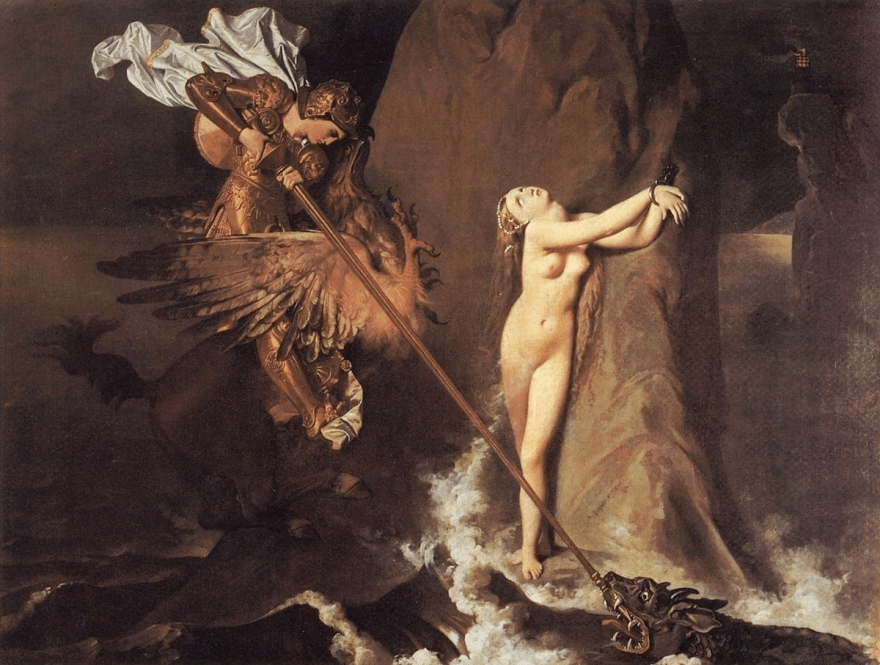
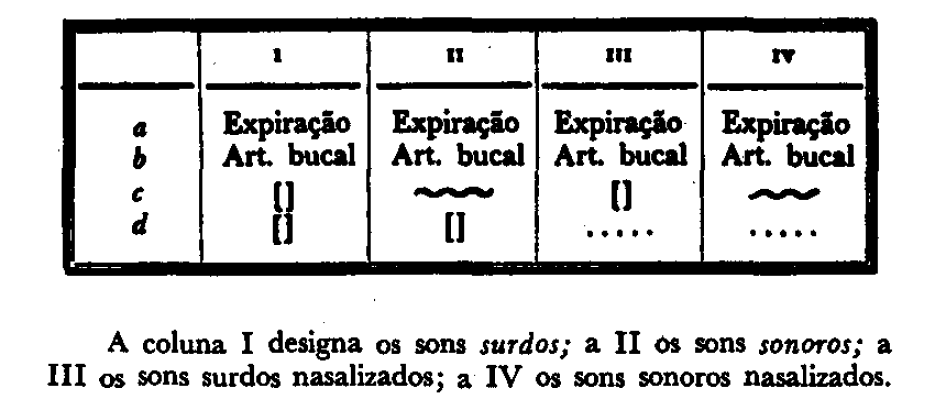
 Seclusão Anagógica