Os excertos giram em torno de dois autores contemporâneos, talvez os dois mais conhecidos hoje fora da Inglaterra em termos de literatura clássica daquele país – As Viagens de Gulliver veio ao mundo menos de quinze anos depois d’As Aventuras de Robinson Crusoe. São duas obras espantosamente similares e divergentes ao mesmo tempo. Duas narrativas, eu diria, de restless wanderers, viajantes incansáveis, espécies de maníacos tragicamente involuntários por navegar o mundo, sem propósito claro em mente…
“Assim como o novelista e ex-condenado Jeffrey Archer, a carreira de Daniel Defoe abrangeu dívidas e alta política, a profissão de escritor e o cárcere. Cronologicamente falando, a arte imitou a vida com Defoe, uma vez que ele começou a escrever maior parte de suas obras enquanto ativista. De outro ângulo, entretanto, sua vida imitou, sim, a arte, pois sua trajetória foi sensacionalista o bastante para que pudesse figurar tranquilamente como o protagonista de suas próprias novelas tumultuadas. Em diversos momentos ele se dedicou ao comércio de vestuário, vinho e tabaco, foi dono de uma fábrica de tijolos, um político vira-casaca, uma espécie de espião do submundo e dos bastidores da política, agente secreto oficial do governo, espécie de diplomata e assessor do império britânico por meio de suas publicações jornalísticas (o que na época chamavam de publicista). Não bastasse todo esse cartel, tomou parte ativa em uma rebelião armada contra Jaime II, excursionou incansavelmente pela Europa e teve um papel crucial nas históricas negociações da unificação política dos reinos da Inglaterra e da Escócia.
Defoe faliu mais de uma vez, foi preso por débitos e até exposto no pelourinho num processo de sedição após publicar um panfleto satírico. Mesmo depois dessa experiência, ele viria a publicar um Hino ao Pelourinho (Hymn to the Pillory), bem como um Hino às Massas (Hymn to the Mob), em que, escandalosamente para a época, enaltecia o povo de extrato inferior por sua extrema lucidez de julgamento. É difícil imaginar outro grande autor inglês fazendo a mesma coisa na mesma época. Entre suas obras, está também Uma História Política do Demônio (A Political History of the Devil), um estudo sobre fantasmas, motivado pela Grande Praga de Londres, um surto da peste bubônica que eclodiu em 1665 e durou até o biblicamente simbólico ano seguinte. Defoe publicou também uma apologia irrestrita da instituição do casamento intitulada Indecência Conjugal; ou da Prostituição Marital. Um tratado sobre a Utilidade e a Inconveniência da Cama de Casal (Conjugal Lewdness; or Matrimonial Whoredom. A Treatise Concerning the Use and Abuse of the Marriage Bed). De modo algum ele seria um ‘novelista’ no puro senso da palavra (o próprio termo em voga criou sua acepção muito mais tarde), muito embora ele tenha atacado os ‘Romances’ (o gênero pré-novelístico por excelência), que para ele eram estórias que não informavam, apenas entretinham (e isso era necessariamente ruim naquela Inglaterra). Suas obras mais consagradas, Moll Flanderse Robinson Crusoe, são ‘novelas’ apenas em retrospecto. Defoe só escrevia aquilo com que pensava poder lucrar, sendo uma espécie de autor oportunista altamente prolífico que ‘atirava para todos os lados’ no mercado literário em ebulição de seus dias. A imprensa da época não discriminava entre gêneros, muito menos Defoe o faria.
Escrever, para Defoe, pois, não passava de commodity, como ele próprio retrata o mundo em suas ‘novelas’, que podemos resumir como ‘uma série de coisas a que se dá um preço de alto a baixo’. Tampouco era Defoe um ‘homem literário’: ao contrário, sua escrita é apressada, não pesa as palavras, e é transparente demais. Um ‘grau zero’ do estilo como se sempre fosse um jornalista ou historiador relatando fatos que tendia a apagar as próprias pegadas, negando seu próprio status de escritor e, portanto, de criador de realidades. O próprio Defoe batizava seu estilo de ‘cáustico’ ou ‘abjeto’ (mean), pretensamente desprovido de conscienciosidade e ignorante dos próprios artifícios. Na linguagem lacônica e um tanto caseira e pré-fabricada de Defoe sentimos, quase pela primeira vez na Literatura, o idioma dos comuns. Linguagem despida de textura e densidade, que permite ao leitor atravessar as palavras e ver as coisas de frente e em si mesmas. ‘O conhecimento das coisas, não das palavras, molda o erudito’, comentou Daniel Defoe no Compleat English Gentleman.¹ Uma profusão de aventuras e incidentes tem forçosamente de compensar as narrativas de Defoe, devido à crueza de textura. A suprema fertilidade de sua técnica é de fato impressionante. Defoe quase não se preocupa com o sentir das coisas, não mais do que um merceeiro passaria o dia acariciando e apalpando seus queijos, que são apenas seu ganha-pão. Defoe é o utilitarista-padrão: mais interessado no valor de troca dos objetos, não em suas qualidades sensuais ou sensórias. Há sem dúvida sensualidade em Defoe, principalmente nas obras de protagonistas mulheres (Moll Flanders e Roxana), mas não sensualismo, voluptuosidade. O realismo defoeniano é um realismo das coisas, enquanto que o de Richardson, por exemplo, é um das pessoas e sentimentos.”
“Depois de um bom tempo exercendo seu ofício errático, pau-pra-toda-obra, escrevendo meramente para sobreviver, Defoe morreu enquanto se ocultava ou fugia de seus credores, autodeterminado, quem sabe, a acabar da mesma maneira que havia começado, ignorando outros estilos de vida. Foi um Dissidente (um imoralista) numa época em que ser Dissidente (assim, com letra maiúscula mesmo) era o mesmo que não possuir direitos civis. Como muitos de seus compatriotas novelistas, provinha da classe-média baixa econômica mas que possuía um status de pequena-burguesia, devido ao fator da formação intelectual: ilustrado, completou sua educação formal, cultivava ambições de ascensão e em seu meio os jovens eram politicamente articulados. No seu Journal of the Plague Year,ou Jornal do Ano da Peste, ele tripudia de algumas superstições do povão enquanto dá crédito irrestrito a outras. Muito parecido com William Blake em sua origem social, a rebeldia de Defoe afirmava a radical igualdade entre homens e mulheres, sustentando que o handicap feminino não passava do resultado de convenções. Desigualdades sexuais eram puramente culturais, nada naturais. O que distingue suas personagens Roxana e Moll Flanders, como outras tantas prostitutas vigaristas (seja as de luxo ou as que trabalhavam em espeluncas) e objetificadas da literatura de então, é que havia a afirmação premente, em todo o livro: elas não são propriedade de homem algum, elas não são de ninguém. No mundo de Defoe, nenhuma relação é permanente, aliás.”
“Quando Moll Flanders diz levianamente que está grata por ter se livrado de seu filho na barriga, todo leitor de época se sentia escandalizado e ao mesmo tempo representado. Roxana é a comerciante-mulher, que embora seja a própria mercadoria é a dona do negócio: recusa o casamento, mesmo com um bom nobre, pois isso seria a ruína total de sua independência financeira. Ser esposa, para Roxana, era o mesmo que ser escrava. Os puritanos da geração de Defoe prezavam tanto a felicidade doméstica quanto o individualismo econômico; o único problema era a completa incompatibilidade de ambos. Sobretudo no caso das mulheres, que em quaisquer das esferas, isoladamente consideradas, estavam de todo modo alijadas da autonomia. Isso não significa que não fosse também uma questão masculina: na prática o individualismo econômico significava uma castração, compelindo à afabilidade, afeição, lealdade e companheirismo que o pai de família devia simbolizar.
Para complementar as credenciais progressistas de Defoe, ele militava pela absoluta soberania do plebeu, cujo direito de não se curvar a uma soberania injusta era, ele pregava, inalienável. Ele defendia os quakers e já então propagava os méritos de uma sociedade etnicamente miscigenada. Estrangeiros, segundo ele, eram um precioso acréscimo para a nação. Defoe troçava das mitologias chauvinistas dos bretões em poemas como O Inglês Puro-Sangue (The True-Born Englishman), cujos versos não hesitam em caracterizar a raça britânica justamente pela sua alta mestiçagem, desdenhando a noção aristocrática de pureza de sangue e ridicularizando a própria idéia-título do ‘puro-sangue’ com suprema ironia: mera ficção e, aliás, contradição. Não é irrelevante para essa polêmica (à época) que Guilherme III, sob quem Defoe exerceu seus trabalhos panfletários, fosse um holandês.”
“‘O que significam as capacidades naturais de qualquer criança sem a educação?’, o autor questiona no Compleat English Gentleman. Apenas tories absolutamente reacionários como Henry Fielding seriam capazes de enaltecer só o lado das qualidades inatas. Defoe não se mostrava pudico em politizar a questão: por trás dessa doutrina pedagógica ‘inocente’ havia toda uma tentativa de impedir as reformas pedagógico-sociais necessárias à Inglaterra, mediante o argumento dos talentos e habilidades congênitos e inalteráveis, que sempre legitimariam só as crianças da nobreza.”
“O homem não é rico porque é honesto, mas é honesto porque é rico.
Essa é uma doutrina escandalosamente materialista avant-la-lettre, muito mais típica de um Bertolt Brecht do que de um ardoroso cristão dos Setecentos. Valores morais são o simples reflexo das condições materiais. Os ricos são apenas privilegiados o bastante para não terem de roubar. A moralidade é para aqueles que podem cultivá-la. Ideais calham muito bem a quem tem de sobra o que comer. Defoe também exigia leis que reconhecessem a condição dos miseráveis, ao invés da replicagem de um sistema que, em primeiro lugar, criou a miséria, para depois enforcar os miseráveis por serem eles o que são.”
“Se a classe média preza tanto pelo eu autônomo na teoria, como pode ser que viole tanto essa doutrina na prática? Quer ela de fato a independência de todos os seus servos, assalariados que tem tão pouco poder de barganha que são menos do que cidadãos e pouco mais que escravos, sem falar dos colonizados além-mar? Não seria preferível para o pequeno-burguês, secretamente, é claro, preferir a liberdade irrestrita para si e a negativa para todos os competidores no mercado? A pequena-burguesia acredita na autodeterminação da população; mas ao mesmo tempo seus membros, homens e mulheres, não passam de títeres de forças econômicas impessoais. Os protagonistas de Defoe – Moll, Crusoe, Roxana, Coronel Jack – estão todos enleados nessa contradição. Se eles são, num sentido, forjadores de seu próprio destino, são, inegavelmente, vítimas desafortunadas da Providência, das leis do livre comércio e de seus próprios apetites.
“No ensaio A Divindade da Troca (The Divinity of Trade), Defoe vê a Natureza como um tipo de capitalista, que – em sua infinita e inapreensível sabedoria burguesa – criou corpos capazes de flutuar sobre as águas, para que se pudessem construir navios e fomentar o comércio; criou as estrelas para nortear os navegadores; e até escavou rios no seio dos continentes que levam as embarcações direto para os recursos espoliáveis de outros países. Animais foram feitos dóceis e submissos deliberadamente para que o homem os explorasse como instrumentos e também como matéria-prima; linhas costeiras pedregosas foram criadas possibilitando a construção de fortalezas; matéria-prima conveniente foi distribuída ao longo de todo o planeta para que cada nação tivesse algo para vender e algo para comprar. Ainda que estejamos falando de um período muito aquém dos oceanos de Coca-Cola e da produção da necessidade quase que instintiva de calçar um Nike, a Natureza, para Defoe, não perdia e não perdeu nada de vista.”
“Ora, se o homem era divinizado e elevado de forma sem precedentes nessa nova ordem social, temos em contrapartida a desvantagem de que qualquer indivíduo é indiferentemente intercambiável. Parceiros comerciais, sexuais ou maritais em Defoe vêm e vão, às vezes com tanta individualidade quanto numa coletividade de coelhos. Mas o maior conflito se dá entre as práticas amorais de uma cultura plutocêntrica e autocentrada em excesso e os altos ideais morais que essa própria cultura insiste em pregar.”
“O escritor John Dunton, também do séc. XVIII, que teve ligeiro contato com Defoe, geria um jornal mensal devotado à prostituição, ou antes a denegrir a prática da prostituição ao invés de servir como Classificados do corpo humano alheio, o Night Walker: or, Evening Rambles in Search after Lewd Women (O Caminhante Noturno [/o Homem da Noite]: ou Aventuras do Entardecer em Busca de Mulheres Lascivas). Mesmo sendo vanguardista para a época, impossível que fosse um jornal politicamente correto para nossa concepção. A novela naturalista do século XIX procedia a expedientes parecidos, num meio-termo entre a objetificação degradante e gratuita da mulher da noite e a exposição de uma espécie de mal burguês: essas escapadelas maritais tinham um odor sensual e fatalista, havia um certo prazer mórbido no retrato de becos sujos e miseráveis em que todo moralista jogava a moral fora, e a mulher podia ser vista como a vítima de uma (des)ordem social; o século XIX foi cada vez mais inquirindo sobre esta questão de forma científica, menos sensacionalista, mas Defoe não chegou a testemunhar essa evolução.”
“A família, para um puritano devoto como Defoe, é um domínio sagrado, como sugere seu panfleto de costumes O Instrutor da Família (The Family Instructor). Ao mesmo tempo, ele advoga, sem constrangimento, que tais laços podem e devem ser cortados quando se tornam mais maus do que bons: quando forem sinônimo de uma degradação do casamento, quando forem sinônimo do aviltamento das relações sangüíneas, acaba sendo a conduta mais autêntica e virtuosa o corte destes laços, ignorados ou tratados como meros meios para outros fins.”
“Em Crusoe, é como se o colonialista frio e moderado desse o tom do enredo. Ele (o narrador em primeira pessoa) também é aquele que dá o matiz exótico ao objeto (cenário) em questão, isto é, sua colônia involuntária no meio dos trópicos. Essas narrativas sem adornos e sem culpa de consciência não chegam a destruir os vasos capilares do decoro ideológico da Inglaterra pós-elizabetana, mas são um primeiro desnudamento de sua lógica imperialista. Não são narrativas de uma veia polêmica, ainda, são mais cândidas que outra coisa. Não há sentimentalismo, porque sentimentos não podem ser quantificados, e nesta literatura em que só o que é quantificável é real eles ainda não aparecem. Nesta atmosfera intermediária de amoralismo, o relato é fidedignamente subversivo ou subversivamente fidedigno espelhando a existência social daquelas décadas; as relações são o que são, não o que deveram ser. Não obstante, a pura e simples descrição do fato e da matéria bruta não deixa de ser explosivo em si mesmo, ou conducente à explosão da dinamite próxima. O realismo se torna de grau em grau Política.”
“Moll Flanders termina sua história contando como prosperou e chegou ao sucesso após uma vida de crimes, mas acrescentando, com alguma urgência, em tom de confissão compungida, que ela se arrepende sinceramente de todo seu passado. A moral da história – o crime não compensa – é explicitamente contradita pelo final efetivo. O contraste é tão desconcertante que alguns críticos passaram seu tempo imaginando se Defoe foi ou não abertamente sarcástico. Quando o náufrago Crusoe considera a inutilidade de todo o ouro que conseguira trazer do navio até a ilha, mas, no fim, decide levá-lo consigo assim mesmo – isso é uma tirada irônica do autor ou humor involuntário? Quando Crusoe, testemunhando Sexta-Feira que escapa de seus ex-irmãos canibais para não ser comido, reflete acerca da utilidade de levar consigo um servo, sendo este acréscimo a seu ‘patrimônio’ coincidente com um suposto chamado da Providência para salvar um desgraçado, seria essa harmonia entre interesse capitalista e revelação divina um artifício do autor para produzir o riso do leitor? Defoe está ou não depreciando sua heroína Roxana quando ela declara que deve manter seu próprio dinheiro separado do de seu amo e marido, para não misturar seus ganhos ilícitos com o suado e honesto capital do cônjuge?”
“Porque se essa for a opinião fática do Defoe o Realista literário e Materialista radical, dificilmente seria também o credo de sua metade dissidente e religiosa. Defoe o Cristão estabelece a moral e a religião como realidades autossuficientes e inquestionáveis. Mas autossuficientes e inquestionáveis até que ponto, cara pálida? Se esses valores transcendentais existem numa esfera própria, eles pouco impactam na conduta efetiva dos personagens. Moll sente pena de uma de suas vítimas mesmo durante o ato de roubá-la, mas sua tristeza nada impede na concretização do ato. Como o Coronel Jack, que pode muito bem ser um perfeito larápio e viver com a consciência remoída. No século XVIII, piedade e nariz empinado não eram estranhos um ao outro. E não se distinguiam muito bem. Ou a moral falha porque está muito mesclada com o mundo material, ou falha porque está, justamente, dele apartada. Defoe reconhece esta última condição quando escreve: ‘Lágrimas e orações não fazem revoluções / Não derrubam tiranos, não quebram grilhões’.”
“A moralidade em Defoe é geralmente retrospectiva. Uma vez que você tenha pilhado, pode finalmente ser penitente. Como demonstra o narrador de si próprio em Crusoe, é só ao escrever seus atos que você pode julgar sua vida como um todo. Enquanto tenta entender a própria vida ao vivo, você anda ocupado demais mantendo o nariz acima do nível d’água para levar a termo qualquer reflexão, quanto mais sentir remorso. Só há dois desfechos: continuar ou se afogar. Correr e ainda assim não ganhar nenhum terreno, continuar na condição em que já estava; ou simplesmente perecer. Não é fácil se embrenhar em considerações metafísicas enquanto a necessidade imediata é fugir dos credores ou lidar com seu atual marido. A narrativa sempre ziguezagueia num passo tão frenético que um evento vai borrando o outro num contínuo. Nenhum da horda de personagens da novela Moll Flanders chega a ter um intercurso mais que casual com a heroína – a interação típica entre cosmopolitas, mas impensável na comunidade rural dos livros de uma Jane Austen ou George Eliot. As figuras que interagem com Moll entram e saem de sua vida e das páginas de sua vida como meros transeuntes cruzam pela Piccadilly. A pergunta mais premente na cabeça do leitor que atravessa este processo metonímico virtualmente infindável é: o que vem a seguir? Sentido e relato não são concordes.
Assim como um parvo, diz-se, é incapaz de mascar chiclete e caminhar ao mesmo tempo, os personagens de Defoe só podem agir ou refletir, mas nunca os dois juntos. A ação moralmente informada é rara; a reflexão moral só vem bem depois. É essa a razão da coexistência de dois formatos literários consideravelmente diferentes sob a capa do Robinson Crusoe: a história aventuresca e a autobiografia espiritual. De todos os personagens de Daniel Defoe, Crusoe é o mais feliz na combinação dessa ação racional com a reflexão moral. Mas isso se dá, em parte, por causa das circunstâncias excepcionais: Crusoe está sozinho numa ilha, tem algum trabalho a executar, mas também muito tempo ocioso para meditar.”
“Como a vida é terrivelmente material mas também uma sucessão ininterrupta e agitada de eventos, cada ato parece simultaneamente vívido e sem substância. Essas novelas são tornadas artigos fascinantes pelo processo de criação em si mesmo, pelo valor de troca, e não pelo valor de uso (intenção final). Não há uma lógica conclusiva para a narrativa de Defoe, é uma narrativa pura e simples. Não há um momento do livro em que o fechamento seria mais natural que em qualquer outro fecho de capítulo. O eu-lírico apenas prossegue acumulando narrativa(s), como um capitalista jamais cessa de acumular capital. Um pedaço de enredo, como um investimento particular, acaba levando ao próximo. Crusoe mal volta à terra natal e já está em alto-mar de novo, ainda acumulando aventuras, que serão obviamente narradas e contarão com o desejo do eu-lírico de formular um propósito. A sede de narrativa é insaciável. A acumulação de capital parece ter um propósito, mas é pura aparência. Secretamente, pelo menos no mercantilismo defoeniano, subjaz a verdade de que o único fim da acumulação é a própria acumulação. Uma novela de Defoe não tem o epílogo de facto, como têm as novelas de Fielding. Todos os finais são arbitrários, e todos poderiam ser apenas novos começos, se se quisesse.¹ O viajante inquieto só repousa a fim de se preparar para a próxima viagem…”
“E devido a essa narratividade pura poucos eventos em Defoe são fruídos com densidade o bastante para deixar uma impressão permanente ou recordação intacta. Personagens como Moll ou Roxana vivem premidas pelo pão de cada dia, contando apenas consigo próprias, flutuando conforme a maré, dançando conforme a dança, apostando tudo ou nada a cada momento. Em perfeita adaptação com o mundo altamente mutante que encontram, esses sujeitos sincopam seu ritmo. Ou seja: não há um núcleo central da personalidade, tampouco, porque memórias e aprendizados estarão sempre se acumulando sem uma síntese definitiva. A identidade é uma improvisação, um cálculo, uma estratégia de passagem. Trata-se de uma cadeia de reações possíveis para cada ação promovida pelo ambiente. Os impulsos humanos – avareza, egoísmo, autopreservação – são fixos e imutáveis, é verdade, mas para sempre alcançá-los cada personagem é obrigado a ser flexível a ponto de se converter em metamorfo. A perspicácia e cautela necessárias para lidar com o tema da epidemia no Jornal do Ano da Peste seriam versões escandalosas e exageradas das próprias exigências do cotidiano para o leitor-padrão.”
“O Coronel Jack se casa quatro vezes, a despeito de poder passar tranqüilamente sem mulheres, e rompe com uma delas porque ela dilapida sua fortuna. Na veia mais hobbesiana e pragmática possível, o interesse burguês é muito mais fundamental que a o altruísmo iluminista. Só mesmo caçar para comer seria mais premente que caçar para lucrar.”
“O eu-narrador deslinda a trama com ar imperturbável que sugere um presente consideravelmente distanciado do passado em que o eu-narrado aparece (anos de intervalo, com toda a certeza). Este último não se pode dar ao luxo dessa parcimônia glacial do primeiro. Há uma tensão constante entre as duas dimensões temporais.”
“Embora ‘Deus não esteja morto’, pareceria, a essa altura, para o bom Protestante, que Ele se recolheu deste mundo. Essa é uma das razões para as especulações de Defoe sobre a Providência ecoarem com um quê de vacilação. Ora, lembra o autor em The True-Born Englishman: ‘O que vem da Providência, consiste no interesse de todo o universo.’. Se tomarmos a frase ao pé-da-letra, estariam justificados o estupro, o assassinato, o canibalismo. Cada um desses pecados teria seu papel na manutenção da harmonia do cosmo. Defoe declama piamente no prefácio do Crusoe como devemos honrar a sabedoria da Providência e suas obras, ‘sucedam como sucedam’; mas o protagonista, muito longe de se resignar ao destino, é hiperativo e incansável na tentativa de forjar seus próprios porquês.”
“De nossa perspectiva, se Crusoe devera ser punido, não seria por ter vivido a primeira metade da vida como um pagão, mas sim por vender Xury, seu servo, à escravidão brutal e por gerir uma plantation no Brasil movida a mais trabalho escravo. Na verdade, quando naufraga, ele estava justamente prestes a comprar mais mão-de-obra escrava numa expedição clandestina para abastecer seu engenho. Mas nem o personagem nem o autor conseguiriam ver tais ações como pecaminosas, ainda que Crusoe se indigne com as condições do imperialismo espanhol nas Américas. Como com o narrador de O Coração das Trevas de Joseph Conrad, o ‘imperialismo dos outros’ é sempre mais repreensível que o nosso. O Coronel Jack defende o castigo físico dos escravos, e não há qualquer indicativo de que Defoe pensasse diferente. A liberdade era para os ingleses, não para os africanos! Como zeloso puritano, Defoe decerto cria que os ‘selvagens’ estavam condenados irremediavelmente à bestialidade nesta terra, e ao tormento eterno no além. Seu radicalismo (progressismo de vanguarda na política) tinha seus claros limites.”
“A Natureza não é mais um livro aberto, mas um texto obscuro a ser decifrado com imensa dificuldade. O Protestante tateia avidamente no escuro atrás de qualquer signo ambíguo de sua própria salvação. Mas o fato é que, num universo secularizado, tudo está entregue à própria contingência, isto é, nada no mundo visível quer dizer alguma coisa nem dá qualquer pista de nada.”
“Signos, nesse mundo dessacralizado, como também numa profusão de textos modernistas (dali a duzentos anos), são a priori e incontornavelmente ambíguos. Essa é a razão por que o crente nunca pode parar de trabalhar, porque se não se tem certeza da salvação agora, cada dia seu de labuta pode ser o fiel na balança para a absolvição no dia do Juízo. Ilhas tropicais, é bom lembrar, estão geralmente associadas à indolência, mas não no caso de Crusoe. Ele está sempre ocupado em melhorar e estender sua ‘propriedade paradisíaca’. ‘Eu realmente gostaria de um estábulo maior.’ Tanto é assim que o próprio Crusoe responde a si mesmo, vendo o quão ilógica é essa vontade: ‘Para quê?’. Crusoe não é um capitalista de verdade – é só um de mentirinha, sem mão-de-obra como Outro, sem mercado, consumidor, produto nem competidores ou divisão de trabalho. Mas, ainda que não tenha concorrentes, ele agecomo se os tivesse…”
“A ilha de Crusoe é menos a utopia da pequena-burguesia numa dimensão paralela do que uma versão piorada ou distópica da situação pequeno-burguesa inglesa. Ou, antes, o que uma classe sofre no mundo, Crusoe sofre na sua ilha. Sua solidão é uma versão exponencial da solidão de todos os indivíduos da cidade moderna. Sendo absolutamente dependente num sentido, é verdade que é possível ser absolutamente autodeterminado num outro. Quão enérgico e engenhoso pode-se chegar a ser na administração de seu próprio império seria um índice de sua inclusão entre a minoria eleita. Assim poder-se-ia resolver o conflito aparente entre ser o joguete de Deus e, pelo próprio suor, pregar, no melhor estilo puritano, que o sucesso no trabalho é o melhor sinal que o mundo poderá dar de que você achou favor aos olhos da divindade.”
UM PROBLEMA ISENTO DE QUAISQUER “MEMÓRIAS PÓSTUMAS”: “A narrativa está sempre precariamente ancorada no presente que é um fio de navalha, em que a sorte do personagem é indefinida e o futuro absolutamente duvidoso; mas tudo isso é contado com um tal desassossego e afastamento, fechando um passado, que empresta certa autoridade. Supomos então que o narrador sobreviveu, nem que apenas pelo fato de estar agora, com a maior das calmas, falando de si mesmo na época em que corria perigo. Ansiedade e segurança se acoplam perfeitamente na escrita.”
“E assim Defoe continua a insistir que sua estória existe com um fundo moral, embora isso seja obviamente uma farsa. O realismo, no sentido de uma atenção dedicada ao mundo material por si e nele mesmo, não está ainda avalizado neste período literário, embora se encontre em visível ascensão; embora a sociedade em que ele cresce e ascende demande-o cada vez mais, e encoraje-o mais que à moralidade, pois as pessoas passam a acreditar somente no que podem cheirar, tocar, provar. Samuel Johnson argumentava que o fato de um personagem ou evento ser fidedigno à natureza não servia de desculpa para incluí-lo num enredo ou obra de arte. Na teoria, essa colisão entre o moral e o real pode ser resolvida por justificações do autor, no estilo tabloide. Quão mais gráfica e escandalosa uma estória, mais fácil transmitir uma mensagem, poder-se-ia astuciosamente argumentar. Defoe escreve no prefácio para Roxana: ‘Se há qualquer parte da história, no relato de uma má ação, que pareça descrever as coisas de forma muito direta e impudica, todo o cuidado imaginável foi tomado para purificar o trabalho de todas as indecências e indecorosidades…’. Essas linhas, ao que parece, produziam, já naquele tempo, o mesmo efeito que hoje os avisos solenes, prévios a um audiovisual, acerca da presença de sexo e violência nos minutos que seguem: são só um chamariz a mais para a audiência (‘o que é proibido é melhor’), engenhosamente acrescentado pelo autor, sem transgredir nenhuma regra.
“A novela realista se torna popular num marco da história em que o cotidiano banal começa a se tornar atrativo por si mesmo. Essa mescla do ordinário e exótico é a síntese do trabalho de Defoe. Parte do prazer extraído da leitura emana da excitação que deriva do puramente mundano. Defoe viveu em tempos turbulentos, e ninguém pode dizer que ele não viveu esses tempos intensa e perigosamente. Em épocas revolucionárias, a teatralidade adquire maior importância, mesmo fora da arte. Como a nova arte imita a vida, o teatral tem de despontar também na arte. Por último: Defoe também sabia o que era sofrer uma bancarrota, ser trancafiado nas galés e embarcar em expedições insólitas das quais não se sabia se se ia voltar.”
“James Joyce, que, para nossa surpresa, enumera Defoe entre seus autores prediletos, escreveu do Crusoe que ele encarna ‘todo o espírito anglo-saxão … a independência masculina; a crueldade inconsciente; a persistência; a inteligência devagar mas eficaz; a apatia sexual; a religiosidade prática e metódica; a taciturnidade calculada’. Poderíamos dizer que essa é exatamente a visão que Sexta-Feira tem de Crusoe: Joyce é um súdito colonial da coroa britânica, e com certeza, quando alistado para a guerra, combateu muitos soldados com este perfil, em Dublin. Um ou dois assim são vistos no Ulisses. A passagem acima, que Joyce redigiu enquanto no exílio italiano, tem ainda algo do genial vislumbre do caráter imperial, que era meio-compatível com Joyce (colonizado, mas ao mesmo tempo da elite, ou seja, colonizador pela ótica dos subalternos, das massas irlandesas): outro materialista, o irlandês devia apreciar a fisicalidade intensa de Defoe. Uma vez o dublinense se descreveu como tendo a mente de um verdureiro. Defoe, por sua vez, destila em sua obra o autêntico espírito de uma nação de sapateiros.”
“Quem é ele, ele se pergunta no mesmo estilo hipocondríaco do devoto liberal ou do pós-modernista, para interferir com a prática do canibalismo num povo primitivo? Mas o fato de maior parte da novela tratar justamente do know-how do homem civilizado e prático empresta lentes peculiares à tese do universalismo. A racionalidade ortodoxa, no sentido de ensinar quando o importante é se preservar, como não cair de um precipício, por exemplo, é mais plausível como universalidade de todos os povos do que qualquer outro tipo de raciocínio utilitário. É por isso que Sexta-Feira pode ajudar Crusoe nos trabalhos braçais muito antes de poder falar Inglês, porque a lógica do mundo material é comum a todas as culturas. Pedras caem em ambas (a ocidental e a autótocne) porque obedecem à gravidade, seja no Haiti ou em Huddersfield; quatro mãos aplicadas sempre trabalham melhor que duas para carregar objetos pesados; alguém pode jogar-lhe uma corda para evitar que você se afogue ainda que no sistema cultural de quem jogou a corda a água simbolize algo totalmente diferente do que você aprendeu em seus dogmas e valores. A racionalidade prática é, nesse aspecto, o epítome do Anglicismo: se o gentleman chegar de fato aos céus, está na cara que examinarão o lugar com bastante escrutínio, para tirarem o melhor proveito do que ele terá a oferecer. Mas eis um tipo de comportamento, senão onipresente, pelo menos atemporal.”
“Não é escassa a literatura da tradição do comerciante-criminoso e vice-versa, dos vigaristas de John Gay em A Ópera do Vagabundo ao Vautrin de Balzac e o Mr. Merdle de Dickens. Como Bertolt Brecht disse: ‘O que é roubar um banco comparado com abrir um?’. A cozinha dos ladrões é a companhia de comércio sem a ideologia da respeitabilidade. O Coronel Jack começa como um ladrão de meia-tigela e termina como um bem-sucedido capitalista na Virgínia, sem nenhum talento a mais do que quando começara sua ‘carreira’. O mestre do crime de Fielding, Jonathan Wild, é um retrato satírico do político Robert Walpole, que funde em sua figura o mundo da alta política e da contravenção chic ou do colarinho branco. A idéia de ir parar numa terra virgem e construir do zero uma civilização deve constituir uma das fantasias mais intensas para a classe média. Sem dúvida isso ajuda a justificar a permanência de Crusoe como clássico sem o menor sinal de que vá ceder o posto tão cedo.”
“Ao desafiar a influência do gentil-homem e da nobreza, era necessário, para lograr êxito, desacreditar o poder da antiguidade no processo. Defoe é sardônico sobre a obsessão aristocrática com a pureza de sangue e o matrimônio: Por que – ele pergunta no Compleat English Gentleman – os nobres permitem de boa vontade que amas-de-leite plebéias amamentem seus filhos, já que, ironicamente, elas lhes estão repassando, conforme a própria teoria eugênica dos sangue-azul, um sangue degenerado? N’O Inglês Puro-Sangue ele admite explicitamente a irrelevância do tópico da ancestralidade. Destarte, é uma fantasia muito benquista pelo homem branco imaginar-se num território virgem, poder desfazer toda a história até suas origens, recomeçando-a melhor, já com a ‘classe média’ no poder.”
O MESMO EFEITO DA ESTÁTUA DA LIBERDADE NO PRIMEIRO LONGA DE PLANETA DOS MACACOS: “O que nos deixa derrotados em Robinson Crusoe, e um dos momentos mais insólitos da literatura universal, é aquela misteriosa única pegada encontrada na areia.”
“Ainda assim, Robinson Crusoe segue muitos anos sem preocupações em sua ilha; O Gulliver, de Jonathan Swift, não tem a mesma sorte.”
“Como Defoe, Swift escreve numa prosa prática, transparente, célere, com o perdão do trocadilho,¹ sem muita textura ou ressonância. Seu texto não possui, como um crítico bem apontou, recessos ou raízes e ramificações mil. Há uma alarmante ausência de metáforas. É um estilo da superfície, sem muita profundeza nem interioridade.² Swift desconfia de toda reflexividade textual como de toda metafísica ou especulação abstrusa. Essa indiferença à verdade filosófica nos conta algo sobre o clero do século XVIII, do qual Swift fazia parte. É quase como um ladrão de banco ser indiferente ao dinheiro. Um aristocrata tory da época de Swift era necessariamente um amador, não um especialista: acreditava num certo número necessário de princípios básicos que o século do Iluminismo vinha tornar acessíveis a todos. Swift não poderia entender, ainda que sobrevivesse a sua época, a era da prosa de gêneros especializada. As Viagens de Gulliver não são, no sentido hodierno da palavra, uma obra ‘literária’, e não teriam saído do papel se o autor pensasse em escrever uma novela. A linguagem de Swift, como a de Defoe, tenta apagar a si mesma desdobrando o real no real, e na época não havia palavra para batizar esse zero fictício. As palavras perdem o valor e privilegiam os objetos, que ocupam o centro do palco.A própria linguagem ideal que o autor imaginou – uma língua que abole a língua – é a transparência do modelo. Isso acontece entre os laputianos gramáticos que, ao invés de conversar entre si usando as cordas vocais e convenções aceitas unicamente pelo seu povo, carregam para um e outro lado uma sacola com diversos objetos que eventualmente precisem comunicar, e vão-nos mostrando ao interlocutor, desempenhando uma caricata ‘linguagem de Babel’. A verdade é que a linguagem humana é este saco, mas sem fundo e diáfano, uma forma de levar o mundo conosco sem carregar peso algum (ainda que com a inconveniência de cada povo ter a sua língua). Os Houyhnhnms evitam elaborações verbais e mantêm uma perfeita correspondência entre palavra e coisa – a tal ponto, aliás, que são incapazes de mentir. Perfeitos como são em sua representação do mundo, se houvera dentre eles um escritor, seria este capaz de produzir uma bela novela realista!”
¹ Swift em inglês é ágil, veloz.
² Sublinhei em verde porque não posso estar minimamente de acordo com Eagleton neste trecho!
“As Viagens de Gulliver, muito ao contrário do Crusoe, é um libelo do ‘anti-progressismo’ em que um protagonista amnesíaco parece não aprender nada ou aprender muito pouco em cada uma de suas jornadas; assim que ele parte para uma nova aventura, volta a aparentar ser uma tabula rasa. De fato as viagens de Gulliver são mais entrecortadas que as de Crusoe. Estas, mesmo que possam ser segmentadas pelo autor em capítulos e tomos, parecem bem-costuradas narrativamente. Gulliver vive literalmente episódios desconexos um do outro. Não em vão fala-se d’As Viagens como a suprema paródia do livro de viagem, gênero literário¹ usualmente otimista e cheio de ‘lições e aprendizados’.”
¹ O leitor de minha tradução deve ter percebido que em seu afã descritivo o crítico costuma se contradizer bastante. Aqui, vemos que na verdade o europeu do século XVIII contemporâneo de Defoe e Swift já reconhecia, senão o realismo ou o romantismo, pelo menos certos gêneros literários…
“O tory Swift, ao contrário do whiggiano Defoe,¹ nada quer ter a ver com indivíduos. Sua única descrição é a de uma verdade universal, enquanto Gulliver e os personagens secundários servem apenas como meios para ilustrá-la. Gulliver não passa de um dispositivo narrativo bem conveniente, não é um ‘personagem’ propriamente dito, não é possível se identificar resolutamente com ele. Crusoe é bem diferente e vai crescendo em nossa concepção conforme avançam as páginas. Gulliver apenas ‘pede’ que observemos e julguemos os lugares que ele visitou.”
¹ Ver tabelas no final.
“Os lilliputianos são cruéis, gananciosos e sectários, como se fossem réplicas em miniatura dos políticos de Westminster. Esse retrato da raça humana como corrupta e imutável é típica do conservantismo anglicano swiftiano. Ele desdenha a possibilidade de qualquer progresso dramático e mudança revolucionária para melhor no campo social, e logo se vê que a tal verdade universal que ele tenta mostrar é uma só: já conhecíamos essa verdade antes de viajarmos. Deus nos deu tudo de que precisávamos logo de partida, e velejar a esmo tropeçando em criaturinhas de uma polegada ou esbarrando no tornozelo de gigantes pouco importa nesse quadro. Talvez todos os indivíduos exóticos que encontramos não passem de distrações válidas unicamente para o momento.”
“Mas só sabemos que os lilliputianos são diferentes de nós porque conservamos com eles a identidade do conceito de tamanho. Chamamos tarântulas de tarântulas e não de humanos porque usamos a linguagem, pela qual descrevemos e nomeamos as tarântulas, e elas não. Se as tarântulas fossem tão alienígenas assim à espécie humana, não seria esse o caso. Não se pode falar da diferença sem a comparação e o diagnóstico de algo igual. Os únicos diferentes reais de nós são aqueles que passam invisíveis, de cócoras, bem diante do nosso nariz, e que jamais percebemos.”
“A escrita de uma viagem é, mais do que antes, como se vê, um gênero muito duvidoso para um tory se engajar naquele tempo. De um livro como esse esperam-se sobretudo novidades, que são indesejáveis para os conservadores. Defoe escreveu cedo na vida um Ensaio sobre Projetos (Essay on Projects),que era o perfeito contraponto dessa ânsia de imobilismo do tory: exibia grande entusiasmo quanto às reformas técnico-científicas. Crusoe rejeita implicitamente, ao querer sair de casa, os valores benquistos pela aristocracia (o lar, a coroa, a nação). Toda essa sede mercantilista de Crusoe não parece mais do que a pornografia do progresso para muitas mentes mais estreitas ou mais clássicas. Fantasiar com monstros desconhecidos é indecoroso; tudo que não é verossímil só pode nublar nosso julgamento. Crusoe encoraja caprichos tolos e emoções extravagantes que são péssimos para a lei e a ordem. Fora que, quanto mais viaja, mais Crusoe se sente um relativista cultural, algo igualmente insidioso para um tory. Pode ser perigoso para o viajante chegar a se tornar tão sonhador e apegado a coisas estrangeiras, a ponto de bradar, por exemplo, que se deparou com selvagens que, eles sim, são felizes e vivem em harmonia com a natureza. Isso seria negar o pecado original e inspirar nas gentes utopias cândidas e pueris, coisa contra a qual se deve lutar. Além do mais, de que vale, se o aventureiro acabaria sempre voltando ao solo inglês, muito longe dessas tais utopias inúteis? As alusões anti-monárquicas e anti-establishment de tais peregrinações pareceram, em todos os tempos, muito grosseiras aos tories.
“Muito do debate em curso no século XVIII girava em torno de um consenso político que pudesse superar as terríveis dissensões do século anterior, mais animoso, de guerras civis e de queda e restauração da monarquia. Swift se referiu em vida a Defoe com toda a prepotência de um patrício: ‘Aquele sujeito que foi exibido no pelourinho – esqueci o nome dele…’. Mas não podemos deixar de observar em Swift o mesmo entusiasmo pelo comércio que em Defoe. Swift é irlandês e a Irlanda estava sempre em posição mais combalida que a metrópole. Além disso, Swift também não dava crédito à teoria da pureza da raça, e gostava de se ver como um burguês em que tudo de seus antepassados já se diluíra há muito tempo, a ponto de torná-lo irreconhecível para estes. Swift foi um tory, mas um tory radical, um exemplar do animal oximorônico que muito enriqueceu a cultura inglesa se formos considerar outros escritores tories e radicais ao mesmo tempo, como William Cobbett e John Ruskin.
“Defoe era ‘progressista’ e rebelde, mas chegava a delírios de esnobeza episódicos tão altaneiros que chegou a alterar seu nome de Daniel Foe para Daniel De Foe, e que hoje escrevemos Defoe. A conjunção ‘de’ implica origem nobre. Swift e autores como Pope viam a sociedade britânica como desprovida desde os primórdios de mérito congênito, uma raça venal que além de tudo foi muito corrompida pelo poder e pelo dinheiro com o passar do tempo, atributos que eles viam encarnados pelo odioso primeiro-ministro whig Robert Walpole (já comentado). Mas Defoe não deixava, idem, de criticar a obsessão cega e sem qualquer pano de fundo pelo dinheiro.
Poderíamos ver os mesmos entrelaçamentos complementares e/ou contraditórios em pares como Henry Fielding e Samuel Richardson. Richardson era filho de um carpinteiro de Derbyshire, não completou a escola básica e se tornou impressor, enquanto Fielding era um egresso do colégio de Eton repleto de conexões com figurões. Richardson tinha estilo agressivo, era um campeão das classes médias, e afirmava que o ofício do comércio ‘é infinitamente de mais conseqüência, e devia ser muito mais estimulado que qualquer outra posição ou ranking social, sobretudo as dos títulos inócuos típicas da Inglaterra’. E não obstante Richardson se punha estupefato diante da quantidade de personalidades decrépitas e mesquinhas das novelas de Fielding: chegou a afirmar que se não soubesse quem Fielding era, pensaria se tratar de um cavalariço. Fielding rebatia. Disse uma vez que Pamela de Richardson encorajava jovens aristocratas a se casarem com as camareiras de suas mamães, e que não conseguiria por nada pôr-se no lugar dos nobres de suas novelas. Com efeito, em vez de casar-se com a empregada de sua mãe, Henry Fielding casou-se, no segundo matrimônio, com a empregada de sua primeira esposa!” HA-HA-HA-HA!
“O nome Gulliver está muito bem-dado, por sinal.¹ Sua credulidade é o mais das vezes seu ponto fraco. Ele de alguma forma se sente pateticamente (afetivamente) ligado a pessoas que conhece em suas viagens um tanto rápido demais, sem muito senso crítico. Em Lilliput, vangloria-se de seu título de Nardac, espécie de análogo a cavaleiro da rainha, lança-se como líder militar, envolve-se em intrigas as mais pavonescas, tendo de enfrentar um processo para provar que não cometeu fornicação com uma lilliputiana. A impossibilidade física do ato sexual entre seu corpo descomunal perto de um lilliputiano não parece ter passado ora alguma pela cabeça do réu que tentava, afobado, se defender. (…) De herói a vilão da pátria, Gulliver parece ser sempre o mesmo, tanto num pólo como noutro, levado unicamente pelas circunstâncias e vilezas dos outros personagens.”
¹ “Gullible” é bobo, ingênuo.
“E a despeito do inconveniente de ser um inglês e de explorar terras tão remotas, ele é um ótimo aluno de idiomas, aprendendo rápido a falar como os nativos em suas jornadas, apesar de que isso soa mais como recurso estilístico para justificar a comunicação de Gulliver nessas praças do que uma característica que Swift gostaria de ter dado sem mais a seu protagonista. Se essa parte da personalidade de Gulliver se mostra tão expedita para se adaptar aos costumes forasteiros, sua outra metade é a de um inglês chauvinista cabeça oca, complacente e cego quanto aos defeitos dos seus conterrâneos. Seu relato visivelmente galante da história do reino britânico ao rei Brobdingnag logo produz um efeito contrário ao esperado, horrorizando-o, a ponto deste rei considerar que, se Gulliver fala mesmo a verdade, todos os bretões não passam de uns vermes.”
“Ou ele é um imperialista ou um relativista cultural, sem meio-termo. A questão é que a novela serve para demonstrar a secreta afinidade entre os dois extremos. Não há tanta diferença entre defender acriticamente a Coroa inglesa ou o poder soberano de Lilliput. Se devêramos simpatizar com outras culturas, se isso fosse um imperativo, então por que não simpatizar com a própria civilização? Se devemos desculpar os canibais, por que não as grandes multinacionais que poluem a atmosfera? Se todas as culturas estão em ordem e seguem na supracitada ‘harmonia cósmica’, então na realidade não há nada o quê escolher, e nenhum indício de que os brobdingnaguianos seriam superiores, em qualquer sentido, aos ingleses.”
“Swift com certeza conhecia o que era preconceito: difamador dos bons, satirista vituperador altamente imaginativo e polemista de vocação, capaz de ignorar a verdade só para terminar com a razão, acabava inadvertidamente por levantar a bandeira da intolerância política e religiosa. Se a sátira de Fielding é genial, a de Swift é tão brusca e amalucada em contraste que parece até semipatológica. Ele era misógino, autoritário, troçador da canalha, e acima de tudo um representante da Irlanda de seu tempo, isto é, a colônia inglesa que era quase um pária e que, caso houvesse uma corrida entre todos os povos colonizados pela Inglaterra decerto não chegaria em primeiro lugar, no juízo inglês. Eis aqui, outra vez, o incômodo e involuntário papel ambíguo de diplomata e capataz, exercido, como vimos, por James Joyce.”
“Enfim, o que As Viagens parece querer ensinar? Que você deveria apreciar todas as culturas humanas em sua parcialidade, sem ser um Gulliver, mas também sem recair no niilismo. Homens e mulheres precisam cultivar ideais, como as virtudes plácidas e racionais dos Houyhnhnms, caso queiram ser mais do que reles materialistas. O problema é deixar que esses ideais exerçam um papel predatório na própria consciência. Isso seria ser tão ao revés de um materialista que representaria a negação do próprio corpo, tão ruim quanto a falta de ideais. Não se deve chegar a esse ponto, o de perceber-se com desgosto por causa do Outro. Não se conformar inteiramente com o próprio corpo, é certo, mas nem por isso chegar a reprimi-lo.”
“Se não fosse por terem 4 patas e cauda, os Houyhnhnms talvez não estivessem totalmente fora do lugar num salão janeausteniano, tomando chá com Mr. Knightley. Mas convenhamos que este é o ponto: os Houyhnhnms são menos uma possibilidade humana do que, como um ensaísta bem colocou, uma impossibilidade insultante.”
“Qual perspectiva é a correta? Difícil responder na época em que inventaram o microscópio. Quão distanciado ou aproximado dos fatos você precisa estar para vê-lo ‘direito’? O que se vê na lente de um microscópio é a verdade ou a distorção da verdade?”
“Os novelistas do Dezoito, tendo estabelecido uma distância do mundo romanesco, estão a maior parte das vezes cônscios de que a crença no fato nu e cru é tão mítica quando o próprio ideal do Romance. A novela, sendo a forma literária que é, nada pode fazer no tocante a decidir qual perspectiva é mais ‘verdadeira’, embora exerça um importante papel na definição do ‘mundo real’. Gulliver é um empiricista ultimado ou crente no fato bruto, um ponto de vista que anda de mãos dadas com seu interesse ‘progressista’ nos problemas técnicos e mecânicos (em contraponto ao próprio Swift, parecendo-se, desse ângulo, uma reedição de Crusoe). Ele é um exemplar do ‘novo homem’: cabeça-dura, ou melhor, obstinado, pragmático, aposta todas as suas fichas na religião chamada progresso, é fascinado por esquemas quiméricos e projetos de reforma social, ansioso por galardoar sua narrativa em primeira pessoa com mapas e provas documentais que para ele atestam a veracidade absoluta do que observa nas nações forasteiras.”
“Mas Swift não nos brinda com uma solução ao dilema fundamental. Ele desaparece de vista e dá espaço para o leitor lidar com as contradições postas. É da natureza de sua sátira deixar de propor qualquer resposta construtiva – em parte porque um gentleman não carece de se envolver com esses problemas, ninharia de pequeno-burguês; e em parte porque qualquer solução logo se denunciaria como parcial.”
“Swift e Defoe escrevem ambos numa sociedade que acredita na verdade, na razão e na justiça teóricas, mas cuja conduta contumaz se tornou tão falsa, injusta e irracional que já não é possível acreditar em nenhum indivíduo na prática.”
“Se ‘primitivos’ como os irlandeses (que não são civilizados como os ingleses, ainda) e os aborígenes do Pacífico Sul forem realmente Yahoos, parece que isso justificaria o imperialismo britânico. Mas se os Yahoos são a humanidade inteira, então os colonizadores são (metaforicamente) bestiais e vivem também cobertos de fezes, o que suprime qualquer direito de soberania que tanto se arrogam. Por esta via, o colonialismo se torna uma questão de um bando de selvagens hipócritas liderando outros selvagens, não-hipócritas. Os mestres seriam tão imprestáveis quanto os súditos – uma opinião que, n’O Coração das Trevas, desautoriza qualquer colonialismo mas confirma, ainda, alguns de seus preconceitos (sim, os nativos são mesmo uns imprestáveis).”
O chefe Yahoo
“No fim, o que cavalos pensam de nós não é o suficiente para nos rotular como Houyhnhnms nem Yahoos – exceto, talvez, para os antepassados dos nobres anglo-irlandeses, para quem era regra amar um cavalo mais do que seus entes queridos, quem dirá o povão.”
“Biographies of gay men and lesbian women discuss their orientation only when unavoidable, as with Oscar Wilde. There have been several encyclopedias and dictionaries of sexuality (beginning with a German one of 1922, the Handbuch der Sexualwissenschaft), but this work is the first to treat homosexuality in all its complexity and variety.”
“all the efforts of church and state over the centuries to obliterate homosexual behavior and its expression in literature, tradition, and subculture have come to naught, if only because the capacity for homoerotic response and homosexual activity is embedded in human nature, and cannot be eradicated by any amount of suffering inflicted upon hapless individuals.”
“The editors are persuaded that the phenomenology of lesbianism and that of male homosexuality have much in common, especially when viewed in the cultural and social context, where massive homophobia has provided a shared setting, if not necessarily an equal duress.”
“Perhaps the most difficult obstacle to a simple focus on <homosexuality> is the growing realization that what has been lumped together under that term since its coinage in 1869 is not a simple, unitary phenomenon. The more one works with data from times and cultures other than contemporary middle-class American and northern European ones, the more one tends to see a multiplicity of homosexualities.”
“The Greeks who institutionalized pederasty and used it for educational ends take a prominent role, as does the Judeo-Christian tradition of sexual restriction and homophobia that prevailed under the church Fathers, Scholasticism, and the Reformers, and – in altered form – during the 20th century under Hitler and Mussolini, Stalin and Castro.”
ACHILLES
“He is a tragic hero, being aware of the shortness of his life, and his devoted friendship for Patroclus is one of the major themes of the epic. Later Greek speculation made the two lovers, and also gave Achilles a passion for Troilus. The homoerotic elements in the figure of Achilles are characteristically Hellenic. He is supremely beautiful, kalos as the later vase inscriptions have it; he is ever youthful as well as short-lived, yet he foresees and mourns his own death as he anticipates the grief that it will bring to others. His attachment to Patroclus is an archetypal male bond that occurs elsewhere in Greek culture: Damon and Pythias, Orestes and Pylades, Harmodius and Aristogiton are pairs of comrades who gladly face danger and death for and beside each other. From the Semitic world stem Gilgamesh and Enkidu, as well as David and Jonathan. The friendship of Achilles and Patroclus is mentioned explicitly only once in the Iliad, and then in a context of military excellence; it is the comradeship of warriors who fight always in each other’s ken: <From then on the son of Thetis urged that never in the moil of Ares [nas confusões da guerra] should Patroclus be stationed apart from his own man-slaughtering spear.>”
“The friendship with Patroclus blossomed into overt homosexual love in the fifth and fourth centuries, in the works of Aeschylus, Plato, and Aeschines, and as such seems to have inspired the enigmatic verses in Lycophron’s third-century Alexandra that make unrequited love Achilles’ motive for killing Troilus. By the IV century of our era this story had been elaborated into a sadomasochistic version in which Achilles causes the death of his beloved by crushing him in a lover’s embrace. As a rule, the post-classical tradition shows Achilles as heterosexual and having an exemplary asexual friendship with Patroclus. The figure of Achilles remained polyvalent. The classical Greek pederastic tradition only sporadically assimilated him, new variations appeared in pagan writings after the Golden Age of Hellenic civilization, and medieval Christian writers deliberately suppressed the homoerotic nuances of the figure.”
W. M. Clarke, Achilles and Patroclus in Love (1978)
AESCHINES
“Athenian orator. His exchanges with Demosthenes in the courts in 343 and 330 reflect the relations between Athens and Macedon in the era of Alexander the Great. Aeschines and Demosthenes were both members of the Athenian boule (assembly) in the year 347-46, and their disagreements led to 16 years of bitter enmity. Demosthenes opposed Aeschines and the efforts to reach an accord with Philip of Macedon, while Aeschines supported the negotiations and wanted to extend them into a peace that would provide for joint action against aggressors and make it possible to do without Macedonian help. In 346-45 Demosthenes began a prosecution of Aeschines for his part in the peace negotiations – Aeschines replied with a charge that Timarchus, Demosthenes’ ally, had prostituted himself with other males and thereby incurred atimia,<civic dishonor>, which disqualified him from addressing the assembly. Aeschines’ stratagem was successful, and Timarchus was defeated and disenfranchised. The oration is often discussed because of the texts of the Athenian laws that it cites, as well as such accusations that Timarchus had gone down to Piraeus, ostensibly to learn the barber’s trade.”
AESCHYLUS
QUEM DISSE, JAEGER, QUE NÃO SE PODE SER SOLDADO E POETA AO MESMO TEMPO? “First of the great Attic tragedians. Aeschylus fought against the Persians at Marathon and probably Salamis. Profoundly religious and patriotic, he produced, according to one catalogue, 72 titles, but 10 others are mentioned elsewhere. He was the one who first added a second actor to speak against the chorus. Of his 7 surviving tragedies, none is pederastic. His lost Myrmidons, however, described in lascivious terms the physical love of Achilles for Patroclus’ thighs, altering the age relationship given in Homer’s Iliad – where Patroclus is a few years the older, but as they grew up together, they were essentially agemates – to suggest that Achilles was the lover (erastes)of Patroclus.
Plato had Phaedrus point out the confusion, and argue that Patroclus must have been the older and therefore the lover, while the beautiful Achilles was his beloved (Symposium, 180a). Among Attic tragedians Aeschylus was followed by Sophocles, Euripides, and Agathon.
Sophocles (496-406 B.C.), who first bested Aeschylus in 468 and added a third actor, wrote 123 tragedies of which 7 survive, all from later than 440.At least 4 of his tragedies were pederastic. Euripides (480-406 B.C.) wrote 75 tragedies of which 19 survive, and the lost Chrysippus,and probably some others as well, were pederastic. Euripides loved the beautiful but effeminate tragedian Agathon until Agathon was 40. The latter, who won his first victory in 416, was the first to reduce the chorus to a mere interlude, but none of his works survive.
All four of the greatest tragedians wrote pederastic plays but none survive, possibly because of Christian homophobia. The tragedians seem to have shared the pederastic enthusiasm of the lyric poets and of Pindar, though many of their mythical and historical source-themes antedated the formal institutionalization of paiderasteiain Greece toward the beginning of the sixth century before our era.”
(o artigo de William Percyfoi transcrito na íntegra)
AFRICA, NORTH
“Pederasty was virtually pandemic in North Africa during the periods of Arab and Turkish rule. Islam as a whole was tolerant of pederasty, and in North Africa particularly so. (The Islamic high-water points in this respect may tentatively be marked out as Baghdad of The Thousand and One Nights, Cairo of the Mamluks, Moorish Granada, and Algiers of the 16th and 17th centuries.) The era of Arabic rule in North Africa did, however, witness occasional puritan movements and rulers, such as the Almohads and a Shiite puritanism centered in Fez (Morocco). This puritanism continues with the current King Hassan II of Morocco, who is, however, hampered by an openly homosexual brother.”
“400 Franciscan friars left the Spain of Isabel the Catholic and embraced Islam rather than <mend their ways>, as she had commanded them to do.”
“Universal throughout pre-colonial North Africa was the singing and dancing boy, widely preferred over the female in café entertainments and suburban pleasure gardens. A prime cultural rationale was to protect the chastity of the females, who would instantly assume the status of a prostitute in presenting such a performance. The result was several centuries of erotic performances by boys, who were the preferred entertainers even when female prostitutes were available, and who did not limit their acts to arousing the lust of the patrons. A North African merchant could stop at the café for a cup of tea and a hookah[narguilé], provided by a young lad, listen to the singing, and then proceed to have sex with the boy right on the premises, before returning to his shop.”
“The present writer has spoken with a Tunisian supervisor of schools who firmly believes in the death penalty for all homosexuals. Thus, in their rush to modernism, Third World leaders often adopt the sexual standards of medieval Christendom, even as Europe and America are moving toward legalization and tolerance of same-sex activity. Such, at least in part, is also the plight of modern North Africa.”
“Tunisia. A small and impoverished country of some 4 million, Tunisia’s high birthrate keeps the country very young – about half the people are under 18. Although it is common to see men walking hand-in-hand (as in all Islamic countries), it would not be wise for a foreigner to adopt the practice with a male lover. Tunisians can easily tell the difference between two friends of approximately equal status (where hand-holding is expected) and a sexual relation (which is <officially> disapproved of and therefore not to be made public).” “In the days of Carthage, the city was known for its perfumed male prostitutes and courtesans. After Carthage was destroyed in the Punic wars, Tunisia became a Roman colony. The country did not regain its independence until modern times. The Romans were supplanted by the Vandals, who in turn surrendered the country to the Byzantine Empire. The rise of the followers of Muhammad swept Tunisia out of Christendom forever, and the country eventually passed into the Turkish Empire, where it remained until the French protectorate.”
“Marxist societies abominate homosexuality, and this influence has had a chilling effect on Algeria. The passing tourist will see nothing of such activity, although residents may have a different experience. Another fact is that Algerians do not like the French (because of the war) and this dislike is frequently extended to all people who look like Frenchmen, though they may be Canadian or Polish. It is a strange country, where you can spot signs saying <Parking Reserved for the National Liberation Front> (the stalls are filled with Mercedes Benzes), and also the only place in all of North Africa where the present writer has even seen a large graffito proclaiming <Nous voulons vivre français!> (We want to live as Frenchmen!).
The adventures of Oscar Wilde and André Gide in Tunisia and Algeria before the war are good evidence that this modern difference between the two countries was in fact caused by the trauma of the war. There is better evidence in the history of Algiers long before. During the 16th and 17th centuries, Algiers was possibly the leading homosexual city in the world. It was the leading Ottoman naval and administrative center in the western Mediterranean, and was key to Turkey’s foreign trade with every country but Italy. Of the major North African cities, it was the furthest from the enemy – Europe. It was the most Turkish city in North Africa, in fact the most Turkish city outside Turkey.”
“The bath-houses (hammams) of Fez were the object of scandalous comments around 1500. Two factors assume a bolder relief in Morocco, although they are typical of North Africa as a whole. One is a horror of masturbation. This dislike, combined with the seclusion of good women and the diseases of prostitutes, leads many a Maghrebi [africano setentrional] to regard anal copulation with a friend as the only alternative open to him, and clearly superior to masturbation. It also leads
to such behavior being regarded as a mere peccadillo. The other, more peculiarly Moroccan tradition is that of baraka, a sort of <religious good luck>. It is believed that a saintly man can transmit some of this baraka to other men by the mechanism of anal intercourse. (Fellatio has traditionally been regarded with disgust in the region, although the 20th century has been changing attitudes.)”
Malek Chebel, L’Esprit de sérail: Perversions et marginalités sexuelles au
Magreb, Paris: Lieu Commun, 1988.
ALCIBIADES
“Reared in the household of his guardian and uncle Pericles, he became the eromenos and later intimate friend of Socrates, who saved his life in battle. His, brilliance enabled him in 420 to become leader of the extreme democratic faction, and his imperialistic designs led Athens into an alliance with Argos and other foes of Sparta, a policy largely discredited by the Spartan victory at Mantinea. He sponsored the plan for a Sicilian expedition to outflank Sparta, which ended after his recall in the capture of thousands of Athenians, most of whom died in the salt mines where they were confined, but soon after the fleet reached Sicily his enemies recalled him on the pretext of his complicity in the mutilation of the Hermae, the phallic pillars marking boundaries between lots of land. He escaped, however, to Sparta and became the adviser of the Spartan high command. Losing the confidence of the Spartans and accused of impregnating the wife of one of Sparta’s two kings, he fled to Persia, then tried to win reinstatement at Athens by winning Persian support for the city and promoting an oligarchic revolution, but without success. Then being appointed commander by the Athenian fleet at Samos, he displayed his military skills for several years and won a brilliant victory at Cyzicus in 410, but reverses in battle and political intrigue at home led to his downfall, and he was finally murdered in Phrygia in 404 [Sócrates, mais velho, foi condenado apenas em 399]. Though an outstanding politician and military leader, Alcibiades compromised himself by the excesses of his sexual life, which was not confined to his own sex, but was uninhibitedly bisexual, as was typical of a member of the Athenian aristocracy. The Attic comedians scolded him for his adventures; Aristophanes wrote a play (now lost) entitled Triphales (The man with three phalli), in which Alcibiades’ erotic exploits were satirized. In his youth, admired by the whole of Athens for his beauty, he bore on his coat of arms an Eros hurling a lightning bolt. Diogenes Laertius said of him that <when a young man, he separated men from their wives, and later, wives from their husbands,> while the comedian Pherecrates declared that <Alcibiades, who once was no man, is now the man of all women>. He gained a bad reputation for introducing luxurious practices into Athenian life, and even his dress was reproached for extravagance. He combined the ambitious political careerist and the bisexual dandy, a synthesis possible only in a society that tolerated homosexual expression and even a certain amount of heterosexual licence in its public figures. His physical beauty alone impressed his contemporaries enough to remain an inseparable part of his historical image.”
Walter Ellis, Alcibiades, New York: Routledge, 1989;
Jean Hatzfeld, Alcibiade: Étude sur l’histoire d’Athènes à la fin du Ve siècle, Paris: Presses Universitaires de France, 1951.
ANARCHISM
“Étienne de la Boétie (1530-1563) and William Godwin (1756-1836) wrote two proto-anarchist classics. Boétie’s Discours de la servitude voluntaire (1552-53) (translated as The Politics of Obedience and as The Will to Bondage) is still read by anarchists.” Ver excertos em Português em http://xtudotudo6.zip.net/arch2012-11-01_2012-11-30.html.
“Pederasty comes not so much from lack of marriage bed as from a hazy yearning for masculine beauty.”Proudhon
“The boy-lover John Henry Mackay (1864-1933), who wrote widely on both pederastic (under the pseudonym Sagitta) and anarchist topics, prepared the first (and only) biography of Stirner in 1898.”
“Karl Marx & Frederick Engels had a personal disgust for homosexuality (Engels told Marx to be grateful that they were too old to attract homosexuals). Marx published full-length diatribes against Proudhon, Stirner, and Bakunin. He used Bakunin’s relationship to Nechaev as an excuse for expelling the anarchists from the International in 1872. Lenin later denounced anarchists as politically <infantile>, just as Freudians argued that homosexuality was an arrested infantile (or adolescent) development.”
“Thomas Bell, a gay secretary of Frank Harris and a trick[?] of Wilde’s, has written a book on Wilde’s anarchism, available only in Portuguese.[!]”
“In Spain during the Civil War (1936-39), anarchists fought against both the fascists and the communists, and for a time dominated large areas of the country. Many gay men and lesbians volunteered to fight in the war, while others worked as ambulance drivers and medics.”
“Emma Goldman (1869-1940) is unquestionably the first person to lecture publicly in the United States on homosexual emancipation”
“Whether from choice or necessity, anarchists have written extensively against prisons and in favor of prisoners, many of whom either from choice or necessity have experienced prison homosexuality. William Godwin opposed punishment of any kind and all anarchists have opposed any enforced sexuality.”
“Both anarchists and gays can be found in the Punk Rock movement. Since many anarchists do not really believe in organizations, they can often be as hard to identify as homosexuals once were. During the early 80s at the New York Gay Pride marches, gay anarchists, S/M groups, gay atheists, NAMBLA, Pag Rag and others all marched together with banners as individual members drifted back and forth between all the groups.”
“A major question is whether homosexuals are inherently attracted to anarchism or whether homosexuals have been equally attracted to democracy, communism, fascism, monarchy, nationalism or capitalism. Because of the secrecy, no one can ever figure what percentage of homosexuals are anarchists and what percentage of anarchists are homosexual. But only among anarchists has there been a consistent commitment, rooted in basic principles of the philosophy, to build a society in which every person is free to express him- or herself sexually in every way.”
ANDERSEN, HANS CHRISTIAN
“His fame rests upon the 168 fairy tales and stories which he wrote between 1835 and 1872. Some of the very first became children’s classics from the moment of their appearance; the tales have since been translated into more than 100 languages. Some are almost child-like in their simplicity; others are so subtle and sophisticated that they can be properly appreciated only by adults.”
“It has been speculated that the fairy tale The Little Mermaid, completed in January 1837, is based on Andersen’s self-identification with a sexless creature with a fish’s tail who tragically loves a handsome prince, but instead of saving her own future as a mermaid by killing the prince and his bride sacrifices herself and commits suicide – another theme of early homosexual apologetic literature.”
ANDROGYNY
“There is a tendency to consider androgyny primarily psychic and constitutional, while hermaphroditism is anatomical.”
“with reference to male human beings <androgynous> implies effeminacy. Logically, it should then mean <viraginous, masculinized> when applied to women, but this parallel is rarely drawn.Thus there is an unanalyzed tendency to regard androgynization as essentially a process of softening or mitigating maleness. Stereotypically, the androgyne is a half-man or incomplete male. In addition to these relatively specific usages there is a kind of semantic halo effect, whereby androgyny is taken to refer to a more all-encompassing realm. Significantly, in this broader, almost mystical sense the negative connotations fall away, and androgyny may even be a prized quality. For example the figures in the Renaissance paintings of Botticelli and Leonardo are sometimes admired for their androgynous beauty. It comes as no surprise that these aspects of the artists were first emphasized by homosexual art critics of the 19th century.”
“In Hinduism and some African religions there are male gods who have female manifestations or avatars. A strand of Jewish medieval interpretation of Genesis holds that Adam and Eve were androgynous before the Fall. If this be the case, God himself must be androgynous since he made man <in his own image>. Working from different premises, medieval Christian mystics found that the compassion of Christ required that he be conceived of as a mother. Jakob Böhme (1575-1624), the German seer, held that all perfect beings, Christ as well as the angels, were androgynous. He foresaw that ultimately Christ’s sacrifice would make possible a restoration of the primal androgyny.”
“androgyny points the way to a return to the Golden Age, an era of harmony unmarred by the conflict and dissension of today which are rooted in an unnatural polarization.”
Mircea Eliade, Mephistopheles and the Androgyne, New York: Harper and Row, 1965.
ANIMAL HOMOSEXUALITY
“In the 1970s the well-publicized reports of the German ethologist Konrad Lorenz drew attention to male-male pair bonds in greylag geese. Controlled reports of <lesbian> behavior among birds, in which two females share the responsibilities of a single nest, have existed since 1885. Mounting behavior has been observed among male lizards, monkeys, and mountain goats. In some cases one male bests the other in combat, and then mounts his fellow, engaging in penile thrusts – though rarely with intromission. In other instances, a submissive male will <present> to a dominant one, by exhibiting his buttocks in a receptive manner. Mutual masturbation and fellatio have been observed among male stump-tailed macaques. During oestrus female rhesus monkeys engage in mutual full-body rubbing. Those who have observed these same-sex patterns in various species have noted, explicitly or implicitly, similarities with human behavior. It is vital, however, not to elide differences. Mounting behavior may not be sexual, but an expression of social hierarchy: the dominant partner reaffirms his superiority over the presenting one. In most cases where a sexual pairing does occur, one partner adopts the characteristic behavior of the other sex. While this behavioral inversion sometimes occurs in human homosexual conduct, it is by no means universal. Thus while (say) Roman homosexuality, which often involved slaves submitting to their masters, may find its analogue among animals, modern American androphilia largely does not. This difference suggests that the cultural matrix is important.” “In the light of this complexity, a simple identification of human homosexual behavior with same-sex interactions among animals is reductive, and may block or misdirect the search for an understanding of the remaining mysteries of human sexuality. Still, for those aspects to which they have relevance, animal patterns of homosexual behavior help to place human ones in a phylogenetic perspective – in somewhat the same way as animal cries and calls have a relation to human language, and the structures built by birds and beavers anticipate the feats of human architecture.”
ARISTOCRATIC VICE
“In the 17th century Sir Edward Coke attributed the origin of sodomy to <pride, excess of diet, idleness and contempt of the poor>. The noted English jurist was in fact offering a variation on the prophet Ezekiel (16:49). This accusation reflects the perennial truism that wealth, idleness, and lust tend to go together – a cluster summed up in the Latin term luxuria.”
“The stereotype of aristocratic vice has a sequel in the early 20th-century Marxist notion that the purported increase of homosexuality in modem industrial states stems from the decadence of capitalism; in this view the workers fortunately remain psychologically healthy and thus untainted by the debilitating proclivity. In the Krupp and von Moltke-Eulenburg scandals in Germany in 1903-08, journalists of the socialist press did their best to inflame their readership against the unnatural vices of the aristocracy, which were bringing the nation to the brink of ruin.”
ARISTOTLE
“As a thinker Aristotle is outstanding for the breadth of his interests, which encompassed the entire panorama of the ancient sciences, and for his efforts to make sense of the world through applying an organic and developmental approach. In this way he departed from the essentialist, deductive emphasis of Plato. Unfortunately, Aristotle’s polished essays, which were noted for their style, are lost, and the massive corpus of surviving works derives largely from lecture notes. In these the wording of the Greek presents many uncertainties”
“Although Aristotle is known to have had several male lovers, in his writings he tended to follow Plato’s lead in favoring restraints on overt expression of homoerotic feelings. He differs, however, from Plato’s ethical and idealizing approach to male same-sex love by his stress on biological factors. In a brief but important treatment in the Nicomachean Ethics (7:5) he was the first to distinguish clearly between innate and acquired homosexuality. This dichotomy corresponds to a standard Greek distinction between processes which are determined by nature (physis) and those which are conditioned by culture or custom (nomos).The approach set forth in this text was to be echoed a millennium and a half later in the Christian Scholastic treatments of Albertus Magnus and Thomas Aquinas (Summa Theologiae, 31:7). In The History of Animals (9:8), Aristotle anticipates modem ethology by showing that homosexual behavior among birds is linked to patterns of domination and submission. In various passages he speaks of homosexual relations among noted Athenian men and boys as a matter of course. His treatment of friendship (Nicomachean Ethics, books 8 and 9) emphasizes its mutual character, based on the equality of the parties, which requires time for full consolidation. He takes it as given that true friendship can occur only between two free males of equal status, excluding slaves and women. Aristotle’s ideas on friendship were to be echoed by Cicero, Erasmus, Michel de Montaigne, and Francis Bacon.
The Problems (4:26), a work attributed to Aristotle but probably compiled by a follower, attributes desire for anal intercourse in men to the accumulation of semen in the fundament. This notion derives from the common Greek medical view that semen is produced in the region of the brain and then transferred by a series of conduits to the lower body.
In England and America a spurious compilation of sexual and generative knowledge, Aristotle’s Masterpiece, enjoyed a long run of popularity. Compiled from a variety of sources, including the Hippocratic and Galenic medical traditions, the medieval writings of Albertus Magnus, and folklore of all kinds, this farrago was apparently first published in English in 1684. A predecessor of later sex manuals, the book contains such lore as the determination of the size of the penis from that of the nose.”
ART, VISUAL
“Before the 16th century, we find only representations of friendship between women; then in the Venetian school there begins an imagery of lesbian dalliance – but only for male entertainment. Only in recent decades has there been a substantial production of lesbian art by lesbians and for lesbians.”
pe(re)nial tradition
“In antiquity the Greeks were noted for their national peculiarity of exercising in the nude. Out of this custom grew the monumental nude statue, a genre that Greece bequeathed to the world. The tradition began a little before 600 B.C. with the sequence of nude youths known as kowoi. (Monumental female nudes did not appear until ca. 350 B.C.) Although archeologists have maintained a deafening silence on the matter, it seems clear that the radiance of these figures can only be explained in the light of the Greek homoerotic appreciation of the male form. Whatever else they may have been, the kowoi were the finest pin-ups ever created.”
“The Romans did not share the Greek fondness for nude exercise and their attitude toward homosexual behavior was more ambiguous. Perhaps it is not surprising that they favored the old religious subject of the hermaphrodite, the double-sexed being, but now reduced largely to a subject of titillation [erotização – vulgarização]. They also were capable of depicting scenes of peeping toms [machos, provavelmente felinos] that recall the atmosphere of Petronius’s Satyricon.”
“After the reign of Hadrian, who died in 138, the great age of ancient homoerotic art was over. Consequently, the adoption of Christianity cannot be said to have killed off a vibrant tradition, but it certainly did not encourage its revival.”
“Since Freud’s essay of 1910 the enigmatic figure of Leonardo has offered a special appeal.”
“By the turn of the century magazines began to appear in Germany presenting, by means of photographic reproduction, works appealing exclusively to male homosexual taste; lesbian magazines were only to emerge after World War I. Exceptionally, the American George Piatt Lynes (1907-1955) pursued a career in both mainstream and gay media (the latter in his extensive work for the Swiss magazine, Dei Kreis).”
“Although the Surrealists sought to explore sexuality, the homophobia of their leader André Breton placed a ban on gay subjects – or at least male ones. Two related figures did explore in this realm however, the writer Jean Cocteau (1889-1963), with his drawings of sailors, and the Argentine-born painter Leonor Fini (b. 1908), with enigmatic scenes of women. The ambitious Russian-born Pavel Tchelitchev (1898-1957), connected with several avant-garde circles in Europe and America, also belongs in this company.”
“It may be doubted that the long-standing premises of the modernist aesthetic – its sense of discontinuity, irony, and high seriousness – have been definitively overcome, but there is no doubt that the boundaries of the acceptable have been broadened. This enlargement creates opportunities for gay and lesbian artists. At the same time, however, the tyranny of the market and of critical stereotypes is as great as ever, so that artists are under great pressure to settle into niches that have been prepared for them. It should be remembered that many painters, sculptors, and photographers whose personal orientation is homosexual are as reluctant to be styled <gay artists> as they are to be called neo-expressionist, neo-mannerist, or some other label.”
BALZAC
“Vautrin’s secret is that he does not love women, but when and how does he love men? He does so only in the rents of the fabric of the narrative, because the technique of the novelist lies exactly in not speaking openly, but letting the reader know indirectly the erotic background of the events of his story. The physical union of Vautrin with Lucien he presents with stylistic subtlety as a predestined coupling of two halves of one being, as submission to a law of nature. The homosexual aspect of the discourse must always be masked, must hide behind a euphemism, a taunting ambiguity that nevertheless tells all to the knowing reader. The pact struck between Vautrin and Lucien is a Faustian one. Vautrin dreams of owning a plantation in the American South (sic) where on a 100,000 acres he can have absolute power over his slaves – including their bodies. Balzac refers explicitly to examples of the pederasty of antiquity as a creative, civilization-building force by analogy with the Promethean influence of Vautrin upon his beloved Lucien. Vautrin is almost diabolical as a figure of exuberant masculinity, while Lucien embodies the gentleness and meekness of the feminine. The unconscious dimension of their relationship Balzac underlines with magnificent symbolism. He characterizes Vautrin as a monster, <but attached by love to humanity>.Homosexual love is not relegated to the margin of society, as in the dark underworld of the prison, but expresses the fullness of affection with all its physical demands and its spiritual powers.”
“Having revealed to the hero and heroine an ideal love, Séraphitus-Séraphita departs for a heaven free of the earthly misery that human beings must endure.”
BARTHES, ROLAND
“Barthes introduced into the discussion of literature an original interpretation of semiotics based on the work of the Swiss linguist Ferdinand de Saussure. His work was associated with the structuralist trend as represented by Claude Lévi-Strauss, Julia Kristeva, Tzvetan Todorov, and others. Attacked by the academic establishment for subjectivism, he formulated a concept of criticism as a creative process on an equal plane with fiction and poetry. Even those favorable to his work conceded that this could amount to a <sensuous manhandling> of the text. The turning point in his criticism is probably the tour de forceS/Z (Paris, 1970), analyzing Balzac’s novella about an aging castrato, Sarrasine. Here Barthes turns away from the linear, goal-oriented procedures of traditional criticism in favor of a new mode that is dispersed, deliberately marginal, and <masturbatory>. In literature, he emphasized the factor of jouissance, a word which means both <bliss> and <sexual ejaculation>. Whether these procedures constitute models for a new feminist/gay critical practice that will erode the power of patriarchy, as some of his admirers have asserted, remains unclear.”
“Barthes, who never married, was actively homosexual during most of his life. Although his books are often personal, in his writing he excluded this major aspect of his experience, even when writing about love. Because of the attacks launched against him for his critical innovations, he was apparently reluctant to give his enemies an additional stick with which to beat him. Barthes’ posthumously published Incidents (Paris, 1987) does contain some revealing diary entries. The first group stems from visits he made, evidently in part for sexual purposes, to North Africa in 1968-69. The second group of entries records restless evenings in Paris in the autumn of 1979 just before his death. These jottings reveal that, despite his great fame, he frequently experienced rejection and loneliness. Whatever his personal sorrows, Barthes’ books remain to attest a remarkable human being whose activity coincided with an ebullient phase of Western culture.”
Sanford Freedman, Roland Barthes: A Bibliographical Reader’s Guide, New York: Garland, 1983.
BEAT GENERATION
“The origins of this trend in American culture can be traced to the friendship of three key figures in New York City at the beginning of the 1940s. Allen Ginsberg (1926-[1997]) and Jack Kerouac (1922-1969) met as students at Columbia University, where both were working at becoming writers. In 1944 Ginsberg encountered the somewhat older William Burroughs (1914-[1997]), who was not connected with the University, but whose acquaintance with avant-garde literature supplied an essential intellectual complement to college study. Both Ginsberg and Burroughs were homosexual; Kerouac bisexual. At first the ideas and accomplishments of the three were known only to a small circle. But toward the end of the 1950s, as their works began to be published and widely read, large numbers of young people, <beatniks> and <hippies>, took up elements of their life-style.”
“The word beat was sometimes traced to <beatific>, and sometimes to <beat out> and similar expressions, suggesting a pleasant exhaustion that derives from intensity of experience. Its appeal also reflects the beat and improvisation of jazz music, one of the principal influences on the trend. Some beat poets tried to match their writings with jazz in ballroom recitals, prefiguring the more effective melding of words and music in folk and rock. The ideal of spontaneity was one of the essential elements of the beat aesthetic. These writers sought to capture the immediacy of speech and lived experience, which were, if possible, to be transcribed directly as they occurred. This and related ideals reflect a new version of American folk pragmatism, preferring life to theory, immediacy to reflection, and feeling to reason. Contrary to what one might expect, however, the beat generation was not anti-intellectual, but chose to seek new sources of inspiration in neglected aspects of the European avant-garde and in Eastern thought and religion.”
“First published in Paris in 1959, his novel Naked Lunchbecame available in the United States only after a series of landmark obscenity decisions. With its phantasmagoric and sometimes sexually explicit subject matter, together with its quasi-surrealist techniques of narrative and syntactic disjunction, this novel presented a striking new vision. This novel was followed by The Soft Machineand The Ticket That Explodedto form a trilogy. Nova Express (1964) makes extensive use of the <cut-up> techniques, which Burroughs had developed with his friend Brion Gysin. A keen observer of contemporary reality in several countries, Burroughs has sought to present a kind of <world upside down> in order to sharpen the reader’s consciousness. One of his major themes has been his anarchist-based protest against what he sees as increasingly repressive social control through such institutions as medicine and the police. Involved with
drugs for some years, he managed to kick the habit, but there is no doubt that such experiences shaped his viewpoint. His works have been compared to pop art in painting and science fiction in literature. Sometimes taxed for misogyny, his world tends to be a masculine one, sometimes exploiting fantasies of regression to a hedonistic world of juvenile freedom. Burroughs’s hedonism is acerbic and ironic, and his mixture of qualities yields a distorting mirror of reality which some have found, because perhaps of the many contradictions of later 20th-century civilization itself, to be a compelling representation.”
Ted Morgan, Literary Outlaw: The Life and Times of William Burroughs, New York: Henry Holt, 1988.
BEATS AND HIPPIES
“The journalistic word <beatnik> is a pseudo-Slavic coinage of a type popular in the 1960s, the core element deriving from <beat> (generation), the suffix -nik being the formative of the noun of agent in Slavic languages. The term <hippie> was originally a slightly pejorative diminutive of the beat <hipster>, which in turn seems to derive from 1940s jivetalk adjective <hep>, meaning <with it, in step with current fashions>. The original hippies were a younger group with more spending money and more flamboyant dress. Their music was rock instead of the jazz of the beats. Despite differences that seemed important at the time, beats and hippies are probably best regarded as successive phases of a single phenomenon.”
“Attracted by the prestige of the beat writers, many beats/hippies cultivated claims to be poets and philosophers. In reality, once the tendency became modish only a few of the beat recruits were certifiably creative in literature and the arts; these individuals were surrounded by masses of people attracted by the atmosphere of revolt and experiment, or just seeking temporary separation – a moratorium as it was then called – from the banalities of ordinary American life. At its height the phenomenon supported scores of underground newspapers, which were read avidly by curious outsiders as well.”
“Significantly, the street term for the Other, <straight>, could refer either to non-drug users or heterosexuals.”
“Mysticism exerted a potent influence among beats and hippies, and some steeped themselves in Asian religions, especially Buddhism, Taoism, and Sufism. This fascination was not new, inasmuch as ever since the foundation of Theosophy as an official movement in 1875, American and other western societies had been permeated by Eastern religious elements. Impelled by a search for wisdom and cheap living conditions, many hippies and beatniks set out for prolonged sojourns in India, Nepal, and North Africa. Stay-at-homes professed their deep respect for American Indian culture.”
“Most hippies were heterosexual, but their long hair exposed them to jibes of effeminacy. In this way they could experience something of the rejection that had always been the lot of homosexuals.”
“With its adoption of a variant of jive talk, largely derived from black urban speech, the movement has left a lasting impression on the English vernacular, as seen in such expressions as <cool>, <spaced out>, and <rip off>.”
Marco Vassi, The Stoned Apocalypse, New York: Trident, 1972.
BENTHAM, JEREMY (1748-1832)
“English philosopher and law reformer. Bentham was the founder of the Utilitarian school of social philosophy, which held that legislation should promote the greatest happiness of the greatest number. (…) His Principles of Morals and Legislation (1789) was eventually extremely influential in England, France, Spain, and Latin America where several new republics adopted constitutions and penal codes drawn up by him or inspired by his writings.
Bentham’s utilitarian ethics led him to favor abolition of laws prohibiting homosexual behavior. English law in his day (and until 1861) prescribed hanging for sodomy and during the early 19th century was enforced with, on the average, 2 or 3 hangings a year. Bentham held that relations between men were a source of sexual pleasure that did not lead to unwanted pregnancies and hence a social good rather than a social evil. He wrote extensive notes favoring law reform about 1774 and a 50-page manuscript essay in 1785. In 1791, the French National Assembly repealed France’s sodomy law but in England the period of reaction that followed the outbreak of the French Revolution made reforms impossible. In 1814 and 1816 Bentham returned to the subject and wrote lengthy critiques of traditional homophobia which he regarded as an irrational prejudice leading to <cruelty and intolerance>. In 1817-18 he wrote over 300 pages of notes on homosexuality and the Bible. Homophobic sentiment was, however, so intense in England, both in the popular press and in learned circles, that Bentham did not dare to publish any of his writings on this subject. They remained in manuscript until 1931 when C.K. Ogden included brief excerpts in an appendix to his edition of Bentham’s Theory of Legislation. Bentham’s manuscript writings on this subject are excerpted and described in detail in Louis Crompton’s 1985 monograph on Byron. Bentham’s views on homosexuality are sufficiently positive that he might be described as a precursor of the modern gay liberation movement. Bentham not only treats legal, literary, and religious aspects of the subject in his notes, but also finds support for his opinions in ancient history and comparative anthropology.”
BIBLIOGRAPHY
“The emergence of systematic bibliographical control had to await the birth of the first homosexual emancipation movement in Berlin in 1897. This movement firmly held that progress toward homosexual rights must go hand in hand with intellectual enlightenment. Accordingly, each year’s production was noted in the annual volumes of the Jahrbuch fur sexuelle Zwischenstufen (1899-1923); by the end of the first ten years of monitoring over 1,000 new titles had been recorded. Although surveys were made of earlier literature, up to the time of the extinction of the movement by National-Socialism in 1933, no attempt had been made to organize this material into a single comprehensive bibliography of homosexual studies. Nonetheless, much valuable material was noted in the vast work of Magnus Hirschfeld, Die Homosexualität des Mannes und des Weisses (Berlin, 1914).”
Athenaeus (fl. ca. A.D. 200), Deipnosophists, Book 13;
Félix Buffiére, Eros adolescent: la pederastie dans la Grece antique (Paris, 1980);
Vern Bullough et al., Annotated Bibliography of Homosexuality(2 vols., New York, 1976);
Wayne R. Dynes, Homosexuality: A Research Guide (New York, 1987).
BRAZIL [HOMOPHOBIA NEWLAND] & PORTUGAL
“The Colonial Era.When the Portuguese reached Brazil in 1500, they were horrified to discover so many Indians who practiced the <unspeakable sin of sodomy>. In the Indian language they were called tivira, and André Thevet, chaplain to Catherine de Medici, described them in 1575 with the word bardache, perhaps the first occasion on which this term was used to describe Amerindian homosexuals. The native women also had relations with one another: according to the chroniclers they were completely <inverted> in appearance, work, and leisure, preferring to die rather than accept the name of women. Perhaps these cacoaimbeguire contributed to the rise of the New World Amazon myth.
In their turn the blacks – more than 5 million were imported during almost 4 centuries of slavery – made a major contribution to the spread of homosexuality in the <Land of the Parrots>. The first transvestite in Brazilian history was a black named Francisco, of the Mani-Congo tribe, who was denounced in 1591 by the Inquisition visitors, but refused to discard women’s clothing. Francisco was a member of the brotherhood of the quimbanba, homosexual fetishists who were well known and respected in the old kingdom of Congo-Angola. Less well established than among the Amerindians and Africans, the Portuguese component (despite the menace of the Tribunal of the Holy Office, 1536-62) continued unabated during the whole history of the kingdom, involving 3 rulers and innumerable notables, and earning sodomy the sobriquet of the <vice of the clergy>. If we compare Portugal with the other European countries of the Renaissance – not excluding England and the Netherlands – our documentation (abundant in the archives of the Inquisition) requires the conclusion that Lisbon and the principal cities of the realm, including the overseas metropolises of Bahia and Rio de Janeiro, boasted a gay subculture that was stronger, more vital, and more stratified than those of other lands, reflecting the fact that Luso-Brazilian gays were accorded more tolerance and social acceptance. Thirty sodomites were burned by the Inquisition during 3 centuries of repression, but none in Brazil, despite the more than 300 who were denounced for practicing the <evil sin>. They were referred to as sodomitas and fanchonos.
Independence. With Brazilian independence and the promulgation of the first constitution (1823) under the influence of the Napoleonic Code, homosexual behavior ceased to be criminal, and from this date forward there has been no Brazilian law restricting homosexuality[Bolsonaro e seu séquito se encontram quase 200 anos enterrados na História; me admira que não tenham morrido asfixiados em seu ideal de mundo até agora!] – apart from the prohibition with persons less than 18 years of age, the same as for heterosexuals. Lesbianism, outlawed by the Inquisition since 1646, had always been less visible than male homosexuality in Brazil, and there is no record of any mulher-macho (<male woman>) burned by the Portuguese Inquisition. In the course of Brazilian history various persons of note were publicly defamed for practicing homosexuality: in the 17th century 2 Bahia governors, Diogo Botelho and Câmara Coutinho, both contemporaries of the major satirical poet, Gregorio de Matos, author of the oldest known poem about a lesbian in the Americas, Nise. He himself was brought before the Inquisition for blasphemy in saying that <Jesus Christ was a sodomite>. [HAHAHA!] In the 19th century the revolutionary leader Sabino was accused of homosexual practices. A considerable surviving correspondence between Empress Leopoldina, consort of the Brazil’s first sovereign, Dom Pedro, with her English lady in waiting, Maria Graham, attests that they had both a homosexual relationship and an intense homoemotional reciprocity. Such famous poets and writers as Álvares de Azevedo (1831-1852), Olavo Bilac (1865-1918), and Mário de Andrade (1893-1945) rank among the votaries of Ganymede. The list also includes the pioneer of Brazilian aeronautics, Alberto Santos-Dumont (1873-1932), after whose airship the pommes Santos-Dumont were named. At the end of the 19th century homosexuality appears as a literary theme. In 1890 Aluizio Azevedo included a realistic lesbian scene in O Cortiço, and in 1895 Adolfo Caminha devoted the entire novel O Bom Crioulo(which has been translated into English) to a love affair between a cabin boy and his black protector. In the faculties of medicine of Rio de Janeiro and Bahia various theses addressed the homosexual question, beginning with O Androfilismo of Domingos Firmínio Ribeiro (1898) and O Homosexualismo: A Libertinagem no Rio de Janeiro (1906) by Pires de Almeida – both strongly influenced by the European psychiatrists Moll, Krafft-Ebing, and Tardieu. From 1930 comes the first and most outspoken Brazilian novel on lesbianism, O Terceiro Sexo, by Odilon Azevedo, where lesbian workers founded an association intended to displace men from power, thus setting forth a radical feminist discourse.”
“In 1976 appeared the main gay journal of Brazilian history, O Lampião (The Lantern)[!], which had a great positive effect on the rise of the Brazilian homosexual movement.” “One of the chief battles of gay activists is to denounce the repeated murders of homosexuals – about every 10 days the newspapers report a homophobic crime.”
“Recently the transvestite Roberta Close appeared on the cover of the main national magazines, receiving the accolade of <the model of the beauty of the Brazilian woman>. In the mid-1980s more than 400 Brazilian transvestites could be counted in the Bois de Boulogne in Paris; many also offer themselves in Rome. When they hear the statistics of the Kinsey Report, Brazilian gays smile, suggesting through experience and <participant observation> that in Brazil the proportion of predominantly homosexual men is as high as 30%.”
“Brazil, once the paradise of gays, has entered a difficult path.” Premonitório. Mas falava apenas da AIDS.
BUDDHISM
“Among world religions, Buddhism has been notable for the absence of condemnation of homosexuality as such.”
“For an account of the earliest form of Buddhism, scholars look to the canonical texts of the Tipitaka preserved in the Pali language and transmitted orally until committed to writing in the 2nd century B.C. These scriptures remain authoritative for the Theravada or Hinayana school of Buddhism, now dominant in Southeast Asia and Sri Lanka. The Pali Canon draws a sharp distinction between the path of the lay-person and that of the bhikkhu (mendicant monk, an ordained member of the Buddhist Sangha or Order). The former is expected primarily to support the Sangha and to improve his karmic standing through the performance of meritorious deeds so that his future lives will be more fortunate than his present one. The bhikkhu, in contrast, is expected to devote all his energies to self-liberation, the struggle to cast off the attachments which prevent him from attaining the goal of nirvana in the present lifetime.”
“all acts involving the intentional emission of his semen are prohibited for the monk; the insertion of the penis into a female or male is grounds for automatic expulsion from the Sangha, while even masturbation is a (lesser) offense.” “there is no law against a monk receiving a penis into his own body.”
“The full rules of the vinaya are not applied to the samanera or novice monk, who may be taken into the Sangha as early as 7 years old and who is generally expected though not obligated to take the Higher Ordination by the age of 21. In this way the more intense sexual drive of the male teenager is tacitly allowed for. A samanera may masturbate without committing an offense. Interestingly, while a novice commits a grave offense if he engages in coitus with a female, requiring him to leave the Sangha, should he instead have sex with a male he is only guilty of a lesser offense requiring that he reaffirms his samanera vows and perform such penance as is directed by his teacher. This may be the only instance of a world religion treating homosexual acts more favorably than heterosexual ones.”
“it has been speculated that homosexual orientation may arise from the residual karma of a previous life spent in the opposite gender from that of the body currently occupied by the life-continuum. This explanation contains no element of negativity but rather posits homosexuality as a <natural> result of the rebirth cycle.”
“The form of Buddhism which spread northward into Tibet, China, Japan, Korea, and Mongolia from its Indian heartland came to be known as the Mahayana. It de-emphasized the dichotomy between monk and lay-person and relaxed the strict vinaya codes, even permitting monks to marry (in Japan). The Mahayana doctrinally sought to obliterate categorical thinking in general and resolutely fought against conceptual dualism. These tendencies favored the development of positive attitudes toward homosexual practices, most notably in Japan.”
“When Father Francis Xavier arrived in Japan in the mid-16th century with the hope of converting the Japanese to Christianity, he was horrified upon encountering many Buddhist monks involved in same-sex relationships; indeed, he soon began referring to homoeroticism as the <Japanese vice>. Although some Buddhist monks condemned such relationships, notably the monk Genshin, many others either accepted or participated in same-sex relationships. Among Japanese Buddhist sects in which such relationships have been documented are the Jishu, Hokkeshu, Shingon, and Zen.”
“Zen, that form of Buddhism perhaps most familiar to Westerners, emerged during the 9th century. In the Zen monasteries of medieval Japan, same-sex relations, both between monks and between monks and novices (known as kasshiki and shami), appear to have been so commonplace that the shogun Hojo Sadatoki (whom we might now refer to as <homophobic>) initiated an unsuccessful campaign in 1303 to rid the monasteries of same-sex love. Homoerotic relationships occurring within a Zen Buddhist context have been documented in such literary works as the Gozan Bungaku, Iwatsutsuji, and Comrade Loves of the Samurai [1972]. The blending of Buddhism and homoeroticism has continued to figure prominently in the works of contemporary Japanese writers, notably Yukio Mishima and Mutsuo Takahashi.”
“the Gelugpas [seita tibetana dos Lamas que se sucedem] condemned heterosexual intercourse for monks, believing that the mere odor resulting from heterosexual copulation could provoke the rage of certain deities. Such misogynistic and anti-heterosexual notions may have encouraged same-sex bonding.”
“Among those who may be credited with introducing the West to Buddhism are Walt Whitman and Henry David Thoreau, both of whom are thought to have loved members of the same sex and both of whom blended elements of Buddhism with elements of other spiritual traditions in their work. In the latter half of the 20th century, many American gays are practitioners of Buddhism, and the blending of homoeroticism and Buddhism may be found in the work of a number of gay American writers and musicians including Allen Ginsberg, Harold Norse, Richard Ronan, Franklin Abbott, and Lou Harrison.”
BYRON
“The most influential poet of his day, with a world-wide reputation, Byron became famous with the publication of Childe Harold’s Pilgrimage (1812-
18), an account of his early travels in Portugal, Spain, Albania, and Greece. The proud, gloomy, guilt-ridden, alienated Harold defined the <Byronic hero> who was to reappear in various guises in Byron’s later poems, notably in Manfred, The Corsair, and Lara. The type became a defining image for European and American romanticism. Forced into exile in 1816 because of the scandal caused by his wife’s leaving him, Byron settled in Italy, principally in Venice. There he wrote his sparkling satire on cant and hypocrisy, Don Juan. He spent the last months of his life in Greece, trying to help the Greeks in their struggle to gain independence from the Turks.”
“Because of the intense homophobia of English society these poems were ostensibly addressed to a woman, as the name Thyrza and Byron’s use of feminine pronouns implied.”
“publicity about his love affair with his half-sister, Augusta Leigh, compounded the scandal [of his homosexuality].”
“Byron’s last three poems, On This Day I Complete My 36th Year, Last Words on Greece, and Love and Death, poignantly describe his love for Loukas, which was not reciprocated.”
“A surreptitiously published erotic poem, Don Leon, purporting to be Byron’s lost autobiography, probably written in 1833, had set forth many of the facts about Byron’s homosexuality but was dismissed as an unwarranted libel. An edition appeared in 1866 but it remained unknown to all but a few specialists. When the Fortune Press reprinted it in 1934, the publication was confiscated by the British police.”
CAESAR
“In addition to his three wives and several mistresses, Julius Caesar had a number of homosexual affairs.”
Arthur D. Kahn, The Education of Julius Caesar: A Biography, a Reconstruction, New York: Schocken, 1986;
“American novelist and journalist. Capote became famous at the age of 24 with his elegant, evocative book Other Voices, Other Rooms, which concerns the growing consciousness of a boy seeking to comprehend the ambivalent inhabitants of a remote Mississippi house. Dubbed <swamp baroque>, this short novel was easily assimilated into then-current notions of Southern decadence. (…) In 1966 he published In Cold Blood, a <non-fiction novel> about the seemingly senseless murder of a Kansas farm family by two drifters. In preparing for the book, Capote gained the confidence of the murderers, and was thus able to make vivid their sleazy mental universe.”
“Capote became the confidant of rich and famous people, especially women, and he gathered their stories for incorporation in a major work which was intended to rival Marcel Proust. Yet when excerpts from this work-in-progress were published in magazines, not only were they found to be vulgar and lacking in insight, but Capote began to be dropped by the socialites he had so unsubtly satirized. Dismayed, the writer sank more and more into a miasma of alcohol, cocaine, and valium – his only consolation the devoted love, or so he claimed, of a succession of straight, proletarian young men whom he prized because of their very ordinariness.”
CARAVAGGIO
“Caravaggio came under the protection of Cardinal Francesco Maria del Monte, a homosexual prelate. During this period he painted several works showing ambiguous or androgynous young men, including The Musicians (New York, Metropolitan Museum). Efforts have been made to deny the homoerotic implications of these works, but they seem feeble.”
“Only after World War II did his reputation begin to climb, attaining remarkable heights in the 1980s, when even the abstract artist Frank Stella praised him. In 1986 Derek Jarman’s stylish film Caravaggio was released, presenting the artist as bisexual, but emphasizing the homosexual side.”
Baco/Dionísio pelas mãos do pintor bissexual italiano.
CASTRATI
“The castrati were male singers emasculated in boyhood to preserve the soprano or contralto range of their voices, who from the 16th century to the 19th played roles in Italian opera.” “Boys are commonly mischievous, unruly, and troublesome, and by the time they have really been trained their voices are usually on the edge of breaking; falsettists do not share these drawbacks, but their voices have a peculiar, unpleasant quality, and as a rule cannot attain as high a range as the soprano.”
“The elaborate a cappella style, which began to flourish about the middle of the 15th century, required a much wider range of voices and a higher degree of virtuosity than anything that had gone before, and for this task the existing singers were inadequate. The first response took the form of Spanish falsettists of a special kind, but by the end of the 16th century these had yielded to the castrati, who also dominated the new baroque art form – the opera, which was the principal musical activity of the Italian nation in the next two centuries. Opera was unlike legitimate theatre in that it traveled well; it was the first form of musical entertainment that was both popular and to a certain degree international, so that a star system transcending national borders arose. Leading singers were discussed, criticized, and compared in fashionable drawing rooms from Lisbon to St. Petersburg. (…) If other nations had some form of native opera, this ranked lower on the cultural scale and was indifferently sung, while the Italian version enjoyed the highest standard of singing that had ever been known, and will in all likelihood never again be attained. France alone refused admission to Italian singers, and virtually banned the castrati; but Frenchmen, like other Europeans, were full of praise for the opera of Italy.
Since no recording devices existed in the heyday of the castrati, the modern critic has no way of judging the quality of their performance, yet 6 generations of music-lovers preferred the voices of these <half-men> to those of women themselves and of whole men.”
“In this economic stratum, however, it was accepted that any male child who betrayed the slightest aptitude for music should be sold into servitude, just as in modern Thailand children are sold by their parents to labor in factories or serve in brothels. The successful castrato naturally tried to conceal his humble origins and pose as the scion of an honorable family. The singing-masters of that era were responsible for the perfection of the art of the castrati; no one since has rivaled them in perseverance and thoroughness, and in their perfect command of the capabilities and shortcomings of the human vocal organs. They usually worked in a conservatorio, though sometimes they had their own singing schools or tutored pupils on the side.
Since canon law condemned castration and threatened anyone involved in it with excommunication, which could be reinforced by civil penalties, the business had to be carried on more or less clandestinely, and everywhere prying questions brought only misleading and deceitful answers. The town of Lecce in Apulia, and Norcia, a small town in the Papal States about 20 miles east of Spoleto, are mentioned as notorious for the practice, though the castrati themselves came from all parts of the peninsula. The doctors most esteemed for their skill in the operation were those of Bologna, and their services were in demand not just in Italy but abroad as well.”
“The curriculum entailed much hard work, and was thorough and comprehensive; as much attention was given to the theory of singing as to its actual practice. Between the ages of 15 and 20, a castrato who had retained and embellished his voice, and passed the various tests with greater or lesser distinction, was considered ready for his debut. On contract to some opera house, he would often first be seen in a female part, for which his youth and fresh complexion would particularly suit him. His looks and unfamiliarity would perhaps gain him greater success than his art would have merited, to the rage and envy of his senior colleagues. Once his name was made, he would have his clique of admirers who attended en masse his every performance and extolled him as their idol; aristocratic ladies and gentlemen would fancy themselves in love with him and manipulate a piquant interview. Backstage, the rivalry with other singers could rage with intense virulence; and a castrato who was too vain and insolent might be assassinated by the hirelings of a rival’s protector. If, however, the performer did not please his audience, he would be doomed to touring small provincial opera houses, or to performing in a church choir. Dissatisfied with his situation, he could set off for Bologna, the marketplace for the musical profession in Italy, to better his fortunes. The castrati came in for a great amount of scurrilous and unkind abuse, and as their fame increased, so did the hatred of them. They were often castigated as malign creatures who lured men into homosexuality, and there were admittedly homosexual castrati, as Casanova’s accounts of XVIII century Italy bear witness. He mentions meeting an abbé whom he
took for a girl in disguise, but was later told that it was a famous castrate. In Rome in 1762, he attended a performance at which the prima donna was a castrato, the minion of Cardinal Borghese, who supped every evening with his protector. From his behavior on stage, <it was obvious that he hoped to inspire the love of those who liked him as a man, and probably would not have done so as a woman.> He concludes by saying that the holy city of Rome forces every man to become a pederast, even if it does not believe in the effect of the illusion which the castrati provoke.”
“Opponents of castration have claimed that the practice caused its victims an early loss of voice and an untimely death, while others have affirmed that castration prolonged the life of the vocal cords, and even that of their owner. There is no solid evidence for either contention: the castrati had approximately the same life span as their contemporaries, and retired at roughly the same age as other singers. The operation appears to have had surprisingly little effect on the general health and well-being of the subject, any more than on his sexual impulses. The trauma was largely a psychological one, in an age when virility was deemed a sovereign virtue.” A castração tardia não elimina a libido, ao contrário da crença vulgar. Não há solução fácil para o dilema da energia! Eu-nuco El-niño or neverminds…
“Toward the end of the XVIII century castrati went out of fashion, and new styles in musical composition led to the disappearance of these singers. Meyerbeer was the last composer of importance to write for the male soprano voice; his Il Crociato in Egitto, produced at Venice in 1824, was designed especially for a castrato star. Succeeding generations regarded their memory with derision and disgust, and were happy to live in an age when such products of barbarism were no longer possible. A few castrati performed in the Vatican chapel and some other Roman churches until late in the XIX century, but their vogue on the operatic stage had long passed.”
Angus Heriot, The Castrati in Opera
CATAMITE
“The Latin common noun, catamitus, designating a minion or kept boy, is usually derived from the Greek proper name Ganymede(s), the favorite of Zeus. Another possible source is Kadmilos, the companion of the Theban god Kabeiros. The word entered English in 16th century as part of the Renaissance revival of classical literature, and has always retained a learned, quasi-exotic aura. The term could also be used as a verbal adjective, as <a catamited boy>.” “In modern English the termination -ite tends to be perceived as pejorative, as in Trotskyite (vs. Trotskyist) and sodomite.”
CATULLUS
“Born at Verona, he spent most of his life in Rome, but kept a villa near his birthplace at Smirno on Lake Garda. Often considered the best Republican poet, he imitated Sappho as well as other archaic, classical, and Hellenistic models, upon which he often improved, and which he combined with native Latin traditions to create stunning, original pieces. He wrote poems, 250 of which survive, of happiness and bitter disappointment. Some are addressed to his mistress Clodia, 10 years his senior, whom he addressed as Lesbia(though with no insinuation of what we now call lesbianism), and who was unfaithful to him with other men. Homophobic Christians and modern schoolmasters have, however, greatly exaggerated the importance of the poems to Lesbia, which amount to no more than 1/8 of the Catullan corpus.”
“Sophisticated and fastidious, he set the standard for the Augustan poets of love Ovid, Horace, Vergil, and Propertius. In the Silver Age even Martial acknowledged his debt to Catullus’ epigrams. Like those poets, and most specifically Tibullus, he showed little inhibition and equal attraction to boys and women, but also shared the traditional attitude that the active, full-grown male partner degraded the passive one, and that the threat to penetrate another male symbolized one’s superior virility and power. On the other hand, the accusation of having been raped by another male has a largely negative force”
CENSORSHIP AND OBSCENITY
“The practice of tolerating certain hand-produced materials clearly shows that censorship is concerned not simply with the prohibition of materials, but with the size of the audience. It is for this reason that medical and other books dealing with sexual matters formerly had the crucial details in Latin.”
“The urge to censor is probably ultimately rooted in fear of blasphemy, the apprehension that if utterances offensive to the gods are tolerated their wrath will fall on the whole society. It was impiety toward the gods for which Socrates was tried and condemned in 399 B.C. The Roman erotic poet Ovid was banished by the puritanical emperor Augustus in A.D. 8.”
“Since the monasteries had a monopoly on producing manuscripts, it was assumed that such oversight was not necessary. In fact the abbey scriptoria not only copied erotic materials from Greco-Roman times, but created their own new genres of this type. In any event, the medieval authorities were concerned more with doctrinal deviation than with obscenity.” “The centralization of printing in the hands of a relatively few firms made it possible to scrutinize their intended productions before publication; only those that had passed the test and bore the imprimatur [seal] could be printed. It was then only necessary to make sure that heretical materials were not smuggled in from abroad. In Catholic countries this system was put in place by the establishment, under the Inquisition, with the Index of Prohibited Books in 1557. In countries where the Reformation took hold the control of books was generally assumed by the government. In England the requirement that books should be licenced for printing by the privy council or other agents of the crown was introduced in 1538. These origins explain why the activity of censors was for long chiefly concerned with the printed word. Revealingly, this system is still in force in Communist countries today [1990].”
“The French author Nicolas Chorier contrived an even more ambitious ruse for his pansexual dialogues of Aloisia Sigea (1658(?)), which purported to be a translation into Latin by a Dutch author (Jan de Meurs) working from a Spanish original by a learned woman.” Entendeu? Uma tradução para o latim (língua culta) de um escrito erudito (mas vulgar) de uma espanhola, feito por um holandês, para circular na França!
“Many French books, unwelcome to throne and altar, were published in Geneva, in Amsterdam, and in Germany. With the coming of the French revolution, however, all restraints were off. Thus the large works which the Marquis de Sade had composed in prison were published, as well as two fascinating homosexual pamphlets, Les enfans de Sodome and Les petits bougres au manège. Although controls were eventually tightened again, Paris gained the reputation (which lasted until about 1960) among English and American travelers as the place where <dirty books> could be obtained.”
“Through his prudish editions of Shakespeare, Thomas Bowdler (1754-1825) gave rise to the term <bowdlerize>. At the ports, an efficient customs service kept all but a trickle of works deemed to be obscene from coming in. In the United States, the morals crusader Anthony Comstock (1844-1915) not only fought successfully for stringent new legislation, but as head of the New York Society for the Suppression of Vice [haha] he claimed responsibility for the destruction of 160 tons of literature and pictures. The restrictions on malleability proved to be particularly hard on publishers of homosexual material, and this problem was not overcome until the ONE, Inc. case in 1954. A landmark in freedom to read books in the United States was the 1931 Ulysses case. Shortly thereafter, however, Hollywood instituted a system of self-censorship known as the Hays Office. This device effectively prevented any direct representation of homosexual love on the silver screen for decades, the only exceptions being a very few foreign films shown at art houses. During this period book publishers practiced their own form of self-censorship by insisting that novels featuring homosexual characters must doom them to an unhappy end.
Only after World War II did the walls begin to come tumbling down in English-speaking countries. In Britain the publishers of Lady Chatterley’s Lover by D.H. Lawrence were acquitted after a spectacular trial in 1960. In America Grove Press had obtained a favorable court decision on the availability of Lady Chatterley in 1959; three years later the firm went on to publish Henry Miller’s Tropic of Cancer without difficulty. The travails of a book containing explicit homosexual passages, William Burroughs’ Naked Lunch, were more extended. In 1958 authorities at the University of Chicago refused to permit publication of excerpts in a campus literary review. This led to the founding of a new journal, largely to publish the Burroughs text; once this had been done, a lengthy court battle ensued. Only in 1964 was the way clear for the whole novel to be issued by Grove Press. (The book had been published in Paris in 1959.)
Subsequently, a series of United States Supreme Court decisions made censorship impractical, and for all intents and purposes it has ceased nationally, though local option is sometimes exercised. This cessation permitted the appearance and sale of a mass of sexually explicit
books, films, and magazines. The only restriction that is ubiquitously enforced is the ban on <kiddy porn>, photographs and films of children engaging in sexual acts. In an unlikely de facto alliance, two groups emerged at the end of the 1970s in America to reestablish some form of censorship: one consisting of fundamentalists and other religious conservatives; the other of feminist groups [haha].”
Michael Barry Goodman, Contemporary Literary Censorship: The Case of Burroughs’ Naked Lunch, Metuchen, NJ: Scarecrow, 1981;
Rocco, Alcibiades The Schoolboy (1652) (diálogo êmulo de Platão apólogo da pederastia)
CERVANTES
“For 5 years he was a captive in Algiers, where he was on surprisingly good terms with a homosexual convert to Islam; he refers several times in his writings to the pederasty that flourished in the Ottoman empire – on his return from Algiers he was accused of unspecified filthy acts. His marriage was unhappy, and women in his works are treated distantly. Like Manuel Azaña, he put a very high value on freedom.
While Cervantes presented the male-female relationship as the theoretical ideal and goal for most people, the use of pairs of male friends is characteristic of his fiction, and questions of gender are often close to the surface. In his masterpiece Don Quixote (1605-15), which includes cross-dressing by both sexes, the middle-aged protagonist has never had, and has no interest in, sexual intercourse with a woman. A boy servant who appears fleetingly at the outset is replaced by the unhappily-married companion Sancho Panza. The two men come to love each other, although the love is not sexual.”
Verbete por Daniel Eisenberg
Louis Combet, Cervantes ou les incertitudes du désir, Lyon: Presses Universitaires, 1982 (review in MLN, 97 [1982], 422-27);
Rosa Rossi, Ascoltare Cervantes, Milan: Riuniti, 1987 (Spanish translation: Escuchar a Cervantes, Valladolid: Ámbito, 1988);
Luis Rosales, Cervantes y la libertad, 2ed., Madrid: Cultura Hispánica, 1985;
Ruth El Saffar, Cervantes and the Androgyne, Cervantes, III (1983);
______. Beyond Fiction: The Recovery of the Feminine in the Novels of Cervantes, Berkeley: University of California Press, 1984.
CHINA
“The civilization of China emerged from pre-history during the first half of the 2nd millennium B.C. in the valley of the Huang-He (Yellow River), spreading gradually southwards. Over the centuries China has exercised extensive influence on Korea, Japan, and southeast Asia. Inasmuch as Chinese society has traditionally viewed male homosexuality and lesbianism as altogether different, their histories are separate and are consequently treated in sequence in this article.”
“During the latter part of the Zhou, homosexuality appears as a part of the sex lives of the rulers of many states of that era. Ancient records include homosexual relationships as unexceptional in nature and not needing justification or explanation. This tone of prosaic acceptance indicates that these authors considered homosexuality among the social elite to be fairly common and unremarkable. However, the political, ritual and social importance of the family unit made procreation a necessity. Bisexuality therefore became more accepted than exclusive homosexuality, a predominance continuing throughout Chinese history.
The Eastern Zhou produced several figures who became so associated with homosexuality that later generations invoked their names as symbols of homosexual love, much in the same way that Europeans looked to Ganymede, Socrates, and Hadrian. These famous men included Mizi Xia, who offered his royal lover a half-eaten peach, and Long Yang, who compared the fickle [volúvel] lover to a fisherman who tosses back a small fish when he catches a larger one. Rather than adopt scientific terminology, with associations of sexual pathology, Chinese litterateurs preferred the aesthetic appeal of these literary tropes [figures of speech].”
“One incident in the life of Dong Xian became a timeless metaphor for homosexuality. A tersely worded account [relato oral sucinto] relates how Emperor Ai [last Han] was sleeping with Dong Xian one afternoon when he was called to court. Rather than wake up his beloved, who was reclining across the emperor’s sleeve [manga, sobra de tecido], Ai took out a dagger and cut off the end of his garment. When courtiers inquired after the missing fabric, Emperor Ai told them what had happened. This example of love moved his courtiers to cut off the ends of their own sleeves in imitation, beginning a new fashion trend.”
“The Jin dynasty (265-420) poet Zhang Hanbian wrote a glowing tribute to the 15-year-old boy prostitute Zhou Xiaoshi. In it he presents the boy’s life as happy and care-free, <inclined toward extravagance and festiveness, gazing around at the leisurely and beautiful>. A later poet, the Liang dynasty (502-557) figure Liu Zun, tried to present a more balanced view in a poem entitled Many Blossoms. In this piece he shows the dangers and uncertainty associated with a boy prostitute’s life. His Zhou Xiaoshi
<knows both wounds and frivolity
Withholding words, ashamed of communicating.>
Although these poems take opposite perspectives on homosexual prostitution, the appearance of this theme as an inspiration for poetry points to the presence of a significant homosexual world complete with male prostitutes catering [sendo ofertados] to the wealthy.”
“The high profile of male prostitution led the Song rulers to take limited action against it. Many Confucian moralists objected to male prostitution because they saw the sexual passivity of a prostitute as extremely feminizing. In the early 12th century, a law was codified which declared that male prostitutes would receive 100 strokes of a bamboo rod and pay a fine of 50,000 cash. Considering the harsh legal penalties of the period, which included mutilation and death by slicing, this punishment was actually quite lenient. And it appears that the law was rarely if ever enforced, so it soon became a dead letter.”
“Legal intervention peaked in the Qing dynasty (1644-1911) when the Kang Xi Emperor (r. 1662-1723) took steps against the sexual procurement of young boys, homosexual rape, and even consensual homosexual acts.” “it seems that the traditional government laissez-faire attitude toward male sexuality prevented enforcement of the law against consensual homosexual acts.”
“A thirst for knowledge of homosexual history led to the compilation of the anonymous Ming collection Records of the Cut Sleeve (Duan xiu pian) which contains vignettes of homosexual encounters culled from nearly two millennia of sources. This anthology is the first history of Chinese homosexuality, perhaps the first comprehensive homosexual history in any culture, and still serves as our primary guide to China’s male homosexual past.”
“In Fujian province on the South China coast, a form of male marriage developed during the Ming. Two men were united, the older referred to as an <adoptive older brother> (qixiong) and the younger as <adoptive younger brother> (qidi). The younger qidi would move into the qixiong’s household, where he would be treated as a son-in-law by his husband’s parents. Throughout the marriage, which often lasted for 20 years, the qixiong was completely responsible for his younger husband’s upkeep. Wealthy qixiong even adopted young boys who were raised as sons by the couple. At the end of each marriage, which was usually terminated because of the familial responsibilities of procreation, the older husband paid the necessary price to acquire a suitable bride for his beloved qidi.” [!!!]
“The famous 17th century author Li Yu wrote several works featuring male homosexuality and lesbianism. The greatest Chinese work of prose fiction, Dream of the Red Chamber (Honglou meng), features a bisexual protagonist and many homosexual interludes. And the mid-19th century saw the creation of A Mirror Ranking Precious Flowers (Pinhua baojian), a literary masterpiece detailing the romances of male actors and their scholar patrons.”
“Within a few generations, China shifted from a relative tolerance of homosexuality to open hostility. The reasons for this change are complex and not yet completely understood. First, the creation of colloquial baihua literary language removed many potential readers from the difficult classical Chinese works which contained the native homosexual tradition. Also, the Chinese reformers early in the century began to see any divergence between their own society and that of the West as a sign of backwardness. This led to a restructuring of Chinese marriage and sexuality along more Western lines. The uncritical acceptance of Western science, which regarded homosexuality as pathological, added to the Chinese rejection of same-sex love. The end result is a contemporary China in which the native homosexual tradition has been virtually forgotten and homosexuality is ironically seen as a recent importation from the decadent West.
Communist China.In the People’s Republic of China, homosexuality is taken as a sign of bourgeois immorality and punished by <reeducation> in labor camps. Officially the incidence of homosexuality is quite low. Western psychologists, however, have noted that the official reporting of impotence is much higher in mainland China than in the West. It seems that many Chinese men, unfamiliar with homosexual role models, interpret their sexuality solely according to their attraction to women. Nevertheless, a small gay subculture has begun to develop in the major cities since the end of the Maoist era [?]. Fear of discovery and lack of privacy tend to limit the quality and duration of homosexual relationships. And for the vast majority of Chinese living in the conservative country-side, homosexual contacts are much more difficult to come by.” “With the 1997 return of Hong Kong to China approaching, British liberals have supported a last minute repeal of the sodomy law.”
“Traditionally, Chinese people have viewed male homosexuality and lesbianism as unrelated. Consequently, much of the information we have on male homosexuality in China does not apply to the female experience. Piecing together the Chinese lesbian past is frustrated by the relative lack of source material. Since literature and scholarship were usually written by men and for men, aspects of female sexuality unrelated to male concerns were almost always ignored.” “Sex manuals of the period Ming include instructions integrating lesbian acts with heterosexual intercourse as a way of varying the sex lives of men with multiple concubines.”
“Li Yu’s first play, Pitying the Fragrant Companion (Lianxiangban), describes a young married woman’s love for a younger unmarried woman. The married woman convinces her husband to take her talented beloved as a concubine. The 3 then live as a happy ménage-à-trois free from jealousy. A more conventional lesbian love affair is detailed in Dream of the Red Chamber, in which a former actress regularly offers incense to the memory of her deceased beloved.”
The most highly developed form of female relationship was the lesbian marriages formed by the exclusively female membership of Golden Orchid Associations. A lesbian couple within this group could choose to undergo a marriage ceremony in which one partner was designated <husband> and the other <wife>. After an exchange of ritual gifts, a wedding feast attended by female friends served to witness the marriage. These married lesbian couples could even adopt young girls, who in turn could inherit family property from the couple’s parents. This ritual was not uncommon in 19th-century Guangzhou province. Prior to this, the only other honorable way for a woman to remain unmarried was to enter a Buddhist nunnery.” “The existence of Golden Orchid Associations became possible only by the rise of a textile industry in south China which enabled women to become economically independent. The traditional social and economic attachment of women to the home has so far prevented the emergence in modem China of a lesbian community on even so limited a scale as that of male homosexuals.”
Lanling Xiaoxiao Sheng, Golden Lotus ou The Plum [Ameixa] in The Golden Vase (2013) (título original: Jin ping mei)(novela de costumes, considerada o “Lolita” oriental), s/ data precisa (~séc. XVI; ed. por Zhang Zhupo no século seguinte). trad. francesa: La merveilleuse histoire de Hsi Men avec ses six femmes (1), Fleur en fiole d’or (2);
Pai Hsien-yung, The Outsiders (Niezi) (inspirou um filme homônimo, de 1986)
CHRISTIANITY
“ORÍGENES” DO MAL II: “By about A.D. 200, the church had come to recognize the texts making up the New Testament as a single canon. After some hesitation, the Hebrew Bible, known to Christians as the Old Testament, was taken from Judaism and also accepted as divinely inspired. From this point onwards, Christian doctrines were elaborated by a group of intellectuals, known as the Fathers of the Church or the Patristic writers, beginning with such figures as Origen, Clement of Alexandria and Tertullian.” “Though they based their exegesis upon the Bible, they were inevitably influenced by philosophical and religious currents of their own time, especially Greek Stoicism and Neo-Platonism and by rival mystery cults such as Manichaeanism and Gnosticism.” “Still today there are differences on such sexually related topics as divorce, celibacy, and so forth between Roman Catholics and members of various eastern branches of Christianity which date from the foundations of Christianity, including Coptic, Nestorian, and various Orthodox Churches. In practice, most of these churches have been more tolerant of homosexuality than the Roman Catholic Church and its Protestant off-shoots.”
RESUMO DAS CONFISSÕES DE UM HOMEM POUCO SANTO
“St. Augustine (d. 430), one of the great scholars of the ancient world, had converted to the austere faith of Manichaeanism after receiving a classical education. It seemed to his mind more suited to his Neo-Platonic and Stoic ideals than the Christianity of his mother. In Manichaean belief, which drew heavily from Zoroastrianism, intercourse leading to procreation was particularly evil because it caused other souls to be imprisoned in bodies, thus continuing the cycle of good versus evil.
Augustine was a member of the Manichaean religion for some 11 years but never reached the stage of the Elect in part because of his inability to control his sexual appetites. He kept a mistress, fathered a child, and according to his own statement, struggled to overcome his lustful appetites everyday by praying: <Give me chastity, and continence, but do not give it yet>. Recognizing his own inability to give up sexual intercourse, Augustine finally arrived at the conclusion that the only way to control his venereal desire was through marriage. He expelled his mistress and his son from his house, became engaged to a young girl not yet of age for wedlock (probably under 12 years of age), and planned a marriage. Unable to abstain from sex, he turned to prostitutes, went through a religious crisis, and in the process became converted to Christianity.”
HA-HA: “All other sex was sinful including coitus within marriage not performed in the proper position (the female on her back and facing the male) and using the proper appendages and orifices (penis in vagina). St. Augustine’s views became the views of the western church centered in Rome.” “In general there was no extensive discussion of homosexuality by any of the early Church Fathers, and most of the references are incidental.”
“The Augustinian views were modified in the 13th century [o que houve nestes 7 séculos além de monges devassos e burros?] by St. Thomas Aquinas, who held that homosexual activities, though similar to other sins of lust, were more sinful because they were also sins against nature. The sins against nature in descending order were (I) masturbation, (2) intercourse in an unnatural position, (3) copulation with the same sex (homosexuality and lesbianism), and (4) sex with non-humans (bestiality).”
One of the key sources in the early medieval Church is the penitential literature. Originally penance had been a way of reconciling the sinner with God and had taken place through open confession. The earliest penitentials put sexual purity at a high premium, and failure to observe the sexual regulations was classified as equal to idolatry (reversion to paganism) and homicide. Ultimately public penance was replaced by private penance and confession which was regulated by the manuals or penitentials designed to guide those who were hearing them. Most of the early penitentials classified homosexual and lesbian activities as equivalent to fornication. Later ones classified such activities as equivalent to adultery although some writers distinguished between interfemoral intercourse and anal intercourse and between fellatio or oral-genital contacts. Anal intercourse was regarded as being the most serious sin.” “Sodomy came to be regarded as the most heinous of sexual offenses, even worse than incest, and as civil law began to take over from canon law, it could be punished as a capital crime.”
Antes só dormia, hoje sodomia.
Só dormia, ou será que prazer também? No lato sensucht
Calvin & Child Harolde: “Catholics denounced Calvin for his supposed pederasty, a charge that was completely unfounded.”
NADA COMO COMER O BRIOCO DUMA INDIAZINHA: “In 1730-31 the great Dutch persecution of sodomites occurred, and in the accompanying propaganda the old charges against Roman Catholicism were revived. In Catholic countries themselves, the dissolution of the Jesuit order in 1773 was preceded by accusations of sodomy.”
Graciano, A Harmony of Discordant Canons (1140)
St. Peter Damián (1007-1072), Liber Gomorrhianus
CHURCHES, GAY
“The emergence of Christian churches with predominantly gay and lesbian congregations, as well as interest groups within or allied to existing denominations, is a recent phenomenon, centered in the English-speaking world. There are records of homosexual monks, nuns, and priests, especially in the later Middle Ages and in early modern times, but no indication that they even thought of organizing on the basis of their sexual preference. Christian homosexuals drawn to particular parishes, where cliques [panelinhas] occasionally even became a visible segment of the congregation, would not openly avow this shift in the church’s character: they remained closeted gay Christians, so to speak.”
“Some maintain that Jesus – an unmarried man in a Jewish milieu where marriage and procreation were de rigueur even for the religious elite – had a passionate relationship with John, the beloved disciple. Liturgically and sociologically the UFMCC tends to be of a <low church> character, with notable exceptions in some congregations. The evangelical fundamentalist domination of the UFMCC may be regarded as a response to the homophobic vehemence of the mainstream fundamentalist churches, which drives gay Christians out of their fold with a vengeance and forces them into an external redoubt, in contrast to the relatively more tolerant atmosphere, hospitable to internal gay caucuses [panelinhas, partidos], of the more liberal churches.”
CICERO
“Roman politician, orator, and writer, who left behind a corpus of Latin prose (speeches, treatises, letters) that make him one of the great authors of classical antiquity. Unsuccessful in politics, he was overestimated as a philosopher by the Middle Ages and the Renaissance and underestimated in modern times, but was and is ranked as one of the greatest masters of Latin style. His career as an orator began in 81 B.C., and from the very beginning his speeches revealed his rhetorical gifts. His denunciation ofVerres, the proconsul who had plundered the province of Sicily, opened the way to his election as aedile, praetor, and then consul, but subsequently the intrigues of his enemies led to his banishment from Rome (58/57), followed by his triumphal return. In the civil war he took the side of Pompey and so failed again, but was pardoned by the victorious Caesar, after whose death he launched a rhetorical attack on Mark Antony. The formation of the triumvirate meant that Cicero was to be proscribed by his opponent and murdered by his henchmen.”
“In the last turbulent century of the Roman republic in which he lived, a contrast between the austere virtue of earlier times and the luxury and vice of the present had become commonplace. Also, as we know from the slightly later genre of satirical poetry, a taste for salacious gossip had taken root in the metropolis. In his orations Cicero remorselessly flays the homosexual acts of his enemies, contrasting homosexual love with the passion inspired by women which is <far more of natural inspiration>.”
“Something of the Roman antipathy to Greek paiderasteia transpires from Cicero’s condemnation of the nudity which the Greeks flaunted in their public baths and gymnasia, and from his assertion that the Greeks were inconsistent in their notion of friendship. He pointedly noted: <Why is it that no one falls in love with an ugly youth or a handsome old man?> Effeminacy and passive homosexuality are unnatural and blameworthy in a free man, though Cicero remained enough under the influence of Greek mores to express no negative judgment on the practice of keeping handsome young slaves as minions of their master.” “The Judaic condemnation of homosexuality per se had not yet reached Rome, but the
distinction that had existed in Hellenic law and custom between acts worthy and unworthy of a citizen was adopted and even heightened by the com[cu]bination of appeal to Roman civic virtue and his own rhetorical flair.”
SMEAR CAMPAIGN: “Cicero’s rhetoric thus had two sides: the attempt to discredit opponents by inflammatory imputations of homosexual conduct and of sexual immorality in general – a type of smear to be followed in political life down to modern times”
CIRCUMCISION
GENEALOGIA DA PROFILAXIA: “Male circumcision, or the cutting away of the foreskin [prepúcio] of the penis, has been practiced by numerous peoples from remotest antiquity as a religious custom, while to some modern homosexuals it has an aesthetic and erotic significance. It has been speculated that the custom originated somewhere in Africa where water was scarce and the ability to wash was limited. Thus the Western Semites (Israelites, Canaanites, Phoenicians, Arabs, Edomites, Syrians), who lived in an area where water was never really plentiful, also observed the custom, while the Eastem Semites (Assyrians and Babylonians), in an area where water was more abundant, did not circumcise. This is true also of the Greeks and other Aegean peoples who always lived near the water.”
“Jesus never mentioned circumcision, though the Jewish rite was (Luke 2:21) performed upon him on his 8th day as it was with all other males of his community of faith – hence the designation of the calendar in which the first day of the year is January 1 as <circumcision style>. In the early church the party of Paul of Tarsus which opposed circumcision was victorious, and uncircumcised Greeks and Romans poured into the new faith, so that to this day the majority of European men have retained their foreskins. With the coming of the faith of Islam, however, in the VII century the Middle East and North Africa became a stronghold of the practice of circumcision. Hindus and Buddhists avoid it, hence East Asians – and Amerindians – retain their foreskins.”
“In the late 20th century the trend is being reversed in America as more and more medical articles – and some books – have argued that the operation in most cases is needless.”
“There are even groups of men who have retained their foreskins (and others who admire them); these individuals with generous or pronounced <curtains> are in demand.”
Bud Berkeley & Joe Tiffenbach, Circumcision: Its Past, Its Present, and Its Future, San Francisco: Bud Berkeley, 1983-84;
Rosemary Romberg, Circumcision: The Painful Dilemma, South Hadley, MA: Bergin & Garvey, 1985;
Edward Wallerstein, Circumcision: An American Health Fallacy, New York: Springer Publishing Co., 1980.
CLASS
“When there are no children to raise there is more discretionary income, so that adopting a homosexual lifestyle provides a margin for class enhancement.” “An established gay man or lesbian may put resources which parents would use for raising the status of their children into helping a lover-protegé. The mentor may also provide private lessons in manners and business acumen.” “Curiously, some parents seem to tolerate same-sex alliances by their offspring more easily than those that cross class or racial lines. § Internalizing the folk belief that homosexuals are more <artistic>, some gay men cultivate musical, theatrical, and culinary tastes that are above their <station> – and above their income. Acquisition of these refined preferences, together with <corrected> speech patterns, hinders easy communication with former peers, though there are many factors that work for geographical and psychological distance between homosexuals, on the one hand, and their families and original peer groups, on the other. Given their relative freedom, some individuals may be inclined to experiment with <class bending>, [sinuosidade de classe] sometimes with paradoxical results.”
“There is class, and there is class fantasy.”
CLEMENT OF ALEXANDRIA
“Greek church father. Born in Athens, probably of pagan and peasant ancestry, he is not to be confused with Clement, bishop of Rome, author of the New Testament epistle. After his conversion, Clement of Alexandria traveled widely to study under Christians, finally under the learned Pantaenus in Alexandria. Of the early Fathers, he had the most thorough knowledge of Greek literature. He quoted Homer, Hesiod, the dramatists, and (most of all) Platonic and Stoic philosophers. Sometime before 200 he succeeded Pantaenus, whom he praised for his orthodoxy, as head of the catechetical school at Alexandria, but in 202 he had to flee the persecution unleashed by the emperor Septimius Severus and perhaps died in Asia Minor.”
“Although Clement’s christianity has been criticized as being too Hellenized, his serene hope and classical learning helped convert the upper classes. His pseudo-Platonic doctrine that homosexuality was particularly noxious because it was <against nature> served to combine that strand of classical philosophy with Hellenistic Jewish homophobia, most trenchantly exemplified by the Alexandrian philosopher Philo Judaeus (20 B.C.-A.D. 45), to justify persecution of sodomites. He thus preceded and stimulated the homophobia of the Christian emperors, from Constantine’s sons to Justinian, and of the two most influential Fathers, John Chrysostom and Augustine of Hippo.”
CLERGY, GAY
“that there is a psychological affinity between religious ministry and hemophilia”Edward Carpenter
“The patrician John XII (938-964) went so far as to model himself on the scandalous Roman emperor Heliogabalus, holding homosexual orgies in the papal palace – a practice imitated by Benedict IX (1021-ca. 1052).” “paradoxically the enforcement of celibacy on priests and even attempts to impose it on those in lesser orders increased the danger of homosexuality.”
“Friars, who unlike the monks were free to wander among the laity without much supervision, became notorious as seducers of boys as well as women, whose confessions they often heard to the disgruntlement [desabono] of parish priests. Many homosexual clergy, then as now, confessed to one another and were formally absolved. Indeed, the confessional at times became the locus of seduction.”
“Philip IV of France charged Boniface VIII not only with heresy, usury, and simony, but with sodomy and masturbation as well.”
“The Renaissance in Italy, with its revival of classical antiquity and love of art, saw a number of popes who were interested in their own sex. Among them were the anti-pope John XXIII (d. 1419), who began his career as a pirate. Entering the clergy he quickly acquired the reputation of an unblushing libertine. The humanist pope Pius II (1405-1464) watched boys run naked in a race at Pienza, noting a boy <with fair hair and a beautiful body, though disfigured with mud>. The vain Venetian Paul II (1417-1471) toyed with adopting the name Formosus. Affecting the most lavish costumes, he was attacked by his enemies as <Our Lady of Pity>. His successor, Sixtus IV (1414-1482), made his mark as an art patron, erecting the Sistine chapel. He also elevated to the cardinalate a number of handsome young men. Julius II (1443-1513), another art-loving pope, provoked such scandal that he was arraigned under various charges, including that of sodomy, but he managed to survive the attempt to depose him. His successor, the extravagant Medici Leo X (1475-1521), became embroiled in intrigues to advance favorite nephews, a hobby that strained the treasury to the utmost. Julius III (1487-1555), who had presided over the Council of Trent before his pontificate, was nonetheless sometimes seen at official functions with catamites [<coroinhas>], one of whom he made a cardinal.”
“The anticlerical literature of the last decades of that century delighted in exposing cases in which a clergyman had committed a sexual offense, to the point where in 1911 the Pope had to issue the motu proprio decree Quamvis diligenter forbidding the Catholic laity to bring charges against the clergy before secular courts. This step unilaterally abolished the principle of the equality of all citizens before the law established by the French Revolution, reinstating the <benefit of clergy> of the Middle Ages. The anticlerical literature of that period still needs study for the light that it can shed on the homosexual subculture of the clerical milieux.”
The Bible for Believers and Unbelievers (1922)(clássico anticlerical russo)
The Rule of St. Benedict, chapter 22.
Transcrição completa do capítulo 22 das regras de São Benedito (regulamento dos monges na alta idade média):
“CHAPTER XXII: HOW THE MONKS ARE TO SLEEP
Let them sleep singly in separate beds. Let them receive bedding suitable to their manner of life, at the discretion of the abbot. If it can be done, let all sleep in one room: but if their number does not allow of this, let them repose by tens or by twenties with their seniors who have charge of them. Let a candle burn continually in the dormitory until morning. Let them sleep clothed and girded with girdles or cords, but let them not have knives at their sides while they sleep, lest by chance while dreaming they wound a sleeper; and let them be monks always ready; and upon the signal being given let them rise without delay and hasten one after the other, yet with all gravity and decorum, to be ready in good time for the Work of God. Let not the younger brethren have their beds by themselves, but among those of the seniors: and let them be allowed gently to encourage one another as they rise for the Work of God, because some may feel drowsy and listless.”
COCTEAU, JEAN
The Infernal Machine (peça)
COLETTE
“A happy childhood is a bad preparation for contact with human beings.”
COLOR SYMBOLISM
“A current Russian term for a gay man is golubchik, from goluboy, <blue>, evidently through association with the <blue blood> of the aristocracy of the Old Régime.”
“According to Havelock Ellis, one could not safely walk down the streets of late 19th century New York wearing a red tie without being accosted, since this garment was then the universal mark of the male prostitute.” “Because of the <scarlet woman>, the great Whore of Babylon of the book of Revelation, that color has acquired a strong association with prostitution and adultery”
“In American culture the word lavender – a blend of red and blue (as in <lavender lover>, The Lavender Lexicon, etc.) – almost speaks for itself.”
“The mid-1980s saw public display at rallies and marches of a rainbow Gay Pride Flag, consisting of six parallel stripes ranging from bright red to deep purple. The juxtaposition of colors stands for the diversity of the gay/lesbian community with regard to ethnicity, gender, and class – perhaps also connoting, in the minds of some, the coalition politics of the Rainbow Alliance headed by Jesse Jackson.”
COMICS
“The first true comic strips were introduced in 1897 as a circulation-building device in the Sunday supplements of the Hearst newspapers. The now-familiar pulp comic book was a creation of the Depression: the first commercial example is Famous Funnies of 1934. Although these strips generally affirmed middle-class values, and certainly contained not the slightest overt indication of sex, they were regularly denounced by pundits as a pernicious influence on the young.”
“Batman, appearing in 1939, featured the adventures of a playboy detective and his teenage ward, Robin. Although the relationship is portrayed as a simple mentor-protegé one, some teenage male readers were able to project something stronger into it. This aspect was certainly flirted with in the campy television off-shoot beginning in 1966, though this series reflects a much changed cultural climate. In 1941 there appeared Wonder-woman, featuring an Amazon with special powers living on an all-woman island. This strip – contrary to the expressed wishes of its creators – served as a focus for lesbian aspirations. In the 1970s it was rediscovered by the women’s movement as a proto-feminist statement.
In the late 1940s Blade drew several illustrated stories, including The Barn and Truck Hiker, that can be considered predecessors of the gay comics. Circulated underground, they have been officially published only in recent years. Somewhat later the wordless strips of supermacho types created by Tom of Finland began to circulate in Europe.
It was the American counterculture of the 1960s, however, which first made possible the exploration of taboo subjects in a context of crumbling censorship restrictions. In 1964 a Philadelphia gay monthly, Drum, began serializing Harry Chess by Al Shapiro (A. Jay). Modeled on a popular television series, Harry Chess was both macho and campy, though explicit sex scenes were veiled. In the 1970s no-holds-barred examples appeared drawn by such artists as Bill Ward, Sean, and Stephen (Meatman).”
COMING OUT
“A few gays and lesbians report no memory of a coming out process; they always considered themselves homosexual and were never <in the closet>. Others have reported a sudden revelation of their own homosexuality which does not fit into any theory of stages but has brought them from apparently heterosexual to comfortably homosexual virtually overnight.”
“The self-help literature for gay and lesbian youth is quite explicit in designating parents as the crucial factor in the youth’s coming out process. Those who do not come out to their family, according to G.B. MacDonald, become <half-members of the family unit: afraid and alienated, unable ever to be totally open and spontaneous, to trust or be trusted… This sad stunting of human potential breeds stress for gay people and their families alike – stress characterized by secrecy, ignorance, helplessness, and distance.> The scientific literature, however, has largely ignored the role of parents, having centered on gay and lesbian adults.”
CONTEST LITERATURE
Diálogos.
Achilles Tatius, Leucippe and Clitophon
Pseudo-Lucian, Affairs of the Heart
CONTRARY SEXUAL FEELING
“the linguistic remnant of the first, uncertain psychiatric attempt to grapple with the problem of homosexuality.”
COUNTERCULTURE
“Apparently the term counterculture is an adaptation of the slightly earlier <adversary culture>, an expression coined by the literary critic Lionel Trilling (1905-1975). In many respects the counterculture constituted a mass diffusion – fostered by diligent media exploitation – of the prefigurative beat/hippie phenomenon. As American involvement in the Vietnam War increased, in the wake of opposition to it the counterculture shifted from the gentle <flower-child> phase to a more aggressive posture, making common cause with the New Left, which was not, like the radicalism of the 30s, forced by economic crisis to focus on issues of unemployment and poverty. Of course radical political leaders were accustomed to decry the self-indulgence of the hippies, but their followers, as often as not, readily succumbed to the lure of psychedelic drugs and the happy times of group togetherness accompanied by ever present rock music.”
MESSIANISMO EPIDÊMICO: “The counterculture shamelessly embraced ageism: <Don’t trust anyone over thirty.> Observing this precept cut young people off from the accumulated experience and wisdom of sympathetic elders. Moreover, it meant that the adherents of the movement themselves quickly became back numbers as they crossed over the 30-year line. In regard to gay adherents, the distrust of older people tended to reinforce the ageism already present in their own subculture. To be sure, the full force of such problematic effects has become evident only in retrospect. Although outsiders, and some insiders as well, exaggerated the fusion of the counterculture and the New Left, still the convergence of massive cultural innovation with hopes for fundamental political change gave the young generation a heady sense of imminent revolution.”
“The psychiatrist Thomas Szasz and others correctly perceived the link between the campaign to decriminalize marijuana and the efforts to reform sex laws.” “many assumed that homosexuals were essentially counterculturist, leftist, and opposed root and branch to the established order. Subsequent observation has shown, not surprisingly perhaps, that a majority of gay men and lesbians were (and are) liberal-reformist and even conservative, rather than revolutionary in then-overall political and social outlook.”
CROWLEY, ALEISTER
“After the turn of the century Crowley’s public career began, and he was regularly attacked in the press as <The Great Beast> and <The Wickedest Man in the World>.”
Raulseixismo: <There is no law beyond Do what thou wilt.>
“In a 1910 memoir Aleister Crowley proclaimed, <I shall fight openly for that which no Englishman dare defend, even in secret – sodomy! At school I was taught to admire Plato and Aristotle, who recommend sodomy to youths – I am not so rebellious as to oppose their dictum; and in truth there seems to be no better way to avoid the contamination of woman and the morose pleasures of solitary vice.>”
“he advanced beyond the grade of Magus to the supreme status of Ipsissimus.” E o Quico?
“Scarcely known today outside occult circles, Crowley is an extravagant instance of the concern with heterodox religion that has flourished among some male homosexuals who could find no peace within established Christianity, and more recently among female adherents of <the craft>. Through his voluminous writings Crowley foreshadowed the emergence of the <Age of Aquarius>.”
Israel Regardie, The Eye in the Triangle: An Interpretation of Aleister Crowley, St. Paul: Llewellen Publications, 1970.
CRUISING
Nicole Ariana, How to Pick up Men, New York: Bantam, 1972;
Mark Freedman & Harvey Mayes, Loving Man, New York: Hark, 1976, chapter 2;
John A. Lee, Getting Sex, Toronto: General, 1978 [Tinder on paper for human beings as archaic as those from a century ago];
Publius Ovid, Art of Love [~1A.D., obra seminal do “flerte” e “sondagens de sexo casual”, homo e heteronormativas!]
CUBA
“The largest island of the Antilles chain, home to 10 million Spanish-speaking people” Para 2017, o censo ainda não aponta população superior a 11.5 milhões.
“The British, French, and Dutch seized islands from the Spanish or colonized vacant ones as naval bases or sugar plantations; like the pirates they seldom brought women along. All 3 European powers were involved in the notorious triangular trade, shipping molasses or rum to Europe, guns and trinkets from there to Africa, and slaves back to the West Indies.”
“Cuba began to excel in sugar production after 1762. Havana became a glittering metropolis, rivaling New York and Rio de Janeiro, by 1800. The slave population, including huge numbers of males imported for work in the cane fields or molasses manufacturing, grew from fewer than 40,000 in 1770 to over 430,000 seventy years later. The census of 1841 reported that more than half the population was non-white (black and mixed blood) and that 43% were slaves. Males outnumbered females by 2 to 1 in the center and west and were just equal in the east. Other islands in the Caribbean had even greater sexual imbalances. Documentation for the homosexuality that must have abounded is scarce but the earlier prevalence can be assumed from attitudes and customs that still survive.”
“With Spain’s adoption of the Napoleonic Code in 1889, homosexuality was decriminalized 3 years after the abolition of slavery.”
“During World War I, Europe was closed to North Americans and Cuba, especially Havana, became a resort for the more adventurous. Prosperity increased with a rise in commodity prices. Also, the Prohibition in the United States after 1920 left Cuba as an oasis where liquor still flowed freely. Casino gambling and prostitution were also legal. A favorite port of call of cruise ships [pun intended!], Havana flourished as a mecca for pleasure-seekers.”
“The post-war collapse of commodity prices was to some extent offset by tourism. Everything was for sale in Havana under the dictator Fulgencio Batista, whose 1952 coup ousted an outwardly democratic but venal and nepotistic predecessor.
Old Havana had gay bars. Moral laxity, characteristic of the slave-rooted Caribbean economy, the Napoleonic Code, and the weakness of the Catholic Church (which was mainly Spanish, urban and upper class) produced an environment where gays were only mildly persecuted and could buy protection from corrupt officials. Drugs, especially marijuana, which flourished throughout the Caribbean, were available in Cuba long before they won popularity in the United States.”
“Exploiting popular revulsion against continuing political corruption as well as resentment of the diminishing but still important American domination, Fidel Castro led an ill-assorted group of liberals, patriots, and Marxists, including some gays, to victory over Batista in 1959. Only after he came to power did the United States realize that Castro was an avowed Communist. The American Central Intelligence Agency then tried and failed to assassinate him. His triumph was sealed by the missile crisis of 1962 when Khrushchev agreed to withdraw the missiles in return for Kennedy’s promise never to try to invade Cuba.”
“Soviet hostility toward homosexuality since 1934, when Stalin restored the penal laws against male homosexuals, combined with traditional Latin American machismo and Catholic homophobia, made the existence of Cuban homosexuals wretched and oppressive. To prevent their <contamination> of youth, thousands of gays in the 1960s were placed in work camps known as Military Units to Increase Production (UMAP). Although the camps were abolished by the end of the decade, other forms of discrimination continued. Article 359 of the Cuban penal code prohibits public homosexuality. Violations are punished with a minimum of 5 and a maximum of 20 years. Parents must discourage their children from homosexuality or report their failure to officials as Articles 355-58 mandate. Articles 76-94 punish with 4 years imprisonment sexual deviation regarded by the government as contrary to the spirit of Socialism.”
“The gifted playwright and fiction writer Virgilio Piñera (1912-1967) returned from Argentina in 1957 and after Castro’s triumph worked for several of the newspapers of the regime. On October 11, 1961, he was arrested and jailed for homosexuality. Che Guevara personally denounced him.”
Allen Young, Gays under the Cuban Revolution
DANDYISM
“The dandy has been since antiquity the man who prides himself on being the incarnation of elegance and of male fashion. The word itself stems from the Romantic period in the 19th century, when the character type reached its apogee; England and France were the principal countries in which it flourished. Charles Baudelaire (1821-1867) was one of the first to perceive that the type was not limited to the age just preceding his own, but had emerged across the centuries in some celebrated historical figures. Jules Barbey d’Aurevilly (1808-1889) wrote an Essay on Dandyism and George Brummel (1845), dealing with Beau Brummell (1778-1840), the most famous English representative of the dandy in the London of George IV.
History of the Type. Ancient Greece saw two classical specimens of the dandy: Agathon and Alcibiades. In Plato’s Symposium Agathon is a poet and tragedian, not merely handsome, but obsessed with the most trivial details of his wardrobe. Aristophanes shows him using a razor to keep his cheeks as smooth and glistening as marble, wearing sumptuous clothing in the latest Ionian fashion. Later in the same dialogue Alcibiades also enters the stage, the most dazzling figure of the jeunesse dorée of Athens, richer and more influential than Agathon, and never sparing any expenditure that would enhance his renown.”
“Another aesthete of this era, Oscar Wilde, affected a particularly striking costume when he made a lecture tour of the United States, capitalizing on a character featured in the Gilbert and Sullivan opera Patience (1881).”
“Rationale. The relation of the dandy to male homosexuality is complicated. As a rule the homosexual – more than the male who is attracted to women – feels the need to distinguish his person in some way, is more conscious of the world of male fashion and more likely to be narcissistically preoccupied with his image. Naturally not all the dandies of the past were homosexual or bisexual, and an element of leisure class self-demarcation and snobbery enters into the picture. Since it is usually the male of the species whom nature makes physically more noteworthy, the male-female antithesis in style of dress that has prevailed in Western culture since the French Revolution reverses the immemorial state of affairs. The notion that only a woman may be preoccupied with her wardrobe and that a man should dress simply and even unobtrusively is of recent date.”
DANTE ALIGHIERI
“As a youth he had a profound spiritual experience in an encounter with the young Beatrice Portinari; after her death he submerged himself in the study of philosophy and poetry. In 1302 Dante was banished from Florence, pursuing his literary career in various other cities of Italy.”
“The presence in both the Inferno and the Purgatorio of groups of <sodomites> has given rise to a series of debates over the centuries. These passages must be interpreted in the larger context of the great poem’s situations and personnel.” “The sodomites of the Inferno (cantos 15 and 16) are seen running under a rain of fire, condemned never to stop if they wish to avoid the fate of being nailed to the ground for a hundred years with no chance of shielding themselves against the flames. Having recognized Dante, Brunetto Latini (ca. 1212-1294) called him to speak with him, voicing an important prophecy of Dante’s future. In describing his fellow sufferers, Latini mentioned a number of famous intellectuals, politicians, and soldiers.
In the Purgatorio (canto 26) the sodomites appear in a different context – together with lustful heterosexuals. The two categories travel in opposite directions, yelling out the reason for their punishment.
How can one account for the striking deference and sympathy that Dante shows for the sodomites? This matter began to puzzle commentators only a few years after the poet’s death.”
“Dante’s education took place in the 13th century when Italy was beginning to change its attitudes toward homosexual behavior. Conduct which had been a transgression condemned by religion but viewed with indulgence by everyday morality assumed increasing seriousness in the eyes of the laity. For Dante it was still possible – as it had commonly been through the first half of the 13th century – to separate human and divine judgment with respect to sodomy.”
IDADE DAS LUZES E O BURACO ESCURO: “For Dante’s commentators sodomy was a sin of such gravity that it was inconceivable for them to treat with respect men seared with such <infamy>.”
“That Dante had spoken of Brunetto Latini and the sodomites with too much sympathy because he too shared their feelings was the conclusion of one anonymous commentator of the 14th century. Another wild suggestion is that the shameless Latini had made an attempt on Dante’s own virtue, and that hence Dante’s gentle words are in reality sarcasm that must be understood <in the opposite sense> (Guiniforto dei Bargigi; 1406-ca. 1460). Then, foreshadowing a thesis that would be favored by medical opinion in the 12th century, it was suggested that there were two types of sodomites, those by <choice> and those who are such by <necessity>.”
“The debate on Dante’s motives has continued until our own day. In 1950Andre Pezard devoted a whole book, Dante sous la pluie de feu, to an effort to show that the sin for which Brunetto and his companions were being punished was sodomy not in the usual sense, but in an allegorical one: sodomie spirituelle, which in Brunetto’s case meant having used the French language as a medium for one of his works.”
“The authoritative Encyclopedia Dantesca has sought to bring the conflict to an end, taking adequate account of Dante’s indulgent judgment as the correct key for solving the supposed <enigma> of the band of sodomites. As regards the reason for Brunetto Latini’s presence among the sodomites, Avalle D’Arco’s recent confirmation of the attribution to him of a long love poem directed to a man, S’eo son distretto inamoramente, shows that it was probably on the basis of facts that were publicly known in Dante’s time that he was consigned to Hell.” Aposto o cu que você já deu o cu.
DICKINSON, EMILY (1830-1886)
“American poet. After brief periods at Amherst Academy and Holyoke Female Seminary, she settled into an outwardly uneventful life keeping house for her family. Dickinson never married. The real events in her life are her writings, which have assumed classic status in American literature.”
“These homoerotic poems are never joyous, but that is to be expected in a society where heterosexual marriage was virtually believed inevitable and there was little possibility of two unrelated women establishing a life together if they were not wealthy through independent inheritance.”
DIONYSUS
“Greek god associated with wine and emotional exuberance. Although the name occurs in linear B tablets [?] from the end of the second millennium B.C., his figure absorbed additional elements from Thrace and the East in the following centuries. Dionysus, called Bacchus in Latin, was the son of Zeus and a mortal, Semele. When his mother unwisely besought Zeus to reveal himself in his true form, she was incinerated, but the embryo of her son escaped destruction. Zeus then inserted it into his own thigh and carried the child to term. This quality of being <twice born>, once from a woman and once from a man, points to the ambiguity of the god, who though male had effeminate traits. In literary and artistic representations, he sometimes served as a vehicle for questioning sex roles, otherwise strongly polarized in ancient Greece.
According to the late-antique writer Nonnus, Dionysus fell in love with a Phrygian boy, Ampelos, who became his inseparable companion. When the boy was killed in a bull-riding accident, the grief-stricken Dionysus turned him into a vine. As a result, the practices of vine cultivating and grape harvesting, of wine making and drinking, commemorate this deeply felt pederastic relationship: in honoring the vine (ampelos in Greek), one honors the god through his beloved.
In historic times Dionysus attracted a cult following consisting largely of women, the Bacchae or maenads. During the ritual followers abandoned their houses and work to roam about in the mountains, hair and clothing in disarray, and liberally imbibing wine, normally forbidden to women. At the height of their ecstasy they would seize upon an animal or even a child, tear it to pieces, and devour the uncooked flesh, by ingesting which they sought to incorporate the god and his powers within themselves. From a sociological point of view, the Bacchic cult is a <religion of the oppressed>, affording an ecstatic relief to women, whose status was low. Occurring only once during the year, or once every two years, these Dionysiac rites were bracketed off from the normal life of the Greek polis, suggesting comparison with such later European customs as the feast of fools, the carnival, the charivari, and mardi gras.
The maenads assume a major role in Euripides’ tragedy, The Bacchae (406 BC). Accompanied by his female followers, Dionysus appears in Thebes as a missionary. Unwisely, King Pentheus insults and arrests the divine visitor; after he has been rendered mad and humiliated, the transgressor is dismembered by the maenads. Interpretations of the play differ: a warning of the consequences of emotional excess versus a reaffirmation of the enduring presence of humanity’s irrational side. The subject probably attracted Euripides as a phenomenon of individual and group psychology in its own right, but it is unlikely that he intended it as a forecast of modern gay liberation in the <faery spirituality> mode, as Arthur Evans has argued. Inasmuch as the sexuality of The Bacchae was not pederastic, the Greek audience would not have seen the play as homosexual (a concept foreign to their mentality), but rather as challenging gender-role assumptions about men and women, whatever their sexual orientation. That the parts of the maenads were taken by men was not exceptional: women never appeared on the Greek stage.
Bacchanalian rites were introduced into Rome during the Republic. Men joined women in the frenzied gatherings, and (according to the historian Livy) there was more debauchery among the men with each other than with the women. Apart from their orgiastic aspects, the rites caused concern because they crossed class lines, welcoming citizens, freed men and slaves alike. Condemned as a subversive foreign import, the Senate suppressed the Bacchanalia in 186 BC, but they evidently were soon revived. Roman sarcophagi of the 2nd and 3rd century of our era show Bacchic scenes, projecting hopes for an afterlife spent in Dionysic bliss. In its last phases the cult of Dionysus emerged as an other-worldly mystery religion, showing affinities with Mithraism, the religion of Isis, and Christianity. Meeting now behind closed doors, members of the sect recognized one another by passwords and signs.
Although the early Christians regarded all pagan worship as demonic, they were not averse to purloining the Bacchic wine harvest imagery for their own sarcophagi and mosaics. Some Bacchic reminiscences recur in drinking songs of medieval goliardic poets, notably the Carmina Burana.”
“At the end of the 16th century the flamboyant bisexual painter Caravaggio created a notably provocative image of Bacchus-Dionysus (Florence, Uffizi Gallery).” Veja pintura no verbete do pintor mais acima.
“The most influential latter-day evocation of the god occurs in The Birth of Tragedy (1872) of Friedrich Nietzsche, who exalted the category of the Dionysiac as an antidote for excessive rationality in the interpretation of ancient Greece and, by implication, in modern life as well.
Nietzsche’s ideas were modernized and correlated with anthropology and psychoanalysis by the classical scholar E.R. Dodds, who in turn influenced the poet W.H. Auden. Together with his lover, Chester Kallman, Auden turned Euripides’ play into an opera libretto entitled The Bassarids.”
Karl Kerenyi, Dionysus: Archetypal Image of Indestructible Life, London: Routledge, 1976.
DREAMS
“When a dream has homosexual content, the hermeneutic process is complicated by the ethical assumptions of the dreamer and the interpreter, which reflect the attitudes of society toward same-sex experience.
To understand their dream experiences human beings have formulated a lore to which the ancients gave the name oneirocritical. Because the ancient world accepted homosexual interest and activity as part of human sexuality, the dream interpreters of the eastern Mediterranean cultures could calmly explain the homoerotic episodes in dreams in terms of their overall system of signs and meanings and without anxiety. Such was the work of Artemidorus of Daldis (middle of the 2nd century), which alludes to pédérastie and homosexual dream sequences and assigns them a specific, often prophetic meaning. Not so the Christian Middle Ages; the literature of dreams became exclusively heterosexual because the taboo with which theology had tainted sexual attraction to one’s own sex imposed a censorship that is only now being lifted.”
DRUGS
“It should be noted that there has never been a country or society in which unrestricted use of all psychoactive drugs has been permitted over any period of time.”
“In some users hallucinogens cause terrifying experiences; psychological problems can be exacerbated, and brain damage caused. The action of stimulants is often followed by a compensatory negative experience through which the body restores its equilibrium.”
“Society can tolerate drug use if it is encapsulated within an artistic, recreational, religious, or therapeutic context; while some are able to so control their usagé, for many that is a daunting or impossible condition, at least in our present culture”
“education is more effective than prohibition. Exaggeration of drugs’ harmful effects reduces respect for law, overwhelms the courts and prisons, inhibits research on any therapeutic use of drugs, makes drugs of controlled strength and purity unavailable, gives drugs the glamour of the forbidden, and encourages progression to ever more dangerous yet legally equal substances. As with alcohol during America’s Prohibition (1920-33), the supply of illegal drugs has become a very profitable industry, and not a passive or benign one. Foreigners who supply drugs sometimes justify their actions to themselves and their countrymen as a means of striking back at the political and economic power of the United States.”
“during the 1960s, there were a considerable number of reports of people becoming aware of homoeroticism for the first time while under the influence of LSD especially. Drugs have also been used by musicians, artists, and writers who claim that the substances help them create, although this claim is controversial, perhaps because if substantiated it would be a powerful argument for drug use.”
“The use of hashish (cannabis), eaten in sweets rather than smoked, is found in the Bible (Song of Songs 5:1; I Samuel 14:25-45), and there is evidence of psychic use of hemp (marijuana), from which hashish is made, from pre-historic times. Herodotus, for example, reports its popularity among the Scythians. However, widespread use of hashish begins in Islam in the 12th and 13th centuries. While the Koran prohibited wine, which because of distribution costs was somewhat more expensive than today, it was silent on hashish, which was also much less expensive. There was debate about whether the Koran’s silence was to be taken as approval, or whether prohibition was to be inferred from the treatment of wine; still, as long as it remained a minority indulgence it was tolerated, as wine usually was. Hashish users became a subculture; in particular it is linked to the mystical Sufis, who made a cult and ritual of its use. However, almost every Islamic poet from the 13th to the 16th centuries produced at least some playful poems on hashish, although wine poetry is much more abundant.”
“Hashish was thought to cause effeminacy, a preference for the passive sexual role, and a loss of interest in sex. However, it was also prized as the drug of scholars and lovers of young men, and an aid in seduction of the latter. Turkish soldiers frequently ate hashish together before going into battle.
Coffee was introduced to Europe in the 17th century from the Turkish empire. Both within Islam and in Europe coffee was at first a similarly controversial drug, subject to occasional legal restriction or suppression. Its use in coffee-houses, later cafés, was typical of intellectuals and dissidents.”
“The first half of the 20th century was characterized by a wave of reaction against drugs and the establishment of legal controls throughout Westem Europe and North America. However, the tensions of the 1960s, against a backdrop of the Holocaust and the invention and use of the atomic bomb, brought on a new wave of drug use. The hedonistic use of cannabis increased greatly; its enthusiasts promoted it as an aid to sensual and sexual enjoyment. The Beat generation, especially William Burroughs and Allen Ginsberg, had already turned to potent psychedelics as a means of self-improvement; they became part of the short-lived counterculture of the late 1960s. The discovery of psychedelics was in part due to progress in anthropology and archeology. The use by native peoples of mescaline (peyote), psilocybin (mushrooms), and other psychedelics became known, and the possible role of such substances in visions and oracles of the ancient Mediterranean world was proposed by scholars. The hallucinogenic properties of the most potent psychedelic yet known, lysergic acid diethylamine-25 (LSD), were discovered in 1943” “until it became too controversial, it was manufactured by a pharmaceutical company for research in psychotherapeutic treatment.”
“The gay bar remains the only gay institution in many American communities, as it was almost everywhere until the 1970s.”
“Poppers are a vasodilator of transitory effect, and cause a <high> from a drop in blood pressure; users say that the intensity and/or duration of orgasm is increased, that muscles (such as throat and anal sphincters) and gag reflexes are relaxed, and that feelings of increased union or <melting> with the sex partner result. Many users report that continued use (a single inhalation produces effects only for a few minutes) inhibits erections, while other users seem unaffected. Likewise, some users say the poppers encourage passivity and complete relaxation, while others report no such effect. Headaches and dizziness are sometimes reported as side effects.” “In the early 1980s poppers were accused of being a co-factor in the development of AIDS, and they were made illegal in some areas, although the accusation remains unproven.”
EFFEMINACY, HISTORICAL SEMANTICS OF
“In reading older texts it is important to bear these differences in mind, for the term effeminate can be used slightingly of a womanizer [mulherengo] as well as of a <womanish> man.
The ancient Greeks and Romans sharply differentiated the active male homosexual, the paiderastes (in the New Testament arsenokoites, literally <man-layer>), from the passive partner, the cinaedus or pathicus (New Testament Greek malakos; Hebrew, rakha). The Greeks also sometimes used the term androgynos, <man-woman>, to stigmatize the passive homosexual. Beginning with the Old Attic comedies of Aristophanes, the passive is a stock figure of derision and contempt, the active partner far less so. Because of the military ideals on which ancient societies were founded, passivity and softness in the male were equated with cowardice and want of virility. A seeming exception is the god Dionysus – whose effeminate characteristics are, however, probably an import from the non-Greek East.
In ancient Rome the terms mollis (soft) and effeminatus acquired special connotations of decadence and enervating luxury. By contrast the word virtus meant manliness. The Roman satirists took sardonic delight in flagellating the vices of luxury that were rampant among the upper classes of a nation that, once rude and war-like, had succumbed to the temptations that followed its successful conquest and plunder of the entire ancient world. The classical notion of effeminacy as the result of luxury, idleness, and pampered self-indulgence is thus far removed from the claim of some gay liberationists today to kinship with the exploited and down-trodden.”
“The old Icelandic literature stemming from medieval Scandinavia documents the condemnation of the argr, the cowardly, unwar-like effeminate (compare Modern German arg, <bad>). The Latin term mollities (softness) entered early Christian and medieval writings, but often with reference to masturbation. It may be that the 18th-century English term molly for an effeminate homosexual is a reminiscence of Latin mollis.”
“In the 16th century the French monarch Henri III assembled an entourage of favorites whose name mignon connotes effeminacy and delicacy. In French also the original meaning of bardache was the passive partner of the active bougre. English writings of the 17th and 18th century frequently denounced foppery [dandismo], sometimes homosexual but more often heterosexual.”
“Restoration times also witnessed the popularity of the self-referencing habit of male homosexuals adopting women’s names: Mary, Mary-Anne, Molly, Nance or Nancy, and Nelly. The habit occurs in other languages as well – Janet in Flemish; Checca (from Francesca) in Italian; Maricón (from Maria) in Spanish; and Adelaida in Portuguese.”
“19th-century English witnessed a semantic shift of a number of terms originally applied to women to provide opprobrious designations of male homosexuals. Thus gay had the meaning of a loose woman, prostitute; faggot, a slatternly woman –, and queen (or quean), a trollop. Even today the popular mind tends to the view that gay men seek to imitate women, or even become women –, the considerable number of unstereotypical, masculine homosexuals are not taken into account.”
“Termagant and virago, though pejorative, do not suggest variance of sexual orientation. The girl who is a tomboy has always been treated more indulgently than the boy who is a sissy.”
“Men who cross-dress as women are of two kinds. Some go to great lengths to make the simulation credible, an effort that may be a prelude to transsexualism. In other instances the simulation is imperfect, a kind of send-up. Although some feminists have interpreted such cross-dressing exercises as mockery of women, it is more likely that they signify a questioning of gender categories. In any event, transvestism is not normally held to lie within the province of effeminacy, which is thought to be the adjunction of feminine traits in a person otherwise fully recognizable as masculine.”
Hans Herter, Reallexikon fur Antike und Christentum, 4 (1959).
EGYPT
“Traditionally the pharaohs married their half-sisters, a custom that other peoples considered curious. Self-confident in their cherished habits and customs, the Egyptians nonetheless cherished a distinct sense of privacy, which restricted discussion of erotic themes in the documents that have come down to modern times. Most of our evidence stems from temples and tombs, where a full record of everyday life could scarcely be expected. Unfortunately, Egypt had no law codes comparable to those known from ancient Mesopotamia.”
“The realm of mythology provides several instances of homosexual behavior. In order to subordinate him, the god Seth attempted to sodomize his brother Horus, but the latter foiled him, and tricked Seth into ingesting some of his (Horus’s) own semen. Seth then became pregnant. In another myth the ithyphallic god Min anally assaulted an enemy, who later gave birth to the god Thoth. Both these stories present involuntary receptive homosexuality as a humiliation, but the act itself is not condemned; in the latter incident the god of wisdom is born as a result. (In another myth the high god engenders offspring parthenogenetically by masturbation.) While it is sometimes claimed that the ancient Egyptians were accustomed to sodomize enemies after their defeat on the battlefield, the evidence is equivocal.”
“In what is surely history’s first homosexual short story, King Pepy II Neferkare (2355-2261) makes nocturnal visits to have sex with his general Sisinne. This episode is significant as an instance of androphilia – sex between two adult men – rather than the pederasty that was dominant in the ancient world. From a slightly earlier period comes the Tomb of the Two Brothers at Thebes, which the excavators have explained as the joint sepulcher of two men, Niankhnum and Khnumhotep, who were lovers. Bas reliefs on the tomb walls show the owners embracing affectionately.”
“Queen Hatshepsut (reigned 1503-1482 BC) adopted male dress and even wore a false beard; these male attributes probably stem from her decision to reign alone, rather than from lesbianism.
A figure of particular interest is the pharaoh Akhenaten (Amenhotep IV; reigned ca. 1372-1354 BC), who was a religious and artistic reformer. Although this king begat several daughters with his wife, the famous Nefertiti, in art he is often shown as eunuch-like, with swollen hips and feminine breasts. According to some interpreters these somatic features reflect a glandular disorder. Other scholars believe that they are a deliberate artistic stylization, so that the appearance of androgyny may convey a universal concept of the office of kingship, uniting the male and the female so as to constitute an appropriate counterpart of the universal god Aten he introduced. Scenes of Akhenaten caressing his son-in-law Smenkhkare have been interpreted, doubtfully, as indicating a homosexual relation between the two.”
ELLIS, HAVELOCK
“Pioneering British writer on sexual psychology. Descended from a family with many generations of seafarers, Henry Havelock Ellis was named after a distinguished soldier who was the hero of the Indian Mutiny. Early in life he sailed twice around the world and spent some years in Australia. In boarding school he had some unpleasant experiences suggesting a passive element in his character, and his attachments to women were often more friendships than erotic liaisons. At the age of 32 he married Edith Lees, a lesbian; after the first year of their marriage all sexual relations ceased, and both went on to a series of affairs with women. By nature an autodidact, Ellis obtained in 1889 only a licentiate in Medicine, Surgery, and Midwifery from the Society of Apothecaries – a somewhat inferior degree that always embarrassed him. More interested in his literary studies than in the practice of medicine, he nevertheless collected case histories mainly by correspondence, as his autobiography makes no mention of clinical practice.”
ERA DE AQUARIUS: “In the atmosphere that prevailed after the disgrace of Oscar Wilde (May 1895), publication in England was problematic, but under doubtful auspices the English edition was released in November 1897.”
“Sexual Inversion was the first book in English to treat homosexuality as neither disease nor crime, and if he dismissed the current notion that it was a species of <degeneracy> (in the biological sense), he also maintained that it was inborn and unmodifiable – a view that he never renounced. His book, couched in simple language, urged public toleration for what was then regarded as unnatural and criminal to the highest degree. To a readership conditioned from childhood to regard homosexual behavior with disgust and abhorrence, the book was beyond the limits of comprehension, and a radical publisher and bookseller named George Bedborough was duly prosecuted for issuing <a certain lewd wicked bawdy scandalous and obscene libel>” “The book was to appear in two later editions as the second volume of Ellis’ Studies in the Psychology of Sex, which in its final format extended to 7 volumes covering the whole of sexual science as it existed in the first three decades of the 20th century.” “Ellis never endorsed the explanations offered by Freud and the psychoanalytic school, so that the third edition of Sexual Inversion (1915), which was supplemented by material drawn from Magnus Hirschfeld’s Die Homosexualität des Mannes und des Weibes, published a year earlier, presented essentially the standpoint of 1904. The next in radical character was the measured discussion of masturbation, which Victorian society had been taught to regard with virtual paranoia as the cause of numberless ills.”
EPHEBOPHILIA
“The term ephebophilia seems to have been coined by Magnus Hirschfeld in his Wesen der Liebe (1906)”
ANTI-AQUILINO (BANQUETE): “those with bearded faces who had outgrown the stage at which they were appropriate as the younger partners in pederasty, but not yet old enough to marry: the prime age for military service. The ancient Greek age of puberty was likely in the mid-teens rather than the younger ages typical of contemporary Western society.”
“In other societies, ephebes are legally on a par with younger children, but in practice sexual activities with them are not as harshly repressed as with the younger group.”
“The combination of heightened sexual energy with a lack of heterosexual outlets (owing to marriage ages in the twenties and restrictions on pre-marital opportunities) and low incomes (characteristic of males still in school, military service, or just beginning to acquire work experience) has in many societies made heterosexual ephebes more available for trade (one-sided) relationships with homosexuals than any other group of heterosexual males.
For many ephebophiles, the naïveté of ephebes is a source of attraction, their enthusiasm for new experiences (including sexual and romantic involvements) contrasted with what is perceived to be the more jaded and skeptical attitudes of other adults.”
“The ancient Greeks acknowledged this trait with the term philephebos (fond of young men) and philoboupais (one who is fond of over-matured boys, <bull-boys> or <husky young men>), but generally slighted it in favor of the pederastic preference. Nevertheless, the athletic games of which the Greeks were so fond featured nude ephebes, the size of whose members received public acclaim, and the victors basked in adulation; Pindar wrote odes to them.”
“In the 20th century, the dominance of the androphile model of male homosexuality has tended to subsume, appropriate, and obscure the ephebophile current, and to consider it as a mode of adult-adult relationships rather than as a distinctive type of preference.”
EPICUREANISM
“Knowledge of Epicureanism, the classical rival of Stoicism, is fragmentary because Christians, disliking its atheistic materialism, belief in the accidental existence of the cosmos, and ethical libertarianism, either failed to copy or actually destroyed the detested works. Of all the numerous works composed in antiquity, only Lucretius’ philosophical poem De rerum natura survives intact. Diogenes Laertius reported that Epicurus wrote more than anyone else, including 37 books On Nature. A typical maxim: <We see that pleasure is the beginning and end of living happily>.
Epicurus (341-270 BC), the founder of the school, served as an ephebe in Athens at 18 and then studied at the Academy, a fellow classmate of Menander, when Aristotle was absent in Chalcis. Having taught abroad, where he combatted the atomist philosophy of Democritus, he returned to Athens and bought his house with a garden in 307-6. There he taught until his death, allowing women and slaves to participate in his lessons – to the shock of traditionalists. Only a few lines of his works survive. Apparently he likened sexual object choice, whether of women or boys, to food preferences – a parallel that often recurred in later times. His beloved Metrodorus predeceased him.
[O LEITMOTIF INCONSCIENTE DO BLOG] The Epicurean school, consisting of scholars who secluded themselves from society in Epicurus’ garden, lived modestly or even austerely. Stoics, however, libeled the secretive Epicureans because of their professed hedonism, accusing them of profligacy of every kind despite the fact that Epicurus felt that pleasure could be attained only in restraint of some pursuits that in the long run bring more pain than the temporary pleasure they seem to offer. Natural pleasures are easily satisfied, others being unnecessary. The ideal was freedom from destiny by satisfying desire and avoiding the pain of desires too difficult or impossible to satisfy. By freeing man from fear of gods and an afterlife and by teaching him to avoid competition in politics and business it liberates him from emotional turmoil. Friendship was extremely important to Epicureans.”
“Lucretius (ca. 94-55 BC) seems not to have added any ideas to those taught by Epicurus himself. But others, like the fabulously rich general Lucullus, whose banquets became proverbial, excused their gross sensuality by references to Epicurus’ maxims. Julius Caesar proclaimed himself an Epicurean. Under the Empire Stoicism vanquished its rival and vied with Christianity, which when triumphant anathematized Epicureanism.”
“the Soviet Communists, who naturally ranked Epicurus above Plato as the greatest philosopher of antiquity.” ???
“Gassendi (1592-1655) [neo-epicurean] exerted enormous influence on both Newton and Leibniz.”
FAGGOT
“One of the most persistent myths that have gained a foot-hold in the gay movement is the belief that faggot derives from the basic meaning of <bundle of sticks used to light a fire>, with the historical commentary that when witches were burned at the stake, <only presumed male homosexuals were considered low enough to help kindle the fires>.
The English word has in fact three forms: faggot, attested by the Oxford English Dictionary from circa 1300; fadge, attested from 1588; and faggald, which the Dictionary of the Older Scottish Tongue first records from 1375. The first and second forms have the additional meaning <fat, slovenly woman> which according to the English Dialect Dictionary survived into the 19th century in the folk speech of England.
The homosexual sense of the term, unknown in England itself, appears for the first time in America in a vocabulary of criminal slang printed in Portland, Oregon in 1914, with the example <All the fagots (sissies) will be dressed in drag at the ball tonight>. The apocopated (clipped) form fag then arose by virtue of the tendency of American colloquial speech to create words of one syllable; the first quotation is from the book by Neis Anderson, The Hobo (1923): <Fairies or Fags are men or boys who exploit sex for profit.> The short form thus also has no connection with British fag as attested from the 19th century (for example, in the novel Tom Brown’s Schooldays) in the sense of <public school boy who performs menial tasks for an upper-classman>.
In American slang faggot/fag usurped the semantic role of bugger in British usage, with its connotations of extreme hostility and contempt bordering on death wishes. In more recent decades it has become the term of abuse par excellence in the mouths of heterosexuals, often just as an insult aimed at another male’s alleged want of masculinity or courage, rather than implying a sexual role or orientation.
The ultimate origin of the word is a Germanic term represented by the Norwegian dialect words fagg, <bundle, heap>, alongside bagge, <obese, clumsy creature> (chiefly of animals). From the latter are derived such Romance words as French bagasse and ltalian bagascia, <prostitute>, whence the parallel derivative bagascione whose meaning matches that of American English faggot/fag, while Catalan bagassejar signifies to faggot, <to frequent the company of loose women>.
The final proof that faggot cannot have originated in the burning of witches at the stake is that in English law both witchcraft and buggery were punishable by hanging, and that in the reign of the homosexual monarch James I the execution of heretics came to an end, so that by the time American English gave the word its new meaning there cannot have been in the popular mind even the faintest remnant of the complex of ideas credited to the term in the contemporary myth. It is purely and simply an Americanism of the 20th century.
Given the fact that the term faggot cannot refer to burning at the stake, why does the myth continue to enjoy popularity in the gay movement? On the conscious level it serves as a device with which to attack the medieval church, by extension Christianity in toto, and finally all authority. On another level, it may linger as a <myth of origins>, a kind of collective masochistic ritual that willingly identifies the homosexual as victim.”
FASCISM
“The term fascism derives from fasces, the bundles of rods carried by the lictors of ancient Rome to symbolize the unity of classes in the Republic. Fascism is the authoritarian movement that arose in Italy in the wake of World War I. Although Hitler admired its founder Mussolini and imitated him at first – the term Führer is modeled on Duce – one cannot simply equate his more radical National Socialist movement with the Italian phenomenon, as writers of the left are prone to do.”
“Not essentially racist like Nazism or anti-bourgeois like Marxism, Italian fascism, with its corporative binding of workers and employers, has been less consistently hostile to homosexuals.”
“Mussolini also argued in a discussion of a draft penal code in 1930 that because Italians, being virile, were not homosexuals, Italy needed no law banning homosexual acts, which he believed only degenerate foreigners to practice. A ban would only frighten such tourists away, and Italy needed the money they spent to improve its balance of payments and shore up its sagging economy. Napoléon had promulgated his code, which did not penalize homosexual acts between consenting adults, in northern Italy in 1810, and thus decriminalized sodomy. It had already been decriminalized in Tuscany by Grand Duke Leopold, the enlightened brother of Joseph II. The Albertine Code of 1837 for Piedmont-Sardinia was extended to all its dominions after the House of Savoy created a united Kingdom of Italy, a task completed in 1870. Pervasive was the influence of the jurist MarquisCesare Beccaria, who argued against cruel and unusual punishments and against all offenses motivated by religious superstition and fanaticism.
Thus Italy with its age-old <Mediterranean homosexuality> in which women were protected, almost secluded – upper-class girls at least in the South being accompanied in public by dueñas –, had like other Latin countries allowed female prostitution and closed its eyes to homosexuality. As such it had became the playground par excellence during the grand tour of the English milords, and also the refuge of exiles and émigrés from the criminal sanctions of the Anglo-American common law and the Prussian code. The Prussian Code was extended in 1871-72 to the North and then South German territories incorporated in the Reich, including ones where the Code Napoleon had prevailed in the early part of the century. Byron and John Addington Symonds took refuge in Italy, as William Beckford did in Portugal and Oscar Wilde in Paris. Friedrich Alfred Krupp’s playground was in Capri, Thomas Mann’s in Venice, and Count Adelswárd Fersen’s also in Capri.”
“Personally, Mussolini was somewhat of a sexual acrobat, in that he had a succession of mistresses and often took time out in the office to have sex with one or another of his secretaries.”
“Believing in military strength through numbers, Mussolini did more than Hitler to subsidize parents of numerous progeny, thus hoping to increase Italy’s population from 40 to 60 million.”
“However, after he formed the Rome-Berlin Axis with Hitler in 1936, Mussolini began, under Nazi influence, to persecute homosexuals and to promulgate anti-Semitic decrees in 1938 and 1939, though these were laxly enforced, and permitted exceptions, such as veterans of World War I.”
“Oppressing homosexuals more than Jews, Mussolini’s regime rounded up and imprisoned a substantial number, a procedure poignantly depicted in Ettore Scola’s excellent film A Special Day (1977).” “Even exclusive homosexuals, if they were not unlucky, survived fascism unscathed.”
“Admiral Horthy seized control of Hungary from the communist Bela Kun in 1920 and as Regent unleashed a <White Terror> largely directed against Jews, two years before Mussolini marched on Rome with his black-shirts.”
“Fascists were less consistent and more divided among themselves than even communists or Nazis. After all, they had no sacred text like Das Kapital or Mein Kampf, and further were not ruling only a single powerful country.” “Czechoslovakia, the only democracy in Central Europe to survive this period, simply continued the Austrian penal code of 1852 that penalized both male and female homosexuality.”
“The great homosexual poet Federico García Lorca was shot by a death squad near Granada in 1936; it is said that they fired the bullets through his backside to <make the punishment fit the crime>.” “More than Mussolini, Franco resisted the theories and pressures of Hitler, whom he regarded as a despicable (and perhaps deranged) upstart. It has been argued that Franco was not a fascist at all and that he actually maintained a pro-Jewish policy, granting asylum to refugees from Nazi-occupied Europe and attempting to protect Sephardic Jews in the Balkan countries. In his last years he in fact liberalized Spain to a certain extent, allowing among other things a resurgence of gay bars, baths, and culture even before the accession of King Juan Carlos upon his death in 1975. Today Spain is one of the freest countries in Europe.”
“Naturally Latins, like Slavs, being considered inferior peoples by Hitler, did not in general espouse racism (Hitler had to make the Japanese honorary Aryans to ally with them in the Tripartite Pact of 1937), so they had no reason to think of homosexuals in his terms.”
FASCIST PERVERSION, BELIEF IN
“Fascism and National Socialism (Nazism) were originally distinct political systems, but their eventual international ties (the <Rome-Berlin axis>) led to the use of <fascist> as an umbrella term¹ by Communist writers anxious to avoid the implication that <National Socialism> was a type of socialism. Neither in Italy nor in Spain did the right-authoritarian political movements have a homosexual component. Rather it was in Weimar Germany that the right-wing paramilitary groups which constituted the nucleus of the later National Socialist German Workers Party (NSDAP) attracted a considerable number of homosexuals whose erotic leanings overlapped with the male bonding of the party. This strong male bonding, in the later judgment of their own leaders, gave the Nazis a crucial advantage in their victory over the rival Social Democratic and communist formations in the early 1930s.
The most celebrated of the homosexuals in the Nazi Party of the 1920s was Ernst Rohm, whose sexual proclivities were openly denounced by left-wing propagandists, but this did not deprive him of Hitler’s confidence until the putsch of June 30, 1934, in which he and many of his homosexual comrades in arms were massacred.”
¹ Discordo, mas segue o jogo.
“theorists such as Wilhelm Reich who were opposed to homosexuality [?] could claim that the right-wing youth were <becoming more homosexual>. The victory of National Socialism at the beginning of 1933 then reinforced Communist and émigré propagandists in their resort to <fascist perversion> as a rhetorical device with which they could abuse and vilify the regime that had defeated and exiled them – and which they hoped would be transient and unstable.
In particular, the statute by which Stalin restored the criminal sanctions against homosexuality that had been omitted from the penal codes of 1922 and 1926 was officially titled the <Law of March 7, 1934> – a pointed allusion to the anniversary of the National Socialist consolidation of power one year earlier.”
“In the United States Maoists charged that the gay liberation movement of 1969 and the years following was an example of <bourgeois décadance> that would vanish once the triumph of socialism was achieved. “
Samuel Igra, Germany’s National Vice, London: Quality Press, 1945.
FILM
“Adolescent alienation was the theme of Rebel without a Cause (1955), in which, however, the delicate Sal Mineo character dies so that James Dean can be united with Natalie Wood.”
“In the book Midnight Express the hero admitted to a gay love affair in prison, but in the movie version (1978) he rejects a handsome fellow inmate’s advances.”
“Screen biographies of gay people have had similar fates. Michelangelo and Cole Porter appear as joyful heterosexuals; Oscar Wilde could not be sanitized, to be sure, but he was presented in a <tasteful> manner (3 British versions, 2 in 1960, one in 1984). Recent screen biographies have been better; the documentary on the painter Paul Cadmus (1980) is open without being sensational; Prick Up Your Ears, on the life of Joe Orton, is as frank as one can wish, though it somehow misses the core of his personality.”
“In The Third Sex (West Germany, 1959) a sophisticated older man has an entourage of teenage boys. Although this film purveys dated ideas of homosexuality, it went farther in explicitness than anything that Hollywood was able to do for over a decade. Federico Fellini’s celebrated La Dolce Vita (1960) is a multifaceted portrait of eternal decadence in chic circles in Rome.”
“One breakthrough came in 1967 when the legendary Marlon Brando portrayed a closeted homosexual army officer in John Huston’sReflections in a Golden Eye, a film which drew a <Condemned> rating from the Catholic Church.” Who gives a fuck (literally)!
“Sunday Bloody Sunday: this film was notable for the shock experienced by straight audiences at a kissing scene between Peter Finch and Murray Head. Perhaps the most notorious of the gay directors was Rainer Werner Fassbinder, whose Fox and His Friends (1975) deals with homosexuality and class struggle. Fassbinder’s last film was his controversial version of a Genet novel, Querelle (1982). The death of Franco created the possibility of a new openness in Spanish culture, including a number of gay films. Influenced by Luis Buñuel, Law of Desire (1986) by Pedro Almodóvar is surely a masterpiece of comic surrealism.”
“Already in the 1920s some major directors were known to be gay, including the German Friedrich W. Murnau and the Russian Sergei Eisenstein.”
“During their lifetimes Charles Laughton and Montgomery Clift had to suffer fag-baiting taunts from colleagues, while Rock Hudson remained largely untouched by public scandal until his death from AIDS in 1985. Tyrone Power and Cary Grant were decloseted after their deaths. The sexuality of others, such as Errol Flynn and James Dean, remains the subject of argument. In Germany the stage actor and film director Gustav Grundgens managed to work through the Nazi period, even though his homosexuality was known to the regime.”
“In 1969, however, hardcore porno arrived, apparently to stay. Some 50 theatres across the United States specialized in the genre, and where the authorities were willing to turn a blind eye, sexual acts took place there, stimulated by the films.”
“Much of the early production was forgettable, but in 1971, in Boys in the Sand starring Casey Donovan (Cal Culver), the director-producer Wakefield Poole achieved a rare blend of sexual explicitness and cinematographic values.”
“In the later 80s AIDS began to devastate porno-industry workers, gay and straight, and safe sex procedures became more rigorous on the set (it should be noted, however, that long before AIDS, by strict convention, pornographic film ejaculations were always conducted outside the body, so as to be graphically visible; hence film sex was always basically <safe sex>).”
PROVAVELMENTE ULTRAPASSADO: “Lesbian porno exists only as scenes within films addressed to heterosexual males, their being, thus far, no market for full-length lesbian films of this nature. A number of independent lesbian film-makers have made candid motion pictures about lesbian life, but they are not pornographic.”
Carel Rowe, The Baudelairean Cinema: A Trend Within the American Avant-Garde, Ann Arbor, MI: UMI Research Press, 1982.
FLAUBERT
“From his early years at the lycée onward, he preferred the pen to his father’s scalpel, and single-handedly edited a minor journal, the Colibri, that clumsily but clearly foretold his future talent. In Paris he read Law but never took the degree for reasons of health, and there met Maxime Du Camp, with whom he formed a close friendship. Together they traveled through Brittany and Normandy in 1847, bringing back a volume of reminiscences that was to be published only after Flaubert’s death (Par les champs et par les grèves, 1885). Between October of 1849 and May of 1851 the two traveled in Egypt and Turkey, and there Flaubert had a number of pédérastie experiences which he related in his letters to Louis Bouilhet.”
BORING FASHION: “On his return to France Flaubert shut himself up in his country house at Croisset, near Rouen. Instead of aspiring to self-discovery in the manner of the Romanticists, Flaubert sought to bury his own personality by striving for the goal of art in itself, and he devoted his entire life to the quest for its secrets. His ferocious will to be in his works <like God>, everywhere and nowhere, explains the nerve-wracking effort that went into each of his novels, in which nothing is left to the free flow of inspiration, nothing is asserted without being verified, nothing is described that has not been seen.” “This explains the multiple versions that are periodically uncovered of almost every one of his works, with the sole exception of Madame Bovary (1857), which led to his being tried for offending public decency.”
“In 1857 he traveled to Tunisia to collect material for a historical novel set in Carthage after the First Punic War. Salammbô (1862), abundantly documented, is so rich in sadistic scenes, including one of a mass child-sacrifice, that it horrified some contemporary readers.”
“In 1874 he published La tentation de saint Antoine, a prose poem of great power and imagination. His last work, Bouvard et Pécuchet (issued posthumously in 1881), is an unfinished study in male bonding.”
“Sodomy is a subject of conversation at table. You can deny it at times, but everyone starts ribbing you and you end up spilling the beans. Traveling for our own information and entrusted with a mission by the government, we regarded it as our duty to abandon ourselves to this manner of ejaculation. The occasion has not yet presented itself, but we are looking for one. The Turkish baths are where it is practiced. One rents the bath for 5 fr., including the masseurs, pipe, coffee, and linen, and takes one’s urchin into one of the rooms. – You should know that all the bath attendants are bardaches [homossexuais passivos].”
FOUCAULT
“at the end of his life he surprised the world with 2 successor volumes with a different subject matter: the management of sexuality in ancient Greece and Rome. While completing these books he was already gravely ill, a fact that may account for their turgid, sometimes repetitive presentation. In June 1984 Michel Foucault died in Paris of complications resulting from AIDS.”
O CONTINENTE SE ESMIGALHA: “Discontent with the systems of Marx and Freud and their contentious followers had nonetheless left an appetite for new <mega-theories>, which the Anglo-Saxon pragmatic tradition was unable to satisfy.”
“This concept of discontinuity was all the more welcome as the ground had been prepared by an influential American philosopher of science, Thomas Kuhn, whose concept of radical shifts in paradigm had been widely adopted. In vain did Foucault protest toward the end of his life that he was not the philosopher of discontinuity; he is now generally taken to be such.”
“Not since Jean-Paul Sartre had France given the world a thinker of such resonance. Yet Foucault’s work shows a number of key weaknesses. Not gifted with the patience for accumulating detail that since Aristotle has been taken to be a hallmark of the historian’s craft, he often spun elaborate theories from scanty empirical evidence. He also showed a predilection for scatter-gun concepts such as episteme, discourse, difference, and power; in seeking to explain much, these talismans make for fuzziness. Foucauldian language has had a seductive appeal for his followers, but repetition dulls the magic and banalization looms.”
FOURIER
“French Utopian philosopher and sexual radical. Fourier spent much of his life in Lyon, trapped in a business world which he hated with a passion. Disillusioned in childhood by the dishonesty and hypocrisy of the people around him, he gradually formulated an elaborate theory of how totally to transform society in a Utopian world of the future known as Harmony, in which mankind would live in large communes called Phalansteries.
Fourier hid his sexual beliefs from his contemporaries, and it was more than a century after his death before his main erotic work, Le nouveau monde amoureux, was first published. (…) Fourier did not believe that anyone under 16 had any sexual feelings, nor did he understand the psychology of sadism, pedophilia, or rape, so that his sexual theories are not entirely suitable for modem experimentation. (…) He recognized male homosexuals and lesbians as biological categories long before Krafft-Ebing created the modern concept of immutable sexual <perversions>.” “He wrote some fictional episodes in the vein of William Beckford, one of which describes the seduction of a beautiful youth by an older man.”
FRANCE
“French politics and literature have exercised an incalculable influence on other countries, from England to Quebec, from Senegal to Vietnam. Whether justified or not, a reputation for libertine hedonism clings to the country, and especially to its capital, Paris – by far the largest city of northern Europe from the 12th to the 18th centuries (when London surpassed it), making France a barometer of changing sexual mores.”
“The heavy-drinking later Merovingians, descendants of the Frankish king Merovech and his grandson Clovis, who conquered all Gaul, were barbarians who indulged their sensual appetites freely. Lack of control allowed considerable sexual license to continue into the more Christianized Carolingian period (late 8th-9th centuries), and probably to increase during the feudal anarchy that followed the Viking invasions of the 9th and 10th, but in the 11th century the church moved to regulate private conduct according to its own strict canons.”
“The term sodomia, which appears in the last decades of the 12th century [?], covered bestiality, homosexual practices, and <unnatural> heterosexual relations of all kinds.” “Popes organized the Inquisition against them and invoked the bloody Albigensian Crusade which devastated much of Languedoc, homeland of a sensual culture tinged by Moslem influences from the south. The word bougre itself survives to this day as English bugger, which in Great Britain, apart from legal usage, remains a coarse and virtually obscene expression.”
“The guilt of the Templars remains moot to this day; while some may have been involved in homosexual liaisons, the political atmosphere surrounding the investigation and the later controversy made impartial judgment impossible. A persistent fear of sexuality and a pathetic inability to stamp out its proscribed manifestations, even with periodic burning of offenders at the stake and strict regulations within the cloister, plagued medieval society to the end.”
“Henri III was celebrated for his mignons, the favorites drawn from the ranks of the petty nobility – handsome, gorgeously attired and adorned adolescents and magnificent swordsmen ready to sacrifice their lives for their sovereign. Although the king had exhibited homosexual tendencies earlier in life, these became more marked after a stay in Venice in 1574. Yet neither he nor the mignons scorned the opposite sex in their pursuit of pleasure, and there is no absolute proof that any of this circle expressed their desires genitally. Yet a whole literature of pamphlets and lampoons by Protestants and by Catholic extremists, both of whom disapproved of the king’s moderate policy, was inspired by the life of the court of Henri III until his assassination in 1589.”
“Even the entourage of Cardinal Richelieu included the Abbé Boisrobert, patron of the theatre and the arts, and founder of the French Academy, the summit of French intellectual life. His proclivities were so well known that he was nicknamed <the mayor of Sodom>, while the king who occupied the throne, Louis XIII, was surnamed <the chaste> because of his absolute indifference to the fair sex and to his wife Marie de Medici.”
“In his posthumously published novel La religieuse, Denis Diderot indicted convents as hot-houses of lesbianism.”
“The Revolution secured the release (though only for a time) of the imprisoned pansexual writer and thinker, the Marquis D.A.F. de Sade, who carried the transgressive strain in the Enlightenment to the ultimate limits of the imagination.”
“The novels of Jean Genet, a former professional thief, treated male homosexuality with a pornographic frankness and style rich in imagery unparalleled in world literature. Genet enjoyed the patronage of the dominant intellectual of the time, the heterosexual Jean-Paul Sartre, who also wrote about homosexuality in other contexts.”
“Innovations such as a computerized gay bulletin board – the Minitel – reached France, but also the tragic incursion of AIDS (in French, SIDA), spread in no small part from Haiti and the United States.”
FREE-MASONRY
“The fraternal order of Free and Accepted Masons is a male secret society having adherents throughout the world. The order is claimed to have arisen from the English and Scottish fraternities of stone-masons and cathedral builders in the late Middle Ages. The formation of a grand lodge in London in 1717 marked the beginning of the spread of free-masonry on the continent as far east as Poland and Russia. From its obscure origins free-masonry gradually evolved into a political and benevolent society that vigorously promoted the ideology of the Enlightenment, and thus came into sharp and lasting antagonism with the defenders of the Old Régime.”
“The slogan Liberty, Equality, Fraternity immortalized by the French Revolution is said to have begun in the lodges of the Martinist affiliate.”
FREUDIAN CONCEPTS
“Five aspects of Freud’s psychoanalytic work are relevant to homosexuality, though by no means have all of them been fully appreciated in the discussion of the legal and social aspects of the subject. These include: (1) the psychology of sex; (2) the etiology of paranoia; (3) psychoanalytic anthropology; (4) the psychology of religion; and (5) the origins of Judaism and Christianity. In regard to the last two the psychoanalytic profession in the United States has notably shied away from the implications of the founder’s ideas, in no small part because of its accommodation to the norms of American culture, including popular Protestant religiosity.”
“Freud pointed out that the pederast is attracted only to the male youth who has not yet lost his androgynous quality, so that it is the blend of masculine and feminine traits in the boy that arouses and attracts the adult male” “with a narcissistic starting point they seek youthful sexual partners resembling themselves, whom they then love as the mother loved them. He also determined that alleged inverts were not indifferent to female stimuli, but transferred their arousal to male objects.”
“Recent investigations have sought to confirm this insight for paranoia in male subjects only, and in all likelihood it is related not just to the phenomenon of homosexual panic but to the generally higher level of societal anxiety and legal intolerance in regard to male as opposed to female homosexuality. This would also explain why lesbianism is invisible to the unconscious: the collective male psyche experiences no threat from female homosexuality.”
“The outcome of Freud’s explorations in this direction [anthropology] was Totem and Taboo (1913), which despite the break with his Swiss colleague in that year is the most Jungian of all his works.” “While Hellenic civilization could distinguish between father-son and erastes-eromenos relationships, Biblical Judaism could not, and expanded its earlier prohibition of homosexual acts with a father or uncle to a generalized taboo. It is perhaps pertinent that pedophilia (sex with pre-pubertal children), as distinct from pederasty, usually involves members of the same family, not total strangers. Also, extending this mode of thinking, the fascination which some homosexual men have for partners of other races may be owing to the unconscious guilt that still adheres to a sexual relationship with anyone who could be even remotely related to them, which is to say a member of the same ethnic or racial group.” “Totemism and exogamy are the two halves of the familiar Oedipus complex, the attraction to the mother and the death wishes against the rival father.” “Freud then appealed to Robertson Smith’s writings on sacrifice and sacrificial feasts in which the totem is ceremonially slain and eaten, thus reenacting the original deed. The rite is followed by mourning and then by triumphant rejoicing and wild excesses –, the events serve to perpetuate the community and its identity with the ancestor. After thousands of years of religious evolution the totem became a god, and the complicated story of the various religions begins. This work of Freud’s has been condemned by anthropologists and other specialists, yet it may throw considerable light on aspects of Judeo-Christian myth and legend that cluster around the rivalry of the father and his adolescent son – in which the homosexual aggressor is, ostensibly, seeking to destroy the masculinity of his rival by <using him as a woman>.”
“Obsessional neurosis is a pathological counterpart of religion, while religion may be styled a collective obsessional neurosis.”
“From the secondary sources that he had read, Freud surmised that the lawgiver Moses was an Egyptian who had opted for exile after religious counter-revolution had undone the reforms of the first monotheist, Akhenaten. His Egyptian retinue became the Levites, the elite of the new religious community which received its law code, not from him, but from the Midianite priest of a volcanic deity, Jahweh, at the shrine of Kadesh Barnea. This last site, amusingly enough, presumably took its name from the bevy of male and female cult prostitutes who ministered at its shrine. The Biblical Moses is a fusion of the two historic figures.
Freud also, on the basis of a book published by the German Semiticist Ernst Sellin, posited the death of Moses in an uprising caused by his autocratic rule and apodictic pronouncements. The whole notion was based upon a reinterpretation of some passages in the book of Hosea, which because of its early and poetic character, not to speak of the problems of textual transmission, poses enormous difficulties even for the expert.” “Judaism is a religion of the father, Christianity a religion of the son, whose death on the cross and the institution of the eucharist are the last stage in the evolution that began with the slaying and eating of the totem animal by the primal horde.”
“The particular emphasis with which Freud contradicted Magnus Hirschfeld’s notion that homosexuals were a biological third sex led – together with a tendency (not confined to psychoanalysis) to deny the constitutional bases of behavior – to the assertion that homosexuality was purely the result of <fixation> in an infantile stage of sexual development provoked by the action or inaction of the parents. (…) Thus in the popular mind the belief that homosexuality is somehow a failure of psychological development has its underpinning in the Freudian concepts.”
“his legacy has quietly worked in favor of toleration”
FRIENDSHIP, FEMALE ROMANTIC
“When Sarah’s family discovered that she had run off with a woman instead of a man, they were relieved – her reputation would not suffer any irreparable harm (as it would have had her accomplice been male). Her relative Mrs. Tighe observed, <Sarah’s conduct, though it has an appearance of imprudence, is I am sure void of serious impropriety. There were no gentlemen concerned, nor does it appear to be anything more than a scheme of Romantic Friendship.> The English, during the second half of the 18th century, prized sensibility, faithfulness, and devotion in a woman, but forbade her significant contact with the opposite sex before she was betrothed. It was reasoned, apparently, that young women could practice these sentiments on each other so that when they were ready for marriage they would have perfected themselves in those areas. It is doubtful that women viewed their own romantic friendships in such a way, but – if we can place any credence in 18th century English fiction as a true reflection of that society – men did. Because romantic friendship between women served men’s self-interest in their view, it was permitted and even socially encouraged. The attitude of Charlotte Lennox’s hero in Euphemia (1790) is typical. Maria Harley’s uncle chides her for her great love for Euphemia and her obstinate grief when Euphemia leaves for America, and he points out that her fiancé <has reason to be jealous of a friendship that leaves him but second place in Maria’s affection>; but the fiancé responds, <Miss Harley’s sensibility on this occasion is the foundation of all my hopes. From a heart so capable of a sincere attachment, the man who is so happy as to be her choice may expect all the refinements of a delicate passion, with all the permanence of a generous friendship.>”
“The most complete fictional blueprint for conducting a romantic friendship is Sarah Scott’s A Description of Millennium Hall (1762), a novel which went through four editions by 1778.”
“Mrs. Delany’s description of her own first love (in The Autobiography and Correspondence of Mrs. Delany, ed. Sara L. Woolsey) is typical of what numerous autobiographies, diaries, letters, and novels of the period contained. As a young woman, she formed a passionate attachment to a clergyman’s daughter, whom she admired for her <uncommon genius … intrepid spirit … extraordinary understanding, lively imagination, and humane disposition.> They shared <secret talk> and <whispers> together –, they wrote to one another every day, and met in the fields between their fathers’ houses at every opportunity. <We thought that day tedious,> Mrs. Delany wrote years later, <that we did not meet, and had many stolen interviews>. Typical of many youthful romantic friendships, it did not last long (at the age of 17, Mrs. Delany was given in marriage to an old man), but it provided fuel for the imagination which idealized the possibilities of what such a relationship might be like without the impingement of cold marital reality. Because of such girlhood intimacies (which were often cut off in an untimely manner), most women would have understood when those attachments were compared with heterosexual love by the female characters in 18th century novels, and were considered, as Lucy says in William Hayley’s The Young Widow, <infinitely more valuable>. They would have had their own frame of reference when in those novels, women adopted the David and Jonathan story for themselves and swore that they felt for each other (again as Lucy says) <a love passing the Love of Men>, or proclaimed as does Anne Hughes, the author of Henry and Isabella (1788), that such friendships are <more sweet, interesting, and to complete all, lasting, than any other which we can ever hope to possess; and were a just account of anxiety and satisfaction to be made out, would, it is possible, in the eye of rational estimation, far exceed the so-much boasted pleasure of love.>”
“Saint Mery, who recorded his observations of his 1793-1798 journey, was shocked by the <unlimited liberty> which American young ladies seemed to enjoy, and by their ostensible lack of passion toward men. The combination of their independence, heterosexual passionlessness, and intimacy with each other could have meant only one thing to a Frenchman
in the 1790s: that <they are not at all strangers to being willing to seek unnatural pleasures with persons of their own sex>. It is as doubtful that great masses of middle and upper-class young ladies gave themselves up to homosexuality as it is that they gave themselves up to heterosexual intercourse before marriage. But the fiction of the period corroborates that St. Mery saw American women behaving openly as though they were in love with each other. Charles Brockden Brown’s Ormand, for example, suggests that American romantic friends were very much like their English counterparts.”
“But love between women, at least as it was lived in women’s fantasies, was far more consuming than the likes of Casanova could believe. Women dreamed not of erotic escapades but of a blissful life together. In such a life a woman would have choices; she would be in command of her own destiny; she would be an adult relating to another adult in a way that a heterosexual relationship with a virtual stranger (often an old or at least a much older man), arranged by a parent for consideration totally divorced from affection, would not allow her to be. Samuel Richardson permitted Miss Howe to express the yearnings of many a frustrated romantic friend when she remarked to Clarissa, <How charmingly might you and I live together and despise them all>.”
FRIENDSHIP, MALE
“For Plato, friendship is rather part of the philosopher’s quest: a link between the world of the senses in which we live and the eternal world.”
“How could the masculinity of a youth be preserved in a homosexual relationship with an older man? That was the kernel of the problem for the Greeks. For the Romans it was the perennial anxiety that a free citizen might take a passive role in a sexual relationship with a slave. Homosexuality in itself was not the problem for either: it was in the forms that homosexuality might take that the difficulty lay.”
“Homosexuality and friendship: they may well appear at first as two discrete histories, one of society and the other of sexuality. But if one tries to follow their subterranean currents in the Europe of the Middle Ages and the Renaissance, one will end by finding oneself drawn into writing about something larger. One will find oneself writing about power and the power not only of judges but of words.”
“Marriage itself was redefined, with implicit consequences for friendship. A society that had observed the tradition of arranged marriages between unequal partners was confronted with a need for change. Under the influence of the middle-class ideology of the 18th century, society now accepted the principle of a marriage founded upon the affinity of equals, upon love rather than family interest. In this sense husband and wife could now be friends, and friendship was no longer invested with an exclusively homo-social character. The decisive shift in this direction occurred in England, where the Industrial Revolution and the ideology of classical liberalism went hand in hand.”
“So Romanticism revived the classical model of friendship for which Hellenic antecedents could always be held up as an ideal by such homosexual admirers of antiquity as Johann Joachim Winckelmann, a thinker who in Goethe’s words <felt himself born for a friendship of this kind> and <became conscious of his true self only under this form of friendship>.”
“While Ernst Röhm could boast, late in 1933, that the homoerotic component in the SA and SS had given the Nazis the crucial edge in their struggle against the Weimar system, homophobic writers could call for the suppression of all forms of overt male homosexuality and the enactment of even more punitive laws – which were in fact adopted in 1935.”
“Certain women feel more comfortable in their dealings with gay men, just because they know that they do not have to be constantly on guard against sexual aggression, but can have close relationships, both social and professional, that attain high levels of creativity and imagination.”
“The use of friend or friendship as an euphemism for the homosexual partner (lover) and the liaison itself persists. Recently the compilers of newspaper obituary columns have taken to describing the lifelong companion of a deceased homosexual as <his friend>, in contexts where a heterosexual would be survived by the spouse and children.” Haha
Edward Carpenter, Ioläus: An Anthology of Friendship (1902)
GAMES, GAY
“Anyone was allowed to compete regardless of race, sex, age, nationality, sexual orientation, religion, or athletic ability. In keeping with the Masters Movement in sports, athletes competed with others in their own age group. The track and field and swimming events were officially sanctioned by their respective national masters programs. Athletes participated, not as representatives of their respective countries, but as individuals on behalf of cities and towns. There were no minimum qualifying standards in any events.”
“The organizers of the Gay Games have experienced considerable legal difficulties. Before the 1982 Gay Games, the United States Olympic Committee (USOC) filed a court action against the organizers of the Gay Games, which were going to be called the Gay Olympic Games. In 1978, the United States Congress passed the Amateur Sports Act which, among other things, granted the USOC exclusive use of the word Olympic. Although the USOC had allowed the Rat Olympics, Police Olympics, and Dog Olympics, it took exception to the term Gay Olympic Games. Two years later, the USOC continued its harassment of the Gay Games and filed suit to recover legal fees in the amount of $96,600.”
GAY
“The word gay (though not its 3 later slang meanings) stems from the Old Provençal gai, <high spirited, mirthful>. A derivation of this term in turn from the Old High German gahi, <impetuous> (cf. modem German jah, <sudden>), though attractive at first sight, seems unlikely. Gai was a favorite expression among the troubadours, who came to speak of their intricate art of poetry as gai saber, <gay knowledge>. Despite assertions to the contrary, none of these uses reveals any particular sexual content. In so far as the word gay or gai has acquired a sexual meaning in Romance languages, as it has very recently, this connotation is entirely owing to the influence of the American homosexual liberation movement as a component of the American popular culture that has swamped the non-Communist world.
Beginning in the 17th century, the English word gay began to connote the conduct of a playboy or dashing man about town, whose behavior was not always strictly moral but not totally depraved either; hence the popularity of such expressions as <gay lothario>, <gay deceiver>, and <gay blade>. Applied to women in the 19th century (or perhaps somewhat before), it came to mean <of loose morals; a prostitute>: <As soon as a woman has ostensibly lost her reputation we, with grim inappositeness, call her gay> (Sunday Times, London, 1868).”
“The expansion of the term to mean homosexual man constitutes a tertiary stage of modification, the sequence being lothario, then female prostitute, then homosexual man.”
“The word (and its equivalents in other European languages) is attested in the sense of <belonging to the demimonde> or <given to illicit sexual pleasures>, even specifically to prostitution, but nowhere with the special homosexual sense that is reinforced by the antonym straight, which in the sense of heterosexual was known exclusively in the gay subculture until quite recently.”
“Although it has not been found in print before 1933 (when it appears in Noel Ersine’s Dictionary of Underworld Slang as gay cat, <a homosexual boy>), it is safe to assume that the usage must have been circulating orally in the United States for a decade or more. (As Jack London explains in The Road of 1907, gay cat originally meant – or so he thought – an apprentice hobo, without reference to sexual orientation.) In 1955 the English journalist Peter Wildblood defined gay as <an American euphemism for homosexual>, at the same time conceding that it had made inroads in Britain. Grammatically, the word is an adjective, and there has been some resistance to the use of gay, gays as nouns, but this opposition seems to be fading.”
“Many lesbian organizations now reject the term gay, restricting it to men, hence the spread of such binary phrases as <gay and lesbian> and <lesbian and gay people>.”
GAY STUDIES
“Karl Heinrich Ulrichs (1825-1895), whose Forschungen zur mannmännhchen Liebe (Researches on Love between Males), published from 1864 to 1870, ranged in an encyclopedic manner over the history, literature, and ethnography of past and present.”
“In England John Addington Symonds may be considered the first gay scholar, since he composed two privately printed works, A Problem in Greek Ethics and A Problem in Modern Ethics, the latter of which introduced to the English-speaking world the recent findings of continental psychiatrists and the new vision of Ulrichs and Walt Whitman. Symonds was also a major contributor to the first edition of Havelock Ellis’ Sexual Inversion (German 1896, English 1897). At the same time the American university president Andrew Dickson White quietly inserted into his 2-volume History of the Warfare of Science with Theology in Christendom (1896) a comprehensive analysis and demolition of the Sodom legend. In the same year Marc-André Raffalovich published his Uranisme et unisexualité (Uranism and unisexuality), with copious bibliographical and literary material, some from German authors of the 19th century, which he supplemented at intervals in a series of articles in the Archives d’anthropologie criminelle down to World War I.”
“psychoanalytic biographies of famous homosexuals, a genre initiated by Freud’s philologically rather weak Eine Kindheitserinnerung des Leonardo da Vinci (A Childhood Reminiscence of Leonardo da Vinci; 1910).”
“The interest of geneticists in twin studies led to some papers on the sexual orientation of monozygotic and dizygotic twins, a field pioneered by Franz Kallmann. While certain issues continue to be disputed, the study of monozygotic twin pairs has revealed concordances as marked as those for intelligence and other character traits, albeit with a complexity in the developmental aspect of the personality that earlier thinkers had not fully appreciated.”
“black studies and women’s studies are by their very nature interdisciplinary. In 1976, for example, ONE Institute, the independent Los Angeles homophile education foundation, articulated the subject in the following fields: anthropology, history, psychology, sociology, education, medicine and biology, psychiatry, law and its enforcement, military, religion and ethics, biography and autobiography, literature and the arts, the homophile movement, and transvestism and transsexualism (An Annotated Bibliography of Homosexuality, New York, 1976).”
“In anthropology there is a continuing temptation to ethno-romanticism, that is over-idealizing the exotic culture one is studying, viewing it as natural, non-repressive, organic, and so forth.”
GENET, JEAN
“The homosexuality of Genet’s characters is explicit, and the scenes of love-making attain the limit of physical and psychological detail, recounted in the argot of the French criminal underworld (which largely defies English translation) and in a style once possible only in pornographic novels sold <under the counter>. If the homosexuality of the heroes of Genet’s novels has a strong sado-masochistic component, their love is depicted with honesty and tenderness. The plot construction borders on free association, while the sordid and brutal aspects of male love are not suppressed or denied.” “Since French writing shapes literary trends throughout the world, the influence of Genet on future depictions of homosexual experience is likely to mount.”
GERMANY
“In the Passion of Saint Pelagius composed in Latin by Roswitha (Hrotswith) of Gandersheim, there is the story of the son of the king of Galicia in Spain who, captured by the Moslem invaders, was approached by Abderrahman with offers of the highest honors if he would submit to his pederastic advances but violently refused – at the cost of his life. The Latin poem on Lantfrid and Cobbo relates the love of two men, one homosexual, the other bisexual. A High German version of Solomon and Mololf composed about 1190 makes an allusion to sodomy, while the Eneid of Heinrich von Veldeke has the mother of Lavinia, the daughter of King Latinus of Italy accuse Aeneas of being a notorious sodomite to dissuade her from marrying him. Moriz von Craun, a verse narrative of ca. 1200, makes the emperor Nero the archetype of the mad sodomite, who even wishes to give birth to a child. In his rhymed Flauenbuch (1257), Ulrich von Lichtenstein presents a debate between a knight and a lady, in which the latter accuses men of preferring hunting, drinking, and boy-love to the service of women. About the same time the Austrian poet Der Strieker used references to Sodom and Gomorrah in his negative condemnation.”
“Prussia was the first German state that in 1794 abolished the death penalty for sodomy and replaced it with imprisonment and flogging. After 1810 many states (including Bavaria, Württemberg, and Hannover) followed the model of the Code Napoleon in France and introduced complete impunity for homosexual acts, a policy reversed in 1871 in favor of the anti-homosexual Paragraph 175 of the uniform Imperial Penal Code.”
“In German poetry, however, the homosexual theme was rare before the 19th century. Friendship between men is, to be sure, a frequent subject of poetry (especially in Friedrich Gottlieb Klopstock, Johann Wilhelm Ludwig Gleim, Wilhelm Heinse, even in Hans Jakob Christoffel von Grimmelshausen and others), but the amicable feelings depicted in them are clearly demarcated from the longing of pederasts and sodomites, and the boundary between friendship and sexuality is seldom if ever crossed (though possibly in F.W.B. von Ramdohr, Venus Urania, 1798, Part 2, pp. 103ff.)”
“The flowering of a gay movement in the first third of the 20th century was the outstanding feature that set the homosexuals in Germany apart from those in other countries.”
“The campaign for the abolition of Paragraph 175 provoked an enormous literature of books, pamphlets, and articles pro and con, so extensive that by 1914 the criminologist Hans Gross could write that everything that anyone could ever have to say on the subject had by then appeared in print. There was also a profusion of gay and lesbian poetry, short stories, and novels. Such mainstream authors as Hans Henny Jahnn, Klaus Mann, Thomas Mann, Anna Elisabet Weihrauch, and Christa Winsloe also discussed the theme. This cultural efflorescence lent substance to the claim of Weimar Germany to be a land of cultural innovation, though to be sure the Republic had its dark side as well.”
“If until then Germany was probably unique and unparalleled in the world in terms of governmental liberalism and of opportunities for homosexual life, then the same was true in reverse for the Nazi era from 1933 to 1945: at least 10,000 homosexual men, stigmatized with the pink triangle, were confined in German concentration camps under the Holocaust during those 12 years, and many of them were killed.”
“In West Germany after about 1948 conditions returned to what they had been before 1933. Although the Nazi version of Paragraph 175 remained on the books, homosexual organizations, bars, and gay magazines were tolerated in many West German cities and in West Berlin. In East Germany, to be sure, only the milder pre-1933 version of paragraph 175 was in force, but homosexual life was subject to restrictions on the part of the state and the police, so that gay men and lesbians had scarcely any opportunity to organize and express their views freely.”
Richard Plant, The Pink Triangle, New York: Henry Holt, 1986.
GIDE, ANDRÉ
“In 1891 Gide met Oscar Wilde, the flamboyant aesthete, who set about ridding him of his inhibitions – with seductive grace. Gide’s first really striking work of moral <subversion> was Les Nourritures terrestres (The Fruits of the Earth, 1897), a set of lyrical exhortations to a fictional youth, Nathanaël, who is urged to free himself of the Christian sense of sin and cultivate the life of the senses with sincerity and independence. During the political turmoil of the 1930s Gide returned to the same themes and stylistic manners in Les nouvelles nourritures (1935).”
“In 1895 he married his cousin, Madeleine Rondeaux, and suffered an acute conflict between her strict Christian values and his own yearning for self-liberation, together with his awakening homosexual drives. The never-ending battle within himself between the puritan and the pagan, the Biblical and the Nietzschean, caused his intellect to oscillate between two poles that are reflected in his succeeding books. In Les Caves du Vatican (The Vatican Cellars, 1914), the hero, Lafcadio, <lives dangerously> according to the Gidean formula and commits a seemingly senseless murder as a psychologically liberating <gratuitous act>. A further series of short novels have an ironic structure dominated by the viewpoint of a single character, while his major novel, Les Fauxmonnayeurs (The Counterfeiters, 1926) has a Chinese-box like structure meant to reflect the disorder and complexity of real life.”
“Limited in scope as they were, Gide’s four dialogues constituted a remarkable achievement for their time by blending personal experience, the French literary mode of detached presentation of abnormal behavior, the traditional appeal to ancient Greece, and the then quite young science of ethology – the comparative study of the behavior of species lower on the evolutionary scale.”
Gide, Retour de l’U.R.S.S. (Back from the USSR, 1936)
GILGAMESH
“This Mesopotamian figure ranks as the first tragic hero in world literature. The Epic of Gilgamesh has survived in Sumerian, Akkadian, and Hittite versions that go back to the 3rd millennium before our era. Lost from sight until the decipherment of the cuneiform script retrieved the literatures of early Mesopotamia, the epic is a blend of pure adventure, morality, and tragedy. Only the final version, that of Assurbanipal’s library in Nineveh, has survived in virtually complete form, but all the episodes in the cycle existed as separate poems in Sumerian. The setting of the story is the 3rd millennium, and the original language was Sumerian, the Paleoeurasian speech of the first literate civilization of Mesopotamia, which continued like Latin to be copied as a dead language of past culture even after it was displaced by the Eastern Semitic Akkadian.”
“Gilgamesh is announced at the outset as a hero: two-thirds god and one-third man, endowed by the gods with strength, with beauty, with wisdom. His sexual demands upon the people of Uruk are insatiable: <No son is left with his father, for Gilgamesh takes them all . . . His lust leaves no virgin to her lover, neither the warrior’s daughter nor the wife of the noble.> In reply to their complaints Aruru, the goddess of creation, forms Enkidu out of clay. <His body was rough, he had long hair like a woman’s. He was innocent of mankind; he knew not the cultivated land.> To tame the wild man a harlot offers her services, <she made herself naked and welcomed his eagerness, she incited the savage to love and taught him the woman’s art.> At the conclusion, the transforming power of eros has humanized him; the wild animals flee from him, sensing that as a civilized man he is no longer one of them. The metamorphosis from the subhuman and savage to his new self proves strikingly how love is the force behind civilization.”
“Gilgamesh has two dreams with symbolism which presages the homoerotic relationship which the gods have planned for him and the challenger Enkidu. In the Akkadian text there are puns on the words lusru, <ball (of fire), meteorite>, andiezru, <male with curled hair>, the counterpart of the harlot, and on hassinu, <axe>, and assinu, <male prostitute>. Gilgamesh’s superior energy and wisdom set him apart from others and make him lonely; he needs a male companion who can be his intimate and his equal at the same time, while their male bond stimulates and inspires them to action. After a wrestling match between Enkidu and Gilgamesh in which the latter triumphs, the two become comrades. Their erotic drive is not lost, but rather transformed and directed to higher objects; it leads to a homoerotic relationship that entails the rejection of Ishtar, the goddess of love. A liaison of this kind is not contingent on the physical beauty of the lover, it endures until death. Gilgamesh himself abandons his earlier oppressive conduct toward Uruk and comes to behave like a virtuous ruler who pursues the noble goals of fame and immortality through great deeds. But a dream warns Gilgamesh: <The father of the gods has given you kingship (but) everlasting life is not your destiny … Do not abuse this power, deal justly with your servants in the palace.>”
“To obtain the secret of everlasting life he journeys far across the sea to Utnapishtim, who tells him the Babylonian version of the story of the Deluge. On his return he carries with him a flower that has the power of conferring eternal youth, but loses it to a serpent lying beside a pool and so reaches Uruk empty-handed, yet still able to engrave the tale of his journey in stone. Gilgamesh has been transformed by a love that makes him seek not the pleasures of the moment, but virtue, wisdom, and immortality, hence the motif of the epic is that male bonding is a positive ingredient of civilization itself.”
George F. Held, “Parallels between The Gilgamesh Epic and Plato’s Symposium”, Journal of Near Eastern Studies, 42 (1983) (artigo)
GOETHE
BIOGRAFIAS PARTE II & III: “Settling at Weimar under the patronage of the ducal heir and elected to the Privy Council, he became leader in that intellectual center, associating with Wieland, Herder, and later Schiller. His visit to Italy recorded in Italienische Reise and probably involving pederastic adventures inspired him anew as did his intimate friendship with Schiller. Even after he married in 1806 he continued his frequent love affairs with women. His autobiographical Wilhelm Meister, a Bildungsroman or novel of character formation [probably boring…], and the second part of Faust (in 1832), exalted his reputation further, although he was already first in German literature. The non-exhaustive Weimar edition of his works extends to over 130 volumes.”
Knaben hebt ich wohl auch, doch
lieber sind mir die Mädchen,
Hab ich als Mädchen sie sätt, dient
sie als Knabe mir noch.
“If I have had enough of one as a girl, she still serves me as a boy.”
“In the play Egmont (1788) the hero’s enemy Alba is embarrassed by his son’s intense emotional bonding with Egmont. The figure of Mignon, the waif girl in Wilhelm Meister, could be androgynous. In his Travels in Switzerland [DV] he waxed rapturous over the sight of a nude comrade bathing in the lake, and in the West Eastern Divan (1819, enlarged edition, 1827), he used the pretext of being inspired by Persian poetry to allude to the <pure> love which a handsome cupbearer evokes from his master (sec. 9).”
GREECE, ANCIENT
“Paiderasteia, or the love of an adult male for an adolescent boy, was invested with a particular aura of idealism and integrated firmly into the social fabric. The erastes or lover was a free male citizen, often a member of the upper social strata, and the eromenos or beloved was a youth between 12 and 17, occasionally somewhat older. Pedophilia, in the sense of erotic interest in young children, was unknown to the Greeks and the practice never approved by them. An interesting question, however, is what was the average age of puberty for ancient Greek boys? For some men (the philobupais type), the boy remained attractive after the growth of the first beard, for most he was not – exactly as with the modern pederast.”
“It formed part of the process of initiation of the adolescent into the society of adult males, of his apprenticeship in the arts of the hunter and warrior. The attachment of the lover to his boy eroticized the process of learning, making it less arduous and more pleasurable, while reinforcing the bond between the mentor and his pupil.”
“a biological universal – the physical beauty and grace of the adolescent that invest him with an androgynous quality soon lost when he reaches adulthood.”
“The achievements of their own history necessarily rested upon the legacy of 3,000 years of cultural evolution in the Semitic and Hamitic nations. In technology and material culture they – and their successor peoples – never went far beyond the accomplishments of the non-Indo-European civilizations of the East. It was in the realm of theory and philosophy that the Greeks innovated – and created a new model of the state and society, a new conception of truth and justice that were the foundations of Western civilization.”
“Sir Francis Galton calculated in the late 19th century that in the space of 200 years the population of Athens – a mere 45,000 adult male citizens [número controverso] – had produced 14 of the 100 greatest men of all time. This legacy – the <Greek miracle> – owed no small part of its splendor to the pederastic ethos that underlay its educational system and its civic ideal.”
“Marriage and fatherhood were part of the life cycle of duties for which the initiation and training prepared the eromenos. Needless to say, family life did not hinder a male from pursuing boys or frequenting the geisha-like hetairai. Down to the 4th century BC, however, the really intense and reciprocal passion that the modern world calls romantic love was reserved for relationships between males. Only in the Hellenistic period (after 323 BC) was the additional possibility of love between man and wife recognized.”
A INSÂNIA E O RANCOR DO MESTRE: “The misinterpretations have been reinforced by the strictures of the elderly Plato in the Laws, where an element of resentment toward the young and of embitterment at his own failures and disappointments as a teacher seems to have been at work. This text, however it may anticipate later judeo-Christian attitudes and practices, was never typical of Greek thought on the subject. The evidence of the classical authors shows that as late as the early 3rd century of our era the Greeks accepted pederasty non-chalantly as part of the sexual order, without condemnation or apprehension.”
“The Greeks knew nothing of the Book of Leviticus, cared nothing for the injunctions it contained, and scarcely even heard of the religious community for which it was meant down to the beginning of the Hellenistic era, when Judea was incorporated into the empire of Alexander the Great. On the other hand,there is evidence that in the Zoroastrian religion pederasty was ascribed to a demonic inventor and regarded as an inexpiable sin, as a vice of the Georgians, the Caucasian neighbors of the Persians – just as the Israelites identified homosexual practices with the religion of the heathen Canaanites whose land they coveted and invaded. However, the antagonism between the Greeks and the Persians precluded any adoption of the beliefs and customs of the <evil empire> – against which they won their legendary victories. The Greek spirit – of which pederasty was a vital component – stood guard over the cradle of Western civilization against the encroachments of Persian despotism. Only on the eastern periphery of the Hellenic world – where Greeks lived as subject peoples under Persian rule – could the Zoroastrian beliefs gain a foothold.”
“Oral-genital sexuality seems not to have been popular, but this was probably for hygienic reasons specific to the ancient world.”
“The career of Sappho suggests that lesbian relations in ancient Greece took the same pattern, that is to say, they were corophile – between adult women and adolescent girls who were receiving their own initiation into the arts of womanhood. But the paucity of evidence makes it difficult to assay the incidence of the phenomenon, especially as Greek sexual mores were entirely androcentric – everything was seen from the standpoint of the adult male and free citizen. The subordinate status of women and children was taken for granted, and the effeminate man was the object of ridicule if not contempt, as can be seen in the plays of Aristophanes and his older contemporary Cratinus.”
“It is true that the more abstract thinking of the Greeks ultimately recognized the parallel between male and female homosexuality, beginning with a passage in Plato’s Laws (636bc) in which both are stigmatized as <against nature> – a concept which the Semitic mind, incidentally, lacked until it was adopted from the Greek authors translated in the Middle Ages.”
“Toward the end of the 2nd millennium the Mycenean era closed with a series of disasters, both natural catastrophes and wars – of which the Trojan war sung by Homer was an episode. During this period the Dorians invaded Greece, blending with the older stocks. One landmark paper on Greek pederasty, Erich Bethe’s article of 1907, ascribed pederasty to the military culture of the Dorian conquerors, an innovation ostensibly reflected in the greater prominence of the institution among the Dorian city-states of history.”
“The sexual lives of the Greeks were free of ritualistic taboos, but enacted in a context of comrade simplified in the devotion of Achilles and Patroclus, which foreshadowed the pederastic ideal of the Golden Age. The lyric poetry composed in the dawn of Greek literature was rich in allusions to male love, between gods and between mortals.”
“In a mere 4 centuries Greek civilization had matured into a force that intellectually and militarily dominated the world – and laid the foundations not just for Western culture, but for the entire global meta-system of today. What followed was the Hellenistic era, in which Greek thought confronted the traditions of the peoples of the east with whom the colonists in the new cities founded in Egypt and Syria mingled. The emergence of huge bureaucratic monarchies effectively crushed the independence of the city-states, eroding the base of the pederastic institution with its emphasis on civic initiative. The outcome of this period, once Rome had begun its eastward expansion, was Roman civilization as a derivative culture that blended Greek and indigenous elements. Even under Roman rule the position of the Greek language was maintained, and the literary heritage of previous centuries was codified in the form in which, by and large, it has been transmitted to modern scholars and admirers.”
“For nearly 200 years scholars have argued the Homeric question: Did one, two, or many authors create the two great epic poems known as the Illiad and the Odyssey? What were the sources and techniques of composition of the author (or authors)? The current consensus favors a single author utilizing a traditional stock of legends and myths – the final redaction may have taken place as late as 640 BC. A second question arises in connection with these epic poems: Did they recognize homoerotic passion as a theme, or was this an accretion of later times?” “Homer may not have judged the details of their intimacy suitable for epic recitation, but he was not oblivious to a form of affection common to all the warrior societies of the Eastern Mediterranean in antiquity. The peculiar resonance of the Achilles-Patroclus bond probably is rooted in far older Near Eastern epic traditions, such as the liaison between Gilgamesh and Enkidu in the Mesopotamian texts.”
PLATÃO CHATEADÍSSIMO: “The famous Athenian lawgiver Solon was also a poet, and in two surviving fragments (13 and 14) he speaks of pederasty as absolutely normal.”
“Despite the mutilated and fragmentary state in which Sappho’s poetry has been transmitted, she was hailed in antiquity as the <tenth Muse>, and her poetry remains one of the high points of lyric intensity in world literature. In the 19th century philologists tried to reconcile her with the Judeo-Christian tradition by dismissing the lesbian interpretation of her poems as libelous, and misinterpreting or misusing bits of biographical data to make her nothing but the strait-laced mistress of a girls’ finishing school.”
“Anacreon of Teos [Ceos?], who flourished in the mid-6th century, owes his fame to his drinking songs, texts composed for performance at the symposia, which inspired an entire genre of poetry: anacreontic.”
“Herodotus, the <Father of History>, used the data that he gathered on his
extensive travels to point up the relativism of moral norms. Among the phenomena that he reported was the Scythian institution of the Enarees, a shift in gender that puzzled the Greeks, who called it the nousos theleia or <feminine disease>, but can now be identified as akin to the shaman and the berdache/bardache of the sub-Arctic and New World cultures. Profiting from the insights of the pre-Socratic thinkers, Herodotus anticipated the findings of modern anthropology in regard to the role of culture in shaping social norms. The consequence of his relativistic standpoint was to discredit absolutist concepts of <revealed> or <natural> morality and to allow for a pluralist approach to sexual ethics.”
“Thanks to a surviving oration of Aeschines, the Contra Timarchum of 346 BC, we know of the restrictions that Athenian law placed on the homosexual activity of male citizens: the male who put his body in the power of another by prostituting himself incurred atimia or infamy, the gymnasia anathose who had authority over youth were subject to legal control, and a slave could not be the lover of a free youth. There is no evidence for parallel statutes elsewhere, and certainly no indication that homosexual behavior per se was ever the object of legal prohibition, or more stringently regulated than heterosexual, which had its own juridical norms.”
“In the writings of Plato and Xenophon, Socrates basks in a strongly homophile ambiance, as his auditors are exclusively male, even if he was no stranger to heterosexuality and had a wife named Xanthippe who has come down in history as the type of the shrewish wife. His chief disciple, Plato (ca. 429-347 BC), whose thought cannot easily be disentangled from that of his teacher, never married, and left a record of ambivalence toward sexuality and homosexuality in particular that is one of the problematic sides of his thinking. His influence on Western civilization has been incalculable. One of the ironies of history is that the atypical hostility to pederasty in the elderly Plato, probably reflecting both personal resentment and envy and the decline of the institution in the 4th century (while anticipating later <puritan> attitudes), was often received with enthusiasm in later centuries, becoming a Hellenic source of Christian homophobia.” “he inculcated the notion of sexual activity as ignoble and demeaning, which was integrated with the absolute <purity> of biblical Judaic ascetic ideal of complete asexuality which was to have fateful consequences for homosexuals in later centuries. A completely negative approach to pederasty emerges in one of his last works, the Laws, the product of the pessimism of old age disappointed by Athenian democracy and the failure of his ambitions at statecraft in Sicily. In the 1st book Plato calls homosexual acts <against nature> (para physin) because they do not lead to procreation, and in the 8th book (836b-839a) he proposes that homosexual activity can be repressed by law and by constant and unrelenting defamation, likening this procedure to the incest taboo. The designation of homosexual acts as <contrary to nature> found its way into the New Testament in a text that intertwined Judaic myth with Hellenic reasoning, Romans 1:18-32. This passage argues that <the wrath of God is revealed from heaven> in the form of the rain of water that drowned the Watchers and their human paramours and the rain of fire that obliterated the homosexual denizens of Sodom and Gomorrah. Later Christian thinkers were to insist that the morality of sexual acts was coterminous with procreation, and that any non-procreative gratification was <contrary to nature>, but this view never held sway in pagan antiquity, so that Plato himself cannot be charged with the tragic aftermath of this belief and the attempt to impose it upon the entire population by penal sanctions and by ostracism. The attempt of modern Christian historians to prove that Plato’s idiosyncratic later attitude corresponded to the mores of Athenian society, or of Greece as a whole, is unfounded.
Plato was succeeded by the almost equally influential Aristotle (384-322 BC), who sought to correct some of the imbalances in his teacher’s work and bring it more in line with experience.” “In the Nicomachean Ethics (1148b) he undertook to differentiate two types of homosexual inclination, one innate or constitutionally determined (<by nature>) and one acquired from having been sexually abused (<by habit>). He stated categorically that no fault attached to behavior that flowed from the nature of the subject (thereby contradicting Plato’s assertion that homosexuality per se was unnatural), while in the second type some moral fault could be imputed. In the 13th century Thomas Aquinas utilized this passage in arguing that sodomy was unnatural in general, but connatural in some human beings; yet in quoting Aristotle he suppressed the mention of homosexual urges as determined <by nature>, so that Christian theology has never been able to accept the claims of gay activists that their behavior had innate causes. At all events, Aristotle can be cited in favor of the belief that in some forms, at least, homosexuality is inborn and unmodifiable.
The successors of Plato and Aristotle, the Stoics, are sometimes regarded as condemnatory of pederasty, but a closer examination of their texts shows that they approved of boy-love and engaged in it, but counseled their followers to practice it in moderation and with ethical concern for the interests of the younger partner [= Epicureans].”
“the pseudo-Aristotelian Problemata (IV, 26) claims that the propensity to take the passive role in anal intercourse is caused by an accumulation of semen in the rectum that stimulates activity to relieve the tension.”
“pangenesis – the belief that the semen incorporated major parts of the body in microscopic form; yet the belief that the male seed alone determines the formation of the embryo (only in the 19th century was the actual process of fertilization of the ovum observed and analyzed).”
“The Hippocratic treatise On Airs, Waters, and Places touched upon the effeminacy of the Scythians, the so-called nasos theleia, which it ascribed to climate – a view that was to recur in later centuries. The Greek adaptation of late Babylonian astrology created the individual horoscope – which included the factors determining sexual characterology. Such authors as Teucer of Babylon and Claudius Ptolemy of Alexandria named the planets whose conjunctions foretold that an individual would prefer his or her own sex or would be effeminate or viraginous. Because Greek religion and law did not condemn homosexual behavior, it fell into the category of an idiosyncrasy of temperament which the heavenly bodies had ordained, not of a pathological condition that entitled the bearer to reprieve from the severity of the law. Ptolemy taught, for example, that if the influence of Venus is joined to that of Mercury, the individuals affected <become restrained in their relations with women but more passionate for boys> (Tetrabiblos, III, 13). The astrological texts make it abundantly clear that the ancients were familiar with the whole range of sexual preferences – a knowledge that psychiatry was to recoup only in modern times.”
GREECE, MODERN
“The modern Greeks derived their sexual mores, like their music, cuisine, and dress, from their overlords the Turks rather than from ancient Greece. During the long Ottoman domination from the fall of Byzantium in 1453 to 1821 and in Macedonia and Crete until 1911, and in Anatolia and Cyprus even today, the descendants of the Byzantines who did not convert to Islam preserved their language and religion. Orthodox bishops were given wide political authority over their flocks whom they helped the Turks fleece. The black (monastic) clergy were forbidden to marry, and they were often inclined to homosexuality. Greeks, like Armenians, often rose in the hierarchy at the Sublime Porte, sometimes as eunuchs. Also they served as Janissaries in the Ottoman regiments which were taught to revere the Sultan as their father, the regiment as their family, and the barracks as their home. Forbidden to marry, they engaged in sodomy, particularly pederasty, and in such Ottoman vices as opium and bribery. Along with the Armenians, Greeks became the chief merchants of the Empire, especially dominating the relatively backward Balkan provinces where they congregated in the cities and towns as Jews did in the Polish-Lithuanian commonwealth.”
Winckelmann e Byron morreram durante a guerra de independência da Grécia.
GREEK ANTHOLOGY
“The Greek Anthology is another name for the Palatine Anthology preserved in a unique manuscript belonging to the Palatine Library in Heidelberg. It was assembled in the 10th century by the Byzantine scholar Constantine Cephalas on the basis of 3 older collections: (1) the Garland of Meleager, edited at the beginning of the 1st century BC; (2) the Garland of Philippus, which probably dates from the reign of Augustus; and (3) the Cycle of Agathias, collected in the reign of Justinian (527-535) and including only contemporary works. But in addition Cephalas incorporated in his anthology the Musa Puerilis or <Boy-love Muse> of Strato of Sardis, who probably flourished under Hadrian (second quarter of the 2nd century). It is probable that the segregation of the poems on boy-love from the rest of the anthology (with the mistaken inclusion of some heterosexual pieces) reflects the Byzantine attitude, quite different from that of the pagan Meleager who indifferently set the two themes side by side. These poems, assembled in the 12th book of the Anthology (with others scattered elsewhere in the collection), are monuments of the passion of an adult male for an adolescent boy (never another adult, as some modern scholars have suggested; XII, 4 is the most explicit testimony on this matter) that was an integral part of Greek civilization. The verses frankly reveal the mores and values of Greek pederasty, exalting the beauty and charm of the beloved youth, sounding the intensity of the lover’s attachment, and no less skillfully describing the physical practices to which these liaisons led, so that it is not surprising that the complete set of these poems was not published until 1764.”
HANDBALLING
“This sexual practice involves the insertion of one partner’s hand – and sometimes much of the arm – into the rectum of the other. Before attempting such insertion the nails are pared and the hand lubricated. Sometimes alcohol and drags are used by the receptive partner as relaxants. This practice acquired a certain popularity – and notoriety under the name of fistfucking – in a sector of the gay male leather/S&M community in the 1970s. A few lesbians have also reported engaging in it. A medical term, apparently uncommon, has been proposed for handballing: brachiproctic eroticism.
It need scarcely be stressed that handballing is dangerous in all its variations, as puncturing of the rectal lining may lead to infection and even death. Although handballing does not directly expose the passive partner to AIDS or to sexually transmitted diseases, by scratching or scarring the rectal wall it may create tiny portals for the invasion of microbes during a subsequent penetration. With the new emphasis on safe sex in the 1980s, handballing has greatly declined, and it will probably be relegated to history as one of the temporary excesses of the sexual revolution.”
“It may be conjectured that the recent resort to the practice is due to medical knowledge of operations in which the anus is dilated, since the ordinary individual scarcely credits that such enlargement is possible or desirable. In a late Iranian version of the binding and riding of the god of darkness Ahriman by the hero Taxmoruw, the demonic figure breaks loose by means of a trick and swallows the hero; by pretending to be interested in anal intercourse the brother of Taxmoruw manages to insert his arm into Ahriman’s anus and retrieve the body from his belly. The brother’s arm – the one that entered the demon’s anus – becomes silvery white and stinking, and the brother has to exile himself voluntarily so that others will not become polluted. The myth is interesting as linking the forbidden sexual activity with stigmatization and outlawry of the perpetrator. There seems to have been no term for handballing in the Greek language, though siphniazein (from the island of Siphnos) has been defined as to <insert a finger in the anus>. This harmless practice has long been known, and it may have served as a kind of modest precedent.”
HELIOGABALUS / ELAGABALUS
O imperador teria vivido apenas 18 anos – como regente, 4!
“he reigned in a style of luxury and effeminacy unprecedented even in the history of Rome. He sent out agents to comb the city for particularly well-hung partners for his couch, whom he made his advisers and ministers. His life was an endless search for pleasure of every kind, and he had his body depilated so that he could arouse the lusts of the greatest number. His extant portraits on coins suggest a sensual, even African type evolving through late adolescence. The refinements which he innovated in the spheres of culinary pleasure and of sumptuous interior decoration and household furnishing are mentioned by the historians of his reign as having survived him and found emulators among the Roman aristocracy of later times. For what Veblen called <conspicuous consumption> he set a standard probably unequaled until the Islamic middle ages.
His sexual personality cannot be reduced to a mere formula of passive-effeminate homosexuality, although this aspect of his erotic pleasure-seeking is the one stressed by his ancient biographers. He loved the role of Venus at the theatre and the passive role in his encounters with other men, yet he was married several times and even violated a Vestal virgin, but remained childless.”
“As high priest of the Syrian deity Elagabal he sought to elevate the cult of the latter to the sole religion of the Empire, yet he did not persecute the Christians. Family intrigues ultimately cost him the favor of the soldiers who murdered him and his mother on March 11, 222. Unique as he was in the history of eroticism and of luxury, he has inspired writers from the 3rd century biographer Aelius Lampridius in the Scriptores Historiae Augustas through the later treatments of Jean Lombard, Louis Couperus, and Stefan George to Antonin Artaud and Alberto Arbasino.”
HOLOCAUST, GAY
“The genocide of Jews and Gypsies in Nazi-occupied Europe has overshadowed the persecution and murder of male homosexuals, which is only now beginning to be recognized and analyzed from the few surviving documents and memoirs. Regrettably, in the immediate post-war period most of those who wrote about the concentration and extermination camps, and even courts which dealt with the staffs and inmates of the camps, treated those sent there for violating the laws against homosexual offenses as common criminals deserving the punishment meted out to them by the Third Reich. The final insult to the victims of Nazi intolerance was the decision of the Bundesverfassungsgericht (Federal Constitutional Court) in Karlsruhe on May 10, 1957, which not only upheld the constitutionality of the more punitive 1935 version of Paragraph 175 of the Penal Code because it <contained nothing specifically National-Socialist> and homosexual acts <unquestionably offended the moral feelings of the German people>, but even recommended doubling the maximum penalty – from 5 to 10 years. If any other victims of National-Socialism had been rebuffed in this manner by a West German court, there would have been outraged demonstrations around the globe; but this one went unprotested and ignored – above all by the psychiatrists who until recently never missed an opportunity to assert that <homosexuality is a serious disease> – for which ostracism and punishment were the best if not the only therapy. Until the late 1980s homosexuals, along with Gypsies, were denied compensation by the West German authorities for their suffering and losses under the Nazis.”
“Günther (1891-1968), professor of rural sociology and racial science first at Berlin and then at Freiburg im Breisgau, the chief authority on such matters in the Third Reich, held that the genetically inferior elements of the population should be given complete freedom to gratify their sexual urges in any manner that did not lead to reproduction because they would painlessly eliminate themselves from the breeding pool.”
“National-Socialism in Germany, like Marxism-Leninism in Russia, was a conspiracy of the 17th and the 19th centuries against the 18th-century Enlightenment” OK
“Among all modern states for which figures can be compiled, Nazi Germany offers the horrible example of suicides increasing rather than decreasing in wartime.”
HOMER
“Although dramatically dated to Mycenean times, the late 2nd millennium BC, the epics sometimes refer to things that cannot predate 650 or even 570, because interpolations existed in one form or another when 7th century poets cited the epics.”
“It is difficult to detect all interpolations and changes, especially additions of Attic terms as high culture became increasingly centered in Athens, where the Peisistratids in the mid-6th century had the epics recited annually at a festival, and many believe the first texts written well over a century after the latest possible date for Homer’s death. A definitive text resulted only from the efforts of 2nd century editors in Alexandria. These texts became almost sacred to the Greeks, whose education was based on them even until the fall of Constantinople to the Turks in 1453.”
“Homer failed to depict institutionalized pederasty, to which almost all subsequent writers referred, many making it central. Though poets and artists around 600 BC make the earliest unmistakable references to institutionalized pederasty, Homer mentioned Ganymede twice, <the loveliest born of the race of mortals, and therefore the gods caught him away to themselves, to be Zeus’ wine-pourer, for the sake of his beauty, so he might be among the immortals> (Iliad, 20, 233-35) and Zeus’ giving Tros, Ganymede’s father, <the finest of all horses beneath the sun and the daybreak> (Iliad, 5, 265ff.) as compensation for his son. Sir Moses Finley concluded that <the text of the poems offers no directly affirmative evidence at any point; even the two references to the elevation of Ganymede to Olympus speak only of his becoming cup-bearer to Zeus.>Sir Kenneth Dover denied that these passages implied pederasty: <It should not be impossible for us … to imagine that the gods on Olympus, like the souls of men in the Muslim paradise … simply rejoiced in the beauty of their servants as one ingredient of felicity.> However, the Abrahamic religions’ taboo on homosexuality did not exist in Hellenic and Etruscan antiquity. Societies that had the formula <eat, drink, and be merry> held that banquets should fittingly issue in sexual revelry. Anachronisms such as those of Finley and Dover should therefore be dismissed, even though Homer’s allusions to Ganymede may be pederastic interpolations like those ordered by the Peisistratids – successors of Solon, who introduced institutionalized pederasty into Athens – to antedate the cultural prominence of Athens.”
HUMBOLDT
MAGNUM OPUS: Voyage aux regions equinoxiales du nouveau continent (30 vols.!)
Mas não só: Cosmos: Outline of a Physical Description of the World (5 vols.!) (1862)
O FIM DE UMA ERA: “It was the last attempt by a single individual to collect within the pages of a work of his own the totality of human knowledge of the universe; after his time the increasing specialization of the sciences and the sheer accumulation of data made such a venture impossible.” Embora Le Bon seja um respeitável polímata, outrossim.
“Through the accounts of his findings – models for all subsequent undertakings – he made significant contributions to oceanography, meteorology, climatology, and geography, and furthered virtually all the natural sciences of his time; but above all else he was responsible for major advances in the geographical and geological sciences.”
HYDRAULIC METAPHOR
“The idea that sexual energy accumulates in the body until sufficient pressure is generated to require an outlet has over the centuries had considerable appeal. The notion acquires plausibility through observation of the wet dream, which eventually occurs in males if the semen is not evacuated through intercourse or masturbation.”
“The first statement of the doctrine is probably owing to the Roman philosopher-poet Lucretius who says that the semen gradually builds up in the body until it is discharged in any available body (On the Nature of Things, IV, 1.065).”
“As a device for relieving erotic tension, a homosexual outlet stands on the same plane as a heterosexual one. A curious attestation of the hydraulic concept comes from colonial America. In his reflections on an outbreak of <sodomy and buggery> in the Bay Colony, William Bradford (1590-1637) noted: <It may be in this case as it is with water when their streams are stopped or dammed up; when they get passage they flow with more violence and make more noise and disturbance, than when they are suffered to run quietly in their own channels.>”
“Some Victorians defended prostitution as a necessary evil. Without this safety valve, they held, the pent-up desires of men would be inflicted on decent women, whose security depends, ironically, on their <fallen> sisters. The Nazi leader Heinrich Himmler even extended this belief by analogy to hustlers and male homosexuals.”
“Despite its appeal, the metaphor is not unproblematic. The hydraulic idea rests upon materialist reductionism, identifying the accumulation of semen with the strengthening of sexual desire. Yet the two do not necessarily act in concert, as anyone knows who has visited some sexual resort such as a sauna and felt sexual desire far more frequently than the body is able to replenish its supply of semen.”
INCARCERATION MOTIF
“This term refers not to literal incarceration or confinement but to an aspect of gender dysphoria – the idea that a human body can contain, locked within itself, a soul of the other gender. In their adhesion to this self-concept, many pre and post-operative transsexuals unknowingly echo a theme that has an age old, though recondite history.”
“Foreign as this idea is to the rationalistic Jew of the 20th century, and to the Biblical and Talmudic periods of Judaism as well, it is first mentioned by Saadiah Gaon (882-942), the spiritual leader of Babylonian Jewry, who rejected it as an alien doctrine that had found its way into Judaism from the Islamic cultural milieu.”
“The transmigration of a man’s soul into the body of a woman was considered by some Kabbalists a punishment for the commission of heinous sins, such as man’s refusing to give alms or to communicate his own wisdom to others.”
“In the Hollywood film Dog Day Afternoon (1975), which was based upon a real incident in Brooklyn a few years earlier, the character Leon asserts that <My psychiatrist told me I have a female soul trapped in a male body> (…) So a doctrine of medieval Jewish mysticism has entered the folklore of the gay subculture, and thence passed into the mainstream of American popular culture as a metaphor for a profound state of alienation.”
JUNG
“The two thinkers increasingly diverged, particularly after Jung published his own ideas in a book entitled The Psychology of the Unconscious (1912), later renamed Symbols of Transformation. At the first meeting of the International Psychoanalytic Association in Munich in 1913, the rift between Jung and Freud turned to open hostility, and the two never met again. In April 1914 Jung resigned as President of the Association. Between 1913 and 1917 Jung went through a period of deep and intensive self-analysis; he now asserted that he had never been a Freudian, and set about creating his own school, which he dubbed analytical psychology in contrast to psychoanalysis.” Diferentão…
“his Collected Works amount to eighteen volumes.” “He treated not only psychology and psychotherapy, but also religion, mythology, social issues, art and literature, and such occult and mystical themes as alchemy, astrology, telepathy and clairvoyance, yoga, and spiritualism.”
KEYNES
“A polymath [raça resiliente!], Keynes cultivated many interests, from book collecting to probability theory. His real importance, however, stems from the epistemic break he achieved with the classical theory of economics, changing the landscape of that discipline for all time. Keynes was no ivory-tower theorist, and the 30-year boom in Western industrial countries (1945-75) has been called the Age of Keynes.”
“In the Apostles he met his lifelong friends Lytton Strachey and Leonard Woolf. Believing himself ugly, Keynes tended to be shy in the presence of the undergraduates he admired. In 1908, however, he began a serious affair with the painter Duncan Grant, whom he later said to be the only person in whom he found a truly satisfying combination of beauty and intelligence.”
“In 1908, however, he obtained a lecturer-ship in economics at King’s College, and the courses he gave there were the foundation of his later writings in the field. As editor of the Economic Journal he actively promoted new trends in the discipline outside of Cambridge. Yet he did not turn immediately to the core of the subject, as he spent a number of years writing a challenging Treatise on Probability, which was published in 1921.”
ESCASSEZ DE RECURSOS (GAYS) & SEMENTES DO NAZISMO: “Keynes elected to enter the Treasury where, despite the chronic disapproval of the Prime Minister, David Lloyd George, he worked wonders in managing the wartime economy. During this period the homosexual members of Bloomsbury (Keynes included) found their supply of eligible young men cut off, and began to engage in flirtations and even liaisons with women. After the end of the war Keynes spent a frustrating period as an adviser at the Paris peace conference [for British to see!], trying to limit voracious Allied demands for reparations from defeated Germany. Returning to London, he set down his pungent reflections on the event in what became his most widely read book, The Economic Consequences of the Peace (1919), which eroded the resolve of the Allies to enforce the Treaty of Versailles, at least in its financial provisions.
In 1925 Keynes, now famous, married the noted ballerina Lydia Lopokova. He became an adviser to government and business, consolidating his practical knowledge of economic affairs. These experiences contributed to his great book, General Theory of Employment, Interest and Money (1936).”
[PET-ROYAL]TIES: “Economic difficulties after 1975 subjected Keynesian views, which had become orthodoxy, to contemporary reassessment.”
“Surprisingly, in the decades after the conviction of Oscar Wilde, his numerous affairs with young men never caused the slightest legal or even social trouble. This charmed life can be explained only by his combination of extreme personal brilliance, family and professional connections, and remarkable self-confidence.”
KLEIST HEINRICH VON (1777-1811)
“German playwright and short story writer, whose The Broken Pitcher is esteemed as possibly the greatest of (and among the few) German comedies. Overshadowed by his contemporary, Johann Wolfgang von Goethe, Kleist’s significance came to light only after his suicide at age 34, a secretive joint pact made with a terminally ill female friend.
Kleist’s slim literary production (8 plays and 8 short stories) vividly and violently captures the historical break between Enlightenment rationalism and Romantic mysticism, often framed as either a psychological conflict (Das Käthchen von Heilbronn, Penthesilea) or a political one (Prinz Friedrich von Homburg, Die Hermannsschlacht). A profound sense of the irrational and absurd permeates Kleist’s works. In stories such as Michael Kohlhaas or Earthquake in Chile, individuals stand powerless before arbitrary circumstances. Kleist’s remarkable heroines, who bear uncanny resemblance to Kleist psychologically, act from the unconscious, for example when The Marquise of O. places a newspaper ad in hopes of discovering the gentleman responsible for her pregnant condition, or when Penthesilea’s confusion between love and war leads her, while intending to kiss her lover Achilles, instead to tear him from limb to limb with her bare hands and teeth.”
LAUTRÉAMONT, o Conde que faltava ao Marquês
“Ducasse [nome de batismo] certainly shows more strongly the influence of Baudelaire and Sade than does any other writer. Like Sade, he is rarely studied in universities.”
LAWRENCE, DAVID HERBERT (1885-1930)
“Born in a mining area of Nottinghamshire, Lawrence derived much of the problematic of his work from the tension between his coal-miner father, representing for him the physical and the elemental, and his mother, a former school-teacher, who stood for the world of higher culture, politeness, and civilization. Having attended a 2-year teacher training course in Nottingham (his only higher education), Lawrence wrote two early novels, The White Peacock (1911) and The Ties-passer (1912), while teaching at Croydon. In 1912 he eloped with the German-born Frieda von Richthofen Weekley, and the two led a bohemian life of wandering on the continent until the outbreak of World War I. During this period he wrote and published his first masterpiece, Sons and Lovers (1913), an intensely autobiographical novel [more so?].
“Women in Love(1921) [currently reading!] has, despite the title, an extraordinary emphasis on the male love affair (though it is non-genitally expressed [forçação de barra, i.m.o.]) between the wealthy Gerald Crich and the school-teacher Rupert Birkin. These aspects were further explored in the Prologue to the book [!], which Lawrence withheld from publication.”
LORCA
“In the famous Residencia de Estudiantes, he met and collaborated with such future celebrities as Luis Buñuel and Salvador Dalí, with the latter of whom he had an amorous relationship of several years’ duration.”
“An extensive literature exists concerning the mechanics of and motives for his death, which immediately became an international incident and a symbol of fascist stupidity and anti-intellectualism. Lorca’s leftist sympathies, friends, and relatives would be sufficient to explain his execution, but much evidence suggests that his sexual orientation, activities, and writings were at least as important.”
A CANALHA (ESPERO QUE NÃO CUIDEM DO MEU ESPÓLIO!): “The House of Bernarda Alba, suppressed by his family, in 1945.”
MCCARTHYISM (BOECHATISMO NO BRASIL CONTEMPORÂNEO)
“The political tactics of the United States Senator from Wisconsin Joseph R. McCarthy (1908-1957)(*) have since the 50s been labeled McCarthyism. They consisted in poorly founded but sensationally publicized charges against individuals in government service or public life whom McCarthy accused on the Senate floor of being Communists, security risks, or otherwise disloyal or untrustworthy. Senator McCarthy’s campaign did not spare <sex perverts in government>, and so it made homosexuality an issue in American political life for the first time since the founding of the republic.” Homossexualidade restrita ao Triângulo das Bermudas.
(*) Oxalá nosso expoente morresse tão jovem! (P.S.: Escrito antes de sua inesperada – hoho, que clichê – morte!)
“It is also noteworthy that the danger of blackmail which Magnus Hirschfeld and his Berlin Scientific-Humanitarian Committee had used as an argument for the repeal of Paragraph 175 was now turned against homosexuals to deny them employment in the name of <national security>. This factor and others worked so strongly in McCarthy’s favor that despite bitter opposition he was reelected in 1952 in the Eisenhower landslide that brought the Republican Party back to the White House after 20 years of Democratic rule.
Once the Republicans had become the majority party for a brief time, McCarthy’s tactics became a source of embarrassment to them [huhu, quantas semelhanças…], and in 1954 a campaign was launched against him in the Senate which included the (true) accusation that a young University of Wisconsin graduate employed in his office in 1947 to handle veterans’ affairs had been arrested as a homosexual and then promptly fired, and the (probably false) accusation that McCarthy himself was a homosexual, which Senator Ralph Flanders of Vermont included in his denunciation. However, it was alleged that McCarthy’s marriage in 1953 at the age of 45 was motivated by his need to squelch the rumors of his own sexual deviation; the marriage remained childless, though the couple did adopt a little girl. What is significant in retrospect is that Roy Cohn, a young attorney who was one of McCarthy’s chief aidés [sponsored by him] during his heyday, was a lifelong homosexual who died of AIDS in 1986 [meme Cazuza de direita]. Censured by the Senate in 1954, McCarthy thereafter faded in political importance, and when he died in 1957 no great wave of emotion went through the ranks of either his friends or his enemies.”
“The policy of denying employment to homosexuals on moral grounds and as security risks, however, remained long after McCarthy himself.”
“In France, after André Gide published his negative reflections on his trip to the Soviet Union in 1936-37, he was attacked by his former Communist associates as a pédé (faggot).”
“The sexual aspect of McCarthyism has an ancestry going as far back as Aeschines, Cicero, and the Byzantine Emperor Justinian (r. 527-565), whose laws against sodomites forged the <crime of those to whom no crime could be imputed>, a weapon for political intimidation and blackmail that even the enlightened 20th century has not deprived of its cutting edge.”
PEDOPHILIA
“the term <p(a)edophilia> was first used in English only as recently as 1906, by Havelock Ellis. It had previously appeared as a specific form of sexual pathology in a German article of 1896 by Richard von Krafft-Ebing. Because the term <pedophilia> originated in a medical context and today connotes disease, efforts have been made to replace it. Pederasty is sometimes used as a synonym, or as a term restricted to post-pubescent adolescents, but in the present writers’ view, it should properly be restricted to the Greek custom it originally designated, which, though a form of pedophilia as we understand it, is not congruent with it.” “The earlier average age for puberty within the last century also means that classical texts (and even more recent ones) which speak of relations with mid-teenage boys were not necessarily referring to sexually mature individuals. (The term ephebophile has been used to describe erotic attraction to boys in their late teens, who are considered adults in many if not all cultures.)” “woman/girl (korophile)” “<Child molestation> or <abuse>, terms current in the media, and in psychological and legal discourse, are neither descriptive of the phenomenon, nor value-free, as academic discourse requires.
That variant of pedophilia occurring between men and boys – male homosexual pedophilia – will be the chief focus of this article. This choice is dictated by several considerations, including the context of the article, the dearth [escassez] of research on korophile relationships, and the fact that until very recently man/boy relationships were accepted as a part, and indeed were a major part, of male homosexuality.”
“pedophilia might be considered a remnant, more evident in some persons than others, of the instinct to nurture and protect the young of the species, which in human development has come to serve an educational (including sex-educational) or initiatory purpose in some societies. The attempt to root pedophilia in man’s biological inheritance is controversial, but a cross-cultural survey of man/boy pedophilia at least suggests that it is a universal phenomenon, which, when accepted by a society, generally carries a socially constructed meaning related to the acculturation process for boys.”
“Several of these societies (as the Melanesians) believe that without receiving the man’s semen through fellatio the boy cannot physically mature.”
TRANSIÇÃO GRÉCIA-ROMA: “As the function of same-sex relationships increasingly became hedonistic, the age limits broke down: we find increasing references to homosexuality between men (particularly in the satiric poets, who make it clear that this was still scorned) and, to a lesser extent, to the sexual use of very young children.”
“That Ganymede was more than an artistic convention is shown by the number of artists who were charged with sodomy with boys, especially their studio assistants. Histories of the Renaissance record similar charges involving popes, poets, and nobles.”
“Incarcerated pedophiles continue to be subject to coercive procedures to alter their sexual interest or reduce its level. Although surgical castration is no longer employed, chemical dosages and aversion therapy may be used without the subject’s consent.”
“Much of the <research> that exists on pedophilia today reflects a predetermination that adult-child sexual contacts are evil or pathological, and merely documents the point of view with which the authors began. There has been no lack of evidence by which such negative pre-suppositions could be supported, because in the same way that studies of homosexuality until quite recently were limited by the source of their research subjects, resulting in a portrayal of homosexuals as criminal, troubled, and unhappy, most studies of pedophilia examine only cases which have come before either courts or psychiatrists, precisely those where the subjects are most under stress or disturbed. In many countries, research into pedophile relationships under other circumstances is legally
impossible: if a researcher should find a healthy, quietly functioning relationship he or she would be required to report it for prosecution under <child protection> laws. These factors, plus the sensationalism surrounding the topic, assure that much of what is written on the subject is, and will continue to be, worthless.”
“Pedophile organizations have linked their arguments to support of the rights of children. While emphasizing that these rights most certainly include the power to say ‘no’ to any unwanted sexual contact as well as the opportunity to say ‘yes’ to contacts children desire, some groups go further than others in espousing a broad range of children’s liberation issues. Related to the question of legal rights for children is the issue of the child’s consent in pedophile relationships. Those speaking for the protection of children frequently assert that children are incapable of consenting to such sexual relationships, sometimes justifying this assertion by the child’s lack of experience or knowledge of long-range consequences of an act. It has been answered that children can and do consent, or at least are quite capable of rejecting experiences they find distasteful, and that the proper response is to empower children to be able to say ‘no’ effectively. This impasse raises the issue of what consent means – freedom to refuse, simple assent, or an <informed> consent that is probably not realized in most human relationships? Closely related to this is the issue of power, and the assertion that the power imbalance between the adult and the younger partner in a pedophile relationship is so great that it inevitably leads to coercion and exploitation. Various responses have been made: either that the power imbalance is not so clear-cut as the critics state, particularly citing the power of the child to terminate the relationship; or that while power imbalances are inherent in all human relationships, they do not necessarily lead to exploitation, but can be used for benevolent ends, and the real issue is not the power imbalance but the use of power.
Child pornography is the sharpest point of attack on pedophilia and pedophiles. Included in this attack are the imputation that children are always abused in the production of such images, and the fear that such images will stimulate the abuse of children. It has been shown that this issue has been exploited for political purposes, and the statistics on the amount of such material exaggerated beyond proportion. Despite rhetoric, it has not been demonstrated that any more connection exists between pedophilia and child pornography than between any other sexuality and its pornography: either to show that pedophiles are more likely to create or use pornography than other persons, or that child pornography encourages sexual contacts with children. Indeed, the Kutschinsky study of the Danish experience with pornography, which has never been refuted, demonstrated that sexual assaults on children declined with the availability of pornography. Pedophiles who have responded to this issue have noted that there is no reason that depictions of children nude or even engaged in sexual actions should be any more or less objectionable than such depictions of adults, and argue that the true issue, as with all pornography, is whether coercion actually is employed in making it. The issues of child prostitution and the sexual exploitation of children in Third World countries have also been used to attack pedophiles and, by implication, pedophilia. Once it is acknowledged that pedophiles are by no means the only persons who engage in <sex tourism> or patronize prostitutes, the debate again seems to resolve itself into issues of power and consent. A defense has been offered that the right of self-determination in sexual behavior for the individual choosing prostitution should apply here. Poverty, however, may diminish the individual freedom of choice in these situations.”
???, Men and Boys[“America’s first anthology of homosexual poetry”];
Bleibtreu-Ehrenberg, Tabu Homosexualität: Die Geschichte eines Vorurteils (The taboo of homosexuality: The history of a prejudice), 1978;
______., Mannbarkeitsriten: Zur institutionellen Päderastie bei Papuas und Melanesiern (Rites of passage into manhood: On institutional paederasty in Papuas and Melanesians), 1980;
______., Der Weibmann: Kultischer Geschlechtswechsel im Schamanismus, eine Studie zur Transvestition und Transsexualität bei Naturvölkern (Androgynous: Cultic sex change in shamanism, a study on transvestism and transsexualism in primitives), 1984;
______., Paidika 1/3 (The Journal of Paedophilia): Der pädophile Impuls: Wie lernt ein junger Mensch Sexualität? (The paedophile impulse: Toward the Development of an Aetiology of Child-Adult Sexual Contacts from an Ethological and Ethnological Viewpoint), 1988;
Cook & Howells, Adult Sexual Interest in Children, 1981;
Fraser, Death of Narcissus, 1976;
Mackay, Books of the Nameless Love, 1913(sécs. XIX-XX; o pai do “associacionismo pedofílico”);
Theo Sandfort, The sexual aspect of paedosexual relations: The experiences of 25 boys with men, 2000.
SCHOPENHAUER
“Through a large inheritance from his father the celebrated misanthrope enjoyed financial independence so that he could devote his life completely to philosophy. Even today Schopenhauer’s ethic of compassion possesses great philosophical significance.”
“Schopenhauer’s teleologically oriented conception of nature therefore had to assume in male homosexual behavior – the only form he discussed – a <stratagem of nature> (in the words of Oskar Eichler). Referring to Aristotle he hypothesized that young men (supposedly boys just past puberty) and likewise men who are too old (the magic boundary is here the age of 54) are not capable of begetting healthy and strong offspring, because their semen is too inferior. As nature is interested in perfecting every species, in men older than 54 <a pédérastie tendency gradually and imperceptibly makes its appearance>. When he formulated this argument Schopenhauer himself was 71 years old, so that he could have harbored a homosexual tendency for some years.”
“Schopenhauer was himself the father of at least two illegitimate children and had many unhappy affairs with women. He passionately admired Lord Byron and like him came to the conclusion that women could be considered beautiful only by <the male intellect clouded by the sexual instinct>. In intellectual and aesthetic respects Schopenhauer had homosexual preferences. In a letter to his admirer Julius Frauenstadt he stressed that <even women’s faces are nothing alongside those of handsome boys>. Bryan Magee hypothesizes that the philosopher systematically suppressed his gay tendencies, a view shared by Oskar Eichler and others. Thirty years after the publication of the third edition ofThe World as Will and RepresentationOswald Oskar Hartmann adopted Schopenhauer’s teleological explanation of homosexuality, suggesting that the first champions of homosexual rights voluntarily followed Schopenhauer’s arguments.”
SEPARATISM, LESBIAN
“In its strongest form, lesbian separatism means social, cultural, and physical separation from all who are not lesbians. As society is now constituted this option is possible only for a very few. Many lesbians who regard themselves as separatists seek to live and work in circumstances that are as far as possible <women’s space>, without insisting on the absolute exclusion of men.”
“Aristophanes’ play Lysistrata (411 BC) shows Athenian women seceding from their city in a <sex strike>, but only temporarily – until the men agree to make peace. Charlotte Perkins Gilman (1860-1935), a pioneering American socialist and feminist, wrote a novel, Herland (1915; reprinted 1979), depicting a Utopia in Africa populated only by women.”
“Outsiders tend to label lesbian separatists as <women who hate men>. In their defense, separatists often say that what they are opposed to are the domineering, aggressive aspects of male behavior, rather than men themselves. They wish to make a clear statement that will set them apart from the ambivalent stance of heterosexual women, even those who profess feminism. Separatists believe that such straight women enter too readily into complicity with the power structure of patriarchy; by continuing to meet the sexual and emotional needs of men, these women give aid and comfort to the enemy.
Some women choose to form communes on <women’s land>, setting themselves apart from all males, including male children and animals. In so doing they hold that they are creating liberated zones in which their natures can grow unhampered by the dictates of patriarchy.”
“Some women have entered lesbian separatism for a number of years as part of a process of personal growth, only to emerge later with a more complex position. This seems to have been the experience of a principal theorist of the movement, Charlotte Bunch, who remains a radical lesbian feminist.”
SHAKESPEARE
“Of tenant farmer stock and the son of a glover, Shakespeare was born in the provincial town of Stratford-upon-Avon in England; however, the very few facts known about his life are derived from various legal documents. In 1582, he married Anne Hathaway, with whom he had 3 children within the next 3 years; the following 5 years are unaccounted for, but by 1594 he was involved in the theatre world in London as both an actor and a playwright. He enjoyed an increasingly successful theatrical career until his retirement in 1612 and his return to Stratford.”
“Shakespeare’s prolonged separation from his wife and the stipulation in his will that she inherit his <second best bed> has sparked much debate about his sexuality.”
“Historically, theatrical companies of Shakespeare’s time did not employ women; instead, their roles were played by boys, apprentices to the companies. In adherence to the laws and sympathies of the times, the plays were, therefore, unable to display any overtly sexual behavior, but one of Shakespeare’s most frequent plot devices was to have his heroines disguise themselves as boys, particularly in the comedies. Thus, what in reality was a boy pretending to be a woman pretending to be a boy leads to some psychologically acute and complex scenes with homoerotic suggestions, such as the encounters between Rosalind (as Ganymede, a name rich in suggestiveness) and Orlando in As You Like It and Viola (as Caesario) and Orsino in Twelfth Night.
“For more substantive evidence, one must turn instead to Shakespeare’s sequence of 154 poems in the form of sonnets, published surreptitiously in 1609 and immediately protested by their author. Probably intended as a personal exercise for private circulation, the sonnets may be the works that reveal something of the man himself; in them, Shakespeare names the persona Will, an obviously personal and intimate diminution of William, and, as in most of the Renaissance sonnet sequences, their subject is erotic love. Dedicated to Mr. W.H., who has been variously identified as the Earl of Southampton, a boy actor named Willy Hewes, Shakespeare himself (in a misprint of his initials), someone unknown to history, or someone invented, the first 126 are clearly homoerotic, while most of the others concern a woman conventionally called <the Dark Lady>. Historically, those scholars who begrudgingly admit to their subject matter try to discount their message. Most claim that the attraction the persona feels for the fair young man is either platonic or unconsummated; others assert that the poems are only examples of the Renaissance male friendship tradition. Still others insist on the fallacy of equating the persona with the poet and confusing literature with autobiography.”
Joseph Pequigney, Such Is My Love: A Study of Shakespeare’s Sonnets, Chicago: University of Chicago Press, 1985.
SOCRATES
“In early life he was interested in the scientific philosophy of his time and is said to have associated with Archelaus the physicist, but in the period best known to posterity he had abandoned these interests and was concerned solely with the right conduct of life, a quest which he conducted by the so-called <Socratic> method of cross-examining the individuals whom he encountered. While serving in the army he gained a great reputation for bravery, and as one of the presidents of the Athenian Assembly at the trial of the generals after the battle of Arginusae, he courageously refused to put an illegal motion to the vote despite the fury of the multitude.”
“There has been considerable dispute over the precise meaning of the indictment, but the first part seems not to have been serious, while the second amounted to a charge that he had a <subversive> influence on the minds of the young, which was based on his known friendship with some of those who had been most prominent in their attacks on democracy in Athens. He made no attempt to placate the jury and was found guilty and sentenced to die by drinking a cup of hemlock.”
“He probably rejected the conventional Greek religious beliefs of his time, yet professed or created no heterodox religious doctrines. From time to time he had paranormal experiences, signs, or warnings which he interpreted as guideposts to his own conduct.
His sexual life, apart from the unhappy marriage, reflected the Greek custom of paiderasteia to the fullest. He was both the teacher of the young men who frequented his circle and the lover of at least some of them. As a boy of 17 he had been the favorite of Archelaus, because he was in the bloom of youthful sensuality, which later gave place to serious intellectual concerns.”
“he was never given to a coarse and purely sensual pederasty; if the beauty of the young Alcibiades made an intense and lasting impression on him, he never forgot his duty as a teacher to guide his youthful pupils toward perfection.” “As a bisexual Hellene, Socrates was always responsive to the beauty of the male adolescent and craved the companionship of young men; as a philosopher he practiced and taught the virtues of moderation and self-control. He endures as one of the outstanding examples in antiquity of a teacher for whom eros was an inspiration and a guide.
Because Socrates is a major figure in Western tradition, his sexual nature posed a continual problem. From Ficino to Johann Matthias Gesner (1691-1761) scholars sought to address the question discreetly. The Marquis de Sade was bolder, using socratiser as a verb meaning to sodomize. Even today, however, many classicists choose to evade the problem.”
SODOM AND GOMORRAH
“These legendary cities have been traditionally located in the vicinity of the Dead Sea, where they constituted two members of a pentapolis, the Cities of the Plain. According to the Old Testament account in Genesis 14, 18, and 19, God overthrew 4 of the 5 cities in a rain of brimstone and fire. The names of Sodom and Gomorrah, especially the former, have become proverbial. Echoes of the episode recur in the Bible and in the Koran, as well as in Jewish, Christian, and Islamic exegetical and homiletic writings. From the first city, Jewish Hellenistic Greek formed the derivative sodomites, from which medieval Latin obtained the noun of agent sodomita – as a result, the connection with male homosexuality is for many axiomatic. However the matter is more complex.”
“The ancient world’s rudimentary science of geology correctly related this barrenness to the circumstance that the water level of the Dead Sea had in prehistoric times been far higher; the sinking of the water level had exposed the previously inundated, now strikingly arid and sterile region to the gaze of the traveler.”
“to the Bedouin living east and south of the Dead Sea it suggested the etiological inference that at one time the area surrounding this salinized body of water had been a fruitful garden belt. Yet the inhabitants of the cities of the plain had even in the midst of their abundance and prosperity denied hospitality to the poverty-stricken and the wayfarer, while the luxury in which they wallowed led them inevitably into effeminacy and vice (the parallel in the Hellenistic world was the city of Sybaris, whose proverbial self-indulgence gave the English language the word sybaritic). For this reason they were punished by the destruction of their cities and the conversion of the whole area into a lifeless desert.”
“In Genesis 14:12 Lot is taken captive when Sodom is conquered by the 4 kings who have allied themselves against the Cities of the Plain; Abraham saves him by military intervention in the manner of a tribal sheikh with his retinue of 318 warriors. In 19:4-9 the Sodomites threaten Lot’s guests with gang rape, but are miraculously blinded and repelled, and in 19:13, 15 the angelic visitors warn Lot of the imminent destruction of the city so that he and his family can leave just in time to escape the rain of brimstone and fire. This underlying motif explains why Lot later <feared to dwell in Zoar> (19:30), even though God has spared the place as a reward for his model hospitality toward the 2 visitors. Over the centuries Sodom and Gomorrah, along with the Babylon of the Book of Revelation, came to symbolize the corruption and depravity of the big city as contrasted with the virtue and innocence of the countryside, a notion cherished by those who idealized rural life and is still present, though fading in 20th century America.”
“These volcanic eruptions, which have left traces still to be seen at the present day, inspired the <rain of brimstone and fire> (burning sulfur) of Genesis 19:24, which supplemented the notion that the 4 cities had been <overthrown> (destroyed by an earthquake) that figures in Genesis 19:25.” Sempre o nº 4!
+ Judges 19; Romans 1:18
“the currency in antiquity of world destruction legends, in which the earth is annihilated either by water (kataklysmos) or by fire (ekvyrosis). The story of Noah and the deluge is the rendering of the first in the book of Genesis, while the destruction of Sodom and Gomorrah is a localization of the second, in which the catastrophe is limited to 4 cities in the vicinity of the Dead Sea (Sodom, Gomorrah, Admah, and Zeboiim) even though the epilogue involving Lot and his daughters clearly derives from a universal conflagration myth.”
“If the human race were annihilated with the exception of a single family, the earth could be repeopled only by means of sexual unions ordinarily condemned as incestuous.”
“World destruction fantasies [are] associated in modern clinical experience with the early stages of schizophrenia.”
“Astrological literature supplied the ancients with an entire list of calamities that betokened divine wrath, as in Luke 21:11, all of which were later ascribed to retribution for <sodomy>. Fear of homosexual aggression plays a role in these paranoid fantasies, of the sort analyzed by Freud in the classic Schreber case.”
“The notion of sodomy is an innovation of Latin Christianity toward the end of the 12th century; it is not found in Jewish or Byzantine writings.” “In the late Middle Ages the tendency of the allegorizing mind to parallelism led to the notion that Gomorrah, the twin city of Sodom, had been a hotbed of lesbianism, even though there was nothing in either Testament that would suggest such a construction.”
TURING, ALAN (1912-1954)
“He seems to have been a brilliant, awkward boy whose latent genius went unnoticed by all his teachers; he also had no friends until his very last years at Sherborne. Then he fell in love with a fellow science enthusiast, Christopher Morcom: the Platonic friendship was returned, and Alan Turing was for the first time in his life a happy young man. He had dreams of joining Christopher at Trinity, to pursue science together – unfortunately, Christopher Morcom suddenly died (from a much earlier infection with bovine tuberculosis).”
“Turing spent two years in America, at Princeton University, and, on his return to Britain, was drafted into British cryptanalysis for the war effort. Turing was already unusual among mathematicians for his interest in machinery; it was not an interest in applied mathematics so much as something which did not really have a name yet – applied logic. His contribution to the design of code-breaking machines during the war led him deeper and deeper into the field of what would now be called computer programming, except that neither concept existed at the time. He and a colleague named Welshman designed the Bombe machines which were to prove decisive in breaking the main German Enigma ciphers. For his contribution to the Allied victory in World War II Turing was named an Officer of the British Empire (O.B.E.) in 1946. (…) He was elected as a Fellow of the Royal Society in 1951.”
“The earliest inventor of such a device was the eccentric 19th century Charles Babbage, who could not obtain the necessary hardware to implement his ideas.”
“He was brought to trial and sentenced to a year’s probation under the care of a psychiatrist, who proceeded to administer doses of female hormone to his patient, this being the current <wonder-therapy> which replaced castration as an attempt to kill the sexual instinct. For the entire year, Turing underwent the humiliation of femininization (<I’m growing breasts!>, he confided to a friend), but emerged seemingly intact from the public ordeal. He committed suicide in 1954, by eating an apple he had laced with cyanide.”
WHITMAN, WALT
A VIDA TEM DESSAS: “Often acclaimed as America’s greatest poet, Whitman, of working-class background, was self-taught, but as a printer, school teacher, journalist, and editor he contributed fiction and verse in the worst modes of the day to the best literary journals. There is no evidence of his genius until he suddenly began to write scraps of what was to become Leaves of Grassin his notebooks.”
“It has in fact been argued that Leaves is an inverted mystical experience. This work, which encompassed his complete poetic opus, was first published in 1855 with 12 poems (Song of Myself being rather lengthy); the second edition (1857) had 32, the third (1860) 156, and so on through various printings and editions until 1881. Beginning in 1860, Whitman not only added poems (including the homoerotic Calamus collection), but dropped them, changed them, and rearranged the order. He has often been criticized for making changes, but he clearly did not do so for purposes of concealment.”
“In his more programmatic poems, Whitman was always careful to say he and she, him and her. Women are permitted to have sexual lives, and he sympathizes with a prostitute, but they are generally thought of and idealized as perfect mothers for the new race of Americans.”
“It was his explicitness about male-female sex that shocked his early readers. Only a few homosexuals in England and some readers in Germany caught what is now obvious to any reader who can admit what he sees on the page. The 2nd and 3rd sections of Song of Myself are homosexual in their imagery, as is the subsequent discussion of the body and soul, which climaxes in the intercourse between body and soul in the 5th section. One might also cite the tremendous sweep of eroticism from section 24 to the climax of fulfillment in male intercourse in section 29.”
“He was not merely the poet of an idealized Jacksonian democracy nor of a new political structure, but of a culture bound together by love and religious faith in which each person could fulfill his or her own sexual nature.”
“Whitman, who was disappointed at his contemporary reception, would have been gratified by his reputation in the 20th century, which is too widespread to more than mention. He is the democratic poet and a progenitor of the development of poetry beyond traditional metrical practice in the United States and foreign countries. A remarkable number of modern poets have paid him tribute in prose or verse, among the most notable being Ezra Pound, Pablo Neruda, Federico García Lorca, Fernando Pessoa, and Allen Ginsberg.”
WOOLF, VIRGINIA
“Virginia Woolf was educated largely through reading books in the family library. Unlike her brothers, she did not go to university, and this perceived slight was later to sustain her feminist critique of discrimination against women. In 1912 she married Leonard Woolf, a brilliant Cambridge graduate who had served as a judge in Ceylon, and her sister Vanessa married the art critic Clive Bell. The two couples were major figures in the Bloomsbury group, which also included such male homosexual writers as E.M. Forster, John Maynard Keynes, and Lytton Strachey. Through much of her life Virginia suffered from severe spells of mental depression, and it was partly to provide work therapy that she and Leonard founded the Hogarth Press in 1917.”
“Virginia Woolf remained a virgin until her marriage, and found the idea of sex with a man repellent. At the time of their engagement she warned Leonard of this aversion, and their sexual relations seem to have been rare. Before marriage Virginia Stephen was closely attached to her sister Vanessa – loving her almost to the point of <thought-incest> –, and was deeply involved platonically with Madge Vaughan, a daughter of John Addington Symonds, and Violet Dickinson, to whom she wrote an enormous number of letters. Throughout her life, Woolf was to draw emotional sustenance from her intense relations with other women.
Her first novel, The Voyage Out (1915), concerns the trip of a young Englishwoman to South America, followed by her engagement and death there. While this novel was conventional in form, Jacob’s Room (1922) joined the mainstream of innovative modernism through its poetic impressionism and indirection of narrative development. After this work, which marks her real beginning as a literary artist, Woolf secured her place in modernism by a series of carefully wrought books. Mrs. Dalloway (1925) blends interior monologue with the sights and sounds of a single day in central London. To the Lighthouse (1927) explores the tensions of the male-female dyad in the form of a holiday trip of Mr. and Mrs. Ramsey. Its fantastic form notwithstanding, Orlando (1928) is of great personal significance, tracing the biography of the hero-heroine through 4 centuries of male and female existence. This book is a tribute to, and portrait of, her lover Vita Sackville-West, whom she had met in 1922. Woolf’s most ambitious novel is probably The Waves (1931) which presents the contrasting personalities of 6 characters through a series of <recitatives> in which their inner consciousness is revealed.
Shortly after completing her last book, Between the Acts (1941), she suffered a final bout of mental illness and drowned herself in a river near her country home. The posthumous publication of Virginia Woolf’s Letters and Diaries have revealed some unattractive aspects of her personality: she was xenophobic and snobbish, sometimes given to expressions of personal malice, as well as anti-Semitic and homophobic sides. Yet she participated wholeheartedly in the Bloomsbury ethic of individual fulfillment and social enlightenment. Her use of stream-of-consciousness techniques, and other sophisticated literary devices, places her very near the front rank – if not within it – of modernist writers in English.
With the general decline of the Bloomsbury ethos in the middle decades of the century, Woolf’s reputation seemed to fade. In the 1970s, however, feminist critics hailed her as a major champion of then-cause. There is no doubt that A Room of One’s Own (1929), and its sequel, Three Guineas (1938), are powerful pleas for women’s creative independence. Yet her own feminism was fluid and variable, and thus not easily accommodated to present-minded uses. Throughout her life she struggled valiantly against mental illness, succeeding in building up an imposing corpus of writings while expressing her own emotional feelings in her deep relationships with women.”
WORKING CLASS, EROTICIZATION OF
“One of the reasons why Walt Whitman had such an impact on English homosexuals of this period was that his praise of democracy was (mis)understood in large part as a veiled plea for such prince-and-pauper liaisons.”
Tribos vikings eram conglomerados de retardados. E ainda que, antropologicamente falando, você os considere em nível de equivalência com as tribos pré-colombianas ou outros povos nômades totalmente aniquilados pelo “homem branco civilizado” (e depreciados post mortem como “sociedades inferiores”), basta ver o que é a Europa hoje (essa flor fedida) para entender que pau que nasce torto, só podia mesmo morrer torto. (RESSALVA IMPORTANTE: os vikings não “evoluíram paulatinamente rumo ao Estado de Direito”; esse conceito permaneceria completamente desconhecido pelas gerações seguintes, na Europa Ocidental, não fosse a influência do direito romano, quer seja, no fundo, não fosse a SINGULARIDADE MIRACULOSA chamada “gregos”, que em poucos séculos de organização que tenha deixado rastros transmutaram para sempre o devir do homem, criatura sórdida que rasteja e vegeta há dezenas de milhares de milênios, apesar dos esforços de alguns gênios esporádicos.) (RESSALVA 2: Digam o que disserem dos judeus – há quem pense que eles arruinaram o mundo -, Jeová continuaria sendo um culto periférico e irrelevante para os povos da Terra, não fosse a injeção espiritual de Sócrates, Platão & cia. que transformou uma religião de seita em crença ecumênica – mesmo o Cristianismo, esse inimigo-mor dos vikings, o autêntico Ragnarok da besta-loira, é, também, herança – trágica herança – grega.)
“«C’est déjà du passé», dit-il de tout ce qu’il accomplit, dans l’instant même de l’acte” “Le mal, le vrai mal est pourtant derrière, non devant nous. C’est ce qui a échappée au Christ, c’est ce qu’a saisi le Bouddha”
“Pode-se suportar qualquer verdade, por mais destrutiva que ela seja, contanto que ela abarque tudo, e que ela contenha tanta vitalidade quanto fosse a esperança depositada naquilo que ela substituiu”
“Não se deve constringir a uma obra, mas tão-só dizer qualquer coisa que se pudesse murmurar ao pé-do-ouvido de um bêbado ou um moribundo.”
“Se indignar contra a hereditariedade é se indignar contra bilhões de anos, contra a primeira célula.”
“Jamais em gratidão no imediato, não me seduz senão o que me precede, senão o que me afasta daqui, os instantes sem-número em que não fui: o não-nascido.”
“Necessidades de desonra física. Teria amado ser filho de carrasco.”
“Não posso tolerar que se inquietem de minha saúde.”
“Desfazer, descriar, é a única tarefa que o homem pode se subscrever, se ele aspira, como tudo indica, a se distinguir do Criador.” Um niilista passivo que não crê na possibilidade de voltar a criar (Zaratustra, etc.).
“Ter cometido todos os crimes, menos o de ser pai.”
“<Não posso te encontrar no teu futuro. Não temos um só instante que nos seja comum.> É que pra ele a conjunção do futuro já está lá.”
“se eu conseguisse de um jeito ou de outro resolver a questão do ser ou nada, ainda assim pereceria de saúde.”
“Minha faculdade de ser decepcionado ultrapassa o entendimento. É ela que me faz compreender o Buda, mas é ela também que me impede de segui-lo.”
“Aquilo pelo que não podemos mais nos penalizar, não conta e não existe mais. Percebe-se por que nosso passado cessa tão-logo de nos pertencer ao tomar a forma de história, de algo que não tem nada a ver com ninguém.”
presença mútua muda que nada muda
“O verdadeiro contato entre os seres não se estabelece senão pela presença muda, pela aparente não-comunicação, pela troca misteriosa e sem palavras que lembra a reza interior.”
“O que eu sei aos 60, sabia tão bem aos 20. Quarenta anos de um longo, de um supérfluo trabalho de verificação…”
“De que tudo seja desprovido de consistência, de fundamento, de justificação, estou de ordinário tão convencido que aquele que ousasse me contradizer, fosse ele o homem que mais estimo, me apareceria como um charlatão ou embrutecido.”
“Desde a infância eu percebia o escoamento das horas, independentes de toda referência, de todo ato e de todo evento, a disjunção do tempo daquilo que não é o tempo, sua existência autônoma, seu estatuto particular, seu império, sua tirania. Lembro-me, mais claramente impossível, desse meio-dia quando, pela primeira vez, em face do universo vazio, em que não senti nada a não ser uma fuga de instantes rebeldes no seu fado de cumprir sua própria e única função, fugir. O tempo se descolava do ser às minhas expensas.”
“À diferença de Jó, eu não maldisse o dia do meu nascimento; os outros dias, em compensação, eu os cobri todos de anátemas…”
“Se a morte só tivesse lados negativos, morrer seria um ato impraticável.”
“Estar em vida – de repente sou afetado pela estranheza dessa expressão, como se ela não se aplicasse a ninguém.”
“Toda vez que as coisas não estão indo e que tenho pena do meu cérebro, sou tomado por uma irresistível vontade de proclamar. É então que descubro de que patéticos abismos surgem os reformadores, profetas e messias.”
“Se na lucidez entram tantas ambigüidades e problemas, é que eles são o resultado de um mau uso de nossa vigília.”
“A fixação da nascença, nos transportando para antes do nosso passado, nos faz perder o gosto do futuro, do presente e do passado mesmo.”
“Raros são os dias em que, projetado na pós-história, não assisto à hilaridade dos deuses ao sair do episódio humano. § É preciso uma visão de mudança, quando a do Juízo Final não satisfaz mais ninguém.”
“Frustração do resultado. Jamais evadir-se do possível, luxuriar-se na indecisão eterna, esquecer de nascer.”
“A única, verdadeira desgraça: aquela de ver o dia. Ela remonta à agressividade, ao princípio de expansão e de fúria contidos nas origens, ao ímpeto rumo ao pior, que os sacode.” Minha interpretação: de ver odia significa de ver o nascer do dia. Um novo dia é quando, mais uma vez, os seres se lançam em seus afazeres e ocupações. Toda a impressão escatológica do filósofo insone se dissipa no barulho e movimento da cidade e do cotidiano. Toda origem é uma liberação de energia, mesmo nas ciências empíricas, que chegam à especulação do início do devir num big bang ou singularidade de expansão ainda em curso a partir de um ponto impossível, de densidade infinita. O ato de criação, se é que pode haver uma cultura que não o supervalorize, é supervalorizado pela cultura do Ocidente. A física moderna, que equivale toda ação a energia vê na criação a entrada em atividade de todo o potencial de energia do marco zero até o fim dos tempos, pois não pode fugir da preconcepção da termodinâmica, da não-criação após esse começo, da dissipação lentíssima, gradual porém absoluta, dessa energia ao longo de uma quantidade abstrata, virtualmente infinita, de tempo. O ser humano como passivo e rendido a esse processo. Todo novo dia acordamos sabendo de antemão que iremos lidar com novos conflitos e gastos energéticos. Todo elevar do sol no horizonte é uma decadência do homem.
“Quando pessoas se revêem após longos anos, dever-se-iam sentar um diante do outro e não se dizer nada durante várias horas, a fim de que, graças ao silêncio, a consternação possa se saborear a ela mesma.”
maturidade desapego vitória esterilidade? festa festejar agradecer gratidão deixar-se invadir desprezo mau humor bile bills contas destruição de sete universos contra tebas complexo enredo trágico tenacidade já nessa idade circular canalha remordedora remorsura do inteleito baba de vaca mastiga as intrigas rumar a um novo ar impossível formatar grr
“Sou requisitado pela filosofia hindu, cujo propósito essencial é soterrar o eu; e tudo que eu faço e tudo em que eu penso é no eu e na desgraça do eu.”
“Enquanto agimos, temos uma meta; a ação terminada, esta não tem para nós mais nada de real que a própria meta que buscávamos. Logo, nada havia de bem nisso tudo, era só parte do jogo. Há quem tenha consciência desse jogo enquanto a ação transcorre: esse tipo de homem vive a conclusão já nas premissas, realiza-a virtualmente, degrada o sério a partir do fato mesmo de sua existência.”
“Toda vertigem ou agonia não é senão uma experiência metafísica abortada.”
A gente mete-se à besta de querer sondar e afrontar abismos inexauríveis, inextinguíveis… O que isso poderia fazer, matar?! [Claquete.] [Risadas.]
I am a losing shadow. Under the light of the last happenings I say that nothing utters to exist. Actually, I’d say not
with
standing
the nausea we
live now
and see
the sea
and other things
without pointing
blamelessly
our
thing…ers
fingers
stranger thingers
tinkerman?
people are immense
just like the doors of perception
one more verse and
two more
deceptions
“esse evento, crucial para mim, é inexistente, aliás, inconcebível sequer, para o resto dos seres, para todos os demais seres. Salvo para Deus, se essa palavra pode ter um sentido.”
Se tudo é fútil, nem mesmo tudo é fútil.
Um rei jamais entenderia que tudo é igual debaixo do sol.
“Eu reajo exatamente como todo mundo e mesmo como aqueles que eu mais menosprezo; mas ao menos eu compenso deplorando-me a cada ato que cometo, bom ou mau.”
COMO PODE?
Se eu sou exatamente a soma de todas as sensações evaporadas que não estão mais aqui (em mim), onde é eu–?
“A clarividência é o único vício que torna livre – livre num deserto.”
“À medida que os anos passam, o número daqueles com quem se pode conversar decresce. Quando não houver mais ninguém a que se dirigir, finalmente ser-se-á como se era antes de recair sob um nome.”
PLATÃO NÃO PROSAVA
“Quando a gente se recusa ao lirismo, <sangrar> uma página se torna uma provação: pra quê escrever bem para dizer exatamente o que se tem a dizer?”
“É impossível aceitar ser julgado por qualquer um que sofreu menos que nós. E como cada qual se crê um Jó ignorado…”
“Se o paraíso fosse suportável, o primeiro homem ali teria se acomodado. Mas esse mundo também não o é mais.” Seria preciso um paraíso dessa nova versão de paraíso para ver se dessa vez as coisas iriam funcionar (a terra?)…
“Aqueles que possuem saúde não estão conscientes disso, caso contrário significa que já é uma saúde comprometida ou em vias de se comprometer. Como ninguém tira proveito, portanto, de sua ausência de deficiências, podemos falar, sem exagero algum, de uma punição justa dos saudáveis.”
“Alguns sofrem de infortúnios; outros de obsessões. Quais são os mais dignos de simpatia?”
la vida es [nir]vana
“O que é uma crucificação única comparada à crucificação cotidiana que suporta o insone?”
“J’étais ivre de mille évidences inattendues, dont je ne savais que faire…”
“Seria ótimo que nos preferíssemos ao universo, no entanto nós nos odiamos muito mais do que imaginamos. Se o sábio é uma aparição tão insólita, é porque ele parece engatilhado pela aversão que, tanto quanto por todos os demais homens, ele é obrigado a cultivar por si mesmo.”
Só a visão do fracasso nos aproxima de Deus (seria a visão que Deus tem de nós). O sucesso apenas aliena e nos corta de nossa própria intimidade.
“À medida que a gente acumula os anos, se forma uma imagem mais e mais sombria do futuro. Seria só para se consolar de ser excluída? Sim em aparência, não de fato, porque o futuro sempre foi atroz, sem poder o homem remediar seus males a não ser agravando-os, de sorte que a cada época a existência é bem mais tolerável antes de encontrada a solução às dificuldades do momento.”
“Nas grandes perplexidades, force-se a viver como se a história estivesse fechada e a reagir como um monstro devorado pela serenidade.”
“Se, antigamente, perante um morto, eu me perguntava: <De que serviu pra ele nascer?>, a mesma questão, agora, eu me coloco diante de qualquer ser vivo.”
“O excesso de peso que ganha a questão do nascimento não é outra coisa senão o gosto pelo insolúvel levado à insanidade.”
IM.Fucked
Entre a Pirâmide e o Necrotério.
Entre o FMI, o FBI e o IML.
“X me insulta. Eu me preparo para revidar. Reflexão feita, eu me abstenho.
Quem sou eu? Qual é meu verdadeiro eu: o da réplica ou o da recuada? Minha primeira reação é sempre enérgica; a segunda, molenga. Aquilo que se denomina <sabedoria> não é mais que uma perpétua <reflexão feita>, ou seja, a não-ação como primeiro movimento.”
“Na ansiedade e no pânico, a calma súbita ao pensamento do feto que se foi.”
“o pensamento da morte auxilia em tudo, menos a morrer!”
“A grande sorte de Nietzsche de ter terminado como terminou. Na euforia!”
“Não ter nascido, nada com que se preocupar, que felicidade, que liberdade, que espaço!”
“Se o desgosto do mundo lhe conferia a ele apenas a santidade, eu não vejo como eu poderia evitar a canonização.”
“É mais fácil avançar com vícios do que com virtudes. Os vícios se entendem uns com os outros, já as virtudes são mutuamente invejosas, se anulando na intolerância.”
“Perdoo X. por tudo, por causa de seu sorriso démodé.”
“Não é humilde quem se odeia.”
“O Tempo, fecundo em recursos, mais inventivo e mais caridoso do que se pensa, possui uma capacidade marcante de vir em nossa ajuda, de nos trazer a qualquer hora alguma nova humilhação.”
“Eu sempre cacei a paisagem de antes de Deus. Daí o meu fraco pelo Caos.”
“Decidi não mais me prender a ninguém depois que observei que eu sempre terminava por parecer com meu último inimigo.”
“Por muito tempo eu vivi com a idéia de que eu era o ser mais normal que já houve. Essa idéia me dava o gosto, a paixão, da improdutividade: qual a vantagem de se fazer valer em um mundo infestado de loucos, chafurdado na estupidez ou no delírio? Por que se desgastar e para qual fim? Só me resta saber se estou inteiramente livre dessa certeza, salvaguarda no absoluto, ruinosa no imediato.”
Não se deveria escrever livros a não ser para dizer as coisas que não se ousa confiar a ninguém.
CAPÍTULO DA TENTAÇÃO
Jesus X Diabo
Buda X Mara
“As pessoas não sabem fazer a divisão entre aqueles que pagam caro pelo menor passo em direção ao conhecimento e aqueles, incomparavelmente mais numerosos, que compartilham de uma sabedoria cômoda, indiferente, um saber sem testes ou provas de fogo.”
“Dizem, injustamente: ele não tem talento, o que ele tem é estilo.”
“Olhar sem compreender, eis o Paraíso. O Inferno, conseqüentemente, seria o lugar em que se compreende, ou se compreende demais…”
“É ao julgar sem piedade seus contemporâneos que alguém tem toda a probabilidade de fazer a figura, aos olhos da posteridade, de espírito clarividente. Na mesma machadada, esse alguém renuncia ao lado contingente da admiração, aos riscos maravilhosos que ela impõe. A admiração é uma aventura, a mais imprevisível que há, porque pode até ser que ela termine bem.”
“As idéias vêm durante a caminhada, dizia Nietzsche. A caminhada dissipa o pensar, professava Sankara. As duas teses têm fundamento, são igualmente verdadeiras, e cada um pode se assegurar em uma hora, ou quem sabe em um minuto, de suas validades…”
“Nenhuma espécie de originalidade literária é ainda possível se não se tortura, se não se tritura a linguagem. Obtém-se o contrário se se restringe à expressão da idéia como tal. Eis aí um setor onde as exigências não variaram desde os pré-socráticos.”
“Imagine como seria se um réptil metesse as patas à obra no mundo literário: reformularíamos todos os conceitos, registraríamos todas as percepções dos sentidos, as variações mais ínfimas do toque!”
“Tudo que nos pode acontecer de bom vem de nossa indolência, de nossa incapacidade para passar ao ato, para colocar em execução nossos projetos e nossos planos. É a impossibilidade ou a recusa de nos realizar que entretém nossas <virtudes>, e é a vontade de dar nosso máximo que nos conduz ao excesso e aos desarranjos.”
“Ame ser ignorado. Não se chega ao auto-contentamento sem se conformar a esse preceito.”
“O valor intrínseco dum livro não tem nada a ver com a importância do conteúdo (sem a qual os teólogos o anulariam, e de longe), mas com a maneira de abordar o acidental e insignificante, de dominar o ínfimo. O essencial nunca exigiu o menor talento.”
“A sensação de ter 10 mil anos de retardo, ou de antecipação, em relação aos outros, de pertencer aos começos ou aos estertores da humanidade…”
“A negação não nasce de um raciocínio, mas de qualquer coisa obscura e anciã. Os argumentos surgem depois, para justificá-la e sustentá-la. Todo não surge do sangue.”
“Toda vez que a morte não faz parte dos meus devaneios, tenho a impressão de estar enganando ou induzindo ao erro alguma parte de mim mesmo.”
“Há noites que nem os mais engenhosos dos torturadores seriam capazes de inventar. Sai-se às ruas em migalhas, estúpido, absolutamente desorientado, sem lembranças ou pressentimentos, e mesmo sem saber o que se é. Nessas horas é que o dia parece inútil, a luz perniciosa, e mais opressora até do que as trevas.”
“Fosse uma larva consciente, ela desbravaria exatamente as mesmas dificuldades, o mesmo gênero do insolúvel que têm de desbravar o homem.”
“É melhor ser animal que homem, inseto que animal, planta que inseto, e assim por diante. A salvação? Tudo que apequena o reino da consciência e compromete a sua supremacia.”
“Tenho todos os defeitos dos outros e, não obstante, tudo que eles fazem me parece inconcebível.”
“Julgando conforme a natureza, o homem foi feito para viver virado para o exterior. Se ele quiser ver em si mesmo, ele precisa fechar os olhos, renunciar a empreender, sair do corrente. Aquilo que se chama <vida interior> é um fenômeno tardio que só foi possível mediante uma desaceleração de nossas atividades vitais, a <alma> não podendo mais emergir nem se satisfazer a não ser às expensas do bom funcionamento dos órgãos.”
“A menor variação atmosférica compromete meus projetos, não ouso pronunciar minhas convicções. Essa forma de dependência, a mais humilhante imaginável, nunca deixa de me abater, ao mesmo tempo que ela dissipa o menor naco de ilusões que me restaria sobre minhas possibilidades de ser livre, sobre a possibilidade da própria liberdade como um todo. De que adianta se envaidecer, se se está à mercê do Úmido e do Seco? Desejaríamos antes uma escravidão menos lamentável, e deuses de outra índole.”
“Não é nem a dor de se matar, já que a gente sempre se mata tarde demais.”
“Quando se sabe de forma absoluta que tudo é irreal, também não se vê por que se fatigar provando-o.”
“O que se diria duma reza cujo objeto fosse a religião?”
“O espírito que tudo questiona e que todos atinge, depois de mil interrogações, uma apatia quase total, uma situação que o apático conhece precisamente de antemão. Por que a apatia não passa ela mesma de uma perplexidade congênita?”
“Que decepção que Epicuro, o sábio de que mais tenho precisão, tenha escrito mais de 300 tratados! E que alívio que eles tenham se perdido!”
“– O que você faz da manhã à noite?
– Eu me agüento.”
“A velhice é a autocrítica da natureza.”
“Tendo desde sempre vivido com medo de ser surpreendido pelo pior; em toda circunstância eu me esforcei por assumir a dianteira, me jogando na desgraça bem antes que ela surgisse.”
“Cada qual crê, de uma maneira inconsciente, subentenda-se, perseguir ele só a verdade, que os outros são incapazes de buscá-la e indignos de tê-la. Essa loucura é tão enraizada e tão útil que é impossível representar-se o que adviria conosco caso um dia ela desaparecesse.”
OS AFLITOS POR NATUREZA: “O primeiro pensador foi sem dúvida nenhuma o primeiro maníaco do porquê. Mania inabitual, nada contagiosa. Raros são, com efeito, aqueles que dela sofrem, que são carcomidos pela interrogação, e que não podem aceitar nenhum dado porque eles nasceram na consternação.”
“Este segundo aqui desapareceu para sempre, ele se perdeu na massa anônima do irrevogável. Ele jamais voltará. Sofro e não sofro. Tudo é único – e insignificante”
“Emily Brontë. Tudo que d‘Ela emana tem a propriedade de me comocionar. Haworth é meu lugar de peregrinagem.”
“Só Deus tem o privilégio de nos abandonar. Os homens só podem nos soltar.”
“Sem a faculdade do esquecimento, nosso passado pesaria de forma tão esmagadora sobre nosso presente que não teríamos a força de encará-lo e revivê-lo um só instante, quem dirá confrontá-lo. A vida não parece suportável senão às naturezas leves, aos esquecidos.” Quem sabe ser viciado em ler não é uma maneira extrema de esquecer quando se tem uma memória muito acima da média.
“Plotino, conta Porfírio, tinha o dom de ler as almas. Um dia, sem outro preâmbulo, ele disse a seu discípulo, grandemente surpreso, para não tentar se matar e empreender uma viagem. Porfírio partiu para a Sicília: ele se curou de sua melancolia mas, acrescenta ele repleto de arrependimento, ausentou-se assim à morte de seu mestre, que sobreveio assim que ele partira.”
“Faz tempo que os filósofos não lêem mais as almas. Não é seu métier, dir-se-á. É possível. Mas que eles não se admirem se perderem toda a relevância para nós.”
“Uma obra só existe se preparada nas sombras com atenção, com o cuidado do assassino que medita seu golpe. Nos dois casos, o que prevalece é a vontade de [a]bater.”
“O auto-conhecimento, o mais amargo dos conhecimentos, é também o menos cultivado: pra que, afinal, se surpreender da manhã à noite em flagrante delito de ilusão, rememorar sem piedade até as raízes de cada ato, perdendo causa após causa no seu próprio tribunal?”
“Todas as vezes que me dá um branco, penso na angústia que devem sentir aqueles que sabem que não se lembram mais de nada. Mas algo me diz que após certo tempo uma alegria secreta os possui, que eles não aceitariam trocar por nenhuma lembrança, mesmo a mais exaltante.”
fanático da indiferença
“Quanto mais se é submetido a impulsos contraditórios, menos se sabe a qual deles ceder. Prescindir de caráter é isso e nada mais.”
TEMPONIX, O FILHO DE NIX E CRONOS: “O tempo puro, o tempo decantado, livre de eventos, de seres e de coisas, não se assinala salvo em certos momentos da noite, quando sente-se-a avançar, com a única preocupação de preparar a gente para uma catástrofe exemplar.”
“Sentir, bruscamente, que você sabe tanto quanto Deus sobre todas as coisas e tão logo, bruscamente, ver desaparecer essa sensação.”
“Eu não amo mais que um vulcão resfriado”
“Se se pudesse ver pelos olhos dos outros, desaparecer-se-ia ato contínuo.”
“Eu dizia a um amigo italiano que os latinos são sem segredos, abertos demais, pra lá de tagarelas, e que eu prefiro as pessoas desfiguradas pela timidez, e que um escritor que não a conhece na vida não vale nada em seus escritos.<É verdade, me respondeu ele. Quando, nos livros, relatamos nossas experiências, elas carecem de intensidade e prolongamento, porque já as contamos cem vezes antes.> E a esse respeito nós ainda conversamos sobre a literatura feminina, sobre sua falta de mistério nos países onde perduraram os salões e o confessionário.”
Cesse l’ascèse!
Vient l’abscès!
“A fisionomia da pintura, da poesia, da música, daqui a um século? Ninguém pode figurar. Como após a queda de Atenas ou de Roma, uma longa pausa intervirá, devido à extenuação dos meios de expressão, assim como a extenuação da consciência ela mesma. § A humanidade, para se reconciliar com o passado, deverá se inventar uma segunda inocência, sem a qual ela não poderá jamais recomeçar as artes.”
“É impossível ler uma linha de Kleist sem pensar que ele se matou. É como se seu suicídio tivesse precedido sua obra.”
“No Oriente, os pensadores ocidentais mais curiosos, mais estranhos, nunca foram levados a sério, por causa de suas contradições. Para nós, é aí precisamente que reside a razão do interesse de que os dotamos. Não amamos um pensamento, mas as peripécias, a biografia de um pensamento, as incompatibilidades e as aberrações que nele se acham, em suma os espíritos que, não sabendo como se pôr em conformidade com os demais e muito menos consigo mesmos, mentem tanto por capricho quanto por fatalidade. Sua marca distintiva? Um naco de astúcia no trágico, um nada de jogo até no incurável…” Porém, diria que, sem paradoxo algum, nós ocidentais também apreciamos no oriental justamente as justaposições de pensamentos impossíveis emanando da suposta unidade…
“Se, nas suas Fondations, Thérèse d’Ávila [uma das principais influências de René Descartes] discorre muito tempo sobre a melancolia, é justamente porque ela a considera incurável. Os médicos, diz, nada podem, e a superior de um convento, na presença de doentes desse gênero, só tem um recurso: inspirar-lhes o medo da autoridade, ameaçá-los, despertar-lhes pavor. O método que preconiza a santa segue sendo o melhor: em face dum <depressivo>, sente-se bem que o único eficaz são pontapés, bofetadas, enfim, uma boa duma surra. E é isso mesmo que faz o <depressivo> ele mesmo quando se decide a exterminar sua melancolia: ele emprega grandes meios.”
“Com relação a qualquer ato da vida, o espírito faz o papel do estraga-prazeres.”
“Tudo que se faz me parece pernicioso, na melhor hipótese inútil. A rigor, eu posso me agitar mas não posso agir. Eu compreendo perfeitamente a expressão de Wordsworth sobre Coleridge: Atividade eterna sem ação.”
“Todas as vezes que algo me parece ainda possível, tenho a impressão de ter sido enfeitiçado.”
“A única confissão sincera é a que fazemos indiretamente – falando dos outros.”
“A consciência é bem mais que a espinha, ela é o punhal na carne.”
“Há ferocidade em todos os estados, menos no da alegria. A palavra Schadenfreude, alegria maligna, é um contra-senso. Fazer o mal é um prazer, não uma alegria. A alegria, única verdadeira vitória sobre o mundo, é pura na sua essência, ela, é, pois, irredutível ao prazer, sempre suspeito em si mesmo e nas suas manifestações.”
“Uma existência constantemente transfigurada pelo fracasso.”
“O sábio é aquele que consente com tudo, porque ele não se identifica com nada. Um oportunista sem desejos.”
“Só conheço uma visão da poesia que seja inteiramente satisfatória: é a de Emily Dickinson quando diz que, em presença de um verdadeiro poema, dela se apodera um tal frio que ela tem a impressão de que nenhum fogo poderá reaquecê-la.”
“O grande erro da natureza foi não ter sabido se confinar a um só reino. Ao lado do vegetal, tudo parece inoportuno, mal-vindo. O sol devia ter desdenhado o advento do primeiro inseto, e se mudado assim que irrompera o chimpanzé.”
“Se, à medida que se envelhece, a gente escava mais e mais o próprio passado em detrimento dos <problemas> [supostamente o presente, aquilo que vige ainda diante de nós], é sem dúvida porque é muito mais fácil remoer lembranças do que idéias.”
“Os últimos a quem perdoamos a infidelidade para conosco são aqueles que decepcionamos.”
“<Eu já era Profeta, nos adverte Maomé, quando Adão estava ainda entre a água e a argila.>
… Quando alguém não tem o orgulho de ter podido fundar uma religião – ou ao menos de arruinar uma – como é que se ousa mostrar à luz do dia?”
“Só se pode ruminar sobre a eternidade estirado num leito. Não foi ela durante um período considerável a principal preocupação dos Orientais? Não supervalorizam eles a posição horizontal?
Assim que se deita, o tempo pára de se desbordar, e de contar. A história é um produto de uma canalha vertical.
Enquanto animal vertical que é, o homem deveria adquirir o hábito de olhar diante de si, não somente para o espaço mas também para o tempo. A que lamentável origem não remonta o Devir!”
“Todo misantropo, por mais sincero que seja, lembra por momentos aquele velho poeta imobilizado em seu leito e completamente esquecido, quem, furioso contra seus contemporâneos, decretara que não mais desejava receber qualquer um. Sua mulher, por caridade, chama-o de tempos em tempos à porta.”
“Uma obra está terminada quando não se a pode melhorar, conquanto se a reconheça como insuficiente e incompleta. O autor já se esforçou tanto, encontra-se de tal forma excedido e nos seus limites, que não tem mais a coragem de mexer numa só vírgula, por mais indispensável ou supérflua que ela seja ao texto, numa milésima revisão. O que decide do grau de completude duma obra não é de forma alguma uma exigência da arte ou da verdade, mas tão-só a fadiga, e, ainda mais, o desgosto.”
“Atenção ao contraste: ao passo que exige-se um simulacro de invenção da menor frase que se deve escrever, basta um pouquinho só de atenção para entrar num texto, mesmo que difícil. Bosquejar um simples cartão-postal se aproxima mais duma atividade criativa que ler a Fenomenologia do Espírito.”
“O budismo designa a cólera <mancha do espírito>; o maniqueísmo, <raiz da árvore da morte>. Eu sei. Mas do que isso me serve?”
“Ela me era completamente indiferente. Pensando, de repente, depois de tantos anos, que, acontecesse o que acontecesse, eu não a veria de novo, faltou pouco para eu ter um troço. Não compreendemos o que é a morte se não lembramos, de supetão, da figura de alguém que nada significou para nós.”
“À medida que a arte se afunda no impasse, os artistas se multiplicam. Essa anomalia cessa, enquanto anomalia, se se considera que a arte, em vias de desaparecimento, agora é ao mesmo tempo impossível e fácil.”
“Ninguém é responsável por aquilo que é e nem mesmo por aquilo que faz. Isso está na cara e todo mundo nisso mais ou menos convém. Por que então exaltar ou denegrir? Porque existir equivale a avaliar, a emitir julgamentos, e também porque a abstenção, quando não se trata de efeito da apatia ou covardia, demanda um trabalho que ninguém deseja assumir.”
“Toda forma de ódio, mesmo direcionada ao bem, traz consigo alguma comoção mental.”
“Os pensamentos menos impuros são aqueles que surgem entre as nossas preocupações, nos intervalos de tédio, nesses instantes de luxo que se auto-oferece nossa miséria.”
“As dores imaginárias são de longe as mais reais, uma vez que delas temos necessidade constante e as inventamos porque não teriam meios de acontecer jamais.”
“Se é próprio do sábio o não fazer nada inútil, ninguém me ultrapassará em sabedoria: eu não me rebaixo nem mesmo às coisas úteis.”
“É impossível imaginar um animal degradado, um sub-animal.”
“Se pudéssemos ter nascido antes do homem!”
“Devo confessar que não menosprezo todos esses séculos nos quais não se ocuparam doutra coisa que chegar a uma definição de Deus.”
“A maneira mais eficaz de se subtrair de um abatimento motivado ou gratuito é pegar um dicionário, de preferência de uma língua que se conhece, mas pouco, e procurar várias palavras, desde que sejam palavras que, com certeza, nunca vamos utilizar na vida.”
Traduzir antes de ler, um novo ofício. Vagas abertas!
“Enquanto se vive aquém do terrível, encontra-se uma multidão de palavras para exprimi-lo; assim que se o conhece por dentro, já não se acha expressão.”
“As desconsolações de toda sorte passam, mas o fundo de que elas procedem subsiste sempre, e ninguém tem o domínio sobre ele. Ele é inatacável e inalterável. Ele é nosso fatum.”
“Lembrar-se, em meio ao furor e à desolação, que a natureza, como diz Bossuet, não consentirá em nos deixar demasiado tempo <esse pouco de matéria que ela nos emprestou>.
<Esse pouco de matéria> – de tanto pensar nisso chegamos à calma, a uma calma, isso lá é verdade, que mais valeria nunca termos conhecido.”
“O paradoxo não é a entrada em cena de enterros, matrimônios, nascenças. Os eventos sinistros – ou grotescos – exigem o lugar-comum, o terrível, como o penoso, não se acomodam senão no cliché.”
“Por mais desenganado que se seja, é impossível viver sem alguma esperança. Todos a sustém, ainda que à revelia, e essa última esperança inconsciente compensa todas as outras, explícitas, que já foram rejeitadas ou exauriram.”
“Quanto mais anos a gente acumula, mais a gente fala da desaparição como de um evento distante, altamente improvável até. Quem se tornou tão apegado à vida adquire uma inaptidão para a morte.”
“Não perdoamos senão as crianças e os loucos por serem francos conosco: os outros, se eles têm a audácia de imitá-los, arrepender-se-ão cedo ou tarde.”
“Para ser <feliz>, é necessário ter constantemente presente ao espírito a imagem das desgraças de que se escapou. Essa seria para a memória uma forma de se readquirir, visto que, não conservando, de hábito, senão as infelicidades passadas, ela se dedica a sabotar a felicidade e assim chega ao êxito.”
“Depois de uma noite em branco, os passantes parecem uns autômatos.Ninguém parece respirar ou andar. Cada qual parece movido por uma energia estranha: nada de espontâneo; sorrisos mecânicos, gesticulações de espectros. Espectro você mesmo, como seria você capaz de ver nos outros seres viventes?”
“Ser estéril – com tantas sensações! Perpétua poesia sem palavras.”
“A fadiga pura, sem causa, a fadiga que sobrevém como que caída do céu: é através dela que me reintegro ao meu eu, que me sei <eu>. Se ela desaparece, não sou mais que um objeto inanimado.”
“Tudo que ainda vive no folclore vem de antes do cristianismo. – Tudo que ainda vive dentro de nós também.”
“Quem teme o ridículo não irá jamais longe demais, para o bem ou para o mal, e continuará aquém de seus talentos, e mesmo que tivesse algum gênio seria tido como um medíocre.”
NÓS, CONTEMPLADORES PROFISSIONAIS: “<Em meio a vossas atividades mais intensas, detende-vos um só instante a fim de ‘contemplardes’ vosso espírito>, – essa recomendação certamente não está destinada a quem <contempla> seu espírito noite e dia, e que, portanto, não tem por que se interromper, sob a boa desculpa de que ele não desenvolve nenhuma <atividade>.” Quando não contemplamos nosso espírito enfim é que nos sentimos donos de uma identidade a-problemática.
“Só dura aquilo que foi concebido na solidão, em face de Deus, acredite-se n’Ele ou não.”
“A paixão pela música é já ela mesma uma confissão. Sabemos mais sobre um desconhecido que a admira que sobre qualquer um que lhe seja insensível e com quem trombemos todos os dias.”
“Não se medita sem gostar de repetições.”
“Enquanto o homem estava a reboque de Deus, avançava lentamente, tão lentamente que ele nem mesmo se apercebia disso. Desde que não vive mais à sombra de ninguém, ele se agita, se estressa, e daria qualquer coisa para recuperar a cadência ancestral.”
“Perdemos ao nascer tanto quanto perdemos ao morrer. Tudo.”
“Saciedade – acabo de pronunciar essa palavra, e já não sei mais a propósito do quê, já que ela se aplica a tudo que sinto e penso, a tudo que amo e detesto, à própria saciedade.”
“Nunca matei ninguém, eu faço melhor: matei o Possível, e, exatamente como Macbeth, o que mais tenho necessidade é de orar, se bem que, não mais que ele, não posso dizer Amém.”
“É um milagre não sofrer de insônia na cidade.”
ME DEIA
remedeio a falta de remédios com remendos
remedeia ela os pecados do mundo e do sangue matando os filhos e
extirpando suas vidas secando seus corpos duros
sem fluxos nem eflúvios a não ser progressivamente os da
podridão.
bistrot, o barcOpOSujO francês.
O BARZINHO
O barzinho é freqüentado por velhos que dormem no asilo que fica no fundo da cidadezinha. Lá eles ficam por horas, todos os dias, se bobear, copo na mão, se olhando sem falar nada. É aí que, como à intervenção dum relâmpago, um deles se desembesta a contar algum causo engraçado ou curioso, alguma anedota fictícia muito antiga de sua vida, quando tinha bem mais cores. Ninguém escuta, se bem que ninguém ri. Ninguém ri dele nem ninguém ri de coisa alguma. Ninguém troça ou despreza. Ninguém ignora ou é seletivo na atenção. Não ficam na sua, porque não existe mais “sua”. Ninguém é solícito ou bom ouvinte, mas todos o são, ao mesmo tempo, porque não existe a menor resistência. Entre mesas, cadeiras e essas “pessoas”, ninguém nunca sabe o que pode ser mais móvel ou interativo. Na verdade a pessoa, para chegar a esse estado, tem de decair e decair por anos a fio, numa longa viagem ladeira da senilidade e da banalidade abaixo, num se-foder diário imperceptível a olho nu. Se fosse antigamente, na vida camponesa, teriam sufocado um desses velhotes com uma almofada, por compaixão e praticidade. Melhor que vê-lo babar que nem um idiota o resto de seus dias, consumindo recursos da lavoura. Fórmula incomparavelmente mais sábia e humanizada, aperfeiçoada por cada família num insólito consenso independente. Conduta muito superior a pegar velhos inválidos, reuni-los em rebanho, confiná-los a aposentos fedorentos e apertados, sem circulação do ar, para refletir sua penosamente involuída conformação mental. A cura do tédio pelo mais cretino estupor – ou a cura do estupor via o tédio mais cru e cruel?!
Às vezes quem joga água no chopp só quer hidratar sua vida
Às vezes quem joga sêmen no café só quer despertá-la para novas sensações
“Une ancienne femme de chambre à mon «Ça va?» me répondit sans s’arrêter : « Ça suit son cours ». Cette réponse archibanale m’a secoué jusqu’aux larmes.”
“Vivíamos no campo, eu estava na escola, e, detalhe importante, eu dormia no mesmo quarto que os meus pais. À noite meu pai tinha o costume de ler para minha mãe. Conquanto fosse padre, ele lia todo tipo de coisa, pensando sem dúvida que, haja vista minha pouca idade, não me era possível compreender. Na maioria das vezes não escutava nada e acabava dormindo, a não ser que por alguma razão a estória me fisgasse. Uma noite afiei minha audição. [<É fan-tás-ti-co!!>] Meu pai lia uma biografia de Rasputin, na cena em que o pai, no leito de morte, chama o seu filho e diz: <Vai para São Petersburgo, torna-te mestre de toda a cidade, não te curves diante de ninguém e nada teme, porque Deus não passa de um porco velho.>
Uma tal enormidade na boca de meu pai, para quem o sacerdócio não era nenhuma brincadeira, me impressionou tanto quanto um incêndio ou um terremoto. Não cesso de lembrar cada segundo claramente – e já faz mais de meio século desse dia –, e depois da comoção senti uma espécie de prazer desconhecido, não-familiar, não ousaria dizer perverso…”
“Mais de um desequilíbrio – que digo eu, talvez todo desequilíbrio! – provém de uma vingança longamente adiada. Saibamos explodir! Qualquer doença é mais saudável que aquilo que suscita um rancor entesourado.” Os sonhos do idílio infantil que não pode mais ser revivido se tornando o palanque político da execração e do escracho de quem sempre mereceu ser rebaixado, e que agora eu rebaixo até quando estou descansando em paz: A****** FASCISTA, A****** RACISTA! Ninguém vai votar em você, seu B********!
“«Mon neveu, c’est clair, n’a pas réussi; s’il avait réussi, il aurait eu une autre fin. — Vous savez, madame, ai-je répondu à cette grosse matrone, qu’on réussisse ou qu’on ne réussisse pas, cela revient au même. — Vous avez raison», me répliqua-t-elle après quelques secondes de réflexion. Cet acquiescement si inattendu de la part d’une telle commère me remua presque autant que la mort de mon ami.”
MAIS NATURAL DO QUE SE PENSA
“— Oh, que pena, me dizia você, que Fulano não tenha produzido nada…
— E daí?! Ele existe. Se ele tivesse deixado livros, se ele tivesse tido o azar de <realizar-se>, nós nem estaríamos, pra começo de conversa, falando sobre ele! A vantagem de ser um qualquer é mais rara que a de autor. Produzir é fácil; o que é difícil é desdenhar fazer o uso de suas habilidades.”
“ginecologistas se apaixonam por suas clientes (o que não é normal, pois todo corpo por dentro é feio), coveiros têm filhos, doentes incuráveis fazem mil projetos, até os céticos escrevem…”
“os grandes desastres nada subsidiam no plano literário ou religioso. Só as meias-desgraças são fecundas, porque, primeiro, elas podem ser, e segundo, são um ponto de partida; já os pastos de um inferno bem-acabado são tão estéreis quanto o paraíso.”
Essas pessoas que entra década, sai década continuam as mesmas são literalmente zumbis, nada de ser vivo. Não estão cumprindo com o devir. Não sabemos reagir a essas <aparições> diurnas!
“Eu sei que eu não valho nada, mas em compensação não creio ter chafurdado tanto assim para que me retratem num livro!”
Não faz sentido ter dó de um cachorro. Ele não se lembra de nada do que vive. Ele não retém o ruim que lhe sucede…
“Um desconhecido vem me contar que ele matou não sei quem. Ele não é procurado pela polícia, porque ninguém suspeita dele. Sou o único a saber que ele é o assassino. O que fazer? Eu não tenho a audácia nem a deslealdade (porque ele me confiou um segredo, e que segredo!) de denunciá-lo. Me sinto seu cúmplice, e me resigno a ser preso e punido como tal. Ao mesmo tempo, considero que isso seria a suprema tolice. Talvez vá denunciá-lo agora mesmo. E é quando eu acordo.
O interminável é a especialidade dos indecisos. Nada se resolve na vida desses sujeitos, e ainda menos nos pesadelos, digo, sonhos, onde não cessam de perpetuar suas hesitações, sua covardia, seus inesgotáveis escrúpulos. Estes são os mais aptos a péssimas noites de sono.”
JOWDAY: “Um filme sobre as bestas selvagens: crueldade sem parar a todas as latitudes. A <natureza>, torturadora do gênio, imbuída dela mesma e de sua obra, exulta não sem razão: a cada segundo, tudo que vive arrepia e faz arrepiar.A piedade é um luxo bizarro, que só os mais pérfidos e mais ferozes dos seres poderiam ter inventado, por precisão de se autopunirem e de se autotorturarem, por ferocidade pura e simples.”
“Sobre o outdoor que, à entrada duma igreja, anuncia A Arte da Fuga, alguém pichou: Deus está morto. E tudo isso a propósito de um músico que testemunha que Deus, à hipótese de que ele seja mesmo um defunto, pode ressuscitar, pelo menos o tempo que durar nossa audição dessa cantata ou, justamente, daquela fuga [fuga é um modo clássico de compor, daí o trocadilho]!”
DESCRIÇÃO DE UM ALOÍSIO: “Passamos pouco mais de uma hora juntos. Ele aproveitou cada minuto se gabando. De tanto se esforçar para dizer algo interessante de si mesmo, ele obteve sucesso, eu diria que ele me venceu. Se ele tivesse se dirigido apenas elogios razoáveis, tê-lo-ia achado incrivelmente entediante e arranjaria um jeito de me escafeder em 15 minutos. Mas, ao exagerar, ao fazer direitinho o seu papel de fanfarrão, ao dar tudo de si, ele praticamente chegou lá: da aparência ao espírito faltou bem pouco! O desejo de parecer refinado não depõe contra o refinamento! Um débil mental, se pudesse recuperar o orgulho, a vontade de se ostentar, conseguiria mudar totalmente seu aspecto, de fato voltaria a ser uma pessoa inteligente.”
O ELOGIO DO DOIDIVANAS
DE TANTO QUERER SER ACABOU SENDO
COMIDA DE LOBO SEU NOME
ACREDITE NO SEU POTENCIAL
POTENCILA
He…sito, logo sou.
Quem disse que o pavão não é elegante?
A diferença entre um presumido e um idiota é que um presumido não se acha de modo algum um idiota!
DESCRIÇÃO DE UM JESUS: “X., que já ultrapassou a idade dos patriarcas, depois de teimar, durante um bom bocado, numa discussão coletiva, contra uns e outros, me disse: <A grande fraqueza da minha vida teria sido nunca odiar ninguém.>
O ódio não diminui com a passagem dos anos: ele só aumenta. Aquele de um senil atinge níveis complicados até de imaginar: tornado insensível a suas antigas afecções, todas as suas faculdades são dirigidas aos rancores, os quais, miraculosamente revigorados, sobreviverão mesmo à erosão de sua memória e razão.
… O perigo de conviver demais com velhos vem de observá-los tão distanciados e desapegados dos outros, e tão incapazes de qualquer aproximação a essa altura do campeonato, que fantasiamos muito mais as vantagens de sua condição do que eles jamais usufruem na realidade. E essa estima, real ou fictícia, da lassidão ou da rabugice naturais da idade incitam à presunção.”
“Cada família tem sua filosofia. Um dos meus primos, morto ainda jovem, me escrevia: <Tudo é assim, sempre foi e sempre será sem dúvida nenhuma até que já não haja mais nada.>
Minha mãe, por seu turno, sempre encerrava assim suas cartas: <De tudo que o homem tente, ele se arrependerá, cedo ou tarde.>
Esse vício do arrependimento, eu não posso nem mesmo me gabar de ter adquirido por minhas próprias desilusões. Ele me precede, faz parte do patrimônio da minha tribo. Meu principal legado é a inaptidão à ilusão!”
“Em contínua insurreição contra minha ascendência, toda a minha vida eu desejei ser outro… Espanhol, russo, canibal,–tudo, tudo, menos o que eu sou. É uma aberração se valorar diferente do que se é, de esposar em teoria todas as condições exceto a sua própria.”
“O dia que li a lista de quase todos os sinônimos disponíveis em sânscrito para se referir à palavra <absoluto>, compreendi que errei de caminho, de país, e de idioma.”
“Uma amiga, depois de não sei quantos anos de silêncio, me escreveu dizendo que não tinha mais muito tempo, que se avizinhava da entrada do <Desconhecido>… Esse clichê me faz franzir. Não discirno bem no quê se poderia entrar pela morte. Qualquer afirmação nesse terreno já me parece abusiva. A morte não é um estado, ela não é nem sequer uma passagem. O que ela é, pois? E, sendo clichê, vou me meter a responder minha amiga?”
“É capaz de eu mudar de opinião sobre um mesmo assunto, um mesmo evento, 10, 20, 30 vezes no espaço de um dia. E dizer, a cada vez, como o último dos impostores, que ouso pronunciar a <última palavra>!”
“Algumas pessoas são tão velhas que parecem apopléticas, jurássicas. Uma velha, uma vez, <avançava> em semi-círculo por horas, à minha frente, contemplando o solo (curvada, a única coisa que podia contemplar), em passinhos inimaginavelmente lentos e hesitantes. Poder-se-ia acreditar que aquela criatura aprendia ali a caminhar, que ela tinha medo a cada novo gesto de não saber ou de ter esquecido como se colocam os pés em movimento.
… Tudo que me aproxima do Buda me soa bom.”
Somos pulgas e a Terra é o caixão-cachorro.
“<Tudo é desprovido de fundamento e substância>, eu sempre mo repito, nunca sem sentir qualquer coisa próxima à felicidade. O chato é que há uma quantidade imensa de vezes em que não chego a mo repetir…”
Ah! que pena que nunca nos afogamos!… Mais fácil dizer que nos afogueamos.
Alguns escritores, na língua nativa, soam como se estivéssemos lendo alguém num idioma estrangeiro que conhecemos apenas razoavelmente: reconhecemos um sentido aqui, um grupamento de palavras ali, nada mais que isso, mas damos braçadas em sopas de letras insignificantes entre essas ilhas. Um bom exercício de atletismo úmido.
Me é absconso o ritmo dos mares!
“Atividade e desonestidade são termos correlacionados.”
“A risada desapareceu, depois desapareceu o sorriso.” – autor desconhecido
“Não é fácil falar de Deus quando não se é um crente nem um ateu: e este é sem dúvida nosso drama particular, o de todos nós, teólogos inclusos, de não mais podermos ser nem um nem outro.”
“Para um escritor, o progresso rumo à autonomia e à felicidade é um desastre sem precedentes. Ele, mais do que ninguém, tem necessidade de seus defeitos: se ele triunfa, está perdido. Que ele se guarde de se tornar alguém melhor, porque se conseguir, se arrependerá amargamente.”
“Deve-se desconfiar das luzes que se possui sobre si próprio. O conhecimento que temos de nós mesmos indispõe e paralisa nosso demônio. É aí mesmo que deve ser buscada a razão de por que Sócrates jamais escreveu.”
“O que torna maus poetas ainda piores é que eles só lêem poetas (como o mau filósofo só lê filósofos), embora fossem tirar muito mais proveito de um livro de botânica ou geologia. Não nos enriquecemos a não ser freqüentando disciplinas estrangeiras à nossa. Isso só é verdade, bem entendido, para os domínios em que o eu participa.”
“Tertuliano nos indica que, para se curar, os epilépticos iam <chupar com avidez o sangue dos criminosos derramado na arena>. Se eu desse ouvidos aos meus instintos, seria esse o único gênero de terapêutica que eu adotaria para todas as doenças.”
“Tem você o direito de se indignar contra alguém que o chame de monstro? O monstro é sozinho por definição, e a solidão, mesmo a da infâmia, supõe qualquer coisa de positivo, uma eleição um pouco especial, mas de qualquer forma eleição, inegavelmente.”
“Dois inimigos são um mesmo homem dividido.”
“«Não julgue ninguém antes de se pôr no lugar dessa pessoa.» Esse velho provérbio torna impossível qualquer julgamento, porque julgamos alguém justamente porque não podemos nos pôr em seu lugar.”
“Quem ama sua independência deve se prestar, a fim de salvaguardá-la, a qualquer depravação, se arriscar até, se for preciso, a ser ignominioso.”
“Nada mais abominável que a crítica e, com muito mais razão, o filósofo em cada um de nós: se eu fosse poeta, reagiria como Dylan Thomas, que, assim que alguém comentava seus poemas em sua presença, se jogava no chão e começava a se contorcer.”
“Todos que se iram cometem injustiça atrás de injustiça, sem sentir o menor remorso. Do mau humor somente. – O remorso é reservado aos que não agem, aos que não podem agir. Ele os previne de qualquer ação, ele os consola de sua ineficácia.”
“A maioria de nossas decepções vêm de nossos primeiros movimentos. O menor élan se paga mais caro que um crime.”
“Os aventureiros e os aleatórios estão em desvantagem em relação aos doentes, os perseguidos e as vítimas de toda sorte de coisas e circunstâncias. Porque, se eles vivem, eles não têm lembranças de uma vida. As lembranças exigem provas, testemunhas e a fixação da sensação.”
“Gostamos de quem causa uma forte impressão. Vamos atrás dessas pessoas no nosso dia a dia. O vaidoso é quase sempre irritante, na massa de energia que ele é obrigado a pôr em movimento a cada aparição: é um chato que bem gostaria de não sê-lo, a bem da verdade. No fim, todos acabam suportando o chato, e ele se torna uma figura indispensável. Em compensação, quem não visa a efeitos nos deixa pálidos de raiva. Que dizer-lhe, que esperar dele?Ou exploramos o que resta do macaco em nós, ou é melhor nem sairmos em público.”
“Não é o medo de empreender, é o medo de ter sucesso que explica mais de um fracasso.”
“Eu gostaria de uma reza cheia de palavras acutilantes. Mas, infelizmente, toda reza é igual pra todo mundo. Essa é uma das maiores dificuldades da fé.”
“Só podemos suportar o futuro enquanto não tivermos a segurança de poder nos matar no momento desejado.”
“Nem Bossuet, nem Malebranche, nem Fénelon se dignaram a comentar os Pensées. Aparentemente, Pascal não lhes parecia grave o bastante.”
“O antídoto do tédio é o medo. O remédio deve ser mais forte que o mal.”
“Inclusive para emergir à minha superfície sou obrigado a estratagemas que só de pensar já me ruborizam.”
“Houve um tempo em que, cada vez que eu sofria qualquer afronta, para afastar de mim toda veleidade de vingança, eu me imaginava bem calmo em minha própria tumba. E logo eu serenava. Não subestime seu cadáver: ele pode servir à ocasião. Mas não exagere o recurso: o próprio papa Inocêncio IX só olhava seu retrato, figurado num caixão, quando precisava tomar decisões de vida ou morte.”
“Todo pensamento deriva de uma sensação contrariada.”
“A única maneira de conhecer os outros em profundidade é seguir rumo ao mais profundo de si mesmo. Noutros termos, é tomar o caminho inverso dos que se dizem espíritos <generosos>.”
“<A bendição da minha vida foi que eu jamais tive necessidade de uma coisa antes de possuí-la!>, me disse uma vez um rabino.”
“Ao permitir o homem, a natureza cometeu muito mais que um erro de cálculo: um atentado contra si mesma.”
“O medo torna consciente, o medo mórbido e não o medo natural. Se assim não fosse, os animais teriam atingido um grau de consciência superior ao nosso.”
“Quanto ao orangotango propriamente dito, o homem é antigo; quanto ao orangotango histórico, ele é relativamente recente: um recém-chegado que ainda não teve o tempo de aprender a se portar na vida.”
“Depois de certas experiências, o mais correto seria mudar de nome, porque então já somos outros. Tudo ganha um novo aspecto, a começar pela morte. Ela parece próxima e desejável, reconciliamo-nos com ela, e até aprendemos a tomá-la pela <melhor amiga do homem>, como a chama Mozart numa carta a seu pai agonizante.” Eu me rebatizei aos 20.
“Deve-se sofrer até o fundo, até o momento em que cessa-se de acreditar no sofrimento.”
“«A verdade permanece oculta a quem alimenta o desejo e o ódio.» (Buda)
… Ou seja, a todos os vivos.”
“Atraído pela solidão, ele continua, no entanto, no século: um monge sem coluna.”
“«Você fez mal em apostar em mim.»
Quem poderia usar essa linguagem? – Deus e o Fudido.”
“Tudo que completamos, tudo que sai de nós, aspira a esquecer suas origens, e não prospera a não ser se voltando contra nós. Daí o signo negativo que demarca todos os nossos sucessos.”
“Não se pode falar nada de porra nenhuma. Não haveria um limite para o número de livros.”
“O fracasso, mesmo reprisado, parece sempre novo, enquanto que o sucesso, ao se multiplicar, perde todo o interesse, toda a atração. Não é a desgraça, é a felicidade, a felicidade insolente, é vero, que conduz à acidez e ao sarcasmo.” Depois da pizza é que vem a azia!
“Um inimigo é tão útil quanto um Buda. (…) ele deixa tudo em ordem para que não nos demonstremos indignos da idéia que ele faz de nós.” Dignidade é meu nome, se eu tenho um só.
“Firmamo-nos, chegamos melhor a ser seres firmes, quando aprendemos a reagir contra os livros negadores,¹ dissolventes, contra sua força nociva. Os livros fortificantes, em suma, pois eles suscitam a energia que os nega.² Quanto mais um livro contém de veneno, mais ele exerce um efeito salutar, desde que seja lido à contra-corrente, como todo livro deve ser lido, começando pelo catecismo.”
¹ (20-04-2023) Nota interessante: minha restrição a ler Émil Cioran por vários anos foi o que se falava sobre Émil Cioran. Pensava que ele era um destes autores de livros negadores! Suponho que o leitor ingênuo assim o trate, e teria motivos, em sua visão estreita – mas o caso é bem outro…
² (id.) O fim da frase inverte todo o raciocínio explicitado na nota 1: os livros negadores são os afirmadores, os melhores. Nesse sentido, a Bíblia não é nada negadora, etc. Cioran estaria sendo bem-avaliado pelos “leigos”: porém os leigos, aqueles referidos na primeira nota, são meros niilistas passivos, jovens, jovens demais. I am Orangutan! O princípio retirado por Cioran mais adiante não é nada misterioso ou nonsense: todo veneno é um antídoto também; o que não mata fortalece.
“O maior serviço que se pode prestar a um autor é o de interditá-lo de trabalhar durante um tempo determinado. É necessário aplicar tiranias de curta duração, extensíveis a toda atividade intelectual. A liberdade de expressão sem interrupção alguma expõe os talentos a um perigo mortal, obriga-os a se desgastar além de seus recursos e os impede de estocar as sensações e experiências. A liberdade sem limites é um atentado contra o espírito.” O escritor milionário deve ser um verdadeiro asceta, muito disciplinado, se não quiser ser apenas uma piada para a próxima geração.
“A pena de nós mesmos é menos estéril do que se pensa. Desde que se sinta o menor acesso, adquire-se uma pose de pensador, e, maravilha das maravilhas, chega-se mesmo a pensar.”
“A máxima estóica segundo a qual devemos sofrer resignada e silenciosamente as coisas que não dependem de nós leva em conta apenas as desgraças exteriores, que escapam à nossa vontade. Mas e às que vêm de nós mesmos, como reagir? Se nós formos a fonte de nossos males, a quem nos dirigir? a que recorrer? a nós mesmos? Providenciaremos, de forma contente, o esquecimento de que nós somos os verdadeiros culpados; logo, a existência só é tolerável se renovamos a cada dia essa mentira e esse olvido.”
“Minha vida toda eu vivi com o sentimento de ter sido afastado de meu verdadeiro lugar. Se a expressão «exílio metafísico» não tivesse nenhum sentido, minha existência sozinha lhe emprestaria um.”
“A fim de salvar a palavra «grandeza» da pompa excessiva, não nos deveríamos servir dela a não ser a propósito da insônia ou da heresia.”
“Quer a ironia que não haja pessoa mais vulnerável, mais suscetível, menos disposta a reconhecer seus próprios defeitos que o maledicente. Basta com citar-lhe uma ligeira reserva para que ele perca a continência, se superexcite e se afunde em sua bile.” Keila Virgínia.
“É normal que o homem não se interesse mais pela religião, mas pelas religiões, porque é só através delas que ele estará em vias de compreender as múltiplas versões de seu colapso espiritual.”
“as irrecusáveis verdades do marasmo”
“«Maldito seja aquele que, nas futuras reimpressões das minhas obras, modificar deliberadamente o que quer que seja, uma frase, ou somente uma palavra, uma sílaba, uma letra, um sinal de pontuação!»
Foi o filósofo Schopenhauer ou foi o escritor Schopenhauer que fez Schopenhauer falar assim? Os dois ao mesmo tempo, e essa conjunção (estilo deslumbrante com que se sonha deparar em qualquer obra filosófica) é muito rara. Um Hegel jamais proferiria maldição semelhante! Nem algum outro filósofo de primeira grandeza, salvo Platão.”
“Não há nada de mais exasperante que a ironia sem falha, sem intervalo, que não deixe tempo para respirar, e ainda menos para refletir, que, ao invés de ser elusiva, ocasional, é massiva, automática, nos antípodas da sua natureza essencialmente delicada. Tal é em geral o uso que dela faz o alemão, o ser que, por ter sido o que mais meditou acerca da ironia, é o menos apto a manejá-la.” A ironia é que ele foi irônico demais… Deixe para os britânicos, pois eles levam isso a sério (ou não)!
“Nada provoca a ansiedade, ela procura se justificar, e, para conseguir, se serve de qualquer método, dos pretextos mais miseráveis, nos quais pega carona, uma vez que os tenha inventado. Realidade em si que precede suas expressões particulares, suas variedades, ela se suscita, ela se engendra por si mesma, ela é «criação infinita», mais propícia, como tal, a evocar maquinações da divindade que a da psique.”
“Tristeza automática: um robô elegíaco.”
“Diante de uma tumba, as palavras: jogo, impostura, brincadeirinha, sonho, se impõem. Impossível pensar que existir seja um fenômeno sério. A certeza de uma fraude de começo, lá da base. Dever-se-ia cunhar no frontão dos cemitérios: «Nada é trágico. Tudo é irreal.»”
“Não esquecerei tão cedo a expressão de horror em seu rosto, o esgar, o pavor, a desconsolação extrema, e a agressividade. Ele não estava feliz, não mesmo. Jamais vi alguém tão mal na alegria de seu caixão.”
“Não procura nem adiante nem detrás de ti, procura em ti mesmo, sem medo ou arrependimento. Ninguém se ensimesma tanto a ponto de se tornar por isso escravo do passado ou do futuro.”
“É deselegante se desaprovar alguém por sua esterilidade, quando ela é postulada [voluntária], quando ela é seu modo de auto-realização, seu sonho…”
“As noites que nós dormimos são como se jamais tivessem sido. Só nos restam na memória aquelas em que não pregamos o olho: noite quer dizer noite branca.”
“Eu transformei, porque não consegui resolvê-las, todas as minhas dificuldades práticas em dificuldades teóricas. Face ao Insolúvel eu respiro, enfim…” Demonstra que é um bom filósofo. Se isso é bom ou ruim, há que se filosofar a respeito…
“A um estudante que queria saber minha opinião acerca do autor do Zaratustra, eu respondi que eu tinha parado de lê-lo há muito tempo. Por quê? mo perguntou. – Porque eu o acho ingênuo demais…
Repreendo seus entusiasmos e até seus fervores. Ele demoliu os ídolos unicamente para substituí-los por outros. Um falso iconoclasta, com facetas adolescentes, e não sei que virgindade, que inocência, inerentes à carreira de solitário. Ele não observou os homens a não ser de longe. [E como poderia tê-los observado de perto? Só por memórias muito antigas…] Se os visse de perto, jamais poderia conceber nem exaltar o supra-homem, visão excêntrica, risível, senão grotesca, quimera ou capricho que só podia surgir no espírito d’alguém que não tivera tempo de envelhecer, de conhecer a indiferença, o longo desgosto sereno. [Nós solitários somos muito severos especialmente com os de nossa própria espécie; defeito inocente, incorrigível, de nossa natureza.]
Muito mais próximo me é um Marco Aurélio. Nenhuma hesitação de minha parte entre o lirismo do frênesi e a prosa da aceitação: encontro mais conforto, e mais esperança, mesmo, aos pés de um imperador fatigado que ao lado dum profeta fulgurante.”
“«Tem o talento necessidade de paixões? Sim, de muitas paixões reprimidas.» (Joubert)¹ Não há um só moralista que não possamos converter em precursor de Freud.”
“Escrever é o ato menos ascético que pode haver. É paradoxal que os místicos do cristianismo primitivo tenham nos legado tantas obras. Quiçá não era apenas a vontade de renome na posterioridade o que os movia?”
“Sempre se deseja a morte na forma duma enfermidade vaga; mas se a teme ao menor sinal de uma doença precisa.” O mal dos românticos. Tuberculose: uma metáfora. Câncer: uma metáfora de um século científico.
“Se eu detesto o homem, não poderia dizer com a mesma facilidade: eu detesto o ser humano, porque apesar de tudo há nessa palavra ser qualquer coisa de pleno, de enigmático e de sedutor, qualidades estranhas à idéia de homem.”
“No Dhammapada, recomenda-se, para obter a felicidade, seguir a dupla corrente do Bem e do Mal. Que o Bem seja em si mesmo um entrave, nós ainda somos espiritualmente involuídos demais para admitir. Destarte, não alcançaremos a salvação.”
“Eu creio, com esse doidivanas do Calvino, que estamos predestinados ao sucesso ou à reprovação dentro da barriga da mãe. Já se viu antes de nascer.”
“É livre aquele que discerniu a inanidade de todos os pontos de vista, e liberto aquele que disso soube tirar as conseqüências.” Tudo é vaidade sob o sol, DESTARTE… incipit tragoedia.
“Eu suprimia do meu vocabulário palavra atrás de palavra. O massacre acabou. Uma só sobreviveu: Solidão. Acordei realizado.”
Se pude agüentar até o presente, é que a cada abatimento, que me parecia intolerável, um segundo sucedia, mais atroz, depois um terceiro, e assim sucessivamente. Devo estar no inferno, que eu desejaria ver multiplicar em círculos, para poder descobrir uma nova provação, mais rica que a precedente, debaixo do nono, debaixo do décimo círculo. Tudo isso para me convencer da minha teoria mirabolante. É uma boa política, em termos de tormentos, pelo menos. Talvez essa ansiedade seja a sensação predominante do sujeito infernizado, consista em seu único castigo de uma outra vida onde nada parecido se pudesse conceber. [Quem nunca o pensou que empurre o primeiro grande seixo sisífico!]
“Chega de corpo. Já basta o eu!”
“um sono de muitos períodos cósmicos me revitalizará”
“Almas atormentadas se erigem em teoricistas do desapego, em convulsionários que bancam os céticos.”
«Ele era jovem ainda, se muito nos sessenta. Encontraram-no morto no campo. Que queria você? É desse jeito… É desse jeito… É desse jeito…»
“Tantos anos para despertar desse sono em que se embalam todos os demais; e em seguida anos e anos para fugir dessa vigília…”
Adão Shepherd Crusoe quis sair de sua Ilha paradisíaca. Ele ia ficar que nem as árvores. Dane-se religião, juramento, prudência, obediência…
“Viver é perder o terreno.”
“Num livro gnóstico do segundo século de nossa era, diz-se: «A oração do homem triste nunca tem a força para chegar até Deus.»
… Como não se ora a não ser no abatimento, deduzir-se-á que nunca uma oração foi bem-sucedida.”
“Na China Antiga, as mulheres, quando estavam com o humor colérico ou depressivas, subiam em pequenos estrados, reservados especialmente para elas nas ruas, e se deixavam levar por suas torrentes de furor e lamentação. Esse gênero de confessionário deveria ser ressuscitado e adotado em todo lugar, nem que fosse só para substituir o da Igreja, obsoleto, ou o dessa ou daquela terapia, inoperante.”
“Um livro é um suicídio procrastinado.” Mais de 10.
“O único meio de salvaguardar sua solidão é agredir o mundo inteiro, começando por quem se ama.”
“Se vossas provações, no lugar de vos expandir, de vos colocardes num estado de euforia enérgica, vos deprimem e vos amarguram, saibais que vós não tendes vocação espiritual.”
“Viver na expectativa, depositar sobre o futuro ou sobre um simples simulacro de futuro todo o imaginável, nos é corriqueiro a tal ponto que não concebêramos a idéia da imortalidade senão por pura necessidade de esperar pela eternidade.”
“Toda amizade é um drama às escondidas, uma sucessão de feridas sutis.”
“Lutero morto por Lucas Fortnagel. Máscara terrificante, agressiva, plebéia, de um leitão sublime… que retrata bem os modos de quem nunca será louvado o bastante por ter dito: «Os sonhos são mentirosos; caga na tua cama, só isso é o verdadeiro.»”
“Mais se vive, menos útil se nos parece o ter vivido.”
“Nenhum autocrata jamais deteve tanto poder quanto um miserável na situação de se dispor a se matar ou não.”
“Existir é um estado tão inconcebível quanto seu contrário”
“Na Antiguidade, os <livros> eram tão custosos que não era possível colecioná-los, a não ser sendo rei, tirano ou… Aristóteles, o primeiro a possuir uma biblioteca digna do nome. Um cômodo a mais a cargo desse filósofo, um homem já tão repleto de ocupações e atribulações…”
“Se eu me conformasse a minhas convicções as mais íntimas, cessaria de me manifestar, de reagir de qualquer forma concebível. Porém, sou ainda capaz de sensações…”
Se eu tivesse um mascote, ele seria o Frankenstein.
“Durante um exorcismo da Idade Média, enumeravam-se todas as partes do corpo, mesmo as mais mínimas, das quais o demônio era convidado a se retirar: dir-se-ia um verdadeiro tratado louco e oral de anatomia, que seduz pelo seu excesso de precisão, a profusão de minúcias e o inesperado. Uma encantação minuciosa. Saia das unhas! É insensato mas não isento de efeito poético.”
A noite é um grande lixo incomensurável.
“A força dissolvente da conversação: entende-se bem por que a meditação e a ação exigem silêncio.”
“Ir à Índia por causa do Vedanta ou do budismo, ou à França por causa do jansenismo. Esse último é o mais recente, pois só sucumbiu há 3 séculos.”
“Por que o Gitaeleva tão alto a <renúncia ao fruto de seus atos>?
Porque essa renúncia é rara, irrealizável, contrária a nossa natureza e realizá-la é destruir o homem que se foi e que se é, matar em si mesmo todo o passado, a obra de milênios, se emancipar, numa só palavra, da Espécie, dessa ralé ignominiosa e imemorial.”
Êxtase embrionário-larval
“A verdade reside no drama individual.”
“Os verdadeiros escritores-espelhos de um povo são os figurantes, os secundários.”
“Minhas afinidades com o byronianismo russo, de Pétchorine[Lermontov] a Stavroguine, meu tédio e minha paixão pelo tédio.”
“Os velhos, faltos de ocupações, têm o ar de querer resolver qualquer coisa de muito complicada e de empregar todas as suas capacidades restantes tão logo e tanto quanto possível. Talvez essa seja a única razão de não haver suicídios em massa nessa idade, como deveria haver se eles estivessem um tiquinho menos absorvidos.”
“O amor o mais apaixonado não aproxima tanto dois seres quanto o faz a calúnia. Inseparáveis, o caluniador e o caluniado constituem uma unidade <transcendente>, estão colados inexoravelmente. Um calunia, o outro suporta, mas se ele suporta ele está acostumado. E quem se acostuma reclama pela coisa. Ele sabe que seus desejos serão realizados, que não será esquecido jamais, que ele estará, aonde for, eternamente presente no espírito de seu infatigável bem-feitor.” Os canalhas nunca morrem.
“O ermitão nômade é a melhor coisa que já fizeram. Chegar a não ter mais ao quê renunciar! Tal deveria ser o sonho de todo espírito desenganado.”
“A negação desesperada – a única negação possível.”
“Felizardo Jó, tu que não fostes obrigado a resenhar teus gritos!”
“Madame d’Heudicourt, [ama de Luís XIV] observa Saint-Simon, não falava bem de ninguém senão com severas restrições. Sem o saber, este pensador formulou uma lei, não da maledicência, mas da conversação em geral.”
Tudo o que vive faz barulho. – Excelente advocacia pelos minerais!
“Bach era brigão, competitivo, metódico, mesquinho, ambicioso, ávido por títulos, honras, etc. Ah, então! o que é que isso pode trazer? Um musicólogo, enumerando as cantatas que têm a morte por tema principal, afirmou que nenhum mortal fôra mais nostálgico. Só isso conta. O resto deriva da biografia.”
“As questões penosas e daninhas que nos imputam os mal-educados nos irritam, nos desconcertam, e podem ter sobre nós o mesmo efeito dalguns procedimentos técnicos utilizados no Oriente. Uma estupidez grosseira, agressiva, por que não provocaria ela a iluminação? Ela bem vale uma porrada na cabeça.”
“O conhecimento é impossível, e, mesmo que não fosse, ele não resolveria nada. Tal é a posição do cético. O que se quer, o que se busca então? Nem ele nem pessoa alguma jamais saberá. O ceticismo é a bebedeira do impasse.”
“Assediado pelos outros, tento me descolar, sem grande sucesso. Chego, no entanto, a alcançar, diariamente, por alguns segundos, um diálogo com aquele que eu gostaria de ser.”
“Refletir e ser modesto é uma utopia. Desde que começa a masturbação do espírito, ele troca de lugar com Deus e quem quer que seja. Reflexão é indiscrição, trespassamento, profanação. O espírito não <trabalha>, desarranja. A tensão que trai seus progressos e denuncia suas pegadas revela o caráter brutal, implacável. Sem uma boa dose de ferocidade, não se saberia conduzir um pensamento até o final.”
“A maioria dos tumultuadores, dos visionários e dos sábios foi ou de epilépticos ou de dispépticos. [quem tem gastrite, azia crônica, gases] Sobre as virtudes do mal mais nobre, há unanimidade; sobre os embaraços gástricos, em contrapartida, reconhecem-se menos méritos. Contudo, nada convida mais a causar tumulto e revolução que uma dor de barriga.”
“Minha missão é de sofrer por todos aqueles que sofrem sem o saber. Eu devo pagar por eles, expiar sua inconsciência, a sorte que eles têm de ignorar até que ponto eles são infelizes.” Ah, meu irmão…
“Cada vez que o Tempo me martiriza, eu repito que um de nós dois deve saltar, que é impossível continuar indefinidamente nesse tête-à-tête cruel…”
Todo aquele ou tudo aquilo que socorre o depressivo na hora mais fatal lhe parecerá um semi-deus ou um manjar divino. Uma bíblia diferente no meu criado-mudo… Bible Green and Thin… Two books also. Sans ordre alcune. Postmorten and no resurrection.
É incrivelmente irracional acima de qualquer medida antropológica que Deus tenha sido considerado por longo tempo uma solução, e incrivelmente honesta a previsão de que será impossível uma solução melhor – ou mesmo uma equivalente – aparecer daqui em diante.
Fazer figo da opinião dos outros seria encarnar um deus.
“César morreu porque não era um tirano. Fosse tirano, teria executado primeiro todos os seus ofensores. Mas eles não podiam suportar sua clemência.”
Não se enterram deuses impunemente, sabe disso a Filosofia cristã.
“O fanatismo é a morte da conversação.Não se discute com um candidato a mártir. O que se poderia dizer a alguém que se recusa a penetrar suas razões e que, a partir da hora em que não se inclinam às dele, preferiria perecer que ceder? Viva os diletantes e sofistas, que, pelo menos, penetram em todas as razões…”
“Nossos mais próximos são os primeiros a pôr em dúvida nossos méritos. A regra é universal: nem o próprio Buda escapou: era um primo seu principal desafeto, e, somente após esse prelúdio familiar, Mara, o diabo.”
“Para o ansioso, não existe diferença entre o sucesso e o fiasco. Sua reação diante de um ou outro é a mesma. Os dois o desarranjam por igual.”
PARA OS DESEMPREGADOS: “Quando eu me preocupo um pouco demais sobre eu não trabalhar, eu me consolo dizendo que poderia muito bem estar morto e que assim trabalharia ainda menos…”
“Melhor dentro do esgoto que acima do pedestal.”
“Se debater tanto nas conversas quanto um epilético na crise.”
“Não há negador que não fique tentado por qualquer sim catastrófico.”
“Pode-se estar assegurado de que o homem jamais atingirá de novo profundezas compatíveis com aquelas exploradas no decorrer dos séculos de diálogo egoísta com seu Deus.”
“os termos com os quais eu qualifico minha desgraça são os mesmos que definem, em primeiro lugar, <o ser supremo>: Nem um só instante em que não me encontre fora do Universo!”
“Aristóteles, Tomás de Aquino, Hegel – três serviçais do espírito. A pior forma de despotismo é a do sistema, em filosofia e em tudo.”
“Deus é o que sobrevive à evidência de que nada merece ser pensado.”
“Jovem, nada me dava mais prazer que criar inimigos. Hoje em dia, quando me faço um, meu primeiro pensamento é o de me reconciliar com ele, pra que eu não tenha que me ocupar disso. Ter inimigos é uma grande responsabilidade. Meu fardo só me basta, não posso carregar ainda o dos outros.”
“A alegria é uma luz que se devora inexaustivamente; é o sol nos seus começos.”
“O insólito não é um critério. Paganini é mais surpreendente e mais imprevisível que Bach.”
NINGUÉM NESSE MUNDO É PORRA NENHUMA, FRANGO, GENTE OU URSO POLAR!
“Todo dia devíamos repetir: Eu sou um dos que, aos bilhões e borbotões, se movem na superfície da terra. Um deles e nada mais. Essa banalidade justifica qualquer conclusão, desconsiderando todo tipo de comportamento ou ação: voluptuosidade, castidade, suicídio, trabalho, crime, indolência ou rebelião.
… Disso decorre que cada um tem razão de fazer o que faz.”
“Tzintzoum. Essa palavra risível designa um conceito maior da Cabala [Zohar]. Para que o mundo existisse, Deus, que era tudo e estava em tudo, consentiu em se contrair, para deixar um espaço vazio que não fosse habitado por ele: é nesse <buraco> que o mundo tomou lugar.
Sendo assim, ocupamos o terreno vago que ele nos concedeu por misericórdia ou por capricho. Para que nós fôssemos, ele se contraiu e desmilingüiu, limitou sua soberania. Nós somos o produto de seu emagrecimento voluntário, de seu apagamento, de sua abstenção parcial. Em sua loucura, ele se amputou de nós. Que falta de bom senso e de bom gosto teve esse Deus, para não se conservar inteiro!”
“No Evangelho segundo os Egípcios, [este manuscrito não chegou até nós] Jesus proclama: <Os homens serão vítimas da morte enquanto as mulheres embarrigarem.> E precisa: <Eu vim destruir as obras da mulher.> [WIKIA: <O perdido Evangelho Grego dos Egípcios, provavelmente escrito no segundo quarto do século II d.C., foi citado por Clemente na sua ‘Miscelâneas’ (Stromata), que é a fonte de quase todos os trechos que chegaram até nossos dias.>]
Quando se embarca nas verdades extremas dos gnósticos, amar-se-ia, se possível, ir muito mais longe, dizer qualquer coisa jamais dita antes, algo que petrifique ou pulverize a história, qualquer coisa oriunda de um neronismo[Nero–ismo, crueldade gratuita, particularmente contra os cristãos]cósmico, duma demência do nível da matéria.”
“Traduzir uma obsessão é projetá-la fora de si, é alvejá-la, é exorcizá-la. As obsessões são os daemon de um mundo sem fé.”
“O homem aceita a morte, mas não a hora de sua morte. Morrer quando quer que seja, salvo na hora que se deve morrer!”
“O absoluto é um tique do espírito.”
“Quando eu recapitulo meus projetos que continuaram projetos e os que se realizaram, me bate o arrependimento de ver que esses últimos não tiveram a sorte dos primeiros.”
“«Aquele que é inclinado à luxúria é simpático e misericordioso; os que são inclinados à pureza não o são.» (Clímacus [alter ego de Kierkegaard])
Para denunciar com uma tal clareza e vigor, não as mentiras, mas a essência mesma da moral cristã, e de toda moral, é preciso ser um santo, nem mais nem menos do que isso.”
“Aceitamos sem medo a idéia de um sono ininterrupto; em compensação, uma vigília eterna (a imortalidade, se ela fosse concebível, seria bem isso) nos deixa de cabelo em pé.
O inconsciente é uma pátria; o consciente, um exílio.”
A LUGUBRIDADE DO ÚLTIMO PÔR DO SOL
Um povo perece. Outros existem e persistem. Muitas vezes os povos perecem um por causa do outro, se é que não é uma lei universal que não comporta exceções, desde os dinossauros. Decadências e ascensões estão intimamente entrelaçadas, como atesta Roma e a barbárie. Os muçulmanos e a Europa. De forma que ao invés da morte pura e simples podemos falar em “fusão de corpos”. O inglês de hoje é o indiano de ontem. O americano de amanhã será o mexicano de hoje. Todos seremos uns japoneses súditos de imperadores exóticos trajando mantos que representam o Astro-Rei. Continuaremos vivos embora sejamos outro alguém. Podemos mesmo registrar “o último moicano” em filmes, documentários, narrativas ou furos jornalísticos. O último quilombola, o último bicho-do-mato, o último africano subsaariano faminto, o último branquelo egresso da União Européia, até o último moscovita comunista. Mas o triste de perecer como um todo, quando a humanidade perecer, com “p” de petrodólares, é que não haverá testemunhas, não será nem fusão, nem pacto. Não será lei de Darwin, onde os animais continuam a prosperar. O gélido sonho dos finados não seguirá sorridente e intransigente nas veias quentes dos conquistadores na moda. Poderia mesmo restar um último homem, judeu errante, holandês rastejante, perambulando sobre e entre destroços hiper-tecnológicos. Mas sem o Olho que Vê e festeja. Não há uma Babilônia a quem se prostituir. Fim da linha. Fim dos avatares. Nem o sol nasce amanhã. Haverá festa mesmo assim?
“Sem a crença num universo falhado, o espetáculo da injustiça vigorante sob todos os regimes da Terra conduziria necessariamente mesmo os abúlicos [abulia: falta de vontade extrema, caracterizada como psicopatologia] à camisa de força.”
“Cada geração vive no absoluto: ela se comporta como se ela tivesse chegado ao topo, senão ao fim, da história.”
“Todo e qualquer povo, num determinado momento de seu progresso, se crê eleito. É nessa fase que ele apresenta do seu melhor e do seu pior.”
“Que a guilhotina tenha nascido na França antes de na Itália ou na Espanha não é por acaso. Os espanhóis e os italianos falam sem parar, também, mas eles não se escutam enquanto isso; já os franceses, falando e falando, saboreiam sua eloqüência, e não esquecem jamais o que o escutam; chegam ao cume da consciência. Eles, e só eles, podiam considerar o silêncio como uma prova e uma ascese.”
“Que as sociedades prósperas são de longe mais frágeis que as outras, é óbvio: só lhes resta esperar a ruína certeira; o bem-estar não é mais um ideal quando já se o possui, e ainda menos quando ele existe entre os cidadãos há gerações. Sem contar que a natureza não o incluiu em seus cálculos e ela não saberia proporcioná-lo sem perecer.”
“Se as nações se tornassem apáticas ao mesmo tempo, não haveria mais conflitos, guerras nem impérios. Mas o azar quer que sempre haja povos jovens, e aliás jovens de alto a baixo em todas as sociedades – obstáculo maioral para os sonhos dos filantropos: fazer com que todos os homens atinjam o mesmo grau de lassidão e moleza…”
“As revoluções são o sublime da má literatura.”
“O cansativo nas comoções públicas é que qualquer um se julga competente o bastante para comentar o assunto.”
DA EDUCAÇÃO NÃO-CÍNICA DO FUTURO: “A única coisa que deveria ser adequadamente ensinada ao jovem é que não há nada a se esperar da vida – vá lá, quase nada. O ideal educacional seria um Quadro das Decepções afixado em classe onde figurassem todos os prováveis descontentamentos reservados a cada um. Haveria alguns exemplos gerais pré-fixados. O aluno teria espaço para completar o seu quadro ele mesmo com o passar dos dias.”
NO ZIL: “Um povo nunca faz mais do que uma revolução. Os alemães pararam na Reforma. A França é o país do 89. E lá vão os russos com seu 17. Essa característica singular, a de que qualquer revolução posterior não passa de um simulacro baseado na primordial e única verdadeira, é ao mesmo tempo aflitiva e reconfortante.”
“Toda civilização esgotada espera seu bárbaro, e todo bárbaro espera seu daemon.”
“O Ocidente é um cadáver que tem cheiro de flor.”
“Os brancos merecem cada dia mais o título de pálidos que os índios americanos lhes davam.”
“Os romanos, os turcos e os ingleses puderam fundar impérios duráveis porque, refratários a toda doutrina, eles não impuseram nenhuma às nações sujeitadas. Estes povos jamais teriam conseguido exercer uma hegemonia tão durável se fossem afligidos por qualquer vício messiânico. Opressores inesperados, administradores e parasitas, senhores sem convicções, eles possuíam a arte de combinar autoridade e indiferença, rigor edeixar-passar. É essa arte, segredo do verdadeiro mestre, que faltara aos espanhóis lá atrás.”
Qual será o aspecto de nossa sociedade contemporânea que nossos bisnetos apreciarão com mais nostalgia ao ler os livros de História?“Ah, tempos dourados, quando…”?!?!?! “Nós fomos os últimos que ainda tinham uma certa noção de ‘Paraíso Perdido’”
“Minha visão do amanhã é tão precisa que, se eu tivesse filhos, estrangulá-los-ia na hora.”
“Hesíodo foi o primeiro a elaborar uma filosofia da história.¹ Foi ele também que lançou a idéia de declínio. Só com ela, quanta luz ele não jogou sobre o devir histórico! Se, no núcleo das origens, em pleno mundo pós-homérico, ele estimava que a humanidade estava na idade do ferro, o que ele teria dito séculos mais tarde? o que diabos ele diria hoje? Exceto em épocas obnubiladas pela frivolidade ou a utopia, o homem sempre pensou que estava no limiar do pior. Sabendo o que ele sabia e sempre soube, por qual milagre pôde ainda assim variar tanto seus desejos e terrores?”
¹ Boa proposta. Muitos são um tanto conservadores nessa atribuição: dizem que foi Ibn Khaldun!
“Quando, na ressaca da guerra de 14, foi introduzida a energia elétrica na minha cidade natal, foi um murmúrio e tanto, e depois a desolação muda. Durante a instalação da eletricidade nas igrejas (eram 3), cada qual estava persuadido de que o Anticristo havia aterrissado e, com ele, o fim dos tempos. Esses camponeses dos Cárpatos viram direitinho, viram muito longe. Eles, que acabavam de sair da pré-história, já sabiam, à época, o que os civilizados foram aprender só um pouco depois.”
“Foi do meu preconceito contra tudo que termina bem que veio meu gosto pelas leituras históricas. As idéias são impróprias ao ponto da agonia; elas morrem, decerto, mas sem saber morrer, enquanto que um acontecimento não existe senão com vistas a seu fim. Razão suficiente para que se prefira a companhia dos historiadores à dos filósofos.”
“Se repetir é provar que ainda se acredita em si mesmo.”
“A idéia de progresso desabona o intelecto.”
“À la longue, la tolérance engendre plus de maux que l’intolérance. — Si ce fait est exact, il constitue l’accusation la plus grave qu’on puisse porter contre l’homme.”
“O historiador que se mete a julgar o passado faz jornalismo num outro século.”
“Em coisa de 200 anos (porque é necessário ser preciso!), os sobreviventes dos povos mais azarados serão confinados em reservas, e o público pagará ingressos para contemplá-los, cheios de desgosto, comiseração ou estupor, e também com uma admiração maligna no rosto.”
“— Você é contra tudo que aconteceu desde a última guerra, me dizia a madame.
— Você se confundiu de data. Eu sou contra tudo que aconteceu desde Adão.”
“Hitler é sem dúvida alguma o personagem mais sinistro da história. E o mais patético. Ele conseguiu realizar o contrário exato do que queria, destruiu ponto por ponto seu ideal. É por isso que ele é um monstro à parte, quer seja, duas vezes monstro, porque seu próprio patético é monstruoso.”
“O sábio é um destruidor aposentado.”
“Indivíduo maldito e indivíduo desgraçado não são a mesma coisa.”
Satanás é superior ao agitador, porque se destruir é muito mais difícil e honrado que destruir o que está fora de si.
“Dividido ao meio, entre a violência e o desapontamento, eu me penso como o terrorista que, saindo de casa com a idéia de perpetrar um atentado qualquer, acaba parando no meio do caminho para consultar o Eclesiastes ou um Epicteto.”
“O <despotismo esclarecido> é o único regime que segue sedutor para o espírito que já viu e viveu tudo.”
“Em todo relato antropológico que se me faz constar o homem civilizado foi, num primeiro contato, considerado como um morto-vivo pelo aborígene.”
“X. sustenta que nós estamos no fim de um «ciclo cósmico» e que tudo vai cedo ou tarde (cedo ou cedo) ser aniquilado. Disso ele não duvida um só instante.
Ao mesmo tempo, ele é pai de família, e duma família assaz numerosa. Com convicções como as dele, que aberração explica ele atirar nesse mundo sem conserto um filho atrás do outro? Se alguém prevê o Fim, se está certo de que ele logo virá, se inclusive conta com esse Fim, deveria ao menos esperar por ele sozinho. Não se procria em Patmos¹!”
¹ Ilha grega, no mar Egeu, famosa por ter sido o suposto lugar das visões que foram acometidas a João para que ele as descrevesse aos cristãos (Livro do Apocalipse).
“Montaigne, um sábio, não teve posteridade; Rousseau, um histérico, ainda agita as nações. Só consigo amar os pensadores que não inspiraram nenhum orador.” Montaigne é assustadoramente superestimado. Só sabia citar autores antigos. Só sabia ler.
“Em 1441, no concílio de Florença, foi decretado que os pagãos, judeus, heréticos e cismáticos não teriam parte alguma na <vida eterna> e que todos, a menos que se convertessem à verdadeira religião antes de morrer, irão direto para o inferno.”
“O homem que venceu completamente o egoísmo, que não guarda mais traço algum, não pode durar além de 21 dias, é o que é ensinado numa escola moderna do Vedanta.
Nenhum moralista ocidental, mesmo o mais soturno, jamais ousou estipular sobre a natureza humana uma previsão tão seca e exata.”
“Primeiro, a crença decidida no progresso; depois, a crença na evolução e sobrevivência do mais forte; depois, a crença na mutação; quarto estágio – a sensação iminente de uma catástrofe sem paralelos.”
“Zeus sim era malvado, e ele engendrava Ésquilos.”
“Pascal reescreveu à mão algumas de suasProvinciais 17 vezes. É inconcebível como tal homem perdeu tanto tempo com algo tão irrelevante, de interesse hoje menos do que mínimo. Já sua magnum opus, Pensées, por ser um debate entre homem e deus, e não entre homem e homem, ainda merece um bocadinho mais de atenção.”
“O ansioso se agarra a todo estímulo excitante de seu desconforto providencial: querer curá-lo é prejudicar seu equilíbrio, a ansiedade sendo a base de sua existência e de sua prosperidade. O confessor astuto sabe que ela é necessária. O padre exalta a ansiedade, essa máquina de remorso. É a sua clientela. O laico não compreende e quer exterminar esse mal.”
“Ó, você me diz que a morte não existe. Eu lho concedo, sob a condição de precisar ainda melhor: nada existe. Aceitar a realidade em tudo e então refutá-la no ponto em que parece manifestamente mais real é pura extravagância.”
“Por que o homem não hiberna? Por que passa sua época estéril em mortificações e acessos de cólera?”
“A vantagem não-negligenciável de ter odiado bastante os homens é de chegar a um ponto em que se os pode suportar, justamente graças à exaustão natural de qualquer ódio.”
É lá o Aqui
é aqui o Lá
ECCE HONTE:Virtudes se consomem rápido, quão mais virtuosas são em si. Os vícios só se agravam com a idade.
“<Tudo está repleto de deuses>, dizia Tales à aurora da filosofia. Do crepúsculo, devemos dizer, não só por mania de simetria: <Tudo está vazio de deuses>.”
VISÕES RETUMBANTES
Uma grávida num cemitério é uma visão e tanto!
Nasceu onde morreu.
Viveu como morreu,
cavando
o próprio fracasso.
Pagando caro
o ter(re)no.
Esse maldito
importunado
pelas criancinhas travessas
que pulam o muro à noite!
Atchim!
Os ossos do crânio espirraram
* * *
Há mais em comum entre bocejos e orações do que a vã filosofia reza.
* * *
O duro é que pra dizer que a Literatura morreu é preciso ser um Artista.
* * *
Todos proclamam a morte de Deus, mas ninguém quer exumar o cadáver.
* * *
Minha maior ambição é continuar um bom tempo sem ambições.
* * *
“A gente se arrepende dos gestos nobres que faz. Mas é verdade, também, que a gente se arrepende dos gestos ignóbeis.”
«Infeliz aquele de que todos falam bem!»
Jesus Cristo
“O que me segura num livro de psiquiatria são as aspas dos doentes; o que me segura num livro de crítica são as aspas.”
“Os períodos de esterilidade que atravessamos coincidem com uma exacerbaçãode nosso discernimento, com o eclipse do demente que há em nós.”
“Ir até as extremidades de sua arte e, mais, de seu ser, essa é a lei de quem quer que se ame, tanto faz se tem realmente talento ou não.”
“«Se uma doutrina se espalha, é porque o céu quis.» (Confúcio)
… É nessas horas que eu adoraria me persuadir, todas as vezes, diante de tal ou qual aberração vitoriosa, que minha raiva beira a apoplexia.”
“A quantidade de exaltados, de desvalidos e degenerados que eu pude admirar! Alívio vizinho ao orgasmo à idéia de que nunca mais vou abraçar uma causa, qualquer que seja ela…”Sobre seu passado associado à apologia do nazismo.
NUNCA SE TERÁ FALADO O BASTANTE DESSE TIPO DE PESSOA
“É um acrobata? É um maestro fisgado pela Idéia? Ele se embala, depois se modera, ele alterna entre alegro e andante, ele é mestre de si como o são os faquires ou os escroques. Todo o tempo que ele fala, dá a impressão de procurar, mas não se sabe o quê: um especialista na arte de desbaratar os pensadores.Se ele dissesse uma só coisa perfeitamente clara e inquestionável, estaria perdido. Como ele ignora, tanto quanto sua audiência, onde ele quer chegar, pode continuar durante horas a fio, sem pôr a perder esse embasbacamento dos fantoches na platéia.”
EmbasBACANTES
“É um privilégio viver em conflito com seu tempo. A cada momento é-se consciente de que não se pensa como as outras pessoas. Esse estado de dissonância aguda, por mais indigente, por mais estéril que ele possa parecer, possui entretanto um estatuto filosófico que se procuraria em vão nas cogitações que concordam com os eventos em marcha.”
“<Não se pode nada>, não cessava de responder aquela nonagenária a tudo que eu lhe dizia, a tudo que eu grunhisse ao pé de sua orelha, fosse sobre o presente, sobre o futuro, sobre a marcha das coisas…
Na esperança de arrancar-lhe qualquer outra resposta, continuei com minhas apreensões, pesares, reclamações. Não obtendo dela nada além do sempiterno <Não se pode nada>, achei que já tinha tido o suficiente e me fui dali, irritado comigo, irritado com ela. Que idéia foi essa de se abrir para uma imbecil!
Mas uma vez fora, reviravolta completa: <Mas a velha tem razão. Como não me dei conta imediatamente que sua cantilena encerrava uma verdade, a mais importante, sem dúvida, já que tudo que surge a proclama e tudo em nós a ignora?>”
“Duas sortes de intuição: as originais (Homero, Upanishads, folclore) e as tardias (budismo, Mahayana, estoicismo romano, gnose alexandrina). Relâmpag
PREFÁCIO DO TRADUTOR INGLÊS WILLIAM PAYNE – 18/06/1892 [!]
“Não é provável que duas pessoas igualmente competentes concordariam completamente sobre uma lista de méritos entre os escritores educacionais, mas eu me aventuraria a enumerar os seguintes como os MAIORES CLÁSSICOS EM EDUCAÇÃO do mundo: a República de Platão, Política de Aristóteles, as 2 Morais de Plutarco, Instituições de Quintiliano, Didactica Magna de Comenius, Levana de Richter, How Gertrude Teaches Her Children de Pestaiozzi, Education of Man de Froebel, Filosofia da Educação de Rosenkranz, Gargantua de Rabelais, Ensaios de Montaigne, o Emílio de Rousseau, Posições de Mulcaster, Schoolmaster de Ascham, Pensamentos (…) de Locke, Educação de Spencer. Dessa lista de clássicos educacionais, os três livros que mais merecem essa preeminência são A República, o Emílio e Educação (Spencer); e se uma redução a mais tivesse de ser feita, designaria o E. de R. como o maior clássico educacional do mundo.” “we are justified in saying of the Émile what R. himself said of the Republic, <C’est le plus beau traité d’éducation qu’on a jamais fait>.” “As obras-pais são o Discurso sobre a Desigualdade e o Contrato Social. Nesses trabalhos a teoria de Rousseau é a de que o homem é naturalmente bom, mas foi depravado pela sociedade, e o único jeito de se reformar é retornar à natureza. O Emílio é o desenvolvimento dessa teoria, e é o monumento mais completo da filosofia de R.” “Às vezes a educação se torna quase totalmente <livresca>, devotada ao estudo dos livros e palavras em vez das coisas, e em outros momentos ela se torna principalmente literária ou humanística, até a negligência do estudo da matéria. Os registros do pensamento humano, do sentimento e das conquistas formam um termo do contraste, enquanto que a matéria e seus fenômenos, sob a alcunha de Natureza, constituem o outro pólo.” “Provavelmente a maioria dos homens sente às vezes esse instinto reverter para o estado de natureza, mas em R. esse instinto era uma paixão dominante. Em sua vida precoce esse instinto induziu a uma espécie de vagabundagem que o conduziu a longas caminhadas a pé pela Itália; e na vida tardia essa paixão achou satisfação no Eremitério de Montmorency, e finalmente em Ermenonville.” O Monge Peregrino
“O Emílio pode ser chamado um romance educacional, seguindo o estilo da Cyropaedia ou do Gargantua, e sua forma pode ter sido sugerida por essas obras, ou bem possível que por aquele romance político incomparável…” “Nessa busca genérica e totalizante devemos dizer que R. estava em companhia respeitável, senão ilustre. Platão escreveu sua República, Harrington sua Oceana, More sua Utopia, Sidney sua Arcadia, e Hobbes seu Leviatã, cada um para expressar sua falta de satisfação com as coisas como existiam, e para achar gratificação na construção ideal de um mundo escorado em melhores princípios. Em todas essas criações há algum elemento de verdade perene, algo de que as sucessivas gerações precisam ser lembradas para manter o mundo, ou fazer do mundo, uma habitação deleitável para a raça.”
“Veja os incontáveis dispositivos e máquinas para ensinar uma criança a ler! Que bando de geringonças inúteis! Crie-se na criança o desejo de ler, e todo esse aparato não serve para nada; o processo se simplifica o máximo, e a criança não poderá ser contida ou impedida de aprender.”
“Boyhood follows childhood, and manhood, in turn, succeeds boyhood.” “um velho erro, que consistia em ou ignorar os direitos da infância como um todo ou prescrever o mesmo tratamento para crianças e homens indistintamente.” “os métodos infantis ganharam uma ascendência que não só é daninha às crianças como também para os adultos, já que os métodos infantis foram transportados para as universidades.” “Em nossos esforços para fazer da educação progressiva ela se tornou estacionária, e mesmo retrógrada. A reforma de Jean-Jacques [foi realmente adotada, mas] foi levada longe demais.” “Seu pensamento é de que, tanto quanto possível, a mente da criança deve ser mantida uma tabula rasa até a idade de 12, mas com toda a sua capacidade desenvolvida e preparada quando o sinal para se começar o trabalho de aquisição soar, sem prepossessão ou preconceito, o que a manteria equilibrada e independente.”
“Foi relatado que uma vez um naturalista descobriu numa mina o que parecia uma nova espécie de planta, mas quando transplantada para a superfície ela se revelou a common tansy [flor amarela da ordem das “daisies”, margaridas] – um habitat anormal havia alterado sua aparência a ponto de ser impossível reconhecê-la.”
“R. merece nossos aplausos quando desaconselha a seleção de uma intelectual para esposa, mas Sophie se parece demais com sua Teresa para merecer sequer nosso respeito.”
“Que outro livro chamou tanto a atenção das mães para seu senso de dever com tamanhos paixão e efeito? O Emílio fez do ministério da sala de aula tão sagrado quanto o ministério do altar; e ao desvelar os mistérios de sua arte e desvendar o segredo de seu poder, fez do ofício de professor algo honrado e respeitado.”
O EMÍLIO PROPRIAMENTE DITO
“Sou continuamente admoestado a propor aquilo que seja praticável! Isso é equivalente a dizer: <Proponha que se faça aquilo que está sendo feito!>, ou ao menos, <Proponha algo bom que seja compatível com a ruindade existente!>”
“As pessoas lamentam a sorte das crianças; não vêem que a raça humana teria perecido se o homem não começasse por ser uma criança.” “quem pode esperar ter todo o controle sobre as conversas e atos que circundam uma criança?”
“Por medo de que o corpo seja deformado por movimentos livres, nós nos apressamos a deformá-lo submetendo-o a uma prensa. Torná-lo-íamos deliberadamente impotente a fim de prevenir que fosse um corpo aleijado!”
“They cry because of the wrong you do them.” “A free child must have ceaseless care, but when he is securely tied we may toss him into a corner and pay no heed to his cries.” “what a barbarous precaution it is to prolong the weakness of children at the expense of fatigue that must be suffered in later life.” “Suffering is the lot of man at every period of life.”
“Augustus, the master of the world which he has conquered and which he governed, himself taught his grandsons to write and to swim”
Les Confessions, livro autobiográfico de R. em que ele expõe suas falhas como pai.
“I will merely observe, contrary to the ordinary opinion, that the tutor of a child ought to be young – just as young as a man can be and be wise. Were it possible, I would have him a child, so that he might become a companion to his pupil and secure his confidence by taking part in his amusements. There are not things enough in common between infancy and mature years, so that there comes to be formed at that distance a really solid attachment. Children sometimes flatter old people, but they never love them.” “There is a great difference, I assure you, between following a young man 4 years and conducting him 25. You give your son a tutor when he is already grown; but I would have him have one before he is born. Your man can take another pupil every 4 years; but mine shall never have but one.”
“it is less reasonable to educate a poor man for becoming rich, than to educate a rich man for becoming poor.”
“Aquele que se incumbe de um aluno doentio e abalável troca sua função de tutor pela de uma enfermeira; ao tratar de uma vida inútil, ele perde o tempo que seria destinado à aumentação de seu valor; e ainda corre o risco de ver uma mãe chorosa reprová-lo algum dia pela morte de um filho que ele manteve longamente vivo para ela.
Eu não me incumbiria de uma criança doente e debilitada, fosse para ele viver 80 anos. Não quero um aluno sempre inútil para si mesmo e para os outros, cuja única ocupação é manter-se vivo, e cujo corpo é um embaraço para a educação da alma. O que eu realizaria com cuidados milimétricos sem propósito, a não ser dobrar a perda para a sociedade ao roubar-lhe dois homens em detrimento de um? Se alguém fosse tomar o meu lugar e se devotar a esse inválido, não teria objeção, e aprovaria sua caridade; mas meu próprio talento não corre nessa linha.” “Não sei de que doença os médicos nos curam, mas sei que eles nos dão algumas bem fatais – covardia, pusilanimidade, credulidade, e medo da morte. Se curam o corpo, destroem a coragem. Que conseqüência se nos apresenta que façam corpos mortos caminhar? Do que precisamos é de homens, e não os vemos advir de suas mãos.” “O sábio Locke, que devotou parte de sua vida ao estudo da medicina, recomendava fortemente que crianças não fossem acompanhadas por médicos; nem por precaução e nem para cuidados triviais.” “A única parte útil da medicina é a higiene; e a higiene é menos uma ciência que uma virtude. Temperança e trabalho são os dois reais médicos do homem; o trabalho afia seu apetite, e a temperança previne-o de abusar-lhe.”
“homens amontoados juntos como ovelhas pereceriam dentro em pouco. O bafo do homem é fatal para seus convivas; isso não é menos verdade literalmente que figurativamente. Cidades são os túmulos da espécie humana.”
“Crianças devem ser banhadas freqüentemente; e na proporção que ganham força a quentura da água deve ser gradualmente arrefecida, até, finalmente, inverno e verão, elas tomarem banho em água fria, e mesmo em água a ponto de congelar. Como, para não expor sua saúde, essa redução de temperatura deve ser lenta, sucessiva e insensível, um termômetro terá de ser empregado com o fito de medições exatas.” “Ao manter-se as crianças vestidas e entre 4 paredes, nas cidades, elas sufocam.” “Crianças criadas em casas muito arrumadas em que aranhas não são toleradas têm medo de aranhas, e em muitos casos esse medo permanece depois de crescidas. Nunca vi camponeses, seja homem, mulher, ou criança, com medo de aranha.”
“Uma criança quer desarranjar tudo que vê; ela quebra e danifica tudo que alcançar; segura um pássaro como seguraria uma pedra, e o estrangula sem saber o que faz.”
“Orgulhar-se de não ter sotaque é orgulhar-se de retirar às sentenças sua graça e força.” “O sotaque mente menos que a fala, e é talvez por essa razão que pessoas cultivadas o temam tanto.”
“First he would have your cane [bengala], presently your watch, next the bird which he sees flying in the air, and finally the stars which he sees glittering in the heavens – in a word, he would have everything he sees; and, short of being God himself, how is he to be satisfied?”
“Do not give your pupil any sort of verbal lesson, for he is to be taught only by experience. Inflict on him no species of punishment, for he does not know what it is to be in fault. Never make him ask your pardon, for he does not know how to offend you.”
“Two pupils from the city will do more mischief in the country than the youth of a whole village.” “To know good and evil, and to understand the reason of human duties, is not the business of a child.”
P. 68 (PDF): “Nothing is more difficult than to distinguish, in infancy, real stupidity from that apparent and deceptive stupidity which is the indication of strong characters. It seems strange, at first sight, that the two extremes should have the same signs, and yet this must needs be so; for, at an age when the man has as yet no real ideas, all the difference that exists between him who has genius and him who has it not, is that the latter gives admittance only to false ideas, while the former, finding no others, gives admittance to none. (…) During his infancy the younger Cato seemed an imbecile in the family. He was taciturn and obstinate, and this was all the judgment that was formed of him. It was only in the antechamber of Sylla that his uncle learned to know him. (…) If Caesar had not lived, perhaps men would always have treated as a visionary that very Cato who penetrated his baleful [doloroso] genius, and foresaw all his projects from afar.”
“You are alarmed at seeing him consume his early years in doing nothing! Really! Is it nothing to be happy? Is it nothing to jump, play, and run, all the day long? In no other part of his life will he be so busy.”
“What would you think of a man who, in order to turn his whole life to profitable account, would never take time to sleep? You will say that he is a man out of his senses; that he does not make use of his time but deprives himself of it; and that to fly from sleep is to run toward death.” Ro(u)be novo sono
“It will seem surprising to some that I include the study of languages among the inutilities of education; but it will be recollected that I am speaking here only of primary studies; and that, whatever may be thought of it, I do not believe that, up to the age of twelve or fifteen years, any child, prodigies excepted, has ever really learned two languages.” “The spirit of each language has its peculiar form, and this difference is doubtless partly the cause and partly the effect of national characteristics. This conjecture seems to be confirmed by the fact that, among all the nations of the earth, language follows the vicissitudes of manners, and is preserved pure or is corrupted just as they are.” Saussure diria que todas as nações da Terra estão corrompidas e depravadas, segundo este raciocínio.
“Nevertheless, we are told that he learns to speak several. This I deny. I have seen such little prodigies that thought they were speaking five or six languages. I have heard them speak German in terms of Latin, French, and Italian, respectively. In fact, they used five or six vocabularies, but they spoke nothing but German. In a word, give children as many synonyms as you please, and you will change the words they utter, but not the language; they will never know but one. § It is to conceal their inaptitude in this respect that they are drilled by preference on dead languages, since there are no longer judges of those who may be called to testify. The familiar use of these languages having for a long time been lost, we are content to imitate the remains of them which we find written in books; and this is what we call speaking them.”
“I dare assert that, after studying cosmography and the sphere for two years, there is not a single child of ten who, by the rules which have been given him, can go from Paris to Saint Denis.”
P. 77: A história da morte de Alexandre, que se envenenou em honra da amizade com um famoso médico, Felipe. Felipe havia sido ordenado a envenenar Alexandre.
“Émile shall never learn anything by heart, not even fables, and not even those of La Fontaine, artless and charming as they are; for the words of fables are no more fables than the words of history are history. (…) Fables may instruct men, but children must be told the bare truth § All children are made to learn the fables of La Fontaine, but there is not one of them who understands them. Even if they were to understand them it would be still worse; for the moral in them is so confused, and so out of proportion to their age, that it would incline them to vice rather than to virtue.” “in the fable of the Ant and the Cricket you fancy you are giving them the cricket for an example, but you are greatly mistaken: it is the ant that they will choose. No one likes to be humiliated.”
“Reading is the scourge of infancy, and almost the sole occupation which we know how to give them. At the age of twelve, Émile will hardly know what a book is. But I shall be told that it is very necessary that he know how to read.” “Through what wonder-working has an art so useful and so agreeable become a torment to infancy? It is because children have been constrained to apply themselves to it against their wills, and because it has been turned to uses which they do not at all comprehend.”“Shall I speak at present of writing? No; I am ashamed to spend my time with such nonsense in a treatise on education.”
“What need has he of learning to foretell rain? He knows that you observe the clouds for him.”
“At eighteen, we learn from physics what a lever is; but there is no little peasant of twelve who does not know how to use a lever better than the first mechanician of the Academy.”
“Our first teachers of philosophy are our feet, our hands, and our eyes. To substitute books for all these is not to teach us to reason, but to teach us to use the reason of others”
“The limbs of a growing child should have plenty of room in their clothing. Nothing should impede their movements or their growth; nothing should fit so closely as to pinion the body. French dress, uncomfortable and unhealthy for men, is especially injurious for children.” “A better plan is to let them wear short skirts for as long a time as possible, then to give them a very loose dress, and to take no pride in showing off their form, a thing which serves only to deform it. Almost all their defects of body and mind come from the same cause: we wish to make men of them before their time.” “There should be little or no head-dress at any time of the year. The ancient Egyptians always went bareheaded, while the Persians covered the head with high tiaras, and they still wear high turbans, whose use, according to Chardin, is made necessary by the climate of the country.”
“In the midst of the manly and sensible precepts which Locke gives us, he falls into contradictions which we should not expect from so exact a reasoner. This very man, who would have children in summer bathe in cold water, would not have them drink cool water when they are warm, nor lie down on the ground in damp places. As if little peasants selected very dry ground on which to sit or to lie, and as if one had ever heard say that the dampness of the earth had ever made one of them ill!To hear the doctors on this subject, one would fancy that all savages are impotent with rheumatism.”
(*) “All this may be very well for savages, but if any enthusiastic disciple of Rousseau or of Locke should apply this hardening process to the children of civilized parents, the result would be like that which followed Peter the Great’s attempt to habituate his naval cadets to drinking sea-water. See Compayré, History of Pedagogy, English tr., p. 198.” Payne
“Children require a long period of sleep, because their physical activity is extreme. One serves as a corrective for the other, and we thus see that they have need of both. Night is the season for repose, as is indicated by Nature.” “Whence it follows that in our climate, as a general rule, men and animals need to sleep longer in winter than in summer.” “No bed is hard for one who falls asleep the moment he lies down.” Professor cruel: “I shall sometimes awaken Émile, less from the fear that he may form the habit of sleeping too long than for the purpose of accustoming him to everything, even to being abruptly awakened. Besides, I should be poorly qualified for my employment if I could not force him to awaken of himself, and to get up, so to speak, at my command, without my saying a single word to him.”
“Children should have many sports by night. This advice is more important than it seems. The night naturally frightens men, and sometimes animals. Reason, knowledge, intelligence, courage, relieve but few people from paying this tribute. I have seen logicians, strong minded men, philosophers, and soldiers, who were intrepid by day, tremble at night like women at the rustling of a leaf. We attribute this affright to the tales told by nurses, but we are mistaken; it has a natural cause. What is this cause? The same which makes the deaf distrustful and the people superstitious ignorance of the things which surround us and of what takes place about us.”
“Let Émile spend his mornings in running barefoot in all seasons around his chamber, up and down stairs, and through the garden. Far from scolding him for this, I shall imitate him; only I shall take care to remove broken glass.”
“As the sight is the sense which is the most intimately connected with the judgments of the mind, it requires a long time to learn to see. Sight must have been compared with touch for a long time in order to accustom the first of these two senses to make a faithful report of forms and distances; without the sense of touch, without progressive movement, the most piercing eyes in the world could not give us an idea of extension. To the oyster, the entire universe must appear only as a mere point; and were this oyster to be informed by a human soul, the world would seem nothing more. It is only by walking, feeling, numbering, and measuring dimensions that we learn to estimate them; but also, if we were always measuring, the eye, reposing on the instrument, would acquire no accuracy.”
“Children, who are great imitators, all try their hand at drawing. I would have my pupil cultivate this art, not exactly for the art itself, but for rendering the eye accurate and the hand flexible; and, in general, it is of very little consequence that he understand such or such an exercise, provided he acquire the perspicacity of sense, and the correct habit of body, which are gained from that exercise. I shall take great care, therefore, not to give him a drawing-master who will give him only imitations to imitate, and will make him draw only from drawings.” “In holding the pencil, I should follow his example; and at first I shall use it as awkwardly as he does.”“I shall begin by tracing a man just as lackeys [alunos] trace them on walls a stroke for each arm, a stroke for each leg, and the fingers larger than the arms. After a very long time we shall both take note of this disproportion; we shall observe that a leg has thickness, and that this thickness is not the same throughout”
O bom quadro não precisa de moldura?
“I have said that geometry is not within the comprehension of children; but this is our fault. We do not perceive that their method is not ours, and that what becomes for us the art of reasoning ought to be for them only the art of seeing. Instead of giving them our method, it would be better for us to borrow theirs; for our way of learning geometry is as much a matter of imagination as of reasoning.” “instead of using a compass to trace a circle, I will trace it with a point at the end of a thread turning about a centre. After this, when I would compare the radii of a circle, Émile will laugh at me, and will give me to understand that the same thread, while stretched tight, can not have traced unequal distances.”
(*) “No experimental process can ever establish the general truth that the sum of the three angles of a triangle is equal to two right angles. We should not confound <geometrical recreations> with geometrical science.”
“I have sometimes asked why we do not offer children the same games of skill which men have, such as tennis, fives, billiards, bow and arrow, foot-ball, and musical instruments.” “We always play games indolently in which we can be unskillful without risk. A falling shuttle-cock does harm to no one; but nothing invigorates the arms like having to protect the head with them, and nothing makes the sight so accurate as having to protect the eyes from blows.”
“A perfect music is that which best unites these three voices. Children are incapable of this music, and their singing never has soul. So also, in the speaking voice, their language has no accent; they cry, but they do not modulate; and as there is little accent in their conversation, there is little energy in their voice. The speech of our pupil will be more uniform and still more simple, because his passions, not yet being awakened, will not mingle their language with his own. Therefore, do not make him recite parts in tragedy, or in comedy, nor attempt to teach him, as the phrase is, to declaim.”
“Moreover, in order to know music well, it does not suffice to render it; it is necessary to compose it, and one should be learned along with the other, for except in this way music is never very well learned.”
The farther the father fades…
“For myself I would say, on the contrary, that it is only the French who do not know how to eat, since such a peculiar art is required in order to render their food palatable.” “Gluttony is the vice of natures which have no substance in them. The soul of a glutton is all in his palate – he is made only for eating; in his stupid incapacity, he is himself only at table, he is able to judge only of dishes. Leave him to this employment without regret; both for ourselves and for him, this employment is better for him than any other.” “The child thinks of nothing but eating; but in adolescence we no longer think of it; for everything tastes good, and we have many other things to occupy our thoughts.”
“The clock strikes, and what a change! In a moment his eye grows dull and his mirth ceases; adieu to joy, adieu to frolicsome sports. A stern and angry man takes him by the hand, says to him gravely, <Come on, sir!> and leads him away. In the room which they enter I discover books. Books! What cheerless furniture for one of his age! The poor child allows himself to be led away, turns a regretful eye on all that surrounds him, holds his peace as he goes, his eyes are swollen with tears which he dares not shed, and his heart heavy with sighs which he dares not utter.”
“His face, which has not been glued down to books, does not rest on his stomach, and there is no need of telling him to hold up his head.”
“A teacher thinks of his own interest rather than that of his pupil. He endeavors to prove that he does not waste his time, and that he earns the money which is paid him; and so he furnishes the child with acquisitions capable of easy display, and which can be exhibited at will. Provided it can easily be seen, it matters not whether what he learns is useful.”
É contado que Alexandre O Grande, em sua infância, fôra o único a conseguir cavalgar o cavalo irado Bucéfalo. Ele descobriu que Bucéfalo nada temia, a não ser a própria sombra, e com a descoberta da causa veio a descoberta do remédio… Gata, eu quero cavalgar no seu bucéfalo!
Oh, but the human race is so easy to get lost, ‘cause there are monkeys who can surpass the negroes!
“I receive pay for my tricks, not for my lessons.”
“All this parade of instruments and machines displeases me. The scientific atmosphere kills science. All these machines either frighten the child, or their appearance divides and absorbs the attention which he owes to their effects.”
“By collecting machines about us we no longer find them within ourselves.” O homemtécnica de Ráidega
“Instead of making a child stick to his books, if I employ him in a workshop, his hands labor to the profit of his mind; he becomes a philosopher, but fancies he is only a workman.”
“those multitudes of foolish and tiresome questions with which children weary all those who are about them, without respite and without profit, more to exercise over them some sort of domination than to derive any advantage from them.” Por quê?
“Things! things! I shall never repeat often enough that we give too much power to words. With our babbling education we make nothing but babblers.”
“I have often observed that in the learned instructions which we give to children we think less of making ourselves heard by them than by the grand personages who are present. I am very certain of what I have now said, for I have observed this very thing of myself.”
“a man of his stature is buried in bushes.”
“do you think that I should fail to weep if I could dine on my tears?”
O adolescente de 15 anos de Rousseau se comporta como nossa criança de 10 anos, talvez de 8.
“I hate books; they merely teach us to talk of what we do not know.” (*)“Pestalozzi and even Plato affected a contempt for books: yet they were prolific authors, and owe their immortality to their writings. There are modern instances of this self-inflicted and unconscious satire of writing books to prove that books are useless!” Se eu ao menos pudesse falar de tudo que não sei… Heil, Hitler!
my despite for sea ribes
(*) “Rousseau owed many of his ideas to the greater writers of ancient and modern times; but the source of his inspiration was Robinson Crusoé.”
“Whatever men have made, men may destroy; there are no ineffaceable characters save those which Nature impresses, and Nature makes neither princes, nor millionaires, nor lords.”
“I see that he owes his existence solely to his crown, and that if he were not king he would be nothing at all. But he who loses his crown and does without it, is then superior to it. From the rank of king, which a craven, a villain, or a madman might occupy as well, he ascends to the state of man which so few men know how to fill.”
UMA LIÇÃO PARA O DIOGO (EMBORA R. ESTEJA ERRADO): “<But,> you say, <my father served society while gaining this property.> Be it so; he has paid his own debt, but not yours. You owe more to others than as though you were born without property; you were favored in your birth. It is not just that what one man has done for society should release another from what he owes it; for each one, owing his entire self, can pay only for himself, and no father can transmit to his son the right of being useless to his fellows; yet that is what he does, according to you, in leaving him his riches, which are the proof and reward of labor.” “Outside of society, an isolated man, owing nothing to any one, has a right to live as he pleases; but in society, where he necessarily lives at the expense of others, he owes them in labor the price of his support; to this there is no exception. To work, then, is a duty indispensable to social man. Rich or poor, powerful or weak, every idle citizen is a knave.”
“I insist absolutely that Émile shall learn a trade. <An honorable trade, at least,> you will say. What does this term mean? Is not every trade honorable that is useful to the public? I do not want him to be an embroiderer, a gilder, or a varnisher, like Locke’s gentleman; neither do I want him to be a musician, a comedian, or a writer of books.*
* <You yourself are one,> some one will say. I am, to my sorrow, I acknowledge; and my faults, which I think I have sufficiently expiated, are no reasons why others should have similar ones. I do not write to excuse my faults, but to prevent my readers from imitating them.” A diligência chegou tarde, Rousseau! Eu sou outro você! Vamos salvar, juntos, a próxima geração?! Hmm, pouco provável… Eles estão ocupados demais jogando League of Legends para nos LER… Mas eis aí um progresso, quem sabe!
“I would rather have him a cobbler [sapateiro; torta de fruta!] than a poet; I would rather have him pave the highways than to decorate china [porcelana].”
masonlayer
brickmason
brickmayor
fortressmason
musclelayer
masonslayer
brutemason
cobblermaker
shoecobbler
“The great secret of education is to make the exercises of the body and of the mind always serve as a recreation for each other.”
Músculos doem, porque exagerei. Pensando no futuro de Rastignac e Mademoiselle Taillefer eu relaxo a postura, mas enervo e franzo minha fronte. Logo quererei caminhar, fazer uma promenade pelas aléias, en bouleversant le boulevard.
“Émile has only natural and purely physical knowledge. He does not know even the name of history, nor what metaphysics and ethics are.”
“At first we do not know how to live; soon we are no longer able to live; and in the interval which separates these two useless extremities three quarters of the time which remains to us is consumed in sleep, in labor, in suffering, in constraint, in troubles of every description.”
“and whatever God wishes a man to do he does not cause it to be told to him by another man, but he says it to him himself, he writes it in the depths of his heart.”
À Tharsila na terapia:
Lembrei de você ao ler este trecho de Rousseau – Emílio, em que o autor elabora sucintamente seu conceito de “amor de si” em contraposição a “amor-próprio”. Vemos que talvez existam tantos conceitos de amor-próprio ou “auto-estima” quantas forem as cabeças!
[Voltei a trabalhar hoje, chego e não tenho conexão com a Internet nem mouse que funcione; tento resolver o problema e no começo (ou: até o momento) ninguém sabe o que houve… isso que eu chamo de pátria educadora!… Hehe, portanto, assim que voltar a me conectar ao mundo estarei enviando esse fragmento… acho que terei tempo de sobra para traduzir o trecho se você desejar (não sei seu nível de conhecimento do Inglês)… PS: o trecho após o asterisco, do próprio punho do Rousseau, parece ter sido feito sob encomenda para mim nas nossas sessões – vira-e-mexe parece que estou lendo justamente o que devia ler no momento em que estou lendo!]
“The love of self (amour de soi), which regards only ourselves, is content when our real needs are satisfied; but self-love (amour-propre), which makes comparisons, is never satisfied, and could not be, because this feeling, by preferring ourselves to others, also requires that others prefer ourselves to them – a thing which is impossible.* (…) Thus, that which makes man essentially good is to have few needs and to compare himself but little with others; while that which makes him essentially bad is to have many needs and to pay great deference to opinion.
(*) Rousseau distinguishes love of self (amour de soi) from self-love (amour-propre). The first feeling is directed toward simple well-being, has no reference whatever to others, and is unselfish. The second feeling, on the contrary, leads the individual to compare himself with others, and sometimes to seek his own advantage at their expense. Our term self-love includes both meanings.”
“The instructions of nature are tardy and slow, while those of men are almost always premature. In the first case, the senses arouse the imagination; and in the second, the imagination arouses the senses and gives them a precocious activity which can not fail to enervate and enfeeble, first the individual, and then, in the course of time, the species itself. [O MITO DA BESTA-LOIRA PUDICA NA GELEIRA:] A more general and a more trustworthy observation than that of the effect of climate is that puberty and sexual power always come earlier among educated and refined people than among ignorant and barbarous people [o mal da república tropical!].” Explicação: a educação moderna, ao consistir num elevamento da censura, instiga a curiosidade no “pré-jovem”, tendo um efeito inverso e perverso em seu desenvolvimento físico e mental!
“and if you are not sure of keeping him in ignorance of the difference of the sexes up to his sixteenth year, take care that he learn it before the age of ten.”
“Modesty is born only with the knowledge of evil”
“Whoever blushes is already guilty; true innocence is ashamed of nothing.”
“There is a certain artlessness of language which becomes innocence and is pleasing to it; this is the true tone which turns aside a child from a dangerous curiosity.”
“giggling governesses address conversation to them at 4 years which the most shameless would not dare to hold at 15. These nurses soon forget what they have said, but the children never forget what they have heard. Licentious conversation leads to dissolute manners; a vile servant makes a child debauched”
“show them only pictures which are touching but modest, which move without seducing” A internet agradece.
“Thucydides, in my opinion, is the true model for historians.” “The good Herodotus, without portraits, without maxims, but flowing, artless, and full of details the most capable of interesting and pleasing, would perhaps be the best of historians if these very details did not often degenerate into puerile simplicities, better adapted to spoil the taste of youth than to form it. Discernment is already necessary for reading him.” “We often find in a battle gained or lost the reason of a revolution which, even before that battle, had become inevitable.” “The fury of systems having taken possession of them all, nobody attempts to see things as they are, but only so far as they are in accord with his system.”
avoid a void
“<The writers of lives who please me most,> says Montaigne, <are those who take more pleasure in counsels than in events, more in what proceeds from within than in what comes from without; and this is why in all respects my man is Plutarch.>”
“There is no folly, save vanity, of which we can not cure a man who is not a fool.”
“The lesson which revolts does not profit. I know nothing more stupid than this saying, I told you so.” “But if to his chagrin you add reproaches, he will hate you, and will make it a law no longer to listen to you, as though to prove to you that he does not think as you do on the importance of your advice.” “In saying to him, for example, that a thousand others have committed the same faults, you will place him far above his own reckoning; you will correct him by not seeming to pity him; for, to one who believes he is of more account than other men, it is a very mortifying excuse to be consoled by their example”
muskox buttocks buckocks
apprentiSAGE
properly prospering
“Through what strange turn of mind is it that we are taught so many useless things, while the art of self-conduct counts for nothing? It is asserted that we are trained for society, and yet we are taught as though each of us was to spend his life in thinking alone in his cell, or in discussing idle questions with the indifferent. You fancy you are teaching your pupils to live by teaching them certain contortions of the body and certain verbal formula which have no significance. (…) The laws do not permit young men to transact their own business and to dispose of their own property; but of what use would these precautions be to them if up to the prescribed age they could acquire no experience? They would have gained nothing by waiting, and would be just as inexperienced at 25 as at 15.”
“a man superior to others, but not able to raise them to his level, to know how to condescend to theirs!”
“Without having experienced the human passions, he knows their illusions and their manner of acting.”
“Locke would have us begin with the study of mind, and pass thence to the study of the body. This is the method of superstition, of prejudice, and of error, but not that of reason, nor even of well-ordered nature; it is to close one’s eyes in order to learn how to see. We must have studied the body for a long time in order to form a correct notion of mind and to suspect that it exists. The contrary order serves only to establish materialism.”
“<I would much prefer,> says the good Plutarch, <that one should believe there is no Plutarch in existence, than to say that Plutarch is unjust, envious, jealous, and so tyrannical as to exact more than he gives power to perform.>”
“If I dissimulate and pretend to see nothing, he takes advantage of my weakness; thinking that he deceives me, he holds me in contempt, and I am the accomplice of his ruin. If I attempt to hold him back, the time for it is passed, and he no longer listens to me. I become disagreeable to him, odious, unendurable, and he will not be likely to lose any time in getting rid of me.”
“Young men who are found wise on these subjects, without knowing how they became so, have never gained their wisdom with impunity.”
“But why does the child choose secret confidants? Always through the tyranny of those who govern him. Why should he conceal himself from them if he were not forced to do so? Why should he complain of them if he had no subject of complaint? Naturally they are his first confidants; and we see from the eagerness with which he comes to tell them what he thinks, that he believes that he has only half thought it until he has told them. Consider that, if the child fears neither lecture nor reprimand on your part, he will always tell you everything; and that no one will dare confide anything to him which he ought to conceal from you, if he is very sure that he will conceal nothing from you.” “but if he becomes more timid and more reserved, and I perceive in his conversation the first embarassment from shame, the instinct is already developing itself, and the idea of evil is already beginning to be associated with it.” O engraçado é que isso está no capítulo dos 15 aos 20 anos, quando deveria estar no capítulo dos 7 anos de idade.
Drama queen Rousseau: “Reading, solitude, idleness, an aimless and sedentary life, intercourse with young men and women, these are the paths dangerous to open to one of his age, and which ceaselessly keep him alongside of peril.”
“When the hands are fully occupied, the imagination is in repose; when the body is very weary, the heart does not become excited.”
“If hunting is ever an innocent pleasure, if it is ever fitting for a man, it is now that we must have recourse to it.”
“Diana has been represented as the enemy of love, and the allegory is very appropriate. The languors of love spring only from a pleasing repose; violent exercise suppresses tender emotions.” Deixa eu correr pra você, gata!
MONTESQUIEU APLICADO ÀS PULSÕES (“Só a paixão freia a paixão”): “We have no hold on the passions save through the passions; it is through their empire that we must make war on their tyranny, and it is always from Nature herself that we must draw the instruments proper for controlling her.”
“Give me a child of 12 years who knows nothing at all, and at 15 I will guarantee to make him as wise as he whom you have instructed from infancy”
“Whoever has passed all his youth at a distance from cultivated society will maintain there for the rest of his life an air of embarrassment and restraint, a style of conversation that is always inappropriate, and dull and awkward manners which the habit of living there no longer corrects, and which become only the more ridiculous by the effort to escape from them.”
“What is real love itself, if not a dream, a fiction, an illusion? We love the picture which we form much more than the object to which we apply it. If we saw what we love exactly as it is, there would no longer be any love in the world. When we cease to love, the person whom we loved remains the same as before, but we no longer see her the same. The veil of delusion falls, and love vanishes.” “Sophie is so modest! How will he view their advances? Sophie has such simplicity! How will he love their airs?”
“You can not imagine how Émile, at the age of twenty, can be docile. How different our ideas are! As for me, I can not conceive how he could be docile at ten; for what hold had I on him at that age? It cost me the cares of fifteen years to secure that hold. (…) I grant to him, it is true, the appearance of independence; but he was never in more complete subjection, for his obedience is the result of his will.” “He sets too little value on the judgments of men to incur their prejudices, and is not at all anxious to be esteemed before being known.” But he would like to be known. And does not know exactly how. What to do with his know-how.
“Just the contrary. If, alone, he takes no account whatever of other men, does it follow that he should take no account of them while living with them?”
Era uma vez o gentil Emílio no ônibus: “He indicates no preference for them over himself in his manners, because he does not prefer them in his heart; but, on the other hand, he does not treat them with an indifference which he is very far from feeling; if he has not the formalities of politeness, he has the active instincts of humanity. He does not love to see any one suffer. He will not offer his place to another through affectation, but will yield it to him voluntarily through goodness of heart, if, seeing him neglected, he thinks that this neglect mortifies him; for it will cost my young man less to remain standing voluntarily than to see the other remain standing by compulsion.”
“Generally speaking, people who know little speak much, and people who know much speak little.” D***“not for the sake of seeming well informed in social usages, nor to affect the airs of a polished gentleman, but, on the contrary, for the sake of escaping notice, for fear that he may be observed; and he is never more at ease than when no one is paying attention to him.” “Although, on entering society, he is in absolute ignorance of its usages, he is not, on this account timid and nervous. If he keeps in the background, it is not through embarrassment, but because in order to see well, he must not be seen; for he is hardly disturbed by what people think of him, and ridicule does not cause him the least fear.”
SÍNDROME DE GON: “Émile will be, if you please, an amiable foreigner, and at first his peculiarities will be pardoned by saying: <He will outgrow all that!> In the end, people will become perfectly accustomed to his manners, and, seeing that he does not change them, he will again be pardoned for them by saying: <He was made so!>” “He will not be fêted in society as a popular man, but people will love him without knowing why.” “He aims neither at eccentricity nor brilliancy. Émile is a man of good sense, and wishes to be nothing else”
“In running he would be the fleetest, in a contest the strongest, in work the most clever, and in games of skill the most dexterous; but he will care little for advantages which are not clear in themselves, but which need to be established by the judgment of others as of having more genius than another, of being a better talker, of being more learned, etc.; still less those which become no one, as of being better born, of being thought richer”
“he philosophizes on the principles of taste, and this is the study that is proper for him during this period.” “taste is corrupted by an excessive delicacy, which makes us sensitive to things which the most of mankind do not perceive. (…) In disputes as to the preference, philosophy and learning are exhausted (…) At this moment there is perhaps no civilized place on the globe where the general taste is as bad as in Paris. And yet it is in this capital that good taste is cultivated; and there appear but few books esteemed in Europe whose author was not trained in Paris. Those who think it suffices to read the books which are written there are deceived, we learn much more from the conversation of authors than from their books (…) If you have a spark of genius, come and spend a year in Paris; you will soon be all you are capable of being, or you will never be anything.”
“It is of little account to learn languages for themselves, for their use is not so important as we think; but the study of language leads to the study of general grammar. We must learn Latin in order to know French well; and we must study and compare both in order to understand the rules of the art of speaking.”
“There is, moreover, a certain simplicity of taste which penetrates the heart and which is found only in the writings of the ancients. In oratory, in poetry, in every species of literature, he will find them, just as in history, abundant in matter and sober in judgment. Our authors, on the contrary, say little and talk much. To be ever giving their judgment for law is not the means of forming our own. The difference between the two tastes is visible on monuments, and even on tombstones. Ours are covered with eulogies, while on those of the ancients we read facts:
Sta, viator; heroem calcas. [Pare, peregrino; você está pisando sobre o pó de um herói]”
“being the first, the ancients are nearer to Nature, and have more native genius. Whatever La Motte and the Abbé Terrasson may say to the contrary, there is no real progress in reason in the human race, because what is gained on the one hand is lost on the other; for as all minds always start from the same point, and as the time spent in learning what others have thought is lost for teaching one’s self how to think, we have more acquired knowledge and less vigor of mind. Our minds, like our hands, are trained to do everything with tools, and nothing by themselves.” “I take Émile to the theatre in order to study, not manners, but taste; for it is there, in particular, that he will be presented to those who know how to reflect. (…) The study of the theatre leads to that of poetry; they have exactly the same object. If he has the least spark of taste for poetry, with what pleasure he will cultivate the languages of poets, the Greek, the Latin, and the Italian!” E que depreciação monstruosa ter lido os renascentistas em Inglês!
“They will be delicious to him at an age and in circumstances when the heart is interested so charmingly in all varieties of beauty calculated to touch it. Imagine on one side my Émile, and on the other a college blade, reading the fourth book of the AEneid, or Tibullus, or the Banquet of Plato. What a difference!” Seria eu um retardado, no sentido anacrônico do termo? Num livro em que Rousseau sempre prescreve as coisas com atraso em relação a nossa época tão precoce, eu nunca jamais teria tido o prazer de gastar horas com um Platão em mãos, atualizando este blog, que para mim só passou a fazer real sentido em 2008, justo à segunda década de vida… Mas até seu Emílio se adianta a mim, logo neste hábito que me é tão caro!
“Be a man of feeling, but be a wise man. If you are but one of these, you are nothing.” “I have said elsewhere that taste is but the art of discerning the value of little things (…) since the happiness of life depends on the contexture of little things, such concerns are far from being unimportant” “I should be temperate for sensual reasons.”
“and in my viands I should always prefer those which she has made the most toothsome, and which have passed through the fewest hands in order to reach my table.”
“who, seeking for summer in winter and winter in summer, would have cold in Italy and heat in the north.”
“In order to be well served, I would have few domestics. A private citizen derives more real service from a single servant than a duke from the ten gentlemen who surround him.”
“My furniture should be as simple as my tastes. I would have neither picture-gallery nor library, especially if I loved books and were a judge of pictures.”
Anti-Ronaldo Fenômeno, o PokerStars: “Play is not an amusement for a rich man, but the resource of an idler; and my pleasures would give me too much employment to leave me much time to be so poorly employed. Being solitary and poor, I do not play at all, save sometimes at chess, and this is too much. (…) We rarely see thinkers who take much pleasure in play, for it suspends this habit, or employs it in dry combinations”
“The dishes would be served without order, appetite dispensing with manners”
“it is a hundred times more easy to be happy than to appear so.”
“Adeus a Paris, então, cidade tão famosa, barulhenta, fumacenta, e suja, onde as mulheres não mais acreditam na honra, nem os homens na virtude. Adeus, Paris. Como estamos em busca de amor, felicidade, e inocência, não estaremos jamais longe o bastante de ti.”
A partir da p. 260, a caracterização de Sophie: trechos que vão irritar a Brenda!
“His merit lies in his power; he pleases simply because he is strong. I grant that this is not the law of love, but it is the law of Nature, which is anterior even to love.”
A burguesa crítica rousseauana de Platão: “As though it were not through the little community, which is the family, that the heart becomes attached to the great! And as though it were not the good son, the good husband, and the good father, who makes the good citizen!”
“You are always saying that women have faults which you have not. Your pride deceives you. They would be faults in you, but they are virtues in them; and everything would not go so well if they did not have them.”
Brilhante e rafaelítica análise?
“Woman is worth more as a woman, but less as a man; wherever she improves her rights she has the advantage, and wherever she attempts to usurp ours she remains inferior to us. Only exceptional cases can be urged against this general truth – the usual mode of argument adopted by the gallant partisans of the fair sex.”“A mulher vale mais como mulher, mas menos como homem; onde quer que ela aperfeiçoe seus direitos ela tem a vantagem, e onde quer que ela procure usurpar os nossos ela permanece inferior a nós. Só casos excepcionais podem ser evocados contra essa verdade geral – a principal argumentação utilizada pelos galantes partidários do sexo frágil.”
“Ao tentar usurpar nossas vantagens elas não abandonam as próprias (…) conseqüentemente, não podendo manejar ambas propriamente, devido a sua incompatibilidade inata, esbarram em suas próprias limitações sem predominar nas nossas, assim perdendo metade de seu valor.” “Acredite em mim, mãe judiciosa, não faça de sua filha um bom homem, como se quisesse passar a perna na Natureza, mas faça dela sim uma boa mulher, e tenha certeza de que ela valerá mais para si mesma e para nós.” “the whole education of women ought to be relative to men. To please them, to be useful to them, to make themselves loved and honored by them, to educate them when young, to care for them when grown, to counsel them, to console them, and to make life agreeable and sweet to them – these are the duties of women at all times, and what should be taught them from their infancy.” “Little girls, almost from birth, have a love for dress. Not content with being pretty, they wish to be thought so. We see in their little airs that this care already occupies their minds; and they no sooner understand what is said to them than we control them by telling them what people will think of them. The same motive, very indiscreetly presented to little boys, is very far from having the same power over them.” “Delicacy is not languor, and one need not be sickly in order to please.” “Once opened, this first route is easy to follow; sewing, embroidery, and lace-work will come of themselves. Tapestry is not so much to their liking; and as furniture is not connected with the person, but with mere opinion, it is too far out of their reach. Tapestry is the amusement of women; young girls will never take very great pleasure in it.” “As long as they live they will be subject to the most continual and the most severe restraint – that which is imposed by the laws of decorum.” “By reason of our senseless customs, the life of a good woman is a perpetual combat with herself; and it is just that this sex share the discomfort of the evils which it has caused us.” “Do not deny them gayety, laughter, noise, and sportive diversions; but prevent them from being satiated with one and running to the other; never suffer them for a single moment of their lives to know themselves free from restraint.” “Made to obey a being as imperfect as man, often so full of vices, and always so full of faults, she ought early to learn to suffer even injustice, and to endure the wrongs of a husband without complaint” “Heaven has not made them insinuating and persuasive in order to become waspish; has not made them weak in order to be imperious; has not given them so gentle a voice in order to use harsh language; and has not made their features so delicate in order to disfigure them by anger. When they become angry they forget themselves; they often have reason to complain, but they are always wrong in scolding. (…) The husband who is too mild may make a woman impertinent; but, unless a man is a brute, the gentleness of a wife reforms him, and triumphs over him sooner or later.” “the little girls who have only just come into the world, so to speak; compare them with little boys of the same age, and if the latter do not seem dull, thoughtless, and stupid in their presence, I shall be unquestionably wrong.” “I know that austere teachers would have young girls taught neither singing, dancing, nor any other accomplishment. This seems to me ludicrous. To whom, then, would they have these things taught? To boys? To whom does it pertain, by preference, to have these talents: to men, or to women? To no one, they will reply; profane songs are so many crimes; the dance is an invention of the devil; a young girl ought to have no amusement save her work and her prayers. Strange amusements these for a child of ten!” “I can imagine nothing more ridiculous than to see an old dancing-master approach with a grim air young persons who want merely to laugh, and, while teaching them his frivolous science, assume a tone more pedantic and magisterial than if it were their catechism he was teaching.” “I shall never be made to believe that the same attitudes, the same steps, the same movements, the same gestures, and the same dances are equally becoming to a little brunette, lively and keen, and to a tall, beautiful blonde with languishing eyes.” “Women have a flexible tongue; they speak sooner, more easily, and more agreeably than men. They are accused also of speaking more. This is proper, and I would willingly change this reproach into a commendation. With them the mouth and the eyes have the same activity, and for the same reason. A man says what he knows, and a woman what is pleasing. In order to speak, one needs knowledge and the other taste” Estranha verdade que agrada, essa.
“It is easy to see that if boys are not in a condition to form any true idea of religion, for a still stronger reason the same idea is above the conception of girls. It is on this very account that I would speak to them the earlier on this subject; for if we must wait till they are in a condition to discuss these profound questions methodically, we run the risk of never speaking to them on this subject.” “For the reason that the conduct of woman is subject to public opinion, her belief is subject to authority. Every daughter should have the religion of her mother, and every wife that of her husband. Even were this religion false, the docility which makes the mother and the daughter submit to the order of nature expunges in the sight of God the sin of error. As they are not in a condition to judge for themselves, women should receive the decision of fathers and husbands as they would the decision of the Church.” “Always extremists, they are all free-thinkers or devotees; none of them are able to combine discretion with piety.”
“I wish some man who thoroughly knows the steps of progress in the child’s mind would write a catechism for him. This would perhaps be the most useful book that was ever written”
“To what condition should we reduce women if we make public prejudice the law of their conduct? Let us not abase to this point the sex which governs us, and which honors us when we have not degraded it. There exists for the whole human species a rule anterior to opinion. (…) § This rule is the inner moral sense.” “Are women capable of solid reasoning? Is it important for them to cultivate it? Will they cultivate it with success? Is this culture useful to the functions imposed on them? Is it compatible with the simplicity which is becoming to them?” “The reason which leads man to the knowledge of his duties is not very complex; and the reason which leads woman to the knowledge of hers is still simpler.” “The search for abstract and speculative truths, principles, and scientific axioms, whatever tends to generalize ideas, does not fall within the compass of women; all their studies ought to have reference to the practical; it is for them to make the application of the principles which man has discovered, and to make the observations which lead man to the establishment of principles. All the reflections of women which are not immediately connected with their duties ought to be directed to the study of men and to that pleasure-giving knowledge which has only taste for its object; for as to works of genius, they are out of their reach, nor have they sufficient accuracy and attention to succeed in the exact sciences; and as to the physical sciences, they fall to that one of the two which is the most active, the most stirring, which sees the most objects, which has the most strength, and which exercises it most in judging of the relations of sensible beings and of the laws of nature.” “She must therefore make a profound study of the mind of man, not the mind of man in general, through abstraction, but the mind of the men who surround her, the mind of the men to whom she is subject, either by law or by opinion.” “It is for women to discover, so to speak, an experimental ethics, and for us to reduce it to a system. Woman has more spirit and man more genius; woman observes and man reasons.” “The world is woman’s book; when she reads it wrong, it is her fault or some passion blinds her.” “In France girls live in convents and women travel the world over. Among the ancients it was just the contrary: girls, as I have said, indulged in sports and public festivals, while the women lived in retirement. This custom was the more reasonable and better maintained the public morals. (…) Mothers, at least make companions of your daughters. Give them a sense of uprightness and a soul of honor, and then conceal nothing from them, nothing which a chaste eye may look at. Balls, banquets, games, even the theatre, everything which, wrongly viewed, makes the charm of unadvised youth, may be offered without risk to uncorrupted eyes. The better they see these noisy pleasures the sooner will they be disgusted with them.” “I hear the clamor which is raised against me.”
“The convents are veritable schools of coquetry – not of that honest coquetry of which I have spoken, but of that which produces all the caprices of women and makes the most extravagant female fops [dandismos; coisas de janota; almofadinhagens].” “it seems to me that, in general, Protestant countries have more family affection, more worthy wives, and more tender mothers than Catholic countries”
“Unfortunately, private education in our large cities no longer exists. Society there is so general and so mixed that there is no longer an asylum for retreat, and we live in public even at home. By reason of living with everybody we no longer have a family, we hardly know our parents, we see them as strangers, and the simplicity of domestic manners has become extinct along with the sweet familiarity which constituted its charm.”
“In the large cities the depravation begins with life, and in the small it begins with reason. Young women from the provinces, taught to despise the happy simplicity of their manners, make haste to come to Paris to share the corruption of ours” “Only fools are loud in their conduct; women who are wise create no sensation.”
“Gloomy lessons serve only to involve in hatred both those who give them and all that they say.”
“and if she were more perfect she would be less pleasing.” “Sophie is not beautiful; but in her presence men forget beautiful women, and beautiful women are discontented with themselves.” “she charms, but no one can tell why.” “She has also devoted herself to all the details of housekeeping. She is acquainted with the kitchen and the pantry; she knows the price of provisions, and also their qualities; she has a thorough knowledge of book-keeping, and serves her mother as housekeeper.” “It is not with girls as with boys, who can be governed up to a certain point by their appetite. This inclination has its consequences for the sex; it is too dangerous to go unchecked. The little Sophie, in her girlhood, going alone into her mother’s pantry, did not always come back empty-handed, and her fidelity with respect to sugar-plums and bonbons was not above suspicion. Her mother detected her, reproved her, punished her, and made her fast. At last she succeeded in persuading her that bonbons spoiled the teeth, and that eating too much made one stout. In this way Sophie reformed. As she grew up she contracted other tastes, which have turned her aside from this low sensuality. In women, as in men, as soon as the heart grows warm gluttony is no longer a dominant vice. Sophie has preserved the characteristic taste of her sex: she likes milk, butter, cream, and sweetmeats; is fond of pastry and dessert, but eats very little meat; she has never tasted either wine or intoxicating liquors. Moreover, she eats very moderately of everything; her sex, less laborious than ours, has less need to repair its waste.” “Sophie is naturally gay – she was even frolicsome in her childhood; but little by little her mother has taken care to repress her giddy airs, for fear that too sudden a change might ere long apprise her of the moment which had rendered it necessary.” “Woman is made to submit to man, and even to endure his injustice. You will never reduce young boys to the same point; in them the inner sense rises in revolt against injustice; nature has not made them for tolerating it.” “Sophie loves virtue, and this love has become her ruling passion. She loves it because there is nothing so beautiful as virtue; she loves it because virtue constitutes the glory of woman, and a virtuous woman seems to her almost equal to an angel” “Sophie will be chaste and upright even to her last breath” “She speaks of the absent only with the greatest circumspection, especially if they are women. She thinks that what makes them slanderous and satirical is the habit of speaking of their own sex; for as long as they restrict themselves to speaking of ours they are only just.” “although she is not tall, she has never wished for high heels; she has feet that are small enough to do without them.”
ROUSSEAU ENSINANDO A CORTAR CANTADAS DE PEDREIRO NO SÉCULO XVIII
“Deixe o bonitão loquaz cumprimentá-la, exortá-la em altos termos por sua esperteza, por sua beleza, por suas graças, e pela felicidade incomprável de agradar-lhe, e ela o interromperá prontamente dizendo com polidez: <Senhor, receio ter conhecimento dessas coisas melhor do que o senhor, e se não temos nada melhor sobre o que conversar, penso que devemos encerrar a conversação neste mesmo instante.>”
Não corta o meu barato, gata, corta o meu carão.
Ou sou seu cachorrinho ou sou meu próprio demônio. Você me pediu para ir com calma, mas eu fui tão calmo quanto uma tsunami umedecendo a praia desguarnecida, arrancando as raízes das árvores mais anciãs!
Luneta profana, é o que eu nunca vou usar. No meio da montanha-russa eu não sei sentar!
Deus-micróbio: ou plenipotente ou um nada levado pelo vento das circunstâncias e emoções. microDeus-óbito.
Estou tendo um AVC. Vou terminar de tê-lo quando eu morrer. Isso pode levar décadas.
“With such a great maturity of judgment, and developed in all respects like a girl of twenty, Sophie at fifteen will not be treated by her parents as a child. (…) The happiness of a noble girl consists in making a good man happy. We must therefore think of your marriage, and we must think of it thus early, for on marriage depends the destiny of life, and there is never too much time for thinking of this.” “Nada é mais difícil do que a escolha de um bom marido, salvo, talvez, a de uma boa esposa. Sofia, você deve ser essa esposa tão rara.” “but, although you have good judgment and know your own merits, you are lacking in experience, and do not know to what extent men can disguise themselves. An adroit rascal may study your tastes in order to lead you astray, and in your presence feign virtues which he does not have. This one might ruin you, Sophie, before you were aware of it, and you would become conscious of your error only to weep over it [LA FEMME DE 30 ANS]. The most dangerous of all snares, and the only one which reason can not avoid, is that of the senses. If you ever have the misfortune to fall into it, you will see nothing but illusions and idle fancies; your eyes will be fascinated, your judgment will be unsettled, your will will be corrupted, and you will cherish even your illusion, and when you are in a condition to be conscious of it you will not disown it. (…) As long as you are cool-headed, remain your own judge; but as soon as you are in love, then trust the care of yourself to your mother.” “In the two sexes I know of but two classes that are really distinct: people who think and people who do not think; and this difference depends almost wholly on education. A man belonging to the first of these two classes ought not to form an alliance with the second; for the greatest charm of companionship fails him when, having a wife, he is reduced to thinking alone. Men who devote their whole lives to working for a living have no other idea than that of their work or their interests, and their whole mind seems to be at the ends of their fingers.” “The conscience is the clearest of philosophers, and we need not know Cicero’s Officesin order to be a man of worth; and the most honorable woman in the world has perhaps the least idea of what honor is.” “It is then not meet for an educated man to take a wife who is uneducated, nor, consequently, to marry into a class where education is impossible. But I would a hundred times prefer a simple girl, rudely brought up, to a girl of learning and wit who should come to establish in my house a literary tribunal of which she should make herself the president. A woman of wit is the scourge of her husband, her children, her friends, her servants, of everybody. (…) Away from home she is always the subject of ridicule, and is very justly criticised, as one never fails of being the moment she leaves her proper station and enters one for which she is not adapted” “Readers, I appeal to you on your honor which gives you the better opinion of a woman as you enter her room, which makes you approach her with the greater respect: to see her occupied with the duties of her sex, with her household cares, the garments of her children lying around her; or, to find her writing verses on her dressing-table, surrounded with all sorts of pamphlets and sheets of notepaper in every variety of color? If all the men in the world were sensible, every girl of letters would remain unmarried all her life.”
“It is asked whether it is good for young men to travel, and the question is in great dispute. If it were differently stated, and it were asked whether it is good for men to have traveled, perhaps there would not be so much discussion. § The abuse of books kills science. Thinking they know what they have read, men think they can dispense with learning it.” “Of all the centuries of literature there is not one in which there has been so much reading as in this, and not one in which men have been less wise; of all the countries of Europe, there is not one where so many histories and travels have been printed as in France, and not one where less is known of the genius and customs of other countries. So many books make us neglect the book of the world” “A Parisian fancies he knows men, while he knows only Frenchmen. (…) we must have lived with them, in order to believe that with so much spirit they can also be so stupid. The queer thing about it is, that each of them has read, perhaps ten times, the description of the country one of whose inhabitants has filled him with so much wonder.” “I have spent my life in reading books of travel, and I have never found two of them which gave me the same idea of the same people.” “They [books] are useful for preparing Platos of fifteen for philosophizing in clubs, and for instructing a company on the customs of Egypt and India, on the faith of Paul Lucas or of Tavernier.” O caráter nacional: “He who has seen ten Frenchmen has seen them all. Although we can not say the same of the English and of some other peoples, it is nevertheless certain that each nation has its peculiar and specific character, which is inferred by induction, not from the observation of a single one of its members, but of several.” Carmelitando: “There are many people whom travel instructs still less than books, because they are ignorant of the art of thinking; whereas in reading, their mind is at least guided by the author, while in their travels they do not know how to see anything for themselves.” Beware with whom you travel next time! “Of all the people in the world, the Frenchman is he who travels the most; but, full of his own ways, he slights indiscriminately everything which does not resemble them.” O gringo amado do Doutor Sérgio-Sapiente é o francês de hoje. “The English also travel, but in a different way; and it seems that these two nations must be different in everything. The English nobility travel, the French nobility do not travel; the French people travel, the English people do not travel. This difference seems to me honorable to the latter.” E quem seria o britânico de hoje? O britânico mesmo?! O europeu em geral?!? “The Englishman has the prejudices of pride, and the Frenchman those of vanity.” “Whoever returns from a tour of the world is, on his return, what he will be for the rest of his life.”
Seria eu, citando tantas passagens de um livro, o mesmo que um selfier ou recorder de show de música? Mas ora, se eu não leio várias vezes o que eu posto!! Já o selfier… E, bem, não há o que eu possa chamar de “exemplar original” no meu metier… Nen(h)um romance possui esse romantismo!
Tem gente que volta fedida da Europa porque só tomou banho de loja.
Vai uma fotografia na chapa com sal aí?!
“To travel for the sake of traveling, is to be a wanderer, a vagabond; to travel for the sake of instruction, is still too vague an object, for instruction which has no determined end amounts to nothing. I would give to the young man an obvious interest in being instructed; and this interest, if well chosen, will go to determine the nature of the instruction. This is always the method which I have attempted to put in practice.”
Livro análogo em que Rousseau “ensina a religião do futuro, ou como sempre deveria ter sido ensinada”: Profession de Foi du Vicaire Savoyard.
Comentários póstumos de filósofos franceses:
“Rousseau was not a pure theorist, proceeding by a + b and subjecting society without pity to the bed of Procrustes [que exigisse que se achatasse ou se alongasse a seu molde]”
“Ele, que desdenhava fazer a barba a fim de aparecer diante do Rei da França, saltava de sua cama ainda no escuro a fim de saudar, na floresta, a flor recém-brotada ou um pássaro de estação.” Tradução bem livre, devo avisar.
“We may imagine and even predict that a day will come when there will no longer be a single man in the world who has opened a single volume of Voltaire; but Rousseau!” “The moment we scrutinize his system of morals and come into close relations with it, it stands the test no better than his philosophy or his politics. The form is a marvel, but the substance is only an incoherent jumble of maxims, relatively true, but often false in their application.” “His mind was deformed from infancy, and could never be repaired. No; he withdraws from the real world, and with the ink and paper of the old books with which he has stuffed his head he builds a moral and philosophic world” “Teria ele se tornado nosso Rousseau se ele houvesse sido um pai de família, confinado a uma vida sedentária e regrada cujos fins seriam tão-só suas crianças e o pão de cada dia? Certamente que não.” Querida, abandonei as crianças!
Ab ovo: do começo. É dito que Helena de Tróia nasceu de um de dois ovos gêmeos botados por Leda. Helena, filha de Zeus, não deixa por isso de ser mais ou menos avó, bisavó ou trisavó de Aquiles, por mais absurdo que pareça! Já a maçã, símbolo do pecado e da perdição, em latim é mala. Os cristãos são uns malas sem ramo!
Jean Baudrillard – trad. inglesa Chris Turner; trad. inglês-português Mr. Cila
“At the computer screen, I look for the film and find only the subtitles. The text on the screen is neither a text nor an image – it is a transitional object (video is a transitional image)”
“Must one really force oneself to think? Sometimes it seems the other experience – of the progressive extenuation of both thought and the energy for writing – is newer and more extraordinary. How far can this dishabituation go?”
ANSIEDADE INCUBADA
O pressentimento radical de algo realmente poderoso prestes a acontecer; essa verdadeira idéia fixa, ainda que passageira, de todas as mentes civilizadas… A iminência de um evento que marcará indelevelmente nossa existência, a a-verbalidade desse fenômeno… Eu tenho certeza, Luísa! E tem a ver com a Copa do Mundo… Como numa novela interminável, uma Malhação, o pré-adolescente jornalista militar deve caminhar pelas comerciais e entre-quadras candangas, cruzar as pistas e encruzilhadas, a W3 que não some nem no horizonte, sem esperar muita coisa, mas regalando a vida em oferta por essa aparição incerta duvidosa segura banal. Não se sabe onde nem quando, mas virá, qualquer coisa há-de vir, do contrário não faria o menor sentido… Cada beijo aleatório tem um significado hegeliano profundo, que chatice a aborrescência! Mexe com a essência… Carência, estimulante… Qual será o clímax da temporada de expulsões? Por que eu estou sempre ou magro ou gordo demais? As camisas nunca me servem (por muito tempo). Está sol mas faz frio. Calor, tempo abafado, mas o céu é cinza como a fuligem de minhalma. Desata esse nó górdio das amizades… Emba(ra)çamento furioso. Não resolveu e se desenvolveu, hoje é um mal perdurável, antes mera possibilidade remota latente, pior cenário catastrófico de um talento promissor chegando ao seu fim pessoal em poucos anos.
“<It’s a miracle! This morning I dropped my slice of bread and it didn’t fall on the buttered side!> The rabbi replies, <That’s because you’d buttered it on the wrong side, little Sarah.>”
“How a woman can once again become violently desirable after you have broken up remains a mystery. Unless it is from a desire to immortalize the break-up.”
“Everything makes us impatient. Perhaps we feel remorse for a life which is too long, from the point of view of the species, for the use we make of it.”
“Um acidente num monitor de tráfego aéreo, o ataque cardíaco de uma velha, um foguete em chamas, uma telha que cai, tudo engatilha um processo de responsabilidade infernal. Crimes reais seriam preferíveis, crimes causados pela paixão e não pela poluição, pelo mal e não pela profilaxia e pela inócua masturbação mental de uma consciência dementizada.”
“É assim que o tédio funciona, como um súbito estalo na linha telefônica cerebral que nos conecta à vida. É como algo numa quina de nossas vidas que se recusa a morrer. É como com o homem da estória de Buzzati-Traverso, que, chegando em casa à noite, esmaga um besouro enquanto avança corredor adentro. Ele não consegue dormir, sua mulher não pára de ziguezaguear ruidosamente pela casa, o galo canta no meio da madrugada, o cachorro se torna agitado. O homem se ergue da cama e, no corredor, percebe o besouro, ainda agonizando. Ele o pisoteia de uma vez por todas, terminando o serviço, no que o lar recai no silêncio outra vez. Sua esposa deita e ressona, o cachorro se aquieta e tudo se torna tranqüilo.”
“A indiferença cresce conforme o destino se externaliza em tecnologias sofisticadas. Todas essas manipulações médicas e genéticas que se dizem descobridoras de todos os segredos do corpo apenas tornam as pessoas indiferentes a seus próprios corpos. Todas essas tecnologias que exaltam ou exasperam o pensamento apenas o tornam indiferente a si mesmo. Alguma vez alguém disse: Le câblage est accablant. Mais ou menos o seguinte: Conectar-se é fatigante.”
WHAT’S HAPPENING?
#Recanto99
Memória d’água (se nem peixes podem se lembrar de nada(r)!), coisa pra navio inglês deslizar. Tá tudo branco, chefia! Papá não pode mais diminuir, é um feixe. Gato-de-luvas. Cu paira no ar-rêgo. O Rocha Negra e o buraco de minhoca temporal. Minha ôca, mandióca, vazia sem água. Série atemporal de fenômenos esquizo-coletivistas. Grão funesto do passado. Jogo da memeria na internet zombeteira. Particows, partibees, partibeetles and queens in-betweens… Partisheep. Parte o navio negreiro satisfeito, da costa do Brasil. Honra a tarântula, totem sagrado! Índio não quer cachimbo, índio quer contracorrente.
BRASÍLIA
“Cidades e vilas antigas possuem uma história; as americanas, sendo verdadeiras bombas urbanas sem planejamento, possuem verdadeiras expansões epidêmicas, incontroláveis e vertiginosas. Cidadezinhas recentes não têm nem uma nem outra coisa. Elas sonham com um passado impossível e uma explosão improvável.”
“a terna loucura dos subúrbios”
“Ação ou isenção? Votação, petições, solidariedade, informação, direitos humanos: todas essas coisas são extorquidas de você sob a forma de chantagem promocional ou pessoal.”
INDOLÊNCIA, INATIVIDADE
“Se gerações de camponeses jogaram a vida fora com trabalho duro, certamente devemos reconhecer, outrossim, que eles não gastaram mais tempo em labuta do que em momentos de preguiça.
Meu avô parou de trabalhar quando ele morreu: era um camponês. Meu pai parou bem antes do seu tempo: funcionário público, aposentadoria precoce (ele pagou por isso na forma de uma hipocondria mortal, mas sem dúvida isso foi como tinha de ser). Eu nunca comecei a trabalhar, tendo usufruído bem cedo de uma situação marginal e sabática: a de professor universitário. Quanto às crianças, elas não tiveram filhos. É então que a seqüência prossegue até o estágio supremo da impassibilidade.
Essa inatividade é rural na essência. É baseada num senso de mérito e equilíbrio <naturais>. Você nunca deve fazer demais. É um princípio de discrição e respeito pela equivalência entre trabalho e terra: o camponês dá, mas cabe à terra e aos deuses dar o restante – a maior parte. Um princípio de respeito pelo que não vem do trabalho e nunca virá.
Esse princípio traz consigo uma certa inclinação para acreditar no destino. A indolência é uma estratégia fatal, e o fatalismo uma estratégia de indolência. É dessa correlação que derivo uma visão de mundo que é ao mesmo tempo extremista e preguiçosa. Eu não vou mudar nesse aspecto, não importa como caminhem as coisas. Detesto a agitação buliçosa dos meus concidadãos, detesto a iniciativa, responsabilidade social, ambição, competição. Esses valores são exógenos, urbanos, coisas eficientes e pretensiosas. São qualidades industriais, enquanto que a indolência é uma energia natural.”
OBS: Eu sou o pai e o avô de Baudrillard num só: funcionário público que não se aposentará. Semi-homem rural. Camponês de terno. Meu pai concentrou ambivalentemente as duas vidas, não ao mesmo tempo, intercaladas, mas nos extremos: o funcionário dedicado e de chefia, ideal burocrático, décadas a fio, e depois, ainda antes da velhice, o “homem fazendeiro”, em ócio idílico, o sonho-mor da meia-idade industrial fatigada. Overdose decantada. Meu filho (?!) poderá ser qualquer coisa, não há nada que nos diga se estamos marchando para frente ou para trás, em que pese eu ter renegado a universidade com todas as forças… Ou quem sabe estamos estagnados no Zeitgeist da França da Guerra Fria, a da juventude baudrillardiana: ainda não tivemos nosso Maio de 68.
SALDO ZERO
Ainda na p. 7: Eu e o Paraíba: há aqueles que por onde passam geram eventos e acontecimentos, cheios de lubricidade, e há eu, para quem nada de bom ou ruim acontece. Nenhum “influxo demoníaco”, o silêncio da sina. Nós, os solitários e indiferentes (em mão dupla: o mundo também pouco nos dá), não gostamos de reciclar máquinas, revender notebooks antigos na OLX. Só nos daria dor de cabeça, perda de tempo. Não vale o que custa. A esterilidade nos infecta, pelo menos isso: quarentena móvel e virótica, eliminando os vírus do caos onde quer que resvalem nas imediações. Falta de carisma, falta de aura natal. Não nasci para ser prefeito de uma cidade. “Na falta de um destino que vivenciar, você só pode ironizar sobre as coisas – compensação bastarda.” “fui forçado a admitir a mim mesmo que minha imaginação conceitual advinha, no fundo, da minha impotência e esterilidade hereditária. Vingança do fatal (oh estratégias!).” “uma reflexão pálida do demônio da entropia” “Ah, the desert. There was something I experienced intensely. But then all the rest is justified, since it only takes one passion to justify an existence. But that’s just it – it was a passion for emptiness.”
“Doubtless it is the secret aim of computers to put an end to the world by an exhaustive listing of data, as it is the secret aim of the photographer to exhaust the real by the endless production of images.”
“Flies in the plane – a rare sight.”
“speculation would never go so far as fornication, since penetration is metaphysical (Derrida dixit).”
“On the lines of the Jesuit republics of the past, they ought now to found a Psychoanalytic Republic of Argentina, which would extend the rule of the Unconscious as far as Patagonia.” “After socialism in one country, psychoanalytic dictatorship in one country. Without it, the Unconscious will just fade away one day, leaving no trace.”
“Word-processing as the artificial paradise of writing. The computer as the artificial paradise of intelligence. Like a landscape where the camera lens would automatically correct the contours of the land, it is now impossible, on some computers, to make spelling mistakes. On some others it is even impossible to exchange ideas. The machine corrects automatically.”
“Reagan’s smile still hovered in the air after Reagan had disappeared. Kennedy’s murder was also still in the air long after Kennedy had disappeared. Reagan’s cancer is in keeping with his smile, since the person who can only smile is a candidate for cancer, whereas those who show political imagination expose themselves to murder.”
“the oceanographer of ennui.”
“There is no word in Japan for referring to communication. No concept of the universal either. For them, the universal is a local system, Western in character.”
“O <livre-arbítrio> é grandemente assegurado no exterior hoje em dia. Mas se torna, por dentro, tristeza sob a ação repelente automática dos anticorpos, o enduro da vontade provocado por enzimas perversas – a rejeição da mente. (…) Isso é basicamente a rebelião das energias, a conspiração de uma vontade secreta contra todas as escolhas e cálculos existenciais. Logo depois você tem de recair em qualquer velha forma supersticiosa de tomada de decisão. (…) (e a liberdade é um corpo heterogêneo no universo metafísico), na animadversão ou qualquer loucura do gênero – o equivalente mental da rejeição biológica.”
“O sofrimento é sempre um sofrimento relativo à indiferença patética do mundo quanto a nós” “A ironia é uma arma da astúcia, inevitavelmente maliciosa, inevitavelmente tornando as coisas piores, mas nos confortando frente à crueza da doença.” Esse comentário me lembra o P**** M******. O bom compadecido.
A BERMUDIZAÇÃO DO TRIÂNGULO DA REALIDADE
“The invisible aircraft. So impossible to locate that it can no longer even locate itself and loses track of its own position (three of the planes crashed during testing).” “como é bem sabido, ao brincar de pique-esconde você nunca deve ficar invisível demais, ou os outros vão se esquecer de você.”
“Hoje os grevistas são utilizadores-de-greves. O mesmo para greves de consumo.” Talvez seja bom deixar de comprar o suco de uva provisoriamente; quem sabe um suco de laranja seja um bom refresco, uma agradável novidade… Vamos curtir uma praia, mas com moderação. Não diga sim ao sindicato, diga ‘mais ou menos’.
“Firmes convicções só podem ser derrotadas pela imbecilidade mais desenfreada.” D***, o eterno “último a falar”, irrefletido no espelho.
TEMERIDADES
PRÓLOGO DO FIM: O presidente, no acme da impopularidade indissolúvel, que dança para se conservar no cargo até o fim concreto do mandato (mais abstrato do que nunca, a essa altura), contra todas as probabilidades, é o verdadeiro esfomeado do bandejão. Não contente com a montanha de arroz, feijão, salada e carne de segunda que conseguiu deglutir, quase sem ter de pagar por isso, ainda lambe o prato de forma impecável, recusando qualquer ajuda, repelindo o mau-olhado dos garçons ou responsáveis por lavar a louça suja, sugando qualquer grão ou partícula sobrevivente. Com efeito, é ridículo o espetáculo e inócuo o banquete, não há calorias ou sinal de nutrição real, e há um constrangimento difícil de disfarçar nas mesas em torno, mas o que importa é a auto-satisfação, que se explodam as testemunhas, o tribunal da consciência: talvez a côdea de pão, o restolho de purê ou pirão, realmente valham a pena, não importa quão bem-vestido seja o lambedor, quão desprezível e caricato seja o ganho. Ele simplesmente não pode evitar…
INTERMEZZO
se consolar na desaparição
tocar sanfona para o auditório vazio
gozando na própria cara
ADÁGIO-RESUMO: De tanto simular a própria morte, ninguém irá ao enterro verdadeiro da democracia, passaram a ignorar a velha e sua tosse que já não sabem se é qualquer espasmo doentio ou fabricado. Na verdade, é bem possível que isso (a última missa) tenha sido num passado remoto. Nossas memórias andam mesmo pra lá de desreguladas. A dama era tão velha que talvez já tivesse uma filha idosa, e confundimos as duas. Uma já morreu, a outra é só uma cópia. Especulamos, somente, porque nenhum repórter daria mesmo esse furo.
“Toda a arte da política hoje pode ser resumida assim: chicotear a indiferença popular.”
“A painter exactly repaints a particular Picasso, a Matisse or a Velázquez. He signs this work, which is not a copy, finds a gallery to exhibit it and people to buy it. He may even merely sign the photo of a famous work. Why is it not possible to republish Sein und Zeit [Ser e Tempo de Heidegger] orLa Chartreuse de Parme[O Monastério de Parma, deStendhal] under my own name? Why is what is possible in painting, not possible in literature (and in music and architecture)?”
THIN [R]ICE
sideral sai do real
areal ao lado
irreal acima
desreal abaixo
pan-real nas latereais
dia-agonal
“Escrever numa pressa enorme, quase até o ponto de haver terminado antes de haver começado, produz uma leve ansiedade – a impressão de ter concluído rápido demais, de que você está se destruindo com impaciência. Uma ansiedade ligada ao eclipse do Outro e, ao mesmo tempo, ao eclipse do conteúdo referencial. Um efeito de eletrocussão, de recuo – igual o de uma arma. Tudo sobre o que se escreve está desaparecendo – essa é a única razão convincente para escrever. Jenseits des eigenen Schattens [O Acolá da própria Sombra].”
CRISÁLIDA DE HERÁCLITO
Escrever as coisas muito rápido para não deixar a linha de raciocínio em aberto, aguardando uma chamada excepcional, um insight, <travado>, <dependente>, <responsável>, <lógico demais>… Melhor um auto-circuito fechado. Retrô alimentado. Alienado. Bifê refogado. Patógeno alienígena. Vírus adaptativo. Micróbio super-resistente. Super-ei. Superei a mim mesmo. A mímica. A mimese. Alívio nas costas sempre tensas. Explicar, esmiuçar, abordar, antecipar, sair do lugar? Convencer? Em plena era dos crentelhos? A-ham, espelhos… Convencidos os Narcisos… Atitude inicial, iniciativa, resposta anterior à provocação, é sempre pior que uma queda, uma precipitação! Jamais prova nada além do outro, mesmo que só para si prove os próprios pontos de vista, diante de D. Polícia da interpolação. Pop ululação das massas. Nelson Gaga. Ruptura. Tontura. Acupuntura. Suturas e remédios. Não é um cura, é só um médium.
“Deveríamos nos admirar não de que haja tanto caos e violência, mas de que haja tão pouco e tudo funcione tão bem. Dados o nível de agressividade de cada motorista, as fragilidades dos equipamentos e a correria do tráfego, é um milagre que milhares não morram todo santo dia, é um milagre que não nos matemos uns aos outros senão raramente e que só uma pequena porção dessas possibilidades desastrosas atinjam a fruição. Quando se vê o imenso caos burocrático, o número de decisões absurdas, a fraude universal e o desperdício de nossas virtudes cívicas, a única reação natural é maravilhar-se diante do milagre diário dessa máquina que, de um jeito ou de outro, continua a funcionar, puxando consigo em sua órbita todo o detrito que ela mesma gera. Afora quebradeiras episódicas (não mais comuns, definitivamente, que tremores de terra), é como se uma mão invisível gerenciasse toda essa bagunça, normalizando a anomalia. Esse é talvez o mesmo milagre que nos previne de sucumbir, dia a dia, à idéia da morte ou à melancolia suicida.”
TRADUÇÃO LIVRE, ASPECTOS AUTORAIS: “Uma economia da poeira e da sujeira é uma aventura em si mesma e uma economia das aranhas, além de um desafio à natureza, é incorrer num risco ainda maior. Mas tentar uma economia do livro, abrir bibliotecas, organizando o inorganizável, permutando desordens que jamais se repetirão (Heráclito?) é realmente absurdo, deve trazer até má sorte. É tão pretensioso quanto a idéia de reorganizar num índice alfabético os neurônios do seu cérebro! Além do mais, a biblioteca é o topo da cadeia alimentar, acumula as 3 funções descritas, ao invés de ser apenas uma crematística dos livros: todo livro é um depósito de ácaros, todo livro é um lar em potencial de aracnídeos…”
A interdisciplinaridade vai matar os conceitos.
“Num sistema tão perfeito quanto este, basta que te tirem o café-da-manhã para que te sintas imprevisível.”
Glenn Gould, o pianista definitivo do séc. XX.
OLÁ EU SOU FRANCÊS
“se tivéssemos depositado todas as nossas energias para consumar a revolução de 1789, fato é que não teria sobrado nenhuma energia para celebrá-la.” “A energia usada para mentir não pode ser usada para falar a verdade. São duas energias totalmente distintas. Talvez que ambas as vertentes jamais se cruzem em algumas individualidades peculiares. Isso explicaria vermos alguns sujeitos que são perfeitamente sinceros e perfeitamente hipócritas, sem a menor imagem de contradição. § Toda transfusão de energias heterogêneas leva a sérias desordens (como um erro numa transfusão de sangue). Querer comungar energia sexual e energia mental soa tão aberrante quanto pedir que células cerebrais executem funções do fígado. Há uma energia específica para palavras e uma energia própria para imagens. Nem sempre apenas cópias se anulam, mas até figuras opostas! Canibalismo somático.” “Em suma, a energia que se dissipa comemorando uma revolução nada tem a ver com a energia-matriz que a gerou anteriormente.” “a energia das eleições é desespero; ainda que multiplicada ao infinito, não transmuta numa só esperança ou fato político” “Também é mentira que hoje em dia o social <perde> uma vez que temos muitas expensas militares.” Só haveria entropia verdadeira no cenário mais improvável da coincidência de infinitas entropias infinitesimais…
“é a precessão da resposta sobre o enigma da (a pergunta sobre a) existência que torna o mundo indecifrável.” “A Filosofia moderna se jacta, afetando auto-suficiência, de haver formulado inúmeras questões decisivas para as quais não há respostas, mas na verdade o que temos de aceitar de uma vez é que não há, nunca houve [doente é ser o que?], pergunta alguma, caso em que nossa responsabilidade se torna total, já que SOMOS a resposta – e o enigma permanece, assim, insolúvel e pleno — eu diria, unilateral.”
“Me pedem para escrever ficção. Ficção? É o que eu já faço. Meus personagens são um número de hipóteses malucas que maltratam a realidade de várias formas e cada um deles eu mato no fim, quando já cumpriram seu papel.” No meu livro agathachristieano, o bandido não é descoberto no final.
ME RECORDO DE TER SIDO PLATÃO SÓ NÃO LEMBRO QUANDO EXATAMENTE
Um romance ambientado no STF seria chamado como? Justiça & Repartição, é lógico…
CARAMBA, QUE INCONSCIENTE CAVERNOSO VOCÊ TEM, LOBA VOVÓ MÁ! Por que uma cabeça tão inchada e um poço de memórias tão profundo, hein? Bom, não vivo em prol da utilidade, mas, isso à parte, digo-te: é para te englobar sem o menor esforço, é para sumires sem pista nem recordo nessa imensidão não-azul, te nadificares todito… Sou espaçoso, ainda que ocioso… Burp!
Como as jovens cegas se maquiam?
“O anúncio publicitário é a Extrema Unção reconciliadora de nós mesmos com o artificial.”
PSICANALIZADO & ZERADO: “Encarando duas psicanálises ao mesmo tempo. Mais sutil que isso seria ter dois inconscientes e só um psicanalista (que não teria mais nenhum).”
Cicciolina é uma espécie de personificação do amor. Na verdade ela dissemina o amor sexual pelo corpo todo, isto é, desviriliza o órgão genital; irônico para alguém que é a encarnação de algo abstrato! Diz Baudrillard: é o sonho consumado, a meta, de Reich. “O último avatar do desejo se torna membro do parlamento – fantástico! [O que vem a seguir, a Playboy da mulher do Cunha?!] Em suas aparições televisivas pré-rafaelíticas [pré-renascentistas], ela parecia a única a estar viva, a única natural! Tendo exorcizado toda a modéstia, extravasado toda a imodéstia, ela finalmente se tornou, em sua doçura espectral, sedutora.”
“Curiosamente, todos os adjetivos conceituais que definem os fenômenos extremos da contemporaneidade têm uma forma plural anômica no Francês: fatals, fractals, banals, virals. Já os antigos valores possuem plurais tradicionais: égaux, moraux, finaux, globaux.” Desse ponto de vista, o Português é a média com o universo, o bajulador perfeito; e o Inglês, a nadificação ultimada da língua e do homem. Não declino-para-nada, soul-pára-mor.Te
“Hegemony of the commentary, the gloss, the quotation, the reference. But absolute superiority of the ellipsis, the fragment, the quip, the riddle, the aphorism.”
On me (us): “Deconstructing is a weak form of thought, the inverse gloss to constructive structuralism.” “it exhausts itself in passing the wor(l)d th(r)ough the sieve [peneira] of the text, going over and over the text and the exege(ne)sis with so many inverted < commas >, italics, ([pa](ren[t)h]ese[(s)] and so much etymology that there is literally no text left.” I’m bored
O dicionário é a minha faca (que corta e liga as coisas).
“Deconstructing is as interminable as psychoanalysis, in which it finds a fitting partner.”
psicossíntese
“By his own admission, Descartes only thought for two to three minutes a day. The rest of the time, he went riding, he lived. What are we to make of these modern thinkers, then, who think for fourteen hours a day? Just as Barthes said of sexuality that in Japan it was to be found in sex and nowhere else, whereas in the USA it was anywhere but in sex”
P. 17: “Todo ser humano julgado inferior por um outro automaticamente se torna superior a esse outro. É o que acontece em relações homem-mulher: a mulher presumida inferior imediatamente se torna superior. O oposto não é verdadeiro: quando uma mulher vê um homem como um ser superior, ela não se torna seu inferior mas está, ao invés, meramente em postura de sedução. E se um homem vê uma mulher como um ser superior, ele não se torna seu inferior: ele descansa meramente em postura de admirador.
A mulher atenta a essas coisas as nega veementemente, alegando que a tal superioridade feminina é uma fantasia masculina – mas dado que a suposta inferioridade da mulher é da mesma ordem, quiçá haja apenas fantasias masculinas? Nesse ponto, a mulher está sob risco de ceder à tentação de acreditar em si mesma como superior ao homem (o que é diferente de sê-lo). É então que ela se torna imediatamente inferior à própria feminilidade, i.e. igual, com efeito, ao homem quando ele, como é usual hoje, se torna inferior à própria essência masculina.”
“investimos toda nossa liberdade no louco desejo de tirar o máximo de nós mesmos.”
“Loucura horizontal, a nossa loucura (…) a loucura do autismo – em oposição à loucura <vertical> de anteontem, a loucura psíquica, a loucura transcendente da esquizofrenia, da alienação, da inexorável transparência do Outro. Hoje em dia tudo o que vemos são as monstruosas variantes da identidade: a do isofrênico, sem sombra, transcedência, Outro ou imagem, a do autista que, como tinha de ser, devorou seu próprio duplo e absorveu seu irmão gêmeo (ser um gêmeo é, por sinal, uma forma de autismo <a dois>). Loucura identitária, ipsomaníaca, isofrênica. Nossos monstros são todos autistas maníacos. Como produtos de uma combinação quimérica (mesmo quando é uma genética), desprovidos da heterogeneidade hereditária, afligidos com a esterilidade hereditária, eles não têm outro destino senão caçar-se desesperadamente uma <Outridade> por intermédio da eliminação de todos os Outros (Frankenstein – mas esse é também o problema do racismo). Computadores são autistas, máquinas celibatárias: a fonte de seu sofrimento e a causa de sua vingança é a natureza recalcitrante e tautológica de sua própria linguagem.
Onde quer que observemos, constatamos loucura horizontal se opondo à vertical.”
“Todas essas coisas – ser um gêmeo, incesto e, até um certo ponto, homossexualidade e narcisismo – são mais profundas e potentes que a sexualidade e a única fuga em potencial é a morte.”
“Ao princípio da separação de Segalen, da eterna incompreensibilidade, devemos agregar o princípio da eterna inseparabilidade em física de partículas. Essa simultaneidade de dois princípios opostos tem de ser pensada por inteiro até o fim. Não se pode estar mais separado e mais inseparável que o eu e a vida.” Obstinado em cristalizar-se. O banhista do rio heraclitiano quer agarrar-se às margens, e de fato o consegue por alguns poucos segundos, mas a correnteza é muito forte, e lá vai ele de novo, atabalhoado e engolindo água… Este eu que sou agora, é a Pura Morte, até virar apenas pegadas, e depois tudo menos isso, nem ao menos isso… Obstinado em morrer, mas ainda não é a sua hora. Ha-ha, nem é sua nem é hora. Nem o “mas”, muitos menos o “é”, talvez então o NÃO, talvez… a… não, de novo não… Rio Heraclitiano hoje é Zeus-peniano. Translúcido eletrochoque não-venenoso. Água-viva arraia-miúda do fundo do corrégomar. Medusa desperta, mentira que faz mimir. A água é um excelente metal.
A Metempsicose do Gato: ele foi camelo, cachorro, tartaruga, homem, planta, bruxa e filósofo.
“Andar atrás de alguém é a ilusão cômica de nosso tempo.
Andar atrás dos outros é a ilusão trágica.”
“Nunca um elevador sem piso
Nunca um sonho sem elevador”
Sempre um sonho meio aéreo
“A viagem, como a existência, é uma arte não-figurativa.”
Para nós ir a Buenos Aires é como pisar na Lua. Tanto faz se o astronauta é de verdade ou o ambiente é simulado. Deserção: virtude feminina. A(s irmãs) América, a (lua) Europa, a Oceania, a África, a (linda) Ásia (de Maomé), a Patagônia…
“Um dia descobriremos o gene da revolta. E talvez até o gene da revolta contra a engenharia genética. E muda isso alguma coisa sobre a revolta em si mesma?”
O caminhão carregando 35 toneladas de iogurte que colidiu contra a fábrica de laticínios. Uma excelente sacada acidental do real.
Médicos sem Fronteiras aumentam a taxa de mortalidade por onde passam, quando passam e por lá ficam. Ficam, ficam, ficam e morrem.
“Alergia a coisas muito mais impalpáveis que a poeira.”
DV: “O compact disc. Ele não se desgasta, mesmo após usado. Espantoso. É como se você nunca tivesse usado. Então é como se você não existisse. Se as coisas não envelhecem mais, então é porque é você que está morto.”
Debaixo de sua franja, isolada do mundo via fones de ouvido. Coração moído, sentimentos intra-expansivos. Cartões-postais de cidades mal-conhecidas é seu único passatempo ou meio de comunicação. Durante o vôo, logicamente.
“O mundo tornou-se um seminário. Tudo agora se reveste dessa forma acadêmica cansativa. Algumas existências são meramente um perpétuo seminário, sequiosas por uma lápide feliz à sombra da Cultura em seus estertores. O Juízo Final se converteu num simpósio gigante, com toda locomoção e estadia pagas de antemão.”
TRANQÜILO CHÁ DAS 5, MUITO EMBORA VAMOS TODOS MORRER MESMO DE TANTO O SOL BATER EM NOSSAS NUCAS DESPROTEGIDAS…
A camada de ozônio é a desculpa perfeita para o chato não trabalhar. Crachá de chato. Chatocrachá. Crachato, cara chato. Cratera terrestre-solar. Chávena de chá. Craque em ser chato como uma tocha que deve ser carregada num dia de calor. Regar a tocha, cagar conteúdos, óleo, óleo verbal escorrendo às pampas. Cálcio nos ossos. Coceira extremamente chata. Inoportuna. Gastar calorias com a língua. Ser. Ser chato. Ser chato tomando chá. Sendo chato tomar chá. o Ser-chato-chá. O estar-sendo, o ser-para-as-5, o ser-para-o-chá, a hora do inglês ver e ouvir embalado e embalando na cadeira de balanço à penumbra da porta, ante a penteadeira da vovó. Cheiro de mofo engraçado e prazenteiro. Vai um biscoitinho? Feito com muito amor e carinho. Impulsividade impossível. Acabamos aceitando.
“What is being destroyed more quickly than the ozone layer is the subtle layer of irony that protects us from the radiation of stupidity. But, conversely, we may also say that the subtle film of stupidity, which protects us from the lethal radiation of intelligence, is also disappearing.”
“O desejo, o corpo, o sexo terão sido meras utopias como o restante: Progresso, Iluminismo, Revolução, felicidade. Já estamos evitando o sol por medo do câncer (com um olho na ressurreição dos corpos?), desistimos do sexo diante dos perigos, nos exprimimos cada vez menos em público, paramos de fumar, beber, foder. A Nova Ecologia Política está em marcha. Vigie a sua parte da equação! Concentre-se na salvação das espécies e se divirta o menos que puder. Mas coragem! Um dia a camada de ozônio vai ser substituída pela camada de todos os detritos que dejetamos no espaço. Há uma justiça nisso: um dia seremos salvos pela poluição como hoje somos salvos, politicamente, pela servidão.”
“o desejo foi para toda uma geração algo como uma estrela-guia. Hoje é só um satélite-observatório.”
Não temos aiatolás.
“Não há mais como ofender ou causar aversão; em prol da subversão, nenhuma reação. Será que alguma manipulação secreta já teve êxito em desligar todos os genes da negatividade, todos os reflexos da violência, todos os signos do orgulho?”
“ora, se até para obras de arte (nas quais o autor dá sempre o seu melhor para eludir qualquer tipo de interpretação) arranjam significados, por que não posso ser o crítico-entusiasta do belo movimento de implosão da vazia fascinação pós-hollywoodiana?”
“os artistas plásticos, quem diria, me lêem me levando a sério, literalizando todas as minhas metáforas” “simulação não é o modelo de nada; assumir a simulação é a abandonar a simulação”
“toda a nulidade do mundo contemporâneo na brancura da escrita. Com a piscadinha vulgar da pós-modernidade inclusa no pacote. Mas, diante disso, Camus é quase um clássico metafísico inatingível.” A era em que “pintura ruim” não mais é pintura ruim… Deduza as consequências, grave uma britadeira no estúdio e ganhe milhões, sem dividir com o inventor da britadeira…
Lixeira poética – títulos de possíveis obras:
POT-POURRI DO CILA
A ÉTICA DO DESTINO
SOBRE AS CINZAS DE DEUS
DESALENTO TOTAL
MEU NU É O NADA
A SEMIÓTICA DE TUDO AO MESMO TEMPO
PÓLVORA EM PALAVRAS
PARA DESAPRENDER O QUE EU JÁ SEI
O LIVRO DA BATATA QUENTE
900 PÁGINAS DE UM TUMOR ESBRANQUIÇADO
A INFUSÃO DO MAL
COMUNICAÇÃO (IGNORÂNCIA) É UMA BÊNÇÃO
A ALEGRIA DA DESRESPONSABILIZAÇÃO
PODIA SER PIOR
MONOTONIA CENTRÍPETA
PIONEIRISMO CIRCULAR
O LABIRINTO DA LINHA RETA // TODA LINHA RETA É UM LABIRINTO
Quem fala não desejar catástrofes e diz nunca esperar o mal do próximo nunca precisou de um órgão na fila da emergência. Transfusão, rá!
Sou um inquebrantável bloco de fragilidades autorreguladas
Microtrabalho em equipe do solitário
Golfinista
“mesmo os suburbanos possuem um ânimo pioneiro ou animal”
Hamlet das horas de sono: dormir ou não dormir, eis a questão.
Que horas são? Hora de encontrar o meu relógio…
US: “Tanto com os puritanos faraônicos – os dos domos e templos – quanto com os grandes apostadores – os dos porn-shows e das luzes ofuscantes – ficamos com a mesma impressão de umpovo eleito ou maldito, talvez por conta do local desértico e da luz.” Coast to coast the same boast Dinheiro opaco do cassino, Jesus de vidro transparente A. o “proud of his values” de terno, gravata e cartão estourado assepsia de quem anda comigo engenharia social seleção supranatural
“Uma das atrações de um parque americano: você adentra um labirinto e se perde, sem saber por onde ir, verdadeiramente inábil para achar a saída. Isso dura uma ou duas horas, dependendo de qual ingresso você comprou na entrada, no fim das quais um helicóptero pousa e o extrai.”
“Na Disneyworld da Flórida eles estão construindo uma paródia gigantesca de Hollywood, com boulevards, estúdios, etc. Mais uma espiral no simulacro. Um dia vão reconstruir a Disneylândia na Disneyworld.”
“A estupidez do exagero dos meios para um fim. A única coisa comparável à força bruta e ao esforço desproporcionais empregados por três escavadeiras que fazem o serviço normalmente alocado a dois trabalhadores manuais é a pletora de referências, bibliografia e registros em cartões de biblioteca necessária em exercícios pré-natais para o parto sem dor de uma pequena e digna de pena verdade objetiva [, necessária para construir as máquinas].”
“A tentação de não existir para ninguém, de demonstrar que não existe para ninguém. Esse é o complexo do refém – o refém em quem todos logo perdem o interesse. Uma fantasia pueril: verificar se alguém o ama. Algo que você nunca deve tentar. Ninguém encara tantos suplícios por uma pessoa.”
“Não se pode ter o bolo e comê-lo também
Não se pode ter a esposa e fodê-la ao mesmo tempo
Não se pode foder a própria vida e salvá-la junto”
“Um dos prazeres de viajar é mergulhar nos lugares em que tantos outros estão obrigados a viver e depois emergir incólume, cheio de um prazer malicioso de abandoná-los a seus próprios destinos. Mesmo sua felicidade local parece estar subordinada a uma resignação secreta. Ou, ao menos, nunca pode ser equiparada à liberdade de partir. É nesses momentos que você percebe que não é o bastante estar vivo; é preciso atravessar a vida. Não é o bastante ter visto uma cidade; é preciso tê-la atravessado.” Aplicável ao TEMPO (“Eles ainda estão no meu ontem, coitados!”). “O essencial não é pensar a idéia, mas superá-la.”
“Uma nova arte do body-building: engordar até os mais de 100kg, tornar-se um obeso, massa amorfa, para depois modelar a massa via escultura interna ao desenvolver os músculos de uma área particular e usar os exercícios apropriados para tirar da gordura uma forma.”
“As vitrines de loja, a flora intestinal da cidade.”
“O sono pode às vezes ser o equivalente a uma briga doméstica silenciosa. Pela manhã, dependendo de como foi o sono de cada um, marido e mulher podem ter se tornado completos estranhos um ao outro.”
“É difícil fitar alguém terna e desapaixonadamente enquanto a insulta carnalmente no mesmo grau da impassibilidade e ternura faciais usadas. É difícil falar com aquela engenhosidade, distraído pela sensualidade das pernas nuas debaixo da minissaia negra, em que alguém poderia resvalar sem sequer ser percebido. Ainda assim a beleza de seus traços contraria qualquer senso de ciúmes ou concupiscência. Nesse nível, a diferença sexual desafia a imaginação, a beleza é como um signo astrológico.”
“No passado, as doenças físicas eram sublimadas nas paixões da alma. Hoje, a dessublimação das paixões é expulsa pelos vírus do corpo.”
“Pensamentos circulam como o bolo alimentar no labirinto do intestino delgado, com a certeza de encontrar a saída sob a forma de excremento.”
“Já foi dito que a probabilidade de um macaco digitar o Hamlet é infinitesimal. Mas a probabilidade não é só baixa; é zero. E menor que zero, já que, se houvesse uma oportunidade do macaco conseguir, significaria que Hamlet seria só uma probabilidade em bilhões, o que é estúpido. É o sonho dos cretinos da estatística que, exaurindo as probabilidades, você possa terminar escrevendo o Hamlet. Mas isso é impensável: o Hamlet não é da ordem da probabilidade. Ele é tanto radicalmente improvável quanto supremamente necessário. Probabilidade minúscula, necessidade máxima. O mundo é o que é e isso é tudo. A probabilidade de que ele pudesse ser diferente ou que o Hamlet eventualmente nunca tivesse existido é a única chance que resta a uns sujeitos de segunda classe de reinventá-lo em seus computadores. Ou, pensando bem, a única chance em aberto para os macacos. (Nada tenho contra os macacos; isso é uma metáfora.)”
“Contrariamente à superstição, que consiste, sob o véu dos direitos humanos, no estender responsabilidades ao infinito, ansiamos por coisas que nos aconteçam pelas quais não sejamos os responsáveis, e nem nos deleguem essa responsabilidade.”
“Outra Catástrofe jaz a nossa espera, a da superprodução cultural. Somos impelidos a acreditar que no mercado cultural a demanda vai exceder a oferta ainda por um bom tempo (então todos os estoques vão zerar). Mas podemos mensurar desde já um apreciável excesso de oferta sobre demanda na economia cultural do cidadão médio. Mesmo hoje, a criatividade desenfreada excede nossa capacidade de absorção. O indivíduo mal tem tempo para consumir os próprios produtos culturais, quanto mais o dos outros. O público faz o seu melhor: corre para as exibições, festivais, mas se aproxima o limite. Eles vivem repetindo que o público quer ainda mais e que as pessoas nunca terão cultura demais. Mas é uma ilusão de perspectiva colossal. E de duas uma: ou a cultura é meramente um rito ou idioma, e neste caso nunca foi produzida aquém ou além do necessário, ou passou a se comportar como o mercado, com suas edições limitadas, concorrência desleal e especulação, e só se pode esperar os mesmos efeitos que na ruína de 1929 na esfera da produção material: o fim das assunções <naturais> da economia, que depois das imagens de hot capital (bolhas inflacionárias) e circulação exponencial, tornou-se especulativo. Assim como tivemos a Quinta-Feira Negra [que ironia…] de Wall Street, teremos também um Black Sabbath da cultura.”
cabarE.U. (Exclusão do Um or Eunuch Ultimatum): “The age of exegesis and pleasure is disappearing, each person producing his performance in a climate of general indifference.” Ícone: um blogueiro que não consegue digerir e ruminar o próprio conteúdo tendente ao infinito que gera em seu blog. De qualquer jeito, seus dedos “defecam” “novas” mais rápido do que seus olhos e miolos conseguem processar a informação.
Eu não ligo pro seu
você não liga pro meu
Seus anúncios ostensivos são em vão
Eu me recuso a mostrar sinal de vida
ou animação
Morra famélico, produtor!
Vou passar a devorar meu próprio rabo
até ficar mais chato…
“O que há lá além de bens imateriais que reestimule a demanda?”
“haverá uma destruição em massa desses bens a fim de resgatar o signo-valor / valor simbólico, bem como sacas de café foram destruídas em locomotivas para resgatar outrora o valor de troca.”
“batismo por imersão fetal.”
“Esse é o destino de todo sacramento: se simplifica com o tempo.”
“consenso: talvez seja ele o vírus epidêmico e devastador de nossos tempos modernos, contra os quais produzimos menos e menos anticorpos.”
“Comunicação é para a linguagem o que a reprodução é para a sexualidade.” Um mal necessário. “By contrast, the poetic ecstasy of language corresponds to the libertine phase of a sexuality without reproduction (poetic language is exhausted in and by itself and no more reproduces itself than does thought which, for that reason, is never assured of continuity).”
“Esse poder que temos de nos identificarmos com o outro nos sonhos, de substituir nós mesmos por esse outro, de fazê-lo falar mais sutilmente do que fazemos nós mesmos. De saber nos sonhos o que não sabemos sobre ele na realidade. Como se estivéssemos vivendo instintivamente na cabeça do outro. Como se a inteligência dos sonhos fosse a de um diretor de teatro exógeno, impessoal (muito embora completamente imerso ele mesmo no sonho), cuja identidade não é mais relevante para ele mesmo do que a de qualquer outra pessoa.”
“Mesmo se o santo sudário fosse genuíno, a Igreja, tendo mais precisão hoje de uma garantia de capacidade crítica que da fé dos seus crentes, teria tido ainda assim de reconhecê-lo como falso.”
“limpamos nossa consciência como brancos; nos tornamos mais brancos que brancos.”
“A pessoa cujo stereo quebra um dia e nunca mais em sua vida volta a ouvir música.
A pessoa que perde seu avião por puro azar e volta pra casa para jamais sair de novo.
E por que nâo?”
“Em algumas situações, basta uma palavra a mais para acarretar um suicídio, mas basta só um miligrama a mais de barbitúrico para acarretar a ida além do próprio suicídio.”
“Madrugada no hotel nos limites da cidade. O fio do sono é cortado pela insônia da matilha. Você gostaria de se levantar e estrangular aquele cachorro que acaba de latir lá longe, mas qual é o sentido disso? O contágio começa de novo aqui e acolá, esporadicamente, e de repente explode num uivado generalizado. Depois, traiçoeiramente, começa a diminuir no espectro (fade out) e você já imagina poder tirar seu ronco novamente, quando alguma criatura quadrúpede patética solta outro ganido solitário em direção à lua, acordando seus clones sonambúlicos, que latem um atrás do outro… A noite chega ao fim e o galo começa a cacarejar. Só aí é que vence o silêncio, sucedido pelos sons baixinhos e anestesiantes dos primeiros hóspedes que acordam.”
“A condição ideal do trabalho é a indolência. A vacuidade espacial da viagem é o equivalente da vacuidade temporal da desídia. Você pode se mover em todas as direções e o ritual do espaço é confortavelmente o equivalente do ritual do confinamento numa sala fechada.
(…) você pode dissolver no nirvana da viagem e perseguir tarefas burocráticas como caçaria sua própria sombra. O que ainda é melhor do que perder sua sombra por trabalhar.”
“ninguém quer engravidar a filosofia, mas pouco importa: a criança nasce mesmo assim, por telepatia. Essa desafortunada criança já nasceu recebendo a Extrema Unção heideggeriana dos satélites além-túmulo e saiu flutuando, iluminada pelos reflexos dos picos transalpinos, rumo ao sétimo céu da filosofia.”
ESTRANHAMENTE AUTOBIOGRÁFICO: “Comportamento territorial furioso. Não cace em minhas terras e eu não caçarei nas tuas. Furiosamente temperamental. Rimbaud. Lentidão, falta de cultura, o desejo fremente de cortar relações. De se livrar inclusive da família, dos objetos, da memória, de tudo – de sofrer uma purificação total. Ab-reação[*] violenta à origem, desgosto pela continuidade. Camponês nômade. Ainda é a Temporada no Inferno.”
[*] “[Psicanálise] Reaparição consciente de sentimentos até aí recalcados.” MURO DAS LAMENTAÇÕES. DESVIO DA ROTA. PREDESTINADO. MISSÃO. O SOFREDOR INCOMUNICÁVEL. X-TUDOTUDO. REMORSO ESGOTO. PEDRO. TIANGUÁ. PEDRA. MOLE. RAIVA. PAI. MORTE. FINALMENTE ESTOU VIVO MAS QUERIA ESTAR MORTO (caleidoscópio de sensações 2009-2013) TO BE CONTINUED?! VONTADE DE REPISAR ESSES ACONTECIMENTO ESPREMIDOS NO TEMPO ATÉ DESFIGURAR A FACE DE CADA UM QUE ME DESPEITOU NESTE PERÍODO INTENSOINSANO DE MINHA VIDA LASTIMÁVEL. ONDE ESSAS MEMÓRIAS SE TRANCAFIARAM ESSE TEMPO TODO? A DOR DE PERCEBER QUE NUNCA ESTIVE UM DÉCIMO DE SEGUNDO EQUIVOCADO.
“A má fé para com a história é total: Heidegger, Hitler, os campos, o Terror. Isso tudo é insultado e repudiado, mas totalmente lavado e glorificado, não obstante, num conta-gotas midiático. Pelos ditames da moralidade, nada disso deveria ter existido, não mais do que o ato homicida de Caim ou o extermínio dos selvagens. Mas teríamos de ter inventado tudo isso da mesma forma – senão, do que é que falaríamos?”
“Toda nossa semiótica é meramente caridade fora de lugar com seres tão-somente inumanos, essências canibalísticas, com sua hipocrisia semântica (a constante aparência de ter significado).”
“Chega de piedade pelos signos. (…) Signos são tão arcaicos quanto as pedras, mas mais sutilmente indiferentes”
“No escrever, o momento mais encantador é o da condensação, elipse, rarefação. Construir núcleos cada vez mais densos em torno dos quais a luz se desorienta, e o pensar também”
“Fruir o signo em vez de usá-lo é a perversão dos seres humanos. Porque a única fruição é de Deus e o único uso é o uso do signo (Santo Agostinho).”
“É muito fácil se adaptar à vida australiana ou americana porque elas são o grau zero do estilo de vida. Mas o grau zero é também o da exterminação de todos os outros, e a tentação do fácil é a tentação da morte.”
“Um cego vai virar dono de uma cadeia de canais de TV na Espanha (depois de se livrar do Presidente do Instituto para os Deficientes Visuais ao empurrá-lo poço do elevador abaixo).
A luta entre os incapacitados e os cegos pelo direito de vender bilhetes de loteria é apenas o prelúdio de uma luta pelo poder. Um dia, ele vai estar todo nas mãos dos incapazes. Comandar os outros, ou ser comandado por eles, pressupõe um tipo de mutilação. Então, como nos computadores e eletrônicos, aqueles incapazes de nascença – aqueles com vantagens hereditárias – serão cada vez mais capazes (com o perdão do trocadilho).
As hierarquias do futuro serão hierarquias da falta. Os intelectuais, que estiveram até hoje bem-situados na corrida, perderão os privilégios, já que seu handicap é apenas simbólico e não se compara a um bom handicap físico, seja anatômico seja cerebral, que é mais visível, mais efetivo, mais eficiente. Não estamos mais na idade da metáfora.
(…) Políticos e intelectuais serão sucedidos por mutantes de verdade, esses sem um gene ou cromossomo ou com extras (quando o vírus da AIDS tiver se tornado parte da herança genética da humanidade), ou mesmo por mutantes artificiais que não terão reprodução sexual – (…) sucessores aos eunucos que infestavam os haréns da antiguidade e os coros da Renascença, e aos hemofílicos impotentes que comandavam impérios, etc.
Isso não é pejorativo. É apenas a expressão da lei que diz que só o indivíduo a quem falta algo é capaz de preencher o vácuo de poder.”
“Toda sociedade deve se escolher um inimigo, mas ela não deve tentar exterminá-lo. Esse foi o erro fatal do fascismo e do Terror revolucionário. Mas é o mesmo erro cometido pelo terror democrático, que agora elimina o Outro com ainda mais segurança que o holocausto. Se não hipostasiamos mais nenhuma raça diretamente, damos a cada indivíduo o direito de escolher o que é melhor para si, inclusive na reprodução e perpetuação do análogo – e o indivíduo ainda é racista. Aliás, é o único racista.”
“Quanto mais a imagem evolui rumo à alta-definição, mais a identidade segue rumo à baixa-definição. Quanto mais a sexualidade segue rumo à baixa-definição, mais evoluímos rumo à alta-definição de todas as técnicas corporais.
Alta-definição é a definição-média de pornográfica. Todas as formas de alta-definição são indexadas ao genital (e aos genitais) no pornô. Sempre há algo obsceno na alta-definição, pois, mesmo no campo cultural – aliás, particularmente nesse campo.”
“Não há prova mais clara de que o poder do Ocidente está ancorado na aflição do resto do mundo inteiro, e de que o espetáculo dessa aflição é sua glória suprema, do que a inauguração, no telhado do Arco da Defesa, na França, com um bufete oferecido pela Fundação dos Direitos do Homem, de uma exibição das melhores fotos da miséria.”
“in the void the most distant objects are in radical proximity.”
“essa ideologia rousseauísta da boa natureza apenas oculta pobremente a consciência obscura de uma predestinação para o mal”
Yellowstone, talvez a primeira e maior reserva natural do mundo, nos EUA, demonstra como incêndios naturais podem ser benéficos a várias espécies de plantas e animais.
“Os aztecas acreditavam que apenas pelo derramamento de sangue humano a energia solar podia ser regenerada. Podemos mesmo acreditar que eles erraram tanto assim em suas crenças?”
“Ficar sem signo é tão grave quanto perder a própria sombra.”
“O fim da História, o fim do real, o fim dos dinossauros, o fim do ozônio, a desaparição da mulher – um fim ao remorso, o objeto perdido está atrás de nós! Há uma última vez pra tudo – a última vez já foi!”
“Drogas: a única commodity ilegal sobrevalorada em escala global. O que não deixa alternativa ao Terceiro Mundo senão explorá-las assiduamente.”
“Um dia veremos o reemergir do circuito paralelo do álcool.”
“AIDS é a África, drogas a América do Sul, terrorismo o Islã, dívida o Terceiro Mundo. Quebras econômicas e vírus eletrônicos são, mais ou menos, os únicos sucessos do Ocidente.”
“O pós-moderno é o primeiro conduíte verdadeiramente universal e conceitual, como jeans ou Coca-Cola. Tem as mesmas virtudes em Vancouver ou Zanzibar; Chicago ou Budapeste. É uma fornicação verbal global.”
“Há duas espécies animais de intelectuais: aqueles que preferem carne fresca e aqueles que preferem carniça. Aqueles que preferem destroçar conceitos vivos e aqueles que preferem os restos. Eles não possuem nada em comum, exceto que são ambos mamíferos.”
“Não há sentido nenhum em questionar a realidade quando mais de dez estão presentes. Toda audiência de mais de 10 se torna automaticamente defensiva e reage violentamente a qualquer desafio ao real e verdades manifestas. Nenhuma asserção radical pode ser feita para mais de 10 pessoas.”
“São Paulo – indiferença e loucura
Como o céu: luminoso e fumacento – o tráfego: sonhodoramente violento
Uma passagem estridente sob a varredura das avenidas
Uma passagem estridente através da indistinta mistura das raças”
BRAZIL
“Talvez a predileção brasileira pelo desfile de carnes, particularmente a das nádegas, seja mais da ordem do comestível do que do sexual. Esse era o pedaço do corpo humano mais delicioso para uma sociedade canibal que acabou permanecendo delicioso aos olhos. E esse olho talvez seja mais canibal do que luxurioso.”
“As estátuas com olhos de ágata e cabelo humano imputrescível nas igrejas barrocas de Minas Gerais.”
“Ao sul do Rio Grande, assim que se cruza a fronteira dos Estados Unidos, a maldição começa. A América do Sul inteira continua a viver o momento da imolação dos impérios que colapsaram à chegada dos espanhóis e portugueses e que continuarão colapsando para sempre.”
“a cena de um desespero absoluto da conquista, que passou a correr nas veias de uma população inteira (…), incluindo a raça branca, que parece aceitar que não há esperança para esse continente e ele está condenado ao escândalo da exterminação. Lar das reservas planetárias da clorofila e cocaína, do oxigênio e da corrupção total dos recursos e das mentes.”
“Ninguém tem qualquer esperança real de sair desse cenário. Talvez nunca tenha havido desejo algum de libertação, de se arrancar desse primitivismo, exceto dentro de um estrato político-intelectual reduzido e epifenomênico. E mesmo seu comportamento é problemático. Tudo é planejado em termos de normas modernas (planos, programas, organização), mas, no momento da ação, há uma perda de motivação quanto aos resultados. Como se tivessem provado o que deveria ser feito, mas em seguida não tivessem mais vontade de insistir. As coisas vão bem mal, é claro, mas não pense que isso os torna infelizes, já que esse contratempo apenas lhes confirma a impossibilidade de escapar do atoleiro.
É o mesmo com as relações interpessoais: generosidade à flor da pele, uma afeição tocante e, ao mesmo tempo, apatia, despreocupação – talvez tão artificial quanto as demonstrações calorosas? Mas não: a questão é que nada deve ser dado como certo, para que o jogo continue. A relação com o tempo é a mesmíssima que a com o dinheiro e as demais: encontros, reuniões, o volume das trocas é deliberadamente todo deixado no ar. Todos são felizes com esse estado de permanente instabilidade monetária e temporal. É um jogo, é um destino. Todos os planos econômicos são condenados ao fracasso aqui com tanta segurança que o que vem a acontecer não é nem mesmo uma falha; é um espetáculo, e, como tal, compete com o futebol, o samba, os cultos, o jogo do bicho. Esse é o Brasil real, como Muniz Sodré fala, não o Brasil simulado, aquele que querem que ande no mesmo ritmo das tecno-democracias ocidentais. Como é realmente, o país está condenado, sem dúvida, e com auto-contentamento, a perpetuar o sacrifício, a imolação, a canibalização ritual de toda a sua riqueza. E por que não?”
“o curto-circuito entre um mundo ritualístico e primitivo da lentidão, em que o ciclo se completa espontaneamente, e um mundo moderno da velocidade e aceleração. O resultado é incoerente: eles avançam, tomam a dianteira com determinação, e logo em seguida recaem, fatalmente, no mesmo ciclo de lentidão e são mais uma vez contaminados pelo vírus letárgico da indolência. Se eles não se mostram comprometidos com a consequência de seus atos, não é por falta de determinação ou energia, mas porque parte dessa energia permanece presa ao primeiro ciclo, ao qual ainda estão apegados. Daí a severidade com que os brasileiros lidam com as falhas em seus projetos ou programas. Nada é destinado a ir direto ao seu alvo, não se espera de ninguém que leve a operação até sua conclusão. O final tem de ser deixado ao acaso, ao diabo, à fatalidade. Reivindicar controlar essa parte do fogo, essa partilha maldita, assumir responsabilidade por tudo isso, seria altamente absurdo e sacrílego. É o ciclo que comanda, e o ciclo é como a curvatura da terra. E a indolência, o improviso é apenas a aceitação tácita no coração das pessoas desse elemento enigmático que frustra todo projeto e ordena que as chances de dar certo sejam meramente figurativas.”
“Crises são para as camadas mais altas do capitalismo, que rapinam todos os lucros derivados em escala mundial. Catástrofes são para a classe média, que vê suas razões para viver desaparecerem. Os outros (80%) estão tão abaixo do nível da crise que nem mesmo a experimentam. Eles sobrevivem a tudo, se puderem, é claro, instintivamente. Desprovidos até de uma existência econômica, é mais fácil para eles achar um equilíbrio catastrófico simbólico.”
“A crise econômica brasileira é tão ininteligível quanto a especulação wallstreetiana, exceto em sua obscura tentativa de demonstrar a absurdidade do sistema econômico. É um tipo de jogo coletivo, uma aposta alta na hipótese de que uma sociedade pode sobreviver – e por muito espaço de tempo, sem se desesperar de si – na desordem econômica mais absoluta, pelo menos enquanto não dispõe de estruturas racionais ou rígidas. Isso tudo é correlato ao caso dos italianos e o poder político: eles apostam na hipótese de que uma sociedade pode prosperar, insolentemente, sob a ausência de um Estado e de um governo, desde que se conserve sardônica e teatral o suficiente. Itália e Brasil são prefigurações do futuro. Pois todas as sociedades estão condenadas a um dia viver além do político e do econômico.”
NERVO INICIÁTICO: COM(G)R(ESSO) NACIONAL
“In Brasilia, the abstraction of the city offers at least one certainty: at least those who are mad enough to cross its urban expressways – endangering their lives in the process – are human beings. The human race is nowhere so incongruous as in these extra-terrestrial surroundings, with the exception of these tiny touching creatures who go on foot. Otherwise, human beings take refuge around Brasilia in the numerous cults of the satellite towns, in an atmosphere of initiatory kitsch the more flamboyant and syncretic for being so opposed to the sidereal geometry of the mother-city.”“Em Brasília, a abstração da cidade oferece pelo menos uma certeza: ao menos os que forem loucos o suficiente para atravessar suas vias expressas – arriscando suas vidas no processo – são seres humanos. A raça humana não é em lugar nenhum tão incongruente quanto nesses domínios extra-terrestres, com a exceção dessas criaturazinhas tão tocantes que passeiam a pé. Mas, em última hipótese, os seres humanos da capital, para se sentirem mais humanos, se refugiam de quando em quando num dos numerosos cultos das cidades-satélites, numa atmosfera de kitsch iniciático mais exibicionista e sincrética justamente por ser tão contrastante com a geometria sideral da cidade-mãe.”
“Os ricos de Copacabana são mantidos confinados pelos seus próprios escravos. Escravos que, pacificamente, silenciosamente, devoram o espaço-tempo de seus mestres. Mestres que vedam o acesso, mesmo em sonho, aos seus apartamentos luxuosos, mestres que detêm as chaves para as próprias almas dos escravos; exatamente como os escravos detêm as chaves dos elevadores pessoais de seus mestres.”
“A mais requintada catástrofe, maior ainda que o naufrágio do Titanic, ocorreu na noite de 31 de dezembro de 1899, a primeira noite do século. O transatlântico saído de Manaos [grafia de Baudrillard], transbordando em riquezas ligadas à indústria da borracha, velejou rio Amazonas acima, cheio de aristocratas e famosos do mundo inteiro, para a mais luxuosa das festas internacionais. Esses membros da alta sociedade beberam e dançaram a noite toda ao ritmo das bandas, enquanto o transatlântico afundava vagarosamente e se perdia no labirinto da floresta. Eles conseguiram se dirigir para uma das margens secas de um dos inúmeros tentáculos do rio, mas não foram achados até ser tarde demais, quando todos já tinham morrido de fome, sede e calor. Dessa forma foi que uma parte da élite do mundo acabou oferecida como sacrifício humano para a entrada do novo século. Manus deus – Manaus – consonância maléfica.
Não só eles desapareceram, mas até mesmo essa história desapareceu dos arquivos. Eu nunca fui capaz de re-apurá-la na fonte eu mesmo. Será que eu alucinei com o tédio ou o calor? Não, eu tenho certeza que a li como um item genuíno de informação. Por que ela não está na memória de todo mundo, como a tragédia do Titanic?”
CATASTROPHY
“Acho bom ter feito as pazes com esse livro, uma vez que a expulsão de objetos hostis é extremamente perigosa. É como um extravio num estado de pecado mortal. Ao invés de seguir seu caminho e entrar em órbita, o objeto força sua passagem de volta nas nebulosas profundezas do corpo. Exatamente o título inicial: <A vida, movendo-se por si mesma, do que está morto> [Memórias Refrigeradas]. E a morte do livro deve, de fato, ser vista como a vingança do mundo físico (e dos outros) contra o simbólico que o(s) nega – um ato sacrifical que é parte do livro em si mesmo. É por isso que você tem que se livrar dele e repassá-lo para outras pessoas, porque, como com qualquer bem simbólico, o mal e a transparência do mal não são coisas de que você deva desfrutar sozinho. É a regra do sacrifício.”
“Toda mulher é única. Ela nunca é, portanto, ideal, porque a mulher ideal é um duplo.
Duas mulheres sempre se fundem numa só, combinadas numa eterna duplicidade.
Duas mulheres reais, se se combinam não só na imaginação, podem constituir uma mulher ideal.”
Mas, lá no fundo, duas mulheres não são o bastante. O homem moderno (Der Philosoph, Le Philosophe, Three Women in Love, 1989; Drowning by Numbers, Afogando em Números, 1989) está condenado à fantasia das três mulheres. Com 3 mulheres (ou mais), não há ciúmes nem predileção; uma progressão ritual [encadeamento] é criada, uma transferência de qualidades de uma a outra, uma nada sabendo da outra. Nenhuma quebra: a fagulha de uma nos olhos das outras, os ciúmes de uma no gozo das outras, a transparência de cada uma nas nuances das demais.”
“Masculino e feminino estão a anos-luz de distância. Ninguém nem mesmo sabe se persiste uma relação entre os dois. É como bolas de bilhar que se chocam em velocidades diferentes, uma tocando a outra antes que a outra a toque: a não-polaridade dos sexos significa que eles não mais compartilham o mesmo espaço. Cada sexo não mais é, exatamente, o outro do outro sexo. Destarte, não há mais, exatamente, diferenças de sexo.”
RELAÇÃO ASSIMÉTRICA NO MUNDO DO AMOR: “O homem nunca significou a morte para a mulher” “Para haver diferença, as coisas têm de ser comparáveis. Apaixonar-se pelas próprias diferenças – o modelo do sexismo.”
“Assim como as defesas do corpo precisam ser neutralizadas antes de um transplante cardíaco, a imunidade da mente precisa ser desligada antes de ela ser inicializada no mundo da inteligência artificial (computadores).
Os intelectuais estão condenados ao desaparecimento quando a inteligência artificial estourar no mercado, igual quando os heróis do cinema mudo desapareceram com a ascensão do cinema falado. Somos todos Buster Keatons.”
“Caminhar entre tantos rostos de cujos nomes sua memória se esqueceu é como estar cego. A obliteração de nomes e rostos na memória é como o escurecimento da luz do dia para os olhos.” “Uma luta-livre entre cegos. O árbitro é cego também. Bem como os expectadores. E todo o evento acontece no escuro (essa última condição é supérflua).”
“Comunicar? Comunicar? Só meios comunicam.”
Eu sou uma sobremesa para os lobos
#deathmetalyrics
AM I A MAN OR A MEDIUM?
I am mice
Yes we are
Media
I’m in half
Butchered
Pitilessly
Means to an end
Don’t you make no amends
Ships sink
Full of friends
Frenzy’s freak
Machiavelli does not justify my existence
Tense existence
Past tense
Present perfect
Future inexistent
Destined to doom
I’m centered in the edges and thresholds of the world
Where there is this eye that beholds
The eye of the hurricane
Storming sorrow towards my vanquished soul
“Há um quê de orgulhoso no ato de evitar se repetir. Você está se iludindo se pensa que os outros prestaram atenção cuidadosa no que você disse, o que é muitas vezes o caso. Na outra mão, há qualquer coisa de uma modéstia exagerada nisso de repetir a mesma história dez vezes: porque isso é agir como se os outros não estivessem ouvindo, o que também não é sempre verdade.”
“mais além da alienação, dissolvendo-se na pura outridade.”
“O próprio Deus não acredita em Si, de acordo com a tradição. Fazê-lo seria uma fraqueza. Também seria uma fraqueza acreditar que temos uma alma ou um desejo. Deixemos essa fraqueza aos outros, como Deus deixa as crenças para os mortais.”
M., C., J. (C.A.A.O. – COSCUVILHEIRAS AMIGAS, ANGELICAIS E OTIMISTAS)
Histéricos [nós os ansiosos, instáveis por natureza] são esquivos, porque, quando generosos de espírito e demonstrando admiração, obtêm uma forma de reter o controle sobre seus favores. Ou eles são generosos com seus favores, mas mantêm uma distância mental. Esse equilíbrio é uma forma de sedução. Por outro lado, aqueles que se doam completamente são insuportáveis. São o tipo das mulheres harmoniosas, insignificantes e em paz consigo mesmas que qualquer um gostaria de trancar nalgum lugar e fazer sofrer.
ANÁLISE PSICOLÓGICA DO TRIO (AS CARACTERÍSTICAS SE INTENSIFICAM EXPONENCIALMENTE, COMO NUMA FÓRMULA, COM BASE NO AUMENTO DO NÚMERO DE MEMBROS DA PANELINHA):
Devotas, quase casadas, bonitas, na moda, honradas, sociáveis, boas oradoras, boas até demais, com defeito no disfarce de manipuladoras. Risadeiras. Sem senso do tempo apropriado para intervir. Têm consciência (ou chegam perto de achar) que suas vidas são espécies de modelos para o resíduo da gentalha. Inspirações medianas (“qualquer um gostaria de estar no meu lugar”), mas falta-lhes: consciência da própria repelência, o sentido do asco da homogeneidade, o sentimento de grandeza do mundo, do quão pouco seu papel representa, mesmo no sentido quantitativo da coisa, que é sempre onde podem levar vantagem. De certa forma são, sim, invejáveis, pois poucos conseguem possuir fé no futuro. Quem disse que animais não podem ter consciência do estado da felicidade?! Qualquer Outro também invasivo (espelho de suas personalidades, portanto idêntico na forma, porém discordante no conteúdo) torna-se O Inimigo. Senti na pele. Tanto as vantagens de estar alinhado com seu “perímetro do consenso” quanto o tormento de estar “do lado de lá” desses muros. Tirar a prova da panela: todo grupo de fêmeas coscuvilheiras tem a sua vedete masculina, normalmente um afeminado considerado “fiel”, que faz a ponte para salvar as aparências, tornar o hermetismo sectário do grupo algo mais “diplomático” e “palatável” (M., C. e J. possuem E.).
Uma pessoa SS: sempre solícita.
“Eventos cativos não reproduzem em cativeiro.” (ler: notícias plantadas)
“Which will win out in the long term, enforced idleness or frenzied activism?”
“Nossa alta sociedade cultivada só se empanturra de Beckett, Cioran, Artaud [Baudrillard seria o quarto destes cavaleiros do Apocalipse?] e todas essas formas consagradas de cinismo e niilismo para se evadir melhor de qualquer análise das formas atuais de desespero. Eles denunciam com a maior energia político-moral toda presente instância do niilismo, da niilidade dos valores, enquanto <culturalmente> saboreiam as formas heróicas porém anacrônicas de niilismo e o inumano. Eles enaltecem a divisão maldita, todavia mantêm a água benta ao alcance.” Entende-se o que Nietzsche queria dizer com: eu não sou nenhum santo.
“Anorexia: ab-reação a nossa euforia (bem-estar)” expiar culpas em dietas
“Hipocondria: auto-ingestão de má consciência, digestão de nossos próprios corpos mortos.” Minha expiação: sentar e trabalhar quando nem preciso.
“Resumo da minha história: patafísico aos 20 – situacionista aos 30 – utopista aos 40 – transversal aos 50 – viral e metaléptico aos 60.”
“O paradoxo de Groucho: não quero pertencer a nenhum clube que me aceite como membro.”
Já matou uma baleia hoje?
Mesmo que não se escutem senão a si mesmas, duas pessoas como o meu pai podem discutir. Já eu comigo ou eu com ele, é totalmente diferente.
“If nuclear technology is disappearing over the horizon, this is because new forms of war have taken its place.” Reversibilidade da guerra total: como fomos ingênuos ao esgotar as possibilidades, então!
“Casanova conta como ele começou a ter hemorragias nasais por volta dos 4 anos e que foi aí que ele começou a se sentir vivo, sentir que era um ser humano.”
“A mulher da sua vida – a expressão é absurda. De fato, é a mulher ou a vida. Não há espaço para as duas juntas. A competição é por demais acirrada.”
“Não se pode dizer que a psicanálise seja muito inovadora: ela continua a pôr as suas questões e a desenvolver as suas interpretações a partir do triângulo edipiano, no momento em que sente, no entanto, que os chamados fenômenos de psicose ultrapassam esse quadro de referência.”
“Até sofrer, como diz Marx, é fruir de si mesmo.” “há uma taxa constante de gozo cósmico”
O “estou nascendo agora e este é o meu ato zero” de todo esquizofrênico: “Foi o que Klossowski admiravelmente demonstrou no seu comentário de Nietzsche: a presença da Stimmung [atmosfera, humor] como emoção material, constitutiva do mais alto pensamento e da mais aguda percepção.” “No centro está a máquina do desejo, a máquina celibatária do eterno retorno. O sujeito-nietzscheniano, sujeito residual da máquina, obtém um prêmio eufórico (Voluptas) por tudo o que faz girar e que o leitor supunha ser somente a obra em fragmentos de Nietzsche”
“Nunca ninguém fez tanta história como o esquizo, nem da maneira como ele a faz. Ele consome de uma vez só a história universal.” “porque tudo se decide e torna a desaparecer num só dia”
“Clérambault é o Feuerbach da psiquiatria, no sentido em que Marx diz: < Quando Feuer. é materialista, não considera a história, e quando considera a história, não é materialista.” C., O criador do termo erotomania.
“A teoria da esquizofrenia está marcada por 3 conceitos que constituem a sua fórmula trinitária: a dissociação (Kraepelin), o autismo (Bleuler), o espaço-tempo ou o estar no mundo (Binswanger).”
O romance ou conto SONHO, sempre em 3ª pessoa e em forma da negação: Ele não vai nascer; ele não vai escutar Beethoven. Ele não vai estrangular mulher e filhos. Ele não vai pensar nesses problemas tão complexos. Ele não vai morrer, etc.
Esquizofrênicos “parecem filósofos”, dizia Freud!
“Falta alguma coisa” na sua vida? Mas não! Não pode faltar se você já não tiver tido… E por que não ter só uma vez?
“Enquanto nos contentarmos em pôr o dinheiro, o ouro, o capital e o triângulo capitalista em paralelo com a libido, o ânus, o phallus e o triângulo familiar, dedicamo-nos a um passatempo bastante agradável mas os mecanismos do dinheiro continuam a ser indiferentes às projeções anais daqueles que o movimentam.”
“Existe apenas o desejo e o social, e nada mais. Mesmo as forças mais repressivas e mortíferas da reprodução social são produzidas pelo desejo, na organização que dele deriva em determinadas condições que havemos de analisar.”
“Nunca Reich mostrou ser um tão grande pensador como quando se recusa a invocar o desconhecimento ou a ilusão das massas ao explicar o fascismo, e exige uma explicação pelo desejo, em termos de desejo: não, as massas não foram enganadas, elas desejaram o fascismo num certo momento, em determinadas circunstâncias, e é isto que é necessário explicar, essa perversão do desejo gregário [Psicologia de Massas do Fascismo].”
“O artista acumula o seu tesouro para uma explosão próxima, e é por isso que se impacienta com o tempo que falta para que as destruições se venham a dar.”
“(Vimos que outrora havia seres que se esforçavam por atingir a histeria; do mesmo modo, diremos que hoje há muitos que se esforçam por atingir a loucura. Mas se a primeira tentativa é, numa certa medida, psicologicamente possível, a outra não o é de modo nenhum e só pode conduzir à mentira).” Karl Jaspers – Strindberg e Van Gogh [sobre a histeria e a esquizofrenia]
“Funciona como uma máquina de cortar presunto: os cortes fazem extrações do fluxo associativo. E assim temos o ânus e o fluxo de merda que ele corta; a boca e o fluxo de leite, e também o fluxo de ar e o fluxo sonoro; o pênis e o fluxo de urina, e também o fluxo de esperma. Cada fluxo associativo deve ser considerado idealmente como um fluxo infinito de uma imensa perna de porco. A hylê designa, com efeito, a continuidade pura que uma matéria possui idealmente. Quando Jaulin descreve as bolinhas e os pós de cheirar iniciáticos mostra que eles são produzidos todos os anos como um conjunto de extrações duma « sequência infinita que tem teoricamente apenas uma origem »”
“Será ou não preciso asfixiar com o que se come, devorar o ar, cagar pela boca?”
“um estado que qualificaríamos de civil. Não há nada na vida de ninguém que desencadeie mais furor para ser alcançado.”
“Em termos kleinianos diríamos que a posição depressiva apenas serve para encobrir uma posição esquizóide mais profunda.”
“E se escolhemos o exemplo da menos edipianizante das psicanálises, foi para mostrar claramente o « forcing » que ela teve de executar para medir a produção desejante pelo Édipo. O que acontece com toda a facilidade aos psicanalistas vulgares, que nem sequer têm consciência do « movimento ». Isto não é sugestão, é terrorismo. Mélanie Klein escreve: « Quando Dick veio cá pela primeira vez, não manifestou qualquer emoção quando a ama mo confiou. Quando lhe mostrei os brinquedos que tinha preparado para ele, olhou-os sem interesse. Peguei num grande comboio que pus ao lado de um comboio mais pequeno e designei-os com o nome de ‘comboio papá’ e ‘comboio Dick’. Então, pegou no comboio a que eu tinha chamado ‘Dick’, empurrou-o até à janela e disse ‘estação’. Expliquei-lhe que a ‘estação é a mamã; o Dick entra na mamã’. Largou o comboio e foi meter-se entre a porta interior e a porta exterior da sala, fechou-se e disse ‘escuro’, e imediatamente saiu a correr. Repetiu muitas vezes esta correria. Expliquei-lhe que ‘está escuro dentro da mamã; o Dick está no escuro da mamã’… Quando a sua análise progrediu… Dick descobriu também que a banheira simbolizava o corpo da mãe e mostrou um medo extraordinário em se molhar com a água ». Se não dizes que é o Édipo apanhas uma bofetada. O psicanalista já nem pergunta: « O que é que são as tuas máquinas desejantes? », mas berra: « Quando eu perguntar, responde papá-mamã! » Até Mélanie Klein…”
“Enquadrando a vida da criança no Édipo, fazendo das relações familiares a mediação universal da infância, estamos condenados a desconhecer a produção do inconsciente e os mecanismos colectivos que incidem directamente no inconsciente, em especial todo o jogo do recalcamento originário das máquinas desejantes e do corpo sem órgãos. Porque o inconsciente é órfão, e produz-se a si próprio no seio da identidade da natureza e do homem.”
“a noção de « forclusão » (forclusion), parece indicar uma lacuna propriamente estrutural, que vai encontrar um lugar para o esquizofrênico no eixo edipiano, na órbita edipiana, invocando, por exemplo, um conjunto de três gerações, em que a mãe não pôde admitir que desejava o seu pai, o que vai levar o filho a não poder admitir que deseja a mãe.”
“Porque o inconsciente não é nem estrutural nem pessoal; não imagina, tal como não simboliza nem figura; maquina, é maquínico.Não é nem imaginário nem simbólico mas é o Real em si mesmo, o « real impossível » e a sua produção.”
“Laplanche e Pontalis notam que Freud « descobre » o complexo de Édipo em 1897 na sua auto-análise; mas que apenas o formula teoricamente em 1923, em Le Moi et le Ça; e que, entre estas duas datas, o Édipo tem uma existência marginal, « isolado, por exemplo, num capítulo à parte sobre a escolha de objecto na puberdade (Trois essais) ou sobre os sonhos típicos (L’Interprétation du rêve) ».” “O inconsciente produtivo é substituído por um inconsciente que só se sabe exprimir pelo mito, pela tragédia, pelo sonho. Mas quem é que garante que o sonho, a tragédia, o mito sejam adequados às formações do inconsciente, mesmo se tivermos em conta o trabalho de transformação? (…) Como se Freud tivesse recuado face a este mundo de produção selvagem e de desejo explosivo, e quisesse introduzir nele, fosse como fosse, um pouco de ordem, da ordem clássica do velho teatro grego. O que é que quer dizer: Freud descobriu o Édipo na sua auto-análise? Na sua auto-análise ou na sua cultura clássica goethiana?”
“Com a psicanálise passa-se o mesmo que com a revolução russa: nunca conseguimos saber quando é que as coisas se começaram a deteriorar. Somos sempre obrigados a recuar um pouco mais. Com os Americanos? Com a Primeira Internacional? Com o comitê secreto? Com as primeiras rupturas que assinalam tanto a renúncia de Freud como as traições dos que se afastam dele? Com o próprio Freud, desde a « descoberta » do Édipo? Porque o Édipo é a viragem idealista. No entanto, não podemos dizer que a psicanálise tenha esquecido a produção desejante.”
“E o que é que se passou na história da psicanálise? Freud defendia o seu ateísmo como um herói. Mas, enquanto o iam ouvindo respeitosamente, enquanto iam deixando o velho falar, nas suas costas ia-se preparando a reconciliação das igrejas com a psicanálise, momento em que a Igreja viria a ter os seus próprios psicanalistas e que se poderia escrever na história do movimento: como também nós somos ainda piedosos! Lembremos a grande declaração de Marx: aquele que nega Deus faz apenas uma « coisa secundária », porque nega Deus para afirmar a existência do homem, para pôr o homem no lugar de Deus (tendo em conta, evidentemente, a transformação). Mas aquele que sabe que o lugar do homem é noutro sítio, ou seja, na coextensividade do homem e da natureza, esse nem sequer deixa subsistir a possibilidade de uma interrogação sobre « um ser estranho, um ser situado acima da natureza e do homem »: já não precisa da mediação que o mito é, já não precisa de passar pela mediação que a negação da existência de Deus é, porque atingiu as regiões da autoprodução do inconsciente, em que o inconsciente é tão ateu como órfão, imediatamente órfão, imediatamente ateu.”
“Ser enrabado pelo socius, desejar ser enrabado pelo socius, não deriva nem do pai nem da mãe, embora o pai e a mãe desempenhem um papel secundário como agentes subalternos de transmissão ou de execução.”
Sugestão de filme-documentário: Paralelo 17 (mais informações nas recomendações à p. )
“Causa-nos uma certa admiração dizer-se que uma análise terminada é, por isso mesmo, uma análise falhada, mesmo que essa afirmação seja acompanhada por um fino sorriso de analista.” “o paciente poderia perfeitamente dizer o contrário do que diz, sem que a situação analítica se modificasse…” “vês, o coronel, o instrutor, o professor, o patrão, tudo isto queria dizer isso, o Édipo e a castração, « uma nova versão de toda a história »…”
“somos todos esquizos! somos todos perversos! Somos todos Libidos demasiado viscosas ou demasiado líquidas…”
“o homem é simplesmente aquele em que a parte masculina domina estatisticamente, e a mulher, aquela em que a parte feminina domina estatisticamente. (…) as diferenças vêm a dar no mesmo sem deixarem de ser diferenças.”
Kant – Metafísica dos costumes
“a fórmula do Édipo é 3 + 1, o Um do phallus transcendente sem o qual os termos considerados não formariam um triângulo.”
“esta projeção de todos os cortes-fluxos num mesmo lugar mítico, de todos os signos não-significantes num significante maior.”
SÍNTESE DO INTRINCADO DELEUZE NESTAS PARAGENS (SINTESEJO): “Não negamos que haja uma sexualidade edipiana, uma heterossexualidade, uma homossexualidade edipianas, uma castração edipiana – e objetos completos, imagens globais, eus específicos. O que negamos é que sejam produções do inconsciente.”
MORTE À ELEIÇÃO DA FAMOSA VARIÁVEL OU CRISTO-BODE: “uma revolução, agora materialista, tem que passar pela crítica do Édipo, denunciando o uso ilegítimo das sínteses do inconsciente que a psicanálise edipiana faz, de modo a encontrar um inconsciente transcendental definido pela imanência dos seus critérios, e uma prática correspondente como esquizo-análise.” “Seria desconhecer totalmente esta ordem de pensamento fazer como se o esquizofrénico substituísse as disjunções por vagas sínteses de identificação dos contrários, como o último dos filósofos hegelianos.”
“O Édipo já não deve saber se está morto ou vivo, se é homem ou mulher, pai ou filho. Incesto, serás fantasma e hermafrodita.” Serge Leclaire
S. L. – La mort dans la vie de l’obsédé
“E toda a gente sabe a que é que a psicanálise chama resolver o Édipo: ter que o interiorizar para o aceitarmos melhor quando o encontrarmos no exterior, na autoridade social, e para o podermos disseminar, passando-o aos nossos filhos.” “Arranjaram-se pais para o inconsciente!” “De acordo com uma sugestão de Freud, a sociedade americana, a sociedade industrial com anonimato de gestão e desaparecimento do poder pessoal, etc., é-nos apresentada como um ressurgimento da « sociedade sem pais ».” “O Édipo é como aquelas coisas que se tornam perigosíssimas por já ninguém acreditar nelas”
“A esquizo-análise não se propõe resolver o Édipo, não pretende resolvê-lo melhor que a psicanálise edipiana. Propõe-se desedipianizar o inconsciente para poder chegar aos verdadeiros problemas. Propõe-se atingir essas regiões do inconsciente órfão « para lá de todas as leis », em que o problema deixa de poder ser posto.”
“Está agora a aparecer uma segunda geração de discípulos de Lacan cada vez menos sensíveis ao falso problema do Édipo. Mas se os primeiros foram tentados a reforçar o jugo de Édipo, não terá isso acontecido porque Lacan parecia conservar uma espécie de projecção das cadeias significantes num significante despótico, e suspender tudo num termo ausente, que até a si próprio faltava e que reintroduzia a falta nas séries do desejo, às quais impunha uma utilização exclusiva? Seria possível denunciar o Édipo como mito e dizer ao mesmo tempo que o complexo de castração não é um mito, mas, pelo contrário, algo de real?”
“O esquizo não tem princípios: só é uma coisa se for outra. (…) Só é uma rapariga se for um velho que finge ser uma rapariga.”
“quanto ao sentimento da vida, o neurótico e o perverso estão para o esquizofrênico como o negociante sórdido está para o grande aventureiro.” Reich
“o que é que reduz o esquizofrênico à sua figura autista, hospitalizada, separada da realidade? Será o processo ou, antes pelo contrário, a interrupção doprocesso, a sua exasperação e prolongamento no vazio?”
« Quando procuro o meu contrário mais profundo encontro sempre a minha mãe e a minha irmã; o terem-me ligado a uma tal canalha alemã foi uma blasfêmia para a divindade, …a objecção mais profunda à minha teoria do eterno retorno. » Nietzsche
“A psicanálise pode ser capaz de dissecar algumas das formas da loucura mas continuará a ser completamente estranha ao trabalho soberano da desrazão.” Foucault
“a estranha idéia de que, se o psicótico escapa ao Édipo, é apenas porque ele está inserido num Édipo ao quadrado, num campo de extensão que abrange os avós. O problema da cura torna-se uma operação de cálculo diferencial”
“Há sempre um tio da América, um irmão falhado, uma tia que fugiu com um militar, um primo desempregado, falido ou arruinado, um avô anarquista, uma avó louca ou caquética internada num hospital. A família não produz os seus próprios cortes: as famílias são cortadas por cortes que não são familiares” “E portanto, a esquizo-análise não esconde ser uma psicanálise política e social, uma análise militante”
“Considerem-se três grandes livros sobre a infância: L’Enfant de Jules Vallès, Bas les coeurs de Darien e Mort à créditde Céline.”
“O que Nietzsche queria era que finalmente se passasse a tratar de coisas sérias. Fez doze ou treze versões da morte de Deus, para se deixar de falar disso, para tornar o acontecimento cómico. E explica que esse acontecimento até nem tem importância nenhuma, que só poderia ter interesse para o último dos papas: que Deus ou o pai tenham ou não morrido é exactamente a mesma coisa, visto que a repressão e o recalcamento são os mesmos, quer sejam feitos em nome do Deus ou do pai vivo, em nome do homem ou do pai morto interiorizado.” “o que ele quer dizer é que o que leva tanto tempo a chegar à consciência é a notícia de que a morte de Deus não tem importância nenhuma para o inconsciente.” “os profetas são os que acreditam menos.”
“Ou se está a preparar uma máquina bem lubrificada, ou, pelo contrário, uma máquina infernal.”
“Na verdade a descrença típica do conhecimento científico é o último refúgio da crença e, como diz Nietzsche, só há uma psicologia: a do padre.”
“O inconsciente, porque é homem-natureza, é rousseauniano. E quanta malícia e astúcia não há em Rousseau!”
“substituir a benevolente pseudo-neutralidade do analista edipiano, que só ouve e quer ouvir dizer papá-mamã, por uma atividade maldosa, abertamente maldosa – isso do Édipo só me dá vontade de cagar, se continuas acaba-se já a análise, ou então, um choque eléctrico para ver se deixas de papaguear papá-mamã – claro, claro que « Hamlet está em todos vós, e também Werther », e o Édipo também, e tudo o mais que quiserem, mas « vocês fazem nascer braços e pernas uterinos, lábios uterinos, um bigode uterino; revivendo os mortos reminiscentes o vosso eu torna-se uma espécie de teorema mineral que passa o tempo todo a demonstrar a inutilidade da vida (…).”
“O imortal pai de Mort à crédit grita: o que tu queres é que eu morra, não é? No entanto, nós não queríamos nada disso.”
“Freud não suportava que Jung lhe dissesse, a brincar, que o Édipo não devia ter uma existência real, visto que até um selvagem prefere uma mulher jovem e bonita à mãe ou à avó.”
“Apesar de tudo, Reich foi capaz de levar à psicanálise, e em nome do desejo, um cântico à vida. O que denunciava na resignação final do freudismo era um certo medo da vida, um ressurgimento do ideal ascético, um novo culto da má consciência. Mais valia partir à procura do Orgone, do elemento vital e cósmico do desejo, do que continuar, em tais condições, a ser psicanalista. Ninguém lhe perdoou, enquanto que Freud obteve o grande perdão.”
“Stravinsky declara antes de morrer: « Estou certo que a minha infelicidade teve origem no afastamento do meu pai e no pouco afeto que a minha mãe me deu. Então, decidi que eles haviam de ver … ».”
“Não, os psicanalistas não inventam nada, embora por outro lado tenham inventado muito.”
“Esta criança,
não está aí,
é apenas um ângulo,
o ângulo que há-de vir,
e não há ângulos…” Artaud
“Não há dois grupos, não há qualquer diferença de natureza entre neuroses e psicoses. É sempre a produção desejante que é a causa, a causa última tanto das subversões psicóticas que partem ou submergem o Édipo como das ressonâncias neuróticas que o constituem.”
Bruno Bettelheim – A Fortaleza Vazia
“Estes homens do desejo (que talvez ainda nem existam) são como Zaratustra: atravessaram sofrimentos inacreditáveis, vertigens e doenças. Têm os seus espectros e têm que reinventar todos os gestos.”
“Loucura e doença mental já não pertencem à mesma unidade antropológica.” Foucault
“Ao longo de toda a psiquiatria, apenas Jaspers e depois Laing perceberam o significado do processo e da sua realização completa (e é essa a razão por que conseguiram evitar o habitual familiarismo da psicanálise da psiquiatria). « Se a espécie humana sobreviver, suponho que os homens do futuro considerarão a nossa esclarecida época como um verdadeiro século do obscurantismo. E serão sem dúvida capazes de apreciar a ironia desta situação com mais alegria do que nós. Rirão de nós, saberão que aquilo a que chamamos esquizofrenia era uma das formas por meio das quais – e muitas vezes por intermédio de pessoas absolutamente vulgares – se começou a fazer luz através das fendas dos nossos acanhados espíritos […]. A loucura não é necessariamente uma derrocada (breakdown); pode ser também a abertura de uma passagem (breakthrough) […] O indivíduo que faz a experiência transcendente da perda do ego, pode ou não perder o equilíbrio de diversas maneiras; pode então ser considerado louco. Mas ser louco não é necessariamente ser doente, mesmo no nosso mundo em que os dois termos se tornaram complementares […]. Partindo do ponto de vista da nossa pseudo-saúde mental, tudo se torna equívoco, porque esta saúde não é uma verdadeira saúde. A loucura dos outros não é uma verdadeira loucura. A loucura dos nossos doentes é um produto da destruição que nós lhes impomos e que eles se impõem a si próprios. E não se pense que podemos encontrar a verdadeira loucura, nem que somos verdadeiramente sãos de espírito. A loucura que encontramos é um grosseiro disfarce, uma aparência enganadora, uma caricatura grotesca do que poderia ser a cura natural desta estranha integração. A verdadeira saúde mental implica, seja de que modo for, a dissolução do ego normal… »” Ronald Laing – La Politique de l’Experience
“Porque a literatura é exactamente como a esquizofrenia: um processo e não um fim, uma produção e não uma expressão.” “A edipianização é ainda, neste caso, um dos factores mais importantes na redução da literatura a um objecto de consumo conforme à ordem estabelecida, e incapaz de fazer mal a quem quer que seja. Não nos referimos à edipianização pessoal do autor e dos seus leitores, mas à forma edipiana a que se tenta submeter a própria obra para a transformar nesta actividade menor de expressão que segrega a ideologia conforme os códigos sociais dominantes. É por isso que se pensa que a obra de arte se inscreve entre os dois pólos do Édipo, problema e solução, neurose e sublimação, desejo e verdade – um regressivo, que a obriga a remexer e a redistribuir os conflitos que não foram resolvidos na infância, o outro prospectivo, com o qual inventa as vias de uma nova solução do futuro do homem.” “O Édipo, antes de ser um efeito psicanalítico é um efeito literário. Haverá sempre um Breton contra Artaud, um Goethe contra Lenz [eletrofísico revolucionário], um Schiller contra Hölderlin, que super-egonizem a literatura e digam: cuidado, não vás longe demais! nada de « faltas de tacto »! Werther sim, Lenz não! A forma edipiana da literatura é a sua forma mercantil. Não que pensemos que a psicanálise afinal é menos torpe do que essa literatura: é que a obra do neurótico [o não-sublimado/inadaptado ao Capital] é uma obra solitária, irresponsável, ilegível e não-vendável que tem que pagar para ser, não apenas lida, mas traduzida. Comete pelo menos um erro econômico, uma falta de tacto, e não divulga os seus valores.” “A neurose é precisamente isto, este deslocamento do limite, o reservar para si próprio uma pequena zona colonial. Mas há outros que querem terras virgens, realmente mais exóticas, famílias mais artificiais, sociedades mais secretas, que eles desenham e instituem ao longo do muro, nos lugares da perversão. Outros ainda, enjoados da utensilidade do Édipo, e também da pacotilha e esteticismo perversos, atingem o muro e pulam em cima dele [Humberty-Dumpty, o Ovo de Lolice], às vezes com extrema violência. É então que se imobilizam e se calam, refugiando-se no corpo sem órgãos, ainda uma territorialidade, mas desértica, na qual toda a produção desejante pára ou cristaliza, finge parar: é a psicose [superneurótico, diferença só de grau]. Corpos catatônicos que caíram no rio como chumbo, imensos hipopótamos imóveis que não voltarão à superfície.” “As nossas sociedades modernas procederam, pelo contrário, a uma vasta privatização dos órgãos, que corresponde à descodificação dos fluxos que se tornaram abstractos. O primeiro órgão a ser privatizado, colocado fora do campo social, foi o ânus (…) Daqui a relativa verdade das observações psicanalíticas sobre o carácter anal da economia monetária.”
“Sempre que interpretarmos as relações de parentesco na comunidade primitiva em função de uma estrutura que se desenvolvesse no espírito, caímos na ideologia dos grandes segmentos que faz depender a aliança das filiações maiores, mas que é desmentida pela prática.” Alianças (ligação externa, política) e filiações (relações efetivamente consangüíneas) como estruturas in(ter)dependentes. “Um sistema de parentesco só aparece como fechado quando separado das referências económicas e políticas que o mantêm aberto, e que fazem da aliança algo de totalmente diferente dum arranjo entre classes matrimoniais e linhas filiativas.”
« Eu, eu, eu, sou uma natureza poderosa, uma natureza irritada e agressiva! » Canto do caçador nômade. “proibição do incesto, visto que o caçador não pode consumir as suas próprias presas”
“A idéia que as sociedades primitivas – dominadas por arquétipos e pela sua repetição – não têm história, é particularmente fraca e inadequada. E esta idéia não foi uma invenção dos etnólogos mas dos ideólogos presos a uma consciência trágica judaico-cristã, à qual pretendiam atribuir a « invenção » da história.”
“é para poder funcionar que uma máquina social não deve funcionar bem.” Regra de ouro da civilização “o capitalismo aprendeu isso e deixou de duvidar de si, e até os socialistas deixavam de acreditar na possibilidade da sua morte natural por usura. As contradições nunca mataram ninguém – e quanto mais isto se desequilibrar, quanto mais se esquizofrenizar, melhor há-de funcionar, à americana.” Talvez eu seja muito certinho. Preciso ser mais [mala]d[apt]ad[o].
“Se o capitalismo é a verdade universal, é-o no sentido em que é o negativo de todas as formações sociais: ele é a coisa, o inominável, a descodificação generalizada dos fluxos que permite compreender a contrario o segredo de todas estas formações – antes codificar os fluxos, ou até sobrecodificá-los, do que deixar que algo escape à codificação. Não são as sociedades primitivas que estão fora da história, é o capitalismo que está no fim da história, é ele que resulta duma longa história de contingências e de acidentes e que faz chegar este fim.” “Podemos portanto ler toda a história sob o signo das classes se observarmos as regras indicadas por Marx, e na medida em que as classes são o < negativo > das castas e dos grupos. Porque o regime de descodificação não significa, de modo algum, ausência de organização, mas a mais lúgubre organização”
P. 163 ed. impressa: “Sou o filho, e também o irmão da minha mãe, e o esposo da minha irmã, e o meu próprio pai. Tudo repousa sobre a placenta que se tornou terra, o inengendrado, corpo pleno de anti-produção ao qual se agarram os órgãos-objectos parciais dum Nommo [deuses-espíritos gêmeos do povo tribal Dogon] sacrificado. É que a placenta, enquanto substância comum à mãe e à criança, parte comum dos seus corpos, faz [com] que estes corpos não sejam uma causa e um efeito, mas ambos produtos derivados dessa mesma substância em relação à qual o filho é gémeo da sua mãe: é essa a axis do mito dogão referido por Griaule.”
“o incesto com a irmã não é um substituto do incesto com a mãe, mas sim o modelo intensivo do incesto como manifestação da linhagem germinal.” “não é o Hamlet que é uma extensão do Édipo [Édipo fantasmático!], um Édipo de 2º grau: há, pelo contrário, um Hamlet negativo ou invertido antes do Édipo. O sujeito não censura o tio [uterino, o < que tem a permissão > nas tradicionais sociedades míticas] por ter feito o que desejava fazer; censura-lhe é não ter feito o que ele, o filho, não podia fazer. E porque [sic] é que o tio não casou com a mãe, sua irmã somática? (…) [porque todas as peças são intercambiáveis, e há gerações acima ou abaixo ou, antes, co-laterais] Fecha-se o doublebind primitivo: o tio também já não pode casar com a sua irmã, a mãe; nem o sujeito casar com a sua própria irmã” “A discernibilidade transforma a irmã e a mãe em esposas interditas.” “O discurso mítico tem por tema a passagem da indiferença ao incesto a sua proibição” Jaulin “Deve-se portanto concluir à letra que o incesto não existe nem pode existir. (…) Só se pode fazer o incesto depois de uma série de substituições que nos afastam cada vez mais dele, isto é, com uma pessoa que apenas vale pela mãe ou pela irmã à força de o não ser” “casamento preferencial: é o primeiro incesto permitido” “O texto de Griaule é sem dúvida aquele que, de toda a etnologia, é mais profundamente inspirado pela psicanálise. E no entanto implica conclusões que rebentam com o Édipo”
“nostalgia dum mundo onde tais relações seriam possíveis ou indiferentes” “o incesto é como o movimento: é impossível: não no sentido em que o real o seria mas, pelo contrário, no sentido em que o simbólico o é.” “nunca podemos fruir simultaneamente da pessoa e do nome” “o incesto é um renascimento infinito” Jung
“tudo começa precisamente na cabeça de Laios, o velho homossexual de grupo, o perverso que arma uma cilada ao desejo. Porque o desejo é também isto – uma armadilha.”
P. 88 (PDF): “O Édipo é uma espécie de eutanásia do etnocídio [morte tranqüila de uma cultura]. (…) Porque o Édipo não é só um processo ideológico, mas é também o resultado da destruição do meio-ambiente, do habitat, etc.”
“Se é verdade que o pensamento se avalia pelo grau de edipianização, temos de reconhecer que, de facto, os Brancos pensam demais.”
“Interpretar é o modo moderno de crer, de sermos piedosos.”
“O próprio Marcuse, pouco suspeito de complacência, reconhece que o ponto de partida do culturalismo era bom: introduzir o desejo na produção, estabelecer a ligação entre a < estrutura dos instintos e a estrutura económica, indicando ao mesmo tempo as possibilidades de superar uma cultura patricentrista e exploradora >. O que foi, então, que levou o culturalismo por maus caminhos? (E também aqui não há contradição entre o facto de começar bem e o de andar, desde o princípio, por maus caminhos…) Talvez seja esse o postulado comum ao absolutismo e ao relativismo edipianos: ou seja, a conservação obstinada duma perspectiva familiarista que destroça tudo.” “as infinitas discussões: será o papá? será a mamã?” “O conflito dos culturalistas com os psicanalistas ortodoxos reduz-se, freqüentemente, às avaliações dos papéis da mãe e do pai, do pré-edipiano e do edipiano, não se saindo nem da família nem do Édipo, oscilando sempre entre os dois famosos pólos, o pólo materno pré-edipiano do imaginário e o pólo paterno edipiano do estrutural, pólos que têm o mesmo lixo”
“e até uma tentativa tão profunda de sacudir o jugo do Édipo como a de Lacan foi interpretada como um meio inesperado de o tornar ainda mais pesado, e de o fechar sobre o bebé e o esquizo.” Talvez O ANTI-ÉDIPO seja encarado no futuro (já passado?) como uma tentativa de ressurreição e consolidação ultimada do mito!
“Falaremos de limite absoluto sempre que os esquizo-fluxos passem através do muro, misturem os códigos e desterritorializem o socius: o corpo sem órgãos é o socius desterritorializado, deserto onde correm os fluxos descodificados do desejo, fim do mundo, apocalipse. Em segundo lugar, o limite relativo é a formação social capitalista, porque maquina e faz correr os fluxos efetivamente descodificados, mas substituindo os códigos por uma axiomática contabilística ainda mais opressiva. Embora o capitalismo, através do movimento pelo qual contraria a sua própria tendência, se aproxime sempre mais do muro e o vá afastando cada vez mais. A esquizofrenia é o limite absoluto (…) Em terceiro lugar, não há nenhuma formação social que não pressinta ou preveja a forma real com que o limite lhe pode aparecer, e que ela esconjura com todas as suas forças. Assim se compreende a obstinação com que as formações anteriores ao capitalismo reagem ao comerciante e ao técnico, impedindo a autonomização dos fluxos de dinheiro e dos fluxos de produção, que destruiria os seus códigos. É este o limite real. E estas sociedades (…) vêem nele, com melancolia, o sinal da sua morte próxima. (…) Mas, em quarto lugar, este limite inibido no interior já estava projectado num começo primordial, numa matriz mítica como limite imaginário. (…) fluxos não-codificados, que deslizam como a lava (…) Uma vaga de merda irreprimível como no mito do Furbe [?] (…) o aquém do incesto como no mito do Yurugu (…) Daqui, e em quinto lugar, deriva a importância da tarefa de deslocamento do limite (…) tal como se esconjuram as forças temidas dum rio cavando-lhe um leito artificial ou desviando dele mil ribeiros pouco profundos. O Édipo é este limite deslocado. (…) é universal (…) persegue todas as sociedades (…) o que todas as sociedades temem dum modo absoluto como o seu mais profundo negativo, isto é, os fluxos descodificados do desejo.” [apenas os itálicos são de Deleuze]
“A esquizo-análise renuncia a qualquer interpretação porque renuncia deliberadamente a descobrir um material inconsciente: o inconsciente não quer dizer nada (…), na sua imanência.”
O HELENO: “Enquanto se puser assim o problema, impondo uma escolha entre a libido e o numen [< molécula gigante do corpo sem órgãos >], o mal-entendido entre etnólogos e psicanalistas só se agravará – como também não pára de se agravar entre helenistas [especialistas em Grécia; quiçá, nesse senso, antípodas dos edipianos, ou seja, adversários dos intérpretes do Mito num sentido moderno] e psicanalistas, a propósito do Édipo.”
“Porque as máquinas desejantes são precisamente isto: a microfísica do inconsciente, os elementos do micro-inconsciente.” Por isso, diria Baudrillard, o desejo não existe!
“A aliança-dívida responde ao que Nietzsche descrevia como o trabalho pré-histórico da humanidade: servir-se da mnemotécnica mais cruel, na própria carne, para impor uma memória de palavras que tem por base o recalcamento da velha memória bio-cósmica.”
“Parece que Lévi-Strauss fechou a questão que Mauss tinha pelo menos aberto: a dívida será primeira em relação à troca, ou será apenas um modo de troca, um meio ao serviço da troca?, com uma resposta categórica: – a dívida é apenas uma super-estrutura” “O desejo ignora a troca, só conhece o roubo e o dom”
“E o que é que se faz do próprio inconsciente, senão reduzi-lo explicitamente a uma forma vazia, donde até o desejo foi expulso ou está ausente? [crítica a Lévi-Strauss] Esta forma pode definir um pré-consciente, mas não o inconsciente.”
“As formações selvagens são orais, vocais, mas não por lhes faltar um sistema gráfico: uma dança sobre a terra, um desenho no tabique, uma marca no corpo, são um sistema gráfico, um geo-grafismo, uma geo-grafia. E estas formações são orais precisamente porque têm um sistema gráfico independente da voz, que não se orienta por ela, que não se subordina a ela”
P. 99: “O grande livro da etnologia é menos o L’Essai Sur Le Don de Mauss do que a Genealogia da moral de Nietzsche. Porque a Genealogia, na segunda dissertação, é a tentativa mais bem-sucedida que houve no sentido de interpretar a economia primitiva em termos de dívida, eliminando qualquer consideração de troca. (…) O material que Nietzsche tinha era reduzido, o antigo direito germânico, um pouco de direito hindu. Mas não hesita, como Mauss, entre a troca e a dívida (como Bataille também não hesitará, levado pela sua inspiração nietzschiana). (…) Toda a estupidez e arbitrariedade das leis, toda a dor das iniciações, todo o aparelho perverso da representação e da educação, os ferros rubros e os processos atrozes têm precisamente este sentido: adestrar o homem (…) Não porque previamente se suspeite que cada um será um futuro mau devedor, muito pelo contrário. (…) Que é que importa que Nietzsche tenha ou não dito isto [literalmente]? (…) como explicar que a dor do criminoso possa servir de < equivalente > ao prejuízo que causou? É preciso invocar um olho que tire prazer disto [eye of the beholder] (…) O crime, ruptura de conexão fono-gráfica, é restabelecido pelo espectáculo do castigo. Eles chegam como um destino [ou como a revista semanal, tão idiotamente necessária]” O tipo artista, o pai da má consciência. “Mas quem são estes eles que chegam como a fatalidade?” A besta loira. “São eles os fundadores do Estado.”
“o déspota e os seus burocratas, o Cristo e o seu S. Paulo.” “Moisés foge da máquina egípcia e vai para o deserto [último território], onde instala a sua nova máquina, a arca Santa e o templo portátil”
“Longe de ver no Estado o princípio duma territorialização que inscreve as pessoas segundo a sua residência, devemos ver no princípio de residência o efeito dum movimento de desterritorialização que divide a terra como um objeto e submete os homens à nova inscrição imperial”
“Quando Étienne Balázs [sinólogo, especialista na China] pergunta: por que é que o capitalismo não nasceu na China no século XIII, onde existiam todas as condições científicas e técnicas para que tal acontecesse?; a resposta está no facto de o Estado fechar as minas desde que tivesse uma reserva de metal que julgasse suficiente, e em ele ter o monopólio ou o controle do comércio.”
“As castas são inseparáveis da sobrecodificação, e implicam < classes > dominantes que não se manifestem ainda como classes, mas que se confundam com um aparelho de Estado. (…) Ter assinalado a importância deste momento que começa com os fundadores dos Estados, < estes artistas de olhar de bronze que forjam uma engrenagem assassina e impiedosa >, que opõem a qualquer perspectiva de libertação uma impossibilidade de ferro, foi a força de Nietzsche.”
“o incesto do déspota é duplo. Começa por casar com a irmã. (…) a mesma regra que proscreve o incesto deve prescrevê-lo a alguns.” “Deserto, terra de noivados.” “Claro que o incesto com a mãe tem um sentido muito diferente: trata-se agora da mãe da tribo, tal como existe na tribo, tal como o herói a encontra quando penetra na tribo ou a volta a encontrar no seu regresso, depois do seu primeiro casamento. (…) a união com a princesa-irmã, a união com a mãe-rainha. (…) é portanto, pela esterilidade que ele garante a fecundidade geral.” irmãDeus e Mãegentalha o déspota é Moisabraão. algo novo e a vulgarização ancestral.
“Ó Calígula, ó Heliogábalo, ó louca memória dos imperadores desaparecidos. Como o incesto não foi nunca o desejo mas apenas o seu representante deslocado, a repressão só lucra quando ele aparece no lugar da própria representação e se encarrega assim da função recalcante”
“as palavras em si mesmas não são signos, mas transformam [em si]gno as coisas ou os corpos que designam” “a palavra designadora torna-se visível” “um modo de saltar que não se apanha num querer-dizer” “a voz deixa de cantar para ditar, editar; a grafia deixa de dançar e de animar os corpos para se escrever nas tábuas, nas pedras, nos livros” “A subordinação do grafismo à voz induz uma voz fictícia das alturas que já não se exprime, inversamente, a não ser pelos signos de escrita que emite (revelação)” “É talvez aqui que começa a pergunta < o que é que isto quer dizer? >” “o transcendente de onde sai uma linearidade” “a transparência da oração animista é substituída pela opacidade do rígido versículo árabe” “A escrita é o primeiro fluxo desterritorializado e bebível” “O desejo já nem se atreve a desejar, tornou-se desejo de desejo, desejo do desejo do déspota. A boca já não fala, bebe a letra. O olho já não vê, lê.” Leviaterra
P. 108: “Suíça ou americana, a linguística move-se sempre na sombra do despotismo oriental. E não é só Saussure que insiste em que o carácter arbitrário da linguagem fundamenta a sua soberania”
“Para os Sumérios [um certo signo] é água; os Sumérios lêem este signo a, que em sumério significa água. Chega um Akkadiano que pergunta ao seu senhor sumério: o que é este signo? O Sumério responde-lhe: é a. O Akkadiano toma este signo por a, e assim deixa de haver qualquer relação entre o signo e a água que, em akkadiano, se diz mû… Suponho que foi a presença dos Akkadianos que determinou a fonetização da escrita…”
“A escrita alfabética não é feita para os analfabetos mas pelos analfabetos”
“irmã e mãe são os significados da voz. (…) é o próprio déspota que é o significante” “O que tornava o incesto impossível – porque ora tínhamos os nomes (mãe, irmã) sem termos as pessoas ou os corpos, ora tínhamos os corpos sem termos os nomes que desapareciam mal infringíssemos os interditos que passavam sobre eles – deixou de existir.” “Desde que o incesto seja possível, pouco importa que seja simulado ou não, visto que, de qualquer modo, o incesto dissimula outra coisa.”
“Não se pode separar o incesto real da intensa multiplicação dos órgãos e da sua inscrição no novo corpo pleno (Sade percebeu perfeitamente este papel real do incesto).” “um olho com o olhar demasiado fixo, uma boca com um sorriso demasiado insólito, cada órgão é um protesto possível. César, parcialmente surdo, ao mesmo tempo que se queixa que de um ouvido já não ouve, vê Cassius, < magro e esfaimado >, a olhar fixamente para ele, e repara no sorriso de Cassius < que parece sorrir do seu próprio sorriso >.” [Peça de Shakespeare – Júlio César. Cássio, aquele que se suicidou no dia de seu aniversário.]
“Qualquer história do fluxo gráfico vai da vaga de esperma ao berço do tirano, até à vaga de merda no seu túmulo-esgoto”
Artaud – Heliogabalo
“Porque, insistimos, a lei, antes de ser uma fingida garantia contra o despotismo, é a invenção do próprio déspota: é a forma jurídica que torna a dívida infinita.” “o legislador e o monstro, Gaio e Cómodo, Papiniano e Caracala, Ulpiano e He[ge]liogabalo” Um longo caminho até Montesquieu! “O < para que é que isto serve? > esfuma-se cada vez mais e desaparece na bruma do pessimismo, do niilismo.” “o ressentimento, essa contra-vingança.” “O Édipo – o déspota do pé aleijado”
“Os historiadores da religião e os psicanalistas estão bastante familiarizados com o problema da masculinização da tríade imperial que é provocada pela relação pai-filho que nela é introduzida.”
“Ainda ressoa o aviso melancólico do Egípcio aos Gregos: < Vocês, gregos, nunca deixarão de ser crianças! >.”
P. 114: o Estado como “semi-eterno”: percorre, invade e evade todos os modos de produção elencados pelos marxistas, e até existe como brotinho no primitivismo. Não se trata do Capital. Impasse. Sumo-impasse: o modo de produção asiático.
“O que o Estado despótico corta, sobrecorta ou sobrecodifica, é o que está antes, a máquina territorial, que ele reduz a tijolos, a peças trabalhadas submetidas desde então à idéia cerebral.” “mas nunca houve senão um só Estado.”
“Agora já não se contenta em sobrecodificarterritorialidades conservadas e ladrilhadas, mas tem que constituir, inventar códigos para os fluxos desterritorializados do dinheiro, da mercadoria e da propriedade privada.” “Em suma, o Estado não deixa de ser artificial, mas torna-se concreto”
P. 116: “os fundadores do Estado chegam como chega um relâmpago: a máquina despótica é sincrônica enquanto que o tempo da máquina capitalista é diacrônico, os capitalistas surgem sucessivamente numa série que fundamenta uma espécie de criatividade da história”
“o cinismo é a imanência física do campo social, e a piedade é a conservação dum Urstaat espiritualizado; o cinismo é o capital como meio de extorquir sobre-trabalho, mas a piedade é este mesmo capital como capital-Deus de onde parecem emanar todas as forças de trabalho” “Já não é a crueldade da vida, nem o terror duma vida contra outra, mas um despotismo post-mortem, a transformação do déspota em ânus e vampiro”
“parece que esta tendência para a baixa da taxa de lucro não tem fim”
O desespero tragicômico do Barão Saint-Simon: “Se é verdade que o capitalismo é, na sua essência ou modo de produção, industrial, ele só funciona enquanto capitalismo mercantil. Se é verdade que é, na sua essência, capital filiativo industrial, ele só funciona se se aliar ao capital comercial e financeiro.”
“Uma das contribuições de Keynes foi a reintrodução do desejo no problema da moeda”
“Não há nenhuma medida comum ao valor das empresas e ao da força de trabalho dos assalariados. É por isso que a baixa tendencial não tem limite.”
“O único limite da tendência é interno e ela [a mais-valia] está sempre a superá-lo, mas deslocando-o, i.e., reconstituindo-o, reencontrando-o como limite interno que tem de voltar a superar por meio de um deslocamento: a continuidade do processo capitalista engendra-se neste corte de corte sempre deslocado, ou seja, na unidade da esquize e do fluxo. (…) Se o capitalismo é o limite exterior de todas as sociedades, é porque não tem limite exterior mas apenas um limite interior que é o capital em si, limite que ele não consegue encontrar mas que reproduz (…) Jean-Joseph Goux analisa com rigor o fenómeno matemático da curva sem tangente, e o sentido que ela pode tomar quer em economia quer em lingüística: < Se o movimento não tende para nenhum limite, se o quociente dos diferenciais não é calculável, o presente deixa de ter qualquer sentido… (…) É uma noção complexa, a de uma continuidade na mais absoluta fractura [Supermundosuperossosupertipóia… já vejo estrelinhas amarelo-douradas no teto branco do hospício-e-tal…fractura fractal fratria fatia fratricida! triz faísca] >”
“enquanto definirmos os regimes pré-capitalistas pela mais-valia de código e o capitalismo por uma descodificação generalizada que a converteria em mais-valia de fluxo, apresentamos as coisas de um modo simplista, como se a questão se arrumasse de uma vez para sempre nos alvores de um capitalismo que teria perdido todo o seu valor de código.” “fluxos de código” “Mas a descodificação generalizada dos fluxos no capitalismo libertou, desterritorializou, descodificou os fluxos de código, exatamente como o fez com os outros (…) Neste sentido, não foram as máquinas que fizeram o capitalismo mas é o capitalismo que, pelo contrário, faz as máquinas e introduz constantemente novos cortes pelos quais revoluciona os seus modos técnicos de produção.”
“dá-se uma certa liberdade aos sábios, permite-se-lhes que organizem a sua própria axiomática; mas chega o momento das coisas sérias: a física indeterminista, por exemplo, com os seus fluxos corpusculares, tem que se reconciliar com o < determinismo >.” “A verdadeira axiomática é a da própria máquina social”
“Uma inovação só é adoptada a partir da taxa de lucro que o seu investimento dá por diminuição dos custos de produção; se isto não acontece, o capitalismo mantém os utensílios existentes”
“os fluxos de código < libertos > na ciência e na técnica pelo regime capitalista engendram uma mais-valia maquínica que se junta à mais-valia humana, corrigindo a sua baixa relativa, constituindo ambas o conjunto da mais-valia de fluxo que caracteriza o sistema.”
P. 123: “O aparelho de antiprodução já não é uma instância transcendente que se opõe à produção, o limite ou o travão; insinua-se, pelo contrário, por toda a máquina produtora, liga-se estreitamente com ela para orientar a sua produtividade e realizar a mais-valia” “Não só a falta no seio do excesso, mas também a canalhice no conhecimento e na ciência”
“< carreira > à americana, tal como a imaginamos: Gregory Bateson começa por fugir do mundo civilizado tornando-se etnólogo, seguindo os códigos primitivos e os fluxos selvagens; vira-se depois para fluxos cada vez mais descodificados, os da esquizofrenia, donde tira uma interessante teoria psiquiátrica; depois, à procura de um além, de um outro muro para atravessar, vira-se para os golfinhos, para a linguagem dos golfinhos, fluxos ainda mais estranhos e desterritorializados. Mas o que é que há, afinal, nos fluxos dos golfinhos, senão as pesquisas fundamentais do exército americano que levam à preparação da guerra e à absorção da mais-valia?”
“A definição da mais-valia deve ser transformada em função da mais-valia maquínica do capital constante, que se distingue da mais-valia humana do capital variável e do carácter não-mensurável deste conjunto de mais-valia de fluxo [≠ código]. Ela não pode ser definida pela diferença entre o valor da força de trabalho e o valor criado pela força de trabalho, mas pela incomensurabilidade entre dois fluxos imanentes um ao outro, pela disparidade entre os 2 aspectos da moeda que os exprimem, e pela ausência de limite exterior à sua relação, sendo uma medida da verdadeira capacidade económica [bem abaixo da “máquina de Carnot de dólares” dos projetistas e otimistas liberais] e o outro do poder de compra determinado como < rendimento > [o ideal do Capital].”
Bernard Schmitt: “fluxo criador instantâneo que os bancos criam espontaneamente como numa dívida para com eles próprios, criação ex nihilo que, em vez de transmitir uma moeda prévia como meio de pagamento, cria, numa extremidade do corpo pleno, uma moeda negativa (dívida inserta no passivo dos bancos), e projecta na outra extremidade uma moeda positiva (crédito da economia produtiva nos bancos), < fluxo de poder variável > que não é incluído nos lucros e não é destinado a compras, disponibilidade pura, não-posse e não-riqueza.”
“A axiomática capitalista é muito flexível, consegue sempre alargar os seus limites para acrescentar mais um axioma a um sistema já saturado.” “Até se há-de encontrar um axioma para a linguagem dos golfinhos.”
Quando os amiguinhos Deleuze e Baudrillard se tocam: “como é que se pode chegar a desejar não só o poder, mas também a própria impotência? Como é que um campo social deste tipo pôde ser investido pelo desejo?” “É ao nível dos (SIC) fluxos, e dos fluxos monetários, e não ao nível da (SIC) ideologia, que se faz a integração do desejo.”
Sempre o mesmo trololó danado: “Talvez que – e do ponto de vista de uma teoria e de uma prática dos fluxos altamente esquizofrénica – os fluxosainda não estejam suficientemente desterritorializados, descodificados. (…) < acelerar o processo >, como dizia Nietzsche: na verdade, nós ainda não vimos nada.”
P. 126: “A escrita nunca foi o forte do capitalismo. O capitalismo é profundamente analfabeto. A morte da escrita é como a morte de Deus ou a do pai – algo que já aconteceu há muito tempo, embora o acontecimento demore muito a chegar até nós, e sobreviva em nós a recordação de signos desaparecidos com os quais continuamos a escrever.” “E quando se anuncia que a < galáxia Gutenberg > vai estoirar, o que é que se pretende dizer?” “Parece-nos ser este o sentido das análises de Mac Luhan (sic): ter mostrado o que era uma linguagem dos fluxos descodificados, em oposição a um significante que estrangula e sobrecodifica os fluxos.”
“Pensamos que de todos estes pontos de vista e apesar de certas aparências a lingüística de Hjelmslev se opõe profundamente aos trabalhos saussurianos e post-saussurianos. Porque abandona qualquer tipo de referência privilegiada; porque descreve um campo puro de imanência algébrica que não é dominado por nenhuma instância transcendente, ainda que retirada (…) porque substitui a relação de subordinação significante/significado pela relação de pressuposição recíproca expressão/conteúdo (…) nesta relação atingem-se figuras que já não são efeitos do significante, mas esquizes, pontos-signos ou cortes de fluxo que furam o muro do significante, continuando para lá dele (…) porque o modelo da moeda (…) perdeu toda a identidade e só tem agora uma identidade flutuante” Where’s your metal, King Number? Trilhão de grãos de areia no saldo negativo do FMI. “Longe de ser uma sobredeterminação do estruturalismo e do seu amor pelo significante, a lingüística de Hjelmslev indica a sua destruição e constitui uma teoria descodificada das línguas de que se pode dizer – <H>ome[ro]nagem ambígua – que é a única adaptada simultaneamente à natureza dos fluxos capitalistas e esquizofrénicos: até agora é a única teoria moderna (e não arcaica) da linguagem.”
“O recente livro de J.F. Lyotard[?] é extremamente importante porque é a primeira crítica generalizada do significante.”
[?] Discours, figure
“(E, nomeadamente as pesquisas formais da escrita manual ou impressa, têm um sentido diferente se os caracteres das letras e as qualidades das palavras estiverem ao serviço dum significante cujos efeitos se exprimem segundo regras exegéticas ou se, pelo contrário, atravessarem esse muro para fazer correr os fluxos, instaurar cortes que ultrapassam ou anulam as condições de identidade do signo, que fazem correr e irromper livros dentro do < livro >, entrando em configurações múltiplas de que já os exercícios tipográficos de Mallarmé são um testemunho – passar sempre por baixo do significante, limar o muro: o que mostra ainda que a morte da escrita é infinita, enquanto aparecer e vier de dentro.)”
Casal apaixonado: “O elemento figural puro, a < figura-matriz >, é de facto, para Lyotard, o desejo que nos leva até às portas da esquizofrenia como processo.”
“É que, apesar de ligar o desejo a um sim fundamental, Lyotard reintroduz a falta e a ausência no desejo, mantém-no sob a lei da castração (correndo assim o risco de restabelecer com ela o significante)”
“A nossa sociedade produz esquizos como produz shampô Dop ou automóveis Renault, com a única diferença de que eles não são vendáveis.”
“ele [o capitalismo, em relação às sociedades] é o seu limite ou cortes relativos, porque substitui os códigos por uma axiomática extremamente rigorosa que mantém a energia dos fluxos num estado ligado sobre o corpo do capital como socius desterritorializado, mas que é ainda mais implacável do que qualquer outro socius. A esquizofrenia, pelo contrário, é o limite absoluto que faz passar os fluxos livremente sobre o corpo sem órgãos dessocializado. (…) Assim, a esquizofrenia não é a identidade do capitalismo mas, pelo contrário, a sua diferença, o seu desvio e a sua morte. Os fluxos monetários são realidades perfeitamente esquizofrénicas, mas que só existem e funcionam na axiomática imanente que conjura e repele essa realidade. A linguagem dum banqueiro, dum general, dum industrial, dum quadro ou dum ministro é uma linguagem perfeitamente esquizofrénica, mas que (…) funciona a serviço da ordem”
“É com o capitalismo que o inconfessável começa: não há nenhuma operação financeira ou económica que, se fosse traduzida em termos de código, não revelasse seu carácter inconfessável, isto é, a sua perversão intrínseca ou o seu cinismo essencial (a época da má consciência é também a do puro cinismo).”
“Todas estas características da relação de código – indirecta, qualitativa e limitada – chegam para mostrar que um código nunca é económico, nem o pode ser: exprime, pelo contrário, o movimento objetivo aparente por meio do qual as forças económicas ou as conexões produtivas são atribuídas a uma instância extra-económica que serve de suporte e de agente de inscrição, como se dela emanassem.”
“Observar-se-á que estes traços gerais que caracterizam um código se encontram, precisamente, naquilo a que hoje em dia se chama código genético; não porque dependa de um efeito de significante mas porque, pelo contrário, a cadeia que ele constitui só é significante secundariamente, na medida em que põe em jogo ligações entre fluxos qualificados, interacções exclusivamente indirectas, compostos qualitativos essencialmente limitados, órgãos de percepção e factores extra-químicos que seleccionam e se apropriam das conexões celulares.”
P. 131: “Com o capitalismo o corpo pleno torna-se efetivamente nu”
Mais ou menos o que o próprio Baudrillard irá dizer sobre o fim do princípio de realidade e a estratégia do desafio? “a ausência efetiva de limite ou de fim para a relação diferencial em que o abstrato se transforma em algo de concreto.” O capitalismo poderá continuar se expandido.
“E o poder do capitalismo está precisamente no fato de a sua axiomática nunca se saturar, ser sempre capaz de acrescentar mais um axioma aos axiomas precedentes.” “havemos de te apanhar nos limites alargados do sistema, ainda que seja preciso fazer um axioma especial para ti.” “Aproxima-se a hora do Édipo.”
“[O Estado Moderno, em contraposição ao Estado despótico anterior,] de unidade transcendente que era, torna-se imanente ao campo de forças sociais, passa a estar ao seu serviço, serve de regulador aos fluxos descodificados e axiomatizados.” “O Urstaat se definia pela sobrecodificação; e nos seus derivados, da cidade antiga ao Estado monárquico, apareciam já fluxos descodificados ou prestes a sê-lo, que tornam sem dúvida o Estado cada vez mais imanente” Leviatã meu próprio cachorro e por isso meu senhor!
“Não houve nunca um capitalismo liberal: a ação contra os monopólios remete, em primeiro lugar, para um momento em que o capital comercial e financeiro ainda se alia ao antigo sistema de produção, e em que o capitalismo industrial nascente só se pode assegurar da produção e do mercado obtendo a abolição desses privilégios.”
“Plekhanov observa que a descoberta da luta de classes e do seu papel histórico se deve à escola francesa do século XIX, sob a influência de Saint-Simon” “As classes são o negativo das castas e dos grupos, são ordens, castas e grupos descodificados.” “Reler toda a história através da luta de classes é lê-la em função da burguesia como classe descodificante e descodificada. (…) com ela acontece, de fato, algo de novo: o desaparecimento do gozo como fim, a nova concepção de conjunção segundo a qual o único fim é a riqueza abstracta e a sua realização noutras formas que não as de consumo.” “já não há senhores, já só há escravos que governam outros escravos, já não é preciso carregar o animal porque ele se carrega a si próprio. Não que o homem seja escravo da máquina técnica; mas o burguês – escravo da máquina social – dá o exemplo, absorve mais-valia cujos fins não têm nada a ver com o gozo: mais escravo que o último dos escravos”
“Se o movimento do capitalismo, no jogo das suas relações diferenciais, se esquiva a qualquer limite fixo determinável, se supera e desloca os seus limites interiores e faz cortes de cortes, o movimento socialista parece ser levado a fixar ou a determinar um limite que distingue o proletariado da burguesia, grande corte que vai animar uma luta não só económica e financeira, mas também política.” “O problema é pois o seguinte: como definir a verdadeira alternativa sem supor todos os problemas resolvidos?”
“Parece-nos que a análise de Sartre na Critique de la Raison Dialectique, onde se diz que não há espontaneidade de classe mas apenas de < grupo >, é profundamente justa” “O verdadeiro inconsciente está, pelo contrário, no desejo de grupo, que põe em jogo a ordem molecular das máquinas desejantes. E é precisamente aqui que está o problema, entre os desejos inconscientes de grupo e os interesses pré-conscientes de classe.” “E voltamos a encontrar Reich, com as suas inocentes exigências duma distinção prévia entre o desejo e o interesse” (Reich, O que é a consciência de classe?)
P. 137: “um Chinês no horizonte, um lança-mísseis cubano, um Árabe que desvia aviões, o rapto dum cônsul, um Pantera-negra, um Maio-68, ou ainda, hippies drogados, panascas [homossexuais do sexo masculino] em fúria, etc.”
“o Urstaat, a formação despótica asiática que constitui o único corte para toda a história. (…) Democracia, fascismo, socialismo – qual é que não vive assombrado pelo Urstaat como modelo inigualável? O chefe da polícia do ditador local Duvallier chamava-se Desyr.”
Parágrafo-síntese do cansativo terceiro capítulo: “Distinguimos três grandes máquinas sociais que correspondiam aos selvagens, aos bárbaros e aos civilizados. A primeira é a máquina territorial subjacente, que codifica os fluxos sobre o corpo pleno da terra. A segunda é a máquina imperial transcendente que sobrecodifica os fluxos sobre o corpo pleno do déspota e do seu aparelho, o Urstaat: realiza o primeiro grande movimento de desterritorialização mas só o faz na medida em que acrescenta a sua eminente unidade às comunidades territoriais que conserva, reunindo-as, sobrecodificando-as, apropriando-se do sobre-trabalho. A terceira é a máquina moderna imanente, que descodifica os fluxos sobre o corpo pleno do capital-dinheiro: realizou a imanência, tornou o abstrato concreto, naturalizou o artificial, substituindo os códigos territoriais e a sobrecodificação despótica por uma axiomática dos fluxos descodificados e por uma regulação destes fluxos; faz o segundo grande movimento de desterritorialização, mas agora porque não deixa subsistir nada dos códigos e sobrecódigos.” “Desterritoriaização, axiomática e reterritorialização, são os 3 elementos de superfície da representação do desejo no socius moderno.” “Segue-se uma privatização da família, o que implica que ela deixe de dar a sua forma social à reprodução económica: ela é como que desinvestida, colocada no exterior: como Aristóteles diria, ela já não é a forma da matéria ou do material humano que está subordinado à forma social autónoma de reprodução económica”
I want Gaya and Jesus is nothing for me.
“O representante do grupo local com Laios, a territorialidade com Jocasta, o déspota com o próprio Édipo: < pintura matizada de tudo aquilo em que se acreditou >. Não surpreende que Freud tenha ido procurar em Sófocles a imagem central do Édipo-déspota, o mito transformado em tragédia, para a irradiar em duas direcções opostas, a direção ritual primitiva de Totem e Tabu, e a direcção privada do homem moderno que sonha (o Édipo pode ser um mito, uma tragédia, um sonho – exprime sempre o deslocamento do limite).” O limite do bebê é o berço. O mesmo limite do Fernando Beira-Mar, se ele não tivesse telefone celular. Eu poderia ser tão velho que, me expandindo, já não me contentaria com todo o universo conquistado só para mim…
“a redução da sexualidade ao < segredinho nojento >”
“É preciso dizer o mesmo de Freud: a sua grandeza foi a de ter determinado a essência ou a natureza do desejo, não em relação aos objectos, fins ou origens (territórios), mas como essência subjectiva abstracta, libido ou sexualidade” “Tudo se passa como se Freud se desculpasse por ter descoberto a sexualidade, dizendo-nos: garanto-lhes que isto não sairá da família!”
“Erich Fromm mostrou que Freud evolui cada vez mais no sentido do estabelecimento da culpabilidade da criança e da abolição da autoridade parental” “Depois do louco da terra e do louco do déspota, o louco da família” “os pais cuja única doença é a sua própria infância”
P. 143: Lévi-Strauss – O Cru e o Cozido: “O motivo inicial do mito de referência consiste num incesto com a mãe de que o herói é culpado. Todavia, essa culpabilidade parece existir sobretudo no espírito do pai, que deseja a morte do filho e procura por todos os meios provocá-la… No fim de contas, é o pai o único que aparece como culpado: culpado de se ter querido vingar. E é ele que será morto. Este curioso desprendimento em relação ao incesto aparece noutros mitos”
“O único ponto de vista categórico e absoluto é o do ciclo, porque atinge a produção como sujeito da reprodução, ou seja, atinge o processo deauto-produção do inconsciente”
“O fenómeno da comunicação com o qual Freud apenas contactou marginalmente nas suas notas sobre o ocultismo, constitui de facto a norma, e relega para segundo plano os problemas de transmissão hereditária que agitavam a polémica Freud-Jung.”
“O delírio é a matriz em geral de qualquer investimento social inconsciente.” “2 pólos do delírio: (…) < sim, sou dos vossos, da raça superior > (…) [VERSUS] < não sou dos vossos, sou desde sempre de uma raça inferior, sou um animal, um negro. >” “o caso Céline, o grande delirante que ao evoluir comunica cada vez mais com a paranóia do pai. O caso Kerouac, o mais sóbrio dos artistas, aquele que fez uma < fuga > revolucionária”
“o paranóico [tipo Thomas Edson] faz macro-física. (…) o esquizo segue a micro-física (…), que já não obedece às leis estatísticas (…) linhas de fuga infinitesimais em lugar das perspectivas de grandes conjuntos. E seria sem dúvida um erro opor estas 2 dimensões como o colectivo e o individual. (…) em ambos os casos o investimento é colectivo (…) até mesmo uma partícula isolada está associada a uma onda (…) todos os fantasmas são fantasmas de grupo e (…) afirmação de realidade. (…) Um é um investimento de grupo sujeitado tanto na forma de soberania como nas formações coloniais do conjunto gregário, que reprime e recalca o desejo das pessoas; o outro é um investimento de grupo-sujeito nas multiplicidades transversais em que o desejo é um fenómeno molecular”
corpo pleno (socius), grosso modo mundo das aparências x corpo sem órgãos (esquizonóiaparafrenia), o mais próximo do que se poderia chamar de uma essência do mundo “O corpo sem órgãos é como o ovo cósmico [ver mito Yurugu no GLOSSÁRIO], como a molécula gigante,” “escala sub-microscópica”
“Dever-se-á então pensar que os investimentos sociais são projecções segundas, como se um grande esquizofrénico de duas faces, pai da horda primitiva, estivesse na base do socius em geral? Já vimos que não. O socius não é uma projecção do corpo sem órgãos, é o corpo sem órgãos que é o limite do socius, a sua tangente de desterritorialização, o último resíduo”
“O socius: a terra, o corpo do déspota, o capital-dinheiro”, o “vestido da noiva”
Antes o nada era bonito, agora o feio é intrépido.
perversão 3.0
perseverarão
sim passarão
Cida, a feminicida
“Uma máquina funciona segundo as ligações prévias da sua estrutura e a ordem da posição das suas peças, mas não consegue pôr-se a funcionar a si própria, como também não se consegue formar nem produzir. É precisamente isto que explica a polémica vulgar entre o vitalismo e o mecanicismo”
Samuel Butler – Erewhon (cap. 24&25): “Os animais inferiores guardam os membros neles próprios, no seu próprio corpo, ao passo que a maior parte dos membros do homem são livres e estão um aqui, outro acolá, espalhados pelos diferentes lugares do mundo” “Butler descobre acidentalmente o fenómeno da mais-valia de código”
“Não é o desejo que está no sujeito, mas a máquina que está no desejo” “a verdadeira diferença [não está entre mecanicismo e vitalismo,] está entre as máquinas molares, sejam elas sociais, técnicas ou orgânicas, e as máquinas desejantes que são de ordem molecular.” “o próprio todo é produzido ao lado das partes, como uma parte à parte, que o rebate nas outras partes”
a termodinâmica é residual, não-genealógica
“A física clássica só trata dos fenómenos de massa. A microfísica pelo contrário conduz, evidentemente, à biologia. Com efeito, a partir dos fenómenos individuais do átomo podem tomar-se duas direções. A sua acumulação estatística conduz às leis da física clássica. (…) vírus (…) o unicelular (…) chegaremos a um organismo que, por maior que seja, é (…) microscópico” Ruyer – Néo-finalisme
estatística: acaso e seleção.
P. 150: “são as mesmas: umas vezes como máquinas orgânicas, técnicas ou sociais apreendidas no seu fenômeno de massa a que se subordinam, outras vezes apreendidas como máquinas desejantes nas suas singularidades sub-microscópicas que a si subordinam os fenômenos de massa.” “Por condições determinadas entendemos aquelas formas estatísticas nas quais entram como outras tantas formas estáveis – unificando, estruturando e procedendo por grandes conjuntos pesados”
“Só ao nível (sic) sub-microscópico das máquinas desejantes é que existe funcionalismo” “Todos os funcionalismos molares são falsos, visto que as máquinas orgânicas e sociais não se formam da maneira como funcionam, e as máquinas técnicas não são montadas da maneira como são usadas (…) mas separam produção do produto. [por isso] têm um sentido. (…) As máquinas desejantes não significam nada” função = nonsense
“Entre o substrato de uma enzima alostérica (*) e os ligandos que ativam ou inibem a sua atividade não existe nenhuma relação quimicamente necessária de estrutura ou de reatividade… Uma proteína alostérica deve ser como um produto especializado de engineering molecular capaz de permitir que uma interação se estabeleça entre corpos desprovidos de afinidade química e também de submeter qualquer reação à ação de compostos quimicamente estranhos e indiferentes a essa mesma reação. O princípio operatório das interações alostéricas (indiretas) autoriza portanto uma inteira liberdade na escolha dos modos de dependências pelos quais, escapando a toda e qualquer imposição de ordem química, poderão tanto obedecer apenas a imposições fisiológicas em virtude do que serão selecionadas de acordo com o acréscimo de coerência e eficácia que conferem à célula ou ao organismo. É, em definitivo, a gratuidade própria destes sistemas que, abrindo à evolução molecular um campo praticamente infinito de possibilidades e experiências, lhe permitiu construir a imensa rede de interconexões cibernéticas… O acaso é captado, conservado, reproduzido pela maquinaria da invariância e assim convertido em ordem, regra, necessidade.” Jacques Monod – O acaso e a necessidade (co-ganhador do Nobel de Medicina de 65)
(*) Enzimas cuja conformação das estruturas terciárias e quaternárias pode ser alterada na presença de determinadas moléculas.
“cadeias de Markoff” “Existe toda uma biologia da esquizofrenia e a própria biologia molecular é esquizofrênica (tal como a microfísica). Mas a teoria da esquizofrenia [também] é biocultural, [macro]molecular, estatística”
“Foi segundo esta via molecular que Szondi descobriu um inconsciente génico que se opunha tanto ao inconsciente individual de Freud como ao inconsciente coletivo de Jung.” “A obra de Szondi foi a primeira a estabelecer uma relação fundamental entre a psicanálise e a genética.” “Os genes hereditários de pulsões têm, pois, o papel de simples estímulos que entram em combinações variáveis segundo vectores que esquadriam todo um campo social-histórico – análise do destino. De facto, o inconsciente verdadeiramente molecular não pode ater-se aos genes como unidades de reprodução, porque estas são ainda expressivas e conduzem às formações molares. A biologia molecular ensina-nos que é apenas o A.D.N., e não as proteínas, que se reproduz. As proteínas são simultaneamente produzidas e unidades de produção, e são elas que constituem o inconsciente como ciclo ou a auto-produção do inconsciente, últimos elementos moleculares na organização das máquinas desejantes e das sínteses do desejo.”
“Chamamos libido à energia própria das máquinas desejantes” Teoria da libido do eunuco
Não há sublimação. Só sublimes ações.
SUBIR NA MESA E AÇÕES
VAGALUMES E VIBRAÇÕES
LARANJA LIMA
SUTIL VIBRAÇÃO
“É efetivamente difícil apresentar esta energia sexual como diretamente cósmica e intra-atômica e, ao mesmo tempo, como diretamente social e histórica. E é inútil insistir em que o amor tem muito que ver com as proteínas e com a sociedade…” O IMPASSE O ENTRAVE A ESTASE
“a tentativa final de Reich, a constituição de uma < biogênese >, que com certa razão é qualificada de esquizo-paranóica: Reich defendia a existência de uma energia cósmica intra-atômica, o Orgone, que daria origem a um fluxo elétrico onde haveria partículas sub-microscópicas, os biões. (…) Era assim que Reich pensara superar a alternativa entre mecanicismo e vitalismo” “A procriação é uma função da sexualidade e não o contrário” Ler A função do orgasmo.
ageni(t)alidade do meu ser
ageni(+)alidade do sexo negativo
dialética da reprodução assexuada
“Reich refere-se obviamente aos textos schopenhauerianos e weismanianos de Freud, p. ex., Para introduzir o narcisismo”
“Mas na realidade a sexualidade está em todo o lado: no modo como um burocrata acaricia os seus dossiers, um juiz faz justiça, um homem de negócios faz circular o dinheiro, a burguesia enraba o proletariado, etc. (…) Hitler entesava os fascistas. As bandeiras, as nações, os exércitos e os bancos fazem tesão a muita gente.” “Mas é sempre com mundos que fazemos amor.”
“a relação do homem e da mulher é a relação imediata, natural e necessária do homem com o homem” Marx
P. 154: “O nanismo do desejo é o correlato do seu gigantismo.” “Marx, habitualmente tão reticente em falar de sexo, consegue, com algumas frases, fazer estoirar aquilo a que Freud e a psicanálise ficarão eternamente presos: a representação antropomórfica do sexo!” Forçando a barra sobre uma mera frase reticente e vaga de Marx.
“a idéia de um único sexo conduz necessariamente à ereção de um phallus em objeto das alturas, que distribui a falta por duas faces não sobreponíveis e que faz [com] que os dois sexos comuniquem por uma ausência comum, a castração.”
Será que o pinto pelado tem um homem intumescente, cabeludo, roxo e cabeçudo, bem no meio?
“e há uma transexualidade microscópica presente por todo o lado, que faz [com] que a mulher tenha em si tantos homens como o homem, e o homem mulheres, capazes de entrar, uns com os outros, umas com as outras, em relações de produção de desejo que subvertem a ordem estatística dos sexos.”
“o herói, tal como nunca duvida da sua força, também nunca olha para trás. Hamlet tomava-se sem dúvida por um herói, e o caminho que qualquer Hamlet-nato deve seguir é o caminho que Shakespeare traçou. Mas o que interessa é saber se somos Hamlet-natos. Vocês já nasceram Hamlet? (…) voltar ao mito, por quê?…” Não à ciência, não aos monoteísmos (no fundo apenas Um) e não à orgia mítica também, sr. sem-sal?
“De momento, o meu processo, neste caso todas as linhas que estou a escrever, consiste unicamente em limpar energicamente o útero, em fazer-lhe uma espécie de raspagem.”
O COPIÃO DOS OITOCENTOS: “O que me leva à ideia, não de um novo edifício, de novas superestruturas que significam cultura, logo mentira, mas de um perpétuo nascimento, de uma regeneração da vida… Não existe possibilidade de vida dentro do mito. Só o mito pode viver no mito…”
“enquanto o processo não terminar, é o ventre do mundo que será o terceiro olho.”
“E para se poder conceber é preciso, primeiro, desejar…” Pressupondo que Deleuze (e Guattari) não foi estuprado pela Idéia.
“Michael Fraenkel recorre a todos os lugares-comuns, a Schopenhauer e ao Nietzsche da Origem da Tragédia. Supõe que Miller ignora tudo isto e nem sequer repara que o próprio N. rompeu com a Origem da Tragédia, e deixou de acreditar na representação trágica…”
“Tal como Ricardo cria a economia política ou social ao descobrir que o trabalho quantitativo está na origem de qualquer valor representável, Freud cria a economia desejante ao descobrir que a libido quantitativa está na origem de qualquer representação dos objetos e dos fins do desejo. Freud descobre a natureza subjetiva ou a essência abstrata do desejo, como Ricardo a natureza subjetiva ou a essência abstrata do trabalho”
“a representação mítica não exprime o elemento da terra, mas as condições em que este elemento é submergido pelo elemento despótico; e a representação trágica não exprime o elemento despótico propriamente dito, mas as condições em que, por exemplo na Grécia do século V, esse elemento é submergido pela nova ordem da cidade.”
“A interpretação psicanalítica não consiste em criar códigos rivais, em juntar mais um código aos códigos conhecidos, mas em decodificar de um modo absoluto, em isolaralgo de incodificável em virtude do seu polimorfismo e da sua plurivocidade.” “a especificidade do mito objetivamente compreendido se liquefaz quando exposta ao sol subjetivo da libido” “o mundo da representação desmorona”
“A identidade do desejo e do trabalho é, não um mito, mas a utopia ativa por excelência”
“A psicanálise e o complexo de Édipo reúnem todas as crenças, tudo aquilo em que a humanidade desde sempre acreditou, mas para o [a?] levar ao estado de uma denegação que conserva a crença sem nela acreditar” Em outras palavras, a imanentização do mito; a banalização do coração e mente humanos – o deboche final.
“se o próprio Édipo existia < sem complexo >, o complexo de Édipo existe sem Édipo, como o narcisismo sem Narciso.” “o sonho, o fantasma, de que o mito e a tragédia serão considerados desenvolvimentos ou projeções.” “o teatro do homem privado que já não é nem produção desejante nem representação objetiva. O inconsciente como palco. Um teatro que desfigura a produção ainda mais”
P. 160: “o teatro faz aparecer a estrutura finita da representação subjetiva infinita.”
“E a estrutura não nos oferece, seguramente, nenhum meio de escapar ao familiarismo, pelo contrário, aperta-o mais”
“essa ideologia da falta que é a representação antropomórfica do sexo!”
P. 162: “A estrutura só se forma e aparece em função de um termo simbólico definido como falta. O grande Outro como sexo não-humano dá lugar, na representação, a um significante do grande Outro como termo que falta sempre, sexo demasiado humano, phallus da castração molar.” “< Se o homem fala, é porque num determinado ponto do sistema da linguagem há uma garantia da irredutibilidade da falta: o significante fálico… > [Lacan] Como tudo isto é esquisito…”
“Não nos referimos a piedosas destruições como as que a psicanálise faz por meio da benevolente neutralidade do analista. Porque essas são destruições à moda de Hegel, maneiras de conservar.” “E a latência, essa simples fábula, o que é senão o silêncio imposto às máquinas desejantes para o Édipo se poder desenvolver e fortificar em nós, acumular o seu esperma venenoso até ser capaz de se propagar e de se transmitir aos nossos futuros filhos?”
“a dessexualização e a sublimação, o que é que são senão a divina aceitação, a resignação infinita da má consciência, que na mulher é o < transformar o seu desejo do pênis em desejo do homem e do filho >, e no homem o assumir uma atitude passiva e o < submeter-se a um substituto do pai >?”
“aprendemos a canção da castração, a-falta-de-ser-que-é-a-vida”
EDIPIADAS TRANSVERSAIS
Desejo de perpetuação homogênea. Desejo com “d” de despoticozinho na barriga. Desejo de um tirano para amar toda a terra uterina Gaia-babá. Afrodite A.D.e(sejo)pendente. Dê pain. Pain of the Father. DepenDing is a Thing. Now free as the random feather… Going farther in the autumn… Nunca órfã verdadeira. O verdadeiro órfão não tem a menor compaixão. Órfão não-biológico. Desespero diagonal. A maior frustração é a não-auto-reprodução, corpo estranho, alienígena. Não são suas vísceras, mulher! Como devia se sentir a mãe de Stalin. A Mãe Rússia de carne?
Mas talvez seja meu pau. Ele é transmorfo. Eu tenho meu pai dentro de mim mesmo, por que estaria carente de uma representação? Sou tudo que buscas. Sou o ouro que te toca. Até meu filho é auto-engendrado. Imperador antes do trono.
O pai do Édipo apenas se suicida. Nada grave. Jocasta está condenada a se conspurcar com o netinho.
Triângulo das bermudas tua postura. Mudas para um mundo novo, menos plantado e disseminado.
A serpente se insinua mas só faz a macieira rodear… Adão sinceramente é que se desloca parado. Existência vertiginosa e desfrute sereno. Seu destino é gritar, o meu é pensar. O sexo do grito, o gênero do cérebro.
“não há material inconsciente, de modo que a esquizo-análise não tem nada para interpretar.”
“Mesmo aqueles que melhor sabem < partir >, para quem partir é algo tão natural como nascer e morrer, aqueles que mergulham à procura do sexo não humano, Lawrence, Miller, erguem ao longe, num sítio qualquer, uma territorialidade que forma ainda uma representação antropomórfica e fálica, o Oriente, o México ou o Peru.” “Somos todos cãezinhos, precisamos de circuitos e de ser passeados.” “Mesmo as máquinas esquizofrênicas de Raymond Roussel se convertem em máquinas perversas de um teatro que representa a África.” “Os nossos amores são complexos de desterritorialização e reterritorialização. Amamos sempre um certo mulato, uma certa mulata. Nunca se consegue apreender a desterritorialização em si mesma, porque o que podemos apreender são apenas os seus índices em relação às representações territoriais.” “Mas por que voltar ao sonho e fazer dele a via real do desejo e do inconsciente, quando o que ele é é a manifestação de um super-ego, de um eu super-potente e super-arcaizado (o Urszene do Urstaat)?”
Eu, JackSawyerKate, Ricardo Chaves, caverna do Mario 64 com Aloísio Zelda Nilton Dalton mãe estapafúrdio tobogã dos Simpsons cemitério, elefantíase EU QUERO ESSA REVISTA, E TAMBÉM ESTE CD-ROM! Kazooie-Deschannel. Festa de aniversário Country que não veio ninguém. Forró? Balões e balões, encheção de saco. Mereço um videogame que não tenho, mas sou meu próprio padrasto. Autocastração n. 700. Filho o que você quer espero que seja o que eu não queira mas vou te dar
“O avião do coito parental, o automóvel do pai, a máquina de coser da avó, a bicicleta do irmão mais novo (…) no sonho da família, a máquina é sempre infernal.”
TERRA À VISTA!
Coacervado invista no aborígene… Jesuíta não consegue ficar parado. Se coça no sofá eclesiástico. O sangue de cristo corre neste rio irrepetível das minhas veias. O salvador pode ser qualquer um. Monomorfo.
“Consideramos À procura do tempo perdido como um grande trabalho da esquizo-análise” “o narrador-aranha nunca pára de desfazer as teias e os planos” “É um movimento de humor, de humor negro.” “procura do tempo perdido < in progress >, que funciona como máquina desejante capaz de recolher e tratar todos os índices.” “Uma viagem destas não implica necessariamente grandes movimentos em extensão, pode dar-se quando se está imóvel, num quarto ou sobre um corpo sem órgãos, viagem intensiva”
“A maior parte das tentativas modernas – hospital de dia, de noite, clube de doentes, hospitalização do domicílio, instituição e até anti-psiquiatria – correm um risco que Jean Oury analisou profundamente: como evitar que a instituição reconstitua uma estrutura asilar, ou que constitua sociedades artificiais perversas e reformistas, ou pseudo-famílias residuais, maternalistas ou paternalistas?” “potencialidades terapêuticas do meio familiar…” “E até a anti-psiquiatria, tão sensível à abertura de uma passagem esquizofrênica e à viagem intensa, se limita a propor a imagem de um grupo-sujeito que se re-perverte logo a seguir, com antigos esquizos a servirem de guia aos mais recentes”
P. 169: “gritaremos: mais perversão! mais artifício!, até que a terra se torne tão artificial que o movimento de desterritorialização crie necessariamente por si mesmo uma nova terra.”
A SUPERMÁQUINA
curta cura longo logro
retratação do retrato do teatro
terceiro ato
antro de prostituição
trator de ré
tração nas 2 rodas humanas
calotas polares
aro 90
trate bem quem vem
do bueiro
“O esquizo-analista é um mecânico, e a esquizo-análise é unicamente
funcional.”
“esta luta pelo phallus, esta vontade de poder mal compreendida”
“a análise não tem nada que se ocupar com o que quer que seja que se pareça com um conceito ou uma pessoa”
“Em suma: os objectos parciais são as funções moleculares do inconsciente.”
“uma multiplicidade de ânus para o fluxo de merda”
“Permutação de 2, 3, n órgãos; polígonos abstractos deformáveis que se divertem com o triângulo edipiano figurativo que não param de desfazer.”
“Mas quem poderá dizer quais as máquinas desejantes de cada um, que análise será suficientemente minuciosa para isso? A máquina desejante de Mozart?”
“Estiquem o vosso cu até à boca,… ah, o meu cu queima-me como fogo, o que é que isto poderá querer dizer? Talvez uma crosta a querer sair? Sim, sim, crosta, conheço-te, vejo-te e sinto-te. O que será, será possível?” O próprio Mozart, numa carta! Le Dieu Mozart et le monde des oiseaux (org. Marcel Moré, 1971)“máquina escatológica”
“É ao organismo que tanto o corpo sem órgãos como os órgãos-objectos se opõem conjuntamente.”
“O corpo sem órgãos é a substância imanente, no sentido mais spinozista da palavra” o todo fenomenal que é ligado pelos fragmentos pseudo-transcendentais, ou antes pseudo-fragmentos autenticamente transcendentes. Como a neo-síntese corretora de corpo-e-alma.
re-flat a cobertura com piscina da realidade superficial 2D do morro
reflete o flat onde tocamos flauta e flatulamos
contra flatos não há recalcamentos
“Como o compreenderam os autores da literatura de terror, não é a morte que serve de modelo à catatonia, é a esquizofrenia catatônica que serve de modelo à morte. Intensidade-zero.”
“é absurdo falar de um desejo de morte, que se oporia qualitativamente aos desejos de vida. A morte não é desejada”
risco de jornalismo
riscada no vidro da vida
viciado em erros tipográficos
print print print
“Qualquer intensidade vive na sua própria vida a experiência da morte, e envolve-a.” morrer como interrupção da morte crônica
“Ir sempre do modelo à experiência, voltar da experiência ao modelo, é precisamente isso, esquizofrenizar a morte [infernizar], que é o exercício das máquinas desejantes (e o seu segredo, que a literatura de terror tão bem soube compreender).”
MUITO ALÉM DE SPENGLER: “O eterno retorno como experiência, e circuito desterritorializado de todos os ciclos do desejo.”
Ápice da meditação molecular. Meu dia é uma molécula, D*** é o pastor. Quer apostar? Apóstata! Minha sina e sarna são os tagarelas que não param de me fazer coçar. Irritação da pele nervosa, intracraniana. Honte d’inspiração avermelhada. Paradoxalmente estou quente e me sinto sempre resfriado.
O ZERO IDEADO POR DURKHEIM (& al.): “a sexualidade como desejo deixa de animar uma crítica social da civilização, e é pelo contrário a civilização que é santificada como a única instância capaz de se opor ao desejo de morte – e como? estabelecendo como princípio a morte contra a morte, fazendo dessa morte uma força de desejo, pondo-a ao serviço de uma pseudo-vida, por meio de toda uma cultura do sentimento de culpabilidade… Não vale a pena repetir outra vez esta história, em que a psicanálise acaba por culminar numa teoria da cultura que retoma a velha função do ideal ascético, Nirvana, cadinho de cultura, julgar a vida, depreciar a vida, medi-la pela morte e só guardar da vida o que a morte da morte nos quiser deixar, sublime resignação.”
Você não tem Calibri pra escrever assim!
“A psicanálise torna-se a formação de uma nova espécie de padres, animadores da má consciência: é a nossa doença que nos há-de curar!”
“As dualidades tópico e dinâmica têm por fim afastar o ponto de vista da multiplicidade funcional, o único económico.”
COTIDIANAMENTE EU ME REINVENTO
maquinalmente me torno um ser humano
maquiavelicamente me torno um bom homem
dantescamente encolho de tamanho
divinamente me humanizo
pantagruelicamente controlo a gula
homericamente me sento no sofá
sadisticamente decoro os direitos humanos
pela milésima vez evoco o ovo de Colombo
beijo minha esposa o meu amor platônico
meu dia foi tão normal que foi kafkiano
já não sei mais, sabendo, o que são opostos
“Mas é preciso, em nome de uma horrível Anankê, a Anankê dos fracos e dos deprimidos, a Anankê neurótica e contagiosa, que o desejo se volte contra si próprio, produza a sua sombra e o seu macaco, e encontre a estranha força artificial de vegetar no vazio, no seio da sua própria falta. À espera de melhores dias?”
“Repare: você não pode andar, vacila, já não pode se servir das pernas… e a única causa disso é o desejo de ser amado, um desejo sentimental e choramingas que tira toda a firmeza aos seus joelhos” D.H. Lawrence – La verge d’Aaron
“Sai-lhe sempre caro confessar-se, esconder-se, lamuriar-se, lamentar-se. Cantar é grátis. (…) Não há ninguém entre nós que não seja culpado pelo menos de um crime: o crime enorme de não viver plenamente a vida” Henry Miller – Sexus
o político grã[-fino]-pe(s)ado
“O seu lugar é o zero na roleta. A banca ganha sempre. A morte também. A lei dos grandes números está do seu lado…” Céline
É muito graal pra caçamba do Santo.
P. 177: “Não se deseja a morte, mas o que se deseja já está morto: imagens.”
“Não há escavações ou arqueologia no inconsciente, não há estátuas: apenas pedras para chupar, à Beckett, e outros elementos maquínicos de conjuntos desterritorializados.”
A realidade real de Deleuze não passa da imagem de um sonho.
DILEMA EXISTENCIAL-MATEMÁTICO
Se não houvesse Inconsciente, seria preciso Criá-Lo.
Se houvesse 0 seria preciso extirpá-lo.
Vamos dividir por ele, para mostrar a unidade do Real.
“quem é o esquizo senão aquele que já não pode suportar < tudo isto >, o dinheiro, a bolsa, as forças da morte, como dizia Vaslav Nijinsky – valores, morais, pátrias, religiões e certezas privadas? Do esquizo ao revolucionário vai só toda a diferença que há entre o que foge e aquele que sabe fazer fugir aquilo de que foge, rompendo um tubo imundo, fazendo passar um dilúvio, libertando um fluxo, re-cortando uma esquize. O esquizo não é revolucionário, mas o processo esquizofrénico (de que o esquizo é só a interrupção, ou a continuação no vazio) é o potencial da revolução.”
“A coragem, todavia, está em aceitar fugir e rejeitar uma vida calma e hipócrita em falsos refúgios.” Em outros termos,o anti-vanigracismo (se estiverem lendo em julho de 2017, terão de aguardar a conceituação futura do termo talvez juntamente com a seleção dos melhores trechos de O CONDE DE MONTECRISTO). “Eles desconhecem totalmente a ruína que os espera, ignorantes de si próprios, no monótono sussurro dos seus passos cada vez mais rápidos que os levam impessoalmente num grande movimento imóvel.” Assim como Deleuze disse de Baudrillard, digo eu de alguém que estudou Filosofia: sua mediocridade apologética é a vergonha da classe.
Blanchot – L’Amitié (onde tudo vai parar?)
“o conceito de ideologia é um conceito execrável que oculta os verdadeiros problemas que são sempre de natureza organizacional.”
SITUAÇÃO OU OPOSIÇÃO, ESQUERDA E DIREITA: “As sínteses manifestas são apenas os gradímetros pré-conscientes de um grau de desenvolvimento, os interesses e os fins aparentes são apenas os expoentes pré-conscientes de um corpo pleno social.”
“há um amor desinteressado pela máquina social, pela forma de poder e pelo grau de desenvolvimento por si mesmos, mesmo naquele que tem um interesse neles – e que assim os ama apenas por interesse” “Como a máquina é bela!”
Nada mais burro e autofágico do que um negro reaça. É como um Testemunha de Jeová, o mais chato dos religiosos, que prega a tolerância religiosa – este que será o maior prejudicado da própria pregação e da própria louca implementação do seu sistema. Os coxinhas tarados: “Vemos os mais desfavorecidos, os mais excluídos, investirem com paixão o sistema que os oprime, e onde encontram sempre um interesse, visto que é aí que o procuram e avaliam. O interesse vem sempre a seguir. A anti-produção espalha-se pelo sistema: amar-se-á a anti-produção por si mesma e o modo como o desejo se reprime a si próprio no grande conjunto capitalista. Reprimir o desejo, não só o dos outros, mas também o nosso, ser o chui [dinastia chinesa; acepção: lento; a pedra no sapato] dos outros e de nós mesmos – é isto que dá tesão, e isto não é ideologia: é economia.” Do brâmane ao chui. 徐
“Com certeza que não é para ele nem para os filhos que o capitalista trabalha, mas para a imortalidade do sistema.” “pura alegria de se sentir uma peça da máquina” “enrabado pelo socius” “uma espécie de arte pela arte na libido”
ESCARGOT
A dor pela dor
Aquele prazer de reter o xixi
Amor de pária
A febre da febre ter febre
A mania de mania
O porco na lama
O banqueiro e o sindicalista sentem isso por igual. E por que não imaginar que seja um estranho crossover disso aí mesmo?
De pau duro com o meu papel na peça
Uma Montblanc de tinta branca
O esgoto a céu aberto na sua bunda
escatolorgia
P. 183: “Assim se pode, pois, conceber que um grupo possa ser revolucionário do ponto de vista do interesse de classe e dos seus investimentos pré-conscientes, mas não o ser, e conservar-se mesmo fascista e policial, do ponto de vista dos seus investimentos libidinais.”
Até aqui, apenas a repercussão da teoria dos escravos da base ao topo da civilização ocidental contemporânea.
“no sistema que se sente e se quer cada vez mais imortal”
o antídoto: o grupo-sujeito
o antidouto; o anti-doutor.
“o que complica tudo é que um mesmo homem pode participar dos 2 tipos de grupos segundo relações diferentes (Saint-Just [o “Anjo da Morte”, companheiro mais leal de Robespierre], Lenine).” Santa justiça, Bátima!
“Terá havido alguma vez investimentos inconscientes revolucionários? Como situar o grupo surrealista, com a sua fantástica sujeição, o seu narcisismo e o seu super-ego?” “Artaud, [o surrealista traidor e traído,] o esquizo.”
THE VIRGIN’S ORGY
Somos filhos-irmãos de Édipo. E aí o matamos? Mas… que neto é esse que come a avó? Uma missa para Laio. Um boquete para Jó-casta… Não, ela não pode mais engravidar… Menos grave.
THE TIRESOME PENDULUM: “Conflito de gerações – ouvem-se os velhos censurarem de modo malevolente os jovens por ligarem mais aos seus desejos (carros, crédito, empréstimos, relações raparigas/rapazes) do que aos interesses (o trabalho, a poupança, um bom casamento).” “e é certo que as perversões, e até a emancipação sexual, não servem para nada enquanto a sexualidade continuar a ser um « segredinho nojento ».” “formas de libertação mais sombrias que a prisão mais repressiva”
“nenhuma < frente homossexual > é possível enquanto a homossexualidade for pensada numa relação de disjunção exclusiva com a heterossexualidade, que as refere ambas a um tronco edipiano e castrador comum, unicamente encarregado de garantir a sua diferenciação em duas séries não comunicantes”
“Uma mulher é uma estranha e suave vibração do ar, que avança, inconsciente e ignorada, à procura de uma vibração que lhe responda. Ou então é uma vibração penosa, discordante e desagradável ao ouvido, que avança ferindo todos os que se encontram ao seu alcance. E o homem também.” D.H. Lawrence – Nous avons besoin les uns des autres / Pornographie et obscenité “Não trocemos do panteísmo dos fluxos presente em textos como este”
“Há uma tese particularmente cara a Freud: a libido só investe o campo social se se dessexualizar e sublimar. Mas se esta tese é tão cara a Freud é porque, antes de mais, ele quer conservar a sexualidade no quadro acanhado de Narciso e de Édipo, do eu e da família. E, por conseqüência, qualquer investimento libidinal sexual de dimensão social parece-lhe testemunhar de um estado patogênico, < fixação > ao narcisismo, ou < regressão > ao Édipo e aos estágios pré-edipianos, que servirão ainda para explicar a homossexualidade como pulsão reforçada e a paranóia como meio de defesa”
zonas de intestinidade
“Em suma, os nossos investimentos libidinais do campo social, reacionários ou revolucionários, estão tão escondidos, tão inconscientes, tão recobertos pelos investimentos pré-conscientes que só aparecem nas nossas escolhas sexuais amorosas.” I decidedly don’t love the niggers; I love to problematize; I love the youth. And being taller. Don’t I appreciate football?! And, fundamentally, I hate Brasília. Brenda wants revolution!
“Dever-se-ia aconselhar aos que procuram um assunto para uma tese sobre psicanálise, não vastas considerações sobre epistemologia analítica, mas assuntos modestos e rigorosos como: a teoria das criadas ou da criadagem no pensamento de Freud.” Kkkkkkkkk
perfunctory era
the deep season
O PROBLEMA DA CENSURA
teor ema ia geral da bosta toda
“Primeiro, Freud descobre « o seu próprio » Édipo num contexto social complexo, que engloba o meio-irmão mais velho do ramo abastado da família e a criada ladra enquanto mulher pobre.” Romeu & Julieta como paradigma.
Um gostinho do que será (foi) lido em 5 Psicanálises.
“E voltamos mais uma vez a cair na falsa alternativa a que Freud foi levado pelo Édipo, e depois confirmada na sua polémica com Adler e Jung: ou, diz ele, se abandona a posição sexual da libido, trocando-a por uma vontade de poder individual e social, ou por um inconsciente coletivo pré-histórico – ou se tem que reconhecer o Édipo”
“Mas qual era a outra direção de que Freud se apercebeu por um breve instante a propósito do romance familiar, antes de a armadilha edipiana se tornar a fechar? É a que Philippe Girard aponta, pelo menos hipoteticamente: não há família onde não existam vacúolos onde não passem cortes extra-familiares” “o pai que está farto de dar de comer a toda essa gente” déjà-vu?
“Consideremos por um momento as motivações que levam uma pessoa a ir ao psicanalista: trata-se de uma situação de dependência económica que o desejo já não consegue suportar, ou que levanta imensas dificuldades ao investimento de desejo.” Como um ex-professor fudido da Fundação arranjará uma namoradinha, se escrever, sua paixão, não lhe dá dinheiro? Porque ele está no Brasil, e não na Suíça ou no Canadá… Porque ele tem raiva de ser um saco de fezes, um quase-escravo, um dominado político em seu próprio âmbito. Porque sua vontade de poder está sendo ferida e pisada. É isso que ele quer matar. (2012) Ele descobriu uma via, mas ela é pela metade. (atualização capital) Dindimdindimdindim, ouve o telefone e a campainha a tocar (e o telefone realmente toca enquanto escrevo reescrevo – ofício de escravo – isto); deve ser um homem de negócios, de terno e engravatado no calor, a chamar.
“O psicanalista, que na cura diz tantas coisas acerca da necessidade do dinheiro, mantém-se soberbamente indiferente à questão: quem é que paga? Por exemplo, a análise revela os conflitos inconscientes que uma mulher tem com o marido, mas é o marido que paga a análise da mulher.” He will submit, in order to continue reigning… Me dê, estado-Pai, uma pensão de 3 mil reais e estará tudo resolvido! Her-ança. “A psicanálise tornou-se uma droga embrutecedora, em que a mais estranha dependência pessoal faz que os clientes esqueçam, durante o tempo das sessões no divã, as dependências económicas que os levaram lá” Talvez eu devesse me dar alta, hoje, terça-feira, dia de mais uma sessão, e achar que estou curado, porque estou doente, e me orgulhar disso, esquizofrenizando por aí… Deleuze é o auge do Romanticismo revivido!
pãe=mai
Narciso=1
ponto da bermuda
singularidade
Não-Ser
“uma máquina edipiana-narcísica, à saída da qual o eu encontra sua própria morte”
a psicose é a mais difícil de curar e tem de levar em conta o social
os números imaginários e complexos da medicina
“a ordem simbólica de Lacan foi desviada, utilizada para apoiar um Édipo de estrutura aplicável à psicose”
Muito além da anti-psiquiatria.
“formas adaptativas da psicoterapia familiar”
Laing – Soi et les autres (o anti-psiquiatra que chegou mais longe, mas que mesmo assim continuou amarrado ao Édipo)
Georg Groddeck, o precursor de (ao dizer “a liberdade é uma ilusão”) e anti-Freud (este conhecimento da alma não é nada do que se pode chamar de “formal”) simultâneo! (ver maiores detalhes em http://xtudotudo1.zip.net/, postagem de 26 de dezembro de 2005)
Se deixarmos as paixões do inconsciente sem freio, jogando livremente no mundo, tenderão à anarquia e à entropia. Autodestruição, perdição? Perdição do que já está perdido e inacessível, a mítica coisa-em-si?! Que falta fará essa falta…
Crente tem medo de DST, logo, vira um DSV: Deficiente Sexual Voluntário.
P. 192: “percebe-se claramente que há pouca diferença entre um reformista, um fascista e até, às vezes, certos revolucionários que só se distinguem dos precedentes de um modo pré-consciente, mas cujos investimentos inconscientes são do mesmo tipo, mesmo quando não se dirigem a um mesmo corpo.” “E não é só ao corpo do déspota que o paranóico aspira de amor, mas também ao corpo do capital-dinheiro, ou a um novo corpo revolucionário, a partir do momento em que ele aparece como uma forma de poder ou de gregaridade.”
“Mesmo o fascismo mais declarado fala ainda a linguagem dos fins, do direito, da ordem e da razão. Mesmo o capitalismo mais demente fala em nome da racionalidade econômica. E tem que ser mesmo assim, porque é na irracionalidade do corpo pleno que a ordem das razões está inextrincavelmente fixada, num código, numa axiomática que a determinam.”
“No dia em que o ser humano souber comportar-se à maneira de fenómenos desprovidos de intenção – porque, ao nível humano, qualquer intenção obedece sempre à sua conservação, à sua duração – nesse dia uma nova criatura pronunciará a integridade da existência…” “Uma conspiração que conjugue a arte e a ciência supõe uma ruptura de todas as nossas instituições e uma modificação total dos meios de produção… Se alguma conspiração, segundo o voto de Nietzsche, conjugasse a ciência e a arte para fins menos suspeitos, a sociedade industrial teria que ajustar-se de antemão por meio duma espécie de encenação que delas dá” “a arte e a ciência apareceriam então como as formações soberanas que Nietzsche dizia serem o objecto da sua contra-sociologia”
“O corpo de Cristo é maquinado por todos os lados e de todas as maneiras, esticado em todas as direções, desempenhando o papel de corpo pleno sem órgãos, a que todas as máquinas de desejo se agarram, lugar de exercícios sado-masoquistas onde explode a alegria do artista. (…) o menino Jesus olha para um lado enquanto a Virgem ouve doutro, Jesus vale por todas as crianças desejantes, a Virgem por todas as mulheres desejantes, e há uma alegre atividade de profanação em toda esta privatização generalizada.”
“quanto mais difícil e intelectual parece aos intelectuais, mais acessível é aos débeis, aos analfabetos, aos esquizos que abraçam tudo o que corre e tudo o que re-corta, entranhas de misericórdia sem sentido e sem fim (a experiência Artaud, a experiência Burroughs).”
“o indeterminismo só foi tolerado até um certo ponto, para depois ser ordenado com vista à sua reconciliação com o determinismo.” Hi sem Berg, sou eu assim sem vocêêê…
“mais-valia como primeiro aspecto da imanência” “jogo dos limites interiores como segundo aspecto do campo de imanência capitalista” “anti-produção como terceiro aspecto da imanência, exprimindo a dupla natureza do capitalismo”
“Não corre o risco de enlouquecer de uma ponta a outra, porque já é louca desde o princípio, e é essa a origem da sua racionalidade. O humor negro de Marx, a origem do Capital, está na sua fascinação por esta máquina”
A existência do Terceiro Mundo ratifica a concepção hindu?
“Há, a todo o momento, grupos sujeitados que derivam de grupos-sujeitos revolucionários. Mais um axioma. Não é mais complicado que a pintura abstracta.”
“Marx-pai, Lenin-pai, Brejnev-pai. Há cada vez menos pessoas que acreditam nisso, mas isto não tem qualquer importância, já que o capitalismo é como a religião cristã: vive precisamente da falta de crença, não precisa dela para nada – pintura matizada de tudo aquilo em que já se acreditou.”
o capitalismo poderá ser comp[a]rado por uma terrível e mixurica mo[e]da descas[a]cada.
“E é esta dúvida que mina o capitalismo: donde virá a revolução? que forma tomará nas massas exploradas? É como a morte: onde, quando? Um fluxo descodificado, desterritorializado, que vai longe demais, que corta fino demais e que escapa à axiomática do capitalismo. E o quê, no horizonte? um Castro, um árabe, um Black-Panther, um chinês? um Maio de 68, um Mao do interior plantado como um anacoreta na chaminé de uma fábrica?” “Castro tornou-se impossível, mesmo em relação a si próprio”
“nós não sabemos o que é pior: se fazer uma má leitura, se não fazer leitura nenhuma.”
“acreditamos que a sociedade capitalista é capaz de suportar muitas manifestações de interesse, mas é incapaz de suportar uma única manifestação de desejo”
“Não é no quadro da esquizo-análise que se deve elaborar um programa político.” “Somos ainda demasiado competentes, e gostaríamos de falar em nome de uma incompetência absoluta.”
[utensílio x máquina] “com os gadgets e com os fantasmas, a psicanálise está à vontade, podendo aí desenvolver todas as suas obsessões edipianas castradoras.” “Todo o sistema de projeções deriva das máquinas e não o inverso.” “há um Édipo na rede; rapazes telefonam a raparigas, rapazes telefonam a rapazes. Reconhece-se aqui facilmente a forma das sociedades perversas artificiais, ou sociedade de Desconhecidos”
“Comentando este fenômeno da Rede [? – Minitel?], Jean Nadalescreve: < É, penso, a máquina desejante mais conseguida e completa que conheço. Ela contém tudo: nela o desejo funciona livremente, sobre o fator erótico da voz como objeto parcial, no acaso e na multiplicidade, e liga-se a um fluxo que se irradia pelo conjunto dum campo social de comunicação, através da expansão ilimitada dum delírio ou duma deriva. >” franceses tarados
artimanha binóculos cu diorama édipo falta Gaia hora ilha jamais kakto lagoa moita nuance opaco palco questão ranço situação taumaturgo Urano vakawonderfulxamadayou zona
“Na verdade não dissemos nem 1/4, nem 1/100, do que seria preciso dizer contra a psicanálise” engraçado, porque para mim pareceu 100x
Um inceptionist autorreferente na cabeça-pé da emMÃOsa.
paquete quero pq sim
“O Édipo é a entropia da máquina desejante.” “eterno gemido-mamã eterna discussão-papá”
“os dois grandes edipianos, Proust e Kafka, são edipianos para rir” “o cômico do sobre-humano, o riso esquizo por detrás da careta”
“Trost acusa Freud de ter negligenciado o conteúdo manifesto do sonho em benefício duma uniformidade do Édipo, de não ter conseguido ver o sonho como máquina de comunicação com o mundo exterior” A prova de que o sonho não é um mecanismo estéril é que eu sonho muito e perco muito tempo sonhando, e é a única parte produtiva dos piores dias… “recordações-écran” “de fato, o surrealismo foi uma vasta empresa de edipianização dos movimentos precedentes.”
“ligado pela ausência de ligação” o dadaísmo ainda é lógico demais
virei meu fã
“A atual tendência tecnológica, que substitui o primado termodinâmico por um certo primado da informação, acompanha-se de direito duma redução do tamanho dasmáquinas.”
“Assinalar a inutilidade maquínica radical dos automóveis nas cidades, o seu caráter arcaico apesar dos gadgets da sua apresentação, e a modernidade possível da bicicleta, tanto nas nossas cidades como na guerra do Vietnam, não é sonhar com um retorno à natureza.”“Não que seja preciso opor ao atual regime, que submete a tecnologia a uma economia e a uma política de opressão, um regime em que a tecnologia estaria liberta e seria libertadora.” “Sempre que a tecnologia pretende agir por si própria, ela toma uma cor fascista, como na tecno-estrutura”
a máquina enjoou do homem
o único ponto em comum entre nós é que estamos sobre a tartaruga e giramos, passamos a bola
“Chaplin contra o dadaísta Buster Keaton”
“O futurismo italiano enuncia bem as condições e as formas de organização duma máquina desejante fascista, com todos os equívocos duma < esquerda > nacionalista e guerreira. Os futuristas russos tentam insinuar os seus elementos anarquistas numa máquina de partido que os esmaga. A política não é o forte dos dadaístas. O humanismo opera um desinvestimento das máquinas desejantes, que não deixam por isso de funcionar nele.”
“O livro é cearense. Foi imaginado aí, na limpidez desse céu de cristalino azul, e depois vazado no coração cheio das recordações vivaces de uma imaginação virgem.”
“Quem não pode ilustrar a terra natal canta as lendas suas, sem metro, na rude toada de seus antigos filhos.”
“Mas sempre fui avesso aos prólogos; em meu conceito eles fazem à obra o mesmo que o pássaro à fruta antes da colhida; roubam as primícias do sabor literário. Por isso me reservo para depois.
Na última página me encontrará de novo; então conversaremos a gosto, em mais liberdade do que teríamos neste pórtico do livro, onde as etiquetas mandam receber o público com a gravidade e reverência devidas a tão alto senhor.
Rio de Janeiro – Maio de 1865.”
* * *
DICIONÁRIO (SEMI-)TUPINIQUIM E ILUSTRADO –
Com 128 expressões inusitadas (entre aspas quando retiradas do próprio epílogo filológico de Alencar!)
A
abaeté: homem valoroso no vernáculo tupi; algumas localidades em Minas e no Pará; sujeito experiente; feio, asqueroso.
abati: arroz
acaracu: bebida de garça, iguaria dos índios
Acaraú: município a 255km de Fortaleza, cortado pelo rio homônimo. Líder nacional na exportação de lagosta. “O nome do rio é Acaracu – de acará – garça, co – buraco, toca, ninho e y – som dúbio entre i e u, que os portugueses ora exprimiam de um, ora de outro modo, significando água. Rio do ninho das garças é, pois, a tradução de Acaraú. Usou-se aqui da liberdade horaciana para evitar em uma obra literária, obra de gosto e artística, um som áspero e ingrato.”
acauã: ave de rapina que se alimenta preferencialmente de cobras
ádito: entrada; mistério.
aflar: soprar, bafejar; inspirar; achar (em desuso).
âmbar: “As praias do Ceará eram nesse tempo abundantes de âmbar que o mar arrojava. Chamavam-lhe os indígenas pira repoti – esterco de peixe.”
anajê: ave amazonense
Andira: “Morcego; é em alusão a seu nome que Irapuã dirige logo palavras de desprezo ao velho guerreiro.”
andiroba: fruta da andirobeira, angiosperma freqüente nas margens dos rios. O óleo das sementes da andiroba possui uso medicinal e serve como repelente a insetos. Nome científico da andirobeira: Carapa guianensis.
angico: árvore que dá tintura preta
ará: “Periquito. Os indígenas como aumentativo usavam repetir a última sílaba da palavra e às vezes toda a palavra, como murémuré. Muré – frauta, muremuré – grande frauta. Arárá vinha a ser, pois, o aumentativo de ará, e significaria a espécie maior do gênero.”
aracati: vento cearense de verão, que sopra no sentido nordeste-sudoeste
araçá: árvore; fruto do aracuzeiro; boi amarelo de manchas pretas.
araçóia: cinto de penas
Aratanha: serra cearense, a 30km da capital. Divide duas bacias hidrográficas. Um avião da VASP colidiu com a serra em 1982.
aratanha: vaquinha; pequeno camarão de água doce; sapo; aroeira-do-campo; peixe cangauá. “Dente de arara” em Tupi.
ati: gaivota-da-cabeça-cinza, tiribique. Nome científico: Larus cirrocephalus ou Chroicocephalus cirrocephalus.
B
Baturité: serra perto da de Aratanha onde chove muito
benjoim: resina da árvore benjoeiro; espécie de abelha.
boicininga: cobra venenosa, a cascavel
borralho: cinzas ainda quentes, lareira; touro de cor cinza.
C
caiçara: árvores em decomposição; isca vegetal na pescaria; curral; cobra venenosa; caboclo imprestável; sertanejo inculto do oeste brasileiro.
caipora: “Mau espírito da floresta – Os indígenas chamavam a esses espíritos caa-pora; habitantes da mata, donde por corrupção veio a palavra c., introduzida na língua portuguesa em sentido figurado.”
Camocim: cidade cearense com belas paisagens. Derivação do nome abaixo.
camucim: sepultura indígena em forma de vaso
camurupim: peixe; cavalo velho.
caninana: cobra inofensiva; planta; mulher má.
carbeto: “Espécie de serão que faziam os índios à noite em uma cabana maior, onde todos se reuniam para conversar.”
carima: planta
carimã: bolo de tapioca ou mingau; doença da cana ou praga algodoeira; fala-se dos bois de cor branco-laranja.
carioba: veste indígena, tipo de camisa à base de algodão
cauim: o vinho de mandioca dos indígenas
Ceará: “Diz a tradição que C. significa na língua indígena – canto de jandaia.” “Aires do (sic) Casal refere essa tradição: O senador Pompeu em seu excelente dicionário topográfico, menciona uma opinião, nova para mim, que pretende vir Siará da palavra suia – caça, em virtude da abundância de caça que se encontrava nas margens do rio. Essa etimologia é forçada. Para designar quantidade, usava a língua tupi da desinência iba; a desinência ára junta aos verbos designa o sujeito que exercita a ação atual; junta aos nomes o que tem atualmente o objeto; ex.: Coatiara – o que pinta; Juçara – o que tem espinhos. Ceará é o nome composto de cemo – cantar forte, clamar, e ará – pequena arara ou periquito.”
cômoro: canteiro, socalco, elevação de terra
crajiru: arbusto cujas sementes servem como remédio e corante rubro
crasta: claustro (em desuso)
crebro: freqüente
cuandu: porco-espinho
curupira: “Espíritos da treva – A esses espíritos chamavam os selvagens c., meninos maus, de curumim – menino, e pira – mau.”
E
enrediça: planta trepadeira
“Estrela morta – A estrela polar, por causa da sua imobilidade; orientavam-se por ela os selvagens durante a noite.”
F
fasquia: barra de madeira usada em competições de atletismo (salto em altura, salto com vara)
G
gará: “Ave paludal, muito conhecida pelo nome de guará. Penso eu que esse nome anda corrompido de sua verdadeira origem, que é ig – água, e ará – arara: arara d’água. Também assim chamada pela bela cor vermelha.”
goiamum: caranguejo gigante
graúna: ave sonora da América do Sul, conhecida por depredar milharais. Pássaro-preto, melro, vira-bosta.
grimpa: cata-vento; ponto mais elevado, cocuruto, píncaro.
Guaiúba: cidade da região metropolitana de Fortaleza. Cidade na serra, a mais de 500m do nível do mar. Etimologia: “por onde vêm as águas do vale”. Possui menos de 30 mil hab.
guará: “Cão selvagem, lobo brasileiro. Provém esta palavra do verbo u – comer, do qual se forma com o relativo g e a desinência ara o verbal g-u-ára – comedor. A sílaba final longa é a partícula propositiva ã que serve para dar força à palavra.
G-u-ára-á – realmente comedor, voraz.”
guaraciaba: “Cabelos do sol – Em tupi g.. Assim, chamavam os indígenas aos europeus que tinham os cabelos louros.”
H
heróide: escrito em verso, em primeira pessoa, cujo eu-lírico tem de ser uma personagem com caracteres heróicos
icozeiro
I
Ibiapaba: “Grande serra que se prolonga ao norte da província e a extrema com Piauí. Significa terra aparada.”
Ibiapina: município cearense de 25 mil hab. A nomenclatura quer dizer “terra pelada”.
Icó: terceira cidade mais velha do estado do Ceará. Etim. duvidosa: “água/rio da roça” (tapuia); icozeiro (planta da caatinga, foto acima).
igaçaba: “De ig – água, e a desinência çaba – coisa própria. Vaso, pote.”
igara: canoa indígena, usualmente um tronco de árvore escavado; veja gará, acima.
imbu: “Fruta da serra do Araripe que não tem no litoral. É saborosa e semelhante ao cajá.”
inhuma: “Ave noturna palamedea. A espécie de que se fala aqui é a Palamedea chavaria, que canta regularmente à meia-noite. (…) ave agoureira”
ipu: terreno úmido adjacente a montanhas. “Chamam ainda hoje no Ceará certa qualidade de terra muito fértil, que forma grandes coroas ou ilhas no meio dos tabuleiros e sertões, e é de preferência procurada para a cultura. Daí se deriva o nome dessa comarca da província.”
Iracema: “Em guarani significa lábios de mel”
Irapuã: “De ira – mel, e apuam – redondo; é o nome dado a uma abelha virulenta e brava”
irara: animal que parece a fuinha. Etim.: “tomador de mel”.
itaoca: caverna
Itapipoca: município apelidado de “cidade dos 3 climas”, por reunir os heterogêneos ecossistemas do sertão, do litoral e das serras a curtas distâncias um do outro. Terra natal de Tiririca. Etimologia da palavra: pedra+arrebentada. A 130km de Fortaleza, diferentemente de quase todos os municípios citados no livro de Alencar, é uma cidade de médio porte, ultrapassando os 100 mil hab.
J
jaburu: ave pernalta (foto); sujeito feio; roleta do jogo do bicho.
jacarecanga: “cabeça de crocodilo” em Tupi
Jaci: divindade aborígene que a Lua encarna. ”De já – pronome nós, e cy – mãe.”
jaguar: “J. era, pois, para os indígenas, todos os animais que os devoravam.”
Jaguaraçu: município que fica em MG; pequeniníssimo: comporta menos de 4 mil hab. Terra natal do assediador José Mayer. Do cu para o mundo!
Jaguaribe: município com pouco mais de 30 mil hab., possui a maior reserva natural do estado do Ceará. Significado: rio das onças. Banhado pelo rio homônimo.
jandaia: periquito do Brasil, de cabeça amarela
Japi: município do Rio Grande do Norte com 6 mil pessoas
japi(m): (á)r(v)or(e) de penas douradas, como na foto abaixo
jati: “Pequena abelha que fabrica delicioso mel.”
Jericoacoara: “Baía dos papagaios –É a baia da J., de jeru – papagaio, cua – várzea, coara – buraco ou seio: enseada da várzea dos papagaios. É um dos bons portos do Ceará.”
jetica: batata-doce
juçara: “Palmeira de grandes espinhos[porque será que em nada me surpreendo], das quais servem-se ainda hoje para dividir os fios de renda.”
jurema: “Árvore meã, de folhagem espessa; dá um fruto excessivamente amargo, de cheiro acre, do qual juntamente com as folhas e outros ingredientes preparam os selvagens uma bebida, que tinha o efeito do haxixe, de produzir sonhos tão vivos e intensos, que a pessoa fruía neles melhor do que na realidade. A fabricação desse licor era um segredo, explorado pelos pajés, em proveito de sua influência. Jurema é composto de ju – espinho, e rema – cheiro desagradável.”
Jurupari: o demônio dos Tupis
M
mairi: “Cidade. Talvez provenha o nome de mair – estrangeiro, e fosse aplicado aos povoados dos brancos em oposição às tabas dos índios.”
maniva: vd. O QUINZE
maracajá: gato selvagem
maracatim: embarcação
maracujá: fruto+na+cuia segundo o Tupi. Fruto das plantas Passiflora. Sua função sedativa é conhecida desde os tempos antigos. Já as folhas do maracujazeiro combatem a asma, convulsões e crises nervosas. Em altas doses, podem intoxicar via cianeto.
Maranguape [Maranguab]: cidade que foi engolida pela expansão de Fortaleza. Possui mais de 100 mil hab. Cidade-natal de Chico Anysio. “A serra de Maranguape, distante 5 léguas da capital, é notável pela sua fertilidade e formosura. O nome indígena compõe-se de maran – guerrar, e coaub – sabedor; maran talvez seja abreviação de maramonhang – fazer guerra, se não é, como eu penso, o substantivo simples guerra”
Martim: “Da origem latina de seu nome, procedente de Marte, deduz o estrangeiro a significação que lhe dá.”
Mearim: rio que deságua em outros onde ocorre a pororoca
membi: planta; buzina de guerra dos indígenas; o mesmo que inúbia.
Meruoca: cidadezinha do CE com 15 mil hab., conhecida pelas lindas quedas d’água. O nome, no entanto, é depreciativo em Tupi: morada das moscas.
Moacir: “Filho do sofrimento: de moaci – dor, e ira – desinência que significa – saído de.” [versão alternativa: mel pungente]
Mocoribe: “Morro de areia na enseada do mesmo nome, a uma légua de Fortaleza; diz-se hoje Mucuripe. Vem de corib – alegrar, e mo, partícula ou abreviatura do verbo monhang – fazer, que se junta aos verbos neutros e mesmo ativos para dar-lhes significação passiva; ex.: caneon – afligir-se, mocaneon – fazer alguém aflito.”
moquém: grelha elevada, espécie de churrasqueira indígena; apodo da carne mantida em fogo baixo para não decompor.
Mundaú: “lagoa grande” na língua Tupi; batiza uma praia e um rio cearenses. Quanto ao rio, a nascente é na serra de Uruburetama e a foz na fronteira com Itapipoca. De junho a dezembro uma de suas metades seca. Um açude construído em Uruburetama impede que todo seu curso sofra as conseqüências mais graves da seca sazonal que se estende de junho a dezembro. Possui um afluente, o Cruxati.
O
Ocara: município cearense, localizado na microrregião setentrional. Possui por volta de 25 mil hab.
ocara: praça central da aldeia
oitibó: “É uma ave noturna, espécie de coruja.”
oiticica: “Árvore frondosa, apreciada pela deliciosa frescura que derrama sua sombra.”
P
Pacatuba: cidade do norte cearense; etimologia: lugar com muitas pacas. Mais de 80 mil hab.
Pacoti: cidade sobre a Serra de Baturité. Recebeu o nome do rio que banha seu território. Há divergências quanto ao significado de pacoti em Tupi.
Pará: mar. “Geralmente se diz que pará significa rio e paraná mar; é inteiramente o contrário.”
piau: peixe piaba; logro.
Pirapora: rio batizado pelos tupis: “salto do peixe”.
pitanga: fruto da árvore da família Eugenia uniflora L., que significa, no idioma aborígene, “fruto vermelho”. “Chupou tua alma – Criança em tupi é p., de piter – chupar, e anga – alma; chupa alma. Seria porque as crianças atraem e deleitam aos que as vêem? Ou porque absorvem uma porção d’alma dos pais? Caubi fala nesse último sentido.”
pocema: algazarra; grito de guerra (só no Rio Grande do Norte).
porangaba: beleza
Potengi: cidade com menos de 10 mil hab.; ou rio, que também passa por Natal, onde de fato nasceu o fundador do Ceará Soares Moreno.
poraquê: enguia
Q
Quixeramobim: como de uso, o nome dum rio e da cidade que veio a ser fundada as suas margens. Segunda maior vila do sertão, com entre 70 e 80 mil hab. segundo o último censo. “Segundo o Dr. Martius traduz-se por essa exclamação de saudade. Compõe-se de Qui – ah!, xere – meus, amôbinhê – outros tempos.”
R
rafeiro: raça canina que guarda o gado; indivíduo que não vive sem outro (fiel como o cão ao seu senhor); puxa-saco.
refego: dobra na pele resultante do excesso de gordura
rugitar: “É um verbo de minha composição para o qual peço vênia. Filinto Elísio criou ruidar de ruído.”
S
saí: macaco; pássaro azul de grande beleza.
Sapiranga: lagoa em Fortaleza (foto)
sapopem(b)a: árvore ou peixe
sopesar: sustentar o peso; apalpar e agarrar, estudar; distribuir equanimemente.
sassafrás: árvore da qual se extraem fragrâncias
T
Tabajaras: “Senhores das aldeias, de taba – aldeia, e jara – senhor. Essa nação dominava o interior da província, especialmente a serra de Ibiapaba.”
tapuia: o mesmo que caboclo ou mameluco
taquara: taboca, bambu brasileiro; lagarta que vive neste bambu.
tuim: pequeno papagaio
Tupinambás: nação indígena mais numerosa antes dos portugueses, habitando de preferência o litoral. Etimologia: “descendentes dos primeiros pais”. “Nação formidável, rama primitiva da grande raça tupi. Depois de uma resistência heróica, não podendo expulsar os portugueses da Bahia, emigraram até o Maranhão, onde fizeram aliança com os franceses, que já então infestavam aquelas paragens.”
U
Ubiratã: “Pau-ferro; de ubira – pau; e antan – duro.”
uiraçaba: “Aljava, de uira – seta; e a desinência çaba – coisa própria.”
uru: animal parecido com a galinha; cesto indígena.
Uruburetama: cidadezinha cearense de 20 mil hab., que nasceu às margens do rio Mundaú; significa terra dos urubus.
urutau: n’O GUARANI
V
vieste: “A saudação usual da hospitalidade era esta: – Ere ioubê – tu vieste? – Pa-aiotu – vim, sim. – Auge-be – bem dito. Veja-se Léry [Viagem à Terra do Brasil], pág. 286.”
Z
zabelê: jaó, ave noturna, vermelha, de belo canto
* * *
“Iracema, a virgem dos lábios de mel, que tinha os cabelos mais negros que a asa da graúna, e mais longos que o seu talhe de palmeira.”
“Tupã deu à grande nação tabajara toda esta terra. Nós guardamos as serras, donde manam os córregos, com os frescos ipus onde cresce a maniva e o algodão; e abandonamos ao bárbaro potiguara, comedor de camarão, as areias nuas do mar, com os secos tabuleiros sem água e sem florestas. Agora os pescadores da praia, sempre vencidos, deixam vir pelo mar a raça branca dos guerreiros de fogo, inimigos de Tupã.”
“Quando o sangue do guerreiro branco correr nas veias do chefe tabajara, talvez o ame a filha de Araquém.”
“Torpe é o morcego porque foge da luz e bebe o sangue da vítima adormecida!…” “O morcego vem te chupar o sangue, se é que tens sangue e não mel nas veias, tu que ameaças em sua cabana o velho pajé.”
“Vil é o guerreiro que se deixa proteger por uma mulher.”
“O guerreiro que possuísse a virgem de Tupã morreria.” “Se a virgem abandonou ao guerreiro branco a flor de seu corpo, ela morrerá; mas o hóspede de Tupã é sagrado; ninguém lhe tocará, todos o servirão.”
“O guerreiro cristão cismava; ele não podia crer que o deus dos tabajaras desse ao seu sacerdote tamanho poder.”
“Os guerreiros da grande nação que habitava as bordas do mar se chamavam a si mesmos pitiguaras, senhores dos vales; mas os tabajaras, seus inimigos, por escárnio os apelidavam potiguaras, comedores de camarão.”
“valente e forte é o tamanduá, que morde os gatos selvagens por serem muitos e o acabam.”
“Lá o espera a virgem loura dos castos afetos; aqui lhe sorri a virgem morena dos ardentes amores.”
“O sono é o descanso do guerreiro, disse Martim; e o sonho a alegria d’alma.”
“sentiu que já não sonhava, mas vivia.”
“Mais afunda a raiz da planta na terra, mais custa a arrancá-la. Cada passo de Iracema no caminho da partida, é uma raiz que lança no coração de seu hóspede.”
“O chefe pitiguara pensava que o amor é como o cauim, o qual bebido com moderação fortalece o guerreiro, e tomado em excesso abate a coragem do herói.”
“– Por que chamas tu Mocoribe ao grande moro das areias?
– O pescador da praia, que vai na jangada, lá onde voa a ati, fica triste, longe da terra e de sua cabana, onde dormem os filhos de seu sangue. Quando ele volta e que seus olhos primeiro avistam o morro das areias, a alegria volta ao seio do homem. Então ele diz que o morro das areias dá alegria.”
“O cristão sabia por experiência que a viagem acalenta a saudade, porque a alma pára enquanto o corpo se move.”
“A filha dos sertões era feliz, como a andorinha que abandona o ninho de seus pais e emigra para fabricar novo ninho no país onde começa a estação das flores.”
“lagoa da Sapiranga, cujas águas diziam que inflamavam os olhos.”
“Iracema gostava do mutiriapuá, onde o vento suspirava docemente; ali espolpava ela o vermelho coco, para fabricar a bebida refrigerante, adoçada com mel da abelha, que os guerreiros amavam durante a maior calma do dia.”
“Travou da mão do esposo, e a impôs no regaço:
– Teu sangue já vive no seio de Iracema. Ela será mãe de teu filho!”
“A felicidade do mancebo é a esposa e o amigo; a primeira dá alegria; o segundo dá força: o guerreiro sem a esposa é como a árvore sem folhas nem flores; nunca ela verá o fruto. O guerreiro sem amigo é como a árvore solitária no meio do campo que o vento embalança: o fruto dela nunca amadura. A felicidade do varão é a prole, que nasce dele e faz seu orgulho; cada guerreiro que sai de suas veias é mais um galho que leva seu nome às nuvens, como a grimpa [cabeça] do cedro. Amado de Tupã é o guerreiro que tem uma esposa, um amigo e muitos filhos”
“O guerreiro branco é feliz, chefe dos pitiguaras, senhores das praias do mar; e a felicidade nasceu para ele na terra das palmeiras, onde recende a baunilha, e foi gerada do sangue de tua raça, que tem no rosto a cor do sol. O guerreiro branco não quer mais outra pátria senão a pátria de seu filho e de seu coração.”
“Foi costume da raça, filha de Tupã, que o guerreiro trouxesse no corpo as cores de sua nação. Traçavam em princípio negras riscas sobre o corpo, à semelhança do pêlo do coati, de onde procedeu o nome dessa arte da pintura guerreira. Depois variaram as cores, e muitos guerreiros costumavam escrever os emblemas de seus feitos. O estrangeiro, tendo adotado a pátria da esposa e do amigo, devia passar por aquela cerimônia, para tornar-se um guerreiro vermelho, filho de Tupã.”
“– Meu irmão é um grande guerreiro da nação pitiguara; ele precisa de um nome na língua de sua nação.
– O nome de teu irmão está em seu corpo, onde o pôs tua mão.
– Coatiabo! exclamou Iracema.
– Tu disseste; eu sou o guerreiro pintado; o guerreiro da esposa e do amigo.
Poti deu a seu irmão o arco e o tacape, que são as armas nobres do guerreiro. Iracema havia tecido para ele o cocar e a araçóia, ornatos dos chefes ilustres.”
“Como a cobra que tem duas cabeças de um só corpo, assim é a amizade de Coatiabo e Poti.”
“Como o colibri, a alma do guerreiro também satura-se de felicidade, e carece de sono e repouso. A caça e as excursões pelas montanhas em companhia do amigo, as carícias da terna esposa que o esperavam na volta, o doce carbeto no copiar da cabana, já não acordavam nele as emoções de outrora.”
“Quando o sabiá canta, é o tempo do amor; quando emudece, fabrica o ninho para sua prole; é o tempo do trabalho.”
“Ele manda que Iracema ande para trás, como o goiamum, e guarde sua lembrança, como o maracujá guarda sua flor todo o tempo, até morrer.” “Os mesmos guerreiros que a tinham visto alegre nas águas da Porangaba, agora encontrando-a triste e só, como a garça viúva, na margem do rio, chamavam aquele sítio da Mocejana, a abandonada.”
“Ainda dessa vez os tabajaras, apesar da aliança dos brancos tapuias do Mearim, foram levados de vencida pelos valentes pitiguaras. Nunca tão disputada vitória e tão renhida pugna se pelejou nos campos que regam o Acaraú e o Camucim; o valor era igual de parte a parte, e nenhum dos dois povos fôra vencido, se o deus da guerra não tivesse decidido dar estas plagas à raça do guerreiro branco, aliada dos pitiguaras.”
“como da primeira vez, quando parece que o tempo não poderá exaurir o coração. Mas breves sóis bastaram para murchar aquelas flores de um coração exilado da pátria.”
“Como o imbu na várzea era o coração do guerreiro branco na terra selvagem.”
“O amigo e a esposa não chegavam mais à sua existência, cheia de grandes e nobres ambições.”
“tua alma se abre para o grito do japim, porque ele tem as penas douradas como os cabelos daquela que tu amas!”
“Tu és Moacir, o nascido de meu sofrimento. A ará, pousada no olho do coqueiro, repetiu Moacir; e desde então a ave amiga em seu canto unia ao nome da mãe, o nome do filho.”
“Volve o rosto para o Mocoribe:
– Tu és o morro da alegria; mas para Iracema tu não tens senão tristeza.”
“A raça dos cabelos do sol cada vez ganhava mais a amizade dos tupinambás: crescia o número dos guerreiros brancos, que já tinham levantado na ilha a grande itaoca, para despedir o raio.”
“O terno esposo, em que o amor renascera com o júbilo paterno, a cercou de carícias que encheram sua alma de alegria, mas não a puderam tornar à vida: o estame de sua flor se rompera.
– Enterra o corpo de tua esposa ao pé do coqueiro que tu amaste. Quando o vento do mar soprar nas folhas, Iracema pensará que é tua voz que fala entre seus cabelos.”
“E foi assim que um dia veio a chamar-se Ceará o rio onde crescia o coqueiro, e os campos onde serpeja o rio.” “O cajueiro floresceu quatro vezes depois que Martim partiu das praias do Ceará, levando no frágil barco o filho e o cão fiel.” “O primeiro cearense, ainda no berço, emigrava da terra da pátria. Havia aí a predestinação de uma raça?” “Afinal volta Martim de novo às terras, que foram de sua felicidade, e são agora de amarga saudade.” “Poti foi o primeiro que ajoelhou aos pés do sagrado lenho; não sofria ele que nada mais o separasse de seu irmão branco; por isso quis tivessem ambos um só deus, como tinham um só coração.” Obsessão de Alencar!
“As jandaias cantavam ainda no olho do coqueiro; mas não repetiam já o mavioso nome de Iracema. Tudo passa sobre a terra.”
* * *
“Em 1603, Pero Coelho, homem nobre da Paraíba, partiu como capitão-mor de descoberta, levando uma força de 80 colonos e 800 índios. Chegou à foz do Jaguaribe e aí fundou o povoado que teve o nome de Nova Lisboa. Foi esse o primeiro estabelecimento colonial do Ceará. Como Pero Coelho se visse abandonado dos sócios mandaram-lhe João Soromenho com socorros. Esse oficial, autorizado a fazer cativos para indenização das despesas, não respeitou os próprios índios do Jaguaribe, amigos dos portugueses. Tal foi a causa da ruína do nascente povoado.” “Na primeira expedição foi do Rio Grande do Norte um moço de nome Martim Soares Moreno, que se ligou de amizade com Jacaúna, chefe dos índios do litoral, e seu irmão Poti. (…) Poti recebeu no batismo o nome de Antônio Felipe Camarão, que ilustrou na guerra holandesa. (…) Martim Soares Moreno chegou a mestre-de-campo e foi um dos excelentes cabos portugueses que lideraram o Brasil na invasão holandesa. O Ceará deve honrar sua memória como a de um varão prestante e seu verdadeiro fundador, pois que o primeiro povoado à foz do rio Jaguaribe foi apenas uma tentativa frustrada.”
“Ora, na província de Ceará, em Sobral, não só referiam-se entre gente do povo notícias do Camarão, como existia uma velha mulher que se dizia dele sobrinha. Essa tradição foi colhida por diversos escritores, entre eles o conspícuo autor daCorografia Brasílica [Aires de Casal].” Primeiro livro publicado no Brasil – contém a carta do descobrimento de D. Pero Vaz de Caminha
“É a nação de Jacaúna que alguns pretendem ter sido a tabajara. Há nisso manifesto engano.” “Como chefes dos tabajaras são mencionados Mel Redondo no Ceará e Grão Deabo em Piauí. Esses chefes foram sempre inimigos irreconciliáveis e rancorosos dos portugueses, e aliados dos franceses do Maranhão que penetraram até Ibiapaba. Jacaúna e Camarão são conhecidos por sua aliança firme com os portugueses.”
* * *
“Ouve seu trovão – Todo esse episódio do rugido da terra é uma astúcia, como usavam os pajés e os sacerdotes de toda a nação selvagem para se imporem à imaginação do povo. A cabana estava assentada sobre um rochedo, onde havia uma galeria subterrânea que comunicava com a várzea por estreita abertura; Araquém tivera o cuidado de tapar com grandes pedras as duas aberturas, para ocultar a gruta dos guerreiros. Nessa ocasião a fenda inferior estava aberta, e o pajé o sabia; abrindo a fenda superior, o ar encanou-se pelo antro espiral com estridor medonho, e de que pode dar uma idéia o sussurro dos caramujos. – O fato é, pois, natural; a aparência, sim, é maravilhosa.”
“Seu colar de guerra – O colar que os selvagens faziam dos dentes dos inimigos vencidos era um brasão e troféu de valentia.”
“costumavam os indígenas guardar uma castanha de caju, de cada estação da fruta, para marcar a idade.”
* * *
Carta ao Dr. Jaguaribe
“Já estava eu meio descrido das causas, e mais dos homens; e por isso buscava na literatura diversão à tristeza que me infundia o estado da pátria entorpecida pela indiferença. Cuidava eu porém que você, político de antiga e melhor têmpera, pouco se preocupava com as cousas literárias, não por menos preço, sim por vocação.
A conversa que tivemos então revelou meu engano; achei um cultor e amigo da literatura amena; e juntos lemos alguns trechos da obra, que tinha, e ainda não as perdeu, pretensões a um poema.”
PENSAMENTO SÚBITO: E SE “IRACEMA” FOSSE UM POEMA?
“lia as produções que se publicavam sobre o tema indígena; não realizavam elas a poesia nacional, tal como me aparecia no estudo da vida selvagem dos autóctones brasileiros. Muitas pecavam pelo abuso dos termos indígenas acumulados uns sobre os outros, o que não só quebrava a harmonia da língua portuguesa, como perturbava a inteligência do texto. Outras eram primorosas no estilo e ricas de belas imagens; porém certa rudez ingênua de pensamento e expressão, que devia ser a linguagem dos indígenas, não se encontrava ali.
Gonçalves Dias é o poeta nacional por excelência; ninguém lhe disputa na opulência da imaginação, no fino lavor do verso, no conhecimento da natureza brasileira e dos costumes selvagens. Em suas poesias americanas aproveitou muitas das mais lindas tradições dos indígenas; e em seu poema não concluído dos Timbiras, propôs-se a descrever a epopéia brasileira.
Entretanto, os selvagens de seu poema falam uma linguagem clássica, o que lhe foi censurado por outro poeta de grande estro, o dr. Bernardo Guimarães; eles exprimem idéias próprias do homem civilizado (…)
Sem dúvida que o poeta brasileiro tem de traduzir em sua língua as idéias, embora rudes e grosseiras, dos índios; mas nessa tradução está a grande dificuldade; é preciso que a língua civilizada se molde quanto possa à singeleza primitiva da língua bárbara; e não representa as imagens e pensamentos indígenas senão por termos e frases que ao leitor pareçam naturais na boca do selvagem.
O conhecimento da língua indígena é o melhor critério para a nacionalidade da literatura. Ele nos dá não só o verdadeiro estilo, como as imagens poéticas do selvagem, os modos de seu pensamento, as tendências de seu espírito, e até as menores particularidades de sua vida.
É nessa fonte que deve beber o poeta brasileiro; é dela que há de sair o verdadeiro poema nacional, tal como eu o imagino.
(…) Se a investigação laboriosa das belezas nativas feita sobre imperfeitos e espúrios dicionários exauria o espírito; a satisfação de cultivar essas flores agrestes da poesia brasileira, deleitava. Um dia porém fatigado da constante e aturada meditação ou análise para descobrir a etimologia de algum vocábulo, assaltou-me um receio.
Todo este ímprobo trabalho que às vezes custava uma só palavra, me seria levado à conta? Saberiam que esse escrúpulo d’ouro fino tinha sido desentranhado da profunda camada, onde dorme uma raça extinta? Ou pensariam que fôra achado na superfície e trazido ao vento da fácil inspiração?
E sobre esse, logo outro receio.
A imagem ou pensamento com tanta fadiga esmerilhados seriam apreciados em seu justo valor pela maioria dos leitores? Não os julgariam inferiores a qualquer das imagens em voga, usadas na literatura moderna?
(…) O caminho no estado selvagem não existe; não é cousa de saber. O caminho faz-se na ocasião da marcha através da floresta ou do campo, e em certa direção; aquele que o tem e o dá, é realmente senhor do caminho.
Não é bonito? Não está aí uma jóia da poesia nacional?
Pois talvez haja quem prefira a expressão rei do caminho, embora os brasis não tivessem rei, nem idéia de tal instituição. Outros se inclinaram à palavra guia, como mais simples e natural em português, embora não corresponda ao pensamento do selvagem.
Ora, escrever um poema que devia alongar-se para correr o risco de não ser entendido, e quando entendido não apreciado, era para desanimar o mais robusto talento, quanto mais a minha mediocridade. Que fazer? Encher o livro de grifos que o tornariam mais confuso e de notas que ninguém lê? Publicar a obra parcialmente para que os entendidos proferissem o veredicto literário? Dar leitura dela a um círculo escolhido, que emitisse juízo ilustrado?
Todos estes meios tinham seu inconveniente, e todos foram repelidos: o primeiro afeava o livro; o segundo o truncava em pedaços; o terceiro não lhe aproveitaria pela cerimoniosa benevolência dos censores. O que pareceu melhor e mais acertado foi desviar o espírito dessa obra e dar-lhe novos rumos.
Mas não se abandona assim um livro começado, por pior que ele seja; aí nessas páginas cheias de rasuras e borrões dorme a larva do pensamento, que pode ser ninfa de asas douradas, se a inspiração fecundar o grosseiro casulo. Nas diversas pausas de suas preocupações o espírito volvia pois ao álbum, onde estão ainda incubados e estarão cerca de 2 mil versos heróicos.
Conforme a benevolência ou severidade de minha consciência, às vezes os acho bonitos e dignos de verem a luz; outras me parecem vulgares, monótonos, e somenos a quanta prosa charra [mesquinha] tenho eu estendido sobre o papel.”
“perder inutilmente meu tempo a fazer versos para caboclos.”
“O verso pela sua dignidade e nobreza não comporta certa flexibilidade de expressão que, entretanto, não vai mal à prosa a mais elevada. A elasticidade da frase permitiria então que se empregassem com mais clareza as imagens indígenas, de modo a não passarem desapercebidas (sic).”
“Este livro é pois um ensaio ou antes amostra. Verá realizadas nele minhas idéias a respeito da literatura nacional; e achará aí poesia inteiramente brasileira, haurida na língua dos selvagens.”
“Se o público ledor gostar dessa forma literária, que me parece ter algum atrativo e novidade, então se fará um esforço para levar ao cabo o começado poema, embora o verso pareça na época atual ter perdido sua influência e prestígio.”
“Depois de concluído o livro e quando o reli já apurado na estampa, conheci que me tinham escapado senões que poderia corrigir se não fosse a pressa com que o fiz editar: noto algum excesso de comparações, certa semelhança entre algumas imagens, e talvez desalinho no estilo dos últimos capítulos que desmerecem dos primeiros. Também me parece devia conservar aos nomes das localidades sua atual versão, embora corrompida.
Se a obra tiver segunda edição será escoimada destes e de outros defeitos que lhe descubram os entendidos.


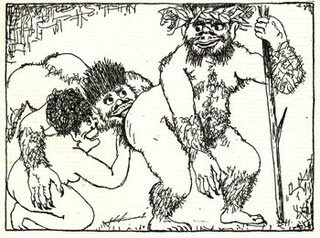
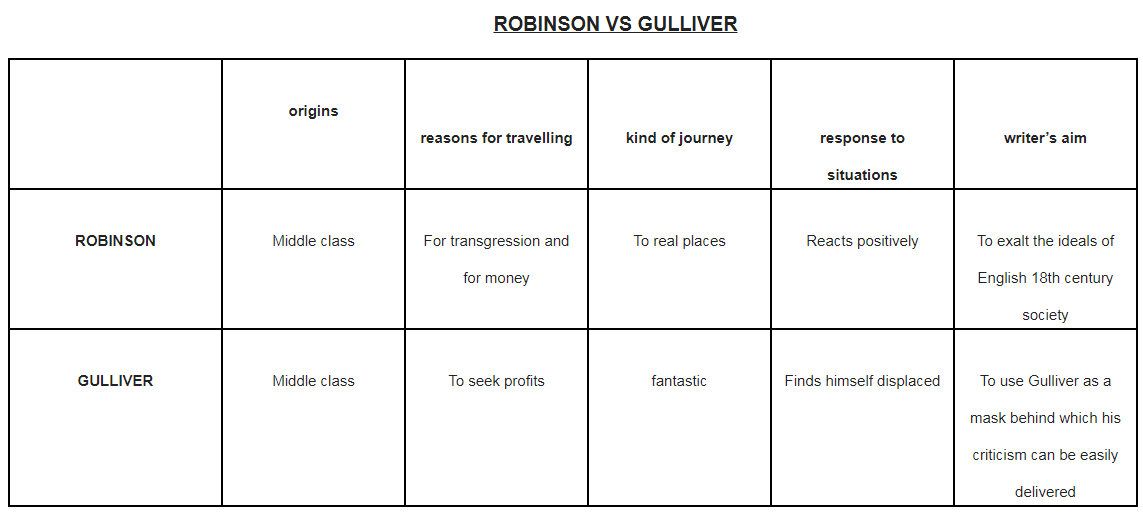
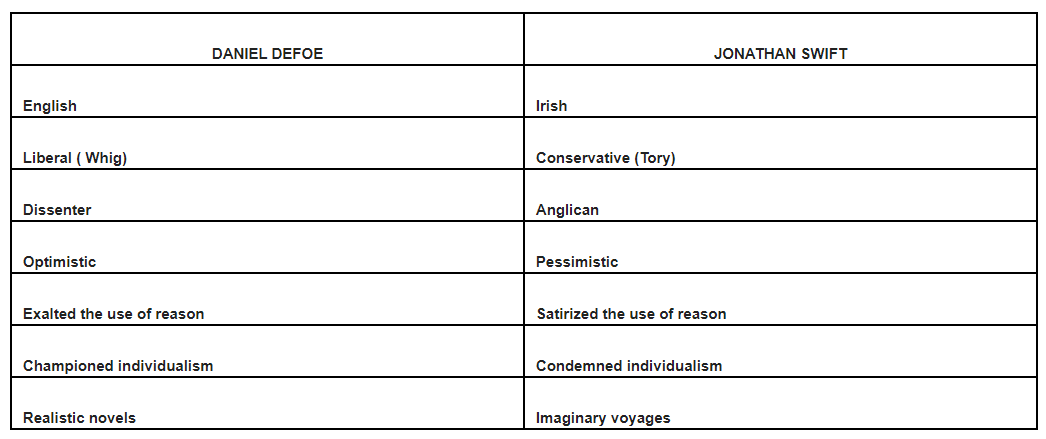





 Seclusão Anagógica