“This is not the first time my writing has been informed by my dreaming self. By now I am wise enough to trust such experiences even before I can make sense of them.”
“Acceptance and praise foster a feeling of well-being in the child. They encourage confidence, spontaneity, hope, and a sense of being worthwhile. Punishment and threat induce guilt feelings, moralistic self-restriction, and pressure to atone. Guilt is the anxiety that accompanies transgressions, carrying with it the feeling of having done bad things and the fear of the parents’ angry retaliation. In the interests of self-protection, the child learns to deal with this anticipated punishment preemptively by turning it into an internalized threat against himself. § Disapproval and contempt make a child feel ashamed of not being a worthwhile person. The implied danger of abandonment may make him shy, avoidant, and ever anxious about making mistakes, appearing foolish, and being open to further ridicule.”“Aceitação e elogios alimentam na criança uma sensação de bem-estar e conforto. Encorajam a confiança, espontaneidade, esperança, um senso de capacidade e de cumprir o seu papel. Punição e ameaças induzem sentimentos de culpa, auto-restrições morais, pressão corretiva. A culpa é a ansiedade que acompanha transgressões, carregando consigo o sentimento de ter feito coisas ruins e o medo da retaliação furiosa dos pais.Com a auto-preservação em vista, a criança aprende a lidar com esse castigo iminente de modo preventivo, internalizando a ameaça contra si mesma.§ Desaprovação e desdém fazem a criança se sentir envergonhada por não ser uma pessoa valorosa. O perigo implicado no sentir-se abandonado é o desenvolvimento de uma personalidade tímida, esquiva, evitativa, constantemente ansiosa ou apreensiva quanto ao cometimento de erros, com medo de acabar parecendo um tolo ou de estar vulnerável ao ridículo dos outros.”
A ANTIGA SÍNDROME DE RENAN: Medo de ser expulso de casa. Medo de dar muitas despesas. Medo de ser um mero mortal.
“<Look how foolish you are, how clumsy, how stupid! What will other people think of you when they see that you can’t seem to do anything right? You should be ashamed of yourself acting like that. If only you really cared, if only you wanted to act right, if only you would try harder, then you could be the kind of child we want you to be.> Repeated exposure to such abuse calls forth an inner echo of self-contempt. § Eventually the child learns to say of himself, <What an idiot I am, what a fool, what an awful person! I never do anything right. I have no self-control. I just don’t try hard enough. If I did, surely they would be satisfied.>” “<Olha quão tolo você é, desajeitado, estúpido! O que vão pensar de você, se você não consegue fazer nada direito? Você devia sentir vergonha de si mesmo agindo desse jeito. Se apenas você se importasse, se você só quisesse agir adequadamente, se você apenas tentasse mais, aí então você seria o tipo de criança que queríamos que você fosse.> A exposição repetida a tal tipo de discurso leva a uma internalização dum eco de auto-desprezo; uma voz interna passa a repetir as mesmas coisas antes faladas pelos seus superiores. § Eventualmente, chega-se ao ponto em que a própria criança dirá, diante de cada nova decepção: <Que idiota que eu sou, que imbecil, que péssima pessoa! Nunca faço nada certo. Não tenho sequer auto-controle. E eu nunca tento o bastante. Se eu tentasse, com certeza satisfaria a vontade dos outros.>”
“My own mother often told me: <I love you, but I don’t like you.> It was clear that this meant that she loved me because she was a good mother, but that she did not like me because I was an unsatisfactory child.”
“The experience of being seen as momentarily not yet able to cope is a natural part of growth. It is also natural to experience the embarrassment that accompanies making mistakes, stumbling, blundering, or fucking-up.”
“Some parents are too hard on their children because of their own personal problems, others because of harsh cultural standards. Some cultures make excessive demands for precocious maturing of the child. In such settings, shaming inculcates the feeling that other people will not like the child unless he lives up to their expectations. § When shaming arises out of the pathology of neurotic parents, the child may be expected to take care of the parents. Such a child may never learn that the natural order of things is quite the reverse. He is discouraged from ever realizing that it is the parents who are supposed to take care of the child. § Even more insidious is the impact of the parent who unconsciously needs to have an unsatisfactory child. Such a parent will never be satisfied, no matter how hard the child tries, no matter how much he accomplishes. Anything less than perfection is unacceptable. If the child gets a grade of 95 on an examination, he will be asked why he didn’t get 100. If he gets 100, he will be asked what took him so long to get a satisfactory grade. Told that he should have been getting 100 all along, he may become afraid to do well lest perfect grades be demanded of him all the time from then on. If he happens to be a chronic straight-A student, then he may be asked, <If you’re so damn smart, how come you can’t keep your room clean?>” “This can lead to his spending a lifetime vainly seeking the approval of others in the hope that he may someday be validated at last. § My own parents shamed me needlessly and often. They made it clear that it was my clumsiness, my inadequacies, and my failures that made them unhappy. Even my successes and accomplishments were made to reveal how inferior and insufficient I was.”
“<Enough,> she stilled me. <A boy doesn’t interrupt when a father is talking, a father who sweats in the city all week long for him.>”
“Those who have been shamed can some day learn to overcome feeling unworthy. Embarrassment, in contrast, is a natural reaction that is inevitable in certain social situations.”
“quavering speech [fala tremida] or breaking of the voice, sweating, blanching [empalidecimento], blinking, tremor of the hand, hesitating or vacillating movement, absent-mindedness” Goffman, Interaction Ritual: Essays on Face-to-Face Behavior, 1967
“The medical term for less-than-normal breathing capacity, for instance, is respiratory embarrassment.”
“Some unexpected physical clumsiness, breach of etiquette, or interpersonal insensitivity may leave a person open to criticism for being more crude or coarse than he claims to be. But this is an issue of manners, not of morals. It may make for a temporary change of social status, but never carries with it the self-threatening sanctions of shame, with its implications of abandonment, loss of love, and ultimate emotional starvation.”
“For a moment all bets are off. Trust of myself and others is in jeopardy. All values are once again in question. First there is the question of trust in myself. Am I an adequate human being or a fool? What can I expect of myself? Do I really know what I am doing?”“It is a time for the exotic flowering of my paranoia. At such times I may mistakenly expect contempt and ridicule from loving friends and neutral strangers. It is just as though they would turn from me in disgust as my parents did when I did not meet their impossible standards.”
Where is my floor?
Please open that door
Shut those windows
Cracked room and mind
of a sweet-salty boy
Sing along and refrain
from hiding.
“There seems to be no way for any of us to get through the day without making a careless error, doing something foolish, committing a gaffe or faux pas.” Gof., op. cit.
“After hitting the lamppost I sat on the curb and cried as little as possible. I was really worried. Now it was time to go home and face my mother. Instead of seeing this mishap as an unfortunate accident around which I could feel sorry for myself and expect some sympathy, I knew that I had let my parents down again. I headed home and climbed the stairs to our apartment, skates over my shoulder.”
“Still, echoes of this grotesque situation can be heard at times from out of my unsettled and unworthy depths. I remember just a couple of years ago when I learned that I had to undergo a second bout of neurosurgery.”
“At such times my mother’s explicit instructions were: <Don’t fight, but never, never deny that you are a Jew.> She seemed to want me to be well-behaved, but did little to help me to avoid occasions of sin.”
“One afternoon after school Charlie started beating on me in front of a girl I had a crush on. For the first time in my unhappy marriage to Charlie Hooko, my own fear of being seen as a shamefully brutal, lower-class street fighter was overcome. The fear of being humiliated in the eyes of this girl was even more shameful. And so in the midst of the fight I punched Charlie right in the mouth. He couldn’t believe it. I could hardly believe it myself. § Charlie stopped the play at once. He took me down to the park and we both washed our faces at the fountain. Charlie announced to everyone around that I was a tough guy, that he admired me, and that we would be friends from then on. That ended months of regularly scheduled defeat.”
Punch like a girlish girl
Yea, just feel the flow
“As an early teenager I did eventually graduate to becoming a marginal member of a fighting street gang. I pretended that I was a better and more enthusiastic fighter than I ever really was.”
“As my children grew, being creatures of their age they moved toward the freak culture. Part of this involved their being the first kids in our neighborhood to let their hair grow long. So it was that another macho incident came about. One of our neighbors, strong both of will and of muscle, flew the Confederate flag.”
“What proof did he have, I demanded? His only answer was that my kids had long hair. He believed vandalism occurred only in the ghetto. Ghetto kids had long hair and they broke windows, he insisted. My kids had long hair. And so he concluded that it must have been one of them who had broken his window.”
“Ironically, the blunderer often unwittingly reveals the discomfort of his predicament by the very means by which he tries to hide it: <the fixed smile, the nervous hollow laugh, the busy hands, the downward glance that conceals the expression of the eyes.>” “Ironicamente, o atabalhoado freqüente e inadvertidamente expõe seu desconforto situacional pela própria tática utilizada para disfarçá-lo: <o sorriso fixo, a risada nervosa despropositada, as mãos hiper-ativas, a vista caída que esconde a expressão dos olhos.>”
“Essa necessidade social salutar de ocultar-se o embaraço é enfatizada nas pessoas que foram excessivamente submetidas a vexames na infância. Potencialmente, o indivíduo virá a desenvolver um estilo de conduta de tipo neurótico, agindo timidamente a maior parte do tempo e preferindo evitar que outros venham a percebê-lo ou a conhecê-lo.”
“Tendo tantas dificuldades de interação, não é raro que a pessoa acredite que sua abertura para o constrangimento e a vivência de situações ridículas [pois socialmente é impossível fugir de tais ocasiões] é realmente singular. Ela pode desenvolver a crença que outras pessoas não têm a mesma tendência de <se passarem por tolas> de tempos em tempos, como ela tem.”
“Sua própria conscienciosidade de seu problema age como um efeito bola de neve: a apreensão pela sua hiper-sensibilidade eleva seu senso de isolamento, peculiaridade, solidão, enfim. Que trágico que a pessoa deva sempre sentir-se como um desajustado! Basicamente, não diferimos uns dos outros. Ninguém é capaz de lidar o tempo todo com as demandas sociais, sempre excessivas. Mas é que o comportamento tímido-neurótico é sempre desproporcional, alimentando a convicção íntima de que <há algo muito errado consigo>.”
“As maneiras reservadas do introvertido <clássico> (não-mórbido) são parte, provavelmente, de sua orientação psicológica inata; e ele estará sempre mais inclinado ao mundo interior das experiências privadas, que lhe é bem mais confortável. Certo nível de acanhamento da personalidade é mesmo, senão natural, incentivado socialmente. Algumas pessoas (como o próprio que escreve) escondem sua timidez crônica debaixo de um véu de arrogância simulada.”
“When he does try to express himself, he is likely to be hesitant, needlessly soft-spoken, ingratiating, and apologetic. Whenever possible, he simply will try to avoid contact with other people.”
“A person who is not neurotically shy understands that it is the external situation that contributes to embarrassment, rather than some defect in his own character. Unlike the shy neurotic, he has come to learn that these anxieties are triggered by his reaction to particular people and situations.”“Uma pessoa que não é neuroticamente tímida compreende que é o contexto exterior que contribui para seu embaraço, em vez de qualquer defeito de seu próprio caráter. Ao contrário do tímido neurótico, aquela pessoa aprendeu a ver que essas angústias são acionadas pela sua reação a pessoas e eventos particulares.”
AUTONOOBSAIBOTADOR
“The shy neurotic cannot get anywhere in overcoming his excessive shyness without first revealing to himself that what he truly fears most is not rejection but acceptance, not failure but success. He begins to go after what he wants out of life.”“O tímido neurótico não chegará a lugar algum, enquanto tenta superar ou minorar sua timidez, caso não admita para si mesmo que o que ele realmente mais teme NÃO é a rejeição mas a aceitação, NÃO é o fracasso, e sim o próprio sucesso! É aí que ele começa a alcançar seus verdadeiros objetivos de vida.”
we’re all looped, leaked, sinking, seeking and not finding, just overwhelmed by our own hopes’ weights… what if…
a head dive in a pool of danger
“Feeling undeserving of such unfamiliar achievement and acceptance, he has unwittingly learned to discredit these pleasureable experiences. A poignant early expression of this self-defeating attitude occurs during the first phase of psychotherapy.”
“Anything that makes him feel worthwhile calls forth the echo of his mother’s voice, demanding that he question his presumption. It is as though he can almost hear her demanding, <Just who do you think you are?> Believing even for a moment that he is satisfactory as a human being evokes the underlying shameful feeling that he has presumed too much.”“Qualquer coisa que o faça sentir-se valorizado evoca o eco da voz de sua mãe, mandando que baixe a bola. É como se realmente pudesse ouvir, <Vem cá, quem você pensa que é?>. Acreditar por um só momento que ele é um ser humano completamente satisfatório é o suficiente para ter sua paz de espírito quebrada por pensamentos de culpa de que ele agiu presunçosamente.”
O supremo oposto do vaidoso dos vaidosos – e o que isso trouxe? Mais ódio dos ‘cristãos’ sobre sua cabecinha…
“So it is that each moment of decision is followed by a moment of revision. A minute later, he has reversed his thrust forward, retiring once more into his customary shyness.”
“His life is not what he meant it to be at all. It’s just not it at all.”
Evitar a confrontação é como comprar à prestação!
“Guy de Maupassant’s short story, The Diamond Necklace, is a classic example of the high price of false pride. It is the story of Matilda, a woman tortured and angered by having to live a shamefully ordinary life because she does not possess the luxuries and delicacies which she insists befit her station.”
“It was my parents who started me off down my own painful path of shame and false pride. My parents are no longer responsible for this trip that I sometimes continue to make. Now the enemy is within. It is only my own overblown ego that shames me. It is only I, still sometimes arrogantly insisting on having higher standards for myself than I would impose on others. How much easier to accept the flaws in others than in myself. To the extent that I cling to being special in this way, I remain stuck with the tediously painful life of the perfectionistic striver. I must get everything right, all the time, or suffer shame. It is far too heavy a price to pay for maintaining the illusion that I might be able to rise above human frailty.”
“I give up being satisfied with myself as a pretty decent, usually competent sort of guy who, like everyone else, sometimes makes mistakes, fucks up, and plays the fool. Instead I insist that if only I tried harder, really cared, truly wanted to, I could become that wonderful person who could make my long-dead parents happy. Then they would approve of me. I would be the best. Everyone would love me.”
“Guilt and shame originate from different kinds of faulty parenting. Guilt arises out of a certain kind of bad fathering, shame out of bad mothering.¹ Either parent may elicit one or the other depending on the particular parent’s role and attitude rather than on his or her gender alone.
Excessive authoritarian fathering creates guilty anticipation of punishment for transgression against the lawful order of things.Overly demanding mothering breeds shame.”
¹ Kleiniano demais…
“Paradoxically, too much shaming often produces defiance rather than propriety. No longer able to bear the overwhelming burden of shame, a child may develop a secret determination to misbehave. He comes to wear a mask of spite and shamelessness.”
“We were studying Shakespeare’s Julius Caesar. At the beginning of one week, the English teacher announced that we were to memorize Marc Antony’s eulogy. I protested loudly. Memorizing materials that needlessly cluttered up my head was both a waste of my time and an intrusive violation of my mind. No arbitrary school system had any right to do that to me.”
“<Ma, how come you always talk funny when you come to see a teacher?> This was one of my rare opportunities to shame her”
“Straight people were simply not prepared for coping with those of us who shamelessly stepped outside of the system, acted with contempt for the rules, and covertly shamed them for the arbitrariness of their principles.”
“At times my shameless behavior has gotten me into trouble. But so long as it sometimes gets results like that, who am I not to be tempted to continue to be outrageous?”
“More privately, I had developed the false pride of perfectionism to hide my shame and worthlessness from my own eyes. I had to avoid risking further failures and more mistakes. I had to be able to change my image so that I might escape without looking like I was running away or hiding out.”
NOSSAS TORRES DE MARFIM
“No longer would I be the fumbling incompetent who was too timid to go to parties because he never knew how to go about making friends. Instead I became a <heavy> intellectual. With such profoundly developed sensitivity, I could no longer be expected to be bothered devoting my precious energies to the pursuit of the mundane social goals that somehow seemed to excite almost everyone else I knew.
Even armoring as exquisite as this was not enough.Somewhere inside I knew I was just too damn lonely. I still needed to be needed. Acting obsequious, or even <being nice>, was an unthinkable solution. Instead I began to advertise myself as ever ready to rush into the gap whenever a task presented itself that ordinary folk found too unrewarding to mess with.”
“For the first few years of my career as a therapist I worked in impossibly archaic monolithic custodial institutions such as state mental hospitals and prisons. Though allegedly established and maintained as society’s attempt to care for and rehabilitate its social deviates, these institutions turned out to be punitive warehouses for those undesirables about whom the rest of us wished to forget. I cast myself as the champion of the oppressed.¹ Doggedly and unsuccessfully I fought the administrative powers, hoping to attain decent care, effective treatment, and eventual release for the inmates.”
¹ Incrivelmente similar a minha loucura de querer me tornar professor!
“Now I had a new problem. There were no bad parents to fight. How was I to define my role in this more benevolent situation?”
“I do not usually shake hands with a new patient unless the patient gives some indication that this is part of where he starts out in social relationships, in which case I respond.”
“His opening lines were: How long have you been a therapist? Don’t you know that phobic patients can’t stand to be touched? You insist on shaking hands with me knowing that I am too compliant to refuse. It could only make me anxious. The demands you make on me!”
“Should he awaken during the night and need to go to the bathroom to urinate, he must simply suffer through the hours until dawn. He was not able to risk disturbing his dog by getting out of bed. His feeling of friendship with the dog was substantiated by his bringing him along to the treatment sessions.”
“There he asked to be deported to Russia for asylum. Surely he would get better treatment under Communism than he had from the barbaric democratic psychiatric services in America’s capital.” “I described my own experience, and I pointed out that the patient was crazy. He had made me crazy. I warned this man that he would make him crazy, too, unless we all understood that just because the patient claimed that something difficult needed to be done did not mean that we had to do it. The patient was all heat and no light. We were vulnerable to his unrealistic outcries because of our own needs to meet every challenge heroically, no matter how nutty it might be. If we thought it over for a minute, we would realize that there wasn’t much in the way of disastrous consequence in this for anyone but the patient himself. That was unfortunate for him, but that was the way it had to be. Happily, the perspective I offered was sufficient to relieve the Congressional Counsel of his own anxiety.”
“The patient was an attractive woman in her early twenties whose birth defects included having no feet and only rudimentary hands. She managed to get about with a combination of prosthetic devices and monumental denial.” “Focusing on her frustrated wishes to become a star in the public eye allowed her to avoid her anxiety and despair about the oppressive difficulties that she encountered in everyday living. My own parallel defensiveness led me to join her, supporting her crazy longings with my own denial of shame-filled helplessness. She made her own contribution by avoiding my tentative therapeutic interventions. There was just no way she could hear my timid suggestions that this whole show business preoccupation was an avoidance of dealing with the day-to-day quality of her life.”
“Unattended snot ran out of her nostrils and down her face (her measure of how much messiness I could tolerate?). I listened and sympathized as if my mere presence would heal her.” “For some reason, which I still do not understand, after about a year of this circus she let me in on her <secret>. All during this time she had been seeing me on Thursday afternoons, and now she confessed that she had also been in therapy on Monday mornings at another clinic with another crazy therapist.”
“This new challenge’s chart described her as a borderline psychotic, a part-time alcoholic, an unhappy, aggressive woman with preoccupying sexual hangups and several previous unsatisfying bouts of psychotherapy. When I went out to the waiting room to invite her in for our first therapy session she struck me as a slight, timid waif of a woman. She looked more like an emaciated 12-year-old than a life-hardened 32-year-old.”
“Oh, now I get it, the old color symbolism test. A male therapist with a red shirt, and now I’m supposed to tell you that I’m sometimes gay, and you probably are, too!” “You’re the therapist I’ve been looking for all of my life. I’m never, never going to leave you. I know that you’ll be able to accept whatever I do without ever making me feel bad or throwing me out.” “My relief and sense of well-being was immediately transformed. I got the sinking feeling that I had just made a lifetime contract with an albatross.”
“By then I was off balance, but I knew the direction in which I must go. I told her that alcoholic beverages were not permitted in the clinic. If she opened the beer here in my office that would be the end of treatment. As in the first session, she seemed relieved rather than upset by my setting some limits on her acting out.”
“She had gone to visit her dentist to have a tooth extracted. He knew that she had bad reactions to the usual anesthetics that he used. Therefore he had brought a bottle of whiskey and insisted that she have a couple of straight shots to prepare her for the extraction. She described herself as having been rather uncertain. Still she yielded to his encouragement to have one, two, and then another couple of shots. She claimed that soon she was so high that she could not resist his insistence that she perform fellatio.”
* * *
Albert Ellis
“While I have the floor, let me also disagree with Shelly’s [Sheldon’s] (and almost all other therapists’) allegation or implication that shame largely stems from early childhood experiences. Shit, no! If anything, early childhood experiences largely arise out of our innate predispositions toward inventing <shameful> conditions and actions and consequently idiotically making ourselves—and I mean making ourselves—unduly embarrassed about our inventions.” “Because Shelly’s feelings of shame in regard to the incident with his parents have a high degree of correlation with his feelings of shame today, he mistakenly assumes that the former caused the latter.” “Shelly’s parents indubitably taught him various standards of ‘right’ and ‘wrong’—including the standard, ‘You act rightly when you stubbornly refuse to imagine yourself letting either of your parents drown and wrongly when you even consider saving only one of them from drowning.’ Given such standards, and having the human tendency to adopt them, Shelly will assuredly believe that he acts ‘rightly’ when he tells his parents that under no conditions would he let either of them drown and ‘wrongly’ when he tells them that he would choose one over the other. Granted.”
“A person’s history therefore has relatively little to do with present feelings of shame or self-downing. Shelly may have learned his standards of good and bad behavior from his parents (and others), but he decided to take them seriously and he still decides to do so if he feels ashamed of anything he does today.”
“I had a female client who had serious feelings of inadequacy about herself, especially in her relations with men, and whom I helped considerably to overcome some of these feelings. She had an attractive female friend to whom she talked about me and the way I had helped her, and who got somewhat turned on to me. This friend, in her own manipulative way, managed to meet me at a series of lectures I gave and suggested that we date.
Now I knew that I’d better not do this. Not only have I refused from my first days as a therapist to have social relations with my clients—for although this may have some advantages, I recognize that it tends to lead to more harm than good—but I also have refused to maintain close relations with any of their intimates. (…) A good idea, and I invariably—or almost invariably—stick with it. But not this time! The friend of my client seemed so charming and attractive that I decided to break my self-imposed rule and to date her. I saw her a few times, got intimate with her socially and sexually, and then decided to stop seeing her because I found her much less charming and interesting than I previously had thought. In the course of my fairly brief relations with her, I deliberately mentioned nothing about my client, since I knew that they had a somewhat close relationship, and I didn’t want to give away any confidences.
Nothing happened for several weeks; and then, after I and my client’s female friend no longer saw each other, all hell suddenly broke loose. My client, Josephine, came in one day terribly upset and said that she had discovered that I had seen her friend socially. She found this most distressing for several reasons. She thought that I might have revealed some things about her to her friend. She felt constrained, now, in telling me certain feelings that she had about this woman. She confessed a sexual interest in me and said that she felt jealous that I had shown no inclination to have sex with her while I had obviously had it with Sarah. She hated Sarah for having seduced me and then having boasted about it. Most of all, curiously enough, she felt upset because I had stupidly allowed myself to get taken in by Sarah, who, according to Josephine, had no interest in me other than as a conquest, who had fooled me into thinking she had more intelligence than she actually had, and whose inherent nastiness I had presumably entirely failed to perceive.” “I, like Josephine, at first upset myself more about my mistaken diagnosis of Sarah than about anything else.” “Her interest in me stemmed mainly from her belief that I might help her with her own personal problems and from the ego boost she experienced from telling others that she had a well-known psychotherapist interested in her. Although I had told her very specifically not to mention our association to Josephine, whom I guessed would upset herself about it, she had not only told all to her friend but had also lyingly stated that she had given me up and that I still had a great interest in resuming relations with her.” “I took a chance that my relationship with Sarah would never get back to her. I really had preferred Sarah over her, and perhaps some of this preference had come through in my relationship to Josephine. I had given her an opportunity to see some of my diagnostic weaknesses—and thereby helped remove some of her confidence in me as therapist. When she had shown an overt sexual interest in me, I had quite ethically but perhaps too brusquely repulsed her, partly because at the time I already had established a sexual relationship with Sarah, and Josephine did not seem half so attractive to me. If I had never gone with Sarah, I might well have handled rebuffing Josephine in a more tactful and more therapeutic way.” “She seemed to accept the fact that I had not deliberately done anything to hurt her and had only made some understandable errors.” “Fortuitously, she got involved with a well-known psychiatrist who treated her with a dishonesty similar to Sarah’s treatment of me, and I helped her considerably in accepting herself with her gullibility [naiveness] and in breaking away from him without feeling terribly hurt.”
“I set a few more rigorous rules for myself about socializing with the friends and relatives of my clients, and eventually I mainly forgot about the entire incident.”
“If I down ‘me’, ‘myself’, or my totality for my errors, I essentially take myself out of the human condition and view myself as a subhuman. Falsely! For, as a human, I cannot very well attain superhumanness or subhumanness except by a miracle!”
“As far as I can see, you do not really admit the true wrongness of your acts if you don’t make yourself feel very guilty about them. And, even if you do acknowledge their badness, you do not motivate yourself strongly enough to change them and keep yourself from recommitting them in the future. Poppycock [Baboseira]!” “As a person who admits his own irresponsibility but who doesn’t down himself totally for having it, I save myself immense amounts of time and energy that I otherwise would spend dwelling on my poor actions, obsessively showing myself how wrongly I did them, and savagely berating myself for having such fallibility.”
“I try not to make myself guilty about making myself guilty, nor to make myself feel ashamed of making myself ashamed. I don’t find it easy! I keep slipping. My goddamned fallibility clearly remains.”
Gerald Bauman
“I felt the role of therapist to be an artificial one requiring that I adopt a facade that made me feel like the newly clothed emperor. I think I persisted in this unpleasant exercise partly because doing therapy was then the wave of the future for young clinicians, partly because I was assured by colleagues and supervisors that I was reasonably competent and talented, and partly because I tend to become stubborn under duress.”
“The most difficult <incident> of all lasted about two years. In the course of some very significant changes in my life, I was subject to severe anxiety attacks while working with clients (and at other times as well). The awful feeling would gradually well up in a great surge that might last for several minutes and then gradually subside. The experience was particularly frightening because I never felt certain how <high> the surge would go. While working, for example, I felt as though if it went much further, I might fall out of my chair or flee the room (these never happened). Though appearing to occur at random, these <attacks> themselves seemed to become more intense over about two years; then I gradually became able to overcome them and resolve the underlying issues.”
CONTRA-MEDIDAS PARA MOMENTOS DE “NUDEZ TERAPÊUTICA”:
“Minimize (or eliminate) pretense in self-presentation. This is especially relevant to, and difficult for, beginning therapists.”;
Buscar uma espécie de “acordo tácito” com o paciente sobre o nível de nudez ideal que o terapeuta e o “tratando” desejam para a terapia;
Sempre ter em mente flexibilidade nas regras de resolução de problemas meta-terapêuticos – incluindo seguir ou não, conforme o caso, até mesmo ESTA regra!
Howard Fink
O INSEGURO ESTEIO MORAL DA NAÇÃO: “He began to wonder if his suspicious attitude toward his wife was some sort of an illusion he had to maintain to give him the upper hand in the relationship, to be the constant moral superior.”
“The subject of his wife and I forming some sort of a conspiratorial love pairagainst him was never again mentioned without a lot of genuine humor associated with it. In fact, as if to further discount the possibility, he once said that he never thought I could lose enough weight anyway to be called slim or skinny by anybody.”
Arthur Colman
“While I have known her, she has worked as a topless and bottomless dancer, a masseuse in a parlor catering to conventioneers, and now nude encounter. She has been only partially successful at these jobs. She turns off as she undresses.”
“When she worked as a masseuse, she did not like to touch men’s genitals and do <a local>. It was formally against the policy of the club, although she admitted that to <jerk a customer off> got you a larger tip.”
“Here she was, earning twenty dollars a half hour (exactly my fee, dollar for minute) by sitting nude talking to men who chose their state of dress. No touching, no closeness, no real intimacy. She didn’t admit to seeing the analogies in our situations, probably because she was frightened of exploring their meaning. Her fear protected me from the full impact of the miming that she portrayed as the naked therapist.”
“Being embarrassed about experiencing a particular feeling is just the beginning of the cycle. Confronting the need to keep the feelings hidden increases its potency. Deciding to risk the uncovering process by telling the patient what has been happening inside of me can momentarily increase the embarrassment until it is released in a rush as the communication is finally made.”
O velho dilema de se apaixonar durante as sessões.
“My wife and I have written a book, Love and Ecstasy, about merger experiences in the solitary, dyadic, and group orientations.”
“I remember one patient that I worked with in the Kopp/Colman office. Yvonne was an exquisite, delicate 18-year-old rebel. Her father was a wealthy member of the State Department, her mother the dependent matron of a colonial mansion. Yvonne worked at shattering all family hypocrisy. She attacked with reckless competence, trying everything, flagrantly, desperately, and always self-destructively. She came to Shelly through some of her friends. He represented a bearded refuge for her, an adult who might understand. He sent her to me.
Her name should have been Jezebel. At that point in my life she represented impulse, license, sensuality, limitless possibilities. (…) Falling in love with her would be a lot simpler solution to my malaise than reclaiming the lost parts of my own spirit.”
“I knew I was clever enough to translate what was happening inside of me into words and actions that would facilitate her therapeutic work with me, but I wasn’t sure that I had the courage to risk such an intimate and painful personal statement, with its unknown repercussions for both of us.”
“It is not unusual now for me to feel love in a variety of forms for men and women with whom I work.” “Fantasies from therapy (in the case of Yvonne) invaded my sexual relationship with my wife and my paternal relationship with my daughter, just as those relationships entered my therapy relationship with her.” “She described her evaluation session with me and noted that she was sure I had had an erection during some of the hour. Triumphantly she proclaimed that she was positive of that fact as I got up to escort her out of the room at the end of the hour. She wondered about my ability to work in such a state and about my designs on her. She also wondered about the quality of my marriage and my sex life.” “I remembered being sexually aroused by Susan. My response had been prompted largely by the provocative role she had assumed during the hour rather than from a personal attraction. She could be very sexy, but most often used it as a weapon and a defense. I knew that precisely because of my reaction to her—arousal without great interest.” “I said I got sexually excited by many of my patients, female and male. I tried to use all my responses to an individual in my work, those of my body (including my penis) in all its states, and of my mind, with all its fantasies. I certainly did not plan to cut off parts of myself in the therapy encounter. Integrating that openness in the special setting of therapy with my family and other personal life was difficult and a challenge.”
QUANDO DOIS JUNGUIANOS SÃO CASADOS: “Libby knows me and herself well enough to assume that we could experience other people sexually and still focus our most intimate sexual expressions in each other, that she as Every-woman could become a repository for all my sexual fantasies just as I could for hers.”
Arthur Reisel
Verdade e vitória são contraditórias.
Meu analista tem uma voz paciente, e eu ouvidos doutorais!
“Arthur, it takes ten years before a therapist begins to know what he’s doing.”
“Thinking that a straightforward discussion of the pot experience might ease some of this mother’s extreme fears, I asked the girls what it was like for them to smoke pot. Their replies were cautious and evasive. As I should have anticipated, they hit the ball smartly back into my court, asking me if I had smoked pot and if so, why didn’t I describe how it felt? Being a more skilled player than the girls, I could have used a therapeutic trick shot to put the ball back in their court. Yet something told me that the truth was called for here even if the shocked mother were to decide that a therapist who smoked pot was not for her family. Fortunately, it turned out well. Despite her innocence the mother is an open-minded woman who accepts differences in others.”
“Used with Karen’s permission, excerpts from her letters to me will amplify and enrich my presentation.”
“I think you protest too strongly and judge too harshly of a previous generation; but the protesting quite vehemently part interests me the most because I have seen it come out before with Carolyn; it wasn’t what you said as much as the intensity with which it was said. You see, on occasion I am also interested in getting into other people’s lives even though I do not get paid for it. I am interested in what makes them tick, and I try to remain as receptive as I can to subtle, non-verbal clues.”
“you are very, very far from being an open book. In other words, there is much about you that I do not know. I don’t really know how it makes you feel. I know at one point in the therapy I felt like I was naked, and you were a rapist, and you called me a beggar, and it hurt, and I thought: I’d rather be a beggar than a rapist. It just seemed that you kept taking and taking”
“you can’t beat them; you never beat them; all it accomplishes in the long run is letting them beat you. I don’t think either one of us would think that was a life well spent.”deixar-se levar é como ir para o inferno, pois não existe paraíso sem esforço. se isso significa que você “tem de dar valor”? Hoho, chega, descanse os nervos, o inferno não deve ser tão ruim… Me chama que eu vou!
“I did not tell you my complete reaction to your giving away one of your pictures. My initial feeling was a tinge of jealousy that you thought enough of one of your other female patients to give her a picture you liked very much. What felt like a little child in me yelled out: What are you doing? Don’t you know? I’m supposed to be the most important one! You’re not supposed to give your favorite picture to someone else! On that same level, I’m still not exactly bouncing off the walls about it; a little of the same feeling came back when you brought it up today. However, I feel it is so ridiculous, and childish, and unrealistic that I don’t even know if I completely allow myself to feel it, much less express it.”
uimpulsaindimpulsa
“She wasn’t going to think you had designs on her, was she? You didn’t, did you? Then, what’s to feel uneasy about? It was a very nice thing. People should do it more often. I’m glad you did, a little jealous, but pleased.”
“I get the very strong impression from you that you like doing things according to schedule, and that you really do not take deviations too gracefully. It is too bad that people’s needs do not run according to schedule also, or maybe most of your patients can program them for their hour or whatever.”
“Fuck your schedule; it might have fucked our lives. We should have gone elsewhere, but you didn’t have to worry about that because I was already too attached to you for that, and I’m sure you didn’t lose any sleep over it. I have resented it; I didn’t realize I resented it so much.”
“She then sent a brief note to apologize for blaming me for fucking up her and her husband’s lives. Karen knew they were responsible for their own lives, and she felt badly about hitting below the belt over the issue of my schedule.” Below the belt, but not too much…
Quantos anos de serviço contribuídos como “terapendo”?
Jacqulyn S. Clements
“Alan, in his 5th year of hospitalization, had been recalling the days when he was an airplane mechanic. He concluded with the comment, <That’s why I can’t ever get married; I’m a mechanic.>
You may be noting the symbolism. What I said was, <Well, I don’t know about that. I’ve known a number of mechanics and most of them were married.>
Alan pondered this thoughtfully. Then with a twinkle in his eyes, he leaned close to me and said, <But were they schizophrenic?>”
“Telling these stories is vaguely embarrassing, but, as lived, they were really good experiences for me and for the clients. My response in each case was a silent but clear <Touché!>. I don’t recommend dumb comments; but if you’ve got a Bobby or an Alan, you can learn a lot and enjoy each other.
An incident from my practice that illustrates a negative feeling of goofing and embarrassment occurred on the day I handed Mrs. B the A-child’s appointment card. My comments made it obvious that I thought she was married to Mr. A, who was also seated in the waiting room. These weren’t new people; I’d interviewed each with their real spouses. When Mrs. B pointed out my error, I wished I could disappear into a hole in the floor, and my right arm flew up in the air. I used it to touch my hair and said, <Oh, my, where is my head today?> Then, taking the A-child back to the therapy room, I quipped, <I almost got you a new mother today—ha ha.> As far as I know this had no big effect on therapeutic progress, although I certainly wouldn’t call it a confidence builder.”
“Sophisticated clients know what Gestalters and such are like; they probably saw their 6th Fritz Perls film just last week.” Um dos fundadores de um dos ramos da Gestalt (que não é monolítica): Perls, F., Hefferline, R., & Goodman, P., Gestalt Therapy: Excitement and Growth in the Human Personality (1951).
“I went to all those miscellaneous workshops and training institutes like everybody else, but I never did manage to come home a recognizable anything. I tell them I’m a Jackie-therapist, and this means, of course, my confidence rests almost solely on results. Yes, this has bothered me some. I’ve never felt ashamed not to be a walking encyclopedia on psychoanalytic theory, but often when another therapist is visiting the premises, I feel tempted to ask my client to please get down on the floor and scream like he’s having an avant-garde breakthrough.”
“I’ve had a few clients with outstanding embarrassment records. Cindy, age 14, recalled her 1st date: She spilled Coke in the boy’s lap, bowled [derrubou] a 16, and then left his car door open, resulting in $70 worth of damage. In such award-winning-goofers I also plant seeds to the effect that they’ve hit bottom, so what’s left to fear?”
“It’s amazing how many children I’ve seen who won’t run on a dropped ball. Little princesses just pose and posture the whole game—any game. The strikeout freezers can usually stay on the team if their batting average is high enough. But princesses are eventually ridiculed and chosen last.”
NÓ CEGO: “My other chronic childhood embarrassment worry had to do with body functions. In grade school about the worst thing I could imagine was wetting my pants in class. However, I was also too embarrassed to ask to be excused to go to the restroom. Would this qualify as a double bind? I am probably one of the few people in existence who neither asked to go nor went anyway.”
“It wasn’t until this very year that I got blood on my skirt in public. I was seeing a teenage boy for therapy when it happened. I laughed.” Quando crescemos e aprendemos que dar aquela freada ou mijada na rua não é nada de mais. “Now I’ll ruin the story a little bit: The teenage boy had gone before I realized it had happened, and then I laughed.”
“Life’s traumas, goofs, negative embarrassments and such should be stored lightly. If they’re off in the warehouse, they’re hard to get at when you need them and could do something constructive with them. But even sending the empty storage cabinet to the warehouse is ill advised. Then you wouldn’t have anything to put these memories in. They’d be laying around in sight too much. There are times for getting them out, but really nobody wants to see or hear that stuff all the time, even your best friends. And how about your own probable concentration on them? That’s called negative feedback overload. To avoid repression or indiscriminate hang-out, better get those storage cabinets out of storage!” O que está sempre exposto passa a ser ignorado (como certos livros na prateleira, que estão na sua frente mas você não os vê mais).
“The hypothesis was born: Be they orthodox or atheists, Jews have one foot stuck on the wailing wall. This was a hunch, not a put-down.” “A hipótese havia nascido: Fossem ortodoxos ou ateus, os judeus têm um pé fincado no Muro das Lamentações. Isso era um palpite, não uma afirmação ou acusação.”
IDENTIFICAÇÃO ESPIRITUAL, NO NEED FOR SHOWING (wallpaper de estrela de Davi e correlatos): “My fantasies went even further. I pondered the possible effects of Jewish Depression on the theory and practice of psychotherapy. Since nearly all the geniuses and heroes in this field really are you-know-whats, there might be an accidental bias that could be labeled the J.D. factor. Non-Jewish therapists would pick it up by identification and introjection. By now, almost everybody probably has J.D. This means things may not be as bad as they look.” Ser antissemita é ser antiocidental como um todo, mas não significa ser pró-oriental. Na verdade o Oriente desconhece o pânico anti-judaico; isso é uma doença exclusiva do homem moderno autocastrador. Ser antissemita seria negar nossas mais vincadas raízes pagãs. Ser antissemita é ser um destruidor dos próprios antepassados, nobres e elevados (recado a Varg & simplórios desta era).
“Wailing Wall. To wail is to cry. A wall is a block. A crying block? Crying because of a block?” Trocadilho impossível em Português.
“Note that Adam and Eve had no neurotic human parents and did not live in an uptight culture. They didn’t even have any childhood memories. Archetypal shame may be rather far removed from psychological theories regarding its derivatives. Note also that Adam and Eve were not Jewish; they were everybody. There was a wailing wall long before the one in Jerusalem. The latter is likely a modern intensification, or reenactment.”
“For many years, as an adult, I had frequent repeats of two rather common dream themes. In one I was to be in some play. It was opening night, and the curtain was soon to rise. I couldn’t remember any of my lines. I couldn’t recall ever having been to rehearsals. I couldn’t even find a script to refresh my memory or to take, hidden, on stage with me. In the other dream it was time to go take some school exam. I hadn’t been going to class. I’d forgotten I’d even enrolled in the course. If I’d ever had the textbook, I didn’t know where it was.
Despite years of individual therapy, group encounters, and hundreds of psychological theory and how-to books, these dreams continued unchanged. Then last year I had breakthrough dreams for both of them and have not had either one since.
In the breakthrough play dream, the curtain actually goes up and I step on stage. I not only have to improvise my lines, but I’m not dressed like the others. Six women glide by in beautiful satin gowns, and I’m standing there in a terrycloth robe with a Kotex [absorvente] sticking out of one pocket. Everybody laughs. In the school dream, I go to the room, take the exam, and presumably flunk.”
“All our righteousnesses are as filthy rags (Isaiah 64:6) is a commentary on general goodness, not just what we call self-righteousness. As such, it always sounded like a real bummer to me. Maybe the frequency of righteousness wasn’t high, but what a slam on quality. I once thought: Now there’s a good recipe for neurosis.”
“Of course, the righteousness insight didn’t really pop out of nowhere. I’ve been on a gradually emerging spiritual journey for 3 or 4 years now. Sometime during this period the following dialogue probably took place, although I’m surely still working on the last line of it.”
Donald D. Lathrop
“<I have never had a failure in psychotherapy!> My out-bragging the braggart was so incredible that it shut him up. What a blessing for me! The rationalizations that would have poured out of my mouth in justification for my clearly unreal claim humiliate me even now as I think of them. Evidently he recognized at that point that I was crazy. He never attended another supervisory session.”
“The type of therapy—the goals, the expectations, the method—defines failure. In psychoanalysis, the best studied of the therapies, failure has two important faces. One is the therapy that never ends, the <interminable analysis>. The other is the therapy that ends without a full completion of one of the technical dimensions of (psychoanalytic) treatment, namely the resolution of the transference neurosis.” “In most psychotherapies, the transference neurosis is left almost totally untouched. Good results are achieved by minimizing its development.”
“We talked about Arlene Mildred and her father. There were parallels. Arlene had been suicidal for months and was perpetually rejected by her parents. Yet if she killed herself, there is no question that her father would be on the phone screaming threats at me.”
“I feel better (as always) when I work, when I do the work that is my calling. It’s hard to concentrate, but there is relief for me in involving myself with the immediate problems of the living. Now there is something new. I am now haunted by the reality that no one in my care, not my patients, not my family, not myself, is safe from death through my unawareness. The only relief for me is talking into my machine, blindly recording for what purpose I do not know.”
“I recalled today that Mildred had had an illegitimate child and that her parents had condemned her for it; they had disinherited her, had left her with the feeling that in no way could she redeem herself. Now that she is gone, they are going to punish me.”
“But maybe not! Sometime in the late afternoon, sometime after the first woman had comforted me, I began to permit myself to think that maybe they would not sue me. Even now this goes back and forth, now one way, now the other. I know that I will just be waiting, waiting for however long it will be before the letter comes, before the papers are served, waiting and scared and at the same time a little defiant. They are not going to destroy me. I am not going to destroy myself.”
“That’s another strange quirk in this. I can no longer take comfort, as I have for so many years, in fantasies of committing suicide myself. Some recent realizations have convinced me that not only is suicide no longer a possibility for me, but comforting myself with fantasies of suicide is no longer acceptable. How strange, how ironic, that at the same time this door is closed to me, I have experienced the first suicide in my professional career.”
“These are all games. Nothing changes the reality. Mildred is dead. The games I now play to keep other men from judging me, from punishing me for my unconsciousness, for my carelessness, for whatever part is my fault, these games do not seem to me to have much to do with Mildred and me.”
“Tonight Mildred’s parents are busy making the plans and carrying out the procedure of burying their daughter. When they are through, they will come to bury me.”
“She told me that she was responsible for all of the evil in the world. I told her she did not frighten me; I told her, as I have told lots of crazy people, that I would expose myself to her and then we would see whether she was indeed the overseer of all evil. Now she is laughing. I just wish she wasn’t angry. Of all the helpers, all the professionals who have been involved with this young woman over 6 years of suicidal behavior, she saved her act of murder for me. I can stand the laughter, but the contempt, the anger, the hurt to my therapist’s arrogance, that really digs in hard.
Strange that this poor woman and I came together. We were brought together by the impersonal forces of the State. She was covered for her psychiatric care by welfare. I was and am obliged to make much of my living by treating these people. Like many such patients, she did not even pick me. I was picked for her by the good-hearted woman who runs the boarding house where Mildred was sent after her release from the state hospital. This totally untrained person gets the horribly sick, broken souls after they are hastily patched up and discharged from the state hospital. She is understandably anxious to find some professional to take care of her boarders. Many of them are as severely disturbed as any patient I have ever seen in the backward of a state hospital.
From the first time she came to my office, Mildred did not want to see me. In fact, for her first appointment, she refused to come in. I was glad. I didn’t need any more patients. I didn’t need to convince this unattractive young woman that I could help her. So I let her go. But the lady with the burden of taking care of her day in and day out was insistent, and a reappointment was made. Second try: I got her into the office. It was at this time she told me that she was the carrier of all evil. I found something to like in her. Her arrogance regarding evil stimulated my own in a competitive sort of way. I’ve known since I was a kid that no one is <badder> than I am. After that beginning, it was a succession of broken appointments, my happily giving up on her because she was stuck in a hospital in another part of the state, getting her back, working within totally unrealistic limitations of time and money imposed by welfare regulations, step by step to the final miserable result.”
“I was aware, as dawn broke this morning during my run on the beach, of Mildred’s blind eyes that do not see this sunrise. My dream last night was that I was working with some other people, trying to finish a job. Although I was working hard and felt the importance of finishing the job, I was not frantic. Then I was relaxing with some people, perhaps having cocktails, and a young woman asked me whether I would be giving a language course. I replied, Who, me? Parlez-vous ze Deutsch? Everyone laughed, for I had demonstrated that language was my very weakest subject.
I did not understand this seemingly light-hearted and trivial dream in response to Mildred’s death. Then I went to consult my friend, my guide, Max Zeller (our relationship was called Jungian analysis, or psychotherapy, and I was the patient). Max suggested that we consult the I Ching. This was a beautiful idea. It was the very sort of objective statement that I would be willing to accept. I certainly did not want any more comforting.
I asked the I Ching about the nature of my involvement with Mildred, the meaning of this experience. The answer was hexagram 28, <The Preponderance of the Great>. In this ancient Chinese symbolism was revealed a union of solidness, steadfastness, and joy. My light-hearted dream of last night now makes sense to me. As a student, much less a teacher of the language of the unconscious, I am a rank beginner. My life is the task that must be completed. As the dream says, I no longer work frantically at the task, imagining that I will thus impress the gods or get the job done, i.e., reach perfection. The hexagram also comforts me in my experience of inner peace, my lack of grief. I had feared that this was merely denial on my part, the refusal to feel the expected emotions. But the ancient book of Chinese wisdom suggests that grief and breast-beating are simply not part of this experience.”
“Now it is years later. I never heard another word from Mildred’s parents. The boyfriend who had encouraged her to sign herself out of the hospital against my advice called a couple of times. He mainly wanted to share his feeling that all of us had been bound together by a cosmic experience. I could agree—since he made no further demand on me. I was satisfied that he had forgiven himself as I had myself.
My failure, as I now see it, was in not being aware of the purpose of my treatment of Mildred. This young woman had been in agony for years, convinced that she was personally responsible for all of the evil in the world. She had tried repeatedly to solve both her own excruciating pain and the world’s unnecessary suffering by killing herself. However, she had always been too disorganized, too fragmented to succeed. I had treated her with medication and with psychotherapy so that she finally had the necessary ego resources to carry through a definite act of self-annihilation. My job was to cure her so she could kill herself! My failure was in remaining unconscious, in not being willing to be fully responsible for my part of the therapeutic contract.
I had known for years before this incident that the danger of suicide is greatest during the recovery phase. I knew that I could have legally detained her for a while longer. It would have been a lot of trouble, but it could have been done. The fact is, I just didn’t care enough about Mildred. That’s what was lethal.
I don’t want to slip into moralizing. That has no place in a world that is moving slowly but surely away from judgment, away from manipulation through guilt. I am convinced that my own refusal of guilt in Mildred’s death was the key to my not being punished by society. If we permit guilt to take over, we communicate to others their right to take vengeance on us.”Meu satânico erro em quase todos os períodos turbulentos da minha vida: ser cristão demais! Jussara, Maria das Graças, veteranos bobiólogos, até mesmo indivíduos estranhos, conhecidos na véspera… sempre se aproveitaram dessa faceta, tantos rostos descarnados disponíveis para umas pancadinhas, impunemente… Felizmente minha língua e meus dedos, embora em efeito retardado, isso lá é verdade, não seguem ordens ou ditames do “corpo típico” (o que me lembra TÍSICO), se é que se me entende. Aloprados e mais sinceros do que idiotas e bons, eles procedem à vendeta; “fora de contexto” não existe na perspectiva dessas duas instâncias, verdadeiras guias desta carne que transpira. Uma vez, em que não importa quanto veneno a serpente inoculasse eu jamais reconheceria qualquer porcentagem de culpa: Isabel the Unimportant Nóia, leprosa que se filia com os tipos mais tortos e mendicantes, desajustados, dessa Brasília imunda (e por isso me conhece!), não tinha nenhuma razão, mas, ainda pior, nenhuma chance de, com razão ou não, me convencer de minha responsabilidade no incidente que precipitou meu divórcio. Isto não é dizer que esse tipo de pessoa sem conhecimento causal algum tem qualquer ciência socrática de que nada sabe: pelo contrário, uma Unimportant Bell é sempre e perigosamente a “personalidade forte” que carrega uma fé cega, uma autoconfiança ilimitada nos próprios métodos, a pura contingência e falta de método, a vida informe e tosca, não-lixada, torpe como madeira matéria-prima. Estas pessoas são tão fanáticas em seu niilismo inócuo quanto qualquer dogmático tentando reinjetar, atavicamente, tabus e ritos milenares já superados na nossa sociedade protestantemente laica (faz parte do jogo de cena a impressão de que os evangélicos nunca foram tão poderosos, mas é uma força de castelo de açúcar, com dilúvios à vista…). Não temos rigidez e teimosia para levar adiante nenhum propósito que não tenha nascido ontem mesmo, enquanto civilização brasileira pós-moderna. Os mais doidos e inconseqüentes que já conheço há anos, mesmo que sem qualquer padrão real, são os únicos que posso descrever com precisão em seu martelar psicológico entediante.
ATENÇÃO, FIÉIS! NOSSOS PLANOS FORAM ANTECIPADOS PARA ONTEM: “All of my life I have failed. All of my life, I have suffered depression as a consequence. But I would far rather take my punishment as depression than project the responsibility for punishing me out onto the world. Others are not likely to be as merciful to me as my own educated inner Judge. I had a revelation once: There is no judgment on Judgment Day.”
Vin Rosenthal
“Unlike Joseph K. in Kafka’s The Trial, I know what I am guilty of”
“I am so nervous! I take some Thorazine. (Why Thorazine! Especially when I’ve never taken any psychotropic drug—not even marijuana.)”
“(And now I know what my patients are talking about when they tell of their anxiety.)” Weird. Sempre achei que a descoberta antecedia a profissão!
“Were you aware that a contract with a ‘schizophrenic’ often has little binding power?”
“The Tribunal gets really hot when it suspects sexual misconduct on my part. The judges are terribly suspicious of anything that looks the slightest bit sexual. (This sometimes is a hard one because they don’t always agree among themselves about what is sexual and about the rules of common practice and the behavior of the hypothetical <reasonable therapist.>) The Tribunal casts its confronting eyes over my writings and challenges me about such statements as follows:
She says: If it hadn’t been for your response to me, your holding me, I don’t think I would ever have come to believe anyone could find me sexually desirable; no matter how long we had just talked about it.
I’m amazed and overjoyed. I had picked up her message that she genuinely desired to have me-as-a-person act warmly, lovingly, intimately, with her-as-a-person, but I was uncertain whether I should risk it. Now I can see that by limiting my risk I would have seriously limited her possibilities.
My judges are especially wary whenever I Hold a patient.” “they often are skeptical and insist on reading between the lines and beyond what I have written.”
“If I sense the person is feeling sexual as a child, I let him know he is safe. If I sense the person is sexualizing to avoid, I try to encourage his getting to his child; if he does not, we sit up and work on it. This is also true if I sense that I am sexualizing the situation. I do not continue TO HOLD a patient if I stay with my sexual feelings”
“The Age of Aquarius enables me to avoid detection; no one looks that closely, and whoever does is ridiculed for being <uptight>.”
“What would you have me do? What kind of job would you permit me to hold that would enable me to retain my humanity, use my skills and talents and develop my potential? Remember, my peers are no better than me. The few unflawed noble souls are, wisely, going about their business in an unpublic way; they couldn’t care less. I have to live somewhere, someone has to share my company—otherwise that would be too inhuman a punishment to fit my misdemeanors. Reforming seems like such a difficult, even impossible task. Disappearing feels easier, yet, I’d have to take myself along. I suppose I’ll just go along as I have and hope that nothing happens.”
Lora Price
why not just a few?
“In the social work profession, close, intensive working together with clients toward personality shifts and problem-solving is called <counseling>. This is a term that suggests <telling> someone what to do as a way to be helpful.” “It is the social worker—the woman—whom the public mind most often identifies as the offerer of the <concrete> service. The intangibles, the profundities, are within the male preserve.” “Sigmund Freud and Otto Rank supplied the educational approaches that dominate the field. When I was in graduate school the faculty was overwhelmingly female. The course in psychological theory was the only one not taught by a social worker. Instead, the instructor was a male psychiatrist with a faculty appointment as <consultant>.”
“Even those social work agencies most heavily invested in offering counseling rather than concrete services rely upon regularly scheduled psychiatric consultations to determine and consolidate diagnosis and the direction of treatment. When I was a caseworker in a family service agency, it was a male psychiatrist who was hired to offer his expert opinion on a weekly, one-hour consultant schedule. There were only one or two caseworkers who could <present> within this frame.”
“Mistakes or therapeutic errors (although they were not so designated) were to be kept <in house>. This was a familiar and oft-taught lesson.” “The case supervisor, my supervisor, and I would all sit there chatting amiably, awaiting the arrival of the psychiatrist. He always came late because his schedule was so busy. All four of us would then engage in seeming accord as if there was only one way to work with my clients, one direction for me to follow. Because my submitted materials reflected only that I knew exactly what to do, we could then all bask in the aura of certain knowledge and perfection.”
“Making one’s way is equated with manipulation and control. Although the kernel of this truth first became evident in my work in a social work unit (a family service agency), it was even more glaringly so when I began working in mental health facilities. Ironically, these are considered the apex of clinical social work placements because of the opportunity they offer to do counseling—or therapy—without the impediment of the concrete service traditionally found in social work agencies. I had decided to go this route because of my wish to work with clients more intensively and knowledgeably.”
“When I applied for the job I wanted, I was turned down by the woman who was the Chief Social Worker. She said I was too inexperienced and would make too many mistakes. Besides that, I had been trained as a Rankian and obviously would not fit in with the Freudian approach of that particular clinic. She knew that my being there would <embarrass> the social workers who needed to keep up with (if not be better than) the medical staff. The chief of the service was a male psychiatrist. I saw him next. He was pleased to maintain his position in the ongoing struggle by overruling her and hiring me. In any case, he could not conceive that anything I would do could be that important. He knew that it was the doctors who ran that clinic.”
“the <family> was considered to be my area of expertise. The people I saw were labeled <clients> in deference to their secondary standing in the treatment matrix.”
“In my mind, women were less likely to be accepted into medical school than men, and girls were not as skilled as boys in dealing with prerequisite subjects such as science and mathematics. Also, becoming a social worker consumes less time and less money. Clearly, expending less energy befits a profession which is only of secondary importance.”
“Away from my clients I wept copiously. With them, I insisted on appearing intact and untroubled. I feel embarrassed now by my complicity in perpetuating their assurances that I could be perfect”
Arthur L. Kovacs
“Presented at the symposium Critical Failure Experiences in Psychotherapy, Division 29 Midwinter Meeting, 1972.”
“I now know that this formulation is nonsense. What we do with our patients— whether we do so deviously and cunningly or overtly and brashly—is to affirm our own identities in the struggle with their struggles. We use them, for better or worse, to secure precious nourishments, to preserve our sanity, to make our lives possible, and to reassure ourselves in the face of that ineffable dread that lurks always beyond the margins of our awareness and can be heard as a very quiet electric hum emanating from the depths of our souls when everything is silent.”
“In this way, we can use our training to utter comfortable lies to ourselves and to avoid looking at the processes by which the persons we are either catalyze or defeat those who move in communion with us.”
“…what? Disaster? Chaos? Stalemate? I do not even know the right word to describe the outcome.”
“Part of me needed a persecutor, and Gwen supplied the potential to play the part.” “When I no longer needed to be persecuted, we somehow parted.”
“subjective time is always more important than objective time”
“Gwen came to see me because she had begun to experience severe anxiety attacks in school. Most of these were evoked by encounters with her psychology instructor, a married, middle-aged man. She was convinced, in her own paranoid fashion (to which I was unutterably blind in the beginning), that he was making seductive, obscene, and shaming gestures toward her continually. When he discussed masturbation in his lectures, she believed he was shaming her before the whole class, accusing her and revealing that she was a masturbator. She would blush, feel terrified, and have to leave class.Gwen was frequently aware of his genitals bulging in his trousers. She often believed he dressed in a fashion to accentuate them and positioned himself in such a way as to exhibit his endowments to her. When he talked about sexual matters, she <knew> he was lusting after her. I need to make it clear that, as I do so often, I partly trusted Gwen’s craziness and indeed believed there was something in the instructor that longed for her. She was, I must repeat, deadly cute.”
“When she returned to her next appointment, she was furious with me. She screamed at me that I was a rotten fucker, that I had sent her to her humiliation, that I took sadistic pleasure in teasing her. The force of her violence was incredible; her features contorted into a malevolent hatred that I have seldom seen. For the first time, I sensed the presence of some awesome murderousness in her, and I felt frightened. The pitch of her screaming was louder than I had ever heard. I believe, and still do, that the instructor had manipulated her and given her a dose of clever poison to choke on as he protected himself from her paranoid wisdom. I tried to get her to hear that. Her ears were closed by the noise of her own anguished, vicious screaming. She broke out of my office, fleeing from me and from her rage, almost wrenching the door off its hinges—although she probably does not weigh more than 95 pounds [43kg].”
“My beliefs, inflicted on Gwen and most others who opened themselves to me, were my armor, my sword, and my shield at that time of my life.”
“The next many months Gwen found exquisite ways to torment me, even though I could not get her to come to my office. She began, for example, to call me, usually around 3A.M.. I would stagger out of bed to answer the phone. There would be an ominous silence, then a loud screaming, You goddam piece of shit! I want you to die! or something equally vicious and abusive. Suddenly the phone would be hung up and it would be over until the next time. I believed then that my life was in the grip of some malevolent, overwhelmingly crushing principle, for Gwen’s timing was exquisite. Most of her calls occurred at times when I felt too weary, too battered to stand one more moment of anguish in my life. My struggle to build a new existence was beginning to consume me. Most of those nights I had fallen into fitful sleep after lengthy episodes of bitter acrimony with my former wife or of crying desperate tears at having to cross such a limitless desert alone. Gwen’s calls would cause me to start up from steamy, sweat-rumpled sheets in terror; I did not feel the strength to deal with her.”
“At last, after an absence of 4 months, I finally received a daytime call from Gwen. She asked to make an appointment! When she came in, she told me that she had been thinking about her therapy a lot and that she felt she wanted to enter group therapy. Having others around would, she believed, keep the 2 of us from getting into terrible trouble together. (I often notice patients possess incredible wisdom, if we would only listen!) I also, as did she, wanted and needed to dilute the horrible intensity of what had been transpiring between us. I readily assented, and Gwen started group.”
“In her middle adolescence, Gwen’s stepfather had a psychotic episode, preceded by a period of great violence during which he brandished a pistol repeatedly, screamed at his family members often in desperate viciousness, and engaged in great, raging, hallucinatory battles with his wife—during which he sometimes bloodied her or broke her bones—before he himself finally went to a psychiatric hospital. Gwen trembled violently as she remembered and related these things. During this period of treatment, also, Gwen got herself a job as a secretary, decided to attend college at night, and moved into her own apartment, separating from her family for the first time in her life. And I felt smug, pompous, and marvelously effective as her therapist. What an ass I was!”
“Once I was working with another patient. The other patient was pouting, sullen, withholding. She had come up to the edge of something and now sat stolidly, defiantly, unyieldingly. I became exasperated and started shaking her. The next thing I knew, Gwen threw herself on me, fists flailing, screaming You fucker, you fucker! It took 10 people to pry her off of me. I was very shaken.
Another marathon. Days, months, years—I do not know how much later. I had taken 20 patients into the Sierra Nevada. We were camped out in a snow-surrounded, glacial-scoured, lake-filled paradise. I had asked a woman along to share my sleeping bag at night. As I look back, I now feel ashamed of my choice. My companion was young and very pretty but had nothing more for me than sexual compliance. For this she wished to present me with a large number of emotional demands. At that period of my life I was desperate for any crumb of nourishment, did not appreciate my worth, and would hunger after anyone I believed would have me. We fought a great deal that weekend. Gwen kept watching the two of us balefully. During the 2nd day, she asked the largest man in the group to restrain her physically while she talked to me. He did so, and once again she shifted gears into her screaming viciousness, calling me a piece of shit, a motherfucker—any obscenity she could muster. He held her so she wouldn’t hit me. She struggled hard to get free while she vilified me. The gist of her tirade was, of course, that I was a moral leper, a vile sensualist, and a user of people.
As my first marriage continued to die and as I searched for the goodness I so longed for, Gwen became somehow in my mind the world’s representation of the established moral order. She had been selected to make me suffer for my sinful attempts to make a new life. The night calls and screaming at me over the telephone continued, usually when I could least bear them. Incredible vituperation also spilled out of her in group each week.”
“Weekends are always terrible when marriages are dying.”
“I want her dead! I suddenly knew it and began to fantasize the myriad ways I could kill her. I danced exultantly over her broken corpse. Her life must end so that mine could go on! (…) That shitty, stinking little cunt-bitch! I arrived at work trembling in fearful awe over the intensity of my own murderousness. That night in group my patience was exhausted. The 2 of us got into a screaming battle with each other. I told her how I longed for her to die. We traded insults and murderous fantasies. I felt momentarily better.
Another night—weeks later. I am talking to someone else about masturbation. Gwen’s paranoia flares up again. She accuses me of sitting with my legs apart to compel her to stare at my crotch. She insists that I am talking about masturbation to shame her. She yells that I should get it straight once and for all that she does not masturbate. I get furious. I tell her that she is a stupid little bitch. I tell her she is 20 years old and that it is time she started masturbating. I describe to her how to do it and order her to go home and carry out my instructions after group. I add that I never want to hear anything about masturbation from her again. She becomes silent. Finally, I start searching my heart about her accusations. I tell her that they are partly justified, that when I first met her I had indeed tried her on in fantasy as a possible lover. I assented that I had probably teased her provocatively and flirted with her in subtle ways. I admitted to her the crazy desperation that seized most of my life then, the hunger to be at rest in a good woman’s arms. I added that my fantasies about her had died, though, soon after my getting to know her—that she was not my other half, nor what I needed for me. I said that I regretted that fact. I believed that my inability even to imagine her any longer as a partner to me was a sad tragedy. I felt forlorn as I talked to her. I closed the group by expressing my wish that a day might come before either of us were dead when once again she could stir me in such a way as to invoke in me imagery of her being my woman. I knew that that would be a sign that something profound had happened to each of us.
Early the next morning, Gwen called. She asked if she could have an individual appointment with me. I had a cancellation that afternoon and readily assented. At the appointed hour, I opened the waiting room door. Her face was contracted with rage. As she walked by me, she slapped my face. When we entered my office, I asked her what the hell that had been for. She screamed that I had exposed, shamed, and humiliated her in front of her friends in group. Then she went berserk and threw herself on me, trying to claw my face and spitting at me as we tussled. We crashed to the floor, spilling furniture and books everywhere. I finally subdued her, and as she began to feel the assertion of my strength and control she murmured between clenched teeth: Go ahead, you bastard. Fuck me. I told her I wasn’t interested. She began to sob convulsively. I had never seen her like that. She was suddenly very little and helpless, a 3-year-old who had been running around in murderous fury, trying to pretend that she had adult competencies lest the world penetrate her disguise and annihilate her. An image is indelibly burned into my awareness: the two of us sitting there on the floor in the midst of the rubble of my office, Gwen sobbing helplessly in my arms, my rocking her and feeling rubber-kneed and weak from the awe and fearfulness of what we had just experienced.”
“She began describing her stepfather coming into her room one night. Gwen stopped, flushed, went incredibly tense, and would not go on.” “My instructions to her to enter into a dialogue with the half-fantasied, half-remembered shade of that man on that nameless occasion precipitated a kind of trance-like state. Gwen became 14 again. She relived and reproduced what I knew was in store for all of us—her stepfather’s feared, longed-for, luscious, tormenting, lacerating, hungering attempted rape of her that awful night of her memory. Who knows whether the events were real or not? I still do not. But their reality was powerful that evening she described them to us.”
“Her tear-drowned eyes remained closed. I picked her up and rocked her as I would my own daughter. At first she drank me in. Then I felt her stiffen. I knew intuitively what was happening, and I said to Gwen, No, I don’t have an erection. She realized it too, at the same time, and turned to rubber once again in my lap. Yet, at that moment, I sensed our relationship was doomed and hopeless. If I held her at some emotional distance to placate her longing, terrified struggle over being penetrated, she would rail at me for being no help, disinterested or worthless to her. If she captured my attention, and I started to move closer to her, I would become the bearded satyr—too exciting, too forbidden, and too dangerous to deal with. Either way the end result was an outburst of fearful hatred. I talked to her often about this frustrated, impotent dilemma into which she thrust me. It never did any good.
Instead, Gwen began to separate from me. She started to come to group less and less. At first I felt comfortable with this, for the events of her life demonstrated a thrust toward increasing competency and mastery. She received a significant promotion at work.She separated from her boyhood lover and began to explore the possibilities of loving a much more capable man a few years older than she was. (…) One day she called me to ask me for a referral. A friend who did not have much money wanted to enter therapy and asked her, so she said, for the name of a good clinic. I provided this to her, and I added that the friend should ask for Dr. X, if possible, at that agency for I knew he had a good reputation. Three months later I found out, when Gwen began to talk matter-of-factly about it in group, that it was Gwen herself who had gone to see Dr. X and that Dr. X had begun seeing her, not at the clinic, but in his private practice!”
“She finally mustered the courage to tell her new lover that she was falling in love with him and to ask him for more of himself than he had been willing to give her thus far. He smiled, told her that she was a sweet thing, but that all he wanted her for was an occasional night in the sack. He laughed delightedly at her precious gift of her avowing that she wanted him, and he went to the refrigerator to break out a bottle of champagne. Gwen went berserk, tore up the man’s apartment, and forced him to throw her out bodily. She then came to group the next week, started up her screaming machine again, complained that I was an evil monster who ruined people’s lives, and stormed out of the office. I did not see Gwen again for three months. I was relieved. I thought she was gone forever, and I was happy. I had at last left my previous life, was living alone, and felt joyously in love with the woman who is now my wife. Gwen’s seeming departure was a mystical sign to me that my perilous journey was at last over and that I would be able to rest in my wife’s arms, exhausted, ecstatic, and optimistic about what we were beginning to build.
Much to my surprise, Gwen signed up for a weekend marathon [!] I held the next January. My soon-to-be wife accompanied me on that occasion. As I relive those moments, I remember how Gwen stared at the two of us in hateful envy. She detested my happiness. She tried to interfere, with sarcasm and cruel mockery, in any work I attempted to do. I finally stopped everything to contend with her. I was quaking with tension. After Gwen played many screaming broken records over and over again, I asked her what the hell she wanted from me. To my astonishment, she softened and asked to be held. Haltingly, I agreed. She came and sat next to me. I put my arm around her and she leaned against me, but I felt some kind of stiffness and unyieldingness in her manner and bearing. I told her I missed the vulnerable child she had—on a precious very few occasions—allowed herself to be with me. My wife, in her usual marvelously intuitive fashion, saw the look in Gwen’s eyes and began to speak to her of her own struggles with pride and envy. They swapped tales of being children, of longing for good fathers, and of all the turmoil and fear such longings create. My wife urged that Gwen be resolute in searching for what she wanted and that she not allow her fears of other women’s retribution to turn her aside from her quest. Gwen softened and allowed herself at last to surrender to being held. Later in the night one of the women in the group asked Gwen for permission to, and indeed did, feed her from a baby’s bottle. [Ah, kleinianos!]
Gwen then disappeared from my life. Once in a while I would get a phone call from her complaining bitterly about the cold, cruel, and vicious treatment she was receiving at the hands of Dr. X. I urged her each time to discuss her grievances, real or imagined, with him and told her she was always welcome, if she wished, to return to group—that many people missed her and asked about her. Last June, I got a call from her again. She and Dr. X had gotten into a fight, and he had thrown her out of therapy, saying that he was sick of her vicious bitchiness, would not put up with it anymore, and was not going to see her again. Gwen sounded crazy and frightened on the phone. I began to get anxious.
Two weeks later I came into my office and found it at shambles. All my books had been thrown on the floor. The furniture was overturned. Papers had been ripped up. A cover from Time magazine, the one with Jesus Christ Superstar on it, had been ripped off. A knife, thrust through the face of Jesus, impaled it to my couch. I knew immediately who had done it, and I began to fear for my life. Then Gwen called and asked for an individual appointment. I refused, telling her that I was afraid of the violence in her. I urged her to come to group so that we could talk where we would both be safe. She screamed at me and hung up.”
“Three weeks later, a fireman came into my office. Gwen had been gathered in off the roof of my building after having threatened noisily for an hour to jump.” “The physician in charge called me. He said Gwen had confessed to him it was the 3rd attempt she had made on her life in 48 hours.”
“The mother reported that Gwen had assaulted her parents and her father’s psychiatrist during the past week. I begged the mother to have Gwen hospitalized. Instead the mother screamed at me for being <one of the fucking Jew-doctors> that had ruined her daughter’s life. Screaming in fury, she told me she was going to take Gwen home. For the next 3 weeks I walked in dread, not knowing whether Gwen was alive or dead, not knowing if she would come at me out of some other dark night, this time with a weapon.
Late in July, Gwen called again. She asked for an appointment. For some reason known only to my sense of the uncanny¹, I granted her request. I was terrified, but I needed to confront some primitive dread in me. I was sick to death of being a person who always ducked bullies and fled from the possibility of violence. She would be the occasion for me to confront me.”
¹ Referência freudiana
“She related to me that she had made appointments with 8 different therapists in the past 4 weeks and had physically assaulted all 8 of them and fled.”
“I guess I’ll live. But I don’t think I’m going to go on with therapy.”
“As she disappeared down the hall she smiled bravely and called out over her shoulder, You’re the only one who always lets me come back. I have not seen or heard from her this past 3 years.”
“Gwen served me well as my vicious companion at a time I needed one. The impress of her being will always be with me.”
Hobart F. Thomas
“On several occasions I have experienced deep feelings of love and/or sexual attraction for clients. At other times I have felt and expressed feelings of irritation and anger. None of these emotionally charged situations, however, seems to provide the devastating frustration of those in which no truly personal contact occurred. I am recalling the long and seemingly fruitless hours spent with depressed patients in mental institutions, which seem to put one’s faith in a therapeutic process to the ultimate test.”
“Perhaps the toughest experiences of my career were the days of attempting to practice before I myself had undergone personal therapy. I had mastered the knowledge, techniques, and procedures well enough to obtain a clinical Ph.D., but the heart and guts of the process were missing. Bizarre as it may sound, I even recall on more than one occasion actually envying the experiences of some of my clients in therapy.”
“Approximately 4 years after completing a doctorate, I entered personal therapy. Reasons for the long delay are not easy to determine. In spite of episodes such as the above, I seemed to be endowed with sufficient ego strength to keep the show going. Besides, I was not convinced that the Freudian model and many of its practitioners, who represented the bulk of my exposure to clinical practice at the time, were the answer either to my own or to the world’s problems. It was then, and is now, my conviction that one best chooses a therapist out of some deep intuitive place, and one can do no better than to follow one’s feelings when making such a choice.”
“Bouts with the perfection monster”
“Being <analyzed>, at least in the circles in which I traveled at the time, also qualified one for membership in a rather exclusive club. A part of me wanted to belong, to be accepted, to be part of the action. Another part, for whatever reasons, refused to join up and pay the membership dues.”
“Ironically, my impression is that, currently, the Jungian school is considered more <in> [fashion] than the Freudian. At the time, such was definitely not the case.”
“What if all of a sudden I can’t function?”
“The outer drama in which therapist and client each play their respective roles continues, apparently without interruption, until the end of the hour.”
“The experience of panic occasionally recurs, sometimes in the consulting room, sometimes while teaching a class, or sometimes during seemingly ordinary conversation—usually, in each case, when I feel pretty much in charge and everything appears to be running smoothly. (Another clue here, perhaps?)”
“really plays well for his age”
“We need not always stand alone.”
“Look, Mom, I finally made it!”
“My hunch is that the state of panic is a corrective, devised by my wiser Self to help put things back in the proper perspective—a real therapeutic kick in the ass to remind me that I’m not God.” My hunch is that my panic is for me to saying Farewell, father!
“it is essential to know how to let be.”
“that’s all: [be] midwife. You can relax.”
“My perfection bogey-man stays with me a good deal of the time, however. Having experienced that paradisaical state of Being, I do keep searching for ways to get there and stay there. Even when I appear to be laying back, I’m trying—trying to do, trying not to do. And, too often, in rushing to reach home I forget to smell the flowers along the way.”
NO, NOT FREUD: “When my own therapists revealed themselves to me as persons, not gods, I soon realized that human imperfection has about it its own particular beauty.”
Joen Fagan (mulher – informação relevante para um dos casos que ela irá contar!)
“One of my oracles is the dictionary. Built into the derivation of words and the range of their meanings is a cohesion of human experience. So I asked Webster the meaning of naked, and found my eye pausing over and returning to <defenseless, unarmed, lacking confirmation or support.> As I sat, feeling my way into these meanings, I remembered William.”
“He sat in the front row, nodding at the right times and laughing at my jokes, behaviors much appreciated by a teacher.” “You know so much about this; don’t you think…?” or “Why wouldn’t it be true that…?”
“I was lonely, but people had to press against me to become friends; even though I needed and wanted them, my reserve and hesitancy took some broaching. It was the same with students who had asked me to counsel with them. They had to persist past my uncertainty and self-doubts. So I accepted some intrusiveness and tolerated my discomfort with him without firm limits or comments.”
“Did I think he needed to go back into therapy? Did I think he was crazy? His father had said that to him this week. His wife had told him that too. But he thought he was doing well. Would I see him for therapy?
No, William.
Why not?
You’re not finished with Carl. Besides, I won’t see students who are taking courses from me for therapy. (Avoiding saying, of course, that I doubted my ability to handle him or that he was too manipulative.)
Well, will you have lunch with me? Why not?
He was becoming a nuisance. Once, as he got up to go, he suddenly leaned over and tried to kiss me. I was angry then and told him so.”
“Did I think he was crazy? He had been hospitalized before. What did I think? <I think you’re bothered about a number of things and should go back and see Carl.>”
“Anyway, in another week summer vacation would start, and 3 months away from the college would solve the whole thing.”
“The next morning an envelope was in the mailbox at my house; it was a somewhat confused but humorous letter from William saying he had decided to spend the summer in a nearby public park and inviting me to join him.”
“The next day there was another letter, more angry and threatening, with some sexual allusions that were immediately denied. You know, of course, that I’m just kidding. I love you and wouldn’t hurt you or do you harm. I began feeling frightened and did not sleep well. The letter the next day was even more threatening. If you won’t see me, you won’t see anybody. I want you and I’ll get you.”
“The father called me later that afternoon to say that he had found William and had had him admitted to a psychiatric ward. My relief, though, was short-lived. Letters now started coming through the mail, openly delusional, abusive, threatening, and sexually blatant. Again I waited and did nothing, not knowing anything to do. Should I contact his unit? Or him? Or his father? To do what? Say I was scared? Then his father called again. He thought I might want to know that William had escaped from the ward.
There was a paranoid somewhere in the city and I was the center of his delusions. Several days of extreme anxiety. I put chain locks on my doors and jumped at noises. I remembered a patient at the hospital where I had interned, who, ten years after his last contact with a former female therapist, still maintained a similar life-focusing preoccupation with her. The hospital viewed him as sufficiently dangerous to call and warn her when he escaped”
“I remembered other threats to therapists and attacks by patients, and I frantically found work to do and friends to be with.”
“Shortly after that an FBI agent called to say they had investigated the forgery at the request of the bank but did not recommend pressing charges since William was now in the psychiatric ward at Bellevue. Again, relief.
Once every few months a postcard came, and one time, a box of candy on Valentine’s Day. He might no longer have been paranoid, but I was; thinking there was a chance it was poisoned, I threw it away. The sight of the neat, familiar writing could still evoke anxiety, but the cards came less and less frequently until finally a year or more had passed with nothing to remind me of him.”
“Do you know that you saved my life?
No, William, I didn’t know that.
He stood up, went to the door, paused, said goodbye, and left. I realized that I had no idea what he had meant.”
“Do you know, William, how much you taught me about the impossibility of running?”
Barbara Jo Brothers (e sim, é só uma pessoa)
“I am caught. There is no way my vanity will let me avoid rising to the challenge, no way I would decline contributing to this book…but knowing this as my personal dilemma: the risk of exposure of a place inside myself—a place I have found virtually unbearable… a place I have virtually given my life to protect.”
“When I met Jerry, I was in the first month of my first clinical job, armed with my degree and with all of the accompanying mixtures of zeal and anxiety. There was Jerry. Transferred to the local state hospital’s adolescent unit because his family’s funds had run out (after 9 months of psychoanalysis and private hospitalization), Jerry was as crazy at that point as he had been 9 months before. I had known his analyst, so I knew a bit of his history.”
“In my youthful mind, if one of the best analysts in town was giving up, I was already expiated from whatever penalties of failure might ensue and from the awesome demands of Knowing-What-I-Am-Doing.
Jerry and I did well. Then one day the hospital decided to discharge him, prematurely in my judgment. I sent him to what I considered to be the best mental health center in town and tried to tell myself something to make the uneasiness a little easier in my hither-to-relied-on gut.”
“My own therapist comes in, tries to look like a doctor, takes my pulse. <Are you depressed?> he says. I reply, <I’m too sick to be depressed. Come back in a few days and I might have a depression for you.>”
“We had lost our connection after my discharge. I had referred him to the best therapist I knew in community out patient mental health clinics. He was re-hospitalized. I vehemently protested when hospital policy dictated that he not be admitted to my unit simply because of having had one more birthday since his discharge [ultrapassou o limite de idade de sua clínica]. I might have conquered death, but I was not going to have an effect on the monolithic mental ill-health system. He went to the adult unit and killed himself while out on pass.”
“Exposure, expression, mistake, all are cyclical. My exposure is beginning to sound like my salvation. That which I fear most seems to serve my best interests most powerfully.”
“I dodge and twist and evade.”
Carl Whitaker
“Before antibiotics, treatment of gonorrhea in the female usually consisted of months of hospital bed-rest. The Green Girls were locked in a big ward on top of the hospital in the middle of the East River. It was my job to try to keep them from becoming overly excited in order to prevent flaring up of the infection that had gotten them arrested and imprisoned.
It was a strange flip for a religious country boy to end up dealing with Broadway chorus girls. They wanted to have their operation by our own gyn department because we used a special incision below the hairline. That way they could go back on the stage and not be laughed at for exposing their surgical scar.”
“I saw this big white polar bear sitting on the bed, and I knew he wasn’t real, but I had to call the nurse because he looked so real.”
“As I learned more about the vivid experiences of psychosis, I rapidly lost my interest in the mechanical carpentry work we call surgery.”
“A patient who was mumbling to himself explained that voices were calling him horrible things and saying that he had intercourse with his mother. I said, ‘That must be very upsetting,’ and he waved me off with, ‘Oh, no, they’ve been doing that for years, and I don’t pay attention anymore’.”
“Later I talked with an 85 year-old man who came in for molesting an 8 year-old girl. When I met the girl, who looked like a professional actress fresh out of Hollywood, it made huge gashes in my fantasy of what life and people were all about.”
“This call of the wild, the agony and ecstasy of schizophrenia, of the whole psychotic world, ballooned inside of me.” “The magic of schizophrenia, that Alice-in-Wonderland quality of spending hour after hour, sometimes all night long, with a patient whose preoccupation with delusions and hallucinations made him as fascinating as yourself, was matched by the mystery world of play therapy.”
“My discovery of Melanie Klein and her beliefs about infant sexuality was like a repetition in depth of my earlier discovery of the psychotic world.” Oh no, not this bitch again, defenestrate her, from the fifth flour, please!
“my first introduction to psychotherapy was by way of the Philadelphia social work school’s form of Rank’s process thinking. I became more and more intrigued by what brings about change. There was an 8 year-old boy who hadn’t said anything since he had whooping cough [coqueluche] at age 2. I spent 6 months seeing that boy once a week while the social worker talked to his mother upstairs. He never said anything to me either, but we threw the football out in the yard. He did listen to me talk about him. I finally gave up and admitted I couldn’t help. He and his mother went away disappointed. I thought I’d had it with psychotherapy until we got a call back 3 weeks later saying he’d started talking.”
“It became more and more clear that medical students were divided into those who didn’t know how to be tender and those who didn’t know how to be tough. How difficult it was to teach either one to have access to the other. I didn’t really know I was merely talking about myself for some years, but I did discover the joys of working with delinquents. That power! I always thought of them as Cadillacs with steering gear problems, whereas the neurotics we saw in the medical school clinic were like old Fords that were only hitting on two cylinders. Looking back, I often wonder how many of the delinquents stole cars just so they could come back and tell me about it.”
“As a matter of fact, for the next 3 or 4 years I bottle fed almost every patient I saw—man, woman, or child; neurotic, psychotic, psychopathic, or alcoholic—and with a high degree of usefulness, if not success. It was only some time later that it dawned on me that it wasn’t the patient who required the technique, but the therapist. I was learning to mother, and once that was developed I couldn’t use the technique anymore.”
“I didn’t even know then that co-therapy was a secret system for learning how to talk about emotional experiences. It allowed you to be able to objectify a subjective experience shared with someone else.”
I eventually left to work in Atlanta, where we discovered in those early days that the baby bottle was a valuable way to induce regression in the service of growth but that fighting was equally valuable. Just as the baby bottles spread from one to another in our staff group of 7, so the fighting moved until we were apt to be involved physically with almost every patient in one way or another. The intimacy of physical contact—of slapping games, of wrestling, and of arm-wrestling—became a part of our discovery of our own toughness.”
“By 1946 we had 3 daughters and 1 son. The problem of trying to be an administrator and a clinician had exteriorized a lot of my immaturity. When the stress in the hospital and medical school got high, I began to precipitate myself into psychosomatic attacks with cold sweats, chills, vomiting, diarrhea, and a half day in bed. Cuddling with my wife resolved this, but I went back into psychotherapy to help develop confidence in preventing it. Living with our own children also convinced Muriel and me that the only <unconditional positive regard> in this world comes from little children.”
“It was clear to us that the reason people work with schizophrenics is that they want to find their own psychotic inner-person, which is known more and more as the right brain—that nonanalytic total-gestalt-organized part of our cortex. We struggled over the schizophrenogenic mother and over whether the father himself can create schizophrenia. All this anteceded systems theory, which made it clear that it takes a family system (and more) to originate such a holocaust.” Quanta inocência, diria Deleuze…
“The craziness that had overlain her arteriosclerosis of the brain had long since faded into the background. She just ate and slept and smiled and went to the bathroom. But the family still loved her and still enjoyed being with her. They had not turned away from her because of her failing health.”
“It seems that the initial therapist is contaminated with all of the usual problems of being a mother: He’s all-forgiving, all-accepting, and minimally demanding. In contrast, when the consultant comes in for the second interview, he turns out to be very much like the father: He is reality-oriented, demanding, intellectual, much less tempted to accept the original complaints or the original presentation, and very much freer to think about what’s being presented in a conceptual, total gestalt manner.”
“The Atlanta clinic was our private world, and the sophisticated world of a psychoanalytic organized group left me with uncertainties, awkwardness, and the temptation to be isolated.”
“The initial phase of working with the family demands a coup d’état, in which the therapist proves his power and his control of the therapeutic process, thus enabling the family to have the courage to change their living pattern. Other concepts, such as the importance of the detumescence of the scapegoat [resolução, desinchação – conotação cancerígena] or surfacing other scapegoats in the family, spreading the anxiety around the family, and the necessity of using paradoxical intention to reverse the axis of responsibility so the family would carry the initiative for their own change, all were picked up from the residents when they were working with families as co-therapists.”
“One of the covert changes that I experienced was my increasing conviction that everybody is schizophrenic. Most of us don’t have the courage to be crazy except in the middle of the night when we’re sound asleep, and we try to forget it before we wake up. I became more and more courageous in my advancing years and tenured role, and I began to use the word with greater nonchalance. During the first 6 months to 1 year, it was quite a shock, but after that it became gradually more and more accepted, at least in my own head.”
“There is being driven crazy, which means that one’s malignant isolationism¹ is brought about by being forced out of one’s family. There is going crazy, which, in the case of falling in love, is a delightful experience, although very frightening. Going crazyalso takes place in the therapeutic setting, where it’s sometimes called transference psychosis, much in the same way we talk of transference neurosis [still two words that can’t make sense]. And then there is acting crazy—the crazy responsiveness of the individual who has once been insane and who, when under stress, returns to that state of being even though he’s not out of control in the same way. He’s like the child who has just learned to walk. If he gets in a hurry, he’ll get down and crawl on his hands and knees, even though it’s slower.”
¹ O que será que quer dizer? Meu caso? Vivendo com 3 idiotas cada vez mais incapazes de me entender e na verdade cada vez mais decorativos (1988-2017), de repente meu corpo se rebela e diz: CHEGA, VOCÊ JÁ SUPORTOU DEMAIS! ACABOU SUA AUTOIMPOSTA EXPIAÇÃO! Mas quer dizer que quem fritava a batata, no fim, eram eles… Consolador!
“the quasicraziness that happens in social groups”
Alex Redmountain (“Despite his name, he is not an American Indian, but, rather improbably, a Jewish-Slavic refugee of World War II.” – Kopp)
“The affliction is self-love, narcissism, a narrowness of vision that places everything outside oneself at the periphery. Though it appears open and seeking, it makes learning very difficult.Stop reinventing the wheel, I was told; I finally did, but since no one told me to stop reinventing the compass, and sextant, and steam engine, I kept on doing that for quite a while.”
“Out on the street, the therapist is like a hooker who’s been thrown out by her pimp. There’s no security, no status. You’re surrounded by a dozen other hustlers, each selling some exotic solution to life’s problems: astrology, card reading, Scientology, revolution, a quickie in the back of the Dodge van parked across the street. Psychotherapy looks like just another fast fix, a way to set the pain aside momentarily or to pretend to an inflated self-importance. And often it is.”
“I am a clinical psychologist, traditionally trained, and I was still doing the usual clinical psychologist things: testing, individual and group therapy, supervision, formal consultation. But I was getting restless, found it hard to stay within the confines of the clinic where I saw my patients. Little by little, mostly by self-invitation, I cultivated a street beat through familiar geography: free schools and open universities, gay people and street people, adolescents of infinite variety and the many species of chicken-hawk who prey on them, alternate enterprises of every ideology imaginable, and a total spectrum of lifestyles. It seemed like a great opportunity for checking out the barriers. It was also a great opportunity for, as we used to say in The Bronx, getting my ass handed to me—as in the sentence, When I hand you your ass, boy, your head is gonna fall so low you’ll be looking up at roach shit [cocô de barata].”
“Basically, I’m a middle-class grown-up with slightly rebellious inclinations; the one time I was impulsive enough to drop out of school, I joined the U.S. Army and was promptly dispatched to die of boredom in Korea. The setting for my street-shrink activities was a deteriorating, exciting, but not especially dangerous or sinful neighborhood in a large Eastern city. It was exciting because of its variety: its residents encompassed all ages and classes, at least 3 races, and 12 ethnic groups; Maoist food <collectives> operated on the same block with 30 year-old Mom and Pop groceries; soul music blared from one record shop speaker while salsa and bomba rhythms leaped out from another around the corner; store-front churches rose from the ashes of revolutionary Trotskyite print shops—and vice versa.”
“Another source was the illusion of being a savior, a reconciliator loved by all. When I walked around the neighborhood, greeting militants and leftover flower children, precinct captains and self-actualization addicts, I imagined myself a combination of country doctor and masterful statesman, healing rifts both psychic and physical as I passed on through. And in the best Lone Ranger silver bullet tradition, I dreamed of encountering evil, overcoming it, and riding off toward the foothills and the setting sun—all within the 30 minutes normally reserved for the radio serials of my youth.
This kind of delusion wreaks havoc with the long-distance running qualities usually required of the psychotherapist. It also helped me suppress some doubts about my own endurance. With every new patient I took on in my public practice, I wondered: Can I really last the journey? As the complexity of every individual unfolded, I worried: It may be just too hard, too long, too draining. What if I want to run off and fast alongside Cesar Chavez [uma espécie de João Pedro Stédile] in the lettuce fields? What if I decide to go to Harvard Business School so I can destroy capitalism from within?”
“I’m there in 20 minutes. Who said that house calls were a thing of the past? Upstairs I can hear crunching and smashing noises. Down in the <parlor> 8 resident runaways and 2 counselors mill about, looking worried, indifferent, scared, sullen—depending on whom you are looking at.” “a monstrous teenage version of an NFL defensive end, 6 foot 6, at least 240 pounds. He is methodically ripping apart the wooden bunks—the bunks that my friend Joe put together over a couple of weeks of unpaid labor, after his unemployment ran out! I am outraged.”
“Sally greets me with a strange, playful look in her sensual eyes. (Whoops, it’s hard to keep lust and hubris clearly separate.) For many reasons, Sally is one of my favorite counselors.”
Shrink é uma gíria suburbana para psicólogo ou psiquiatra.
“God works in mysterious ways, said Sally, having been raised a brimstone Baptist and never quite given it up. I had to agree. I often had the feeling, when I was doing therapy, that anything I said would work: insight, catharsis, epiphanies would follow some inaudible inanity from my mouth. At other times, when I thought I was being wondrous wise, my words fell as flat as a swatted bug. It all has to do with chemistry, or radiation, or smell. Or something. Before I knew that, I sometimes took the calling of therapy very seriously indeed.”
“Because I think it’s just an ego trip. I don’t even call myself a therapist, you
know.”
“What do you mean, even you! Who are you, Sigmund Freud?”
“No, but at least I’m not trying to be something I’m not!”
“Aw, fuck you!” she shouts.
“Fuck you!” I yell back.
“All that doctor done was yell at me, tell me I was a whore and would end up a junkie or dead or in prison, and I’d never have kids, or a man, or anything decent at all.”
“As far as I am concerned, the making of a therapist and the making of a centered person are parallel, though not congruent, journeys.”
“First Tale of Lust. I had agreed to see Janet for short-term therapy at her home; she had a 1 year-old daughter, a night job as a waitress, and no one to babysit. I knew there were many caveats against this kind of thing, but I was sure I could handle it.”
“I kept trying to remember why therapists shouldn’t become sexually involved with patients. I found myself perusing, at length, articles that argued an opposing view. Even the reputable Association of Humanistic Psychology, I noted, was sponsoring a panel at its annual meeting: Sexual Relations Between Therapists and Clients.”
“She observed that the tension between us was palpable. I agreed. In fact, it was becoming intolerable. Yes, I said. Well, she wanted to know, what were we going to do about it?”
“I read Albert Ellis [logo acima!] and Martin Shepard, wrote an essay entitled Challenging Some Traditional Preconceptions in Psychotherapy—in which I never mentioned sex.”
“On the 13th day, I received a short note from Janet on the back of an old Valentine card: I’ve discovered that there are more fine lovers around than psychotherapists. Will you be my (one and only) therapist?
Human, all-too-human: After I daydreamed about choking her with a spiked bulldog collar, boiling her in oil, and throwing her out of a dirigible over the most polluted part of the Hudson River, I met with her—in my office. We dealt with it, as the New Yorker cartoon says, by talking about it. We actually went on to do some excellent work together, 50 minutes at a time, 2 days a week, face to face, and no hugging.”
“Second Tale of Lust. Tamara was 16, dark as an Arab princess, radiating ripeness. She was a resident at one of the group foster homes at which I dispensed weekly advice. Whenever she greeted me, she would wrap herself around me like the original seductive serpent, and I would try desperately to keep my cool—without success.
I am seldom drawn to adolescents sexually, or so I like to believe. I like the way they look, I enjoy their narcissism from afar, but I’m not crazy enough to trade a tumble for a prison sentence, not even in fantasy.”
“Tamara, whose house parents I met regularly for case consultation and whose Oedipal problems I knew almost as well as my own”
“I couldn’t take my eyes off her, and I didn’t want to take the rest of me off, either.
Although I danced with many people that night, I found myself dancing with Tamara more than with anyone else: more sensually, more energetically, more proximately. After a few beers, I forgot the age gap between us. After a few more, stalwart drinker [robusto bebedor] that I am, I was carried upstairs by some friends and carefully placed upon an unoccupied mattress [colchonete]. I woke a couple of hours later to find Tamara bending over me, swaying, her hair against my face. I wasn’t very alert, but she seemed completely out of it—drunk and stoned and incoherent.
Without thinking, I pulled her down beside me, touched her, kissed her, felt her responding to me. As I caressed her, she spoke softly at first, and then more insistently. Her mumbling only gradually became comprehensible: Daddy, Daddy, Daddy…
Laying her head against the pillow, I drew away gently. The one short pang inside me yielded to tenderness. I massaged her eyes and brow until she fell asleep.”
“Third Tale of Lust. It was spring, and 5 of my street clients, including one gay male, declared their love-lust for me. I knew all about transference, of course, but I was also feeling very sexual in my new, slimmed-down version.
At my therapy seminar that week, another fledgling therapist like myself spoke of how he enjoyed his patients’ sexual fantasies about him. Our teacher-supervisor looked at him wryly. <Just remember,> he said, <that there are a dozen paunchy, balding, 70 year-old therapists in this town whose patients are madly in love with them. Don’t take too much credit.>
I decided not to, either.”
“Therapist hubris is based on the mutual illusion of patient and therapist that theirs is not a relationship among equals. Thus, it fires the therapist’s infantile yearnings for magical solutions, omnipotence, oceanic love.”
* * *
DE VOLTA AO KOPP (CONCLUSÃO)
“Everything is folly in this world, except to play the fool.”
“The response of embarrassment is not a personal flaw. On the contrary, it is a socially oriented readjustment pattern that acts to reestablish more orderly, adequate behavior. In showing embarrassment, the flustered person (sometimes unwittingly) reveals his responsiveness to the discrepancy between expected and actual performance. This offers the blunderer a chance to get himself together while remaining in consensual accord with the rest of the group. At the same time, perceiving his reaction, his audience is in a position to help him to reestablish his earlier state of unselfconscious ease.”
“I feel less pained and alone in my embarrassment, standing among these other naked therapists.”
“But for those of us who have not been subjected to excessive shaming, failing at something may be experienced as no more than not yet attaining what we might. For others who have too often been made to feel worthless, each failed attempt may create the feeling of being a total failure.”
“It was Erasmus who gave the West the paradox of the Wise Fool. In the literature of the Middle Ages, the Fool had played a minor role. But beginning with Erasmus’ book, In Praise of Folly, the Renaissance Fool stepped forward as a major figure in the humanist vision of man. Desiderius Erasmus of Rotterdam, the bastard son of an obscure father, emerged as a great humanist who would be courted by princes, popes, and scholars of his age, a man whose Wise Fool would foster men’s self-acceptance for centuries to come.”
“Like Socrates, her only claim to wisdom is that she knows that she knows not.”
“Like all those later Fools, Don Quixote, Huck Finn, Chaplin’s little tramp, and the Marx Brothers, she does not comprehend what is expected of her by society. Like all clowns she is free to walk irreverently through the walls of convention, simply because she does not see that they exist. Often enough, these hollow boundaries collapse before the force of her ignorance.”
“The good judgment of the Wise is sometimes no more than the closed mindedness of those who know better.” I’d say Final Judgement.
“By accepting the Fool in myself, I open my imagination to all the possibilities that I was once too wise to consider.”
“So it is that when I was a young man I hoped to make fewer and fewer mistakes, while in my later life my ambition is to make more. I would sin boldly. Not that I have come to like feeling embarrassed. Not at all! Rather most of the time now it all just seems worth it to me to experience feeling foolish if that is the price of trying new ways of being.”
O palhaço que habita em mim saúda o palhaço que um dia habitará em você.
O homem ocidental se tornou zen para não apertar o botão da bomba; isso pausará sua existência cadavérica nesse mundo além de qualquer previsão legal… Eis o problema. O Último Homem aprendeu com seus erros logo após o penúltimo erro – que infortúnio e que pepino para nós! Se apenas houvesse uma máquina de auto-sepultamento, um suicídio assistido por si mesmo, uma auto-eutanásia no mais redundantemente literal dos zentidos… Ainda estamos impessoais demais diante do nosso instinto vital, não operamos a nossa própria máquina para comandar ações grandiloqüentes deste nível e desse porte! Asia Rise!
“A single individual’s solitary failing is painful, but the shared frailties of all men are ultimately comic. So it is that one stutterer is tragic, but like it or not, three stutterers having an argument is a funny scene.”
“Seriousness is an accident of time. It consists in putting too high a value on time. In eternity there is no time. Eternity is a mere moment, just long enough for a joke”Herman Hesse, Steppenwolf
“Out of the Middle East comes the tradition of the Sufi, that mystical/intuitive aspect of Islam that ranges from the whirling trance states of the Dervishes to the teaching stories of that Wise Fool, Nasrudin. The Sufi tales offer the sort of folk wisdom that discloses that out of each situation comes its own remedy. Each mishap is an opportunity to learn if only our imagination is open to reappraising the source of our discomfort.”
“Enjoy yourself, or try to learn—you will annoy someone. If you do not—you will annoy someone.”
“Who is it who’s rejecting whom?… if somebody rejects me…who they think they’re rejecting isn’t me anyway.… By them pushing me away I see them caught in their own paranoia…”Baba Ram
Ser um incompreendido do meu tempo implica que eu mesmo não posso me compreender!
“You don’t decide to give something up. They fall away, that’s the secret of it.”
It’s ok to fail on an impossible mission, right, Tom Cruise?
“Even when I am doing well, or being special, being judged is oppressive, carrying with it as it does the impossible ideal of perfection. How much easier is the freedom to be what I am, ordinary and imperfect as that may be, no more than a natural Fool.”
“To witness my Self without blaming myself is like being a child again, only this time in a safe, warm place under the watchful eyes of loving parents. It is during such moments that I can accept whatever I do as no more than what I must do at that time. It is then that I would no more question the adequacy of what I am doing than I would wonder whether or not my cat knows just how to go about being a cat.”
Guru, If You Meet the Buddha on the Road, Kill Him!, by the same author.
“Biographies of gay men and lesbian women discuss their orientation only when unavoidable, as with Oscar Wilde. There have been several encyclopedias and dictionaries of sexuality (beginning with a German one of 1922, the Handbuch der Sexualwissenschaft), but this work is the first to treat homosexuality in all its complexity and variety.”
“all the efforts of church and state over the centuries to obliterate homosexual behavior and its expression in literature, tradition, and subculture have come to naught, if only because the capacity for homoerotic response and homosexual activity is embedded in human nature, and cannot be eradicated by any amount of suffering inflicted upon hapless individuals.”
“The editors are persuaded that the phenomenology of lesbianism and that of male homosexuality have much in common, especially when viewed in the cultural and social context, where massive homophobia has provided a shared setting, if not necessarily an equal duress.”
“Perhaps the most difficult obstacle to a simple focus on <homosexuality> is the growing realization that what has been lumped together under that term since its coinage in 1869 is not a simple, unitary phenomenon. The more one works with data from times and cultures other than contemporary middle-class American and northern European ones, the more one tends to see a multiplicity of homosexualities.”
“The Greeks who institutionalized pederasty and used it for educational ends take a prominent role, as does the Judeo-Christian tradition of sexual restriction and homophobia that prevailed under the church Fathers, Scholasticism, and the Reformers, and – in altered form – during the 20th century under Hitler and Mussolini, Stalin and Castro.”
ACHILLES
“He is a tragic hero, being aware of the shortness of his life, and his devoted friendship for Patroclus is one of the major themes of the epic. Later Greek speculation made the two lovers, and also gave Achilles a passion for Troilus. The homoerotic elements in the figure of Achilles are characteristically Hellenic. He is supremely beautiful, kalos as the later vase inscriptions have it; he is ever youthful as well as short-lived, yet he foresees and mourns his own death as he anticipates the grief that it will bring to others. His attachment to Patroclus is an archetypal male bond that occurs elsewhere in Greek culture: Damon and Pythias, Orestes and Pylades, Harmodius and Aristogiton are pairs of comrades who gladly face danger and death for and beside each other. From the Semitic world stem Gilgamesh and Enkidu, as well as David and Jonathan. The friendship of Achilles and Patroclus is mentioned explicitly only once in the Iliad, and then in a context of military excellence; it is the comradeship of warriors who fight always in each other’s ken: <From then on the son of Thetis urged that never in the moil of Ares [nas confusões da guerra] should Patroclus be stationed apart from his own man-slaughtering spear.>”
“The friendship with Patroclus blossomed into overt homosexual love in the fifth and fourth centuries, in the works of Aeschylus, Plato, and Aeschines, and as such seems to have inspired the enigmatic verses in Lycophron’s third-century Alexandra that make unrequited love Achilles’ motive for killing Troilus. By the IV century of our era this story had been elaborated into a sadomasochistic version in which Achilles causes the death of his beloved by crushing him in a lover’s embrace. As a rule, the post-classical tradition shows Achilles as heterosexual and having an exemplary asexual friendship with Patroclus. The figure of Achilles remained polyvalent. The classical Greek pederastic tradition only sporadically assimilated him, new variations appeared in pagan writings after the Golden Age of Hellenic civilization, and medieval Christian writers deliberately suppressed the homoerotic nuances of the figure.”
W. M. Clarke, Achilles and Patroclus in Love (1978)
AESCHINES
“Athenian orator. His exchanges with Demosthenes in the courts in 343 and 330 reflect the relations between Athens and Macedon in the era of Alexander the Great. Aeschines and Demosthenes were both members of the Athenian boule (assembly) in the year 347-46, and their disagreements led to 16 years of bitter enmity. Demosthenes opposed Aeschines and the efforts to reach an accord with Philip of Macedon, while Aeschines supported the negotiations and wanted to extend them into a peace that would provide for joint action against aggressors and make it possible to do without Macedonian help. In 346-45 Demosthenes began a prosecution of Aeschines for his part in the peace negotiations – Aeschines replied with a charge that Timarchus, Demosthenes’ ally, had prostituted himself with other males and thereby incurred atimia,<civic dishonor>, which disqualified him from addressing the assembly. Aeschines’ stratagem was successful, and Timarchus was defeated and disenfranchised. The oration is often discussed because of the texts of the Athenian laws that it cites, as well as such accusations that Timarchus had gone down to Piraeus, ostensibly to learn the barber’s trade.”
AESCHYLUS
QUEM DISSE, JAEGER, QUE NÃO SE PODE SER SOLDADO E POETA AO MESMO TEMPO? “First of the great Attic tragedians. Aeschylus fought against the Persians at Marathon and probably Salamis. Profoundly religious and patriotic, he produced, according to one catalogue, 72 titles, but 10 others are mentioned elsewhere. He was the one who first added a second actor to speak against the chorus. Of his 7 surviving tragedies, none is pederastic. His lost Myrmidons, however, described in lascivious terms the physical love of Achilles for Patroclus’ thighs, altering the age relationship given in Homer’s Iliad – where Patroclus is a few years the older, but as they grew up together, they were essentially agemates – to suggest that Achilles was the lover (erastes)of Patroclus.
Plato had Phaedrus point out the confusion, and argue that Patroclus must have been the older and therefore the lover, while the beautiful Achilles was his beloved (Symposium, 180a). Among Attic tragedians Aeschylus was followed by Sophocles, Euripides, and Agathon.
Sophocles (496-406 B.C.), who first bested Aeschylus in 468 and added a third actor, wrote 123 tragedies of which 7 survive, all from later than 440.At least 4 of his tragedies were pederastic. Euripides (480-406 B.C.) wrote 75 tragedies of which 19 survive, and the lost Chrysippus,and probably some others as well, were pederastic. Euripides loved the beautiful but effeminate tragedian Agathon until Agathon was 40. The latter, who won his first victory in 416, was the first to reduce the chorus to a mere interlude, but none of his works survive.
All four of the greatest tragedians wrote pederastic plays but none survive, possibly because of Christian homophobia. The tragedians seem to have shared the pederastic enthusiasm of the lyric poets and of Pindar, though many of their mythical and historical source-themes antedated the formal institutionalization of paiderasteiain Greece toward the beginning of the sixth century before our era.”
(o artigo de William Percyfoi transcrito na íntegra)
AFRICA, NORTH
“Pederasty was virtually pandemic in North Africa during the periods of Arab and Turkish rule. Islam as a whole was tolerant of pederasty, and in North Africa particularly so. (The Islamic high-water points in this respect may tentatively be marked out as Baghdad of The Thousand and One Nights, Cairo of the Mamluks, Moorish Granada, and Algiers of the 16th and 17th centuries.) The era of Arabic rule in North Africa did, however, witness occasional puritan movements and rulers, such as the Almohads and a Shiite puritanism centered in Fez (Morocco). This puritanism continues with the current King Hassan II of Morocco, who is, however, hampered by an openly homosexual brother.”
“400 Franciscan friars left the Spain of Isabel the Catholic and embraced Islam rather than <mend their ways>, as she had commanded them to do.”
“Universal throughout pre-colonial North Africa was the singing and dancing boy, widely preferred over the female in café entertainments and suburban pleasure gardens. A prime cultural rationale was to protect the chastity of the females, who would instantly assume the status of a prostitute in presenting such a performance. The result was several centuries of erotic performances by boys, who were the preferred entertainers even when female prostitutes were available, and who did not limit their acts to arousing the lust of the patrons. A North African merchant could stop at the café for a cup of tea and a hookah[narguilé], provided by a young lad, listen to the singing, and then proceed to have sex with the boy right on the premises, before returning to his shop.”
“The present writer has spoken with a Tunisian supervisor of schools who firmly believes in the death penalty for all homosexuals. Thus, in their rush to modernism, Third World leaders often adopt the sexual standards of medieval Christendom, even as Europe and America are moving toward legalization and tolerance of same-sex activity. Such, at least in part, is also the plight of modern North Africa.”
“Tunisia. A small and impoverished country of some 4 million, Tunisia’s high birthrate keeps the country very young – about half the people are under 18. Although it is common to see men walking hand-in-hand (as in all Islamic countries), it would not be wise for a foreigner to adopt the practice with a male lover. Tunisians can easily tell the difference between two friends of approximately equal status (where hand-holding is expected) and a sexual relation (which is <officially> disapproved of and therefore not to be made public).” “In the days of Carthage, the city was known for its perfumed male prostitutes and courtesans. After Carthage was destroyed in the Punic wars, Tunisia became a Roman colony. The country did not regain its independence until modern times. The Romans were supplanted by the Vandals, who in turn surrendered the country to the Byzantine Empire. The rise of the followers of Muhammad swept Tunisia out of Christendom forever, and the country eventually passed into the Turkish Empire, where it remained until the French protectorate.”
“Marxist societies abominate homosexuality, and this influence has had a chilling effect on Algeria. The passing tourist will see nothing of such activity, although residents may have a different experience. Another fact is that Algerians do not like the French (because of the war) and this dislike is frequently extended to all people who look like Frenchmen, though they may be Canadian or Polish. It is a strange country, where you can spot signs saying <Parking Reserved for the National Liberation Front> (the stalls are filled with Mercedes Benzes), and also the only place in all of North Africa where the present writer has even seen a large graffito proclaiming <Nous voulons vivre français!> (We want to live as Frenchmen!).
The adventures of Oscar Wilde and André Gide in Tunisia and Algeria before the war are good evidence that this modern difference between the two countries was in fact caused by the trauma of the war. There is better evidence in the history of Algiers long before. During the 16th and 17th centuries, Algiers was possibly the leading homosexual city in the world. It was the leading Ottoman naval and administrative center in the western Mediterranean, and was key to Turkey’s foreign trade with every country but Italy. Of the major North African cities, it was the furthest from the enemy – Europe. It was the most Turkish city in North Africa, in fact the most Turkish city outside Turkey.”
“The bath-houses (hammams) of Fez were the object of scandalous comments around 1500. Two factors assume a bolder relief in Morocco, although they are typical of North Africa as a whole. One is a horror of masturbation. This dislike, combined with the seclusion of good women and the diseases of prostitutes, leads many a Maghrebi [africano setentrional] to regard anal copulation with a friend as the only alternative open to him, and clearly superior to masturbation. It also leads
to such behavior being regarded as a mere peccadillo. The other, more peculiarly Moroccan tradition is that of baraka, a sort of <religious good luck>. It is believed that a saintly man can transmit some of this baraka to other men by the mechanism of anal intercourse. (Fellatio has traditionally been regarded with disgust in the region, although the 20th century has been changing attitudes.)”
Malek Chebel, L’Esprit de sérail: Perversions et marginalités sexuelles au
Magreb, Paris: Lieu Commun, 1988.
ALCIBIADES
“Reared in the household of his guardian and uncle Pericles, he became the eromenos and later intimate friend of Socrates, who saved his life in battle. His, brilliance enabled him in 420 to become leader of the extreme democratic faction, and his imperialistic designs led Athens into an alliance with Argos and other foes of Sparta, a policy largely discredited by the Spartan victory at Mantinea. He sponsored the plan for a Sicilian expedition to outflank Sparta, which ended after his recall in the capture of thousands of Athenians, most of whom died in the salt mines where they were confined, but soon after the fleet reached Sicily his enemies recalled him on the pretext of his complicity in the mutilation of the Hermae, the phallic pillars marking boundaries between lots of land. He escaped, however, to Sparta and became the adviser of the Spartan high command. Losing the confidence of the Spartans and accused of impregnating the wife of one of Sparta’s two kings, he fled to Persia, then tried to win reinstatement at Athens by winning Persian support for the city and promoting an oligarchic revolution, but without success. Then being appointed commander by the Athenian fleet at Samos, he displayed his military skills for several years and won a brilliant victory at Cyzicus in 410, but reverses in battle and political intrigue at home led to his downfall, and he was finally murdered in Phrygia in 404 [Sócrates, mais velho, foi condenado apenas em 399]. Though an outstanding politician and military leader, Alcibiades compromised himself by the excesses of his sexual life, which was not confined to his own sex, but was uninhibitedly bisexual, as was typical of a member of the Athenian aristocracy. The Attic comedians scolded him for his adventures; Aristophanes wrote a play (now lost) entitled Triphales (The man with three phalli), in which Alcibiades’ erotic exploits were satirized. In his youth, admired by the whole of Athens for his beauty, he bore on his coat of arms an Eros hurling a lightning bolt. Diogenes Laertius said of him that <when a young man, he separated men from their wives, and later, wives from their husbands,> while the comedian Pherecrates declared that <Alcibiades, who once was no man, is now the man of all women>. He gained a bad reputation for introducing luxurious practices into Athenian life, and even his dress was reproached for extravagance. He combined the ambitious political careerist and the bisexual dandy, a synthesis possible only in a society that tolerated homosexual expression and even a certain amount of heterosexual licence in its public figures. His physical beauty alone impressed his contemporaries enough to remain an inseparable part of his historical image.”
Walter Ellis, Alcibiades, New York: Routledge, 1989;
Jean Hatzfeld, Alcibiade: Étude sur l’histoire d’Athènes à la fin du Ve siècle, Paris: Presses Universitaires de France, 1951.
ANARCHISM
“Étienne de la Boétie (1530-1563) and William Godwin (1756-1836) wrote two proto-anarchist classics. Boétie’s Discours de la servitude voluntaire (1552-53) (translated as The Politics of Obedience and as The Will to Bondage) is still read by anarchists.” Ver excertos em Português em http://xtudotudo6.zip.net/arch2012-11-01_2012-11-30.html.
“Pederasty comes not so much from lack of marriage bed as from a hazy yearning for masculine beauty.”Proudhon
“The boy-lover John Henry Mackay (1864-1933), who wrote widely on both pederastic (under the pseudonym Sagitta) and anarchist topics, prepared the first (and only) biography of Stirner in 1898.”
“Karl Marx & Frederick Engels had a personal disgust for homosexuality (Engels told Marx to be grateful that they were too old to attract homosexuals). Marx published full-length diatribes against Proudhon, Stirner, and Bakunin. He used Bakunin’s relationship to Nechaev as an excuse for expelling the anarchists from the International in 1872. Lenin later denounced anarchists as politically <infantile>, just as Freudians argued that homosexuality was an arrested infantile (or adolescent) development.”
“Thomas Bell, a gay secretary of Frank Harris and a trick[?] of Wilde’s, has written a book on Wilde’s anarchism, available only in Portuguese.[!]”
“In Spain during the Civil War (1936-39), anarchists fought against both the fascists and the communists, and for a time dominated large areas of the country. Many gay men and lesbians volunteered to fight in the war, while others worked as ambulance drivers and medics.”
“Emma Goldman (1869-1940) is unquestionably the first person to lecture publicly in the United States on homosexual emancipation”
“Whether from choice or necessity, anarchists have written extensively against prisons and in favor of prisoners, many of whom either from choice or necessity have experienced prison homosexuality. William Godwin opposed punishment of any kind and all anarchists have opposed any enforced sexuality.”
“Both anarchists and gays can be found in the Punk Rock movement. Since many anarchists do not really believe in organizations, they can often be as hard to identify as homosexuals once were. During the early 80s at the New York Gay Pride marches, gay anarchists, S/M groups, gay atheists, NAMBLA, Pag Rag and others all marched together with banners as individual members drifted back and forth between all the groups.”
“A major question is whether homosexuals are inherently attracted to anarchism or whether homosexuals have been equally attracted to democracy, communism, fascism, monarchy, nationalism or capitalism. Because of the secrecy, no one can ever figure what percentage of homosexuals are anarchists and what percentage of anarchists are homosexual. But only among anarchists has there been a consistent commitment, rooted in basic principles of the philosophy, to build a society in which every person is free to express him- or herself sexually in every way.”
ANDERSEN, HANS CHRISTIAN
“His fame rests upon the 168 fairy tales and stories which he wrote between 1835 and 1872. Some of the very first became children’s classics from the moment of their appearance; the tales have since been translated into more than 100 languages. Some are almost child-like in their simplicity; others are so subtle and sophisticated that they can be properly appreciated only by adults.”
“It has been speculated that the fairy tale The Little Mermaid, completed in January 1837, is based on Andersen’s self-identification with a sexless creature with a fish’s tail who tragically loves a handsome prince, but instead of saving her own future as a mermaid by killing the prince and his bride sacrifices herself and commits suicide – another theme of early homosexual apologetic literature.”
ANDROGYNY
“There is a tendency to consider androgyny primarily psychic and constitutional, while hermaphroditism is anatomical.”
“with reference to male human beings <androgynous> implies effeminacy. Logically, it should then mean <viraginous, masculinized> when applied to women, but this parallel is rarely drawn.Thus there is an unanalyzed tendency to regard androgynization as essentially a process of softening or mitigating maleness. Stereotypically, the androgyne is a half-man or incomplete male. In addition to these relatively specific usages there is a kind of semantic halo effect, whereby androgyny is taken to refer to a more all-encompassing realm. Significantly, in this broader, almost mystical sense the negative connotations fall away, and androgyny may even be a prized quality. For example the figures in the Renaissance paintings of Botticelli and Leonardo are sometimes admired for their androgynous beauty. It comes as no surprise that these aspects of the artists were first emphasized by homosexual art critics of the 19th century.”
“In Hinduism and some African religions there are male gods who have female manifestations or avatars. A strand of Jewish medieval interpretation of Genesis holds that Adam and Eve were androgynous before the Fall. If this be the case, God himself must be androgynous since he made man <in his own image>. Working from different premises, medieval Christian mystics found that the compassion of Christ required that he be conceived of as a mother. Jakob Böhme (1575-1624), the German seer, held that all perfect beings, Christ as well as the angels, were androgynous. He foresaw that ultimately Christ’s sacrifice would make possible a restoration of the primal androgyny.”
“androgyny points the way to a return to the Golden Age, an era of harmony unmarred by the conflict and dissension of today which are rooted in an unnatural polarization.”
Mircea Eliade, Mephistopheles and the Androgyne, New York: Harper and Row, 1965.
ANIMAL HOMOSEXUALITY
“In the 1970s the well-publicized reports of the German ethologist Konrad Lorenz drew attention to male-male pair bonds in greylag geese. Controlled reports of <lesbian> behavior among birds, in which two females share the responsibilities of a single nest, have existed since 1885. Mounting behavior has been observed among male lizards, monkeys, and mountain goats. In some cases one male bests the other in combat, and then mounts his fellow, engaging in penile thrusts – though rarely with intromission. In other instances, a submissive male will <present> to a dominant one, by exhibiting his buttocks in a receptive manner. Mutual masturbation and fellatio have been observed among male stump-tailed macaques. During oestrus female rhesus monkeys engage in mutual full-body rubbing. Those who have observed these same-sex patterns in various species have noted, explicitly or implicitly, similarities with human behavior. It is vital, however, not to elide differences. Mounting behavior may not be sexual, but an expression of social hierarchy: the dominant partner reaffirms his superiority over the presenting one. In most cases where a sexual pairing does occur, one partner adopts the characteristic behavior of the other sex. While this behavioral inversion sometimes occurs in human homosexual conduct, it is by no means universal. Thus while (say) Roman homosexuality, which often involved slaves submitting to their masters, may find its analogue among animals, modern American androphilia largely does not. This difference suggests that the cultural matrix is important.” “In the light of this complexity, a simple identification of human homosexual behavior with same-sex interactions among animals is reductive, and may block or misdirect the search for an understanding of the remaining mysteries of human sexuality. Still, for those aspects to which they have relevance, animal patterns of homosexual behavior help to place human ones in a phylogenetic perspective – in somewhat the same way as animal cries and calls have a relation to human language, and the structures built by birds and beavers anticipate the feats of human architecture.”
ARISTOCRATIC VICE
“In the 17th century Sir Edward Coke attributed the origin of sodomy to <pride, excess of diet, idleness and contempt of the poor>. The noted English jurist was in fact offering a variation on the prophet Ezekiel (16:49). This accusation reflects the perennial truism that wealth, idleness, and lust tend to go together – a cluster summed up in the Latin term luxuria.”
“The stereotype of aristocratic vice has a sequel in the early 20th-century Marxist notion that the purported increase of homosexuality in modem industrial states stems from the decadence of capitalism; in this view the workers fortunately remain psychologically healthy and thus untainted by the debilitating proclivity. In the Krupp and von Moltke-Eulenburg scandals in Germany in 1903-08, journalists of the socialist press did their best to inflame their readership against the unnatural vices of the aristocracy, which were bringing the nation to the brink of ruin.”
ARISTOTLE
“As a thinker Aristotle is outstanding for the breadth of his interests, which encompassed the entire panorama of the ancient sciences, and for his efforts to make sense of the world through applying an organic and developmental approach. In this way he departed from the essentialist, deductive emphasis of Plato. Unfortunately, Aristotle’s polished essays, which were noted for their style, are lost, and the massive corpus of surviving works derives largely from lecture notes. In these the wording of the Greek presents many uncertainties”
“Although Aristotle is known to have had several male lovers, in his writings he tended to follow Plato’s lead in favoring restraints on overt expression of homoerotic feelings. He differs, however, from Plato’s ethical and idealizing approach to male same-sex love by his stress on biological factors. In a brief but important treatment in the Nicomachean Ethics (7:5) he was the first to distinguish clearly between innate and acquired homosexuality. This dichotomy corresponds to a standard Greek distinction between processes which are determined by nature (physis) and those which are conditioned by culture or custom (nomos).The approach set forth in this text was to be echoed a millennium and a half later in the Christian Scholastic treatments of Albertus Magnus and Thomas Aquinas (Summa Theologiae, 31:7). In The History of Animals (9:8), Aristotle anticipates modem ethology by showing that homosexual behavior among birds is linked to patterns of domination and submission. In various passages he speaks of homosexual relations among noted Athenian men and boys as a matter of course. His treatment of friendship (Nicomachean Ethics, books 8 and 9) emphasizes its mutual character, based on the equality of the parties, which requires time for full consolidation. He takes it as given that true friendship can occur only between two free males of equal status, excluding slaves and women. Aristotle’s ideas on friendship were to be echoed by Cicero, Erasmus, Michel de Montaigne, and Francis Bacon.
The Problems (4:26), a work attributed to Aristotle but probably compiled by a follower, attributes desire for anal intercourse in men to the accumulation of semen in the fundament. This notion derives from the common Greek medical view that semen is produced in the region of the brain and then transferred by a series of conduits to the lower body.
In England and America a spurious compilation of sexual and generative knowledge, Aristotle’s Masterpiece, enjoyed a long run of popularity. Compiled from a variety of sources, including the Hippocratic and Galenic medical traditions, the medieval writings of Albertus Magnus, and folklore of all kinds, this farrago was apparently first published in English in 1684. A predecessor of later sex manuals, the book contains such lore as the determination of the size of the penis from that of the nose.”
ART, VISUAL
“Before the 16th century, we find only representations of friendship between women; then in the Venetian school there begins an imagery of lesbian dalliance – but only for male entertainment. Only in recent decades has there been a substantial production of lesbian art by lesbians and for lesbians.”
pe(re)nial tradition
“In antiquity the Greeks were noted for their national peculiarity of exercising in the nude. Out of this custom grew the monumental nude statue, a genre that Greece bequeathed to the world. The tradition began a little before 600 B.C. with the sequence of nude youths known as kowoi. (Monumental female nudes did not appear until ca. 350 B.C.) Although archeologists have maintained a deafening silence on the matter, it seems clear that the radiance of these figures can only be explained in the light of the Greek homoerotic appreciation of the male form. Whatever else they may have been, the kowoi were the finest pin-ups ever created.”
“The Romans did not share the Greek fondness for nude exercise and their attitude toward homosexual behavior was more ambiguous. Perhaps it is not surprising that they favored the old religious subject of the hermaphrodite, the double-sexed being, but now reduced largely to a subject of titillation [erotização – vulgarização]. They also were capable of depicting scenes of peeping toms [machos, provavelmente felinos] that recall the atmosphere of Petronius’s Satyricon.”
“After the reign of Hadrian, who died in 138, the great age of ancient homoerotic art was over. Consequently, the adoption of Christianity cannot be said to have killed off a vibrant tradition, but it certainly did not encourage its revival.”
“Since Freud’s essay of 1910 the enigmatic figure of Leonardo has offered a special appeal.”
“By the turn of the century magazines began to appear in Germany presenting, by means of photographic reproduction, works appealing exclusively to male homosexual taste; lesbian magazines were only to emerge after World War I. Exceptionally, the American George Piatt Lynes (1907-1955) pursued a career in both mainstream and gay media (the latter in his extensive work for the Swiss magazine, Dei Kreis).”
“Although the Surrealists sought to explore sexuality, the homophobia of their leader André Breton placed a ban on gay subjects – or at least male ones. Two related figures did explore in this realm however, the writer Jean Cocteau (1889-1963), with his drawings of sailors, and the Argentine-born painter Leonor Fini (b. 1908), with enigmatic scenes of women. The ambitious Russian-born Pavel Tchelitchev (1898-1957), connected with several avant-garde circles in Europe and America, also belongs in this company.”
“It may be doubted that the long-standing premises of the modernist aesthetic – its sense of discontinuity, irony, and high seriousness – have been definitively overcome, but there is no doubt that the boundaries of the acceptable have been broadened. This enlargement creates opportunities for gay and lesbian artists. At the same time, however, the tyranny of the market and of critical stereotypes is as great as ever, so that artists are under great pressure to settle into niches that have been prepared for them. It should be remembered that many painters, sculptors, and photographers whose personal orientation is homosexual are as reluctant to be styled <gay artists> as they are to be called neo-expressionist, neo-mannerist, or some other label.”
BALZAC
“Vautrin’s secret is that he does not love women, but when and how does he love men? He does so only in the rents of the fabric of the narrative, because the technique of the novelist lies exactly in not speaking openly, but letting the reader know indirectly the erotic background of the events of his story. The physical union of Vautrin with Lucien he presents with stylistic subtlety as a predestined coupling of two halves of one being, as submission to a law of nature. The homosexual aspect of the discourse must always be masked, must hide behind a euphemism, a taunting ambiguity that nevertheless tells all to the knowing reader. The pact struck between Vautrin and Lucien is a Faustian one. Vautrin dreams of owning a plantation in the American South (sic) where on a 100,000 acres he can have absolute power over his slaves – including their bodies. Balzac refers explicitly to examples of the pederasty of antiquity as a creative, civilization-building force by analogy with the Promethean influence of Vautrin upon his beloved Lucien. Vautrin is almost diabolical as a figure of exuberant masculinity, while Lucien embodies the gentleness and meekness of the feminine. The unconscious dimension of their relationship Balzac underlines with magnificent symbolism. He characterizes Vautrin as a monster, <but attached by love to humanity>.Homosexual love is not relegated to the margin of society, as in the dark underworld of the prison, but expresses the fullness of affection with all its physical demands and its spiritual powers.”
“Having revealed to the hero and heroine an ideal love, Séraphitus-Séraphita departs for a heaven free of the earthly misery that human beings must endure.”
BARTHES, ROLAND
“Barthes introduced into the discussion of literature an original interpretation of semiotics based on the work of the Swiss linguist Ferdinand de Saussure. His work was associated with the structuralist trend as represented by Claude Lévi-Strauss, Julia Kristeva, Tzvetan Todorov, and others. Attacked by the academic establishment for subjectivism, he formulated a concept of criticism as a creative process on an equal plane with fiction and poetry. Even those favorable to his work conceded that this could amount to a <sensuous manhandling> of the text. The turning point in his criticism is probably the tour de forceS/Z (Paris, 1970), analyzing Balzac’s novella about an aging castrato, Sarrasine. Here Barthes turns away from the linear, goal-oriented procedures of traditional criticism in favor of a new mode that is dispersed, deliberately marginal, and <masturbatory>. In literature, he emphasized the factor of jouissance, a word which means both <bliss> and <sexual ejaculation>. Whether these procedures constitute models for a new feminist/gay critical practice that will erode the power of patriarchy, as some of his admirers have asserted, remains unclear.”
“Barthes, who never married, was actively homosexual during most of his life. Although his books are often personal, in his writing he excluded this major aspect of his experience, even when writing about love. Because of the attacks launched against him for his critical innovations, he was apparently reluctant to give his enemies an additional stick with which to beat him. Barthes’ posthumously published Incidents (Paris, 1987) does contain some revealing diary entries. The first group stems from visits he made, evidently in part for sexual purposes, to North Africa in 1968-69. The second group of entries records restless evenings in Paris in the autumn of 1979 just before his death. These jottings reveal that, despite his great fame, he frequently experienced rejection and loneliness. Whatever his personal sorrows, Barthes’ books remain to attest a remarkable human being whose activity coincided with an ebullient phase of Western culture.”
Sanford Freedman, Roland Barthes: A Bibliographical Reader’s Guide, New York: Garland, 1983.
BEAT GENERATION
“The origins of this trend in American culture can be traced to the friendship of three key figures in New York City at the beginning of the 1940s. Allen Ginsberg (1926-[1997]) and Jack Kerouac (1922-1969) met as students at Columbia University, where both were working at becoming writers. In 1944 Ginsberg encountered the somewhat older William Burroughs (1914-[1997]), who was not connected with the University, but whose acquaintance with avant-garde literature supplied an essential intellectual complement to college study. Both Ginsberg and Burroughs were homosexual; Kerouac bisexual. At first the ideas and accomplishments of the three were known only to a small circle. But toward the end of the 1950s, as their works began to be published and widely read, large numbers of young people, <beatniks> and <hippies>, took up elements of their life-style.”
“The word beat was sometimes traced to <beatific>, and sometimes to <beat out> and similar expressions, suggesting a pleasant exhaustion that derives from intensity of experience. Its appeal also reflects the beat and improvisation of jazz music, one of the principal influences on the trend. Some beat poets tried to match their writings with jazz in ballroom recitals, prefiguring the more effective melding of words and music in folk and rock. The ideal of spontaneity was one of the essential elements of the beat aesthetic. These writers sought to capture the immediacy of speech and lived experience, which were, if possible, to be transcribed directly as they occurred. This and related ideals reflect a new version of American folk pragmatism, preferring life to theory, immediacy to reflection, and feeling to reason. Contrary to what one might expect, however, the beat generation was not anti-intellectual, but chose to seek new sources of inspiration in neglected aspects of the European avant-garde and in Eastern thought and religion.”
“First published in Paris in 1959, his novel Naked Lunchbecame available in the United States only after a series of landmark obscenity decisions. With its phantasmagoric and sometimes sexually explicit subject matter, together with its quasi-surrealist techniques of narrative and syntactic disjunction, this novel presented a striking new vision. This novel was followed by The Soft Machineand The Ticket That Explodedto form a trilogy. Nova Express (1964) makes extensive use of the <cut-up> techniques, which Burroughs had developed with his friend Brion Gysin. A keen observer of contemporary reality in several countries, Burroughs has sought to present a kind of <world upside down> in order to sharpen the reader’s consciousness. One of his major themes has been his anarchist-based protest against what he sees as increasingly repressive social control through such institutions as medicine and the police. Involved with
drugs for some years, he managed to kick the habit, but there is no doubt that such experiences shaped his viewpoint. His works have been compared to pop art in painting and science fiction in literature. Sometimes taxed for misogyny, his world tends to be a masculine one, sometimes exploiting fantasies of regression to a hedonistic world of juvenile freedom. Burroughs’s hedonism is acerbic and ironic, and his mixture of qualities yields a distorting mirror of reality which some have found, because perhaps of the many contradictions of later 20th-century civilization itself, to be a compelling representation.”
Ted Morgan, Literary Outlaw: The Life and Times of William Burroughs, New York: Henry Holt, 1988.
BEATS AND HIPPIES
“The journalistic word <beatnik> is a pseudo-Slavic coinage of a type popular in the 1960s, the core element deriving from <beat> (generation), the suffix -nik being the formative of the noun of agent in Slavic languages. The term <hippie> was originally a slightly pejorative diminutive of the beat <hipster>, which in turn seems to derive from 1940s jivetalk adjective <hep>, meaning <with it, in step with current fashions>. The original hippies were a younger group with more spending money and more flamboyant dress. Their music was rock instead of the jazz of the beats. Despite differences that seemed important at the time, beats and hippies are probably best regarded as successive phases of a single phenomenon.”
“Attracted by the prestige of the beat writers, many beats/hippies cultivated claims to be poets and philosophers. In reality, once the tendency became modish only a few of the beat recruits were certifiably creative in literature and the arts; these individuals were surrounded by masses of people attracted by the atmosphere of revolt and experiment, or just seeking temporary separation – a moratorium as it was then called – from the banalities of ordinary American life. At its height the phenomenon supported scores of underground newspapers, which were read avidly by curious outsiders as well.”
“Significantly, the street term for the Other, <straight>, could refer either to non-drug users or heterosexuals.”
“Mysticism exerted a potent influence among beats and hippies, and some steeped themselves in Asian religions, especially Buddhism, Taoism, and Sufism. This fascination was not new, inasmuch as ever since the foundation of Theosophy as an official movement in 1875, American and other western societies had been permeated by Eastern religious elements. Impelled by a search for wisdom and cheap living conditions, many hippies and beatniks set out for prolonged sojourns in India, Nepal, and North Africa. Stay-at-homes professed their deep respect for American Indian culture.”
“Most hippies were heterosexual, but their long hair exposed them to jibes of effeminacy. In this way they could experience something of the rejection that had always been the lot of homosexuals.”
“With its adoption of a variant of jive talk, largely derived from black urban speech, the movement has left a lasting impression on the English vernacular, as seen in such expressions as <cool>, <spaced out>, and <rip off>.”
Marco Vassi, The Stoned Apocalypse, New York: Trident, 1972.
BENTHAM, JEREMY (1748-1832)
“English philosopher and law reformer. Bentham was the founder of the Utilitarian school of social philosophy, which held that legislation should promote the greatest happiness of the greatest number. (…) His Principles of Morals and Legislation (1789) was eventually extremely influential in England, France, Spain, and Latin America where several new republics adopted constitutions and penal codes drawn up by him or inspired by his writings.
Bentham’s utilitarian ethics led him to favor abolition of laws prohibiting homosexual behavior. English law in his day (and until 1861) prescribed hanging for sodomy and during the early 19th century was enforced with, on the average, 2 or 3 hangings a year. Bentham held that relations between men were a source of sexual pleasure that did not lead to unwanted pregnancies and hence a social good rather than a social evil. He wrote extensive notes favoring law reform about 1774 and a 50-page manuscript essay in 1785. In 1791, the French National Assembly repealed France’s sodomy law but in England the period of reaction that followed the outbreak of the French Revolution made reforms impossible. In 1814 and 1816 Bentham returned to the subject and wrote lengthy critiques of traditional homophobia which he regarded as an irrational prejudice leading to <cruelty and intolerance>. In 1817-18 he wrote over 300 pages of notes on homosexuality and the Bible. Homophobic sentiment was, however, so intense in England, both in the popular press and in learned circles, that Bentham did not dare to publish any of his writings on this subject. They remained in manuscript until 1931 when C.K. Ogden included brief excerpts in an appendix to his edition of Bentham’s Theory of Legislation. Bentham’s manuscript writings on this subject are excerpted and described in detail in Louis Crompton’s 1985 monograph on Byron. Bentham’s views on homosexuality are sufficiently positive that he might be described as a precursor of the modern gay liberation movement. Bentham not only treats legal, literary, and religious aspects of the subject in his notes, but also finds support for his opinions in ancient history and comparative anthropology.”
BIBLIOGRAPHY
“The emergence of systematic bibliographical control had to await the birth of the first homosexual emancipation movement in Berlin in 1897. This movement firmly held that progress toward homosexual rights must go hand in hand with intellectual enlightenment. Accordingly, each year’s production was noted in the annual volumes of the Jahrbuch fur sexuelle Zwischenstufen (1899-1923); by the end of the first ten years of monitoring over 1,000 new titles had been recorded. Although surveys were made of earlier literature, up to the time of the extinction of the movement by National-Socialism in 1933, no attempt had been made to organize this material into a single comprehensive bibliography of homosexual studies. Nonetheless, much valuable material was noted in the vast work of Magnus Hirschfeld, Die Homosexualität des Mannes und des Weisses (Berlin, 1914).”
Athenaeus (fl. ca. A.D. 200), Deipnosophists, Book 13;
Félix Buffiére, Eros adolescent: la pederastie dans la Grece antique (Paris, 1980);
Vern Bullough et al., Annotated Bibliography of Homosexuality(2 vols., New York, 1976);
Wayne R. Dynes, Homosexuality: A Research Guide (New York, 1987).
BRAZIL [HOMOPHOBIA NEWLAND] & PORTUGAL
“The Colonial Era.When the Portuguese reached Brazil in 1500, they were horrified to discover so many Indians who practiced the <unspeakable sin of sodomy>. In the Indian language they were called tivira, and André Thevet, chaplain to Catherine de Medici, described them in 1575 with the word bardache, perhaps the first occasion on which this term was used to describe Amerindian homosexuals. The native women also had relations with one another: according to the chroniclers they were completely <inverted> in appearance, work, and leisure, preferring to die rather than accept the name of women. Perhaps these cacoaimbeguire contributed to the rise of the New World Amazon myth.
In their turn the blacks – more than 5 million were imported during almost 4 centuries of slavery – made a major contribution to the spread of homosexuality in the <Land of the Parrots>. The first transvestite in Brazilian history was a black named Francisco, of the Mani-Congo tribe, who was denounced in 1591 by the Inquisition visitors, but refused to discard women’s clothing. Francisco was a member of the brotherhood of the quimbanba, homosexual fetishists who were well known and respected in the old kingdom of Congo-Angola. Less well established than among the Amerindians and Africans, the Portuguese component (despite the menace of the Tribunal of the Holy Office, 1536-62) continued unabated during the whole history of the kingdom, involving 3 rulers and innumerable notables, and earning sodomy the sobriquet of the <vice of the clergy>. If we compare Portugal with the other European countries of the Renaissance – not excluding England and the Netherlands – our documentation (abundant in the archives of the Inquisition) requires the conclusion that Lisbon and the principal cities of the realm, including the overseas metropolises of Bahia and Rio de Janeiro, boasted a gay subculture that was stronger, more vital, and more stratified than those of other lands, reflecting the fact that Luso-Brazilian gays were accorded more tolerance and social acceptance. Thirty sodomites were burned by the Inquisition during 3 centuries of repression, but none in Brazil, despite the more than 300 who were denounced for practicing the <evil sin>. They were referred to as sodomitas and fanchonos.
Independence. With Brazilian independence and the promulgation of the first constitution (1823) under the influence of the Napoleonic Code, homosexual behavior ceased to be criminal, and from this date forward there has been no Brazilian law restricting homosexuality[Bolsonaro e seu séquito se encontram quase 200 anos enterrados na História; me admira que não tenham morrido asfixiados em seu ideal de mundo até agora!] – apart from the prohibition with persons less than 18 years of age, the same as for heterosexuals. Lesbianism, outlawed by the Inquisition since 1646, had always been less visible than male homosexuality in Brazil, and there is no record of any mulher-macho (<male woman>) burned by the Portuguese Inquisition. In the course of Brazilian history various persons of note were publicly defamed for practicing homosexuality: in the 17th century 2 Bahia governors, Diogo Botelho and Câmara Coutinho, both contemporaries of the major satirical poet, Gregorio de Matos, author of the oldest known poem about a lesbian in the Americas, Nise. He himself was brought before the Inquisition for blasphemy in saying that <Jesus Christ was a sodomite>. [HAHAHA!] In the 19th century the revolutionary leader Sabino was accused of homosexual practices. A considerable surviving correspondence between Empress Leopoldina, consort of the Brazil’s first sovereign, Dom Pedro, with her English lady in waiting, Maria Graham, attests that they had both a homosexual relationship and an intense homoemotional reciprocity. Such famous poets and writers as Álvares de Azevedo (1831-1852), Olavo Bilac (1865-1918), and Mário de Andrade (1893-1945) rank among the votaries of Ganymede. The list also includes the pioneer of Brazilian aeronautics, Alberto Santos-Dumont (1873-1932), after whose airship the pommes Santos-Dumont were named. At the end of the 19th century homosexuality appears as a literary theme. In 1890 Aluizio Azevedo included a realistic lesbian scene in O Cortiço, and in 1895 Adolfo Caminha devoted the entire novel O Bom Crioulo(which has been translated into English) to a love affair between a cabin boy and his black protector. In the faculties of medicine of Rio de Janeiro and Bahia various theses addressed the homosexual question, beginning with O Androfilismo of Domingos Firmínio Ribeiro (1898) and O Homosexualismo: A Libertinagem no Rio de Janeiro (1906) by Pires de Almeida – both strongly influenced by the European psychiatrists Moll, Krafft-Ebing, and Tardieu. From 1930 comes the first and most outspoken Brazilian novel on lesbianism, O Terceiro Sexo, by Odilon Azevedo, where lesbian workers founded an association intended to displace men from power, thus setting forth a radical feminist discourse.”
“In 1976 appeared the main gay journal of Brazilian history, O Lampião (The Lantern)[!], which had a great positive effect on the rise of the Brazilian homosexual movement.” “One of the chief battles of gay activists is to denounce the repeated murders of homosexuals – about every 10 days the newspapers report a homophobic crime.”
“Recently the transvestite Roberta Close appeared on the cover of the main national magazines, receiving the accolade of <the model of the beauty of the Brazilian woman>. In the mid-1980s more than 400 Brazilian transvestites could be counted in the Bois de Boulogne in Paris; many also offer themselves in Rome. When they hear the statistics of the Kinsey Report, Brazilian gays smile, suggesting through experience and <participant observation> that in Brazil the proportion of predominantly homosexual men is as high as 30%.”
“Brazil, once the paradise of gays, has entered a difficult path.” Premonitório. Mas falava apenas da AIDS.
BUDDHISM
“Among world religions, Buddhism has been notable for the absence of condemnation of homosexuality as such.”
“For an account of the earliest form of Buddhism, scholars look to the canonical texts of the Tipitaka preserved in the Pali language and transmitted orally until committed to writing in the 2nd century B.C. These scriptures remain authoritative for the Theravada or Hinayana school of Buddhism, now dominant in Southeast Asia and Sri Lanka. The Pali Canon draws a sharp distinction between the path of the lay-person and that of the bhikkhu (mendicant monk, an ordained member of the Buddhist Sangha or Order). The former is expected primarily to support the Sangha and to improve his karmic standing through the performance of meritorious deeds so that his future lives will be more fortunate than his present one. The bhikkhu, in contrast, is expected to devote all his energies to self-liberation, the struggle to cast off the attachments which prevent him from attaining the goal of nirvana in the present lifetime.”
“all acts involving the intentional emission of his semen are prohibited for the monk; the insertion of the penis into a female or male is grounds for automatic expulsion from the Sangha, while even masturbation is a (lesser) offense.” “there is no law against a monk receiving a penis into his own body.”
“The full rules of the vinaya are not applied to the samanera or novice monk, who may be taken into the Sangha as early as 7 years old and who is generally expected though not obligated to take the Higher Ordination by the age of 21. In this way the more intense sexual drive of the male teenager is tacitly allowed for. A samanera may masturbate without committing an offense. Interestingly, while a novice commits a grave offense if he engages in coitus with a female, requiring him to leave the Sangha, should he instead have sex with a male he is only guilty of a lesser offense requiring that he reaffirms his samanera vows and perform such penance as is directed by his teacher. This may be the only instance of a world religion treating homosexual acts more favorably than heterosexual ones.”
“it has been speculated that homosexual orientation may arise from the residual karma of a previous life spent in the opposite gender from that of the body currently occupied by the life-continuum. This explanation contains no element of negativity but rather posits homosexuality as a <natural> result of the rebirth cycle.”
“The form of Buddhism which spread northward into Tibet, China, Japan, Korea, and Mongolia from its Indian heartland came to be known as the Mahayana. It de-emphasized the dichotomy between monk and lay-person and relaxed the strict vinaya codes, even permitting monks to marry (in Japan). The Mahayana doctrinally sought to obliterate categorical thinking in general and resolutely fought against conceptual dualism. These tendencies favored the development of positive attitudes toward homosexual practices, most notably in Japan.”
“When Father Francis Xavier arrived in Japan in the mid-16th century with the hope of converting the Japanese to Christianity, he was horrified upon encountering many Buddhist monks involved in same-sex relationships; indeed, he soon began referring to homoeroticism as the <Japanese vice>. Although some Buddhist monks condemned such relationships, notably the monk Genshin, many others either accepted or participated in same-sex relationships. Among Japanese Buddhist sects in which such relationships have been documented are the Jishu, Hokkeshu, Shingon, and Zen.”
“Zen, that form of Buddhism perhaps most familiar to Westerners, emerged during the 9th century. In the Zen monasteries of medieval Japan, same-sex relations, both between monks and between monks and novices (known as kasshiki and shami), appear to have been so commonplace that the shogun Hojo Sadatoki (whom we might now refer to as <homophobic>) initiated an unsuccessful campaign in 1303 to rid the monasteries of same-sex love. Homoerotic relationships occurring within a Zen Buddhist context have been documented in such literary works as the Gozan Bungaku, Iwatsutsuji, and Comrade Loves of the Samurai [1972]. The blending of Buddhism and homoeroticism has continued to figure prominently in the works of contemporary Japanese writers, notably Yukio Mishima and Mutsuo Takahashi.”
“the Gelugpas [seita tibetana dos Lamas que se sucedem] condemned heterosexual intercourse for monks, believing that the mere odor resulting from heterosexual copulation could provoke the rage of certain deities. Such misogynistic and anti-heterosexual notions may have encouraged same-sex bonding.”
“Among those who may be credited with introducing the West to Buddhism are Walt Whitman and Henry David Thoreau, both of whom are thought to have loved members of the same sex and both of whom blended elements of Buddhism with elements of other spiritual traditions in their work. In the latter half of the 20th century, many American gays are practitioners of Buddhism, and the blending of homoeroticism and Buddhism may be found in the work of a number of gay American writers and musicians including Allen Ginsberg, Harold Norse, Richard Ronan, Franklin Abbott, and Lou Harrison.”
BYRON
“The most influential poet of his day, with a world-wide reputation, Byron became famous with the publication of Childe Harold’s Pilgrimage (1812-
18), an account of his early travels in Portugal, Spain, Albania, and Greece. The proud, gloomy, guilt-ridden, alienated Harold defined the <Byronic hero> who was to reappear in various guises in Byron’s later poems, notably in Manfred, The Corsair, and Lara. The type became a defining image for European and American romanticism. Forced into exile in 1816 because of the scandal caused by his wife’s leaving him, Byron settled in Italy, principally in Venice. There he wrote his sparkling satire on cant and hypocrisy, Don Juan. He spent the last months of his life in Greece, trying to help the Greeks in their struggle to gain independence from the Turks.”
“Because of the intense homophobia of English society these poems were ostensibly addressed to a woman, as the name Thyrza and Byron’s use of feminine pronouns implied.”
“publicity about his love affair with his half-sister, Augusta Leigh, compounded the scandal [of his homosexuality].”
“Byron’s last three poems, On This Day I Complete My 36th Year, Last Words on Greece, and Love and Death, poignantly describe his love for Loukas, which was not reciprocated.”
“A surreptitiously published erotic poem, Don Leon, purporting to be Byron’s lost autobiography, probably written in 1833, had set forth many of the facts about Byron’s homosexuality but was dismissed as an unwarranted libel. An edition appeared in 1866 but it remained unknown to all but a few specialists. When the Fortune Press reprinted it in 1934, the publication was confiscated by the British police.”
CAESAR
“In addition to his three wives and several mistresses, Julius Caesar had a number of homosexual affairs.”
Arthur D. Kahn, The Education of Julius Caesar: A Biography, a Reconstruction, New York: Schocken, 1986;
“American novelist and journalist. Capote became famous at the age of 24 with his elegant, evocative book Other Voices, Other Rooms, which concerns the growing consciousness of a boy seeking to comprehend the ambivalent inhabitants of a remote Mississippi house. Dubbed <swamp baroque>, this short novel was easily assimilated into then-current notions of Southern decadence. (…) In 1966 he published In Cold Blood, a <non-fiction novel> about the seemingly senseless murder of a Kansas farm family by two drifters. In preparing for the book, Capote gained the confidence of the murderers, and was thus able to make vivid their sleazy mental universe.”
“Capote became the confidant of rich and famous people, especially women, and he gathered their stories for incorporation in a major work which was intended to rival Marcel Proust. Yet when excerpts from this work-in-progress were published in magazines, not only were they found to be vulgar and lacking in insight, but Capote began to be dropped by the socialites he had so unsubtly satirized. Dismayed, the writer sank more and more into a miasma of alcohol, cocaine, and valium – his only consolation the devoted love, or so he claimed, of a succession of straight, proletarian young men whom he prized because of their very ordinariness.”
CARAVAGGIO
“Caravaggio came under the protection of Cardinal Francesco Maria del Monte, a homosexual prelate. During this period he painted several works showing ambiguous or androgynous young men, including The Musicians (New York, Metropolitan Museum). Efforts have been made to deny the homoerotic implications of these works, but they seem feeble.”
“Only after World War II did his reputation begin to climb, attaining remarkable heights in the 1980s, when even the abstract artist Frank Stella praised him. In 1986 Derek Jarman’s stylish film Caravaggio was released, presenting the artist as bisexual, but emphasizing the homosexual side.”
Baco/Dionísio pelas mãos do pintor bissexual italiano.
CASTRATI
“The castrati were male singers emasculated in boyhood to preserve the soprano or contralto range of their voices, who from the 16th century to the 19th played roles in Italian opera.” “Boys are commonly mischievous, unruly, and troublesome, and by the time they have really been trained their voices are usually on the edge of breaking; falsettists do not share these drawbacks, but their voices have a peculiar, unpleasant quality, and as a rule cannot attain as high a range as the soprano.”
“The elaborate a cappella style, which began to flourish about the middle of the 15th century, required a much wider range of voices and a higher degree of virtuosity than anything that had gone before, and for this task the existing singers were inadequate. The first response took the form of Spanish falsettists of a special kind, but by the end of the 16th century these had yielded to the castrati, who also dominated the new baroque art form – the opera, which was the principal musical activity of the Italian nation in the next two centuries. Opera was unlike legitimate theatre in that it traveled well; it was the first form of musical entertainment that was both popular and to a certain degree international, so that a star system transcending national borders arose. Leading singers were discussed, criticized, and compared in fashionable drawing rooms from Lisbon to St. Petersburg. (…) If other nations had some form of native opera, this ranked lower on the cultural scale and was indifferently sung, while the Italian version enjoyed the highest standard of singing that had ever been known, and will in all likelihood never again be attained. France alone refused admission to Italian singers, and virtually banned the castrati; but Frenchmen, like other Europeans, were full of praise for the opera of Italy.
Since no recording devices existed in the heyday of the castrati, the modern critic has no way of judging the quality of their performance, yet 6 generations of music-lovers preferred the voices of these <half-men> to those of women themselves and of whole men.”
“In this economic stratum, however, it was accepted that any male child who betrayed the slightest aptitude for music should be sold into servitude, just as in modern Thailand children are sold by their parents to labor in factories or serve in brothels. The successful castrato naturally tried to conceal his humble origins and pose as the scion of an honorable family. The singing-masters of that era were responsible for the perfection of the art of the castrati; no one since has rivaled them in perseverance and thoroughness, and in their perfect command of the capabilities and shortcomings of the human vocal organs. They usually worked in a conservatorio, though sometimes they had their own singing schools or tutored pupils on the side.
Since canon law condemned castration and threatened anyone involved in it with excommunication, which could be reinforced by civil penalties, the business had to be carried on more or less clandestinely, and everywhere prying questions brought only misleading and deceitful answers. The town of Lecce in Apulia, and Norcia, a small town in the Papal States about 20 miles east of Spoleto, are mentioned as notorious for the practice, though the castrati themselves came from all parts of the peninsula. The doctors most esteemed for their skill in the operation were those of Bologna, and their services were in demand not just in Italy but abroad as well.”
“The curriculum entailed much hard work, and was thorough and comprehensive; as much attention was given to the theory of singing as to its actual practice. Between the ages of 15 and 20, a castrato who had retained and embellished his voice, and passed the various tests with greater or lesser distinction, was considered ready for his debut. On contract to some opera house, he would often first be seen in a female part, for which his youth and fresh complexion would particularly suit him. His looks and unfamiliarity would perhaps gain him greater success than his art would have merited, to the rage and envy of his senior colleagues. Once his name was made, he would have his clique of admirers who attended en masse his every performance and extolled him as their idol; aristocratic ladies and gentlemen would fancy themselves in love with him and manipulate a piquant interview. Backstage, the rivalry with other singers could rage with intense virulence; and a castrato who was too vain and insolent might be assassinated by the hirelings of a rival’s protector. If, however, the performer did not please his audience, he would be doomed to touring small provincial opera houses, or to performing in a church choir. Dissatisfied with his situation, he could set off for Bologna, the marketplace for the musical profession in Italy, to better his fortunes. The castrati came in for a great amount of scurrilous and unkind abuse, and as their fame increased, so did the hatred of them. They were often castigated as malign creatures who lured men into homosexuality, and there were admittedly homosexual castrati, as Casanova’s accounts of XVIII century Italy bear witness. He mentions meeting an abbé whom he
took for a girl in disguise, but was later told that it was a famous castrate. In Rome in 1762, he attended a performance at which the prima donna was a castrato, the minion of Cardinal Borghese, who supped every evening with his protector. From his behavior on stage, <it was obvious that he hoped to inspire the love of those who liked him as a man, and probably would not have done so as a woman.> He concludes by saying that the holy city of Rome forces every man to become a pederast, even if it does not believe in the effect of the illusion which the castrati provoke.”
“Opponents of castration have claimed that the practice caused its victims an early loss of voice and an untimely death, while others have affirmed that castration prolonged the life of the vocal cords, and even that of their owner. There is no solid evidence for either contention: the castrati had approximately the same life span as their contemporaries, and retired at roughly the same age as other singers. The operation appears to have had surprisingly little effect on the general health and well-being of the subject, any more than on his sexual impulses. The trauma was largely a psychological one, in an age when virility was deemed a sovereign virtue.” A castração tardia não elimina a libido, ao contrário da crença vulgar. Não há solução fácil para o dilema da energia! Eu-nuco El-niño or neverminds…
“Toward the end of the XVIII century castrati went out of fashion, and new styles in musical composition led to the disappearance of these singers. Meyerbeer was the last composer of importance to write for the male soprano voice; his Il Crociato in Egitto, produced at Venice in 1824, was designed especially for a castrato star. Succeeding generations regarded their memory with derision and disgust, and were happy to live in an age when such products of barbarism were no longer possible. A few castrati performed in the Vatican chapel and some other Roman churches until late in the XIX century, but their vogue on the operatic stage had long passed.”
Angus Heriot, The Castrati in Opera
CATAMITE
“The Latin common noun, catamitus, designating a minion or kept boy, is usually derived from the Greek proper name Ganymede(s), the favorite of Zeus. Another possible source is Kadmilos, the companion of the Theban god Kabeiros. The word entered English in 16th century as part of the Renaissance revival of classical literature, and has always retained a learned, quasi-exotic aura. The term could also be used as a verbal adjective, as <a catamited boy>.” “In modern English the termination -ite tends to be perceived as pejorative, as in Trotskyite (vs. Trotskyist) and sodomite.”
CATULLUS
“Born at Verona, he spent most of his life in Rome, but kept a villa near his birthplace at Smirno on Lake Garda. Often considered the best Republican poet, he imitated Sappho as well as other archaic, classical, and Hellenistic models, upon which he often improved, and which he combined with native Latin traditions to create stunning, original pieces. He wrote poems, 250 of which survive, of happiness and bitter disappointment. Some are addressed to his mistress Clodia, 10 years his senior, whom he addressed as Lesbia(though with no insinuation of what we now call lesbianism), and who was unfaithful to him with other men. Homophobic Christians and modern schoolmasters have, however, greatly exaggerated the importance of the poems to Lesbia, which amount to no more than 1/8 of the Catullan corpus.”
“Sophisticated and fastidious, he set the standard for the Augustan poets of love Ovid, Horace, Vergil, and Propertius. In the Silver Age even Martial acknowledged his debt to Catullus’ epigrams. Like those poets, and most specifically Tibullus, he showed little inhibition and equal attraction to boys and women, but also shared the traditional attitude that the active, full-grown male partner degraded the passive one, and that the threat to penetrate another male symbolized one’s superior virility and power. On the other hand, the accusation of having been raped by another male has a largely negative force”
CENSORSHIP AND OBSCENITY
“The practice of tolerating certain hand-produced materials clearly shows that censorship is concerned not simply with the prohibition of materials, but with the size of the audience. It is for this reason that medical and other books dealing with sexual matters formerly had the crucial details in Latin.”
“The urge to censor is probably ultimately rooted in fear of blasphemy, the apprehension that if utterances offensive to the gods are tolerated their wrath will fall on the whole society. It was impiety toward the gods for which Socrates was tried and condemned in 399 B.C. The Roman erotic poet Ovid was banished by the puritanical emperor Augustus in A.D. 8.”
“Since the monasteries had a monopoly on producing manuscripts, it was assumed that such oversight was not necessary. In fact the abbey scriptoria not only copied erotic materials from Greco-Roman times, but created their own new genres of this type. In any event, the medieval authorities were concerned more with doctrinal deviation than with obscenity.” “The centralization of printing in the hands of a relatively few firms made it possible to scrutinize their intended productions before publication; only those that had passed the test and bore the imprimatur [seal] could be printed. It was then only necessary to make sure that heretical materials were not smuggled in from abroad. In Catholic countries this system was put in place by the establishment, under the Inquisition, with the Index of Prohibited Books in 1557. In countries where the Reformation took hold the control of books was generally assumed by the government. In England the requirement that books should be licenced for printing by the privy council or other agents of the crown was introduced in 1538. These origins explain why the activity of censors was for long chiefly concerned with the printed word. Revealingly, this system is still in force in Communist countries today [1990].”
“The French author Nicolas Chorier contrived an even more ambitious ruse for his pansexual dialogues of Aloisia Sigea (1658(?)), which purported to be a translation into Latin by a Dutch author (Jan de Meurs) working from a Spanish original by a learned woman.” Entendeu? Uma tradução para o latim (língua culta) de um escrito erudito (mas vulgar) de uma espanhola, feito por um holandês, para circular na França!
“Many French books, unwelcome to throne and altar, were published in Geneva, in Amsterdam, and in Germany. With the coming of the French revolution, however, all restraints were off. Thus the large works which the Marquis de Sade had composed in prison were published, as well as two fascinating homosexual pamphlets, Les enfans de Sodome and Les petits bougres au manège. Although controls were eventually tightened again, Paris gained the reputation (which lasted until about 1960) among English and American travelers as the place where <dirty books> could be obtained.”
“Through his prudish editions of Shakespeare, Thomas Bowdler (1754-1825) gave rise to the term <bowdlerize>. At the ports, an efficient customs service kept all but a trickle of works deemed to be obscene from coming in. In the United States, the morals crusader Anthony Comstock (1844-1915) not only fought successfully for stringent new legislation, but as head of the New York Society for the Suppression of Vice [haha] he claimed responsibility for the destruction of 160 tons of literature and pictures. The restrictions on malleability proved to be particularly hard on publishers of homosexual material, and this problem was not overcome until the ONE, Inc. case in 1954. A landmark in freedom to read books in the United States was the 1931 Ulysses case. Shortly thereafter, however, Hollywood instituted a system of self-censorship known as the Hays Office. This device effectively prevented any direct representation of homosexual love on the silver screen for decades, the only exceptions being a very few foreign films shown at art houses. During this period book publishers practiced their own form of self-censorship by insisting that novels featuring homosexual characters must doom them to an unhappy end.
Only after World War II did the walls begin to come tumbling down in English-speaking countries. In Britain the publishers of Lady Chatterley’s Lover by D.H. Lawrence were acquitted after a spectacular trial in 1960. In America Grove Press had obtained a favorable court decision on the availability of Lady Chatterley in 1959; three years later the firm went on to publish Henry Miller’s Tropic of Cancer without difficulty. The travails of a book containing explicit homosexual passages, William Burroughs’ Naked Lunch, were more extended. In 1958 authorities at the University of Chicago refused to permit publication of excerpts in a campus literary review. This led to the founding of a new journal, largely to publish the Burroughs text; once this had been done, a lengthy court battle ensued. Only in 1964 was the way clear for the whole novel to be issued by Grove Press. (The book had been published in Paris in 1959.)
Subsequently, a series of United States Supreme Court decisions made censorship impractical, and for all intents and purposes it has ceased nationally, though local option is sometimes exercised. This cessation permitted the appearance and sale of a mass of sexually explicit
books, films, and magazines. The only restriction that is ubiquitously enforced is the ban on <kiddy porn>, photographs and films of children engaging in sexual acts. In an unlikely de facto alliance, two groups emerged at the end of the 1970s in America to reestablish some form of censorship: one consisting of fundamentalists and other religious conservatives; the other of feminist groups [haha].”
Michael Barry Goodman, Contemporary Literary Censorship: The Case of Burroughs’ Naked Lunch, Metuchen, NJ: Scarecrow, 1981;
Rocco, Alcibiades The Schoolboy (1652) (diálogo êmulo de Platão apólogo da pederastia)
CERVANTES
“For 5 years he was a captive in Algiers, where he was on surprisingly good terms with a homosexual convert to Islam; he refers several times in his writings to the pederasty that flourished in the Ottoman empire – on his return from Algiers he was accused of unspecified filthy acts. His marriage was unhappy, and women in his works are treated distantly. Like Manuel Azaña, he put a very high value on freedom.
While Cervantes presented the male-female relationship as the theoretical ideal and goal for most people, the use of pairs of male friends is characteristic of his fiction, and questions of gender are often close to the surface. In his masterpiece Don Quixote (1605-15), which includes cross-dressing by both sexes, the middle-aged protagonist has never had, and has no interest in, sexual intercourse with a woman. A boy servant who appears fleetingly at the outset is replaced by the unhappily-married companion Sancho Panza. The two men come to love each other, although the love is not sexual.”
Verbete por Daniel Eisenberg
Louis Combet, Cervantes ou les incertitudes du désir, Lyon: Presses Universitaires, 1982 (review in MLN, 97 [1982], 422-27);
Rosa Rossi, Ascoltare Cervantes, Milan: Riuniti, 1987 (Spanish translation: Escuchar a Cervantes, Valladolid: Ámbito, 1988);
Luis Rosales, Cervantes y la libertad, 2ed., Madrid: Cultura Hispánica, 1985;
Ruth El Saffar, Cervantes and the Androgyne, Cervantes, III (1983);
______. Beyond Fiction: The Recovery of the Feminine in the Novels of Cervantes, Berkeley: University of California Press, 1984.
CHINA
“The civilization of China emerged from pre-history during the first half of the 2nd millennium B.C. in the valley of the Huang-He (Yellow River), spreading gradually southwards. Over the centuries China has exercised extensive influence on Korea, Japan, and southeast Asia. Inasmuch as Chinese society has traditionally viewed male homosexuality and lesbianism as altogether different, their histories are separate and are consequently treated in sequence in this article.”
“During the latter part of the Zhou, homosexuality appears as a part of the sex lives of the rulers of many states of that era. Ancient records include homosexual relationships as unexceptional in nature and not needing justification or explanation. This tone of prosaic acceptance indicates that these authors considered homosexuality among the social elite to be fairly common and unremarkable. However, the political, ritual and social importance of the family unit made procreation a necessity. Bisexuality therefore became more accepted than exclusive homosexuality, a predominance continuing throughout Chinese history.
The Eastern Zhou produced several figures who became so associated with homosexuality that later generations invoked their names as symbols of homosexual love, much in the same way that Europeans looked to Ganymede, Socrates, and Hadrian. These famous men included Mizi Xia, who offered his royal lover a half-eaten peach, and Long Yang, who compared the fickle [volúvel] lover to a fisherman who tosses back a small fish when he catches a larger one. Rather than adopt scientific terminology, with associations of sexual pathology, Chinese litterateurs preferred the aesthetic appeal of these literary tropes [figures of speech].”
“One incident in the life of Dong Xian became a timeless metaphor for homosexuality. A tersely worded account [relato oral sucinto] relates how Emperor Ai [last Han] was sleeping with Dong Xian one afternoon when he was called to court. Rather than wake up his beloved, who was reclining across the emperor’s sleeve [manga, sobra de tecido], Ai took out a dagger and cut off the end of his garment. When courtiers inquired after the missing fabric, Emperor Ai told them what had happened. This example of love moved his courtiers to cut off the ends of their own sleeves in imitation, beginning a new fashion trend.”
“The Jin dynasty (265-420) poet Zhang Hanbian wrote a glowing tribute to the 15-year-old boy prostitute Zhou Xiaoshi. In it he presents the boy’s life as happy and care-free, <inclined toward extravagance and festiveness, gazing around at the leisurely and beautiful>. A later poet, the Liang dynasty (502-557) figure Liu Zun, tried to present a more balanced view in a poem entitled Many Blossoms. In this piece he shows the dangers and uncertainty associated with a boy prostitute’s life. His Zhou Xiaoshi
<knows both wounds and frivolity
Withholding words, ashamed of communicating.>
Although these poems take opposite perspectives on homosexual prostitution, the appearance of this theme as an inspiration for poetry points to the presence of a significant homosexual world complete with male prostitutes catering [sendo ofertados] to the wealthy.”
“The high profile of male prostitution led the Song rulers to take limited action against it. Many Confucian moralists objected to male prostitution because they saw the sexual passivity of a prostitute as extremely feminizing. In the early 12th century, a law was codified which declared that male prostitutes would receive 100 strokes of a bamboo rod and pay a fine of 50,000 cash. Considering the harsh legal penalties of the period, which included mutilation and death by slicing, this punishment was actually quite lenient. And it appears that the law was rarely if ever enforced, so it soon became a dead letter.”
“Legal intervention peaked in the Qing dynasty (1644-1911) when the Kang Xi Emperor (r. 1662-1723) took steps against the sexual procurement of young boys, homosexual rape, and even consensual homosexual acts.” “it seems that the traditional government laissez-faire attitude toward male sexuality prevented enforcement of the law against consensual homosexual acts.”
“A thirst for knowledge of homosexual history led to the compilation of the anonymous Ming collection Records of the Cut Sleeve (Duan xiu pian) which contains vignettes of homosexual encounters culled from nearly two millennia of sources. This anthology is the first history of Chinese homosexuality, perhaps the first comprehensive homosexual history in any culture, and still serves as our primary guide to China’s male homosexual past.”
“In Fujian province on the South China coast, a form of male marriage developed during the Ming. Two men were united, the older referred to as an <adoptive older brother> (qixiong) and the younger as <adoptive younger brother> (qidi). The younger qidi would move into the qixiong’s household, where he would be treated as a son-in-law by his husband’s parents. Throughout the marriage, which often lasted for 20 years, the qixiong was completely responsible for his younger husband’s upkeep. Wealthy qixiong even adopted young boys who were raised as sons by the couple. At the end of each marriage, which was usually terminated because of the familial responsibilities of procreation, the older husband paid the necessary price to acquire a suitable bride for his beloved qidi.” [!!!]
“The famous 17th century author Li Yu wrote several works featuring male homosexuality and lesbianism. The greatest Chinese work of prose fiction, Dream of the Red Chamber (Honglou meng), features a bisexual protagonist and many homosexual interludes. And the mid-19th century saw the creation of A Mirror Ranking Precious Flowers (Pinhua baojian), a literary masterpiece detailing the romances of male actors and their scholar patrons.”
“Within a few generations, China shifted from a relative tolerance of homosexuality to open hostility. The reasons for this change are complex and not yet completely understood. First, the creation of colloquial baihua literary language removed many potential readers from the difficult classical Chinese works which contained the native homosexual tradition. Also, the Chinese reformers early in the century began to see any divergence between their own society and that of the West as a sign of backwardness. This led to a restructuring of Chinese marriage and sexuality along more Western lines. The uncritical acceptance of Western science, which regarded homosexuality as pathological, added to the Chinese rejection of same-sex love. The end result is a contemporary China in which the native homosexual tradition has been virtually forgotten and homosexuality is ironically seen as a recent importation from the decadent West.
Communist China.In the People’s Republic of China, homosexuality is taken as a sign of bourgeois immorality and punished by <reeducation> in labor camps. Officially the incidence of homosexuality is quite low. Western psychologists, however, have noted that the official reporting of impotence is much higher in mainland China than in the West. It seems that many Chinese men, unfamiliar with homosexual role models, interpret their sexuality solely according to their attraction to women. Nevertheless, a small gay subculture has begun to develop in the major cities since the end of the Maoist era [?]. Fear of discovery and lack of privacy tend to limit the quality and duration of homosexual relationships. And for the vast majority of Chinese living in the conservative country-side, homosexual contacts are much more difficult to come by.” “With the 1997 return of Hong Kong to China approaching, British liberals have supported a last minute repeal of the sodomy law.”
“Traditionally, Chinese people have viewed male homosexuality and lesbianism as unrelated. Consequently, much of the information we have on male homosexuality in China does not apply to the female experience. Piecing together the Chinese lesbian past is frustrated by the relative lack of source material. Since literature and scholarship were usually written by men and for men, aspects of female sexuality unrelated to male concerns were almost always ignored.” “Sex manuals of the period Ming include instructions integrating lesbian acts with heterosexual intercourse as a way of varying the sex lives of men with multiple concubines.”
“Li Yu’s first play, Pitying the Fragrant Companion (Lianxiangban), describes a young married woman’s love for a younger unmarried woman. The married woman convinces her husband to take her talented beloved as a concubine. The 3 then live as a happy ménage-à-trois free from jealousy. A more conventional lesbian love affair is detailed in Dream of the Red Chamber, in which a former actress regularly offers incense to the memory of her deceased beloved.”
The most highly developed form of female relationship was the lesbian marriages formed by the exclusively female membership of Golden Orchid Associations. A lesbian couple within this group could choose to undergo a marriage ceremony in which one partner was designated <husband> and the other <wife>. After an exchange of ritual gifts, a wedding feast attended by female friends served to witness the marriage. These married lesbian couples could even adopt young girls, who in turn could inherit family property from the couple’s parents. This ritual was not uncommon in 19th-century Guangzhou province. Prior to this, the only other honorable way for a woman to remain unmarried was to enter a Buddhist nunnery.” “The existence of Golden Orchid Associations became possible only by the rise of a textile industry in south China which enabled women to become economically independent. The traditional social and economic attachment of women to the home has so far prevented the emergence in modem China of a lesbian community on even so limited a scale as that of male homosexuals.”
Lanling Xiaoxiao Sheng, Golden Lotus ou The Plum [Ameixa] in The Golden Vase (2013) (título original: Jin ping mei)(novela de costumes, considerada o “Lolita” oriental), s/ data precisa (~séc. XVI; ed. por Zhang Zhupo no século seguinte). trad. francesa: La merveilleuse histoire de Hsi Men avec ses six femmes (1), Fleur en fiole d’or (2);
Pai Hsien-yung, The Outsiders (Niezi) (inspirou um filme homônimo, de 1986)
CHRISTIANITY
“ORÍGENES” DO MAL II: “By about A.D. 200, the church had come to recognize the texts making up the New Testament as a single canon. After some hesitation, the Hebrew Bible, known to Christians as the Old Testament, was taken from Judaism and also accepted as divinely inspired. From this point onwards, Christian doctrines were elaborated by a group of intellectuals, known as the Fathers of the Church or the Patristic writers, beginning with such figures as Origen, Clement of Alexandria and Tertullian.” “Though they based their exegesis upon the Bible, they were inevitably influenced by philosophical and religious currents of their own time, especially Greek Stoicism and Neo-Platonism and by rival mystery cults such as Manichaeanism and Gnosticism.” “Still today there are differences on such sexually related topics as divorce, celibacy, and so forth between Roman Catholics and members of various eastern branches of Christianity which date from the foundations of Christianity, including Coptic, Nestorian, and various Orthodox Churches. In practice, most of these churches have been more tolerant of homosexuality than the Roman Catholic Church and its Protestant off-shoots.”
RESUMO DAS CONFISSÕES DE UM HOMEM POUCO SANTO
“St. Augustine (d. 430), one of the great scholars of the ancient world, had converted to the austere faith of Manichaeanism after receiving a classical education. It seemed to his mind more suited to his Neo-Platonic and Stoic ideals than the Christianity of his mother. In Manichaean belief, which drew heavily from Zoroastrianism, intercourse leading to procreation was particularly evil because it caused other souls to be imprisoned in bodies, thus continuing the cycle of good versus evil.
Augustine was a member of the Manichaean religion for some 11 years but never reached the stage of the Elect in part because of his inability to control his sexual appetites. He kept a mistress, fathered a child, and according to his own statement, struggled to overcome his lustful appetites everyday by praying: <Give me chastity, and continence, but do not give it yet>. Recognizing his own inability to give up sexual intercourse, Augustine finally arrived at the conclusion that the only way to control his venereal desire was through marriage. He expelled his mistress and his son from his house, became engaged to a young girl not yet of age for wedlock (probably under 12 years of age), and planned a marriage. Unable to abstain from sex, he turned to prostitutes, went through a religious crisis, and in the process became converted to Christianity.”
HA-HA: “All other sex was sinful including coitus within marriage not performed in the proper position (the female on her back and facing the male) and using the proper appendages and orifices (penis in vagina). St. Augustine’s views became the views of the western church centered in Rome.” “In general there was no extensive discussion of homosexuality by any of the early Church Fathers, and most of the references are incidental.”
“The Augustinian views were modified in the 13th century [o que houve nestes 7 séculos além de monges devassos e burros?] by St. Thomas Aquinas, who held that homosexual activities, though similar to other sins of lust, were more sinful because they were also sins against nature. The sins against nature in descending order were (I) masturbation, (2) intercourse in an unnatural position, (3) copulation with the same sex (homosexuality and lesbianism), and (4) sex with non-humans (bestiality).”
One of the key sources in the early medieval Church is the penitential literature. Originally penance had been a way of reconciling the sinner with God and had taken place through open confession. The earliest penitentials put sexual purity at a high premium, and failure to observe the sexual regulations was classified as equal to idolatry (reversion to paganism) and homicide. Ultimately public penance was replaced by private penance and confession which was regulated by the manuals or penitentials designed to guide those who were hearing them. Most of the early penitentials classified homosexual and lesbian activities as equivalent to fornication. Later ones classified such activities as equivalent to adultery although some writers distinguished between interfemoral intercourse and anal intercourse and between fellatio or oral-genital contacts. Anal intercourse was regarded as being the most serious sin.” “Sodomy came to be regarded as the most heinous of sexual offenses, even worse than incest, and as civil law began to take over from canon law, it could be punished as a capital crime.”
Antes só dormia, hoje sodomia.
Só dormia, ou será que prazer também? No lato sensucht
Calvin & Child Harolde: “Catholics denounced Calvin for his supposed pederasty, a charge that was completely unfounded.”
NADA COMO COMER O BRIOCO DUMA INDIAZINHA: “In 1730-31 the great Dutch persecution of sodomites occurred, and in the accompanying propaganda the old charges against Roman Catholicism were revived. In Catholic countries themselves, the dissolution of the Jesuit order in 1773 was preceded by accusations of sodomy.”
Graciano, A Harmony of Discordant Canons (1140)
St. Peter Damián (1007-1072), Liber Gomorrhianus
CHURCHES, GAY
“The emergence of Christian churches with predominantly gay and lesbian congregations, as well as interest groups within or allied to existing denominations, is a recent phenomenon, centered in the English-speaking world. There are records of homosexual monks, nuns, and priests, especially in the later Middle Ages and in early modern times, but no indication that they even thought of organizing on the basis of their sexual preference. Christian homosexuals drawn to particular parishes, where cliques [panelinhas] occasionally even became a visible segment of the congregation, would not openly avow this shift in the church’s character: they remained closeted gay Christians, so to speak.”
“Some maintain that Jesus – an unmarried man in a Jewish milieu where marriage and procreation were de rigueur even for the religious elite – had a passionate relationship with John, the beloved disciple. Liturgically and sociologically the UFMCC tends to be of a <low church> character, with notable exceptions in some congregations. The evangelical fundamentalist domination of the UFMCC may be regarded as a response to the homophobic vehemence of the mainstream fundamentalist churches, which drives gay Christians out of their fold with a vengeance and forces them into an external redoubt, in contrast to the relatively more tolerant atmosphere, hospitable to internal gay caucuses [panelinhas, partidos], of the more liberal churches.”
CICERO
“Roman politician, orator, and writer, who left behind a corpus of Latin prose (speeches, treatises, letters) that make him one of the great authors of classical antiquity. Unsuccessful in politics, he was overestimated as a philosopher by the Middle Ages and the Renaissance and underestimated in modern times, but was and is ranked as one of the greatest masters of Latin style. His career as an orator began in 81 B.C., and from the very beginning his speeches revealed his rhetorical gifts. His denunciation ofVerres, the proconsul who had plundered the province of Sicily, opened the way to his election as aedile, praetor, and then consul, but subsequently the intrigues of his enemies led to his banishment from Rome (58/57), followed by his triumphal return. In the civil war he took the side of Pompey and so failed again, but was pardoned by the victorious Caesar, after whose death he launched a rhetorical attack on Mark Antony. The formation of the triumvirate meant that Cicero was to be proscribed by his opponent and murdered by his henchmen.”
“In the last turbulent century of the Roman republic in which he lived, a contrast between the austere virtue of earlier times and the luxury and vice of the present had become commonplace. Also, as we know from the slightly later genre of satirical poetry, a taste for salacious gossip had taken root in the metropolis. In his orations Cicero remorselessly flays the homosexual acts of his enemies, contrasting homosexual love with the passion inspired by women which is <far more of natural inspiration>.”
“Something of the Roman antipathy to Greek paiderasteia transpires from Cicero’s condemnation of the nudity which the Greeks flaunted in their public baths and gymnasia, and from his assertion that the Greeks were inconsistent in their notion of friendship. He pointedly noted: <Why is it that no one falls in love with an ugly youth or a handsome old man?> Effeminacy and passive homosexuality are unnatural and blameworthy in a free man, though Cicero remained enough under the influence of Greek mores to express no negative judgment on the practice of keeping handsome young slaves as minions of their master.” “The Judaic condemnation of homosexuality per se had not yet reached Rome, but the
distinction that had existed in Hellenic law and custom between acts worthy and unworthy of a citizen was adopted and even heightened by the com[cu]bination of appeal to Roman civic virtue and his own rhetorical flair.”
SMEAR CAMPAIGN: “Cicero’s rhetoric thus had two sides: the attempt to discredit opponents by inflammatory imputations of homosexual conduct and of sexual immorality in general – a type of smear to be followed in political life down to modern times”
CIRCUMCISION
GENEALOGIA DA PROFILAXIA: “Male circumcision, or the cutting away of the foreskin [prepúcio] of the penis, has been practiced by numerous peoples from remotest antiquity as a religious custom, while to some modern homosexuals it has an aesthetic and erotic significance. It has been speculated that the custom originated somewhere in Africa where water was scarce and the ability to wash was limited. Thus the Western Semites (Israelites, Canaanites, Phoenicians, Arabs, Edomites, Syrians), who lived in an area where water was never really plentiful, also observed the custom, while the Eastem Semites (Assyrians and Babylonians), in an area where water was more abundant, did not circumcise. This is true also of the Greeks and other Aegean peoples who always lived near the water.”
“Jesus never mentioned circumcision, though the Jewish rite was (Luke 2:21) performed upon him on his 8th day as it was with all other males of his community of faith – hence the designation of the calendar in which the first day of the year is January 1 as <circumcision style>. In the early church the party of Paul of Tarsus which opposed circumcision was victorious, and uncircumcised Greeks and Romans poured into the new faith, so that to this day the majority of European men have retained their foreskins. With the coming of the faith of Islam, however, in the VII century the Middle East and North Africa became a stronghold of the practice of circumcision. Hindus and Buddhists avoid it, hence East Asians – and Amerindians – retain their foreskins.”
“In the late 20th century the trend is being reversed in America as more and more medical articles – and some books – have argued that the operation in most cases is needless.”
“There are even groups of men who have retained their foreskins (and others who admire them); these individuals with generous or pronounced <curtains> are in demand.”
Bud Berkeley & Joe Tiffenbach, Circumcision: Its Past, Its Present, and Its Future, San Francisco: Bud Berkeley, 1983-84;
Rosemary Romberg, Circumcision: The Painful Dilemma, South Hadley, MA: Bergin & Garvey, 1985;
Edward Wallerstein, Circumcision: An American Health Fallacy, New York: Springer Publishing Co., 1980.
CLASS
“When there are no children to raise there is more discretionary income, so that adopting a homosexual lifestyle provides a margin for class enhancement.” “An established gay man or lesbian may put resources which parents would use for raising the status of their children into helping a lover-protegé. The mentor may also provide private lessons in manners and business acumen.” “Curiously, some parents seem to tolerate same-sex alliances by their offspring more easily than those that cross class or racial lines. § Internalizing the folk belief that homosexuals are more <artistic>, some gay men cultivate musical, theatrical, and culinary tastes that are above their <station> – and above their income. Acquisition of these refined preferences, together with <corrected> speech patterns, hinders easy communication with former peers, though there are many factors that work for geographical and psychological distance between homosexuals, on the one hand, and their families and original peer groups, on the other. Given their relative freedom, some individuals may be inclined to experiment with <class bending>, [sinuosidade de classe] sometimes with paradoxical results.”
“There is class, and there is class fantasy.”
CLEMENT OF ALEXANDRIA
“Greek church father. Born in Athens, probably of pagan and peasant ancestry, he is not to be confused with Clement, bishop of Rome, author of the New Testament epistle. After his conversion, Clement of Alexandria traveled widely to study under Christians, finally under the learned Pantaenus in Alexandria. Of the early Fathers, he had the most thorough knowledge of Greek literature. He quoted Homer, Hesiod, the dramatists, and (most of all) Platonic and Stoic philosophers. Sometime before 200 he succeeded Pantaenus, whom he praised for his orthodoxy, as head of the catechetical school at Alexandria, but in 202 he had to flee the persecution unleashed by the emperor Septimius Severus and perhaps died in Asia Minor.”
“Although Clement’s christianity has been criticized as being too Hellenized, his serene hope and classical learning helped convert the upper classes. His pseudo-Platonic doctrine that homosexuality was particularly noxious because it was <against nature> served to combine that strand of classical philosophy with Hellenistic Jewish homophobia, most trenchantly exemplified by the Alexandrian philosopher Philo Judaeus (20 B.C.-A.D. 45), to justify persecution of sodomites. He thus preceded and stimulated the homophobia of the Christian emperors, from Constantine’s sons to Justinian, and of the two most influential Fathers, John Chrysostom and Augustine of Hippo.”
CLERGY, GAY
“that there is a psychological affinity between religious ministry and hemophilia”Edward Carpenter
“The patrician John XII (938-964) went so far as to model himself on the scandalous Roman emperor Heliogabalus, holding homosexual orgies in the papal palace – a practice imitated by Benedict IX (1021-ca. 1052).” “paradoxically the enforcement of celibacy on priests and even attempts to impose it on those in lesser orders increased the danger of homosexuality.”
“Friars, who unlike the monks were free to wander among the laity without much supervision, became notorious as seducers of boys as well as women, whose confessions they often heard to the disgruntlement [desabono] of parish priests. Many homosexual clergy, then as now, confessed to one another and were formally absolved. Indeed, the confessional at times became the locus of seduction.”
“Philip IV of France charged Boniface VIII not only with heresy, usury, and simony, but with sodomy and masturbation as well.”
“The Renaissance in Italy, with its revival of classical antiquity and love of art, saw a number of popes who were interested in their own sex. Among them were the anti-pope John XXIII (d. 1419), who began his career as a pirate. Entering the clergy he quickly acquired the reputation of an unblushing libertine. The humanist pope Pius II (1405-1464) watched boys run naked in a race at Pienza, noting a boy <with fair hair and a beautiful body, though disfigured with mud>. The vain Venetian Paul II (1417-1471) toyed with adopting the name Formosus. Affecting the most lavish costumes, he was attacked by his enemies as <Our Lady of Pity>. His successor, Sixtus IV (1414-1482), made his mark as an art patron, erecting the Sistine chapel. He also elevated to the cardinalate a number of handsome young men. Julius II (1443-1513), another art-loving pope, provoked such scandal that he was arraigned under various charges, including that of sodomy, but he managed to survive the attempt to depose him. His successor, the extravagant Medici Leo X (1475-1521), became embroiled in intrigues to advance favorite nephews, a hobby that strained the treasury to the utmost. Julius III (1487-1555), who had presided over the Council of Trent before his pontificate, was nonetheless sometimes seen at official functions with catamites [<coroinhas>], one of whom he made a cardinal.”
“The anticlerical literature of the last decades of that century delighted in exposing cases in which a clergyman had committed a sexual offense, to the point where in 1911 the Pope had to issue the motu proprio decree Quamvis diligenter forbidding the Catholic laity to bring charges against the clergy before secular courts. This step unilaterally abolished the principle of the equality of all citizens before the law established by the French Revolution, reinstating the <benefit of clergy> of the Middle Ages. The anticlerical literature of that period still needs study for the light that it can shed on the homosexual subculture of the clerical milieux.”
The Bible for Believers and Unbelievers (1922)(clássico anticlerical russo)
The Rule of St. Benedict, chapter 22.
Transcrição completa do capítulo 22 das regras de São Benedito (regulamento dos monges na alta idade média):
“CHAPTER XXII: HOW THE MONKS ARE TO SLEEP
Let them sleep singly in separate beds. Let them receive bedding suitable to their manner of life, at the discretion of the abbot. If it can be done, let all sleep in one room: but if their number does not allow of this, let them repose by tens or by twenties with their seniors who have charge of them. Let a candle burn continually in the dormitory until morning. Let them sleep clothed and girded with girdles or cords, but let them not have knives at their sides while they sleep, lest by chance while dreaming they wound a sleeper; and let them be monks always ready; and upon the signal being given let them rise without delay and hasten one after the other, yet with all gravity and decorum, to be ready in good time for the Work of God. Let not the younger brethren have their beds by themselves, but among those of the seniors: and let them be allowed gently to encourage one another as they rise for the Work of God, because some may feel drowsy and listless.”
COCTEAU, JEAN
The Infernal Machine (peça)
COLETTE
“A happy childhood is a bad preparation for contact with human beings.”
COLOR SYMBOLISM
“A current Russian term for a gay man is golubchik, from goluboy, <blue>, evidently through association with the <blue blood> of the aristocracy of the Old Régime.”
“According to Havelock Ellis, one could not safely walk down the streets of late 19th century New York wearing a red tie without being accosted, since this garment was then the universal mark of the male prostitute.” “Because of the <scarlet woman>, the great Whore of Babylon of the book of Revelation, that color has acquired a strong association with prostitution and adultery”
“In American culture the word lavender – a blend of red and blue (as in <lavender lover>, The Lavender Lexicon, etc.) – almost speaks for itself.”
“The mid-1980s saw public display at rallies and marches of a rainbow Gay Pride Flag, consisting of six parallel stripes ranging from bright red to deep purple. The juxtaposition of colors stands for the diversity of the gay/lesbian community with regard to ethnicity, gender, and class – perhaps also connoting, in the minds of some, the coalition politics of the Rainbow Alliance headed by Jesse Jackson.”
COMICS
“The first true comic strips were introduced in 1897 as a circulation-building device in the Sunday supplements of the Hearst newspapers. The now-familiar pulp comic book was a creation of the Depression: the first commercial example is Famous Funnies of 1934. Although these strips generally affirmed middle-class values, and certainly contained not the slightest overt indication of sex, they were regularly denounced by pundits as a pernicious influence on the young.”
“Batman, appearing in 1939, featured the adventures of a playboy detective and his teenage ward, Robin. Although the relationship is portrayed as a simple mentor-protegé one, some teenage male readers were able to project something stronger into it. This aspect was certainly flirted with in the campy television off-shoot beginning in 1966, though this series reflects a much changed cultural climate. In 1941 there appeared Wonder-woman, featuring an Amazon with special powers living on an all-woman island. This strip – contrary to the expressed wishes of its creators – served as a focus for lesbian aspirations. In the 1970s it was rediscovered by the women’s movement as a proto-feminist statement.
In the late 1940s Blade drew several illustrated stories, including The Barn and Truck Hiker, that can be considered predecessors of the gay comics. Circulated underground, they have been officially published only in recent years. Somewhat later the wordless strips of supermacho types created by Tom of Finland began to circulate in Europe.
It was the American counterculture of the 1960s, however, which first made possible the exploration of taboo subjects in a context of crumbling censorship restrictions. In 1964 a Philadelphia gay monthly, Drum, began serializing Harry Chess by Al Shapiro (A. Jay). Modeled on a popular television series, Harry Chess was both macho and campy, though explicit sex scenes were veiled. In the 1970s no-holds-barred examples appeared drawn by such artists as Bill Ward, Sean, and Stephen (Meatman).”
COMING OUT
“A few gays and lesbians report no memory of a coming out process; they always considered themselves homosexual and were never <in the closet>. Others have reported a sudden revelation of their own homosexuality which does not fit into any theory of stages but has brought them from apparently heterosexual to comfortably homosexual virtually overnight.”
“The self-help literature for gay and lesbian youth is quite explicit in designating parents as the crucial factor in the youth’s coming out process. Those who do not come out to their family, according to G.B. MacDonald, become <half-members of the family unit: afraid and alienated, unable ever to be totally open and spontaneous, to trust or be trusted… This sad stunting of human potential breeds stress for gay people and their families alike – stress characterized by secrecy, ignorance, helplessness, and distance.> The scientific literature, however, has largely ignored the role of parents, having centered on gay and lesbian adults.”
CONTEST LITERATURE
Diálogos.
Achilles Tatius, Leucippe and Clitophon
Pseudo-Lucian, Affairs of the Heart
CONTRARY SEXUAL FEELING
“the linguistic remnant of the first, uncertain psychiatric attempt to grapple with the problem of homosexuality.”
COUNTERCULTURE
“Apparently the term counterculture is an adaptation of the slightly earlier <adversary culture>, an expression coined by the literary critic Lionel Trilling (1905-1975). In many respects the counterculture constituted a mass diffusion – fostered by diligent media exploitation – of the prefigurative beat/hippie phenomenon. As American involvement in the Vietnam War increased, in the wake of opposition to it the counterculture shifted from the gentle <flower-child> phase to a more aggressive posture, making common cause with the New Left, which was not, like the radicalism of the 30s, forced by economic crisis to focus on issues of unemployment and poverty. Of course radical political leaders were accustomed to decry the self-indulgence of the hippies, but their followers, as often as not, readily succumbed to the lure of psychedelic drugs and the happy times of group togetherness accompanied by ever present rock music.”
MESSIANISMO EPIDÊMICO: “The counterculture shamelessly embraced ageism: <Don’t trust anyone over thirty.> Observing this precept cut young people off from the accumulated experience and wisdom of sympathetic elders. Moreover, it meant that the adherents of the movement themselves quickly became back numbers as they crossed over the 30-year line. In regard to gay adherents, the distrust of older people tended to reinforce the ageism already present in their own subculture. To be sure, the full force of such problematic effects has become evident only in retrospect. Although outsiders, and some insiders as well, exaggerated the fusion of the counterculture and the New Left, still the convergence of massive cultural innovation with hopes for fundamental political change gave the young generation a heady sense of imminent revolution.”
“The psychiatrist Thomas Szasz and others correctly perceived the link between the campaign to decriminalize marijuana and the efforts to reform sex laws.” “many assumed that homosexuals were essentially counterculturist, leftist, and opposed root and branch to the established order. Subsequent observation has shown, not surprisingly perhaps, that a majority of gay men and lesbians were (and are) liberal-reformist and even conservative, rather than revolutionary in then-overall political and social outlook.”
CROWLEY, ALEISTER
“After the turn of the century Crowley’s public career began, and he was regularly attacked in the press as <The Great Beast> and <The Wickedest Man in the World>.”
Raulseixismo: <There is no law beyond Do what thou wilt.>
“In a 1910 memoir Aleister Crowley proclaimed, <I shall fight openly for that which no Englishman dare defend, even in secret – sodomy! At school I was taught to admire Plato and Aristotle, who recommend sodomy to youths – I am not so rebellious as to oppose their dictum; and in truth there seems to be no better way to avoid the contamination of woman and the morose pleasures of solitary vice.>”
“he advanced beyond the grade of Magus to the supreme status of Ipsissimus.” E o Quico?
“Scarcely known today outside occult circles, Crowley is an extravagant instance of the concern with heterodox religion that has flourished among some male homosexuals who could find no peace within established Christianity, and more recently among female adherents of <the craft>. Through his voluminous writings Crowley foreshadowed the emergence of the <Age of Aquarius>.”
Israel Regardie, The Eye in the Triangle: An Interpretation of Aleister Crowley, St. Paul: Llewellen Publications, 1970.
CRUISING
Nicole Ariana, How to Pick up Men, New York: Bantam, 1972;
Mark Freedman & Harvey Mayes, Loving Man, New York: Hark, 1976, chapter 2;
John A. Lee, Getting Sex, Toronto: General, 1978 [Tinder on paper for human beings as archaic as those from a century ago];
Publius Ovid, Art of Love [~1A.D., obra seminal do “flerte” e “sondagens de sexo casual”, homo e heteronormativas!]
CUBA
“The largest island of the Antilles chain, home to 10 million Spanish-speaking people” Para 2017, o censo ainda não aponta população superior a 11.5 milhões.
“The British, French, and Dutch seized islands from the Spanish or colonized vacant ones as naval bases or sugar plantations; like the pirates they seldom brought women along. All 3 European powers were involved in the notorious triangular trade, shipping molasses or rum to Europe, guns and trinkets from there to Africa, and slaves back to the West Indies.”
“Cuba began to excel in sugar production after 1762. Havana became a glittering metropolis, rivaling New York and Rio de Janeiro, by 1800. The slave population, including huge numbers of males imported for work in the cane fields or molasses manufacturing, grew from fewer than 40,000 in 1770 to over 430,000 seventy years later. The census of 1841 reported that more than half the population was non-white (black and mixed blood) and that 43% were slaves. Males outnumbered females by 2 to 1 in the center and west and were just equal in the east. Other islands in the Caribbean had even greater sexual imbalances. Documentation for the homosexuality that must have abounded is scarce but the earlier prevalence can be assumed from attitudes and customs that still survive.”
“With Spain’s adoption of the Napoleonic Code in 1889, homosexuality was decriminalized 3 years after the abolition of slavery.”
“During World War I, Europe was closed to North Americans and Cuba, especially Havana, became a resort for the more adventurous. Prosperity increased with a rise in commodity prices. Also, the Prohibition in the United States after 1920 left Cuba as an oasis where liquor still flowed freely. Casino gambling and prostitution were also legal. A favorite port of call of cruise ships [pun intended!], Havana flourished as a mecca for pleasure-seekers.”
“The post-war collapse of commodity prices was to some extent offset by tourism. Everything was for sale in Havana under the dictator Fulgencio Batista, whose 1952 coup ousted an outwardly democratic but venal and nepotistic predecessor.
Old Havana had gay bars. Moral laxity, characteristic of the slave-rooted Caribbean economy, the Napoleonic Code, and the weakness of the Catholic Church (which was mainly Spanish, urban and upper class) produced an environment where gays were only mildly persecuted and could buy protection from corrupt officials. Drugs, especially marijuana, which flourished throughout the Caribbean, were available in Cuba long before they won popularity in the United States.”
“Exploiting popular revulsion against continuing political corruption as well as resentment of the diminishing but still important American domination, Fidel Castro led an ill-assorted group of liberals, patriots, and Marxists, including some gays, to victory over Batista in 1959. Only after he came to power did the United States realize that Castro was an avowed Communist. The American Central Intelligence Agency then tried and failed to assassinate him. His triumph was sealed by the missile crisis of 1962 when Khrushchev agreed to withdraw the missiles in return for Kennedy’s promise never to try to invade Cuba.”
“Soviet hostility toward homosexuality since 1934, when Stalin restored the penal laws against male homosexuals, combined with traditional Latin American machismo and Catholic homophobia, made the existence of Cuban homosexuals wretched and oppressive. To prevent their <contamination> of youth, thousands of gays in the 1960s were placed in work camps known as Military Units to Increase Production (UMAP). Although the camps were abolished by the end of the decade, other forms of discrimination continued. Article 359 of the Cuban penal code prohibits public homosexuality. Violations are punished with a minimum of 5 and a maximum of 20 years. Parents must discourage their children from homosexuality or report their failure to officials as Articles 355-58 mandate. Articles 76-94 punish with 4 years imprisonment sexual deviation regarded by the government as contrary to the spirit of Socialism.”
“The gifted playwright and fiction writer Virgilio Piñera (1912-1967) returned from Argentina in 1957 and after Castro’s triumph worked for several of the newspapers of the regime. On October 11, 1961, he was arrested and jailed for homosexuality. Che Guevara personally denounced him.”
Allen Young, Gays under the Cuban Revolution
DANDYISM
“The dandy has been since antiquity the man who prides himself on being the incarnation of elegance and of male fashion. The word itself stems from the Romantic period in the 19th century, when the character type reached its apogee; England and France were the principal countries in which it flourished. Charles Baudelaire (1821-1867) was one of the first to perceive that the type was not limited to the age just preceding his own, but had emerged across the centuries in some celebrated historical figures. Jules Barbey d’Aurevilly (1808-1889) wrote an Essay on Dandyism and George Brummel (1845), dealing with Beau Brummell (1778-1840), the most famous English representative of the dandy in the London of George IV.
History of the Type. Ancient Greece saw two classical specimens of the dandy: Agathon and Alcibiades. In Plato’s Symposium Agathon is a poet and tragedian, not merely handsome, but obsessed with the most trivial details of his wardrobe. Aristophanes shows him using a razor to keep his cheeks as smooth and glistening as marble, wearing sumptuous clothing in the latest Ionian fashion. Later in the same dialogue Alcibiades also enters the stage, the most dazzling figure of the jeunesse dorée of Athens, richer and more influential than Agathon, and never sparing any expenditure that would enhance his renown.”
“Another aesthete of this era, Oscar Wilde, affected a particularly striking costume when he made a lecture tour of the United States, capitalizing on a character featured in the Gilbert and Sullivan opera Patience (1881).”
“Rationale. The relation of the dandy to male homosexuality is complicated. As a rule the homosexual – more than the male who is attracted to women – feels the need to distinguish his person in some way, is more conscious of the world of male fashion and more likely to be narcissistically preoccupied with his image. Naturally not all the dandies of the past were homosexual or bisexual, and an element of leisure class self-demarcation and snobbery enters into the picture. Since it is usually the male of the species whom nature makes physically more noteworthy, the male-female antithesis in style of dress that has prevailed in Western culture since the French Revolution reverses the immemorial state of affairs. The notion that only a woman may be preoccupied with her wardrobe and that a man should dress simply and even unobtrusively is of recent date.”
DANTE ALIGHIERI
“As a youth he had a profound spiritual experience in an encounter with the young Beatrice Portinari; after her death he submerged himself in the study of philosophy and poetry. In 1302 Dante was banished from Florence, pursuing his literary career in various other cities of Italy.”
“The presence in both the Inferno and the Purgatorio of groups of <sodomites> has given rise to a series of debates over the centuries. These passages must be interpreted in the larger context of the great poem’s situations and personnel.” “The sodomites of the Inferno (cantos 15 and 16) are seen running under a rain of fire, condemned never to stop if they wish to avoid the fate of being nailed to the ground for a hundred years with no chance of shielding themselves against the flames. Having recognized Dante, Brunetto Latini (ca. 1212-1294) called him to speak with him, voicing an important prophecy of Dante’s future. In describing his fellow sufferers, Latini mentioned a number of famous intellectuals, politicians, and soldiers.
In the Purgatorio (canto 26) the sodomites appear in a different context – together with lustful heterosexuals. The two categories travel in opposite directions, yelling out the reason for their punishment.
How can one account for the striking deference and sympathy that Dante shows for the sodomites? This matter began to puzzle commentators only a few years after the poet’s death.”
“Dante’s education took place in the 13th century when Italy was beginning to change its attitudes toward homosexual behavior. Conduct which had been a transgression condemned by religion but viewed with indulgence by everyday morality assumed increasing seriousness in the eyes of the laity. For Dante it was still possible – as it had commonly been through the first half of the 13th century – to separate human and divine judgment with respect to sodomy.”
IDADE DAS LUZES E O BURACO ESCURO: “For Dante’s commentators sodomy was a sin of such gravity that it was inconceivable for them to treat with respect men seared with such <infamy>.”
“That Dante had spoken of Brunetto Latini and the sodomites with too much sympathy because he too shared their feelings was the conclusion of one anonymous commentator of the 14th century. Another wild suggestion is that the shameless Latini had made an attempt on Dante’s own virtue, and that hence Dante’s gentle words are in reality sarcasm that must be understood <in the opposite sense> (Guiniforto dei Bargigi; 1406-ca. 1460). Then, foreshadowing a thesis that would be favored by medical opinion in the 12th century, it was suggested that there were two types of sodomites, those by <choice> and those who are such by <necessity>.”
“The debate on Dante’s motives has continued until our own day. In 1950Andre Pezard devoted a whole book, Dante sous la pluie de feu, to an effort to show that the sin for which Brunetto and his companions were being punished was sodomy not in the usual sense, but in an allegorical one: sodomie spirituelle, which in Brunetto’s case meant having used the French language as a medium for one of his works.”
“The authoritative Encyclopedia Dantesca has sought to bring the conflict to an end, taking adequate account of Dante’s indulgent judgment as the correct key for solving the supposed <enigma> of the band of sodomites. As regards the reason for Brunetto Latini’s presence among the sodomites, Avalle D’Arco’s recent confirmation of the attribution to him of a long love poem directed to a man, S’eo son distretto inamoramente, shows that it was probably on the basis of facts that were publicly known in Dante’s time that he was consigned to Hell.” Aposto o cu que você já deu o cu.
DICKINSON, EMILY (1830-1886)
“American poet. After brief periods at Amherst Academy and Holyoke Female Seminary, she settled into an outwardly uneventful life keeping house for her family. Dickinson never married. The real events in her life are her writings, which have assumed classic status in American literature.”
“These homoerotic poems are never joyous, but that is to be expected in a society where heterosexual marriage was virtually believed inevitable and there was little possibility of two unrelated women establishing a life together if they were not wealthy through independent inheritance.”
DIONYSUS
“Greek god associated with wine and emotional exuberance. Although the name occurs in linear B tablets [?] from the end of the second millennium B.C., his figure absorbed additional elements from Thrace and the East in the following centuries. Dionysus, called Bacchus in Latin, was the son of Zeus and a mortal, Semele. When his mother unwisely besought Zeus to reveal himself in his true form, she was incinerated, but the embryo of her son escaped destruction. Zeus then inserted it into his own thigh and carried the child to term. This quality of being <twice born>, once from a woman and once from a man, points to the ambiguity of the god, who though male had effeminate traits. In literary and artistic representations, he sometimes served as a vehicle for questioning sex roles, otherwise strongly polarized in ancient Greece.
According to the late-antique writer Nonnus, Dionysus fell in love with a Phrygian boy, Ampelos, who became his inseparable companion. When the boy was killed in a bull-riding accident, the grief-stricken Dionysus turned him into a vine. As a result, the practices of vine cultivating and grape harvesting, of wine making and drinking, commemorate this deeply felt pederastic relationship: in honoring the vine (ampelos in Greek), one honors the god through his beloved.
In historic times Dionysus attracted a cult following consisting largely of women, the Bacchae or maenads. During the ritual followers abandoned their houses and work to roam about in the mountains, hair and clothing in disarray, and liberally imbibing wine, normally forbidden to women. At the height of their ecstasy they would seize upon an animal or even a child, tear it to pieces, and devour the uncooked flesh, by ingesting which they sought to incorporate the god and his powers within themselves. From a sociological point of view, the Bacchic cult is a <religion of the oppressed>, affording an ecstatic relief to women, whose status was low. Occurring only once during the year, or once every two years, these Dionysiac rites were bracketed off from the normal life of the Greek polis, suggesting comparison with such later European customs as the feast of fools, the carnival, the charivari, and mardi gras.
The maenads assume a major role in Euripides’ tragedy, The Bacchae (406 BC). Accompanied by his female followers, Dionysus appears in Thebes as a missionary. Unwisely, King Pentheus insults and arrests the divine visitor; after he has been rendered mad and humiliated, the transgressor is dismembered by the maenads. Interpretations of the play differ: a warning of the consequences of emotional excess versus a reaffirmation of the enduring presence of humanity’s irrational side. The subject probably attracted Euripides as a phenomenon of individual and group psychology in its own right, but it is unlikely that he intended it as a forecast of modern gay liberation in the <faery spirituality> mode, as Arthur Evans has argued. Inasmuch as the sexuality of The Bacchae was not pederastic, the Greek audience would not have seen the play as homosexual (a concept foreign to their mentality), but rather as challenging gender-role assumptions about men and women, whatever their sexual orientation. That the parts of the maenads were taken by men was not exceptional: women never appeared on the Greek stage.
Bacchanalian rites were introduced into Rome during the Republic. Men joined women in the frenzied gatherings, and (according to the historian Livy) there was more debauchery among the men with each other than with the women. Apart from their orgiastic aspects, the rites caused concern because they crossed class lines, welcoming citizens, freed men and slaves alike. Condemned as a subversive foreign import, the Senate suppressed the Bacchanalia in 186 BC, but they evidently were soon revived. Roman sarcophagi of the 2nd and 3rd century of our era show Bacchic scenes, projecting hopes for an afterlife spent in Dionysic bliss. In its last phases the cult of Dionysus emerged as an other-worldly mystery religion, showing affinities with Mithraism, the religion of Isis, and Christianity. Meeting now behind closed doors, members of the sect recognized one another by passwords and signs.
Although the early Christians regarded all pagan worship as demonic, they were not averse to purloining the Bacchic wine harvest imagery for their own sarcophagi and mosaics. Some Bacchic reminiscences recur in drinking songs of medieval goliardic poets, notably the Carmina Burana.”
“At the end of the 16th century the flamboyant bisexual painter Caravaggio created a notably provocative image of Bacchus-Dionysus (Florence, Uffizi Gallery).” Veja pintura no verbete do pintor mais acima.
“The most influential latter-day evocation of the god occurs in The Birth of Tragedy (1872) of Friedrich Nietzsche, who exalted the category of the Dionysiac as an antidote for excessive rationality in the interpretation of ancient Greece and, by implication, in modern life as well.
Nietzsche’s ideas were modernized and correlated with anthropology and psychoanalysis by the classical scholar E.R. Dodds, who in turn influenced the poet W.H. Auden. Together with his lover, Chester Kallman, Auden turned Euripides’ play into an opera libretto entitled The Bassarids.”
Karl Kerenyi, Dionysus: Archetypal Image of Indestructible Life, London: Routledge, 1976.
DREAMS
“When a dream has homosexual content, the hermeneutic process is complicated by the ethical assumptions of the dreamer and the interpreter, which reflect the attitudes of society toward same-sex experience.
To understand their dream experiences human beings have formulated a lore to which the ancients gave the name oneirocritical. Because the ancient world accepted homosexual interest and activity as part of human sexuality, the dream interpreters of the eastern Mediterranean cultures could calmly explain the homoerotic episodes in dreams in terms of their overall system of signs and meanings and without anxiety. Such was the work of Artemidorus of Daldis (middle of the 2nd century), which alludes to pédérastie and homosexual dream sequences and assigns them a specific, often prophetic meaning. Not so the Christian Middle Ages; the literature of dreams became exclusively heterosexual because the taboo with which theology had tainted sexual attraction to one’s own sex imposed a censorship that is only now being lifted.”
DRUGS
“It should be noted that there has never been a country or society in which unrestricted use of all psychoactive drugs has been permitted over any period of time.”
“In some users hallucinogens cause terrifying experiences; psychological problems can be exacerbated, and brain damage caused. The action of stimulants is often followed by a compensatory negative experience through which the body restores its equilibrium.”
“Society can tolerate drug use if it is encapsulated within an artistic, recreational, religious, or therapeutic context; while some are able to so control their usagé, for many that is a daunting or impossible condition, at least in our present culture”
“education is more effective than prohibition. Exaggeration of drugs’ harmful effects reduces respect for law, overwhelms the courts and prisons, inhibits research on any therapeutic use of drugs, makes drugs of controlled strength and purity unavailable, gives drugs the glamour of the forbidden, and encourages progression to ever more dangerous yet legally equal substances. As with alcohol during America’s Prohibition (1920-33), the supply of illegal drugs has become a very profitable industry, and not a passive or benign one. Foreigners who supply drugs sometimes justify their actions to themselves and their countrymen as a means of striking back at the political and economic power of the United States.”
“during the 1960s, there were a considerable number of reports of people becoming aware of homoeroticism for the first time while under the influence of LSD especially. Drugs have also been used by musicians, artists, and writers who claim that the substances help them create, although this claim is controversial, perhaps because if substantiated it would be a powerful argument for drug use.”
“The use of hashish (cannabis), eaten in sweets rather than smoked, is found in the Bible (Song of Songs 5:1; I Samuel 14:25-45), and there is evidence of psychic use of hemp (marijuana), from which hashish is made, from pre-historic times. Herodotus, for example, reports its popularity among the Scythians. However, widespread use of hashish begins in Islam in the 12th and 13th centuries. While the Koran prohibited wine, which because of distribution costs was somewhat more expensive than today, it was silent on hashish, which was also much less expensive. There was debate about whether the Koran’s silence was to be taken as approval, or whether prohibition was to be inferred from the treatment of wine; still, as long as it remained a minority indulgence it was tolerated, as wine usually was. Hashish users became a subculture; in particular it is linked to the mystical Sufis, who made a cult and ritual of its use. However, almost every Islamic poet from the 13th to the 16th centuries produced at least some playful poems on hashish, although wine poetry is much more abundant.”
“Hashish was thought to cause effeminacy, a preference for the passive sexual role, and a loss of interest in sex. However, it was also prized as the drug of scholars and lovers of young men, and an aid in seduction of the latter. Turkish soldiers frequently ate hashish together before going into battle.
Coffee was introduced to Europe in the 17th century from the Turkish empire. Both within Islam and in Europe coffee was at first a similarly controversial drug, subject to occasional legal restriction or suppression. Its use in coffee-houses, later cafés, was typical of intellectuals and dissidents.”
“The first half of the 20th century was characterized by a wave of reaction against drugs and the establishment of legal controls throughout Westem Europe and North America. However, the tensions of the 1960s, against a backdrop of the Holocaust and the invention and use of the atomic bomb, brought on a new wave of drug use. The hedonistic use of cannabis increased greatly; its enthusiasts promoted it as an aid to sensual and sexual enjoyment. The Beat generation, especially William Burroughs and Allen Ginsberg, had already turned to potent psychedelics as a means of self-improvement; they became part of the short-lived counterculture of the late 1960s. The discovery of psychedelics was in part due to progress in anthropology and archeology. The use by native peoples of mescaline (peyote), psilocybin (mushrooms), and other psychedelics became known, and the possible role of such substances in visions and oracles of the ancient Mediterranean world was proposed by scholars. The hallucinogenic properties of the most potent psychedelic yet known, lysergic acid diethylamine-25 (LSD), were discovered in 1943” “until it became too controversial, it was manufactured by a pharmaceutical company for research in psychotherapeutic treatment.”
“The gay bar remains the only gay institution in many American communities, as it was almost everywhere until the 1970s.”
“Poppers are a vasodilator of transitory effect, and cause a <high> from a drop in blood pressure; users say that the intensity and/or duration of orgasm is increased, that muscles (such as throat and anal sphincters) and gag reflexes are relaxed, and that feelings of increased union or <melting> with the sex partner result. Many users report that continued use (a single inhalation produces effects only for a few minutes) inhibits erections, while other users seem unaffected. Likewise, some users say the poppers encourage passivity and complete relaxation, while others report no such effect. Headaches and dizziness are sometimes reported as side effects.” “In the early 1980s poppers were accused of being a co-factor in the development of AIDS, and they were made illegal in some areas, although the accusation remains unproven.”
EFFEMINACY, HISTORICAL SEMANTICS OF
“In reading older texts it is important to bear these differences in mind, for the term effeminate can be used slightingly of a womanizer [mulherengo] as well as of a <womanish> man.
The ancient Greeks and Romans sharply differentiated the active male homosexual, the paiderastes (in the New Testament arsenokoites, literally <man-layer>), from the passive partner, the cinaedus or pathicus (New Testament Greek malakos; Hebrew, rakha). The Greeks also sometimes used the term androgynos, <man-woman>, to stigmatize the passive homosexual. Beginning with the Old Attic comedies of Aristophanes, the passive is a stock figure of derision and contempt, the active partner far less so. Because of the military ideals on which ancient societies were founded, passivity and softness in the male were equated with cowardice and want of virility. A seeming exception is the god Dionysus – whose effeminate characteristics are, however, probably an import from the non-Greek East.
In ancient Rome the terms mollis (soft) and effeminatus acquired special connotations of decadence and enervating luxury. By contrast the word virtus meant manliness. The Roman satirists took sardonic delight in flagellating the vices of luxury that were rampant among the upper classes of a nation that, once rude and war-like, had succumbed to the temptations that followed its successful conquest and plunder of the entire ancient world. The classical notion of effeminacy as the result of luxury, idleness, and pampered self-indulgence is thus far removed from the claim of some gay liberationists today to kinship with the exploited and down-trodden.”
“The old Icelandic literature stemming from medieval Scandinavia documents the condemnation of the argr, the cowardly, unwar-like effeminate (compare Modern German arg, <bad>). The Latin term mollities (softness) entered early Christian and medieval writings, but often with reference to masturbation. It may be that the 18th-century English term molly for an effeminate homosexual is a reminiscence of Latin mollis.”
“In the 16th century the French monarch Henri III assembled an entourage of favorites whose name mignon connotes effeminacy and delicacy. In French also the original meaning of bardache was the passive partner of the active bougre. English writings of the 17th and 18th century frequently denounced foppery [dandismo], sometimes homosexual but more often heterosexual.”
“Restoration times also witnessed the popularity of the self-referencing habit of male homosexuals adopting women’s names: Mary, Mary-Anne, Molly, Nance or Nancy, and Nelly. The habit occurs in other languages as well – Janet in Flemish; Checca (from Francesca) in Italian; Maricón (from Maria) in Spanish; and Adelaida in Portuguese.”
“19th-century English witnessed a semantic shift of a number of terms originally applied to women to provide opprobrious designations of male homosexuals. Thus gay had the meaning of a loose woman, prostitute; faggot, a slatternly woman –, and queen (or quean), a trollop. Even today the popular mind tends to the view that gay men seek to imitate women, or even become women –, the considerable number of unstereotypical, masculine homosexuals are not taken into account.”
“Termagant and virago, though pejorative, do not suggest variance of sexual orientation. The girl who is a tomboy has always been treated more indulgently than the boy who is a sissy.”
“Men who cross-dress as women are of two kinds. Some go to great lengths to make the simulation credible, an effort that may be a prelude to transsexualism. In other instances the simulation is imperfect, a kind of send-up. Although some feminists have interpreted such cross-dressing exercises as mockery of women, it is more likely that they signify a questioning of gender categories. In any event, transvestism is not normally held to lie within the province of effeminacy, which is thought to be the adjunction of feminine traits in a person otherwise fully recognizable as masculine.”
Hans Herter, Reallexikon fur Antike und Christentum, 4 (1959).
EGYPT
“Traditionally the pharaohs married their half-sisters, a custom that other peoples considered curious. Self-confident in their cherished habits and customs, the Egyptians nonetheless cherished a distinct sense of privacy, which restricted discussion of erotic themes in the documents that have come down to modern times. Most of our evidence stems from temples and tombs, where a full record of everyday life could scarcely be expected. Unfortunately, Egypt had no law codes comparable to those known from ancient Mesopotamia.”
“The realm of mythology provides several instances of homosexual behavior. In order to subordinate him, the god Seth attempted to sodomize his brother Horus, but the latter foiled him, and tricked Seth into ingesting some of his (Horus’s) own semen. Seth then became pregnant. In another myth the ithyphallic god Min anally assaulted an enemy, who later gave birth to the god Thoth. Both these stories present involuntary receptive homosexuality as a humiliation, but the act itself is not condemned; in the latter incident the god of wisdom is born as a result. (In another myth the high god engenders offspring parthenogenetically by masturbation.) While it is sometimes claimed that the ancient Egyptians were accustomed to sodomize enemies after their defeat on the battlefield, the evidence is equivocal.”
“In what is surely history’s first homosexual short story, King Pepy II Neferkare (2355-2261) makes nocturnal visits to have sex with his general Sisinne. This episode is significant as an instance of androphilia – sex between two adult men – rather than the pederasty that was dominant in the ancient world. From a slightly earlier period comes the Tomb of the Two Brothers at Thebes, which the excavators have explained as the joint sepulcher of two men, Niankhnum and Khnumhotep, who were lovers. Bas reliefs on the tomb walls show the owners embracing affectionately.”
“Queen Hatshepsut (reigned 1503-1482 BC) adopted male dress and even wore a false beard; these male attributes probably stem from her decision to reign alone, rather than from lesbianism.
A figure of particular interest is the pharaoh Akhenaten (Amenhotep IV; reigned ca. 1372-1354 BC), who was a religious and artistic reformer. Although this king begat several daughters with his wife, the famous Nefertiti, in art he is often shown as eunuch-like, with swollen hips and feminine breasts. According to some interpreters these somatic features reflect a glandular disorder. Other scholars believe that they are a deliberate artistic stylization, so that the appearance of androgyny may convey a universal concept of the office of kingship, uniting the male and the female so as to constitute an appropriate counterpart of the universal god Aten he introduced. Scenes of Akhenaten caressing his son-in-law Smenkhkare have been interpreted, doubtfully, as indicating a homosexual relation between the two.”
ELLIS, HAVELOCK
“Pioneering British writer on sexual psychology. Descended from a family with many generations of seafarers, Henry Havelock Ellis was named after a distinguished soldier who was the hero of the Indian Mutiny. Early in life he sailed twice around the world and spent some years in Australia. In boarding school he had some unpleasant experiences suggesting a passive element in his character, and his attachments to women were often more friendships than erotic liaisons. At the age of 32 he married Edith Lees, a lesbian; after the first year of their marriage all sexual relations ceased, and both went on to a series of affairs with women. By nature an autodidact, Ellis obtained in 1889 only a licentiate in Medicine, Surgery, and Midwifery from the Society of Apothecaries – a somewhat inferior degree that always embarrassed him. More interested in his literary studies than in the practice of medicine, he nevertheless collected case histories mainly by correspondence, as his autobiography makes no mention of clinical practice.”
ERA DE AQUARIUS: “In the atmosphere that prevailed after the disgrace of Oscar Wilde (May 1895), publication in England was problematic, but under doubtful auspices the English edition was released in November 1897.”
“Sexual Inversion was the first book in English to treat homosexuality as neither disease nor crime, and if he dismissed the current notion that it was a species of <degeneracy> (in the biological sense), he also maintained that it was inborn and unmodifiable – a view that he never renounced. His book, couched in simple language, urged public toleration for what was then regarded as unnatural and criminal to the highest degree. To a readership conditioned from childhood to regard homosexual behavior with disgust and abhorrence, the book was beyond the limits of comprehension, and a radical publisher and bookseller named George Bedborough was duly prosecuted for issuing <a certain lewd wicked bawdy scandalous and obscene libel>” “The book was to appear in two later editions as the second volume of Ellis’ Studies in the Psychology of Sex, which in its final format extended to 7 volumes covering the whole of sexual science as it existed in the first three decades of the 20th century.” “Ellis never endorsed the explanations offered by Freud and the psychoanalytic school, so that the third edition of Sexual Inversion (1915), which was supplemented by material drawn from Magnus Hirschfeld’s Die Homosexualität des Mannes und des Weibes, published a year earlier, presented essentially the standpoint of 1904. The next in radical character was the measured discussion of masturbation, which Victorian society had been taught to regard with virtual paranoia as the cause of numberless ills.”
EPHEBOPHILIA
“The term ephebophilia seems to have been coined by Magnus Hirschfeld in his Wesen der Liebe (1906)”
ANTI-AQUILINO (BANQUETE): “those with bearded faces who had outgrown the stage at which they were appropriate as the younger partners in pederasty, but not yet old enough to marry: the prime age for military service. The ancient Greek age of puberty was likely in the mid-teens rather than the younger ages typical of contemporary Western society.”
“In other societies, ephebes are legally on a par with younger children, but in practice sexual activities with them are not as harshly repressed as with the younger group.”
“The combination of heightened sexual energy with a lack of heterosexual outlets (owing to marriage ages in the twenties and restrictions on pre-marital opportunities) and low incomes (characteristic of males still in school, military service, or just beginning to acquire work experience) has in many societies made heterosexual ephebes more available for trade (one-sided) relationships with homosexuals than any other group of heterosexual males.
For many ephebophiles, the naïveté of ephebes is a source of attraction, their enthusiasm for new experiences (including sexual and romantic involvements) contrasted with what is perceived to be the more jaded and skeptical attitudes of other adults.”
“The ancient Greeks acknowledged this trait with the term philephebos (fond of young men) and philoboupais (one who is fond of over-matured boys, <bull-boys> or <husky young men>), but generally slighted it in favor of the pederastic preference. Nevertheless, the athletic games of which the Greeks were so fond featured nude ephebes, the size of whose members received public acclaim, and the victors basked in adulation; Pindar wrote odes to them.”
“In the 20th century, the dominance of the androphile model of male homosexuality has tended to subsume, appropriate, and obscure the ephebophile current, and to consider it as a mode of adult-adult relationships rather than as a distinctive type of preference.”
EPICUREANISM
“Knowledge of Epicureanism, the classical rival of Stoicism, is fragmentary because Christians, disliking its atheistic materialism, belief in the accidental existence of the cosmos, and ethical libertarianism, either failed to copy or actually destroyed the detested works. Of all the numerous works composed in antiquity, only Lucretius’ philosophical poem De rerum natura survives intact. Diogenes Laertius reported that Epicurus wrote more than anyone else, including 37 books On Nature. A typical maxim: <We see that pleasure is the beginning and end of living happily>.
Epicurus (341-270 BC), the founder of the school, served as an ephebe in Athens at 18 and then studied at the Academy, a fellow classmate of Menander, when Aristotle was absent in Chalcis. Having taught abroad, where he combatted the atomist philosophy of Democritus, he returned to Athens and bought his house with a garden in 307-6. There he taught until his death, allowing women and slaves to participate in his lessons – to the shock of traditionalists. Only a few lines of his works survive. Apparently he likened sexual object choice, whether of women or boys, to food preferences – a parallel that often recurred in later times. His beloved Metrodorus predeceased him.
[O LEITMOTIF INCONSCIENTE DO BLOG] The Epicurean school, consisting of scholars who secluded themselves from society in Epicurus’ garden, lived modestly or even austerely. Stoics, however, libeled the secretive Epicureans because of their professed hedonism, accusing them of profligacy of every kind despite the fact that Epicurus felt that pleasure could be attained only in restraint of some pursuits that in the long run bring more pain than the temporary pleasure they seem to offer. Natural pleasures are easily satisfied, others being unnecessary. The ideal was freedom from destiny by satisfying desire and avoiding the pain of desires too difficult or impossible to satisfy. By freeing man from fear of gods and an afterlife and by teaching him to avoid competition in politics and business it liberates him from emotional turmoil. Friendship was extremely important to Epicureans.”
“Lucretius (ca. 94-55 BC) seems not to have added any ideas to those taught by Epicurus himself. But others, like the fabulously rich general Lucullus, whose banquets became proverbial, excused their gross sensuality by references to Epicurus’ maxims. Julius Caesar proclaimed himself an Epicurean. Under the Empire Stoicism vanquished its rival and vied with Christianity, which when triumphant anathematized Epicureanism.”
“the Soviet Communists, who naturally ranked Epicurus above Plato as the greatest philosopher of antiquity.” ???
“Gassendi (1592-1655) [neo-epicurean] exerted enormous influence on both Newton and Leibniz.”
FAGGOT
“One of the most persistent myths that have gained a foot-hold in the gay movement is the belief that faggot derives from the basic meaning of <bundle of sticks used to light a fire>, with the historical commentary that when witches were burned at the stake, <only presumed male homosexuals were considered low enough to help kindle the fires>.
The English word has in fact three forms: faggot, attested by the Oxford English Dictionary from circa 1300; fadge, attested from 1588; and faggald, which the Dictionary of the Older Scottish Tongue first records from 1375. The first and second forms have the additional meaning <fat, slovenly woman> which according to the English Dialect Dictionary survived into the 19th century in the folk speech of England.
The homosexual sense of the term, unknown in England itself, appears for the first time in America in a vocabulary of criminal slang printed in Portland, Oregon in 1914, with the example <All the fagots (sissies) will be dressed in drag at the ball tonight>. The apocopated (clipped) form fag then arose by virtue of the tendency of American colloquial speech to create words of one syllable; the first quotation is from the book by Neis Anderson, The Hobo (1923): <Fairies or Fags are men or boys who exploit sex for profit.> The short form thus also has no connection with British fag as attested from the 19th century (for example, in the novel Tom Brown’s Schooldays) in the sense of <public school boy who performs menial tasks for an upper-classman>.
In American slang faggot/fag usurped the semantic role of bugger in British usage, with its connotations of extreme hostility and contempt bordering on death wishes. In more recent decades it has become the term of abuse par excellence in the mouths of heterosexuals, often just as an insult aimed at another male’s alleged want of masculinity or courage, rather than implying a sexual role or orientation.
The ultimate origin of the word is a Germanic term represented by the Norwegian dialect words fagg, <bundle, heap>, alongside bagge, <obese, clumsy creature> (chiefly of animals). From the latter are derived such Romance words as French bagasse and ltalian bagascia, <prostitute>, whence the parallel derivative bagascione whose meaning matches that of American English faggot/fag, while Catalan bagassejar signifies to faggot, <to frequent the company of loose women>.
The final proof that faggot cannot have originated in the burning of witches at the stake is that in English law both witchcraft and buggery were punishable by hanging, and that in the reign of the homosexual monarch James I the execution of heretics came to an end, so that by the time American English gave the word its new meaning there cannot have been in the popular mind even the faintest remnant of the complex of ideas credited to the term in the contemporary myth. It is purely and simply an Americanism of the 20th century.
Given the fact that the term faggot cannot refer to burning at the stake, why does the myth continue to enjoy popularity in the gay movement? On the conscious level it serves as a device with which to attack the medieval church, by extension Christianity in toto, and finally all authority. On another level, it may linger as a <myth of origins>, a kind of collective masochistic ritual that willingly identifies the homosexual as victim.”
FASCISM
“The term fascism derives from fasces, the bundles of rods carried by the lictors of ancient Rome to symbolize the unity of classes in the Republic. Fascism is the authoritarian movement that arose in Italy in the wake of World War I. Although Hitler admired its founder Mussolini and imitated him at first – the term Führer is modeled on Duce – one cannot simply equate his more radical National Socialist movement with the Italian phenomenon, as writers of the left are prone to do.”
“Not essentially racist like Nazism or anti-bourgeois like Marxism, Italian fascism, with its corporative binding of workers and employers, has been less consistently hostile to homosexuals.”
“Mussolini also argued in a discussion of a draft penal code in 1930 that because Italians, being virile, were not homosexuals, Italy needed no law banning homosexual acts, which he believed only degenerate foreigners to practice. A ban would only frighten such tourists away, and Italy needed the money they spent to improve its balance of payments and shore up its sagging economy. Napoléon had promulgated his code, which did not penalize homosexual acts between consenting adults, in northern Italy in 1810, and thus decriminalized sodomy. It had already been decriminalized in Tuscany by Grand Duke Leopold, the enlightened brother of Joseph II. The Albertine Code of 1837 for Piedmont-Sardinia was extended to all its dominions after the House of Savoy created a united Kingdom of Italy, a task completed in 1870. Pervasive was the influence of the jurist MarquisCesare Beccaria, who argued against cruel and unusual punishments and against all offenses motivated by religious superstition and fanaticism.
Thus Italy with its age-old <Mediterranean homosexuality> in which women were protected, almost secluded – upper-class girls at least in the South being accompanied in public by dueñas –, had like other Latin countries allowed female prostitution and closed its eyes to homosexuality. As such it had became the playground par excellence during the grand tour of the English milords, and also the refuge of exiles and émigrés from the criminal sanctions of the Anglo-American common law and the Prussian code. The Prussian Code was extended in 1871-72 to the North and then South German territories incorporated in the Reich, including ones where the Code Napoleon had prevailed in the early part of the century. Byron and John Addington Symonds took refuge in Italy, as William Beckford did in Portugal and Oscar Wilde in Paris. Friedrich Alfred Krupp’s playground was in Capri, Thomas Mann’s in Venice, and Count Adelswárd Fersen’s also in Capri.”
“Personally, Mussolini was somewhat of a sexual acrobat, in that he had a succession of mistresses and often took time out in the office to have sex with one or another of his secretaries.”
“Believing in military strength through numbers, Mussolini did more than Hitler to subsidize parents of numerous progeny, thus hoping to increase Italy’s population from 40 to 60 million.”
“However, after he formed the Rome-Berlin Axis with Hitler in 1936, Mussolini began, under Nazi influence, to persecute homosexuals and to promulgate anti-Semitic decrees in 1938 and 1939, though these were laxly enforced, and permitted exceptions, such as veterans of World War I.”
“Oppressing homosexuals more than Jews, Mussolini’s regime rounded up and imprisoned a substantial number, a procedure poignantly depicted in Ettore Scola’s excellent film A Special Day (1977).” “Even exclusive homosexuals, if they were not unlucky, survived fascism unscathed.”
“Admiral Horthy seized control of Hungary from the communist Bela Kun in 1920 and as Regent unleashed a <White Terror> largely directed against Jews, two years before Mussolini marched on Rome with his black-shirts.”
“Fascists were less consistent and more divided among themselves than even communists or Nazis. After all, they had no sacred text like Das Kapital or Mein Kampf, and further were not ruling only a single powerful country.” “Czechoslovakia, the only democracy in Central Europe to survive this period, simply continued the Austrian penal code of 1852 that penalized both male and female homosexuality.”
“The great homosexual poet Federico García Lorca was shot by a death squad near Granada in 1936; it is said that they fired the bullets through his backside to <make the punishment fit the crime>.” “More than Mussolini, Franco resisted the theories and pressures of Hitler, whom he regarded as a despicable (and perhaps deranged) upstart. It has been argued that Franco was not a fascist at all and that he actually maintained a pro-Jewish policy, granting asylum to refugees from Nazi-occupied Europe and attempting to protect Sephardic Jews in the Balkan countries. In his last years he in fact liberalized Spain to a certain extent, allowing among other things a resurgence of gay bars, baths, and culture even before the accession of King Juan Carlos upon his death in 1975. Today Spain is one of the freest countries in Europe.”
“Naturally Latins, like Slavs, being considered inferior peoples by Hitler, did not in general espouse racism (Hitler had to make the Japanese honorary Aryans to ally with them in the Tripartite Pact of 1937), so they had no reason to think of homosexuals in his terms.”
FASCIST PERVERSION, BELIEF IN
“Fascism and National Socialism (Nazism) were originally distinct political systems, but their eventual international ties (the <Rome-Berlin axis>) led to the use of <fascist> as an umbrella term¹ by Communist writers anxious to avoid the implication that <National Socialism> was a type of socialism. Neither in Italy nor in Spain did the right-authoritarian political movements have a homosexual component. Rather it was in Weimar Germany that the right-wing paramilitary groups which constituted the nucleus of the later National Socialist German Workers Party (NSDAP) attracted a considerable number of homosexuals whose erotic leanings overlapped with the male bonding of the party. This strong male bonding, in the later judgment of their own leaders, gave the Nazis a crucial advantage in their victory over the rival Social Democratic and communist formations in the early 1930s.
The most celebrated of the homosexuals in the Nazi Party of the 1920s was Ernst Rohm, whose sexual proclivities were openly denounced by left-wing propagandists, but this did not deprive him of Hitler’s confidence until the putsch of June 30, 1934, in which he and many of his homosexual comrades in arms were massacred.”
¹ Discordo, mas segue o jogo.
“theorists such as Wilhelm Reich who were opposed to homosexuality [?] could claim that the right-wing youth were <becoming more homosexual>. The victory of National Socialism at the beginning of 1933 then reinforced Communist and émigré propagandists in their resort to <fascist perversion> as a rhetorical device with which they could abuse and vilify the regime that had defeated and exiled them – and which they hoped would be transient and unstable.
In particular, the statute by which Stalin restored the criminal sanctions against homosexuality that had been omitted from the penal codes of 1922 and 1926 was officially titled the <Law of March 7, 1934> – a pointed allusion to the anniversary of the National Socialist consolidation of power one year earlier.”
“In the United States Maoists charged that the gay liberation movement of 1969 and the years following was an example of <bourgeois décadance> that would vanish once the triumph of socialism was achieved. “
Samuel Igra, Germany’s National Vice, London: Quality Press, 1945.
FILM
“Adolescent alienation was the theme of Rebel without a Cause (1955), in which, however, the delicate Sal Mineo character dies so that James Dean can be united with Natalie Wood.”
“In the book Midnight Express the hero admitted to a gay love affair in prison, but in the movie version (1978) he rejects a handsome fellow inmate’s advances.”
“Screen biographies of gay people have had similar fates. Michelangelo and Cole Porter appear as joyful heterosexuals; Oscar Wilde could not be sanitized, to be sure, but he was presented in a <tasteful> manner (3 British versions, 2 in 1960, one in 1984). Recent screen biographies have been better; the documentary on the painter Paul Cadmus (1980) is open without being sensational; Prick Up Your Ears, on the life of Joe Orton, is as frank as one can wish, though it somehow misses the core of his personality.”
“In The Third Sex (West Germany, 1959) a sophisticated older man has an entourage of teenage boys. Although this film purveys dated ideas of homosexuality, it went farther in explicitness than anything that Hollywood was able to do for over a decade. Federico Fellini’s celebrated La Dolce Vita (1960) is a multifaceted portrait of eternal decadence in chic circles in Rome.”
“One breakthrough came in 1967 when the legendary Marlon Brando portrayed a closeted homosexual army officer in John Huston’sReflections in a Golden Eye, a film which drew a <Condemned> rating from the Catholic Church.” Who gives a fuck (literally)!
“Sunday Bloody Sunday: this film was notable for the shock experienced by straight audiences at a kissing scene between Peter Finch and Murray Head. Perhaps the most notorious of the gay directors was Rainer Werner Fassbinder, whose Fox and His Friends (1975) deals with homosexuality and class struggle. Fassbinder’s last film was his controversial version of a Genet novel, Querelle (1982). The death of Franco created the possibility of a new openness in Spanish culture, including a number of gay films. Influenced by Luis Buñuel, Law of Desire (1986) by Pedro Almodóvar is surely a masterpiece of comic surrealism.”
“Already in the 1920s some major directors were known to be gay, including the German Friedrich W. Murnau and the Russian Sergei Eisenstein.”
“During their lifetimes Charles Laughton and Montgomery Clift had to suffer fag-baiting taunts from colleagues, while Rock Hudson remained largely untouched by public scandal until his death from AIDS in 1985. Tyrone Power and Cary Grant were decloseted after their deaths. The sexuality of others, such as Errol Flynn and James Dean, remains the subject of argument. In Germany the stage actor and film director Gustav Grundgens managed to work through the Nazi period, even though his homosexuality was known to the regime.”
“In 1969, however, hardcore porno arrived, apparently to stay. Some 50 theatres across the United States specialized in the genre, and where the authorities were willing to turn a blind eye, sexual acts took place there, stimulated by the films.”
“Much of the early production was forgettable, but in 1971, in Boys in the Sand starring Casey Donovan (Cal Culver), the director-producer Wakefield Poole achieved a rare blend of sexual explicitness and cinematographic values.”
“In the later 80s AIDS began to devastate porno-industry workers, gay and straight, and safe sex procedures became more rigorous on the set (it should be noted, however, that long before AIDS, by strict convention, pornographic film ejaculations were always conducted outside the body, so as to be graphically visible; hence film sex was always basically <safe sex>).”
PROVAVELMENTE ULTRAPASSADO: “Lesbian porno exists only as scenes within films addressed to heterosexual males, their being, thus far, no market for full-length lesbian films of this nature. A number of independent lesbian film-makers have made candid motion pictures about lesbian life, but they are not pornographic.”
Carel Rowe, The Baudelairean Cinema: A Trend Within the American Avant-Garde, Ann Arbor, MI: UMI Research Press, 1982.
FLAUBERT
“From his early years at the lycée onward, he preferred the pen to his father’s scalpel, and single-handedly edited a minor journal, the Colibri, that clumsily but clearly foretold his future talent. In Paris he read Law but never took the degree for reasons of health, and there met Maxime Du Camp, with whom he formed a close friendship. Together they traveled through Brittany and Normandy in 1847, bringing back a volume of reminiscences that was to be published only after Flaubert’s death (Par les champs et par les grèves, 1885). Between October of 1849 and May of 1851 the two traveled in Egypt and Turkey, and there Flaubert had a number of pédérastie experiences which he related in his letters to Louis Bouilhet.”
BORING FASHION: “On his return to France Flaubert shut himself up in his country house at Croisset, near Rouen. Instead of aspiring to self-discovery in the manner of the Romanticists, Flaubert sought to bury his own personality by striving for the goal of art in itself, and he devoted his entire life to the quest for its secrets. His ferocious will to be in his works <like God>, everywhere and nowhere, explains the nerve-wracking effort that went into each of his novels, in which nothing is left to the free flow of inspiration, nothing is asserted without being verified, nothing is described that has not been seen.” “This explains the multiple versions that are periodically uncovered of almost every one of his works, with the sole exception of Madame Bovary (1857), which led to his being tried for offending public decency.”
“In 1857 he traveled to Tunisia to collect material for a historical novel set in Carthage after the First Punic War. Salammbô (1862), abundantly documented, is so rich in sadistic scenes, including one of a mass child-sacrifice, that it horrified some contemporary readers.”
“In 1874 he published La tentation de saint Antoine, a prose poem of great power and imagination. His last work, Bouvard et Pécuchet (issued posthumously in 1881), is an unfinished study in male bonding.”
“Sodomy is a subject of conversation at table. You can deny it at times, but everyone starts ribbing you and you end up spilling the beans. Traveling for our own information and entrusted with a mission by the government, we regarded it as our duty to abandon ourselves to this manner of ejaculation. The occasion has not yet presented itself, but we are looking for one. The Turkish baths are where it is practiced. One rents the bath for 5 fr., including the masseurs, pipe, coffee, and linen, and takes one’s urchin into one of the rooms. – You should know that all the bath attendants are bardaches [homossexuais passivos].”
FOUCAULT
“at the end of his life he surprised the world with 2 successor volumes with a different subject matter: the management of sexuality in ancient Greece and Rome. While completing these books he was already gravely ill, a fact that may account for their turgid, sometimes repetitive presentation. In June 1984 Michel Foucault died in Paris of complications resulting from AIDS.”
O CONTINENTE SE ESMIGALHA: “Discontent with the systems of Marx and Freud and their contentious followers had nonetheless left an appetite for new <mega-theories>, which the Anglo-Saxon pragmatic tradition was unable to satisfy.”
“This concept of discontinuity was all the more welcome as the ground had been prepared by an influential American philosopher of science, Thomas Kuhn, whose concept of radical shifts in paradigm had been widely adopted. In vain did Foucault protest toward the end of his life that he was not the philosopher of discontinuity; he is now generally taken to be such.”
“Not since Jean-Paul Sartre had France given the world a thinker of such resonance. Yet Foucault’s work shows a number of key weaknesses. Not gifted with the patience for accumulating detail that since Aristotle has been taken to be a hallmark of the historian’s craft, he often spun elaborate theories from scanty empirical evidence. He also showed a predilection for scatter-gun concepts such as episteme, discourse, difference, and power; in seeking to explain much, these talismans make for fuzziness. Foucauldian language has had a seductive appeal for his followers, but repetition dulls the magic and banalization looms.”
FOURIER
“French Utopian philosopher and sexual radical. Fourier spent much of his life in Lyon, trapped in a business world which he hated with a passion. Disillusioned in childhood by the dishonesty and hypocrisy of the people around him, he gradually formulated an elaborate theory of how totally to transform society in a Utopian world of the future known as Harmony, in which mankind would live in large communes called Phalansteries.
Fourier hid his sexual beliefs from his contemporaries, and it was more than a century after his death before his main erotic work, Le nouveau monde amoureux, was first published. (…) Fourier did not believe that anyone under 16 had any sexual feelings, nor did he understand the psychology of sadism, pedophilia, or rape, so that his sexual theories are not entirely suitable for modem experimentation. (…) He recognized male homosexuals and lesbians as biological categories long before Krafft-Ebing created the modern concept of immutable sexual <perversions>.” “He wrote some fictional episodes in the vein of William Beckford, one of which describes the seduction of a beautiful youth by an older man.”
FRANCE
“French politics and literature have exercised an incalculable influence on other countries, from England to Quebec, from Senegal to Vietnam. Whether justified or not, a reputation for libertine hedonism clings to the country, and especially to its capital, Paris – by far the largest city of northern Europe from the 12th to the 18th centuries (when London surpassed it), making France a barometer of changing sexual mores.”
“The heavy-drinking later Merovingians, descendants of the Frankish king Merovech and his grandson Clovis, who conquered all Gaul, were barbarians who indulged their sensual appetites freely. Lack of control allowed considerable sexual license to continue into the more Christianized Carolingian period (late 8th-9th centuries), and probably to increase during the feudal anarchy that followed the Viking invasions of the 9th and 10th, but in the 11th century the church moved to regulate private conduct according to its own strict canons.”
“The term sodomia, which appears in the last decades of the 12th century [?], covered bestiality, homosexual practices, and <unnatural> heterosexual relations of all kinds.” “Popes organized the Inquisition against them and invoked the bloody Albigensian Crusade which devastated much of Languedoc, homeland of a sensual culture tinged by Moslem influences from the south. The word bougre itself survives to this day as English bugger, which in Great Britain, apart from legal usage, remains a coarse and virtually obscene expression.”
“The guilt of the Templars remains moot to this day; while some may have been involved in homosexual liaisons, the political atmosphere surrounding the investigation and the later controversy made impartial judgment impossible. A persistent fear of sexuality and a pathetic inability to stamp out its proscribed manifestations, even with periodic burning of offenders at the stake and strict regulations within the cloister, plagued medieval society to the end.”
“Henri III was celebrated for his mignons, the favorites drawn from the ranks of the petty nobility – handsome, gorgeously attired and adorned adolescents and magnificent swordsmen ready to sacrifice their lives for their sovereign. Although the king had exhibited homosexual tendencies earlier in life, these became more marked after a stay in Venice in 1574. Yet neither he nor the mignons scorned the opposite sex in their pursuit of pleasure, and there is no absolute proof that any of this circle expressed their desires genitally. Yet a whole literature of pamphlets and lampoons by Protestants and by Catholic extremists, both of whom disapproved of the king’s moderate policy, was inspired by the life of the court of Henri III until his assassination in 1589.”
“Even the entourage of Cardinal Richelieu included the Abbé Boisrobert, patron of the theatre and the arts, and founder of the French Academy, the summit of French intellectual life. His proclivities were so well known that he was nicknamed <the mayor of Sodom>, while the king who occupied the throne, Louis XIII, was surnamed <the chaste> because of his absolute indifference to the fair sex and to his wife Marie de Medici.”
“In his posthumously published novel La religieuse, Denis Diderot indicted convents as hot-houses of lesbianism.”
“The Revolution secured the release (though only for a time) of the imprisoned pansexual writer and thinker, the Marquis D.A.F. de Sade, who carried the transgressive strain in the Enlightenment to the ultimate limits of the imagination.”
“The novels of Jean Genet, a former professional thief, treated male homosexuality with a pornographic frankness and style rich in imagery unparalleled in world literature. Genet enjoyed the patronage of the dominant intellectual of the time, the heterosexual Jean-Paul Sartre, who also wrote about homosexuality in other contexts.”
“Innovations such as a computerized gay bulletin board – the Minitel – reached France, but also the tragic incursion of AIDS (in French, SIDA), spread in no small part from Haiti and the United States.”
FREE-MASONRY
“The fraternal order of Free and Accepted Masons is a male secret society having adherents throughout the world. The order is claimed to have arisen from the English and Scottish fraternities of stone-masons and cathedral builders in the late Middle Ages. The formation of a grand lodge in London in 1717 marked the beginning of the spread of free-masonry on the continent as far east as Poland and Russia. From its obscure origins free-masonry gradually evolved into a political and benevolent society that vigorously promoted the ideology of the Enlightenment, and thus came into sharp and lasting antagonism with the defenders of the Old Régime.”
“The slogan Liberty, Equality, Fraternity immortalized by the French Revolution is said to have begun in the lodges of the Martinist affiliate.”
FREUDIAN CONCEPTS
“Five aspects of Freud’s psychoanalytic work are relevant to homosexuality, though by no means have all of them been fully appreciated in the discussion of the legal and social aspects of the subject. These include: (1) the psychology of sex; (2) the etiology of paranoia; (3) psychoanalytic anthropology; (4) the psychology of religion; and (5) the origins of Judaism and Christianity. In regard to the last two the psychoanalytic profession in the United States has notably shied away from the implications of the founder’s ideas, in no small part because of its accommodation to the norms of American culture, including popular Protestant religiosity.”
“Freud pointed out that the pederast is attracted only to the male youth who has not yet lost his androgynous quality, so that it is the blend of masculine and feminine traits in the boy that arouses and attracts the adult male” “with a narcissistic starting point they seek youthful sexual partners resembling themselves, whom they then love as the mother loved them. He also determined that alleged inverts were not indifferent to female stimuli, but transferred their arousal to male objects.”
“Recent investigations have sought to confirm this insight for paranoia in male subjects only, and in all likelihood it is related not just to the phenomenon of homosexual panic but to the generally higher level of societal anxiety and legal intolerance in regard to male as opposed to female homosexuality. This would also explain why lesbianism is invisible to the unconscious: the collective male psyche experiences no threat from female homosexuality.”
“The outcome of Freud’s explorations in this direction [anthropology] was Totem and Taboo (1913), which despite the break with his Swiss colleague in that year is the most Jungian of all his works.” “While Hellenic civilization could distinguish between father-son and erastes-eromenos relationships, Biblical Judaism could not, and expanded its earlier prohibition of homosexual acts with a father or uncle to a generalized taboo. It is perhaps pertinent that pedophilia (sex with pre-pubertal children), as distinct from pederasty, usually involves members of the same family, not total strangers. Also, extending this mode of thinking, the fascination which some homosexual men have for partners of other races may be owing to the unconscious guilt that still adheres to a sexual relationship with anyone who could be even remotely related to them, which is to say a member of the same ethnic or racial group.” “Totemism and exogamy are the two halves of the familiar Oedipus complex, the attraction to the mother and the death wishes against the rival father.” “Freud then appealed to Robertson Smith’s writings on sacrifice and sacrificial feasts in which the totem is ceremonially slain and eaten, thus reenacting the original deed. The rite is followed by mourning and then by triumphant rejoicing and wild excesses –, the events serve to perpetuate the community and its identity with the ancestor. After thousands of years of religious evolution the totem became a god, and the complicated story of the various religions begins. This work of Freud’s has been condemned by anthropologists and other specialists, yet it may throw considerable light on aspects of Judeo-Christian myth and legend that cluster around the rivalry of the father and his adolescent son – in which the homosexual aggressor is, ostensibly, seeking to destroy the masculinity of his rival by <using him as a woman>.”
“Obsessional neurosis is a pathological counterpart of religion, while religion may be styled a collective obsessional neurosis.”
“From the secondary sources that he had read, Freud surmised that the lawgiver Moses was an Egyptian who had opted for exile after religious counter-revolution had undone the reforms of the first monotheist, Akhenaten. His Egyptian retinue became the Levites, the elite of the new religious community which received its law code, not from him, but from the Midianite priest of a volcanic deity, Jahweh, at the shrine of Kadesh Barnea. This last site, amusingly enough, presumably took its name from the bevy of male and female cult prostitutes who ministered at its shrine. The Biblical Moses is a fusion of the two historic figures.
Freud also, on the basis of a book published by the German Semiticist Ernst Sellin, posited the death of Moses in an uprising caused by his autocratic rule and apodictic pronouncements. The whole notion was based upon a reinterpretation of some passages in the book of Hosea, which because of its early and poetic character, not to speak of the problems of textual transmission, poses enormous difficulties even for the expert.” “Judaism is a religion of the father, Christianity a religion of the son, whose death on the cross and the institution of the eucharist are the last stage in the evolution that began with the slaying and eating of the totem animal by the primal horde.”
“The particular emphasis with which Freud contradicted Magnus Hirschfeld’s notion that homosexuals were a biological third sex led – together with a tendency (not confined to psychoanalysis) to deny the constitutional bases of behavior – to the assertion that homosexuality was purely the result of <fixation> in an infantile stage of sexual development provoked by the action or inaction of the parents. (…) Thus in the popular mind the belief that homosexuality is somehow a failure of psychological development has its underpinning in the Freudian concepts.”
“his legacy has quietly worked in favor of toleration”
FRIENDSHIP, FEMALE ROMANTIC
“When Sarah’s family discovered that she had run off with a woman instead of a man, they were relieved – her reputation would not suffer any irreparable harm (as it would have had her accomplice been male). Her relative Mrs. Tighe observed, <Sarah’s conduct, though it has an appearance of imprudence, is I am sure void of serious impropriety. There were no gentlemen concerned, nor does it appear to be anything more than a scheme of Romantic Friendship.> The English, during the second half of the 18th century, prized sensibility, faithfulness, and devotion in a woman, but forbade her significant contact with the opposite sex before she was betrothed. It was reasoned, apparently, that young women could practice these sentiments on each other so that when they were ready for marriage they would have perfected themselves in those areas. It is doubtful that women viewed their own romantic friendships in such a way, but – if we can place any credence in 18th century English fiction as a true reflection of that society – men did. Because romantic friendship between women served men’s self-interest in their view, it was permitted and even socially encouraged. The attitude of Charlotte Lennox’s hero in Euphemia (1790) is typical. Maria Harley’s uncle chides her for her great love for Euphemia and her obstinate grief when Euphemia leaves for America, and he points out that her fiancé <has reason to be jealous of a friendship that leaves him but second place in Maria’s affection>; but the fiancé responds, <Miss Harley’s sensibility on this occasion is the foundation of all my hopes. From a heart so capable of a sincere attachment, the man who is so happy as to be her choice may expect all the refinements of a delicate passion, with all the permanence of a generous friendship.>”
“The most complete fictional blueprint for conducting a romantic friendship is Sarah Scott’s A Description of Millennium Hall (1762), a novel which went through four editions by 1778.”
“Mrs. Delany’s description of her own first love (in The Autobiography and Correspondence of Mrs. Delany, ed. Sara L. Woolsey) is typical of what numerous autobiographies, diaries, letters, and novels of the period contained. As a young woman, she formed a passionate attachment to a clergyman’s daughter, whom she admired for her <uncommon genius … intrepid spirit … extraordinary understanding, lively imagination, and humane disposition.> They shared <secret talk> and <whispers> together –, they wrote to one another every day, and met in the fields between their fathers’ houses at every opportunity. <We thought that day tedious,> Mrs. Delany wrote years later, <that we did not meet, and had many stolen interviews>. Typical of many youthful romantic friendships, it did not last long (at the age of 17, Mrs. Delany was given in marriage to an old man), but it provided fuel for the imagination which idealized the possibilities of what such a relationship might be like without the impingement of cold marital reality. Because of such girlhood intimacies (which were often cut off in an untimely manner), most women would have understood when those attachments were compared with heterosexual love by the female characters in 18th century novels, and were considered, as Lucy says in William Hayley’s The Young Widow, <infinitely more valuable>. They would have had their own frame of reference when in those novels, women adopted the David and Jonathan story for themselves and swore that they felt for each other (again as Lucy says) <a love passing the Love of Men>, or proclaimed as does Anne Hughes, the author of Henry and Isabella (1788), that such friendships are <more sweet, interesting, and to complete all, lasting, than any other which we can ever hope to possess; and were a just account of anxiety and satisfaction to be made out, would, it is possible, in the eye of rational estimation, far exceed the so-much boasted pleasure of love.>”
“Saint Mery, who recorded his observations of his 1793-1798 journey, was shocked by the <unlimited liberty> which American young ladies seemed to enjoy, and by their ostensible lack of passion toward men. The combination of their independence, heterosexual passionlessness, and intimacy with each other could have meant only one thing to a Frenchman
in the 1790s: that <they are not at all strangers to being willing to seek unnatural pleasures with persons of their own sex>. It is as doubtful that great masses of middle and upper-class young ladies gave themselves up to homosexuality as it is that they gave themselves up to heterosexual intercourse before marriage. But the fiction of the period corroborates that St. Mery saw American women behaving openly as though they were in love with each other. Charles Brockden Brown’s Ormand, for example, suggests that American romantic friends were very much like their English counterparts.”
“But love between women, at least as it was lived in women’s fantasies, was far more consuming than the likes of Casanova could believe. Women dreamed not of erotic escapades but of a blissful life together. In such a life a woman would have choices; she would be in command of her own destiny; she would be an adult relating to another adult in a way that a heterosexual relationship with a virtual stranger (often an old or at least a much older man), arranged by a parent for consideration totally divorced from affection, would not allow her to be. Samuel Richardson permitted Miss Howe to express the yearnings of many a frustrated romantic friend when she remarked to Clarissa, <How charmingly might you and I live together and despise them all>.”
FRIENDSHIP, MALE
“For Plato, friendship is rather part of the philosopher’s quest: a link between the world of the senses in which we live and the eternal world.”
“How could the masculinity of a youth be preserved in a homosexual relationship with an older man? That was the kernel of the problem for the Greeks. For the Romans it was the perennial anxiety that a free citizen might take a passive role in a sexual relationship with a slave. Homosexuality in itself was not the problem for either: it was in the forms that homosexuality might take that the difficulty lay.”
“Homosexuality and friendship: they may well appear at first as two discrete histories, one of society and the other of sexuality. But if one tries to follow their subterranean currents in the Europe of the Middle Ages and the Renaissance, one will end by finding oneself drawn into writing about something larger. One will find oneself writing about power and the power not only of judges but of words.”
“Marriage itself was redefined, with implicit consequences for friendship. A society that had observed the tradition of arranged marriages between unequal partners was confronted with a need for change. Under the influence of the middle-class ideology of the 18th century, society now accepted the principle of a marriage founded upon the affinity of equals, upon love rather than family interest. In this sense husband and wife could now be friends, and friendship was no longer invested with an exclusively homo-social character. The decisive shift in this direction occurred in England, where the Industrial Revolution and the ideology of classical liberalism went hand in hand.”
“So Romanticism revived the classical model of friendship for which Hellenic antecedents could always be held up as an ideal by such homosexual admirers of antiquity as Johann Joachim Winckelmann, a thinker who in Goethe’s words <felt himself born for a friendship of this kind> and <became conscious of his true self only under this form of friendship>.”
“While Ernst Röhm could boast, late in 1933, that the homoerotic component in the SA and SS had given the Nazis the crucial edge in their struggle against the Weimar system, homophobic writers could call for the suppression of all forms of overt male homosexuality and the enactment of even more punitive laws – which were in fact adopted in 1935.”
“Certain women feel more comfortable in their dealings with gay men, just because they know that they do not have to be constantly on guard against sexual aggression, but can have close relationships, both social and professional, that attain high levels of creativity and imagination.”
“The use of friend or friendship as an euphemism for the homosexual partner (lover) and the liaison itself persists. Recently the compilers of newspaper obituary columns have taken to describing the lifelong companion of a deceased homosexual as <his friend>, in contexts where a heterosexual would be survived by the spouse and children.” Haha
Edward Carpenter, Ioläus: An Anthology of Friendship (1902)
GAMES, GAY
“Anyone was allowed to compete regardless of race, sex, age, nationality, sexual orientation, religion, or athletic ability. In keeping with the Masters Movement in sports, athletes competed with others in their own age group. The track and field and swimming events were officially sanctioned by their respective national masters programs. Athletes participated, not as representatives of their respective countries, but as individuals on behalf of cities and towns. There were no minimum qualifying standards in any events.”
“The organizers of the Gay Games have experienced considerable legal difficulties. Before the 1982 Gay Games, the United States Olympic Committee (USOC) filed a court action against the organizers of the Gay Games, which were going to be called the Gay Olympic Games. In 1978, the United States Congress passed the Amateur Sports Act which, among other things, granted the USOC exclusive use of the word Olympic. Although the USOC had allowed the Rat Olympics, Police Olympics, and Dog Olympics, it took exception to the term Gay Olympic Games. Two years later, the USOC continued its harassment of the Gay Games and filed suit to recover legal fees in the amount of $96,600.”
GAY
“The word gay (though not its 3 later slang meanings) stems from the Old Provençal gai, <high spirited, mirthful>. A derivation of this term in turn from the Old High German gahi, <impetuous> (cf. modem German jah, <sudden>), though attractive at first sight, seems unlikely. Gai was a favorite expression among the troubadours, who came to speak of their intricate art of poetry as gai saber, <gay knowledge>. Despite assertions to the contrary, none of these uses reveals any particular sexual content. In so far as the word gay or gai has acquired a sexual meaning in Romance languages, as it has very recently, this connotation is entirely owing to the influence of the American homosexual liberation movement as a component of the American popular culture that has swamped the non-Communist world.
Beginning in the 17th century, the English word gay began to connote the conduct of a playboy or dashing man about town, whose behavior was not always strictly moral but not totally depraved either; hence the popularity of such expressions as <gay lothario>, <gay deceiver>, and <gay blade>. Applied to women in the 19th century (or perhaps somewhat before), it came to mean <of loose morals; a prostitute>: <As soon as a woman has ostensibly lost her reputation we, with grim inappositeness, call her gay> (Sunday Times, London, 1868).”
“The expansion of the term to mean homosexual man constitutes a tertiary stage of modification, the sequence being lothario, then female prostitute, then homosexual man.”
“The word (and its equivalents in other European languages) is attested in the sense of <belonging to the demimonde> or <given to illicit sexual pleasures>, even specifically to prostitution, but nowhere with the special homosexual sense that is reinforced by the antonym straight, which in the sense of heterosexual was known exclusively in the gay subculture until quite recently.”
“Although it has not been found in print before 1933 (when it appears in Noel Ersine’s Dictionary of Underworld Slang as gay cat, <a homosexual boy>), it is safe to assume that the usage must have been circulating orally in the United States for a decade or more. (As Jack London explains in The Road of 1907, gay cat originally meant – or so he thought – an apprentice hobo, without reference to sexual orientation.) In 1955 the English journalist Peter Wildblood defined gay as <an American euphemism for homosexual>, at the same time conceding that it had made inroads in Britain. Grammatically, the word is an adjective, and there has been some resistance to the use of gay, gays as nouns, but this opposition seems to be fading.”
“Many lesbian organizations now reject the term gay, restricting it to men, hence the spread of such binary phrases as <gay and lesbian> and <lesbian and gay people>.”
GAY STUDIES
“Karl Heinrich Ulrichs (1825-1895), whose Forschungen zur mannmännhchen Liebe (Researches on Love between Males), published from 1864 to 1870, ranged in an encyclopedic manner over the history, literature, and ethnography of past and present.”
“In England John Addington Symonds may be considered the first gay scholar, since he composed two privately printed works, A Problem in Greek Ethics and A Problem in Modern Ethics, the latter of which introduced to the English-speaking world the recent findings of continental psychiatrists and the new vision of Ulrichs and Walt Whitman. Symonds was also a major contributor to the first edition of Havelock Ellis’ Sexual Inversion (German 1896, English 1897). At the same time the American university president Andrew Dickson White quietly inserted into his 2-volume History of the Warfare of Science with Theology in Christendom (1896) a comprehensive analysis and demolition of the Sodom legend. In the same year Marc-André Raffalovich published his Uranisme et unisexualité (Uranism and unisexuality), with copious bibliographical and literary material, some from German authors of the 19th century, which he supplemented at intervals in a series of articles in the Archives d’anthropologie criminelle down to World War I.”
“psychoanalytic biographies of famous homosexuals, a genre initiated by Freud’s philologically rather weak Eine Kindheitserinnerung des Leonardo da Vinci (A Childhood Reminiscence of Leonardo da Vinci; 1910).”
“The interest of geneticists in twin studies led to some papers on the sexual orientation of monozygotic and dizygotic twins, a field pioneered by Franz Kallmann. While certain issues continue to be disputed, the study of monozygotic twin pairs has revealed concordances as marked as those for intelligence and other character traits, albeit with a complexity in the developmental aspect of the personality that earlier thinkers had not fully appreciated.”
“black studies and women’s studies are by their very nature interdisciplinary. In 1976, for example, ONE Institute, the independent Los Angeles homophile education foundation, articulated the subject in the following fields: anthropology, history, psychology, sociology, education, medicine and biology, psychiatry, law and its enforcement, military, religion and ethics, biography and autobiography, literature and the arts, the homophile movement, and transvestism and transsexualism (An Annotated Bibliography of Homosexuality, New York, 1976).”
“In anthropology there is a continuing temptation to ethno-romanticism, that is over-idealizing the exotic culture one is studying, viewing it as natural, non-repressive, organic, and so forth.”
GENET, JEAN
“The homosexuality of Genet’s characters is explicit, and the scenes of love-making attain the limit of physical and psychological detail, recounted in the argot of the French criminal underworld (which largely defies English translation) and in a style once possible only in pornographic novels sold <under the counter>. If the homosexuality of the heroes of Genet’s novels has a strong sado-masochistic component, their love is depicted with honesty and tenderness. The plot construction borders on free association, while the sordid and brutal aspects of male love are not suppressed or denied.” “Since French writing shapes literary trends throughout the world, the influence of Genet on future depictions of homosexual experience is likely to mount.”
GERMANY
“In the Passion of Saint Pelagius composed in Latin by Roswitha (Hrotswith) of Gandersheim, there is the story of the son of the king of Galicia in Spain who, captured by the Moslem invaders, was approached by Abderrahman with offers of the highest honors if he would submit to his pederastic advances but violently refused – at the cost of his life. The Latin poem on Lantfrid and Cobbo relates the love of two men, one homosexual, the other bisexual. A High German version of Solomon and Mololf composed about 1190 makes an allusion to sodomy, while the Eneid of Heinrich von Veldeke has the mother of Lavinia, the daughter of King Latinus of Italy accuse Aeneas of being a notorious sodomite to dissuade her from marrying him. Moriz von Craun, a verse narrative of ca. 1200, makes the emperor Nero the archetype of the mad sodomite, who even wishes to give birth to a child. In his rhymed Flauenbuch (1257), Ulrich von Lichtenstein presents a debate between a knight and a lady, in which the latter accuses men of preferring hunting, drinking, and boy-love to the service of women. About the same time the Austrian poet Der Strieker used references to Sodom and Gomorrah in his negative condemnation.”
“Prussia was the first German state that in 1794 abolished the death penalty for sodomy and replaced it with imprisonment and flogging. After 1810 many states (including Bavaria, Württemberg, and Hannover) followed the model of the Code Napoleon in France and introduced complete impunity for homosexual acts, a policy reversed in 1871 in favor of the anti-homosexual Paragraph 175 of the uniform Imperial Penal Code.”
“In German poetry, however, the homosexual theme was rare before the 19th century. Friendship between men is, to be sure, a frequent subject of poetry (especially in Friedrich Gottlieb Klopstock, Johann Wilhelm Ludwig Gleim, Wilhelm Heinse, even in Hans Jakob Christoffel von Grimmelshausen and others), but the amicable feelings depicted in them are clearly demarcated from the longing of pederasts and sodomites, and the boundary between friendship and sexuality is seldom if ever crossed (though possibly in F.W.B. von Ramdohr, Venus Urania, 1798, Part 2, pp. 103ff.)”
“The flowering of a gay movement in the first third of the 20th century was the outstanding feature that set the homosexuals in Germany apart from those in other countries.”
“The campaign for the abolition of Paragraph 175 provoked an enormous literature of books, pamphlets, and articles pro and con, so extensive that by 1914 the criminologist Hans Gross could write that everything that anyone could ever have to say on the subject had by then appeared in print. There was also a profusion of gay and lesbian poetry, short stories, and novels. Such mainstream authors as Hans Henny Jahnn, Klaus Mann, Thomas Mann, Anna Elisabet Weihrauch, and Christa Winsloe also discussed the theme. This cultural efflorescence lent substance to the claim of Weimar Germany to be a land of cultural innovation, though to be sure the Republic had its dark side as well.”
“If until then Germany was probably unique and unparalleled in the world in terms of governmental liberalism and of opportunities for homosexual life, then the same was true in reverse for the Nazi era from 1933 to 1945: at least 10,000 homosexual men, stigmatized with the pink triangle, were confined in German concentration camps under the Holocaust during those 12 years, and many of them were killed.”
“In West Germany after about 1948 conditions returned to what they had been before 1933. Although the Nazi version of Paragraph 175 remained on the books, homosexual organizations, bars, and gay magazines were tolerated in many West German cities and in West Berlin. In East Germany, to be sure, only the milder pre-1933 version of paragraph 175 was in force, but homosexual life was subject to restrictions on the part of the state and the police, so that gay men and lesbians had scarcely any opportunity to organize and express their views freely.”
Richard Plant, The Pink Triangle, New York: Henry Holt, 1986.
GIDE, ANDRÉ
“In 1891 Gide met Oscar Wilde, the flamboyant aesthete, who set about ridding him of his inhibitions – with seductive grace. Gide’s first really striking work of moral <subversion> was Les Nourritures terrestres (The Fruits of the Earth, 1897), a set of lyrical exhortations to a fictional youth, Nathanaël, who is urged to free himself of the Christian sense of sin and cultivate the life of the senses with sincerity and independence. During the political turmoil of the 1930s Gide returned to the same themes and stylistic manners in Les nouvelles nourritures (1935).”
“In 1895 he married his cousin, Madeleine Rondeaux, and suffered an acute conflict between her strict Christian values and his own yearning for self-liberation, together with his awakening homosexual drives. The never-ending battle within himself between the puritan and the pagan, the Biblical and the Nietzschean, caused his intellect to oscillate between two poles that are reflected in his succeeding books. In Les Caves du Vatican (The Vatican Cellars, 1914), the hero, Lafcadio, <lives dangerously> according to the Gidean formula and commits a seemingly senseless murder as a psychologically liberating <gratuitous act>. A further series of short novels have an ironic structure dominated by the viewpoint of a single character, while his major novel, Les Fauxmonnayeurs (The Counterfeiters, 1926) has a Chinese-box like structure meant to reflect the disorder and complexity of real life.”
“Limited in scope as they were, Gide’s four dialogues constituted a remarkable achievement for their time by blending personal experience, the French literary mode of detached presentation of abnormal behavior, the traditional appeal to ancient Greece, and the then quite young science of ethology – the comparative study of the behavior of species lower on the evolutionary scale.”
Gide, Retour de l’U.R.S.S. (Back from the USSR, 1936)
GILGAMESH
“This Mesopotamian figure ranks as the first tragic hero in world literature. The Epic of Gilgamesh has survived in Sumerian, Akkadian, and Hittite versions that go back to the 3rd millennium before our era. Lost from sight until the decipherment of the cuneiform script retrieved the literatures of early Mesopotamia, the epic is a blend of pure adventure, morality, and tragedy. Only the final version, that of Assurbanipal’s library in Nineveh, has survived in virtually complete form, but all the episodes in the cycle existed as separate poems in Sumerian. The setting of the story is the 3rd millennium, and the original language was Sumerian, the Paleoeurasian speech of the first literate civilization of Mesopotamia, which continued like Latin to be copied as a dead language of past culture even after it was displaced by the Eastern Semitic Akkadian.”
“Gilgamesh is announced at the outset as a hero: two-thirds god and one-third man, endowed by the gods with strength, with beauty, with wisdom. His sexual demands upon the people of Uruk are insatiable: <No son is left with his father, for Gilgamesh takes them all . . . His lust leaves no virgin to her lover, neither the warrior’s daughter nor the wife of the noble.> In reply to their complaints Aruru, the goddess of creation, forms Enkidu out of clay. <His body was rough, he had long hair like a woman’s. He was innocent of mankind; he knew not the cultivated land.> To tame the wild man a harlot offers her services, <she made herself naked and welcomed his eagerness, she incited the savage to love and taught him the woman’s art.> At the conclusion, the transforming power of eros has humanized him; the wild animals flee from him, sensing that as a civilized man he is no longer one of them. The metamorphosis from the subhuman and savage to his new self proves strikingly how love is the force behind civilization.”
“Gilgamesh has two dreams with symbolism which presages the homoerotic relationship which the gods have planned for him and the challenger Enkidu. In the Akkadian text there are puns on the words lusru, <ball (of fire), meteorite>, andiezru, <male with curled hair>, the counterpart of the harlot, and on hassinu, <axe>, and assinu, <male prostitute>. Gilgamesh’s superior energy and wisdom set him apart from others and make him lonely; he needs a male companion who can be his intimate and his equal at the same time, while their male bond stimulates and inspires them to action. After a wrestling match between Enkidu and Gilgamesh in which the latter triumphs, the two become comrades. Their erotic drive is not lost, but rather transformed and directed to higher objects; it leads to a homoerotic relationship that entails the rejection of Ishtar, the goddess of love. A liaison of this kind is not contingent on the physical beauty of the lover, it endures until death. Gilgamesh himself abandons his earlier oppressive conduct toward Uruk and comes to behave like a virtuous ruler who pursues the noble goals of fame and immortality through great deeds. But a dream warns Gilgamesh: <The father of the gods has given you kingship (but) everlasting life is not your destiny … Do not abuse this power, deal justly with your servants in the palace.>”
“To obtain the secret of everlasting life he journeys far across the sea to Utnapishtim, who tells him the Babylonian version of the story of the Deluge. On his return he carries with him a flower that has the power of conferring eternal youth, but loses it to a serpent lying beside a pool and so reaches Uruk empty-handed, yet still able to engrave the tale of his journey in stone. Gilgamesh has been transformed by a love that makes him seek not the pleasures of the moment, but virtue, wisdom, and immortality, hence the motif of the epic is that male bonding is a positive ingredient of civilization itself.”
George F. Held, “Parallels between The Gilgamesh Epic and Plato’s Symposium”, Journal of Near Eastern Studies, 42 (1983) (artigo)
GOETHE
BIOGRAFIAS PARTE II & III: “Settling at Weimar under the patronage of the ducal heir and elected to the Privy Council, he became leader in that intellectual center, associating with Wieland, Herder, and later Schiller. His visit to Italy recorded in Italienische Reise and probably involving pederastic adventures inspired him anew as did his intimate friendship with Schiller. Even after he married in 1806 he continued his frequent love affairs with women. His autobiographical Wilhelm Meister, a Bildungsroman or novel of character formation [probably boring…], and the second part of Faust (in 1832), exalted his reputation further, although he was already first in German literature. The non-exhaustive Weimar edition of his works extends to over 130 volumes.”
Knaben hebt ich wohl auch, doch
lieber sind mir die Mädchen,
Hab ich als Mädchen sie sätt, dient
sie als Knabe mir noch.
“If I have had enough of one as a girl, she still serves me as a boy.”
“In the play Egmont (1788) the hero’s enemy Alba is embarrassed by his son’s intense emotional bonding with Egmont. The figure of Mignon, the waif girl in Wilhelm Meister, could be androgynous. In his Travels in Switzerland [DV] he waxed rapturous over the sight of a nude comrade bathing in the lake, and in the West Eastern Divan (1819, enlarged edition, 1827), he used the pretext of being inspired by Persian poetry to allude to the <pure> love which a handsome cupbearer evokes from his master (sec. 9).”
GREECE, ANCIENT
“Paiderasteia, or the love of an adult male for an adolescent boy, was invested with a particular aura of idealism and integrated firmly into the social fabric. The erastes or lover was a free male citizen, often a member of the upper social strata, and the eromenos or beloved was a youth between 12 and 17, occasionally somewhat older. Pedophilia, in the sense of erotic interest in young children, was unknown to the Greeks and the practice never approved by them. An interesting question, however, is what was the average age of puberty for ancient Greek boys? For some men (the philobupais type), the boy remained attractive after the growth of the first beard, for most he was not – exactly as with the modern pederast.”
“It formed part of the process of initiation of the adolescent into the society of adult males, of his apprenticeship in the arts of the hunter and warrior. The attachment of the lover to his boy eroticized the process of learning, making it less arduous and more pleasurable, while reinforcing the bond between the mentor and his pupil.”
“a biological universal – the physical beauty and grace of the adolescent that invest him with an androgynous quality soon lost when he reaches adulthood.”
“The achievements of their own history necessarily rested upon the legacy of 3,000 years of cultural evolution in the Semitic and Hamitic nations. In technology and material culture they – and their successor peoples – never went far beyond the accomplishments of the non-Indo-European civilizations of the East. It was in the realm of theory and philosophy that the Greeks innovated – and created a new model of the state and society, a new conception of truth and justice that were the foundations of Western civilization.”
“Sir Francis Galton calculated in the late 19th century that in the space of 200 years the population of Athens – a mere 45,000 adult male citizens [número controverso] – had produced 14 of the 100 greatest men of all time. This legacy – the <Greek miracle> – owed no small part of its splendor to the pederastic ethos that underlay its educational system and its civic ideal.”
“Marriage and fatherhood were part of the life cycle of duties for which the initiation and training prepared the eromenos. Needless to say, family life did not hinder a male from pursuing boys or frequenting the geisha-like hetairai. Down to the 4th century BC, however, the really intense and reciprocal passion that the modern world calls romantic love was reserved for relationships between males. Only in the Hellenistic period (after 323 BC) was the additional possibility of love between man and wife recognized.”
A INSÂNIA E O RANCOR DO MESTRE: “The misinterpretations have been reinforced by the strictures of the elderly Plato in the Laws, where an element of resentment toward the young and of embitterment at his own failures and disappointments as a teacher seems to have been at work. This text, however it may anticipate later judeo-Christian attitudes and practices, was never typical of Greek thought on the subject. The evidence of the classical authors shows that as late as the early 3rd century of our era the Greeks accepted pederasty non-chalantly as part of the sexual order, without condemnation or apprehension.”
“The Greeks knew nothing of the Book of Leviticus, cared nothing for the injunctions it contained, and scarcely even heard of the religious community for which it was meant down to the beginning of the Hellenistic era, when Judea was incorporated into the empire of Alexander the Great. On the other hand,there is evidence that in the Zoroastrian religion pederasty was ascribed to a demonic inventor and regarded as an inexpiable sin, as a vice of the Georgians, the Caucasian neighbors of the Persians – just as the Israelites identified homosexual practices with the religion of the heathen Canaanites whose land they coveted and invaded. However, the antagonism between the Greeks and the Persians precluded any adoption of the beliefs and customs of the <evil empire> – against which they won their legendary victories. The Greek spirit – of which pederasty was a vital component – stood guard over the cradle of Western civilization against the encroachments of Persian despotism. Only on the eastern periphery of the Hellenic world – where Greeks lived as subject peoples under Persian rule – could the Zoroastrian beliefs gain a foothold.”
“Oral-genital sexuality seems not to have been popular, but this was probably for hygienic reasons specific to the ancient world.”
“The career of Sappho suggests that lesbian relations in ancient Greece took the same pattern, that is to say, they were corophile – between adult women and adolescent girls who were receiving their own initiation into the arts of womanhood. But the paucity of evidence makes it difficult to assay the incidence of the phenomenon, especially as Greek sexual mores were entirely androcentric – everything was seen from the standpoint of the adult male and free citizen. The subordinate status of women and children was taken for granted, and the effeminate man was the object of ridicule if not contempt, as can be seen in the plays of Aristophanes and his older contemporary Cratinus.”
“It is true that the more abstract thinking of the Greeks ultimately recognized the parallel between male and female homosexuality, beginning with a passage in Plato’s Laws (636bc) in which both are stigmatized as <against nature> – a concept which the Semitic mind, incidentally, lacked until it was adopted from the Greek authors translated in the Middle Ages.”
“Toward the end of the 2nd millennium the Mycenean era closed with a series of disasters, both natural catastrophes and wars – of which the Trojan war sung by Homer was an episode. During this period the Dorians invaded Greece, blending with the older stocks. One landmark paper on Greek pederasty, Erich Bethe’s article of 1907, ascribed pederasty to the military culture of the Dorian conquerors, an innovation ostensibly reflected in the greater prominence of the institution among the Dorian city-states of history.”
“The sexual lives of the Greeks were free of ritualistic taboos, but enacted in a context of comrade simplified in the devotion of Achilles and Patroclus, which foreshadowed the pederastic ideal of the Golden Age. The lyric poetry composed in the dawn of Greek literature was rich in allusions to male love, between gods and between mortals.”
“In a mere 4 centuries Greek civilization had matured into a force that intellectually and militarily dominated the world – and laid the foundations not just for Western culture, but for the entire global meta-system of today. What followed was the Hellenistic era, in which Greek thought confronted the traditions of the peoples of the east with whom the colonists in the new cities founded in Egypt and Syria mingled. The emergence of huge bureaucratic monarchies effectively crushed the independence of the city-states, eroding the base of the pederastic institution with its emphasis on civic initiative. The outcome of this period, once Rome had begun its eastward expansion, was Roman civilization as a derivative culture that blended Greek and indigenous elements. Even under Roman rule the position of the Greek language was maintained, and the literary heritage of previous centuries was codified in the form in which, by and large, it has been transmitted to modern scholars and admirers.”
“For nearly 200 years scholars have argued the Homeric question: Did one, two, or many authors create the two great epic poems known as the Illiad and the Odyssey? What were the sources and techniques of composition of the author (or authors)? The current consensus favors a single author utilizing a traditional stock of legends and myths – the final redaction may have taken place as late as 640 BC. A second question arises in connection with these epic poems: Did they recognize homoerotic passion as a theme, or was this an accretion of later times?” “Homer may not have judged the details of their intimacy suitable for epic recitation, but he was not oblivious to a form of affection common to all the warrior societies of the Eastern Mediterranean in antiquity. The peculiar resonance of the Achilles-Patroclus bond probably is rooted in far older Near Eastern epic traditions, such as the liaison between Gilgamesh and Enkidu in the Mesopotamian texts.”
PLATÃO CHATEADÍSSIMO: “The famous Athenian lawgiver Solon was also a poet, and in two surviving fragments (13 and 14) he speaks of pederasty as absolutely normal.”
“Despite the mutilated and fragmentary state in which Sappho’s poetry has been transmitted, she was hailed in antiquity as the <tenth Muse>, and her poetry remains one of the high points of lyric intensity in world literature. In the 19th century philologists tried to reconcile her with the Judeo-Christian tradition by dismissing the lesbian interpretation of her poems as libelous, and misinterpreting or misusing bits of biographical data to make her nothing but the strait-laced mistress of a girls’ finishing school.”
“Anacreon of Teos [Ceos?], who flourished in the mid-6th century, owes his fame to his drinking songs, texts composed for performance at the symposia, which inspired an entire genre of poetry: anacreontic.”
“Herodotus, the <Father of History>, used the data that he gathered on his
extensive travels to point up the relativism of moral norms. Among the phenomena that he reported was the Scythian institution of the Enarees, a shift in gender that puzzled the Greeks, who called it the nousos theleia or <feminine disease>, but can now be identified as akin to the shaman and the berdache/bardache of the sub-Arctic and New World cultures. Profiting from the insights of the pre-Socratic thinkers, Herodotus anticipated the findings of modern anthropology in regard to the role of culture in shaping social norms. The consequence of his relativistic standpoint was to discredit absolutist concepts of <revealed> or <natural> morality and to allow for a pluralist approach to sexual ethics.”
“Thanks to a surviving oration of Aeschines, the Contra Timarchum of 346 BC, we know of the restrictions that Athenian law placed on the homosexual activity of male citizens: the male who put his body in the power of another by prostituting himself incurred atimia or infamy, the gymnasia anathose who had authority over youth were subject to legal control, and a slave could not be the lover of a free youth. There is no evidence for parallel statutes elsewhere, and certainly no indication that homosexual behavior per se was ever the object of legal prohibition, or more stringently regulated than heterosexual, which had its own juridical norms.”
“In the writings of Plato and Xenophon, Socrates basks in a strongly homophile ambiance, as his auditors are exclusively male, even if he was no stranger to heterosexuality and had a wife named Xanthippe who has come down in history as the type of the shrewish wife. His chief disciple, Plato (ca. 429-347 BC), whose thought cannot easily be disentangled from that of his teacher, never married, and left a record of ambivalence toward sexuality and homosexuality in particular that is one of the problematic sides of his thinking. His influence on Western civilization has been incalculable. One of the ironies of history is that the atypical hostility to pederasty in the elderly Plato, probably reflecting both personal resentment and envy and the decline of the institution in the 4th century (while anticipating later <puritan> attitudes), was often received with enthusiasm in later centuries, becoming a Hellenic source of Christian homophobia.” “he inculcated the notion of sexual activity as ignoble and demeaning, which was integrated with the absolute <purity> of biblical Judaic ascetic ideal of complete asexuality which was to have fateful consequences for homosexuals in later centuries. A completely negative approach to pederasty emerges in one of his last works, the Laws, the product of the pessimism of old age disappointed by Athenian democracy and the failure of his ambitions at statecraft in Sicily. In the 1st book Plato calls homosexual acts <against nature> (para physin) because they do not lead to procreation, and in the 8th book (836b-839a) he proposes that homosexual activity can be repressed by law and by constant and unrelenting defamation, likening this procedure to the incest taboo. The designation of homosexual acts as <contrary to nature> found its way into the New Testament in a text that intertwined Judaic myth with Hellenic reasoning, Romans 1:18-32. This passage argues that <the wrath of God is revealed from heaven> in the form of the rain of water that drowned the Watchers and their human paramours and the rain of fire that obliterated the homosexual denizens of Sodom and Gomorrah. Later Christian thinkers were to insist that the morality of sexual acts was coterminous with procreation, and that any non-procreative gratification was <contrary to nature>, but this view never held sway in pagan antiquity, so that Plato himself cannot be charged with the tragic aftermath of this belief and the attempt to impose it upon the entire population by penal sanctions and by ostracism. The attempt of modern Christian historians to prove that Plato’s idiosyncratic later attitude corresponded to the mores of Athenian society, or of Greece as a whole, is unfounded.
Plato was succeeded by the almost equally influential Aristotle (384-322 BC), who sought to correct some of the imbalances in his teacher’s work and bring it more in line with experience.” “In the Nicomachean Ethics (1148b) he undertook to differentiate two types of homosexual inclination, one innate or constitutionally determined (<by nature>) and one acquired from having been sexually abused (<by habit>). He stated categorically that no fault attached to behavior that flowed from the nature of the subject (thereby contradicting Plato’s assertion that homosexuality per se was unnatural), while in the second type some moral fault could be imputed. In the 13th century Thomas Aquinas utilized this passage in arguing that sodomy was unnatural in general, but connatural in some human beings; yet in quoting Aristotle he suppressed the mention of homosexual urges as determined <by nature>, so that Christian theology has never been able to accept the claims of gay activists that their behavior had innate causes. At all events, Aristotle can be cited in favor of the belief that in some forms, at least, homosexuality is inborn and unmodifiable.
The successors of Plato and Aristotle, the Stoics, are sometimes regarded as condemnatory of pederasty, but a closer examination of their texts shows that they approved of boy-love and engaged in it, but counseled their followers to practice it in moderation and with ethical concern for the interests of the younger partner [= Epicureans].”
“the pseudo-Aristotelian Problemata (IV, 26) claims that the propensity to take the passive role in anal intercourse is caused by an accumulation of semen in the rectum that stimulates activity to relieve the tension.”
“pangenesis – the belief that the semen incorporated major parts of the body in microscopic form; yet the belief that the male seed alone determines the formation of the embryo (only in the 19th century was the actual process of fertilization of the ovum observed and analyzed).”
“The Hippocratic treatise On Airs, Waters, and Places touched upon the effeminacy of the Scythians, the so-called nasos theleia, which it ascribed to climate – a view that was to recur in later centuries. The Greek adaptation of late Babylonian astrology created the individual horoscope – which included the factors determining sexual characterology. Such authors as Teucer of Babylon and Claudius Ptolemy of Alexandria named the planets whose conjunctions foretold that an individual would prefer his or her own sex or would be effeminate or viraginous. Because Greek religion and law did not condemn homosexual behavior, it fell into the category of an idiosyncrasy of temperament which the heavenly bodies had ordained, not of a pathological condition that entitled the bearer to reprieve from the severity of the law. Ptolemy taught, for example, that if the influence of Venus is joined to that of Mercury, the individuals affected <become restrained in their relations with women but more passionate for boys> (Tetrabiblos, III, 13). The astrological texts make it abundantly clear that the ancients were familiar with the whole range of sexual preferences – a knowledge that psychiatry was to recoup only in modern times.”
GREECE, MODERN
“The modern Greeks derived their sexual mores, like their music, cuisine, and dress, from their overlords the Turks rather than from ancient Greece. During the long Ottoman domination from the fall of Byzantium in 1453 to 1821 and in Macedonia and Crete until 1911, and in Anatolia and Cyprus even today, the descendants of the Byzantines who did not convert to Islam preserved their language and religion. Orthodox bishops were given wide political authority over their flocks whom they helped the Turks fleece. The black (monastic) clergy were forbidden to marry, and they were often inclined to homosexuality. Greeks, like Armenians, often rose in the hierarchy at the Sublime Porte, sometimes as eunuchs. Also they served as Janissaries in the Ottoman regiments which were taught to revere the Sultan as their father, the regiment as their family, and the barracks as their home. Forbidden to marry, they engaged in sodomy, particularly pederasty, and in such Ottoman vices as opium and bribery. Along with the Armenians, Greeks became the chief merchants of the Empire, especially dominating the relatively backward Balkan provinces where they congregated in the cities and towns as Jews did in the Polish-Lithuanian commonwealth.”
Winckelmann e Byron morreram durante a guerra de independência da Grécia.
GREEK ANTHOLOGY
“The Greek Anthology is another name for the Palatine Anthology preserved in a unique manuscript belonging to the Palatine Library in Heidelberg. It was assembled in the 10th century by the Byzantine scholar Constantine Cephalas on the basis of 3 older collections: (1) the Garland of Meleager, edited at the beginning of the 1st century BC; (2) the Garland of Philippus, which probably dates from the reign of Augustus; and (3) the Cycle of Agathias, collected in the reign of Justinian (527-535) and including only contemporary works. But in addition Cephalas incorporated in his anthology the Musa Puerilis or <Boy-love Muse> of Strato of Sardis, who probably flourished under Hadrian (second quarter of the 2nd century). It is probable that the segregation of the poems on boy-love from the rest of the anthology (with the mistaken inclusion of some heterosexual pieces) reflects the Byzantine attitude, quite different from that of the pagan Meleager who indifferently set the two themes side by side. These poems, assembled in the 12th book of the Anthology (with others scattered elsewhere in the collection), are monuments of the passion of an adult male for an adolescent boy (never another adult, as some modern scholars have suggested; XII, 4 is the most explicit testimony on this matter) that was an integral part of Greek civilization. The verses frankly reveal the mores and values of Greek pederasty, exalting the beauty and charm of the beloved youth, sounding the intensity of the lover’s attachment, and no less skillfully describing the physical practices to which these liaisons led, so that it is not surprising that the complete set of these poems was not published until 1764.”
HANDBALLING
“This sexual practice involves the insertion of one partner’s hand – and sometimes much of the arm – into the rectum of the other. Before attempting such insertion the nails are pared and the hand lubricated. Sometimes alcohol and drags are used by the receptive partner as relaxants. This practice acquired a certain popularity – and notoriety under the name of fistfucking – in a sector of the gay male leather/S&M community in the 1970s. A few lesbians have also reported engaging in it. A medical term, apparently uncommon, has been proposed for handballing: brachiproctic eroticism.
It need scarcely be stressed that handballing is dangerous in all its variations, as puncturing of the rectal lining may lead to infection and even death. Although handballing does not directly expose the passive partner to AIDS or to sexually transmitted diseases, by scratching or scarring the rectal wall it may create tiny portals for the invasion of microbes during a subsequent penetration. With the new emphasis on safe sex in the 1980s, handballing has greatly declined, and it will probably be relegated to history as one of the temporary excesses of the sexual revolution.”
“It may be conjectured that the recent resort to the practice is due to medical knowledge of operations in which the anus is dilated, since the ordinary individual scarcely credits that such enlargement is possible or desirable. In a late Iranian version of the binding and riding of the god of darkness Ahriman by the hero Taxmoruw, the demonic figure breaks loose by means of a trick and swallows the hero; by pretending to be interested in anal intercourse the brother of Taxmoruw manages to insert his arm into Ahriman’s anus and retrieve the body from his belly. The brother’s arm – the one that entered the demon’s anus – becomes silvery white and stinking, and the brother has to exile himself voluntarily so that others will not become polluted. The myth is interesting as linking the forbidden sexual activity with stigmatization and outlawry of the perpetrator. There seems to have been no term for handballing in the Greek language, though siphniazein (from the island of Siphnos) has been defined as to <insert a finger in the anus>. This harmless practice has long been known, and it may have served as a kind of modest precedent.”
HELIOGABALUS / ELAGABALUS
O imperador teria vivido apenas 18 anos – como regente, 4!
“he reigned in a style of luxury and effeminacy unprecedented even in the history of Rome. He sent out agents to comb the city for particularly well-hung partners for his couch, whom he made his advisers and ministers. His life was an endless search for pleasure of every kind, and he had his body depilated so that he could arouse the lusts of the greatest number. His extant portraits on coins suggest a sensual, even African type evolving through late adolescence. The refinements which he innovated in the spheres of culinary pleasure and of sumptuous interior decoration and household furnishing are mentioned by the historians of his reign as having survived him and found emulators among the Roman aristocracy of later times. For what Veblen called <conspicuous consumption> he set a standard probably unequaled until the Islamic middle ages.
His sexual personality cannot be reduced to a mere formula of passive-effeminate homosexuality, although this aspect of his erotic pleasure-seeking is the one stressed by his ancient biographers. He loved the role of Venus at the theatre and the passive role in his encounters with other men, yet he was married several times and even violated a Vestal virgin, but remained childless.”
“As high priest of the Syrian deity Elagabal he sought to elevate the cult of the latter to the sole religion of the Empire, yet he did not persecute the Christians. Family intrigues ultimately cost him the favor of the soldiers who murdered him and his mother on March 11, 222. Unique as he was in the history of eroticism and of luxury, he has inspired writers from the 3rd century biographer Aelius Lampridius in the Scriptores Historiae Augustas through the later treatments of Jean Lombard, Louis Couperus, and Stefan George to Antonin Artaud and Alberto Arbasino.”
HOLOCAUST, GAY
“The genocide of Jews and Gypsies in Nazi-occupied Europe has overshadowed the persecution and murder of male homosexuals, which is only now beginning to be recognized and analyzed from the few surviving documents and memoirs. Regrettably, in the immediate post-war period most of those who wrote about the concentration and extermination camps, and even courts which dealt with the staffs and inmates of the camps, treated those sent there for violating the laws against homosexual offenses as common criminals deserving the punishment meted out to them by the Third Reich. The final insult to the victims of Nazi intolerance was the decision of the Bundesverfassungsgericht (Federal Constitutional Court) in Karlsruhe on May 10, 1957, which not only upheld the constitutionality of the more punitive 1935 version of Paragraph 175 of the Penal Code because it <contained nothing specifically National-Socialist> and homosexual acts <unquestionably offended the moral feelings of the German people>, but even recommended doubling the maximum penalty – from 5 to 10 years. If any other victims of National-Socialism had been rebuffed in this manner by a West German court, there would have been outraged demonstrations around the globe; but this one went unprotested and ignored – above all by the psychiatrists who until recently never missed an opportunity to assert that <homosexuality is a serious disease> – for which ostracism and punishment were the best if not the only therapy. Until the late 1980s homosexuals, along with Gypsies, were denied compensation by the West German authorities for their suffering and losses under the Nazis.”
“Günther (1891-1968), professor of rural sociology and racial science first at Berlin and then at Freiburg im Breisgau, the chief authority on such matters in the Third Reich, held that the genetically inferior elements of the population should be given complete freedom to gratify their sexual urges in any manner that did not lead to reproduction because they would painlessly eliminate themselves from the breeding pool.”
“National-Socialism in Germany, like Marxism-Leninism in Russia, was a conspiracy of the 17th and the 19th centuries against the 18th-century Enlightenment” OK
“Among all modern states for which figures can be compiled, Nazi Germany offers the horrible example of suicides increasing rather than decreasing in wartime.”
HOMER
“Although dramatically dated to Mycenean times, the late 2nd millennium BC, the epics sometimes refer to things that cannot predate 650 or even 570, because interpolations existed in one form or another when 7th century poets cited the epics.”
“It is difficult to detect all interpolations and changes, especially additions of Attic terms as high culture became increasingly centered in Athens, where the Peisistratids in the mid-6th century had the epics recited annually at a festival, and many believe the first texts written well over a century after the latest possible date for Homer’s death. A definitive text resulted only from the efforts of 2nd century editors in Alexandria. These texts became almost sacred to the Greeks, whose education was based on them even until the fall of Constantinople to the Turks in 1453.”
“Homer failed to depict institutionalized pederasty, to which almost all subsequent writers referred, many making it central. Though poets and artists around 600 BC make the earliest unmistakable references to institutionalized pederasty, Homer mentioned Ganymede twice, <the loveliest born of the race of mortals, and therefore the gods caught him away to themselves, to be Zeus’ wine-pourer, for the sake of his beauty, so he might be among the immortals> (Iliad, 20, 233-35) and Zeus’ giving Tros, Ganymede’s father, <the finest of all horses beneath the sun and the daybreak> (Iliad, 5, 265ff.) as compensation for his son. Sir Moses Finley concluded that <the text of the poems offers no directly affirmative evidence at any point; even the two references to the elevation of Ganymede to Olympus speak only of his becoming cup-bearer to Zeus.>Sir Kenneth Dover denied that these passages implied pederasty: <It should not be impossible for us … to imagine that the gods on Olympus, like the souls of men in the Muslim paradise … simply rejoiced in the beauty of their servants as one ingredient of felicity.> However, the Abrahamic religions’ taboo on homosexuality did not exist in Hellenic and Etruscan antiquity. Societies that had the formula <eat, drink, and be merry> held that banquets should fittingly issue in sexual revelry. Anachronisms such as those of Finley and Dover should therefore be dismissed, even though Homer’s allusions to Ganymede may be pederastic interpolations like those ordered by the Peisistratids – successors of Solon, who introduced institutionalized pederasty into Athens – to antedate the cultural prominence of Athens.”
HUMBOLDT
MAGNUM OPUS: Voyage aux regions equinoxiales du nouveau continent (30 vols.!)
Mas não só: Cosmos: Outline of a Physical Description of the World (5 vols.!) (1862)
O FIM DE UMA ERA: “It was the last attempt by a single individual to collect within the pages of a work of his own the totality of human knowledge of the universe; after his time the increasing specialization of the sciences and the sheer accumulation of data made such a venture impossible.” Embora Le Bon seja um respeitável polímata, outrossim.
“Through the accounts of his findings – models for all subsequent undertakings – he made significant contributions to oceanography, meteorology, climatology, and geography, and furthered virtually all the natural sciences of his time; but above all else he was responsible for major advances in the geographical and geological sciences.”
HYDRAULIC METAPHOR
“The idea that sexual energy accumulates in the body until sufficient pressure is generated to require an outlet has over the centuries had considerable appeal. The notion acquires plausibility through observation of the wet dream, which eventually occurs in males if the semen is not evacuated through intercourse or masturbation.”
“The first statement of the doctrine is probably owing to the Roman philosopher-poet Lucretius who says that the semen gradually builds up in the body until it is discharged in any available body (On the Nature of Things, IV, 1.065).”
“As a device for relieving erotic tension, a homosexual outlet stands on the same plane as a heterosexual one. A curious attestation of the hydraulic concept comes from colonial America. In his reflections on an outbreak of <sodomy and buggery> in the Bay Colony, William Bradford (1590-1637) noted: <It may be in this case as it is with water when their streams are stopped or dammed up; when they get passage they flow with more violence and make more noise and disturbance, than when they are suffered to run quietly in their own channels.>”
“Some Victorians defended prostitution as a necessary evil. Without this safety valve, they held, the pent-up desires of men would be inflicted on decent women, whose security depends, ironically, on their <fallen> sisters. The Nazi leader Heinrich Himmler even extended this belief by analogy to hustlers and male homosexuals.”
“Despite its appeal, the metaphor is not unproblematic. The hydraulic idea rests upon materialist reductionism, identifying the accumulation of semen with the strengthening of sexual desire. Yet the two do not necessarily act in concert, as anyone knows who has visited some sexual resort such as a sauna and felt sexual desire far more frequently than the body is able to replenish its supply of semen.”
INCARCERATION MOTIF
“This term refers not to literal incarceration or confinement but to an aspect of gender dysphoria – the idea that a human body can contain, locked within itself, a soul of the other gender. In their adhesion to this self-concept, many pre and post-operative transsexuals unknowingly echo a theme that has an age old, though recondite history.”
“Foreign as this idea is to the rationalistic Jew of the 20th century, and to the Biblical and Talmudic periods of Judaism as well, it is first mentioned by Saadiah Gaon (882-942), the spiritual leader of Babylonian Jewry, who rejected it as an alien doctrine that had found its way into Judaism from the Islamic cultural milieu.”
“The transmigration of a man’s soul into the body of a woman was considered by some Kabbalists a punishment for the commission of heinous sins, such as man’s refusing to give alms or to communicate his own wisdom to others.”
“In the Hollywood film Dog Day Afternoon (1975), which was based upon a real incident in Brooklyn a few years earlier, the character Leon asserts that <My psychiatrist told me I have a female soul trapped in a male body> (…) So a doctrine of medieval Jewish mysticism has entered the folklore of the gay subculture, and thence passed into the mainstream of American popular culture as a metaphor for a profound state of alienation.”
JUNG
“The two thinkers increasingly diverged, particularly after Jung published his own ideas in a book entitled The Psychology of the Unconscious (1912), later renamed Symbols of Transformation. At the first meeting of the International Psychoanalytic Association in Munich in 1913, the rift between Jung and Freud turned to open hostility, and the two never met again. In April 1914 Jung resigned as President of the Association. Between 1913 and 1917 Jung went through a period of deep and intensive self-analysis; he now asserted that he had never been a Freudian, and set about creating his own school, which he dubbed analytical psychology in contrast to psychoanalysis.” Diferentão…
“his Collected Works amount to eighteen volumes.” “He treated not only psychology and psychotherapy, but also religion, mythology, social issues, art and literature, and such occult and mystical themes as alchemy, astrology, telepathy and clairvoyance, yoga, and spiritualism.”
KEYNES
“A polymath [raça resiliente!], Keynes cultivated many interests, from book collecting to probability theory. His real importance, however, stems from the epistemic break he achieved with the classical theory of economics, changing the landscape of that discipline for all time. Keynes was no ivory-tower theorist, and the 30-year boom in Western industrial countries (1945-75) has been called the Age of Keynes.”
“In the Apostles he met his lifelong friends Lytton Strachey and Leonard Woolf. Believing himself ugly, Keynes tended to be shy in the presence of the undergraduates he admired. In 1908, however, he began a serious affair with the painter Duncan Grant, whom he later said to be the only person in whom he found a truly satisfying combination of beauty and intelligence.”
“In 1908, however, he obtained a lecturer-ship in economics at King’s College, and the courses he gave there were the foundation of his later writings in the field. As editor of the Economic Journal he actively promoted new trends in the discipline outside of Cambridge. Yet he did not turn immediately to the core of the subject, as he spent a number of years writing a challenging Treatise on Probability, which was published in 1921.”
ESCASSEZ DE RECURSOS (GAYS) & SEMENTES DO NAZISMO: “Keynes elected to enter the Treasury where, despite the chronic disapproval of the Prime Minister, David Lloyd George, he worked wonders in managing the wartime economy. During this period the homosexual members of Bloomsbury (Keynes included) found their supply of eligible young men cut off, and began to engage in flirtations and even liaisons with women. After the end of the war Keynes spent a frustrating period as an adviser at the Paris peace conference [for British to see!], trying to limit voracious Allied demands for reparations from defeated Germany. Returning to London, he set down his pungent reflections on the event in what became his most widely read book, The Economic Consequences of the Peace (1919), which eroded the resolve of the Allies to enforce the Treaty of Versailles, at least in its financial provisions.
In 1925 Keynes, now famous, married the noted ballerina Lydia Lopokova. He became an adviser to government and business, consolidating his practical knowledge of economic affairs. These experiences contributed to his great book, General Theory of Employment, Interest and Money (1936).”
[PET-ROYAL]TIES: “Economic difficulties after 1975 subjected Keynesian views, which had become orthodoxy, to contemporary reassessment.”
“Surprisingly, in the decades after the conviction of Oscar Wilde, his numerous affairs with young men never caused the slightest legal or even social trouble. This charmed life can be explained only by his combination of extreme personal brilliance, family and professional connections, and remarkable self-confidence.”
KLEIST HEINRICH VON (1777-1811)
“German playwright and short story writer, whose The Broken Pitcher is esteemed as possibly the greatest of (and among the few) German comedies. Overshadowed by his contemporary, Johann Wolfgang von Goethe, Kleist’s significance came to light only after his suicide at age 34, a secretive joint pact made with a terminally ill female friend.
Kleist’s slim literary production (8 plays and 8 short stories) vividly and violently captures the historical break between Enlightenment rationalism and Romantic mysticism, often framed as either a psychological conflict (Das Käthchen von Heilbronn, Penthesilea) or a political one (Prinz Friedrich von Homburg, Die Hermannsschlacht). A profound sense of the irrational and absurd permeates Kleist’s works. In stories such as Michael Kohlhaas or Earthquake in Chile, individuals stand powerless before arbitrary circumstances. Kleist’s remarkable heroines, who bear uncanny resemblance to Kleist psychologically, act from the unconscious, for example when The Marquise of O. places a newspaper ad in hopes of discovering the gentleman responsible for her pregnant condition, or when Penthesilea’s confusion between love and war leads her, while intending to kiss her lover Achilles, instead to tear him from limb to limb with her bare hands and teeth.”
LAUTRÉAMONT, o Conde que faltava ao Marquês
“Ducasse [nome de batismo] certainly shows more strongly the influence of Baudelaire and Sade than does any other writer. Like Sade, he is rarely studied in universities.”
LAWRENCE, DAVID HERBERT (1885-1930)
“Born in a mining area of Nottinghamshire, Lawrence derived much of the problematic of his work from the tension between his coal-miner father, representing for him the physical and the elemental, and his mother, a former school-teacher, who stood for the world of higher culture, politeness, and civilization. Having attended a 2-year teacher training course in Nottingham (his only higher education), Lawrence wrote two early novels, The White Peacock (1911) and The Ties-passer (1912), while teaching at Croydon. In 1912 he eloped with the German-born Frieda von Richthofen Weekley, and the two led a bohemian life of wandering on the continent until the outbreak of World War I. During this period he wrote and published his first masterpiece, Sons and Lovers (1913), an intensely autobiographical novel [more so?].
“Women in Love(1921) [currently reading!] has, despite the title, an extraordinary emphasis on the male love affair (though it is non-genitally expressed [forçação de barra, i.m.o.]) between the wealthy Gerald Crich and the school-teacher Rupert Birkin. These aspects were further explored in the Prologue to the book [!], which Lawrence withheld from publication.”
LORCA
“In the famous Residencia de Estudiantes, he met and collaborated with such future celebrities as Luis Buñuel and Salvador Dalí, with the latter of whom he had an amorous relationship of several years’ duration.”
“An extensive literature exists concerning the mechanics of and motives for his death, which immediately became an international incident and a symbol of fascist stupidity and anti-intellectualism. Lorca’s leftist sympathies, friends, and relatives would be sufficient to explain his execution, but much evidence suggests that his sexual orientation, activities, and writings were at least as important.”
A CANALHA (ESPERO QUE NÃO CUIDEM DO MEU ESPÓLIO!): “The House of Bernarda Alba, suppressed by his family, in 1945.”
MCCARTHYISM (BOECHATISMO NO BRASIL CONTEMPORÂNEO)
“The political tactics of the United States Senator from Wisconsin Joseph R. McCarthy (1908-1957)(*) have since the 50s been labeled McCarthyism. They consisted in poorly founded but sensationally publicized charges against individuals in government service or public life whom McCarthy accused on the Senate floor of being Communists, security risks, or otherwise disloyal or untrustworthy. Senator McCarthy’s campaign did not spare <sex perverts in government>, and so it made homosexuality an issue in American political life for the first time since the founding of the republic.” Homossexualidade restrita ao Triângulo das Bermudas.
(*) Oxalá nosso expoente morresse tão jovem! (P.S.: Escrito antes de sua inesperada – hoho, que clichê – morte!)
“It is also noteworthy that the danger of blackmail which Magnus Hirschfeld and his Berlin Scientific-Humanitarian Committee had used as an argument for the repeal of Paragraph 175 was now turned against homosexuals to deny them employment in the name of <national security>. This factor and others worked so strongly in McCarthy’s favor that despite bitter opposition he was reelected in 1952 in the Eisenhower landslide that brought the Republican Party back to the White House after 20 years of Democratic rule.
Once the Republicans had become the majority party for a brief time, McCarthy’s tactics became a source of embarrassment to them [huhu, quantas semelhanças…], and in 1954 a campaign was launched against him in the Senate which included the (true) accusation that a young University of Wisconsin graduate employed in his office in 1947 to handle veterans’ affairs had been arrested as a homosexual and then promptly fired, and the (probably false) accusation that McCarthy himself was a homosexual, which Senator Ralph Flanders of Vermont included in his denunciation. However, it was alleged that McCarthy’s marriage in 1953 at the age of 45 was motivated by his need to squelch the rumors of his own sexual deviation; the marriage remained childless, though the couple did adopt a little girl. What is significant in retrospect is that Roy Cohn, a young attorney who was one of McCarthy’s chief aidés [sponsored by him] during his heyday, was a lifelong homosexual who died of AIDS in 1986 [meme Cazuza de direita]. Censured by the Senate in 1954, McCarthy thereafter faded in political importance, and when he died in 1957 no great wave of emotion went through the ranks of either his friends or his enemies.”
“The policy of denying employment to homosexuals on moral grounds and as security risks, however, remained long after McCarthy himself.”
“In France, after André Gide published his negative reflections on his trip to the Soviet Union in 1936-37, he was attacked by his former Communist associates as a pédé (faggot).”
“The sexual aspect of McCarthyism has an ancestry going as far back as Aeschines, Cicero, and the Byzantine Emperor Justinian (r. 527-565), whose laws against sodomites forged the <crime of those to whom no crime could be imputed>, a weapon for political intimidation and blackmail that even the enlightened 20th century has not deprived of its cutting edge.”
PEDOPHILIA
“the term <p(a)edophilia> was first used in English only as recently as 1906, by Havelock Ellis. It had previously appeared as a specific form of sexual pathology in a German article of 1896 by Richard von Krafft-Ebing. Because the term <pedophilia> originated in a medical context and today connotes disease, efforts have been made to replace it. Pederasty is sometimes used as a synonym, or as a term restricted to post-pubescent adolescents, but in the present writers’ view, it should properly be restricted to the Greek custom it originally designated, which, though a form of pedophilia as we understand it, is not congruent with it.” “The earlier average age for puberty within the last century also means that classical texts (and even more recent ones) which speak of relations with mid-teenage boys were not necessarily referring to sexually mature individuals. (The term ephebophile has been used to describe erotic attraction to boys in their late teens, who are considered adults in many if not all cultures.)” “woman/girl (korophile)” “<Child molestation> or <abuse>, terms current in the media, and in psychological and legal discourse, are neither descriptive of the phenomenon, nor value-free, as academic discourse requires.
That variant of pedophilia occurring between men and boys – male homosexual pedophilia – will be the chief focus of this article. This choice is dictated by several considerations, including the context of the article, the dearth [escassez] of research on korophile relationships, and the fact that until very recently man/boy relationships were accepted as a part, and indeed were a major part, of male homosexuality.”
“pedophilia might be considered a remnant, more evident in some persons than others, of the instinct to nurture and protect the young of the species, which in human development has come to serve an educational (including sex-educational) or initiatory purpose in some societies. The attempt to root pedophilia in man’s biological inheritance is controversial, but a cross-cultural survey of man/boy pedophilia at least suggests that it is a universal phenomenon, which, when accepted by a society, generally carries a socially constructed meaning related to the acculturation process for boys.”
“Several of these societies (as the Melanesians) believe that without receiving the man’s semen through fellatio the boy cannot physically mature.”
TRANSIÇÃO GRÉCIA-ROMA: “As the function of same-sex relationships increasingly became hedonistic, the age limits broke down: we find increasing references to homosexuality between men (particularly in the satiric poets, who make it clear that this was still scorned) and, to a lesser extent, to the sexual use of very young children.”
“That Ganymede was more than an artistic convention is shown by the number of artists who were charged with sodomy with boys, especially their studio assistants. Histories of the Renaissance record similar charges involving popes, poets, and nobles.”
“Incarcerated pedophiles continue to be subject to coercive procedures to alter their sexual interest or reduce its level. Although surgical castration is no longer employed, chemical dosages and aversion therapy may be used without the subject’s consent.”
“Much of the <research> that exists on pedophilia today reflects a predetermination that adult-child sexual contacts are evil or pathological, and merely documents the point of view with which the authors began. There has been no lack of evidence by which such negative pre-suppositions could be supported, because in the same way that studies of homosexuality until quite recently were limited by the source of their research subjects, resulting in a portrayal of homosexuals as criminal, troubled, and unhappy, most studies of pedophilia examine only cases which have come before either courts or psychiatrists, precisely those where the subjects are most under stress or disturbed. In many countries, research into pedophile relationships under other circumstances is legally
impossible: if a researcher should find a healthy, quietly functioning relationship he or she would be required to report it for prosecution under <child protection> laws. These factors, plus the sensationalism surrounding the topic, assure that much of what is written on the subject is, and will continue to be, worthless.”
“Pedophile organizations have linked their arguments to support of the rights of children. While emphasizing that these rights most certainly include the power to say ‘no’ to any unwanted sexual contact as well as the opportunity to say ‘yes’ to contacts children desire, some groups go further than others in espousing a broad range of children’s liberation issues. Related to the question of legal rights for children is the issue of the child’s consent in pedophile relationships. Those speaking for the protection of children frequently assert that children are incapable of consenting to such sexual relationships, sometimes justifying this assertion by the child’s lack of experience or knowledge of long-range consequences of an act. It has been answered that children can and do consent, or at least are quite capable of rejecting experiences they find distasteful, and that the proper response is to empower children to be able to say ‘no’ effectively. This impasse raises the issue of what consent means – freedom to refuse, simple assent, or an <informed> consent that is probably not realized in most human relationships? Closely related to this is the issue of power, and the assertion that the power imbalance between the adult and the younger partner in a pedophile relationship is so great that it inevitably leads to coercion and exploitation. Various responses have been made: either that the power imbalance is not so clear-cut as the critics state, particularly citing the power of the child to terminate the relationship; or that while power imbalances are inherent in all human relationships, they do not necessarily lead to exploitation, but can be used for benevolent ends, and the real issue is not the power imbalance but the use of power.
Child pornography is the sharpest point of attack on pedophilia and pedophiles. Included in this attack are the imputation that children are always abused in the production of such images, and the fear that such images will stimulate the abuse of children. It has been shown that this issue has been exploited for political purposes, and the statistics on the amount of such material exaggerated beyond proportion. Despite rhetoric, it has not been demonstrated that any more connection exists between pedophilia and child pornography than between any other sexuality and its pornography: either to show that pedophiles are more likely to create or use pornography than other persons, or that child pornography encourages sexual contacts with children. Indeed, the Kutschinsky study of the Danish experience with pornography, which has never been refuted, demonstrated that sexual assaults on children declined with the availability of pornography. Pedophiles who have responded to this issue have noted that there is no reason that depictions of children nude or even engaged in sexual actions should be any more or less objectionable than such depictions of adults, and argue that the true issue, as with all pornography, is whether coercion actually is employed in making it. The issues of child prostitution and the sexual exploitation of children in Third World countries have also been used to attack pedophiles and, by implication, pedophilia. Once it is acknowledged that pedophiles are by no means the only persons who engage in <sex tourism> or patronize prostitutes, the debate again seems to resolve itself into issues of power and consent. A defense has been offered that the right of self-determination in sexual behavior for the individual choosing prostitution should apply here. Poverty, however, may diminish the individual freedom of choice in these situations.”
???, Men and Boys[“America’s first anthology of homosexual poetry”];
Bleibtreu-Ehrenberg, Tabu Homosexualität: Die Geschichte eines Vorurteils (The taboo of homosexuality: The history of a prejudice), 1978;
______., Mannbarkeitsriten: Zur institutionellen Päderastie bei Papuas und Melanesiern (Rites of passage into manhood: On institutional paederasty in Papuas and Melanesians), 1980;
______., Der Weibmann: Kultischer Geschlechtswechsel im Schamanismus, eine Studie zur Transvestition und Transsexualität bei Naturvölkern (Androgynous: Cultic sex change in shamanism, a study on transvestism and transsexualism in primitives), 1984;
______., Paidika 1/3 (The Journal of Paedophilia): Der pädophile Impuls: Wie lernt ein junger Mensch Sexualität? (The paedophile impulse: Toward the Development of an Aetiology of Child-Adult Sexual Contacts from an Ethological and Ethnological Viewpoint), 1988;
Cook & Howells, Adult Sexual Interest in Children, 1981;
Fraser, Death of Narcissus, 1976;
Mackay, Books of the Nameless Love, 1913(sécs. XIX-XX; o pai do “associacionismo pedofílico”);
Theo Sandfort, The sexual aspect of paedosexual relations: The experiences of 25 boys with men, 2000.
SCHOPENHAUER
“Through a large inheritance from his father the celebrated misanthrope enjoyed financial independence so that he could devote his life completely to philosophy. Even today Schopenhauer’s ethic of compassion possesses great philosophical significance.”
“Schopenhauer’s teleologically oriented conception of nature therefore had to assume in male homosexual behavior – the only form he discussed – a <stratagem of nature> (in the words of Oskar Eichler). Referring to Aristotle he hypothesized that young men (supposedly boys just past puberty) and likewise men who are too old (the magic boundary is here the age of 54) are not capable of begetting healthy and strong offspring, because their semen is too inferior. As nature is interested in perfecting every species, in men older than 54 <a pédérastie tendency gradually and imperceptibly makes its appearance>. When he formulated this argument Schopenhauer himself was 71 years old, so that he could have harbored a homosexual tendency for some years.”
“Schopenhauer was himself the father of at least two illegitimate children and had many unhappy affairs with women. He passionately admired Lord Byron and like him came to the conclusion that women could be considered beautiful only by <the male intellect clouded by the sexual instinct>. In intellectual and aesthetic respects Schopenhauer had homosexual preferences. In a letter to his admirer Julius Frauenstadt he stressed that <even women’s faces are nothing alongside those of handsome boys>. Bryan Magee hypothesizes that the philosopher systematically suppressed his gay tendencies, a view shared by Oskar Eichler and others. Thirty years after the publication of the third edition ofThe World as Will and RepresentationOswald Oskar Hartmann adopted Schopenhauer’s teleological explanation of homosexuality, suggesting that the first champions of homosexual rights voluntarily followed Schopenhauer’s arguments.”
SEPARATISM, LESBIAN
“In its strongest form, lesbian separatism means social, cultural, and physical separation from all who are not lesbians. As society is now constituted this option is possible only for a very few. Many lesbians who regard themselves as separatists seek to live and work in circumstances that are as far as possible <women’s space>, without insisting on the absolute exclusion of men.”
“Aristophanes’ play Lysistrata (411 BC) shows Athenian women seceding from their city in a <sex strike>, but only temporarily – until the men agree to make peace. Charlotte Perkins Gilman (1860-1935), a pioneering American socialist and feminist, wrote a novel, Herland (1915; reprinted 1979), depicting a Utopia in Africa populated only by women.”
“Outsiders tend to label lesbian separatists as <women who hate men>. In their defense, separatists often say that what they are opposed to are the domineering, aggressive aspects of male behavior, rather than men themselves. They wish to make a clear statement that will set them apart from the ambivalent stance of heterosexual women, even those who profess feminism. Separatists believe that such straight women enter too readily into complicity with the power structure of patriarchy; by continuing to meet the sexual and emotional needs of men, these women give aid and comfort to the enemy.
Some women choose to form communes on <women’s land>, setting themselves apart from all males, including male children and animals. In so doing they hold that they are creating liberated zones in which their natures can grow unhampered by the dictates of patriarchy.”
“Some women have entered lesbian separatism for a number of years as part of a process of personal growth, only to emerge later with a more complex position. This seems to have been the experience of a principal theorist of the movement, Charlotte Bunch, who remains a radical lesbian feminist.”
SHAKESPEARE
“Of tenant farmer stock and the son of a glover, Shakespeare was born in the provincial town of Stratford-upon-Avon in England; however, the very few facts known about his life are derived from various legal documents. In 1582, he married Anne Hathaway, with whom he had 3 children within the next 3 years; the following 5 years are unaccounted for, but by 1594 he was involved in the theatre world in London as both an actor and a playwright. He enjoyed an increasingly successful theatrical career until his retirement in 1612 and his return to Stratford.”
“Shakespeare’s prolonged separation from his wife and the stipulation in his will that she inherit his <second best bed> has sparked much debate about his sexuality.”
“Historically, theatrical companies of Shakespeare’s time did not employ women; instead, their roles were played by boys, apprentices to the companies. In adherence to the laws and sympathies of the times, the plays were, therefore, unable to display any overtly sexual behavior, but one of Shakespeare’s most frequent plot devices was to have his heroines disguise themselves as boys, particularly in the comedies. Thus, what in reality was a boy pretending to be a woman pretending to be a boy leads to some psychologically acute and complex scenes with homoerotic suggestions, such as the encounters between Rosalind (as Ganymede, a name rich in suggestiveness) and Orlando in As You Like It and Viola (as Caesario) and Orsino in Twelfth Night.
“For more substantive evidence, one must turn instead to Shakespeare’s sequence of 154 poems in the form of sonnets, published surreptitiously in 1609 and immediately protested by their author. Probably intended as a personal exercise for private circulation, the sonnets may be the works that reveal something of the man himself; in them, Shakespeare names the persona Will, an obviously personal and intimate diminution of William, and, as in most of the Renaissance sonnet sequences, their subject is erotic love. Dedicated to Mr. W.H., who has been variously identified as the Earl of Southampton, a boy actor named Willy Hewes, Shakespeare himself (in a misprint of his initials), someone unknown to history, or someone invented, the first 126 are clearly homoerotic, while most of the others concern a woman conventionally called <the Dark Lady>. Historically, those scholars who begrudgingly admit to their subject matter try to discount their message. Most claim that the attraction the persona feels for the fair young man is either platonic or unconsummated; others assert that the poems are only examples of the Renaissance male friendship tradition. Still others insist on the fallacy of equating the persona with the poet and confusing literature with autobiography.”
Joseph Pequigney, Such Is My Love: A Study of Shakespeare’s Sonnets, Chicago: University of Chicago Press, 1985.
SOCRATES
“In early life he was interested in the scientific philosophy of his time and is said to have associated with Archelaus the physicist, but in the period best known to posterity he had abandoned these interests and was concerned solely with the right conduct of life, a quest which he conducted by the so-called <Socratic> method of cross-examining the individuals whom he encountered. While serving in the army he gained a great reputation for bravery, and as one of the presidents of the Athenian Assembly at the trial of the generals after the battle of Arginusae, he courageously refused to put an illegal motion to the vote despite the fury of the multitude.”
“There has been considerable dispute over the precise meaning of the indictment, but the first part seems not to have been serious, while the second amounted to a charge that he had a <subversive> influence on the minds of the young, which was based on his known friendship with some of those who had been most prominent in their attacks on democracy in Athens. He made no attempt to placate the jury and was found guilty and sentenced to die by drinking a cup of hemlock.”
“He probably rejected the conventional Greek religious beliefs of his time, yet professed or created no heterodox religious doctrines. From time to time he had paranormal experiences, signs, or warnings which he interpreted as guideposts to his own conduct.
His sexual life, apart from the unhappy marriage, reflected the Greek custom of paiderasteia to the fullest. He was both the teacher of the young men who frequented his circle and the lover of at least some of them. As a boy of 17 he had been the favorite of Archelaus, because he was in the bloom of youthful sensuality, which later gave place to serious intellectual concerns.”
“he was never given to a coarse and purely sensual pederasty; if the beauty of the young Alcibiades made an intense and lasting impression on him, he never forgot his duty as a teacher to guide his youthful pupils toward perfection.” “As a bisexual Hellene, Socrates was always responsive to the beauty of the male adolescent and craved the companionship of young men; as a philosopher he practiced and taught the virtues of moderation and self-control. He endures as one of the outstanding examples in antiquity of a teacher for whom eros was an inspiration and a guide.
Because Socrates is a major figure in Western tradition, his sexual nature posed a continual problem. From Ficino to Johann Matthias Gesner (1691-1761) scholars sought to address the question discreetly. The Marquis de Sade was bolder, using socratiser as a verb meaning to sodomize. Even today, however, many classicists choose to evade the problem.”
SODOM AND GOMORRAH
“These legendary cities have been traditionally located in the vicinity of the Dead Sea, where they constituted two members of a pentapolis, the Cities of the Plain. According to the Old Testament account in Genesis 14, 18, and 19, God overthrew 4 of the 5 cities in a rain of brimstone and fire. The names of Sodom and Gomorrah, especially the former, have become proverbial. Echoes of the episode recur in the Bible and in the Koran, as well as in Jewish, Christian, and Islamic exegetical and homiletic writings. From the first city, Jewish Hellenistic Greek formed the derivative sodomites, from which medieval Latin obtained the noun of agent sodomita – as a result, the connection with male homosexuality is for many axiomatic. However the matter is more complex.”
“The ancient world’s rudimentary science of geology correctly related this barrenness to the circumstance that the water level of the Dead Sea had in prehistoric times been far higher; the sinking of the water level had exposed the previously inundated, now strikingly arid and sterile region to the gaze of the traveler.”
“to the Bedouin living east and south of the Dead Sea it suggested the etiological inference that at one time the area surrounding this salinized body of water had been a fruitful garden belt. Yet the inhabitants of the cities of the plain had even in the midst of their abundance and prosperity denied hospitality to the poverty-stricken and the wayfarer, while the luxury in which they wallowed led them inevitably into effeminacy and vice (the parallel in the Hellenistic world was the city of Sybaris, whose proverbial self-indulgence gave the English language the word sybaritic). For this reason they were punished by the destruction of their cities and the conversion of the whole area into a lifeless desert.”
“In Genesis 14:12 Lot is taken captive when Sodom is conquered by the 4 kings who have allied themselves against the Cities of the Plain; Abraham saves him by military intervention in the manner of a tribal sheikh with his retinue of 318 warriors. In 19:4-9 the Sodomites threaten Lot’s guests with gang rape, but are miraculously blinded and repelled, and in 19:13, 15 the angelic visitors warn Lot of the imminent destruction of the city so that he and his family can leave just in time to escape the rain of brimstone and fire. This underlying motif explains why Lot later <feared to dwell in Zoar> (19:30), even though God has spared the place as a reward for his model hospitality toward the 2 visitors. Over the centuries Sodom and Gomorrah, along with the Babylon of the Book of Revelation, came to symbolize the corruption and depravity of the big city as contrasted with the virtue and innocence of the countryside, a notion cherished by those who idealized rural life and is still present, though fading in 20th century America.”
“These volcanic eruptions, which have left traces still to be seen at the present day, inspired the <rain of brimstone and fire> (burning sulfur) of Genesis 19:24, which supplemented the notion that the 4 cities had been <overthrown> (destroyed by an earthquake) that figures in Genesis 19:25.” Sempre o nº 4!
+ Judges 19; Romans 1:18
“the currency in antiquity of world destruction legends, in which the earth is annihilated either by water (kataklysmos) or by fire (ekvyrosis). The story of Noah and the deluge is the rendering of the first in the book of Genesis, while the destruction of Sodom and Gomorrah is a localization of the second, in which the catastrophe is limited to 4 cities in the vicinity of the Dead Sea (Sodom, Gomorrah, Admah, and Zeboiim) even though the epilogue involving Lot and his daughters clearly derives from a universal conflagration myth.”
“If the human race were annihilated with the exception of a single family, the earth could be repeopled only by means of sexual unions ordinarily condemned as incestuous.”
“World destruction fantasies [are] associated in modern clinical experience with the early stages of schizophrenia.”
“Astrological literature supplied the ancients with an entire list of calamities that betokened divine wrath, as in Luke 21:11, all of which were later ascribed to retribution for <sodomy>. Fear of homosexual aggression plays a role in these paranoid fantasies, of the sort analyzed by Freud in the classic Schreber case.”
“The notion of sodomy is an innovation of Latin Christianity toward the end of the 12th century; it is not found in Jewish or Byzantine writings.” “In the late Middle Ages the tendency of the allegorizing mind to parallelism led to the notion that Gomorrah, the twin city of Sodom, had been a hotbed of lesbianism, even though there was nothing in either Testament that would suggest such a construction.”
TURING, ALAN (1912-1954)
“He seems to have been a brilliant, awkward boy whose latent genius went unnoticed by all his teachers; he also had no friends until his very last years at Sherborne. Then he fell in love with a fellow science enthusiast, Christopher Morcom: the Platonic friendship was returned, and Alan Turing was for the first time in his life a happy young man. He had dreams of joining Christopher at Trinity, to pursue science together – unfortunately, Christopher Morcom suddenly died (from a much earlier infection with bovine tuberculosis).”
“Turing spent two years in America, at Princeton University, and, on his return to Britain, was drafted into British cryptanalysis for the war effort. Turing was already unusual among mathematicians for his interest in machinery; it was not an interest in applied mathematics so much as something which did not really have a name yet – applied logic. His contribution to the design of code-breaking machines during the war led him deeper and deeper into the field of what would now be called computer programming, except that neither concept existed at the time. He and a colleague named Welshman designed the Bombe machines which were to prove decisive in breaking the main German Enigma ciphers. For his contribution to the Allied victory in World War II Turing was named an Officer of the British Empire (O.B.E.) in 1946. (…) He was elected as a Fellow of the Royal Society in 1951.”
“The earliest inventor of such a device was the eccentric 19th century Charles Babbage, who could not obtain the necessary hardware to implement his ideas.”
“He was brought to trial and sentenced to a year’s probation under the care of a psychiatrist, who proceeded to administer doses of female hormone to his patient, this being the current <wonder-therapy> which replaced castration as an attempt to kill the sexual instinct. For the entire year, Turing underwent the humiliation of femininization (<I’m growing breasts!>, he confided to a friend), but emerged seemingly intact from the public ordeal. He committed suicide in 1954, by eating an apple he had laced with cyanide.”
WHITMAN, WALT
A VIDA TEM DESSAS: “Often acclaimed as America’s greatest poet, Whitman, of working-class background, was self-taught, but as a printer, school teacher, journalist, and editor he contributed fiction and verse in the worst modes of the day to the best literary journals. There is no evidence of his genius until he suddenly began to write scraps of what was to become Leaves of Grassin his notebooks.”
“It has in fact been argued that Leaves is an inverted mystical experience. This work, which encompassed his complete poetic opus, was first published in 1855 with 12 poems (Song of Myself being rather lengthy); the second edition (1857) had 32, the third (1860) 156, and so on through various printings and editions until 1881. Beginning in 1860, Whitman not only added poems (including the homoerotic Calamus collection), but dropped them, changed them, and rearranged the order. He has often been criticized for making changes, but he clearly did not do so for purposes of concealment.”
“In his more programmatic poems, Whitman was always careful to say he and she, him and her. Women are permitted to have sexual lives, and he sympathizes with a prostitute, but they are generally thought of and idealized as perfect mothers for the new race of Americans.”
“It was his explicitness about male-female sex that shocked his early readers. Only a few homosexuals in England and some readers in Germany caught what is now obvious to any reader who can admit what he sees on the page. The 2nd and 3rd sections of Song of Myself are homosexual in their imagery, as is the subsequent discussion of the body and soul, which climaxes in the intercourse between body and soul in the 5th section. One might also cite the tremendous sweep of eroticism from section 24 to the climax of fulfillment in male intercourse in section 29.”
“He was not merely the poet of an idealized Jacksonian democracy nor of a new political structure, but of a culture bound together by love and religious faith in which each person could fulfill his or her own sexual nature.”
“Whitman, who was disappointed at his contemporary reception, would have been gratified by his reputation in the 20th century, which is too widespread to more than mention. He is the democratic poet and a progenitor of the development of poetry beyond traditional metrical practice in the United States and foreign countries. A remarkable number of modern poets have paid him tribute in prose or verse, among the most notable being Ezra Pound, Pablo Neruda, Federico García Lorca, Fernando Pessoa, and Allen Ginsberg.”
WOOLF, VIRGINIA
“Virginia Woolf was educated largely through reading books in the family library. Unlike her brothers, she did not go to university, and this perceived slight was later to sustain her feminist critique of discrimination against women. In 1912 she married Leonard Woolf, a brilliant Cambridge graduate who had served as a judge in Ceylon, and her sister Vanessa married the art critic Clive Bell. The two couples were major figures in the Bloomsbury group, which also included such male homosexual writers as E.M. Forster, John Maynard Keynes, and Lytton Strachey. Through much of her life Virginia suffered from severe spells of mental depression, and it was partly to provide work therapy that she and Leonard founded the Hogarth Press in 1917.”
“Virginia Woolf remained a virgin until her marriage, and found the idea of sex with a man repellent. At the time of their engagement she warned Leonard of this aversion, and their sexual relations seem to have been rare. Before marriage Virginia Stephen was closely attached to her sister Vanessa – loving her almost to the point of <thought-incest> –, and was deeply involved platonically with Madge Vaughan, a daughter of John Addington Symonds, and Violet Dickinson, to whom she wrote an enormous number of letters. Throughout her life, Woolf was to draw emotional sustenance from her intense relations with other women.
Her first novel, The Voyage Out (1915), concerns the trip of a young Englishwoman to South America, followed by her engagement and death there. While this novel was conventional in form, Jacob’s Room (1922) joined the mainstream of innovative modernism through its poetic impressionism and indirection of narrative development. After this work, which marks her real beginning as a literary artist, Woolf secured her place in modernism by a series of carefully wrought books. Mrs. Dalloway (1925) blends interior monologue with the sights and sounds of a single day in central London. To the Lighthouse (1927) explores the tensions of the male-female dyad in the form of a holiday trip of Mr. and Mrs. Ramsey. Its fantastic form notwithstanding, Orlando (1928) is of great personal significance, tracing the biography of the hero-heroine through 4 centuries of male and female existence. This book is a tribute to, and portrait of, her lover Vita Sackville-West, whom she had met in 1922. Woolf’s most ambitious novel is probably The Waves (1931) which presents the contrasting personalities of 6 characters through a series of <recitatives> in which their inner consciousness is revealed.
Shortly after completing her last book, Between the Acts (1941), she suffered a final bout of mental illness and drowned herself in a river near her country home. The posthumous publication of Virginia Woolf’s Letters and Diaries have revealed some unattractive aspects of her personality: she was xenophobic and snobbish, sometimes given to expressions of personal malice, as well as anti-Semitic and homophobic sides. Yet she participated wholeheartedly in the Bloomsbury ethic of individual fulfillment and social enlightenment. Her use of stream-of-consciousness techniques, and other sophisticated literary devices, places her very near the front rank – if not within it – of modernist writers in English.
With the general decline of the Bloomsbury ethos in the middle decades of the century, Woolf’s reputation seemed to fade. In the 1970s, however, feminist critics hailed her as a major champion of then-cause. There is no doubt that A Room of One’s Own (1929), and its sequel, Three Guineas (1938), are powerful pleas for women’s creative independence. Yet her own feminism was fluid and variable, and thus not easily accommodated to present-minded uses. Throughout her life she struggled valiantly against mental illness, succeeding in building up an imposing corpus of writings while expressing her own emotional feelings in her deep relationships with women.”
WORKING CLASS, EROTICIZATION OF
“One of the reasons why Walt Whitman had such an impact on English homosexuals of this period was that his praise of democracy was (mis)understood in large part as a veiled plea for such prince-and-pauper liaisons.”
“Our world, increasingly homogenized and with the entire spectrum of its cultural creations adulterated for palatable mass-consumption, needs dangerous ideas more than ever. It may not need the often ill-formed and destructive ideas expressed by some of the protagonists in Lords of Chaos, but we felt all along that this is an issue for the individual reader to decide.”
“The notion of a Protocols of the Elders of Zion-style Jewish cabal running the world is absurd to begin with, but all the more so in a country with practically no Jewish population, and we felt the need to point this out.”
“The Satyricon single Fuel for Hatred received heavy air-play on one of Norway’s 3 biggest radio stations, and just before this revised edition went to press we heard that Dimmu Borgir’s new album will be hawked to the public through TV advertising spots.”
William Pierce – The Turner Diaries
“Heavy Metal exists on the periphery of Pop music, isolated in its exaggerated imagery and venting of masculine lusts. Often ignored, scorned, or castigated by critics and parents, Heavy Metal has been forced to create its own underworld. It plays by its own rules, follows its own aesthetic prerogatives. Born from the nihilism of the 1970s, the music has followed a singular course. Now in the latter half of the 1990s it is often considered passé and irrelevant, a costume parade of the worst traits in Rock. Metal is no longer a staple of FM radio, nor are record labels pushing it like they used to. Watching MTV and reading popular music magazines, one might not even realize Heavy Metal still existed at all.”
Arthur Lyons – The Second Coming: Satanism in America
“In the first half of the twentieth century, Jazz was considered particularly dangerous, with its imagined potential to unleash animal passions, especially among unsuspecting white folk. (…) In his book on the Rolling Stones, Dance With the Devil, Stanley Booth quotes the New Orleans Times-Picayune in 1918: <On certain natures sound loud and meaningless has an exciting, almost an intoxicating effect, like crude colors and strong perfumes, the sight of flesh or the sadic pleasure in blood.>”
“More directly tied to deviltry than Jazz, and likewise imbued with the potency of its racial origins, was Blues. Black slaves often adopted Christianity after their enforced arrival in America, but melded it with native or Voudoun strains. Blues songs abound with references to devils, demons, and spirits. One of the most influential Blues singers of all time, Robert Johnson, is said to have sold his soul to the Devil at a crossroads in the Mississippi Delta, and the surviving recordings of his haunting songs give credence to the legend that Satan rewarded his pact with the ability to play. Johnson recorded only 29 tunes, some of the more famous being Crossroads Blues, Me and the Devil Blues, and Hellhound on My Trail. The leaden resignation of his music is a genuine reflection of his existence. Life for Johnson began on the plantations, wound through years of carousing and playing juke joints, ending abruptly in 1938 when at the age of 27 he was poisoned in a bar, probably as a result of an affair with the club owner’s wife.”
A DÉCADA QUE COMEÇOU 26 DIAS MAIS CEDO: “The Stonestook their diabolical inspiration seriously, deliberately cultivating a Satanic image, from wearing Devil masks in promotional photos to conjuring up sinister album titles such as Their Satanic Majesties Request and Let it Bleed. The band’s lyrics ambivalently explored drug addiction, rape, murder, and predation. The infamous culmination of these flirtations revealed itself at the Altamont Speedway outdoor festival on December 6, 1969. Inadvertently captured on film in the live documentary Gimme Shelter, it was only moments into the song Sympathy for the Devil before all hell broke loose between the legion of Hell’s Angels <security guards> and members of the audience, ending with the fatal stabbing of Meredith Hunter, a gun-wielding black man in the crowd. The infernal, violent chaos of the event at Altamont made it abundantly clear the peace and love of the ‘60s wouldn’t survive the transition to a new decade.” 7, o mais belo número.
“Page’s interest in Crowley developed to a far more serious level than the Satanic dabbling of the Stones; his collection of original Crowley books and manuscripts is among the best in the world. Page held a financial share in the Equinox occult bookshop (named after the hefty journal of <magick> Crowley edited and published between 1909–14) in London and at one point even purchased Crowley’s former Scottish Loch Ness estate, Boleskine. The property continued to perpetuate its sinister reputation under new ownership, as caretakers were confined to mental asylums, or worse, committed suicide during their tenures there.” “If there is any early Rock band bearing exemplifying the basic themes that would later preoccupy many of the Black Metal bands in the ‘90s, it is Led Zeppelin.”
“I read a lot of Dennis Wheatley’s books, stuff about astral planes. I’d been having loads of these experiences since I was a child and finally I was reading stuff that was explaining them. It lead me into reading about the whole thing —black magic, white magic, every sort of magic. I found out Satanism was around before any Christian or Jewish religion. It’s an incredibly interesting subject. I sort of got more into the black side of it and was putting upside-down crosses on my wall and pictures of Satan all over. I painted my apartment black. I was getting really involved in it and all these horrible things started happening to me. You come to a point where you cross over and totally follow it and totally forget about Jesus and God.” GZR, Seconds Magazine, #39, 1996, pg. 64.
“Groups further from the spotlight than Black Sabbath—such as Black Widow and Coven—could afford to be even more obsessive in their imagery. The English sextet Black Widow released three diaphanous Hard Rock albums between 1970–72, and later appear as a footnote in books that cover the history of occultism in pop culture. The chanting refrain of their song Come to the Sabbat evokes images of their concerts which featured a mock ritual sacrifice as part of the show. Beyond sketchy tales of such events, and the few recordings and photos they’ve left behind, Black Widow remains shrouded in mystery.
Coven are just as obscure, but deserve greater attention for their overtly diabolic album Witchcraft: Destroys Minds and Reaps Souls. Presented in a stunning gatefold sleeve with the possessed visages of the three band members on the front, the cover hints at a true Black Mass, showing a photo with a nude girl as the living altar. The packaging undoubtedly caused consternation for the promotional department of Mercury Records, the major label who released it, and the album quickly faded into obscurity. Today it fetches large sums from collectors, clearly due more to its bizarre impression than for any other reason. The songs themselves are standard end-of-the-‘60s Rock, not far removed from Jefferson Airplane; the infusion of unabashed Satanism throughout the album’s lyrics and artwork makes up for its lack of strong musical impact. In addition to the normal tracks, the album closes with a thirteen minute Satanic Mass.”
“To the best of our knowledge, this is the first Black Mass to be recorded, either in written words or in audio. It is as authentic as hundreds of hours of research in every known source can make it. We do not recommend its use by anyone who has not thoroughly studied Black Magic and is aware of the risks and dangers involved.”Coven, Witchcraft, Mercury Records, SR 61239.
“Coven included the attractive female lead singer Jinx as well as a man by the name of Oz Osbourne, who bore no relation to the British vocalist Ozzy. In an additional coincidental twist, the first track on the Coven album is titled Black Sabbath.”
“Do what thou wilt shall be the whole of the law”
“Stories persisted for a time of a planned Satanic Woodstock in the early ‘70s where Coven was to play as a prelude to an address by Anton LaVey, High Priest of the Church of Satan.”
“King Diamond, the singer and driving force behind Mercyful Fate, one of the most important openly Satanic Metal bands of the ‘80s, acknowledges he received dramatic influences from a Black Sabbath concert he attended as a kid in his native Denmark in 1971. He also tells of finding inspiration from Coven’s lead vocalist Jinx: An amazing singer, her voice, her range… not that I stand up for the viewpoints on their Witchcraft record, which was like good old Christian Satanism. But they had something about them that I liked…”
“Anton Szandor LaVey made headlines when he founded the first official Church of Satan on the dark evening of Walpurgisnacht, April 30, 1966. The fundamentals of the Church were based not on shallow blasphemy, but opposition to herd mentality and dedication to a Nietzschean ethic of the antiegalitarian development of man as a veritable god on earth, freed from the chains of Christian morality.”
“We played to skinheads and punks and hairies—everybody. Where some guy with long hair couldn’t come into a Punk gig, all of the sudden it was really cool to go to a Venom gig for anybody. That’s why the audience grew really quick and became very strong; they were always religiously behind Venom and they’ve always stayed the same.” Abaddon
“I never thought we’d be able to enter a studio again after that because we were really dirty sounding. But it turned out that 85-90% of all the fan mail that came to the record company from that record (the compilation was titled Scandinavian Metal Attack) was about our songs. So the guy from the record company called me up and said, <Hey, you really need to put your band together again and write some songs, because you have a full-length album to record this summer>. (…) Everybody seems to think that I’m a megalomaniac with a big head or something, but it wasn’t really my fault —I should have been born in some place like San Francisco or London where I would have had a real easy time putting this band together.”Quorthon
“Much of the explanation for this sound was simply the circumstances of recording an entire album in two-and-a-half days on only a few hundred dollars. The end result was more extreme than anything else being done in 1984 (save maybe for some of the more violent English Industrial <power electronics> bands like Whitehouse, Ramleh, and Sutcliffe Jugend) and made a huge impact on the underground Metal scene.”
Aplicável ao “projeto ATS”: “I’m not one inch deeper into it than I was at that time, but your mind was younger and more innocent and you tend to put more reality toward horror stories than there is really. Of course there was a huge interest and fascination, just because you are at the same time trying to rebel against the adult world, you want to show everybody that I’d rather turn to Satan than to Christ, by wearing all these crosses upside down and so forth. Initially the lyrics were not trying to put some message across or anything, they were just like horror stories and very innocent.”
“Like any style hyped incessantly by the music industry, Thrash Metal’s days were ultimately numbered. The genre became too big for its own good and major labels scrambled to sign Thrash bands, who promptly cleaned up their sound or lost their original focus in self-indulgent demonstrations of technical ability.”
“The whole Norwegian scene is based on Euronymous and his testimony from this shop. He convinced them what was right and what was wrong.”
“Norway’s official religion is Protestantism, organized through a Norwegian Church under the State. This has deep historical roots and a membership encompassing approximately 88% of Norway’s population. However, only about 2-3% of the population are involved enough to attend regular church services. A saying goes that most Norwegians will visit church on three occasions in their lives—and on two of them, they will be carried in.”
“An example of the conservative Christian influence in Norway was the banning of Monty Python’s classic comedy The Life of Brian as blasphemous. The amicable rivalry and fun-making between Norwegians and Swedes led to the movie being advertised in Sweden as <a film so funny it’s banned in Norway>.” “While America has figures like Edgar Allan Poe as a part of the literary heritage, and slasher movies are screened on National TV, Norway’s otherwise highly prolific movie industry has produced but one horror film in its 70-year history. Horror films from abroad are routinely heavily censored, if not banned outright. This taboo against violence and horror permeates every part of Norwegian media. In one case, Norwegian National Broadcasting stopped a transmission of the popular children’s TV series Colargol the Singing Bear on the grounds that the particular episode featured a gun.”
“When denied something, one tends to gorge on it when access is finally gained. Black Metal adherents tend to be those in their late teens to early twenties who have recently gained a relative degree of freedom and independence from their parents and other moral authorities.” Aqui, ao contrário, o pré-adolescente se rebela e o adultinho adere ao sertanejo e forró, arrependido e tosado, quando não rebola no axé.
“One strange aspect of the Black Metal mentality of the earlier days was the insistence on suffering. Unlike other belief systems, where damnation is usually reserved for one’s enemies, the Black Metalers thought that they, too, deserved eternal torment. They were also eager to begin this suffering long before meeting their master in hell.”
“I think Norway, being a very wealthy country with a high standard of living, makes young kids very blasé. It’s not enough to just play pinball anymore. They need something strong, and Black Metal provides really strong impulses if you get into it.” Desse ponto de vista, era pro Aloísio virar o metaleirinho do mal e eu ser o normal dos 2, concentrado em objetivos “realistas”. Conquanto… o jovem frustrado acaba caindo de barriga no fascismo quando vislumbra o “poder-na-máquina” e sente que pode tocá-lo e participar dele… Bolsonaro é seu goregrind e nada lhe faltará!
“A MAN’S DEAD BODY MUST ALWAYS HAVE BEEN A SOURCE OF INTEREST TO THOSE WHOSE COMPANION HE WAS WHILE HE LIVED…”
—GEORGES BATAILLE, DEATH AND SENSUALITY
“Do the names eerily reflect the karma of the personalities they denote? Or are the people destined to fulfill the fate foretold in titles they (ir)reverently adopt?”
“Mayhem began in 1984, inspired by the likes of Black Metal pioneers Venom, and later Bathory and Hellhammer. Judging from an early issue of Metalion’s Slayer magazine, Aarseth initially adopted Destructor for his stage name as guitarist. The other members of the earliest incarnation of the band were bassist Necro Butcher, Manheim on drums, and lead vocalist Messiah. Not long after this Aarseth took on Euronymous as his own personal mantle—presumably it sounded less comical and more exotic than his previous pseudonym. His new name was a Greek title mentioned in occult reference books as corresponding to a <prince of death>.”
“Mayhem played their first show in 1985. Their debut demo tape, Pure Fucking Armageddon, appeared a year later in a limited edition of 100 numbered copies. By 1987 someone called Maniac replaced the previous singer, whom Aarseth henceforth referred to as a <former session vocalist>, despite his appearance on the demo as well as the first proper release, that year’s Deathcrush mini-LP.” “Dead, the distinctive singer for the Stockholm cult act Morbid, joined Mayhem and moved to Oslo. A new drummer was found in Jan Axel <Hellhammer> Blomberg, one of the most talented musicians in the underground. Even with the mini-LP selling briskly, and Mayhem’s bestial reputation increasing, the band and its members remained dirt poor.”
“Euronymous found him. We only had one key to the door and it was locked, and he had to go in the window. The only window that was open was in Dead’s room, so he climbed in there and found him with half of his head blown away. So he went out and drove to the nearest store to buy a camera to take some pictures of him, and then he called the police.” Hellhammer, the drummer
“He just sat in his room and became more and more depressed, and there was a lot of fighting. One time Euronymous was playing some synth music that Dead hated, so he just took his pillow outside, to go sleep in the woods, and after awhile Euronymous went out with a shotgun to shoot some birds or something and Dead was upset because he couldn’t sleep out in the woods either because Euronymous was there too, making noises.”
“It might sound a bit weird, but Mayhem was the band that everyone had heard of, but not many people had actually heard because they had released the demos which were quite limited and the mini-LP itself was very limited. But I was lucky because I knew Maniac, the vocalist, so he had some extra copies of the mini-album and he gave me one. I was very impressed because it was the most violent stuff I had ever heard, very brutal. I remember I thought that these people like Euronymous, Maniac, and Necro Butcher were very mysterious, because they didn’t do many interviews but they were always in magazines and I saw pictures of them. They had long black hair and you couldn’t see their faces, it was mysterious and atmospheric.” Bård Eithun
“WHEN DID YOU FIRST MEET EURONYMOUS?
I met Euronymous and Dead at a gig in Oslo in 1989; it was an Anthrax concert and I met them outside”
“Dead hated cats. I remember one night he was trying to sleep. A cat was outside his apartment, so he ran outside with a big knife to get the cat. The cat ran into a shed [galpão] and he went after it. Then you heard lots of noise, and screaming, and there was a hole in the shed where the cat came out again, and Dead ran after it with his big knife, screaming, hunting the cat, only dressed in his underwear. That was his idea of how to deal with a cat.”
“I remember Aarseth told me, <Dead did it himself, but it is okay to let people believe that I might have done it because that will create more rumors about Mayhem>. (…) But he did use some stuff from the brain to make necklaces.”
“There is a bootleg of the Sarpsborg show [1990] called Dawn of the Black Hearts: Live in Sarpsborg [vídeo?], released by someone in South America.” Metalion
“That’s one thing about worshiping death—why worry when people die?”
I see Dead, people.
Where?
Oh, everywhere on the stage!
“She told me that the first <plane> in the astral world has the color of blue. The earthly plane has the color of black. Then comes a gray that is very near the earthly one and is easy to come to. The next one further is blue, then it gets brighter and brighter till it “stops” at a white shining one that can’t be entered by mortals. If any mortal succeeds in entering it, that one is no longer mortal and can not come back to the earthly planes nor back to this earth.” Morto, o Místico
“No one speaks ill of him, which is rare in such an insular and competitive realm as the extreme music underground. As many will testify, however, Aarseth appeared to feel little sorrow over the loss of Dead, instead glorifying his violent departure in order to cultivate a further mystique of catastrophe surrounding the band.”
“This has nothing to do with black, these stupid people must fear black metal! But instead they love shitty bands like Deicide, Benediction, Napalm Death, Sepultura and all that shit!! We must take this scene to what it was in the past! Dead died for this cause and now I have declared war! I’m angry, but at the same time I have to admit that it was interesting to examine a human brain in rigor mortis. Death to false black metal or death metal!! Also to the trendy hardcore people… Aarrgghh!” Euronymous “manifesto”
“Dead died wearing a white T-shirt with I ❤ Transylvania stenciled across it.”
“if we ever come to, for example, India, the most evil thing that we can do there that I have in mind will be to sacrifice a holy cow on stage.” Euro.
“HELL IS FULL OF MUSICAL AMATEURS;
MUSIC IS THE BRANDY OF THE DAMNED.”
—GEORGE BERNARD SHAW, MAN AND SUPERMAN
“I’d rather be selling Judas Priest than Napalm Death, but at least now we can be specialized within <death> metal and make a shop where all the trend people will know that they will find all the trend music.”
O que vocês fazer hoje, Cérebro Mole e Solto?
O que fazemos todas as noites, Blacky… Tentar conquistar o mundo para Satanás!
“Aarseth also kept in touch with a growing number of extreme bands from outside Norway whom he likewise encouraged and made plans to release records by: Japan’s Sigh, Monumentum from Italy, and the bizarre Swedish entity Abruptum. Only a few of these schemes would ever be realized before Aarseth’s death, mostly because he was never cut out to be a businessman. He ran his label ineptly, and the capital to invest in new releases was simply not there.”
“WHAT SORT OF IDEAS DID VARG HAVE WHEN YOU FIRST MET HIM?
He was a Devil worshiper and he was against Nazis, for reasons I don’t know, but that’s what he said. After the arrest in early ’93 then he got into this Nazi stuff.” Eithun
“the shelves contained bands like Metallica and Godflesh.”
“he had a specific taste for German electronic music like Kraftwerk.”
“Politically, Aarseth was a long way from the nationalist and often pseudo-right-wing sentiments that are so prominent in Black Metal today. He proclaimed himself a communist, and for a while had been a member of the Rød Ungdom (Red Youth), the youth wing of the Arbeidernes Kommunist Parti (Marxist-Leninistene) —The Marxist/Leninist Communist Workers Party. Though rather few in number, the party had an appeal for intellectuals, including many prominent writers and politicians, and thus maintained a strong grip on Norwegian cultural life for many years. Rød Ungdom was aggressively anti-Soviet, and looked to China and Albania for inspiration. Despots like Pol Pot were also viewed as models of resistance against Western imperialism.”
“Some of the treasured objects in his collection were heroic photographs of Nicolae Ceaucescu, the former dictator of Rumania and one of Aarseth’s idols. <Albania is the future>, he would muse to anyone willing to listen.”
“Varg came to Oslo for a time and moved into the basement of the record shop, living in the barren space there along with Samoth, the guitarist of Emperor.”
“On the second Burzum release, Aske (Ashes), bass playing would be done by Samoth, but with this sole exception Vikernes maintained his project entirely alone.”
“Very few such corpse-painted portraits of Vikernes exist—the fashion seems to be something more particular to Aarseth. If it is true that Vikernes introduced the ideology of medieval-style Devil worship to Norwegian Black Metal, it must be also acknowledged that not a moment was lost before Aarseth began trumpeting it as his own.”
“As many as 1,200 stave churches may have existed in the early Middle Ages; only 32 original examples survived in the second half of this century. That total has since been revised to 31.”
“News of the destruction of one of Norway’s cultural landmarks made national headlines. It would not be long before other churches began to ignite in nighttime blazes. On August 1st of the same year the Revheim Church in southern Norway was torched; twenty days later the Holmenkollen Chapel in Oslo also erupted in flames. On September 1st the Ormøya Church caught fire, and on the 13th of that month Skjold Church likewise. In October the Hauketo Church burned with the others. After a short pause of a few months’ time, Åsane
Church in Bergen was consumed in flames, and the Sarpsborg Church was destroyed only two days later. In battling the blaze at Sarpsborg a member of the fire department was killed in the line of duty. Some would later consider this death the responsibility of the Black Circle.” “The authorities are reluctant to discuss the details of many of these incidents, fearing that undue attention may literally spark other firebugs or copycats to join the assault which Vikernes and his associates began in 1992.”
“In eleventh-century England, arson was a crime punishable by death. Later, during the reign of King Henry II, a person convicted of arson would be exiled from the community after they had suffered the amputation of one hand and one foot.”
Lewis & Yarnell – Pathological Firesetting
“True pyromaniacs tend to have a sexual impulse behind their action, according to psychologist Wilhelm Stekel, whose Peculiarities of Behavior covers the affliction in detail.”
“It’s not a Satanic thing, it’s a national heathen thing. It’s not a rebellion against my parents or something, it’s serious. My mother totally agrees with it. She doesn’t mind if someone burns a church down. She hates the Church quite a lot. Also about the murder (of Østein Aarseth), she thinks that he deserved it, he asked for it. So she thinks it’s wrong to punish me for it. There’s no conflict between us at all about these things. The only thing she disliked was that I liked weapons and wanted to buy weapons, and suddenly she got a box of helmets at her place because I ordered them! Bulletproof vests, all this stuff…” Varg
TEENAGERS GONNA TEEN:
“I said, I know who burned the churches, to the journalist, and I was making a lot of fun with him because we told him on the phone, we have a gun and if you try to bring anybody we’ll shoot you. Come meet me at midnight and all this, it was very theatrical. He was a Christian, and I fed him a lot of amusing info. Very amusing! Of course he twisted the words like usual. After he left we lay on the floor laughing.
We thought it would be some tiny interview in the paper and it was a big front page. The same day, an hour or so after I talked to him on the phone, the police came and arrested me. That was why I was arrested. I didn’t tell them anything. I talked to the police that time and I told them, I know who burned the churches —so what? They tried to say, We’ve seen you at the site, and all this, and I said, No you haven’t!”
“I’d already killed a man so it’s okay to be involved in this too, to burn down a church.” Eithun
“VON [americana] were merely an obscure group who managed to release one raw-sounding demo tape, Satanic Blood, which became legendary within the Norwegian scene.” O primeiro full length (Satanic Blood, idem) dos caras é de 2012!
IMAGEM 1. Kerrang!, 27/03/1993
“The Kerrang! exposé is also notable as it appears to be the first media story which labels the Black Metal scene as <neo-fascist>. Arnopp quotes members of Venom and mainstream UK Metal band Paradise Lost (who the article claims were haphazardly attacked by teenage Black Metalers while on tour in Norway), referring to the Satanic Terrorists as Hitlerian Nazis.”
“I support all dictatorships—Stalin, Hitler, Ceaucescu… and I will become the dictator of Scandinavia myself.” V.V. Mau-Mau
“I didn’t care much about the value of human life. Nothing was too extreme. That there were burned churches, and people were killed, I didn’t react at all. I just thought, Excellent! I never thought, Oh, this is getting out of hand, and I still don’t. Burning churches is okay; I don’t care that much anymore because I think that point was proven. Burning churches isn’t the way to get Christianity out of Norway. More sophisticated ways should be used if you really want to get rid of it.”Ihsahn(Emperor)
“I told them, why not burn up a mosque, the foreign churches from the Hindu and Islamic jerks—why not take those out instead of setting fires to some very old Norwegian artworks? They could have taken mosques instead, with plenty of people in them” Hellhammer o Batera
“The epidemic mostly afflicted poor black churches in the South (States), and public outrage against a presumed conspiracy of racist terrorism resulted in the President’s formation of a National Church Arson Task Force in June, 1996. The Task Force has since concluded that no nationwide conspiracy exists, and suspects arrested in relation to the the fires have been blacks and Hispanics as well as whites. The motives in specific incidents have ranged widely, from revenge to vandalism to racial hatred.”
“I understood that he was a homosexual very quickly. He was asking if I had a light, but he was already smoking. It was obvious that he wanted to have some contact. Then he asked me if we could leave this place and go up to the woods. So I agreed, because already then I had decided that I wanted to kill him, which was very weird because I’m not like this—I don’t go around and kill people. (…) He was walking behind me and I turned and stabbed him in the stomach. After that I don’t remember much, only that it was like looking at this whole incident through eyes outside of my body. It was as if I was looking at two people who were having a fight—and one had a knife, so it was easy to kill the other person. If something happens that is obscure, it’s easier for the mind to react if it acts like it is watching it from outside of yourself.” Eithun
“The bizarre duo Abruptum (SUE), who allegedly recorded their music during bouts of self-inflicted torture, was praised by Aarseth as <the audial essence of Pure Black Evil>. He released their debut album Obscuritatem Advoco Amplectère Me on Deathlike Silence in 1992. Østein had also managed, with financial assistance from Varg Vikernes, to release the first Burzum CD on DSP. The second Burzum effort, Aske, was released in early 1993, some months after the burning of the Fantoft Stave Church. It was around this time, in the first months of the year, that bad blood arose between Vikernes and Aarseth. Their disagreement appears to come at the same period when Øystein was also arguing with members of the Swedish scene, causing a general animosity to surface between Black Metalers in the two neighboring countries.” “There was a certain degree of cooperation between the two groups, but the recent frictions had been strong enough that when Øystein Aarseth was found slaughtered in the stairwell of his apartment building on August 10, 1993, the initial suspicion of many was directed at the Swedes.”
“People who never knew what Black Metal was, or Death Metal, or Metal at all, were attracted to this because they thought it was cool. People who never knew Grishnackh and never knew Euronymous. Oh yeah, Black Metal—that’s the new thing. There were so many new bands starting at this time in ’93 who were influenced by the writing in the newspapers.” Metalion
“Aarseth had been forced to close the Helvete store a few months earlier, due to overwhelming attention from the media and police after the initial Black Metal church fire revelations. His parents were upset about all the negative publicity and, since they had helped him finance the shop, they successfully leaned on him to shut it down. Vikernes sarcastically points out how Aarseth’s inconsistent nature often resulted in deference to his parents’ wishes instead of adhering to the black and <evil> image he supposedly embodied: <Øystein once came to one of the newspapers wearing a white sweater, and later apologized to the scene, in case he had insulted anybody! It was all because of his parents. He was 26 years old!>”
“Øystein owed Varg a significant sum of royalty payments from the Burzum releases on Deathlike Silence, although given the poorly-run nature of the record label, this was hardly unusual or unexpected. Vikernes denies there was any monetary motive behind his actions. Others claim the attack came about as a result of a power struggle for dominance of the Black Metal scene, although astute insiders like Metalion are skeptical: That’s stupid reasoning, because you can’t expect to kill someone and have everyone think of you as the king and forget about him. That’s very, very primitive. It’s something more than that, I think.” “Also Grishnackh’s mother paid for the studio recording of the first album, and Euronymous owed her money which she was supposed to get back.”
“When he was sitting in his shop drinking Coca-Cola and eating Kebab from the Paki shop next door, it was all our money he bought everything with. It was dishonest pay. He was a parasite. Also he was half Lappish, a Sami, so that was a bonus. Bastard!” V.
“They told the police they heard a woman screaming! I was laughing when I read about it. He ran away, pressing the doorbells and calling Help!”
“Bam! he was dead. Through his skull. I actually had to knock the knife out. It was stuck in his skull and I had to pry it out, he was hanging on it—and then he fell down the stairs. I hit him directly into his skull and his eyes went boing! And he was dead.”
“NONE OF THE NEIGHBORS OPENED THEIR DOORS?
They didn’t dare. They thought it was some drunken fight. It’s the worst neighborhood in Oslo—60% colored people.”
“When three people are going to tell the same story to the police, in interrogations lasting seven hours, it will go to hell.” Snorre Ruch, o Cúmplice
“Varg was saying that what Bård had done was uncool, but inside the scene Bård’s actions commanded respect.”
“The truth of the matter is that Snorre had shortly before joined Mayhem as a second guitar player. It is difficult to believe that he could have cared less about killing the founder of the band he was in—doubly difficult given Mayhem’s position as such a legendary group in the underground. In hearing his and Vikernes’s versions of the story, both are flawed. With his history of mental problems, one far-fetched explanation may be that Snorre was too daft to comprehend what he was actually participating in.”
“The only foolish thing I did and the only thing I regret, is not killing (Snorre) as well. If I’d killed him as well I would not have gotten any more punishment if I was caught, and secondly, I wouldn’t have been caught. That’s what I regret.”
“What is striking about members of the Scandinavian Black Metal circles in general is how little they cared about the lives or deaths of one another. When Dead killed himself, it became merely an opportunity for Aarseth to hype Mayhem to a new level. When he himself died violently two years later, his own bandmates speak of the killing with a tone of indifference more suited to a court stenographer.”
“With the exception of Darkthrone, the major Norwegian Black Metal bands were now in hiatus, their key members facing prison sentences for arson, grave desecration, and murder. The legal proceedings that would follow disrupted the entire scene and pitted different factions against one another. People felt forced to choose sides: pro-Vikernes or pro-Euronymous. At this point a cult developed around the memory of Euronymous, hailed as <the King> or <Godfather of Black Metal>. As many have commented in the preceding interviews, much of this was hyperbole, emanating from a second generation of musicians trying to gain credibility by riding on the back of the legend of Aarseth’s Black Metal legacy.”
“He simply refused to cooperate with the authorities, and maintained he was innocent until proven guilty. He followed the advice of his lawyer and never testified in court. The same cannot be said of the other offenders, most of whom confessed in detail once they were pressured by the police. On the one hand, this is understandable given their young age, relative naivety, and fear of worse punishments if they refused to admit their wrongdoing.”
ERROS E PUERILIDADES DA POLÍCIA NORUEGUESA: “Especially difficult to take seriously is the alleged calendar of <Satanic holy days> reprinted in the report, with many of the dates involving the sexual molestation of minors—something that is strongly condemned by all established Satanic organizations. And while it might be argued that fringe religious phenomena like Satanism are often so bewildering that it’s hard to accurately assess their practices, even complete novices in the study of New Religious Movements should begin to suspect something is wrong when they see references to dates that don’t exist, such as April 31. Unless, of course, Satanists are so evil that they follow their own calendar.” ZAGALLO (OLLAGAZ) AMOU.
“Kirkebranner og satanistisk motiverte skadeverk also refers to stories that never really reached the media when the Satanic furor was at its height.”
“But despite his smart-ass remarks and mental capabilities, Vikernes was no match for the seasoned investigators of the Kripos [FBI norueguês]. He sensed that the police net was tightening around him and that he was no longer in control of the situation, especially as the Oslo police dispatched its Church Fire Group to Bergen in 1993 to follow the goose steps of the Count and his subjects around Bergen.”
Lendas a respeito de Vikinho: “Vikernes knocked on the door of the police investigation’s impromptu headquarters in Room 318 of the Hotel Norge in Bergen, and seems to have virtually forced his way into the suite.”
A M O R A M O R A M O R A M O R
A M O R A M O R A M O R A M O R
A M O R A M O R A M O R A M O R
A M O R A M O R A M O R A M O R
“The word Varg has a great meaning for me. I could speak about this matter for an hour.”
“Grishnackh is an evil character on the side of Sauron.”
“That’s typical trial bullshit. Like my psychiatrists who examined me, one of them was a Jew and a Freemason! The other was a communist. My lawyer was a homosexual. The other lawyer was a Freemason. The one single Christian faith healer in Norway was in the jury! Can you imagine? In other words, a person who says, I can look through you and with the power of Jesus pull out the evil spirits who make you sick!”
“There is one person who has always stood by Varg’s side and spoken out rigorously in his defense: his mother Lene Bore. Not only has she attempted to improve the public perception of her son, she also visits him frequently, helps him deal with correspondence, and assists in business matters relating to Burzum.
A number of Burzum albums have been released since his imprisonment and all have sold admirably well on the worldwide market. Royalties for the record sales are received by Lene Bore, a fact that allegedly allowed for the development of serious trouble in the future. Lene Bore also helped provide the money for recording and releasing the early Burzum releases on Aarseth’s Deathlike Silence label, and as a result she had occasion to meet a number of Varg’s friends in the Black Metal scene. Her comments are interesting, for she has dealt with an amazing amount of unrest as a result of her son’s actions over the years, and some of her impressions of Varg’s life are quite different from his own.”
“YOUR FAMILY SPENT A YEAR IN IRAQ. WHAT WAS THIS LIKE FOR VARG?
I think it might be here that Varg’s dislike toward other peoples started. He experienced a very differential treatment. The other children in his class would get slapped by their teachers; he would not be. For example when they were going to the doctor, even when there were other children waiting in line, Varg would be placed first. He reacted very strongly to this. He could not understand why we should go first when there were so many before us. He had a very strongly developed sense of justice. This created a lot of problems, because when he saw students being treated unfairly, he would intervene, and try to sort things out.”
“DID VARG’S RACISM INTENSIFY AT A CERTAIN POINT?
If he had racist tendencies to begin with, I am sure that they came to the surface when he lived in Oslo.”
LONG-HAIRED SKINHEADS: “It’s difficult to say. When I was three years old we moved to a road named Odinsvei, Odin’s Walk, and we were playing with the neighbor. He had German toy soldiers, but he always wanted to have the American soldiers, because they were the big heroes in his view. So I ended up with the German soldiers, as he was five years older than I. And I actually came to like them. It developed from soldiers to running around with SS helmets and German hand grenades and a Schmeizer with a swastika on it. In time we tried to figure it out —what the hell does this mean? That’s how it really began, and it developed. I was a skinhead when I was 15 or 16. Nobody knows that. People say that suddenly I became a Nazi, but I was actually a skinhead back then. It was in waves—in ‘91 I was into occultism, in ‘92 Satanism, in ‘93 mythology and so on, in waves.”
“WHAT ABOUT YOUR FATHER?
I have very little contact with him. They’re divorced. He left about ten years ago. There wasn’t any big impact. I was glad to be rid of him; he was just making a lot of trouble for me, always bugging me. He was in the Navy. We were raised very orderly; it was a good experience. I had a swastika flag at home and he was hysterical about it. He’s a hypocrite.¹ He was pissed about all the colored people he saw in town, but then he’s worried about me being a Nazi. He’s very materialistic, as is my mother really, but that’s the only negative thing I can say about her.² The positive thing is that she’s very efficient, and in business I have to have someone take care of my money and I can trust her fully. I know she will do things in the best way.”
¹ Yeah, that prettily sums it up for all of us – satanists, pagans, nihilistics, depressed, guilty or innocent boys… with bad dads! Apenas troca “Nazi” por “PT” e “pessoas de cor” por “corrupção” (que ele pratica) e aí tens.
² This is war! UHHH
“WHAT WAS SCHOOL LIKE?
It was an Iraqi elementary school. The English school couldn’t take us because they were full. I went to a regular Iraqi school. I could use some basic English. I think it was my mother’s idea, because she didn’t want us to stay home, bored. We couldn’t go out too much because of the rabid dogs and all this, so she put us in school, just to keep us active.”
“In Bergen it’s a more aristocratic society I was part of, because of my mother mainly. I had very little contact with colored people, really. In Bergen we are still blessed with having a majority of whites—unlike Oslo, which is the biggest sewer in Norway.”
“When I was a skinhead there still weren’t any colored people, but there were these punks—that was more the reason I went over to the other side.” He-he
“We liked the Germans, because they always had better weapons and they looked better, they had discipline. They were like Vikings. The volunteers from America were tall, blond guys, who looked much more like the ones they were attacking than some Dagos who were waving them good luck when they left home. It’s pretty absurd.”
“Our big hope was to be invaded by Americans so we could shoot them. The hope of war was all we lived for. That was until I was 17, and then I met these guys in Old Funeral.”
“WHAT INFLUENCED YOU TOWARD THAT?
I got interested in occultism through other friends. We played role-playing games, and some of these guys (all older than me) started to buy books on occultism, because they were interested in magic and spell casting. They showed me the books and then I bought similar things. But the music guys weren’t interested in that stuff at all, they only cared about food. [QUE PORRA É ESSA? HAHA]
WHAT WAS THE MUSIC LIKE?
Originally it was Thrash Metal, and then it became Death-Thrash or Techno-Thrash, and I lost interest. I liked the first Old Funeral demo. It had ridiculous lyrics, but I liked the demo and that was why I joined with them. They developed into this Swedish Death Metal trend; I didn’t like that so I dropped out. But I played with them for two years.” The fart(Varg) that should’ve been.
“We were drawn to Sauron and his lot, and not the hobbits, those stupid little dwarves. I hate dwarves and elves. The elves are fair, but typically Jewish—arrogant, saying, We are the chosen ones. So I don’t like them. But you have Barad-dûr, the tower of Sauron, and you have Hlidhskjálf, the tower of Odin; you have Sauron’s all-seeing-eye, and then Odin’s one eye; the ring of power, and Odin’s ring Draupnir; the trolls are like typical berserkers, big huge guys who went berserk, and the Uruk-Hai are like the Ulfhedhnar, the wolfcoats. This wolf element is typically heathen. So I sympathize with Sauron. That’s partly why I became interested in occultism, because it was a so-called <dark> thing. I was drawn to Sauron, who was supposedly <dark and evil>, so I realized there had to be a connection.”
“Just like democracy claims to be <light> and <good>, I reasoned that then we obviously have to be <dark> and <evil>.”J.R.R. se revira no túmulo.
SALADA DE MAIONESE ESTRAGADA NA CAIXA ENCEFÁLICA: “I never said I will become the dictator of Scandinavia myself. I did say that I support Stalin, Hitler, and Ceaucescu, and I even said that Rumania is my favorite country—an area full of Gypsies! But the point is that Rumania is the best example of communism, and when people can realize how ridiculously the whole thing works, they can see what it really is. (…) It may be a provocative way to say it, but if there wasn’t Stalin, Hitler would look even worse. Now at least we can say, look at Stalin—he’s worse. He killed 26 million.”
“Well, there was a T-shirt that Øystein printed which said <Kill the Christians.> I think that’s ridiculous. What’s the logic in that? Why should we kill our own brothers? They’re just temporarily asleep, entranced. We have to say, <Hey, wake up!> That’s what we have to do, wake them up from the Jewish trance. We don’t have to kill them—that would be killing ourselves, because they are part of us.”
“He was at first allowed a computer, which he used for correspondence and for the preliminary texts which would form his nationalist heathen codex. Some of the essays he composed were forwarded to correspondents and began to appear in underground publications around Europe. Most of these concerned his investigations into the esoterica of Nordic mythology and cosmology. At a certain point, after he had compiled a large portion of his book, the prison authorities decided to take away his computer; presumably they were worried he was somehow employing it for nefarious ends.” “By titling his treatise Vargsmål, Vikernes seeks to place himself in mythic lineage as a modern-day figure worthy of the ancient sagas.” “The official publication of Vargsmål would only come about years after it was written. With Varg’s front-page notoriety there were certain publishers interested in releasing the book, obviously figuring to make a quick buck on the sensationalism that could be generated, but it appears that most backed out when they had a chance to review the actual contents. In addition to mythological commentary, the book brims with volatile statements and racial, anti-Christian, nationalist rhetoric.”
“I would like to find a woman to live with in peace and quiet, far away from the world’s problems, but I cannot. It is my duty to sacrifice myself and my personal wishes for the benefit of my tribe.” He-he
“Varg Vikernes serves the role of a pariah and heretic to Norwegians, similar on a number of levels to that of Charles Manson in America. Both profess a radical ideology at odds with, and at times unintelligible to the average citizen. Both insist they have done nothing wrong. Both espouse a revolutionary attitude, imbued with strong racial overtones. Both have become media bogeymen in their respective countries, and both knowingly contribute to their own mythicization. Both also understand well the inherent archetypal power of symbols and names—especially those they adopt for themselves.”
“With his increasing nationalism, Vikernes has discovered his predecessor in Vidkun Quisling, the Norwegian political leader who founded a collaborationist pro-German government in the midst of the Second World War. Quisling was tried and executed for treason shortly after the war’s end. As a result his name has entered international vernacular as a synonym for <traitor>. In Norway, that name is still anathema even today.” Quisling – That Inhabited Worlds Are To Be Found Outside of the Earth, and the Significance Thereof for Our View of Life, o manifesto deste idiota.
“Norway’s conversion to Christianity, made possible by St. Olav’s death as a martyr at Stiklestad, was described by Jacobsen [dissidente do quislinguismo, ainda mais extremista] as the introduction of <something false and unnatural into our folk’s life>. It was therefore logical for him to condemn Quisling’s adoption of the St. Olav’s cross as the NS symbol, declaring that the party symbol itself was non-Nordic.”
“He lamented not being able to legally register his own religious organization in Norway due to his criminal record. Toward this goal he has, however, formed the Norwegian Heathen Front, a loosely knit operation through which he will issue propaganda. The members of German Black Metal band Absurd, also currently behind bars, are involved with a branch of the organization in their country.” Além de ideólogos degenerados, péssimos músicos. Um absurdo, literalmente.
“he plans to employ his philosophy on the nature of women as a basis for NHF strategy. His awareness of the woman’s role in revolutionary activities is not unlike that of Charles Manson before him, although Vikernes claims to have arrived at it from personal observation during his Black Metal period.”
A PSICOLOGIA INFANTO-JUVENIL DO FASCISMO: “The groundwork of the Black Metal scene is the will to be different from the masses.¹ That’s the main object. Also girls have a very important part in this, because they like mystical things and are attracted to people who are different, who have a mystique.² When a girl says <Look how cute he is> when she sees a picture of someone, her male friends will think <She likes him. If I look like him maybe she will like me as well.> They turn toward the person she admires.² The way to make Norway heathen is to go through the girls, because the males follow the girls.³” Varg
¹ Baudrillard diria: Coitado, ele ainda está preso às concepções socialistas-revolucionárias! As massas não são nada conceituável, ou são tudo, não há relação binária passível de ser feita entre massa e não-massa, não é simples assim. Não mais. Mas sendo a massa o advento inevitável do mundo moderno decadente, negar a massa como os neo-pagãos presumem, seria negar a vida, e não reafirmá-la, como pensam os Anti-Nazarenos.
² Gado demais. Boi ou vaca.
³ No Brasil atual isso seria mais condizente com tornar-se funkeiro. Mundial e macroscopicamente falando, talvez aderir ao k-pop.
“Males aren’t extreme really. You find females are more to the left or more to the right than the males. Females are more communistic, more extremely Marxist-Leninist, or more extremely rightist than the males.”
“In Oslo everybody fucks everybody in the scene. If one person gets a venereal disease, everyone does. The females I know in the Black Metal scene are not very intelligent, they are basically just whores. That’s a typical Oslo phenomenon.
The people I correspond with are not Black Metal girls at all. Some of them were, but they realized that I don’t like it and then they realized they didn’t really like it either. They were just doing it because they wanted to get in touch with certain people. The way to power is through the women. Hitler knew this as well. Women elected Hitler.”
O TRAPÉZIO DOS MÍMICOS: “Ironically, while Vikernes’s name is more or less synonymous with Black Metal, he takes great care to distance himself from that musical milieu. He even now claims the early Burzum releases—records regarded today as milestones of the genre—never were Black Metal music at all, instead classifying them as <standard, bad Heavy Metal>. He passionately distances himself from all forms of Rock and Roll, stressing that Rock’s roots in Afro-American culture make it alien to white people.”
“Presently, Vikernes is no longer even permitted to listen to CDs. The only music he is currently allowed to experience must come via MTV—something which, in his case, might be considered a cruel and unusual form of punishment.”
“Denied a musical outlet, Vikernes has focused his strong creative drive on writing. His output has encompassed political tracts, a book on mythology called Germansk Mytologi og Verdensanskuelse (Germanic Mythology and Worldview), and fiction, including a short novel. His fictional works can be compared to the infamous neo-Nazi novels Hunter and The Turner Diaries, in the sense that much of it functions as a dramatization of National Socialist rhetoric. Vikernes seems to be slightly more aware of his literary limitations than the late author of the aforementioned books, Dr. William Pierce (a former physics professor who became director of the American racialist political group the National Alliance), who makes his characters’ tender pillow-talk read like political sermonizing.”
“In the early days of the Heathen Front, the organization’s mailing address was one and the same with Vikernes’s private P.O. box prison address. This would, of course, mean that any prospective members would have their letters read and, one presumes, registered by the authorities. And this actually strengthens the Heathen Front’s assertion that Vikernes is not the leader: it would be very hard for him to do an effective job of it. Whatever his official role may be, Vikernes certainly has left a strong mark on the Heathen Front. Its program was written by Vikernes, and this is a mix of rather orthodox National Socialist doctrine and neo-Heathen, anti-Christian ideas, along with some emphasis on environmentalism.” “The Allgermanische Heidnische Front [subdivisão do já irrelevante Heathen Front] and its subdivisions in Norway, Sweden, Belgium, Denmark, Holland, Iceland, Germany, and Sweden (with <affiliated subdivisions> in Russia, Finland, and the USA) are probably little more than Internet tigers. While the AHF’s policy of concentrating on producing web pages might be a bid to attract [“““]intellectually[”””] inclined youthful recruits rather than the streetfighters that make up much of the younger rank-and-file of other European National Socialist organizations, the focus on the Internet may have a more pragmatic motive.
One of the wonders of the Internet is that, in theory, a single person with a little know-how, a modem, and an acceptable computer can create web pages just as impressive as those of any huge organization. And, still theoretically, a loose group of e-mail correspondents across Europe can take on the appearance of a tremendously organized international network. In addition to its functioning as a political equalizer, the added attraction to all this is that Net know-how is mainly the field of younger people—exactly the sort the AHF has aboard. But while Vikernes’s network might theoretically consist of one teenage computer nerd per country, each still living in his parents’ house, such an estimation would probably be way off the mark. So how real is the AHF?” “whether the AHF will be noticed in the future probably depends most on if it can succeed at recruiting young Burzum fans (its most realistic recruitment base) into political activism—or at providing a conduit for them into more militant groups and scenes.” Cenário pouco auspicioso para a “organização”.
“He also explains their recruiting strategy: <We don’t approach the great masses, but rather let individuals from the masses approach us instead. This is probably why so many see us as an ‘Internet project’ or as inactive and passive.>”braço sueco
“National-Socialists in Sweden are as much a minority as they are everywhere else, and young activists are likely to rub brown-shirted¹ shoulders with members of other groups in informal settings like concerts, meetings, and parties.”
¹ Essencialmente, <Juventude Hitlerista>, qualquer grupo paramilitar subversivo de extrema-direita – análogo aos camisas-negras para a Alemanha.
“while the Third Reich was in some ways a modern welfare state (at least for those whose blood and ideology were in line with NS doctrines), Vikernes asserts that military veterans who are disabled in future wars for the greatness of Germania should commit suicide rather than be a burden on the resources of the Nation.”
SS
solo sangue Scandinavia
“The journal Kulturorgan Skadinaujo appears to be the work of young students, some of whom have adopted an academic writing style. Though the fanzine-style musings that occasionally appear in its pages detract from its academic tone, the main reason why Skadinaujo seems doomed to fail as a scholarly venture is the fact that it reviews books like the pseudo-archaeology of Graham Hancock side by side with properly executed scholarly works. The end result is hardly something to show your professor.”
“He has taken to interpreting the Old Norse texts as proof of—or at the very least circumstantial evidence for—contact between humans and extra-terrestrials in ancient times.”
“And in the same way that Hymir sent all his trolls out to wreak revenge on Thor for having gone fishing and catching the Midgard Serpent in one of the most well-known of the Norse myths, a war was waged on Atlantis. After the conflict, the island sank into the ocean and the Aryans sought refuge on other continents, where they eventually mixed with lower races of men. The Atlantean Aryans only survived as a pure race in Northern Europe, where they can produce children like Vikernes: blonde, blue-eyed, and long-skulled.”
LIGANDO LÉ COM CRÉ E NO KIBE DANDO RÉ: “Thor had red hair, but all our ancestors had blonde hair prior to the degeneration of the Viking Age. [?] But the planet Jupiter is the colour of rust! [?] And Thor protected men against uncontrollable natural forces, just like Jupiter’s gravitation protects earth. […] Why does Thor have a belt of strength? Does not Jupiter have a ring around it? [??]”
“The roots of Nazi preoccupation with flying saucers are complex, and date back to before the Second World War. Clear indications exist that the Third Reich had a program for developing flying saucers as part of its war machine.” Legal, salvou meu dia.
“After the war, the UFO myth entered the subconscious of the West, with the rumored UFO crash at Roswell and alien abduction stories becoming standard features in modern folklore. And while many of the contemporary myths dramatized by the tremendously successful TV series The X-Filesmight seem fantastic, the strangest ideas are the ones that people actually seem to believe in.”
“While the circumstances that led to the creation of the book [ufologia babaca envolvendo a tribo Africana dos Dogon!] are convoluted (as any arguments dealing with ancient astronauts invariably are), at the root of the mystery lie the writings of the French anthropologists Marcel Griaule and Germaine Dieterlen, who did research on the Dogon in the 1930s. Twenty years later, the Frenchmen published their story of how the Dogon had revealed this astronomical knowledge about Sirius (Sigu Tolo in the native language) to them.
But other anthropologists who later visited the area have been unable to find the same astronomical knowledge circulating among the Dogon, and the most realistic hypotheses seem to be that the one Dogon informant who divulged the information to the two Frenchmen either learned his Sirius lore from earlier visitors (of the human variety), or indeed from Marcel Griaule himself, a keen astronomy fan who took along star-charts to help extract information. Either wittingly or unconsciously, the Dogon native might have had this knowledge transferred to him from his interviewer—or else Griaule overemphasized what was passed to him through his interpreter, thus finding exactly what he wanted to. Furthermore, many of the Dogon’s astronomical <facts> are just plain wrong.
In the world of the pop esotericism, however, the fact that claims are exposed as lackluster or even fraudulent often has little bearing on their continuing distribution via the myriad magazines and bookshops that cater to alternative ideas.”
“Sitchin was first attracted to this peculiar field of research because he was puzzled by the Nefilim, who are mentioned in Genesis, 6. There, the Nefilim (also spelled Nephilim) are described as the sons of the gods who married the daughters of Man in the days before the great flood, the Deluge. The word Nefilim is often translated as <giants>, meaning that the Old Testament asserts there were days when giants walked upon the earth. If this sounds a bit like the occult narrative of Varg Vikernes, it only becomes more so when Sitchin claims that the correct and literal meaning of the word Nefilim is <those who have come down to earth from the heavens>. [eram filósofos: viviam com a cabeça nas nuvens!] Fallen angels procured the daughters of men as mates, which Sitchin takes to mean that the space-farers mixed their superior DNA with that of primitive mankind, leading to a quantum leap in human genetic and cultural evolution which spawned the blossoming Mesopotamian cultures.” Tão crível seria a hipótese de que caiu um meteorito radioativo na Terra e fez com que gorilas e chimpanzés entrassem em acelerada mutação – com mortalidade de virtuais 100%… Os escassos sobreviventes desta hecatombe ecológica, entretanto, viriam a ser Prometeus… Cof, cof.
“IS THERE A SPECIAL CONNECTION BETWEEN NATIONAL-SOCIALISM AND UFOs?
DR. MICHAEL ROTHSTEIN [cético que estuda gente que acredita em OVNIs]: In certain ways, yes. Nazism has always had some kind of relation to the occult and certain Nazi groups (often outside the actual Nazi parties) have made a special point out of it. However, this really is fringe stuff [indie, marginal]. What is more interesting is the fact that UFOs on many occasions have been interpreted as devices developed by Nazi scientists, as German secret weapons. This is, I believe, more interesting than notions of clones of Hitler hiding under Antarctica in huge UFO-related facilities. Nazis are in many ways the demons of the modern world, at least most people find them disgusting and dangerous, and any association between the bewildering UFOs and these groups points to a certain understanding of UFOs as sinister or demonic.”
“As long as people wish to believe, they will readily accept authorities that support their beliefs. The phenomenon is not that Von Däniken is able to persuade people of anything. The phenomenon is that people want Von Däniken to provide material for them to believe in. Furthermore, this is not in itself a <far-out> belief. Any belief in things out of the ordinary could be considered <far out>: God, for instance, or the Resurrection of Christ, flying yogis, whatever.”
“As hinted by Rothstein, one of the most unusual marriages of UFO lore and National Socialism is the idea that the Third Reich is alive and well under the Antarctic ice-cap, keeping watch over the world by means of its flying saucers and waiting for the day to return and free the world from Zionist bankers, communists, and other enemies of the Aryan race.” “The most eloquent spiritual representative of such ideas in the present day is the Chilean dignitary and author Miguel Serrano [1917-2009], a former diplomat (to India, Yugoslavia and Austria) who counted both Carl Jung and Herman Hesse [curiosamente, anti-nazi notório – autor da novela Steppenwolf] among his circle of friends.” Serrano – C.G. Jung and Hermann Hesse: A Record of Two Friendships (1965) (original: El círculo hermético, de Hesse a Jung)
“Mattias Gardell is a lecturer in religious anthropology at the University of Stockholm. He has studied radical religions extensively, and is the author of a book on the Nation of Islam, Countdown to Armageddon. His latest research project has involved a year of travelling around North America and interviewing figures involved in the neo-Nazi and Ásatru movements, two milieus that sometimes overlap—and especially so in the case of Varg Vikernes.”
“Such ideas of blood as a carrier of hereditary information are common in Nazi circles, and can in some way be compared to Carl Jung’s theory of the collective unconscious.”
“Their law of the strong scorns pity as a four-letter word; they await the day it is banished from the dictionaries. They despise doctrines of humility. Christ’s Sermon on the Mount is even worse poison to their ears. War is their ideal, and they romanticize the grim glory of older epochs where it was a fact of life. Where is the source for such a river of animosity and primal urges? Did torrents of hatred arise simply from the amplification of a phonograph needle vibrating through the spiralled grooves of a Venom album? Is Black Metal music possessed of the inherent power to impregnate destructive messages into the minds of the impressionable, laying a fertile seed destined to sprout into deed? To an enlightened mind it would seem unlikely.”
“After reading a number of similar texts by Varg Vikernes, the Austrian artist and occult researcher named Kadmon was inspired to investigate in detail what enigmatic connections might exist between the phenomena of modern Black Metal and the ancient myths of the Oskorei. The Oskorei is the Norse name for the legion of dead souls who are witnessed flying, en masse, across the night sky on certain occasions. They are rumored to sometimes swoop down from the dark heavens and whisk a living person away with them. This army of the dead is often led by Odin or another of the heathen deities. Throughout the centuries, there are many reports from people who claim to have experienced the terrifying phenomenon—they attest to having seen and heard the Oskorei with their own eyes and ears. The tales of the Oskorei also refer to real-life folk customs which were still prevalent a few hundred years ago in rural parts of Northern Europe.” “noise, corpse-paint, ghoulish appearances, the adoption of pseudonyms, high-pitched singing, and even arson.”
“In German folklore, stories of the Oskorei correspond directly to the Wild Hunt, also termed Wotan’s Host. Wotan (alternately spelled Wodan) is the continental German title for Odin, Varg Vikernes’s <patron deity>”
Gyldendal’s Store Norske Leksikon (The Large Norse Encyclopedia)
O SATÃ DE VIKERNES É O JUDEU ERRANTE: “There were often fights and killings at those places Oskoreia stopped. They could drink the yule ale and eat the food, but also carry people away if they were out in the dark. One could protect against the ride by gesturing in the shape of a cross or by throwing oneself to the ground with the arms stretched out like a cross. The best way was to place a cross above all the doors. Steel above the stalls was effective as well. The Oskorei was probably regarded as a riding company of dead people, perhaps those who deserved neither Heaven nor Hell.”
“the cover of Bathory’s first <Viking> album, Blood Fire Death (1988), features a haunting depiction of the Oskorei in action. The remarkable development is how so many of the minute details of the legends would inadvertently or coincidentally resurface in unique traits of the Norwegian Black Metal adherents. This behavior had already become prominent years before the scene acquired its current attraction toward Nordic mythological themes, and before Vikernes ever began writing commentaries on such topics.”
“Many of the <Satanic> bands even evince a strong fascination for native folklore and tradition, seeing them as vital allegories which represent primal energies within man. This type of viewpoint is expressed well by Erik Lancelot of the band Ulver:
<The theme of Ulver has always been the exploration of the dark sides of Norwegian folklore, which is strongly tied to the close relationship our ancestors
had to the forests, mountains, and sea. The dark side of our folklore therefore has a different outlook from the traditional Satanism using cosmic symbolism from Hebraic mythology, but the essence remains the same: the ‘demons’ represent the violent, ruthless forces feared and disclaimed by ordinary men, but without whom the world would lose the impetus which is the fundamental basis of evolution.>”
atavistic ativism
IMAGEM 2. Extraído dum livro de lendas
Ler Two Essays on Analytical Psychologydo Jung: “There are present in every individual, besides his personal memories, the great <primordial> images, as Jacob Burckhardt once aptly called them, the inherited powers of human imagination as it was from time immemorial. The fact of this inheritance explains the truly amazing phenomena that certain motifs from myths and legends repeat themselves […] It also explains why it is that our mental patients can reproduce exactly the same images and associations that are known to us from the old texts.”
“Kadmon also points out a few strong contrasts between the rural folklore and Black Metal, which he sees as an urban phenomena. He is not entirely correct in this assertion, however, as many of the Norwegian Black Metal musicians do not come [from] cities such as Oslo, Bergen, or Trondheim, but live in small villages in the countryside. And Varg Vikernes, too, is proud to make the distinction that he is originally from a rural area some distance outside of Bergen, rather than the city itself. Further examples can be found with the members of Emperor, Enslaved, and a number of other bands.”
“Besides Bathory, one other early Scandinavian Metal band had also extolled the religion and lifestyle of the Vikings in their music, a group from the ‘80s called Heavy Load. Possibly they also inspired some of the kids later involved in Black Metal, and indeed they have been mentioned with appreciation by some close to the scene, like Metalion.”
“The group Immortal even went so far as to make a professional video clip with every band member shirtless in the midst of a freezing winter snowscape, furiously playing one of their songs. A video for the Burzum song Darkness goes much further, leaving out any human traces whatsoever—the entire 8:00 clip is based on images of runic stone carvings, over which shots flash of rushing storm clouds, sunsets, rocks, and woods. Co-directed by Vikernes from prison via written instructions, the result is impressively evocative despite the absence of any storyline or drama.”
POUCO IMANENTE VOCÊ, NÃO É, DISCÍPULO EX-QUERIDINHO DE FREUD?“According to Carl Jung, it is not always modern man who actively seeks to consciously revive a pre-Christian worldview, but rather he may become involuntarily possessed by the archetypes of the gods in question. In March, 1936, Jung published a remarkable essay in the Neue Schweizer Rundschau, which remains highly controversial to the present day. Originally written only a few years after the National-Socialists came to power in Germany, it is entitled Wotan.
Jung states in no uncertain terms his conviction that the Nazi movement is a result of <possession> by the god Wotan on a massive scale. He traces elements of the heathen revival back to various German writers, Nietzsche especially, who he feels were <seized> by Wotan and became transmitters for aspects of the god’s archetypal nature. He states, <It is curious, to say the least of it […] that an old god of storm and frenzy, the long quiescent Wotan, should awake, like an extinct volcano, to a new activity, in a country that had long been supposed to have outgrown the Middle Ages.>”
Jung would some years later reveal his conviction [not proofs, like Moro] that both Nietzsche and he himself had experienced personal visits [Jung estuprado na infância?] in their dreams from the ghostly procession of the <Wild Hunt>, the German equivalent of the Oskorei.”
“In Norway and Sweden there has also been growing general interest in the indigenous religion of their forefathers, to the point that at least one heathen group, Draupnir, has been recognized as a legitimate religious organization by the Norwegian government. Along with them, other Ásatrú organizations such as Bifrost also hold regular gatherings where they offer blot, or symbolic sacrifice, to the deities of old.
There is absolutely no specific connection between these Nordic religious practitioners and the Black Metal scene. In fact, public assumptions that such a link would exist have been a severe liability to these groups. Dispelling negative public impressions of their religion is made considerably more difficult with characters like Vikernes speaking so frequently of his own heathen beliefs to the press.”
IMAGEM 3. Franz von Stuck, A caçada selvagem
O TRÁGICO ATRASADOR DA REASCENSÃO MITOLÓGICA: “Vikernes’s extreme and bloody interpretation of indigenous Norse religion is just as problematic to the neo-heathen groups as was his flaming-stave-church and brimstone variety of Satanism a few years earlier to organizations like the Church of Satan. When contemporary figures sought to revive the old religion of Northern Europe, they had not intended to bring back uncontrollable barbarism and lawlessness with it.”
“There is another obscure old fable of the Oskorei, where they fetch a dead man up from the ground, rather than their usual choice of someone among the living. It was collected by Kjetil A. Flatin in the book Tussar og trolldom (Goblins and Witchcraft) in 1930. If the folkloristic and heathen impulses of Norwegian Black Metal are in fact some untempered form of resurgent atavism, then this short tale is even more surprising in its ominously allegorical portents of events to come over 60 years later with Grishnackh, Euronymous, and the fiery deeds that swirled around them”
“Originally bestowed with Kristian for his first name, Vikernes found this increasingly intolerable in his late teenage years. When he first introduced himself to the Black Metal scene it was still his forename. Sometime in 1991–92 he legally changed his name to Varg. His choice of a new title is curious in light of the actions he would later commit, and the legend that would surround him—although he claims to have adopted it mainly for its common meaning of <wolf>. If one understands the etymology and usage of the word varg in the various ancient Germanic cultures (and there is no evidence that Vikernes did at the time of his name change), his decision becomes downright ominous.
A fascinating dissertation exists entitled Wargus, Vargr—‘Criminal’ ‘Wolf’: A Linguistic and Legal Historical Investigation by Michael Jacoby, published in Uppsala, Sweden, but written in German. It is a highly detailed, heavily referenced exploration of the Germanic word Warg, or vargr in Norse.”
Qual é o lado mais podre do LobisOmen?
“The designation was used in the oldest written laws of Northern Europe, often with a prefix to add a specific legal meaning, such as gorvargher (cattle thief) or morthvargr (killer).”
“another ancient Germanic legal text, the Salic Law, which states: <If any one shall have dug up or despoiled an already buried corpse, let him be a varg.> Hehehe
LICANTROPIA ETIMOLOGIZADA E SOCIOLOGIZADA
“Vargr is the same as u-argr, restless; argr being the same as the Anglo-Saxon earg. Vargr had its double signification in Norse. It signified a wolf, and also a godless man. […] The Anglo Saxons regarded him as an evil man: wearg, a scoundrel; Gothic vargs, a fiend. […] the ancient Norman laws said of the criminals condemned to outlawry for certain offenses, Wargus esto: be an outlaw! (be a varg!) […] among the Anglo Saxons an utlagh, or out-law, was said to have the head of a wolf. If then the term vargr was applied at one time to a wolf, at another to an outlaw who lived the life of a wild beast, away from the haunts of men—<he shall be driven away as a wolf, and chased so far as men chase wolves farthest,> was the legal form of sentence—it is certainly no matter of wonder that stories of outlaws should have become surrounded with mythical accounts of their transformation into wolves.” “As can be seen from the Baring-Gould quote above, the wolf connotation of the term later became associated with werewolves, and in certain sources the Devil himself is referred to as a werewolf. However, this negative outlook on wolves appears to surface after the onset of the Christian period of Europe; the pre-Christian heathens had a quite different perception. “A number of Black Metal bands display a fascination for the wolf. The most obvious example is Ulver, whose name itself means wolves in Norwegian.”
“The wolf lives in the forest, symbol of the demonic world outside the control of human civilization, and serves thus as a link between the demonic and the cultural, chaos and order, light and dark, subconscious and conscious. Still I do not by this mean to say that the wolf represents the balance point between good and evil—rather he is the promoter of <evil> in a culture which has focused too much on the light side and disowned the animalistic. He symbolizes the forces which human civilization does not like to recognize, and is therefore looked upon with suspicion and awe.” E. Lancelot
“In the older Viking times, wolves were totem animals for certain cults of warriors, the Berserkers. A specific group is mentioned in the sagas, the Ulfhethnar or <wolf-coats>, who donned the skin of wolves. Baring-Gould recounts the behavior of the Berserks who, wearing these special vestments, reached an altered state of consciousness:
<They acquired superhuman force […] No sword would wound them, no fire burn them, a club alone could destroy them, by breaking their bones, or crushing their skulls. Their eyes glared as though a flame burned in the sockets, they ground their teeth, and frothed at the mouth; they gnawed at their shield rims, and are said to have sometimes bitten them through, and as they rushed into conflict they yelped as dogs or howled as wolves.>”
“Wolves are sacred to Odin, the <Allfather>, who is usually accompanied by his own two wolf-elementals, Geri and Freki. Many Germanic personal first names can be traced back to another root word for wolf, ulv or ulf, so this was clearly not an ignoble or derisive connotation, except in its varg form.” “In the old sagas Odin is bestowed with myriad names and titles, some of which include Herjan (War God), Yggr (the Terrible One), Bölverkr, (The Evil Doer), Boleyg (Fiery Eyed), and Grímnir (the Masked One).”
“It happens that he betrays his believers and his protégés, and he sometimes seems to take pleasure in sowing the seeds of fatal discord..” Georges Dumézil
“In her essay on the word Warg, Mary Gerstein also discusses comparative symbolism between Odin, who hung on the world tree Yggdrasil for 9 nights in order to gain wisdom, and Christ, who was hung on the cross as an outlaw [3 days], only to be reborn as an empowered heavenly deity. Vikernes, despite his heathenism, has in certain respects set himself up as both avatar and Christ-like martyr for his cause, willing to suffer in prison for his sacrifice.”
SUarEZ
zeus arrrrrrghhhhhhhhh
horror arquetípico:
argh!!!típico
GIMME THE HARP: “Odin is the embodiment of every form of frenzy, from the insane bloodlust that characterized the werewolf warriors who dedicated themselves to him, to erotic and poetic madness.” Não leia senhor dos anéis demaaais…
“Odin’s hall is easy to recognize: a varg hangs before the western door, an eagle droops above.”
“the renunciation oath which was enforced under Boniface among the Saxons and Thuringians, who were ordered to repeat: <I forsake all the Devil’s works and words, and Thunær (Thor) and Woden (Odin) and Saxnôt (the tribal deity of the Saxons) and all the monsters who are their companions.>”
“In my town all they do is have their cars and they drive up and down the one main street. They have nothing else to do—it’s a kind of competition for who has the finest car and the loudest stereo. They basically live in their cars. Those who are younger, who don’t have a car—they sit at the side of the road and look at the cars. Their lives are extremely boring, and I can see that some people want more out of existence, they want to have their own personality and expression which makes it impossible to be associated with all those meaningless humans who walk around everywhere.” Isahn
“It started up with the whole <anti-LaVey> attitude that was common within the scene, because his form of Satanism is very humane. No one wanted a humane Satanism” “When LaVey says that the simplest housewife can be a Satanist, which it seems like he does in the Satanic Bible, I guess some were terrified that he had views that would take the special thing they had away from them.” “Many people did not laugh; they were very serious all the time. Nothing should be <good>. Everybody was very grim looking. Everyone wanted to be like that, and I guess there are some who are that way still.” “Of course you were affected by the whole atmosphere, that you don’t sit and laugh in this Helvete place, and you have respect for the known figures in the scene, and were careful what to say to Euronymous in the beginning, before you got to know him.”
“Normal people assume, <Oh, people into Black Metal must have had a terrible childhood and have been molested. They’re weak and come from terrible backgrounds.> But as far as I’m concerned, many people I know in the scene actually come from good families, non-religious families, and had a great childhood with very nice parents and no pressure at all. Quite wealthy families, really.”
LÁ VEM O SATANISTA: “Sometimes I think it would be great to be more anonymous—it’s a small town that I live in, everyone knows who I am. People look at me even though I don’t dress particularly extremely, just because everybody knows what I am. Also with where I work, people are very skeptical towards me, and sometimes it would be easier if no one knew.”
“The essence of Black Metal is Heavy Metal culture, not Satanic philosophy. Just look at our audience. The average Black Metal record buyer is a stereotypical loser: a good-for-nothing who was teased as a child, got bad grades at school, lives on social welfare and seeks compensation for his inferiority complexes and lack of identity by feeling part of an exclusive gang of outcasts uniting against a society which has turned them down. And with Heavy Metal as a cultural and intellectual foundation, these dependents on social altruism proclaim themselves the <elite>! Hah!” E. Lancelot
MANIFESTUM UNIVERSALIS: “The Satanist is an observer of society—to him, the world is like a stage, in relation to which he chooses sometimes to be a spectator, other times a participant, according to his will. He can watch from the outside and laugh, cry, sigh, or applaud depending on the effect the scenery has on his emotions; or he can throw himself into the game for the thrill; but his nature is always that of the watcher, the artist. He is not overly concerned with changing society, for his commitment to humanity is minimal.”
“An appropriate example of how such futile aspirations may end is the case of Varg Vikernes: a neo-Viking martyr. A prophet of the ego who paradoxically enough chose to be the Jesus of his ideals, and now must suffer for it behind the walls of spleen. I have much respect for this man’s conviction and courage, but not his sense of reality.” Garm
“I think many of them have grown up with the Bible and phone book as the only books in the house.” Simen Midgaard, jornalista free-lancer e ocultista, líder do grupo Ordo Templi Orientis. “The O.T.O. is established in Norway, unlike the Church of Satan, Temple of Set, or other real Satanic organizations.”
“if they are going to get rid of Judeo-Christianity, they will have to get rid of Satan as well, as a matter of fact. He is a sort of Trotsky in the revolution”
“I’m rather indifferent to the State Church. I’m not indifferent to these terrible small sects who teach their people with fear from the day they are able to talk [essas pulgas de rodoviária!]. I support any revolt, however strong it is, against that kind of Christianity because I think it makes people into neurotics. It should be forbidden by law because they torture their own children.”
O BRASIL TEM O SATANISMO MAIS MADURO (O CARNAVALESCO – A LUBRICIDADE DA CARNE): “Satanism in Norway has become strong because it’s a despotic form of Satanism, but that is also why it’s going to fade so fast—because people are not able to live like that for a very long period of time.” Pål Mathiesen, teólogo cristão
“The Satanists say—to put it brutally—that we are animals. The animal culture is the most important one, and we are losing that part of us. This is broad in the culture today, with the “wild women,” etc., this whole thing of going back to nature. Being part of nature instead of spirit or morals is very strong now.”
“That struck me when I was talking to Ihsahn, the symbols he was using of 3,000 or 4,000-year-old Eastern religions, and at the same to say that it’s only Norway for me and only the Nordic religion that counts. It’s not rational on that point at all. It doesn’t relate to history as something rational—you just use it.”
“I think Vikernes has been analyzing our times and thinking, what can we do to achieve something? But I also think that over the years he will find out that for us to go back to the heathen religion is very, very unrealistic. It’s not going to happen if you look at the religious aspect of it. We’re not going to go back to that kind of religious ritual. That is not going to happen.”
“If you are declared a Satanist or Nazi in Norway, then you are that for the rest of your life, there’s not a question about it. You will be condemned for the rest of your life. I hate that aspect of our culture, I really think it’s a bad thing, because if we don’t have an opening for forgiveness it becomes very alien to me.”
“I think in society when something like that happens it’s a very good opportunity for the media. They like it because they can start a lasting soap opera with strong characters, and these Satanic groups. The media embraced it to a certain extent, and made it really big in Norway. Of course it was big, but I would say that the media capitalized on it, because it was something extreme, new, and specifically Norwegian. For them to sell newspapers, they treat it as extremely as possible. Very early on the media started to define them as total extremists, the same way they might look upon the neo-Nazi movement. They defined them as that right away; then they had them there and they can look upon them like animals doing strange things, and they can report it like something that is very different from the rest of our society.”
“This is something that’s important—individualism in Norway has been held down. That has happened. If you are different in school, or very good for example, or very intelligent, that becomes a problem for you. We don’t accept people with exceptional gifts or anything like that. In England or the US, you have schools for these kind of youngsters, you send them somewhere else, and say, <You are different, go over there>. We don’t have that. Everything is supposed to fit in, in a classroom of 25 or 30 people. If you are too weak or too healthy, or if you’re too good, you’re supposed to shut up. It’s mediocrity.” “We have a very special relationship to nature, a very close one. And during the Christian period this thing with nature has been suppressed—nature is not good, nature is <evil>, so to speak. Norwegians interact with nature and are very closely connected to it, just due to the way the country itself is formed.”
“They’ve spent fifty years after the war bringing down Christianity, and for the first time they’re saying now that we need more Christianity in the schools. It shows the times have changed. Maybe we have become conscious to some extent about the Christian culture when people start to burn down our churches—maybe, you can’t rule that out.”
“Asbjørn Dyrendal is a Research Fellow at the Department of Cultural Studies at the University in Oslo. He has been primarily researching the new and emergent religions, especially Wicca.”
“There you had a lot of young people who wanted to be Satanists. Where could they hear about what you do when you’re a Satanist? They had to get it through the media and Christian sources. They got the myths, and they tried as best as they could, by their rather modest means, to live up to them. You can see that in the early interviews with Varg Vikernes. There were situations where the journalists were trying to see this in light of the stories supplied by Kobbhaug [policial que fantasiava sobre <sacrifícios de bebês>], and where Vikernes played the appropriate role. He was hinting that many people disappear each year, that these might have been killed, and then said that he cannot comment on who was doing the killings. When asked if he has killed anyone: I can’t talk about that. He was building up to get the question of whether he had killed anyone, and then denying it in a manner which implied the opposite.” Dyrendal
“Vikernes was very fond of telling people that he read LaVey and Crowley. However, what he has come out with in interviews indicates that he hasn’t understood it all very well.”
WAIT & BLEED: “If you are an adolescent, you are in a period of your life where it is impossible for you to exert influence upon your surroundings. Being able to hate and feel strong can be very liberating. This is much of the same power that lay in other forms of Metal and in Punk.” “It has passed the point where people point at you and laugh, and reached the point where people shy away from you.”
“Almost every form of shocking behavior will only make your parents say, <Well, we did that when we were young too>. So, to get a shock effect, you have to go much further in your symbolism. Personally, I think these explanations are a bit simplistic.”
“I am of the opinion that most people see Vikernes as a rather pathetic figure—
someone with delusions of grandeur who is only able to function within this self-created image.”
“The myth of the outwardly respectable, even upstanding, citizens that go out at night to do terrible things to children has been around for thousands of years and has been levelled at Christians, Jews, Catholics, Protestants, heretics, Freemasons, and lots of other groups. It was then recycled by horror writers, who fictionalized the material. It now seems to be influencing reality again. One account of <ritual abuse> I have read seems to have been lifted directly from Rosemary’s Baby, one of the great horror classics.”
“There have only been a handful of Metal groups with direct ties to LaVey’s church over the years (King Diamond being one of the more outspoken), although in recent times this has begun to change. LaVey was himself a musician, specializing in lost or obscure songs of ages past, but he often mentioned a personal distaste for Rock and other modern music in interviews. This might have alienated some musicians—who otherwise exemplify LaVey’s philosophy—from any public allegiance with the Church of Satan. In reality, LaVey understood fully why a genre like Black Metal has appeal for youth, though he may not had have much interest in the cacophony of the music itself.” “The Black Metalers are also quite mistaken if they believe LaVey is merely a humanist. Even a cursory study of LaVey’s actual writings will uncover his unabashed misanthropy and derisive scorn for the follies of humankind.”
“A lot of people had tried to give it exposure, as Devil’s advocates—writers like Twain and Nietzsche—but none had codified it as a religion, a belief system.” LaVey
“In the case of the Nine Satanic Statements, it took me twenty minutes to write them out. I was listening to Chopin being played in the next room and I was so moved I just wrote them out on a pad of paper lying next to me. The crux of the philosophy of Satanism can be found in the Satanic Rules of the Earth, Pentagonal Revisionism, and the Nine Satanic Sins, of which of course <stupidity> is tantamount, closely followed by <pretentiousness>. Often pretentiousness comes in the form of so-called <independent thinkers> that have a knee-jerk reaction [reação reflexa, instantânea] to any association with us.” Não compreendo o sentido exato.
“It sounds like there’s a lot of stupid people in Norway too, like any country.” “We get more mail from Russia than ever, now that the Soviet Union is gone. They’ve been under atheist control for so long and the new religious <freedom> is pushing bullshit they can’t swallow. They almost yearn for the good old days of Soviet atheism…”
“A lot of them are kids and they like the name Satan just as they might be attracted to a swastika and the colors red and black.” “Now, if a representative of the Church of Satan had just one entire hour on national TV to say what we want to say, Christianity would be finished.”
“The anti-Christian strength of National-Socialist Germany is part of the appeal to Satanists—the drama, the lighting, the choreography with which they moved millions of people. However, the Satanic attitude is that people should be judged by their own merit—in every race there are leaders and followers. Satanists are the <Others>, who will push the pendulum in the direction it needs to go to reset the balance—depending on circumstances, this could be toward fascism or in the opposite direction. Satanism is a very brutal, realistic way of looking at things sometimes.” Barton, boqueteiro (assessor, amante, secretário, sei lá!) oficial de LaVey – verde a cor do nojo
“How can someone say I don’t like Rock and Roll? It’s never been defined. There’s so much that’s fallen under that general heading, but I guess it then evolved into what we have now, which I’ve described as being like a linear metronome, i.e., music without music. They’ve just run out of ideas, really.” Continua ouvindo seu Chopin no Inferno, velhote.
“kids who don’t know anything besides Rock music can still gain strength and motivation from Black Metal, Death Metal, and so forth.” Enough to found a new “religion”.
…And then you have to get a job! That’s no market place for 2 (or 20, whatever) LaFEIs…
O SEGUNDO VARG É MAIS ESPERTO: “The biggest success story in Norwegian Black Metal—measured in chart positions, magazine coverage, and gaudy magazine posters—is Dimmu Borgir, a band which boasts of six-figure CD sales on the German label Nuclear Blast. Dimmu Borgir were not part of the initial waves of Norwegian Black Metal, and therefore they have neither blood nor soot on their hands. But they have been very adept at capitalizing on the shocking image of their predecessors in the genre, while at the same time carefully distancing themselves from the worst excesses so as not to lose record sales or gigs. A typical example can be seen in the promo pictures of Dimmu Borgir engaging in the mock sacrifice of a virgin —pictures that were produced in versions ranging from <softcore> (less gore) to <hardcore> (very bloody), so that different media could pick the version most suited to their audience. In other words, it seemed as if Dimmu Borgir wanted to be provocative enough to make the kids think they were cool, but not so provocative that the kids couldn’t get their parents to buy them the album for Christmas.”
“Two or three years ago it was on the verge of becoming really, really big, and the international press was interested in Black Metal. If there had been more bands like Dimmu Borgir and The Kovenant that could have made it big in the mainstream, Black Metal could have been another example of an underground that stepped up to the major league. But strong forces in the scene suddenly became very introverted and reverted to an older, harder style of Black Metal.” AsbjØrn Slettemark
“There is a handful of bands that sell well, about 10,000 to 20,000 copies of each release. But sales figures are hard to confirm, because labels tend to exaggerate; and on the other hand, many of the retailers for Black Metal records don’t register their sales.”
“It is my impression that Nuclear Blast realized their stable of Death Metal and Speed Metal artists were starting to lag behind. It seems to me like they picked Dimmu Borgir more or less by chance, because the records that got them the contract weren’t really that special. But Dimmu Borgir were still developing as a band, and they were willing to do the image and magazine poster thing. It wouldn’t be possible to sell a more established band like Mayhem or Darkthrone the same way. I guess Dimmu Borgir have the good old Pop Star ambition, the standing in front of the mirror singing into the toothbrush thing.”
“Compared to the multinational record companies, Nuclear Blast Records is like a hot dog stand. But the German label has its home base in the world’s biggest market for heavy metal, and is serious enough to have an American distribution deal with Warner Records. And Nuclear Blast know how to <move units>, in record business parlance. The Marketing Director of Nuclear Blast, Yorck Eysel, says Dimmu Borgir has sold 150,000 copies of their last album and 400,000 discs in all during the time they have been with his label. These numbers are repeated like a mantra by everyone that works with the band, but should be taken with a pinch of salt, as exaggerating sales figures is the oldest trick in the book for vinyl and CD pushers. They know that it is easier to sell you a record that has been in the charts than one which has only been coveted by a few obsessive collectors. Even if the sales figures might be inflated, Dimmu Borgir has sold an impressive amount of records, and Eysel thinks that is due to the band’s merit.”
“Interestingly, during Varg Vikernes’s trial a Burzum album was reviewed in the news section of Dagbladet, one of Norway’s most important tabloids; this was at a time when his band was being treated with contempt [even] by the Rock [specialized] press.” “Pop music there generally has been difficult to export and the Metal bands regularly outsell the <commercial> Norwegian bands”
“Sigurd Wongraven of Satyricon, who had earlier starred in a Rock Furore exposé about racism in Black Metal, later received the full Rock star treatment in mainstream tabloid Dagbladet for a 2-page article which focused on the fact that Wongraven liked Italian designer clothes. Black Metal had become popular enough, and house-trained enough, for the mainstream press to dispense with the barge pole when touching it, even if the specters of racism and satanism still surfaced often enough to make the bands seem somewhat scary.”
“Ketil Sveen, a co-founder of the record label and distributor Voices of Wonder, was one of the first people to sell Norwegian Black Metal records on a bigger scale. He ended his cooperation with Burzum after Varg Vikernes stated that he was a National-Socialist. Today there is a racism clause in the contracts which prospective artists have to sign in order to work with Voices of Wonder.”
“We sell Black Metal in 25 countries—there’s not a lot of other music that we get out to so many.” Sveen
IMAGEM 4.Igreja de Fantoft em brasa e logotipo da banda de Vikernes num isqueiro promocional da Voices of Wonder. “I’ve done a few stupid things in my life, and that lighter was one of the stupidest. In my defense I want to say that none of us suspected Vikernes had really done anything like that. We figured that if he was crazy enough to torch a church he would not be crazy enough to go around bragging about it.” Sveen
“Welcome to the world of German Black Metal. Less well known than its Norwegian counterpart, the German scene remains genuinely underground, an obscure exit off the darkened Autobahn of extreme Rock. That changed briefly following the night of April 29, 1993, however, when the members of the Black Metal band [arguably] Absurd followed the example set by Bård Eithun and Varg Vikernes and replaced thought with crime.”
Lianne von Billerbeck & Frank Nordhausen – Satanskinder (Satan’s Children: The murder case of Sandro B., 1994)
“Such curiosities were difficult to satisfy until the Wall fell in 1989 and East Germany was opened to the West. At this point previously forbidden or impossible-to-obtain records and videos steadily came within reach. The three 17-year-olds Hendrik Möbus, Sebastian Schauscheill, and Andreas Kirchner began to draw attention to themselves with their Satanic obsessions and penchant for Black Metal. They were antagonized for their interests by many of the other kids in town—both left-wing punks and right-wing skinheads [curiosamente, o som da banda é nazi, sobre guitarras punks estéreis] —but developed a group of admirers among the local schoolgirls.” “At a certain point in 1992, a younger student, a 14-year-old named Sandro, also developed a fascination for the members of this sinister band and their associates.” “Widely disliked due to his irritating manners, he had almost no real friends. He quickly began to adopt the style and interests of the satanists and desperately tried to ingratiate himself into their circle. He would ask to attend band rehearsals and began corresponding with them and the others in the clique [panela] around Absurd. Satanskinder describes a peculiar <letter writing culture> that thrived among all of these youths.” “Heated arguments also took place there between them and members of the Christian Youth Club, which met regularly at the Center as well.”
“Together with a young girl named Rita, Sandro began to plot actions against Sebastian and Hendrik, hoping to make a mockery of them in Sondershausen.” “He was also aware of an ongoing affair between Sebastian and an older married woman named Heidegrit Goldhardt, now pregnant with Sebastian’s child.” “Sebastian’s romantic relationship with Heidegrit, who oddly enough was an evangelical Christian schoolteacher, had produced some unexpected results. He had joined in with her pet projects for environmentalism and animal rights, and now spent time writing polemical letters to the newspapers about such issues.” “Absurd no longer rehearsed at the Youth Center, but had moved their equipment to a small cottage built by Hendrik’s father in the nearby woods. Through the guise of a female friend, Juliane, a letter was sent to Sandro in which she confided her hatred of Absurd. She asked Sandro to meet her one evening at the Rondell, a WW1 memorial in the forest above the town, in order to discuss how she could contribute to Sandro’s campaign against the satanists.” “Juliane didn’t appear, but the members of Absurd did instead. Sandro must have been confused, but dismissed any idea that he had been set up. They then somehow convinced him to accompany them elsewhere so that they could all discuss an important matter.” “Suddenly Andreas grabbed an electrical cord and wrapped it around Sandro’s neck. A struggle ensued, Sandro tried to scream for help. At this point, Hendrik is alleged to have pulled a knife and cut Sandro. They tied his hands behind his back. Sandro begged to be let free, promising to never speak about anything that had just happened. They could even have his life savings—500 German Marks (approximately $325). The boys considered the idea of letting him go free in the woods, but feared he would not keep his promise of silence about the abduction, especially now that he had been wounded.” “On May 1st [2 dias depois] the three members of Absurd returned to the scene of the crime and dragged Sandro’s corpse, wrapped in a blanket, to a nearby excavation pit, where they quickly buried him.” “Sebastian related a strange personal anecdote: about 6 months before the murder he heard a voice in his head. It was difficult to understand; he thought it uttered the nonsensical phrase <Küster Maier>. Later he decided it probably must have said <töte Beyer> (Kill Beyer!).” “The story detailed above follows the chronology presented in Satanskinder, although the book embellishes it with endless psychological speculation. The descriptions of the authors are based entirely on comments by disgruntled ex-friends and hangers-on who had interacted with the killers, since the latter refused to speak to them. The picture painted is one of an outsider group of youths whose fantasies got the best of them.”
“We used to listen to British and German Punk Rock, British Oi, as well as Thrash Metal (Slayer, Destruction, Sodom, Morbid Angel, Possessed).” Hendrik
“mostly we obtained Polish or Hungarian bootlegs, or recorded stuff from the West German radio.” “I guess it was just a question of time before we became aware of splendid bands like Deicide, Beherit, Sarcófago, Bathory, Mayhem, and Darkthrone…”
“Before he <moved to the beyond>, Øystein Aarseth wanted to sign Absurd to Deathlike Silence, since our Death from the Forest demo appealed to him quite a bit.”
“ABSURD HAS CALLED ITSELF <LUCIFERIAN PAGANS>…
You can use the terms <Luciferian>, <Promethean>, and <Faustian> to describe one and the same principle: reaching out toward a higher stage of existence and awareness by facing and overcoming the limiting circumstances. That is the trail we are on. However, a <Luciferian will> on its own would fall into hedonism and egomania. For that reason we need heathenism; on the one hand for expression of free will, but also for its channeling toward the greater good. In other words, a person of this sort should not operate only according to self-interest, but rather should serve his ethnic community and be the <light bringer> for it.”
“What we didn’t know, and only first learned from the court record, was that Sandro was bisexual. With a likelihood bordering on certainty, Sandro had fallen in love with Sebastian. That is also not astonishing, as in those days Sebastian had a certain <sex appeal> among the youths.
So Sandro discovered the relationship between Sebastian and his lover, who was married and 8 years older, while Sebastian was also considered the leader of the local satanists. If this relationship were to become public—which did indeed happen after the arrests—then it would have caused a significant fuss in the small town of Sondershausen, the result being that the girl would have been expelled from her congregation.”
“WHAT WERE YOU EACH FOUND GUILTY OF?
Due to our age of 17, they had to use the youth laws for punishment, which meant a maximum of ten years in detention, no matter if even for mass-murder. At the start of 1994 our trial took place, which was a giant media spectacle. Among other things, the court found us guilty of first degree murder, deprivation of liberty, threat and duress, and bodily injury. (…) Ironically, the section we were sentenced under is one of the few pieces of legislation that remains today from National-Socialist jurisprudence.”
“Besides the trashy book Satanskinder, at least 3 other books feature our case. However, this book is certainly wrong with its version (although several phrases sound familiar…), due to the fact we refused to cooperate. A TV-film has also been made based on the events in Sondershausen. We have become <Satan murderers> and <Children of Satan> for all time. One could laugh about these stories, which are eternally the same old thing, if only they hadn’t led to such dire consequences. Apart from the media’s self interest for an ongoing story, there are also circles of people that have utilized the media for engaging in personal conflicts with, for example, my parents. It has long since ceased to have anything to do with <discovering the truth> (if that ever had even played a role) or <informing the public>. It has to do with chicanery, with calculated slander. It can further be asserted in my case that I turn more and more into the archetype of the scapegoat. I am the modern Loki, whom the gods punished for their own sins.”
“Andreas was released a year before Sebastian and I. After getting reacquainted with the scene for a half-year (among other things, he attended a Mayhem reunion concert in Bischofswerda), he retreated completely back into his private life. He broke off all contacts, lives with his girlfriend, and has a good job. Even if I was unhappy about his <departure>, I nevertheless wish him all the best.
Sebastian has totally devoted himself to a folkish world of ideas. He is married and has made a small circle of friends and acquaintances in which he actually plays the same role as he once did in our clique in Sondershausen. In the meantime he has also recorded and released new Absurd material. In addition he sings with Halgadom, a joint project with the band Stahlgewitter who are friends of his. He has only a peripheral contact with the scene, a situation that has probably kept him out of the media’s sights. It is different with me, for I have always had and maintained numerous contacts in the scene. In addition, I worked at Darker Than Black Records, through which I naturally was in a more prominent situation than my two former accomplices. Since then the media has decided to put me in the stocks and clothe me as their new scapegoat. Because I also nurtured an association with nationalistically inclined people, I have been charged severely. Nobody was interested in the facts anymore, the only thing that counted was sensationalism.”
“Beginning meagerly with hymns to demons discovered in Satanic horror films, the early demo cassettes of the band are low-fi chunks of adolescent noise, soaked with distortion and offering unintentionally humorous spoken introductions to the songs. Their music is more akin to ’60s garage Punk than some of the well-produced Black Metal of their contemporaries—but what they lacked by way of musical execution they were more than willing to make up for with the real-life execution of the sad figure of Sandro Beyer.” “If there is any clear spiritual mentor behind Absurd’s transformation over the years, it is Varg Vikernes. Varg himself seems to be aware of this, and smiles when talking of recent events inspired by what happened in Norway: <In Germany some churches have burned. And there are the Absurd guys, who have also turned neo-Nazi…>”
“The long quotation Hendrik attributes to <Herr Wolf> at the end of the interview is in actuality the words of Adolph Hitler, speaking of the new prototype of hardened, pitiless youth which Nazi Germany would produce.”
WHITEWASHED CARBON COPY: “Such sentiments would make Varg Vikernes proud. Absurd’s own tiny record label, Burznazg, takes its name from a term Varg once planned to use for his own operations, and the most infamous criminal in Norway was surely proud to know of the Tribute to Burzum compilation CD project initiated by Hendrik Möbus and friends.”
“Möbus also reveals the existence of a Germanic <Black Circle> which he claims the members of Absurd are also connected to, called Die Teutsche Brüderschaft (Teutonic Brotherhood). The Brüderschaft is mentioned prominently in the dedication list on Absurd’s debut CD.”
“In July of 1999 announcements circulated about the release of Absurd’s new 4-song CD entitled Asgardsrei. The CD featured a more aesthetic presentation and an evolved sound, although with much of Absurd’s garage-band ambience still intact. Guests on the release included Graveland’s Rob Darken and well as an <ex-member of the German mainstream band Weissglut>. The end of the advertisement advised interested customers to <ORDER IT NOW before ZOG¹ take YOUR copy>.”
¹ “A sarcastic acronym for Zionist Occupational Government, often employed in radical political circles to describe any of the present-day Western democratic states.”
“The public prosecutor had now decided to launch an effort to revoke Hendrik’s parole on the basis of alleged political crimes he had committed since his release from juvenile prison. These consisted of displaying banned political emblems and also giving a <Hitler salute> at a concert.” “Travelling across the USA, Hendrik passed through a string of ill-fated liaisons with racists upon whom he depended for safe-housing, culminating with two of them violently threatening him. Following this incident, he eventually made his way to the state of West Virginia and to the headquarters of William Pierce’s racialist group the National Alliance. All was relatively quiet for a number of weeks until Hendrik was arrested in late August, 2000 by US federal agents acting on an international warrant. The German government had requested to have Hendrik extradited to face his charges of parole violation.
The press treatment of the case was unusual, with Hendrik being elevated from a <Satanic murderer> to a <neo-Nazi fugitive>. He became an international cause célèbre—garnering headlines in US News and World Report, as well as major papers like the Los Angeles Times and the Washington Post—and his case raised many serious issues about the way in which modern democratic states handle persons who they deem as threats to democracy itself. Soon after his arrest, Hendrik wrote a letter to US President Bill Clinton and Attorney-General Janet Reno and requested status as a political refugee, stating that if he were extradited back to Germany he would be persecuted on account of his political beliefs.” “A <Free Hendrik Möbus> campaign was also launched on the Internet, and William Pierce produced episodes of his radio program American Dissident Voices in which he addressed the topic of Möbus’s case in detail. In the first major ruling, the U.S. magistrate decided that Hendrik was not eligible for political asylum as he was a <convicted felon> in Germany. Hendrik then attempted to appeal the decision. In their commentaries on the case, both he and William Pierce attempted to make the fundamental issue one of free speech, since the actions which resulted in the original parole revocation were not of a violent nature, but rather <political> misdeeds (which would be perfectly legal according to US laws). Both the US and German governments tried to avoid this thorny issue and confine the legal proceedings to the logistical issues of Hendrik’s parole violation itself, rather than debating the validity of the charges that led to the violation.” A FRAQUEZA CONGÊNITA DO TOTALITARISMO: “His strategy for avoiding extradition created a further paradox: he was forced to seek the mercy of liberal democratic political asylum laws—exactly the sort of laws which a strident German nationalist would vehemently oppose in their own country for anti-immigration reasons.”
“Two further court judgments against him, one for public display of the Hitler salute and the other for mocking his victim in published statements, have added more than two years of additional incarceration to the time he will serve in jail. It quickly became clear that Hendrik’s personal goal of collaborating with William Pierce in a venture to promote radical Black Metal through the racial music underground would be impossible to realize from a German prison cell. An equally significant obstacle arose exactly one year later when William Pierce died suddenly from cancer on July 23, 2002.”
“Gorefest, an antiracist and politically correct Death Metal group.”
“The teenager’s room was described as quite ordinary, except for a collection of disturbing compact discs. His neighbors had often noticed sounds blaring from his room, <gnawing music, hard and stressful, which one would hear late at night>—not a bad description of standard Black Metal from an unfamiliar listener.”
When a black-metaller enters a party at nite, we can say he cvlt up from his home.
Jean-Paul Bourre – Les Profanateurs (The Desecrators): “The fascination surrounding the grave of Jim Morrison of The Doors (buried in Paris’ famous Père La Chaise cemetery) and those of other notable personalities is also inexplicably discussed in one chapter. Les Profanateurs desperately attempts to pull all these disparate elements into a sinister scenario in hopes of alarming its readers.” Parece até o livro que estou lendo!
“They got pissed and destroyed a few graveyards and subsequently they were in prison for it. The hoo-hah died down pretty quickly over it, and that sort of thing isn’t good for a band of our stature anyway because people get the whole ideology wrong straight away. This is why we kind of branched off from the Norwegian thing because as soon as you’ve got the Black Metal tag, people assume you are a fascist and you’re into Devil worship, which can be linked to child abuse.” Dani Filth, a ovelha negra (lúcida)
IMAGEM 5. Queen tabloid
“The band began fairly quickly to distance themselves from their musical peers in Scandinavia by employing evocative aesthetics in the album artwork, and covering more romanticized themes drawn from nineteenth century literature and poetry. They wore the requisite Black Metal corpsepaint, but began to cultivate an atmosphere befitting of Hammer horror films rather than the one-dimensional <evilness> projected by other groups. Later releases Vempire and Dusk and Her Embrace brought the group to a exponentially increasing audience.”
“In a strange political twist, an extremist racial group, the National Radical Party, nominated the singer of Metal band Korrozia Metalla (Коррозия Металла) as a mayoral candidate in Moscow. His name is Sergei Troitsky, AKA Spider, and he normally dresses in black T-shirts, jeans, and jackboots. Korrozia Metalla’s most popular song among fans is called Kill the Sunarefa, a slang term for darkly hued minorities from the south.” “Additional titillation regularly comes from naked females dancers who prance [rebolam, sensualizam] and masturbate on stage beside the musicians.”
“The name Russia itself, after all, comes from the predominantly Swedish Viking tribe of the Rus who settled the region in the year 852C.E.[?].”
“Poland, too, has a rapidly growing Black Metal scene which is closely linked to the rise of extreme right-wing activity there. The most visible band from that country is Graveland, led by the outspoken frontman Robert Fudali, AKA Darken.”
“Fans of extreme Metal in this country are often far less intelligent than their Norwegian or European counterparts.” Which means, actually, that they are more intelligent.
SOCIEDADE DO ESPETÁCULO CONSUMADA: “The primary American interests outside of music include drugs and alcohol, neither of which played any significant part in the Norwegian Black Metal milieu. As a result, any antisocial actions are likely to be misdirected at best. The attempts to interrelate them into any kind of grand Satanic conspiracy are fruitless; the main similitude of these crimes lies in their irrational confusion.”
“Singer Glen Benton branded an upside-down cross into his forehead years ago, and (to the obvious irritation of groups like Animal Militia) often advocates animal sacrifice in interviews. Allegedly the band’s albums have sold hundreds of thousands of copies worldwide.”
“On April 13th, a group of male teenagers commenced a campaign of mayhem and terror with startling similarities in spirit to the Norse eruption in 1992–93. Calling themselves the Lords of Chaos, the cabal of six began their crusade by burning down a supermarket construction trailer. They followed this with the arson of a Baptist church. The terror spree escalated in perversity when the youths spread gasoline around a tropical aviary cage adjacent to a theme restaurant, then ignited the thatched-roof structure and watched the blaze exterminate the entire collection of exotic birds.”
“Finnish groups like Beherit and Impaled Nazarene have enjoyed considerable success worldwide, paving the way for many fans to form their own bands and follow in their footsteps. And just as in Norway, segments of the Black Metal subculture also wed themselves to an especially virulent strain of teenaged Satanism. (…) They wear the distinctive Black Metal make-up, which gives cause for some Finns to call them <penguins>, and they flock to music festivals where their favorite bands play.” É o finlandês da picada…
Finnish metal him! Flo Mounier’s victory!
“Unlike the scene in Norway, the crimes connected with Black Metal in Finland emanate from the fans, not the prominent artists. Despite its small size, this confused scene has produced one of the grisliest events to arise anywhere out of the Black Metal phenomenon. In one of the most notable cases in Finnish court history, four young Black Metalers murdered a friend in a scenario which featured overtones of Satanic sacrifice, cannibalism, and necrophilia.” “Reporting on the case is further complicated by the fact that the court has implemented a forty-year secrecy act on the entire legal proceedings.”
“Jarno Elg’s career as a glue-sniffer and aspiring alcoholic led to psychiatric care at the young age of 11. He tried hashish the following year. By the time he was 16, young Jarno was drinking daily and devouring books on Satanism. This diet of Kilju [bebida etílica baseada na fermentação da laranja, com gusto e cheiro horríveis, típica da Finlândia], psychoactive chemicals, and teenaged Satanism was bound to go awry.”
The Poetic Edda, translated by Henry Adams Bellows
“Sociologist Jeffrey Arnett has described Heavy Metal music as the <sensory equivalent of war.>” Segundo consta, numa rápida googlada, o sr. Arnett é PSICÓLOGO na área da adolescência/jovens adultos, e não SOCIÓLOGO.
“[????????????????????????????] In France the journal Napalm Rock is issued regularly under the auspices of the National-Bolshevist political group Nouvelle Résistance.” Erva mais vencida que Hitler em 44.
“The rebellious impulse in Metal therefore has yet to synthesize the nihilism with the fascism, and since fascism is a synthesis itself, there’s no reason this cannot eventually be achieved.” Kerry Bolton
“The ‘60s music genres were thoroughly phony in their radicalism. Unlike Black Metal (and for that matter Oi, and much Industrial) the ‘60s musicians had no fundamental difference in outlook to the establishment they were supposedly rebelling against.”
ILLUMINATI: “The possibility of being bought off by the music business would most likely be by way of insisting on a return to the specifically anti-Christian themes at the expense of the heathen resurgence, since I’m sure many of the executives of the music industry can co-exist well enough and even utilize anti-Christianity, including Satanism, especially if it is of the nature of yet one more superficial American commodity.”
Será que esses albinos “phoneys” e bastardos utilizam Mozart o Maçom como garoto-propaganda de seu ideário europeu?
“According to the police, the Einsatzgruppe was plotting direct action against prominent Norwegian politicians, bishops, and public figures. The group’s plans included a scheme to break Varg Vikernes out of jail by force. The Einsatzgruppe had all the trappings of a paramilitary unit: bulletproof vests, steel helmets, cartridge belts, and ski masks. In addition, the police found a list of 12 firearms and a map for a hiding place at a mountain. However, the only weapons the police confiscated right away were some sawed-off shotguns and dynamite with blasting caps. The police also found a war chest with 100,000 Norwegian Kroner (close to $20,000). This had been supplied by Lene Bore, Varg Vikernes’s mother. She was also arrested and charged with financing an illegal group. Bore confessed, but claimed she had no idea these people were <right-wing extremists>. She expressed concerns about the treatment her son received in jail, and claimed that he was subjected to violence by his fellow inmates. This was dismissed as unfounded by the prison director. However, it is true that Varg’s jaw had been broken in an altercation with another inmate in late 1996.” “Curiously, Bore could not be prosecuted under Norwegian law—conspiracy to break the law is not illegal if it is done to help a close family member.” “The group was, according to some sources, aiming to escape with the freed Vikernes to Africa—hardly the hideout of choice for passionate racists.”
“The stigma associated with Nazism is much stronger in Norway than it is in neighboring Sweden or the US, where most of the Norwegian Nazis draw their inspiration from. This is largely due to the fact that Norway was occupied by Nazi Germany from 1940 to 1945.”
“The Mayor of Brumunddal was subjected to what one would call low-level harassment. No physical attacks, no real serious vandalism, but an endless stream of mail-order merchandise, pizzas and ambulances ordered in his name. Pornographic photo montages were also posted along the route his children walked to school. Two of the activists from Brumunddal defecated on the steps of the town hall to express their discontent with municipal policy. They thought this was really smart, so they did it once more, and then were caught.”
Gaston Bachelard – Psychoanalysis of Fire
“Fire stirs the spirit of human artistry; it is the spark of the will-to-create. It expresses the polarity of emotions, as Bachelard notes, and represents both the passionate higher ideals, as well as the hot and consuming tempers of irrationality.”
“Most people have lost interaction with real fire; the once universal, mystical experience of blazing night fires is gone from their lives. Stoking the flames of resentment or dissension is frowned upon in a world which depends on the smooth exchange of services. Those possessed of unrestrained spirit are silenced, or ordered to fit in. Their tendencies must be stifled. Extreme emotions are shunned; those who act on them become outcasts. Mainstream culture produces a bulging sea of quaint diversions, the ostensible rewards for good behavior. The music and art made available to the masses has the consistency of soft, damp pulp—hardly a conducive medium for fire.”
re-fuse/reexist
* * *
ANEXOS
“It’s not good for us to laugh. We have nothing to laugh at in this laughable society.” Varguxo
“The wild hunt appeared in many legends—a ghostly flock of dark, martial shapes riding through the night on their horses through the woods, lead by Odin, the one-eyed ruler of the dead, or sometimes by a female rider… a perception that in Christian times was transposed onto the Archangel Michael and his hosts.”
“The Austrian folklorist Otto Höfler was able to prove in his books Kultische Geheimbünde der Germanen and Verwandlungskulte (Transformation Cults) that the wild hunt was not at all a mythological interpretation of storms, thunder, or flocks of birds—as many researchers thought—but a union of mythology and folklore, of myth and reality which was of great importance in the Nordic mystery cults.” “Höfler stressed that in the Germanic Weltanschauung, like that of most pre-Christian cultures, there was no sharp distinction between this world and the one beyond—the borders were fluid. The folklore of the cult groups was often very brutal. With or without drugs the members felt a furor teutonicus which Höfler called a <decidedly terroristic ecstasy> with various excesses”
“Beer was was their special goal—kegs were stolen or secretly emptied, sometimes to be refilled with water or horse urine, or they themselves urinated back into the barrels. Often horses were also stolen; they became the property of the Oskorei. In the morning the farmers found their horses completely exhausted, or they had to search for them because the apocalyptic riders had set them free somewhere.”
“Hoping for a rich harvest, one accepted the demands and offenses of the Oskorei as part of the bargain. Similar perceptions existed in the Alps when the Perchten were given nourishment as they went from house to house, or they were allowed to plunder the pantry.” “Gradually, however, many farmers were no longer willing to accept the outrages of the Oskorei. The cultic background of the thefts and pranks fell into oblivion, becoming superstition. The sympathy of the populace disappeared—now the disguised young men were no longer considered embodiments of the dead or fertility demons, but rather trouble-makers and evil-doers.” “The louder the drums, bells, cries, rattles, and whips, the more effective the noise magic became.”
“They dress as ghostly as possible, speaking with a falsetto voice, reaching ecstasy by dancing, music and noise. … Their clothes should be as nightmarish as possible. They attempted to dress as ugly as they were able. They had terrible eyes, with big white rings or painted up with coal. (Johannessen, Norwegisches Burschenbrauchtum. Kult und Saga. Wien, 1967 (dissertation), pp. 13, 95.)”
“The disguised members of the Oskorei altered their voices and gave themselves false names—they represented demons and had to remain unknown. In Black Metal as well only a few musicians use their real names; many take pseudonyms from Nordic history and mythology and in the meantime it is possible to find in Black Metal culture almost all deities of the Eddas.”
IMAGEM 6.O Grito, de Munch, pintor norueguês expressionista.
“But Black Metal is above all heathen noise, electronically enhanced. The music is powerful, violent, dark and grim; a demonic sonic art with several elements in common with the Norwegian expressionist painter Edvard Munch, whose famous work The Scream would fit well on a record cover. The eternal recurrence of certain leitmotifs, the dark blazing atmosphere, the obscure, viscous sonic landscape of many songs—often lasting more than ten minutes— have at times an almost psychedelic effect. In the heaviness and darkness of certain compositions it is possible to realize some subliminal melodies only after listening to these works several times. Black Metal is a werewolf culture, a werewolf romanticism.”
“<A hard heart was placed in my breast by Wotan.> (Nietzsche, Beyond Good and Evil, aph. 260)” Muito bacana descontextualizar aforismos!
“The first song I heard by Burzum was Det Som Engang Var in the CD Hvis lyset tar oss. Even now this song remains for me the most beautiful and powerful work of Burzum; its symphonic sonic violence is impressive over and over again. It is a 14-minute-long composition full of grim, blazing beauty—dark and fateful. The uniquely hair-raising, screaming-at-the-heavens vocal of Varg Vikernes turns the piece into an expressionistic shriek-opera, the words of which are probably incomprehensible even for Norwegians. The song was composed in the spring of 1992. Another work which fascinates me very much is Tomhet (Emptiness), on the same CD. This song too has an extraordinary length; from my point of view it is an exceptional soundtrack to the Norwegian landscape—that is, Norway as I imagine it, a country ruled by silence and storm, solitude and natural violence.”
“I am no racist because I do not hate other races. I am no Nazi either, but I am a fascist. I love my race, my culture, and myself. I am a follower of Odin, god of war and death. He is also the god of wisdom, magic, and poetry. Those are the things I am searching for. Burzum exists only for Odin, the cyclopian enemy of the Kristian god. I do not consider my ideas to be extreme at all. That which stupid people call evil is for me the actual reason to survive.”
Daniel Bernard – Wolf und Mensch. Saarbrücken, 1983.[outro?]
Mircea Eliade – Shamanismus und archaische Ekstasetechnik. Frankfurt, 1991.
Rudolf Simek – Lexikon der Germanischen Mythologie. Stuttgart, 1984.
Grimm, Jacob – Teutonic Mythology (4 Vols). Magnolia, MA: Peter Smith, 1976.
Hoidal, Oddvar K. – Quisling: A Study in Treason. Oslo: Norwegian University Press, 1989.
Tradução parcial comentada da versão em espanhol (Teoría de la Clase Ociosa, ed. elaleph, 2000), realizada entre 08/07 e 1º/10/16, exceto pelos oito primeiros parágrafos selecionados, conservados no idioma castelhano.
“La India brahmánica ofrece un buen ejemplo de la exención de tareas industriales que disfrutan ambas clases sociales.”
“La clase ociosa comprende a las clases guerrera y sacerdotal, junto con gran parte de sus séquitos.”
“Si hay varios grados de aristocacia, las mujeres de rango más elevado están por lo general exentas de la realización de tareas industriales o por lo menos de las formas más vulgares de trabajo manual.”
“el gobierno, la guerra, las prácticas religiosas y los deportes. Esas 4 especies de actividad rigen el esquema de la vida de las clases elevadas”
“Cuando el esquema está plenamente desarrollado, hasta los deportes son considerados como de dudosa legitimidad para los miembros de ramo superior. Los grados inferiores de la clase ociosa pueden desempeñar otras tareas, pero son tareas subsidiarias de algunas de las ocupaciones típicas de la clase ocisa. Tales son, p.ej., la manufactura y cuidado de las armas y equipos bélicos y las canoas de guerra, la doma, amaestramiento y manejo de caballos, perros, halcones, la preparación de instrumentos sagrados, etc.”
“El trabajo del hombre puede estar encaminado al sostenimiento del grupo, pero se estima que los realiza con una excelencia y eficacia de un tipo tal que no puede compararse sin desdoro con la diligencia monótona de las mujeres.”
“De ordinario, se hace una distinción entre ocupaciones industriales y no industriales y esta distinción moderna es una forma trasmutada de la distinción bárbara entre hazaña y tráfago [ocupaciones demasiadas, fatigantes, molestas, de bajo valor].”
“Se supone aquí que, en la secuencia de la evolución cultural, los grupos humanos primitivos han pasado de una etapa inicial pacífica a otro estadio subsiguiente en el que la lucha es la ocupación reconocida y característica del grupo.” “Puede, por tanto, objetar-se que no es posible que haya existido un estado inicial de vida pacífica como el aquí supuesto. No hay en la evolución cultural un punto antes del cual no se produzcan luchas. Pero el punto que se debate no es la existencia de luchas, ocasionales o esporádicas, ni siquiera su mayor o menor frecuencia y habitualidad. Es el de si se produce una disposición mental habitualmente belicosa – un hábito de juzgar de modo predominante los hechos y acontecimientos desde el punto de vista de la lucha –” “Las pruebas de la hipótesis de que ha habido tal estadio pacífico en la cultura primitiva derivan en gran parte de la psicología más bien que de la etnología y no pueden ser detalladas aquí.”
“Indubitavelmente houve algumas apropriações de artigos úteis antes de que surgisse o costume de se apropriar das mulheres.” “A propriedade das mulheres começa nos estágios inferiores da cultura bárbara aparentemente com a apreensão de cativas. A razão originária da captura e apropriação das mulheres parece ter sido sua utilidade como troféus. A prática de arrebatar ao inimigo as mulheres em qualidade de troféus deu lugar a uma forma de matrimônio-propriedade, que produziu uma comunidade doméstica com o varão por cabeça. Foi seguida de uma extensão do matrimônio-propriedade a outras mulheres, ademais das capturadas ao inimigo. O resultado da emulação nas circunstâncias de uma vida depredadora foi, por uma parte, uma forma de matrimônio baseado na coação e, por outra, o costume da propriedade.”
“A possessão da riqueza confere honra; é uma distinção valorativa (invidious distinction). Não é possível dizer nada parecido do consumo de bens nem de nenhum outro incentivo que possa conceber-se como móvel da acumulação e em especial de nenhum incentivo que impulsione à acumulação de riqueza.”
“A comparação valorativa dentro do grupo entre o possuidor do butim [espólio de guerra] honorífico e seus vizinhos menos afortunados figura, sem dúvida, em época precoce como elemento da utilidade das coisas possuídas, ainda que em um princípio não fosse o elemento principal de seu valor. A proeza do homem era ainda proeza do grupo e o possuidor do butim se sentia primordialmente como guardião da honra do seu grupo.” “as possessões começam a ser valoradas, não tanto como demonstração duma incursão afortunada, quanto como prova da preeminência do possuir desses bens sobre outros indivíduos da comunidade.”
“A propriedade tem ainda caráter de troféu, mas com o avanço cultural se converte cada vez mais em troféu de êxitos conseguidos no jogo da propriedade, praticado entre membros do grupo, sob os métodos quase-pacíficos da vida nômade.”
“Com o desenvolvimento da indústria estabelecida, a possessão de riqueza ganha, pois, em importância e efetividade relativas, como base consuetudinária de reputação e estima.”
“a base do próprio respeito é o respeito que seus próximos têm por si. Só indivíduos de temperamento pouco comum podem conservar, ao final, sua própria estimação frente ao desprezo de seus semelhantes.”
“o trabalho rebaixa e esta tradição nunca morreu.”
“Tem-se de notar que enquanto a classe ociosa existia em teoria desde o começo da cultura depredadora, a instituição tomou um significado novo e mais pleno com a transição do estágio depredador à etapa seguinte de cultura pecuniária. Desde esse momento existe uma <classe ociosa>, tanto em teoria como na prática.”
“a indústria avançou a ponto de que a comunidade já não dependesse para sua subsistência da caça nem de nenhuma outra forma de atividade que pudesse ser qualificada justamente como façanha.”
“Onde quer que o cânon do ócio ostensível tenha possibilidade de operar com liberdade, surgirá uma classe secundária, e em certo sentido espúria – desprezivelmente pobre e cuja vida será precária, cheia de necessidades e incomodidades; mas essa classe será moralmente incapaz de se lançar a empresas lucrativas –.”
“o sentido vergonhoso do trabalho manual pode chegar a ser tão forte que em conjunturas críticas supere inclusive o instinto de conservação. Assim, p.ex., conta-se de certos chefes polinésios que sob o peso das boas maneiras preferiram morrer de fome a levar os alimentos até a boca com suas próprias mãos.” “Na ausência do funcionário cujo ofício era trasladar o assento do seu senhor, o rei se sentou sem protestos no fogo, e permitiu que sua pessoa real se tostasse até um ponto em que foi impossível curá-lo.”
“Summum crede nefas animam praeferre pudori. Et propter vitam vivendi perdere causas. [a vergonha é pior do que a morte] § Já se notou que o termo <ócio>, tal como aqui se emprega, não comporta indolência ou quietude. Significa passar o tempo sem fazer nada produtivo”
“Mas a vida do cavalheiro ocioso não se vive em sua totalidade ante os olhos dos espectadores que se devem impressionar com esse espetáculo do ócio honorífico em que, segundo o esquema ideal, consiste sua vida. Alguma parte do tempo de sua vida está oculta aos olhos do público e o cavalheiro ocioso tem de – em atenção a seu bom nome – poder dar conta convincentemente desse tempo vivido em privado.” “a exibição de alguns resultados tangíveis e duradouros do ócio assim empregado, de maneira análoga à conhecida exibição de produtos tangíveis e duradouros do trabalho realizado para o cavalheiro ocioso pelos artesãos e servidores que emprega.”
“Numa fase posterior do desenvolvimento costuma-se empregar algum distintivo ou insígnia de honra que sirva convencionalmente como marca.”
“Exemplos de tais provas imateriais de ociosidade são tarefas quase-acadêmicas ou quase-práticas e um conhecimento de processos que não conduzam diretamente ao fomento da vida humana. Tais, em nossa época, o conhecimento das línguas mortas e das ciências ocultas; da ortografia, da sintaxe e da prosódia; das diversas formas de música doméstica e outras artes empregadas na casa; das últimas modas em matéria de vestidos, mobiliário e carruagens; de jogos, esportes e animais de luxo, tais como os cachorros e os cavalos de corrida.” “A origem – ou, melhor dito, a procedência – dos modos se há de buscar, sem dúvida, em algo que não seja um esforço consciente por parte das pessoas de boas maneiras destinado a demonstrar que gastaram muito tempo até adquiri-los.” “a boa educação não é, no conceito comum, uma mera marca adventícia de excelência humana, mas uma característica que forma parte da alma digna.” “Gostos, modos e hábitos de vida refinados são uma prova útil de fidalguia, porque a boa educação exige tempo, aplicação e gastos, e não pode, portanto, ser adquirida por aquelas pessoas cujos tempo e energia hão de empregar-se no trabalho.”
“Pode-se perdoar a quebra da palavra empenhada, mas uma falta de decoro é imperdoável.”
“Parece ser especialmente certo que várias gerações de ociosidade deixam um efeito persistente e perceptível na conformação da pessoa, e ainda maior em sua conduta e maneiras habituais.” “utilizou-se a possibilidade de produzir idiossincrasias pessoais patológicas e de outro tipo e de transmitir os modos característicos mediante uma imitação astuta e uma educação sistemática para criar deliberadamente uma classe culta, às vezes com resultados muito felizes. Desta maneira, mediante o processo vulgarmente conhecido como esnobismo, se logra uma evolução sincopada da fidalguia de nascimento e a educação de um bom número de famílias de linhagem.”
“É entre os membros da classe ociosa mais elevada, que não têm superiores e que têm poucos iguais, que o decoro encontra sua expressão mais plena e madura”
“Em virtude de ser utilizado como demonstração da capacidade de despesa, o ofício de tais servidores domésticos tende constantemente a incluir menos obrigações e, de modo paralelo, seu serviço tende a se converter em meramente nominal.” “Depois de ter progredido bastante a prática de empregar um corpo especial de servidores que vivem nesta situação de ócio ostensível, começou-se a preferir aos homens para serviços nos quais se vê de forma destacada quem os pratica. As razões disso são porque, em especial os de aparência robusta e decorativa, tais como os escudeiros e ouros serventes, os serviçais masculinos devem ser, e são sem dúvida, mais vigorosos e custosos que as mulheres.”
“O ócio vicário a que dedicam seu tempo as esposas e os criados – e o que se classifica como cuidados domésticos – pode se converter, com freqüência, em tráfico rotineiro e penoso, em especial quando a competição pela reputação é viva e dura. Assim ocorre com freqüência na vida moderna.”
“A ociosidade do criado não é sua própria ociosidade. Até o ponto em que é um servidor no pleno sentido desta palavra, e não é por sua vez um membro de um grau inferior da classe ociosa propriamente dita, seu ócio se produz à guisa de serviço especializado, destinado a favorecer a plenitude da vida de seu amo.” “É uma falta grave que o mordomo ou lacaio cumpra seus deveres na mesa ou carruagem de seu senhor com tamanho mau estilo que transpareça que sua ocupação habitual houvera podido ser a lavragem ou o pastoreio.”
“Enquanto um grupo produz bens para ele, outro, encabeçado geralmente pela esposa, ou pela esposa principal, consome para ele vivendo em ociosidade ostensível, demonstrando com isso sua capacidade de suportar um grande desperdício pecuniário, sem pôr em perigo sua opulência superior.”
“O consumo de artigos alimentícios escolhidos, e com freqüência também o de artigos raros de adorno, se converte em tabu para as mulheres e as crianças; havendo uma classe baixa (servil) de homens, o tabu também a rege.”
“A diferenciação cerimonial em matéria de alimentos se vê com mais clareza no uso de bebidas embriagantes e narcóticas. Se esses artigos de consumo são custosos são considerados nobres e honoríficos. Por isso as classes baixas, e de modo primordial as mulheres, praticam uma continência forçosa no que se refere a tais estimulantes, salvo nos países em que é possível obtê-los a baixo custo. Desde a época arcaica, e ao longo de toda a época patriarcal, tem sido tarefa das mulheres preparar e administrar esses artigos de luxo, e privilégio dos homens de boa estirpe e educação consumi-los. Até por isso, a embriaguez e demais conseqüências patológicas do uso imoderado de estimulantes tendem, por sua vez, a se tornar honoríficos, como signo em segunda instância do status superior de quem pode desfrutar esse prazer. Nesses povos as doenças que são conseqüência de tais excessos são reconhecidas francamente como atributos viris. Chegou mesmo a acontecer que o nome de certas doenças derivadas de tal origem passasse a ser na linguagem cotidiana sinônimo de <nobreza> ou <fidalguia>. Só num estágio cultural relativamente primitivo aceitam-se os sintomas do vício intenso, como símbolo convencional de status superior e passíveis de se converter em virtudes e de merecer a deferência da comunidade”
“a maior abstinência praticada pelas mulheres se deve, em parte a um convencionalismo imperativo; e esse convencionalismo é, de modo geral mais forte ali onde a tradição patriarcal – a tradição de que a mulher é uma coisa – conserva sua influência com maior vigor.”
“O consumo de coisas luxuriosas no verdadeiro sentido da palavra é um consumo destinado à comodidade do próprio consumidor e é, portanto, um signo distintivo do amo. Todo consumo semelhante feito por outras pessoas não pode se produzir mais que por tolerância daquele.”
“Esse cultivo da faculdade estética exige tempo e aplicação e as demandas a que tem que fazer frente o cavalheiro neste aspecto tendem, em conseqüência, a mudar sua vida de ociosidade numa aplicação mais ou menos árdua à tarefa de aprender a viver uma vida de ócio ostensível de modo a favorecer sua reputação.”
“Os presentes e as festas tiveram provavelmente uma origem distinta da ostentação ingênua, mas adquiriram muito rápido utilidade para esse propósito e conservaram esse caráter desde então”
“O costume das reuniões festivas se originou provavelmente por motivos sociáveis e religiosos; essas razões seguem presentes no desenvolvimento ulterior, mas já não se tratam dos únicos motivos.”
“Conhece-se por potlach uma cerimônia praticada pelos kwakiutl com a que um homem trata de adquirir renome oferecendo várias dádivas, que o costume obriga a devolver duplicadas em data posterior, sob pena de perder prestígio. Às vezes toma a forma de festa, na qual um homem trata de superar os seus rivais; em dadas ocasiões chega-se à destruição deliberada de propriedade (mantas, canoas, bandejas de cobre).”
“Com a herança da fidalguia vem a herança da ociosidade obrigatória; mas pode-se herdar uma fidalguia suficientemente forte para comportar uma vida de ócio e que não venha acompanhada da herança de riqueza necessária para manter um ócio dignificado.” “Resulta daí uma classe de cavalheiros ociosos que não possuem riqueza, a que nos referimos já de modo incidental. Esses cavalheiros ociosos de casta média entram em um sistema de gradações hierárquicas.”
“Transformam-se em cortesãos ou membros de seu séquito – servidores – e ao ser alimentados e sustentados por seu patrão, são índices do ranking deste e consumidores vicários de sua riqueza supérflua.”
“A libré do servidor armado tinha um certo caráter honorífico, mas esse caráter desapareceu quando a libré passou a ser distintivo exclusivo dos servidores domésticos. A libré se converte em denegridora para quase todos aqueles a quem se obriga que a vistam.” “A antipatia se produz inclusive quando se trata das librés ou uniformes que algumas corporações e sociedades prescrevem como traje distintivo de seus empregadores.”
“conforme descemos na escala social se chega a um ponto em que as obrigações do ócio e o consumo vicário recaem só sobre a esposa. Nas comunidades da cultura ocidental este ponto se encontra, na atualidade, na classe média inferior” “nessa classe média o cabeça não finge viver ocioso. Pela força das circunstâncias essa ficção caiu em desuso. Mas a esposa segue praticando, para o bom nome do cabeça de família, o ócio vicário.” “Como ocorre com o tipo corrente de homem de negócios atual, o cabeça de família de classe média se viu obrigado pelas circunstâncias econômicas a empregar suas mãos para ganhar a vida em ocupações que com freqüência têm em grande parte caráter industrial.” “Não é, de modo algum, um espetáculo incomum encontrar um homem que se dedica ao trabalho com a máxima assiduidade, com o objetivo de que sua esposa possa manter, em benefício dele, aquele grau de ociosidade vicária que exige o senso comum da época.”
“se descemos ainda mais na escala, até o nível da indigência – nas margens dos bairros insalubres e superpovoados das cidades – o varão e os filhos deixam virtualmente de consumir bens valiosos para manter as aparências e sobra a mulher como único expoente do decoro pecuniário da família. Nenhuma classe social, nem as mais miseravelmente pobres, abandona todo consumo ostensível consuetudinário.”
“Não há classe ou país que se tenha inclinado ante a pressão da necessidade física de modo tão abjeto que chegasse a se negar a si mesma ou a si mesmo a satisfação dessa necessidade superior ou espiritual.”
“Os vizinhos – dando a esta palavra um sentido puramente mecânico – não são, com freqüência, vizinhos em sentido social, nem mesmo conhecidos; no entanto, sua boa opinião, por marginal que seja, tem um alto grau de utilidade.”
“Um bom exemplo do modo de operar deste cânon de reputação pode ser visto na prática do charlar ou tagarelar em bares e fumar em lugares públicos, coisas que costumam fazer os trabalhadores e artesãos da população urbana. Pode citar-se como classe em que esta forma de consumo ostensível tem uma grande voga a dos oficiais-impressores, e entre eles desencadeiam-se certas conseqüências que se censuram amiúde [fama de beberrões?].”
“O ócio ocupava o primeiro lugar num começo e durante a cultura quase-pacífica chegou a deter um apreço muito superior à dilapidação de bens no consumo, tanto como expoente direto de riquezas como em qualidade de elemento integrante do padrão de decoro. Desde esse momento, o consumo ganhou terreno, até que hoje tem indiscutivelmente a primazia, ainda que esteja bem longe de absorver toda a margem de produção do que exceda a mera subsistência.”
“o instinto do trabalho eficaz. Se as circunstâncias permitirem, esse instinto inclina os homens a olharem com aprovação a eficácia produtiva e tudo que sirva de utilidade aos seres humanos. Inclina-os a desprezar o desperdício de coisas ou de esforço. (…) Por isso, qualquer gasto, por despropositado que possa ser na realidade, deve ter, pelo menos, alguma justificativa aceitável em forma de finalidade ostensível.” “a baixeza de todo esforço produtivo se encontra também presente de modo tão constante na mente dos homens que impede que o instinto do trabalho eficaz influa em grande medida para impor a direção até a utilidade industrial. Mas quando se passa do estágio industrial quase-pacífico (de escravidão e status) ao estágio pacífico (de assalariados e pagamentos à vista) o instinto do trabalho eficaz joga com maior eficácia [um tanto redundante]. Começa então a moldar de forma agressiva as opiniões dos homens acerca do que é meritório e se afirma ao menos como cânon auxiliar da consideração de si mesmo.” “assim ocorre, p.ex., com os <deveres sociais> e os conhecimentos, quase-artísticos ou quase-eruditos, que se empregam no cuidar e decorar da casa, na atividade dos círculos de costura ou na reforma do trajo, ou no destacar-se pela elegância, a habilidade nos jogos de cartas, a navegação desportiva, o golf e outros esportes.”
“Esta busca desagradável que se faz em nossos dias por alguma forma de atividade finalística que não seja ao mesmo tempo indecorosamente produtora de ganâncias individuais ou coletivas, assinala uma diferença de atitudes entre a classe ociosa moderna e a do estágio quase-pacífico.”
“Passou a ser depreciado o ócio que carece de finalidade ostensível, em especial no que se refere a essa grande parte da classe ociosa cuja origem plebéia opera a fim de colocá-lo em desacordo com a tradição do otium cum dignitate.”
“fundam-se muitas organizações cuja finalidade visível, fixada já por seu título e denominação oficiais, é alguma modalidade de melhora social. Há muito ir-e-vir e muito papo-furado, com o fim de que os conservadores não possam ter ocasião de refletir acerca do valor econômico efetivo de seu tráfico.”
“O uso do termo <desperdício> é desafortunado num aspecto. Na linguagem da vida cotidiana a palavra leva consigo uma ressonância pejorativa. Utilizamo-la aqui à falta de uma expressão melhor que descrevesse adequadamente o mesmo grau de móveis e fenômenos, mas não se deve tomar no mau sentido, como se implicasse um gesto ilegítimo de produtos ou vidas humanos.” “Qualquer que seja a forma de gasto que escolha o consumidor ou qualquer que seja a finalidade que persiga ao fazer essa eleição, é útil para ele, em virtude de sua preferência.”
“É muito mais difícil retroceder de uma escala de gastos uma vez adotada, que ampliar a escala acostumada como resposta a um aumento de riqueza.”
“o gasto honorífico, ostensivelmente desperdiçador, que confere o bem-estar espiritual, pode chegar a ser mais indispensável que boa parte desse gasto que serve às necessidades <inferiores> do bem-estar físico ou do sustento.”
“Nos raros momentos em que não se produz um aumento no consumo visível de uma pessoa quando esta dispõe dos meios para esse aumento, o sentir popular considera que isso exige uma explicação e imputa motivos indignos – sovinice – a quem não se põe no nível esperado. Pelo contrário, aceita-se como efeito normal uma rápida resposta ao estímulo.”
“A classe não pode efetuar por um simples capricho uma revolução ou inversão repentina dos hábitos mentais populares relativos a qualquer dessas exigências cerimoniais. Para que qualquer mudança chegue a envolver a massa e modifique a atitude habitual do povo, requer-se tempo; especialmente se se trata de mudar os hábitos daquelas classes que estão mais remotas, socialmente, do corpo de onde irradiam as trocas.”
“Seu exemplo e seu preceito têm força prescritiva para todas as classes situadas abaixo da dirigente; mas para elaborar os preceitos que se transmitem a essas classes inferiores com o objetivo de governar a forma e o método de alcançar e manter uma reputação – para modelar os usos e as atitudes espirituais das classes inferiores –, essa prescrição autoritária opera constantemente sob o guia seletivo do cânon do desperdício ostensível, temperado num grau variável pelo instinto do trabalho eficaz.”
“Com a exceção do instinto da própria conservação, a propensão emulativa é provavelmente o mais forte, persistente e alerta dos motivos econômicos propriamente ditos.”
“essa capacidade de expansão que não tem limites, do modo comumente imputado na teoria econômica às necessidades superiores ou espirituais. Se J.S. Mill pôde dizer que <por agora é discutível que todas as invenções mecânicas realizadas até nossos dias tenham acelerado as tarefas cotidianas de qualquer ser humano>, isso se deveu, sobretudo, à presença deste elemento no nível de vida.”
P(risão)C
“a vida doméstica da maior parte das classes é relativamente mesquinha comparada com o brilho daquela parte da sua vida que se realiza ante os olhos dos observadores. Como conseqüência secundária da mesma discriminação, a gente protege, de modo habitual, sua vida privada contra a observação. (…) daí, por derivação, o hábito ulterior de reserva e discrição que constitui um traço tão importante do código de conveniências das classes melhores em todas as comunidades.
A baixa cifra do índice de natalidade das classes sobre as que recai com maior império a exigência dos gastos encaminhados a manter sua reputação, deriva, de modo análogo, das exigências de um nível de vida baseado no desperdício ostensível. É provavelmente o mais eficaz dos freios prudenciais malthusianos.”
“as classes dedicadas a tarefas acadêmicas. Devido a uma superioridade presumida e à escassez dos dons que caracterizam sua vida e aos resultados conseguidos por elas, essas classes estão convencionalmente subsumidas num grau social mais alto que ao que corresponderia seu grau pecuniário.”
“Em toda comunidade moderna em que não há monopólio sacerdotal dessas ocupações, as pessoas dedicadas a tarefas acadêmicas estão, de modo inevitável, em contato com classes que pecuniariamente são superiores a elas. (…) e, como conseqüência, nenhuma outra classe da comunidade dedica ao desperdício ostensível uma proporção maior de seus bens.”
“o hábito de manter inviolada a propriedade privada se contrapõe ao outro hábito de buscar a riqueza para justificar a boa reputação que se pode ganhar mediante o consumo ostensível dessa propriedade.”
“em todas as comunidades, especialmente naquelas com baixa elevação do padrão de decoro pecuniário em matéria de habitação, o santuário local está mais adornado e sua arquitetura e decoração são muito mais ostensivelmente custosas que as moradias dos membros da congregação. Isto é seguro para quase todas as seitas e cultos, tanto cristãos quanto pagãos, mas o é em grau especial para os cultos mais antigos e maduros.” “Se se admite algum elemento de comodidade entre os acessórios do santuário, deve-e ocultá-lo e mascará-lo escrupulosamente sob uma austeridade ostensível.” “O consumo devoto entra no custo vicário.” “Por fim, as vestiduras sacerdotais são notoriamente custosas, adornadas e incômodas; e nos cultos em que não se conceba que o servidor sacerdotal da divindade sirva a esta em qualidade de consorte, são de um tipo austero e incômodo e se sente que assim devem ser.”
“A repetição do serviço (o termo <servidor> leva anexa uma sugestão que é significativa a este respeito) se faz mais perfunctória conforme vai ganhando o culto em antiguidade e consistência e esse caráter perfunctório da repetição é muito agradável para o gosto devoto correto.”
“Sente-se que a divindade tem de ostentar um hábito de vida especialmente sereno e ocioso.”
“o devoto pintor verbal coloca ante a imaginação de seus ouvintes um trono com profusão de insígnias de opulência e poder e o rodeia de um grande número de servidores.” “tanto que o pano-de-fundo da representação se enche com o brilho dos metais preciosos e das variedades mais caras de pedras preciosas.” “Apresenta-se um caso extremo no imaginário devoto da população negra dos Estados Unidos. Seus pintores verbais são incapazes de baixar a nada mais barato que o ouro; de modo que neste caso a insistência na beleza pecuniária dá um efeito amarelo tão chamativo que seria intolerável para um gosto mais sóbrio.”
“Até os leigos – súditos mais afastados da divindade – devem prestar um ócio vicário na proporção de 1 dia de cada 7.”
“Essa mescla e confusão dos elementos do custo e da beleza têm, por sinal, seu melhor exemplo nos artigos de vestir e de mobiliário doméstico. O código que regula a reputação decide quais formas, cores, materiais e efeitos gerais do adorno humano são aceitáveis para o momento em matéria de vestido; e as infrações do código ofendem nosso gosto e se as supõe desvios da verdade estética.” “em momento nos quais a moda consiste de artigos bem-acabados e de cores pouco vivas, consideramos ofensivas para o bom gosto as telas vistosas e os efeitos de cor demasiado pronunciados.” “um belo artigo que não é custoso não se considera como belo.”
“O céspede [nada mais que um tapete de grama!] tem indiscutivelmente um elemento de beleza sensual enquanto objeto de apercepção e como tal agrada sem dúvida, de modo muito direto, aos olhos de quase todas as raças e classes, mas é, por acaso, mais indiscutivelmente belo aos olhos dos caucasianos¹ que aos da maior parte das demais variedades de homens.” [???] “esse elemento racial foi outrora, durante muito tempo, um povo pastor que habitava uma região de clima úmido.” “na apreciação popular média, um rebanho sugere de modo tão direto economia e utilidade que sua presença no parque público seria considerada intoleravelmente barata. Este método de conservar os parques é relativamente pouco custoso e como tal se o considera indecoroso.”
¹ “Dólico-rubio” no original – não encontrei tradução mais pertinente. Tipo nórdico ou a besta-loira citada por Nietzsche seriam duas alternativas subsidiárias. O termo voltará a se fazer presente na seqüência.
“À parte os pássaros que pertencem à classe honorífica dos animais domésticos e que devem o lugar que ocupam nesta classe unicamente a seu caráter não-lucrativo, os animais que merecem especial atenção são os gatos, cachorro se cavalos velozes. O gato dá menos reputação que os cachorros e os cavalos velozes, porque é menos custoso; e até pode servir para uma finalidade útil. Ao mesmo tempo, o modo de ser do gato não o faz apto para a finalidade honorífica. Vive com o homem em plano de igualdade, não conhece nada dessa relação de status que constitui a base antiga de todas as distinções de valor, honra e reputação e não se presta facilmente a uma comparação valorativa entre seu dono e os vizinhos deste.”
“O cachorro tem vantagens no que respeita a sua falta de utilidade e seus dotes especiais de temperamento. (…) o cachorro é servidor do homem, tem o dom de uma submissão sem titubeios e uma rapidez de escravo para adivinhar o estado de ânimo de seu dono junto com estes traços que o capacitam para a relação de status – e que por enquanto vamos qualificar de traços úteis — o cachorro tem características de um valor estético mais equívoco. É o mais sujo e o de piores costumes de todos os animais domésticos. Compensa-o com uma atitude servil e aduladora frente ao amo e uma grande inclinação a machucar e molestar o resto do mundo.” “Inclusive, o cachorro está associado em nossa imaginação à caça – emprego meritório e expressão do impulso depredador honorável.”
“O valor comercial das monstruosidades caninas, tais como os estilos dominantes de cachorros favoritos tanto para o cavalheiro como para a dama, se baseia em seu alto custo de produção, e o valor que oferece para seus proprietários consiste, sobretudo, em sua utilidade como artigo de consumo ostensível.”
“Também serve para aumentar a reputação do dono qualquer cuidado que se dê a esses animais que não são, em nenhum sentido, úteis nem proveitosos; e como o hábito de cuidar deles não se considera censurável, pode chegar a se converter em um afeto habitual, de grande tenacidade e do mais benévolo caráter.”
“O cavalo não está dotado na mesma medida que o cão da atitude mental de dependência servil; mas serve eficazmente ao impulso do seu amo de converter as forças <animadas> do meio em coisas que emprega à discrição, expressando com isso sua própria individualidade dominante.” “O cavalo é, ademais, um animal belo, ainda que o cavalo de corrida não o seja em grau especial para o gosto ingênuo das pessoas que não pertencem à classe dos aficionados por cavalos de corrida, nem à classe cujo sentido da beleza está submetido à coação moral do apreço dos aficionados por cavalos de corrida.”
“nos EUA os gostos da classe ociosa estão formados em certa medida sobre os usos e costumes que prevalecem ou que se crê prevalecerem na classe ociosa da Grã-Bretanha.” “considera-se em termos gerais que um cavalo é mais belo na proporção em que é mais inglês; já que a classe ociosa inglesa é, em relação aos usos bem-reputados, a classe ociosa superior dos EUA e, portanto, o exemplo a ser seguido pelos graus inferiores.”
“É quase uma regra, nas comunidades que se encontram no estágio de desenvolvimento econômico em que a classe superior valora as mulheres em relação com seus serviços, que o ideal de beleza seja uma fêmea robusta e membruda. A base de apreciação é a estrutura corporal, desde que se dá um valor secundário à conformação da cara. As donzelas dos poemas homéricos constituem um exemplo bem-conhecido desse ideal da cultura depredadora precoce.”
“O ideal cavalheiresco ou romântico se preocupa de modo especial com a cara e concentra sua atenção em sua delicadeza, e na de mãos e pés, a esbelteza da figura e em especial do talhe. Nas representações pictóricas das mulheres da época e nos imitadores românticos modernos do pensamento e dos sentimentos cavalheirescos o talhe se atenua até supor a debilidade extrema.”
“No curso do desenvolvimento econômico o ideal de beleza feminina dos povos de cultura ocidental passou da mulher fisicamente vigorosa à dama, e está começando a voltar à mulher” “Já se notou que, nos estágios da evolução econômica nos quais se considera o ócio ostensível como o meio mais importante de adquirir boa reputação, o ideal de beleza exige mãos e pés delicados e diminutos e um talhe muito delgado.”
“o talhe comprimido foi uma moda muito disseminada e persistente nas comunidades da cultura ocidental; assim também os pés deformados para a cultura chinesa. Ambas as mutilações são repulsivas, sem nenhum gênero de dúvida, para sentidos não-acostumados a elas.”
“Na medida em que, ao formular um juízo estético, uma pessoa se dá conta, claramente, de que o objeto de beleza que está considerando supõe um desperdício e serve para afirmar a reputação e há, então, de ser estimado legitimamente como belo, esse juízo não é um juízo estético bona fide, e não entra em consideração para nosso propósito. A conexão, em que insistimos, entre a beleza dos objetos e a reputação que proporcionam reside no fato do efeito que produz a preocupação pela reputação nos hábitos mentais do valorador.” “A valoração com fins estéticos e a formulada com o fim de servir a sua boa reputação não estão tão separadas como deveriam estar. É especialmente fácil que surjam confusões entre essas duas espécies de valoração, porque na linguagem habitual não se costuma distinguir, mediante o uso de um termo descritivo especial, o valor dos objetos como meios de conseguir manter a reputação.”
“a substituição da beleza estética pela pecuniária foi especialmente eficaz no desenvolvimento da arquitetura.” “Consideradas como objetos de beleza, as melhores características do edifício costumam ser as paredes laterais e traseiras das fachadas, ou seja, as partes não-tocadas pela mão do artista”
“Nos últimos 12 anos, as velas foram uma fonte de luz mais agradável que nenhuma outra para um jantar. Para olhos bem-treinados, a luz das velas é agora mais suave e menos molesta que qualquer outra – preferível à do petróleo, à de gás ou à elétrica. Dificilmente se houvera podido dizer o mesmo há 30 anos”
“Qualquer consumidor que – moderno Diógenes – se empenhasse em eliminar do que consome todo elemento honorífico ou de desperdício se encontraria na impossibilidade de satisfazer suas necessidades mais nímias no mercado moderno.”
“os impressores contemporâneos estão voltando ao <velho estilo>, e a tipos mais ou menos em desuso, que são menos legíveis e dão à página um aspecto mais tosco que os <modernos>.” “A Kelmscott Press reduziu a questão ao absurdo – vista tão só da perspectiva da utilidade bruta – ao imprimir livros para uso moderno editados com ortografia editada, impressos em letra gótica e encadernados em vitela cosida com correias.”
“Em teoria estética poderia ser extremamente difícil, senão impraticável por inteiro, traçar uma linha entre o cânon de Classicismo ou apreço pelo arcaico e o cânon de beleza. Para fins estéticos, mal é necessário traçar esta distinção, e em realidade não teria por que existir. Numa teoria do gosto ocasionalmente se pode considerar como elemento de beleza a expressão de um ideal aceito – quaisquer que sejam as bases que motivaram sua aceitação –; não é necessário discutir o problema da sua legitimação!”
“As pessoas sofrem um grau considerável de privações das comodidades ou das coisas necessárias para a vida, com o objetivo de se poderem permitir o que se considera como uma quantidade decorosa de consumo desperdiçador; isto é certo para o vestuário em grau ainda maior que para os demais artigos de consumo” “nossa roupa, para servir eficazmente a sua finalidade, deve não só ser cara, mas demonstrar, sem lugar a dúvidas, a todos os observadores que o usuário não se dedica a nenhuma espécie de trabalho produtivo.” “Grande parte do encanto atribuído ao sapato envernizado, à roupa branca impoluta, ao sombreiro de capa brilhante e à bengala, que realçam em tão grande medida a dignidade natural de um cavalheiro, deriva do fato de que sugerem sem nenhum gênero de dúvida que o usuário não pode, assim vestido, deitar mão a nenhuma tarefa que sirva de modo direto e imediato a alguma atividade humana útil.” “o sapato da mulher adiciona o denominado salto alto Luís XV à demonstração de ociosidade forçosa que apresenta seu brilho; porque esse salto faz indubitavelmente difícil ao extremo o trabalho manual mais simples e necessário.” “A razão de nosso aferramento tenaz à falda [saia executiva] é precisamente esta: é cara e dificulta à usuário todo movimento, incapacitando-a para todo trabalho útil. O mesmo pode-se afirmar do costume feminino de usar o cabelo excessivamente comprido.” O advento do jeans veio tornar a massa ociosa? O trabalho como um grande shopping center…
“Em teoria econômica, o corset é, substancialmente, uma mutilação, provocada com o propósito de rebaixar a vitalidade de sua portadora e torná-la incapaz para o trabalho, de modo permanente e inquestionável. É sabido que o corset prejudica os atrativos pessoais de quem o veste, mas a perda que se sofre por esse lado se compensa com o crescimento da reputação, ganância derivada de seu custo e invalidez visivelmente aumentados. Poder-se-ia dizer, em termos gerais, que, no fundamental, a feminilidade dos vestidos da mulher representa com que eficácia se interpõem obstáculos a qualquer esforço apresentável em posse dos ornamentos peculiares das damas.”
Teoria da classe ociosa: mulher que dá o golpe do baú não goza.
“Até agora não se deu nenhuma explicação satisfatória do fenômeno da troca de modas.” “as modas deveriam ter encontrado uma relativa estabilidade, que se aproximasse bastante de um ideal artístico que se pudesse sustentar de modo perene. Mas não ocorre assim. Seria muito aventuroso afirmar que os estilos atuais sejam intrinsecamente mais adequados que os de faz 10, 20, 50 ou 100 anos. Por outro lado, circula sem contradição a assertiva de que os estilos em voga faz 2 mil anos são mais aceitáveis que as construções mais complicadas e laboriosas de hoje.” “Mesmo em suas expressões mais livres de travas, a moda chega poucas vezes – ou nenhuma – a passar da simulação de uma utilidade ostensível.” “a lei do desperdício nos permite encontrar consolo nalguma construção nova, igualmente fútil e insustentável. Destarte a fealdade essencial e a troca incessante dos atavios da moda.” “Considera-se bela a moda dominante. Isto se deve, em parte, ao alívio que proporciona por ser diferente da que havia antes dela e, em parte, por contribuir para a reputação.” “O processo de produzir uma náusea estética requer mais ou menos tempo; o lapso requerido em cada caso dado é inversamente proporcional ao grau de odiosidade intrínseca do estilo de que se trata.” “É bem sabido que nas comunidades industriais mais avançadas não se usa o corset, a não ser dentro de certos estratos sociais bastante bem-definidos. O uso do corset nos dias de festa se deve à imitação dos cânones de decoro de uma classe superior.” “o corset persiste em grande medida durante o período de esnobismo – o intervalo de incerteza e de transição de um nível de cultura pecuniária inferior a um superior –.”
“o uso de perucas brancas e de encaixe de fios de ouro e a prática de pentear-se continuamente a cabeça: nos últimos anos recrudesceu ligeiramente o uso do penteado na boa sociedade, mas se trata, provável, de uma imitação transitória e inconsciente da moda imposta às ajudas de câmara e pode-se esperar que siga o caminho das perucas de nossos avós.”
“Ao melhorar a comunidade em riqueza e cultura, a capacidade de pagamento se demonstra por meios que exigem no observador uma discriminação progressivamente mais fina.”
MEA CULPA: “Esse resumo não pode evitar os lugares-comuns e o tédio dos leitores, senão com extrema dificuldade; mas, em que pese ambos, parece necessário fazê-lo para deixar completa a argumentação, ou ao menos desnudar o esquema apresentado, que é o que aqui se intenta. Por tudo isso, pode-se pedir certo grau de indulgência para com os capítulos que se seguem, uma vez que oferecem um estudo fragmentário desta espécie.”
“parece provável que o tipo europeu escandinavo possua uma maior facilidade de reversão à barbárie que os outros elementos étnicos com os que está associado na cultura ocidental.” “poder-se-ia citar como exemplo de tal reversão o caso das colônias norte-americanas”
“A classe ociosa é a classe conservadora. As exigências da situação econômica geral da comunidade não atuam de modo direto nem sem dificuldades sobre os membros dessa classe.” “A função da classe ociosa na evolução social consiste em atrasar o movimento e conservar o antiquado.” “A explicação dada aqui não imputa nenhum motivo indigno. A oposição da classe ociosa às mudanças no esquema cultural é instintiva e não se baseia primordialmente num cálculo interessado das vantagens materiais; é uma revulsão instintiva ante qualquer isolamento do modo aceito de fazer ou considerar as coisas, revulsão comum a todos os homens e que só pode ser superada pela força das circunstâncias.” “Esse conservadorismo da classe endinheirada é uma característica tão patente que chegou inclusive a ser considerado como signo de respeitabilidade.” “O conservadorismo é decoroso porque é uma característica da classe superior e, pelo contrário, a inovação, como é da classe inferior, é vulgar.” “a classe endinheirada vem a exercer no desenvolvimento social uma influência retardatária muito maior da que corresponderia a sua simples força numérica.”
“Não é raro ouvir as pessoas que dispensam conselhos e admoestações saudáveis à comunidade expressarem-se de maneira vigorosa contra os efeitos perniciosos e de grande alcance que haveria de experimentar aquela, como conseqüência de mudanças relativamente insignificantes, tais quais a separação da igreja e do estado, o aumento da facilidade do divórcio, a adoção do sufrágio feminino, a proibição da fabricação e venda de bebidas alcoólicas [!], a abolição ou a restrição da herança [!], etc. Dizem-nos que qualquer destas inovações haveria de <quebrar a estrutura social de alto a baixo>, <reduzir a sociedade ao caos>, <subverter os fundamentos da moral>, <fazer intolerável a vida>, <perturbar a ordem natural>, etc. Tais expressões têm, sem dúvida, caráter hiperbólico, mas, como todo exagero, demonstram a existência de um vívido sentido da gravidade das conseqüências que tratam de descrever.”
[!] O autor começa a se perder nesta 2ª metade do livro! Ser contra tais fatores é o mesmo que ser contra levar um tiro: óbvio a ponto de merecer nosso silêncio.
“Não é só que toda mudança nos hábitos mentais seja desagradável. É que o processo de reajuste implica certo grau de esforço, mais ou menos prolongado e laborioso para descobrir as obrigações que a cada um incumbe.” “Logo, o progresso se vê estorvado pela má alimentação e o excesso de trabalho físico em grau não menor do que por uma vida tão luxuosa que exclua a possibilidade de descontentamento, ao eliminar todo motivo suscetível de provocá-lo. As pessoas desesperadamente pobres, e todas cujas energias estão absorvidas por inteiro pela luta cotidiana pela existência, são conservadoras porque não podem se permitir o esforço de pensar no passado amanhã [?], do mesmo modo que as que levam uma vida muito próspera são conservadoras porque têm poucas oportunidades de descontinuar com a situação hoje existente.” “A atual característica da classe [dominante] pode se resumir na máxima <tudo o que existe vai bem>; enquanto que a lei da seleção natural aplicada às instituições humanas nos dá o axioma <tudo o que existe vai mal>”
“Para os fins que aqui perseguimos, este presente hereditário está representado pela cultura depredadora tardia e a cultura quase-pacífica.” “E o tipo a que o homem moderno tende principalmente a reverter, conforme a lei da variação, é uma natureza humana algo mais arcaica.” “o tipo caucasiano apresenta mais características do temperamento depredador – ou ao menos mais da violenta disposição deste – que o tipo braquicéfalo¹-moreno e especialmente mais que o mediterrâneo.” “As circunstâncias da vida e as finalidades dos esforços que predominavam antes do advento da cultura bárbara modelaram a natureza humana e, pelo que respeita a determinados traços, fixaram-na. E é a essas características antigas e genéricas a que se inclina a voltar o homem, no caso de se produzirem variações da natureza humana do presente hereditário [conservadorismo da classe dirigente].”
¹ Que tem o crânio ovalado (deformado, achatado). Diz-se também de cães de determinadas raças geneticamente alteradas.
“esse instinto de solidariedade racial que denominamos consciência [!] – que inclui o sentido de fidelidade e eqüidade –
“Pode-se dizer que a carência de escrúpulos, de comiseração, de honestidade e de apego à vida contribui, dentro de certos limites, para fomentar o êxito do indivíduo na cultura pecuniária.” “Só dentro de limites estreitos, e mesmo assim só em sentido pickwickiano¹, é possível afirmar que a honestidade é a melhor conduta.”
¹ Provável referência ao protagonista de um livro de Dickens.
“o indivíduo que compete pode conseguir melhor seus fins se combina a energia, iniciativa, egoísmo e caráter arteiro do bárbaro com a falta de lealdade ou de espírito de clã do selvagem. Pode-se observar de passada que os homens que tiveram um êxito brilhante (napoleônico), à base de um egoísmo imparcial e uma carência total de escrúpulos, apresentaram com freqüência mais características físicas do tipo braquicéfalo-moreno do que do caucasiano. A maior proporção de indivíduos que conseguem um relativo êxito de tipo egoísta parece pertencer, no entanto, ao último elemento étnico mencionado.”
“Enquanto grupos, essas comunidades industriais avançadas abrem mão da competição, para conseguir os meios de vida necessários ou fazer respeitar o direito à vida, exceto na medida em que as propensões depredadoras de suas classes governamentais seguem mantendo a tradição da guerra e rapina.” “Nenhuma delas segue com o direito de ultrapassar as demais. Não pode se afirmar o mesmo, em igual grau, dos indivíduos e suas relações mútuas.”
“as tarefas pecuniárias permitem aperfeiçoar-se na linha geral de práticas compreendida sob a denominação de fraude e não nas que correspondem ao método mais arcaico de captura violenta.”
“O capitão da indústria está mais para um homem astuto que engenhoso e sua capitania tem uma caráter mais pecuniário que industrial. A administração industrial que pratica é, no geral, de tipo permissivo. Os detalhes relativos à eficácia mecânica da produção e da organização industrial são delegados a subordinados mais bem-dotados para o trabalho eficaz que para as tarefas administrativas.”
“O advogado se ocupa exclusivamente dos detalhes da fraude depredadora, tanto pelo que se refere a conseguir como a frustrar o êxito das argúcias, e o triunfo na profissão se aceita como signo de grandes dotes dessa astúcia bárbara que suscitou sempre entre os homens respeito e temor.”
“O trabalho, e ainda o trabalho de dirigir processos mecânicos, está em situação precária quanto à respeitabilidade.”
“Ao aumentar a escala da empresa industrial, a administração pecuniária começa a perder o caráter de velhacaria e competência astuta em coisas de detalhe. Ou seja, para uma proporção cada vez maior das pessoas em contato com este aspecto da vida econômica, o negócio se reduz a uma rotina na qual a sugestão de superar ou explorar um competidor é menos imediata.”
“A classe ociosa está protegida contra a tensão da situação industrial e deve dar uma proporção extraordinariamente grande de reversões ao temperamento pacífico ou selvagem. Os indivíduos que discrepem do comum de seus companheiros, ou que tenham tendências atávicas, podem empreender suas atividades vitais seguindo linhas ante-depredadoras, sem sofrer repressão ou eliminação tão rápidas quanto as que se dão nos níveis inferiores.
Algo disso parece seguro no mundo real [?]. P.ex., a proporção de membros das classes elevadas cujas inclinações os levam a se ocupar de tarefas filantrópicas e um sentimento considerável nessa classe, que apóia os esforços encaminhados para a reforma e a melhora sociais, é bastante grande. Ademais, grande parte desse esforço filantrópico e reformador leva os signos distintivos daquela <inteligência> e incoerência amáveis que são caracteres do selvagem primitivo.”
“Temos de fazer outra ressalva: a de que a classe ociosa de hoje se componha de quem tenha tido êxito no sentido pecuniário, e que é de se presumir por isso que estejam dotados, estes, de uma proporção mais que suficiente de traços depredadores. A entrada na classe ociosa é lograda por meio de tarefas pecuniárias, e estas tarefas, por seleção e adaptação, operam no sentido de não admitir nos graus superiores senão aquelas linhagens aptas pecuniariamente a sobreviver à prova depredadora.” “Para conservar seu posto na classe, uma linhagem tem de ter temperamento pecuniário; caso contrário sua fortuna se dissiparia e perderia sua casta. Há exemplos suficientes disso.”
“Pode-se dizer que a tenacidade na consecução dos propósitos distingue estas 2 classes de outras 2: o inútil desafortunado e o delinqüente de boa estofa.”
“O tipo ideal de endinheirado se assemelha ao tipo ideal de delinqüente por sua utilização sem escrúpulos de coisas e pessoas para seus próprios fins e também pelo seu duro desprezo aos sentimentos e desejos dos demais e a carência de preocupações com os efeitos remotos de seus atos; mas se diferencia dele por possuir um sentido mais agudo de status” “O parentesco dos 2 tipos se mostra por uma proclividade <desportiva> e inclinação aos jogos de azar, aliadas a um desejo de emulação sem objeto.” “O delinqüente é com muita freqüencia supersticioso; crê firmemente na sorte, nos encantamentos, adivinhação e no destino e nos augúrios e cerimônias xamanistas. Quando as circunstâncias são favoráveis, essa propensão costuma se expressar por certo fervor devoto servil e a atenção pontual a práticas devotas; seria melhor caracterizá-la como devoção que como religião. Nesse ponto, o temperamento do delinqüente tem mais em comum com as classes pecuniária e ociosa que com o industrial ou com a classe dos dependentes sem aspirações.” “No que tange à conservação seletiva de indivíduos, essas duas linhas podem ser chamadas pecuniária e industrial. Mas quanto à conservação de propensões, atitude ou ânimo, pode-se denominá-las valorativa ou egoísta e [não-valorativa ou econômica] industrial” “Uma análise psicológica exaustiva mostraria que cada uma dessas 2 séries de atitudes e propensões não é senão a expressão multiforme de certa inclinação temperamental.” “a não ser pelo fato de a eficiência pecuniária ser, em conjunto, incompatível com a eficiência industrial, a ação seletiva de todas as ocupações tenderia ao predomínio ilimitado do temperamento pecuniário. § O resultado seria que o que se denomina <homem econômico> converter-se-ia no tipo normal e definitivo da natureza humana. Mas o <homem econômico>, cujo interesse é o egoísta e cujo único traço humano é a prudência, é inútil para as finalidades da indústria moderna. § A indústria moderna requer um interesse não-valorativo e impessoal no trabalho que se realiza. Sem ele seriam impossíveis os complicados processos industriais que nem sequer se conceberiam, aliás. Este interesse no trabalho diferencia o trabalhador, por um lado, do criminoso e, por outro, do capitão da indústria.”
“O problema da distinção de classes através de sua constituição espiritual está obscurecido também pela presença, em todas elas, de hábitos adquiridos que estimulam traços herdados e contribuem, por sua vez, para desenvolver na população esses mesmos traços. Esses hábitos adquiridos ou traços de caráter assumidos são de tom aristocrático. (…) tais rasgos têm então uma maior possibilidade de sobrevivência no corpo do povo do que se não se deram o preceito e o exemplo da classe ociosa”
“propensão combativa propriamente dita: nos casos em que a atividade depredadora é uma atividade coletiva essa propensão se denomina com freqüência espírito marcial ou, em épocas posteriores, patriotismo. Não se requer muita insistência para que se aceite a proposição de que, nos países da Europa civilizada [?], a classe ociosa hereditária possui esse espírito marcial num grau superior que a classe média. Ainda mais, a classe ociosa proclama esta distinção como motivo de orgulho e isto, sem dúvida, com algum fundamento.” “Fora a atividade bélica propriamente dita, encontramos na instituição do duelo uma expressão da mesma disposição superior para o combate; e o duelo é uma instituição da classe ociosa.” “O homem corrente não lutará, de ordinário, senão quando uma irritação momentânea excessiva ou uma grande exaltação alcoólica provoquem-lhe uma inibição dos hábitos mais complexos de resposta aos estímulos que a provocação favorece.” “O rapaz conhece, em geral, com toda minuciosidade, qual é a gradação em que se encontram ele e seus companheiros no que diz respeito a sua relativa capacidade combativa; e na comunidade dos rapazes não há nenhuma base segura de reputação para quem, por exceção, não queira ou não possa lutar quando intimado. Tudo isso se aplica de modo especial aos rapazes por sobre certo limite, um tanto vago, de maturidade. O temperamento do ainda-menino não responde o mais das vezes à descrição que acabamos de fazer, por estar vigiado muito de perto, buscando o contato com sua mãe a qualquer incidente.” O moleque Marlon Brando; o moleque James Dean.
“Nas moças a transição ao estágio depredador raramente se realiza de forma completa; numa grande proporção, inclusive, nem se realiza.”
“Se se pudesse comprovar mediante um estudo mais amplo e profundo esta generalização acerca do temperamento do rapaz pertencente à classe trabalhadora, ganharia força a opinião de que o gênio belicoso é, em grau apreciável, característica racial; parece entrar em maior proporção na constituição do tipo étnico dominante na classe superior – o caucasiano – dos países europeus, que na dos tipos subordinados, das classes inferiores, que constituem a massa da população.”
“os indivíduos alcançam essa maturidade e sobriedade intelectuais em grau distinto; e quem não atinge a média permanece como resíduo mal-resolvido de uma forma mais tosca de humanidade, subsistente na comunidade industrial moderna, e como um forte obstáculo a esse processo seletivo de adaptação, que favorece uma eficiência industrial elevada e a plenitude de vida da coletividade.”
“Igual caráter têm os esportes de toda classe, incluindo o boxe, o toureio, o atletismo, o tiro, a pesca com vara, a navegação desportiva e os jogos de habilidade e destreza, inclusive quando o elemento de eficiência destruidora não é um traço sobressalente.” “A base do apego pelo esporte é uma constituição espiritual arcaica: a posse da propensão emulativa depredadora num grau relativamente alto.” Poesia são manifestações de minha cultura depredadora.
“Nos EUA o futebol americano é o jogo que ocorrerá a praticamente qualquer pessoa, quando se cogitar a questão da utilidade dos jogos atléticos, já que esta forma de esporte é, na atualidade, a que ocupa lugar mais destacado na mente de quem discute ser a favor, ou contra, os esportes como meio de salvação física ou moral.”
“Há [no esporte] confiança em si mesmo e camaradagem, dando a esta palavra o uso da linguagem corrente. De um ponto de vista diferente, as qualidades caracterizadas com essas palavras no cotidiano poderiam ser denominadas truculência e espírito de clã.”
“O impulso depredador emulativo – ou, como se o pode denominar, o instinto desportivo – é essencialmente instável, em comparação com o instinto primordial do trabalho eficaz (de que deriva).” “Poucos indivíduos pertencentes aos países civilizados do Ocidente carecem do instinto depredador, até o extremo de não encontrar diversão nos esportes e jogos atléticos, mas na generalidade dos indivíduos das classes industriais a inclinação aos esportes não é tão forte que se possa chamar hábito esportivo. Nessas classes, os esportes são uma diversão ocasional, não uma característica séria da vida. Não se pode, então, dizer que a quase totalidade do povo cultive a propensão esportiva.”
“O emprego habitual de um árbitro, e as minuciosas regras técnicas que regem os limites e detalhes de fraude e vantagem estratégica permissíveis, atestam suficientemente o fato de que as práticas fraudulentas e as tentativas de superar assim os adversários não são características adventícias do jogo.” A agremiação futebolística Sport Club Corinthians Paulista é notório exemplo no Brasil!
“Os dotes e façanhas de Ulisses são apenas inferiores aos de Aquiles, tanto pelo que se refere ao fomento substancial do jogo, como no relativo ao brilho que dão ao desportista astuto entre seus associados. A pantomima da astúcia é o primeiro passo dessa assimilação ao atleta profissional que sofre um jovem depois de se matricular em qualquer escola reputada, de ensino médio ou superior.” Ulisses & Aquiles: Maradona & Pelé?
“<aquele que sabe que sua causa é justa está triplamente armado>, máxima que para o tipo corrente de pessoa irreflexiva conserva muito de seu significado, ainda nas comunidades civilizadas atuais.”
“O mesmo animista se mostra também em atenuações do antropomorfismo, tais como a apologia setecentista à ordem da natureza e os direitos naturais, e seu representante moderno, o conceito notoriamente pós-darwinista de uma tendência melhorativa no processo da evolução. Esta explicação animista dos fenômenos é uma forma da falácia que os lógicos conhecem pelo nome de ignava ratio.” “poucos são os desportistas que buscam consolo espiritual nos cultos menos antropomórficos, tais como os das confissões unitária ou universalista.”
“De todas as coisas desprezáveis que existem, a mais desprezível é um homem que aparece como sacerdote de Deus e é sacerdote de sua própria comodidade e ambições.” “Ordinariamente, não se considera adequado à dignidade da classe espiritual que seus membros apareçam bem-alimentados ou dêem mostras de hilaridade.” “Se, pois, comeis ou bebeis, ou fazeis qualquer coisa, faze-o para a glória de Deus.”
“Ainda nas confissões mais secularizadas há certo sentido de que deve se observar uma distinção entre o esquema geral de vida do sacerdote e o do leigo.”
“Há um nível de superficialidade inultrapassável graças a um sentido do educado do correto a se dizer na oratória sagrada, pelo menos para o clérigo bem-preparado, quando está a tratar de interesses temporais. Essas questões, que têm importância unicamente a partir do ponto de vista humano e secular, devem ser tratadas com esse desapego, para fazer supor que o orador representa um senhor cujo interesse nos assuntos mundanos não chega a mais do que uma benévola tolerância.”
“Um hábito mental muito devoto não comporta, necessariamente, uma observância estrita dos mandamentos do decálogo ou das normas jurídicas. Pior, está resultando lugar-comum para os estudiosos da vida criminal das comunidades européias o maior e mais ingênuo devotismo das classes criminais e dissolutas. § Daí se verificar uma relativa ausência da atitude devota justamente em quem compõe a classe média pecuniária e a massa de cidadãos respeitosos da lei.”
“Esta peculiar diferenciação sexual, que tende a delegar as observâncias devotas às mulheres e às crianças, se deve, em parte, às mulheres de classe média constituírem, em grande medida, uma classe ociosa (vicária).” “Não é que os homens desta classe estejam desprovidos de sentimentos piedosos, por mais que não sejam de uma piedade tão agressiva ou exuberante. É comum os homens da classe média superior adotarem, com respeito às observâncias devotas, uma atitude mais complacente que os homens da classe artesã.”
“incontinência sexual masculina (posta a descoberto pelo considerável número de mulatos).”
“De modo geral, não se encontra na atualidade uma piedade de filiação impecável naquelas classes cuja tarefa se aproxima da do engenheiro e mecânico. Esses empregos mecânicos são um fato tipicamente moderno.”
“[Nota 7, do Tradutor] settlements:Organizações iniciadas na Inglaterra e EUA, a fins do séc. XIX, por clérigos protestantes e estudantes universitários, com a intenção de ampliar o trabalho voluntário, tornando-o mais eficaz mediante uma convivência efetiva e direta de pessoas acomodadas e cultas com os pobres sem educação. Dos settlements deriva em grande parte tudo o que hoje se conhece como <trabalho social>.”
“Esta última observação seria especialmente certa para aquelas obras que dão distinção a seu realizador, em conseqüência do grande e ostensivo gasto que exigem; p.ex., a fundação de uma universidade ou biblioteca ou museus públicos”
“É antifeminino aspirar a uma vida em que se dirija a si própria e centrada nela mesma.” “Todo este ir e vir ligado à <emancipação da mulher da escravidão> e demais expressões análogas é, empregando em sentido inverso a linguagem castiça e expressiva de Elizabeth Cady Stanton, <pura estupidez>.” “Neste movimento da <Nova Mulher> – pois assim se denominaram esses esforços cegos e incoerentes para reabilitar a situação da mulher –, podem-se distinguir ao menos 2 elementos, ambos de caráter econômico. Esses 2 elementos ou motivos se expressam pela dupla-senha <Emancipação> e <Trabalho>.” “Em outras palavras, há uma demanda mais ou menos séria de emancipação de toda relação de status, tutela ou vida vicária.” “O impulso de viver a vida a seu modo e de penetrar nos processos industriais da comunidade, de modo mais próximo que em segunda instância, é mais forte na mulher que no homem.”
“a influência da classe ociosa não se exerce de modo decidido em pró ou contra a reabilitação dessa natureza humana proto-antropóide.”
“em época tão tardia como meados do século XIX, os camponeses noruegueses formularam instintivamente seu sentido da erudição superior de teólogos como Lutero, Melanchthon, Petter Dass e ainda de um teólogo tão moderno como Grundtvig, em termos de magia. Estes, juntos com uma lista muito ampla de celebridades menores, tanto vivas como mortas, foram considerados mestres de todas as artes mágicas e essas boas pessoas pensaram que toda posição elevada na hierarquia eclesiástica comportava uma profunda familiaridade com a prática mágica e as ciências ocultas.” “Mesmo que a crença não esteja, de modo algum, confinada à classe ociosa, essa classe compreende hoje um nº desproporcionalmente grande de crentes nas ciências ocultas de todas as classes e matizes.” “À medida que aumentou o corpo de conhecimentos sistematizados, foi surgindo uma distinção, cuja origem na história da educação é muito antiga, entre o conhecimento esotérico e o exotérico” “Ainda em nossos dias a comunidade erudita conserva usos como o da toga e barrete, a matrícula, as cerimônias de iniciação e graduação e a colação de grau, dignidades e prerrogativas acadêmicas duma maneira que sugere uma espécie de sucessão apostólica universitária.” “A grande maioria dos colégios e universidades norte-americanos estão afiliados a uma confissão religiosa e se inclinam à prática das observâncias devotas. Sua putativa familiaridade com os métodos e com os pontos de vista científicos deveriam eximir o corpo docente dessas escolas de todo hábito mental animista; mas uma proporção considerável da docência professa crenças antropomórficas e se inclina às observâncias de mesmo caráter, próprias de uma cultura anterior.” “investigadores, sábios, homens de ciência, inventores, especuladores, a maior parte dos quais realizou sua obra mais importante fora do abrigo das instituições acadêmicas. E deste campo extra-acadêmico da especulação científica é que brotaram, de tempos em tempos, as trocas de métodos e de finalidade que passaram à disciplina acadêmica.” “um deslocamento parcial das humanidades – os ramos do saber que se concebe que favoreçam a cultura, o caráter, os gostos e os ideais tradicionais – em prol da ascensão de outros ramos do conhecimento que favorecem a eficiência cívica e industrial.” “os defensores das humanidades sustentaram, numa linguagem velada pelo seu próprio hábito ao ponto de vista arcaico decoroso, o ideal encarnado na máxima fruges consumere nati.” <Nascemos para consumir os frutos da terra> Horácio
“Os clássicos, e a posição de privilégio que ocupam no esquema educacional a que se aferram com tão forte predileção os seminários superiores, servem para modelar a atitude intelectual e rebaixar a eficiência econômica da nova geração erudita.”
“um conhecimento, por exemplo, das línguas antigas não teria importância prática para nenhum homem de ciência ou erudito não-ocupado primordialmente com tarefas de caráter lingüístico. Naturalmente, tudo isto não tem nada a ver com o valor cultural dos clássicos, nem se tem aqui qualquer intenção de menosprezar a disciplina dos clássicos ou a tendência que seu conhecimento dá ao estudante. Essa tendência parece ser de caráter economicamente contraproducente, mas esse fato – em realidade bastante notório – não tem por que preocupar quem tem a sorte de encontrar consolo e vigor na tradição clássica. O fato do saber clássico operar no sentido de contrariar as aptidões de trabalho de quem o aprende deve pesar pouco no juízo de quem pensa que o trabalho eficaz tem pouca importância comparado com o cultivo de ideais decorosos:
Iam fides et pax et honor pudorque
Priscus et neglecta redire virtus
Audet(*)
[(*) Nota 8] Horácio, Carmen Saeculare, 56 e ss. Já a boa fé, a paz, a honra e o pudor dos velhos tempos e as qualidades morais antes rechaçadas se atrevem a voltar.”
“a capacidade de usar e entender algumas das línguas mortas do sul da Europa não só é agradável a este respeito, como também a evidência de tal conhecimento serve de recomendação a todo sábio perante seu auditório, tanto erudito como leigo. Supõe-se que se empregaram certos anos até adquirir essa informação substancialmente inútil, e sua falta cria uma presunção de saber apressado e precário, assim como de caráter vulgarmente prático, igualmente prejudicial tanto às pautas convencionais de erudição sólida quanto ao vigor intelectual. § O mesmo ocorre com a compra de qualquer artigo de consumo por um comprador que não é juiz perito nos materiais ou no trabalho nele empregados. Faz seu cálculo do valor do artigo baseando-se, sobretudo, na experiência custosa do acabamento daquelas partes e traços decorativos que não têm relação imediata com a utilidade intrínseca do artigo; presume subsistir certa proporção, maldefinida, entre o valor substancial do produto e o custo do adorno acrescentado para podê-lo vender. A presunção de que não pode haver uma erudição sólida onde falta o conhecimento dos clássicos e das humanidades leva o corpo estudantil a um desperdício ostensível de dinheiro e tempo para adquirir esse conhecimento.” “a forma moderna da dicção inglesa não se escreve nunca. Até os escritores menos literários ou mais sensacionalistas têm o senso dessa conveniência imposta pela classe ociosa, que requer o arcaísmo na língua em grau suficiente para impedir-lhes de cair em semelhantes lapsus.” “Evitar cuidadosamente neologismos é honorífico, não só porque induz a crer que se gastou tempo adquirindo o hábito da língua que tende ao desuso, senão também enquanto demonstração de que o expositor está bem-familiarizado com isso. Mostra, assim, os antecedentes da classe ociosa que tem essa pessoa.”
A decadência da sociologia como arte da crítica é diretamente proporcional à consolidação da sociologia como ciência.
“The university man is properly, a student, not a schoolmaster.”
“A quem quer que seja inclinado de coração ao conhecimento superior, o irrefreável espetáculo do funesto chauvinismo e da inflada vulgaridade, exprimidos pelos supostos líderes da academia germânica, tudo isso nada pode representar senão o extremo do desalento.” “O anjo destruidor também produziu estragos nos outros países europeus, mas em nenhum lugar como na Alemanha.”
R.T. Crane – The Futility of All Kinds of Higher Schooling, part I chapter IV. “A Symposium on the value of humanistic, particularly classical studies as a training for men of affairs, 1909.
“it is known to have, on occasion, became a difficult question of inter-bureaucratic comity, whether commercial geography belongs of right to the department of geology or to that of economics; whether given courses in Hebrew are equitably to be assigned to the department of Semitics or to that of Religions; whether Church History is in fairness to be classed with profane History or with Divinity, etc. – questions which, except in point of departamental rivalry, have none but a meretricious significance.”
“Plato’s classic scheme of folly, which would have the philosophers take over the management of affairs, has been turned on its head; the men of affairs have taken over the direction of the pursuit of knowledge.”
“It follows as an inevitable consequence of the current state of popular sentiment that the successful businessmen among the alumni will have the deciding voice, in so far as the matter rests with the alumni; for the successful men of affairs assert themselves with easy confidence, and they are looked up to, in any community those standards of steem are business standards, so that their word carries weight beyond that of any other class or order of men.”
O HOMEM DA LIXEIRA DE OURO: “It is, indeed, a safe generalization that in point of fact the average of university presidents fall short of the average of their academic staff in scholarly or scientific attainments, even when all persons employed as instructors are counted as members of the staff.”
“It is usual among economists, e.g., to make much of the proposition that economics is an <art> – the art of expedient management of the material means of life; and further that the justification of economic theory lies in its serviceability in this respect. Such a quasi-science necessarily takes the current situation for granted as a permanent state of things; to be corrected and brought back into its normal routine in case of aberration, and to be safeguarded with apologetic defence at points where it is not working to the satisfaction of all parties. It is a <science> of complaisant interpretations, apologies, and projected remedies.” “The result is by no means that nothing is accomplished in this field of science under this leadership of forceful mediocrity, but only that, in so far as this leadership decides, the work done lies on this level of mediocrity.”
P. 209: “Our professors in the Harvard of the [18]’50s were a set of rather eminent scholars and highly respectable men. They attended to their studies with commendable assiduity and drudged along in a dreary, humdrum sort of way in a stereotyped method of classroom instruction. . . .
And that was the Harvard system. It remains in essence the system still – the old, outgrown, pedagogic relation of the large class-recitation room. The only variation has been through Eliot’s effort to replace it by the yet more pernicious system of premature specialization. This is a confusion of the college and university functions and constitutes a distinct menace to all true highter education. The function of the college is an all-around development, as a basis for university specializations. Eliot never grasped that fundamental fact, and so he undertook to turn Harvard college into a Herman university – specializing the student at 18. He instituted a system of one-sided contact in place of a system based on no contact at all. It is devoutly to be hoped that, some day, a glimmer of true light will effect an entrance into the professional educator’s head. It certainly hadn’t done so up to 1906.” Charles Francis Adams, An Autobiography
“Under the elective system a considerable and increasing freedom has been allowed the student in the choice of what he will include in his curriculum; so that the colleges have in this way come to refer the choice of topics in good part to the guidance of the student’s own interest.”
“And why the sea is boiling hot,
And whether pigs have wings.”
“E por que o mar está fervendo,
E se porcos têm asas”
tradução minha descontextualizada e infrutífera, como veremos logo abaixo:
A Morsa & O Carpinteiro, trecho de Lewis Carroll – Alice Através do Espelho
Adam Smith – Moral Sentiments
Porque esta noite fervente está o mar E os porcos criaram asas!
— tradução canônica
A citação vem em resposta à tola pergunta do homem-comum: “Para quê o conhecimento desinteressado?” Ou seja: não te interessa, estulto pragmático!
GARDÊNIAS NO JARDIM DE JESUS, NÃO EXATAMENTE NO ZÊNITE DAS COISAS…
“The man of the world – that is to say, of the business world – puts the question, What is the use of this learning? and the men who speak for learning, and even the scholars occupied with the <humanities,> are at pains to find some colourable answer that shall satisfy the worldly-wise that this learning for which they speak is in some way useful for pecuniary gain.”
“It is true, in out-of-the-way corners and on the lower levels – and on the higher levels of imperial politics – where men have not learned to shrink from shameful devices, the question of children and of the birth-rate is still sometimes debated as a question of the presumptive use of offspring for some ulterior end. And there may still be found those who are touched by the reflection that a child born may become a valuable asset as a support for the parents’ old age. Such a pecuniary rating of the parental relation, which values children as a speculative means of gain, may still be met with. But wherever modern civilization has made its way at all effectually, such a provident rating of offspring is not met with in good company. Latterday common sense does not countenance it.”“No mother asks herself if her child will pay.”
“the barbarian [an]im[us]”
“The fact, however, is patent. It should suffice to call to mind the large fact, as notorious as it is discreditable, that the American business community has, with unexampled freedom, had at its disposal the largest and best body of resources that has yet become available to modern industry, in men, materials and geographical situation, and that with these means they have achieved something doubtfully second-rate, as compared with the industrial achievements of other countries less fortunately placed in all material respects.”
A superfluidade em segundo grau de qualquer “escola de comércio”: “No gain comes to the community at large from increasing the business proficiency of any number of its young men. There are already much too many of these businessmen, much too astute and proficient in their calling, for the common good.” “business is occupied with the competitive acquisition of wealth, not with its production. (…) Gains due to such efficiency are differential gains only.” ”The work of the College of Commerce, accordingly, is a peculiarly futile line of endeavour for any public institution, in that it serves neither the intellectual advancement nor the material welfare of the community.”
ADVOGADO DO CATÓLICO (OU POR QUE O RIQUINHO ODEIA TANTO FILOSOFAR – AQUELE QUE SEMPRE FOGE DO SOFRER E, FAZENDO ASSIM, NUNCA SOFRE, DEMONSTRANDO SEU BAIXO VALOR COMO SER HUMANO): “in point of substantial merit the law school belongs in the modern university no more than a school of fencing or dancing.” “What it had in view is the exigencies, expedients, and strategy of successful practice; and not so much a grasp of even those quasi-scientific articles of metaphysics that lie at the root of the legal system.” “a body of lawyers somewhat less numerous, and with a lower average proficiency in legal subtleties and expedients, would unquestionably be quite as serviceable to the community at large as a larger number of such men with a higher efficiency; at the same time they would be less costly, both as to initial cost and as to the expenses of maintenance that come of that excessive volume and retardation of litigation due to an extreme facility in legal technique on the part of the members of the bar.”
“The fees and other incidental expenses do not nearly cover the cost of the schools; otherwise no foundation or support from the public funds would be required, and the universities would have no colourable excuse for going into this field.” “and none take kindly to this training, in commerce or law, except those who already have something more than the average taste and aptitude for business traffic, or who have a promising <opening> of this character in sight.”
Eis, resumidamente, por que um administrador de empresas não precisaria ler Weber jamais. Apenas obedecer o chamado de sua vocação. Quem sabe um dia leria Duas Vocações por puro tédio, com aquela pontinha de sorriso sarcástico nos lábios.
“The schedule of salaries in the law schools attached to the universities runs appreciably higher than in the university proper; the reason being, of course, that men suitable efficiently to serve as instructors and directive officials in a school of law are almost necessarily men whose services in the practice of the law would command a high rate of pay.”
Barões da indústria na sala de aula… Eike Batista, Mark Zuckerberg, Steve Jobs, perdendo seu precioso tempo com um bando de fedelhos tão ambiciosos quanto sem talento?
“The creation and maintenance of such a College of Commerce, on such a scale as will make it anything more than a dubious make-believe, would manifestly appear to be beyond the powers of any existing university. So that the best that can be compassed in this way, or that has been achieved, by the means at the disposal of any university hitherto, is a cross between a secondary school for bank-clerks [bancários!] and travelling salesmen of a subsidiary department of economics.”
“So far as any university administration can, with the requisite dignity, permit itself to avow a pursuit of notoriety, the gain that is avowedly sought by its means is an increase of funds, – more or less ingenuously spoken of as an increase of equipment. An increased enrolment of students will be no less eagerly sought after, but the received canons of academic decency require this object to be kept even more discreetly masked than the quest of funds.”
The Denise Neddermeyer Syndrome or DNS (Denial of -Useful- Service): “It is not that this characterization would imply exceptionally great gifts, or otherwise notable traits of character; they are little else than an accentuation of the more commonplace frailties of commonplace men. As a side light on this spiritual complexion of the typical academic executive, it may be worth noting that much the same characterization will apply without abatement to the class of professional politicians, particularly to that large and longlived class of minor politicians who make a living by keeping well in the public eye and avoiding blame.”“it is not at all unusual, nor does it cause surprise, to find such persons visibly affected with those characteristic pathological marks that come of what is conventionally called <high living> – late hours, unseasonable vigils, surfeit of victuals and drink, the fatigue of sedentary ennui. A flabby [flácido] habit of body, hypertrophy of the abdomen, varicose veins, particularly of the facial tissues, a blear eye [olhos cansados; expressão vaga] and a colouration suggestive of bile and apoplexy, – when this unwholesome bulk is duly wrapped in a conventionally decorous costume it is accepted rather as a mark of weight and responsibility, and so serves to distinguish the pillars of urbane society. Nor should it be imagined that these grave men of affairs and discretion are in any peculiar degree prone to excesses of the table or to nerve-shattering bouts of dissipation. (…) <Indulgence> in ostensibly gluttonous bouts of this kind – banquets, dinners, etc. – is not so much a matter of taste as of astute publicity, designed to keep the celebrants in repute among a laity whose simplest and most assured award of esteem proceeds on evidence of wasteful ability to pay.”
“With due, but by no means large, allowance for exceptions, the incumbents are chosen from among a self-selected body of candidates, each of whom has, in the common run of cases, been resolutely in pursuit of such an office for some appreciable time, and has spent much time and endeavour on fitting himself for its duties. Commonly it is only after the aspirant has achieved a settled reputation for eligibility and a predilection for the office that he will finally secure an appointment. The number of aspirants, and of eligibles, considerably exceeds the number of such executive offices, very much as is true for the parallel case of aspirants for political office.” Graças a Zaratustra!
“Among the indispensable general qualifications, therefore, will be a <businesslike> facility in the management of affairs, an engaging address and fluent command of language before a popular audience, and what is called <optimism,> – a serene and voluble loyalty to the current conventionalities and a conspicuously profound conviction that all things are working out for good, except for such untoward details as do not visibly conduce to the vested advantage of the well-to-do businessmen under the established law and order.”
“The volume of such public discourse, as well as the incident attendance at many public and ceremonial functions, is very considerable; so much so that in the case of any university of reasonable size and spirit the traffic in these premises is likely to exceed the powers of any one man, even where, as is not infrequently the case, the <executive> head is presently led to make this business of stately parade and promulgation his chief employment. In effect, much of this traffic will necessarily be delegated to such representatives of the chief as may be trusted duly to observe its spirit and intention; and the indicated bearers of these vicarious dignities and responsibilities will necessarily be the personal aids and counsellors of the chief; which throws them, again, into public notice in a most propitious fashion.”
“Philandropist”, o presidente de instituição que adora discursar um pouco sobre tudo e não chegar a nenhum ponto louvável científica ou pragmaticamente falando.
A ética do trabalho de reitor é estritamente negativa, pois o único mandamento já formulado é o da “lista negra” ou “the inter-academic blacklist”
“Men of unmanageably refractory temperament, such as can not by habituation be imbued with the requisite deviation and self-sufficiency, will of necessity presently be thrown out, as being incompetent for this vocation.”
De uma maturidade muito mais contemporânea que a verborragia salvacionista de um Boaventura Santos.
Eu proponho um quietismo ativo! Rá!!
“the other peoples of Christendom are following the same lead as fast as their incumbrance [tradições, tabus] of archaic usages and traditions [redundant] will admit; and the generality of their higher schools are already beginning to show the effects of the same businesslike aspirations, decoratively coloured with feudalistic archaisms of patriotic nuncombe [ladainha, lenga-lenga].”
Let the invisible hand of doom take the duties!
“All that is required is the abolition of the academic executive and of the governing board. Anything short of this heroic remedy is bound to fail, because the evils sought to be remedied are inherent in these organs, and intrinsic to their functioning.”
“It is undeniable, indeed it is a matter of course, that so long as the university continues to be made up, as is now customary, of an aggregation of divers and sundry schools, colleges, divisions, etc., each and several of which are engaged in a more or less overt rivalry, due to their being so aggregated into a meaningless coalition, – so long will something formidable in the way of a centralized and arbitrary government be indispensable to the conduct of the university’s affairs” Departamentos inter e multi e trans e meta e paradisciplinares: apenas chuva no molhado ou, o que é pior, mais arqui-inimigos (insult to injury).
“There is always a dearth of funds, and there is always urgent use for more than can be had”
“college spirit” – happy hours, fofocas e o óbvio esporte patrocinado de alto rendimento.
“A gentleman’s college> is an establishment in which scholarship is advisedly made subordinate to genteel dissipation”
“it has become a moot [irrevelante] question in academic policy whether a larger number of fellowships with smaller stipends will give a more advantageous net statistical result than a smaller number of more adequate stipends. An administration that looks chiefly to the short-term returns – as is commonly the practice in latterday business enterprise – will sensibly incline to make the stipends small and numerous; while the converse will be true where regard is had primarily to the enrolment of carefully selected men who may reflect credit on the institution in the long run.”
“It is also true that the average stipend attached to the fellowships offered today is very appreciably lower than was the practice some 2 or 3 decades ago; at the same time that the cost of living – which these stipends were originally designed to cover – has increased by something like 100%.”
“The extremely common and extremely unfortunate practice of keeping the allowance for maintenance and service in the university libraries so low as seriously to impair their serviceability. But the exigencies of prestige will easily make it seem more to the point in the eye of a businesslike executive, to project a new extension of the plant; which will then be half-employed on a scanty allowance, in work which lies on the outer fringe or beyond the university’s legitimate province.”
“lecture rooms are the least exacting and the most commonly well supplied. They are also the more conspicuous in proportion to the outlay.”
“In a few years the style architectural affectations will change, of course” “And then, edifices created with a thrifty view to a large spectacular effect at a low cost are also liable to so rapid a physical decay as to be ready for removal and replacement before they have greatly outlived their usefulness in this respect.”
“In recent scholastic edifices one is not surprised to find lecture rooms accoustically ill designed, and with an annoying distribution of light, due to the requirements of exterior symmetry and the decorative distribution of windows; and the like holds true even in a higher degree for libraries and laboratories, since for these uses the demands in these respects are even more exacting. Nor it is unusual to find waste of space and weakness of structure, due, e.g., to a fictitious winding stair, thrown into the design to permit such a façade as will simulate the defensive details of a mediaeval keep, to be surmounted with embrasured battlements and a (make-believe) loopholed turret. So, again, space will, on the same ground, be wasted in heavy-ceiled, ill-lighted lobbies”
“That these edifices are good for this purpose, and that this policy of architectural mise-en-scène is wise, appears from the greater readiness with which funds are procured for such ornate constructions than for any other academic use. It appears the successful men of affairs to whom the appeal for funds is directed, find these wasteful, ornate and meretricious edifices a competent expression of their cultural hopes and ambitions.”
Para se bater com algumas pessoas é preciso know-how. Já bati de frente, de lado, por trás, sempre alcançando resultados aquém do esperado. Agora eu bato na diagonal!
O Politicamente Correto virou Fascistamente Correto.
“In 1978, in a brief Appendix to the collected papers of the 1976 Louvain Colloquium on Literature and Translation, André Lefevere proposed that the name Translation Studies should be adopted for the discipline that concerns itself with <the problems raised by the production and description of translations>.”
“The art of translation is a subsidiary art and derivative. On this account it has never been granted the dignity of original work, and has suffered too much in the general judgement of letters.” Belloc
“studies purporting to discuss translation <scientifically> are often little more than idiosyncratic value judgements of randomly selected translations of the work of major writers such as Homer, Rilke, Baudelaire or Shakespeare. What is analysed in such studies is the product only, the end result of the translation process and not the process itself.”
“1791 had seen the publication of the first theoretical essay on translation in English, Alexander Tytler’s Essay on the Principles of Translation”
“Hence Dante Gabriel Rossetti could declare in 1861 that the work of the translator involved self-denial and repression of his own creative impulses” “At the opposite extreme Edward Fitzgerald, writing about Persian poetry in 1851, could state <It is an amusement to me to take what liberties I like with these Persians, who, (as I think) are not Poets enough to frighten one from such excursions, and who really do want a little Art to shape them.>” “These two positions are both quite consistent with the growth of colonial imperialism in the nineteenth century. From these positions derives the ambiguity with which translations have come to be regarded in the twentieth century.” “Hence a growing number of British or North American students read Greek and Latin authors in translation or study major nineteenth-century prose works or twentieth-century theatre texts whilst treating the translated text as if it were originally written in their own language.”
“Some scholars, such as Theodore Savory, define translation as an <art>; others, such as Eric Jacobsen, define it as a <craft>; whilst others, perhaps more sensibly, borrow from the German and describe it as a <science>. Horst Frenz even goes so far as to opt for <art> but with qualifications, claiming that <translation is neither a creative art nor an imitative art, but stands somewhere between the two.>”
“The most important advances in Translation Studies in the twentieth century derive from the ground-work done by groups in Russia in the 1920s and subsequently by the Prague Linguistic Circle and its disciples. Vološinov’s work on Marxism and philosophy, Mukařovský’s on the semiotics of art, Jakobson, Prochazka and Levý on translation have all established new criteria for the founding of a theory of translation and have showed that, far from being a dilettante pursuit accessible to anyone with a minimal knowledge of another language, translation is, as Randolph Quirk puts it, <one of the most difficult tasks that a writer can take upon himself.>” “To divorce the theory from the practice, to set the scholar against the practitioner as has happened in other disciplines, would be tragic indeed.”
“The fourth category, loosely called Translation and Poetics, includes the whole area of literary translation, in theory and practice. Studies may be general or genre-specific, including investigation of the particular problems of translating poetry, theatre texts or libretti and the affiliated problem of translation for the cinema, whether dubbing or sub-titling. Under this category also come studies of the poetics of individual, translators and comparisons between them, studies of the problems of formulating a poetics, and studies of the interrelationship between SL [Source Language] and TL [Target Language] texts and author—translator—reader.” “It is important for the student of translation to be mindful of the four general categories, even while investigating one specific area of interest, in order to avoid fragmentation.”
“All too often, in discussing their work, translators avoid analysis of their own methods and concentrate on exposing the frailties of other translators. Critics, on the other hand, frequently evaluate a translation from one or other of two limited standpoints: from the narrow view of the closeness of the translation to the SL text (an evaluation that can only be made if the critic has access to both languages) or from the treatment of the TL text as a work in their own language. And whilst this latter position clearly has some validity—it is, after all, important that a play should be playable and a poem should be readable—the arrogant way in which critics will define a translation as good or bad from a purely monolingual position again indicates the peculiar position occupied by translation vis-à-vis another type of metatext (a work derived from, or containing another existing text), literary criticism itself.
In his famous reply to Matthew Arnold’s attack on his translation of Homer, Francis Newman declared that
Scholars are the tribunal of Erudition, but of Taste the educated but unlearned public is the only rightful judge; and to it I wish to appeal. Even scholars collectively have no right, and much less have single scholars, to pronounce a final sentence on questions of taste in their court.”
A TRADUÇÃO DEFINITIVA DO CLÁSSICO DEFINITIVO DO ESCRITOR DEFINITIVO
A BÍBLIA DA LITERATURA OU A LITERATURA DA BÍBLIA?
“In his useful book Translating Poetry, Seven Strategies and a Blueprint, André Lefevere compares translations of Catullus’ Poem 64 with a view not to comparative evaluation but in order to show the difficulties and at times advantages of a particular method. For there is no universal canon according to which texts may be assessed. There are whole sets of canons that shift and change and each text is involved in a continuing dialectical relationship with those sets. There can no more be the ultimate translation than there can be the ultimate poem or the ultimate novel”
“The nineteenth-century English concern with reproducing <period flavour> by the use of archaisms in translated texts, often caused the TL text to be more inaccessible to the reader than the SL text itself. In contrast, the seventeenth-century French propensity to gallicize the Greeks even down to details of furniture and clothing was a tendency that German translators reacted to with violent opposition. Chapman’s energetic Renaissance Homer is far removed from Pope’s controlled, masterly eighteenth-century version.”
“if there are criteria to be established for the evaluation of a translation, those criteria will be established from within the discipline and not from without.”
1. LINGUAGEM E CULTURA
“The first step towards an examination of the processes of translation must be to accept that although translation has a central core of linguistic activity, it belongs most properly to semiotics, the science that studies sign systems or structures, sign processes and sign functions (Hawkes, Structuralism and Semiotics, London 1977).”
“Language, then, is the heart within the body of culture, and it is the interaction between the two that results in the continuation of life-energy. In the same way that the surgeon, operating on the heart, cannot neglect the body that surrounds it, so the translator treats the text in isolation from the culture at his peril.”
“Jakobson declares that all poetic art is therefore technically untranslatable” “Jakobson gives the example of the Russian word syr (a food made of fermented pressed curds [tecnicamente, coalhada, tofu ou queijo coalho]) which translates roughly into English as cottage cheese. In this case, Jakobson claims, the translation is only an adequate interpretation of an alien code unit and equivalence is impossible.”
“consider the question of translating yes and hello into French, German and Italian. This task would seem, at first glance, to be straightforward, since all are Indo-European languages, closely related lexically and syntactically, and terms of greeting and assent are common to all three. For yes standard dictionaries give:
French: oui, si
German: ja
Italian: si
It is immediately obvious that the existence of two terms in French involves a usage that does not exist in the other languages. Further investigation shows that whilst oui is the generally used term, si is used specifically in cases of contradiction, contention and dissent. The English translator, therefore, must be mindful of this rule when translating the English word that remains the same in all contexts.” “French, German and Italian all frequently double or <string> affirmatives in a way that is outside standard English procedures (e.g. si, si, si; ja, ja, etc). Hence the Italian or German translation of yes by a single word can, at times, appear excessively brusque, whilst the stringing together of affirmatives in English is so hyperbolic that it often creates a comic effect.”
“Whilst English does not distinguish between the word used when greeting someone face to face and that used when answering the telephone, French, German and Italian all do make that distinction. The Italian pronto can only be used as a telephonic greeting, like the German hallo. Moreover, French and German use as forms of greeting brief rhetorical questions, whereas the same question in English How are you? or How do you do? is only used in more formal situations. The Italian ciao, by far the most common form of greeting in all sections of Italian society, is used equally on arrival and departure, being a word of greeting linked to a moment of contact between individuals either coming or going and not to the specific context of arrival or initial encounter.” “Jakobson would describe this as interlingual transposition, while Ludskanov would call it a semiotic transformation”
“butter in British English carries with it a set of associations of whole-someness, purity and high status (in comparison to margarine, once perceived only as second-rate butter though now marketed also as practical because it does not set hard under refrigeration).
When translating butter into Italian there is a straight–forward word-for-word substitution: butter—burro. Both butter and burro describe the product made from milk and marketed as a creamy-coloured slab of edible grease for human consumption. And yet within their separate cultural contexts butter and burro cannot be considered as signifying the same. In Italy, burro, normally light coloured and unsalted, is used primarily for cooking, and carries no associations of high status, whilst in Britain butter, most often bright yellow and salted, is used for spreading on bread and less frequently in cooking. Because of the high status of butter, the phrase bread and butter is the accepted usage even where the product used is actually margarine.” “The butter—burro translation, whilst perfectly adequate on one level, also serves as a reminder of the validity of Sapir’s statement that each language represents a separate reality.” “Good appetite in English used outside a structured sentence is meaningless. Nor is there any English phrase in general use that fulfills the same function as the French.”
“The translator, Levý believed, had the responsibility of finding a solution to the most daunting of problems, and he declared that the functional view must be adopted with regard not only to meaning but also to style and form. The wealth of studies on Bible translation and the documentation of the way in which individual translators of the Bible attempt to solve their problems through ingenious solutions is a particularly rich source of examples of semiotic transformation.”
“Hence Albrecht Neubert’s view that Shakespeare’s Sonnet <Shall I compare thee to a summer’s day?> cannot be semantically translated into a language where summers are unpleasant is perfectly proper”
“Giovanni sta menando il can per I’aia.
becomes
John is leading his dog around the threshing floor.
The image conjured up by this sentence is somewhat startling and, unless the context referred quite specifically to such a location, the sentence would seem obscure and virtually meaningless. The English idiom that most closely corresponds to the Italian is to beat about the bush, also obscure unless used idiomatically, and hence the sentence correctly translated becomes
John is beating about the bush.”
Não é que seja tradução livre. É que estamos condenados a ir além da liberdade!
OS NÓS DA TRANSLITERAÇÃO
#TítulodeLivro
“o <elo perdido> entre os componentes de uma teoria completa das traduções parece ser a teoria das relações de equivalência que possam ser estabelecidas tanto para o modelo dinâmico quanto para o modelo estático.”
E que valência têm seus vãos louros?
“E.V.Rieu’s deliberate decision to translate Homer into English prose because the significance of the epic form in Ancient Greece could be considered equivalent to the significance of prose in modern Europe, is a case of dynamic equivalence applied to the formal properties of a text which shows that Nida’s categories can actually be in conflict with each other.”
Formules are for mules
“Hence a woman writing to a friend in 1812 would no more have signed her letters with love or in sisterhood as a contemporary Englishwoman might, any more than an Italian would conclude letters without a series of formal greetings to the recipient of the letter and his relations.”
stress that you are stressed
“It is again an indication of the low status of translation that so much time should have been spent on discussing what is lost in the transfer of a text from SL to TL whilst ignoring what can also be gained, for the translator can at times enrich or clarify the SL text as a direct result of the translation process.”
“Nida cites the case of Guaica, a language of southern Venezuela, where there is little trouble in finding satisfactory terms for the English murder, stealing, lying, etc., but where the terms for good, bad, ugly and beautiful cover a very different area of meaning. As an example, he points out that Guaica does not follow a dichotomous classification of good and bad, but a trichotomous one as follows:
(1) Good includes desirable food, killing enemies, chewing dope in moderation, putting fire to one’s wife to teach her to obey, and stealing from anyone not belonging to the same band.
(2) Bad includes rotten fruit, any object with a blemish, murdering a person of the same band, stealing from a member of the extended family and lying to anyone.
(3) Violating taboo includes incest, being too close to one’s mother-in-law, a married woman’s eating tapir before the birth of the first child, and a child’s eating rodents.”
“Nida cita o caso do Guaica, uma língua do sul da Venezuela, em que não é complicado encontrar termos satisfatórios para os vocábulos do Inglês assassinato, furto, mentir, etc., mas em que os termos bom, ruim, feio e bonito se estendem a uma zona de significados muito distinta. Por exemplo, ele assinala que o Guaica não segue uma classificação dicotômica de bom e ruim, mas uma classificação tricotômica, como segue:
(1) Bom inclui a comida desejável, matar inimigos, mastigar maconha com moderação, provocar queimaduras nas esposas como repreensão pela insubordinação ao marido, roubar alguém desde que não seja do seu clã.
(2) Ruim inclui frutas podres, qualquer objeto maculado, matar alguém do próprio clã, roubar de um membro da própria linhagem familiar e mentir sob quaisquer circunstâncias.
(3) Violar o tabu inclui incesto, ser muito íntimo da sogra, se uma mulher casada come carne de anta antes de dar a luz ao primeiro filho, uma criança comer roedores.”
“Nor is it necessary to look so far beyond Europe for examples of this kind of differentiation. The large number of terms in Finnish for variations of snow, in Arabic for aspects of camel behaviour, in English for light and water, in French for types of bread, all present the translator with, on one level, an untranslatable problem. Bible translators have documented the additional difficulties involved in, for example, the concept of the Trinity or the social significance of the parables in certain cultures [eu não sabia o tamanho de um grão de mostarda!]. In addition to the lexical problems, there are of course languages that do not have tense systems or concepts of time that in any way correspond to Indo-European systems. Whorf’s comparison (which may not be reliable, but is cited here as a theoretical example) between a <temporal language> (English) and a <timeless language> (Hopi) serves to illustrate this aspect.”
“If I’m going home is translated as Je vais chez moi, the content meaning of the SL sentence (i.e. self-assertive statement of intention to proceed to place of residence and/or origin) is only loosely reproduced. And if, for example, the phrase is spoken by an American resident temporarily in London, it could either imply a return to the immediate <home> or a return across the Atlantic, depending on the context in which it is used, a distinction that would have to be spelled out in French. Moreover the English term home, like the French foyer, has a range of associative meanings that are not translated by the more restricted phrase chez moi. Home, therefore, would appear to present exactly the same range of problems as the Finnish or Japanese bathroom.”
POLISSEMIA: A MISSÃO (IMAGINA SE INCLUÍSSEM O MUNDO ANTIGO)
“the American Democratic Party
the German Democratic Republic
the democratic wing of the British Conservative Party.”
“Against Catford, in so far as language is the primary modelling system within a culture, cultural untranslatability must be de facto implied in any process of translation.”
“A slightly more difficult example is the case of the Italian tomponamento in the sentence C’è stato un tamponamento.
There has been/there was a slight accident (involving a vehicle).
Because of the differences in tense-usage, the TL sentence may take one of two forms depending on the context of the sentence, and because of the length of the noun phrase, this can also be cut down, provided the nature of the accident can be determined outside the sentence by the receiver. But when the significance of tomponamento is considered vis-à-vis Italian society as a whole, the term cannot be fully understood without some knowledge of Italian driving habits, the frequency with which <slight accidents> occur and the weighting and relevance of such incidents when they do occur. In short, tomponamento is a sign that has a culture-bound or context meaning, which cannot be translated even by an explanatory phrase. The relation between the creative subject and its linguistic expression cannot therefore be adequately replaced in the translation. [Barbeiragem?]”
SUPERESTIMANDO A ALTURA DAS MONTANHAS: “Boguslav Lawendowski, in an article in which he attempts to sum up the state of translation studies and semiotics, feels that Catford is <divorced from reality>, while Georges Mounin feels that too much attention has been given to the problem of untranslatability at the expense of solving some of the actual problems that the translator has to deal with.”
“Mounin acknowledges the great benefits that advances in linguistics have brought to Translation Studies; the development of structural linguistics, the work of Saussure, of Hjelmslev, of the Moscow and Prague Linguistic Circles has been of great value, and the work of Chomsky and the transformational linguists has also had its impact, particularly with regard to the study of semantics. Mounin feels that it is thanks to developments in contemporary linguistics that we can (and must) accept that:
(1) Personal experience in its uniqueness is untranslatable.
(2) In theory the base units of any two languages (e.g. phonemes, monemes, etc.) are not always comparable.
(3) Communication is possible when account is taken of the respective situations of speaker and hearer, or author and translator.”
“Translation theory tends to be normative, to instruct translators on the OPTIMAL solution; actual translation work, however, is pragmatic; the translator resolves for that one of the possible solutions which promises a maximum of effect with a minimum of effort. That is to say, he intuitively resolves for the so-called MINIMAX STRATEGY.” Levý
“literary criticism does not seek to provide a set of instructions for producing the ultimate poem or novel, but rather to understand the internal and external structures operating within and around a work of art.”
“it would seem quite clear that any debate about the existence of a science of translation is out of date: there already exists, with Translation Studies, a serious discipline investigating the process of translation, attempting to clarify the question of equivalence and to examine what constitutes meaning within that process. But nowhere is there a theory that pretends to be normative, and although Lefevere’s statement about the goal of the discipline suggests that a comprehensive theory might also be used as a guideline for producing translations, this is a long way from suggesting that the purpose of translation theory is to be proscriptive.”
2. HISTÓRIA DA TEORIA DA TRADUÇÃO
“The persecution of Bible translators during the centuries when scholars were avidly translating and retranslating Classical Greek and Roman authors is an important link in the chain of the development of capitalism and the decline of feudalism. In the same way, the hermeneutic approach of the great English and German Romantic translators connects with changing concepts of the role of the individual in the social context. It cannot be emphasized too strongly that the study of translation, especially in its diachronic aspect, is a vital part of literary and cultural history.”
“George Steiner, in After Babel, divides the literature on the theory, practice and history of translation into 4 periods. The first, he claims, extends from the statements of Cicero and Horace on translation up to the publication of Alexander Fraser Tytler’s Essay on the Principles of Translation in 1791. (…) Steiner’s second period, which runs up to the publication of Larbaud’s Sous I’invocation de Saint Jérome in 1946 is characterized as a period of theory and hermeneutic enquiry with the development of a vocabulary and methodology of approaching translation. The third period begins with the publication of the first papers on machine translation in the 1940s, and is characterized by the introduction of structural linguistics and communication theory into the study of translation. Steiner’s fourth period, coexisting with the third has its origins in the early 1960s and is characterized by <a reversion to hermeneutic, almost metaphysical inquiries into translation and interpretation>” “his first period covers a span of some 1700 years while his last two periods cover a mere thirty years.” “His quadripartite division is, to say the least, highly idiosyncratic, but it does manage to avoid one great pitfall: periodization, or compartmentalization of literary history. It is virtually impossible to divide periods according to dates for, as Lotman points out, human culture is a dynamic system.”
“Classical philology and comparative literature, lexical statistics and ethnography, the sociology of class-speech, formal rhetoric, poetics, and the study of grammar are combined in an attempt to clarify the act of translation and the process of <life between languages>.” Ge.St.
“There is a large body of literature that attempts to decide whether Petrarch and Chaucer were medieval or Renaissance writers, whether Rabelais was a medieval mind post hoc, or whether Dante was a Renaissance mind two centuries too soon.”
“André Lefevere has compiled a collection of statements and documents on translation that traces the establishment of a German tradition of translation, starting with Luther and moving on via Gottsched and Goethe to the Schlegels [?] and Schleiermacher and ultimately to Rosenzweig.”
BRANCHES FOR #TCC:
“All too often, however, studies of past translators and translations have focused more on the question of influence; on the effect of the TL product in a given cultural context, rather than on the processes involved in the creation of that product and on the theory behind the creation. So, for example, in spite of a number of critical statements about the significance of translation in the development of the Roman literary canon, there has yet to be a systematic study of Roman translation theory in English. The claims summed up by Matthiesson when he declared that <a study of Elizabethan translations is a study of the means by which the Renaissance came to England> are not backed by any scientific investigation of the same.”
“Eric Jacobsen claims rather sweepingly that translation is a Roman invention, and although this may be considered as a piece of critical hyperbole, it does serve as a starting point from which to focus attention on the role and status of translation for the Romans. The views of both Cicero and Horace on translation were to have great influence on successive generations of translators, and both discuss translation within the wider context of the two main functions of the poet: the universal human duty of acquiring and disseminating wisdom and the special art of making and shaping a poem.
The significance of translation in Roman literature has often been used to accuse the Romans of being unable to create imaginative literature in their own right, at least until the first century BC. Stress has been laid on the creative imagination of the Greeks as opposed to the more practical Roman mind, and the Roman exaltation of their Greek models has been seen as evidence of their lack of originality. But the implied value judgement in such a generalization is quite wrong. The Romans perceived themselves as a continuation of their Greek models and Roman literary critics discussed Greek texts without seeing the language of those texts as being in any way an inhibiting factor. The Roman literary system sets up a hierarchy of texts and authors that overrides linguistic boundaries and that system in turn reflects the Roman ideal of the hierarchical yet caring central state based on the true law of Reason. Cicero points out that mind dominates the body as a king rules over his subjects or a father controls his children, but warns that where Reason dominates as a master ruling his slaves, <it keeps them down and crushes them>. With translation, the ideal SL text is there to be imitated and not to be crushed by the too rigid application of Reason. Cicero nicely expresses this distinction: <If I render word for word, the result will sound uncouth, and if compelled by necessity I alter anything in the order or wording, I shall seem to have departed from the function of a translator.>”
“Horace, whilst advising the would-be writer to avoid the pitfalls that beset <the slavish translator> [o imitador barato], also advised the sparing use of new words. He compared the process of the addition of new words and the decline of other words to the changing of the leaves in spring and autumn, seeing this process of enrichment through translation as both natural and desirable, provided the writer exercised moderation. The art of the translator, for Horace and Cicero, then, consisted in judicious interpretation of the SL text so as to produce a TL version based on the principle non verbum de verbo, sed sensum exprimere de sensu (of expressing not word for word, but sense for sense), and his responsibility was to the TL readers.
But there is also an additional dimension to the Roman concept of enrichment through translation, i.e. the pre-eminence of Greek as the language of culture and the ability of educated Romans to read texts in the SL. When these factors are taken into account, then the position both of translator and reader alters. The Roman reader was generally able to consider the translation as a metatext in relation to the original. The translated text was read through the source text, in contrast to the way in which a monolingual reader can only approach the SL text through the TL version.”
Ser compilador não era algo degradante per se.
“The good translator, therefore, presupposed the reader’s acquaintance with the SL text and was bound by that knowledge, for any assessment of his skill as translator would be based on the creative use he was able to make of his model.”
Bien que…: “Longinus, in his Essay On the Sublime, cites <imitation and emulation of the great historians and poets of the past> as one of the paths towards the sublime and translation is one aspect of imitation in the Roman concept of literary production.”
“Moreover, it should not be forgotten that with the extension of the Roman Empire, bilingualism and trilingualism became increasingly commonplace, and the gulf between oral and literary Latin widened. The apparent licence of Roman translators, much quoted in the seventeenth and eighteenth centuries, must therefore be seen in the context of the overall system in which that approach to translation was applied.”
“With the spread of Christianity, translation came to acquire another role, that of disseminating the word of God. A religion as text-based as Christianity presented the translator with a mission that encompassed both aesthetic and evangelistic criteria. The history of Bible translation is accordingly a history of western culture in microcosm. Translations of the New Testament were made very early, and St Jerome’s famous contentious version that was to have such influence on succeeding generations of translators was commissioned by Pope Damasus in AD 384.” “but the problem of the fine line between what constituted stylistic licence and what constituted heretical interpretation was to remain a major stumbling block for centuries. § Bible translation remained a key issue well into the seventeenth century, and the problems intensified with the growth of concepts of national cultures and with the coming of the Reformation. Translation came to be used as a weapon in both dogmatic and political conflicts as nation states began to emerge and the centralization of the church started to weaken, evidenced in linguistic terms by the decline of Latin as a universal language. § The first translation of the complete Bible into English was the Wycliffite Bible produced between 1380 and 1384, which marked the start of a great flowering of English Bible translations linked to changing attitudes to the role of the written text in the church, that formed part of the developing Reformation. John Wycliffe (c. 1330–84), the noted Oxford theologian, put forward the theory of <dominion by grace> according to which man was immediately responsible to God and God’s law (by which Wycliffe intended not canon law but the guidance of the Bible). Since Wycliffe’s theory meant that the Bible was applicable to all human life it followed that each man should be granted access to that crucial text in a language that he could understand, i.e. in the vernacular.” “his disciple John Purvey revised the first edition some time before 1408 (the first dated manuscript).”
WIKIPÉDIA NOS TEMPOS DO RONCA
“(1) a collaborative effort of collecting old Bibles and glosses and establishing an authentic Latin source text;
(2) a comparison of the versions;
(3) counselling <with old grammarians and old divines> about hard words and complex meanings; and
(4) translating as clearly as possible the <sentence> (i.e. meaning), with the translation corrected by a group of collaborators.”
“After the Wycliffite versions, the next great English translation was William Tyndale’s (1494–1536) New Testamentprinted in 1525. Tyndale’s proclaimed intention in translating was also to offer as clear a version as possible to the layman, and by the time he was burned at the stake in 1536 he had translated the New Testament from the Greek and parts of the Old Testament from the Hebrew.”
“In 1482, the Hebrew Pentateuch had been printed at Bologna and the complete Hebrew Bible appeared in 1488, whilst Erasmus, the Dutch Humanist, published the first Greek New Testament in Basle in 1516. This version was to serve as the basis for Martin Luther’s 1522 German version. Translations of the New Testament appeared in Danish in 1529 and again in 1550, in Swedish in 1526–41, and the Czech Bible appeared between 1579–93. Translations and revised versions of existing translations continued to appear in English, Dutch, German and French.”
“I would desire that all women should reade the gospell and Paules episteles and I wold to God they were translated in to the tonges of all men so that they might not only be read and knowne of the scotes and yrishmen/
But also of the Turkes and the Sarracenes…. I wold to God the plowman wold singe a texte of the scripture at his plow-beme. And that the wever at his lowme with this wold drive away the tediousnes of tyme. I wold the wayfaringeman with this pastyme wold expelle the weriness of his iorney. And to be shorte I wold that all the communication of the christen shuld be of the scripture for in a manner such are we oure selves as our daylye tales are.” Erasmus
“Coverdale’s Bible (1535) was also banned but the tide of Bible translation could not be stemmed, and each successive version drew on the work of previous translators, borrowing, amending, revising and correcting.”
“(1) To clarify errors arising from previous versions, due to inadequate SL manuscripts or to linguistic incompetence;
(2) To produce an accessible and aesthetically satisfying vernacular style;
(3) To clarify points of dogma and reduce the extent to which the scriptures were interpreted and re-presented to the lay–people as a metatext.
In his Circular Letter on Translation of 1530 Martin Luther lays such emphasis on the significance of (2) that he uses the verbs übersetzen (to translate) and verdeutschen (to Germanize) almost indiscriminately.”
“In an age when the choice of a pronoun could mean the difference between life or condemnation to death as a heretic, precision was of central importance.”
“In the Preface to the King James Bible of 1611, entitled The Translators to the Reader, the question is asked <is the kingdom of God words or syllables?>”
“With regard to English, for example, the Lindisfarne Gospels (copied out c. AD 700), had a literal rendering of the Latin original inserted between the lines in the tenth century in Northumbrian dialect. These glosses subordinated notions of stylistic excellence to the word-for-word method, but may still be fairly described as translations, since they involved a process of interlingual transfer. However, the system of glossing was only one aspect of translation in the centuries that saw the emergence of distinct European languages in a written form. In the ninth century King Alfred (reign 871–99), who had translated (or caused to be translated) a number of Latin texts, declared that the purpose of translating was to help the English people to recover from the devastation of the Danish invasions that had laid waste the old monastic centres of learning and had demoralized and divided the kingdom. In his Preface to his translation of the Cura Pastoralis (a handbook for parish priests) Alfred urges a revival of learning through greater accessibility of texts as a direct result of translations into the vernacular, and at the same time he asserts the claims of English as a literary language in its own right. Discussing the way in which the Romans translated texts for their own purposes, as did <all other Christian nations>, Alfred states that <I think it better, if you agree, that we also translate some of the books that all men should know into the language that we can all understand.> In translating the Cura Pastoralis, Alfred claims to have followed the teachings of his bishop and priests and to have rendered the text hwilum word be worde, hwilum andgiet of andgiete (sometimes word by word, sometimes sense by sense), an interesting point in that it implies that the function of the finished product was the determining factor in the translation process rather than any established canon of procedure. Translation is perceived as having a moral and didactic purpose with a clear political role to play, far removed from its purely instrumental role in the study of rhetoric that coexisted at the same time.
The concept of translation as a writing exercise and as a means of improving oratorical style was an important component in the medieval educational system based on the study of the Seven Liberal Arts. This system, as passed down from such Roman theoreticians as Quintilian (first century AD) whose Institutio Oratoria was a seminal text, established two areas of study, the Trivium (grammar, rhetoric and dialectic) and the Quadrivium (arithmetic, geometry, music and astronomy), with the Trivium as the basis for philosophical knowledge.” “Quintilian recommends translating from Greek into Latin as a variation on paraphrasing original Latin texts in order to extend and develop the student’s imaginative powers.”
“In his useful article on vulgarization and translation, Gianfranco Folena suggests that medieval translation might be described either as vertical, by which he intends translation into the vernacular from a SL that has a special prestige or value (e.g. Latin), or as horizontal, where both SL and TL have a similar value (e.g. Provençal into Italian, Norman-French into English).” “And whilst the vertical approach splits into two distinct types, the interlinear gloss, or word-for-word technique, as opposed to the Ciceronian sense-for-sense method, elaborated by Quintilian’s concept of para-phrase, the horizontal approach involves complex questions of imitatio and borrowing.”
“Within the opus of a single writer, such as Chaucer (c. 1340–1400) there is a range of texts that include acknowledged translations, free adaptations, conscious borrowings, reworkings and close correspondences.”
“One of the first writers to formulate a theory of translation was the French humanist Étienne Dolet (1509–46) who was tried and executed for heresy after <mistranslating> one of Plato’s dialogues in such a way as to imply disbelief in immortality. In 1540 Dolet published a short outline of translation principles, entitled La manière de bien traduire d’une langue en aultre (How to Translate Well from one Language into Another)”
“the frequent replacement of indirect discourse by direct discourse in North’s translation of Plutarch (1579), a device that adds immediacy and vitality to the text”
“Translation was by no means a secondary activity, but a primary one, exerting a shaping force on the intellectual life of the age, and at times the figure of the translator appears almost as a revolutionary activist rather than the servant of an original author or text.”
O DEMORADO ECO ITALIANO: “Translation of the classics increased considerably in France between 1625 and 1660, the great age of French classicism and of the flowering of French theatre based on the Aristotelian unities. French writers and theorists were in turn enthusiastically translated into English.”
“for it is not his business alone to translate Language into Language, but Poesie into Poesie; and Poesie is of so subtile a spirit, that in pouring out of one Language into another, it will all evaporate; and if a new spirit be not added in the transfusion, there will remain nothing but a Caput mortuum.”John Denham
“o prefácio de Cowley foi tomado como o manifesto dos <tradutores libertinos dos fins do século XVII>.”
PINTOR AB EXTRATO
“I have endeavoured to make Virgil speak such English as he would himself have spoken, if he had been born in England, and in this present age.” Dryden
NÓS OS JURAMENTADOS HÁ 200 ANOS ÉRAMOS MAIS DESIMPEDIDOS: “The impulse to clarify and make plain the essential spirit of a text led to large-scale rewritings of earlier texts to fit them to contemporary standards of language and taste. Hence the famous re-structuring of Shakespearian texts, and the translations/reworkings of Racine. Dr. [nem existia doutorado nessa época, fala sério] Johnson (1709–84), in his Life of Pope [que não era o Papa] (1779–80), discussing the question of additions to a text through translation, comments that if elegance is gained, surely it is desirable, provided nothing is taken away [mais é mais], and goes on to state that <the purpose of a writer is to be read> [diria que acertou em cheio, mas não é muito difícil…], claiming that Pope wrote for his own time and his own nation. The right of the individual to be addressed in his own terms, on his own ground is an important element in eighteenth-century translation and is linked to changing concepts of <originality>.”
“Pope’s Andromache [Ilíada] suffers and despairs, whilst Chapman’s Andromache comes across as a warrior in her own right. Chapman’s use of direct verbs gives a dramatic quality to the scene, whilst Pope’s Latinate structures emphasize the agony of expectation leading up to the moment when the horror is plain to see. And even that horror is quite differently presented—Pope’s <god-like Hector> contrasts with Chapman’s longer description of the hero’s degradation:
(…)
Too soon her Eyes the killing Object found,
The god-like Hector dragg’d along the ground.
A sudden Darkness shades her swimming Eyes:
She faints, she falls; her Breath, her colour flies. (Pope)
(…)
Round she cast her greedy eye, and saw her Hector slain, and bound
T’Achilles chariot, manlessly dragg’d to the Grecian fleet,
Black night strook through her, under her trance took away her feet. (Chapman)”
“Goethe (1749–1832) argued that every literature must pass through three phases of translation, although as the phases are recurrent all may be found taking place within the same language system at the same time. The first epoch <acquaints us with foreign countries on our own terms>, and Goethe cites Luther’s German Bible as an example of this tendency. The second mode is that of appropriation through substitution and reproduction, where the translator absorbs the sense of a foreign work but reproduces it in his own terms, and here Goethe cites Wieland and the French tradition of translating (a tradition much disparaged by German theorists). The third mode, which he considers the highest, is one which aims for perfect identity between the SL text and the TL text, and the achieving of this mode must be through the creation of a new <manner> which fuses the uniqueness of the original with a new form and structure. Goethe cites the work of Voss, who translated Homer, as an example of a translator who had achieved this prized third level. Goethe is arguing for both a new concept of <originality> in translation, together with a vision of universal deep structures that the translator should strive to meet. The problem with such an approach is that it is moving dangerously close to a theory of untranslatability.”
“the translator cannot use the same colours as the original, but is nevertheless required to give his picture <the same force and effect>.”
“With the affirmation of individualism came the notion of the freedom of the creative force, making the poet into a quasi-mystical creator, whose function was to produce the poetry that would create anew the universe, as Shelley argued in The Defence of Poesy (1820).”
“In England, Coleridge (1772–1834) in his Biographia Literaria (1817) outlined his theory of the distinction between Fancy and Imagination, asserting that Imagination is the supreme creative and organic power, as opposed to the lifeless mechanism of Fancy. This theory has affinities with the theory of the opposition of mechanical and organic form outlined by the German theorist and translator, August Wilhelm Schlegel (1767–1845) in his Vorlesungen über dramatische Kunst und Literatur (1809), translated into English in 1813.” “A.W. Schlegel, asserting that all acts of speaking and writing are acts of translation because the nature of communication is to decode and interpret messages received, also insisted that the form of the original should be retained (for example, he retained Dante’s terza rima in his own translations). Meanwhile, Friedrich Schlegel (1772–1829) conceived of translation as a category of thought rather than as an activity connected only with language or literature.”
“The idea of writers at all times being involved in a process of repeating what Blake called <the Divine Body in Every Man> resulted in a vast number of translations, such as the Schlegel-Tieck translations of Shakespeare (1797–1833), Schlegel’s version and Cary’s version of the Divina Commedia (1805–14) and the large intertraffic of translations of critical works and of contemporary writings across the European languages. Indeed, so many texts were translated at this time that were to have a seminal effect on the TL (e.g. German authors into English and vice versa, Scott and Byron into French and Italian, etc.) that critics have found it difficult to distinguish between influence study and translation study proper. Stress on the impact of the translation in the target culture in fact resulted in a shift of interest away from the actual processes of translation.”
“If poetry is perceived as a separate entity from language, how can it be translated unless it is assumed that the translator is able to read between the words of the original and hence reproduce the text-behind-the-text; what Mallarmé would later elaborate as the text of silence and spaces?” “with the shift of emphasis away from the formal processes of translation, the notion of untranslatability would lead on to the exaggerated emphasis on technical accuracy and resulting pedantry of later nineteenth-century translating.”
“an explanation of the function of peculiarity can be found in G.A. Simcox’s review of Morris’ translation of The Story of the Volsungs and Niblungs (1870) when he declared that the <quaint archaic English of the translation with just the right outlandish flavour> did much to <disguise the inequalities and incompletenesses of the original>”
“What emerges from the Schleiermacher—Carlyle—Pre-Raphaelite concept of translation, therefore, is an interesting paradox. On the one hand there is an immense respect, verging on adulation, for the original, but that respect is based on the individual writer’s sureness of its worth. In other words, the translator invites the intellectual, cultivated reader to share what he deems to be an enriching experience, either on moral or aesthetic grounds. Moreover, the original text is perceived as property, as an item of beauty to be added to a collection, with no concessions to the taste or expectations of contemporary life. On the other hand, by producing consciously archaic translations designed to be read by a minority, the translators implicitly reject the ideal of universal literacy. The intellectual reader represented a very small minority in the increasingly diffuse reading public that expanded throughout the century, and hence the foundations were laid for the notion of translation as a minority interest.”
“Let not the translator, then, trust to his notions of what the ancient Greeks would have thought of him; he will lose himself in the vague. Let him not trust to what the ordinary English reader thinks of him; he will be taking the blind for his guide. Let him not trust to his own judgement of his own work; he may be misled by individual caprices. Let him ask how his work affects those who both know Greek and can appreciate poetry.” Matthew Arnold [vide polêmica elencada acima]
“But although archaizing [afetação, hermetismo]has gone out of fashion, it is important to remember that there were sound theoretical principles for its adoption by translators. George Steiner raises important issues when he discusses the practice, with particular reference to Émile Littré’s theory and his L’Enfer mis en vieux longage François (1879) and to Rudolf Borchardt and his Dante Deutsch:
<The proposition ‘the foreign poet would have produced such and such a text had he been writing in my language’ is a projective fabrication. It underwrites the autonomy, more exactly, the ‘meta-autonomy’ of the translation. But it does much more: it introduces an alternate existence, a ‘might have been’ or ‘is yet to come’ into the substance and historical condition of one’s own language, literature and legacy of sensibility.>
The archaizing principle, then, in an age of social change on an unprecedented scale, can be compared to an attempt to <colonize> the past. (…) The distance between this version of translation and the vision of Cicero and Horace, also the products of an expanding state, could hardly be greater.”
IANQUES, VANGUARDA DO ATRASO: “The increased isolationism of British and American intellectual life, combined with the anti-theoretical developments in literary criticism did not help to further the scientific examination of translation in English. Indeed, it is hard to believe, when considering some of the studies in English, that they were written in the same age that saw the rise of Czech Structuralism and the New Critics, the development of communication theory, the application of linguistics to the study of translation: in short, to the establishment of the bases from which recent work in translation theory has been able to proceed.”
“The work of Ezra Pound [Literary Essays] is of immense importance in the history of translation, and Pound’s skill as a translator was matched by his perceptiveness as critic and theorist.”
“George Steiner, taking a rather idiosyncratic view of translation history, feels that although there is a profusion of pragmatic accounts by individuals the range of theoretic ideas remains small:
[OS TREZE CAVALEIROS]<List Saint Jerome, Luther, Dryden, Hölderlin, Novalis, Schleiermacher, Nietzsche, Ezra Pound, Valéry, MacKenna, Franz Rosenzweig, Walter Benjamin, Quine—and you have very nearly the sum total of those who have said anything fundamental or new about translation.>”
3. PROBLEMAS ESPECÍFICOS
“Anne Cluysenaar goes on to analyse C.Day Lewis’ translation of Valéry’s poem, Les pas and comes to the conclusion that the translation does not work because the translator <was working without an adequate theory of literary translation>.” “what is needed is a description of the dominant structure of every individual work to be translated.”
“Every literary unit from the individual sentence to the whole order of words can be seen in relation to the concept of system. In particular, we can look at individual works, literary genres, and the whole of literature as related systems, and at literature as a system within the larger system of human culture.” Robert Scholes
Entram num bar: um conteudista, um contextualista, um interesseiro (ou pragmatista) e um deviacionista (selecionador de citações). Qual deles sou eu?
devil acionista
Um concurseiro, um leitor dinâmico, um diletante, um político e um filho de escritor numa roda intelectual-boêmia. Todos falam, mas só o próprio falante se escuta.
“The translator is, after all, first a reader and then a writer and in the process of reading he or she must take a position.”
“CHOICER”: “The twentieth-century reader’s dislike of the Patient Griselda motif is an example of just such a shift in perception, whilst the disappearance of the epic poem in western European literatures has inevitably led to a change in reading such works.”
suco de palavras
(brincadeira de adultocriança)
“the reader/translator will be unable to avoid finding himself in Lotman’s fourth position[aquele que seleciona conteúdos conforme seu interesse humanista-cultural, eu no Seclusão: menos um nazista que cita Nietzsche com propósitos escusos do que alguém que busca simplesmente tirar proveito de algo que possa ainda repercutir num mar de coisas que perderam a referência e o sentido para o homem contemporâneo…] without detailed etymological research. So when Gloucester, in King Lear, Act III sc. vii, bound, tormented and about to have his eyes gouged out, attacks Regan with the phrase <Naughty lady>, it ought to be clear that there has been considerable shift in the weight of the adjective, now used to admonish children or to describe some slightly comic (often sexual) peccadillo.” Danadinha… Perniciosa, insidiosa. Erva daninha!
PIRE(PYRE) COM MODERAÇÃO(FOGO BAIXO): “Quite clearly, the idea of the reader as translator and the enormous freedom this vision bestows must be handled responsibly. The reader/translator who does not acknowledge the dialectical materialist basis of Brecht’s plays or who misses the irony in Shakespeare’s sonnets or who ignores the way in which the doctrine of the transubstantiation is used as a masking device for the production of Vittorini’s anti-Fascist statement in Conversazioni in Sicilia is upsetting the balance of power by treating the original as his own property.”
4. TRADUZINDO POESIA
“Catullus, after all, was an aristocrat, whose language, although flexible, is elegant, and Copley’s speaker is a caricature of a teenager from the Johnny [sic – Johnnie] Ray generation. Copley’s choice of register makes the reader respond in a way that downgrades the material itself. The poem is no longer a rather suave and sophisticated mingling of several elements, it is located very precisely in a specific time and context. And, of course, in the relatively short time since the translation appeared, its language and tone have become almost as remote as that of the original!” “The great difference between a text and a metatext is that the one is fixed in time and place, the other is variable. There is only one Divina Commedia but there are innumerable readings and in theory innumerable translations.”
“Both English versions appear to stress the I pronoun, because Italian sentence structure is able to dispense with pronouns in verbal phrases. Both opt for the translation make out for distinguo, which alters the English register. The final line of the poem, deliberately longer in the SL version, is rendered longer also in both English versions, but here there is substantial deviation between the two. Version B keeps closely to the original in that it retains the Latinate abandoned as opposed to the Anglo-Saxon adrift in version A. Version B retains the single word infinite, that is spelled out in more detail in version A with infinite space, a device that also adds an element of rhyme to the poem.
The apparent simplicity of the Italian poem, with its clear images and simple structure conceals a deliberate recourse to that process defined by the Russian Formalists as ostranenie, i.e. making strange, or consciously thickening language within the system of the individual work to heighten perception (see Tony Bennet, Formalism and Marxism, London 1979). Seen in this light, version A, whilst pursuing the ‘normalcy’ of Ungaretti’s linguistic structures, loses much of the power of what Ungaretti described as the ‘word-image’. Version B, on the other hand, opts for a higher tone or register, with rhetorical devices of inverted sentence structure and the long, Latinate final line in an attempt to arrive at a ‘thickened’ language by another route.”
“The most striking aspect of any comparison of these three sonnets is the range of variation between them. Petrarch’s sonnet splits into octet and sestet and follows the rhyme scheme a b b a/a b b a/c d c/c d c. Wyatt’s poem is similarly divided, but here the rhyme scheme is a b b a/a b b a/c d c/c d d which serves to set the final two lines apart. Surrey’s poem varies much more: a b a b/c d c d/e c e c/f f and consists of three four-line sections building to the final couplet. The significance of these variations in form becomes clear once each sonnet is read closely.”
“What can I do, he asks, since my Lord Amor is afeared (and I fear him), except to stay with him to the final hour? and adds, in the last line, that he who dies loving well makes a good end.” “He does not act but is acted upon, and the structure of the poem, with the first person singular verbal form only used at the end, and then only in a question that stresses his helplessness, reinforces this picture.” “But it is not enough to consider this poem in isolation, it must be seen as part of Petrarch’s Canzoniere and linked therefore through language structures, imagery and a central shaping concept, to the other poems in the collection.”
“Wyatt creates the image of ‘the hertes forrest’, and by using nouns ‘with payne and cry’, instead of verbs lessens the picture of total, abject humiliation painted by Petrarch.” “The Lover in Wyatt’s poem asks a question that does not so much stress his helplessness as his good intentions and bravery. The Italian temendo il mio signore carries with it an ambiguity (either the Lord fears or the Lover fears the Lord, or, most probably, both) whilst Wyatt has stated very plainly that ‘my master fereth’. The final line, ‘For goode is the liff, ending faithfully’ strengthens the vision of the Lover as noble. Whereas the Petrarchan lover seems to be describing the beauty of death through constant love, Wyatt’s lover stresses the virtues of a good life and a faithful end.” “Love shows his colours and is repulsed and the Lover sets up the alternative ideal of a good life. We are in the world of politics, of the individual geared towards ensuring his survival, a long way from the pre-Reformation world of Petrarch.”
“It is in Surrey’s version that the military language prevails, whilst Wyatt reduces the terminology of battle to a terminology of pageantry.” “The Lover is ‘captyve’, and he and Love have often fought. Moreover, the Lady is not in an unreachable position, angered by the display of Love. She is already won and is merely angered by what appears to be excessive ardour.”“Moreover, in the final line of the third quartet, the Lover states plainly that he is ‘fawtless’ and suffers because of ‘my lordes gylt’. The device of splitting the poem into three four-line stanzas can be seen as a way of reshaping the material content. The poem does not build to a question and a final line on the virtues of dying, loving well. It builds instead to a couplet in which the Lover states his determination not to abandon his guilty lord even in the face of death. The voice of the poem and the voice of the Lover are indistinguishable, and the stress on the I, apparent in Wyatt’s poem already, is strengthened by those points in the poem where there is a clear identification with the Lover’s position against the bad behaviour of the false lord Love.”
“But Wyatt and Surrey’s translations, like Jonson’s Catullus translation, would have been read by their contemporaries through prior knowledge of the original, and those shifts that have been condemned by subsequent generations as taking something away from Petrarch, would have had a very different function in the circles of Wyatt and Surrey’s cultured intellectual readership.” Now nobody reads Petrarch!
5. TRADUZINDO PROSA
“although analysis of narrative has had enormous influence since Shlovsky’s early theory of prose, there are obviously many readers who still adhere to the principle that a novel consists primarily of paraphrasable material content that can be translated straight-forwardly. And whereas there seems to be a common consensus that a prose paraphrase of a poem is judged to be inadequate, there is no such consensus regarding the prose text.”
Belloc points out that the French historic present must be translated into the English narrative tense, which is past, and the French system ofdefining a proposition by putting it into the form of a rhetorical question cannot be transposed into English where the same system does not apply.”
“Let us consider as an example the problem of translating proper names in Russian prose texts, a problem that has bedevilled generations of translators. Cathy Porter’s translation of Alexandra Kollontai’s Love of Worker Bees contains the following note:
Russians have a first (‘Christian’) name, a patronymic and a surname. The customary mode of address is first name plus patronymic, thus, Vasilisa Dementevna, Maria Semenovna. There are more intimate abbreviations of first names which have subtly affectionate, patronizing or friendly overtones. So for instance Vasilisa becomes Vasya, Vasyuk, and Vladimir becomes Volodya, Volodka, Volodechka, Volya.”
“So in discussing The Brothers Karamazov Uspensky shows how the naming system can indicate multiple points of view, as a character is perceived both by other characters in the novel and from within the narrative. In the translation process, therefore, it is essential for the translator to consider the function of the naming system, rather than the system itself. It is of little use for the English reader to be given multiple variants of a name if he is not made aware of the function of those variants, and since the English naming system is completely different the translator must take this into account and follow Belloc’s dictum to render ‘idiom by idiom’.”
6. TRADUZINDO PEÇAS
“Arguably, the volume of ‘complete plays’ has been produced primarily for a reading public where literalness and linguistic fidelity have been principal criteria. But in trying to formulate any theory of theatre translation, Bogatyrev’s description of linguistic expression must be taken into account, and the linguistic element must be translated bearing in mind its function in theatre discourse as a whole.” Platão seria Teatro?
“The leaden pedantry of many English versions of Racine, for example, is apt testimony to the fault of excessive literalness, but the problem of defining ‘freedom’ in a theatre translation is less easy to discern.”
* * *
7. (MAIS) APROFUNDAMENTO
André Lefevere, Translating Literature: The German Tradition. From Luther to Rosenzweig (Assen and Amsterdam: Van Gorcum, 1977)
Anton Popovič, Dictionary for the Analysis of Literary Translation (Dept. of Comparative Literature, University of Alberta, 1976)
De Beaugrande, Robert, Shunnaq, Abdulla and Heliel, Mohamed H., (eds.), Language, Discourse and Translation in the West and Middle East (Amsterdam: John Bejamins, 1994)
Benjamin Lee Whorf, Language, Thought and Reality (Selected Writings) ed. J.B.Carroll (Cambridge, Mass.: The MIT Press, 1956)
Chan, Sin-Wai, and Pollard, David, (eds), An Encyclopaedia of Translation. Chinese/English, English/Chinese (Hong Kong: Chinese University Press, 1994)
Cicero, ‘Right and Wrong’, in Latin Literature, ed. M.Grant (Harmondsworth: Penguin Books, 1978)
Dante Gabriel Rossetti, Preface to his translations of Early Italian Poets, Poems and Translations, 1850–1870 (London: Oxford University Press, 1968)
Erasmus, Novum Instrumentum (Basle: Froben, 1516). 1529, tr. W. Tindale.
Francis Newman, ‘Homeric Translation in Theory and Practice’ in Essays by Matthew Arnold (London: Oxford University Press, 1914)
Hilaire Belloc, On Translation (Oxford: The Clarendon Press, 1931)
Horace, On the Art of Poetry, in Classical Literary Criticism (Harmondsworth: Penguin Books, 1965)
Jacobsen, Eric, Translation: A Traditional Craft (Copenhagen: Nordisk Forlag, 1958) “This book contains much interesting information about the function of translation within the terms of medieval rhetorical tradition, but, as the author states in the introduction, avoids as far as possible discussion of the general theory and principles of translation.”
Joachim du Bellay – Défense et lllustration de la Langue française
Josephine Balmer, Classical Women Poets (Newcastle upon Tyne: Bloodaxe Books 1997)
Keir Elam, Semiotics of Theatre and Drama (London: Methuen, 1980)
Levý, Jiří, ‘The Translation of Verbal Art’, in L.Matejka and I.R.Titunik (eds), Semiotics of Art (Cambridge, Mass.: MIT Press, 1976)
Liu, Lydia H., Translingual Practice: Literature, National Culture and Translated Modernity in China 1900–7937 (Stanford: Stanford University Press, 1995)
Luis, William and Rodriguez-Luis, Julio, (eds), Translating Latin America. Culture as Text (Binghamton: Centre for Research in Translation: State University of New York at Binghamton, 1991)
Mukherjee, Sujit, Translation as Discovery and Other Essays on Indian Literature in English Translation (New Delhi: Allied Publishers/London: Sangam Books, 1981), 2nd ed. (New Delhi: Orient Longman, 1994)
Nirenburg, S. (ed.), Machine Translation: Theoretical and Methodological Issues (Cambridge: Cambridge University Press, 1987)
Oittinen, Riita, I am Me—I am Other: On the Dialogics of Translating for Children (Tampere: University of Tampere, 1993)
Rafael, Vicente, Contracting Colonialism: Translation and Christian Conversion in Tagalog Society under Early Spanish Rule (Ithaca: Cornell University Press, 1988)
Simon, Sherry, Gender in Translation. Cultural Identity and the Politics of Transmission (London: Routledge, 1996)
Somekh, Sasson, ‘The Emergence of two sets of Stylistic Norms in the early Literary Translation into Modern Arabic Prose’, Poetics Today, 2, 4, 1981, pp. 193–200.
Vanderauwera, Ria, Dutch Novels Translated into English: The Transformation of a ‘Minority’ Literature (Amsterdam: Rodolpi, 1985)
Wollin, Hans and Lindquist Hans, (eds), Translation Studies in Scandinavia (Lund: CWK Gleerup, 1986)
“For the existentialist Rollo May (1950), anxiety <is described on the philosophical level as the realization that one may cease to exist as a self. . . i.e., the threat of meaninglessness> (p. 193).”
Etimologia greco-latina: sendo pressionado para baixo por tristezas e misérias (pesares).
“Jablensky (1985) notes that the English word anxiety does not cover the same semantic space as the French anxieté or the Spanish ansiedad although they all derive from a common root. In French, angoisse is used as a near-synonym for anxiety but connotes more strongly the physical sensations accompanying the experience and may be closer to the English anguish than to anxiety. And the German word angst implies, besides anxiety and anguish, agony, dread, fear, fright, terror, consternation, alarm and apprehension.”
“the indefinable nature of the feeling gives it its peculiarly unpleasant and intolerable quality.”
“Lay people, in particular, use the terms anxiety, stress and tension interchangeably. There is little agreement in the scientific community as to the definition and nature of stress, and the term is best avoided as it only causes confusion.”
“Se o paciente é prejudicado pela ansiedade, procura tratamento, ou se envolve em comportamentos auto-destrutivos a fim de controlá-la, a ansiedade deve ser considerada clínica.”
Generalizada e/ou episódica (ataque de pânico)
CORE CHAT
palpitação do coração
não deixe estranhos dar
palpite, não
pit of emotions
the inverted peak
shadow&light
negative&positive
yes and no world against
you
who am I
a genius, a demon,
Socrates or a man
a single and
pitagorean
human being
that was not
and will not be
just live
with the leaves
leave me
alone
can you?
all of you
levee of emotions
lake of discharge
storm and thunder
revenge
vengeance
action of genius
evil genius
gentle
until
kindle the
sweetness
draw
out
now!
* * *
jittery man
“The bullied are afterwards the greatest bullies” Juice R, pessoa sem-graça nota 7 que não quis se identificar. Possui características de liderança. Falam mal pelas suas costas, mas ela não está nem aí…
Queria ter consulta com o dentista a qualquer dia menos hoje!
aquiescente com o tumulto
Eu já havia lido Sartre, mas fui saber o que é náusea quando trabalhei na DRI.
“depois eu começo a sentir que estou separado do meu corpo e, sabe, que vou cair ou/hmm/como se eu estivesse fora do meu corpo e não tivesse mais controle sobre minhas funções motoras – não consigo nem caminhar nem conversar”
mas finjo para os trouxas
terapia de impacto
tratamento de choque
de coxinhas estou cheio,
ops, grogue
boxeador
madVanity beats
but the countdown never comes in…
minha boca mais seca que a tua consciência
verme sem olhos, ouvidos, miolos!
miolo mole miolo-oco
guacamole
cabeça-de-ovo
azedo
como abacate
eXtra-
(degra)
(d/g)ado
GG
gado.golpista
odeiam regras então
meu K.O.
será letal
matarei em
legítima defesa
dessa vez
eis meu lema
tímido
em time que está ganhando
mexe-se sim,
para fazer cera
“between dizziness and almost vertigo”
Não se sabe o que é mais irritante, se, numa palestra, ninguém prestar atenção… ou todo mundo prestar atenção.
Sintomas muscular-esqueléticos da ansiedade: dores, espasmos, paralisias, rigidez, mioclonia (contrações musculares involuntárias), bater de dentes, voz irregular, tônus muscular crescente, tremores, sensação constante de cansaço, pernas bambas, corpo desajeitado.
No sistema sensório:Tinnitus (doença do ouvido mais freqüente em depressivos; condição também associada com a gradual perda da audição), vista embaçada, hiper-sensibilidade ao calor e frio, sensação generalizada de fraqueza, arrepios repentinos, face corada, face pálida, suor, coceiras.
(…) respiratório: (…) sensação de engasgo. (…) gastro-intestinal: (…) flatulências, dor abdominal, azia, desconforto abdominal, náusea, vômitos, frouxidão intestinal, perda de peso, perda do apetite, constipação (…)genital-urinário: urina freqüente, perda da menstruação, menstruação excessiva, ejaculação precoce, perda da libido. (…) sistema automático: boca seca, tontura, dor de cabeça de tensão, cabelos eriçados.
“sentimentos de irrealidade”
“impotência para controlar o pensamento”
“perda de objetividade e perspectiva”
“medo de não conseguir lidar”
“medo de se machucar ou morrer”
“medo de ficar louco ou incapaz”
“medo de avaliações negativas”
“imagens visuais aterradoras”
“ideação de medo repetitiva”
“mobilização do corpo para enfrentar/fugir”
“Immobility is classified as attentiveness, in which the animal remains inert while carefully observing its environment—a phenomenon suggested by the phrase <freeze in your tracks,> or as tonic immobility, in which a previously active animal exhibits prolonged freezing and decreased responsiveness.”
“For instance, during anxiety episodes some patients feel that their coordination is impaired, that they might faint and that they can’t move their feet.”
vista evitativa
“The behavior associated with anxiety frequently becomes independent of the anxiety itself. Furthermore, behavior engaged in for the purpose of controlling anxiety sometimes exacerbates the anxiety. For example, some patients drink excessive amounts of coffee when they feel anxious, yet the caffeine in coffee produces anxiety and even panic.”
“The most serious complications of anxiety disorders are often associated with the patient’s attempts to cope with anxiety. Patients may become severely avoidant or depressed, abuse drugs or alcohol, or become helplessly dependent on their family, friends, and the medical system. The avoidance, when manifested as agoraphobia, may be one of the most disabling of all psychiatric problems. (…) Thus, chronic symptoms such as avoidance, which result from efforts to cope with anxiety, are often more disabling than the anxiety itself and need to become the focus of treatment. [lógica da insistência dos terapeutas]”
“Very uncomfortable. Shopping in store. Unable to wait through check-out stand. I went and sat in car while my Mom paid for the items.”
“The septo-hippocampus, thalamus, locus coeruleus, and their afferents and efferents, and various neurotransmitters are clearly involved with anxiety.”
“Contemporary psychodynamic theories of anxiety began with Fr.. His first major discussion of anxiety was published in 1894 and his last in 1926, but his writings before and after these also address major issues of anxiety. New insight, observations, experience, and discussions led Fr. to reformulate and elaborate his views. In his final model, and the one still followed by most psychoanalysts, Fraud argued that the generation of anxiety occurs unconsciously, outside of the individual’s awareness.”
“She reported that the number of the street the bus was approaching corresponded to the age at which her father had died and that her father had had his heart attack near the hour that corresponded to the time her anxiety attack on the bus occurred.”
“Deutsch (1929) presented 4 cases of agoraphobia where defense against aggressive impulses towards parents or parental figures resulted in panic attacks.”
catástrofe narcisista
“all the awful sexual things that I was always taught can happen to you when you walk around the streets in the dark”
“Threat of loss creates anxiety, and actual loss causes sorrow; both, moreover, are likely to arouse anger.”
“beta-blockers, which block many of the peripheral sensations of anxiety, are not effective in blocking panic.”
“We have glimpses of some of the systems involved with anxiety, but an integrated model will require new neuroscientific methods capable of observing the actual functioning of the central nervous system under various conditions.” “The limbic system is concerned with integrating emotional and motivational behavior, particularly motor coordination in emotional responses (Watson et al., 1986).” “For instance, low intensity stimulation of the LC causes head and body turning, eye scanning, chewing, tongue movement, grasping and clutching, scratching, biting fingers or nails, pulling hair or skin, hand wringing, yawning, and spasmodic total body jerking (Redmond et al., 1976).”
“Neurotransmitter systems are distributed only partially in the classical anatomic pathways. Neurotransmitters are the chemical <messengers> that control transmission between nerves. In general, they are released at the end of a nerve into the synaptic cleft, the space between the end of one nerve and the beginning of another. These neurotransmitters diffuse across the synaptic cleft to the postsynaptic neuron, where they activate specific sites on the cell membrane called receptors. Attachment to the receptor causes the postsynaptic neuron to alter its standing electrical charge, which in turn may cause it to discharge.” “Already, over 40 neurotransmitters and neurohormones have been isolated from the CNS. However, 2 neurotransmitter systems, the noradrenergic and serotinergic, seem particularly important to anxiety, and each has strong proponents arguing for its central role in anxiety disorders.”
“It is possible that patients prone to anxiety disorders have too few noradrenergic receptors, that their system is too sensitive to input (it tends to overshoot), and that their receptors are subsensitive. Neurotransmitter systems are dynamic and it may be that environmental events, like a traumatic experience or separation, are necessary for the noradrenergic system to become disequilibrated.” Que é possível Homero já podia dizê-lo, não carece um neurocientista afirmar com tanta pompa. Seria melhor virem a público quando tivessem qualquer informação certa e transmitir usando seus preciosos neurorreceptores!
“Experimentally, the serotonergic system seems to be involved in behavioral inhibition. The suppression of behavioral inhibition following punishment is a phenomenon that seems to be affected by drugs with antianxiety properties.” “The antianxiety drugs counteract the behavioral effects of 3 classes of stimuli: those associated with punishment, with the omission of expected reward, and with novelty.” Classificação puramente abstrata e convencional.
VOCÊ É UM HOMEM OU EU MATO? “a rat conditioned to expect a shock when a red light is flashed (stimulus of punishment), will exhibit freezing (behavioral inhibition), increase in heart rate and other physiological functions (increment in arousal), and scanning (increased attention).” Vejo que avançamos milhas e milhas desde Pavlov!
TODO GARÇOM TEM CARA DE BUNDA:“toughening up by repeated exposure to a feared situation should be enhanced by drugs that increase noradrenergic activity. Exposure combined with imipramine is more effective than exposure alone.”
“5. Mild episodic anxiety. Mild episodic anxiety occurs for reasons that are difficult for the patient to identify. [TODA razão de ansiedade é difícil de identificar.] Such anxiety is a common phenomenon in therapy. We include so-called death or existential anxiety in this category.
6. Mild anxiety and mild depression, sometimes called distress. This is probably the most common anxiety disorder. Patients with mild anxiety and depression and concomitant medical problems are the most frequent users of sedative medications. [80% da população mundial – embora apenas traços de porcentagem provavelmente tenham consciência e recebam medicação…]
7. Anxiety related to specific social, family, or work situations. In such patients the anxiety is usually bearable and is seen as secondary to the primary problem. Such patients sometimes meet the criteria for social phobia.”
“Traditionally, psychoanalysts have classified distress and generalized and panic anxiety together.”
“Panic disorder with agoraphobia is the most severe condition and includes all of the pathology of the other disorders.”
“The extreme rituals and obsessive thoughts characteristic of individuals with obsessive-compulsive disorder distinguish this group from other anxiety sufferers.”
“DSM-III-R is a necessary evil. It is necessary because it often determines reimbursement, helps with clinical formulation and treatment, and facilitates communication of scientific and clinical information. The drawbacks of DSM-III-R are that it forces clinicians to classify patients into categories that only partially fit their complex problems; it makes assumptions not shared by many therapists (for instance, that mental health problems should be considered medical problems), and it gives undue emphasis to psychiatry over other mental health disciplines since psychiatrists were the ones who mainly developed and implemented the system.”
Pennys-silvana
“The syndrome of recurrent panic attacks was recognized as a separate disorder as far back as 1871 when Da Costa described the <irritable heart> and later in 1894 when Fraud first applied the name anxiety neurosis to the syndrome, separating it from the category of neurasthenia.”
“The 1869 American Medico-Psychological Association diagnostic system included only simple, epileptic, paralytic, senile and organic dementia, idiocy, cretinism, and ill-defined forms. The next major change in the U.S. occurred in 1917 when the American Psychiatric Association developed a 22-item nosology based on etiology. By then psychoanalytic theory had introduced the concept of neurosis, in which anxious symptoms were attributed to unconscious conflicts. Thus <psychoneurosis> was introduced as a diagnostic category. Disorders subsumed under this heading included hysteria (of which anxiety hysteria was a variant), [afinal, ao que tudo indica a histeria nem existe mais, fato nunca excessivamente sublinhado] psychasthenia or compulsive states, neurasthenia, hypochondriasis, reactive depression, anxiety state, and mixed psychoneurosis.”
DSM-I: 1952
DSM-II: 1968
DSM-III-R: 1980 “In 1980 the term <neurosis> was replaced by <disorder>.” PARA TRANS-TORNO DOS PACI-ENTES
DSM-IV: 1992 (previsão – livro velho!)
“A patient often meets the criteria for generalized anxiety disorder, panic disorder, and agoraphobia simultaneously, or, over time, exhibits changing symptomology that at one time may seem most consistent with one diagnosis and at another time with an alternative one. (…) the rigid hierarchical system of DSM-III, in which one anxiety diagnosis precluded another, is loosened.”
“feelings of impending doom.”Dá uma música do Black Sabbath
“Attacks usually last minutes; occasionally they will last for an hour or more. The individual often develops varying degrees of nervousness and apprehension between attacks. The initial attacks are unexpected or spontaneous, although over time, they may become associated with specific situations, persons or places.”
Não precisa ser um DSM recente para me deixar “apreensivo” (mas o que é isso na vida de um eternamente apreensivo?):
PANIDOG SYMPTOMS – Spair (12/13)!
“(1) shortness of breath (dyspnea) or smothering [asfixia] sensations
(2) dizziness, unsteady feelings, or faintness
(3) palpitations or accelerated heart rate
(4) trembling or shaking
(5) sweating
(6) choking
(7) nausea or abdominal distress
(8) depersonalization or derealization
(9) numbness or tingling sensations (paresthesias)
(10) flushes (hot flashes) or chills [rubores (quentura) ou calafrios]
(11) chest pain or discomfort
(12) fear of dying [more like fear of never dying…]
(13) fear of going crazy or doing something uncontrolled”
“As a result of this fear, the person either restricts travel or needs a companion when away from home, or else endures agoraphobic situations despite intense anxiety.”
WORKABHORRENT
“anxiety is almost invariably experienced if the individual attempts to resist the obsessions or compulsions.” “Obsessions and compulsions secondary to panic and agoraphobia are often readily amenable to treatment; obsessions and compulsions characteristic of obsessive compulsive disorder are far more refractory to change.”
TRAUMATIC SYMPTOMS – Strike!!
Part I
“(1) recurrent and intrusive recollections
(2) recurrent and distressing dreams of the event
(3) sudden acting or feeling as if the traumatic event were recurring
(4) intense psychological distress at exposure to events that resemble the traumatic event [síndrome de E. temote]”
Espere, uma pausa para distender os músculos…
LITTLE JEW SYNDROME
remote memory
remote control
of your own business
dare your church [synagogue?] matters
and live the secular world
for us sinners you ultra-fool
you’re fuel
for my combustions
my hellish combustions
oh how does it feel to be alone
like some Achilles standing by
beneath the shadows,
repentlessly?
YouReaTraumA
IRA @ YOU
Assunto: Re: calque (Recalc. de cimento – retificação)
To (destino otário): vai.a.a.merda.com.agua.sanitaria@no.teu.cu
cof cof, more coffee coffee please!
Part II
“(1) efforts to avoid thoughts, or feelings associated with the trauma
(2) efforts to avoid activities or situations that arouse recollections of the trauma
(3) inability to recall an important aspect of the trauma
(4) marked diminished interest in significant activities
(5) feeling of detachment or estrangement from others
(6) restricted range of affect
(7) sense of foreshortened future”
What about “sense of being superior”?!
Part III
“(1) difficulty falling or staying asleep [Grande Bog!]
(2) irritability or outbursts of anger
(3) difficulty concentrating
(4) hypervigilance
(5) exaggerated startle response (?)
(6) physiologic reactivity upon exposure to events that symbolize or resemble an aspect of the trauma”
GENERALIZED A. SYMPTOMS
“Motor Tension
(1) trembling, twitching, or feeling shaky [“enrolado”, como dizem alguns]
(2) muscle tension, aches, or soreness
(3) restlessness
(4) easy fatigability
Autonomic hyperactivity
(5) Shortness of breath or smothering sensations
(6) palpitations or accelerated heart rate
(7) sweating, or cold clammy hands
(8) dry mouth
(9) dizziness or lightheadedness
(10) nausea, diarrhea, or other abdominal distress
(11) flushes (hot flashes) or chills
(12) frequent urination
(13) trouble swallowing or <lump in throat> [Pomo de Adão? Sensação de ter engolido um tubo?!]
Vigilance and scanning
(14) feeling keyed up or on edge
(15) exaggerated startle response (?)
(16) difficulty concentrating or <mind going blank>because of anxiety
(17) trouble falling or staying asleep
(18) irritability”
“<The Europeans have taken a slightly different approach to the classification of anxiety disorders. The main European classification system is the International Classification of Diseases (ICD). ICD is not a true nomenclature in that it has a limited number of categories that are not systematically ordered. ICD does not use operational rules but describes the classification for purposes of making the diagnosis. Anxiety states are defined in ICD-9 as ‘various combinations of physical and medical manifestations of anxiety, not attributable to real danger and occurring either in attacks or as a persisting state.’ The anxiety is usually diffuse and may extend to panic. Other neurotic features such as obsessional or hysterical symptoms may be present but do not dominate the clinical picture> (Jablensky, 1985, p. 755). Presumably, there will be some reconciliation between ICD-10 and DSM-IV when they are published in the future.”
“a patient may come close to meeting the DSM-III-R criteria for panic disorder but may have too few panic attack episodes to qualify for that diagnosis. The focus of treatment should still be on the panic attacks if they are disabling.” “Some patients with recent onset of panic attacks may see a psychotherapist early in the course of their disorder, but this is rare, as most consult a medical specialist first.”
Hipotensão ortostática: condição fisiológica de quem tem níveis de pressão abaixo da média exclusivamente após mais de 3 minutos na posição vertical (em pé); pode ser ignorada e confundida com a condição da tontura ou náusea ansiosas.
“lightheadedness (a feeling that one might be about to faint)” Alarme falso desde sempre.
Vertigem de fumar na sacada.
Comer não dá prazer antes de grandes eventos.
Intolerância ao calor e suor excessivo: hipertireoidismo também pode ser a resposta.
“Depersonalization or derealization: (may be attributed to) Temporal lobe epilepsy: (Symptoms) Perceptual distortions, hallucinations” Jesus tinha um rombo no lobo.
“Keep in mind that anxiety disorder patients often overuse the medical system and caution must be taken to make the appropriate diagnosis while avoiding or minimizing unnecessary tests.”
“Drogas ansiosas”: aspirina, cocaína, anfetamina, alucinógenos. Álcool, cafeína e nicotina são conhecidas facas de dois gumes. Qual seria a taxa de nicotina “com moderação”? O antitabagista da rodada.
Fluxograma habitual da nicotina: leve excitação seguida de tensão-relaxação. Abuso: ansiedade (superexcitação).
Café: ansiedade quando abusivo ou em pessoas predeterminadas à sensibilidade.
“Somatoform Disorders. (…) The two types of somatoform disorders most likely to present with panic-like symptoms are somatization disorder and hypochondriasis.”
“Somatization disorder is distinguished from the anxiety disorders by its course, number of symptoms, and phenomenology. The main feature of somatization disorder is a history of physical symptoms of several years’ duration, beginning before the age of 30. To meet the DSM-III-R criteria, patients must complain of at least 12 symptoms in 4 different body systems, to have sought medical evaluation and treatment of these symptoms without a medical explanation being uncovered. At any one time, these patients usually have at least one or two symptoms that dominate the clinical picture and are present night and day.” Voilà! My research has finally ended…
O QUE É, O QUÉ? SÓ GANHAMOS, MAS COM ISSO SÓ PERDEMOS? O fato de que a cada dia somos brindados com o diagnóstico de novos transtornos e desordens.
“compared to patients with somatoform disorders, most panic patients have symptom-free episodes and times when they are not bothered by somatic symptoms.”
“Assessing the presence and extent of avoidance is somewhat problematic, particularly for patients who must work or take transportation despite dread of doing so. They may appear to have little restriction, when in fact they live with frequent dread. Four self-report instruments are available to assess avoidance: the Mobility Inventory (Chambless et al., 1985), the Phobic Avoidance Inventory (Telch, 1985), (see Appendix 2), the Stanford Agoraphobia Severity Scale (Telch, 1985), and the Fear Inventory (Marks & Mathews, 1979). Of these, the latter two are easiest to use.”
APPENDIX 2
“The Hamilton Anxiety Rating Scale (Hamilton, 1959) is the standard pharmacology outcome rating scale for anxiety. It is designed to be completed by an interviewer. The Stanford Panic Appraisal Inventory (Telch, 1985) was designed to assess patients’ panic cognitions. The Common Fears and Phobias questionnaire is an adaption of the Fear Survey (Wolpe & Lang, 1964). The Stanford Panic Diary is used to collect information on the intensity, symptomatology, place of occurrence, cognition, and patient response to panic attacks. Patients should be given a sufficient number of forms for them to be able to record this information on all the panic attacks they may experience from one visit to another. The Panic Attack Self-Efficacy form is used to monitor treatment. Patients need to be taught how to use the form. Finally, the Phobic Avoidance Inventory, developed by Michael Telch, Ph.D., for the Stanford Agoraphobia Avoidance Research Projects, is a useful clinical tool. Some of the items will need to be changed if the form is used in geographic locations other than the San Francisco Bay area. For instance, the <Driving an Automobile> section refers to Route 280 and Highway 101.”
~(Neste ponto: consultar caderno Goethe com anotações pessoais.)~
OUT OF THE BLUE: randomly, “do nada”…
o nada é o limite
pálido ponto abstrato
vórtice zero do buraco negro
fedro
belo
fim
HAMILTON ANXIETY RATING SCALE
Anxious mood – 68,75%
Tension – 45,75%
Fears – 41,5%
Insomnia – 45,75%
Insomnia during UnB – 54% (only!)
Intellectual compromising – 25%
Depressed mood – 31,25% (Am+Dm=100%!)
Somatic (muscular) – 39,27%
Somatic II – 40%
Cardiovascular symptoms – 41,5%
Respiratory symptoms – 37,5%
Gastrointestinal symptoms – 30,5%
Genitourinary – 31,25%
Autonomic symptoms (boca seca, suor, dor de cabeça) – 58,25%
Behavior at interview – 63,75%
Se meu humor fosse dividido em 10 pedaços, eu seria “6 torrões de ansiedade”, “3 torrões de depressão” e 1 de capricho indeciso. Olá, garçom, vou querer um café. O que vai ser, (ran)cinzas ou azedante? Soda cáustica.
Mais volátil que pedras de granizo em precipitação.
* * *
“As many therapists are ambivalent about or opposed to symptom-focused treatment we would like to begin this chapter by briefly attempting to persuade the reader of our point of view, if he or she does not already share it.” “In general, psychodynamic approaches proceed with somewhat diffuse or general goals, while behavioral, cognitive, and pharmacological treatments are more specific in their foci. Specific and non-specific therapies, which have often seen themselves in competition with one another—witness the sometimes acrimonious exchanges between behaviorally oriented clinicians and their dynamic counterparts—have dissimilar goals. (…) To oversimplify a bit, psychodynamic therapy primarily offers insight, self-awareness, and general growth and development, while behavioral and other forms of brief, symptom-focused treatment concentrate on helping the patient achieve palpable relief from certain specific complaints.”
“Saia mais!” – talvez signifique: saia mais da sala destes analistas superficiais.
“Several authorities on psychodynamic treatment have noted that patients with phobic and other anxiety-related complaints are not receptive to such therapy, or that they do not respond well once engaged in psychodynamic psychotherapy.” “Consider, for example, the agoraphobic patient. In the most severe cases, all facets of the person’s day-to-day life are compromised: work is problematic and often impossible because of the difficulty traveling far from, or even leaving, home; personal and family relationships are distorted by the demands imposed upon intimates to organize their lives to protect the agoraphobic from exposure to anxiety; mundane, everyday tasks such as grocery shopping are either delegated to others, or are undertaken only after carehil [sic – careful?] planning to minimize <unsafe> features of the situation such as lines or traffic; and socializing and other recreational activities are severely curtailed or entirely avoided.” “they would like to be able to grocery-shop independently, or travel more freely, or shop in a department store, or attend a movie, or return to work. And it is here that treatment must begin.” “Often what they want to deal with is another problem such as a difficulty in establishing close relationships or ambivalence about a particular partner, but they seem to need to formulate a more disabling problem in order to justify the need for psychotherapy to themselves or to others. Some, who may have a well-defined anxiety disorder, enter treatment with an a priori bias against behavioral or symptom-focused treatment as <superficial> [mas não é bias, é fato] and seek a therapy that is focused on the promotion of insight and self-understanding. But for the vast majority of patients presenting with anxiety disorders, symptom relief is the most salient initial goal.”
PROFUNDEZA DEMAIS NÃO É REALEZA
“even if one assumes that behavioral symptoms have their roots in unconscious conflict, they may become functionally autonomous (Fraud, 1936; Sluzki, 1981), and be maintained by a variety of other factors. Stated differently, the processes that <cause> a problem and those that maintain the problem are likely to be distinct. As the etiological factors may no longer be significant at the time of treatment, symptoms may be relieved without fresh outbreaks [meu caso na fase Victor Hugo].”
ALIMENTE-SE DE COISAS BOAS (MAS PODE CONTINUAR COMENDO FAST FOOD)
“as he begins to behave in a less helpless fashion, others in his relationship network are likely to come to treat him as though he is more competent, which will, in turn, enhance his self-perception.”
“Just as many psychiatrists never receive training in the administration of exposure therapy and so confine their treatment of anxious patients to pharmacotherapy, many psychologists and social workers trained to conduct exposure therapy are negatively disposed toward the use of medication and do not seek a medical consultation for patients who are failing to carry out therapeutic tasks because the symptoms are too distressing. Further, even when it is employed, medication is often improperly or inadequately applied. That is, the dosage is often too small to reduce the symptoms or it is so great that the anxious symptoms temporarily disappear, and the patient fails to learn to cope more effectively with them should they arise.”
“For example, one elderly agoraphobic patient, Mrs. H., with a 40-year history of avoidances of various kinds, made considerable progress in her ability to travel freely and comfortably over a 6-month period. After years of being housebound, she was able to visit her children and grandchildren who lived nearby, take a course at a local college, attend church, and shop in department stores, all without a companion. At one point, she and the therapist agreed that the next task was for her to drive to a nearby city by herself to visit a relative. Like most other activities involving travel, this was something that she had always done with her husband. At this point, progress stopped. For several weeks, she would arrive for her sessions not having done the task, offering a variety of explanations involving inconvenience, but it quickly became clear that there were other issues involved.”
SÍNDROME DA HONESTIDADE: “At the time of the initial consultation, symptoms of panic, which included palpitations, sweatiness, chest pain, dizziness, nausea, and fears of death and insanity were a daily occurrence. (…) She described her parents as very supportive and loving, but when she talked about her interaction with them it was clear that they were extremely demanding, with a very rigid sense of right and wrong. The family had clear and definite rules regarding virtually all areas of behavior—what church to attend and how often, what kind of car one should and shouldn’t drive, what kind of furniture one should have in one’s house, when was a proper time to go to bed, how a dinner table was to be set, what color the napkins should be, and so on. Virtually all behavior was evaluated in terms of its <rightness> or <wrongness> (…) Mrs. K. was the clear favorite among the three siblings in her family.” “K. was somewhat envious of her siblings, who had been <rebellious> as children but seemed to her to have developed a sense of adventure and to enjoy life considerably more than she.” “Considerable time was spent addressing her compliance as it manifested itself in the transference, including her over-enthusiasm for the therapist’s interpretations and her beliefs that she would be abandoned and the therapy relationship terminated if she failed to please the therapist and meet the expectations she imagined he had for her.” “During the course of treatment, Mrs. K. became considerably more assertive, and reported losing the general sense of bemused detachment that formerly had characterized her relationships and activities and were a direct outgrowth of her compliant posture.”
“one particular agoraphobic patient of ours dealt with the demands of others in an outwardly compliant way, but when uncomfortable or unhappy with such demands found ways to sabotage them passively. The way this emerged in the therapy was that when the patient felt the therapist did not understand the severity of her problem and was <pushing> too hard for her to complete certain tasks on her own, she would agree to carry out the tasks and then <not find the time>.”
“While some patients elect to stay in treatment beyond the point where their presenting symptoms have been reduced or have remitted, it is beyond the scope of our current effort to describe the long-term treatment of the anxious patient.”
“The main symptomology of patients with acute anxiety was reviewed in the first chapter. The patient feels anxious, tense, nervous; he is preoccupied and worried and ruminates about some, perhaps, indefinable problem; he may appear worried, with a furrowed brow or tense muscles; he may sweat excessively and have trouble sleeping and concentrating. (…) It is usually not possible to determine when an acute problem will become chronic, but most acute anxiety and tension disorders resolve within 6 months.”
“Past history of vulnerability to stress suggests continuation of the same vulnerability to stress, other factors being similar. We have seen patients with panic disorder, for instance, who experience recurrence of panic symptoms only when they feel stressed. In these people stress always seems to produce recurrence of the panic symptoms. Effective and early coping with stress minimizes adverse consequences.”
THE THIN LINE BETWEEN… “The boundary between generalized anxiety disorder and panic disorder is somewhat arbitrary. Generalized anxiety is often a feature of panic disorder, although some patients with panic disorder have all the symptoms of generalized anxiety; conversely, patients with generalized anxiety disorder are likely to have at least infrequent panic attacks, perhaps occurring with only one or two symptoms. Patients with chronic anxiety score high on <neuroticism> on standard personality inventories. The neuroticism factor includes anxious, depressive, and somatic symptoms, low self-esteem and low self-confidence, and irritability.” “Patients report that they are frequently preoccupied, worried, or ruminative; their preoccupations often concern events that are highly improbable. For instance, a wealthy patient may worry that he will become a pauper; an excellent college student may worry that he will fail his classes. When the content of the ruminations involves anticipated problems whose occurrence is more probable, the experience is more accurately described as anticipatory anxiety[parrifobia].”
“When compared with those who did not suffer panic attacks, patients who did found their thoughts more clearly articulated, intrusive, credible, and difficult to exclude. Most patients who had experienced panic attacks reported a physical feeling as the most frequent precipitant to episodes of anxiety, whereas patients in the generalized anxiety disorder group reported an anxious thought or a change in mood as the trigger. These data suggest that generalized anxiety disorder patients may be less likely than patients with panic attacks to systematically misconstrue their somatic experiences as dangerous.”
O balão de pensamentos dos quadrinhos foi a invenção literária mais genial do século XX. Talvez a invenção humana por excelência deste século, tirante o avião.
rivotril, nicotine, ecstasy, vicodin, marijuana and alcohol…
“In retrospect, she decided that her asthma attack was actually a panic attack. Medical examination was normal. She reported feeling anxious 80-90 percent of the time even when she was not having panic attacks. She reported worrying continuously about her children, her health, and the health of her children. On a scale from 0 to 10, with 10 being the highest anxiety and 0 being none, she rated her anxiety a 10 most of the time.”
“Although the electromyographic activity recorded from the frontalis muscle is reliably higher in anxious patients than in controls, EMG activity from forearm, masseter, and other muscle sites does not appear to differ (Lader & Marks, 1971). (…) There is no evidence of EEG abnormalities among anxious patients. Respiration is more rapid and shallow. Finally, although dry mouth is a common symptom of anxiety, there do not appear to be differences in salivation between anxious subjects and controls (Peck, 1966).” “individual differences are sufficient to prevent generalizations regarding the physiological reactivity of anxious patients as a group.” “Evans et al. (1986) found that average daily heart rate was not correlated with anxiety measures.” “at present, we lack a reliable peripheral biologic measure of anxiety.”
“As anxiety and depression are closely associated, distinguishing between the two can pose a problem. In a community sample, 67% of subjects with a psychiatric disorder had features of both anxiety and depression that could not be differentiated (Tennant et al., 1981).”
“Thyer et al. (1985a) reported that the mean age of onset for GAD [Generalized Anxiety Disorder] patients was 22.8 years. Noyes et al. (1980) have suggested that the onset is gradual. Studies indicating the stability of <neurotic traits> are also relevant here; in adults such traits seem stable from one decade to another. Given the chronic nature of the problem, helping patients learn to tolerate symptoms without abusing prescribed medications or other substances seems particularly important.”
“Among the most interesting theories regarding etiology is that generalized anxiety disorder in humans is analogous to sensitization observed in animals. There are 2 basic processes involved in defensive learning: habituation, which is the response decrement that occurs on repeated presentation of a noxious stimulus, and sensitization, which is the increase in defense evoked by strong or noxious stimuli. Habituation is the process that allows an animal to eventually ignore repeated innocuous events, and sensitization is the process that leads it to attend to potentially dangerous ones. (…) Perhaps generalized anxiety disorder represents chronic sensitization characterized by continuous over-attention to potentially noxious or dangerous stimuli.” Uau, como são geniais os psiquiatras de nossa era! Como se houvesse mesmo a possibilidade de ser até outra coisa!
“Benson notes that hypnosis, autogenic training, relaxation and transcendental meditation have been shown to lower oxygen consumption, respiration, and heart rate while increasing alpha activity and skin resistance—all responses compatible with inhibited sympathetic activity.” “For instance, the subject is invited to imagine floating in a hot bath or a lake and may be told that each breath out will leave him feeling a bit more comfortable and that he will be able to breathe more deeply and easily. Spiegel encourages the patient to picture an imaginary screen in his mind’s eye, a movie screen or a TV screen, and to visualize on that screen a pleasant scene, somewhere the patient enjoys being. After the patient has achieved the ability to produce a comforting scene and is able to achieve body relaxation, he is asked to imagine anxious images. The patient moves from anxious scenes back to comfort and floating—a process similar to desensitization.”
“After patients have identified what they would like to say to whom, we model and role-play the situation. Often we suggest the kinds of things that the patient might say and play the role of the patient in the feared situation. We then reverse roles and have the patient practice the interaction. We provide feedback. When the patient feels comfortable with the role-played interaction we then encourage them to use the skills in the actual situation, cautioning them that such situations are rarely identical to the ones created in the office but offer some variations and challenges for them to work on. We agree on the situation they will try and then review it during the next session. Such review may also be useful in elaborating troublesome thoughts. Patients will usually downplay obviously successful interactions or attribute their success to some external factor. Thus, developing a proper cognitive appraisal of their performance is a part of the assertion training.”
“It is probably unrealistic to expect patients presenting with GAD to adopt what amounts to a <heart-healthy> life-style (i.e., avoidance of smoking; exercising at aerobic levels 3-5[!] times per week for 20-30 minutes; eating a low-fat, low cholesterol diet, and maintaining a serum cholesterol below 200 mg/dl; blood pressure below 140 systolic and 90 diastolic; and weight no more than 10-20 pounds above ideal for height sex, and age).” “Patients with GAD who drink several cups of caffeinated coffee daily should certainly be encouraged to cut down to no more than one. Those who clearly work an excessive amount of hours should be encouraged to reduce their work load if possible and to build in time for recreation.” Não dê ao escravo o gosto do que ele não pode ter.
“The longterm pharmacologic treatment of chronic or generalized anxiety is one of the most controversial issues in medicine. The debate centers on the risk/benefit of such treatment. On one hand, some argue that effective agents should not be withheld from people who are suffering from anxiety disorders. Others argue that the agents are not, in fact, effective and that they carry considerable risk for longterm dependence, unknown side-effects, and life-threatening withdrawal.”
“While there is general consensus that benzodiazepines are effective in the short run, given the importance of the question, it is surprising how limited our knowledge is regarding the long-term effectiveness of benzodiazepines. In 1980, after reviewing studies on benzodiazepine effects, the British Medical Association concluded that the tranquilizing effects of such drugs do not persist beyond 3 to 4 months. However, other experts have argued that benzodiazepines are effective beyond 4 months, particularly in patients with severe anxiety.”
“He was seriously considering resigning from his firm because he dreaded meetings with clients and other professionals and was hardly able to stand the anxiety. He was drinking 1-2 oz. [?] of alcohol per week; there were no medical causes for his anxiety. He had taken diazepam, 5-10mg per week intermittently for the past 3 years with no apparent benefit. He met the DSM-III-R criteria for panic disorder and for uncomplicated and generalized anxiety disorder. Because of the panic attacks and an unwillingness to take imipramine, he was started on Alprazolam 0.5mg BID. On this dose, he achieved immediate and almost complete relief of his symptoms. For the first time in his life, he said, he no longer dreaded going to work and no longer experienced anguish from hour to hour. (…) Coincident with his improvement, one of his senior partners in the accounting firm decided to retire and wanted to have the patient buy out his interest. Because of the reduced anxiety, the patient was now more confident to deal with clients and to try to obtain new business. He decided to buy the firm, a move that caused him some stress and demanded more intensive effort. This new business venture coincided with the end of the first 6 months on the medication and the patient did not want to stop the medication and possibly jeopardize both his ability to function effectively and his monetary investment. Over the 6 months, he had not increased his medication, was not using alcohol, did not have evidence of withdrawal symptoms, and remained improved. We agreed to continue the medication for another 6 months and then to try a drug-free period.”
O perigo de estar por cima da onda… Assumir riscos em excesso. Contribuir para o próprio fracasso. Ingenuamente. Como se fosse a primeira vez.
“At the end of 6 months, now a year into therapy, the patient continued to use the medication as prescribed and maintained his improvement. We strongly encouraged him to try a drug-free period, reviewed the possible long-term risks associated with the drug, and reminded him of our initial agreement. Reluctantly, he gradually stopped the medication, and although he did not seem to have withdrawal symptoms, his anxiety and panic attacks had returned within 3 months and had begun to impair his work. The medication was resumed for another 6 month period.
Although this case is somewhat unusual in the dramatic relief obtained from the medication, the issues are typical for many patients; the medication was associated with improved functioning and alternative therapies seemed ineffective. However, the patient continues to rely on the medication in order to function effectively.”
“In a few patients the withdrawal syndrome can be sufficiently severe to cause epileptic seizures, confusion, and psychotic symptoms (Owen & Tyrer, 1983; Noyes et al., 1986.). For most patients, withdrawal symptoms are more diffuse, including anxiety, panic, tremor, muscle twitching, perceptual disturbances, and depersonalization (Petursson & Lader, 1984; Owen & Tyrer, 1983; Busto et al., 1986).” “Benzodiazepine withdrawal is a real and serious problem and sometimes life-threatening in chronic benzodiazepine users.”
CHOCANDO OS OVOS NO NINHO DA SERPENTE: “Jennifer had a difficult family history. She described her father, also a lawyer, as extremely critical, distant, and contemptuous of her and her older sister. She reported that as an adolescent, he would frequently end arguments by saying <You’re fat,> [also known as young] as though this fact disqualified her from rendering opinions or having feelings worthy of consideration, and as though she was to be dismissed on all counts for this reason. She reported that her mother was a loving, <reasonable,> person, who, however, never confronted the father, and, instead, attempted to accommodate to his irascibility.
The patient proved to be highly sensitive to a variety of medications including imipramine, desipramine, protriptyline, nortriptyline, and amitriptyline, complaining that each either caused increased fatigue or increased agitation. We continued with cognitive therapy during this period of about 4 months when numerous medications were tried, but the patient’s depression and anxiety continued. Family therapy with a colleague of the primary therapist was also arranged. The patient reported that the first session <made a huge difference> in her outlook. While nothing was resolved, and she remained unsure whether she and her father could have an acceptable relationship, having her father hear her concerns seemed to lift a weight from her. She reported fears prior to the session that he would dismiss her, deny the validity of her complaints, or storm out of the session. (…) She no longer felt hopeless about the future.”
“PARADOXAL INTENTION or REVERSAL PSYCHOLOGY (…) Everytime he felt a little wave of spontaneous alarm, he was not to push it aside but was to enhance it, to augment it, to try to experience it more profoundly and more vividly. If he did not spontaneously feel fear, every 20 or 30 minutes, he was to make a special effort to try and do so, however difficult and ludicrous it might seem. I arranged to see him twice a day over the next two days until his examination. He was an intelligent man, and an assiduous patient. He practiced the exercises methodically, and by the time of the examination he reported himself as almost totally unable to feel frightened. … He passed his examination without apparent difficulty.”
“Many of our patients have read books about anxiety before coming to the clinic or wish to do so in the course of therapy. Ghosh and Marks (1986) have even reported that bibliotherapy works as effectively as therapist instruction for self-exposure, at least with agoraphobics. We have yet to see a patient benefit from bibliotherapy to the extent indicated by the Ghosh and Marks study. However, we have found such books useful to help patients gain an understanding of their problem and to feel less alone in struggling with their difficulties. Two books that provide a good discussion of panic are The Anxiety Disease by Sheehan (1984) and Panic: Facing Fears, Phobias and Anxiety by Agras (1985); these books are not designed as self-help manuals.” Then they are probably good lectures.
“we have seen patients who avoid speaking in public situations; in most such cases, they fear that their anxiety will become evident to others either through a tremor in their voice or through an inability to speak.”
“while the agoraphobic’s fear of losing control and driving his or her car off the road during a panic attack can be easily viewed as <irrational,> the social phobic’s fear of verbally stumbling during a talk or fear of being rejected as a suitor on a date might reasonably occur. (…) Thus a vicious cycle often develops in which the anxiety is actually instrumental in potentiating the consequences most feared by the patient through interaction of the cognitive, physiological, and behavioral aspects of the problem.”
“Beck and Emery (1985) have made certain important observations on the phenomenon of shame as it applies to individuals who experience anxiety regarding evaluation. As they note, shame involves insult to one’s public image. Strangers, who are perceived as representatives of a group, may more easily arouse feelings of shame than those with whom we are on intimate terms. (…) Such judgements are viewed as <absolute, finalistic, irrevocable.>”
“One final observation made by Beck and Emery that may have important treatment implications is that one may feel shame whether the perceived disapproval is communicated or not; shame is tied to the perception of how others think, rather than what they specifically communicate. Thus, an individual might expose him or herself to problematic situations regularly without diminution of anxiety, if he or she continued to believe that others’ negative evaluations continued to be present.”
“unlike anxiety, which usually ends when the individual exits the fear-evoking situation, the experience of shame continues beyond the individual’s participation, fits with Liebowitz et al.’s (1985a) report that the anxiety of the social phobics they have seen <does not seem to attenuate during the course of a single social event or performance . . . (but rather) augment(s), as initial somatic discomfort becomes a further distraction and embarrassment to the already nervous individual>” Seria possível que eu fosse sociofóbico entre 2006-2012 e tenha me tornado progressivamente “apenas” ansioso-depressivo?
who copes with difficulties
is cop(y)ing (with) the
winners
cannot copy without you two!
“the social performance standards of those with increased levels of social anxiety are unrealistically high. Thus, the discrepancy between actual performance and the desired standard may be more likely to be pronounced”
“being introduced, meeting people in authority, and being watched while doing something are among the more difficult situations for this group, while agoraphobics fear circumstances including being alone, being in unfamiliar places, and open spaces.” <Ele é tímido> são as piores aspas da história.
“In our experience, alcohol abuse is a significant problem among social phobics and must be carefully assessed before proceeding with treatment.”
“He had begun to avoid small seminars in which he felt class participation would be required. Though verbally appropriate and attractive, he had done little dating, and had had no sexual experiences of any kind with women. He would also become sufficiently nervous over the prospect of asking a young woman for a date that in this situation too, he worried about his voice quavering and was avoiding such encounters. During the sixth week of treatment, he confided to the therapist that he believed that when he thinks about women, he emits an offensive odor that causes others who may be physically near him to leave. This idea had started when he was 17 and a senior in high school. His parents had gone out for the evening and he had masturbated in the family room. His parents however, came home unexpectedly early, within a minute or so of the time he had finished masturbating. Though he had managed to collect himself before they entered the family room, and there was no overt evidence they knew what he had done, he believed that in the act of masturbating he had given off an odor that they could detect. This idea had progressed to the point where he now believed that just thinking about an attractive woman caused him to give off such an odor. He was in the habit of sitting by himself in a corner of the library or cafeteria due to fears that others could smell when he was thinking about women.
The patient’s questionable reality testing and other phenomenology raised the possibility that he might be schizophrenic. However, after discussing these issues with the therapist, and feeling somewhat reassured, he agreed to a consultation with a urologist who was quite understanding and also reassured him. He was greatly relieved by this reassurance, and stopped isolating himself in the school library and cafeteria. Social isolation is often a feature of social phobia, and in such cases, without the availability of corrective feedback, ideas such as the above can develop.”
“The onset of social phobia appears typically between ages 15 and 20. Marks (1969) noted that among a sample he studied onset appeared to peak in the late teens. Amies et al. (1983) reported a mean onset of 19, as opposed to 24 among the agoraphobics. Nichols (1974) reported that two thirds of his sample developed the problem before age 25. Shaw (1976) reported that 60% of the social phobics in her sample had developed the problem by age 20 (as compared with 20% of agoraphobics), and 19% of the social phobics rated the onset as acute (as compared with 53% of the agoraphobics).”
“Several other hypotheses have been suggested. Nichols (1974) has noted the presence among social phobics of unusual sensitivity to criticism, disapproval, and scrutiny from others, low self-evaluation, rigid ideas regarding appropriate social behavior, a tendency to overestimate the extent to which visible symptoms of anxiety are evident to others, and a fear of being seen as ill or losing control. He argues that perception of loss of regard by others leads the individual to become hyper-aware of his or her anxiety in social situations, leading to increased sensitivity to physical cues and increasing concern that further lack of regard will ensue should such symptoms be noticed.” “poor performance in social situations leads the individual to expect negative evaluation and rejection from others (Curran, 1977). Another hypothesis is that social anxiety and social phobias are mediated by faulty cognitions regarding performance demands and the consequences of negative evaluation, which then, in fact, interfere with effective performance (Beck & Emery, 1985). [Óbvio.] Some of the avoidant strategies employed by social phobics such as gaze aversion, facial inexpressiveness, and reduced talkativeness can engender rejecting responses from others” O que não ensinam na escola: que não querer, conseguir ou suportar olhar no rosto dos outros não é covardia, mas condição. O tagarela é o primeiro a ser punido, mas também o primeiro a ser abordado (pelas mesmas pessoas!): “O que está acontecendo? Tudo bem com você, o que é que tá pegando? O gato comeu sua língua?”. Outrora tive um chefe que ria das pessoas que não conseguiam olhar nos olhos dos outros. Esse chefe, longe de ser um pacato cidadão mediano, era um dos mais neuróticos patológicos não só do setor, mas do órgão inteiro. Sua característica mais pusilânime era chegar dando um bom dia mais animado que o apresentador do Balanço Geral. Com o tempo, entretanto, e a percepção de que as pessoas no trabalho não o enxergavam como sua mãe o enxergava (e portanto ele mesmo se enxergava), graças a sua arrogância, hipocrisia e acerbas observações, e a certeza cada vez maior de que não passava de um chato de galocha, ele começou a se comportar de modo um tanto errático, auto-isolando-se além de toda medida, aproveitando-se do expediente de ser chefe para passar o dia trancado, longe de nossos olhos perscrutadores. Alguns realmente aprendem na prática a baixar a bola.
“Beta-blockers have been prescribed to block the peripheral manifestations of anxiety on the assumption that peripheral autonomic arousal increases social anxiety. Beta-blockers have been shown to reduce performance anxiety among such groups as musicians and college students.” “in patients with atypical depression, MAOIs seem to reduce interpersonal sensitivity, which is a measure of sensitivity to rejection, criticism and indifference on the part of others”
“As a group, social phobics suffer from a number of cognitive errors. While it is true that the underlying theme of these errors involves sensitivity to the evaluation of others, they may take a variety of forms. The most common cognitive errors we have encountered among social phobics are the following: (1) overestimating the extent to which their behavior will be noticed by others, thus exposing them to scrutiny or evaluation; (2) overestimations about the likelihood of rejection, embarrassment, or humiliation in a particular situation; (3) unrealistic assessments about the character of others’ responses to displays of anxiety; (4) attributional errors; and (5) overresponsiveness to actual rejection or lack of acceptance.” (Aloisiofobia)
“Fenigstein (1979) has differentiated between private self-consciousness, which involves heightened awareness of one’s thoughts and feelings, and public self-consciousness, which involves similar awareness of how one is viewed by others. Those in the latter group report a sense of being observed when with other people, an increased awareness of how others regard them, and they assign considerable importance to others’ responses toward them (Fenigstein, 1979). Their attention is focused on their appearance and behavior to an extent that effectively turns them into observers. Social situations often trigger an assessment process (Schlenker & Leary, 1982) in which the individual monitors his effect on others in hypervigilant fashion much as the panic disorder patient monitors internal sensations hypervigilantly. (…) The social phobic often erroneously assumes that others are monitoring his social performance as closely as he is. Thus if his voice trembles, or if he has a tendency to blush, or shake while holding a glass, he assumes that the attention of others is equally focused on such displays.” Mais eu leio sobre isso, mais eu “condeno meu passado” (o que é quase uma prova empírica de que eu sou um sociófobo até para mim mesmo – o eu do passado!) e mais eu penso na Tharsila como um papagaio que sempre me relia uma cartilha de tópicos prontos semanalmente, inutilmente… Adendum 2022: me distanciei bastante dessa tendência – rara vez que releio o blog e NÃO me identifico com descrições de tipo psicológico!
“Several studies have indicated the presence of perfectionistic social standards among the socially anxious (Alden & Cappe, 1981; Alden & Safran, 1978; Goldfried & Sobocinski, 1975). To put the same concept slightly differently, what we have encountered among many social phobics is an unrealistic appraisal of what is required of them in social situations.[WE’RE SO FUCKED… HARDWIRED TO…] For example, they may assume that in an initial heterosocial encounter they will inevitably be rejected if they are not <totally at ease,> or if they fail to demonstrate a quick sense of humor. As the hypothesized demands of social situations become higher and more unreasonable, [graças aos youtubers, instagramers e tiktokers imbecis esse padrão se generalizou] the social phobic’s self-efficacy drops, and the risk of perceived failure is increased, leading to overestimating the likelihood of rejection, embarrassment or humiliation.”
“Specifically, social phobics tend to assume that the anxiety or awkwardness they experience in social situations marks them as different, defective, and strange. Yet in many instances, the situations arousing anxiety for the social phobic arouse anxiety in many of us (e.g., public speaking, first dates, job interviews, etc.). The labels social phobics attach to themselves as a consequence of their anxiety, which are often global, absolute, and self-blaming, have the effect of increasing their arousal and levels of anxiety. In general, these labels reflect their lack of self-acceptance.” “Those who present with extreme avoidance across a wide variety of social situations usually manifest an oversensitivity to rejection, and the reverse attributional bias discussed above. These individuals are the most difficult to treat and usually require longer-term therapy, in which deeper cognitive structures relating to self-esteem and personal identity (Guidano & Liotti, 1983) become the focus of treatment.”
“In general, we have been more impressed with the cognitive errors common among social phobics which, as we noted, distort the demands and risks involved in social encounters. Most of the social phobics we see appear to have adequate skills but have difficulty in deploying them or underestimate their own performance.”
“The patient indicated that what disturbed her about blushing was that people would see she was anxious. (…) Her supervisor at work frequently commented about it when he noticed her blushing in a way that embarrassed her. Accordingly, she was instructed not to avoid this supervisor but, in fact, to seek him out, and when blushing did occur to say, <Uh-oh, menopause already,> or <Oh no, not those hot flashes again,> or to fan herself with her hand and say, <Whew, it’s hot in here.>” Mais um pouco e o sujeito pensaria que estava sendo abordado…
“She did not have problems interacting with strangers; symptoms of anxiety were experienced only with those whom she regarded as <potential friends.>” “Linda’s sensitivity to rejection was clearly related to doubts about her self-worth. Part of the fear of rejection in social situations had to do with the extent to which she was searching for evidence regarding her own worth in such encounters.”
“Alcohol is the earliest and probably still the most widely used drug with antianxiety properties. Sedative-hypnotics with antianxiety properties were widely used during the 19th century. For instance, it is estimated that by the 1870s a single hospital in London specialized in nervous diseases might dispense several tons of bromides annually. Barbiturates, first synthesized in 1864, began to be widely used in medicine after 1900. Meprobamate, originally developed as a potential muscle relaxant in the 1950s, achieved rapid popularity and was widely prescribed until its addictive properties became apparent. The discovery of the effectiveness of the benzodiazepines was serendipitously made by Stembach in 1957 who, when cleaning up his laboratory, decided to screen a group of compounds he had synthesized many years before (Stembach, 1983). One compound, 1,4-benzodiazepine-chlordiazepoxide, was 2x to 5x more potent than meprobamate in producing relaxation in rats.” “Because of their clinical effectiveness and their low potential for fatal overdosage, BZDs have largely replaced other sedative hypnotics. In the early 1960s Klein reported that the monoamine oxidase inhibitors (MAOIs) and tricyclic antidepressants (TCAs) blocked anxiety attacks in patients prone to anxiety, even in those who were not depressed. Drugs that block the peripheral manifestations of anxiety, like the beta-blockers, have been used in some patients. More recently, drugs that increase serotonin levels in the brain amongst other effects, the azaspirodecanediones, have shown promise as antianxiety agents.”
“Other agents that are potent inhibitors of amine uptake, notably amphetamine and cocaine, are poor antidepressants. Furthermore, some TCAs affect the reuptake of serotonin, while others have a greater effect on norepinephrine.”
“The other group of antidepressants with significant antipanic effect are the MAO inhibitors. The monoamine oxidase (MAO) inhibitors comprise a heterogeneous group of drugs, which, as the name implies, block the enzyme monoamine oxidase. MAO inhibitors were first used to treat tuberculosis. Because the drugs seemed to have mood-elevating effects in tuberculosis patients, they were given to depressed psychiatric patients with favorable results.” “MAO is widely distributed throughout the body, although its important biological effects relate to its action within the mitochondria.”
“Another group of theoretical importance in treating anxiety are central adrenergic agonists. On the assumption that central noradrenergic activity is increased, agents that reduce central noradrenergic activity should have antianxiety effects. One agent that has been evaluated for its antianxiety effects is clonidine, which reduces central sympathetic activity through potent agonistic activity on alpha-2 presynaptic receptors in the CNS. Clonidine has been found to be effective in the treatment of panic attacks (Liebowitz et al., 1981), anxiety experienced during opiate withdrawal, and anxiety accompanying depression (Uhde et al., 1984).”
“Antipsychotic medications, like thioridazine, chlorpromazine, haldol and mesoridazine have been advocated for the treatment of anxiety. Indeed, such agents are effective in reducing anxiety in patients with psychotic disorders. However, autonomic and extra-pyramidal side effects and the risk of tardive dyskinesia make them generally inappropriate for patients with primary anxiety disorders.”
“Alcohol is rapidly absorbed from the stomach, small intestine, and colon. After absorption, it is rapidly distributed throughout all tissues and all fluids of the body. Alcohol is metabolized through oxidation. The rate of metabolism is roughly proportional to body weight and probably to liver weight. Many other factors, such as diet, hormones, drug interactions, and enzyme mass affect alcohol metabolism. Alcohol use is also associated with tolerance, physical dependence and can lead to a life-threatening withdrawal reaction.”
P. 11: “Deve-se particularmente acentuar que Pnin não encarnava absolutamente o tipo bem-humorado e comum dos alemães no século passado, der zerstreute Professor (o professor distraído).”
“Pnin era desajeitado com as mãos de modo bem raro. Entretanto, como podia fabricar num abrir e fechar de olhos uma gaita monocórdica com uma casca de vagem, fazer uma pedra chata tocar 10x a superfície de um lago e fazer com os dedos das mãos a sombra chinesa de um coelho (sem faltar sequer os olhos que piscavam) e executar alguns outros fáceis truques que todos os russos sabem com as mãos nas costas, julgava-se dotado de grande habilidade manual e mecânica.”
“Tinha verdadeira admiração pelo fecho-éclair.” [!] Tu iluminas como eu ilumino com meu pinto? Quem diria que isso aprenderia lendo Nabucodonokov!
“<caneta-tinteiro> (fountain pen)”
“<raciocínio afetivo> (wishful thinking)”
“com a sem-cerimônia nacional que tanto desagradava a Pnin.”
o grande Bog... “slava Bogu (graças a Deus)!”
“a onda de desesperada exaustão que de repente lhe (sic) submergiu era uma sensação que não lhe era inteiramente desconhecida.”
“O crânio é um capacete de viajante espacial.”
“Meu cliente era uma dessas pessoas singulares e infelizes que pensam no seu coração <órgão oco e musculoso> de acordo com a revoltante definição do Webster’s New Collegiate Dictionary, que estava na mala desgarrada de Pnin (…) com um ódio doentio”
“Nunca tentava dormir do lado esquerdo, nem mesmo naquelas horas tristes da noite em que a pessoa que sofre de insônia deseja um terceiro lado depois de experimentar os dois que tem.”
“o autômato repulsivo que nele se alojava tinha desenvolvido uma consciência própria”
“E Pnin viu-se de repente (estaria morrendo?) a deslizar para a infância.”
“a dramática prerrogativa das pessoas que se afogam – especialmente na antiga Marinha Russa – fenômeno de asfixia que um velho psicanalista, cujo nome não me acode, explicou como o choque evocado subconscientemente do batismo, o que causa uma explosão de recordações intermediárias entre a primeira imersão e a última. Tudo aconteceu num relance mas não há meio de falar disso senão em muitas palavras consecutivas.”
Pnin, Timofey Pnin, Timosha
déjà vu às 4:20 p/ T.P.P. (Pavel)
3,14~20nim
“uma loura sem idade definida”
sempre insere Nabokov confusões de gringos que trocam Dosto. e Tolstoi um pelo outro.
“Tecnicamente falando, a arte do narrador em entregar conversações telefônicas ainda está muito atrasada em comparação com a reprodução de diálogos efetuados de sala para sala ou de janela para janela através de algum estreito beco azul numa cidade antiga onde a água é preciosa, e há sofrimento para os burros, tapetes à venda, minaretes, estrangeiros, melões e os vibrantes ecos matinais.”
patético sábio patético
“Sofria de um caso de verdadeira paixão pela máquina de lavar de Joan. Embora proibido de aproximar-se dela, era de vez em quando apanhado em transgressão. Pondo de lado todo o decoro e cautela, jogava dentro dela tudo o que estivesse ao alcance da mão, (…) só pela alegria de ver pela janelinha o que pareciam intermináveis cambalhotas de golfinhos atacados de epilepsia. § Num domingo, depois de certificar-se da solidão, não pôde resistir e de pura curiosidade científica alimentou a possante máquina com um par de sapatos de lona com solas de borracha manchados de barro e clorofila. Os sapatos marcharam com um terrível barulho desritmado, como o de um exército passando por uma ponte, e saíram sem as solas, ao mesmo tempo que Joan saía da saleta atrás da copa e (…)”
“ambos só se sentiam à vontade no mundo quente da intelectualidade natural.”
lisa Liza
“<Nu, eto iz nite> (Nada feito)”
“Por fim, outro passageiro se aproximou, disse entschuldigen Sie, pedindo licença para apreciar o jogo [de xadrez suicida].”
“Esta cerveja não é nem de longe o nosso bom néctar alemão mas é melhor do que Coca-Cola.”
“Lasse mich! Lasse mich!”
cauchemar! “Vamos encerrar esta conversa de pesadelo (diese Koschmarische Sprache).”
Conciúmedo pelo sumi
“Bastaria ficar com ela, guardá-la – como ela era – com a sua crueldade, a sua vulgaridade, os seus deslumbrantes olhos azuis, a sua miserável poesia, os seus pés grossos, e a sua alma impura, sórdida e infantil.”
“Parecia estar inesperadamente à beira de uma solução simples do universo mas foi interrompido por uma tarefa urgente.”
“Você sabe que eu não compreendo o que é anúncio e o que não é.”
“– Impossível! – exclamou Pnin. – Uma ilha tão pequena e, ainda por cima, com uma palmeira só não pode existir num mar tão grande…”
“Lermontov disse tudo a respeito de sereias em dois poemas apenas. Não compreendo o humorismo americano nem quando me sinto bem”
“portfel’ (pasta)”
“Se seu russo era música, seu inglês era massacre.”
P. 54: “Os órgãos que contribuem para a produção dos sons da língua inglesa são a laringe, a abóbada palatina, os lábios, a língua (que é o polichinelo da trupe) e por último, embora não fosse o menos importante, o maxilar inferior. (…) Tinha enorme dificuldade com a despalatização e jamais conseguia retirar o excesso de molhadura russa dos tt e dos dd antes das vogais que tão estranhamente suavizava. O seu explosivo <hat> (chapéu) – (<Nunca uso chapéu, nem no inverno>) só diferia da pronúncia americana corrente de <hot> (quente), típica dos habitantes de Waindell, por exemplo, pela sua duração mais breve e ficava assim parecido com a forma verbal alemã <hat> (tem). Os oo longos se tornavam inevitavelmente breves. O seu <no> (não) parecia positivamente italiano e se acentuava com o seu hábito de triplicar a negativa simples (<Posso levá-lo de carro, Pnin?> <No-no-no, moro a dois passos daqui>.) Não possuía (e não tinha consciência dessa falha) qualquer oo longo. O máximo que conseguia quando tinha de pronunciar <noon> (meio-dia) era a vogal aberta do alemão nun (agora) <Não tenho aula na terça-feira à tarde (afternun). Hoje é terça-feira>.”
Puchkin
“Embora Pnin devesse naquela classe de Russo Elementar limitar-se aos exercícios de linguagem (<Mama telefon! Brozu li ya vdol’ ulits shmnih. Ot Vladivostoka do Vashingtona 5.000 mil>.) ele aproveitava qualquer oportunidade de guiar os seus alunos por excursões literárias e históricas.”
“Até 1950 (já se estava em 1953 – como o tempo corre!)”
“Durante a primavera, Pnin havia empenhadamente pnianizado o gabinete.”
“um apontador de lápis, esse instrumento altamente filosófico que vai – tumtumtum, tumtumtum – alimentando-se com a casca amarela e a madeira doce do lápis até terminar numa espécie de vácuo giratório insonoro, como deve acontecer a todos nós.”
“o seu sanduíche estava meio desembrulhado e o seu cachorro tinha morrido.”
“Tinha começado a perder a vista 2 anos antes e estava agora inteiramente cego. Entretanto, com regularidade solar, era guiado todos os dias para o Pavilhão Frieze por sua sobrinha e secretária.”
“Escute aqui, Komarov (Poslushayte, Komarov – uma maneira descortês de falar com alguém)”
“Não havia galeria que ligasse a Biblioteca da Universidade de Waindell a quaisquer outros edifícios, mas a mesma estava íntima e seguramente ligada ao coração de Pnin.”
Tomo XVIII Tequilas do livro.
“(sábado, 12 de fevereiro, e estamos na terça-feira, ó Leitor Descuidado)”
“Quem vive em casa de vidro não deve tentar 2 coelhos de uma só cajadada.”
“Usando luvas de borracha a fim de evitar algum choque de surpresa da eletricidade amerikanski nas prateleiras de metal”
“Infelizmente, <Gamlet, Wil’yama Shekspira> não fôra adquirido por Todd e, portanto, não era representado na Biblioteca da Universidade de Waindell”
“Victor ficou contente de saber que <esquilo> vinha de uma palavra grega que significava <cauda de sombra>.”
“Uma criança de 3 anos, quando é solicitada, a copiar um quadrado, faz um canto reconhecível e se contenta então em representar o resto do desenho como ondulante ou circular.”
“as cores das sombras, as diferenças de matiz entre a sombra de uma laranja e a de uma ameixa ou de um abacate.”
A vida é o que acontece enquanto os espanhóis tiram uma soneca.
“Entre as muitas coisas divertidas que Lake ensinava estava a idéia de que a seqüência do espectro solar não é um círculo fechado mas uma espiral de matizes que vão do vermelho cádmio e do alaranjado através de um amarelo de estrôncio e de um verde claro paradisíaco aos azuis de cobalto e aos violetas, ponto em que a série não sobe de novo ao vermelho mas passa para outra espiral que começa com uma espécie de cinza de alfazema e continua em matizes Cinderela que transcendem a percepção humana.”
“– Não, não, – disse Pnin. – Não quero nem um ovo, nem um torpedo. Quero apenas uma bola de futebol. Redonda!”
“O que são as vicissitudes da fama! Na Rússia, segundo me lembro, todos, todos – crianças, adultos, médicos, advogados, todos lêem Jack London.”
“Graças a uma corrente de devaneio e delicada abstração em sua natureza, Victor em qualquer fila tomava sempre um dos últimos lugares. Havia muito se habituara a esta desvantagem como a pessoa se habitua a uma vista fraca ou ao puxar de uma perna.”
“Timofey Pavlovich Pnin, o que significa <Timofey filho de Paulo>.” Nosso tardiamente descoberto Júnior.
“Nu kak? (Tudo bem?)”
“A primeira descrição do boxe na literatura russa é encontrada num poema de Mihail Lermontov, nascido em 1814 e assassinado em 1841… datas fáceis de lembrar. Por outro lado, a primeira descrição do tênis é encontrada em Ana Karenina, romance de Tolstoi, e se refere ao ano de 1875.”
“Quando você ficar velho, recordará também o passado com muito interesse.”
“Fui campeão de kroket. Ninguém pratica mais hoje em dia esses jogos tão sadios…”
“Perdão, felizmente isto é açúcar e não sal. (…) Não vai acabar seu bife? Não gostou?” “Ora, tem de comer mais, muito mais, se quer ser um futebolista.” “Tomou em silêncio o seu sorvete de creme de baunilha, que não continha baunilha e não era feito de creme.”
“Victor, dessa vez, adormecera logo que pusera a cabeça embaixo do travesseiro, método novo a respeito do qual o Dr. Eric Wind, que estava naquele momento sentado num banco perto de uma fonte em Quito, no Equador, nada saberia jamais.”
“Pnin passeava lentamente sob os pinheiros solenes. O céu estava morrendo. Não acreditava num Deus autocrático. Cria vagamente numa democracia de fantasmas. Talvez as almas dos mortos formassem comitês e estes, em sessão permanente, cuidassem dos destinos dos vivos.”
Se a vida já é temporária, imagine o cargo de chefia!
“Como de costume, os professores estéreis procuravam com êxito <produzir> criticando os livros de colegas mais férteis e, como de costume, uma safra de professores felizes gozava ou ia gozar vários prêmios recebidos anteriormente naquele ano.”
“Tristram W. Thomas (Tom para os amigos), professor de Antropologia, tinha obtido 10 mil dólares da Fundação Mandoville para um estudo sobre os hábitos alimentares dos pescadores e dos trepadores de palmeiras de Cuba. Outra caritativa instituição tinha acorrido em auxílio do dr. Bodo von Falternfels para que ele pudesse completar <uma bibliografia relativa às obras publicadas e inéditas dedicadas nos últimos anos a uma análise crítica da influência dos discípulos de Nietzsche sobre o Pensamento Moderno>.”
“Nunca tinha havido em Waindell qualquer departamento de Russo regular e a existência docente de meu pobre amigo sempre dependera de sua anexação ao eclético Departamento de Alemão numa espécie de extensão de Literatura Comparada de um dos seus ramos.”
“Duas características bem interessantes marcavam Leonard Blorenge, Presidente de Literatura e Língua Francesa: não gostava de literatura e não sabia francês.”
“Quando o Dr. Hagen disse a Blorenge que Falternfels era fortemente antipninista, Blorenge afirmou secamente que ele também o era.”
“O seu homem lê francês, além de falá-lo?”
“só acreditamos em gravações da língua e outros dispositivos mecânicos. Não permitimos livros.”
“um maníaco feliz, dopado pelas notas de pé de página, que perturbava as traças que dormiam num massudo volume à procura de uma referência a outro ainda mais massudo.”
Aprendi que nem toda sombra é negra…
Sombra rósea do coração
“e o velho Pnin/Jr. se lembrou das festas de aniversário de sua infância.” “Lembrava-se também do zumbido solitário em seus ouvidos quando, depois de uma brincadeira de esconder, por demais prolongada, ao fim de uma hora de desagradável esconderijo, saiu de um armário escuro e abafado no quarto da empregada e descobriu que todas as outras crianças já tinham ido para casa.”
“Leve também sua esposa. Ou é solto e solteiro?”
Free and single
go free
“Todd Road, 999” – ouvindo agora na CAPES, 9… Satan is just God up above [nABOkoV], God is only Satan down below.
“Examinou as faces e o queixo para saber se a barba feita pela manhã ainda estava em condições.”
“Betty (…) Usava a mesma trança de Gretchen enrolada na cabeça.” WIKI: “In Germany today [this name] is not as popular, and as a given name it is used much less than it once was. However, in the U.S. the name <Gretchen> remains very popular and nostalgic.”
“Mas uma aliança com um pequeno brilhante aparecia em sua mão gorda e ela a mostrou com tímida vaidade a Pnin, que não pôde deixar de sentir uma ponta de tristeza. Refletiu que poderia ter-lhe proposto casamento se ela não tivesse uma mentalidade de empregada doméstica, a qual também tinha ficado inalterada.”
“os sapatos de Cinderela não eram feitos de vidro mas de pele de esquilo russo – vais em francês. Era, conforme disse, um caso de sobrevivência dos mais aptos entre as palavras, desde que verre era uma palavra mais evocativa que vair, que, na sua opinião, não vinha do latim varius, variegado, mas de vevertisa, designação eslava de uma certa pele de inverno do esquilo, bela e clara, que tinha um matiz azulado ou, melhor, sizëy, columbino – de columba, pombo em latim, como alguém aqui sabe (…o) (<Sempre pensei que ‘columbina’ fosse uma espécie de flor>, disse Thomas a Betty, que assentiu ligeiramente.)”
“Significado de Columbina
1. substantivo feminino
Excremento dos pombos que constitui excelente adubo.
Etimologia (origem da palavra columbina). Do latim columbina.
2. substantivo feminino [Botânica] Nome comum às plantas do gênero Aquilégia.”
“Tom é de opinião que o melhor método de ensinar alguma coisa é recorrer a discussões na classe, o que importa em deixar 20 jovens imbecis e 2 arrogantes neuróticos discutirem durante 50 minutos alguma coisa que nem o professor nem eles sabem.”
“Os cachorros americanos não estavam habituados a pedestres.”
“As suas digressões verbais emprestam nova emoção à vida. Os seus erros de pronúncia são míticos. Os seus lapsos de vocabulário são oraculares. Imagine que ele chama minha mulher de John.”
“Já sou professor adjunto há 9 anos e isso me torna quase Professor Adjunto Emérito. O tempo voa.”
“nicht wahr”
“Der arme Kerl. Quando nada, dourei a pílula.”
“Por onde andará agora esse grânulo de carvão? O fato irritante e demente é que o mesmo ainda existe seja lá onde for!”
“Mas, aos 16 anos, eu era tão arrogante quanto tímido, e declinei a oportunidade de fazer o papel do cavalheiro no primeiro ato.”
“Estavam bebendo auf Brudershaft (à fraternidade), o que duas pessoas fazem entrelaçando os braços enquanto bebem.”
“Marquei os acentos tônicos e transliterei o russo ficando entendido que o u e o i têm sons breves e zh se pronuncia como j em português.”
“Não possuo outras jóias
senão meus olhos,
mas tenho uma rosa que é ainda mais doce
que meus lábios rosados.”
poema pornô russo
“— Quero um último conselho seu – disse Liza na voz que os franceses chamam de <branca>.”
P. 145: “<Você, Lise, vive cercada de poetas, cientistas, artistas e elegantes. O famoso pintor que fez seu retrato no ano passado está agora, ao que se diz, morrendo de tanto beber (govoryat, spilsya) nos ermos de Massachusetts.”
“Quero que continue com as suas pesquisas psicoterápicas, que não compreendo muito e cuja validade ponho em dúvida no pouco que posso compreender. (…) a teoria do seu Dr. Halp, segundo a qual o nascimento é um ato de suicídio da parte da criança”
Anos 90: por incrível que pareça, minha Pré-História!
“vos’ midesyatniki (homens dos Oitenta), i.e., nós ambos tínhamos alojamento naquela noite em ruas Oeste Oitenta.”
“embora tivesse ouvido o programa muitas vezes antes, Gwen Cockerell riu tanto que o velho cachorro da casa, Sobakevich, um cocker castanho com olhos lacrimejantes, ficou nervoso e começou a me cheirar.”
“Sou de tal modo constituído que não posso deixar de beber o suco de 3 laranjas antes de enfrentar os rigores do dia.”
“Cockerell, de robe marrom, e sandálias, deixou o cocker entrar”
KANT’S CRITIQUE OF JUDGEMENT – A CRÍTICA DA FACULDADE DE JULGAR de KANT (tradução do Inglês de trechos selecionados)
27/06/2017 – 03/11/2017
DICIONÁRIO DE TERMOS RECORRENTES DO KANTISMO NO ALEMÃO:(*)
Anschauung: intuição (imediata)
Begehr: desejo
Bestimmen: determinação (no sentido da determinabilidade, a possibilidade de definir e precisar, fazer a abstração ou conceituação -mediação- de algo, etc.)
darstellen: apresentar
Gebiet: reino
Gegenstand: coisa, objeto = ZEUG, DING, SACHE
Geniessen: prazer
Geschmack: gosto
Gesetzmässigkeit: conformidade à regra (ou à média)
Gewalt: autoridade
Glaube: fé
Grundratz: princípio fundamental, tópico frasal
Hang: inclinação = NEIGUNG
Leidenschaft: paixão
Lust: prazer, vontade
Reiz: charme
Rührung: emoção
Schein: ilusão
Schranke: limite (Schrank é armário – Em que guarda-roupa guarda seus limites, sr. guarda? – Aguardo uma resposta que (a)guarde na memória.)
Schwärmerei: fanatismo (Schwärm: de massa | Erei: artifício)
Zweck|mässig|keit: propositividade (literalmente: a propriedade daquilo que é um meio, mässig, para umfim, Zweck)
(*) Sobre o nome próprio do autor, uma curiosidade: Immanuel: Emanuel, Deus-conosco
DICIONÁRIO DO LATIM
parerga: ornamento
PREFÁCIO DE J.H. BERNARD (tradutor inglês) (1892)
“<Acima de tudo,> dizia Schopenhauer, <meus caros jovens perseguidores da verdade, não deixem que nossos professores lhes digam o que está contido na Crítica da Razão Pura>”
“Possivelmente a razão de seu negligenciamento comparativo repousa em seu estilo repulsivo. Kant nunca cuidou do estilo, e em seus anos finais foi se vendo seduzido mais e mais por essas tecnicalidades e distinções refinadas que afastam tantos da Filosofia Crítica mesmo em suas seções primárias.” “O pegajoso pecado da supra-tecnicalidade de Kant é especialmente conspícuo nesse tratado.” “Argumentos são repetidos de novo e de novo até o cansaço; e quando a atenção do leitor já sucumbiu, e ele passa os olhos contrariado até o fim da página, algum ponto importante é introduzido sem ênfase alguma, como se o autor estivesse realmente ansioso para reter o significado apenas para si, custasse o que custasse. Um livro escrito assim raramente atrai a atenção de um círculo abrangente de leitores. Ainda assim, não só Goethe o enaltecia, como ele recebeu atenção em grande medida na França e na Alemanha logo na primeira edição. Publicado originalmente em Berlim em 1790, uma segunda edição foi lançada em 1793; e uma tradução francesa foi providenciada por Imhoff em 1796. Outras versões francesas são a de Keratry & Weyland em 1823 e a de Barni em 1846. (…) A existência dessas versões francesas, quando contrastada com a ausência até há bem pouco tempo de qualquer esforço sistemático para trazer a Crítica do Juízo para o Inglês, talvez seja explicada pelo vivo interesse presente no continente em Filosofia da Arte, no começo do século XIX; paralelamente, o estudo científico da questão recebeu pouca atenção na Inglaterra durante o mesmo período.”
“Conhecimento [Knowledge], sentimento, desejo, são estes os três modos definitivos da consciência, dos quais o segundo não foi ainda descrito. E quando os comparamos com a divisão tríplice e ancestral da lógica aristotélica, notamos um paralelismo significativo. O Entendimento [Understanding] é a faculdade par excellence do conhecimento, e a Razão a faculdade do desejo (esse tema é desenvolvido nas duas primeiras Críticas kantianas).” “É um curioso paralelo literário que Santo Agostinho insinue (Confissões iv. 15) que ele escrevera um livro, De Pulchro et Apto [Do Belo e de sua Adequação], no qual combinava essas categorias aparentemente distintas.” “Ele cita o Tratado sobre o Sublime e o Belo, de Burke, favoravelmente; livro acessível a ele em tradução alemã; mas toma o cuidado de assinalar que é como psicologia, e não filosofia, que o trabalho de Burke tem valor. Ele provavelmente leu, em acréscimo, a Investigação de Hutcheson, que também ganhou tradução para o alemão; este autor dominava as opiniões de Hume. De outros escritores no Belo, ele só nomeia Batteux e Lessing.” “Ao que parece, não obstante, ele não chegou a conhecer o livro-texto na matéria, a Poética de Aristóteles, cujos princípios Lessing declarou tão exatos como os de Euclides.”
“A análise do Sublime que segue à do Belo é interessante e profunda; com efeito, Schopenhauer a via como a melhor parte da Crítica do Juízo Estético.” “Viagens [Voyages dans les Alpes] de De Saussure, o poema Os Alpes [Die Alpen] de Haller e esse trabalho de Kant demarcam o começo de uma nova época na forma de entender o sublime e o terrível na natureza.” “De fato, quando Kant fala em Pintura ou Música não é muito proveitoso” “A Arte difere da Ciência pela ausência de conceitos definidos na cabeça do artista. O grande artista raramente pode comunicar seus métodos; não pode nem mesmo formulá-los para si mesmo. Poeta nascitur, non fit [os poetas nascem, não se fazem]; e o mesmo é verdadeiro para todas as formas de belas-artes. O gênio, em síntese, a faculdade de apresentar Idéias estéticas; uma Idéia estética sendo uma intuição da Imaginação, à qual não se adéqua qualquer conceito.” Este parágrafo poderia ter poupado Kant de escrever cerca de 150 páginas…
“A distinção entre a <Técnica> da natureza ou a operação propositiva, e o Mecanismo da natureza é fundamental para a explicação da lei natural. A linguagem da biologia mostra eloqüentemente a impossibilidade de eliminar pelo menos a idéia de propósito de nossas investigações acerca dos fenômenos da vida, crescimento e reprodução.” “Uma doutrina, como a de Epicuro, em que todo fenômeno natural é tratado como o resultado de um deslizar cego de átomos segundo leis puramente mecânicas, não explica mesmo nada” Super-estilização de Epicuro.
SOLIPSISMUS NEVER ENDS: “a forma mais razoável de explicar o comportamento dos outros homens ser tão similar ao nosso mesmo é supor que eles têm mentes como as nossas, que eles são dotados de uma faculdade ativa e espontaneamente energizante, que é o assento de sua personalidade. Porém, é instrutivo observar que nem por princípios kantianos nem por quaisquer outros podemos demonstrar essa explicação” “Ora, é aparente que, como foi demarcado, até mesmo quando inferimos a existência de outra mente finita a partir de determinadas operações, estamos fazendo uma inferência sobre algo que é tão misterioso e incógnito (um x) quanto algo pode ser. A mente não é algo que esteja sob o império das leis e das condições do mundo dos sentidos; ela está <no mundo mas não é do mundo.>¹ Logo, inferir a existência da mente de qualquer indivíduo exceto eu mesmo é um tipo de inferência bem diferente de, por exemplo, assumir a presença de eletromagnetismo num determinado campo.” “Kant, entretanto, na Crítica do Juízo, está, tristemente, agrilhoado pelas correntes que ele mesmo forjara, e resvala freqüentemente nessas mesmas restrições auto-impostas. Ele expõe, várias vezes, pontos de vista mais elevados que os da Crítica da Razão Pura, da qual pode-se perfeitamente contemplar os fenômenos da vida e da mente, sem contradição.” “<K. me parece,> diz Goethe, <ter costurado um certo elemento de ironia em seu método. Isso porque, enquanto em alguns momentos ele parecia inclinado a limitar nossas faculdades do entendimento aos limites mais estreitos, noutros ele apontava, como que num aceno disfarçado, para além dos limites que ele mesmo havia configurado.>”²
¹ Heidegger in a nutshell.
² O “erro” (muito forçadamente assim denomino: em verdade, característica) de todo grande filósofo (vd. Platão &al.)
Wer Gott nich fühlt in sich und allen Lebenskreisen,
Dem werdet Ihr Ihn nicht beweisen mit Beweisen
RASCUNHO DO PROCESSO DE TRADUÇÃO DOS VERSOS GOETHIANOS NO ORIGINAL:
I
Aquilo que Deus não sente em Si e em todo o ciclo vital,
Não Lhe será provado com Provas.
II
Aquilo que Deus não sente em Si e em todo o ciclo vital, ser-Lhe-á impossível provar.
III
O que Deus não pode provar nem em si nem no ciclo da vida como um todo, ninguém o pode.
IV (2022)
O que se sente é impassível de conceituar.
Doktor Schmerz
Padre Pain
Pe. Sar
What would you understand by “[square brackets]”?
LIVRO P.D.
“A Filosofia é corretamente dividida em 2 partes, bem distintas em seus princípios; a parte teorética ou Filosofia Natural, e a parte prática ou Filosofia Moral (pois este é o nome concedido à legislação prática da Razão em consonância com o conceito de liberdade).”
“a descoberta de que duas ou mais leis da natureza heterogêneas podem ser combinadas sob um princípio compreendendo a ambas, é terreno do mais marcado prazer, mesmo de uma admiração, que não cessa, muito embora nos familiarizemos com seus objetos. Não mais encontramos este prazer, é verdade, na compreensibilidade da natureza e na unidade de suas divisões em gêneros e espécies, mediante as quais são possíveis todos os conceitos empíricos, que [por sua vez] nos permitem conhecer as leis particulares [dos gêneros e espécies]. Mas este prazer decerto esteve aí há um tempo, e é somente porque a experiência mais comum seria impossível sem ele que ele passa a ser gradualmente confundido com a mera cognição e não chama mais a atenção para si.” Síndrome de Hawking (não saber a hora de parar)
“Na outra mão, uma representação da natureza que nos dissesse de antemão que na menor investigação para além da experiência mais comum deparar-nos-íamos com uma heterogeneidade em suas leis, desagradaria de todo. [Essa heterogeneidade] faria a união de suas leis particulares sob leis empíricas universais coisa impossível para nosso Entendimento. Tal possibilidade contradiria o princípio da especificação subjetivo-propositiva da natureza em seus gêneros, e também [contradiria o princípio d]o nosso Juízo Reflexivo com respeito a semelhante princípio.” Assinado: o homem partícula-e-luz onda-e-matéria relação-e-Ding-an-sich
“se nos dissessem que um conhecimento mais abrangente e profundo da natureza derivado da observação necessariamente conduz, por fim, a uma variedade de leis, que nenhum Entendimento humano poderia reduzir a um princípio, devíamos aquiescer de uma vez por todas.” Foi de fato o que aconteceu na história das idéias. Lide com isso!
aquiescer? aqui é ser! e aí?!
“dizem que a fome é o melhor tempero”
“o modelo mais elevado, o arquétipo do gosto, é uma mera Idéia, que cada um deve produzir dentro de si mesmo” “O único ser que possui o propósito de sua existência em si mesmo é o homem, que pode determinar seus propósitos pela Razão” Não, nem mesmo ele! “é só a humanidade em pessoa, como uma inteligência, que é suscetível do Ideal da perfeição.”
“Todo mundo já viu mil homens totalmente crescidos. Agora caso se deseje ajuizar do seu tamanho típico, estimando-o por meio de comparações, a Imaginação (como eu penso) permite que um grande número de imagens (talvez mesmo todas as mil) recaia numa só. Se me é permitido aqui aderir à analogia da apresentação ótica, é no espaço onde a maioria dessas imagens de homens é combinada e dentro dos contornos, onde o lugar é iluminado com as cores mais vívidas, que o tamanho médio é cognoscível.” “(Podemos chegar à mesma coisa mecanicamente, ao somar todas as mil magnitudes, alturas, larguras, e grossuras, e dividir a soma por mil. Mas a Imaginação o faz via um efeito dinâmico, que advém das várias impressões de tais figuras no órgão do sentido interno.) Se, da mesma forma, procuramos para o homem médio a cabeça média, para essa cabeça o nariz médio, etc., essa imagem está na base da Idéia normal do país onde a comparação é instituída. Logo, necessariamente, sob estas condições empíricas, um negro deve ter uma Idéia normal da beleza da figura humana diferente da de um homem branco, um mandarim uma Idéia diferente de um europeu, etc. E o mesmo se aplica ao modelo de beleza de um cavalo ou cachorro (de tal raça).” “É a imagem de toda a raça, que flutua entre as mais variadas e díspares intuições dos indivíduos, que a natureza toma como arquétipo em suas produções congêneres, [imagem] que nunca dá a impressão de ser consumada por inteiro em qualquer caso particular.”
“o celebrado Doryphorus de Policleto”
“[Nota do tradutor inglês] Policleto de Argos tornou-se conhecido por volta de 430 a.C. Sua estátua do Spearbearer [Doríforo] foi consagrada posteriormente como o Cânon; a razão é que nela o artista teria encorpado a representação perfeita do ideal da figura humana.”
“A expressão visível das Idéias morais que governam os homens desde dentro só pode, de fato, ser retirada da experiência; mas para estabelecer sua conexão com tudo que nossa Razão congrega ao moralmente bom na Idéia da mais elevada propositividade, – bondade de coração, pureza, força, paz, etc., – visível como se estivesse corporalmente manifestado (como o efeito daquilo que é interior), requer-se uma união de Idéias da Razão puras com um grande poder imaginativo, também naquele que deseja ajuizá-la, mas principalmente naquele que deseja apresentá-la.”
“sensus communis”
“Cognições e juízos devem, juntos com a convicção que os acompanha, admitir a comunicabilidade universal; pois do contrário não haveria harmonia entre ambos e o Objeto, e eles seriam, coletivamente, mero jogo subjetivo dos poderes representativos, exatamente como o ceticismo interpretaria.” Bingo
“se no juízo do gosto a Imaginação deve ser considerada em sua liberdade, ela não é, primeiramente, entendida como reprodutora, enquanto objeto das leis de associação, mas como produtora e espontânea (enquanto autora de formas arbitrárias de intuições possíveis).”
“Toda regularidade rígida (como a que se aproxima ao máximo da regularidade matemática) tem algo de repugnante ao gosto; nosso entretenimento em sua contemplação quase não dura, aliás, pelo contrário, desde que ele não aspira explicitamente à cognição ou a um propósito prático definido, se converte em cansaço.”
“o cantar dos pássaros, que não subscrevemos a nenhuma regra, aparenta mais liberdade, e conseqüentemente mais gosto, que uma composição de um ser humano produzida de acordo com todas as regras da Música; nos cansamos muito rapidamente dessas últimas, no caso de repetição freqüente e extensiva. Aqui, entretanto, nós provavelmente confundimos nossa participação na alegria de uma criaturinha que amamos com a beleza de sua canção; porque se ela fosse repetida ipsis literis pelo homem (como se consegue fazer, efetivamente, com as notas do rouxinol) soaria um tanto despida de gosto para nossos ouvidos.”
“O Belo na natureza está conectado à forma do objeto, que consiste em ter limites. O Sublime, na contra-mão, é achado num objeto sem forma, contanto que nele ou em virtude dele a ilimitabilidade esteja representada, e ainda assim sua totalidade esteja presente ao pensamento.” “percebemos então que exprimimo-nos incorretamente se chamamos sublime qualquer objeto da natureza, não obstante possamos, com acerto, designar belos muitos objetos da natureza.” “o imenso oceano, agitado pela tempestade, não pode ser chamado de sublime.” “Pelo princípio da propositividade o nosso conceito da natureza é estendido, e se o passa a ver não mais como mero mecanismo, mas como arte.” “a natureza excita as Idéias do sublime em seu caos ou em suas desordem e desolação mais irregulares e selvagens, desde que tamanho e grandeza sejam percebidos.” “o sublime é aquilo em comparação com o quê tudo o mais é pequeno.” “Dado que existe em nossa Imaginação um anseio pelo progresso infinito, e em nossa Razão uma exigência pela totalidade absoluta, enxergada como uma Idéia real, essa inadequação para essa Idéia em nossa faculdade para estimar a magnitude das coisas dos sentidos excita em nós o sentimento de uma faculdade suprassensível.” “Podemos chegar, via conceitos definidos, à grandeza de alguma coisa somente recorrendo a números, dos quais a unidade é a medida (em todos os eventos descritos por séries de números que progridem ao infinito); toda estimação lógica de magnitude que conhecemos é matemática.” “Sobre a estimativa matemática da magnitude, não há, com efeito, um máximo (uma vez que o poder dos números se estende ao infinito); porém, para sua estimativa estética sempre há um máximo, e dele posso dizer que se ele é ajuizado como a medida absoluta diante da qual não é possível subjetivamente outra maior (para o objeto ajuizado), esse máximo traz consigo a Idéia do sublime e produz aquela emoção que nenhuma estimação de sua magnitude através de números pode produzir”
“[para apreciá-las corretamente] devemos nos guardar de chegar perto demais das Pirâmides assim como devemos nos guardar de nos afastar demais delas” “Não devemos exibir o sublime em produtos de arte (p.ex., prédios, pilares, etc.) em que o propósito humano determina a forma bem como o tamanho.” “Um objeto é monstruoso se pelo seu tamanho ele destrói o propósito que constitui seu conceito. Mas a mera apresentação de um conceito grande demais para qualquer apresentação é chamada colossal (tangendo ao relativamente monstruoso)”
“na estimativa da magnitude pelo Entendimento (Aritmética) só chegamos a algum lugar caso levemos a compreensão das unidades no máximo até o número 10 (em se falando da escala decimal) ou até o 4 (em se falando da escala quaternária); a produção de magnitude que vai além procede por combinação ou, se o quantum é dado na intuição, por apreensão”
“a capacidade crua de pensar esse infinito sem contradição requer, na mente humana, uma faculdade suprassensível em si. É só através dessa faculdade e sua Idéia de um noumenon, – que não admite intuição, mas que ainda assim serve de substrato à intuição do mundo, como mero fenômeno, – que o infinito do mundo dos sentidos, na estimativa intelectual pura da magnitude, pode ser completamente compreendido sob um conceito, embora na estimativa matemática da magnitude mediante conceitos de números ele jamais possa ser completamente pensado.”
“O transcendente (rumo ao qual a Imaginação é impelida em sua apreensão da intuição) é para a Imaginação como que um abismo em que ela teme se perder; mas para a Idéia racional do suprassensível não se trata do transcendente, mas de um esforço da Imaginação conforme a lei; logo, há aqui tanta atração quanto havia de repulsa pela mera Sensibilidade.”
“A mensuração de um espaço (visto como apreensão) é ao mesmo tempo sua descrição, e portanto um movimento objetivo no ato da Imaginação e um progresso. Na outra mão, a compreensão do múltiplo na unidade, – não do pensamento mas da intuição, – e conseqüentemente do sucessivamente apreendido numa só olhada, é um regresso, que aniquila a condição do tempo nesse progresso da Imaginação e torna a coexistência intuível. Por conseguinte (já que a série temporal é uma condição da coerência interna de uma intuição), ela é um movimento subjetivo da Imaginação, mediante o qual faz-se uma violência à coerência interna; quão maior for o quantum do que a Imaginação compreende numa só intuição, mais noticiável ela deve ser [O HOMEM INTUITIVO OU ESPAÇO ZERO]. Assim, o esforço para receber, numa única intuição, medidas para magnitudes que requeiram um tempo apreciável de apreensão é um tipo de representação que, considerada subjetivamente, é contrária ao propósito [operação sintética – pensar nos números abstrusos de eras e de dimensões no Budismo]”
“a natureza pode ser encarada pelo Juízo estético como força, e conseqüentemente como dinamicamente sublime, somente enquanto for considerada um objeto de temor.” “Aquele que teme não pode formar um juízo sobre o Sublime na natureza; igualmente, quem é seduzido pela inclinação e apetite não pode formar um juízo do Belo.”
“O que é, inclusive para o selvagem, objeto da maior admiração? Um homem que nada teme, não treme diante de nada, não recua perante o perigo, preferindo enfrentá-lo vigorosamente, com a máxima deliberação. Mesmo no estado civilizado mais alto essa veneração peculiar pelo soldado permanece, embora apenas sob a condição de que ele exiba todas as virtudes da paz, gentileza, compaixão, e mesmo uma saudável precaução consigo próprio; porque mesmo através desta reconhece-se a mente de alguém que não se curva aos perigos.” “A própria guerra possui algo de sublime em si, e dá à disposição das pessoas que a conduzem um aspecto especialmente sublime” “uma paz prolongada traz à tona um espírito de comércio predominante, e junto consigo o egoísmo vil, a covardia, a efeminação, além de minar a disposição das pessoas.”
“Geralmente, na religião, a prostração, a adoração de cabeça baixa, com voz e modos contritos e ansiosos, são os únicos comportamentos aceitáveis em presença da divindade” “Assim, a religião se distingue essencialmente da superstição. A última empresta à mente não a reverência pelo Sublime, mas o temor e a apreensão do Ser todo-poderoso a quem o homem amedrontado sente-se sujeito, sem por isso O dotar de grande estima. Disso nada pode resultar além da busca por obsequiar e bajular”
“Quanto ao sentimento de prazer, um objeto pode ser classificado como prazeroso, ou belo, ou sublime, ou bom (absolutamente), (jucundum, pulchrum, sublime, honestum).”
“solidões na penumbra profunda que dispõem a meditações melancólicas – tal, na segurança em que sabemos nos encontrar, não é medo de fato, mas só um ensaio de sentir medo com o auxílio da Imaginação”
“Se chamamos a vista do firmamento reluzente de sublime, não devemos situar na base de nosso juízo conceitos de mundos habitados por seres racionais, e olhar os pontos brilhantes, com os quais vemos preenchido o espaço acima de nós, como seus sóis que se movem em círculos propositivamente fixados com referência a eles; devemos, do contrário, olhar tal espaço apenas como o vemos, como um umbral distante que tudo envolve. Só sob essa representação podemos alcançar essa sublimidade que um juízo estético puro delimita a esse objeto.”
“Mas (o que parece estranho) a ausência de afecção (apatheia, phlegma in significatu bono) numa mente que segue vigorosamente seus princípios inalteráveis é sublime” “Toda afecção do tipo ESTRÊNUO (p.ex. que excita a consciência de nossos poderes a superar todo obstáculo – animi strenui) é esteticamente sublime, e.g. ira, mesmo desespero (i.e. o desespero da indignação, não o da fraqueza de espírito).”
“essa falsa modéstia que fixa a única maneira de agradar ao Ser Supremo em auto-depreciações, em lastimosos queixumes hipócritas e em estados mentais meramente passivos – tudo isso em nada é compatível com qualquer quadro mental passível de ser contado como belo, muito menos como sublime.”
“Muitos homens acreditam-se edificados após um sermão, quando na verdade não há edificação alguma (nenhum sistema de boas máximas); ou aperfeiçoados por uma tragédia, quando na realidade estão apenas agradecidos com o fim de seu ennui.”
“Indignação na forma de fúria é uma afecção, porém sob a forma de ódio (vingança) é uma paixão. A última não pode jamais ser chamada de sublime; porque enquanto na afecção a liberdade da mente é prejudicada, na paixão ela é abolida. Para um desenvolvimento completo, ver Metaphysical Elements of Ethics [Metafísica dos Costumes, aparentemente, o que vem a ser uma péssima tradução oficial!], §XVI” Ver se Fundamentação da Metafísica dos Costumes é um prelúdio (outro livro completamente distinto) ou apenas uma tradução alternativa – R: Fundamentação/Introdução e a Metafísica dos C. em si são realmente dois livros diferentes, assim como no caso dos Prolegômenos e da Crítica da Razão Prática p.d..
“Quiçá não haja passagem mais sublime na Lei Judaica que o comando, Tu não deves forjar para ti imagens de ídolos, seja à semelhança de qualquer coisa que exista no céu ou sobre a terra ou debaixo da terra, etc. Esse comando sozinho pode explicar o entusiasmo que os judeus sentiam pela sua religião em seu período moral, quando se comparavam a outros povos; ou explicar o orgulho que o Maometismo inspira.” “onde os sentidos não vêem mais nada diante de si, e a inegável e indelével Idéia de moralidade permanece, seria preferível moderar o ímpeto de uma Imaginação sem-limites, a fim de refrear seu entusiasmo, por medo da impotência dessas Idéias, a caçar fomento para elas em imagens e rituais infantis.”
“o fanatismo, que é umailusãode que podemos nos condicionar a ver algo além de todos os limites da sensibilidade” “o entusiasmo é comparável à loucura, o fanatismo é comparável à monomania [monovânia]” “No entusiasmo, visto como uma afecção, a Imaginação não tem rédeas; no fanatismo, visto como uma paixão inveterada e arraigada, não tem regras.”
“a separação de toda a sociedade é olhada como sublime, se repousa em Idéias que ultrapassem todo o interesse sensível. Ser auto-suficiente, e conseqüentemente não necessitar da sociedade, sem ao mesmo tempo ser insociável, i.e. sem estar fugindo dela, é algo que tange o sublime; como é qualquer dispensa de necessidades. Porém, fugir dos homens por misantropia, porque pensamos mal deles, ou por antropofobia(timidez), porque tememo-los tais quais inimigos, é em parte odioso, em parte desprezível. Há com efeito uma misantropia (impropriamente assim chamada), para a qual a tendência aparece com a idade em muitos homens corretos; homens filantrópicos o bastante enquantodotados de boa-fé, mas que através da longa e triste experiência perderam a satisfação para com os outros homens. Evidência disso é fornecida pela propensão à solidão, o desejo fantástico por uma habitação campestre remota, ou (no caso dos jovens) pelo sonho bucólico de passar a vida inteira com uma pequena família nalguma ilha desconhecida do resto do mundo; [haha!]um sonho do qual muitos contadores de estórias ou escritores de Robinsonadas sabem se utilizar bem. A falsidade, a ingratidão, a injustiça, a criancice dos propósitos considerados por nós mesmos como importantes e grandiosos, na busca pelas quais os homens se infligem mutuamente todos os males imagináveis, são tão contraditórias à Idéia do que o homem seria se pudesse escolher, e conflitam de tal forma com nosso intenso desejo de ver a raça em melhor estado, que, a fim de que evitemos odiar a espécie (pois é o que resta ao não podermos de forma alguma amá-la), a renúncia de todos os prazeres sociais parece até um sacrifício pequeno a se fazer.”
“até a depressão (não a tristeza do desânimo) pode ser considerada uma afecção robusta, se está ancorada em Idéias morais. Mas se se escora na simpatia e, como tal, é amigável, ela pertence meramente às afecções lânguidas.”
“Epicuro defendia que toda gratificação ou pesar poderiam ser, em última instância, corporais, fossem advindos de representações da Imaginação ou do Entendimento; a vida sem a sensação de órgãos físicos seria meramente uma consciência da existência, sem qualquer sentimento de bem-estar ou seu contrário”
“Um cheiro que um homem aprecia dá dores de cabeça a um outro.”
“Um jovem poeta não se permite ser dissuadido em sua convicção de que seu poema é belo, de acordo com o julgamento do público ou de seus amigos; e se ele dá ouvido a eles, ele o faz não porque agora ele pense diferente, mas porque, embora (com referência a si mesmo) todo o público tenha falso gosto, em sua ânsia por aplauso ele vê razões para se acomodar ao erro comum (ainda que contra o seu juízo). É só mais tarde, quando seu juízo já foi afiado pela experiência, que ele voluntariamente abdica de seus primeiros ajuizamentos (…) O gosto exercitado ao máximo exige autonomia.Fazer dos juízos alheios os parâmetros sólidos de seu próprio juízo seria heteronomia.
Que nós, e acertadamente, recomendemos as obras dos antigos como modelos e chamemos seus autores <clássicos>, constituindo assim dentre os escritores uma casta de privilegiados que fornecem as leis e constituem exemplos <vivos>, isso parece indicar fontes a posteriori do gosto, e contradizer a autonomia do gosto em toda matéria. Mas ainda estamos autorizados a dizer que os velhos matemáticos, – que são considerados até o dia de hoje como modelos satisfatórios impassíveis de ser descartados dadas a profundidade e a elegância supremas de seus métodos sintéticos, – provam que nossa Razão é somente imitativa, e que não temos a faculdade de produzir, a partir dela em combinação com a intuição, provas rígidas mediante a construção de conceitos”
“Não há portanto nenhum fundamento empírico que poderia forçar um juízo do gosto para quem quer que seja.”
“É fácil ver que juízos do gosto são sintéticos, porque eles vão além do conceito e mesmo além da intuição do Objeto, e acrescem a essa intuição como predicado algo que não é uma cognição, ex. um sentimento de prazer (ou dor).”
“como são possíveis os juízos sintéticos a priori?”
“É um juízo empírico dizer que percebo e ajuízo um objeto com prazer. Mas é um juízo a priori dizer que eu o considero belo”
“o maior preconceito de todos é representar a natureza como insujeitável às regras que o Entendimento situa em sua base por meio de sua própria lei essencial, i.e., [o maior preconceito] é a superstição. A libertação da superstição é chamada iluminação”
“sem dúvida, no começo, só aquelas coisas que atraíam os sentidos, e.g. as cores para tingir a pele (roucou [urucum] entre os caribenhos e cinnabar [cinabre] entre os iroqueses), flores, conchas de mexilhão, lindas penas, etc., – porém, com o tempo, as mais belas formas também (e.g. nas suas canoas, nas roupas, etc.), que não trazem consigo nenhuma gratificação, ou satisfação de usufruto – eram importantes na sociedade, e eram combinadas com grande interesse. Até que, por fim, a civilização, tendo atingido seu ápice, praticamente faz disso o principal em termos de inclinações refinadas; e as sensações são entendidas como valorosas enquanto universalmente comunicáveis.”
“Se um homem que tem gosto o suficiente para ajuizar sobre os produtos das Belas-Artes com máximos refinamento e acurácia deixa de bom grado os aposentos onde estão sendo expostas belezas que excitam a vaidade ou qualquer frivolidade social, e se dirige, ao invés, para o belo na Natureza a fim de encontrar, como se deve, contentamento para seu espírito numa linha de raciocínio que ele jamais poderá levar a seu término, encararemos sua escolha com veneração, e atribuir-lhe-emos uma bela alma, o que aliás nenhum connoisseur ou diletante em Arte poderá reivindicar baseado em seu interesse por objetos artísticos.” “Desta feita, se a beleza na Natureza interessa a um homem imediatamente, temos razões para atribuir-lhe, no mínimo, os pressupostos para uma boa disposição moral.”
“A canção dos pássaros transporta satisfação e contentamento com a existência.”
“na poesia deve haver exatidão e riqueza de linguagem, e ainda prosódia e métrica.”
“Não há Ciência do Belo, só uma Crítica; e não há algo como uma Ciência bela, só bela Arte.”
“[Nota do tradutor inglês – ref. p. 39 de Wallace’s Kant] Kant costumava dizer que a conversação na mesa de jantar deveria sempre atravessar esses 3 estágios – narrativa, discussão, e pilhéria; e, um tanto formal, como em tudo o mais, diz-se que ele sempre coordenava de maneira análoga e à risca os seus jantares.”
“…(…e, em grandes festins, a administração da música é algo magnífico. Refere-se que o objetivo deve ser dispor à alegria o espírito dos convivas, o som tomado como mero <barulho agradável>, sem a menor atenção para a composição; e que favoreça a conversação de cada qual com seu vizinho.) A essa classe pertencem todos os divertimentos que não trazem consigo qualquer interesse além do de fazer o tempo passar imperceptivelmente.” Péssimo uso da música. Mas belo uso da música ruim, se me permitem a contemporização!
“O gênio é a disposição mental inata (ingenium) mediante a qual a Natureza dá a regra da Arte.” “(1) (…) originalidade deve ser sua primeira propriedade. (2) Mas, desde o momento em que ela pode também produzir nonsense original, seus produtos devem ainda ser modelos, i.e.exemplares (…) (É provável que a palavra gênio seja derivada de genius, aquele peculiar anjo-da-guarda dado a um homem ao nascer, de cuja sugestão essas Idéias originais procedem.)”
“Já que o aprendizado não é mais do que imitação, significa que a maior habilidade e educabilidade (capacidade) enquanto educabilidade, não podem ser de nenhum proveito para o gênio. Ainda que um homem pense ou invente por si mesmo, e não tire apenas do que outros lhe ensinaram, mesmo que ele descubra muitas coisas em arte e em ciência, esse não é o terreno adequado para se chamar um tal (talvez grande) cérebro de gênio” “Podemos aprender prontamente tudo o que Newton estabeleceu em seu trabalho imortal sobre os Princípios da Filosofia Natural, por maior que fosse a mentalidade necessária para descobrir tudo isso; o que não podemos aprender é a escrever poesia espirituosa, não importa quão manifestos se apresentem os preceitos da arte e quão excelsos e supremos sejam seus modelos.” “Um Homero ou um Wieland [1733-1813] não podem mostrar como suas Idéias, tão ricas em imaginação e, sem detrimento nenhum disso, igualmente repletas de pensamento e lógica, aparecem concatenadas em seu pensamento, simplesmente porque eles mesmos não sabem e portanto não podem ensinar.” “A arte pára num determinado ponto; um limite é estabelecido para ela além do qual não pode ir, que aliás foi atingido presumivelmente muito tempo atrás e não pode mais ser estendido. Nunca é demais lembrar que talento artístico não pode ser comunicado; é compartilhado a cada artista imediatamente pela mão da natureza; e então morre com ele, até a natureza beneficiar alguém da mesma maneira”
“As Idéias do artista excitam como as Idéias em seus pupilos se a natureza os tiver dotado com uma proporção correlata de poderes mentais. Daí que modelos de belas-artes sejam o único meio de transmitir essas Idéias à posteridade. Isso não pode ser feito via meras descrições, menos ainda no caso das artes da fala, e nesta última modelos clássicos só podem ser fornecidos em línguas antigas e mortas, preservadas hoje somente enquanto <linguagens cultivadas>.” Uma música ou um retrato podem ser descritos ainda muito melhor (embora parcamente, em relação à música ou ao retrato propriamente ditos, de uma outra ordem ou patamar) que um escritor e seus escritos. A crítica literária de um gênio que não é realizada por outro gênio é apenas detrito, posto que nenhum proveito se tira de uma análise metalingüística mirrada (o verbo ruim ou medíocre não dá conta do verbo excelente).
“mentalidades estreitas acreditam que não podem se mostrar melhor como gênios inteiramente desenvolvidos do que quando se libertam das restrições de todas as regras; acreditam, com efeito, que alguém poderia proporcionar um espetáculo mais grandioso nas costas de um cavalo selvagem do que nas costas de um animal treinado.”
“é bem ridículo a um homem falar e decidir como um gênio em coisas que requerem a mais cuidadosa investigação por parte da Razão. Não se sabe, aliás, de quem rir mais, se do impostor que espalha essa fumaça em torno de si a ponto de não podermos fazer dele um claro juízo e conseqüentemente usar de nossa imaginação mais adequadamente, ou do público que ingenuamente imagina que sua inabilidade para aperceber-se claramente e compreender a obra diante de si emana de novas verdades concorrendo de forma tão abundante que detalhes (definições propriamente calculadas e a examinação acurada de proposições fundamentais) não pareçam mais que insignificâncias.”
“se dizemos <essa é uma mulher bonita>, não pensamos nada além disso: a natureza representa em sua figura os propósitos visados na forma de uma silhueta feminina.”
“As Fúrias, doenças, as devastações da guerra, etc., podem, mesmo contempladas como calamidades, ser descritas como muito belas, e mesmo representadas numa imagem. Só há um tipo de feiúra que não pode ser representada de acordo com a natureza, sem destruir toda satisfação estética e em conseqüência a beleza artificial; i.e. aquela que excita o desgosto.”
“A arte da escultura, dado que em seus produtos a arte é praticamente intercambiável com a natureza, exclui de suas criações a representação imediata de objetos feios; e.g. ela representa a morte por um gênio bonito, o espírito bélico por Marte, e permite que todas essas coisas sejam representadas somente por uma alegoria ou atributo que contenha um efeito agradável”
“desejamos que apontamentos formais, um tratado moral, mesmo um sermão, tenham também essa forma da bela-arte, sem que a isso o autor tenha almejado: mas nem por isso chamamos essas coisas de obras das belas-artes. (…) e em alguns trabalhos pretendentes do título de arte achamos o gênio sem o gosto, enquanto em outros achamos o gosto sem o gênio.”
“Um poema pode ser muito ordenado e elegante, mas sem espírito. Uma história pode ser exata e bem-arranjada, sem espírito. (…) até de uma mulher dizemos que ela é bonita, que tem uma conversa agradável, é cortês, mas sem espírito. O que, então, queremos dizer com espírito?”
“por uma Idéia estética entendo aquela representação da Imaginação que ocasiona bastantes pensamentos, sem, entretanto, qualquer pensamento definido, i.e. qualquer conceito” “Devemos chamar tais representações da Imaginação Idéias, em parte porque ao menos se esforçam atrás de algo que reside além das fronteiras da experiência, e procuram, portanto, se aproximar de uma apresentação de conceitos da Razão (Idéias intelectuais), dando assim à última uma aparência de realidade objetiva”
“ir além dos limites da experiência (…) é, propriamente falando, na arte do poeta, que a faculdade das Idéias estéticas pode manifestar-se em toda sua dimensão. Mas essa faculdade, considerada em si mesma, é propriamente apenas um talento (da Imaginação).” “um movimento, ocasionado por uma representação, que ruma a mais pensamento do que pode ser captado pela representação ou traduzido.” “A águia de Júpiter com o relâmpago nas garras é um atributo do poderoso rei dos céus, bem como o pavão o é da magnânima rainha. Eles não representam, como atributos lógicos, o que reside em nossos conceitos da sublimidade e majestade da criação, mas algo diferente, que dá ocasião para a Imaginação se espraiar por sobre um número de representações afiliadas, que despertam mais pensamento do que pode ser exprimido num conceito determinado por palavras.”
“Eu sou tudo que é, e tudo que foi e tudo que será, e nenhum mortal descobriu meu véu.”
Famosa inscrição no Templo de Ísis (Mãe-Natureza)
“O que chamamos espírito: expressar o elemento inefável no estado mental implicado por uma determinada representação e fazer dele universalmente comunicável – não importa se a expressão for falada ou pintada ou esculpida – isso requer uma faculdade de agarrar a Imaginação em seu rápido e transitório jogo e de unificá-la num conceito (que é por isso mesmo original e revela uma nova regra que não teria podido ser inferida por quaisquer princípios ou exemplos precedentes)”
“Uma certa audácia na expressão – e em geral um abandono e tanto das regras comuns – é-lhe bem-vinda, mas não deve ser imitada (…) [caso contrário] a carreira inimitável do seu espírito sofreria de uma precaução super-ansiosa. O Maneirismo é outro tipo de macaqueamento, viz. da mera peculiaridade (originalidade) em geral; pela qual um homem se separa tanto quanto possível de imitadores, sem no entanto possuir o talento para ser ao mesmo tempo exemplar”
“Abundância e originalidade de Idéias são menos necessárias à beleza que o acordo entre a Imaginação em sua liberdade e a conformidade à lei do Entendimento. Porque toda a abundância do mundo só produz, mergulhada na liberdade sem-lei, o puro nonsense.”
“O gosto, como o Juízo no geral, é a disciplina (ou treinamento) do Gênio; ele prende suas asas firmemente, e o torna cultivado e polido; mas, ao mesmo tempo, dá-lhe um norte sobre aonde e quão longe poderá chegar, se é que pretende permanecer propositivo. E ao passo que o gosto traz clareza e ordem à multitude dos seus pensamentos, faz também das Idéias mais suscetíveis de ser permanente e universalmente ratificadas, passíveis de ser seguidas por outros, e cabíveis em uma cultura que visa ao progresso constante.”
“Para as belas-artes, portanto, Imaginação, Entendimento, Espírito e Gosto são requisitos. [Nota (do próprio K.):] As três primeiras faculdades são reunidas em primeira instância pela quarta. Hume nos dá a entender, em sua História da Inglaterra, que embora os ingleses não sejam inferiores em suas produções a nenhum povo da Terra muito patentemente pelo que demonstram em imaginação, entendimento e espírito, enquanto considerados em separado, são, sim, inferiores aos vizinhos franceses no que se refere à união harmônica dessas propriedades. [Nota do tradutor inglês] Nas suas Observações sobre o Belo e o Sublime, §iv, Kant diz que os ingleses têm o mais agudo sentido do sublime, já os franceses do belo.”
“Existem, assim, apenas três tipos de belas-artes; as da fala, as artes formativas, e a arte do jogo das sensações (como impressões sensíveis externas).” “(1) As artes da FALA são a retórica e a poesia. A Retórica é a arte de conduzir um assunto sério do Entendimento como se ele fosse mera brincadeira da Imaginação; a poesia, a arte de conduzir um livre jogo da Imaginação como se se tratara de um negócio sério do Entendimento.”
“o orador, em geral, dá menos, o poeta mais, do que promete. § (2) As artes FORMATIVAS, ou aquelas mediante as quais expressão é achada para as Idéias na intuição sensível (não por representações da mera Imaginação despertadas por palavras), são ou artes da verdade sensível ou da ilusão sensível. A primeira é chamada Plástica, a última Pintura. Ambas expressam Idéias por figuras no espaço; a primeira faz figuras cognoscíveis por dois sentidos, a vista e o toque (embora pelo último não tão amplamente quando refere o belo); a última só por um, o primeiro dos dois.” “À Plástica, o primeiro tipo de bela-arte formativa, pertencem a Escultura e a Arquitetura.”
“[Nota] Que a jardinagem de paisagem possa ser considerada como uma espécie de arte da pintura, em que pese apresente suas formas corporalmente, soa estranho. Mas como essa arte toma suas formas da própria natureza (árvores, arbustos, gramíneas, e flores da floresta e do campo – pelo menos à primeira instância), ela não pode ser Plástica; além do mais, como ela não possui conceito do objeto e seu propósito (como na Arquitetura) condicionando seus arranjos, mas só envolve o livre jogo da Imaginação na contemplação, ela concorda com a pintura meramente estética, já que esta última não possui temática definida (harmoniza o céu, a terra, e a água, entretendo-nos com auxílio da luz e da sombra somente). – Em geral o leitor deve encarar essa classificação como uma mera tentativa de combinar as belas-artes sob um mesmo princípio, viz. aquele da expressão das Idéias estéticas (de acordo com a analogia da fala), e não como uma análise definitiva.” Jardinagem, pfff!
“evocamos casos (embora raros) de homens que com a melhor vista do mundo não conseguem distinguir as cores, e que com a audição mais afinada não conseguem distinguir tons”
“A retórica pode ser combinada com uma representação pictórica de seus sujeitos e objetos em uma peça de teatro; a poesia pode ser combinada com a música numa canção, e essa, mais uma vez, com uma representação pictórica (teatral) no que vem a ser uma ópera; o jogo de sensações na música pode ser combinado com o jogo de figuras na dança, e por aí vai. Mesmo a representação do sublime, enquanto pertença à bela-arte, pode combinar com a beleza numa tragédia em verso, num poema didático, num oratorio; e nessas combinações a bela-arte é ainda mais artística.”
“O elemento essencial não é o problema da sensação (charme ou emoção), que só tem a ver com o prazer; isso não deixa nada para a Idéia, e torna o espírito tosco, o objeto gradualmente repulsivo, e a mente, no que respeita a sua consciência de uma disposição que conflita com o propósito no julgamento da Razão, descontente consigo mesma e perversa.” “distrações, das que estamos mais necessitados conforme mais delas usufruímos a fim de dispersar o descontentamento da mente consigo; isso nos torna cada vez mais inúteis e cada vez mais descontentes. As belezas naturais são geralmente de grande auxílio desse ponto de vista, se nos habituamos desde cedo a observá-las e admirá-las.”
“De todas as artes a poesia (que deve sua origem quase inteiramente ao gênio e que será a menos guiada por preceitos ou exemplos) mantém o primeiro posto.” “A poesia fortalece a mente ao fazê-la sentir a própria faculdade – livre, espontânea e independente de determinações naturais – de considerar e julgar a natureza como um fenômeno em acordo com aspectos que ela não representa por meio da experiência nem pelos Sentidos nem o Entendimento, e por conseguinte, [a poesia também faz a mente sentir, paradoxalmente, a faculdade, antitética à primeira,] de usar [a própria poesia] em proveito do, e numa espécie de esquema objetivando ao, suprassensível.”
“A retórica, desde que significa justamente a arte da persuasão, i.e. enganar por meio de uma bela apresentação (ars oratoria), e não mera elegância de palavras (eloqüência e estilo), é uma Dialética, que toma emprestado da poesia apenas o suficiente para conquistar as mentes para o lado do orador antes de que formem por si sós um julgamento, e [apenas o suficiente] para privá-los de sua liberdade”
“Na poesia tudo procede com honestidade e candor.”
“[Nota] A arte retórica só alcançou seu ápice, tanto em Atenas como em Roma, quando o Estado galopava rumo à ruína e o verdadeiro sentimento patriótico já havia sumido. O homem que, de posse de clarividência e intuição das coisas, tem em seu poder uma riqueza cristalina da fala, e que, com uma frutífera Imaginação capaz de representar suas Idéias, une uma simpatia vivaz ao que é verdadeiramente bom, é o vir bonus discendi peritus, o orador sem arte mas muito marcante, como Cícero declama; apesar de que ele nem sempre se mantém fiel a esse ideal.”
“No charme e no movimento mental produzido pela Música, a Matemática certamente não desempenha o menor dos papéis”
“impressões transitórias (…) se elas são relembradas involuntariamente pela Imaginação, são mais cansativas que prazerosas. Ademais, a Música é acompanhada por certa necessidade de urbanidade, [anacrônico] provinda do fato de que, muito devido ao caráter de seus instrumentos, ela estende suas influências para além do que é desejado (na vizinhança), [haha!] e chega a ser intrusiva, violentando a liberdade de outros que não lhe são afeitos. As Artes que prazem aos olhos não são assim; neste caso, necessitaríamos apenas virar os olhos, se nossa intenção é evitar sermos impressionados. O caso da música é quase como o do prazer derivado de um cheiro que se espalha inconfundivelmente. O homem que tira seu cachecol perfumado de dentro do bolso atrai a atenção de todos ao seu redor, mesmo contra sua vontade, e ele os força a todos, se é que se pretende respirar, [!] a apreciar aquele aroma; este hábito, portanto, já caiu fora de moda. [Nota] Aqueles que preceituam o canto de canções espirituais em orações familiares não consideram que infligem um grande sofrimento ao público por meio dessas barulhentas (e, portanto, em geral farisaicas) devoções; assim eles forçam os vizinhos ou a cantar junto com eles ou a abandonar suas meditações. [Nota do tradutor inglês] Kant sofria pessoalmente desse tipo de problemas, o que deve explicar a acrimônia dessa nota. Durante um período, ele foi incomodado pelos exercícios devocionais dos prisioneiros do presídio adjacente a sua casa. Em uma carta ao burgomestre [espécie de prefeito]<ele sugeriu a vantagem de se fechar as janelas do local durante essas cantorias de hinos, e adicionou que os guardas da prisão provavelmente estariam inclinados a aceitar cânticos menos sonoros e perturbadores-da-vizinhança como evidência do espírito penitente de seus prisioneiros> (p. 42 da biografia de Kant por Wallace).”
“Em tudo que excita a ponto de provocar uma vívida risada convulsiva, deve haver algo de absurdo (no qual o Entendimento, em conseqüência, não pode achar satisfação). A gargalhada é uma afecção advinda da súbita transformação de uma expectativa forçada em nada.” “Suponha que se narre a seguinte estória: Um indiano, à mesa dum inglês no Surat, quando viu uma garrafa de cerveja sendo aberta e toda a cerveja virando espuma e transbordando, testificou seu grande espanto com muitas exclamações. Quando o inglês lhe perguntou, <O que tem nisso pra espantá-lo tanto?> ele respondeu, <Não me espanta a espuma sair desse jeito, só me pergunto como ela foi parar aí.>” “O herdeiro de um parente rico queria organizar um funeral imponente, mas lamentou não ter podido executá-lo: <É que quanto mais dinheiro eu dava as minhas carpideiras [mulheres pagas para chorar em enterros de desconhecidos, prática usual na Europa], mais felizes elas pareciam!>.[*] Quando ouvimos essa estória rimos alto, e a razão é que uma expectativa é subitamente transformada em coisa alguma.
[*] [Nota do Tradutor Inglês] A piada foi tirada da peça de Steele, The Funeral of Grief à la mode, pois há coincidência, palavra por palavra. Esta peça foi publicada em 1702.”
“[Esse efeito de comicidade decorre de que] nós tratamos nosso próprio erro no caso de um objeto alhures indiferente para nós, ou, na verdade, [no caso de] uma Idéia cujo fio seguimos, como tratamos uma bola que rebatemos de lá para cá por um tempo, embora nossa única intenção séria [desde o início] fosse agarrá-la e segurá-la firme.” “o chiste deve conter algo que seja capaz de enganar por um curto espaço de tempo. Então, quando a ilusão é dissipada, a mente se volta para refazer o percurso, e através de uma rápida alternação entre tensão e relaxação ela ricocheteia e é posta em estado de oscilação.” “Em conexão com isso os pulmões expelem o ar em rápidos e sucessivos intervalos, movimento esse benéfico à saúde; o que por si só, e não o que o precede na mente, é a causa da satisfação num pensamento que no fundo não representa nada. – Voltaire disse que os céus nos enviaram duas coisas para contrabalançar as muitas misérias da vida, a esperança e o sono. Ele poderia ter adicionado a risada, se apenas os meios de excitá-la no homem não fossem tão facilmente acessíveis [quanto aos homens imoderados], e [se] a esperteza requerida ou a originalidade de humor não fossem tão raras”
“a ingenuidade, que é a irrupção da sinceridade originalmente natural à humanidade em oposição à arte da dissimulação, que se tornou uma segunda natureza. Rimos da simplicidade que não entende como mascarar; [O Idiota de Dosto.] e ainda assim nos cativa a simplicidade da natureza que frustra essa arte.” “o velhaco em nós é descoberto” “Uma arte que tivesse que ser ingênua seria uma contradição; mas a representação da ingenuidade num personagem fictício é bem possível, e é uma bela, conquanto rara, arte.Naïveté não pode ser confundida com a simplicidade da franqueza, pois aquela só não estraga artificialmente a natureza porque não entende a arte da interação social.” Cristo era ingênuo?
“Quem está involuntariamente sujeito a essas mutações é chamado de homem de humores [ou temperamental] (launisch); mas quem pode assumi-las voluntária e propositalmente (numa representação pública, por meio de um vívido contraste que logo exorta ao riso) – este alguém e seu jeito de se expressar são chamados cômicos (launigt). Esses modos, no entanto, pertencem mais às artes do divertimento que à bela-arte.”
“O primeiro lugar-comum do gosto está contido na proposição, que toda pessoa desprovida de gosto propõe para se eximir da culpa: cada um tem o seu próprio gosto. Isso é tanto quanto dizer que o campo de determinação desse julgamento é meramente subjetivo (gratificação ou desagrado), e que o julgamento não tem direito ao necessário assentimento dos outros.” “não há discussão em termos de gosto. Isso é o mesmo que dizer que o campo determinante de um julgamento do gosto pode de fato ser objetivo, mas que não pode ser reduzido a conceitos definidos, e que por conseguinte, sobre o juízo em si nada pode ser decidido mediante provas, em que pese muito poder ser corretamente contestado[, o que seria absurdo]. Porque contestar (discordar) e disputar (controvérsia) são sem dúvida o mesmo neste contexto, uma vez que por meio da mútua oposição de julgamentos o que ambos intentam é produzir um consenso” “Vemos claramente que entre esses dois lugares-comuns há uma proposição faltando, embora ela nunca tenha passado a provérbio, familiar a todo mundo, viz.pode haver uma discordância sobre o gosto (embora não possa haver uma controvérsia). (…) onde quer que discordar é permissível, deve haver uma esperança de mútua reconciliação.”
“Daí emerge com respeito ao princípio do gosto a seguinte Antinomia:
Tese. O julgamento do gosto não está fundado em conceitos; doutra forma, admitiria a controvérsia (seria determinável por provas).
Antítese. O julgamento do gosto está fundado em conceitos; pois, doutra maneira, sem embargo sua diversidade, não poderíamos discordar sobre ele (não poderíamos exigir para nosso julgamento o necessário assentimento dos outros).
A solução da antinomia do Gosto
(…)
O julgamento do gosto deve se referir a algum conceito; doutro modo não poderia fazer absolutamente nenhuma exigência no sentido de ser necessariamente válido para todo e cada um. Mas ele não é passível de ser provado por um conceito; porque um conceito deve ser ou determinável ou indeterminado e indeterminável em si mesmo. Os conceitos do Entendimento são da primeira espécie; são determináveis mediante predicados da intuição sensível que podem corresponder a eles. Mas o conceito racional transcendental do suprassensível, que descansa na base de toda intuição sensível, é do último tipo, e portanto não pode ser teoreticamente mais bem-determinado.
(…)
Vemos então que a remoção da antinomia do Juízo estético toma uma forma similar à perseguida pela Crítica na solução das antinomias da Razão teorética pura. Destarte, e em compasso com a Crítica da Razão prática, as antinomias nos forçam contra nossa vontade a observar além do sensível e a procurar no suprassensível o ponto de união para todas as nossas faculdades a priori” Vendeu muito bem o seu peixe (todas as etapas ou grandes vertentes de sua filosofia)!
VEREDICTO: Filosofia inútil. Não existe filosofia que não seja do supremo. Não existe síntese filosófica em filosofias autênticas. O Kantismo acaba a obra – é simplesmente filisteísmo. O pós-kantismo, necessário e inevitável, é um recomeço do zero para uma nova elite que ainda apalpa às escuras até os nossos dias. Novos tempos exigem novas filosofias, tão perenes quanto as antigas. Uma dica? O egoísmo é a pedra fundamental do novo estilo.
“O estado fluido é, ao que indicam as aparências, mais velho que o estado sólido, e tanto os corpos das plantas quanto os dos animais são compostos de matéria nutritiva fluida, uma vez que os sólidos se formam no estado de repouso.”
“somos nós que recebemos a natureza com benevolência, não a natureza que se nos é benevolente.” Ainda assim, disseste que contemplar a natureza era sempre bom.
“Se os conceitos são empíricos, as intuições são chamadas de exemplos. Se eles são conceitos puros do Entendimento, as intuições são chamadas schemata.” “As palavras campo (suporte, base)[*], depender (ser suportado por algo)[*], fluir de (algo) (em vez de seguir ou derivar)[*], substância (como Locke a expressa, o suporte ou a base de acidentes)[*], e incontáveis outras, não são esquemáticas mas hipotiposes [descrições] simbólicas e expressões para conceitos, não via uma intuição direta, mas somente por analogia com ela, i.e. pela transferência da reflexão sobre um objeto da intuição para um conceito consideravelmente diferente ao qual uma intuição nunca pode corresponder diretamente.
[*] [Como as palavras aqui grifadas e entre parênteses são, respectivamente, derivadas de uma tradução direta do Alemão para o Inglês e de uma tradução indireta do Alemão para o Português, passando pelo Inglês, decidi expor os sinônimos teutônicos, a fim de evitar qualquer desvio semântico acentuado da matéria:]
campo – Hintergrund, Basis, Grundlage, Fundament
depender – sich tragen, sich stützen, sich heben, auf verlassen, auf hofen, von abhängen
fluir de algo – fliessen, strömen, folgen, hinterher gehen, nachkommen, von etwas kommen, resultieren, abstammen
substância – Substanz, Wesen”
“É um verdadeiro prazer ver o zelo com que os geômetras antigos investigavam as propriedades das linhas dessa classe, sem se permitir sair do tema devido a questionamentos de mentes estreitas, como para quê serviria esse conhecimento. Significa que eles descobriam as propriedades da parábola sem conhecer a lei da gravitação, que lhes teria sugerido sua aplicação à trajetória dos corpos pesados (porquanto a trajetória de um corpo pesado pode ser percebida como paralela à curva de uma parábola). De novo, eles determinavam as propriedades de uma elipse sem suspeitar do peso possuído pelos corpos celestes, e sem a compreensão da lei da força aplicada a distâncias diferentes do ponto de atração, que ajudam a descrever, juntos, a mesma curva sem restrições de movimentação. Enquanto que eles inconscientemente trabalhavam pela ciência do amanhã, compraziam-se com a propositividade no ser (essencial) das coisas que eles já eram capazes de apresentar completamente a priori em sua necessidade.” “Não à toa, Platão banira de sua escola os homens ignorantes em geometria, posto que ele pensava poder derivar da intuição pura, que radica no espírito humano, aquilo que Anaxágoras concebeu apenas através de objetos empíricos e suas combinações propositivas.” O conhecimento sintético a priori desemboca necessariamente na metempsicose (embora por razões cronológicas também possam dizer o contrário). Já se sabe o que sempre foi sabido.
“As múltiplas regras cuja unidade (derivada de um princípio) excita a admiração, são todas sintéticas e não dependem do conceito do Objeto, e.g. de um círculo; mas requerem esse Objeto para serem dadas em intuição.”
“a unificação da forma da intuição sensível (espaço) – com a faculdade dos conceitos (o Entendimento) – é inexplicável para nós”
“o propósito da (existência da) natureza deve ser ele mesmo procurado além da natureza.”
“nós não vemos por que seja necessário que o homem exista”
“tudo no Mundo é de alguma forma bom para alguma coisa; nada é vão nele.”
“Durante o sono a Imaginação se mostra mais ativa quando o estômago está sobrecarregado, caso em que essa excitação é mais necessária.”
“Nos aventuramos a julgar as coisas como pertencendo a um sistema de propósitos, que nem por isso (seja em si mesmas ou em suas relações propositivas) necessitam que busquemos para elas qualquer princípio de sua possibilidade além do mecanismo das causas que atuam cegamente.”
“Mas por que é que a Teleologia não forma parte, usualmente, da ciência natural teorética, embora seja considerada como uma propedêutica ou transição para aTeologia? Isso se dá a fim de restringir o estudo da natureza, mecanicamente considerado, àquilo que possamos submeter à observação ou [a fim de que possamos] experimentar que somos capazes de produzi-la [a Teleologia] por nossa conta assim como a natureza o faz, ou pelo menos por leis similares.”
“O sistema de causalidade que é atribuído a Epicuro ou Demócrito é, tomado literalmente, tão claramente absurdo que nem deveria nos deter. Em oposição a ele se encontra o sistema de fatalidade, do qual Spinoza é considerado o autor, não obstante ser [um sistema] muito mais antigo de acordo com todas as aparências. (…) o Fatalismo da propositividade é ao mesmo tempo um Idealismo.
O Realismo da propositividade da natureza é ou físico ou hiperfísico. O primeiro baseia os propósitos na natureza, pela analogia de uma faculdade agindo com volição, sobre a vida da matéria (a própria ou a vida de um princípio inato nela, uma alma-mundo) e é chamado Hilozoísmo. O último (…) é o Teísmo.”
“A Teleologia encontra a consumação de suas investigações apenas na Teologia.”
“Se quiséssemos estabelecer dogmaticamente, em termos teleológicos, a proposição acima estaríamos confrontados com dificuldades das quais não poderíamos nos desembaraçar.” “Se expressássemos essa proposição dogmaticamente como objetivamente válida, esta seria: <Há um Deus.> Mas para nós homens só é permissível a fórmula limitada: <Não podemos pensar e fazer compreensível a propositividade que forçosamente se situa no profundo de nossa cognição da possibilidade interna de várias coisas naturais senão representando-a – e o mundo em geral – como um produto de uma causa inteligente (, um Deus).>
Se essa proposição, baseada inevitavelmente em uma máxima necessária do nosso Juízo, é completamente satisfatória de todo ponto de vista humano tanto para o uso especulativo quanto para o uso prático da nossa Razão, então eu gostaria de saber o que perderíamos ao não poder prová-la como válida também para seres mais elevados, de um ponto de vista objetivo (o que infelizmente paira além de nossas faculdades). É de fato absolutamente certo que não somos capazes de cognoscer, quanto mais explicar, seres organizados e sua possibilidade interna, de acordo com meros princípios mecânicos da natureza; e nós podemos afirmar categoricamente que é igualmente certo que seria absurdo para os homens efetuar qualquer tentativa ou ter qualquer esperança de que um novo Newton despertaria no futuro, que lograsse tornar compreensível dentre nós a produção de uma lâmina de grama segundo leis naturais que não seguem de uma volição.” “Não podemos, sendo assim, julgar objetivamente, nem positiva nem negativamente, coisas concernindo a proposição: <Subsistiria como base do que poderíamos chamar, com razão, de ‘propósitos naturais’ um Ser capaz de agir segundo motivos, sendo Ele a causa do mundo (e conseqüentemente seu autor)?>”
“onde não chega o Entendimento, a Razão é transcendente, e se mostra em Idéias primordialmente estabelecidas”
“podemos sempre ter uma coisa em nossos pensamentos não obstante não seja (realmente) nada, ou podemos representar uma coisa como dada não obstante não tenhamos dela conceito.”
“O conceito de um Ser absolutamente necessário é sem dúvida uma Idéia indispensável da Razão, mas ainda assim ela é um conceito problemático inatingível pelo Entendimento humano.”
“O ato moralmente absolutamente necessário é tido como fisicamente absolutamente contingente, já que aquilo que deve necessariamente acontecer freqüentemente não acontece.”
“O particular, enquanto tal, contém algo contingente com respeito ao universal, enquanto a Razão, por outro lado, requer unidade e conformidade à lei na combinação de leis particulares da natureza. Essa conformidade do contingente à lei é denominada propositividade(…) O conceito de propositividade da natureza em seus produtos é necessário ao Juízo humano com relação à natureza, mas não tem a ver com a determinação de Objetos. É, portanto, um princípio subjetivo da Razão para o Juízo, que como regulador (não-constitutivo) é tão necessariamente válido para nosso Juízo humano como o seria um princípio objetivo.”
“o conceito de uma causalidade da natureza como a de um ser agindo de acordo com propósitos parece tornar a Idéia de um propósito natural em um princípio constitutivo, cuja Idéia tem algo diferente de todas as outras Idéias.”
“a Idéia de um possível Entendimento diferente do humano deve ser fundamental aqui. (Assim como na Crítica da Razão Pura nós devemos ter em nossos pensamentos outra possível (espécie de) intuição, se for para a nossa ser tida como uma espécie particular para a qual objetos são válidos somente como fenômenos.) (…) Não negamos que um Entendimento, diferente do (i.e. mais elevado que o) humano, pode achar o campo da possibilidade de tais produtos da natureza no mecanismo da natureza, i.e. em uma combinação casual para a qual um Entendimento não é explicitamente assumido como causa.
Mas devemos agora nos ater à relação do nosso Entendimento para com o Juízo; viz. nós buscamos uma determinada contingência na constituição do nosso Entendimento, a qual podemos adscrever como uma peculiaridade distinguindo [o nosso Entendimento] de outros Entendimentos possíveis.” Malandrããããão!
“podemos pensar um Entendimento intuitivo (negativamente, meramente como não-discursivo), que não procede do universal ao particular, e assim ao indivíduo (mediante conceitos).” A contorção salvacionista só aumenta! “De fato nosso Entendimento tem a propriedade de proceder do analítico-universal (conceitos) [em direção] ao particular (a intuição empírica dada). (…) Podemos entretanto conceber um Entendimento que, sendo, não como o nosso, [que é] discursivo, mas intuitivo, procede do sintético-universal ao particular”
“Segundo a constituição de nosso Entendimento um todo real da natureza é tido apenas como o efeito dos poderes propositivos concorrentes das partes. Suponha então que nós não desejemos representar a possibilidade do todo como dependente daquela das partes (seguindo a forma do nosso Entendimento discursivo), mas sim de acordo com o padrão do Entendimento intuitivo (original) com o fito de representar a possibilidade das partes (segundo suas constituição e combinação) como dependente daquela do todo.”
“Não é aqui requisito em absoluto provar que tal intellectus archetypus é possível, mas somente conceber sua Idéia, em contraste com nosso Entendimento discursivo que tem a necessidade de imagens (intellectus ectypus)”
“Nenhuma Razão humana, em absoluto (de fato nenhuma Razão finita como a nossa em qualidade, não importa o quanto ela possa ultrapassá-la em grau), pode ambicionar a entender a produção de qualquer mísera lâmina de grama mediante causas meramente mecânicas.” “o princípio comum às derivações mecânica e teleológica é o suprassensível, que devemos pôr na base da natureza, tida como fenômeno.”
“onde propósitos são pensados como campos da possibilidade de determinadas coisas, devemos assumir ainda meios, cuja lei de funcionamento não requer para si mesmos nada que pressuponha um propósito, – uma lei mecânica – [l]e[i] [que] pode ser ainda assim uma causa subordinada de efeitos intencionais.”
“Qual é o lugar próprio à Teleologia? Pertence à ciência natural (propriamente dita) ou à Teologia? Uma das duas deve ser; pois nenhuma ciência pertence à transição de uma à outra, uma vez que essa transição demarca apenas a articulação ou organização do sistema, e não um lugar nele.” “A Teleologia, como ciência, não pertence a nenhuma Doutrina, apenas ao Criticismo” O lado laico do determinismo. “sua Metodologia tem influência ao menos negativa sobre o procedimento em Ciência Natural teorética, e também sobre a relação que esta pode ter em Metafísica com a Teologia como a sua propedêutica.” “É portanto racional, até meritório, perseguir o mecanismo natural, atinente à explanação dos produtos naturais, tanto quanto se pode fazer com probabilidade; e se nós abdicamos desse esforço não é por ser impossível em si mesmo deparar-se nesse percurso com a propositividade da natureza, mas porque é impossível para nós enquanto homens.” Haha.
“Essa analogia das formas, que com todas as suas diferenças parecem ter sido produzidas segundo um tipo original em comum, reforça nossas suspeitas de um relacionamento vigente entre elas em sua produção via um parente coincidente, através da aproximação gradual de um genus animal com outro – daqueles em que o princípio dos propósitos parece estar mais bem-autenticado, i.e. do homem, até o pólipo, e mais uma vez desse até as algas e líquens, e finalmente até os estágios mais inferiores da natureza noticiáveis por nós, viz. até a matéria crua.”
“O arqueologista da natureza pode supor o seio da mãe-terra, quando ela se transmitiu de seu estado caótico (como um grande animal) para dar a luz no começo a criaturas de forma menos propositiva, que por sua vez deram a luz a outras que se formaram com maior adaptação a seus lugares de nascimento e em suas relações entre si; até que esse útero, se tornando torpe e ossificado, limitou seus partos a espécies definidas não mais modificáveis,[*] e a pluralidade permaneceu como era ao fim da operação desse poder formativo frutífero. – Apenas que ele deve, ainda, no fim, prescrever a essa mãe-universal uma organização propositiva com referência a todas essas criaturas; [mera conjetura otimista, já que estamos entre o começo e o fim] doutra forma, não seria possível pensar a possibilidade da forma propositiva dos produtos dos reinos animal e vegetal. [Porque até aqui a fauna se nutriu da flora, que veio primeiro, não quer isso dizer que a fauna serve de meio para um propósito mais alto de outra coisa (que neste caso seria o homem, arbitrariamente retirado da classificação fauna. Como, igualmente, é questionável que a flora seja realmente um meio para propósitos mais altos, embora seja um meio de sobrevivência animal, se se entende que não há acréscimo de valor absoluto entre tão-só a existência de plantas e a existência de plantas em conjunto com os animais. Posto que o homem está destruindo a Terra, poderíamos muito bem raciocinar que a pedra é o melhor estado, se seguíssemos por estas veredas, e que nosso propósito último é o retorno ao minério.] [Nota] (…) de acordo com a experiência, toda geração que conhecemos é generatio homonyma. Isso não é meramente ser [generatio] univoca em contraste com a geração que advém de material desorganizado [aqui Kant ainda faz concessões aos <crentes> da teoria da geração espontânea da vida, ou à tese dos esporos no ar, pelo menos, cfr. extensa discussão em Schopenhauer], mas na organização o produzido é análogo ao produtor; e generatio heteronyma, [pelo menos] tanto quanto nosso conhecimento empírico da natureza permite dizer, não existe.”
[*] Uma explicação assaz plausível para a ausência de novas variações de espécies observáveis no tempo da cultura, ou o “congelamento evolucionário aparente”. Mas significaria que já houve tudo que devia haver, daí sua absurdidade congênita.
“Mesmo no que concerne à variação a que determinados indivíduos de gêneros organizados estão acidentalmente sujeitos, se nós concluímos que o caráter de tal forma modificado é hereditário e subsumido no poder gerador, não podemos ajuizar pertinentemente a variação como sendo mais do que um desenvolvimento ocasional de capacidades propositivas originalmente presentes na espécie com o desígnio da preservação da raça.”
“Que a matéria crua tem de ter originariamente se formado segundo leis mecânicas, que a vida tenha desabrochado da natureza do que é inanimado, que a matéria tenha podido se dispor sob a forma de uma propositividade auto-sustentável – isso Herr Hofr. Blumenbach[*]declara, com acerto, ser contraditório à Razão.” Do ponto de vista racional, Deus deveria estar, sem contraditório, universalmente visível, intuível e passível de prova, como o causador de tudo: uma vez que não temos essa certeza, a fenomenologia é irracional e não temos de achar falta ou defeito nisso, afinal não somos teólogos.
[*] Johann Friedrich B., naturalista alemão (1752-1840). Acreditava na existência de 5 raças antropológicas. Seu “On the natural variety of mankind” influenciou os craniologistas posteriores. Um dos primeiros a proliferar na diferenciação entre chimpanzés e orangotangos (até então, cientistas não sabiam diferenciar corretamente os primatas – gorilas foram descobertos apenas mais tarde pelos europeus). Outros trabalhos de renome: Handbook of comparativeanatomy; Handbook of natural history; On the Formative Drive and the Operation of Generation.
“O conceito de felicidade não é um que o homem derive por abstração de seus instintos e que deduza assim de sua natureza animal; é uma mera Idéia de um estado, que ele almeja tornar adequado à Idéia sob condições meramente empíricas (o que é impossível).” “Não é a sua natureza repousar e se contentar com a possessão e o usufruto de qualquer coisa que seja. Por outro lado, também, algo falta aí. A natureza não o selecionou [ao homem] como seu favorito e o cumulou de bens acima de todos os animais. Nas suas operações destrutivas, aliás, – pragas, fome, enchentes, nevascas, ataques de outros animais pequenos ou grandes, etc., – nisso tudo, ela o perdoou tão pouco como a qualquer outro animal. Pior ainda, a inconsistência de suas próprias disposições naturais o dirige a tormentos auto-infligidos, e ainda reduz seus congêneres à miséria, pela opressão do senhor, o barbarismo da guerra, e assim por diante; ele, em si, tanto quanto só dele depende, trabalha pela destruição de sua própria raça; a ponto de que, mesmo com a natureza externa mais beneficente, seus propósitos, se fossem dirigidos à felicidade de nossa espécie, não seriam atingidos num sistema terreno, porque nossa natureza não é suscetível disso.”
“A produção da aptidão de um ser racional para propósitos arbitrários em geral (conseqüentemente em sua liberdade) é cultura. Sendo assim, somente a cultura pode ser o propósito definitivo que temos o direito de subscrever à natureza com respeito à raça humana”
“um todo cosmopolitano, i.e. um sistema de todos os Estados que estão em perigo de agir injuriosamente uns para com os outros. Falhando esse propósito, e com os obstáculos que a ambição, a luxúria da dominação, a avarícia, especialmente naqueles que possuem a autoridade em suas mãos, opõem à possibilidade mesma de um esquema parelho, decorre inevitavelmente a guerra (pela qual às vezes Estados se subdividem e se apequenam e multiplicam, às vezes um Estado anexa menores e luta para formar um todo maior). Embora a guerra seja uma empresa indesejada pelos homens (instigados por suas paixões indomadas), ela vem a ser (talvez) uma empresa profundamente oculta porém desejada, de suprema sabedoria, tendo em vista que prepara, se é que não estabelece, a conformidade às leis” Dizem que toda essa (conhecida) visão de Direito Internacional de Kant é vista mais detidamente no ensaio Zum ewigen Frieden [À Paz Perpétua] (1795). PS 2022: Ensaio parco, fetichista. Uma decepção, tendo em vista a qualidade da (inconclusiva) exposição nesta Crítica.
“[Nota do tradutor inglês]Cf. Teoria Filosófica da Religião [a tradução mais famosa para português consta como <A Religião nos Limites da Simples Razão>], Parte i., Sobre o princípio mau na Natureza Humana, III., onde Kant observa que, em que pese a guerra <não ser tão incuravelmente má como a morte de uma monarquia universal … ainda assim, como um antigo observou, ela mais envilece do que mata.>)” Se Kant ressuscitasse hoje, morreria de infarto em segundos por sua Alemanha e por sua Rússia…
“Não podemos lutar contra a preponderância do mal, que nos contamina graças ao refinamento do gosto levado à idealização, e até graças à luxúria da ciência que alimenta vaidades, mediante o número insaciável de inclinações que pode despertar.”
“por que as coisas do mundo (seres organizados) possuem essa ou aquela forma? por que elas são colocadas pela natureza nessa ou naquela relação umas com as outras? Mas assim que um Entendimento que deve ser tido como a causa da possibilidade de tais formas como encontramos de fato nas coisas é pensado, deve ser questionado em termos objetivos: Quem poderia ter determinado esse Entendimento produtivo a uma operação dessa categoria? Esse ser é, pois, o propósito final em referência ao qual tais coisas lá estão.”
“No mundo, apenas uma categoria de seres tem causalidade teleológica, i.e. (…) o homem, mas o homem considerado como noumenon; o único ser natural em que podemos reconhecer, por parte de sua constituição peculiar, uma faculdade suprassensível (a liberdade) e também a lei da causalidade, juntas com seu Objeto, que essa faculdade se pode propor como o mais elevado propósito (o maior bem no mundo).
Porém, do homem como ser moral não mais se pode perguntar: por que (quem in finem) ele existe?”
“Porque os dados, e portanto os princípios, para determinar esse conceito de uma Causa Inteligente do Mundo (como mais elevado artista) são meramente empíricos, não nos é permitido inferir qualquer de suas propriedades além daquelas que a experiência revela em seus efeitos.”
“Se reduzirmos o conceito de uma Deidade ao de um ser inteligente pensado por nós, o qual pode ser um ou mais, o qual possui muitas e grandiosas propriedades, porém não todas as propriedades que são um requisito para a fundação de uma natureza em harmonia com o mais grandioso propósito possível; (…) onde tenhamos margem para assumir bastante perfeição (e o que é bastante para nós?); (…) então[, nessas condições de insuficiência da perfectibilidade para que se equiparasse a um Deus kantiano,] a Teleologia física pode exigir convincentemente a distinção de ser a base da Teologia.”
“propriamente falando, uma Idéia de um Ser Supremo que repousa sobre um uso consideravelmente diferente da Razão (o uso prático), repousa em nós fundamentalmente a priori”
“Não se pode culpar os antigos em demasia, se eles pensavam seus deuses diferindo de tal forma um do outro tanto em suas faculdades quanto em seus desígnios e volições, e ainda assim, pensavam todos eles, não excetuando nem o Supremo Um, como seres sempre limitados, segundo o modelo humano. Porque se eles consideravam o arranjo e o curso das coisas na natureza, eles certamente encontravam margem o suficiente para assumir algo mais do que o mecani[ci]smo como sua causa, e para conjeturar, por trás do maquinário dos desígnios deste mundo, propósitos de determinadas causas mais elevadas, que eles não imaginavam mais do que superhumanos. Mas porque eles se defrontaram, no caminho, com o bem e o mal, o propositivo e o absurdo, misturados (ao menos aonde alcança nosso insight), e não podiam permitir-se assumir aqueles propósitos sábios e benevolentes que por eles não foram provados,[*] nem no mais recôndito, graças à Idéia arbitrária de um Autor original supremamente perfeito, seu juízo sobre a Causa Suprema do Mundo dificilmente poderia ser diferente do que foi, não enquanto eles prosseguissem consistentemente seguindo as máximas do uso da Razão meramente teorético.”
[*] Piadisticamente, poderia aqui dizer: se nem Cristo agradou todo mundo, se era impossível agradar gregos e troianos, quem seriam Homero, os pré-socráticos, ou mesmo os sofistas, Sócrates e o seu noumenon, Platão, Aristóteles, os estóicos e os epicuristas, para “nos provar” alguma coisa? Sendo, aliás, mais exigente, quem eram estes grandes homens para provar alguma coisa ao seu próprio povo?
“Qual é a utilidade, alguém pode muito bem resmungar, de colocar na base de todos esses arranjos um grande Entendimento incomensurável para nós, e supô-lo governando o mundo de acordo com uma volição, se a natureza não revela e não pode revelar-nos nada a respeito do propósito final?”
“como e com que direito eu ousaria estender a meu bel prazer meu muito limitado conceito desse Entendimento original (que eu posso fundar no meu limitado conhecimento do mundo) do Poder desse Ser original de consumar suas Idéias, [o conceito] de sua Vontade para fazê-lo, e integrá-lo [todo esse raciocínio em cadeia] na Idéia de um Ser Onisciente, Infinito? Se é que isso deve ser feito teoreticamente, isso supõe a onisciência em mim, de modo que eu pudesse visualizar os propósitos da natureza em todas as suas associações, e, em acréscimo, [de modo que eu detivesse] o poder de conceber todos os planos possíveis, em comparação com os quais o plano presente seria ajuizado em termos (suficientes) como o melhor.”
“A Físico-Teologia é uma Teleologia física malcompreendida, aproveitável somente como uma preparação (propedêutica) para a Teologia”
“Sem a raça humana a criação inteira seria um lixo (…) o homem não está ali meramente para que haja alguém para contemplar o mundo. Porque se a contemplação do mundo apenas possibilitasse uma representação das coisas sem qualquer propósito final, nenhum valor seria por isso acrescentado ao seu ser[-no-mundo] (pelo mero fato de que o mundo se tornara conhecido [para si]); devemos pressupor para ele um propósito final,[o nós é que não cabe ao homem europeu] em referência ao qual sua contemplação, por si própria, teria um sentido. Novamente, não é em referência ao sentimento de prazer, ou à soma dos prazeres, que nós pensamos como dado um propósito final da criação; i.e. não estimamos esse valor absoluto segundo o bem-estar ou a felicidade (quer corporal quer mental) (…) O fato de que o homem, se ele existe, assume-o [o atingimento da felicidade] como seu propósito final não nos brinda com um conceito que explique por que em geral ele deveria existir, nem qualquer conceito que justifique nosso direito de buscar uma vida prazenteira e feliz. (…) Permanece portanto apenas a faculdade do desejo; não é isso, todavia, que faz do homem dependente da natureza (mediante impulsos sensíveis), nem [é isso] que justifica seu ser com base no cômputo dos prazeres. Somente mediante o valor que o homem pode atribuir a si próprio, e que consiste no que ele faz, em como e segundo que princípios ele age, e isso tudo não enquanto mero elo na corrente da natureza, [meio para fins alheios e desconhecidos] mas enquanto ser dotado de liberdade em sua faculdade de desejar – i.e. a vontade de fazer o bem – é que o homem pode ser considerado portador de um sentido absoluto.” Se está muito difícil de PENETRAR NESTE (PÂN)TANO [SIN]TÁTICO-SE(MÂN)TICO: Somente sendo um ser auto-avaliador, temporal e de carne é que alcançamos a imortalidade e que possuímos alma.
O MORALIZADOR RAIZ:“só como ser moral o homem pode ser o propósito final da criação” “se a criação não é para ser sem um propósito final sequer, ele, que como homem a ela pertence, deve, num mundo regido pela lei moral, desde que ele é um homem mau, sacrificar seu propósito subjetivo (a felicidade). Essa é a única condição sob a qual sua existência pode concordar com o propósito último.”
“Assim, a Teleologia moral suplanta as deficiências da Teleologia física, e estabelece por primeira vez uma Teologia; porque a última, se não tomasse emprestado da primeira, não seria consistente, e seria no máximo uma Demonologia, incapaz de qualquer conceito definido.”
“Suponha o caso de um homem no momento em que sua mente está disposta a uma sensação moral. Se, circundado pelas belezas da natureza, ele se encontra num estado sereno de contentamento com seu ser, ele sente uma carência, nomeadamente,a de agradecer a um ser ou outro pelo seu presente estado.” “É vão caçar motivos para esses sentimentos, porque eles estão imediatamente conectados com o mais puro sentido moral”
“embora o medo produza deuses (demônios) em primeiro lugar, é a Razão mediante seus princípios morais que pode produzir primeiramente o conceito de Deus”
“(e todo mundo concorda) se o mundo consistisse apenas de seres inanimados, ou mesmo em parte viventes mas irracionais, sua existência não faria sentido porque não haveria ser algum que fizesse idéia do que sentido é.”
“O subjetivo, o bem físico mais elevado possível no mundo, destinado a se consumar enquanto propósito final inerente a nós, é a felicidade” “A Razão toma por propósito final o progresso da felicidade em harmonia com a moralidade.”
EXPLICAÇÃO DO FASCISMO ANTES DA LETRA:“Suponha então que, parte devido à fraqueza de todos os argumentos especulativos tão laureados, e parte devido às várias irregularidades na natureza e no mundo dos sentidos que surgem diante de si, um homem seja persuadido da proposição Deus não existe; ele seria no entanto desprezível a seus próprios olhos se por causa disso ele imaginasse as leis de conduta vazias, inválidas ou facultativas, e desejasse simplesmente transgredi-las com veemência. Tal homem, ainda que pudesse ser posteriormente convencido daquilo de que duvidou lá atrás, seria eternamente desprezível por ter essa disposição de caráter, mesmo que cumpra suas obrigações no que diz respeito aos efeitos (externos) tão diligentemente quanto se possa querer, afinal (ele estaria agindo) derivado do medo ou esperando recompensas, sem sentimento ou reverência”
“Podemos supor então o caso de um homem justo (e.g. Spinoza), que tem para si convictamente que Deus não existe, e inclusive (visto que com respeito ao Objeto da moralidade uma conseqüência similar resulta) nenhuma vida após a morte; como ele irá avaliar sua própria destinação propositiva inerente, mediante a lei moral, que ele reverencia na prática? Ele não deseja nenhuma vantagem para si por segui-la, nem nesse nem em outro mundo; ele quer, do contrário, estabelecer desinteressadamente o bem que essa lei sagrada almeja com toda sua força. Mas seu esforço é limitado; e da natureza, embora ele possa esperar aqui e ali harmonias contingentes, ele nunca poderá esperar uma harmonia regular concordando segundo regras constantes (tais como suas máximas internas são e devem ser), contendo o propósito que o faça se sentir obrigado a cumpri-las.” Tagarelice sabor groselha. De modo que ao cabo esse bem era muito mesquinho…
BELAS (A DESPEITO DE NÃO-INSTRUTIVAS) PALAVRAS: “Seguirá assim até que um grande túmulo engula todos eles juntos (honestos ou não, não faz diferença), e os jogue de volta – aqueles que foram capazes de acreditar no propósito final da criação – no abismo do caos sem-sentido da matéria de onde eles foram criados.–”
“DEMONOLOGIA (uma maneira antropológica de representar o Ser mais elevado). (…) Teurgia (uma crença fanática de que podemos sentir e interagir com outros seres suprassensíveis)” “A Psicologia, por sua vez, é uma mera antropologia dos sentidos internos, i.e. o conhecimento de nosso ser pensante na vida; e, como cognição teorética, permanece meramente empírica.[sobejamente atual] Na outra mão, a Psicologia racional, tanto quanto permanecer concentrada em questões como nossa existência eterna, não é uma ciência teorética, mas repousa sobre uma única conclusão de Teleologia moral”
“Assumir (a existência de) habitantes racionais de outros planetas é coisa da opinião; uma vez que, se pudéssemos nos aproximar deles, o que em si é possível, nós deveríamos decidir com a ajuda da experiência se eles existiram ou não; mas como nunca chegaremos próximos o suficiente, isso permanecerá na região da opinião. Agora, sustentar a opinião de que no universo material haja espíritos racionais sem corpos (viz. se desconsiderarmos, como indignos de crédito, determinados fenômenos que foram publicados como verdadeiros[*]) deve ser chamado de ficção poética.”
GHOST WRITINGS
“[*] [Nota do tradutor inglês] As especulações de Swedenborg parecem ter exercido uma inegável e estranha influência sobre Kant em todos os momentos de sua vida intelectual. Ele diz, a respeito de dois casos reportados de clarividência de Swedenborg, que ele não saberia como refutá-los (Rosenkranz vii. 5); mas, em sua Antropologia §§ 35, 37, ele ataca o swedenborgianismo (https://pt.wikipedia.org/wiki/Swedenborgianismo) como tolice. Num ensaio precoce, Sonhos de um Visionárioexplicados por Sonhos da Metafísica, ele professa seu ceticismo quanto ao valor de informações que a <pesquisa física> poderia conter sobre o mundo espiritual, embora tome cuidado para não ser dogmático no assunto <fantasmas>. Na Crítica da Razão Pura (ao discutir os Postulados do Pensamento Empírico) ele dá, como um exemplo de conceito inconsistente com os cânones da possibilidade, <um poder de estar em comunhão de pensamento com outros homens, ainda [que estes sejam] os mais distantes [fora até do plano material]>.”
“Deus, liberdade, e imortalidade, são os problemas para cujas soluções todos os equipamentos da Metafísica se dirigem, como seu propósito único e supremo.”
“uma Teosofia (pois disso devemos chamar a cognição teorética da natureza divina e sua existência, que bastariam de uma vez por todas para explicar a constituição do mundo e para determinar as leis morais). Da mesma forma que a Psicologia nos permitiu atingir a cognição da imortalidade da alma ela faria da Pneumatologia possível, e que seria igualmente bem-vinda à Razão especulativa.”
FURTHER READING:
Batteux, As Belas-Artes Reduzidas a um Mesmo Princípio
Blumenbach, Handbook of Comparative Anatomy
B., Handbook of Natural History
B., On The Formative Drive and the Operation of Generation
B., On The Natural Variety of Mankind
Burke, Tratado sobre o Sublime e o Belo
De Saussure, Viagens
Haller, Os Alpes
Hume, História da Inglaterra
Hutcheson, Investigação
Laplace, A Philosophical Essay on Probabilities
L., Exposition du système du monde
L., Mécanique Céleste
“In 1819, L. published a popular account of his work on probability. This book bears the same relation to the Théorie des probabilités that the Système du monde does to the Méchanique [sic] céleste.”
Lessing Laocoonte, ou Sobre as Fronteiras da Pintura e da Poesia
Newton, Princípios da Filosofia Natural (título aproximado)
glicina: glicina (Port.), glicocola, aminoácido presente no açúcar
embadurnar: manchar
desgarrador: pungente, lancinante
cordel: barbante
celda: cela
acertijo: adivinhação
descifrar: decifrar
anclar: ancorar
angosto: estreito
oblación/oblação: oferenda
rompecabezas: quebra-cabeça
* * *
“Las palabras no son jamás locas, es la sintaxe que es loca.”
“<alucinación verbal> (Freud, Lacan): frase trunca que se limita generalmente a su parte sintáctica (<Aunque seas…>, <Si debes aún…>, <Sigue siendo…>)” Quando quero me lembrar de algo esquecido numa lista de afazeres ou simplesmente algo exaustivo que tenho que fechar e soterrar de uma vez. MANTRAS AUTO-COMPLETANTES: TCHEU VÊ…
QUE MAIS? CLAC, CLAC… A BER… ENTONCES… A VECES… POR CIERTO… PERO NI SIEMPRE… !Y AL CABO!… !NO OTRA VEZ!
* * *
índice dos 80 verbetes amorosos
ABISMARSE
ABRAZO
ADORABLE
AFIRMACIÓN
ALTERACIÓN
ANGUSTIA
ANULACIÓN
ASCESIS
ÁTOPOS
AUSENCIA
CARTA
CATÁSTROFE
CELOS
CIRCUNSCRIBIR
COLOCADOS
COMPASIÓN
COMPRENDER
CONDUCTA
CONNIVENCIA
CONTACTOS
CONTINGENCIAS
CORAZÓN
CUERPO
DECLARACIÓN
DEDICATORIA
DEMONIOS
DEPENDENCIA
DESOLLADO
DESPERTAR
DESREALIDAD
DOLIDO
DRAMA
ENCUENTRO
ERRABUNDEO
ESCENA
ESCRIBIR
ESPERA
EXILIO
FADING
FALTAS
FASTIDIOSO
FIESTA
GASTO
GRADIVA
HABLADURÍA
IDENTIFICACIÓN
IMAGEN
INCOGNOSCIBLE
INDUCCIÓN
INDUMENTARIA
INFORMANTE
INSOPORTABLE
LANGUIDEZ
LOCO
LOCUELA
LLORAR
MAGIA
MONSTRUOSO
MORTIFICACIÓN
MUTISMO
NOCHE
NUBES
OBJETOS
OBSCENO
OCULTAR
POR QUÉ
QUERER-ASIR
RAPTO
RECUERDO
RESONANCIA
SACIEDAD O COLMO
SALIDAS
SIGNOS
SOLO
SUICIDIO
TAL
TE AMO
TERNURA
UNIÓN
VERDAD
ABISMARSE. Ataque de anonadamiento que se apodera del sujeto amoroso, por desesperación o plenitud.
“la dulzura del abismo (…) felicidad excesiva”
“nadie más a quien hablar”
“hemorragia suave que no mana de ningún parte de mi cuerpo” “Me instalo fugitivamente en un pensamiento falso de la muerte”
SARTRE. Sobre el desvanecimiento y la cólera como huidas, Esquisse d’une théorie des émotions.
ABRAZO. El gesto del abrazo amoroso parece cumplir, por un momento, para el sujeto, el sueño de unión con el ser amado.
ANTI-DELEUZE: “En este incesto prorrogado, nada se agota, nada se quiere: todos los deseos son abolidos, porque parecen definitivamente colmados.” “en medio de este abrazo infantil, lo genital llega infaltablemente a surgir”
“la saciedad existe, y no me daré tregua hasta hacer que se repita: a través de todos los meandros de la historia amorosa me obstinaré en querer rencontrar, renovar, la contradicción – la contracción – de los dos abrazos.
ADORABLE. Al no conseguir nombrar la singularidad de su deseo por el ser amado, el sujeto amoroso desemboca en esta palabra un poco tonta: ¡adorable!
“el buen humor del deseo. Todo París está a mi disposición, sin que yo quiera asirlo: ni languidez ni codicia. Olvido todo lo real que, en París, excede a su encanto”
DIDEROT. Sobre la teoría del instante fecundo
“la correcta traducción de <adorable> sería el ipse latino: es él, es precisamente él en persona.”
“De palabra en palabra, me canso de decir de otro modo lo que es propio de mí” “viaje al término del cual mi última filosofía no quede sino ser la de reconocer – y la de practicar – la tautología. Es adorable lo que es adorable.” “Lo que clausura así el lenguaje amoroso es aquello mismo que lo ha instituido: la fascinación.” “disco rayado”
AFIRMACIÓN. Contra viento y marea, el sujeto afirma el amor como valor.
“PELÉIAS: Que tens? Não me pareces feliz.
(…) Sim, sim, eu sou feliz, mas estou triste.”
“indiferença perfeita”
“Hago discretamente cosas locas; soy el único testigo de mi locura. Lo que el amor desnuda en mí es la energía. Todo lo que hago tiene un sentido (puedo, pues, vivir, sin quejarme), pero ese sentido es una finalidad inasequible: no es más que el sentido de mi fuerza. Las inflexiones dolientes, culpables, tristes, todo lo reactivo de mi vida cotidiana se revierte. Werther alaba [louva] su propia tensión, que él afirma, frente a la simpleza de Alberto. Nacido de la literatura, no pudiendo hablar sino con la ayuda de esos códigos usados, estoy no obstante solo con mi fuerza, consagrado a mi propia filosofía.”
ALTERACIÓN.Producción breve, en el campo amoroso, de una contraimagen delobjeto amado. Al capricho de incidentes ínfimos o de rasgos tenues, el sujeto ve alterarse e invertirse repentinamente la buena Imagen.
“había solamente un pequeño punto de la nariz que llevaba una marca ligera, mas una clara marca de corrupción.” Rusbrock
“¿Será vulgar el otro, de quien yo alababa su elegancia y originalidad?”
“estoy provisionalmente defascinado, no sin dolor.”
“la vergüenza viene de la sujeción (…) a merced de un incidente fútil, que sólo mi perspicacia o mi delirio captan”
“lo veo de pronto (cuestión de visión) afanándose, enloqueciéndose, o simplemente empeñándose en complacer, en respetar, en plegarse a ritos mundanos gracias a los cuales espera hacerse reconocer.” “imagen mezquina: me mostra al otro preso en la simpleza del mundo social.” “el otro se vuelve gregario.”
“Muy a menudo es por el lenguaje que el otro se altera; dice una palabra diferente, y escucho zumbar de una manera amenazante todo otro mundo, que es el mundo del otro.” PIROCO QUEER – Y muy a menudo es cuando está entre sus amigos más viejos, antiguos. Una arqueología abstracta en vivo. DESALTERACIÓN o la reversión perfunctoria del proceso: No era nada. Es diferente. No quiere decir que contigo no me divierto.
“el gueto temido de la homosexualidad femenina, de la seducción grosera”
“La palabra está hecha de una sustancia química tenue que opera las más violentas alteraciones: el otro, mantenido largo tiempo en el capullo de mi propio discurso, da a entender, por una palabra que se le escapa, los lenguajes a los que puede recurrir y que por consecuencia otros le prestan.”
“el otro se me aparece sometido a un deseo. Pero no es un deseo acabado, bien dirigido – en tal caso estaría simplemente celoso – es solamente un deseo nasciente, un impulso de deseo que detecto en el otro, sin que él mismo esté muy consciente de ello: lo veo, en la conversación, agitarse, multiplicarse, sobrepasarse, ponerse en posición de apetencia respecto de un tercero, como suspenso de él para seducirlo.” “verán a ese sujeto enloquecido por aquel otro, impulsado a establecer con él una relación más cálida, más insistente, más empalagosa [melosa, enjoativa]: sorprendo al otro, por así decir, en flagrante delito de inflación de sí mismo.”
“Vi la esperma brotar de sus ojos” Sade
“y a poco que la persona solicitada responda de la misma manera, la escena se hace irrisoria: tengo la visión de 2 pavorreales desplegando las colas [HAHA], uno ante el otro.”
“Gide, cediendo al juego de 3 escolares argelinos, <anhelante, jadeante>, ante su mujer que fingía leer, tenía el aire <de un criminal o de un loco>. ¿Todo deseo no sea el mío no es loco?”
FLAUBERT. Bouvard et Pécuchet
“Herido por un propósito que lo sorprende, Werther ve de pronto a Carlota como una parlanchina cualquiera y la incluye en el grupo de las amigas con las cuales parlotea (no es ya la otra, sino otra entre otras), y dice entonces desdeñosamente: <mis mujercitas> (meine Weibchen). Una blasfemia asciende bruscamente a los labios del sujeto y viene a romper irrespetuosamente la bendición del enamorado [O momento da quebra do tabu]: está poseído por un demonio que habla por su boca de donde salen, como en los cuentos de hadas, no ya flores, sino sapos.Horrible reflujo de la Imagen.
(El horror de herir es todavía más fuerte que la angustia de perder.)”
A vulgarização da mulher, para o homem hetero, não seria já uma putificação (atestado de promiscuidade)?
ANGUSTIA. El sujeto amoroso, a merced de tal o cual contingencia, se siente asaltado por el miedo a un peligro, a una herida, a un abandono, a una mudanza, sentimiento que expresa con el nombre de angustia.
“los muebles, las lámparas, son estúpidos; no hay nada de amistoso donde buscar ánimo.”
“el temor clínico al desmoronamiento es el temor a un desmoronamiento que ha sido ya experimentado (primitive agony)”
WINNICOTT – La crainte de l’effondrement
ANULACIÓN.Explosión de lenguaje en el curso del cual el sujeto llega a anular al objeto amado bajo el peso del amor mismo: por una perversión típicamente amorosa, lo que el sujeto ama es el amor y no el objeto.
“Carlota es muy insulsa; es el pobre personaje de una escenificación fuerte, atormentada, brillante, montada por el sujeto W.; por una decisión graciosa de este sujeto, un objeto grotesco está ubicado en el centro de la escena” “objeto inerte”“es mi deseo lo que deseo, y el ser amado no es más que su agente.” “feliz de elevarme humillando al otro”
“Me siento culpable y me reprocho por abandonarlo. Se opera un brusco viraje: trato de desanularlo, me obrigo a sufrir de nuevo.”
ASCESIS. Ya sea que se sienta culpable con respecto al ser amado o que quiera impresionarlo representándole su infortunio, el sujeto amoroso esboza una conducta ascética de autocastigo (régimen de vida, indumentaria, etcétera).
“me entregaré al estudio de una ciencia seria y abstracta.”
“Seré muy paciente, un poco triste, en una palabra digno, como corresponde al hombre del resentimiento. Remarcaré histéricamente mi duelo (el duelo que presumo) en mi vestimenta, en el corte de pelo, en la regularidad de mis hábitos. Será un retiro apacible; justo ese poco de retiro necesario para el buen funcionamiento de un patético [apaixonado] discreto.”
“regresa, mírame, mira lo que haces de mí.”
O enlutado, asceta pleno, diante de si mesmo e do SOCIUS, é isso em escala absoluta: chantageia com o mundo, jamais cede. “Preferiria desaparecer, ser aniquilado, que deixar de sofrer diária e deliberadamente.” “Porque é culpa de vocês, no fundo, será que vocês não reconhecem os monstros que são, a água límpida que sorvem sem pedir licença?”
ÁTOPOS. El ser amado es reconocido por el sujeto amoroso como átopos (calificación dada a Sócrates por sus interlocutores), es decir, como inclasificable, de una originalidad incesantemente imprevisible.
“Sobre la atopía de Sócrates, Michel Guérin, Nie., Socrate héroïque.”
“intuyo que el verdadero lugar de la originalidad no es ni el otro ni yo, sino nuestra propia relación. Es la originalidad de la relación lo que es preciso conquistar. La mayor parte de las heridas me vienen del estereotipo: estoy obligado a estar celoso, abandonado, frustrado, como todo el mundo.” “los celos, por ejemplo, no tienen ya espacio en esa relación sin lugar”
AUSENCIA. Todo episodio de lenguaje que pone en escena la ausencia del objeto amado – sean cuales fueren la causa y la duración – y tiende a transformar esta ausencia en prueba de abandono.
“Es la mujer quien da forma a la ausencia, quien elabora su ficción, puesto que tiene el tiempo para ello” “los Cantos de tejedoras” Los Cantos O(b)scuros o “b” cenos.
“en todo hombre que dice la ausencia del otro, lo femenino se declara” “el origen ha pertenecido, el porvenir pertenecerá a los sujetos en quien existe lo femenino.”
destetado detestado sem teto e de vidro e desfigurado apenas verborrágico
No princípio era a Verborragia, no princípio Deus – eu sabia –
sangrava (hemorragia).
Trate de se tratar. Dá para se dar ao respeito. Considere levar-se em consideração.
“Soy irregularmente infiel. Es la condición de mi supervivencia” “El enamorado que no olvida a veces, muere por exceso, fatiga y tensión de memorias (como W.).”
“muchas veces pasaban los autobuses uno tras otro y ella no aparecía en ninguno.”
Com os cristãos acontece o contrário do que com essa nossa resignação madura? Primeiro a dor da morte inaudita, depois a esperança infinita…
“La frustración tendría por figura la Presencia (…) La castración tendría por figura la Intermitencia” “El deseo se estrella contra la necesidad: está ahí el hecho obsesivo del sentimiento amoroso.”
FRAGMENTOS DE UM DISCURSO EDIPIANO: “como una madre que viene a buscar su hijo, del brillo mundanal, de la infatuación social, que me restituya <la intimidad religiosa, la gravedad> del mundo amoroso.”
“camarillas [grupo de lobistas ou influenciadores], ambiciones, promociones, tretas, alianzas, escisiones, funciones, poderes”
“en el último momento: cuando hayas deseado la verdad como has deseado el aire, entonces sabrás lo que es.”
CARTA. La figura enfoca la dialéctica particular de la carta de amor; a la vez vacía (codificada) y expresiva (cargada de ganas de significar el deseo).
“no tengo nada que decirte, sino que este nada es a ti a quien lo digo”
“Gide: Paludes, que es el libro de la Nada.”
“<cuando escribe a alguien, es para él y no para usted: debe pues buscar menos decirle lo que piensa que lo que le agrada más.> la marquesa de Merteuil, Liaisons dangereuses – ella no está enamorada; lo que ella postula es una correspondencia, es decir una empresa táctica destinada a defender posiciones, a asegurar conquistas” “(se trata pues de una verdadera correspondencia, en el sentido casi matemático del término) Pero la carta, para el enamorado, no tiene valor táctico: es puramente expresiva – en rigor aduladora”
Atenciosamente,
Aquele que preferia ficar sem uma resposta!
“Perpetuos monólogos a propósito de un ser amado, que no son ni rectificados ni alimentados, desenbocan en ideas erróneas sobre las relaciones mutuas, y nos vuelven extraños uno al otro cuando nos encontramos de nuevo” Freud: Correspondance, 49 [A su novia Martha]
CATÁSTROFE. Crisis violenta en cuyo transcurso el sujeto, al experimentar la situación amorosa como un atolladero definitivo, como una trampa de la que no podrá jamás salir, se dedica a una destrucción total de sí mismo.
“después de no sé qué incidente, me encierro en mi habitación y rompo en sollozos: me lleva una ola poderosa, asfixiado de dolor (…) veo como en un relámpago claro y frío, la destrucción a la que estoy condenado. Ninguna relación con la humillación insidiosa y en suma civilizada de los amores dificiles; ninguna relación con el pasmo del sujeto abandonado; no me autocompadezco.” Vó Maria sempre em meu imaginário nessas horas: qual é a razão?
“(¿Causa [de la Catástrofe]? Nunca solemne, de ningún modo por declaración de ruptura)”
“¿No es indecente comparar la situación de un sujeto con mal de amores a la de un recluso de Dachau? ¿Una de las injurias más inimaginables de la Historia puede reencontrarse en un incidente fútil, infantil, sofisticado, oscuro, ocurrido a un sujeto cómodo, que es sólo presa de su Imaginario? Estas dos situaciones tienen, sin embargo, algo de común: son, literalmente, pánicas”
“<Pánico> se relaciona con el dios Pan; pero se pueden emplear las etimologías como las palabras y fingir creer que <pánico> viene del adjetivo griego que quiere decir <todo>.”
BETTELHEIM. La fortaleza vacía
CELOS. “Sentimiento que nace en el amor y que es producido por la creencia de que la persona amada prefire a otro” (Littré).
“El celoso de la novela no es W.; es el señor Schmidt, el novio de Friederike, el hombre del mal humor. (…) Se trata (y ahí está una de las bellezas del libro) de una disposición trágica y no psicológica. W. no odia a Alberto; simplemente, Alberto ocupa una plaza deseada: es un adversario”
“W. es capturado por esta imagen: Carlota corta rebanadas de pan y las distribuye a sus hermanos y hermanas. Carlota es un pastel, y ese pastel se reparte: a cada uno su tajada: no soy él único”
“¿las diosas del Destino no son también las diosas del Reparto, las Parcas (de las que la última es la Muda, la Muerte)?”
“si no acepto la partición del ser amado niego su perfección” “Melite se reparte porque ella es perfecta, e Hiperión sufre por ello [Hölderlin]” “Así, sufro, dos veces: por el reparto mismo, y por mi impotencia para soportar su nobleza.”
“Zulayha intentó seducir a José y el marido no se indignó por ello (…) la escena transcurre en Egipto y Egipto está bajo un signo zodiacal que excluye los celos: Géminis. [Djedidi: <José cede ‘en la medida de un ala de mosquito’ para que la leyenda no pueda poner en duda su virilidad.>]”
CIRCUNSCRIBIR. Para reducir su infortúnio, el sujeto pone su esperanza en un método de control que le permita circunscribir los placeres que le da la relación amorosa: por una parte, guardar estes placeres, aprovecharlos plenamente, y, por la otra, cerrar la mente a las amplias zonas depresivas que separan estos placeres: “olvidar” al ser amado fuera de los placeres que da.
“Gaudium es el <placer que el alma experimenta cuando considera la posesión de un bien presente o futuro como assegurada…>”
“Laetitia es un placer alegre, <un estado en que el placer predomina en nosotros> (en medio de otras sensaciones a veces contradictorias).”
LEIBNIZ. Nouveaux essais sur l’entendement humain
“nada, de la imagen, puede ser olvidado; una memoria extenuante impide abandonar a voluntad al amor”
“(convertir la escasez de frecuentación en lujo de la relación, a la manera epicúrea; o, mas aún, considerar al otro como perdido, y por lo tanto experimentar, cada vez que él vuelve, el alivio de una resurrección)”
“la miseria amorosa es indisoluble (el amor no es ni dialéctico ni reformista).”
COLOCADOS.El sujeto amoroso ve a todos los que lo rodean colocados, y cada uno le parece como provisto de un pequeño sistema práctico y afectivo de vínculos contractuales, de los que se siente excluido; experimenta entonces un sentimiento ambiguo de envidia y de irrisión.
“W. quiere una plaza que está ya tomada”
“los esposos, los amantes, los tríos, los propios marginados (droga, seducción), bien alojados en su marginalidad: todo el mundo salvo yo.”
“Cuando el tren atraviesa, por encima, las grandes ciudades de Holanda, la mirada del viajero domina los interiores sin cortinas, bien iluminados, donde cada uno parece consagrarse a su intimidad como si no fuera visto por miles de pasajeros”
COMPASIÓN. El sujeto experimenta un sentimiento de compasión violenta con respecto al objeto amado cada vez que lo ve, lo siente o lo sabe desdichado o amenzado por tal o cual razón, exterior a la relación amorosa misma.
NIETZSCHE. Aurora, I, af. 63.
“Si el otro sufre alucinaciones, si teme volverse loco, debería yo mismo alucinar, enloquecer. Ahora bien, sea cual fuere la fuerza del amor esto no se produce: estoy conmovido, angustiado, porque es horrible ver sufrir a la gente que se ama, pero, al mismo tiempo, permanezco seco, impermeable. (…) soy una Madre (el otro me da preocupaciones), pero una Madre insuficiente; me agito demasiado, en proporción incluso de la reserva profunda en que, de hecho, me mantengo. (…) siendo desgraciado por sí mismo, el otro me abandona: si sufre sin que yo sea la causa, es que no cuento para él: su sufrimiento me anula”
OVERRESIS: “Sufriré por lo tanto con el otro, pero sin exagerar; sin perderme. A esta conducta, a la vez muy afectiva y muy controlada, muy amorosa y muy pulcra [formosa], se le podría dar un nombre: es la delicadeza, es como la forma <sana> (civilizada, artística) de la compasión.”
COMPRENDER. Al percibir de golpe el episodio amoroso como un nudo de razones inexplicables y de soluciones bloqueadas, el sujeto exclama: “¡Quiero comprender lo que me ocurre!”.
“El lugar más sombrio – dice un proverbio chino – está siempre bajo la lámpara.”
COMO TE COMO VEGANO
“Comprended vuestra locura: tal era el mandato de Zeus cuando ordenó a Apolo volver los rostros de los Andróginos divididos (…) <para que la vista de su seccionamiento los vuelva menos osados>” “el yo, órgano soberbio de la ignorancia”
“no desenmascarar más, no interpretar más, sino hacer de la conciencia misma una droga y a través de ella aceder a la visión sin remanente de lo real, al gran sueño claro, al amor profético.”
“(…¿Si se requiriera del análisis no ya destruir la fuerza (ni tampoco corregirla o dirigirla), sino solamente decorarla, como lo haría un artista? ¿Nos imaginamos que la ciencia de los lapsus descubra un día su propio lapsus y que ese lapsus sea: una forma nueva, inaudita, de la conciencia?)”
CONDUCTA. Figura deliberativa: el sujeto amoroso se plantea con angustia problemas con mucha frecuencia fútiles, de conducta: ante tal alternativa ¿qué hacer?, ¿cómo actuar?”
“hasta que, de tal cascada de alternativas, surja por fin un acto puro – puro de todo pesar, de todo estremecimiento –.”
“me ato en el cálculo, me impido gozar.”
“(la espontaneidad: gran sueño: paraíso, poder, goce)”
“no soy el hombre de los pequeños <acting-out>; mi locura es moderada, no se ve; inmediatamente tengo miedo de las consecuencias, de toda consecuencia: es mi miedo – mi deliberación – el que es <espontáneo>.”
“paz; sufro, pero al menos no tengo que decidir nada” “no tengo más que estar ahí [Edson]: el karma (la máquina, el aula) se mueve ante mí, pero sin mí.”
CONNIVENCIA. El sujeto se imagina hablando del ser amado con una persona rival y esta imagen desarrolla extrañamente en él una aceptación de complicidad.
“Los celos son una ecuación con tres términos permutables (indecidibles): se está siempre celoso de dos personas a la vez (…) El odiosamato (así se dice <rival> em italiano) es también amado por mí: me interesa, me intriga, me llama (véase El eterno marido de Dostoievski).”
CONTACTOS. La figura refiere a todo discurso interior suscitado por un contacto furtivo con el cuerpo (y más precisamente la piel) del ser deseado.
“(como Dios, el Fetiche no responde)”
“(Presiones de manos – inmenso expediente novelesco –…)”
CONTINGENCIAS. Pequeños acontecimientos, incidentes, reveses, fruslerías, mezquindades, futilidades, pliegues de la existencia amorosa; todo nudo factual cuya resonancia llega a atravesar las miras de felicidad del sujeto amoroso, como si el azar intrigase contra él.
“El incidente es fútil (es siempre fútil), pero va a atraer hacia sí todo mi lenguaje. Lo transformo enseguida en acontecimiento importante, pensado por algo que se parece al destino. (…) Circunstancias innumerables y tenues tejen así el velo negro de la Maya, el tapiz de las ilusiones, de los sentidos, de las palabras.”
“En el incidente, no es la causa lo que me retiene y repercute en mí, es la estructura. Toda la estructura de la relación viene a mí como se tiende un mantel [toalha]: sus resaltos, sus trampas, sus callejones [becos] sin salida (…) No recrimino, no sospecho, no busco las causas; veo con pavor la extensión de la situación en la que estoy preso; no soy el hombre del resentimiento, sino el de la fatalidad.”
“A veces, histéricamente, mi propio cuerpo produce el incidente: (…) un cólico, una gripe: todos los sustitutos posibles de la afonía histérica [pérdida de la voz].”
CORAZÓN. Esta palabra vale para toda clase de movimientos y de deseos, pero lo que es constante es que el corazón se constituya en objeto de donación – aunque sea mal apreciado o rechazado –.”
Com “c” de “confisco”.
“¿Qué van a hacer de mi deseo el mundo, el otro?” “el mundo y yo no nos interesamos en la misma cosa”
“(sólo los enamorados y el niño tienen el corazón oprimido).”
CUERPO. Todo pensamiento, toda emoción, todo interés suscitados en el sujeto amoroso por el cuerpo amado.
“no siendo la fascinación, en suma, más que el extremo del desapego”
Seus dedos ao teclar,
Sua expressão quando está assistindo um vídeo.
DECLARACIÓN. Propensión del sujeto amoroso a conversar abundantemente, con una emoción contenida, con el ser amado, acerca de su amor, de él, de sí mismo, de ellos: la declaración no versa sobre la confesión de amor, sino sobre la forma, infinitamente comentada, de la relación amorosa.
“(Hablar amorosamente es desvivirse sin término, sin crisis; es practicar una relación sin orgasmo. Existe tal vez una forma literaria de este coitus reservatus: es el galanteo.)”
DEDICATORIA. Episodio de lenguaje que acompaña todo regalo amoroso, real o proyectado, y, más generalmente, todo gesto, efectivo o interior, por el cual el sujeto dedica alguna cosa al ser amado.
“El regalo amoroso es solemne; arrastrado por la metonimia voraz que regula la vida imaginaria, me transporto por entero en él. A través de ese objeto te doy mi Todo, te toco con mi falo; es por eso que estoy loco de excitación, que recorro las tiendas, que me obstino en encontrar el buen fetiche, el fetiche brillante logrado, que se adaptará perfectamente a tu deseo.”
“¿el análisis como un regalo de amor?”
“<¿Qué voy a hacer con tu regalo?!> se convierte en la frase-farsa del regalo amoroso.”
“¡qué es lo que no te doy!”
“<Te daré más de lo que me das y así te dominaré> (en los grandes potlatchs amerindios se llegaba así a incendiar aldeas, a degollar esclavos).”
“Declarar lo que regalo es seguir el modelo familiar: mira los sacrificios que hacemos por ti; o más aún: nosotros te hemos dado la vida (-Pero ¡qué voy a hacer ya, con la vida!, etc.).”
“No se puede regalar lenguaje, pero se lo puede dedicar – puesto que el otro es un pequeño dios –.” “es el principio mismo del Himno. No pudiendo dar nada, dedico la dedicatoria misma”
“El canto es el suplemento precioso de un mensaje vacío, enteramente contenido en su intención, puesto que lo que regalo cantando es a la vez mi cuerpo (a través de mi voz) y el mutismo con que lo golpeas.”
“No bien el sujeto amoroso crea o elabora una obra cualquiera, se apodera de él una pulsión de dedicatoria. Lo que hace, quiere inmediatamente, incluso por anticipado, regalarlo a quien ama, a aquel por quien ha trabajado, o trabajará.” “lo que sigue a la dedicatoria tiene poca relación con esa dedicatoria.”
“por más que escriba tu nombre sobre mi obra, ésta ha sido escrita para <ellos> (los otros, los lectores). Es pues por una fatalidad de la escritura misma que no se puede decir de un texto que es amoroso, sino solamente, como máximo, que ha sido hecho <amorosamente>, como un pastel o una pantufla bordada.”
“La escritura es seca, obtusa; sigue su curso, indiferente, sin delicadeza; mataría <padre, madre, amante>, antes que desviarse de su fatalidad (por lo demás enigmática). Cuando escribo, debo rendirme a esta evidencia (que, según mi Imaginario, me desgarra): no hay ninguna benevolencia en la escritura sino más bien un terror: sofoca al otro, que, lejos de percibir en ella la donación, lee una afirmación de dominio, de poder, de goce, de soledad. De ahí la cruel paradoja de la dedicatoria: quiero regalarte a cualquier precio lo que te asfixia.” Verdade Fundamental: não gosto de mim. Meus sermões não são chatos como os hipócritas, e – também – servem para mim mesmo.
“(Comprobamos a menudo que un sujeto que escribe no posee para nada la escritura de su imagen privada: quien me ama <por mí mismo>, no me ama por mi escritura(y yo sufro por ello). ¡Es indudable que amar a la vez dos significantes en el mismo cuerpo resulta demasiado! Eso lo sabe cualquiera…)”
PASOLINI. Teorema
“O que os matemáticos denominam uma catástrofe (a descomposição de um sistema por outro)”
“Não posso pois te dar o que cri escrever para ti; a isso devo render-me: (…) (não me contentaria com um cabeçalho mundano, preguiçoso de dedicar-te uma obra que se nos escapa aos dois). A operação em que se aprisiona o outro não é um cabeçalho. É, mais profundamente, uma inscrição: o outro está inscrito, se inscreveu no texto, deixou aí sua impressão, múltipla. Se, desse livro, tu não fôras mais que quem o dedica, não sairias de tua dura condição deobjeto (amado) – de deus –; mas tua presença no texto, já pelo fato de ser ali irreconhecível, não é a de uma figura analógica, a de um fetiche: é a de uma força, que não está, a partir desse momento, segura.”
DEMONIOS. A veces le parece al sujeto amoroso que está poseído por un demonio de lenguaje que lo impulsa a herirse a sí mismo y a expulsarse – según una expresión de Goethe – del paraíso que, en otros momentos, la relación amorosa constituye para él.
“El demonio es plural (<mi nombre es Legión>, Lucas 8:30). Cuando se rechaza a un demonio, cuando por fin le impongo silencio, hay otro”
“Las burbujas hacen <plop> una tras otra… <Miedo de perder la dignidad> (el más avieso de los demonios)”
“sobre todo si son de lenguaje (¿y de qué otra cosa serían?), se combaten por el lenguaje. Puedo pues esperar exorcizar (por mí mismo) la palabra demoniaca que se me sugiere sustituyéndola (si tengo el talento del lenguaje)” “yo creía por fin haber salido de la crisis y he aquí que no ceso de agitarme en el pensamiento, el deseo, el disgusto, la agresión del otro; y agrego a estas heridas el desánimo de comprobar que reincido” “farmacopea (veneno por un lado, remedio por el otro)”
DEPENDENCIA. Figura en la cual la opinión ve la condición misma del sujeto amoroso, sojuzgado al objeto amado.
“La mecánica del vasallaje amoroso exige una futilidad sin fondo. Puesto que para que la dependencia se manifieste en su pureza es necesario que estalle en las circunstancias más irrisorias, y devenga inconfesable a fuerza de pusilanimidad: esperar un llamado telefónico es de algún modo una dependencia demasiado burda [grosseira]; es necesario que la afine, sin límites” “en el campo amoroso la futilidad no es una <debilidad> o un <ridículo>: es un signo de fuerza”
“estoy sujeto dos veces: de quien amo y de quien él depende.” círculo da autodependência
não escolhi seus parentes (meus novos parentes)
seus amigos (no mínimo meus novos colegas)
“Estoy submetido a ese estadio histórico en que el poder aristocrático comienza a sufrir los primeros golpes de la reivindicación democrática: <No hay razón para que sea yo quien, etc.>”.
DESOLLADO [?]. Sensibilidad especial del sujeto amoroso que lo hace vulnerable, ofrecido en carne viva a las heridas más ligeras.
[?]ESFOLADO (Desolado? Porém em Espanhol a palavra é idêntica, sem o segundo “l”!). Alternativamente, em sentido conotativo e coloquial, mas fora de moda, DESCARADO, SEM-VERGONHA.
≠ EMPLUMADO (cheio de si, todo-prosa)
“Soy <una masa de sustancia irritable>.”
“La carta geográfica de esos puntos sólo yo la conozco” “desearía que se distribuyera preventivamente este mapa de acupuntura moral a mis nuevos conocidos (que, por otra parte, podrían utilizarlo también para hacerme sufrir más).”
EL TRAVIESO PILLO: “Para identificar mis puntos débiles existe un instrumento que semeja un clavo: es la broma; yo la soporto mal. El Imaginario es, en efecto, una materia seria (nada que ver con el <espíritu serio>: el enamorado no es hombre de buena conciencia): el niño que está en la luna no es juguetón [brincalhão]; estoy, del mismo modo, cerrado al juego: no sólo el juego amenaza incesantemente con hacer aflorar uno de mis puntos débiles sino que incluso todo aquello con lo que el mundo se entretiene me parece siniestro” Os suscetíveis aos bromeros pirracentos?
WINNICOTT. Fragment d’une analyse
“sueña poco, no practica el retruécano” tipo de jogo de palavras baseado em inversões. Ex: deves comer para viver e não viver para comer.
“basta de novela, basta de Imagen simulada”
DESPERTAR. Modos diversos bajo los cuales el sujeto amoroso se vuelve a encontrar, al despertar, sitiado por la inquietud de su pasión.
“El desvelo amoroso implica un desgaste que afecta al cuerpo tan duramente como un trabajo físico. <Sufría tanto, dice alguien, luchaba de tal modo durante todo el día con la imagen del ser amado, que, por la noche, dormía muy bien.> Y W., poco antes de suicidarse, se acuesta y duerme prolongadamente.”
“despertares pánicos (Octavio se despierta de un desmayo: <De golpe sus desdichas se presentaron ante su pensamiento: no se muere de dolor, o hubiese muerto en ese instante>).”
DESREALIDAD. Sentimiento de ausencia, disminución de realidad experimentado por el sujeto amoroso frente al mundo. // DO SENTIMENTO DE SER RABUGENTO
“I. (…) atónito [DIC – assombrado por um raio; atordoado.] como un astro desierto, como una Naturaleza que el hombre no hubiera jamás habitado.
II. Hojeo el álbum de un pintor que amo; no puedo hacerlo más que con indiferencia. (…)
III. En un restaurante atestado, con amigos, sufro (palabra incomprensible para quien no está enamorado). El sufrimiento me viene del gentío, del ruido, del decorado (kitsch). (…)
IV. (…) (El mundo está lleno sin mí, como en La náusea; juega a vivir detrás de un vidrio; el mundo está en un acuario; lo veo muy cerca y sin embargo aislado, hecho de otra sustancia; elijo continuamente fuera de mí mismo, como si estuviera drogado. <¡Oh!, cuando esta magnífica Naturaleza, desplegada ante mí, me parece tan glacial como una miniatura cubierta de barniz…>)”
Eu esvazio o mundo. Eu sou o absurdo sem graça, vacilando na pista de gelo que é o reino do propósito.
“Toda conversación general en la que estoy obligado a asistir (si no a participar) me desuella, me deja aterido. Me parece que el lenguaje de los otros, del que estoy excluido, esos otros lo sobremplean irrisoriamente: afirman, contestan, presumen, alardean. ¿Que tengo que ver con Portugal, el cariño a los perros o el último Petit Rapporteur? Vivo el mundo – el otro mundo – como una histeria generalizada.”
“salvarme de la desrealidad – para retrasar su llegada – intento comunicarme con el mundo a través del mal humor. Pronuncio discursos contra cualquier cosa” Seria uma boa se fosse “aqui” permitido (escrito muito antes de 21/05/17, quando o digito – já não trabalho com os mesmos colegas, o que era meu supremo suplício)
Pp. 110-111, as mais ricas e pungentes do livro? Nada sobre o amor, mas justamente sua antítese, o social.
“<…En el aeropuerto el taxi me pidió 14 mil liras (en lugar de 7 mil) porque era ‘Corpus Christi’. Este país pierde en los 2 planos: elimina la diferencia de los gustos pero no la división de las clases, etc.> Basta, por otra parte, que vaya un poco más lejos para que esta agresividad, que me mantenía vivo, comunicado con el mundo, vuelva al abandono: entro en las aguas taciturnas de la desrealidad. <Piazza del Popolo (es feriado), todo el mundo habla, se encuentra en estado de exhibición (¿no es eso el lenguaje: un estado de exhibición?)…> (…) Estoy de sobra, pero, doble duelo, aquello de lo que soy excluido no me inspira deseos.” Na Internet eu me realizo, pois não faço a apologia, a acepção, de nada nem ninguém. “Respeita os outros! Parece que você tem 12 anos!” Justamente até que se tenha mais de 19 não se entende a “criancice” extravasadora dos adultos.
“Sufro la realidad como un sistema de poder. Roma en día feriado, todos me imponen su sistema de ser; son mal criados. ¿La descortesía no es solamente una plenitud?El mundo está completo, la plenitud es su sistema, y, como una última ofensa, ese sistema se presenta como una <naturaleza> con la que debo mantener buenas relaciones: para ser <normal> (exento de amor) [Se quer viver aqui, adeqúe-se às regras!] me sería necesario encontrar divertido a Coluche [grande humorista francês dos anos 70-80, o Didi Mocó avec élegance], bueno el restaurante J., bella la pintura de T. y animada la fiesta del <Corpus Christi>; no solamente sufrir el poder sino incluso entrar en simpatía con él: ¿<amar> la realidad? ¡Qué tedio para el enamorado (por la virtud de lo amoroso)!”
“Mientras percibo al mundo como hostil permanezco ligado a él: no estoy loco. Pero, a veces, agotado el mal humor, no tengo ya ningún lenguaje [Vânia, Thaís, Nerize, Ueslei, Jussara, Davi, minha sala, o sapateiro, minha casa, o twitter…]: el mundo no es <irreal> (podría entonces hablarlo: hay artes de lo irreal, y son las mayores), sino desreal: lo real ha huido de él, a ninguna parte, de modo que ya no tengo ningún sentido; no alcanzo a definir mis relaciones con Coluche, el restaurante, el pintor, la Piazza del Popolo. ¿Qué relación puedo tener con un poder si no soy ni su esclavo, ni su cómplice, ni su testigo?”
“estereotipado, laboriosamente extravagante. Lo encuentro idiota en segundo grado: idiota por representar al idiota. Mi mirada es implacable, como la de un muerto; no me divierte ningún teatro, así sea risible [o tipo risonho universitário: Thomas, Aloísio, Tucano, Saulo…], no acepto ningún guiño; estoy cerrado a todo <tráfico asociativo>: mi conciencia está separada en dos por el vidrio del café.” película cinzescura dalma Ouço risadas ao longe no Setor Bancário Norte da minha alma.
TÍTULO DE LIVRO (SUGESTÃO):O NADA & O TABU
“todo <real> lo perturba” (…) ninguna sustitución imaginaria viene a compensar esta pérdida (…) no <sueño> (…) coagulado, petrificado, inmutable (…) En un primer momento estoy neurótico; en el segundo momento estoy loco” “si llego, por alguna habilidad de escritura, a decir esta muerte, comienzo a revivir”
Não estou para A-literalidades…
“(un loco que escribe no es jamás completamente loco; es un falsificador: ningún Elogio de la Locura es posible).”
“¿Qué es lo pueril? ¿Es <cantar el tedio, los dolores, las tristezas, las melancolías, la muerte, las tinieblas, lo sombrío>, etc. – todo eso que, según se dice, hace el enamorado –?”
DOLIDO.Imaginándose muerto, el sujeto amoroso ve la vida del ser amado continuar como si nada hubiera ocurrido.
“hasta qué punto sentirían el vacio que tu pérdida causaría en su destino? ¿Cuánto tiempo?…”
“es que a través del luto mismo, que no niego, veo la vida de los otros continuar, sin cambio; los veo perseverar en sus ocupaciones, en sus pasatiempos, en sus problemas, frecuentar los mismos lugares, los mismos amigos; nada cambiaría en el contenido de su existencia. Del amor, asunción demencial de la Dependencia (tengo absoluta necesidad del otro), surge cruelmente la posición adversa: nadie tiene verdaderamente necesidad de mí.”
“estar deprimido, se dice, es llevar la figura de la Madre tal como me imagino que me llorará para siempre: imagen inmóvil, muerta, salida de la Nekuia [Nekyia, necromancia: diferente da katabasis greco-dantesca, não inclui a jornada ao Submundo, é mais como um holograma de Guerra nas Estrelas]”
“el moribundo es apresado por un papear [*]: Carlota y sus amigos son <buenas mujercitas> que hablan fútilmente de la muerte. Me veo comido de dientes afuera por la palabra de los otros, disuelto en el éter de las Habladurías. Y las habladurías continuarán sin que yo sea ya, desde hace tiempo, el objeto: una energía lingual, fútil e incansable, podrá más que mi recuerdo mismo.”
[*] “<Papear (ant. <charlar> o <hablar confusamente>): pappa, papilla; pappare, probar con la punta de la lengua, parlotear y comer.”
DRAMA.El sujeto amoroso puede escribir por sí mismo su novela de amor. Sólo una forma muy arcaica podría recoger el acontecimiento que declama sin poder contarlo.
“Los acontecimentos de la vida amorosa son tan fútiles que no acceden a la escritura sino a través de un inmenso esfuerzo: uno se desalienta de escribir lo que, al escribirse, denuncia so propia chatura: <Encontré a X… en compañía de Y…>, <Hoy, X… no me ha telefoneado>, <X… estaba de mal humor>, etc.: ¿quién reconocería en esto una historia? El acontecimiento, ínfimo, no existe más que a través de su repercusión, enorme: Diario de mis repercusiones (de mis heridas, de mis alegrías, de mis interpretaciones, de mis razones, de mis veleidades): ¿quién comprendería algo en él?”
“Como Relato, el amor es un programa que debe ser recorrido. Para mí, por el contrario, esta historia ya ha tenido lugar. El enamoramiento es un drama, si devolvemos a esta palabra el sentido arcaico que le dio Nietzsche: <El drama antiguo tenía grandes escenas declamatorias, lo que excluía la acción (ésta se producía antes o tras la escena).> El rapto amoroso (puro momento hipnótico) se produce antes del discurso y tras el proscenio de la conciencia: el <acontecimiento> amoroso es de orden hierático” Tróia, Ulisses de Joyce, etc. – o que Afrodites magérrimas de clitóris arregaçado jamais compreenderiam.
ENCUENTRO.La figura remite al tiempo feliz que siguió inmediatamente al primer rapto, antes que nacieran las dificultades de la relación amorosa.
“<exploro> con embriaguez la perfección del ser amado, es decir la adecuación inesperada de un objeto a mi deseo: es la dulzura del comienzo, el tiempo proprio del idilio.”
“se opone a la <secuela>: <la secuela> es el largo reguero [regueiro, fio, corrente] de sufrimientos, heridas, angustias, desamparos, resentimientos, desesperaciones, penurias y trampas de que soy presa, viviendo entonces sin cesar bajo la amenaza de una ruina que asolaría a la vez al otro, a mí mismo y al encuentro prestigioso que en un comienzo nos ha descubierto el uno al otro.”
“Hay enamorados que no se suicidan: (…) vuelvo a ver el día (…) salida dialéctica (…) vuelva a iniciar la jornada (…) afirmo laafirmación, recomienzo, sin repetir.”
“(más tarde, en el recuerdo, el sujeto convertirá en un momento los tres momentos de la jornada amorosa)” 2005, 2016- – tubos
ou: -2017-…
“es un descubrimiento progresivo de las afinidades, complicidades e intimidades que podré cultivar eternamente con un otro, en trance de convertirse, desde luego, en <mi otro>: voy integramente hasta este descubrimiento (me estremece sólo persarlo), toda curiosidad intensa por un ser encontrado vale en suma por el amor”
“¿Quieres eso? ¡Vaya, yo también! ¿No te gusta esto? ¡A mí tampoco!”
“la estupefacción de un azar sobrenatural: el amor pertenece al orden (dionisiaco) del Golpe de dados.” shuffle do reprodutor musical
“(<He aqui lo que soy>. Es el goce narrativo, lo que a la vez colma y retarda el saber, reenvida [instiga, incita]. En el encuentro amoroso me reanimo incessantemente, soy ligero.)”
ERRABUNDEO [errância, vagabundagem, vadiagem]. Aunque todo amor sea vivido como único y aunque el sujeto rechace la idea de repetirlo más tarde en otra parte, sorprende a veces en él una suerte de difusión del deseo amoroso; comprende entonces que está condenado a errar hasta la muerte de amor en amor.
“una especie de inocencia oculta el fin de esta cosa concebida, afirmada, vivida según la eternidad. que desaparezca o pase a la región Amistad, de todas maneras, no lo veo desvanecerse (…) (el otro no desaparece jamás cuándo y cómo se lo espera). limitación del discurso amoroso: no puedo yo mismo construir hasta el fin mi historia de amor: exactamente igual que mi propia muerte” “a los otros corresponde escribir el relato mítico.”
“como si el amor pudiera un día colmarme (…) como si, a través del amor, accediera yo a otra lógica (donde el absoluto no estuviera obligado a ser único)” Recuperação mental em 2015 temporária o suficiente
“Desde el momento en que no soy colmado y sin embargo no me mato, el errabundeo amoroso es fatal. W. mismo lo ha conocido – passando de la <pobre Leonor> a Carlota –; si hubiera sobrevivido, W. habría escrito las mismascartas a otra mujer.”
“parece un ballet, más o menos rápido según la velocidad del sujeto infiel, es también una gran ópera. El Holandés maldito está condenado a errar por el mar mientras no haya encontrado una mujer de una fidelidad eterna. Soy el Holandés Errante; vicio desde los tiempos remotos de mi infancia profunda, dios Imaginario, afligiéndome con una compulsión de palabra que me lleva a decir <Te amo> hasta que otro recoja esta palabra y me la devuelva”<Tomara que dure…>, <Ah, não era pra ser!> <Sossegue um tempo com alguém.> <Sossegue um tempo solteiro> ad infinit.
“todos los <fracasos> amorosos se parecen (y con razón: todos proceden de la misma falla).”
“La <mutabilidad perpetua> (in inconstantia constans)”
ESCENA. La figura apunta a toda escena (en el sentido restringido del término) como intercambio de cuestionamientos recíprocos.
“la <última palabra>” “ejercicio de un derecho” “jamás tú sin m픓Los participantes saben que el enfrentamiento al que se entregan y que no los separará es tan inconsecuente como un goce perverso (la escena sería una manera de darse placer sin el riesgo de engendrar niños).”
“Es el diálogo lo que ha corrumpido a la Tragedia incluso antes de que llegara súbitamente Sócrates.” “esquizofrenia” “soliloquio amoroso” “el proto-actor, el loco y el enamorado” “la lengua social inspirada por la malvada Eris: la de la neurosis universal.”
“el héroe y el corifeo [corifeu; o líder do coro trágico, aquele que fala pelos demais personagens da peça, é tanto um representante, um delegado, quanto um metamorfo, camaleão, podendo se passar por qualquer um da estória]”
“la molestia de Carlota excita todavía más a W.”
“esticomitis, modelo arcaico de todas las escenas del mundo”
“Esta sobrepuja no es jamás otra cosa que el grito de Narciso: ¡Y yo! ¡Y yo!”
“¿De qué médios podría disponer yo? ¿El silencio? No haría más que avivar la voluntad de la escena; soy pues llevado a responder para enjugar, para suavizar. ¿El razonamiento? Nadie es de un metal tan puro que deje al otro sin voz. ¿El análisis de la propia escena? Pasar de la escena a la metaescena no es nunca sino abrir otra escena. ¿La huida? Es el signo de una defección adquirida: la pareja está ya deshecha: como el amor, la escena es siempre recíproca.” Meu silêncio constrangido, minha retirada estratégica, meu bloqueio das redes sociais, meu fajuto <agir com naturalidade com ela a despeito do que está acontecendo>, todos rigorosamente impotentes.
“(Lo que X… tenía de bueno era que no explotaba jamás la frase que le era dada; por una suerte de ascesis rara, no se aprovechaba del lenguaje.)” <Ah, então quer dizer que…>
“La escena no es ni práctica ni dialéctica” “en Sade la violencia ya no marca: el cuerpo es instantáneamente restaurado por nuevos desgastes” “así ocurre con el participante de la escena: renace de la escena pasada, como si nada hubiera ocurrido.”
arretado ajetreo
cajetera pelota de rabia
“Todo participante de una escena sueña con tener la última palabra. Hablar el último, <concluir>, es dar un destino a todo lo que se ha dicho; en el espacio de la palabra, lo que viene último ocupa un lugar soberano” “todo combate de lenguaje (maché de los antiguos sofistas, disputatio de los escolásticos) se dirige a la posesíon de ese lugar; mediante la última palabra voy a desorganizar, a <liquidar> al adversario, voy a infligirle una herida (narcísica) mortal, voy a reducirlo al silencio, voy a castrarlo de toda palabra. (…) es el último golpe de dados lo que cuenta. La escena, no se parece en nada a un juego de ajedrez sino más bien a un juego de sortija [ainda bem]: no obstante, el juego es aquí revertido, puesto que la victoria corresponde a aquel que logra tener el anillo en su mano en el momento mismo en que el juego se detiene”
“<Pronto te verás desembarazada de mí> (…) mediante el anuncio del suicidio W. se convierte imediatamente en el más fuerte de los dos”
“Qué es un héroe? Aquel que tiene la última réplica. ¿Se ha visto alguna vez un héroe que no hable antes de morir? Renunciar a la última réplica revela pues una moral antiheroica: es la de Abraham: hasta el final del sacrificio que se le ordena, no habla. (…) ese maestro zen que, por toda respuesta a la solemne pregunta: <Quién es Buda?>, se quitó las sandalias, las puso sobre su cabeza y se fue: disolución impecable de la última réplica, dominio del no-dominio.”
ESCRIBIR. Señuelos [animal; artimanha; armadilha], debates y callejones sin salida a los que da lugar el deseo de “expresar” el sentimiento amoroso en una “creación” (especialmente de escritura).
LA PARADOJA: “el mito romántico (produciré una obra inmortal escribiendo mi pasión). Sin embargo, W., que en otro tiempo dibujaba mucho y bien, no puede hacer el retrato de Carlota (…) <He perdido… la fuerza sagrada, vivificante; con que creaba mundos en torno de mí.>”
“Esa mañana de verano, en calma la bahía,
me quedé largo rato en la mesa,
sin hacer nada.”
BASHŌ – Haikú
Oscilando entre um Jimi Hendrix engasgado que morreu de cólera (o homem que morreu de raiva) e um blog adolescente: “Por una parte es no decir nada y por la otra es decir demasiado: imposible el ajuste. Mis deseos de expresión oscilan entre el haikú muy apagado, capaz de resumir una situación desmedida, y un gran torrente de trivialidades. Soy a la vez demasiado grande y demasiado débil para la escritura (…) Cierto que el amor tiene parte ligada con mi lenguaje (que lo alimenta), pero no puede alojarse en mi escritura. No puedo escribirme. ¿Cuál es ese yo que se escribiría? (escribir sobre algo es volverlo caduco) – Lo que bloquea la escritura amorosa es la ilusión de expresividad: escritor, o pensándome tal, continúo engañándome sobre los efectos del lenguaje: no sé que la palabra <sufrimiento> no expressa ningún sufrimiento y que, por consiguiente, emplearla, no solamente es no comunicar nada, sino que incluso, muy rápidamente, es provocar irritación (sin hablar del ridículo). Sería necesario que alguien me informara que no se puede escribir sin pagar la deuda de la <sinceridad> (siempre el mito de Orfeo: no volverse a mirar). Lo que la escritura demanda y lo que ningún enamorado puede acordarle sin desgarramiento es sacrificar un poco de su Imaginario y asegurar así a través de su lengua la asunción de un poco de realidad.”
“Ante la muerte de su hijo-niño, para escribir (no serían más que jirones de escritura), Mallarmé se somete a la división parental:
Madre, llora
Yo, pienso”
“soy mi propio niño: soy a la vez padre y madre (de mí, del otro): ¿cómo podría dividir el trabajo?”
“Saber que no se escribe para el otro, saber que esas cosas que voy a escribir no me harán jamás amar por quien amo, saber que la escritura no compensa nada, no sublima nada, que es precisamente ahí donde no estás: tal es el comienzo de la escritura.”
ESPERA. Tumulto de angustia suscitado por la espera del ser amado, sometida a la posibilidad de pequeños retrasos (citas, llamadas telefónicas, cartas, atenciones recíprocas).
Espero a gaivota azul.
“escenografía de la espera: destaco un trozo de tiempo en que voy a imitar la pérdida del objeto amado y provocar todos los efectos de un pequeño duelo, lo cual se representa, por lo tanto, como una pieza de teatro.”
“(miro mi reloj muchas veces); el Prólogo concluye con una acción súbita: decido <preocuparme>, desencadeno la angustia de la espera. Comienza entonces el primer acto; está ocupado por suposiciones: ¿y si hubiera un malentendido sobre la hora, sobre el lugar? Intento recordar el momento en que se concretó la cita, las precisiones que fueron dadas. ¿Qué hacer (angustia de conducta)? ¿Cambiar de café? ¿Hablar por teléfono? ¿Y si el otro llega durante essas ausencias? Si no me ve lo más probable es que se vaya, etc. El segundo acto es el de la cólera; dirijo violentos reproches al ausente: <Siempre igual, él (ella) habría podido perfectamente…>, <Él (ella) sabe muy bien que…>. ¡Ah, si ella (él) pudiera estar allí, para que le pudiera reprochar no estar allí! En el tercer acto, espero (¿obtengo?) la angustia absolutamente pura: la del abandono [e o pior: lendo Kierkegaard!]; acabo de pasar en un instante de la ausencia a la muerte [não existo nessa cidade; acabou meu fim de semana]: explosión de duelo: estoy interiormente lívido. Así es la pieza; puede ser acortada por la llegada del otro; si llega en el primero, la acogida es apacible; si llega en el segundo, hay <escena>; si llega en el tercero, es el reconocimiento, la acción de gracias: respiro largamente, como Pelléas saliendo del túnel y reencontrando la vida, el olor de las rosas.” Quem me recomendou este livro?
O metrô de 100 saídas; o parque gigantesco, escuro labirinto. O banheiro com uma passagem secreta – onde me é proibido entrar. O parquinho desolado, a casa inachada longe longe de casa, pessoas sem rosto num show, ela faltou à aula hoje, justo quando mais tinha coisas a dizer, etc.
“(La angustia de la espera no es continuamente violenta; tiene sus momentos apagados; espero y todo el entorno de mi espera está aquejado de irrealidad: en el café, miro a los demás que entran, charlan, bromean, leen tranquilamente: ellos no esperan.)
“La espera es un encantamiento: recibí la orden de no moverme: me privo de salir de la pieza, de ir al lavabo, de hablar por teléfono incluso (para no ocupar el aparato); sufro si me telefonean (por la misma razón); me enloquece pensar que a tal hora cercana será necesario que yo salga, arriesgándome así a perder el llamado bienhechor, el regreso de la Madre.” Verdadeiro purgatório do escritor. Universo em estado de crisálida.
“Y si no viene lo alucino: la espera es un delirio.” Me passou um trote! Fui a sua casa… Encontrei a roommate dela. Desconfio que ela desconfia da verdade. “Todavía el teléfono: a cada repiqueteo descuelgo rápido, creo que es el ser amado quien me llama (puesto que debe llamarme); un esfuerzo más y <reconozco> su voz, entablo el diálogo, a riesgo de volverme con ira contra el importuno que me despierta de mi delirio. En el café, toda persona que entra, si posee la menor semejanza de silueta, es de este modo, en un primer movimiento, reconocida. [!!!] Y mucho tiempo después que la relación amorosa se ha apaciguado conservo el hábito de alucinar al ser que he amado: a vecesme angustio todavía por un llamado telefónico que tarda y, ante cada importuno, creo reconocer la voz que amaba: soy un mutilado al que continúa doliéndole la pierna amputada.”
recrio no recreio, não creio!
“¿Estoy enamorado? – Sí, porque espero. A veces, quiero jugar al que no espera; intento ocuparme de otras cosas, de llegar con retraso; pero siempre pierdo a este juego: cualquier cosa que haga, me encuentro ocioso, exacto, es decir, adelantado.”
Erostartes: “Eu amo, logo espero.”
“Más aún: si espero frente a la ventanilla de un banco, en la partida de un avión, establezco enseguida un vínculo agresivo con el empleado, con la azafata [aeromoça, recepcionista], cuya indiferencia descubre e irrita mi sujeción”
“Hacer esperar: prerrogativa constante de todo poder, <pasatiempo milenario de la humanidad>.” Coitados dos apaixonados por Cristo…
“Un mandarín estaba enamorado de una cortesana: <Seré tuya, dijo ella, cuando hayas pasado cien noches esperándome sentado sobre un banco, en mi jardín, bajo mi ventana.> Pero, en la nonagesimonovena noche, el mandarín se levanta, toma su banco bajo el brazo y se va.”
EXILIO. Al decidir renunciar al estado amoroso, el sujeto se ve con tristeza exiliado de su Imaginario. [AUTOLUTO]
“(La pasión amorosa es un delirio; pero el delirio no es extraño; todo el mando [mundo?] habla de él, está ya domesticado. Lo que es enigmático es la pérdidadel delirio: ¿se entra en qué?)”
VICTOR HUGO: “El exilio es una especie de largo insomnio” (Pierres, 62).
FREUD: “El duelo mueve al yo a renunciar al objeto declarándoselo muerto y ofreciéndole como premio el permanecer con vida” (Duelo y melancolía, 254).
“(¿El punto más sensible de este duelo no es que me hace perder un lenguaje, el lenguaje amoroso? Se acabaron los <Te amo>.)”
“Esta tristeza no es una melancolía, o al menos es una melancolía incompleta (de ningún modo clínica), puesto que no me acusa de nada y no estoy postrado.”
“Carencia redoblada: no puedo siquiera investir mi desdicha, como en el tiempo en que sufría por estar enamorado. En ese tiempo deseaba, soñaba, luchaba; un bien estaba ante mí, simplemente retardado, atravesado por contratiempos. Ahora ya no hay resonancias; todo es calmo, y es peor.” “el duelo amoroso tiene siempre un remanente: una expresión regresa sin cesar: <¡Qué lástima!>.”
Nunca mais caminharei na passarela a passos largos, autoconfiante e de bermuda. O pôr-do-sol é triste… Mario para crianças… Jogo para crianças, com chifres, sem dinheiro, vencidas como pelo último chefe apelão da máquina… 72 horas: o tempo da crisálida? Isso de você aparecer quando você quer é que é o problema!
“Prueba de amor: te sacrifico (…) una guedeja [trança]. De ese modo tal vez accederé al <amor verdadero>. (…) el analista debe despreocuparse de su paciente (a falta de lo cual el análisis amenaza con ser interminable) (…) el ser amado debe entrar en la melancolía de su propia decadencia.”
“pero lo Imaginario arde por debajo, como el carbón mal apagado; se inflama de nuevo; lo que había sido abandonado resurge; de la tumba mal cerrada retumba bruscamente un largo grito.” Cenas 2007: “(Celos, angustias, posesiones, discursos, apetitos, signos, de nuevo el deseo amoroso ardía por todas partes. Era como si quisiera estrechar una última vez, con locura, a alguien que iba a morir – a quien yo dispondría a morir –; produje una negativa de separación.)
“Esta renuncia puede alcanzar tal intensidad que produzca un extrañamiento de la realidad y una retención del objeto por vía de una psicosis alucinatoria de deseo” Freud
FADING. Prueba dolorosa por la cual el ser amado parece retirarse de todo contacto, sin que siquiera esa indiferencia enigmática sea dirigida contra el sujeto amoroso ni se pronuncie en provecho de quien sea otro, mundo o rival.
“si la voz se pierde, es toda la imagen que se desvanece (el amor es monológico, maniaco; el texto es heterológico, perverso).”
“El fading del objeto amado es el retorno terrorífico de la Mala Madre, la retracción inexplicable del amor, el desamparo bien conocido de los Místicos: Dios existe, la Madre está presente, pero ellos no aman ya.”
“La voz del ser amado no la conozco nunca sino muerta, rememorada, recortada en el interior de mi cabeza, mucho más allá del oído”
“la fatiga es el infinito mismo: lo que no termina de acabar.”
“A Freud [a nadie, en verdad], al parecer, no le gustaba el teléfono, a él que le gustaba, sin embargo, escuchar. ¿Tal vez sentía, prevía, que el teléfono es siempre una cacofonía, y que lo que deja pasar es la mala voz, la falsa comunicación?”
FREUD, Martin. Freud, mon père
“(se dice, las máscaras de la tragedia griega tenían una función mágica: dar a la voz un origen ctónico, deformarla, descentrarla, hacerla venir del más allá subterráneo)”
“¿a quién hablar?” “Te voy a dejar, dice cada segundo la voz del teléfono.”
“Me asusto de la fatiga del otro: es el más cruel de los objetos rivales. ¿Cómo luchar contra la fatiga?” “Pero ¿qué hacer con ese paquete de fatiga depositado ante mí? ¿Qué quiere decir ese regalo? ¿Déjame? ¿Acógeme? Nadie responde, porque lo que se regala es precisamente lo que no responde.” “(En ninguna novela de amor he leído que un personaje esté fatigado.)”
BLANCHOT. Vieja conversación
FALTAS.En tal o cual ocasión ínfima de la vida cotidiana el sujeto cree haber faltado al ser amado y experimenta un sentimiento de culpabilidad.
“la observación de los rótulos, el temor de estar retrasado, el hecho de alocarse en una estación, ¿no revelan una manía de viejo, de jubilado?”
“A partir de entonces no vio nada, sino la parte trasera, obtusa, del último vagón, a lo lejos. (…) El tren no partía. Sin embargo, no osaba moverse, dejar el andén, aunque fuera absolutamente inútil quedarse ahí. Una especie de obligación simbólica (la obligación muy fuerte de un pequeño simbolismo) lo forzaba a quedarse ahí, mientras el tren estuviera detenido (con X… dentro). Estaba pues quieto, como un estúpido, no viendo nada, sino el tren lejano, no siendo visto por nadie, sobre el andén desierto – impaciente finalmente de que el tren partiera –. Pero hubiera sido una falta partir primero, y tal vez de hacerlo se habría sentido atormentado por mucho tiempo.”
“cada vez que, para romper la servidumbre, intento <dominarme> (es el consejo unánime del mundo), me siento culpable. Soy culpable entonces, paradójicamente, de aligerar el peso, de reducir el embarazo exorbitante de mi devoción, en suma de <lograr> (según el mundo); en última instancia es ser fuerte lo que me da miedo, es el dominio (o su simple gesto)”
BANQUETE: Fedro: “si un hombre que ama hubiese cometido una mala acción […] más vergüenza le causaría presentarse ante la persona que ama que ante su padre”
FASTIDIOSO. Sentimiento de celos tenue que se apodera del sujeto amoroso cuando ve el interés del ser amado captado y desviado por personas, objetos u ocupaciones que actúan a sus ojos como otros tantos rivales secundarios.
LoL, estudos, amigos, mesmo a mãe… Ou o sono.
“El mundo está lleno de vecinos indiscretos, con los que debo compartir al otro.” “Soy incesantemente perturbado por Fastidiosos: una vaga relación reencontrada por azar y que se sienta a la fuerza junto a nosotros; vecinos de mesa cuya vulgaridad visiblemente fascina al otro, al punto que no escucha si le hablo o no; un objeto, incluso, un libro, por ejemplo, en que el otro se encuentra sumergido (estoy celoso del libro).”
“Carlota reparte su naranja por cortesía mundana, o, si se quiere, por bondad; pero esos son motivos que no apaciguan al enamorado: <¿De que sirvió que yo apartara esas naranjas para ella, si ella las regala a otros?>” “Contradicción insoluble: por una parte, es absolutamente preciso que Carlota sea <buena>, porque ella es un objeto perfecto; pero, por otra parte, no es necesario que esta bondad tenga por efecto abolir el privilegio que me constituye. Esa contradicción se vuelve vago resentimiento” “estoy irritado contra los otros, contra el otro, contra mí (de ahí puede surgir una <escena>).” “Não acredito que você está com ciúme disso!…”
FIESTA. El sujeto amoroso vive todo encuentro con el ser amado como una fiesta.
“y sea de mí lo que fuere no podré decir no haya saboreado las alegrías, los más puros goces de la vida.” W.
“(¿No es acaso nada, para ti, ser la fiesta de alguien?)”
GASTO. Figura mediante la cual el sujeto amoroso titubea y busca a la vez situar el amor en una economía del puro gasto, de la pérdida <por nada>.
“Alberto, personaje plano, moral, conforme decreta (siguiendo a tantos otros) que el suicidio es una cobardía. Para W., por el contrario el suicidio no es una debilidad, puesto que procede de una tensión: <Oh! querido mío, si tensar todo el ser es dar prueba de fuerza, ¿por qué una tensión demasiado grande sería debilidad?>.” “(Un lord, después un obispo inglés, reprocharon a Goethe la epidemia de suicidios provocados por Werther. A lo que Goethe respondió en términos propiamente económicos: <Vuestro sistema comercial ha hecho por cierto miles de víctimas; ¿por qué no tolerarle algunas a Werther?>.)”
“La exuberancia amorosa es la exuberancia del niño cuyo despliegue narcisista, cuyo goce múltiple, nada (todavía) contiene. Esta exuberancia puede estar atravesada de tristeza, depresiones, movimientos suicidas, porque el discurso amoroso no es un promedio de estados; pero semejante desequilibrio forma parte de esa economía negra que me marca con su aberración, y, por así decirlo, con su lujo intolerable.”
GRADIVA. Este nombre, tomado del libro de Jensen (…) designa la imagen del ser amado en cuanto acepta entrar un poco en el delirio del sujeto amoroso a fin de ayudarlo a salir de él.
“El ser amado parece entonces enpeñarse en hundirme en mi delirio, en mantener e irritar la herida amorosa: como esos padres de esquizofrénicos que, según se dice, no cesan de provocar o agravar la locura de su hijo por medio de pequeñas intervenciones conflictuales, el otro intenta volverme loco. (…) ponerme en contradicción conmigo mismo (…) alterna actos de seducción y de frustración a la frialdad, al silencio (…) <quebrar> la conversación, ya sea imponiendo pasar bruscamente de un tema serio (que me importa) a un tema trivial, o bien interesándose visiblemente, mientras hablo, en otra cosa distinta de lo que yo digo.”
“una gota de estar-enamorado diluida en una vaga relación amistosa la colorea vivamente, la hace incomparable”
“Si el enamorado llega a <amar> es en la medida misma en que se feminiza, en que se une a la clase de las grandes Enamoradas, de las Suficientemente Buenas.”
WINNICOTT. La Madre
Quien son Norbert y Zoe?
Qui sont N. et Z.?
Who are N&Z
Wer sin
HABLADURÍA. Herida experimentada por el sujeto amoroso cuando comprueba que el ser amado está metido en habladurías, y escucha hablar de él de una manera común.
“Sobre la ruta a Falera un hombre se aburre; percibe a otro que marcha delante de él, lo alcanza y le pide que le narre el banquete dado por Agatón. Así nace la teoría del amor: de un azar, de un tedio, de un deseo de hablar, o, si se prefiere, de una habladuría de 3 kilómetros de longitud. Aristodemos asistió al famoso banquete; se lo ha contado a Apolodoro que, sobre la ruta a Falera, lo relata a Glauco (hombre, se dice, sin cultura filosófica), y, al hacerlo, por mediación del libro, nos lo cuenta a nosotros que hablamos de él nuevamente.”
“conversación (hablamos de una cuestión)” x “habladuría (hablamos entre nosotros de los demás)”
“la lingüística oficial sólo se ocupa del mensaje.”
“(en El Banquete la disposición de los lechos tiene gran importancia)” O banquete não é numa mesa?
“está ya prometido, [W.] no debe caer enamorado, etc. Así las habladurías resumen y anuncian la historia por venir.” “la amiga es un hada mala, que, so capa de disuadir, predice y apela. Cuando la amiga habla, su discurso es insensible (un hada no se apiada jamás): la habladuría es ligera, fría, adquiere así el status de una especie de objetividad; su voz, en suma, parece doblar la voz de la ciencia. Esas dos voces son reductoras. Cuando la ciencia habla llego a veces a escuchar su discurso como el rumor de una habladuría que propala y critica ligeramente”
“El pronombre de tercera persona es un pronombre pobre” “es como si lo viera muerto, reducido” “Para mí, el otro no podría ser un referente: tú no es jamás sino tú, yo no quiero que el Otro hable de ti.”
IDENTIFICACIÓN. El sujeto se identifica dolorosamente con cualquier persona (o con cualquier personaje) que ocupe en la estructura amorosa la misma posición que él.
“¡Nada puede salvarte, desdichado! Veo perfectamente que nada puede salvarnos”
“La estructura no tiene preferencia por nadie; es pues, terrible (como una burocracia). No se le puede suplicar, decirle: <Vea cómo soy mejor que H…>. Inexorable, responde: <Usted está en el mismo lugar; por lo tanto es H…>. Nadie puede alegar en contra de la estructura.”
“Una larga cadena de equivalencias une a todos los enamorados del mundo. En la teoría de la literatura, la <proyección> (del lector en el personaje), hoy, ya no tiene curso: leyendo una novela de amor es poco decir que me proyecto; me uno a la imagen del enamorado (todos saben que esas novelas se leen en estado de secesión, de reclusión, de ausencia y de voluptuosidad: en los cuartos de baño).”
IMAGEN. En el campo amoroso, las más vivas heridas provienen más de lo que se ve que de lo que se sabe.
O STALKER PERFEITO: “yo no estoy en la escena: la imagen carece de enigma.”
“La imagen es perentoria; ningún conocimiento puede contradecirla, arreglarla, sutilizarla.”
“Yo sé que Carlota no me pertenece, dice la razón de W., pero de todos modos, Alberto me la roba, dice la imagen que tiene bajo sus ojos.” Esperança: Kevin não existe, tenho que ver a traição com meus próprios olhos; deixa eu conhecer esse seu novo namoradinho; quem é seu novo amigo, etc.
“a veces también soy apresado en la imagen.” “Não é o que você está pensando, eu posso explicar”
“me veo como una estatuilla, sentado sobre uno de esos bloques, abandonado para siempre.”
“El enamorado es pues artista, y su mundo es un mundo al revés, puesto que toda imagen es su propio fin (nada más allá de la imagen).” A prisão do mundo sem paixão do homem pab.-uéslico.
INCOGNOSCIBLE. Esfuerzos del sujeto amoroso por comprender y definir al ser amado <en si>, como tipo caracterial, psicológico o neurótico, independientemente de los datos particulares de la relación amorosa.
“(<Yo te conozco. ¡Nadie más que yo te conoce bien!>)”
“¿De dónde viene? ¿Quién es? Me agoto; no lo sabré jamás.”
“¿conocer a alguien, no es solamente eso: conocer su deseo?”
“el enamorado no es Edipo. No es cierto que cuanto más se ama mejor se comprende” “el otro no es para conocerlo; su opacidad no es en absoluto la pantalla de un secreto sino más bien una especie de evidencia, en la cual se anula el juego de la apariencia y del ser.” “movimiento místico: accedo al conocimiento del no conocimiento.”
INDUCCIÓN. El ser amado es deseado porque otro u otros han mostrado al sujeto que es deseable: por especial que sea, el deseo amoroso se descubre por inducción.
“parte de los otros, del lenguaje, de los libros, de los amigos: ningún amor es original.”
“todo rival ha sido al comienzo maestro, guía, presentador, mediador.”
INDUMENTARIA. Todo afecto suscitado o mantenido por las prendas que el sujeto viste en el encuentro amoroso o que usa con la intención de seducir al objeto amado.
“Quiero ser el otro, quiero que él sea yo, como si estuviéramos unidos”
“Es con esa indumentaria (traje azul y chaleco amarillo) que W. quiere ser enterrado y que se lo encuentra en trance de morir en su cuarto.” “Ese vestuario perverso ha sido usado en toda Europa por los fans de la novela, bajo el nombre de <traje à la W.>”
INFORMANTE. Figura amistosa que parece, sin embargo, tener por función constante herir al sujeto amoroso entregándole, como si tal cosa, informaciones sobre el ser amado de carácter anodino [antálgico, paliativo], pero cuyo efecto es el de perturbar la imagen que el sujeto tiene de ese ser.
“el Informante, que se afana y dice todo a todo el mundo. El informante, ingenuo o perverso, tiene un papel negativo.” o tipo Pablo – ou eu mesmo? “Estoy por cierto obligado a escucharlo (mundanamente no puedo dejar ver mi irritación), pero me esfuerzo en volver a mi escucha sorda, indiferente, como comprimida.” “Lo que quiero es un pequeño cosmos (con su tiempo, con su lógica), habitado solamente por <nosotros dos> (nombre de una revista sentimental francesa). Todo lo que viene del exterior es una amenaza: ya sea bajo la forma de tedio (estoy obligado a vivir en un mundo del que el otro está ausente) o bien bajo la forma de herida (si ese mundo me endilga sobre el otro un discurso indiscreto).” “es el exterior del otro lo que se me ocultaba. El telón se abre al revés, no a una escena íntima sino a una sala pública. Cualquier cosa que diga, la información me es dolorosa: un trozo sordo, ingrato, de realidad me cae encima. Para la delicadeza amorosa, todo hecho tiene algo de agresivo” El Carnaval, tiempo universal de las ausencias.
INSOPORTABLE. La sensación de una acumulación de sufrimientos amorosos explota en este grito: <Esto no puede continuar>.
“es propio de la situación amorosa ser inmediatamente intolerable” “Un demonio niega el tiempo, la maduración, la dialéctica, y dice a cada instante: ¡Esto no puede durar! Sin embargo dura, si no siempre, al menos mucho tiempo. La paciencia amorosa tiene pues por punto de partida su propia negación: no procede ni de una espera, ni de un dominio (…) una desgracia que no se usa, en proporción a su agudeza (…) la repetición (¿cómica?) del gesto por el cual yo me manifiesto que he decidido – ¡valientemente! – poner fin a la repetición; la paciencia de una impaciencia.”
“ese grito: manifestándome a mí mismo que es preciso salir de el Insoportable, por cualquier medio que sea, instalo en mí el teatro marcial de la Decisión, de la Acción, de la Salida. La exaltación es como la ganancia secundaria de mi impaciencia; me nutro de ella, me revuelco [derrubo] en ella. Siempre <artista>, hago de la forma misma un contenido. Imaginando una solución dolorosa (renunciar, partir, etc.), hago retumbar en mí el fantasma exaltado de la salida; una gloria de abnegación me invade (renunciar al amor, no a la amistad, etc.), y olvido enseguida lo que debería entonces sacrificar: nada menos que mi locura – que, por definición, no puede constituirse en objeto de sacrificio”
“Cuando la exaltación ha decaído quedo reducido a la filosofía más simple: la de la resistencia (dimensión natural de las fatigas verdaderas).
“un tentetieso [joão sorrisão, pino com peso] sin piernas al que se le dan papirotazos incesantes, pero que finalmente retoma su verticalidad, asegurada por un contrapeso interior (¿pero cuál es mi contrapeso? ¿La fuerza del amor?).”
“Así es la vida;
caer 7 veces
y levantarse 8”
Ainda bem que há números infinitos (transcendência)
LANGUIDEZ.Estado sutil del deseo amoroso, experimentado en su carencia, fuera de todo querer-asir.
“es como si el deseo no fuera sino esta hemorragia. He aquí la fatiga amorosa: un hambre sin satisfacción.”
“la languidez sería ese pasaje extenuante de la libido narcisista a la libido objetal.”
LOCO. El sujeto amoroso es atravesado por la idea de que está o se vuelve loco.
“insensato ante mis propios ojos (conozco mi delirio), simplemente irrazonable a los ojos de los demás, a quienes relato muy juiciosamente mi locura: consciente de esta locura, dando exp[l]i[c]aciones acerca de ella.”
“Este hombre, en los tiempos en que estaba en el manicomio, era feliz: no sabía nada de sí mismo. W. se reconoce a medias en el loco de las flores: loco de pasión, como él, pero privado de todo acceso a la felicidad (supuesta) de la inconsciencia: sufriente por haber malogrado incluso su locura.” Impressionante como do livro lido em 2006 só retive a cena do suicídio.
Mafalda: “Yo no soy otro: es lo que compruebo con pavor.”
“estoy loco puesto que consisto.” Compenso logo insisto.
Conceptos de San Agustín: “Es loco aquel que está limpio de todo poder. – ¿Cómo? ¿Acaso el enamorado no conoce ninguna excitación de poder? El sometimiento es no obstante asunto mío: sometido, queriendo someter, experimento a mi manera la ambición de poder, la libido dominandi: ¿es que no dispongo, como los sistemas políticos, de un discurso bien construido, es decir sólido, ágil, articulado?” (citado por Sainte-Beuve, II, 160) “estoy loco: no porque sea original burdo ardid de la conformidad. Si los demás hombres son siempre, en grados diversos, militantes de algo, yo no soy soldado de nada, ni siquiera de mi propia locura” “(¿Puede reconocerse aquí la escisión muy singular que deslinda, en el Enamorado, la voluntad de dominio de la voluntad de poder?)”
LOCUELA. Esta palabra, sacada de Ignacio de Loyola, designa el flujo de palabras a traves del cual el sujeto argumenta incansablemente en su cabeza los efectos de una herida o las consecuencias de una conducta; forma enfática del <discursear> amoroso.
“Trop penser me font amours”
“al capricho de un estímulo ínfimo, se desencadena en mi cabeza una fiebre de lenguaje, un desfile de razones, de interpretaciones, de alocuciones. No tengo conciencia sino de una máquina que se alimenta a sí misma de uma zanfonía cuyo manubrio [manivela] gira titubeante un tocador anónimo, y que no se calla nunca. En la locuela, nada impide la repetición.”
SCHUBERT. “Der Leiermann”, Winterreise, com poemas de Müller.
“(hallar la palabra adecuada es eufórico); la rumio, me nutro de ella; como los niños o los dementes atacados de mericismo, vuelvo a sorber incesantemente mi herida y la regurgito. (…) y recomienzo (tales sentidos del verbo meruomai: enrollar, devanar, tramar).”
“a menudo, el niño autista mira sus propios dedos mientras manosea objetos (pero no mira los objetos mismos): es el twiddling.”
“Humboldt llama a la libertad del signolocuacidad. Soy (interiormente) locuaz (…) Si pudiera forzar el signo, sumeterlo a una sanción, podría finalmente encontrar descanso. ¡Que no puedan enyesarse las cabezas, como las piernas! (…) ningún director de escena está ahí para decirme: ¡Corte! (…) nadie me escucha, nadie me mira, pero (como el tocador de zanfonía de Schubert) continúo hablando, girando mi manivela.”
“Tengo en mí dos interlocutores, atareados en elevar el tono, de réplica en réplica, como en las antiguas esticomitis (…) algazara final (escena de clowns).” Devaneios & DaVanIaS…
Em vão
Em vãos não-ocupados por nenhum cérebro nem coração
“(…IV. <A Los 20 años, dice la señora Desbordes-Valmore, penas profundas me forzaron a renunciar al canto, porque mi voz me hacía llorar>.)” V. Hugo + Macross Plus
LLORAR. Propensión particular del sujeto amoroso a llorar: modos de aparición y función de las lágrimas en ese sujeto.
“¿En W. es el enamorado que llora o el romántico?” “se mofa de la censura que mantiene hoy al adulto lejos de las lágrimas” “sigue las órdenes del cuerpo enamorado, que es un cuerpo bañado, en expansión líquida: llorar juntos, fluir juntos”
“¿Quién hará la historia de las lágrimas? ¿Desde cuándo los hombres (y no las mujeres) ya no lloran? ¿Por qué la <sensibilidad> en cierto momento se ha vuelto <sensiblería>?” “los Griegos, la gente del siglo XVII, lloraban mucho en el teatro.”
SCHUBERT. Lob der Thränen (“Elogio das lágrimas”), poesia de Schlegel.
“cuando lloro me dirijo siempre a alguien: adapto mis modos de llorar al tipo de chantaje que, a través de mis lágrimas, pretendo ejercer en torno mío.” “(<Mira lo que haces de mí>)” “me pongo a llorar para probarme que mi dolor no es uma ilusión.” “produzco un mito del dolor” “<el más verdadero> de los mensajes”
MAGIA. Consultas mágicas, pequeños ritos secretos y acciones votivas no están ausentes de la vida del sujeto amoroso, sea cual fuere la cultura a la que pertenezca.
“La dialéctica diría: la hoja no caerá, y después cae; pero entretanto habrás cambiado y no te plantearás ya la pregunta.”
“si (tú vuelves…) entonces (cumpliré mi voto).”
MONSTRUOSO. El sujeto se da cuenta bruscamente que constriñe al objeto amado en una red de tiranías: de piadoso se siente devenir monstruoso.
“desea secretamente la pérdida de lo que el amado tiene de más querido: padre, madre, parientes, amigos; no quiere para el amado ni hogar ni hijos”
“Yo hablo y tú me entiendes, luego existimos” Ponge
“yo, que amo, soy indeseable, alineado en las filas de los fastidiosos: los que son pesados, molestan, se inmiscuyen, complican, reclaman, intimidan (o más simplemente: los que hablan).”
“(…como en esos sueños horrorosos en que una persona amada se nos aparece con la parte inferior del rostro integramente borrada, privada de su boca (…) el soliloquio hace de mí un monstruo, una enorme lengua.)”
MORTIFICACIÓN.Escena múltiple en la que lo implícito de la relación amorosa actúa como coacción y suscita un embarazo colectivo que no es explícito.
“La situación está cargada. Lo pesado es el saber silencioso: yo sé que tú sabes que yo sé”
“No hago más que ver lo que se habla, como en el cine mudo. Se produce en mí (contracción en los términos) una suerte de fascinación alerta: estoy metido en la escena y sin embargo bien despierto: mi atención forma parte de lo que se actúa, la escena carece de exterior y no obstante la leo; no hay candilejas [gambiarras], es un teatro extremado. De ahí el malestar – o para algunos, perversos, el goce –.”
MUTISMO. El sujeto amoroso se angustia de que el objeto amado responda parcimoniosamente, o no responda, a las palabras (discursos o cartas) que le dirige.
“(…El interlocutor perfecto, el amigo, ¿no es entonces el que construye en torno nuestro la mayor resonancia posible? ¿No puede definirse la amistad como un espacio de sonoridad total?)”
“como si mi cualidad excedese la del objeto amado, como si yo estuviera adelantado respecto de él.”
“¿debo proseguir, hablar <en el desierto>? Necesitaría una confianza que precisamente la sensibilidad amorosa no permite. ¿Debo detenerme, renunciar? Eso tendría el aspecto de vejarme, de enjuiciar al otro y, a partir de allí, dar la señal de partida de una <escena>.”
“La muerte es sobre todo esto: todo lo que ha sido visto, habrá sido visto para nada. Duelo de lo que hemos percibido.” FRANÇOIS WAHL, Chute
NOCHE. Todo estado que suscita en el sujeto la metáfora de la oscuridad (afectiva, intelectiva, existencial) en la que se debate o se sosiega.
“No Ser y Ser, saliendo de un fondo único, no se diferencian sino por sus nombres. Ese fondo único se llama Oscuridad. – Oscurecer esta oscuridad[*], he ahí la puerta de toda maravilla” CHU. Tao Te King/Ching [taoísmo]
[*] Intepretação: ignorar?
NUBES. Sentido y uso del ensombrecimiento de humor que se apodera del sujeto amoroso bajo el efecto de circunstancias variadas.
“El rostro del señor Schmidt, el prometido de Friederike, se ensombrece paralelamente; rehúsa participar en la conversación. W. enjuicia entonces el malhumor; viene de nuestros celos, de nuestra vanidad, es un descontento de nosotros mismos cuyo peso descargamos sobre los otros, etc. <¡Nómbrenme>, dice W., <el hombre que, estando de mal humor, es lo bastante honesto para disimularlo, para soportarlo completamente solo, sin destruir la alegría en torno suyo!> [A Emoção Anti-Carolíngia][*] Tal hombre es evidentemente inhallable, puesto que el malhumor no es más que un mensaje. No pudiendo estar manifiestamente celoso, sin diversos inconvenientes, de donde proviene el ridículo, desplazo mis celos, les doy un efecto derivado, atemperado, y como inacabado, cuyo motivo verdadero no se expresa abiertamente: incapaz de ocultar la herida y no osando declarar la causa, transijo; hago abortar el contenido sin renunciar a la forma [No (ex-)trabalho: a forma sem conteúdo: “Vocês não têm conteúdo.”]: aquí, usted debe leer (que algo no va bien): pongo simplemente mi pathos sobre la mesa, reservándome desatar el paquete más tarde según las circunstancias: ya sea que me descubra (al grado de llegar a una <explicación>) o bien que me encubra.” “¿El suicidio de amor será un malhumor un poco extremo?)”
“Você ficou com ciúmes?”
“Não, impressão sua!”
“Me explica.”
…
[*] Você exala ódio pelas narinas! Há quem desabe se não for unanimidade…
“Hay sin embargo nubes más sutiles; todas las sombras tenues, de causa ligera, incierta, que pasan por encima de la relación, cambian la luz, el relieve; hay de repente otro paisaje, una ligera embriaguez negra.” “Recorro rápidamente los estados de carencia, a través de los cuales el Zen ha codificado la sensibilidad humana (furyu): la soledad (sabi), la tristeza que me llega de la <increíble naturalidad> de las cosas (wabi), la nostalgia (aware), el sentimiento de lo extraño (yugen).”
OBJETOS. Todo objeto tocado por el cuerpo del ser amado se vuelve parte de ese cuerpo y el sujeto se apega a él apasionadamente.
“Del ser amado surge una fuerza que nada puede detener y que impregna todo lo que toca, así sea con la mirada: si W., no pudiendo ir a ver a Carlota, le envía su doméstica, es esta doméstica misma, sobre la que ella ha posado su mirada, la que se convierte para W. en una parte de Carlota (<Bien le habría tomado la cabeza entre mis manos para darle un beso si no hubiera sido por el respeto humano>).”
“Tan pronto el objeto metonímico es presencia (engendrando alegría) como ausencia (engendrando desamparo).”
OBSCENO.Desacreditada por la opinión moderna, la sentimentalidad del amor debe ser asumida por el sujeto amoroso como una fuerte transgresión, que lo deja solo y expuesto; por una inversión de valores, es pues esta sentimentalidad lo que constituye hoy lo obsceno del amor.
“doy un curso <sobre> el amor; el auditorio es femenino, algo maduro; soy Paul Géraldy.”
“los gritos de una eyaculación grandiosa pero insoportable, don extático que el ser hace de sí mismo en tanto que víctima desnuda, obscena […] ante las grandes carcajadas de las prostitutas” Bataille
“La verdadera música popular, la música de las masas, la música plebeya, está abierta a todos los despliegues de las subjetividades de grupo, no ya a la subjetividad única, a la bella subjetividad sentimental del sujeto aislado…” DANIEL CHARLES. Musique et oubli
THOMAS MANN. La montaña mágica
“Di con un intelectual enamorado: para él, <asumir> (no reprimir) la extrema tontería, la tontería desnuda de su discurso, es lo mismo que para el sujeto batailleano desnudarse en un lugar público: es la forma necesaria del imposible y de lo soberano: una abyección tal que ningún discurso de la transgresión puede recuperarla y que se expone sin protección al moralismo de la antimoral.”
“El sello distintivo de las almas modernas no es la mentira sino la inocencia, encarnada en el moralismo falso. Hacer en todas partes el descubrimiento de esta inocencia tal vez sea el aspecto más repulsivo de nuestro trabajo.” N. – G. da Mor.
“(Inversión histórica: no es ya lo sexual lo que es indecente; es lo sentimental…)”
“no sé ordenar mi discurso, graduarlo, disponer los enfoques, las comillas; hablo siempre en primer grado; me mantengo en un delirio prudente, ajustado, discreto, domesticado, trivializado por la literatura.”
“Todo lo que es anacrónico es obsceno. Como divinidad (moderna), la Historia es represiva, la Historia nos prohíbe ser inactuales. Del pasado, no soportamos más que la ruina, el monumento, el kitsch o el retro, que es divertido” “El sentimiento amoroso está pasado de moda (démodé), pero ese démodé no puede ni siquiera ser recuperado como espectáculo; el amor cae fuera del tiempo interesante; ningún sentido histórico, polémico, puede serle conferido; es en esto que es obsceno.”
“Cuando imagino seriamente suicidarme por una llamada telefónica que no llega, se produce una obscenidad tan grande como cuando, en Sade, el Papa sodomiza a un pavo [pavão ou palerma].” “nada puede superar el inconveniente de un sujeto que se hunde porque su otro adopta un aire ausente, <mientras existen todavía tantos hombres en el mundo que mueren de hambre, mientras tantos pueblos luchan duramente por su liberación, etc.>.”
“Todo el mundo comprenderá que X… tenga <enormes problemas> con su sexualidad, pero nadie se interesará en los que Y… pueda tener con su sentimentalidad” “(Nous deux – la revista – es más obscena que Sade.)”
“(todo obsceno decible como tal no puede ya ser el último grado de lo obsceno; yo mismo diciéndolo, aunque sea a través del parpadeo de una figura, soy ya recuperado)”
OCULTAR. Figura deliberativa: el sujeto amoroso se pregunta no si debe declarar al ser amado que lo ama (ésta es una figura de declaración), sino en qué medida debe ocultarle las perturbaciones> (las turbulencias) de su pasión: sus deseos, sus desamparos, en suma, sus excesos (en lenguaje racineano: su furor).
“¿Deberé ocultarle mi perturbación, ya ahora pasada (<¿Cómo estás?>)?” “Una angustia de segundo grado se apodera de mí y es la de tener que decidir el grado de publicidad que daré a mi primera angustia.”
“¿El exceso, la locura, no son mi verdad, mi fuerza?”
“los sinales de esta pasión amenazan con asfixiar al otro.”
“a veces lo veo como objeto, a veces como sujeto; vacilo entre la tiranía y la oblación.”
“trampa: estoy condenado a ser un santo o un monstruo: santo no puedo, monstruo no quiero: por consiguiente, tergiverso: muestro un poco de mi pasión.” “<Es indigno de las grandes almas difundir a su alrededor la perturbación que experimentan> (Clotilde de Vaux)” BALZAC. La fausse maîtresse “Sin embargo, ocultar totalmente una pasión (o incluso simplemente su exceso) es inconcebible: porque la pasión está hecha, por esencia, para ser vista: es preciso que el ocultar se vea: sepan que estoy ocultándoles algo, tal es la paradoja activa que debo resolver: no hay oblación amorosa sin teatro final: el signo siempre vence.”
“quiero ser a la vez lastimoso y admirable, quiero ser en el mismo momento niño y adulto.” “Puedo modelar mi mensaje a mi gusto, pero no mi voz. En mi voz, diga lo que diga, el otro reconocerá que <tengo algo>. Soy mentiroso (por preterición), no comediante. Mi cuerpo es un niño encaprichado, mi lenguaje es un adulto muy civilizado.”
POR QUÉ. Al mismo tiempo que se pregunta obsesivamente por qué no es amado, el sujeto amoroso vive en la creencia de que en realidad el objeto amado lo ama, pero no se lo dice.
“Existe para mí un <valor superior>: mi amor. No me digo jamás: <¿Para qué?>. No soy nihilista. No me planteo la cuestión de los fines. Nunca hay <porqués> en mi discurso monótono, sino uno solo (…) ¿Cómo puede no amarse ese yo que el amor vuelve perfecto (que da tanto, que hace feliz, etc.)?”
“O sprich, mein herzallerliebstes Lieb, warum verliessest du mich?”
HEINE. Lyrisches Intermezzo
“¿Cómo haces para amar un poco? Vivo bajo el régimen del demasiado o del no bastante; todo lo que no es total me parece parsimonioso; lo que busco es ocupar un lugar desde donde las cantidades no se perciban más. O incluso – puesto que soy nominalista –: ¿por qué no me dices que me amas?”
“La verdad es que – paradoja exorbitante – no ceso de creer que soy amado. Alucino lo que deseo. Cada herida viene menos de una duda que de una traición: porque no puede traicionar sino quien ama, no puede estar celoso sino quien cree ser amado; el otro, episódicamente, falta a su ser, que es el de amarme; he aqui el origen de mis desgracias. Un delirio, sin embargo, sólo existe si despertamos de él (no hay sino delirios retrospectivos): un día comprendo lo que me ha ocurrido: creía sufrir por no ser amado y sin embargo sufría porque creía serlo; vivía en la complicación de creerme a la vez amado y abandonado. Cualquiera que hubiese entendido mi lenguaje íntimo no habría podido menos que exclamar, como se lo hace de un niño difícil: pero en fin, ¿qué quiere?”
metametempsicose
metá-metá
metametemparanoid
“(Te amo se vuelve me amas. Un día, X… recibe orquídeas anónimas; enseguida alucina su origen: no pueden venir más que de quien lo ama; y quien lo ama no puede ser más que aquel a quien ama. Sólo después de mucho tiempo de crítica, llega a disociar las dos inferencias…)”
QUERER-ASIR.Comprendiendo que las dificultades de la relación amorosa provienen de que quiere incesantemente apropiarse de una manera o de otra del ser amado, el sujeto toma la decisión de abandonar en adelante a su respecto todo querer-asir.
“El N.Q.A. (el no-querer-asir, expresión imitada del Oriente) es un sustituto inverso del suicidio. No matarse (de amor) quiere decir: tomar esa decisión, la de no asir al otro. Es un mismo momento aquel en que W. se mata y habría podido renunciar a asir a Carlota (momento, por lo tanto, solemne).” A plenitude da indiferença. O contrário da chantagem (chanter les gens) do tudo ou nada. A plena carência ou incompletude. O ESTAR-E-ACEITAR. O um pouco ou muito. Mas faltam pedaços. Mas há pedaços. Esperar para abocanhar. Libido com calma para devorar. Nada disso faz sentido, muito menos se matar. O desbunde do budismo. Quero bater uma no escuro, o chuveiro bem ligado.
“<El mundo me debe aquello de lo que tengo necesidad. Me son necesarios la belleza, el brillo, la luz, etc.> (leído en un programa de La tetralogía, en Beirut).” Wagner
“No quiero sustituir el arrebato cálido de la pasión por <la vida empobrecida, el querer-morir, el gran hastío>.” “por una parte, no me opongo al mundo sensorial; dejo circular en mí el deseo; por otra parte, lo apuntalo contra <mi verdad>; mi verdad es amar absolutamente, a falta de lo cual me retiro”
“¿Y si el N.Q.A. era un pensamiento táctico (¡por fin uno!)? ¿Si yo quisiera todavía conquistar al otro fingiendo renunciar a él? ¿Si me alejara para asirlo más seguramente?” “una ficción bien conocida de los sabios (<Mi fuerza está en mi debilidad>)”
“No se exhibe y brillará. No se afirma y se impondrá. Cumple su obra, no se apega a ella y puesto que no se apega a ella, su obra quedará” Tao, XXII
“<Weil ich niemals dich anhielt, halt ich dich fest> (<Puesto que no te retengo nunca, te tengo firmemente>): verso de 2 melodías de Webern, 1911-12.” Rilke
Posto que nenhuma vez a ti retenho,
firme te tenho
Eu li gado mas entendi múmia.
quietude do quitute. Que tudo!
TAO BRUTAO
“Última trampa: renunciando a todo querer-asir, me exalto y quedo encantado con la <buena imagen> que voy a dar de mí. No salgo del sistema” Taoísmo consciente. Heroísmo voluntário a-heróico. Sem querer precipitar-me, chovi. Fugi do céu. Talvez por isso ninguém lembre de mim… Mas há coisas inevitáveis, sabendo-se ou não. Não se pode jogar uma moeda pro alto a vida toda.
O LADO BOM DA HIPOCRISIA: “(<Sentada apaciblemente sin hacer nada la primavera llega y las hierbas crecen por sí mismas>). Y una vez más el Oriente: no querer asir el no-querer-asir; dejar venir (del otro) lo que viene, dejar pasar (del otro) lo que se va; no asir nada, no rechazar nada: recibir, no conservar, producir sin apropiarse, etc. O bien: <El Tao perfecto no ofrece dificultad, salvo que evita elegir>.”
STENDHAL. Armance: “Que el No-Querer-Asir quede pues irrigado de deseo por ese movimiento riesgoso: te amo está en mi cabeza, pero yo lo aprisiono tras de mis labios. No profiero. Digo silenciosamente a quien no es ya o no es todavía el otro: me contengo de amarte.”
“alma libre y embriagada, olvidadiza, olvidada, ebria de lo que no bebe ni beberá jamás!” Rusbrock apud Laporte
Esqueçam que esqueci vocês.
RAPTO. Episodio considerado inicial (pero que puede ser reconstruido después), en el curso del cual el sujeto amoroso se encuentra raptado (capturado y encantado) por la imagen del objeto amado (flechazo, prendamiento).
“Cada vez que un sujeto <cae> enamorado, prorroga un poco el tiempo arcaico en que los hombres debían raptar a las mujeres (para asegurar la exogamia)”
RAPTOSA: “curiosa contradanza: en el mito antiguo, el raptor es activo, es sujeto del rapto (cuyo objeto es una Mujer, como se sabe, siempre pasiva); en el mito el raptor no quiere nada, no hace nada; está inmóvil, y el objeto raptado es el verdadero sujeto del rapto; el enamorado es siempre implícitamente feminizado.”
AFERIDA: “el <sujeto> es para nosotros (¿desde el cristianismo?) el que sufre; die Wunde! die Wunde! [A ferida! A ferida!] disse Parsifal”
“nada de mundanidad, de ócio, sólo la lectura de Homero, una suerte de acunamiento [embalamento; to rock (in a cradle), movimento que lembra a inércia] cotidiano un poco vacío, prosaico (se hace cocer guisantes). Esta <maravillosa serenidad> no es más que una espera, un deseo –: no caigo nunca enamorado, si no lo he deseado; la vacancia que he creado en mí (y de la que como W., inocentemente, me enorgullezco) no es otra cosa que ese tiempo, más o menos largo, en que busco con los ojos, en torno mío, sin que lo parezca, a quien amar.”
ATHANASIUS KIRCHER. Experimentum mirabile de imaginatione gallinae. In: MILLER, Gérard. Sobre la hipnosis (Ornicar, 4)
“Sin embargo, el mito del <flechazo> es tan fuerte que uno se queda estupefacto al oír que alguien decide caer enamorado: como Amador viendo a Florinda en la corte del gobernador de Cataluña: <Después de haberla mirado largo tiempo resuelve amarla.> [Heptamerón] ¿Cómo, voy a decidir si devo volvermeloco (el amor sería esta locuraque yo quiero)?”
“lo que llega bruscamente a tocarme (a raptarme) es la voz, la caída de los hombros, la esbeltez de su silueta, la tibieza de la mano, el sesgo de una sonrisa, etc. Desde ese momento, ¿qué me importa la estética de la imagen? Algo viene a ajustarse exactamente a mi deseo (del que ignoro todo); no haré pues ninguna preferencia de estilo. (…) puedo prendarme de una pose ligeramente vulgar (adoptada por provocación): hay trivialidades sutiles, móviles, que pasan rápidamente sobre el cuerpo del otro: una manera breve (pero excesiva) de separar los dedos, de abrir las piernas, de remover los carnosos labios al comer, de dedicarse a una ocupación muy prosaica, de volver idiota a su cuerpo un segundo, por continencia (lo que fascina en la <trivialidad> del otro es tal vez que, por un momento muy corto, sorprendo en él, separado del resto de su persona, como un gesto de prostitución).”
“Y parece que usted está ahí cuando leo pasajes de amor en los libros. – Todo lo que se tacha allí de exagerado usted me lo hace sentir, dijo Friederike. Comprendo, W., que no cansen los panecillos [pãezinhos] de Carlota” FLAUBERT. L’éducation sentimentale
“schema, es el cuerpo en movimiento, en situación, en vida.”
“(ella corta rebanadas de pan para los niños: escena célebre, frecuentemente comentada): amamos primeramente un cuadro.”
“lo que no había sido nunca visto es descubierto en su integridad, y desde entonces devorado con los ojos”
“puedo caer enamorado de una frase que se me dice”
“el flechazo se dice siempre en el pasado simple (el ser de la fotografía no es representar, sino rememorar) no ceso de asombrarme de haber tenido esa oportunidad:[*] someterme de golpe a una imagen desconocida”
[*] A garota bunduda e indiferente na quadra de basquete, sozinha.
RECUERDO. Rememoración feliz y/o desgarradora de un objeto, de un gesto, de una escena, vinculados al ser amado, y marcada por la intrusión de lo imperfecto en la gramática del discurso amoroso.
“destiempos: es la anamnesis, que no encuentra sino rasgos insignificantes, de ningún modo dramáticos, como si me acordara del tiempo mismo y solamente del tiempo: es un perfume sin soporte, un grado de memoria, una simple fragrancia; algo así como un gesto puro, tal como sólo el haikú japonés ha sabido decirlo, sin recuperarlo en ningún destino.”
E era Abril no hemisfério norte…
“<Las estrellas brillaban>. Nunca más esa dicha volverá tal cual.”
A MACIEIRA: “Lo imperfecto es el tiempo de la fascinación: parece estar vivo y sin embargo no se mueve: ni olvido, ni resurreción; Desde el origen ávida de representar un papel, las escenasse ponen en posición de recuerdo: frecuentemente lo siento, lo preveo, en el mismo momento en que se forman. – Este teatro del tiempo es precisamente lo contrario de la búsqueda del tiempo perdido; puesto que yo me acuerdo patética, puntualmente, y no filosófica, discursivamente: me acuerdo para ser infeliz/feliz – no para comprender –. No escribo, no me encierro para escribir la novela enorme del tiempo recobrado.”
Tempo sempre achado
ΔT sempre achato
mas maximizo,
na câmera lenta
desfocada
Apesar da organização alfabética, parece ter sido uma obra escrita ou intensamente revisada cronologicamente, linearmente.
RESONANCIA. Modo fundamental de la subjetividad amorosa: una palabra, una imagen resuenan dolorosamente en la conciencia afectiva del sujeto.
“algo tenue y agudo despierta bruscamente a ese cuerpo que, entretanto, se embotaba en el conocimiento razonado de una situación general” O sofrimento tão restrito a essa época e a essa região que eu batizo “O VANISMO”
VAMPIRISMO
VACÚOLO DE IDÉIAS
VVV DE VACILO VICIOSO VINGATIVO
vá de ré! conde
l d Darkula|i lama
“Você deve fingir que está doente”
niñería
Remete ao verbete INSOPORTABLE (“Isto não pode continuar!”): “Mi cuerpo interior se pone a vibrar, como sacudido por trompetas que se responden y se superponen: la incitación hace huella [impressão], la huella se amplía y todo es (más o menos rápidamente) devastado. En lo imaginario amoroso nada distingue la provocación más fútil de un hecho realmente consecuente; el tiempo es conmocionado hacia adelante (me suben a la cabeza predicciones catastróficas) y hacia atrás (recuerdo con pavor los <precedentes>): a partir de una pequeñez todo un discurso recuerdo y de la muerte se eleva y me arrastra: es el reino de la memoria, arma de la resonancia del <resentimiento> –.”
meMoiras podem mudar o futuro?
detesto acústicos!
“(La resonancia de un <accidente imprevisto que […] cambia súbitamente el estado de los personajes>: es un golpe teatral, el <momento favorable> de una pintura: cuadro patético del sujeto asolado, postrado, etc.)”
“En el temor común – el que precede alguna actividad difícil de cumplir –, me veo en el futuro en un estado de fracaso, de impostura, de escándalo. En el temor amoroso, tengo miedo de mi propia destrucción, que entreveo bruscamente”
“Si la cosa resuena muy fuertemente, hace tal estrépito en mi cuerpo que estoy obligado a detener toda ocupación; me tendo en mi lecho y dejo transcurrir, sin luchar, la <tempestad interior>; al contrario del monje zen, que se vacía de imágenes, me dejo llenar por ellas, experimento hasta el fin su amargor. La depresión tiene por lo tanto su gesto – puesto en clave –, y es eso sin duda lo que la limita; puesto que basta que en cierto momento pueda sustituirlo por otro gesto (incluso vacío, como levantarme, ir a mi mesa, sin que forzosamente trabaje en ello enseguida) para que la resonancia se amortigüe y deje lugar al hipócrita taciturno. El lecho (diurno) es el lugar de lo Imaginario; la mesa es nuevamente, haga lo que haga, la realidad.” 04/03/2017 Trabalho: onde jamais se deita. “por una parte, recibo en carne viva el propósito del mensaje, me indigna su falsedad, quiero desmentir, etc.; por otra parte, percibo perfectamente el pequeño movimiento de agresividad que ha impulsado a X… – sin que lo sepa demasiado él mismo – a transmitirme una información hiriente. (…) [Trampa:] Ahora bien, ¿qué hago yo? Conjugo las dos lingüísticas, la tradicional y la filología activa: me instalo dolorosamente en la sustancia misma del mensaje (a saber, el contenido del rumor), y amargura la fuerza que lo funda: pierdo en los dos tableros, me hiere por todas partes. Tal es la resonancia: la práctica afanosa de una escucha perfecta: lejos de <flotar> mientras el otro habla, escucho completamente, en estado de conciencia total: no puedo abstenerme de escucharlo todo y es la pureza de esta escucha lo que me resulta doloroso: ¿quién podría soportar sin sufrir un sentido múltiple y sin embargo purificado de todo <ruido>? (…) estrépito inteligible (…) oyente monstruoso (…) inmenso órgano auditivo – como si la escucha misma entrara en estado de enunciación –: en mí, es la oreja la que habla.”
SACIEDAD O COLMO. El sujeto plantea, con obstinación, el anhelo y la posibilidad de una satisfacción plena del deseo implicado en la relación amorosa y de un éxito sin falla y como eterno de esta relación: imagen paradisíaca del Soberano Bien, dable y aceptable. [O ACHAMENTO DA CARA-METADE]
“en cuanto no estoy en el exceso me siento frustrado”
“sobrepaso los límites de la saciedad y, en lugar de encontrar el asco, la náusea, o incluso la embriaguez, descubro… la Coincidencia. La desmesura me ha conducido a la mesura; me ajusto a la imagen, nuestras medidas son las mismas: exactitud, precisión, música; he terminado con el no suficiente.”
“la relación amorosa parece reducirse a una larga queja.” “cuando estoy colmado o recuerdo haberlo estado el lenguaje me parece pusilánime: <Se produce un encuentro que es intolerable a causa del gozo y a veces el hombre queda reducido en él a nada; es lo que llamo el transporte. El transporte es el gozo del que no se puede hablar> [Rusbrock].”
“creer en el Soberano Bien es tan loco como creer en el Soberano Mal: Heinrich von Ofterdingen [personagem folclórico alemão romancizado por Novalis – responsável pela origem da imagem da flor azul – e também peloTannhäuserdeWagner] es filosóficamente de la misma naturaleza que la Julieta de Sade.”
“(Saciedad quiere decir abolición de las herencias: <El Gozo se quiere él mismo, quiere la eternidad, la repetición de las mismas cosas, quiere que todo permanezca eternamente igual> [Nie.]. El enamorado colmado no tiene ninguna necesidad de escribir…)”
SALIDAS. Señuelos de soluciones, sean cuales fueren, que proporcionan al sujeto amoroso, a despecho de su carácter a menudo catastrófico, un descanso pasajero; manipulación de las salidas posibles de la crisis amorosa.
“el discurso amoroso es en cierta forma un a puertas cerradas de las salidas.”
“este teatro, de género estoico, me engrandece, me da estatura. Imaginando una solución extrema, produzco una ficción, me convierto en artista, hago un cuadro, pinto mi salida”
“DOUBLE BIND: Situación en la que el sujeto pierde siempre: cara, gano yo; cruz, pierdes tú” (Bettelheim, 81)”
“Para que haya infortunio es necesario que el propio bien haga mal” Schiller
SIGNOS. Ya sea que quiera probar su amor o que se esfuerce por descifrar si el otro lo ama, el sujeto amoroso no tiene a su disposición ningún sistema de signosseguros.
“¿soy amado (no soy ya, lo soy todavía)? Es mi futuro lo que intento leer, descifrando en lo que está inscrito el anuncio de lo que me va a ocurrir, según un procedimento que tendería a la vez a la paleografía y a la adivinación? (…) pido al rostro del otro, incansablemente, la respuesta: cuánto valgo?”
“Ella era entendida y sabía que el carácter amoroso se cifra de algún modo en las cosas sin importancia. Una mujer instruida puede leer su porvenir en un simple gesto, así como Cuvier sabía decir viendo el fragmento de una pata: esto pertenece a un animal de tal dimensión, etc.” BALZAC. Les secrets de la princesse de Cadignan
“Como el Octavio de Stendhal, no sé nunca lo que es normal; privado (lo sé) de toda razón, quiero refugiarme, para decidir acerca de una interpretación, en el sentido común; pero el sentido común no me suministra más que evidencias contradictorias”
“Gide: <Todo en su comportamiento parecia decir: puesto que no me ama nada me importa. Ahora bien, yo la amaba todavía, e incluso nunca la había amado tanto; pero probárselo me era imposible. Ahí estaba, sin duda, lo más terrible.>
Los signos no son pruebas por que cualquiera puede producirlos falsos o ambiguos. De ahí ese volverse, paradójicamente, sobre la omnipotencia del lenguaje: puesto que nada asegura el lenguaje, tendré al lenguaje por la única y última seguridad: no creeré ya en la interpretación [o que gera mágoas de vez em quando]. De mi otro recibiré toda palabra como un signo de verdad: y cuando sea yo el que hable, no pondré en duda que recibe como verdadero lo que diga. De donde se deduce la importancia de las declaraciones; quiero permanentemente arrancar al otro la fórmula de su sentimiento y le digo incesantemente por mi parte que lo amo: nada es dejado a la sugestión, a la adivinación: para que una cosa sea sabida es necesario que sea dicha”
SOLO. La figura remite no a lo que puede ser la soledad humana del sujeto amoroso sino a su soledad filosófica, al no hacerse cargo hoy del amor-pasión ningún sistema importante de pensamento (de discurso).
“¿Cómo se llama a ese sujeto que se obstina en un <error>, contra todos, como si tuviera ante él la eternidad para <equivocarse>? – Se lo llama un recalcitrante.” “no dejo de <recaer> en una doctrina interior que nadie comparte conmigo.”
“<ningún sacerdote lo acompañó> (es la última frase de la novela). La religión no condena solamente, en W., al suicida, sino también, quizás, al enamorado, al utópico, al desclasado, a aquel que no está <religado> sino a sí mismo.”
“En El banquete, Erixímaco comprueba con ironía que ha leído en alguna parte un panegírico de la sal, pero nada sobre Eros; y es porque Eros está censurado como tema de conversación que la pequeña sociedad del Banquete decide hacer de él la materia de su mesa redonda: se dirían intelectuales de hoy aceptando discutir a contracorriente, precisamente del Amor y no de política, del Deseo (amoroso) y no de la Necesidad (social).” “Eros es para cada uno de ellos un sistema. Hoy, sin embargo, no hay ningún sistema del amor: por más que se vuelva hacia tal o cual de los linguajes recibidos, ninguno le responde, si no para alejarlo de lo que ama. El discurso cristiano, si todavía existe, lo exhorta a reprimir y sublimar. (…) En cuanto al discurso marxista, no dice nada.”
“estoy solo para hacer el sistema (tal vez porque soy incesantemente compelido hacia el solipsismo de mi discurso). Paradoja difícil: puedo ser entendido por todo el mundo (el amor viene de los libros, su dialecto es corriente) pero no puedo ser escuchado (recibido <proféticamente>) sino por sujetos que tienen exactamente y presentemente el mismo lenguaje que yo. Los enamorados, dice Alcibíades, son semejantes a aquellos a quienes ha mordido una víbora: <No quieren, se dice, hablar de su accidente a nadie, salvo a los que han sido víctimas de una circunstancia semejante>”
“no enfrento ni contesto: simplemente no dialogo: no estoy forzosamente <despolitizado>: mi desviación es la de no ser <excitado>.”
“Todo el mundo tiene espíritu perspicaz,
sólo yo tengo el espíritu confuso,
(…)
Todo el mundo tiene su fin pre[ci]so,
sólo yo tengo el espíritu obtuso del campesino.
Sólo yo difiero de los otros hombres”
Tao
SUICIDIO.En el campo amoroso, el deseo de suicidio es frecuente: una pequeñez lo provoca.
“una especie de álgebra rápida de la que tengo necesidad en ese momento de mi discurso (…) En una frase, solamente una frase, que acaricio sombríamente: <Y el hombre que durante ¾ de hora había pensado en terminar con su vida, subía al instante sobre una silla para buscar en su biblioteca el catálogo de los cristales de Saint-Gobain> [Stendhal].”
“La idea de suicidio, entonces, me salva, porque puedo contarla (y no me privo de ello): renazco y coloreo esta idea con los colores de la vida, ya sea que la dirija agresivamente contra el objeto amado (chantaje bien conocido) o que me una fantasmáticamente a él en la muerte”
“Después de haberlo discutido los sabios llegaron a la conclusión de que los animales no se suicidan; a lo máximo algunos – caballos, perros – tienen deseos de mutilarse.”
“Acabo de releer Werther no sin irritación. Había olvidado que empleaba tanto tiempo en morir {lo que es completamente falso — Barthes}. A las 4 o 5 recuperaciones, lo que se esperaba, su último suspiro, es seguido por otro más último todavía […] las partidas ornamentadas me exasperan” Gide
TAL. Llamado sin cesar a definir el objeto amado, y sufriendo por las incertidumbres de esta definición, el sujeto amoroso sueña con una sabiduría que lo haría tomar al otro tal cual es, eximido de todo adjetivo.
“haga lo que haga, por más que me prodigue para él, no renuncia nunca a su propio sistema. Experimento contradictoriamente al otro como una divinidad caprichosa que cambia incesantemente de humor con respecto a mí (…) esta cosa envejecerá tal cual es, y por ello sufro). O también, veo al otro en sus límites. O, en fin, me interrogo: ¿hay un punto, uno solo, sobre el cual el otro podría sorprenderme? Así, curiosamente, la <libertad> del otro de <ser él mismo> la experimento como una obstinación pusilánime. (…) ese tal me es doloroso, puesto que nos separa” Uma divindade que não gosta de animes
“cuanto más lo designe menos le hablaré: seré semejante al infans que se contenta con una palabra vacía para mostrar alguna cosa: Ta, Da, Tat (dice el sánscrito). Tal, dirá el enamorado: tú eres así, precisamente así.”
“Accedo entonces (fugitivamente) a un lenguaje sin adjetivos. Amo al otro no según sus cualidades (compatibilizadas) sino según su existencia” “Lo que liquido, en ese movimiento, es la categoría misma del mérito: del mismo modo que el mítico se vuelve indiferente a la santidad (que sería de nuevo un atributo), accediendo al tal del otro no opongo ya la oblación al deseo”
“(El enemigo negro del tal es la Habladuría, fábrica inmunda de adjetivos…)”
A****** e T*****: “Éramos amigos y nos hemos convertido en extraños uno del otro. Pero es bueno que así sea, y no buscamos disimulárnoslo ni oscurecerlo como si tuviésemos que tener vergüenza de ello. Como dos navíos que prosiguen cada uno su camino tras sus propias metas: así sin duda podemos cruzarnos y celebrar fiestas entre nosotros como ya lo hemos hecho – y entonces los buenos navíos reposaban lado a lado en el mismo puerto, bajo el sol, tan calmos que se hubiera dicho que estuviesen ya en su destino y no hubiesen tenido sino el mismo rumbo –. Pero enseguida el llamado irresistible de nuestra misión nos impulsaba de nuevo lejos uno del otro, cada uno sobre mares, hacia parajes, bajo solos diferentes – tal vez para no vernos nunca, o tal vez para volvernos a ver una vez más, pero sin reconocernos ya –: ¡mares y soles diferentes han debido cambiarnos!” La gaya ciencia af. 279
TE AMO. La figura no remite a la declaración de amor, a la confesión, sino a la proferición repetida del grito de amor.
“Pasada la primera declaración de amor, <te amo> no quiere decir nada; no hace sino retomar de una manera enigmática, hasta tal punto parece vacía, el viejo mensaje. Lo repito fuera de toda pertinencia; sale del lenguaje, divaga, ¿dónde? No podría descomponer la expresión sin reír. !Cómo! Estaría <yo> de un lado, <tú> del otro, y en el medio un nexo de afecto razonable (por léxico).” “je-t-aime debe entenderse (y leerse aquí) a la húngara, por ejemplo, en que se dice con una sola palabra, szeretlek” “decir te-amo es hacer como si no hubiese ningún teatro de la palabra, y esta expresión es siempre verdadera (no hay otro referente que su proferición)” “no es metáfora”“(Aunque dicho miles de veces, te-amo está fuera del diccionario; es una figura cuya definición no puede exceder el encabezado.)” “La palabra (la frase-palabra) no tiene sentido sino en el momento en que la pronuncio”“te-amo no compete ni a la lingüística ni a la semiología. Su instancia (eso a partir de lo cual se lo puede hablar) sería más bien la Música.” “El goce no se dice: pero habla y dice: te-amo.” “Te amo. – Yo tambien. (…) la forma es aquí claudicante, por el hecho de que no retoma literalmente la proferición – y es propio de la proferición ser literal –. ” “El niño proustiano – al pedir que su madre duerma en su habitación – quiere obtener el yo también” “Fantaseo lo que es empíricamente imposible: que nuestras dos profericiones sean dichas al mismo tiempo, que una no siga a la otra, como si dependiera de ella; sólo le conviene el relámpago único: la abolición de toda contabilidad.” “Te amo, dice Pelléas. – Yo te amo también, dice Mélisande.”
“La Bestia [de Ravel – Les entretiens de la Belle et de la Bête, Ma Mère l’Oye] – retenida en estado de encantamiento en su fealdad – ama a la Bella; la Bella, evidentemente, no ama a la Bestia, pero, al fin, vencida (poco importa por qué; digamos: por los encuentrosque tiene con la Bestia), le dice la palabra mágica: <Yo lo amo, Bestia>; y enseguida, a través de la desgarradura suntuosa de un arpegio de arpa, un sujeto nuevo aparece.”
“alguien sufre porque su mujer lo a dejado; quiere que vuelva, quiere – precisamente – que le diga te amo, y corre, él también, tras la palabra; para terminar, ella se la dice, luego de lo cual él se desmaya: es un filme de 1975.”
“(el esclavo es aquel que tiene la lengua cortada, que no puede hablar sino por gestos, expresiones, caras)”
TERNURA. Goce, pero también evaluación inquietante de los gestos tiernos del objeto amado, en la medida en que el sujeto comprende que carece de su privilegio.
“El gesto tierno dice: pídeme lo que sea que pueda aplacar tu cuerpo, pero tampoco olvides que te deseo un poco, ligeramente, sin querer tomar nada enseguida.” verMusil – L’homme sans qualités, II, 772.
“El placer sexual no es metonímico (*): una vez tomado, se le corta. La ternura, por el contrario, no es más que una metonimia infinita, insaciable; el gesto, el episodio de ternura (el acorde delicioso de una velada) no puede interrumpirse sino con aflicción: todo parece puesto en duda: retorno del ritmo – vritti (para el Budista, es el curso de las olas, el proceso cíclico) –, alejamiento del nirvana.”
(*) Toda puta se arrepende de engolir, o promíscuo mais ainda de soltar.
“L… veía con asombro a A… hacerle a la camarera de ese restaurante bávaro, al pedirle su schnitzel [costeleta], los mismos ojos tiernos, la misma mirada angélica que tanto lo commovían cuando esos gestos le estaban dirigidos.”
UNIÓN. Sueño de unión total con el ser amado.
“mal dibujante o mediocre utopista, no llego a nada.”
“Orfeo, debilitado, no era sino una mujer, y los dioses lo hicieron morir por las mujeres.”
“la pareja perfecta es la de Aquiles y Patroclo: no por un prejuicio homosexual sino porque en el interior de un mismo sexo la diferencia permanece inscrita: uno (Patroclo) era el amante, el otro (Aquiles) era el amado.”
“<¿Adónde llegaste con X…?>, yo debo responder: ahora exploro nuestros límites”
“Sueño de unión total: todo el mundo dice que ese sueño es imposible y sin embargo insiste. No renuncio a él.”
VERDAD. Todo episodio de lenguaje llevado a la sensación de verdad que el sujeto amoroso experimenta pensando en su amor, ya sea que crea ser el único en ver al objeto amado en su verdad o bien que defina la especificidad de su propia exigencia como una verdad sobre la cual no puede ceder.
“Me ocurre no comprender como otro la puede amar, tiene el derecho de amarla, cuando que mi amor por ella es tan exclusivo, tan profundo, tan pleno, cuando que no conozco, no me interesa, no tengo nada más que ella.” W.
“(Amor ciego: este proverbio es falso. El amor hace clarividente: <Tengo, de ti, sobre ti, el saber absoluto>. Informe del sabio al amo: tú puedes todo sobre mí pero yo lo sé todo sobre ti.)”
“Siempre la misma inversión: lo que el mundo tiene por <objetivo> yo lo tengo por artificial y lo que tiene por locura, ilusión, error, yo lo tengo por verdad.”
GRIMM. Periódico para eremitas
G.B. SCHOLEM. La Cábala y su simbolismo, Siglo XXI, 174.
“– ¿Cuál es la única y última palabra de la verdad?
– Sí.”
“Entiendo que el maestro, oponiendo curiosamente un adverbio a un pronombre, sí a cuál, responde al lado”
* * *
Uma breve lista de livros para ler…
BATAILLE. L’oeil pinéal
BENVENISTE. Problemas de lingüística general
JEAN-LOUIS BOUTTES. Le destructeur d’intensité (manuscrito)
BRECHT. Madre coraje y sus hijos
DJEDIDI. La poésie amoureuse des arabes
MÉLANIE KLEIN. Essais de psychanalyse
LECLAIRE. Psicoanalizar
MANDELBROT. Les objets fractals
MAURICE, PERCHERON. Le Bouddha et le bouddhisme
SAINT-BEUVE. Port-Royal, Hachette, 6 vols.
SEARLES. The effort to drive the other person crazy, Nouvelle Revue de Psychanalyse, 12.
SOLLERS. “Paradis” Tel Quel, 62.
WATTS. Le bouddhisme zen
…e de músicas para escutar e filmes para assistir:
BOUCOURECHLIEV. Thrène
DEBUSSY. Pelléas et Mélisande (especialmente o ato III).
DUPARC. Chanson triste
MOZART. Les noces de Fígaro
RAVEL. Ma mère l’Oye
WAGNER. El buque fantasma
FRIEDRICH. Los restos de la esperanza captados en los espejos [???]
BUÑUEL. El discreto encanto de la burguesía, 1972.





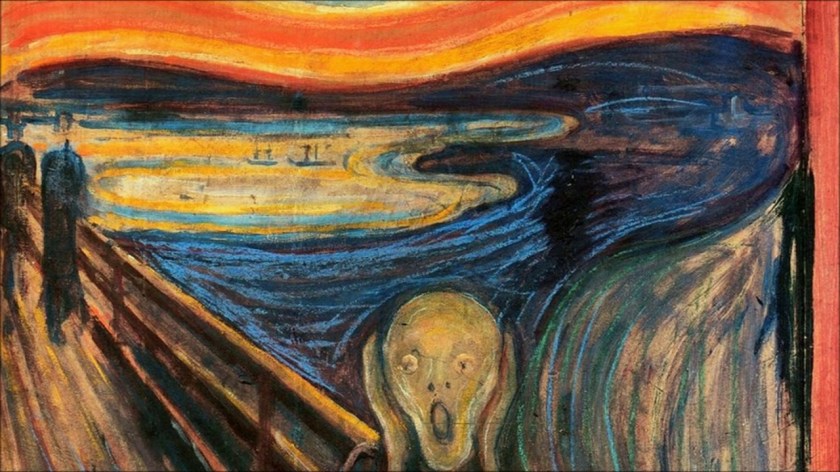
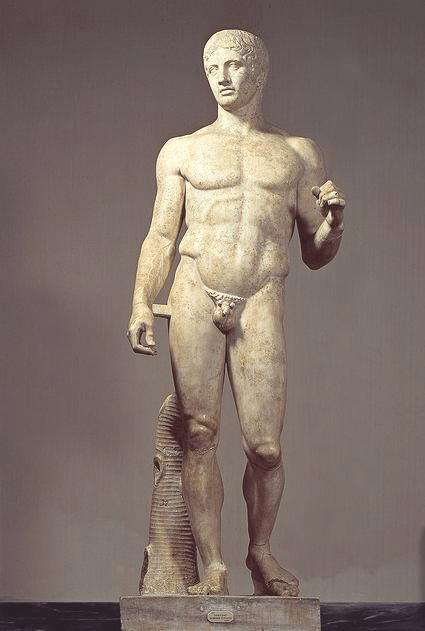
 Seclusão Anagógica